Searching for Roots… A Photo Essay on Southwestern Scotland

Scenic Scotland

Peggy and I explored the southern and southwestern part of Scotland with its rolling hills and green, green pasture lands.


Today I am returning to the Wednesday photographic essay part of my blog. This time I will feature the southwestern area of Scotland with a few photos of Edinburgh thrown in. Peggy and I shared in taking the photographs.


Peggy, Jane, Jim and I wrapped up our narrowboat tour and then hopped on a train bound for Edinburgh, Scotland where we hung out together for a few more days before parting company. Jane and Jim returned to London while Peggy and I rented a car and headed out on a quest. I was eager to see some of the areas my ancestors had come from including the grave of a long dead Presbyterian martyr, John Brown, who had been shot down in the 1600s because he refused to recognize England’s king as God’s representative on earth. The Presbyterians were stubborn that way.

Edinburgh is an impressive city that is very easy to get lost in, or at least get lost trying to get out of!

Edinburg Scotland 1

Edinburg 3

Edinburg 4

Sir Walter Scott’s Memorial.

Edinburg 2

Duke of Wellington

The Duke of Wellington.

The car rental place upgraded us to a Mercedes and wished us good luck on finding our way out of the city.

Peggy and mercedes

Is this woman determined or deranged? And is she really biting the steering wheel? I thought that she was a bit old for a teething ring.

We quickly discovered that there are a lot of sheep in Scotland— big woolly creatures. They like to stand in the middle of the road and refuse to move.

Sheep in Scotland 2

My road

“My road!” Peggy and I were on a great detour (we were lost again) when we came on this sheep blocking the road. I thought I might have to get out of our car and pull a Crocodile Dundee on it. The red marking is to show ownership.

Sheep in Scotland

Smug.

Scottish sheep

Hungry. The great range wars of the Western United States between cattlemen and sheepmen in the 1800s were partially because sheep like to crop the grass so close to the ground.

Scottish cow

This steer seems to agree about sheep.

Shetland pony

And who knows what this wild Shetland was thinking?  It may have thought we were good for an apple. Or maybe it was a reincarnated ancestor of mine trying to make contact…

We checked out several graveyards. I was, after all, searching for dead people.

Scottish graveyard

These tombstones were so large they could have had books written on them. Wait, they did. Check out the light gray marker on the right.

Peggy and Scotland grave

Peggy demonstrates just how big the tombstones were.   If I am correct in reading her body language, she is saying, “And how many more graveyards are we going to visit today, Curt? Don’t you realize it is raining and cold out here?” (Actually, Peggy is a great sport about visiting graveyards and this might have been one of her ancestors.)

John Brown's grave

The lonely grave of John Brown, the Presbyterian martyr, who would have been a great, great, great, great, great, grandfather of mine, or something like that. My story of John Brown and the Presbyterian Covenanters, as they were known, can be found here.

Castles were also on our itinerary. There are bunches in Scotland. Each lord wanted one to protect himself from the English— or his neighbor. One of my fifth cousins had assured me that the Mekemson family once owned a Scottish Castle, but it was north of Edinburgh.

Scottish castle 4

Old castles are a feature of Scotland. They are well built, but a bit airy.

Scottish castle 2

Scottish castle 1

Cat

Here kitty, kitty, kitty. Wonderful whiskers. Nice bouquet.

Peggy in castle

I found a winsome wench in one. Oh wait, that was a fair maiden!

Most of our time was spent admiring the beautiful scenery and fun towns plus visiting with the warm and welcoming people of Scotland.

Scenic river in Scotland

The River Nith in Dumfries.

Scottish broom

Scotch broom

Scotch Broom was everywhere, adding its beautiful yellow to hillsides.

Scene in Scotland

I am a fan of stone walls. Fences don’t get much classier! But imagine the work…

Stone circles in Scotland

Speaking of moving rocks, these boulders were placed here several thousand years ago as part of a sacred site.

Homes in Scotland

Small towns were colorful and clean. Kirkcolm was where my great-grandmother on the Thompson side was from. It’s where we met the Shetland.

Great grandfather's home

And this might have been the home of her father.

Window in Scotland

A fun window with posies.

Flowers in Scotland

And a flower pot built into the front of a building to wrap up today’s post.


FRIDAY’S Blog-a-Book POST: The animal kingdom is kicked off my bed

MONDAY’S Travel Blog POST: A wrap up on the central coast of Washington

WEDNESDAY’S Photo Essay POST: The beauty of Sedona Arizona

Want a Small House— Think Narrowboat… A Trip on the Trent and Mersey Canal: Part 2

Swan in black and white on Trent and Mersey Canal

Graceful swans share the Trent and Mersey Canal with narrowboats. I decided to render this fellow in black and white to emphasize its feathers and show how swans tuck their wings over their backs.


This is my second post on the Trent and Mersey Canal. My first post took us from Sawley to Burton upon Trent. In today’s post, Peggy and I, along with her sister and brother-in-law, Jane and Jim Hagedorn, visit Burton on Trent and return to Sawley. 


Josiah Wedgewood’s concern about his pottery was a driving force behind the building of the Trent and Mersey Canal in the 1770s. Too many of his fine dishes were being broken when they were transported over the bumpy, rough roads of the time. A canal would provide for smooth sailing, or, at least smooth boating, and every industrialist wanted one to connect his plant with growing markets. For a brief period of time in the early industrial revolution, canals were the in-thing. Hundreds were built throughout England and Europe— as well as in the youthful United States.

Jilly Dee Narrowboat

This painting on the Jilly-Dee narrowboat spoke of earlier times on the canals when manufactured goods were carried on barges towed by horses and mules.

The painting reminded me of Erie Canal in New York state and one of the first songs I learned in elementary school. Here it is:

I’ve got a mule and her name is Sal
Fifteen miles on the Erie Canal
She’s a good old worker and a good old pal
Fifteen miles on the Erie Canal
We hauled some barges in our day
Filled with lumber, coal and hay
We know every inch of the way
From Albany to Buffalo

Low bridge, everybody down
Low bridge, we’re coming to a town
You’ll always know your neighbor
And you’ll always know your pal
If you ever navigated on the Erie Canal.

It was one of my favorite tunes, right up there with Old Dog Tray. I was particularly enamored with the idea of having a mule as a pal.

We passed under several low bridges during our trip, but none made us duck. Fortunately, our journey didn’t involve any of the long, low tunnels located on other parts of England’s canal system. I read that the earliest tunnel on the Trent and Mersey Canal was so low that the boatmen would lay down on their backs and push the boat through with their feet, using the top of the tunnel for leverage— for a mile! The mere thought of this sent claustrophobic twinges through my body!

Low Bridge on Trent and Mersey Canal

“Low bridge, everybody down!”

Railroads and modern highways made canals obsolete for transporting goods and would have spelled their doom except for the interest of historians, hobbyists, and the recreational industry starting in the 1950s. Recreation is booming today and numerous people have also discovered that narrowboats can provide the ultimate in an inexpensive, small house lifestyle for those with a gypsy nature. Sounds good to me. Most of these homes are uniquely decorated and come with interesting names like Belly Button, Idunno, and In the Mood. Others, such as Nomad Dreams, Sacagawea, and Gone Roaming, suggested the wandering nature of their owners.

Belly Button narrowboat on Trent and Mersey Canal

Narrowboats that people use for homes are often gaily painted and uniquely named!

Narrow boat dog on barrel on Trent and Mercy Canal

One of the boats had this painted barrel sitting on top…

Narrowboat dog on Trent and Mercy Canal

And then we spotted the model!

Peggy, Jim, Jane and I explored Burton upon Trent, spent the night, and then began our journey back on the Trent and Mersey Canal to the Sawley Marina. Once again, we enjoyed the challenge of piloting our 65-foot boat around obstacles and through locks, while appreciating the beauty and peace of the British countryside. Our most exciting moment was when Jim decided to park our boat up on the bank…

View near St. Pauls in Burton upon Trent

We wandered around admiring buildings in Burton.

Gargoyle on St. Paul's church in Burton on Trent

And found this gargoyle with its tongue sticking out at St. Paul’s Church.

Row houses and chimneys in Burton upon the Trent

Row houses, chimneys and threatening skies provided a photo-op…

Marston's brewery in Burton upon Trent

Marston’s original brewery is located in Burton on Trent and has been a longterm mainstay of the city’s economy. I went onto Marston’s website and found this quote: “No Marston’s, no beer, no beer, no Burton.”

Bargain booze in Burton upon Trent

Of course beer wasn’t the only alcohol available…

Carved kingfisher sculpture with fish in Burton upon Trent

Walking back to the canal, we were reminded by this carved kingfisher of the birds that make the canal their home.

Swan profile on Trent and Mersey Canal

Including swans and their Canadian Geese cousins.

Mallard moves along on Trent and Mersey Canal

A mallard moved along on some important mission…

Swans mating on Trent and Mersey Canal

While a pair of swans decided to make babies.

Baby ducks on Trent and Mersey Canal

Of which the mallards had already contributed a substantial number. There was no lack of baby ducks on our trip back…

Swan and narrowboats on Trent and Mersey Canal

Or swans.

Resting cattle along Trent and Mersey Canal

Cattle enjoyed a moment of sun…

Peggy Mekemson enjoying sunshine on Trent and Mersey Canal

As did Peggy!

Scenic view along Trent and Mersey Canal

We all continued to enjoy the scenery and serenity along the Trent and Mersey.

Buildings along Trent and Mersey Canal

Including the buildings.

Narrowboat with rain cover on Trent and Mersey Canal

And other narrowboats. This boater had created a canvas pilot house as protection from the elements. There were occasions when we were envious.

Poling narrowboat off shore on Trent and Mersey Canal

Our progress was delayed when Jim decided to park us on the bank. That’s when we really learned just how heavy our boat was.

Double-wide lock on Trent and Mersey Canal

Locks continued to slow us down as well. This was a double-wide. Just barely.

Church near Sawley Marina

When we spotted this steeple, we knew that we were close to home.

Sawley Marina

And thus we arrived.

Intrepid narrowboat crew in Burton on Trent and Mersey Canal

A final shot of Peggy, Jane, Jim and our moored boat.


SATURDAY’S POST: It’s back to blogging my book on MisAdventures. This time I hire the family pets to protect me from the dangerous ghosts that live in the graveyard next to my childhood home.

MONDAY’S POST: Peggy and I return to our before-Christmas adventure along Washington’s coast.

WEDNESDAY’S POST: A photograph essay on Scotland, which is where we went after our narrowboat trip.


Piloting a 60-foot long, 6-foot wide Narrowboat along England’s Trent and Mersey Canal: Part 1


Scenic reflection shot along Trent and Mercy Canal

Operating a narrowboat along Britain’s scenic Trent and Mersey Canal became a bucket list item for us as soon as we learned about the possibility.

To call me a boat person would be a very serious misnomer. Backpacker definitely— that’s where my true passion lies. It gets me into the wilderness. But boating, as a general rule, is something I’ve done little of. There are exceptions.

Peggy and I have boated up the Amazon, rafted down the Colorado River through the Grand Canyon, and kayaked in numerous places throughout North America. I’ve canoed across the Kenai Peninsula of Alaska and down the Sacramento River of California. Peggy and I have even cruised the Mediterranean and crossed the Atlantic. And I’ve tried my hand at fishing for marlin off the coast of Mexico. Mainly, I see boats like I do bicycles, however: as a way of getting me to places I want to see. Bicycling or boating as sports in themselves have little appeal to me.

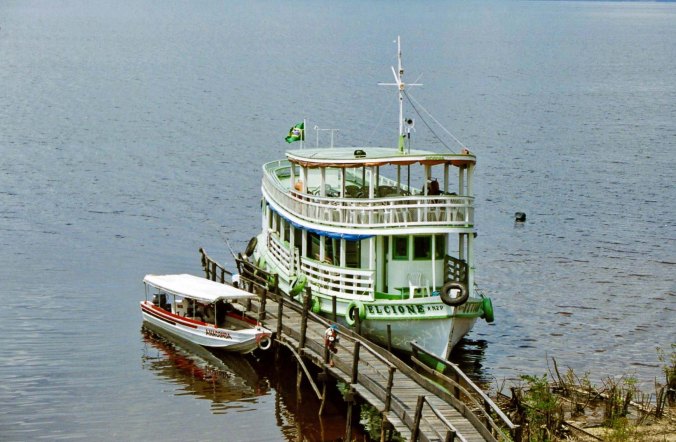
Our boat, the Amazon Clipper, docked for the evening deep in the rainforest on the Rio Negro River, Brazil.

Peggy and I enter the infamous Lava Falls on the Colorado River, a perfect ten… that’s 10 as in rapids don’t get any more serious. Shortly after that the boat, our boatman Steve, Peggy and I disappeared under the water. Happily, we resurfaced. (Photo by Don Green)

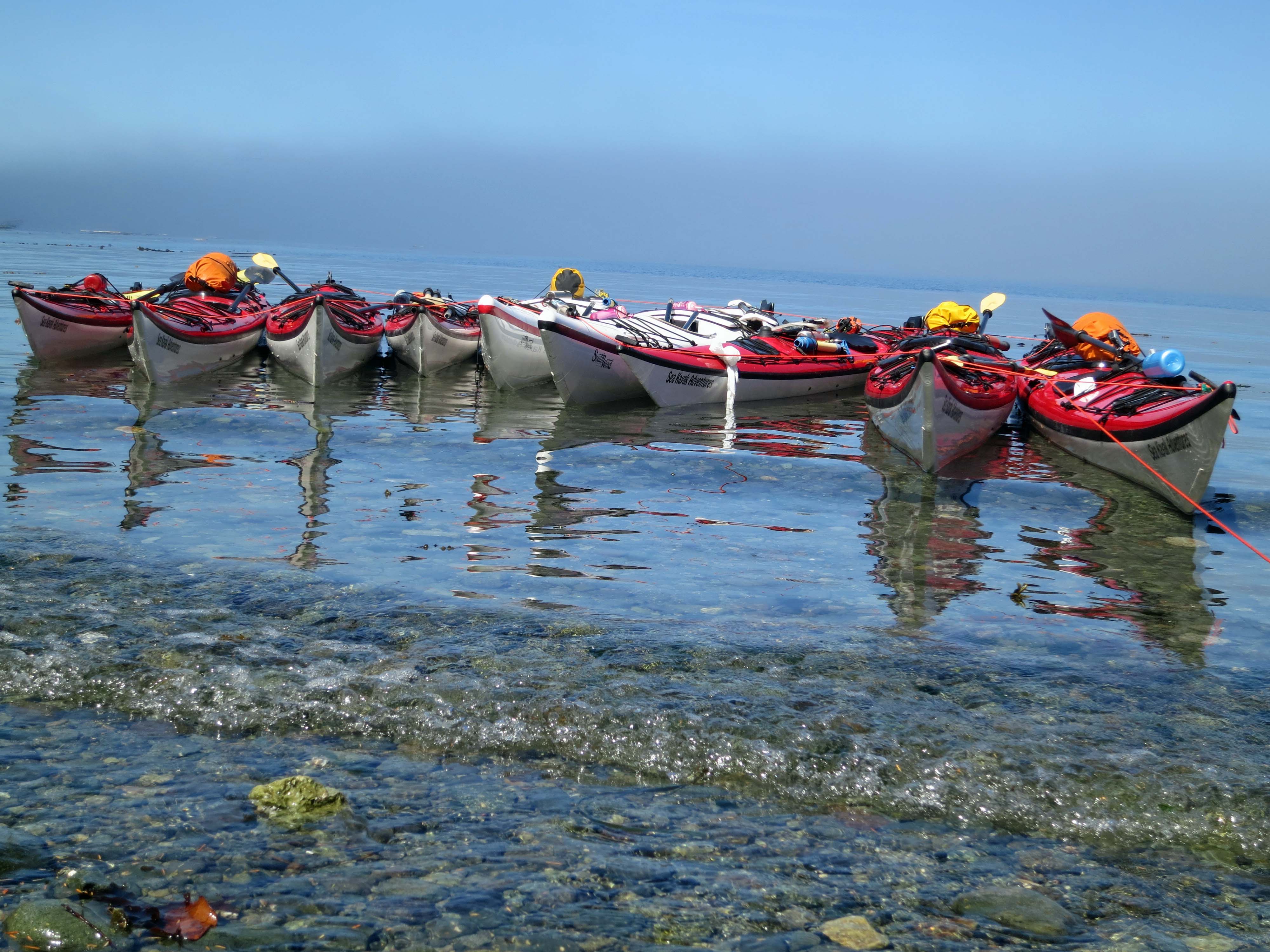
Sea Kayak Adventure kayaks roped together in small inlet on Hanson Island. Photo by Curtis Mekemson.

I took this photo of our kayaks off of Vancouver Island while we were at lunch. The kayaks were roped together so they wouldn’t run away.

Given my mixed feelings about boating, I found myself surprised that I enjoyed piloting a narrow-boat along England’s Trent and Mersey Canal. There was something about making the 60-foot long, 6-foot wide boat go where it was supposed to, including into boat-wide locks, that I found both challenging and gratifying. It helped that we were only traveling 3-4 miles per hour (4.8-6.4 k)! Peggy and I had invited her sister Jane and brother-in-law Jim along with us on the 2011 adventure. While Jim and I took turns at the helm, Peggy and Jane operated the locks.

Instructions for piloting the boat and working the locks were provided when we arrived. Peggy reminded me that we had less than an hour of instruction before being turned loose with out 60-foot long, several ton vessel. I can only imagine how experienced boat people along the Trent and Mersey Canal view newbies coming out of the marina. Peggy and Jane’s lesson on operating the locks was more like 15 minutes! But we did have instruction sheets.

What it looks like from the helm of a narrowboat

This is what our boat looked like from the helm. Let’s just say that I was more than a little nervous when I took my first turn.

Jim researching our Trent and Mercey Canal trip

Jim, who never admits to being nervous about anything, studied the manual, or maybe he was reviewing our trip.

Piloting narrowboat under bridge on Trent and Mercy Canal

The challenges we would face included maneuvering our 60-foot vessel around sharp corners under low bridges…

Piloting boat into lock on Trent and Mercy Canal

And piloting the boat into narrow locks, some of which were hardly wider than the boat. In fact, the width of the locks was the reason for creating the narrowboats. It was even more challenging when you had to slip into a lock of this width with another narrowboat while pretending to know what you were doing!

Narrowboat in lock on Trent and Mercy Canal

Fortunately, being perfectly straight wasn’t necessarily required when we had the lock all to ourselves! Water flowing in will raise our boat to the level of the upstream canal.

Peggy works lock gates on Trent and Mercy Canal

While we were mastering entering and exiting the locks, Peggy and Jane were mastering opening and closing them. Fortunately, some helpful veterans were present the first time our companions were faced with the chore.

Jane Hagedorn works lock gates on Trent and Mercy Canal

Piloting around boat on Trent and Mercy Canal

Passing other boats could be challenging when the canal was particularly narrow.

Piloting past moored boats while metting another boat on Trent and Mercy Canal

Now, picture meeting another boat when both sides of the canal are filled with moored narrowboats!

Mooring narrow boat

Another skill we had to master was mooring the boats when we stopped for the night or at a local attraction— such as a pub. Camping was free along the Trent and Mersey Canal.

Peggy doing dishes in our tiny galley

We lived on the boat, which came with a small galley, sitting room, and bathroom.

Single bed on a narrowboat

While the master bedroom had a small double bed, the other beds were barely wide enough to sleep on.

The Sawley Marina is located close to Nottingham and borders on the shires of Nottinghamshire, Leicestershire and Derbyshire. (Being close to Nottingham took me back to my childhood days and tales of Robin Hood.) Our objective was to follow the Trent and Mersey Canal to Burton upon Trent and return, a short distance of 34 miles (54.7k). The literature said we could make the trip in a leisurely three days. We chose a more leisurely six. How else could we check out all of the pubs and fine English ale along the way?

Enjoying pub along Trent and Mercy Canal

Jim, Jane and I enjoy one of the several pubs along the Canal while Peggy took the photo.

In addition to piloting the boat and checking out the pubs, there was a generous dose of bucolic beauty to enjoy along the way— as one might expect in Britain’s Midlands. Graceful swans, lots of ducks, and lazy cattle provided entertainment while walks through small villages and the larger town of Burton upon Trent gave us breaks from boating.

Direction sign on Trent and Mercy Canal

A sign takes us onto the Canal proper.

Scenic flowering tree and mustard along the Trent and Mercy Canal

There was considerable beauty along the canal and traveling at three miles per hour, we had plenty of time to enjoy it.

Scenic view with flowering tree along Trent and Mercy Canal

Since it was May, everything seemed to be in bloom.

Building along Trent and Mercy Canal

Numerous buildings along the way added interest and color.

Bridge number 11 on the Trent and Mercey Canal

Bridges also provided variety. Each one seemed different. Numbers on the bridges told us where we were.

Bridge number 13 on the Trent and Mercy Canal

The bridges also added to the beauty.

Fishing on Trent and Mercy Canal

This one included guys fishing. Check out the length of the poles!

Scenic view from under bridge on Trent and Mercy Canal

Coming out from under a bridge.

Swan and reflection on Trent and Mercy Canal

Swans, ducks and other birds provided entertainment. I liked the reflection here.

Swan nesting on Trent and Mercey Canal

Nesting.

Swan chows down on Trent and Mercy Canal

And chowing down!

Mallard hen and chicks on Trent and Mercy Canal

I’ll conclude today with this mallard hen and her chicks.

I will be posting more photos of our narrow-boat tour on Thursday. Saturday I will return to blogging my book on MisAdventures with a story of how I hired our family pets to protect me from the fearsome ghosts that lived next to our house when I was a child.

The Beautiful Flowers of the Chatsworth House… Wednesday’s Photographic Essay

Picture of flowers at Chatsworth House by Curtis Mekemson.

The gardens at Chatsworth House are filled with beautiful flowers.


A few years ago, Peggy and I decided it would be fun to do a narrow boat tour in England and we invited her sister and brother-in-law Jane and Jim Hagedorn along. Jane has been one of my best friends forever and loves England. Even more than England, she loves English Gardens. When Jane learned we would be traveling past the Chatsworth House, she insisted that we had to stop for a visit. There were no ifs, ands or buts.

I can’t say I was ecstatic with the detour, but I was okay with it. The Chatsworth House, located in Derbyshire, is the seat of the Duke of Devonshire and wrapped in history, which always pulls me in. In the end, it wasn’t the stately home or the history that won me over, however. It was the beautiful gardens. Jane was absolutely right. I fell in love with the landscaping and even more the incredible flowers.

So, welcome to my Wednesday Photograph essay, and some beautiful flowers. Any favorites?

Flowers 17 at Chatsworth

Flowers 13 at Chatsworth

Flowers 8 at Chatsworth

Flower 18 at Chatsworth

Flowers 15 at Chatsworth

Flower 19 at Chatsworth

Flowers 16 at Chatsworth

Flowers 6 at Chatsworth

Flowers 11 at Chatsworth

Flowers 14 at Chatsworth

Flowers 9 at Chatsworth

Flower 1 at Chatsworth

Of course, Chatsworth is about much more than flowers. There is the landscape, sculptures, and the house. I spent my time in the house gaping instead of taking pictures, but here are a few of the landscape and sculptures that caught my attention or amused me. And one from inside the house.

Candles at Chatsworth

One look at this dining room convinced me that you would need one servant just to light and put out the candles!

Hare sculpture at Chatsworth

I loved this graceful, leaping hare.

Gargoyle at Chatsworth

And I have never met a gargoyle I didn’t like!

Greyhound sculpture at Chatsworth

I was amused by these realistic greyhounds. One seemed a bit dubious about the plant, while a bug, or maybe a strange smell, had caught the attention of the other two.

Dog sculpture peeing at Chatsworth House

And how much more real does it get than this? (grin)

Lion at Chatsworth

This lion seemed hyper alert. Was there a tourist on the menu? Is that drool coming out of its mouth?

Peggy and horse at Chatsworth

And this horse seemed a bit wild-eyed about Peggy snuggling up to it. Also, check out those laid back ears!

Metal sculpture at Chatsworth

Graceful nudes were cavorting in the garden.

Flower garden at Chatsworth

The flowers went on and on…

Gardens at Chatsworth

…and each turn in the path brought on a new view. The flat section stretching across the middle is a maze. “Hold your right hand on the wall and never lift it,” Peggy advised.

Tree at Chatsworth

Woven forms at Chatsworth

These unusual forms were woven from natural vines. Jane and Peggy provide perspective.

Peggy Mekemson and Jane Hagedorn at Chatsworth

I’ll conclude with Jane and Peggy relaxing on chairs made out of JFK coins. Be sure to join us on next Tuesday and Wednesday’s photographic essay as Jim and I pilot a 60 foot long, 8 foot wide narrow boat along picturesque English canals while Peggy and Jane operate the locks!


SATURDAY’S POST: A review of our 2017 travels… Happy New Year!

TUESDAY AND WEDNESDAY’S POSTS: A narrowboat tour in England: A photographic essay

FRIDAY’S POST: Back to blogging my book. I hire the family animals to protect me from ghosts.


SaveSave

SaveSave

SaveSave

SaveSave

Santorini: A Mediterranean Jewel— Part 2… The Wednesday Photograph Series

Blue topped church and other buildings in Santorini P

For its size, Santorini has numerous churches and chapels. Many of the smaller ones were built and dedicated by families of fisherman in thanks for their loved ones return from sea. (Photo by Peggy Mekemson.)

Today marks my second photographic essay on the beautiful Greek Island of Santorini.

Living on Santorini can be a bit hazardous to your health. It is a volcanic area prone to earthquakes and has suffered from several volcanic eruptions over time. As I mentioned in my last post, Santorini is part of an archipelago that surrounds a caldera. Calderas are created when the magna chamber under a volcano is emptied out and the volcano comes crashing down into itself. Crater Lake in Oregon is another example.

A massive volcanic explosion 3600 years ago may have been responsible for destroying the Minoan civilization on Crete. It may also have been tied to the legend of Atlantis.

Santorini photo of Greek Orthodox Church by Curtis Mekemson.

I found some leaves to frame this blue-topped Greek Orthodox Church.

Church bells against dark sky in Santorini

Peggy captured this bell tower outlined by a dark sky. (Photo by Peggy Mekemson.)

Santorini windmill

A Santorini windmill.

Blue door on Santorini

Blue doors are common on the island.

The blue doors of Santorini

Very common! (Photo by Peggy Mekemson.)

Walkway in Santorini

In addition to enjoying the beauty of the buildings and the Aegean Sea on Santorini, we wandered around the town of Oia. During the summer, this walkway would have been packed with people. As usual, I was on the lookout for unusual things that might tweak my funny bone or curiosity.

Santorini restaurant

Such as this sign. Mosts tourists aren’t particularly noted for patience. Was this to forewarn them that their food would arrive when it arrived! Or that snails were on the menu? Or that the food was cooked slowly? (Photo by Peggy Mekemson.)

Octupus doorway on Santorini

This octopus wrapped itself around a doorway.

Sphinx on Santorini

An orangish, golden sphinx hung out on a porch.

Santorini lion

And a white-washed lion looked down on us.

Climbing a ladder in Santorini

This fellow was obviously eager to climb to the top. (Photo by Peggy Mekemson.)

Tourist dishes on Santorini

As one would expect, there were the usual souvenirs, all with a Santorini twist.

Pottery on Santorini

I liked this vase.

Bright green plants on Santorini

And this succulent plant.

Gateway in Santorini P

A number of interesting gates beckoned.

Santorini dog

Cats and dogs wandered freely around Oia. I was curious about how many of these animals had homes. My blogging friends from Animal Couriers often transport these animals for free to loving homes throughout Europe. This guy was so well groomed I suspect he had a home, but he would have been welcomed in ours.

Final view of Santorini

A final look at Santorini.


FRIDAY’S POST: Happy holidays

TUESDAY’S POST: The folks around Copalis really like Sasquatch

THURSDAY’S POST: Photos from the gardens of Chatsworth

SaveSave

SaveSaveSaveSave

SaveSave

Santorini: Mediterranean Jewel— Part 1… The Wednesday Photo Series

The charm of Santorini is based on its interesting architecture, the color of its buildings, the way homes and shops work their down the steep cliffs, and the sparking waters of the Aegean Sea.


There are a number of attractive islands in the Mediterranean and the Greek island of Santorini is a jewel among them— so much so that I found I couldn’t limit myself to one Wednesday’s worth of photos. And this is after I cut the number in half that I had picked out! Peggy and I were lucky to visit the island in November, after the crowds of tourists had left for the season. We wandered around to our hearts content. My only problem: It wasn’t long enough.

Scenery of Santorini

Built on a circular archipelago, Santorini perches on the remains of a volcanic caldera. (Photo by Peggy Mekemson.)

Santorini photo by Curtis Mekemson.

This photo provides a perspective on just how steep the cliffs are. Stairs are the only way to get up and down to the homes, businesses and chapels built into the cliffs and stacked on top of each other.

Photo of Santorini stairs by Curtis Mekemson.

The stairs can be quite beautiful and graceful as this photo attests to.

Mules in Santorini

An interesting aspect of the steepness and lack of roads is that mules have to be recruited to serve as dump trucks for construction work. (Photo by Peggy Mekemson.)

Photo of heavily laden mule on the Greek Island of Santorini by Curtis Mekemson.

These loads are heavy. I learned that it is important to get out of the way. The mules do not brake for tourists!

Photo of buildings on cliff in Santorini by Curtis Mekemson.

Another view of  buildings working their way down the cliff. Note the tan chapel in the upper left hand corner.

Arch and church in Santorini P

An arch provided a great way to frame the chapel, seen here under dramatic skies. (Photo by Peggy Mekemson.)

Chapel on Santorini photographed by Curtis Mekemson.

The sun came out to bathe the church in this photo I took. The colors of the buildings and the quality of Mediterranean light make Santorini a photographer’s dream.

White rocks and chapel on the Greek island of Santorini. Photo by Curtis Mekemson.

Another chapel that I found intriguing. The rocks in front added a surreal quality.

White Santorini chapel photographed by Curtis Mekemson.

From the back.

Buildings and bay, Santorini

Looking down on the Aegean Sea and the Caldera, Peggy caught an interesting view of the unique, rounded roof tops. (Photo by Peggy Mekemson.)

Photo of rounded buildings on Santorini overlooking Aegean Sea by Curtis Mekemson.

And I added my own interpretation.

Bell on chapel looking out toward Aegean Sea on Island of Santorini. Photo by Curtis Mekemson.

I felt this steeple and bell made for a rather dramatic photo.

Color contrast in Santorini

I’ll conclude with this church that added a salmon colored bell tower. There will be more Santorini photos next Wednesday! (Photo by Peggy Mekemson.)


FRIDAY’S POST: Join me for another chapter in my book on MisAdventures as I discover that a Graveyard can make a wonderful place to play, as long as you avoid the ghosts.

MONDAY’S POST: Peggy and I head north along the Pacific Coast into Washington and visit Forks, the town where the vampires and werewolves roamed in the movie Twilight, which Peggy has made me watch 3142 times, or something like that.

WEDNESDAY’S POST: Santorini: Mediterranean Jewel— Part 2. Another post in my Wednesday photo series.


SaveSave

SaveSave

SaveSave

SaveSave

South to New Zealand and Milford Sound: The Wednesday Photo Series

New Zealand Waterfall

Milford Sound is surrounded by spectacular waterfalls. We took a small tour boat that carried us out into the sound where we could visit them up close.

Today marks the beginning of my Wednesday photo series. Over the next month, or year, or several years, I am going to begin to post photos from around North America and the world. What else can you do with 76,000 photos? (grin)

I am starting off in Milford Sound. If you travel to New Zealand and then travel down to the South Island, and then travel even farther down to the southwest corner of the island, you come to the world-famous sound. It is a fame well deserved. These photos were taken the old-fashioned way, with film. I had to scan them into my computer so the quality isn’t quite the same, but the beauty of the area makes up for it. Enjoy.

Milford sound on the South Island of New Zealand. Photo by Curtis Mekemson.

This is a view you have when driving into the sound.

Photo of Milford Sound taken by Peggy Mekemson.

A view of Milford Sound and the surrounding mountains. (Photo by Peggy Mekemson.)

Photo of waterfalls in Milford Sound, New Zealand by Curtis Mekemson.

One of the waterfalls.

New Zealand waterfalls in Milford Sound

Another of the many falls. (Photo by Peggy Mekemson.)

Small rainbow in Milford Sound, New Zealand. (Photo by Curtis Mekemson.)

I was intrigued by this small rainbow caused by water dripping off the cliff.

New Zealand Moutain Top near Milford Sound

One of the things about the west coast of the South Island is that glaciers are never very far away. Peggy and I took a helicopter ride up from the sound to this mountain top. (Photo by Peggy Mekemson.)

New Zealand glacier photo by Curtis Mekemson.

We were allowed to get out of the helicopter and wander around. I took this photo of cracks in the glacier. That’s it for today. Next Wednesday, we will visit the island of Santorini in the Mediterranean Sea.


NEXT POST: I kick off my book on MisAdventures, whereupon I am kicked out of the first grade for a year and use foul language when falling off a cliff in a bulldozer.

SaveSave

SaveSave

Bone Is Found— but he is still just a bone… Part III

George, the Bush Devil from my book, “The Bush Devil Ate Sam,” checks out Bone. NO, George, Bone is not edible!


This is the third and final post on how Bone was discovered. In last Wednesday’s post my fellow backpackers and I had ended up at the resort on Echo Lake after coming out of the Desolation Wilderness. We had celebrated the first part of our journey with lunch and a beer or three…


My system complained about the third beer as we hiked on across Highway 50 and up to Benwood Meadow where we stopped for the night, some 34 miles from where we had started.

Our fourth day started out as a typical backpack day: we climbed. It was gentle at first and then became more serious. Once again snow-covered large segments of the trail. We spread out and searched for tree blazes. I scrambled over a particularly steep section and found myself in a high meadow.

Something half buried in a field of young corn lilies caught my eye. A few days earlier it would have been covered with snow. Curiosity led me to detour through the still soggy ground. Mud sucked at my boots.  My treasure turned out to be a disappointing, short, squat bone. Gnaw marks suggested it had been part of someone’s feast. I was about to toss it when a devious thought popped into my mind.

“Trash,” I hollered at Tom and held up the bone. We had a game where if one person found a piece of trash, the other person had to carry it out. But first you had to catch the other person.

Tom sprinted down the trail with me in pursuit. Unfortunately, we had made it over the mountain and our route ranged from flat to downhill. Tom was very fast. We had traveled two miles and were almost to Showers Lake before he stopped, concerned about leaving our companions too far behind. Very reluctantly, he took the bone and stuffed it in his pack.

“How can you classify a bone as trash,” he whined. I figured Tom would toss his new traveling companion as soon as I was out of sight.

X marks the spot where Bone was found, resting in a high mountain meadow. (Map from the Tahoe-Yosemite Trail book by Thomas Winnett.)

It was a pleasant hike down to Carson Pass on Highway 88, and relatively dry since we were on a south-facing slope. Kit Carson had come through here in February of 1844 along with John C. Fremont. It wasn’t pleasant then. The snow was deep and food was limited. The mountain men ended up dining off of their horses, mules and the camp dog. The dog apparently went quite well with pea soup. Later, the trail they discovered would become a major entry point for the 49ers rushing west to find gold. (Eventually, the trail cut through Diamond Springs, the foothill town where I was raised.)

There was nary a bar, restaurant or gas station near the pass so we hiked on another three miles to Lake Winnemucca. Rain was threatening and I set up my tube tent, a large sheet of plastic shaped into a round tunnel. It wasn’t particularly sturdy, but it was light and dry. Tom, on the other hand, was carrying a luxurious three-season tent. He stacked the women in head to toe and ended up smelling April’s feet all night.
The next day was all downhill— down to Fourth of July Lake, down to Summit City Canyon, and down to Camp Irene on the Mokelumne River. After dropping 4000 feet in 14 miles I found myself bone-tired again.

Camp Irene provided an attractive campsite but turned out to be rattlesnake country. I had discovered the perfect toilet spot, dug my cat hole, and was baring my behind when one buzzed at me. It’s amazing how fast you can pull up your pants. I was lucky the snake didn’t bite me on the butt. I grabbed a stick and chased him away with a couple of sharp prods for good measure. He was lucky I was something of a nature boy. Otherwise he would have been smashed. The next time I did any serious bathroom duty was when I was parked on a flush toilet at Lake Alpine the next day.

Climbing out of Camp Irene is a challenge. The 4000 feet we dropped the day before in 14 miles we were now expected to re-climb in six. Low clouds filled the canyon. It wasn’t raining but it was cold and damp. Somewhere in the mist a male grouse made its familiar ‘whump, whump, whump’ sound, working to attract a female companion. I empathized. Dripping wet Buck Bush grabbed at our legs.

To stay warm and dry we broke out our rain gear. Lynn moved from being cold and miserable to shivering and not caring. She was on the edge of hypothermia, a very dangerous state. The body loses its ability to maintain warmth and the rational mind ceases to function. Coordination spirals downward. It is very easy to die.

Tom and I acted quickly. I fired up my Svea gas stove and Tom had Lynn stand over it wearing her cagoule, a dress like poncho. We positioned the stove carefully. While this wasn’t a solution to hypothermia found in survival guides, it worked. (The recommended solution is to break out your sleeping bag and crawl in naked with the victim.) Within minutes, Lynn was ready to tackle the rest of the mountain.

Hypothermia can strike fast but it can also be quickly cured— assuming of course you catch it in time. Tom was next. “Curt,” he called plaintively from off in the brush where he had gone to pee. I rushed over and begin laughing. He had managed the first half of his chore but couldn’t zip his pants up. His mind was working fine but his coordination had gone south. He was all thumbs. I called Lynn over to help as I returned to the trail chuckling. There are some chores a trek leader doesn’t need to handle.

We hiked the rest of the way into Alpine Lake without difficulty. Since our ride wasn’t coming until the next day, we rented a one-room cabin to share. Rain poured down outside as we relived our adventures and made up tall tales way into the night. Our journey was winding down, but it wasn’t over.

I was shaking the dirt out of my pack at home when the bone fell out. Apparently, I had been carrying it all the way from Winnemucca Lake. “Darn Lovering,” I thought to myself, “I am going to get even.” I decided to keep the bone. There would be an opportunity on a future trip to slip it back into Tom’s pack. I would have revenge!

And that’s it, the story of Bone’s discovery. It started like so many things in our lives often do, as a non-event. Bone didn’t come up as a subject during our night in the cabin. Naked jumping ladies, lost trails, swollen rivers, gorgeous country, rattle snakes, the physical challenge, hypothermia and even the upside-down map were the stories of legend, not a small, insignificant bone that came from who knows what.

But time has the power to rewrite history. When Tom opened his suitcase in Japan at the beginning of a two-year exploration of Asia, Africa and Europe, he found a surprise, the bone. I had my revenge, and the bone became Bone. When I moved to Alaska and was unpacking my boxes, who should fall out but Bone. The tales goes on and on and on…

The Bush Devil has travelled with me since 1967 and Bone since 1977, a combined total of 90 years.

Bone on his pedestal.

Raging Rivers, Kamikaze Mosquitoes and Naked Ladies Jumping… How Bone Was Discovered: Part II

Bone contemplates a book on the Tahoe-Yosemite Trail and the high mountain meadows he loves. I used this book by Thomas Winnett on several early Treks that I led between Lake Tahoe and Yosemite.


This is second in a series of Blogs on how Bone was found in the Sierra Nevada Mountains. Go here for the first one.

I watched regrettably as April and Lynn headed out. I would miss the inspiration. Soon, however, my mind was more than occupied with route finding. The trail had disappeared under the snow.

Velma Lakes where we parted company with April and Lynn. I took this shot in the evening on another trip.

Tom pulled out his map and compass to establish our general direction. We searched for ancient tree blazes left behind by early foresters, cattlemen and sheepherders. We also watched for ducks where the snow had melted. I’m not talking about fowl that quack and taste good in orange sauce. Ducks, in trail finding terminology, are piles of stone set up to show the way. With a little imagination, they can look like their namesake. Caution is advisable. The people creating the ducks may have had a different destination in mind, or perhaps they were lost.

Tree blazes were the primary way of marking routes by the early explorers of the Western mountains. The short rectangle on top and longer one on the bottom mean ‘this is the trail.’ Blazes were normally within sight of each other.

These are duck ducks, Mallards to be specific. They are not trail ducks. Following them might get you lost, or wet. Check out the eye on the male. He was not happy with my waking him up.

This is a trail duck. The three rocks in the middle are what a normal trail duck looks like. I added a rock on each side to create a Sierra Trek duck so Trekkers would know what to follow. I borrowed these rocks from Peggy’s rock garden and put them on our railing. I had strict instructions to return them to where I found them. BTW, three ducks in a row mean danger to Boy Scouts. We rarely had Boy Scouts follow us.

This is an example of a duck in use. A trail splits. The duck tells you to use the left one. I borrowed our backyard and deer trails for this.

An hour later we found ourselves more or less where we were supposed to be, on the edge of the Rubicon River. A student of ancient Roman History undoubtedly named the stream. Like Julius Caesar, we were faced with crossing it. In a month or so it would be a tame creek inviting a refreshing dip but now it was a roaring river, filled with icy water from quickly melting snow fields.

I entered with trepidation and was almost washed off my feet. Facing up-stream, I used a walking stick to give myself a third leg. Water crept up to my knees and beyond. It was cold; I have short legs. The force was incredible. I set each foot carefully and moved crab-like, searching for solid ground between slippery rocks.  I’d undone my pack belt so I could shuck the pack if I were knocked over. Swimming in freezing water with 50 pounds on your back is hazardous to your health. In a few minutes that stretched out forever I was across. Tom and Terry also made it without incident.

We plopped down on a convenient log to catch our breath and munch down on GORP (good old raisins and peanuts). It was a quick meal. A thick swarm of mosquitoes dive-bombed us with kamikaze abandon.  Slap one and five more landed, gleefully licking off our bug repellent before plunging in their proboscises. We were driven to put on our packs and scurry up the trail. Fortunately, Rockbound Valley is relatively flat and we were able to escape. Stopping was not an option as we hoofed it for the next four miles, crossing the Rubicon two more times before we began our labored ascent up aptly named Mosquito Pass.

Life slowed down immediately as we began climbing. The blood sucking hoards caught up. Near the top, we were confronted with a different challenge, more snow. Eight hours of hot sun had turned it to mush. We spent as much time sliding as we did climbing. It was slow, hard, slogging work. And it was dangerous. Running water, partially exposed boulders and tree trunks melt snow from the ground up and create hidden cavities. More than once we plunged through up to our knees.

Ignoring the danger, Tom and I laughed our way down the other side, glissading in our boots. Control was minimal. Camp was in sight. Terri came along at a much more sedate and careful pace.
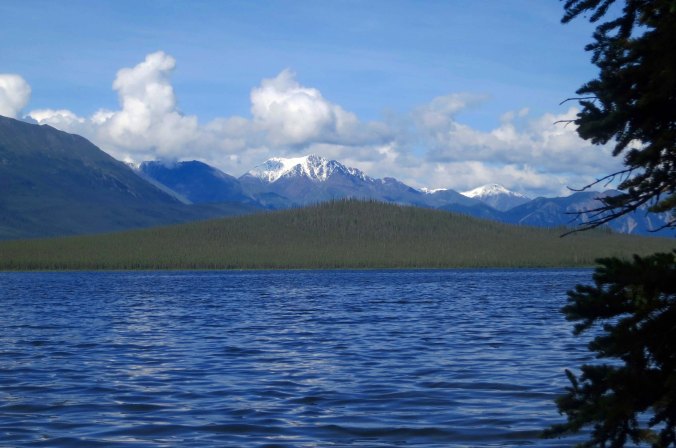
There was nothing about Lake Aloha that made me think Hawaii. It was a strange Dali-like creation with a convoluted shoreline and innumerable Rorschach type islands. What’s more, mini-icebergs decorated its surface. Bright white on top, they turned an icy blue under the water. All I could think was cold. Plowing through snow on our way around the lake to camp added freezing to my thoughts.

That night, we built a small campfire to fight off the chill. Terry wandered off to bed. Tom was slightly melancholy. He looked off into the distance over my shoulder.

“I was married on that peak,” he announced to the night. I turned around and stared across Lake Aloha at the towering Pyramid Peak, the centerpiece of the Crystal Range. It was bathed in moonlight. Several years earlier, Tom had met and fallen in love with Hilde, a slight, attractive blonde who shared his love of the wilderness. They decided to get married on the mountain. Mom, wedding party and friends were invited to share their 9983 feet “I do.”
The marriage didn’t last long and Tom was reluctant to talk about it. The fire burned down to glowing embers. We shared the silence in memory of lost love.
This map from the Tahoe-Yosemite Trail book shows our route from Velma Lakes to Upper Echo Lake. The red trail shows the actual route. The dotted trail shows the route we picked to Lake Aloha because of the deep snow going up past Dicks Lake.

I was up early the next morning and eager to hit the trail. My body was starting to adjust and feel good. More importantly, the resort at Echo Lake was calling. A quick breakfast and we were off. I took the lead with Tom following and Terry trailing. Soon we had climbed out of Lake Aloha, hiked past Lake Margery  and worked our way across Haypress Meadows where cattlemen once harvested grass for winter feed. As we began our descent into Echo Lake, I left my companions behind. The vision of cold beer and a hamburger drove me on. Short shorts may have been a factor as well. Lynn and April were supposed to rejoin us at the Echo Lake Resort.

There was a decision to make when I reached Echo Lake. I could continue to follow the Tahoe-Yosemite Trail around the upper and lower lakes or I could call the Lodge from a phone located at the end of Upper Lake. It would send a boat taxi to pick me up for five bucks. The trail was hot and filled with day hikers. I made the phone call. A half hour later, the throbbing of the motorboat’s engine caught my attention as it worked its way up the lake. Soon it arrived, coughing slightly. The boat slowed and bumped into the pier. My ‘taxi driver’ was a 16-year old plus teenager who had managed to snag a great summer job.

“Hop on,” he told me. An elderly couple was along for the ride. I nodded at them. I was halfway between the boat and the pier when I heard a commotion.

“Over here, Curt,” a familiar voice shouted. I looked up. A few yards away alders had hidden another pier. Two very attractive and very naked women were jumping up and down to get my attention. They succeeded. It was April and Lynn. They had come over on an earlier boat and were working in a little sunbathing while waiting for us. The young boatman and the old man were all eyes. The elderly woman looked thoroughly irritated and glared at all of us, especially her husband.

“Uh, I think I’ll stay here,” I told my driver.

“Can I stay too?” he asked and grinned at me. The elderly man wisely stayed silent.

I joined the girls as the boat coughed its way back toward the resort. Tom showed up soon afterwards. We were waiting for Terry and the women were dressed when the ranger showed up.

“There has been a complaint about naked women jumping up and down over here,” he told us.

“Boy, I wish I would have seen them,” Tom responded. I am not sure the ranger bought our story but he wandered off in search of other criminals.

The same boatman picked us up and told me that the first thing the elderly woman did when she got back was to complain loud and long about the perverted people across the lake. She even cornered a ranger. My new young friend speculated that the ranger came looking for us as an excuse to escape. “Or maybe he wanted to see the naked ladies,” I noted.

I happily downed a hamburger and a beer, or maybe it was two. But we still had a few miles to go before camp, so I didn’t want to eat or drink too much. Backpacking is hard enough as is—alcohol and a stuffed tummy makes it harder.

Be sure to check in next Wednesday and learn how Bone was found!

Three more photos from the journeys that Bone has been on since his discovery.

Riding an elephant in Nepal. Bone is hard to see but he is resting on the elephant’s head. He is being held by Mary Johnson who had taken Bone along for good luck. Many people have travelled with Bone over the years.

Iguanas chat with Bone in the South Pacific, where he was taken on a diving expedition by Jose Kirchner.

Bone sits in the sand at twilight on the edge of the Tasman Sea on the South Island of New Zealand. He was traveling with Peggy and me.

NEXT BLOGS

Friday: It’s back to Burning man with some very Burning Man-like murals and paintings.

Monday: A cave filled with sea lions on the Oregon coast and another beautiful lighthouse.

Wednesday: Bone is found! Hypothermia threatens! A rattlesnake tries to bite me on the butt!


Let’s Celebrate the Earth… It’s Earth Day 2017!

Without environmental awareness and action, this magnificent Brown Pelican would no longer be flying. By the 1960s, DDT, which was used extensively in controlling insects, had come close to wiping out the species.

On April 22, 1970, I was running a recruitment campaign for Peace Corps at the University of California in Davis. It was one of those beautiful spring days in the Central Valley of California where green grass covers the valley floor and pushes on up into the foothills, the birds are busy declaring their love, and everything seems to bloom at once.  Inspired, I had gone out for an early morning walk along the American River in Sacramento before heading to work. When I arrived on campus around 9:00, booths had sprung up across the large open quad that is the heart of the University, and a sense of excitement filled the air.

It was Earth Day I, ground zero in America’s efforts to save its environment, to return to an earlier time in American history, back before our rivers and air became a cheap way to dispose of industrial wastes, back before the value of our remaining wild areas had only been measured in the minerals that could be mined, or oil that could be produced, or trees that could be cut down, back before agricultural production was determined by the number of poisonous chemicals we could pour on plants and the antibodies and hormones we could pump into our livestock, back before America’s ‘greatness’ was measured in terms of how many times we could blow up the world with our nuclear weapons, and the amount of wealth that could be concentrated in the top one percent of our society.

Rachel Carson had provided the initial impulse for the environmental movement with her classic book, Silent Spring, published in 1962. The original idea for Earth Day had come from US Senator Gaylord Nelson, a Democrat from Wisconsin, after he had witnessed the devastation caused by the Santa Barbara oil spill. He had noted student activism on American college campuses in support of human rights and in opposition to war and felt that some of the energy might be captured for saving the environment. Nelson had recruited Senator Pete McCloskey, a moderate Republican from California, and the two of them had gone on to organize the nation-wide teach-in on college campuses that had become Earth Day I.

I had quickly given up any pretense of recruiting for Peace Corps that day and instead spent my time walking from booth to booth and talking to young people and organizations about the challenges we faced on the environmental front, about their hopes and dreams for the future. Something happened to me that day. I became a believer in the importance of turning back the clock, of making America great again from an environmental perspective, and of redefining progress to include clean air and clean water, and wild places we could still enjoy and escape to.

Within two months, I had left my job as Director of Peace Corps Public Affairs in Northern California and Nevada and become Executive Director of a fledgling environmental center in Sacramento. On a national level, 1970 saw creation of the Environmental Protection Agency and the passage of the Clean Air, Clean Water, and Endangered Species Acts. But the battle was just beginning. And nowhere was this clearer than in California. The then governor of the state, the man who would be president, Ronald Reagan, had already declared in the battle to preserve the redwoods, “…a tree is a tree, how many more do you need to look at?” The timber industry, and apparently, the governor, still looked at a 2000-year-old forest giant and saw 480,000 board feet of lumber.

Redwood

This ancient redwood is located in Redwoods National Park on the northern coast of California. Is the approximate three million dollars worth of lumber that cutting it down would bring worth more than its beauty or the 1500 years it has taken to produce it? Or to the joy it will continue to bring to our children and grandchildren for generations to come?

In 1990, Earth Day appropriately went international. Some 200 million people in 141 countries carried the fight for clean air, clean water, and for the protection of wild places and wild animals onto the world stage.

Today, in the US, after 50 years of making progress in cleaning our air and water, in saving endangered species, in setting aside wild and beautiful areas, in developing clean energy, and in recycling our waste, the man who is President has declared war on environmental protection. He has proposed drastic cuts in the Environmental Protection Agency’s budget and appointed a man to head the agency who is a dedicated opponent of the organization. He has denied the science behind global warming and moved to pull the US out of international efforts to solve the problem. And this is just for starters according to his campaign promises. Apparently “Making America Great Again” includes returning to the days when making a profit always trumped protecting the earth. But who knows? Our President is known to change his mind.

But the battle to save the earth, and that is what it is, is not just a US problem; it is a world-wide problem. It doesn’t matter today whether you are reading this post today from Nigeria, or Australia, or France, or Canada, or England, or Russia, or Brazil, or Singapore, or any of the other 160 countries from which people frequently or occasionally check in on my blog, the fight for clean air and water, for healthy food, for wild places, and for wild animals is a fight for all of us. Future generations of people, not to mention lions and tigers and frogs and trees and elephants and butterflies will say thank you.

The photos today (taken by Peggy and me) are to remind us of just how precious this world we live in is.


Grand Canyon National Park is one of the World’s great natural wonders. There were plans to dam the canyon and flood it with water until people who loved its beauty stepped in and stopped the effort.

The world is full of natural beauty… including this waterfall in Milford Sound, New Zealand.

Sunset at Sea Kayak Adventure's campsite on Hanson Island in Johnstone Strait. Photo by Curtis Mekemson.

Sunset in Queen Charlotte Strait off the coast of Vancouver Island, British Columbia.

Scotch Broom found on the American River Parkway. Photo by Curtis Mekemson.

Scotch Broom found along a wild roadside in Scotland.

Yosemite's Half Dome captured on a hazy day. Photo by Curtis Mekemson.

John Muir who wandered the Sierra Nevada Mountains was the founder of the Sierra Club and an early conservationist. His love of Yosemite led to national protection for the area, and the photographer, Ansel Adams, would make Half Dome, seen here, world-famous. I have spent 50 years of my life wandering the Sierras.

The deserts of the world have their own beauty. This is Death Valley.

For my last photo today, I can’t resist posting a picture from our front porch in Southern Oregon that I took a couple of months ago. Peggy and I are blessed to live in an area of great natural beauty. Every day we are reminded of the importance of protecting the environment.


Happy Earth Day from Curt and Peggy!