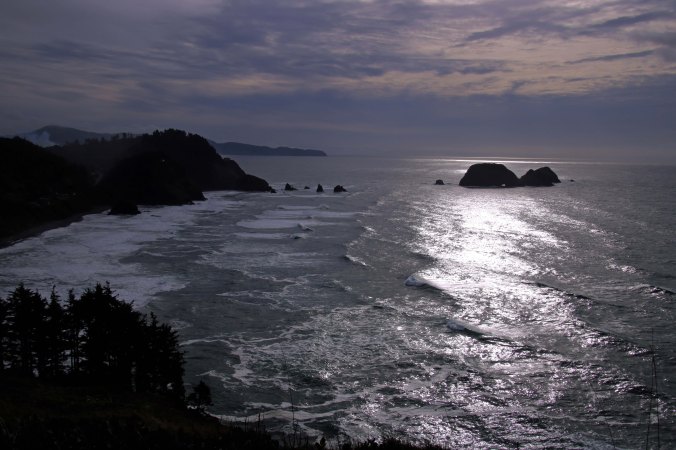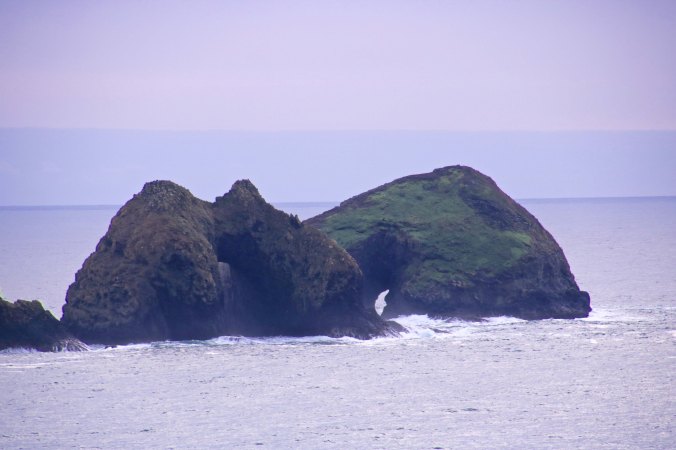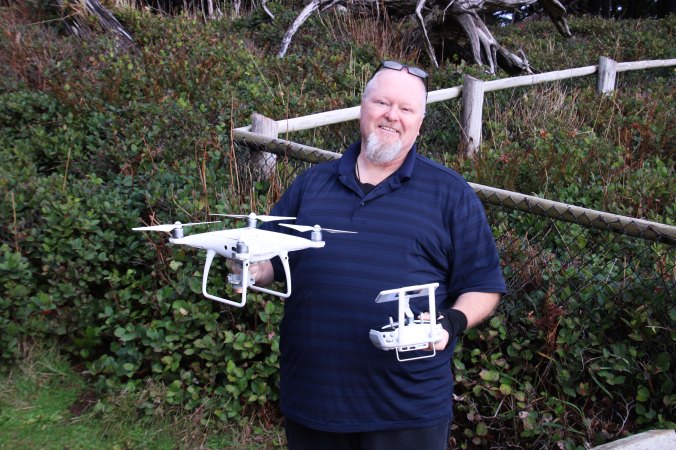
Piloting a 60-foot long, 6-foot wide Narrowboat along England’s Trent and Mersey Canal: Part 1


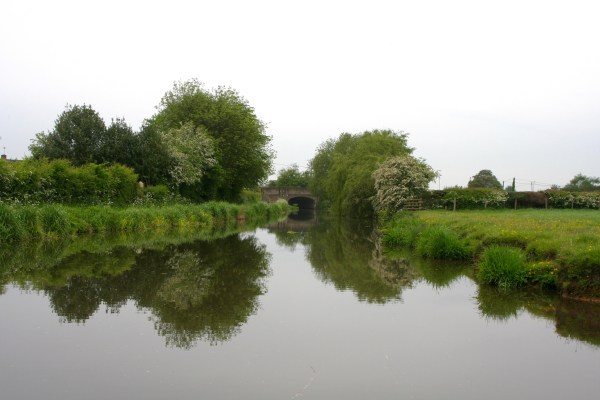
Scenic reflection shot along Trent and Mercy Canal

Operating a narrowboat along Britain’s scenic Trent and Mersey Canal became a bucket list item for us as soon as we learned about the possibility.

To call me a boat person would be a very serious misnomer. Backpacker definitely— that’s where my true passion lies. It gets me into the wilderness. But boating, as a general rule, is something I’ve done little of. There are exceptions.

Peggy and I have boated up the Amazon, rafted down the Colorado River through the Grand Canyon, and kayaked in numerous places throughout North America. I’ve canoed across the Kenai Peninsula of Alaska and down the Sacramento River of California. Peggy and I have even cruised the Mediterranean and crossed the Atlantic. And I’ve tried my hand at fishing for marlin off the coast of Mexico. Mainly, I see boats like I do bicycles, however: as a way of getting me to places I want to see. Bicycling or boating as sports in themselves have little appeal to me.
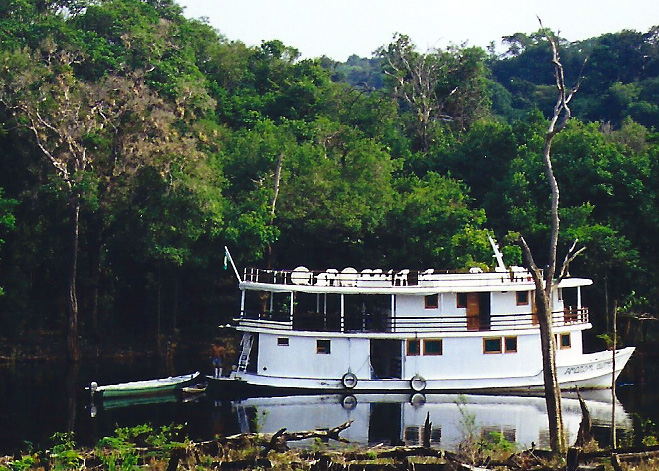
Our boat, the Amazon Clipper, docked for the evening deep in the rainforest on the Rio Negro River, Brazil.

Peggy and I enter the infamous Lava Falls on the Colorado River, a perfect ten… that’s 10 as in rapids don’t get any more serious. Shortly after that the boat, our boatman Steve, Peggy and I disappeared under the water. Happily, we resurfaced. (Photo by Don Green)
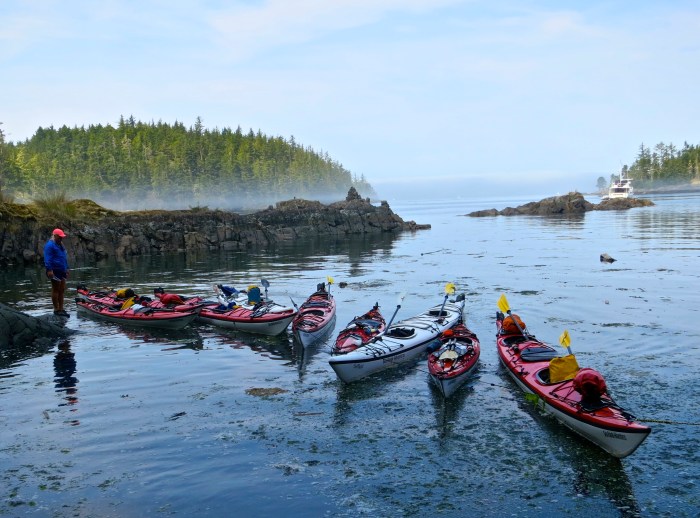
Sea Kayak Adventure kayaks roped together in small inlet on Hanson Island. Photo by Curtis Mekemson.

I took this photo of our kayaks off of Vancouver Island while we were at lunch. The kayaks were roped together so they wouldn’t run away.

Given my mixed feelings about boating, I found myself surprised that I enjoyed piloting a narrow-boat along England’s Trent and Mersey Canal. There was something about making the 60-foot long, 6-foot wide boat go where it was supposed to, including into boat-wide locks, that I found both challenging and gratifying. It helped that we were only traveling 3-4 miles per hour (4.8-6.4 k)! Peggy and I had invited her sister Jane and brother-in-law Jim along with us on the 2011 adventure. While Jim and I took turns at the helm, Peggy and Jane operated the locks.

Instructions for piloting the boat and working the locks were provided when we arrived. Peggy reminded me that we had less than an hour of instruction before being turned loose with out 60-foot long, several ton vessel. I can only imagine how experienced boat people along the Trent and Mersey Canal view newbies coming out of the marina. Peggy and Jane’s lesson on operating the locks was more like 15 minutes! But we did have instruction sheets.
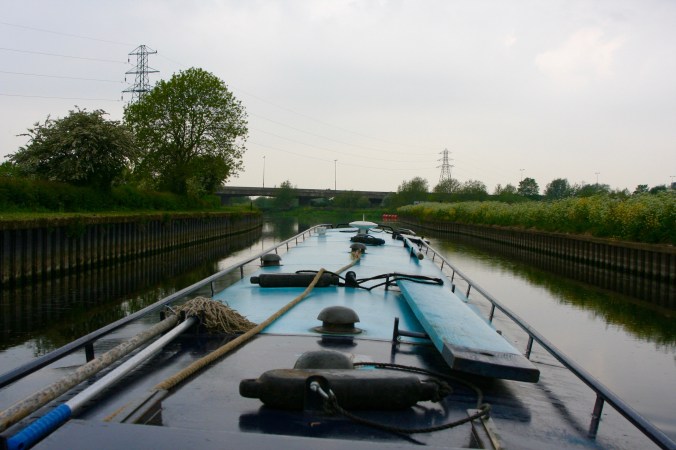
What it looks like from the helm of a narrowboat

This is what our boat looked like from the helm. Let’s just say that I was more than a little nervous when I took my first turn.
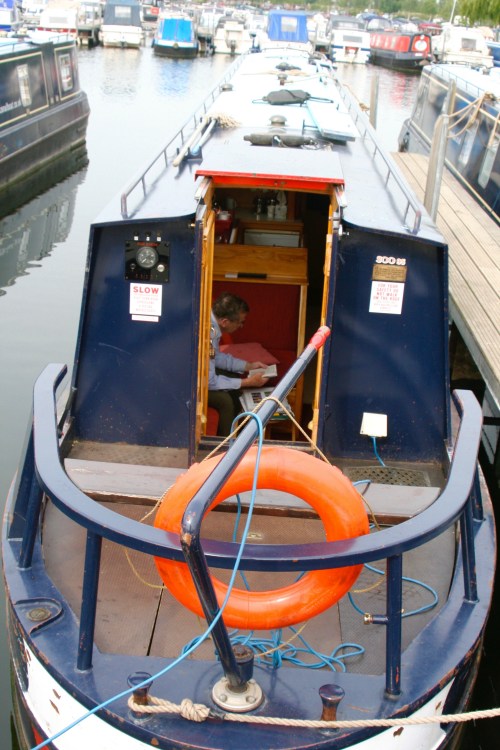
Jim researching our Trent and Mercey Canal trip

Jim, who never admits to being nervous about anything, studied the manual, or maybe he was reviewing our trip.
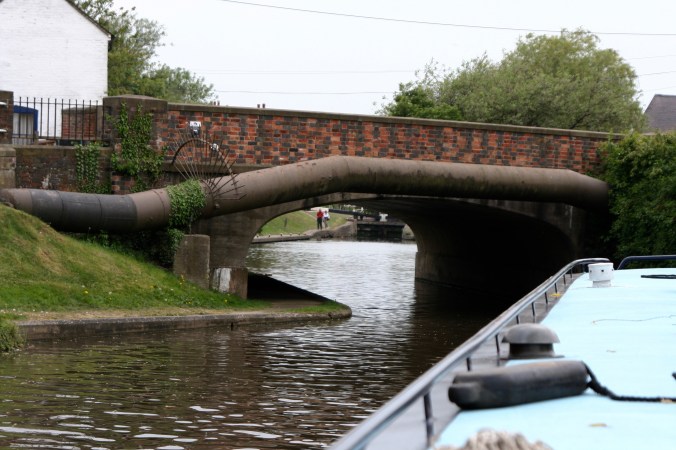
Piloting narrowboat under bridge on Trent and Mercy Canal

The challenges we would face included maneuvering our 60-foot vessel around sharp corners under low bridges…
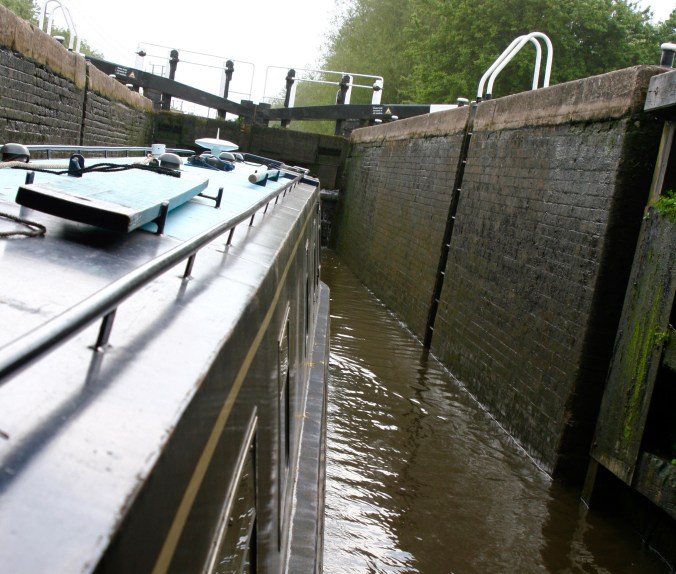
Piloting boat into lock on Trent and Mercy Canal

And piloting the boat into narrow locks, some of which were hardly wider than the boat. In fact, the width of the locks was the reason for creating the narrowboats. It was even more challenging when you had to slip into a lock of this width with another narrowboat while pretending to know what you were doing!
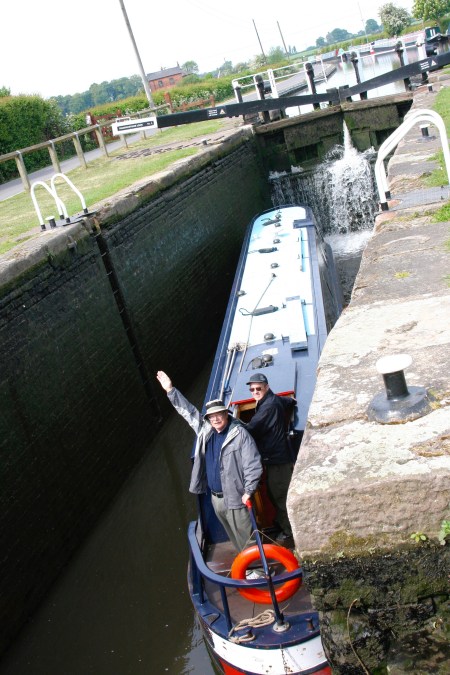
Narrowboat in lock on Trent and Mercy Canal

Fortunately, being perfectly straight wasn’t necessarily required when we had the lock all to ourselves! Water flowing in will raise our boat to the level of the upstream canal.
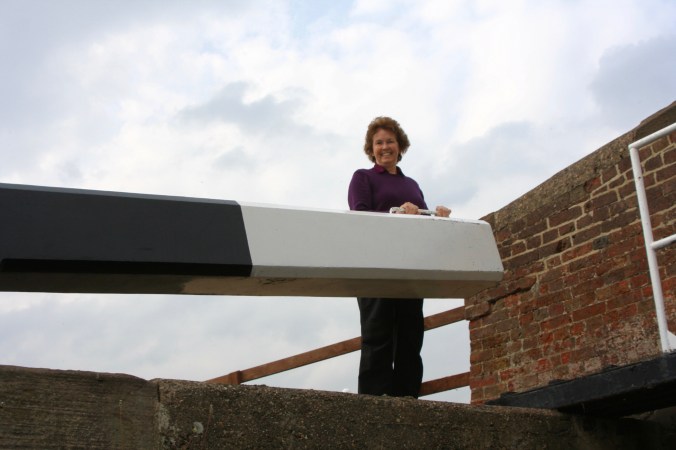
Peggy works lock gates on Trent and Mercy Canal

While we were mastering entering and exiting the locks, Peggy and Jane were mastering opening and closing them. Fortunately, some helpful veterans were present the first time our companions were faced with the chore.
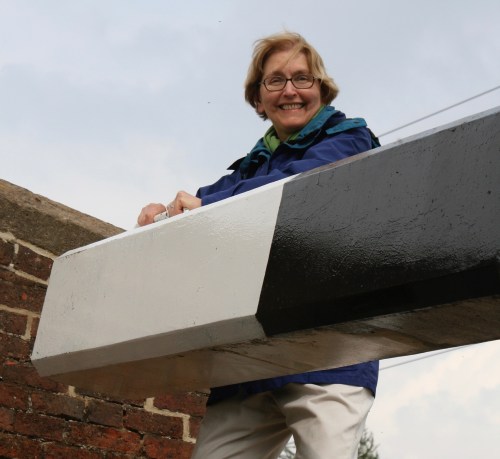
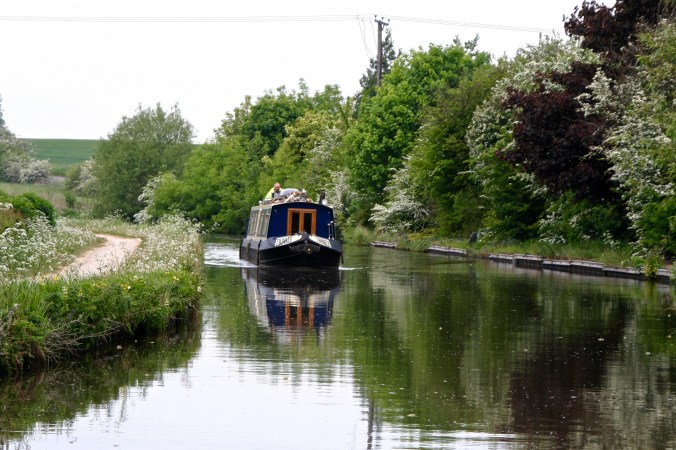
Jane Hagedorn works lock gates on Trent and Mercy Canal

Piloting around boat on Trent and Mercy Canal

Passing other boats could be challenging when the canal was particularly narrow.
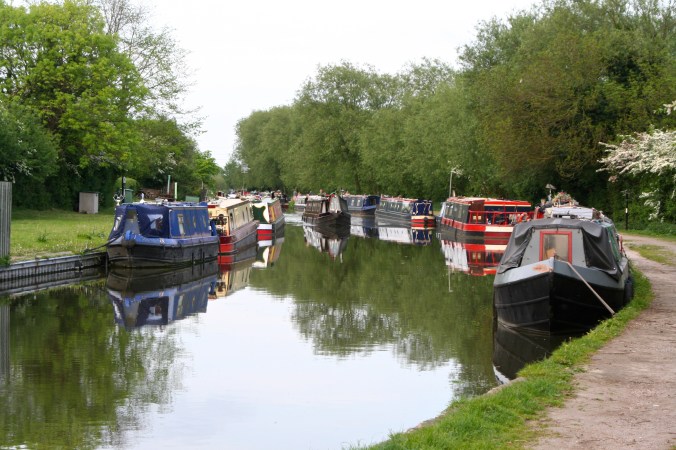
Piloting past moored boats while metting another boat on Trent and Mercy Canal

Now, picture meeting another boat when both sides of the canal are filled with moored narrowboats!
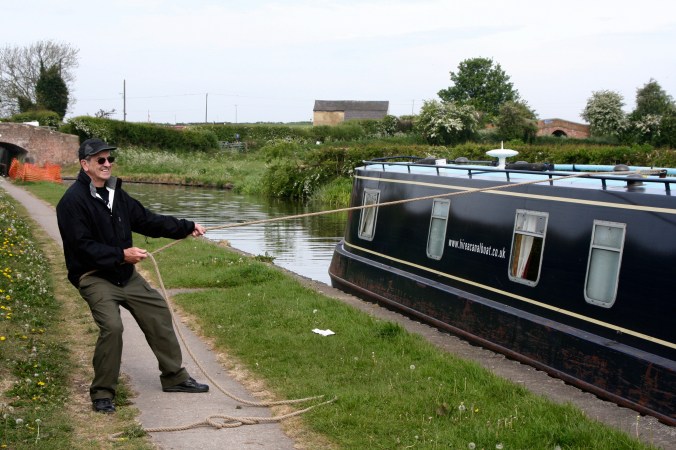
Mooring narrow boat

Another skill we had to master was mooring the boats when we stopped for the night or at a local attraction— such as a pub. Camping was free along the Trent and Mersey Canal.
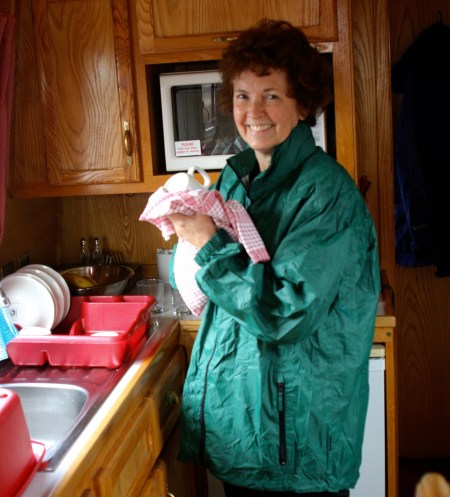
Peggy doing dishes in our tiny galley

We lived on the boat, which came with a small galley, sitting room, and bathroom.
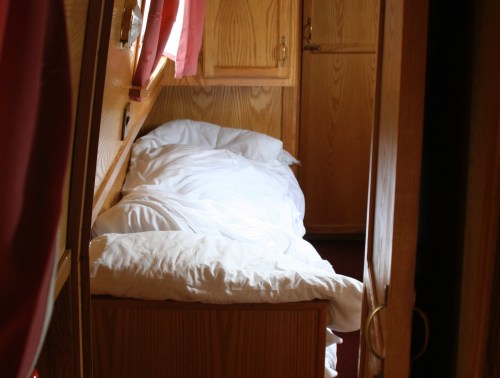
Single bed on a narrowboat

While the master bedroom had a small double bed, the other beds were barely wide enough to sleep on.

The Sawley Marina is located close to Nottingham and borders on the shires of Nottinghamshire, Leicestershire and Derbyshire. (Being close to Nottingham took me back to my childhood days and tales of Robin Hood.) Our objective was to follow the Trent and Mersey Canal to Burton upon Trent and return, a short distance of 34 miles (54.7k). The literature said we could make the trip in a leisurely three days. We chose a more leisurely six. How else could we check out all of the pubs and fine English ale along the way?
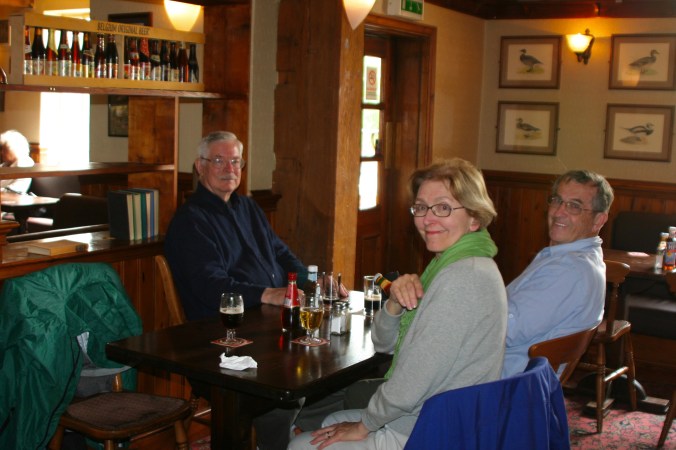
Enjoying pub along Trent and Mercy Canal

Jim, Jane and I enjoy one of the several pubs along the Canal while Peggy took the photo.

In addition to piloting the boat and checking out the pubs, there was a generous dose of bucolic beauty to enjoy along the way— as one might expect in Britain’s Midlands. Graceful swans, lots of ducks, and lazy cattle provided entertainment while walks through small villages and the larger town of Burton upon Trent gave us breaks from boating.
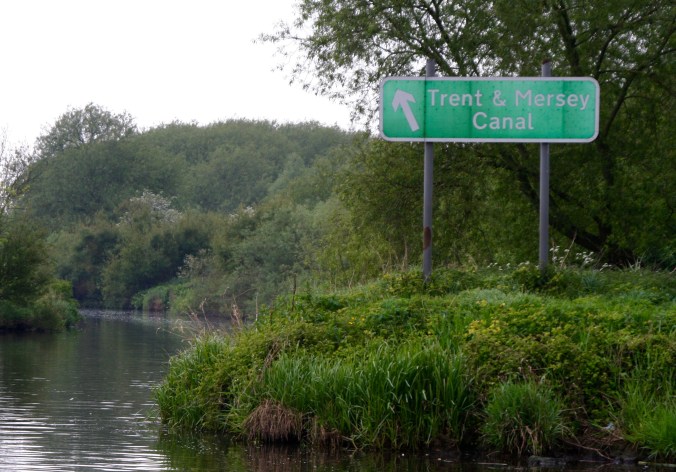
Direction sign on Trent and Mercy Canal

A sign takes us onto the Canal proper.
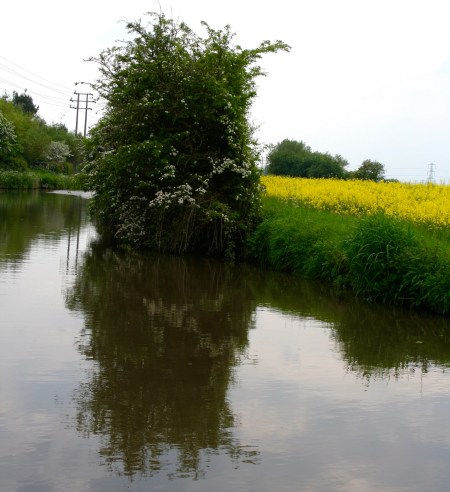
Scenic flowering tree and mustard along the Trent and Mercy Canal

There was considerable beauty along the canal and traveling at three miles per hour, we had plenty of time to enjoy it.
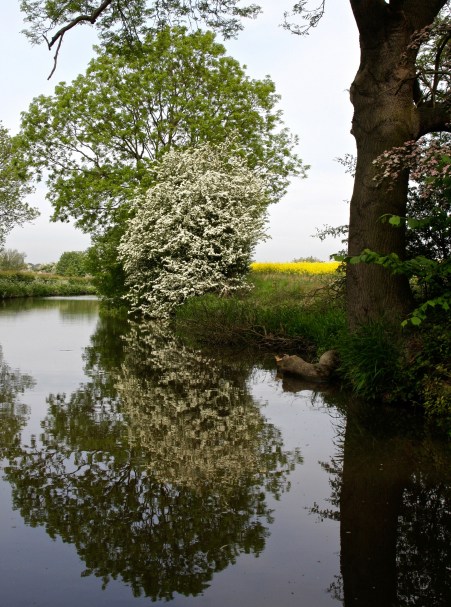
Scenic view with flowering tree along Trent and Mercy Canal

Since it was May, everything seemed to be in bloom.
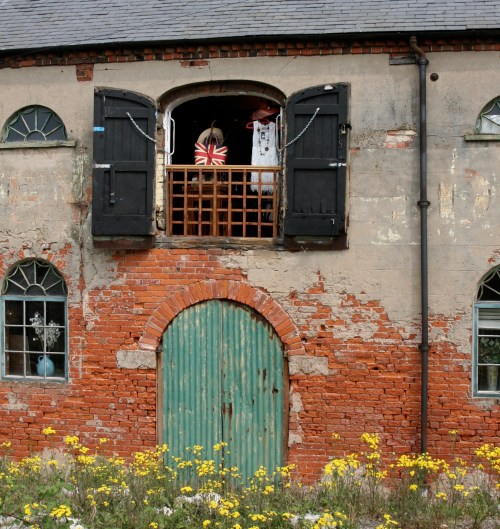
Building along Trent and Mercy Canal

Numerous buildings along the way added interest and color.
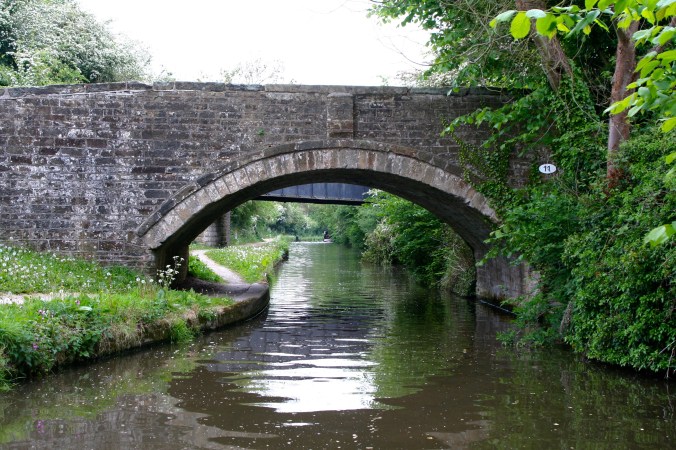
Bridge number 11 on the Trent and Mercey Canal

Bridges also provided variety. Each one seemed different. Numbers on the bridges told us where we were.

Bridge number 13 on the Trent and Mercy Canal

The bridges also added to the beauty.
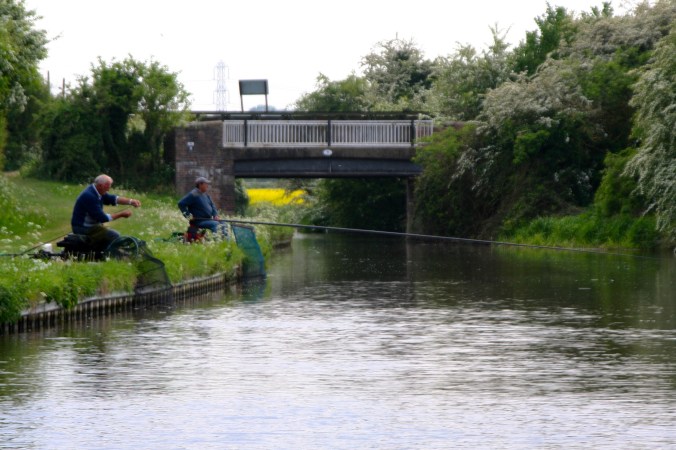
Fishing on Trent and Mercy Canal

This one included guys fishing. Check out the length of the poles!
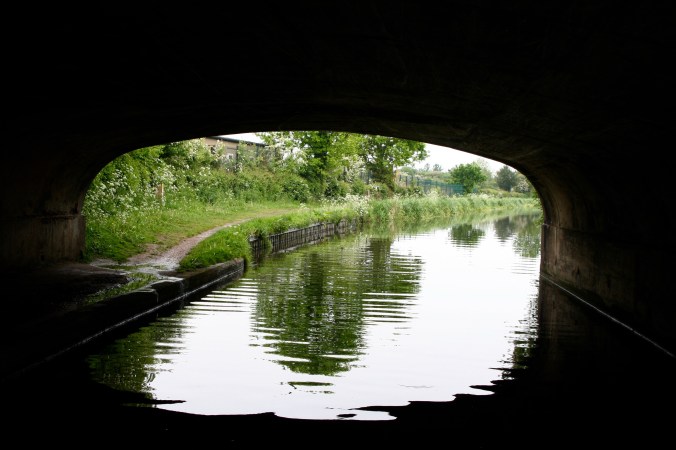
Scenic view from under bridge on Trent and Mercy Canal

Coming out from under a bridge.

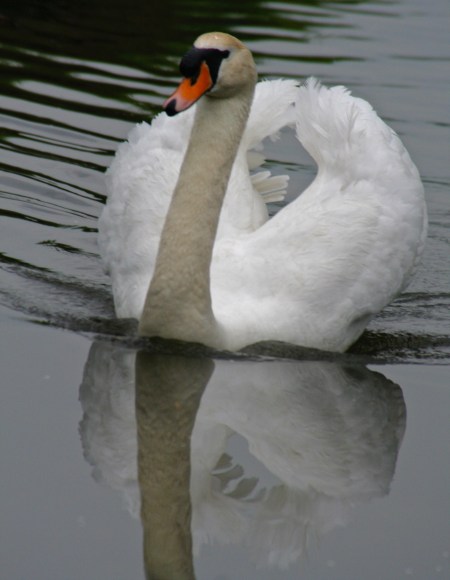
Swan and reflection on Trent and Mercy Canal

Swans, ducks and other birds provided entertainment. I liked the reflection here.
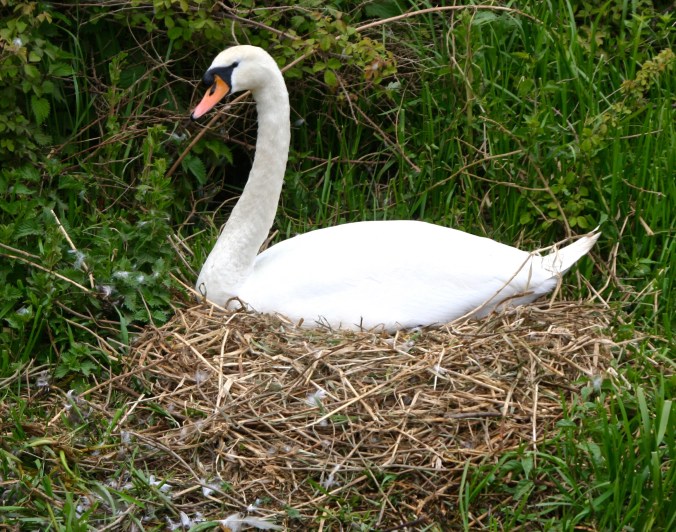
Swan nesting on Trent and Mercey Canal

Nesting.

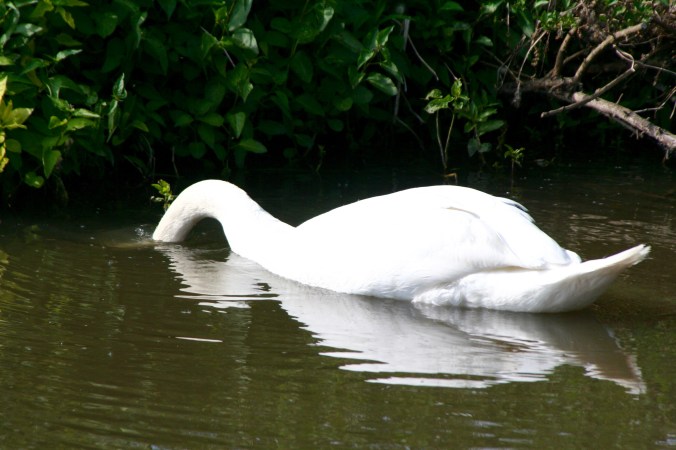
Swan chows down on Trent and Mercy Canal

And chowing down!

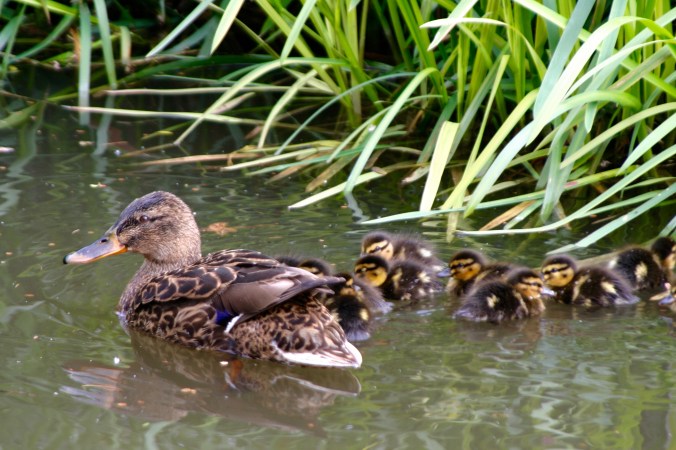
Mallard hen and chicks on Trent and Mercy Canal

I’ll conclude today with this mallard hen and her chicks.

I will be posting more photos of our narrow-boat tour on Thursday. Saturday I will return to blogging my book on MisAdventures with a story of how I hired our family pets to protect me from the fearsome ghosts that lived next to our house when I was a child.
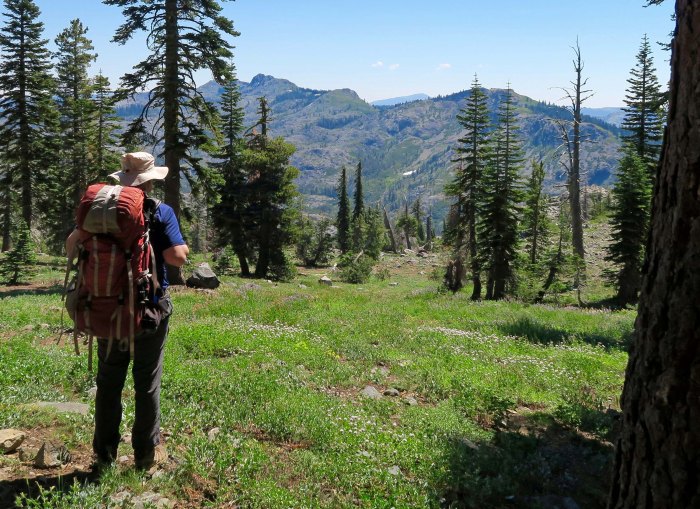
2017 in Review… What a Year!

Heading off into the wilderness on one of my five backpacking trips in 2017.


I always approach the new year in a reflective mood that is divided between looking back and looking forward. This past year has been a tough one for the US, one of the toughest that I can remember. The turmoil has made me want to run off to the ocean, or the mountains, or the desert, or the rainforests— anywhere that the constant blare of modern media and Washington tweets is missing or limited. But then, I always want to run off to the mountains, the ocean and the desert. The wilderness serves as a second home for me— a place to think, a place to heal, and a place to play.

Living out in the woods, as Peggy and I do, also helps!

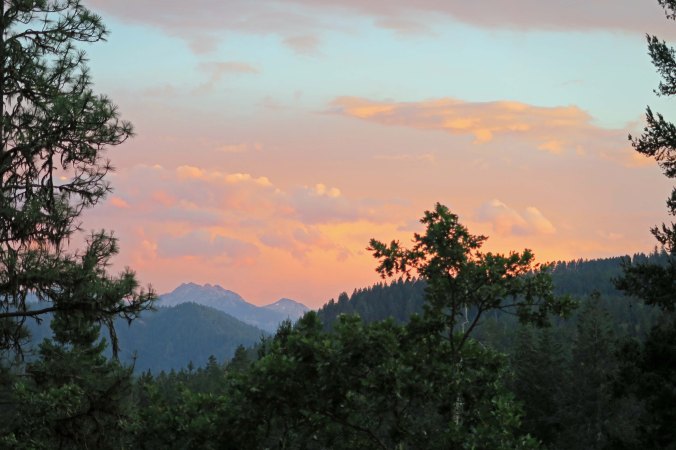
Sunset view from Mekemson patio on Upper Applegate River

A view of the sun setting in the west from our patio reminds me of beauty in our world, but also of the million-plus acres of forest lands and wilderness that surround us.

Applegate River

The Applegate River that runs in front of our house is quiet and peaceful in the summer, but can become a raging torrent in the winter. It is beautiful in all conditions, and the sound of its flowing waters always soothes.

Madrone tree in Mekemson back yard

Nothing marks the change of time like the changing of seasons. This large madrone that lives in our backyard and provides coveted shade in the summer, shows its winter face here.

spring at home

In the spring, our world turns green. Over 100 white oaks provide homes for animals as well as shade. In fall, their acorns provide food for squirrels, deer, turkeys and bears.

Fall at home

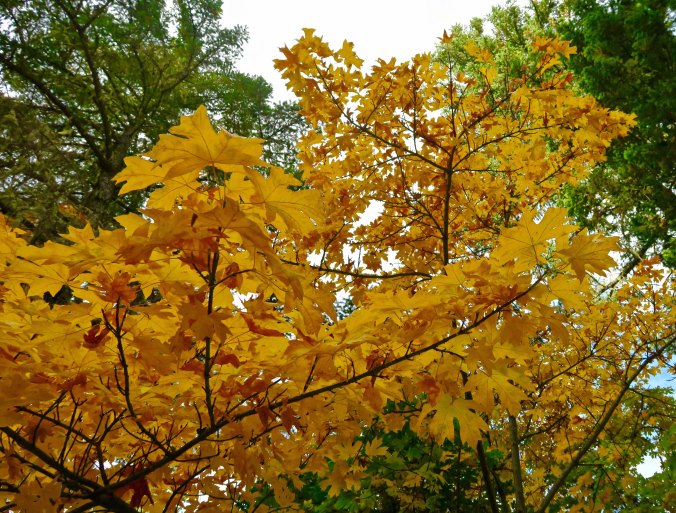
Fall always adds its splash of color, as it does with this Big Leaf Maple.

Ground squirrel with attitude

The wildlife that considers our property home provides constant entertainment and education. This ground squirrel had just managed to steal a cheek full of sunflower seeds from the bird feeder and had zero tolerance for my lecture.

Squirrel on birdfeeder

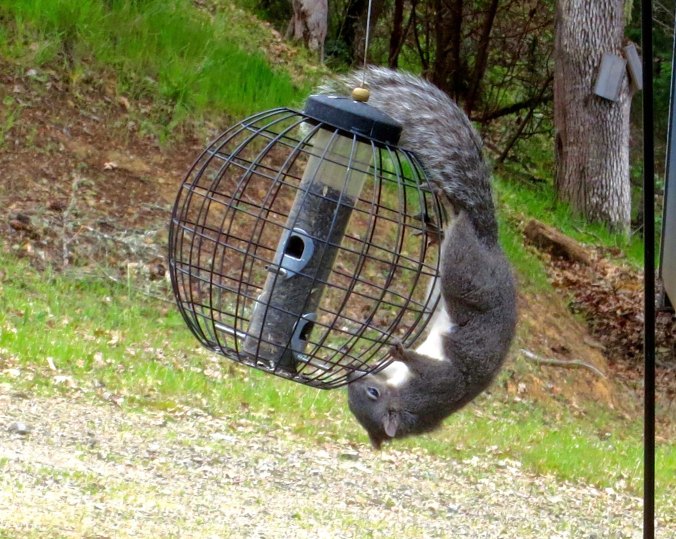
And this grey squirrel is trying to repeat its success. “Let’s see, if I rock this thing hard enough…”

Blacktail deer in Mekemson yard on upper Applegate River

The local deer herd provides us with an inside view of their lives, from birth to death.  The herd has scattered now. Wisely so. There is a cougar hanging out on our property and in the national forest land behind us. I haven’t seen it yet, but I have seen its scat in our back yard— and it is full of deer hair!

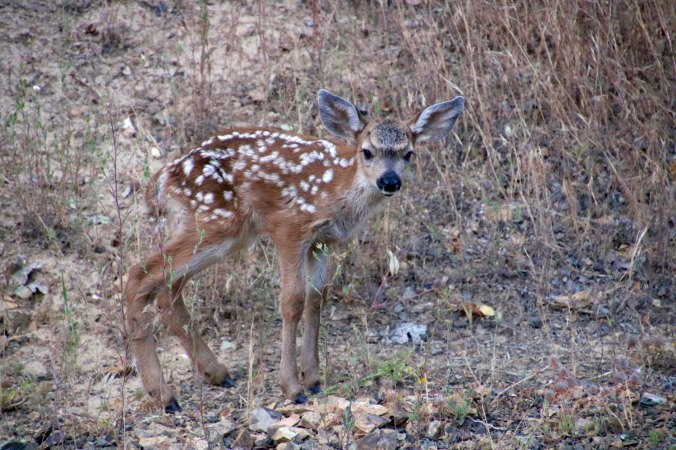
Fawn on our property

The cougar will move on, however. The deer will return. And the does will bring their children by for visits, as they always do. Life in its endless cycles will repeat itself.

Given my desire to escape this past year, it’s not surprising that the majority of my posts have revolved around trips to the ocean, mountains and deserts. That and Burning Man, which may be the ultimate escape to an alternative universe. Here are some photos that reflect our travels in 2017.

I’ll start with the ocean which includes trips I made on my own and trips the two of us did. Altogether, we covered some 1000 miles of coast between Big Sur, California and Forks, Washington.

Big Sur Coast

In the spring I made my way down to the Big Sur/Carmel/Monterey area while Peggy was playing Grandmother. This is the Big Sur coast.

Iconic Big Sur Bridge

An iconic Big Sur Bridge.

Ocean on 17 Mile Drive

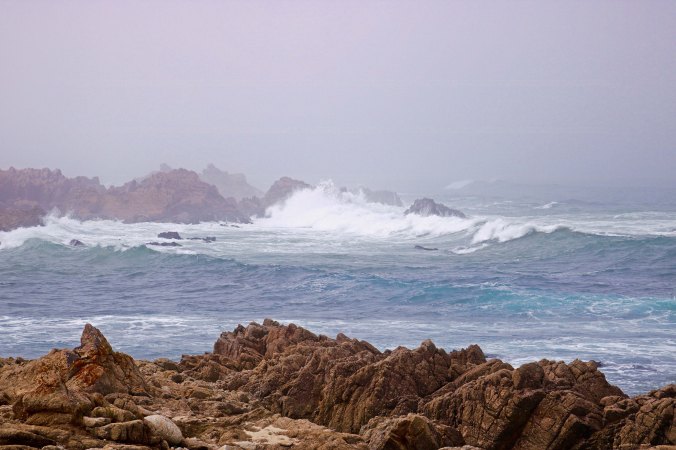
The coast along Monterey’s 17 Mile Drive.

Cypress on 17 Mile Drive

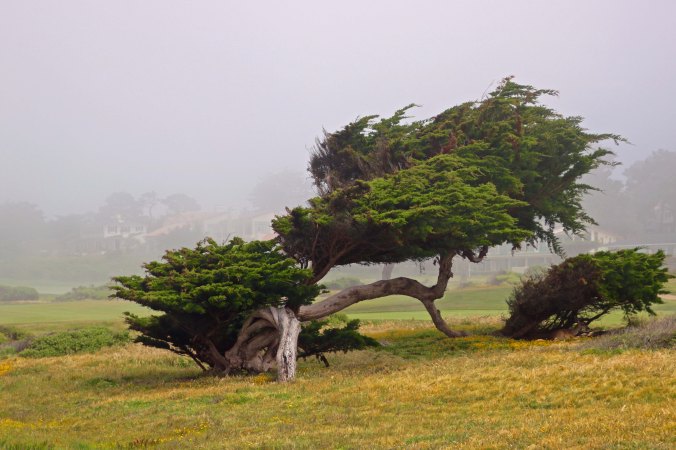
A Monterey Cypress located on one of several world-famous golf courses found along Monterey’s 17 Mile Drive.

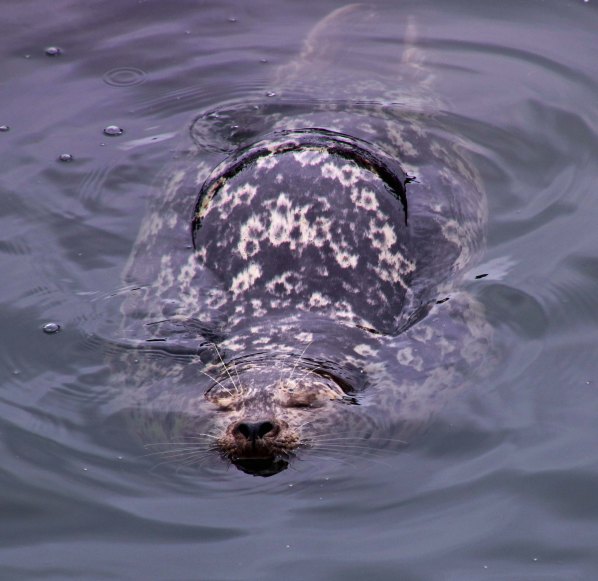
Seal at Point Lobos

A contented seal I found at Point Lobos just south of Carmel.

Bigfoot rock at Bandon, Oregon

Peggy and I found this marvelous rock on the beach just south of Bandon, Oregon. Note the toes. They stood about as high as Peggy. I called it Bigfoot, of course.

Face Rock at bandon Beach

We were also impressed with what is known as Face Rock. You can see the chin, mouth, nose and eyes on the right.

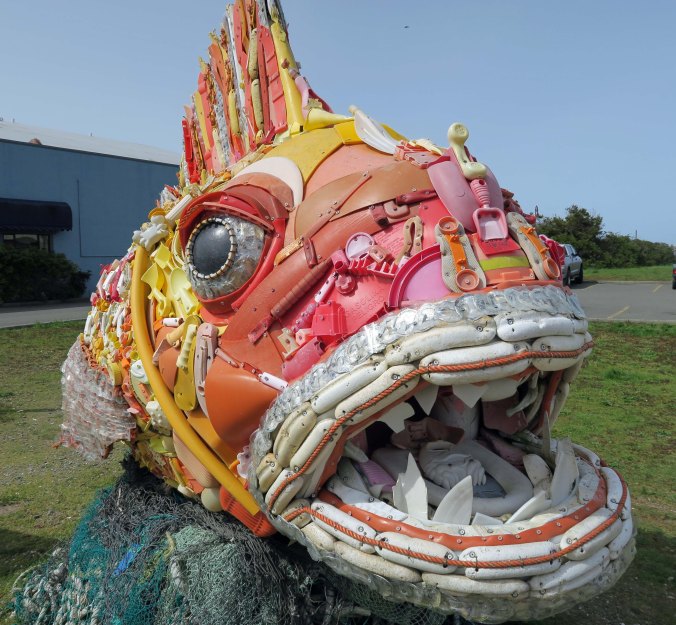
Ocean trash fish at Bandon, Oregon

This marvelous fish sculpture in Bandon had been created out of trash collected along the local beach.

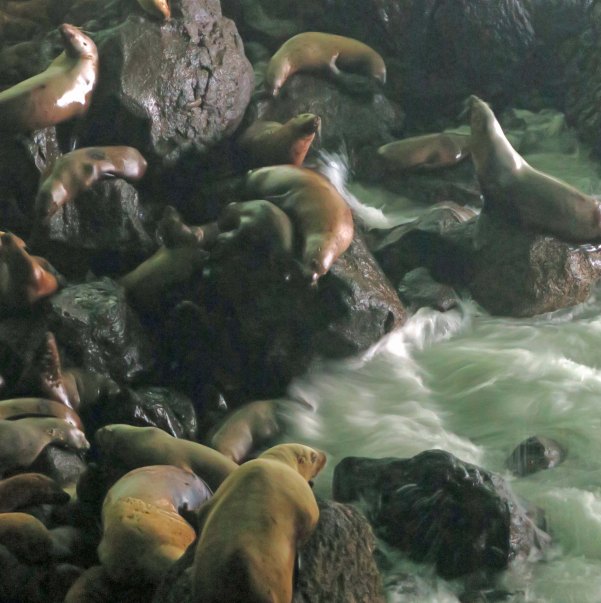
Seal Cave near Florence, Oregon

I found these seals located in Seal Cave just above Florence, Oregon.

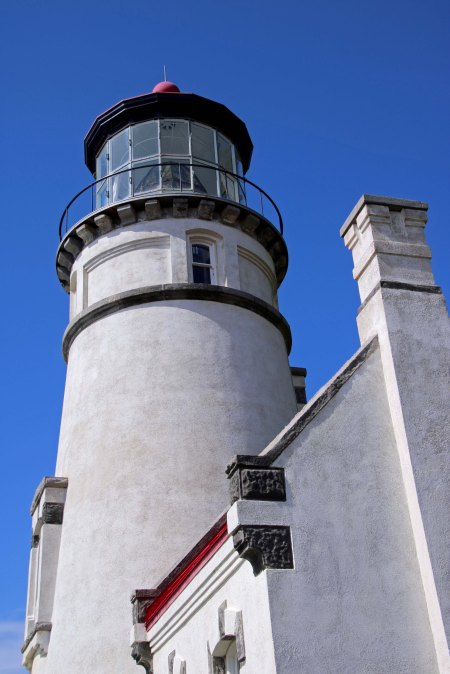
Heceta Head Lighthouse

And the beautiful Heceta Head Lighthouse a couple of miles away.

Sea serpent at Rockaway Beach

Our trip before Christmas took us up to Rockaway Beach where we found a pair of rocks that reminded me of the Loch Ness Monster, Nessie.

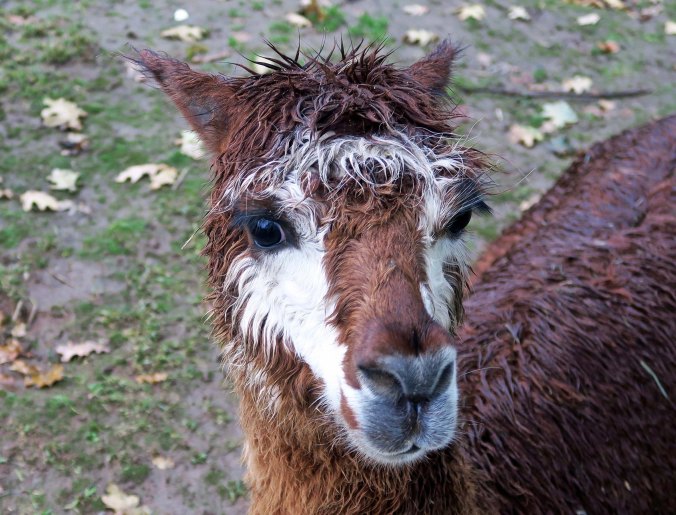
Alpaca near Tillamook, Oregon

And this cutie near Tillamook.

Peggy Mekemson at Copalis Beach

We stayed at Copalis Beach in Washington where Peggy went for a walk on the beach at sunset.

The ultimate in escaping the noise and busyness of the world is backpacking. There are no phones, or TVs, or newspapers, or Internet.  Not surprising, I went out five times. Twice by myself, twice with Peggy, and once with Peggy, our daughter Tasha, and our two grandkids, Ethan and Cody. We backpacked in the Siskiyou Mountains near where we live and in the Sierra Nevada Mountains east of Sacramento, an area I have wandered in for 50 years.

Oregon stream

One of the streams we camped on in the Siskiyou Mountains.

Peggy's Lake

I found this lovely little un-named lake when I was hiking off trail in the Sierras and promptly gave it a name: Peggy’s Lake.

Black Buttes

The Black Buttes east of Interstate 80 looking golden.

Five Lakes Basin

I’ve had a number of trout dinners from this lake over the years.

Thunderheads at Glacier Lake in Five Lakes Basin

Thunderheads. Rain, hail and lightning storms added excitement to our trips.

Family backpacking

My trail companions: Peggy, Cody, Tasha and Ethan.

And of course we traveled elsewhere. Two of our trips involved returning to the desert. Peggy and I journeyed down through the Sacramento Valley and into southern Nevada where we visited the Valley of Fire State Park. I made my way back to Burning Man in the remote Black Rock Desert of Northern Nevada.

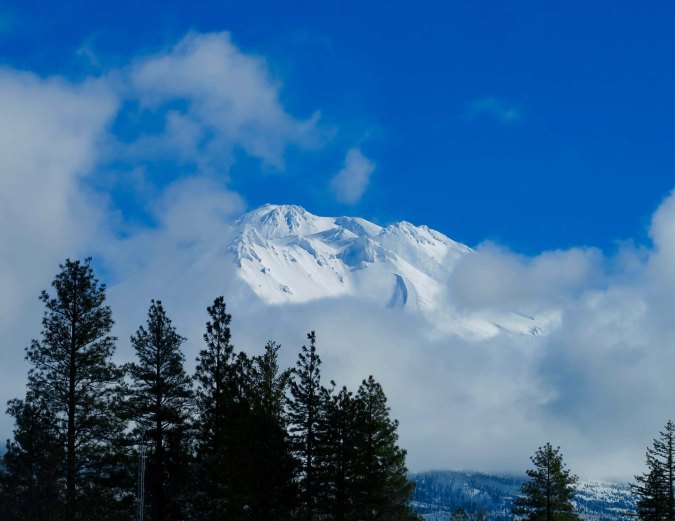
Mt. Shasta

We always travel somewhere on my birthday, usually with our friends Ken and Leslie Lake. This year took us down past Mt. Shasta still wearing its winter coat…

California's Central Valley

Through California’s Central Valley looking very spring-like.

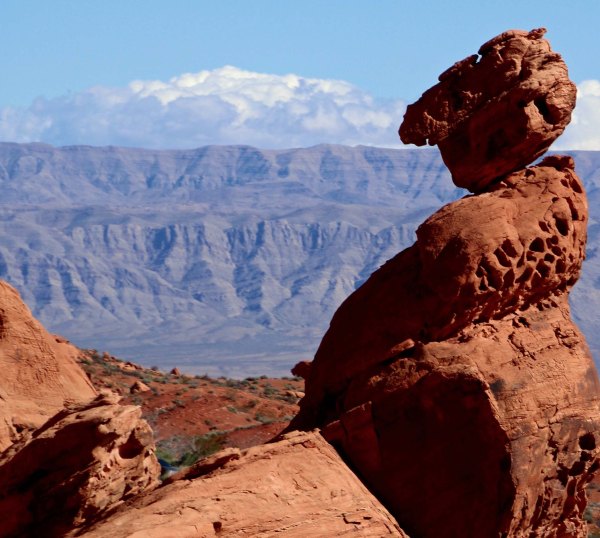
Rock sculpture in Valley of Fire State Park

And into southern Nevada’s very dry Valley of Fire State Park…

Arch at Valley of Fire State Park

Which included this small but colorful arch.

Tony's promotion

Summer took us across the USA to Charleston, South Carolina where we celebrated our son’s promotion to Lieutenant Commander in the Coast Guard. His wife, Cammie, and boys Chris, Connor and Cooper help add his new rank.

Man at Burning Man 2017

I returned to Burning Man…

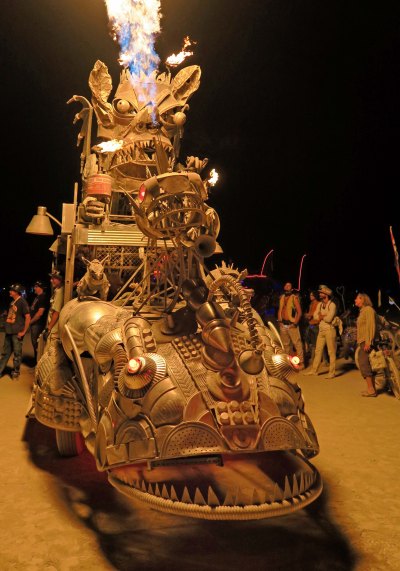
Rabid Express at Burning Man 2017

Where I found this marvellous mutant vehicle known as Rabid Transit.

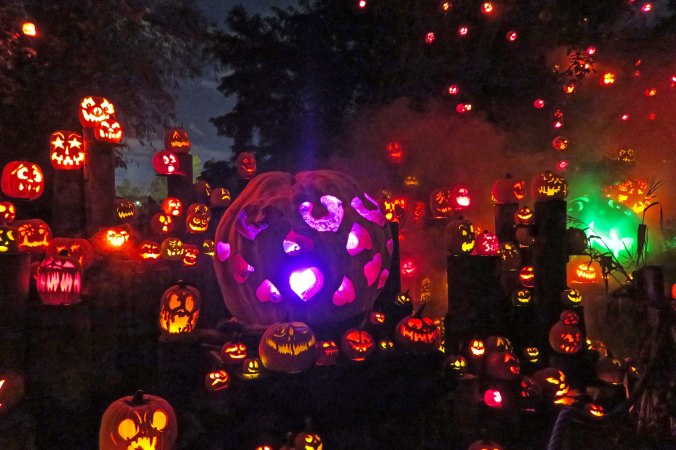
Pumpkin carving festival in Rhode Island

October found us back East again where we attended a pumpkin carving spectacular in Providence, Rhode Island.

Did I succeed in escaping the world of political turmoil? Not quite. And neither would I want to. I spent my life working as a community advocate with non-profit organizations on environmental and public health issues. Time and again, I have seen that concerned people can, and do make a positive difference.

Ultimately, I am an optimist. The majority of the people in the US believe that our nation should serve as a positive force in the world, want to breathe clean air and drink clean water, think that neither sex, age, ethnicity, religion, or sexual preference should be a limiting factor in determining what a person might become or contribute, believe that there is value in protecting the wild, beautiful and historic areas of the world, support a more equitable distribution of wealth, want to reduce violence, and believe that affordable health care and education should be available to all.

It is my hope for this country that leaders (be they Republicans, or Democrats, or Independents) will step forward with the vision to heal the nation and move it toward the point where it reflects what the majority of Americans support— and hope for. Likewise, I have a similar hope for the world. While I realize that this sounds naïve (and I’ve been around the block enough times to know), I also believe that we live in a rapidly changing world with great promise but even greater danger. If we are to achieve the promise and avoid the danger, which may include our very survival, we must learn to work together much more effectively for the good of all as opposed to the few. We all have a stake in the outcome, as do our children, grandchildren and future generations.
I have both enjoyed and learned from the people I follow on Word Press this past year as you have taken me along on your travels, adventures, and personal journeys through life. Even more, I have enjoyed the friendships we have created. My thanks to you— and to everyone who stops by to visit my blog.
Peggy and I wish each of you and your families a happy and healthy 2018.

The Beautiful Flowers of the Chatsworth House… Wednesday’s Photographic Essay

Picture of flowers at Chatsworth House by Curtis Mekemson.

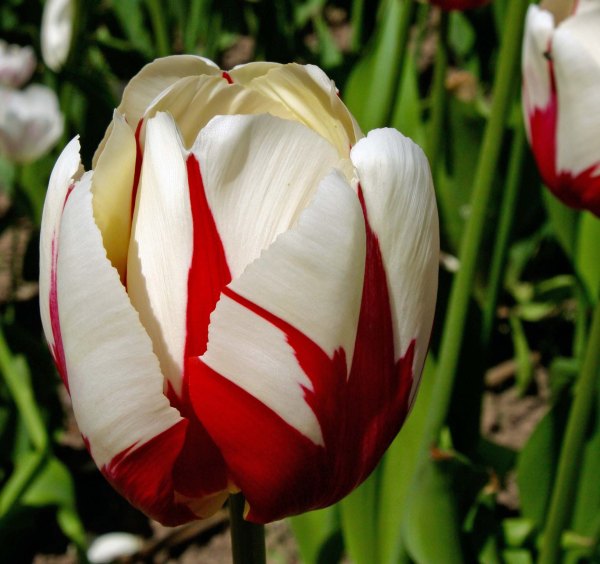
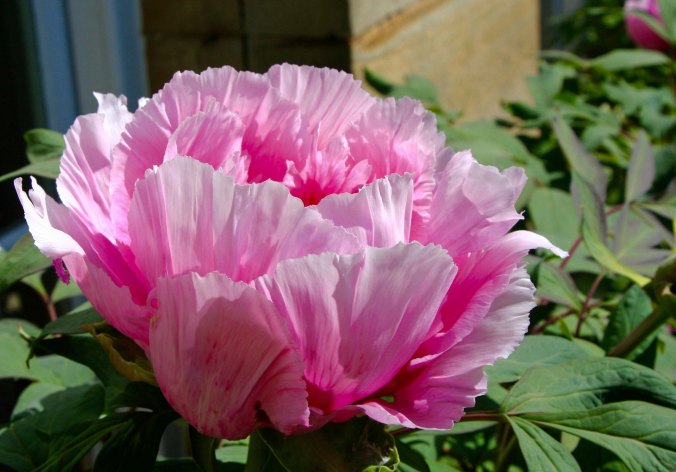
The gardens at Chatsworth House are filled with beautiful flowers.


A few years ago, Peggy and I decided it would be fun to do a narrow boat tour in England and we invited her sister and brother-in-law Jane and Jim Hagedorn along. Jane has been one of my best friends forever and loves England. Even more than England, she loves English Gardens. When Jane learned we would be traveling past the Chatsworth House, she insisted that we had to stop for a visit. There were no ifs, ands or buts.

I can’t say I was ecstatic with the detour, but I was okay with it. The Chatsworth House, located in Derbyshire, is the seat of the Duke of Devonshire and wrapped in history, which always pulls me in. In the end, it wasn’t the stately home or the history that won me over, however. It was the beautiful gardens. Jane was absolutely right. I fell in love with the landscaping and even more the incredible flowers.

So, welcome to my Wednesday Photograph essay, and some beautiful flowers. Any favorites?

Flowers 17 at Chatsworth

Flowers 13 at Chatsworth

Flowers 8 at Chatsworth

Flower 18 at Chatsworth

Flowers 15 at Chatsworth

Flower 19 at Chatsworth

Flowers 16 at Chatsworth

Flowers 6 at Chatsworth

Flowers 11 at Chatsworth

Flowers 14 at Chatsworth

Flowers 9 at Chatsworth

Flower 1 at Chatsworth

Of course, Chatsworth is about much more than flowers. There is the landscape, sculptures, and the house. I spent my time in the house gaping instead of taking pictures, but here are a few of the landscape and sculptures that caught my attention or amused me. And one from inside the house.

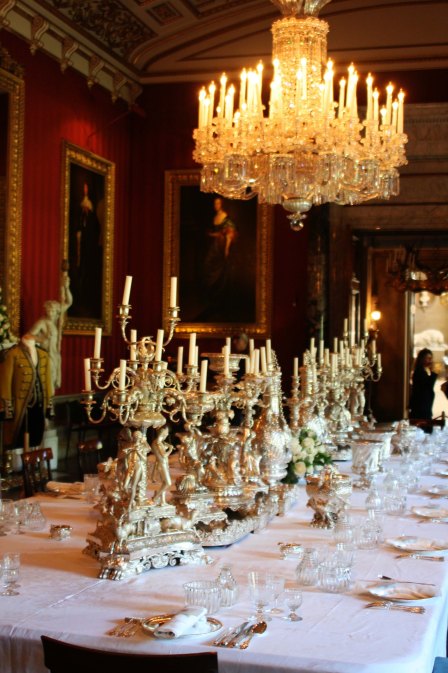
Candles at Chatsworth

One look at this dining room convinced me that you would need one servant just to light and put out the candles!

Hare sculpture at Chatsworth

I loved this graceful, leaping hare.

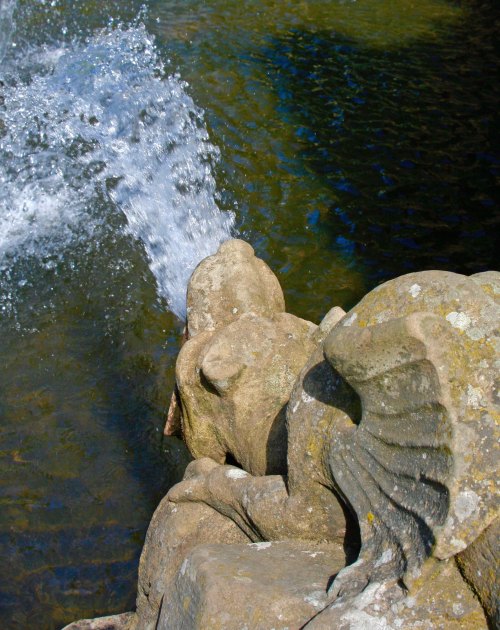
Gargoyle at Chatsworth

And I have never met a gargoyle I didn’t like!

Greyhound sculpture at Chatsworth

I was amused by these realistic greyhounds. One seemed a bit dubious about the plant, while a bug, or maybe a strange smell, had caught the attention of the other two.

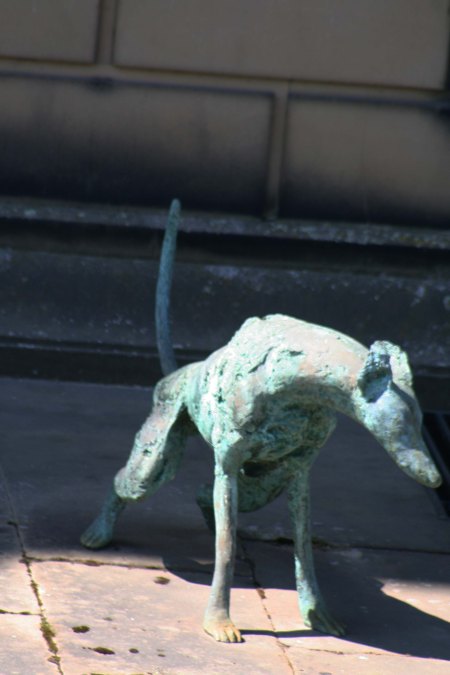
Dog sculpture peeing at Chatsworth House

And how much more real does it get than this? (grin)

Lion at Chatsworth

This lion seemed hyper alert. Was there a tourist on the menu? Is that drool coming out of its mouth?

Peggy and horse at Chatsworth

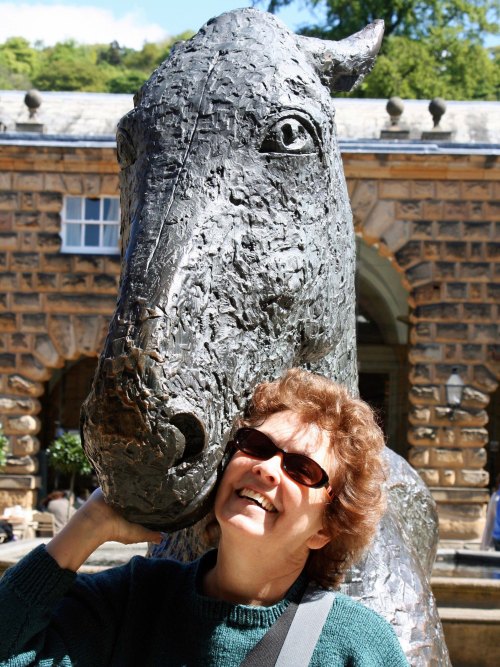
And this horse seemed a bit wild-eyed about Peggy snuggling up to it. Also, check out those laid back ears!

Metal sculpture at Chatsworth

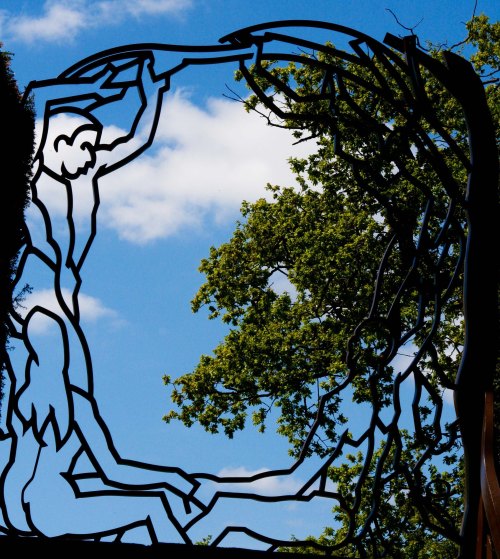
Graceful nudes were cavorting in the garden.

Flower garden at Chatsworth

The flowers went on and on…

Gardens at Chatsworth

…and each turn in the path brought on a new view. The flat section stretching across the middle is a maze. “Hold your right hand on the wall and never lift it,” Peggy advised.

Tree at Chatsworth

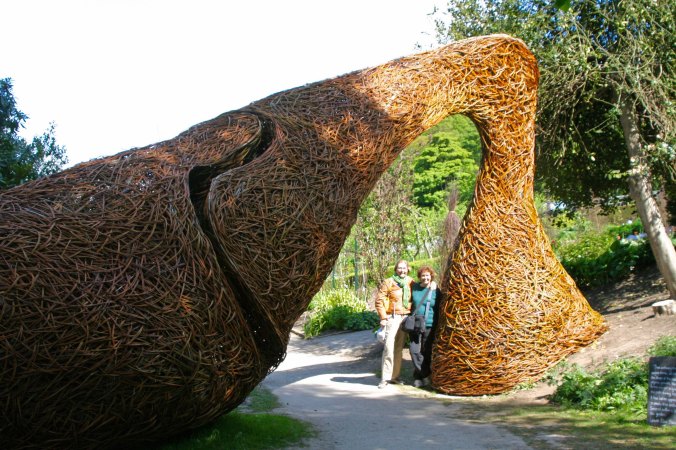
Woven forms at Chatsworth

These unusual forms were woven from natural vines. Jane and Peggy provide perspective.

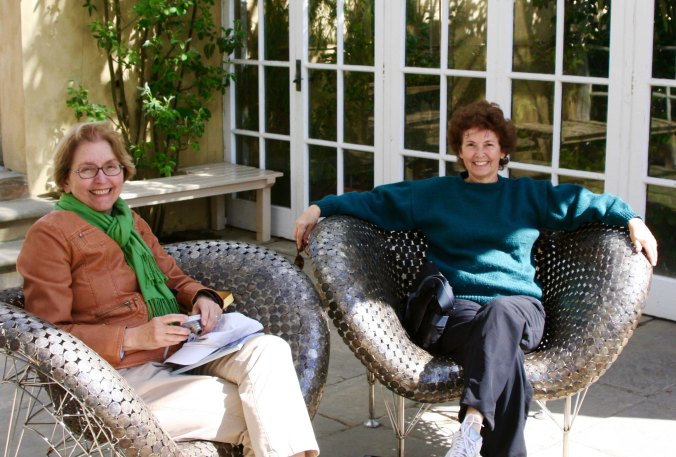
Peggy Mekemson and Jane Hagedorn at Chatsworth

I’ll conclude with Jane and Peggy relaxing on chairs made out of JFK coins. Be sure to join us on next Tuesday and Wednesday’s photographic essay as Jim and I pilot a 60 foot long, 8 foot wide narrow boat along picturesque English canals while Peggy and Jane operate the locks!


SATURDAY’S POST: A review of our 2017 travels… Happy New Year!

TUESDAY AND WEDNESDAY’S POSTS: A narrowboat tour in England: A photographic essay

FRIDAY’S POST: Back to blogging my book. I hire the family animals to protect me from ghosts.


SaveSave

SaveSave

SaveSave

SaveSave

They Had a Conference on Bigfoot and I Missed It… Darn!

Peggy Mekemson holds hands with large Sasquatch

Peggy holds hands with a very big Bigfoot/Sasquatch in Ocean City, Washington. BTW… Is that an SST being followed by a flying saucer up in the sky? (I think the SST was honking.)


You don’t have to know much about me to know that I am a Bigfoot/Sasquatch fan. How could I not be, having the world’s only Bigfoot trap about three miles away from where Peggy and I live? People seriously thought they might catch the big fellow, or his wife, or the kids back in the 70s. They even hired an old miner to keep an eye on the trap, outfitting him with a tranquilizer gun and a very large set of handcuffs. The fact that they never caught him may be a comment on his existence— or the fact that he was a lot smarter than the people trying to catch him. Or maybe Bigfoot is a vegetarian and wanted nothing to do with the large hunk of well-aged beef they baited the trap with— unlike the bear they did catch.

The world’s only Bigfoot trap is located about three miles from where we live. The doors have long since been welded shut and local high school students have added graffiti.

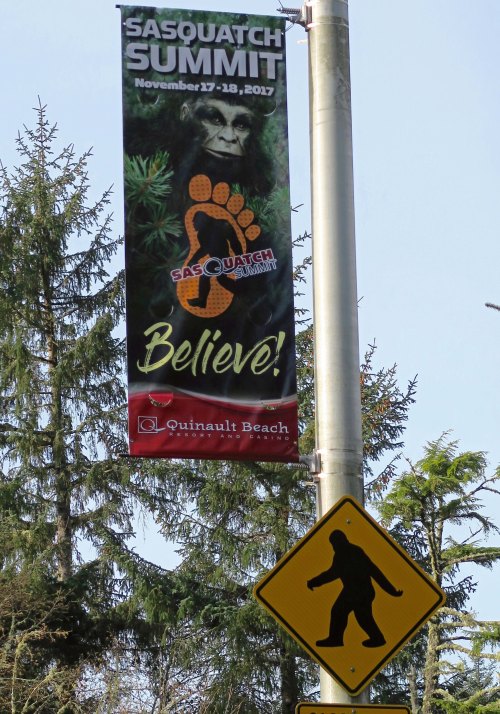
When Peggy and I traveled up to the central Washington coast a few weeks ago, you can imagine my consternation when I discovered that I had just missed a conference on Sasquatch. I’ve attended lectures before, our Genealogical Society hosted one, but never a whole conference. The Washington event even included a bona fide scientist or two. Posters, signs, and a billboard announced the ‘Sasquatch Summit.’ It would have made a fun post.

Sasquatch Summit Billboard

A billboard…

Bigfoot crossing sign

One road sign announces the conference while another warns drivers to watch out for Bigfoot crossing the road.

Sasquatch Conference poster

A poster provides details.

My dismay was countered somewhat by the fact that Bigfoot was a commercial success in the area. It seemed like everyone in the communities of Ocean Shores, Ocean City and Copalis wanted in on the action. Motels, resorts and a pub used him to advertise. The area, like many along the coast from California to Washington, is also into wood carving as an occupation. For a few hundred bucks, we could have had our own Sasquatch to bring home.

Large sasquatch 1

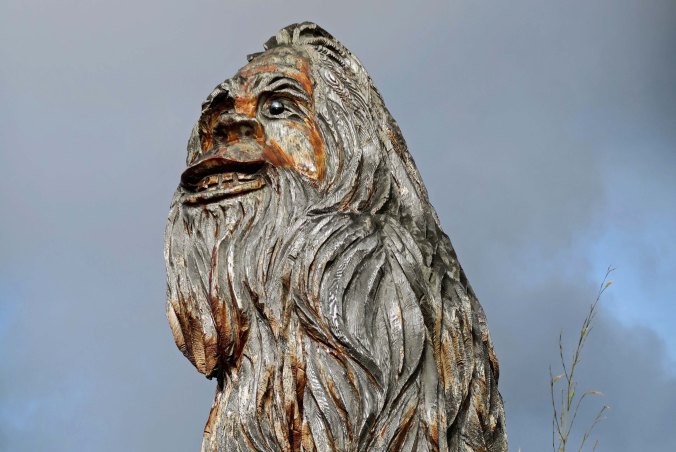
A close up of Peggy’s friend.

Surfing Sasquatch flashes hang loose symbol

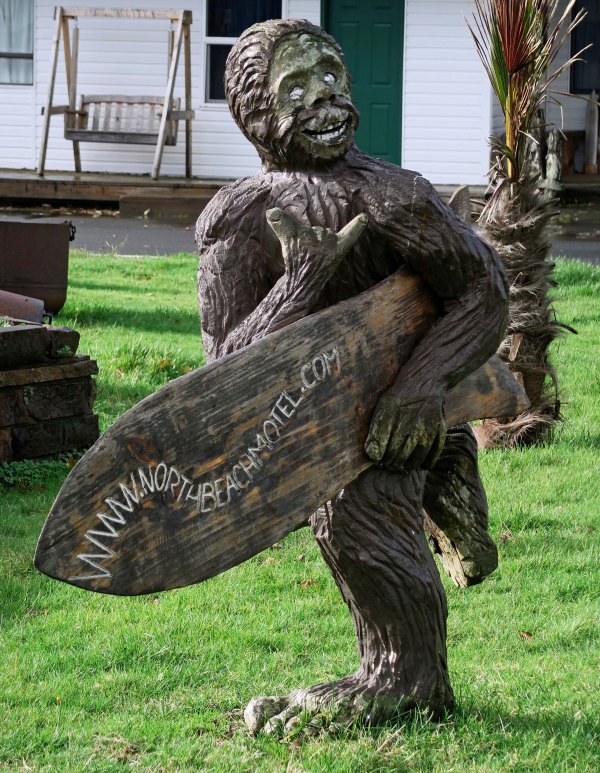
A local motel featured Bigfoot and his buddy Bigfoot running with a surfboard while flashing the ‘hang loose’ sign.

Bigfoot surfing

Buddy Bigfoot.

Sasquatch hangs out with carved heron

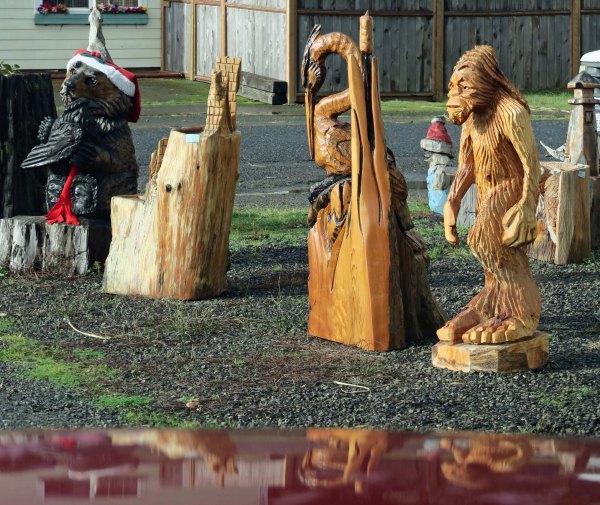
The Ocean City Market, which focuses on wood carving, featured Peggy’s Bigfoot as a marketing tool and had this smaller one for sale.

Fu Manchu Sasquatch

We also found this fellow sporting a Fu Manchu mustache.

This guy up the road looked a bit more primitive.

I was looking into a puddle when I caught this reflection of Bigfoot staring back at me.

Sasquatch at Green Lantern Pub in Copalis, Wa

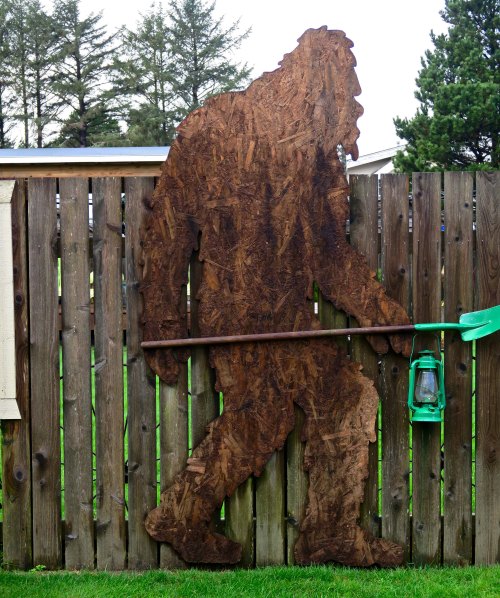
The Sasquatch at the Green Lantern Pub was outfitted with a clam digging shovel and a green lantern.

Green Lantern Pub BLT in Corpalis, WA

The pub featured this Bigfoot sized BLT…

BLT at Green Lantern Pub, Copalis

…that I had to sample. I don’t think eating another one is included in my New Year’s resolutions for 2018!

Women's restroom at Green lantern Pub, Copalis

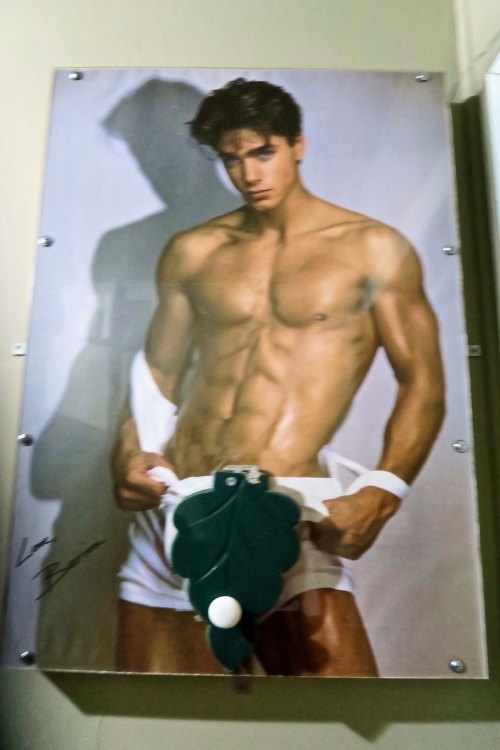
And the women’s restroom at the pub featured this guy, who apparently wasn’t known for his big feet. Peggy, who is infinitely curious, just had to raise the fig leaf, not knowing that a buzzer was going to go off in the pub when she did! So, assuming you didn’t know about the buzzer, how many of you are as curious as Peggy?


THURSDAY’S POST: The flowers of England’s Chatsworth House.

SATURDAY’S POST: 2017 in Review

TUESDAY’S POST: Wandering around the central coast of Washington

Santorini: A Mediterranean Jewel— Part 2… The Wednesday Photograph Series

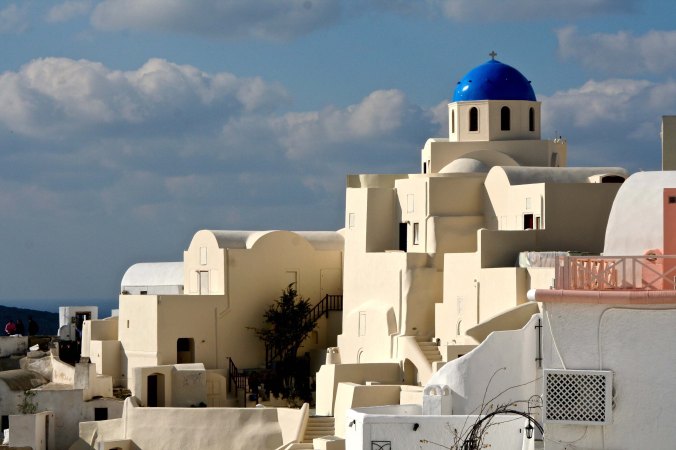
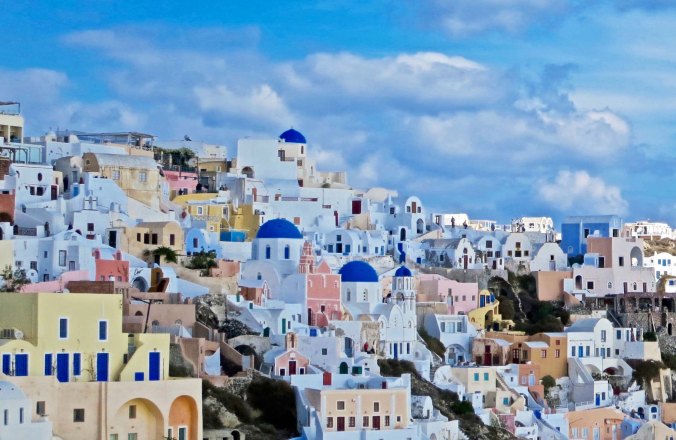
Blue topped church and other buildings in Santorini P

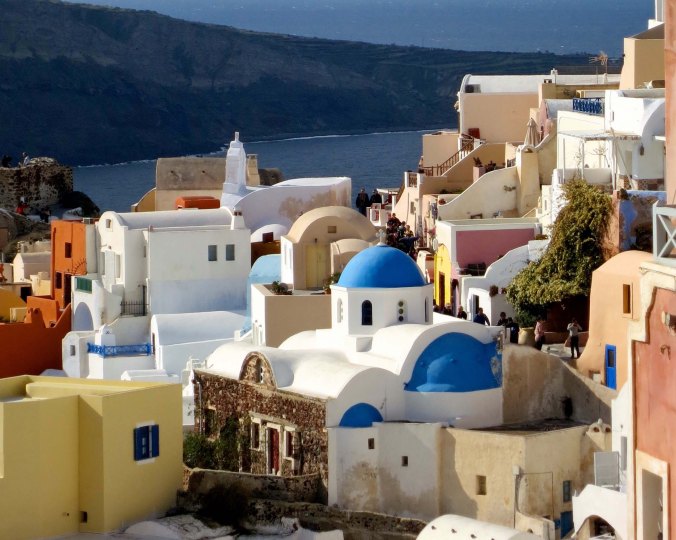
For its size, Santorini has numerous churches and chapels. Many of the smaller ones were built and dedicated by families of fisherman in thanks for their loved ones return from sea. (Photo by Peggy Mekemson.)

Today marks my second photographic essay on the beautiful Greek Island of Santorini.

Living on Santorini can be a bit hazardous to your health. It is a volcanic area prone to earthquakes and has suffered from several volcanic eruptions over time. As I mentioned in my last post, Santorini is part of an archipelago that surrounds a caldera. Calderas are created when the magna chamber under a volcano is emptied out and the volcano comes crashing down into itself. Crater Lake in Oregon is another example.

A massive volcanic explosion 3600 years ago may have been responsible for destroying the Minoan civilization on Crete. It may also have been tied to the legend of Atlantis.

Santorini photo of Greek Orthodox Church by Curtis Mekemson.

I found some leaves to frame this blue-topped Greek Orthodox Church.

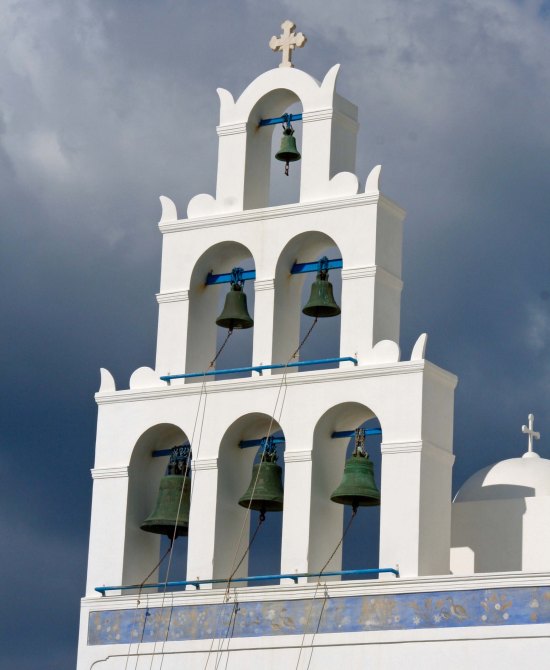
Church bells against dark sky in Santorini

Peggy captured this bell tower outlined by a dark sky. (Photo by Peggy Mekemson.)

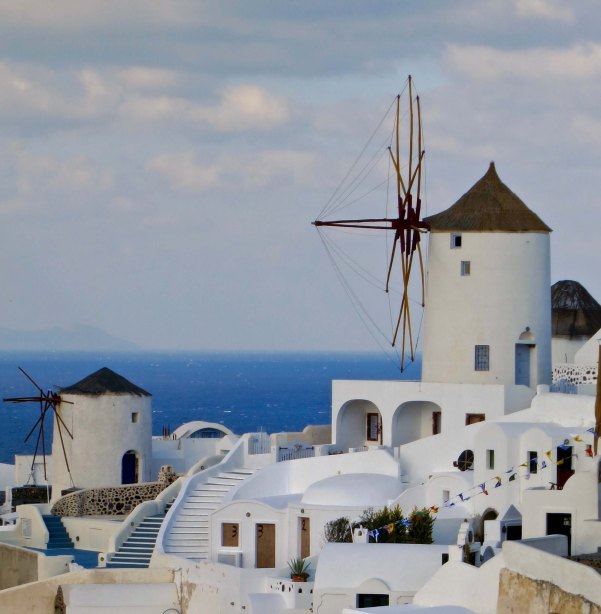
Santorini windmill

A Santorini windmill.

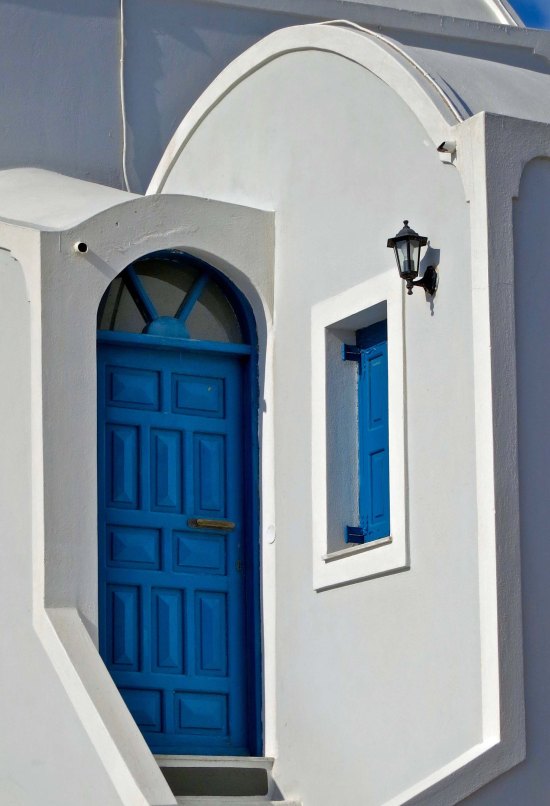
Blue door on Santorini

Blue doors are common on the island.

The blue doors of Santorini

Very common! (Photo by Peggy Mekemson.)

Walkway in Santorini

In addition to enjoying the beauty of the buildings and the Aegean Sea on Santorini, we wandered around the town of Oia. During the summer, this walkway would have been packed with people. As usual, I was on the lookout for unusual things that might tweak my funny bone or curiosity.

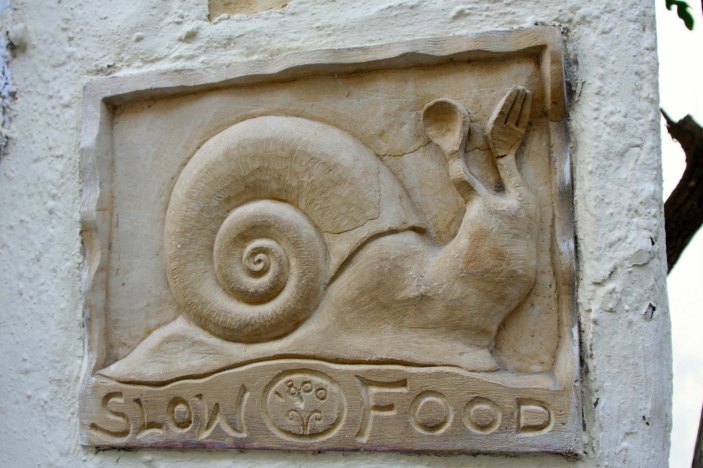
Santorini restaurant

Such as this sign. Mosts tourists aren’t particularly noted for patience. Was this to forewarn them that their food would arrive when it arrived! Or that snails were on the menu? Or that the food was cooked slowly? (Photo by Peggy Mekemson.)

Octupus doorway on Santorini

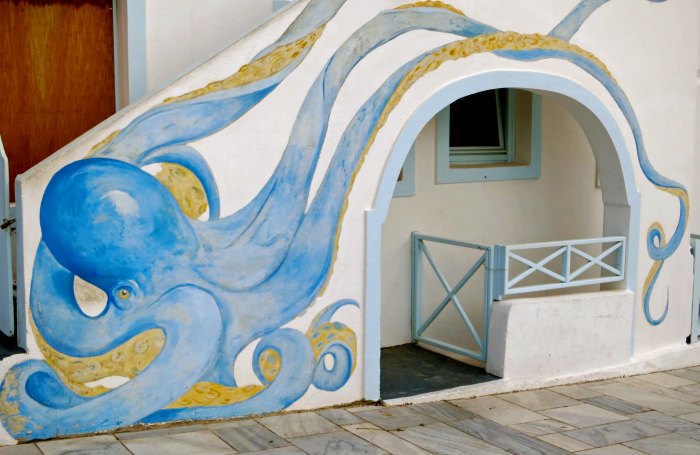
This octopus wrapped itself around a doorway.

Sphinx on Santorini

An orangish, golden sphinx hung out on a porch.

Santorini lion

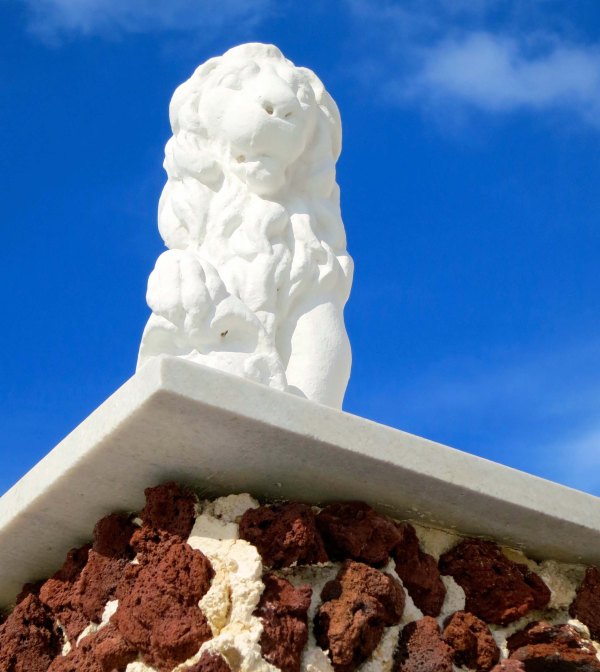
And a white-washed lion looked down on us.

Climbing a ladder in Santorini

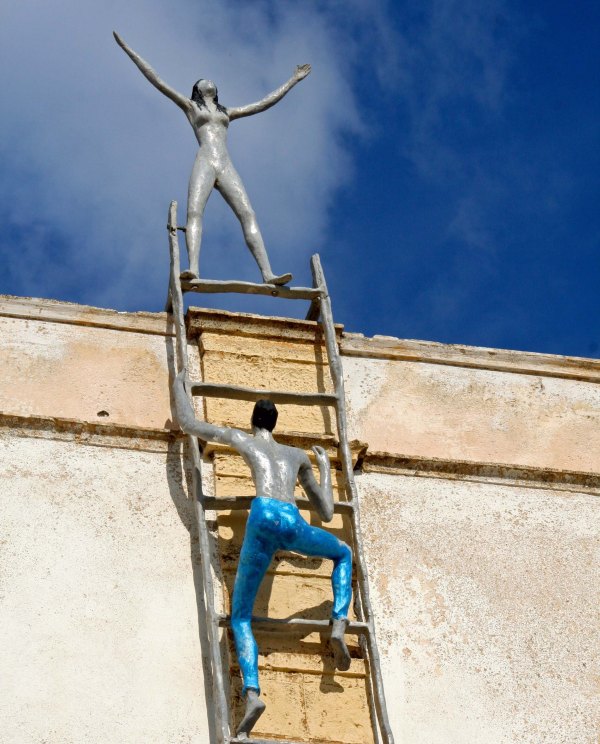
This fellow was obviously eager to climb to the top. (Photo by Peggy Mekemson.)

Tourist dishes on Santorini

As one would expect, there were the usual souvenirs, all with a Santorini twist.

Pottery on Santorini

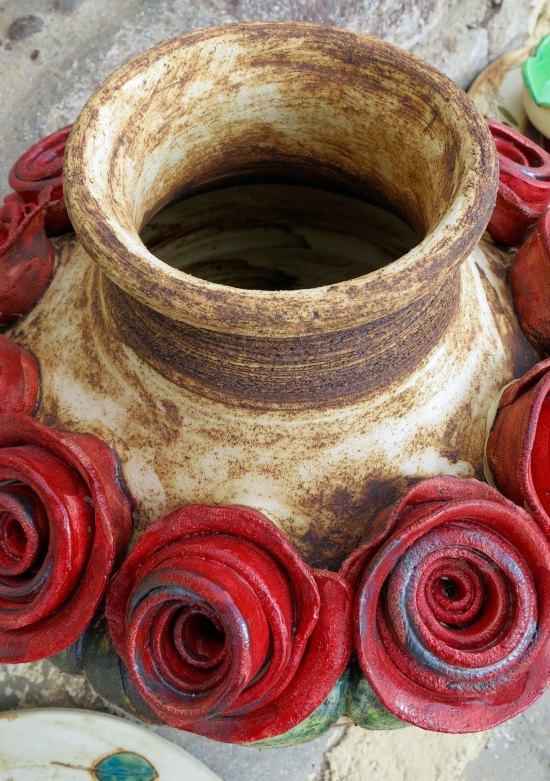
I liked this vase.

Bright green plants on Santorini

And this succulent plant.

Gateway in Santorini P

A number of interesting gates beckoned.

Santorini dog

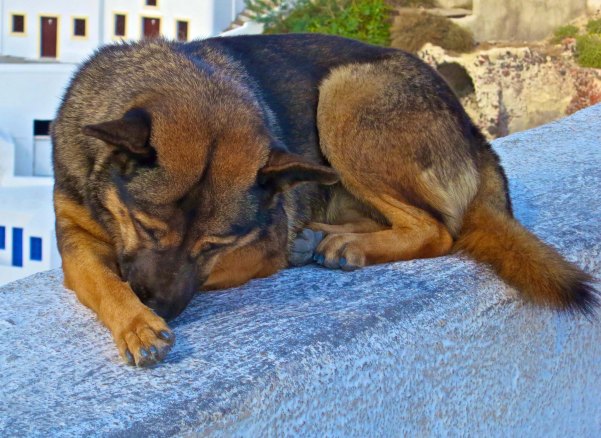
Cats and dogs wandered freely around Oia. I was curious about how many of these animals had homes. My blogging friends from Animal Couriers often transport these animals for free to loving homes throughout Europe. This guy was so well groomed I suspect he had a home, but he would have been welcomed in ours.

Final view of Santorini

A final look at Santorini.


FRIDAY’S POST: Happy holidays

TUESDAY’S POST: The folks around Copalis really like Sasquatch

THURSDAY’S POST: Photos from the gardens of Chatsworth

SaveSave

SaveSaveSaveSave

SaveSave

Santorini: Mediterranean Jewel— Part 1… The Wednesday Photo Series

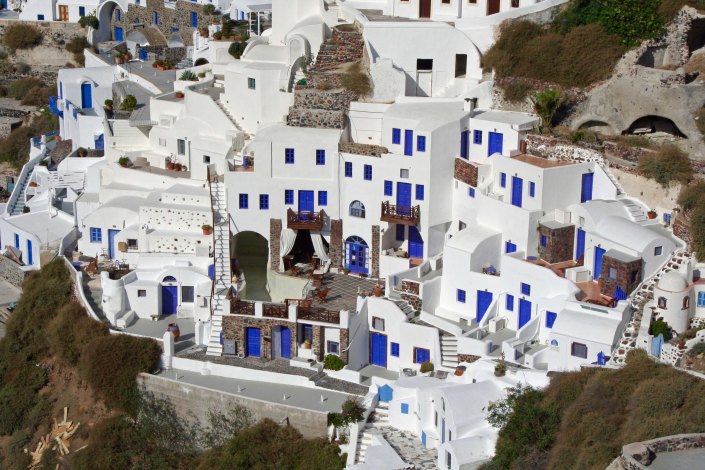
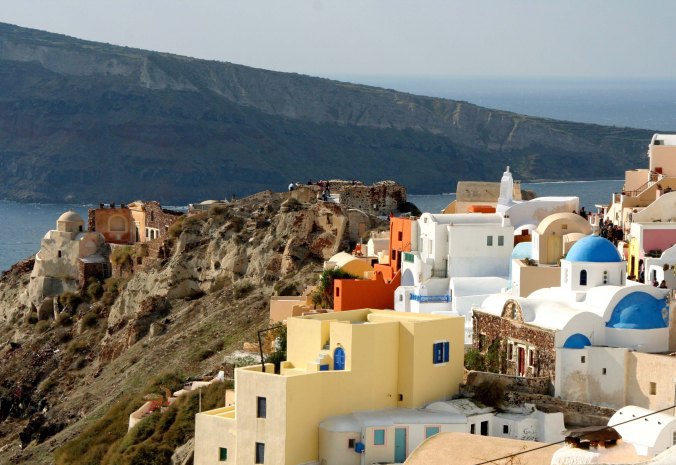
The charm of Santorini is based on its interesting architecture, the color of its buildings, the way homes and shops work their down the steep cliffs, and the sparking waters of the Aegean Sea.


There are a number of attractive islands in the Mediterranean and the Greek island of Santorini is a jewel among them— so much so that I found I couldn’t limit myself to one Wednesday’s worth of photos. And this is after I cut the number in half that I had picked out! Peggy and I were lucky to visit the island in November, after the crowds of tourists had left for the season. We wandered around to our hearts content. My only problem: It wasn’t long enough.

Scenery of Santorini

Built on a circular archipelago, Santorini perches on the remains of a volcanic caldera. (Photo by Peggy Mekemson.)

Santorini photo by Curtis Mekemson.

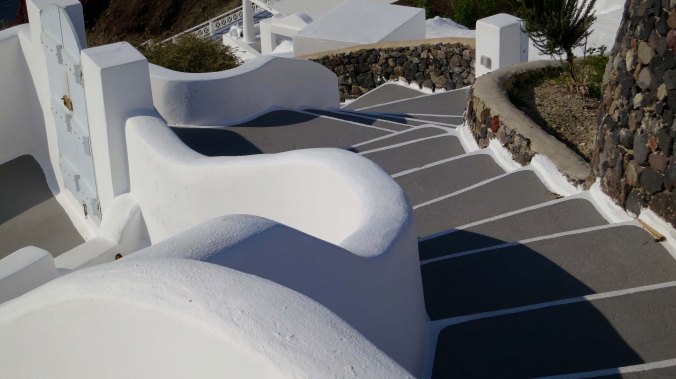
This photo provides a perspective on just how steep the cliffs are. Stairs are the only way to get up and down to the homes, businesses and chapels built into the cliffs and stacked on top of each other.

Photo of Santorini stairs by Curtis Mekemson.

The stairs can be quite beautiful and graceful as this photo attests to.

Mules in Santorini

An interesting aspect of the steepness and lack of roads is that mules have to be recruited to serve as dump trucks for construction work. (Photo by Peggy Mekemson.)

Photo of heavily laden mule on the Greek Island of Santorini by Curtis Mekemson.

These loads are heavy. I learned that it is important to get out of the way. The mules do not brake for tourists!

Photo of buildings on cliff in Santorini by Curtis Mekemson.

Another view of  buildings working their way down the cliff. Note the tan chapel in the upper left hand corner.

Arch and church in Santorini P

An arch provided a great way to frame the chapel, seen here under dramatic skies. (Photo by Peggy Mekemson.)

Chapel on Santorini photographed by Curtis Mekemson.

The sun came out to bathe the church in this photo I took. The colors of the buildings and the quality of Mediterranean light make Santorini a photographer’s dream.

White rocks and chapel on the Greek island of Santorini. Photo by Curtis Mekemson.

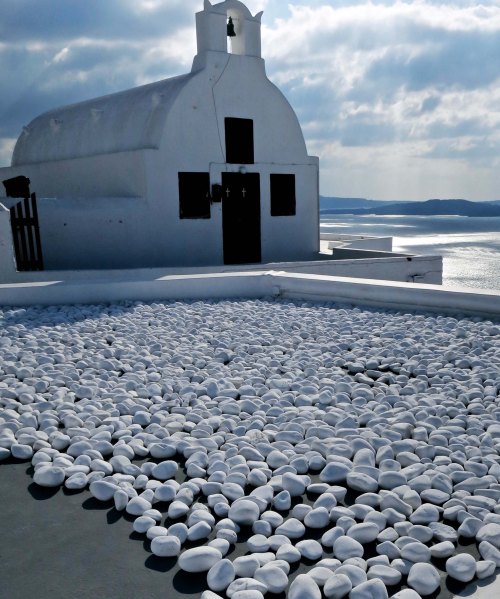
Another chapel that I found intriguing. The rocks in front added a surreal quality.

White Santorini chapel photographed by Curtis Mekemson.

From the back.

Buildings and bay, Santorini

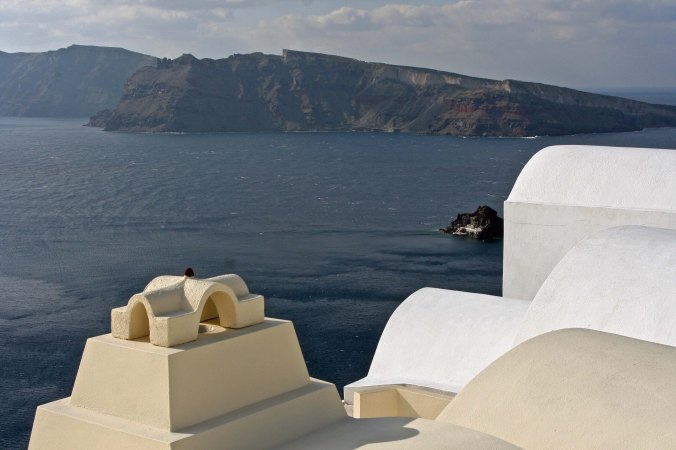
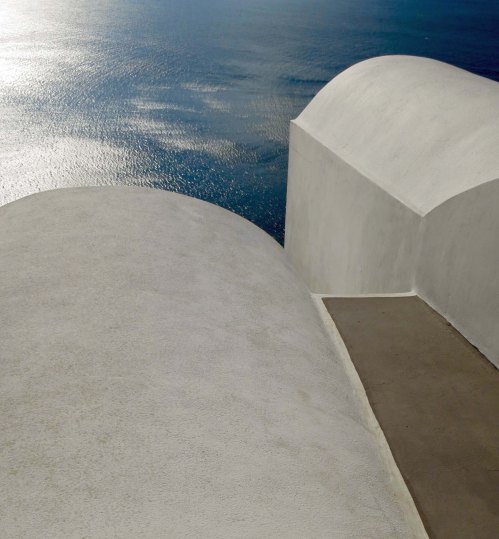
Looking down on the Aegean Sea and the Caldera, Peggy caught an interesting view of the unique, rounded roof tops. (Photo by Peggy Mekemson.)

Photo of rounded buildings on Santorini overlooking Aegean Sea by Curtis Mekemson.

And I added my own interpretation.

Bell on chapel looking out toward Aegean Sea on Island of Santorini. Photo by Curtis Mekemson.

I felt this steeple and bell made for a rather dramatic photo.

Color contrast in Santorini

I’ll conclude with this church that added a salmon colored bell tower. There will be more Santorini photos next Wednesday! (Photo by Peggy Mekemson.)


FRIDAY’S POST: Join me for another chapter in my book on MisAdventures as I discover that a Graveyard can make a wonderful place to play, as long as you avoid the ghosts.

MONDAY’S POST: Peggy and I head north along the Pacific Coast into Washington and visit Forks, the town where the vampires and werewolves roamed in the movie Twilight, which Peggy has made me watch 3142 times, or something like that.

WEDNESDAY’S POST: Santorini: Mediterranean Jewel— Part 2. Another post in my Wednesday photo series.


SaveSave

SaveSave

SaveSave

SaveSave

A Cow Has Four Stomachs and Other Tales from the Pacific Northwest

Cow T-shirt at Tillamook Cheese Factory

Raising cattle to produce dairy products is big business in the Tillamook area. Peggy and I found this T-shirt at the Tillamook Cheese Factory.


I am going to get to the cows and their four stomachs, but first I want to cover our stay at Rockaway Beach, which is about 15 miles north of Tillamook on Highway 101. Our suite looked out on the ocean. We could watch the waves roll in and hear the continuous roar of the ocean. Wintry skies brought rain but the clouds were also great for beautiful sunsets. We headed out whenever there was a break in the weather, and even when there wasn’t. We walked the beach, visited local shops, and ate out at the town’s restaurants. Thanksgiving dinner was at Grumpy’s and Mrs. Grumpy hovered over us to make sure we ate our veggies. How much more down-home can you get? The complete meal, which included all of the Thanksgiving favorites, cost a whopping 12 bucks. “I want it to be affordable for everyone,” Mrs. Grumpy primly informed us.

Gentle waves roll in at Rockaway Beach, Or P

The ocean was shallow and produced a long line of waves that created a roar as opposed to the sound of single waves crashing.

Sunset over Rockaway Beach on the Oregon Coast near Tillamook.

We were treated to several beautiful sunsets looking out from our suite at Rockaway Beach. (Photo by Peggy Mekemson.)

Small shops had the usual touristy stuff found in coastal tourist shops everywhere. “Go to Flamingo Jims,” we were urged. As to why it was named Flamingo in an area where the tropical bird would freeze, I didn’t have a clue. But we went. And we weren’t disappointed; it was filled to the brim with cheap souvenirs. We wandered around and checked out T-shirts, mermaids and sea shells. We could have bought a sand dollar for a dollar, but Peggy prefers to find her own. I was reminded of this old tongue twister. Try saying it as fast as you can without a mistake.

She sells sea shells by the sea shore.
The shells she sells are surely seashells.
So if she sells shells on the seashore,
I’m sure she sells seashore shells.

Seashells for sell at Flamingo Jim's in Rockaway Beach, Oregon.

Any good tourist souvenir shop on the ocean has seashells to sell.

Mermaids for sell at Rockaway Beach in Oregon

And mermaids. A twist for the Northwest is Bigfoot(s), or is that Bigfeet? You can see some up in the righthand corner.

The beach seemed to go on forever. One end was dominated by the sea rocks that Rockaway Beach is famous for; the other by a forest covered mountain. If you look at the rocks from the right angle, they make an excellent sea dragon. Welcome to Oregon, Nessie! A creek divided the beach about halfway along. Sea gulls patrolled the waterfront, checking out both the ocean and tourists for possible food. A small boy threw out a couple of pieces of bread and was suddenly surrounded by 50 of the birds, in seconds! They seemed to materialize out of nowhere. How do they do that?

Rockaway Beach Oregon Beach

Looking north up the beach at Rockaway. Our suite was on the second floor of the building on the right. Our footprints lead down to where we took the photo. (Photo by Peggy Mekemson.)

The rocks of Rockaway beach photographed by Curtis Mekemson.

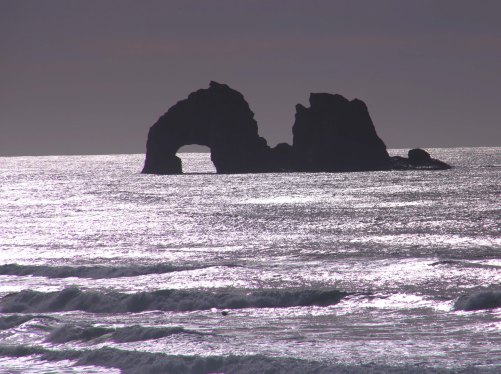
The sole rocks of Rockaway Beach look very much like a sea serpent with its head under water searching for tasty fish. (Photo by Peggy Mekemson.)

creek that divides Rockaway Beach, Oregon

A creek flowing across Rockaway Beach limited how far we could hike south.

A seagull steps out at Rockaway Beach, Or

A seagull steps out on his gull-friend at Rockaway Beach.

When we ran out of things to do in Rockaway, we drove 15-miles south to Tillamook. I’ve already done posts on Cape Meares, Munson Creek Falls, and some very wet alpacas. On our way, we decided to check out a small county park in Barview and found the Coast Guard practicing air to sea rescue missions by helicopter, which is what our son Tony does.

Seagull stops to watch Coast Guard practice rescues

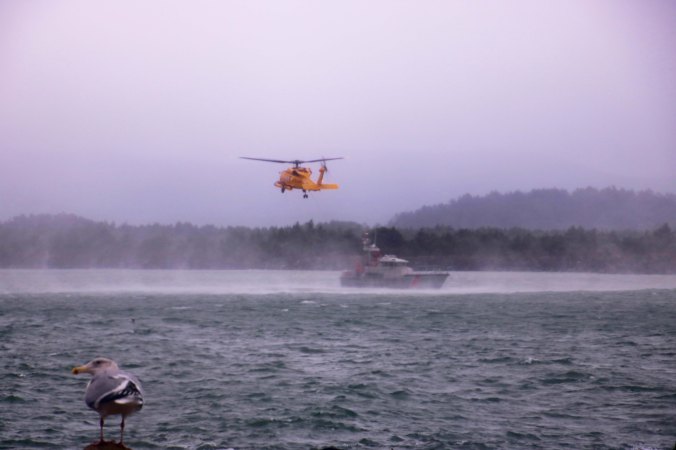
And here, a seagull joins us in watching the Coast Guard practice rescue operations at Barview, just north of Tillamook.

Practice rescue mission by the Coast Guard

Part of this practice included dropping a man down on to a rocking boat to help in a rescue effort, which was a operation our son was involved with several times while flying  helicopters over rough Alaska waters.

In Tillamook, it is almost required that people stop off at Tillamook Cheese and Ice Cream factory. The cheese is good and can be found throughout the US, but the ice cream is to die for. Our refrigerator is always stocked with a half-gallon.  I should probably weigh 300 pounds but we limit our consumption to Date Night, which falls on Wednesday, as it has for the past 27 years.

Welcome to Tillamook Cheese Factory

The visitor’s center at the Tillamook Cheese Factory included a number of exhibits on the dairy industry, from beginning…

Rear view rear at Tillamook Cheese Factory

…To the end.

cow stomach

I was particularly interested to learn that a cow has four stomachs, which were two more than I was aware of. I also learned that when a cow chews its cud it’s know an ruminating, is case you ever wondered about where the word came from. So, next time you find yourself ruminating, you might want to break out some gum.

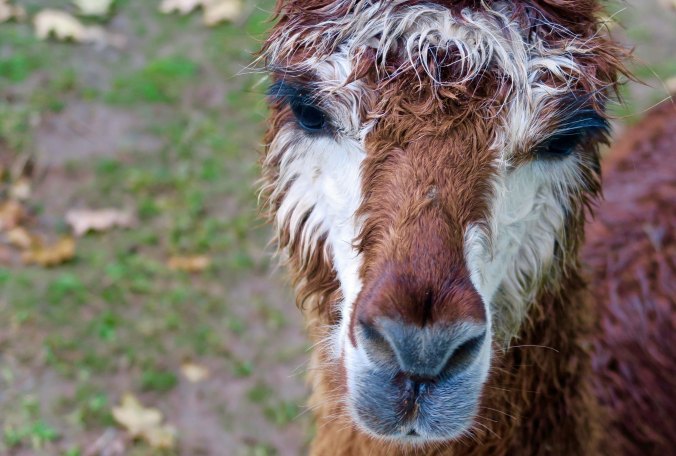
When we were out and about and lost, we also came on the Latimer Quilt and Textile Museum where I found the alpacas. Peggy’s love of quilting demanded a visit. We found numerous quilts, a doll collection, looms, and a lot of history.

Alpaca photo in Tillamook, Oregon by Curtis Mekemson.

You will probably remember the alpacas. Check out the blue eyelashes on this gal.

Quilts at Latimer Quilt and Textile Center

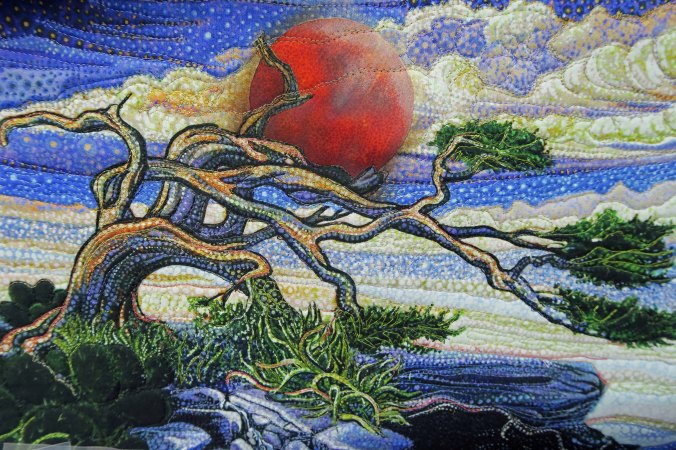
As might be expected, the Latimer Quilt and Textile Center was filled with quilts. The Center was preparing for a big sale. These are more traditional quilts.

Quilt at Latimer Quilt and Textile Center in Tillamook, Or

And this one a more modern version.

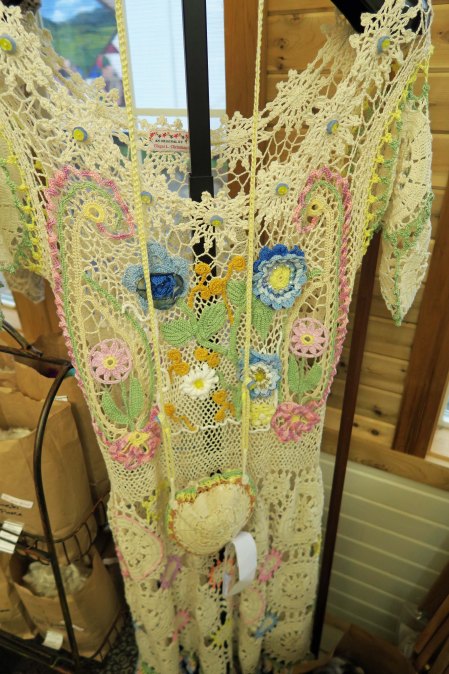
Interesting dress at Latimer Quilt and Textile Center

A number of other textile products were offered as well, including this dress. We assumed something would be worn under it, but possibly not at Burning Man.

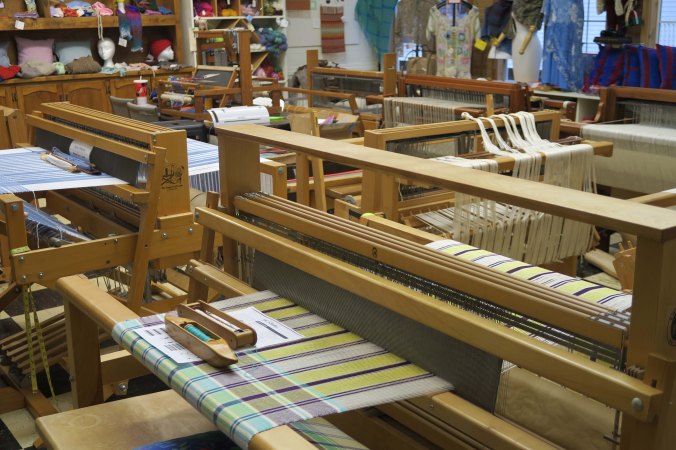
Looms at Latimer Quilt and Textile Center

A number of looms were available for weaving.

Doll at quilt shop

There was even an extensive doll collection. I picked this one out for her reading material. 

Peggy Mekemson quilt

I’ll conclude today’s post with this gorgeous quilt that Peggy made for our bed using a vintage Singer Featherweight sewing machine that her grandmother bought in 1933.


WEDNESDAY’S PHOTO POST: Join Peggy and me as we explore the Greek island of Santorini.

SaveSave

SaveSave

SaveSave

South to New Zealand and Milford Sound: The Wednesday Photo Series

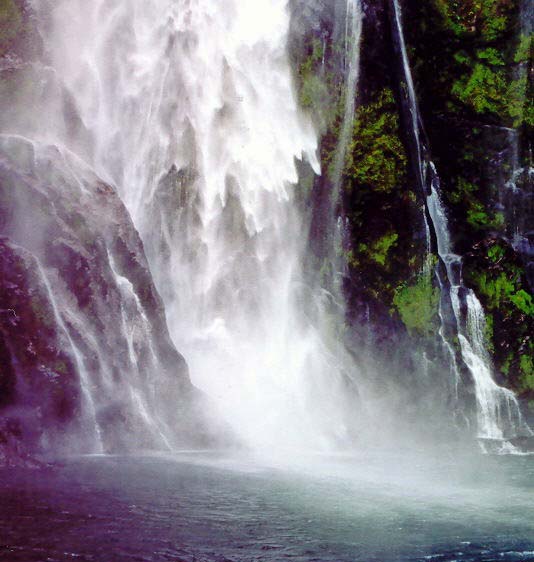
New Zealand Waterfall

Milford Sound is surrounded by spectacular waterfalls. We took a small tour boat that carried us out into the sound where we could visit them up close.

Today marks the beginning of my Wednesday photo series. Over the next month, or year, or several years, I am going to begin to post photos from around North America and the world. What else can you do with 76,000 photos? (grin)
I am starting off in Milford Sound. If you travel to New Zealand and then travel down to the South Island, and then travel even farther down to the southwest corner of the island, you come to the world-famous sound. It is a fame well deserved. These photos were taken the old-fashioned way, with film. I had to scan them into my computer so the quality isn’t quite the same, but the beauty of the area makes up for it. Enjoy.
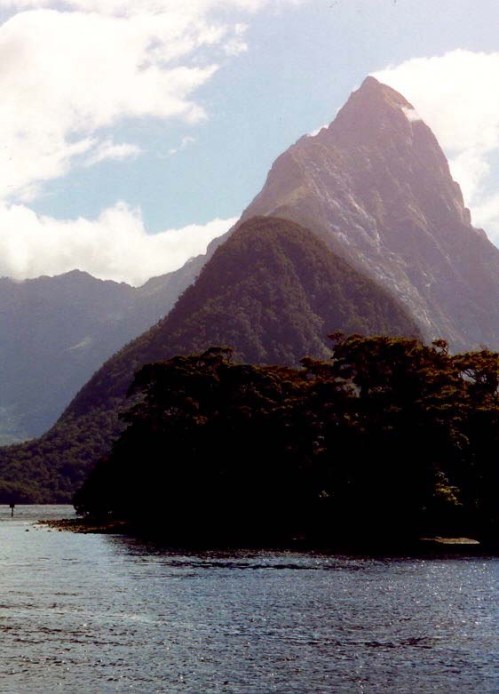
Milford sound on the South Island of New Zealand. Photo by Curtis Mekemson.

This is a view you have when driving into the sound.

Photo of Milford Sound taken by Peggy Mekemson.

A view of Milford Sound and the surrounding mountains. (Photo by Peggy Mekemson.)

Photo of waterfalls in Milford Sound, New Zealand by Curtis Mekemson.

One of the waterfalls.

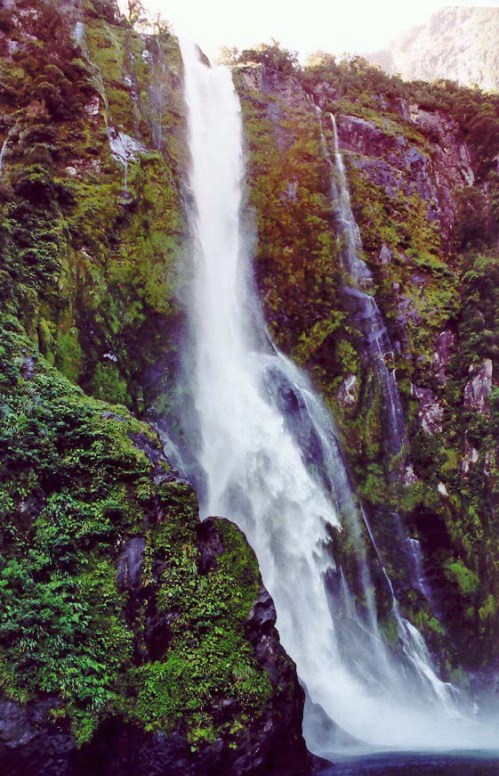
New Zealand waterfalls in Milford Sound

Another of the many falls. (Photo by Peggy Mekemson.)

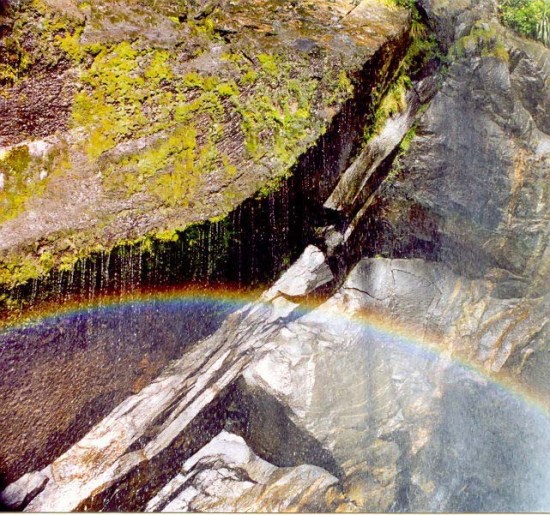
Small rainbow in Milford Sound, New Zealand. (Photo by Curtis Mekemson.)

I was intrigued by this small rainbow caused by water dripping off the cliff.

New Zealand Moutain Top near Milford Sound

One of the things about the west coast of the South Island is that glaciers are never very far away. Peggy and I took a helicopter ride up from the sound to this mountain top. (Photo by Peggy Mekemson.)

New Zealand glacier photo by Curtis Mekemson.

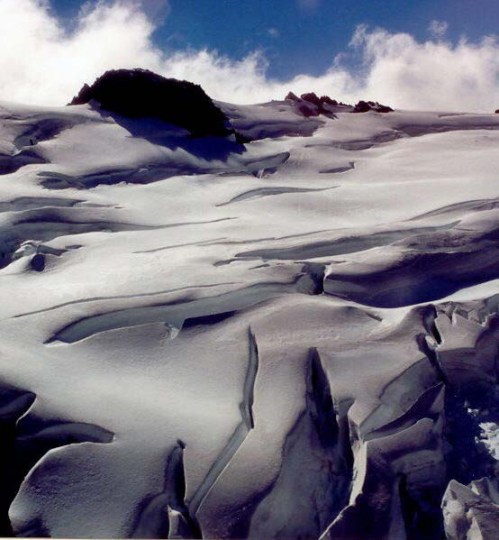
We were allowed to get out of the helicopter and wander around. I took this photo of cracks in the glacier. That’s it for today. Next Wednesday, we will visit the island of Santorini in the Mediterranean Sea.


NEXT POST: I kick off my book on MisAdventures, whereupon I am kicked out of the first grade for a year and use foul language when falling off a cliff in a bulldozer.

SaveSave

SaveSave

The Highest Waterfalls on the Oregon Coast: Munson Creek Falls

Munson Creek Falls near Tillamook, Oregon. Photo by Curtis Mekemson.

The upper section of Munson Creek Falls.

Peggy has been lobbying for a tour of Oregon waterfalls for quite a while. So, when I read that Munson Creek Falls was near Tillamook, I knew we would have to pay a visit on our recent trip to the coast. We drove over to Tillamook from Rockaway Beach where we were staying and then south for seven miles following Highway 101. Along the way, we passed the giant blimp hangar built during World War II that now serves as an air museum. I visited the hangar a couple of years ago when I was passing through the area. Close to the turnoff, we also passed the campground where I had stayed. At the time, I wasn’t aware of the falls— I’d been too busy counting rabbits.

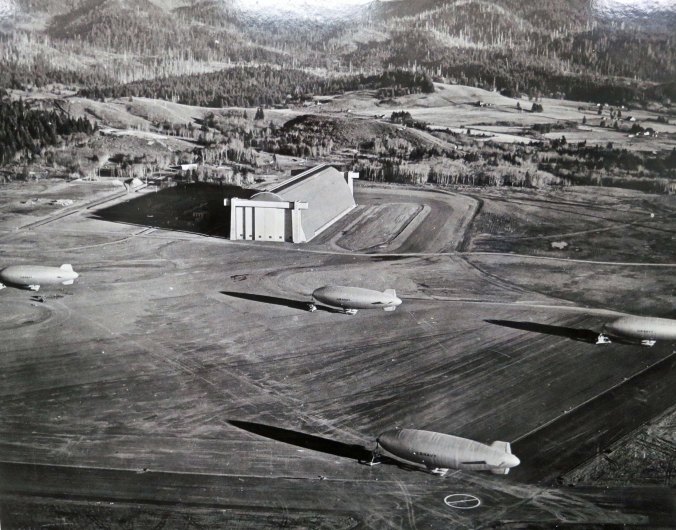
A view of the blimp hangar during World War II. The blimps were used for spotting Japanese submarines off the coast. (Photo from Tillamook Air Museum.)

The Tillamook Air Museum shown here, served as a blimp hangar during World War II.

A photograph of the Air Museum I took on my previous visit. The airplane in front is known as a guppy. The house provides a perspective on size.

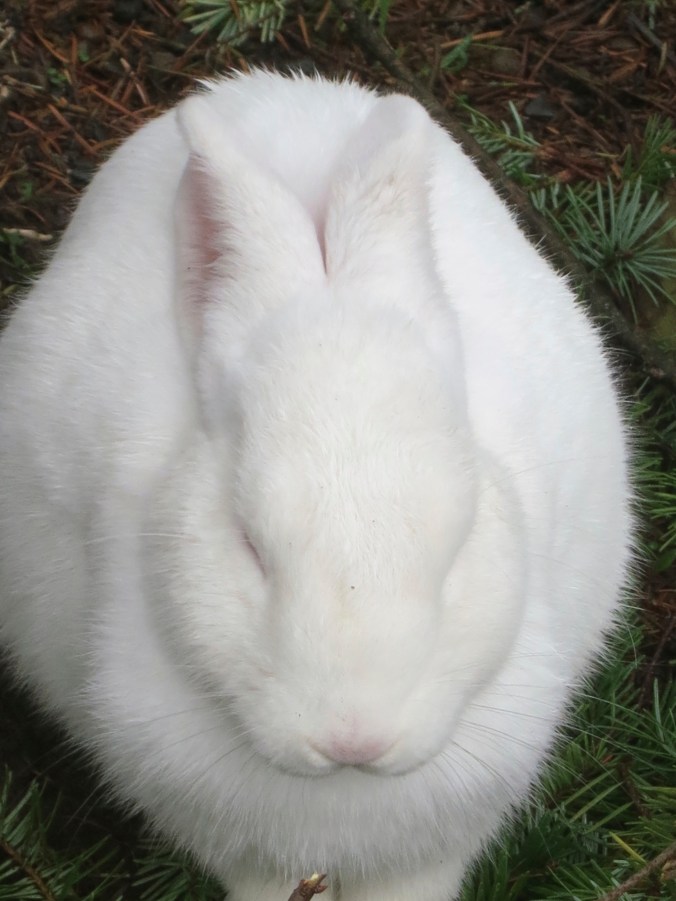
White rabbit near Tillamook, Oregon. Photo by Curtis Mekemson.

This lovely creature was one of over a hundred rabbits wandering around freely at Pleasant Valley Campground near the exit to Munson Creek Falls.

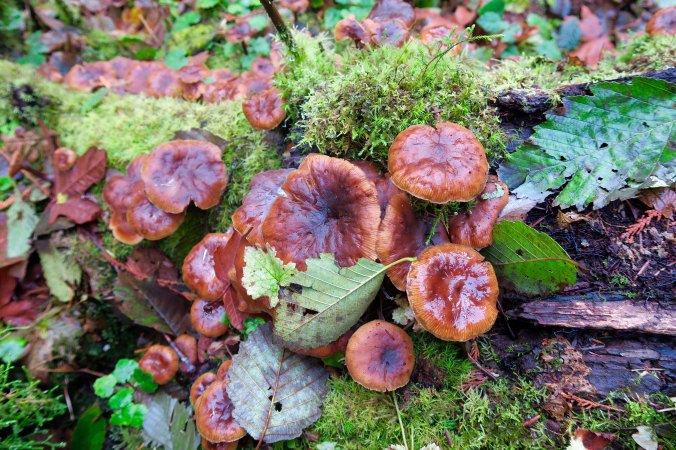
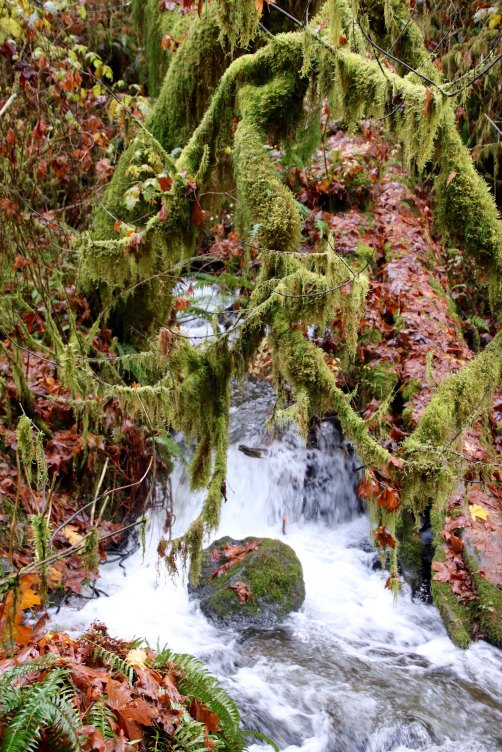
A sign along 101 told us to turn inland for the falls. We followed a narrow, pothole filled road that became narrower as we went, making it more difficult to dodge the potholes that were simultaneously becoming deeper and more numerous! The short three and a half miles felt like twenty. We finally reached the parking lot, however, and discovered that we had entered a rainforest. Trees covered in moss gave a magical feel to the area.  An easy, quarter of a mile trail led off toward the falls. More moss-covered trees and rocks, the dashing Munson Creek, brightly colored fallen leaves, mushrooms and ferns lined the trail.

Moos covered tree along path to Munson Creek Falls. Photo by Curtis Mekemson.

Moss covered trees gave a magical feeling to the path leading to the falls.

Hanging moss at Munson Creek Falls near Tillamook, Oregon.

A close up of the hanging moss. (Photo by Peggy Mekemson.)

Moss draped across branch along trail to Munson Creek Falls on the north coast of Oregon.

And another. (Photo by Peggy Mekemson.)

Fall leaves along trail to Munson Creek Falls near Tillamook, Oregon. Photo by Curtis Mekemson.

The damp conditions added to the colors of the leaves that had fallen along the trail.

Fallen leaves along trail to Munson Creek Falls near Tillamook, Oregon.

A close up. This is from a Big Leaf Maple tree. (Photo by Peggy Mekemson.)

Mushrooms along the trail to Munson Creek Falls off of Highway 101 in northern Oregon.

These reddish mushrooms caught my eye.

Munson Creek near Munson Creek Falls on north coast of Oregon.

Munson Creek dashed along beside the trail, keeping us company. (Photo by Peggy Mekemson.)

Moss covered rock in Munson Creek near Munson Creek Falls on north Oregon Coast. (Photo by Curtis Mekemson.)

A moss-covered rock decorated with fall leaves sat in the middle of the creek.

Moss, ferns and leaves on a tree near Munson Creek Falls near Tillamook, Oregon. Photo by Curtis Mekemson.

Moss, ferns and fallen leaves on a tree had a Christmas look.

Trail to Munson Creek Falls near Tillamook, Oregon. (Photo by Curtis Mekemson.)

A view of the trail.

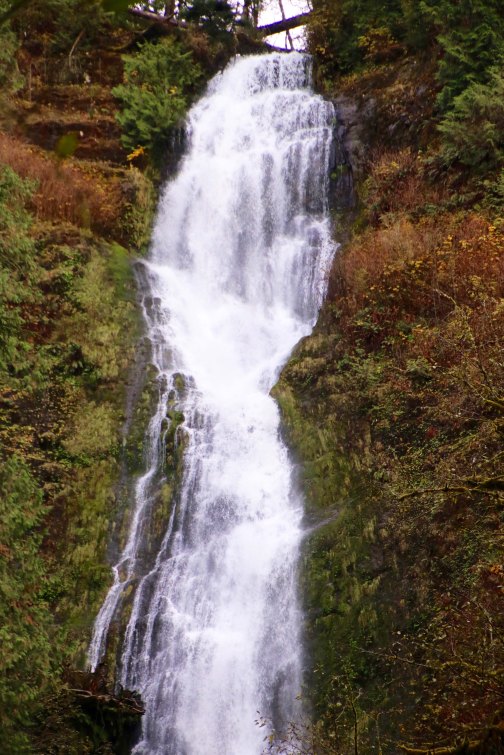
Our first view of the falls assured us that we had made the right decision to make the trip. Water shot out from the top and tumbled some 319 feet to the bottom, making Munson Creek Falls the highest on the Oregon coat. Halfway down a log jam gave testimony to the power of the stream. The rainforest provided a dramatic backdrop. We wandered around seeking various vantage points to appreciate the beauty, and finally, being satiated, hiked back to the parking lot. The drive out went much faster, or so it seemed.

Munson Creek falls in the coastal mountains near Tillamook, Oregon. Photo by Curtis Mekemson.

The 319 foot tall falls. The log jam with its large logs spoke to the power of the creek. I also like the moss-covered tree to the right.

Photo by Peggy Mekemson of Munson Creek Falls near Tillamook, Oregon.

A final look at the falls above the log jam. (Photo by Peggy Mekemson.)


Photos: Most of the photos I use on this blog are taken by either Peggy or me. Photos without attribution are taken by me. I always note any other sources such as the Air Museum above.

NEXT POSTS: Almost everyone I know who tries to maintain a blog while writing books runs into a challenge with time. There isn’t enough. Solutions range from dropping out of the blogosphere for a while to limiting blogs. I am going to try something else for the next month. If it doesn’t work, I’ll have to a move to a more dramatic solution. Here’s what I am going to try: On Mondays I will do my usual travel blog; on Wednesdays I will put up photos from my collection of 76,000; on Fridays, I am going to blog my book on MisAdventures. The theory is that this will allow me most of the week to work on the book. We’ll see.

WEDNESDAY: We will drop down to the South Island of New Zealand and visit the beautiful Milford Sound.


SaveSaveSaveSave

SaveSave

SaveSave

SaveSave

SaveSaveSaveSave

SaveSaveSaveSave

SaveSave

SaveSave

The Cape Meares Lighthouse, an Octopus Tree, and the Three Rock Arches of Oregon

Cape Meares Lighthouse

At 38-feet tall, the Cape Meares Lighthouse is the shortest lighthouse in Oregon. (Photo by Peggy Mekemson.)

Towering cliffs, abundant sea life, a lighthouse, massive rocks rising out of the ocean, the Octopus Tree, and an old-growth forest of Sitka Spruce… How could we resist? With the sun tentatively breaking through the clouds, Peggy and I grabbed our cameras, packed our raingear, and headed out to Cape Meares, which is located about 30 minutes away from Tillamook, Oregon.

But first, our stomachs demanded lunch, so we stopped at the Pelican Brewing Company in Tillamook for a hamburger and, of course, a beer. Peggy and I shared a pint of tasteful ale. The Northwest is noted for its great craft beers and Pelican has some dandies. Several have won national and international awards.

Pelican Brewing Company

Good things were brewing at the Pelican Brewing Company in Tillamook, Oregon.

Curt Mekemson enjoying a pint at Pelican Brewing Company in Tillamook, Oregon.

Cheers! (Photo by Peggy Mekemson.)

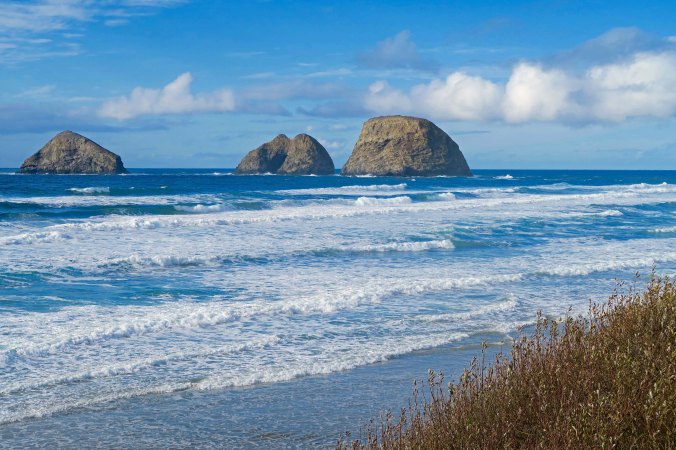
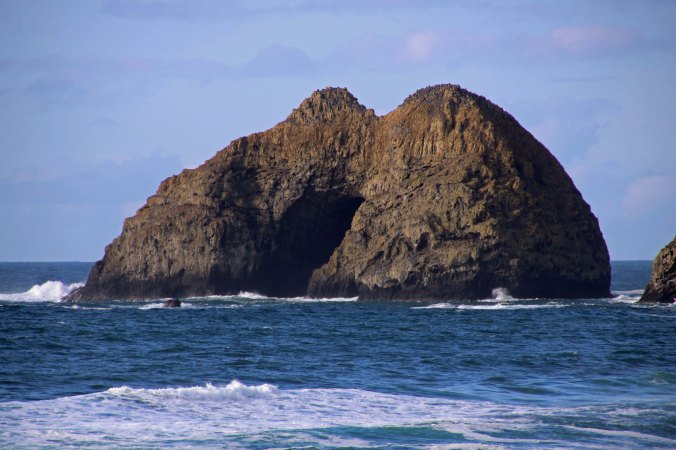
Having tamed our hunger and thirst, we headed out to the coast and were soon perched on an overlook admiring the Three Arch Rocks, so named because each one contains an arch. Of greater significance, the rocks are known for their large nesting colonies of Common Murres, Cormorants, Western Gulls, storm-petrels, auklets, Black Oystercatchers, Tufted Puffins, and Pigeon Guillemots. In 1907, Teddy Roosevelt declared the area a wildlife sanctuary, the first in the US west of the Mississippi. He did so on the recommendation of a pair of young conservationists, William Finley and Herman Bohlman, who had watched hunters decimate the sea lion population on the rocks, and even worse, observed local ‘sportsmen’ row out to the rocks on Sundays and use the birds for target practice, killing thousands.


Three Rock Arches near Cape Meares

Three Rock Arches as seen from an overlook just before the small town of Oceanside.

Three Rock Arches near Oceanside

Peggy used her telephoto to pull in the middle of the Three Arch Rocks. While you can’t see through the arch at this angle, you can see how big it is. (Photo by Peggy Mekemson.)

Three Rock Arches 1

A convenient pine provided a different perspective.

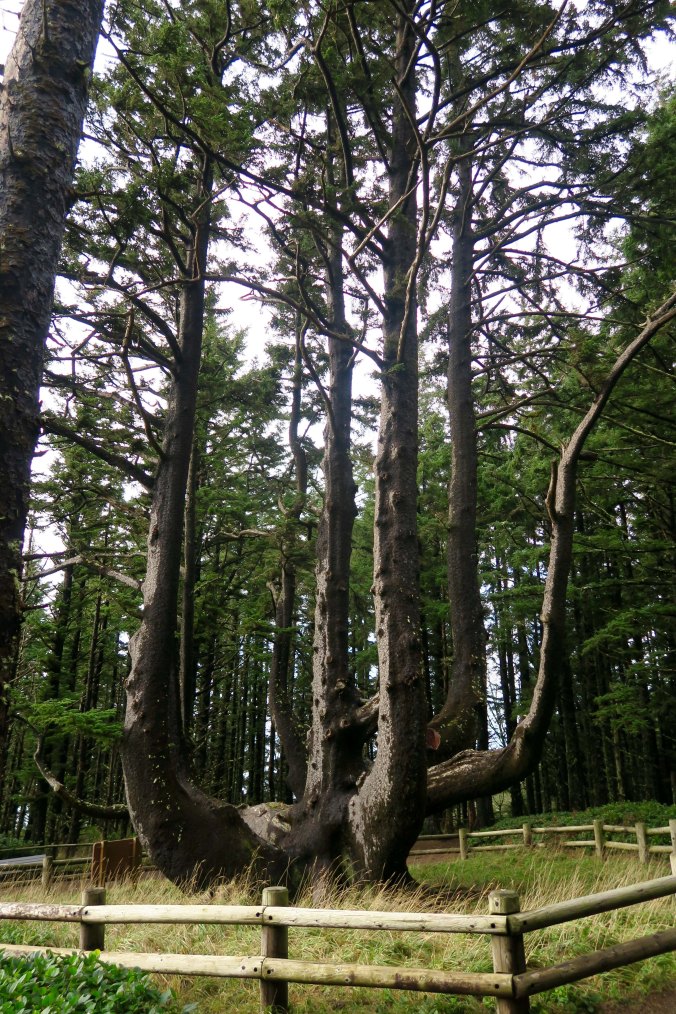
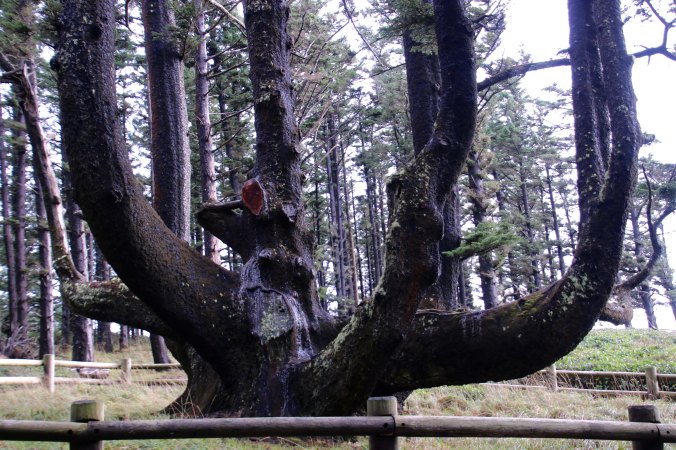
We drove on to the Cape Meares Lighthouse where a sign in the parking lot suggested a detour toward the Octopus Tree that sent our imaginations spiraling out of control. Was this a magic tree of fantasy lore? Would we be swept up in its tentacles? Naturally, we had to check it out. The tree turned out to be a Sitka Spruce with eight trunk-like limbs that once made it into Ripley’s Believe It or Not. The story behind its unique shape is that the local Tillamook Indians shaped it to grow that way, created a sacred site where elders could gather to make important decisions and Shamans would travel on their mystical journeys. A few yards away from the tree, a plunging cliff provided more views of the Three Arch Rocks, this time backlit by the sun. Peggy found a man operating a camera drone on the edge of the cliff, capturing pictures of the 200-foot drop off that we weren’t willing to lean out far enough to get.

Sitka Spruce forest at Cape Meares

We walked through a Sitka Spruce forest to get to the Octopus Tree.

Octopus Tree

The Octopus Tree is surrounded by a fence to keep it from eating people. Whoops, fake news. It’s surround by a fence to keep young and old kids from climbing on it.

Octopus Tree

The Tillamook Indians were said to place their canoes on the branches. (Photo by Peggy Mekemson.)

Three Rock Arches backlit

We were south of the cape looking north when we took the first photos of the Three Rock Arches. Here we were looking south with the rocks back lit by the sun. (Photo by Peggy Mekemson.)

Three Rock Arches backlit

This shot of the rocks gave the feeling of a lurking sea monster with the light showing through one of the arches serving as its eye.

Three Rock Arches

Two of the arches can be seen in this photo by Peggy. The rock on the left is the same one she took a close up of from the other direction.

Man with drone at Cape Meares.

The drone man who was capturing shots of the cliffs.

Walking back toward the lighthouse, we found more cliffs on the other side of the peninsula where the lighthouse sits. These featured a waterfall that tumbled down into the ocean. We also noticed white guano (bird poop) decorating the cliff sides, a sure sign that birds build their nests along the cliffs. Imagine being a young bird looking over the edge of your nest and pondering your fate.

Waterfalls 1

The waterfalls came tumbling down. The white spots on the opposite cliff show the sites of bird nests.

A sign at the site informed us that baby birds are either flyers or jumpers. Murrelet chicks, who are fliers, have been observed pacing back and forth in their nest for a couple of days, flapping their wings frantically, and nervously peering over the edge before they finally take the plunge. It’s worse for Common Murres. Their mom kicks them out of the nest when they are three weeks old… before they can fly! No Mom of the Year there.  They simply stand on the edge and jump, hoping that their stubby wings will guide them to them into the ocean instead of the rocks below. Dad patiently waits in the ocean where he will take over parenting responsibilities for a few weeks until the babies can fend for themselves. Meanwhile, a whole host of hungry predators are waiting below chanting “Crash! Crash! Crash!”

While I am on the subject of birds and food, I learned at Cape Meares that the Tufted Puffins have a barbed tongue that they use to spear fish. They can get three or so minnow-sized fish on their tongue at once. The first one is pushed up the tongue by the second and the second by the third. The barbs hold them in place until, I assume, baby birds wrest them free. I also found out that a pair of Peregrine Falcons were known to nest in the area. These birds are the fastest animals in the world. They fly high above their prey, fold their wings and literally fall, or dive, hitting speeds up to 250 miles per hour (402 KPH) before smacking into their dinner.

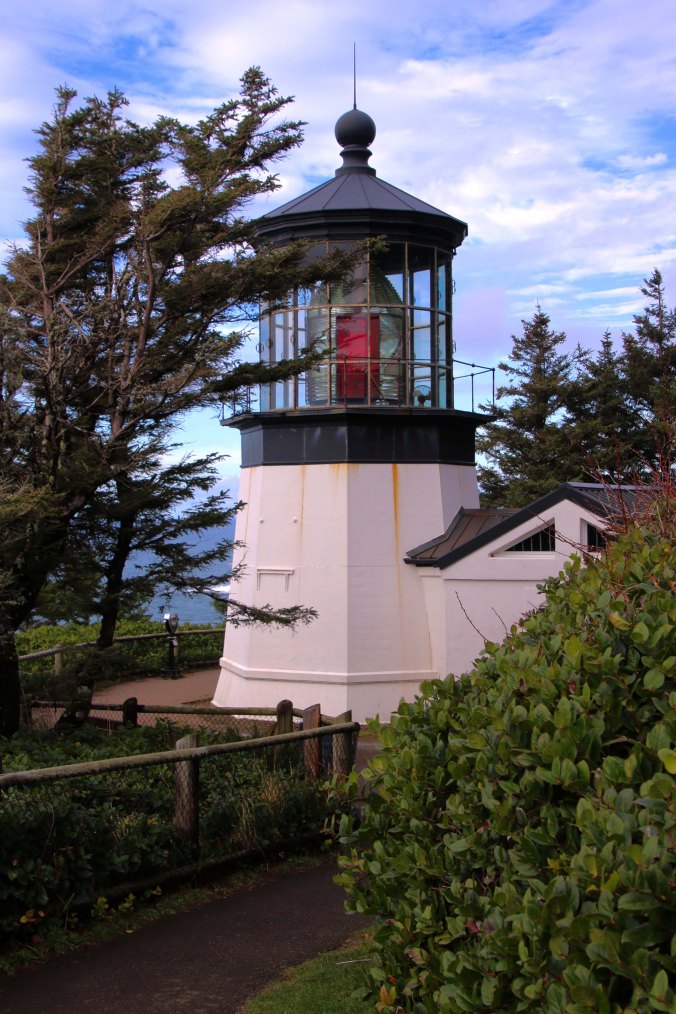
At 38-feet tall, The Cape Meares Lighthouse is known for being the shortest lighthouse in Oregon. Given that it stands on a 217-foot tall cliff, however, size probably doesn’t matter. The lighthouse was built on location but the first order Fresnel lens (pronounced ‘fraynel’) was wrestled up the cliff in 1899 using a wood crane built from local timber. The lens had been manufactured in France and shipped around Cape Horn and up the coast to Oregon. It was built with four primary lenses and four bull’s-eye lenses providing light that can be seen 21 miles out at sea.

Cape Meares

This T-Rex perspective of Cape Meares by the Fish and Wildlife Service provides a good view of the cliffs. The lighthouse is the white speck at the end of the lower ‘jaw.’ The Octopus Tree is on the upper end of the lower jaw. The waterfall was inside the lower jaw.

Cape Meares Lighthouse

The Trail down to the Cape Meares Lighthouse. (Photo by Peggy Mekemson.)

Fresnel Lens in Cape Meares Lighthouse

A close up of the Fresnel lens with its red bullseye.

Cape Meares Lighthouse 2

A final view of the Cape Meares Lighthouse.


NEXT POST: Peggy and I make our way through a rainforest to the highest waterfall on the Oregon Coast.


SaveSave