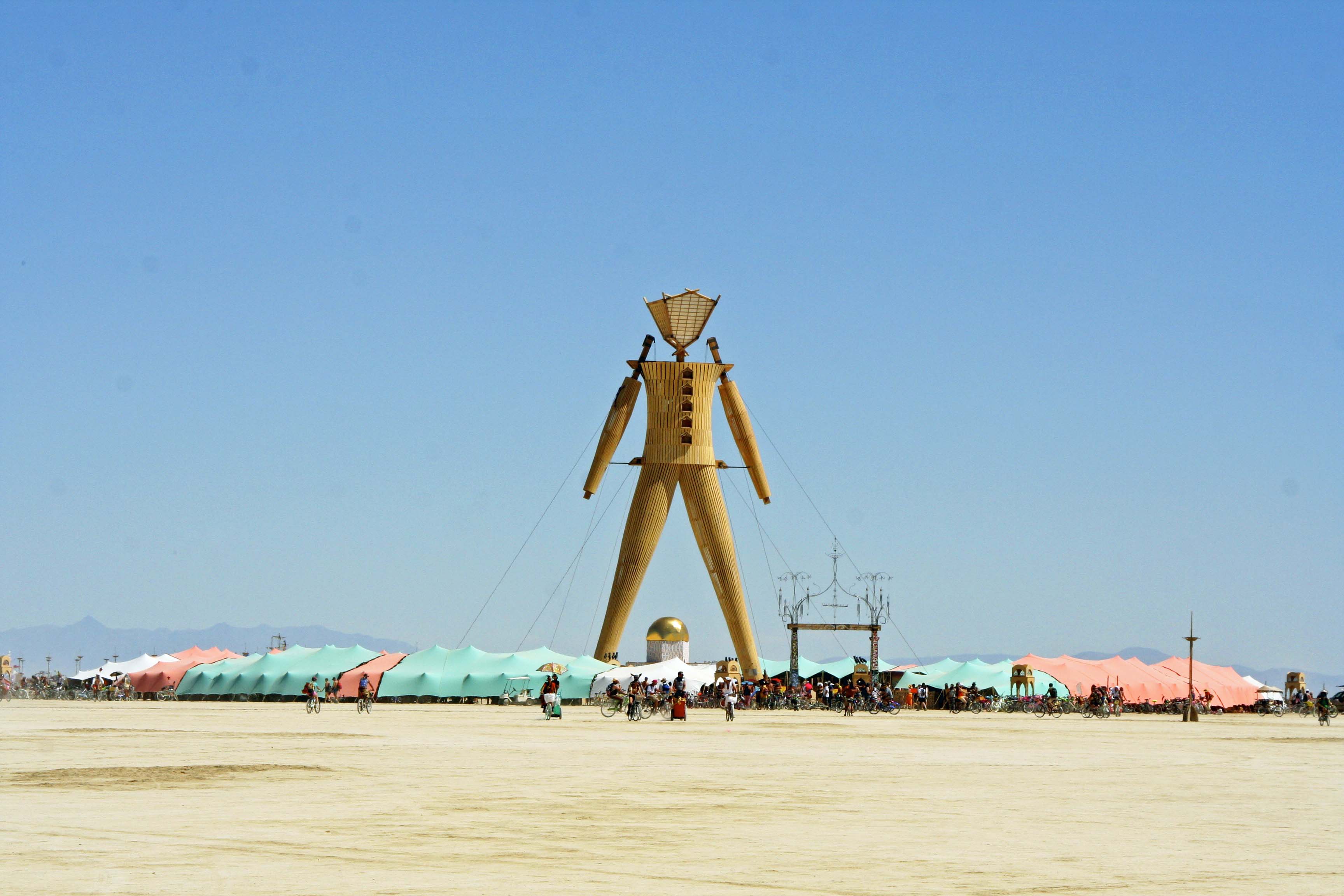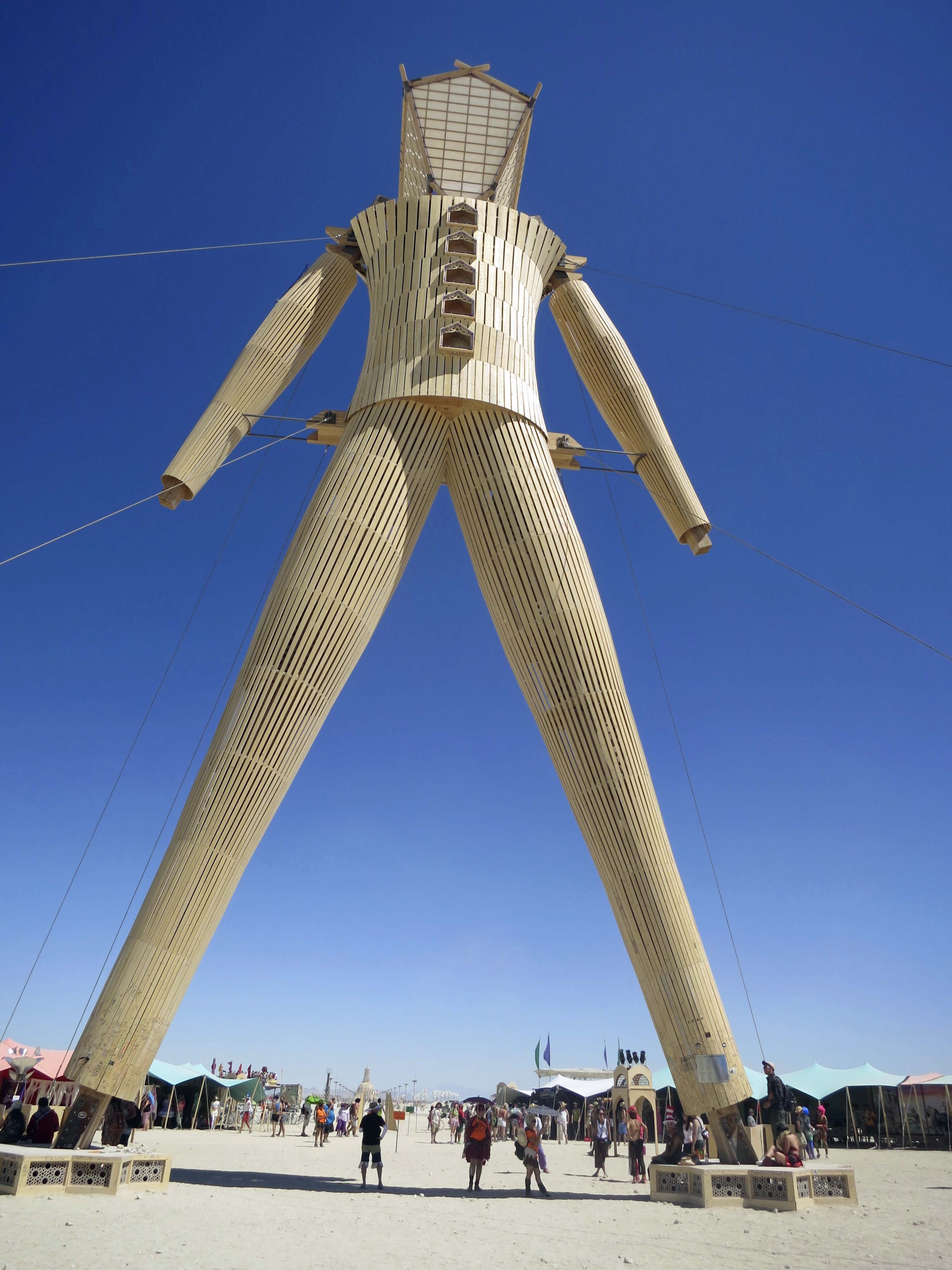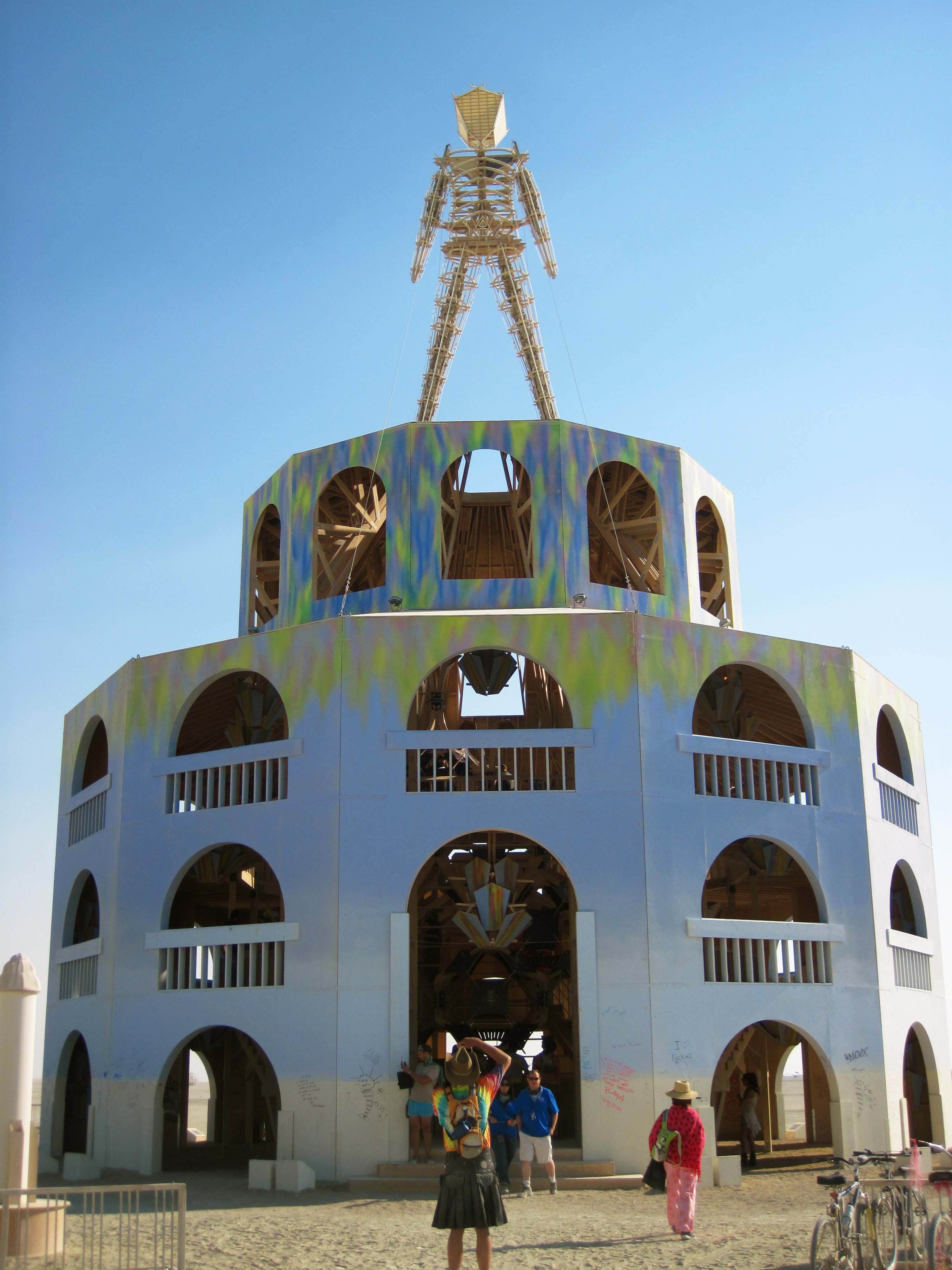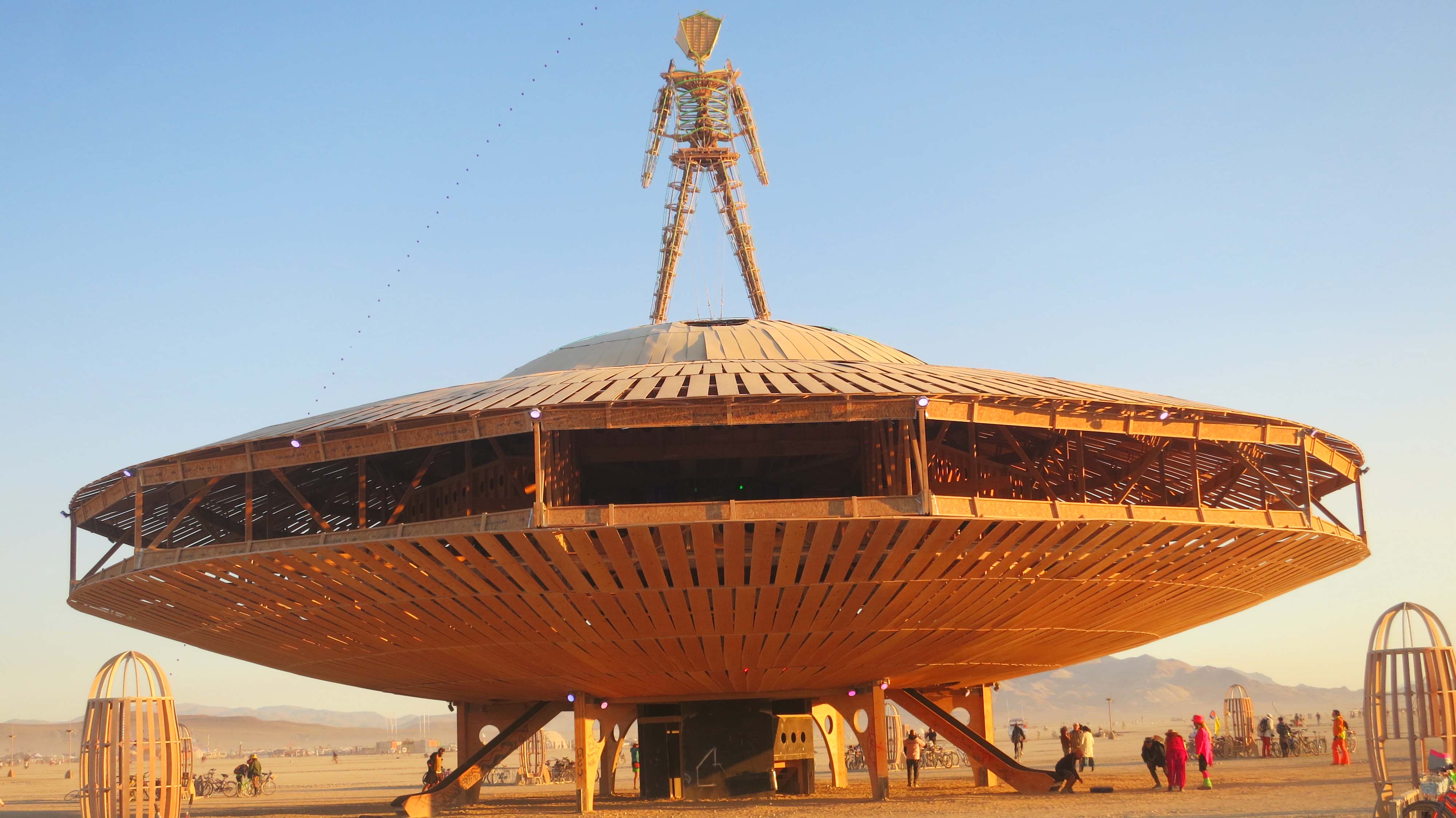
Thank You Bill and Hilary*… for Your Fine Words

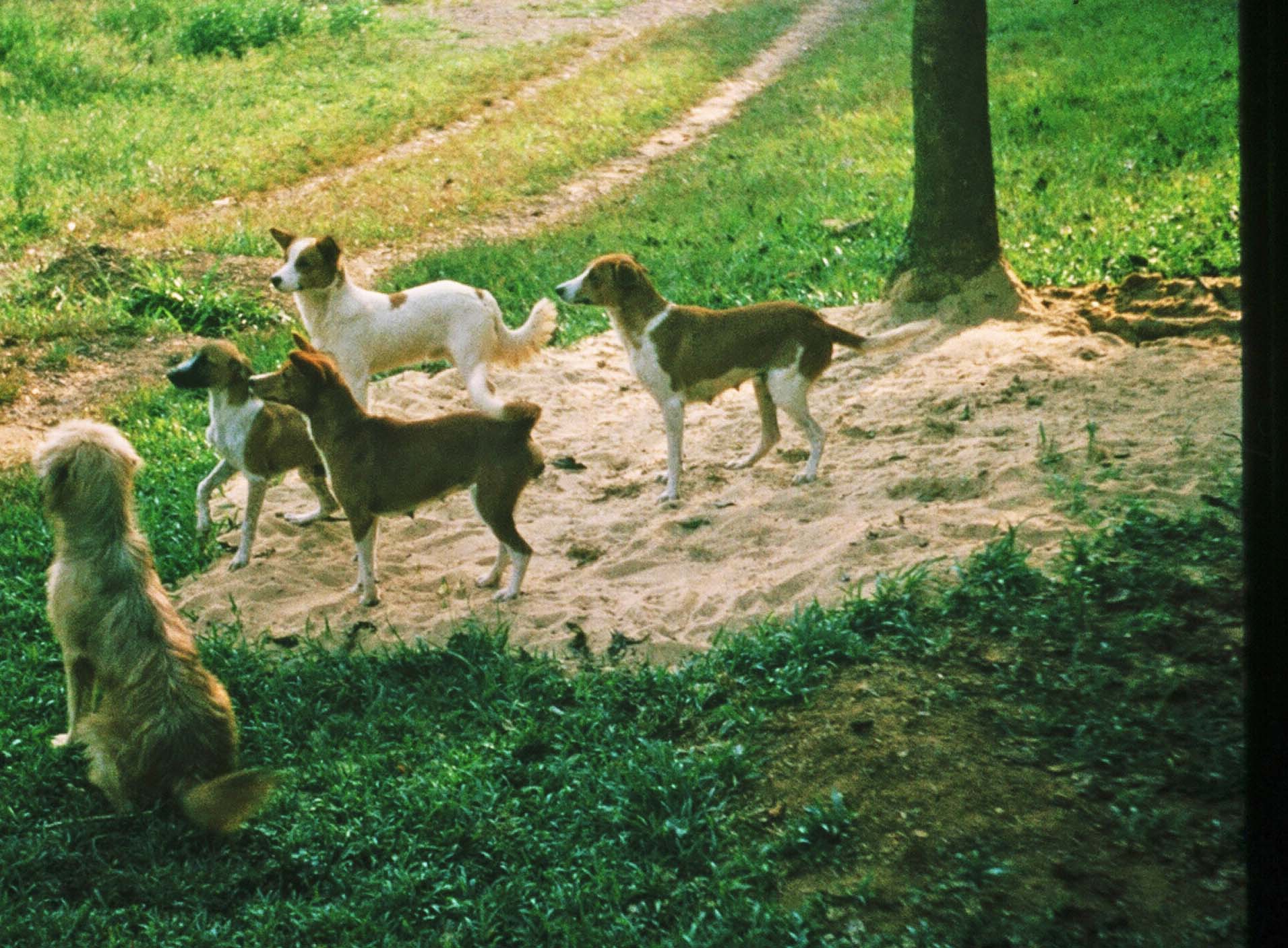
Basenji dog in Liberia, West Africa.

Do You Part, the Liberian named Basenji that adopted me in the Peace Corps and that Bill Guerrant refers to in his book review below, is the small dog with the curly tail standing in the forefront. One of her many exploits was slipping behind me into the grand opening of a mosque in Gbarnga— almost causing a riot.

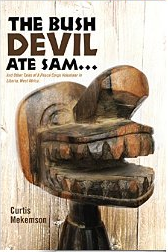
I am tickled that two of my favorite Word Press bloggers enabled me to create the above headline. Now, before you dash off a note to me that I have misspelled Hillary, the *Hilary I am talking about is not Hillary Clinton. It’s Hilary Custance Green, a writer and author living in England. Bill is Bill Guerrant, a one time attorney, now farmer, and soon to be author living in Virginia. Both have recently written unsolicited reviews of my book, a fact for which I am both grateful and somewhat humbled.

Writing a book is hard work. At least it was for me, and I am sure it is for most authors. Thousands of hours, even years, can be spent on the project. The page that takes a few minutes to read probably required several hours to write, or longer. Sometimes words flow; I have those minutes when my fingers dance over the keyboard. But more often than not, the process is painfully slow, like sitting in a dentist’s chair and waiting for the dentist to get his hand and drill out of your mouth.

As an aside, I was sitting in my dentist’s chair last week when my dental hygienist started giggling while she was reading my chart. “What?” I asked grumpily. My mouth is no giggling matter. Usually dentists start planning their next trip around the world when they look inside. “I see,” she said laughing, “that you have listed dentists under things you are allergic to.” Yep, that would have been me.

There is more to the book process than hard work. Call it an ego thing, if you must, but most writers are an insecure bunch, especially first time authors. We don’t have a clue how our book is going to be received. It is somewhat akin to having your child on stage for her first big solo performance. By the time I had finished The Bush Devil Ate Sam, I had put so much effort into writing the book, and so much of myself, that I was prepared to head for the cooking sherry at the slightest criticism. I am ever so thankful that I didn’t have to live with me. (Peggy nods in agreement.)

Fortunately people have been kind. It’s true that my book isn’t out there in the world where the professional critics are paid big bucks to be nasty, but people I care about and respect seem to genuinely enjoy the book. What I had hoped for— that it would introduce readers to Liberia and her people, that it would provide insight into what being a Peace Corps Volunteer is like, and that it would provide some laughs along the way, seem to be happening.

I reblogged Hilary’s post a week ago. Here’s what Bill has to say:

Just before starting Ben Falk’s book I read frequent-commenter Curt’s book The Bush Devil Ate Sam, a delightfully entertaining (and informative) memoir of his time in the Peace Corps in Liberia in the 1960s. The book is a page-turner, and I highly recommend it.  Curt enrolled at UC-Berkeley just in time for the beginnings of the student rebellion there, putting him on the frontlines at the beginning of one of the world’s greatest movements for social justice. Some of that story is told in his book, and a fascinating story it is. Most of the book tells the story of the time he and his wife spent in Liberia.  I laughed out loud and I learned a lot, which only happens with good books. The story of his dog Do Your Part crashing the grand opening of the community’s first mosque (Curt having been mistaken for “the international media”) is alone worth the price of the book.

The book closes with some insightful thoughts about Liberia’s tragic history of the past few decades.  It caused me to think of a Liberian woman who was a classmate of mine in seminary, a kind and gentle person who lived through the horrors of the civil war there.  Whenever she tried to talk about it, she cried. Something she said about Americans has stuck with me.  She said that here when we say grace before a meal (if we bother), it just seems perfunctory. In Liberia, she said, people are truly grateful for every meal and they offer thanks with joy at the miracle that food is.  I wish I could recall her exact words, because I’m not doing them justice.  Suffice it to say that Curt’s concern for Liberia and the Liberian people resonated with me, even though I’ve never been there.

By the way, Curt is also one of the rock-stars of the blogosphere. Go check out his blog. You can buy his book from Amazon, but I recommend you contact him directly for a copy.**

Hilary and Bill are both caring and highly productive people, contributing to and making a difference in the world. Hilary is a sculptor and the author of two books that are available on Amazon. Presently she is working on Letters from Relatives of Far East POWS—Writing to a Ghost, a book that explores an almost forgotten aspect of World War II involving Far East Japanese prisoners of war and their families. It is a story that deserves to be remembered. Her blog is the Green Writing Room.

Bill is a farmer who is a leader in the movement to reintroduce America to the natural and healthy foods being grown on small farms across the country. In his own words: “Our produce is grown naturally, without pesticides, herbicides, or synthetic fertilizers. Our animals are raised humanely.” His blog is Practicing Resurrection.

** For those of you that do your reading in EBooks, The Bush Devil Ate Sam is available on Amazon and a number of other sites around the world. Simply click on the cover of the book in the right hand column above. It will take you to my author’s page and the sites. If you prefer a written copy, the book will eventually be available on Amazon and several other sites as print on demand copies. In the mean time you can write me at cvmekemson@gmail.com and I will be glad to send you a copy while supplies last. Please include your address. I will send an invoice with the book. You pay when you receive the book. The cost is presently $13 plus mailing costs, normally $3.00 in the US.
Happy Earth Day 2015… A Walkabout in Southern Oregon

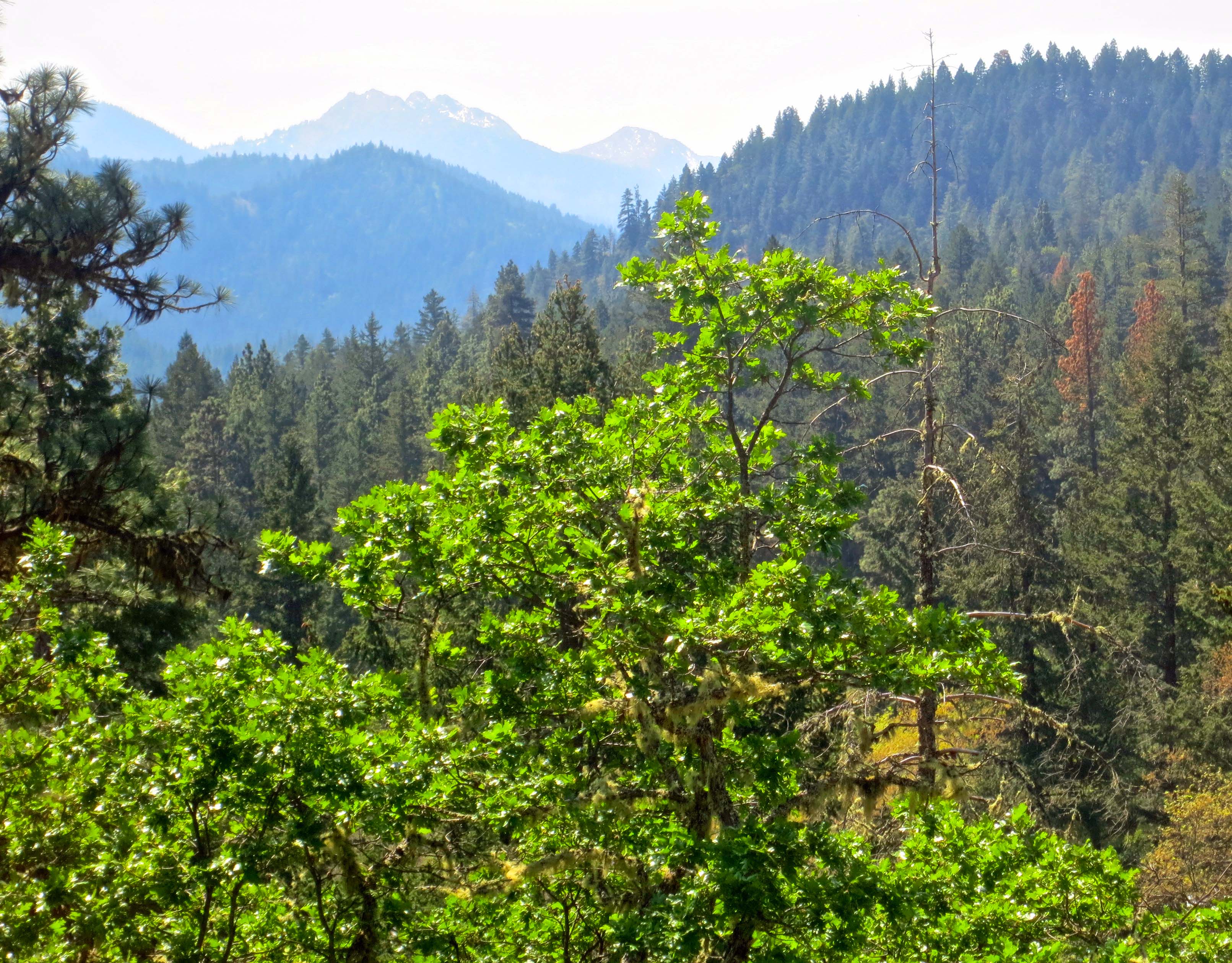
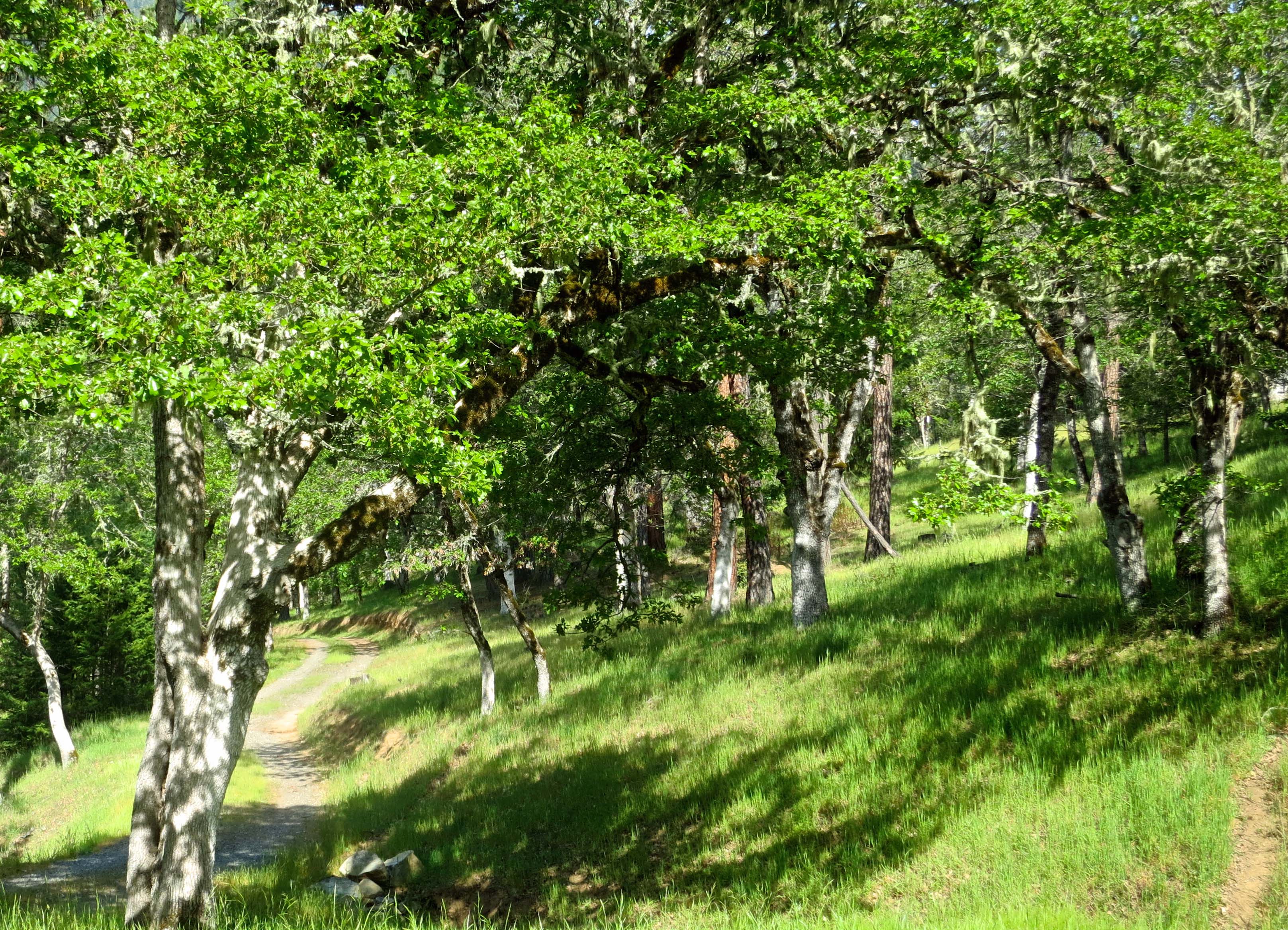
White oak woodland in Southern Oregon in the Applegate Valley. Photo by Curtis Mekemson.
A variety of trees exist on the five acres around our home in Southern Oregon. These are white oaks. It looks like the Sherwood Forest of Robin Hood, or at least like I imagined it as a child. The road leads down to our house.

It’s Earth Day 2015. To celebrate, I am writing this post from a small deck Peggy and I had built on the upper portion of our property. I took the photo of white oaks from where I am sitting.

An Acorn Woodpecker is hammering away at a dead pine. He just stopped to issue a staccato comment on the day, a Woody Woodpecker laugh. I can also hear a Robin’s distinctive chirp— they are migrating through, scratching around for juicy bugs. Flickers and Stellar Jays join the chorus. The jays are discussing the fact I haven’t put out their morning helping of sunflower seeds. They are loud and raucous, hoping I will hear them. How could I not? I was soundly scolded on my walk up here.

As for the Flicker, he has gone to pounding on our roof vents several times a day. Who knows why, but it sounds like a jack hammer. It gets Peggy quite excitable and she charges around whacking our ceiling to scare him away. I’ve checked the roof, so far no damage. I am not so sure about the ceiling.

One very pregnant and obviously uncomfortable Black Tail doe walked by a few minutes ago. She’s restless. I watched her yesterday as she disappeared behind our pump house for a few minutes (it’s cool and shady), came out, munched on some grass, walked to our house, and plopped down against the side. She will be having her fawn soon, probably down in our blackberry filled canyon. We won’t see the baby for a week or two since does carefully hide their babies and insist that they remain hidden for several days.

Pregnant doe on Upper Applegate River in Southern Oregon. Photo by Curtis Mekemson.

The ballooning mom-to-be leans against our house and looks at me with her big brown eyes. It’s like she is saying, “Really, now what?” The deer are used to being lectured by Peggy about eating her flowers.

A cool, fresh breeze is blowing. Puffy clouds float by. The wind is welcome; it’s been hazy for the past few days. The weather people tell us that the haze is caused by smoke blowing in from Siberia. Apparently fires that Siberian farmers were using to clear their fields escaped. Our earth, this seemingly huge planet, is a small place after all. We are all neighbors. If people choose to pollute the air, discharge waste into water, cut down forests, and litter the landscape with the leftovers of modern civilization, it impacts all of us. We all suffer.

Haze from Siberia fills the valleys between our homes and the Red Butte Mountains.

Haze from Siberia fills the valleys between our home and the Red Butte Mountains.

But enough doom and gloom—today is a day to celebrate the natural beauty of our earth. Let’s go for a walk. We will start at the Applegate River at the bottom of our property and move up the hill to the National Forest boundary marker. I’ve built signed trails throughout our property and named them after our grandkids (all boys). Ethan’s Hidden Springs Trail and Connor’s Jungle Trail are examples. The first thing the kids do when they arrive is run off to explore their trails. It is Peggy and my hope that we can instill in our grandchildren the same love of the natural world and desire to protect it that we have.

A Note: I wrote this piece and did our walk yesterday so this post could go up today.

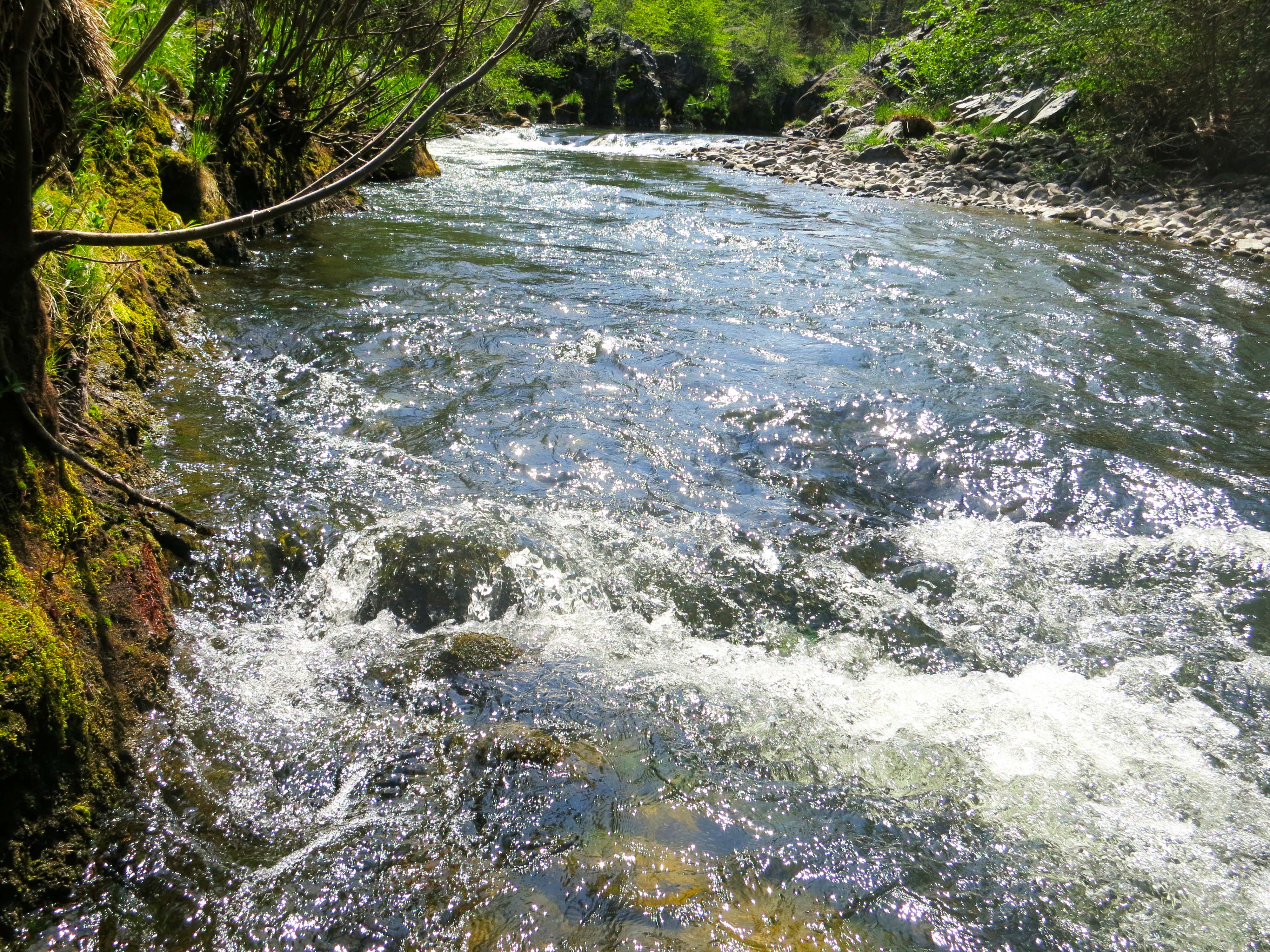
This beautiful river flows out of the Siskiyou Mountains a few miles away from out home.

This beautiful river flows out of the Siskiyou Mountains a few miles away from our home.

Cold, pure water.

Looking down into the river.

I scrambled over and down these rocks to get to the river. Bureau of Land Management land is on the opposite shore.

I scrambled over and down these rocks to get to the river. Bureau of Land Management land is on the opposite shore.

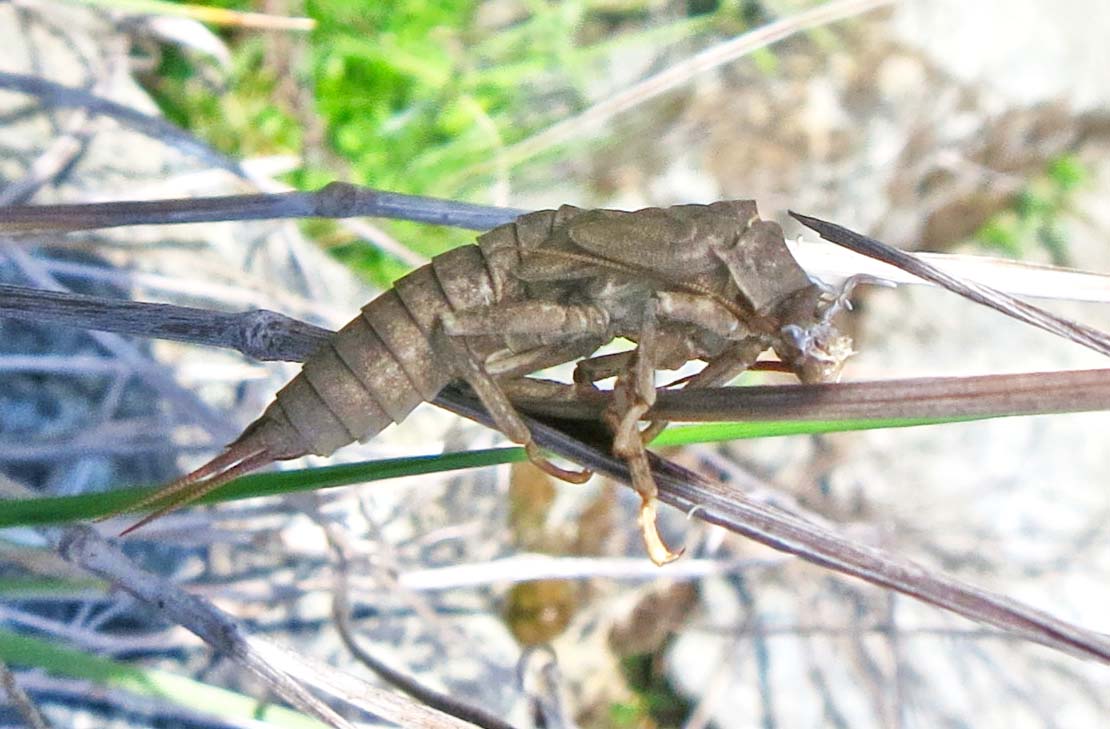
This handsome guy is a mere shell of his former self, literally. I believe it was a dragonfly nymph before the dragonfly popped out of the shell and flew away.

This handsome guy is a mere shell of his former self, literally. I believe it was a dragonfly nymph before the dragonfly popped out and flew away in one of the miracles of nature.

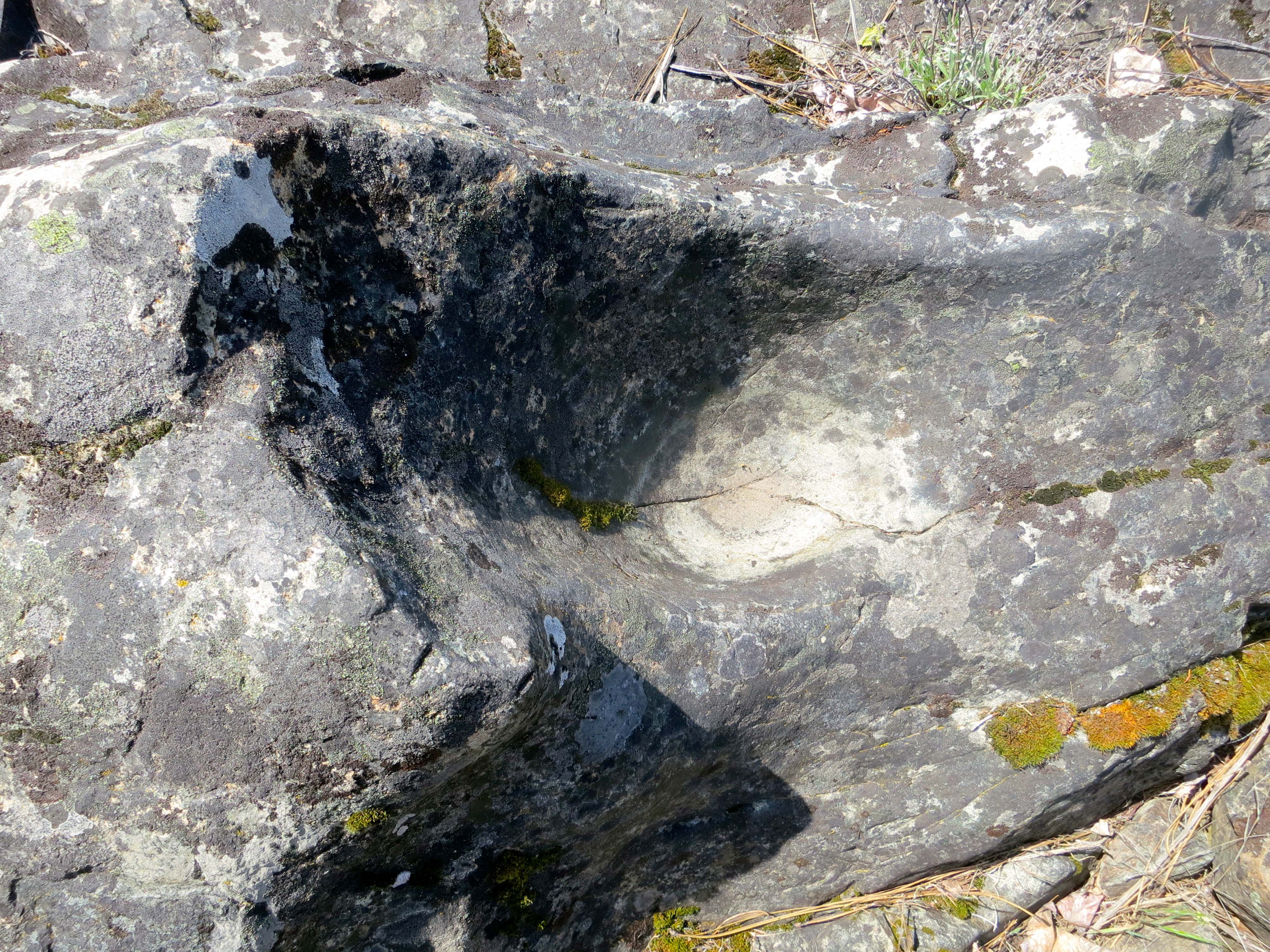
Likely native American grinding rock on the Applegate River in Southern Oregon.

Located among the rocks is what Peggy and I suspect was a Native American grinding rock.

Lichen on river rock of the Applegate River in southern Oregon.

Lichens (from my perspective) always make interesting photos.

Here's a closeup.

Here’s a closeup.

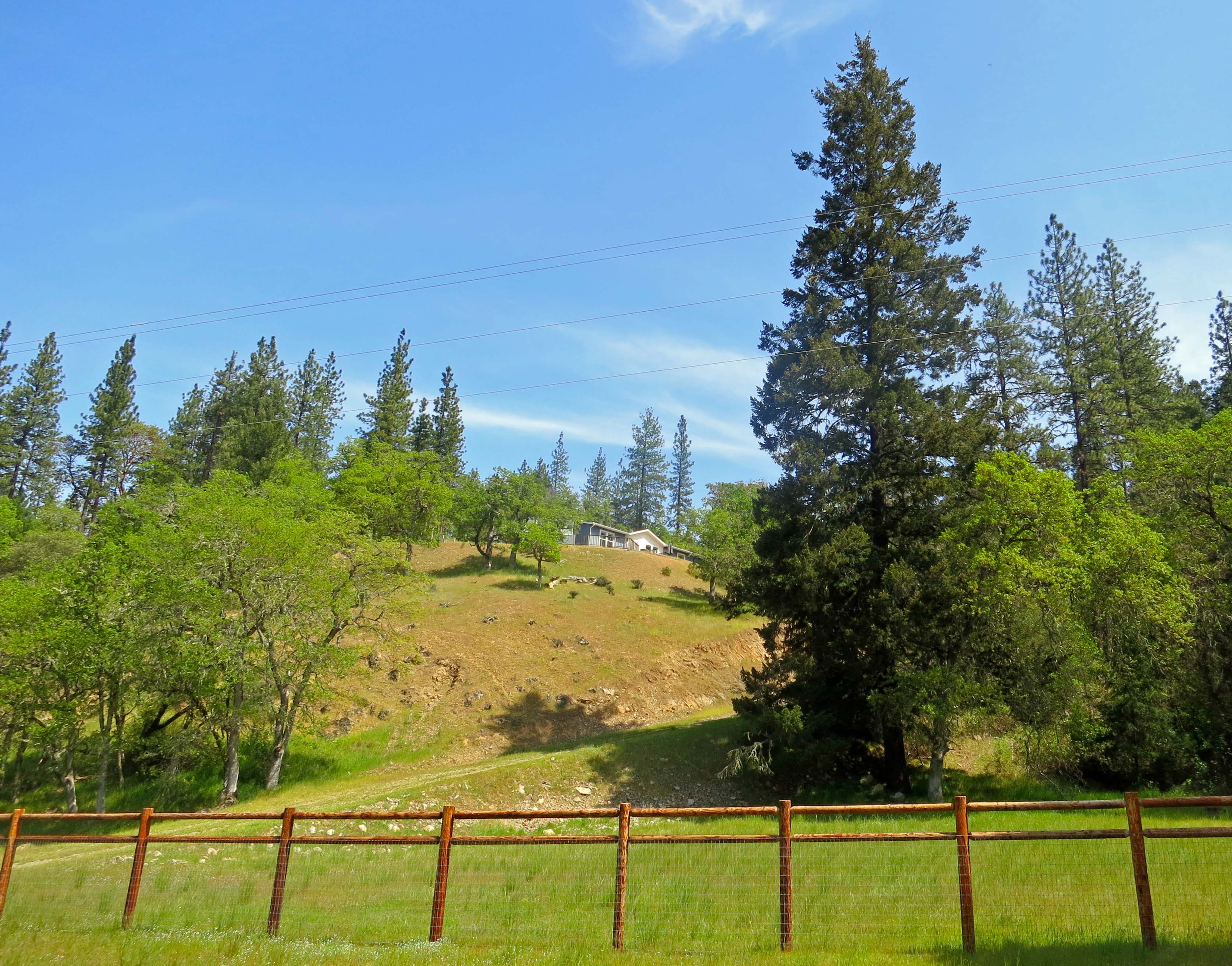
Now it is time to hike up the hill. Our small 1500 foot with its sunroom is perched on the side. The tall tree on the right is a Douglas Fir.

Now it is time to hike up the hill. Our small 1500 square foot house with its sunroom is perched on the side. The tall tree on the right is a Douglas Fir.

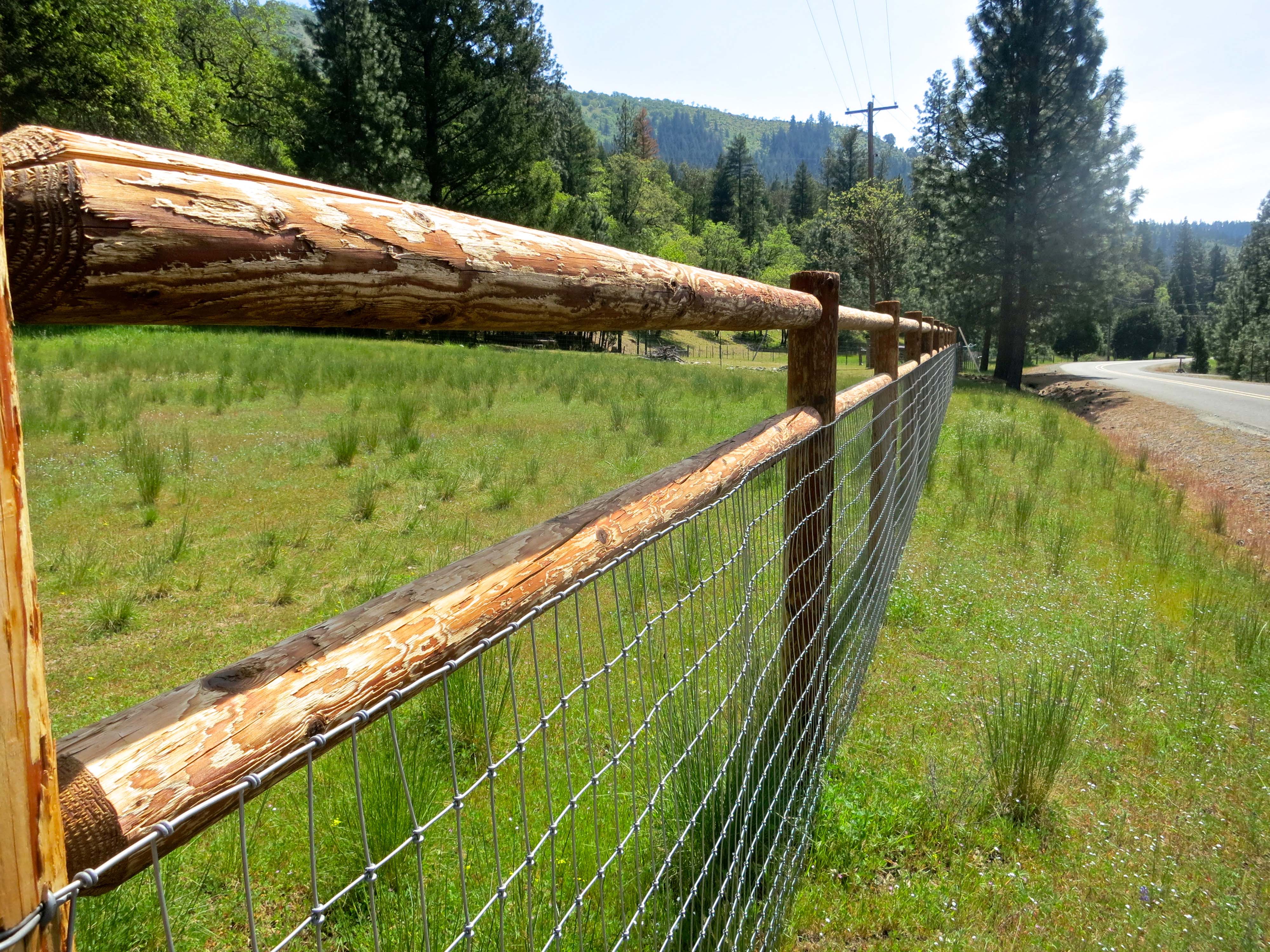
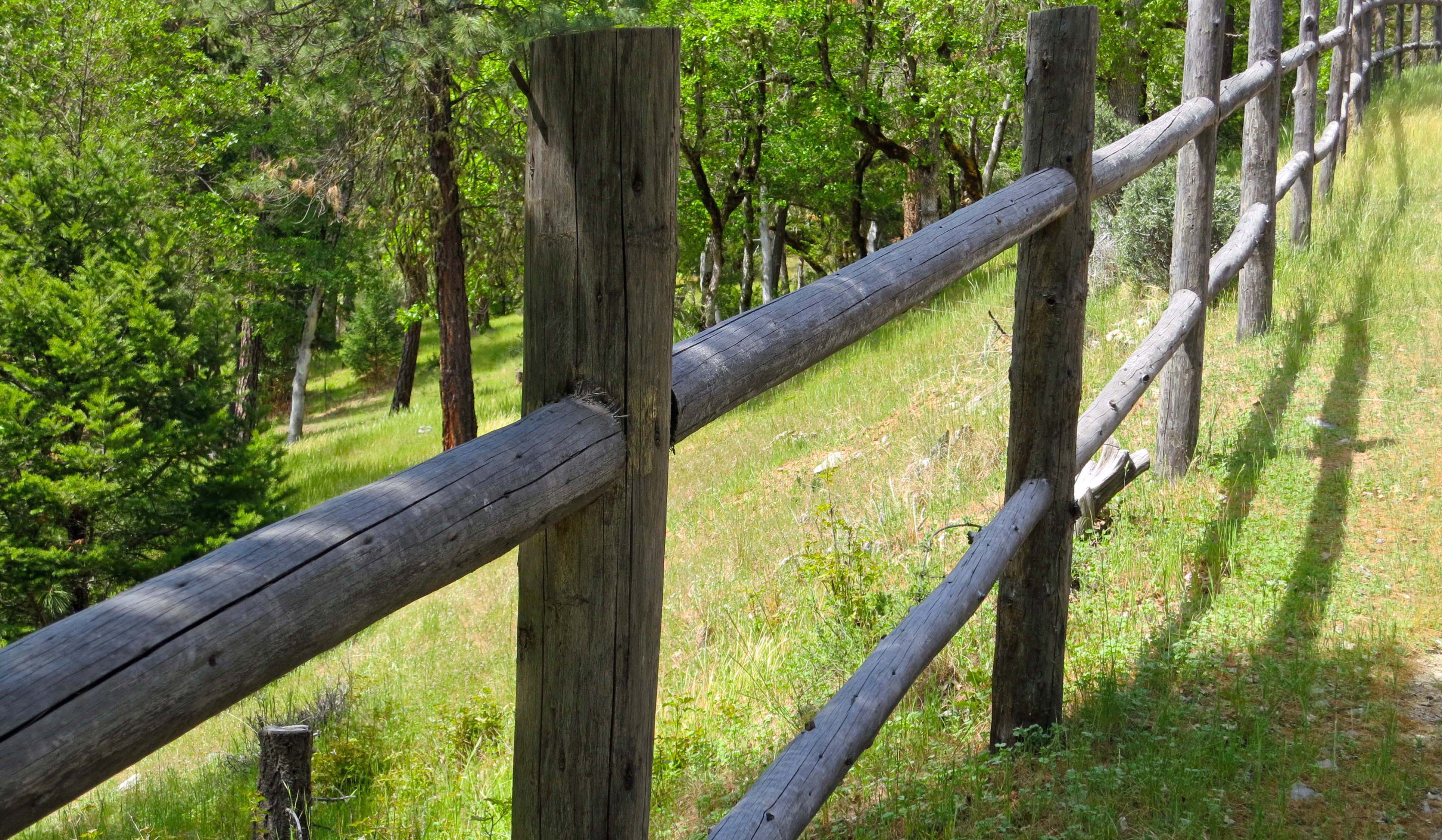
Our fence is designed to fit into the local environment.

Our front fence is designed to fit into the local environment.

While oaks dominate the northern side of our property, Ponderosa Pines, Douglas Fir and Madrones dominate the south. I've created signed trails running through our property and named them after the grandkids such as Ethan's Hidden Spring's Trail and Connors Jungle Trail.

While oaks dominate the northern side of our property, Ponderosa Pines, Douglas Fir and Madrones dominate the south. This is Ethan’s Hidden Spring Trail.

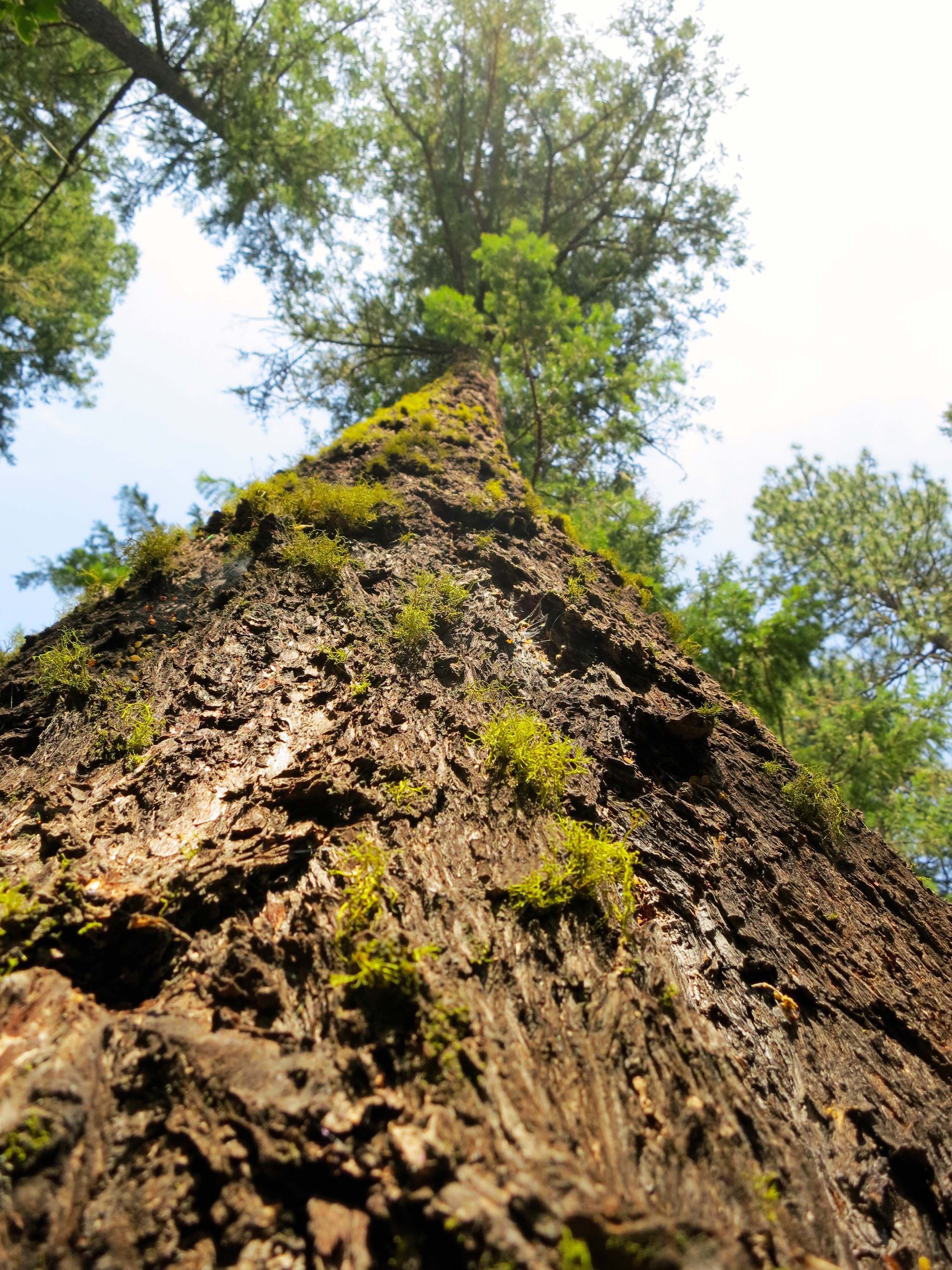
Ponderosa Pines growing in the Upper Applegate Valley near Applegate Lake.

The trees, like these Ponderosa Pines, grow quite tall.

Ponderosa Pine growing at the 2000 foot elevation on the Upper Applegate River.

Check out this beauty.

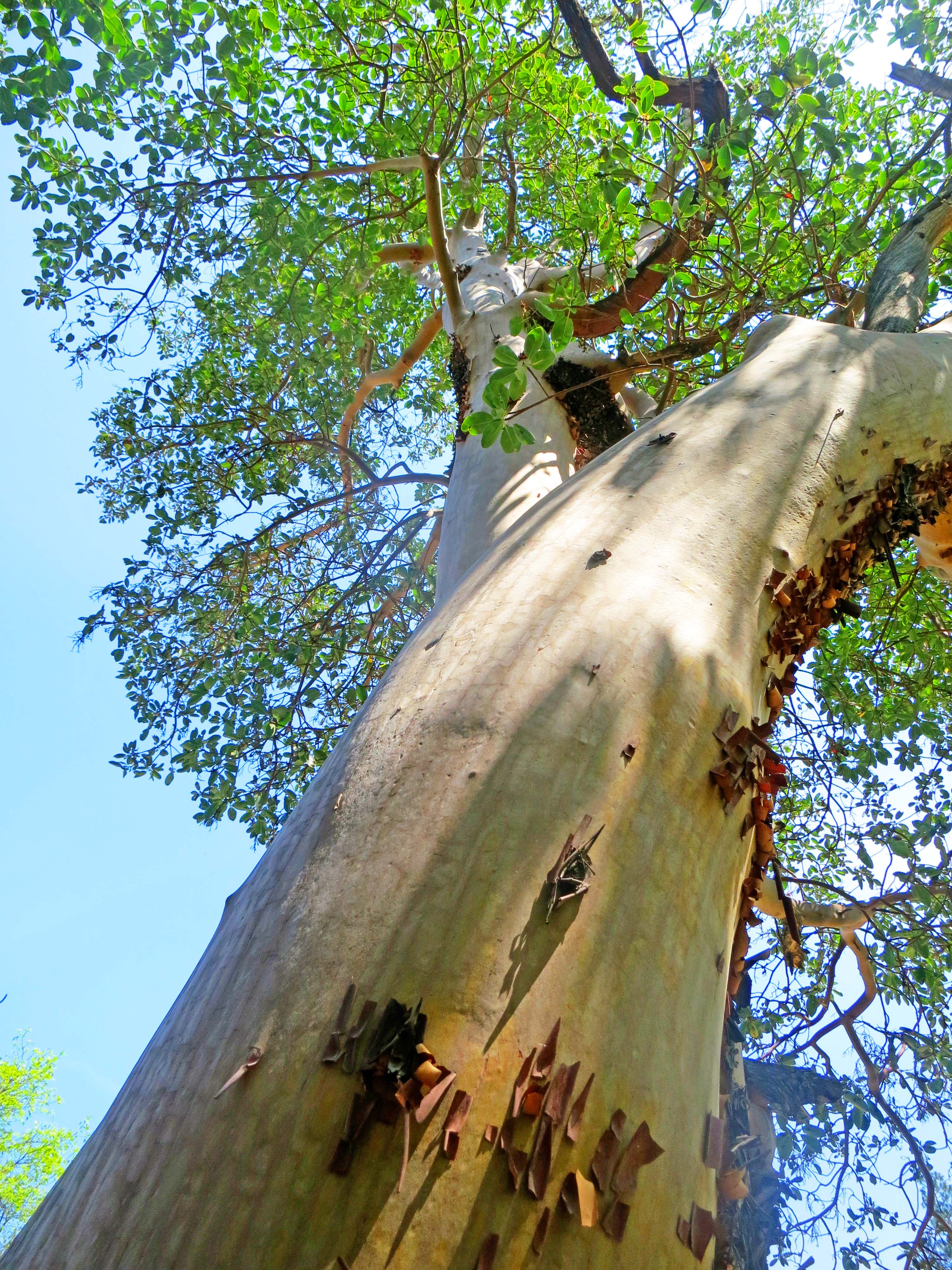
Large Madrone growing near Applegate River in southern Oregon.

This large Madrone with its unique bark lives next to our house.

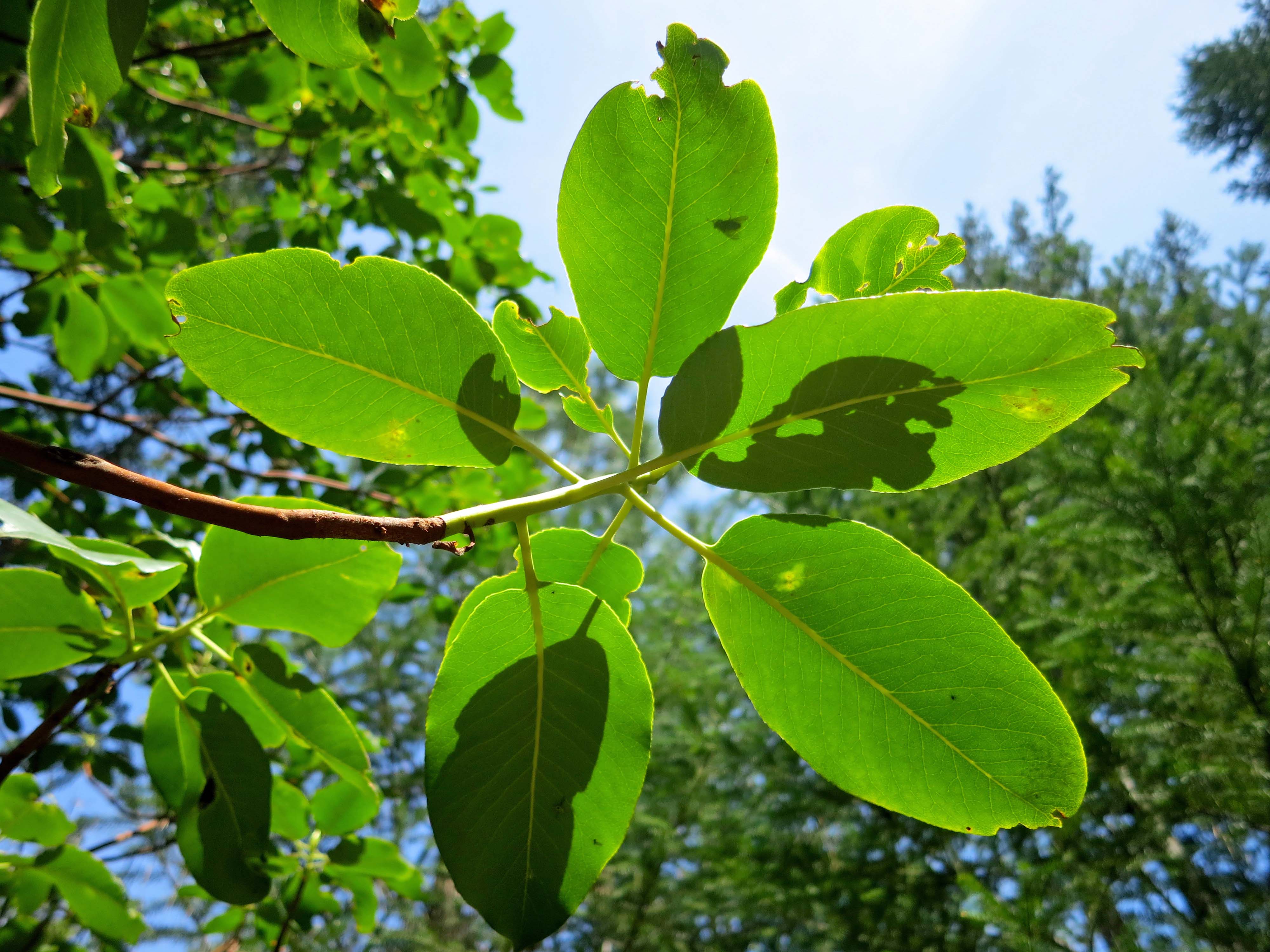
Madrones shed their leaves in summer. It is like having two falls. The shadow of a fly can be seen through the leaf. Shortly afterwards it flew down to bite me. Bad decision.

Madrones shed their leaves in summer. It is like having two falls. The shadow of a fly can be seen through the leaf. Shortly afterwards it flew down to bite me. Bad decision.

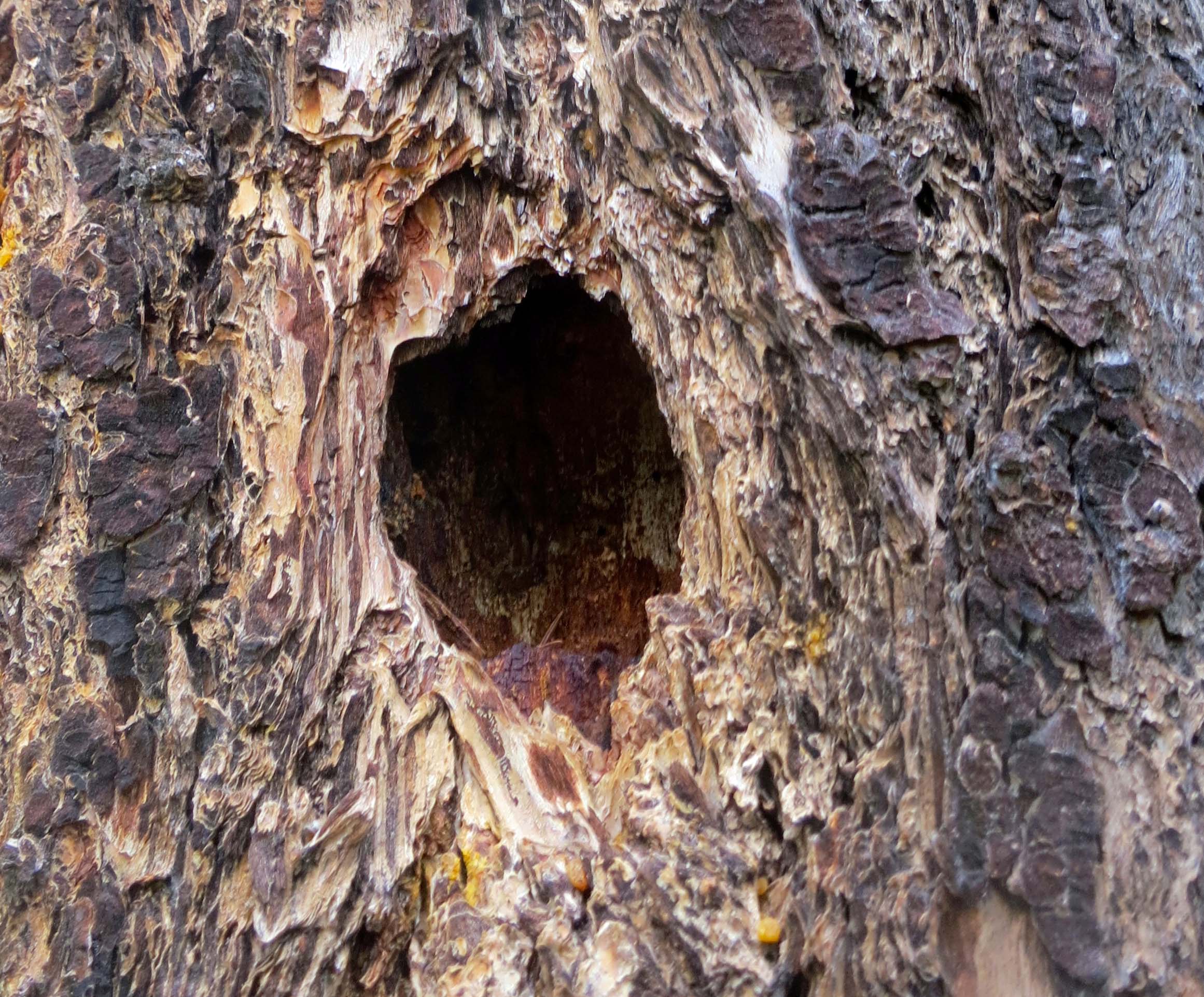
Signs of animal life are found throughout the property. This large hole was probably drilled by a Pileated Woodpecker.

Signs of animal life are found throughout the property. This large hole was probably drilled by a Pileated Woodpecker.

Cat eye flower grown in the Upper Applegate River Valley.

Flowers were few and far between on my walk but I did find this interesting cat eye.

One of the reasons we bought our property was this sign, a boundary marker for the Klamath National Forest that borders the back of our property.

One of the reasons we bought our property was this sign, a boundary marker for the Klamath National Forest that borders the back of our property. Between Klamath and other national forests, over a million acres of public lands are found out our back door.

While our front fence is a fairly serious fence, our back fence is strictly for aesthetics. It is an open invitation to the deer, cougars, bear and other wildlife that live in the forest to "come on down." We'd even welcome Bigfoot. (grin.)

While our front fence is a fairly serious fence, our back fence is strictly for aesthetics. It is an open invitation to the deer, cougars, bear and other wildlife that live in the national forest to “come on down.” We’d even welcome Bigfoot. (grin.) HAPPY EARTH DAY.

Oregon’s Coastal Bridges… Where Engineering, Environment, and Art Meet

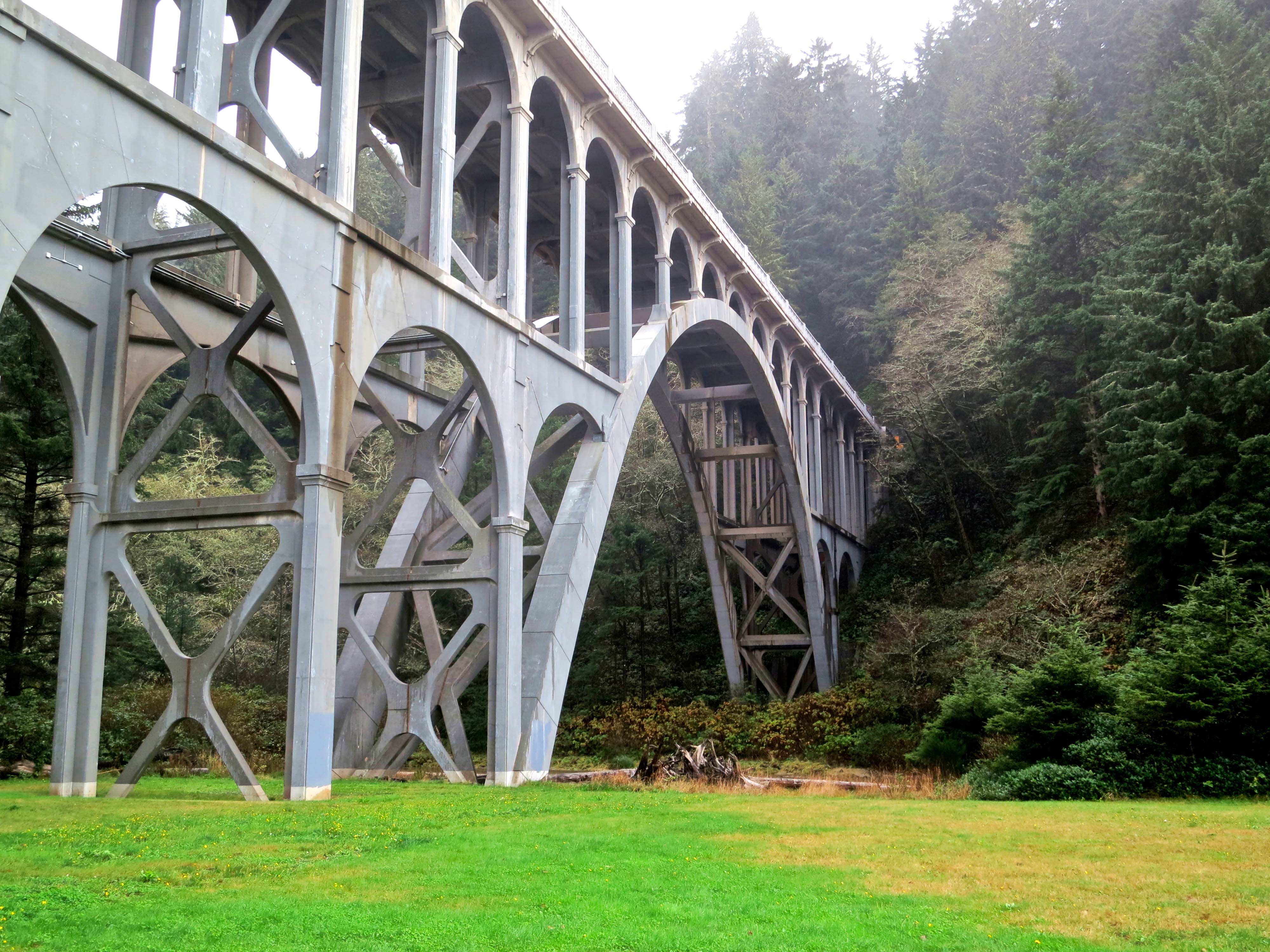
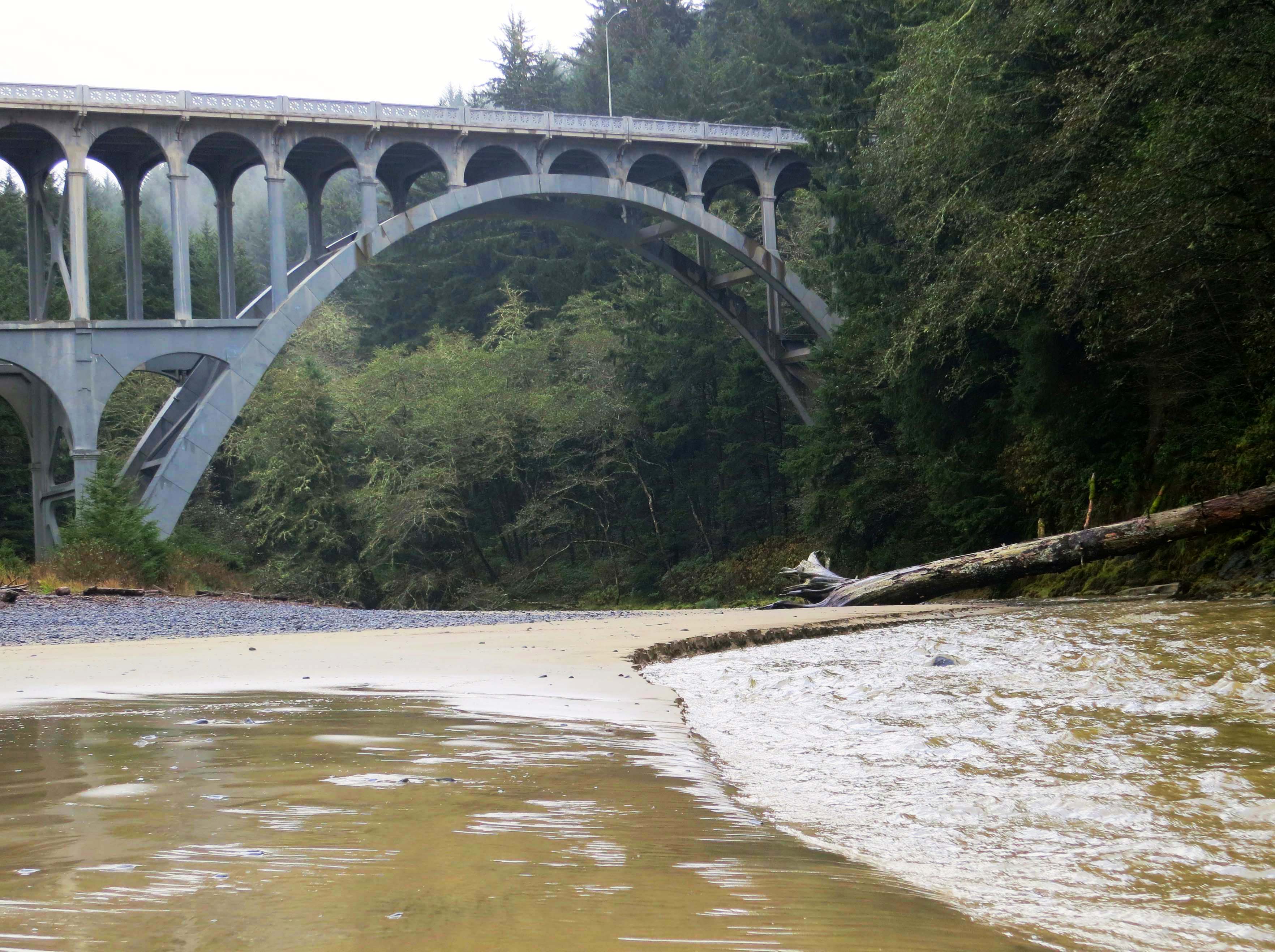
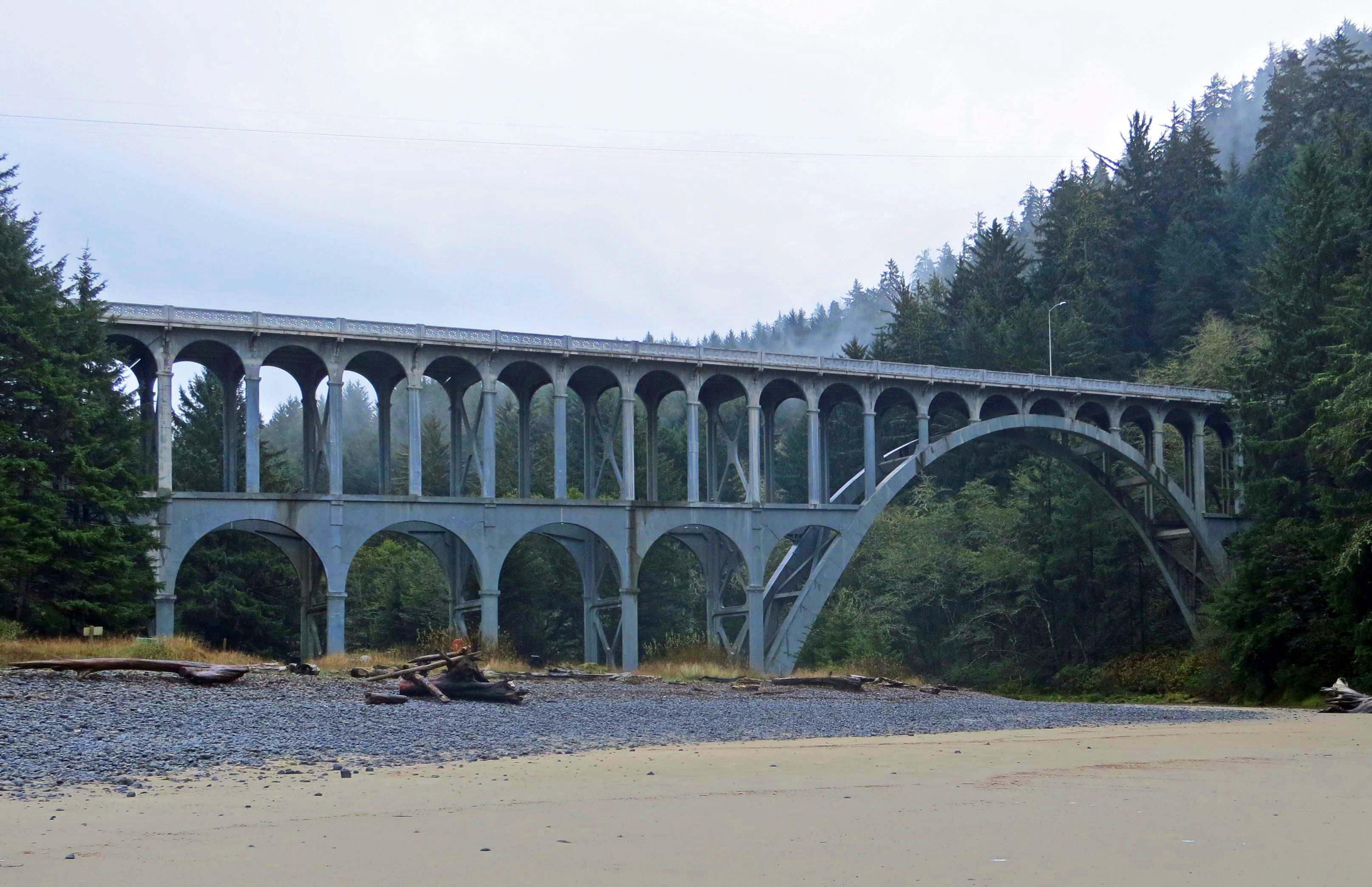
Cape Creek Bridge north of Florence, Oregon was designed by Conde McCollough and built during the early 1930s.

Combining form and function, Cape Creek Bridge in Oregon is an example of how highway bridges can move vehicles, provide beauty, and fit into the natural environment.

With Earth Day 2015 coming up on Wednesday, I stopped to think about the battles we fought during the 70s to protect the environment. One of the toughest was against the highway lobby—bankrolled primarily by the oil industry. “Build more highways!” it and its allies screamed. Buried under a burgeoning population of automobiles, local and state transportation agencies usually agreed. Moving cars and trucks, not people and goods, was the objective. Most traffic engineers believed that their sole task was to move vehicles from point a to b as quickly and efficiently as possible. And they did their job extremely well. Nothing got in the way, including established communities, farmlands and valuable natural habitats. It was the bulldozer era of ‘pave Paradise and put in a parking lot.’ (Joni Mitchell)

In the mid to late 70s, I was working with a community group called the Modern Transit Society (MTS) that was fighting to bring light rail transit to Sacramento, California. The City Traffic Engineer was adamantly opposed to the idea. More dollars for mass transit meant fewer dollars for highways, and the Engineer, along with his counterpart in the County, had roads and freeways planned everywhere. My role with MTS was to oversee political strategy. At one point, relations became so tense between the traffic engineer and me that he would walk out of a room when I walked in. Eventually we won. Today, Sacramento has light rail lines stretching throughout the city and county.

Bridges built at the time, and also during the 50s and 60s, reflected the mania for moving cars. Function, not form, was what mattered. As a result, large ugly concrete structures with minimal aesthetic appeal often dominated urban and even rural landscapes. Bridge construction hadn’t always been that way.

The coastal bridges of Oregon reflect an earlier era. Many were constructed in the 1920s and 30s when Highway 101 was being built to connect coastal towns. Oregon was extremely fortunate to have Conde McCullough at the helm of the highway department’s bridge division for much of this time. Part civil engineer, part architect, and part artist, he believed that bridges should be built economically, efficiently, and aesthetically. His vision lives on today, as any trip down the Oregon Coast quickly demonstrates.

Conde McCollough served as Oregon's state bridge engineer from 1919 to 1935, following which he spent a couple of years designing bridges along the Pan American Highway in Central America.

Conde McCollough served as Oregon’s state bridge engineer from 1919 to 1935, following which he spent a couple of years designing bridges along the Pan American Highway in Central America. (Photo from information sign on Highway 101.)

Today I am going to feature one of McCullough’s creations, the Cape Creek Bridge located on Highway 101 north of Florence, Oregon, and a small park that lies below the bridge. Later, I will do posts on two of his other bridges plus a modern pedestrian and bike bridge in Redding, California that is breathtaking.

Cape Creek Bridge north of Florence, Oregon on Highway 101.

Another view of the Cape Creek Bridge, this time including Cape Creek. It had been raining hard, as reflected by the creek’s muddy waters.

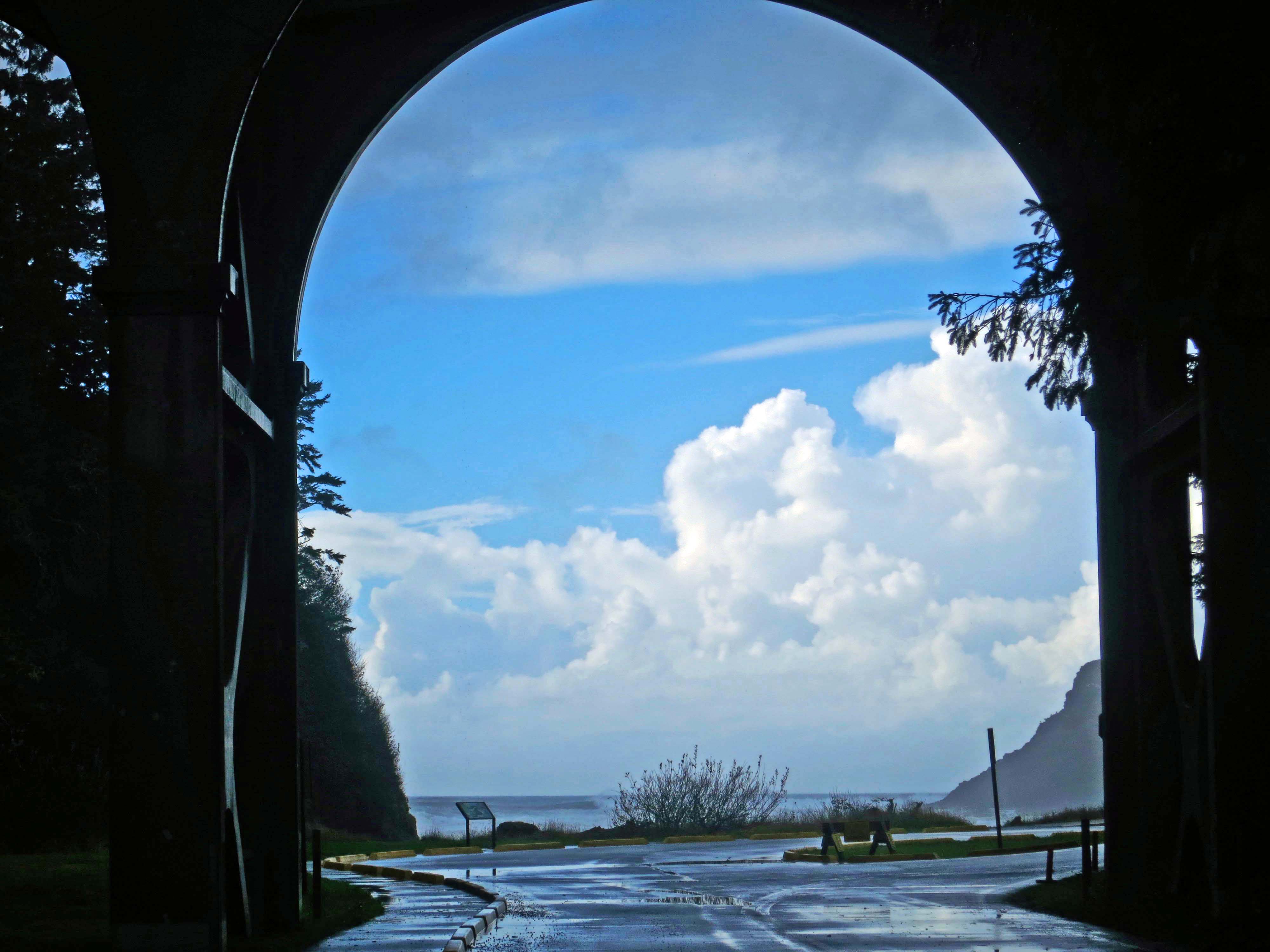
Looking out from a span of the Cape Creek Bridge onto the small ocean cove the creek empties into.

Looking out from a span of the Cape Creek Bridge onto the small ocean cove the creek empties into.

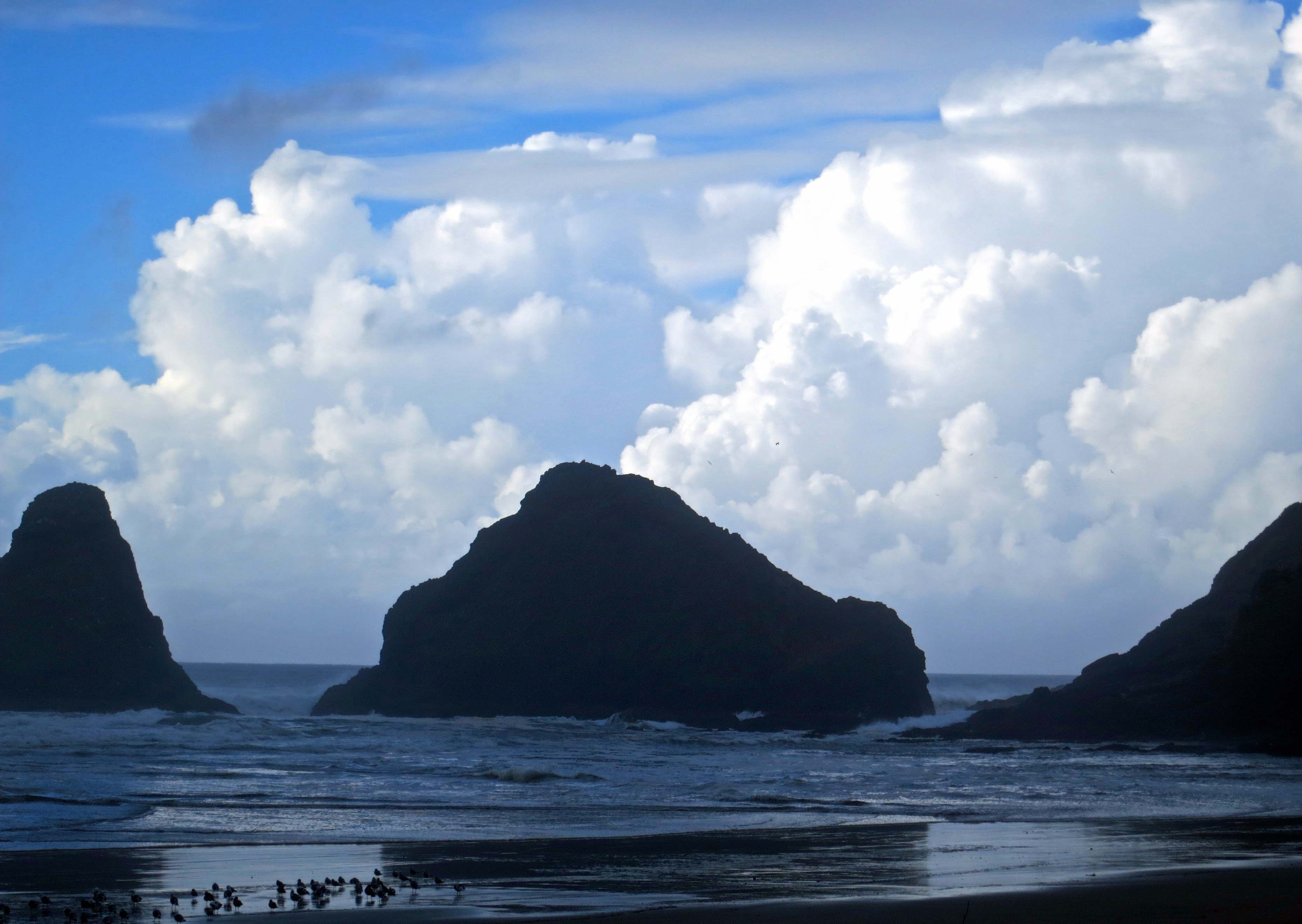
Cumulous clouds outline sea stacks in Cape Cove on the Oregon Coast.

Small islands in Cape Cove outlined by the dramatic sky. Sea gulls are gathered in the lower left corner.

One of the sea gulls takes flight. I was walking along behind it, posed to takes its photo when it flew.

One of the sea gulls takes flight. I was walking along behind it, poised to takes its photo when it flew. There are three things I like about the picture: the wings, the gulls left foot as it runs, and the reflection.

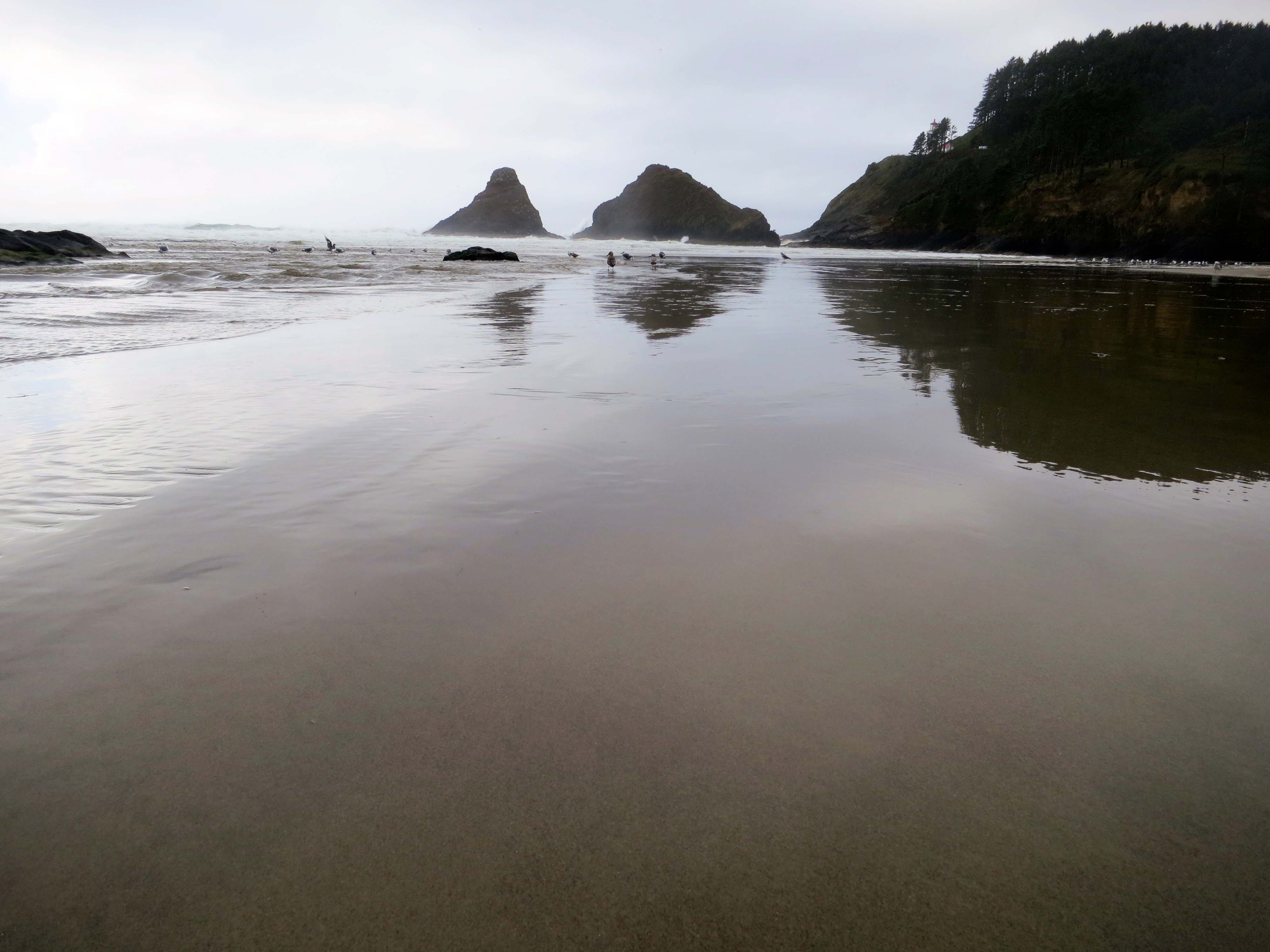
The tide rolls onto shore at Cape Cove on the Oregon Coast near Florence, Oregon.

The tide rolls in to Cape Cove.

Low tide exposes the beach at Cape Cove off of Highway 101 on the Oregon Coast.

And the tide rolls out.

Cape Creek Bridge in Lane County on the Oregon Coast.

A final perspective on the Cape Creek Bridge. The bridge is 619 feet (188.6 meters) long and was designed to look like a Roman aqueduct. NEXT BLOG: Earth Day

The Bush Devil Ate Sam and 84 Charing Cross Road

Hilary is a writer who lives in England and maintains a very interesting blog that I have followed for quite some time now. –Curt

hilarycustancegreen's avatarGreen Writing Room

Let’s hear it for non-fiction! I have just had the most entertaining and informative week (and I get to write a seriously disconnected title for a post).

Curt Mekemson‘s book, The Bush Devil Ate Sam…And Other Tales of A Peace Corps Volunteer in Liberia, West Africa, is an important record and a serious story, yet told easily, and with delightful humour. This is one of the most satisfying books I have ever read, because it entertained me thoroughly AND made me feel better informed.

Screen Shot 2015-04-15 at 20.35.09In America in the 1960s, Berkeley was one of the cradles of independent thinking. Here, youth, hope and idealism produced (for a while) creative, open-minded solutions to world problems. Curt was there and tells us how it really was.

From there we go with Curt and his wife, as raw Peace Corps recruits, to Liberia. Curt never fails to spot the funny elements of his varied adventures and he writes with an pleasing straightforwardness. Their lives…

View original post 240 more words

The Bigger Sacramento Book Club (BSBC)… 26 Years and Counting


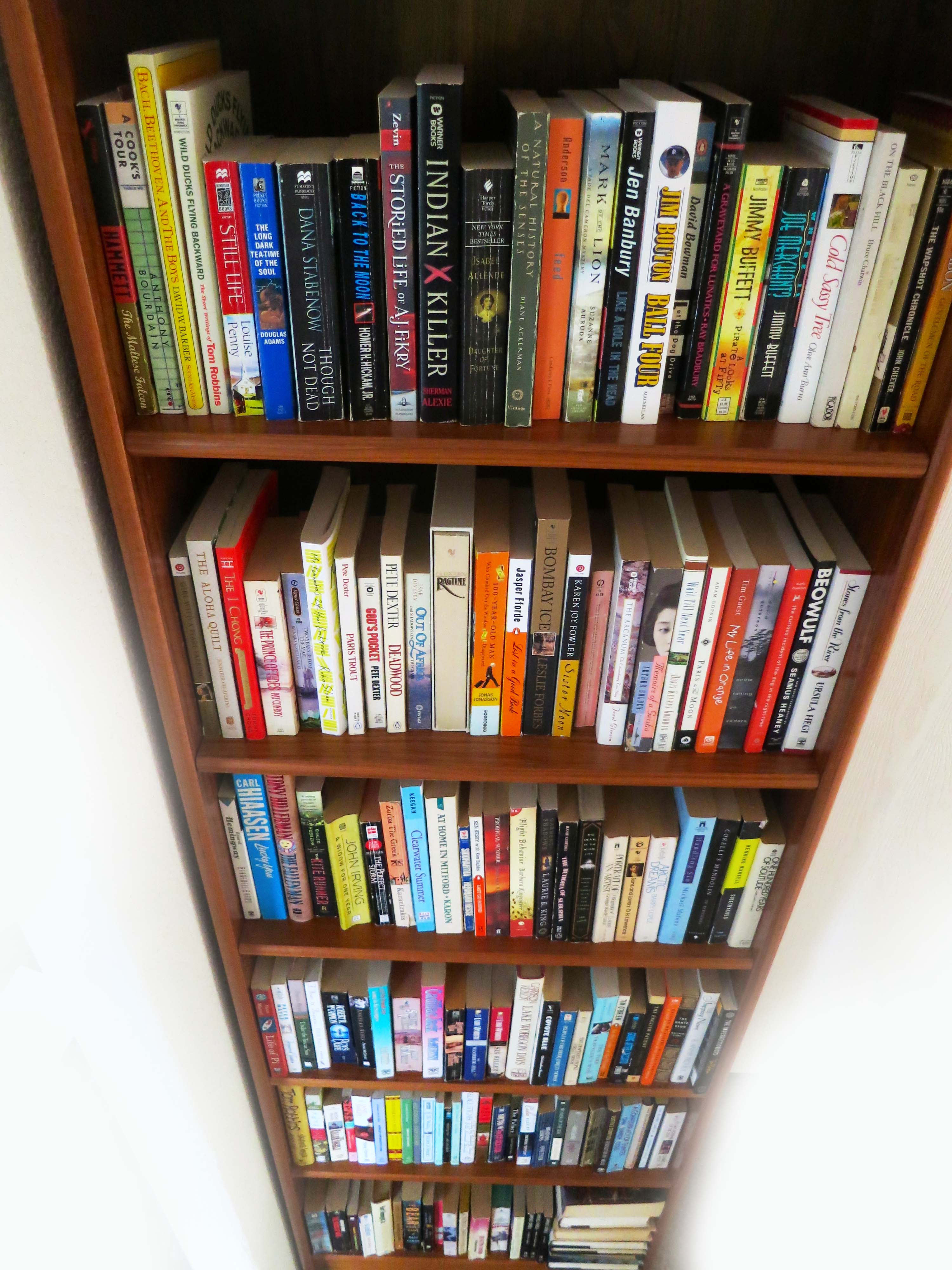
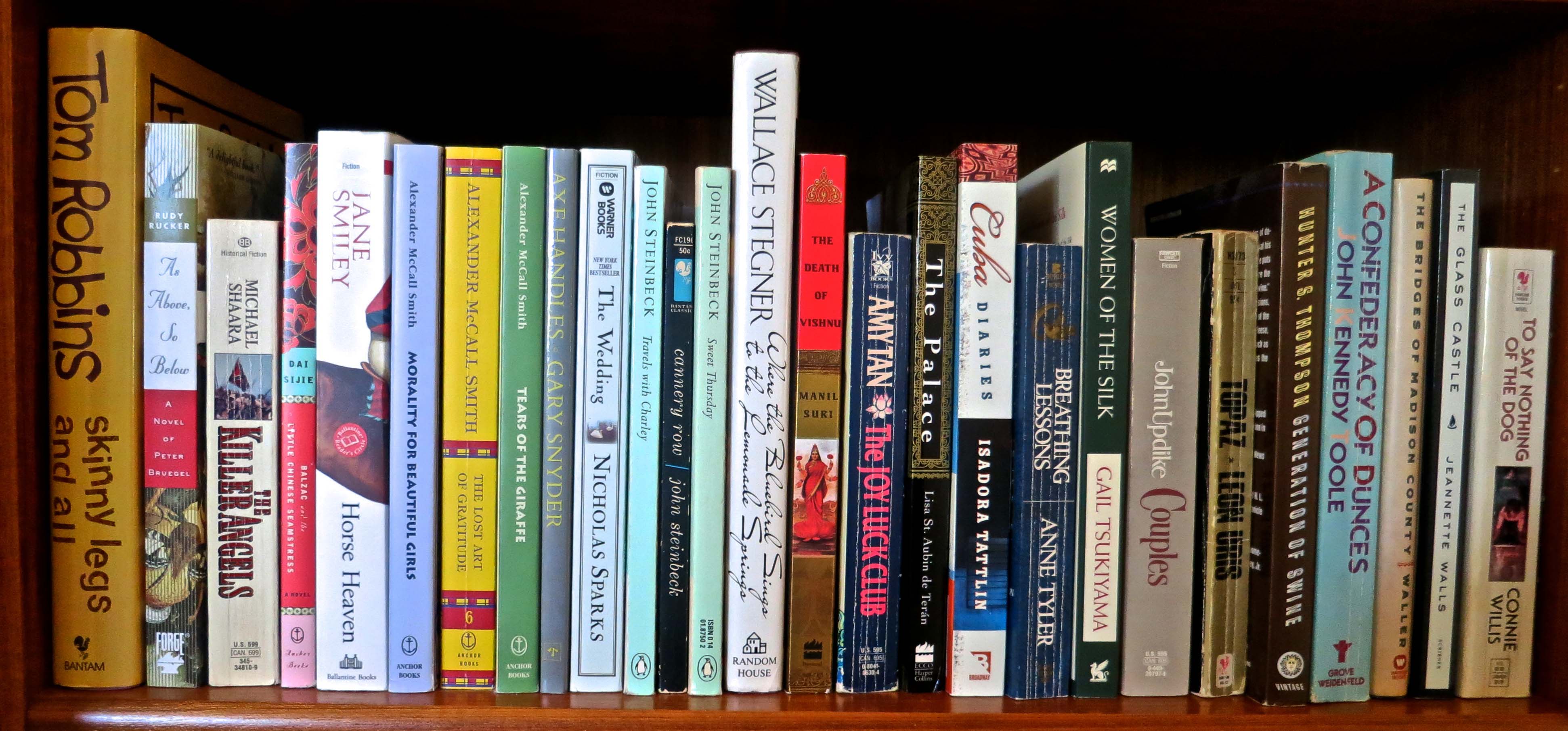
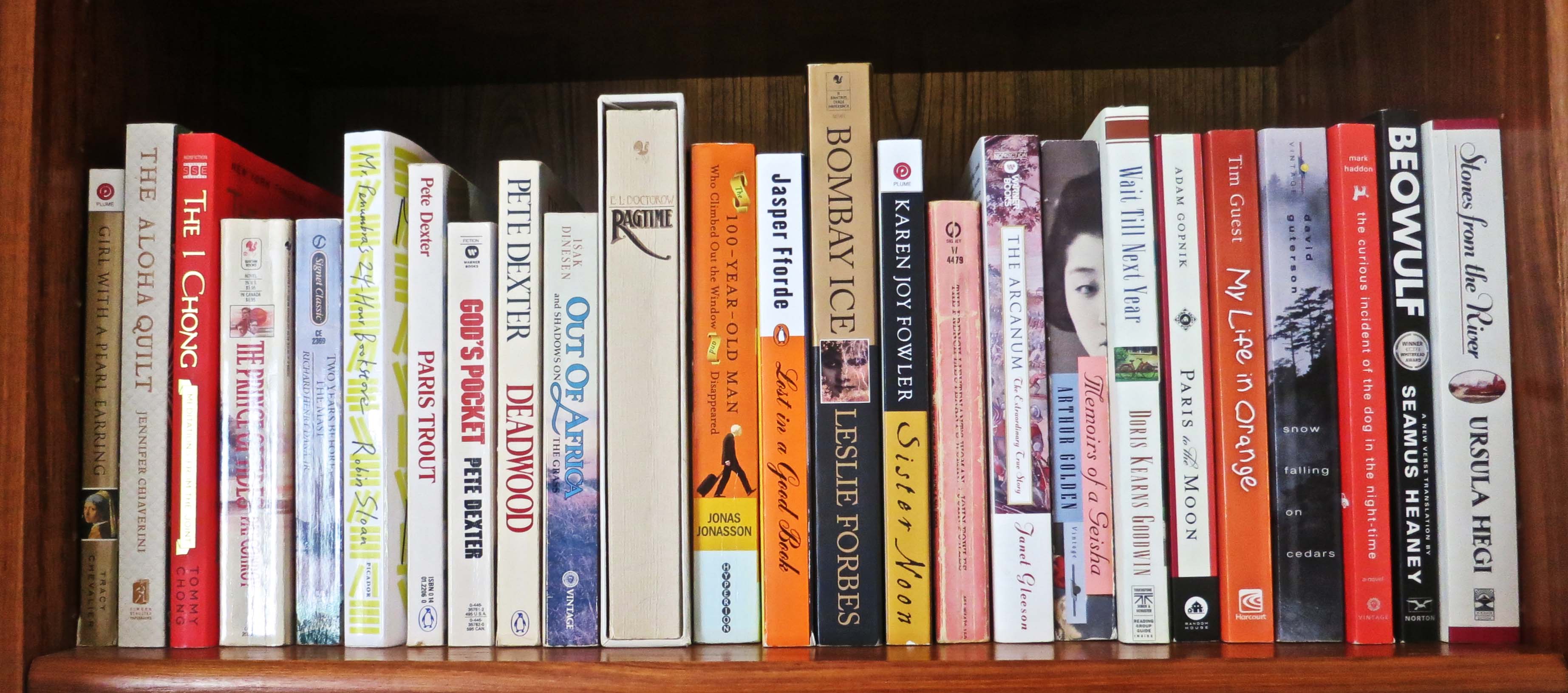
Books read by the BSBC of Sacramento

This bookshelf includes about half of the books the BSBC has read during its 26 years of existence.

Three things happened when I climbed off my bicycle in Sacramento during the second week of September in 1990. First, I met Peggy and promptly fell in love. (It took me five seconds; Peggy was more like five months. She liked the look of a guy in tight bicycle shorts who had just biked 10,000 miles but was a little concerned about the sanity of a guy who would do such a thing. Rightfully so.)

Two, I was seriously hassled for being one week late. Mind you, I had just travelled for six months on a solo journey around North America. An extra seven days didn’t seem like a big deal. To be fair, however, time is different for someone sitting in an air-conditioned office eight hours a day than it is for someone sitting on the back of a bicycle and peddling 50–100 miles a day through every type of terrain and weather North America has to offer.

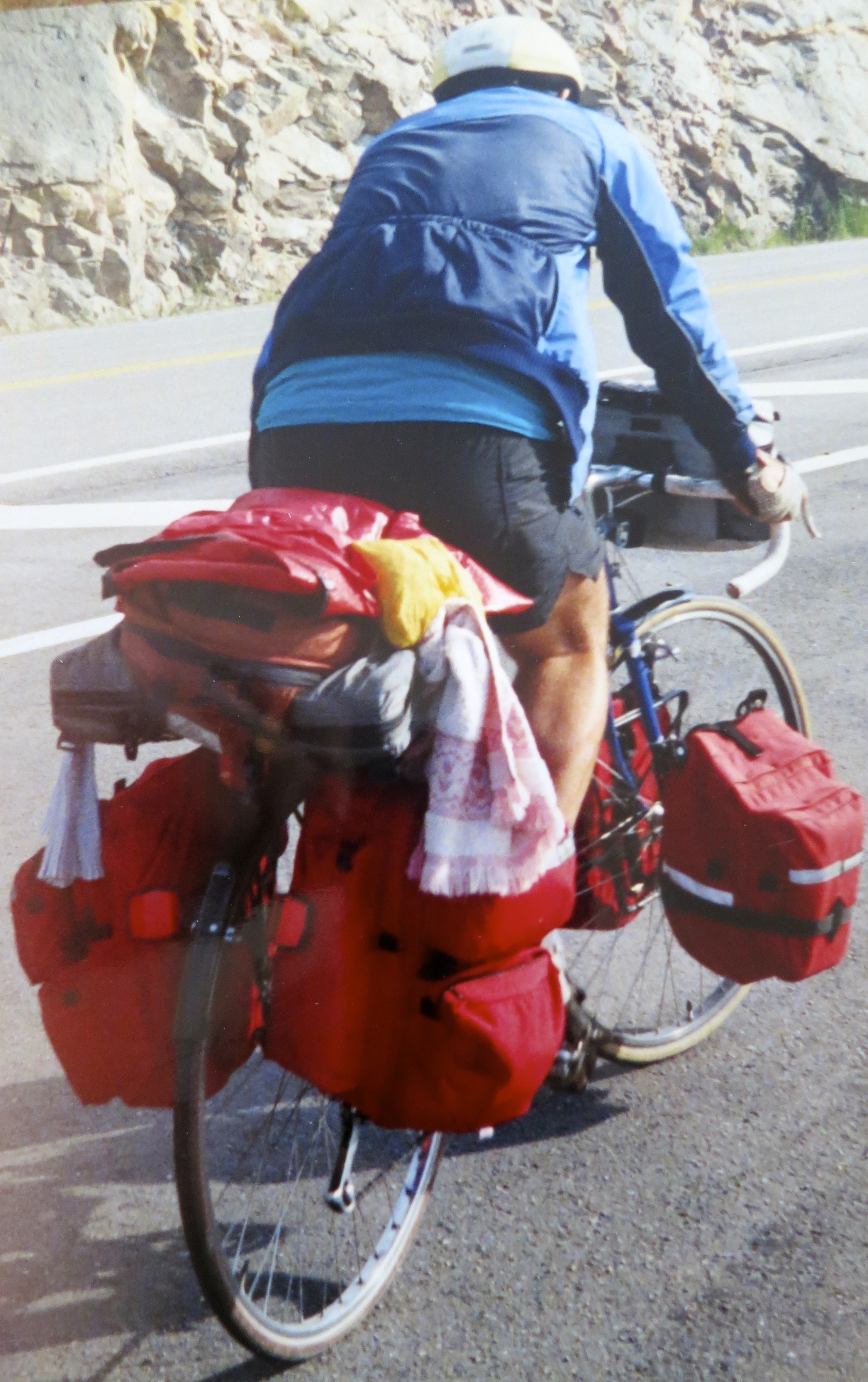
Here I am biking up a mountain in Nova Scotia with 60 pounds of gear.

Here I am biking up a mountain in Nova Scotia with 60 pounds of gear. I had already biked 5000 miles. Time slows down in such circumstances.

The third thing that happened is the subject of today’s post. My friend Ken Lake informed me that a meeting of the Bigger Sacramento Book Club, more fondly known as the BS Book Club, or simply the BSBC was coming up. Ken had started the book club and recruited me as a member in the fall of 1988, a few months before I started my bike odyssey.

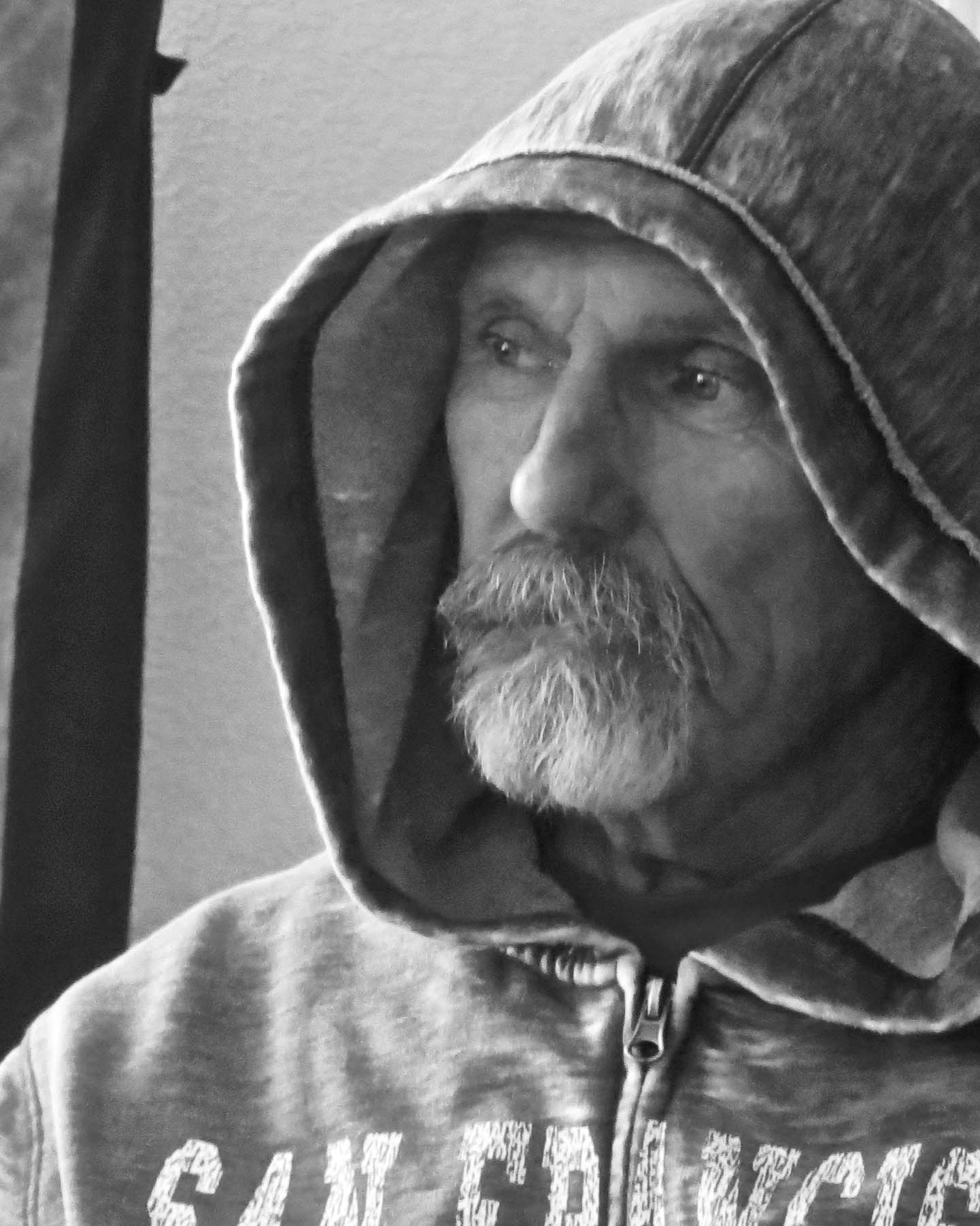
I love this photo of Ken because it makes him look like a Druid Elder, or someone out of Lord of the Rings. I think the look on his face reflected that the 49ers were losing.

I love this photo of Ken because it makes him look like a Druid Elder, or someone out of Lord of the Rings. I think the look on his face reflected his disapproval of a SF Giant’s play.

The BSBC reads a wide variety of books based solely on the tastes of whoever is selecting the book.

The BSBC reads a wide variety of books based solely on the tastes of whoever selects the book.

The rules, Ken had explained, were simple. Members of the BSBC would rotate having the book club meet at their homes. The host would pick the book, provide the main course, and supply whatever alcohol was to be consumed. Other members would provide hors d’oevres, salad, veggies, dessert and breads— plus any insights they had on the book.

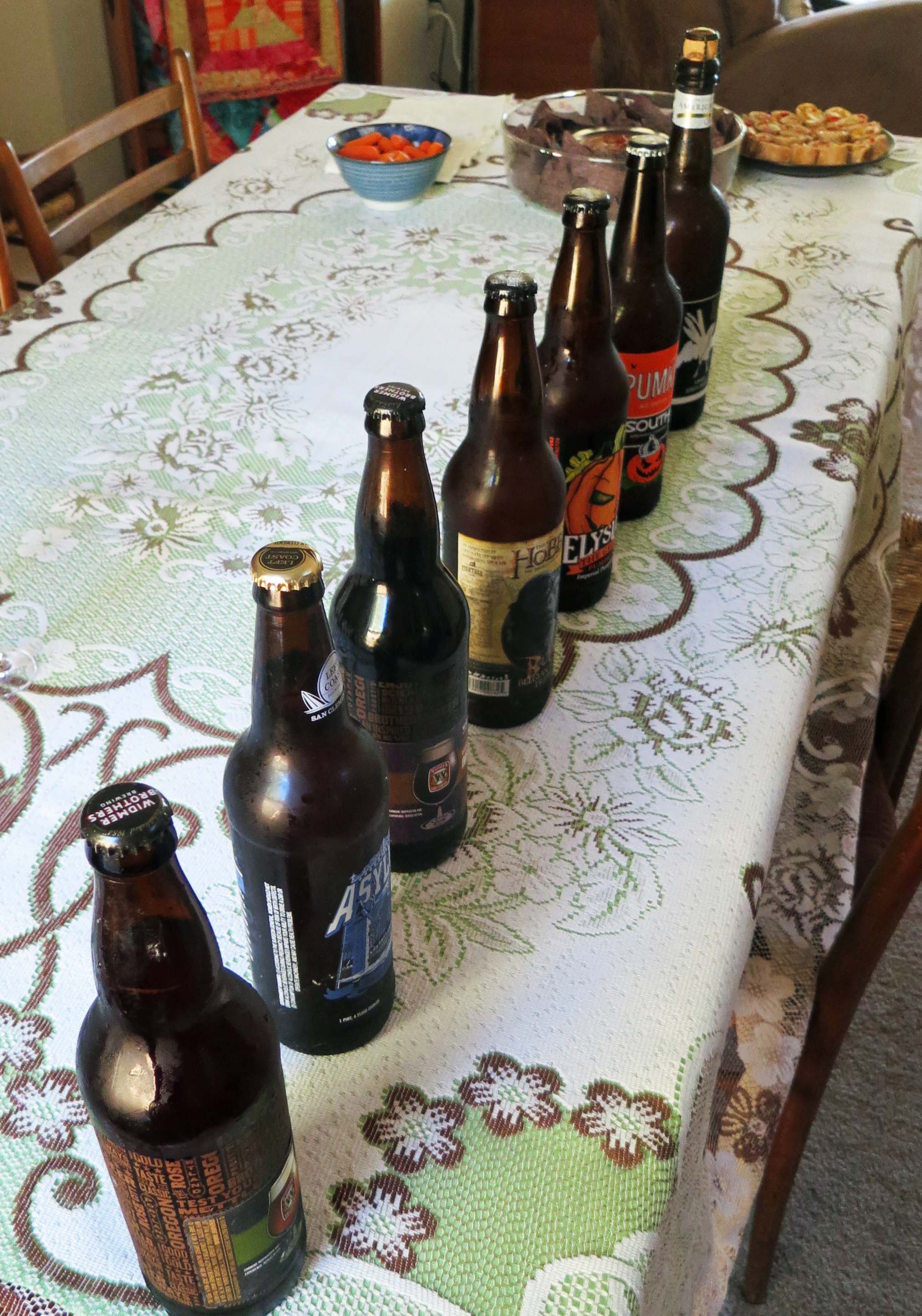
BSBC is only partially about books. This particular meeting featured a beer tasting. Dinners are often planned around whatever food was featured in the book.

BSBC is only partially about books. This particular meeting featured a beer tasting. Dinners are often planned around whatever food is featured in the book.

So far it sounded like a standard dinner/book club. And then Ken mentioned the other rule: You didn’t have to read the book. Maybe you ran out of time or couldn’t struggle your way through the first chapter. Fine. It was after all, the BS Book Club. You didn’t even have to confess. I laughed and signed on the imaginary dotted line. I even remember the first meeting. The book was To Kill a Mockingbird by Harper Lee. One of our members hadn’t read the book but had brought Cliff Notes. We gave him an appropriately hard time. When he insisted on discussing the motif, things got even more raucous. It set the tone for future meetings.

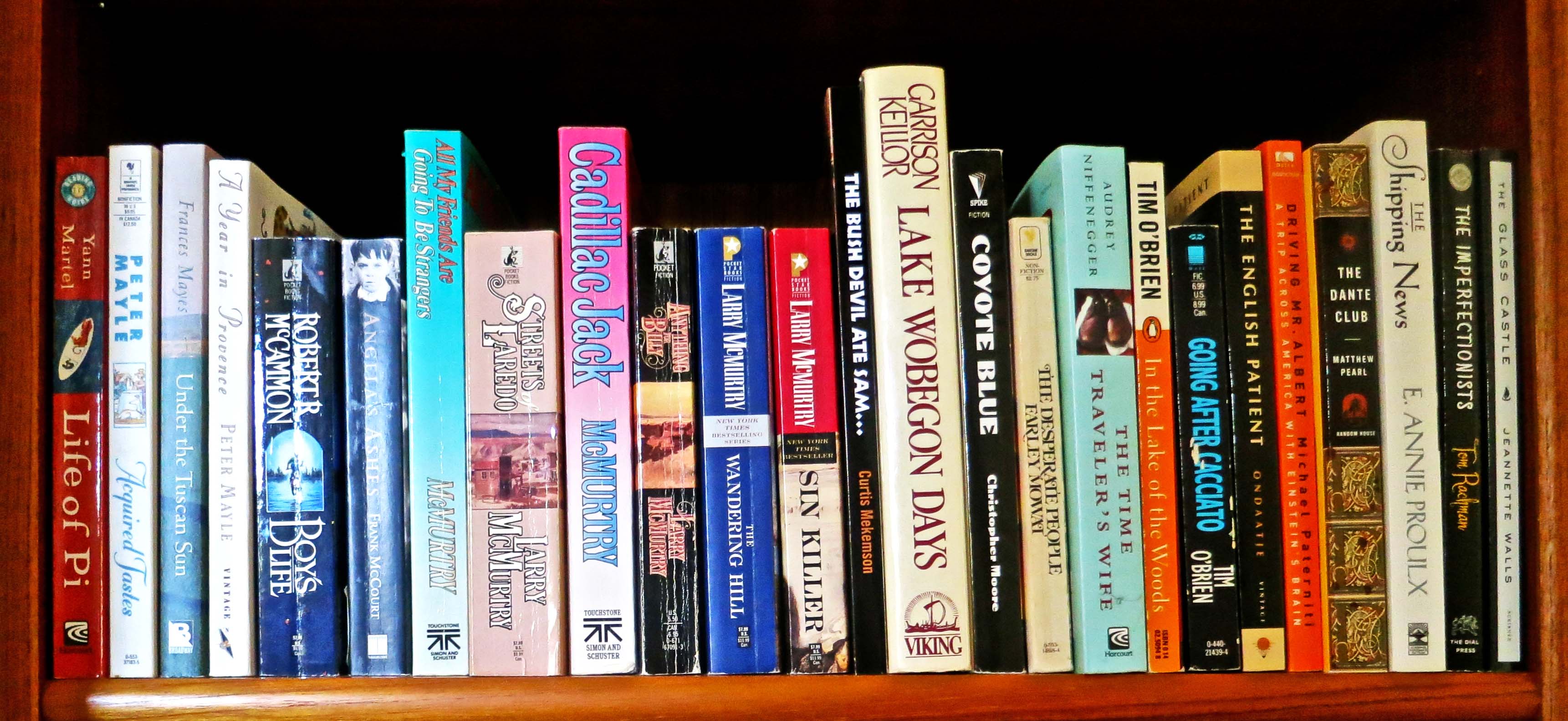
Another shelf of our books. BTW, I highly recommend the book just to the left of Lake Woebegone Days. (grin)

Another shelf of our books. BTW, I highly recommend the book just to the left of Lake Wobegone Days. (grin)

So, even though I was still wearing my bike clothes, wasn’t sure where I was going to live, and didn’t own a car, I told Ken that of course I would be at BSBC. And could I please bring something that didn’t require cooking.

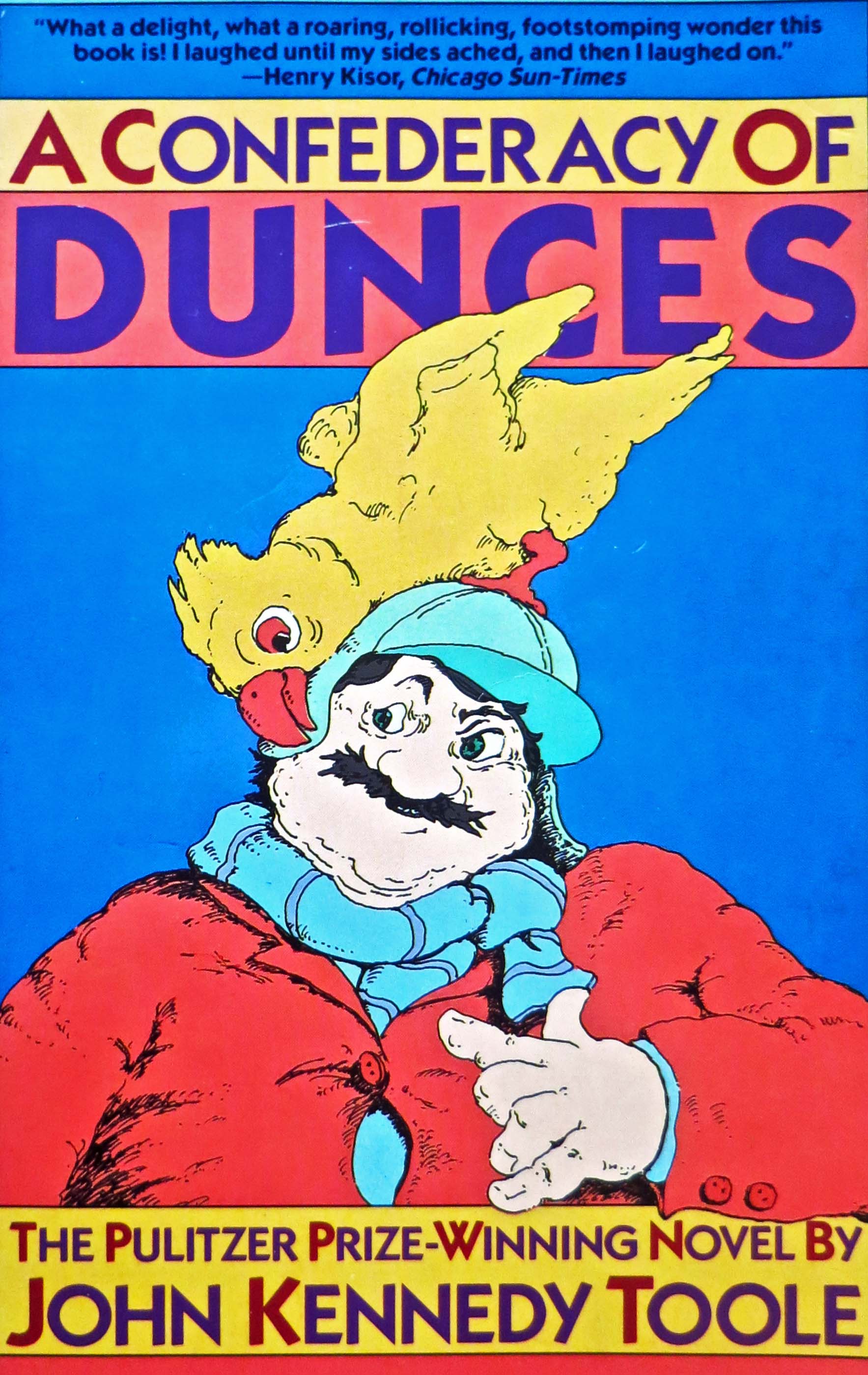
It was a while before I was ready to choose a book and host the book club, however. Living with a former girlfriend while pursuing Peggy made things a little, um, awkward. Finally, I obtained my own apartment in downtown Sacramento and hosted my first ever BSBC, on a couch and folding chairs. People ate off their laps. The book was an old favorite of mine: A Confederacy of Dunces by John Kennedy Toole. If you haven’t read it and enjoy offbeat humor, add it to your list.

The first book I selected for the BSBC to read.

The first book I selected for the BSBC to read.

By 1992 membership had settled down to five couples, the same five couples who are members today. It’s an interesting mix of people including two teachers, a physician, two prevention specialists, a principal, a judge, an office manager, a pilot/man of many trades, and me— a person of even more trades. (Most of us are semi-retired now.) Our politics range from sort of out there to moderate. It’s amazing we have hung out together as a book club, not to mention as couples for a quarter of a century. I once mentioned the odds against all of us still being married to the same person. “We could never get divorced,” one of the couples responded. “We don’t know who would get book club.”

They were semi-serious.

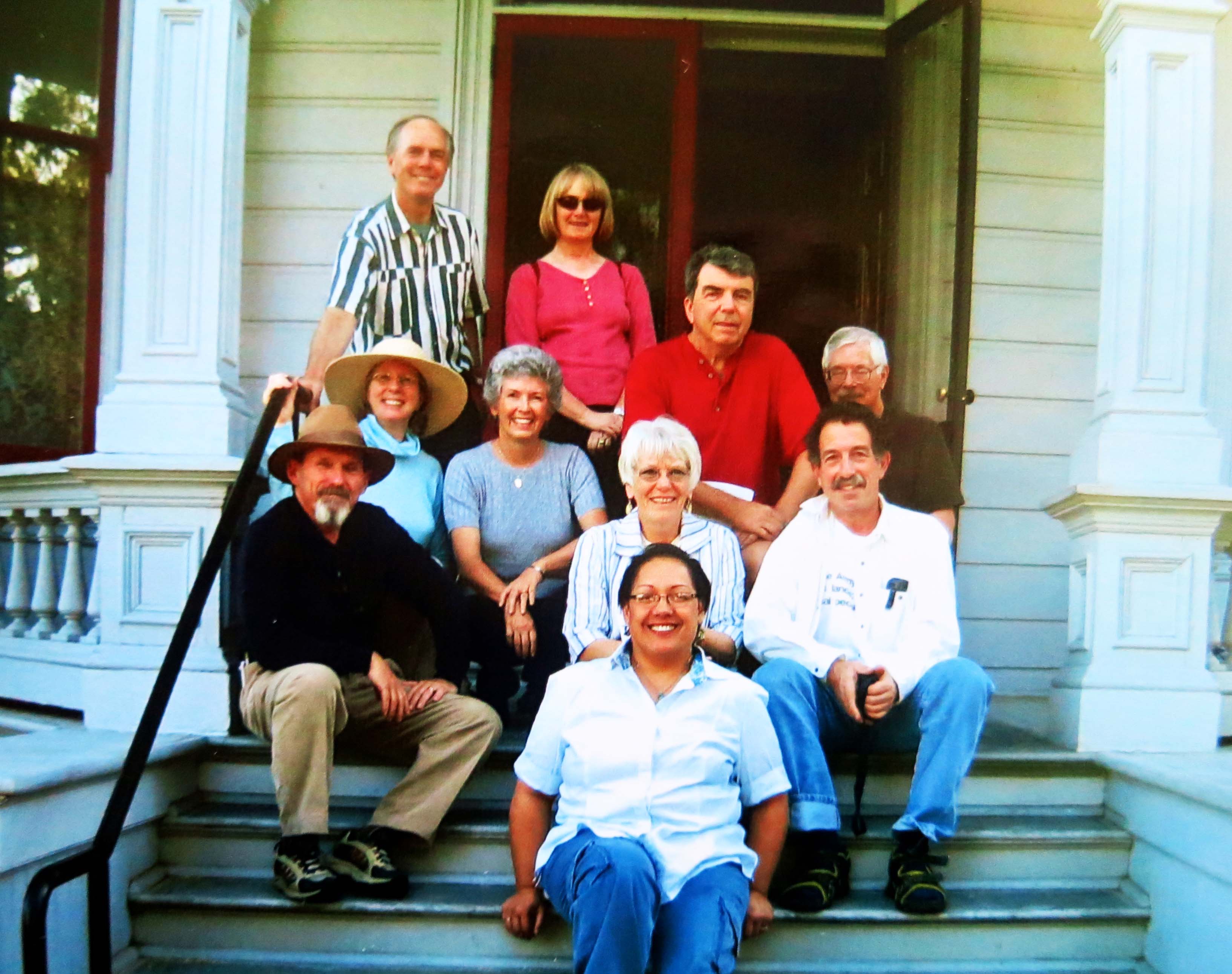
The five couples of the BSBC on the steps of John Muir's home, now a museum, in the Bay Area.

The five couples of the BSBC on the steps of John Muir’s home (now a National Historic site) located in the Bay Area.

To date, BSBC has read 217 books and two magazine collections. We have also watched five movies and been on three side trips that didn’t involve reading or watching anything. That’s a total of 227 meetings.

These days it is more difficult to get together. One couple lives in France six months out of the year, another has moved to the Bay Area, and Peggy and I are living in Oregon. But we still manage. BSBC has priority.

I asked Ken and his wife Leslie why they thought the book club has survived for so long. The essence of their reply was that BSBC’s long continuity reflects the depth of the friendships that have evolved over time and the informality of our approach to books. The club is as much, or possibly more, of a social gathering than it is a discussion of books. Ken described our meetings as “free flowing within a structure of friendship.” And free flow they do. A full hour’s discussion on the book out of a four-hour evening means people really liked the book.

A final shelf.

A final shelf.

For fun today, I’ve posted photos of Peggy and my BSBC bookshelves that contain about half of the books we have read over the years. If you look at these shelves closely, you will see the breadth of books we read. They reflect the very different tastes in books of ten different people. We all end up reading in genres that we normally wouldn’t. We are constantly being introduced to new authors and new ideas. And that, along with the friendships, is what our book club is about.

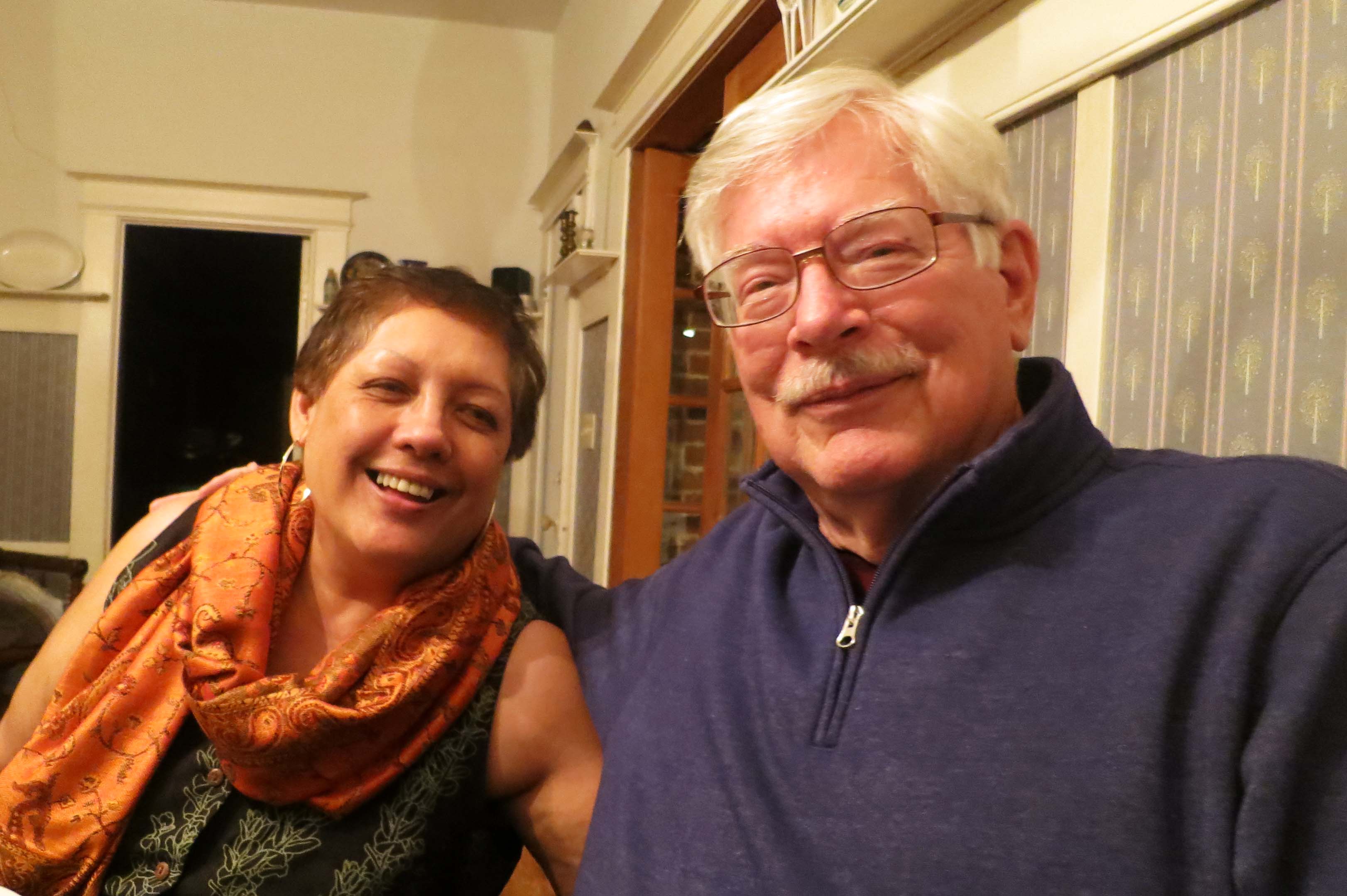
Strong friendships have developed over the years in BSBC. The photo features LaReene Sweeney and I.

Strong friendships have developed over the years in BSBC. This photo features LaReene Sweeney and me.

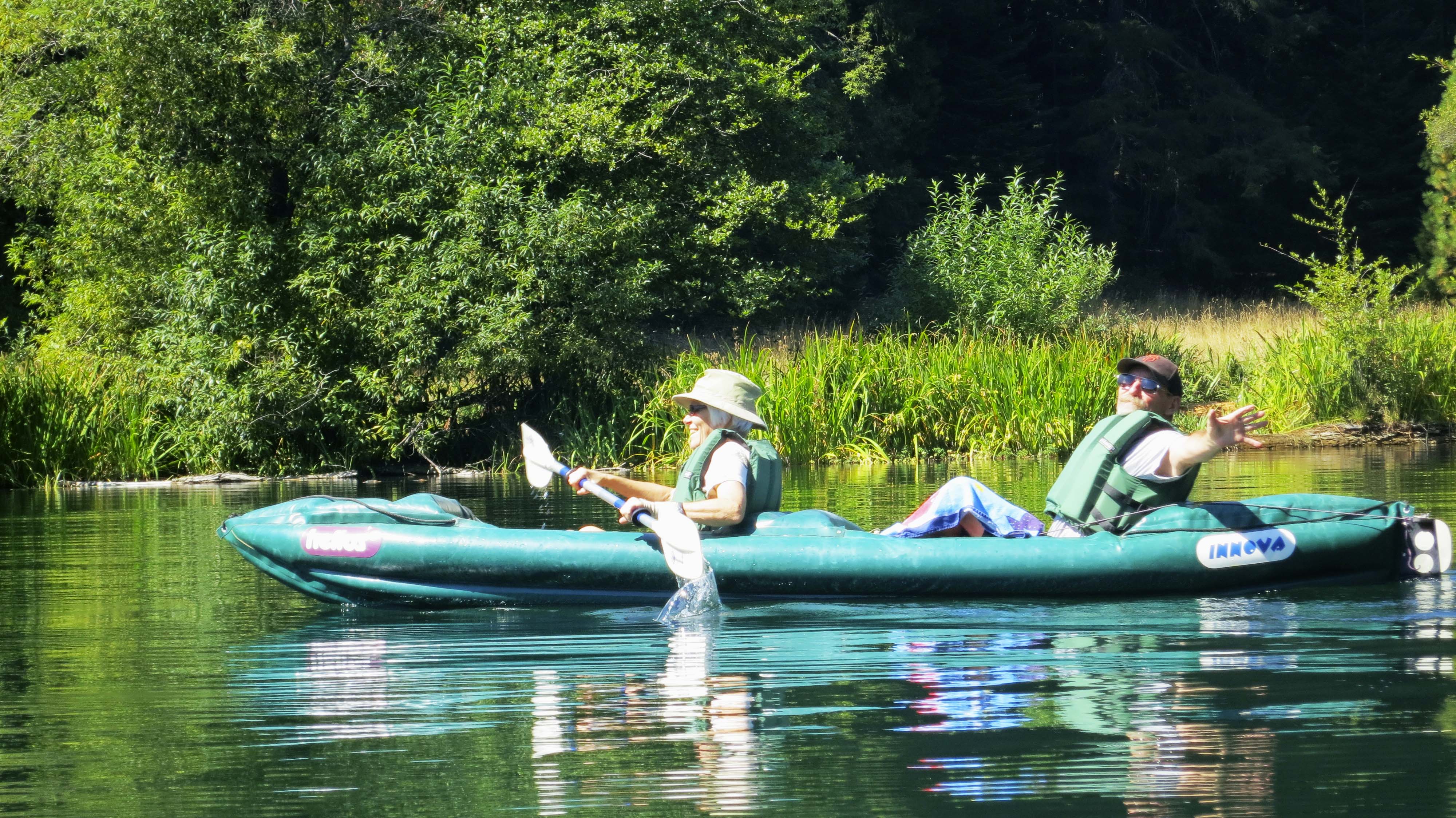
Once a year, the BSBC comes to our house in Oregon for 2-3 days. A couple of years ago we took them kayaking on Squaw Lakes. In this photo Ken Lake hides his paddle so it looks like his wife, Leslie, is doing all the work.

Once a year, the BSBC comes to our house in Oregon for 2-3 days. A couple of years ago we took them kayaking on Squaw Lakes. In this photo Ken Lake hides his paddle so it looks like his wife, Leslie, is doing all the work.

Spring Is Sprung… And Love Is in the Air, Or Is It Lust?

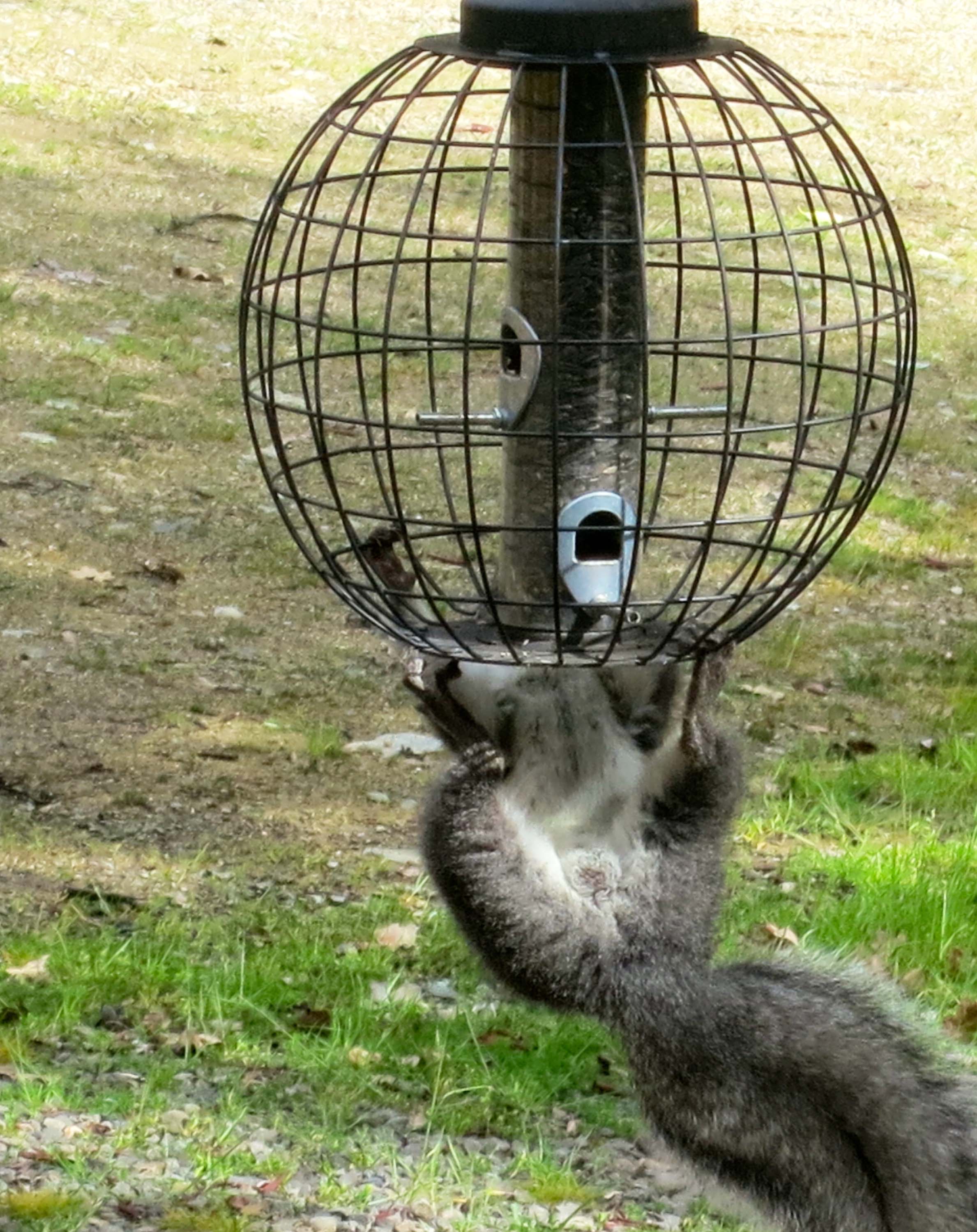
Grey squirrel Applegate Valley of southern Oregon, tackles a bird feeder. Photo by Curtis Mekemson.

“Where are the birdies? The heck with the birdies, where’s the bird food?”

“Spring is sprung, the grass is ris. Let’s go where the birdies is.” Ogden Nash

A male dove just landed smack on top of a female dove. She flew away in disgust. But that didn’t stop her suitor. Nothing does. It’s that time of the year when the birds are in love, or at least in lust. They are twitterpated to the nth degree, a laugh a minute.

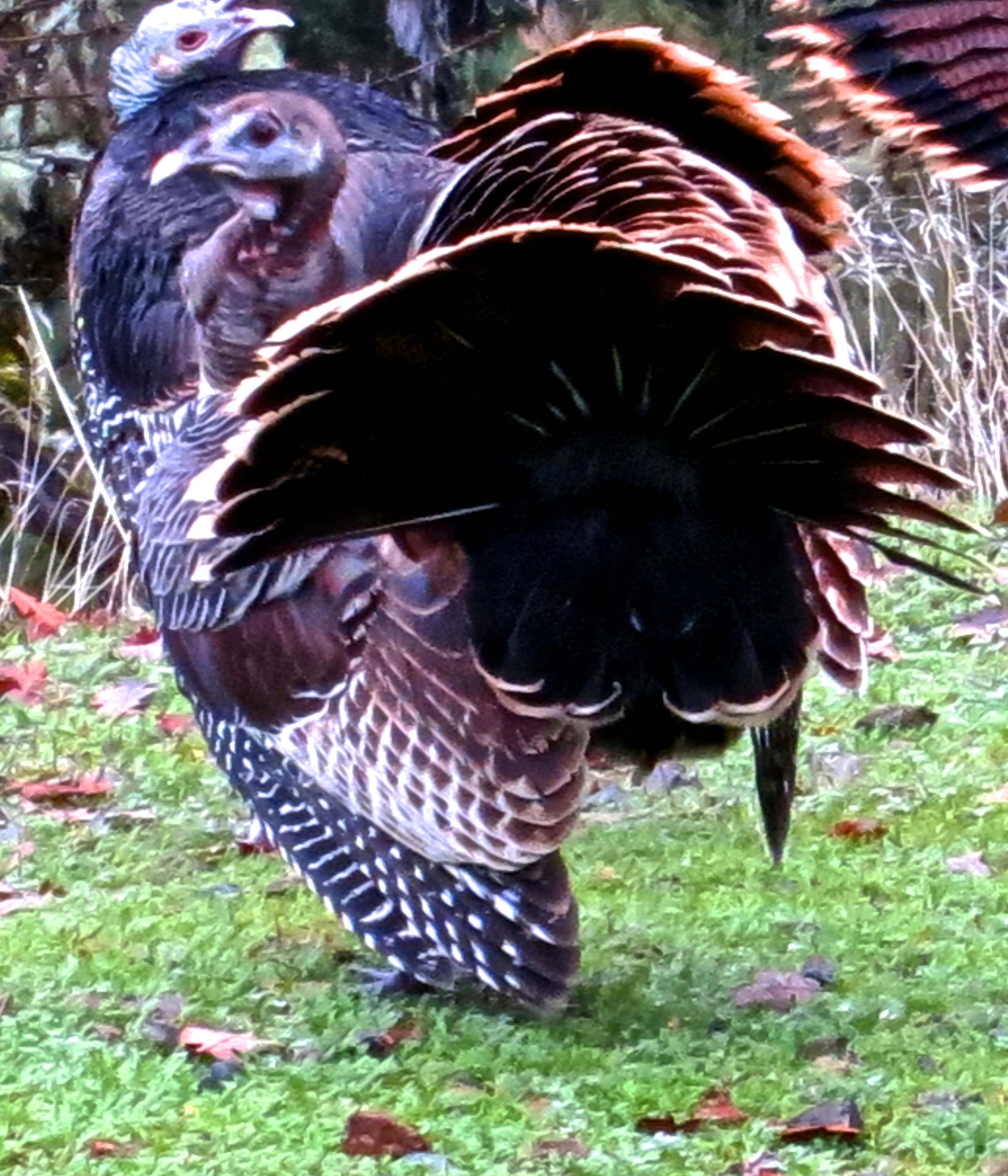
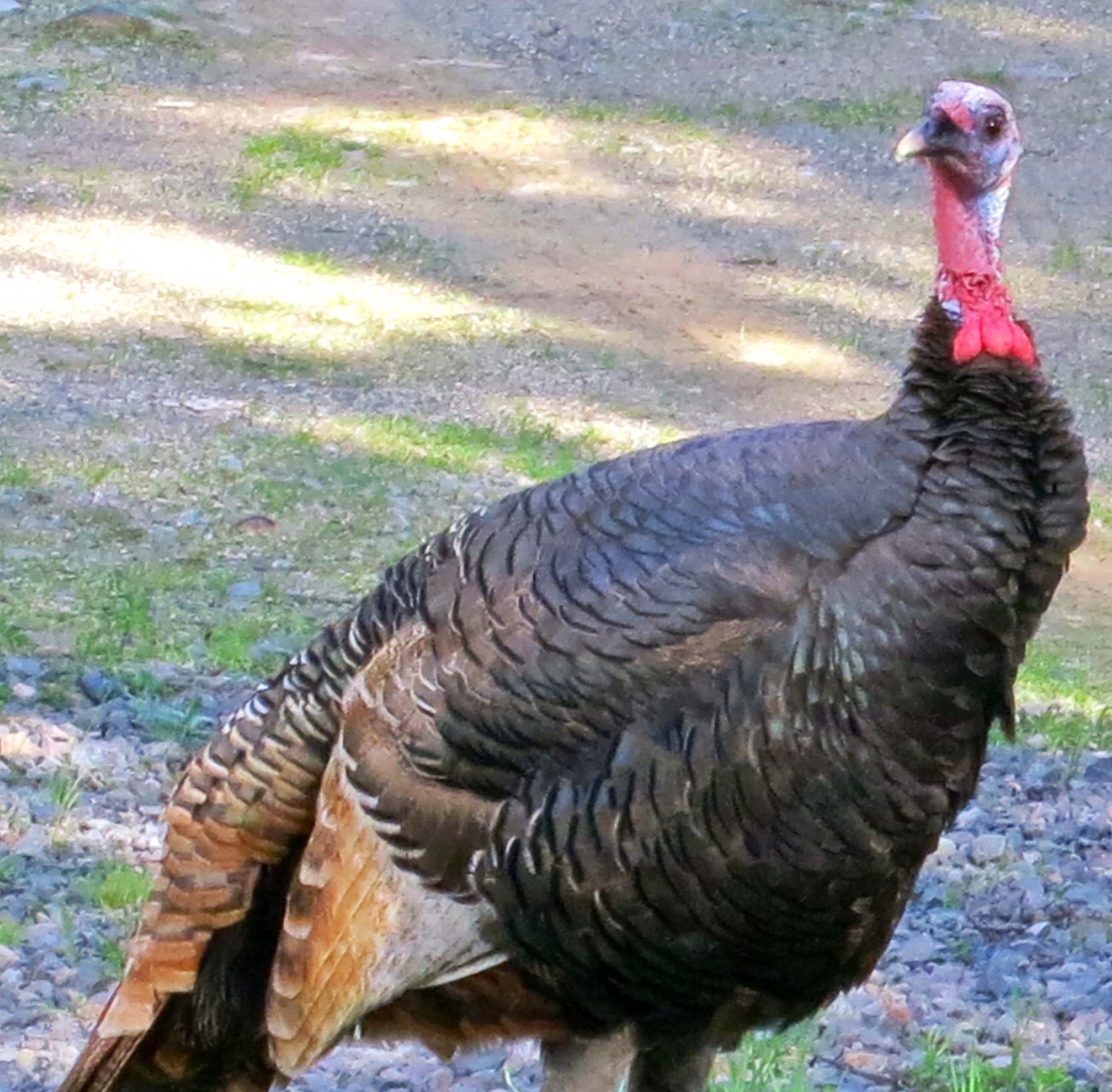
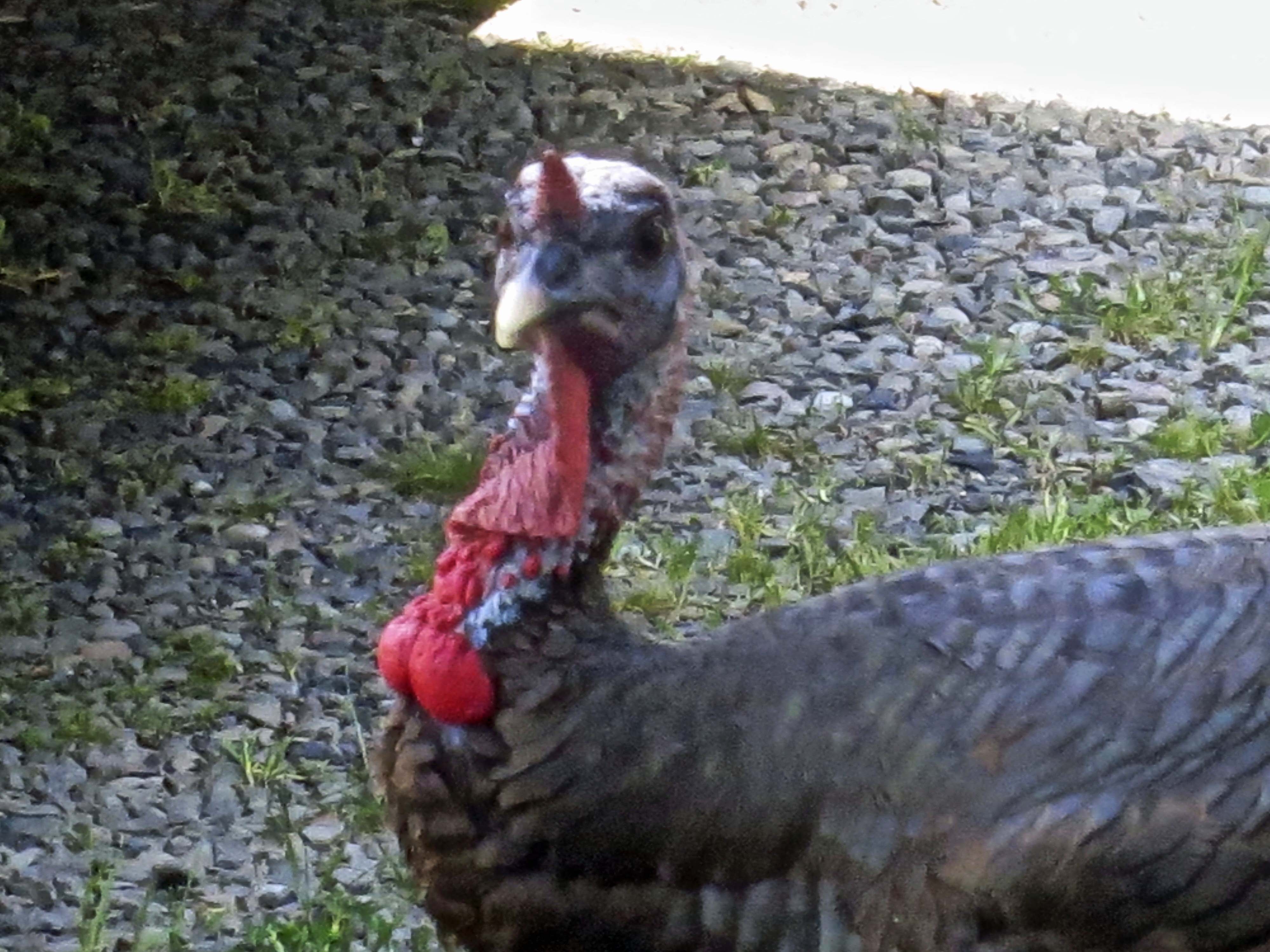
Tom turkeys are the most humorous.  These guys know how to strut their stuff. Full of self-importance, they parade back and forth in front of the hens with feathers fluffed out and tails in full display. Adding to the show, their snoods stand at attention and their wattles turn a bright red. And no, I am not being obscene. Their snoods are the red, fleshy protuberance you usually see draped over their beaks. Even their beards, the feathers hanging down from their chests, stand straight up.

Tom turkey on display in Upper Applegate Valley, southern Oregon.

“Shall we dance?” Young toms on parade. Is the flamenco too tough…

Tom turkeys strut their stuff in southern Oregon.

Then join the Conga Line.

You talking to me?

“You talking to me?” Note the gorgeous color of this tom turkey’s feathers.

These guys are in constant motion, so Tom is slightly out of focus. But check out his snood and bright red wattles. How could the girls resist?

These guys are in constant motion, so Tom is slightly out of focus. But check out his snood and bright red wattles. How could the girls resist?

As for gobbling, the toms do it in unison, staccato like. Heads and necks shoot out at the same time: Gobble, Gobble, Gobble. I gobble back, of course. How could I not? Their response is instantaneous, as if to put me in my place.

The hens totally ignore the show for the most part, and go about the serious business of eating. If they could yawn, I swear they would. Ho hum.

Each evening the flock uses the railing on our deck as a launching pad to fly to the tall Ponderosa Pines where they like to roost. (Turkeys need all the help they can get for lift-off.) Their morning starts at first light. Gobble, Gobble, Gobble. Lately they have been joining in chorus with the neighborhood dogs, who almost always have a howl fest around 6:30. It goes like this: Woof, Woof, Wooooooo, Gobble, Gobble, Gobble; Woof, Woof, Wooooooo, Gobble, Gobble, Gobble— on and on and on. Sleep is not an option.

Peggy and I have a front row seat on the wild kingdom. Each window has its view. I like our library the best. I turn my swivel chair around so I can watch the action while I write. I’ve recently added a bird feeder. It’s a round cage with openings set up to allow some of our smaller feathered friends a chance to eat without competition from their larger cousins. Finches, juncos, tanagers and nuthatches take advantage of the opportunity. Inevitably, some of the seeds fall on the ground. The tanagers are particularly messy eaters. Turkeys, tree squirrels, and ground squirrels consider it their responsibility to clean up the leftovers. Nothing goes to waste.

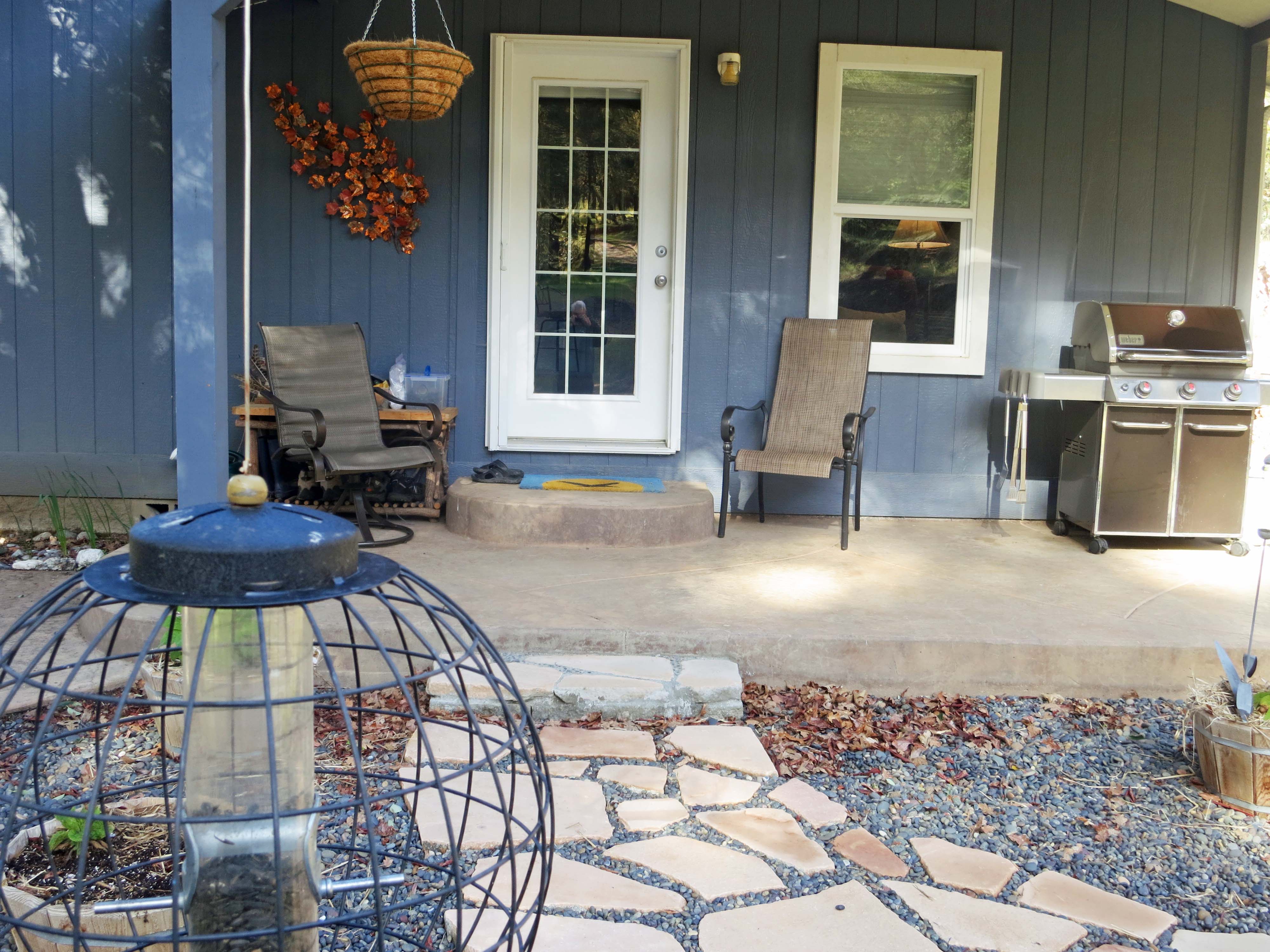
Our rustic back yard and the bird feeder. My look out window is on the right. A couple of years ago a black bear turned over the Weber Grill. My daughter Tasha was sleeping in the closest bedroom. "Curtis!" she yelled.

Our rustic back yard and the bird feeder. My look out window is on the right. A couple of years ago, a black bear turned over the Weber Grill. My daughter Tasha was sleeping in the closest bedroom. “Curtis!” she yelled.

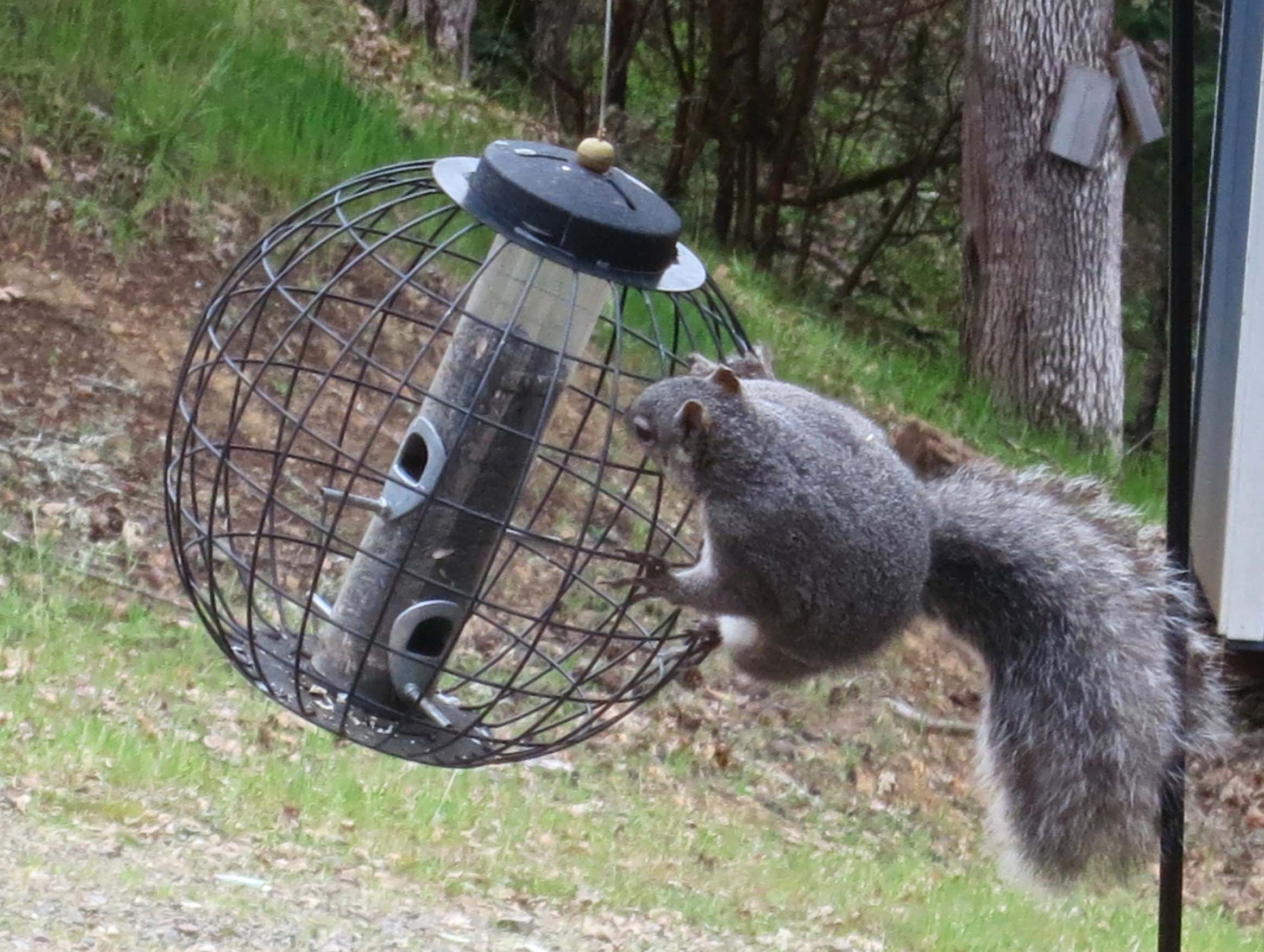
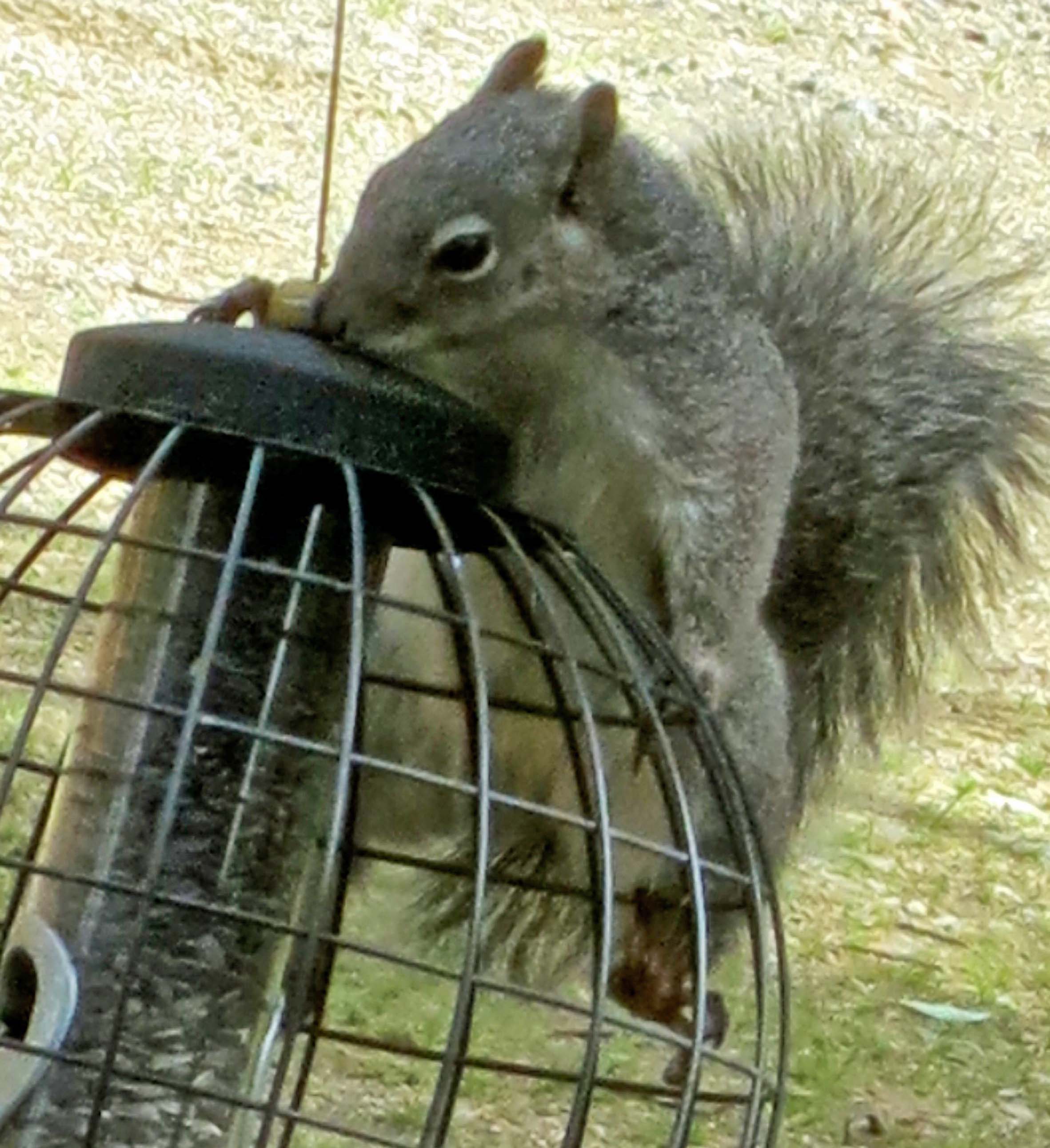
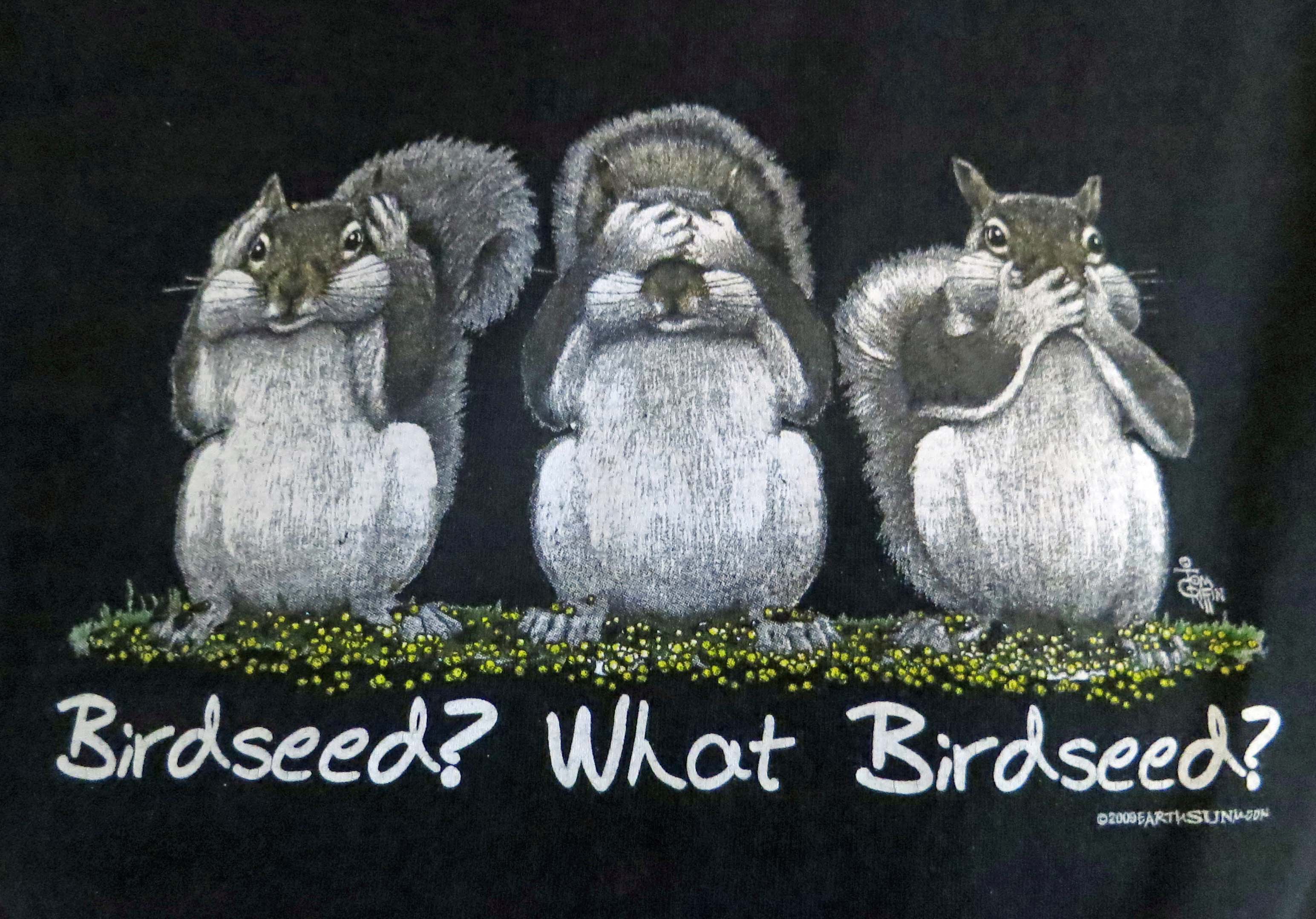
The grey squirrels understand the source of the food and passionately believe they should have access to it. They are notorious in their efforts to help themselves, as demonstrated in the photo at the beginning of this blog. Here are three more examples.

Squirrel hangs upside down from a bird feeder in southern Oregon.

An upside down perspective.

A view from the side.

A view from the side.

"Let's see if I can unscrew this top."

“Let’s see if I can unscrew this top.”

Our grandsons Ethan and Cody got me this very appropriate T-shirt.

Our grandsons, Ethan and Cody, got me this very appropriate T-shirt.

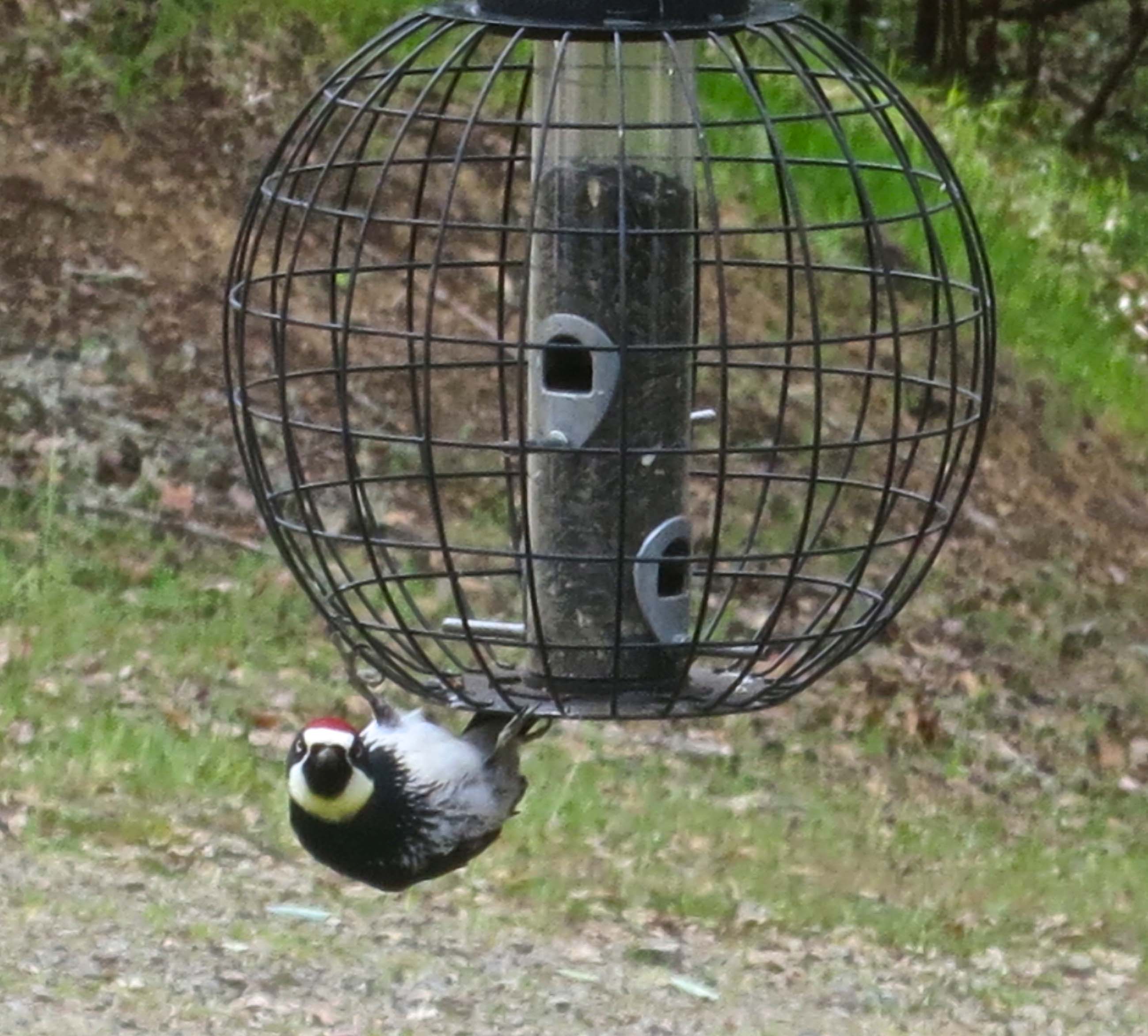
Ground squirrels, of which we have far too many, also want to rob the source but lack the aerial capability of tree squirrels. It doesn’t mean they don’t try. I watched one try to shimmy up the metal pole attached to the bird feeder yesterday. He would get up about a foot and then slide down, only to try again. By the time I retrieved my camera he had given up. Larger birds are frustrated as well, but two acorn woodpeckers with long beaks and tongues have mastered the art obtaining sunflower seeds.

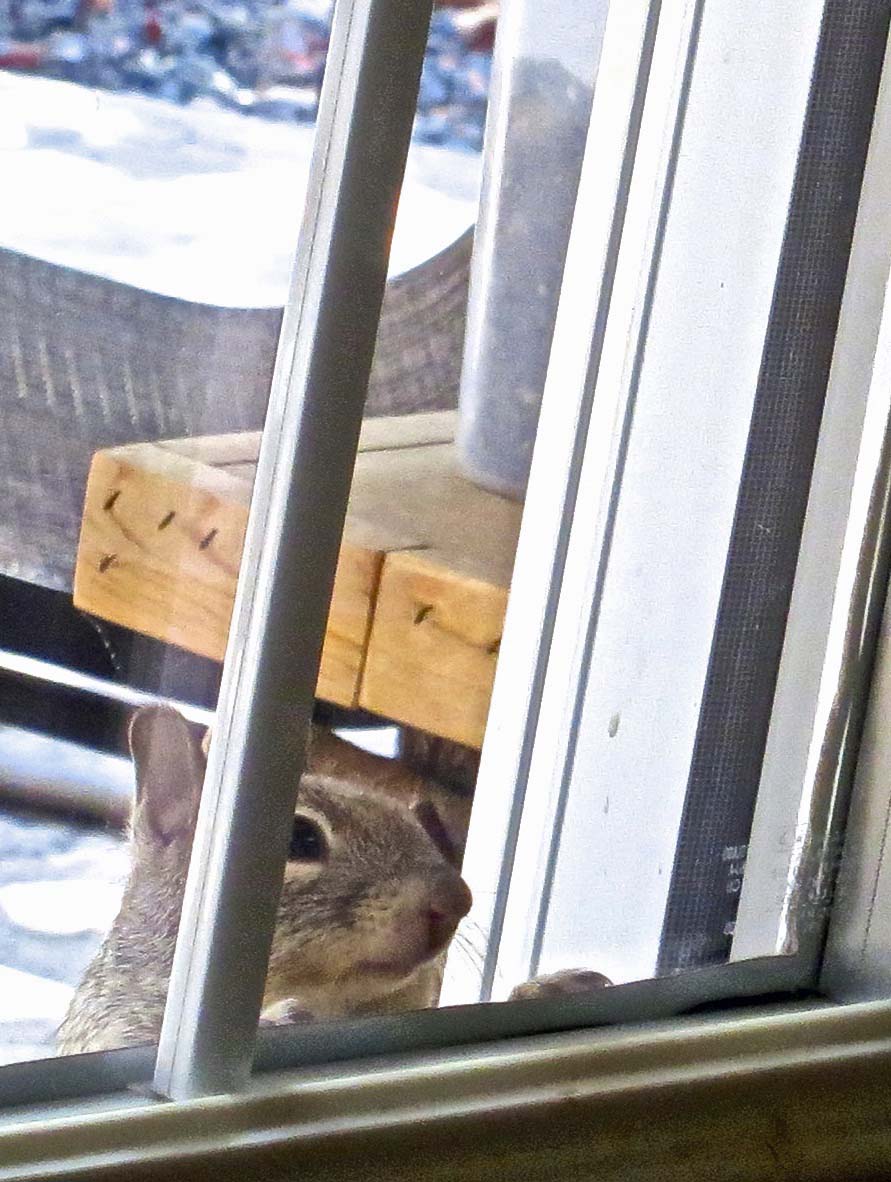
A ground squirrel peers through a glass pane on our door. "Come on Curt, lend a hand."

A ground squirrel peers through a glass pane on our door. “Come on Curt, lend a hand.”

Acorn woodpecker in Applegate Valley.

An acorn woodpecker is forced to ‘think outside the cage.’

Remember Linda Blair in the "Exorcist" and how she turned her head around backward on her neck? Now, check out the Acorn Woodpecker.

Remember Linda Blair in the “Exorcist” and how she turned her head around backward on her neck? Now, check out the Acorn Woodpecker. Am I looking at evil here? (grin)

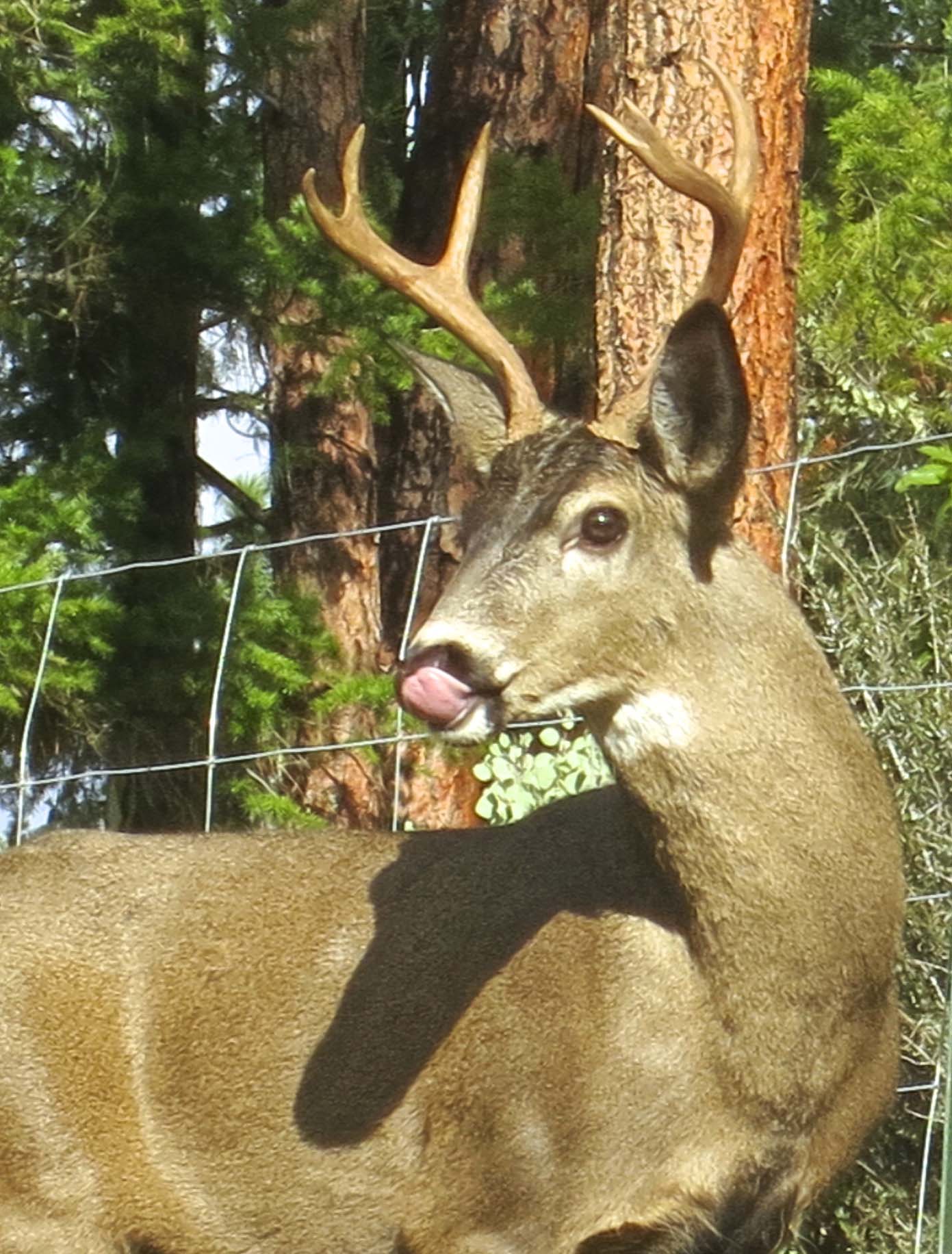
Black tail deer are also daily visitors to our back yard. I find it surprising they don’t eat sunflower seeds since they seem to eat almost everything else. The does are looking quite pregnant now and will soon be disappearing into the woods to have their fawns. Bucks are in the process of growing new antlers, having lost the old ones in February. They took care of their mating duties in the fall.

"Hey Big Boy, looking for a little action?"

A doe and a buck checked each other out in our yard last fall. “Hey Big Boy, looking for a little action?”

Black tail deer in Applegate Valley in southern Oregon

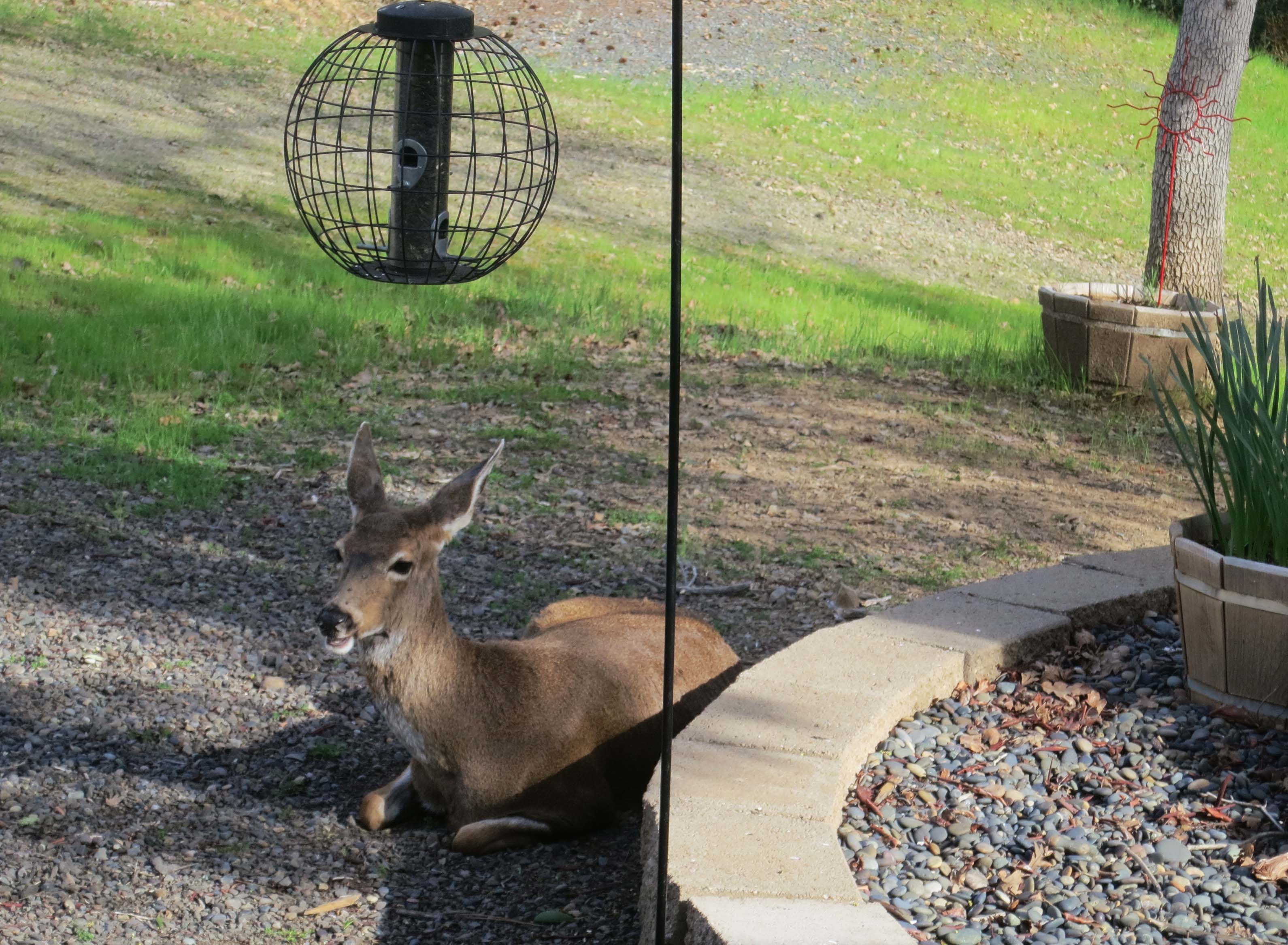
It isn’t unusual for the deer to bed down in our yard, and sometimes on our back porch! We often find them staring in the window, as curious about us as we are about them. Such is life in the woods. Who needs TV?

One doe lies down next to the bird feeder.

One doe lies down next to the bird feeder.

Another chooses to lie down under our Madrone, just to the left of the first doe.

Another chooses to lie down under our Madrone, just to the left of the first doe.

And a third decides to take over our porch.

And a third decides to take over our porch. She is studiously ignoring me, BTW. If she can’t see me, I don’t exist.

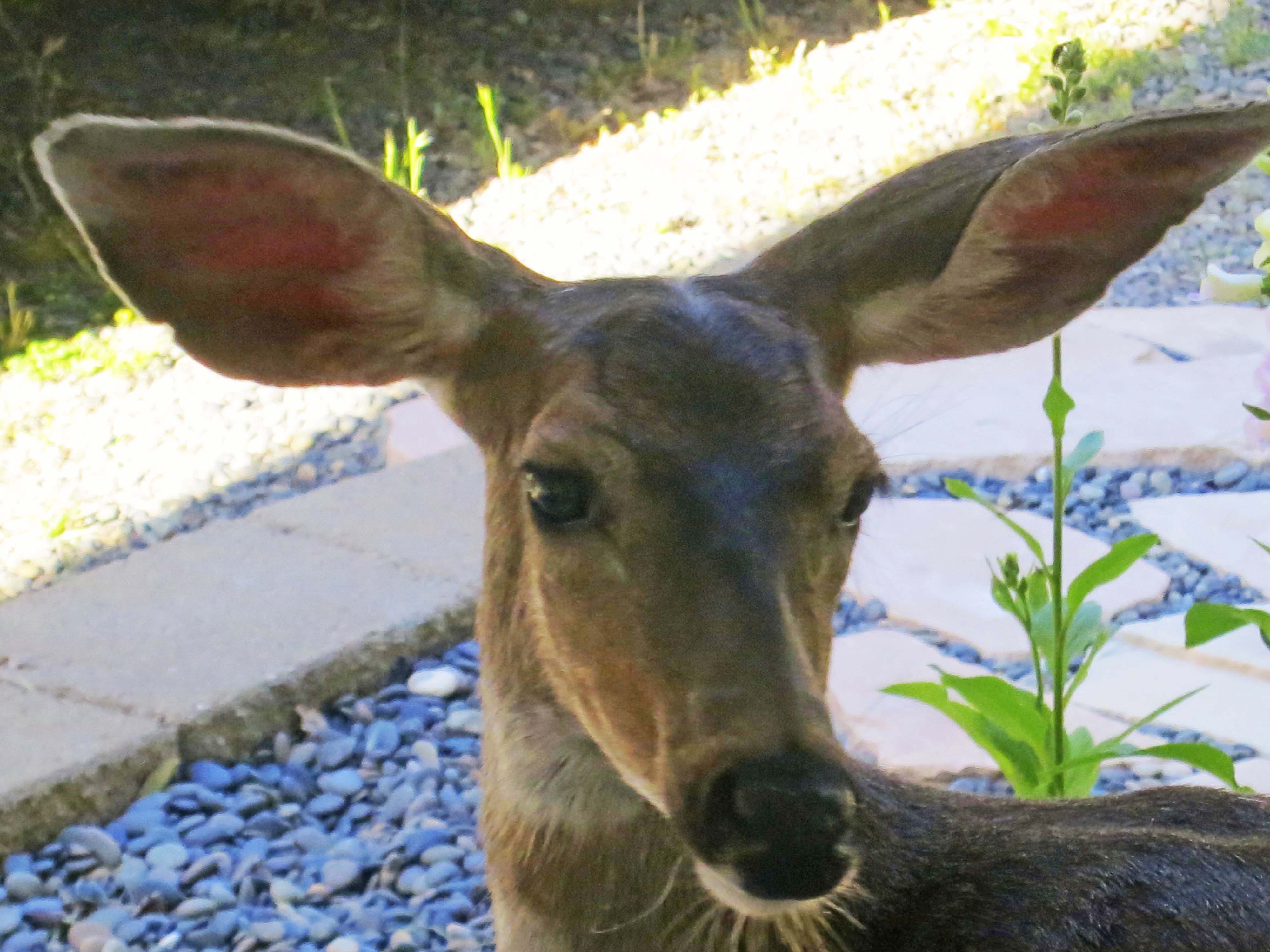
It isn't unusual for deer to look in our windows. I caught this doe checking me out last summer while I sat in the library. Aren't the ears magnificent?

It isn’t unusual for deer to look in our windows. I caught this doe checking me out last summer while I sat in the library. Aren’t the ears magnificent?

Reno’s Generator… What Happens at Burning Man, Doesn’t Necessarily Stay There

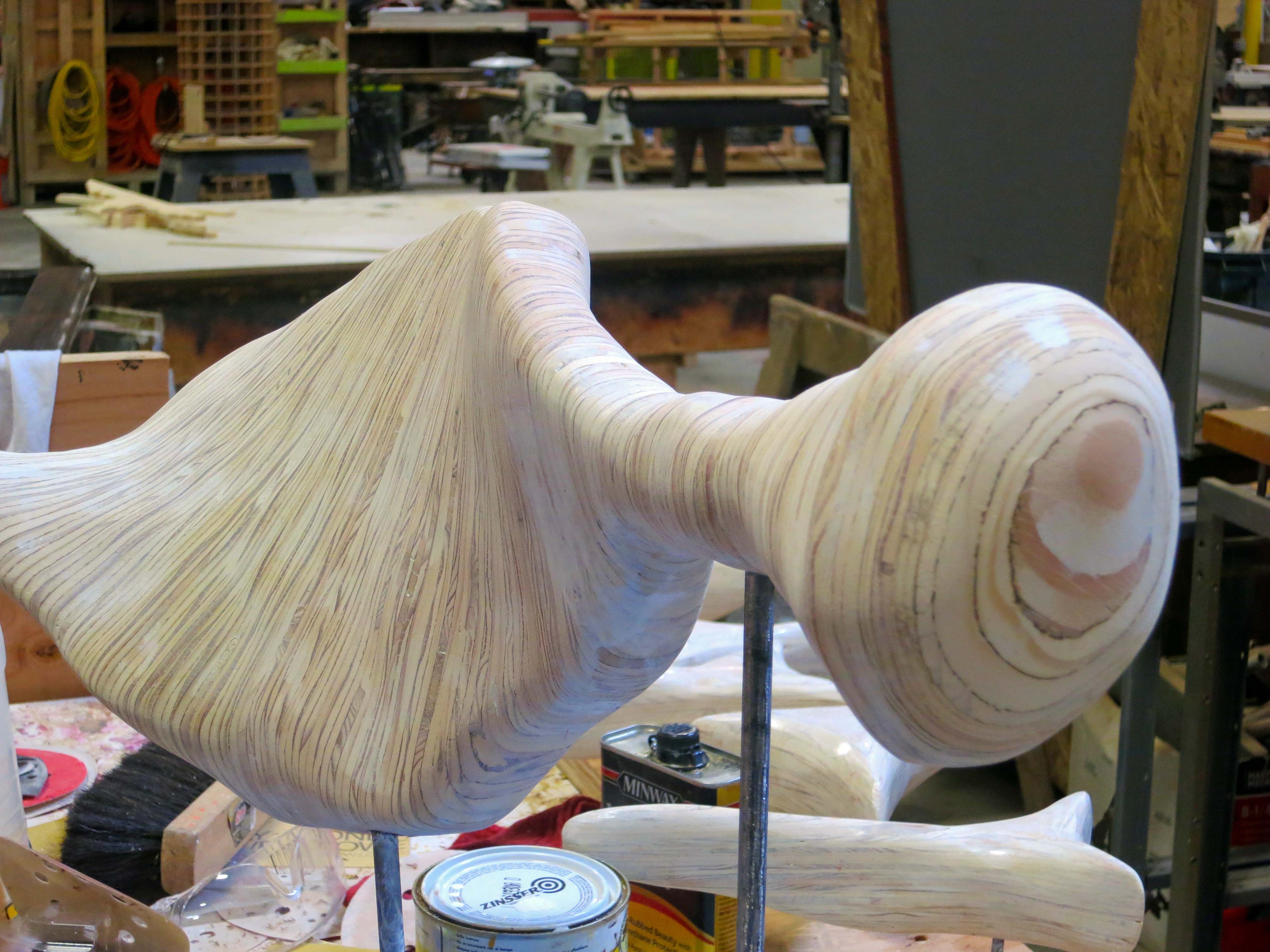
A beautifully carved and shaped piece of wood at the Generator in Reno, Nevada.

I wasn’t exactly sure what I was looking at, but I liked it. And I had the feeling it was looking back. To me it represented the artistic creativity that flourishes in the huge warehouse in Sparks/Reno, Nevada known as the Generator.

The Burning Man series I just completed focused on creativity. For one week in late August/early September, tens of thousands of people gather in a remote area of the northern Nevada desert to celebrate art in its numerous forms including sculpture, architecture, photography, mutant vehicles, painting, costumes and performance art.

While Burning Man’s vibrant creativity is what brings me back to Black Rock City year after year, the event is about more than art. A huge party, alternative life-styles, desert survival, focus on participation, community building, social responsibility, environmental awareness, personal growth, and a very long list of etceteras are all part of the equation that makes the event succeed.

Over the past two years, I have found my interest growing in what goes on before and after Burning Man— both in terms of preparation for the event and, more interestingly, the back story on the people and groups who participate. What brings them to Burning Man, how do they influence the event, what do they bring home, and how, in turn, does this impact their lives and the communities where they live?

Today, I am going to feature a 34,000 sq. ft. warehouse in Reno/Sparks, Nevada that is known as the Generator and has been responsible for some of the most striking monumental art to grace Black Rock City in the last few years including Pier 2 (a large pirate ship sunk partially in the desert), and Embrace. A few weeks ago I dropped by unannounced at the Generator and asked permission to wander around and take photos. “Sure,” one of the artists who was working on a project, told me. It wasn’t quite official, but it was enough. Off I went. I am going to share what I found.

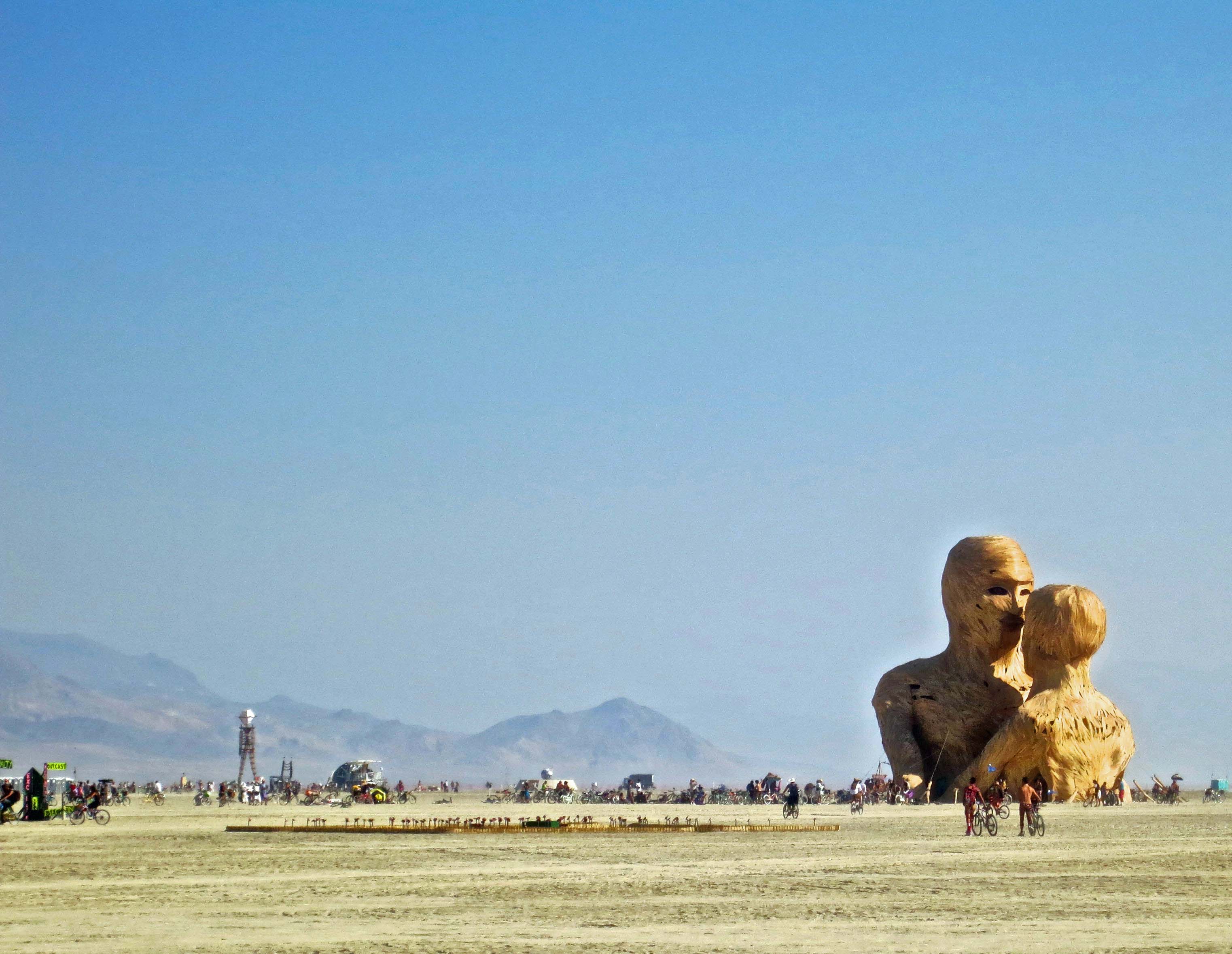
Embrace sculpture built by the Pier Group at the Generator warehouse in Reno, Nevada and featured at Burning Man in 2015.

Even from a distance, the size of this 72 foot sculpture built by the Pier Group at the Generator is obvious.

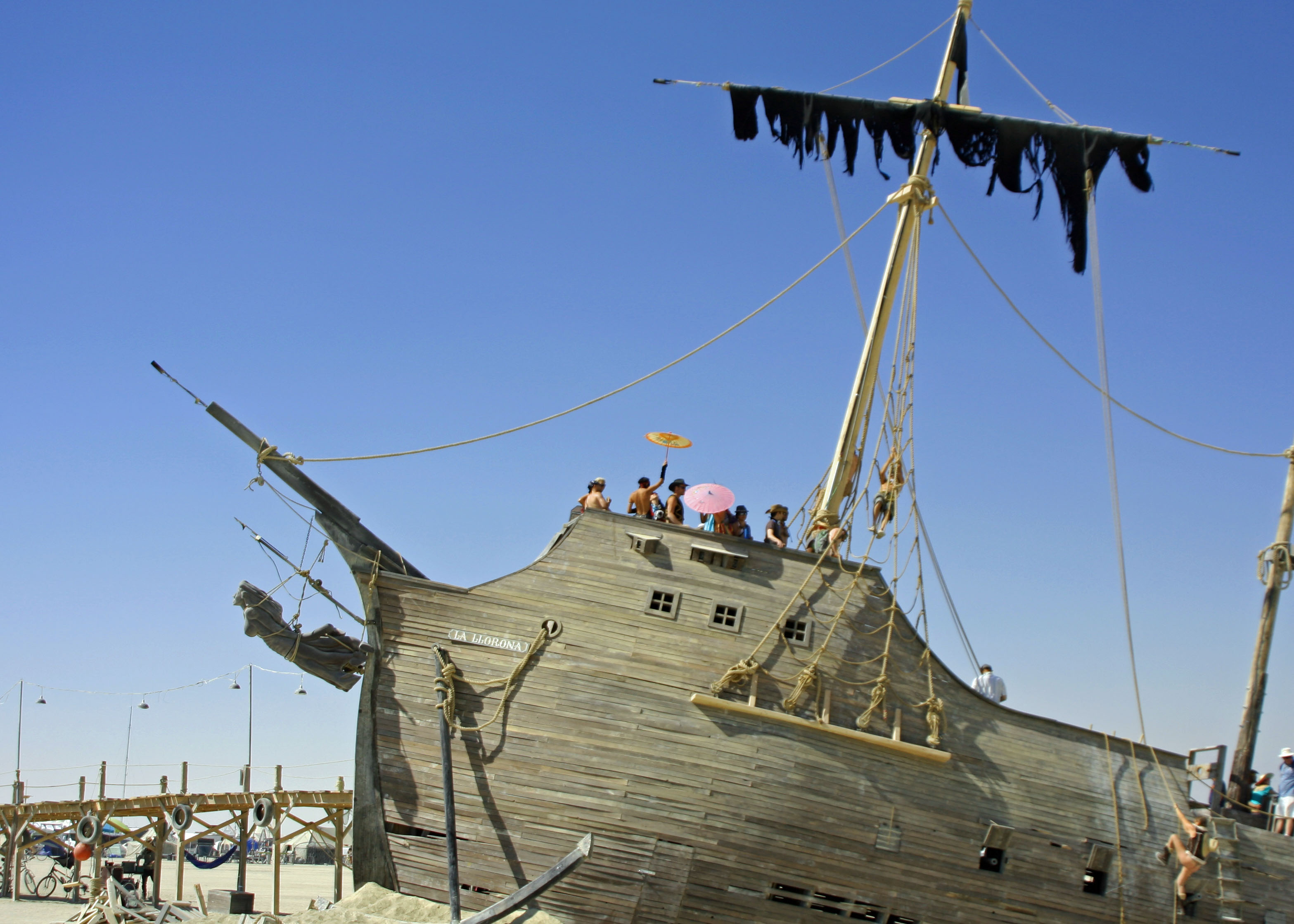
Pirate ship at Burning Man built by the Pier Group at the Generator in Reno, Nevada.

This pirate ship partially sunk in the sand was another major project the Pier Group took on.

Logo of the Generator warehouse in Reno Nevada.

Logo.

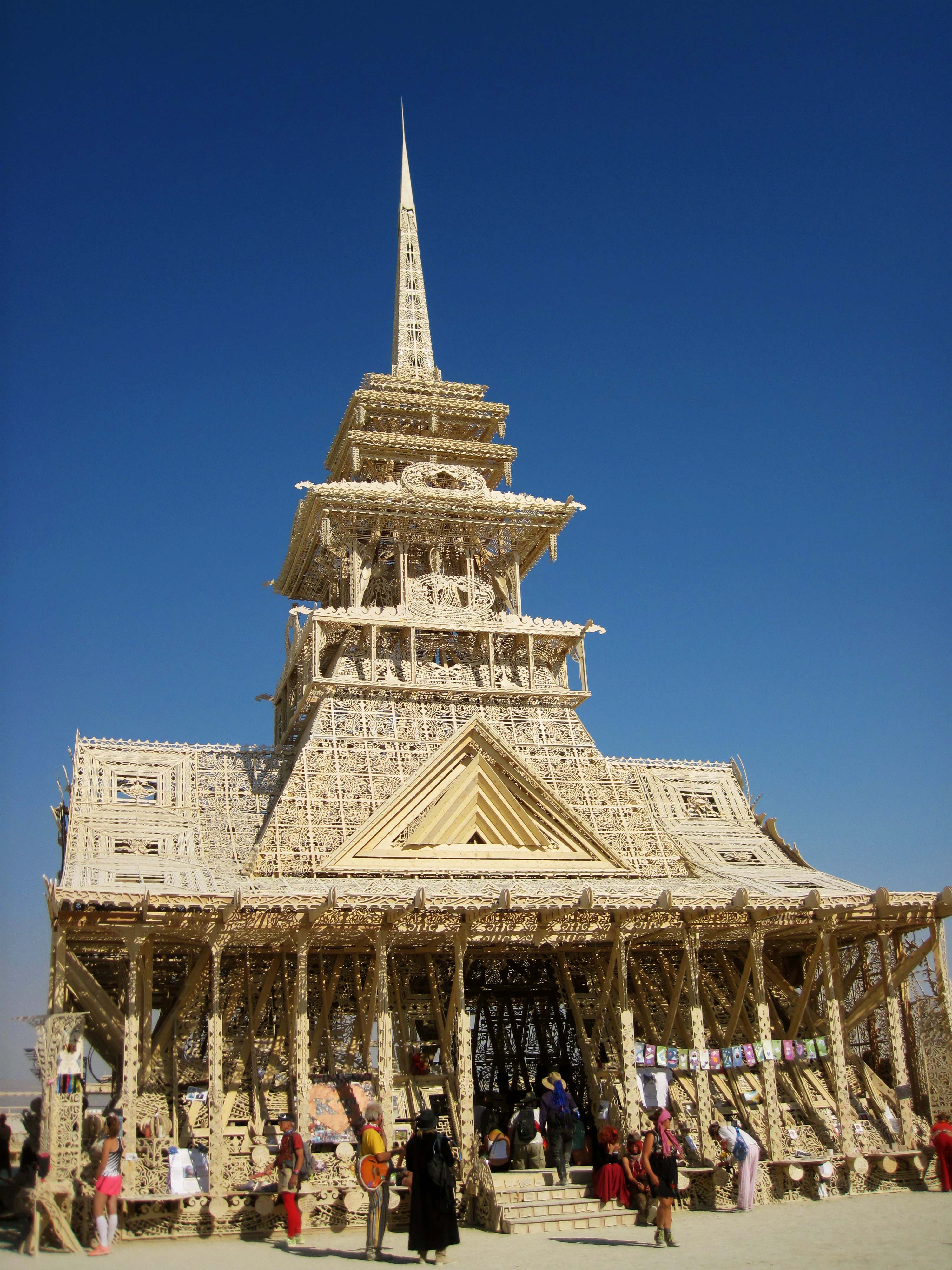
First, however, I want to mention an event that took place in Londonderry, Northern Ireland in March. I’ve blogged several times about Burning Man’s Temples. Several of these were designed and built by David Best with a large crew of dedicated volunteers. This spring, David was invited to build a similar structure in Londonderry that would be burned, as each Burning Man Temple is. Not everyone in Londonderry thought it was a good idea. The Northern Ireland feud between the Protestants and Catholics has been tearing the city apart for what seems like forever, or at least since 1688 and things that burned were often related to fire bombs. As was noted in a New York Times article, “Burning a 75-foot-tall pagan temple in a Republican Catholic enclave on the loyalist Protestant side of town to ‘bring people together’ seemed, well, mad.” This could have proven to be, well, a gigantic understatement. But it wasn’t.

What happened was that the event turned out to be a powerful force of reconciliation, including bringing people together who had been dedicated enemies all of their lives. 60,000 people (half of the city’s population) came to the temple and left messages for loved ones who had passed on and 15,000 Protestants and Catholics joined in watching the Temple burn. The event is a powerful example of what I am talking about in terms of Burning Man’s impact outside of its home in the Black Rock Desert. I highly recommend reading the NY Times article.

A Burning Man Temple built by David Best and volunteers.

A Burning Man Temple built by David Best and volunteers.

I view the Generator as another example. Matt Schultz and his band of merry followers, the Pier Group, are the visionary force behind the Generator. “We’re an inclusive art space for anyone who wants to make art and be part of a creative community,” the Generator’s Internet site declares. While numerous Burning Man Projects are conceived and built at the Generator, the facility has no direct affiliation with the event, and many non-Burning Man art projects are also produced at the warehouse. Non-Burners as well as Burners are invited to become members. The process is incredibly easy. Just show up with a specific art project or dream of an art project. Discuss it with Matt or one of his cohorts, obtain approval, and sign a waiver. Welcome aboard.

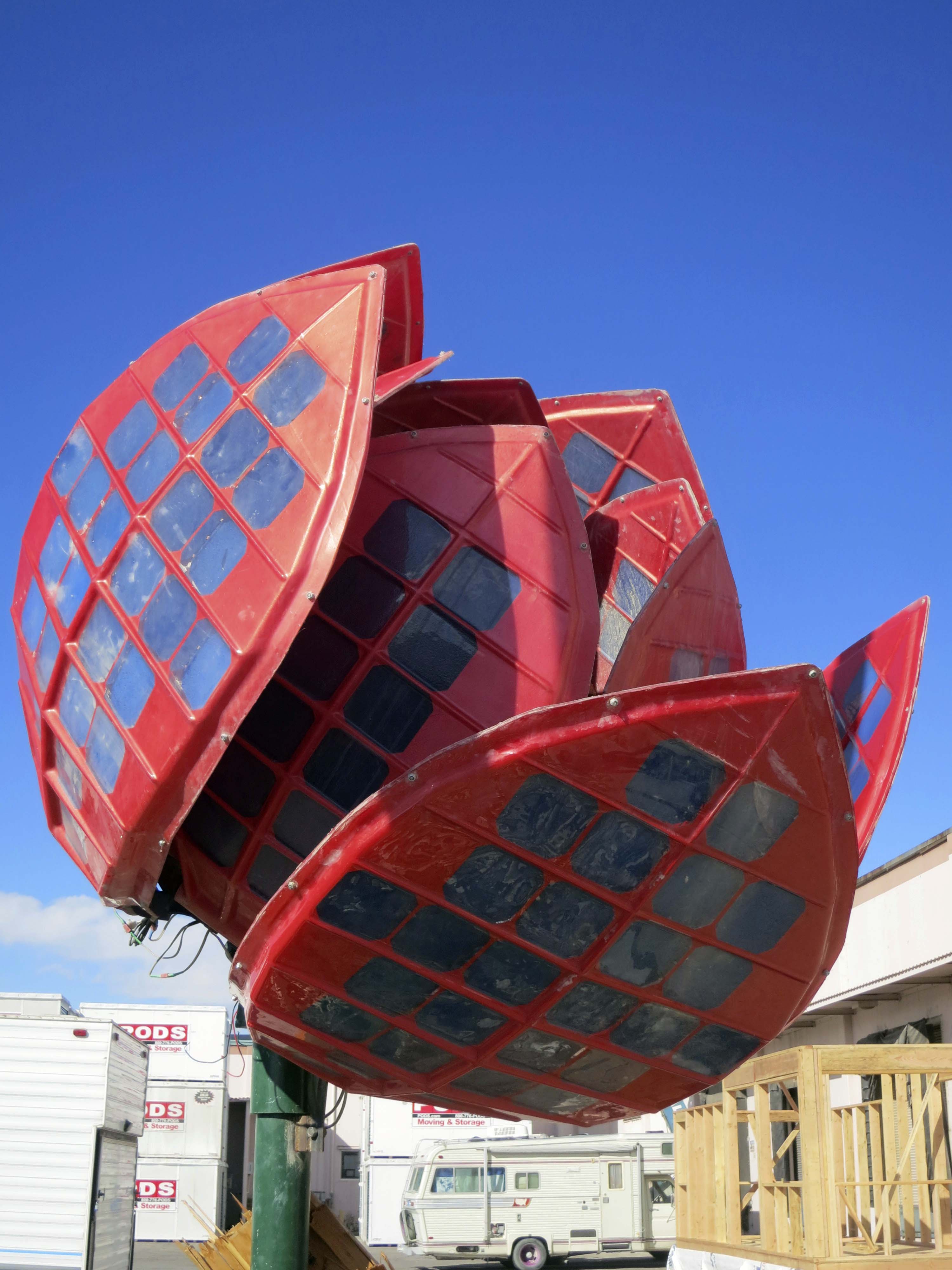
Flower sculpture outside of the Generator warehouse in Reno, Nevada.

We drove around Sparks looking for the Generator. When we found this flower sculpture, we knew we had arrived. It is very Burning Man like. The small structure on the right is a tiny house that Matt is building for himself but hopes will become a model for other small houses in Reno.

There are no membership fees and no charges for using the facility. Members have access to an incredible array of tools ranging from large industrial tools to smaller hand tools. There is even a laser printer. The Generator houses a wood shop, a metal shop and a tech shop. There is also a sewing room, a stage, a lounge, a library filled with how-to books— and a small green house! More importantly, there is a warehouse full of creative types who inspire creativity and are more than willing to offer a helping hand when asked.

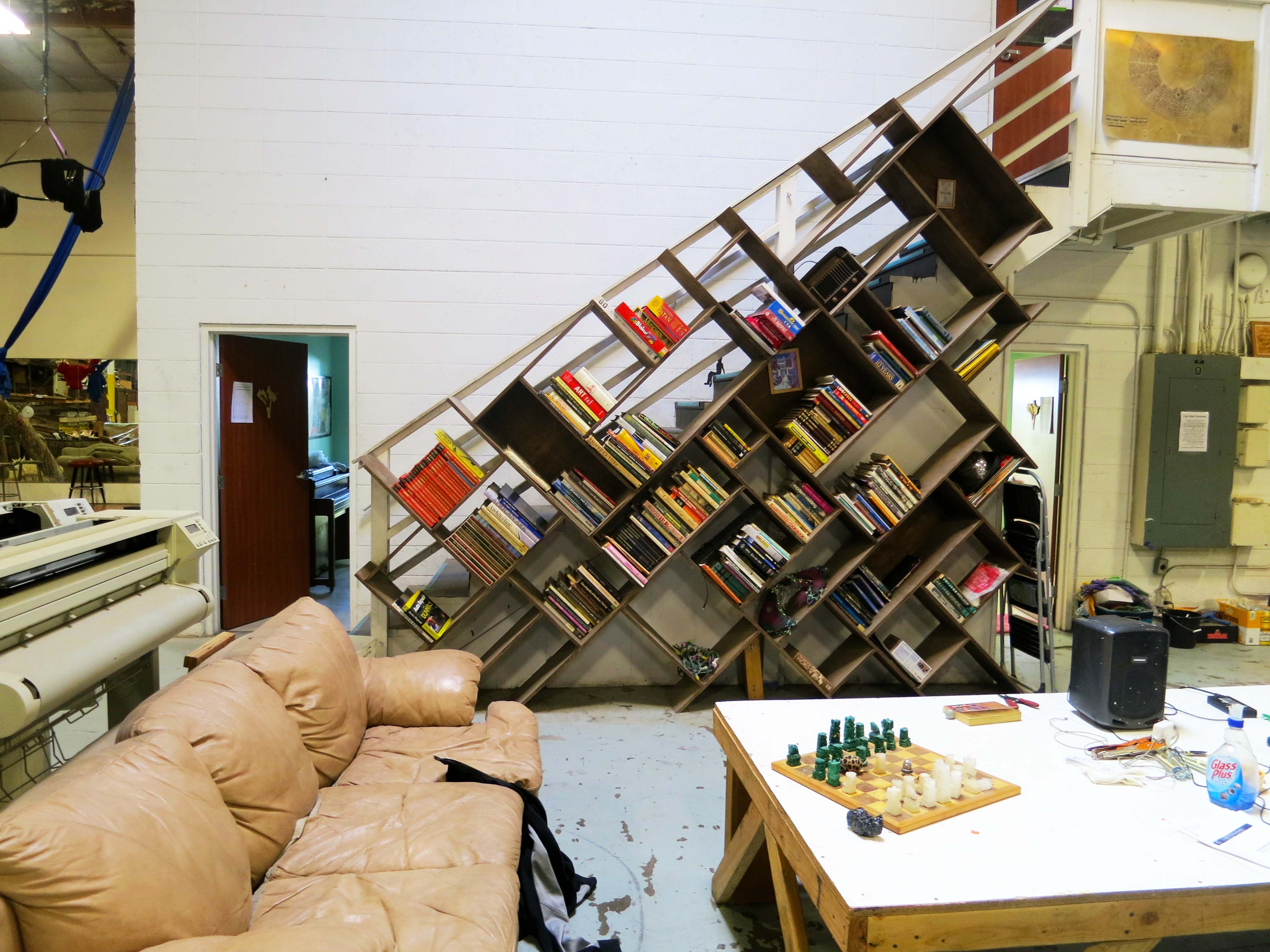
Strange book shelf arrangement at the Generator art warehouse in Reno, Nevada.

As you might imagine, even the library of how-to books takes on a different look at the Generator.

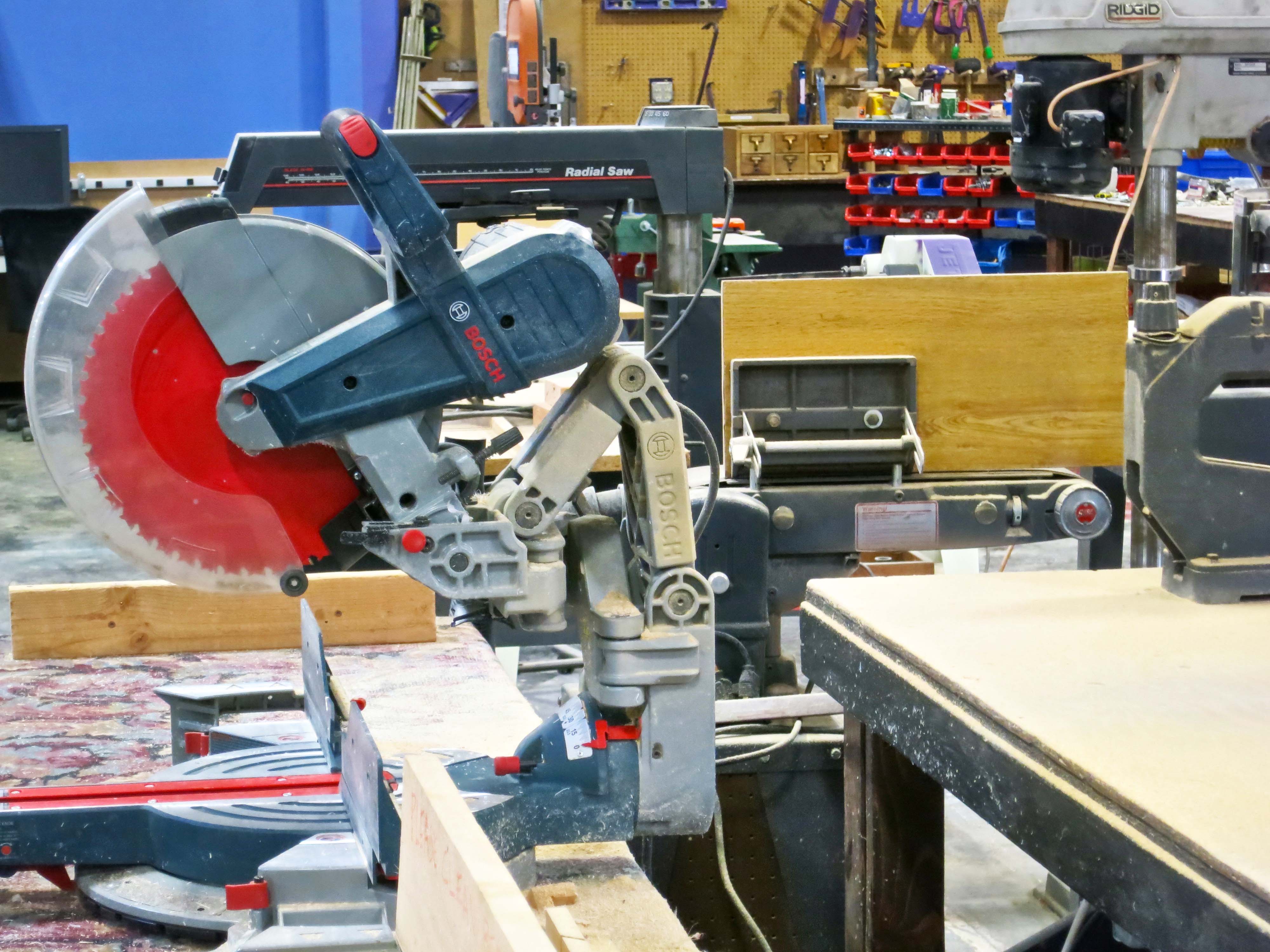
A variety of tools are available for use at the Generator including this saw. Anyone who wants to use tools like this one are checked out first to make sure they know how to use them. Safety is heavily emphasized.

A variety of tools are available for use at the Generator. Anyone who wants to use industrial sized tools like this one are checked out first to make sure they know how to use them. Safety is heavily emphasized.

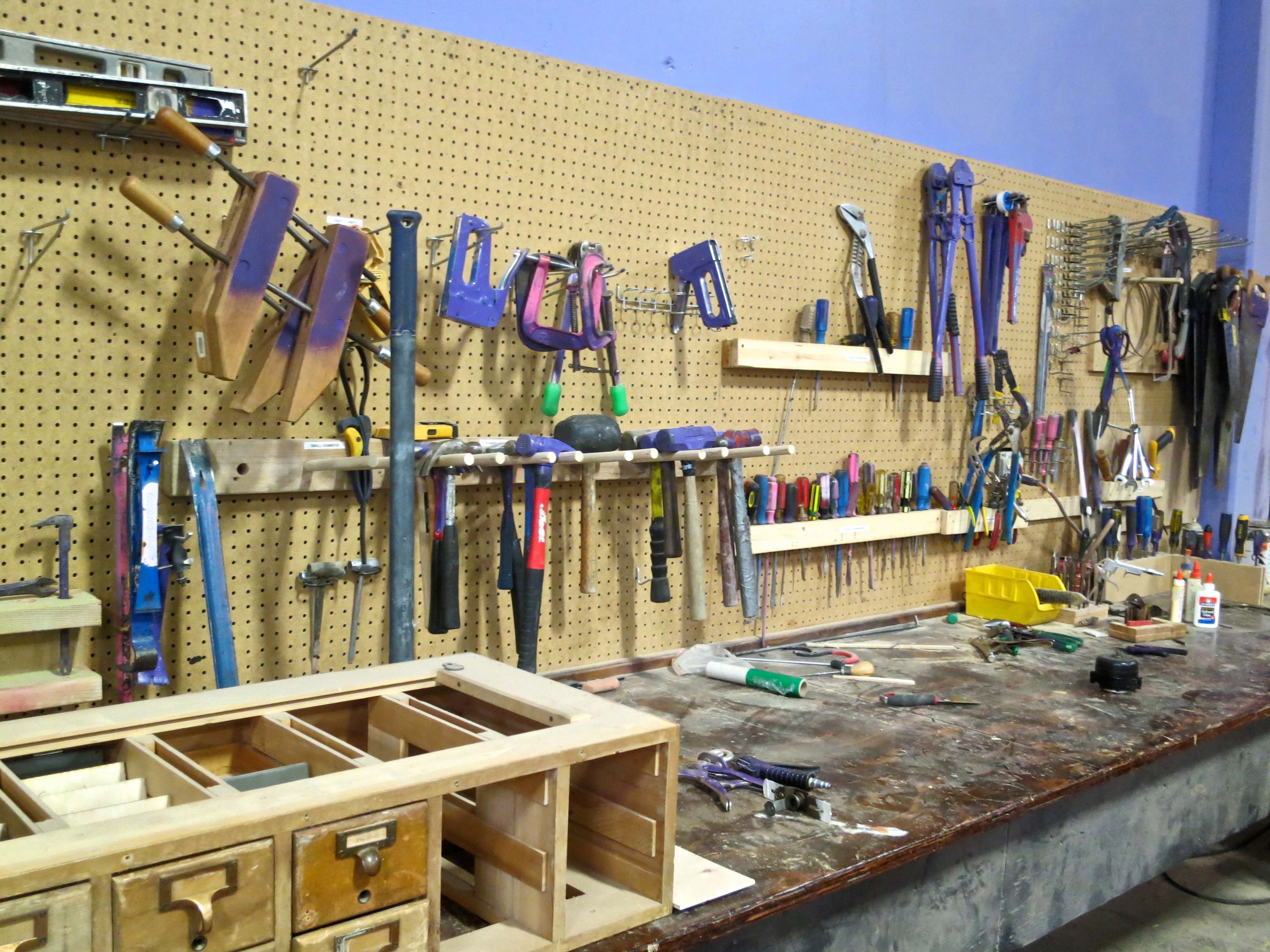
A wide range of hand tools are available.

A selection of the hand tools that are available.

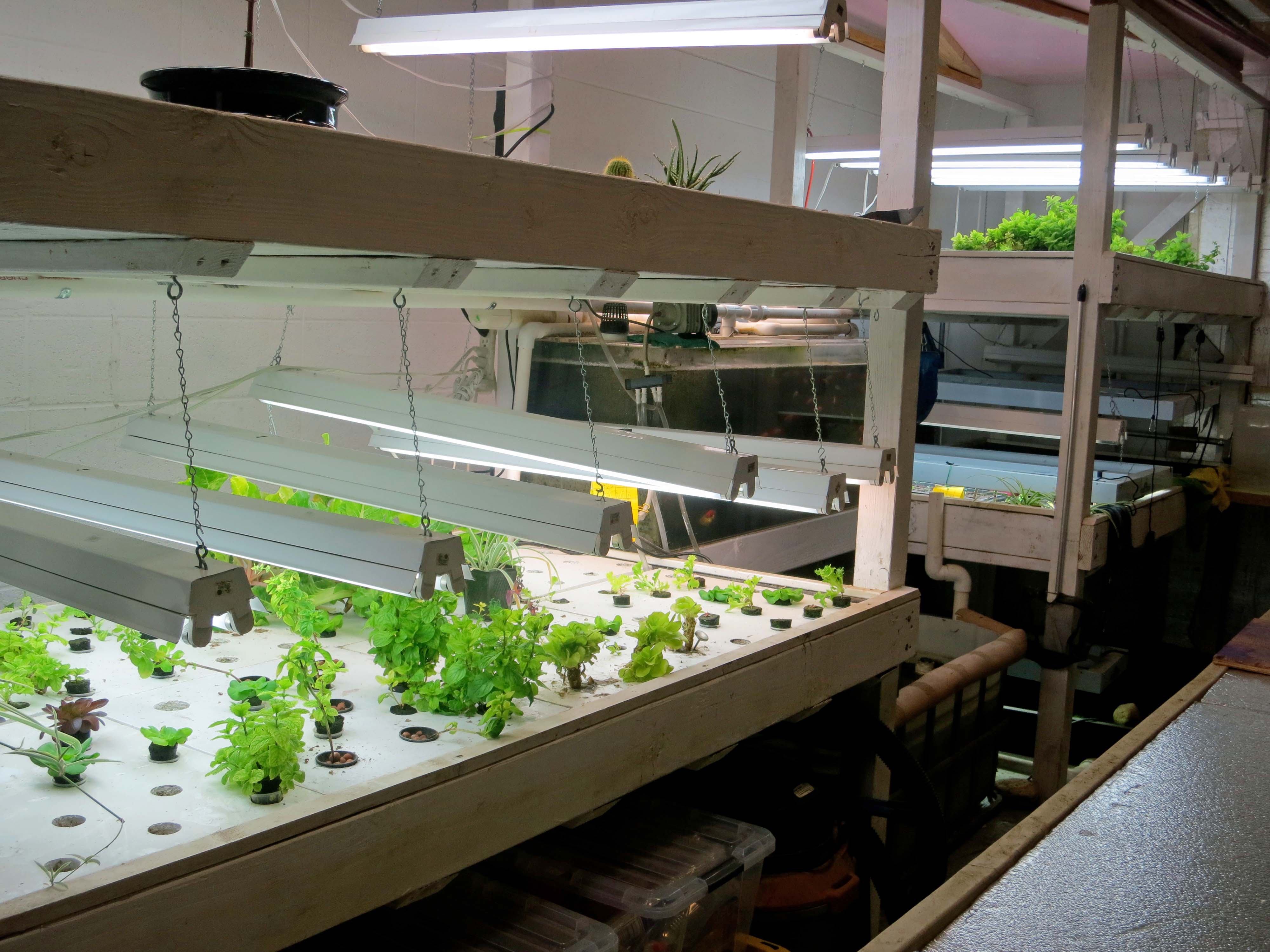
A mini-garden located at the Generator in Reno, Nevada.

I confess I was surprised to find a mini-garden growing.

The readiness to contribute is an underlying principle of the Generator. “We are looking for people willing to share their time, skills and resources to help build a greater community together.” Such sharing might come in terms of offering a workshop in an area of expertise, loaning out a tool, or even doing heavy lifting when heavy lifting is called for. There are also more nitty-gritty expectations such as keeping personal workspaces clean and helping to maintain common areas such as the bathroom and kitchen. I was somewhat amused to find that the Generator has an official “No Asshole Policy.” Members are expected “to be kind, honest and direct with each other.” “Hey birdbrain, why don’t you clean up your pigsty,” might meet the directness criteria but it fails on kindness.

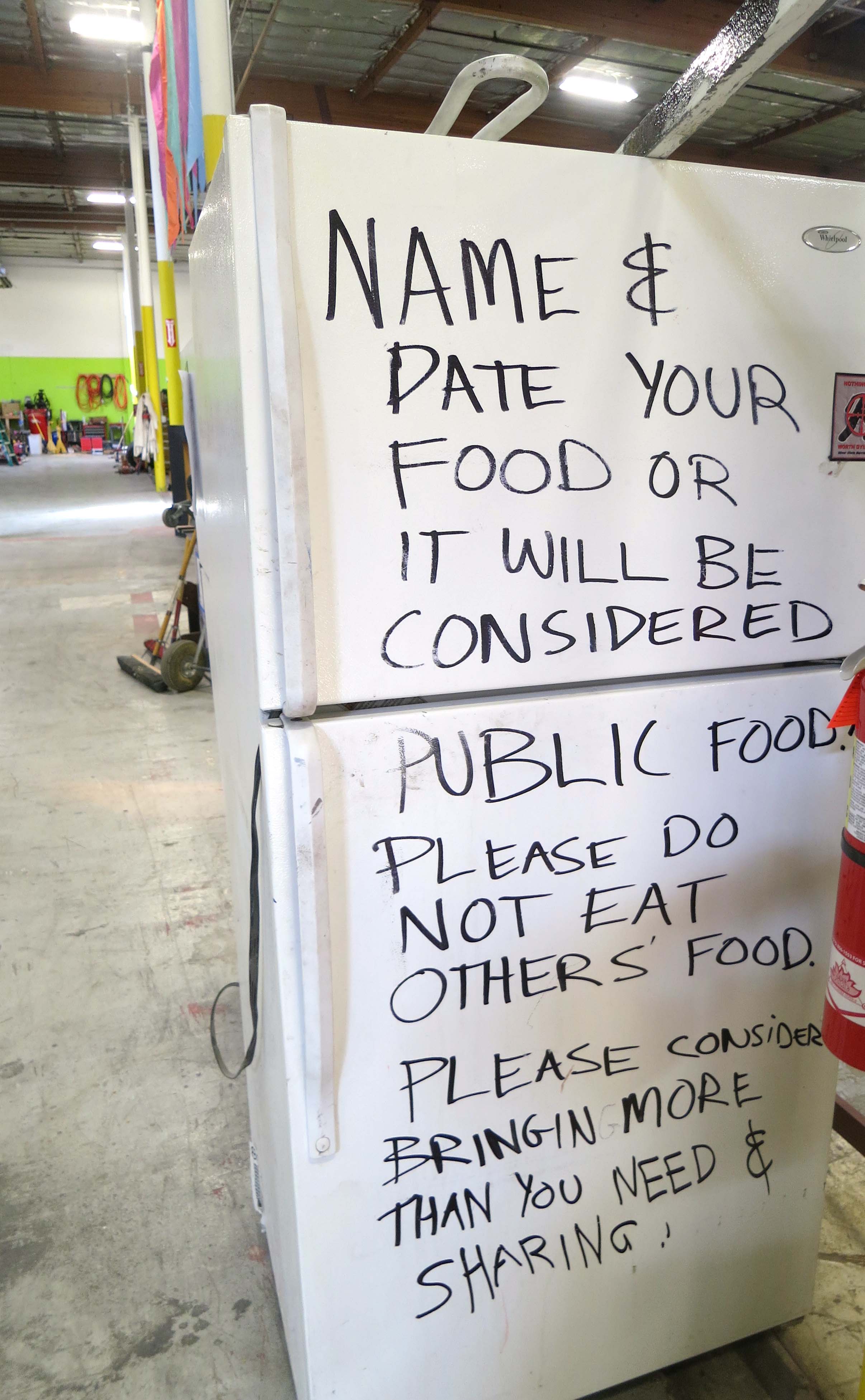
There was nothing subtle about the sign on the refrigerator.

There was nothing subtle about the sign on the refrigerator.

While perusing the Generator’s website, I came across one of my favorite all-time quotes:

“Never doubt that a small group of thoughtful, committed citizens can change the world; indeed, it’s the only thing that ever has.” Margaret Mead

The website proclaims: “Our goal is to foster a community that spends more time pursuing creative endeavors of the mind and heart, inventing and building, and spending a bit more time enjoying the beautiful world we live in. By encouraging more thoughtful, creative interactions we believe everyone has the power to change the world! We are here to share knowledge, build our greatest dreams and laugh the entire time.”

I am a big fan of laughing.

Matt’s vision encompasses the surrounding community as well as the Generator. He is presently working with Reno’s City Council on finding a larger site nearer the center of town. His plans include building a community garden, creating small residential spaces for up to 25 artists, involving and revitalizing the surrounding community, and moving the Generator (expanding its size to 50,000 square feet). All of this, he states, will be done utilizing the latest in environmentally sound building techniques.

The most ambitious element of the plan is to utilize the pirate ship and Embrace, as the start of what would become a world-class sculpture garden on par with those of London, New York and Paris. All of this might seem a little naïve, perhaps a little pie in the sky… until you think about what Matt and the Pier Group have already accomplished.

As I wandered around in the Generator, I became a believer.

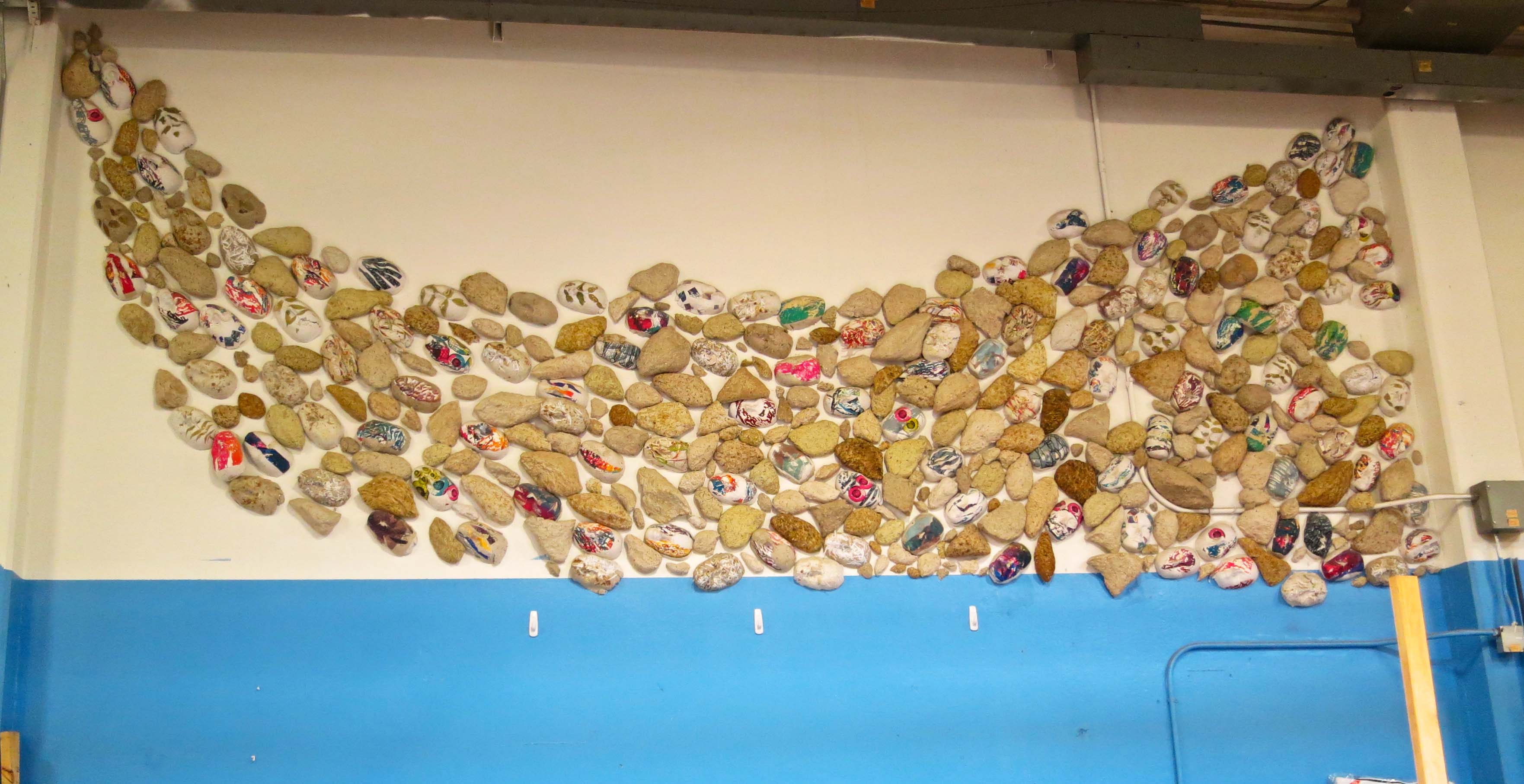
One of the fist things I noticed was this rock 'path' working its way along the back wall.

One of the fist things I noticed was this rock ‘path’ working its way along the back wall.

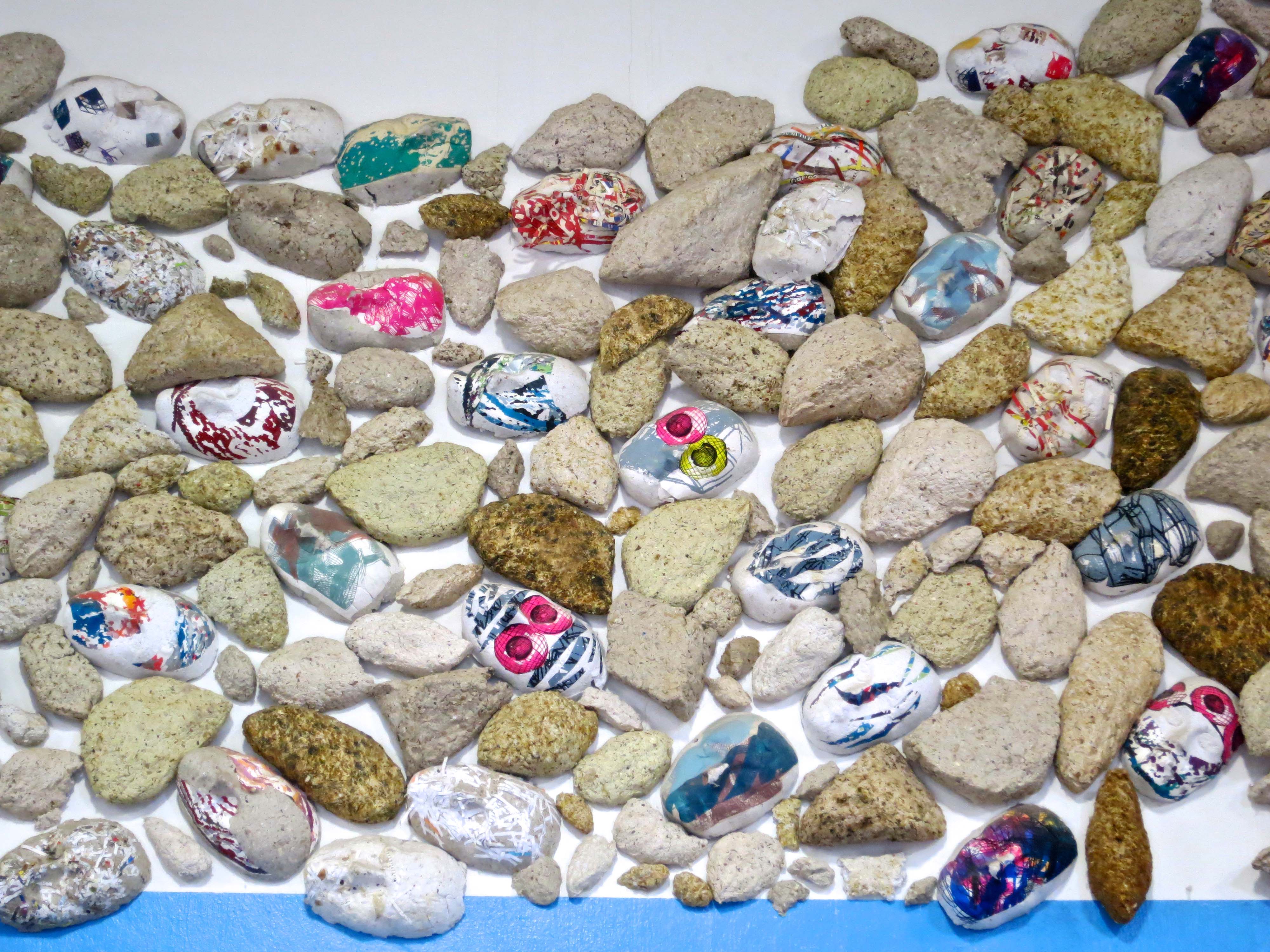
Rock art in Generator art warehouse in Reno, Nevada.

Checking closer, I found numerous little faces staring at me.

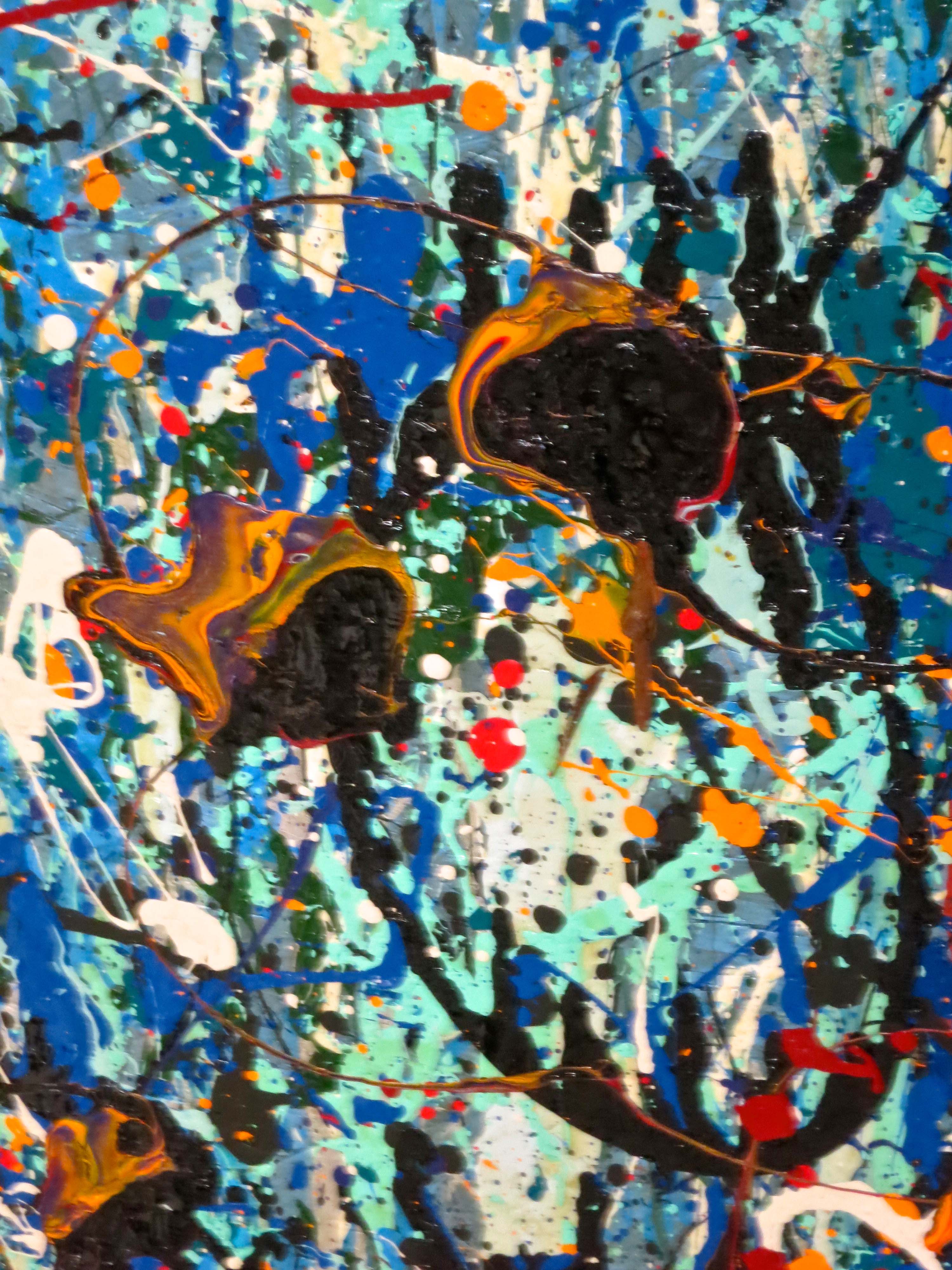
Painting at Generator ware house in Reno, Nevada.

The next thing that captured my attention was a work of modern art. Watch out Jackson Pollock.

Painter's art studio at the Generator in Reno, Nevada.

There was no doubt where the painting was created. Even the floor demanded attention.

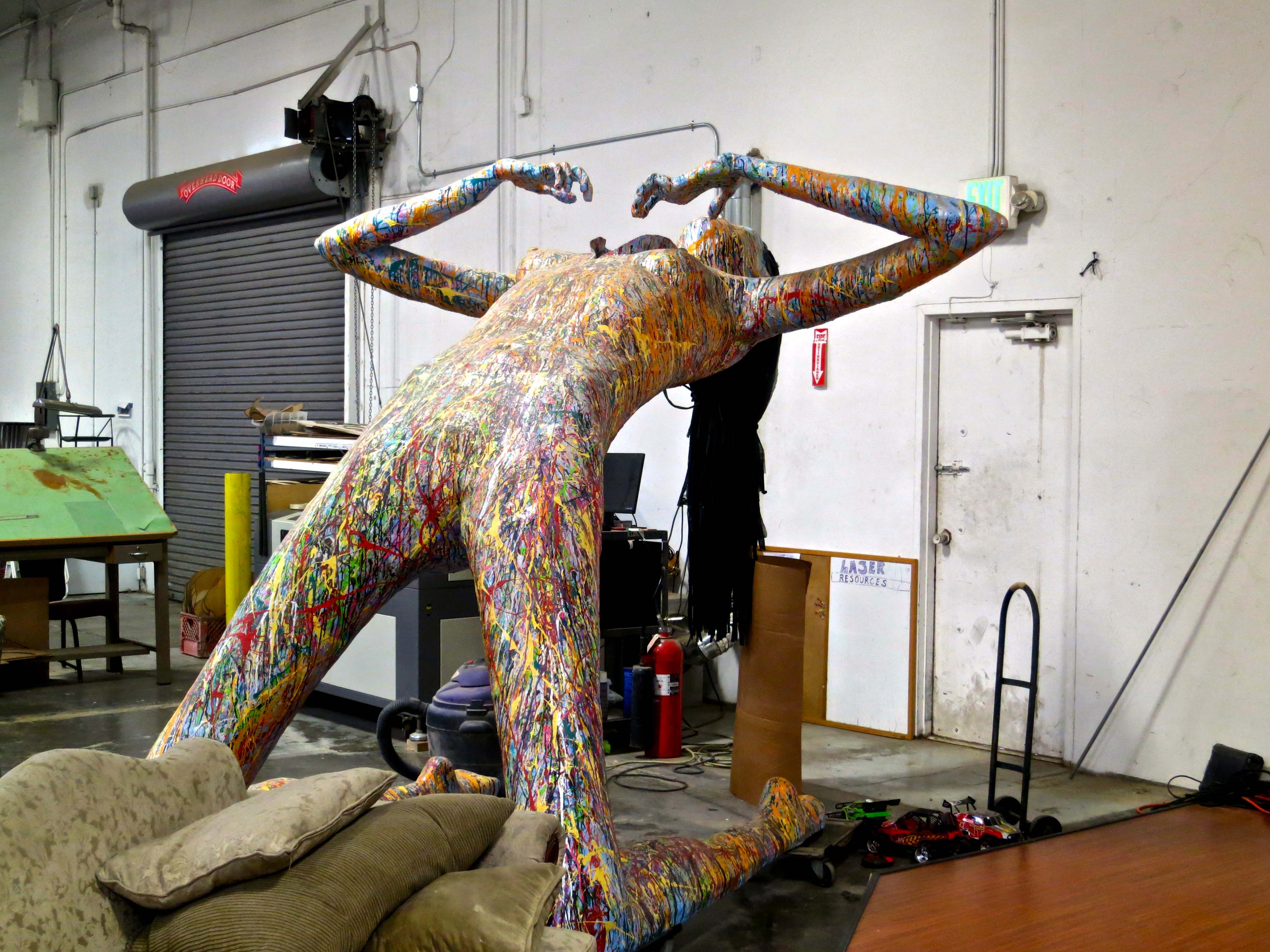
I suspect this acrobatic woman spent time in the art studio. In fact, she may have been at least partially responsible for the decorated floor.

I suspect this acrobatic woman spent time in the art studio. In fact, she may have been at least partially responsible for the decorated floor and walls.

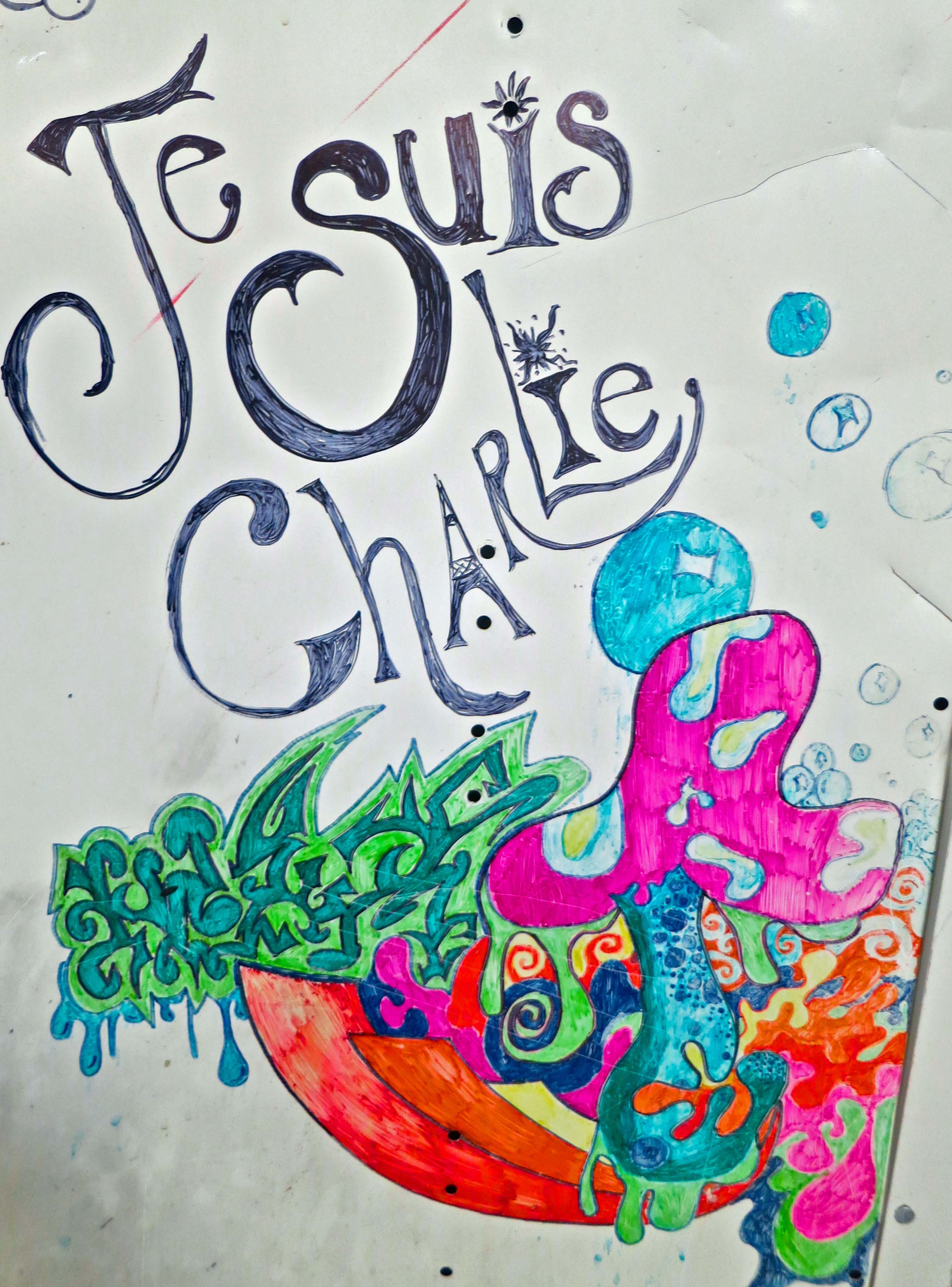
Je suis Charlie sign at the Generator warehouse in Reno, Nevada.

Located among the paintings was a poignant reminder.

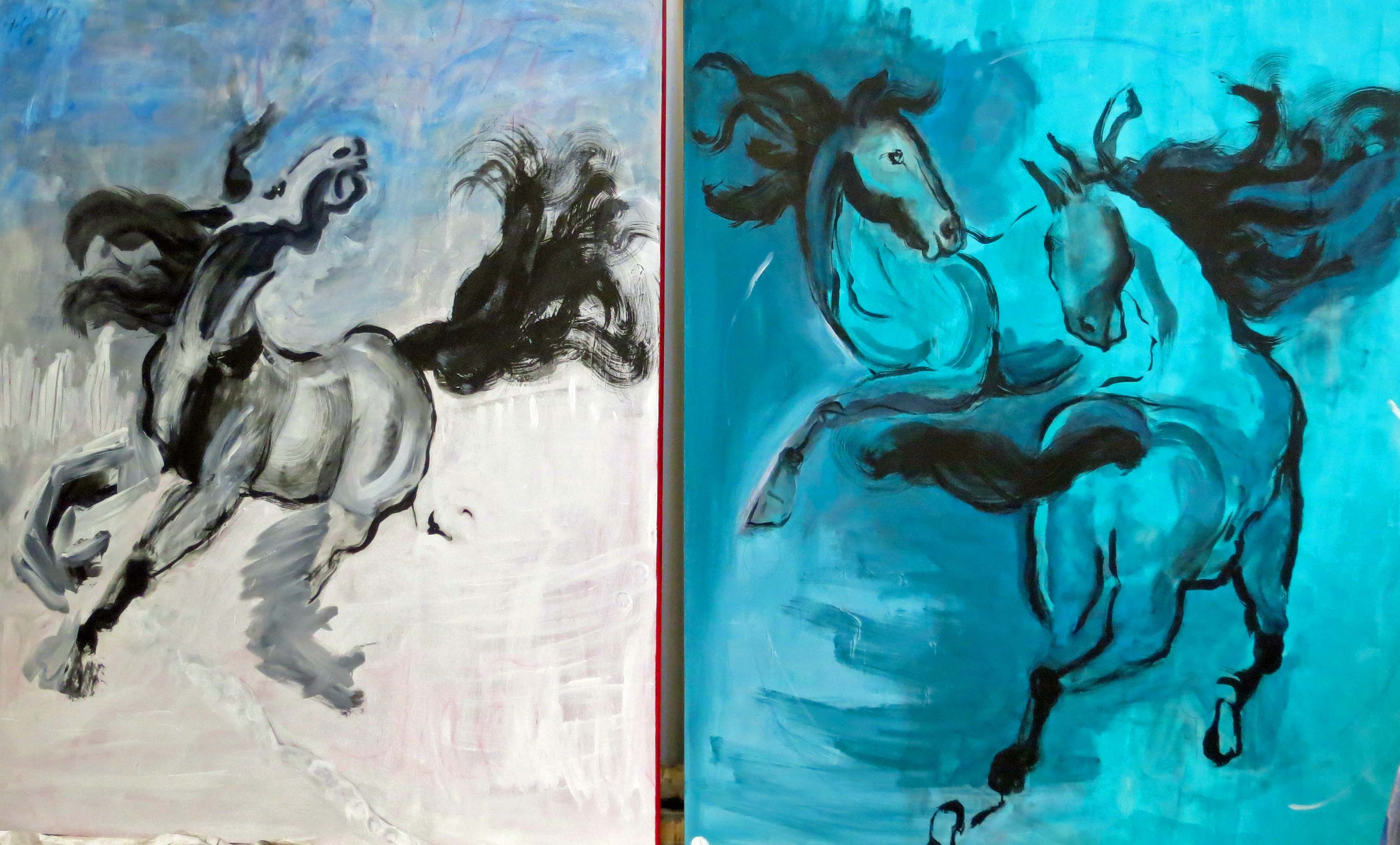
Paintings of horses at the Generator warehouse in Reno, Nevada.

I was impressed with how the artist, Paula Rie Bonham, rendered the movement of these horses.

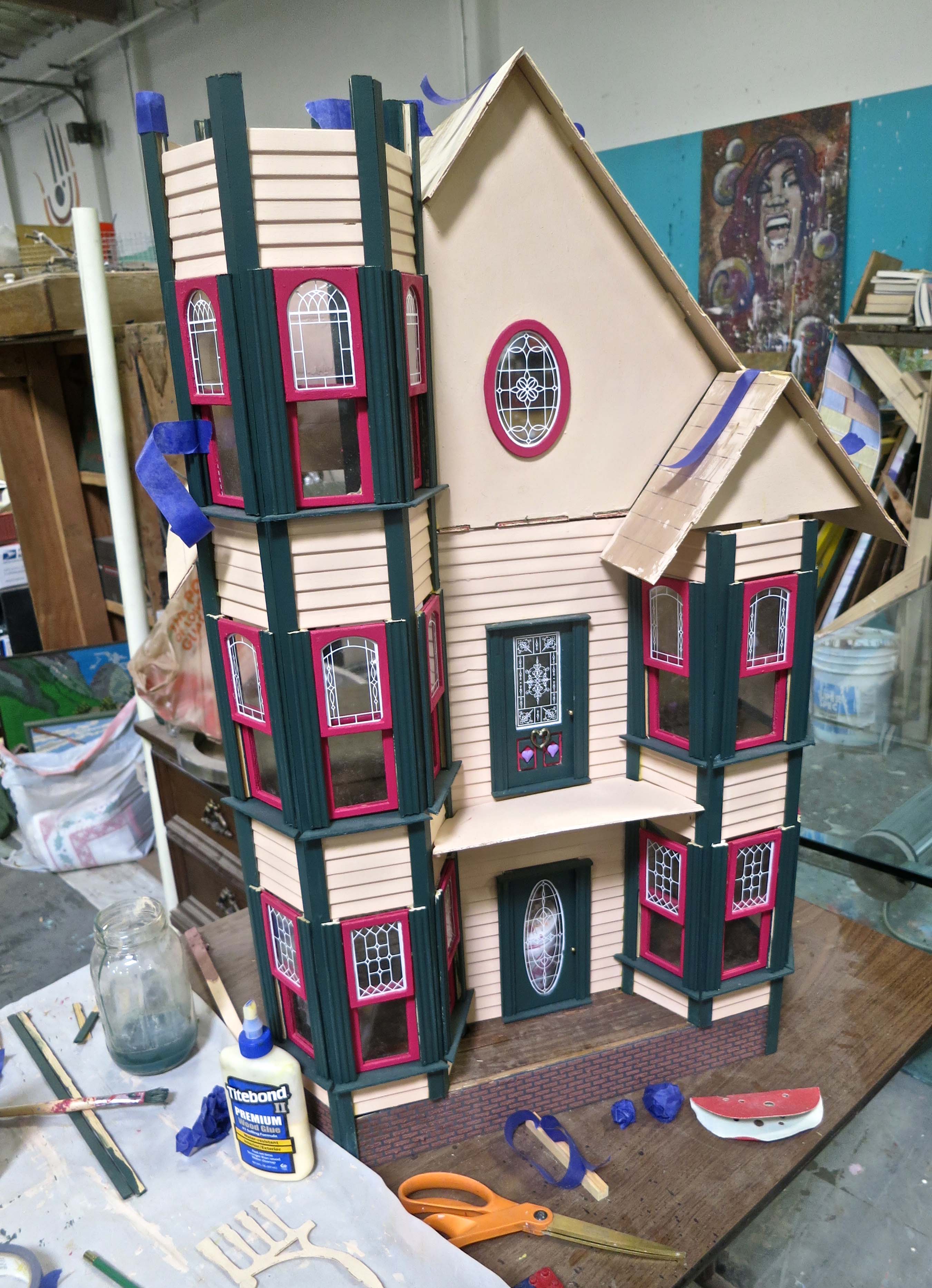
Miniature house being built at the Generator warehouse in Reno, Nevada.

Someone was having fun creating this miniature house. It reflected the diversity of the projects being undertaken in the Generator. It also looked like something my wife Peggy would love to tackle.

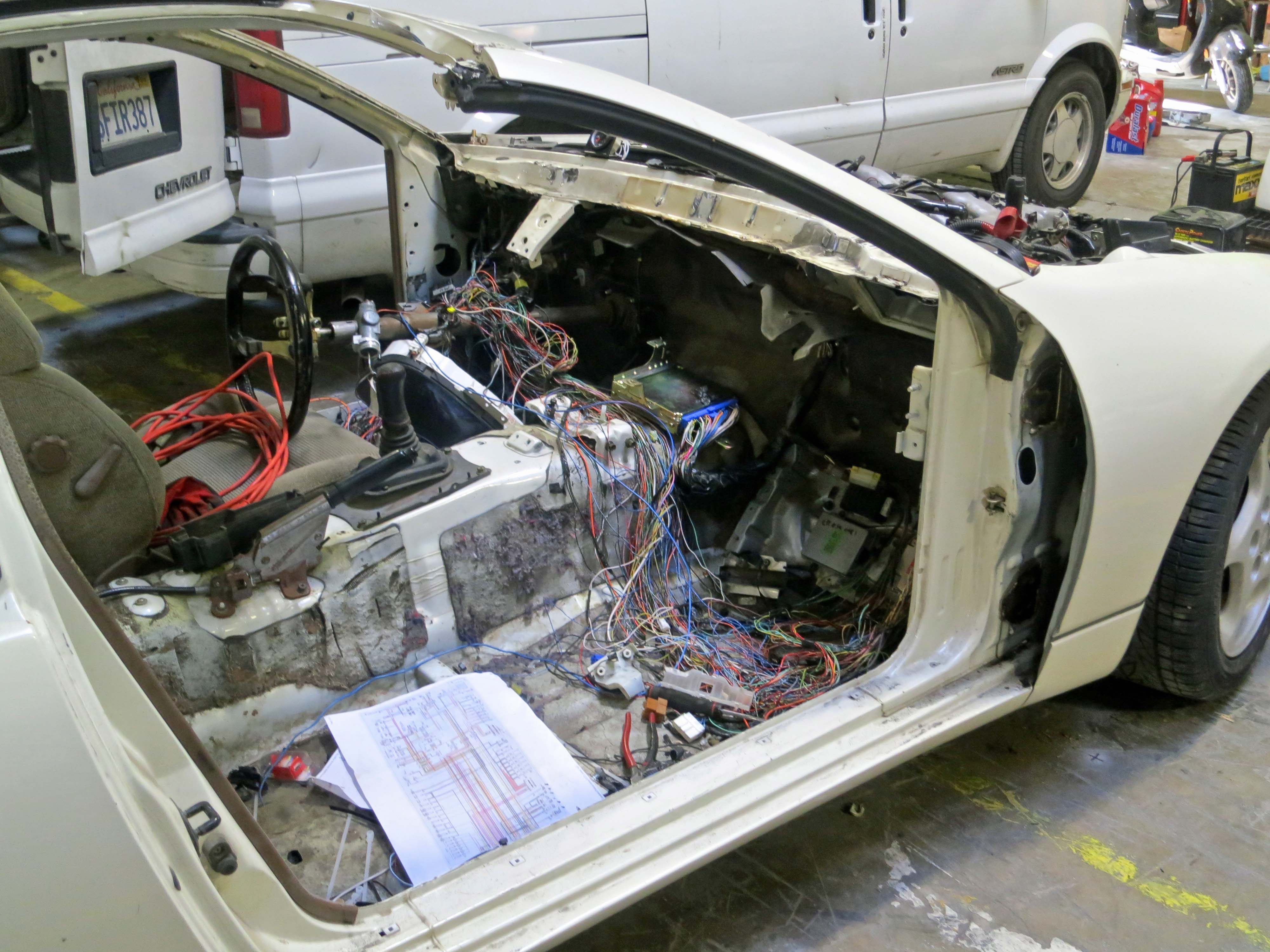
Art car in production at the Generator warehouse in Reno, Nevada.

My guess is that this is an art car or mutant vehicle in production that will eventually make its way to Black Rock City.

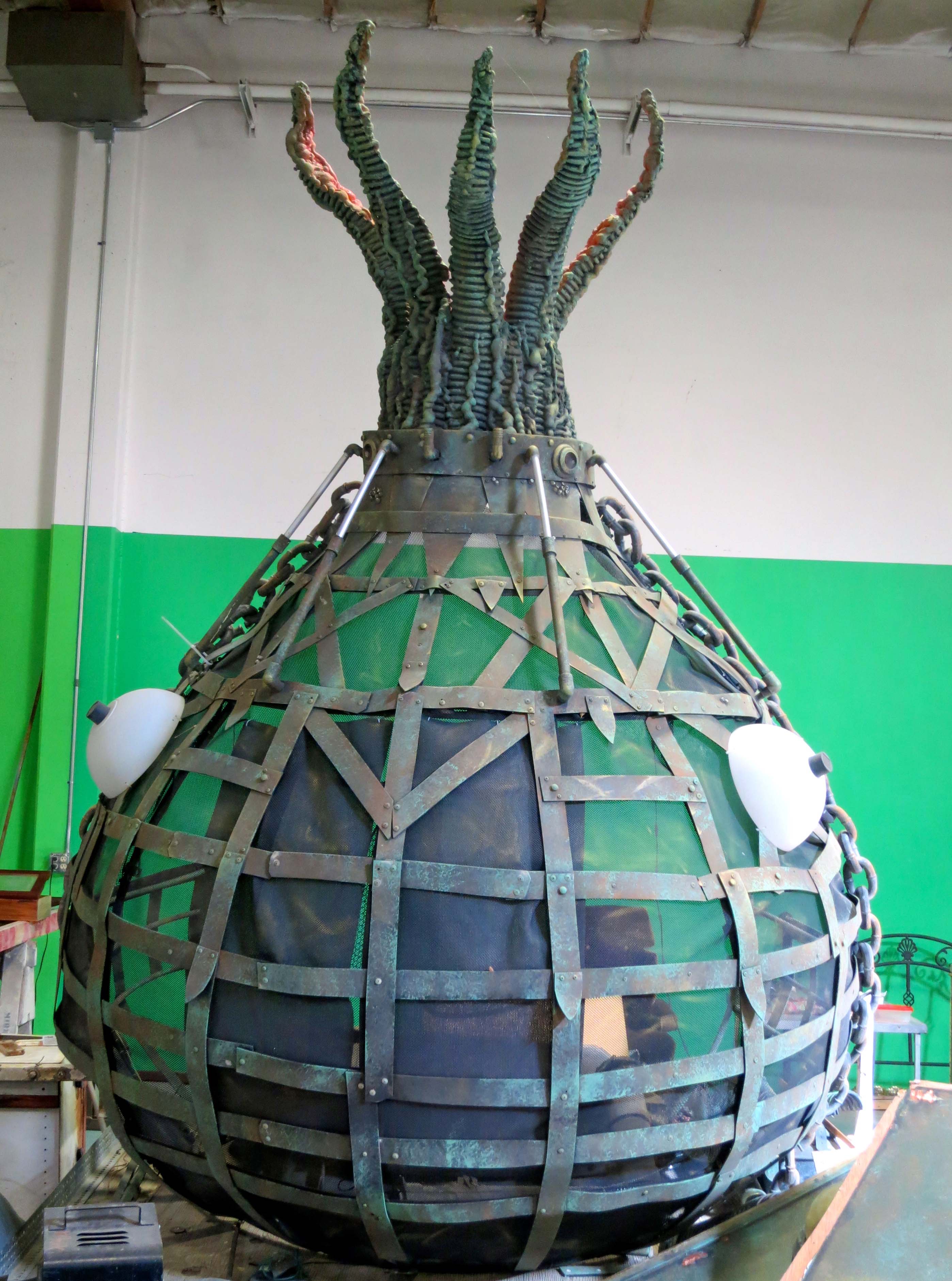
I wondered if this buggy eyed creature would be added to the art car.

I’ll conclude with this buggy eyed creature. I wondered if it was destined to be attached to the art car. NEXT BLOG: Spring has sprung in southern Oregon. I’ll introduce you to some of the wildlife that considers our five acres home. Love is in the air.


From Press Publish to Voodoo Doughnuts

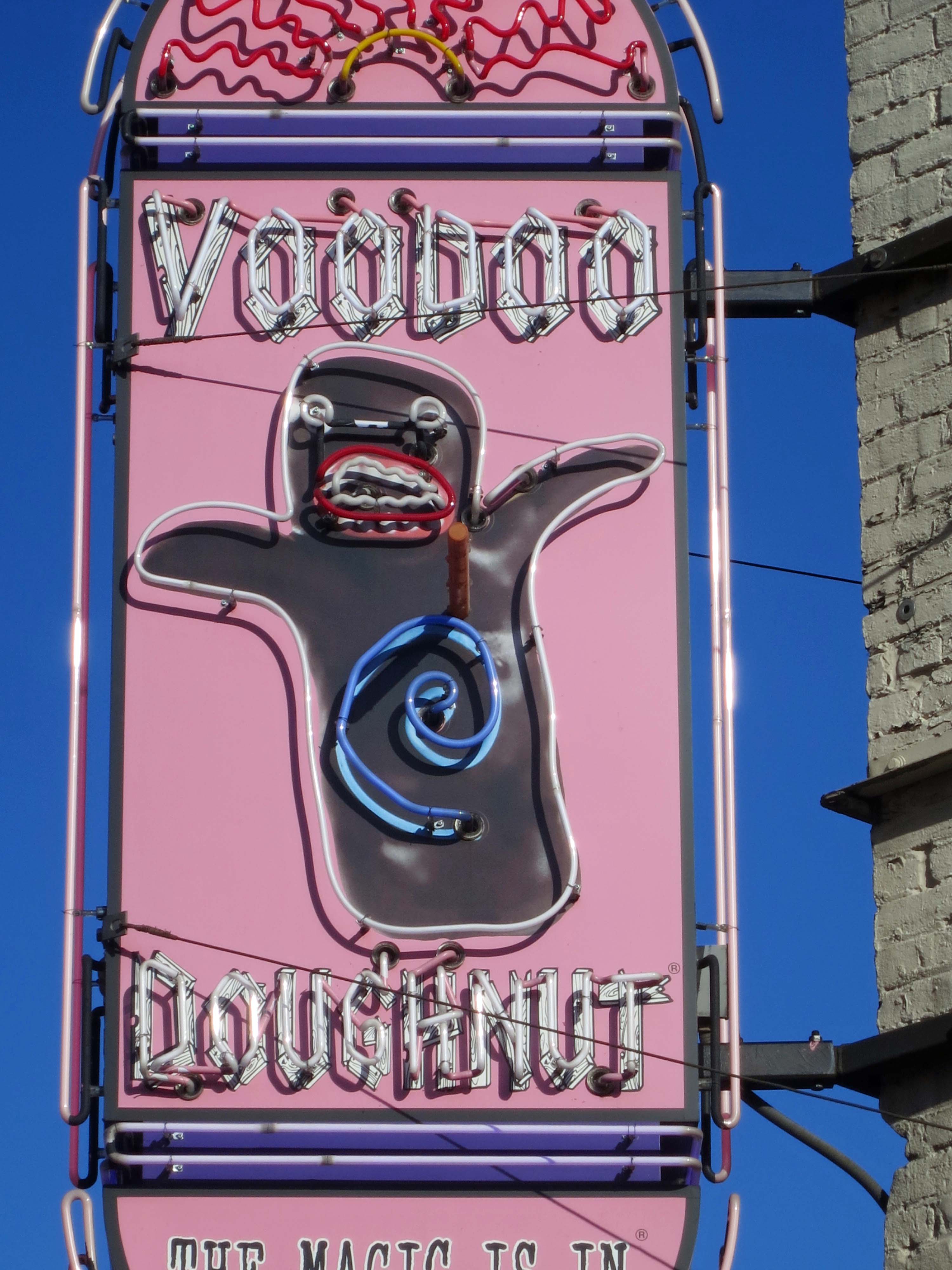
I am convinced this is a new definition of sin— a bacon maple bar from Voodoo Donut shop in Portland. The donut shop was located next to the Press publish Conference I was attending in Portland, Oregon.

I am convinced this is a new definition of sin— a bacon maple bar from Voodoo Doughnut shop in Portland. The donut shop was located next to the Press Publish Conference I was attending in Portland, Oregon.

Peggy and I made a quick trip up to Portland from our home in southern Oregon this weekend. I went to attend a Word Press conference; Peggy was along to play. We stayed at the conference site: Embassy Suites in downtown. The hotel’s idea of a room with a view was a room overlooking the Voodoo Doughnut shop. I think they charged extra, seriously. Peggy, as part of her play-day, checked out the shop and bought the bacon-maple bar featured above. It was waiting for me when I returned to our room. The first bite assured a sugar high, the second a heart attack. My arteries will never be the same again. Later I went over and took some photos of Voodoo Doughnuts and its ever-long line of customers.

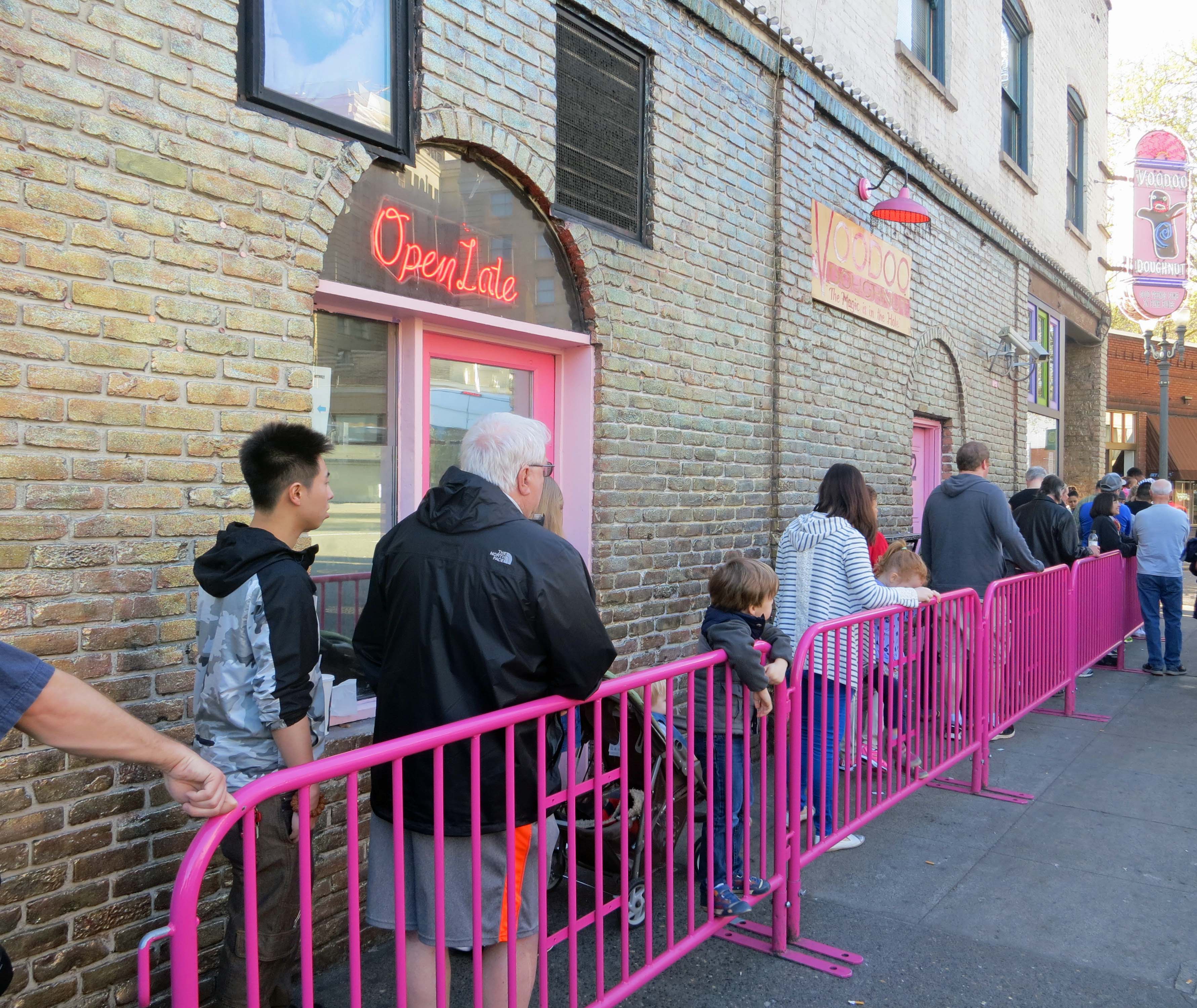
The ever present line of people waiting to get into the Voodoo Doughnut shop for their daily dose of sugar.

The ever present line of people waiting to get into the Voodoo Doughnut shop for their daily dose of sugar. Note the young and old. Age is not an issue.

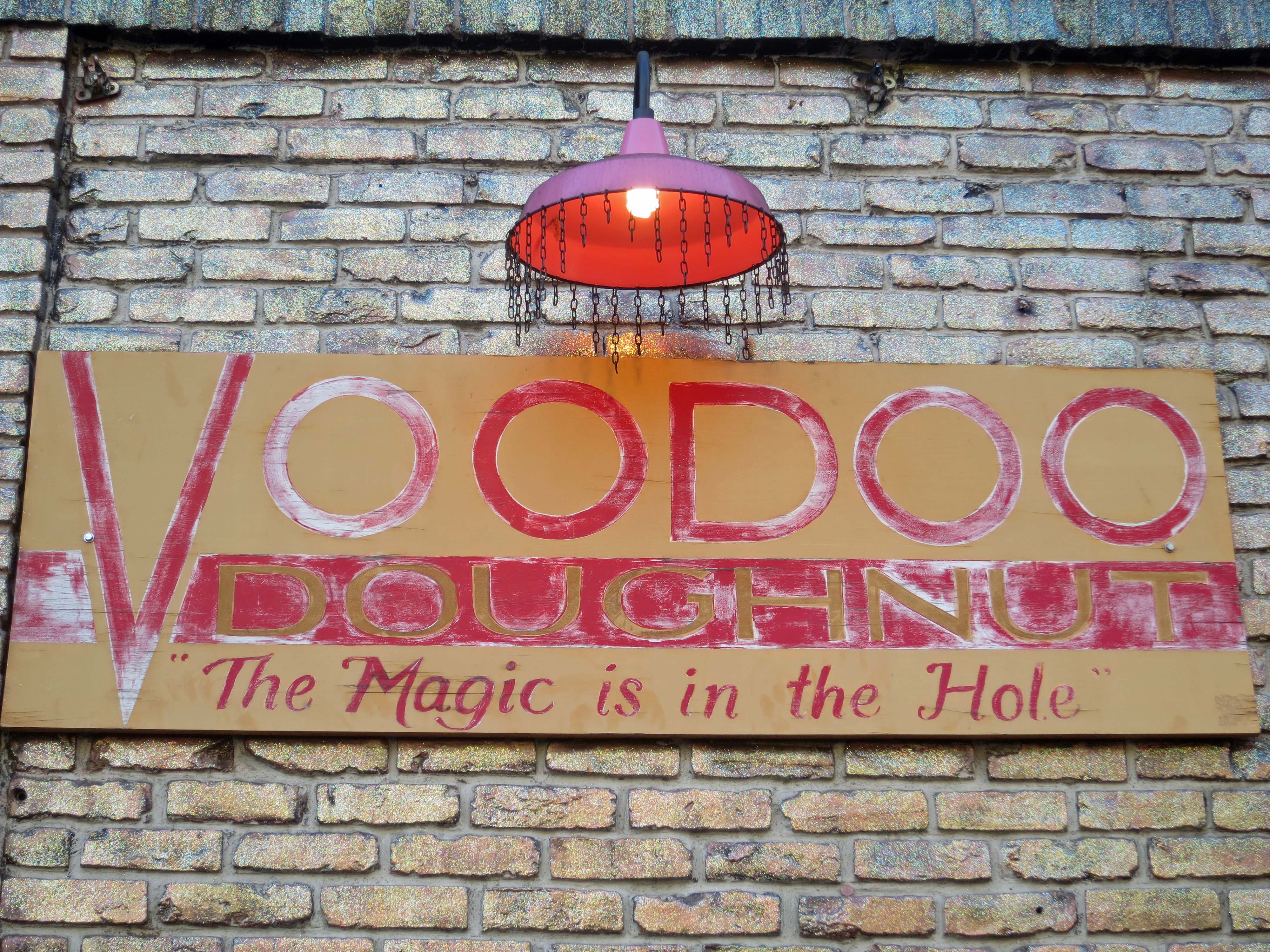
This sign welcomes customers to the shop.

This sign welcomes customers to the shop.

My stomach after eating the bacon-maple bar.

This is how my stomach felt after eating the bacon-maple bar.

Peggy, in addition to descending (or is that ascending?) into doughnut heaven, spent her day at Powell’s Bookstore and Portland’s huge downtown Weekend Market. I was a bit jealous. Powell’s is one of the world’s great bookstores and the Weekend Market has over 250 vendors selling everything from fruits and vegetables to pottery, clothes, jewels, etc. Musicians, mimes and other performers provide unending entertainment. Both Powell’s and the market would have made great blogs. Oh well.

Not that I am complaining. There were several good sessions at the Press Publish conference. I was particularly impressed with workshops on Longreads, travel blogs and book blogging, all subjects of particular interest to me as a writer, travel blogger, and author. The most inspiring workshop I attended featured Eric Prince-Heaggans. I also had lunch with him. Eric is a travel writer and blogger who uses his writing to inspire people of color and disadvantaged youth to discover the benefits of travel in terms of broadening their perspective on life. Check out his post on travel and African American Men. For a more traditional post, visit Eric’s blog on Dubrovnik.

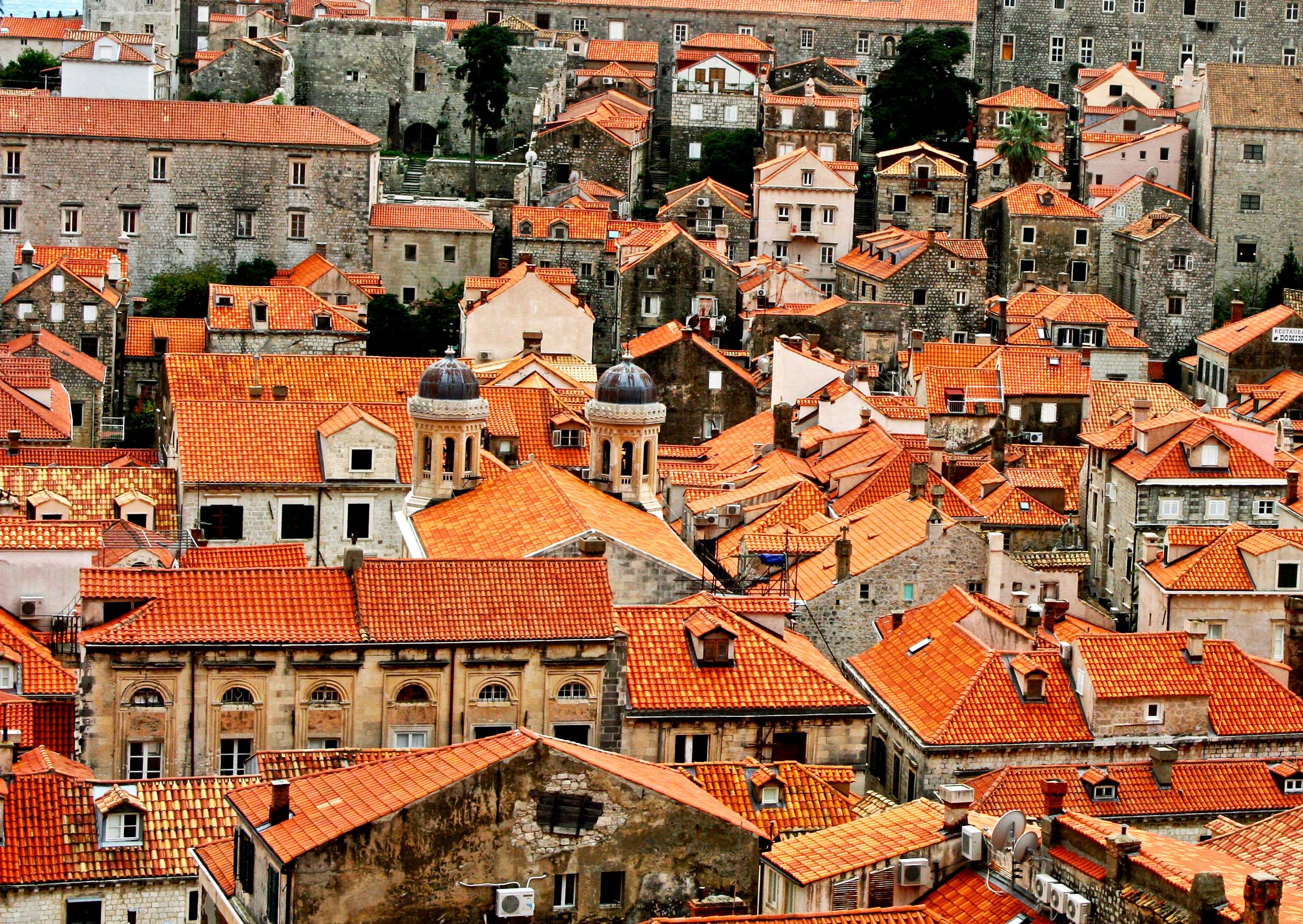
One of my photos looking down on Dubrovnik from a visit Peggy and I made.

One of my photos looking down on Dubrovnik from a visit Peggy and I made and blogged about.

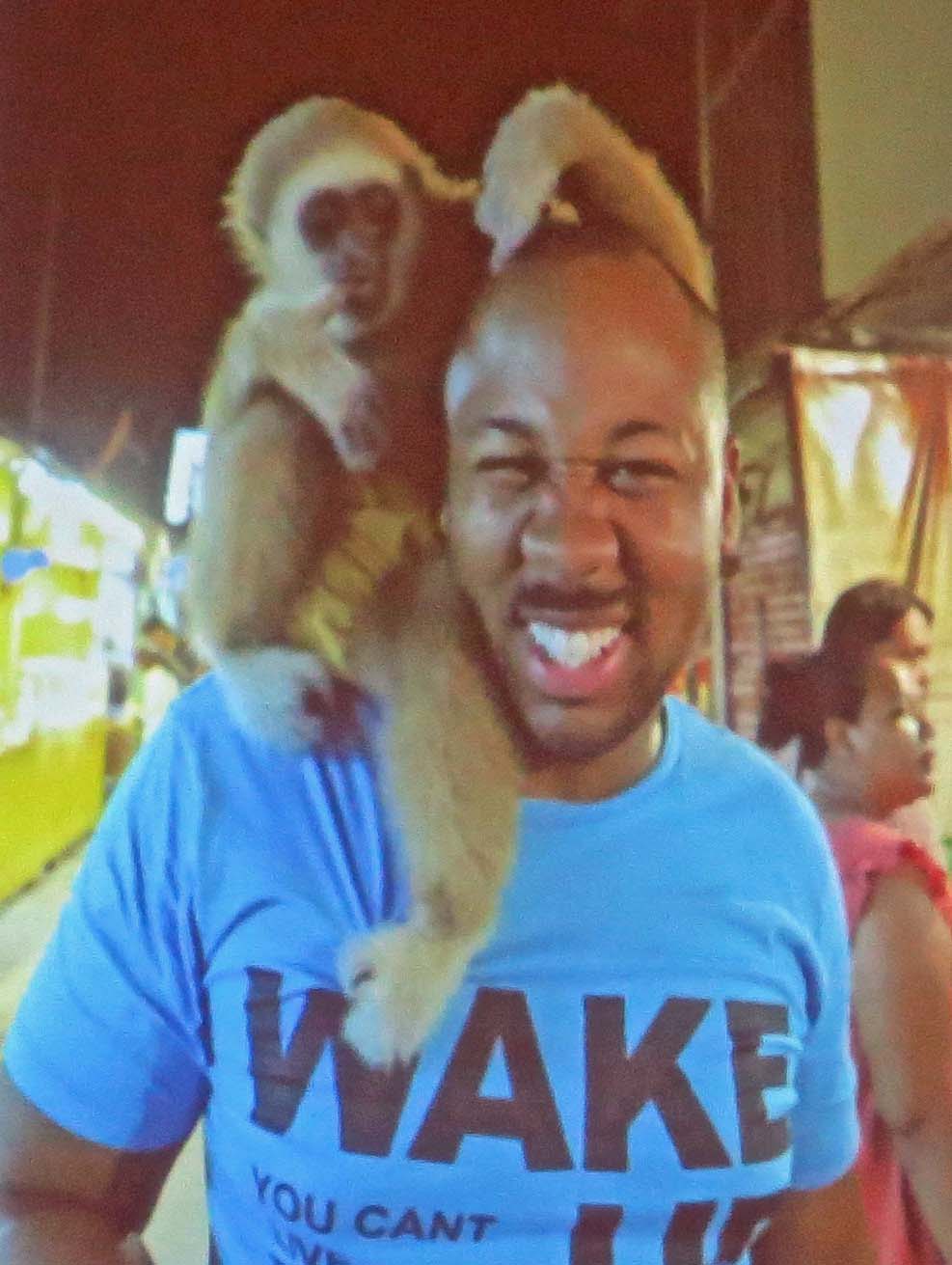
Eric also has a great sense of humor. For example: “I’ve learned through my travels,” he told us, “that I don’t like monkeys.” He had a photo to prove why. I get it.

Monkey wraps itself around Eric's head.

Monkey wraps itself around Eric’s head.

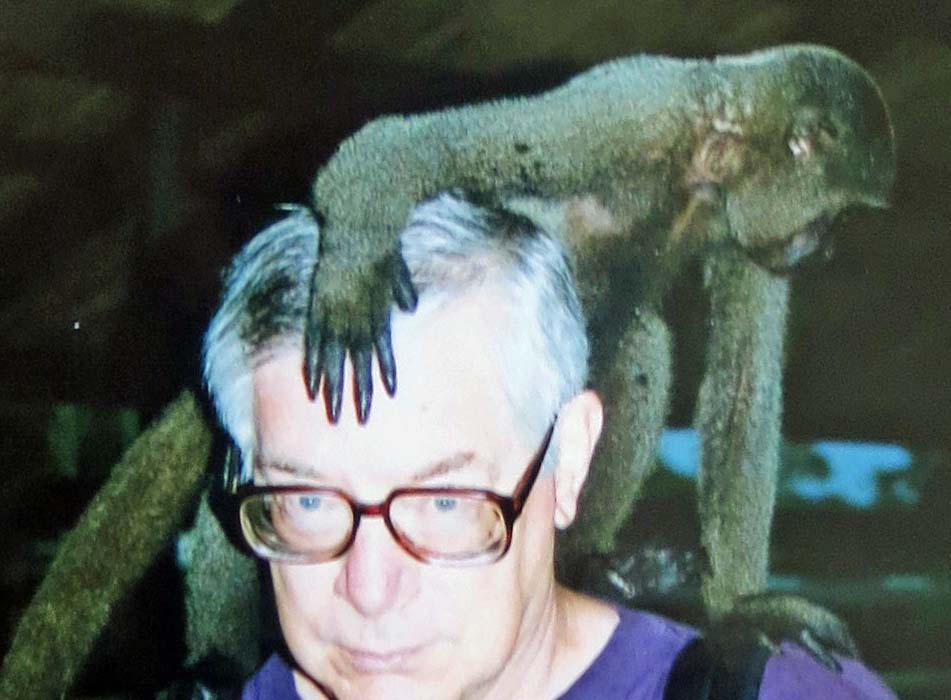
But I must say Eric looked a lot happier about his money than I did mine. Peggy took this photo when she and I were traveling in the Amazon.

But I must say Eric looked a lot happier about his monkey than I did mine. Peggy took this photo when she and I were traveling in the Amazon.

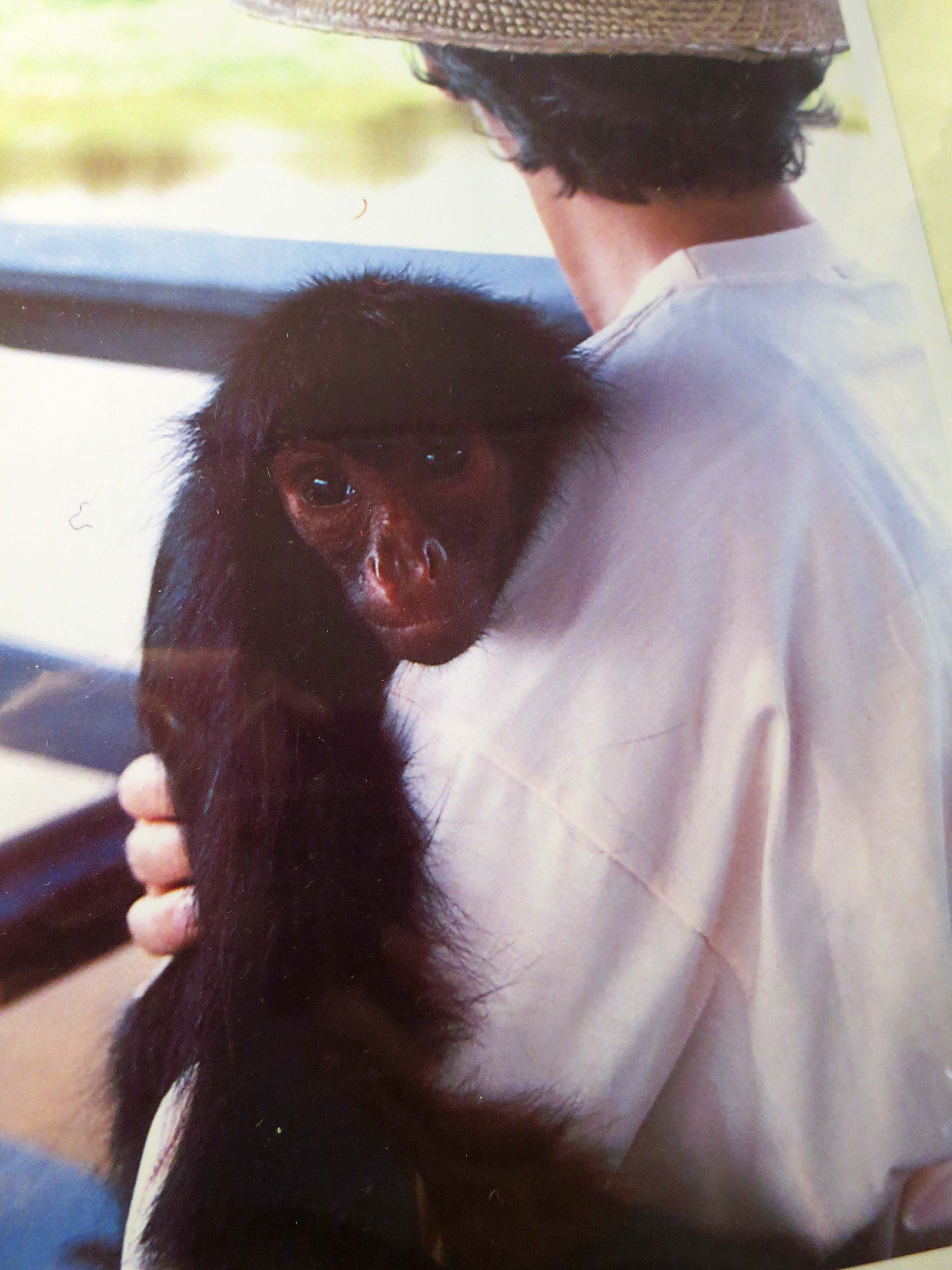
Peggy's monkey, on the other hand, was something of a sweet heart. There was a slight matter of flea bites, however.

Peggy’s monkey, on the other hand, was something of a sweetheart. There was a slight matter of flea bites, however.

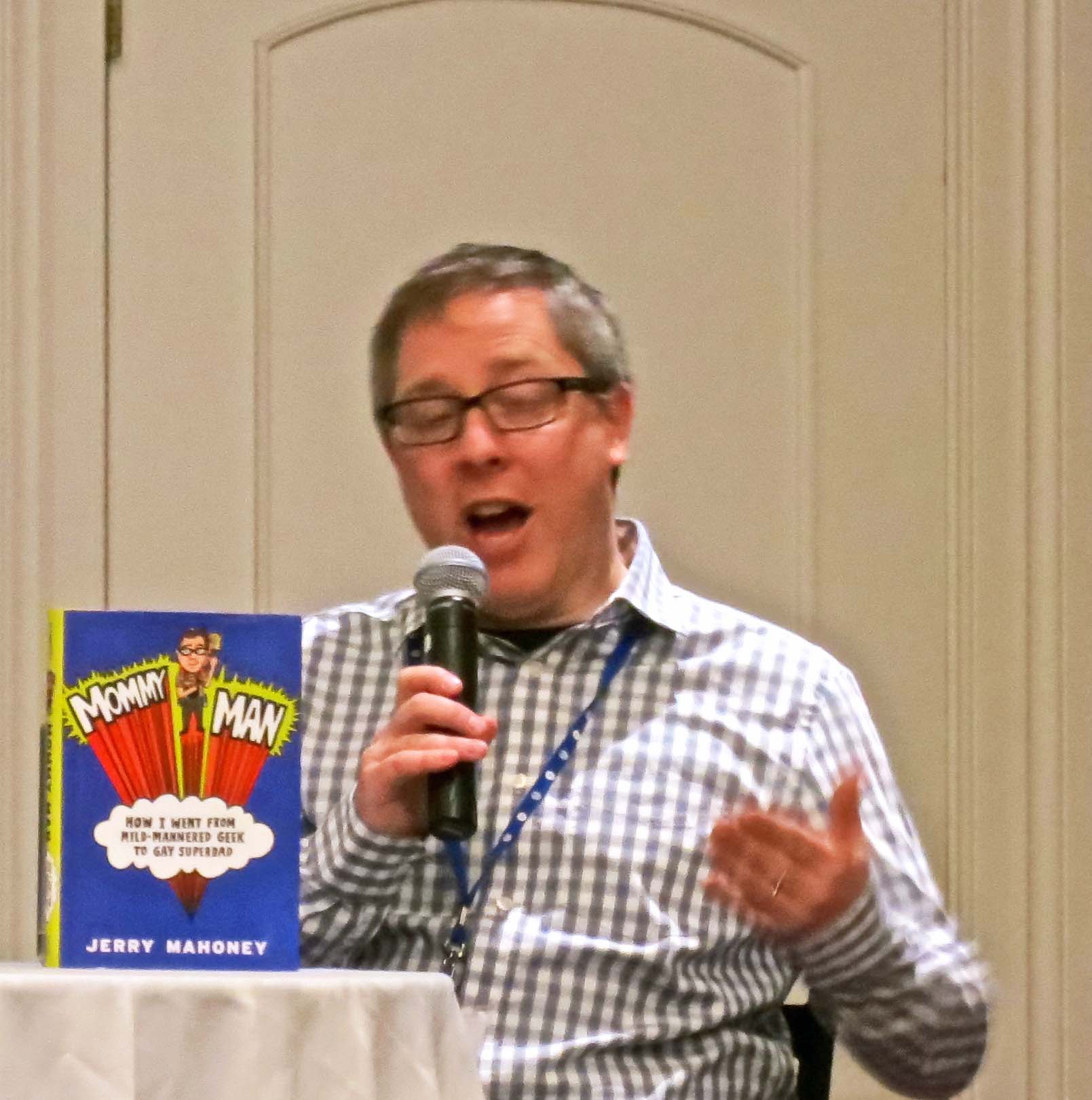
Jerry Mahoney, author of Mommy Man: How I Went From Mild-Mannered Geek to Gay Superdad, was also quite humorous in describing how he and his husband became parents of twins and eventually published a highly popular book about the experience. Failing to sell the book on his first round, his agent told him to go back and establish a presence on the Internet, a platform in social media. It’s a message that writers hear over and over. As a result he created the blog Mommy Man. It is definitely worth a visit.

Jerry talks animately about his book in a panel discussion that also featured four other authors.

Jerry talks animatedly about his book in a panel discussion that also featured four other authors.

I also visited the Happy Lounge and a Happiness Engineer. How could I avoid such an opportunity? It was like I had died and returned to the dawning of the Age of Aquarius.  So I sat down with Happiness Engineer Josh R. He seemed quite happy. More importantly, he immediately solved the technical problem I had in featuring my book, The Bush Devil Ate Sam, permanently on my blog. I was quite happy as well. My thanks to the people at Word Press for a job well done.

Happiness lounge at Press Publish Conference.

Happiness lounge at Press Publish Conference. My answer was yes.

Jeff

Joss R, Word Press Happiness Engineer, answered all my questions and made me happy.

The Happiness Lounge also featured swag you could buy ranging from T-shirts to Coffee mugs.

The Happiness Lounge also featured swag you could buy ranging from T-shirts to coffee mugs.


NEXT BLOG: On a recent trip to Reno, I visited the Generator, a huge warehouse where some of Burning Man’s best art is produced. I will take you on a walk-through. It’s a trip you won’t want to miss.


The Best of Burning Man Series: Conclusion… Things That Burn

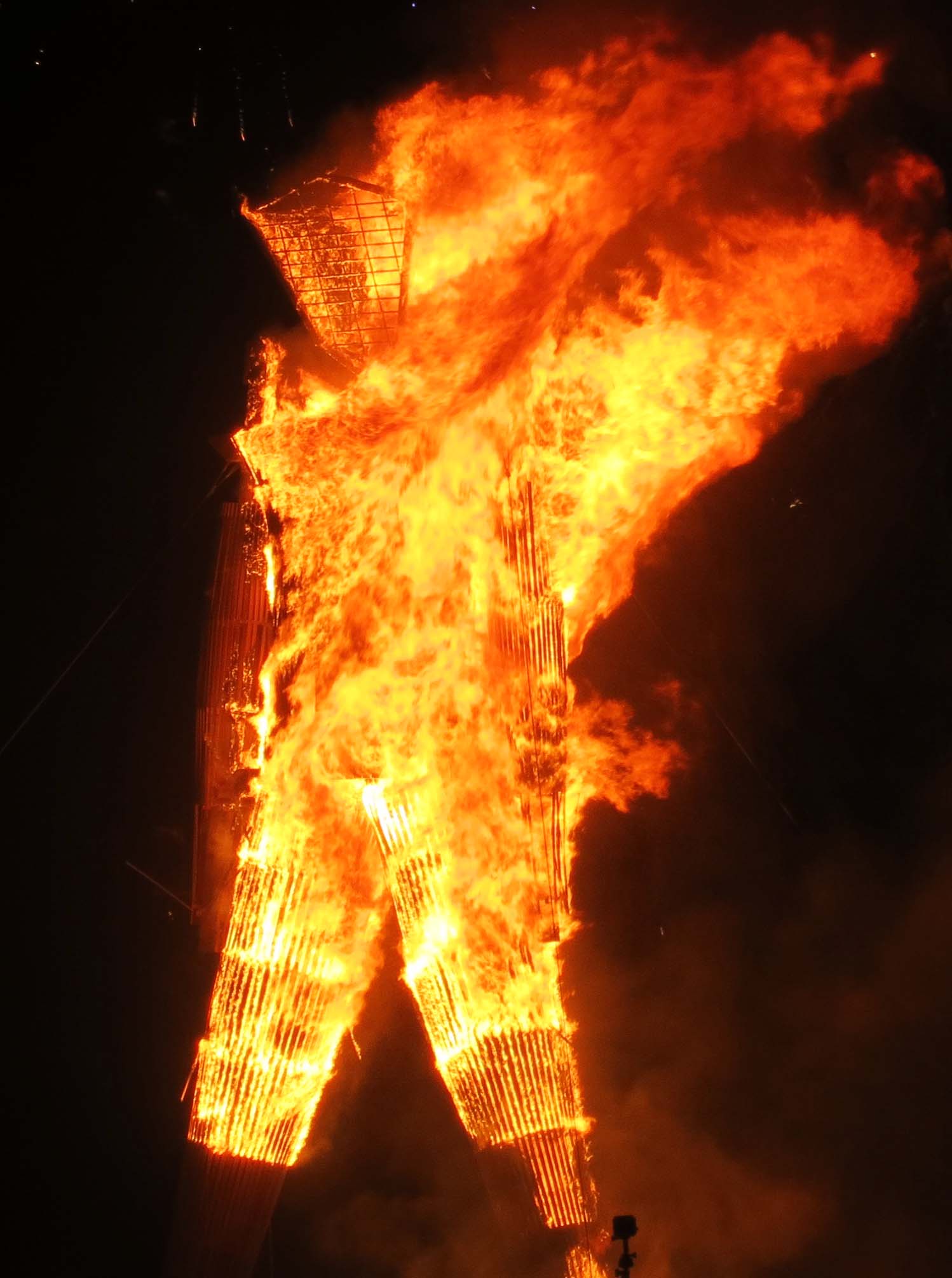
The Man goes to his fiery demise. Like the Phoenix, he will be back next year.

The Man goes to his fiery demise. Like the Phoenix, he will rise again.

At an event called Burning Man, you would expect to see the Man burn. And he does— in a spectacular fashion. It is almost worth the price of a ticket itself. But the Man is only one of many things that burn, including the Temple.

As to why they are burned, my understanding is that the burns represent the impermanence of life; don’t get attached to worldly goods. The Man goes beyond this, however, and behaves like the Phoenix. He goes up in flames at the end of Burning Man and is born again the next year. Hmmm.

Burning the Temple also has an extended meaning. The thousands of messages left for loved ones who have passed on go up in flames and are released to the heavens.

Beyond these reasons, there is a certain beauty and danger to fire that draws us to it like moths to flame. Great drama accompanies burns. Small fires grow to conflagrations. Mini-tornadoes whirl off like dancing dervishes. Burners hold their breath waiting for structures to crash to the ground. Shiva is at work.

Fireworks often accompany the burns and a whole show (including hundreds of fire dancers and drummers) accompanies the burning of the Man.

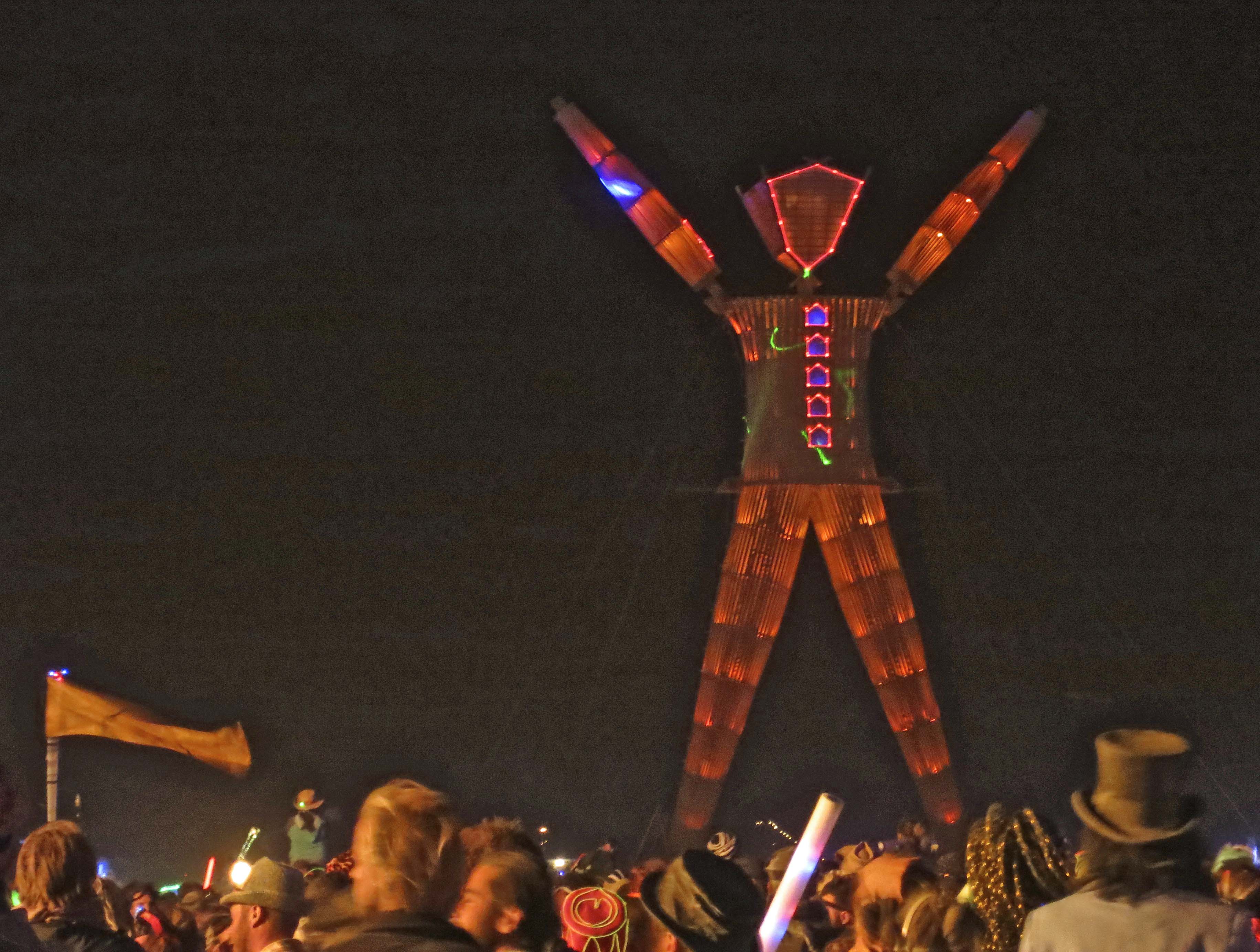
The Man, with arms raised, welcomes Burners to the night of his burn.

The Man, with arms raised, welcomes Burners to the night of his burn.

A fireworks show always precedes and often accompanies the burning of the Man. You'd think you were at a Fourth of July show.

A fireworks show always precedes and often accompanies the burning of the Man. You’d think it was Fourth of July.

Yoohoo!

Yoo-hoo!

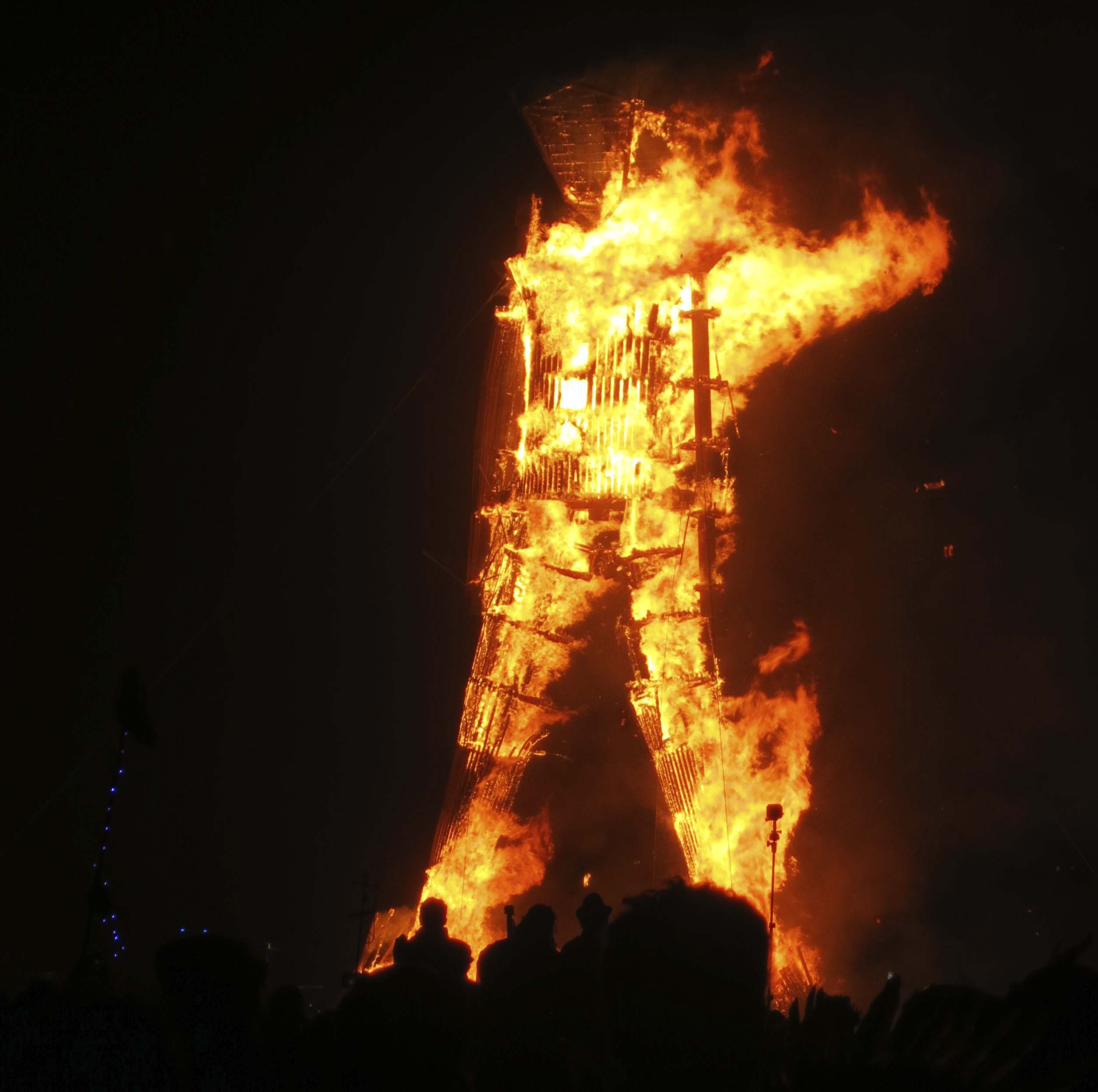
Sometimes the Man burns quickly. Other times he may take an hour or longer.

Sometimes the Man burns quickly. Other times he may take an hour or longer.

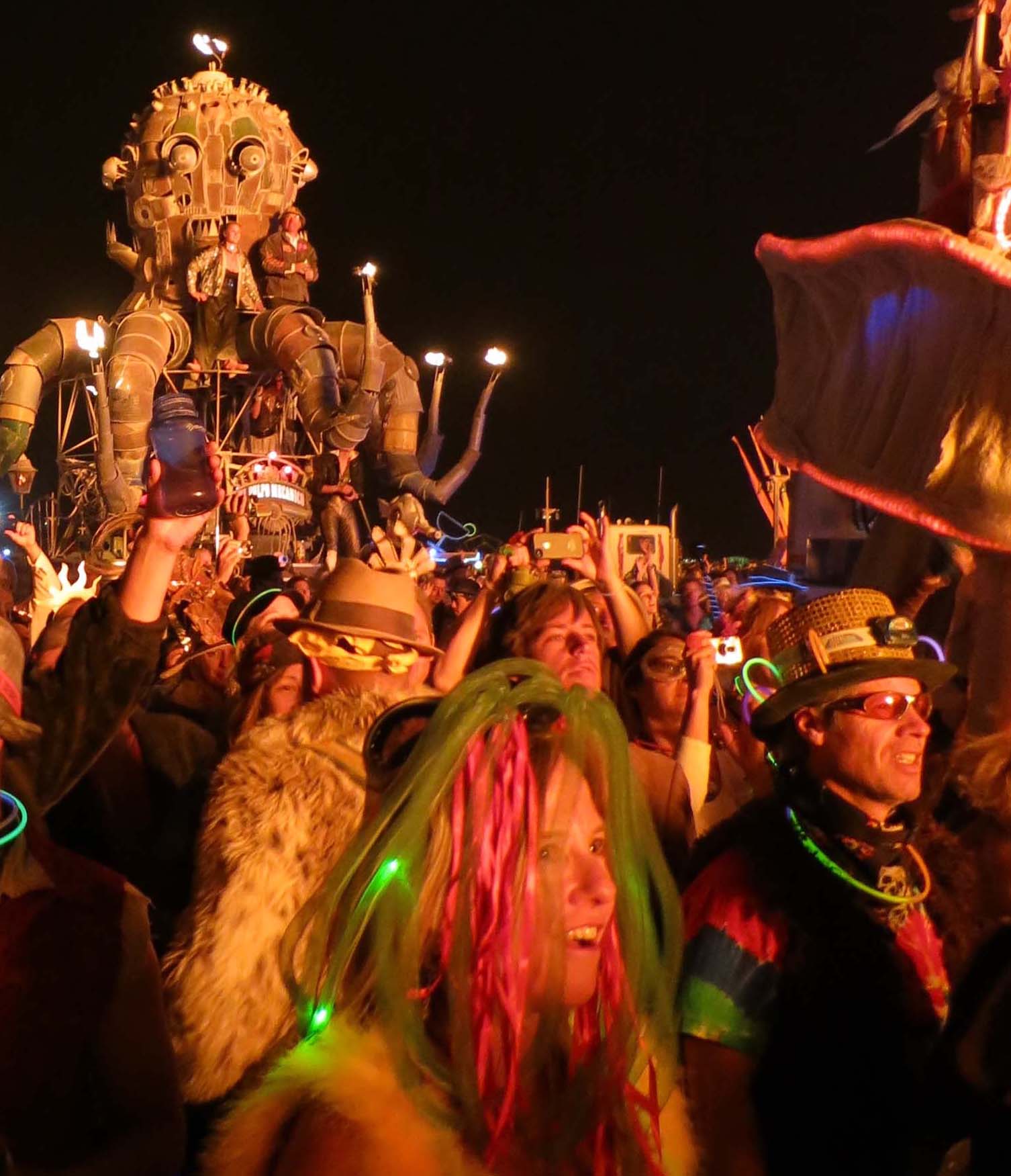
As the end approaches, Burners wait expectantly and raise their arms in salute. The mutant vehicle, El Pulpo Mechanico looks on.

As the end approaches, Burners wait expectantly and raise their arms in salute. The mutant vehicle, El Pulpo Mechanico, looks on.

Many things burn at Burning Man. Here it was Kokopelli. He seemed to be playing his flute to the fire.

Many things burn at Burning Man. In 2012 the New Mexico regional Burning Man group brought Kokopelli to the Playa. He seemed to be celebrating the flames with his flute. Thoughts of Nero fiddling while Rome burned come to mind.

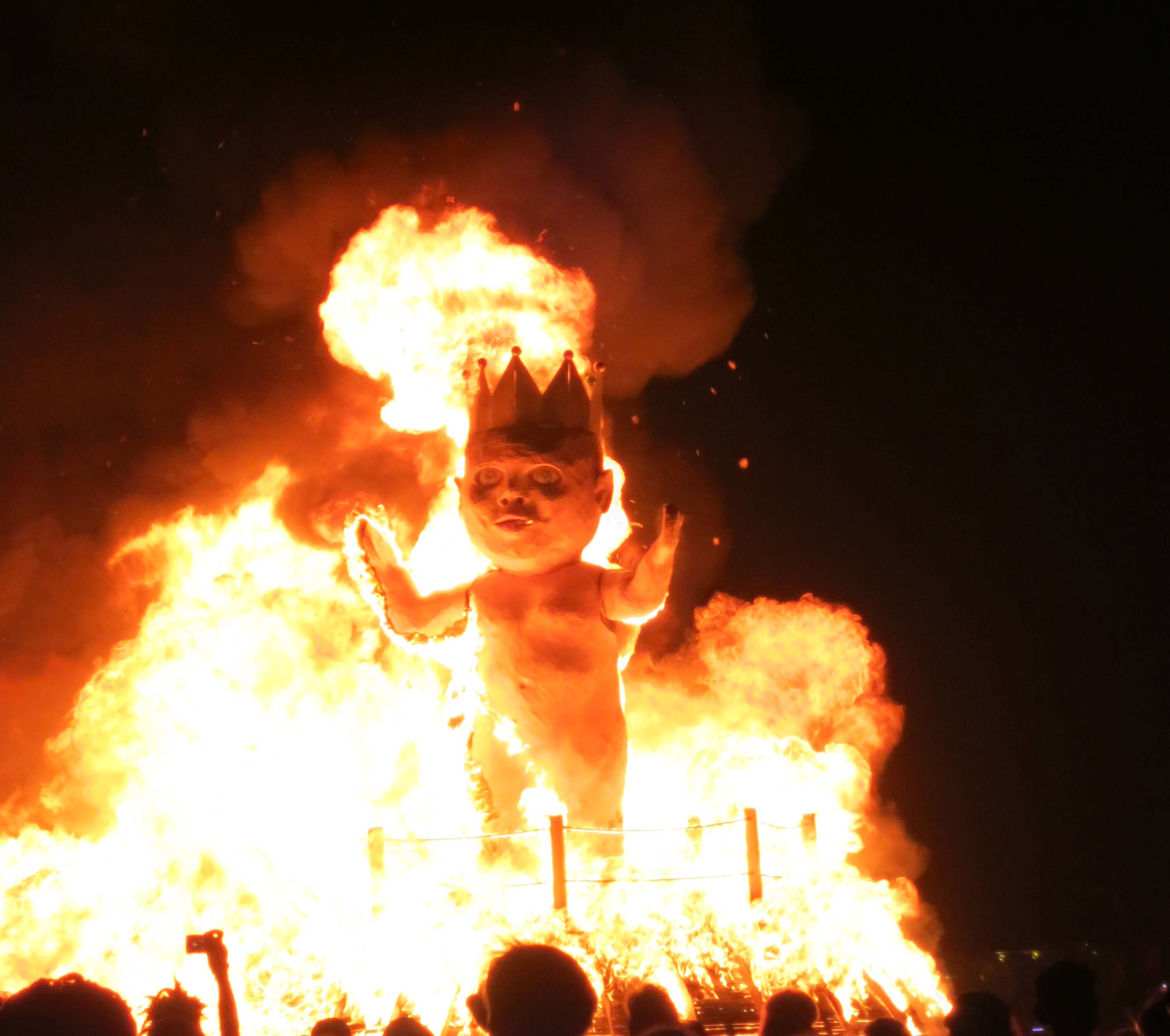
The New Orleans regional group brought an effigy of the Baby King that shows up in cakes at Mardi Gras time.

The New Orleans regional group brought an effigy of the Baby King that shows up in cakes at Mardi Gras time.

And Lithuanian Burners added a bird sculpture.

And Lithuanian Burners added a bird sculpture.

Fires start small.

Fires start small.

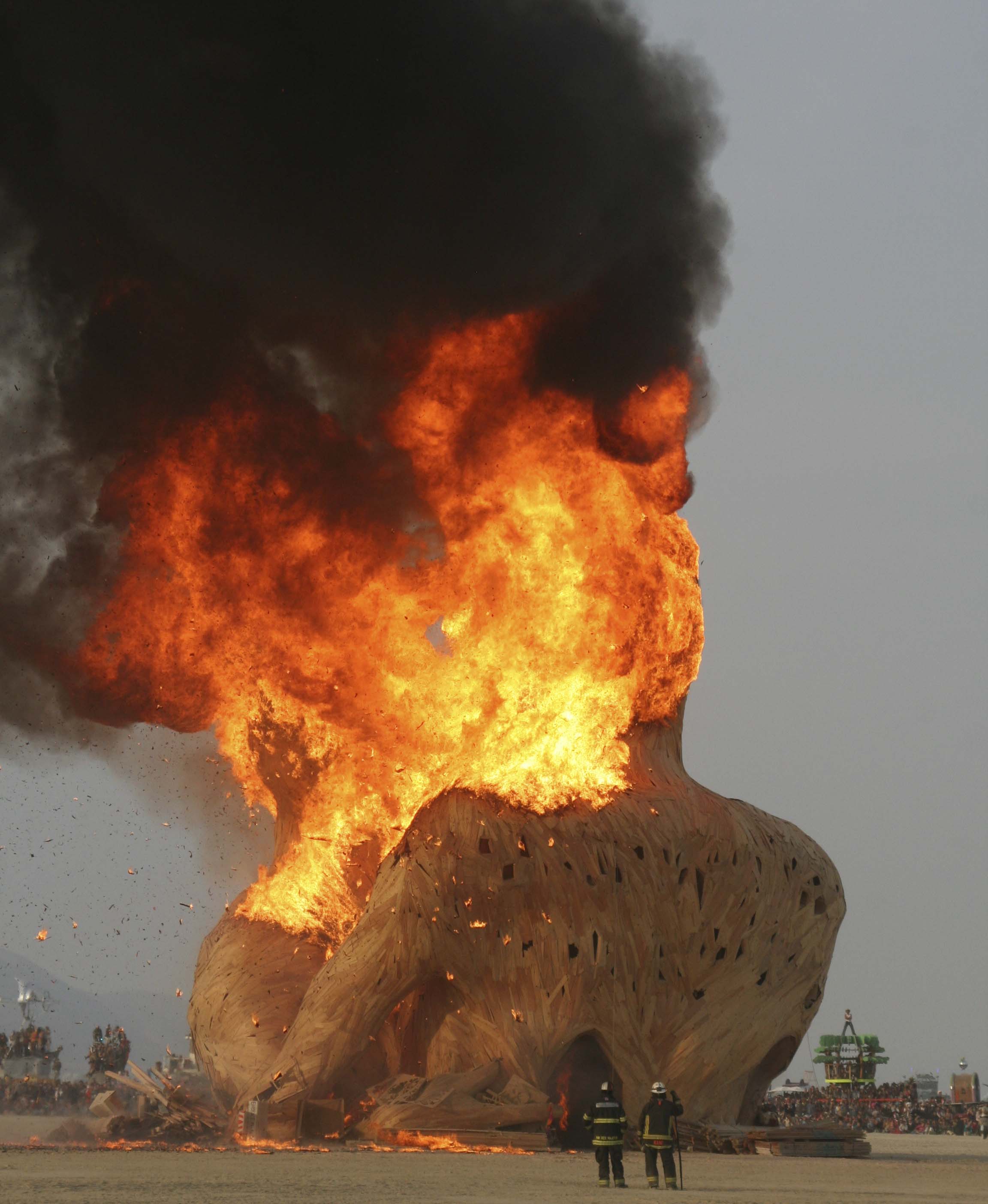
Turn into conflagrations.

Turn into conflagrations. (A pair of firemen get a close up view.)

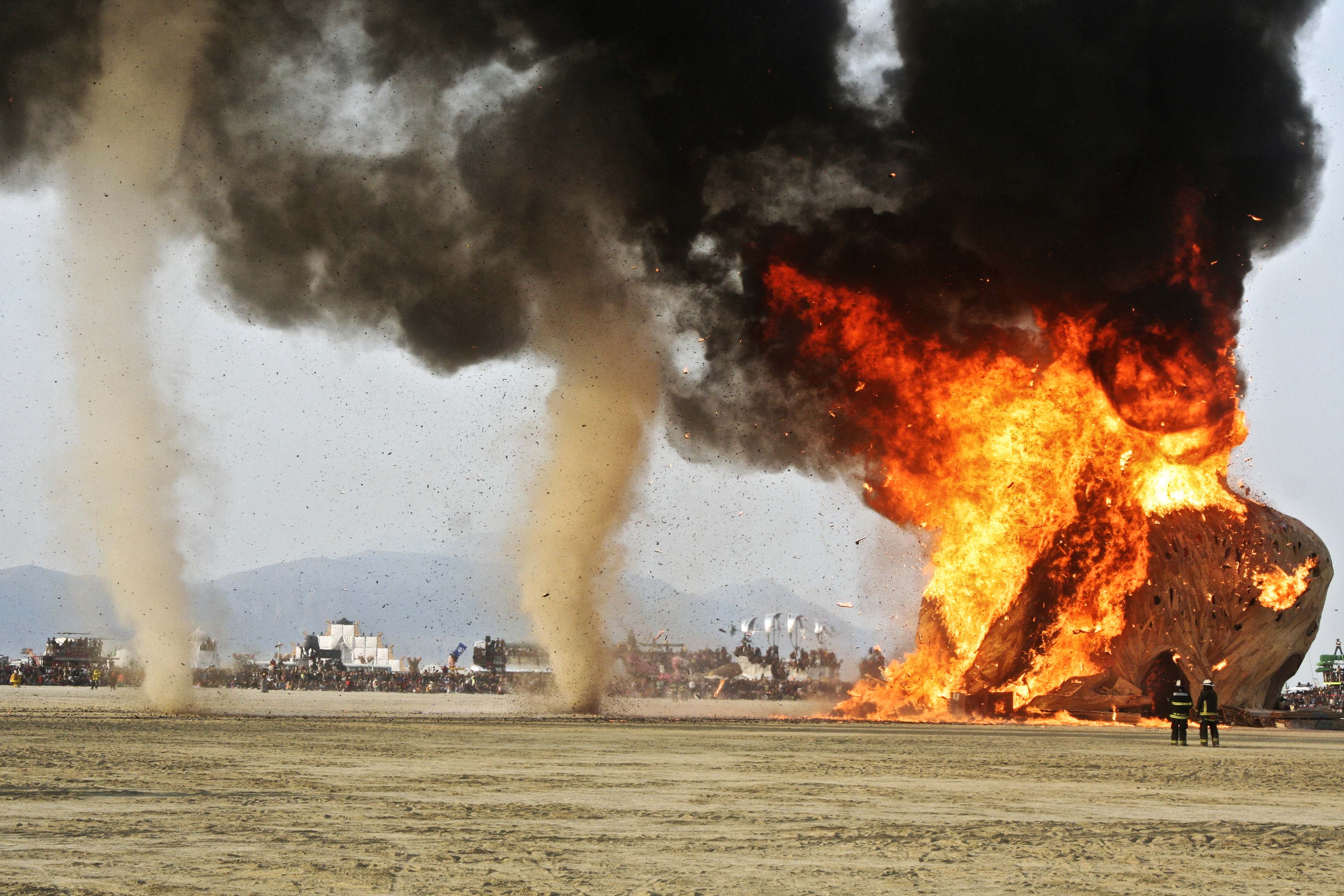
And send dust devils whirling off.

And send dust devils whirling off.

The Temple burns on Sunday Night. Unlike the Burning of the Man which is a bit on the rowdy side, Burners watch silently and respectfully as the Temple Burns.

The Temple burns on Sunday night. Unlike the Burning of the Man, which can be a bit on the rowdy side, Burners watch silently and respectfully as the Temple burns. NEXT BLOG: I am off to Portland this weekend for the Press-Publish conference of Word Press. I will report on the event next week.

The Best of Burning Man: The Top Ten Series (#7)… The Man and the Temple

The Man at Burning Man dominates the Playa and serves as a landmark for lost Burners.

The Man at Burning Man dominates the Playa and serves as a landmark for lost Burners.

I’ve now been to Burning Man for ten years starting in 2004 and will be going again in 2015— assuming I get two tickets and a vehicle pass. (I missed 2011.) In preparation for this year, I have been doing a top ten series. Today I am going to feature two structures that epitomize Burning Man: The Man and the Temple.

Series 7: The Man and the Temple

If the Man reflects the history and continuity of Burning Man, the Temple reflects its spirit. The vast majority of Burners visit each of these large structures at least once during their week at Black Rock City. The Man dominates the Playa and provides a familiar landmark for both new and returning participants. Its roots date back to 1986 when Larry Harvey and a few friends burned the first Man on Baker Beach in San Francisco.

The Temple, a more recent creation, dates back to 2000 and can change dramatically each year in its appearance. Thousands of Burners leave messages on its walls, primarily saying goodbye to loved ones who have passed on.

Both the Man and the Temple are destined to be burned at the end of the week, the Man on Saturday night and the Temple on Sunday night. I will cover both of these events in my next blog.

Peggy, Tom Lovering, Beth Lovering, Don Green, Ken Lake and I took the following photos. My selection is designed to present an overview.

The Man's normal skeletal look took on a new shape in 2015, like he had donned clothes.

The Man’s normal skeletal look took on a new shape in 2014, like he had donned clothes.

The Man's more skeletal look, which is how he has looked as long as I have been going to Burning Man.

The Man’s more skeletal look, which is how he has looked as long as I have been going to Burning Man. I assume that the nine foot version that Harvey burned in San Francisco resembled this guy.

What has changed about the Man each year has been his base.

What has changed about the Man each year has been his base.

One year, he was perched on a flying saucer.

One year, he was perched on a flying saucer. The bases are designed for exploration— both outward and inward. This year’s base included a slide exit. It was fast. I went flying at the end.

I am not sure how to describe this base. Thorny, perhaps.

I am not sure how to describe this base. Thorny, perhaps.

The Temples at Burning Man are unique and quite beautiful.

The temples at Burning Man are unique and quite beautiful.

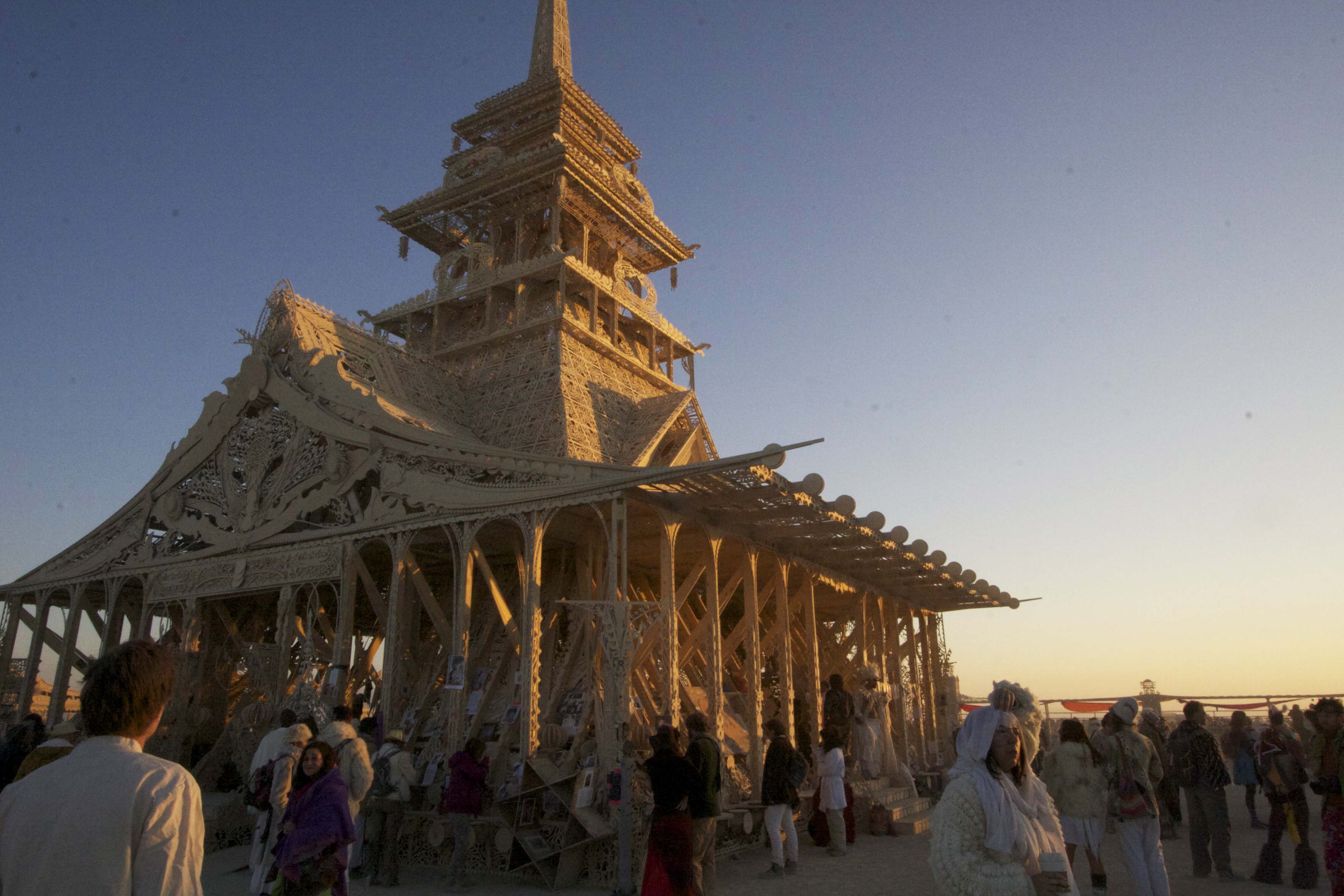
This Temple has a decided Oriental look. A number of Burners were present early in the morning.

Dawn brought a number of Burners to this temple.

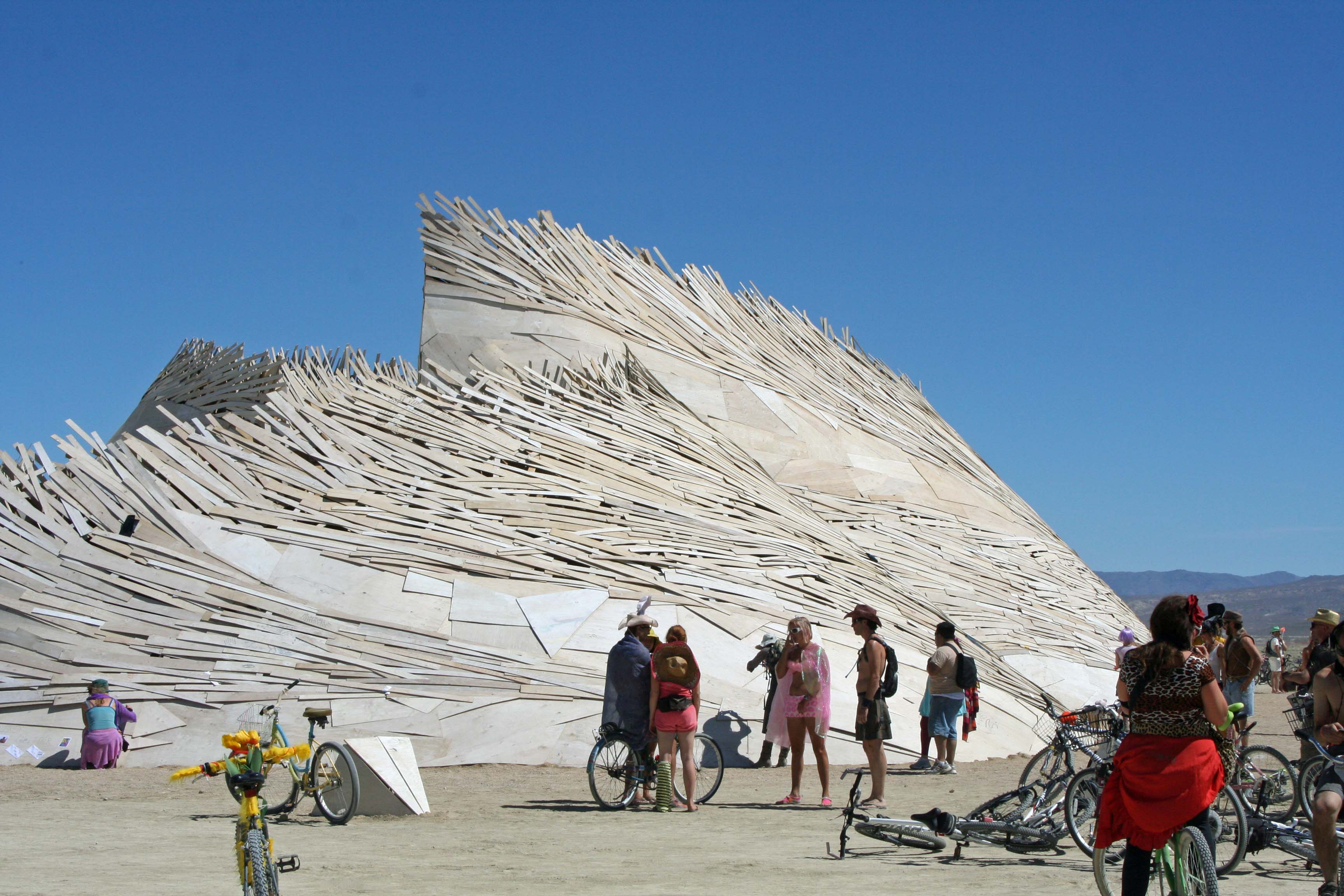
And this one resembled a sand dune.

This temple resembled a sand dune.

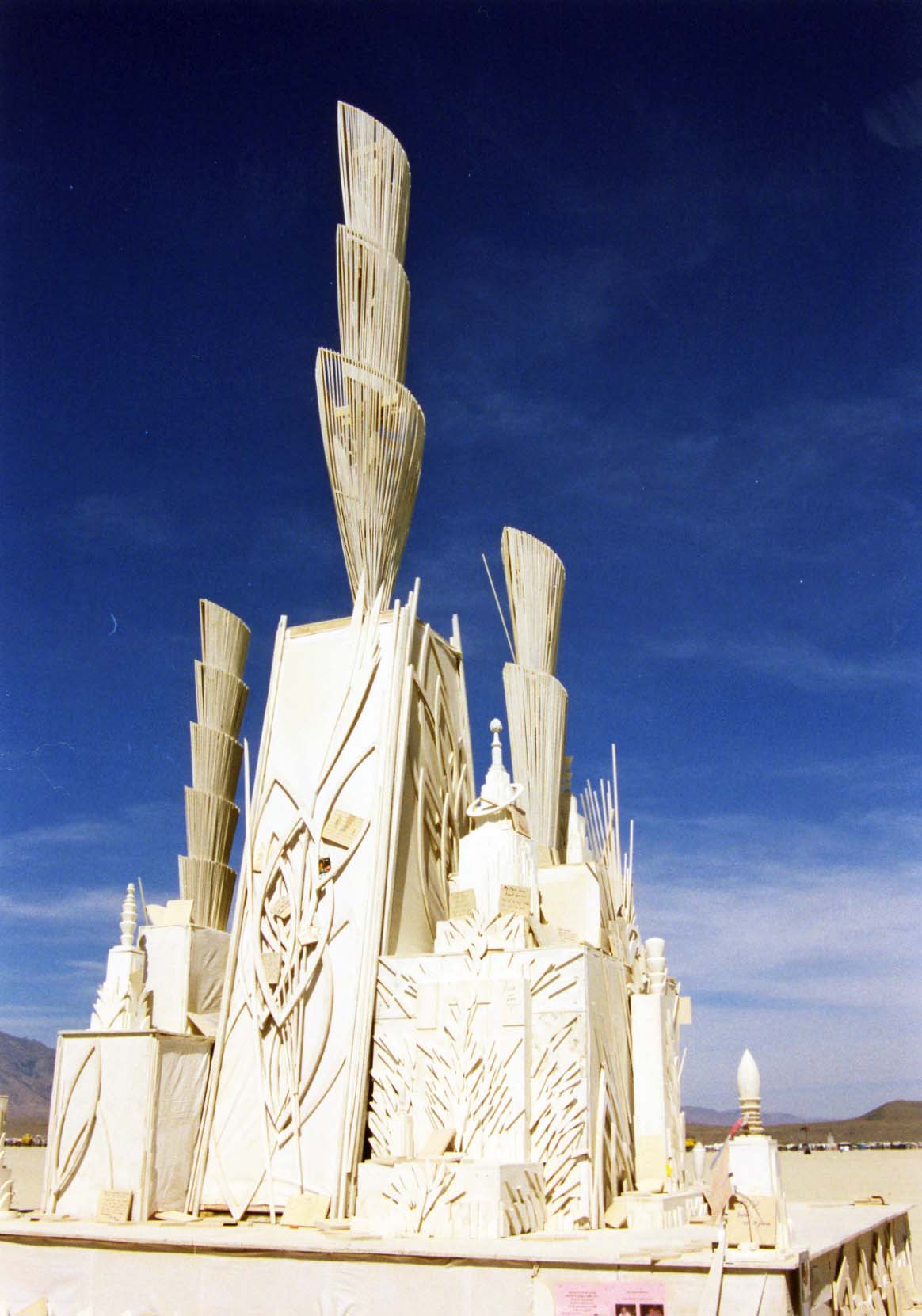
One of the first Temples I saw at Burning Man.

One of the first temples I saw at Burning Man.

This temple was pyramidal in shape.

And finally, a temple in the shape of a pyramid. NEXT BLOG: The Man, Temple, and other things burn.