Do you believe in ghosts? I’d like to say I don’t. Their existence isn’t rational. There is no scientific evidence that supports their presence. And yet, I’ve had three ghostly encounters (one on my own and two with Peggy) that are hard to explain— other than our minds playing tricks.
My connection with ghosts goes way back…
I was raised in Diamond Springs, California next to an old Gold Rush era graveyard. It was overgrown with Heavenly Trees that became a mass of green in the summer and an army of sticks in the winter. During the day it made a great place to play, but at night it was a thing of terror. The ghosts came crawling up out of the ground. At least that’s what my older brother told me.
Starting at 7, I slept outside in our backyard during the summer. The graveyard was 50 feet away, just across the alley. I had a healthy respect for the denizens of the dark. They scared the crap out of me.
I placed my military surplus army cot in a location where I couldn’t see the graveyard and hired the family pets—a greyhound, cocker spaniel and black cat, plus fleas— to protect me. I paid them by giving them free rent space on the cot. It worked. At least, if the ghosts came by on a haunting expedition, the pets kept them at bay. It would be decades later when I experienced my first ghost encounter.
I Am Haunted By a Ghostly Pop
My father, Pop, passed away in 1990 at 88. He had managed to take care of himself up to the very end. His last years were spent in a small apartment in Sacramento at a subsidized senior complex. They were good years. He smoked his pipe, painted pictures, and read the Bible. The Pearly Gates were looming, and he wanted to be sure he was ready. His view of Heaven didn’t include Pearly Gates, however. He wanted to become a rocket ship and wander the Universe. Why not. Wandering is big in our family.
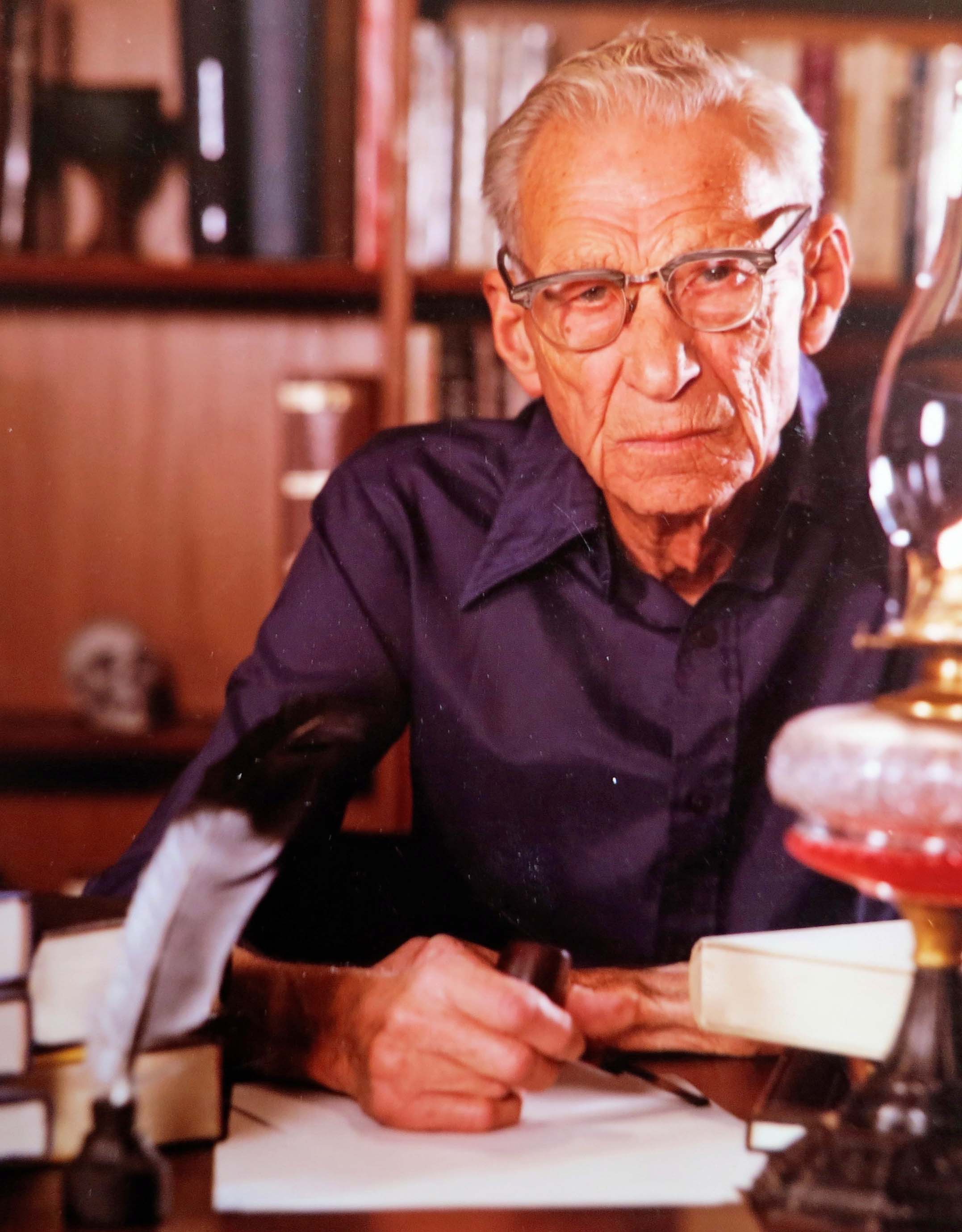
He never gave up trying to convert me to what was basically a Fundamentalist view of Christianity (other than the rocket ship). When I stopped by to visit and check up on him he’d always lecture me: “You should read the Bible, Curt.”
I had the unfortunate experience of finding him dead. One, of course, because he had passed away, and two because he wasn’t lying peacefully in his bed. He was sitting on the toilet.
A few days later I went over to clean his apartment. I was in the bathroom scrubbing out the toilet when a light in the front room flipped on. I went out, thinking maybe the building manager had come by. No one was there. Okaaay… I went back to the bathroom. Just as I walked in, the sink faucet jumped on full force. I grabbed my things and vacated the premises. Quickly. I then hired a cleaning business to go in and finish the job.
That night I left the lights on in my apartment. It had been ages since I feared things that go bump in the night, but why take chances. Just as I was finally drifting off to sleep from exhaustion, Pop popped up in my head. “I am alright, Curt,” he said. “It’s okay.” And then I saw the proverbial white tunnel. It wasn’t a light at the end of the tunnel; it was the complete tunnel, the whole shebang— Pop walked down it and disappeared.
Afterwards, when I thought about the experience, I was a little amused that Pop hadn’t taken advantage of the moment by turning into a UFO and saying, “Read your Bible, Curt.” I would have started immediately. But maybe by then he had found something else to fuel his spaceship.
In Search of a Martyr’s Grave
I’ve done a fair amount of genealogical research on the Mekemson family. Our roots go back to at least the 1600s in Scotland. One line took me back to John Brown, the Martyr of Priesthill. My Great, Great, Great, Grandfather, James Mekemson, married Mary Brown, the Great, Great, Great Granddaughter of John Brown. (It’s been said that they made a Great couple.)
The story of John Brown’s martyrdom verges on legend. He was, as the saying goes, a Covenanter’s Covenanter, a very devout man. The Scottish Covenanters were Presbyterians who received their name from signing a Covenant that only Christ could be King, which eliminated the King of England from being God’s representative on earth. The King was not happy. He did what he could to change their minds. The usual: Murder, torture, etc.
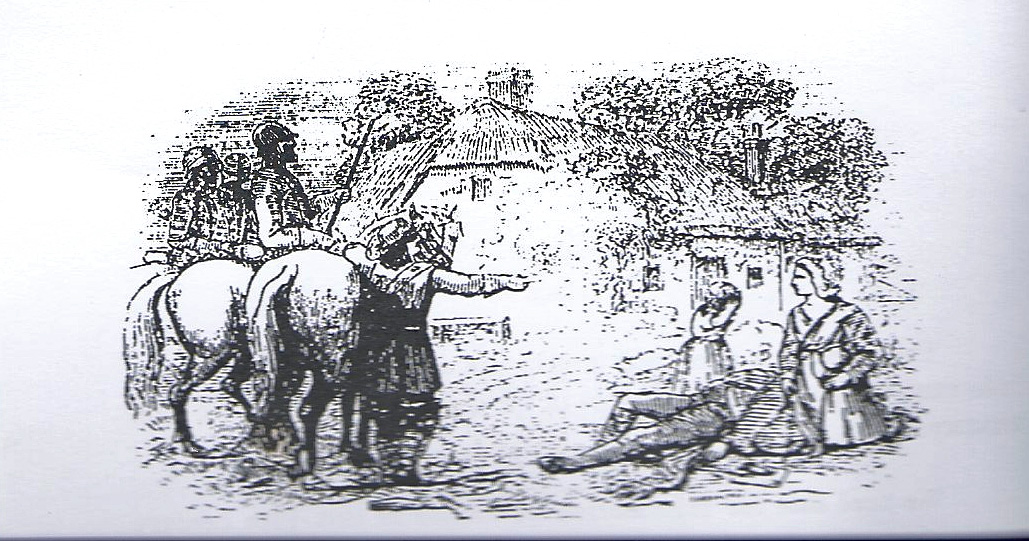
It was on May 2, 1685, when John Grahm of Claverhouse, the Kings go-to man when it came to hunting down Presbyterians, caught up with Brown. The Covenanters called him Bloody Clavers. He was not noted for his compassion. He demanded that Brown swear an oath to the King in front of his wife and children. Brown started praying instead. The legend states that Grahm took out his pistol and shot him in the head in front of his family. It then goes on to describe how Brown’s wife, Isabel, went about the yard collecting pieces of her husband’s brain. (If that’s not ghoulish enough for Halloween, I don’t know what is.)
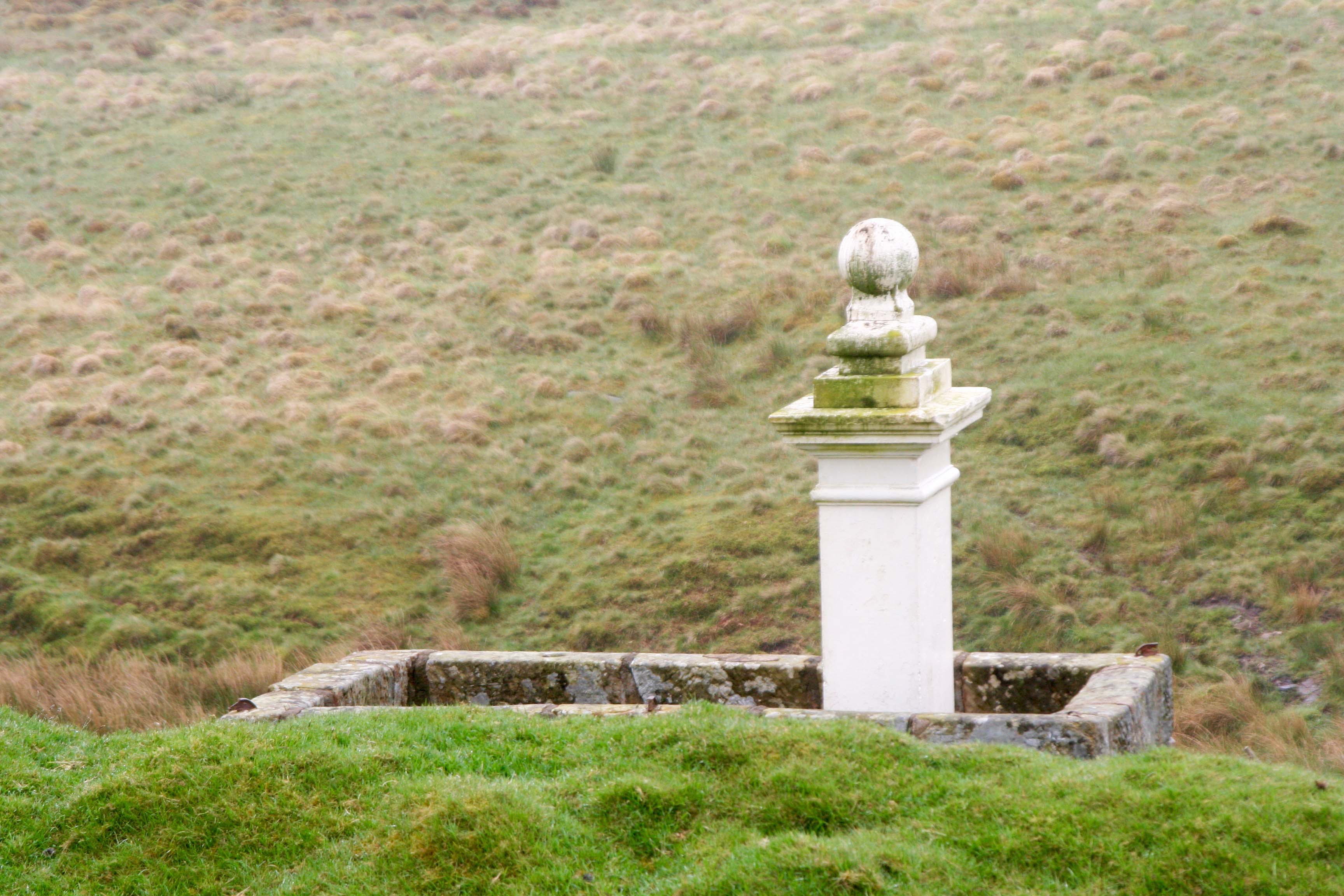
It’s hardly surprising that my fascination with family genealogy would take me to Scotland where I would search for information on the Mekemsons— and that I would go in search of John Brown’s grave. It was listed as being near the small town of Muirkirk on Priesthill farm, an old Scottish sheep ranch, dating back to at least the 1600s.
We stayed at the Old Church B&B in Muirkirk, and drove out to find the grave. A paved road soon dumped us onto a dirt road that branched off toward the sheep farm. Recent rains had turned it into a muddy mess. Our brand new Mercedes rental car bounced along dodging sheep and accumulating glue-like mud mixed with sheep dung.
Finally the old farmhouse came into sight. A woman was standing on an outdoor patio enclosed by a three-foot high rock wall. She was wearing clothes that my great-grandmother times five might have found fashionable. Since we would be walking through her property in search of John Brown’s grave, I got out to talk with her. But she did something strange. She disappeared. Now this was strange in two ways. Obviously she didn’t want to talk with me. She turned her back and headed toward the door. I could live with that even though we had found most Scots to be friendly and helpful. Possibly she was shy. What bothered me more was she… sank.
It was like she was traveling down an escalator. Her head disappeared beneath the stonewall, before she reached the door. Maybe there are steps down to an underground cellar, I thought. Maybe she bent down to work on flowers. Curiosity got the better of me. I walked over. There was no woman. There were no flowers. There were no stairs. As far as I could see the floor of the porch was solid stone.
I put the matter out of my mind as we wandered out an indistinct trail across the vacant moors to John Brown’s lonely grave. But the thought wouldn’t conveniently disappear like the woman; it kept nibbling away at me. I asked Peggy if she had seen the woman sink into the porch.
“Yes,” she replied.
“Did you actually see her go in the house?”
“No.”
So I rest my case for a possible ghost. We did, by the way, find John Brown’s grave. His ghost was reported to have appeared gloatingly in Bloody Claver’s tent the night before he was killed in battle.
The Family Ghosts of Fort Mifflin
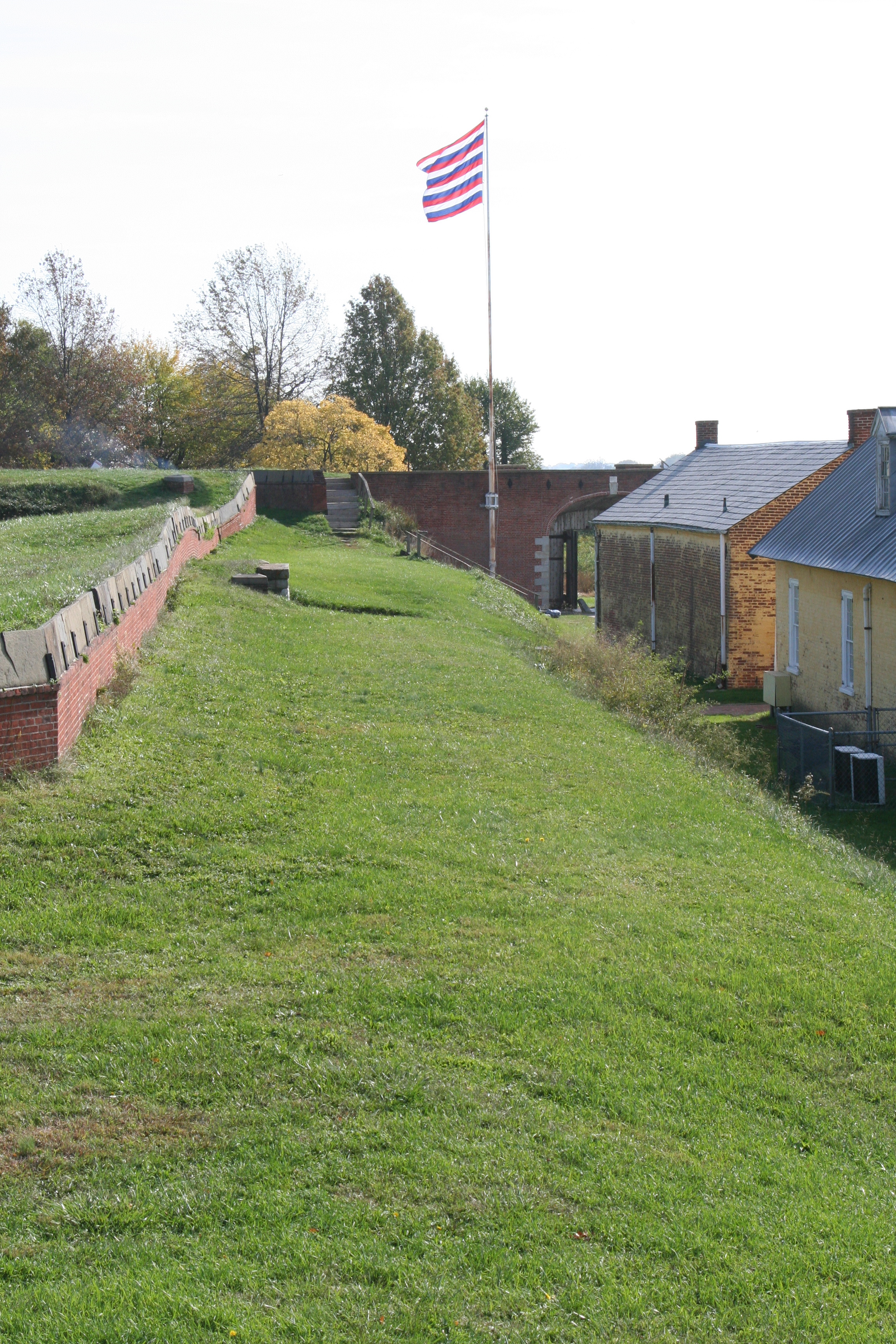
It’s possible that you have never heard of Fort Mifflin. It’s located next to the Philadelphia International Airport on the Delaware River and played a vitally important role in the Revolutionary War. This small fort with 400 semi-starved, cold soldiers with limited ammunition kept the mighty the British Navy from resupplying the British Army in Philadelphia for six weeks, giving George Washington time to escape to Valley Forge just as winter set in. Otherwise, America may have had a very different history!
Peggy and I went on a Halloween night ghost hunt at Fort Mifflin several years ago. The eerie creatures are known to hang out there. It’s considered one of the hottest ghost watching spots in America and has even been featured on the popular TV series, “Ghost Hunters.”
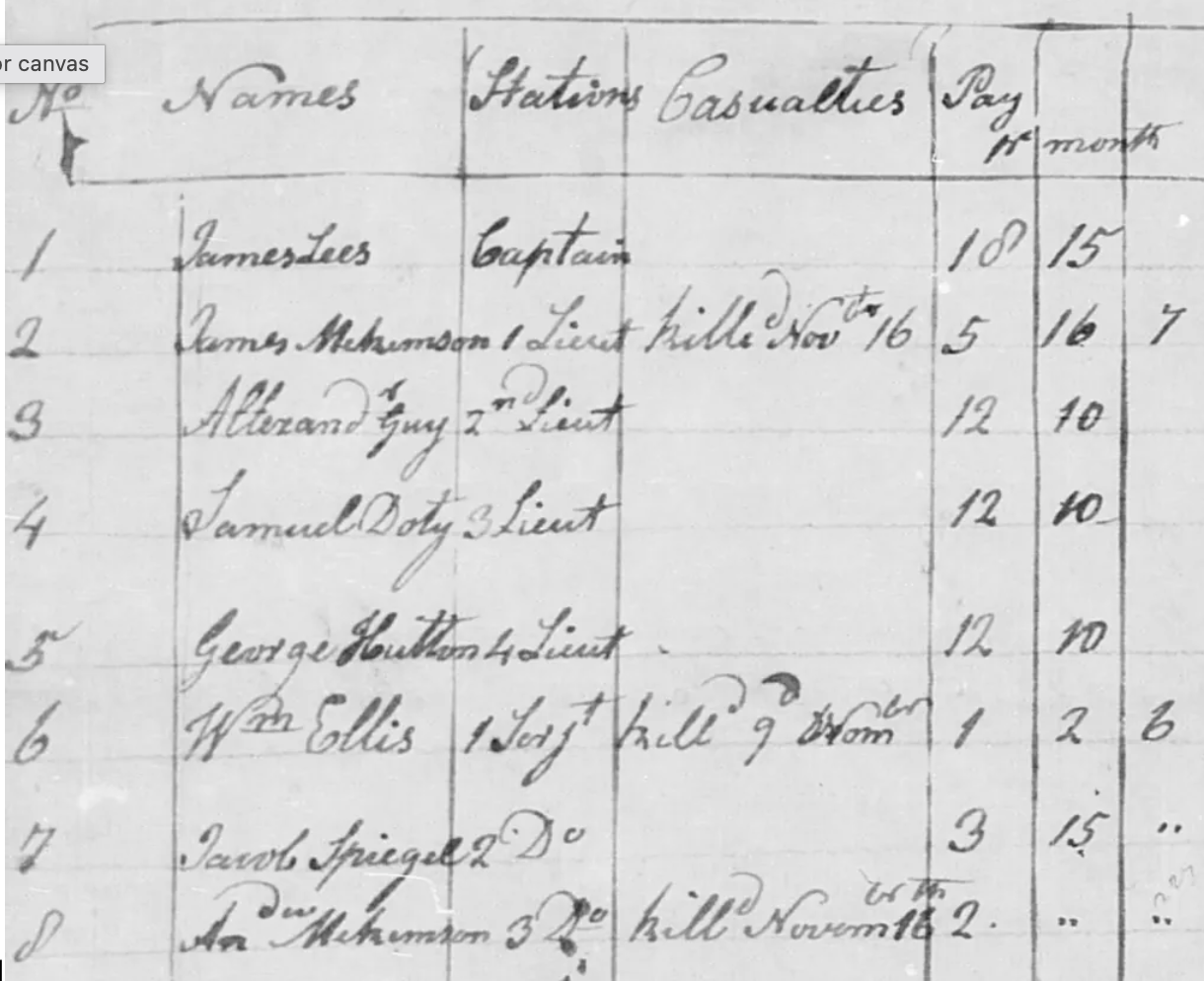
We were greeted like minor royalty when we picked up our tickets. Two of my ancestors, Andrew and James Mekemson, died defending the fort during its final heroic standoff against the British Navy. It was reported that the British warships fired 1000 cannonballs per hour into the small fort, the heaviest concentration of cannon fire during the whole war. Andrew had been up the Fort’s flagpole signaling fireboats up the river for help while dozens of cannon balls flew by him. Right after he had safely returned to the ground, one cut him in half. James was manning one of the Fort’s 10 cannons when he was killed by bullets raining down from the masts of a nearby British warship.
Our guide was holding a lantern that immediately went out when he introduced himself. “Don’t worry. It’s only the wind,” he assured us. “I don’t believe in ghosts. I don’t hunt them and they don’t hunt me.”
His disclaimer came with a ‘but.’ He worked at the Fort, and occasionally ‘things’ happen: There are unexplained footsteps on stairs. Doors close and latch on their own. Voices are heard in the next room. A woman screams like she is being murdered. The police are called but can’t find anyone, or thing. A man walking on the rampart disappears into thin air.
Our guide related story after story as we made our way through the candle lit buildings of the fort. Other staff, volunteers and visitors had also experienced strange phenomena. More than one visitor has left on the run, and even the guide has packed up and gone home on occasion.
We arrived at the Fort’s ammunition magazine, a bush covered hill that resembled an ancient burial mound. A bright hurricane torch outlined the dim opening. It was designed to withstand high winds. There would be no going out.
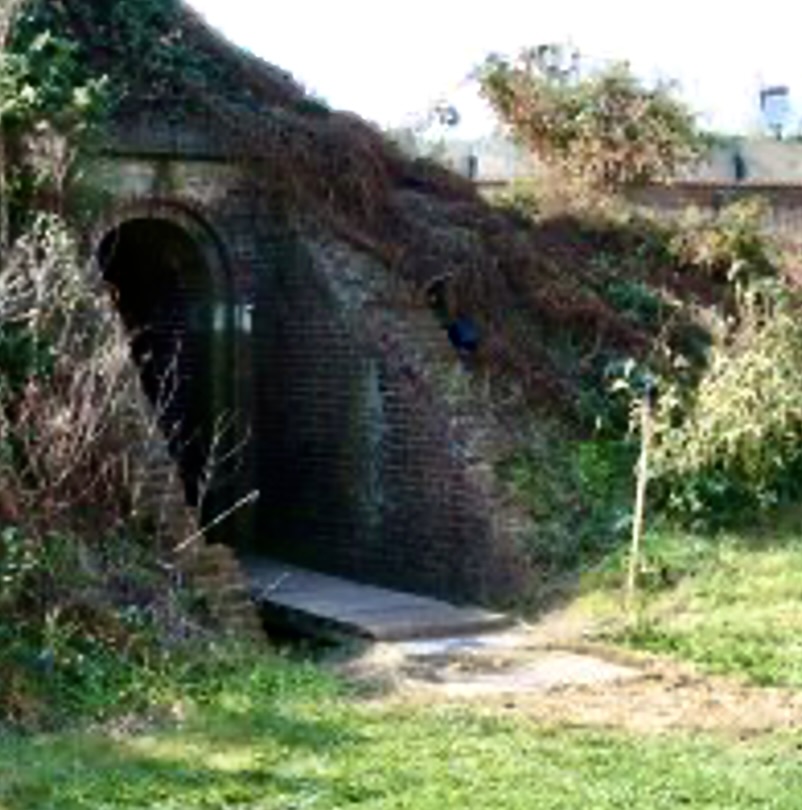
We entered and walked down a narrow, dimly lit corridor that opened out to a large, arched bunker. A single candle created dancing shadows on the far wall.
“I’ve never felt anything in here,” the guide related. “It’s dead space,” he quipped and repeated himself in case we missed his pun. For others, the story has been different. Several tourists have spoken of a wonderful guide who was waiting for them in the bunker. He was dressed as a Revolutionary soldier and vividly described the horrendous battle that took place on November 16, 1777. Which is great, except the Fort had no such guide.
I stared hard into the corner where he supposedly stood, trying to create something out of nothing. But there were only the dancing shadows. Peggy tried to take a photo but her camera froze and refused to work. As she struggled with it, the last of our tour group disappeared down the narrow corridor, leaving us alone with the flickering candle.
We hurried after the group. There was nobody outside the magazine, only the glowing hurricane torch and the dark night. “I think I saw them heading down a side corridor,” Peggy said. With more than a little reluctance, we dutifully trooped back inside. Peggy’s corridor was a bricked in wall. I was starting to feel spooked.
“Maybe we should go back to the bunker,” she suggested.
“Maybe we shouldn’t” I replied and headed for the entrance with Peggy close behind. Just as we arrived, the wind-proof hurricane torch made a poof sound and went out. Another nearby one went out as well, leaving us with nothing but dark night. The hairs on the back of my head stood at attention. Were the Mekemson boys attempting to contact us?
Peggy and I decided not to stay for a chat. Fortunately we found our group behind the bunker.
Halloween experiences don’t get much better.
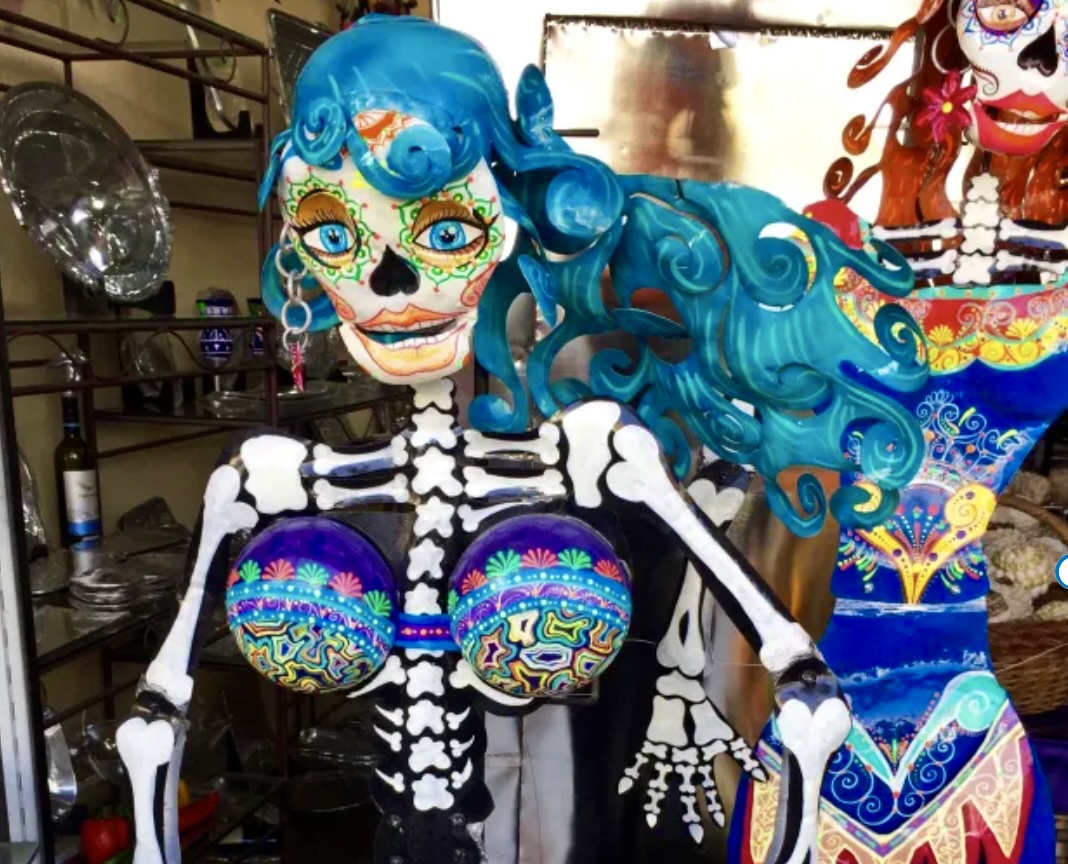
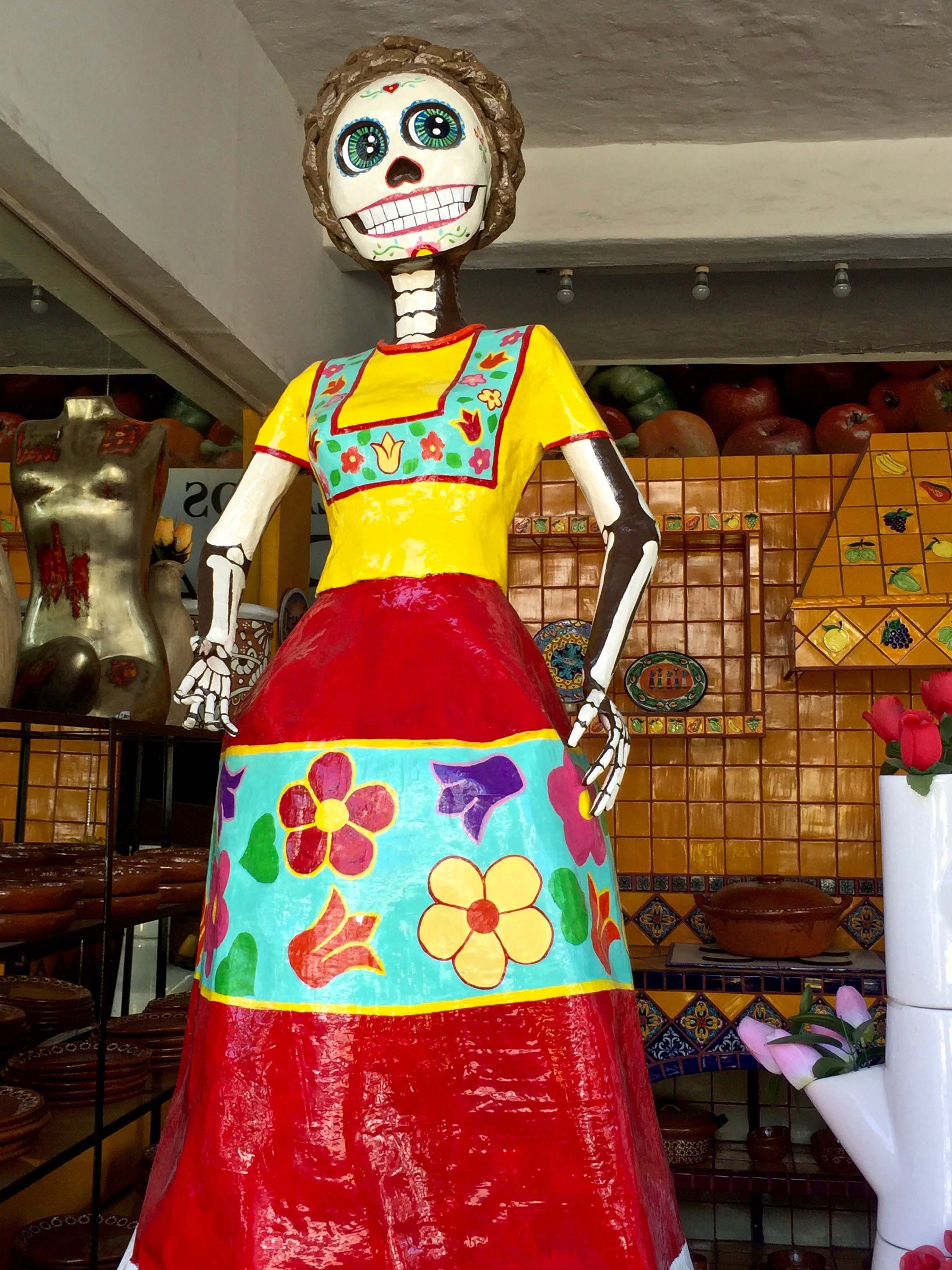
Skeletal Day of the Dead Señoritas in Puerto Vallarta, Mexico
And now it is time for the Day of the Dead señoritas from Puerto Vallarta. Peggy and I thought it would be fun to include several here as a wrap-up for this Halloween post.
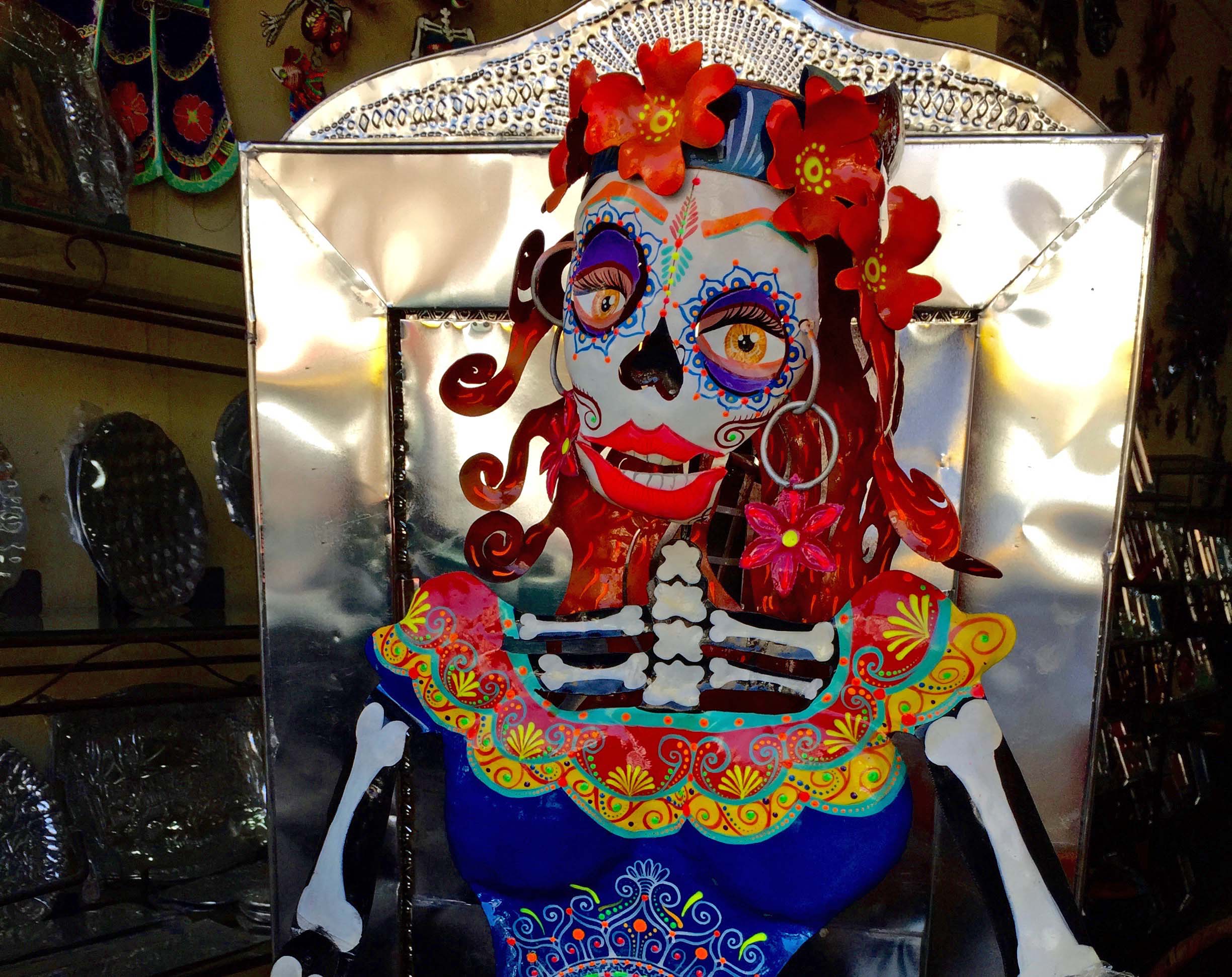
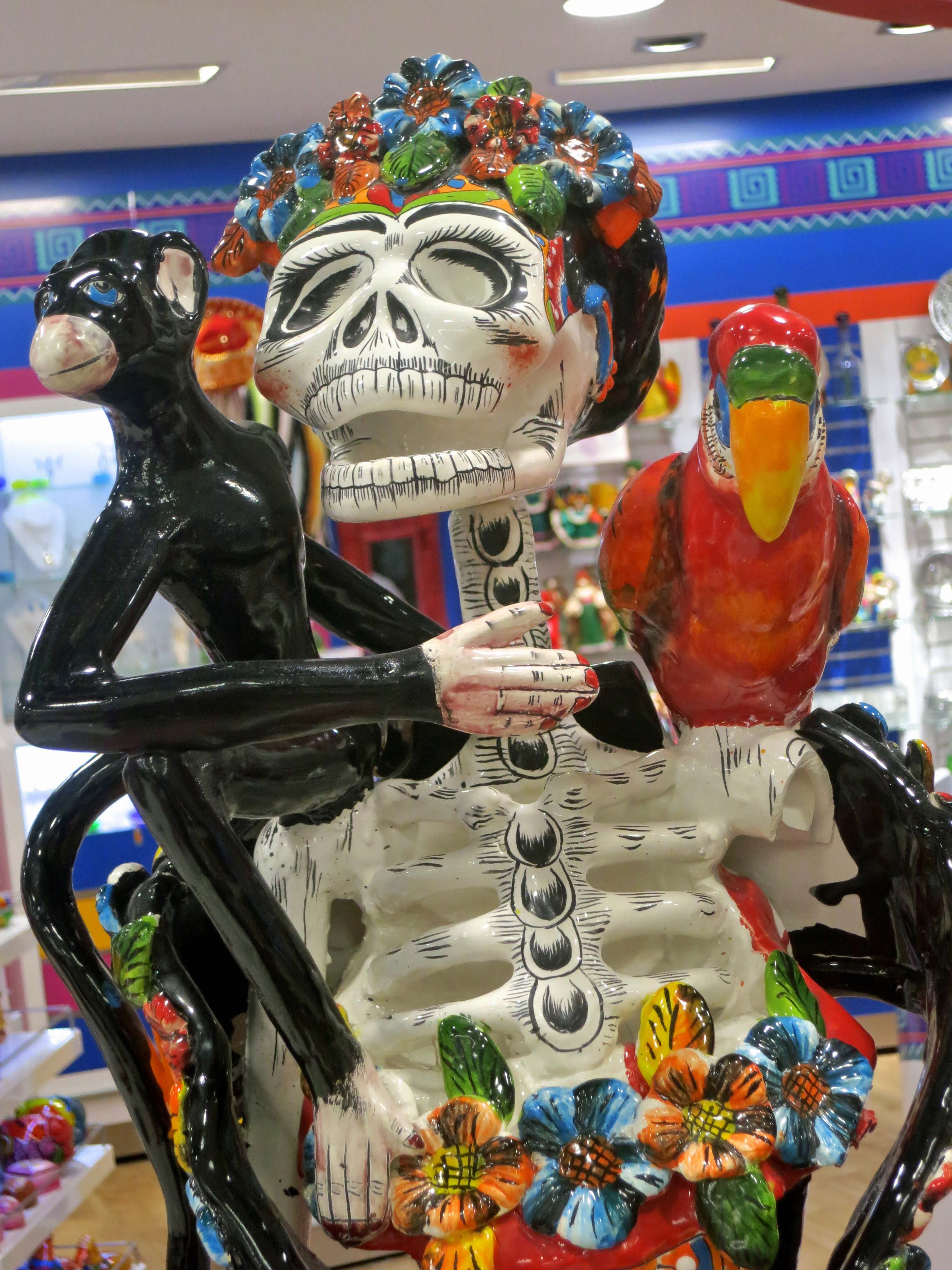
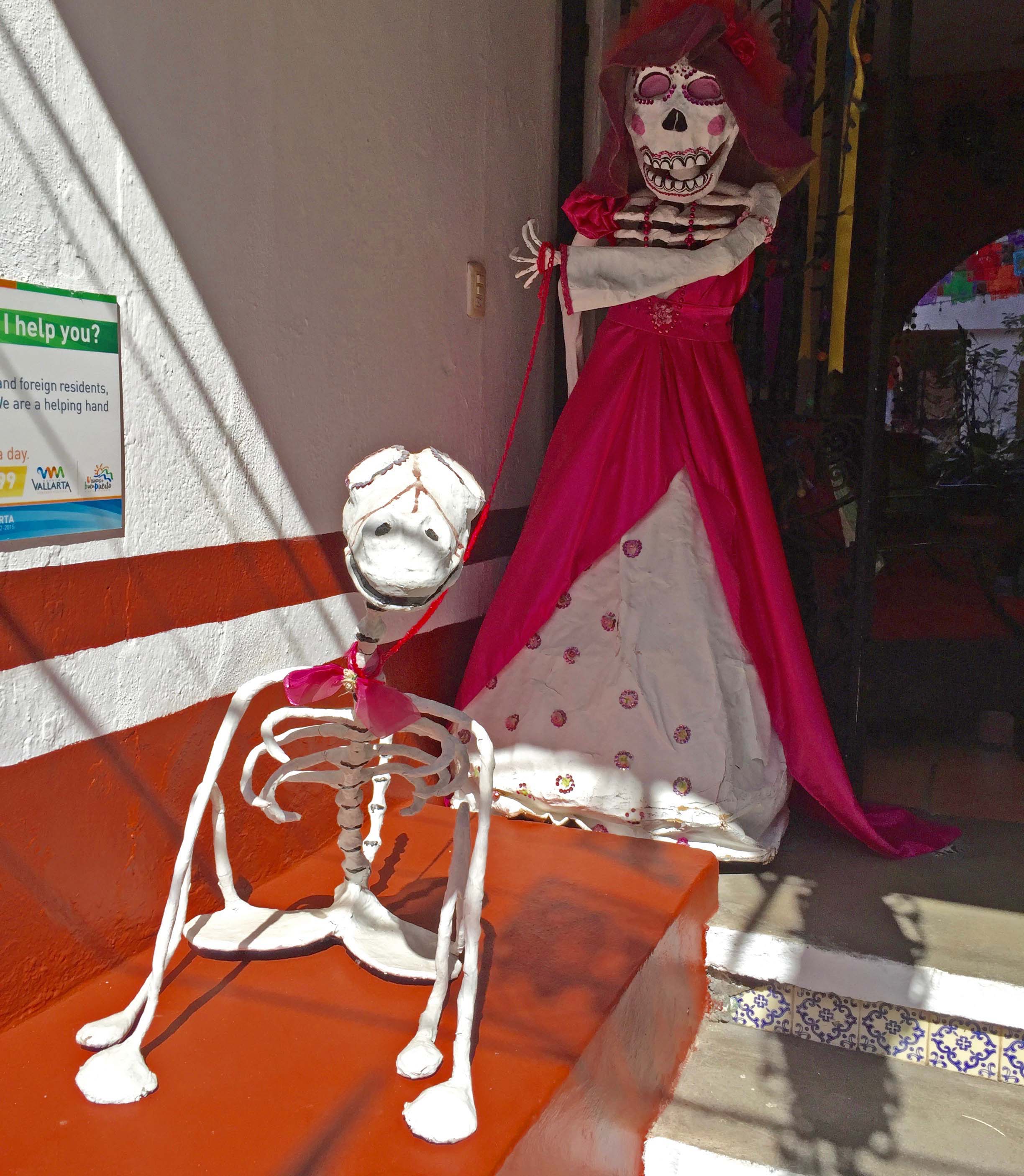
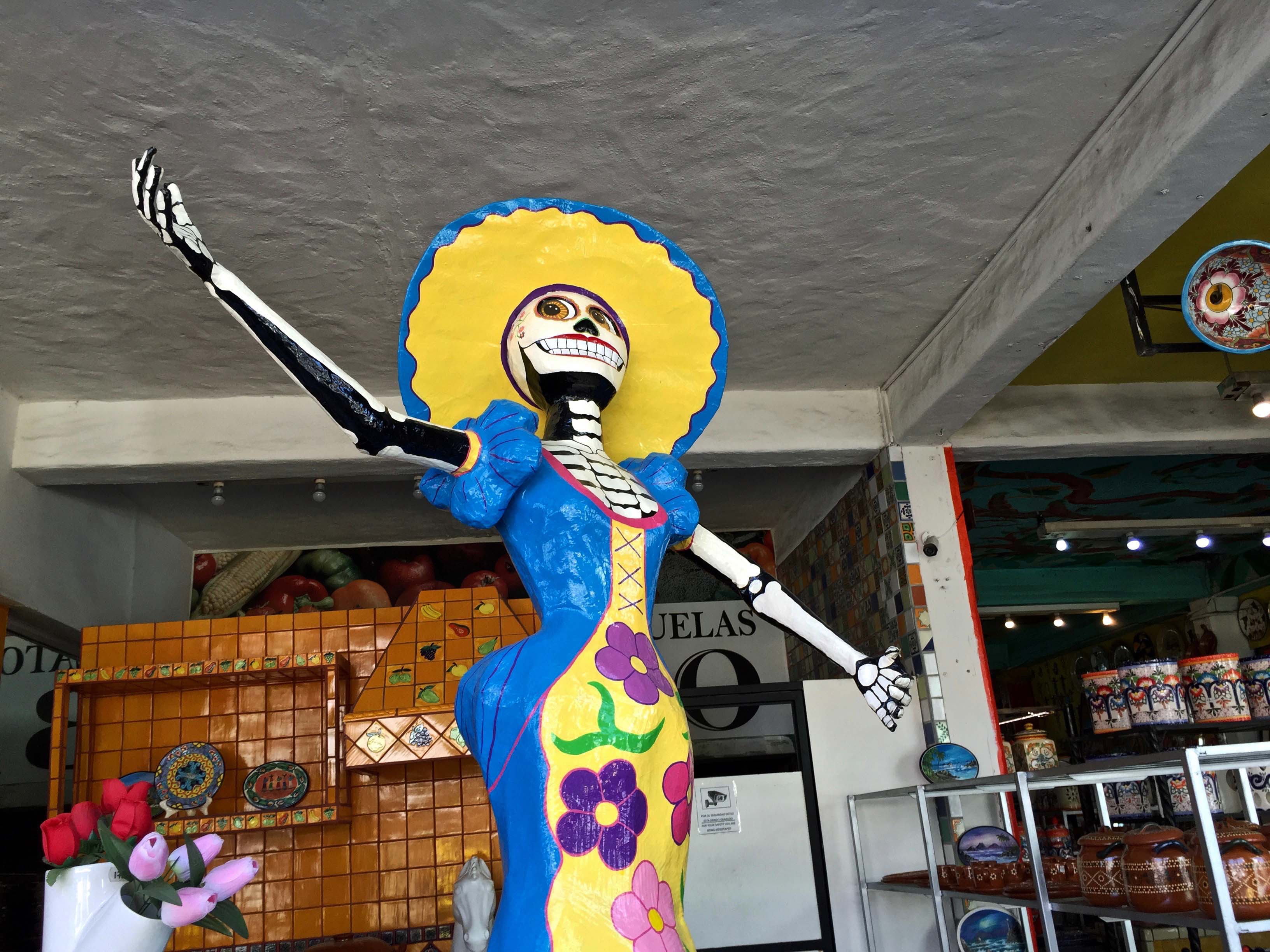
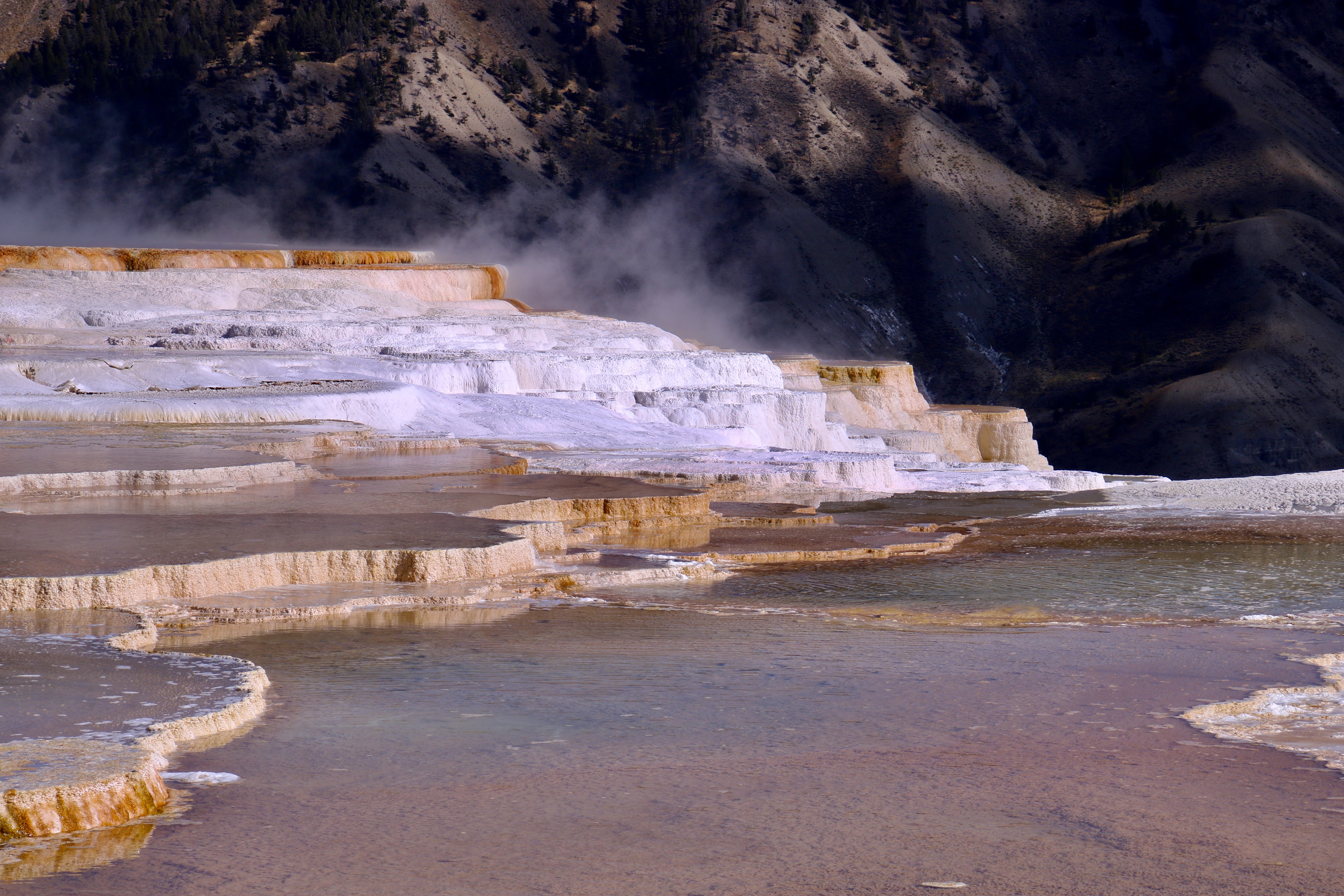
That’s it for the day. Hope you’ve had fun with our ghostly tales and Day of the Dead Señoritas. Peggy and I wish you a fun filled and only slightly scary Halloween. Eat lots of candy. We will be back at Yellowstone National Park in our next post, featuring the out-of-this-world Mammoth Hot Springs.


I’m sleeping with the lights ON!!Steve
Smart choice, Steve.