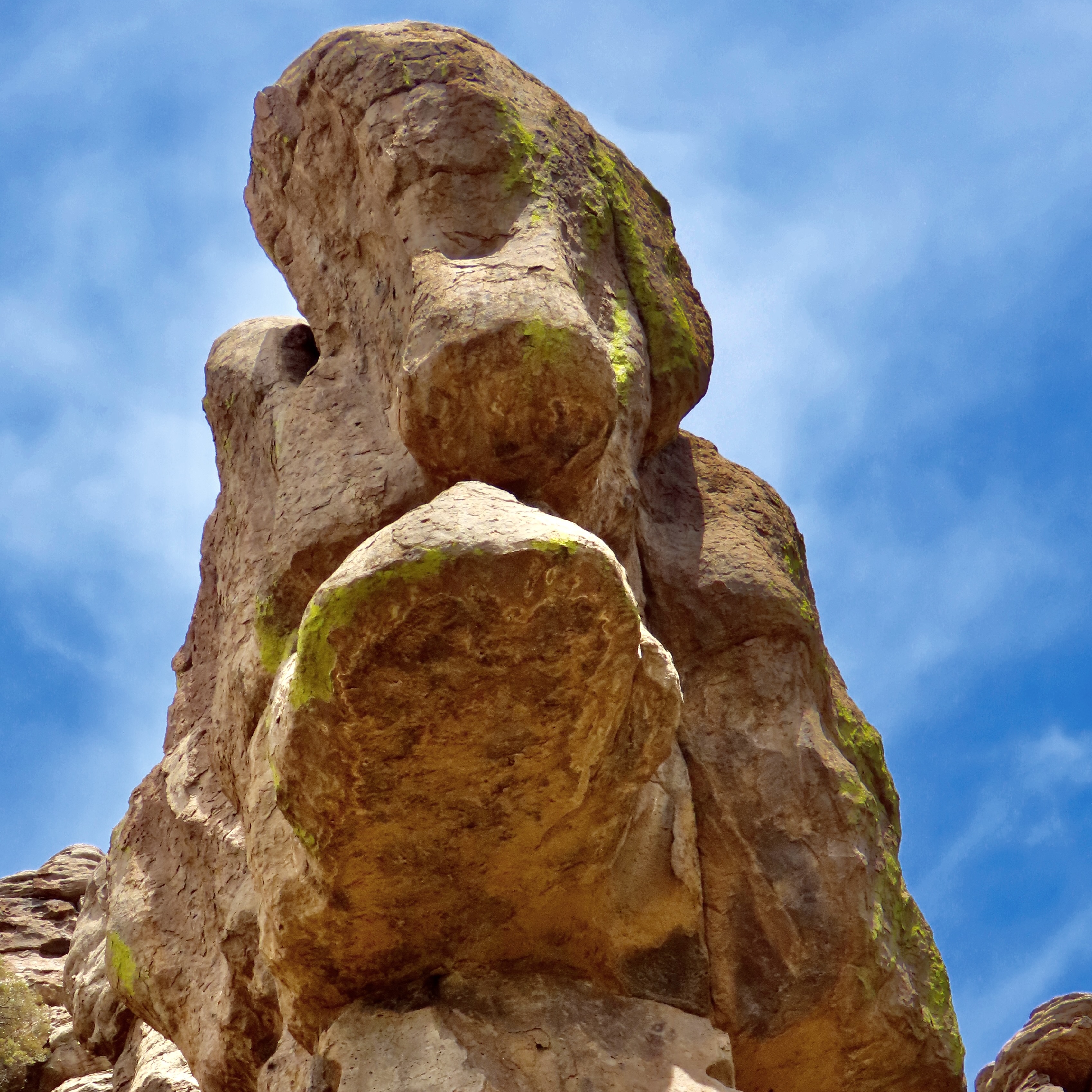
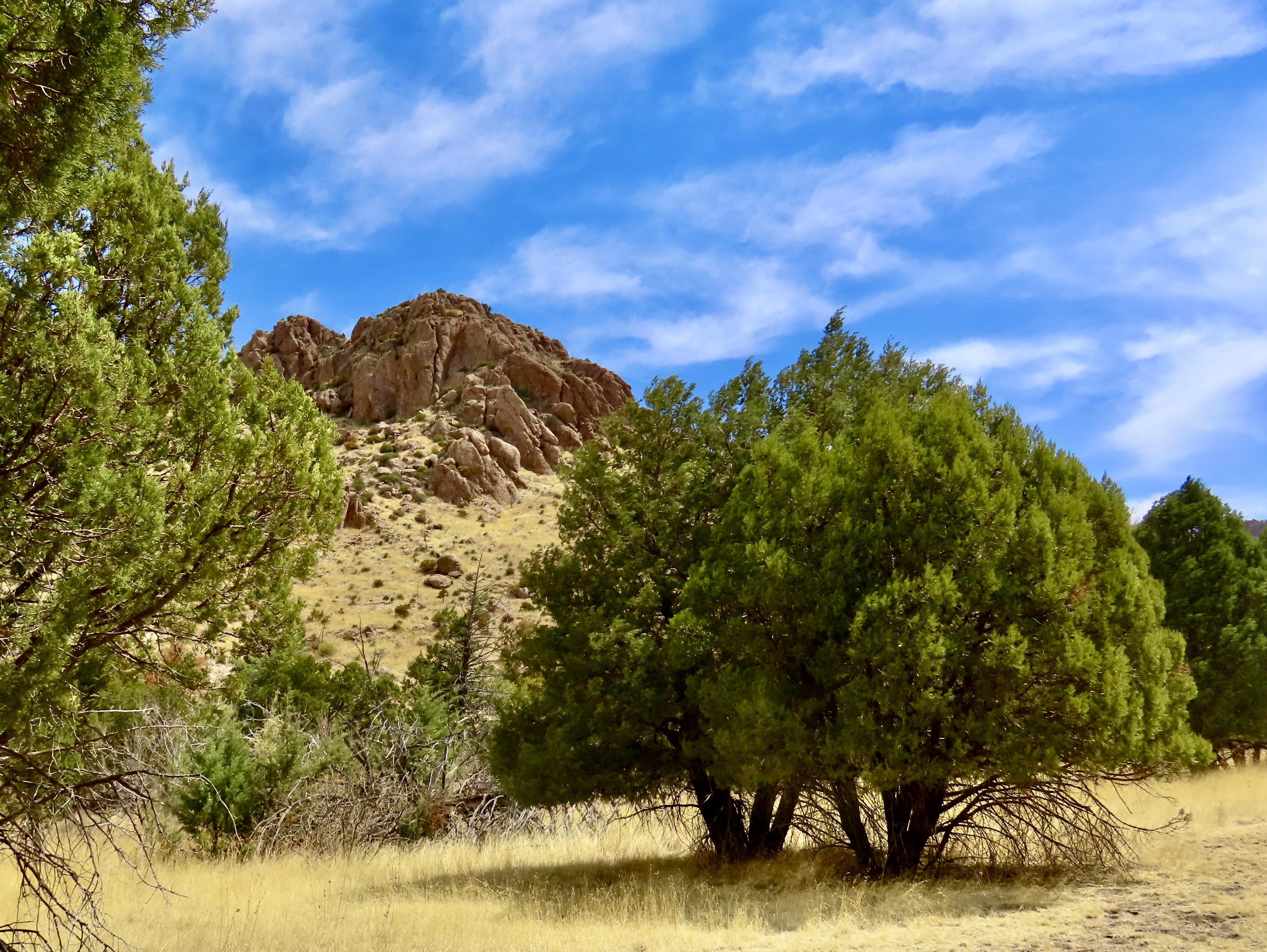
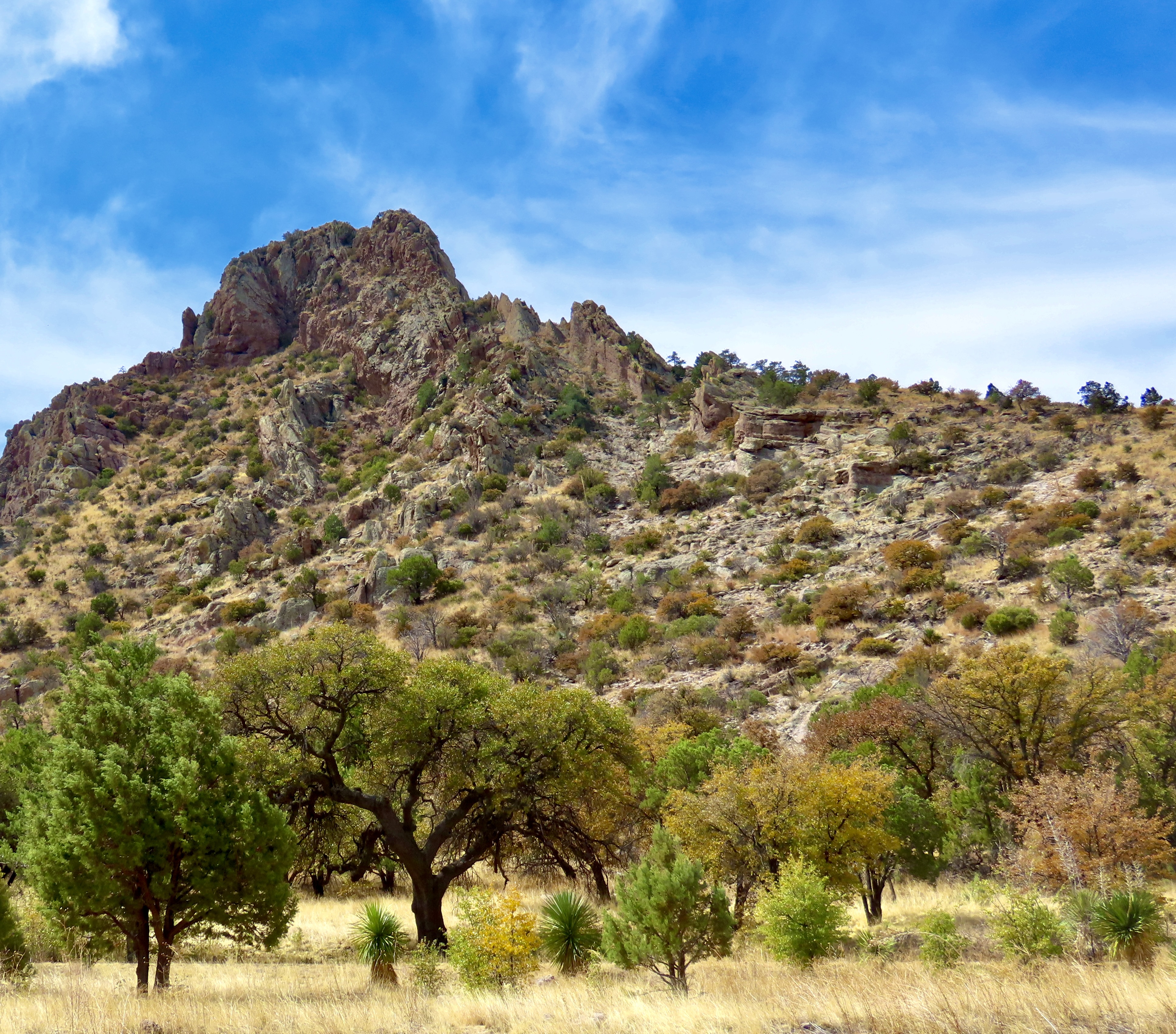
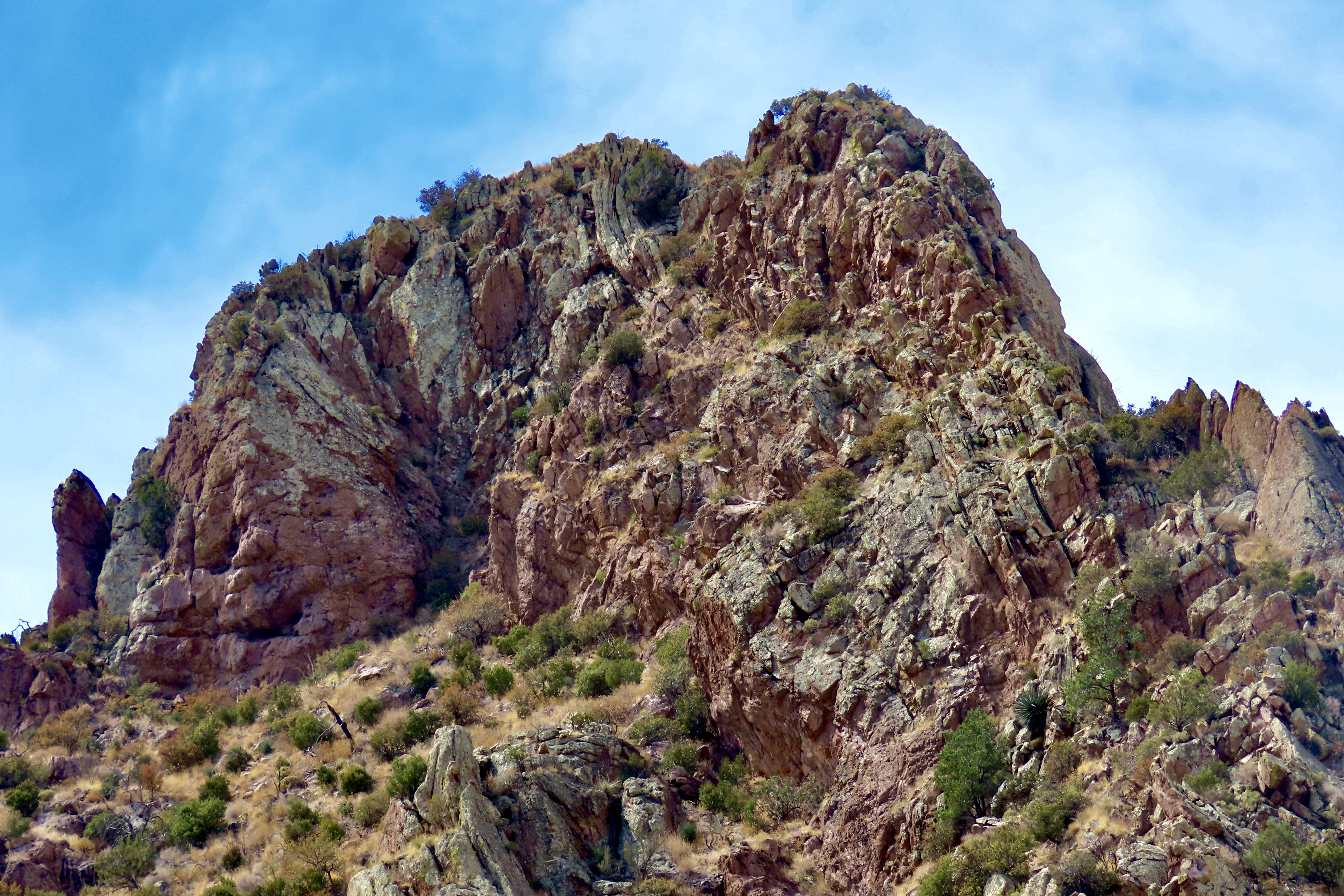
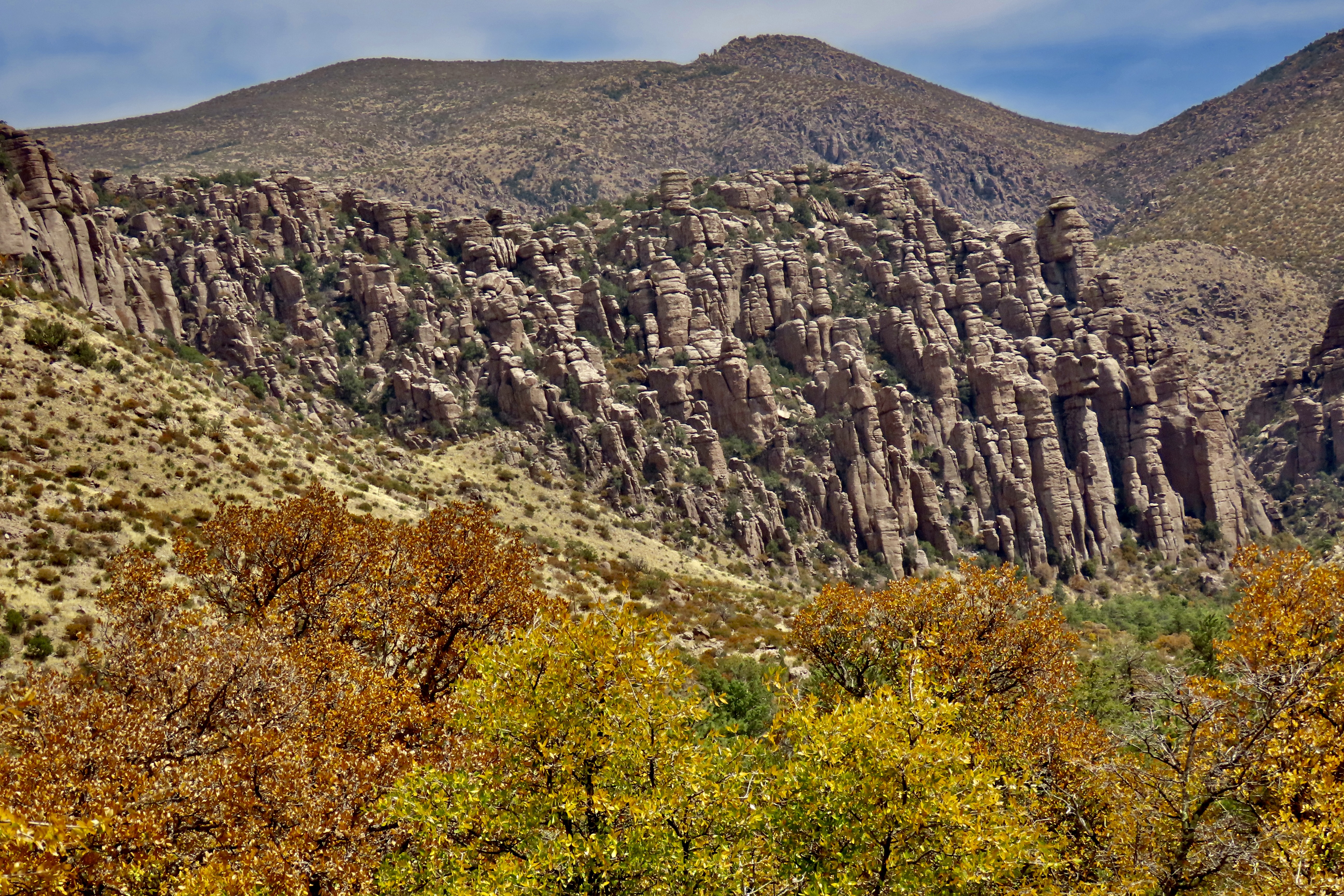
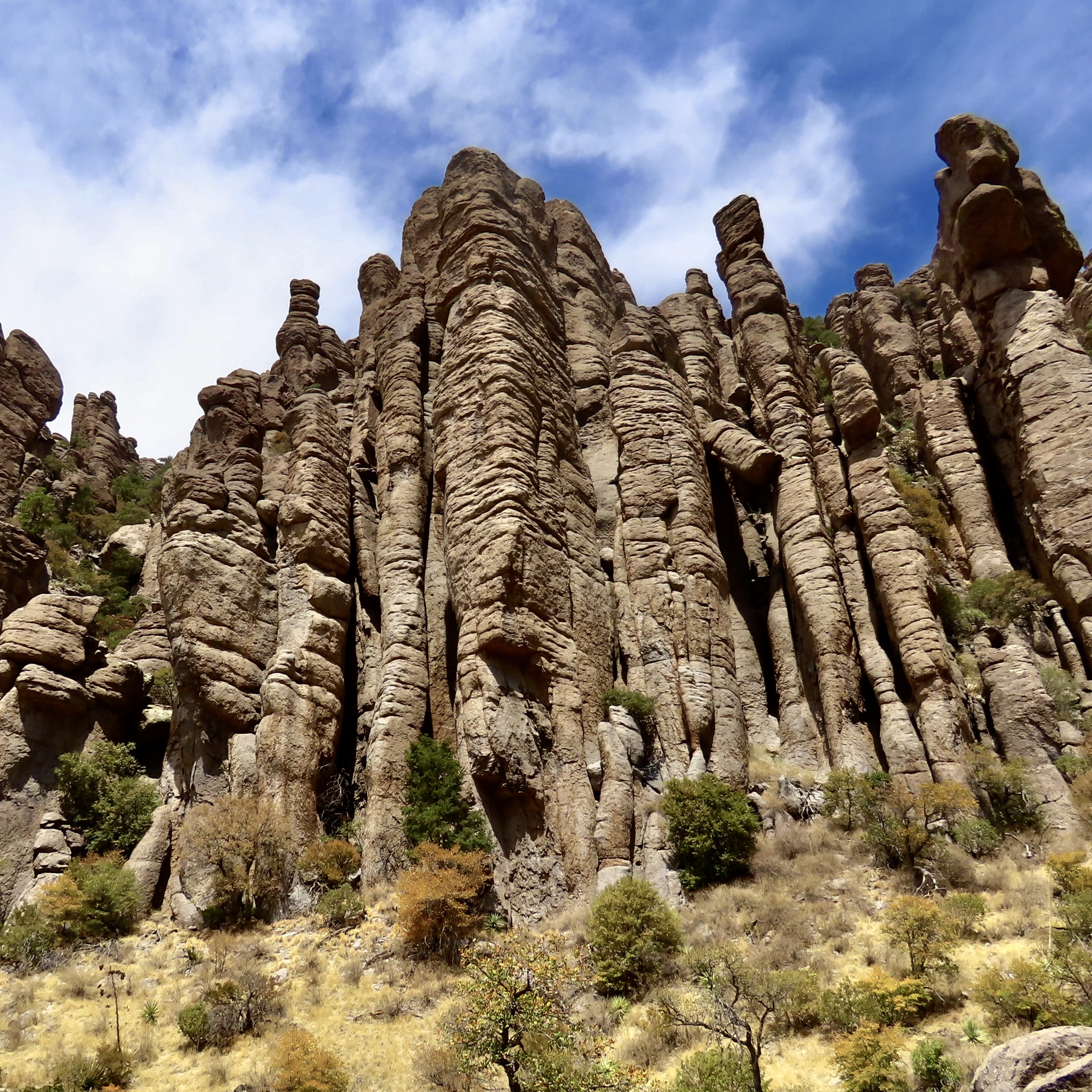
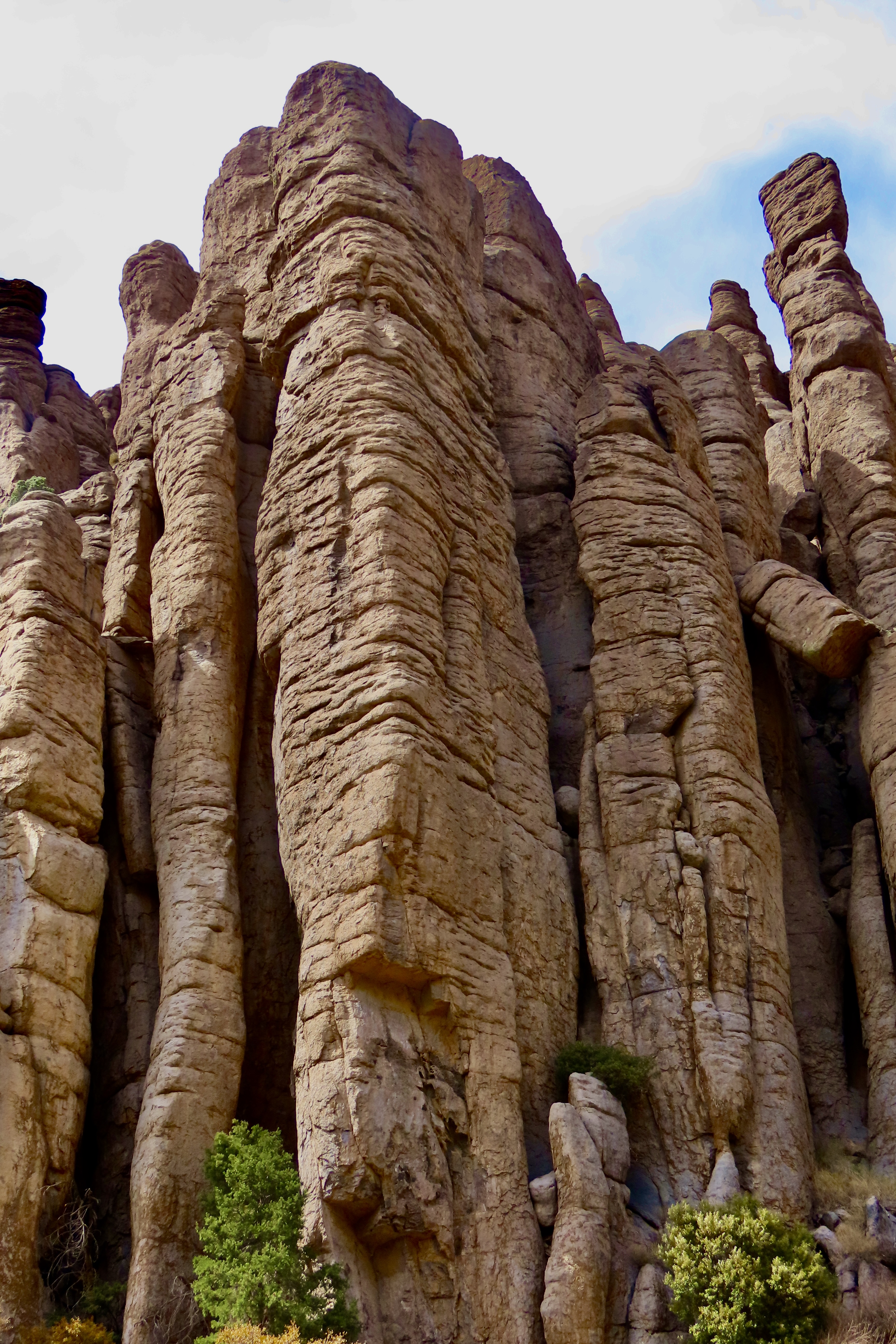
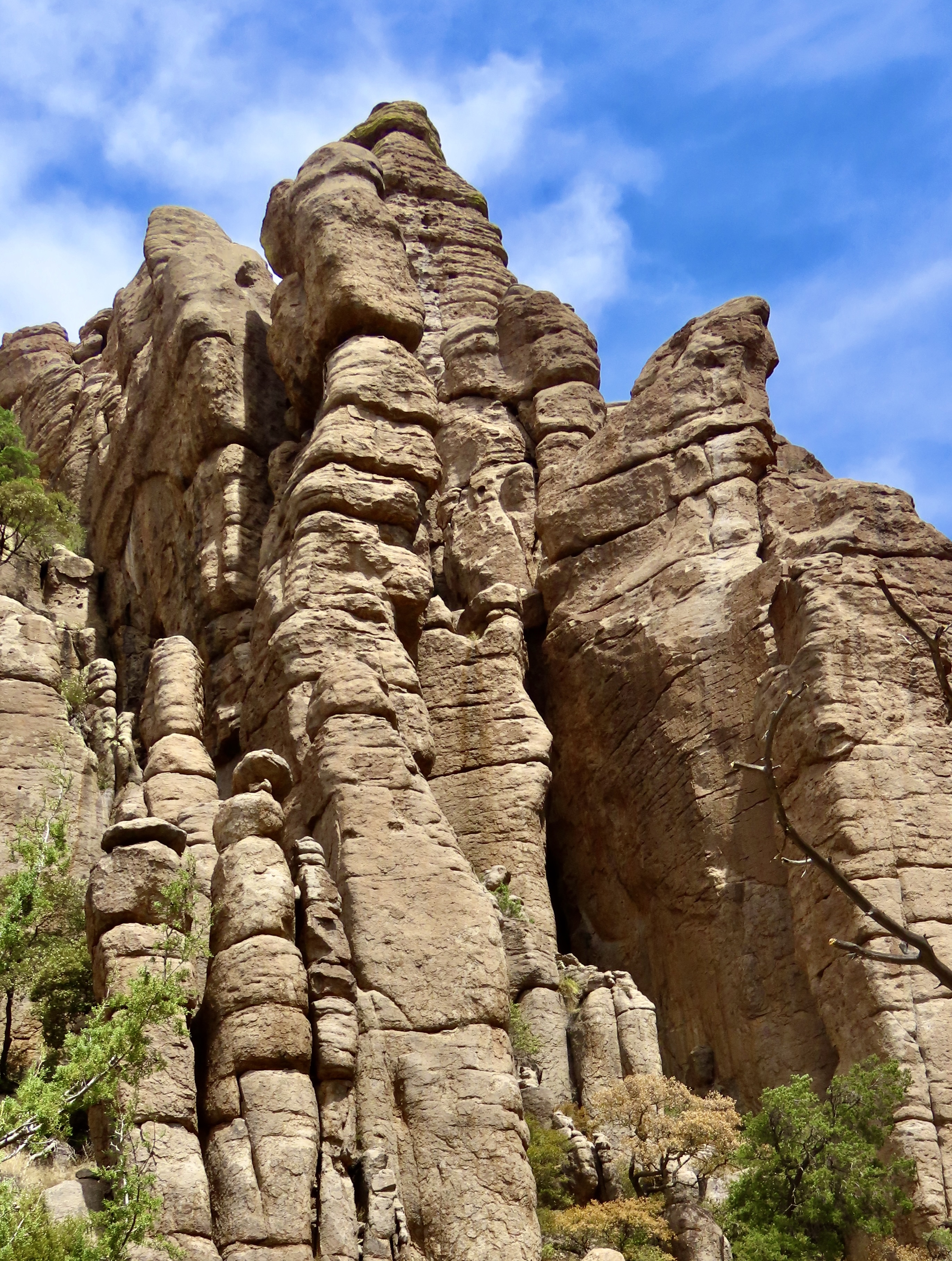
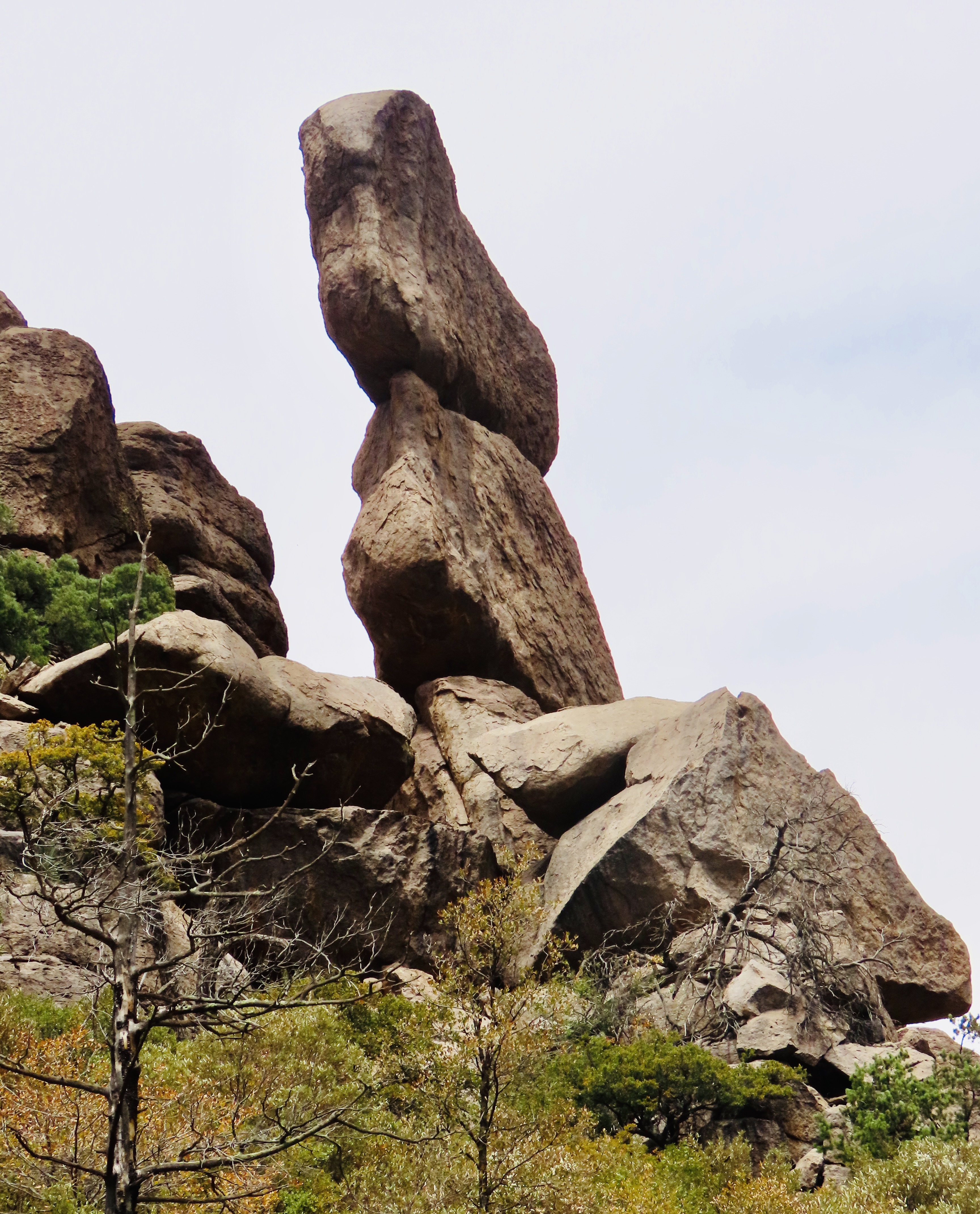
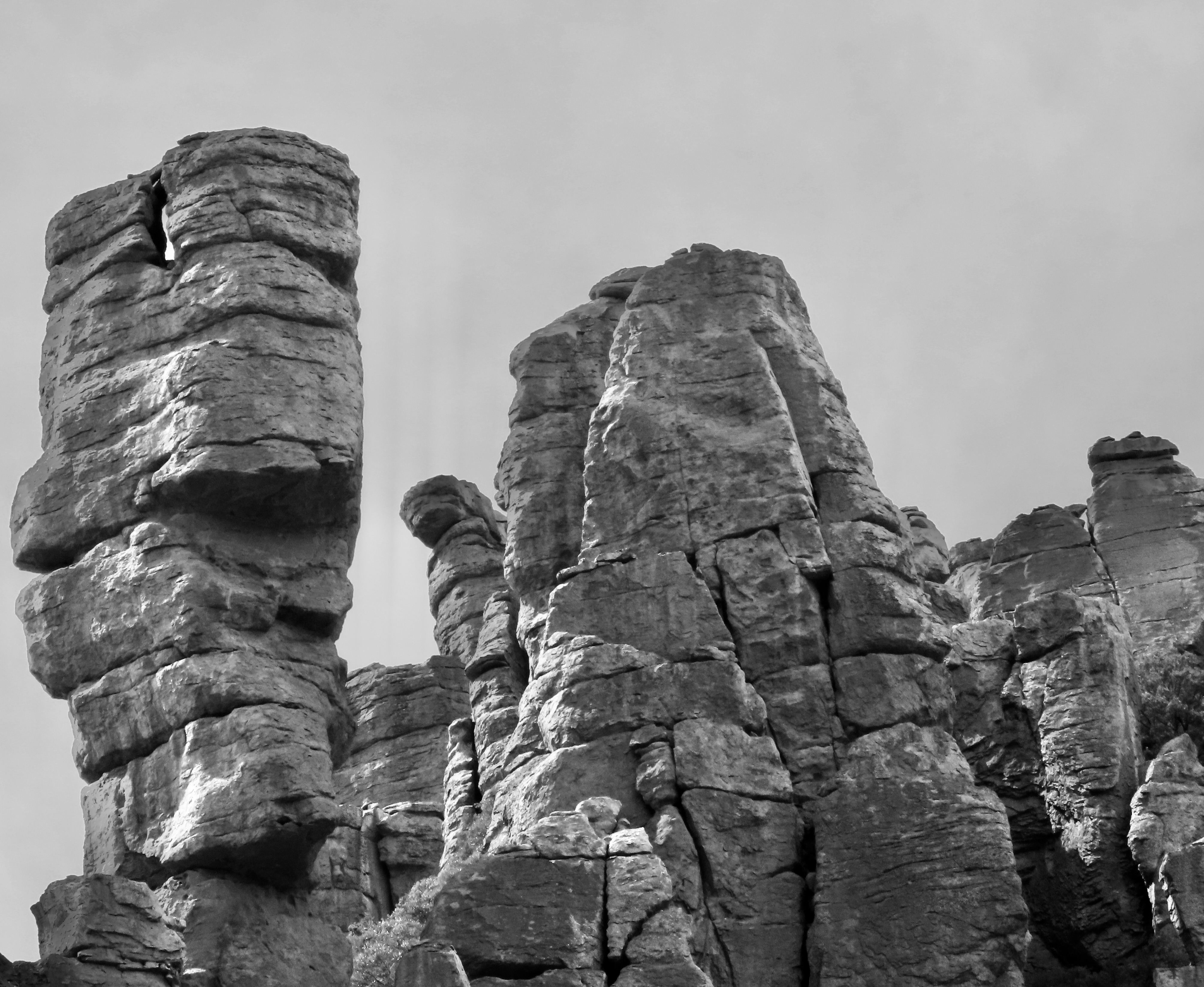
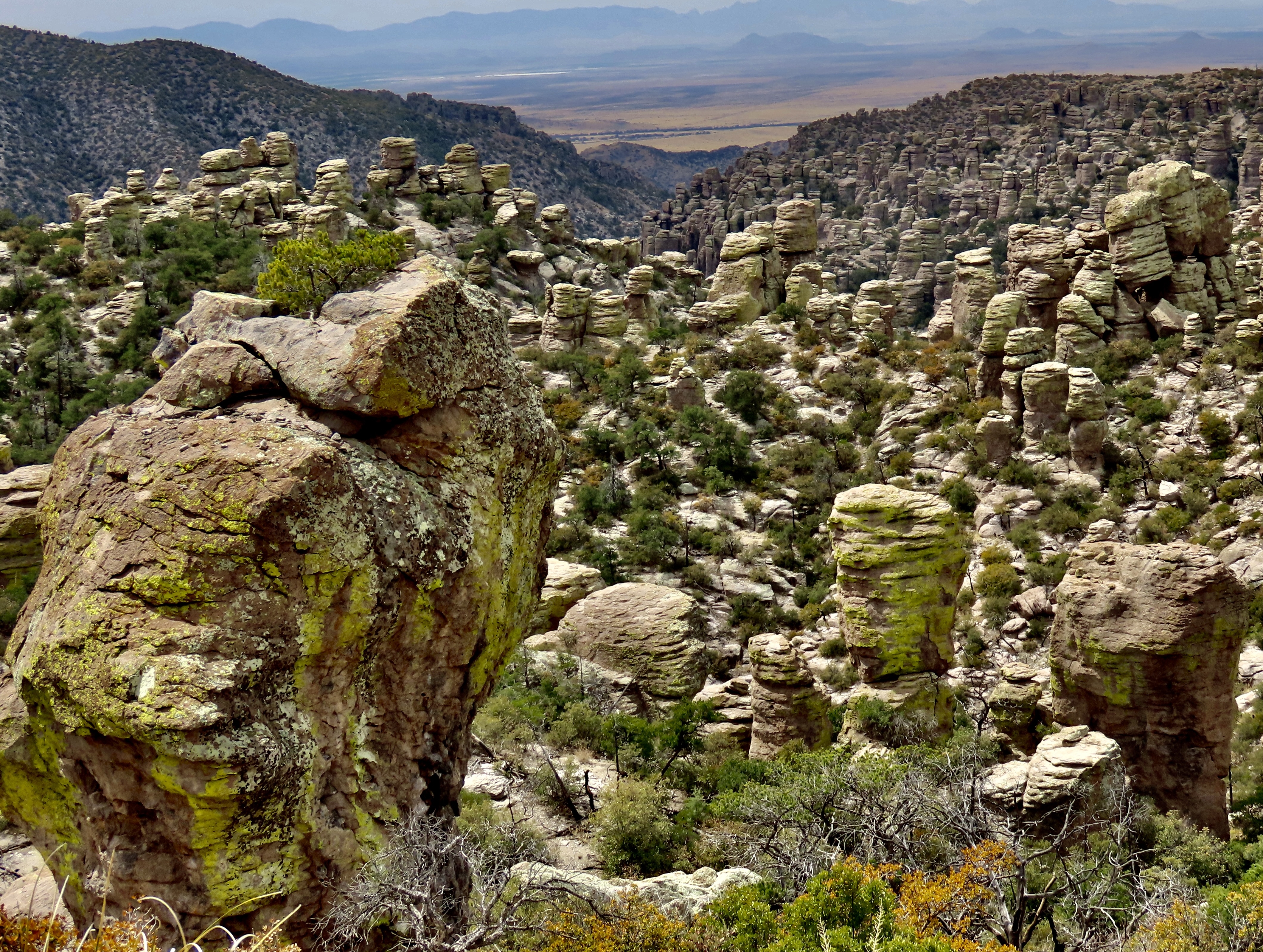
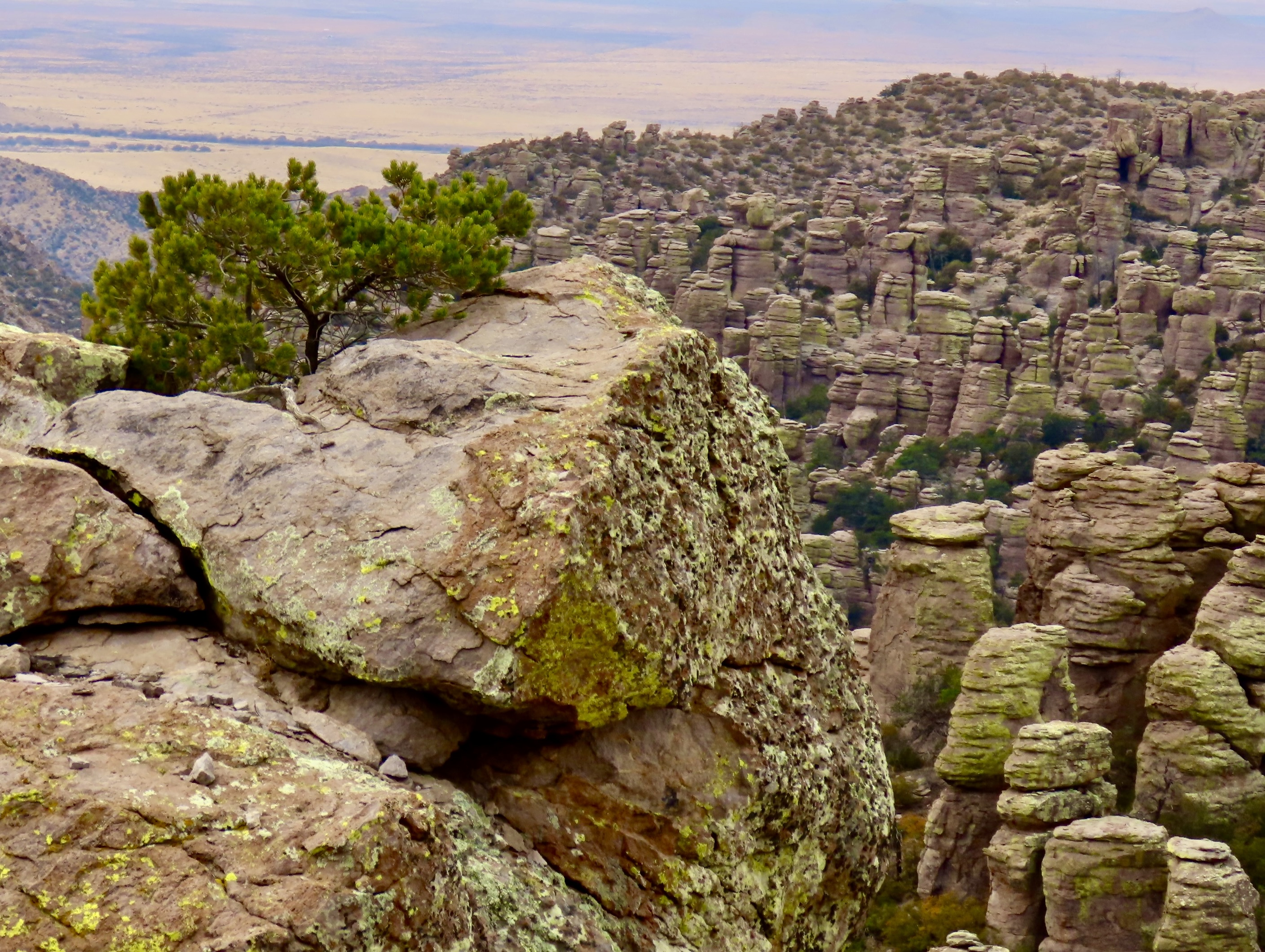
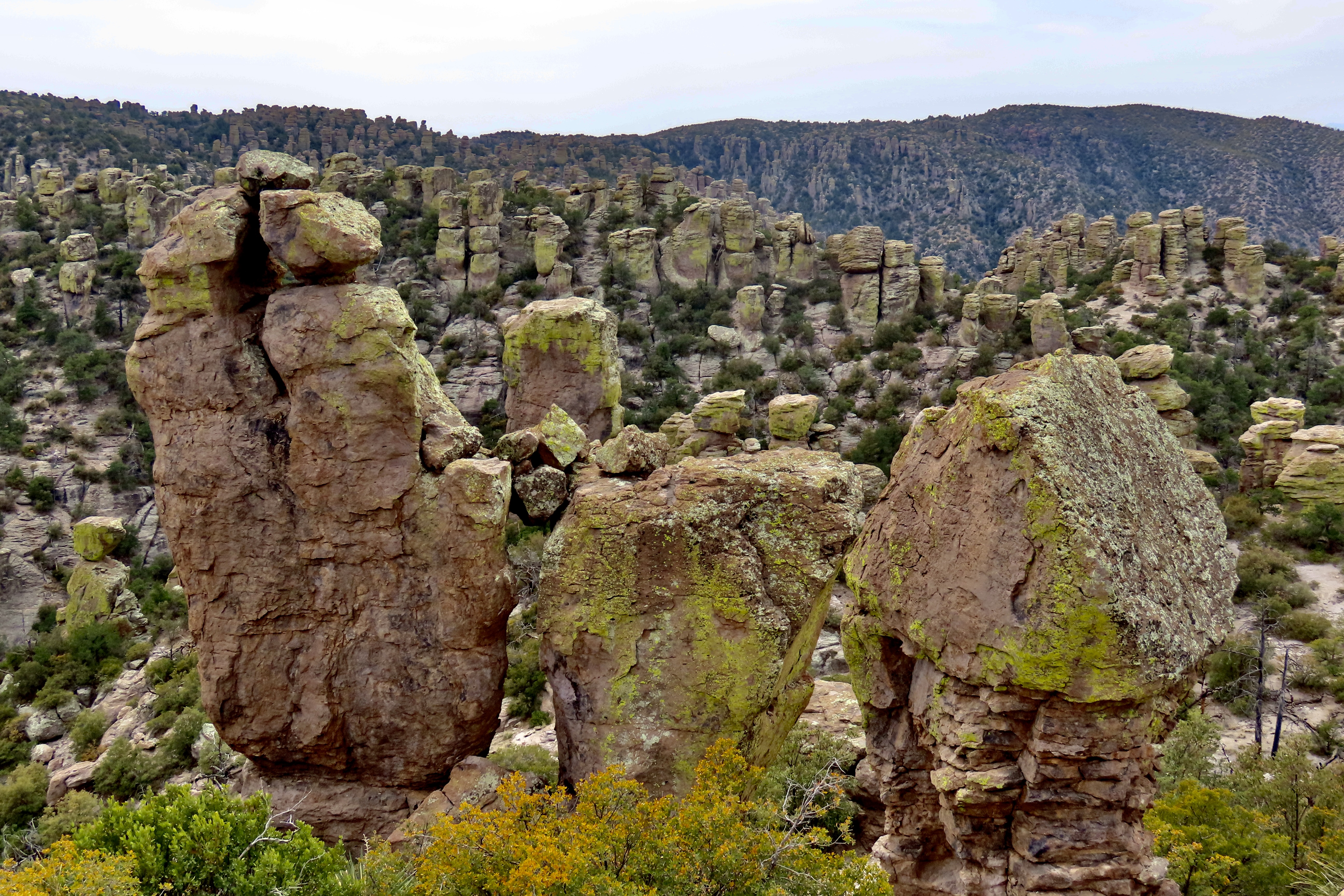
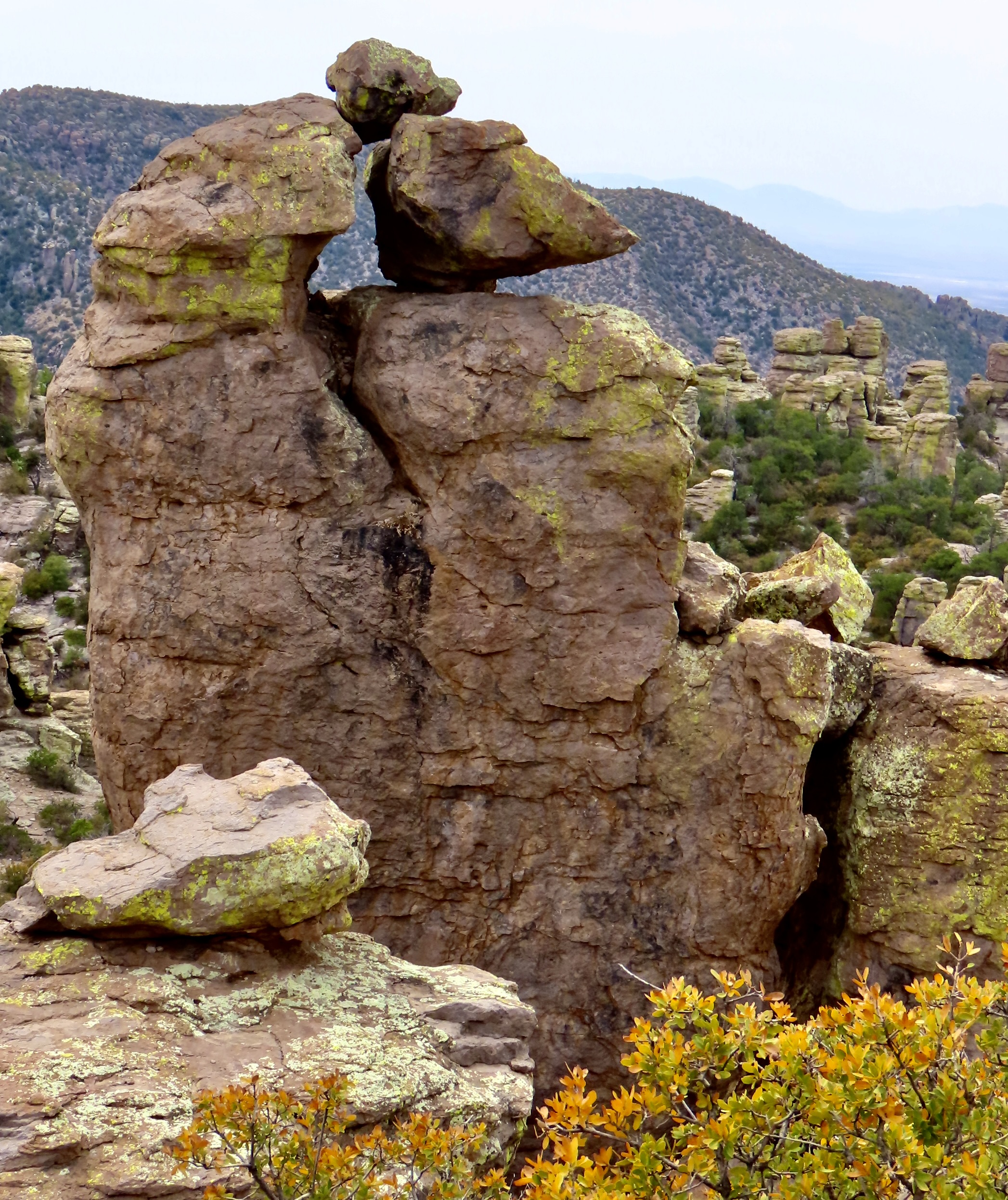
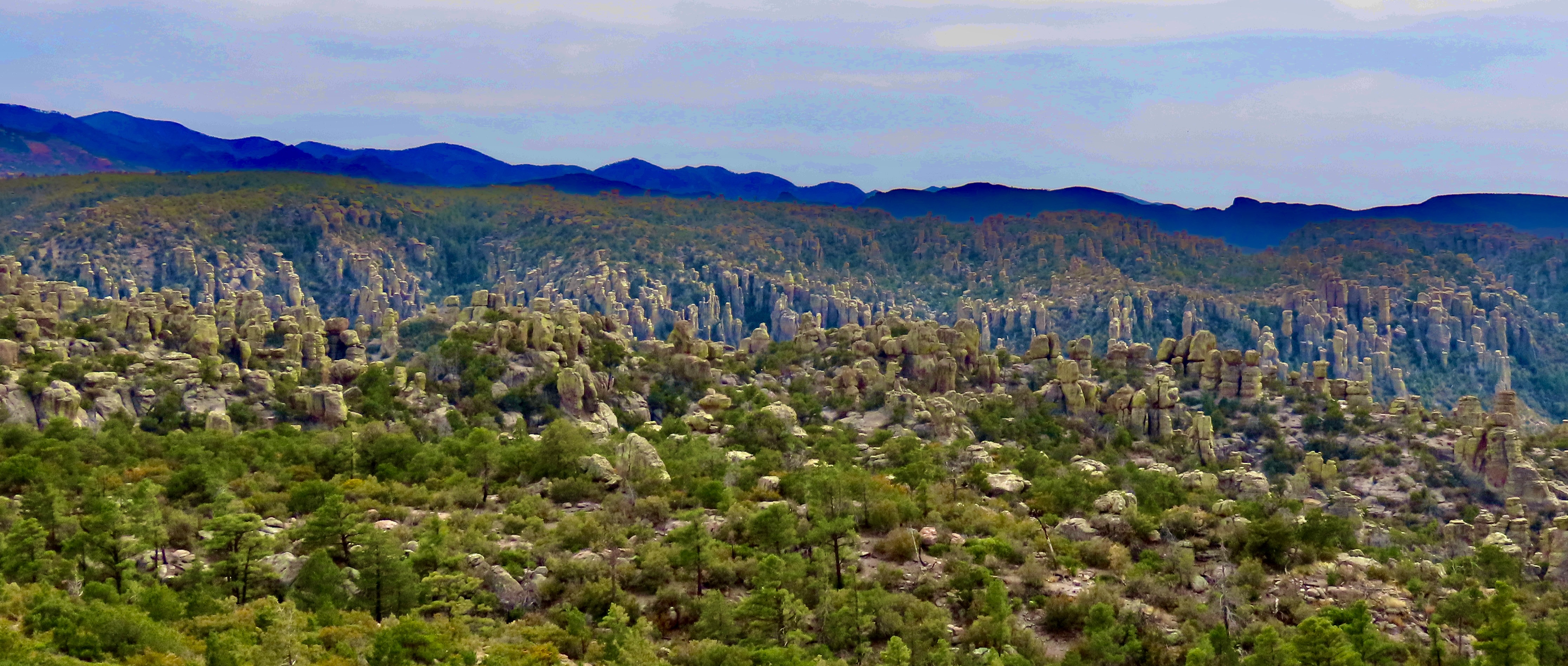
While Chiricahua is not one of the parks we have selected for our series on 25 world renown national parks of America, it definitely deserves to be included on this blog as America’s soon-to-be 64th national park. Peggy and I were in the small town of Wilcox, Arizona a year ago last April searching for things to do when we came across a recommendation to visit Chiricahua National Monument. It was a relatively small park located in a remote section of the southeastern part of the state. We’d never been there and knew little about it, but the description of the rock pinnacles in the park immediately caught our attention. Off we went. We were ever so glad we did. The above rock is a sample of the hundreds, if not thousands of Rhyolite spires and hoodoos we would see.We did a post last year on Chiricahua that I have updated for today. Upon entering the park, Peggy and I were immediately struck by the combination of golden grass, green trees, and impressive rocks set off by the blue skies. There was little indication, however, of the fantasyland of rock sculptures we were about to see.Another view of the entrance area of Chiricahua National Park.
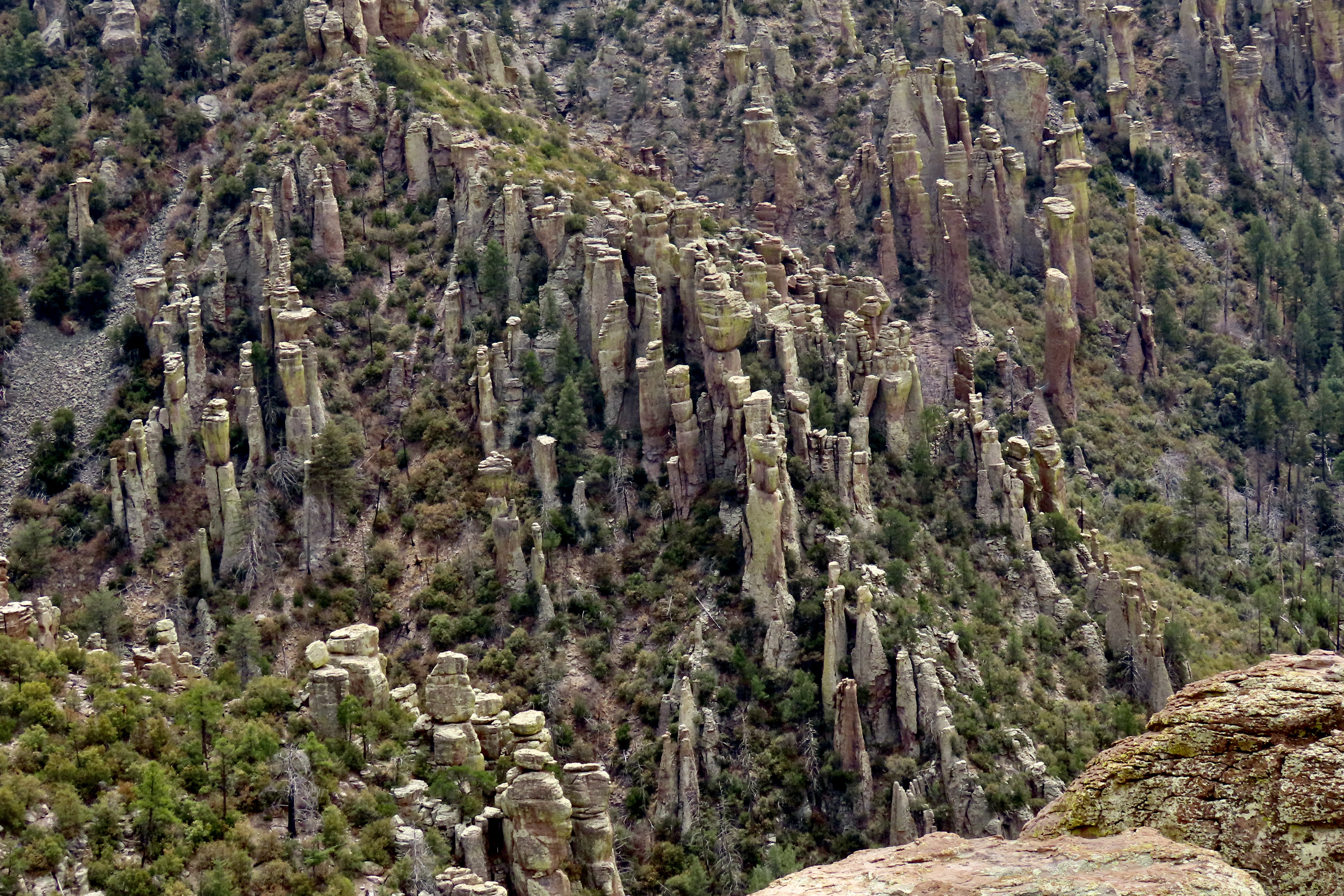
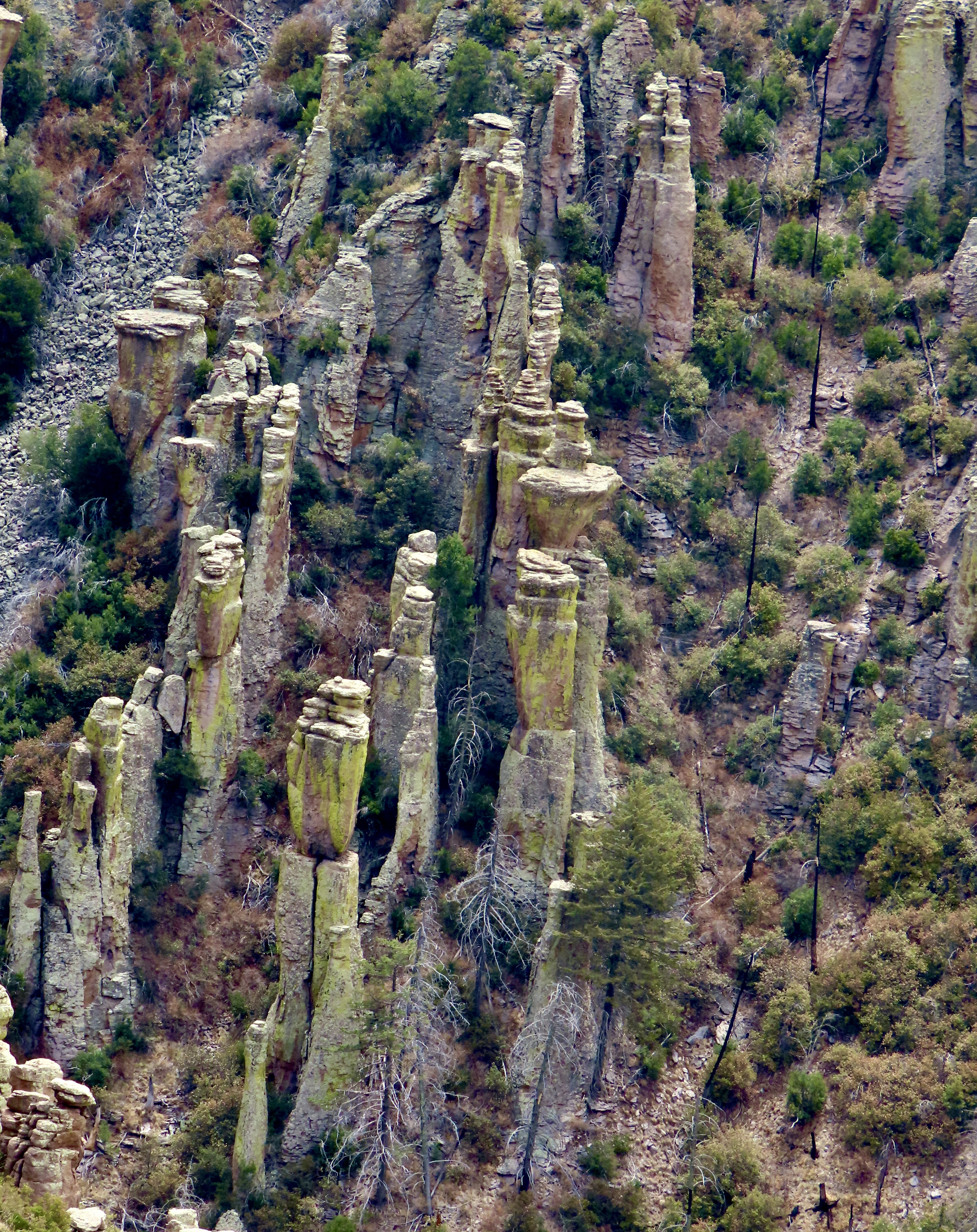
The rock formations got their start when a massive volcanic erupted 26.9 million years ago and buried the area under a combination of hot ash and pumice. Extreme heat then welded the ash and pumice into the rock known as tuff. As the tuff cooled, it contracted, creating cracks and joints. Water seeping into the cracks and then freezing, aided by wind and gravity, caused erosion, eventually creating the thousands of rock columns that Chiricahua National Monument is famous for.
Curious about the name, I googled it and was entertained by AI. First, it informed me that the Chiricahua Mountains were named after the Chiricahua Apaches who lived in the area. Ok. I then asked asked where did the Chiricahua Apaches get their name. They were named after the Chiricahua Mountains, AI stated. Hmmm. I tried again and was told that the name comes from an Opata word, “Chiwi Kawi” that translates to Turkey Mountain. Now you know. Or do you?
The Chiricahua Apaches were tough. Their great war chiefs, Geronimo and Cochise, bordered on legendary and held out longer than most other Indian tribes of the West against the onslaught of Eastern settlers, miners, and cattlemen that rolled into the country seeking fame and fortune, or just the opportunity for a better life that the West provided. The military was sent out to solve the problem of the Apaches by forcing them out of their homelands and onto reservations. It was not an easy task. First they had to catch the natives, who combined guerrilla warfare with an ability to disappear into the rugged landscape in a way that seemed almost magical. By the 1880s, some 5,000 American soldiers (nearly a quarter of America’s standing army at the time) were mobilized across the Southwest to pursue a small band of a hundred plus Chiricahua Apaches.
The unique beauty, geology, flora, fauna and history of an area are what make the creation of a new national park like Chiricahua something to celebrate, not only for today, but even more so for the future. As Aldo Leopold, the father of wildlife ecology and modern conservation, said: “The richest values of wilderness lie not in the days of Daniel Boone, nor even in the present, but rather in the future.” I highly recommend Leopold’s book: A Sand Country Almanac.
As with each of our posts on national parks, monuments and wilderness areas, we will focus on the beauty and unique characteristics of Chiricahua National Park. All photos have been taken by either Peggy or me unless otherwise noted. As always you are welcome to use these photos for non-commercial purposes as long as you credit: Photos by Curt and Peggy Mekemson from their blog: wandering-through-time-and-place.com.
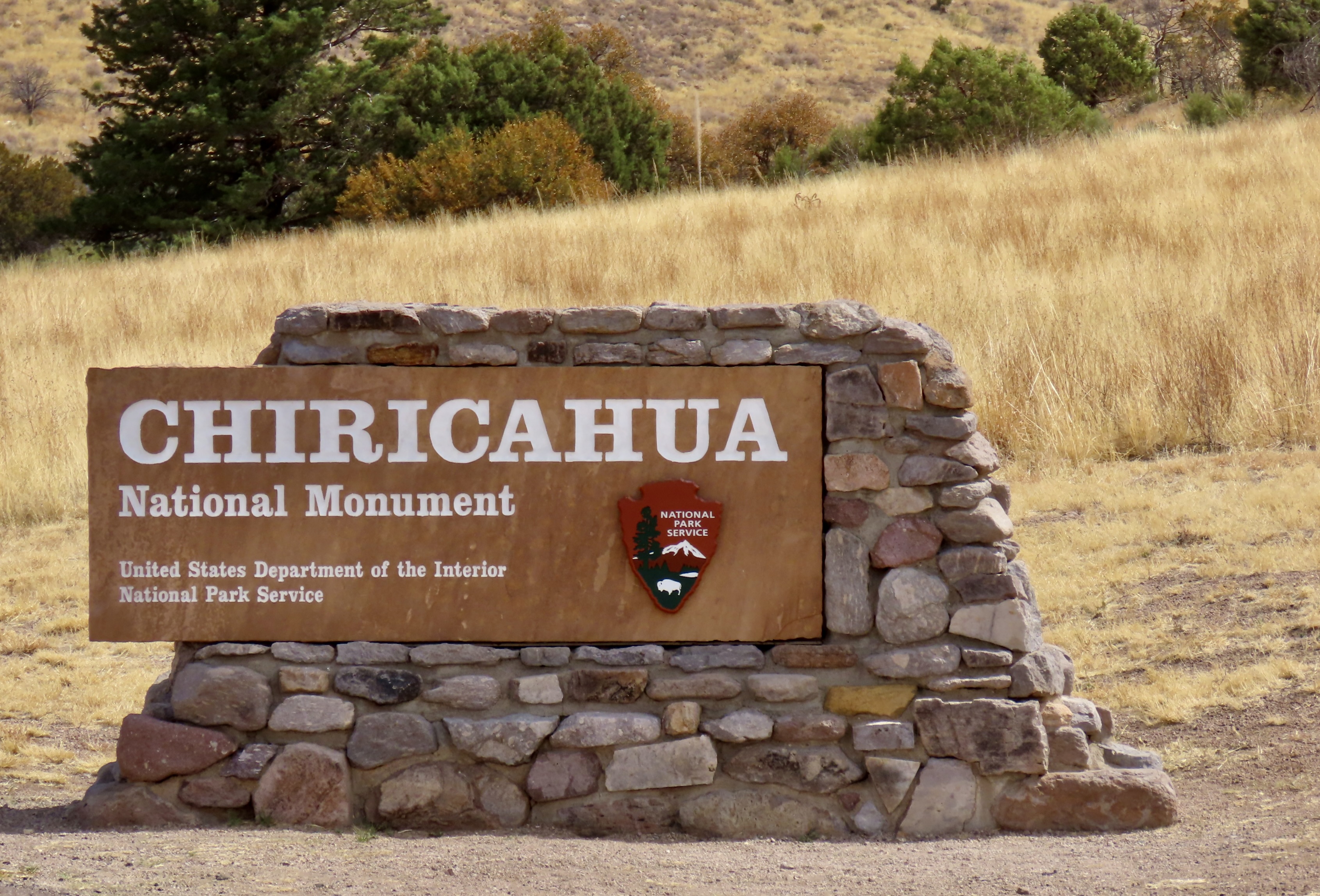
Welcome to Chiricahua National Park.
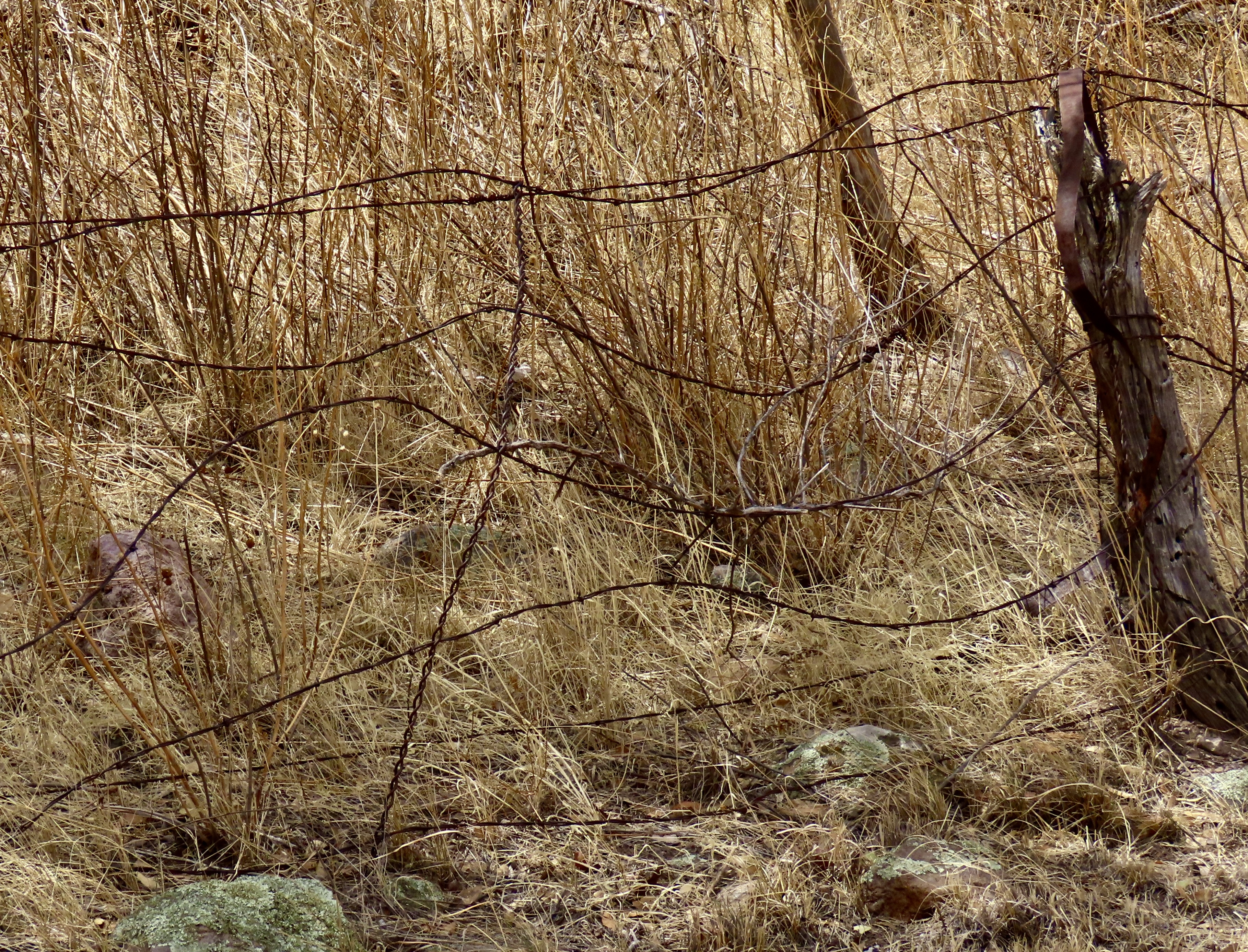
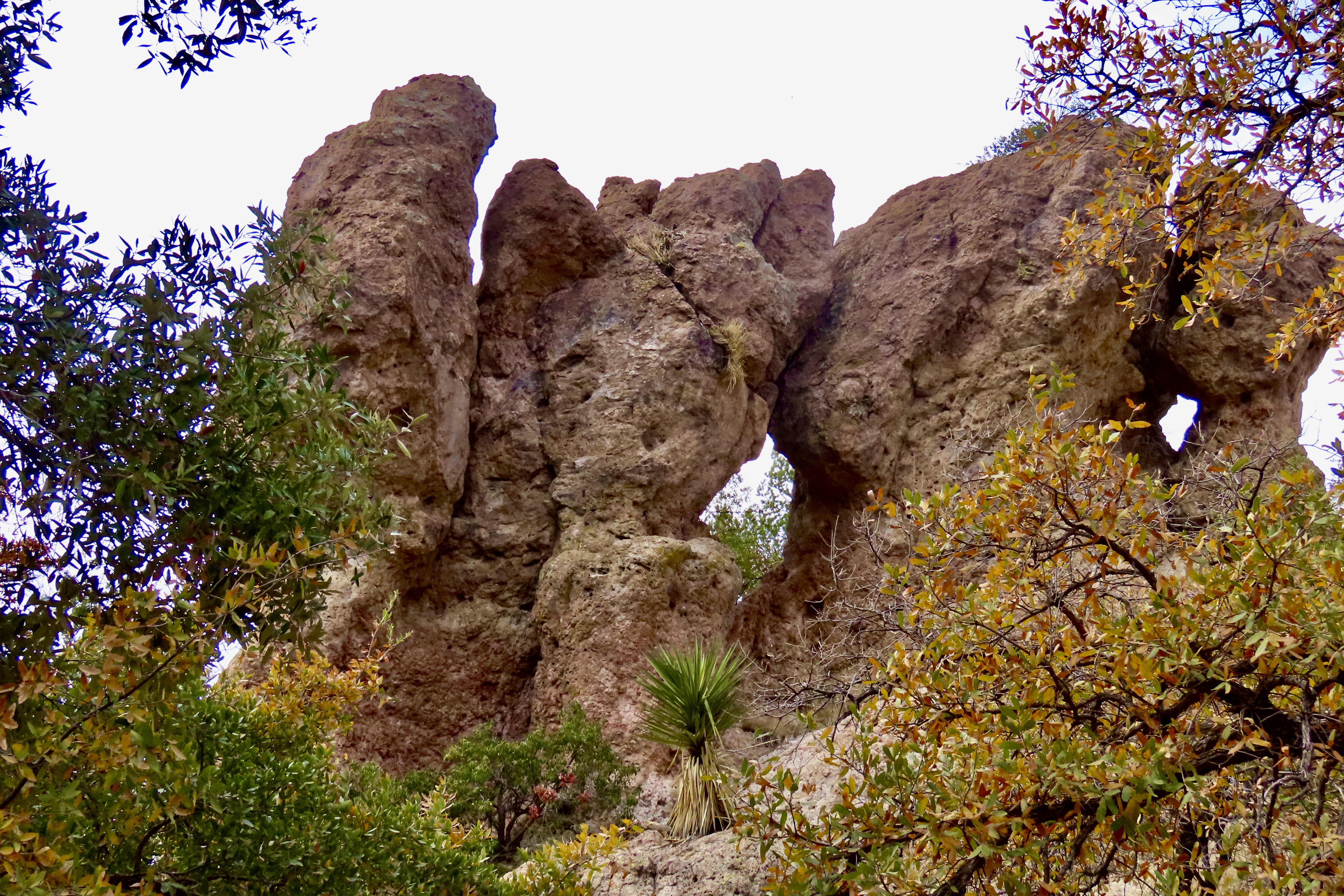
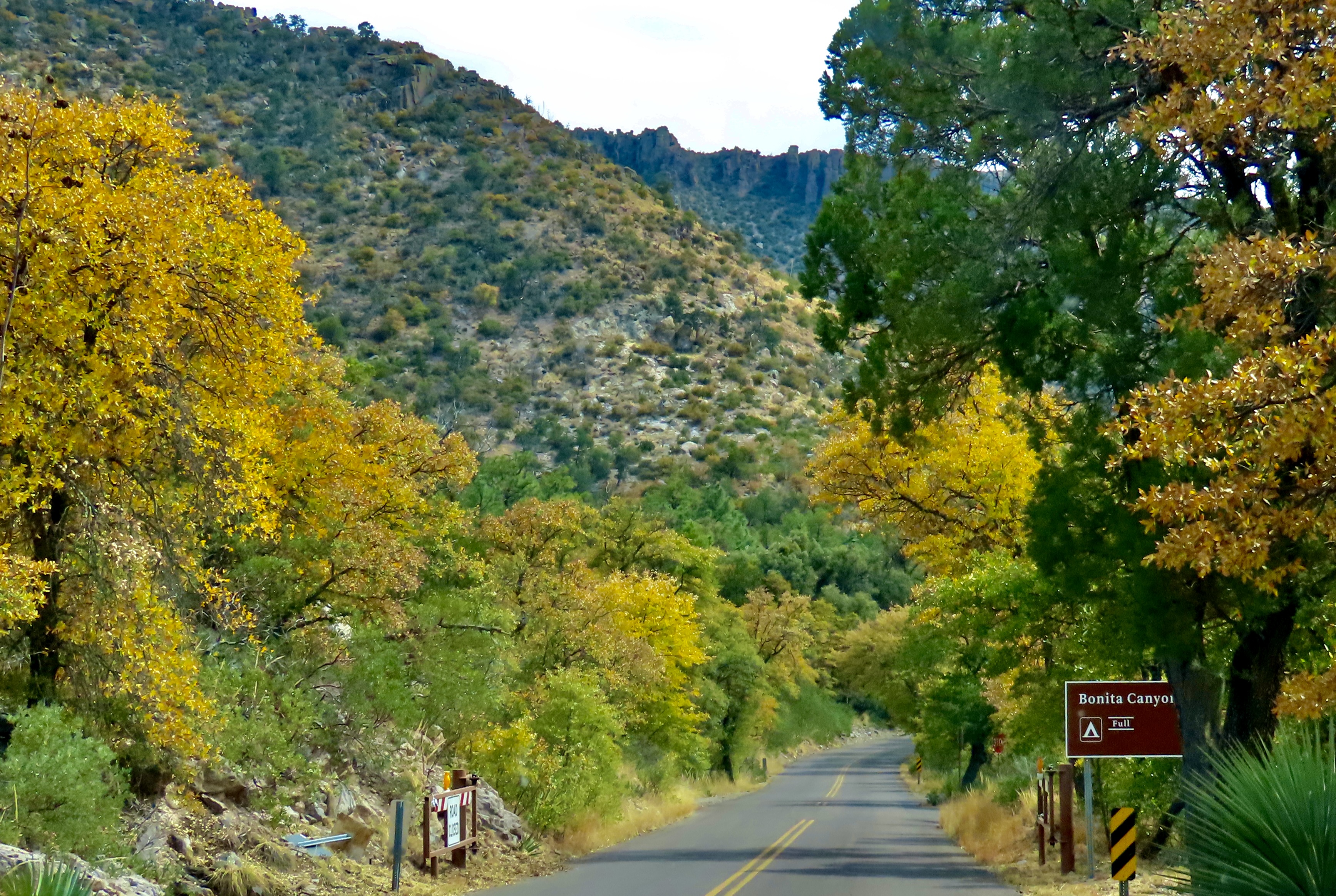
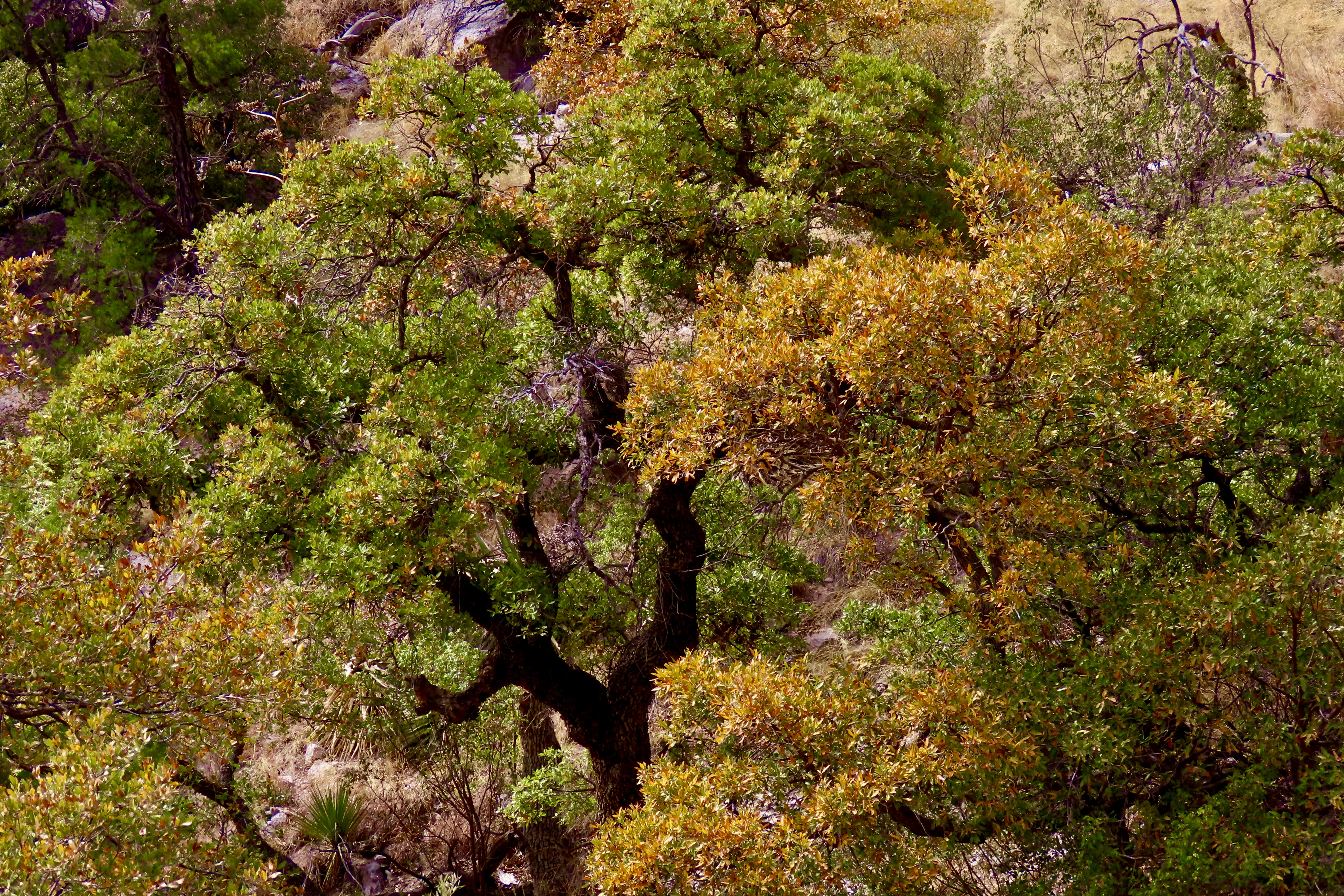
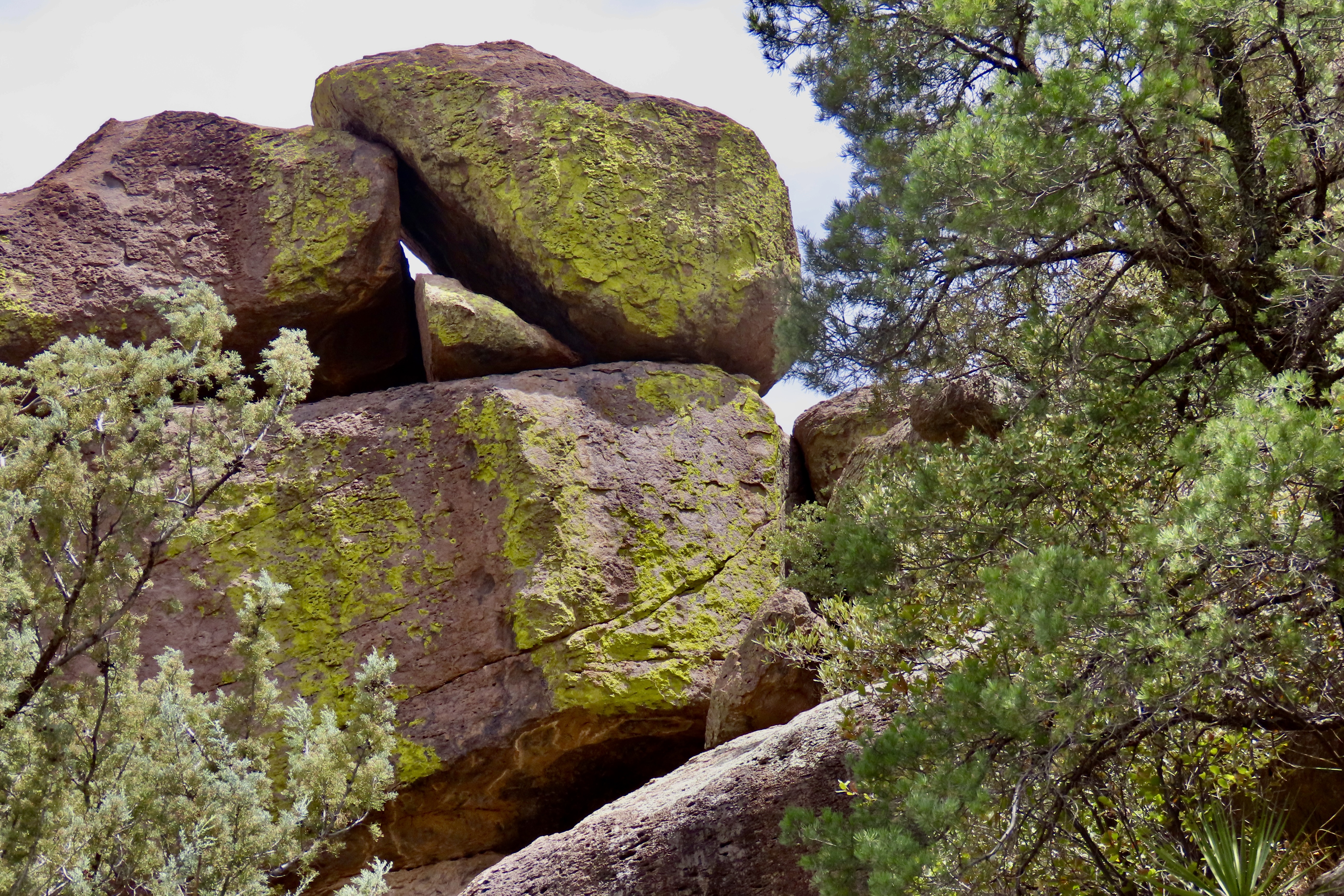
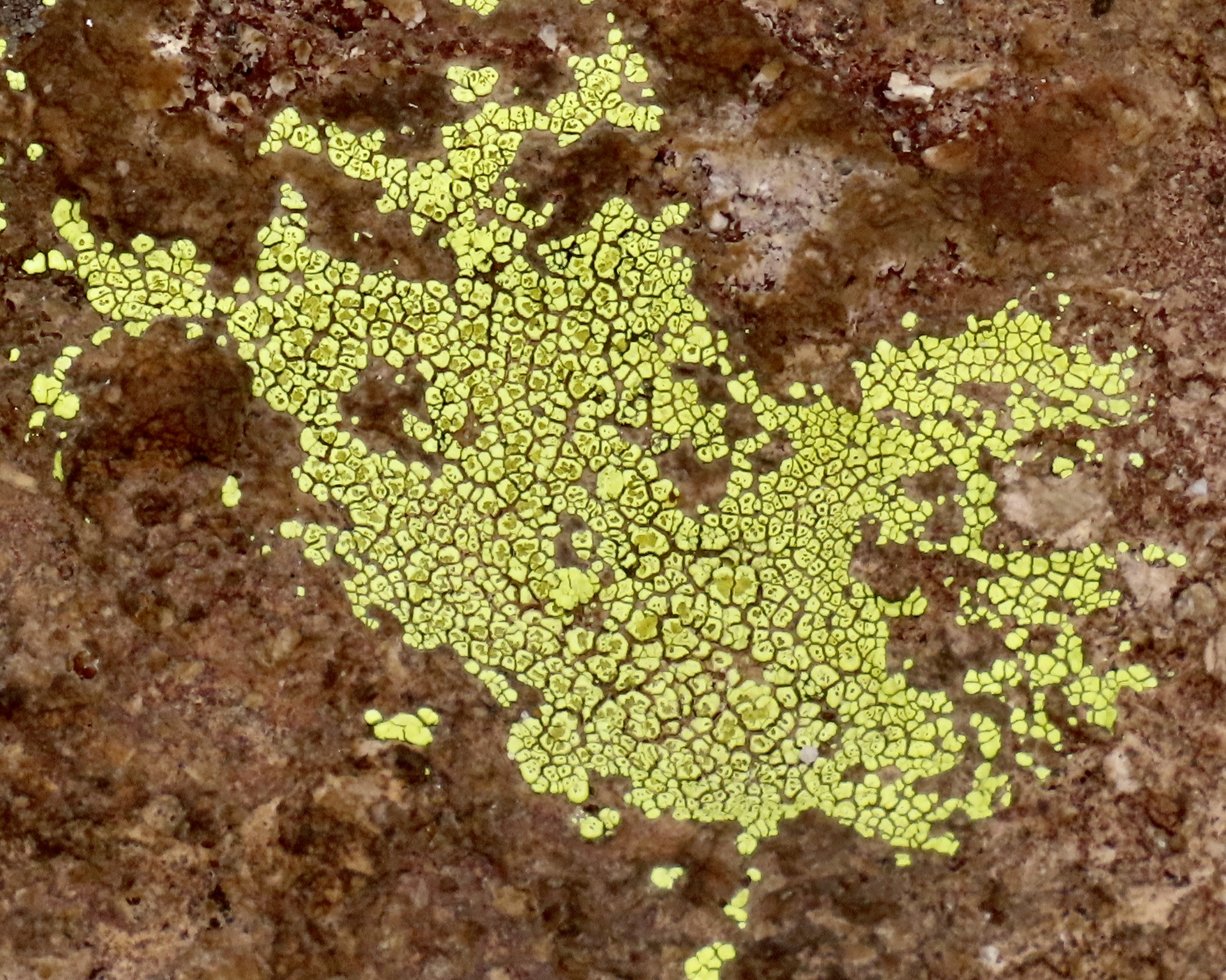
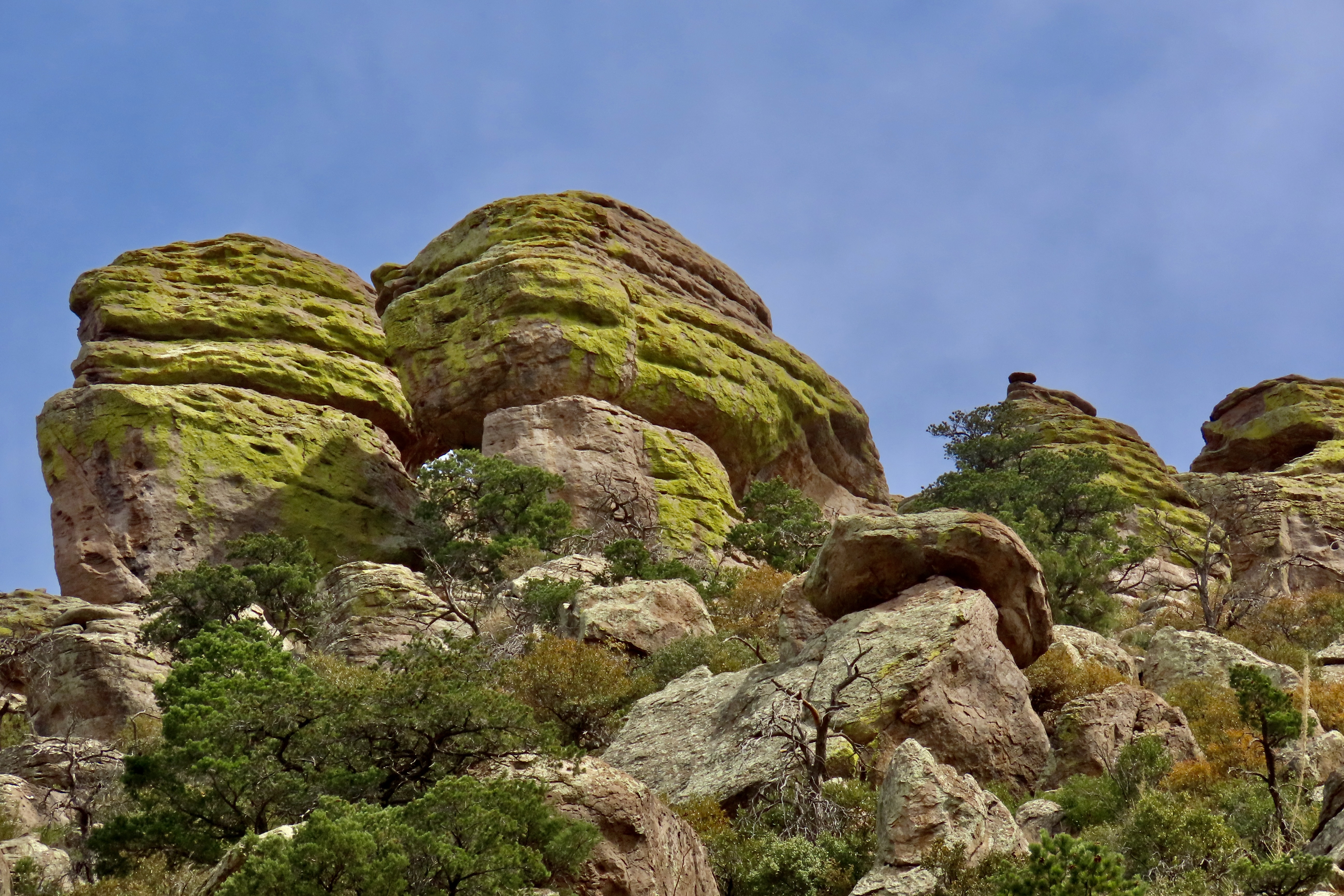
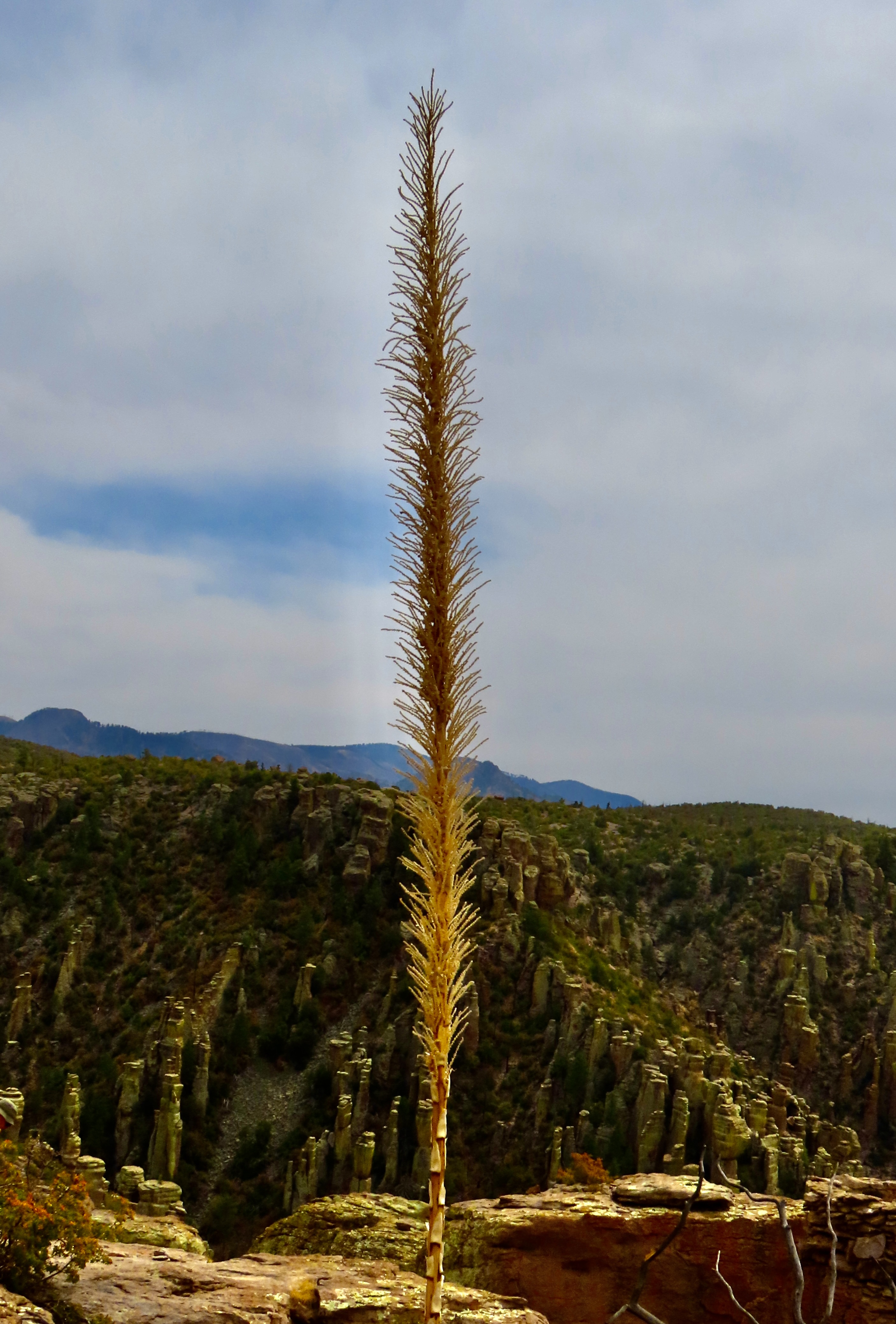
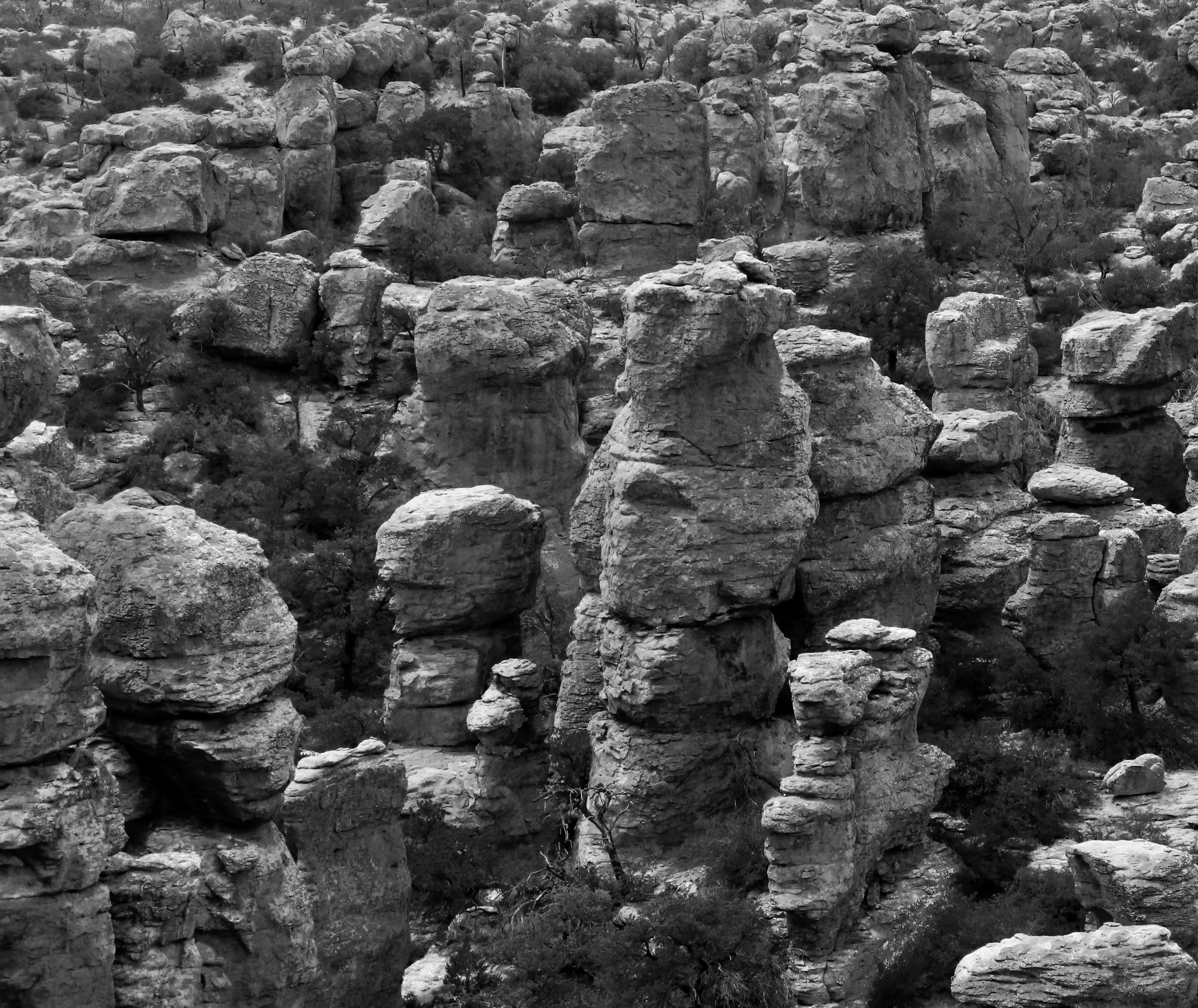
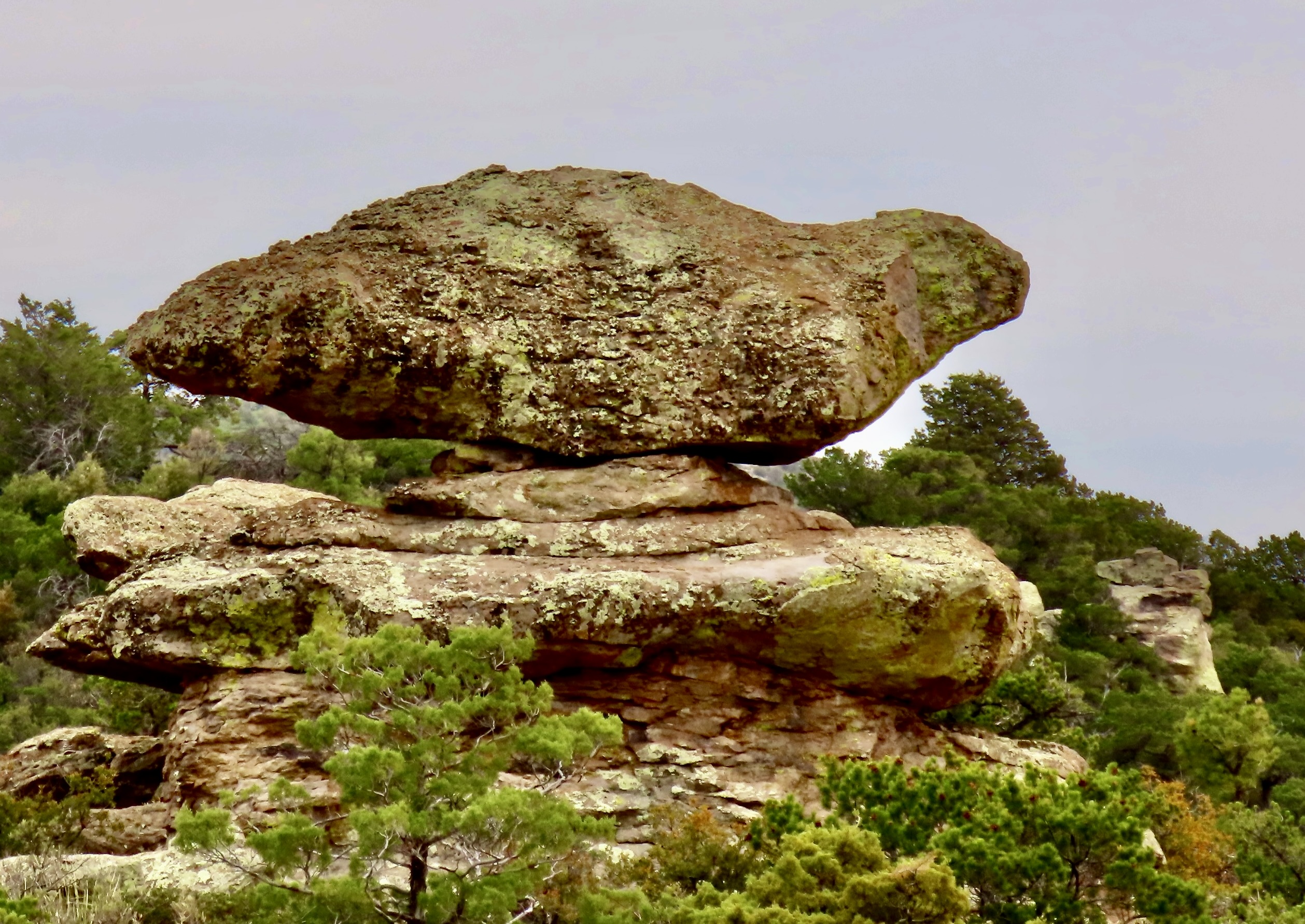
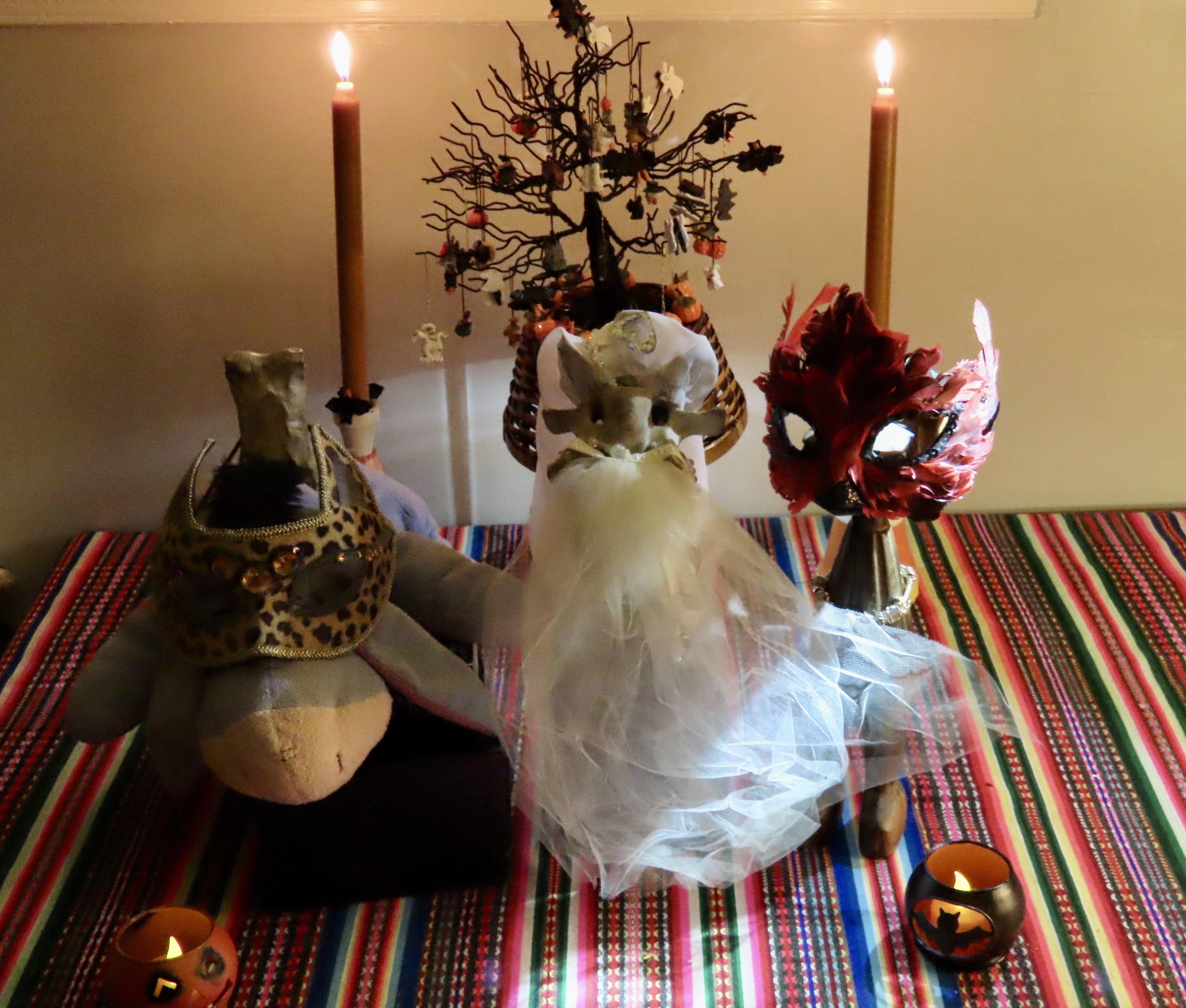
The first place that visitors will likely stop at Chiricahua National Park is the Far Away Ranch, which was built by the Swedish immigrants Emma and Neil Ericson. I think it was Emma who named the ranch Far Away because it was ‘so darned far away from anything else.’ In addition to the usual challenges that settlers faced—such as irritated Chiricahua—Neil often had to work away from home for long periods to help support the family while Emma oversaw the ranch. Eventually, along with their children, they added a guest ranch to their cattle ranch. The family also became strong supporters of the creation of the national monument. In addition to the windmill above, an iconic symbol of the early west, the ranch contains a number of buildings that tell the story of early settler life.Another iconic symbol of the West found on the Far Out Ranch: Barbed wire.We were the only people at the ranch at the time (and boy isn’t that going to change), but a lizard hanging out on the wall of one of the buildings greeted us. It seemed to be smiling. I complimented the fellow on its camouflage.As we left the Far Out Ranch, we had our final look at the rocky peak that dominates the view from the ranch.And our first glimpse of the pinnacles we would soon be driving through.We stopped, first, at the Visitor’s Center. This attention-grabbing group of rocks was right across from it.The Bonita Canyon Road takes visitors into the park. A convenient campground is located near the entrance. It was mid April, so you may be wondering about the fall-colored leaves that greeted us. We were…These oak leaves turned color in fall just like their northern cousins, but they are held onto over the winter because of the warmer climate. New leaves push them off of the trees. From the mixture of green and orange it was obvious the change was underway. So, if you missed fall in the north, you might want to head on over to Chiricahua. If not on the trees, you’ll find the leaves covering the ground. Bring a rake if you want the complete fall experience. Grin.The Organ Pipe Formation dominates the Bonita Canyon section of the park. It was given the name by Civilian Conservation Corps (CCC) workers in the 1930s because (surprise) they thought the columns looked like the pipes on an organ. The one on the far right, which we featured at the beginning of the post, looked like it was topped off by a dog. Maybe it barked the organ music.A closer look at the columns that tower some 75 feet into the air. The broken column on the right wedged in between the other columns demonstrates the gravity aspect of erosion at still at work.The horizontal and vertical cracks and joints are what allow the erosion to take place and the columns develop. We were amused (curious?) about the crooked pinnacle. There were a number of other rocks that caught our attention in Bonita Canyon, like this precariously balanced rock.A trio festooned with green lichens.A closeup of the lichens. Lichens are made up of a symbiotic relationship between fungi and algae. The fungi are colorless, decompose other organisms, and provide protection in the partnership, while the algae provide food through photosynthesis. Many of the rocks and pinnacles shown on this post have a green tint from the lichens.Lots of green here. Peggy, who is an incurable romantic, thought these two rocks looked like they were kissing.I thought that these pinnacles looked good rendered in black and white. At the end of Bonita Canyon the road climbs 1500 feet up to Masai Point and Echo Canyon where tall, skinny pinnacles and short stubby ones are featured. This tall, skinny century plant looks down on the tall skinny hoodoos.They seemed to be marching up the mountain.A closer look at the unique spires.About a half mile down the road from Masai Point, the Echo Canyon Trail provided us with more scenic views and impressive rocks.We had found the short stubby version of the pinnacles. Lots of them. There were hundreds, possibly thousands disappearing over the hill. Cochise’s last stronghold was located to the west in the distant Dragoon Mountains across the Sulfur Springs Valley. Geronimo’s primary area of resistance was located to the east of the Chiricahua Mountains in the Gila National Forest and the Aldo Leopold Wilderness— where I once spent a week backpacking by myself. I enjoyed it so much I took Peggy for a backpacking trip there afterwards.Another perspective.A look down into the pinnacles rendered in black and white. A park trail winds down among these rocks.As they did down in Bonita Canyon, individual rocks caught our attention. Peggy thought this balanced rock resembled a bird (a grouse, perhaps) and took its photo.A fun trio. You can see the green lichens decorating the two rocks on the right.A closer look at the rock on the right. Erosion is creating two new pinnacles here. I assume the rock on top is a remnant of when they were still one. Or is it the head of the left one resting on the head of the right one?The rock beneath didn’t get the message to split.A rock family. This massive pair was our favorite among the individual rocks.A late afternoon view. The next time we visit Chiricahua this sign will read Chiricahua National Park. It is a transition that is well earned and one already made by many national monuments across the nation. And it’s a reminder to put national monuments on your itinerary as you travel across the US. In an era when the most popular national parks are packed with people during peak season, it’s a great way to avoid the crowds, but still see some really incredible and unique natural wonders. Next up we will feature Halloween. It’s that time. These are characters that hang out in our apartment. Bone is on the left. One of the things that he loves to do when he is not running around naked, is wear costumes. Halloween is the perfect time. Here he is with some of his companions. He is riding on the back of his best bud, Eeyore, who once saved him from hanging in Tombstone, Arizona. Next to him is his wife, the lovely Bonetta. He found her in a Florida swamp. They were married at Burning Man. On the right is George, the African Bush Devil who is featured on the front of my book about the Peace Corps, The Bush Devil Ate Sam. Peggy’s Halloween tree is levitating in the background. Three personal ghost stories/experiences of ours and a visit to Puerto Vallarta’s Day of the Dead will be featured on the post.
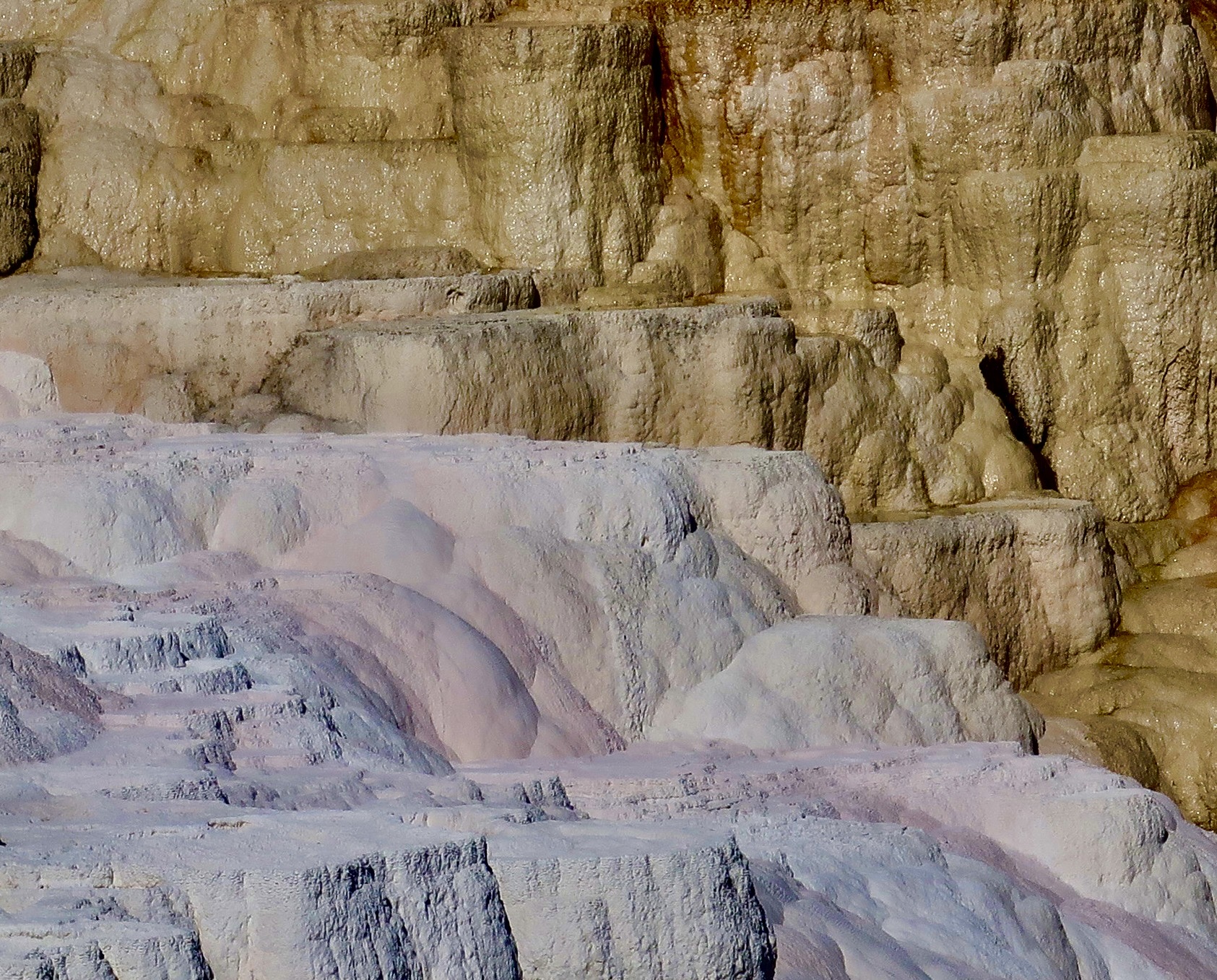
After our Halloween post we will wrap up our series on Yellowstone National Park with a visit to the other-worldly Mammoth Hot Springs.