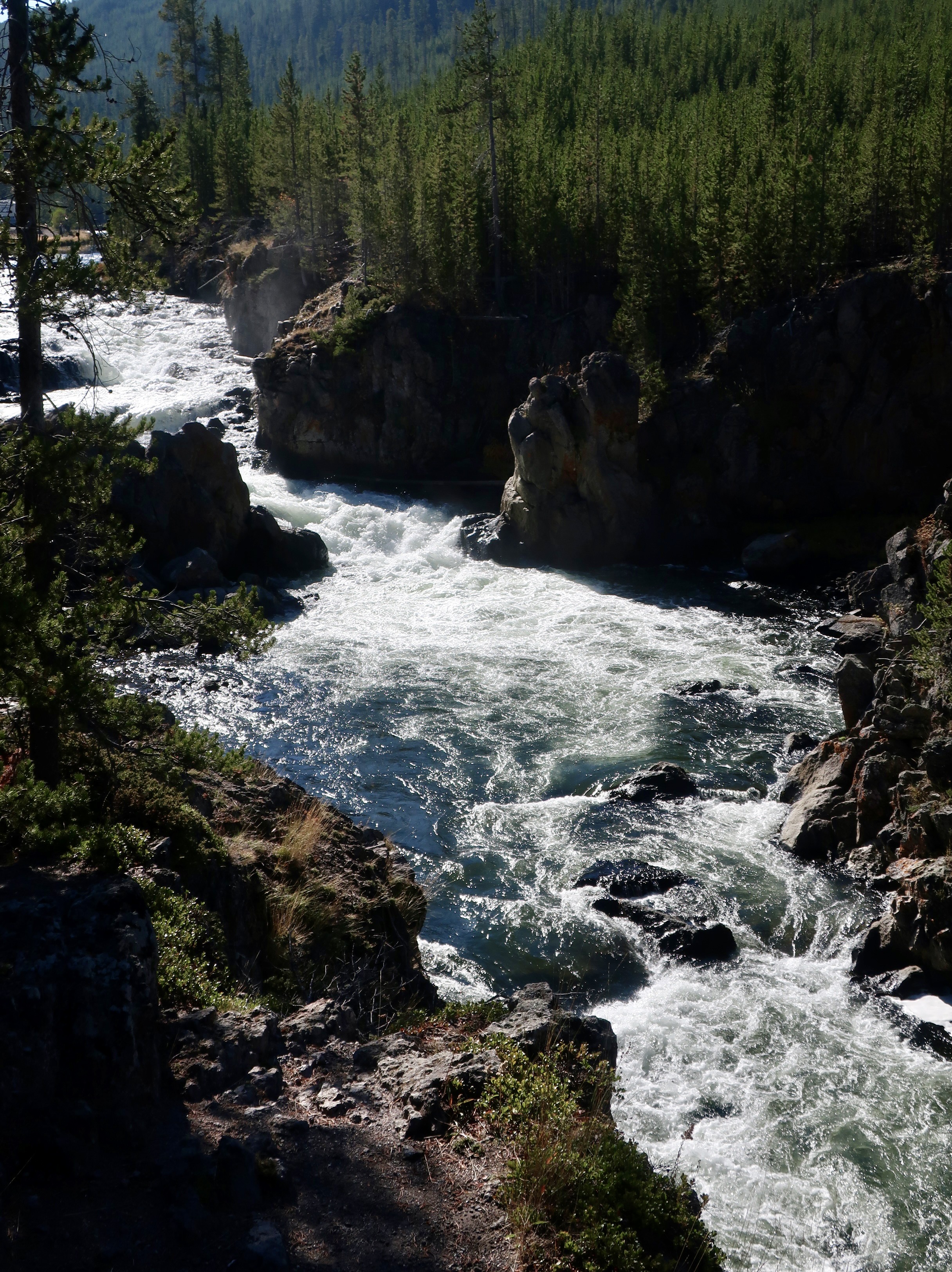
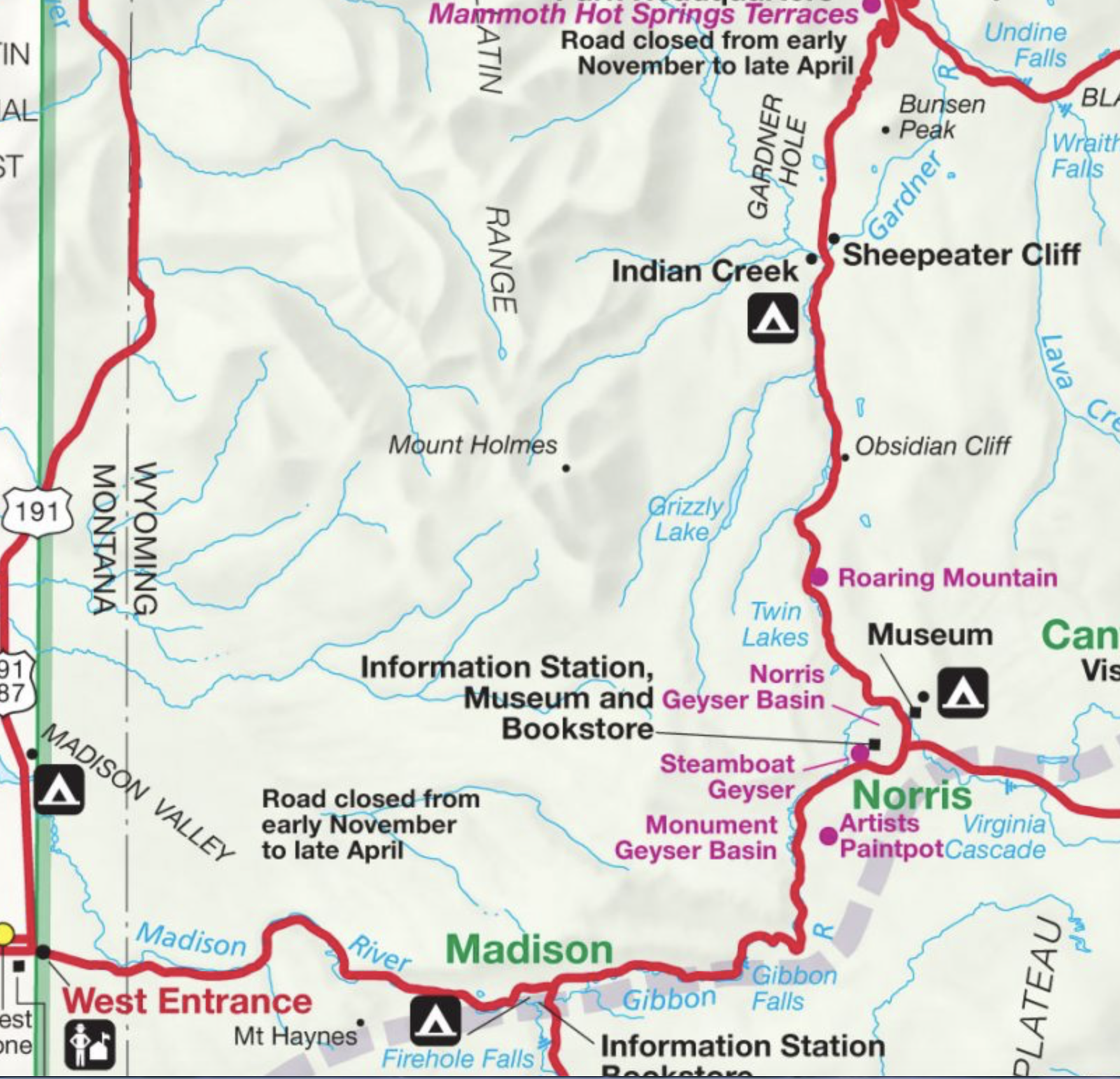
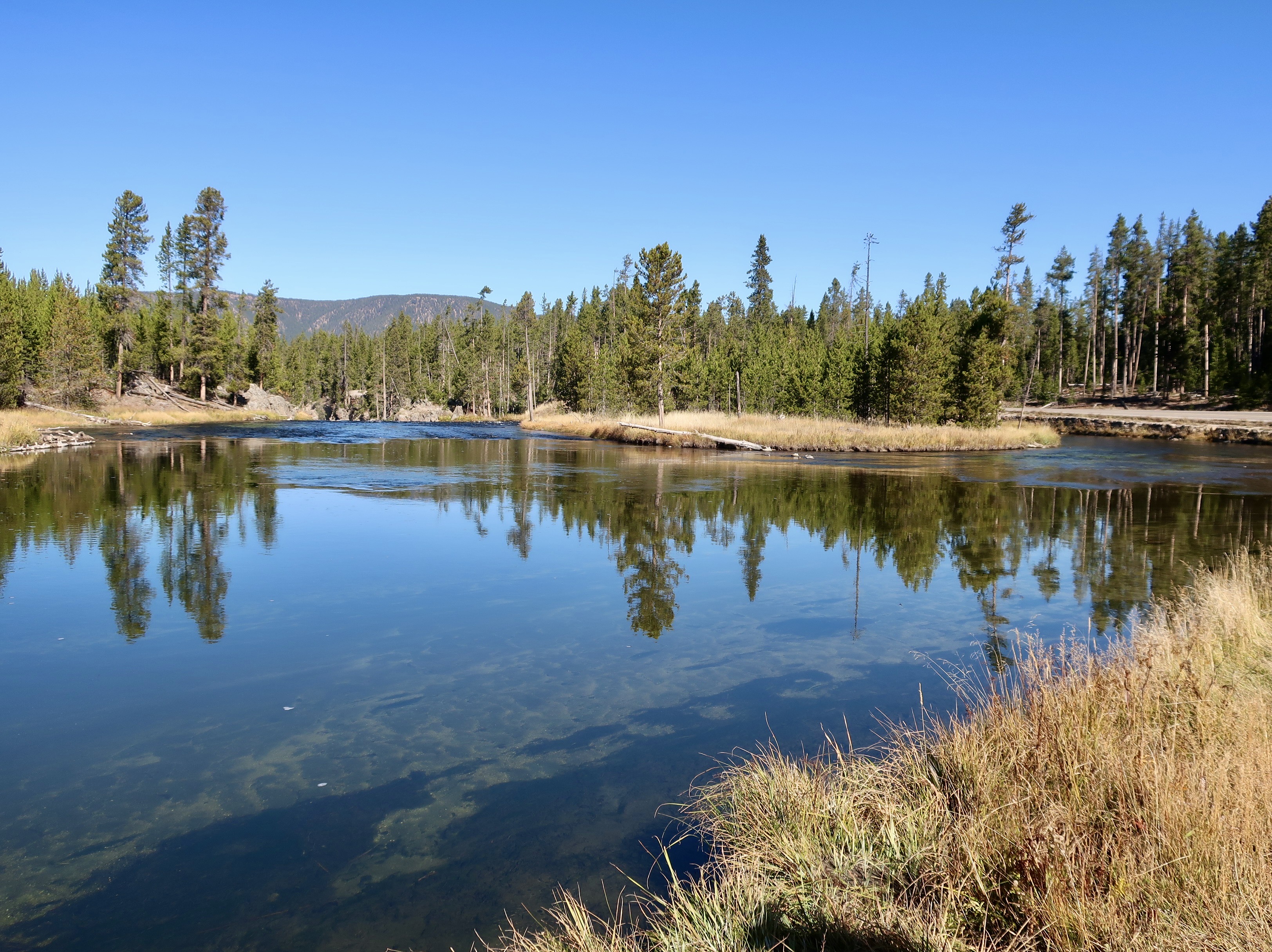
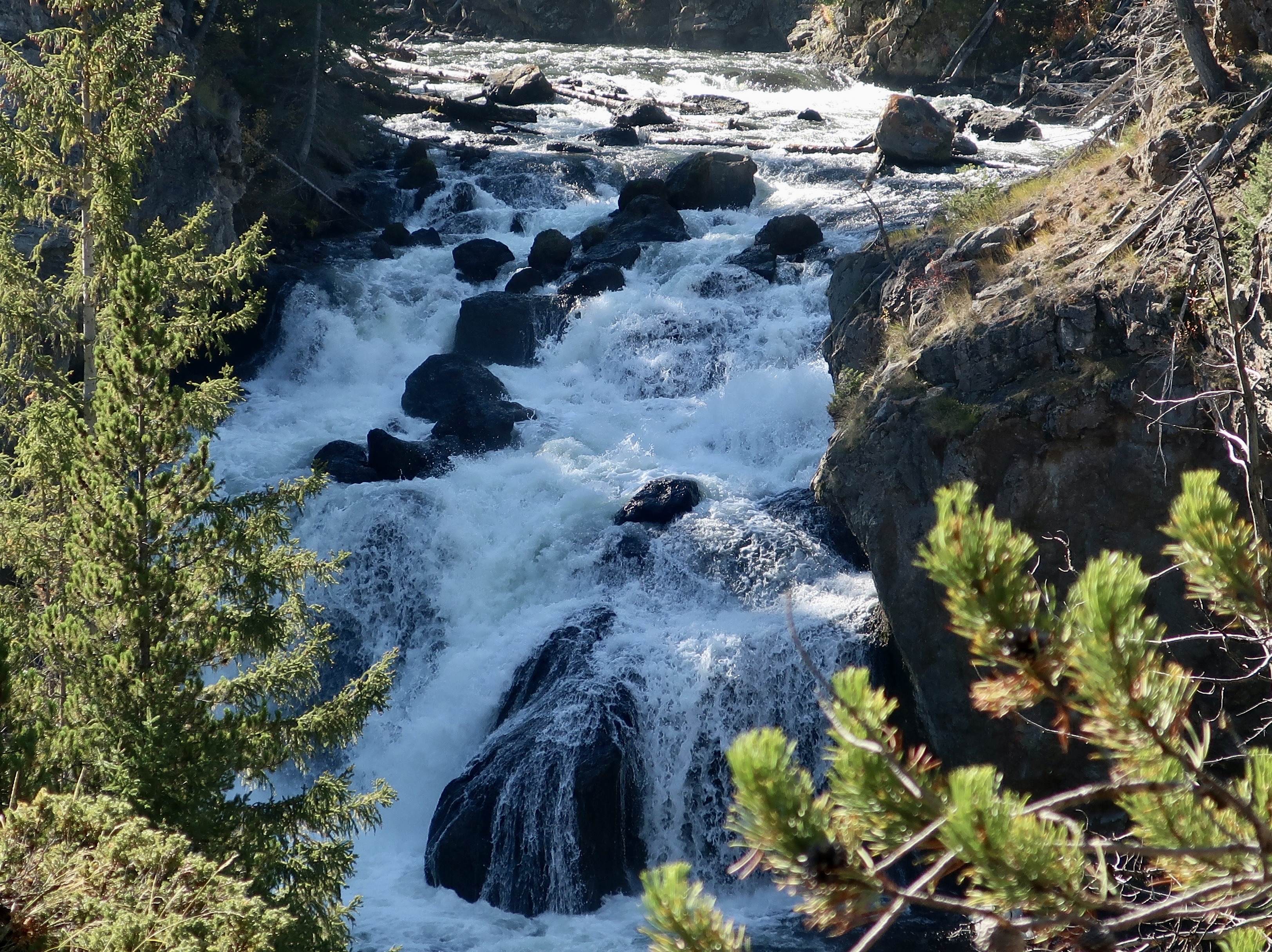
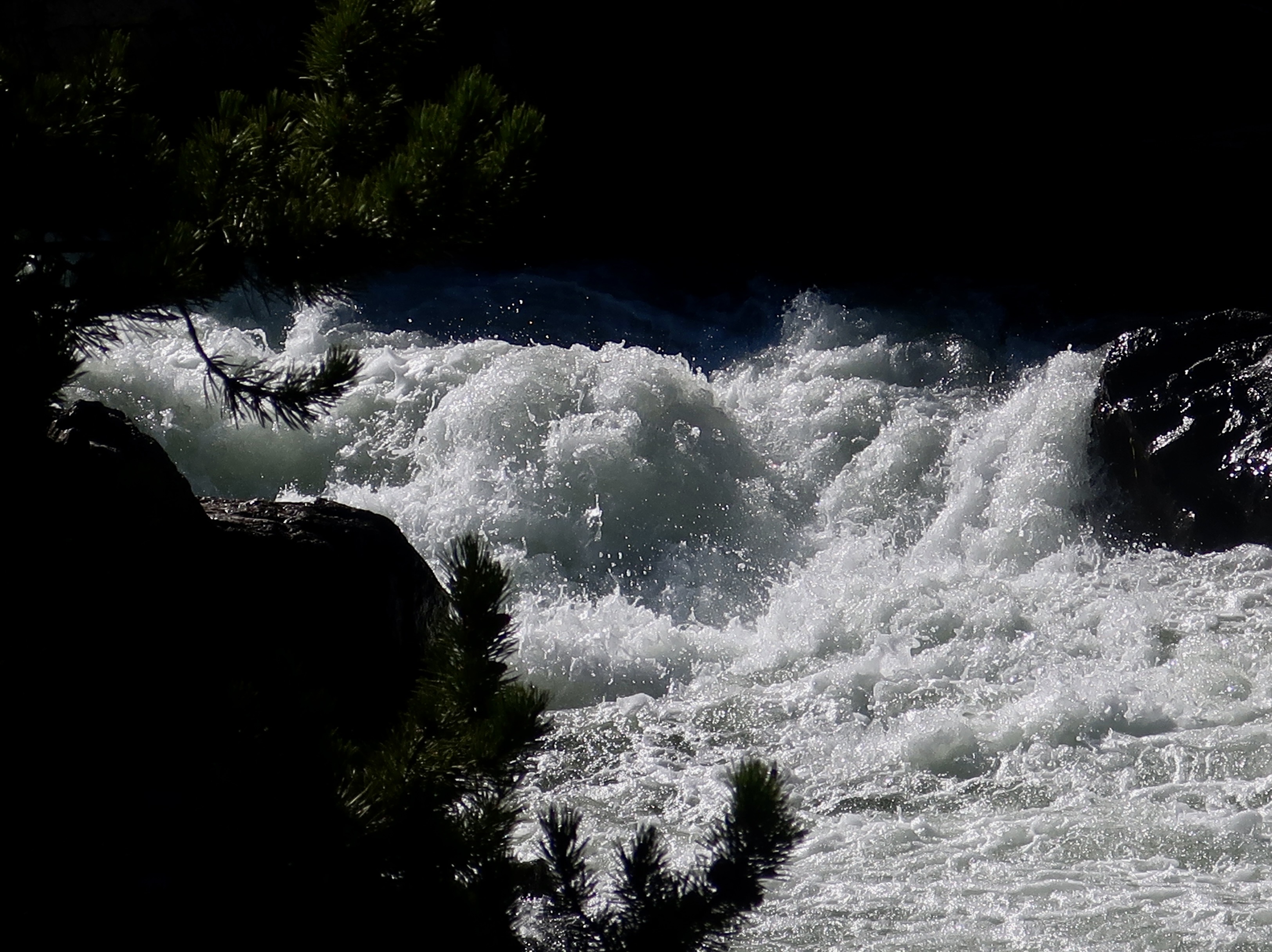
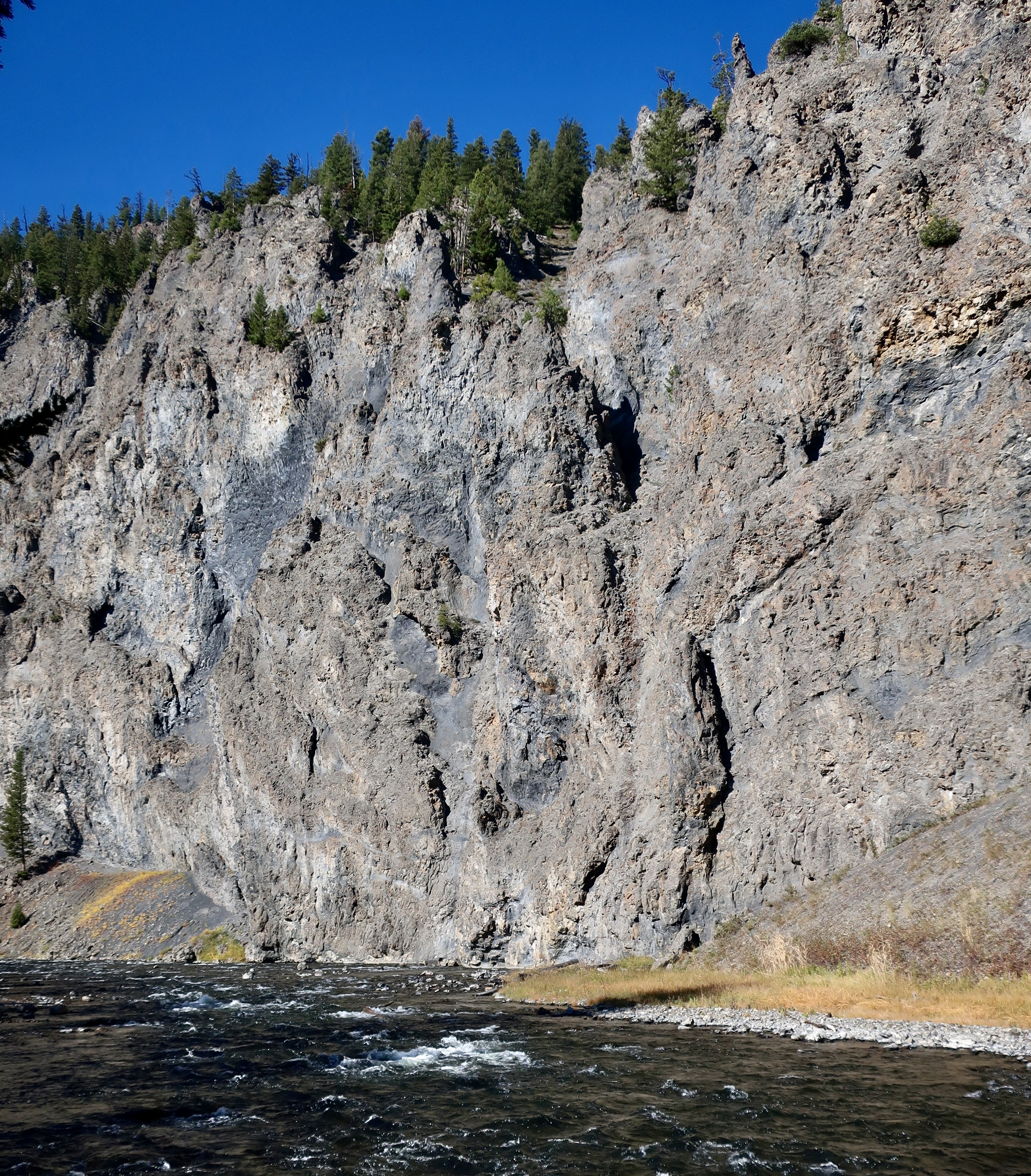
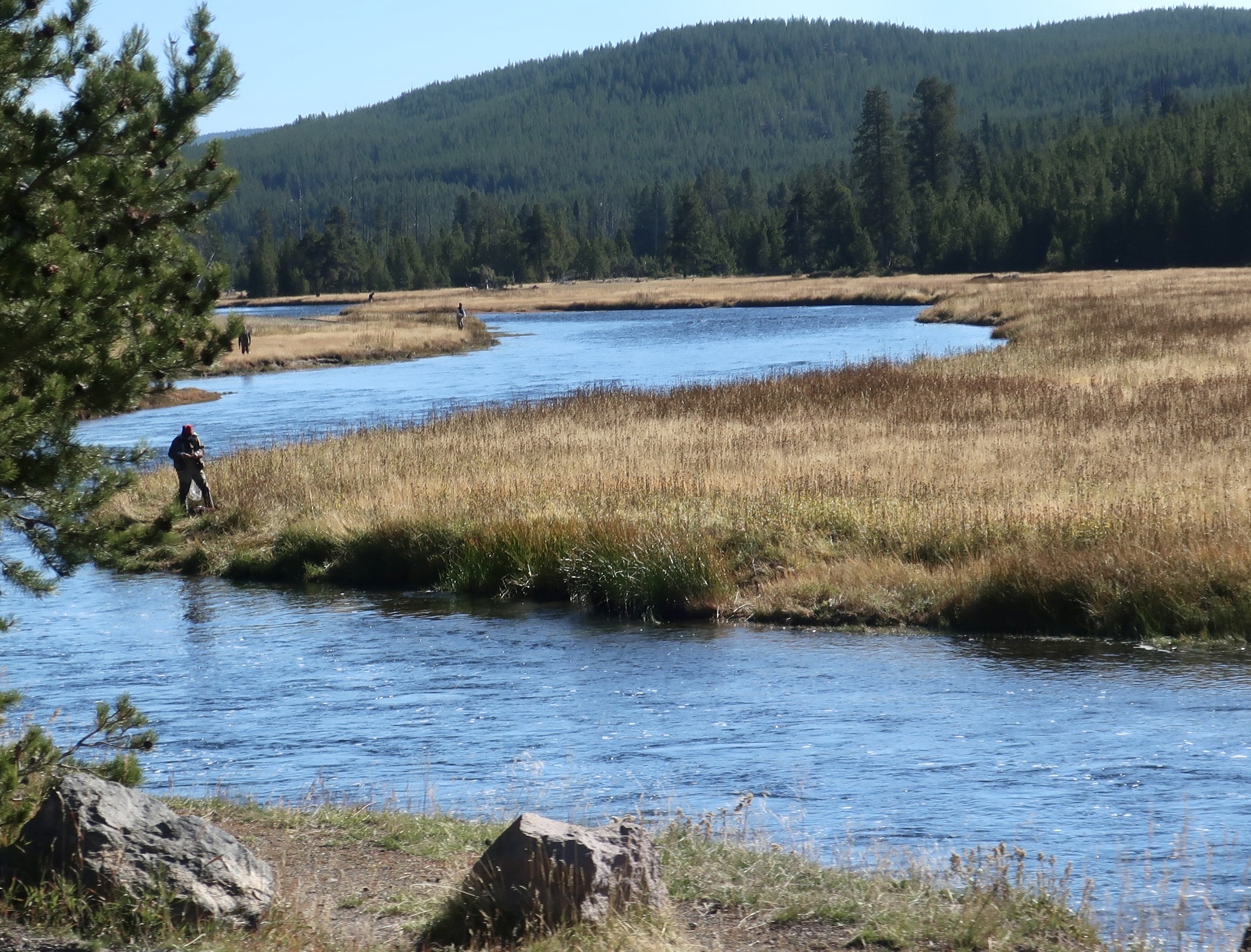
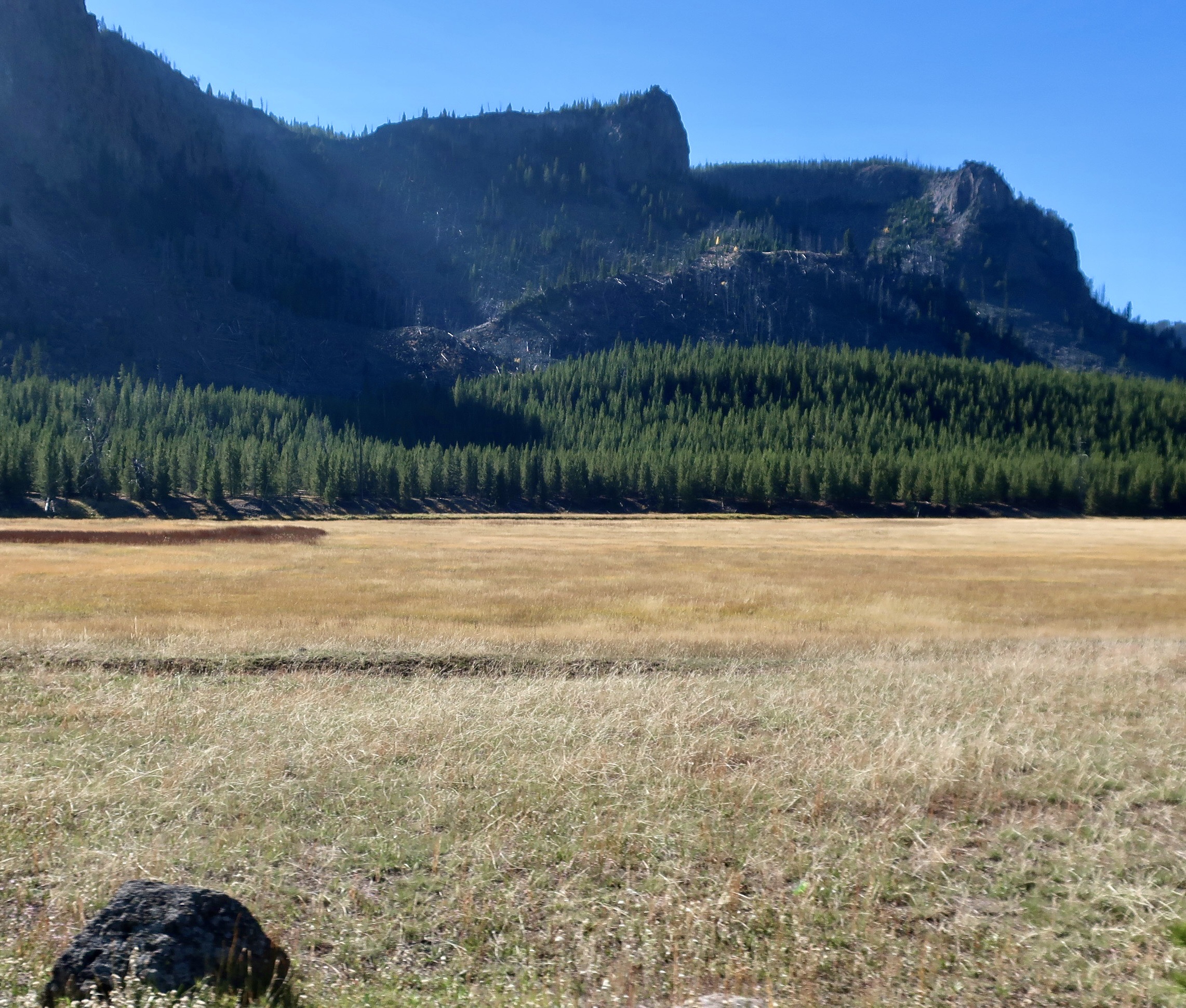
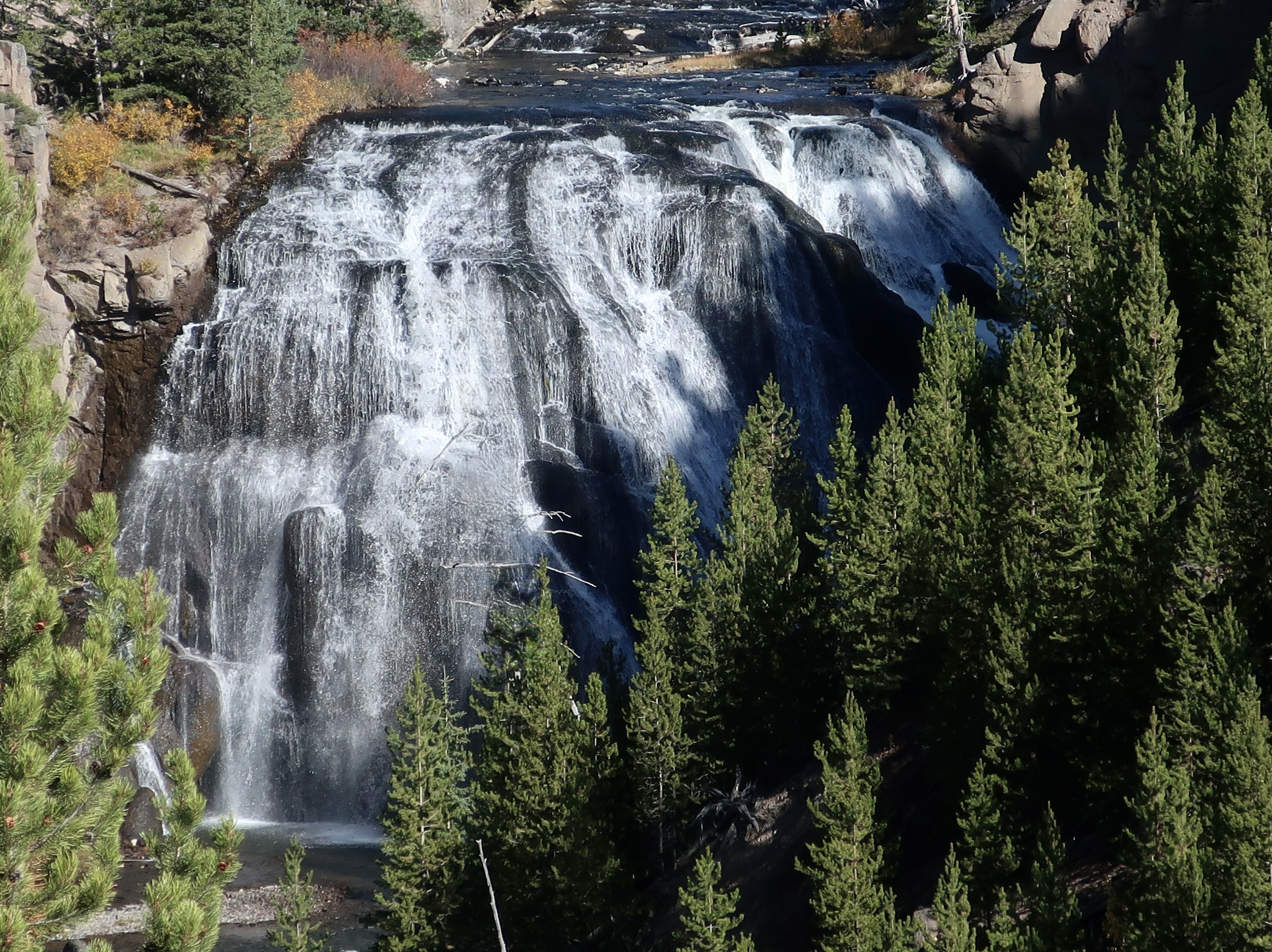
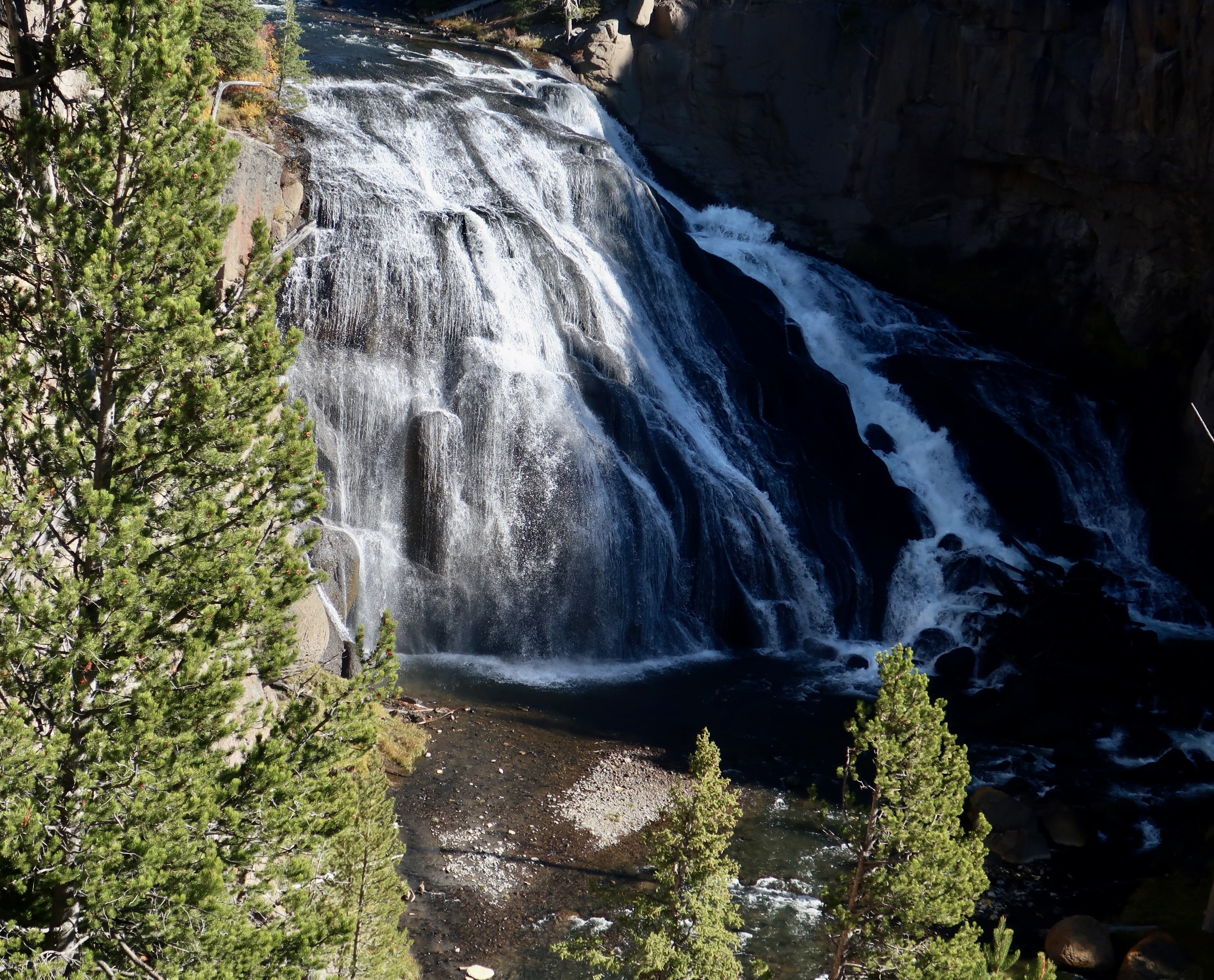
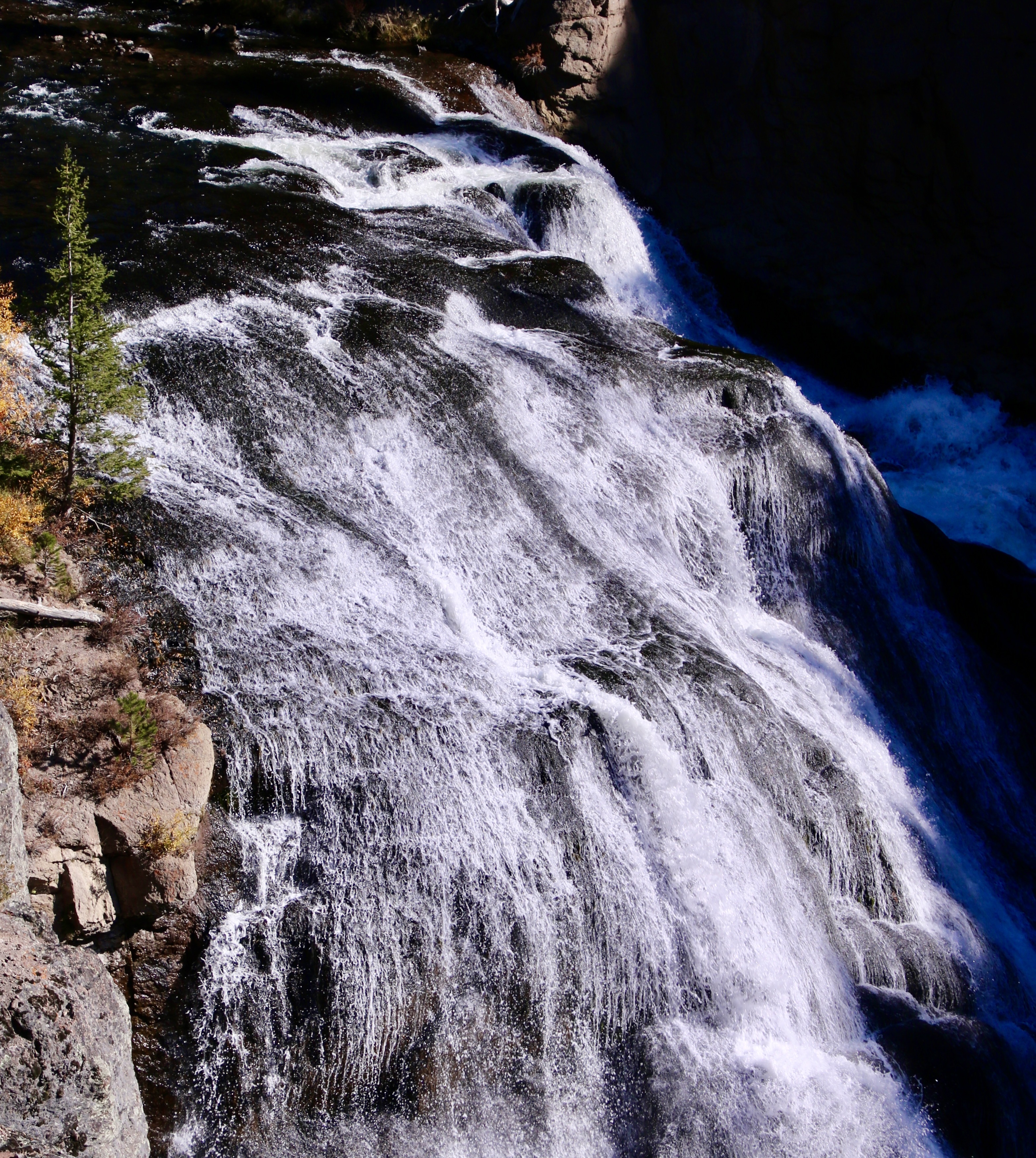
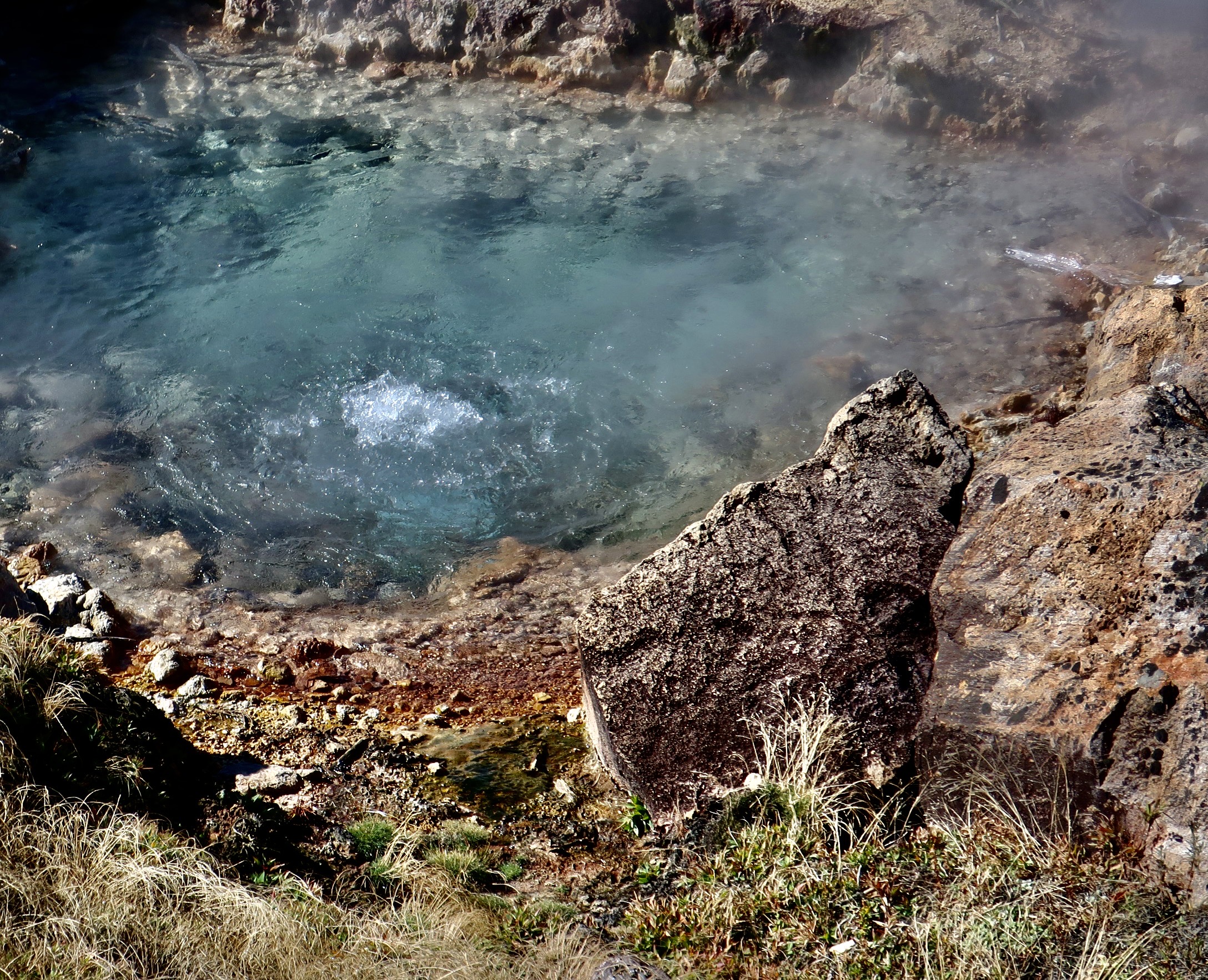
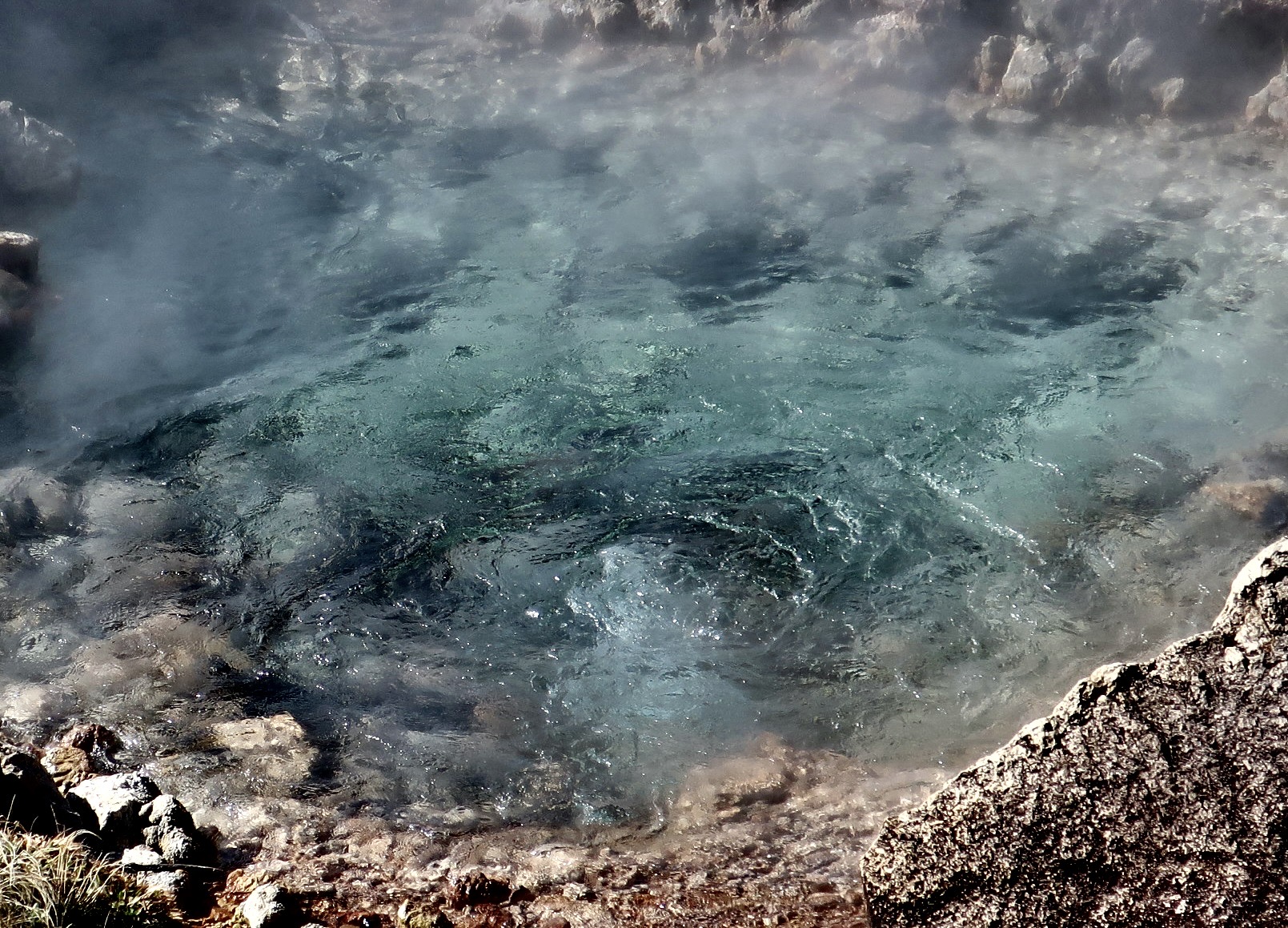
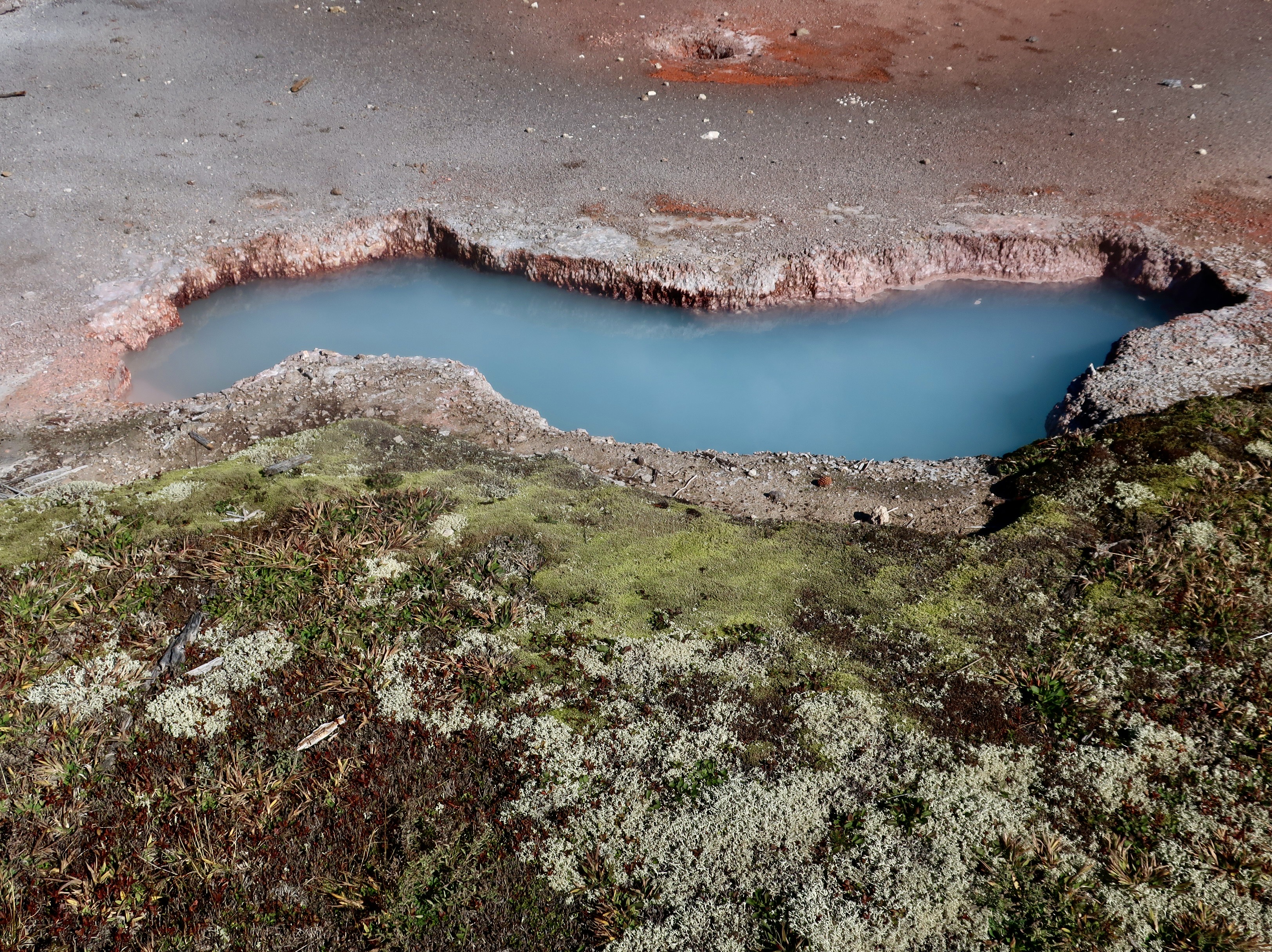
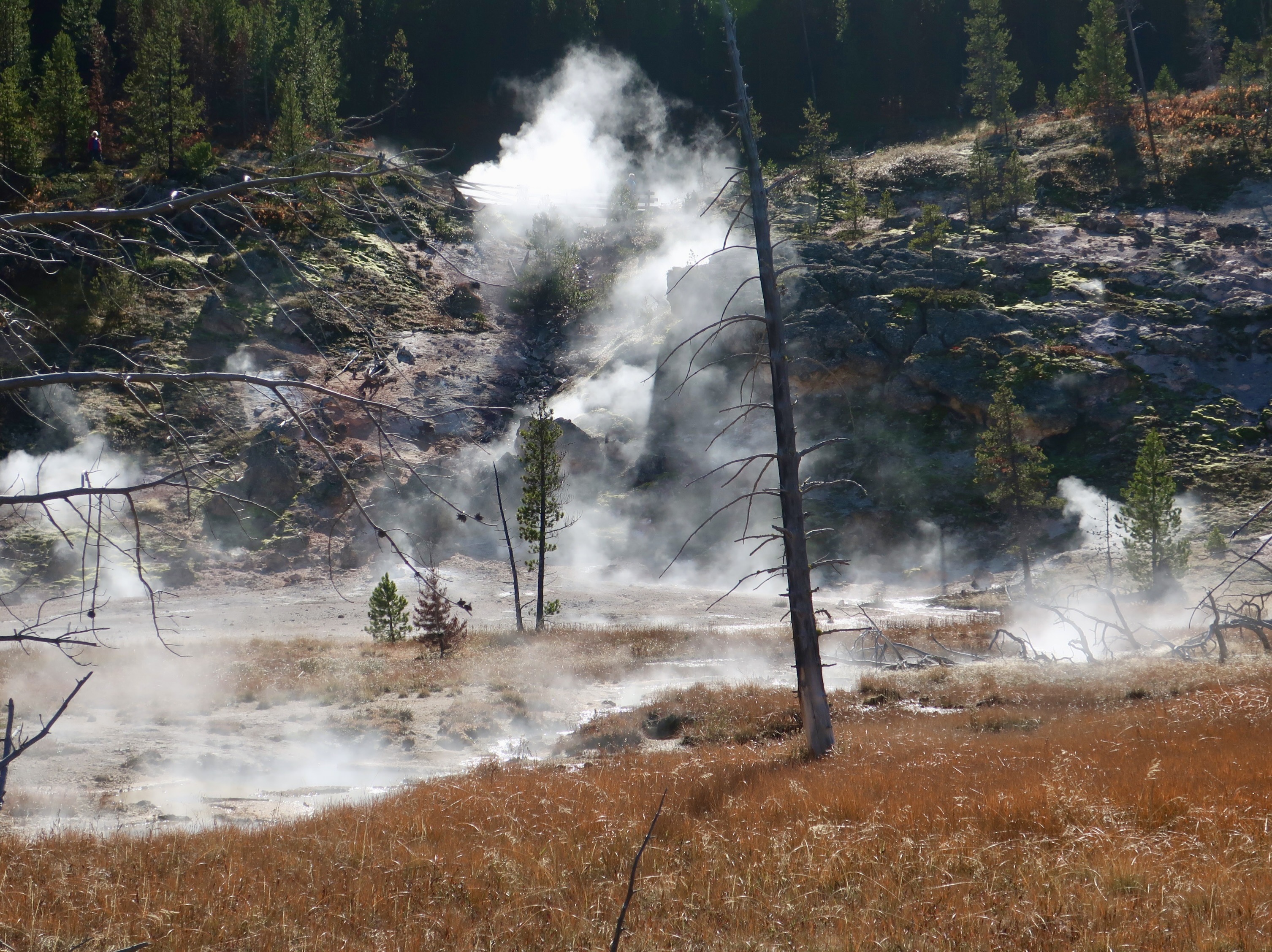
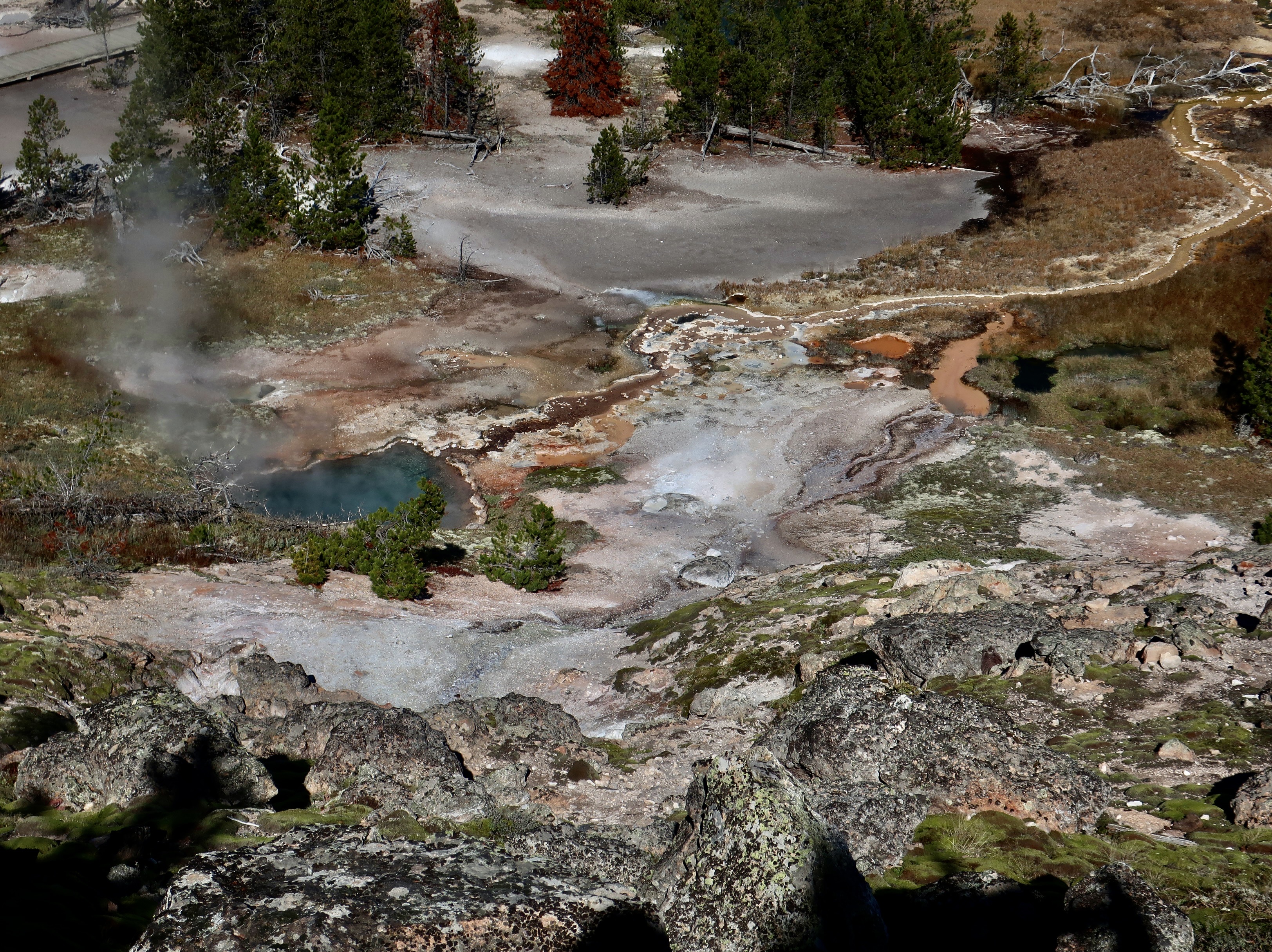
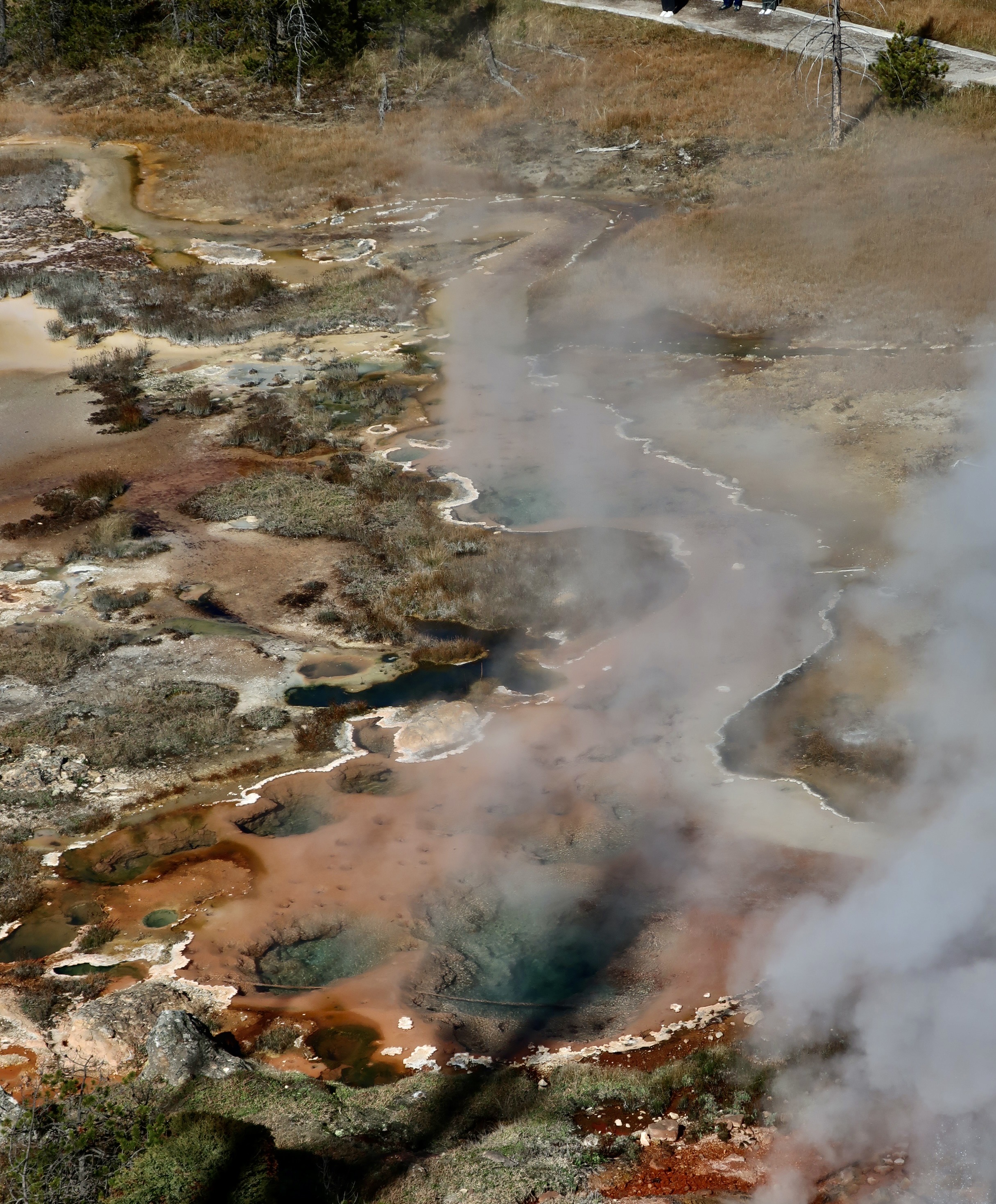
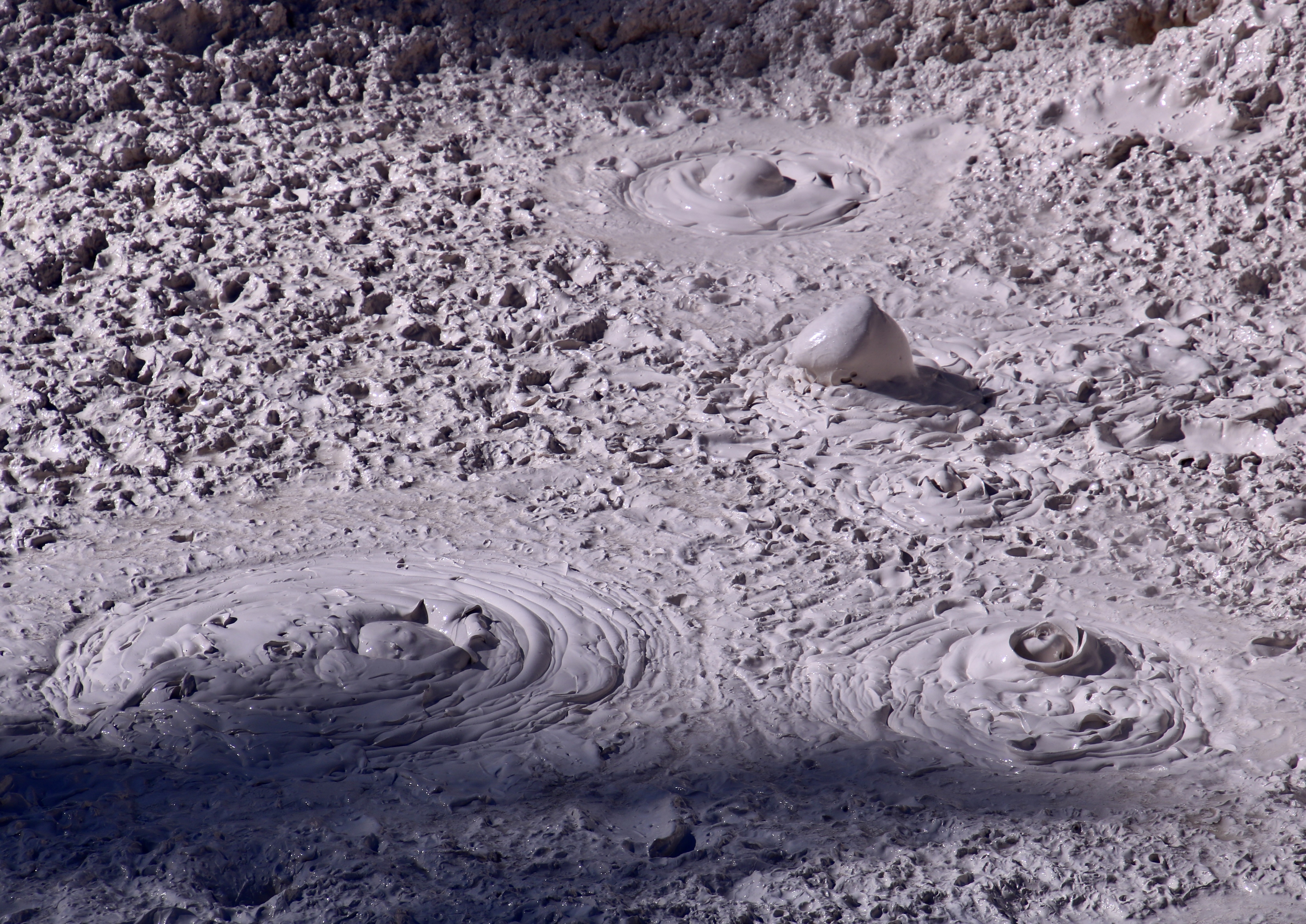
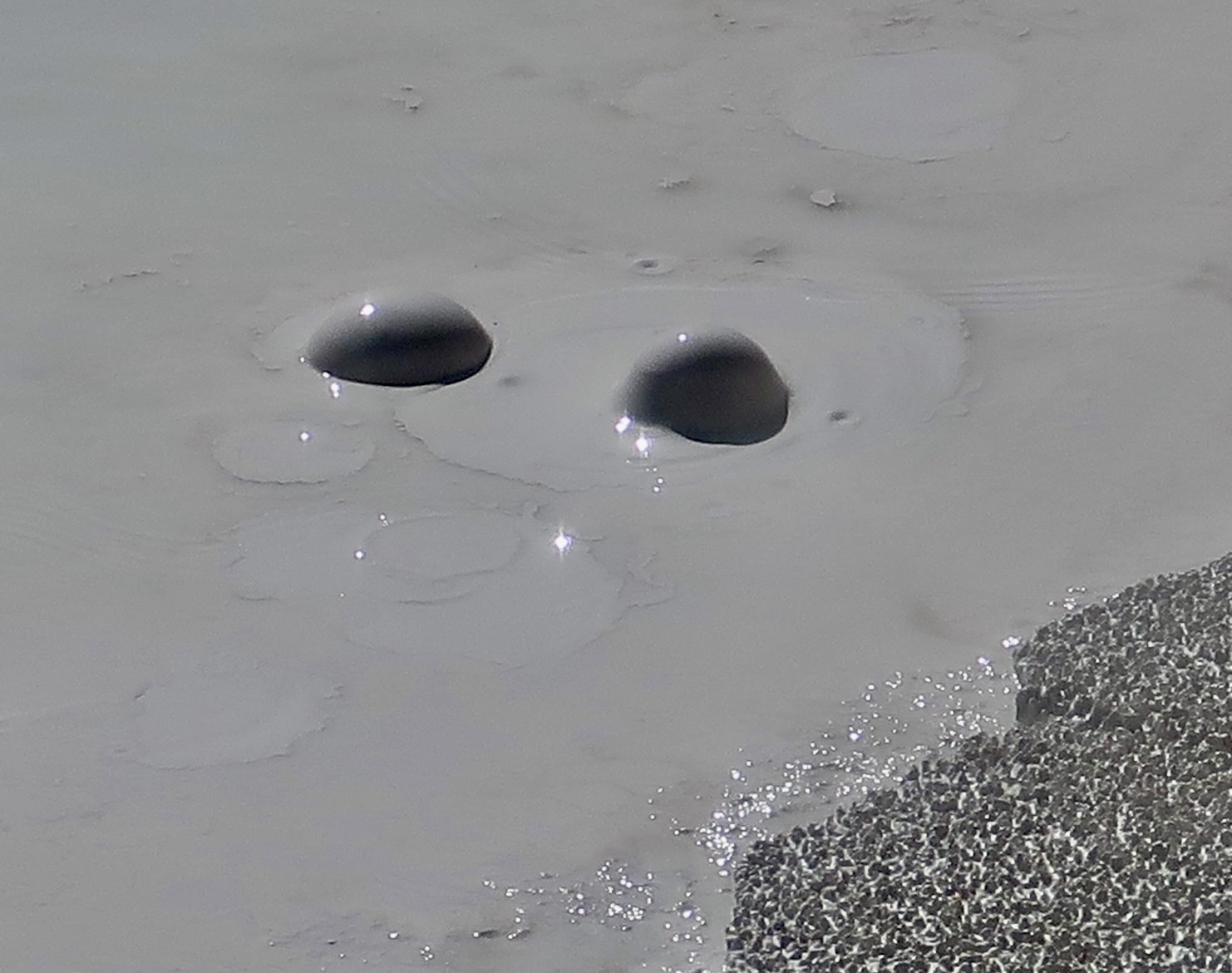
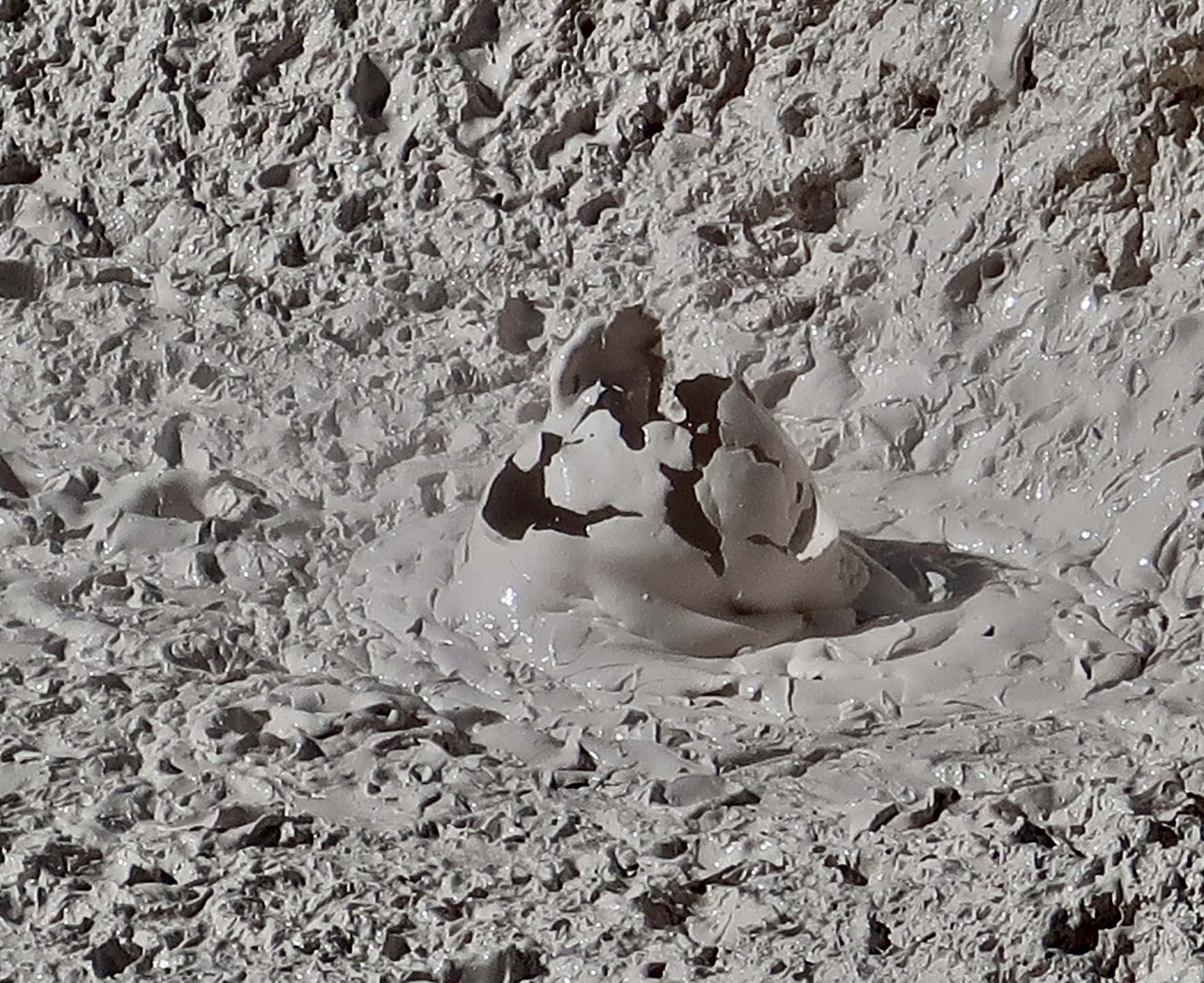
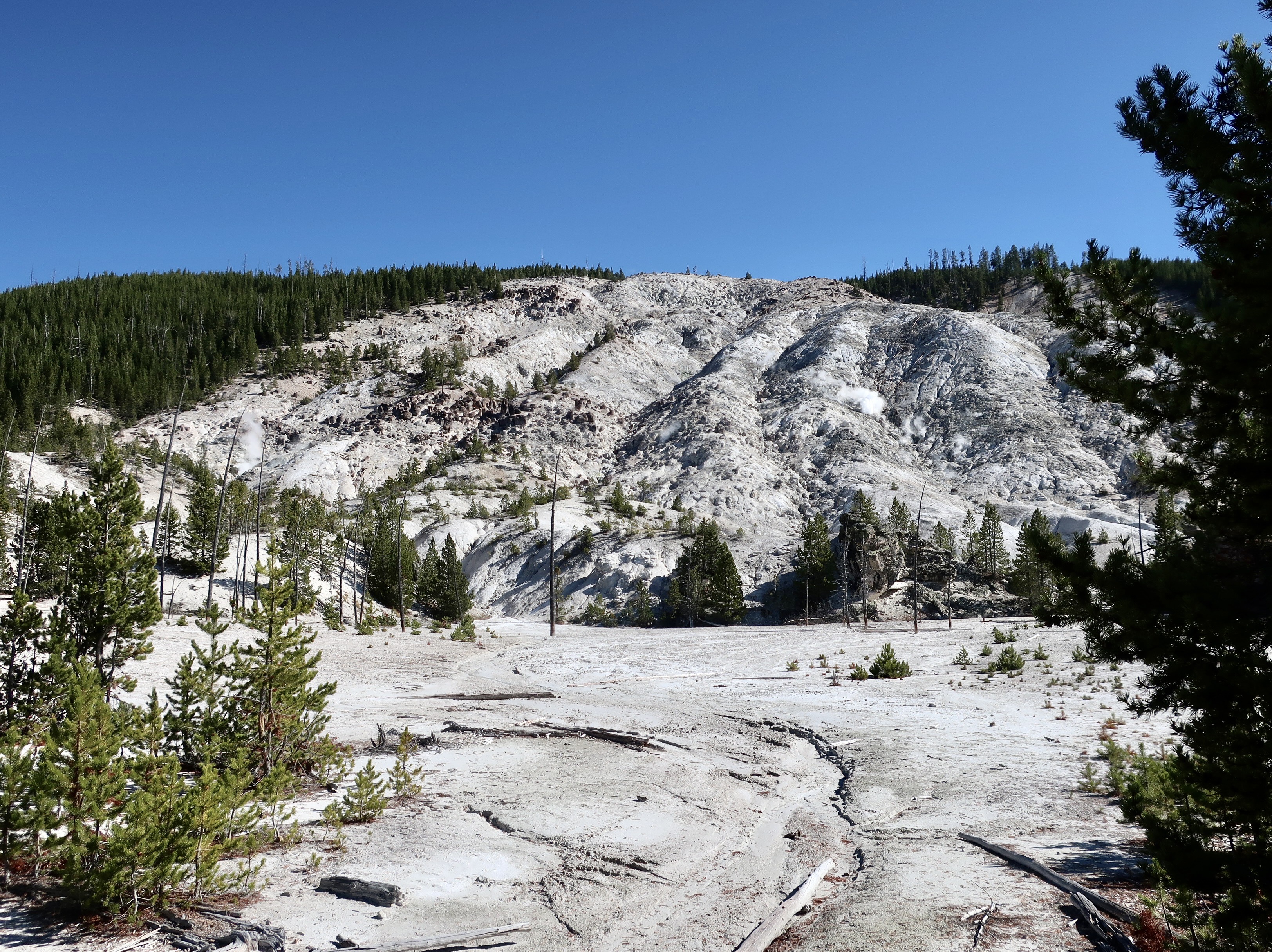
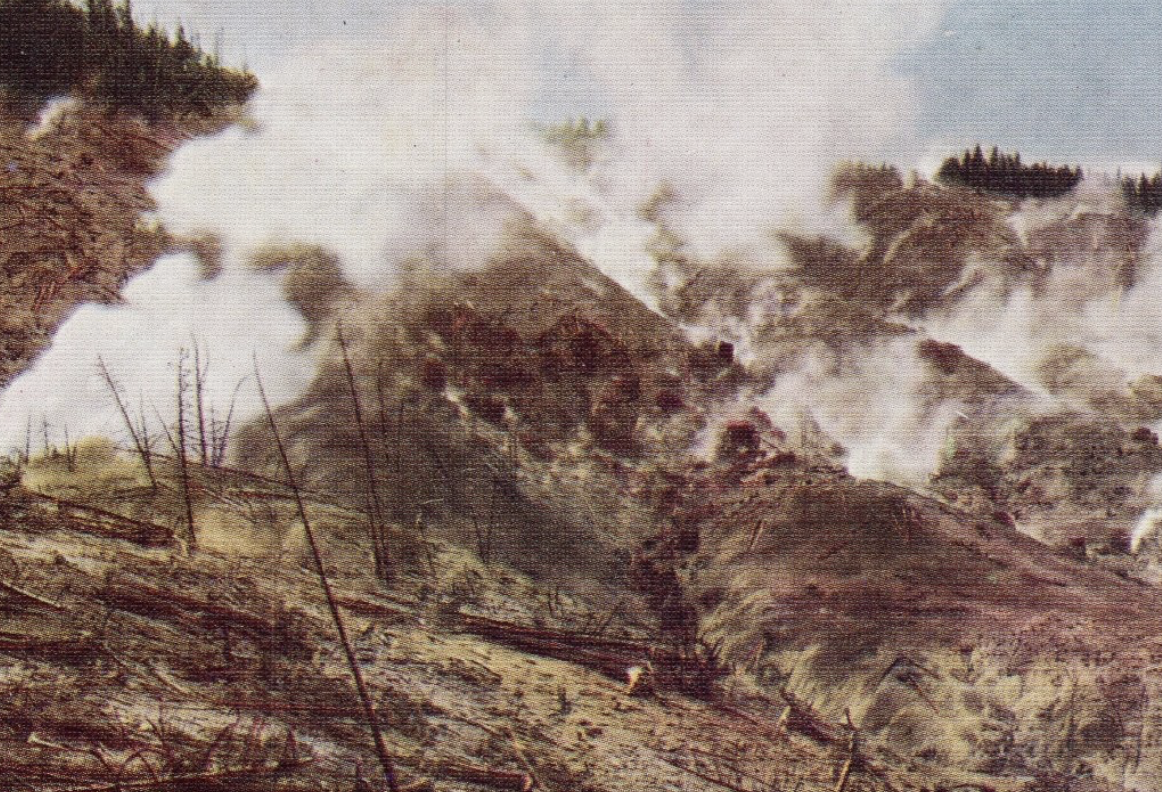
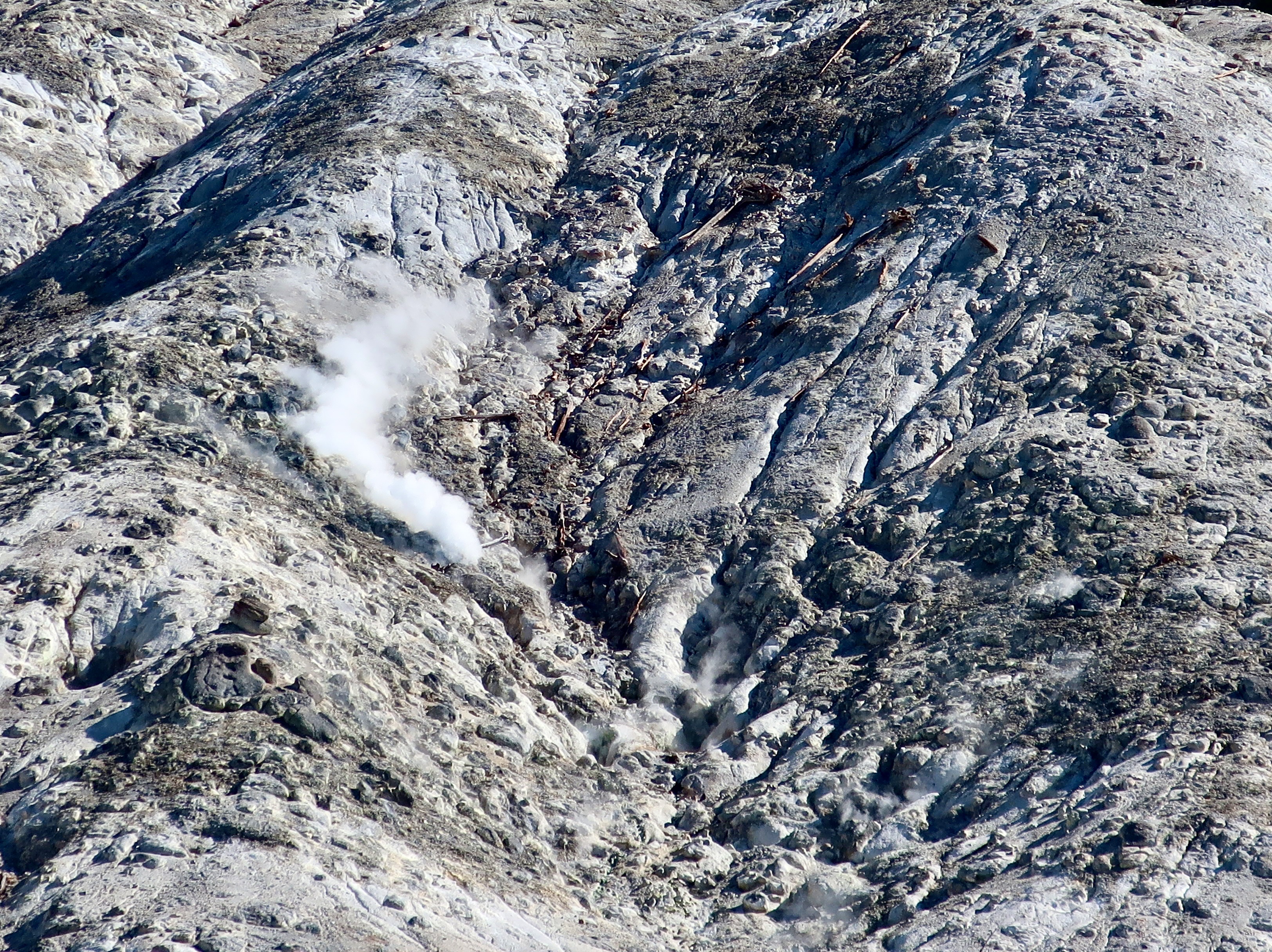
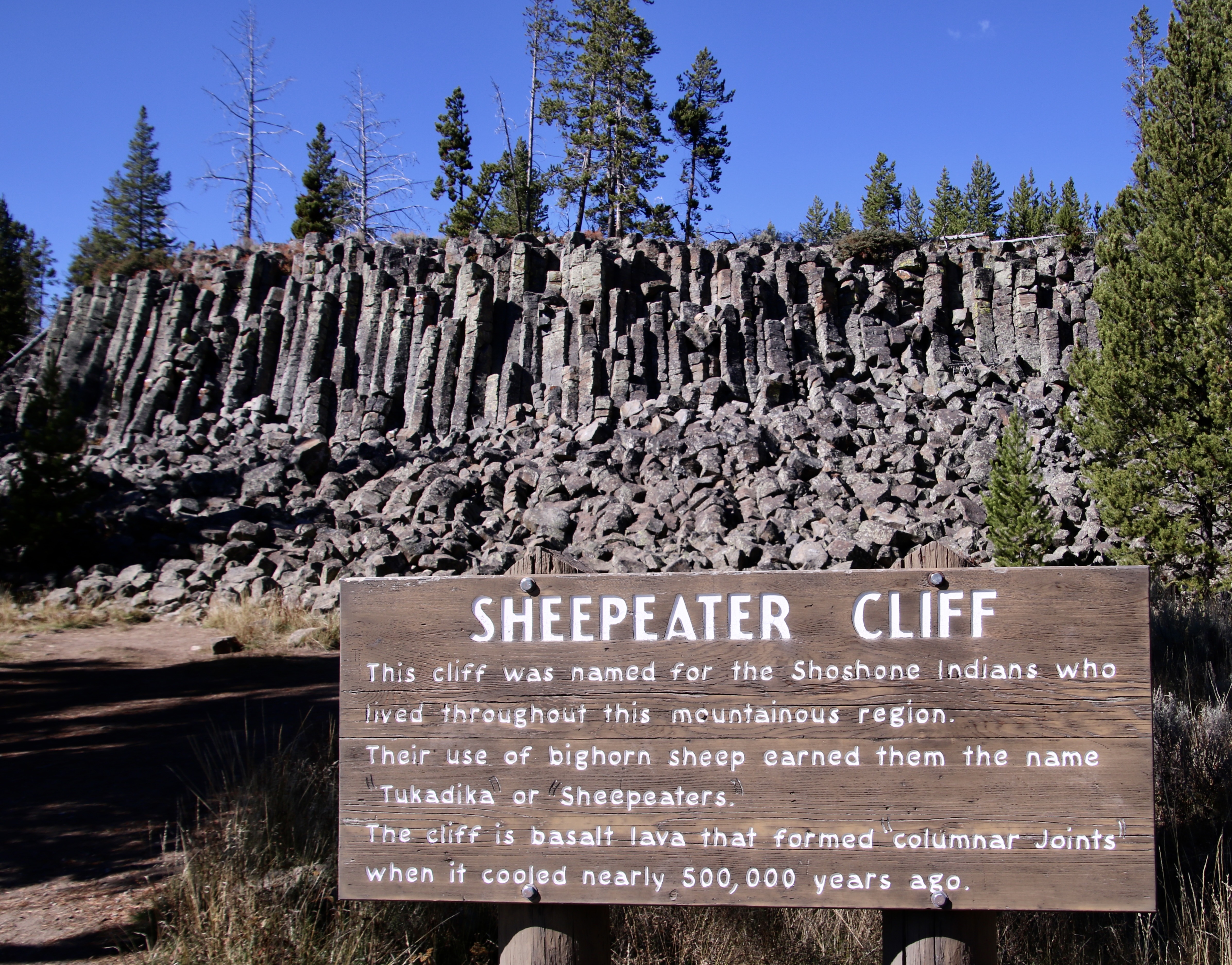
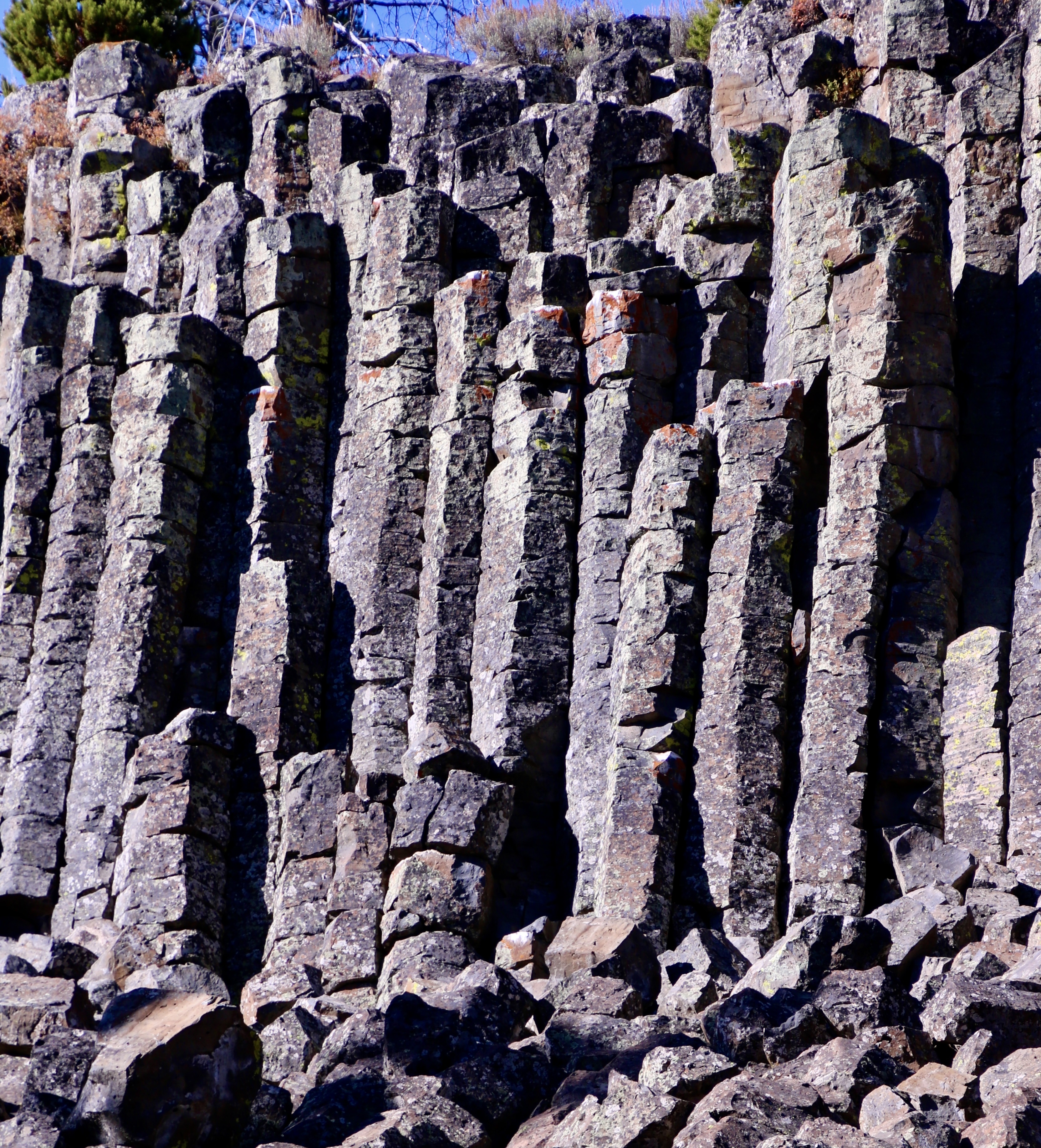
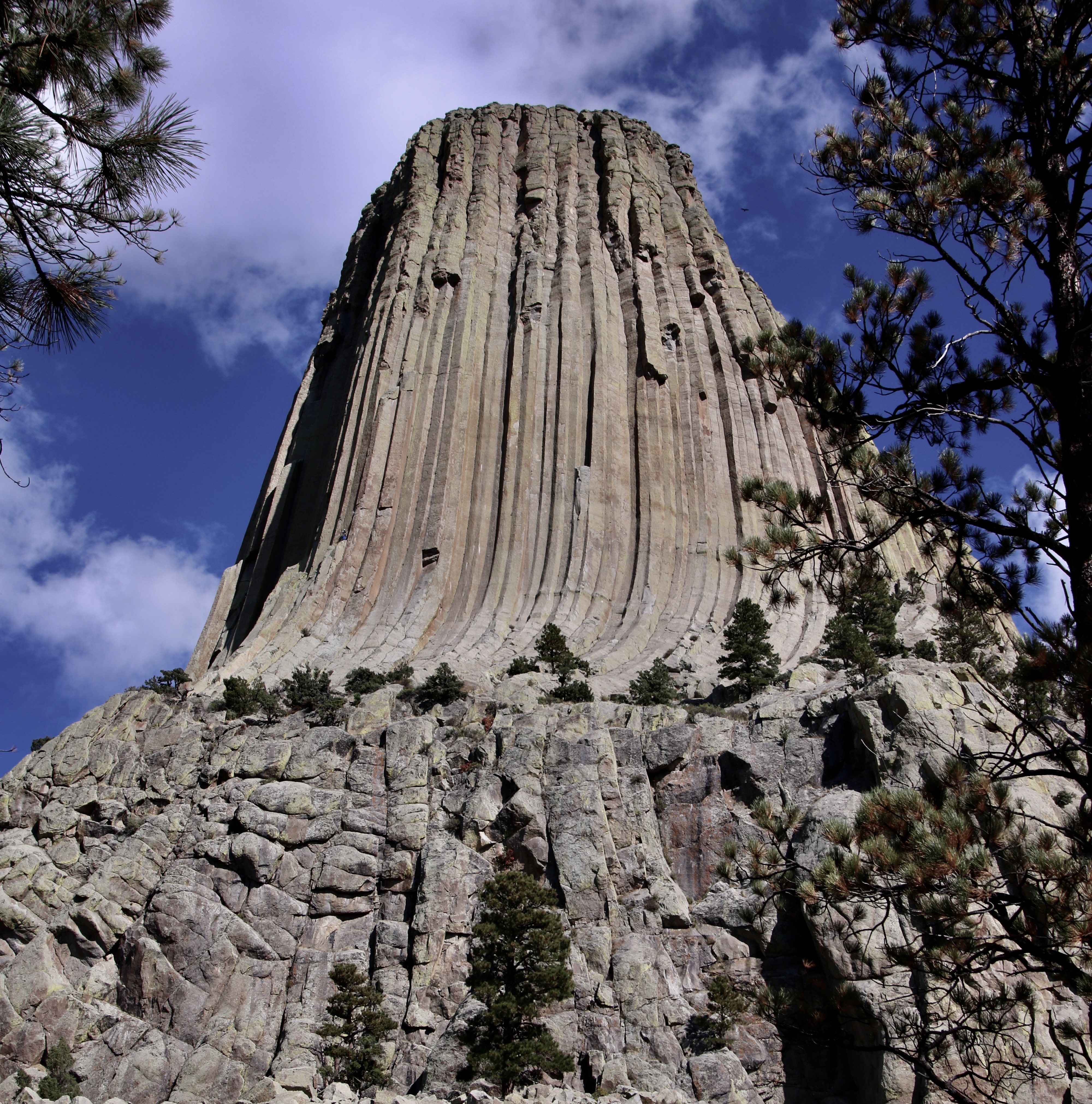
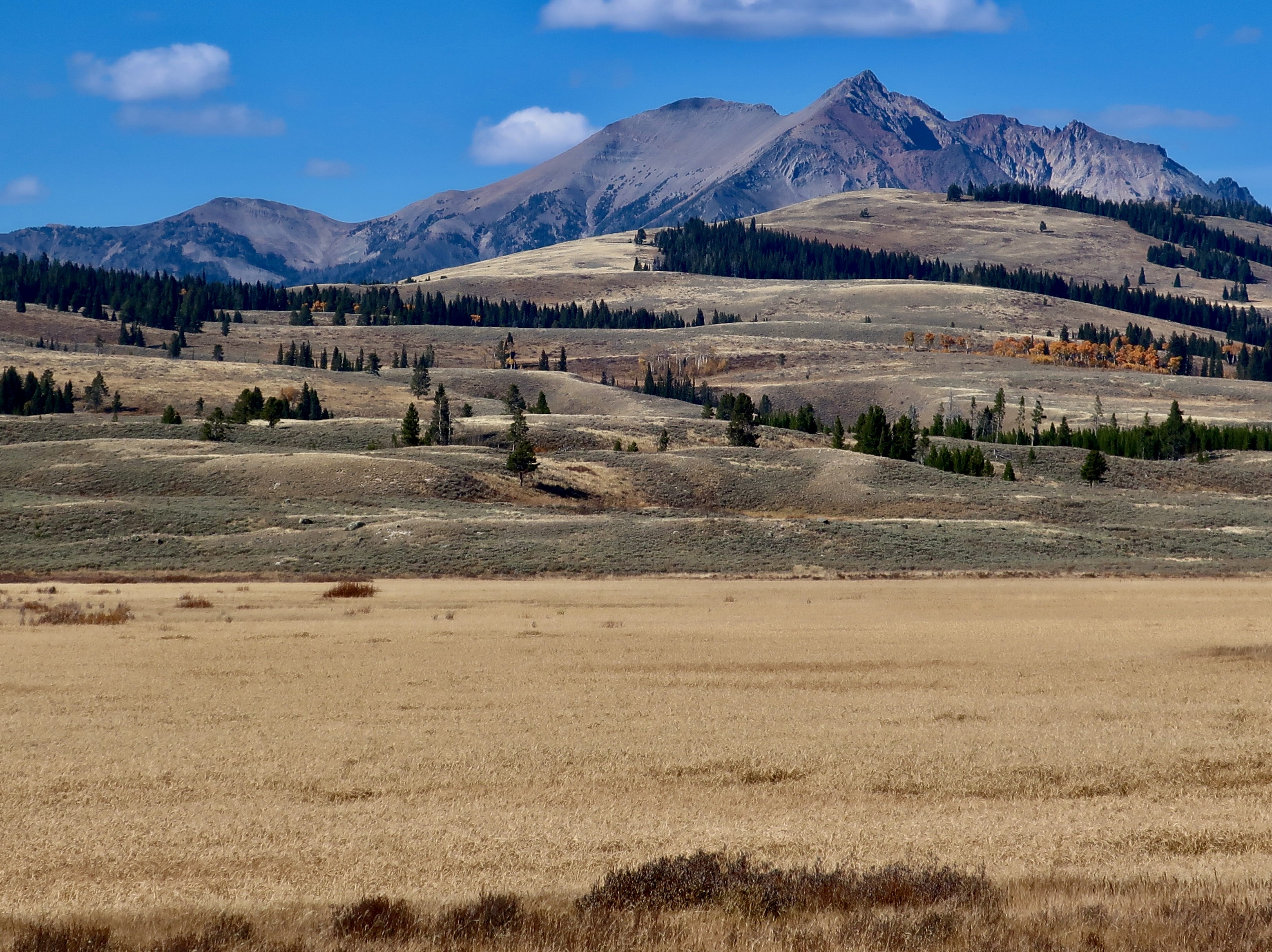
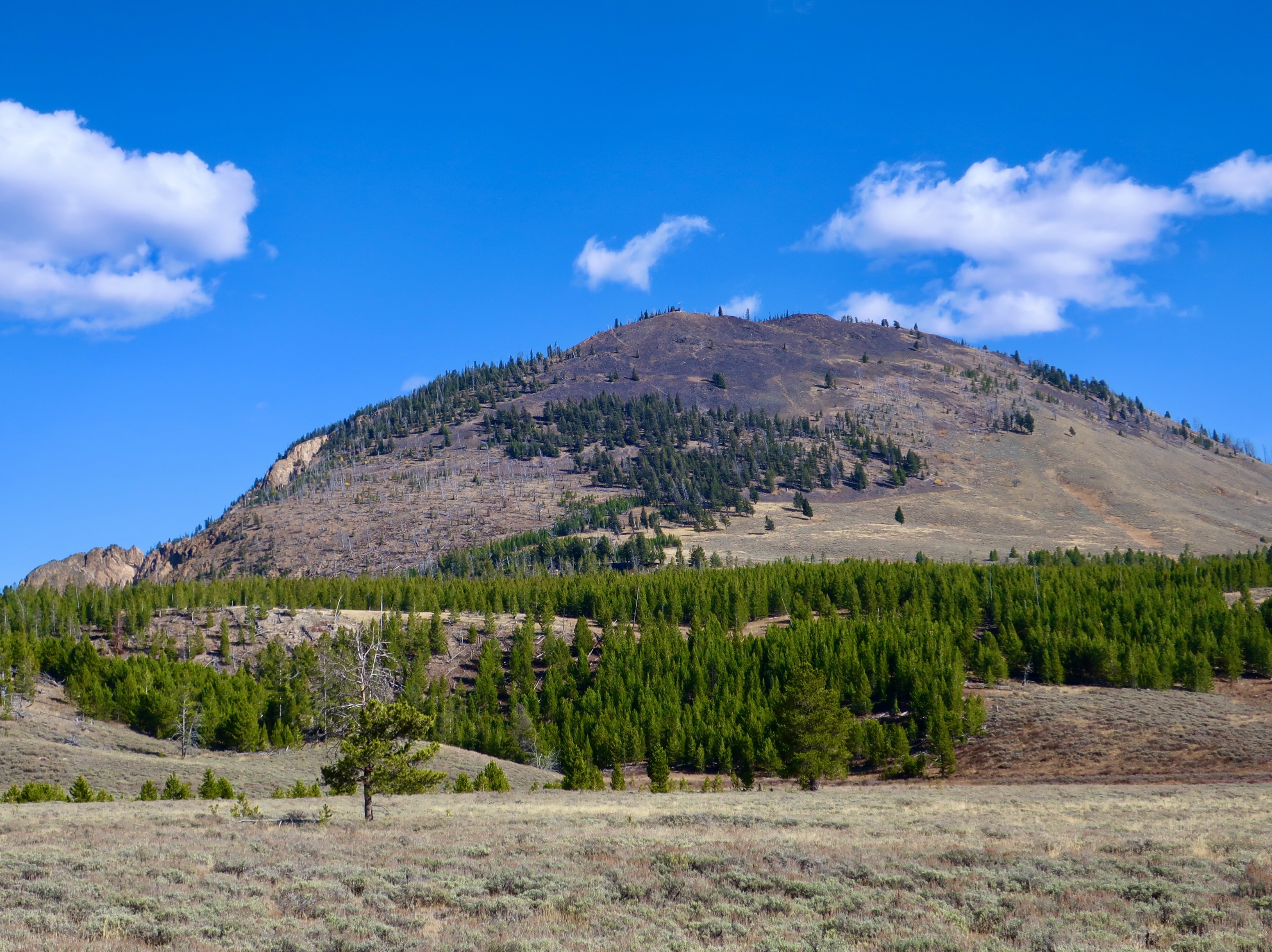
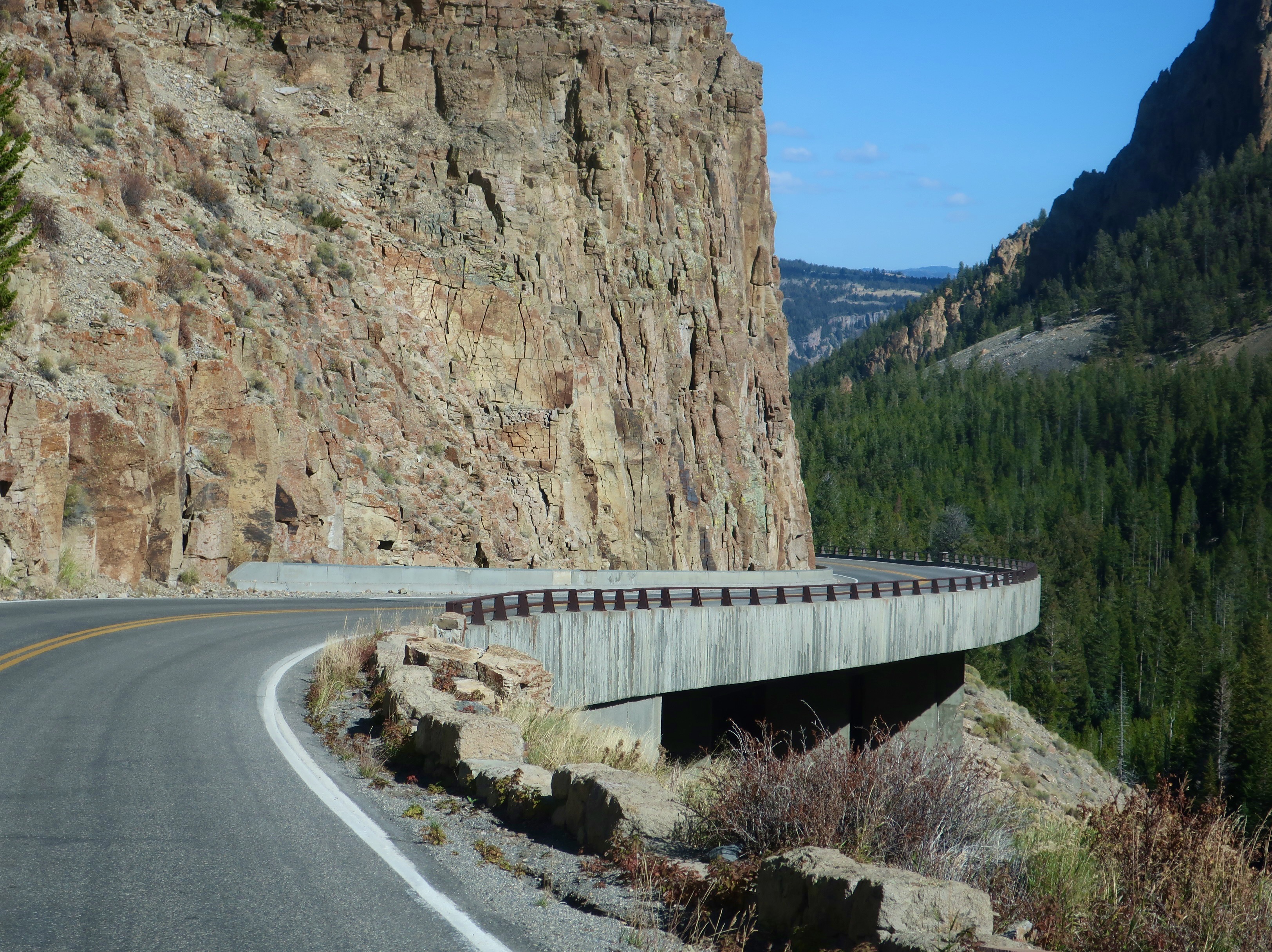
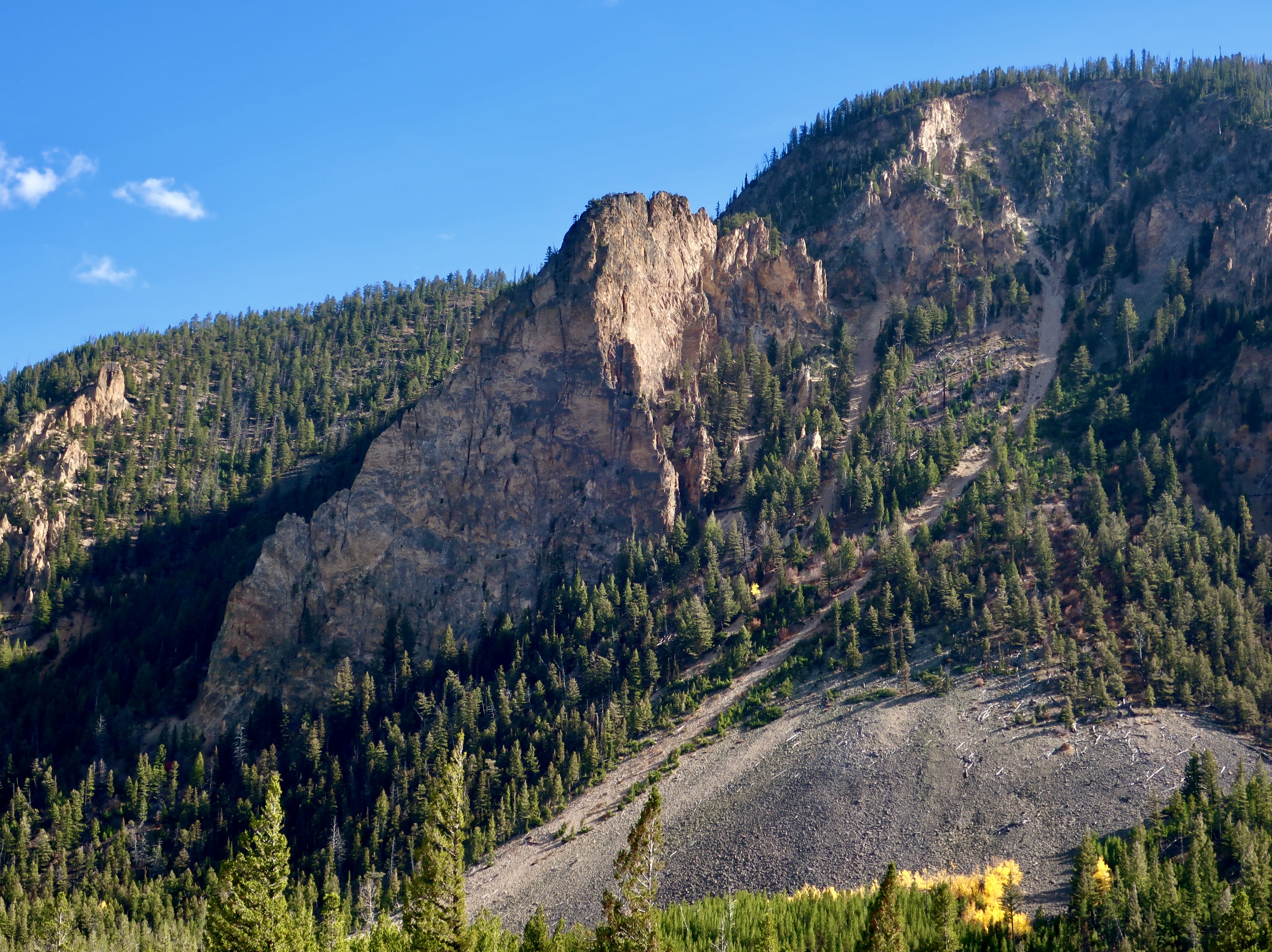
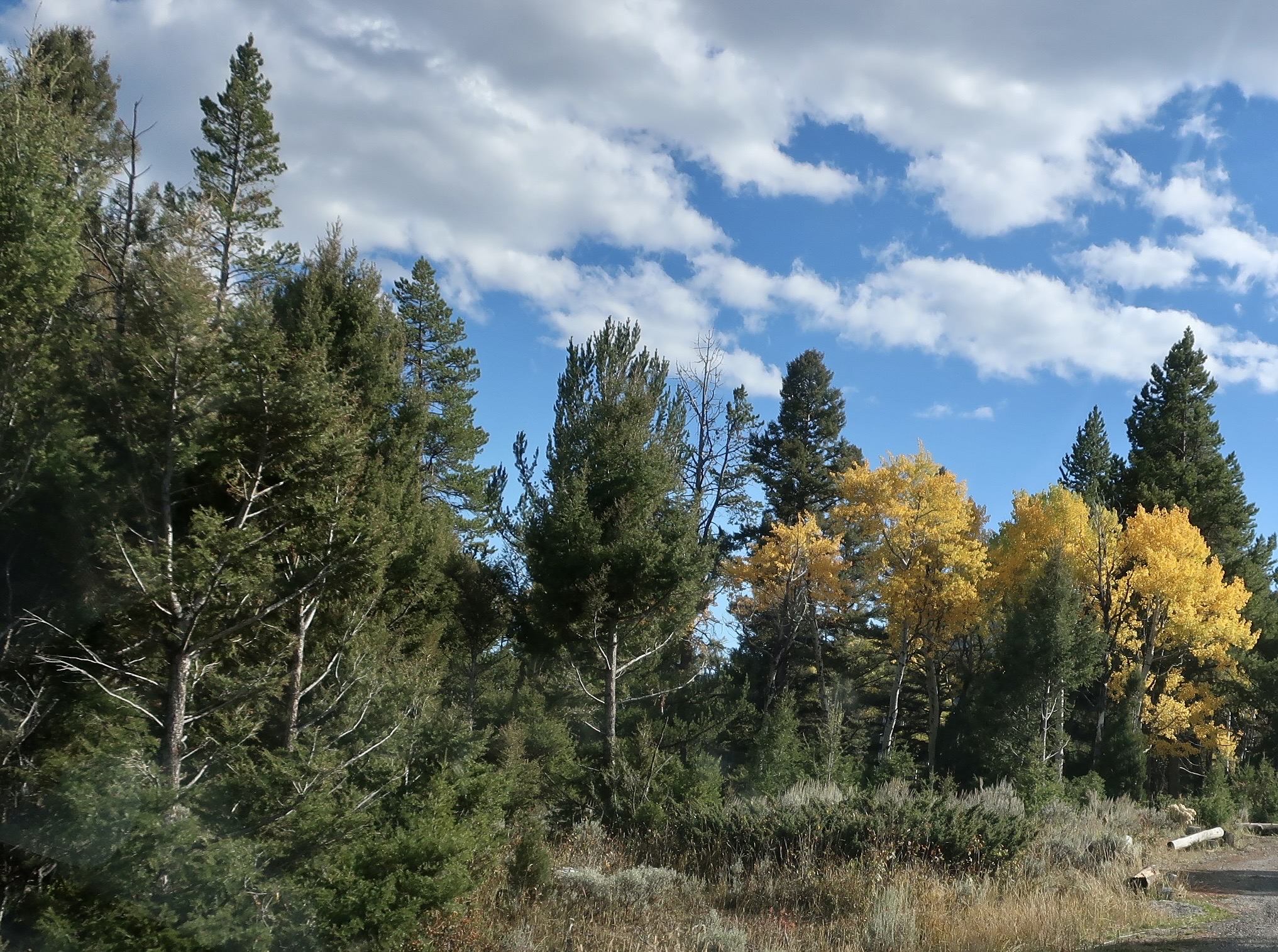
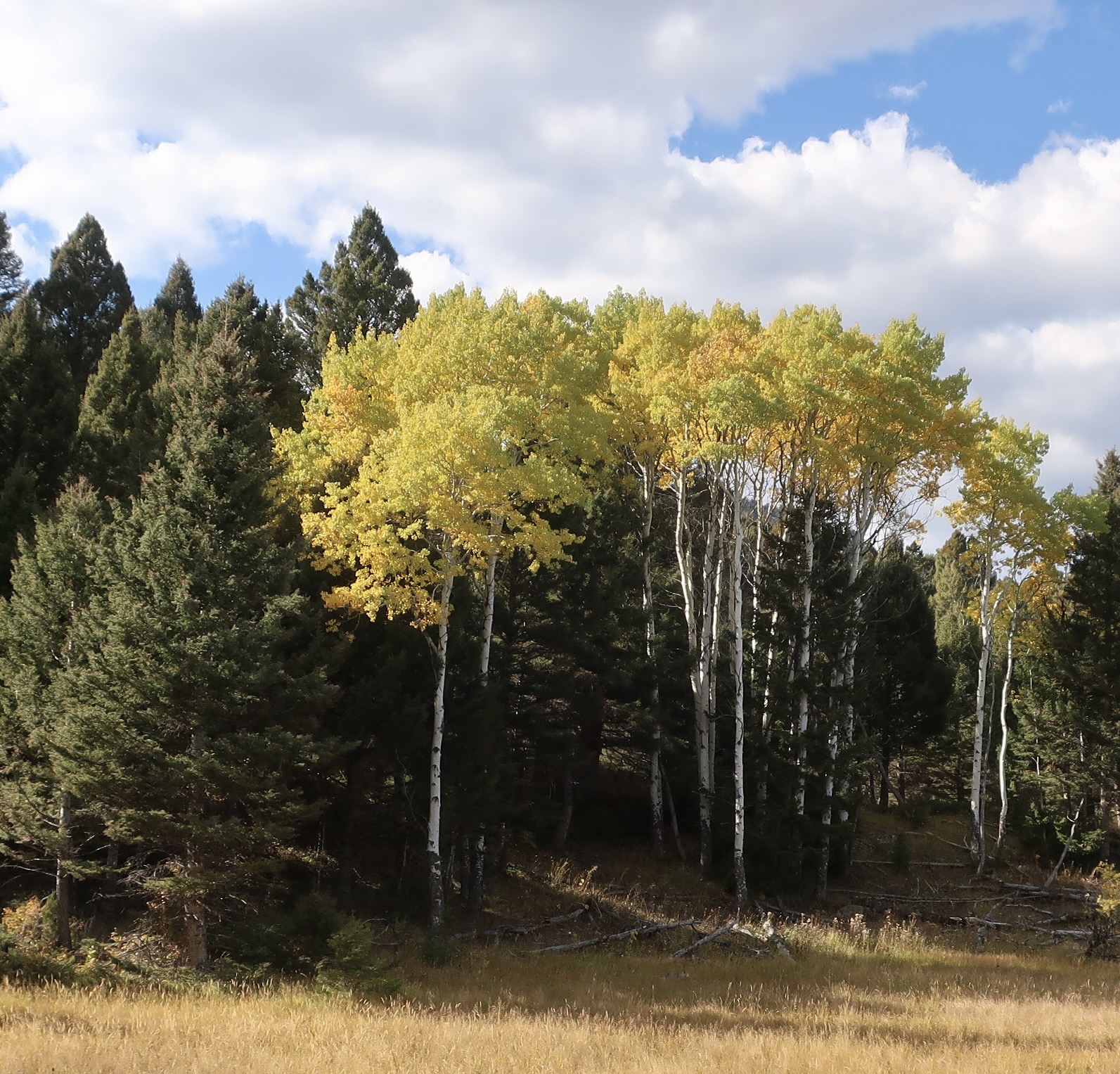
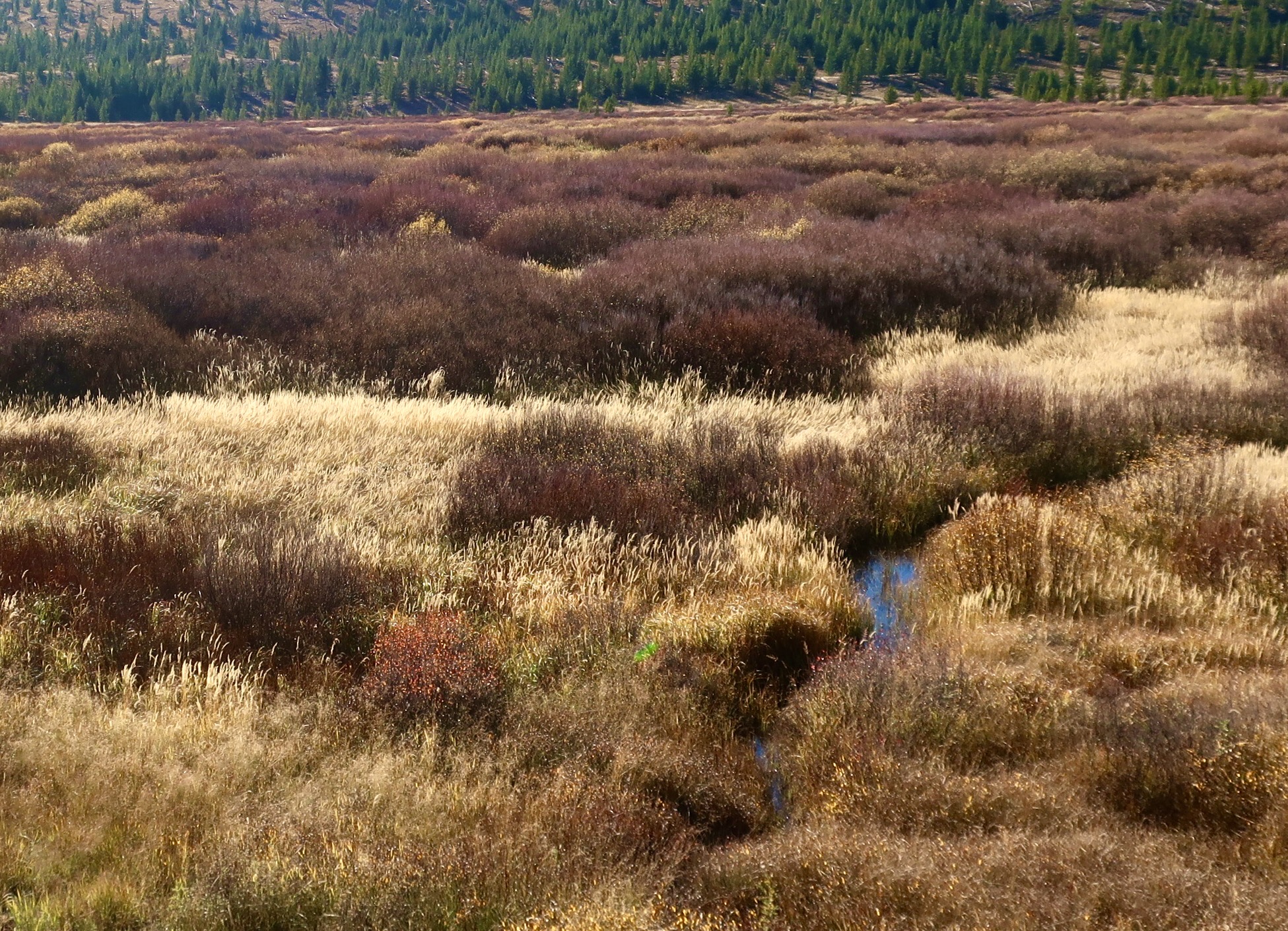
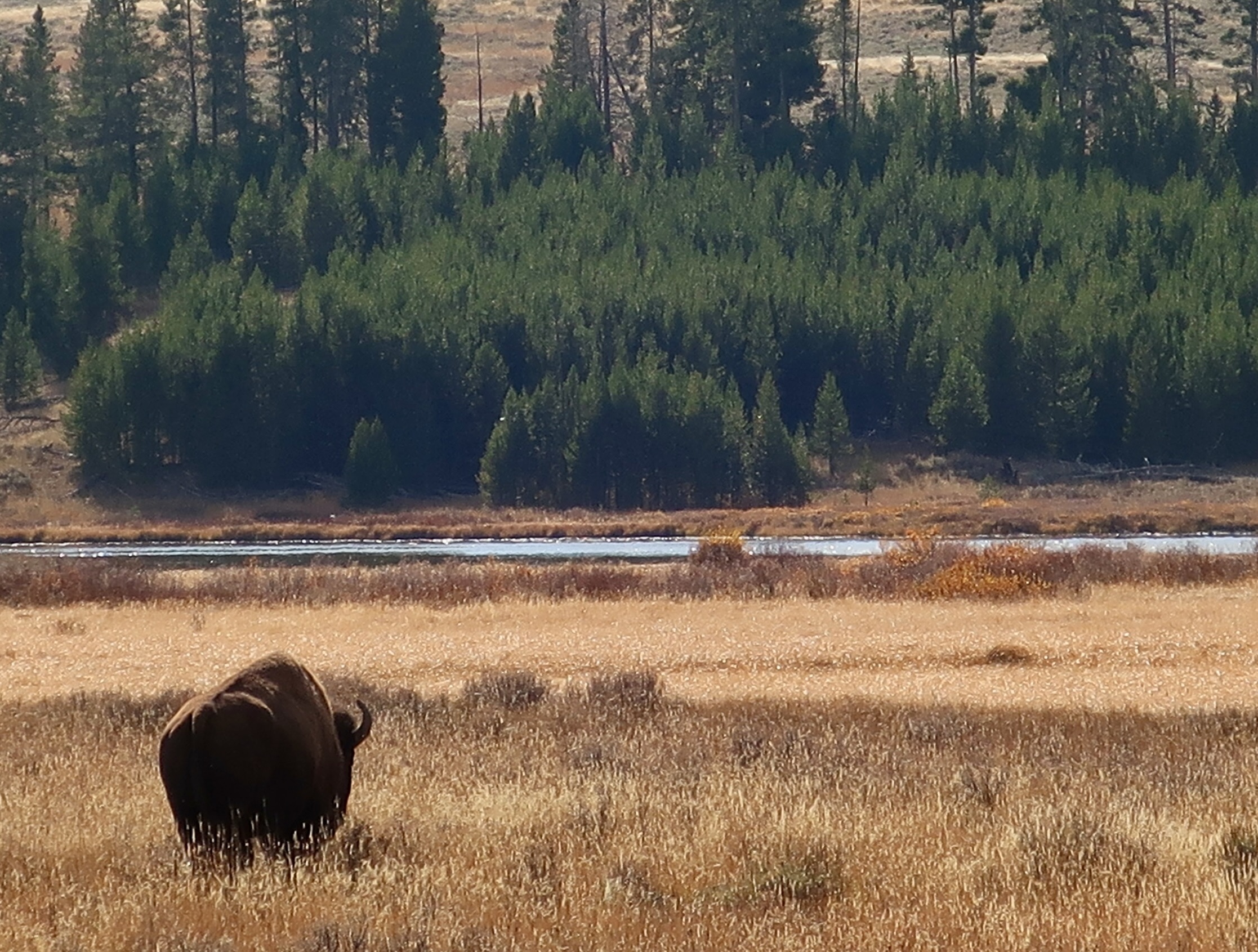
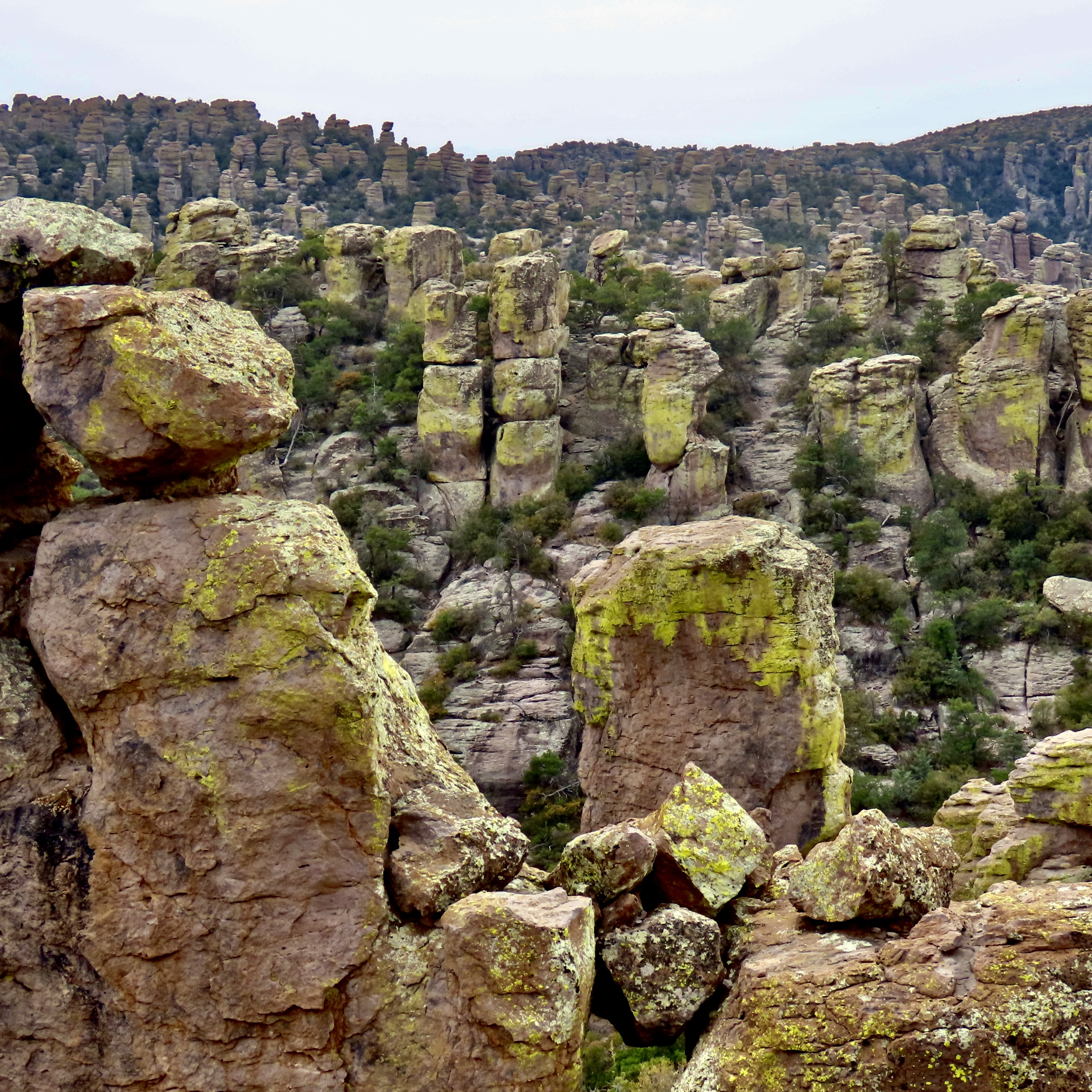
Our journey today takes us up the northwest side of Yellowstone NP from the Firehole River, shown above, to Mammoth Hot Springs. The latter will be the subject of another post.This map shows our route. We will start at Firehole Falls just below Madison, make a brief detour toward the West Entrance and then begin to work our way north, stopping at Gibbon Falls, the Artist’s Paint Pot, Roaring Mountain, and Sheepeater Cliff before journeying on through impressive scenery up to just this side of Mammoth Hot Springs.You may recall that I used this photo in my last Yellowstone NP post to show the Firehole River in its calm, peaceful stage just before it dropped off the edge of the world…And became a raging torrent, the type that extreme white water rafters and kayakers love.Imagine you are on a raft and glance behind you to see this monster wave with its mouth wide open following you. Grin. No rafters, kayakers, or other boaters are allowed on the river, however. The monster has to eat fish. Peggy tells me that she and her friends found a relatively calm spot on the Firehole and swam in it when she was working at Yellowstone in 1969. “We had to be careful to avoid getting caught in the current,” she told me. I can only imagine…These cliffs stand above where the Firehole and Gibson Rivers come together at Madison (shown on the map above) to create the Madison River.Going west from here will take you to the west entrance to the park and the town of West Yellowstone. Early morning fishermen on the Madison River have high hopes of landing a big one.It’s a short, scenic, 14 mile drive to the park’s border. Well worth it. Peggy and I stayed in West Yellowstone on our last visit to the park.Going north from Madison toward Mammoth Hot Springs, our first stop was at Gibbon Falls on the Gibbon River.A dedicated walkway along the road beneath the falls provides numerous views.A close up.Our next stop was at the Artist’s Paint Pot, where we went on a short walk. This rock and the rocks beneath spiral downward to a hot spring.A turquoise green hot springs.I couldn’t help but think of Dante’s Inferno here. A strong smell of sulfur reinforced the idea of the Biblical ‘fire and brimstone.’ Our trail led up the hill through the steam…And provided views looking down.A closer look at one of the hot springs below.We also found a mud pot, one of the stranger of the hydro-thermal features found in Yellowstone. This one was busy burbling away. Mud pots occur when hot thermal water is flowing under a layer of clay that blocks the water from escaping to the surface. Steam from the water, however, is able to make its way through the clay. Certain microorganisms convert the sulfur dioxide in the steam to sulfuric acid which turns the clay into a gooey, sticky consistency. Bubbles are created as a result of the steam coming up through the goo. They sound like plop, plop, plop.Googly eyes from a mud pot’s perspective.‘Burst your bubble’ might apply here. Onward…Roaring Mountain, (or more appropriately today, the mountain that roared) is known for its fumaroles. A fumarole is similar to a geyser but lacks the water to create eruptions. Instead, the heat from the volcanic rocks turns what water is available into incredibly hot steam that escapes from vents and ranges in temperatures up to 280°F (138°C). It can be noisy. When dozens of large fumaroles covered the mountain in the early 1900s, it roared.This is from a vintage 1902 photo of Roaring Mountain.There was the one large fumarole when we visited Roaring Mountain. A few small ones were nearby. With the help of an earthquake— they happen frequently here— it could very well ‘roar’ again in the future.Next, we visited Sheepeater Cliff. A handy information board told us most of what we needed to know about the cliff. I’m something of a sheepeater myself, especially when it comes in the form of lamb cooked in a hot sauce of Indian Curry. Yum!Basalt columns have made it into a number of posts we’ve done ranging in size from the gigantic Devil’s Tower of eastern Wyoming to ones like this. The Devil’s Tower columns developed far under ground where they had a long time to cool and grow. Sheepeaters’ columns are from a volcanic flow on top of the ground that cooled much more quickly.Devil’s Tower. It makes a great stop for aliens, at least according to the movies Close Encounters of the Third Kind and Paul.The country opened up after Sheepeater Cliff with an iconic view of the west. The high mountain is Electric Peak.Sepulcher Mountain is close by. It was given its name in 1871 by an army captain who thought the jagged dark rocks on top looked like a crypt. Electric Peak was named by a geologist who was caught in a thunder and lightning storm when he was exploring the peak. I experienced that once in the Sierra Nevada Mountains of California. My hair was actually standing on end. Scary. I made it off the mountain in record time.The area where this road snakes around the cliff is called the Golden Gate. A series of 11 concrete arches are built into the cliff wall over the canyon below holding the road up. The scenery is spectacular, if you can get over being nervous about the road.High cliffs and aspens were caught in the sunlight. Note the long avalanche path to the right of the cliff. It would be a guaranteed fast ride down— one with a likely bad ending. The odds aren’t good.Aspens are among my favorite fall trees for color. We were in Yellowstone at the perfect time.Brush and grass did their part in creating a fall feeling.As did one solitary buffalo. Older males, no longer able to compete for females, often leave breeding herds and strike off on their own for a quiet retirement of grazing, lazing about, and wallowing in dirt and mud. Don’t know if they miss the girls. When we took this photo, we were nearing the magnificent Mammoth Hot Springs. It’s next on our Yellowstone Series. But first, we have two treats. Number 1: we will feature Chiricahua National Monument, soon to be America’s newest National Park! Peggy and I visited last year and marveled at the amazing rock formations.
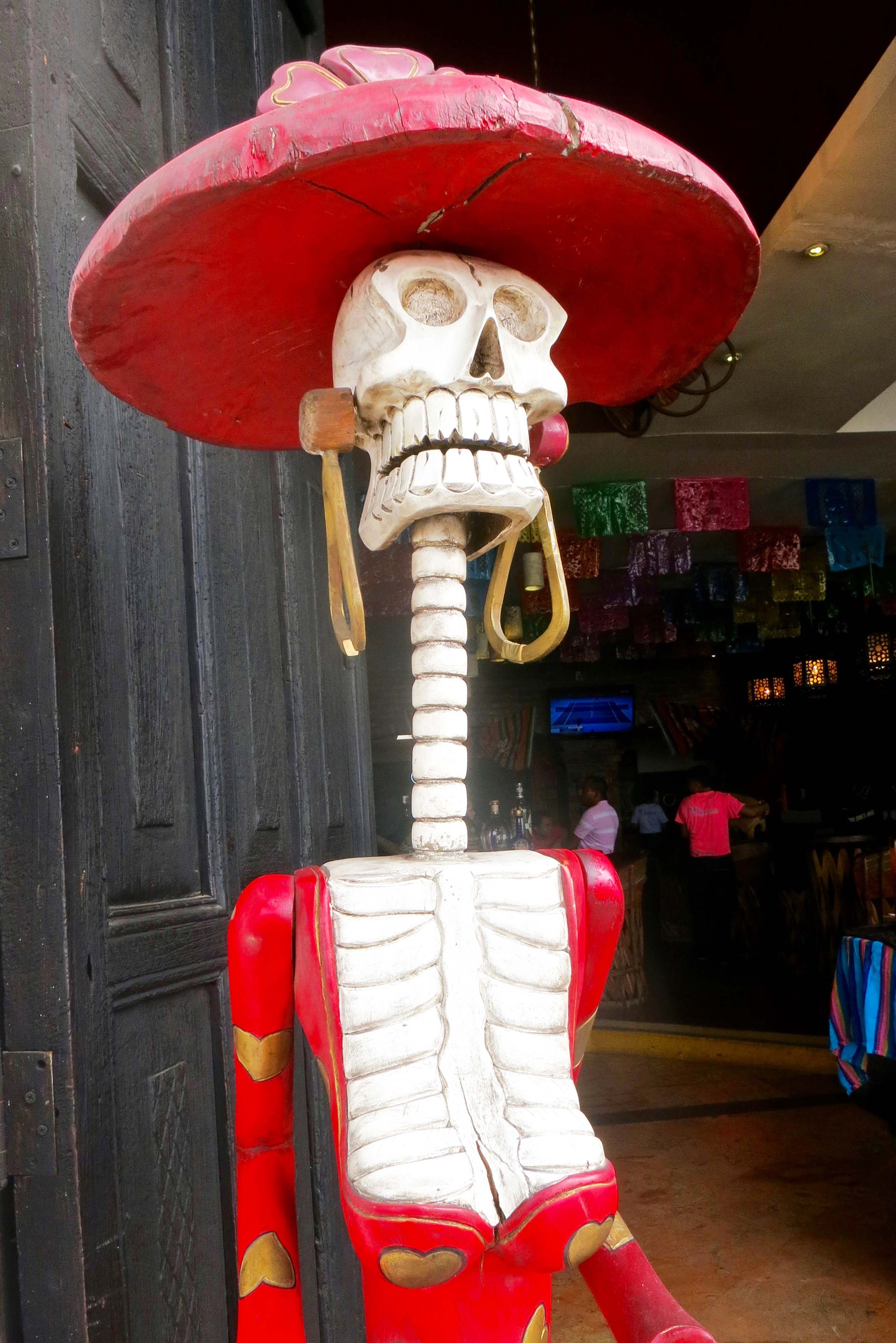
Second it’s Halloween week. Peggy and I will honor it by relating three personal encounters we have had with ghosts. Plus we will introduce a bevy of Day of the Dead beauties from Puerto Vallarta, Mexico.
I have to agree, but it is fascinating. Peggy and I were in Wilcox AZ last year when I read an internet entry that it was one of the things to do in the area. We loved it. Not many people have been there. I want to use my blog to introduce them to it. Several of our national parks have started out as national monuments.


I wouldn’t put in the top 25, but I am wondering if you have been to our newest NP, Chiricahua?
I have to agree, but it is fascinating. Peggy and I were in Wilcox AZ last year when I read an internet entry that it was one of the things to do in the area. We loved it. Not many people have been there. I want to use my blog to introduce them to it. Several of our national parks have started out as national monuments.