Peggy and I are continuing to look at Arches NP today as part of our series on 25 of America’s national parks as a way to honor the nation’s 250th Anniversary. One thing that we have always noted in our visits to these parks, is that people come from all over the world to enjoy them, which is as it should be. These parks, and national parks around the world, are treasures to be maintained, protected and enjoyed by everyone!
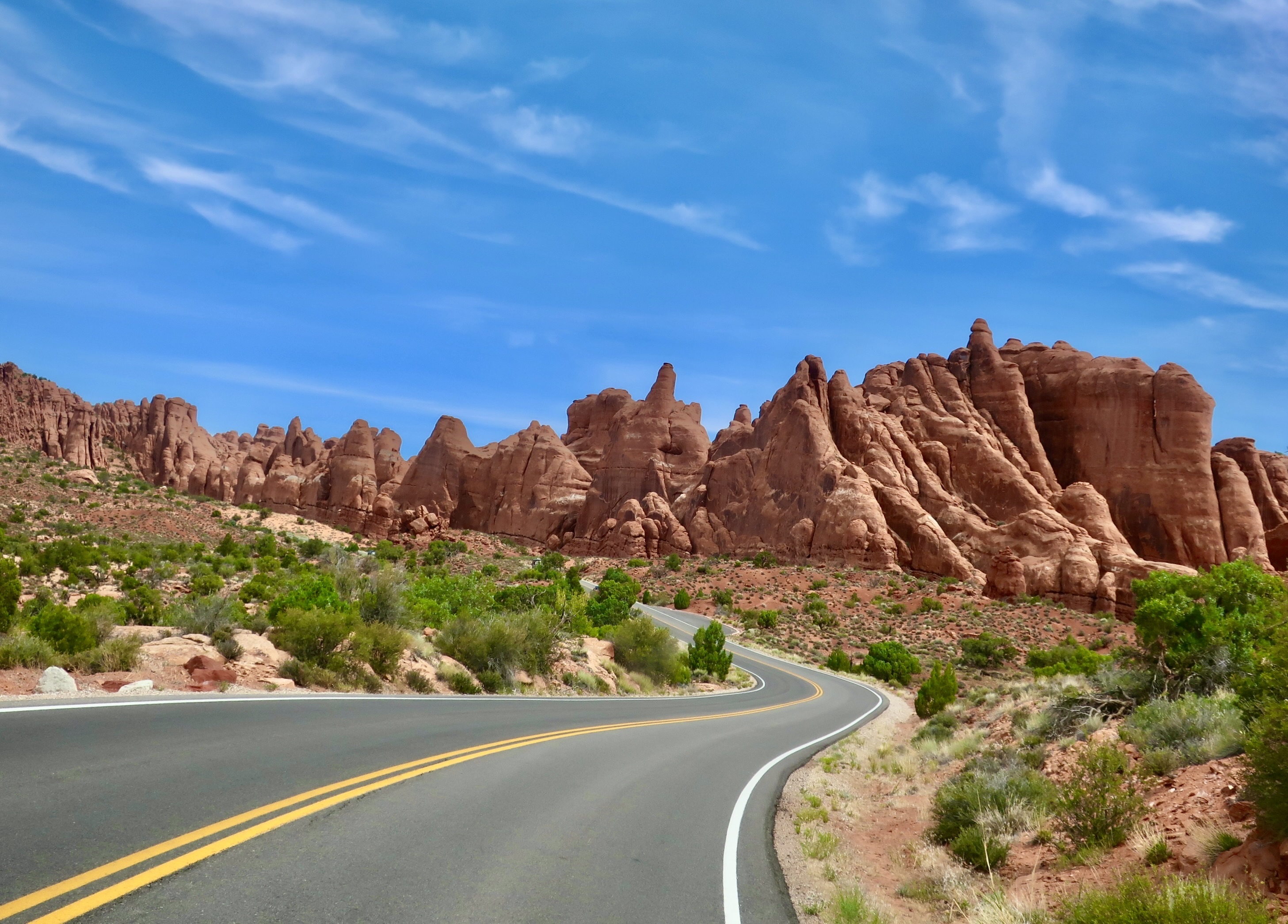
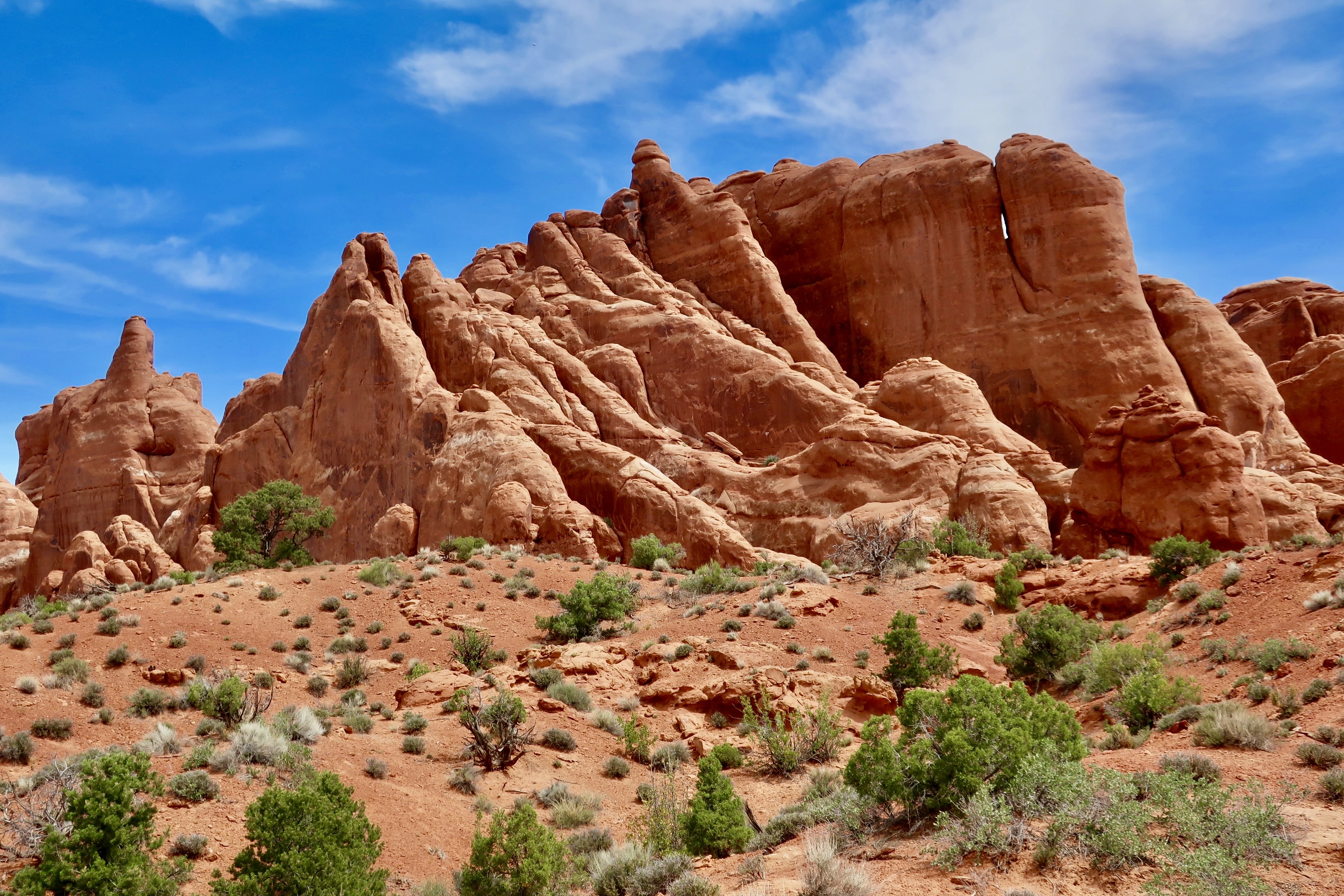
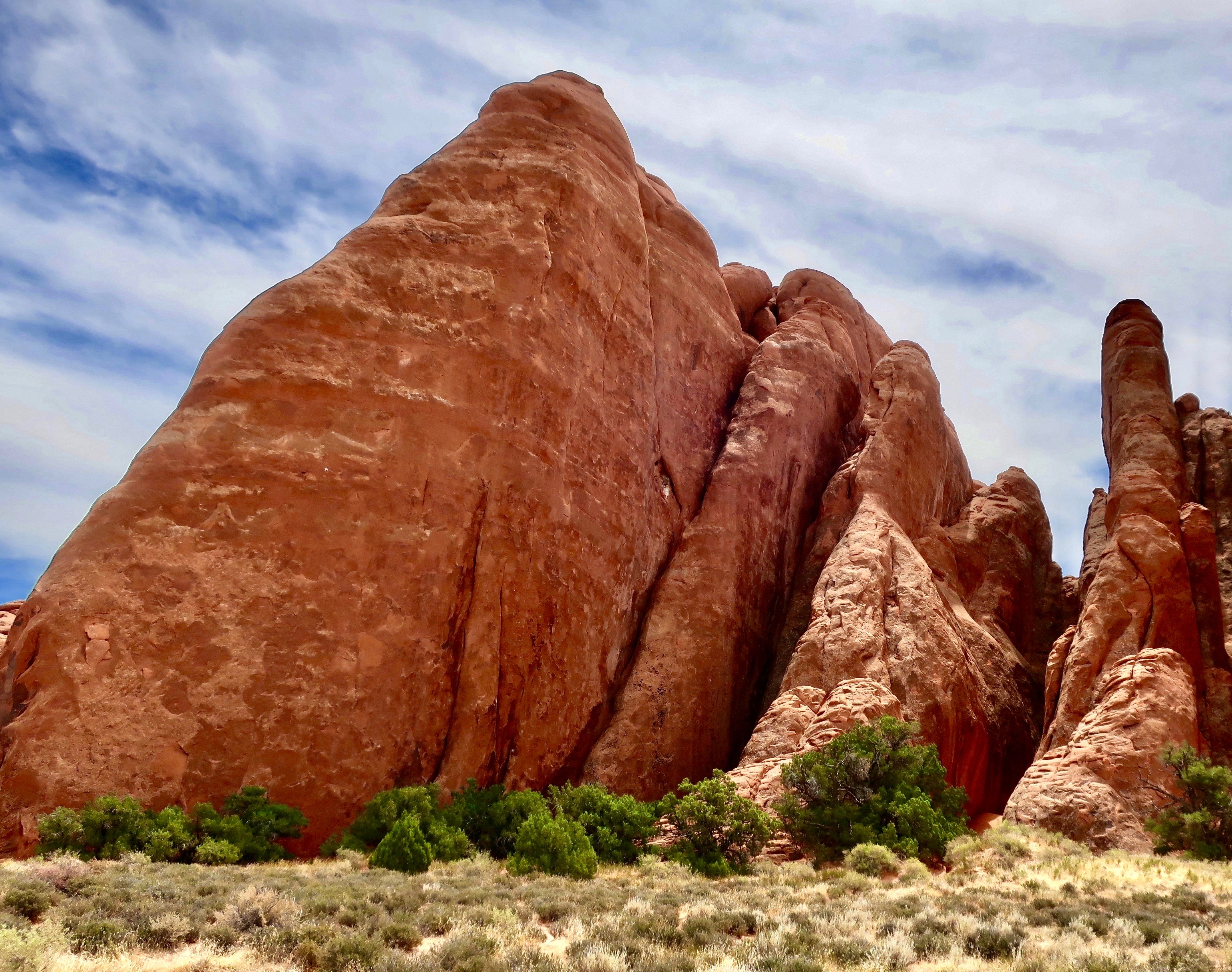
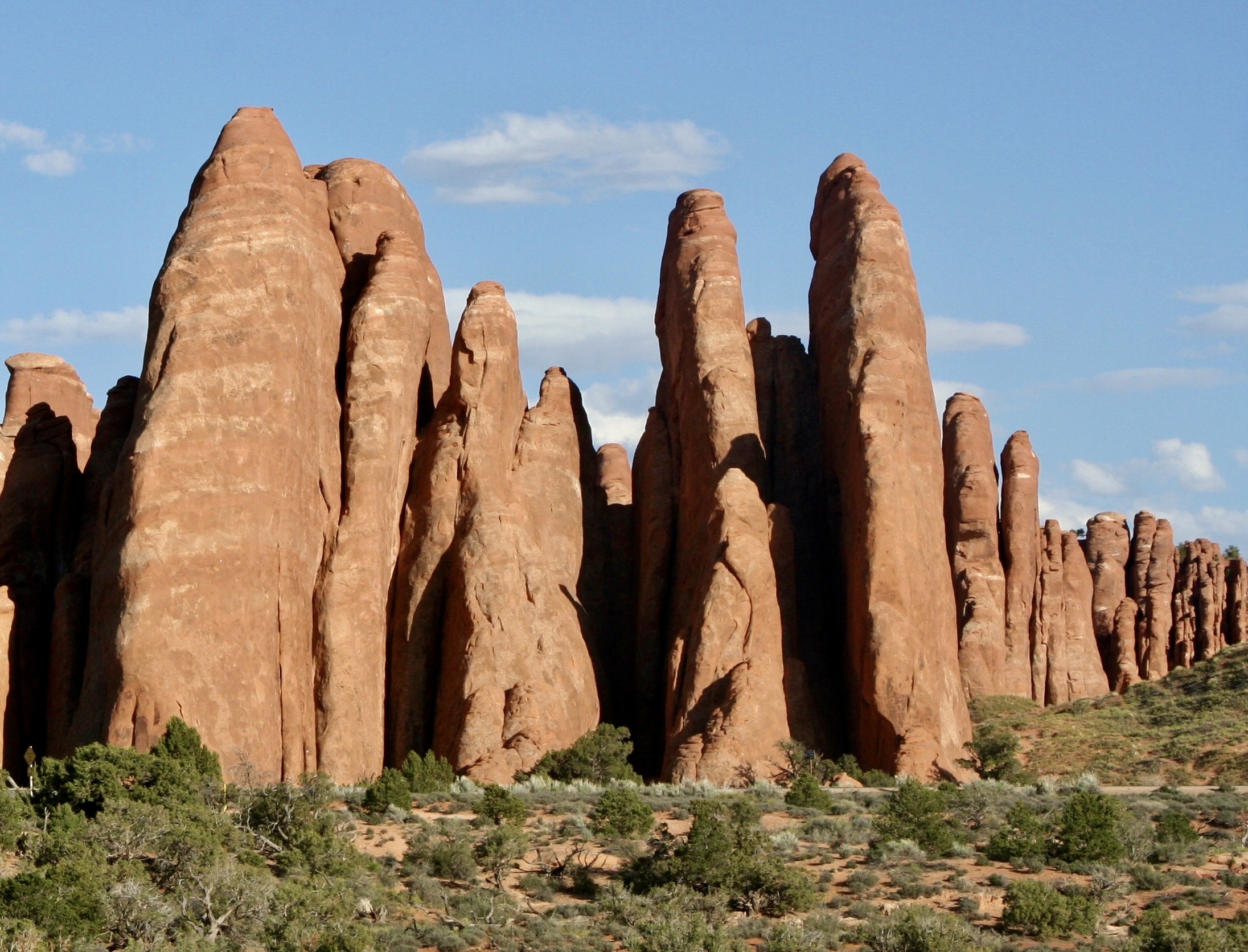
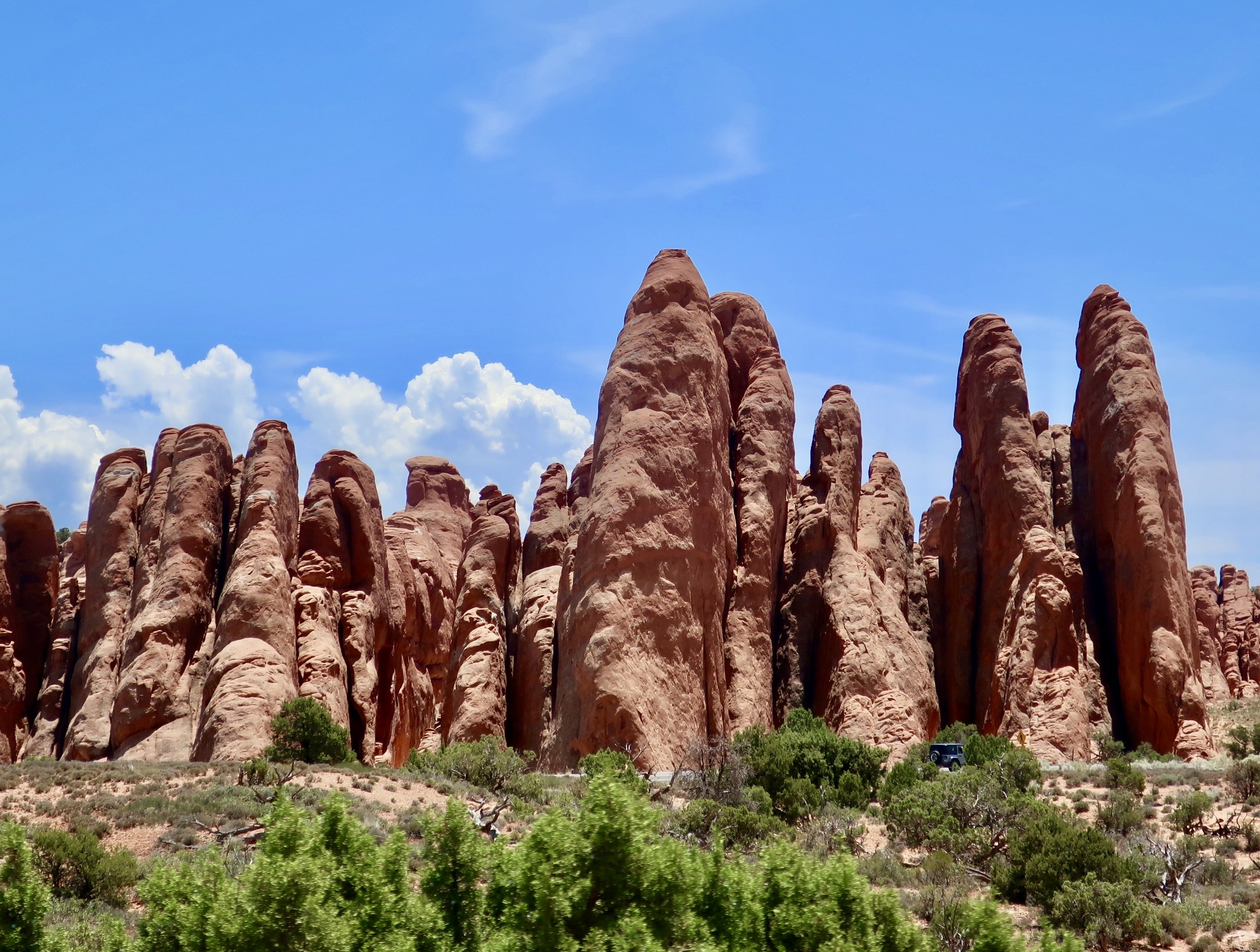
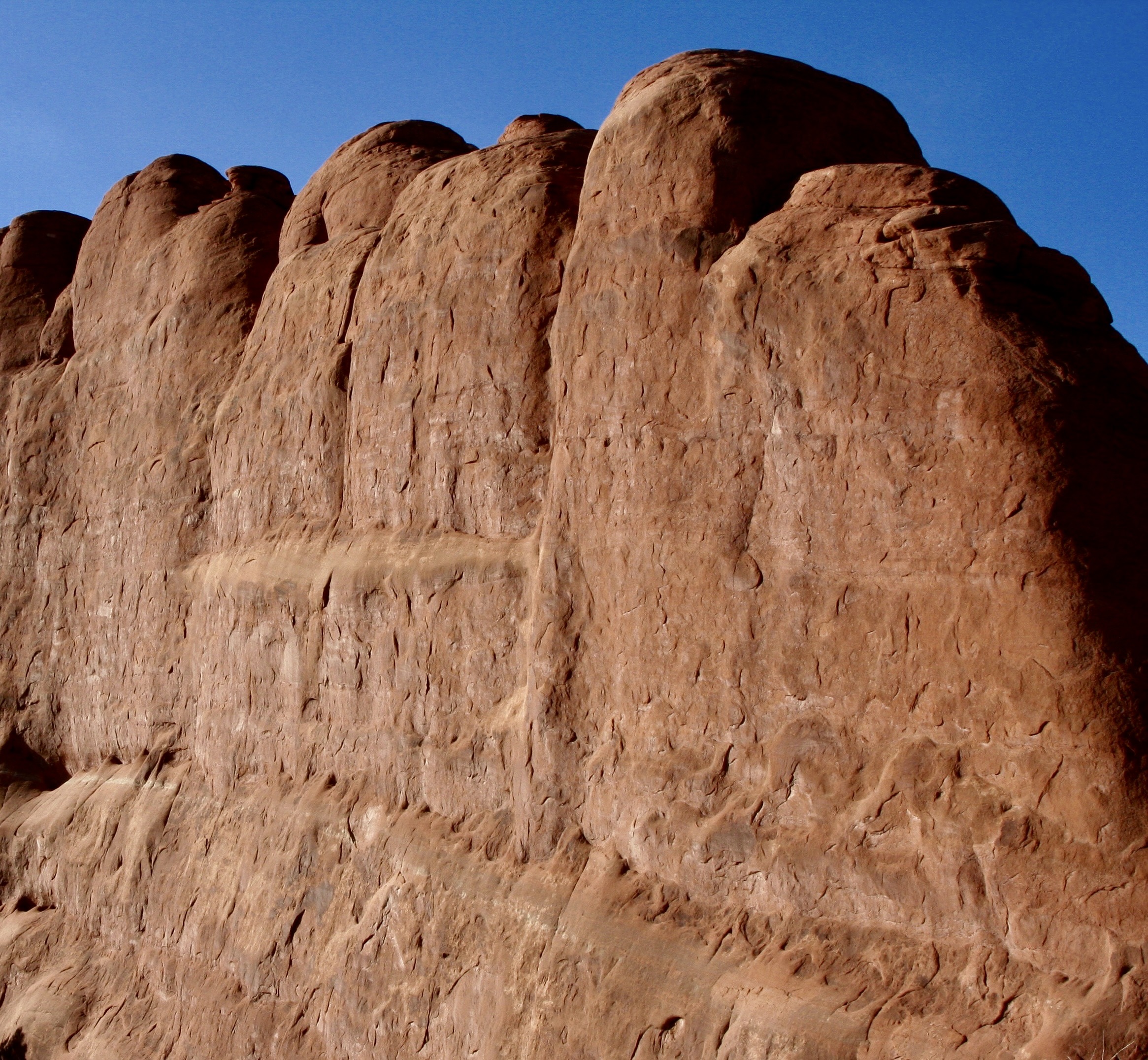
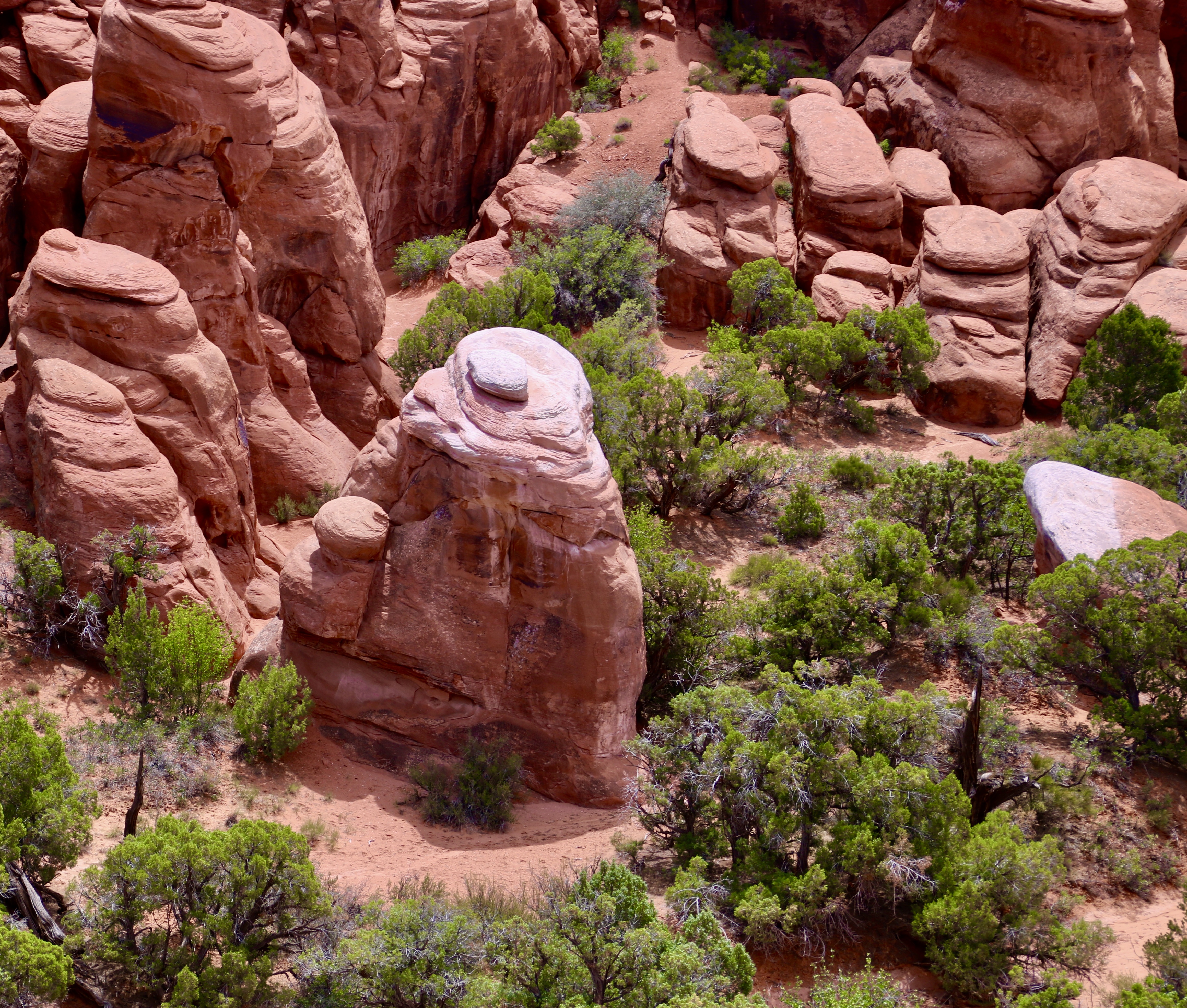
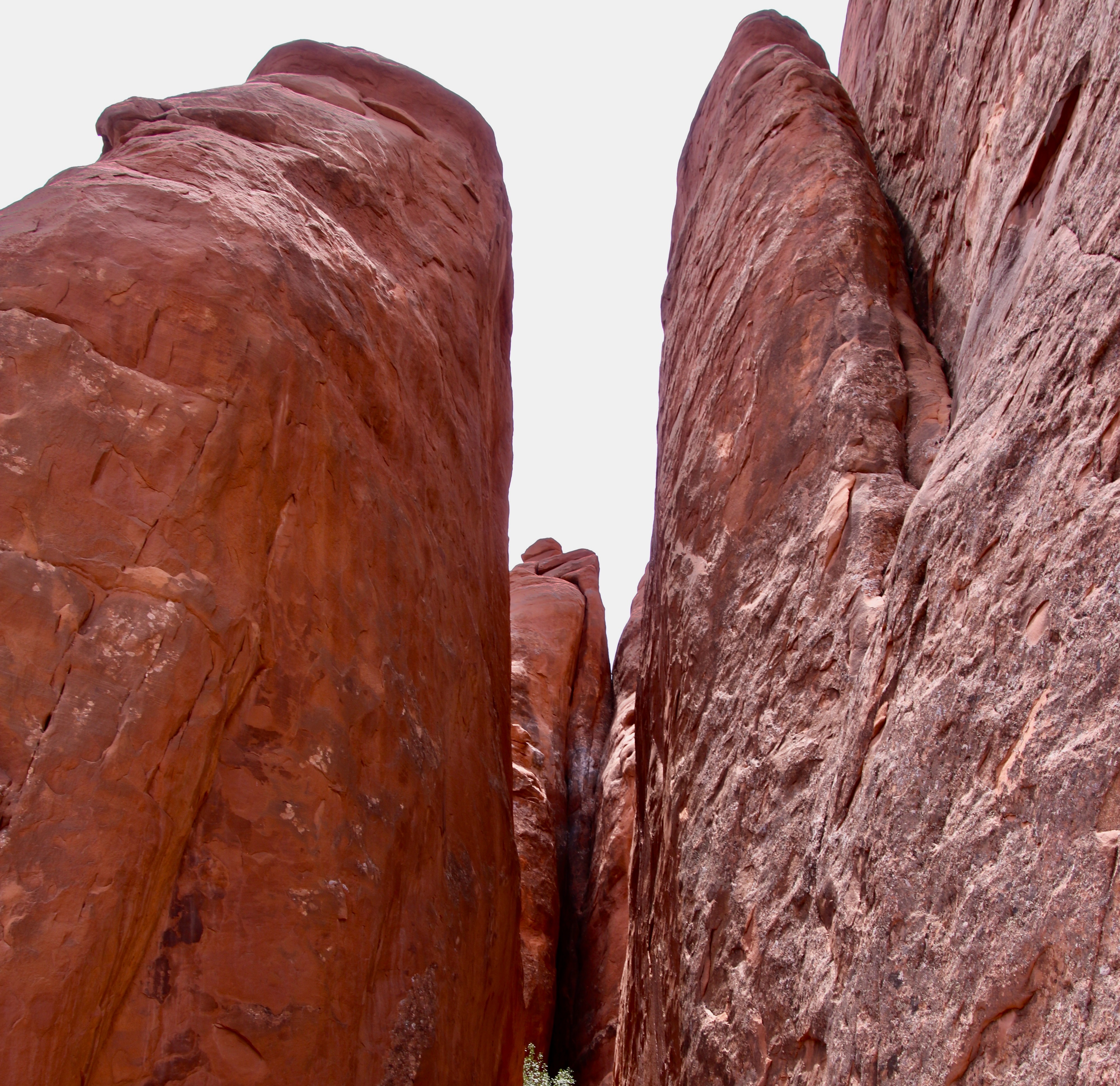
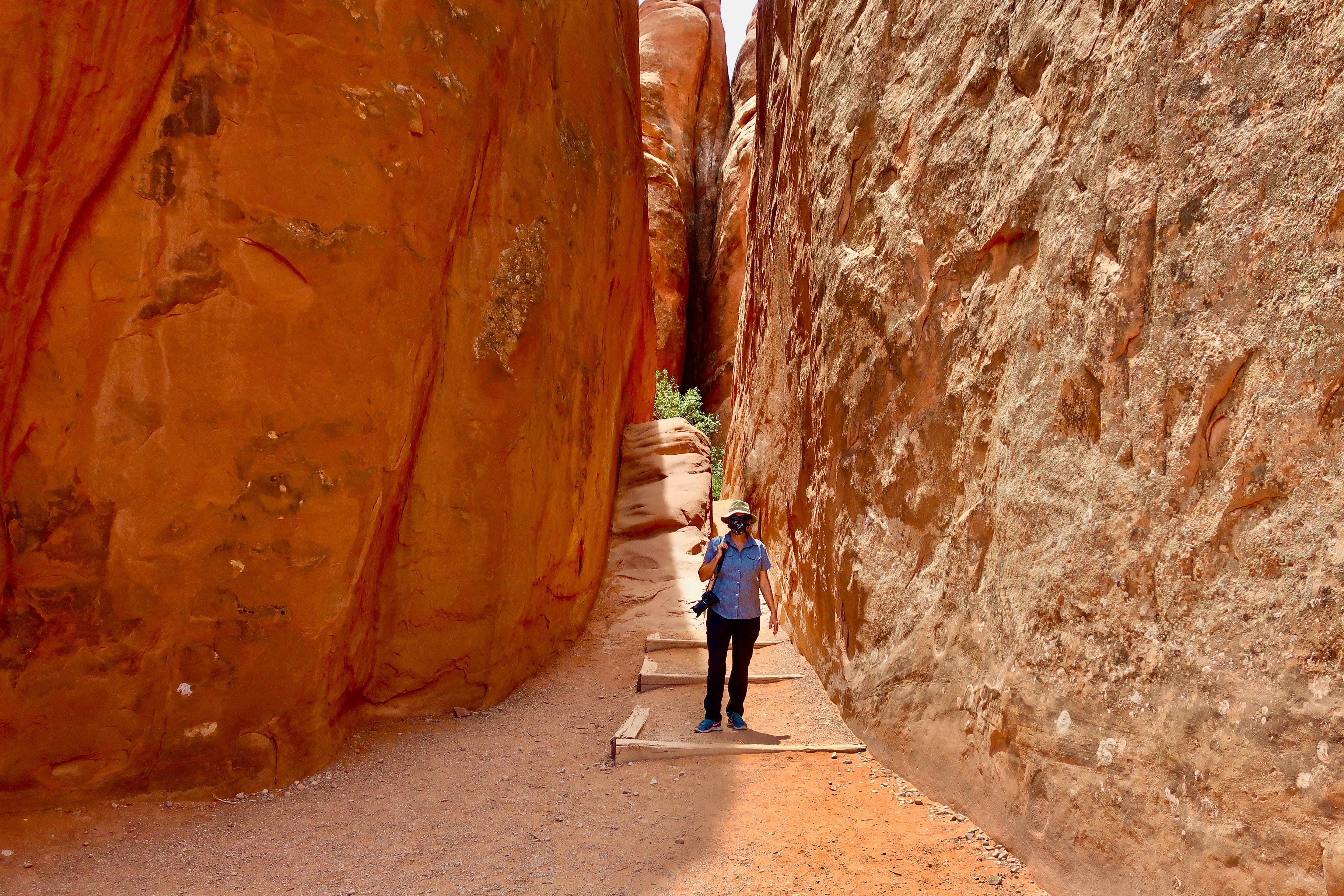
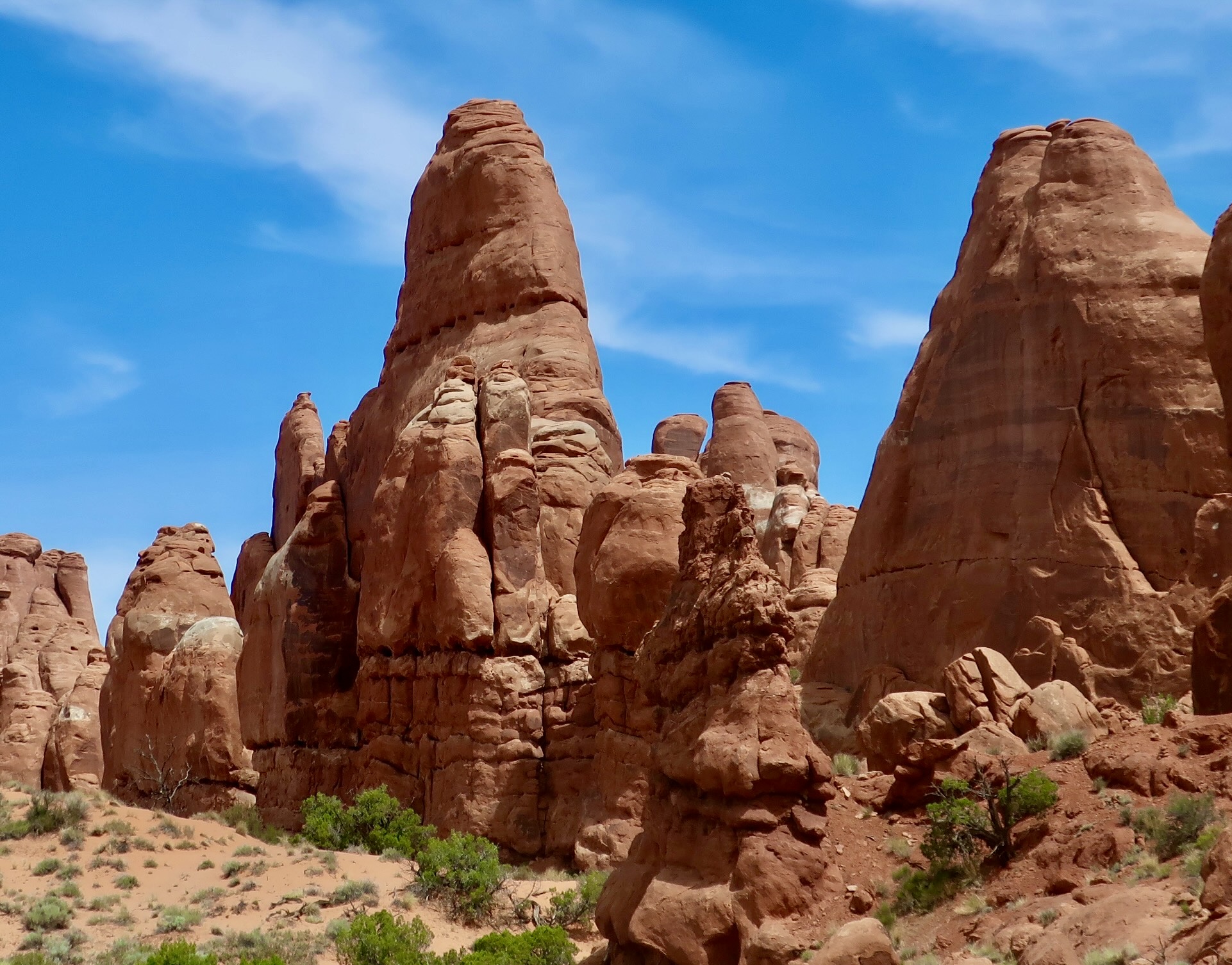
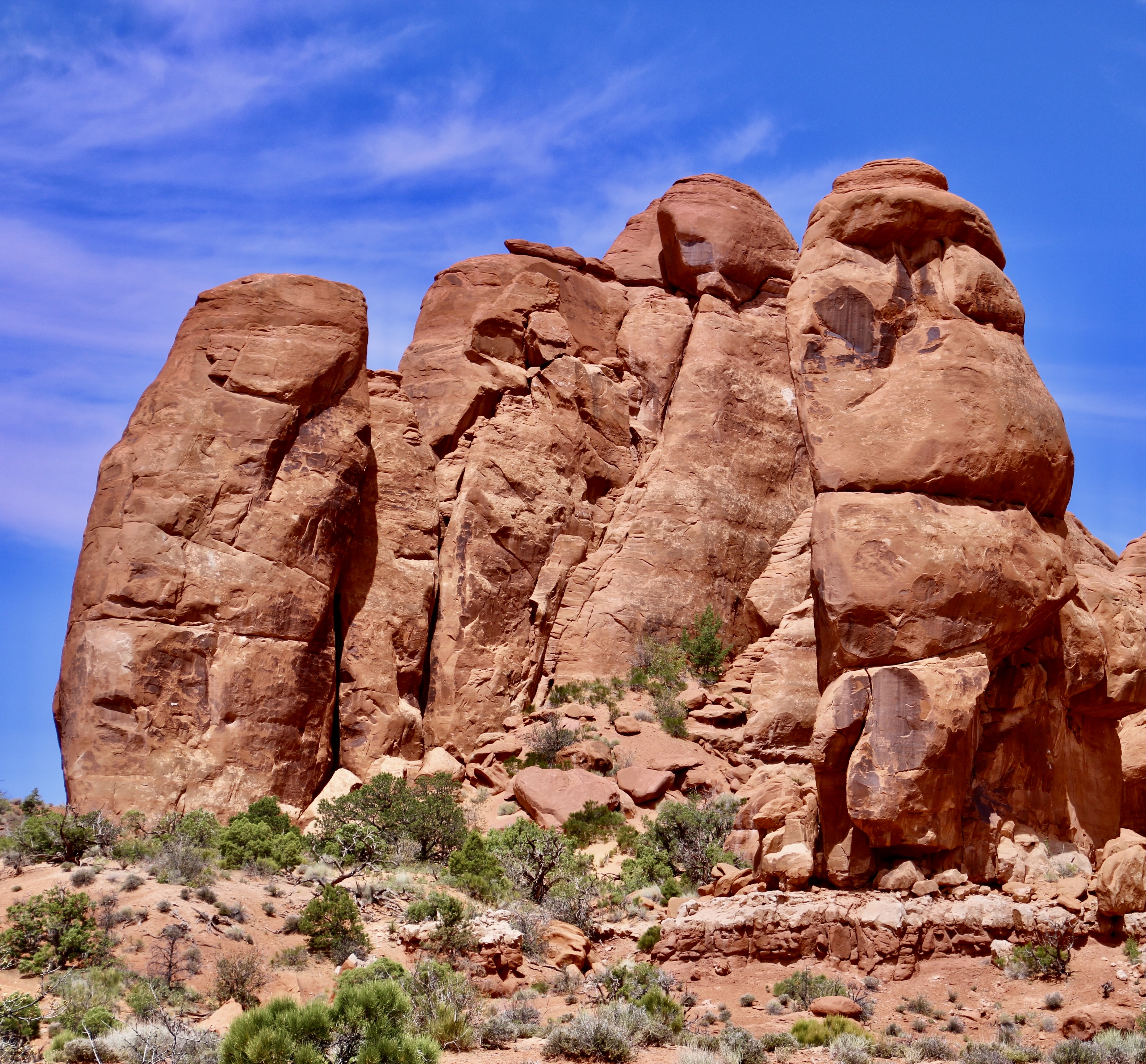
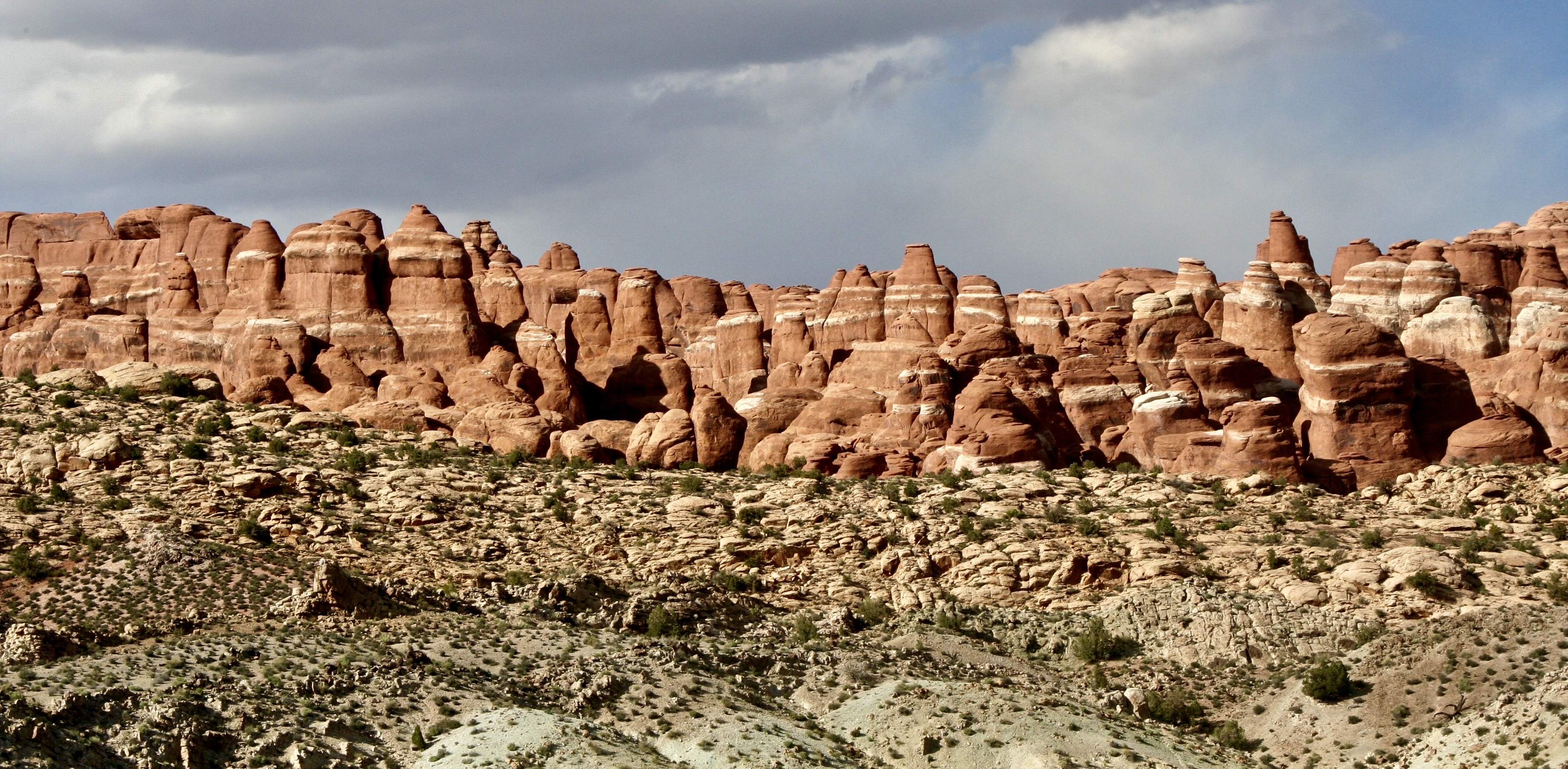
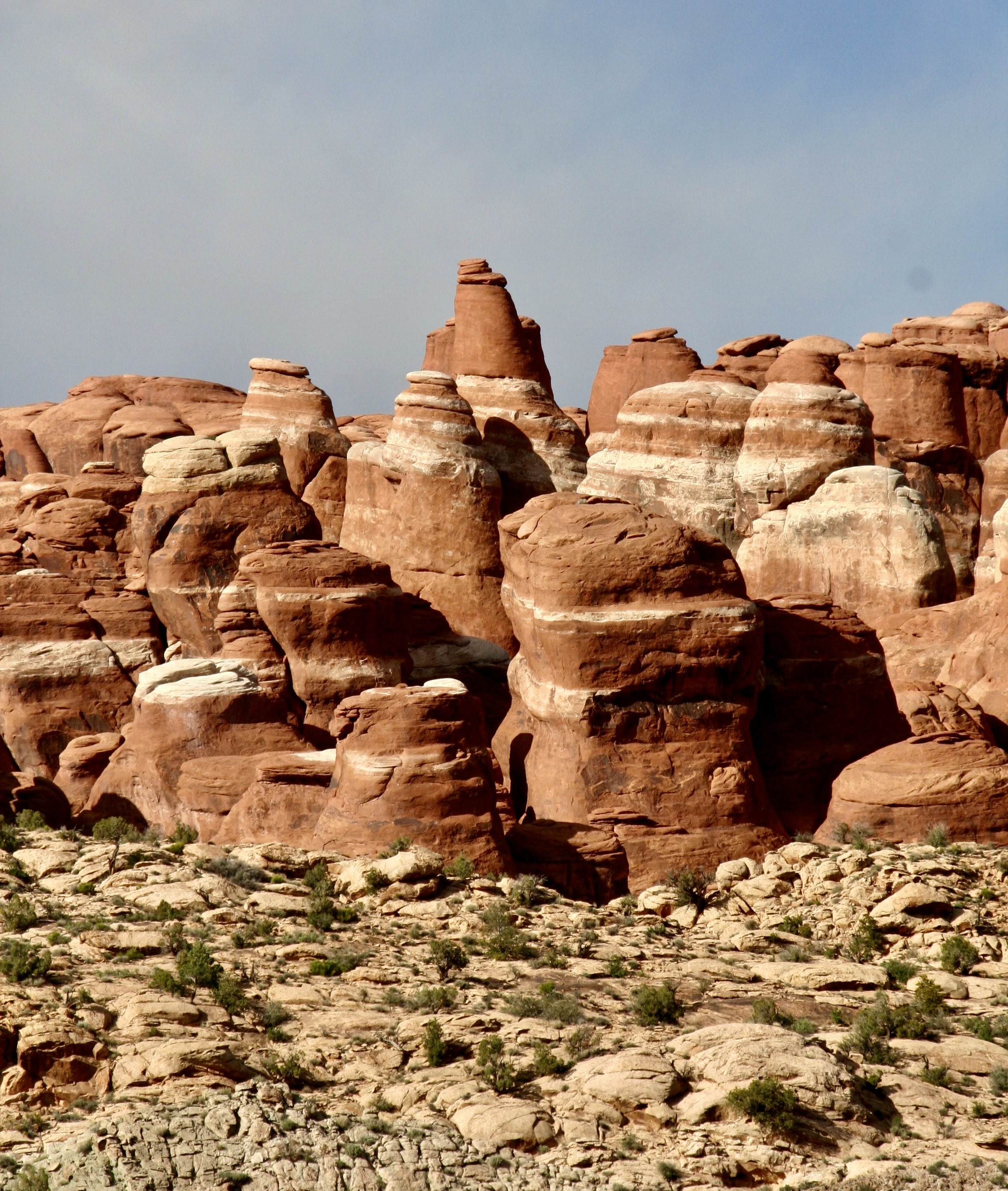
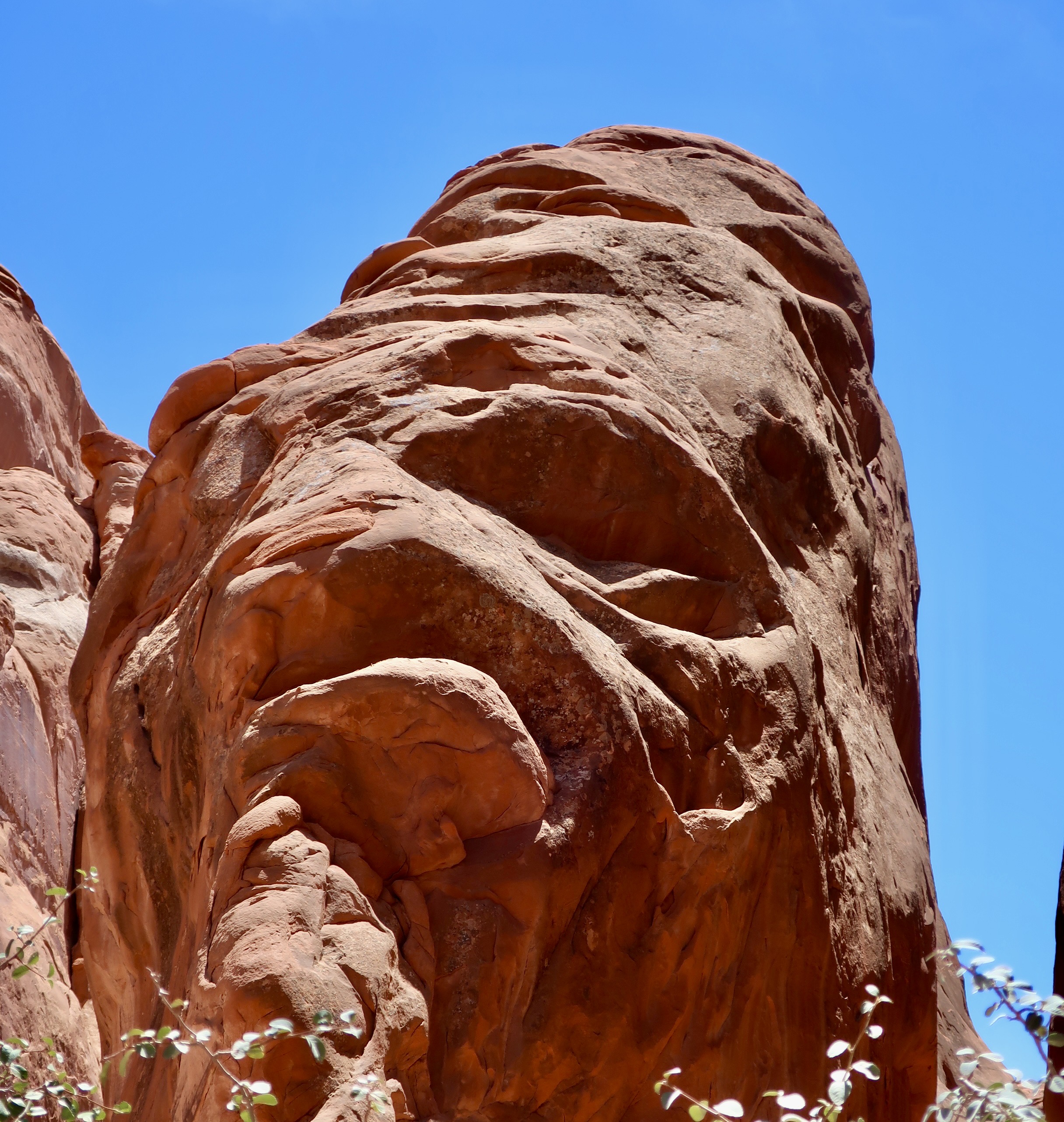
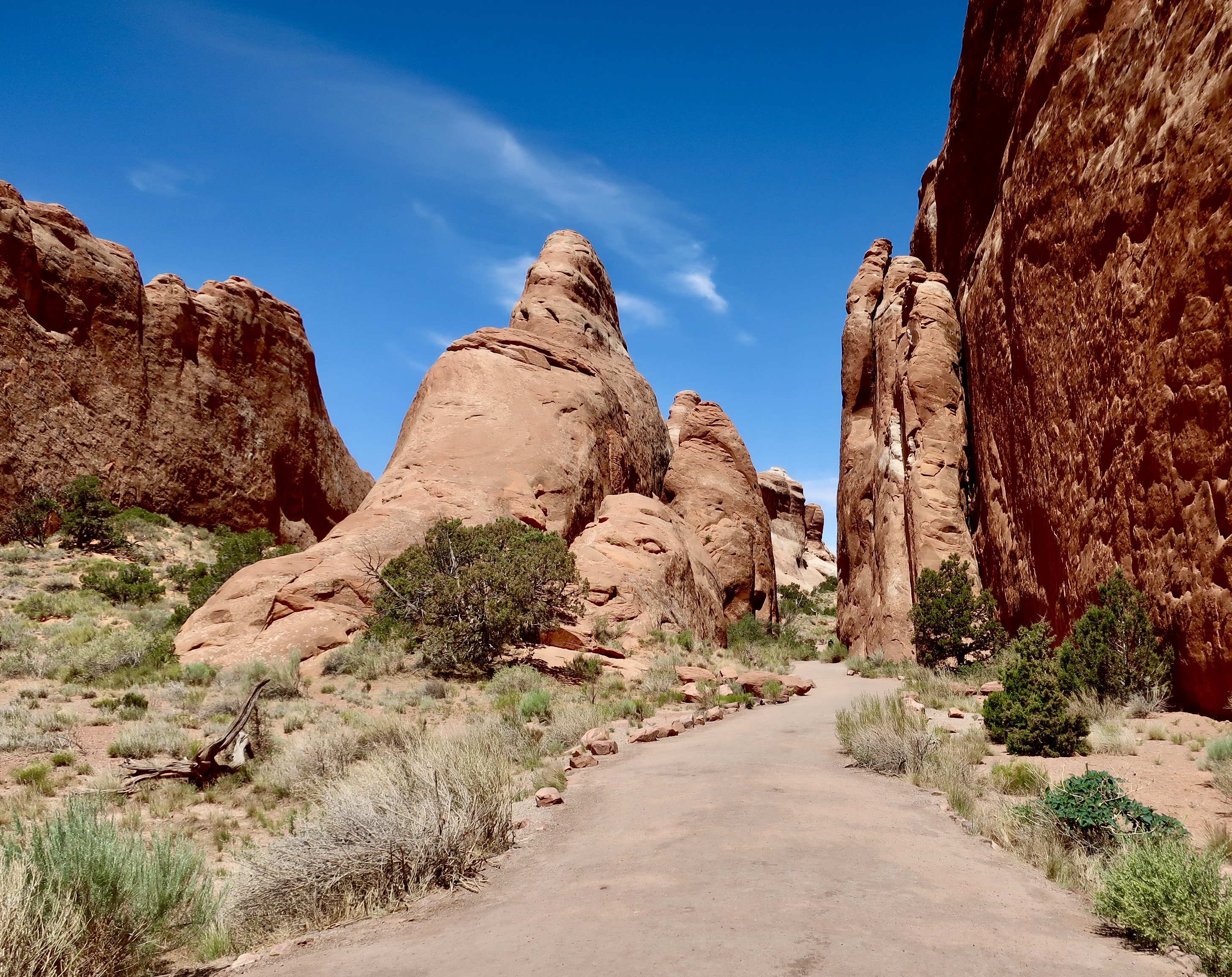
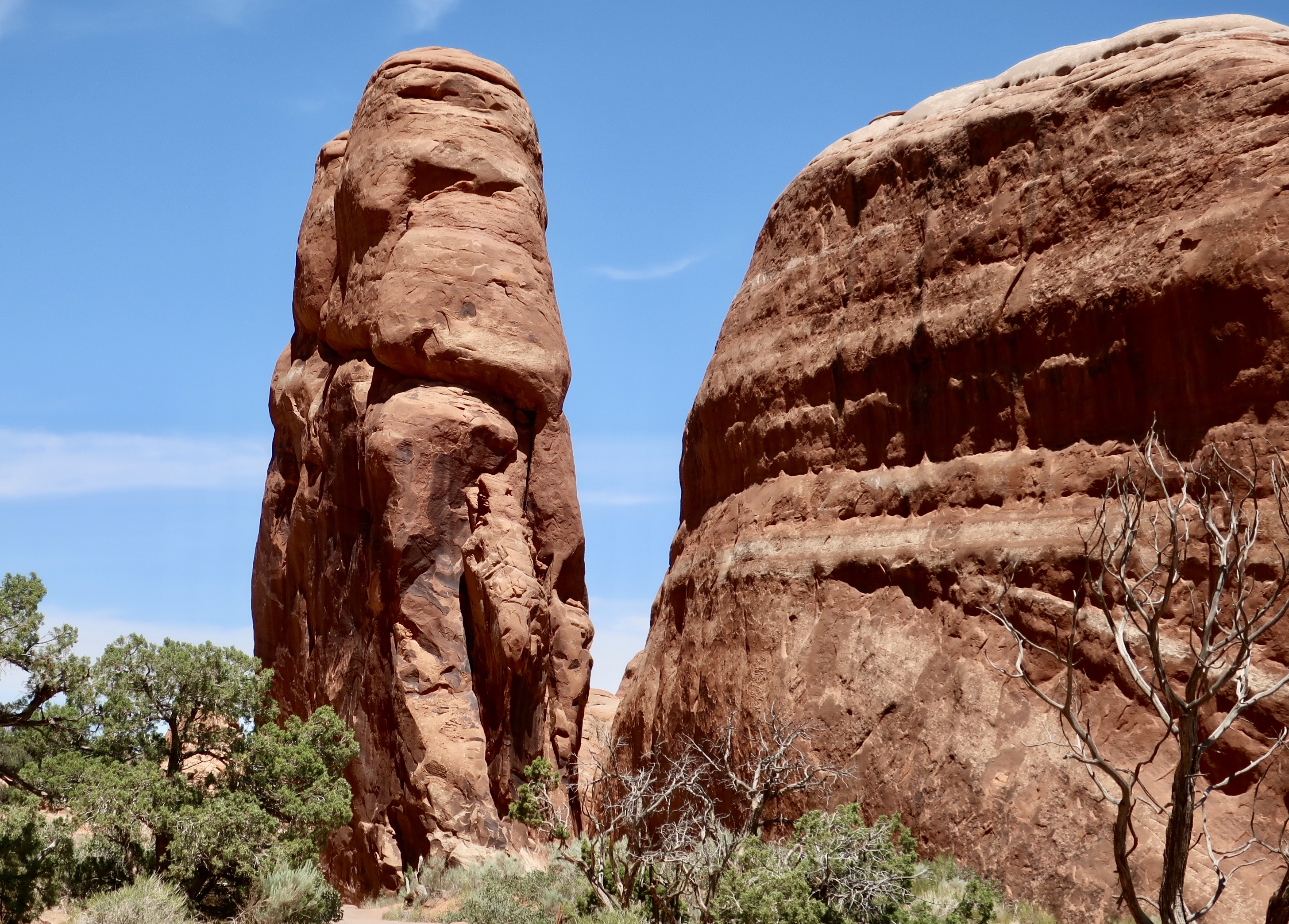
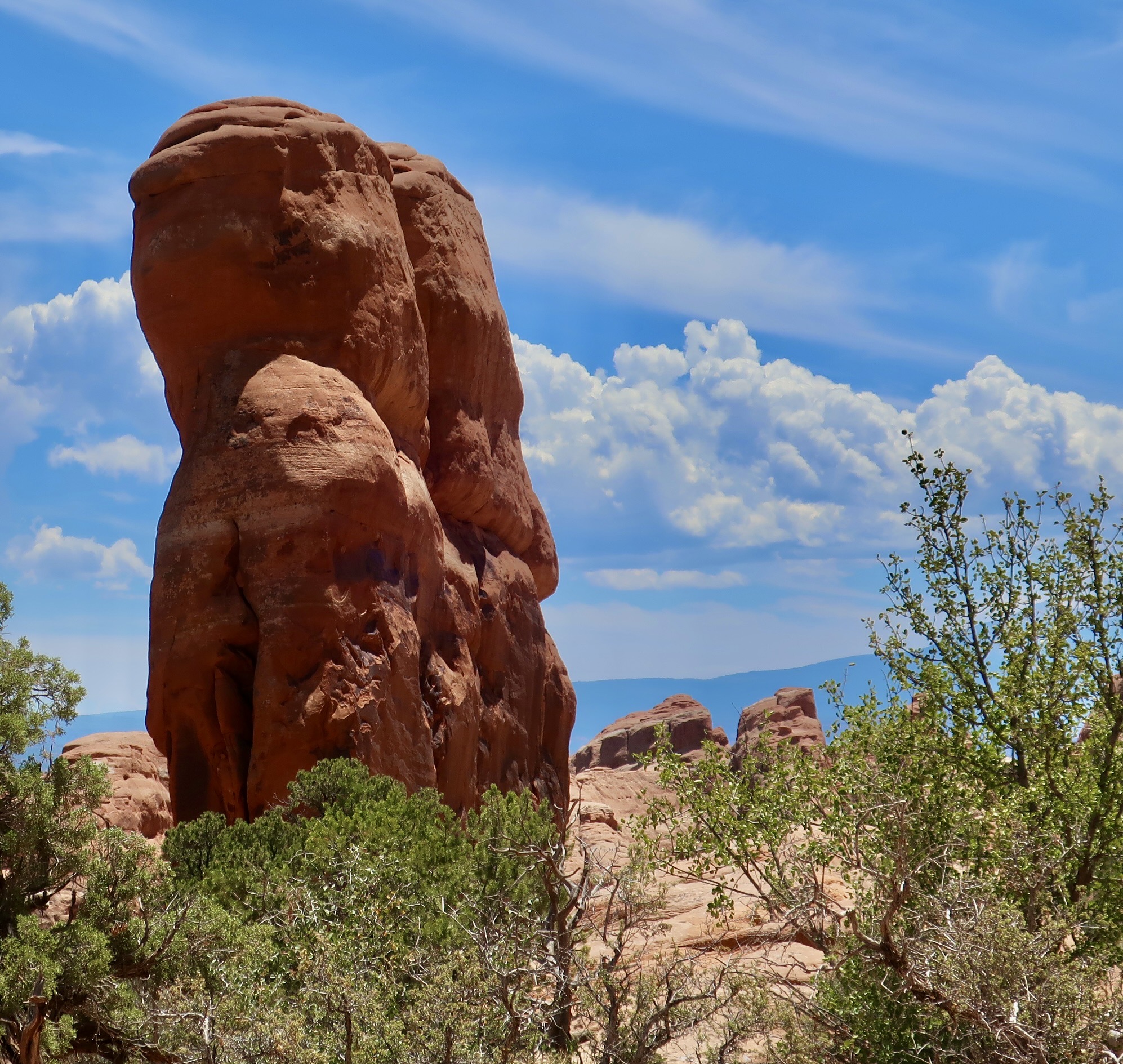
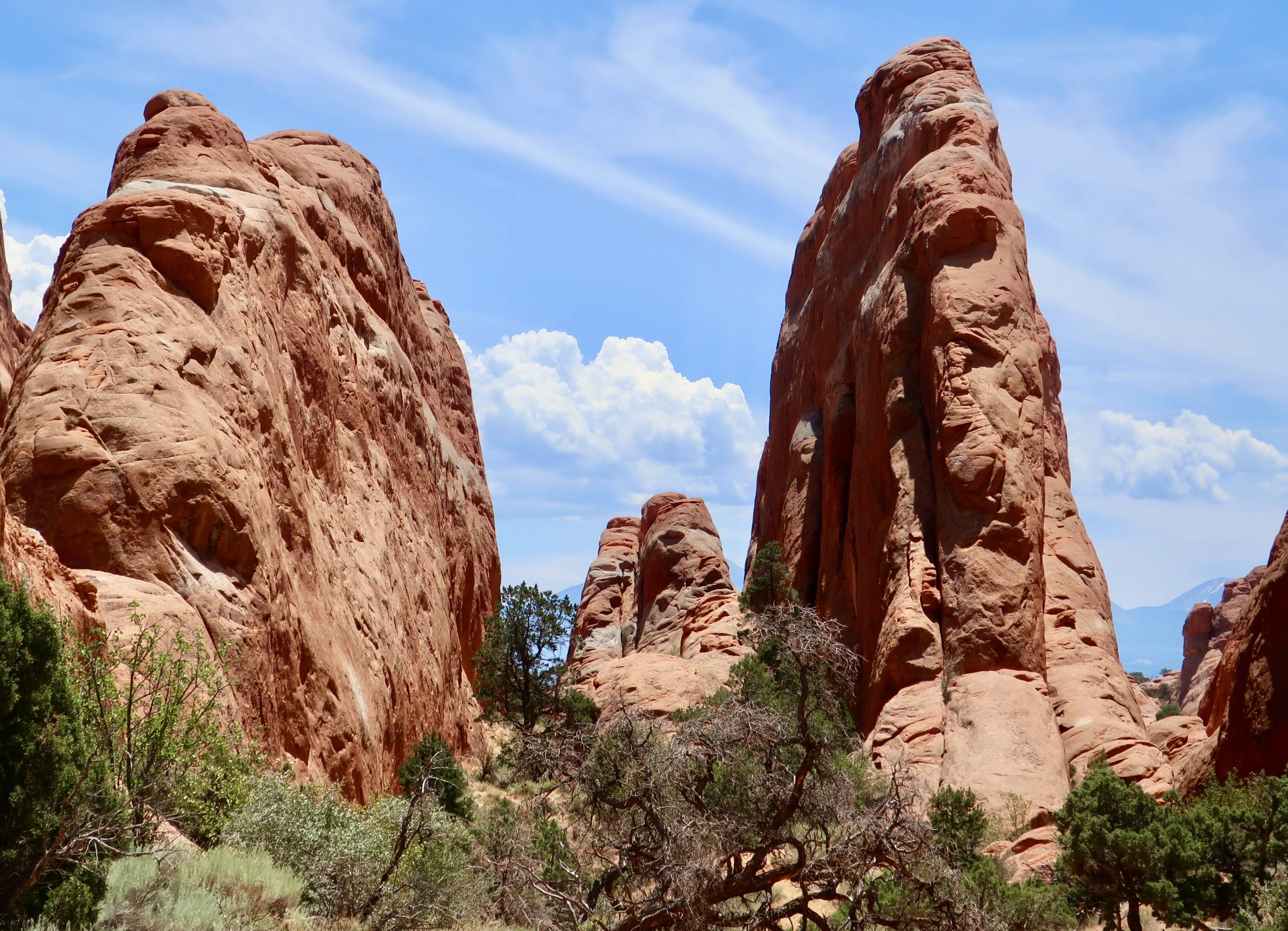
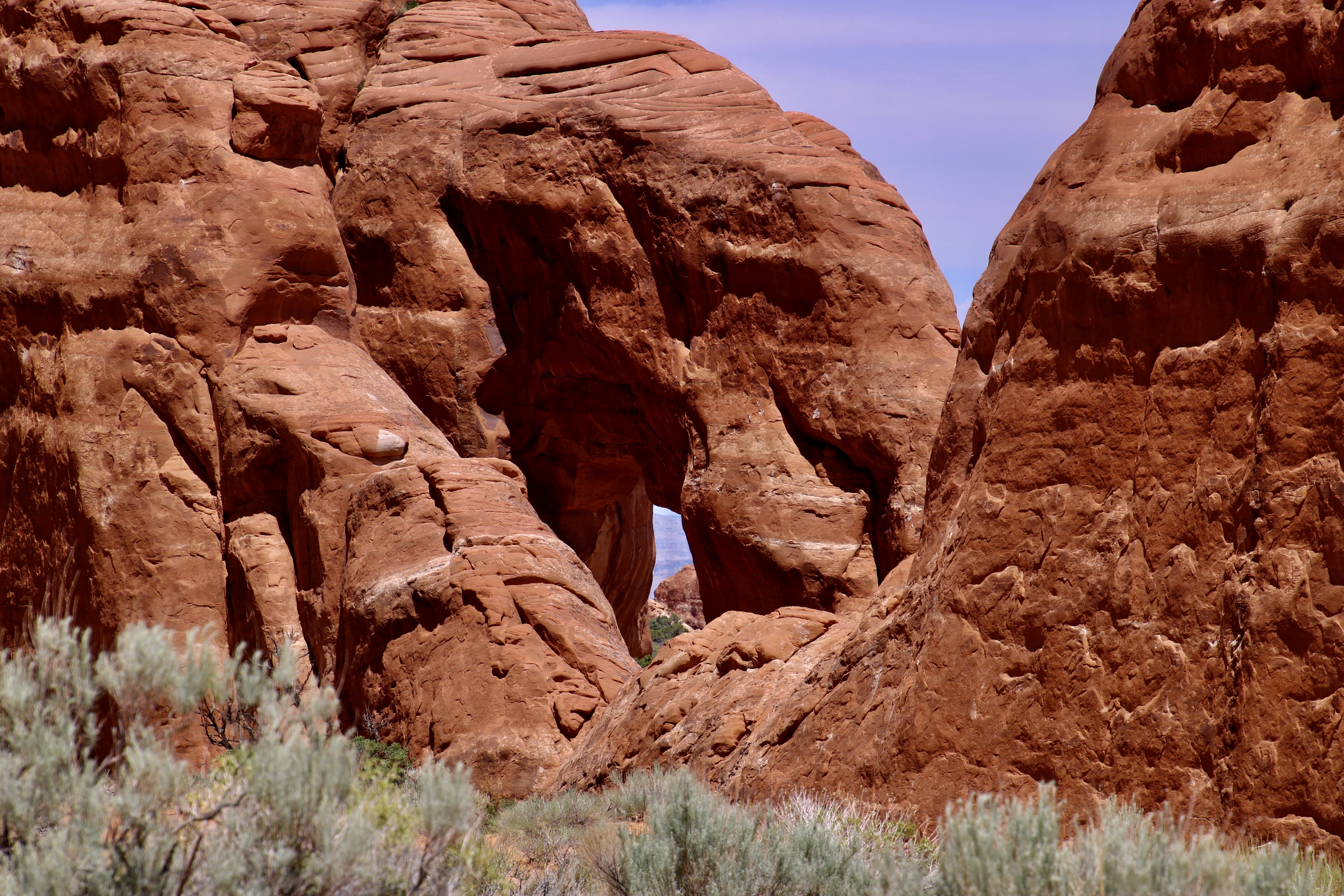
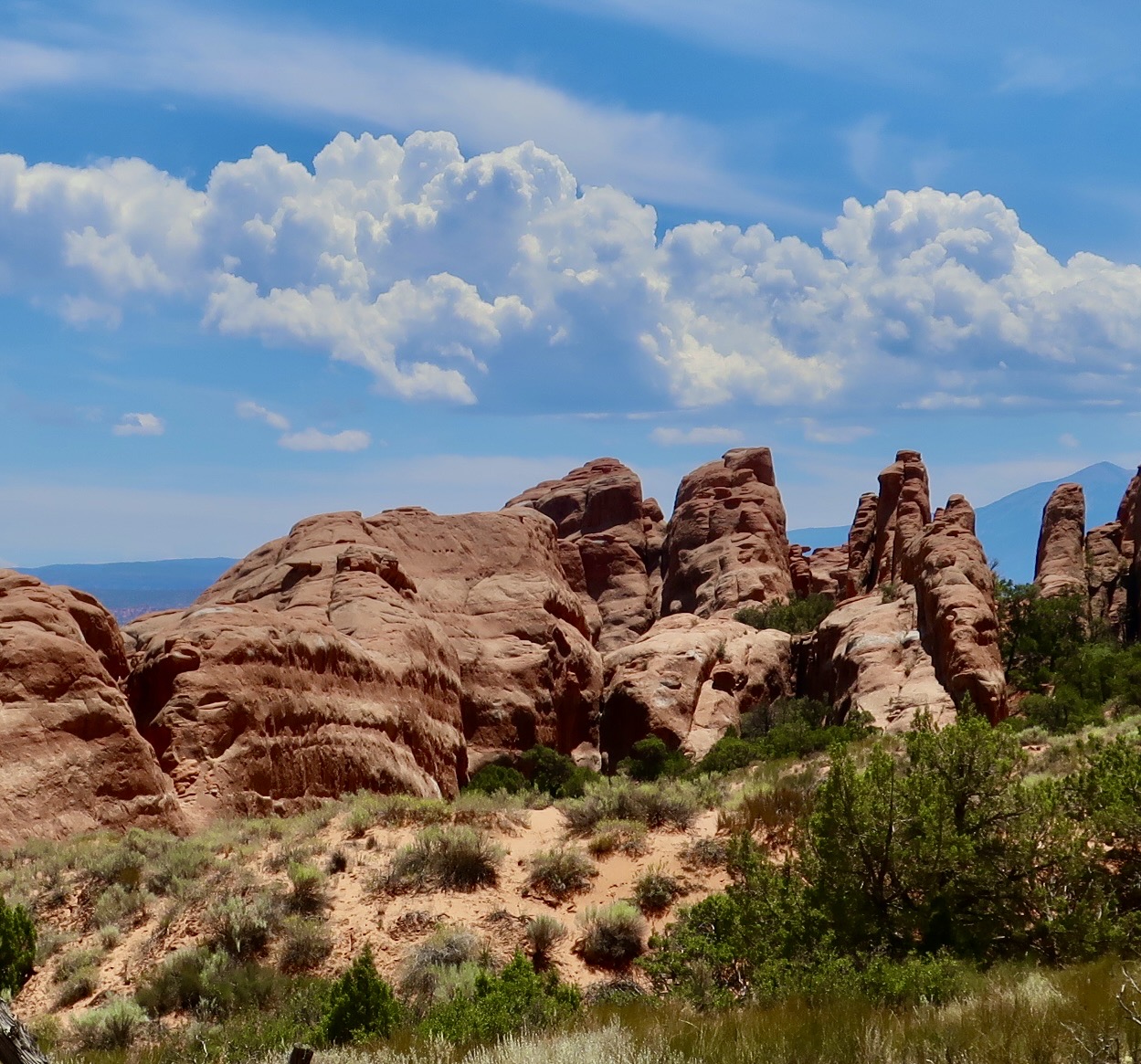
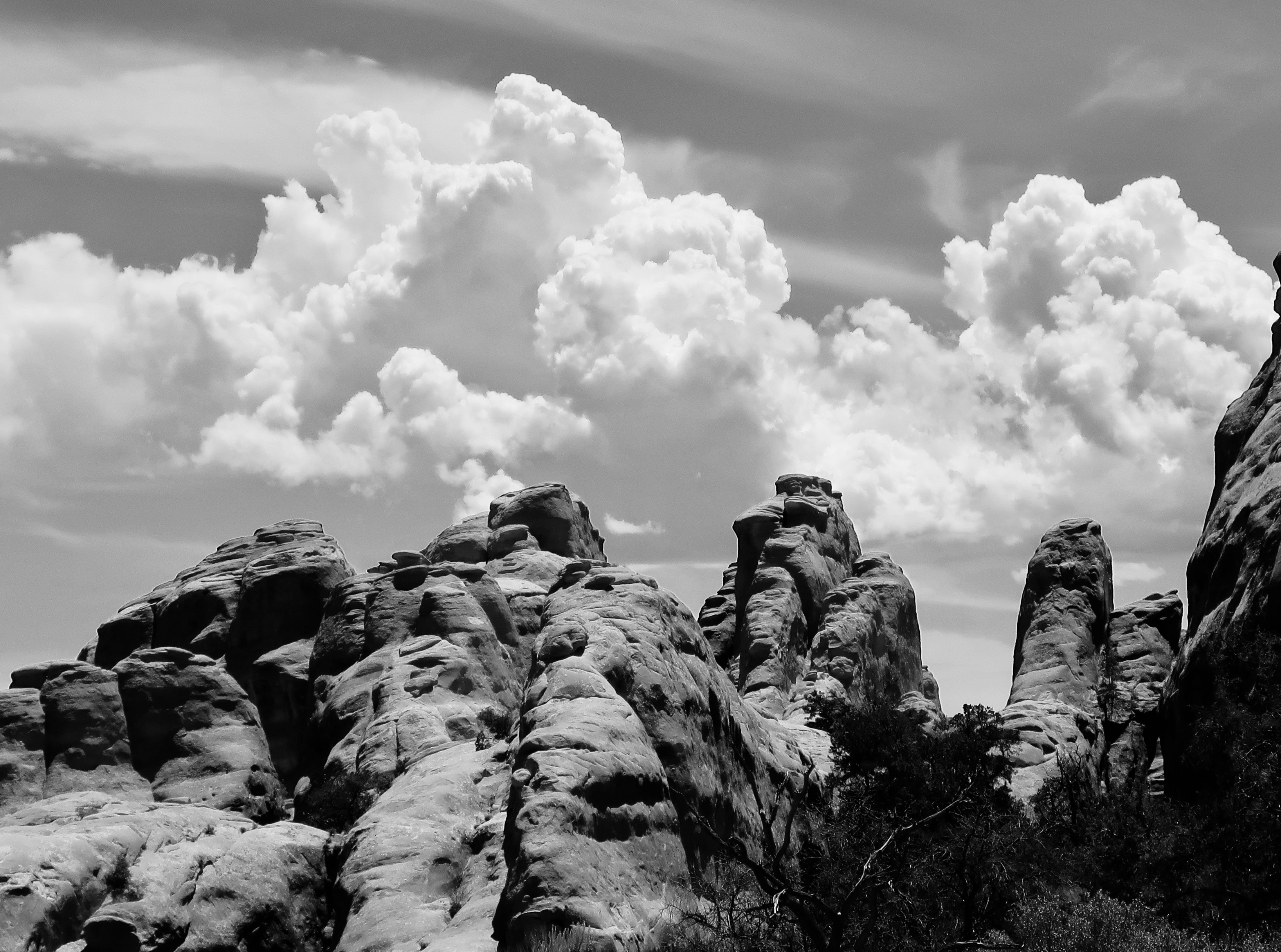
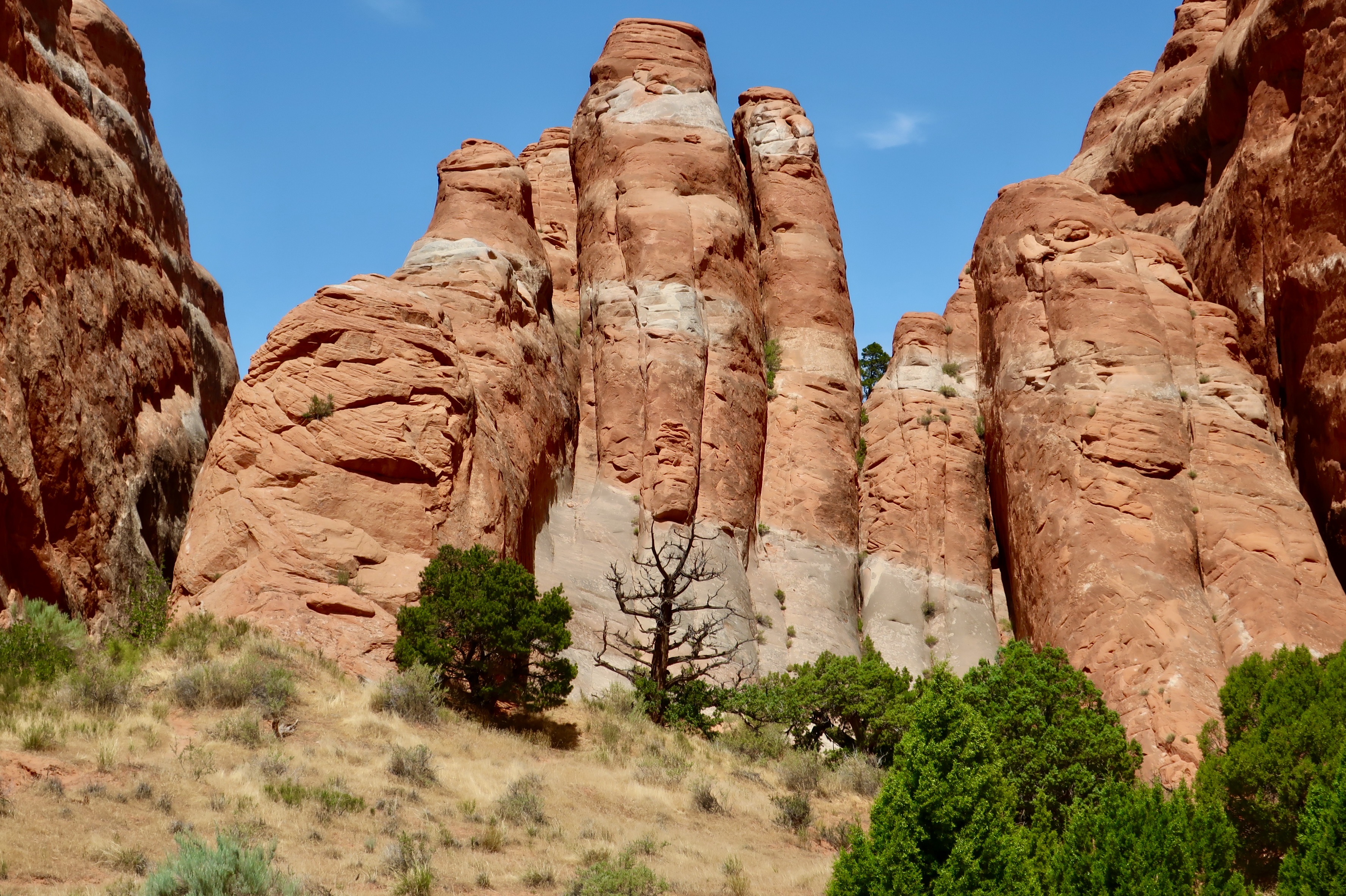
Driving through Arches National Park provides numerous scenic views. This is a look at the Fiery Furnace section. The area gets its name from the color the rocks change to as the sun goes down. It’s like looking into a furnace, or a campfire, when it has burned down to embers.The primary rock formation in the Fiery Furnace is fins. Like a shark’s. Lots of them. The fins are made up of Entrada Sandstone that was initially laid down when the area was covered with vast sand dunes. The sandstone overlayed several thousand feet of salt that had come from ancient seas—a figure that is staggering to think about. As new deposits were laid down on top of the sandstone, the weight caused the salt to flow, almost like liquid, and this caused the sandstone to fracture along parallel lines. Tectonic forces caused the area to rise and erosion wore away the upper rocks, eventually exposing the sandstone. Water was able to seep into the fractures and caused the erosion shown above! And below…Creating what, for Peggy and me, is great beauty.This photo provides a good view of how the parallel fractures have impacted erosion.On our visits to Arches, Peggy and I made a point of visiting at different times of the day to capture the impact of the changing colors caused by the position of the sun. If you visit the National Park, we highly recommend that you go early in the morning and late in the afternoon as well as midday, when the above photo was taken.Horizontal as well as vertical cracks in the rocks allow for erosion to take place in two directions.Looking down into the Fiery Furnace provides a clear look at the impact of the horizontal and vertical fracturing. Plus the green trees add a nice color contrast. This photo also shows the possibility of finding trails through the Fiery Furnace. The word maze fits here quite well. A permit is required for exploration.Imagine wandering through canyons made up of this rock through narrow passages.Peggy walking along a short trail in the Fiery Furnace. It was during covid and she was wearing a mask. All other trails through the area are unmarked, and, like I noted, a maze. People get lost. It’s part of the adventure. Cell phones and GPS don’t work because of the canyon effect. The park labels it a ‘temporary disorientation.’ Box canyons or fallen debris force you to turn around. The limited size of the Fiery Furnace means you will eventually get out. Some fun, huh.The contrasting fractures and uneven erosion can lead to a variety of rock forms in the Fiery Furnace that add to the area’s character.We could not help but think ‘troll,’ when we saw the rock on the right!This added yet another look to the Fiery Furnace. I felt it was almost surrealistic. The white is where water with organic matter, creating a weak acid, has worked its way through the horizontal fractures and bleached the red iron oxide out of the sandstone.A close up. And now, on to the Devil’s Garden…I thought that this pinnacle would make an appropriate introduction to the Devil’s Garden.An inviting trail leads visitors into the Devil’s Garden.Past towering fins.And towering pinnacles.And more fins.There was even a small arch. A larger arch awaited us, but there was much more to see in the park so we turned around.Gathering clouds suggested a possible thunderstorm in our future.This black and white rendering gave it a more threatening look.We will close today with one of our favorite views of the Devil’s Garden. The dead juniper tree in the foreground with a ‘devilish look’ added a nice touch. Next up, an 1800’s ranch, the Garden of Eden, and several arches.
Turns out, we didn’t Diana. Sigh. I thought the Sand Dune Arch was on the outer edges of the Furnace. Actually, it was outside. I thought disoriented was a good description for the experience. And maze.
Even if you had, Cindy (I’m working my way through comments now) you are welcome to comment as many times as you like! I always enjoy hearing from you. Arches and hoodoos always add a unique, I would say wild, look.
Thanks, MB. A treasure for sure! It applies to all of America’s national parks from our experience. 24 more to go in this series celebrating America’s 250th Anniversary.
Millions… 😁 I did a post on the Scottish Highlands today, Brian. Once, they were as high as the Himalayas. It took 400 million years of erosion for them to reach their present height!


Wonderful photos. I can see how people would get lost in the maze of rocks.
I loved the national parks description: disoriented. Thanks, Peggy.
This is a wonderful and expansive look at Arches, Curt, and excellent photos. Thanks so much.
Appreciated, Jet. It is both unique and beautiful, as are most of our national parks. 24 to go. Peggy and I are excited about the series.
The vibrant contrast between earth and sky colors, along with the size of the arches is always breathtaking. Sacred land
Sacred, a good description Arati. I would say it applies to many of our national parks.
Looks like you guys did Fiery Furnace on your own? Impressive! I’d have been afraid of getting lost.
Turns out, we didn’t Diana. Sigh. I thought the Sand Dune Arch was on the outer edges of the Furnace. Actually, it was outside. I thought disoriented was a good description for the experience. And maze.
Wow, these arches are amazing as are the shapes of the rocks, Curt.. I thought I responded to this but maybe not?! xx
Even if you had, Cindy (I’m working my way through comments now) you are welcome to comment as many times as you like! I always enjoy hearing from you. Arches and hoodoos always add a unique, I would say wild, look.
😅
Hugs and love
Some places on earth seem like they’re from another planet. It’s amazing how much variety there is out there.
Indeed, Dave. The Southwest has more than its share. Deserts are particularly suited to creating unique landscapes. They run around naked.
Such great pictures of a truly amazing place!
Thanks, MB. A treasure for sure! It applies to all of America’s national parks from our experience. 24 more to go in this series celebrating America’s 250th Anniversary.
Can’t wait to see them!
Grand Teton NP should be up next Tuesday.
Thank you for a nice stroll, Curt.
Erosion is a master sculptor. (Over thousands of years or more?)
As I was looking at your photos, I remember a similar site I visited in Brazil ages ago, Vila Velha. Very similar.
Cheers
Millions… 😁 I did a post on the Scottish Highlands today, Brian. Once, they were as high as the Himalayas. It took 400 million years of erosion for them to reach their present height!
I’ll get your post in my mail on Monday…
You’re right: millions…