Last month, Peggy and I went on a CIE bus tour of the Scottish Highlands, along with our grandson Cody. Photos in this series were taken by Cody, Peggy and me.
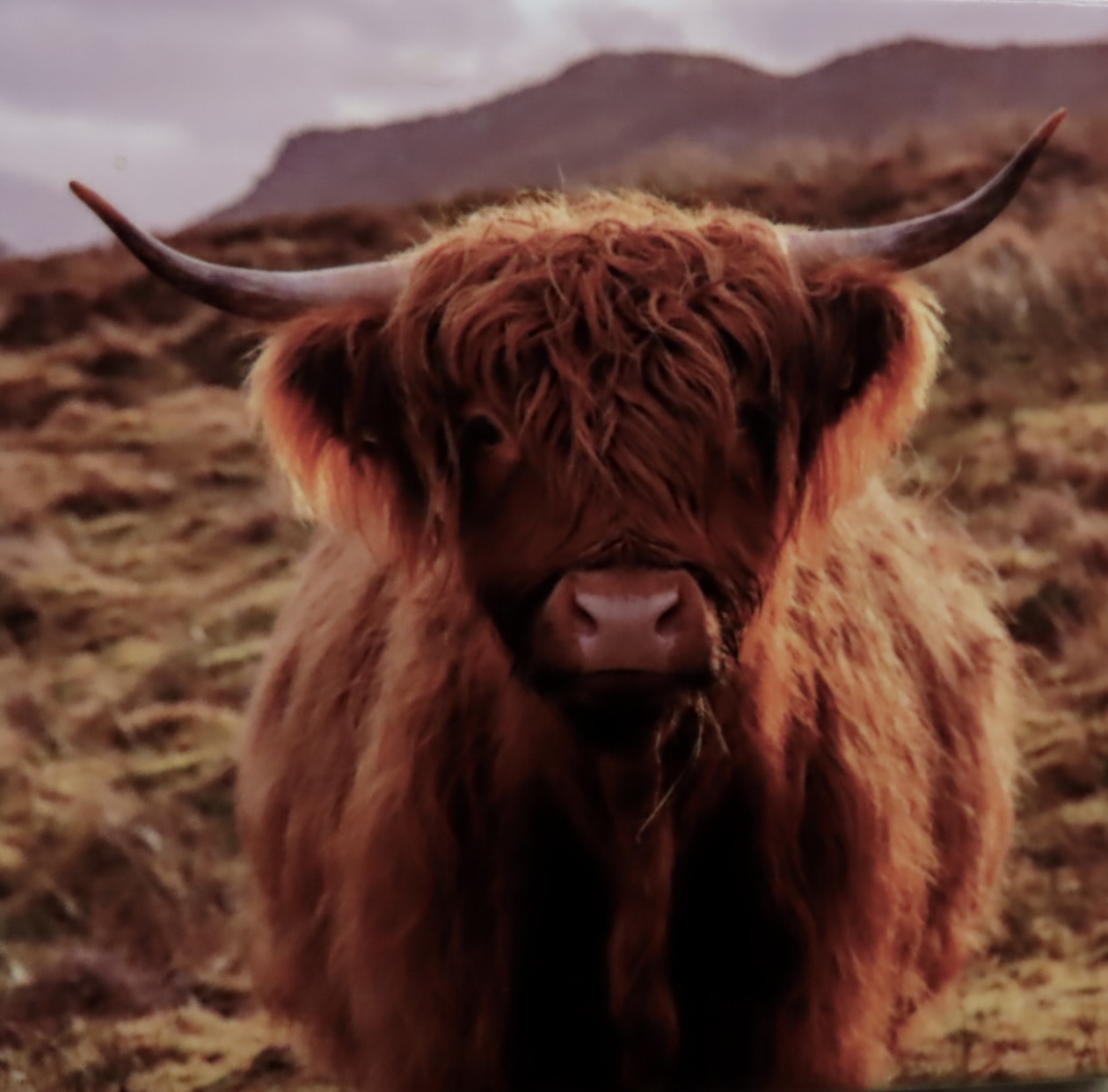
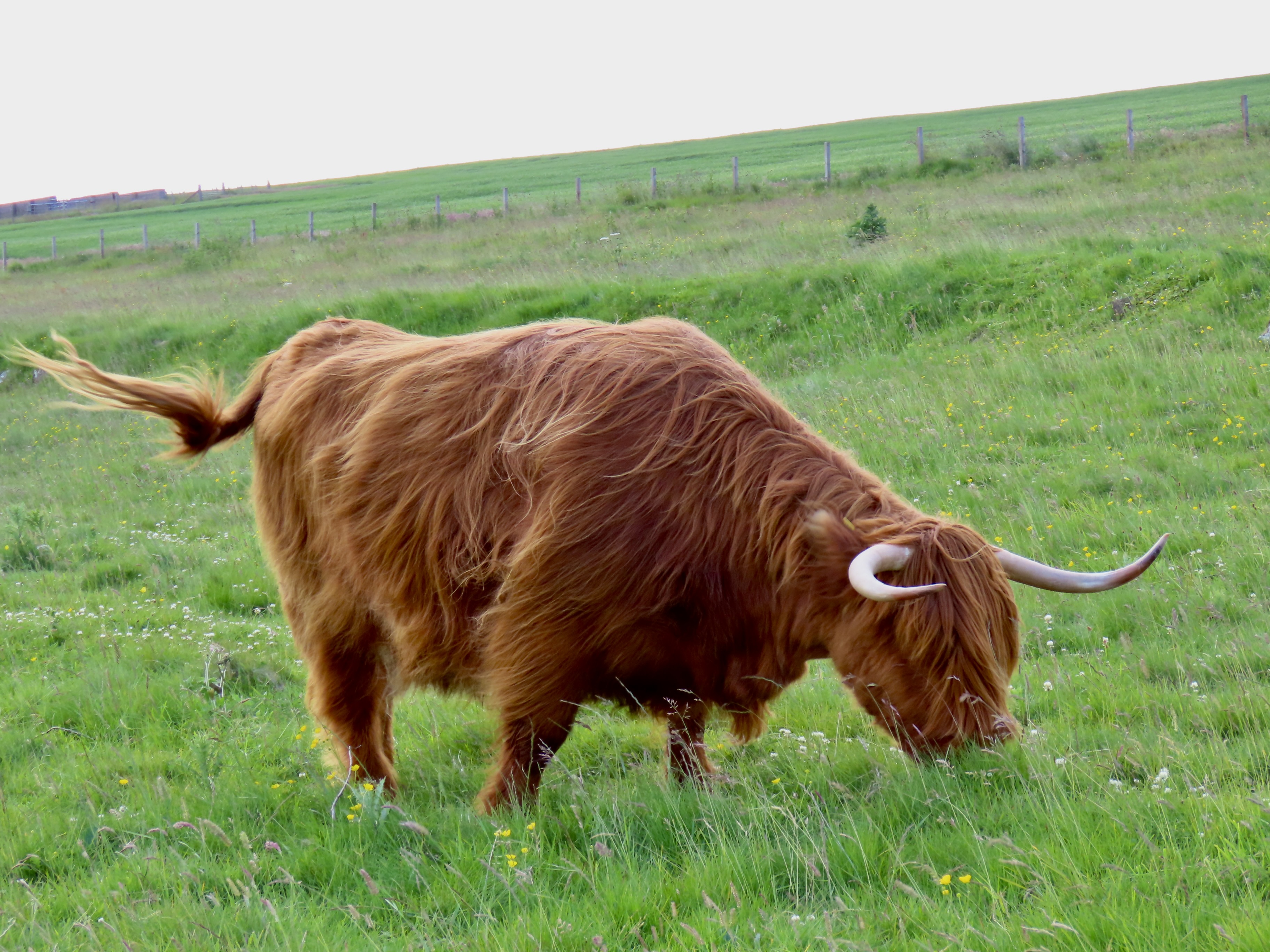
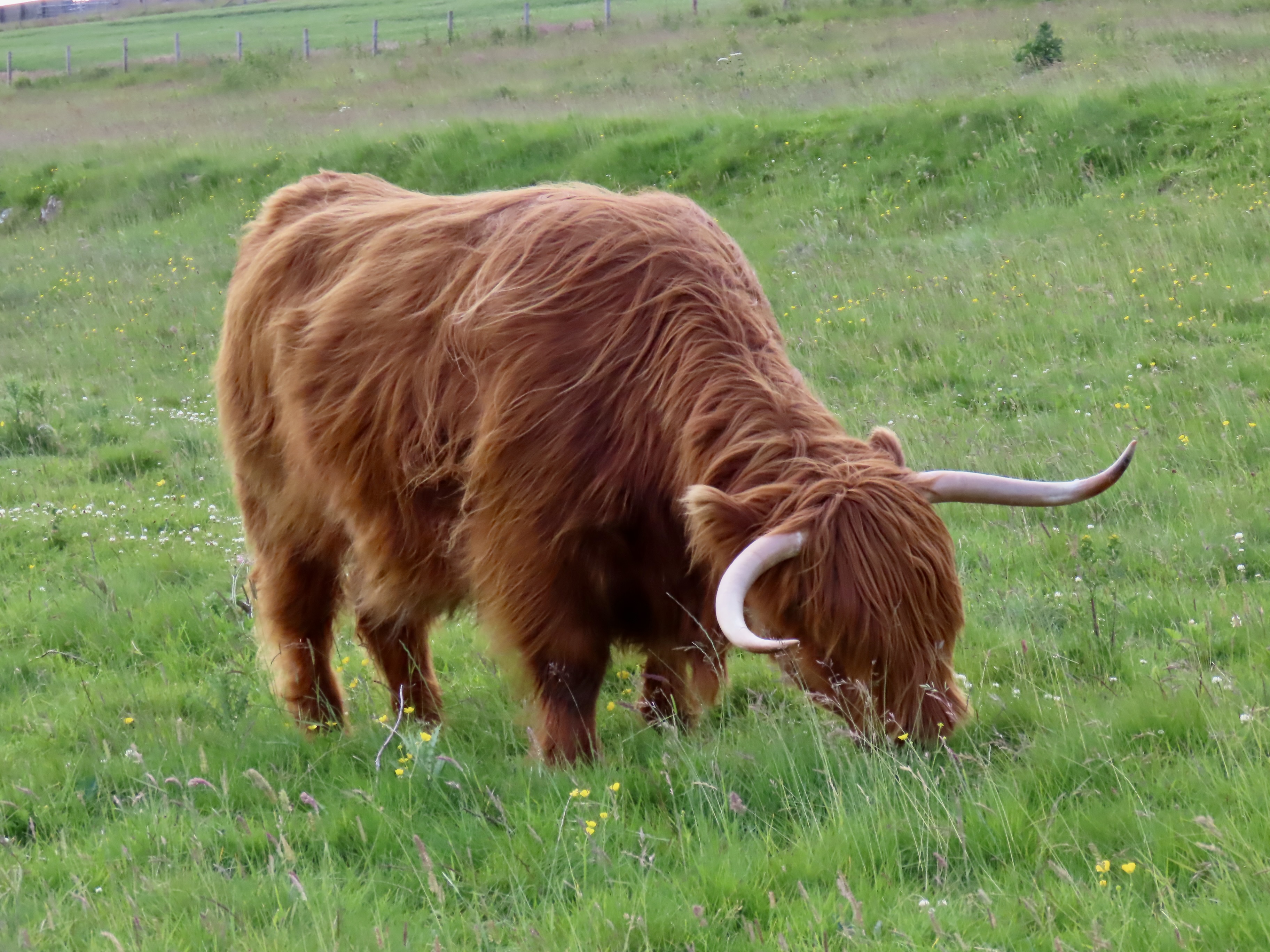
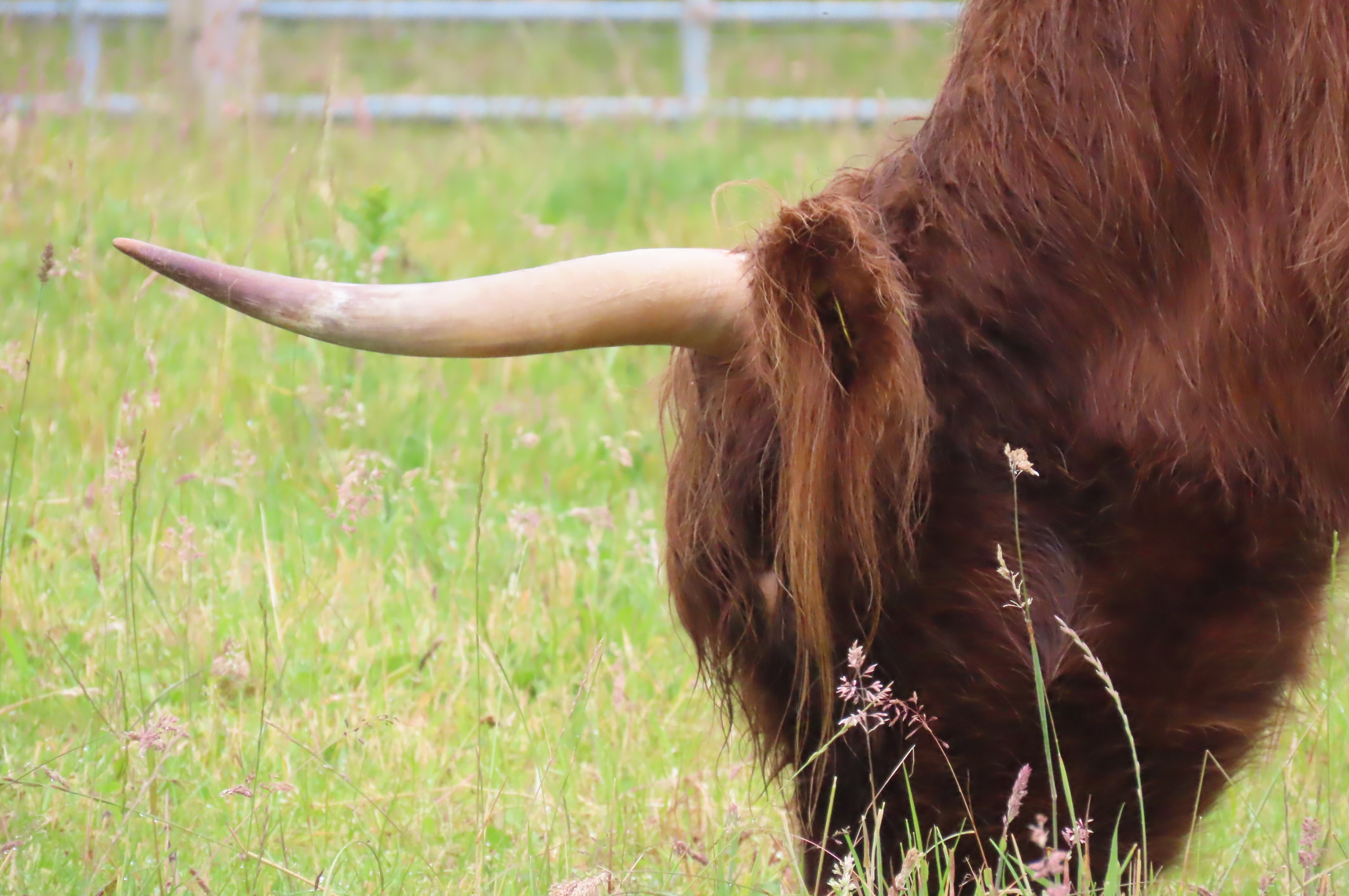
Harry Coos are just about on everyone’s to-see-list for visitors to the Scottish Highlands. Their thick ginger fur and impressive horns are the two chacterisitcs that most people note. The slender, curvy horns suggest that this coo is a female. Check out the ears as well.
Given the popularity of coos, we were surprised they weren’t everywhere. We only spotted them a half-dozen or so times during our recent bus tour exploration of the Highlands! And only had two opportunities to stop and check them out. One was on the northern island of Orkney, the other next to the Culloden Battlefield. While there are over a million cattle in Scotland, coos number only in the thousands. The fact that their milk involves an acquired taste and that their meat is very expensive are important reasons. Besides, one coo might attract 10,000 visitors (or more), but how many people could it feed.“Why is it that people always look at me as an object and only think meat and milk. Why can’t they think of me as handsome or beautiful?’
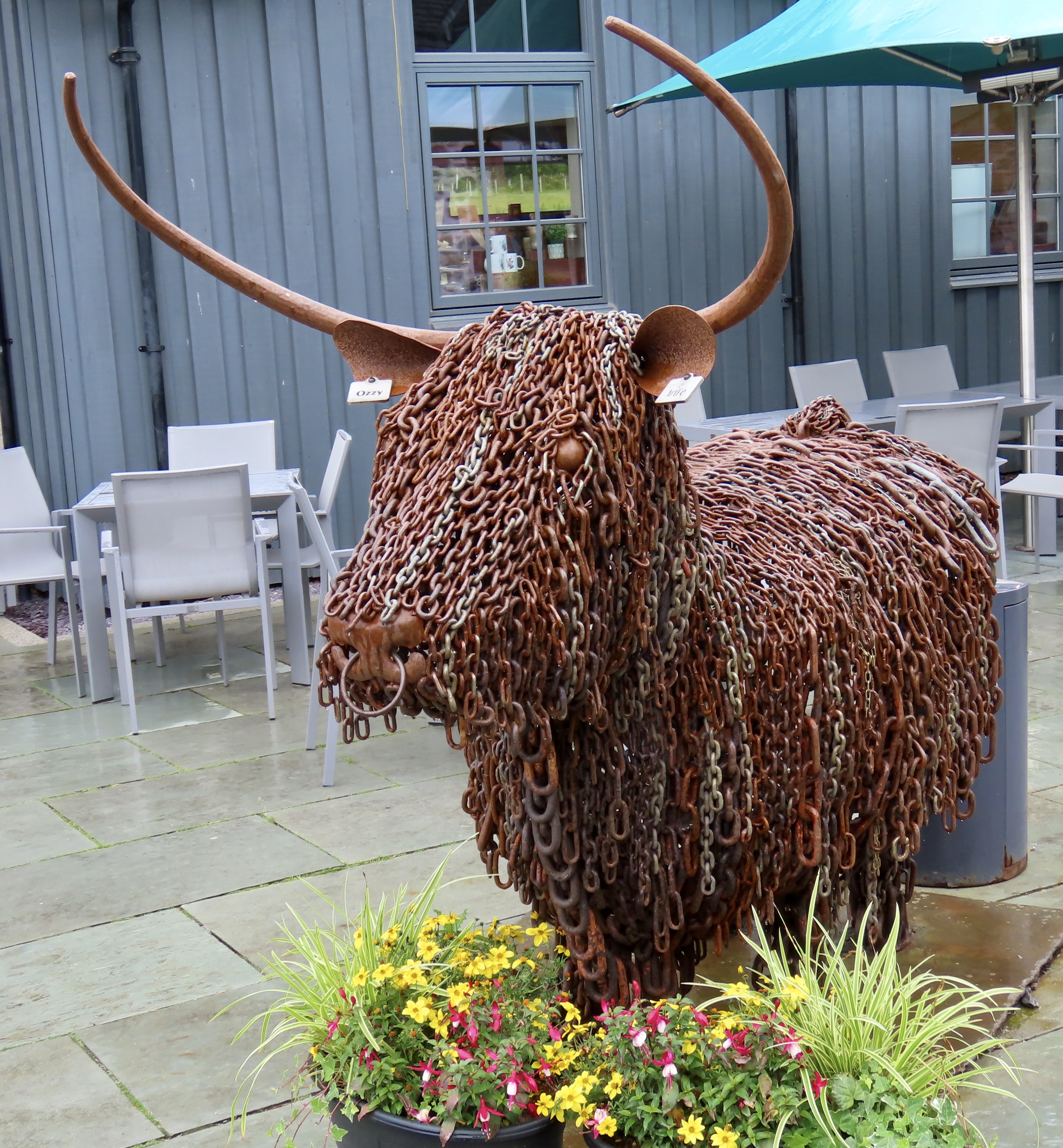
So while coos are much harder to find than normal cows, I doubt that there is a tourist shop in Scotland that doesn’t promote them. Paintings, key chains, coffee cups, shot glasses, scarves, coasters, t-shirts… you name it, you will likely find one with a coo on it. We brought home two.
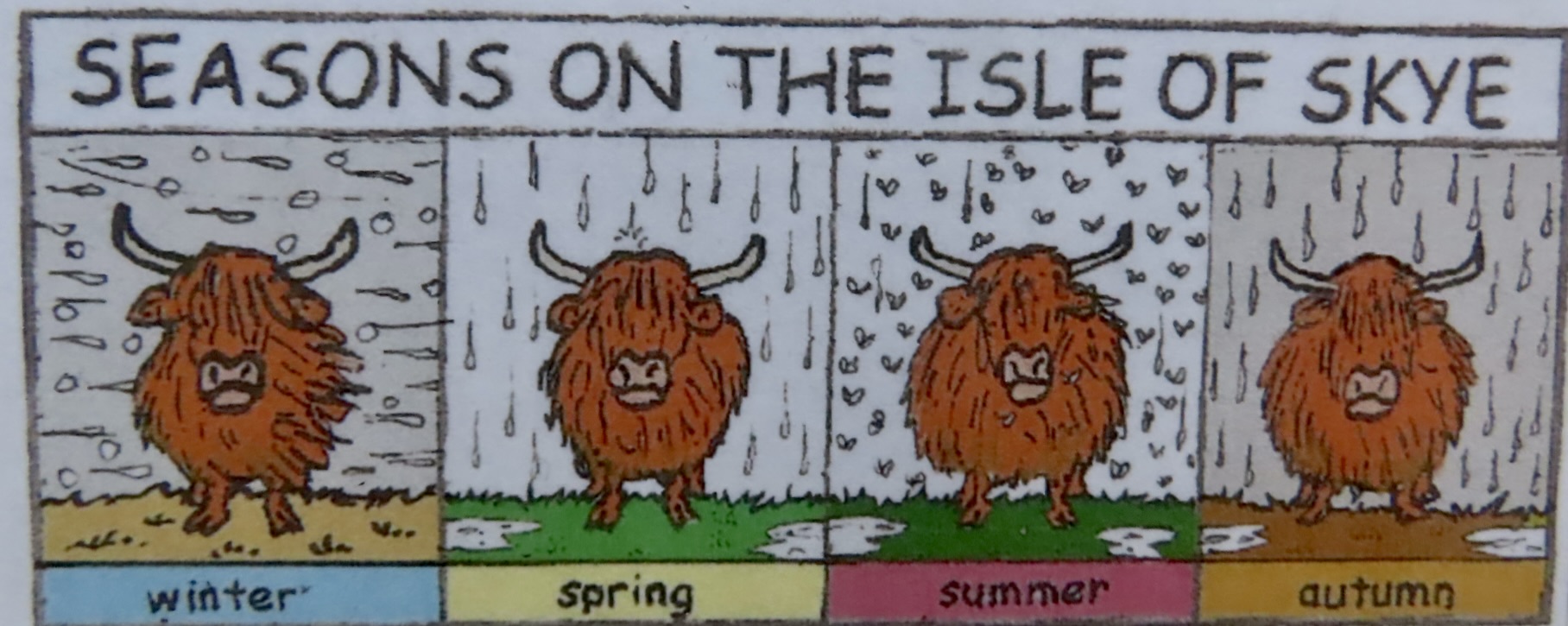
A coaster for me…And a seasonal weather gauge for Peggy.
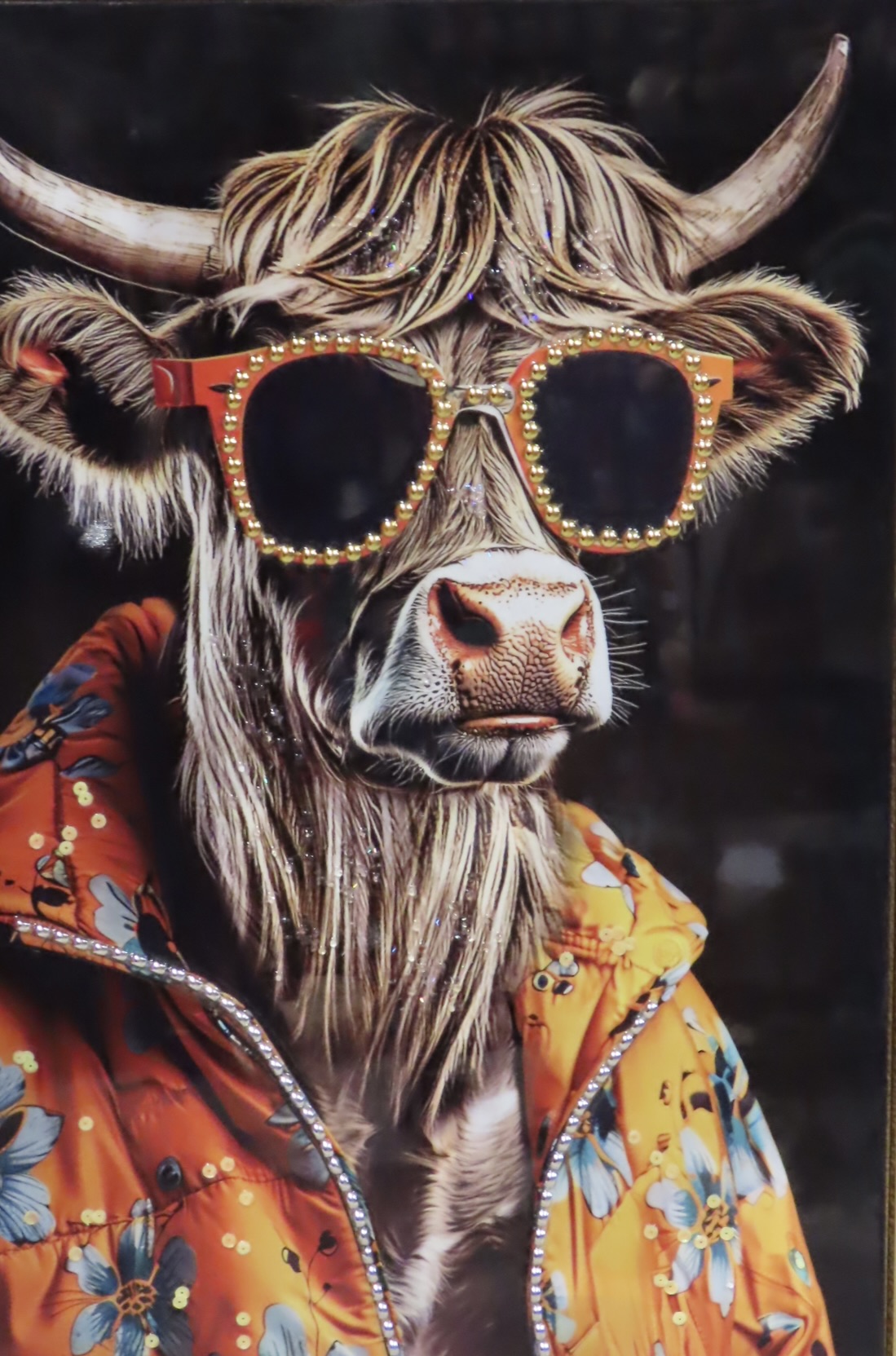
We found this fellow hanging out in a tourist shop. And no, we didn’t bring him home. Judging from the glasses going through his ears, it’s probably AI generated.
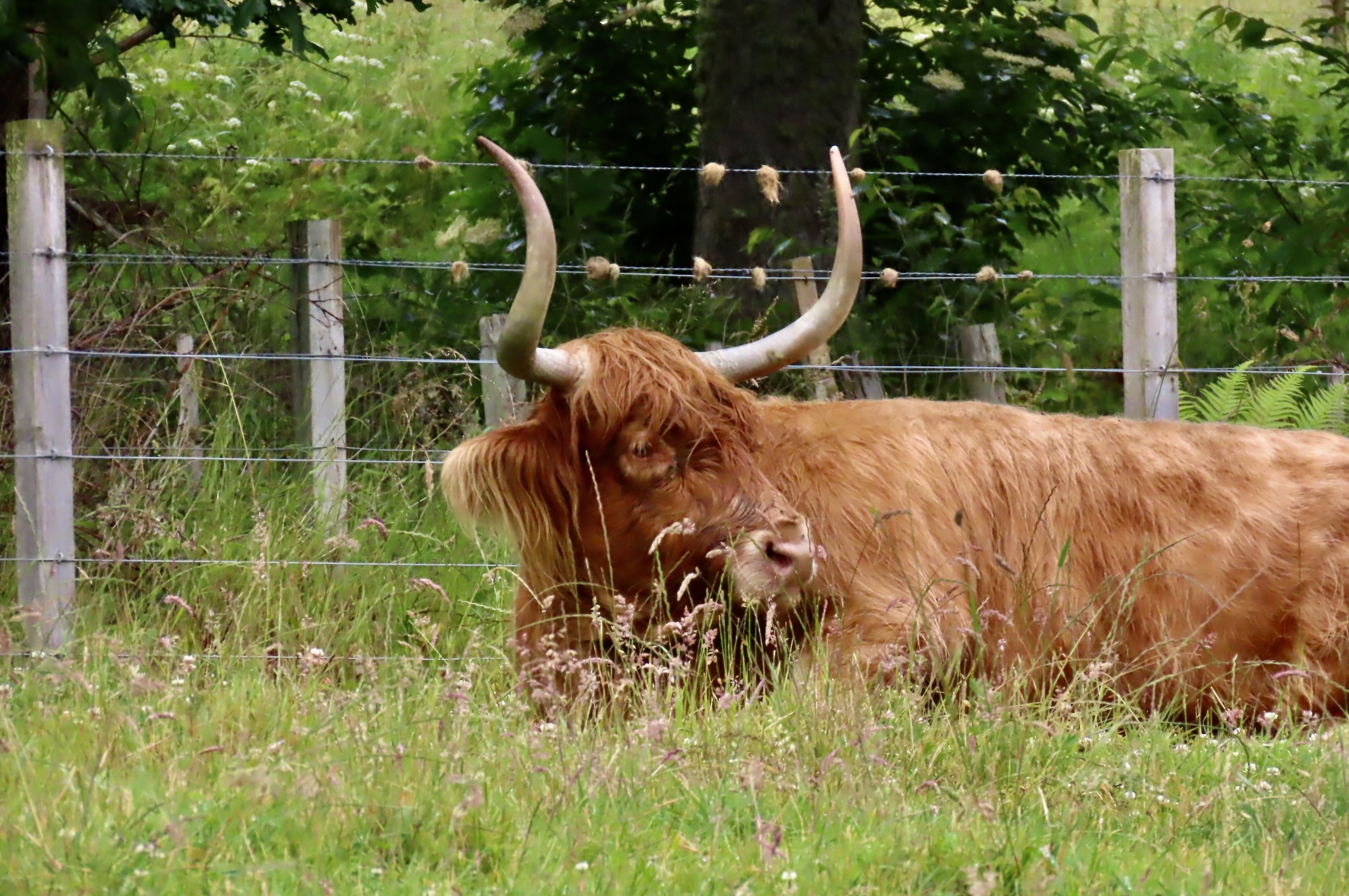
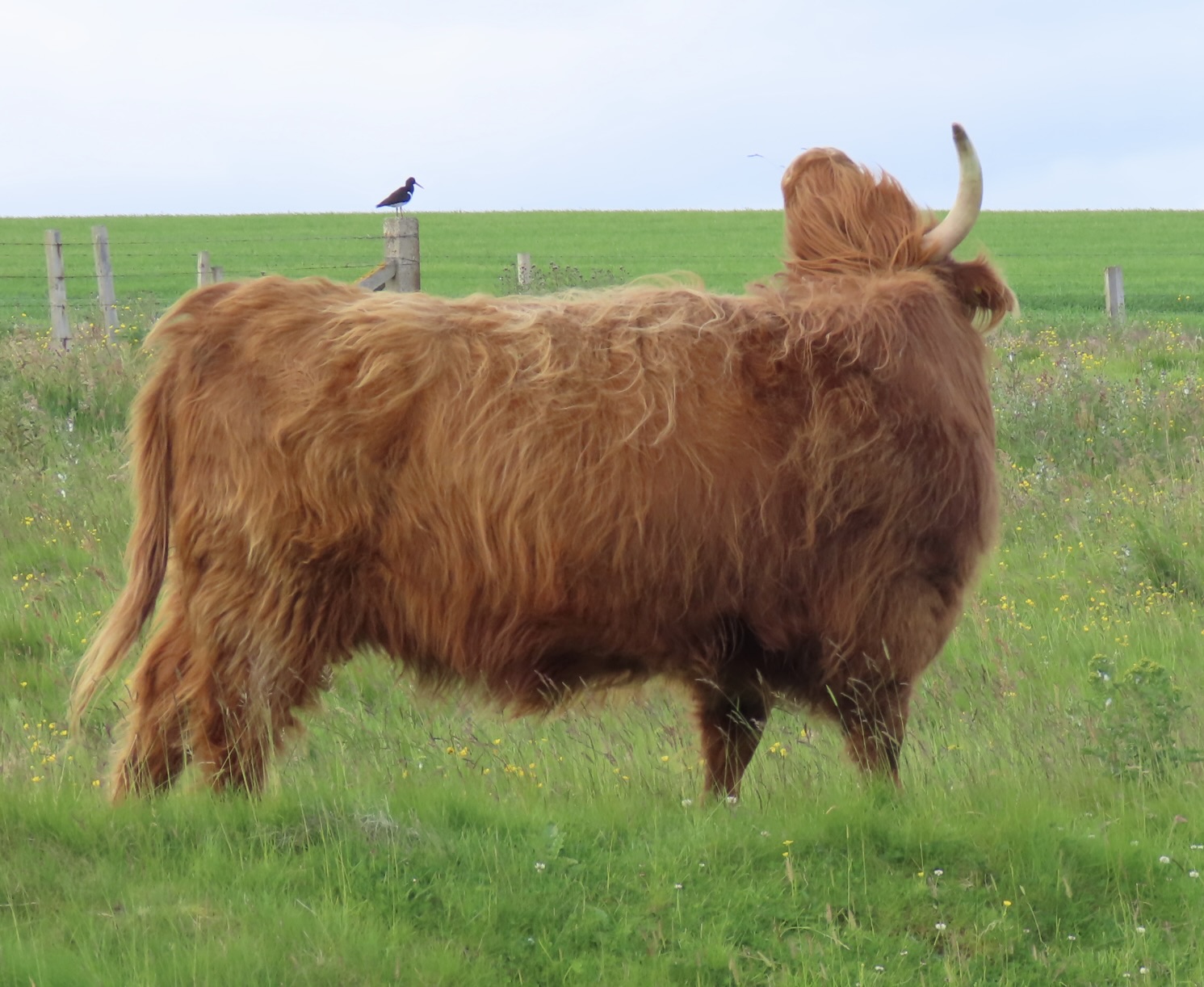
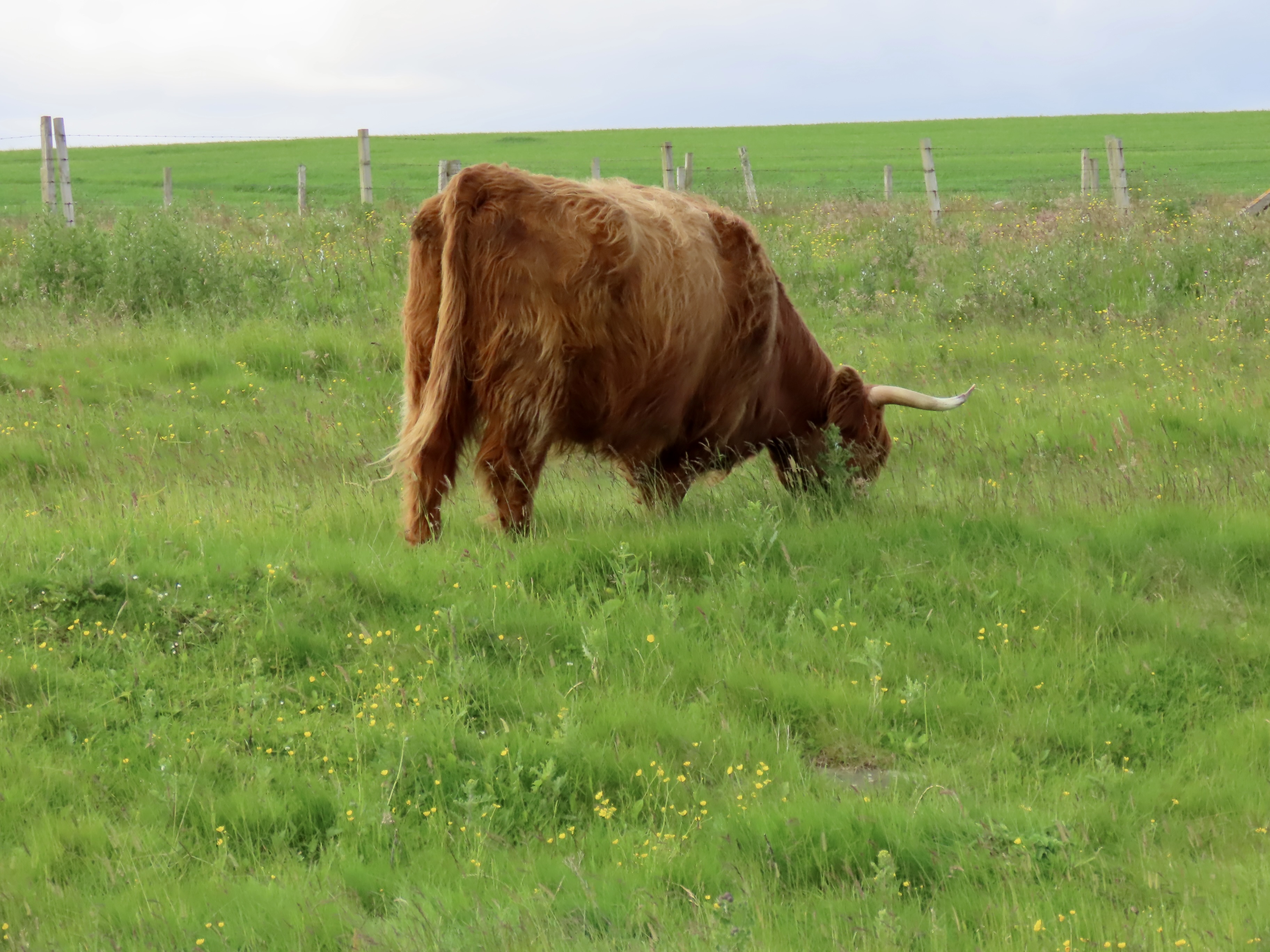
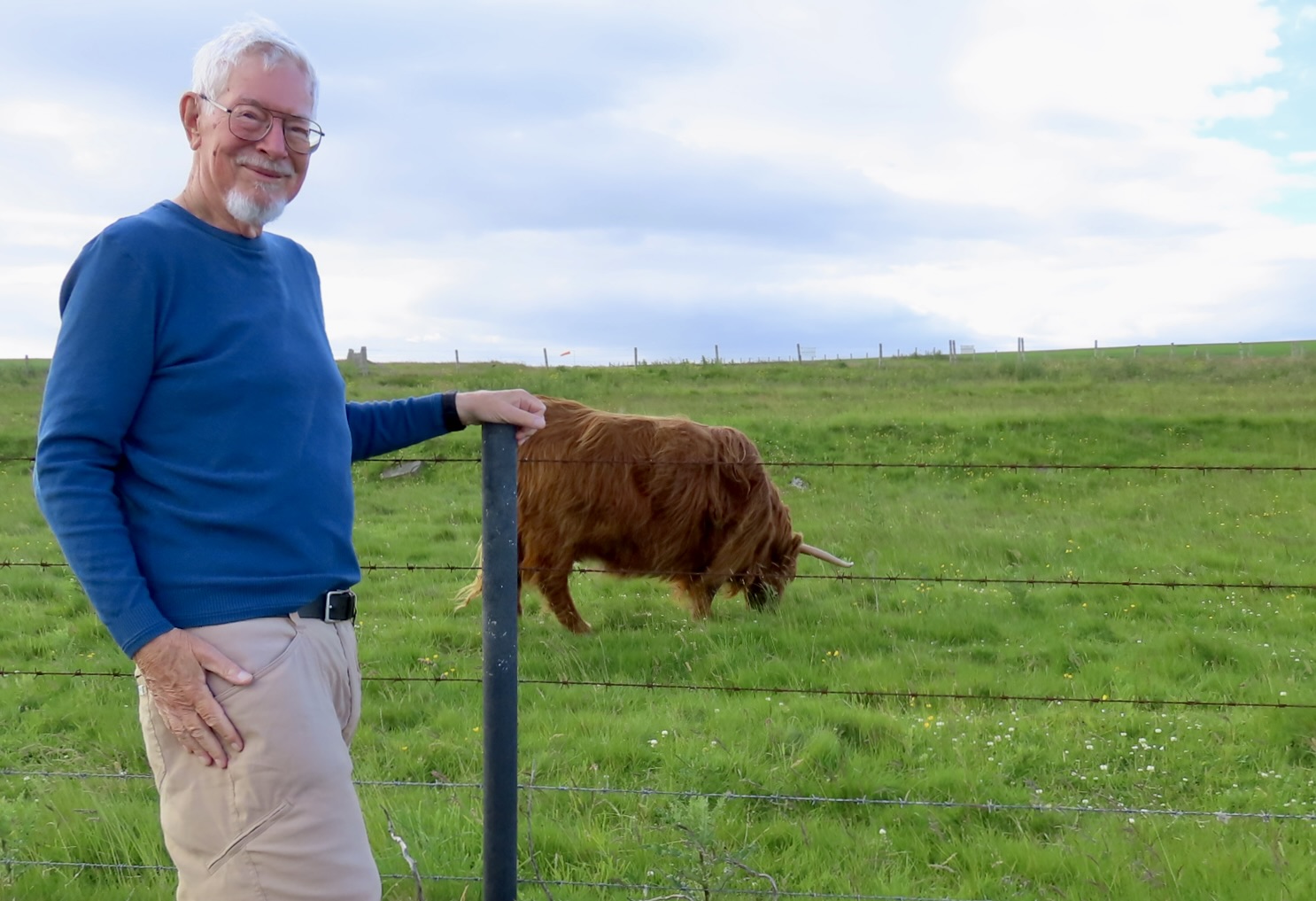
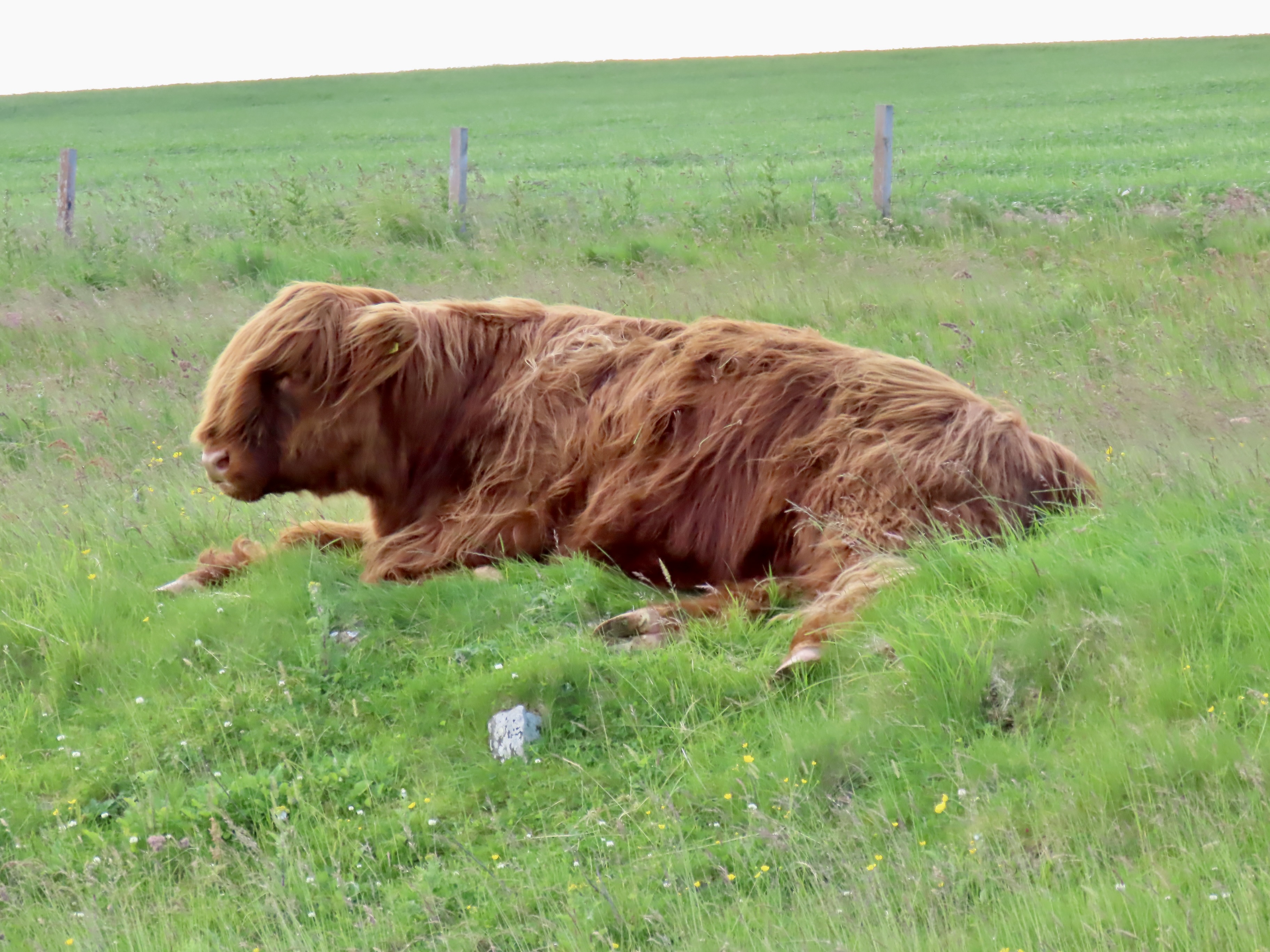
Roadside attraction.The horns are more than weapons. For example, a good scratch. They are also used to break through the snow in winter to get to grass. These guys can eat up to 140 pounds of it per day. I think that’s an oyster catcher looking on. We saw lots of them on Orkney.Harry coos is an apt description for these cows— from their head right down to their tails! They actually have two layers of fur, the shaggy looking outer layer which is oily and somewhat rain repellent and a softer warm, inner coat. Both come in handy for the long, cold highland winters. They’ve had a long time to adjust to the weather. They were first domesticated in 6th century CE in the Outer Hebrides off Scotland.Head shot.Tail shot.Ear shot.Me shot.Don’t know where the horns went on this harry coo lying down. Will assume they were cut off. Had it been a bad coo? Peggy caught a video on her iPhone of it chewing its cud. Just click on the photo/video below.
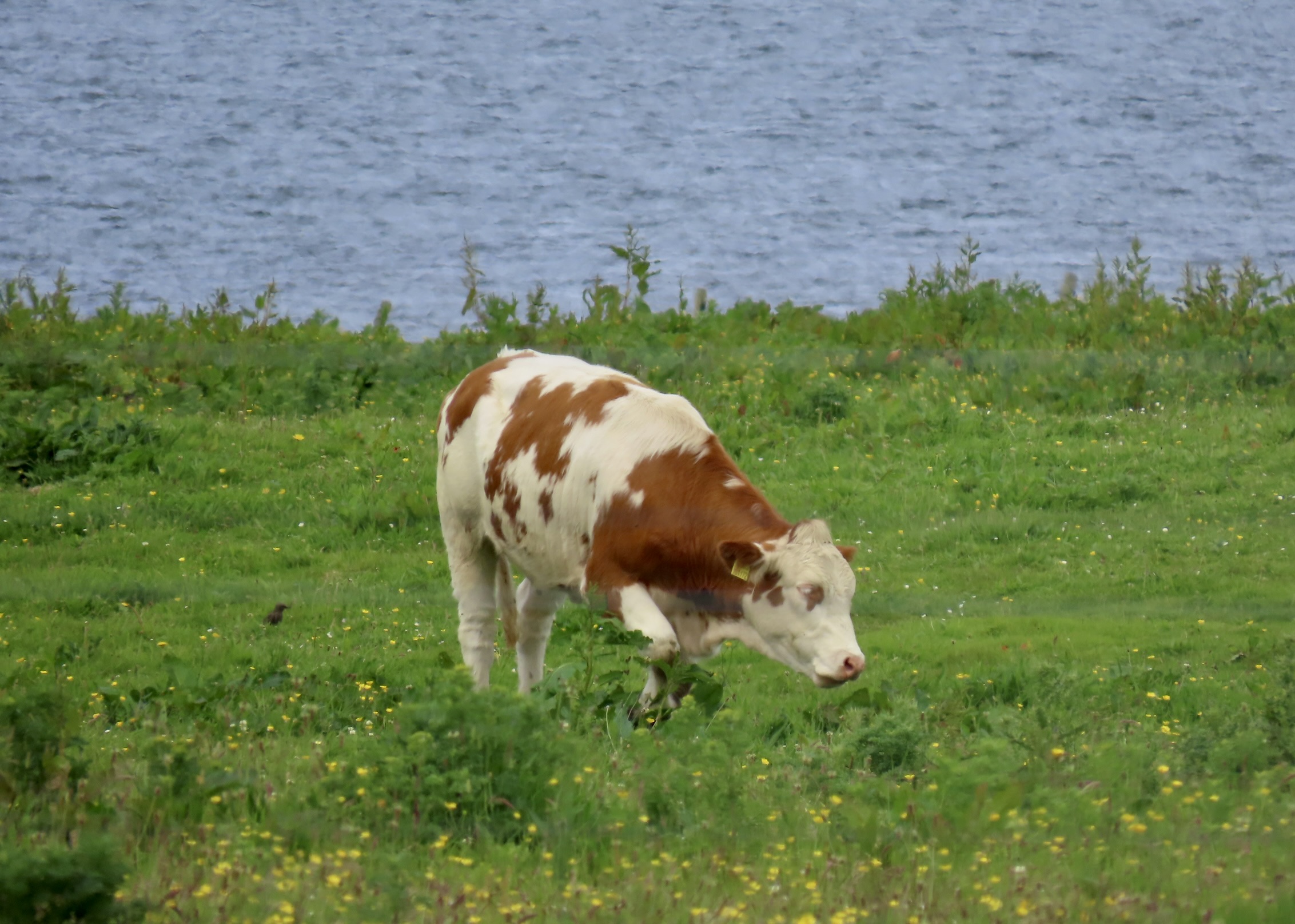
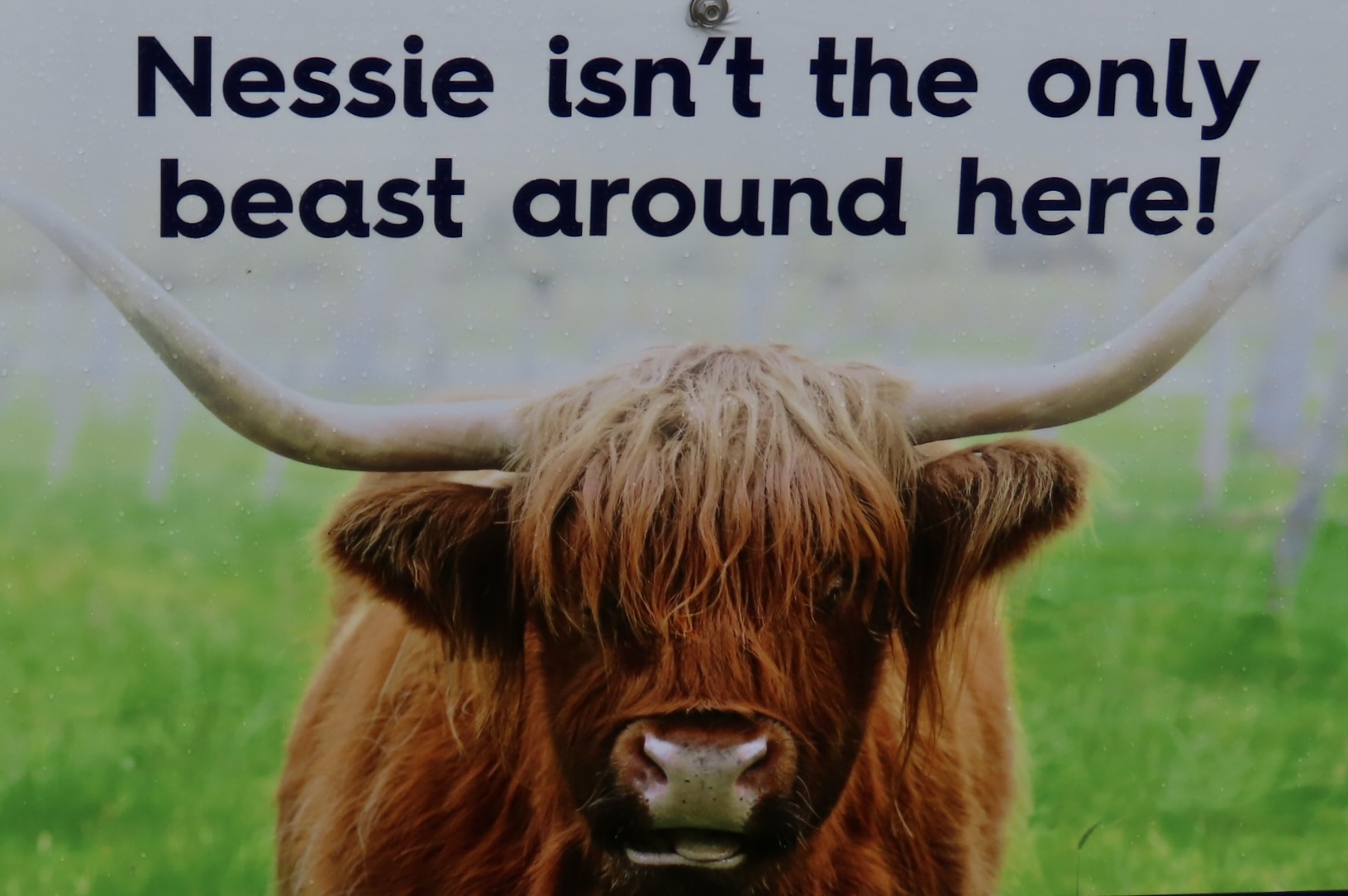
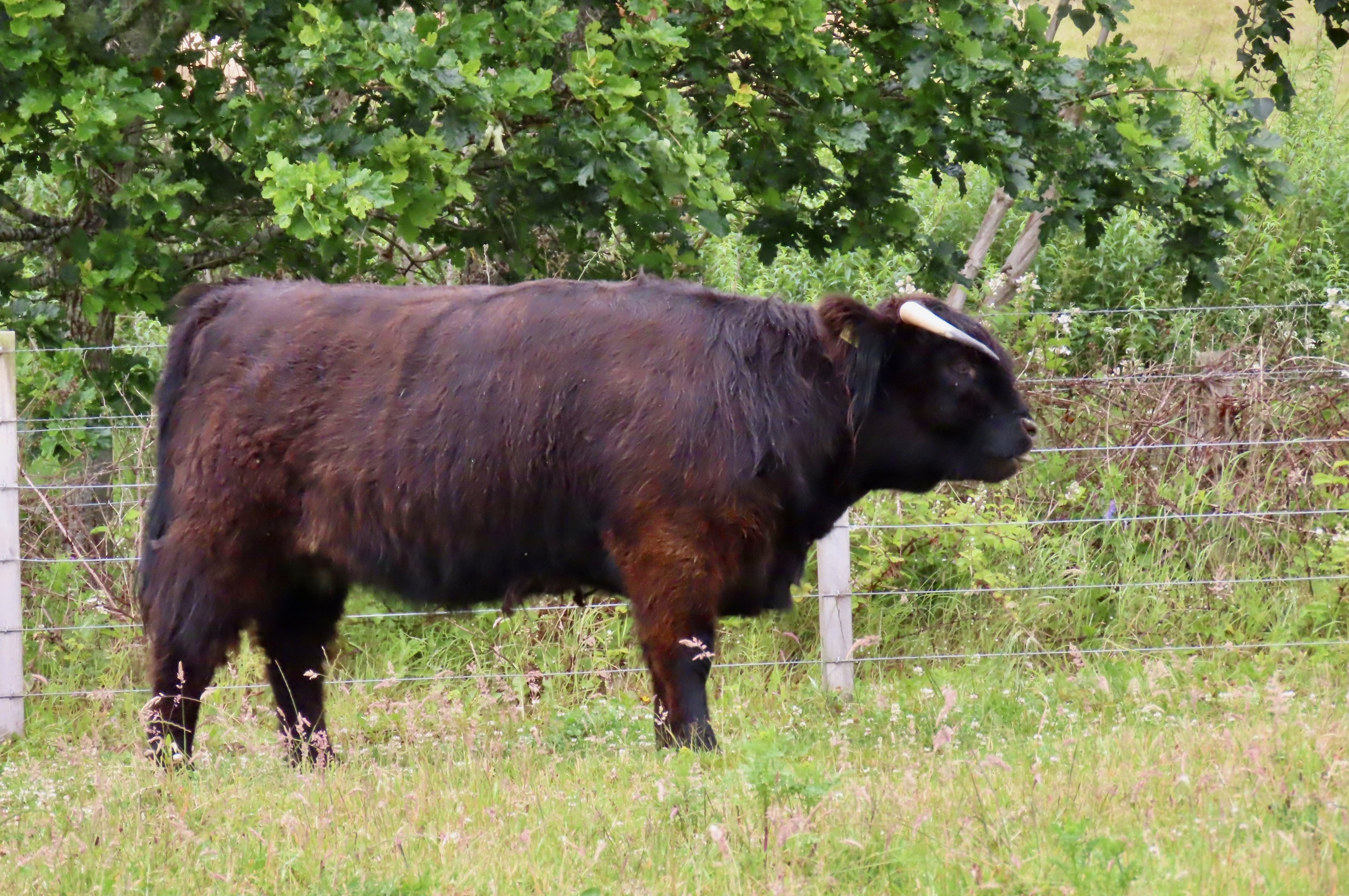
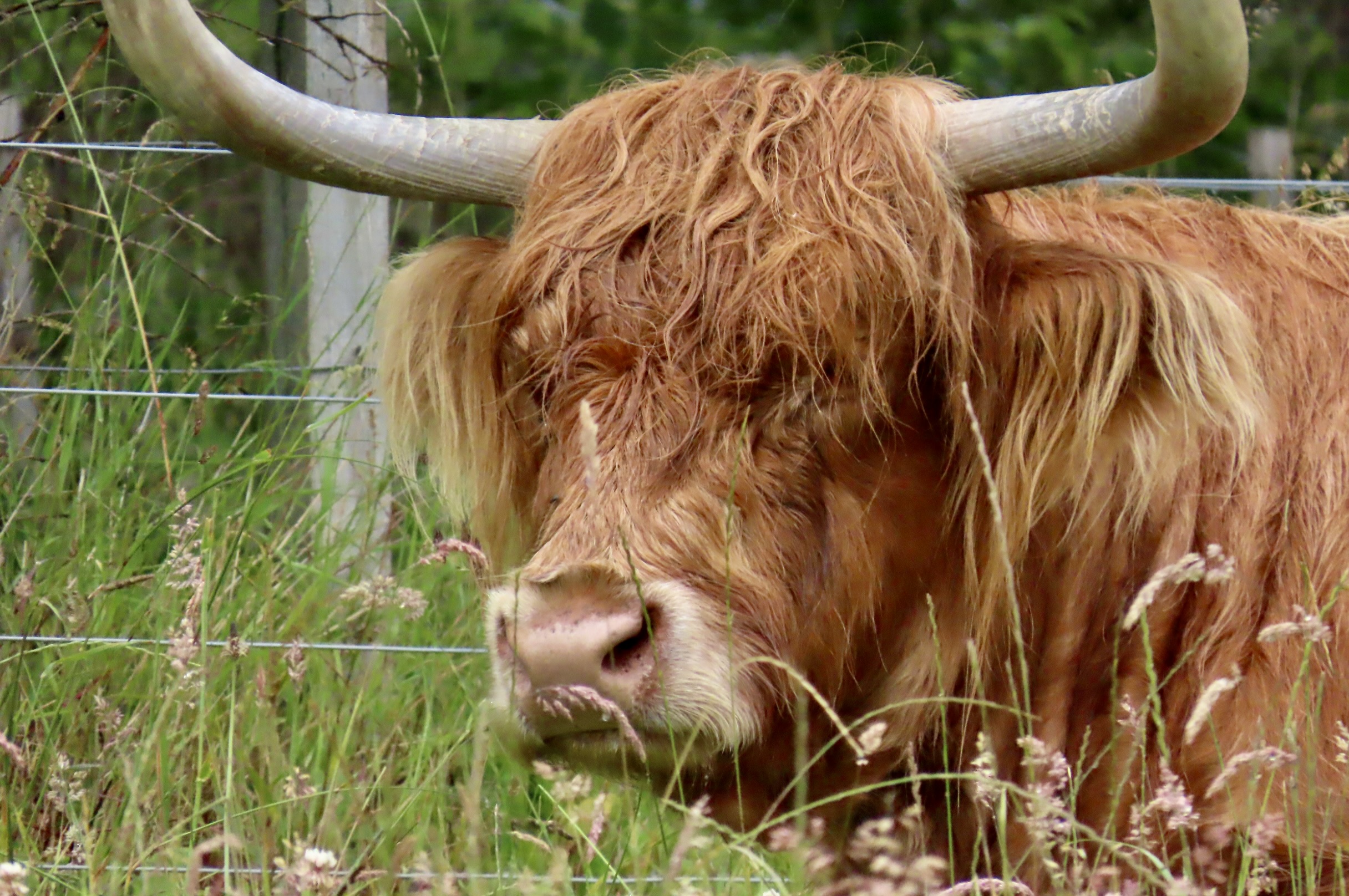
When we were finished touring the Culloden Battlefield, I ran over to capture a few photos of the Coos next to the battlefield. This is where I found this sign.One thing that stood out was a black coo. There was a time when the coos came in several colors. Then Queen Victoria visited the Highlands and stated she was quite taken by the ginger colored coos. That’s when the farmers started focusing on breeding coos with ginger coats. This is a boy, BTW. Horns are straighter and more stout.It’s just possible this lady coo was having a bad day. A cold perhaps with a runny nose? Or a chapped nose. Click the photo/video below and you can decide for yourself. (I don’t know why WP decided to put in The?)
She was licking her nose.Since we brought up Nessie above, that’s where we will go next: To Loch Ness, fabled home to the ancient monster. It was a dark cloudy day, perfect for our search.
I was planning cow and horse breeding to restore the originality of the species but that proposition failed, it too needs entire village raise them…besides there were other technical drawbacks, thought will do it in us, never got any nod from people who were suppose to help me out with this venture .. probably someone in eu can take up that job…
Let’s see. Go find a coo that died in a bog and has been preserved forever, take its DNA, and clone away! Grin. Sounds like a good effort on your part.
Thanks for the photos and information on these cool Coos! I like how they look. One of our calendars for this year I have hanging up has pictures of them for every month. 🙂
I don’t know when or why I began the practice, but as a kid I called cows ‘coos.’ I’d never seen one, nor heard of them; I suppose it was just playing with language. I’m delighted to know that coos actually exist, quite separate from Angus or Herefords! They’re cute as can be; they also remind me of the aurochs in the film “Beasts of the Southern Wild.” I’m not sure why, since coos don’t have tusks; maybe it’s only their uniqueness, and their size. Of this I am sure: these coos wouldn’t be at all happy in a hot south Texas pasture!
You always been a woman ahead of your time, Linda. What can I say. As for cute, there’s a reason why thousands of tourists have to see them. Our guide was grumping a little that we prioritized seeing coos over some of Scotland’s historic sites. (Grahm had a tremendous amount of knowledge about Scotland.) Then I caught him slipping out with me to catch more photos of Coos. He allowed that coos on his Facebook Page got more views than anything else. No, they probably wouldn’t like South Texas. Maybe during the winter in a Texas blizzard. Another blogging friend of mine, told me that they are quite happy in Alberta where she lives.



They all are genetically engineered cows!
Moooo! I guess that’s a future we can all look forward to. Sigh. I’ve been reading about transhumanism.
I was planning cow and horse breeding to restore the originality of the species but that proposition failed, it too needs entire village raise them…besides there were other technical drawbacks, thought will do it in us, never got any nod from people who were suppose to help me out with this venture .. probably someone in eu can take up that job…
Let’s see. Go find a coo that died in a bog and has been preserved forever, take its DNA, and clone away! Grin. Sounds like a good effort on your part.
We have a glass hairy coo Christmas tree ornament, a souvenir from Alie’s first trip to Scotland.
Everyone should have one Ray. Alie has good taste in men and coos, I’d say.
Thanks for the photos and information on these cool Coos! I like how they look. One of our calendars for this year I have hanging up has pictures of them for every month. 🙂
Every month! Then you have to be a fan!
Great post. I think the coos and I use the same hair care method.
My Peggy is laughing about the hair care method!
I don’t know when or why I began the practice, but as a kid I called cows ‘coos.’ I’d never seen one, nor heard of them; I suppose it was just playing with language. I’m delighted to know that coos actually exist, quite separate from Angus or Herefords! They’re cute as can be; they also remind me of the aurochs in the film “Beasts of the Southern Wild.” I’m not sure why, since coos don’t have tusks; maybe it’s only their uniqueness, and their size. Of this I am sure: these coos wouldn’t be at all happy in a hot south Texas pasture!
You always been a woman ahead of your time, Linda. What can I say. As for cute, there’s a reason why thousands of tourists have to see them. Our guide was grumping a little that we prioritized seeing coos over some of Scotland’s historic sites. (Grahm had a tremendous amount of knowledge about Scotland.) Then I caught him slipping out with me to catch more photos of Coos. He allowed that coos on his Facebook Page got more views than anything else. No, they probably wouldn’t like South Texas. Maybe during the winter in a Texas blizzard. Another blogging friend of mine, told me that they are quite happy in Alberta where she lives.
Quite a few farmers in Alberta raise Highland Cattle. They are well suited to our climate!
That’s fun, Marge. Yeah, I’ll bet all that fur makes them quite happy on cold winter nights in Alberta.
Holy coe…
Appropriate. Grin. Not as holy as cows in India, however.
😉