The Mt. Stuart House on the Isle of Bute… Call It What You Will, but It Looked Like a Castle to Us

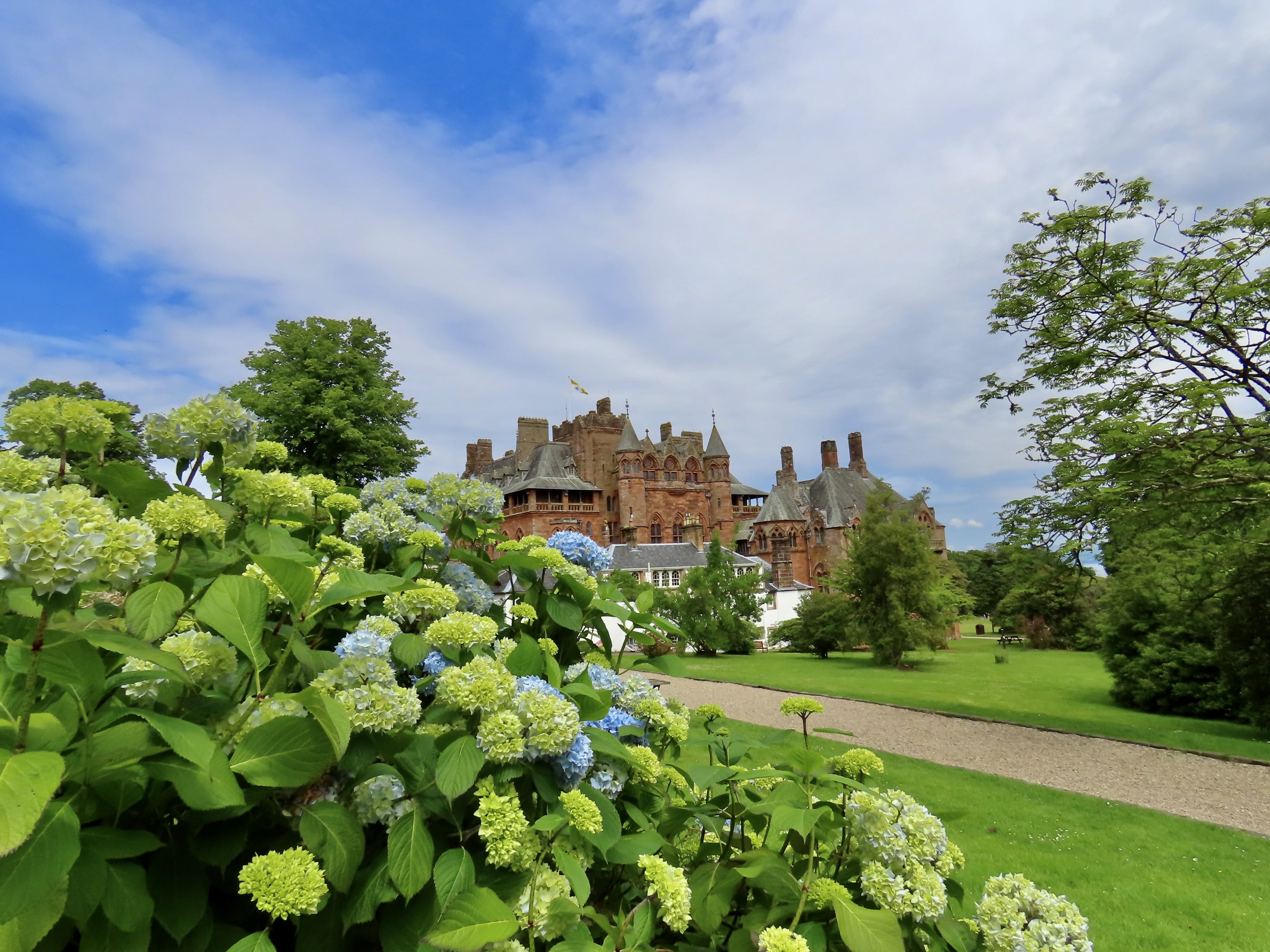
The hydrangeas couldn’t disguise or hide the House of Stuart’s castle-like appearance.
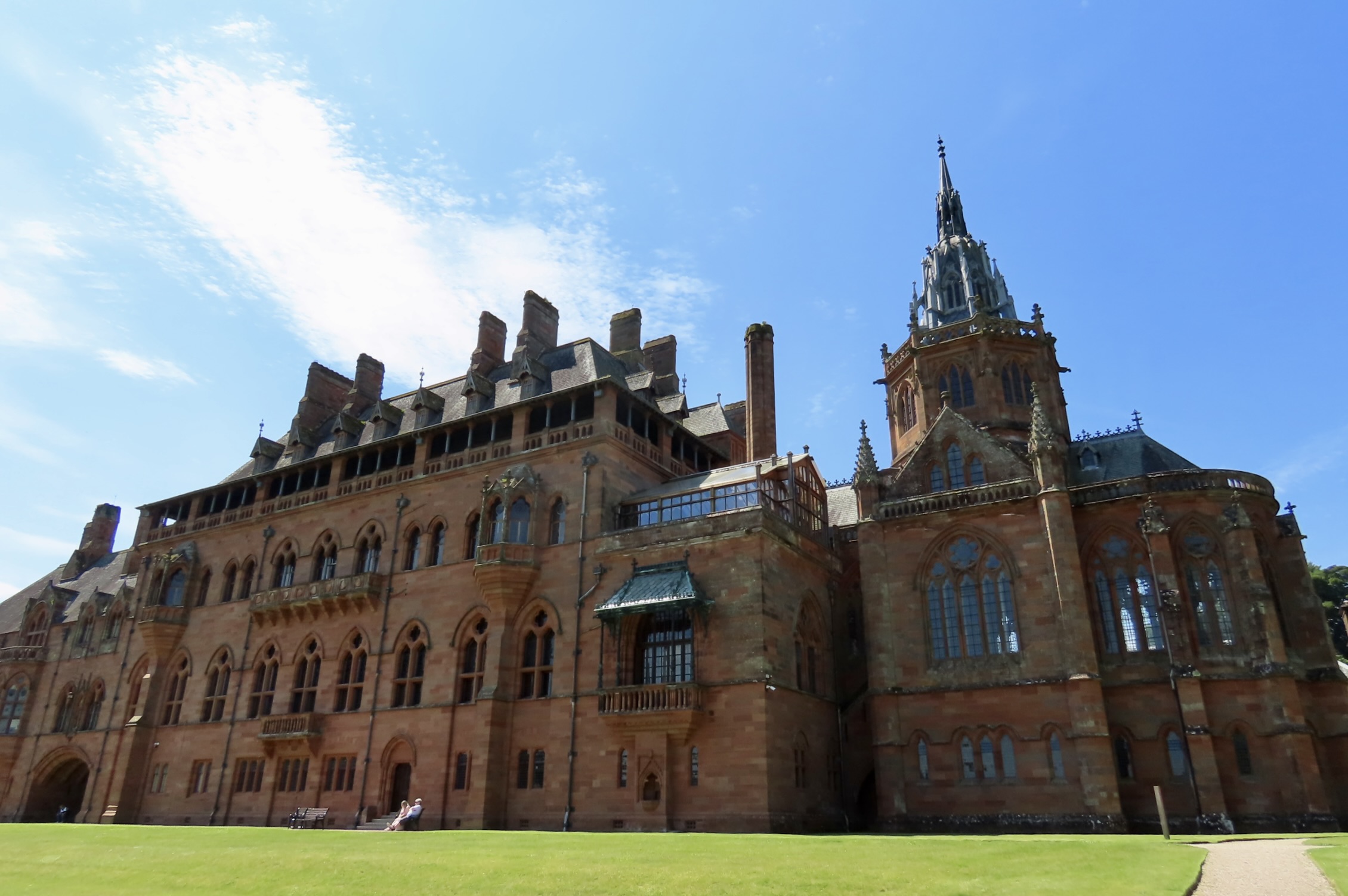
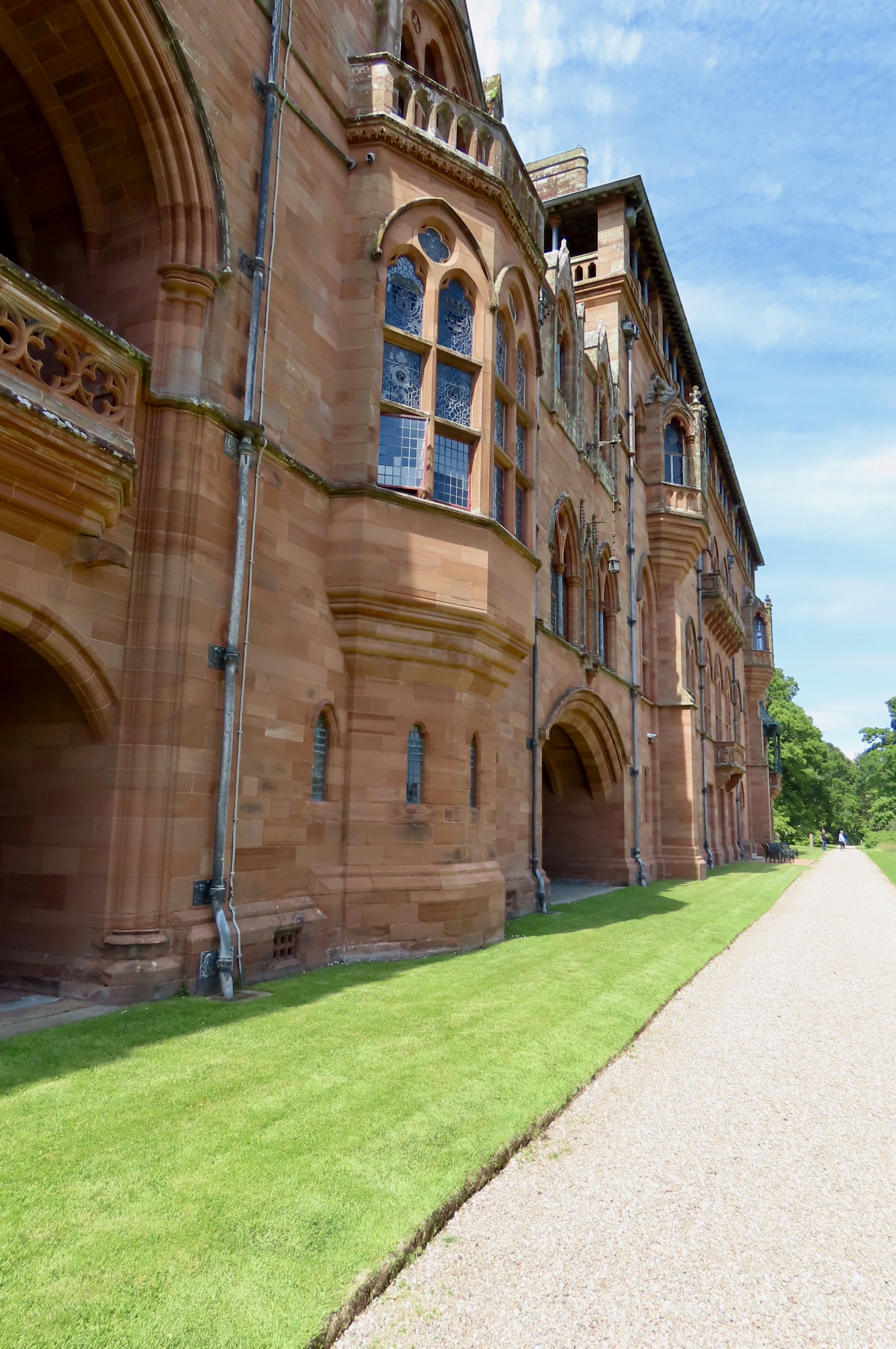
From any angle.
Taking the long view.
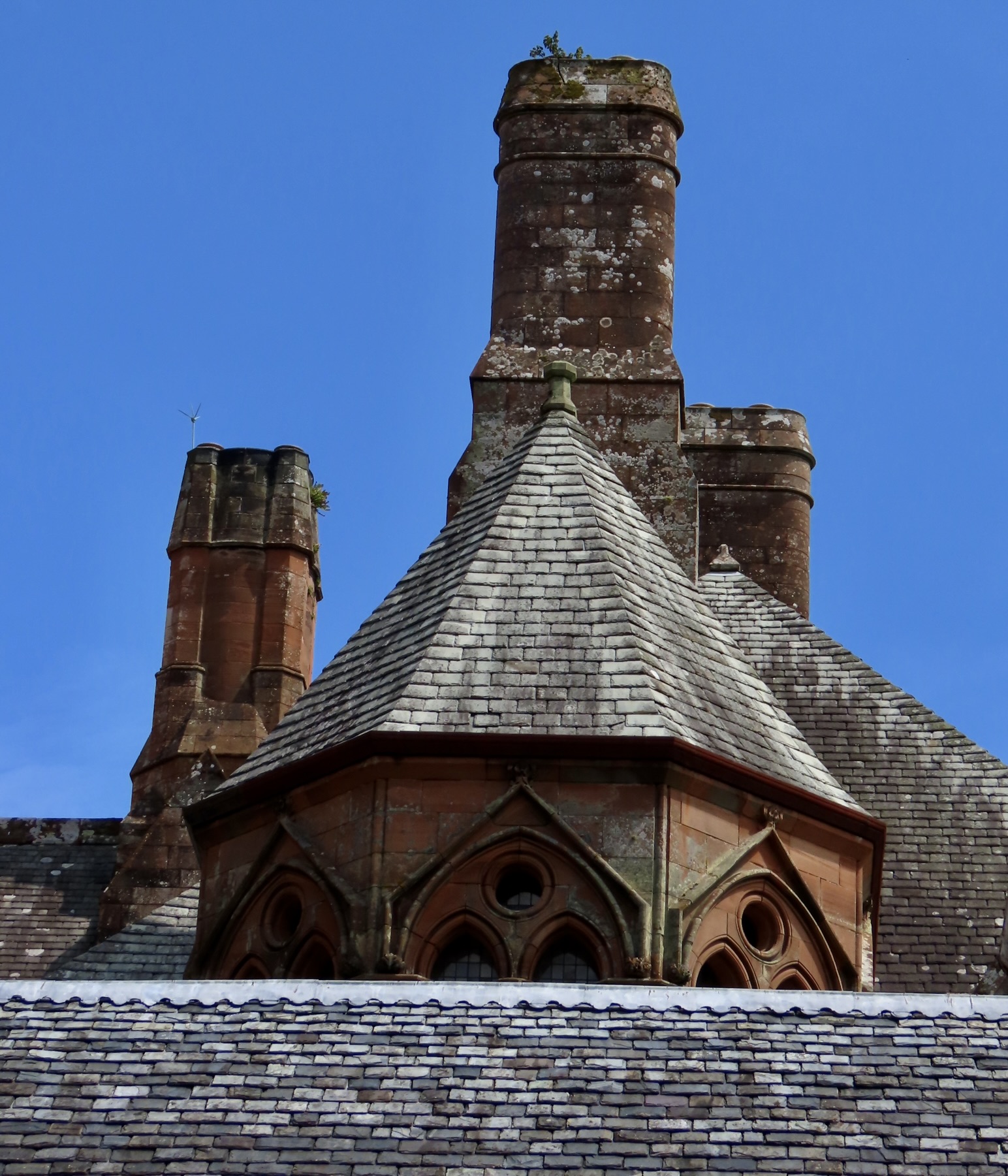
Or the top one. The roof even included turrets, which are great for providing wrap-around views of invading enemies. (Although one might wonder why it featured stained glass windows instead of cannon ports. But maybe the round windows were fake news.)
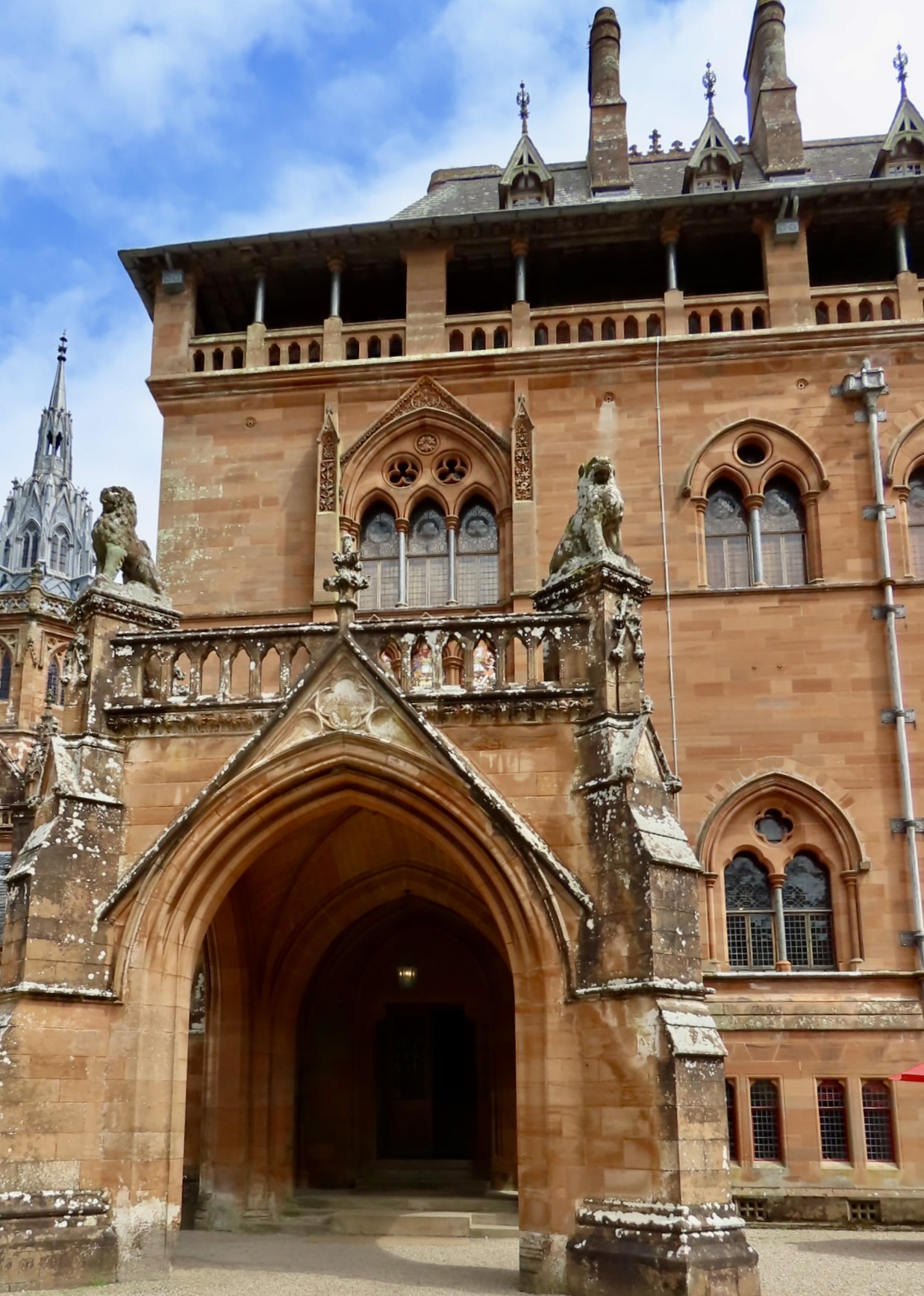
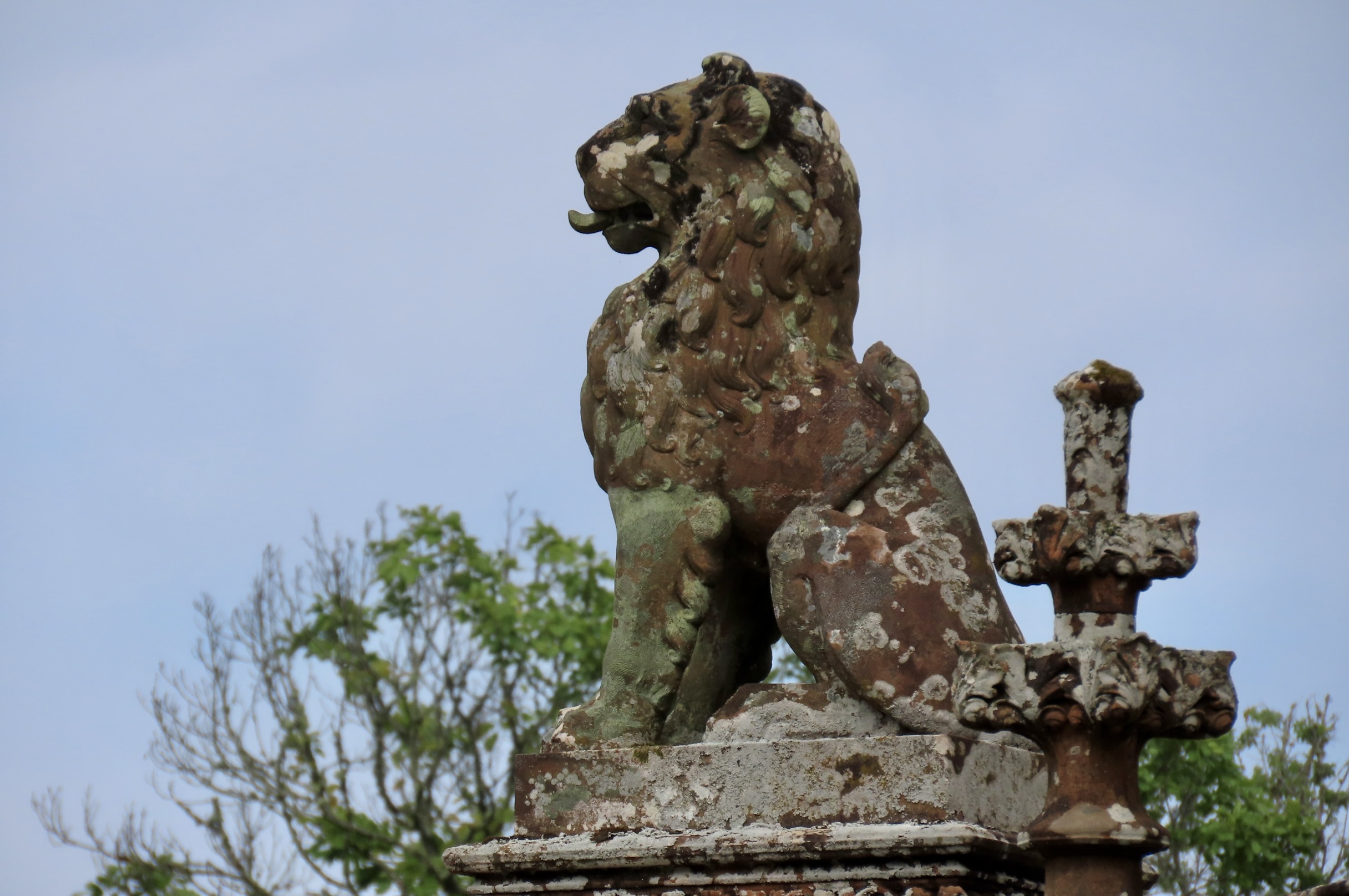
The creme de la creme of the Stuart House’s castle-like appearance were two medieval lions perched above the entrance.
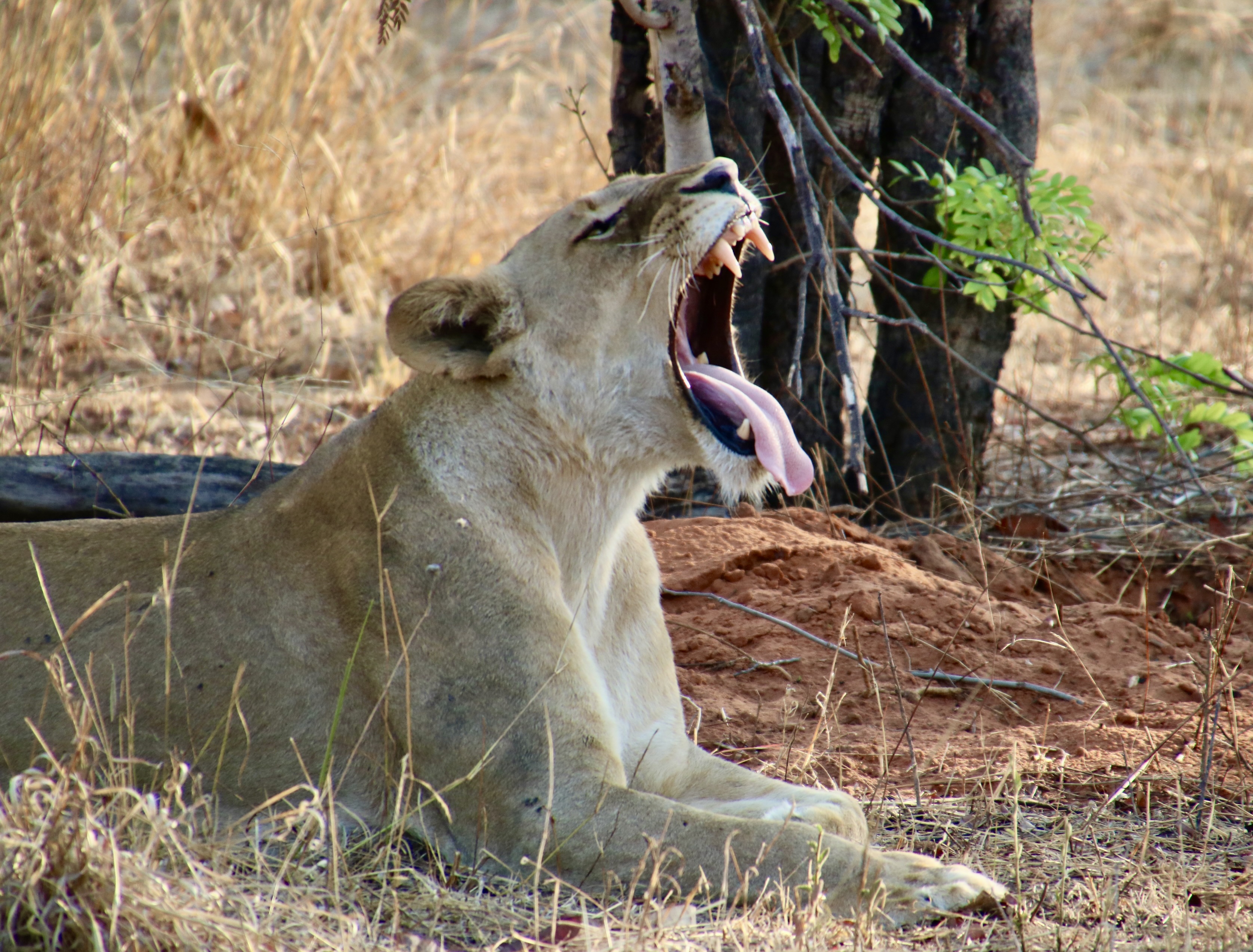
Both with their tongues sticking out. The tongue means they are roaring and are ready to fight! The message is “To get to the castle, you have to go through us!” See below.
Would you challenge this lioness with her mouth stretched wide, fangs showing, and tongue sticking out! We certainly didn’t— even though, as it turns out, it was nap time and she was yawning. We took this photo when we were on a safari in southern Africa.

Entering the ‘castle,’ changed our mind about its pedigree. It was a house, after all. A very big house.

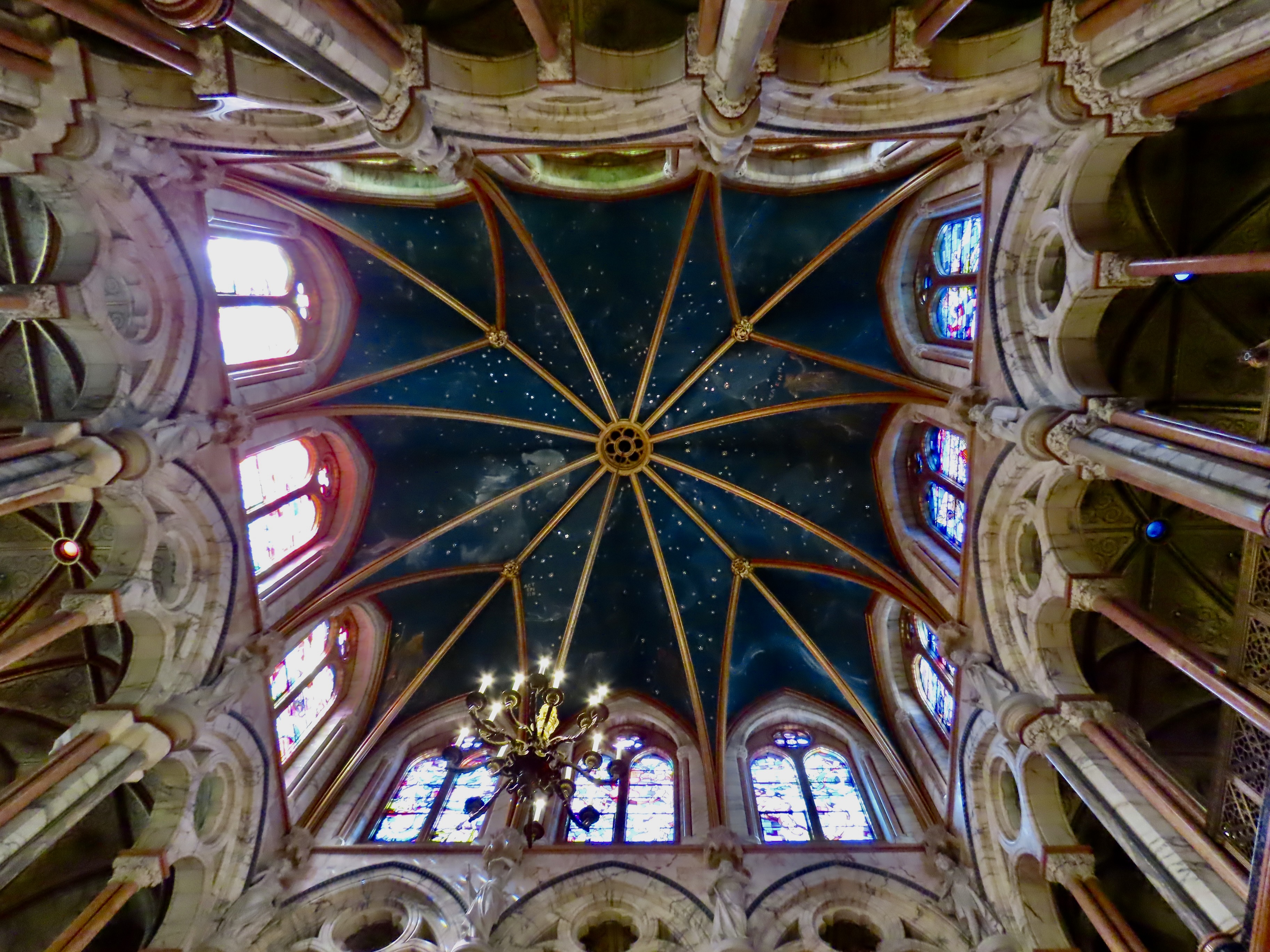
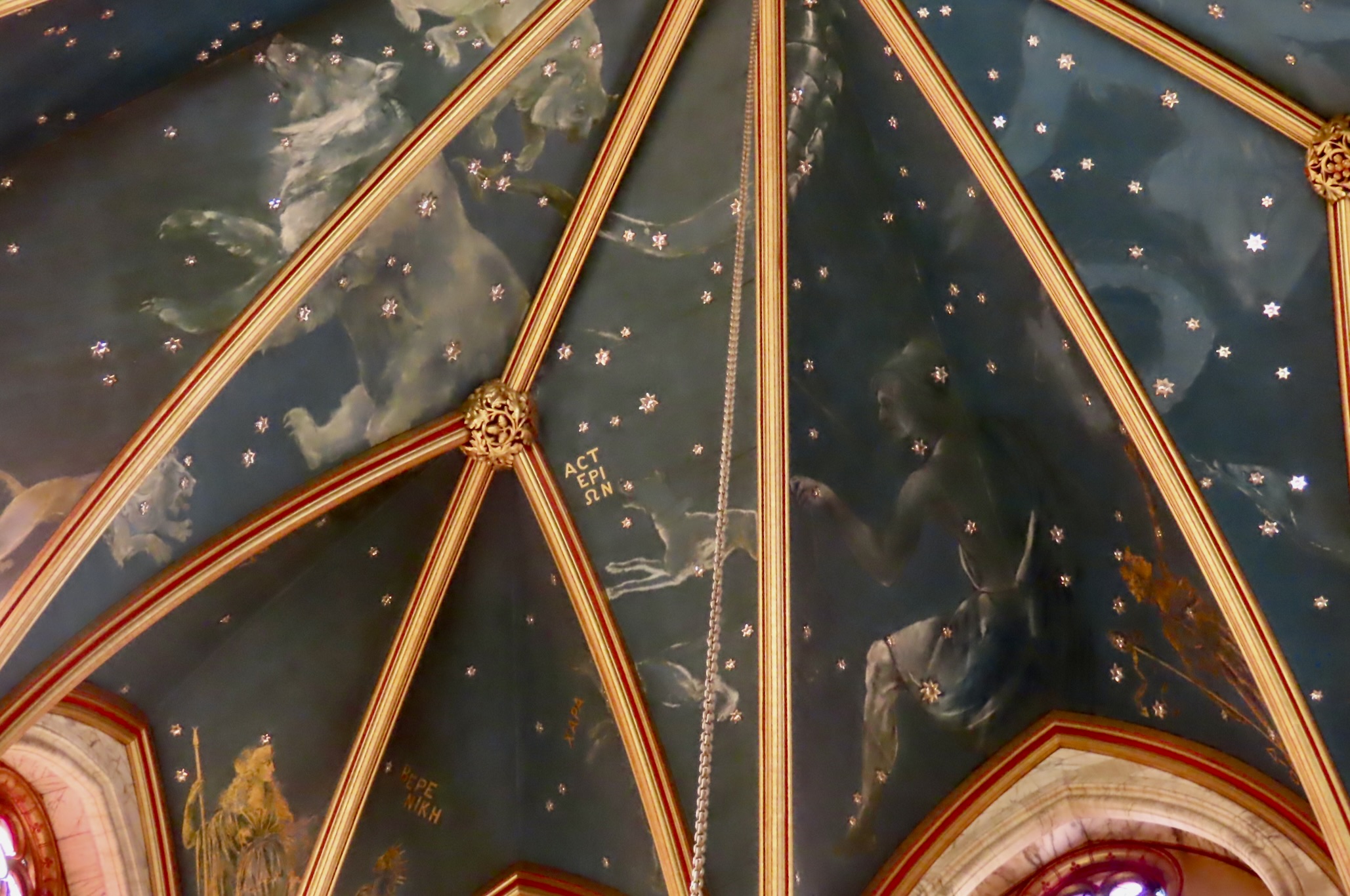
What castle comes with a star studded roof featuring constellations?
Ursa Major can be seen on the left.
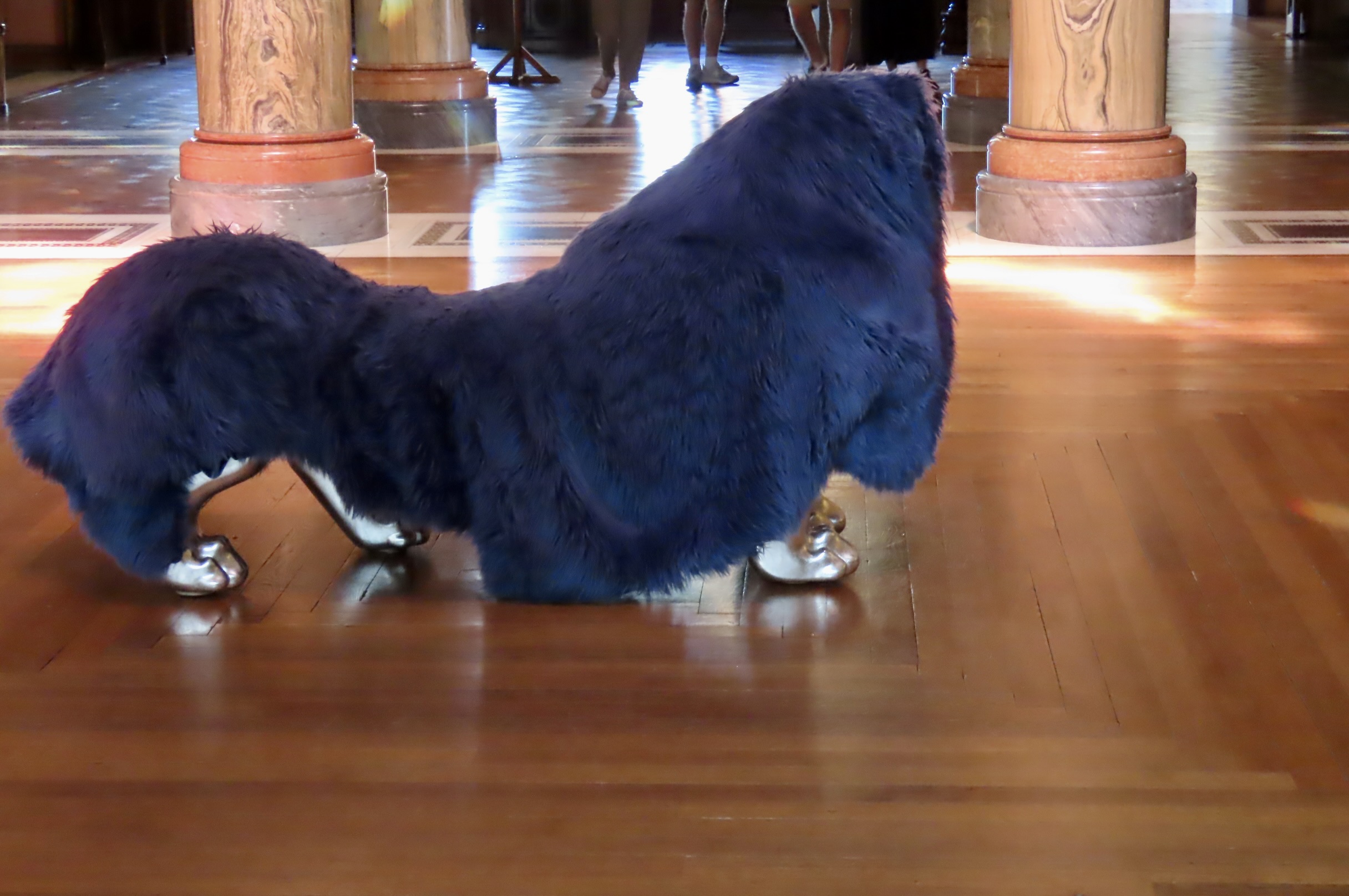
Or turn a ferocious lion into a chaise lounge by covering it with a thick, soft, furry blue blanket and invite visitors to sit on it.
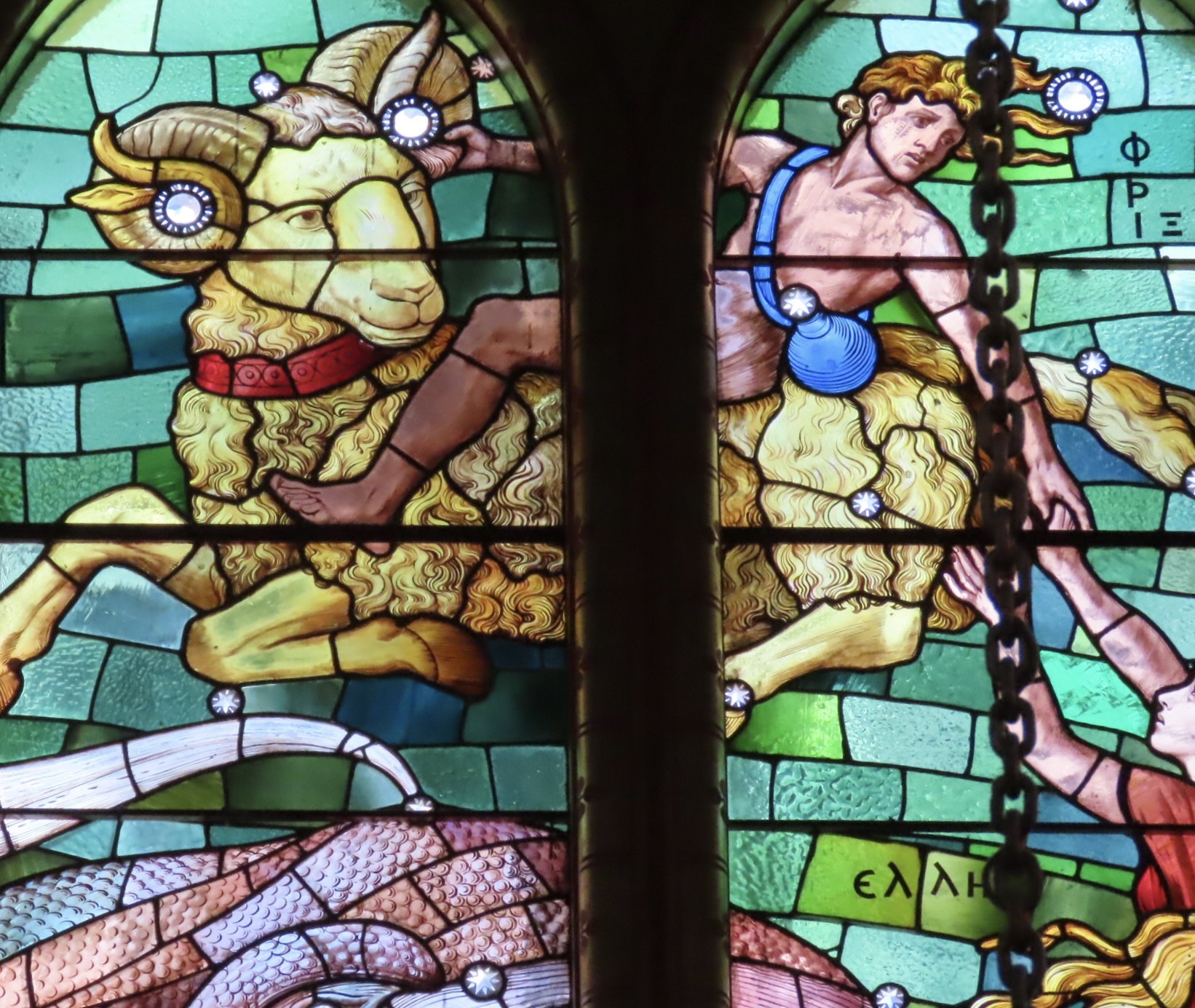
Or uses stained glass windows for depicting myths. This is the golden fleeced ram who became the zodiacal Ares while its fleece became the object of Jason and his argonauts’ quest. There’s a back story: “The cloud nymph Nephele placed her children, Phrixus and Helle, on the flying ram to save them from sacrifice. Helle fell into the sea and drowned, but Phrixus safely reached the distant land of Colchis.” He sacrificed the ram to Zeus in thanks and gave the fleece to the local king. How’s that for gratitude? Zeus did send the ram’s spirit off to the stars.
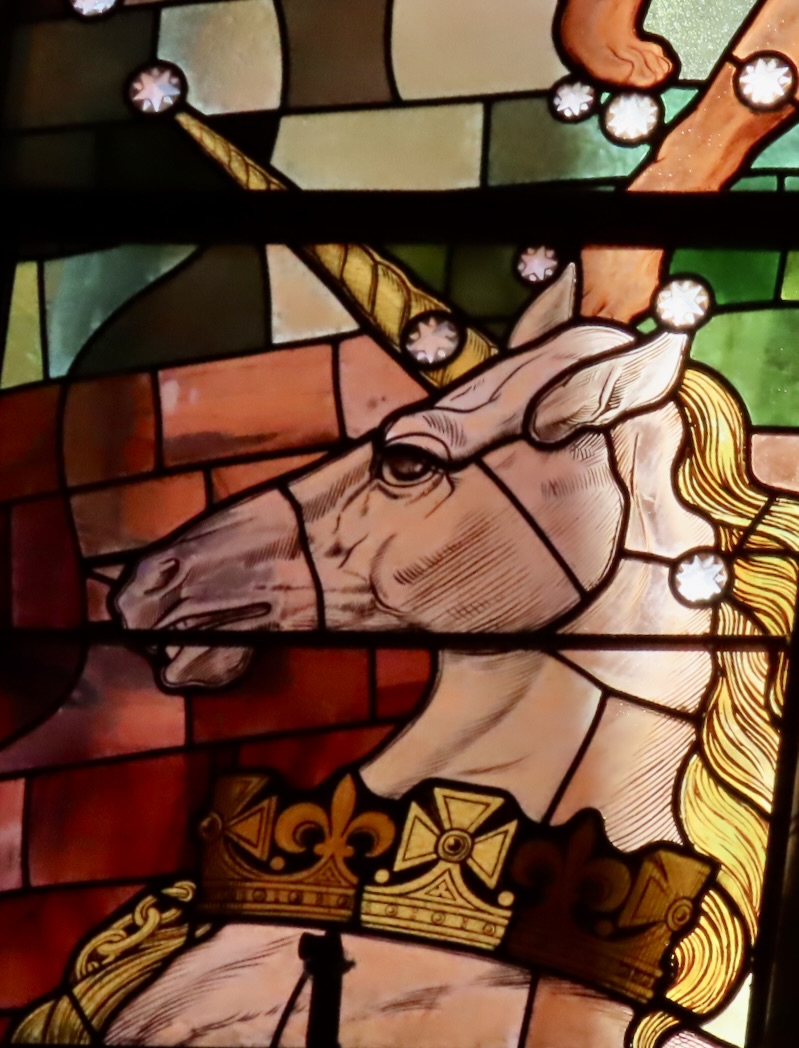
A unicorn needs no introduction. Note how the star theme from the roof is continued in the stained glass windows. There are a number of other fun and interesting stained glass windows.
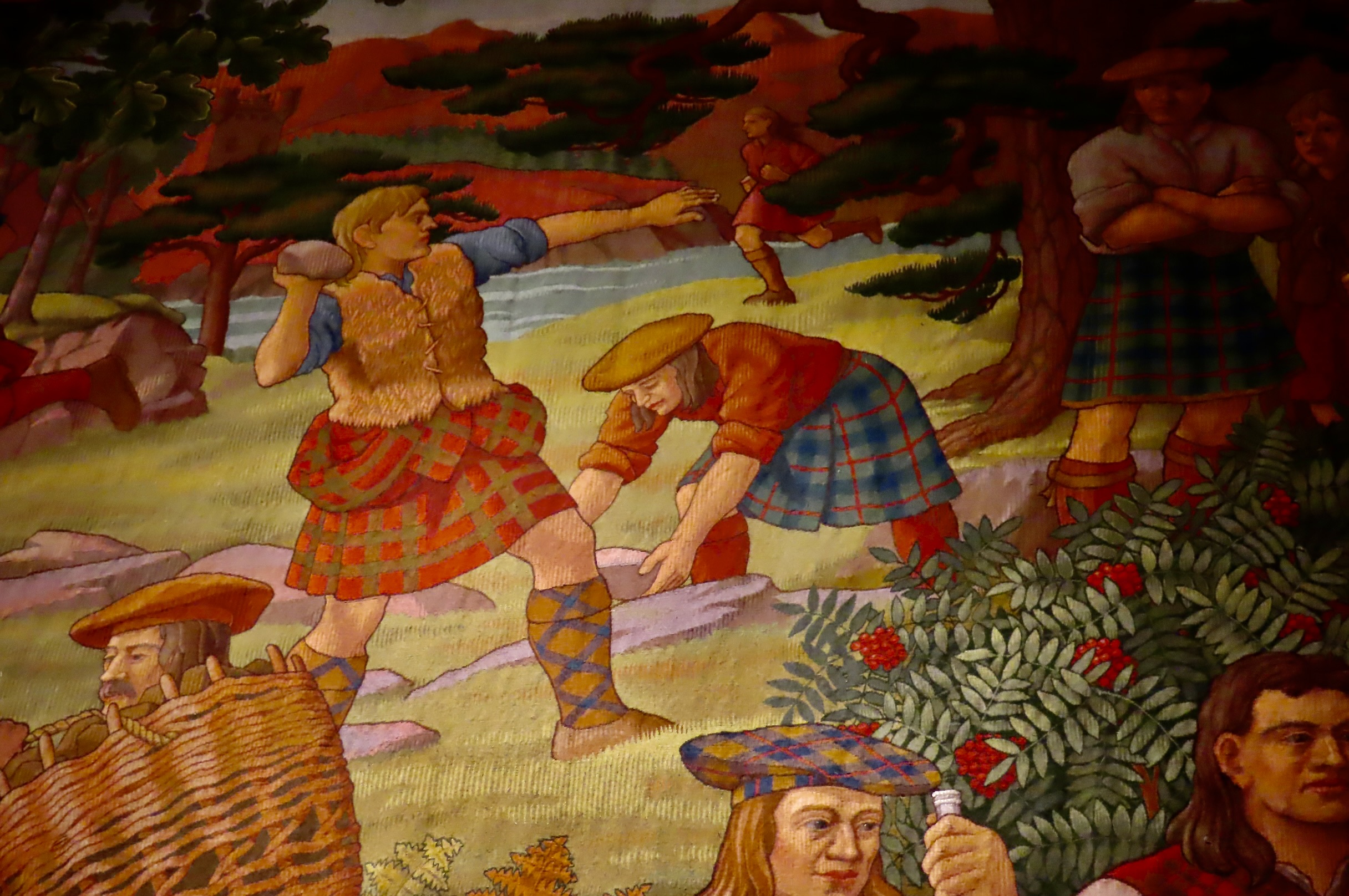
Several tapestries reflected life at the castle and within the Highland Society. This is the Highland Games version of shot put using a rock instead, i.e. rock put.

As it turns out, the Mount Stuart House is a Neo-Gothic mansion designed by Sir Robert Rowland for the 3rd Marquess of Bute, John Patrick Crichton-Stuart, who, at the time, was considered the richest man in the world. He was also something of a Renaissance man. In addition to being a Scottish Landlord with vast holdings, he was an industrial magnate, scholar, antiquarian, architectural patron, and philanthropist. (And don’t we wish our modern crop of billionaires were more like him.) His interest are reflected in both the exterior and interior of the house. The mansion was the first home in Scotland to be lit by electricity and was an early adopter of a telephone system and central heating. It also claims to be the first house ever to have a heated swimming pool inside. Located in the basement, we didn’t get to see it.

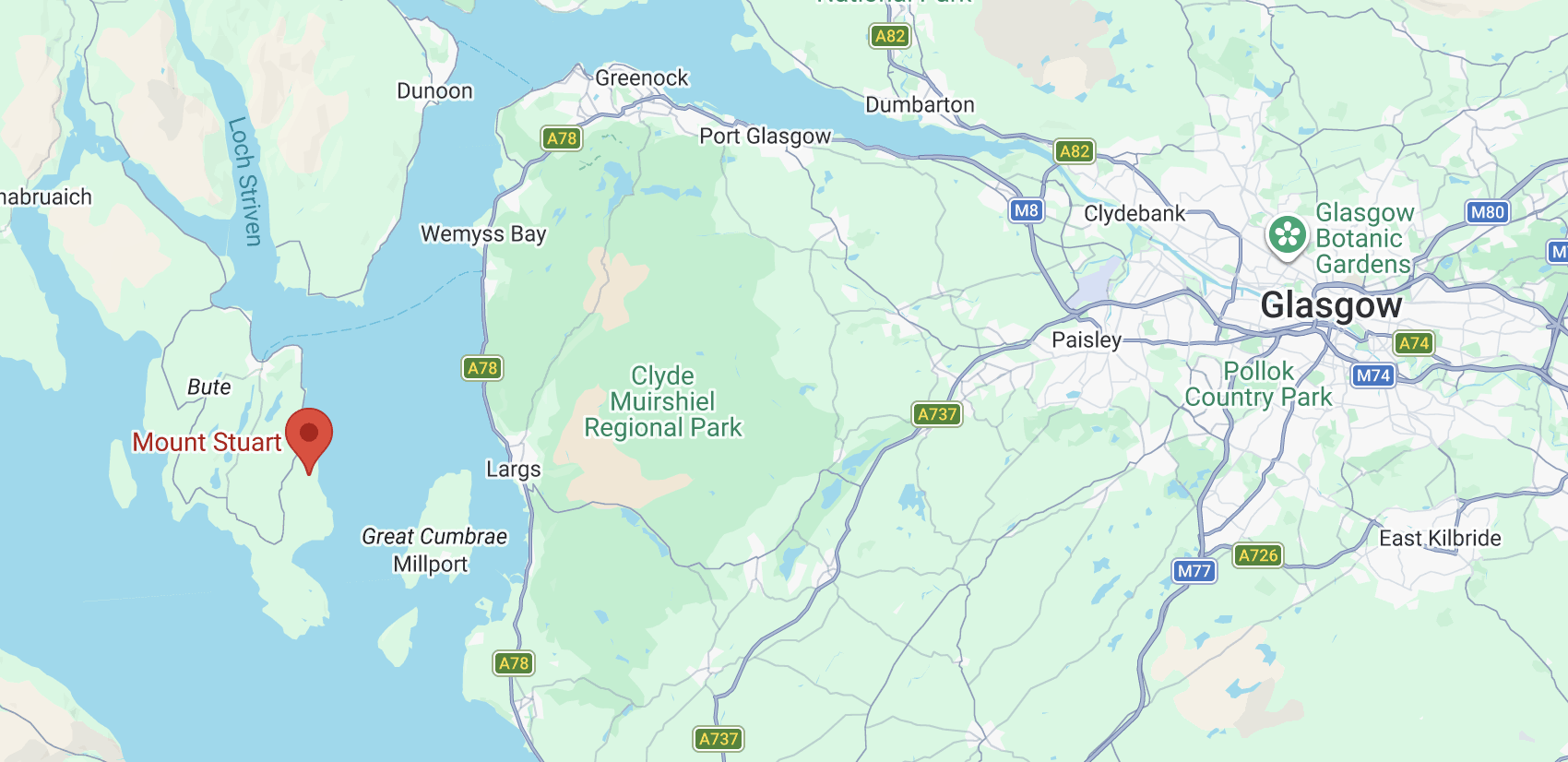
This is the location of the house. A ferry boat took us over to the island.
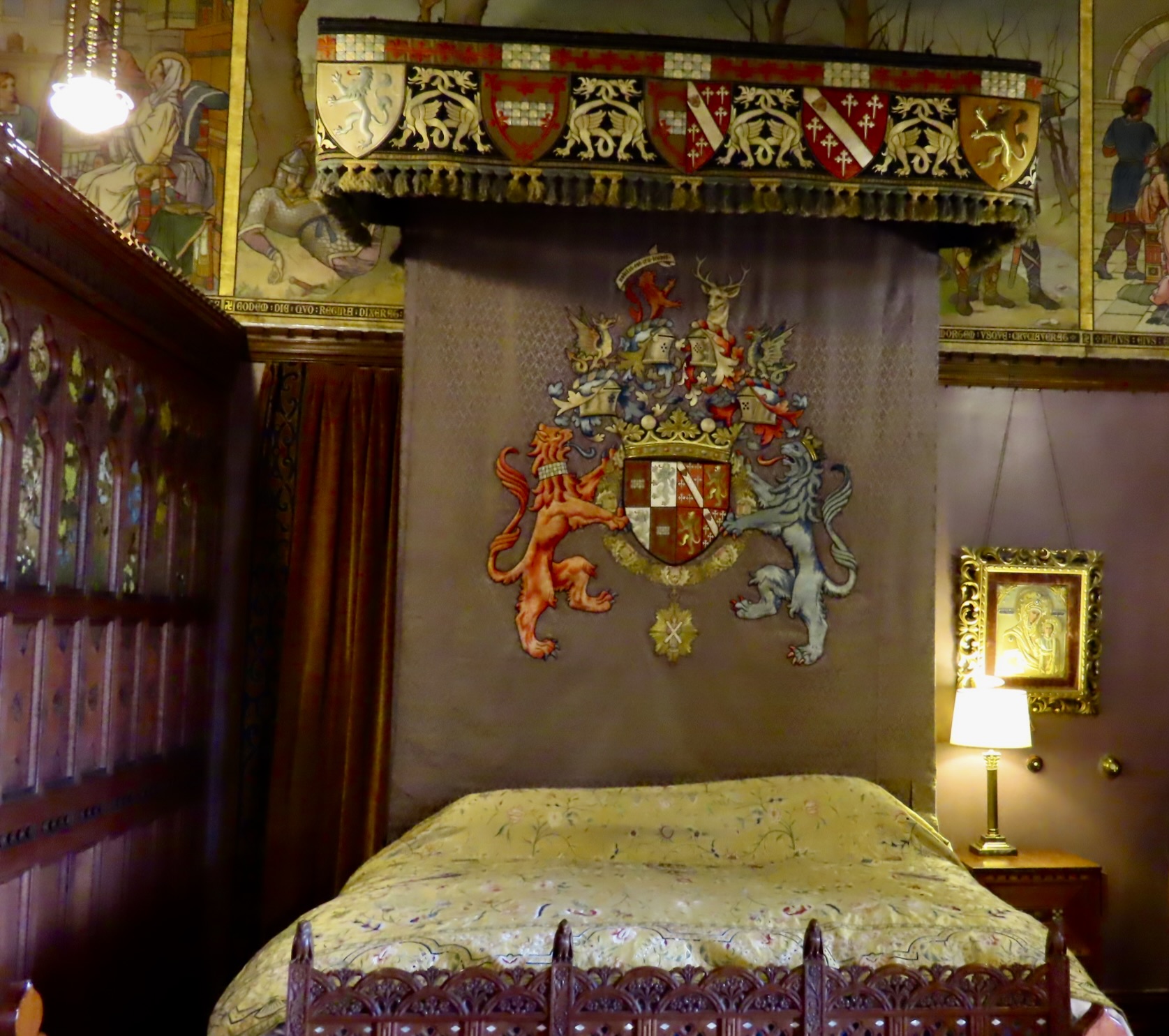
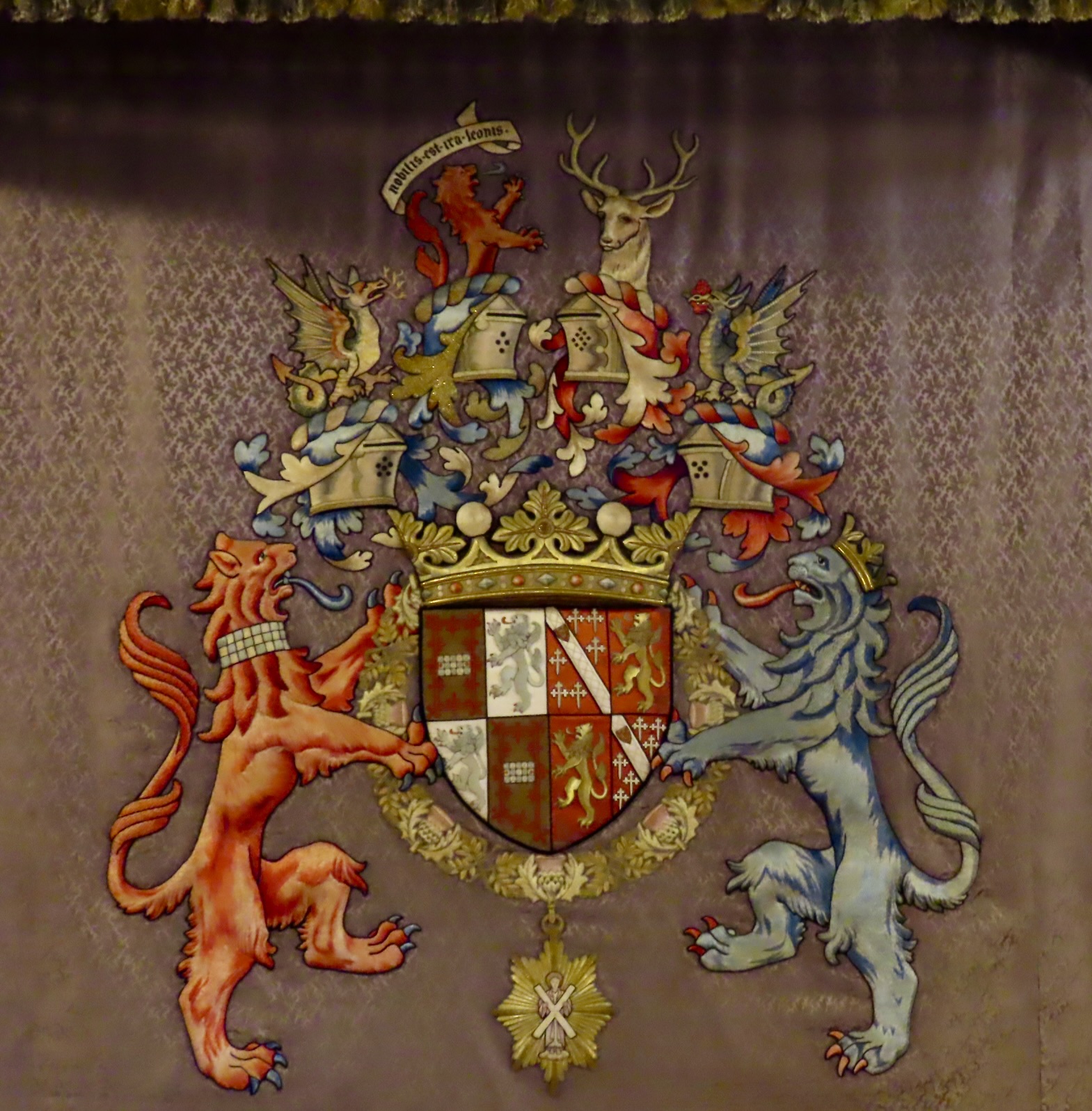
In addition to the stained glass windows and tapestries, we found a number of other items of interest in the castle, such as this bed. The coat of arms behind it is the combined coat of arms of John Patrick Crichton-Stuart and of his wife, Gwendolen Mary Anne FitzAlan-Howard, representing the joining of the two families.
A close up. Note that the lions have their tongues sticking out. One blue and one red, matched by their claws. The blue or azure tongue comes from the Crighton-Stuart Family and the red or gules tongue from the Fitz Alan-Howard Family.
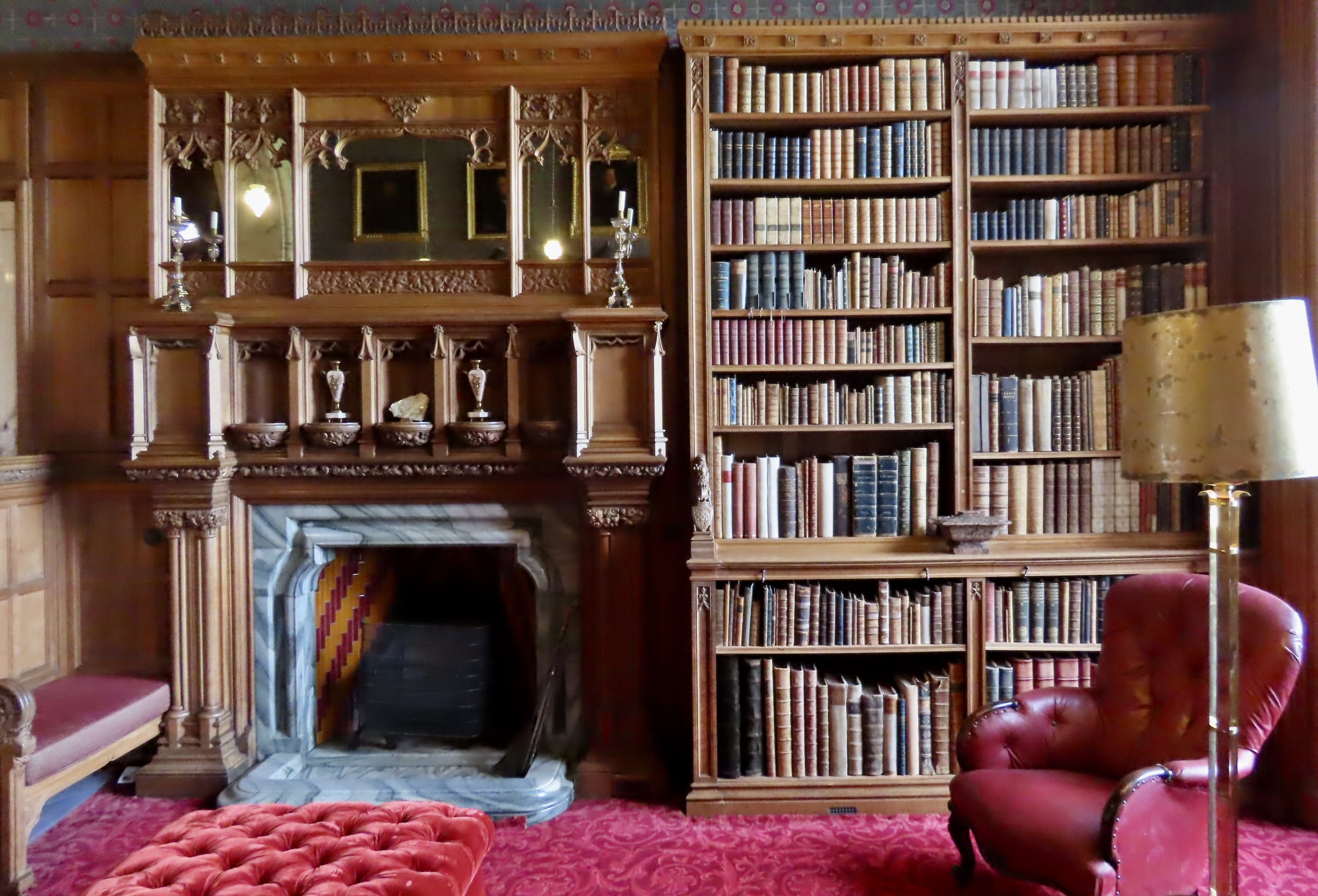
A large library of over 25,000 books on a variety of subjects ranging in age from 1477 up until today. It’s easy to picture myself sitting in that red chair reading away.
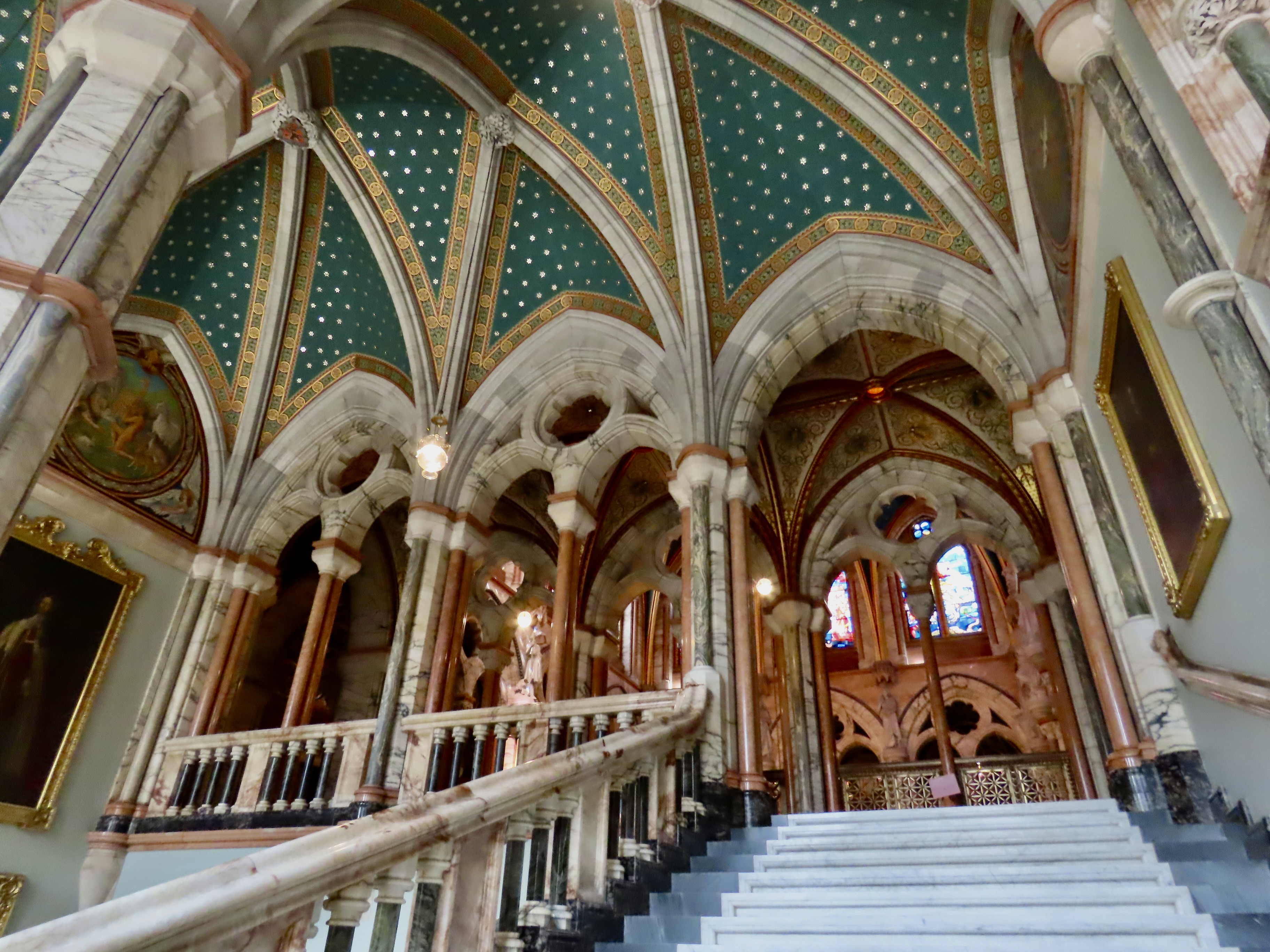
A beautiful marble staircase connected the first and second floor.
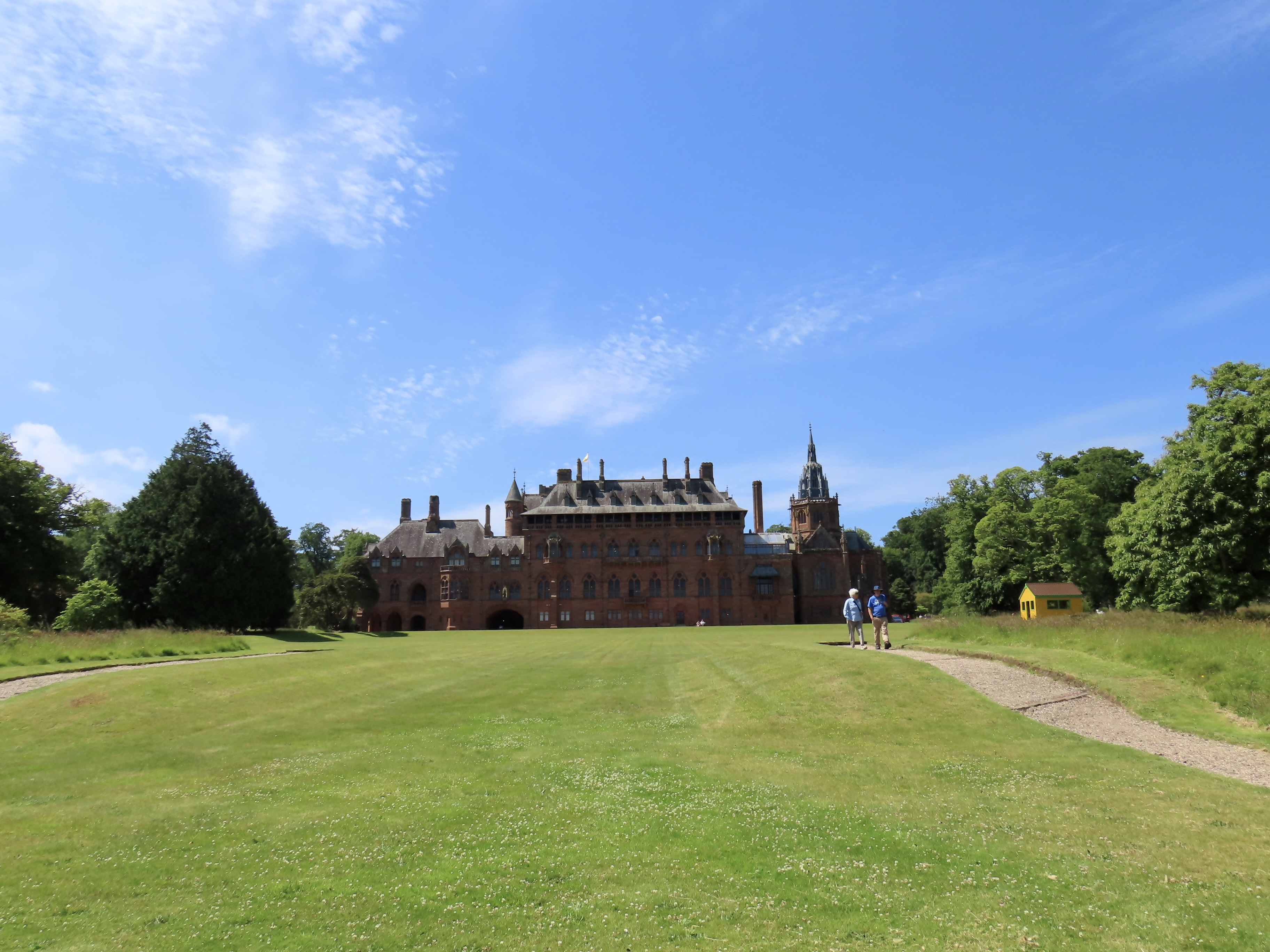
Peggy, Cody and I also took time to explore the extensive grounds surrounding the Stuart House. Here, Cody caught Peggy and me walking across the large lawn in front of the house to check out the Firth of Clyde. Looks like I have a big foot! (Actually I do: Size 14.)
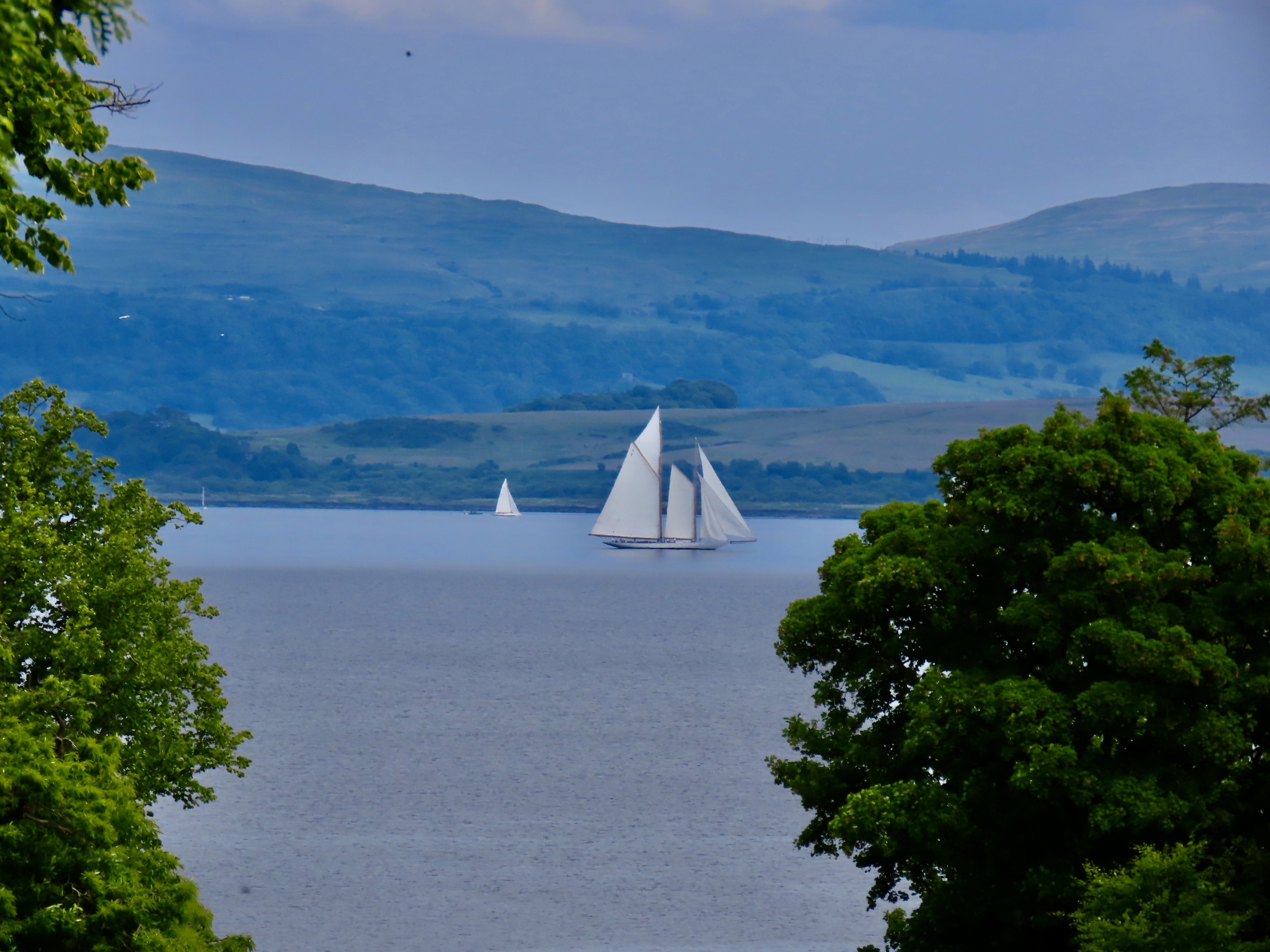
Where sailors were enjoying a pleasant day on the water.
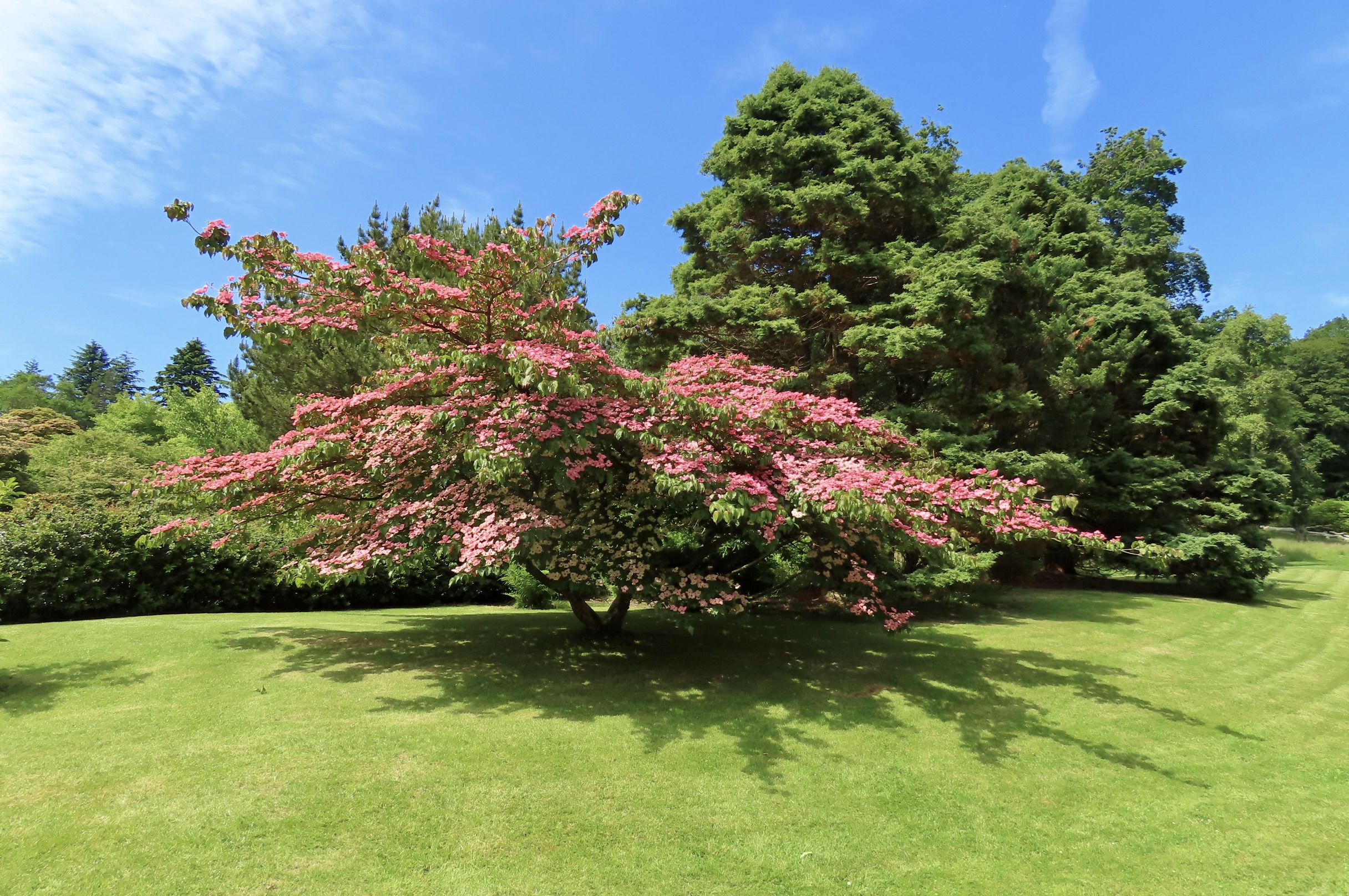
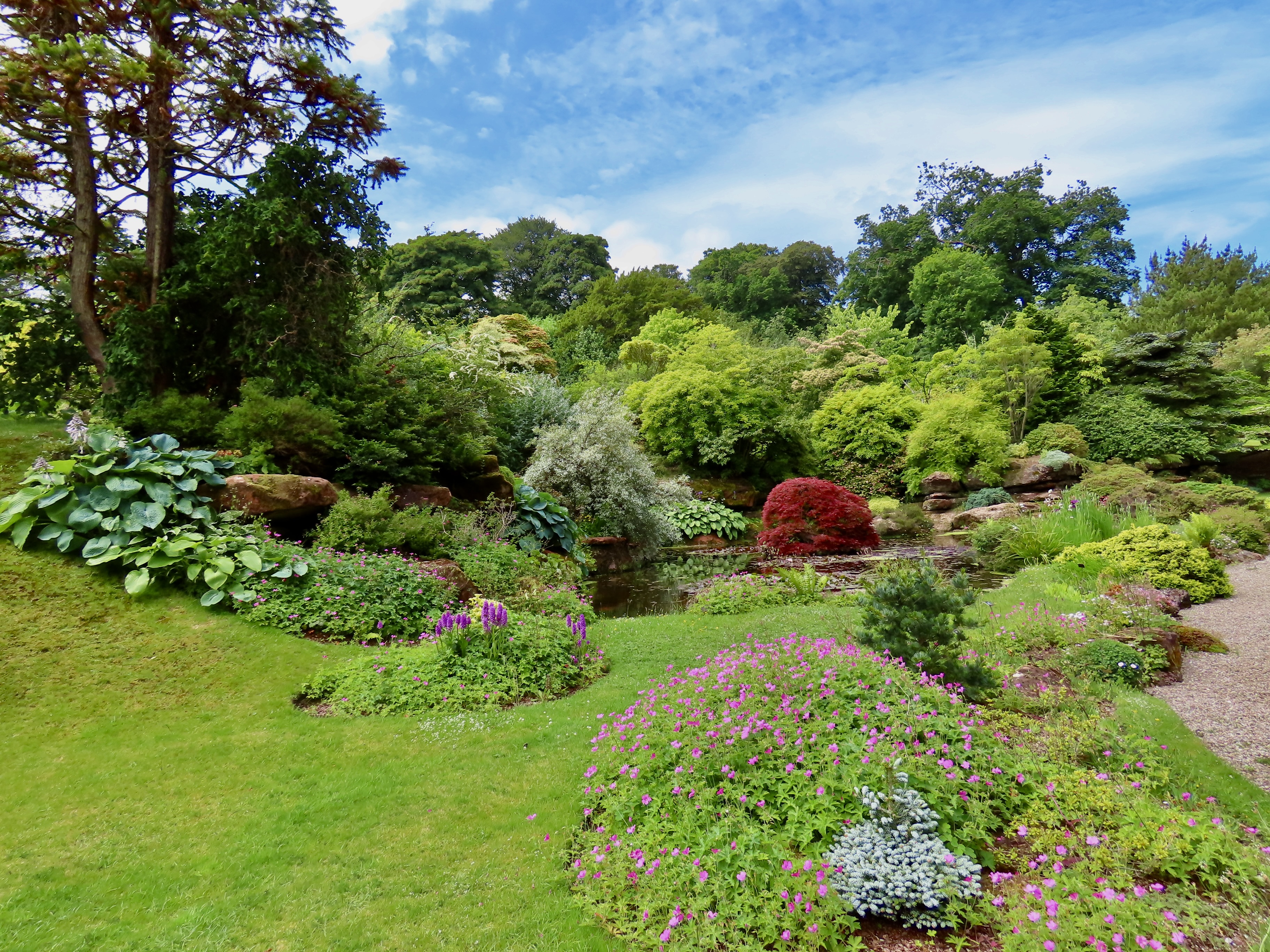
The back of the house had extensive landscaped gardens.
Which were quite beautiful.
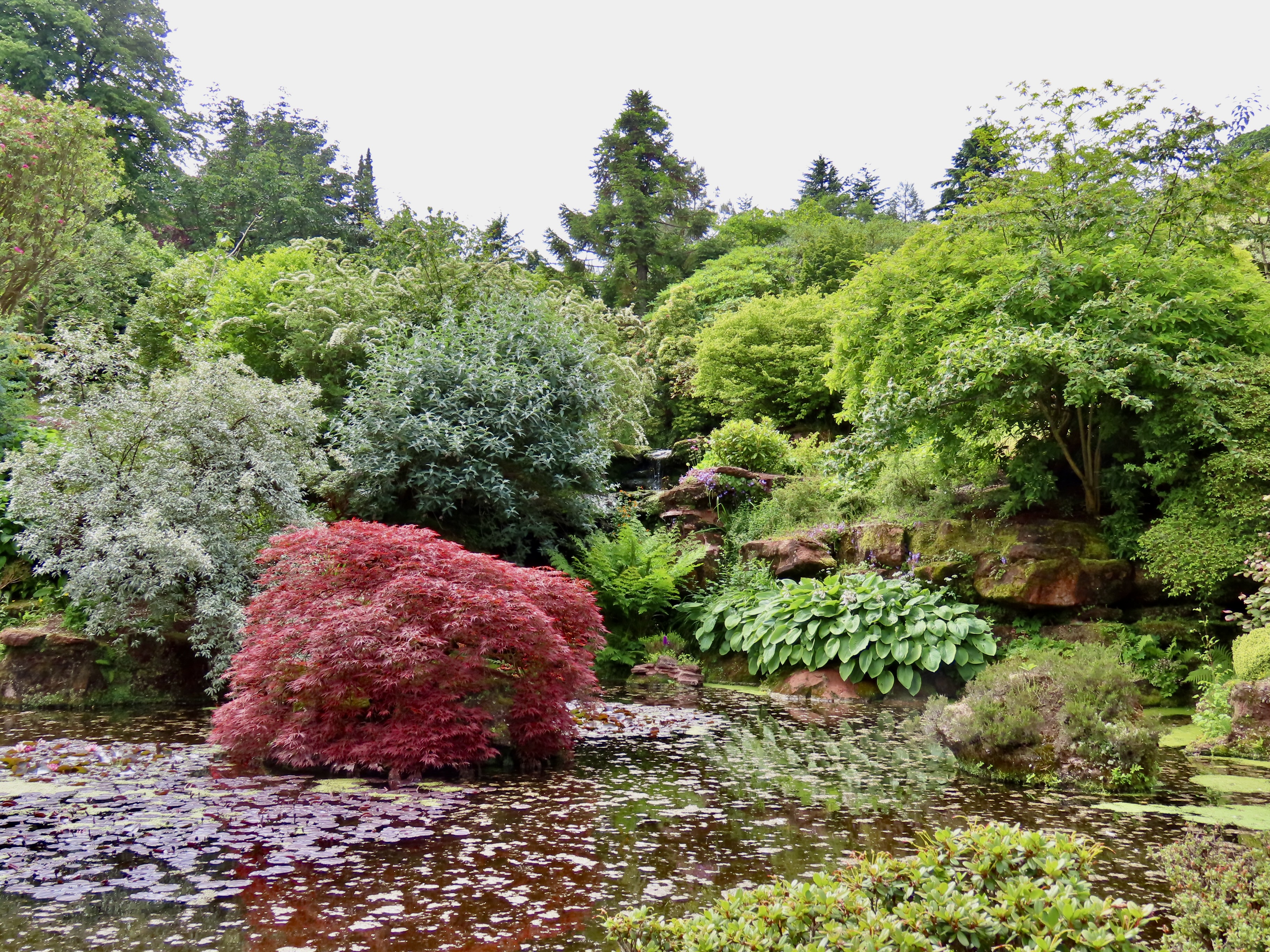
A close up.
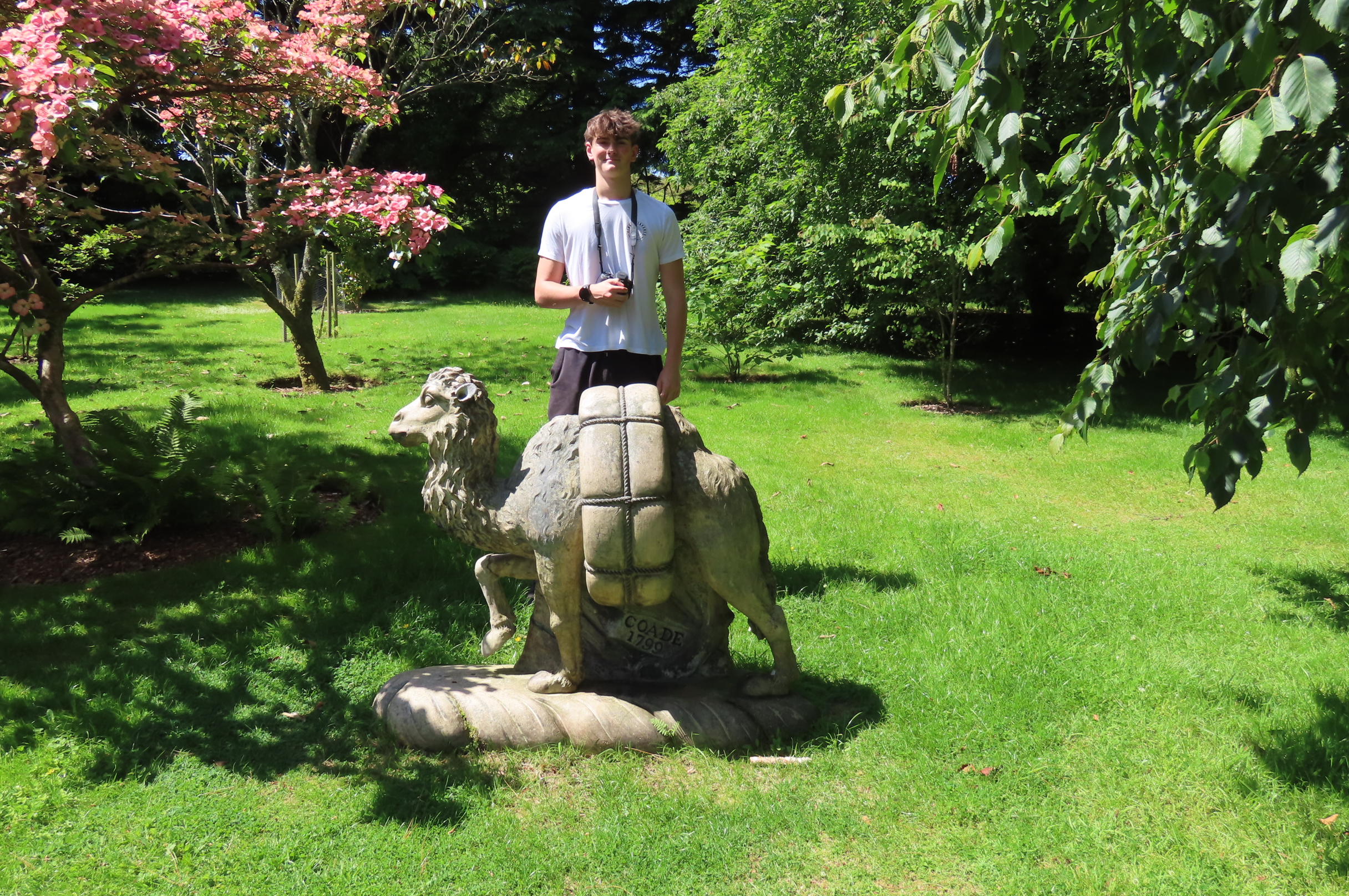
Cody even found a loaded camel! That’s it for today. Next up from Scotland: Three castles in one post.

Step Back in Time 4-5,000 years to the Mysterious and Ancient Stone Circles, Villages, and Burial Mounds of Neolithic Orkney Island…

Peggy, our grandson Cody, and I visited the main Orkney Island in June as part of our CIE tour of the Scottish Highlands. Seeing ginger haired coos (cows) and Neolithic standing stones and villages were the highlights of our visit to the island. The photos in this post were taken by Peggy, Cody, or me. The maps are from Apple Maps.

You’ve heard of Stonehenge and likely seen photos and even documentaries featuring these ancient and mysterious standing stones in southern England. But have you ever heard of the Ring of Brodgar on the Island of Orkney in the far north of Scotland? Erected in 2500 BCE, at approximately the same time Stonehenge was being built, 60 stones formed a circle that stretched for 340 feet (104 meters) across. 36 of these stones remain standing today in an impressive array. The clouds provided a dramatic backdrop.
We took a ferry from the town of Thurso on mainland Scotland up to Stromness and then crossed the main island of Orkney to Kirkwall where we stayed. The road distance between Stromness to Kirkwall is 15 miles, which provides a perspective on the size of the island. The Ring of Brodgar was one of four neolithic sites we visited on Orkney, which also included the Standing Stones of Stenness plus the villages of Barnhouse Settlement and Skara Brae. All four are part of the UNESCO World Heritage Site: The Heart of Neolithic Orkney. The red pin on the bay above Stromness to the left is the location of Skara Brae. The one to the right between the two lochs/lakes is the Ring of Brodgar.
This provides a closer view. The upper red dot between the two lochs/lakes is the Ring of Brodgar. The lower red dot is the location of the Stones of Stenness and the Barnhouse Settlement, which is next to it. The distance between the two red dots is approximately 1 mile. Skara Brae is located on the lower side of Skaill Bay at the top left corner, about 5 1/2 miles from the Ring of Brodgar.
The stones of the Ring of Brodgar are impressive— either as a whole or looked at singularly— standing up to 15 feet tall, each with a unique personality. Visitors are invited to follow a path that leads around the complete 1,250 foot circle. A nine foot deep ditch surrounds the pillars. Known as a henge— think Stonehenge, it was carved out of sandstone by the original inhabitants.
A view of 8 of the stones.
The unique looks add to the mystery of what purpose the stones served.
Opposites attract?
The chief?
A number of stones had triangular tops.
Which provided great perches. Cody took this photo. In fact Cody took a lot of photos that included birds! “They just show up,” he claimed. We are glad they did. The numerous lichens on the rocks added to their photogenic quality. Lichens, BTW, are among the oldest living organisms on earth, the oldest reaching over 8000 years. They have been hanging out in Scotland for some 400 million years!
The walk around the Ring of Brodgar also includes a burial mound as shown on the left of this photo. A number of burial mounds are found within the Heart of Neolithic Orkney UNESCO World Heritage Site. Another one can be seen in the distance. The most famous is Maeshowe, which we didn’t visit.
Traveling one mile south from the Ring of Brodgar over a stream that connects the sea water Loch of Stenness with the fresh water Loch of Harray, you come to the Stones of Stenness. Once consisting of 12 stones, it now has 4. It is thought to be the oldest henge site in the British Isles, dating back to 3100 BCE, some 500 years before Stonehenge and the Ring of Brodgar.
An ancient hearth that is believed to have been utilized for ceremonial purposes (such as burning the bones of the dead and sacrificed animals) is located in the center of the stones.
The ceremonies carried out at the hearth would have been connected to the Neolithic Barnhouse Settlement found a short walk away. Excavated between 1986-1991, the bases of at least 15 houses were discovered, each containing a central hearth, beds built against the walls, stone storage areas and internal drains. We felt they were quite sophisticated, especially considering that they dated back some 5,000 years.
Another structure at the Barnhouse Settlement.
Out trip north to Skara Brae on the Atlantic Coast of Orkney showed houses with a similar structure to the houses at the Barnhouse Settlement. Beds are in the lower right and upper left. A hearth is in the center and a storage area on the upper wall. People lived at the site from approximately 3180 BCE to around 2500 BCE. It is recognized as Europe’s most complete Neolithic village. 
The furniture is similar in several of the houses.
The village looks out on Skaill Bay which opens up to the Atlantic Ocean.
Skaill Bay.
Paths and tunnels connected the various houses.
Cody found his obligatory bird at Skara Brae, displaying a fat, juicy bug and a wild feather look.
He also found these two rabbits snuggling up. Were baby rabbits in their future?

Peggy and I have long been fascinated with ancient cultures and found the standing stones and villages of Orkney of considerable interest. In many ways, we were reminded of our trips through the Southwestern United States searching petroglyphs left behind by the Anasazi and other ancient peoples.

This is a good time to remind my readers of Peggy’s word search book on petroglyphs: Artistic Word Searches Unique and Magical Discovering Petroglyphs from the South West. As puzzle solvers work their way through the puzzles, petroglyphs will emerge. This makes an excellent gift for retired seniors (and others) who love word games (and helps keep senior minds sharp—grin). The book can be obtained through Amazon.

The solution to the Kokopelli puzzle is an example of how the images appear as the puzzle is solved.

The Harry Coos of Scotland (in Scottish) or… The Hairy Cows (in English)

Last month, Peggy and I went on a CIE bus tour of the Scottish Highlands, along with our grandson Cody. Photos in this series were taken by Cody, Peggy and me.

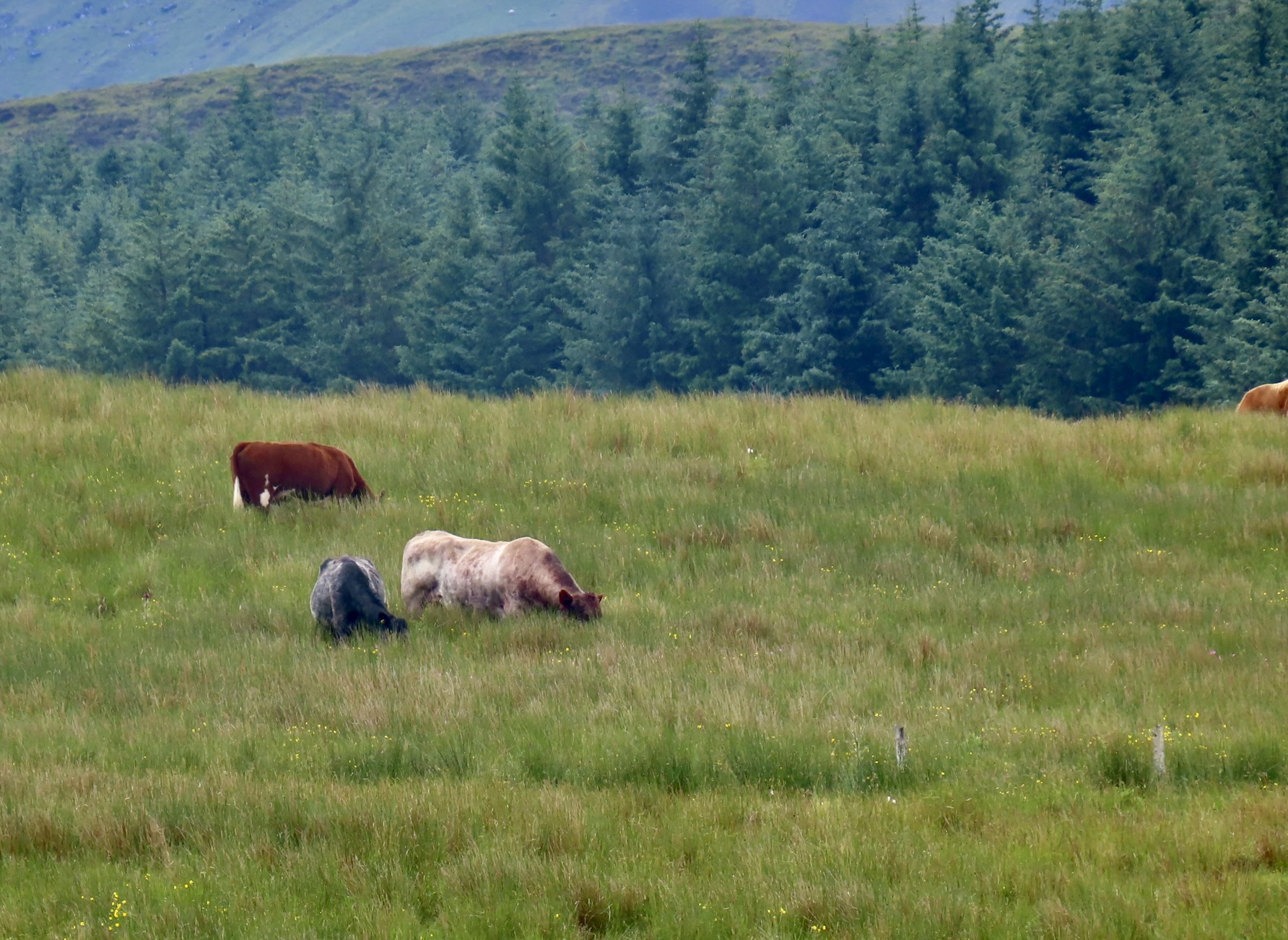
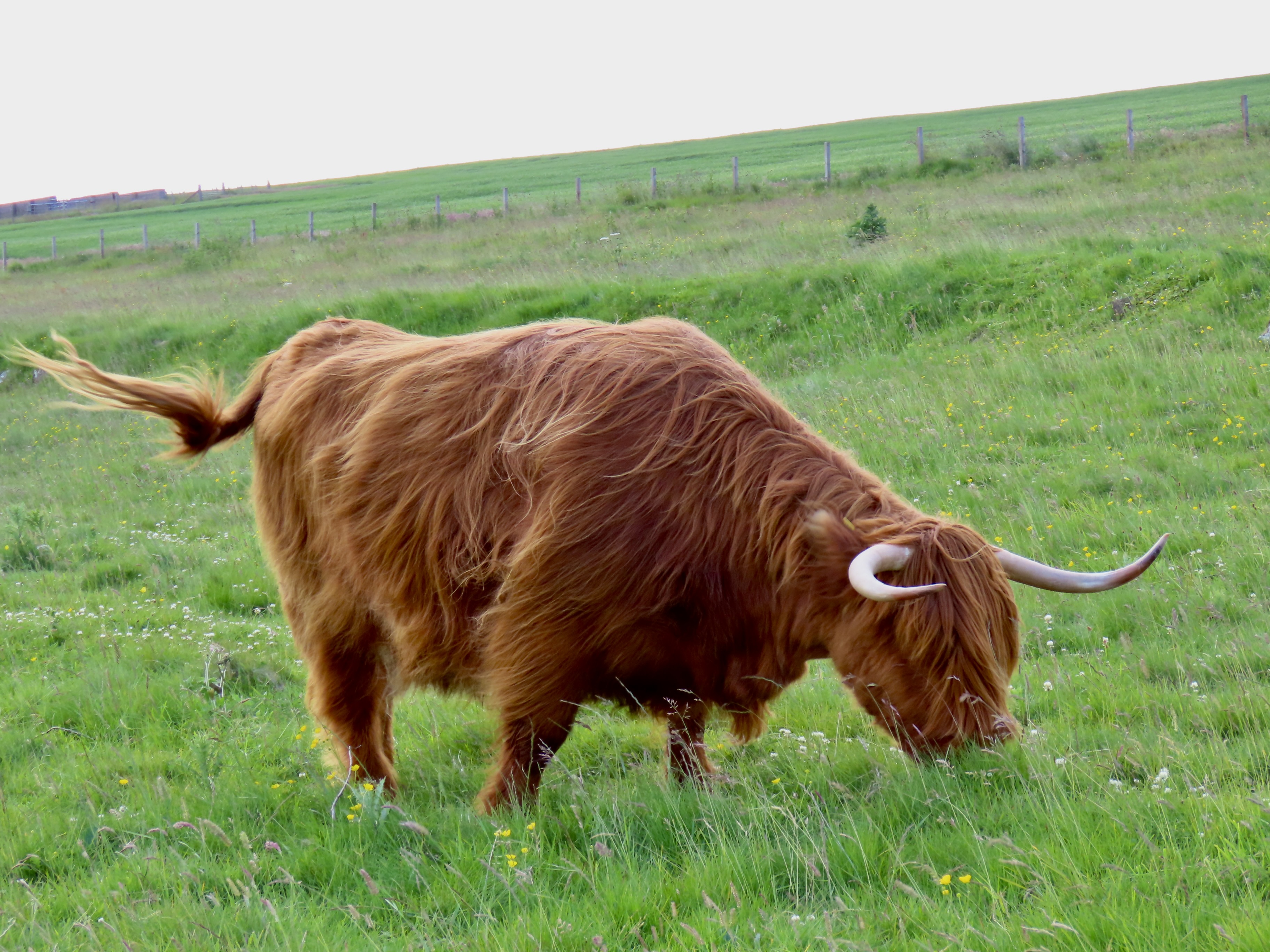
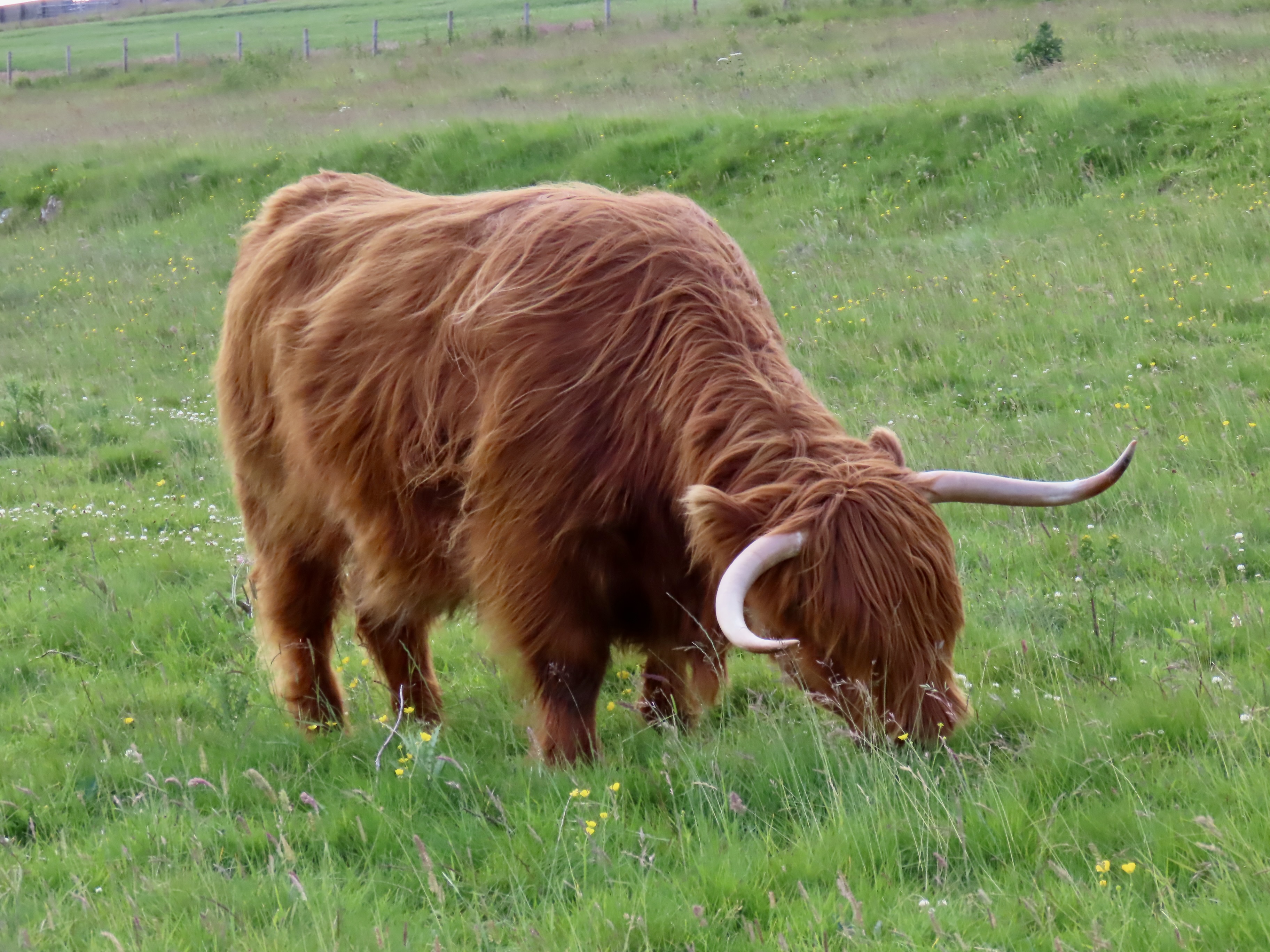
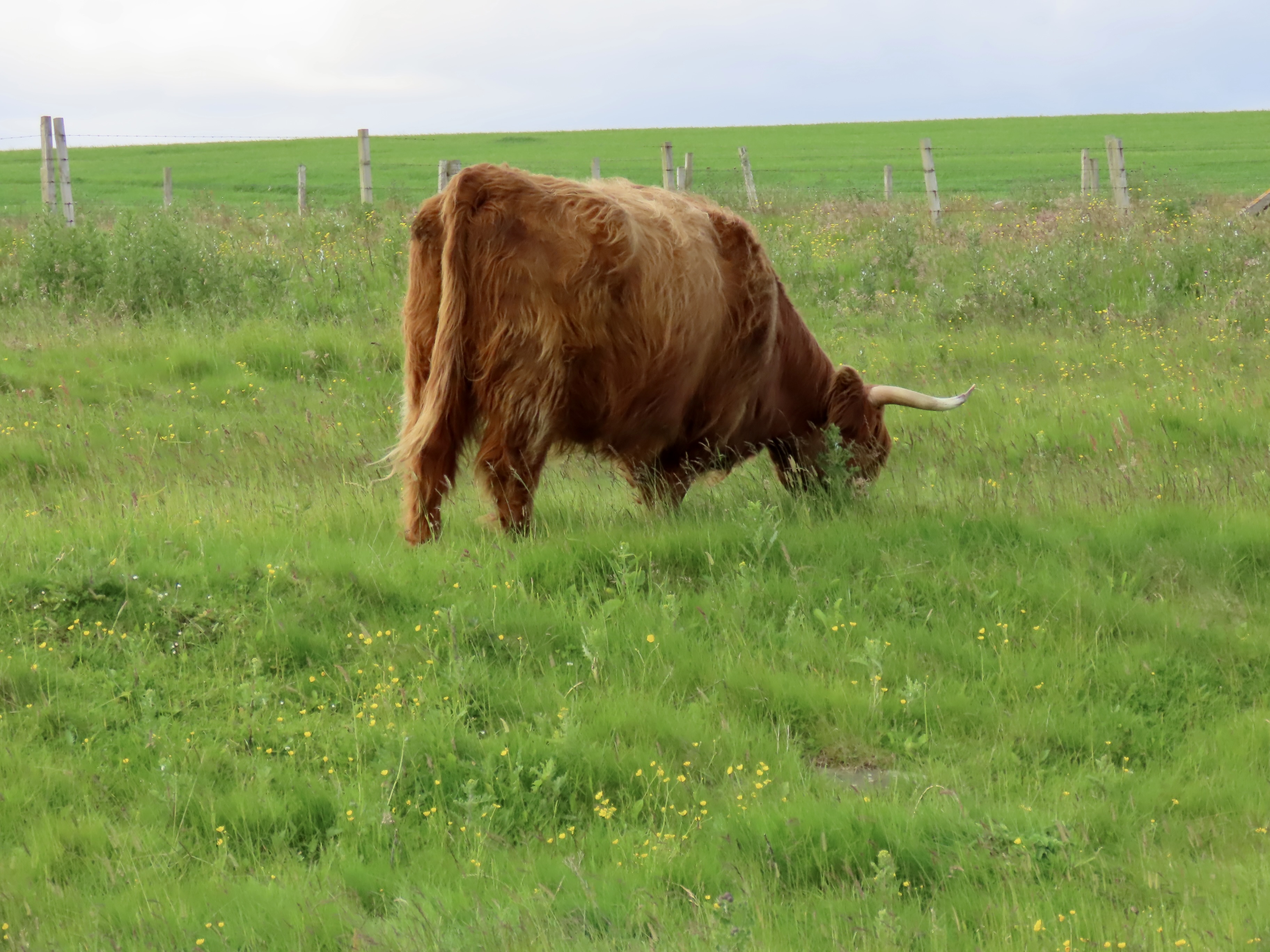
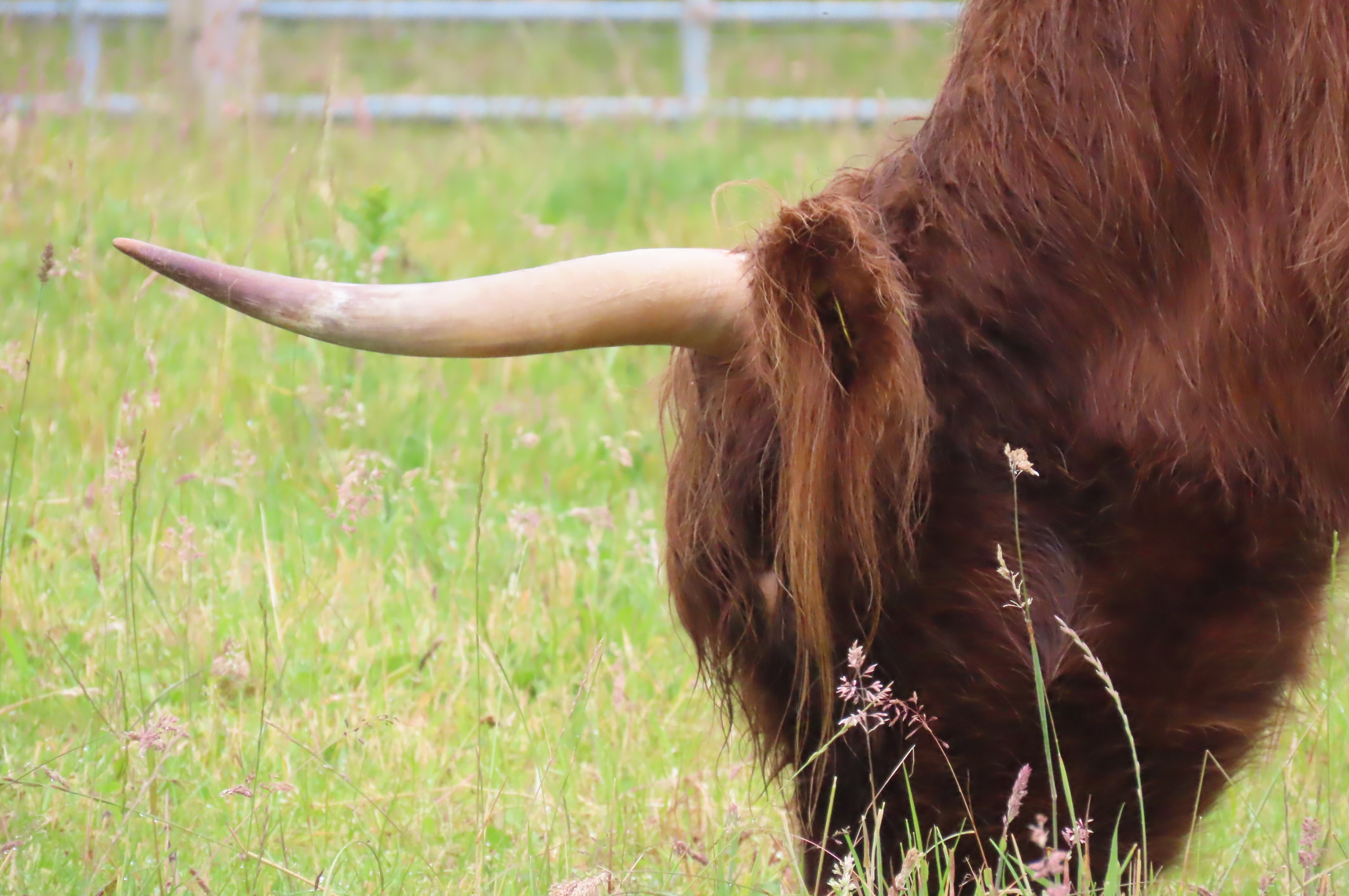
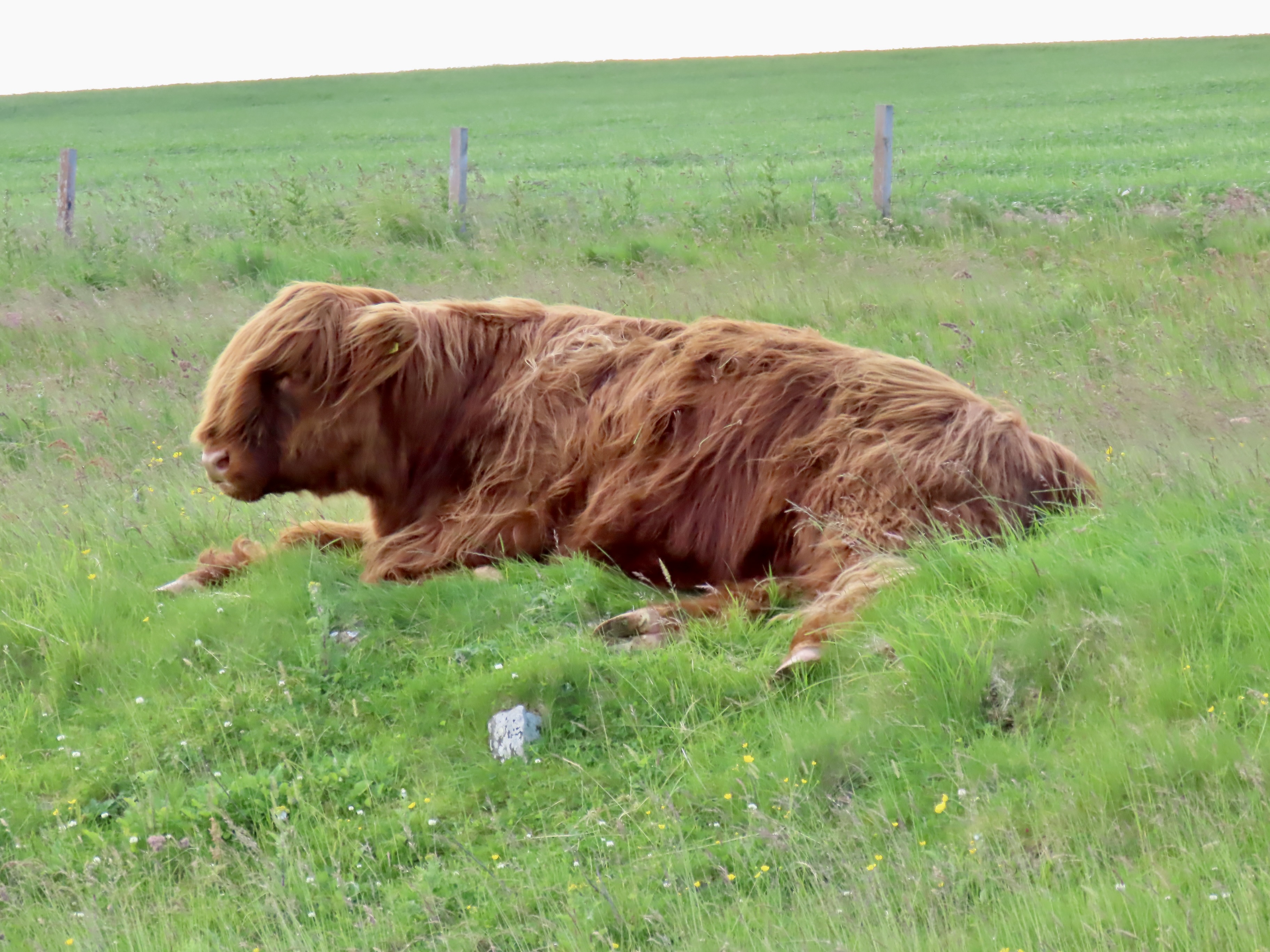
Harry Coos are just about on everyone’s to-see-list for visitors to the Scottish Highlands. Their thick ginger fur and impressive horns are the two chacterisitcs that most people note. The slender, curvy horns suggest that this coo is a female. Check out the ears as well.

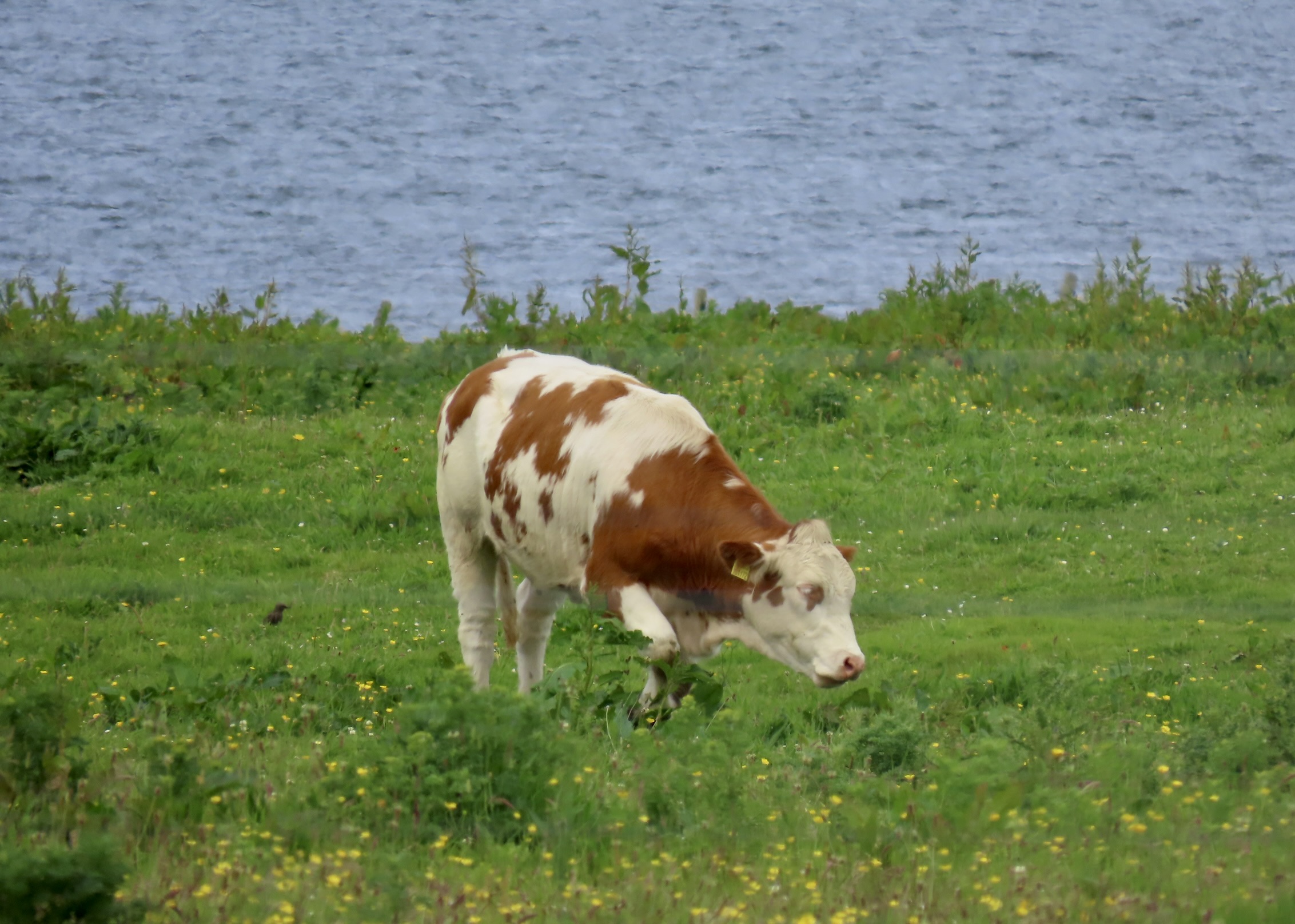
Given the popularity of coos, we were surprised they weren’t everywhere. We only spotted them a half-dozen or so times during our recent bus tour exploration of the Highlands! And only had two opportunities to stop and check them out. One was on the northern island of Orkney, the other next to the Culloden Battlefield. While there are over a million cattle in Scotland, coos number only in the thousands. The fact that their milk involves an acquired taste and that their meat is very expensive are important reasons. Besides, one coo might attract 10,000 visitors (or more), but how many people could it feed.
“Why is it that people always look at me as an object and only think meat and milk. Why can’t they think of me as handsome or beautiful?’

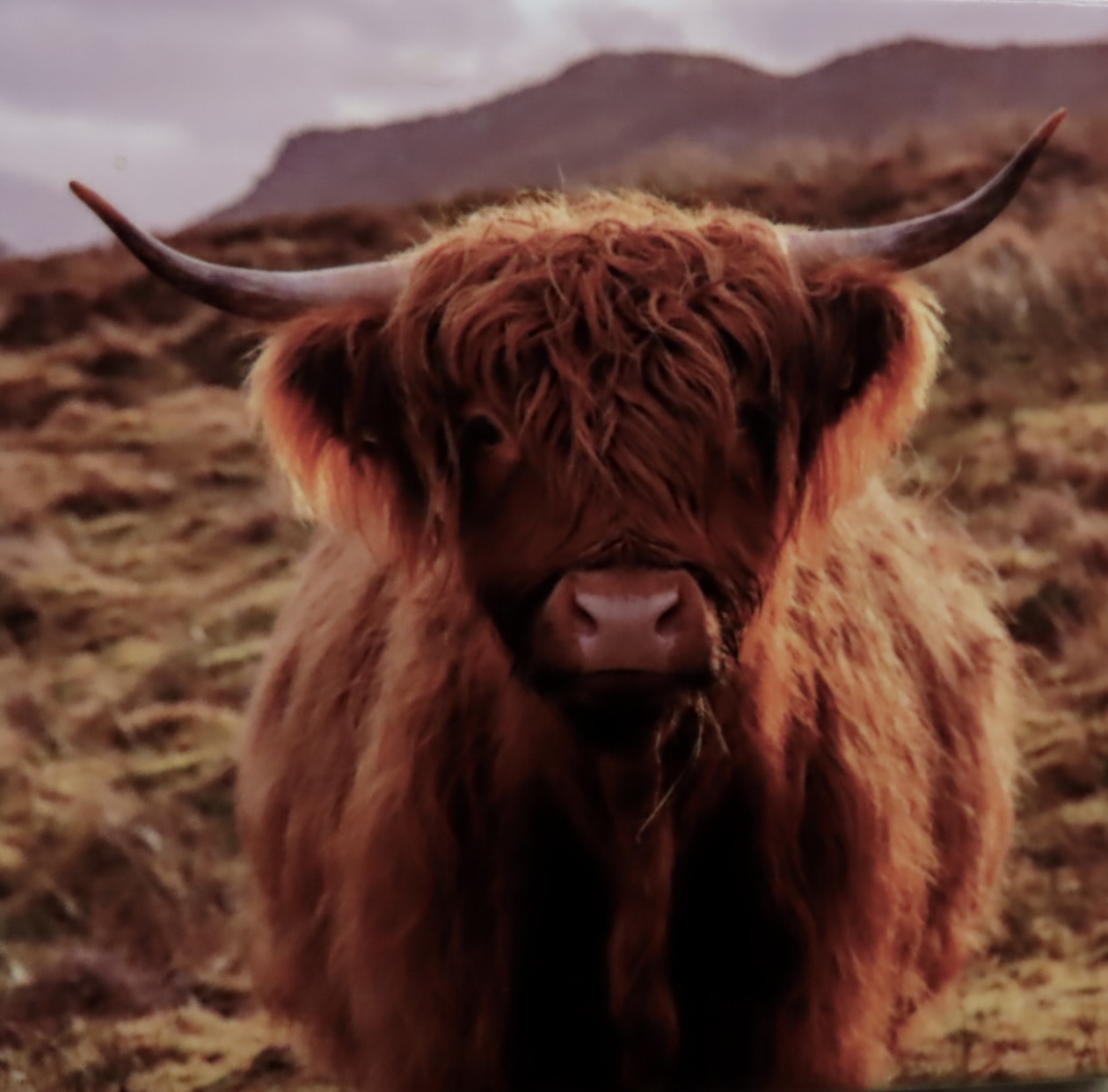
So while coos are much harder to find than normal cows, I doubt that there is a tourist shop in Scotland that doesn’t promote them. Paintings, key chains, coffee cups, shot glasses, scarves, coasters, t-shirts… you name it, you will likely find one with a coo on it. We brought home two.

A coaster for me…
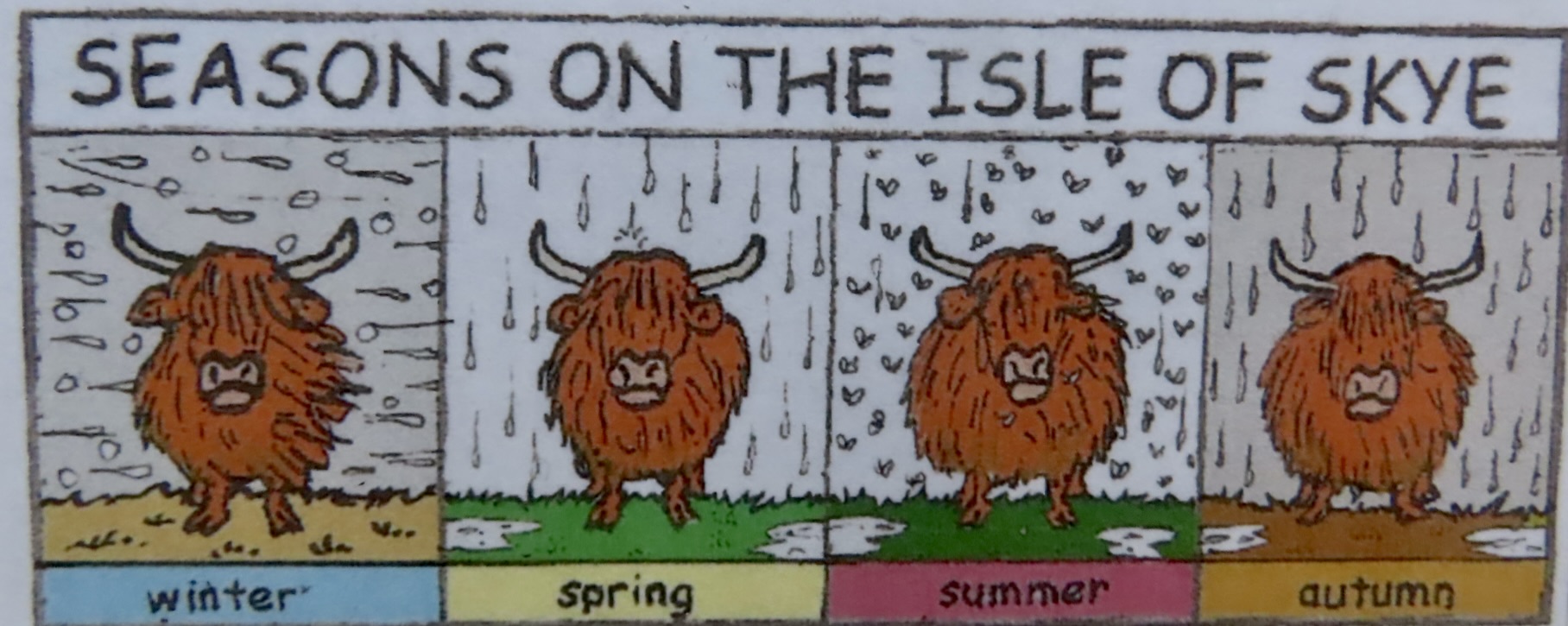
And a seasonal weather gauge for Peggy.
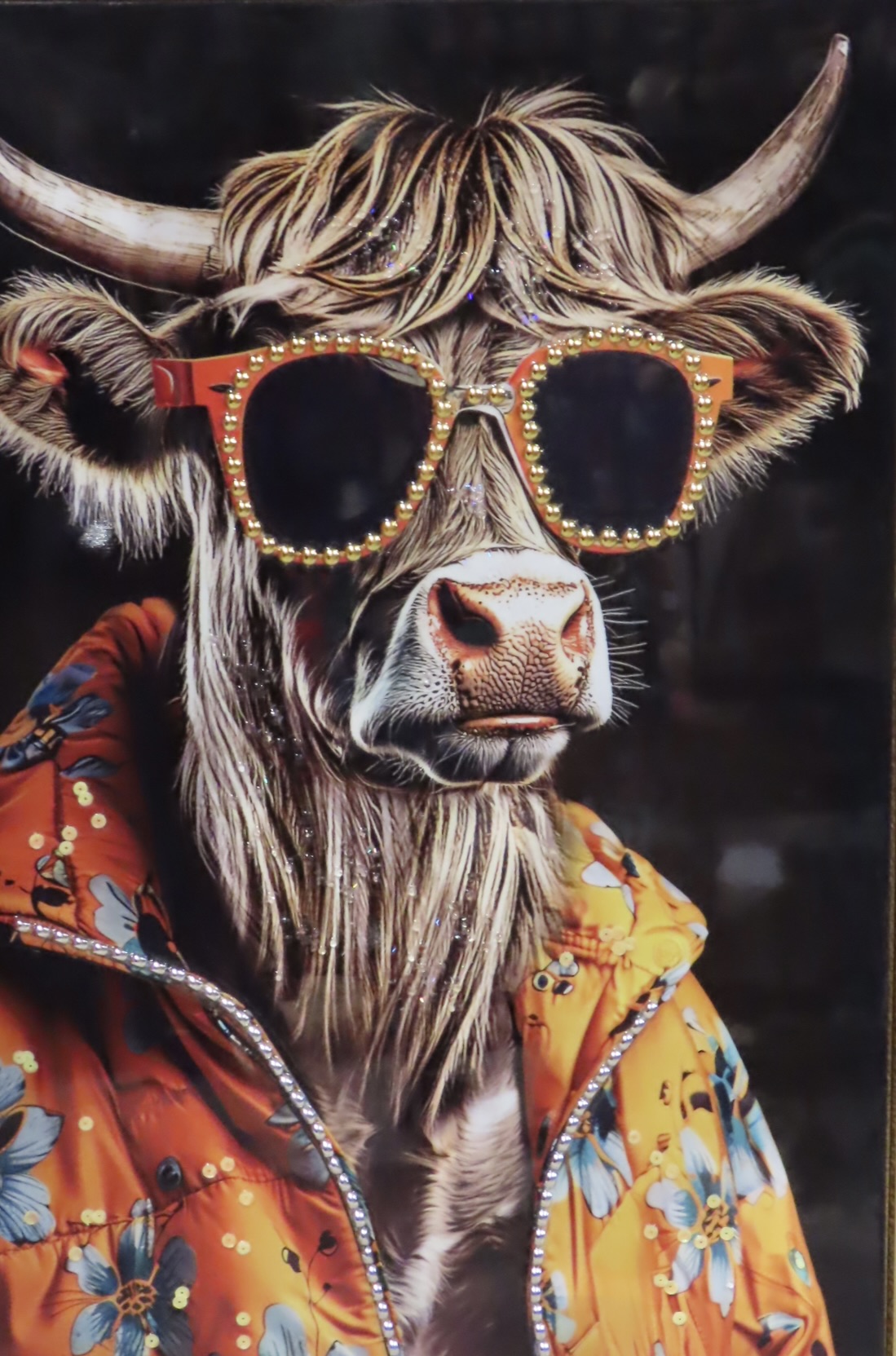
We found this fellow hanging out in a tourist shop. And no, we didn’t bring him home. Judging from the glasses going through his ears, it’s probably AI generated.
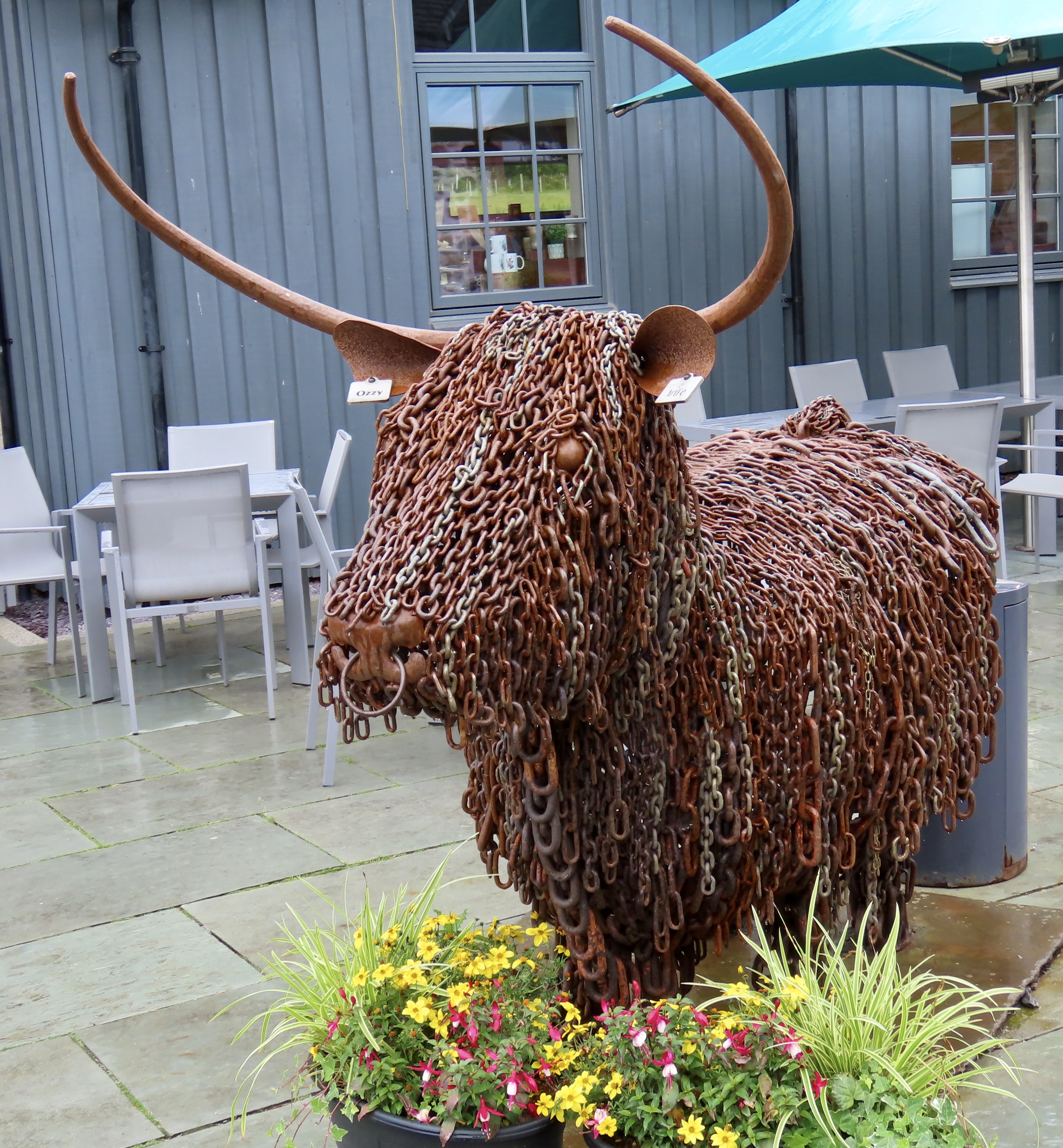
Roadside attraction.
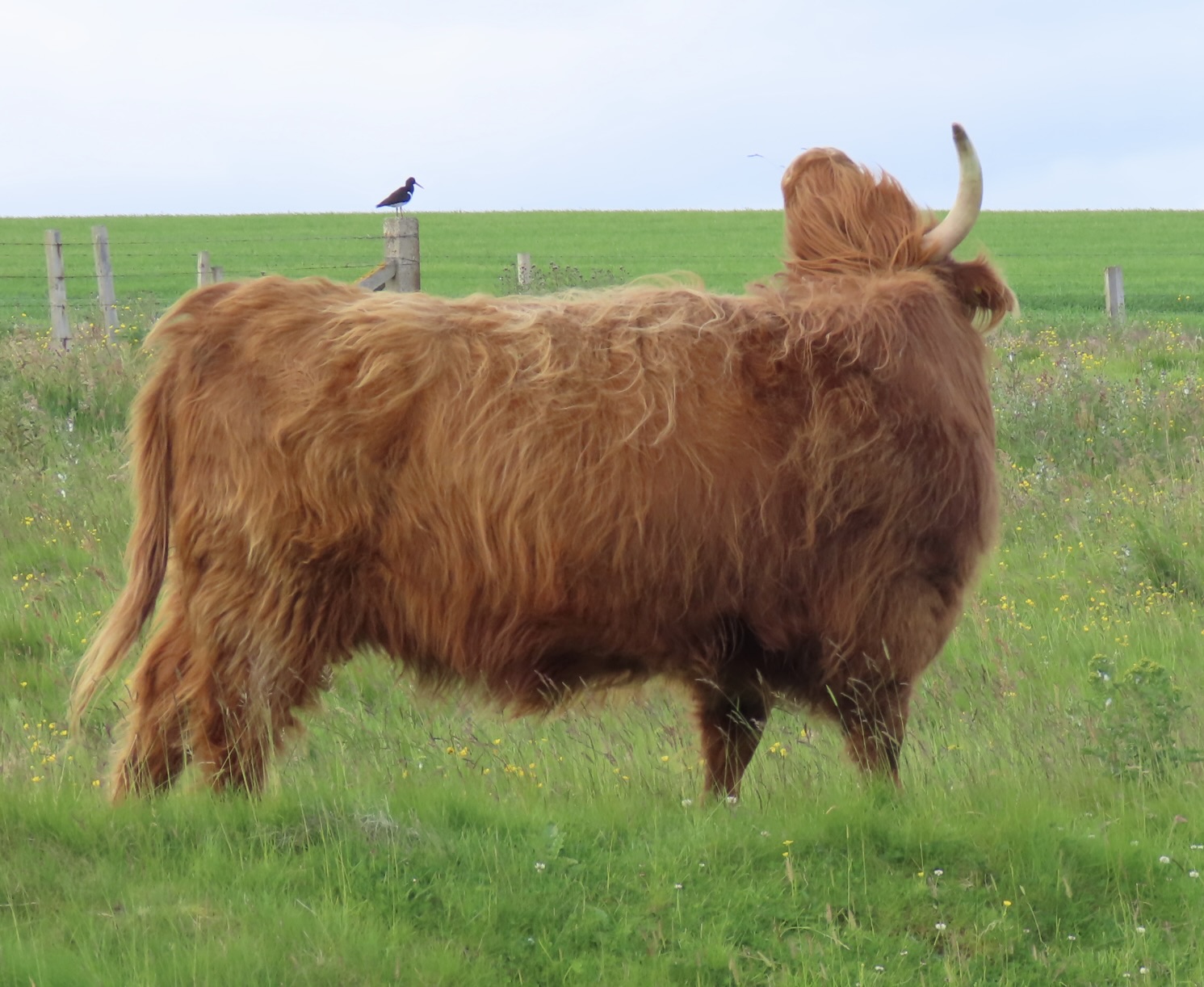
The horns are more than weapons. For example, a good scratch. They are also used to break through the snow in winter to get to grass. These guys can eat up to 140 pounds of it per day. I think that’s an oyster catcher looking on. We saw lots of them on Orkney.
Harry coos is an apt description for these cows— from their head right down to their tails! They actually have two layers of fur, the shaggy looking outer layer which is oily and somewhat rain repellent and a softer warm, inner coat. Both come in handy for the long, cold highland winters. They’ve had a long time to adjust to the weather. They were first domesticated in 6th century CE in the Outer Hebrides off Scotland.
Head shot.
Tail shot.
Ear shot.
Me shot.
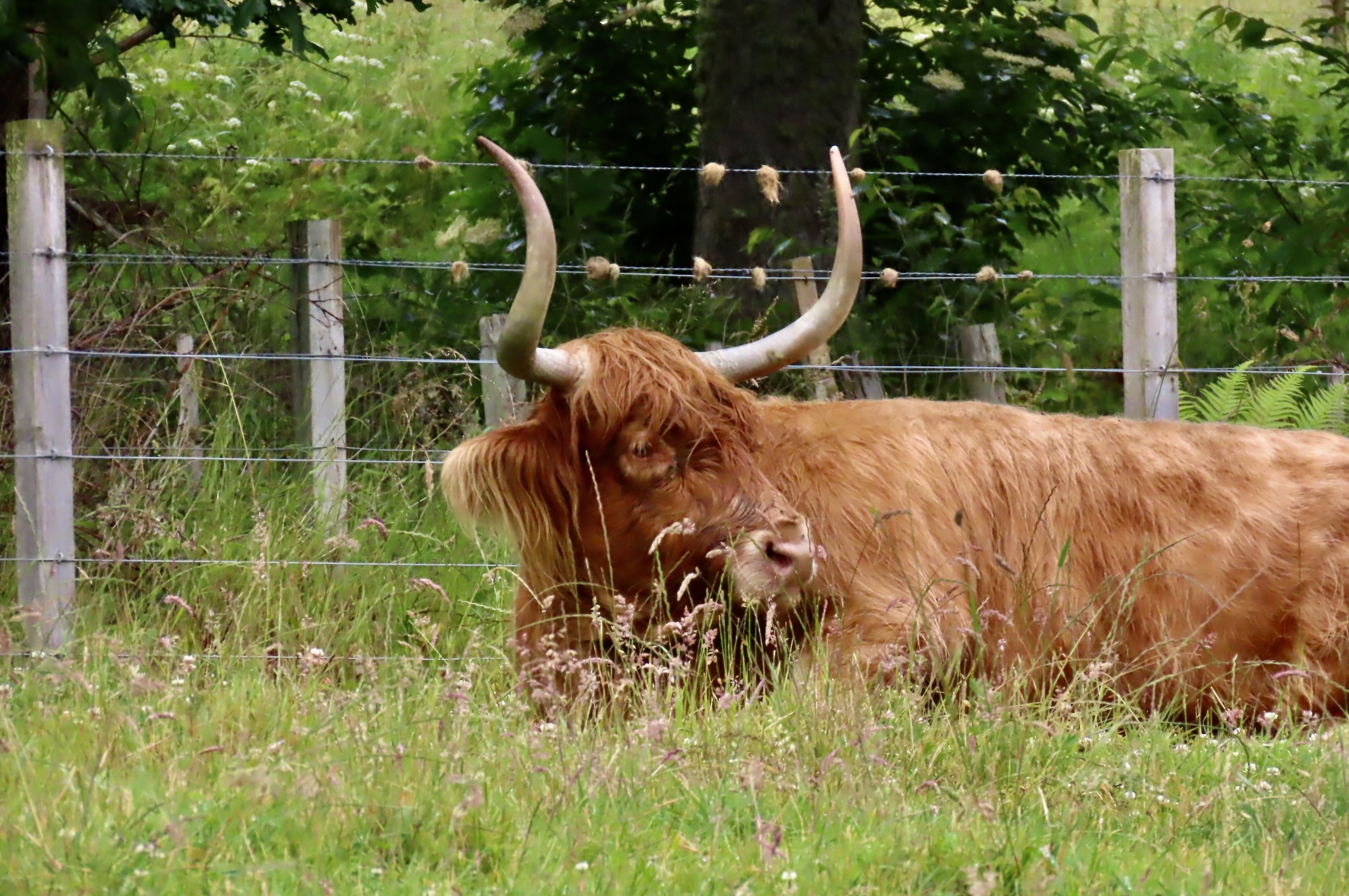
Don’t know where the horns went on this harry coo lying down. Will assume they were cut off. Had it been a bad coo? Peggy caught a video on her iPhone of it chewing its cud. Just click on the photo/video below.

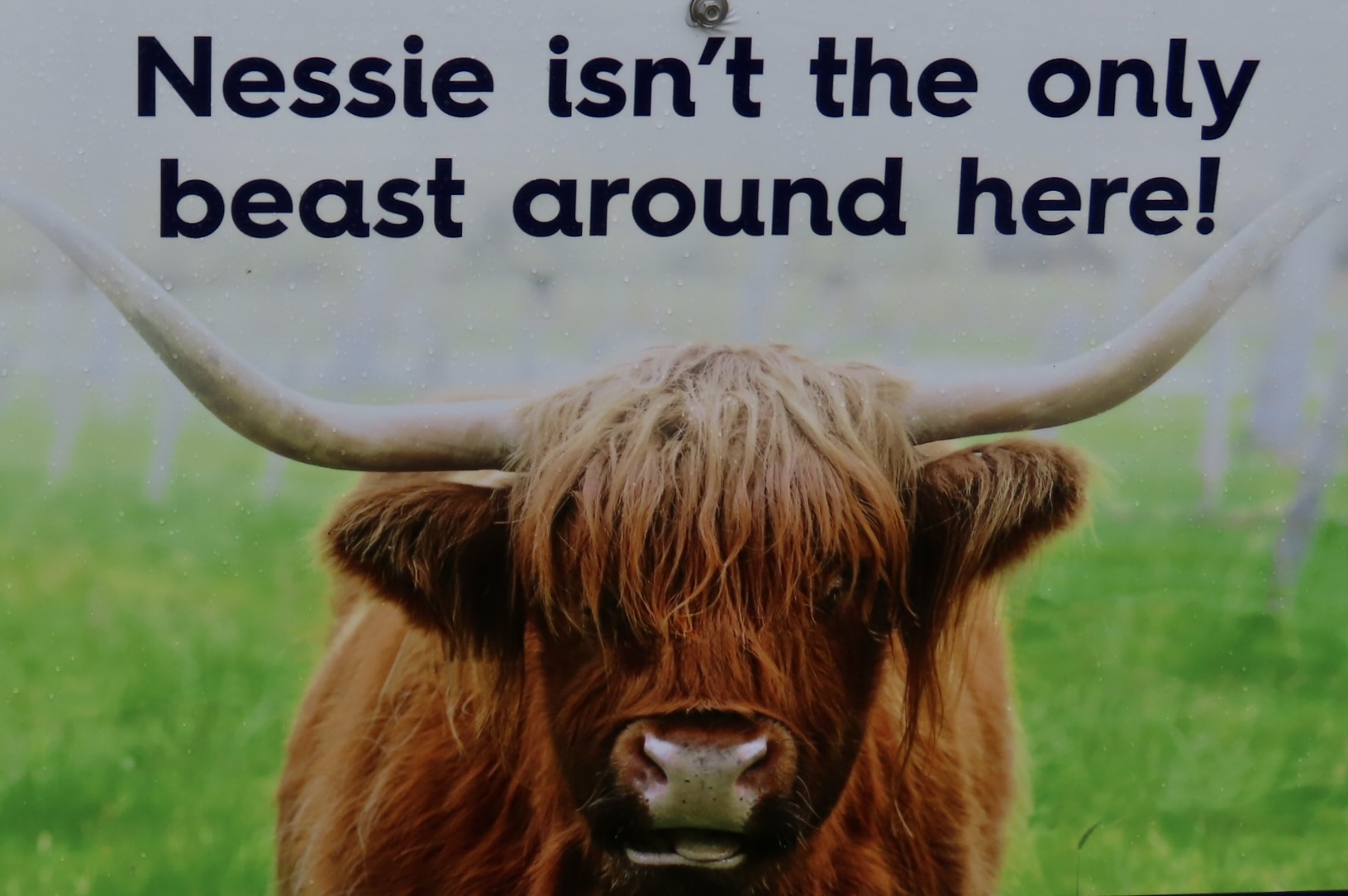
When we were finished touring the Culloden Battlefield, I ran over to capture a few photos of the Coos next to the battlefield. This is where I found this sign.
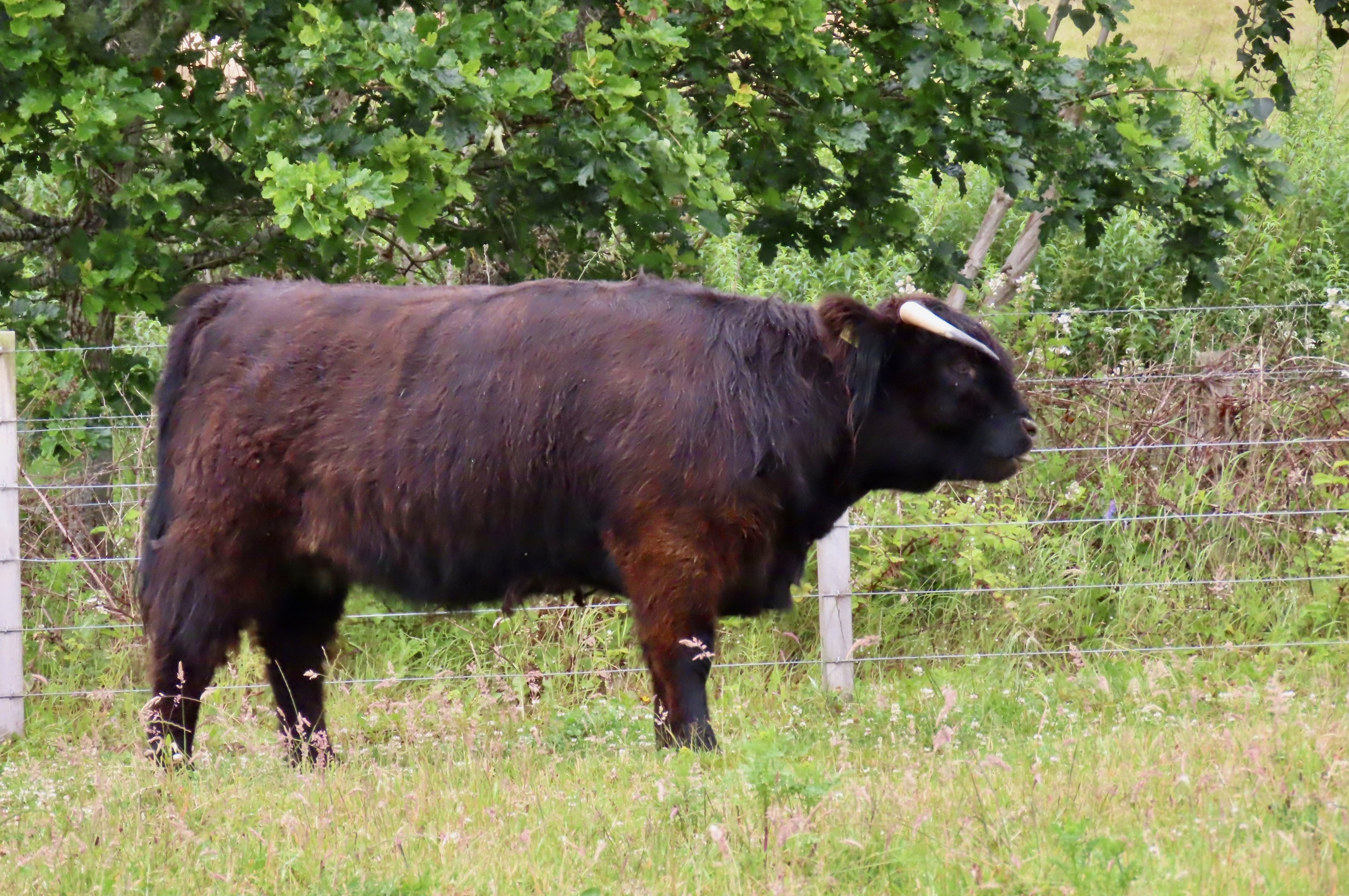
One thing that stood out was a black coo. There was a time when the coos came in several colors. Then Queen Victoria visited the Highlands and stated she was quite taken by the ginger colored coos. That’s when the farmers started focusing on breeding coos with ginger coats. This is a boy, BTW. Horns are straighter and more stout.
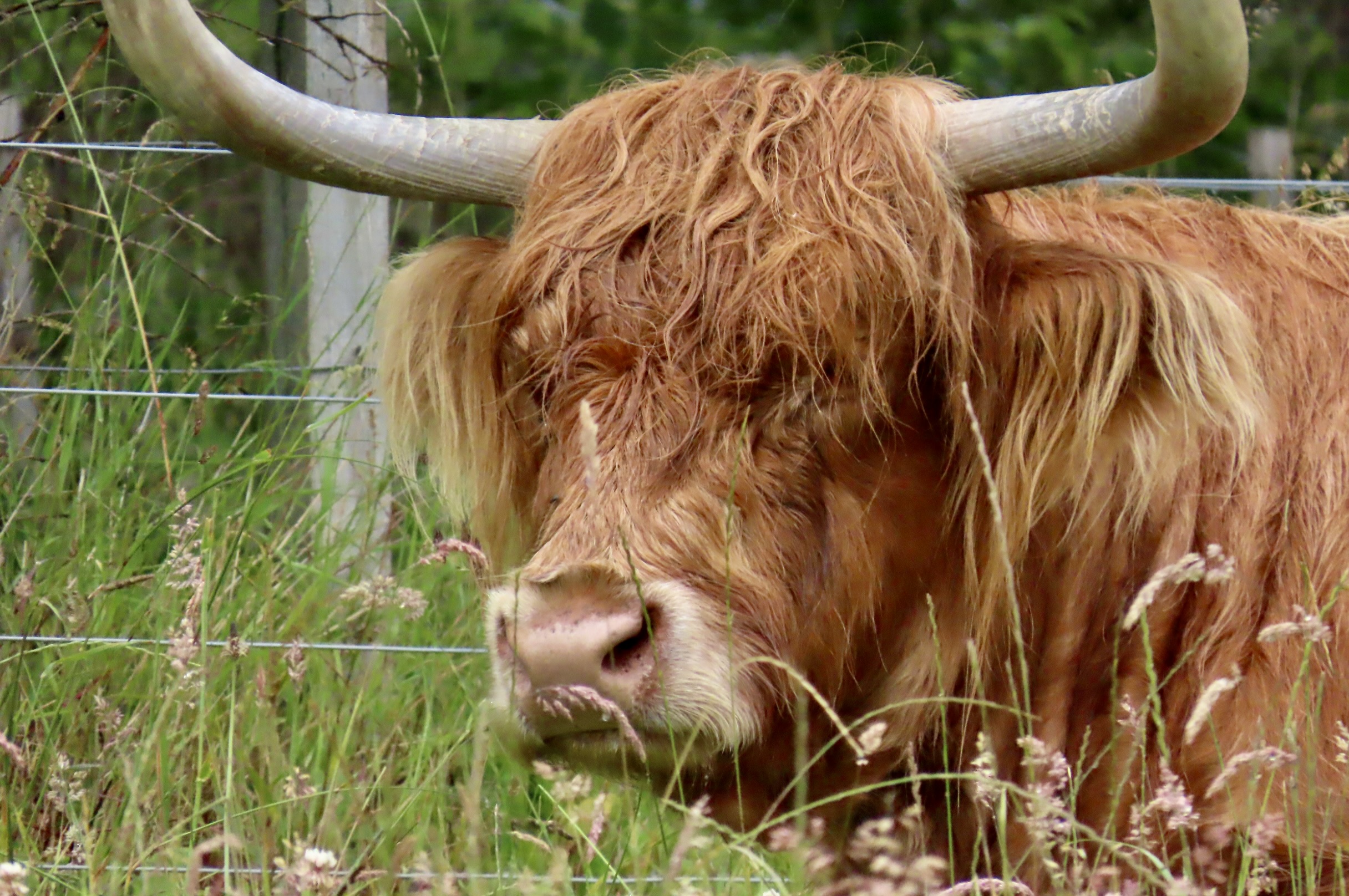
It’s just possible this lady coo was having a bad day. A cold perhaps with a runny nose? Or a chapped nose. Click the photo/video below and you can decide for yourself. (I don’t know why WP decided to put in The?)
She was licking her nose.
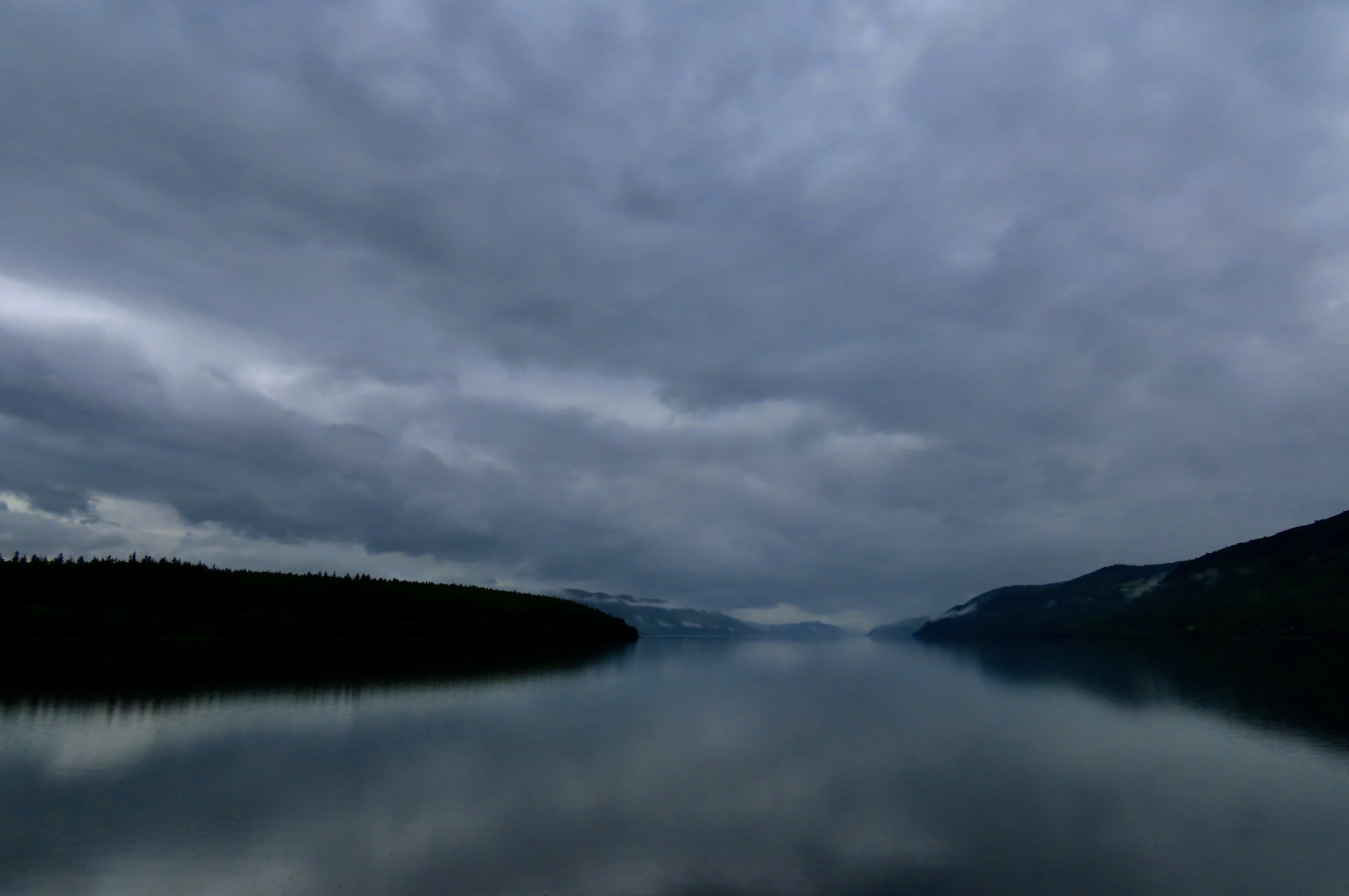
Since we brought up Nessie above, that’s where we will go next: To Loch Ness, fabled home to the ancient monster. It was a dark cloudy day, perfect for our search.

In Search of Wild Areas, Culture and Beauty in 2026: We Return to Costa Rica, Bali, and Scotland

2025 was a good year for us from a travel perspective. We stayed home, so to speak, and limited our wandering to Hawaii, the Southwest, and New England. Now we have the itch to go abroad again. We’ve chosen three areas known for their beauty, culture, wild areas— and relative safety: Costa Rica, Scotland, and Bali.

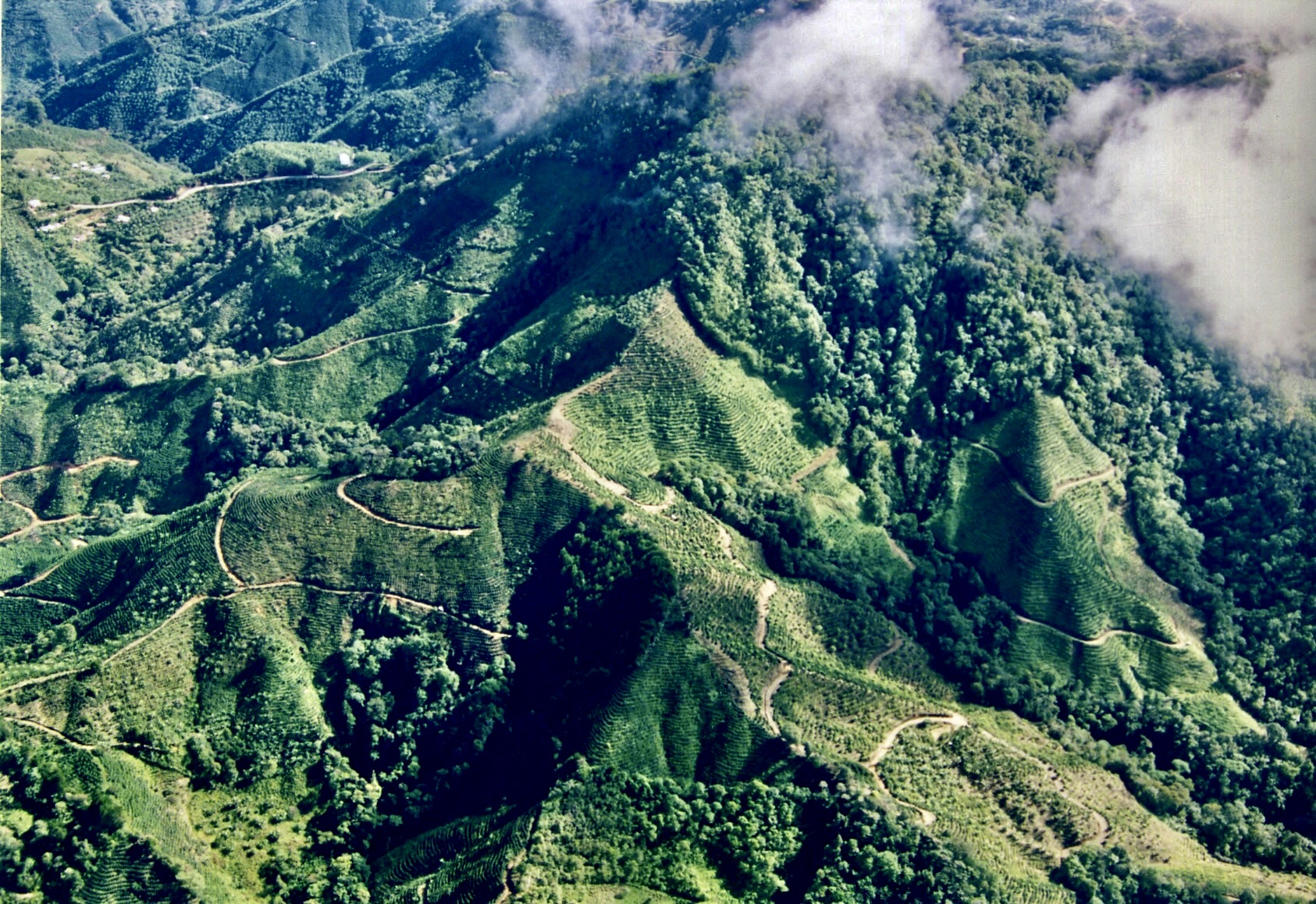
First up: Costa Rica. We took the above photo when we were in a small plane flying back and forth across the country on a tour in the 90s. This year we will be renting an SUV with high clearance and driving ourselves. The country roads can be challenging— even in the dry season! Peggy and I will be going there for the month of March. Our son Tony and his family will join us for a week in Monteverde.
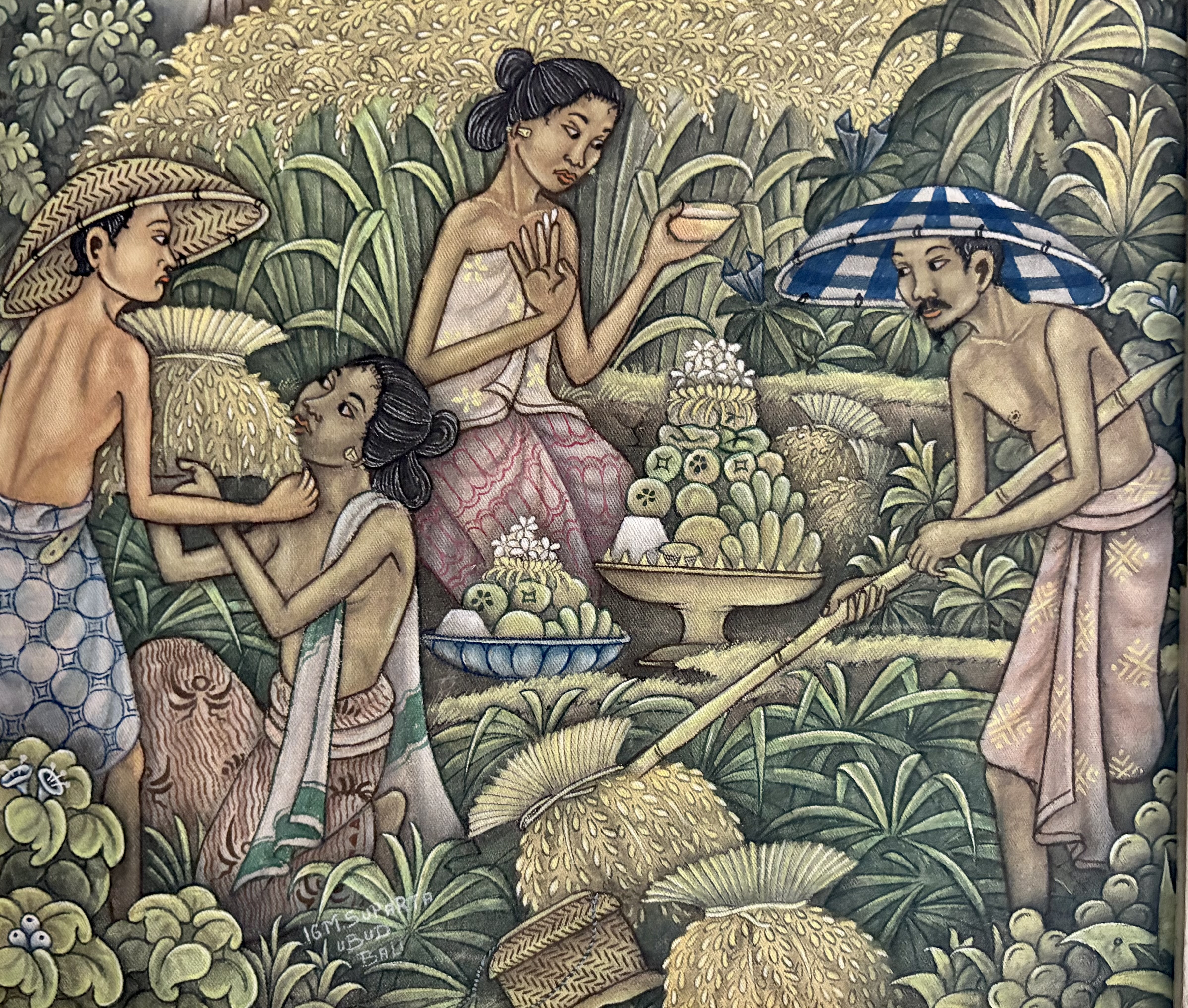
Next up, we will be visiting Bali. I visited in 1976 as part of a six month tour of the South Pacific. I’d lost my camera in Fiji, so I don’t have any Bali photos. I brought a painting home instead. The region is known for its colorful art. This one depicts a rice harvest. The woman on top is making an offering. It’s important to keep the gods happy. We will be there in May. Our grandson Ethan will join us for a week.
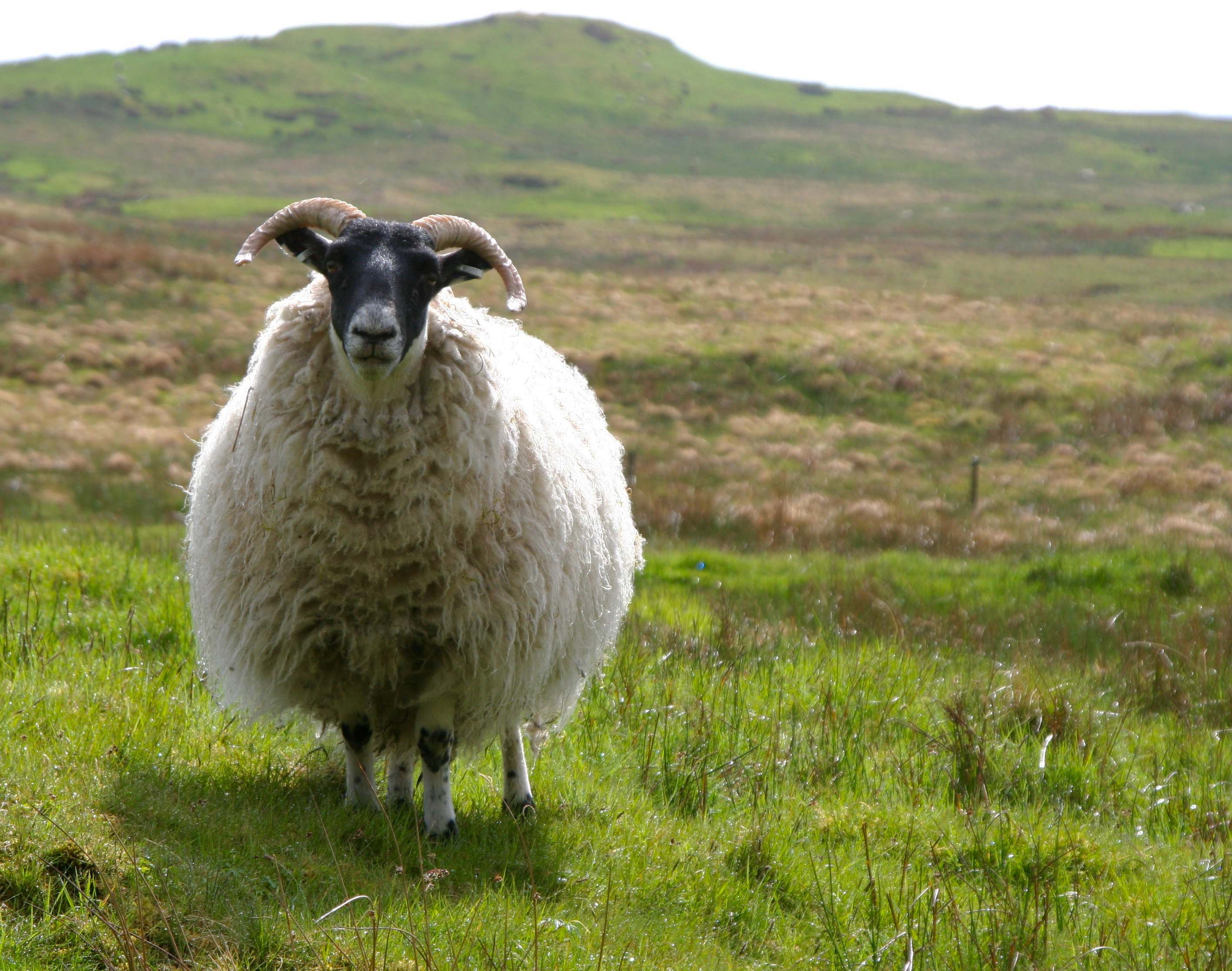
We met this fellow in Scotland when we were doing family genealogical research in 2014. He had positioned himself in the middle of the narrow road we were driving on for about 10 minutes before finally moving over to the grass. Peggy and my families were Lowland Scotch so we were in the southern part of the country. This year we are visiting the highlands, coastal regions and islands of the north in late June and July. We will be checking out castles and looking for Nessie, the Loch Ness Monster. Our grandson Cody will be joining us for two weeks. We are planning to hop over to Northern Ireland after Scotland.

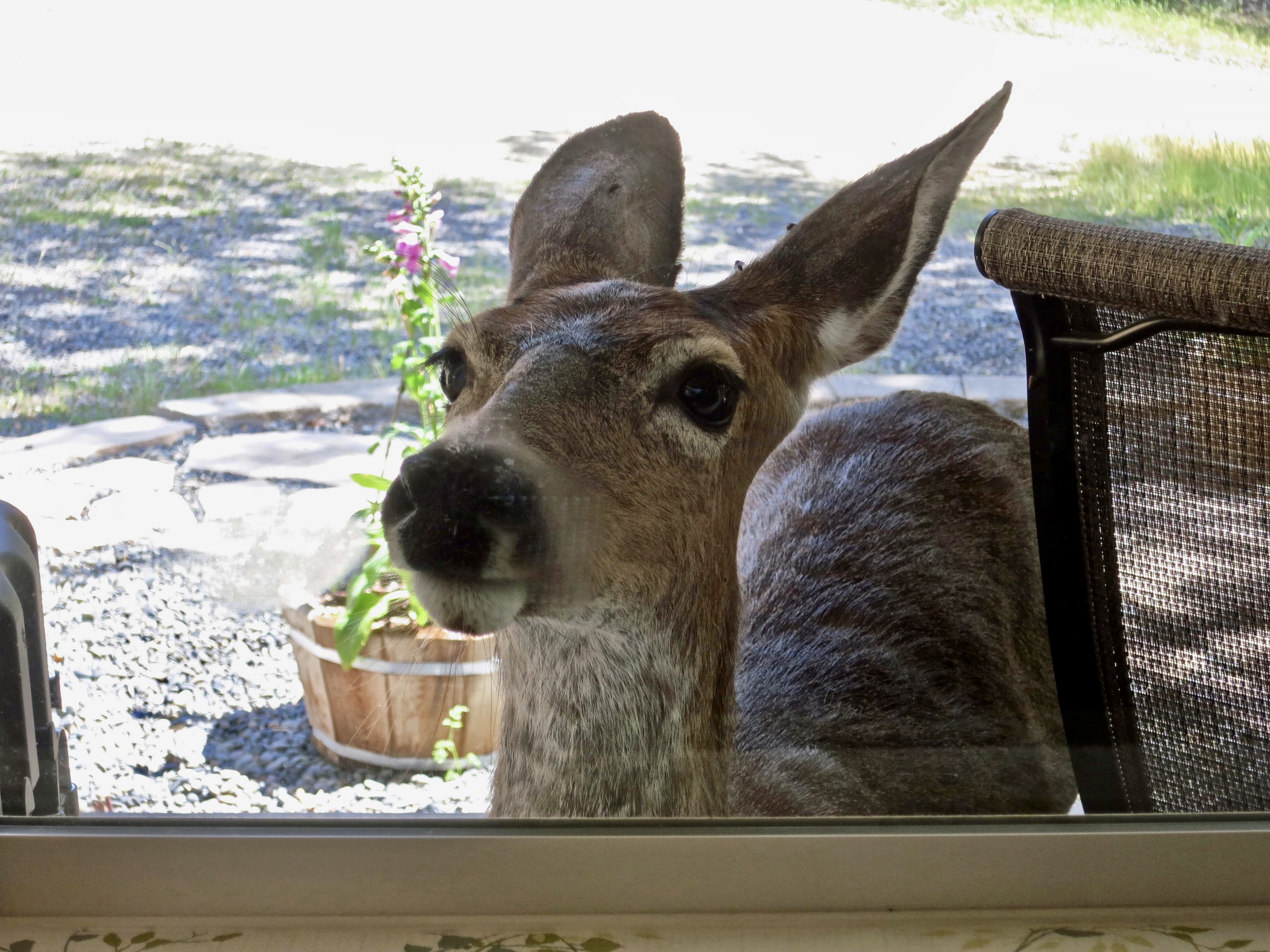
Naturally, we will be blogging about our journeys. But there is more, as they always say on late night TV ads. Or at least they used to. Peggy and I don’t stay up that late and most of our TV time is streaming without ads. I am continuing our focus series over the next two months and beyond. “Oh Deer” is my next one. I’ll be featuring the herd that lived in our backyard in Oregon and liked to stare at us through the windows.

A not unusual sight!

And finally, I’ll be offering a new series I’m calling “Ut-Oh” where I will be pulling together posts that I have included on my blog over the past 15 years plus new material featuring my more serious/humorous misadventures in my life. I’ll do an introduction to it next week.

The question here is why should such an innocent looking child be kicked out of the first grade for a year. My first post will answer the question plus relate how a caterpillar I was using to cut a road fell off a cliff— with me on it.

Searching for Roots… A Photo Essay on Southwestern Scotland

Scenic Scotland

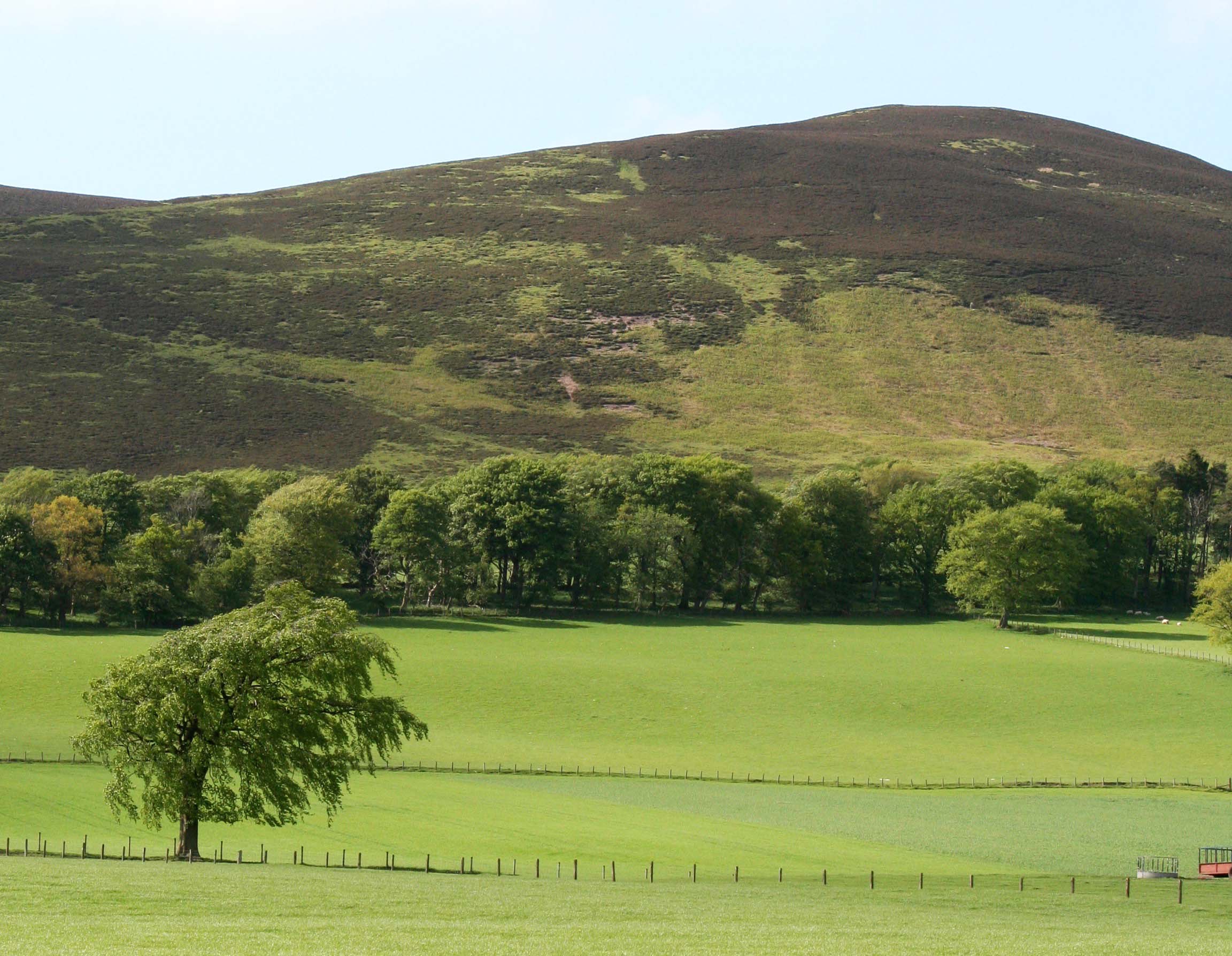
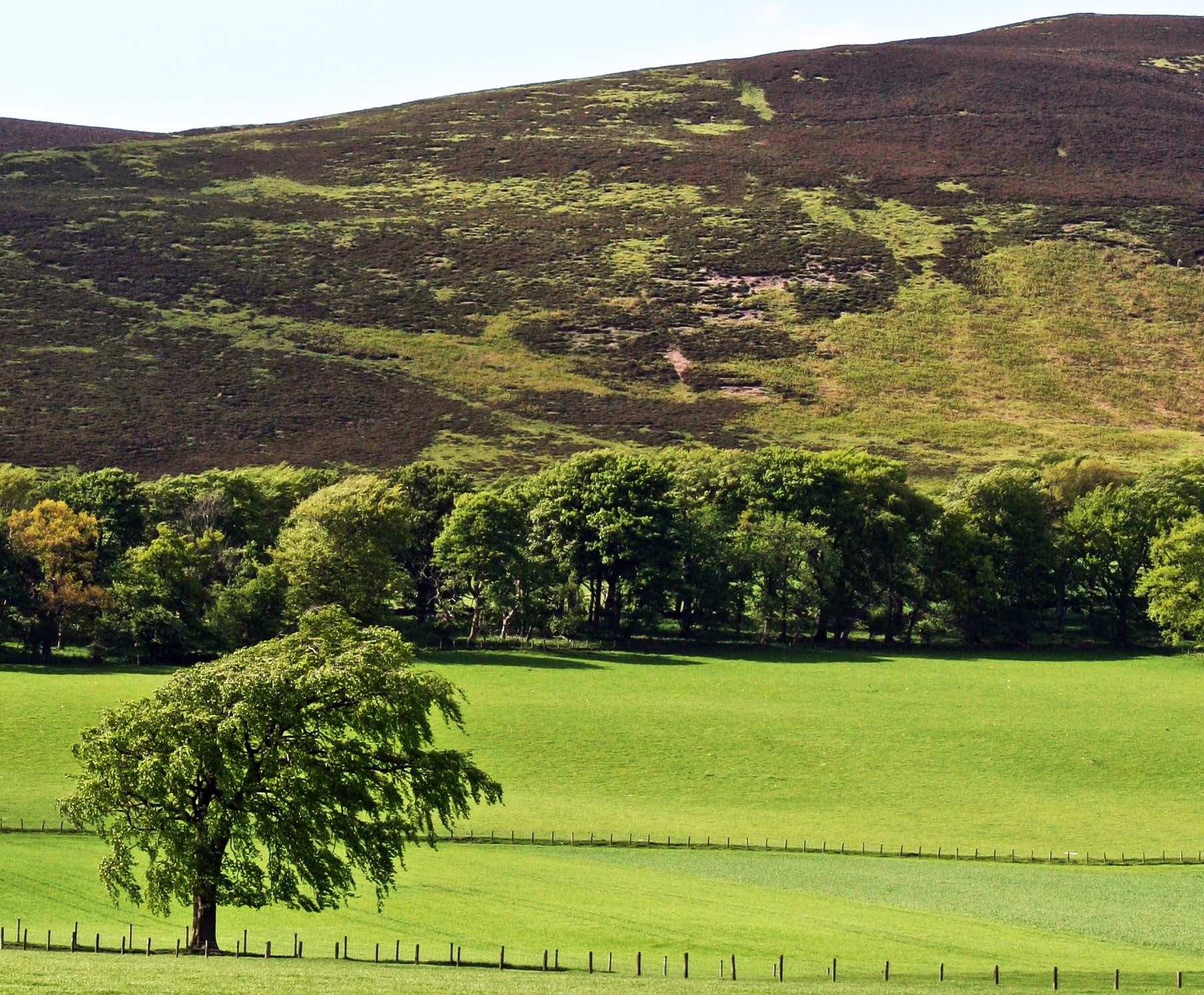
Peggy and I explored the southern and southwestern part of Scotland with its rolling hills and green, green pasture lands.


Today I am returning to the Wednesday photographic essay part of my blog. This time I will feature the southwestern area of Scotland with a few photos of Edinburgh thrown in. Peggy and I shared in taking the photographs.


Peggy, Jane, Jim and I wrapped up our narrowboat tour and then hopped on a train bound for Edinburgh, Scotland where we hung out together for a few more days before parting company. Jane and Jim returned to London while Peggy and I rented a car and headed out on a quest. I was eager to see some of the areas my ancestors had come from including the grave of a long dead Presbyterian martyr, John Brown, who had been shot down in the 1600s because he refused to recognize England’s king as God’s representative on earth. The Presbyterians were stubborn that way.

Edinburgh is an impressive city that is very easy to get lost in, or at least get lost trying to get out of!

Edinburg Scotland 1

Edinburg 3

Edinburg 4

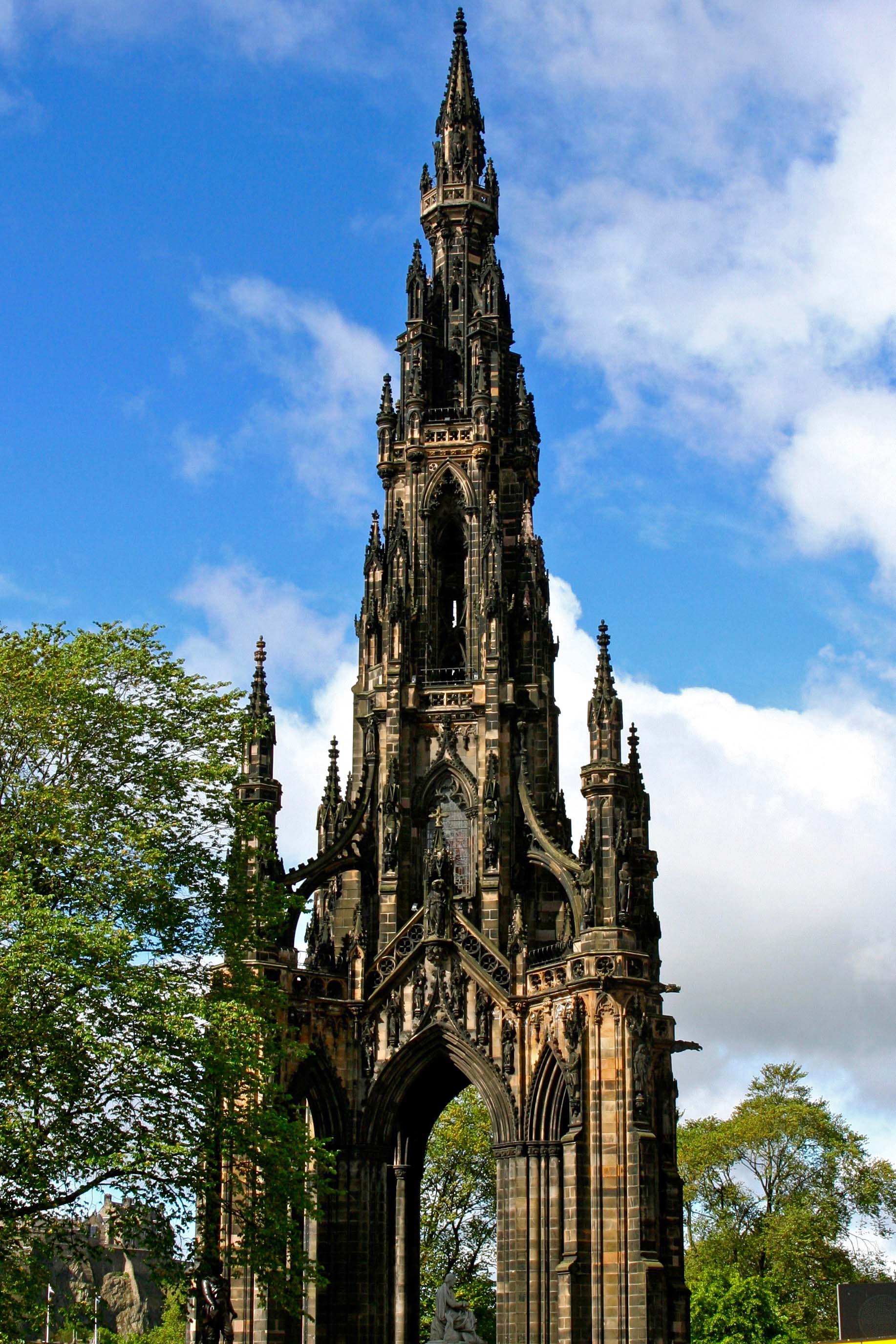
Sir Walter Scott’s Memorial.

Edinburg 2

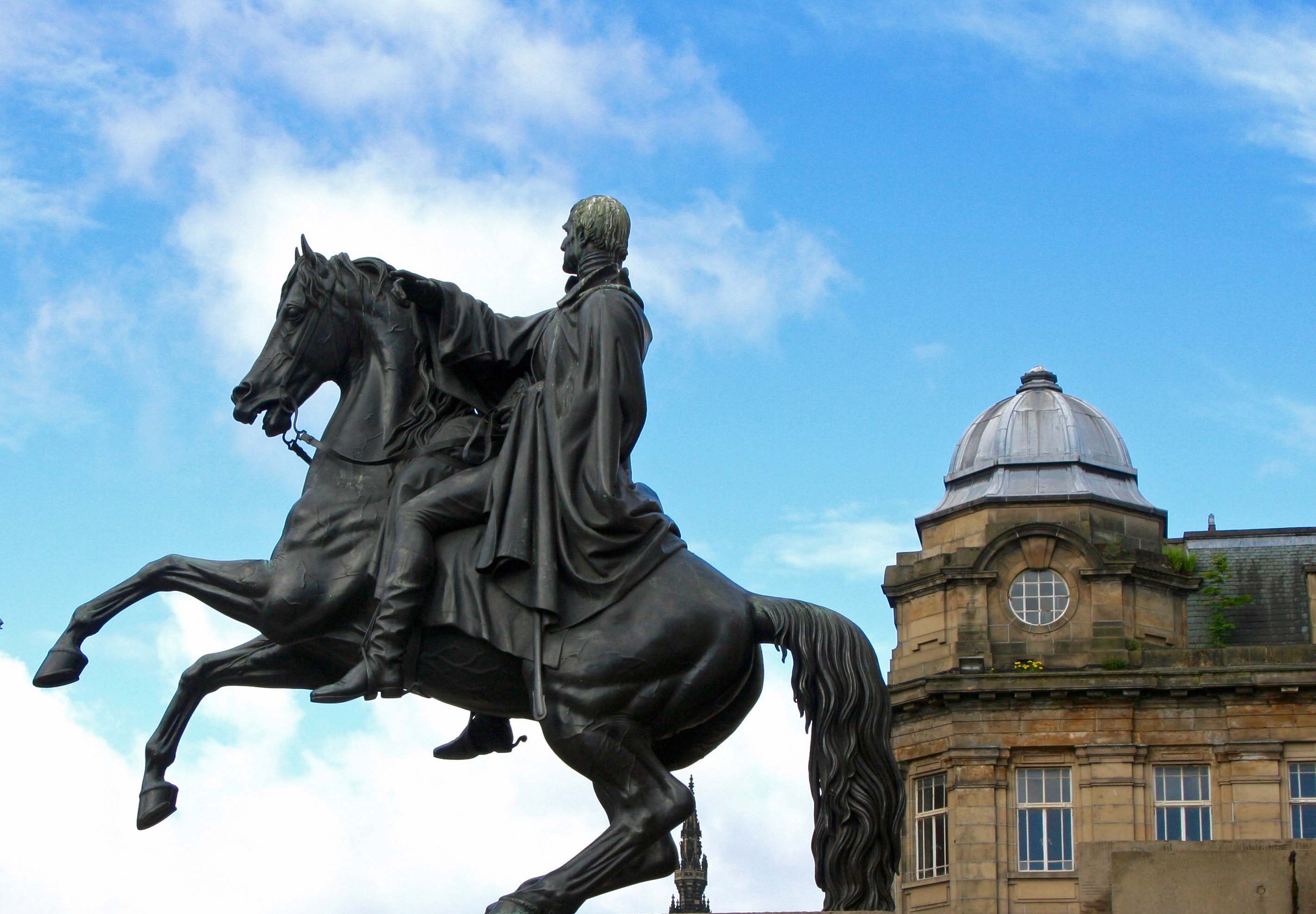
Duke of Wellington

The Duke of Wellington.

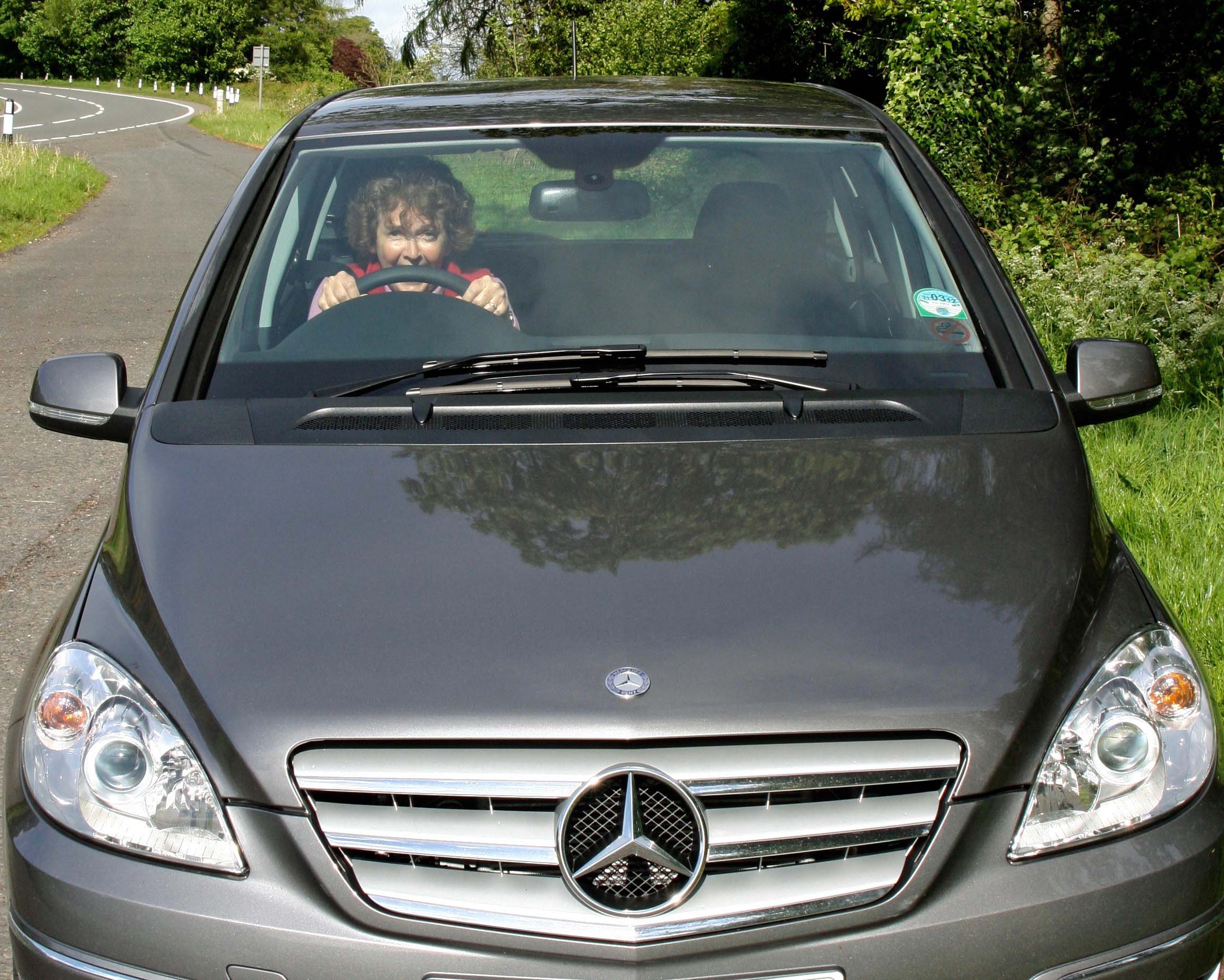
The car rental place upgraded us to a Mercedes and wished us good luck on finding our way out of the city.

Peggy and mercedes

Is this woman determined or deranged? And is she really biting the steering wheel? I thought that she was a bit old for a teething ring.

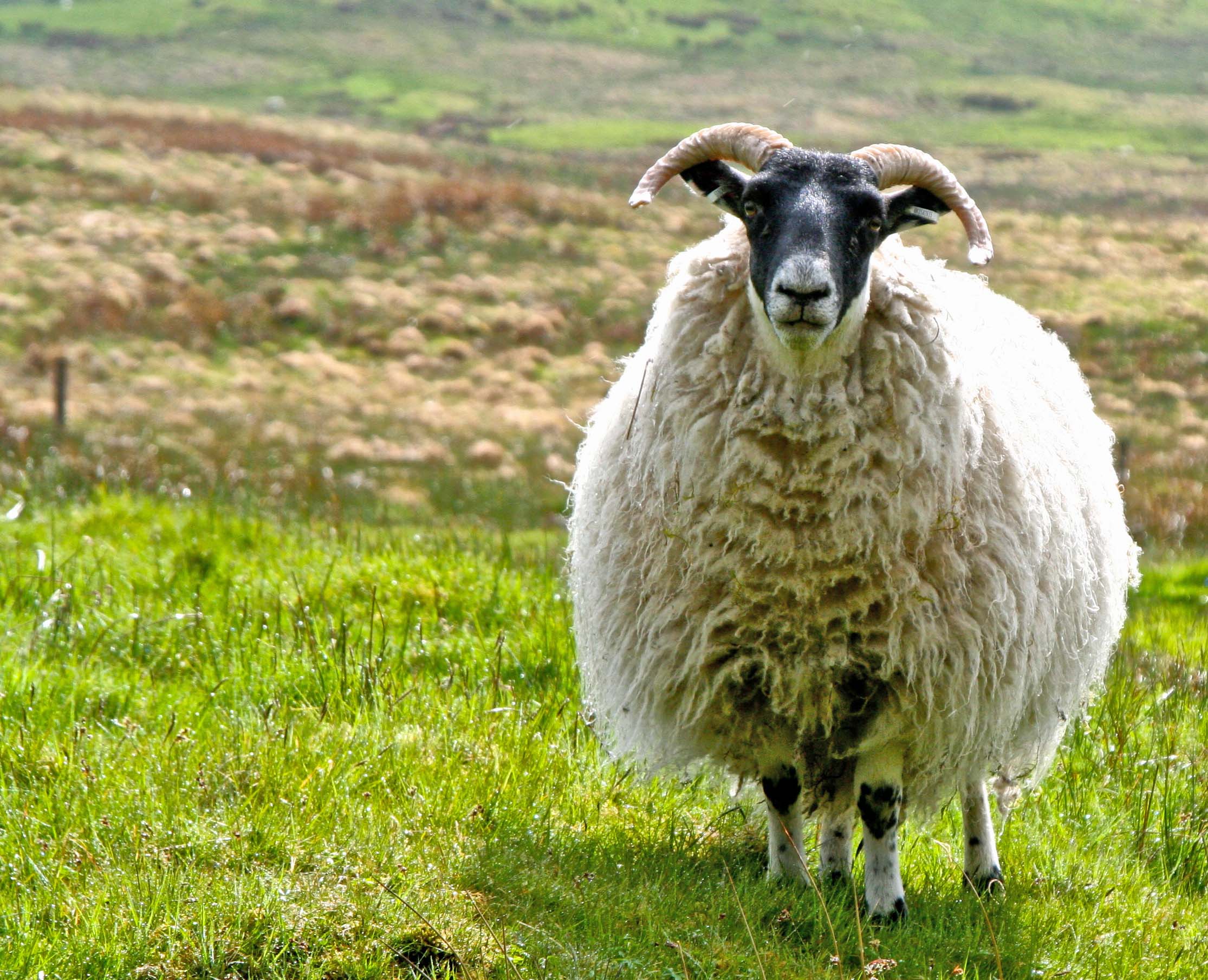
We quickly discovered that there are a lot of sheep in Scotland— big woolly creatures. They like to stand in the middle of the road and refuse to move.

Sheep in Scotland 2

My road

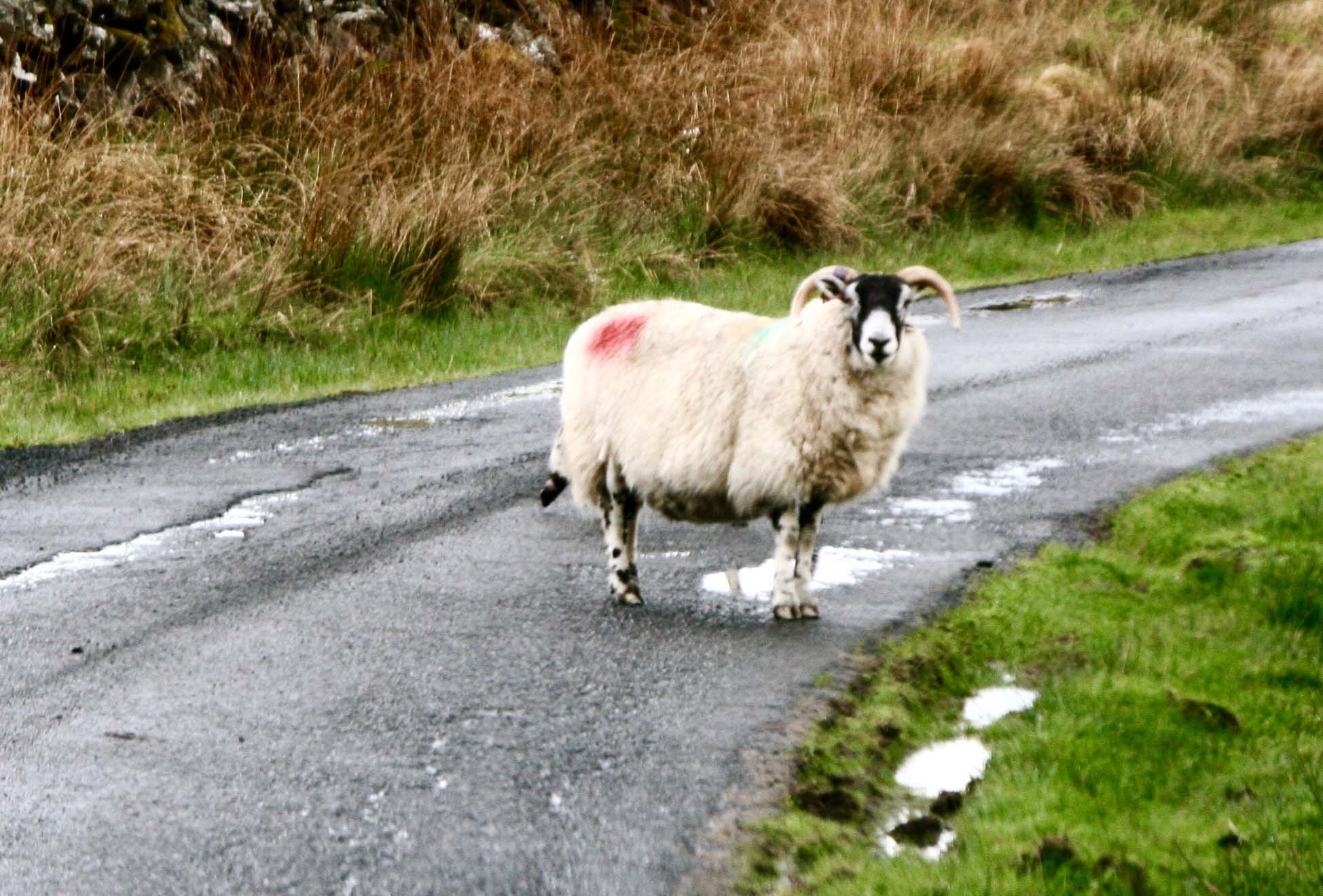
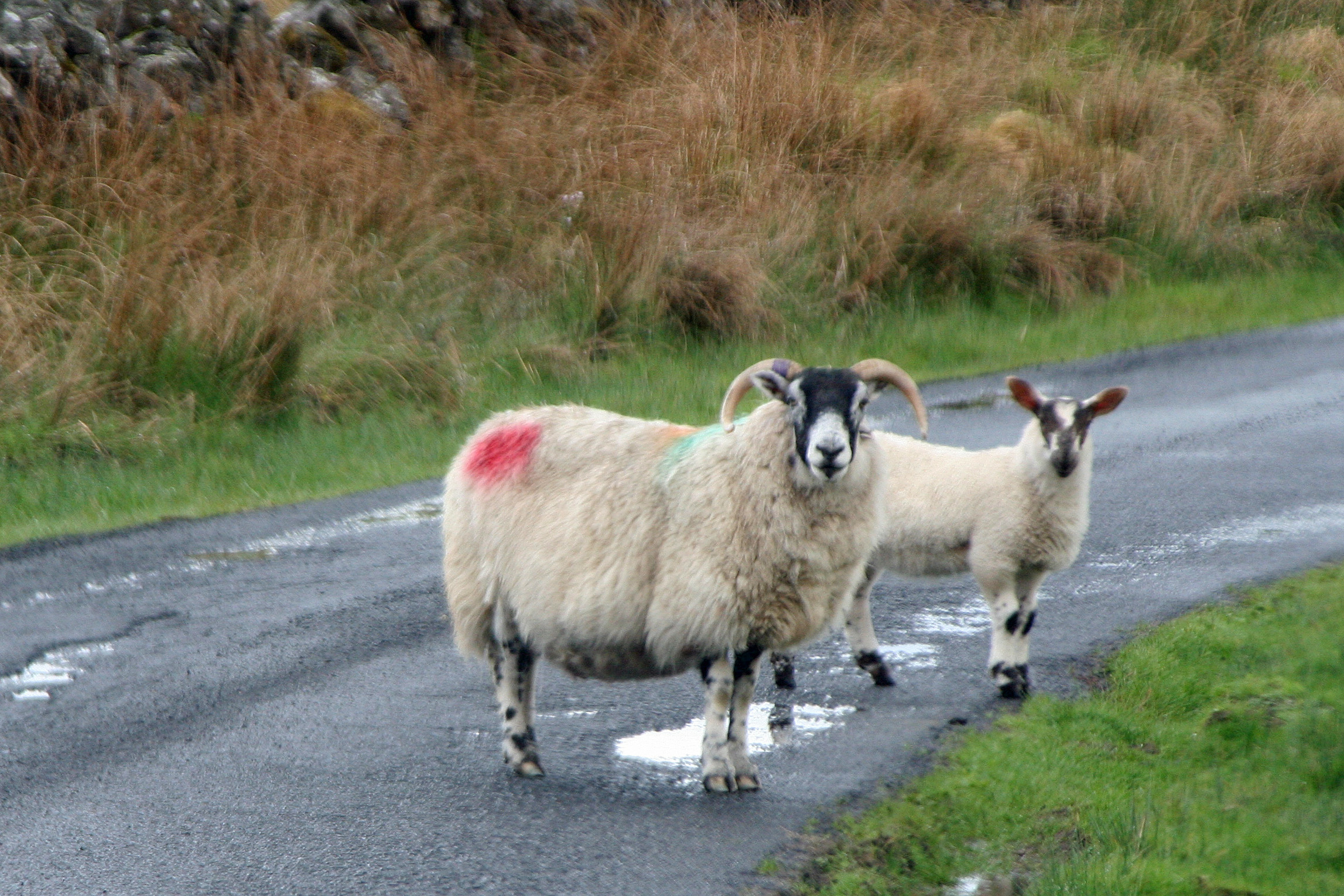
“My road!” Peggy and I were on a great detour (we were lost again) when we came on this sheep blocking the road. I thought I might have to get out of our car and pull a Crocodile Dundee on it. The red marking is to show ownership.

Sheep in Scotland

Smug.

Scottish sheep

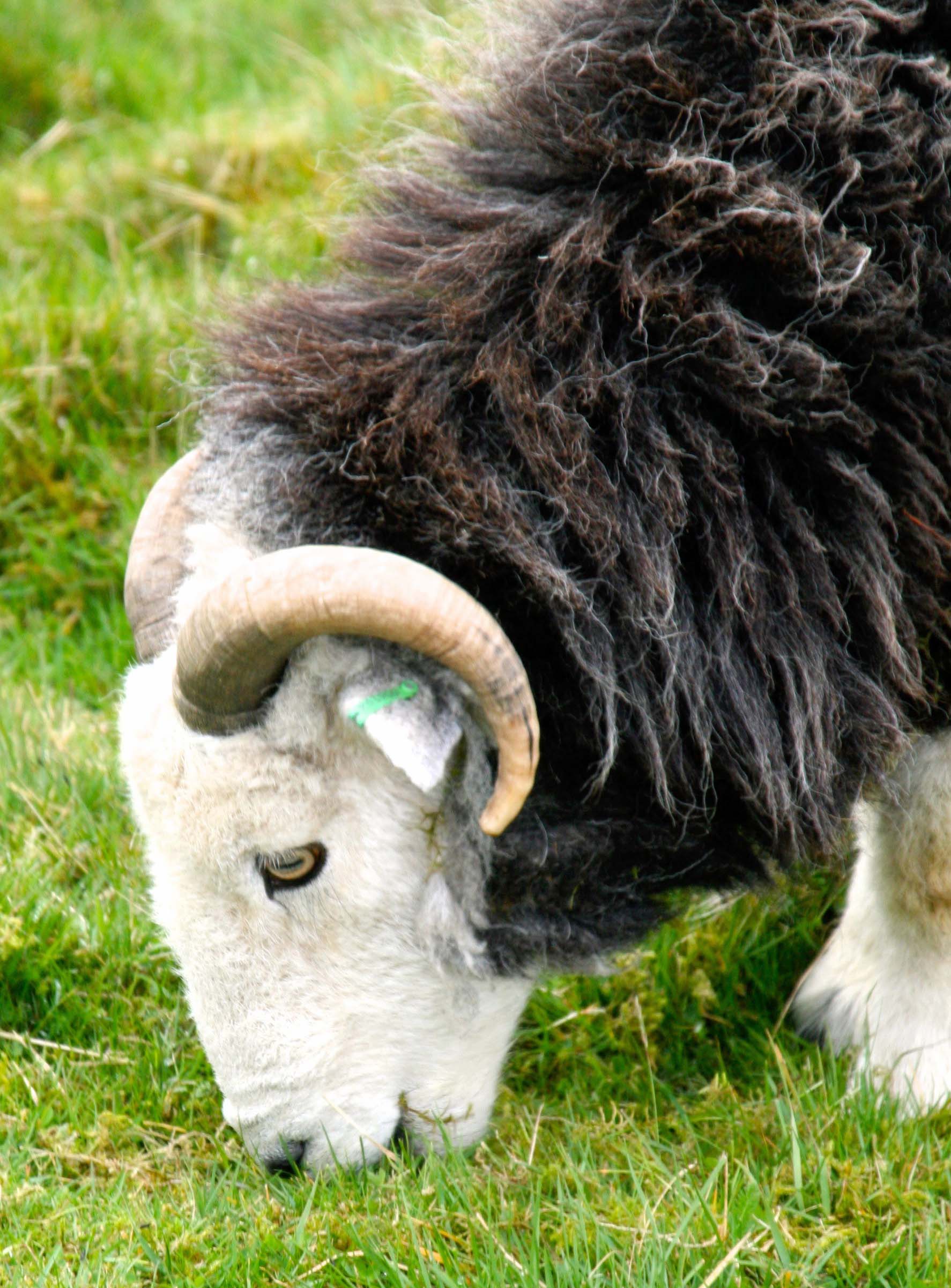
Hungry. The great range wars of the Western United States between cattlemen and sheepmen in the 1800s were partially because sheep like to crop the grass so close to the ground.

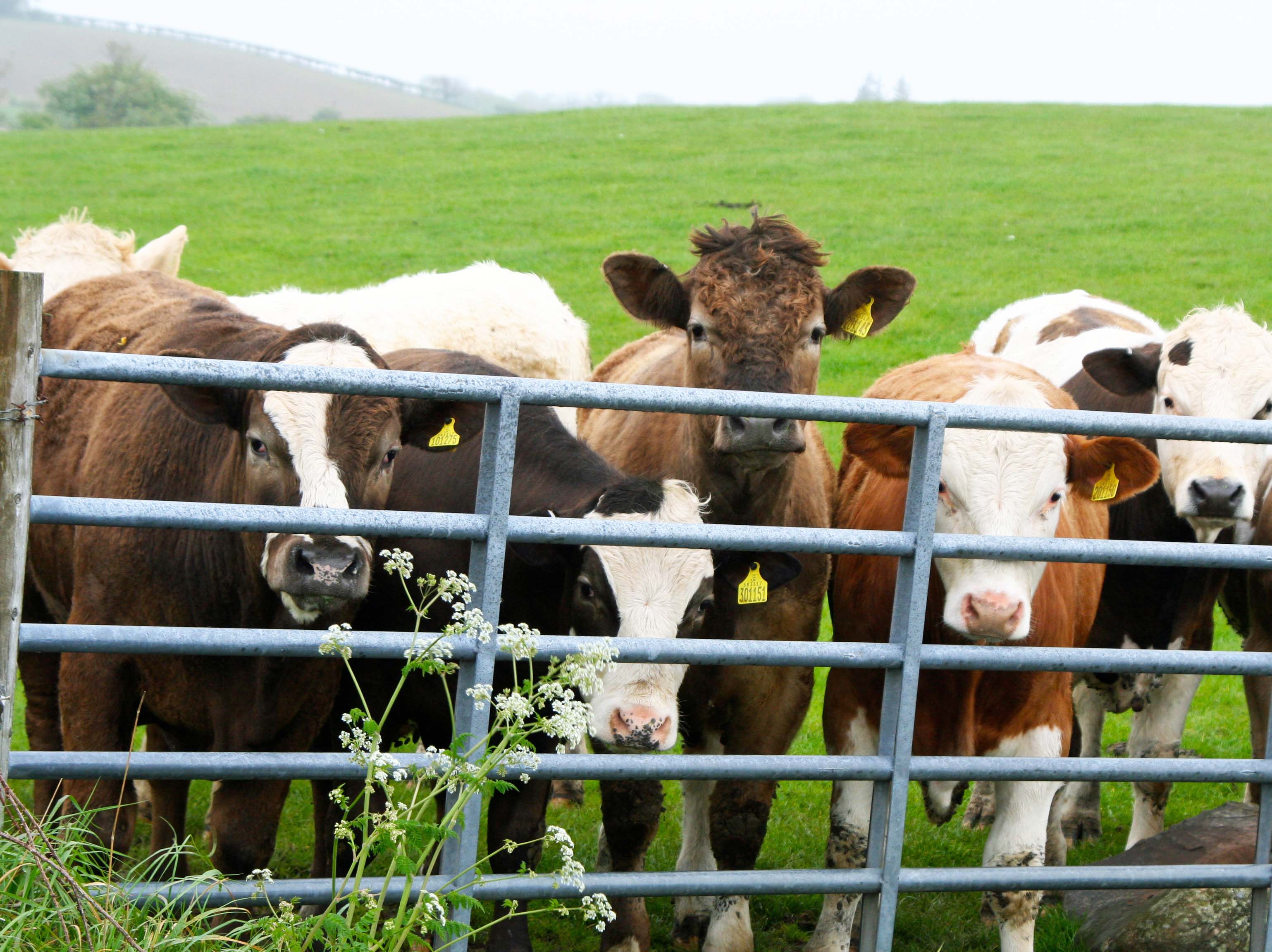
Scottish cow

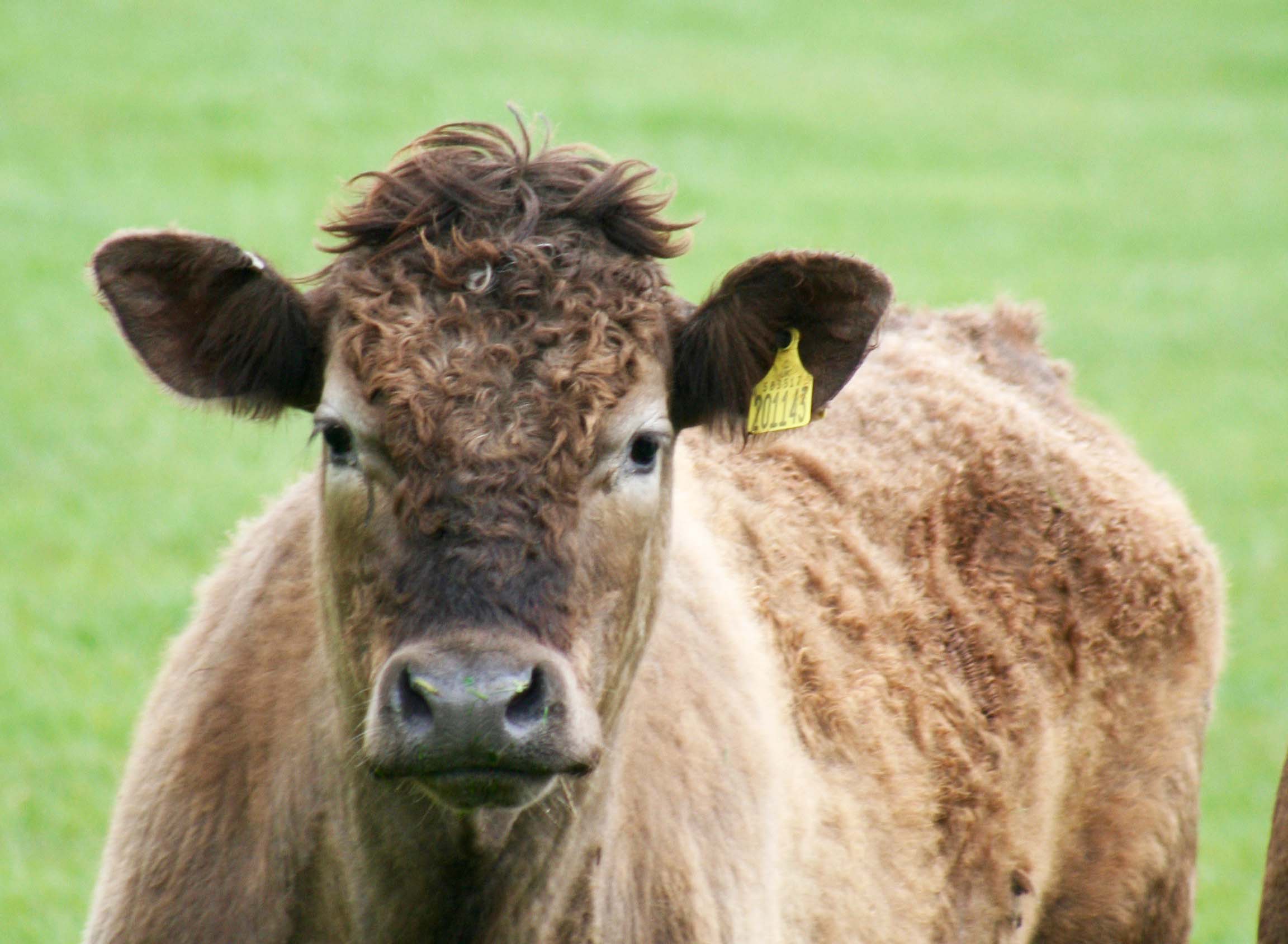
This steer seems to agree about sheep.

Shetland pony

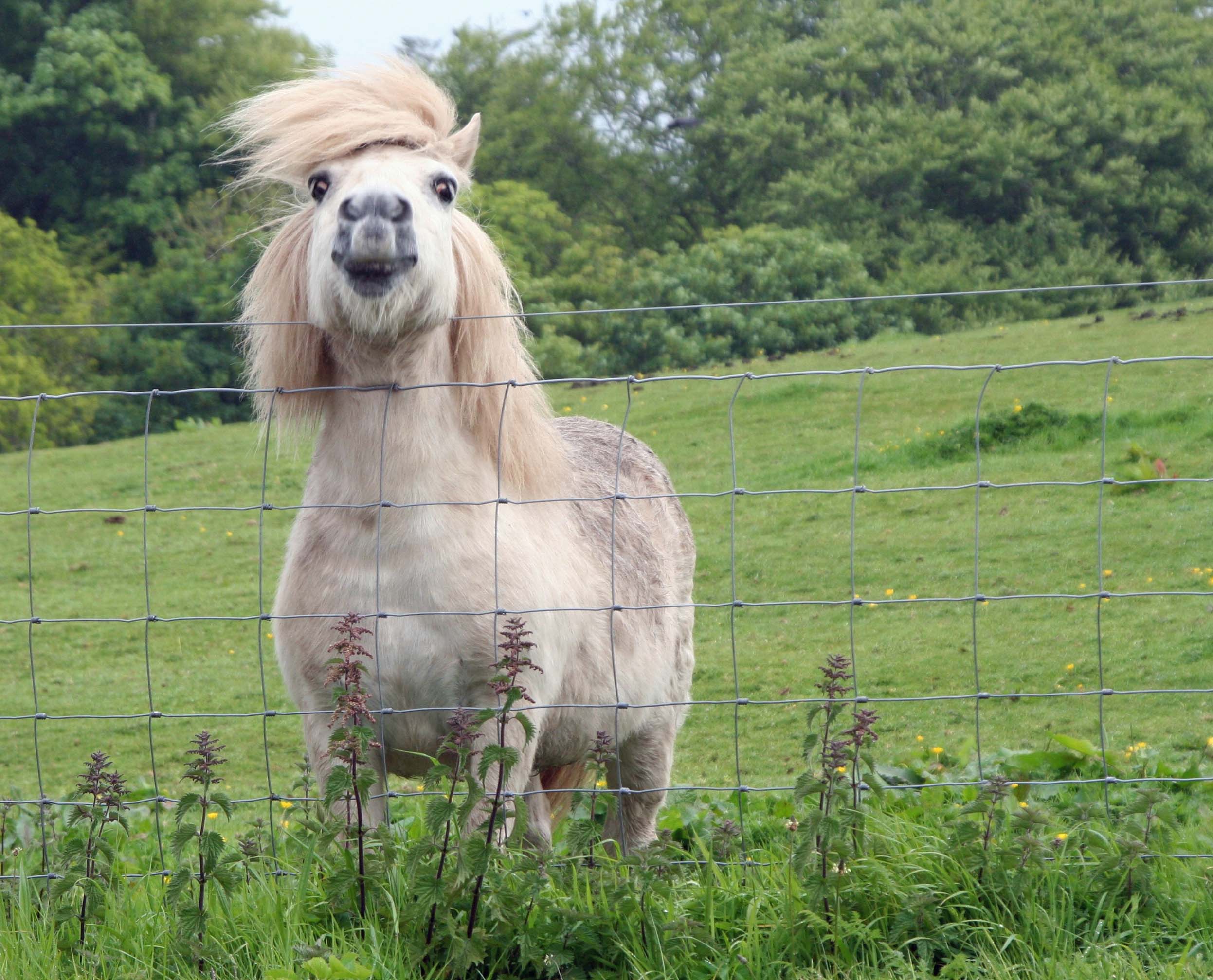
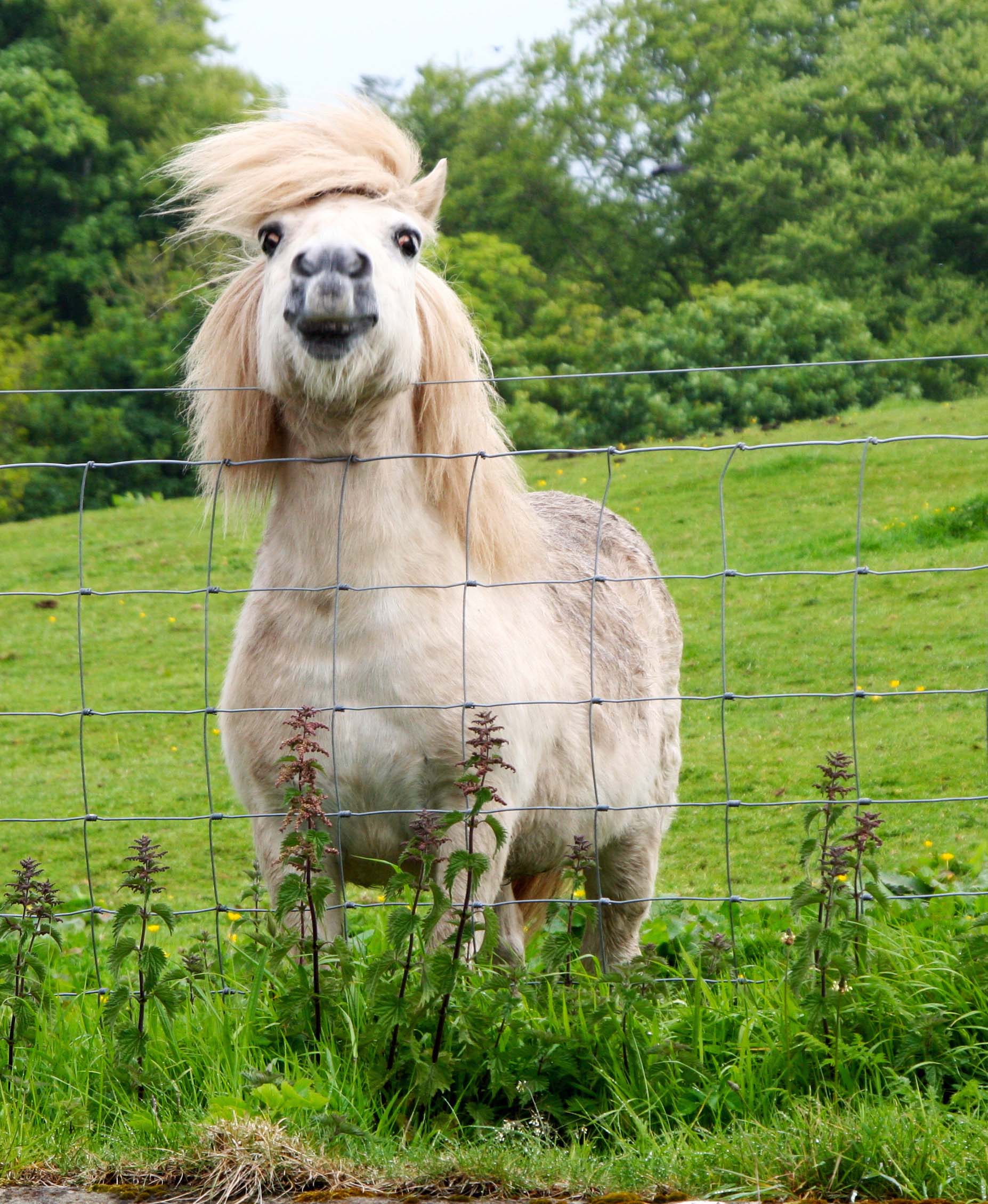
And who knows what this wild Shetland was thinking?  It may have thought we were good for an apple. Or maybe it was a reincarnated ancestor of mine trying to make contact…

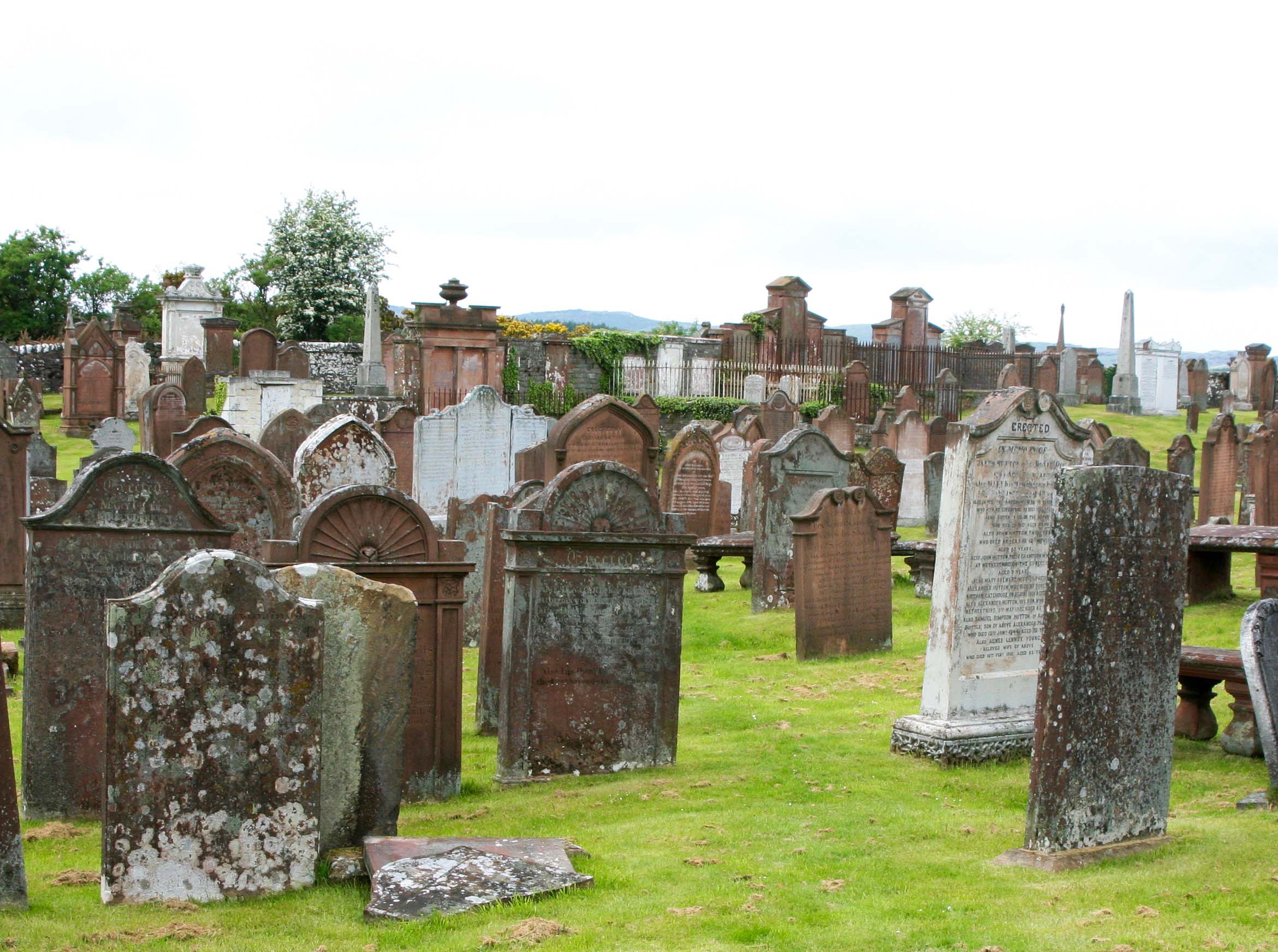
We checked out several graveyards. I was, after all, searching for dead people.

Scottish graveyard

These tombstones were so large they could have had books written on them. Wait, they did. Check out the light gray marker on the right.

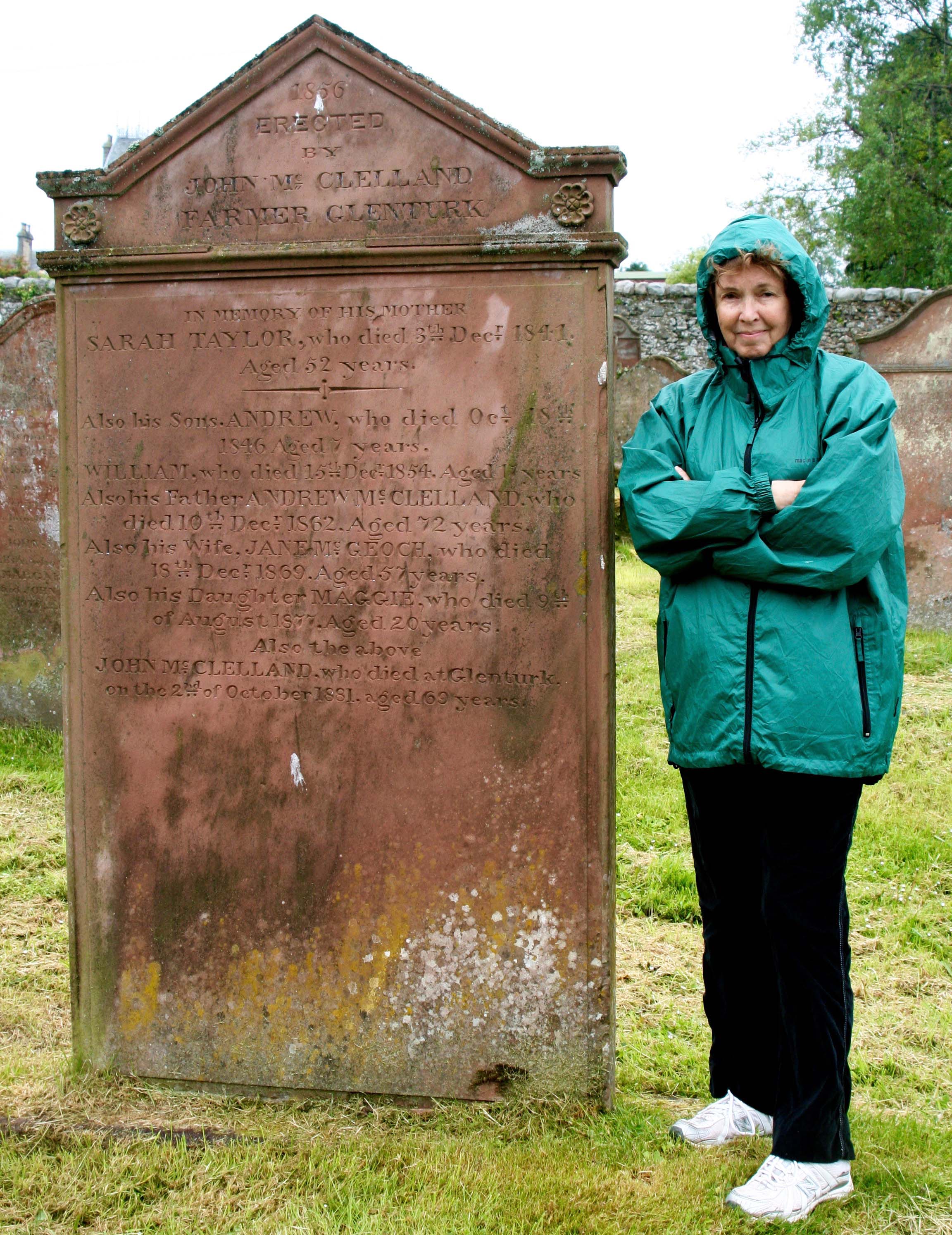
Peggy and Scotland grave

Peggy demonstrates just how big the tombstones were.   If I am correct in reading her body language, she is saying, “And how many more graveyards are we going to visit today, Curt? Don’t you realize it is raining and cold out here?” (Actually, Peggy is a great sport about visiting graveyards and this might have been one of her ancestors.)

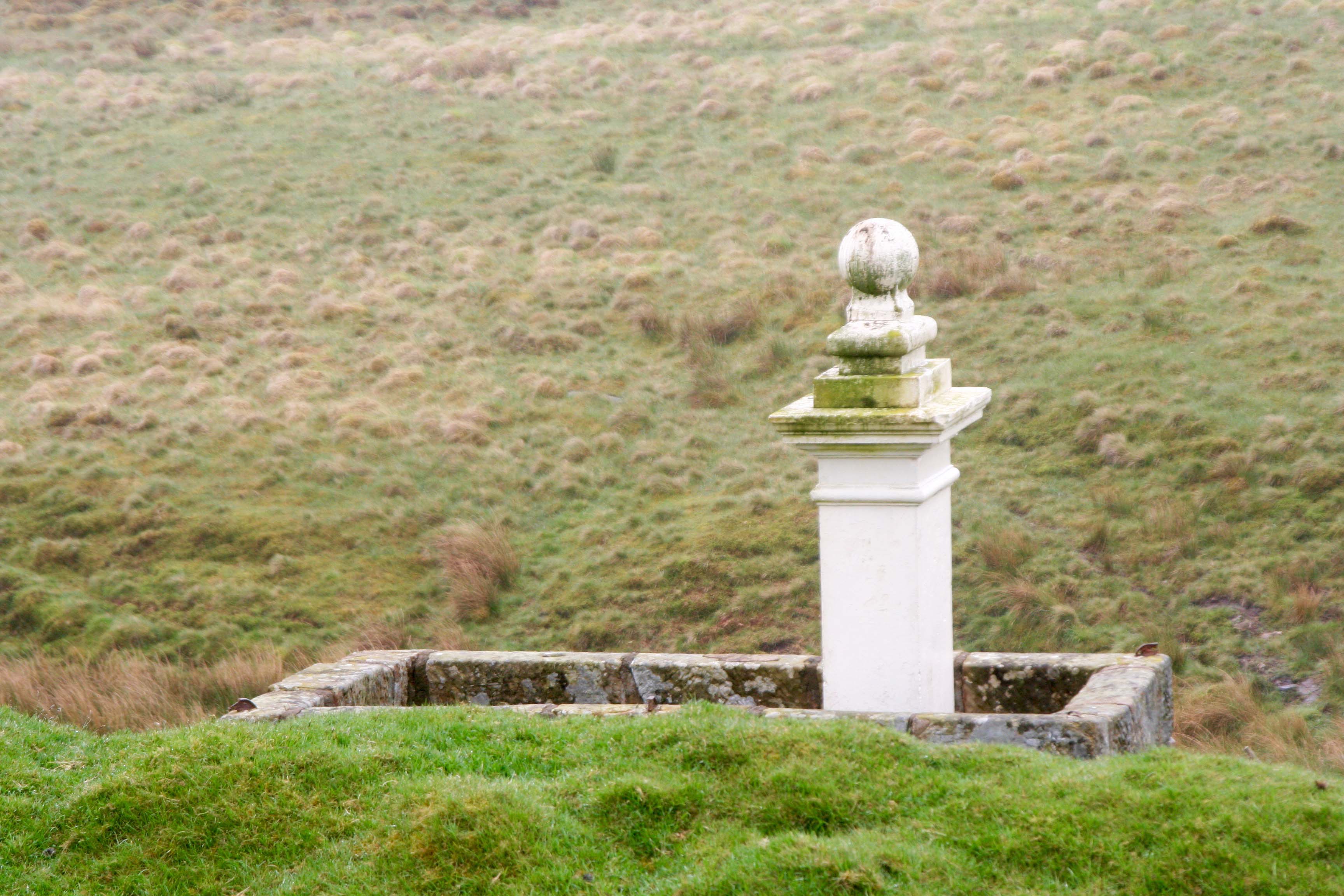
John Brown's grave

The lonely grave of John Brown, the Presbyterian martyr, who would have been a great, great, great, great, great, grandfather of mine, or something like that. My story of John Brown and the Presbyterian Covenanters, as they were known, can be found here.

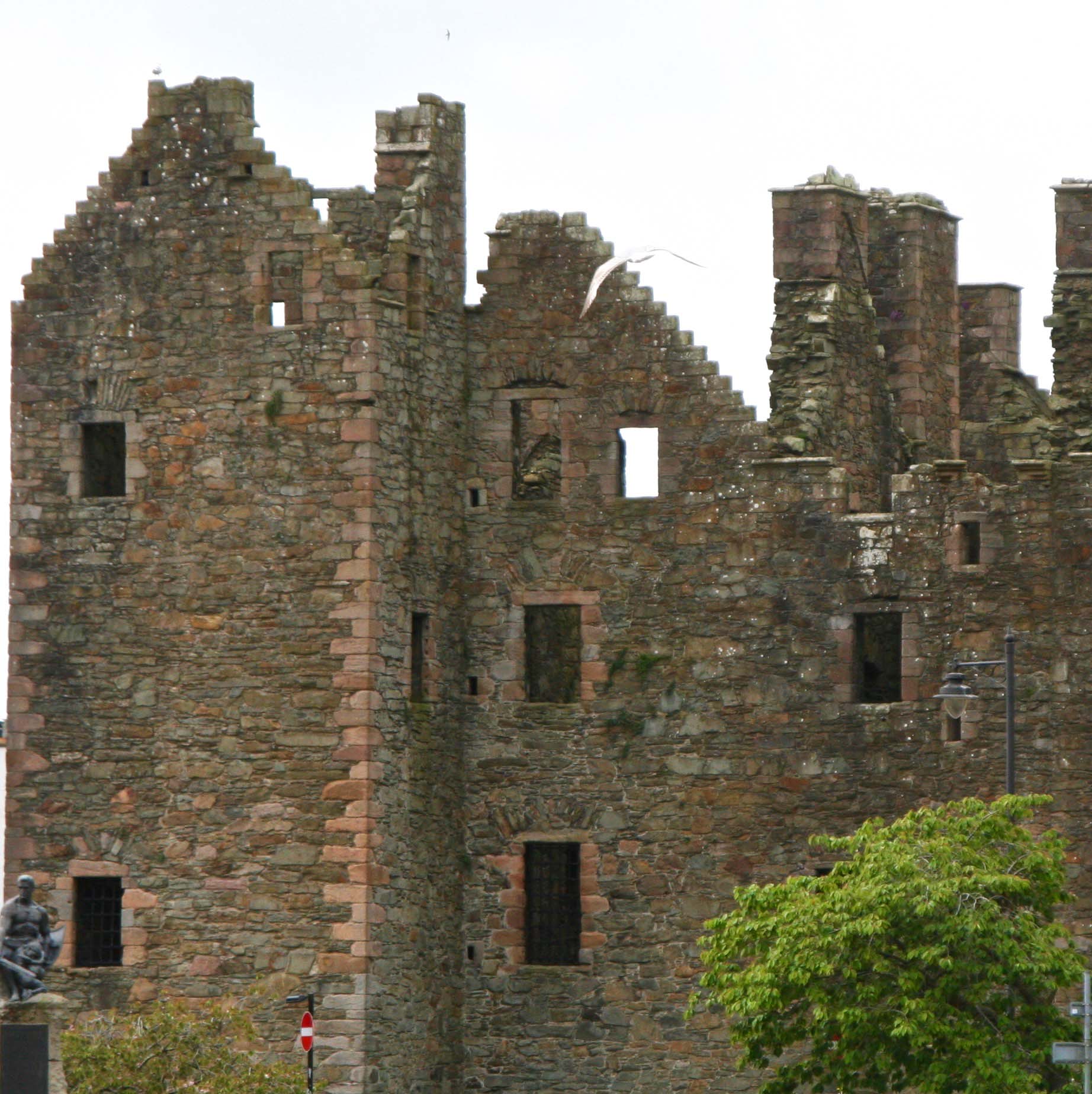
Castles were also on our itinerary. There are bunches in Scotland. Each lord wanted one to protect himself from the English— or his neighbor. One of my fifth cousins had assured me that the Mekemson family once owned a Scottish Castle, but it was north of Edinburgh.

Scottish castle 4

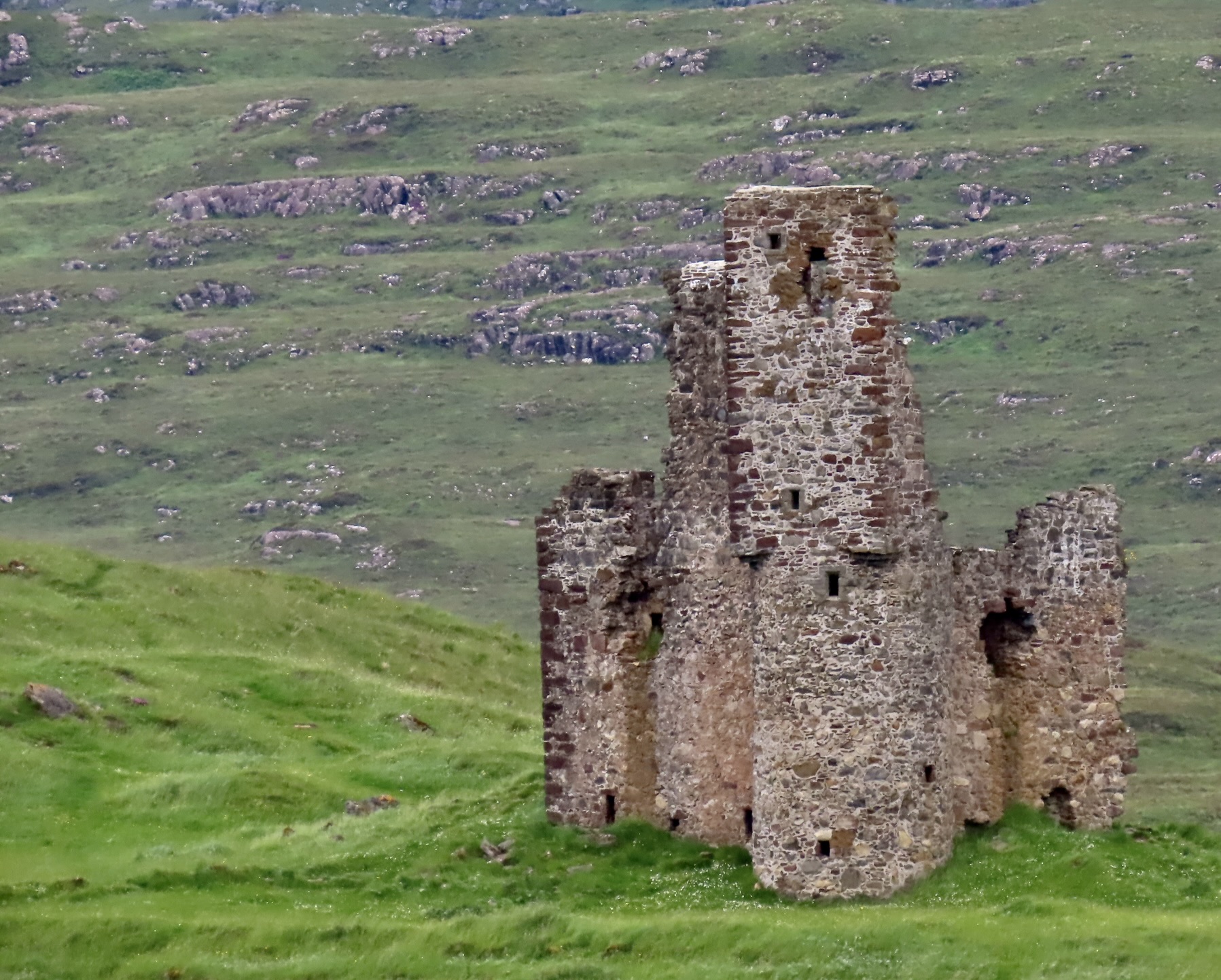
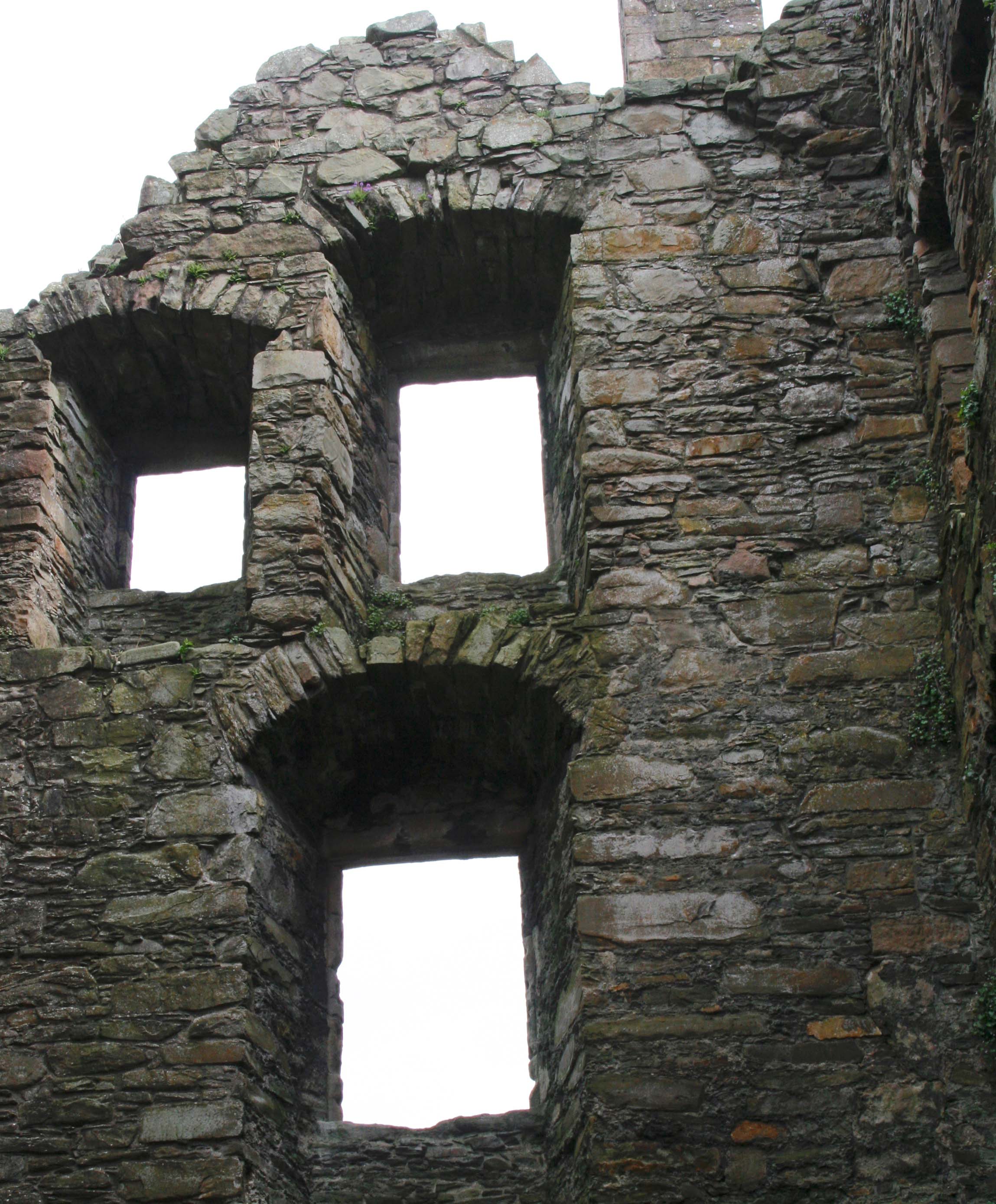
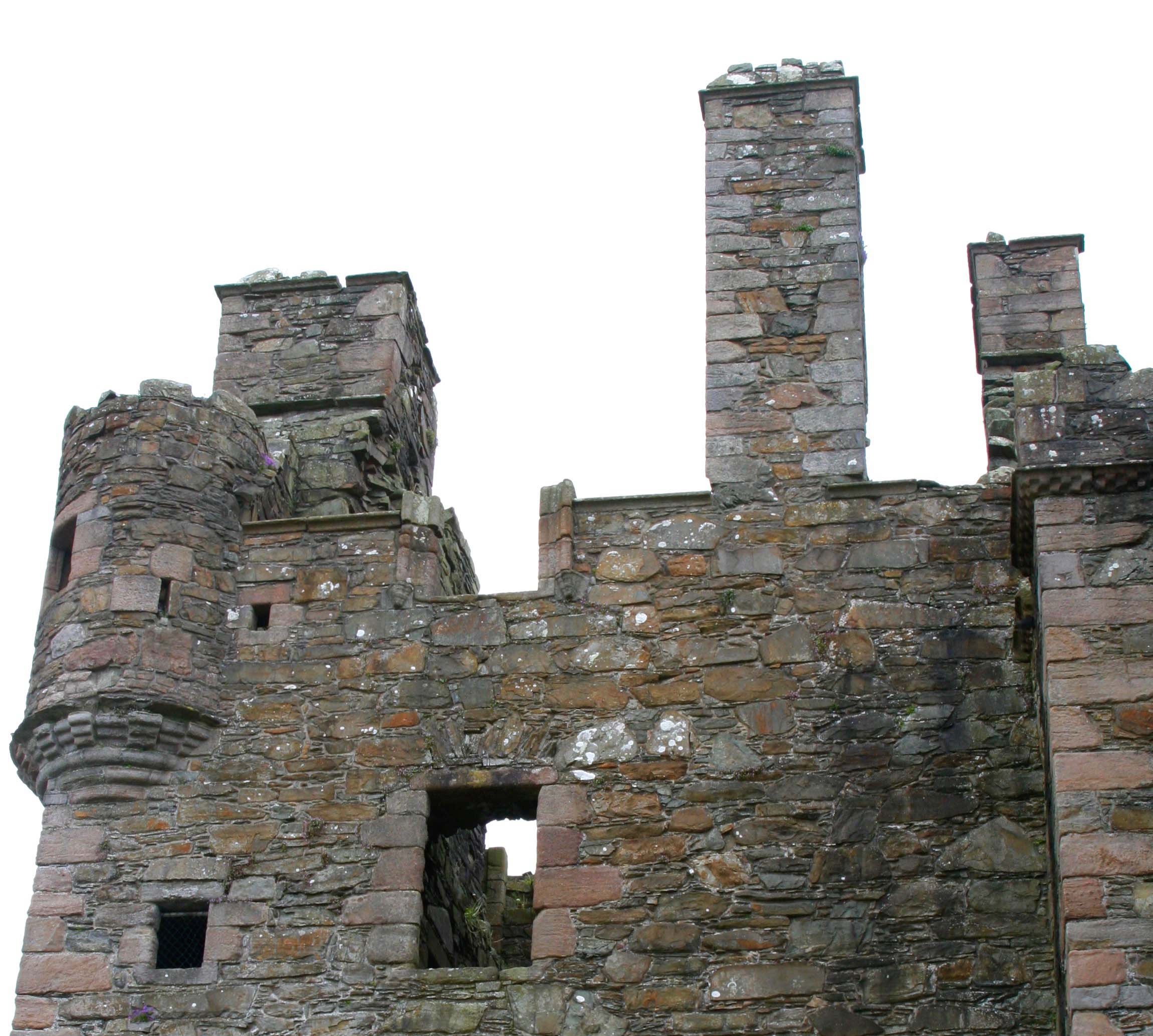
Old castles are a feature of Scotland. They are well built, but a bit airy.

Scottish castle 2

Scottish castle 1

Cat

Here kitty, kitty, kitty. Wonderful whiskers. Nice bouquet.

Peggy in castle

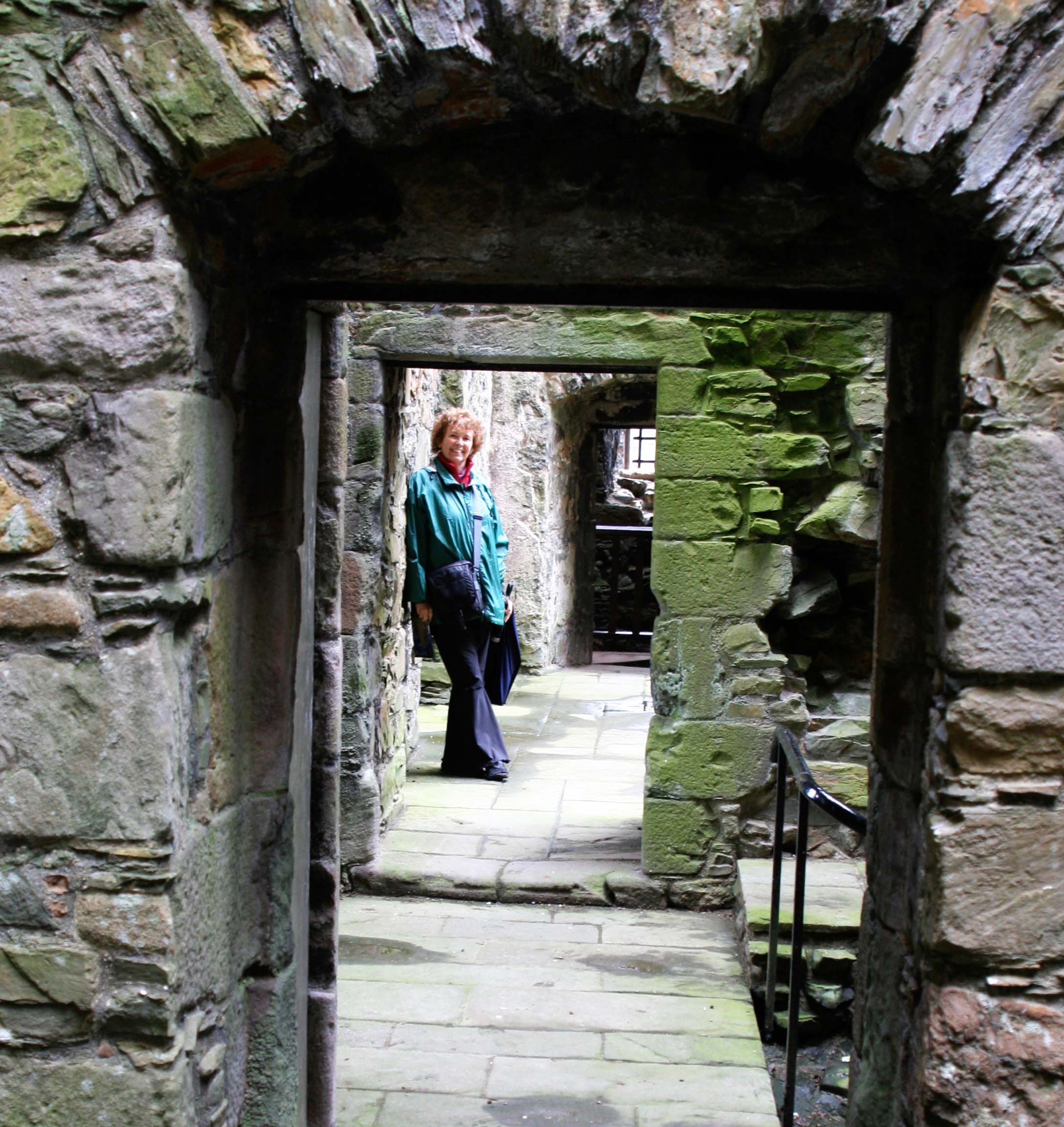
I found a winsome wench in one. Oh wait, that was a fair maiden!

Most of our time was spent admiring the beautiful scenery and fun towns plus visiting with the warm and welcoming people of Scotland.

Scenic river in Scotland

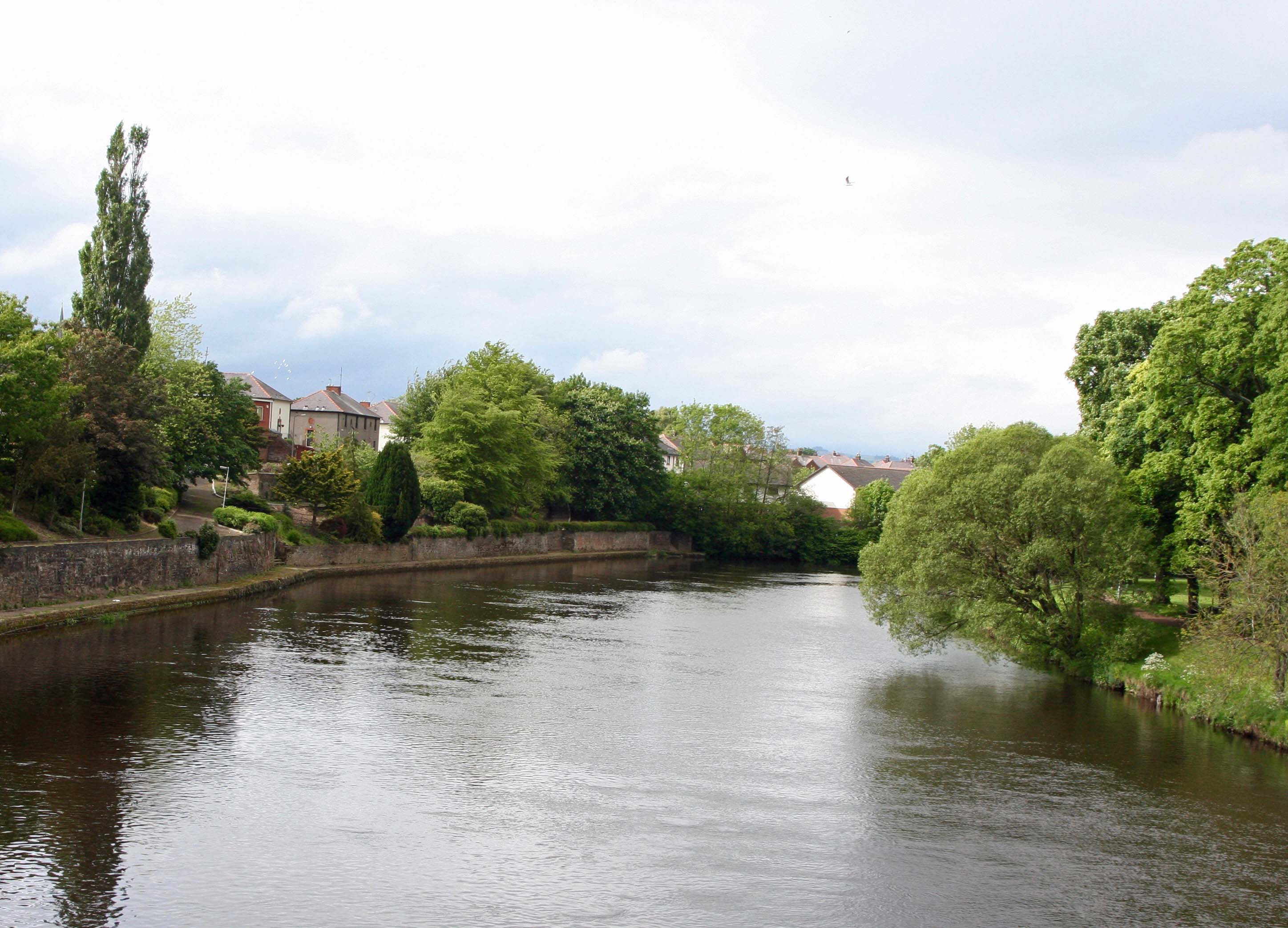
The River Nith in Dumfries.

Scottish broom

Scotch broom

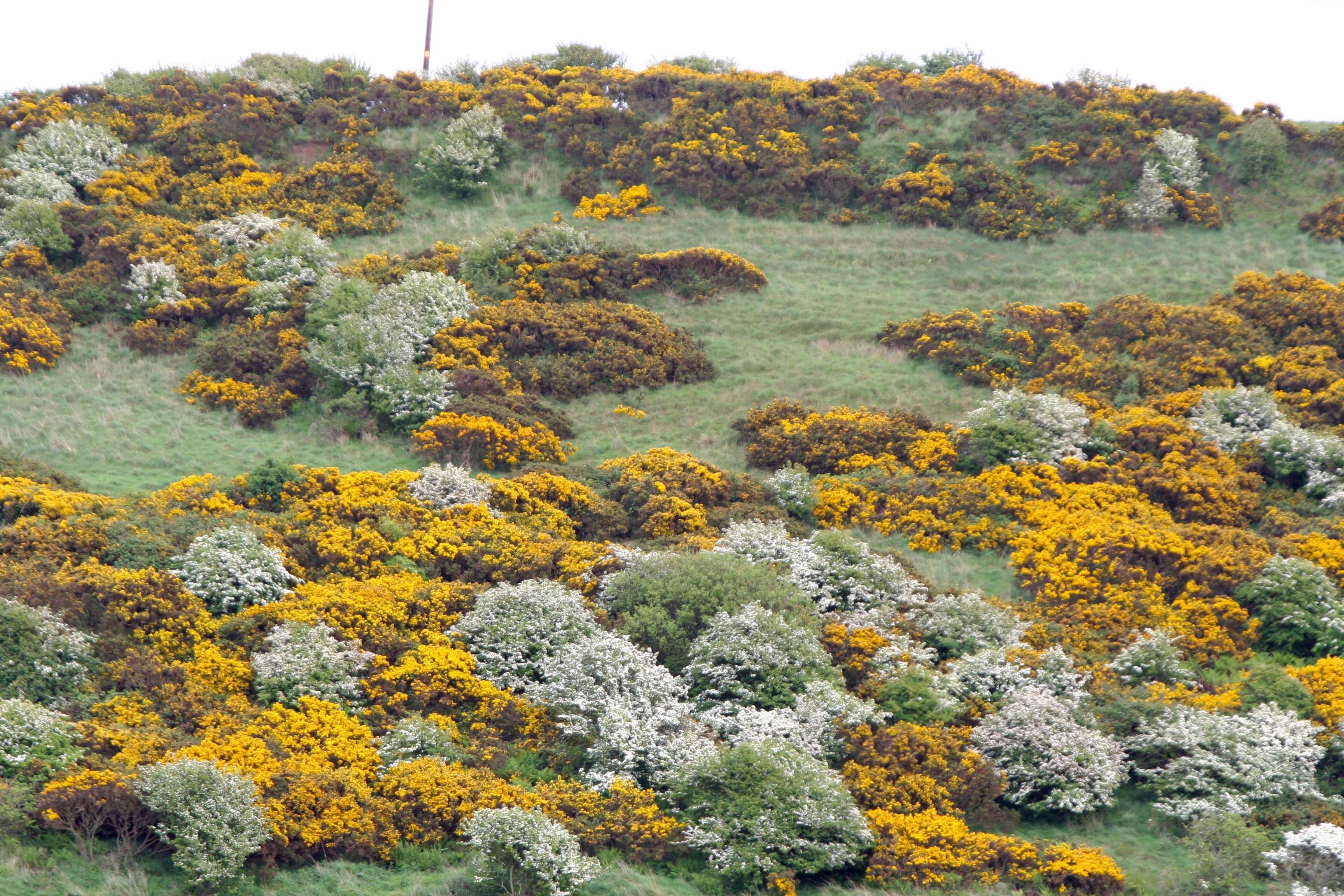
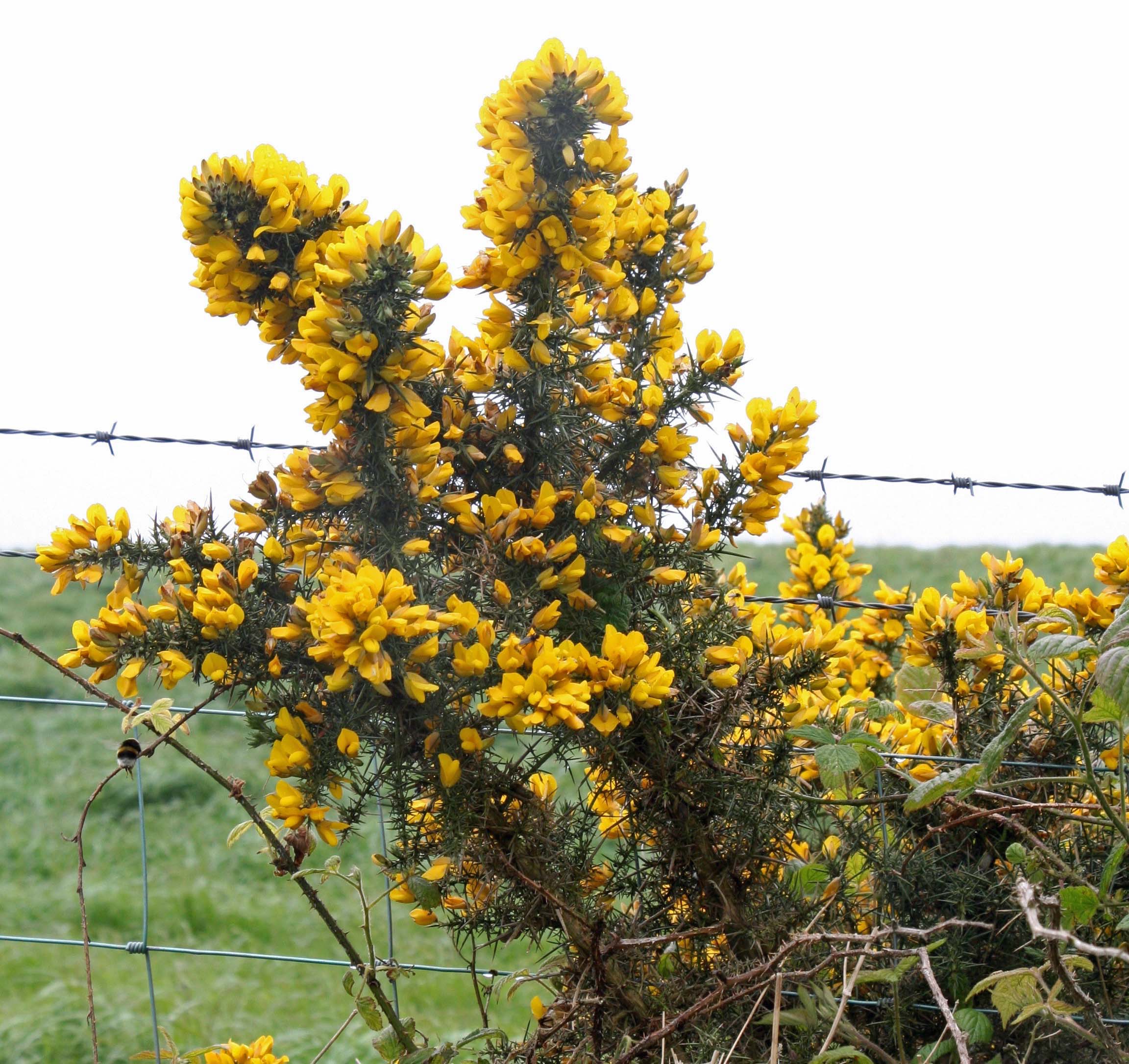
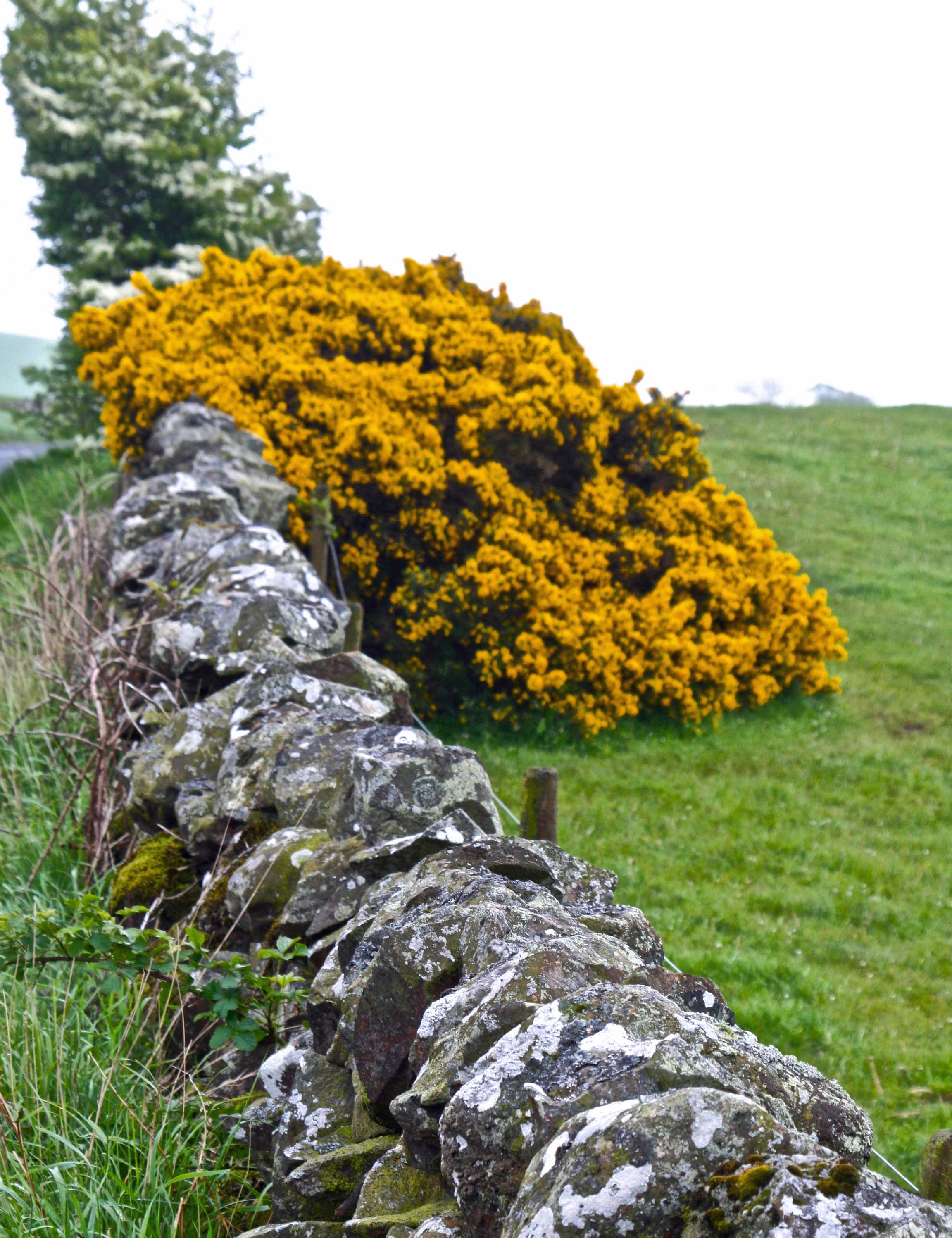
Scotch Broom was everywhere, adding its beautiful yellow to hillsides.

Scene in Scotland

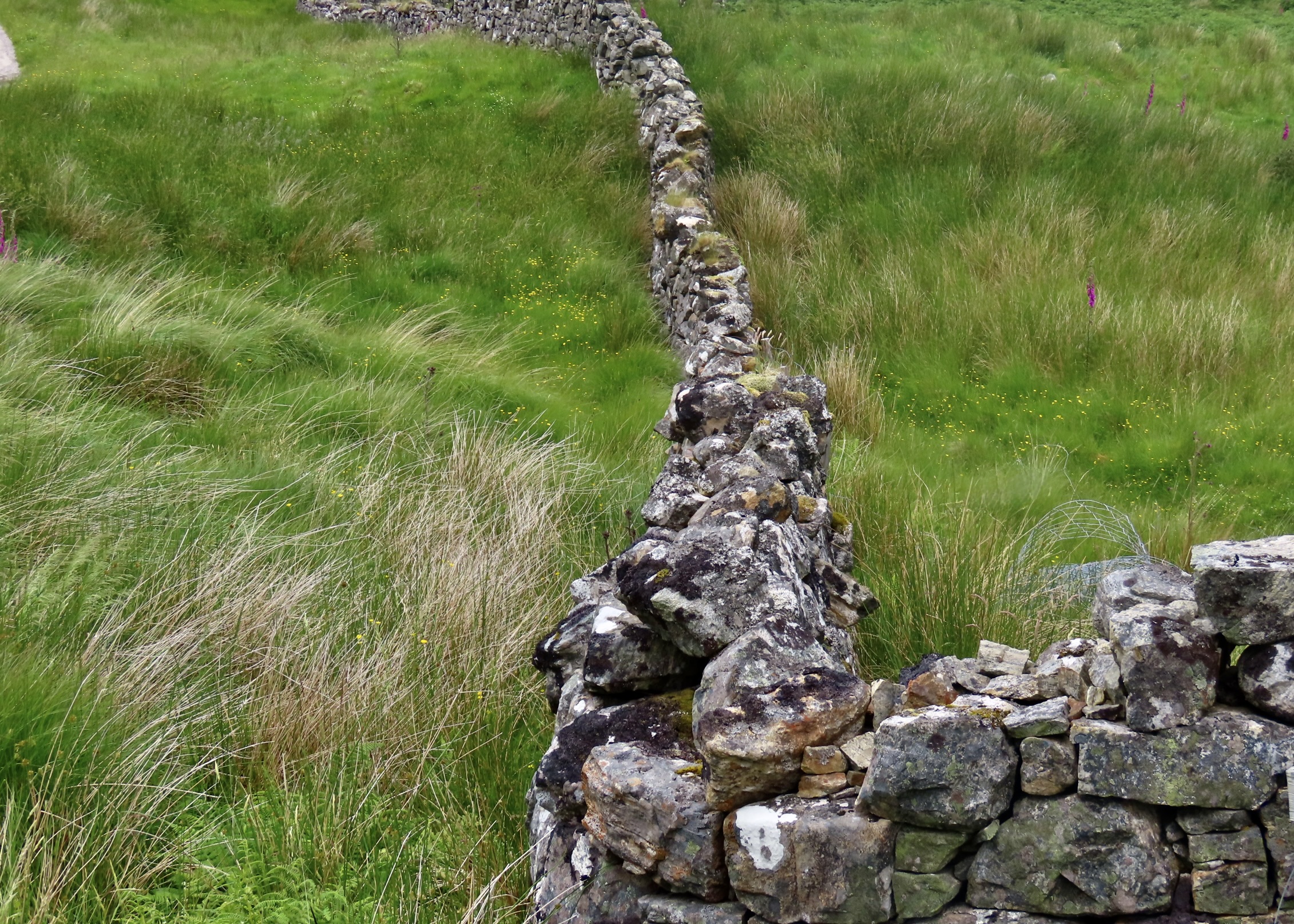
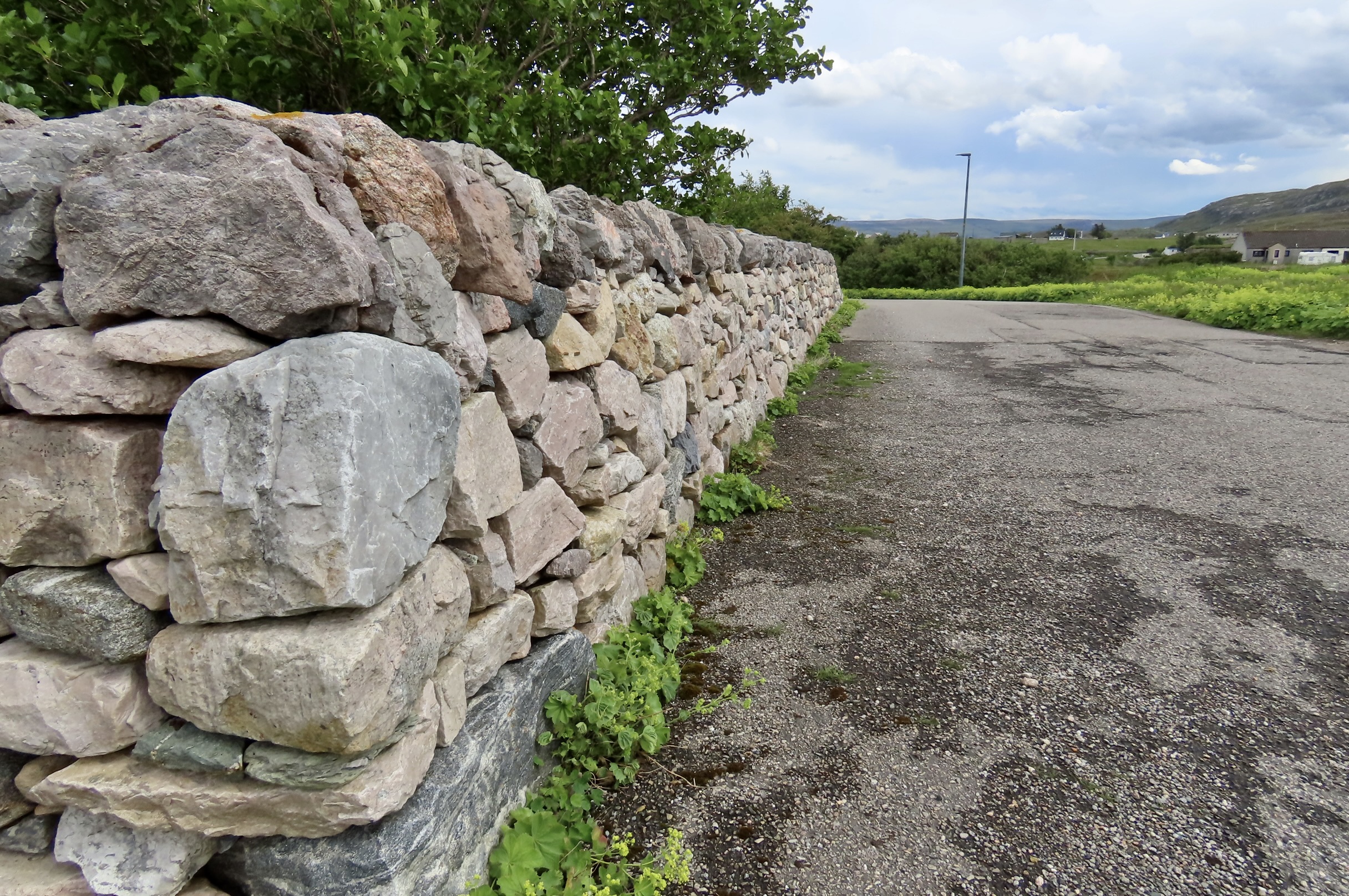
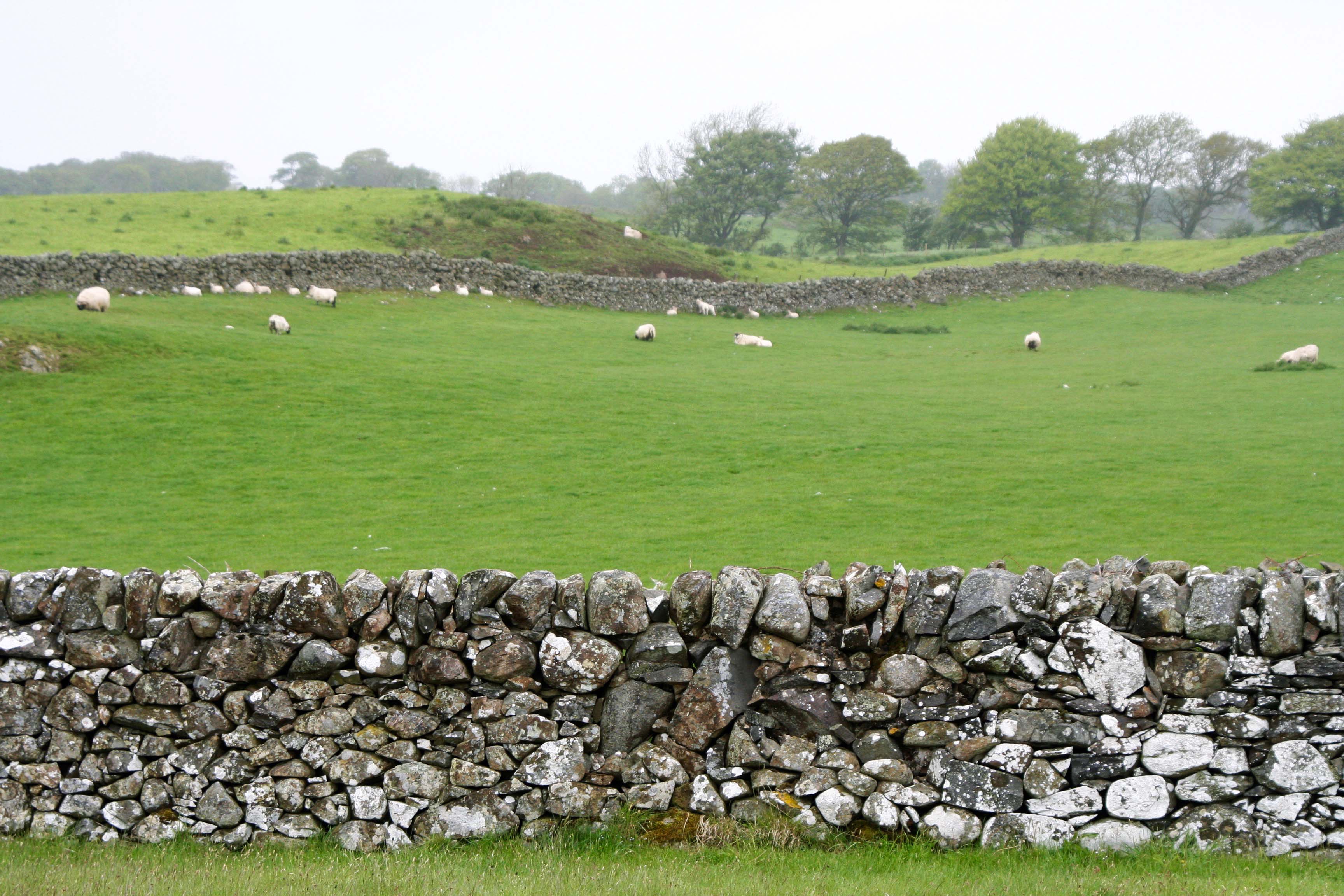
I am a fan of stone walls. Fences don’t get much classier! But imagine the work…

Stone circles in Scotland

Speaking of moving rocks, these boulders were placed here several thousand years ago as part of a sacred site.

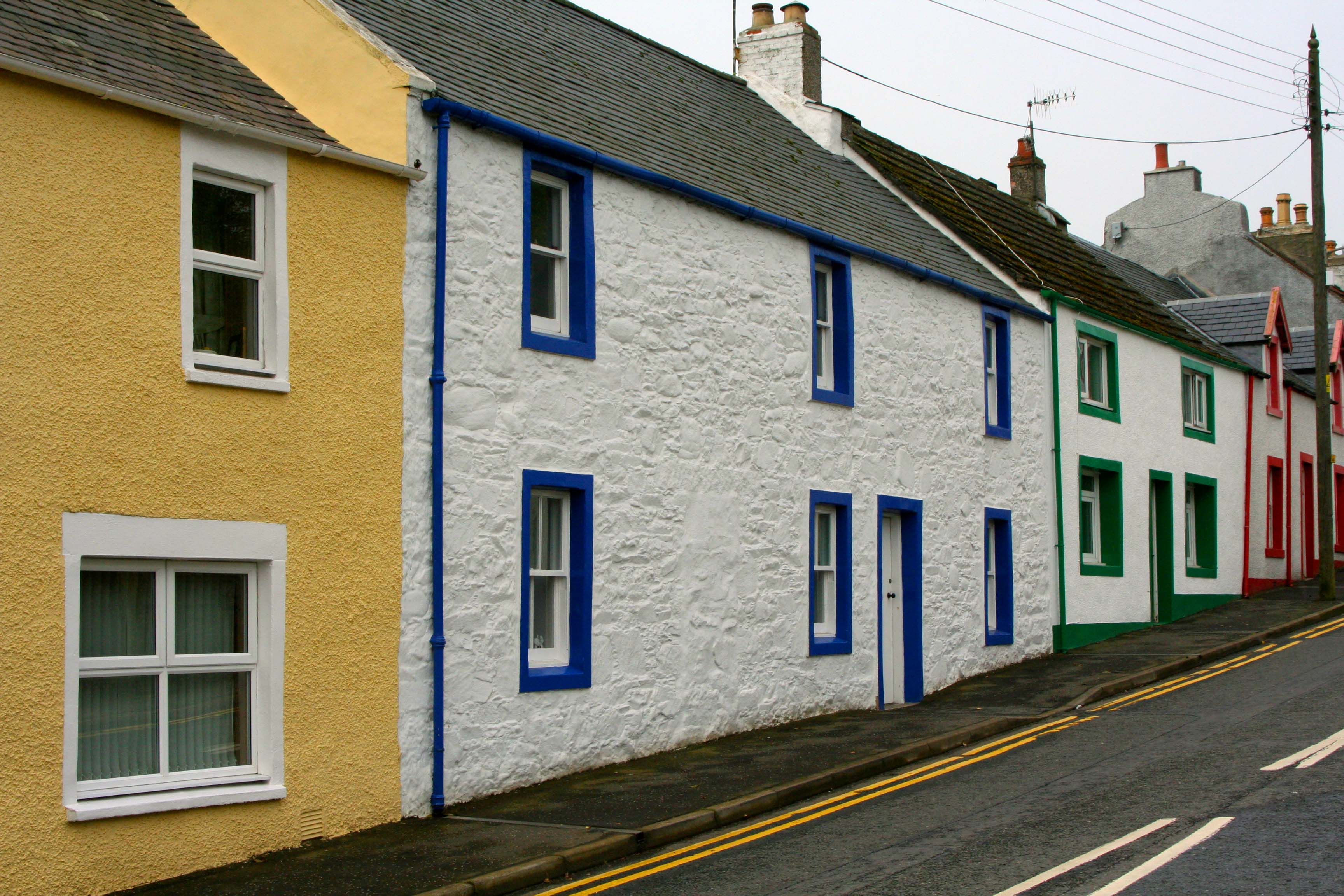
Homes in Scotland

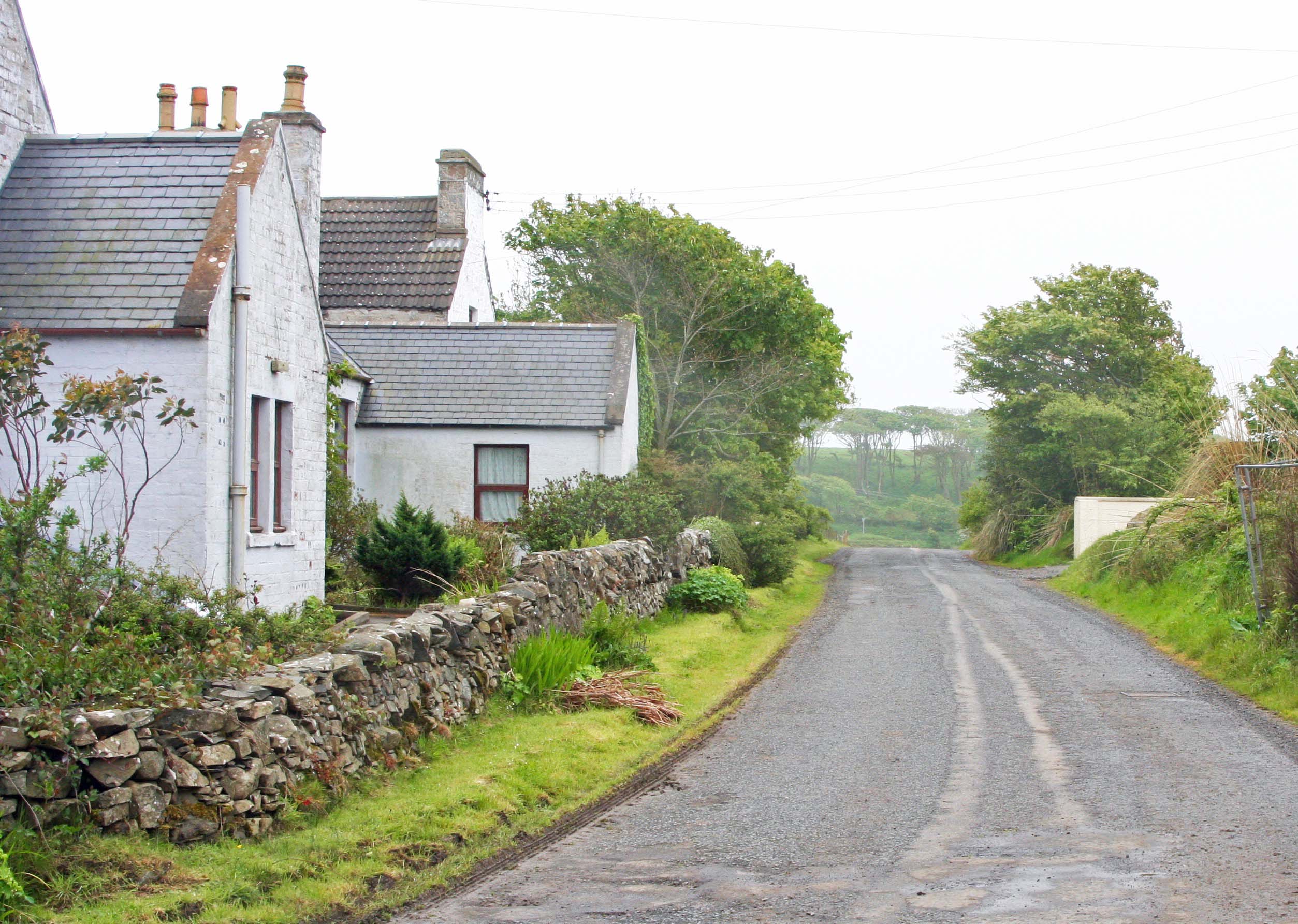
Small towns were colorful and clean. Kirkcolm was where my great-grandmother on the Thompson side was from. It’s where we met the Shetland.

Great grandfather's home

And this might have been the home of her father.

Window in Scotland

A fun window with posies.

Flowers in Scotland

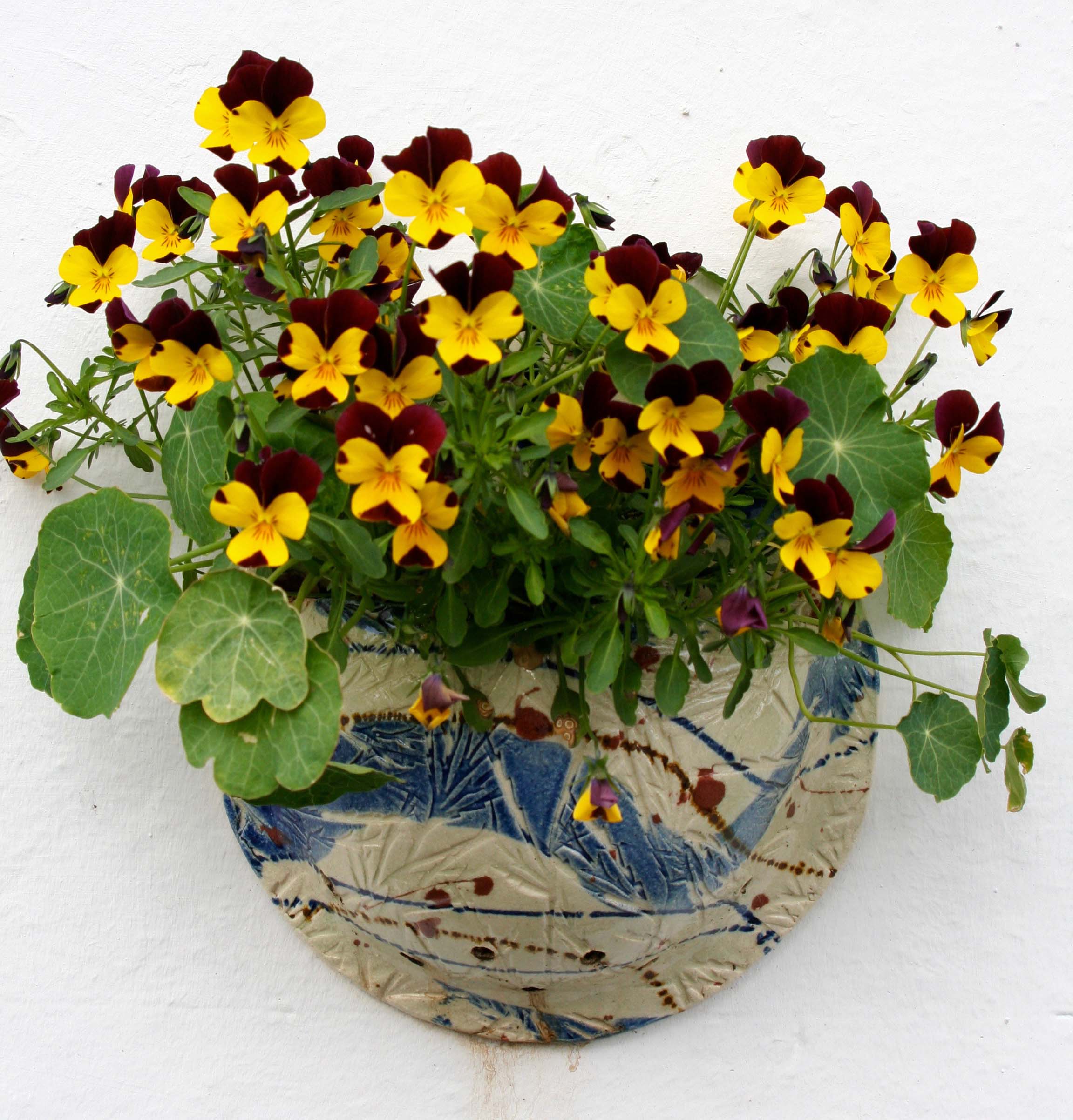
And a flower pot built into the front of a building to wrap up today’s post.


FRIDAY’S Blog-a-Book POST: The animal kingdom is kicked off my bed

MONDAY’S Travel Blog POST: A wrap up on the central coast of Washington

WEDNESDAY’S Photo Essay POST: The beauty of Sedona Arizona

The Case of the Disappearing Woman… and other Scary Halloween Tales: Part III

The ghostly grave of John Brown the Martyr on a lonely Scottish moor.

The ghostly grave of John Brown the Martyr on a lonely Scottish moor.

I mentioned the Scottish Presbyterian Martyr, John Brown, in a recent post I wrote about the Scottish presence on Cape Breton, Nova Scotia. My connection to Brown goes back to my Great, Great, Great Grand Father, James Mekemson, who had married Mary Brown Laughhead Findlay. John Brown was her Great Grandfather.

The story of John Brown’s murder verges on legend. He was, as the saying goes, a Covenanter’s Covenanter, a very devout man. The Scottish Covenanters received their name from signing a Covenant that only Christ could be King, which eliminated the King of England from being God’s representative on earth. The King was not happy. So he set out to eliminate Covenanters.

Reverend Alexander Peden, one of the top leaders of the Covenanter Movement, described Brown as “a clear shining light, the greatest Christian I ever conversed with.” High praise indeed; the type you reserve for a man who is killed for your cause.

They say that Brown would have been a great preacher, except he stuttered. Leading Covenanters visited his home and secret church services were held there. Important meetings took place. Alexander Peden stayed at his house the night before Brown earned his martyrdom and warned of dark times. Peden was something of a prophet when it came to predicting dire events. This time he was right.

Brown was out gathering peat with his nephew the next morning when soldiers led by John Graham of Claverhouse appeared out of the mist and captured him. The date was May 2, 1685. Claverhouse, or Bloody Clavers as the early Presbyterians identified him, was the King’s go-to man when it came to doing away with Covenanters. He was not noted for his compassion.

He took Brown back to his home and demanded that he swear an oath to the King in front of his wife and children. Brown started praying instead. The legend states that Claverhouse ordered his soldiers to kill Brown but they refused. So he took out his own pistol and shot him in the head in front of his family. The story then goes on to describe how Brown’s wife, Isabel Weir, went about the yard collecting pieces of her husband’s brain. (I don’t mean to treat this lightly, but somehow I can’t help thinking about a TV episode of Bones.)
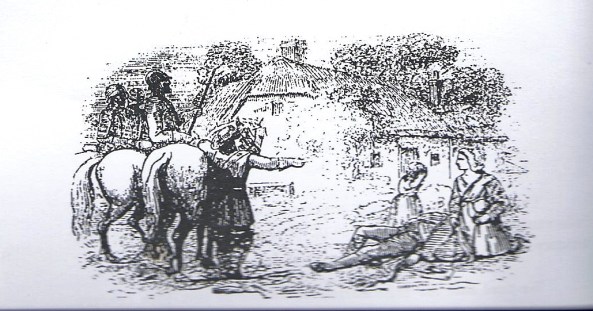
An early sketch of John Brown the Martyr of Priesthill Scotland being shot down by Bloody Clavers.

An early sketch of John Brown the Martyr of Priesthill Scotland being shot down by Bloody Clavers.

Three years ago, Peggy and I made a trip to Scotland where I went on a search for ancestors. In looking for John Brown’s grave, we had stayed at a wonderful Bed and Breakfast known as the Old Church B&B in the village of Muirkirk. The owners had provided us with directions on how to find the site. It wasn’t obvious. Old and older roads led to a farmhouse where we were to park our car and then hike down a barely visible trail a mile or so to the grave.
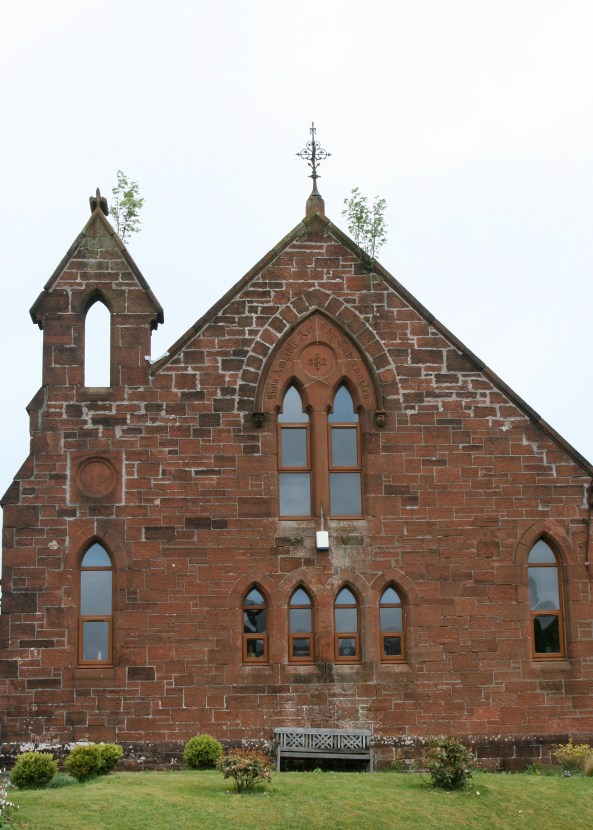
The Old Church B&B in Muirkirk Scotland where we stayed when searching for John Brown's grave.

The Old Church B&B in Muirkirk Scotland where we stayed when searching for John Brown’s grave.

Finally the old farmhouse came into sight. A woman was standing on a porch enclosed by a three-foot high rock wall. She was wearing clothes that my great-grandmother times five might have found fashionable. Since we would be walking through her property in search of John Brown’s grave, I got out to talk with her.

But she did something strange. She disappeared. Now this was strange in two ways. Obviously she didn’t want to talk with us. She turned her back and walked rapidly toward the door.  Okay, I could live with that even though we had found most Scots to be friendly and helpful. Possibly she was shy.

What bothered me more was she sank. It was like she was traveling down an escalator or open elevator. Her head disappeared beneath the stonewall before she reached the door. I did not see her go inside.

“Maybe there are steps down to an underground cellar,” I thought to myself. Or maybe she merely bent over to work on a flower garden. Curiosity got the better of me. I walked over. There was no woman; there were no flowers; there were no stairs. As far as I could see the floor of the porch was solid stone.

I asked Peggy, “Did you see that woman disappear?”

“She went inside,” my logical wife explained.

“Ah,” I said and put the matter out of my mind as we wandered out the indistinct trail across the vacant moors to John Brown’s lonely grave. But the thought, unlike the woman, wouldn’t conveniently disappear; it kept nibbling away at me. Later I asked Peggy if she had seen the woman sink into the porch.

“Yes,” she replied.

“Did you actually see her go in the house?”

“No.”

So there you have it. Had we actually seen a ghost? Was this some ancient ancestor? I will wrap up my Halloween tales at this point but how about you? Do you have any ghostly tales you would like to share on this scary 2016.

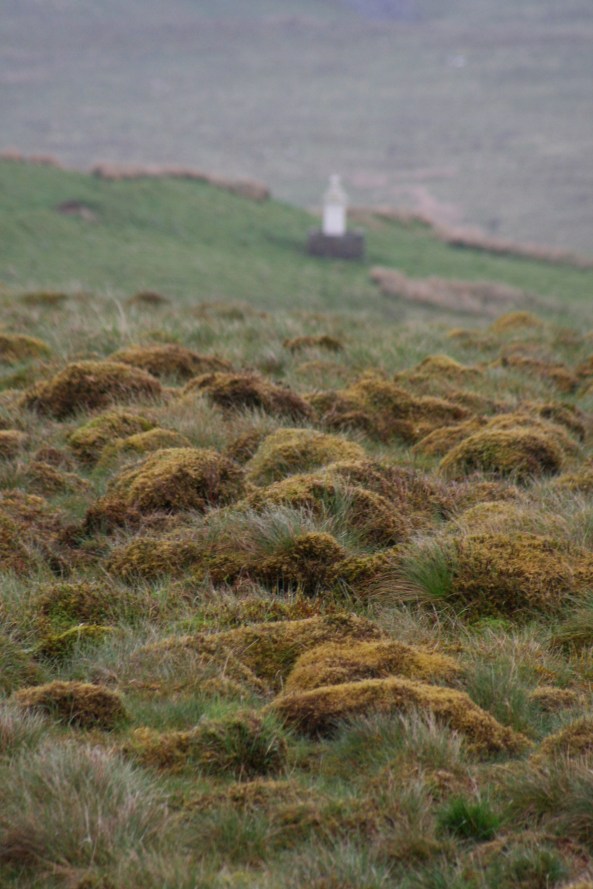
Peggy stands near where John Brown was shot on the likely remains of his house. Mist covers the distance as it would have on the day he was captured.

Peggy stands on the site where Isabel Weir may have once gone about her ghastly chore of gathering up John Brown’s brains. Mist covers the distance as it would have on the day he was captured.

NEXT POST: I will be back to bicycling across the province of Ontario, Canada.
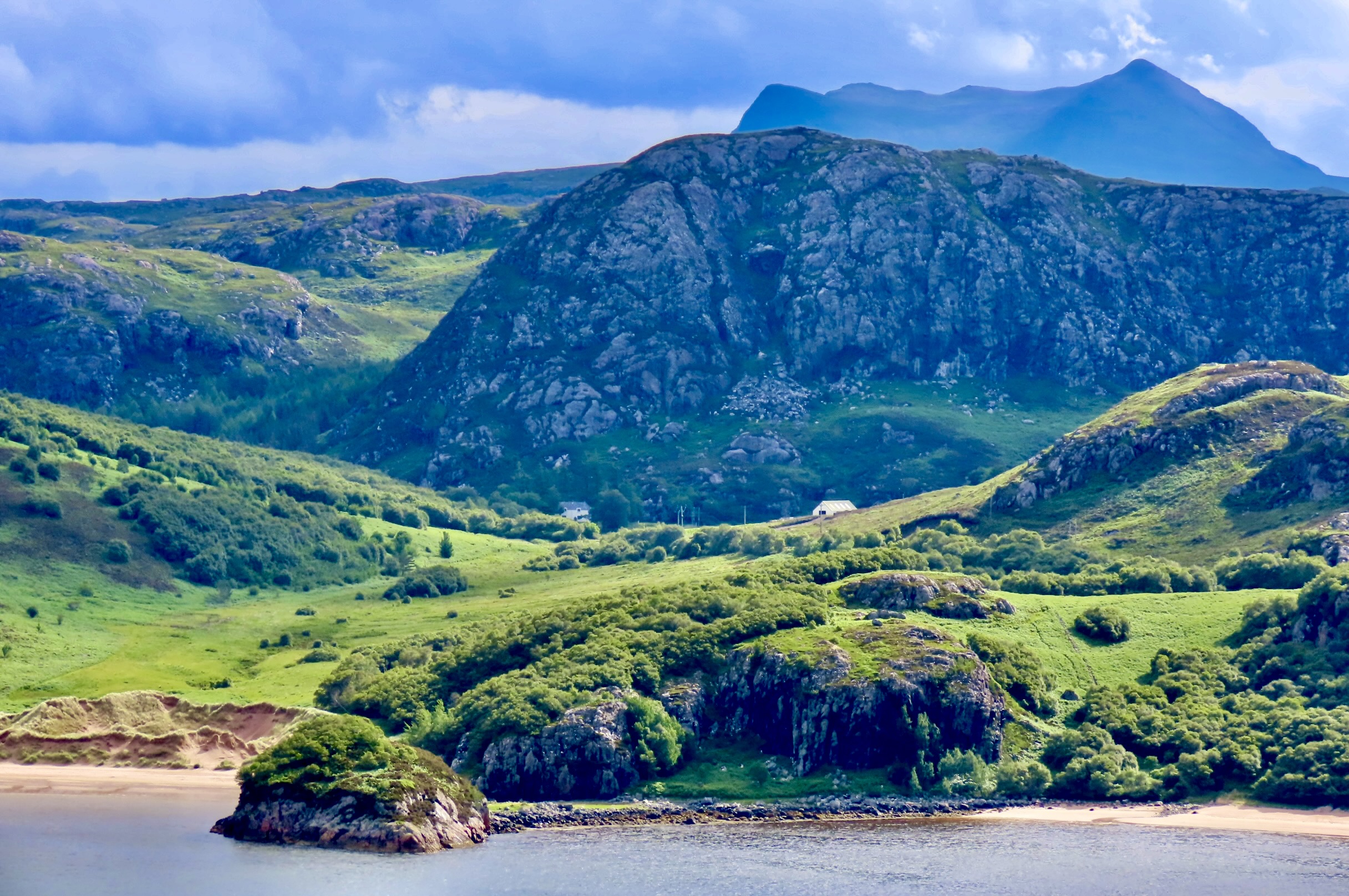
My Thoughts Are on Scotland…

Phot of Scottish cattle taken by Curtis Mekemson.
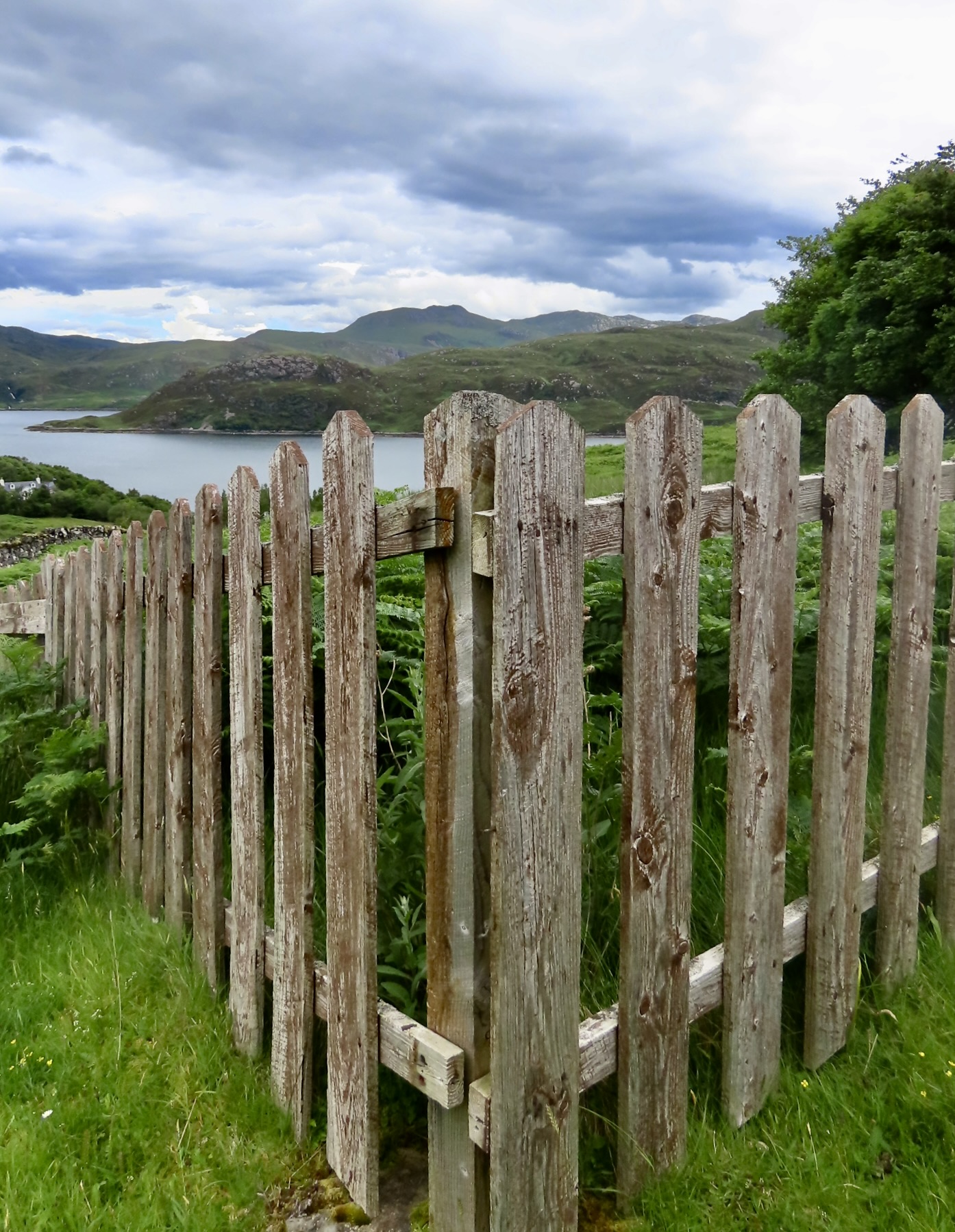
Scottish cattle line up and eagerly await the news on Scotland’s bid for independence.
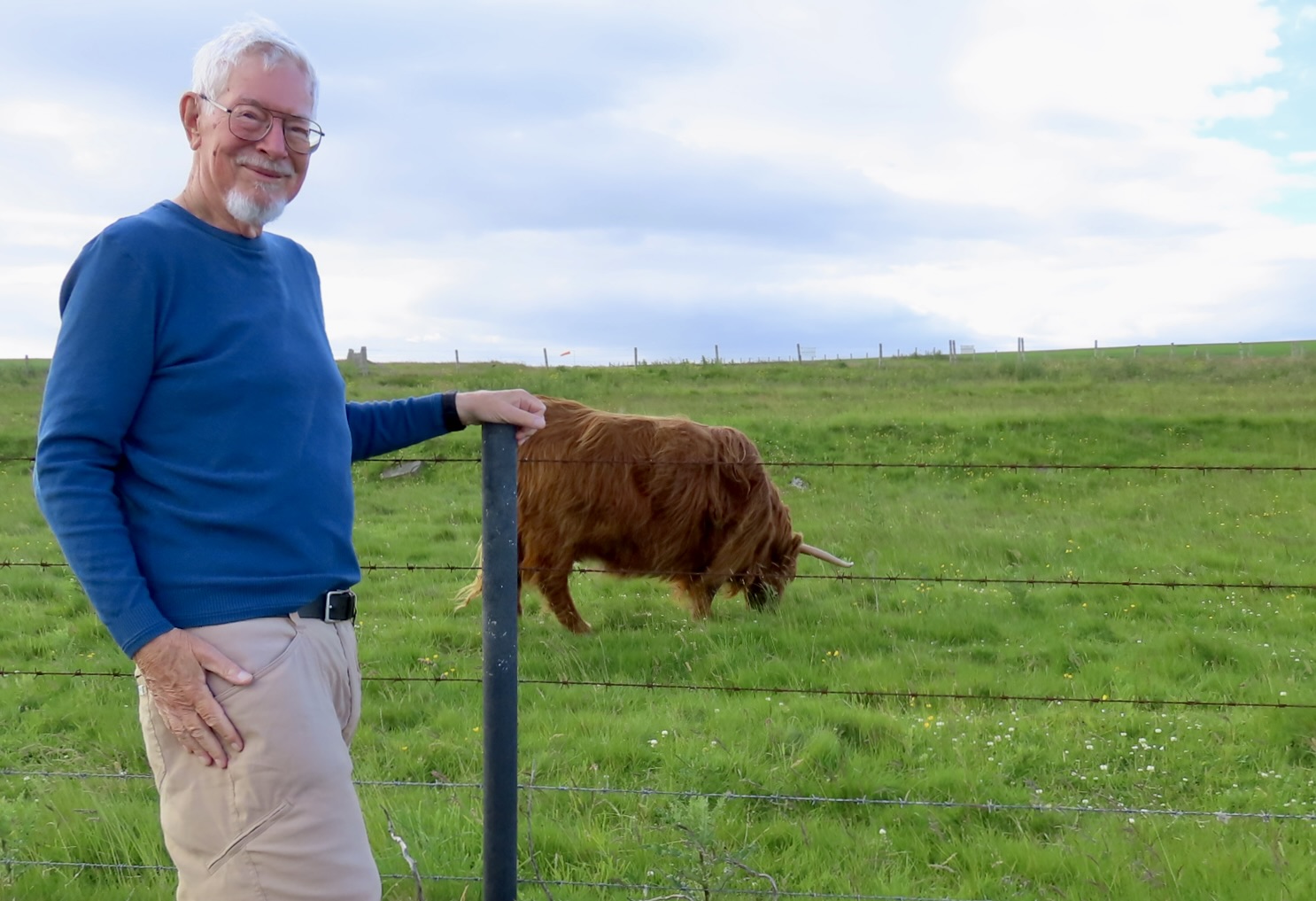
Scots are going to the polls today to decide their future. The decision is a tough one: do they remain part of the United Kingdom, or do they break free and create their own nation-state?

I wish the good people of Scotland and their beautiful country well, regardless of the outcome. As I wish the English well. Our nation owes both countries a deep debt of gratitude for who we are. So do I.

But my heart is with the Scots. My father went to a family reunion in the late 1960s and came back with a family chart that showed a long connection with Scotland going all the way back to the 1600s and John Brown the Martyr. Brown was killed in front of his wife and children in 1685 because he refused to renounce his Presbyterian beliefs in favor of the English king.

I’ve been to Scotland twice. The first time I was wandering by myself. I rented a car in Glasgow and explored much of northern Scotland. The beauty of the country and the warmth of the Scots impressed me deeply, even though Nessie, the Loch Ness monster, refused to pose for a photograph.

Three years ago Peggy and I returned to do genealogical research in the southwestern region of the country where John Brown had died and my great-grandmother had been born. Once again, I was impressed— as was Peggy. When looking for John Brown’s grave, we stayed at the excellent Old Church B&B in Muirkirk and had the opportunity to become friends with the owners David and Lesley Martin. We have maintained that friendship since over Facebook. Lesley, BTW, is an excellent chef and runs a baking school. David is a Scottish patriot. Over the past year, he has posted on Scottish independence a thousand times, at least. (Grin)

Following are some photos from our trip to Scotland that reflect the beauty of the country. (Next blog I will return to Burning Man.)

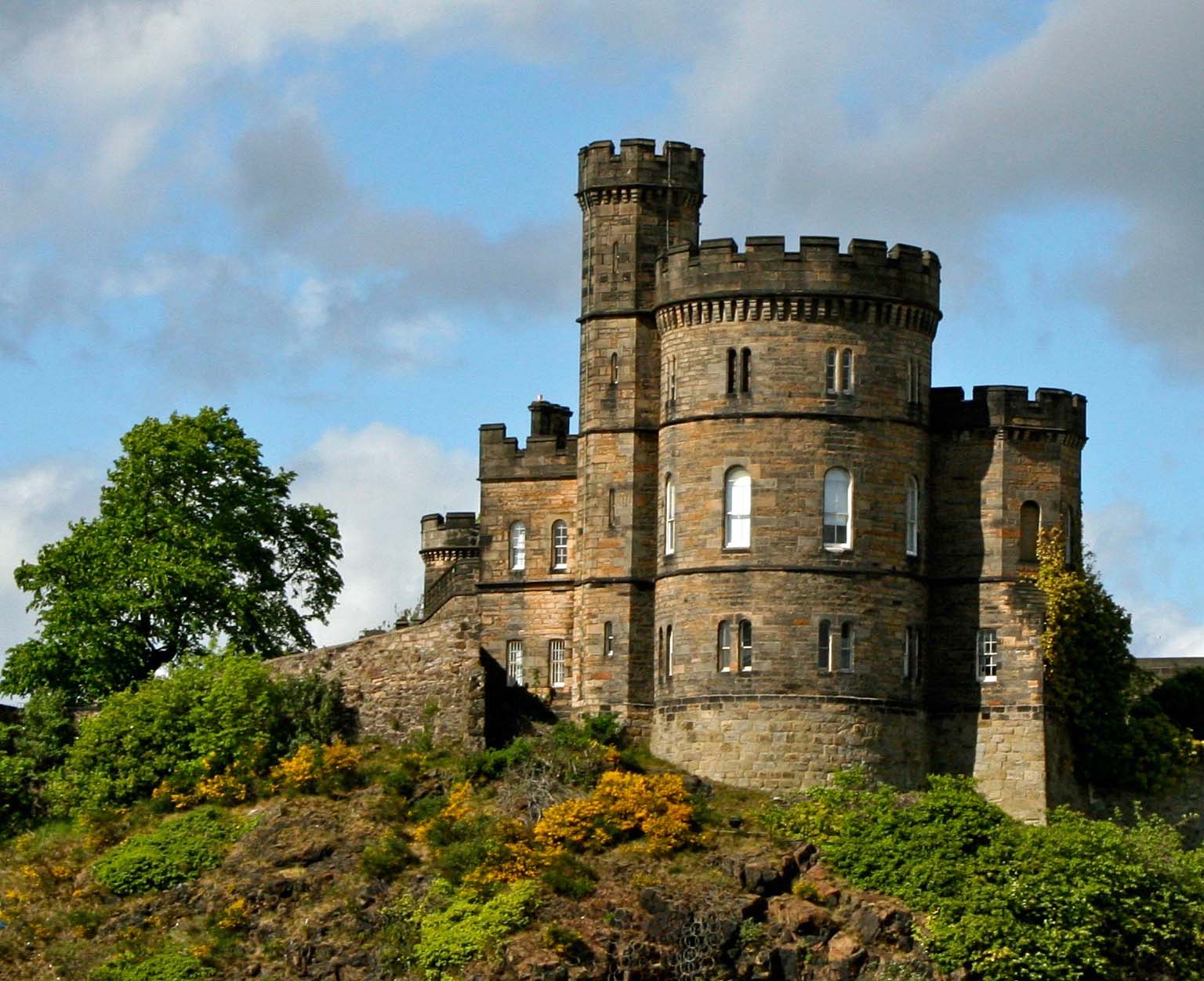
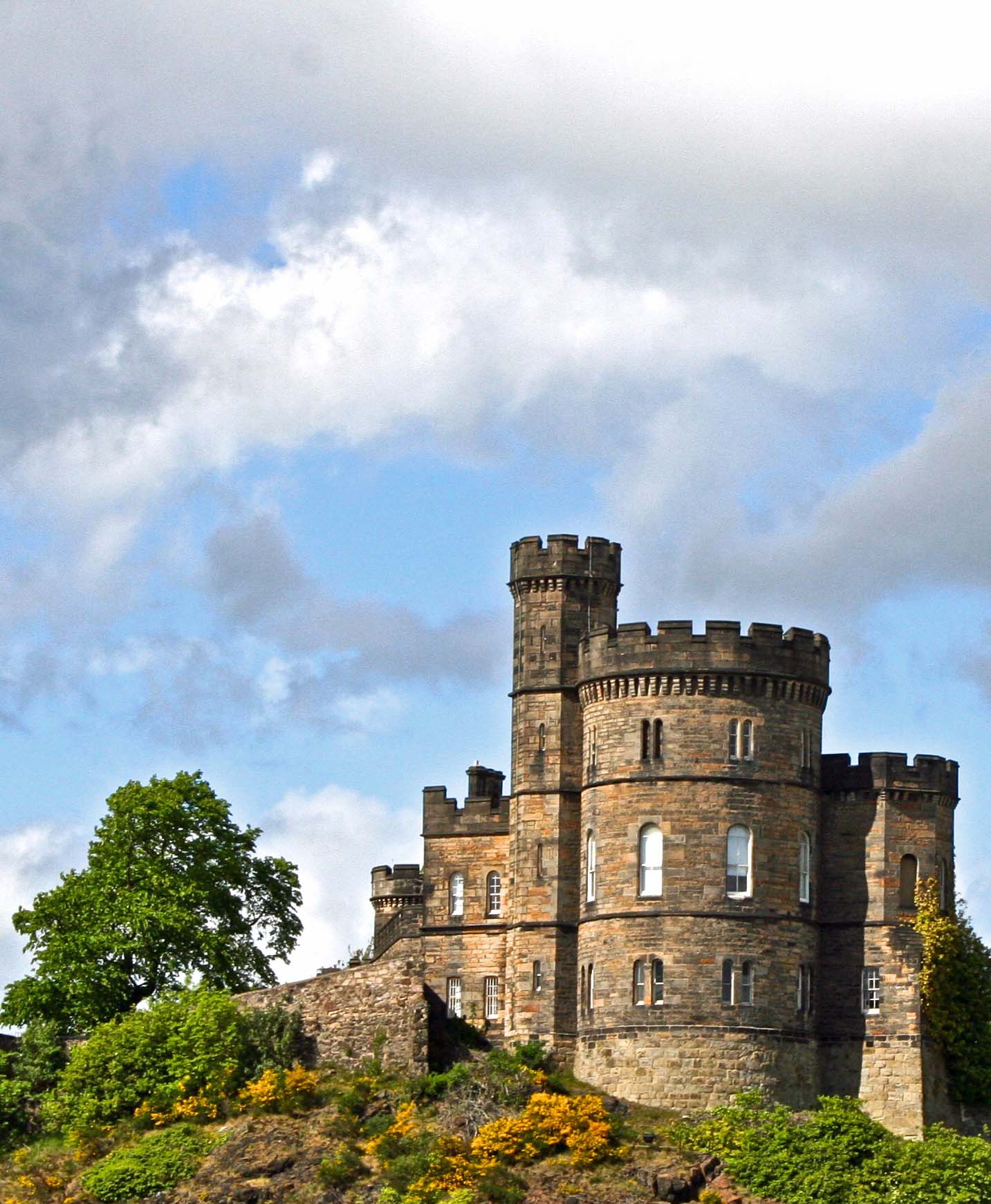
A Scottish Castle in Edinburg.

A Scottish Castle in Edinburg.

Scottish sheep photo by Curtis Mekemson.

Furry fellow. We were happily lost on a remote road when this guy greeted us and wanted to know where we thought we were going.

Photo of Kirkcolm, Scotland by Curtis Mekemson.

The small town of Kirkcolm where my great-grandmother was born.

Photo of ancient fence in Scotland and Scottish Broom taken by Curtis Mekemson.

A view of the Scottish countryside featuring an ancient rock fence and Scottish Broom.

View of Scottish countryside taken by Curtis Mekemson.

Another view of the beautiful countryside of Scotland.

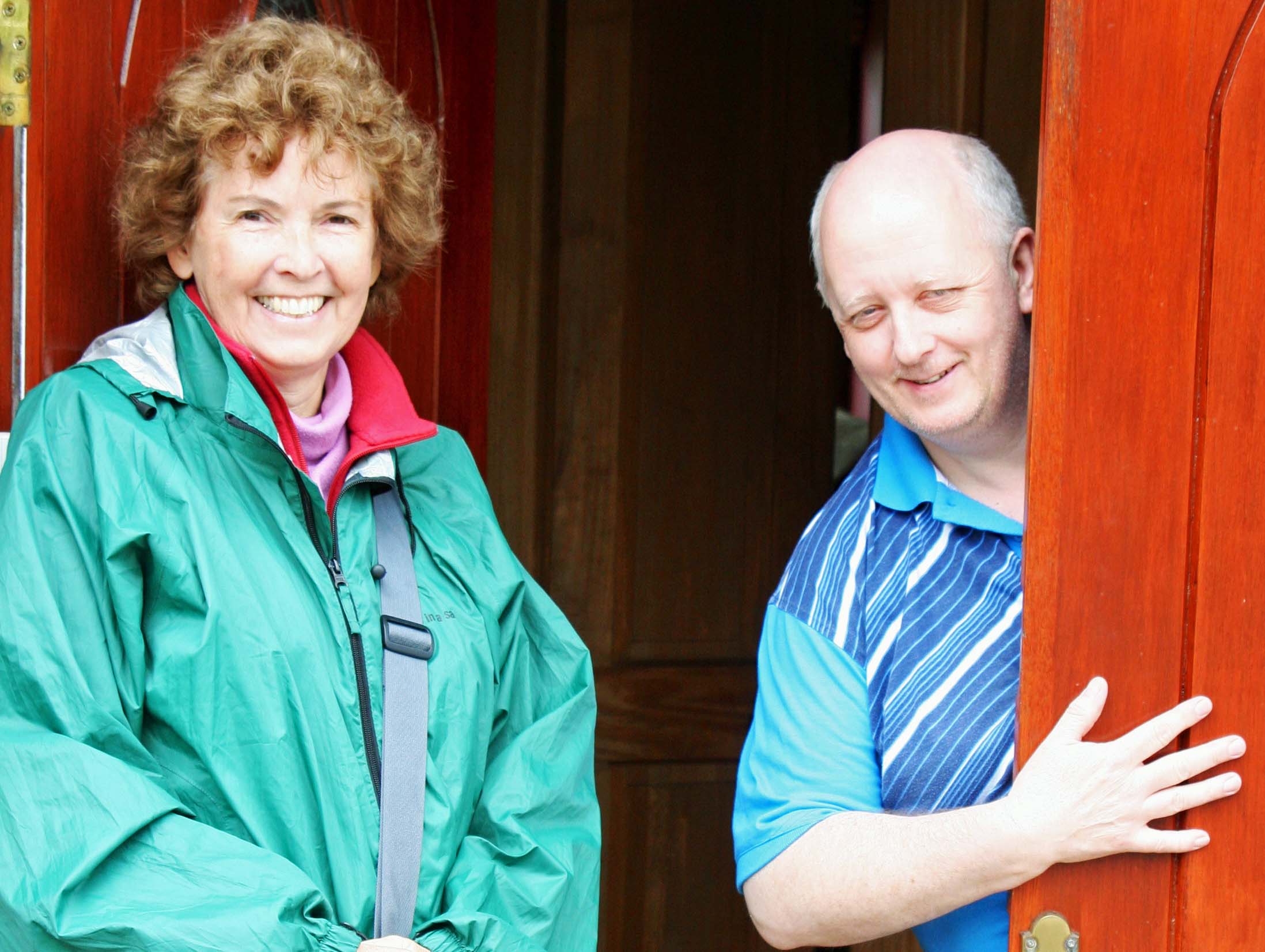
My wife Peggy and the Scottish patriot David Martin in front of the Old Church B&B in Muirkirk, Scotland.

My wife Peggy and the Scottish patriot David Martin in front of the Old Church B&B in Muirkirk, Scotland.

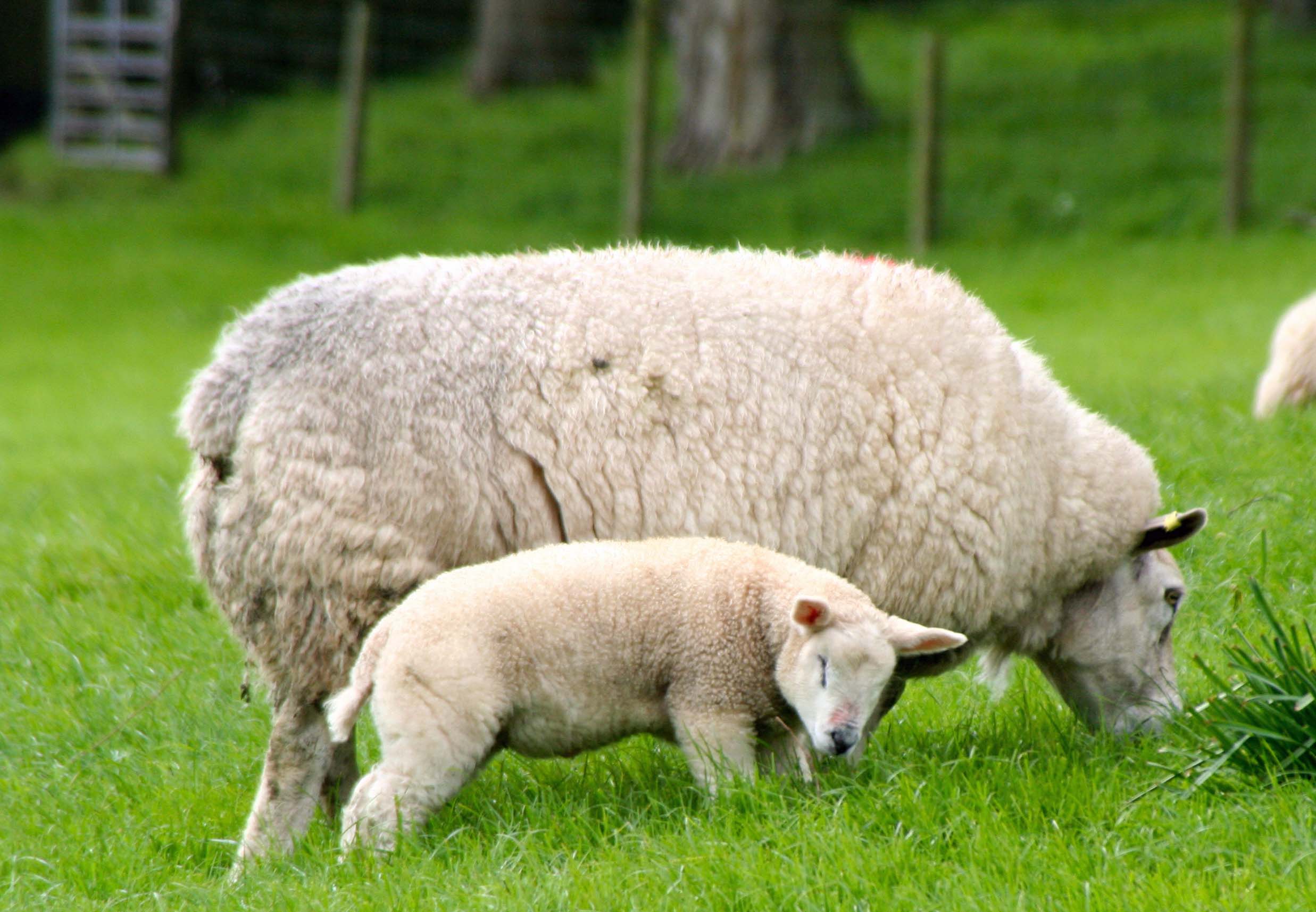
Mother sheep and lamb in southwestern Scotland. Photo by Curtis Mekemson.

Mom and baby.

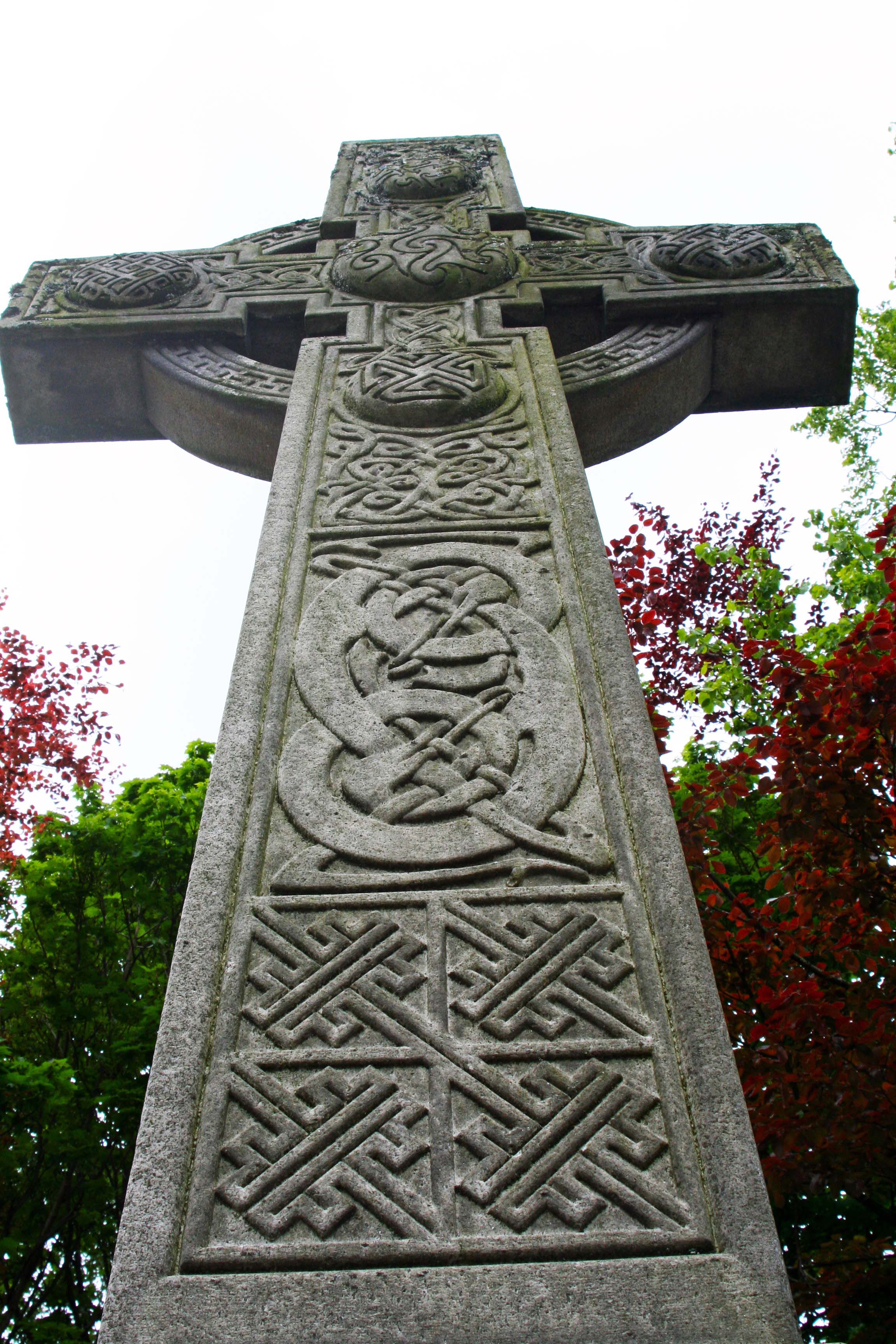
Ancient Celtic Cross in Scotland. Photo taken by Curtis Mekemson.

Celtic Cross.

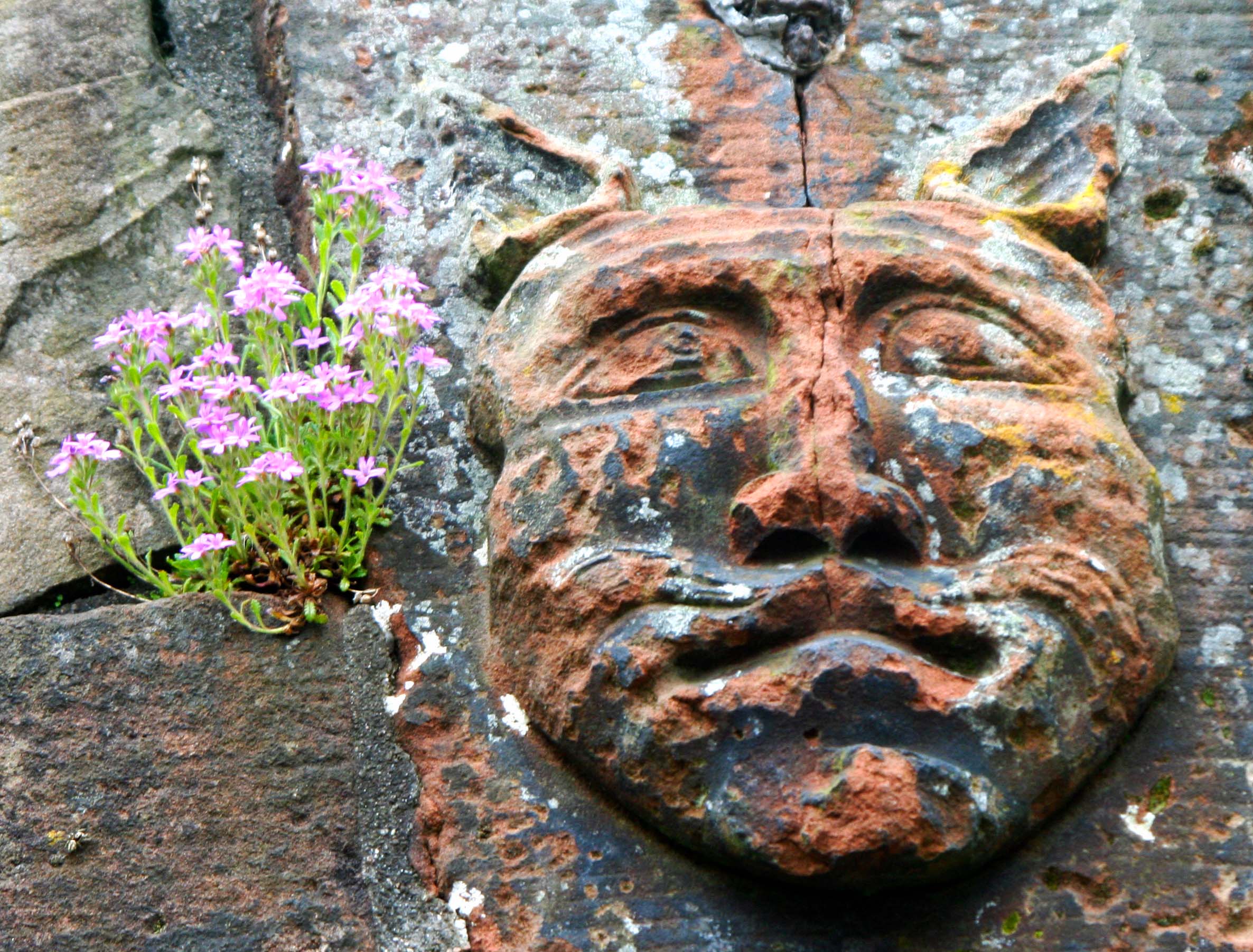
Cat man. I liked the way the flowers found a crack next to this gargoyle-like figure.

Cat man? I liked the way the flowers found a crack to grow in next to the gargoyle-like figure.

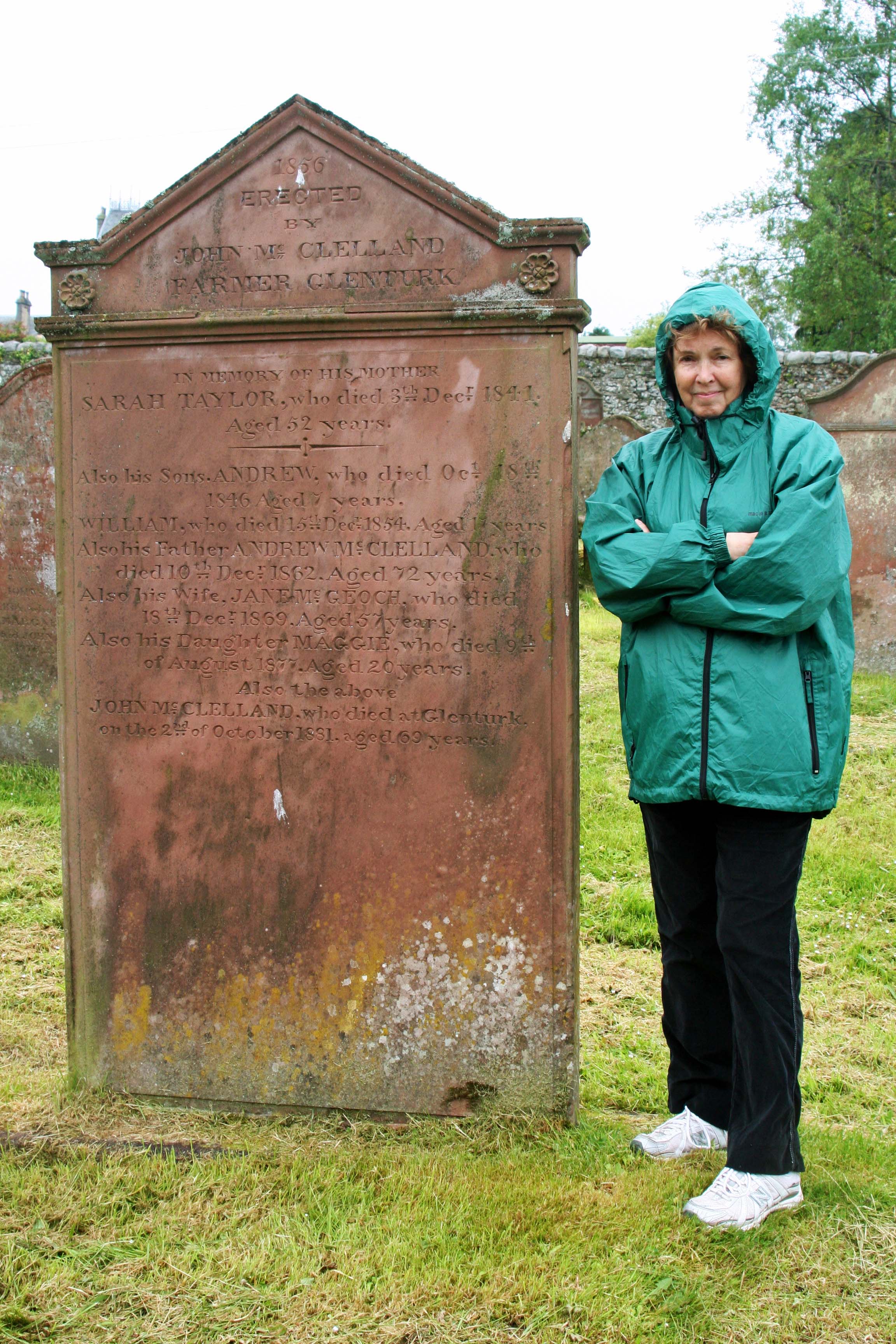
Scottish tombstone photo with Peggy Mekemson.

Genealogical work involves spending a lot of time in graveyards. I was amazed by the size of Scottish tombstones. Peggy provides perspective by standing next to a grave of a person who may have been a distant cousin of hers— and mine.

Photo of Scottish pony taken by Curtis Mekemson.

I’ll close with my favorite photo from Scotland. This pony came running up to see us when we visiting Kirkcolm. I suspect he was saying vote yes.

How to Get Lost in Scotland

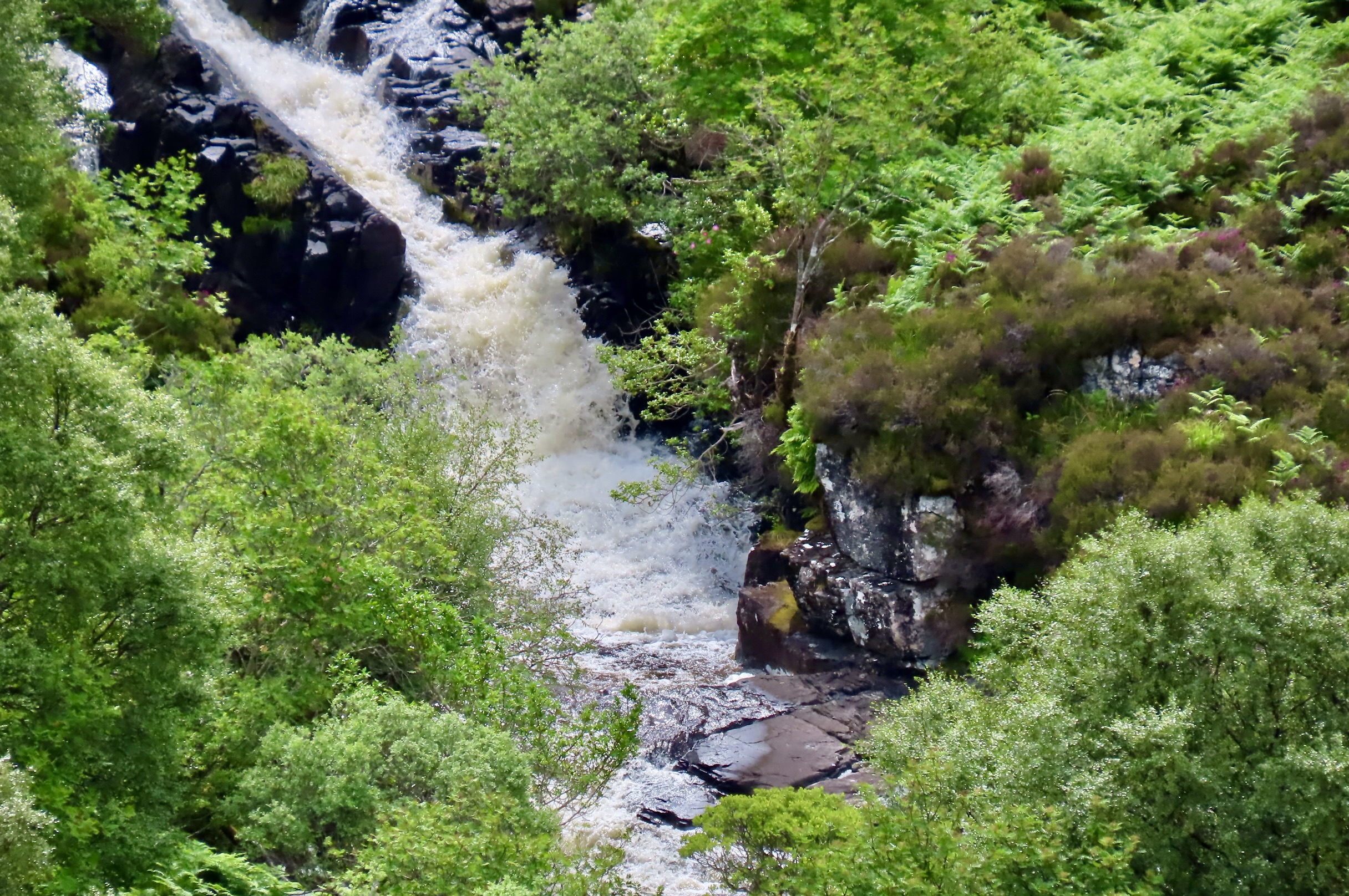
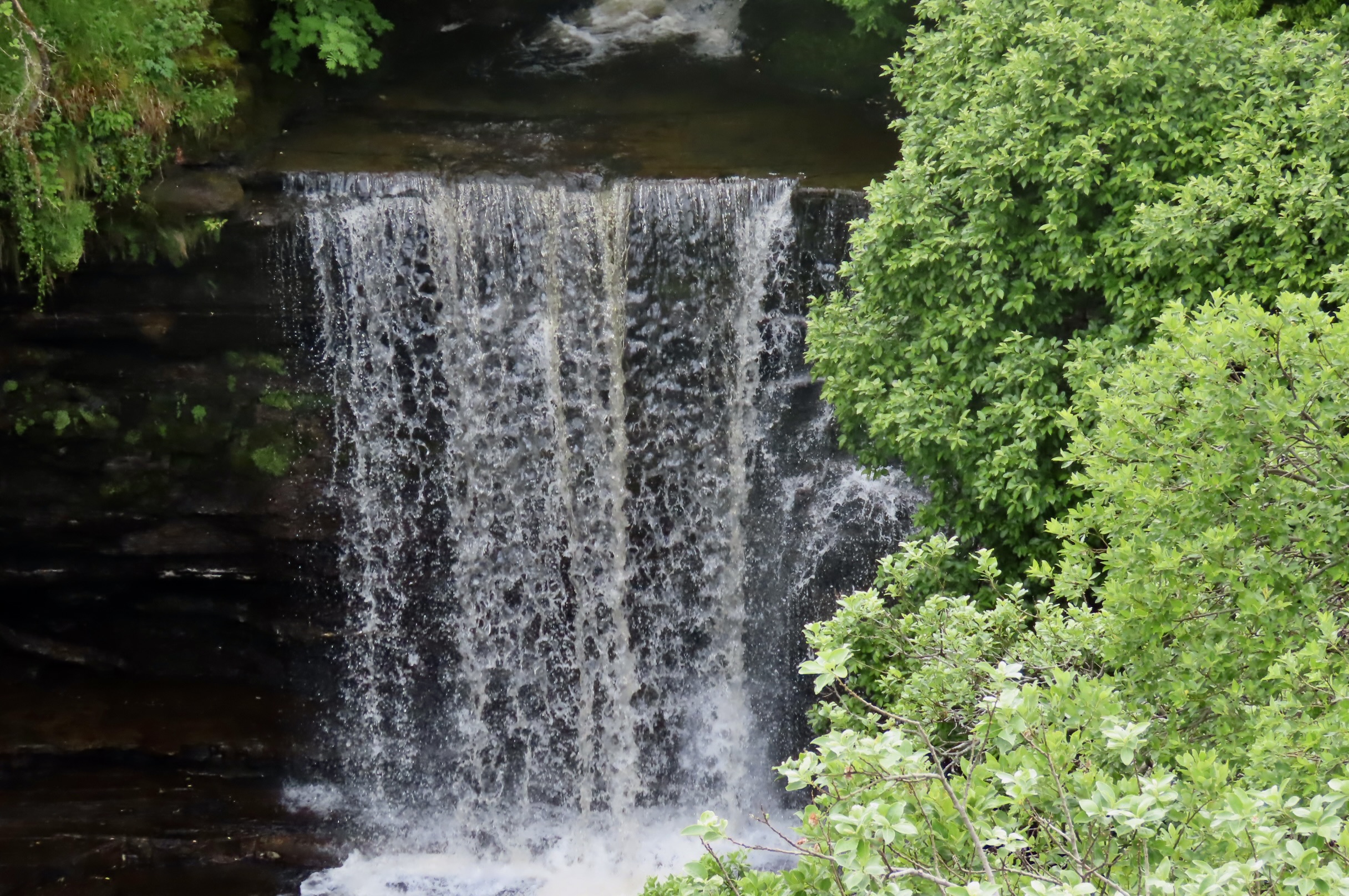
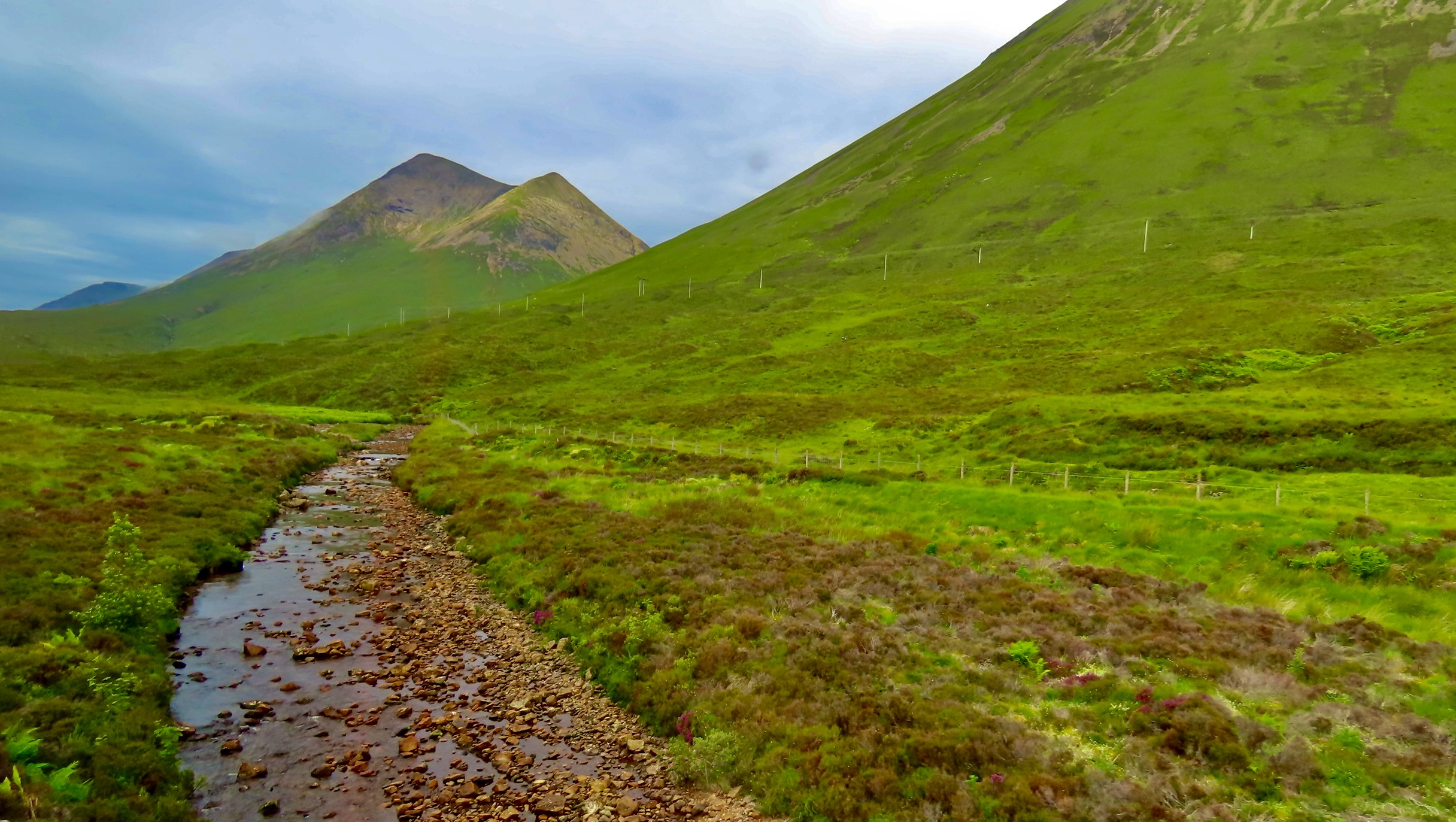
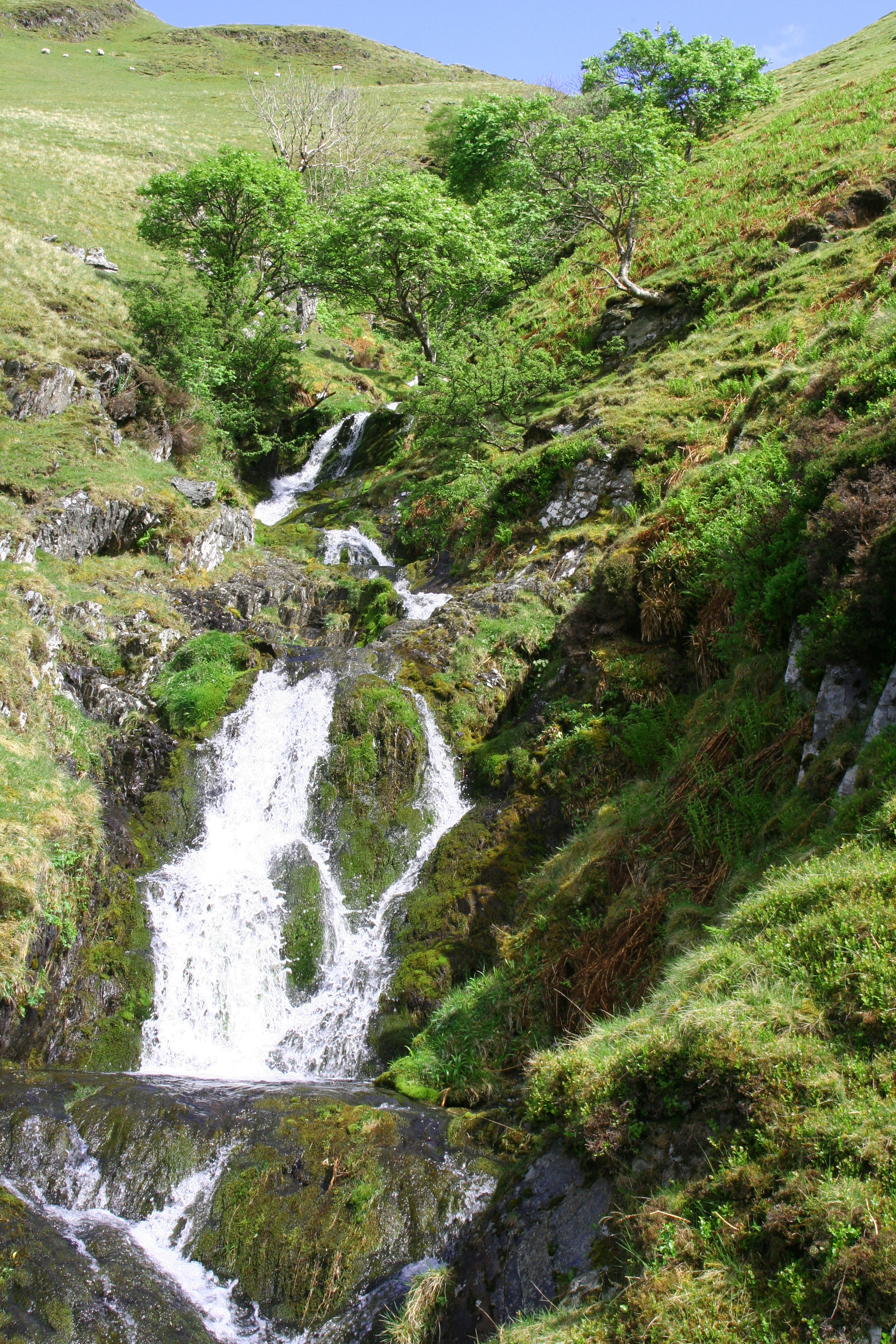
The Southern Highlands of southwest Scotland are both impressive and beautiful. "Lowlands" don't create waterfalls like these between Thornhill and Moniaive on Highway A 702.

Years ago my father told me that our family came from southwestern Scotland. I was mildly disgruntled. It would make me a Lowland Scot. I wanted to be a Highland Scot, a man of the mountains.

I have just completed a tour of southwest Scotland and I’ve changed my mind. The Southern Highlands produce some quite respectable mountains, or at least high hills, thank you very much.

And the whole area is beautiful.

We started our tour with a day in Edinburgh. Peggy and I, along with her sister Jane and husband Jim, took the train up from Long Eaton, England where we had just completed the narrow boat tour on the Trent and Mersey Canal I wrote about in my last blog.

While Peggy, Jane and Jim explored the city, I worked out our tentative Scotland itinerary. Having travelled a lot, I like to keep my plans flexible. Opportunity may knock.

While I worked on planning our itinerary, Peggy, Jim and Jane did a tour of Edinburgh. This was their tour bus. Could it be more garish?

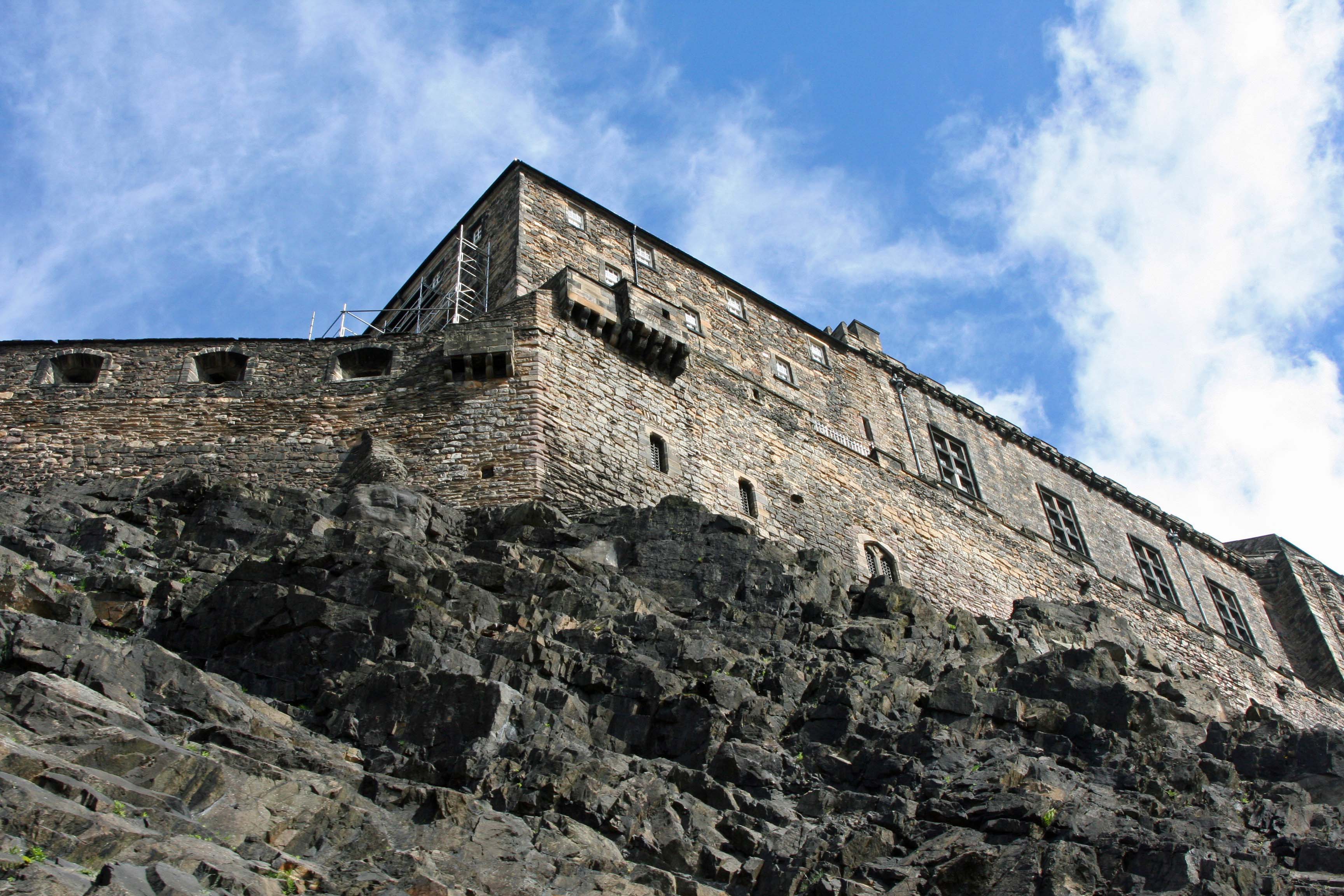
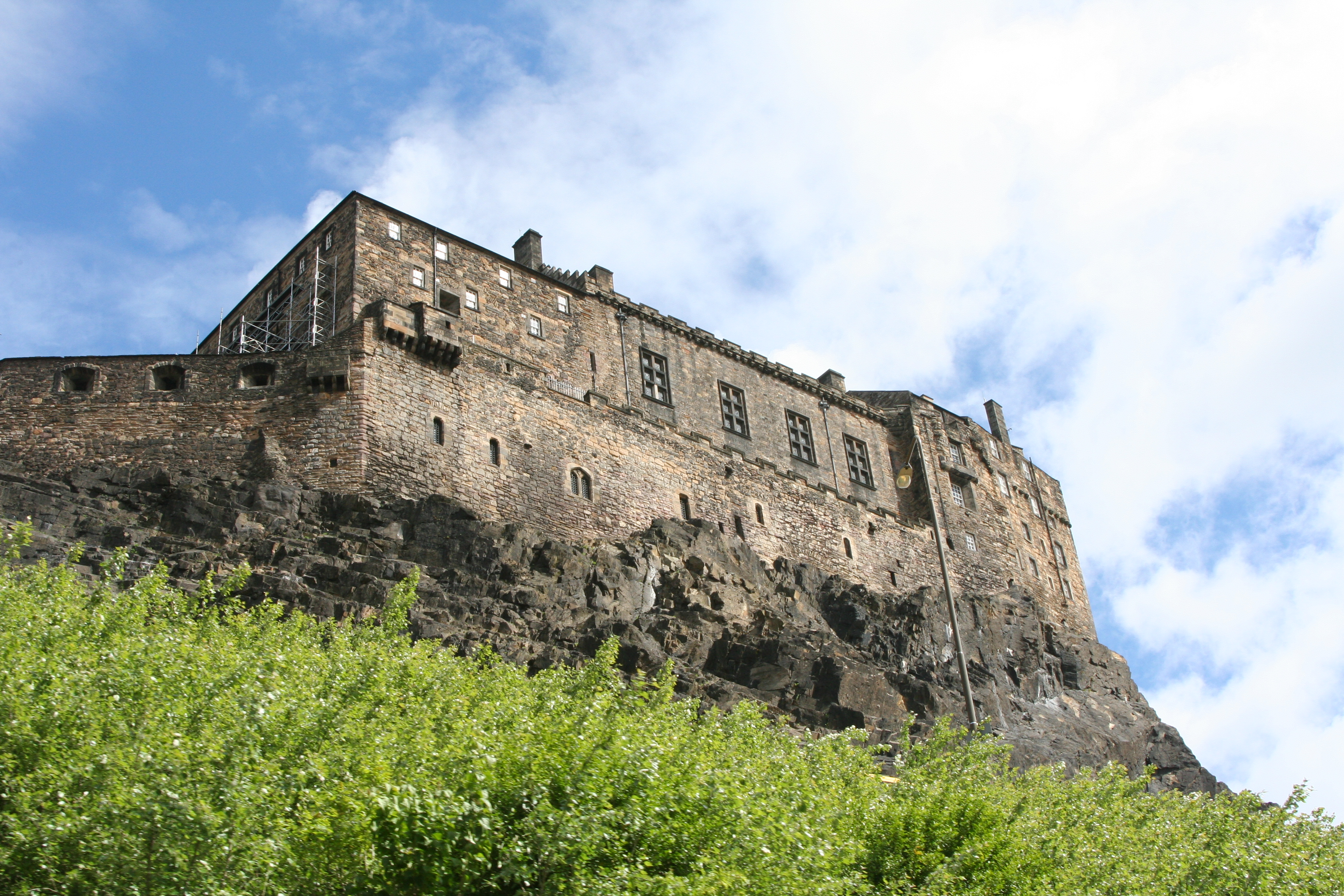
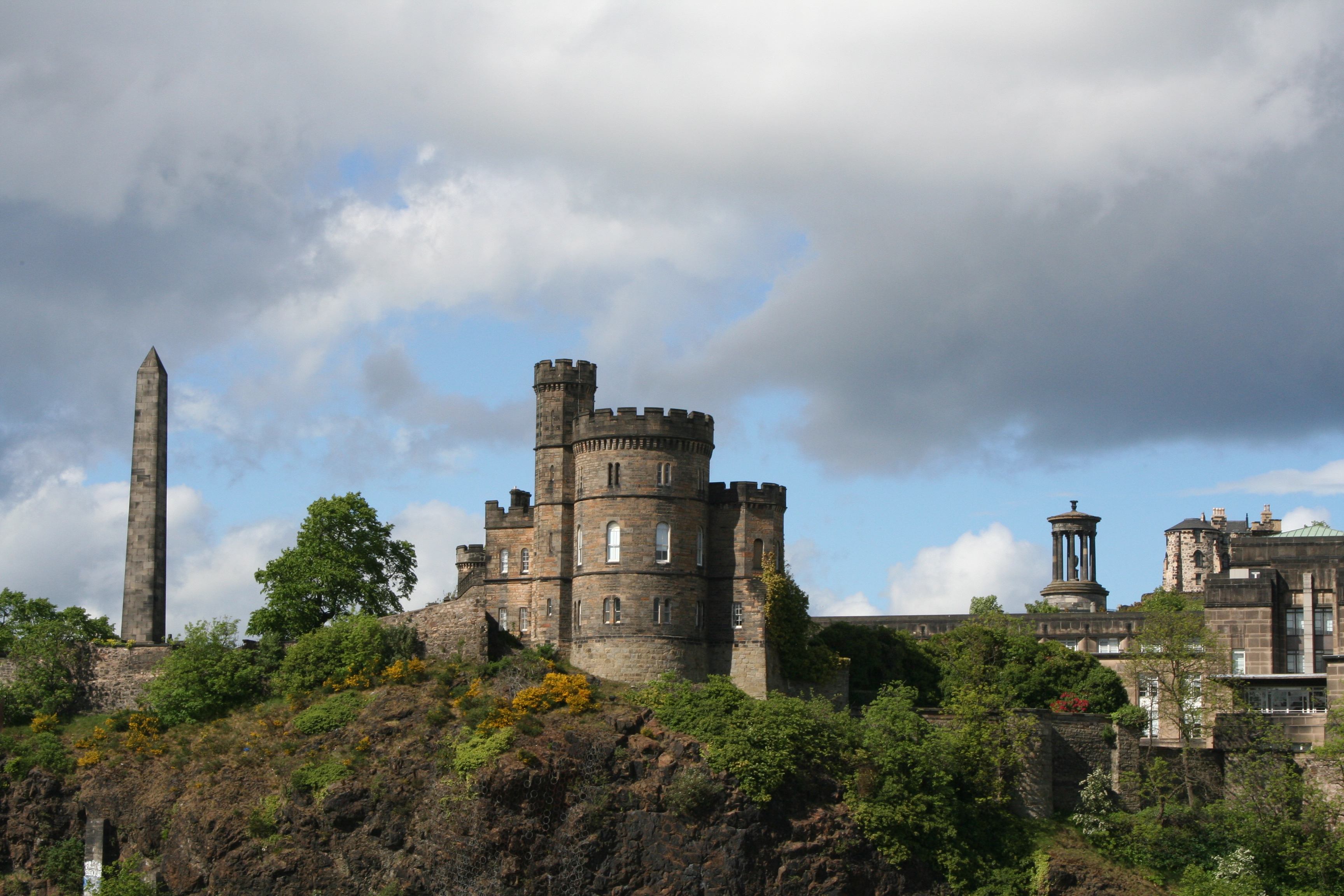
Edinburg has a lot to offer in sights, however, as this view of Edinburgh Castle suggests.

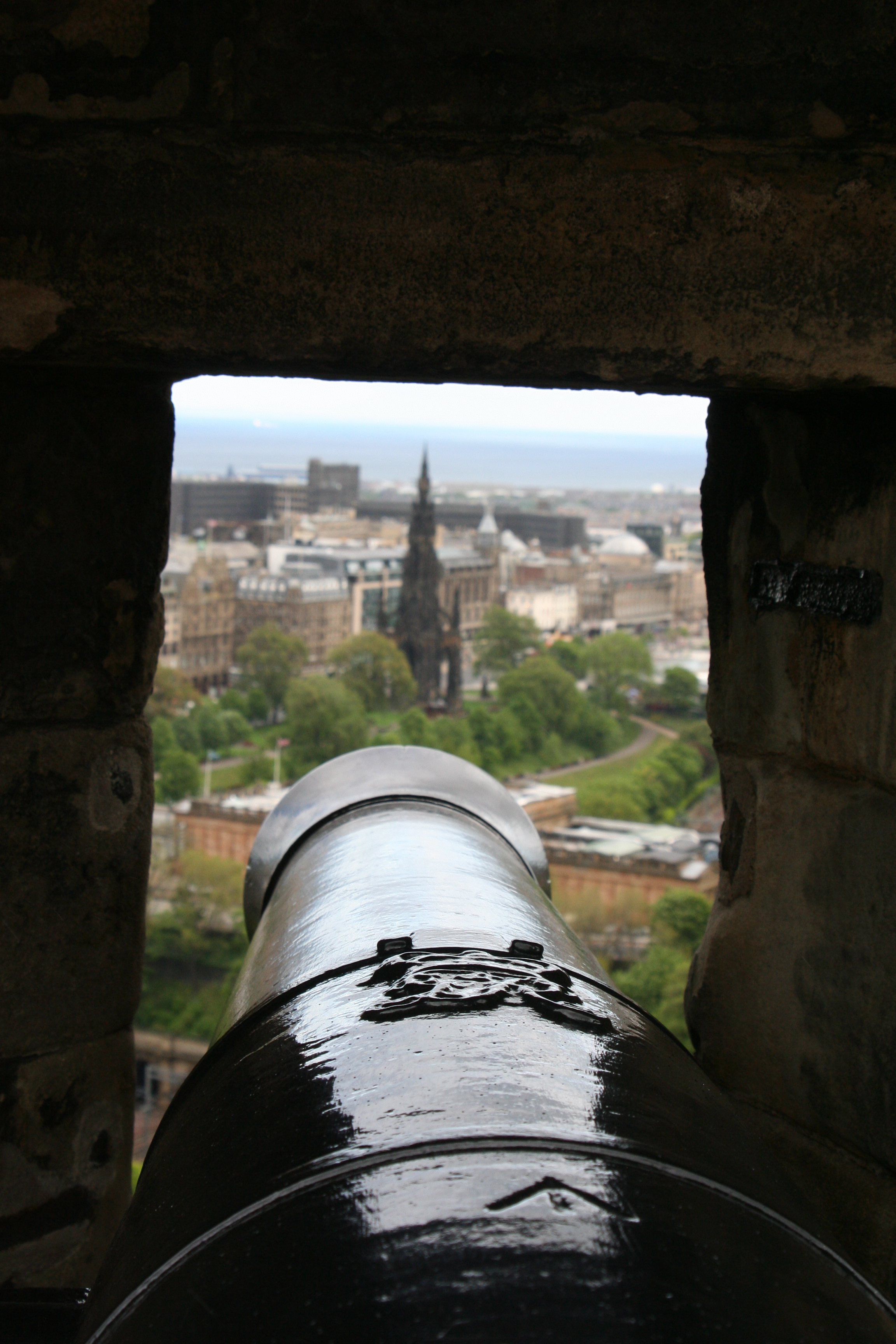
A cannon view of the Walter Scott Monument looking down from Edinburgh Castle. The writer Walter Scott and poet Robert Burns are highly honored as national heroes in Scotland.

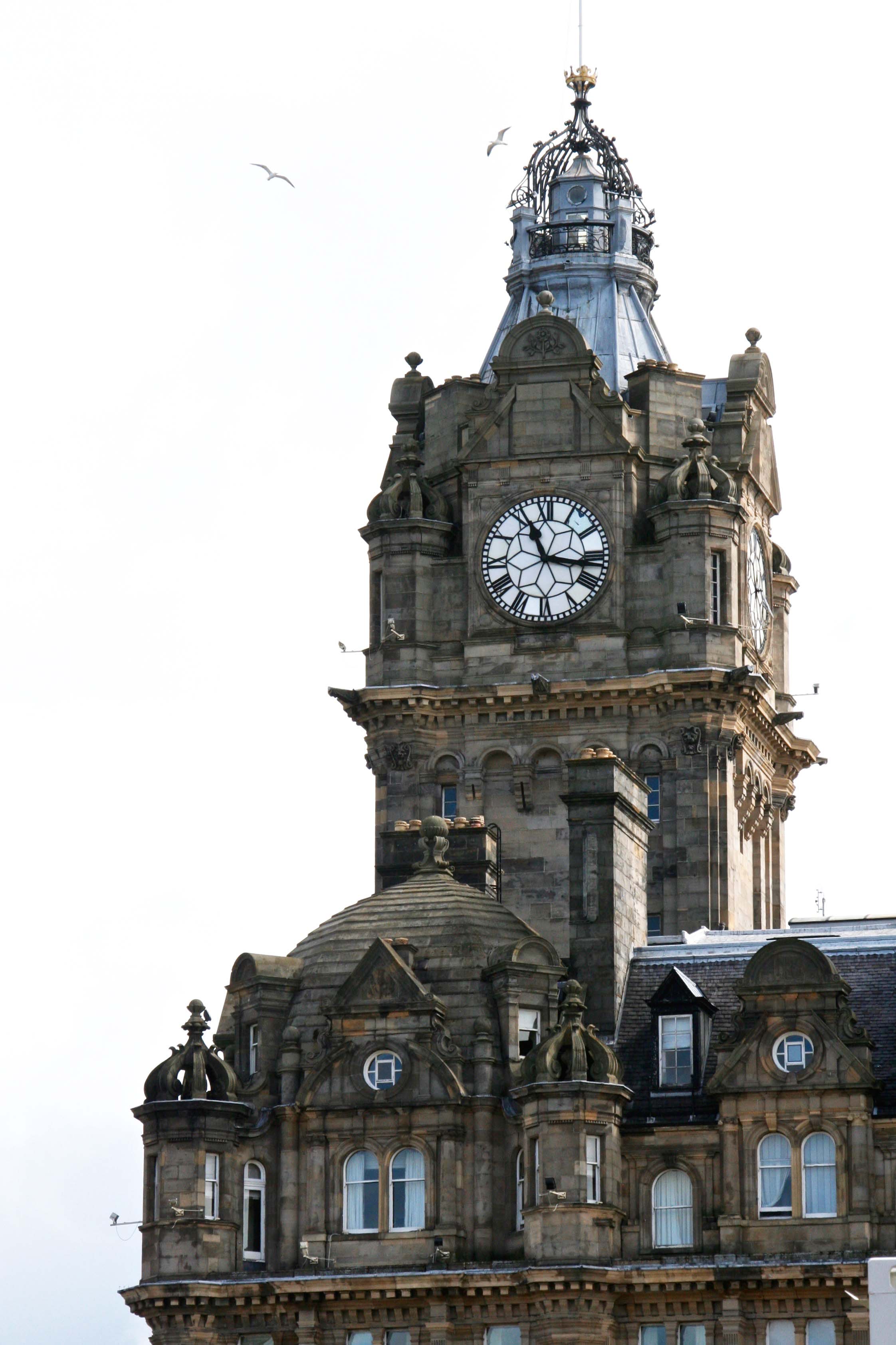
A final view of Edinburgh looking up toward the Nelson Monument (on the left) from Waverley Station. We took the photo while picking up our rental car. Not many parking lots can claim such scenery.

The next day was a parting of the ways. We taxied together to Waverly Station where Jane and Jim had booked a train to London and Peggy and I had reserved a rental car. Quite to our surprise, the rental agency had upgraded us to a brand new Mercedes with a total of two miles on the odometer.

Peggy behind the wheel of our brand new Mercedes rental car. Note both hands grip the steering wheel and Peggy looks slightly wild-eyed as she chants her Scotland driving mantra... left, left, left.

New car or not, I do not recommend left-hand-side-of-the-road driver training in Edinburgh. To start with, the traffic sucks (bad word but applicable). Even more irksome, street names seem to change every block or so. And then there are roundabouts to master. A wrong turn can mean serious dislocation.

Peggy was the driver and I was the navigator. I am happy to report that one of us performed like a pro. Peggy was unflappable.

I, on the other hand, had us hopelessly lost in five minutes. In my defense, the car rental agency had given us two routes out. Both were blocked by construction. By the time we managed to work around street blockades, we had gone beyond the ability of my two downtown tourist maps to save us.

All I could recommend was full speed ahead and damn the double-deckers. An hour later we actually found the road I had intended to have us on in five minutes. Ten minutes later we were admiring the countryside.

A view of the country just outside of Edinburgh on Highway A 702. The square stones in the front of the fence were likely part of/or recycled from an old structure. The yellow flowers are Scotch Broom. Appropriately, I might add. We were to see lots of it.

Our first day’s goal was the small community of Creetown on the Wigtown Bay. Google informed me the trip was 110 miles and would take 2 hours and 47 minutes. But Google hadn’t planned for my extensive tour of Edinburgh, or the detour I took out of Moniaive. I missed a jog left.

Our ample two-lane road became a narrow two-lane road and then a one-lane road with passing pullouts, and then a bumpy one-lane road filled with sheep that behaved like they hadn’t seen a car in months. Maybe they hadn’t…

These two fellows pretty much dominated our bumpy single-lane road, and wondered what we were doing on it.

While we were waiting for our two road companions to decide whether they would bother to move, I took a photo of this fluffy guy. I think he was trying to decide if he should charge.

All’s well that ends well, however. Six hours after leaving Waverly Station we arrived at our B&B in Creetown, the Ellangowan Hotel. It was time for a pint. (Next blog: How in the heck do you pronounce Kirkcudbright?)

Our first nights lodging in the small community of Creetown. Peggy was impressed by our canopy bed that featured lace curtains. I was more impressed with the bar that featured fine Scottish Ale and Indian Curry. Of special note: Most restaurants/pubs we visited in England and Scotland featured at least one Indian dish. Given my love of hot curries, I was one happy camper.