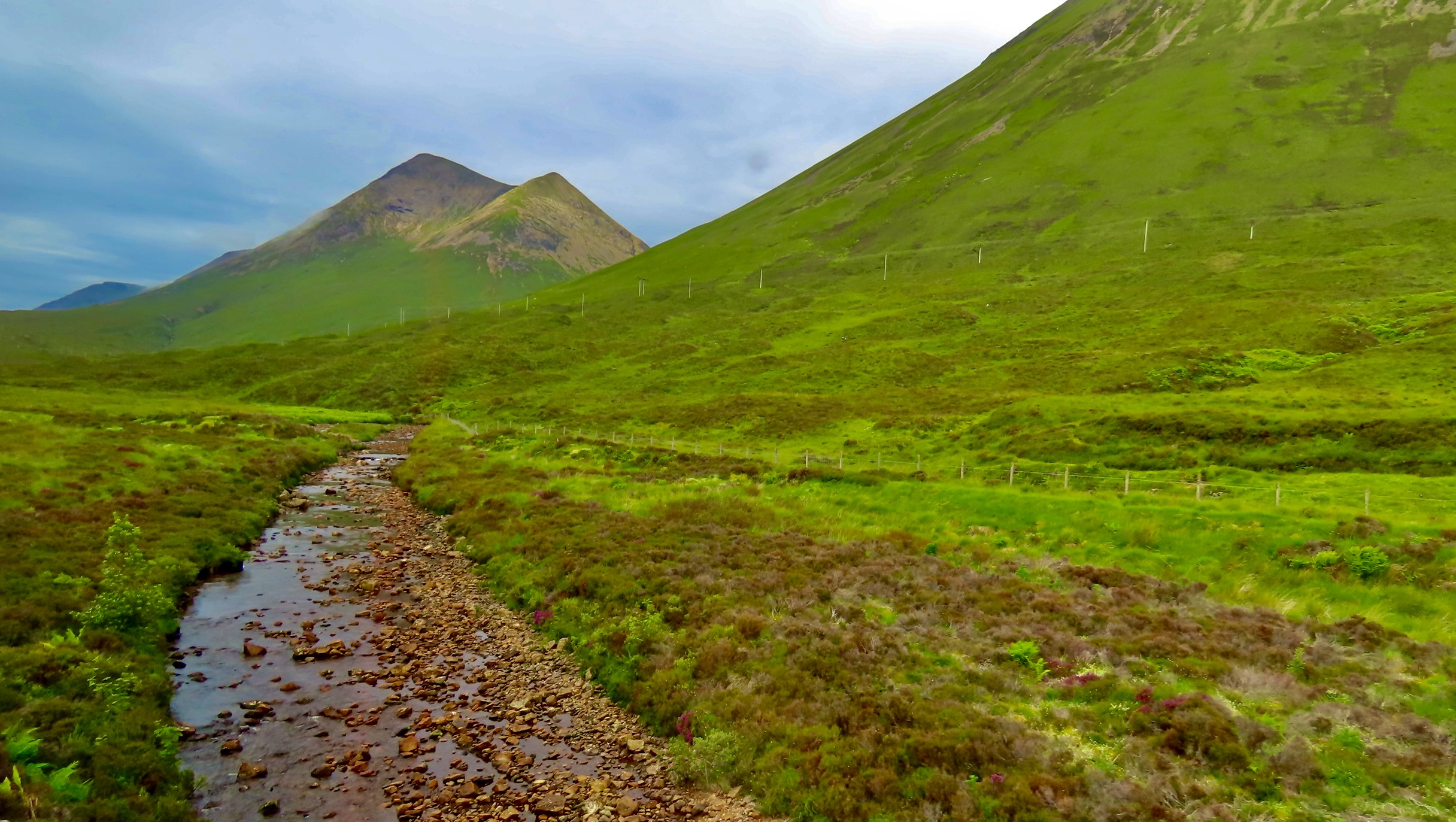
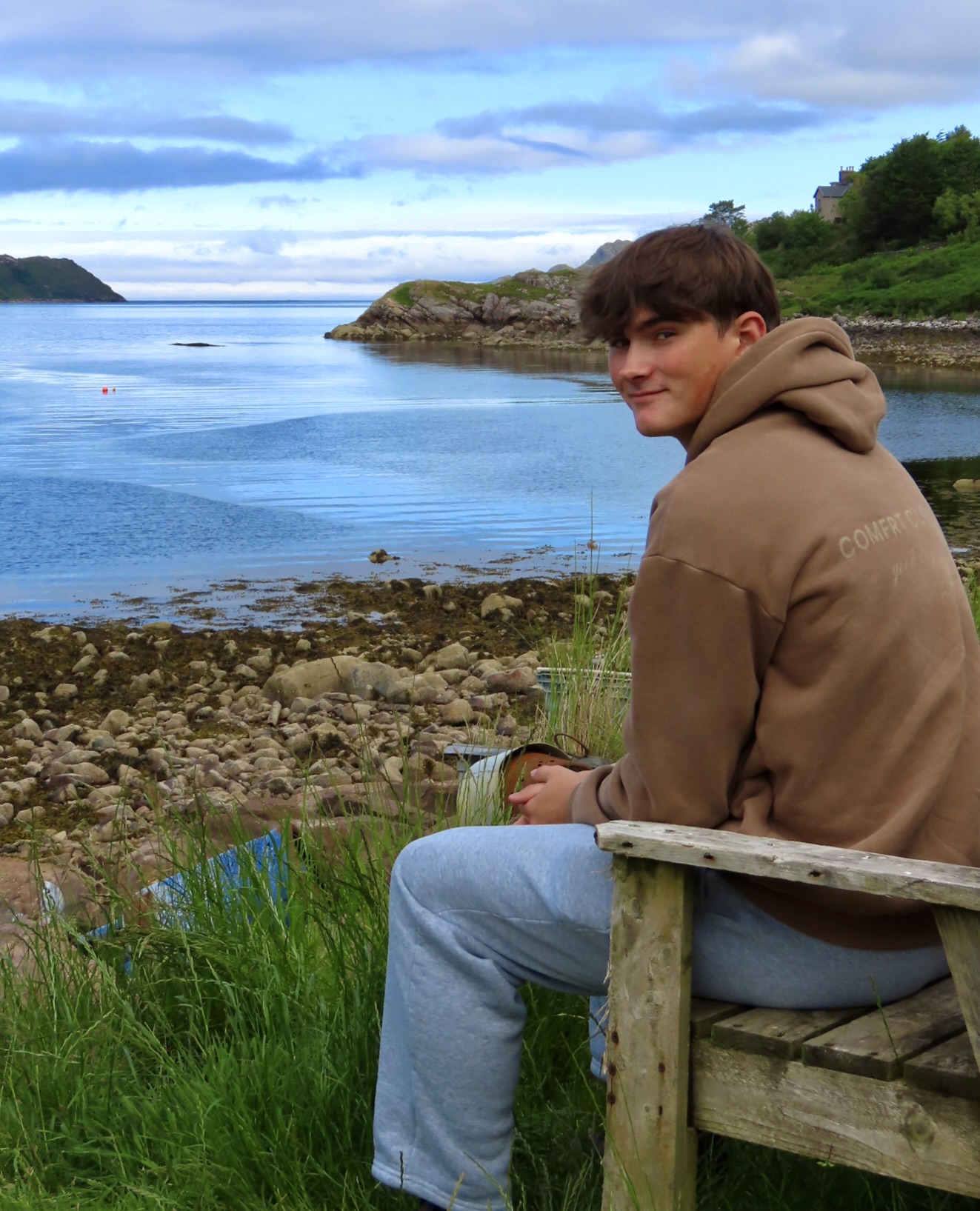
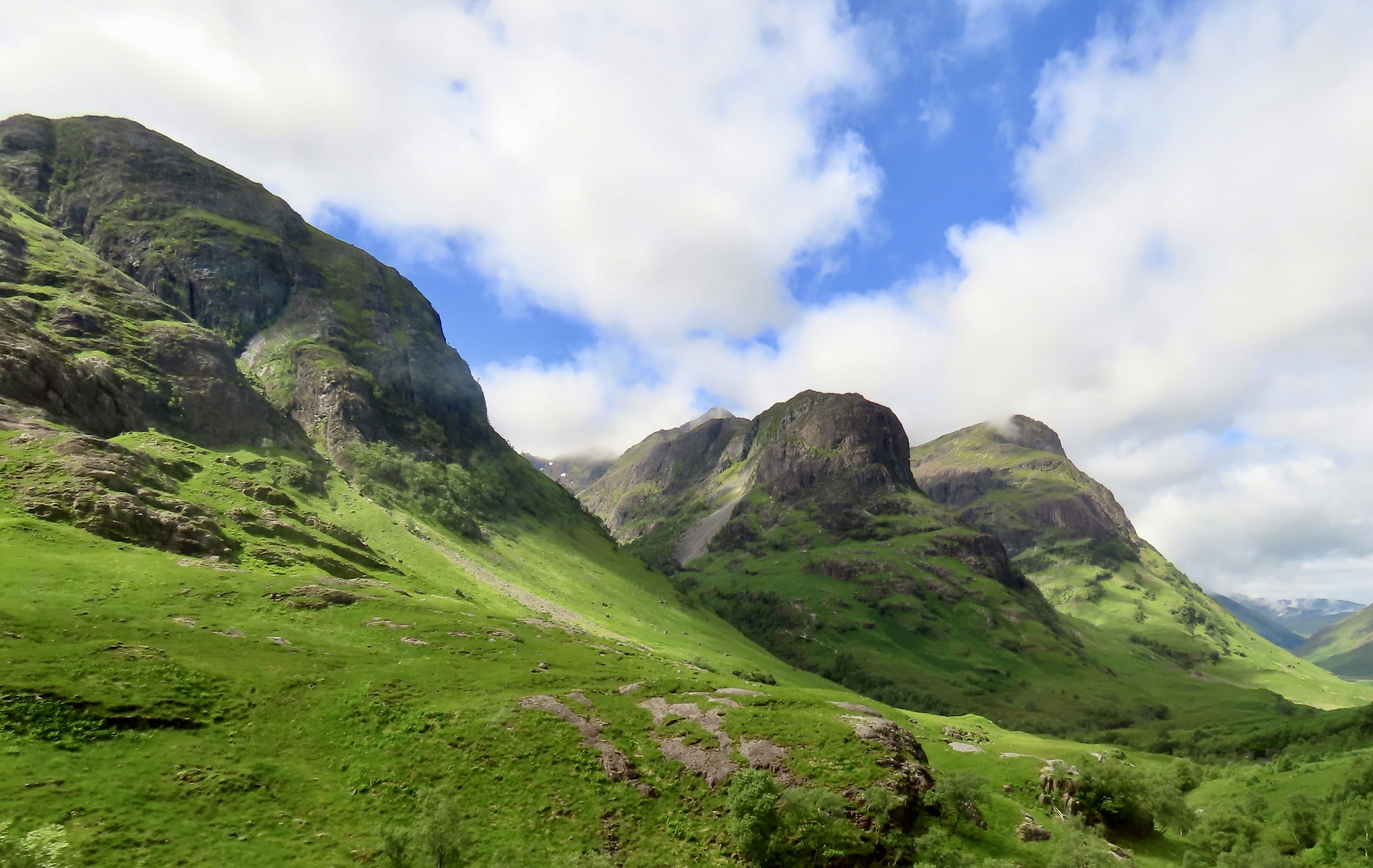
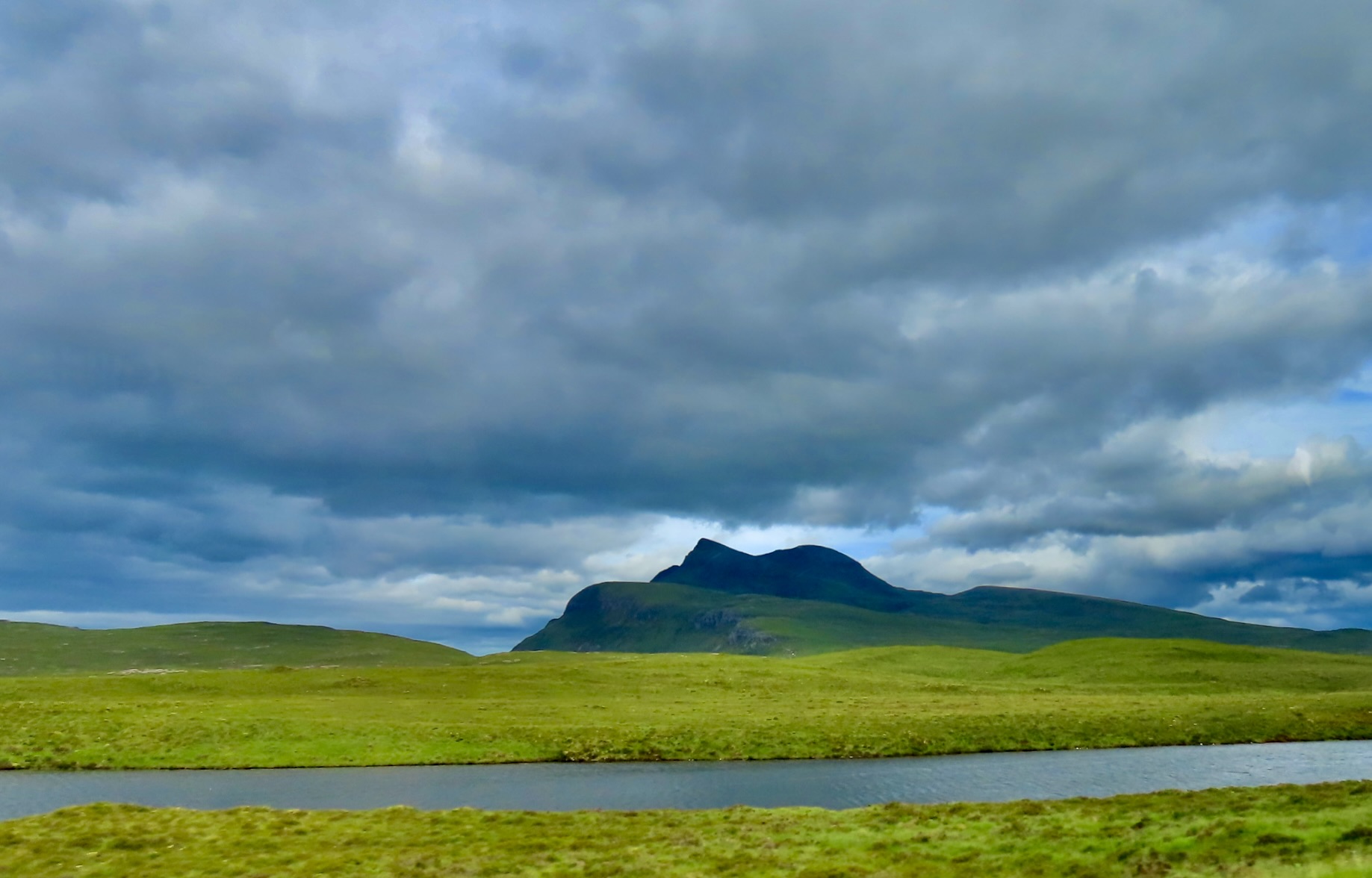
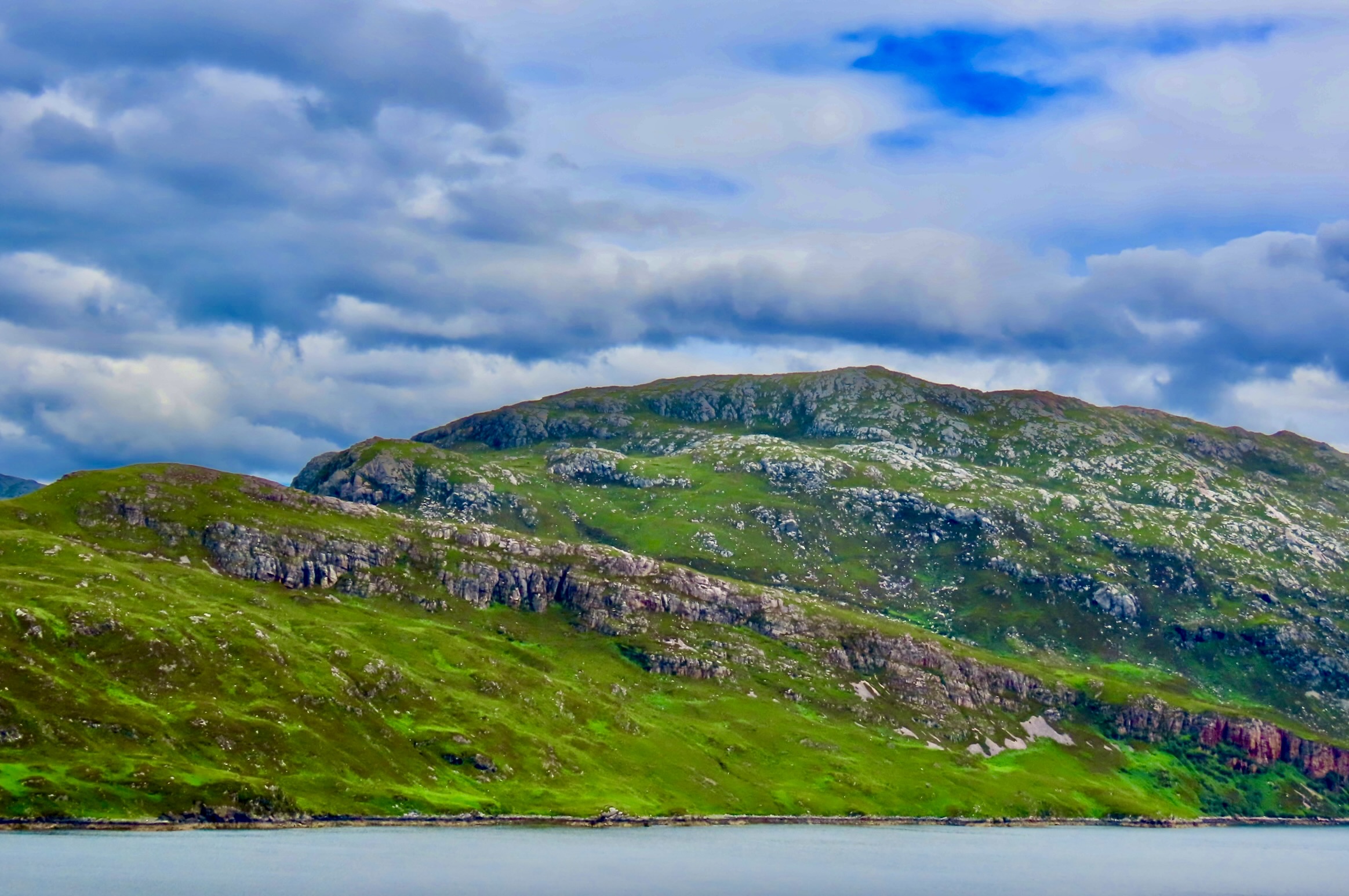
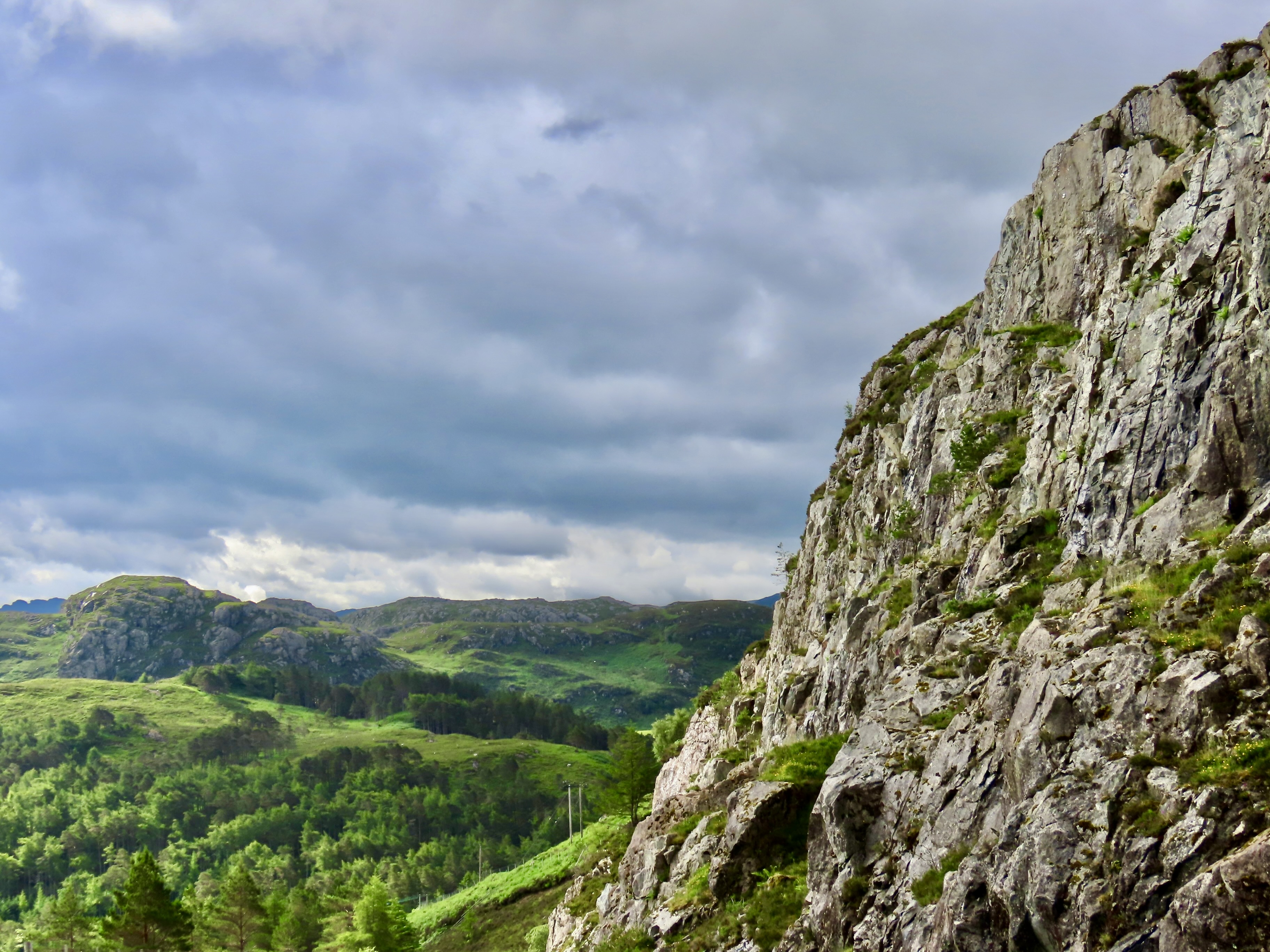
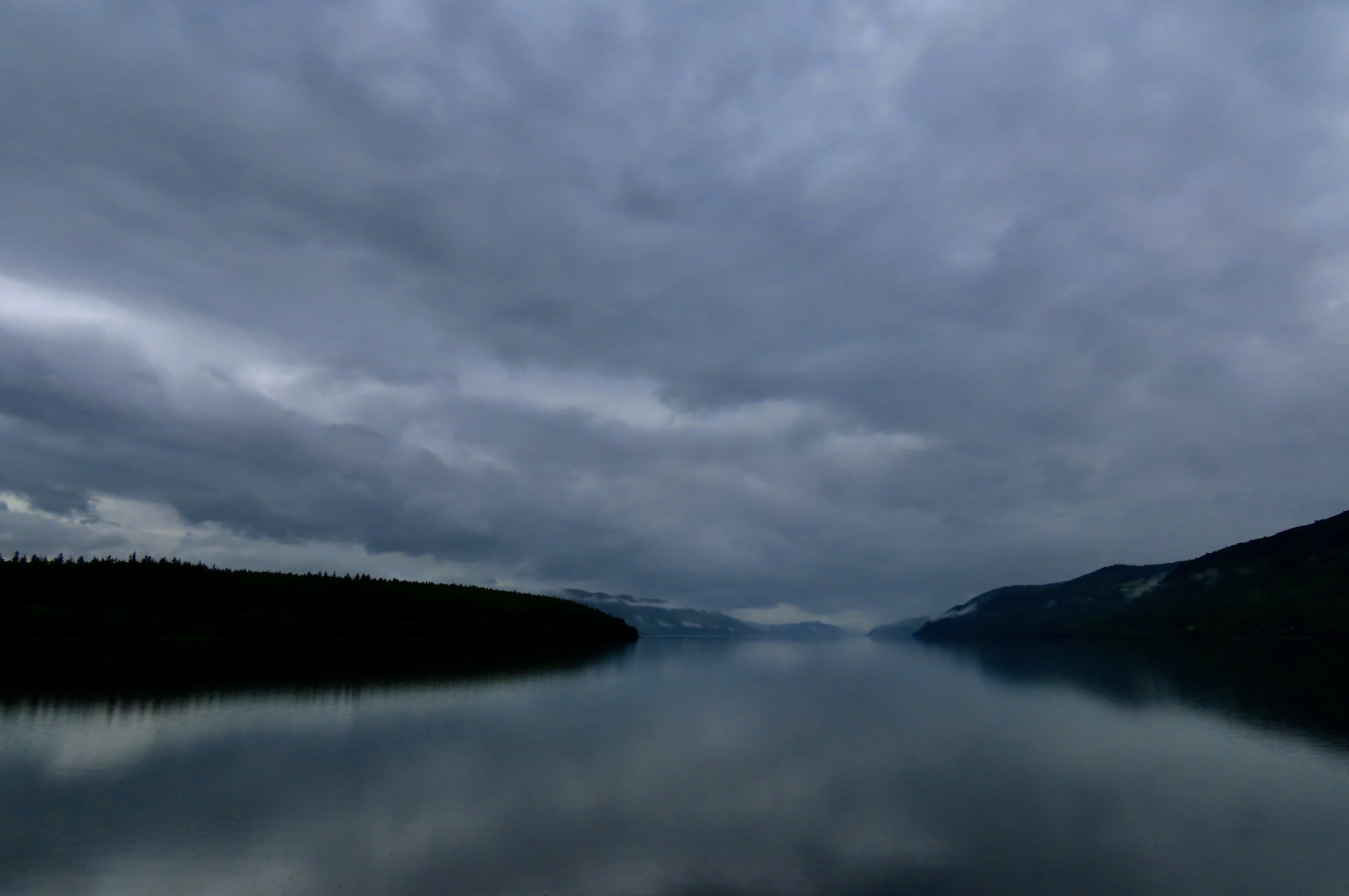
We are returning to our CIE Scotland tour that Peggy and I took along with our grandson Cody this summer. Today, I will be featuring the scenic beauty of the Scottish Highlands. All photos are taken by Peggy, Cody or me unless otherwise noted.
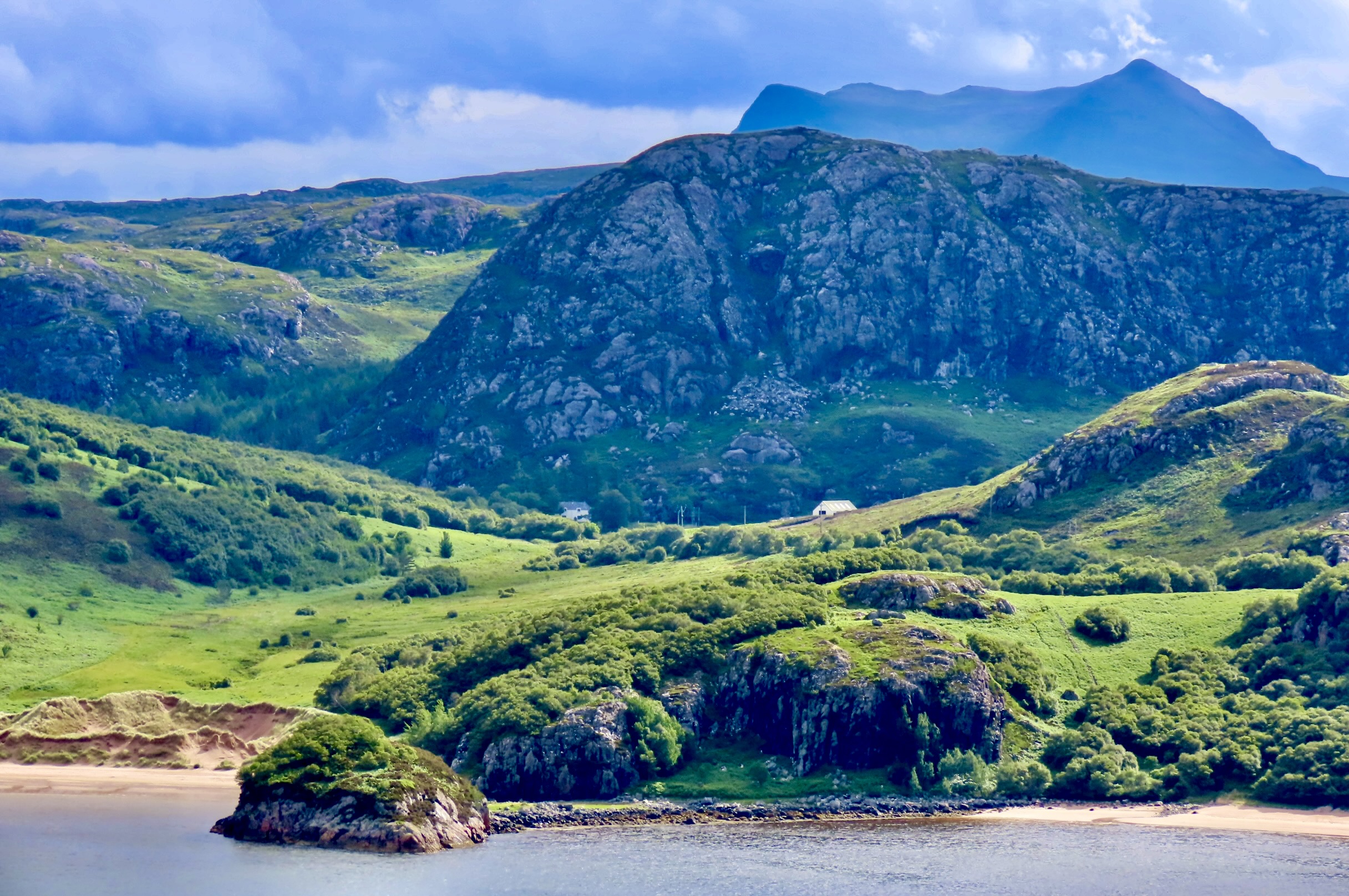
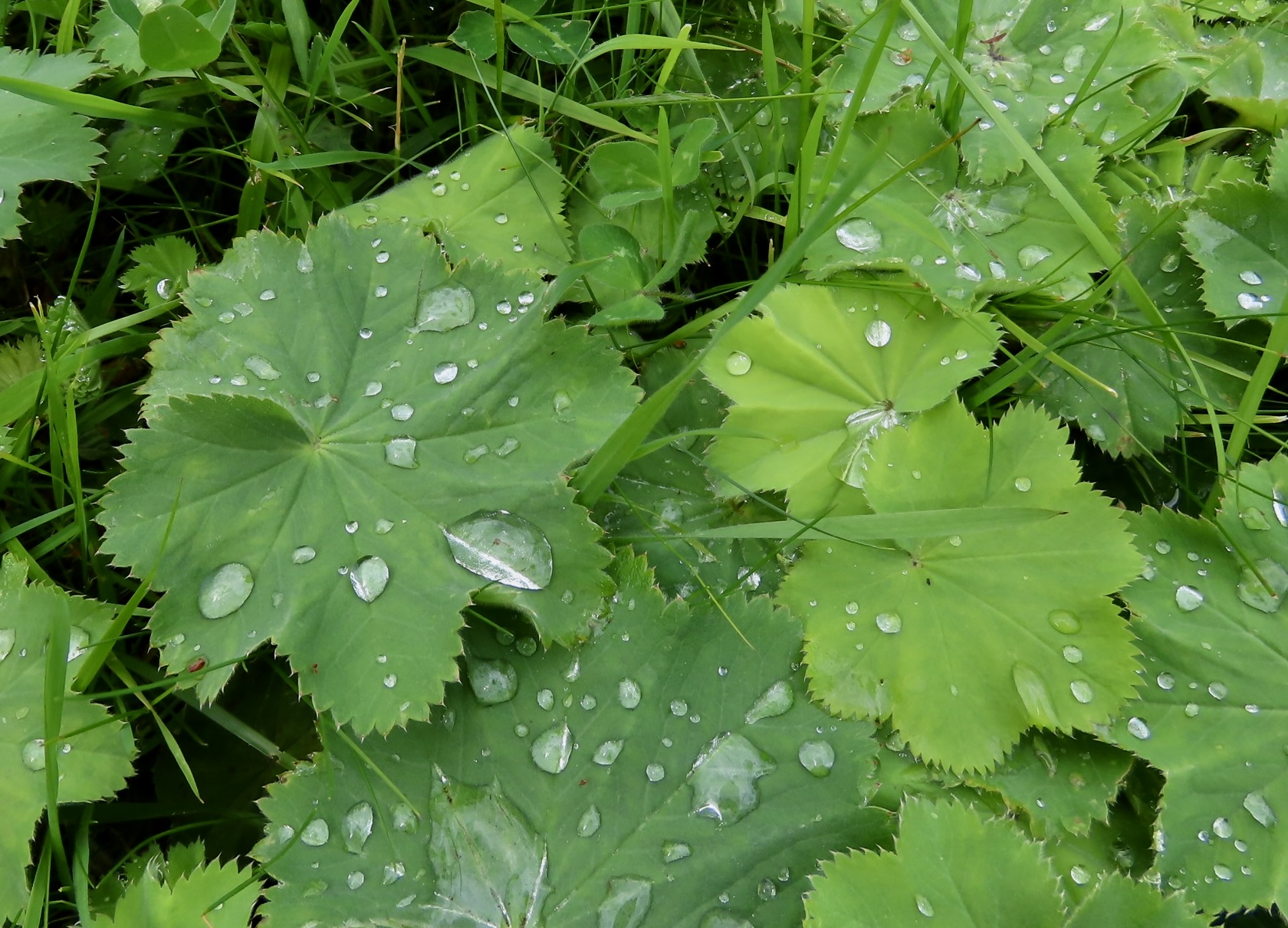
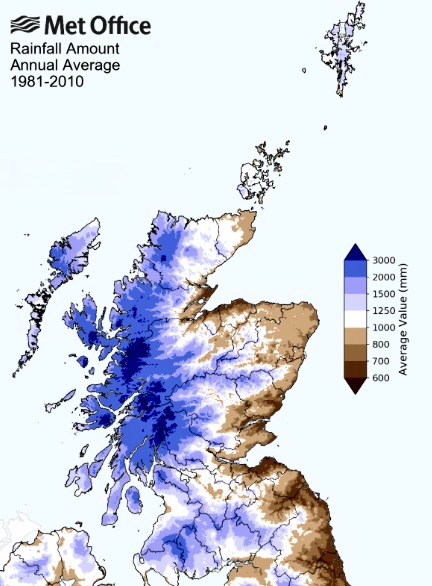
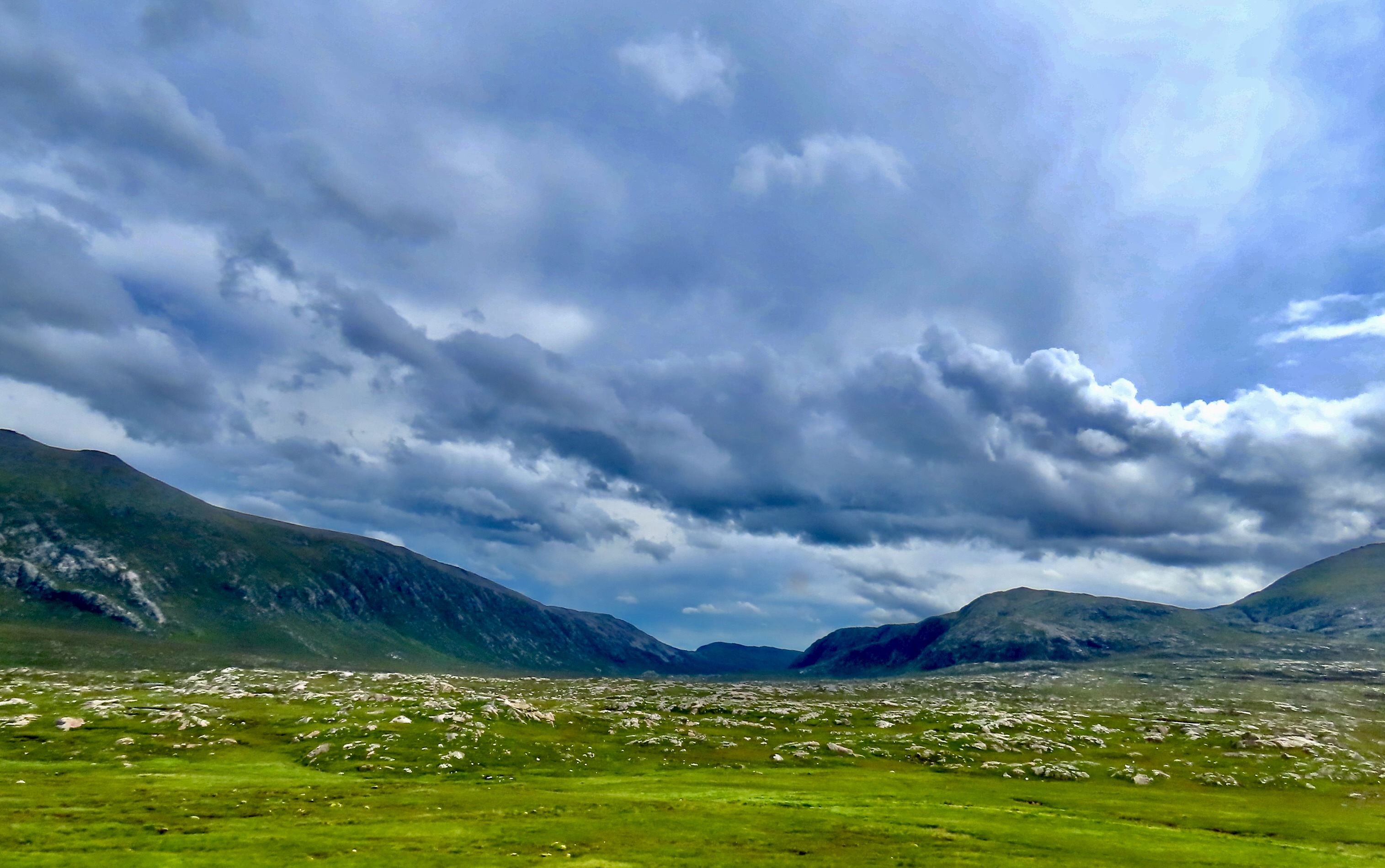
Between towering mountains, rocky, green landscapes, hanging cliffs, plunging waterfalls, lochs, and firths, the Scottish Highlands are world renown for their rugged beauty. They also feature vast open spaces with few people. Once there were more, but the wealthy landlords who owned the property forced the tenant farmers off of their ancestral communal lands because they could make more money off of large scale sheep and cattle farms in what was known as the Highland Clearances between 1750 and 1860. They were a dark blot on Scotlands History.There is a simple reason for all of the green. The highlands get a lot of rain: 118 to 177 inches (3,000 mm to 4,500 mm ) a year in the western mountains making them the wettest place in Europe. If you are visiting, expect to get wet. Bring appropriate clothing. Our tour was close to rain-free, however, even though dark clouds often hovered above us. Cody swore that it was the good luck he brought with him. We may have to travel more with the kid to test the theory.This UK Government map shows the rainfall in Scotland. It’s heaviest in the mountainous western region of the Highlands. The reason is the same as the reason for the heavy rainfall in Northern California, Oregon, and Washington where I lived and played for most of my life.
The jet stream flowing from west to east passes over the Pacific and Atlantic Oceans and soaks up evaporated moisture. When it reaches the mountainous regions of both the north coast of the US and the Scottish Highlands, it is driven up by the mountains and cooled, which reduces the amount of water the air can hold. Rain, snow, sleet, hail, etc. are the results. It’s called orographic relief if you want to impress your friends. I think of having a full bladder and dashing for a restroom. Relief! Less rain on the east side of the mountains is called the rain shadow effect. There are two reasons. One, obviously, the air has lost much of its water. Two, as the air rushes down the mountains, it heats up and can hold more. The annual rainfall on the east coast of Scotland ranges from 28-31 inches (700-800 mm).
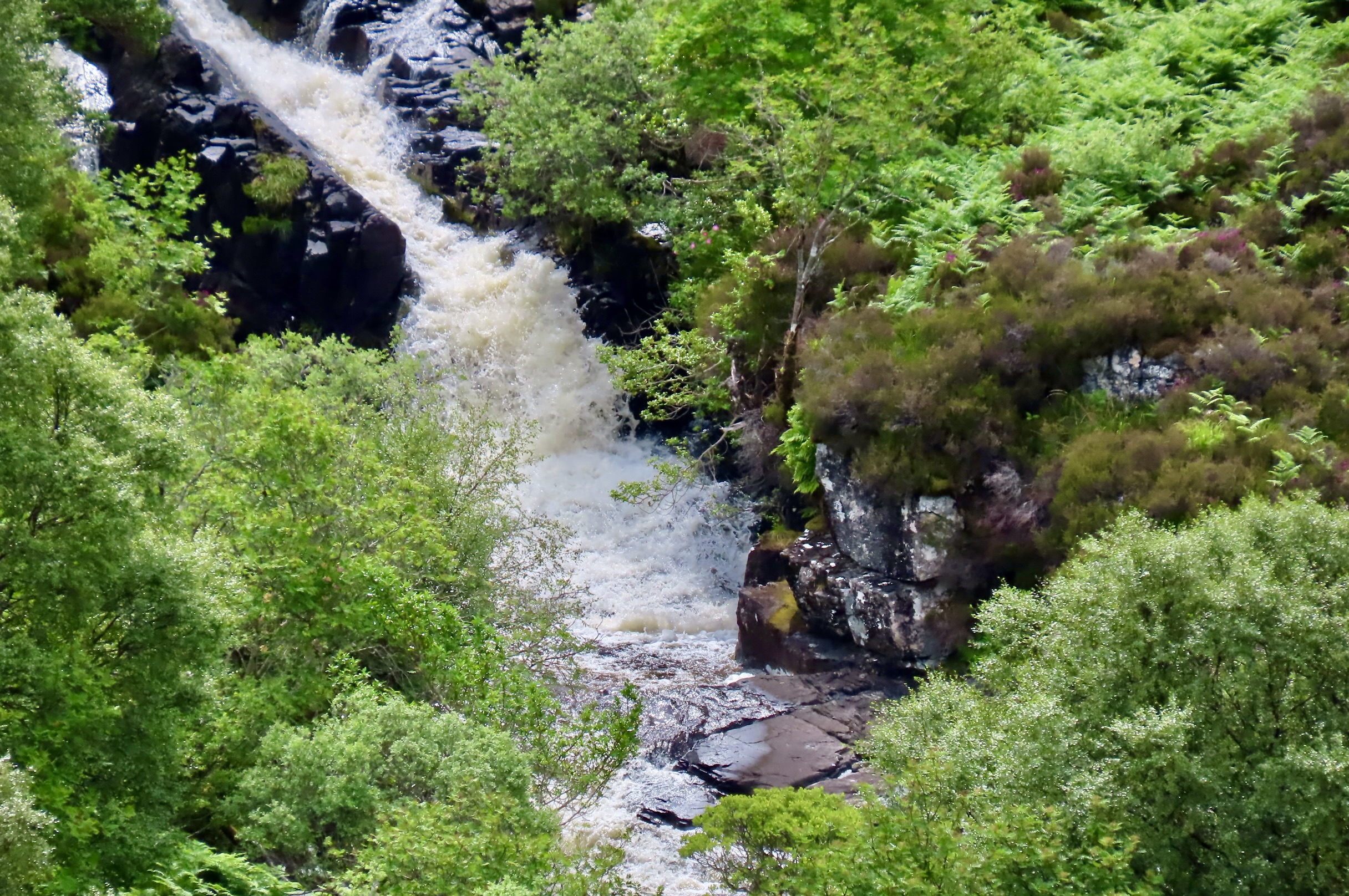
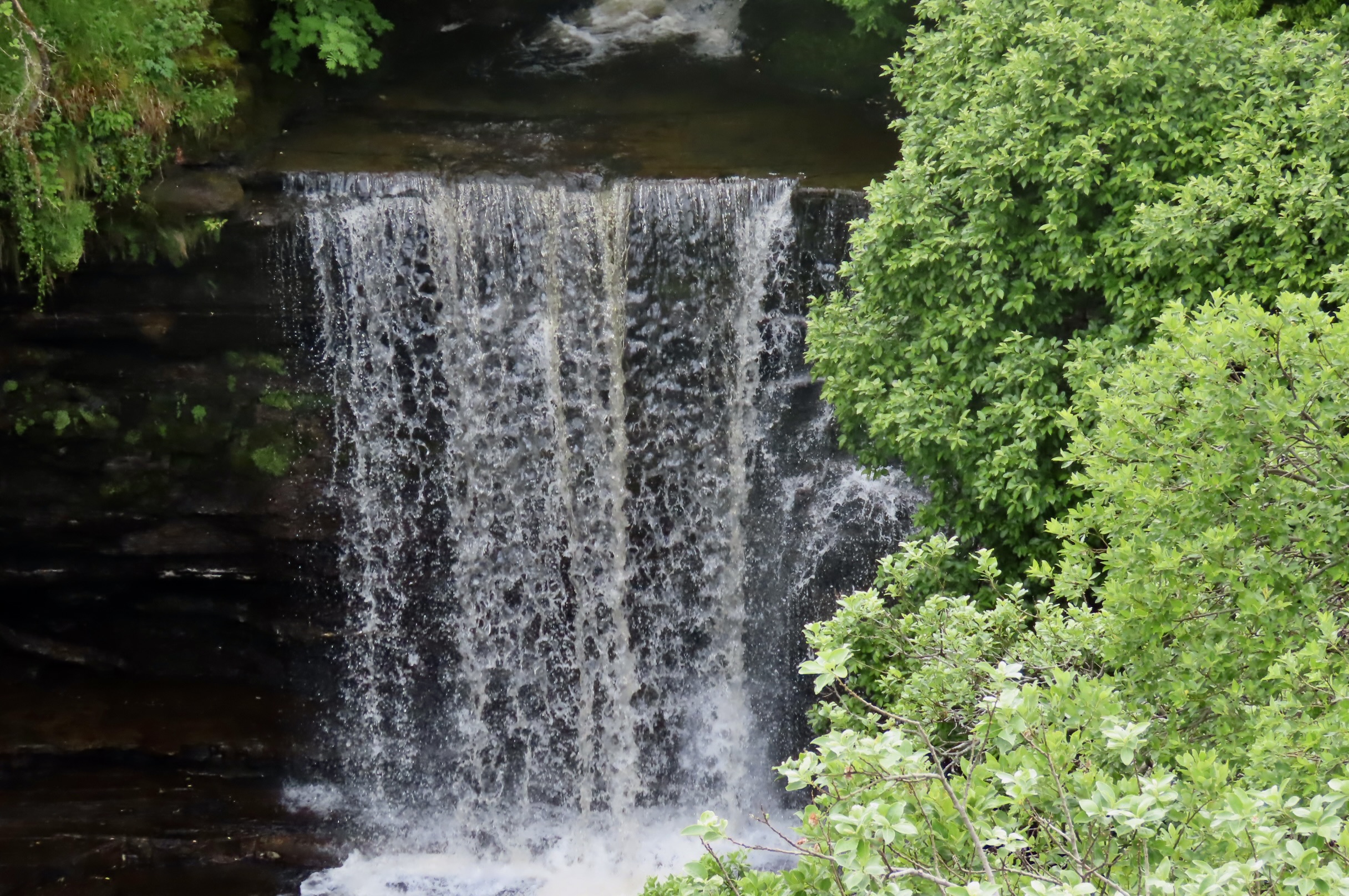
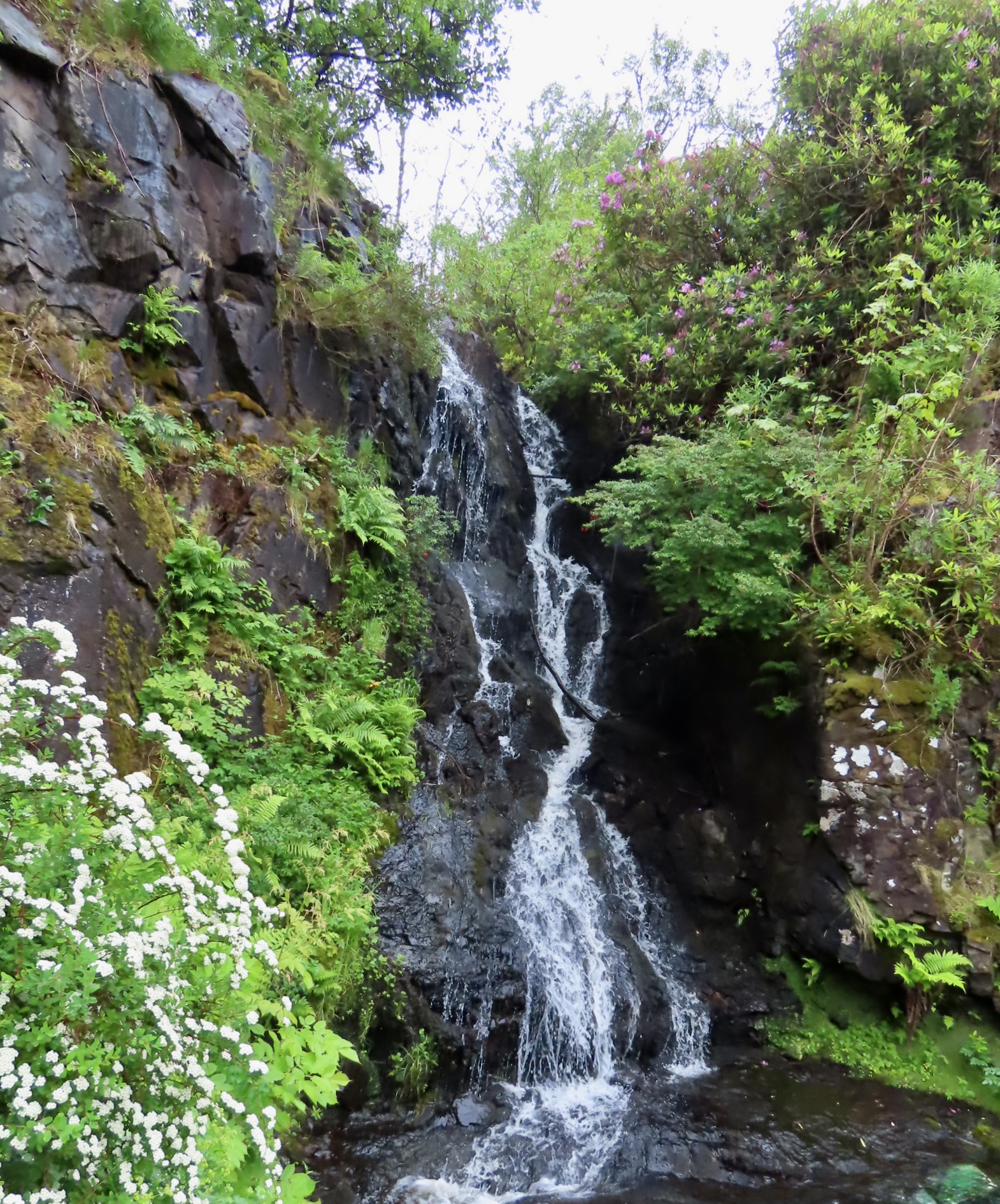
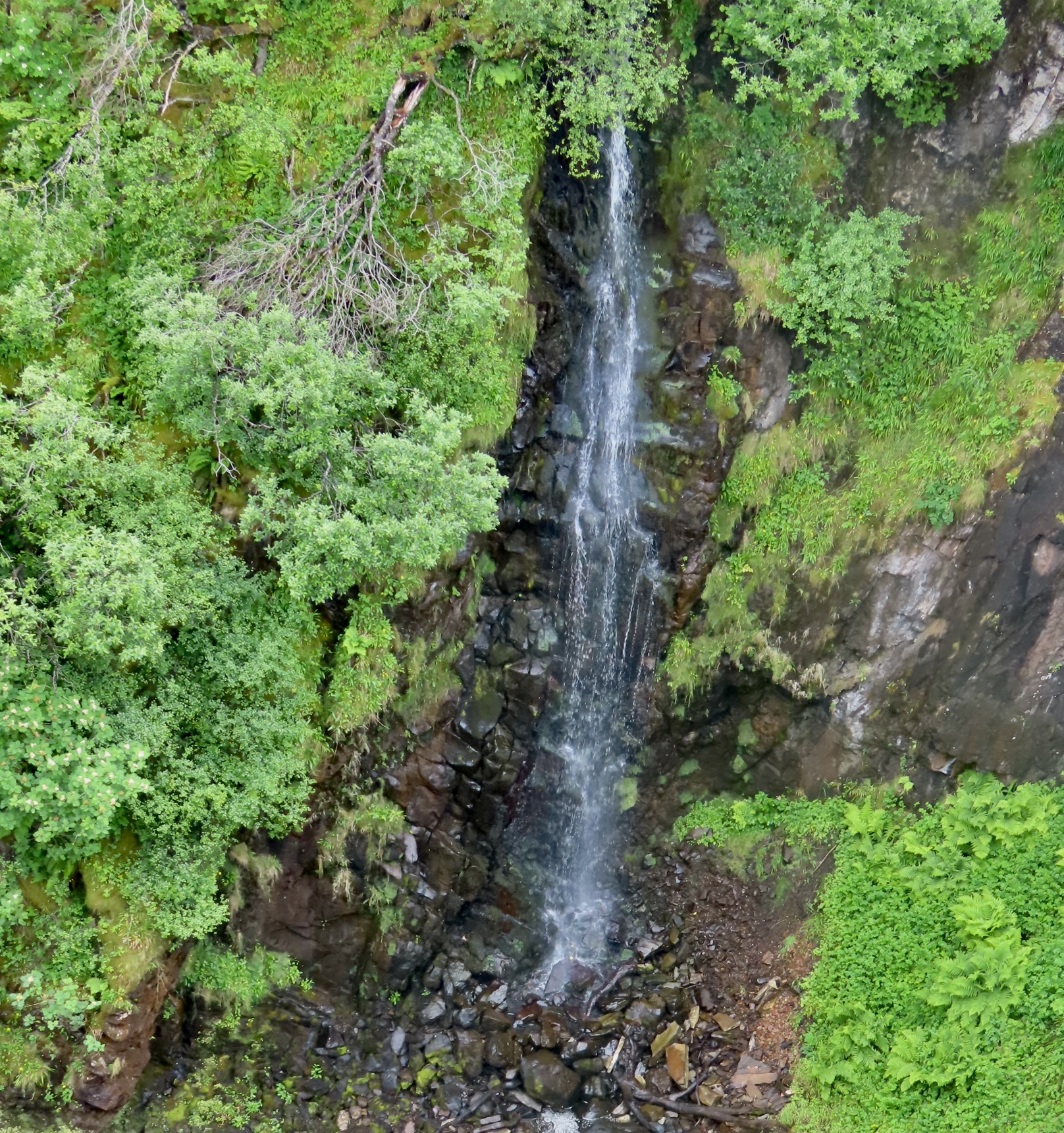
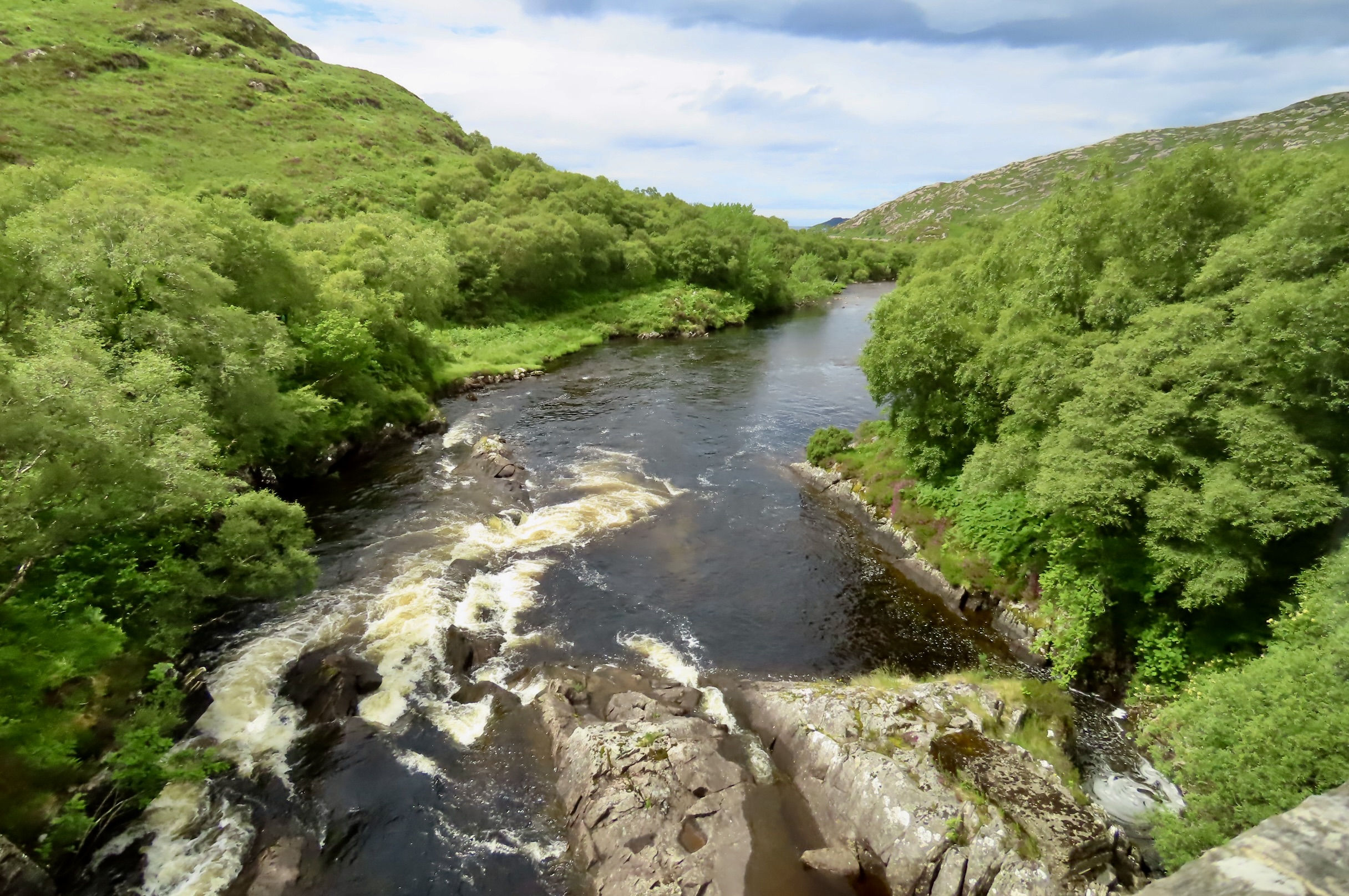
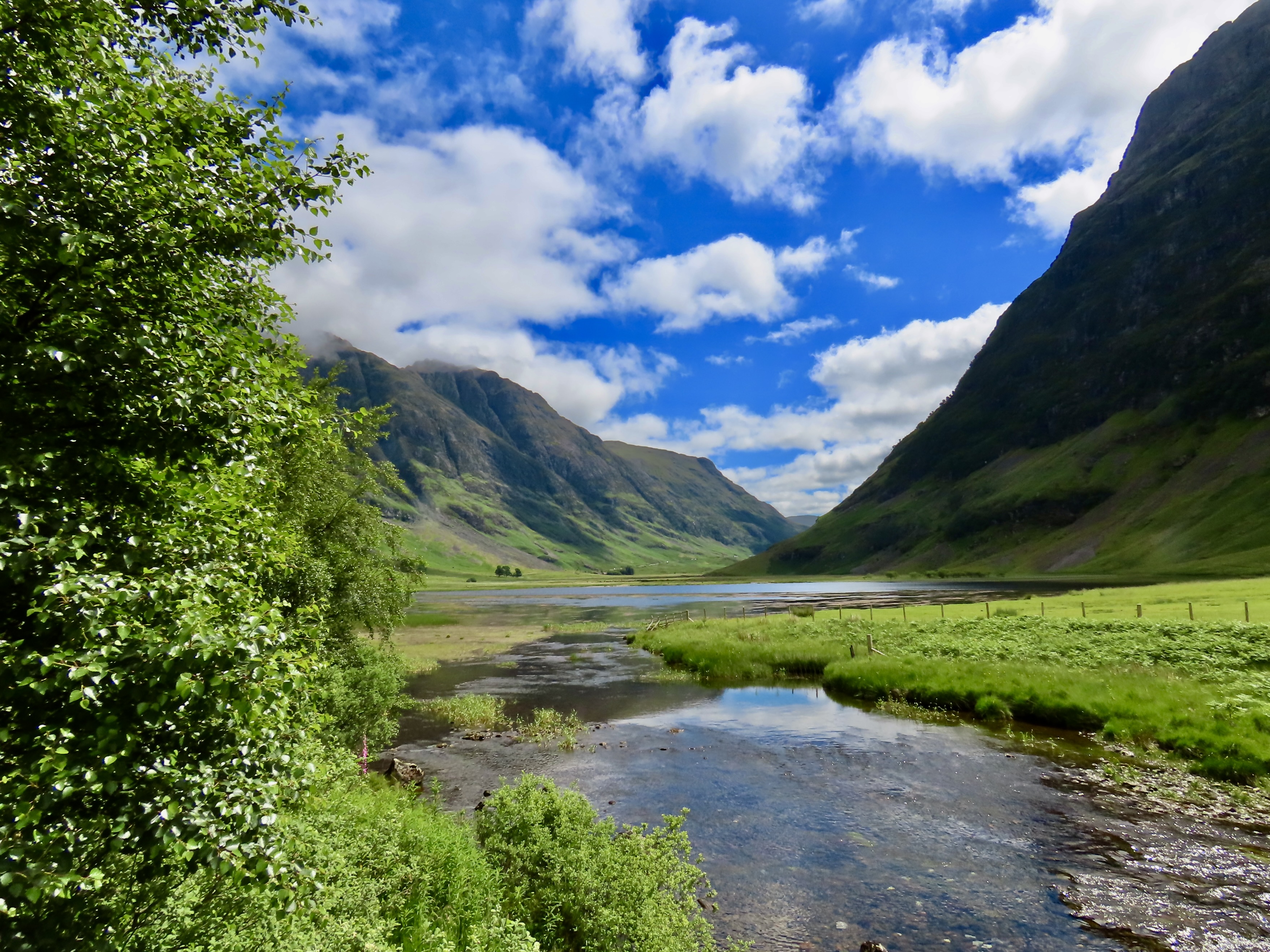
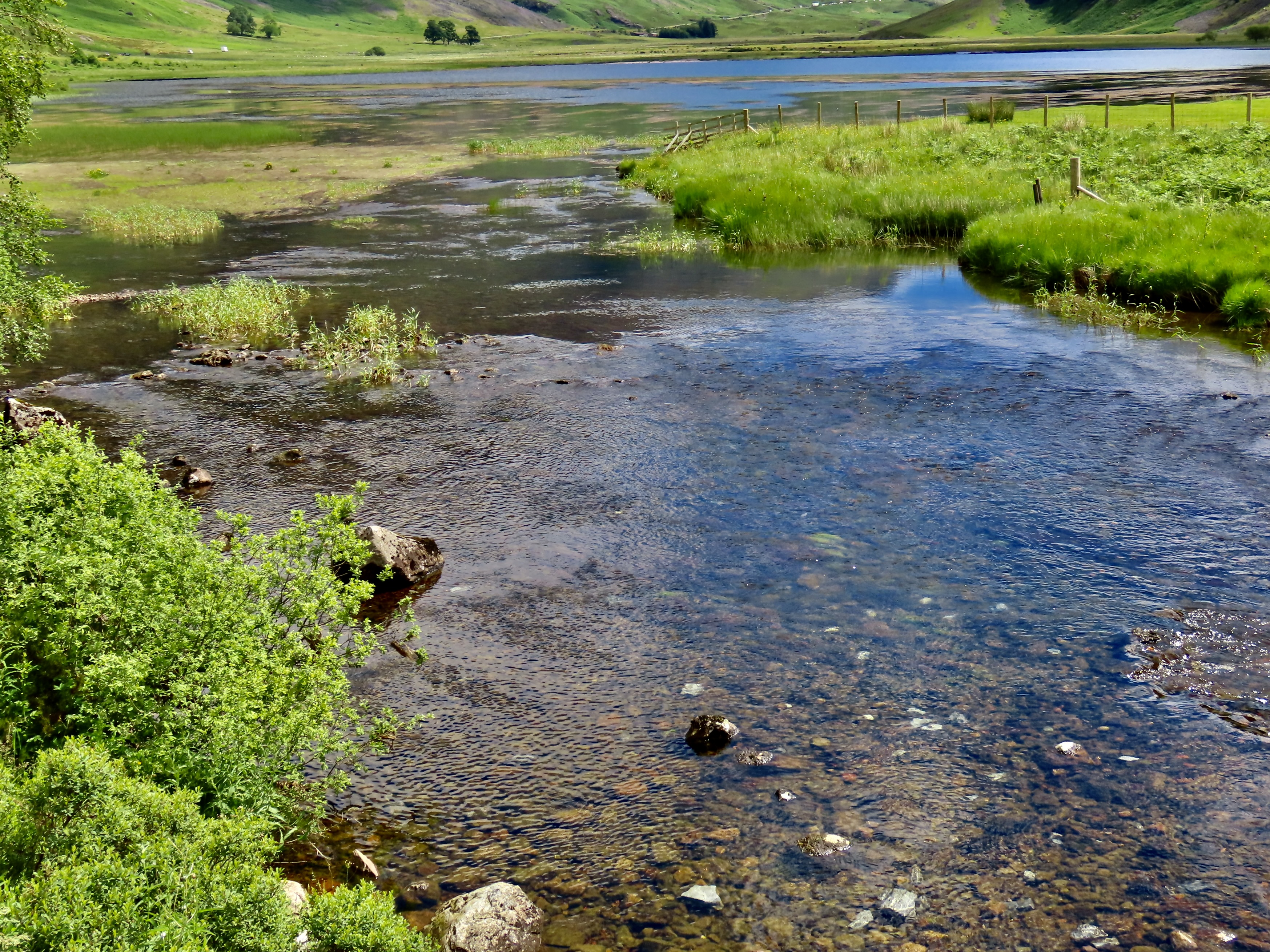
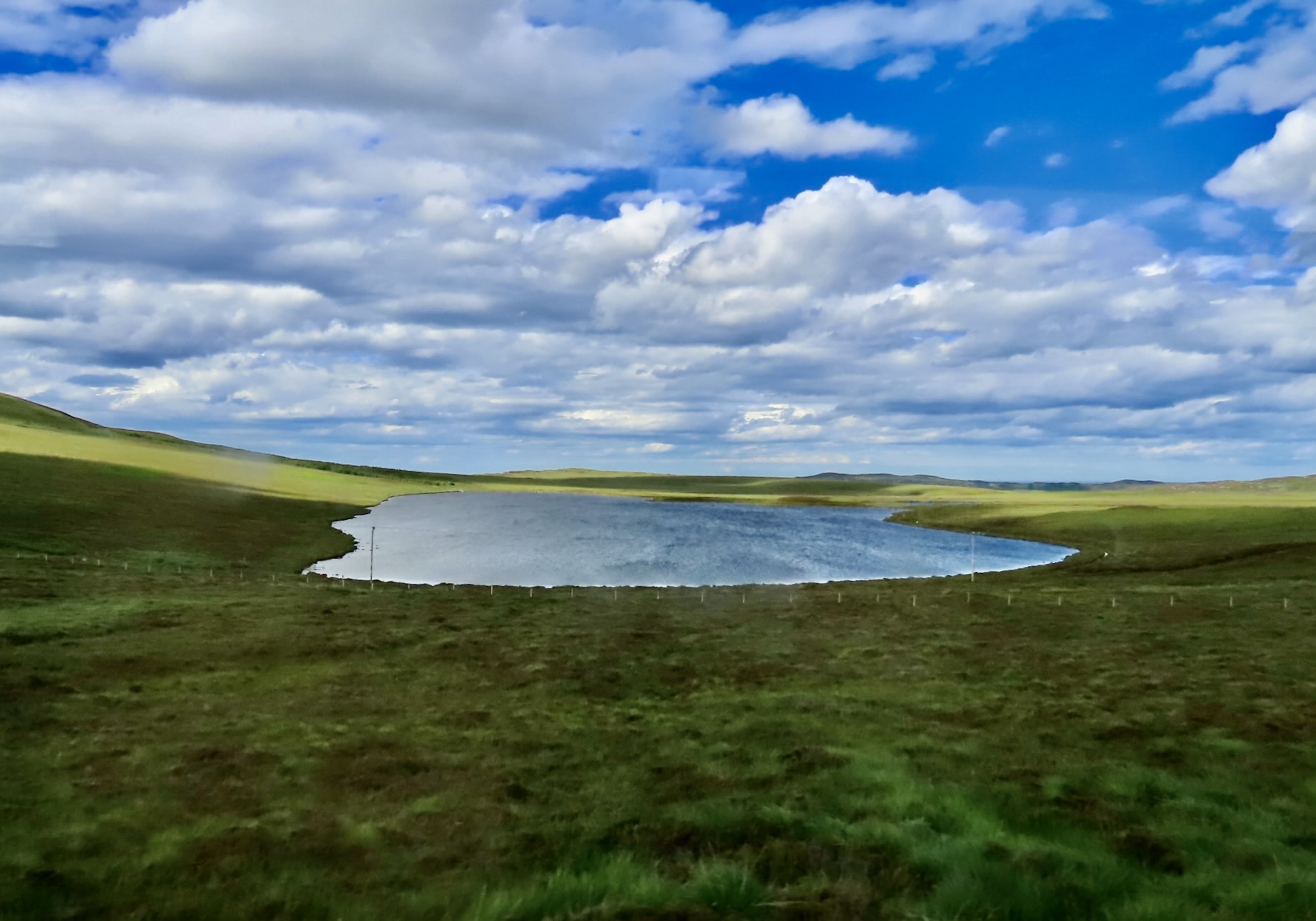
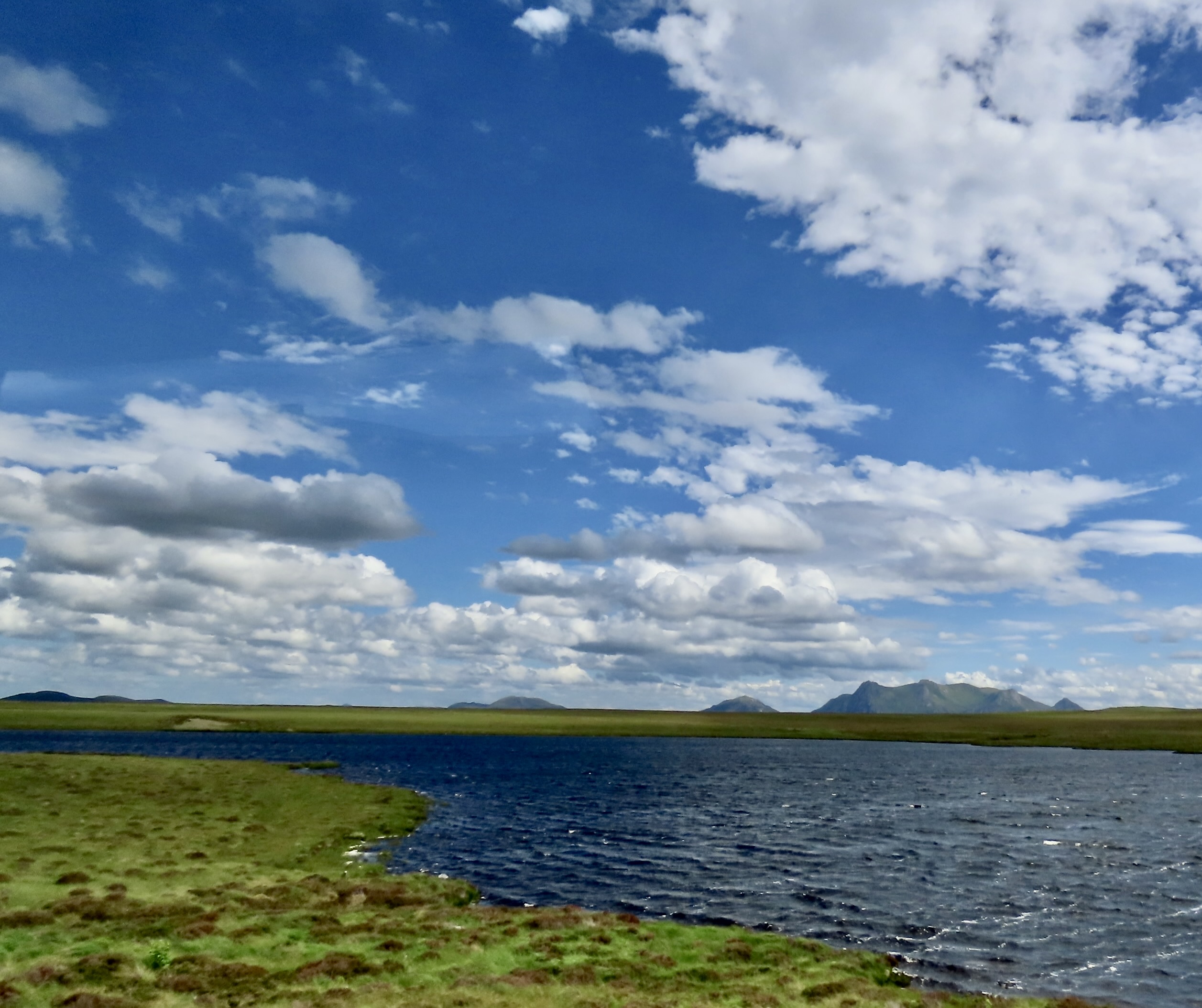
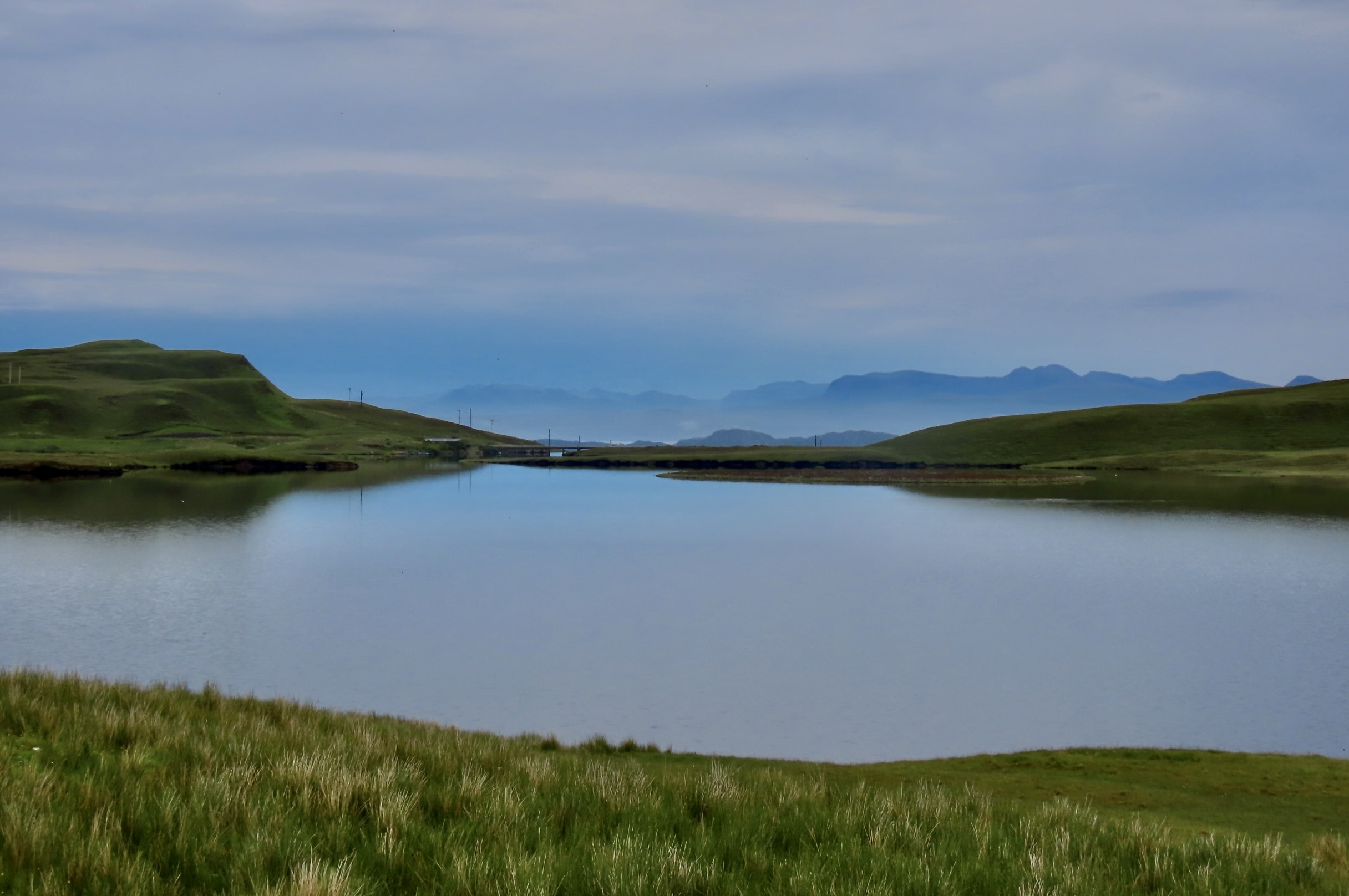
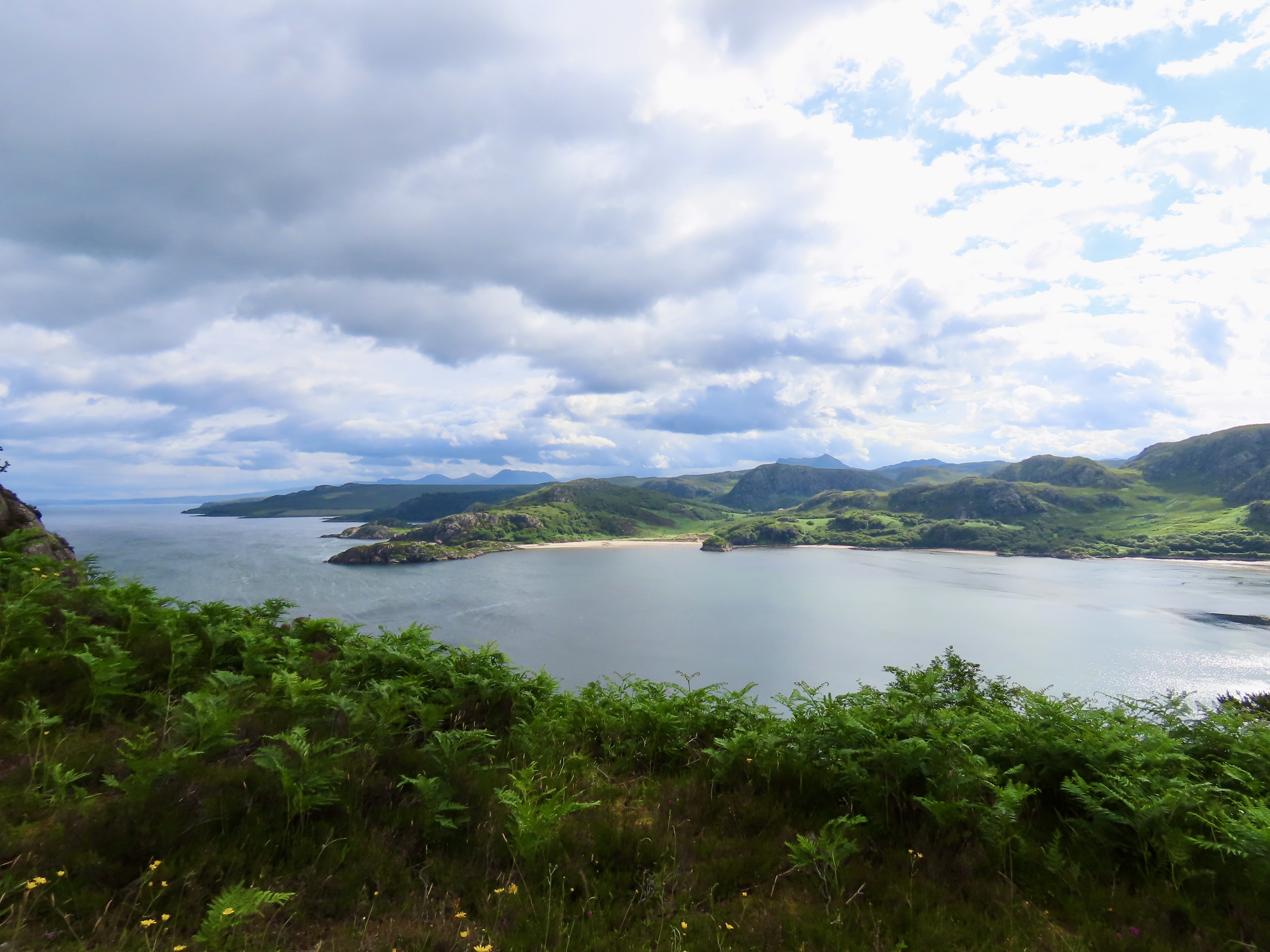
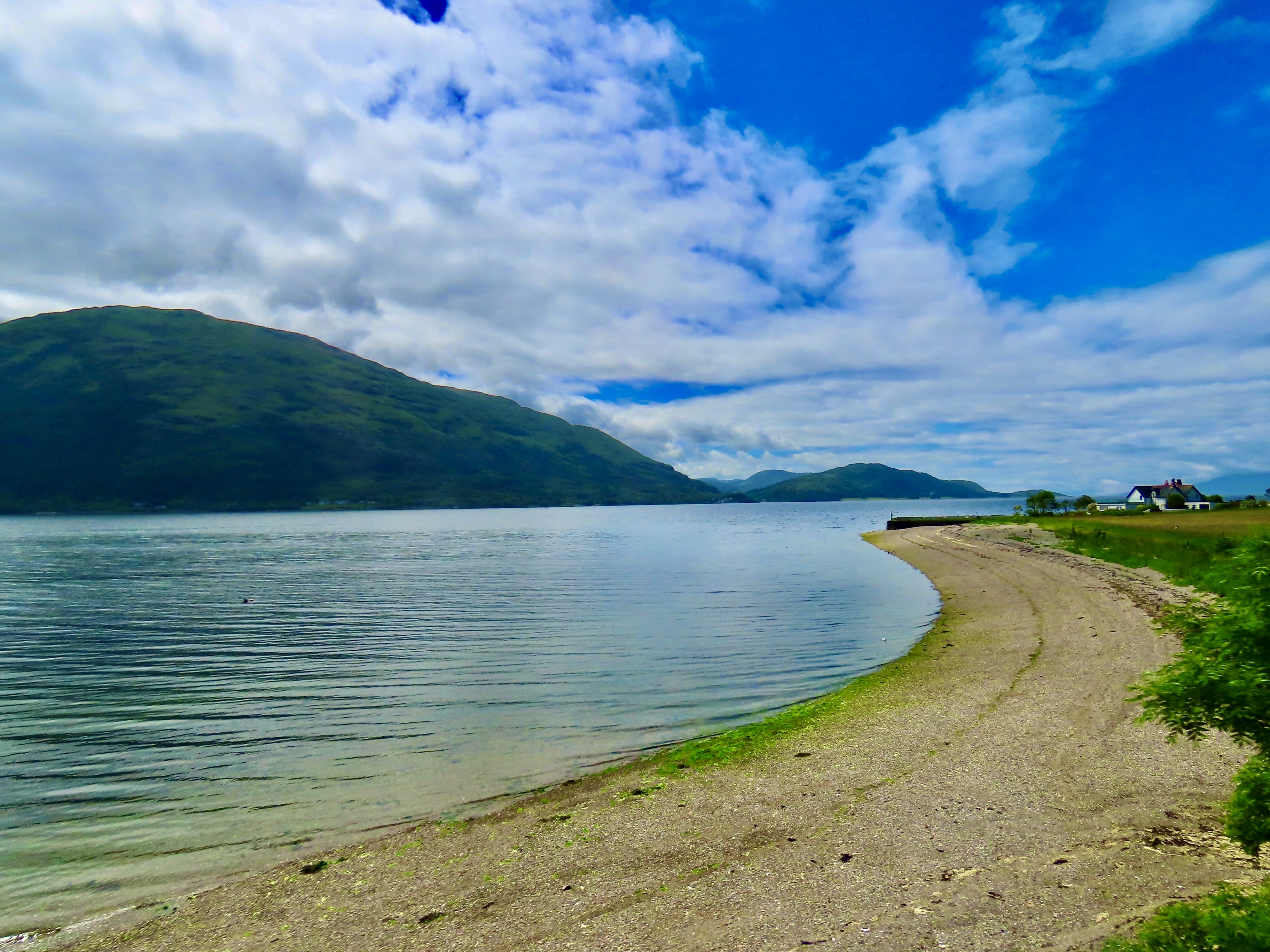
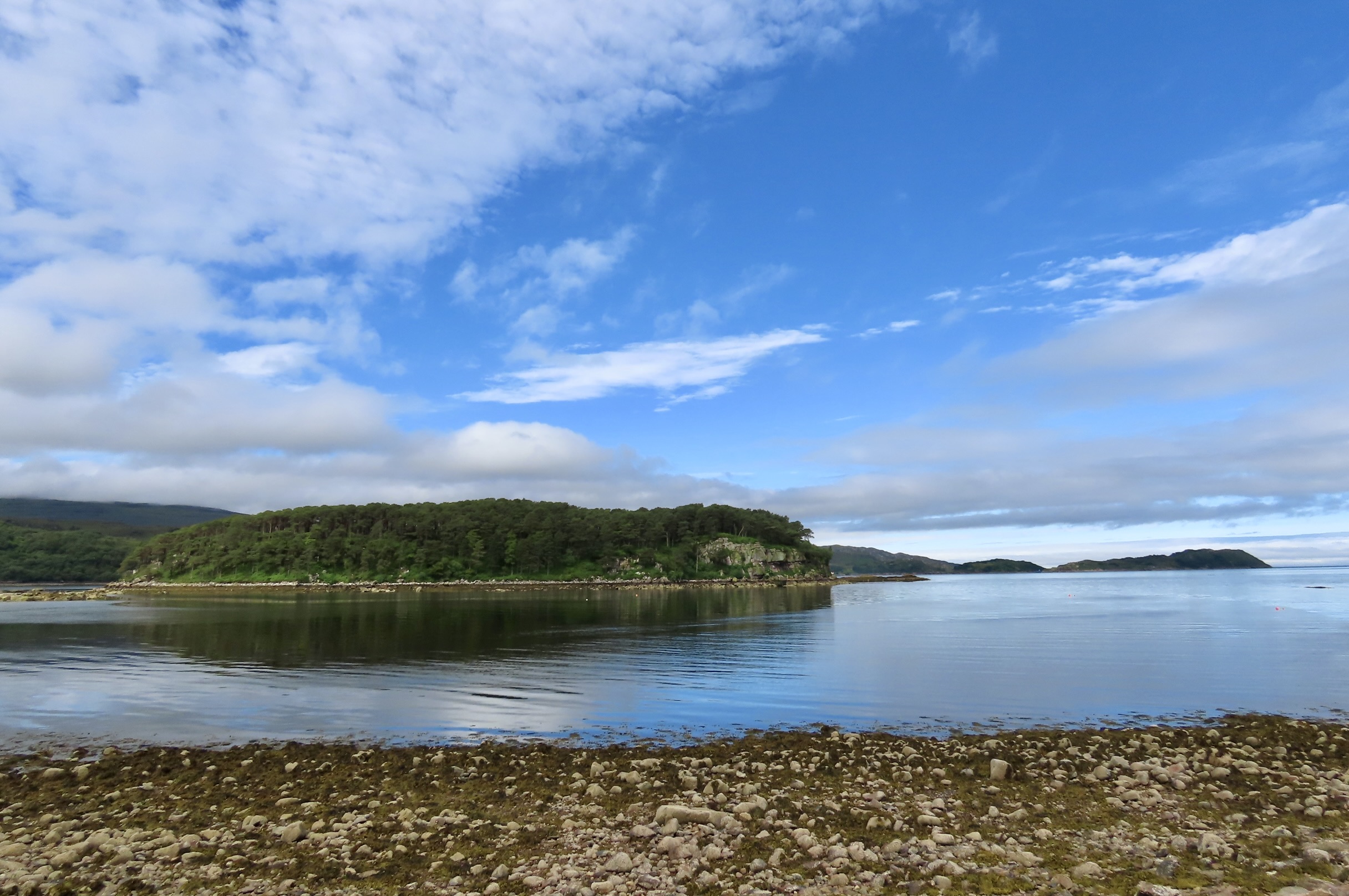
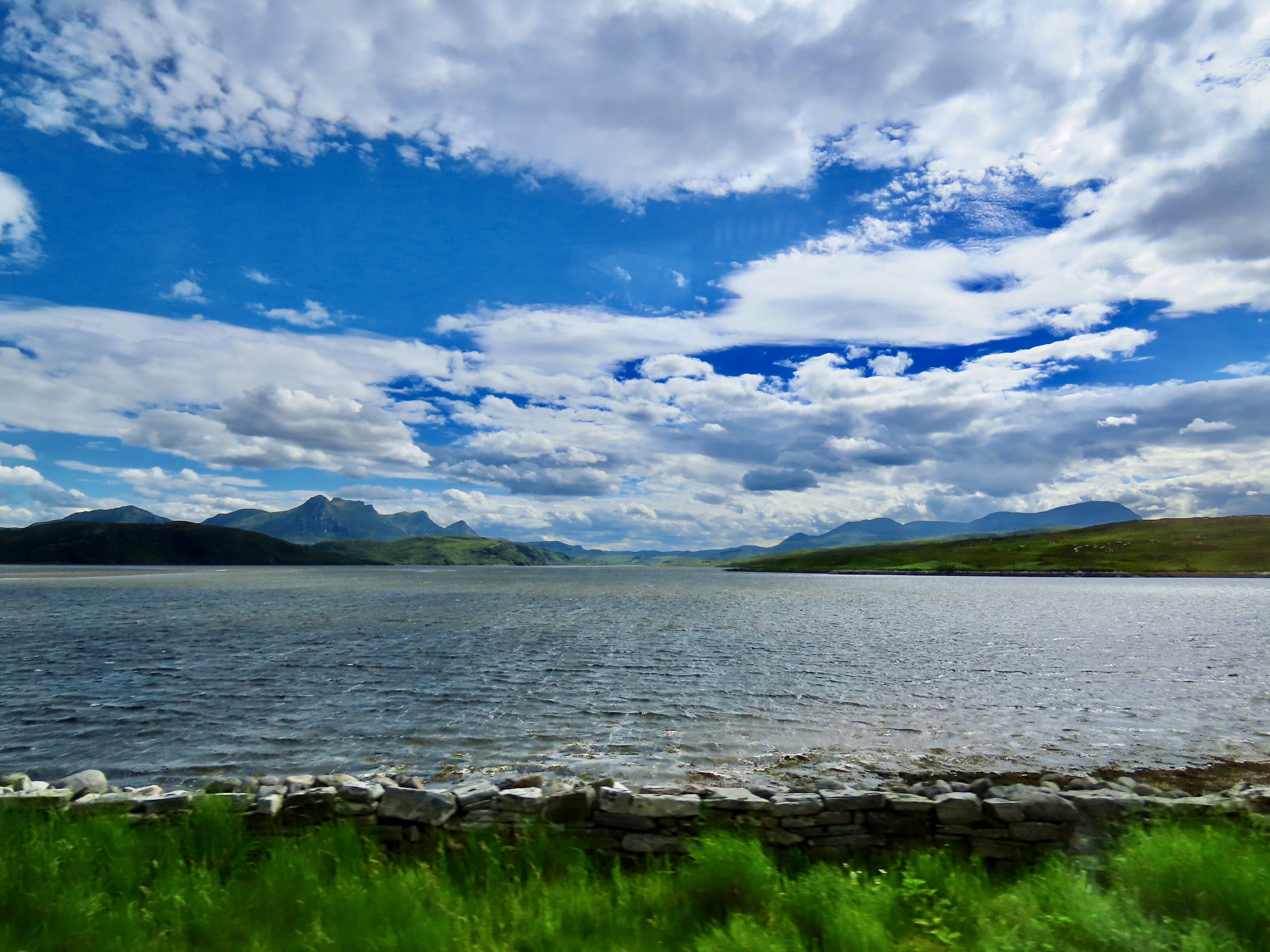
All of the water rushing down the mountains can lead to crashing waterfalls.And more quiet…But still beautiful…Waterfalls.The rainfall also leads to roaring rivers…Quiet streams, and…Lochs (lakes to the uninitiated). They are everywhere. This one combines a loch, a stream and mountains.A closer view of the stream.One of my favorite lochs.And one of Peggy’s.This was another beauty. I think it was a loch, although it might have been part of a firth. A firth is the Scotch/English word for a long, narrow inlet from the sea, like San Francisco Bay.Given that Scotland is surrounded by oceans, it isn’t surprising that there are numerous firths. Like lochs, they add to the beauty of Northern Scotland.This one came with a long, sandy beach. The lone home at the end of the beach speaks to the vast open spaces of the Scottish Highlands with few people. Once there were more, but the wealthy landlords who owned the property forced the tenant farmers off of their ancestral communal lands because they could make more money off of large scale sheep and cattle farms in what was known as the Highland Clearances between 1750 and 1860. They were a dark blot on Scotland’s History. The homes of the tenant farmers were usually burned down so the farmers wouldn’t return. Thousands ended up migrating. Others scratched by as best they could on small farms, crofts, along the coast.This firth came with Cody.It also featured an attractive island.Another favorite photo.While the green landscape, rivers, lochs and firths are an essential part of the Highlands’ beauty, we are talking Highlands— and that translates into mountains.
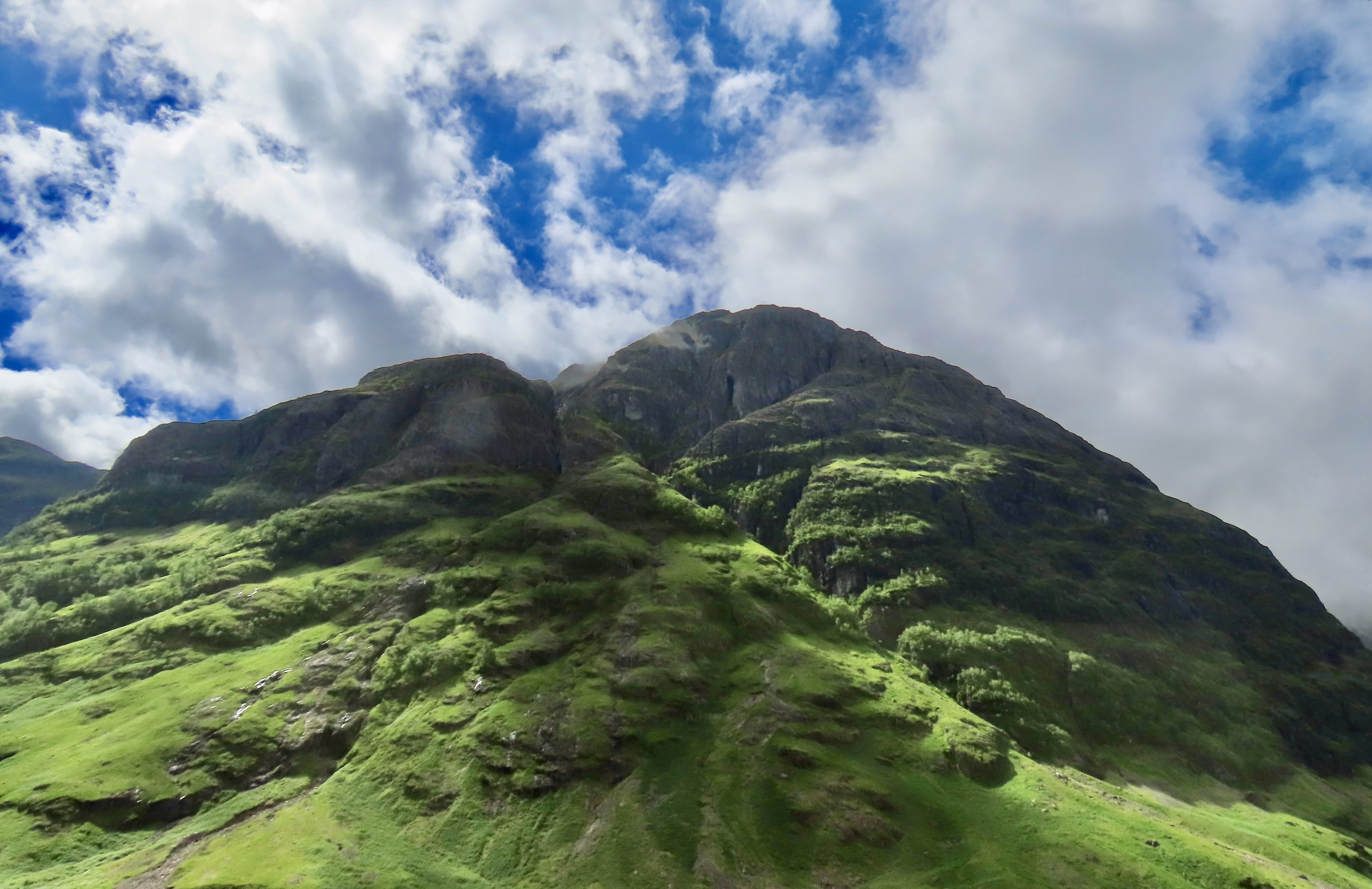
While they only reach 3000 feet (914 meters) in height, their lack in elevation does not take away from their beauty and ruggedness. Here’s something to contemplate: They were once as high as the Himalayas, around 20,000 feet (6,100 meters). Four hundred million years of erosion can wear you down a bit, however. It’s apparent in this photo that a lot of erosion is still taking place. The mountains were created when Scotland and England crashed into each other around 500 million years ago. They didn’t always hang out together. Once they were part of two different continents separated by the no longer existing ocean of Iapetus. Northern Scotland belonged to the ancient continent of Laurentia, occupying a landmass with North America. England was part of a smaller continent far to the south known as Avalonia. Plate tectonics did away with Iapetus and brought Scotland and England crashing together in the Caledonian Orogeny, the event that raised the Scottish Highlands to their Himalayan heights.
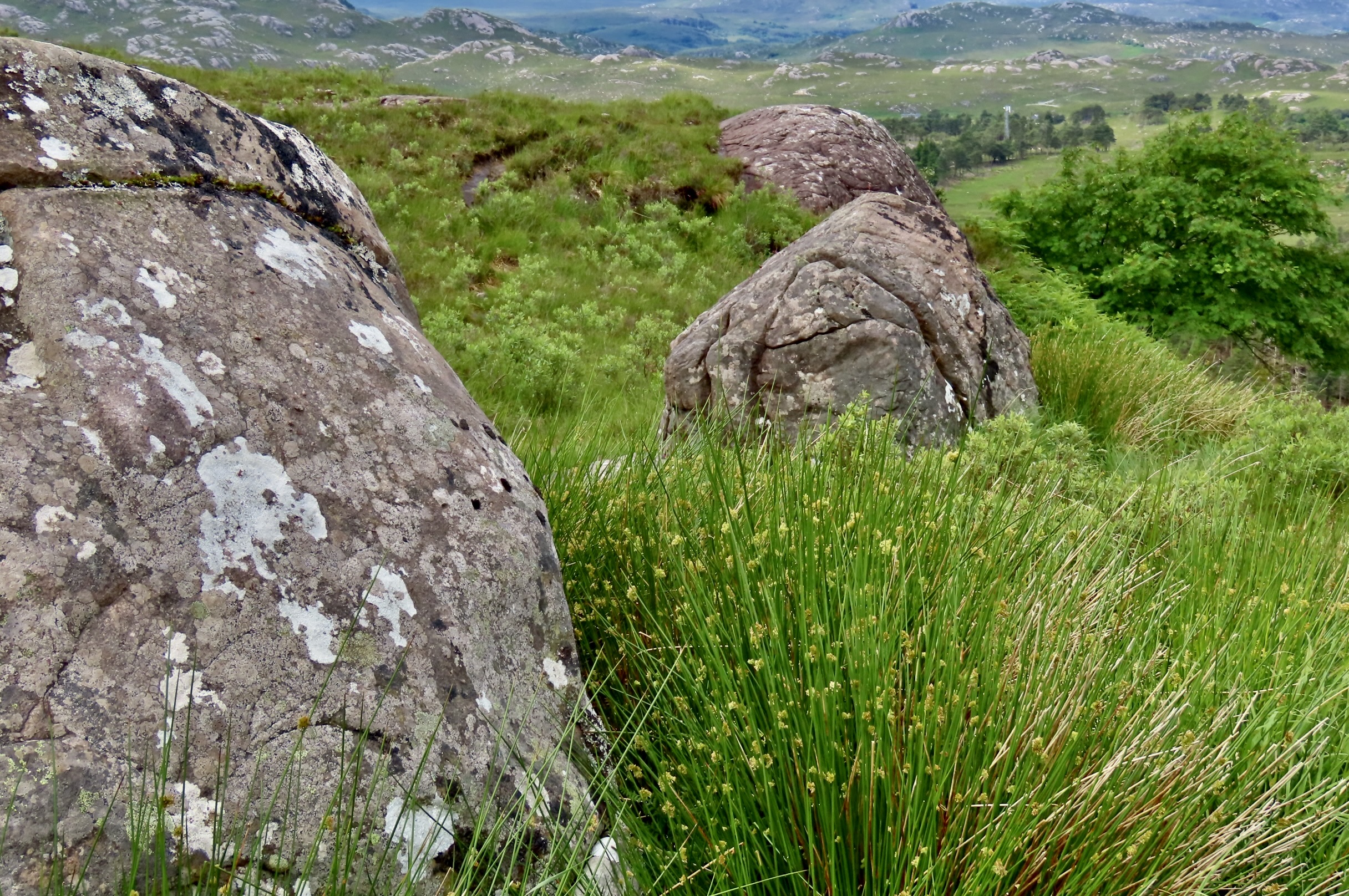
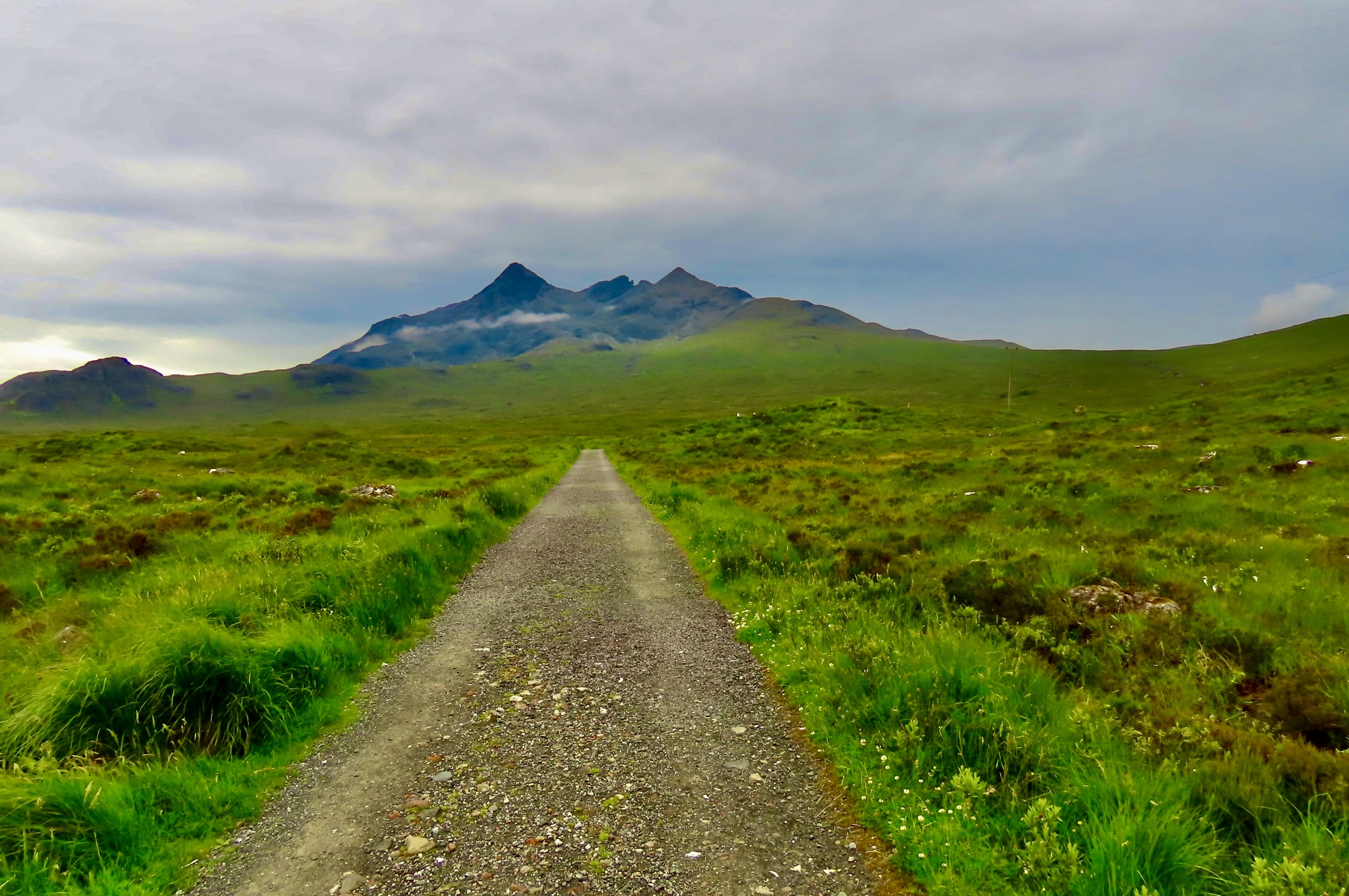
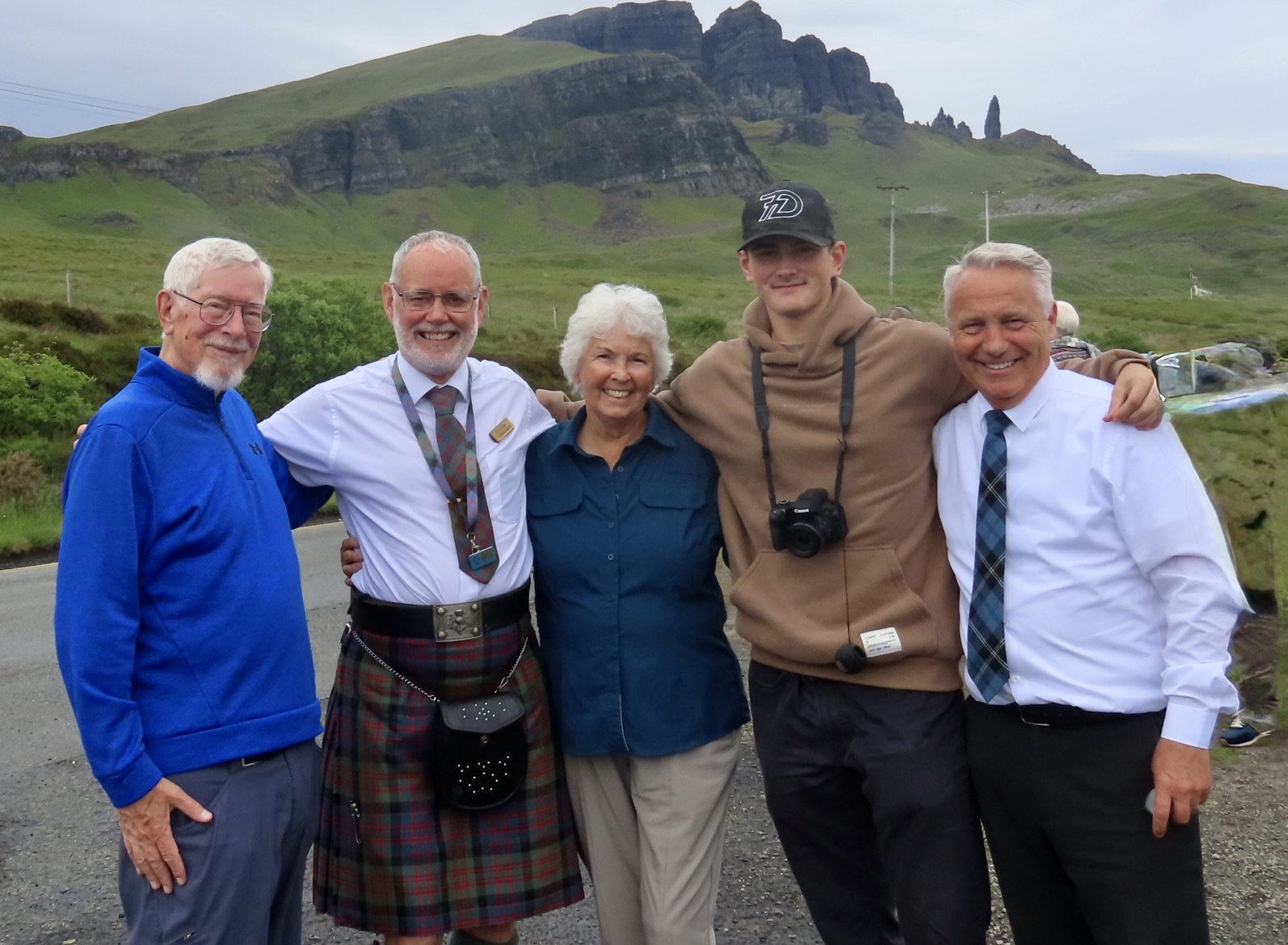
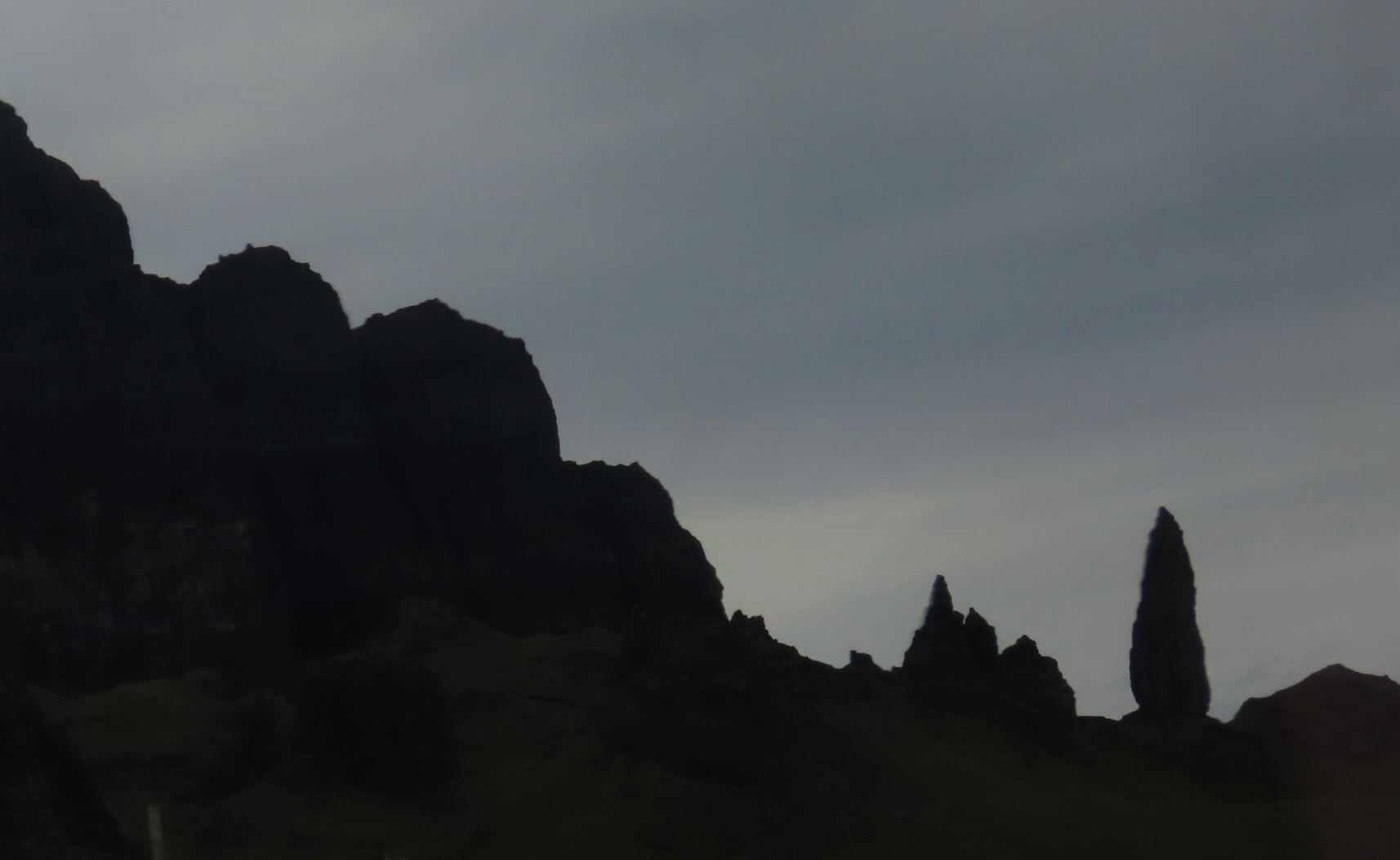
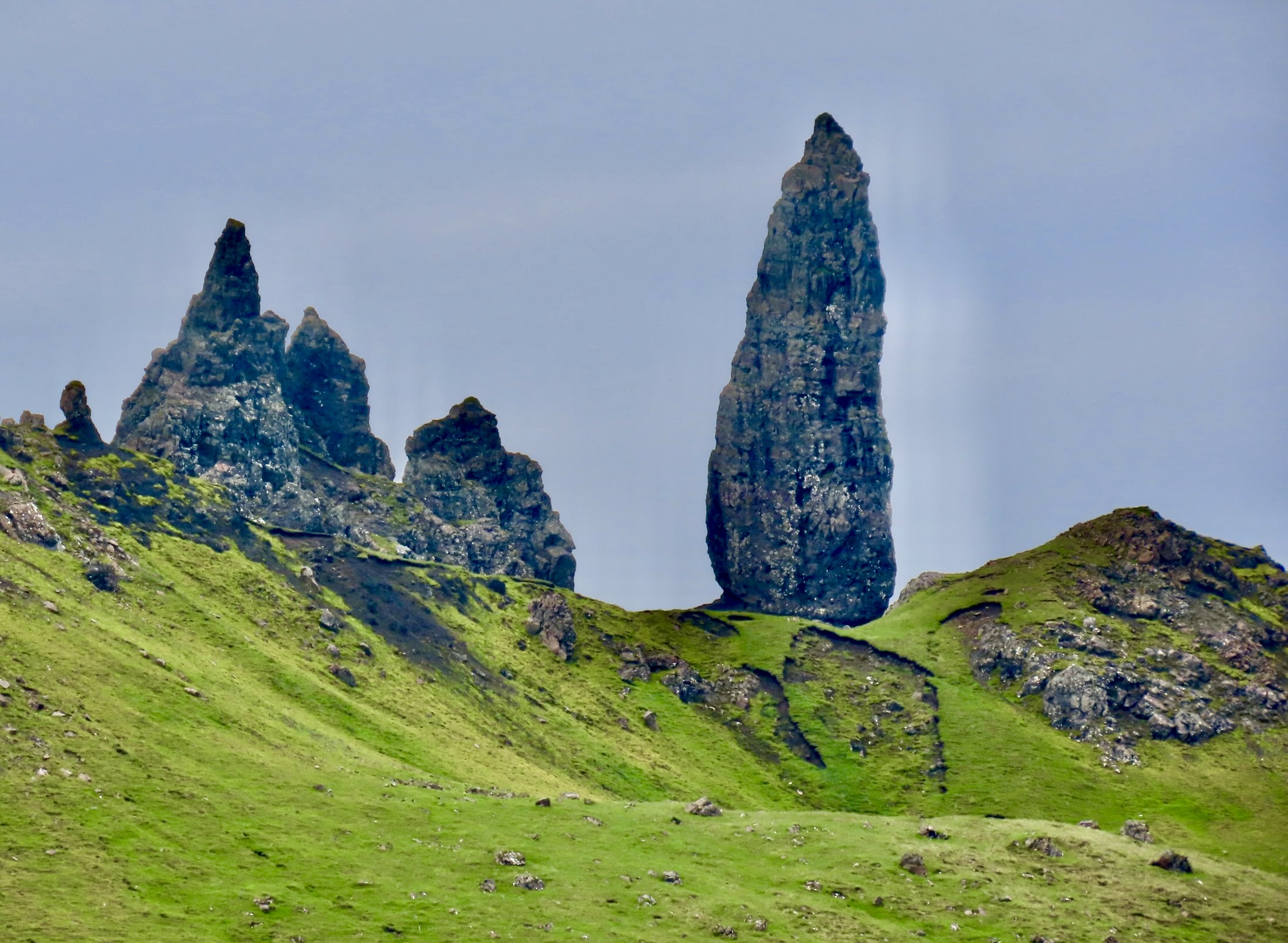
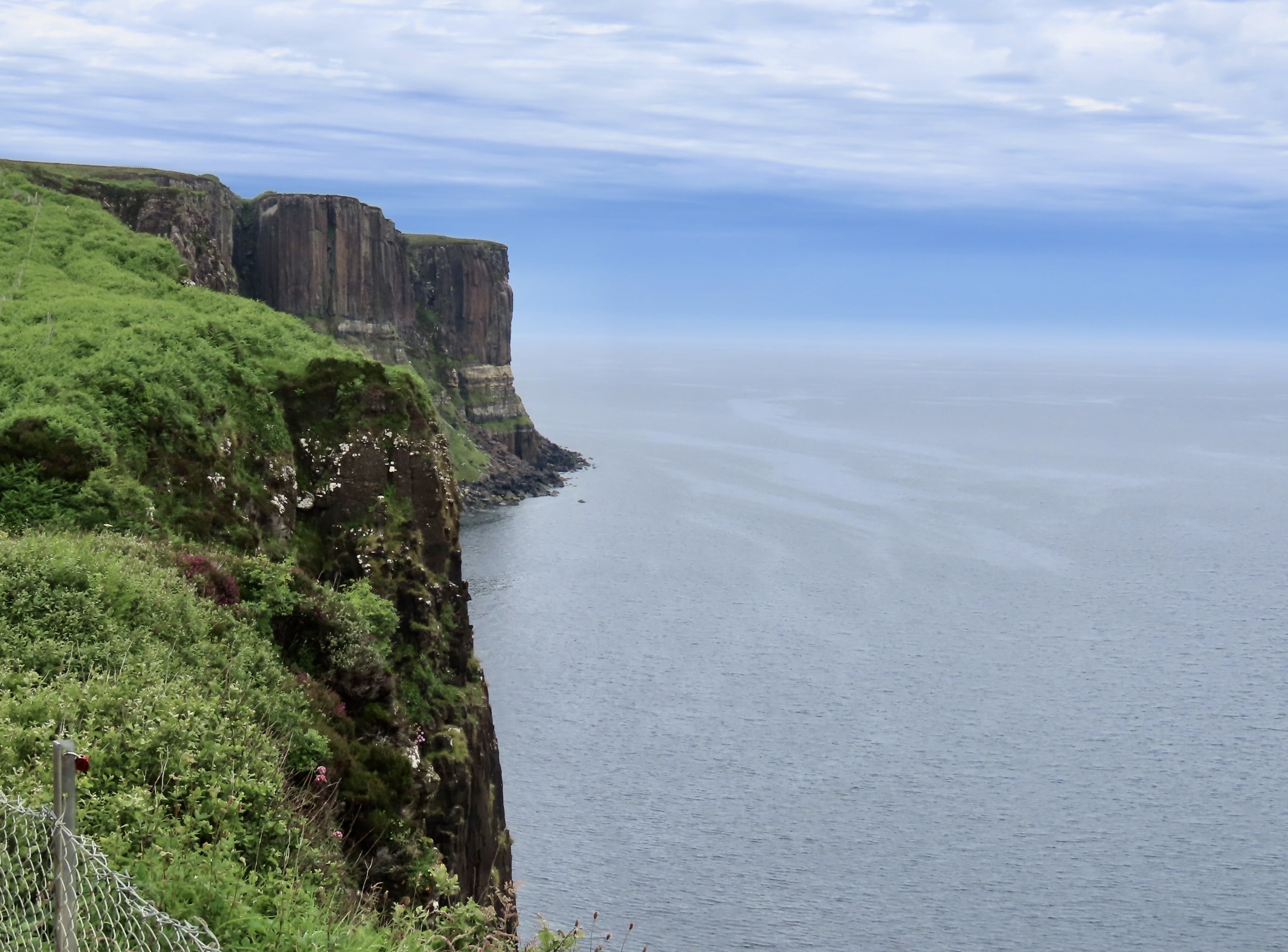
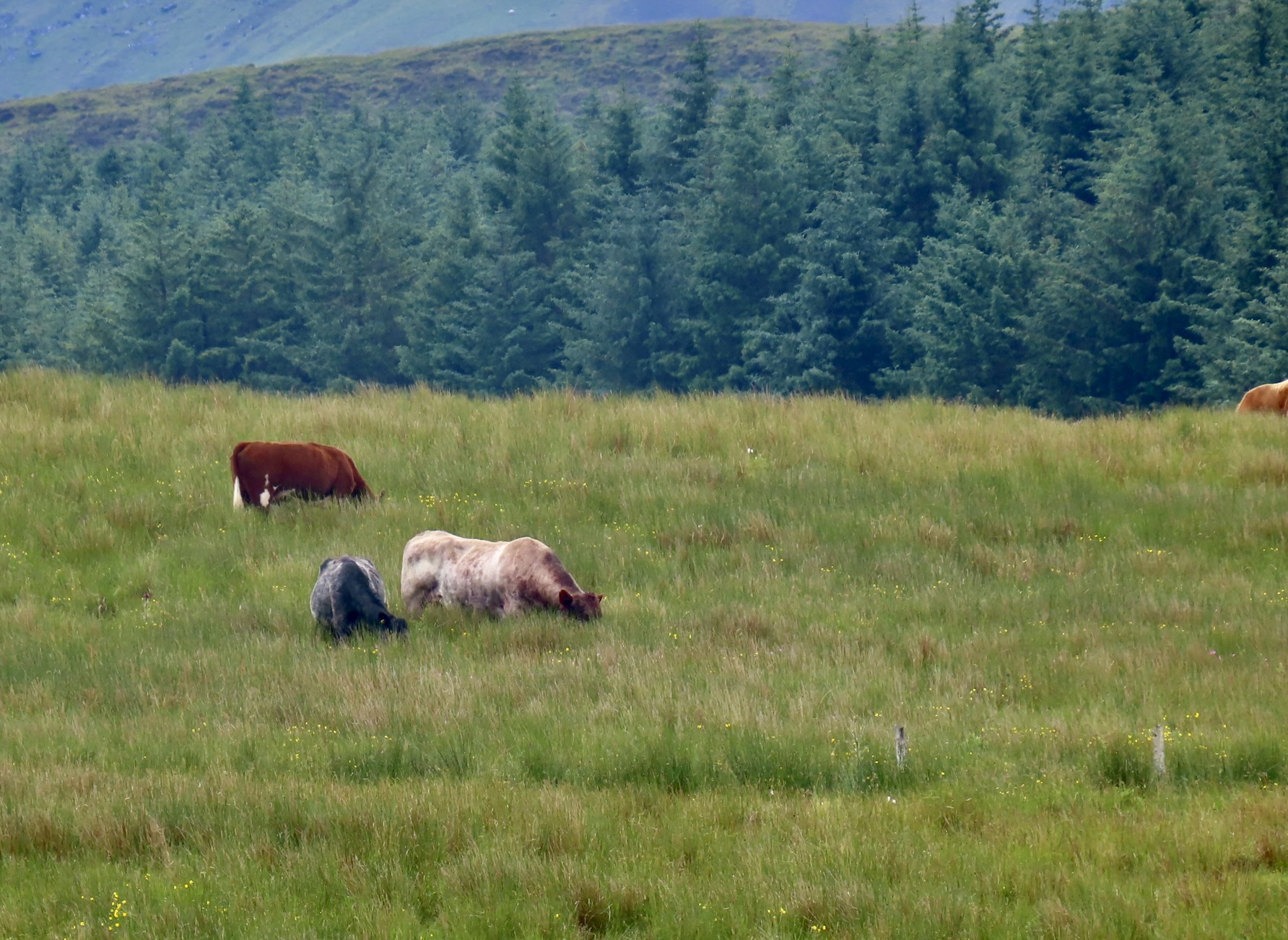
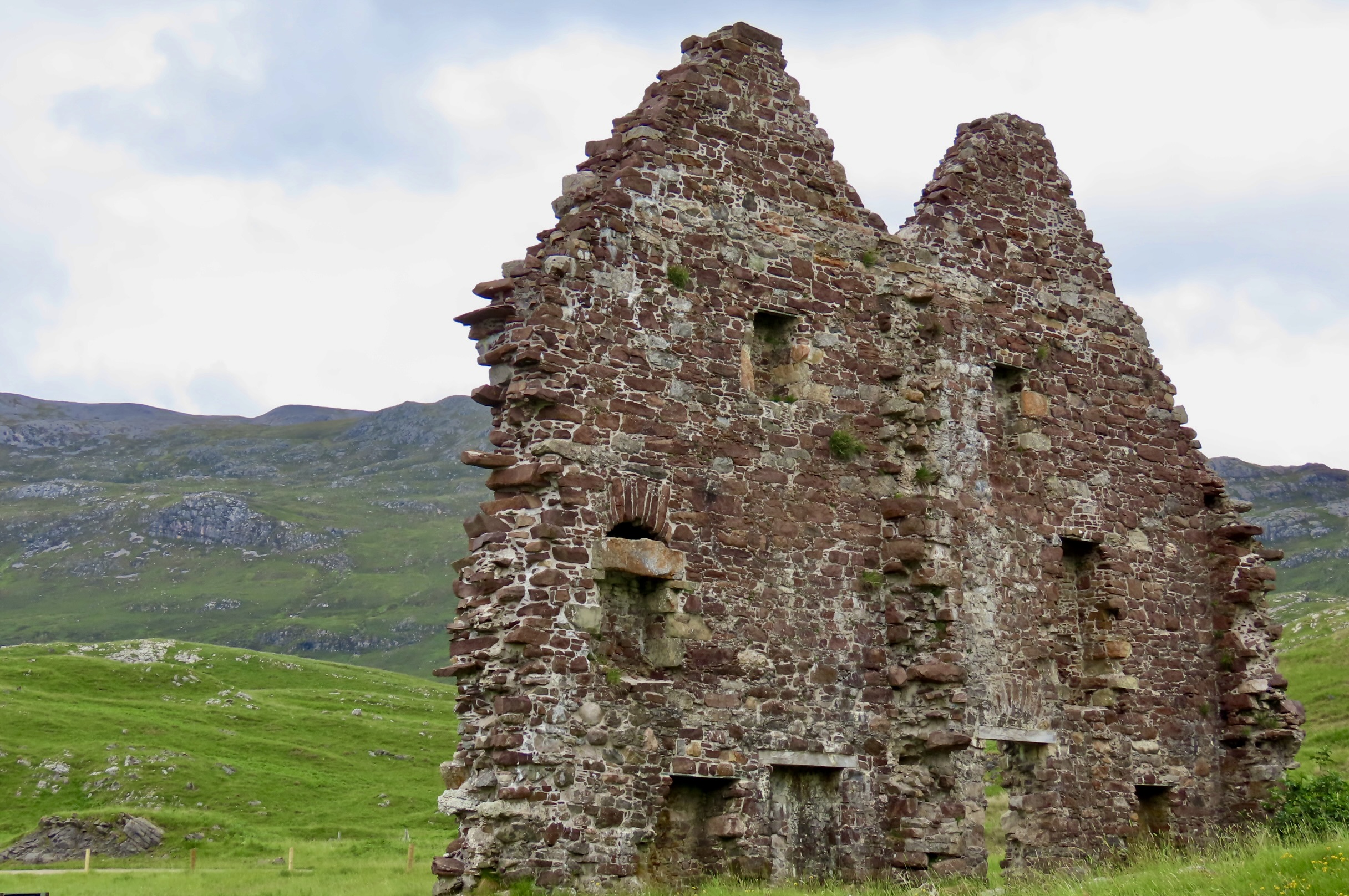
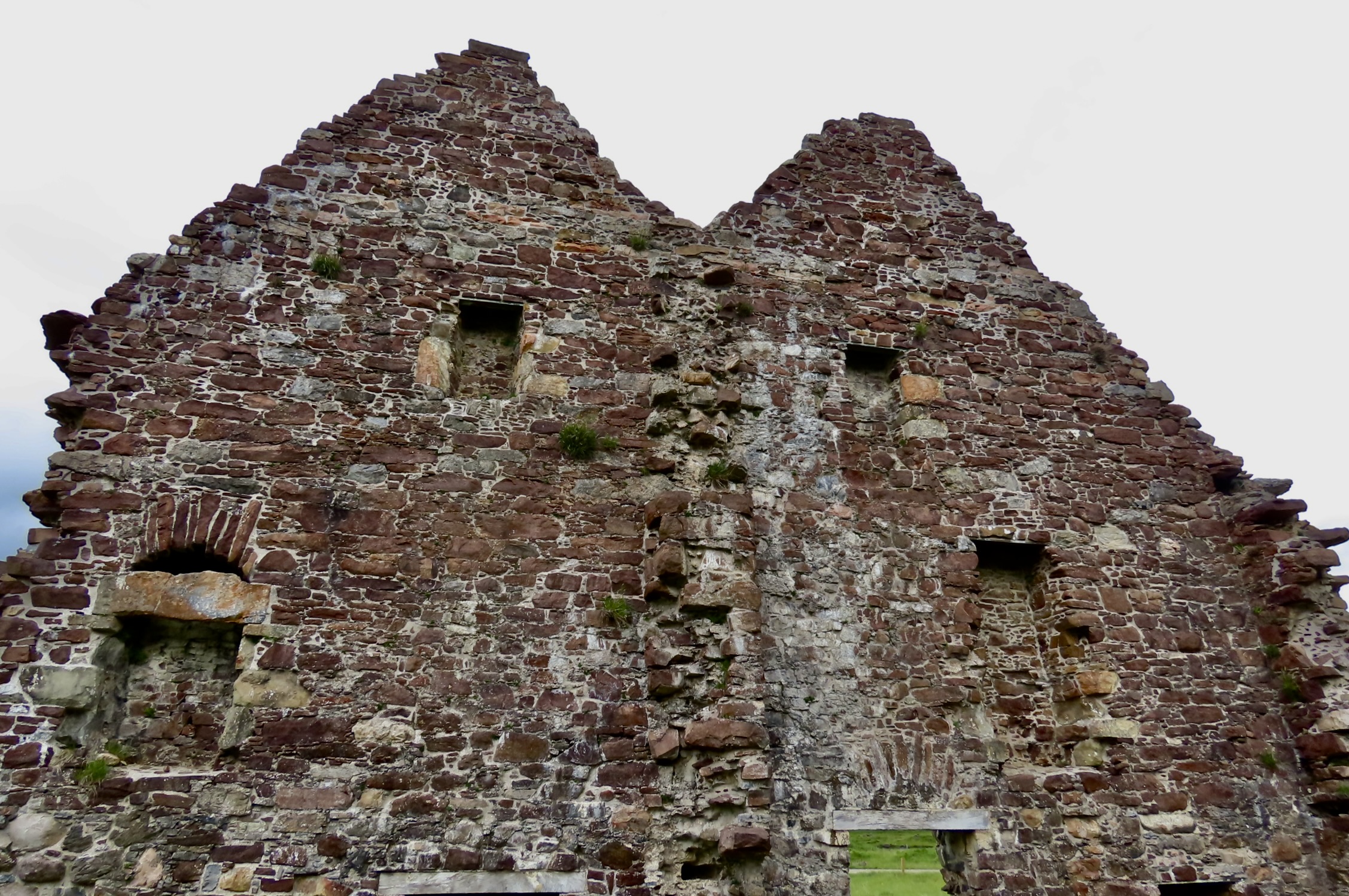
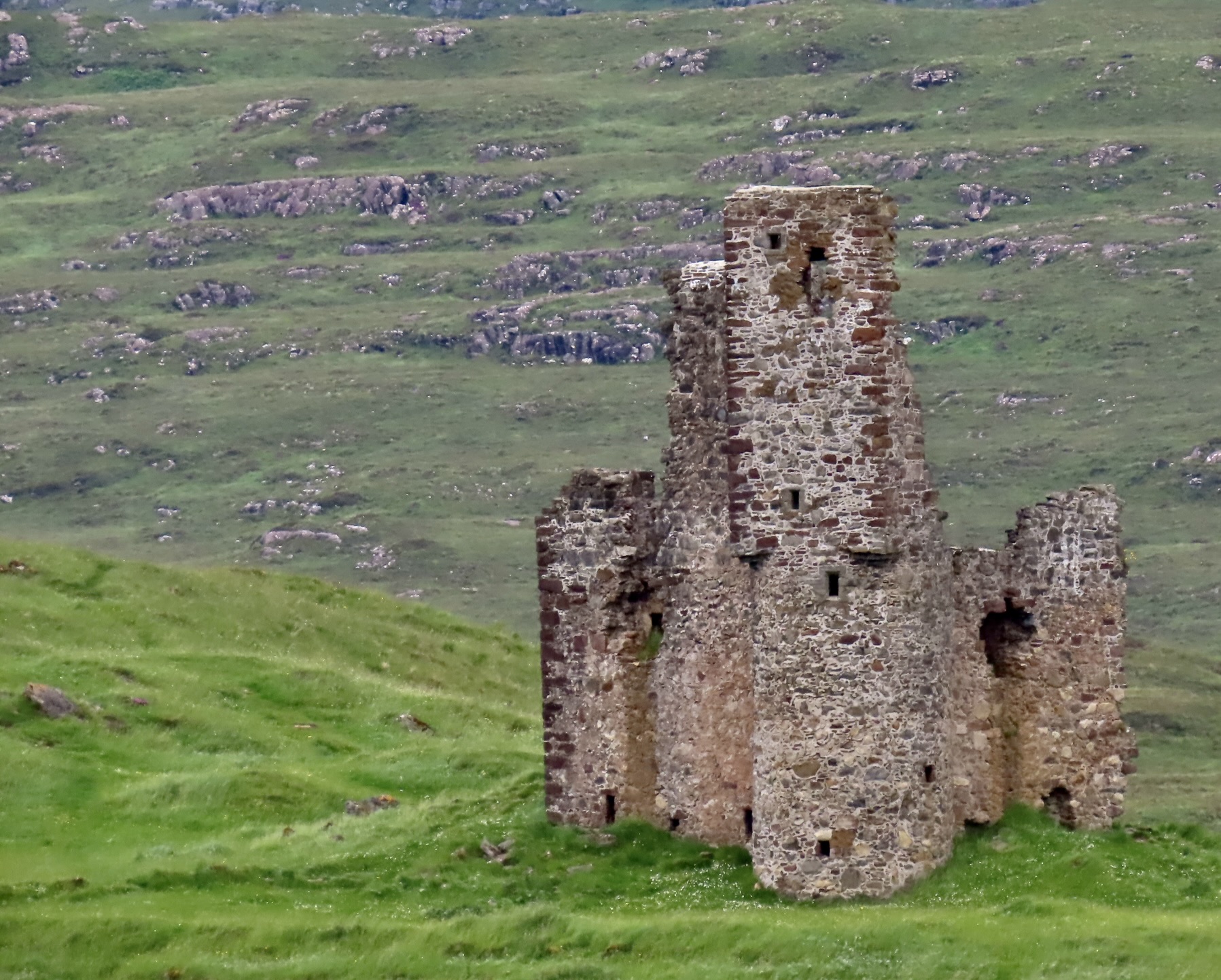
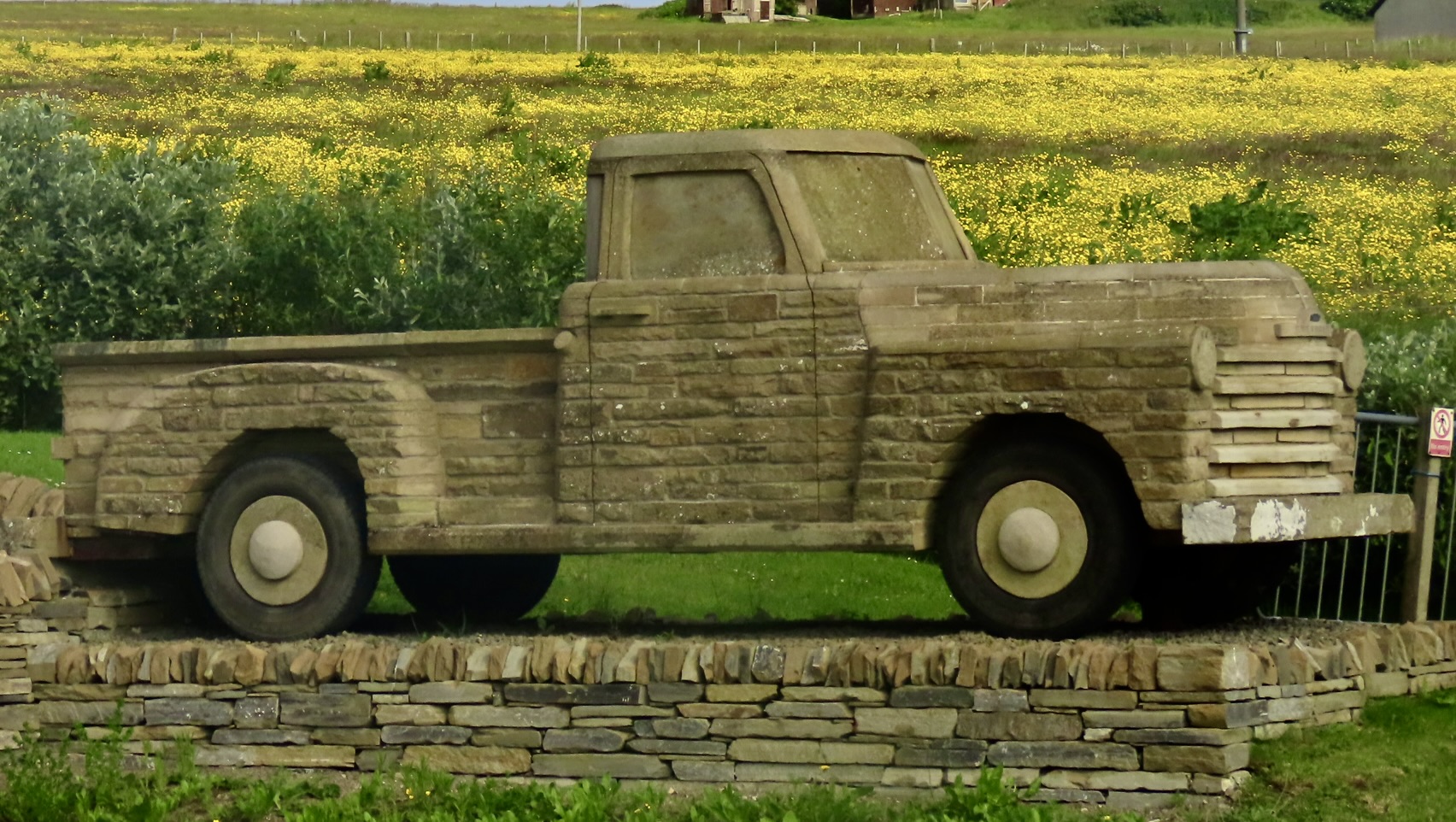
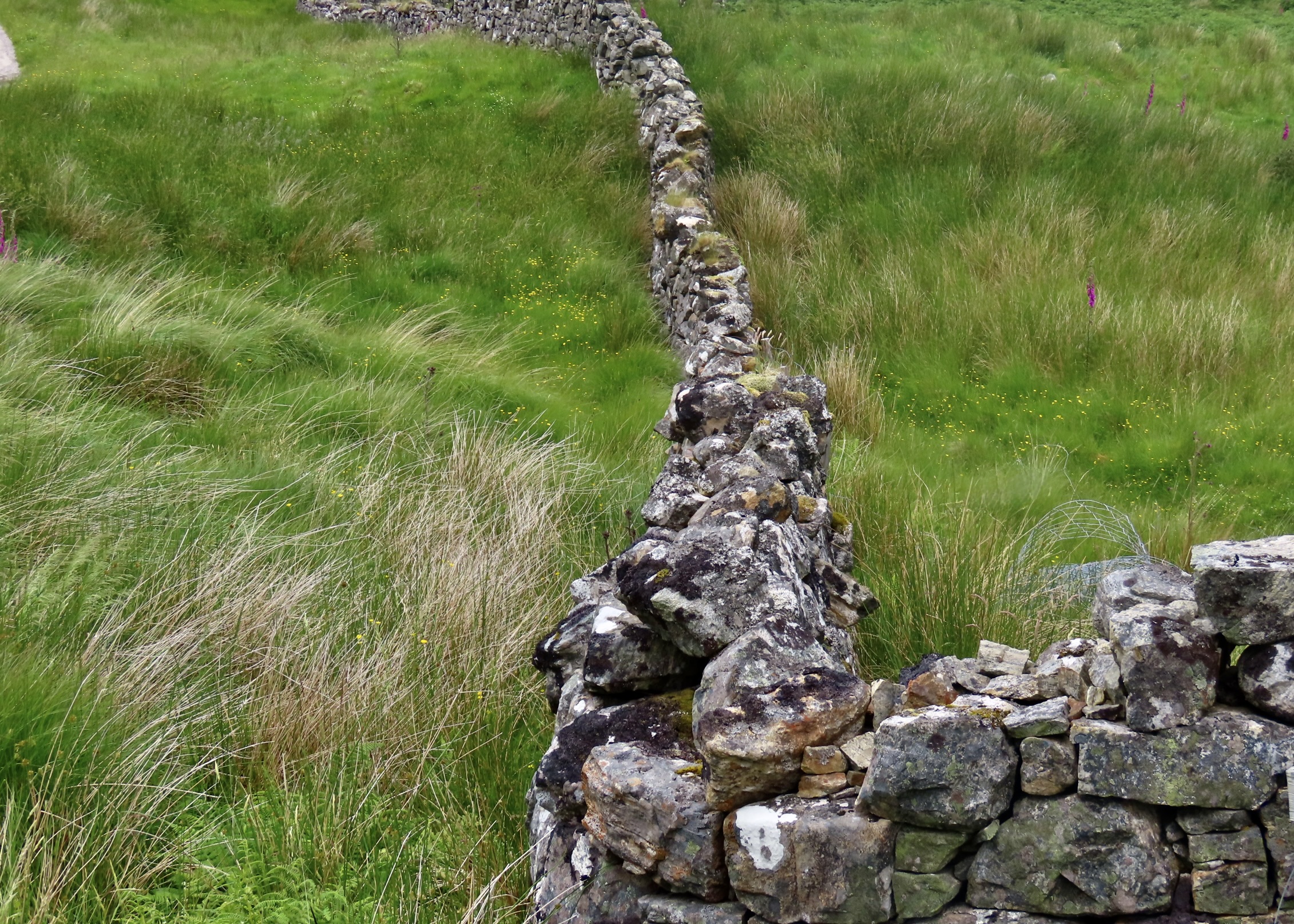
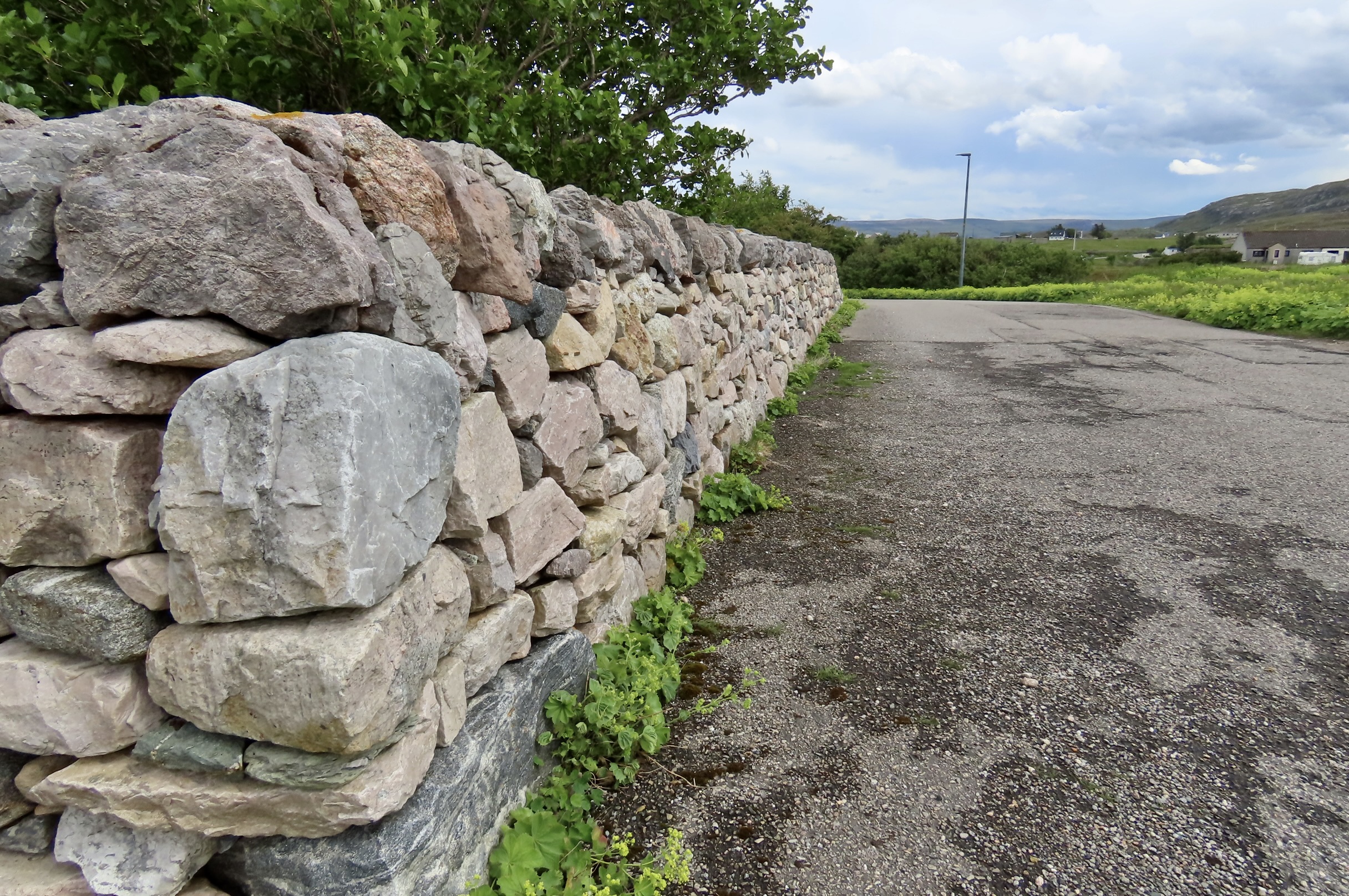
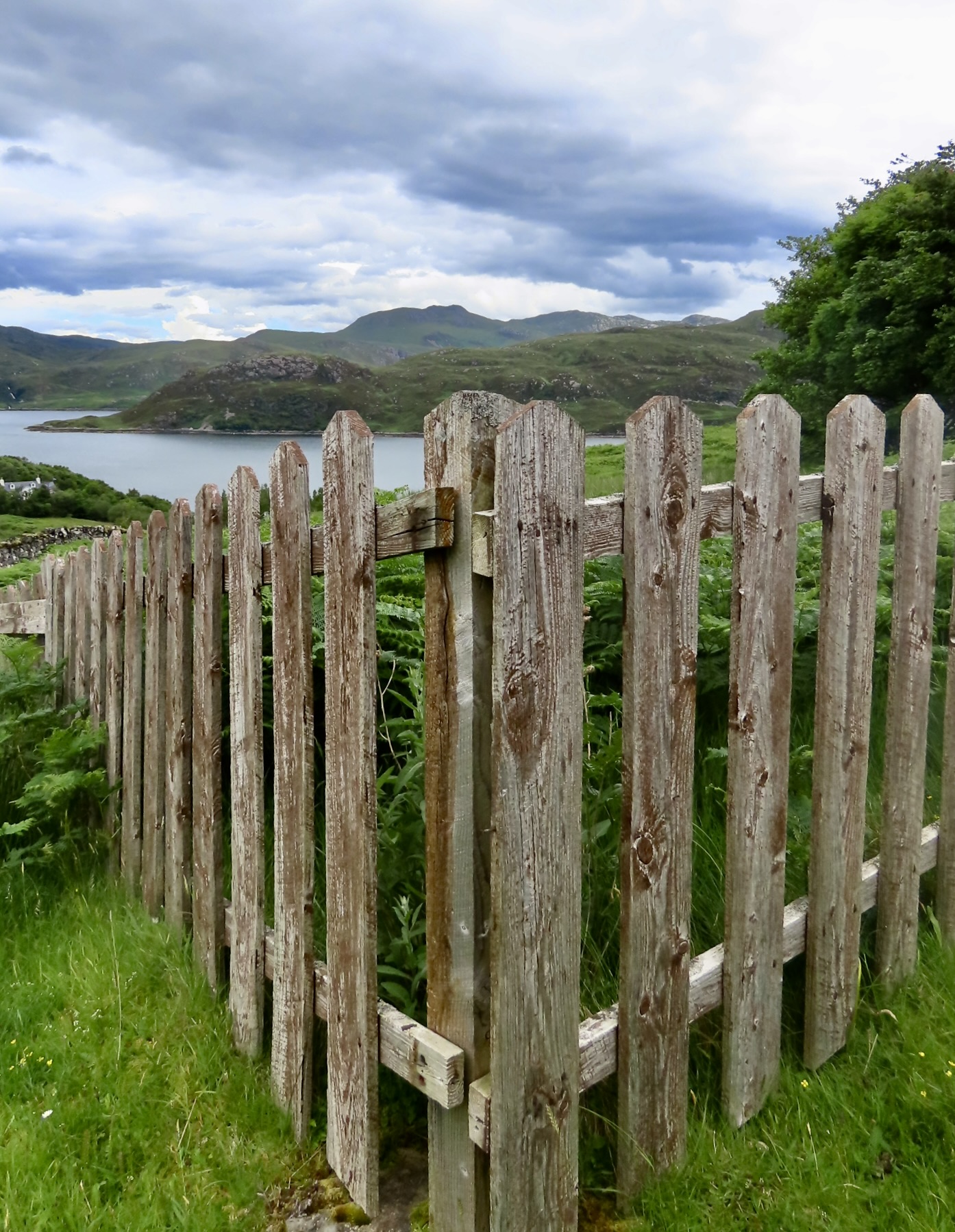
Mountains were in view almost everywhere on our CIE bus tour of the Highlands.A face in the mountains.Many of the mountains were quite rocky. Because of their different origins, the rocks of Scotland are different than the rocks of England. As are the fossils. The unique geology of Scotland led Scottish geologists to play an important role in the development of modern geology including concepts of deep time (the age of the earth), plate tectonics and structural mapping (vital in reconstructing the deformation history of the Earth’s crust).A rocky cliff face.I was impressed by the way these rocks led into this photo of mountains.These large boulders with their lichen were perched above a firth.Roads like this call my name. “Follow me, Curt,” they demand. We were on the Isle of Skye and my tour bus guide would have been unhappy if he would have had to chase me down. Sigh. I behaved. Instead….We took a photo of us along with our guide and bus driver. They were both named Graham. Our guide is between Peggy and me and our bus driver is standing next to Cody. The rock pinnacle in the background is called the Old Man of Storr. Storr, the volcanic ridge to the right, was given its name by the Vikings. It means great or large.The sunlight behind the Old Man of Storr gave it a shadowy appearance.This Old Man of Storr from the other side. They say if you have the right angle, the rock looks like an old man. I’m fairly good at seeing faces, people, animals and monsters in rocks. Nothing stood out here for me. Must have been the wrong angle. Judging from the light outline on the righthand side, maybe he ghosted me.Because of the volcanic flows of basaltic rock on the Isle of Skye, there are a number of dramatic sea cliffs like this one located near the Old Man of Storr. The flow is obvious, sitting on top of the cliff. Being harder than the rocks under it, it forms a cap. As the lower rock eroded back into the cliff, the basalt cracks and falls into the ocean, forming the steep cliff. The fence in the foreground is designed to keep visitors from wandering over to the edge to look down, or worse, take selfies on the edge. “Look at me, look at me! Whoops!”There is more to scenery than nature, however. We took lots of photos of cattle and sheep.Historic ruins always caught our attention.Another perspective.This small castle was nearby. It was designed for defense.We found this unique bit of ‘scenery’ on Orkney Island. It’s a 1950’s era Chevy pickup. Its creation dates back to Covid, when the Orkney stone mason John Hamilton found himself with a lot of spare time on his hands. Operating under the inspiration of Don McLeans 1971 “Drove my Chevy to the levee but the levee was dry” he built his pickup to the exact size of an original Chevy pickup using only stones and masonry (no standard bricks). Visitors are invited to take all the photos they want— and make a contribution to local charities. It’s a win-win.Winding things down here, given all the stones there are in the Highlands, is it any surprise there are lots of stone fences? As fences go, they are close to impossible to beat in terms of scenic value. I’d be remiss if I didn’t include this stone wall in the small northern community of Durness, Scotland. It was built by our guide, Graham Bruce, who had been headteacher in the local school there for 29 years.An old wooden fence runs a close second, however. That’s it for today. You may be saying, finally! Our next post will feature the towering mountains of Grand Teton National Park in Wyoming’s Rocky Mountains.
On a personal note, I was working on this post when Peggy exclaimed, “Curt, your blog had now received over one million views since you started !” It was worth noting. We celebrated.
We are continuing our exploration of the Scottish Highlands that we went on this summer along with our grandson Cody. Today we are visiting Castle Dunrobin. All photos on this post were taken by either Peggy, Cody, or me unless otherwise noted.
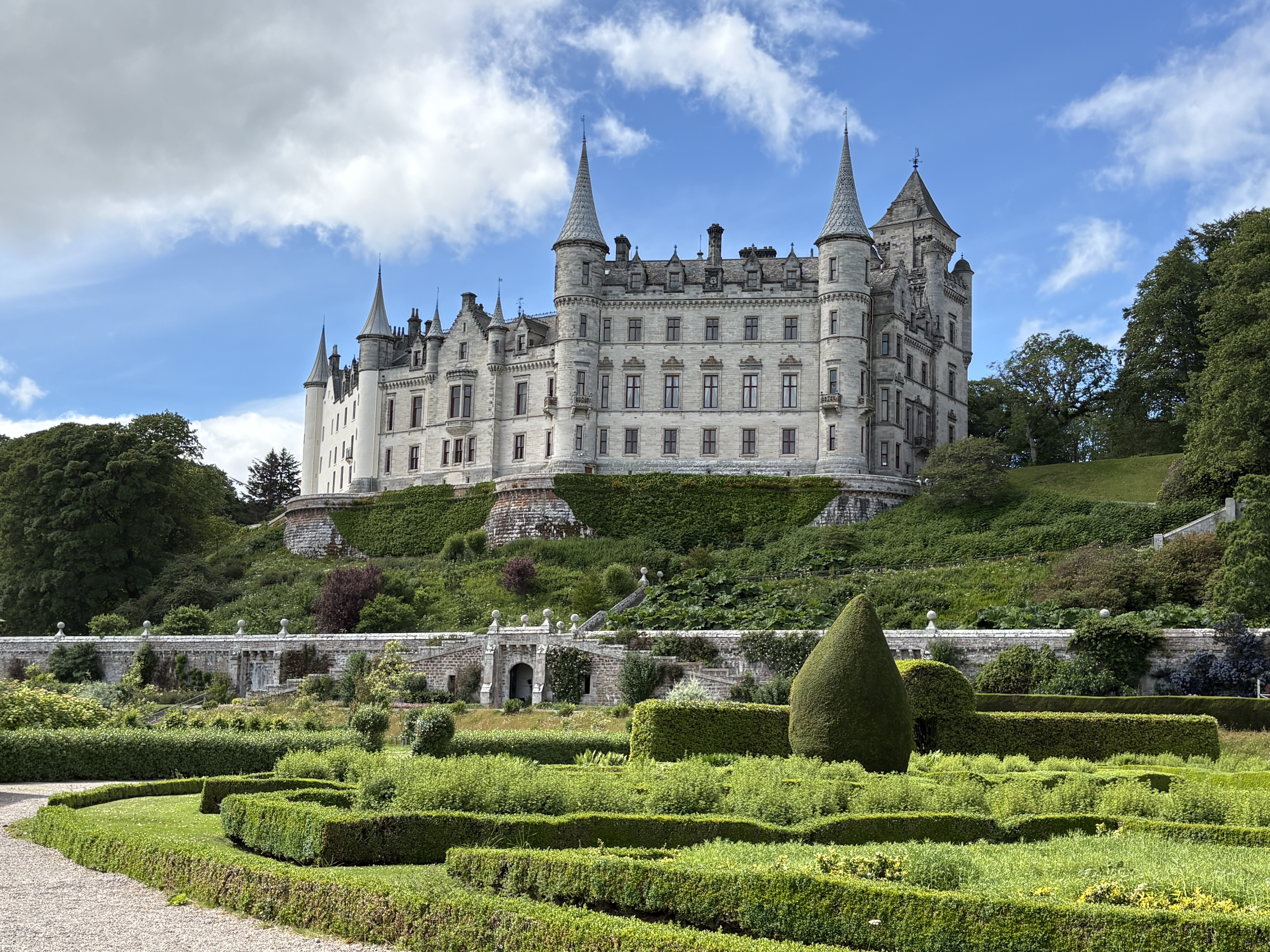
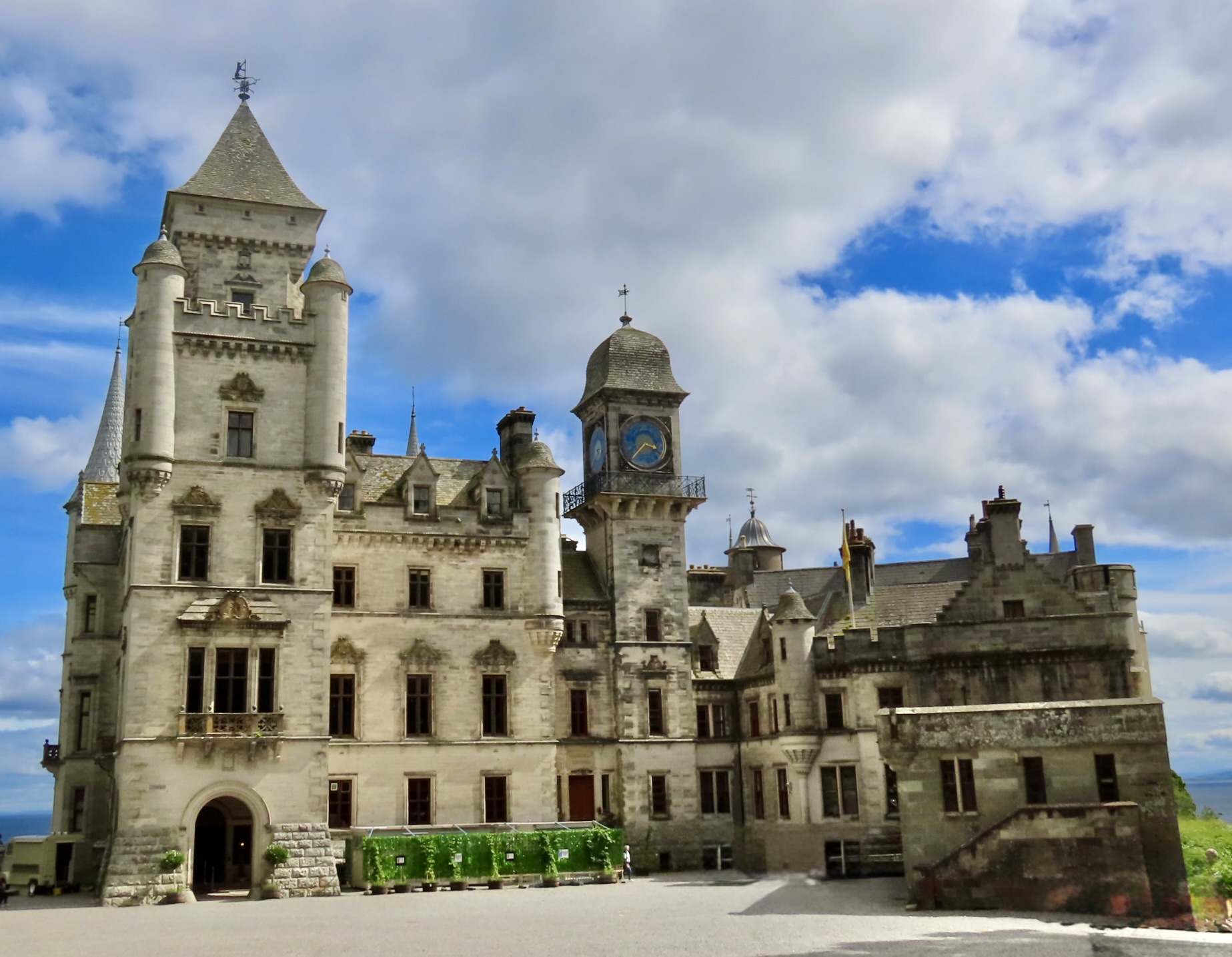
I chose Peggy’s photo of the castle because it also features the Versailles-like gardens below. She used her iPhone, which demonstrates the phone’s capacity as a camera— not to mention Peggy’s eye for photography. The castle has 189 rooms, making it the largest ‘house’ in the Scottish Highlands. And why is the Disney theme song playing in my head?
Peggy and I can never pass up visiting castles, so we were excited when the CIE tour of the Scottish Highlands featured five. I’ll do another post that includes the other four, but today is Dunrobin’s turn. The original castle, built in 1235 CE, was a square keep with thick walls, obviously built for defense. It has come a ways since! Dunrobin owes its present incarnation to Sir Charles Barry, the architect famed for designing London’s House of Parliament. It was his vision in the 1800s that changed the medieval fortress into what we now see now.
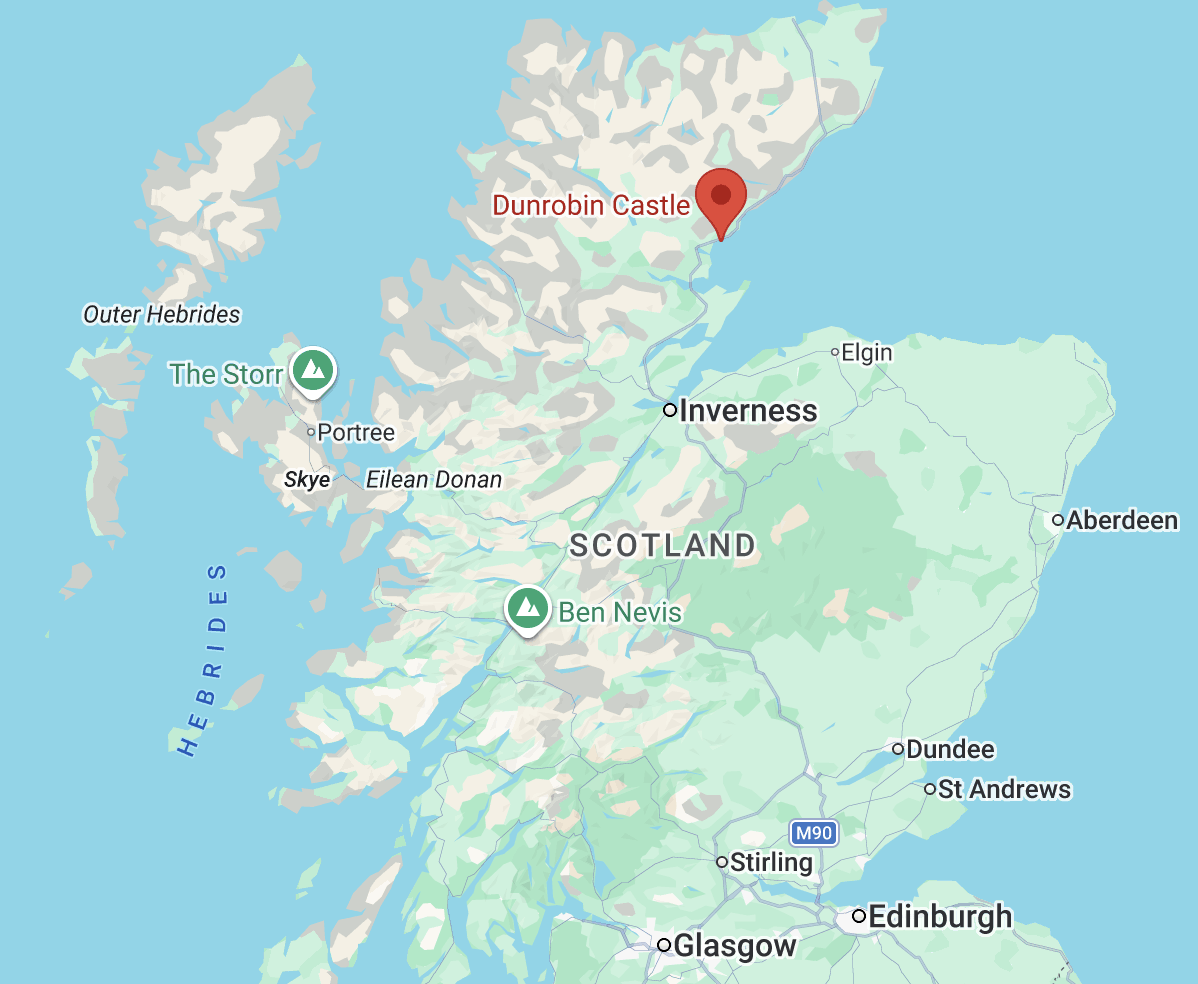
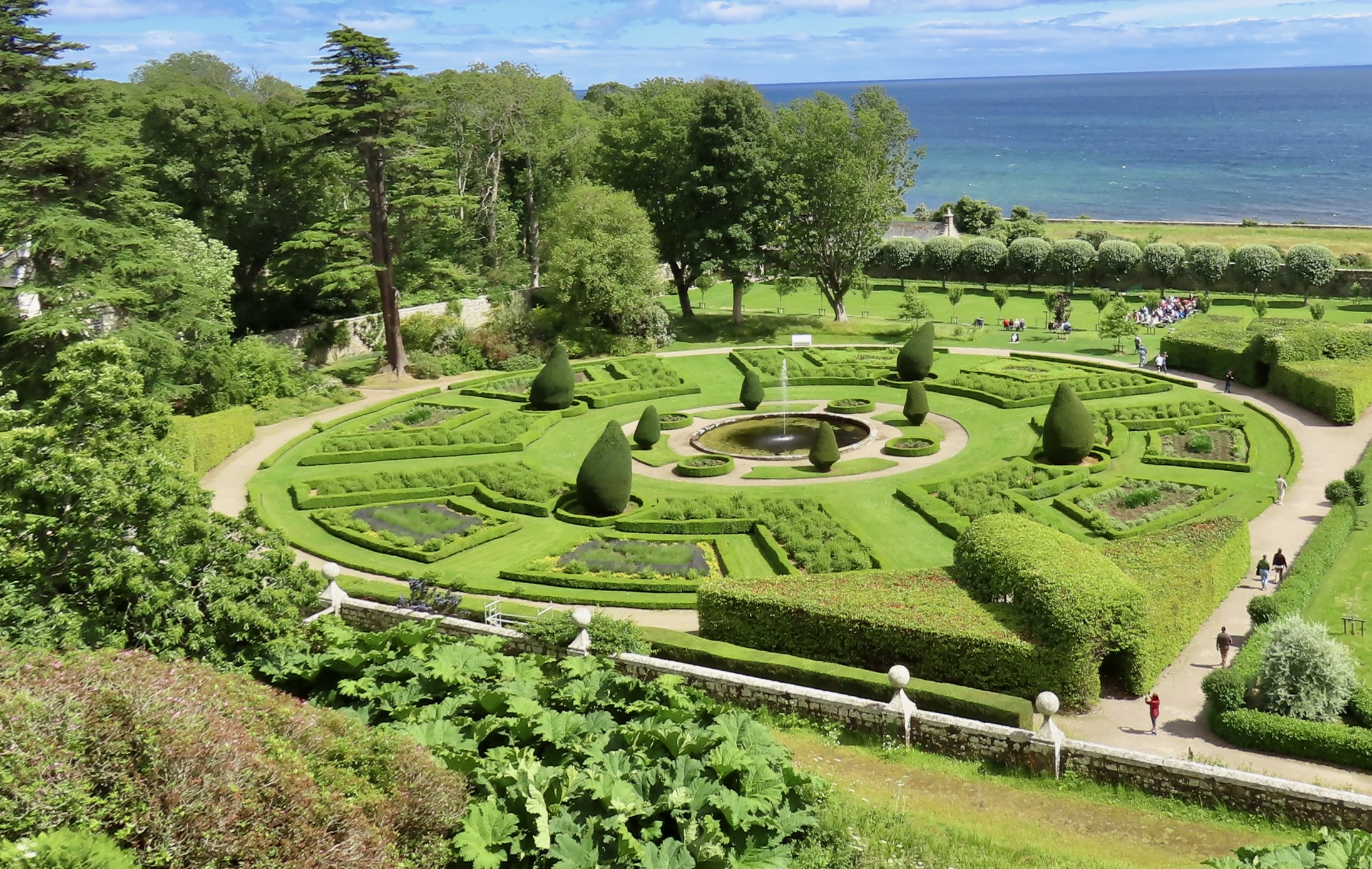
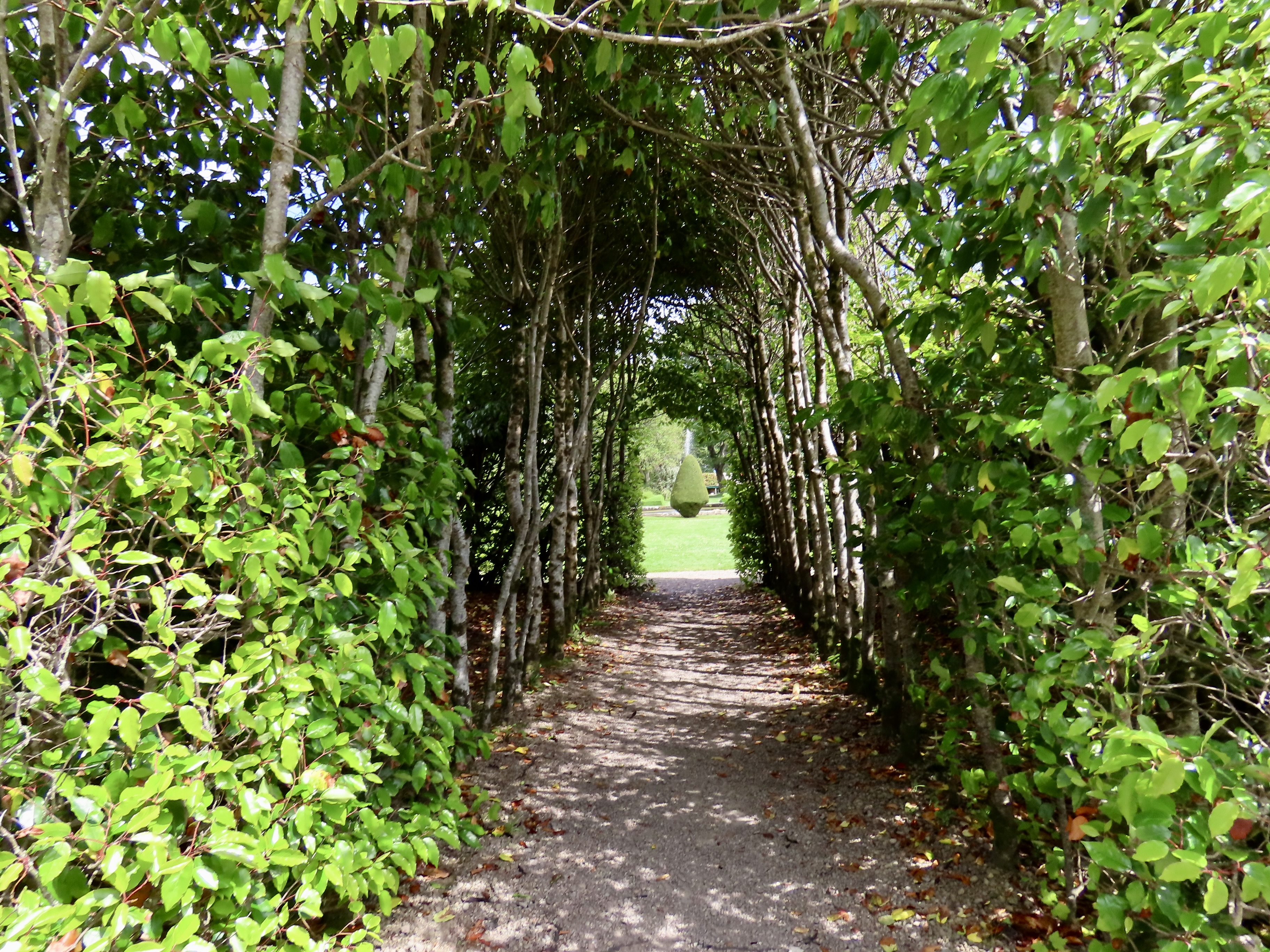
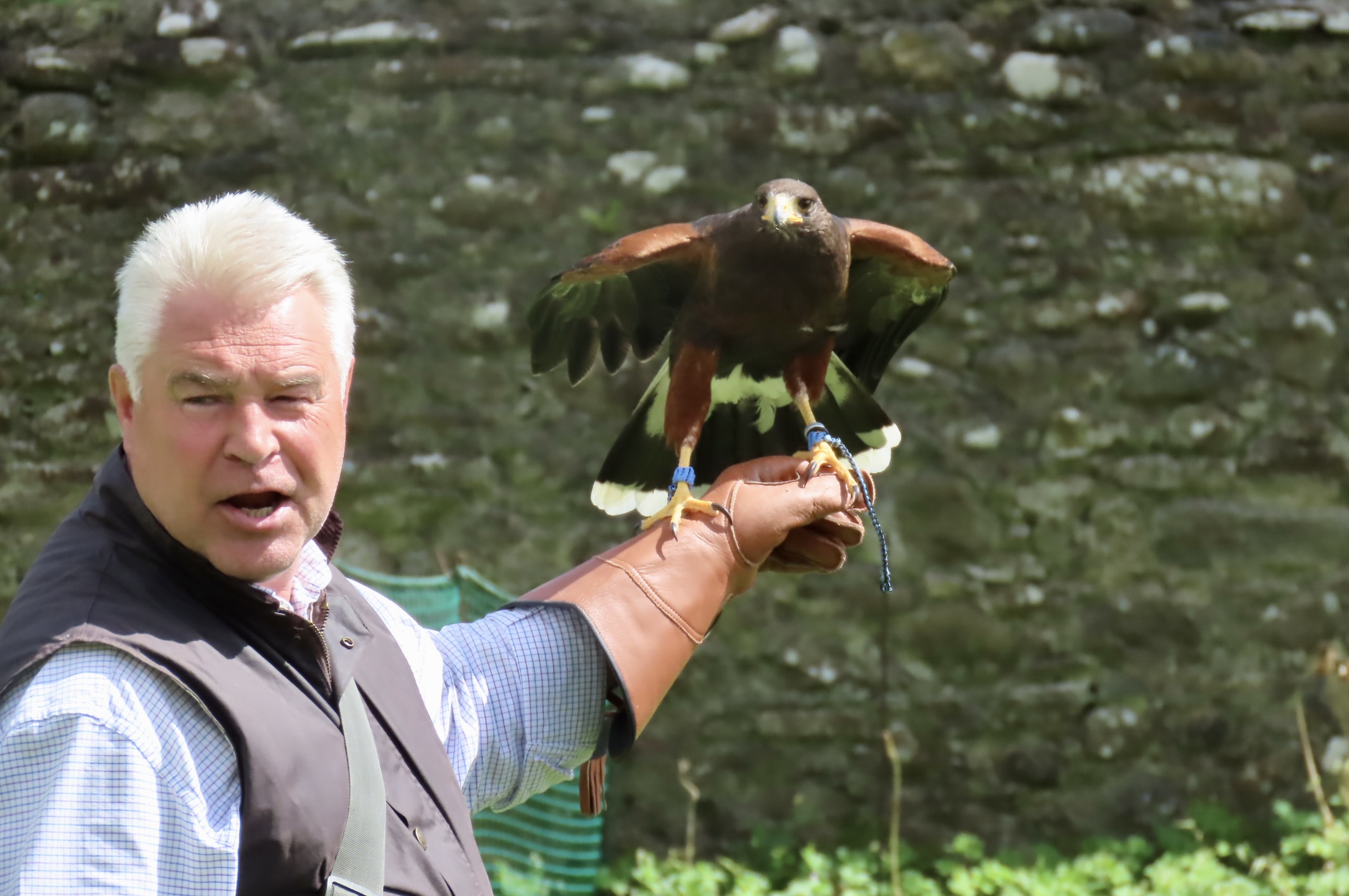
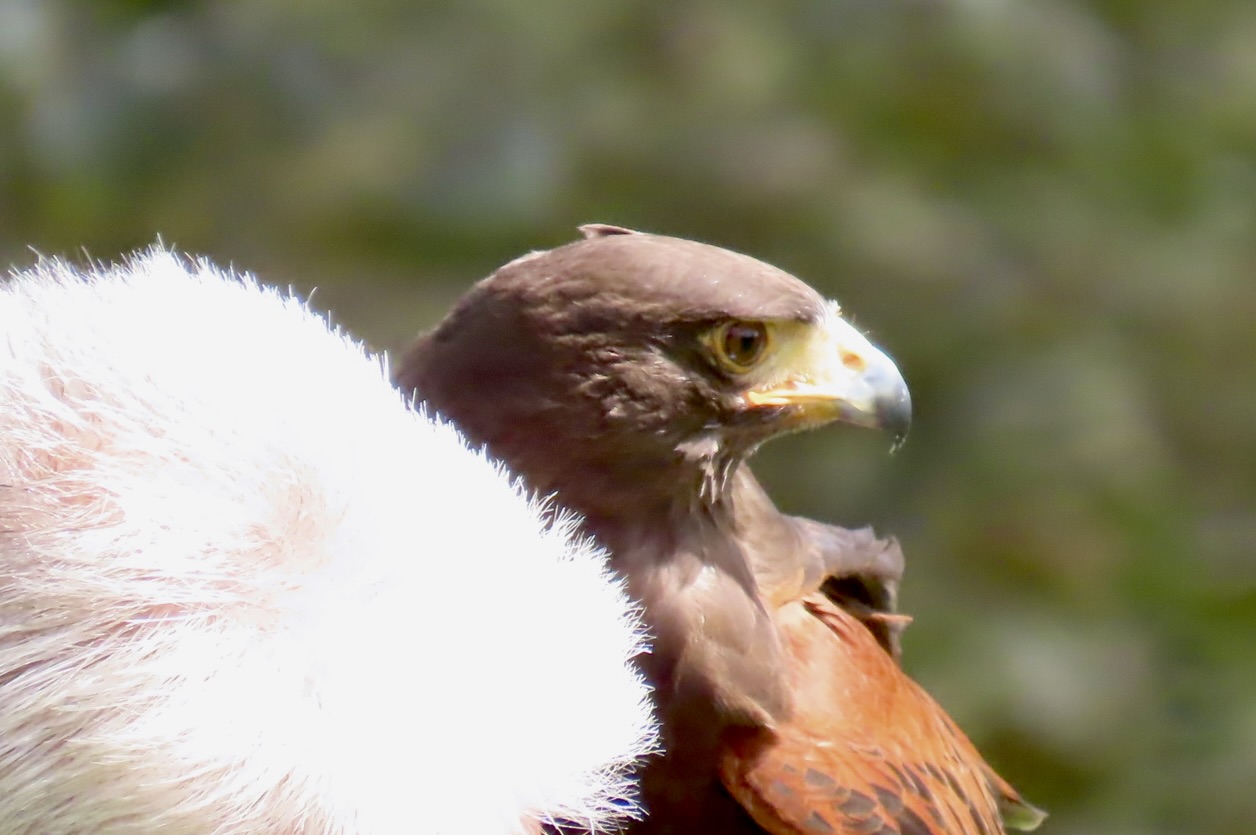
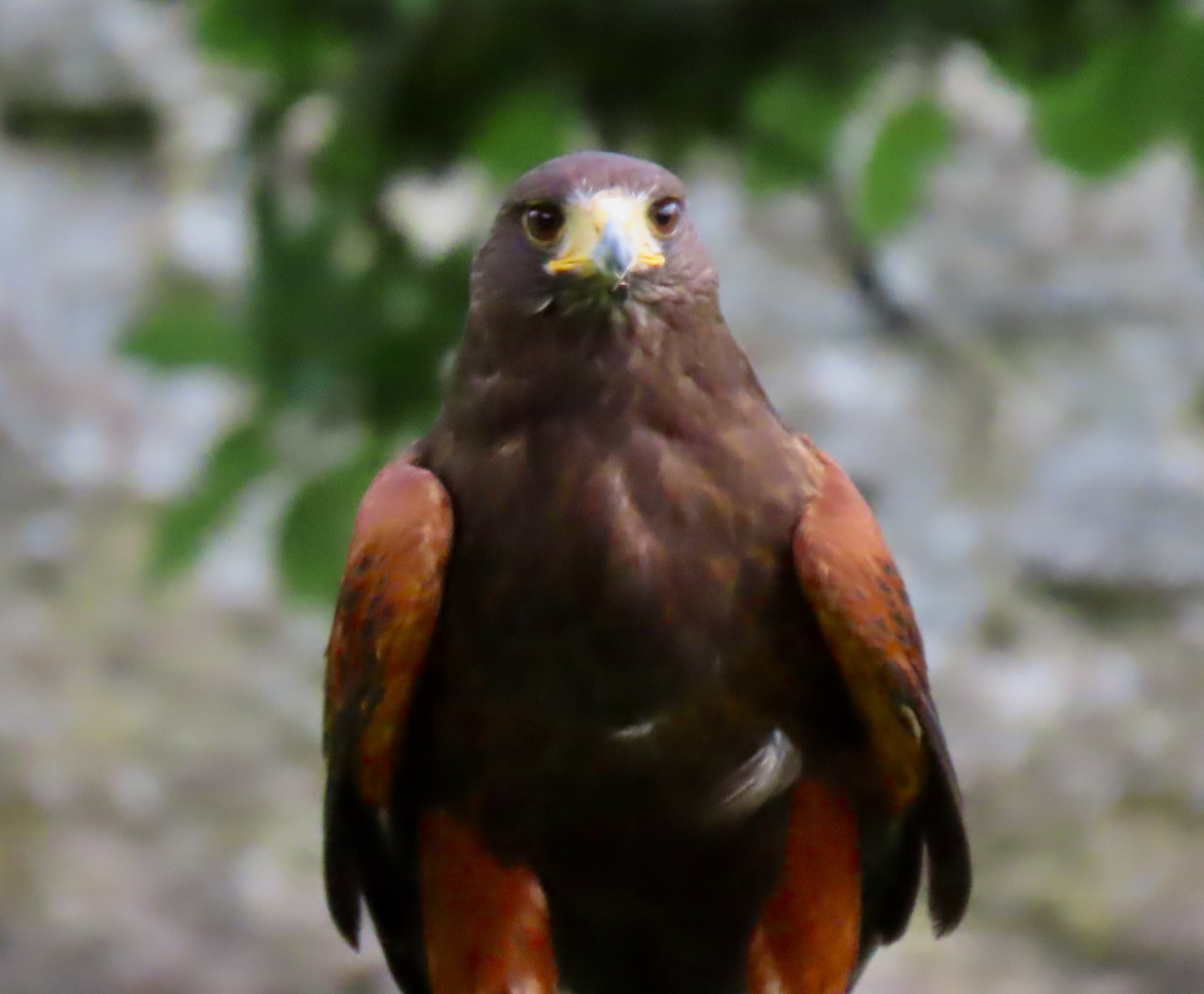
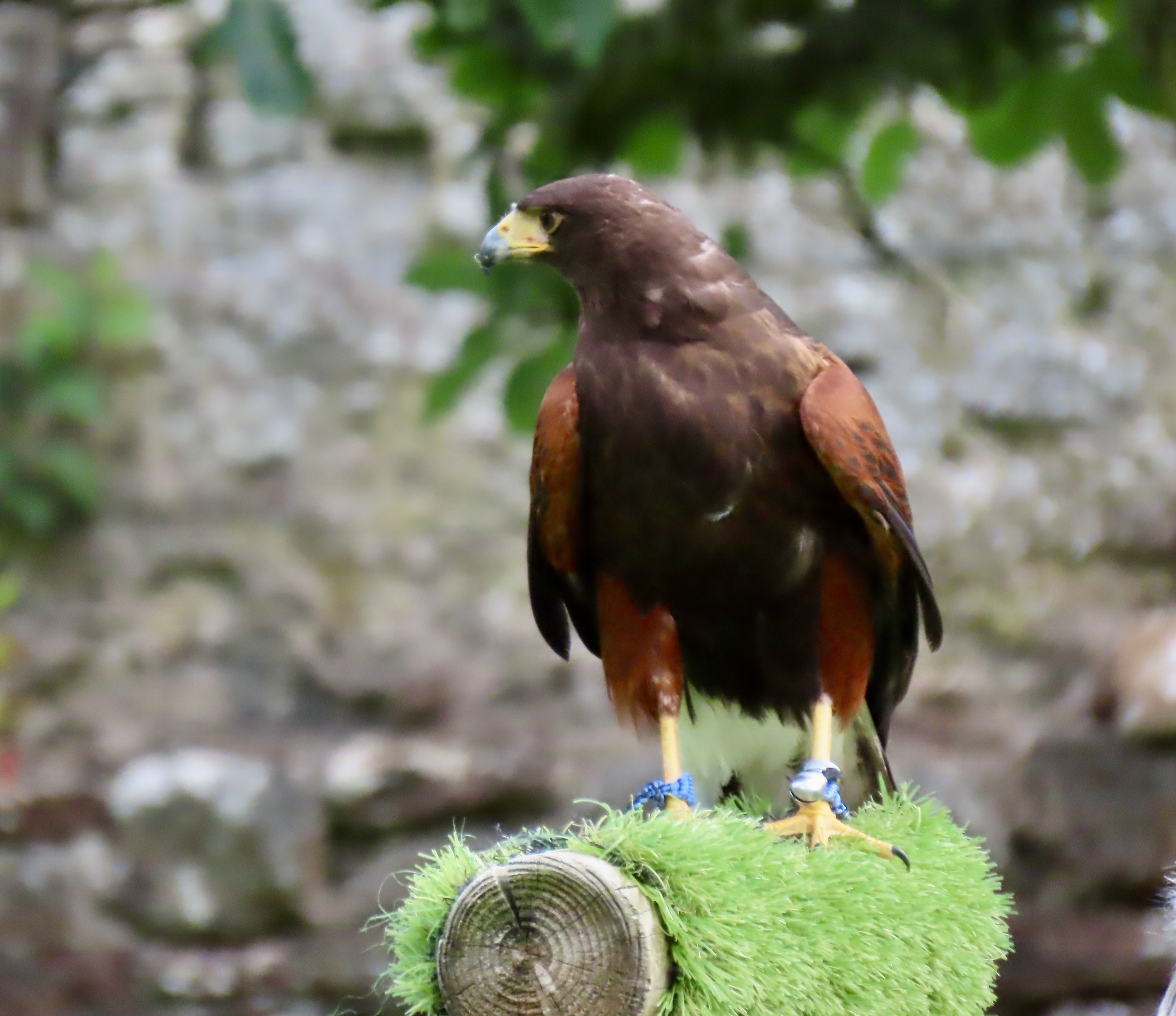
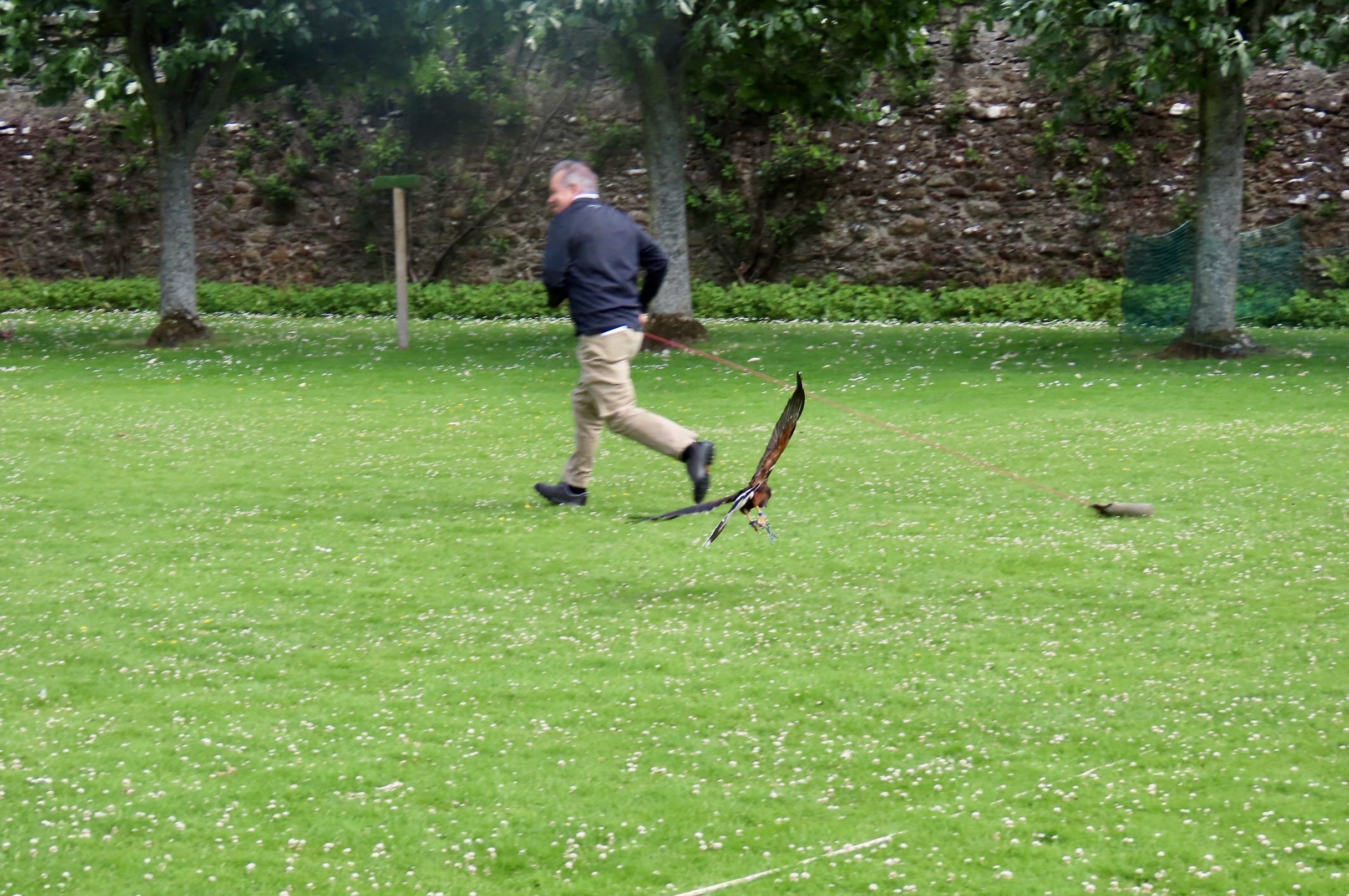
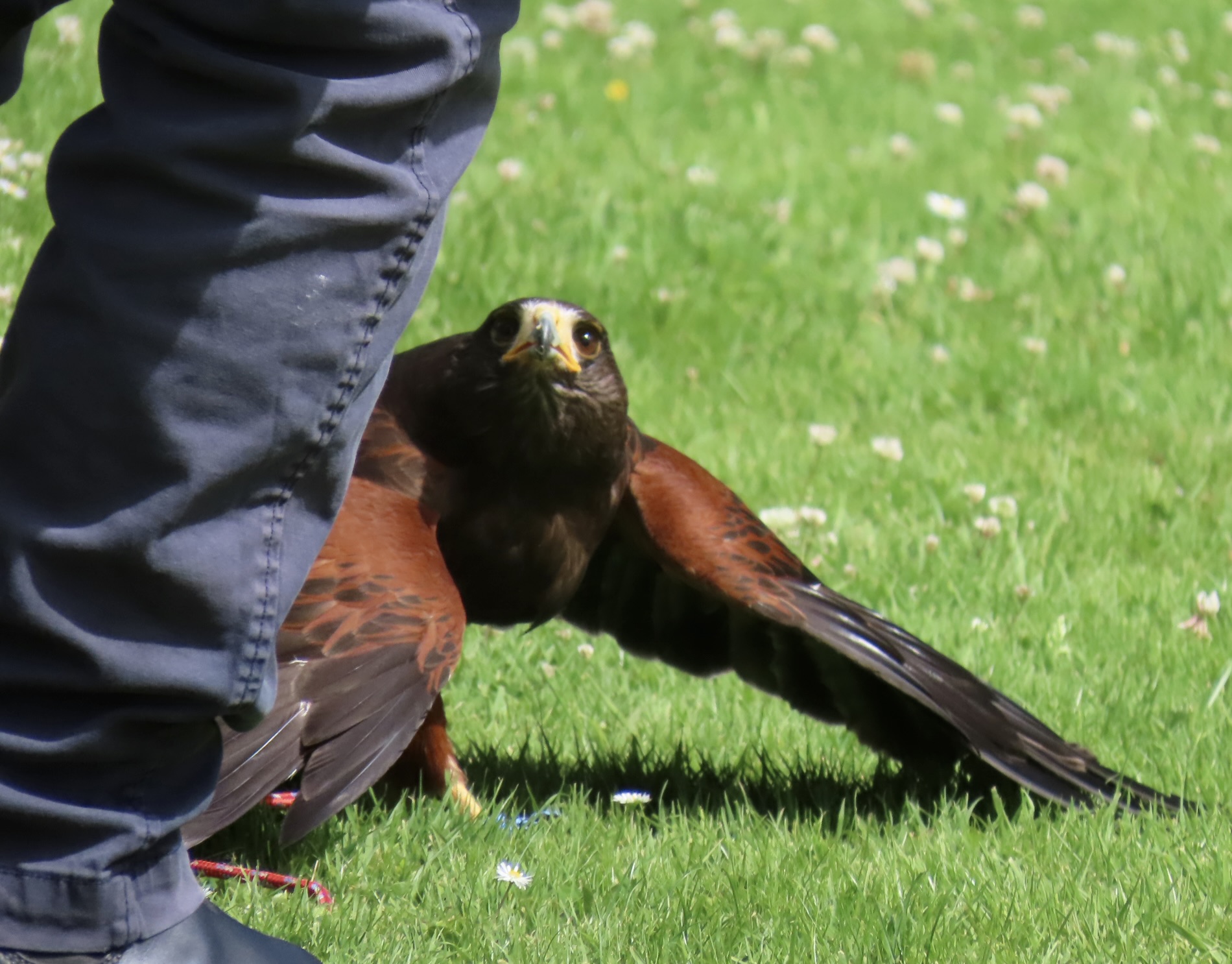
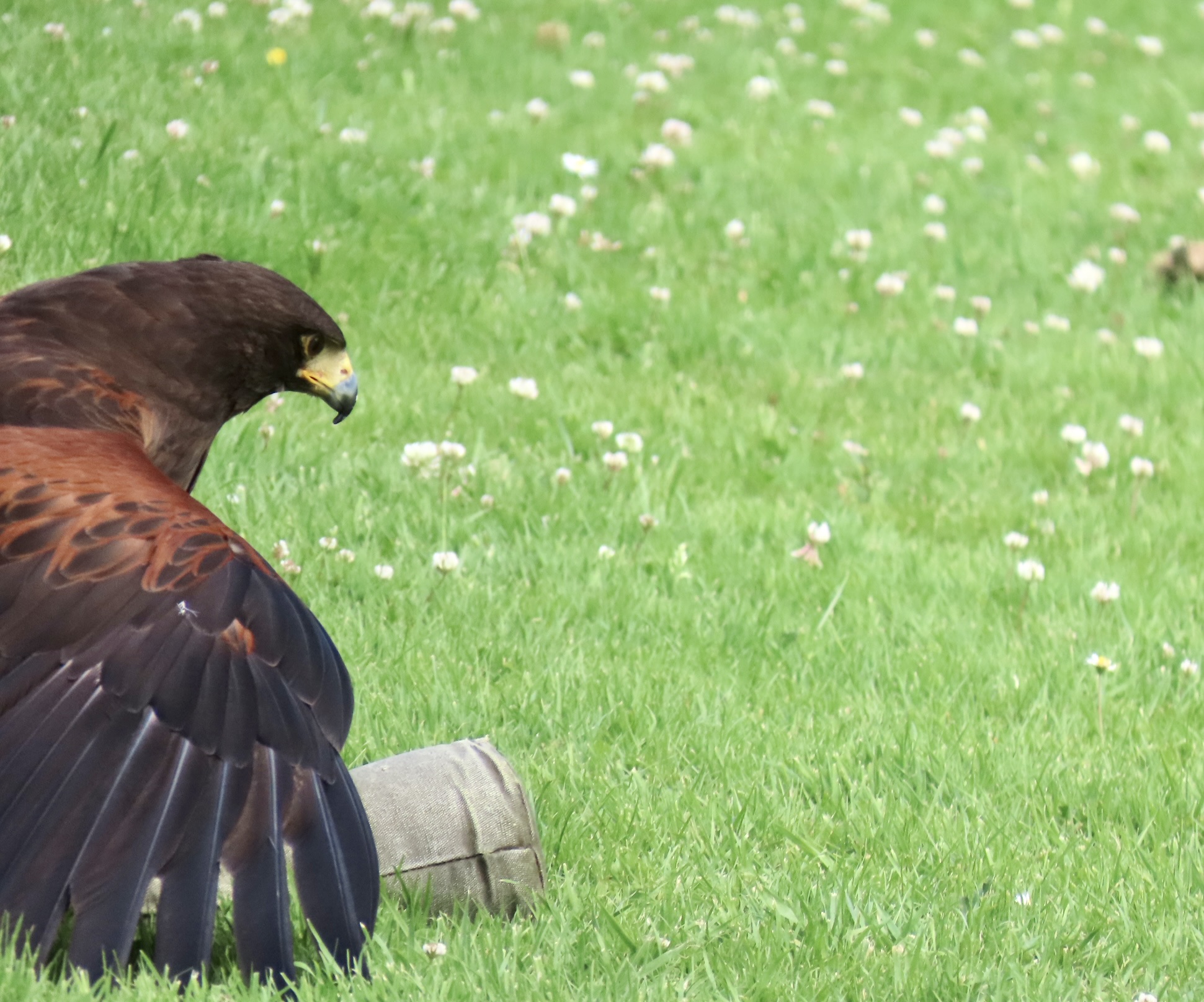
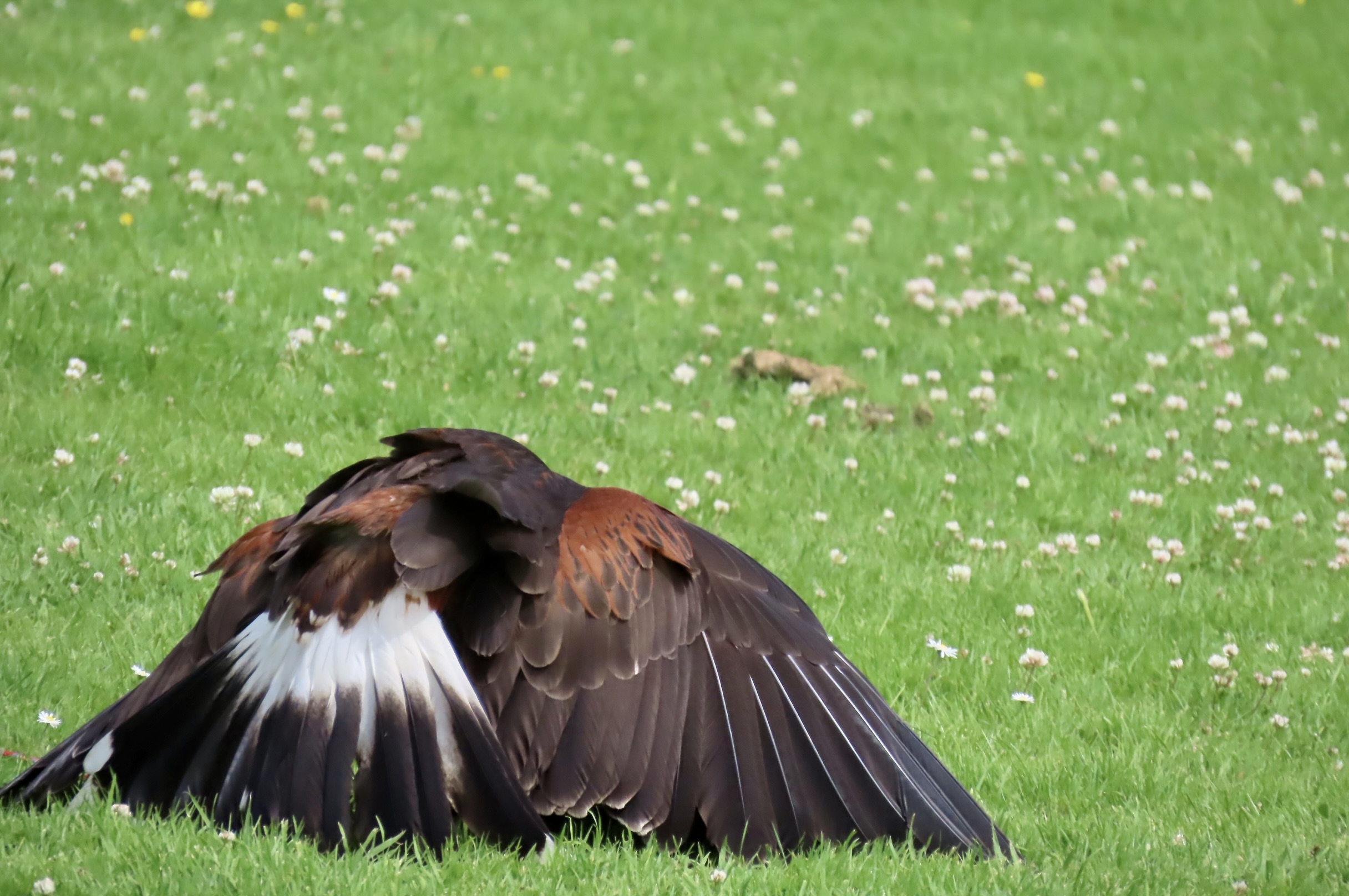
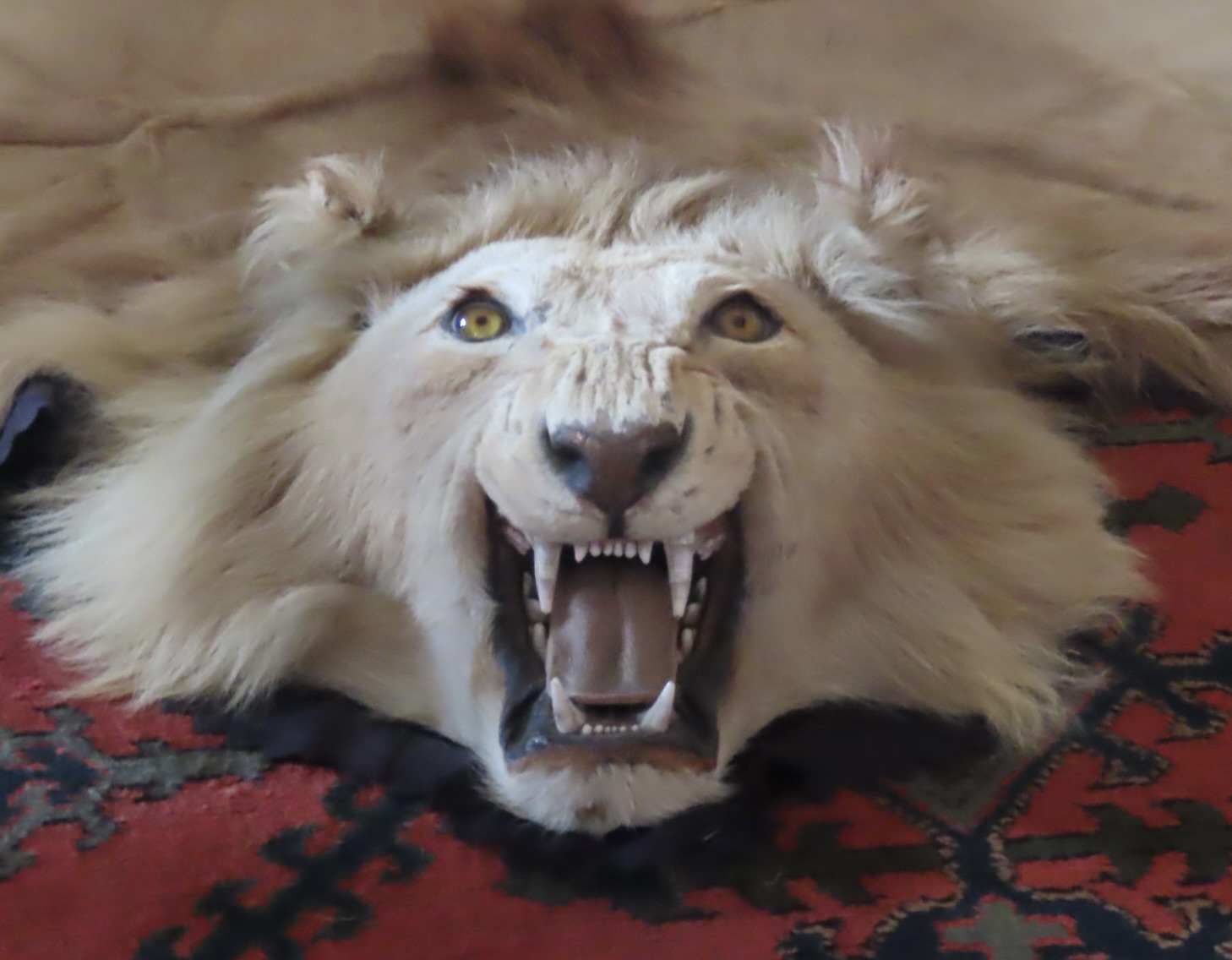
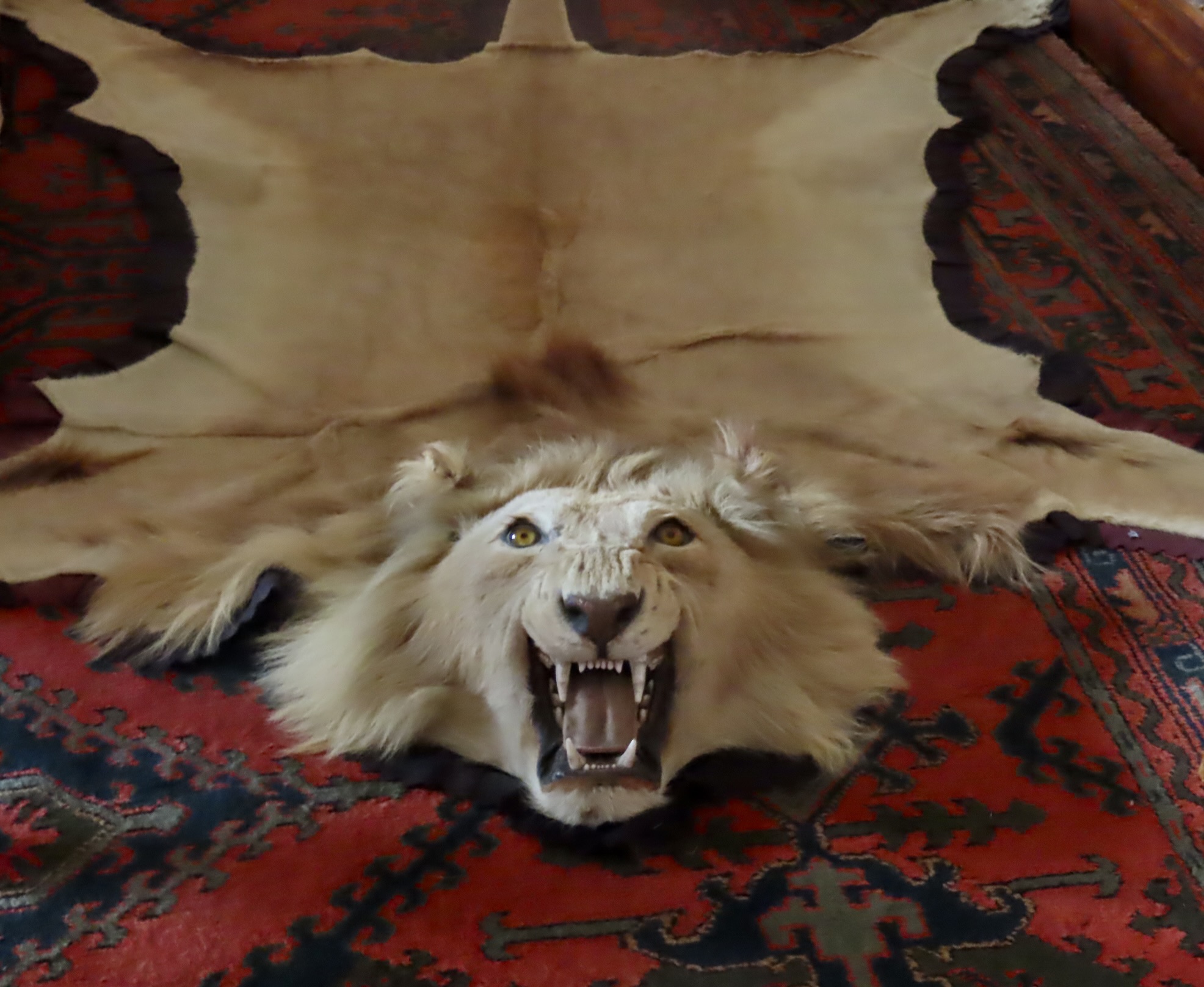
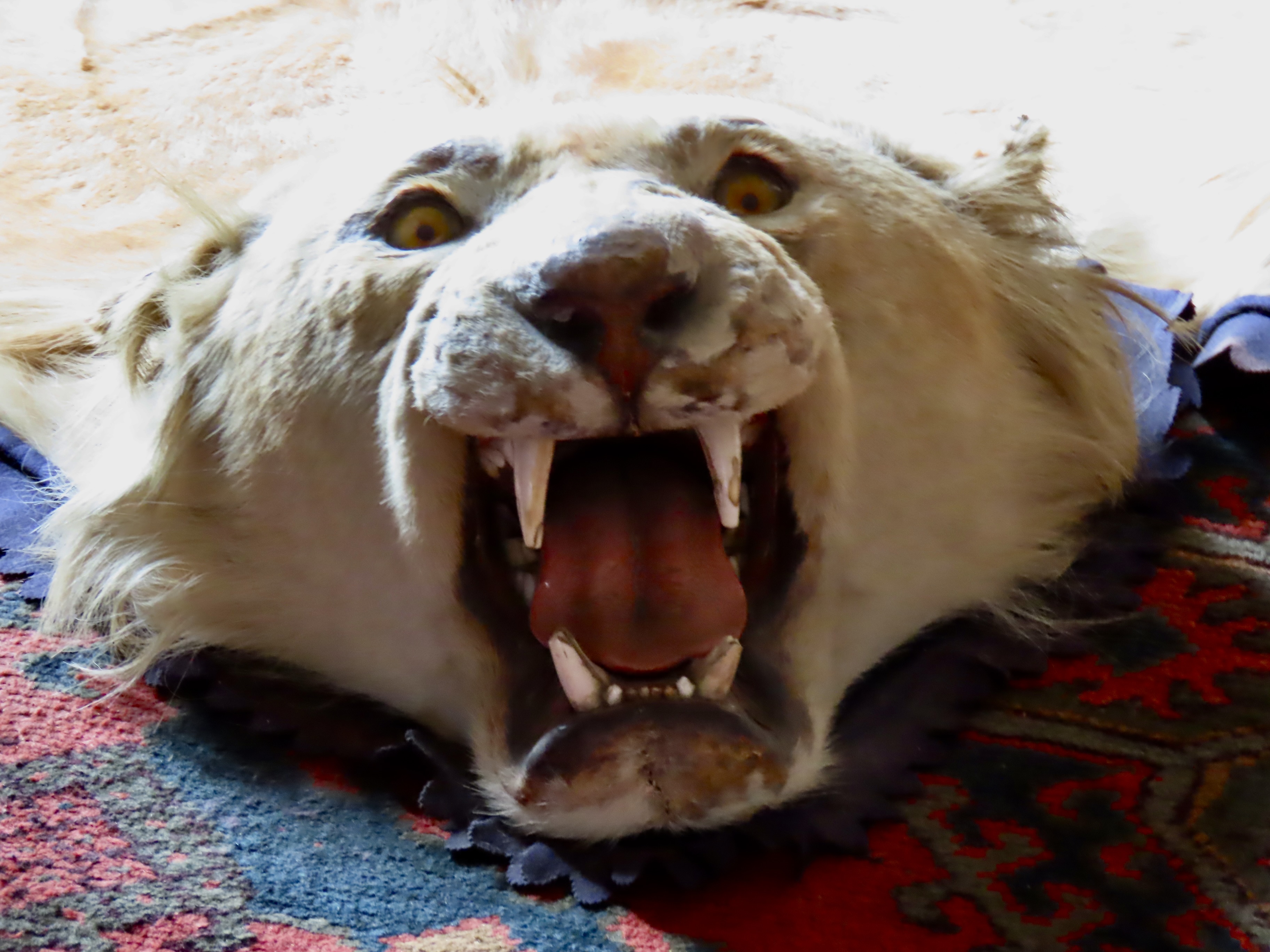
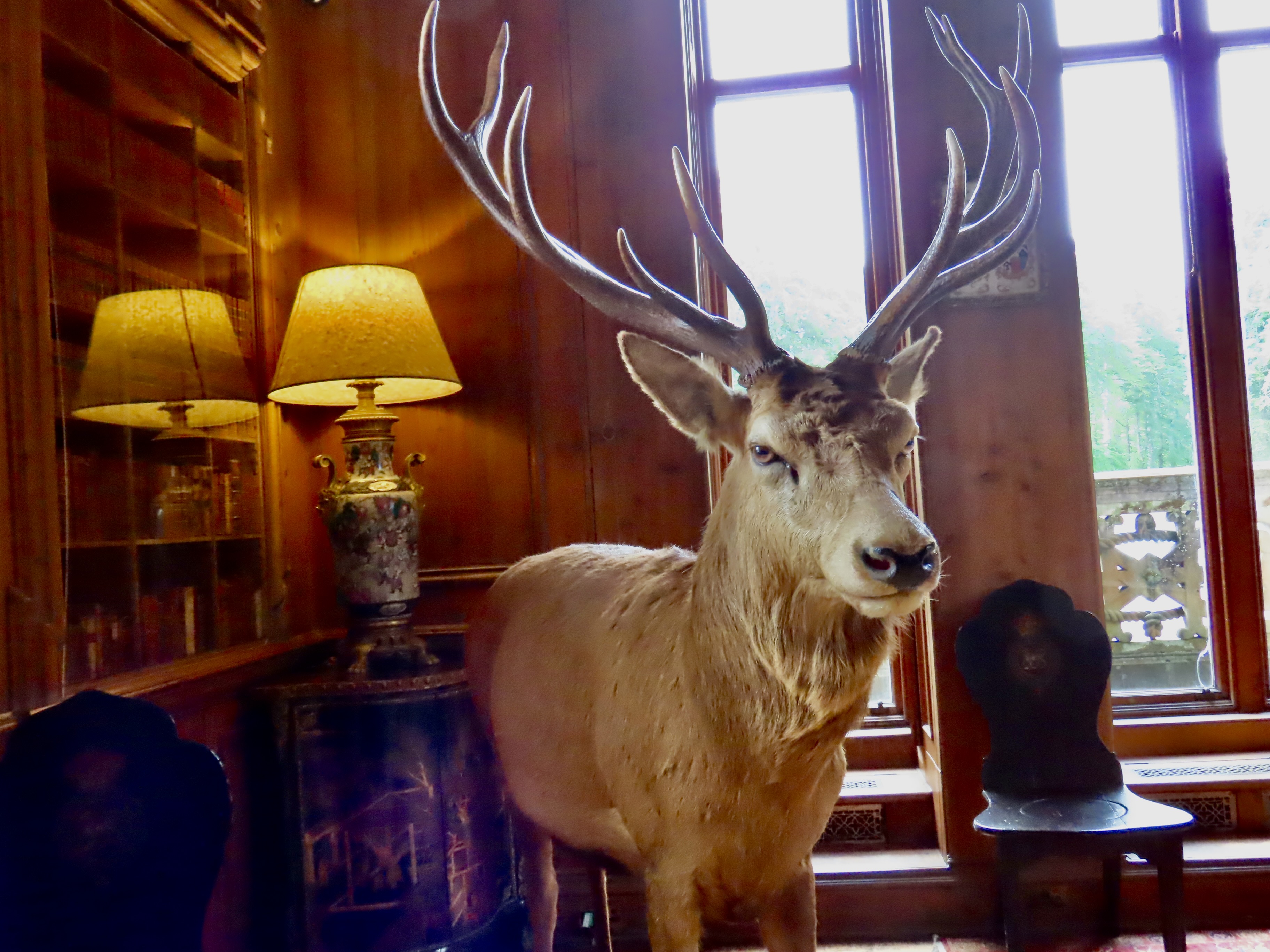
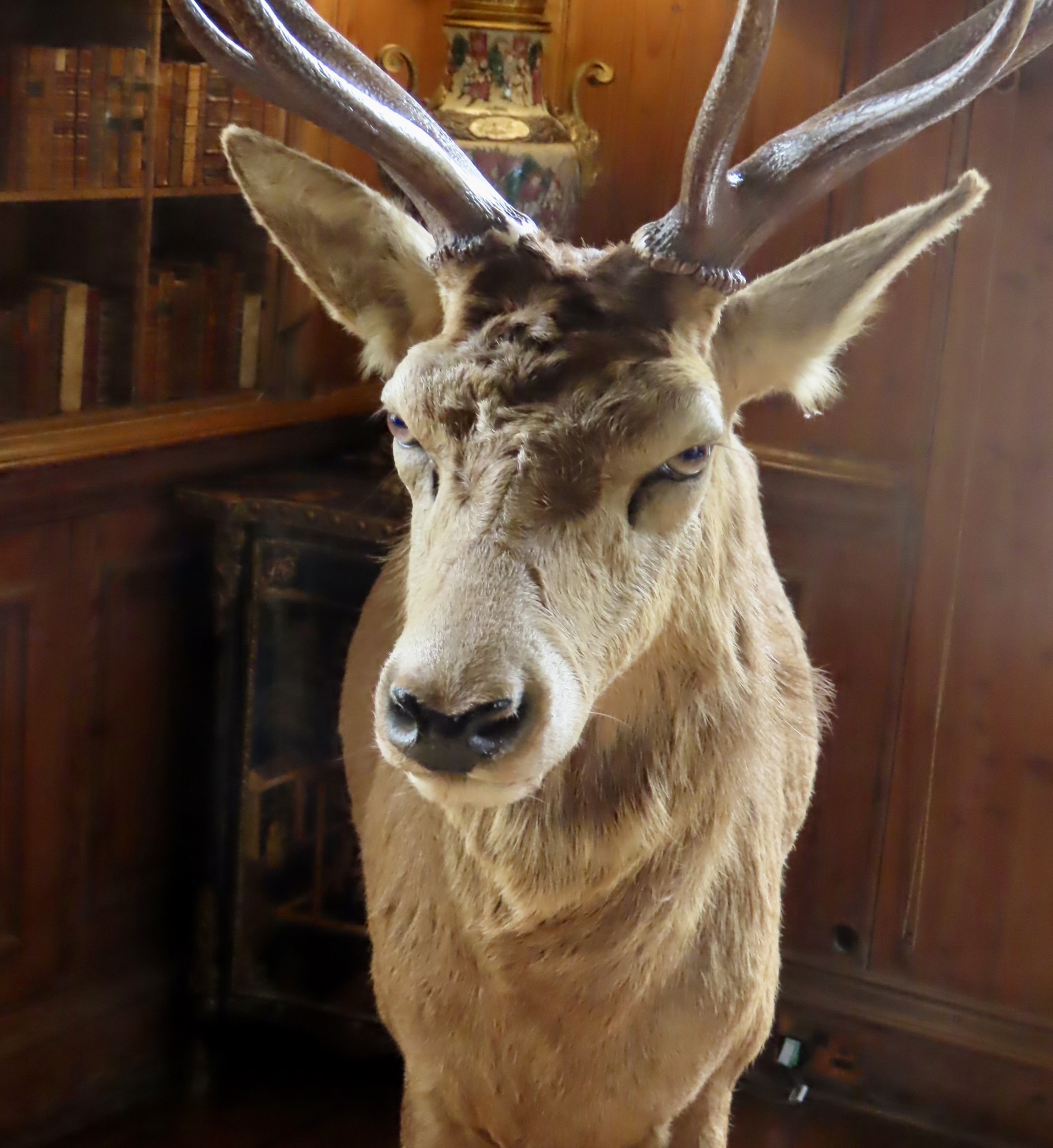
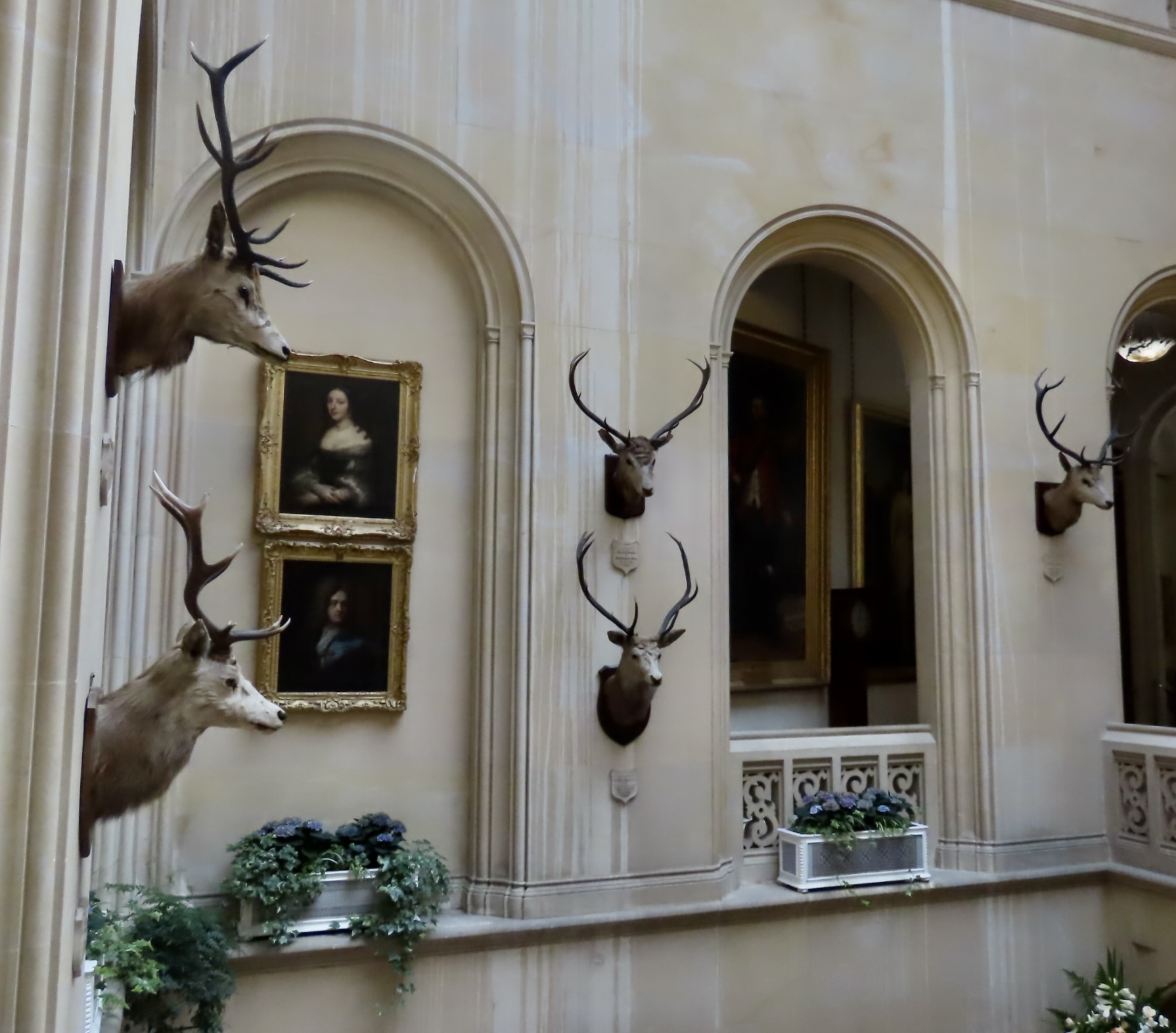
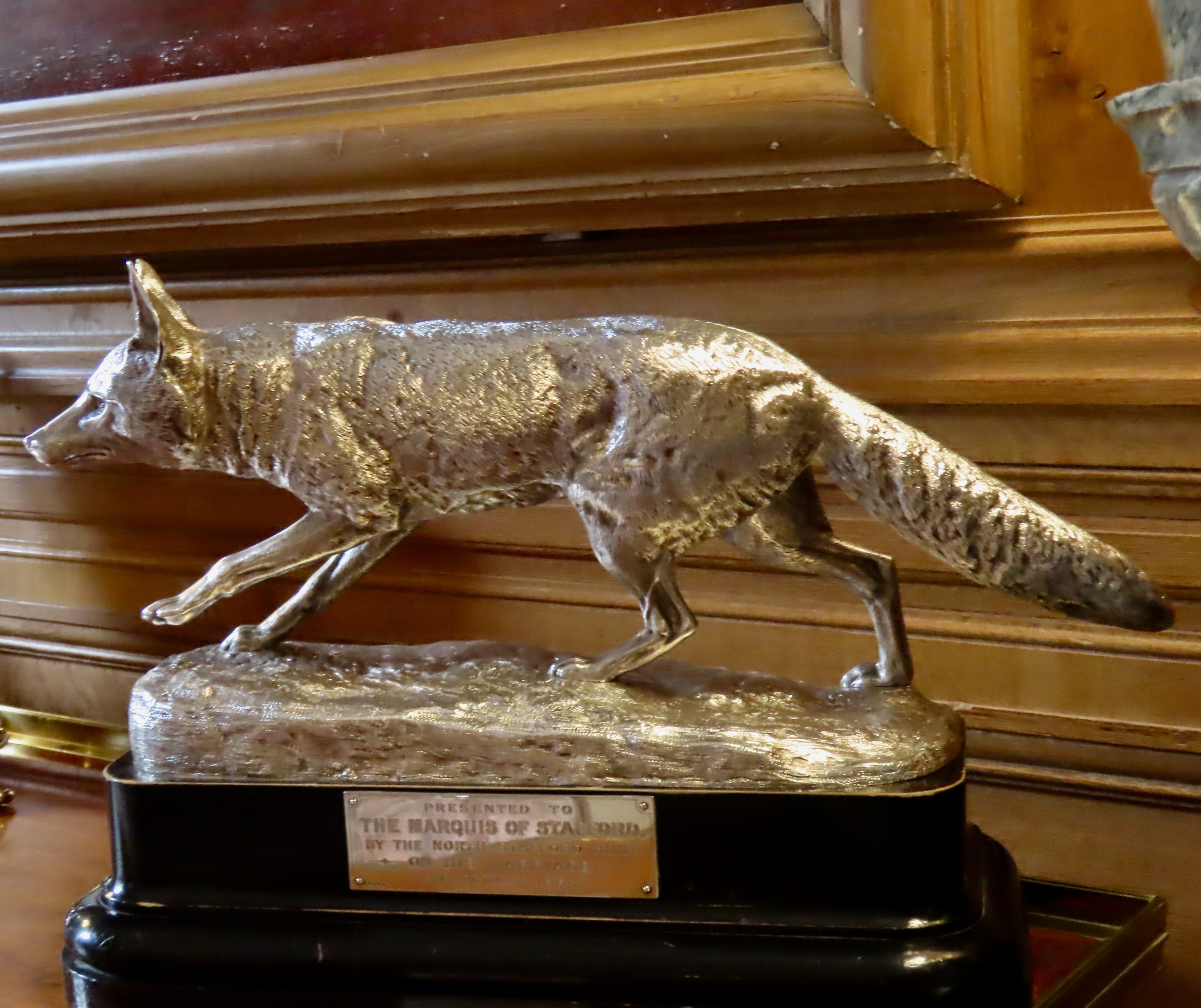
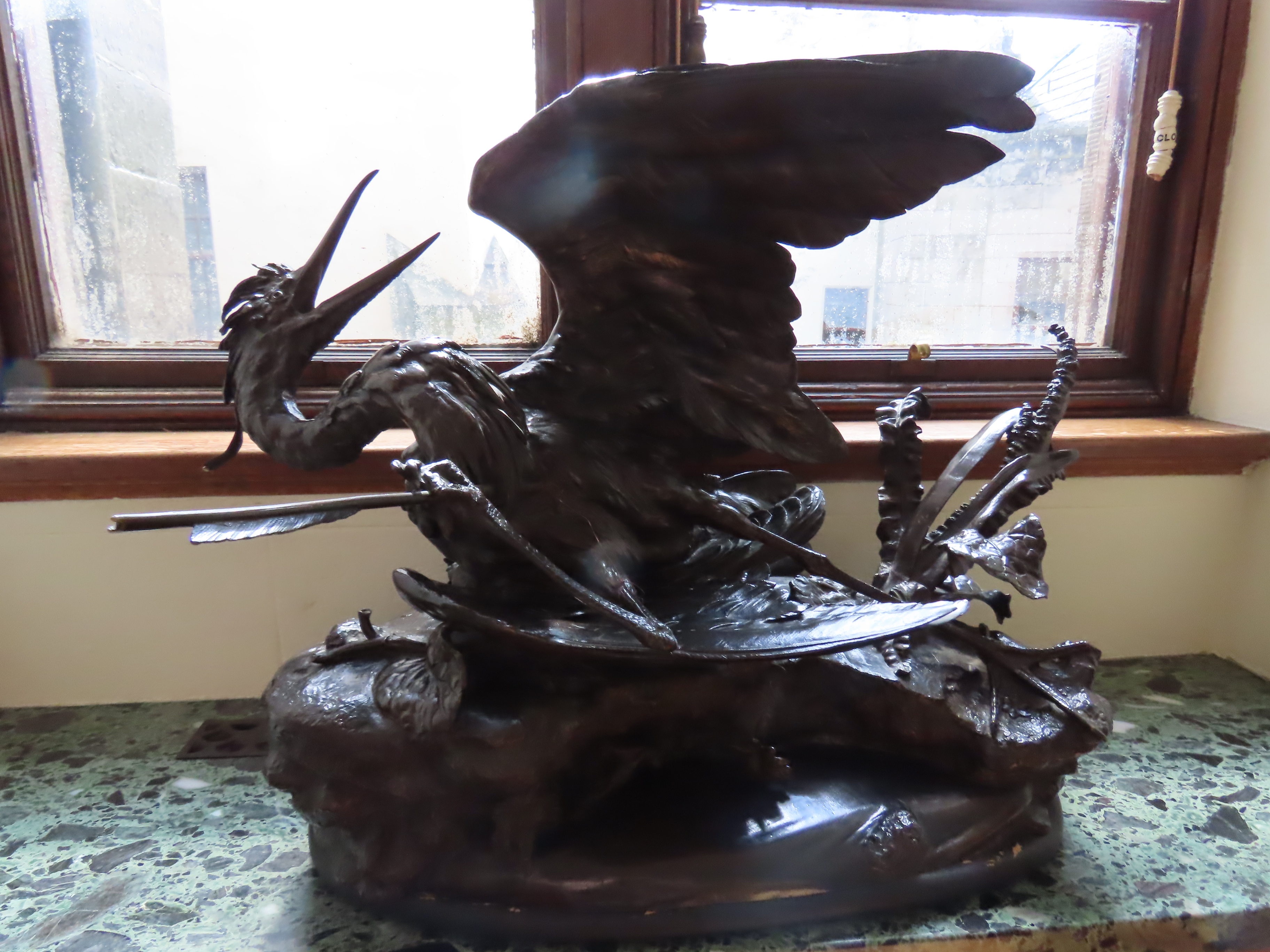
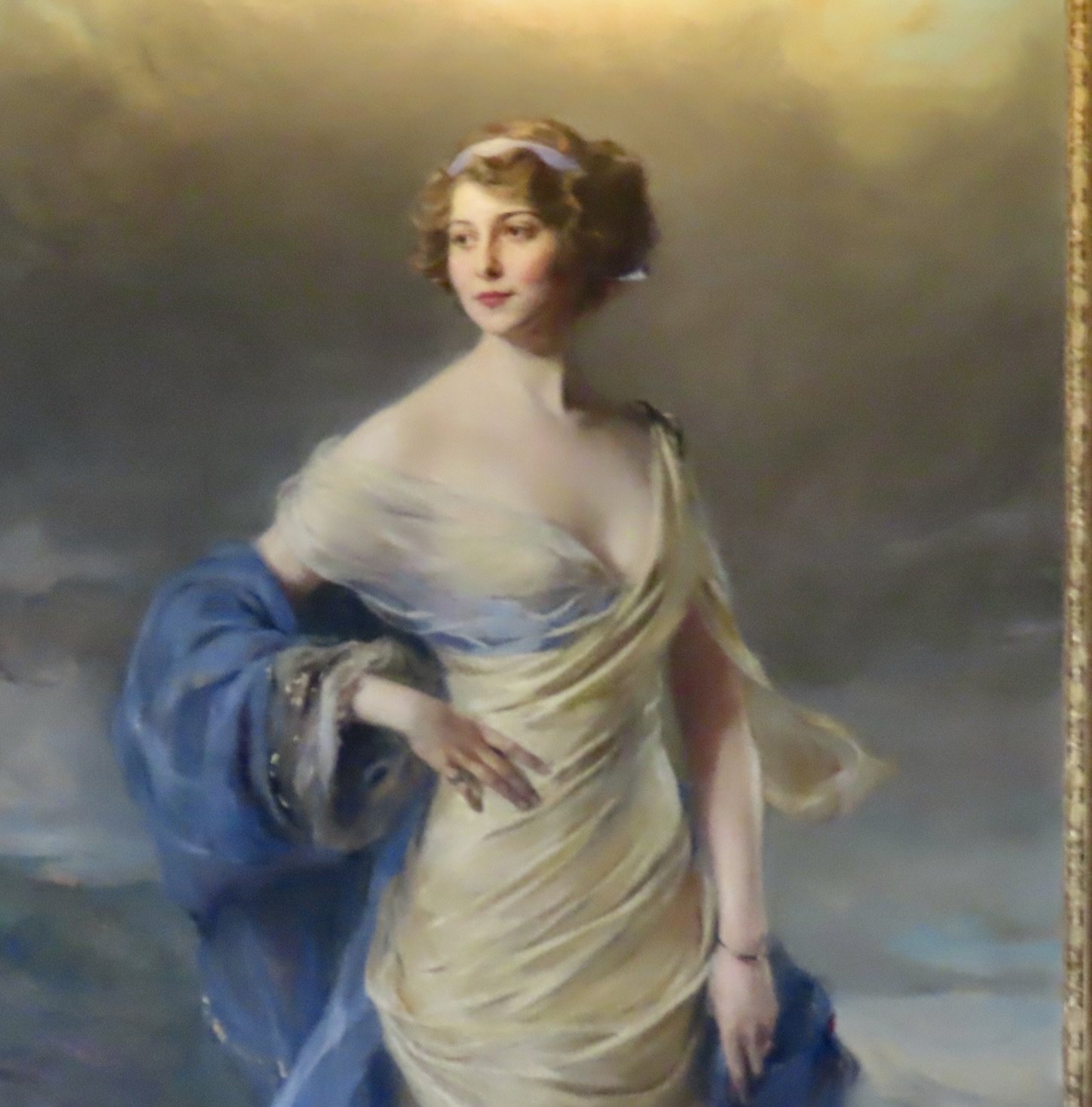
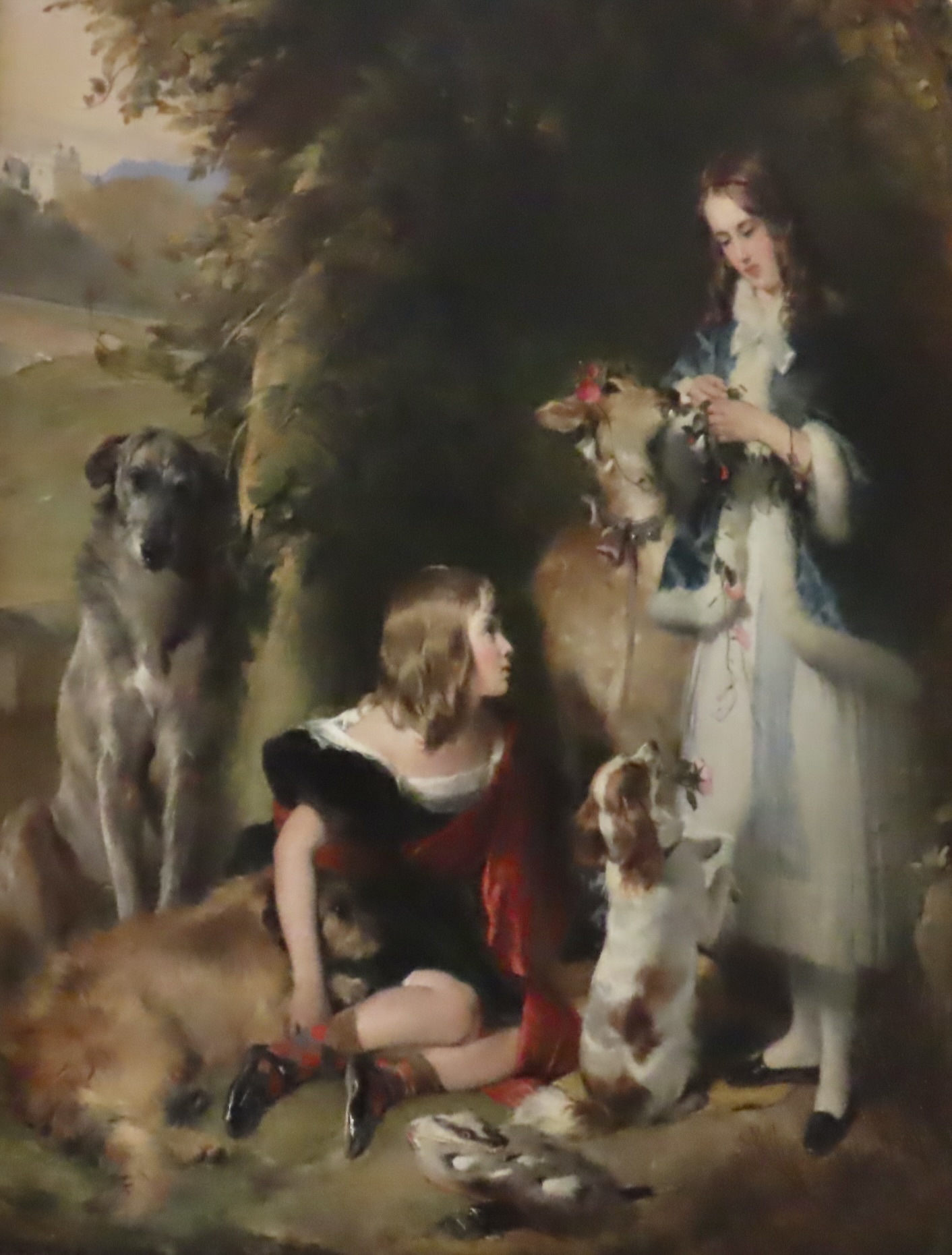
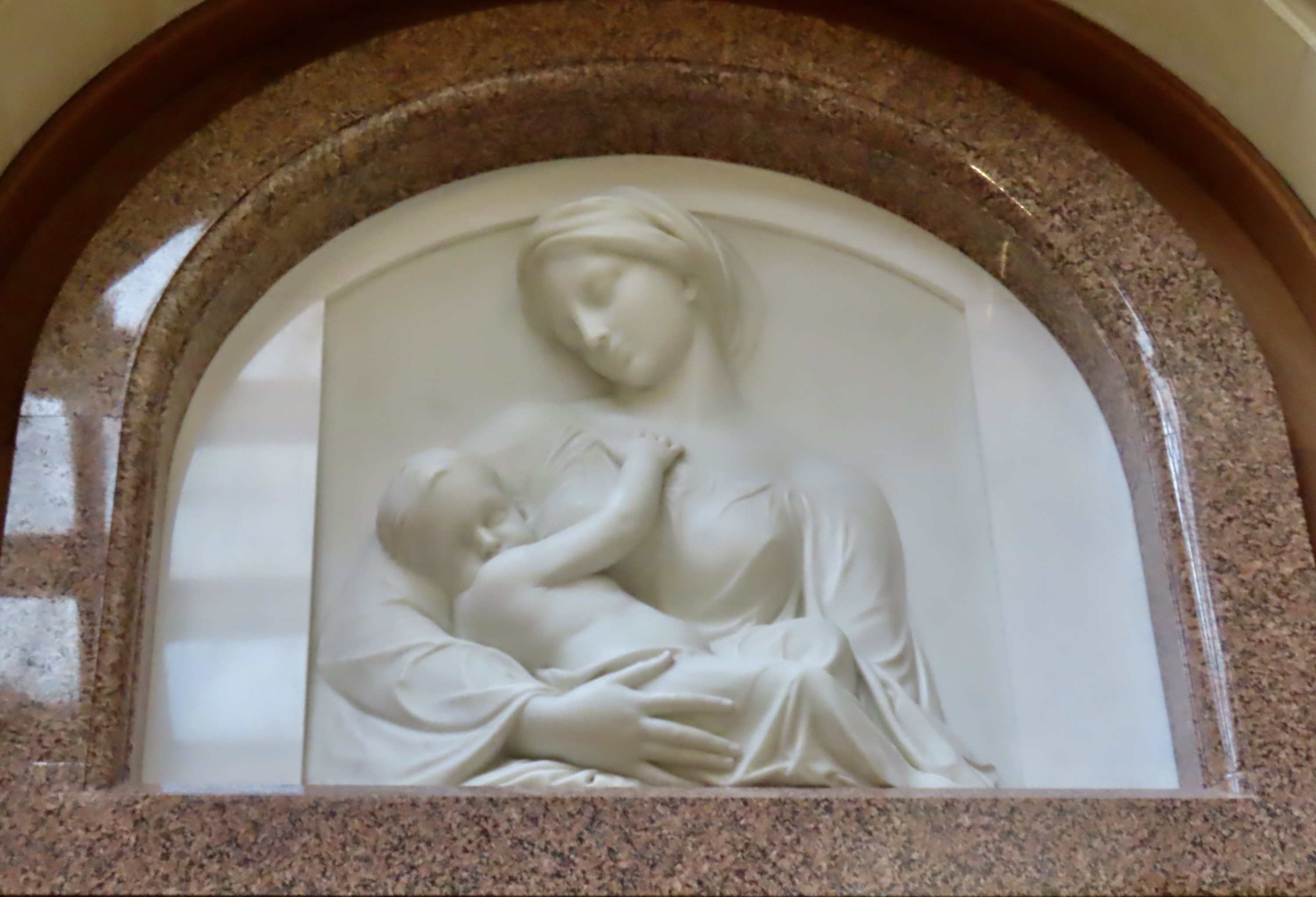
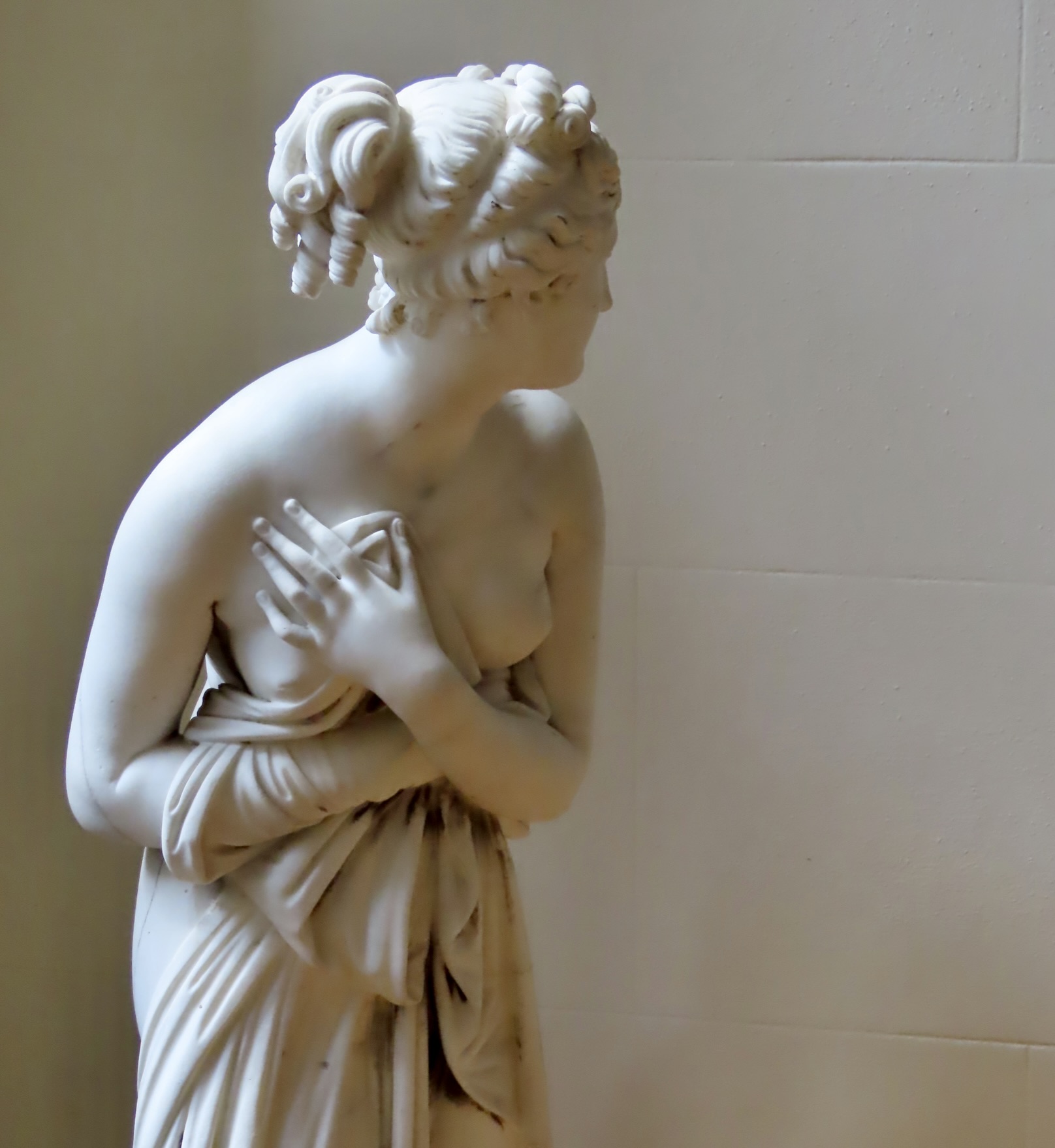
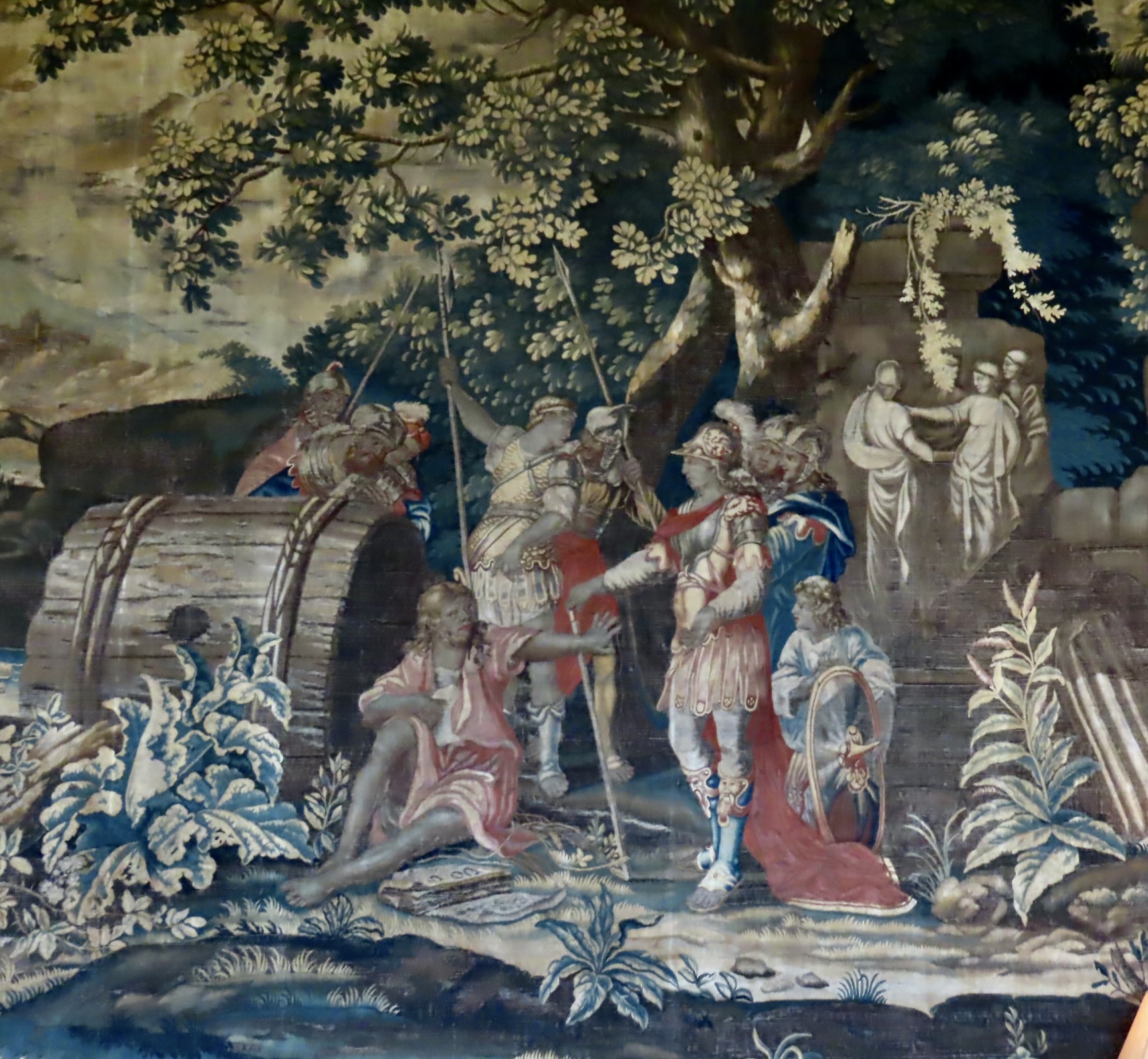
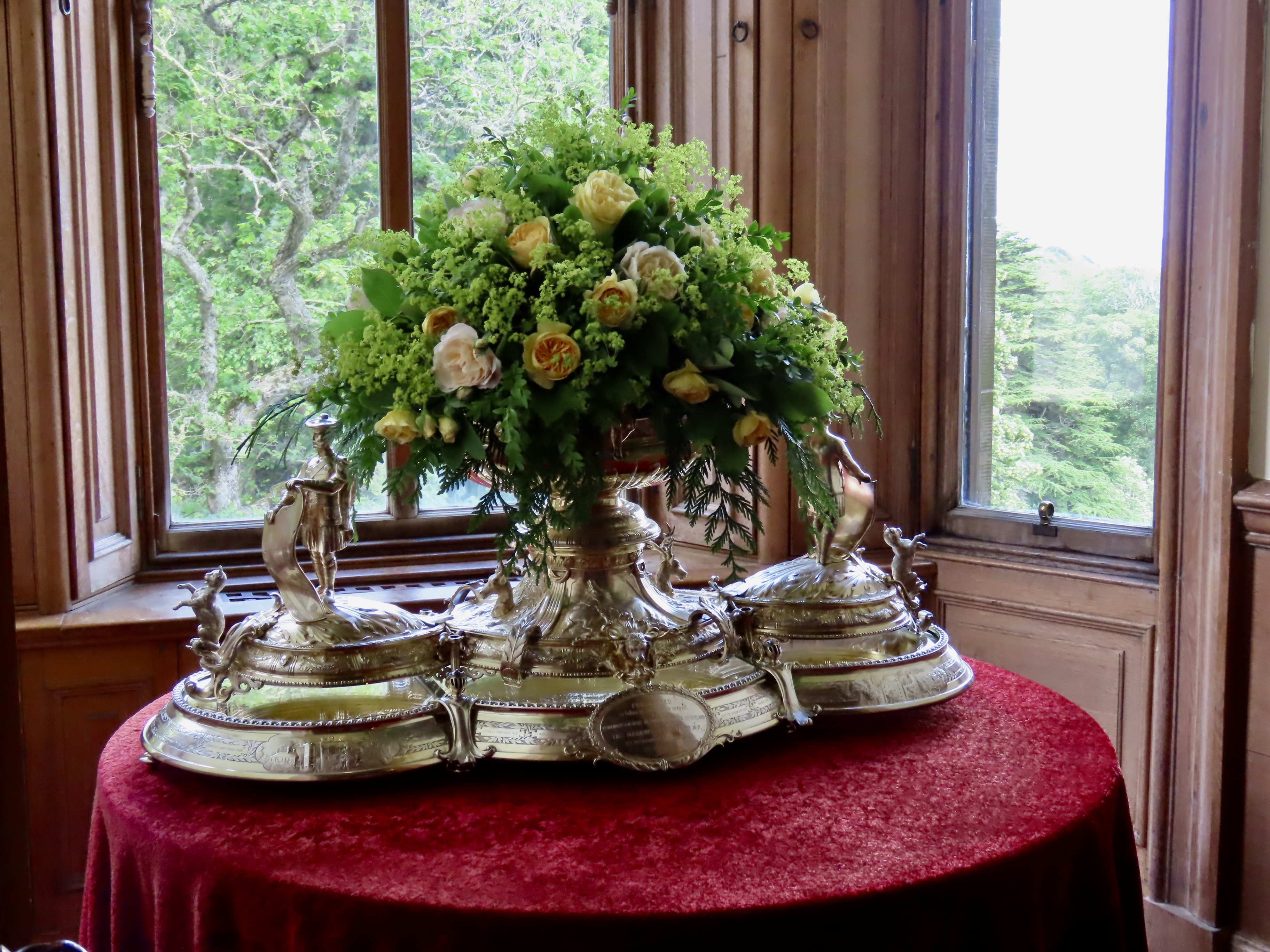
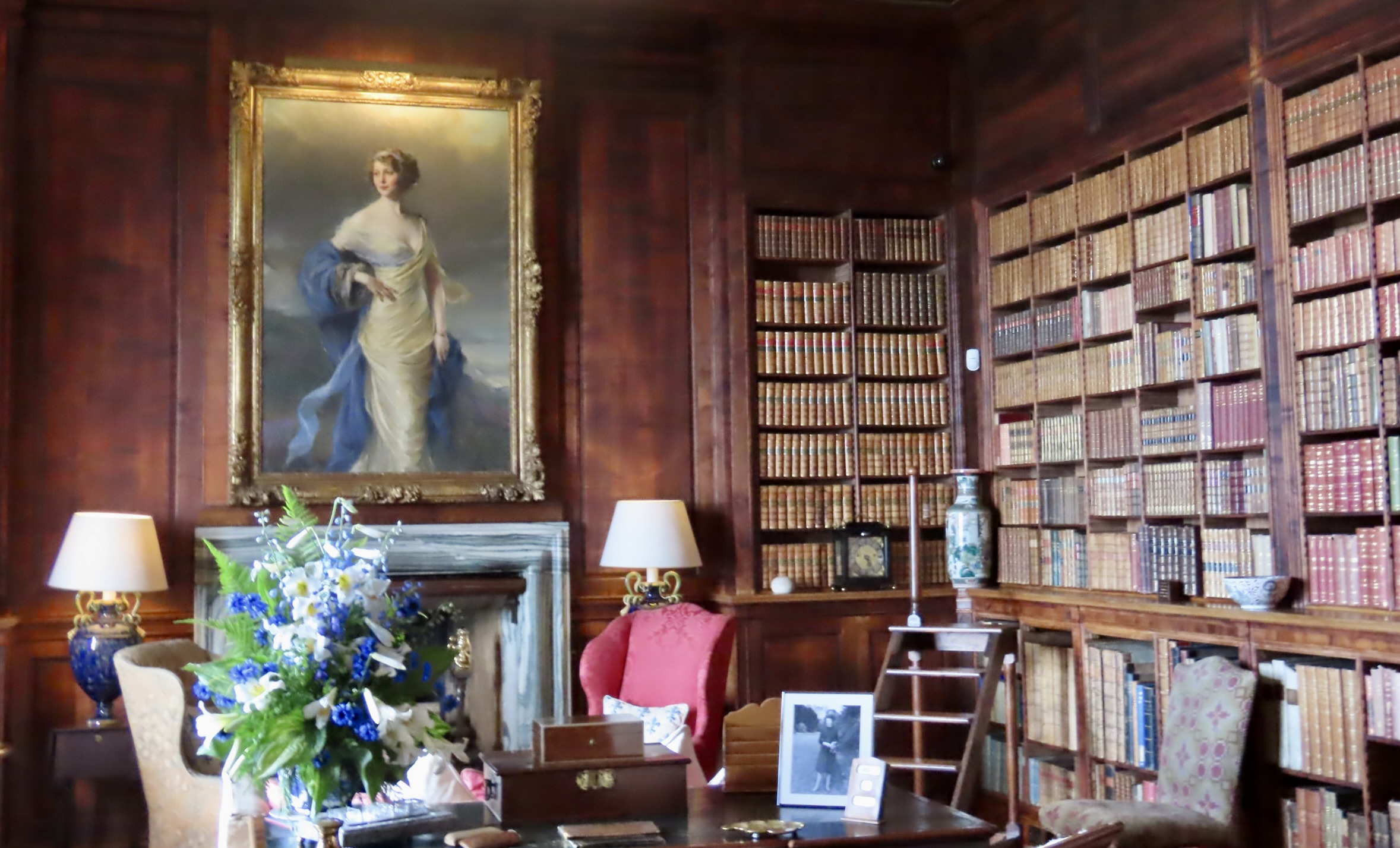
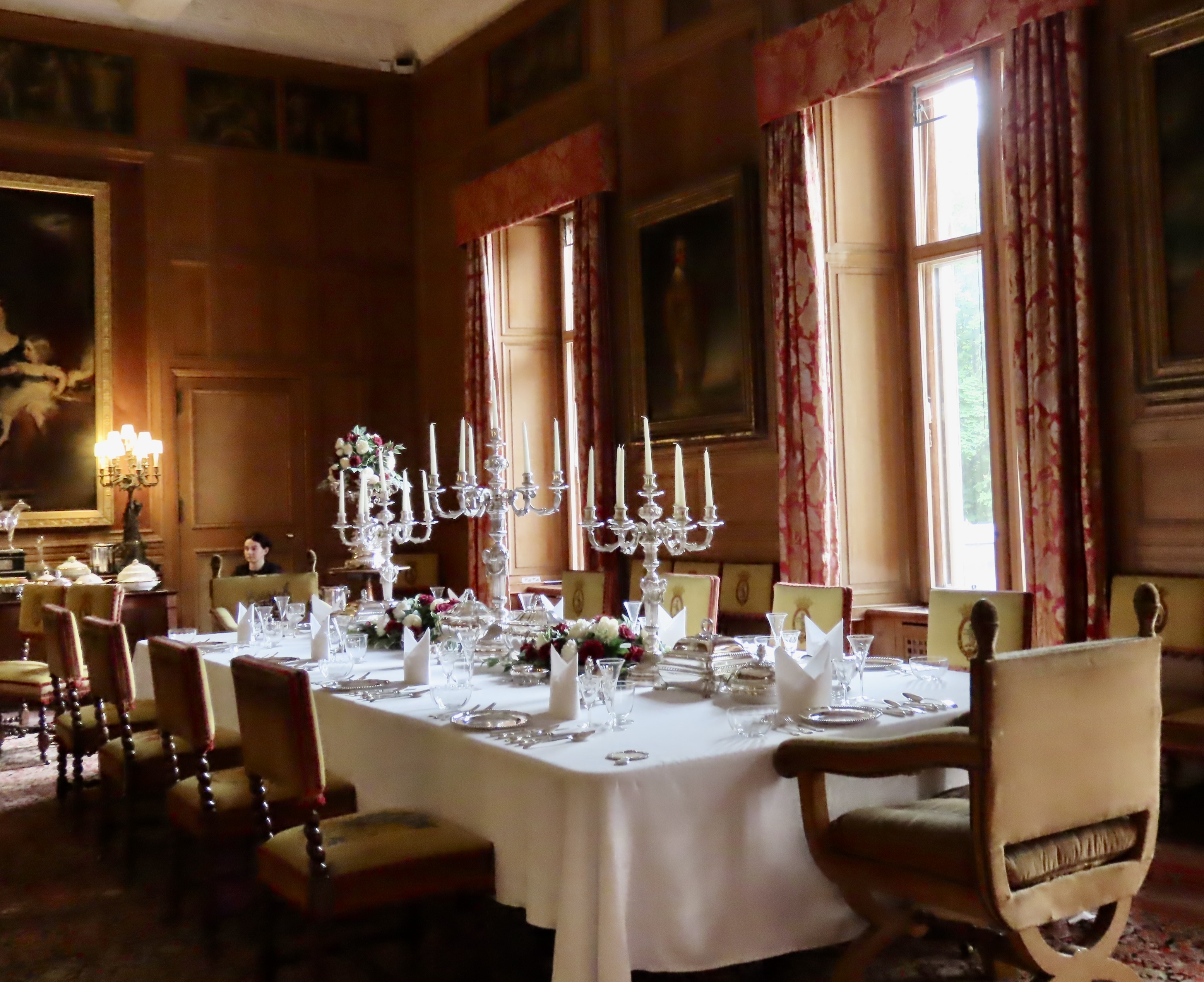
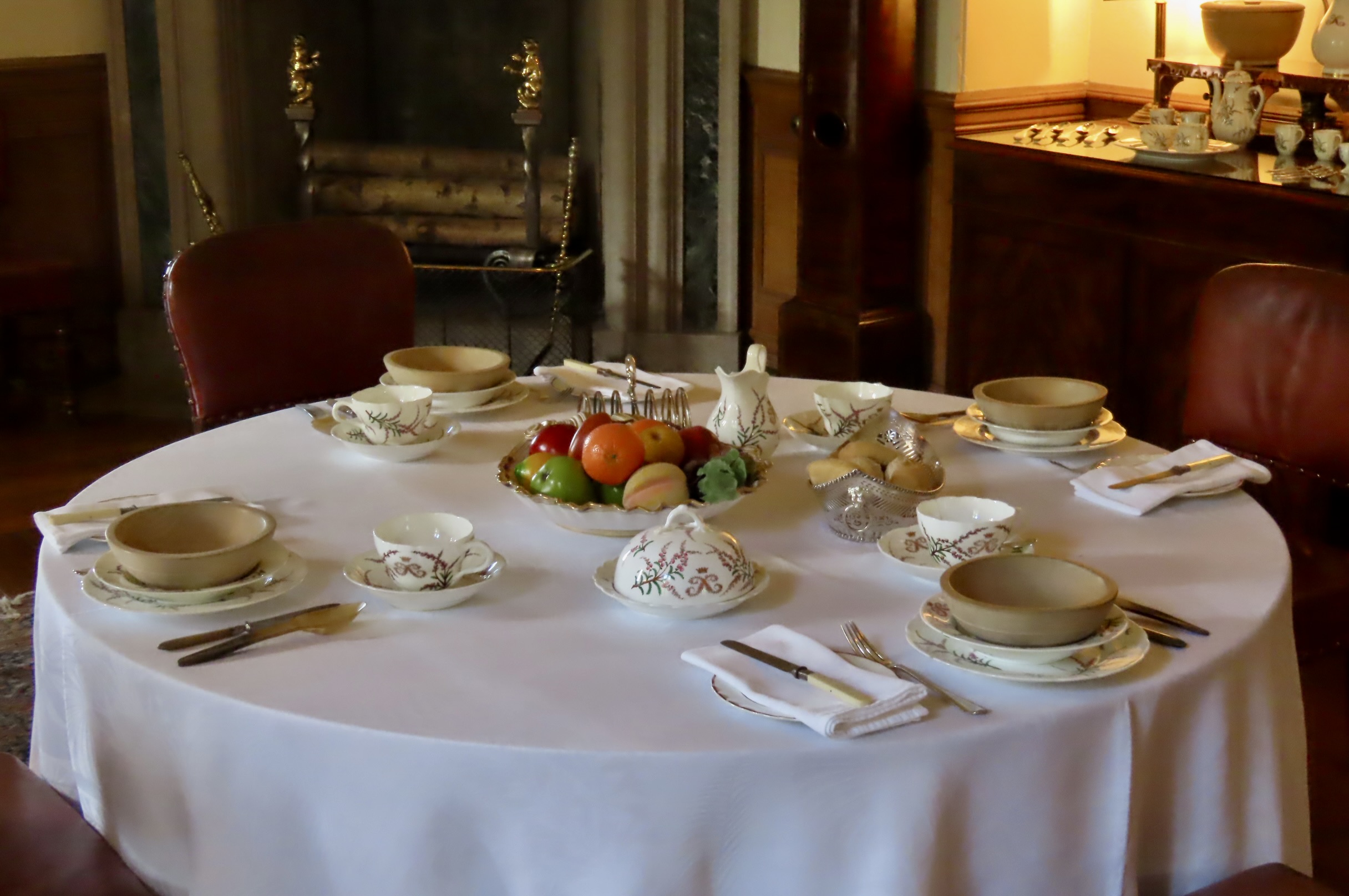
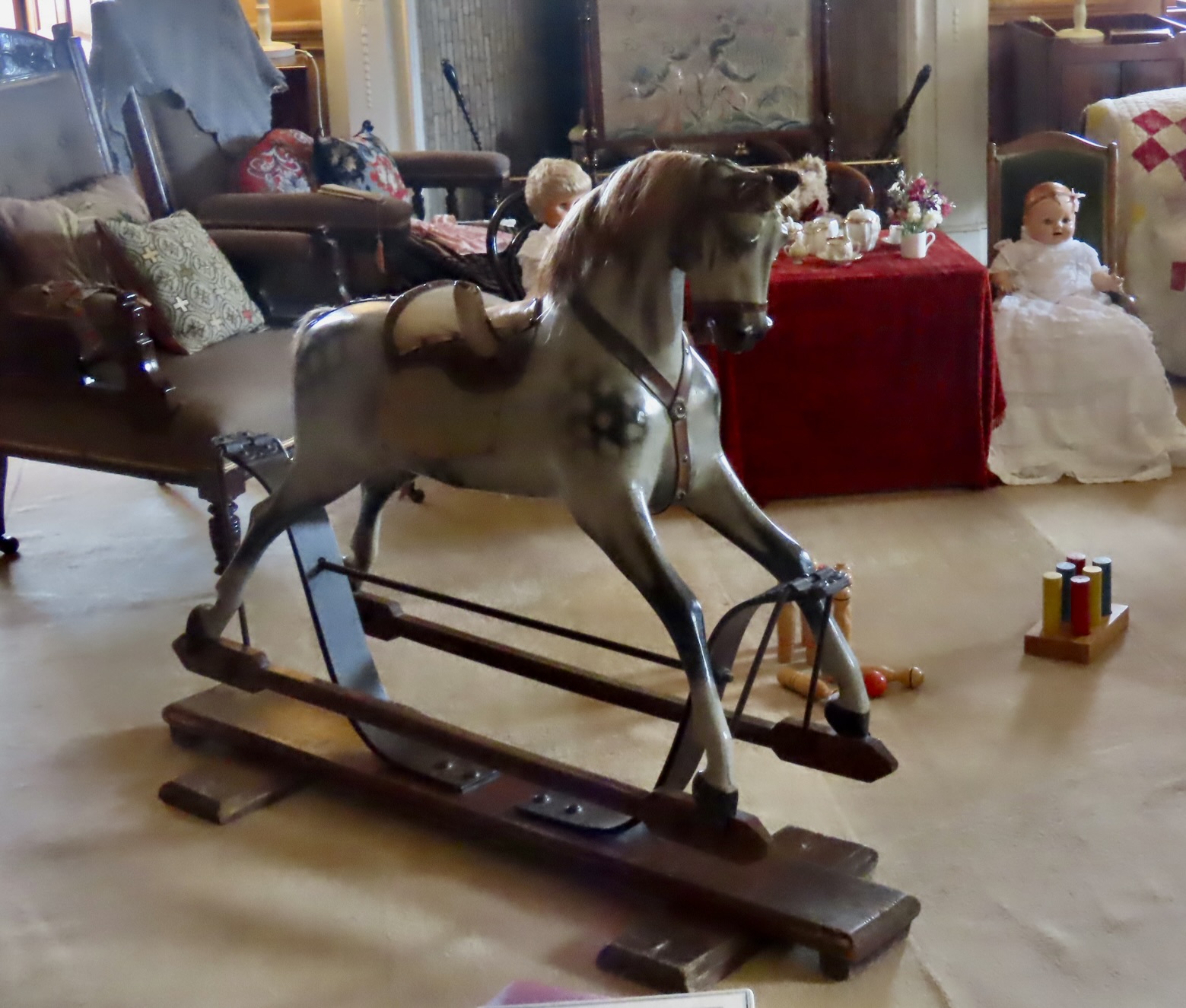
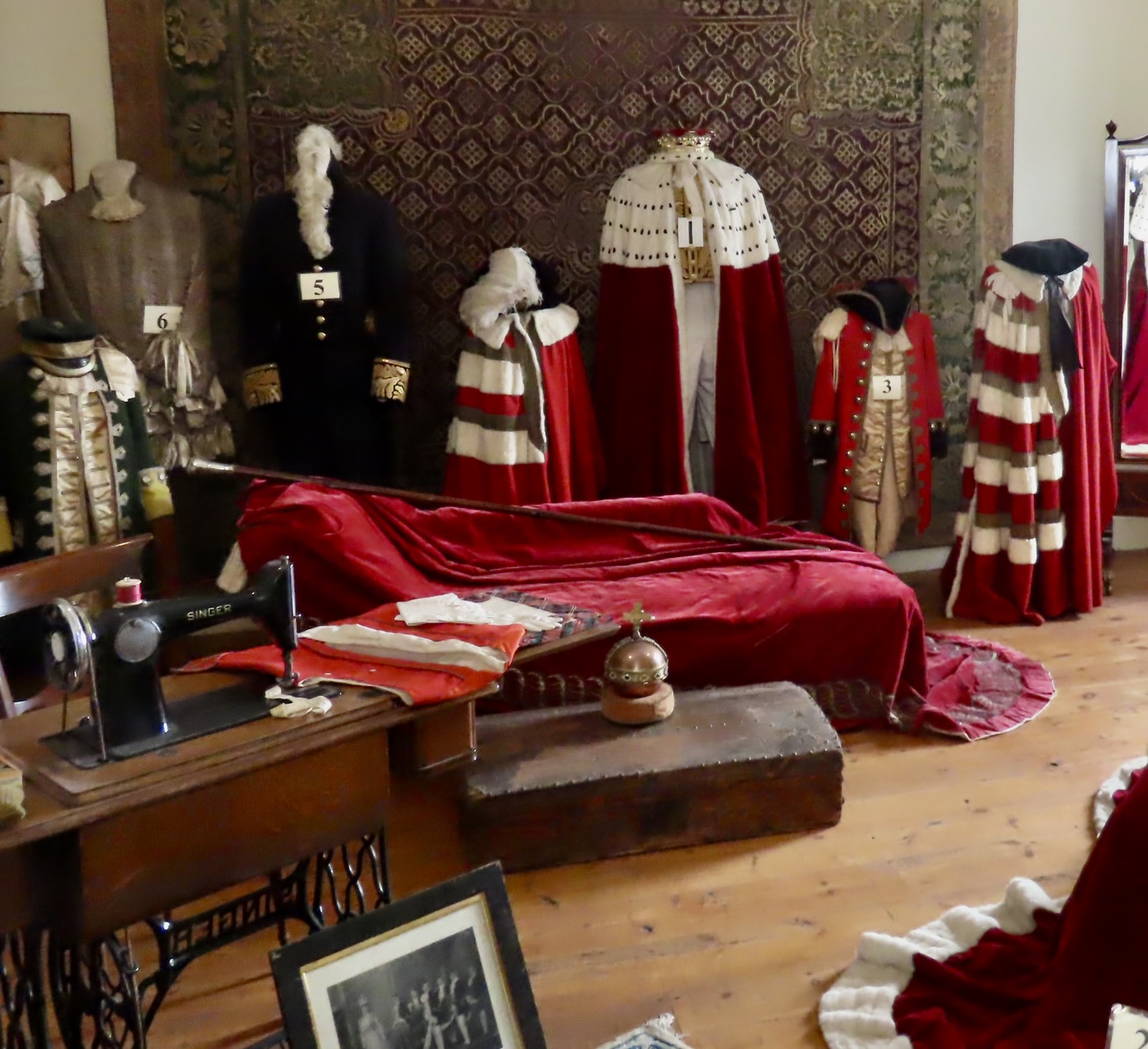
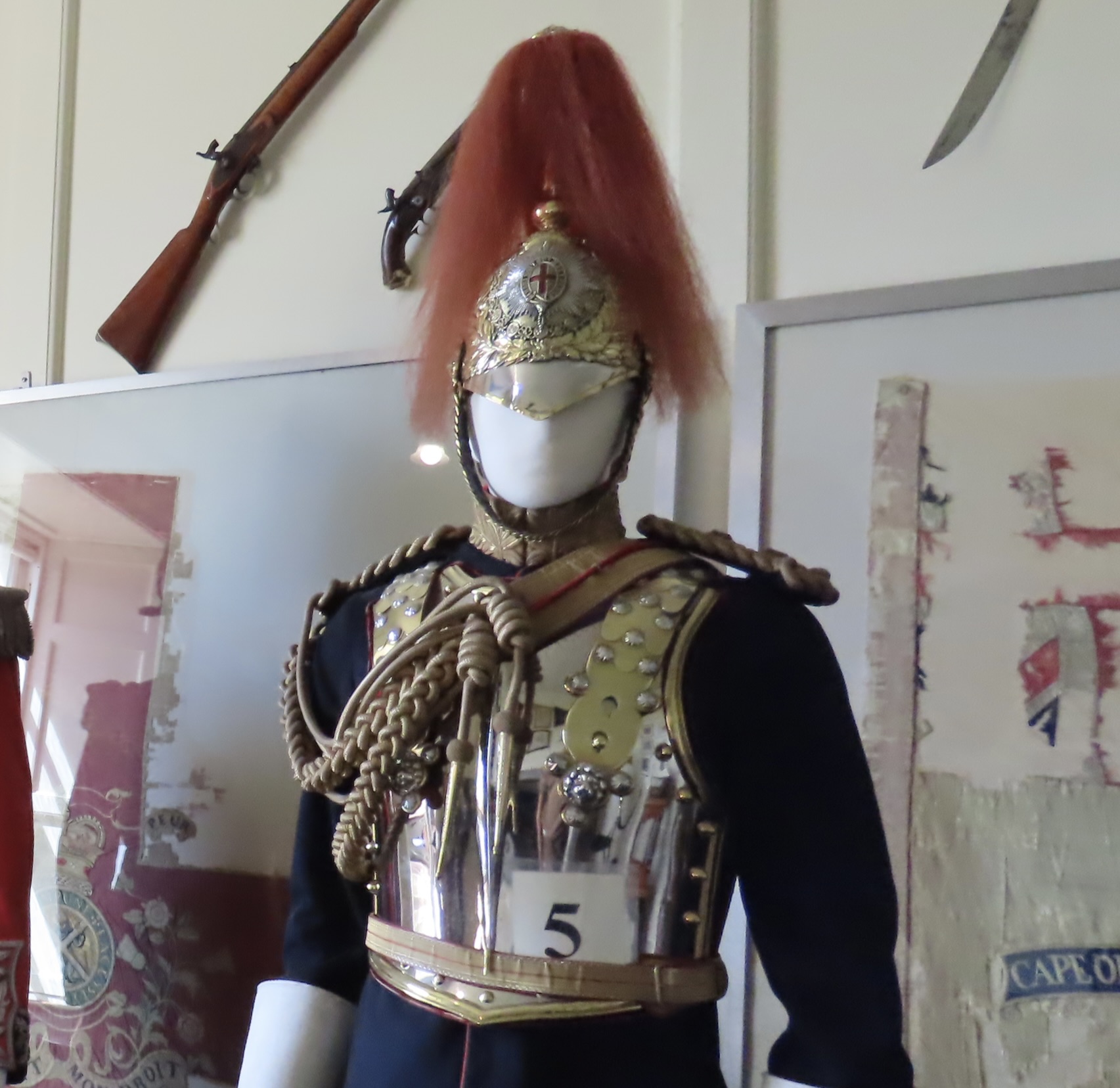
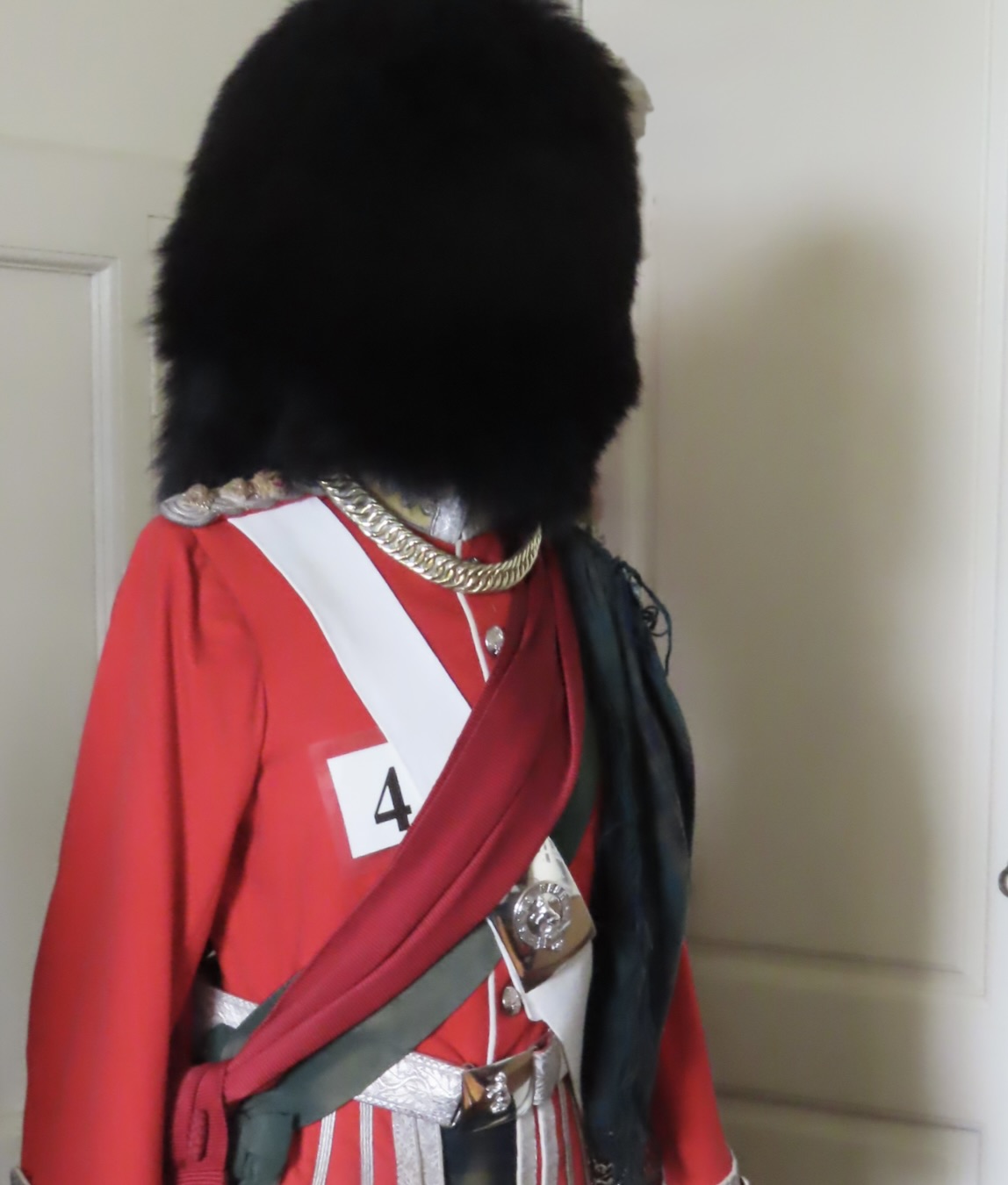
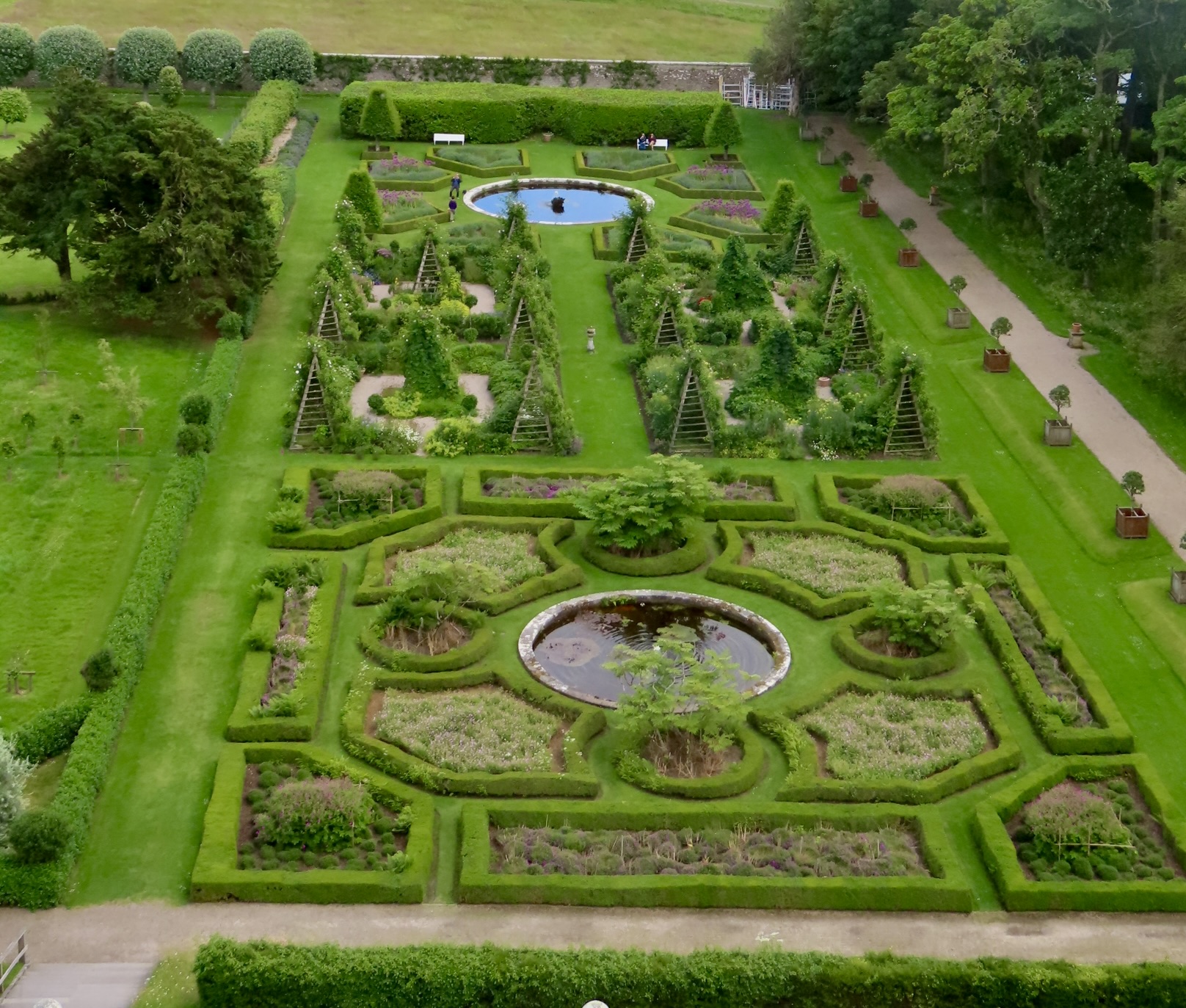
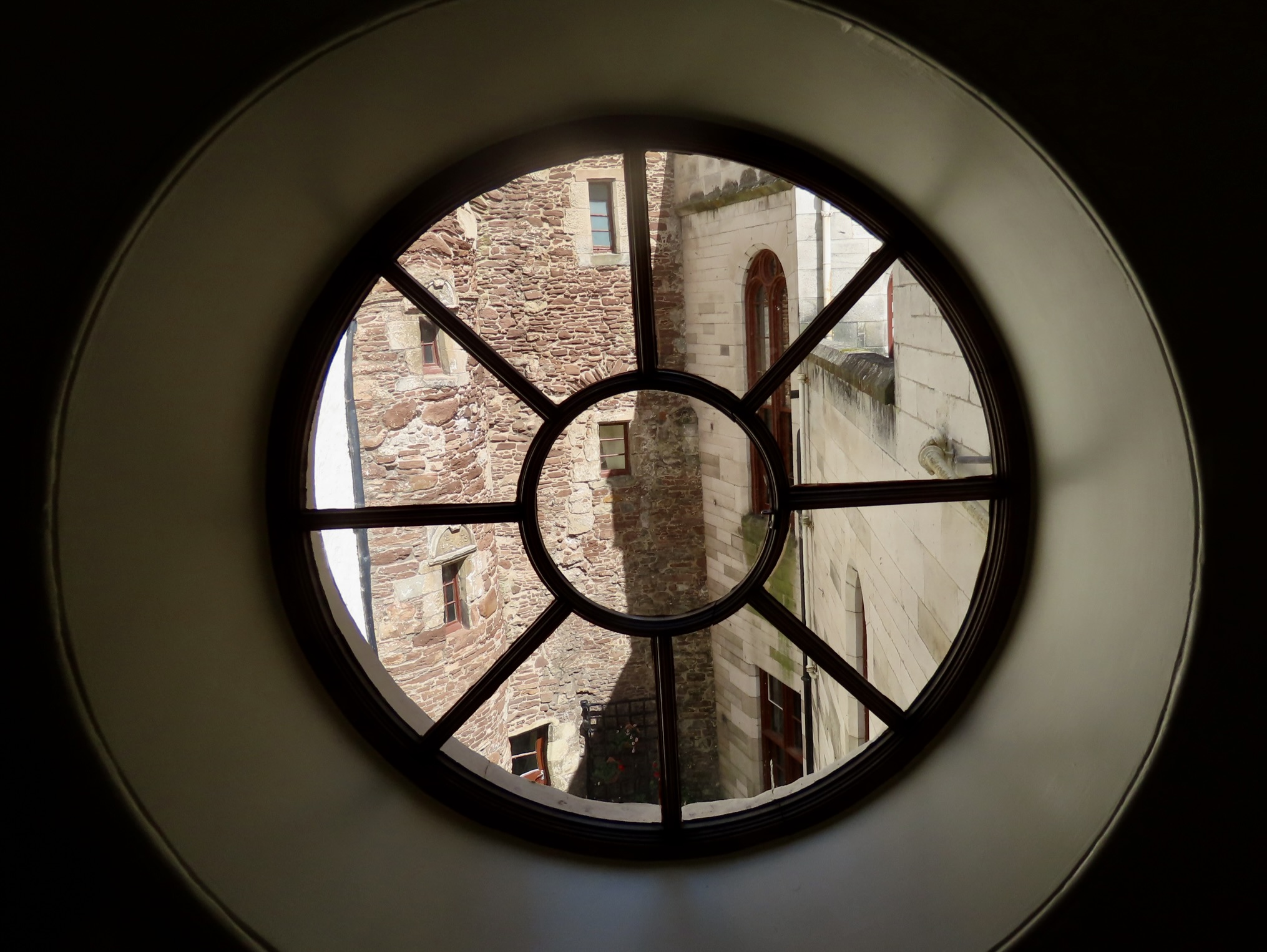
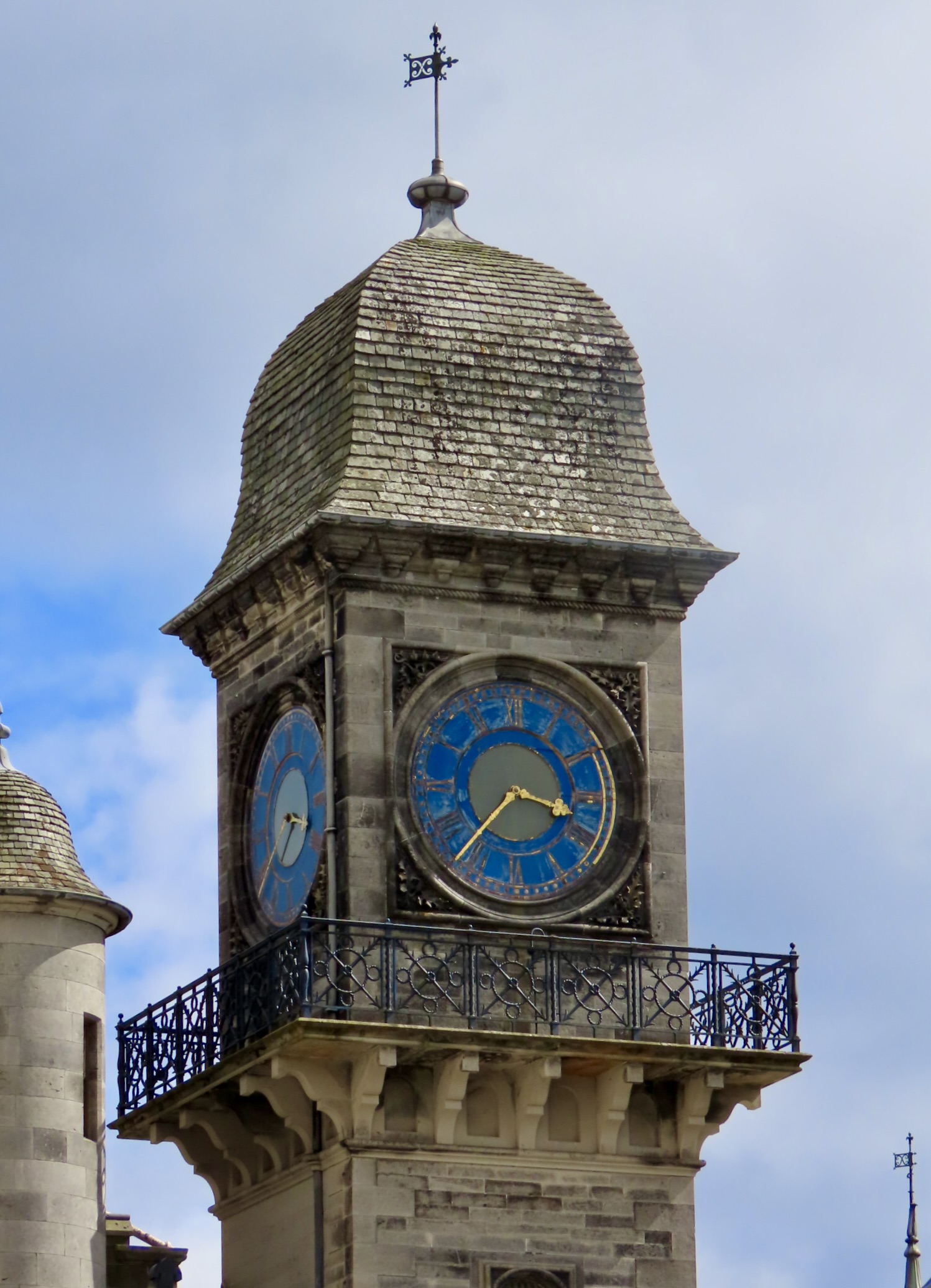
The google map above shows the location of Dunrobin in the Scottish Highlands.When we arrived at Dunrobin, a daily show that demonstrates falconry was taking place. We hurried down the 70 or so steps to catch it. You can see the crowd that had gathered to watch the demonstration across the garden on the right. Barry was also responsible for designing the garden.I stopped to photograph the tunnel.Andy Bunting is the resident falconer at Dunrobin. He’s been doing the demonstrations two times daily during tourist season for several years. Among the birds of prey he features are falcons, hawks, eagles, and owls. This is a Harris Hawk. Note the gloved hand. Those talons are sharp. You don’t want them digging into your hands or arms. The straps hanging down from the legs are called jesses. They help the falconer keep control of his birds. Hawk set off by Andy’s white hair! I couldn’t resist including this photo. Falconry has been around for 3-4,000 years. It started as a way to catch food in ancient Mesopotamia, Central Asia, and Mongolia, and morphed into the ‘sport of kings’ during the Middle Ages. Laws were even developed to classify which classes could fly which birds. The curved beak helps assure that caught food/game doesn’t escape.“Hello.” “Where’s dinner? Show me a bird with a red breast and it will be a Done-Robin.” Harris hawks eat small mammals like rabbits and squirrels, reptiles, and birds.There weren’t any birds, rabbits, or snakes to eat, but Andy had a volunteer run across the field dragging a ‘rabbit’ behind him.If you have a dog that likes balls, sticks, frisbees, etc. thrown for them, you will recognize this look. “Throw it! Throw it! Throw it.”The ‘rabbit’ didn’t get far!“Mine!” The hawk seemed to devour it. I suspect there were goodies hidden on it. Birds weren’t the only wildlife to be featured at Dunrobin Castle. After the falconry we explored the castle on our own and found…And found a lion.It was flat.And a flat lioness. The dukes and other nobility connected to Dunrobin Castle were avid hunters. Their castle was filled with reminders.I have seen dozens of stuffed and mounted deer heads in my life. But I have never-ever seen a fully stuffed buck!A close up. I don’t think you would want to argue with this fellow. I wonder if its ghost wanders the castle at night searching for the person that shot him and had him stuffed. Or maybe…He goes to visit his herd. Each one of these heads had a plaque beneath it that tells who shot it, when, where, and its size. One announced that the deer had been killed by the Duke of Sutherland in Dunrobin Forest on September 28, 1932. It had 10 points (antlers with 5 on each side) and weighed 25 stone. Translated 350 lbs, 158 kg, or, for fun, 5600 ounces.There were also sculptures of hunted animals. Fox hunting was big among nobility. This was presented to the Marquis of Stafford. For those of you not up on your nobility rankings it goes: Duke / Duchess, Marquess / Marchioness, Earl / Count / Countess (Earl in England/Count in Europe), Viscount / Viscountess, and Baron / Baroness. Now you know how low to bow. The official job of the Marquess in earlier times, btw, was to be located on the most dangerous border and keep the enemy out.I get the sculpture of the fox. It’s rather handsome. But why someone would want the sculpture of a dying heron with an arrow through it, escapes me.As we wandered through the castle, there was a fair amount of art. Much of it was portraits of family members.We liked this view of the children and their dogs. Note the girl feeding the deer! That’s a twist on the family theme.A mother and child, Madonna-like scene, carved in marble. (Looking at it just now, I was struck by the thought, “Does the baby have an erection?” Forget the Madonna idea. A future Duke perhaps?)This young woman carved from marble is worried about something. It’s likely from a myth. I’m thinking Artemis and Actaeon where Actaeon comes upon the goddess bathing and she turns him into a stag. If she was embarrassed by one man, what about the thousands that see her every year now. Watch out guys! You know what happens to stags in this neck of the woods.What’s a castle without a tapestry?We were all impressed with the beautiful flower arrangements found throughout Dunrobin.Speaking of being impressed, the library had over 10,000 books. Wandering through the various rooms gave us an idea of life in the castle. A separate wing of the Dunrobin Castle is still maintained as a family residence. It is currently occupied by Alistair Charles St. Clair Sutherland (the 25th Earl of Sutherland and Chief of Clan Sutherland), and his wife Gillian.The dining room showed the usual look and elaborate settings of most formal dining rooms we have seen in castles.My preference is always for the informal dining room. But hey, I’m a country boy.Nice hobby horse in the kids’ room. A dapple grey? You can bet that it came with a full time nanny.This is the seamstress room. Rumor has it that it once came with a ghost. The Earl of Sutherland in the 16th Century captured a beautiful girl and wanted to her to marry him. She said “no,” so he locked her up in the seamstress room to reconsider her decision. When he came back to see her, he found that she had fashioned a rope out of cloth and was escaping to the ground. Out of anger he whipped out his sword and cut the rope, causing her to fall to her death. She came back to haunt him. Rightfully so.Every historic castle worth its beans, has to come with a room dedicated to war including what the soldiers wore, the weapons they used and, often, where they fought. Dunrobin was no exception.I had a question about number 4, however.Checking out the views from the castle is always interesting. This was looking down on a section of the gardens. The gardens were actually made narrower as they went out to create a perspective of greater distance.This window provided an unusual focused view of the old Castle walls that Barry had added to. As we left, I caught a photo of the front of Castle Dunrobin and its clock tower. A person to the right of the greenery provides a perspective on the size of the castle.It was time for us to move on to our next adventure in the Scottish Highlands, and time for me to wrap up this post.
Last month, Peggy and I went on a CIE bus tour of the Scottish Highlands, along with our grandson Cody. Photos in this series were taken by Cody, Peggy and me.
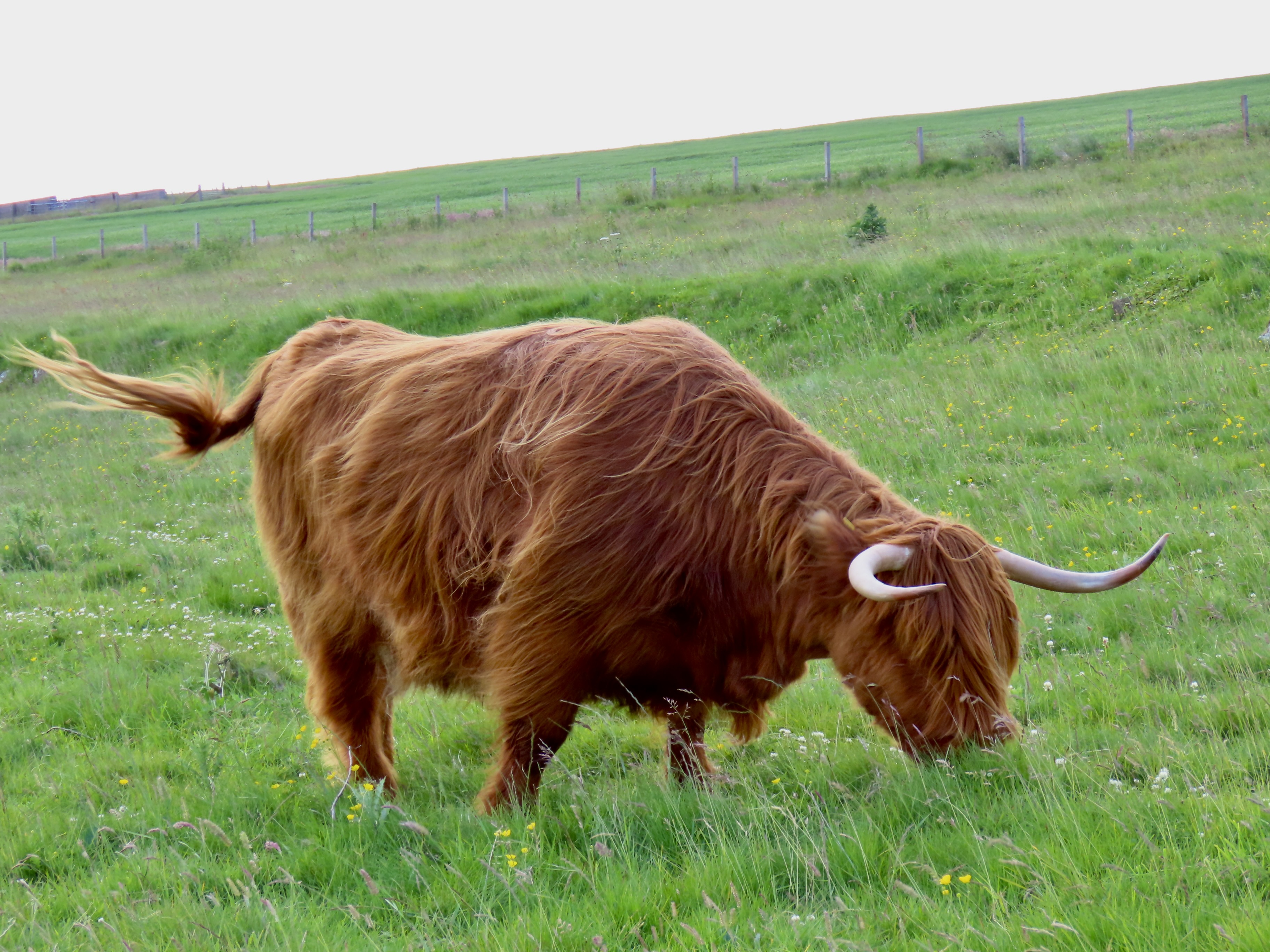
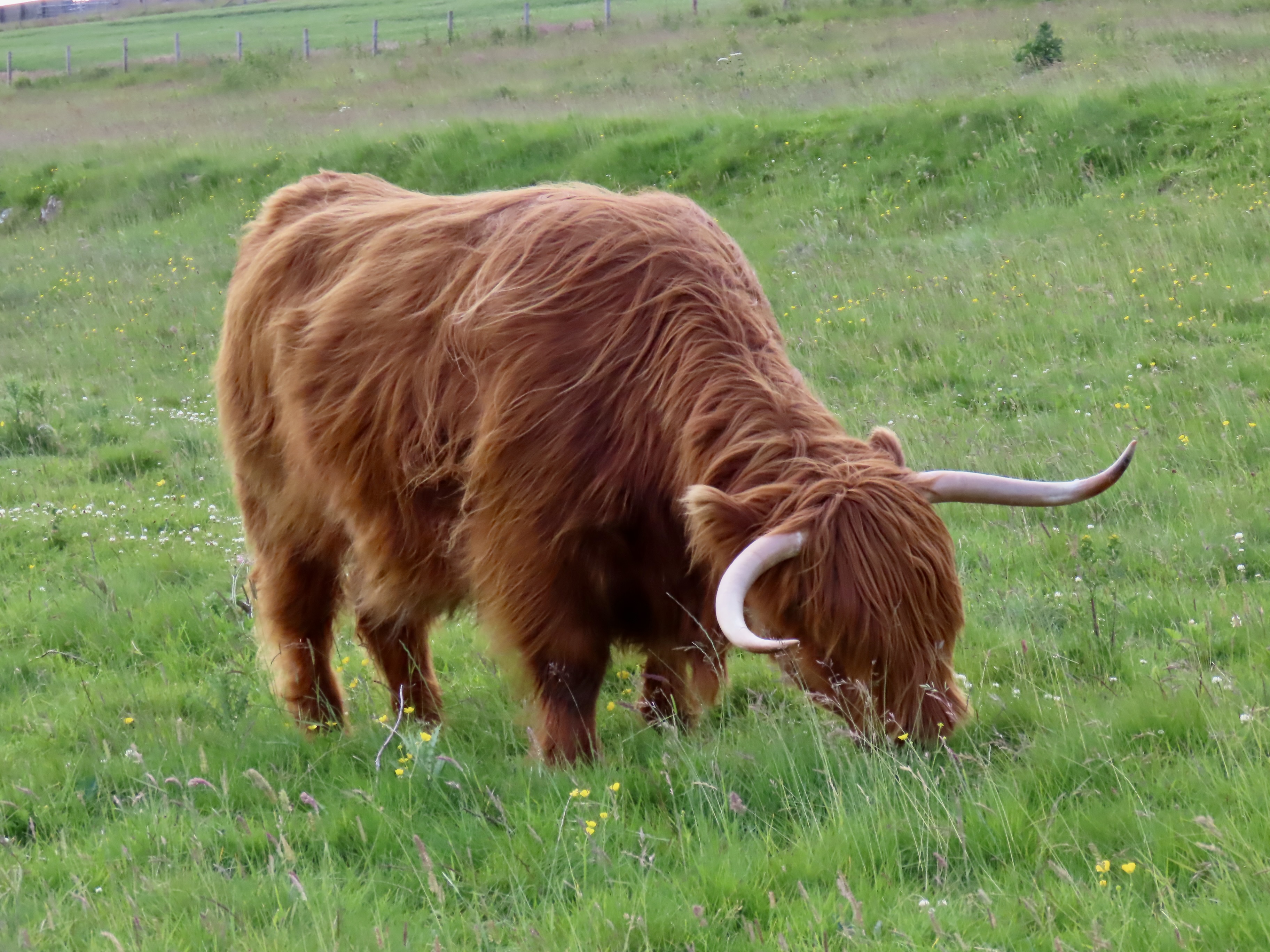
Harry Coos are just about on everyone’s to-see-list for visitors to the Scottish Highlands. Their thick ginger fur and impressive horns are the two chacterisitcs that most people note. The slender, curvy horns suggest that this coo is a female. Check out the ears as well.
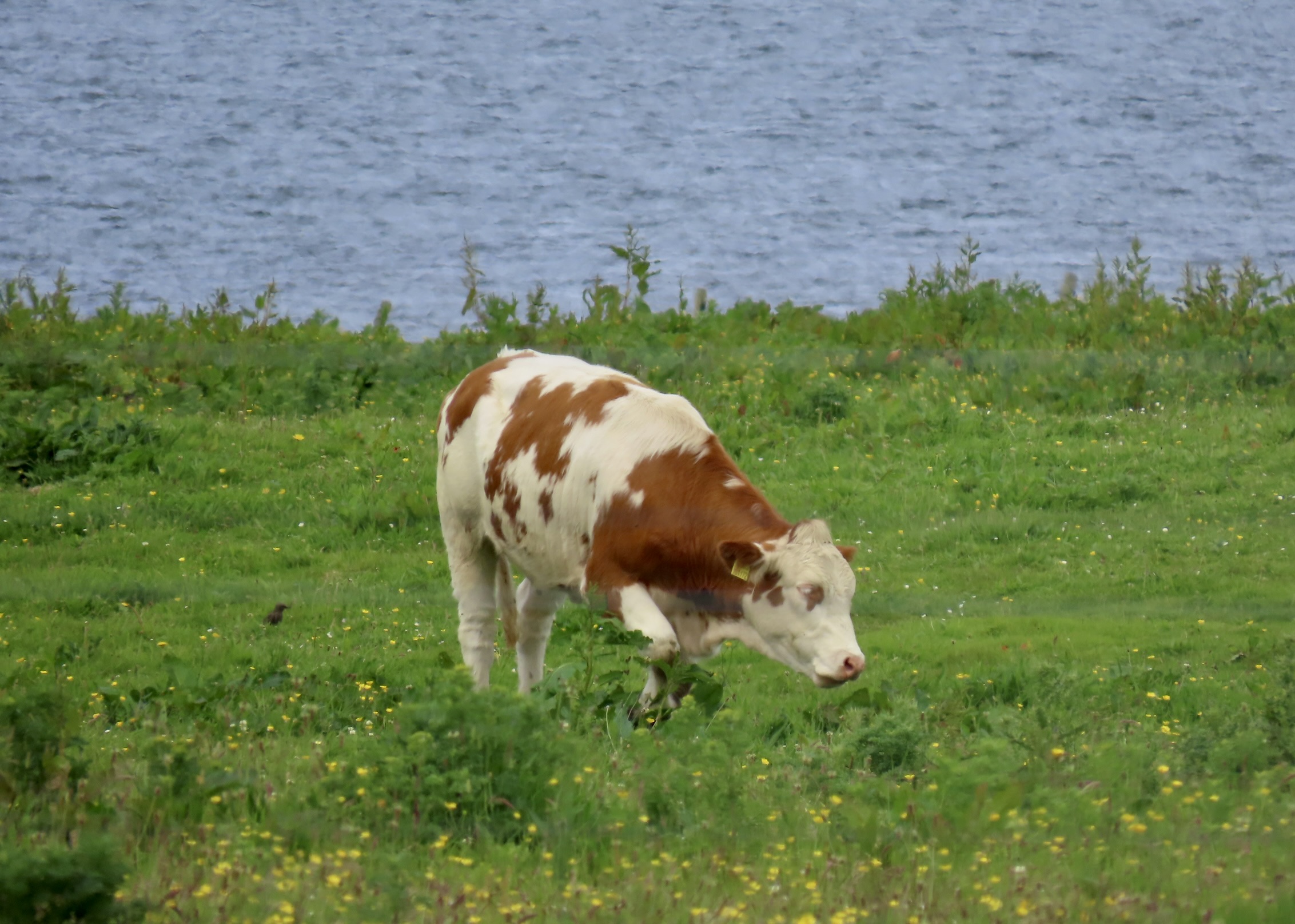
Given the popularity of coos, we were surprised they weren’t everywhere. We only spotted them a half-dozen or so times during our recent bus tour exploration of the Highlands! And only had two opportunities to stop and check them out. One was on the northern island of Orkney, the other next to the Culloden Battlefield. While there are over a million cattle in Scotland, coos number only in the thousands. The fact that their milk involves an acquired taste and that their meat is very expensive are important reasons. Besides, one coo might attract 10,000 visitors (or more), but how many people could it feed.“Why is it that people always look at me as an object and only think meat and milk. Why can’t they think of me as handsome or beautiful?’
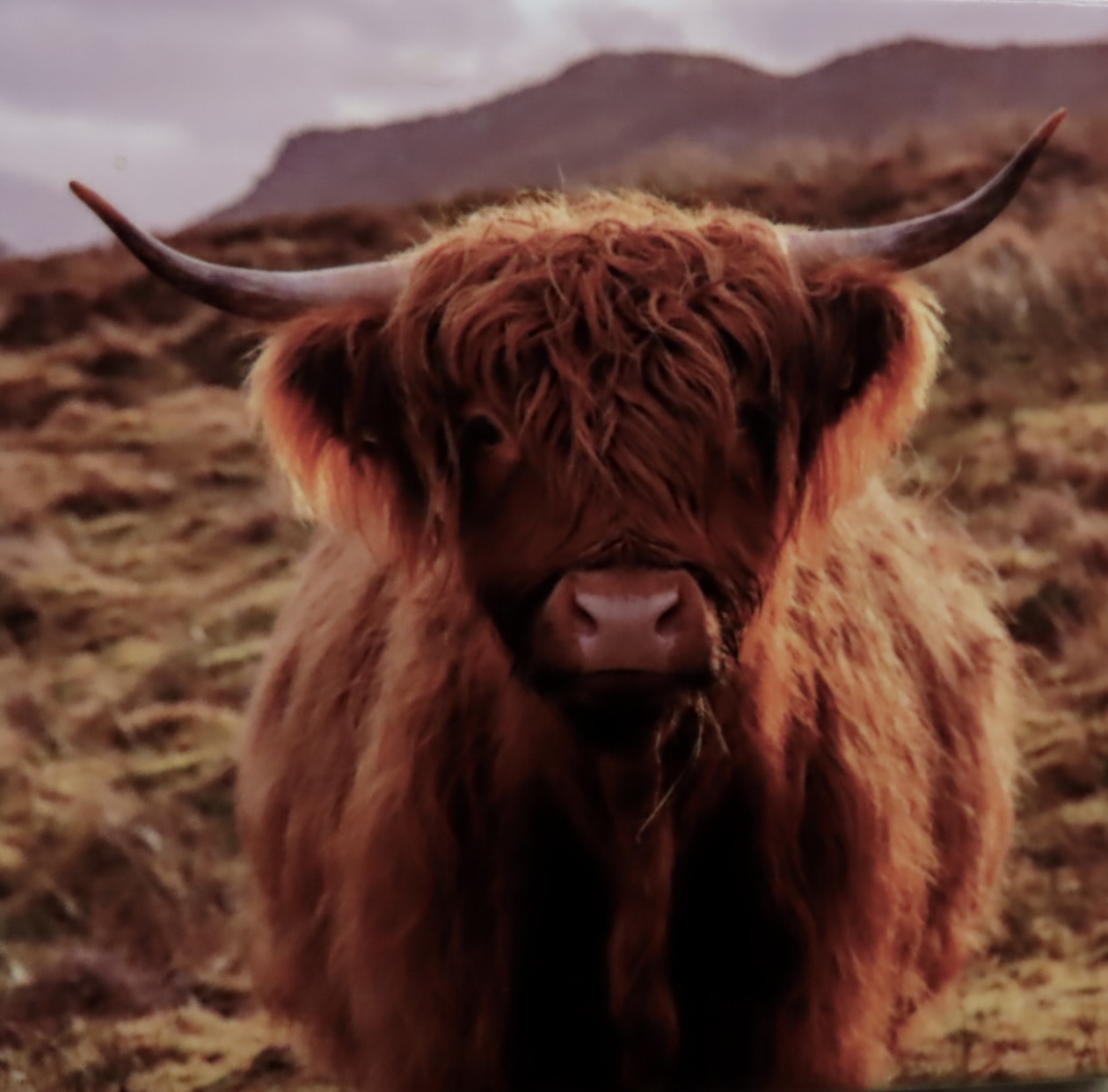
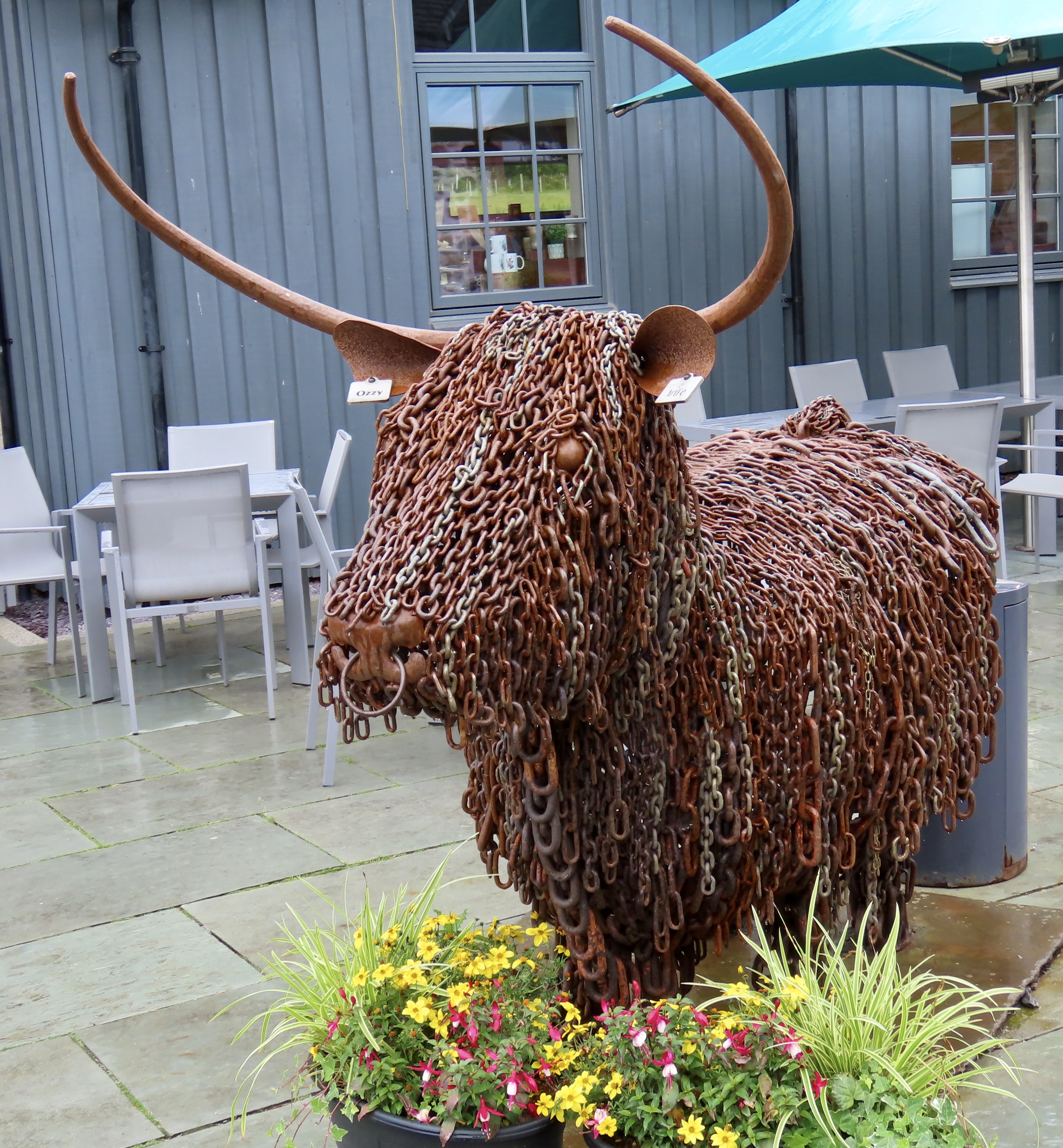
So while coos are much harder to find than normal cows, I doubt that there is a tourist shop in Scotland that doesn’t promote them. Paintings, key chains, coffee cups, shot glasses, scarves, coasters, t-shirts… you name it, you will likely find one with a coo on it. We brought home two.
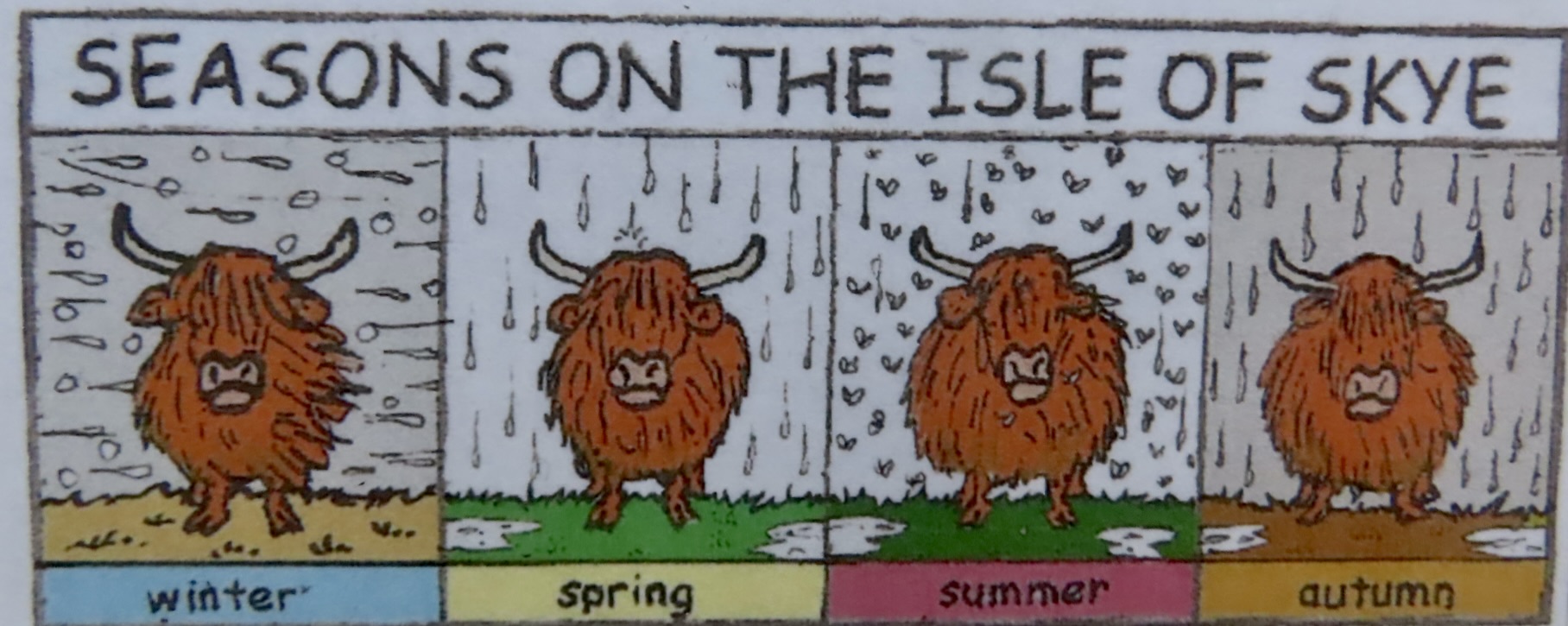
A coaster for me…And a seasonal weather gauge for Peggy.
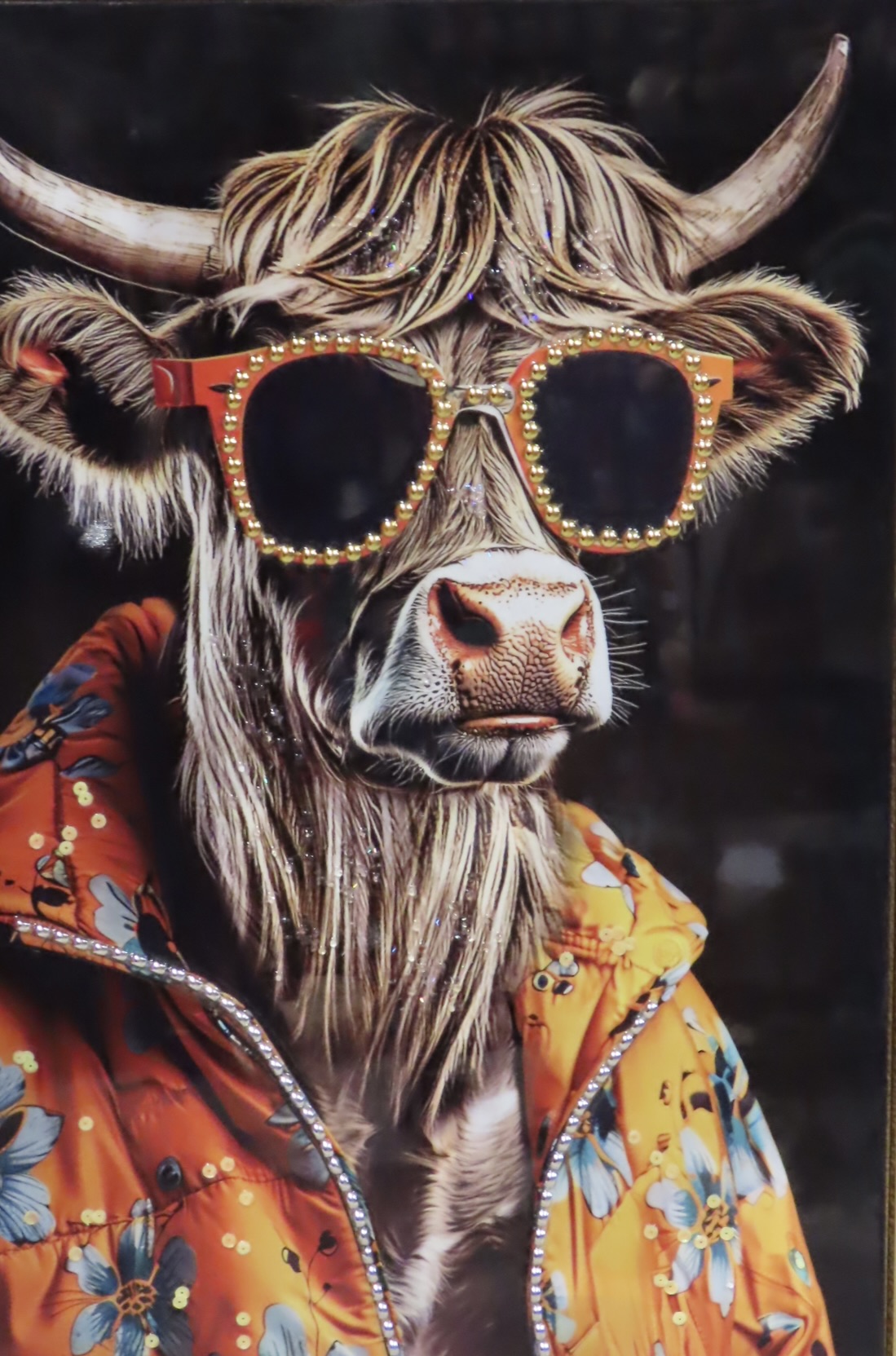
We found this fellow hanging out in a tourist shop. And no, we didn’t bring him home. Judging from the glasses going through his ears, it’s probably AI generated.
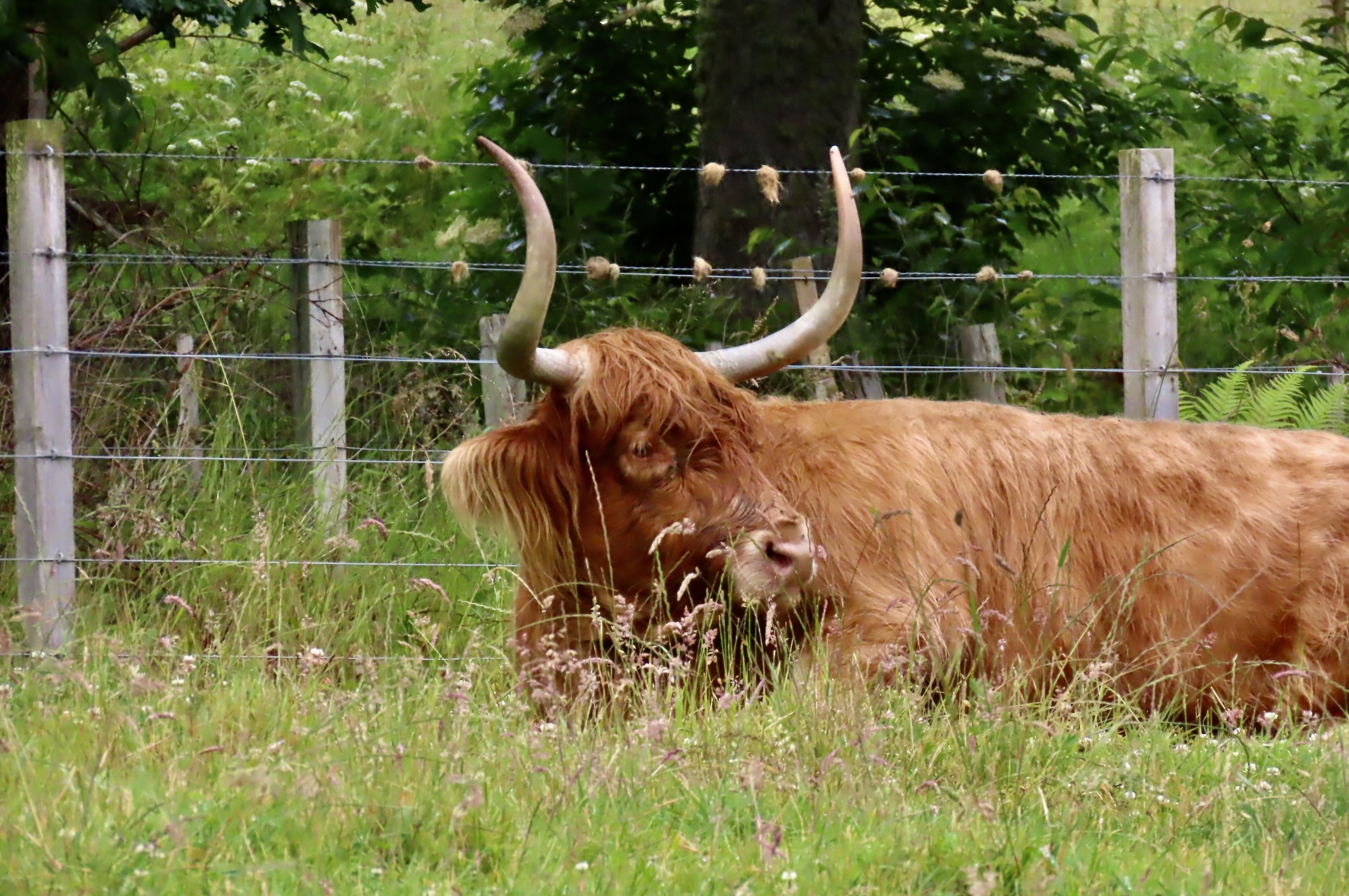
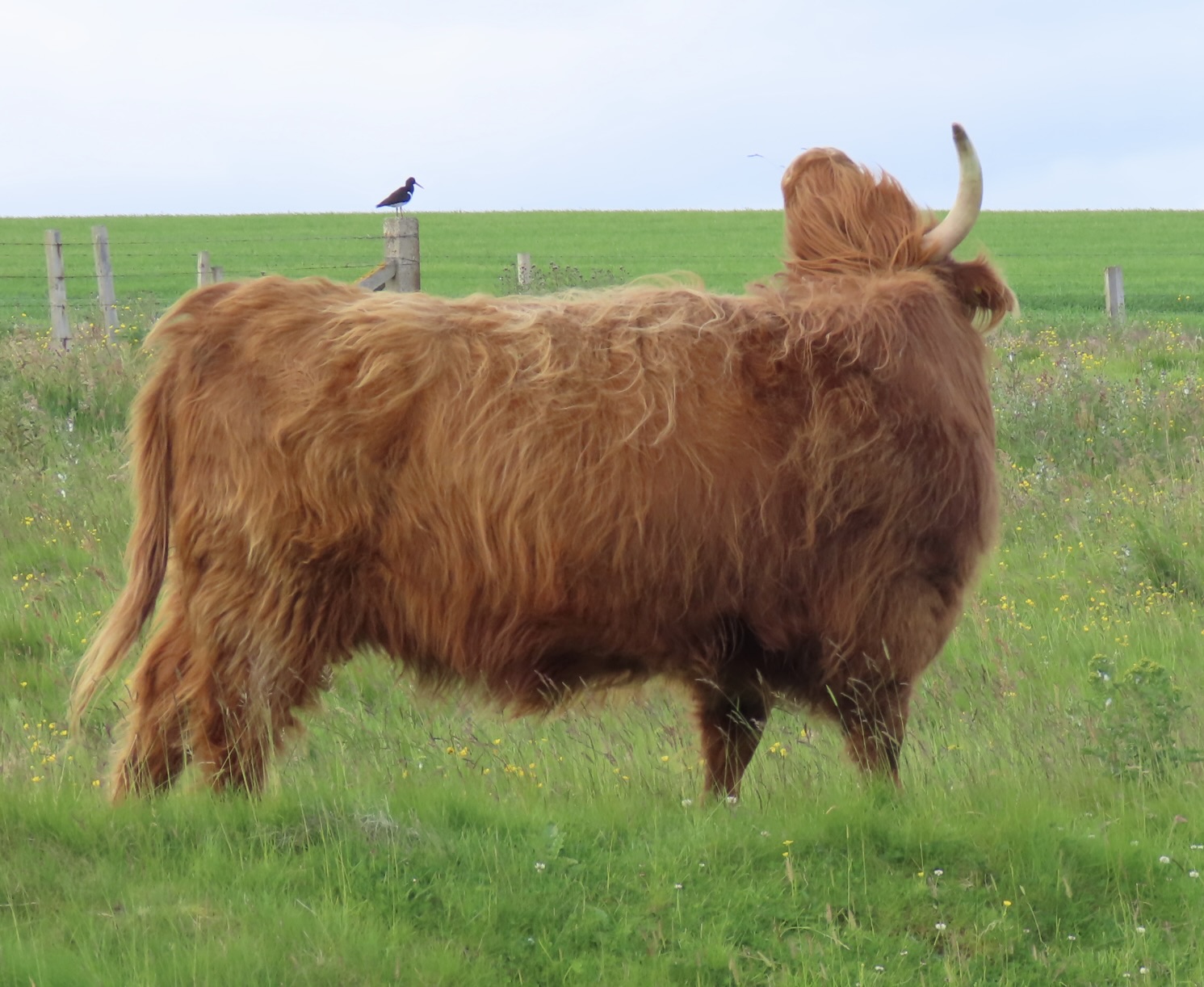
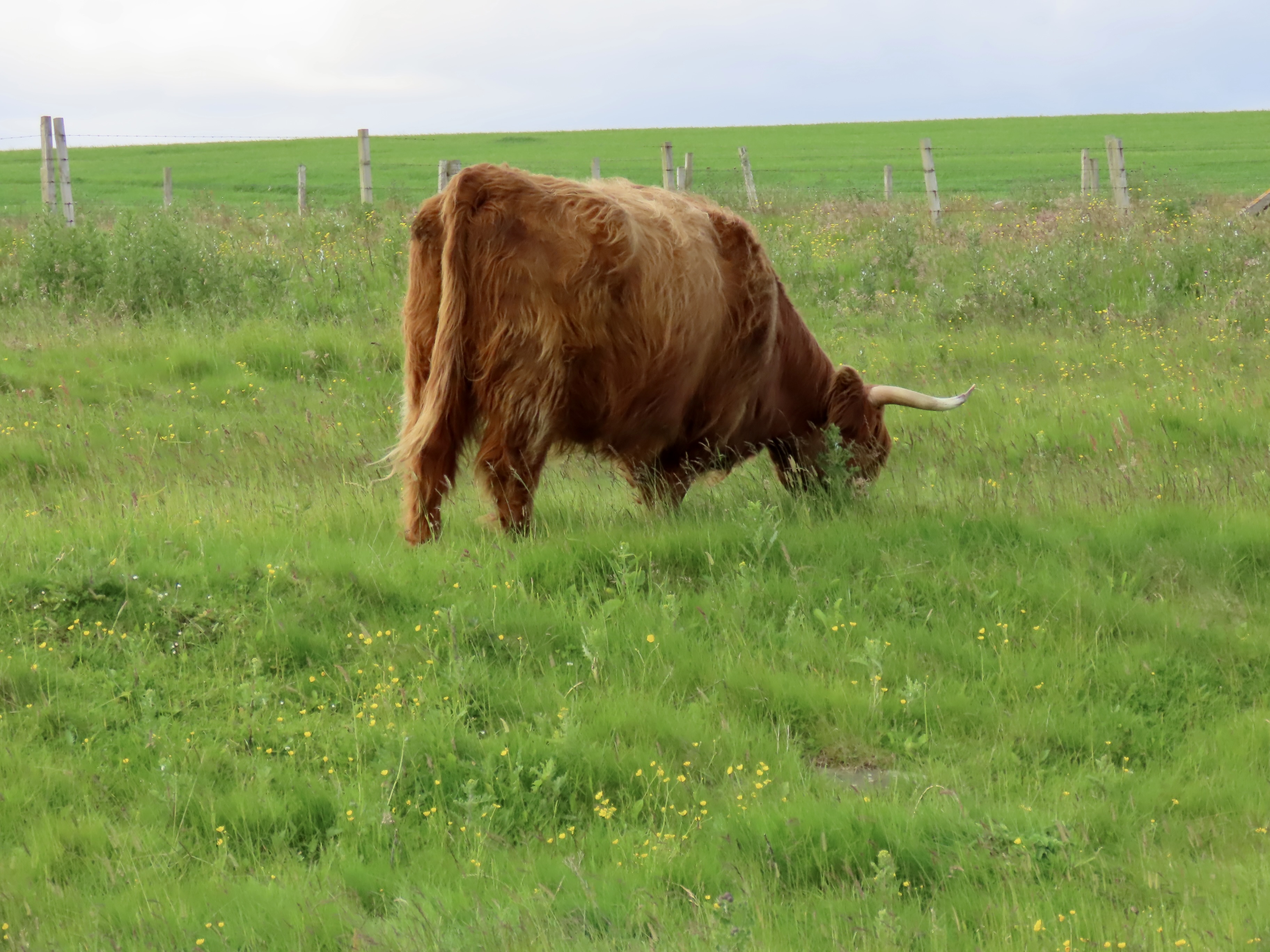
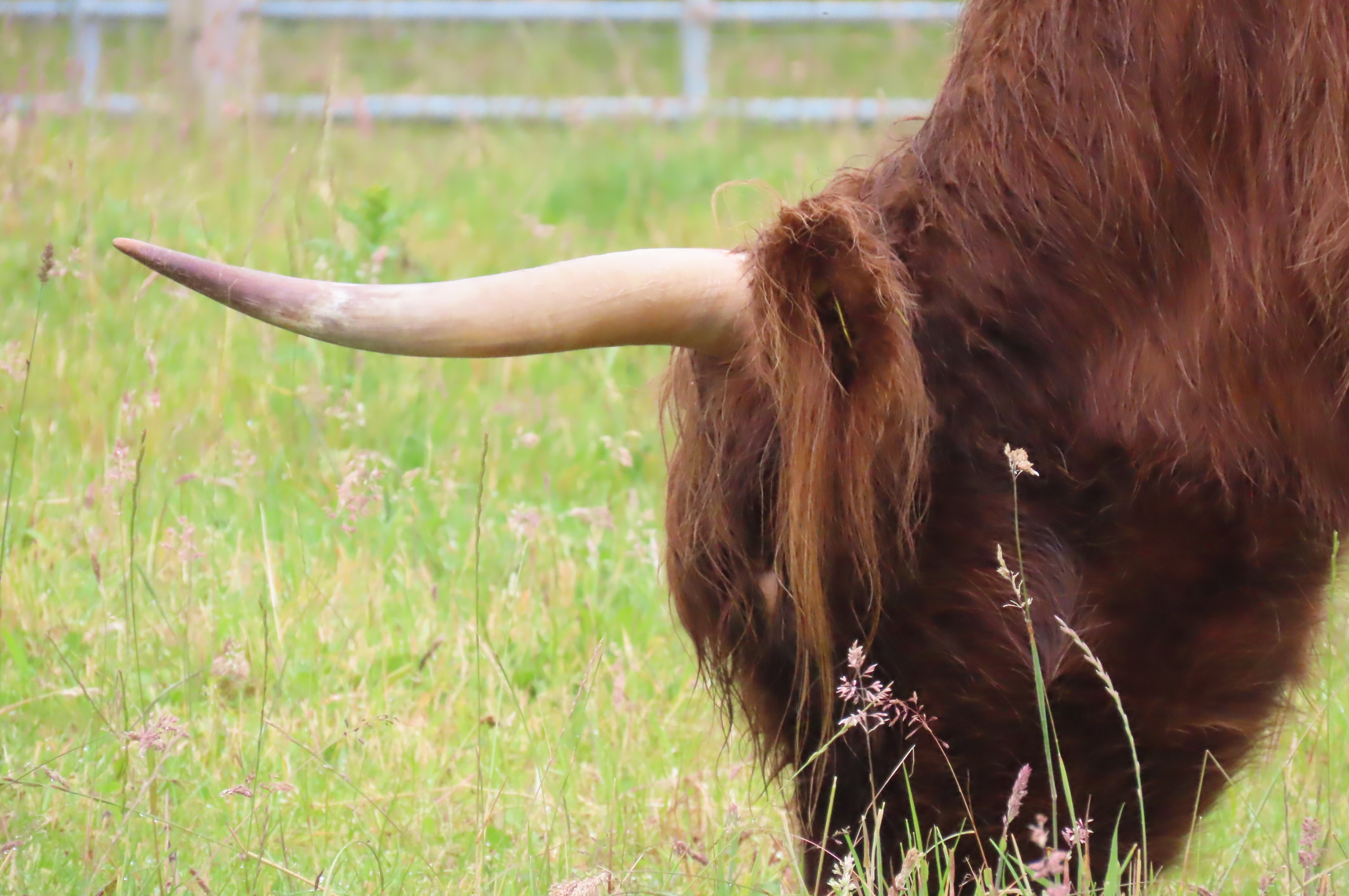
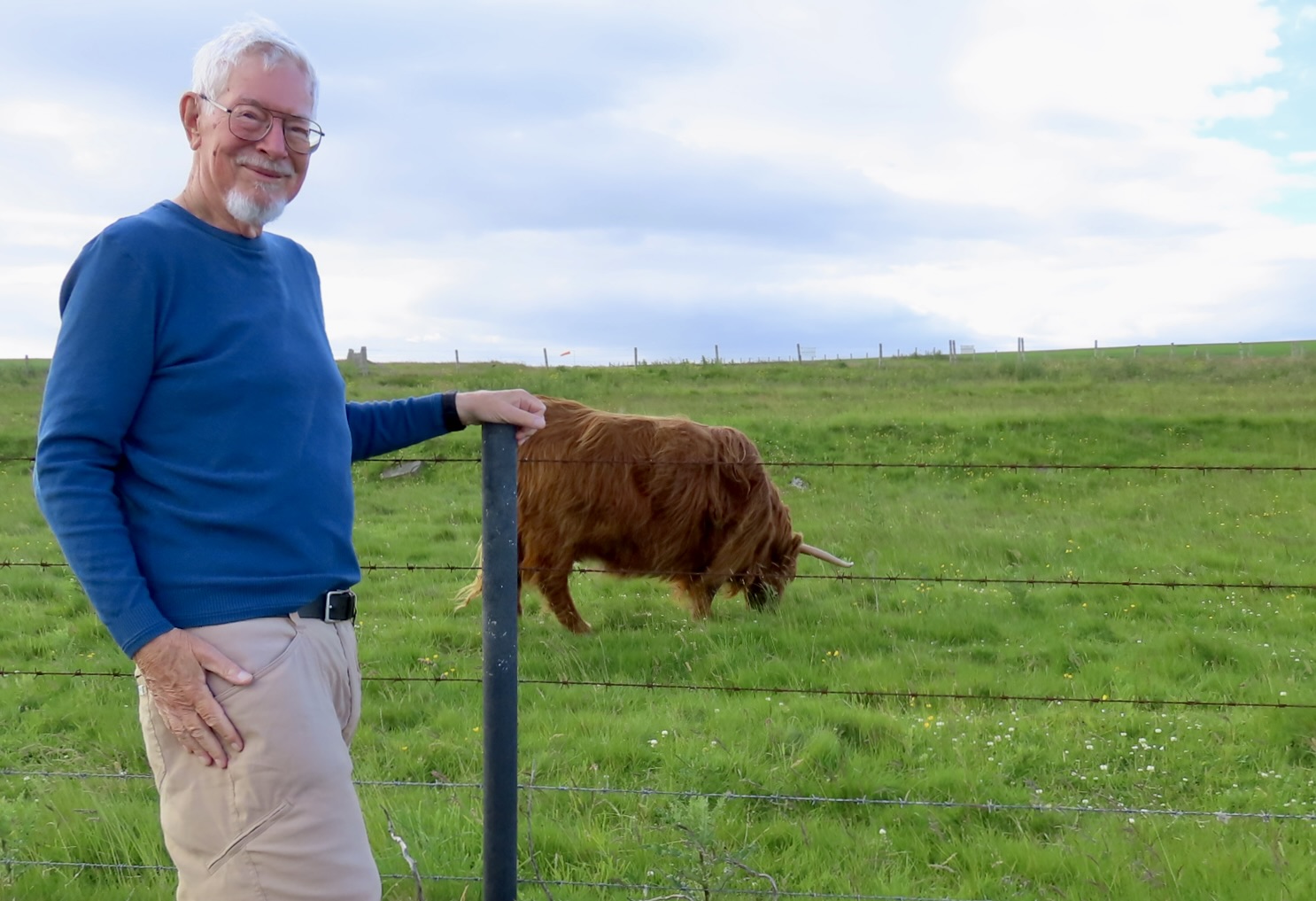
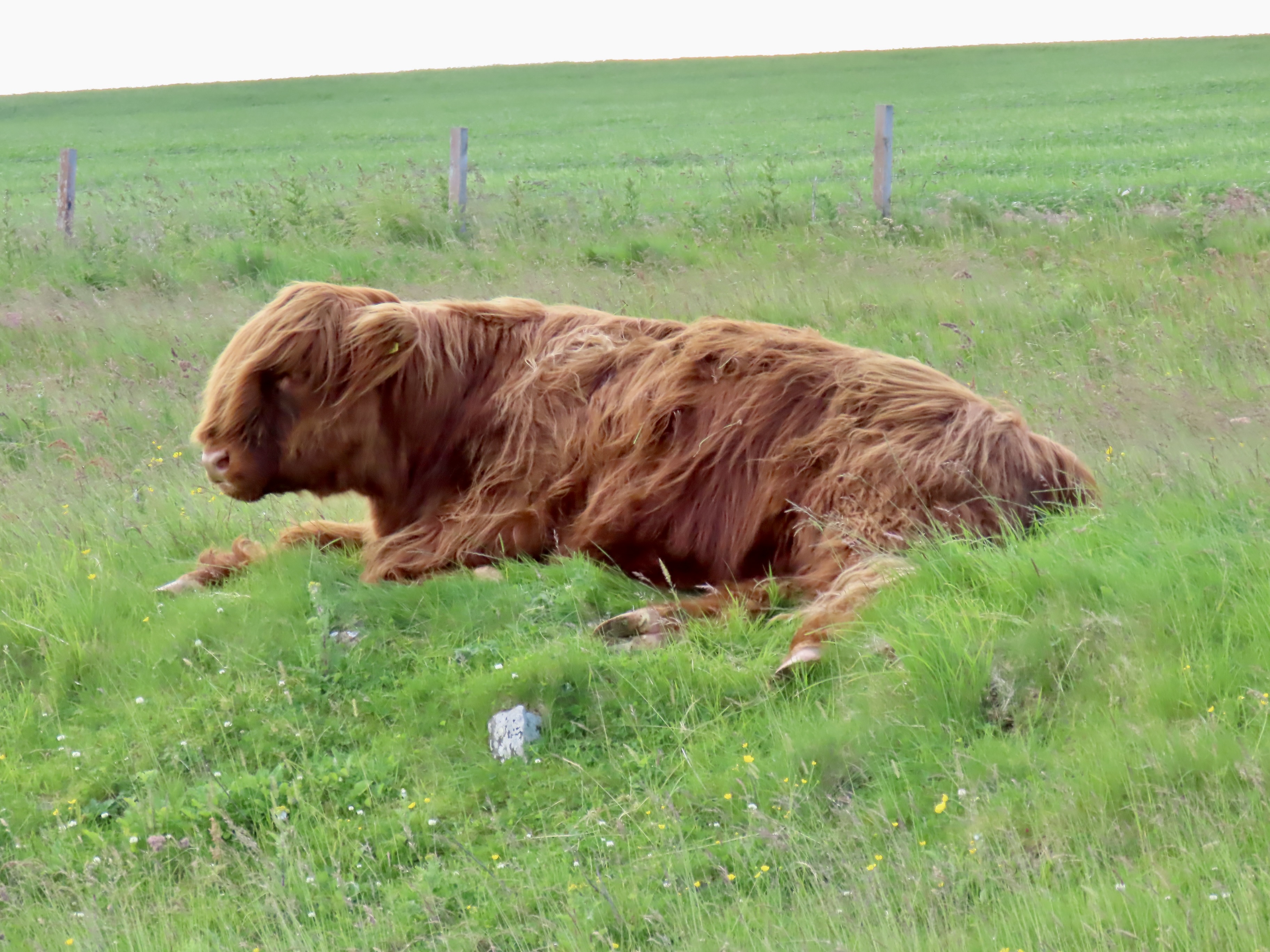
Roadside attraction.The horns are more than weapons. For example, a good scratch. They are also used to break through the snow in winter to get to grass. These guys can eat up to 140 pounds of it per day. I think that’s an oyster catcher looking on. We saw lots of them on Orkney.Harry coos is an apt description for these cows— from their head right down to their tails! They actually have two layers of fur, the shaggy looking outer layer which is oily and somewhat rain repellent and a softer warm, inner coat. Both come in handy for the long, cold highland winters. They’ve had a long time to adjust to the weather. They were first domesticated in 6th century CE in the Outer Hebrides off Scotland.Head shot.Tail shot.Ear shot.Me shot.Don’t know where the horns went on this harry coo lying down. Will assume they were cut off. Had it been a bad coo? Peggy caught a video on her iPhone of it chewing its cud. Just click on the photo/video below.
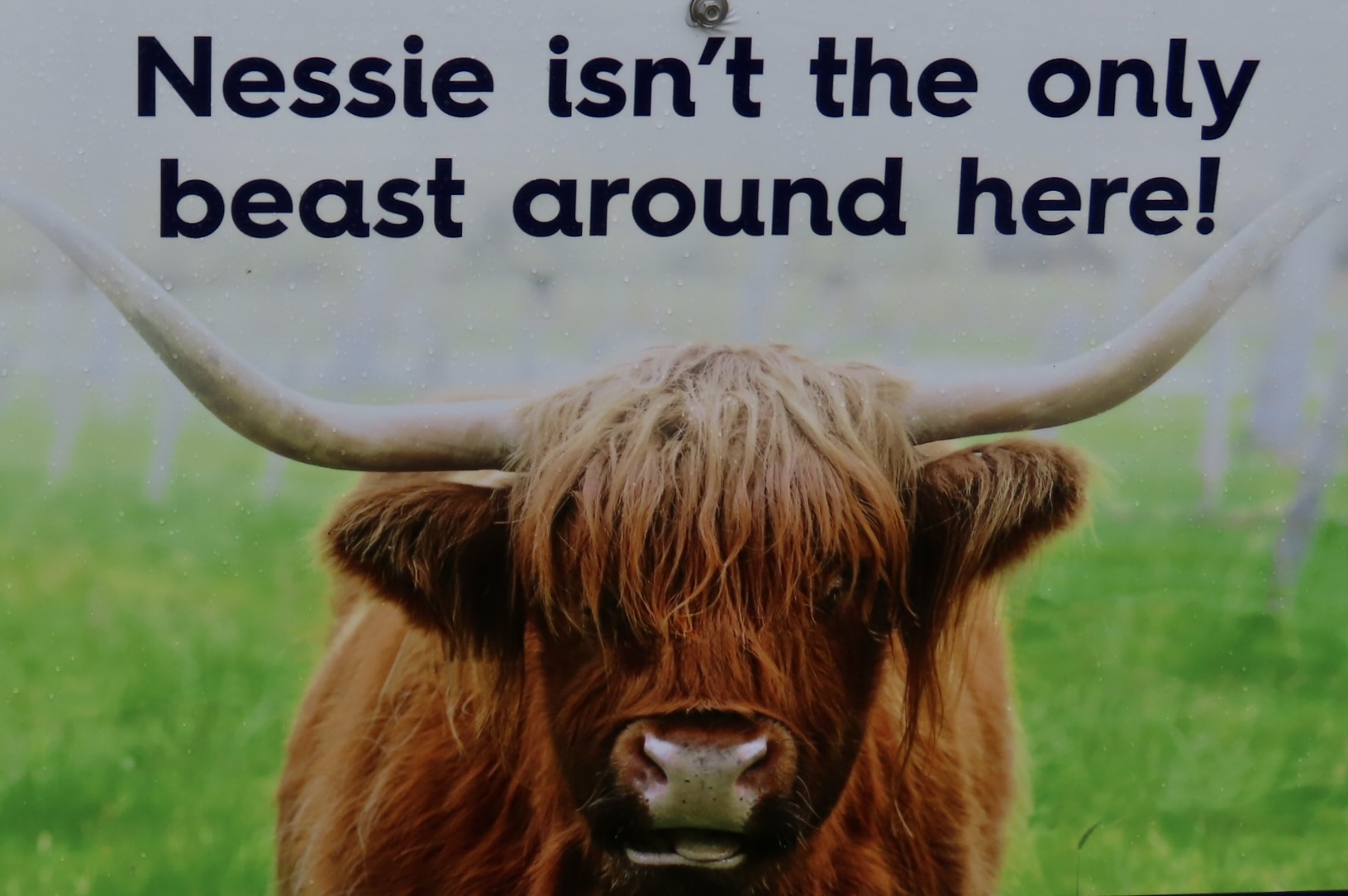
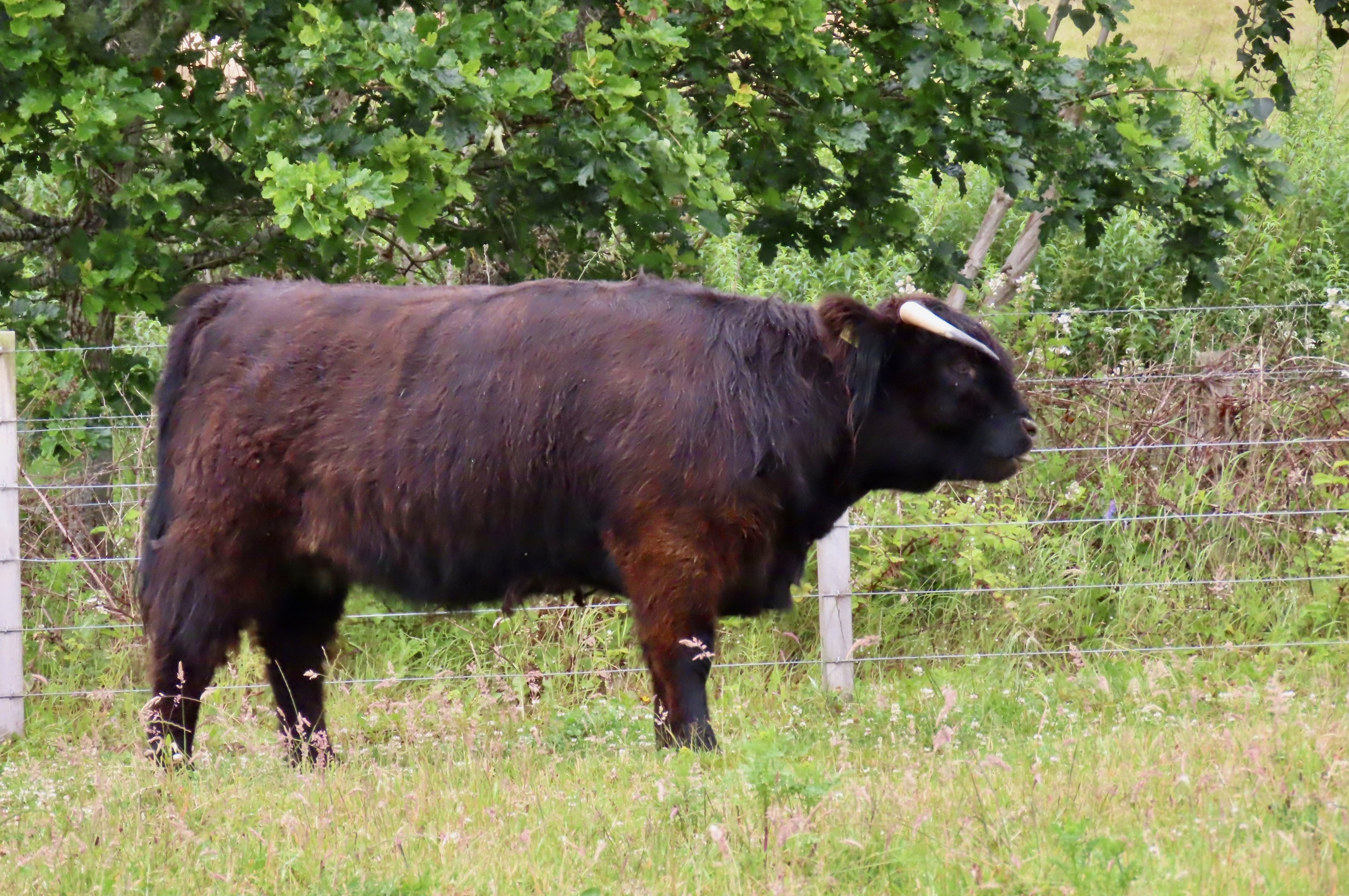
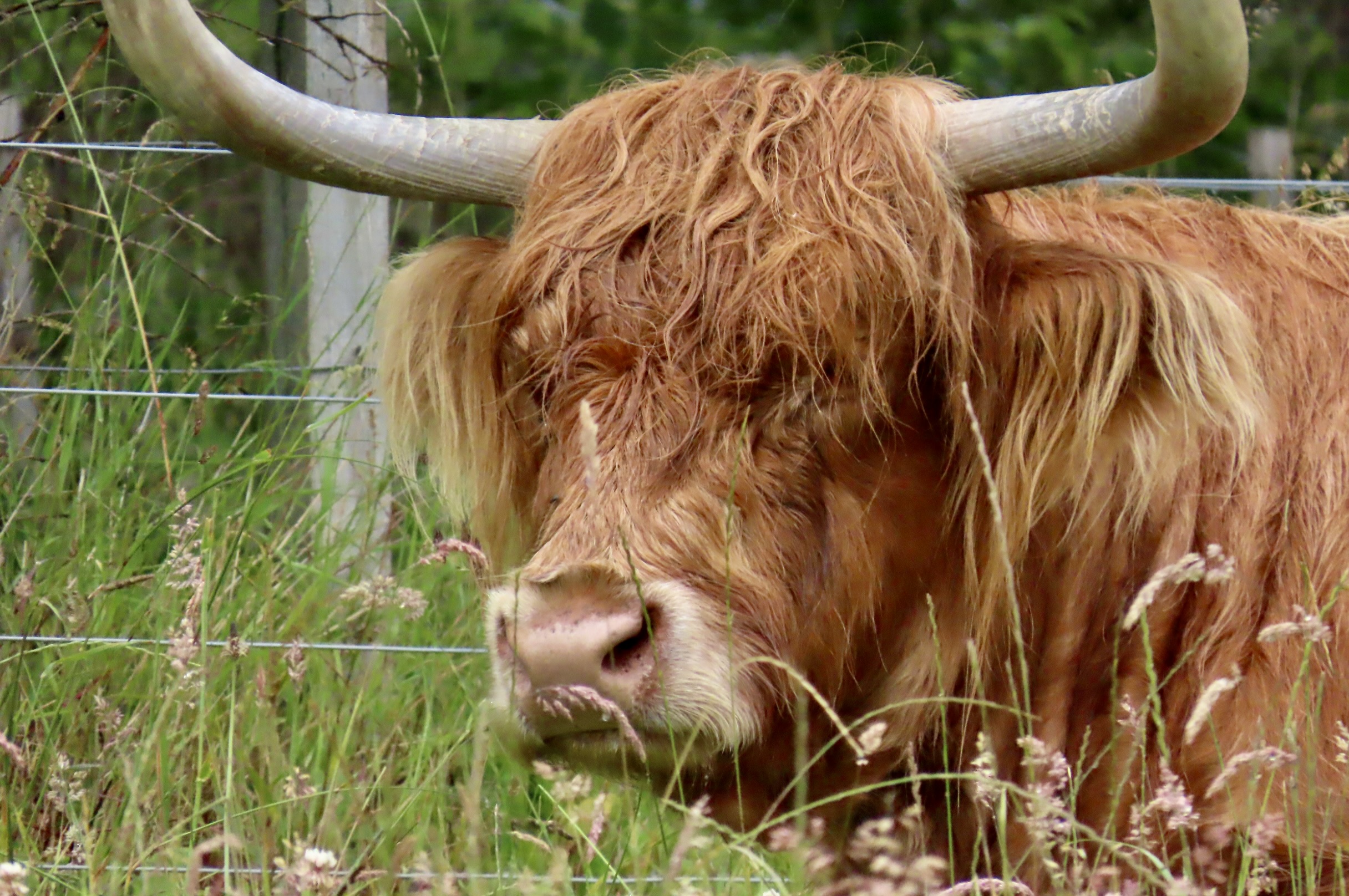
When we were finished touring the Culloden Battlefield, I ran over to capture a few photos of the Coos next to the battlefield. This is where I found this sign.One thing that stood out was a black coo. There was a time when the coos came in several colors. Then Queen Victoria visited the Highlands and stated she was quite taken by the ginger colored coos. That’s when the farmers started focusing on breeding coos with ginger coats. This is a boy, BTW. Horns are straighter and more stout.It’s just possible this lady coo was having a bad day. A cold perhaps with a runny nose? Or a chapped nose. Click the photo/video below and you can decide for yourself. (I don’t know why WP decided to put in The?)
She was licking her nose.Since we brought up Nessie above, that’s where we will go next: To Loch Ness, fabled home to the ancient monster. It was a dark cloudy day, perfect for our search.