The Montezuma Oropendola and the ‘Look…’ Plus 6 Other Colorful and Unique Costa Rican Birds

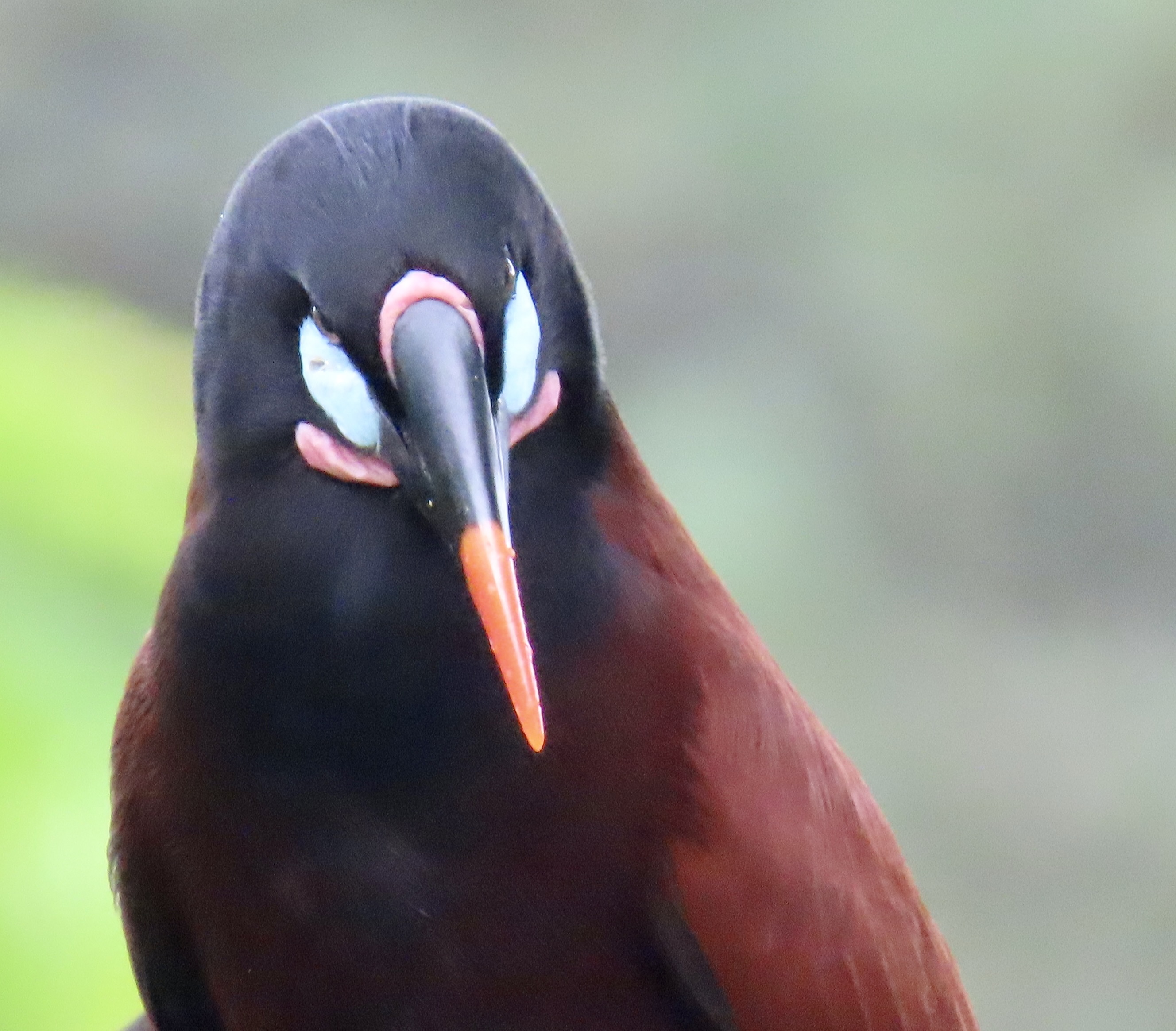
It’s the look. The odds are high that you recognize it. Parents give it to children, teachers to students, bosses to employees, wives to husbands. Etc. It’s behave or else, with a multitude of possibilities if you don’t. Peggy, as a retired elementary school principal, has a potent one. I don’t get it often, but when I do… The look is particularly imposing on the Montezuma Oropendola (Psarocolius montezuma). The slightly protruding eyes, set off by the white patches and pink wattles, are backed up by an imposing beak. The pink circle at top emphasizes length. The orange tip means business.
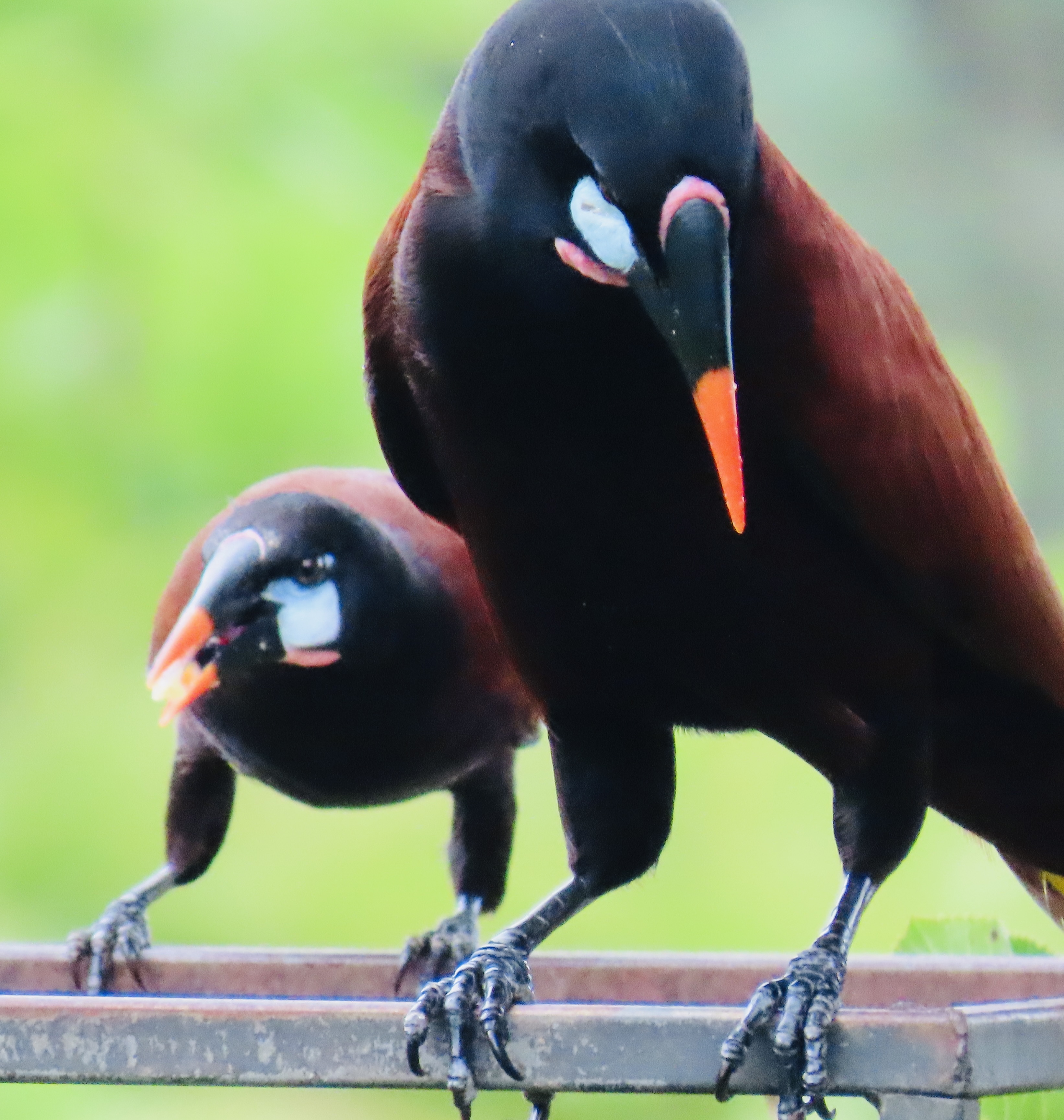
If one giving you the look is worrisome, think of two. I wouldn’t want to tangle with the feet, either. Courting among the large males (they have twice the mass of the females) is one big brawl. The winner gets the girl, usually several of them!
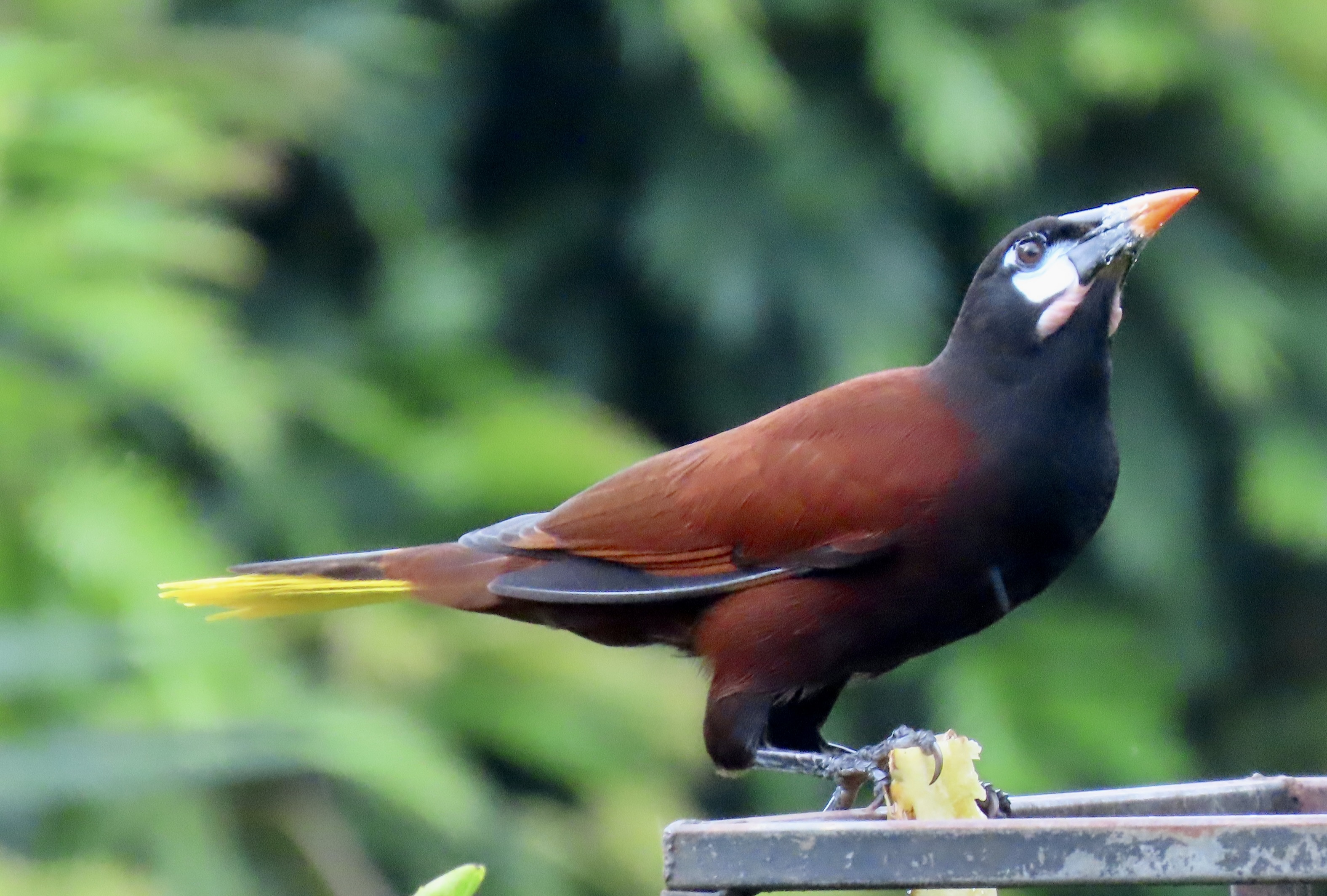
This Montezuma Oropendola was feasting on pineapple found in the bird feeding table that was located in front of our Villa in Nuevo Arenal. I imagine that his namesake, Montezuma, the last of the Aztec rulers, would have been pleased to have this large, distinctive bird given his name. The Oropendola fits as well, given how much gold the Aztecs had gathered and how Cortez lusted after it. Oro means gold in Spanish. Pendola means feather. It refers to the gold tail feathers found on the bird.
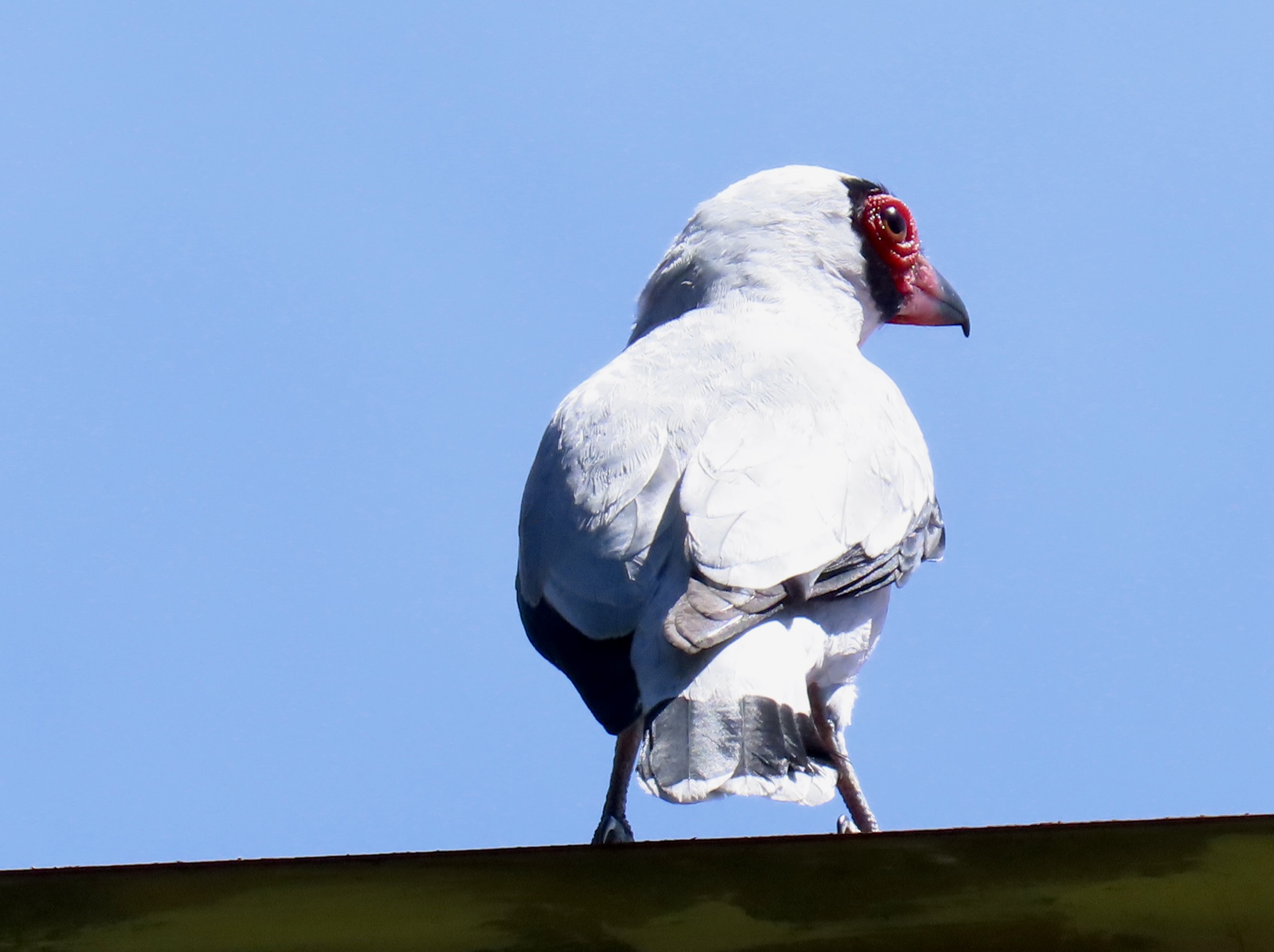
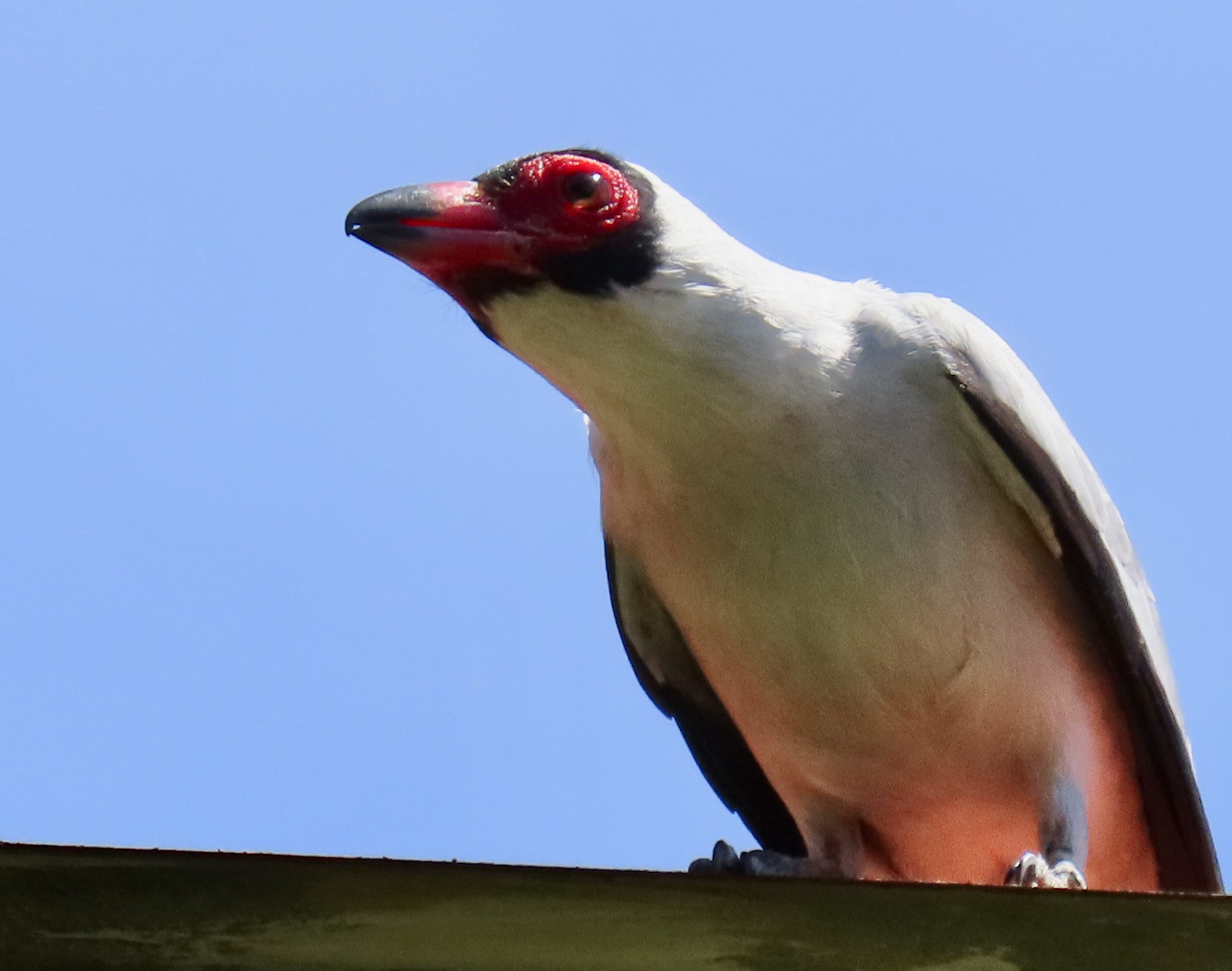
The Masked Tityra (Tityra semifasciata) also had a unique, but not so threatening look. This bird is easily identified by a pinkish ‘mask’ around its eyes. I found it hanging out on the eaves of our house in Monteverde.
The Tityra appeared as interested in me as I was it in. Actually, he was looking for a female that he had been trying to impress. When I spotted him, he was running back and forth on the eave with his wings drooping and sounding like a constipated frog. Apparently it was his mating dance.
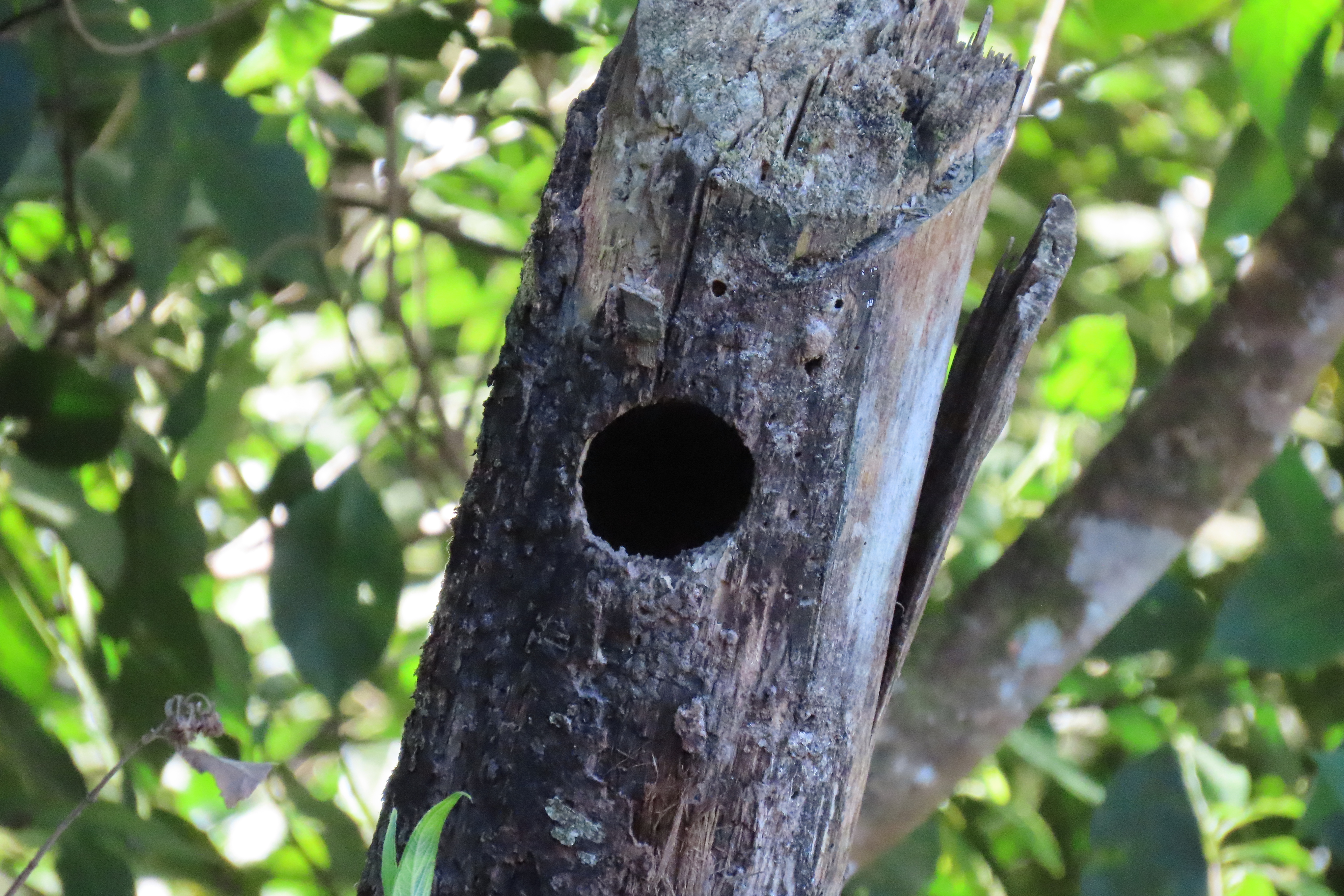
On the other side of our house in Monteverde, we found this woodpecker carved hole that would make an excellent home for a bird.
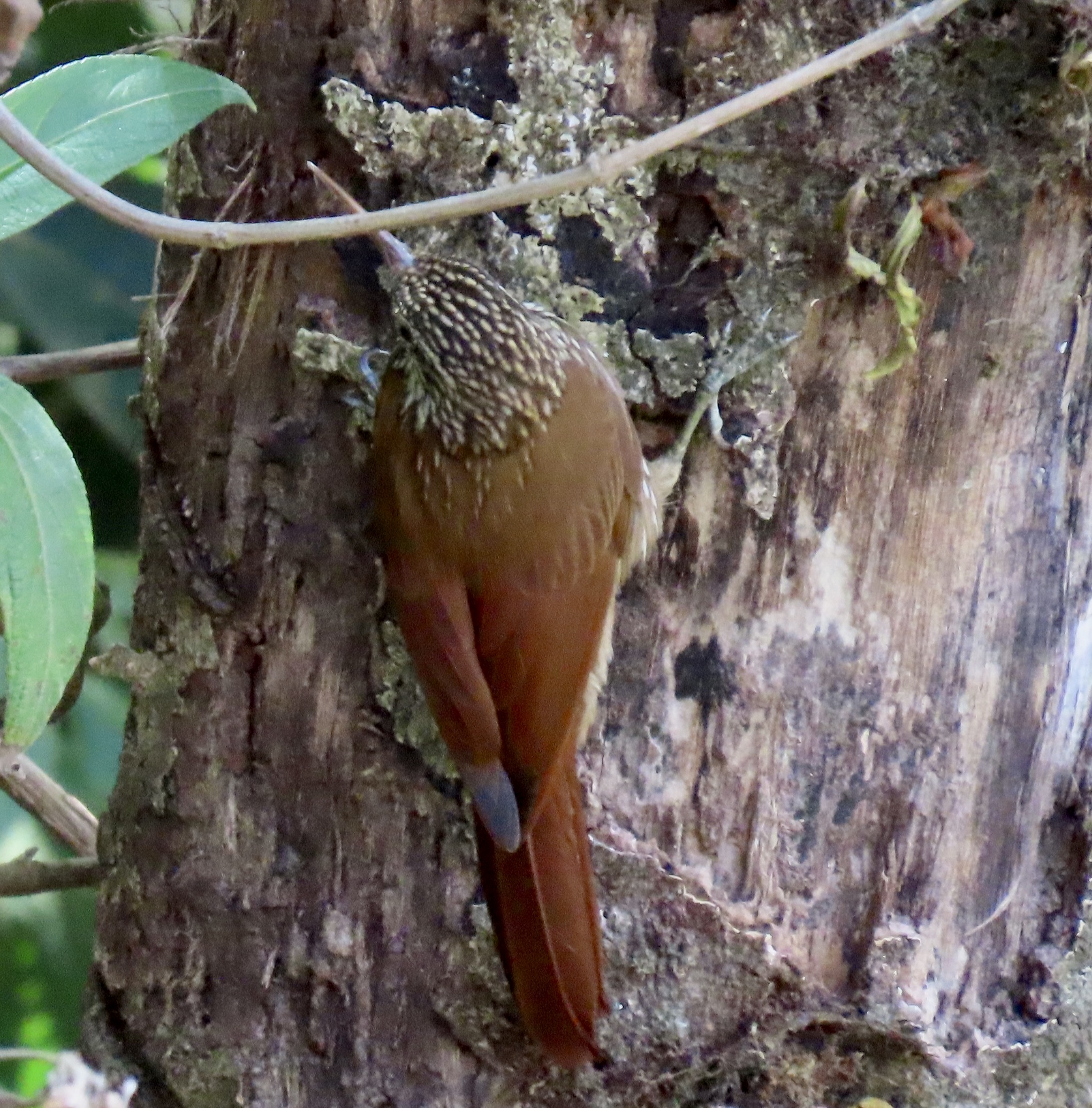
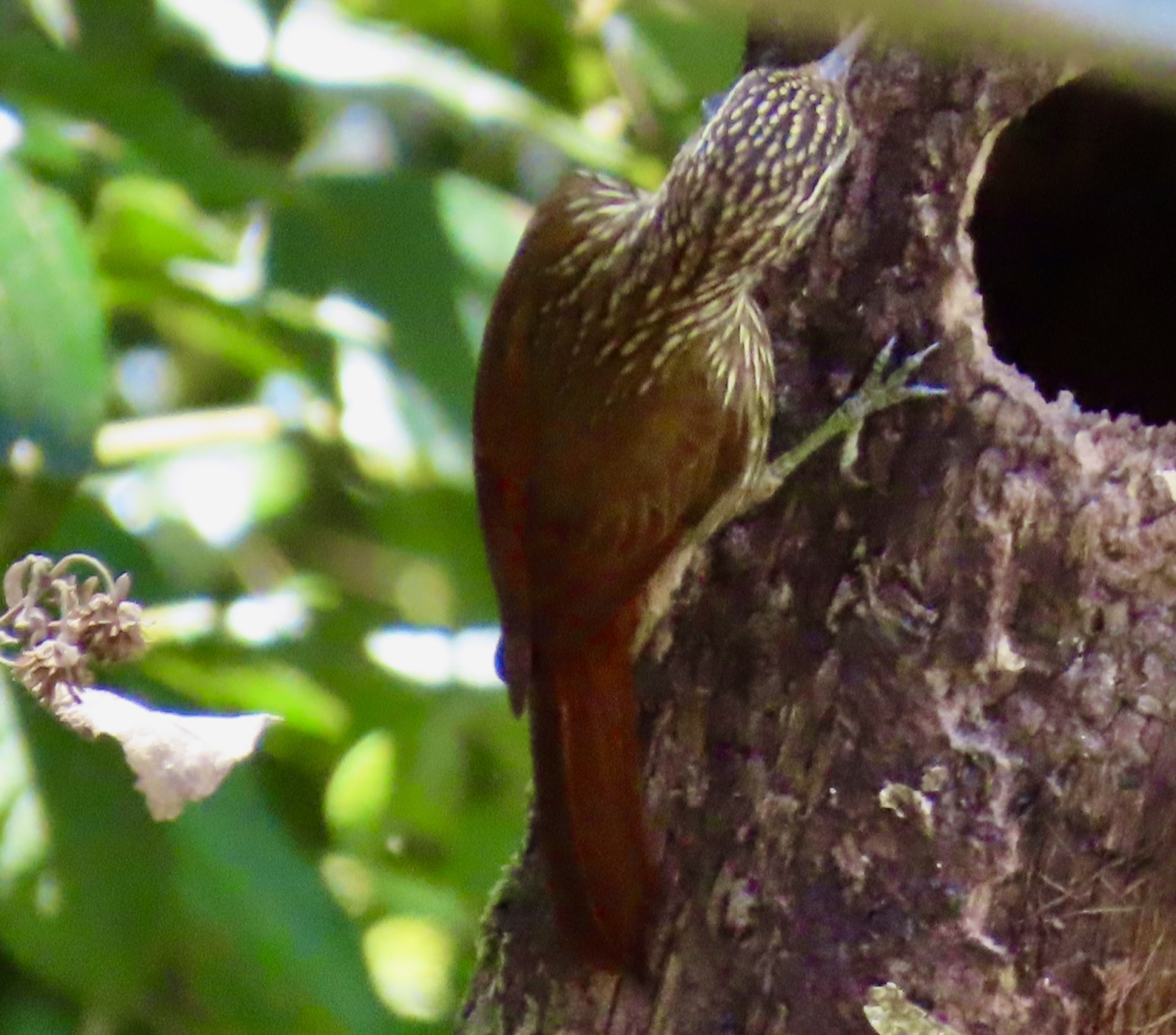
A Streak-headed Woodcreeper (Lepidocolaptes souleyetii) seemed to agree. Its usual choice for a nest is a hole in a tree pecked out by a woodpecker, or natural.
There seemed to be a problem. It would climb up the tree, peak in the hole and immediately fly back down the trunk to repeat the process. It wasn’t creeping; it was scrambling. I watched it check out the hole several times in the same way. I was beginning to wonder if the pecker was present.
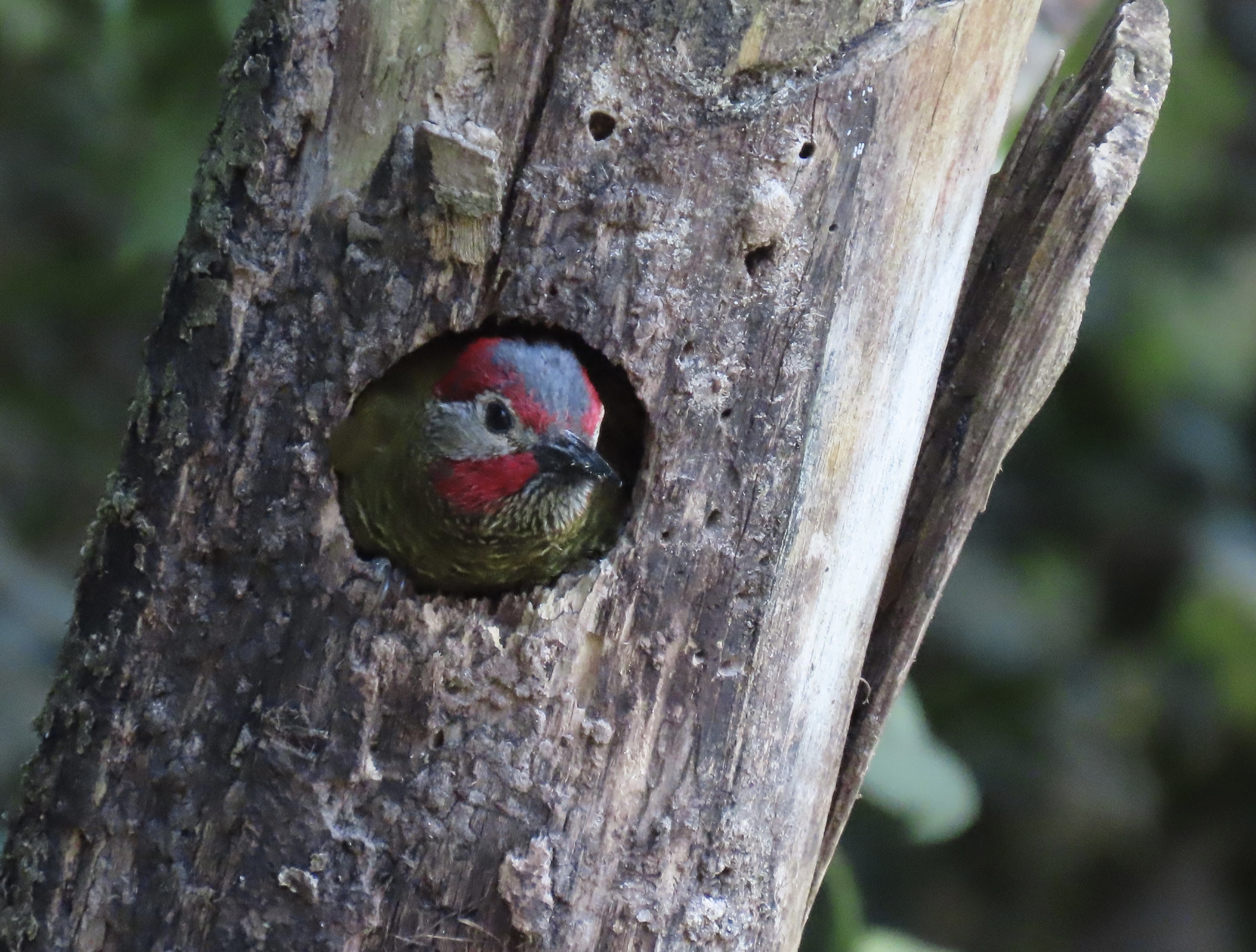
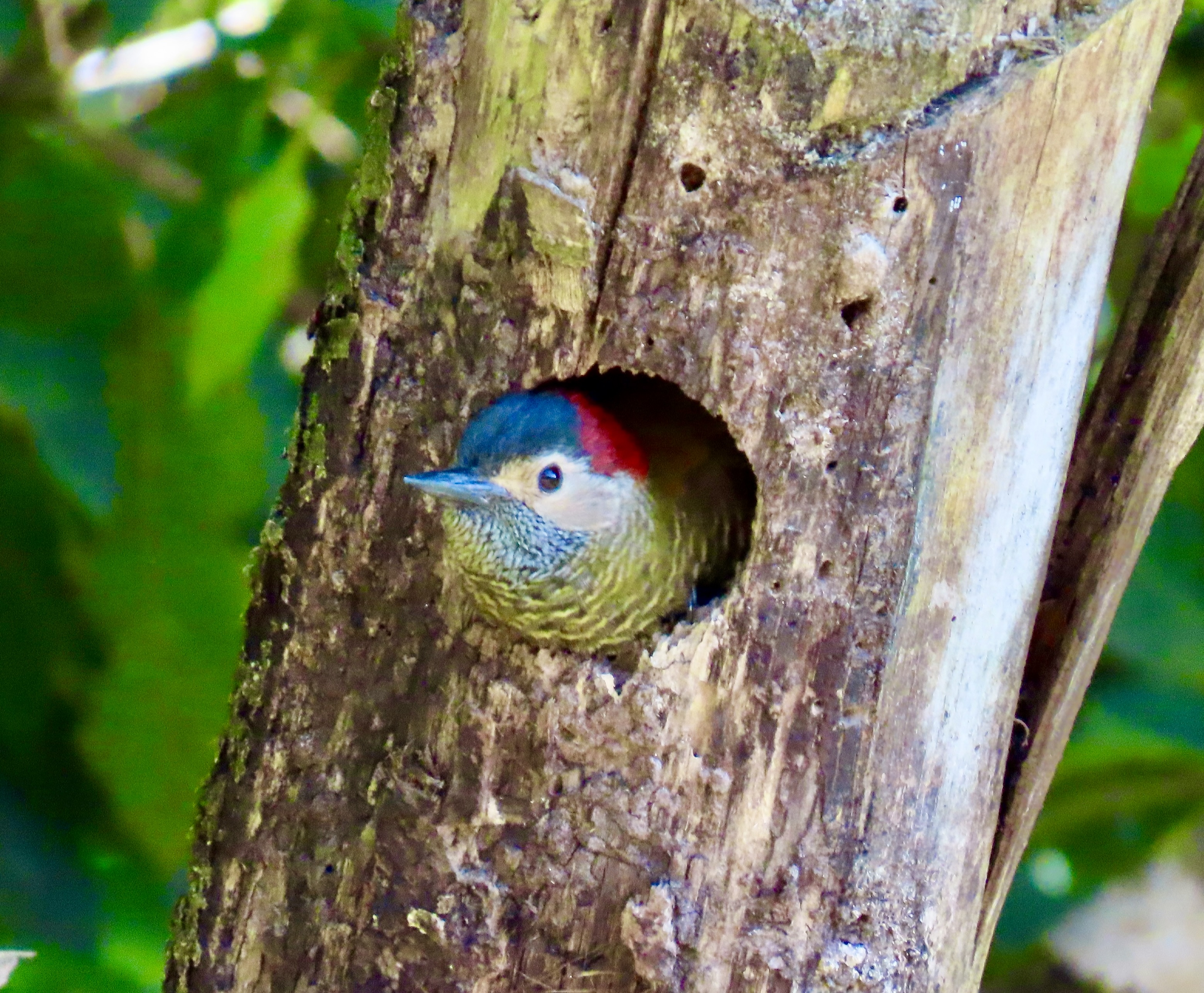
Suddenly, this little head peeked out to see what was going on.
It was a Golden-olive Woodpecker (Colaptes rubiginosus). And yes, it probably had pecked the hole out of the dead tree. The creeper could go find a vacant hole for its home. Next time he/she showed up (male and female Streak-headed Woodcreepers have the same plumage), more than the hole might be pecked.
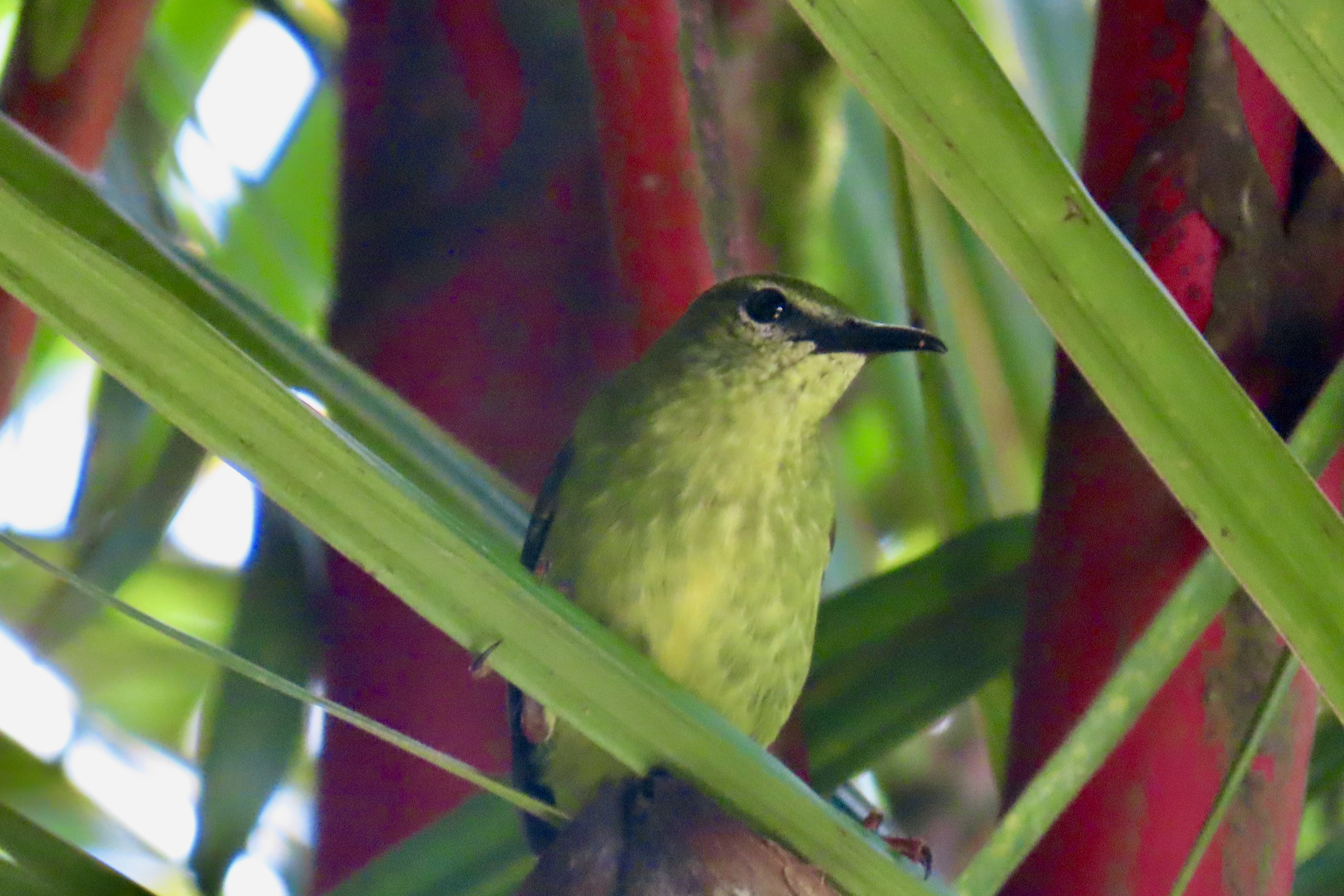
Here’s another creeper, the Red-legged Honeycreeper. It isn’t, however, related to the Streak-headed Woodcreeper that makes its living off of crawling up trunks and eating insects. It’s related to tanagers instead. The Honeycreeper gets the honey part of his name because its passion is for sipping nectar out of flowers. Creeper comes from creeping through treetops and vines foraging for the flowers. This is a female. The male is an electric light and dark blue.
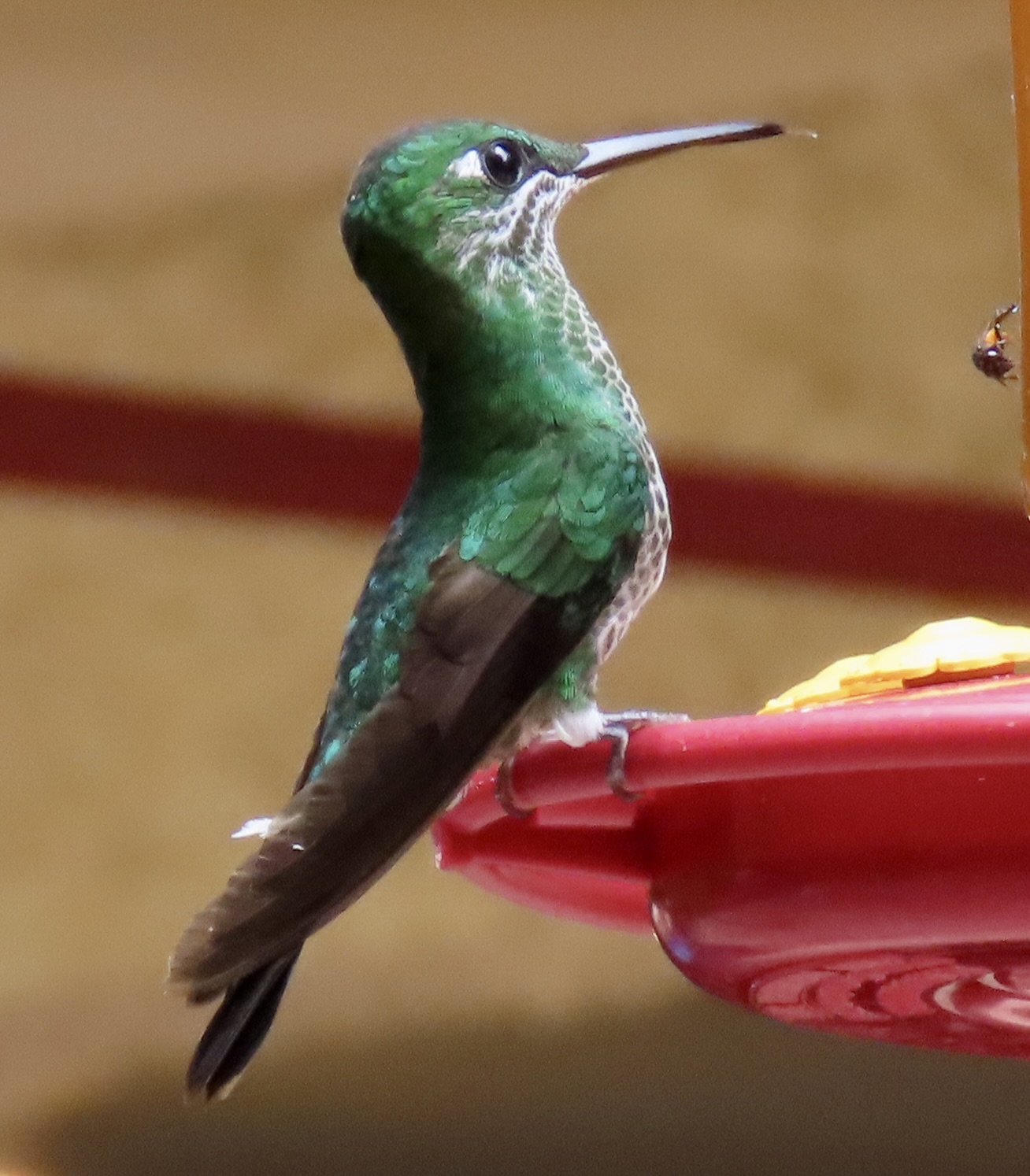
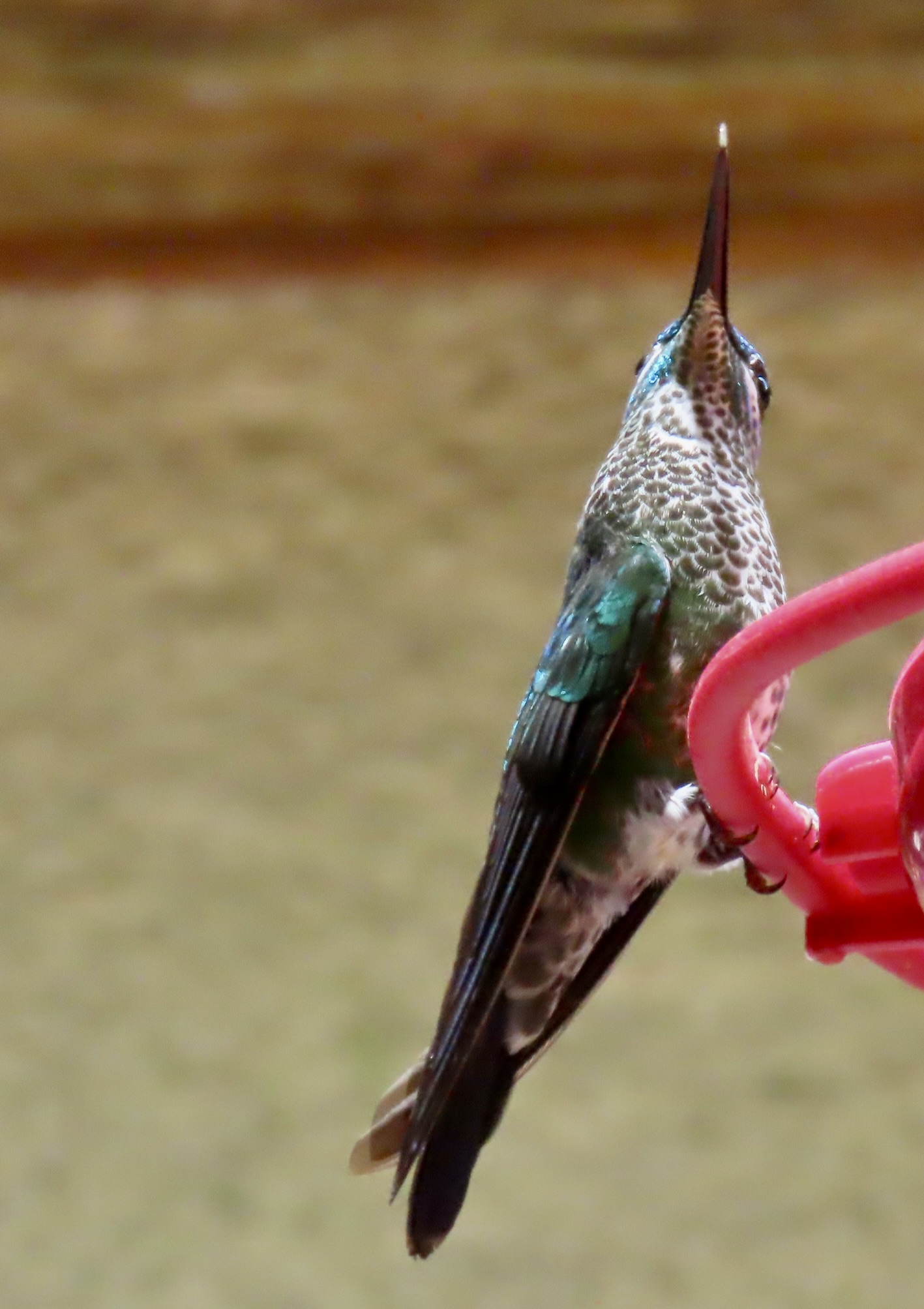
Here’s another bird known for its love of nectar, a hummingbird. In this case a Green-crowned Brilliant (Heliodoxa jacula). We took its photo at a hummingbird feeding station in Monteverde with several feeders. Hummers were buzzing everywhere. The only thing more numerous than the birds were the people oohing and aahing over them. It was hard for Peggy and me to capture photos of hummers without tourists (Turista numeroso) in them. I’m not sure what the photo-bombing bug was.
A fun shot of the Green-crowned Brilliant looking up. Note the yellow at the tip of its beak. That’s its tongue sticking out, a rather specialized appendage that can extend up to twice the length of its beak for obtaining nectar. It doesn’t sip the nectar like we would with a straw, however. It’s more like capturing the nectar. Researchers at the University of Connecticut have discovered that the tongue is a “dynamic, shape-shifting, and active pump. As it shoots out, the tongue reaches nectar and splits at the tip. The two grooves/tips open, and tiny, hair-like structures (lamellae) unfurl, trapping the nectar. Upon returning to the mouth, the flaps close, sealing in the liquid.” It can repeat this process up to 20 times a second, thousands of times a day, whether it is getting its nectar from a flower, or your hummingbird feeder. It’s also used for drinking water.
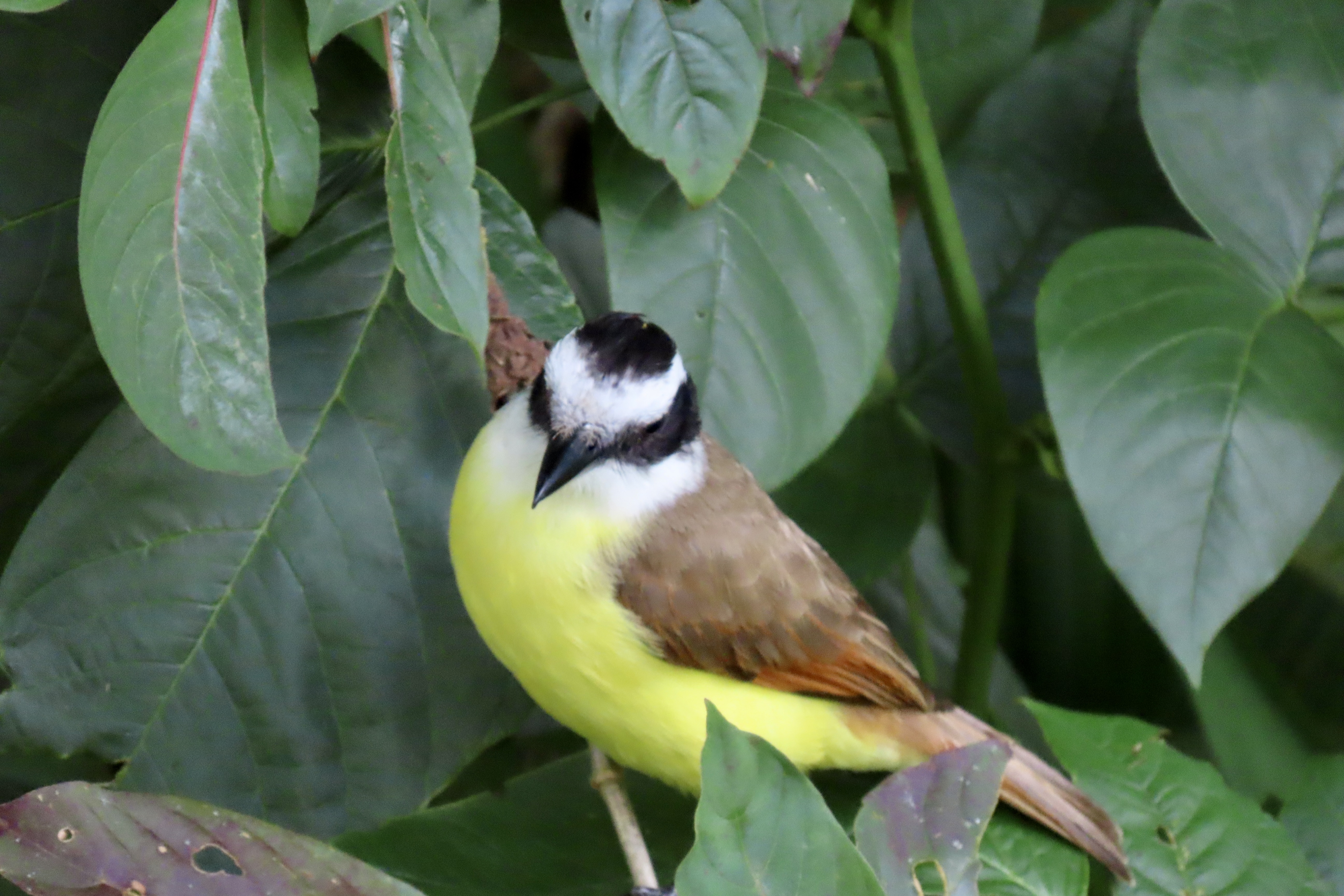
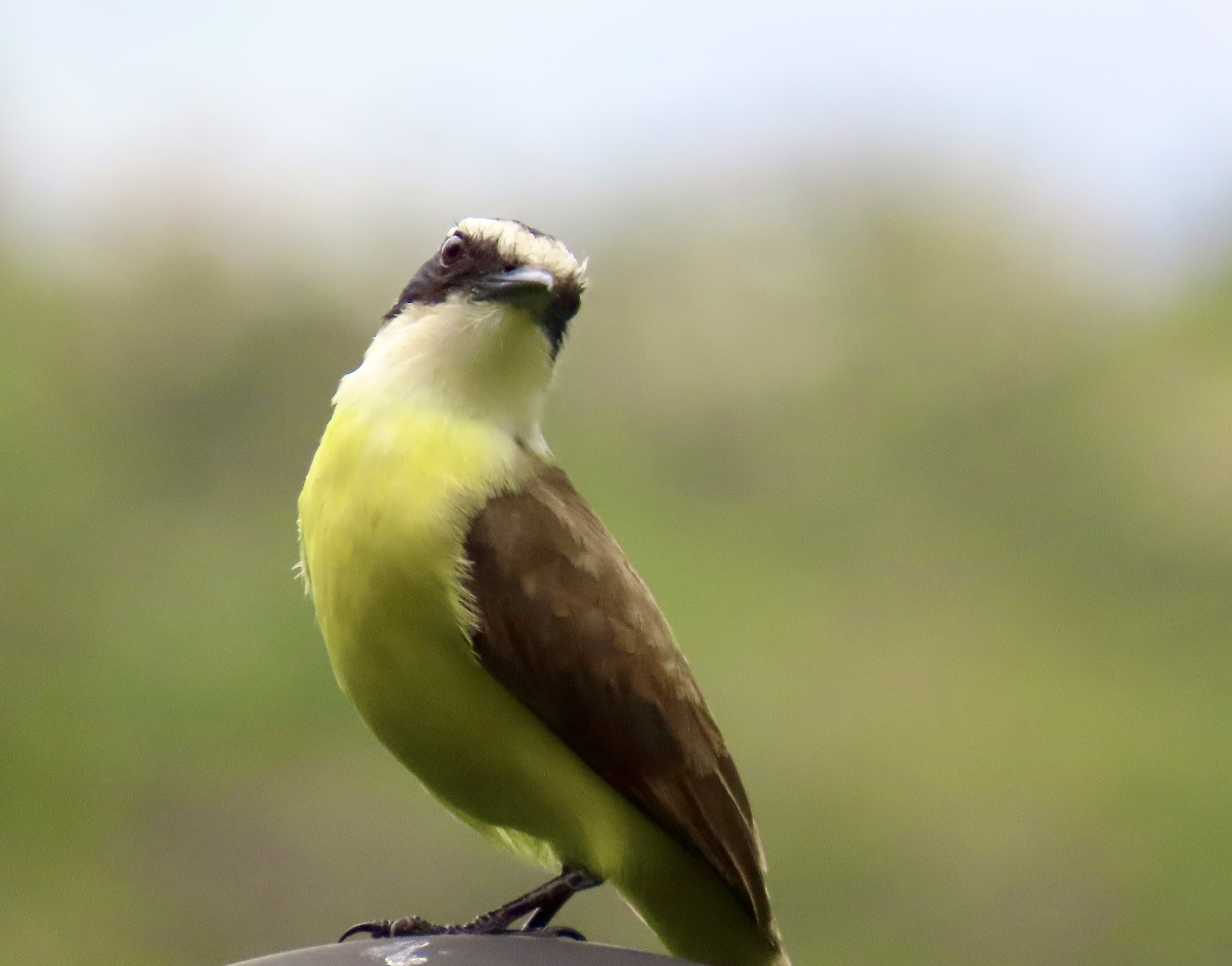
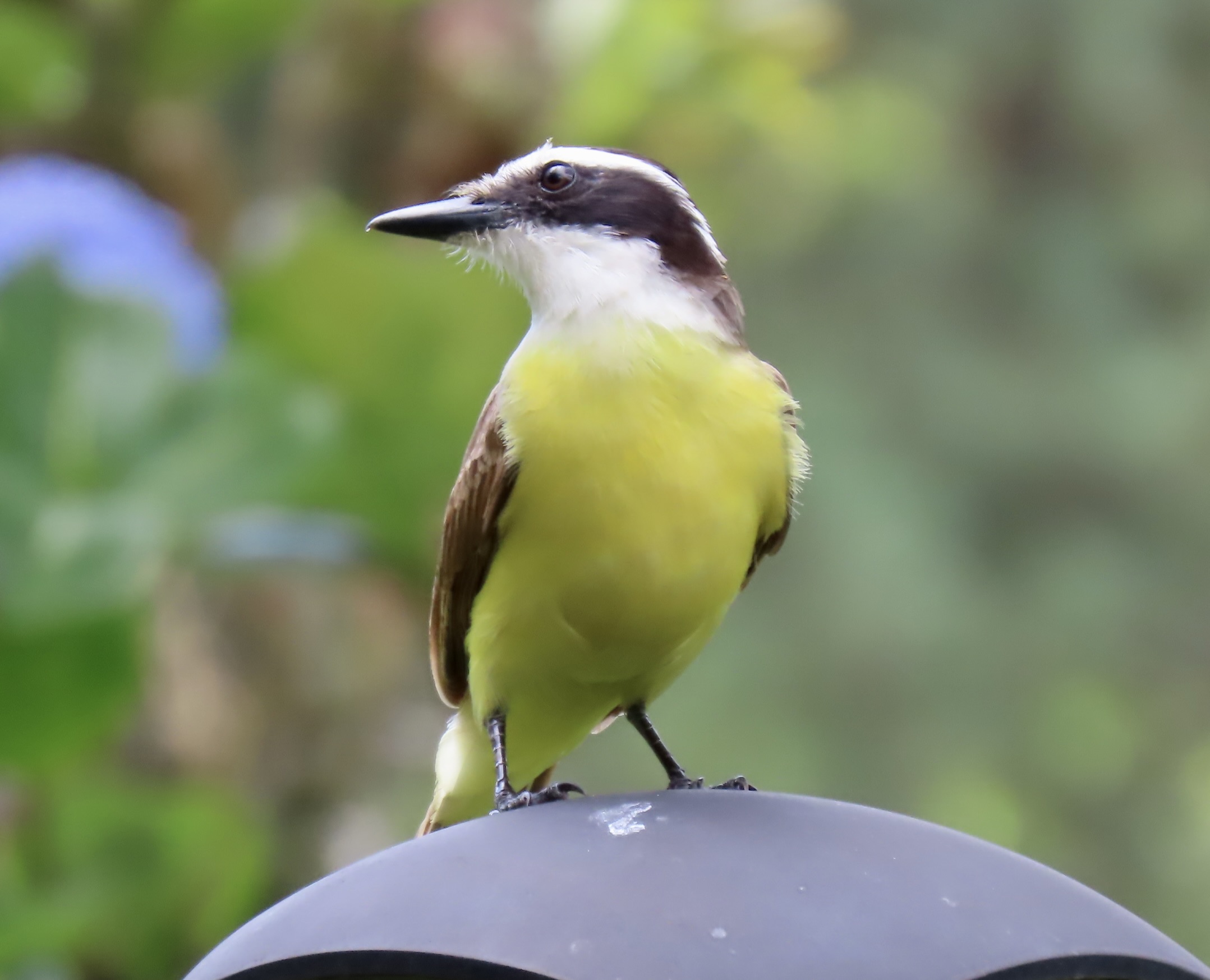
I’ll conclude today with a handsome Great Kiskadee (Pitangus sulphuratus), a member of the tyrant flycatcher family.
Peggy swore it was posing for her. We had a lamp post in front of our villa in Nuevo Arenal that it liked to hang out on.
It would fly off its perch, return, and assume a different pose! It was zipping out to catch flying insects out of the air, an important part of its diet. The Great Kiskadee is omnivorous, however. It won’t pass up small snakes, frogs, lizards, or chicks and has even been known to fish for tadpoles. On bird feeders it’s been seen eating bread, peanut butter, bananas, and dog food. Woof! It’s known for being monogamous, hanging out with the same partner year around. I was beginning to think that it had a thing for Peggy. UT-OH! And that brings me to my next chapter in the book I am blogging.
Founded during the Gold Rush, Placerville was once known as Hangtown for its harsh treatment of outlaws. On the day I was supposed to graduate from high school, I made the innocent* mistake of cussing out the city’s chief of police. He couldn’t hang me, fortunately, but he did give me a choice: I could spend my evening in jail cell or graduate. The former was an UT-OH! of gigantic proportions. *I didn’t recognize him.

One thought on “The Montezuma Oropendola and the ‘Look…’ Plus 6 Other Colorful and Unique Costa Rican Birds

Leave a comment