Being born in World War II, I am considered part of the Silent Generation instead of a Baby Boomer, those born between 1946 and 1964. The reality is that World War II babies are much more a part of the Baby Boomer Generation than the Silent Generation. (At least, I’ve never been accused of being silent.) It was the events of the 50s and 60s—particularly of the 60s— not the Great Depression and World War II that laid the foundation of who I would become. Four events that took place while I was at Sierra College expanded my world view and moved me from my conservative to a more liberal perspective.
In my last post, I gained a new perspective on what a minority meant, and learned that progress had negative as well as positive impacts. Today, I will look at the impact on my thinking caused by the Cuban Missile Crisis and the so called ‘Holy Wars’ down through the ages.
On Facing Nuclear Oblivion…
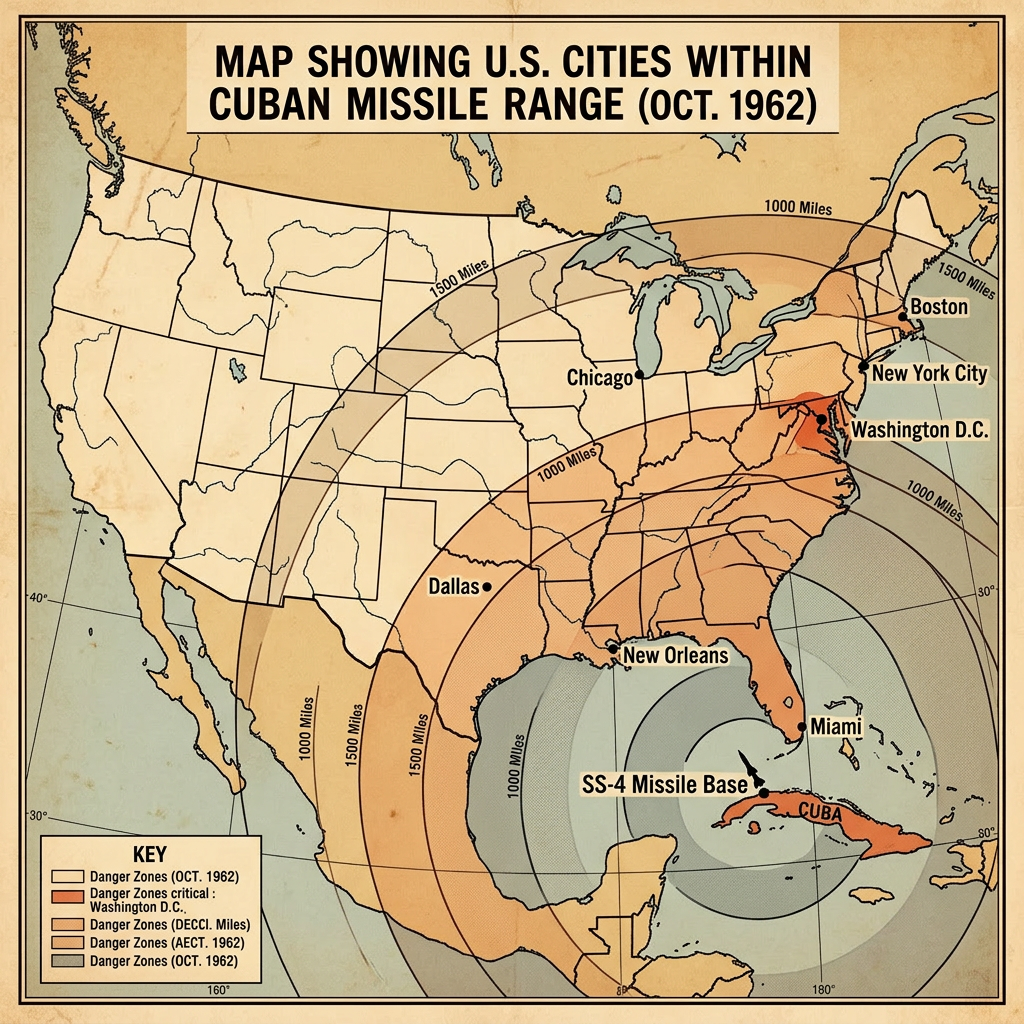
All of our young lives we had been raised under the threat of a nuclear cloud. We were constantly treated to photographs and television coverage of massive, doomsday explosions and their tale-tale clouds. They were more than an ut-oh, they were possibly the final UT-OH!
Atom bombs, which could destroy whole cities and kill millions of people, weren’t massive enough, however. We needed bigger bombs and we needed more. We needed hydrogen bombs. We ended up with enough nuclear weapons to kill everyone in the world and blast ourselves and the rest of life into times that would make the so-called Dark Ages seem like a Sunday picnic in the park. The logic was that it would serve as a deterrent to war, that it would bring peace. And to a degree, there was an element of truth in this. At least we haven’t used nuclear weapons— yet. But wars continue to rage.
The closest America came to the nuclear holocaust (that we know of) took place during two terrifying weeks in late October 1962. I, along with most of the student body and faculty at Sierra College, sat tethered to the radio in the Campus Center as our nation teetered on the edge of nuclear abyss. It all came about because a cigar chomping, right-wing dictator we liked had been replaced by a cigar chomping, left-wing dictator we didn’t. It was known as the Cuban Missile Crisis and has its own headlines in the history books as being a highlight of the Cold War.
Castro and his revolution provided a toehold for Communism in the Western Hemisphere. President Jack Kennedy responded by waging a crusade to get rid of him that had started with alleged assassination attempts using Mafia hit men and ended in the fiasco known as the Bay of Pigs. Castro had then called on Uncle Khrushchev to loan him something that might make the USA back off. Russia had responded by offering nuclear missiles.
The thought of having nuclear missiles capable of reaching the areas shown on the diagram above made the folks in Washington rightfully nervous. So Kennedy set up a blockade of Cuba. Fortunately, aided by promises that the US wouldn’t invade Cuba and that we would remove our missiles from Turkey, Khrushchev blinked.
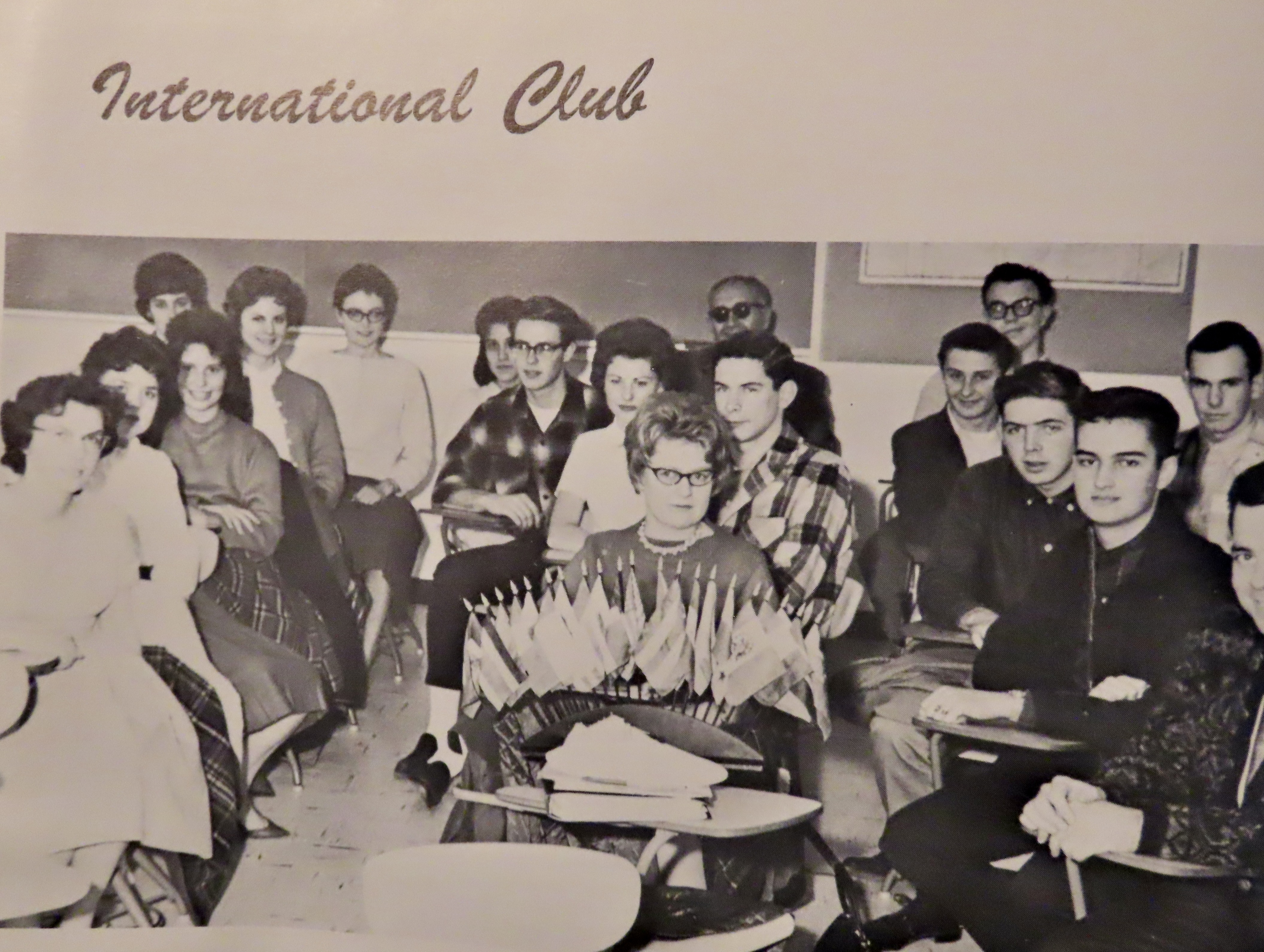
My rock that was Peter relocates itself on an active fault zone…
My father’s greatest concern had little to do with the first three changes in my world view. It was the fourth that gave him sleepless nights. His family’s deep faith dated all the way back to the beginning of Presbyterianism in Scotland. Much to his delight, I had become seriously religious in high school. I was the senior acolyte, a junior lay reader, carried the cross, and even sang solos with the choir at the Episcopal Church in Placerville. I was a believer. There was even talk of my becoming a minister.
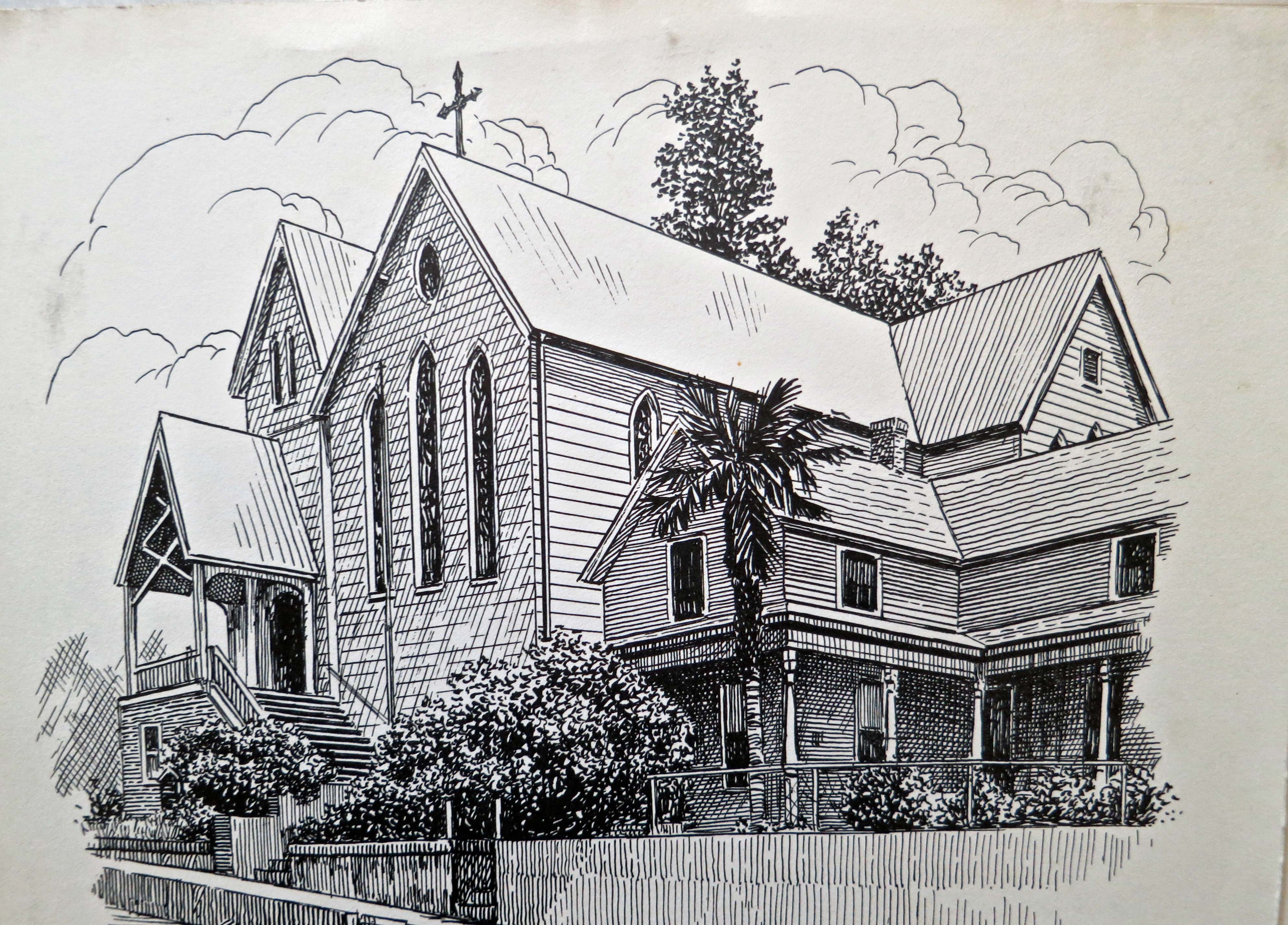
That changed when I went to college. In 1961 I picked up a Barnes and Noble-published book at the Sierra College bookstore on comparative religions and learned about Mithraism and Zoroastrianism. I caught a glimpse of how much of our great monotheistic religions were based on earlier belief systems or mythologies. The strong religious convictions of my teenage years began to crack.
Studying history had a much greater impact. In reading about the Roman Empire, I learned that the nature of Christ’s divinity was determined by vote at the Council of Nicaea in 325 CE in a bare knuckled political battle, not the most holy of environments. Even more disturbing, I was also learning about Crusades, Jihads, Inquisitions, and various other ‘Holy Wars.’ Doing unto others in the name of God, Allah, Jehovah, Christ, etc. seemed close to a commandment.
For all of the good religion has done down through the ages, and there is a great deal, it has also been a factor in much of the world’s violence and intolerance. I came to the conclusion that there was a fly in the ointment, a fatal flaw in religion that may yet bring about the Armageddon that so many fundamentalists believe in. Belief that a particular religion is the only true faith is one thing. Believing that adherents have an obligation to impose it on others— regardless of cost— is something else. It doesn’t leave much room for ‘Peace on Earth Goodwill toward Men.’
So here I was in mid-1963, a budding peacenik with international leanings, something of an agnostic, environmentally concerned, and committed to civil and human rights. I had definitely become more liberal in my perspective. I had made a left turn from the right lane. I figured I was ready for Berkeley. (Not)



I suspect you speak for most born in that period after 1940 to 1945. We definitely think of ourselves as having more in common with Boomers than the Silent Generation.
Yep!
At least you made the transition in California. I had to do it in Nebraska.
Probably a bit easier, Peggy. Grin.
Curt, I did not realize you were so involved with the church at a young age. It’s something we have in common – different religion though. I am always fascinated by the path people take when they leave behind some of the things taught as children, and come up with their own belief system as adults. Yours is an interesting perspective.
When you buy a ‘truth’ hook, line and sinker,’ Crystal, and then find out ‘it ain’t necessarily so’ it can have a big impact. I could have accepted that, however. It’s the message rather than the myth that really counts. But when the message is abused and reinterpreted by people for personal, tribal, and national power, it can become a force for really bad, almost evil things. Brotherly love goes out the door.
So much insights, Curt. I see things but I’m not as expressive.
Lots of writing, George!
Writing this from under my desk…is it the bomb or earthquake? Cuba seemed so far away and it was more concerned with what I had to wear at school! Ha!
You are younger than I kiddo. Grin.
My religious sibling tells me that occasionally praying to the God of the Pottery Kiln does not mean I am religious enough to guarantee an afterlife in heaven…
Little do they know. Grin.
I was born in ’53, so I am a so-called “Boomer”. And the common doxa is that Boomers reinvented the world.
I always begged to disagree: in reality the world we live in was reinvented by the “War babies”. Lennon, McCartney, Dylan, Plant and Page and Clapton are war babies. They (and you my dear Curt) blew the old order out, those born in the 50’s merely followed your tracks…
I mean, we did have to fight a bit for our freedom, but the path had already been opened wide by you guys. And for that we shall be eternally grateful.
🙏🏻
And the fight goes on, my friend. The world shifted in the 60s and 70s. Human rights, equality, the role of women, the environment, and Eastern philosophy all had a role to play. As always, for every reaction, there is a reaction, however. Those on top, for whatever the reason, have little interest in losing their power, or sadly in many cases, even sharing. It’s always 3 steps forward and one or 2 back. Or, as in the case today, 4.
Indeed. And I don’t see the next steps forward coming any time soon. (I hate to think how decent Americans feel every day now. It must be devastating.) (And us “Frogs” have presidential elections next year…)
I only read newspapers and never watch TV news. That way I skip much of what Trump is doing besides glancing at the headlines. I read the Washington Post, which used to be one of Americas great liberal papers. Unfortunately, its made a shift to the right since Jeff Bezos bought it. Peggy and I will be shifting to the New York Times as soon as our subscription expires.
Papers are good. Also has less photos. Do you read the paper version or the on-line version?
NYT is I think better than the current Post.
On the US, I read Heather Cox Richarson, Marc Elias at Democracy Docket and The New Yorker. Though the latter still hasn’t understood how to write in less that 5,000 or 10,000 words!
As for religion… I also agree with you totally. I consider that any religion is just a mythology that was successful. 😉
When you see attempts on the mall in DC trying to rewrite America as -an obedient- Christian nation, I am even more concerned. Religions are always about power. And that power is never left to “we the people.”
The Washington DC thing was frightening to say the least. One more power play by Trump and fundamentalist leaders. The only thing they have in common is a means to an end. And the end to either of them is a direct threat to freedom of religion and democracy.
Very scary. TBH, I am scared “shirtless” (as Dilbert would say…) This is not good. Not good at all.
It would even be scarier if Trump was a fundamentalist. The reality is the only reason he caters to them is to cynically use them. And they love it. I think he was also trying to counter what the Pope had to say about him. This doesn’t mean that Trump won’t do terrible things to keep them on board. But what else is new.
Despicable. And gullible.