I am going to plagiarize myself by stealing some stories from my book: The Bush Devil Ate Sam. This really isn’t plagiarism, of course, since I am stealing from myself. Still, I feel a tad guilty, but I have three good reasons.
- There are UT-OHs! in the book that deserve to be included here.
- It’s a way of introducing readers to The Bush Devil Ate Sam.
- While the Bush Devil is primarily about my experience as a Peace Corps Volunteer, it also about the 60s, a very interesting time in America’s history with important messages for today. I am presently revising the Bush Devil to include the time when I returned to the US in 1967 and worked for the Peace Corps in public affairs and recruitment for three years. It will complete my perspective on the 60s from 1961 to 1970.
The next two posts will explore four of the major issues of the era, and how they changed my view of the world at Sierra College.
Making A Left Turn from the Right Lane…
Pop, my father, once bemoaned the fact that I went to Berkeley. He blamed it for radicalizing the budding young conservative Christian Republican I was when I graduated from high school. He was partially right. I didn’t participate in occupying the Administration Building at Sierra College, give speeches while standing on the Dean’s Desk, or sing We Shall Overcome while sitting on the floor with Joan Baez— as I did at Berkeley. But the truth is, it was my Sierra experience that expanded my world view and moved me from my conservative to a more liberal perspective. Berkeley simply jogged the meter a few degrees to the left.
Most of these experiences took place outside of the classroom, which is where much of my learning took place, as well.
On learning I was a minority…
The process of liberalization started during the first hour on my first day at Sierra. It was a tradition to kick off the school year with an event called Howdy Day. As part of it, the faculty had arranged for a speaker: Dr. No Yong Park, an Asian man with a Harvard education.
He stood up in front of a sea of mainly white faces and smiled like he had access to secrets we didn’t.
“You think I look funny?” our speaker asked with a grin. His question was greeted by a titter of nervous laughter. As naive as we were, we still knew enough to be made uncomfortable by such a question.
“Well I think you look funny,” he went on, to much more laughter, “and there are a lot more of me who think you look funny than there are of you who think I look funny.”
It jolted my perspective. The Civil Rights movement was gaining momentum in the South in the early 60s, and I was sympathetic with its objectives. Providing people with equal rights regardless of race, sex, religion or other arbitrary factors, seemed like the correct thing to do. I also had a vague concept that we all lose in the long run when we limit a person or group’s ability to succeed because of prejudice.
But I had never perceived of myself as being a minority. Instead, I belonged to an exclusive club. In 1961 white people dominated the US and the US was the most powerful nation in the world. It was easy to assume that this was how things should be. The fact that it might be otherwise put a new spin on the issue. What if I, or my children or grandchildren ended up in a situation where we were in the minority and lacked power? I added enlightened self-interest to my list of reasons for supporting human and civil rights.
Pave it and paint it green… (Words from the 1970 iconic Joni Mitchell song, Big Yellow Taxi.)
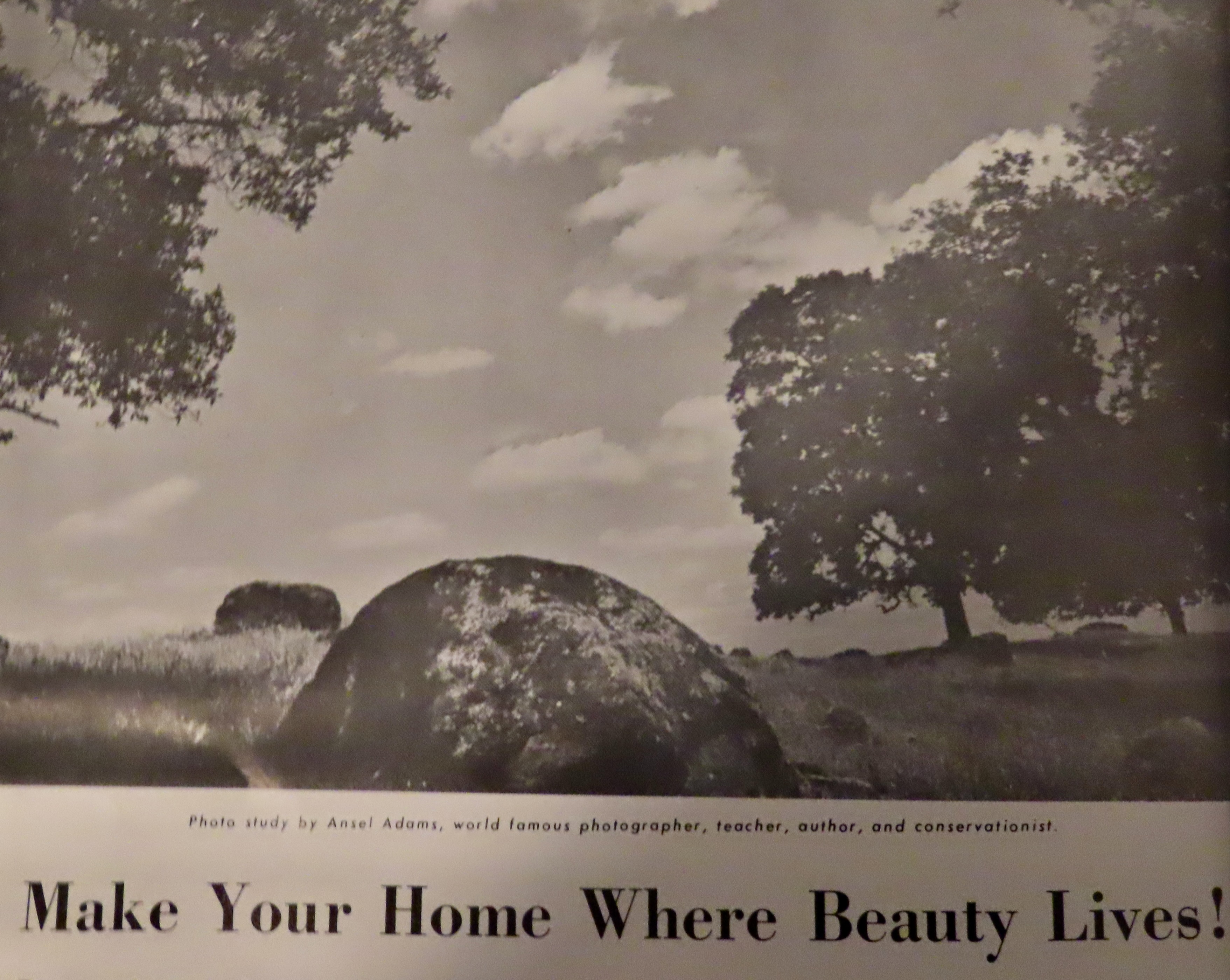
Another concept I was introduced to at Sierra was environmental activism, some nine years before Earth Day I. For this, I owe thanks to Danny Langford. Dan liked to talk and could fit more words into a minute than I could five. One Monday morning, he proudly informed me that he had spent his weekend pulling up surveyor stakes in a new development called El Dorado Hills.
“You did what?” I asked in a shocked and disapproving voice.
“I pulled up stakes to discourage a developer from building houses,” he responded in greater detail assuming it would make sense to me. It didn’t. Why would someone want to discourage a developer? It seemed positively Anti-American. My Republican roots were offended to the core.
“Why would you pull a destructive stunt like that?” I demanded to know as I thought of a whole day or possibly several days of surveyor work going down the drain.
“It’s a beautiful area,” Dan responded, “covered with oak trees and grass. They are going to cut down the trees, plant houses, and pave over the grass.”
Suddenly, what Dan was talking about made sense. I wasn’t about to join him on one of his destructive forays, but his comments made me think about how fast we were paving over California. Although I was only 20, many of the places I had wandered so happily as a kid had already met their unhappy demise at the business end of a bulldozer. Progress was how this effort was defined and progress was a sacred American tradition. For the first time in my life, a question had been inserted into my mind about its value.
Possibly there were other costs that needed to be considered and weighed in our blind rush toward the future. It would be nine years before I made the leap into being a full-time environmental activist, but the seed had been planted.
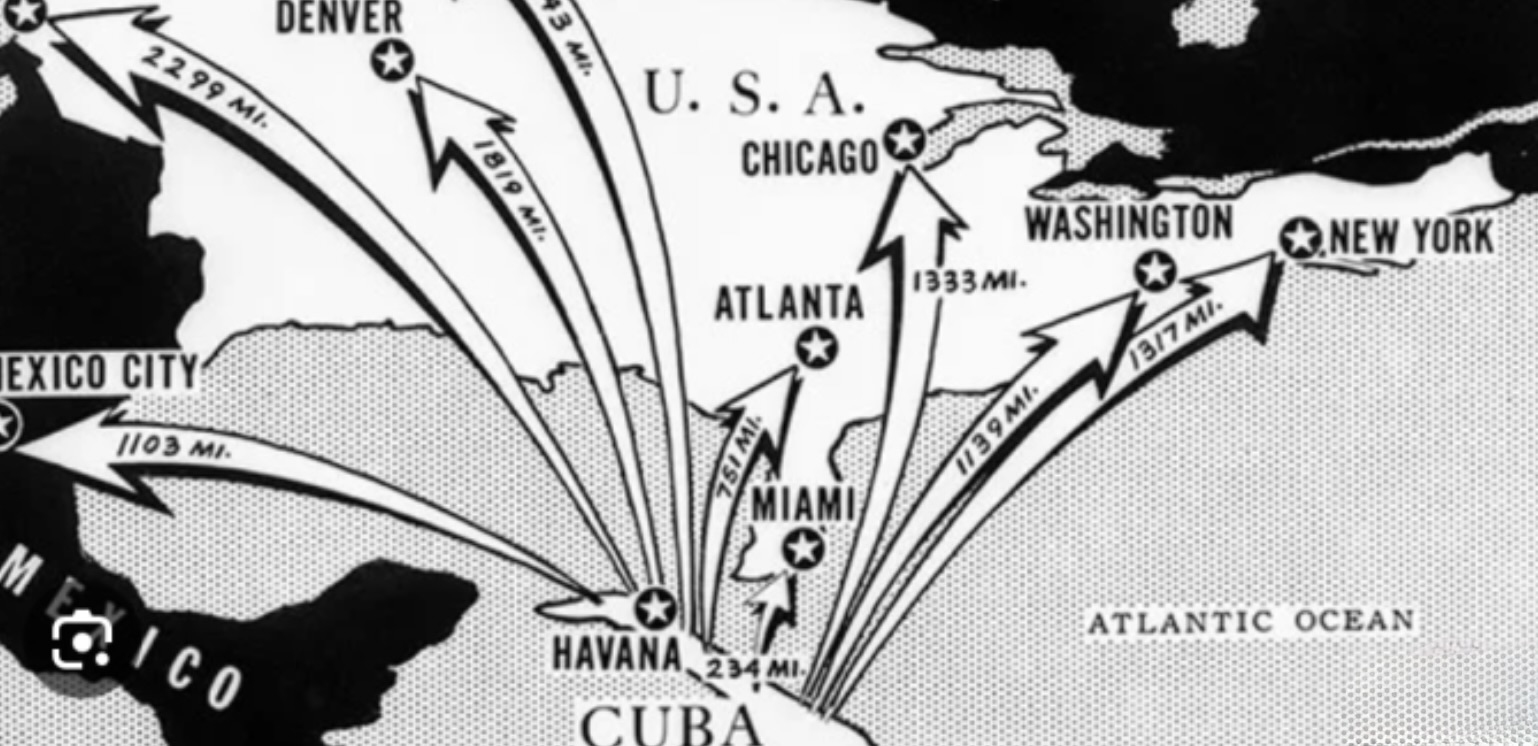
In my next UT-OH! post I describe two more events at I experienced while at Sierra that changed my perspective on the world. One was the Cuban Missile Crisis that threatened a nuclear attack on the US. The second was learning about how much Christianity was based on older mythology and the devastation caused by religious wars down through the ages.


I supported creating environmental and safety protections. But my own conservative background never did allow me to condone destruction of property or for that matter, today’s “freeing” of research animals. I supported Martin Luther King, not Newton and Seale.
My own “minority” eye-opener came one summer on a job providing summer activities for children just off the 52nd block of East Capitol Street in the early 1960s. Once my bus passed the Capitol Building heading east, I was the only white passenger and indeed the only white person around until I got near home in the evening. My principal colleague was from the neighborhood, left when he was 12 and was working on his MBA in finance. He helped my eyes see. Unofficial segregation was very real in the nation’s capital in those days.
I do as well, Ray. Violence usually begets violence. Boycotts, peaceful protests, legislative and legal action, use of media, electing legislators, etc. There are a large number of tools available to accomplish peaceful change. I’ve relied on many of them over the years. More aggressive action should always be a last resort, never a first resort. Extremists on the right and left see it differently. I address these more on my upcoming posts.
Sounds like he was a good man, Ray.
Every time I get a lesson in humility, I am better for it. I wish life lessons on everyone!! This is a great story and a good example, Curt.
Thank’s Crystal. Life can be very good at teaching us valuable lessons, if we only listen.
“Minority”. I think you’ll understand when I say that one of the many things I learnt, living in Afirica, both as a child and an adult, was being a “minority”. When you’re a white boy/man in Africa, you’re a minority. You can be subject to racism, to aggravation by the locals, or not. Whatever you do, you’re a minority. So you learn to live with it. And adapt.
Cheers.
I get that, Brian. My experience in Africa was that I spent all of my teaching time with black students and teachers. Being a teacher and PCV, I was always treated with respect, however. It felt strange when I came back to the US and was once again surrounded by whites! Culture shock!
Respect is earned. Always. And I have no doubt you earned it.
I can imagine the culture shock. My time in the Army caused repeated -welcome- little shocks. Every three weeks or so, we had leaves of absence. Everybody got a haircut. Dress in civvies. Gather on the camp square. All men then. ‘Ten-shun! Climb on the lorries. Drive to the train station. Board a train to Paris. 4 hours then. Chat with your colleagues.
Train arrives in Paris.
Bye everyone.
I would then unboard the train and fill up my senses. All colour of clothes. All ages. kids, older people. Women! Women! Perfumes. I’d stay there on the platform and indeed fill up my senses. I was back in the real world. (Nice culture shock!)
I can only imagine, Bryan. Good cultural shock and then back to reality. Never joined the military, so I missed the boys’ club. It was close with Vietnam. When I got back from Peace Corps, I fully expected to be drafted. But the they switched to a lottery number system. And I got a high number.
Good for you. A few years later, in Grad school, i knew a few vets who were going to school on the VA programme. Some of them were badly shaken.