UT-OH! Chapter 23: A Left Turn from the Right Lane:Part 1… On Being a Minority, and Becoming an Environmentalist

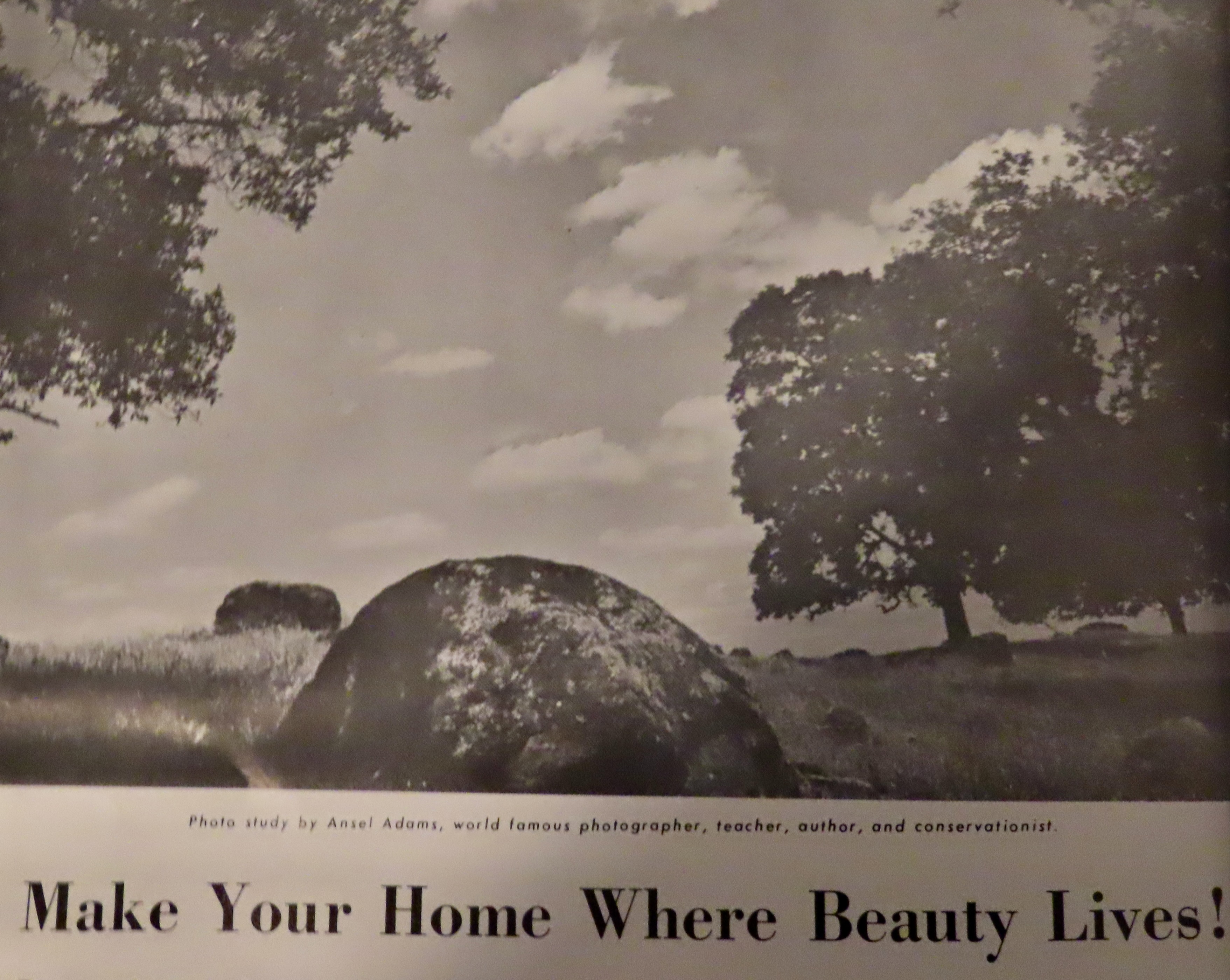
I found this photo by Ansel Adams in the 1963 Sierra College Annual a bit ironic. The Sunset International Petroleum Company had bought an ad in the Sierran to promote “a new community coming into being on land so beautiful it takes your breath away.” Bulldozers were cutting roads through the land while trees were being cut down and boulders removed to make way for houses.

 I am going to plagiarize myself by stealing some stories from my book: The Bush Devil Ate Sam. This really isn’t plagiarism, of course, since I am stealing from myself. Still, I feel a tad guilty, but I have three good reasons.

  1. There are UT-OHs! in the book that deserve to be included here.
  2. It’s a way of introducing readers to The Bush Devil Ate Sam.
  3. While the Bush Devil is primarily about my experience as a Peace Corps Volunteer, it also about the 60s, a very interesting time in America’s history with important messages for today. I am presently revising the Bush Devil to include the time when I returned to the US in 1967 and worked for the Peace Corps in public affairs and recruitment for three years. It will complete my perspective on the 60s from 1961 to 1970. 

The next two posts will explore four of the major issues of the era, and how they changed my view of the world at Sierra College.

Making A Left Turn from the Right Lane…

Pop, my father, once bemoaned the fact that I went to Berkeley. He blamed it for radicalizing the budding young conservative Christian Republican I was when I graduated from high school. He was partially right. I didn’t participate in occupying the Administration Building at Sierra College, give speeches while standing on the Dean’s Desk, or sing We Shall Overcome while sitting on the floor with Joan Baez— as I did at Berkeley. But the truth is, it was my Sierra experience that expanded my world view and moved me from my conservative to a more liberal perspective. Berkeley simply jogged the meter a few degrees to the left.  

Most of these experiences took place outside of the classroom, which is where much of my learning took place, as well.  

On learning I was a minority…

The process of liberalization started during the first hour on my first day at Sierra. It was a tradition to kick off the school year with an event called Howdy Day. As part of it, the faculty had arranged for a speaker: Dr. No Yong Park, an Asian man with a Harvard education. 

He stood up in front of a sea of mainly white faces and smiled like he had access to secrets we didn’t. 

“You think I look funny?” our speaker asked with a grin.  His question was greeted by a titter of nervous laughter. As naive as we were, we still knew enough to be made uncomfortable by such a question. 

“Well I think you look funny,” he went on, to much more laughter, “and there are a lot more of me who think you look funny than there are of you who think I look funny.” 

It jolted my perspective. The Civil Rights movement was gaining momentum in the South in the early 60s, and I was sympathetic with its objectives. Providing people with equal rights regardless of race, sex, religion or other arbitrary factors, seemed like the correct thing to do. I also had a vague concept that we all lose in the long run when we limit a person or group’s ability to succeed because of prejudice.

But I had never perceived of myself as being a minority. Instead, I belonged to an exclusive club. In 1961 white people dominated the US and the US was the most powerful nation in the world. It was easy to assume that this was how things should be. The fact that it might be otherwise put a new spin on the issue. What if I, or my children or grandchildren ended up in a situation where we were in the minority and lacked power? I added enlightened self-interest to my list of reasons for supporting human and civil rights. 

Pave it and paint it green… (Words from the 1970 iconic Joni Mitchell song, Big Yellow Taxi.)

Another concept I was introduced to at Sierra was environmental activism, some nine years before Earth Day I. For this, I owe thanks to Danny Langford. Dan liked to talk and could fit more words into a minute than I could five. One Monday morning, he proudly informed me that he had spent his weekend pulling up surveyor stakes in a new development called El Dorado Hills.

“You did what?” I asked in a shocked and disapproving voice. 

“I pulled up stakes to discourage a developer from building houses,” he responded in greater detail assuming it would make sense to me. It didn’t. Why would someone want to discourage a developer? It seemed positively Anti-American. My Republican roots were offended to the core. 

“Why would you pull a destructive stunt like that?” I demanded to know as I thought of a whole day or possibly several days of surveyor work going down the drain.

“It’s a beautiful area,” Dan responded, “covered with oak trees and grass. They are going to cut down the trees, plant houses, and pave over the grass.”

Suddenly, what Dan was talking about made sense. I wasn’t about to join him on one of his destructive forays, but his comments made me think about how fast we were paving over California. Although I was only 20, many of the places I had wandered so happily as a kid had already met their unhappy demise at the business end of a bulldozer. Progress was how this effort was defined and progress was a sacred American tradition. For the first time in my life, a question had been inserted into my mind about its value. 

Possibly there were other costs that needed to be considered and weighed in our blind rush toward the future. It would be nine years before I made the leap into being a full-time environmental activist, but the seed had been planted.

In my next UT-OH! post I describe two more events at I experienced while at Sierra that changed my perspective on the world. One was the Cuban Missile Crisis that threatened a nuclear attack on the US. The second was learning about how much Christianity was based on older mythology and the devastation caused by religious wars down through the ages.
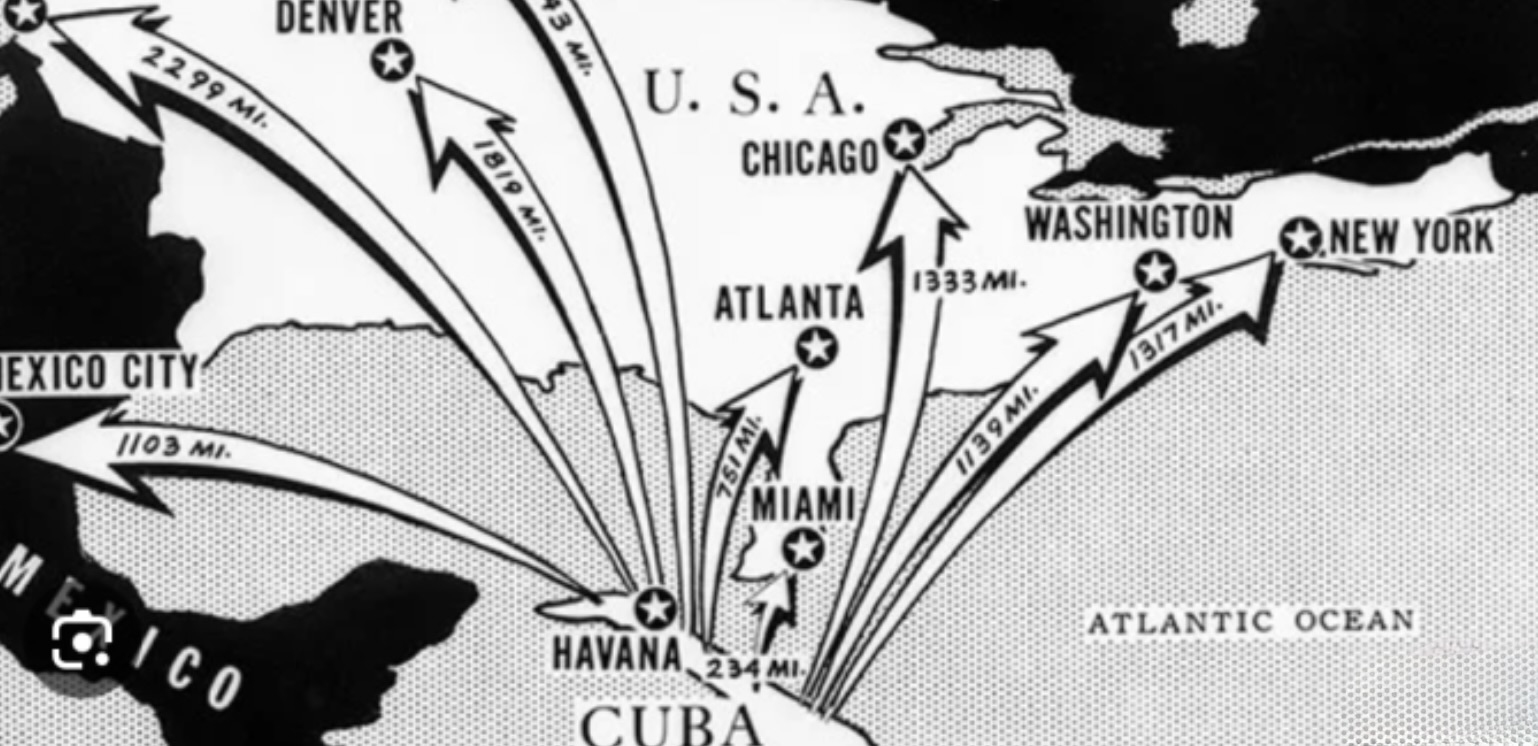
This illustration from the Smithsonian Magazine shows the extent of the threat posed by Russian nuclear warheads installed in Cuba during the Cuban Missile Crisis.

UT-OH Chapter 8: The Pond and the Woods Part 1… On Becoming Nature Boy— Plus Hanging Out in Monteverde, Costa Rica

I’d love to show you a photo of the Pond, or the Woods. Unfortunately I didn’t take any photos of either when I was young. I went back a few years ago to photograph the sites that were so important to my childhood— and life. The Pond had become a large gas station and the Woods had become a trailer park. It’s called progress. There was money to be made.

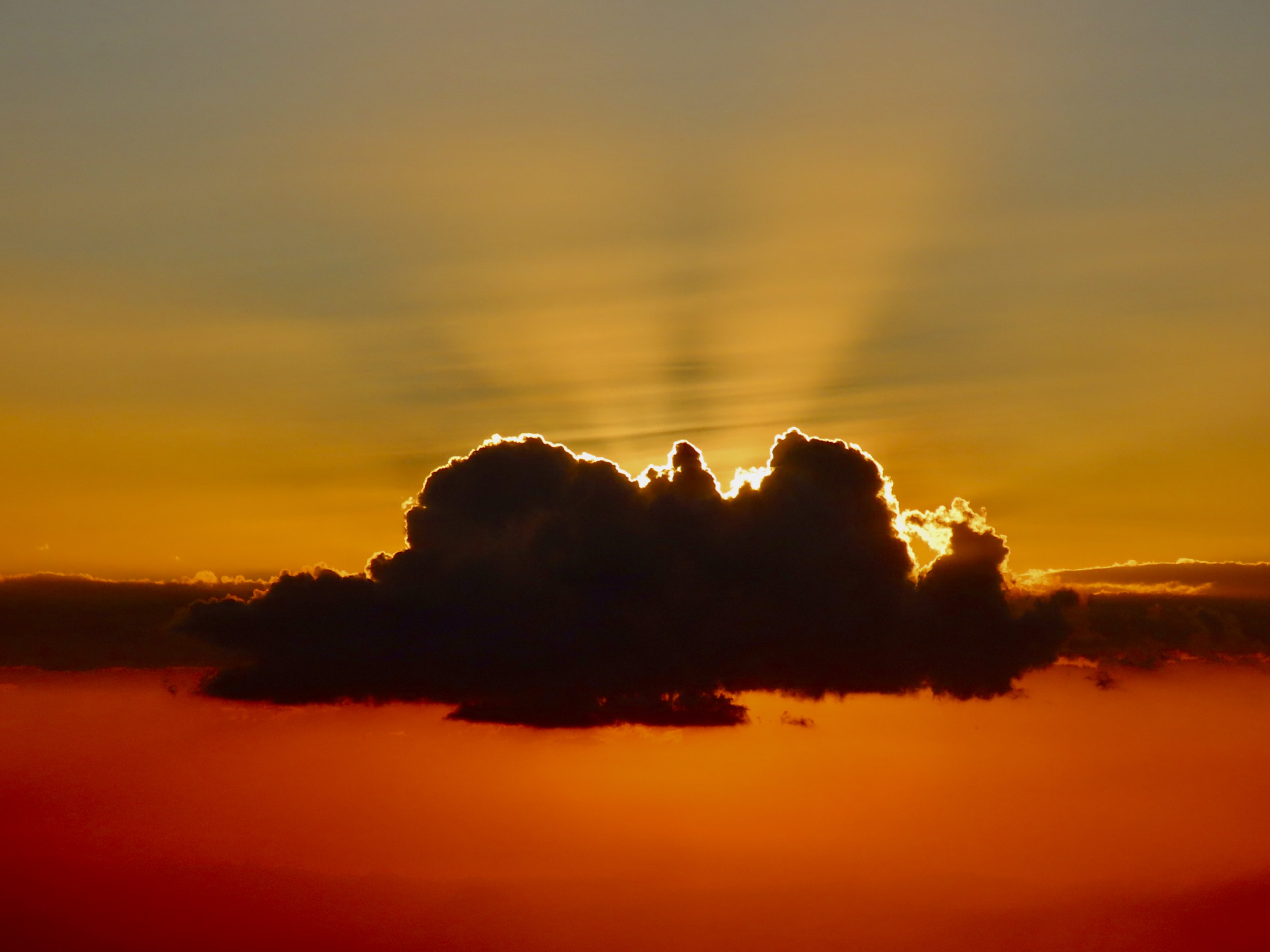
Instead you have a gorgeous sunset photo over Monteverde, Costa Rica taken by our grandson, Cooper, who is in the eighth grade. Our son, Tony, his wife, Cammie and their three boys, Connor, Chris, and Cooper have joined us this week. We are situated up on a high hill surrounded by rainforest. It even has vines that are safe to swing on and a view that looks all the way to the Pacific Ocean. We sent the boys out with our cameras to explore the surrounding woods and take photos of what they found most interesting. There are more pictures after today’s UT-OH tale.

Part 1: The Pond

There came a time when the Graveyard no longer met my wandering needs. I started traveling farther and farther afield, 15 minutes at a time. That’s how far the Pond and the Woods were away. They were where I played and, more importantly, where I developed a life-long love of the natural world. As such, they earned a capital P and capital W. First up: The Pond.

There were a number of ponds in the area. Oscar ‘Ot’ Jones had one on his ranch for cattle; Caldor had one where logs waited for their appointment with the buzz saw; Forni had one over the hill from his slaughterhouse, and Tony Pavy had one that was supposedly off-limits. But there was only one capital P Pond, the one next to the Community Hall. If I told Marshall, my parents or my friends I was going to the Pond, they knew immediately where I would be.

It was a magical place filled with catfish, mud turtles, bullfrogs and pirates. Although the Pond was small, it had a peninsula, island, deep channel, cattails and shallows. In the spring, redwing blackbirds nested in the cattails and filled the air with melodic sounds. Mallards took advantage of the island’s safety to set up housekeeping. Catfish used holes in the bank of the peninsula to deposit hundreds of eggs that eventually turned into large schools of small black torpedoes dashing about in frenetic unison. Momma bullfrogs laid eggs in strings that grew into chubby pollywogs. When they reached walnut size, tiny legs sprouted in one of nature’s miracles of transformation. Water snakes slithered through the water with the sole purpose of thinning out the burgeoning frog population. I quickly learned to recognize the piteous cry of a frog being consumed whole. Turtles liked to hang out in the shallows where any log or board provided a convenient sunning spot. They always slid off at our appearance but a few quiet minutes would find them surfacing to reclaim lost territory.

By mid-summer the Pond would start to evaporate. The shallow areas surrendered first, sopped up by the burning sun. Life became concentrated in a few square yards of thick, tepid water, only inches deep and supported by a foot of squishy mud. All too soon the Pond was bone-dry with mud cracked and curled. Turtles, snakes and frogs crawled, slithered and hopped away to other nearby water. Catfish dug their way into the mud and entered a deep sleep, waiting for the princely kiss of winter rains. Ducks flew away quacking loudly, leaving only silence behind. 

Fall and winter rains found the Pond refilling and then brimming. Cloudy, gray, wind-swept days rippled the water and created a sense of melancholy that even an eight-year-old could feel. 

But melancholy was a rare emotion for the Pond.  To us, it was a playground with more options than an amusement park. A few railroad ties borrowed from Caldor and nailed together with varying sized boards made great rafts for exploring the furthest, most secret corners of the Pond. Imagination turned the rafts into ferocious pirate ships that ravaged and pillaged the far shores, or primitive bumper cars guaranteed to dunk someone, usually me. 

In late spring, the Pond became a swimming hole, inviting us to test still cold waters. One spring, thin ice required a double and then triple-dare before we plunged in. It was a short swim. Swimsuits were always optional and rarely worn. I took my first swimming lessons there and mastered dog paddling with my cocker spaniel, Tickle, providing instructions. More sophisticated strokes would wait for more sophisticated lakes.

Frogs and catfish were for catching and adding to the family larder. During the day, a long pole with fishing line attached to a three-pronged hook and decorated with red cloth became irresistible bait for bullfrogs. At night, a flashlight and a spear-like gig provided an even more primitive means of earning dinner. The deep chug-a-rums so prominent from a distance became silent as we approached. Stealth was required. A splash signified failure as our quarry decided that sitting on the bottom of the Pond was preferable to joining us for dinner. 

Victory meant a gourmet treat, frog legs. Preparation involved amputating the frog’s hind legs at the hips and then pealing the skin off like tights. It was a lesson I learned early: If you catch it, you clean it. We were required to chop off the big feet as well. Mother didn’t like being reminded that a happy frog had been attached hours earlier. She also insisted on delayed gratification. Cooking the frog legs on the same day they were caught encouraged them to jump around in the frying pan. “Too creepy!” she declared.

Catching catfish required nerves of steel. We caught them by hand as they lurked with heads protruding from their holes in the banks. Nerves were required because the catfish had serious weapons, needle sharp fins tipped with stingers that packed a wallop. They had to be caught exactly right and held firmly, which was not easy when dealing with a slimy fish trying to avoid the frying pan. But their taste was out of this world and had the slightly exotic quality of something that ate anything that couldn’t eat them.

Next up on Wednesday: The Woods. On Friday, we will focus on some of our Costa Rica adventures.

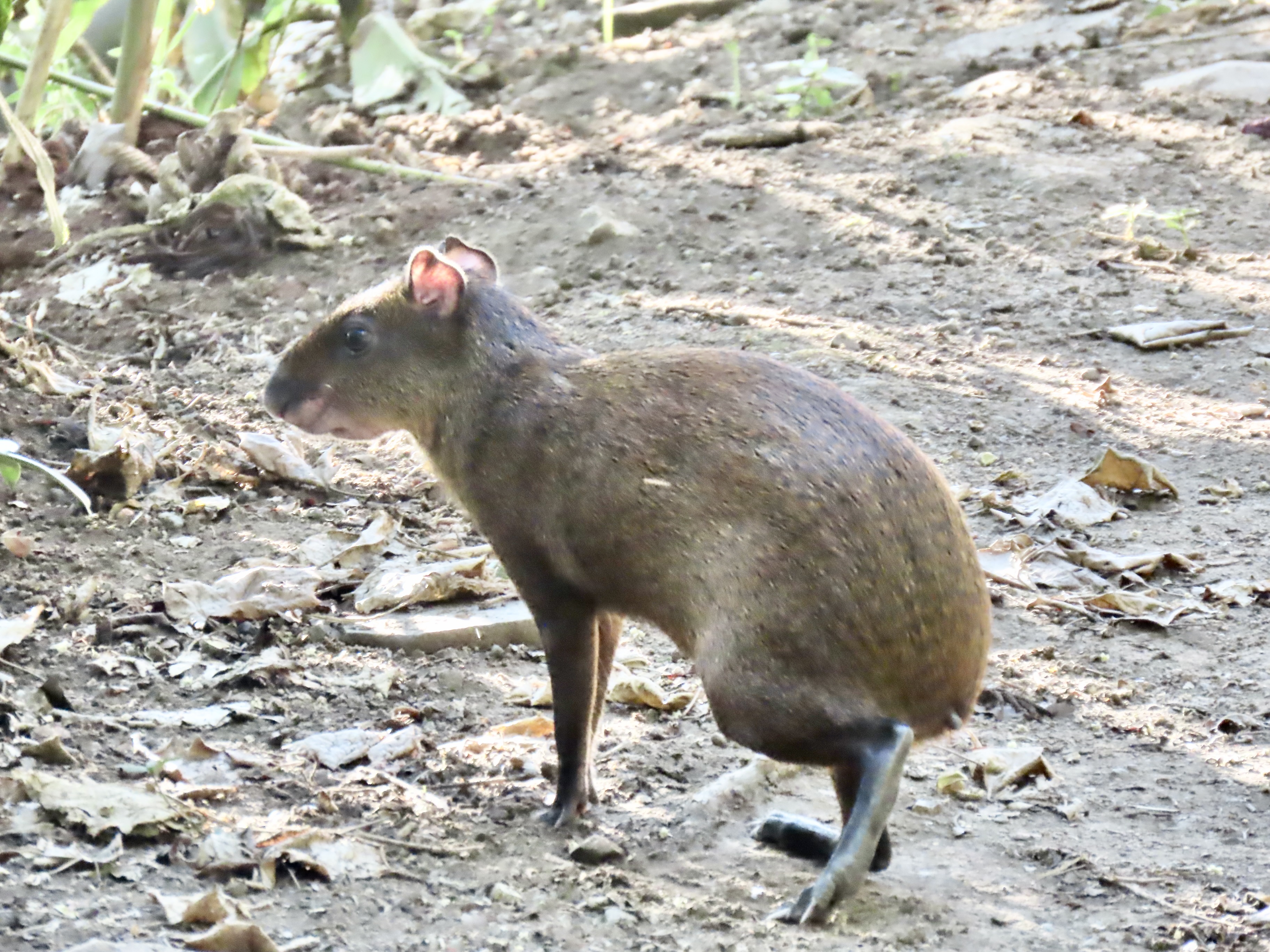
Chris, who is a sophomore in high school, had watched a capybara as it disappeared into the woods. Later when he was visiting a waterfall, one did him the courtesy of hanging out long enough for a photo.
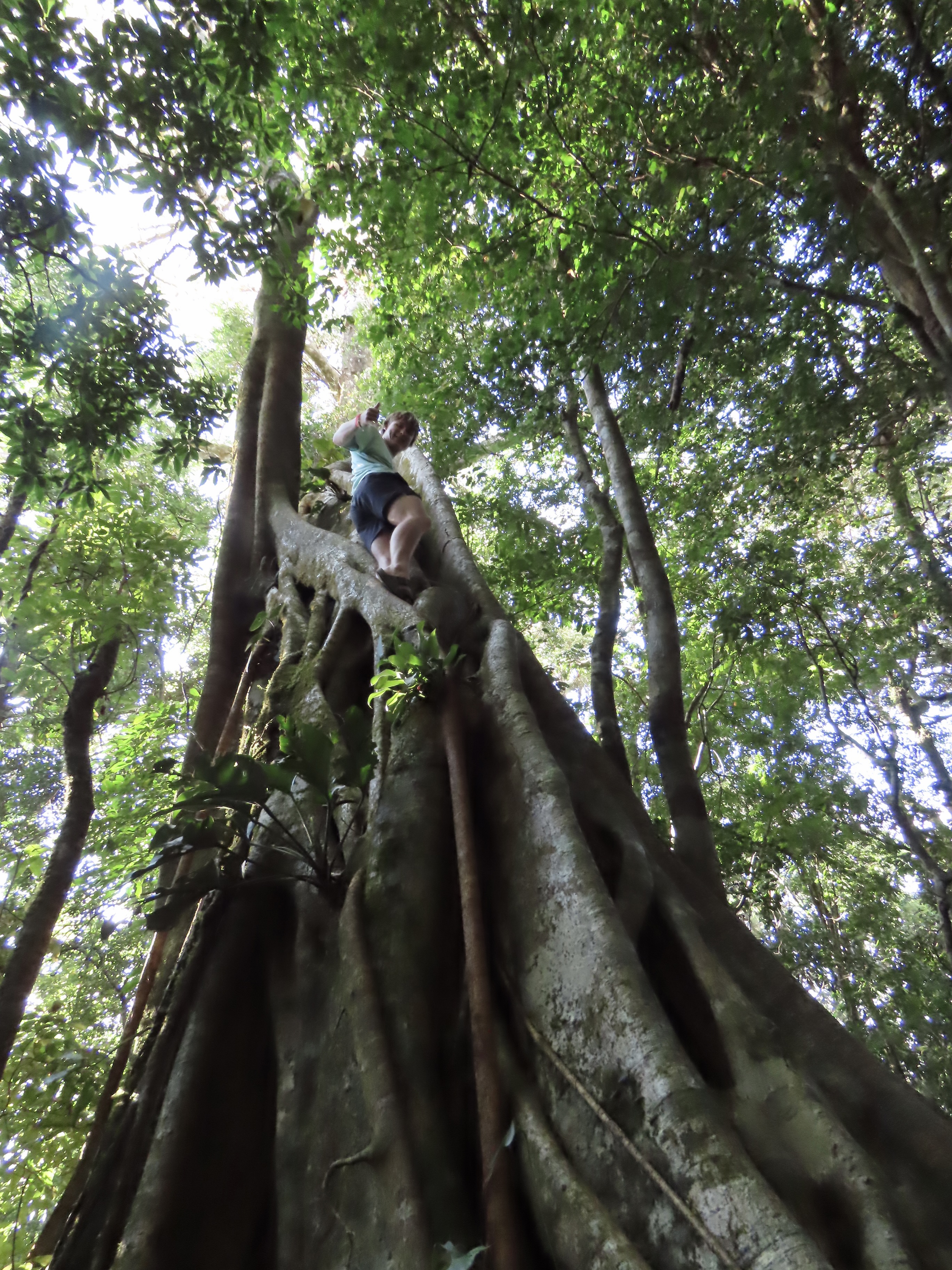
Connor, who is a junior, actually preferred to have a photo of himself taken up a banyan tree without a ladder. His passion for high places reminds us of his dad when he was his age.
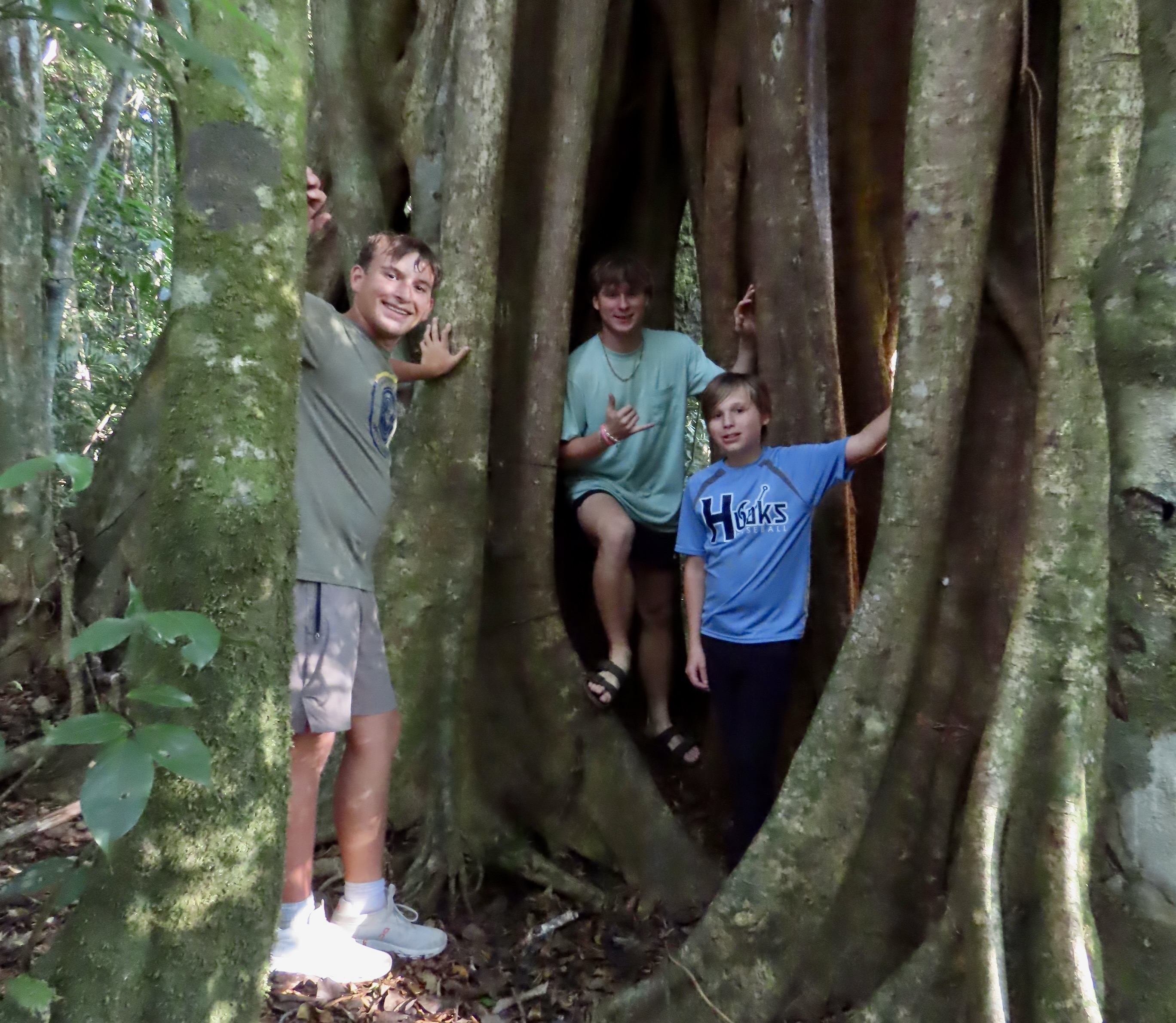
Here are the boys together at the base of the banyan tree: Chris on the left, Connor in the back, and Cooper on the right.
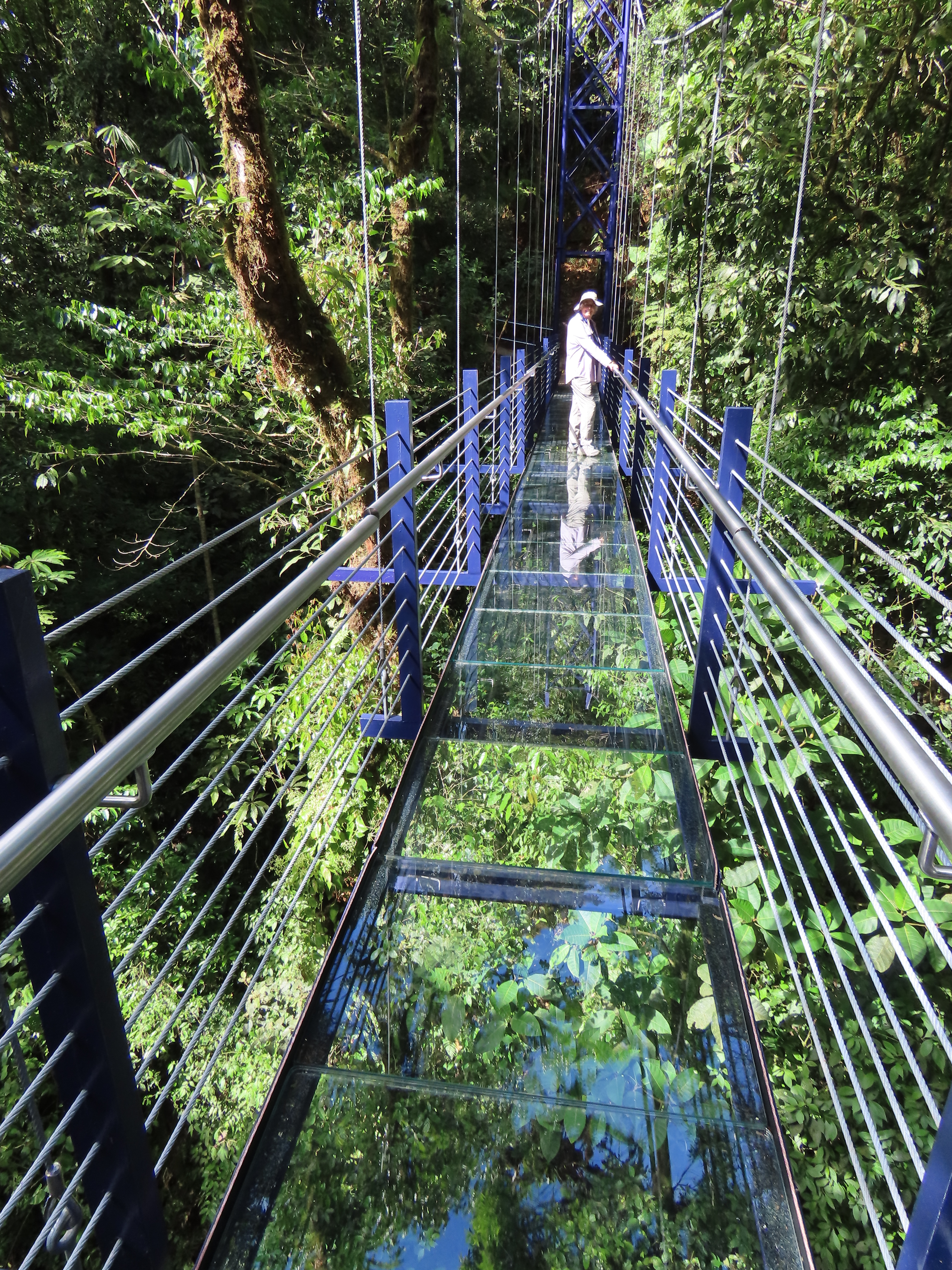
Our other activity of the day was to explore the forest canopy on hanging bridges. There were 6 different bridges. This one had a glass bottom you could see the jungle below. That’s grandma, Peggy, down on the end. Next up on Wednesday, the Woods.