UT-OH! Chapter 23: A Left Turn from the Right lane: Part 2… On Facing Nuclear Oblivion and Becoming an Agnostic

Being born in World War II, I am considered part of the Silent Generation instead of a Baby Boomer, those born between 1946 and 1964. The reality is that World War II babies are much more a part of the Baby Boomer Generation than the Silent Generation. (At least, I’ve never been accused of being silent.)  It was the events of the 50s and 60s—particularly of the 60s— not the Great Depression and World War II that laid the foundation of who I would become. Four events that took place while I was at Sierra College expanded my world view and moved me from my conservative to a more liberal perspective.

In my last post, I gained a new perspective on what a minority meant, and learned that progress had negative as well as positive impacts. Today, I will look at the impact on my thinking caused by the Cuban Missile Crisis and the so called ‘Holy Wars’ down through the ages.

On Facing Nuclear Oblivion…
USS Yarnall naval destroyer with number 850 alongside Soviet cargo ship Poltava with crew on deck under cloudy sky
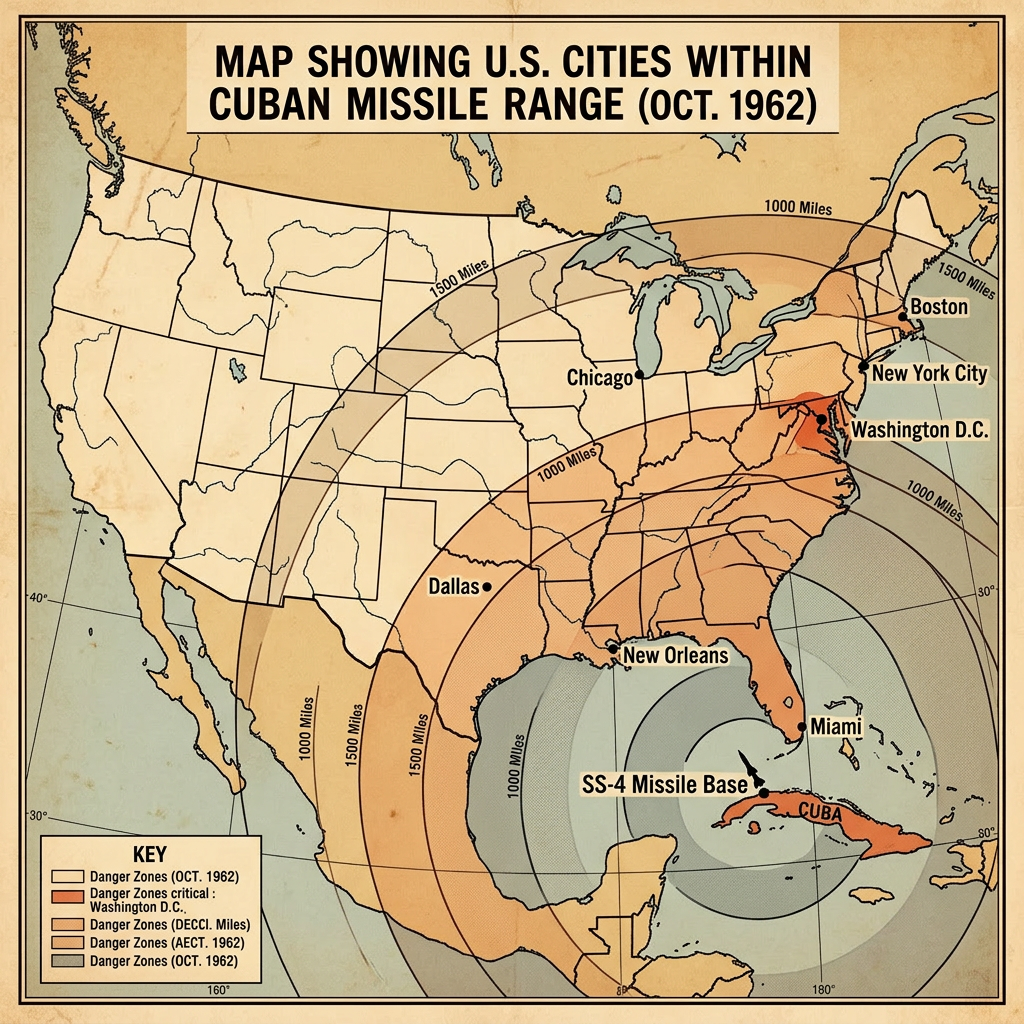
This is an AI generated map of areas in the US that were in range of the nuclear missiles that Khrushchev had installed in Cuba.

All of our young lives we had been raised under the threat of a nuclear cloud. We were constantly treated to photographs and television coverage of massive, doomsday explosions and their tale-tale clouds. They were more than an ut-oh, they were possibly the final UT-OH!

Atom bombs, which could destroy whole cities and kill millions of people, weren’t massive enough, however. We needed bigger bombs and we needed more. We needed hydrogen bombs. We ended up with enough nuclear weapons to kill everyone in the world and blast ourselves and the rest of life into times that would make the so-called Dark Ages seem like a Sunday picnic in the park. The logic was that it would serve as a deterrent to war, that it would bring peace. And to a degree, there was an element of truth in this. At least we haven’t used nuclear weapons— yet. But wars continue to rage.

The closest America came to the nuclear holocaust (that we know of) took place during two terrifying weeks in late October 1962.  I, along with most of the student body and faculty at Sierra College, sat tethered to the radio in the Campus Center as our nation teetered on the edge of nuclear abyss. It all came about because a cigar chomping, right-wing dictator we liked had been replaced by a cigar chomping, left-wing dictator we didn’t. It was known as the Cuban Missile Crisis and has its own headlines in the history books as being a highlight of the Cold War. 

Castro and his revolution provided a toehold for Communism in the Western Hemisphere. President Jack Kennedy responded by waging a crusade to get rid of him that had started with alleged assassination attempts using Mafia hit men and ended in the fiasco known as the Bay of Pigs. Castro had then called on Uncle Khrushchev to loan him something that might make the USA back off. Russia had responded by offering nuclear missiles. 

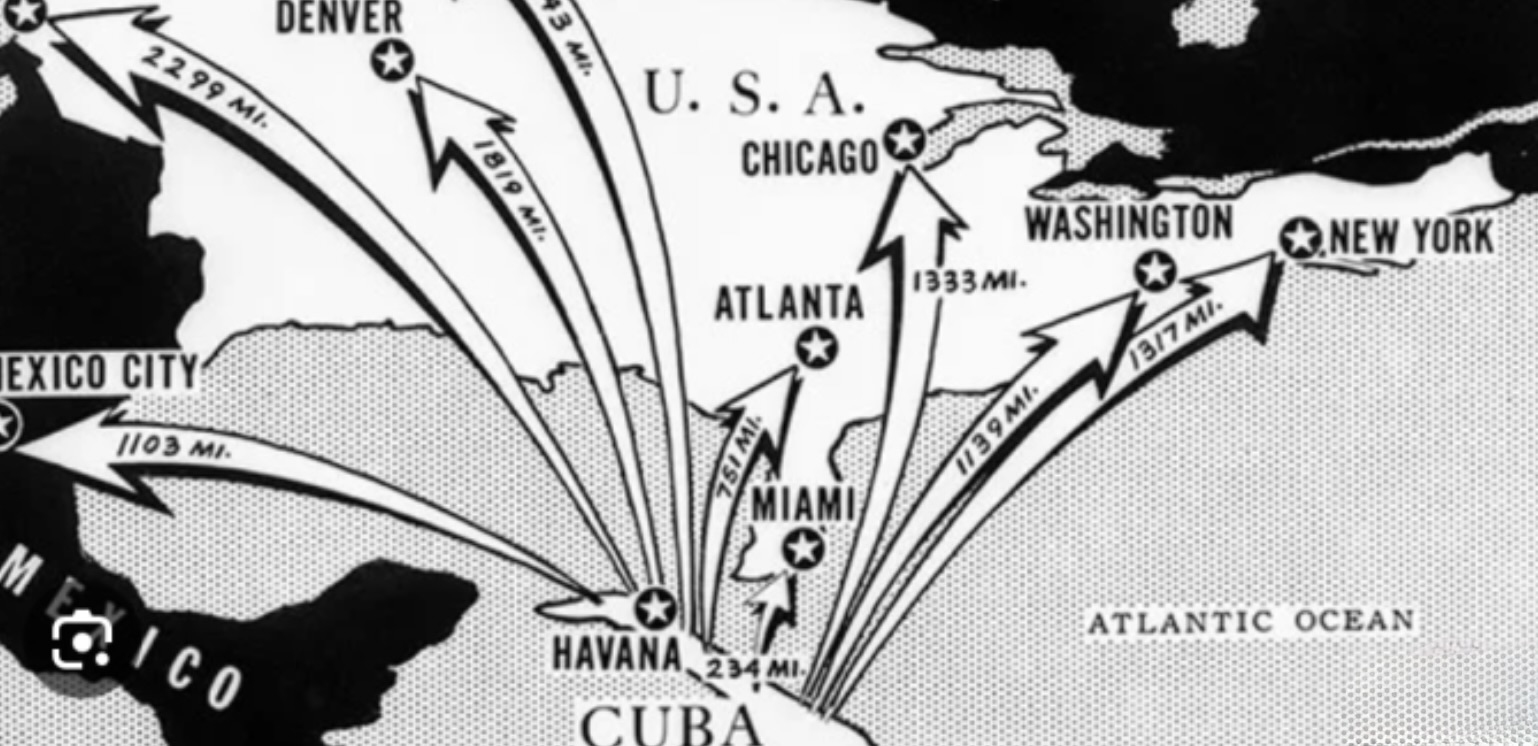
The thought of having nuclear missiles capable of reaching the areas shown on the diagram above made the folks in Washington rightfully nervous. So Kennedy set up a blockade of Cuba. Fortunately, aided by promises that the US wouldn’t invade Cuba and that we would remove our missiles from Turkey, Khrushchev blinked. 
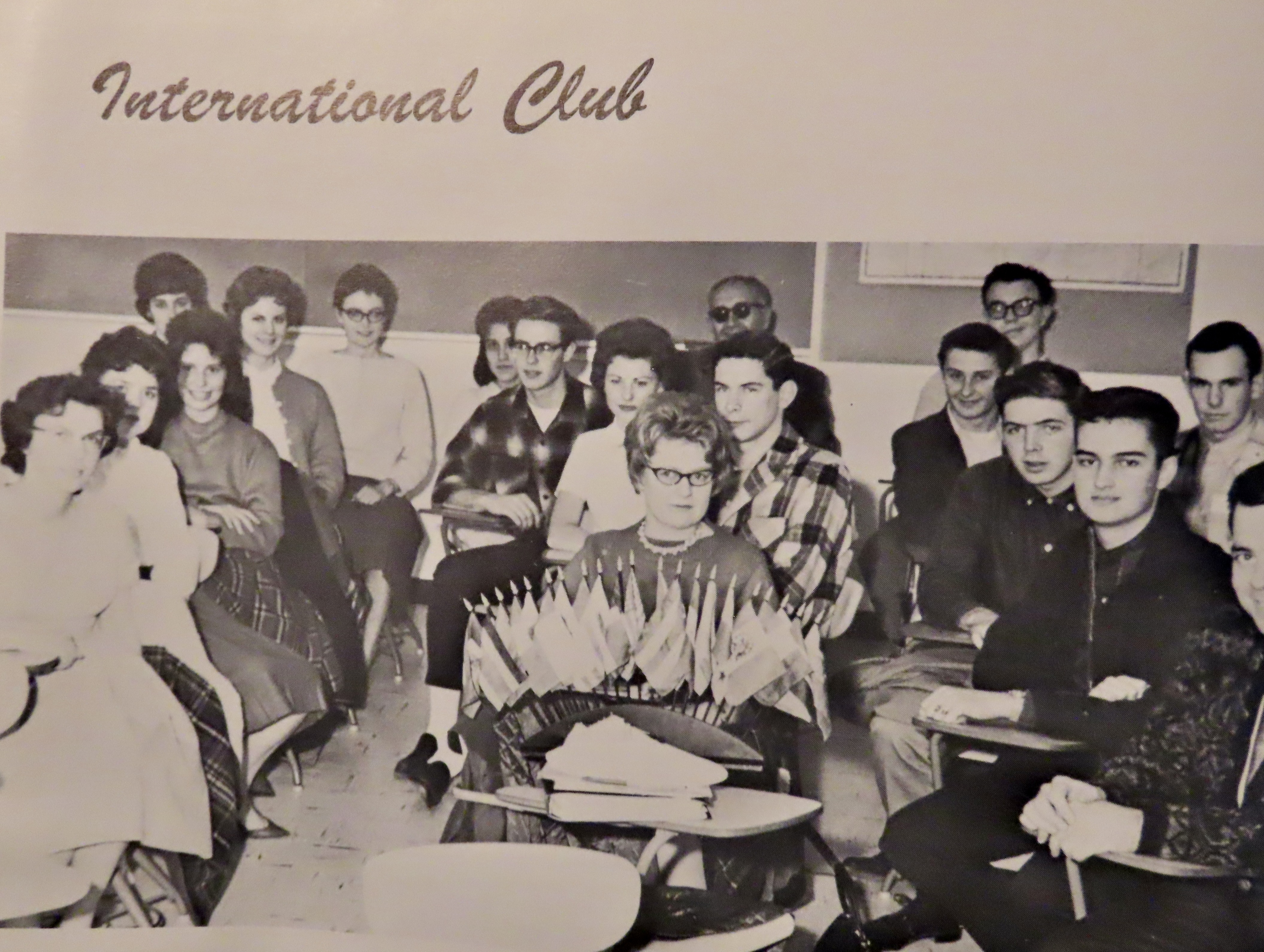
From that point on in my life, I became convinced that here had to be solutions to solving international differences beyond blowing each other off the map. Nation states rattling sabers is one thing; rattling nuclear bombs and other forms of mass destruction is something else. They might be used. I joined the International Club at Sierra and became a fan of the United Nations. (Photo from 1963 Sierra college Annual. I’m second back middle row.)

My rock that was Peter relocates itself on an active fault zone…

My father’s greatest concern had little to do with the first three changes in my world view. It was the fourth that gave him sleepless nights. His family’s deep faith dated all the way back to the beginning of Presbyterianism in Scotland. Much to his delight, I had become seriously religious in high school. I was the senior acolyte, a junior lay reader, carried the cross, and even sang solos with the choir at the Episcopal Church in Placerville. I was a believer. There was even talk of my becoming a minister. 
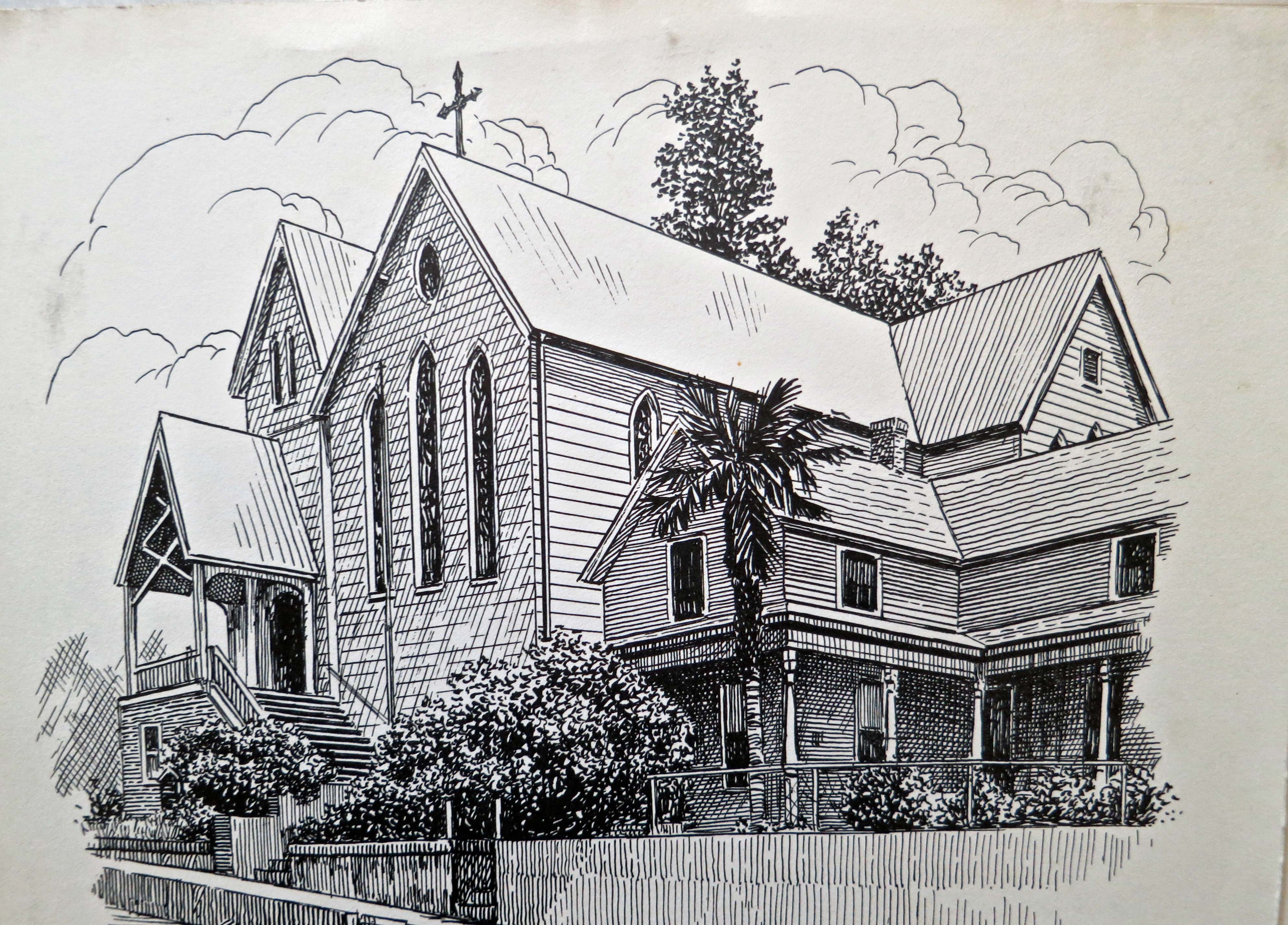
The Episcopal Church in Placerville played a significant role in my life for 10 years. I’ve always been grateful for its help in getting me through my teenage years. BTW, my first real job was the church’s janitor which I became at 13.

That changed when I went to college. In 1961 I picked up a Barnes and Noble-published book at the Sierra College bookstore on comparative religions and learned about Mithraism and Zoroastrianism. I caught a glimpse of how much of our great monotheistic religions were based on earlier belief systems or mythologies. The strong religious convictions of my teenage years began to crack. 

Studying history had a much greater impact. In reading about the Roman Empire, I learned that the nature of Christ’s divinity was determined by vote at the Council of Nicaea in 325 CE in a bare knuckled political battle, not the most holy of environments. Even more disturbing, I was also learning about Crusades, Jihads, Inquisitions, and various other ‘Holy Wars.’ Doing unto others in the name of God, Allah, Jehovah, Christ, etc. seemed close to a commandment. 

For all of the good religion has done down through the ages, and there is a great deal, it has also been a factor in much of the world’s violence and intolerance. I came to the conclusion that there was a fly in the ointment, a fatal flaw in religion that may yet bring about the Armageddon that so many fundamentalists believe in. Belief that a particular religion is the only true faith is one thing. Believing that adherents have an obligation to impose it on others— regardless of cost— is something else. It doesn’t leave much room for ‘Peace on Earth Goodwill toward Men.’ 

So here I was in mid-1963, a budding peacenik with international leanings, something of an agnostic, environmentally concerned, and committed to civil and human rights. I had definitely become more liberal in my perspective. I had made a left turn from the right lane. I figured I was ready for Berkeley. (Not)
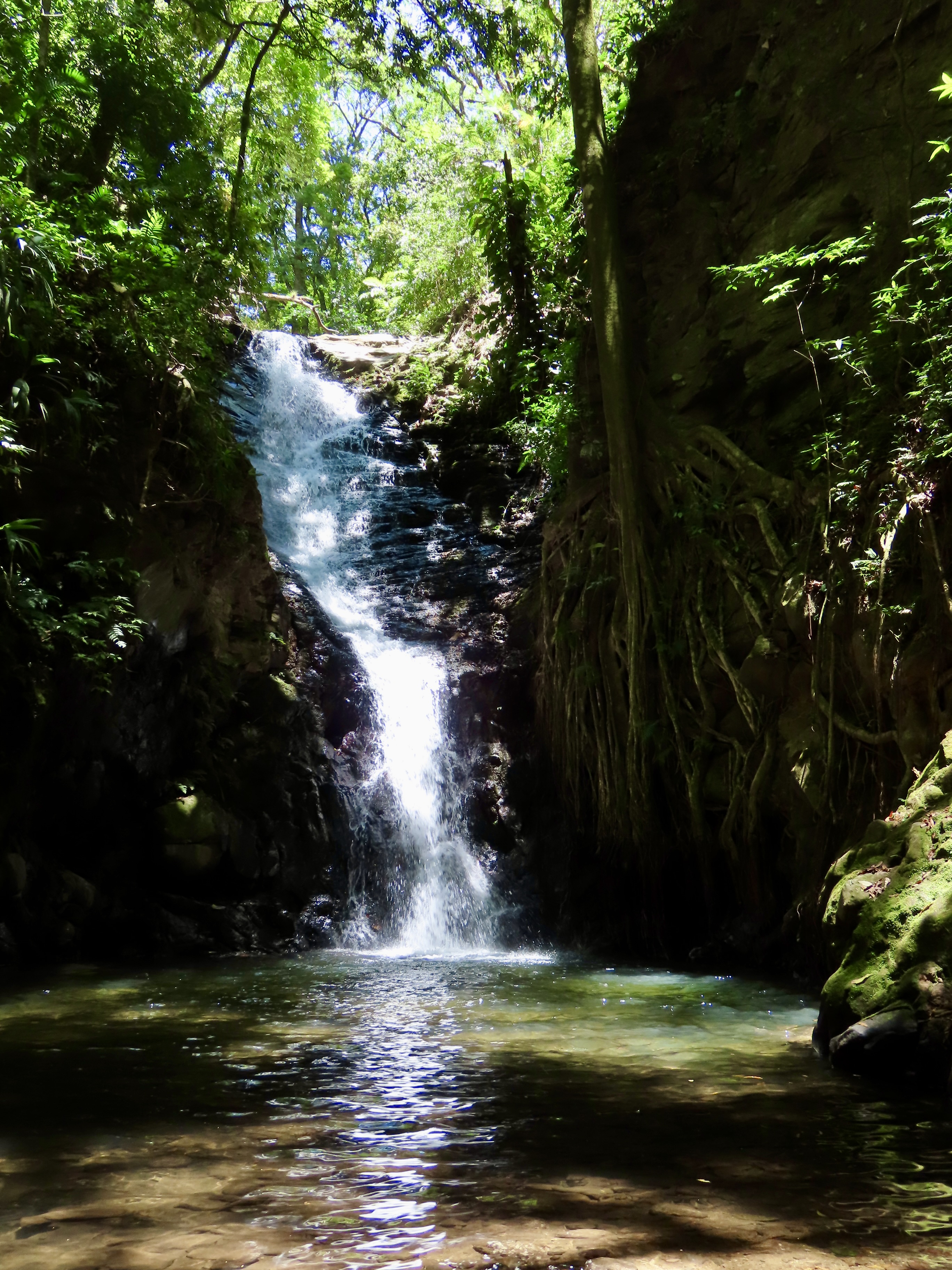
In our next post on Monday, we will explore the beauty of the Northern Highlands of Costa Rica as shown by waterfalls.

UT-OH! Chapter 23: A Left Turn from the Right Lane:Part 1… On Being a Minority, and Becoming an Environmentalist

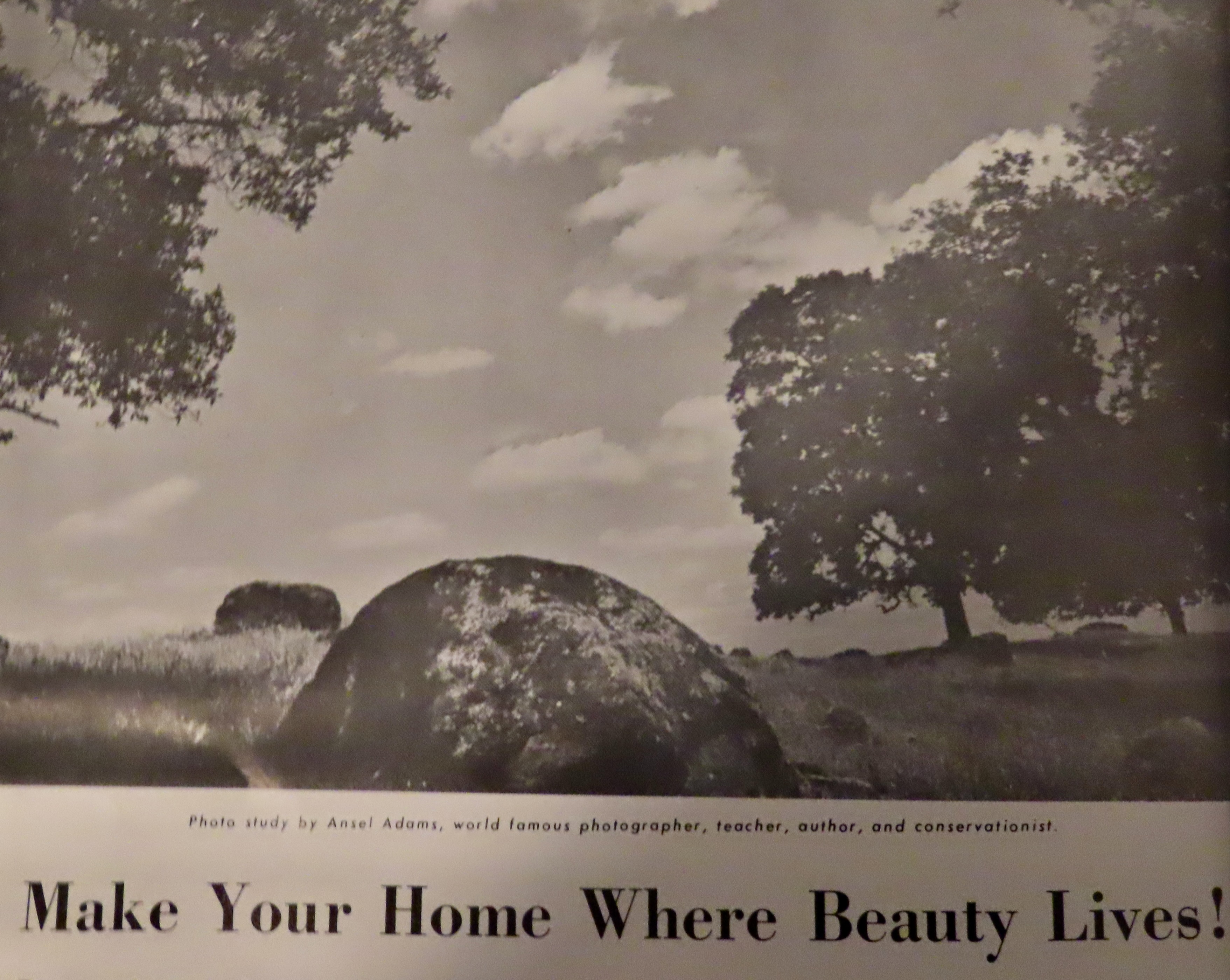
I found this photo by Ansel Adams in the 1963 Sierra College Annual a bit ironic. The Sunset International Petroleum Company had bought an ad in the Sierran to promote “a new community coming into being on land so beautiful it takes your breath away.” Bulldozers were cutting roads through the land while trees were being cut down and boulders removed to make way for houses.

 I am going to plagiarize myself by stealing some stories from my book: The Bush Devil Ate Sam. This really isn’t plagiarism, of course, since I am stealing from myself. Still, I feel a tad guilty, but I have three good reasons.

  1. There are UT-OHs! in the book that deserve to be included here.
  2. It’s a way of introducing readers to The Bush Devil Ate Sam.
  3. While the Bush Devil is primarily about my experience as a Peace Corps Volunteer, it also about the 60s, a very interesting time in America’s history with important messages for today. I am presently revising the Bush Devil to include the time when I returned to the US in 1967 and worked for the Peace Corps in public affairs and recruitment for three years. It will complete my perspective on the 60s from 1961 to 1970. 

The next two posts will explore four of the major issues of the era, and how they changed my view of the world at Sierra College.

Making A Left Turn from the Right Lane…

Pop, my father, once bemoaned the fact that I went to Berkeley. He blamed it for radicalizing the budding young conservative Christian Republican I was when I graduated from high school. He was partially right. I didn’t participate in occupying the Administration Building at Sierra College, give speeches while standing on the Dean’s Desk, or sing We Shall Overcome while sitting on the floor with Joan Baez— as I did at Berkeley. But the truth is, it was my Sierra experience that expanded my world view and moved me from my conservative to a more liberal perspective. Berkeley simply jogged the meter a few degrees to the left.  

Most of these experiences took place outside of the classroom, which is where much of my learning took place, as well.  

On learning I was a minority…

The process of liberalization started during the first hour on my first day at Sierra. It was a tradition to kick off the school year with an event called Howdy Day. As part of it, the faculty had arranged for a speaker: Dr. No Yong Park, an Asian man with a Harvard education. 

He stood up in front of a sea of mainly white faces and smiled like he had access to secrets we didn’t. 

“You think I look funny?” our speaker asked with a grin.  His question was greeted by a titter of nervous laughter. As naive as we were, we still knew enough to be made uncomfortable by such a question. 

“Well I think you look funny,” he went on, to much more laughter, “and there are a lot more of me who think you look funny than there are of you who think I look funny.” 

It jolted my perspective. The Civil Rights movement was gaining momentum in the South in the early 60s, and I was sympathetic with its objectives. Providing people with equal rights regardless of race, sex, religion or other arbitrary factors, seemed like the correct thing to do. I also had a vague concept that we all lose in the long run when we limit a person or group’s ability to succeed because of prejudice.

But I had never perceived of myself as being a minority. Instead, I belonged to an exclusive club. In 1961 white people dominated the US and the US was the most powerful nation in the world. It was easy to assume that this was how things should be. The fact that it might be otherwise put a new spin on the issue. What if I, or my children or grandchildren ended up in a situation where we were in the minority and lacked power? I added enlightened self-interest to my list of reasons for supporting human and civil rights. 

Pave it and paint it green… (Words from the 1970 iconic Joni Mitchell song, Big Yellow Taxi.)

Another concept I was introduced to at Sierra was environmental activism, some nine years before Earth Day I. For this, I owe thanks to Danny Langford. Dan liked to talk and could fit more words into a minute than I could five. One Monday morning, he proudly informed me that he had spent his weekend pulling up surveyor stakes in a new development called El Dorado Hills.

“You did what?” I asked in a shocked and disapproving voice. 

“I pulled up stakes to discourage a developer from building houses,” he responded in greater detail assuming it would make sense to me. It didn’t. Why would someone want to discourage a developer? It seemed positively Anti-American. My Republican roots were offended to the core. 

“Why would you pull a destructive stunt like that?” I demanded to know as I thought of a whole day or possibly several days of surveyor work going down the drain.

“It’s a beautiful area,” Dan responded, “covered with oak trees and grass. They are going to cut down the trees, plant houses, and pave over the grass.”

Suddenly, what Dan was talking about made sense. I wasn’t about to join him on one of his destructive forays, but his comments made me think about how fast we were paving over California. Although I was only 20, many of the places I had wandered so happily as a kid had already met their unhappy demise at the business end of a bulldozer. Progress was how this effort was defined and progress was a sacred American tradition. For the first time in my life, a question had been inserted into my mind about its value. 

Possibly there were other costs that needed to be considered and weighed in our blind rush toward the future. It would be nine years before I made the leap into being a full-time environmental activist, but the seed had been planted.

In my next UT-OH! post I describe two more events at I experienced while at Sierra that changed my perspective on the world. One was the Cuban Missile Crisis that threatened a nuclear attack on the US. The second was learning about how much Christianity was based on older mythology and the devastation caused by religious wars down through the ages.

This illustration from the Smithsonian Magazine shows the extent of the threat posed by Russian nuclear warheads installed in Cuba during the Cuban Missile Crisis.