Reno’s Generator… What Happens at Burning Man, Doesn’t Necessarily Stay There

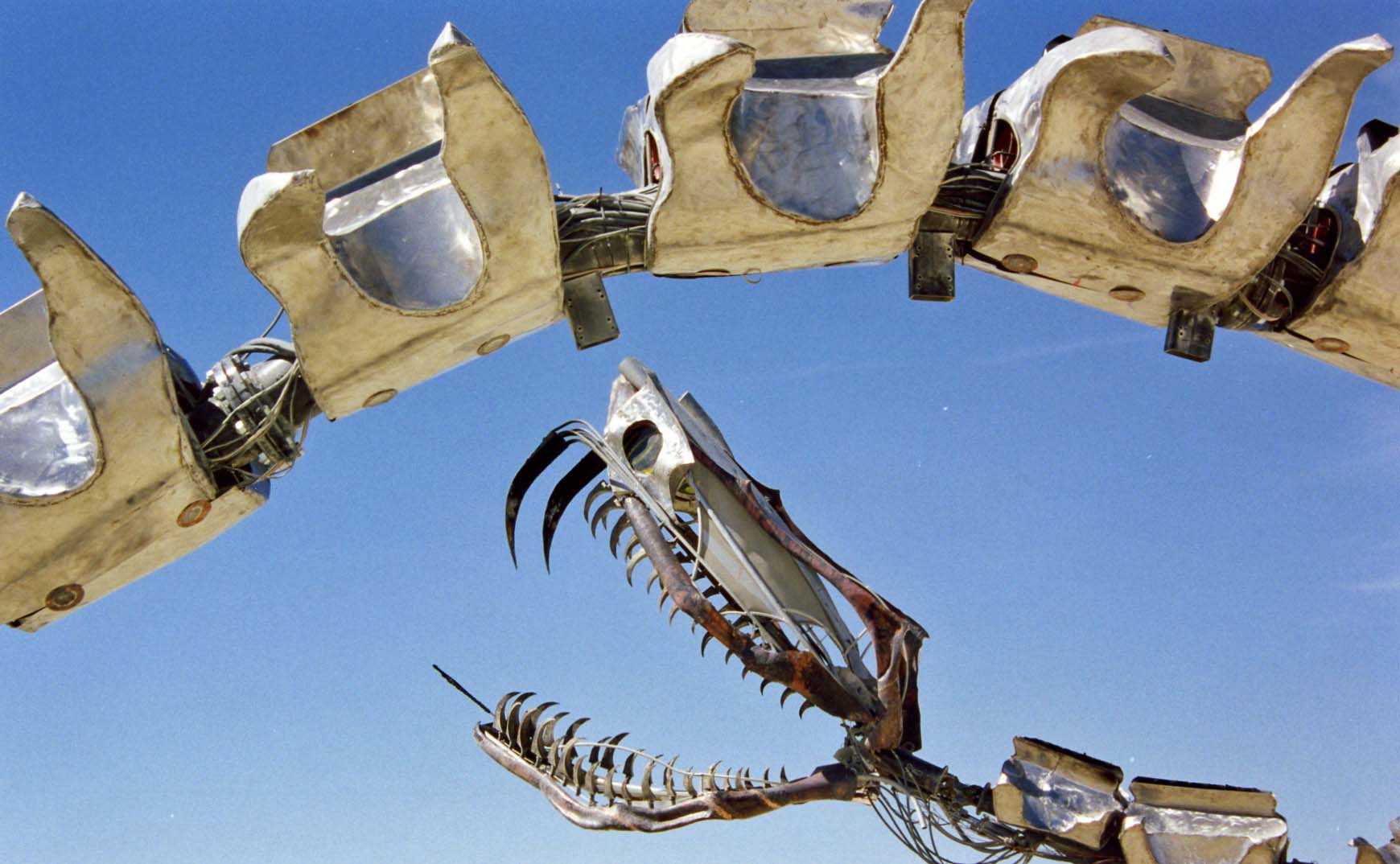
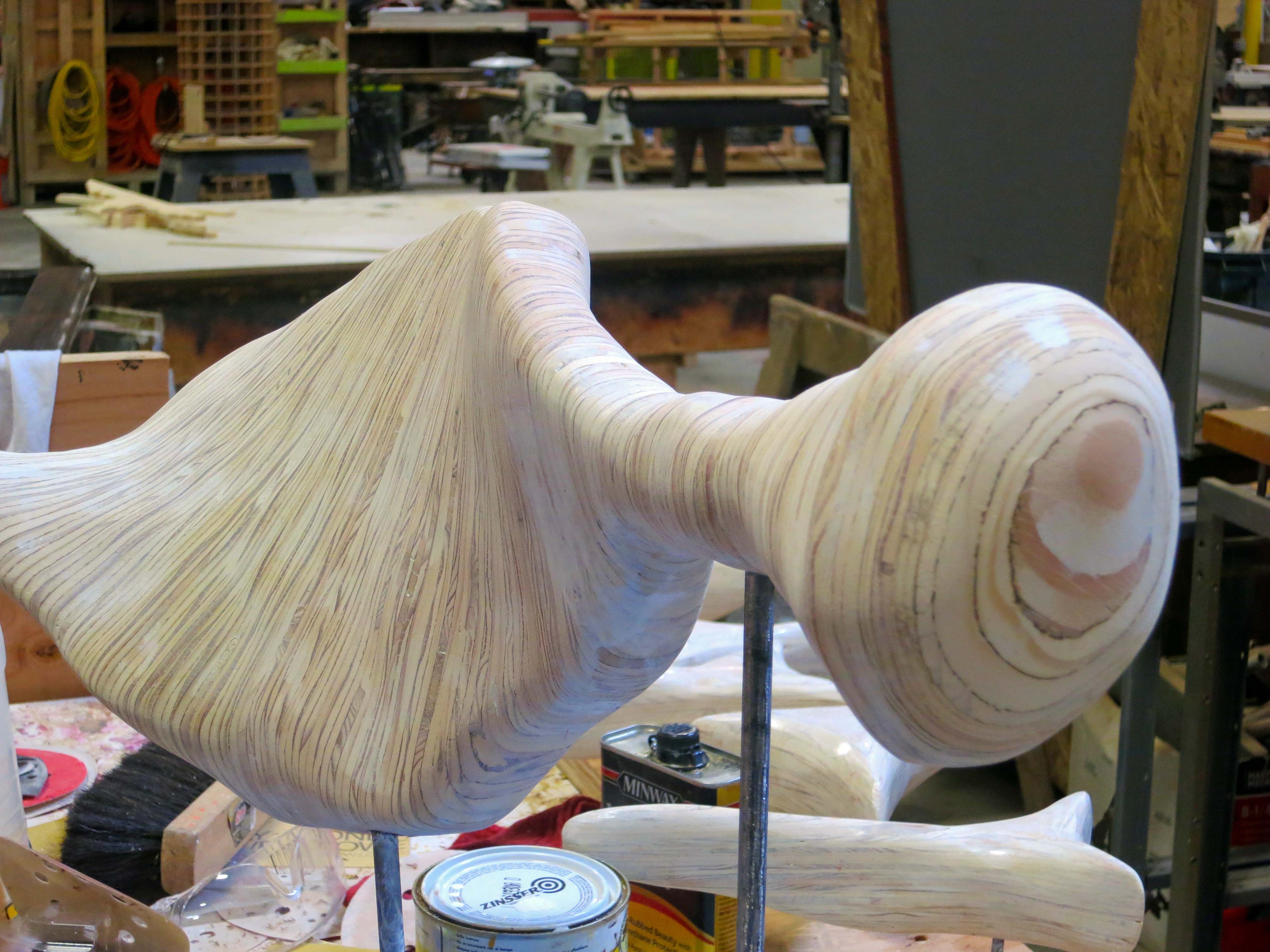
A beautifully carved and shaped piece of wood at the Generator in Reno, Nevada.

I wasn’t exactly sure what I was looking at, but I liked it. And I had the feeling it was looking back. To me it represented the artistic creativity that flourishes in the huge warehouse in Sparks/Reno, Nevada known as the Generator.

The Burning Man series I just completed focused on creativity. For one week in late August/early September, tens of thousands of people gather in a remote area of the northern Nevada desert to celebrate art in its numerous forms including sculpture, architecture, photography, mutant vehicles, painting, costumes and performance art.

While Burning Man’s vibrant creativity is what brings me back to Black Rock City year after year, the event is about more than art. A huge party, alternative life-styles, desert survival, focus on participation, community building, social responsibility, environmental awareness, personal growth, and a very long list of etceteras are all part of the equation that makes the event succeed.

Over the past two years, I have found my interest growing in what goes on before and after Burning Man— both in terms of preparation for the event and, more interestingly, the back story on the people and groups who participate. What brings them to Burning Man, how do they influence the event, what do they bring home, and how, in turn, does this impact their lives and the communities where they live?

Today, I am going to feature a 34,000 sq. ft. warehouse in Reno/Sparks, Nevada that is known as the Generator and has been responsible for some of the most striking monumental art to grace Black Rock City in the last few years including Pier 2 (a large pirate ship sunk partially in the desert), and Embrace. A few weeks ago I dropped by unannounced at the Generator and asked permission to wander around and take photos. “Sure,” one of the artists who was working on a project, told me. It wasn’t quite official, but it was enough. Off I went. I am going to share what I found.
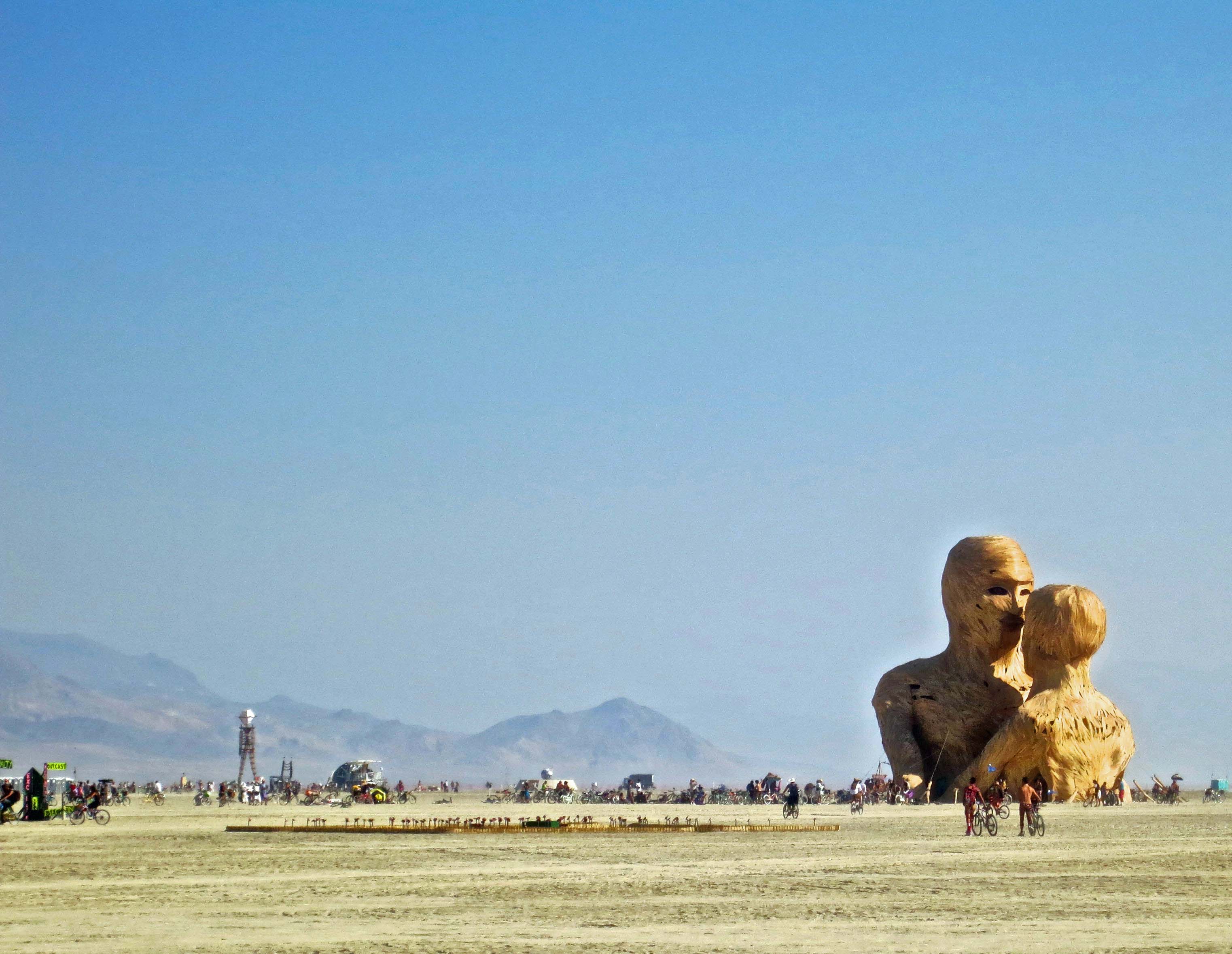
Embrace sculpture built by the Pier Group at the Generator warehouse in Reno, Nevada and featured at Burning Man in 2015.

Even from a distance, the size of this 72 foot sculpture built by the Pier Group at the Generator is obvious.
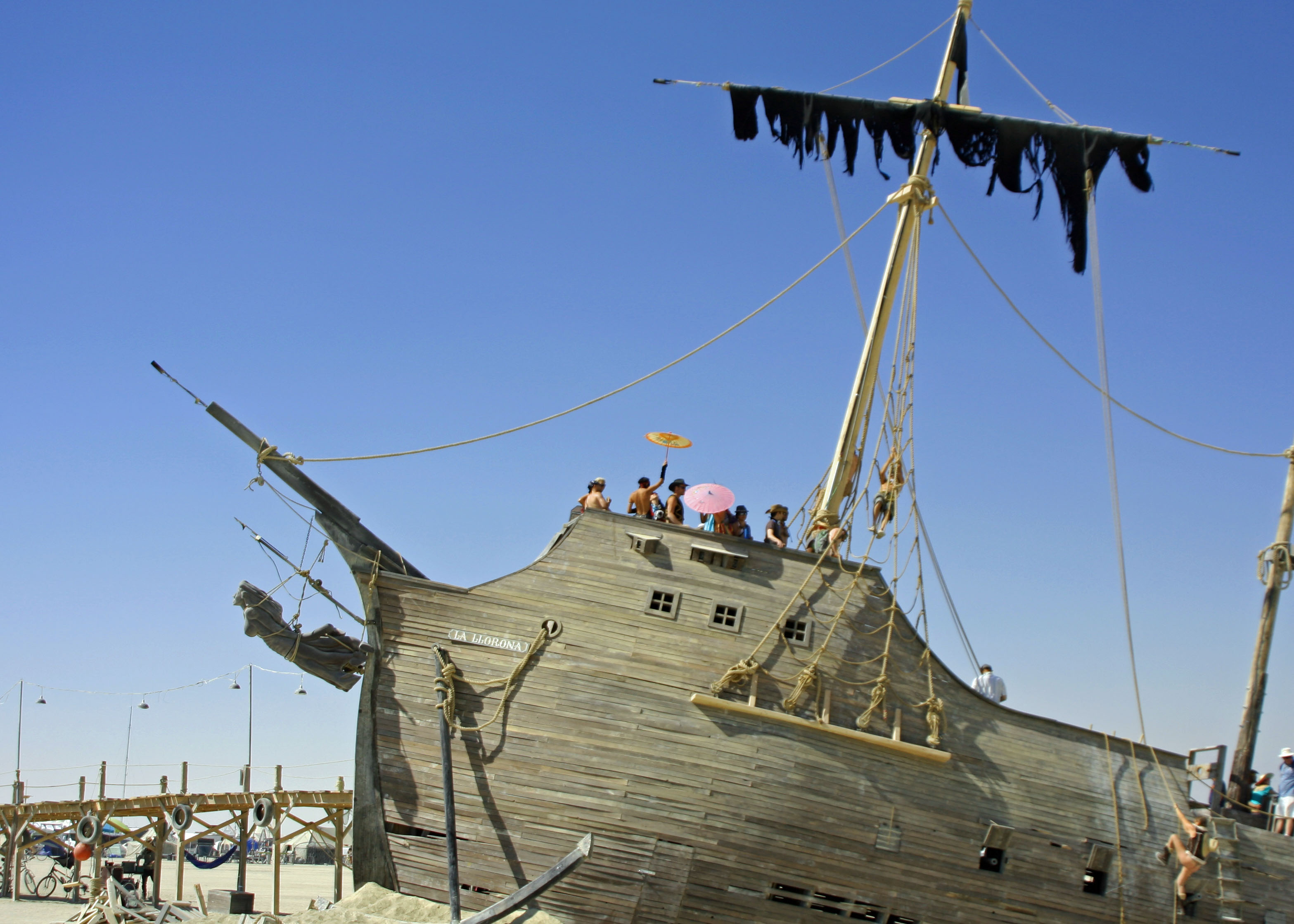
Pirate ship at Burning Man built by the Pier Group at the Generator in Reno, Nevada.

This pirate ship partially sunk in the sand was another major project the Pier Group took on.
Logo of the Generator warehouse in Reno Nevada.

Logo.

First, however, I want to mention an event that took place in Londonderry, Northern Ireland in March. I’ve blogged several times about Burning Man’s Temples. Several of these were designed and built by David Best with a large crew of dedicated volunteers. This spring, David was invited to build a similar structure in Londonderry that would be burned, as each Burning Man Temple is. Not everyone in Londonderry thought it was a good idea. The Northern Ireland feud between the Protestants and Catholics has been tearing the city apart for what seems like forever, or at least since 1688 and things that burned were often related to fire bombs. As was noted in a New York Times article, “Burning a 75-foot-tall pagan temple in a Republican Catholic enclave on the loyalist Protestant side of town to ‘bring people together’ seemed, well, mad.” This could have proven to be, well, a gigantic understatement. But it wasn’t.

What happened was that the event turned out to be a powerful force of reconciliation, including bringing people together who had been dedicated enemies all of their lives. 60,000 people (half of the city’s population) came to the temple and left messages for loved ones who had passed on and 15,000 Protestants and Catholics joined in watching the Temple burn. The event is a powerful example of what I am talking about in terms of Burning Man’s impact outside of its home in the Black Rock Desert. I highly recommend reading the NY Times article.
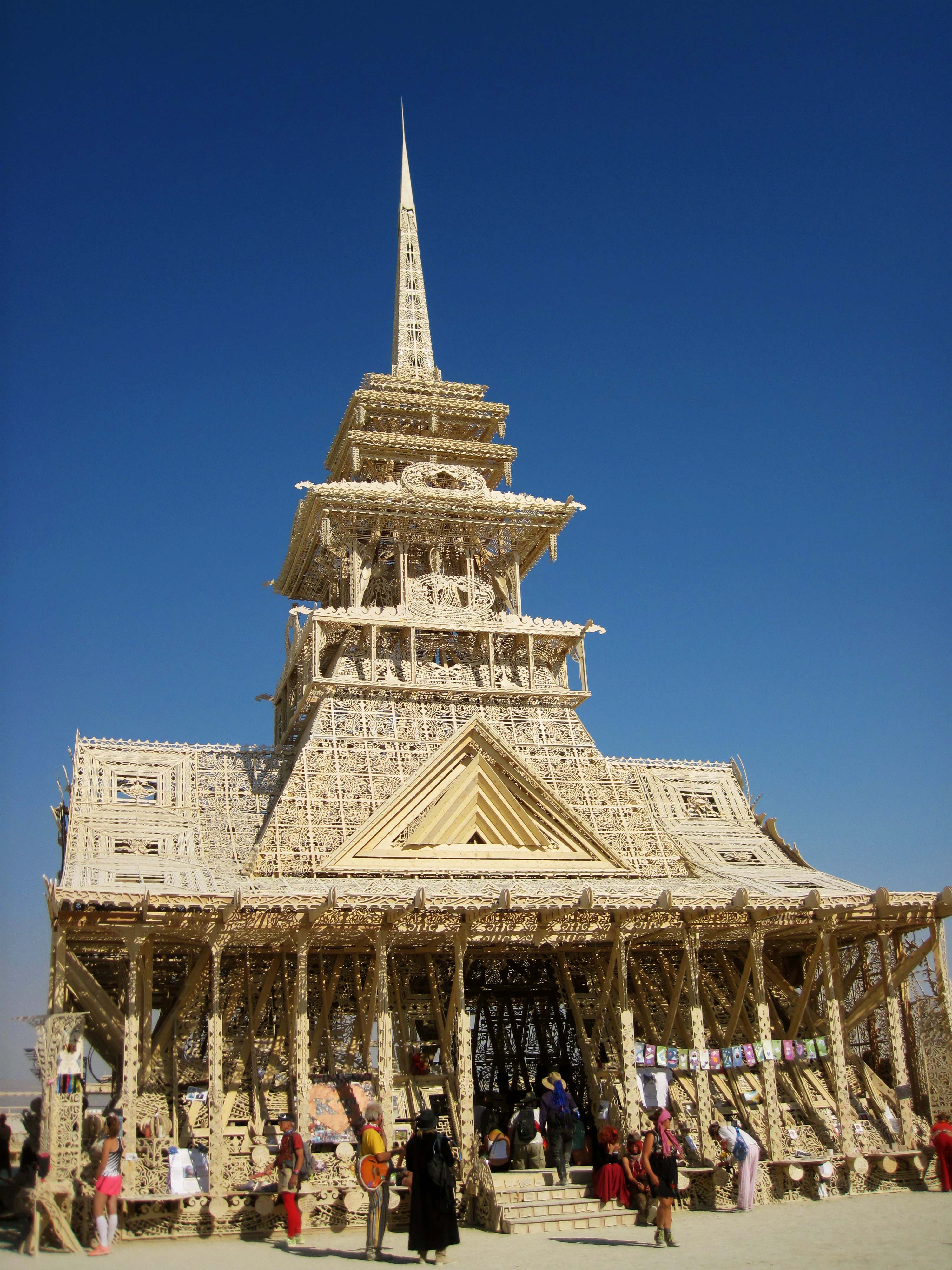
A Burning Man Temple built by David Best and volunteers.

A Burning Man Temple built by David Best and volunteers.

I view the Generator as another example. Matt Schultz and his band of merry followers, the Pier Group, are the visionary force behind the Generator. “We’re an inclusive art space for anyone who wants to make art and be part of a creative community,” the Generator’s Internet site declares. While numerous Burning Man Projects are conceived and built at the Generator, the facility has no direct affiliation with the event, and many non-Burning Man art projects are also produced at the warehouse. Non-Burners as well as Burners are invited to become members. The process is incredibly easy. Just show up with a specific art project or dream of an art project. Discuss it with Matt or one of his cohorts, obtain approval, and sign a waiver. Welcome aboard.
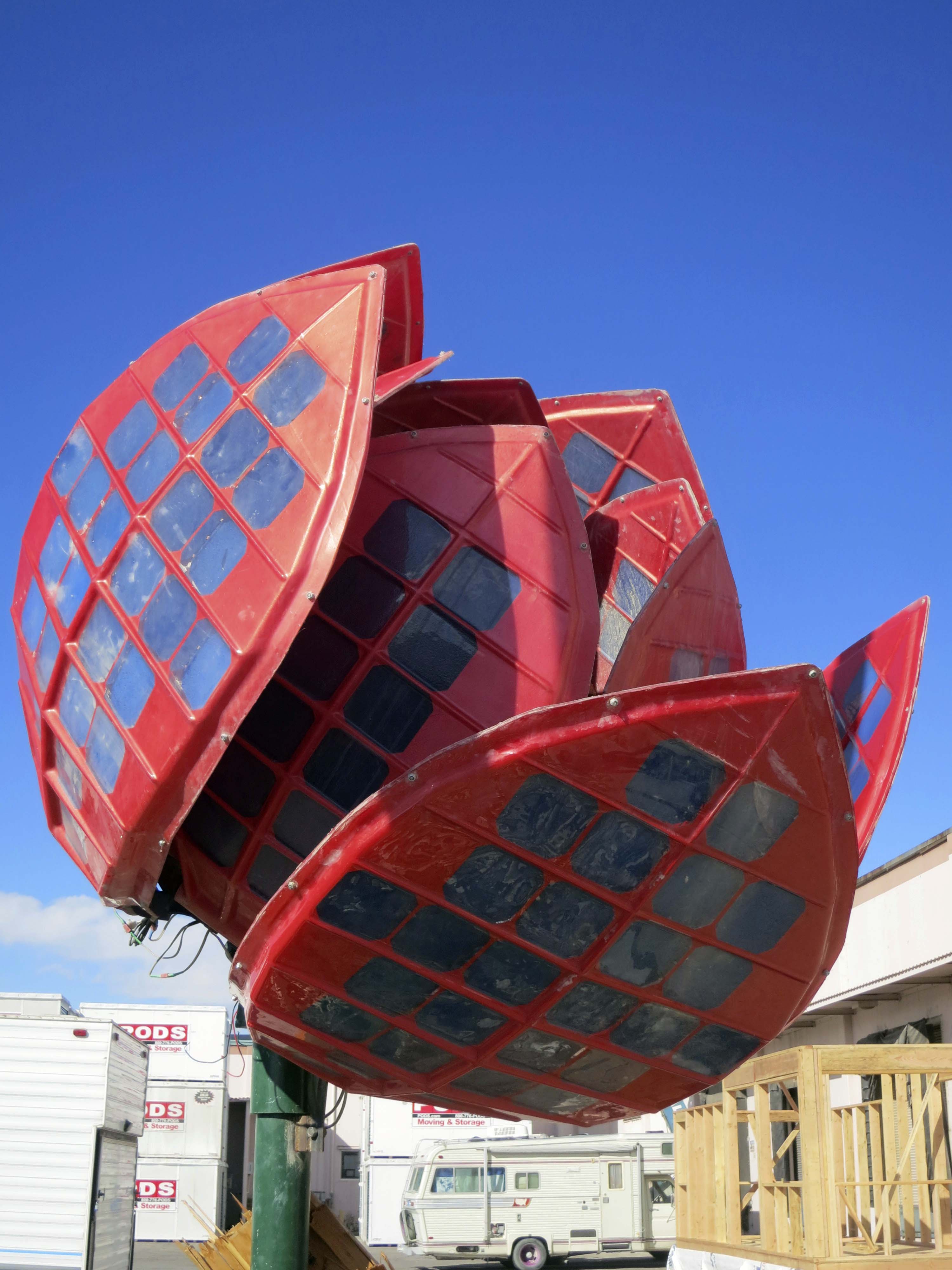
Flower sculpture outside of the Generator warehouse in Reno, Nevada.

We drove around Sparks looking for the Generator. When we found this flower sculpture, we knew we had arrived. It is very Burning Man like. The small structure on the right is a tiny house that Matt is building for himself but hopes will become a model for other small houses in Reno.

There are no membership fees and no charges for using the facility. Members have access to an incredible array of tools ranging from large industrial tools to smaller hand tools. There is even a laser printer. The Generator houses a wood shop, a metal shop and a tech shop. There is also a sewing room, a stage, a lounge, a library filled with how-to books— and a small green house! More importantly, there is a warehouse full of creative types who inspire creativity and are more than willing to offer a helping hand when asked.
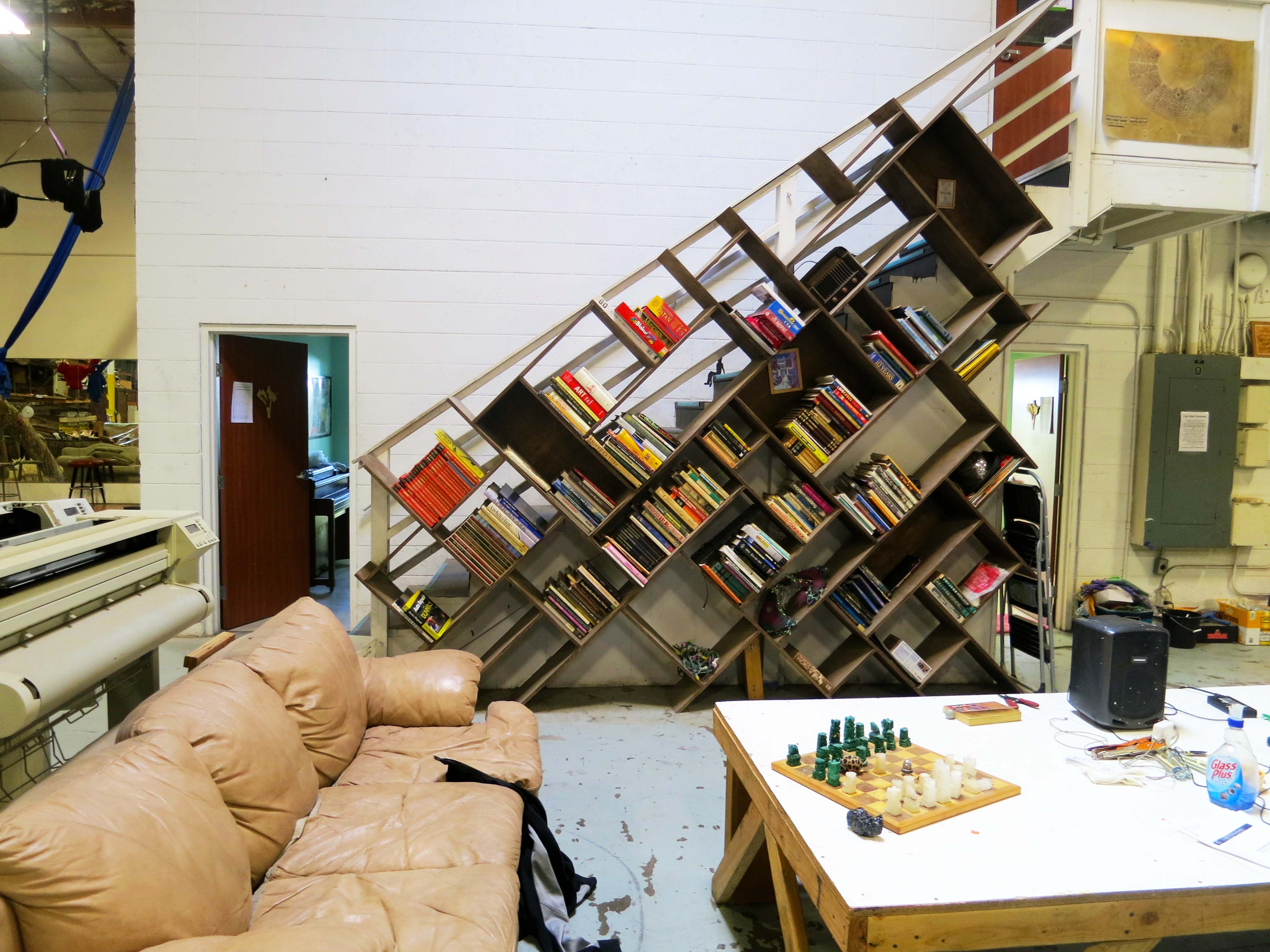
Strange book shelf arrangement at the Generator art warehouse in Reno, Nevada.

As you might imagine, even the library of how-to books takes on a different look at the Generator.
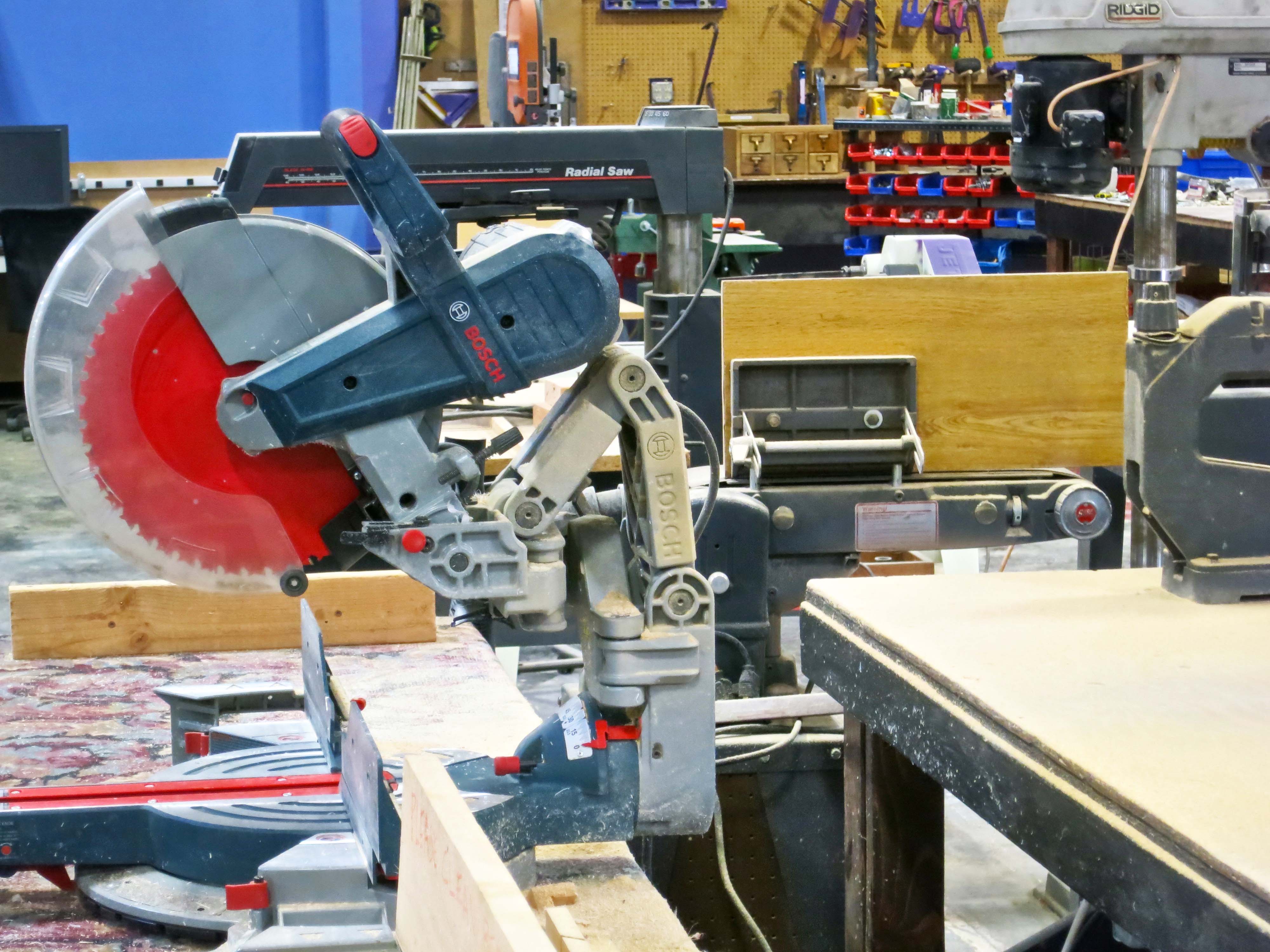
A variety of tools are available for use at the Generator including this saw. Anyone who wants to use tools like this one are checked out first to make sure they know how to use them. Safety is heavily emphasized.
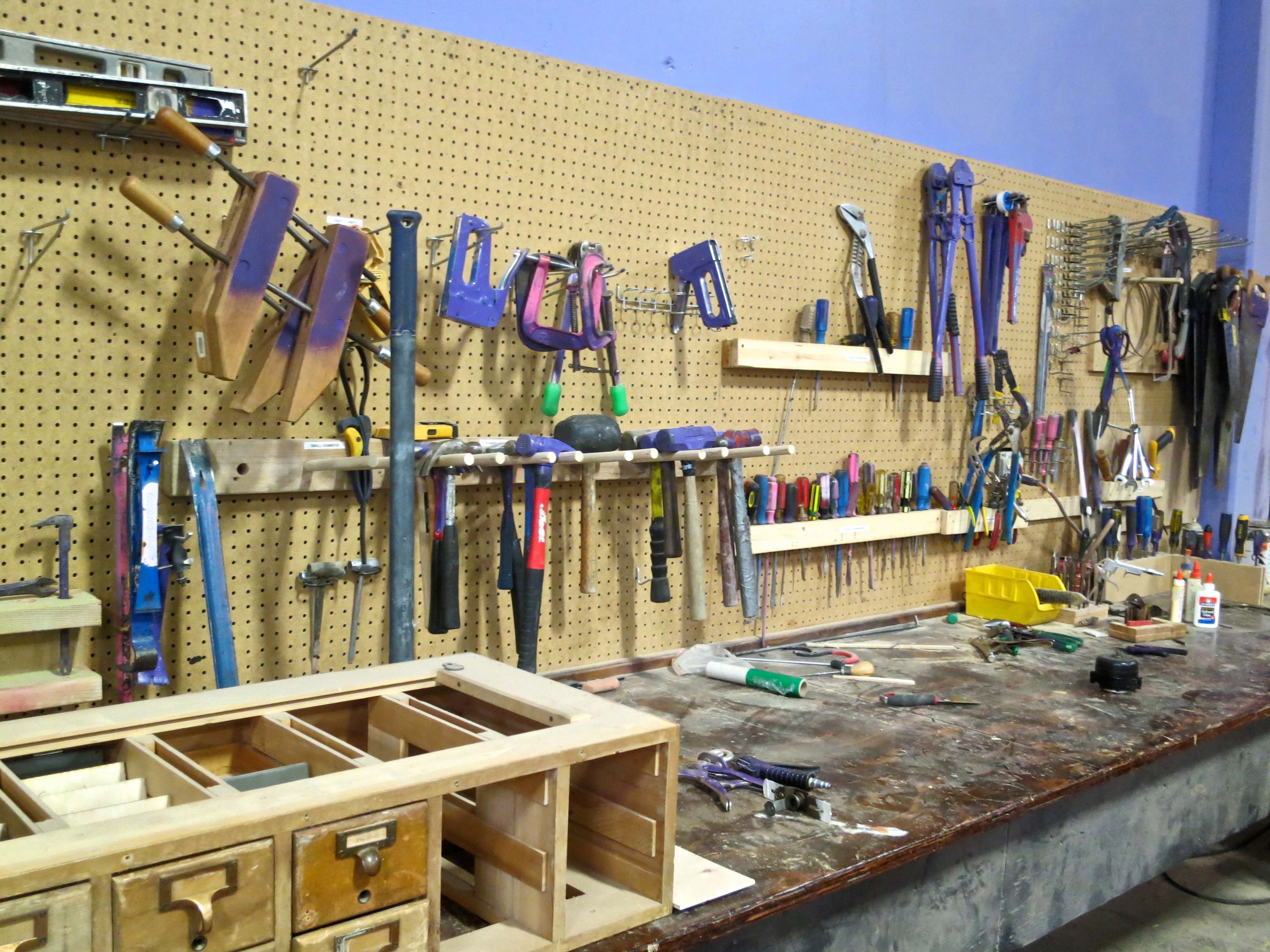
A variety of tools are available for use at the Generator. Anyone who wants to use industrial sized tools like this one are checked out first to make sure they know how to use them. Safety is heavily emphasized.

A wide range of hand tools are available.

A selection of the hand tools that are available.
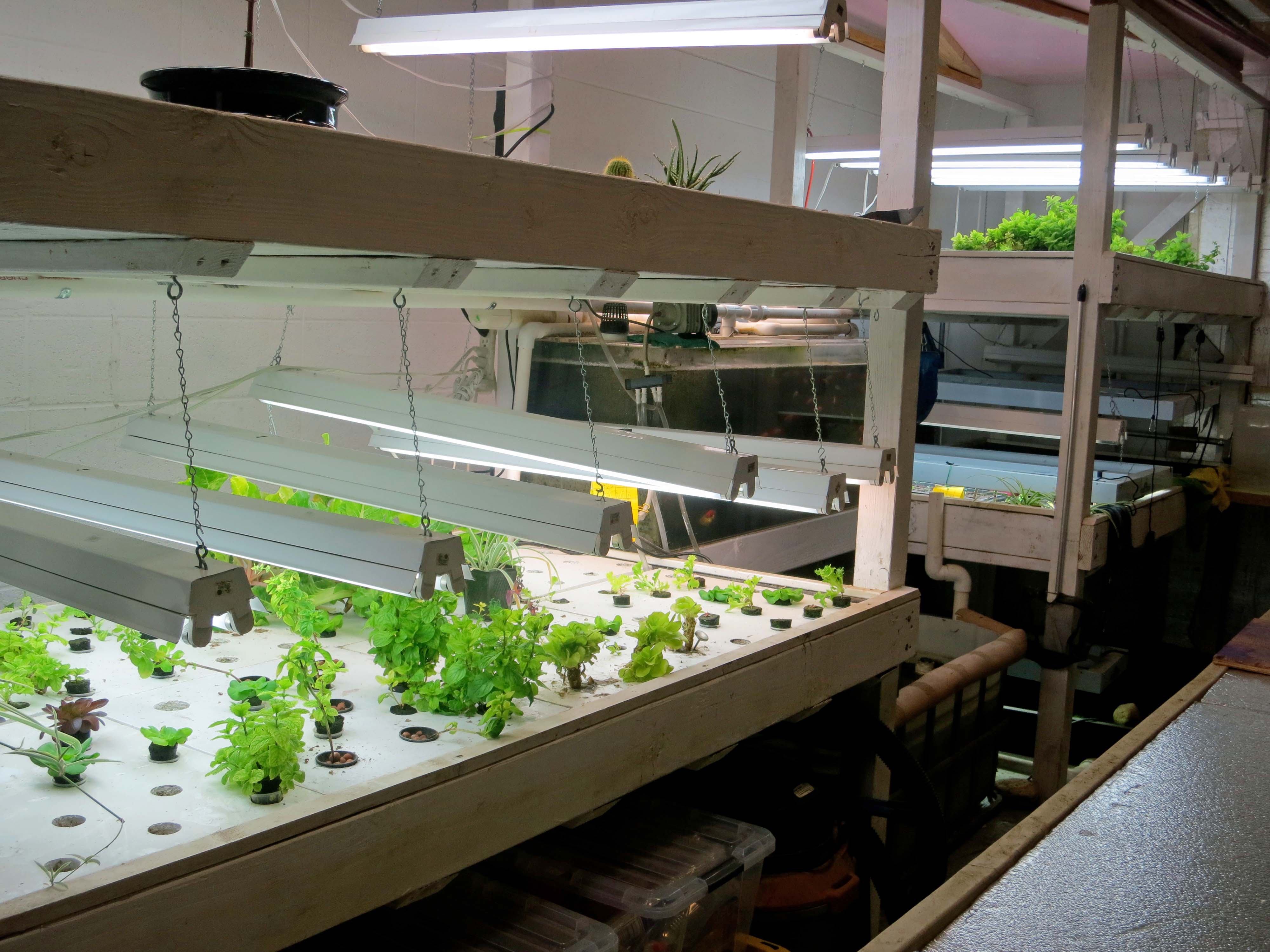
A mini-garden located at the Generator in Reno, Nevada.

I confess I was surprised to find a mini-garden growing.

The readiness to contribute is an underlying principle of the Generator. “We are looking for people willing to share their time, skills and resources to help build a greater community together.” Such sharing might come in terms of offering a workshop in an area of expertise, loaning out a tool, or even doing heavy lifting when heavy lifting is called for. There are also more nitty-gritty expectations such as keeping personal workspaces clean and helping to maintain common areas such as the bathroom and kitchen. I was somewhat amused to find that the Generator has an official “No Asshole Policy.” Members are expected “to be kind, honest and direct with each other.” “Hey birdbrain, why don’t you clean up your pigsty,” might meet the directness criteria but it fails on kindness.
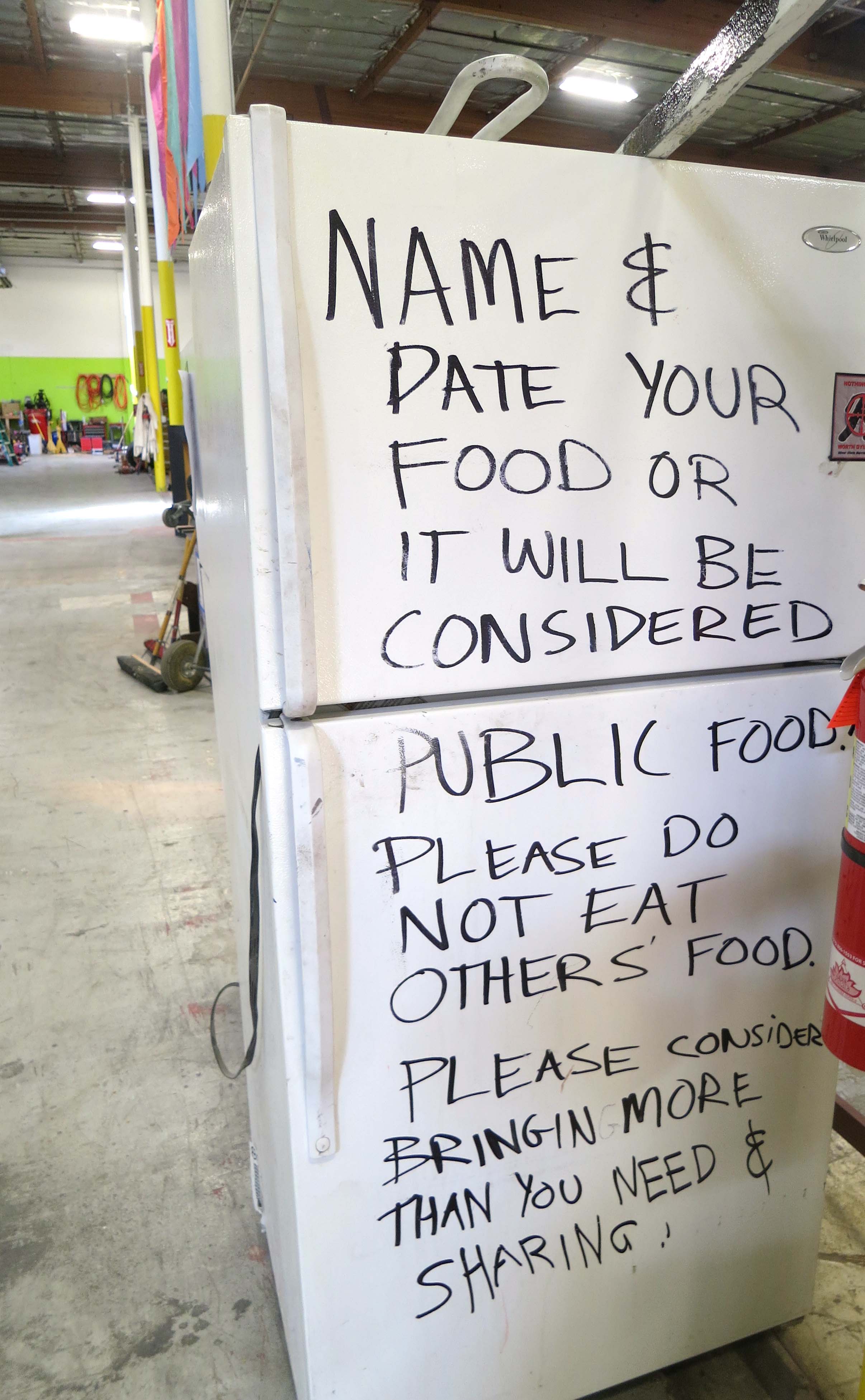
There was nothing subtle about the sign on the refrigerator.

There was nothing subtle about the sign on the refrigerator.

While perusing the Generator’s website, I came across one of my favorite all-time quotes:

“Never doubt that a small group of thoughtful, committed citizens can change the world; indeed, it’s the only thing that ever has.” Margaret Mead

The website proclaims: “Our goal is to foster a community that spends more time pursuing creative endeavors of the mind and heart, inventing and building, and spending a bit more time enjoying the beautiful world we live in. By encouraging more thoughtful, creative interactions we believe everyone has the power to change the world! We are here to share knowledge, build our greatest dreams and laugh the entire time.”

I am a big fan of laughing.

Matt’s vision encompasses the surrounding community as well as the Generator. He is presently working with Reno’s City Council on finding a larger site nearer the center of town. His plans include building a community garden, creating small residential spaces for up to 25 artists, involving and revitalizing the surrounding community, and moving the Generator (expanding its size to 50,000 square feet). All of this, he states, will be done utilizing the latest in environmentally sound building techniques.

The most ambitious element of the plan is to utilize the pirate ship and Embrace, as the start of what would become a world-class sculpture garden on par with those of London, New York and Paris. All of this might seem a little naïve, perhaps a little pie in the sky… until you think about what Matt and the Pier Group have already accomplished.

As I wandered around in the Generator, I became a believer.
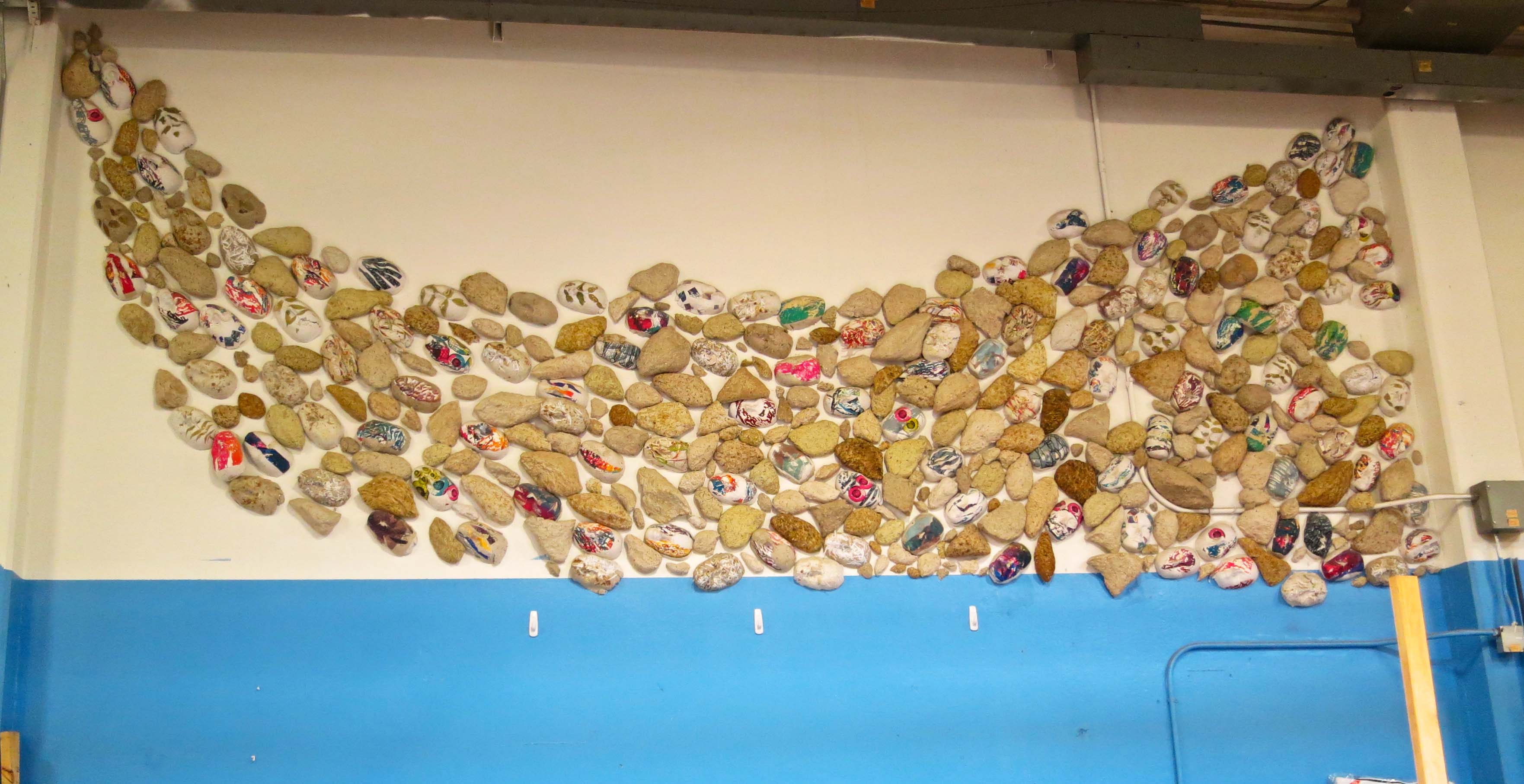
One of the fist things I noticed was this rock 'path' working its way along the back wall.

One of the fist things I noticed was this rock ‘path’ working its way along the back wall.
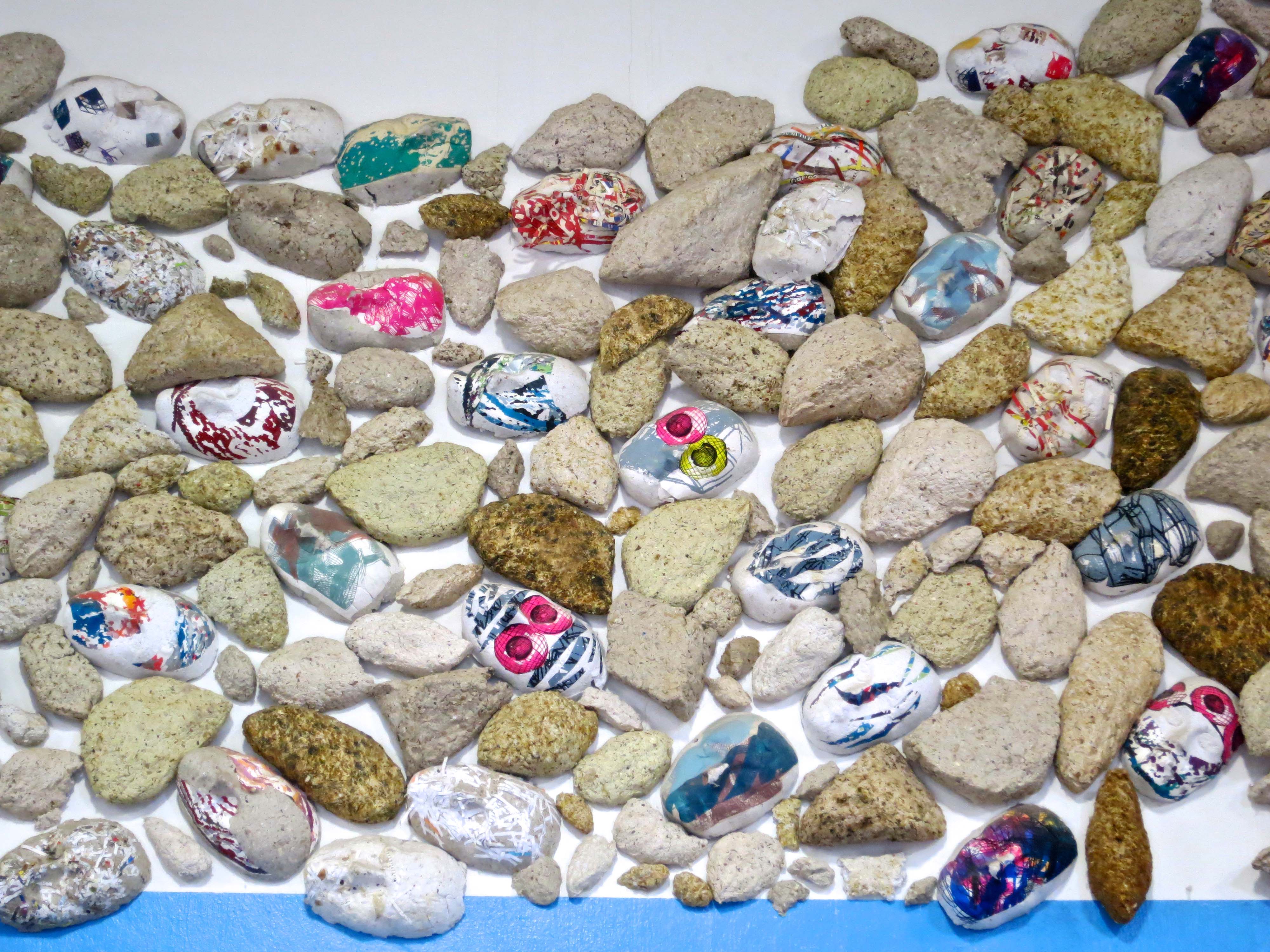
Rock art in Generator art warehouse in Reno, Nevada.

Checking closer, I found numerous little faces staring at me.
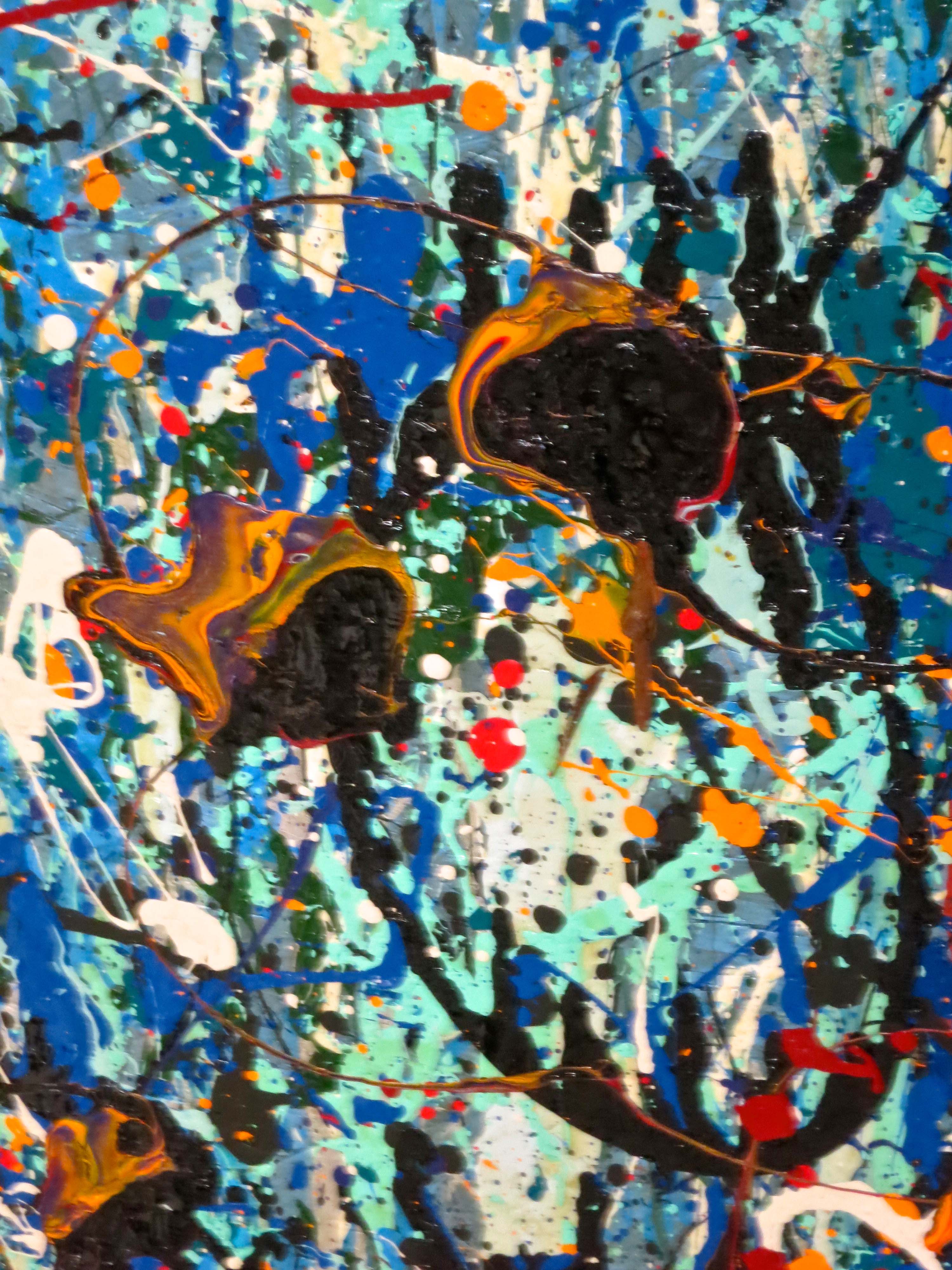
Painting at Generator ware house in Reno, Nevada.

The next thing that captured my attention was a work of modern art. Watch out Jackson Pollock.
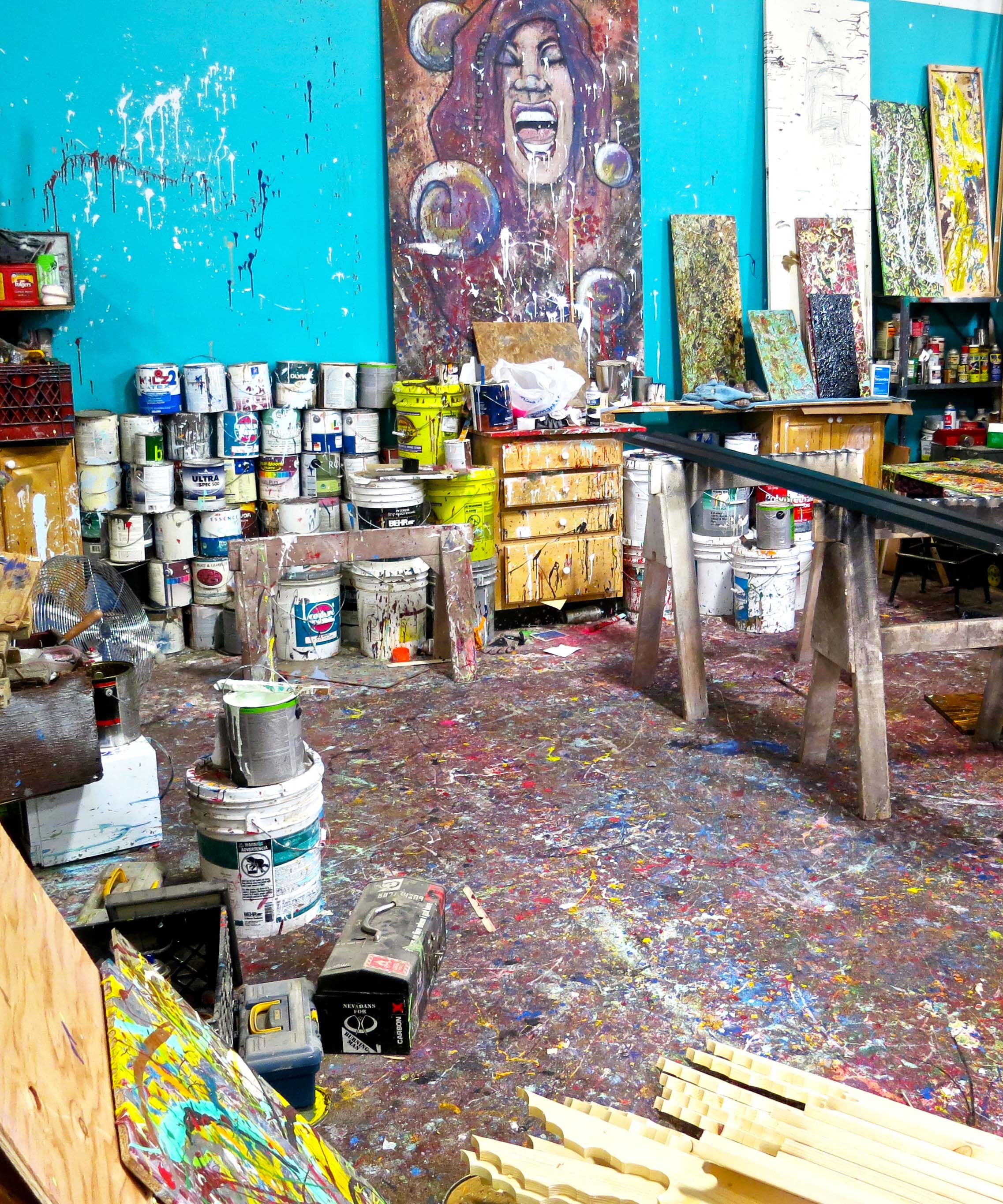
Painter's art studio at the Generator in Reno, Nevada.

There was no doubt where the painting was created. Even the floor demanded attention.
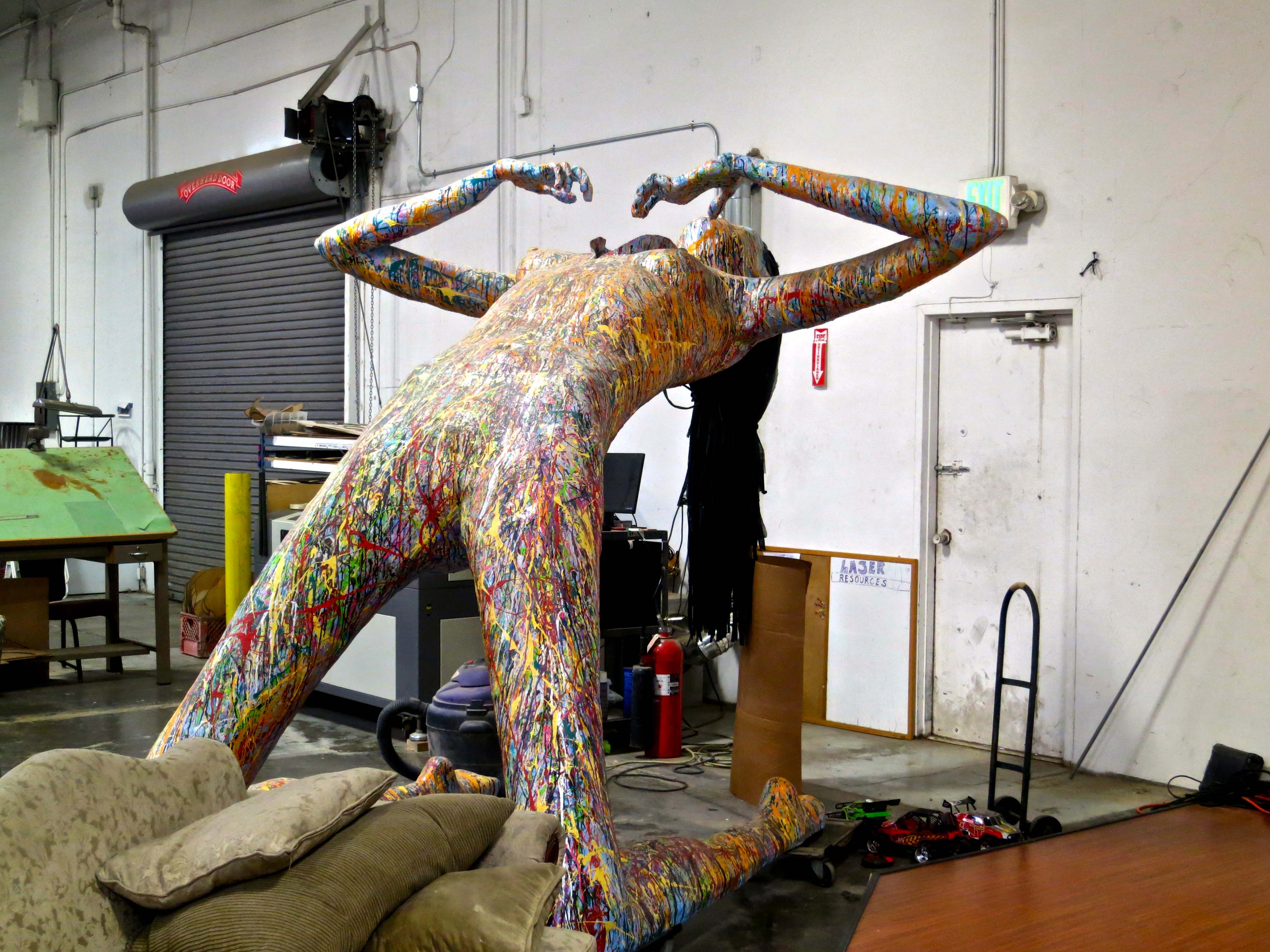
I suspect this acrobatic woman spent time in the art studio. In fact, she may have been at least partially responsible for the decorated floor.

I suspect this acrobatic woman spent time in the art studio. In fact, she may have been at least partially responsible for the decorated floor and walls.
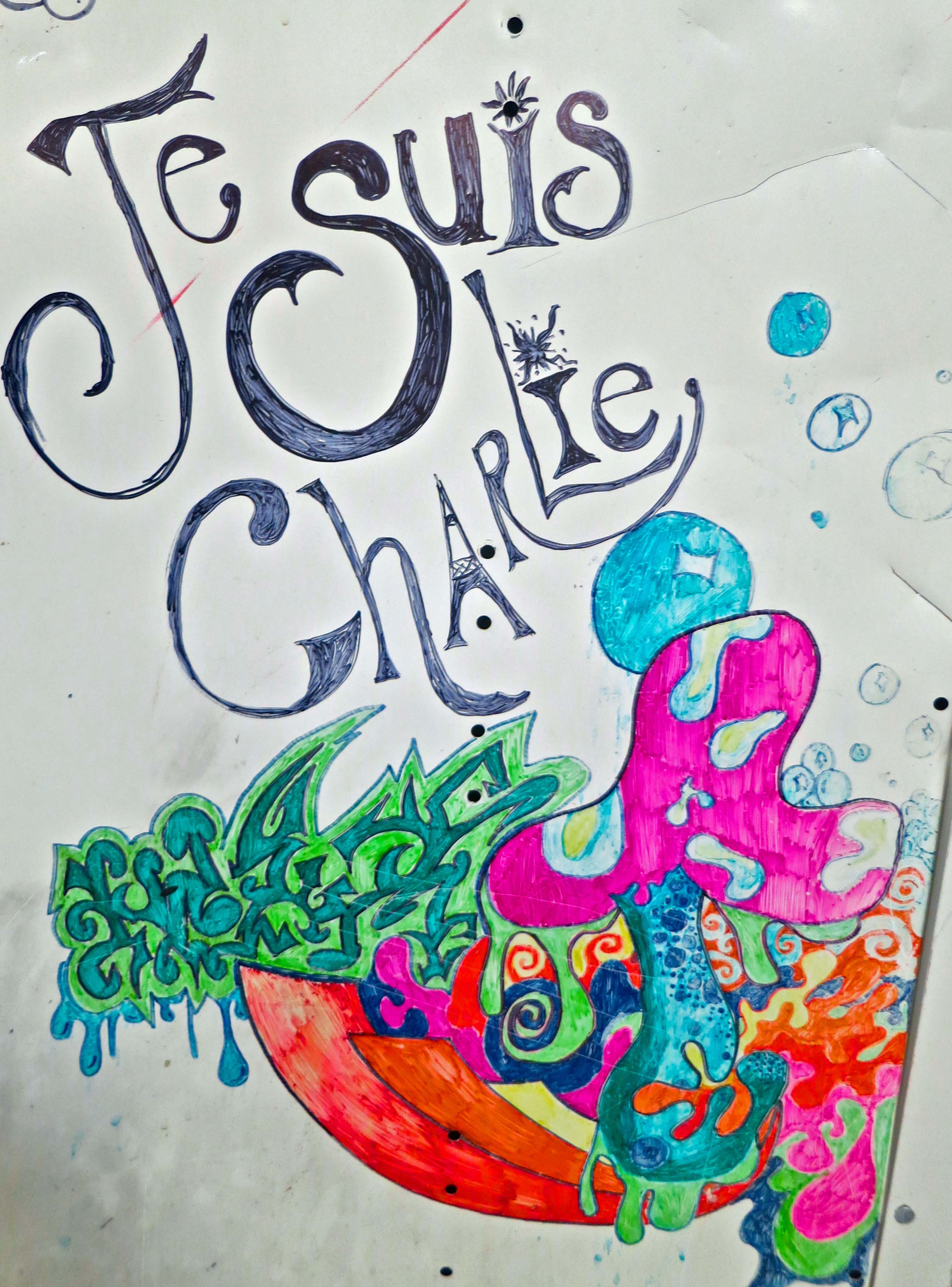
Je suis Charlie sign at the Generator warehouse in Reno, Nevada.

Located among the paintings was a poignant reminder.
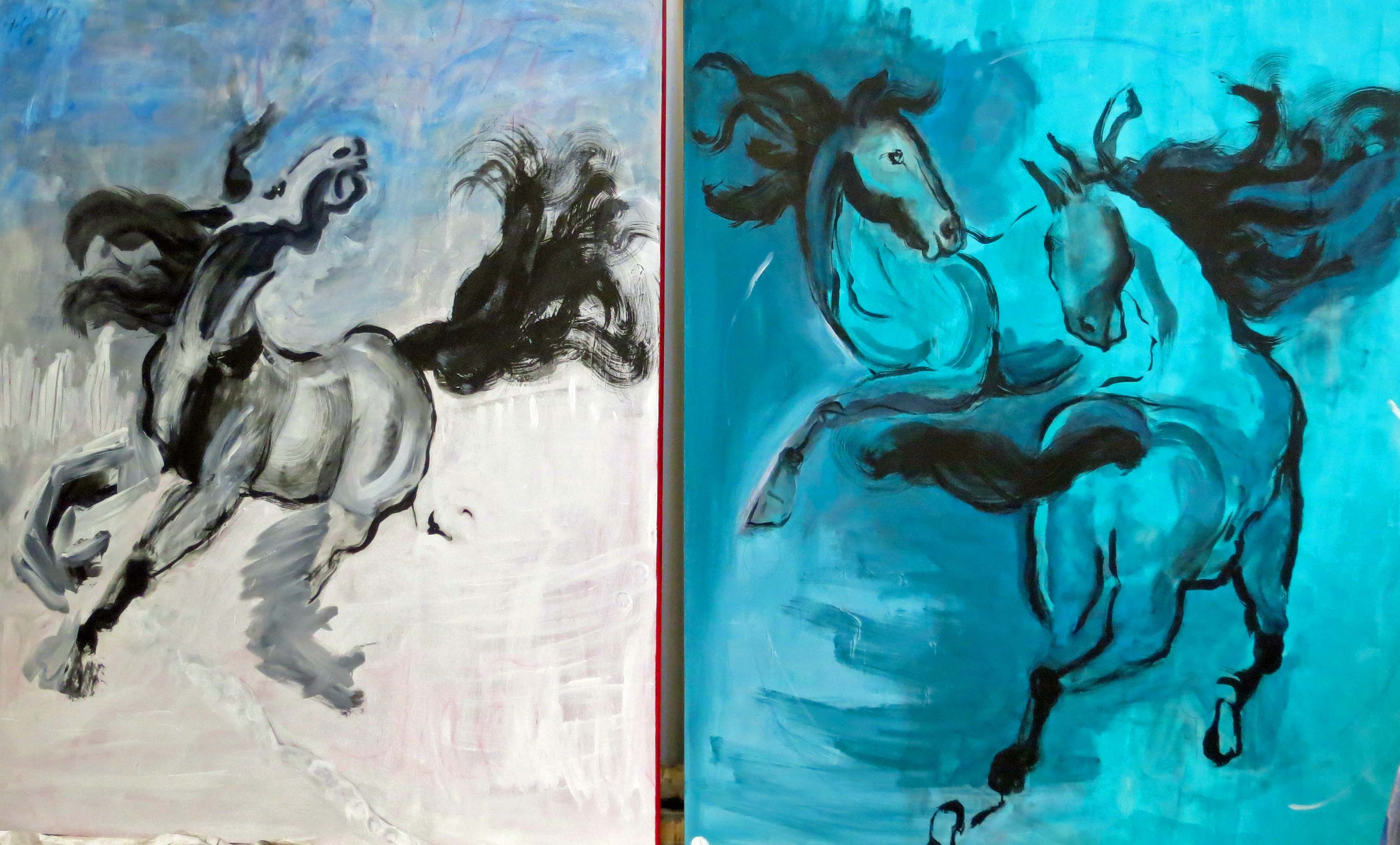
Paintings of horses at the Generator warehouse in Reno, Nevada.

I was impressed with how the artist, Paula Rie Bonham, rendered the movement of these horses.
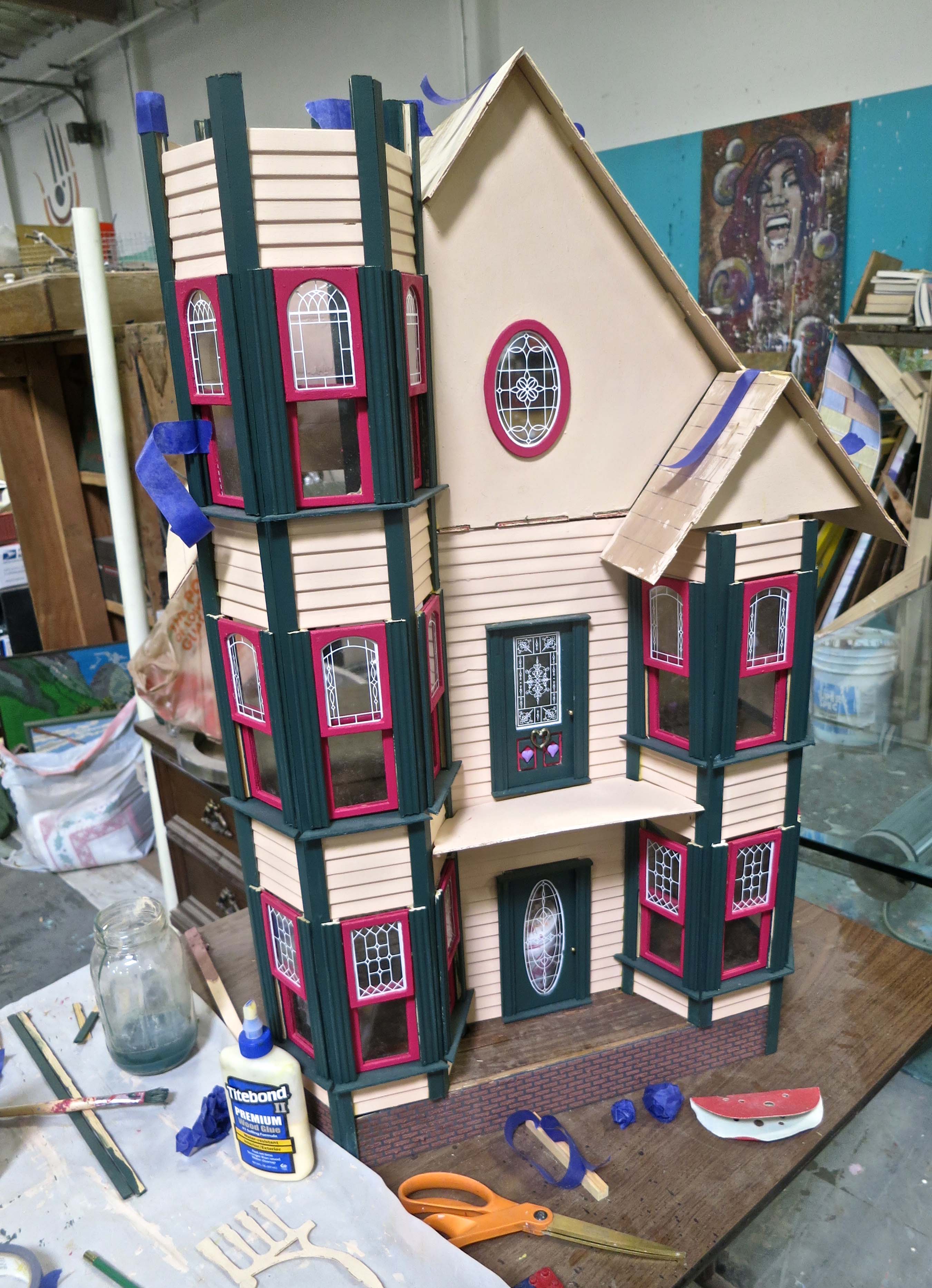
Miniature house being built at the Generator warehouse in Reno, Nevada.

Someone was having fun creating this miniature house. It reflected the diversity of the projects being undertaken in the Generator. It also looked like something my wife Peggy would love to tackle.
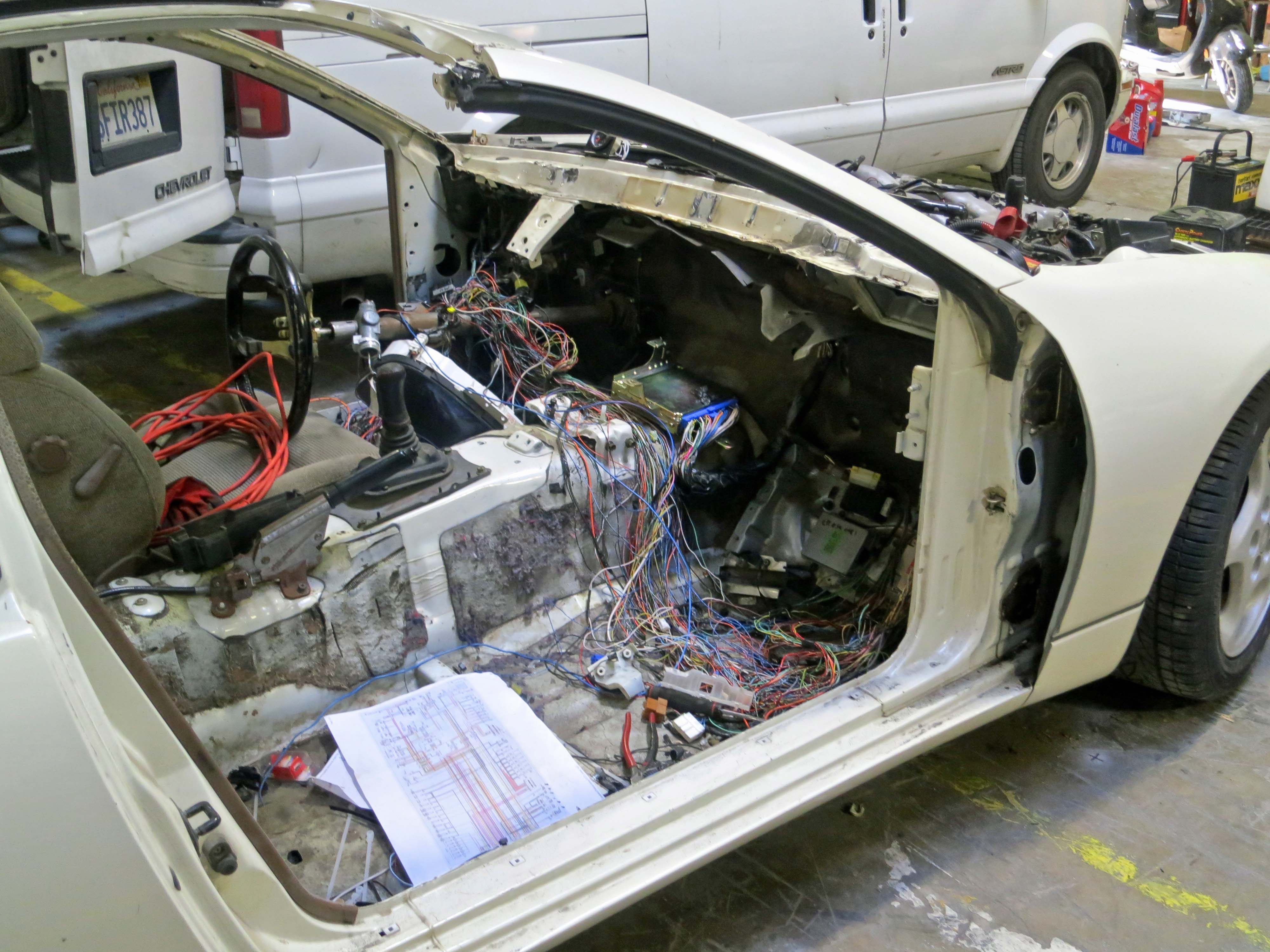
Art car in production at the Generator warehouse in Reno, Nevada.

My guess is that this is an art car or mutant vehicle in production that will eventually make its way to Black Rock City.
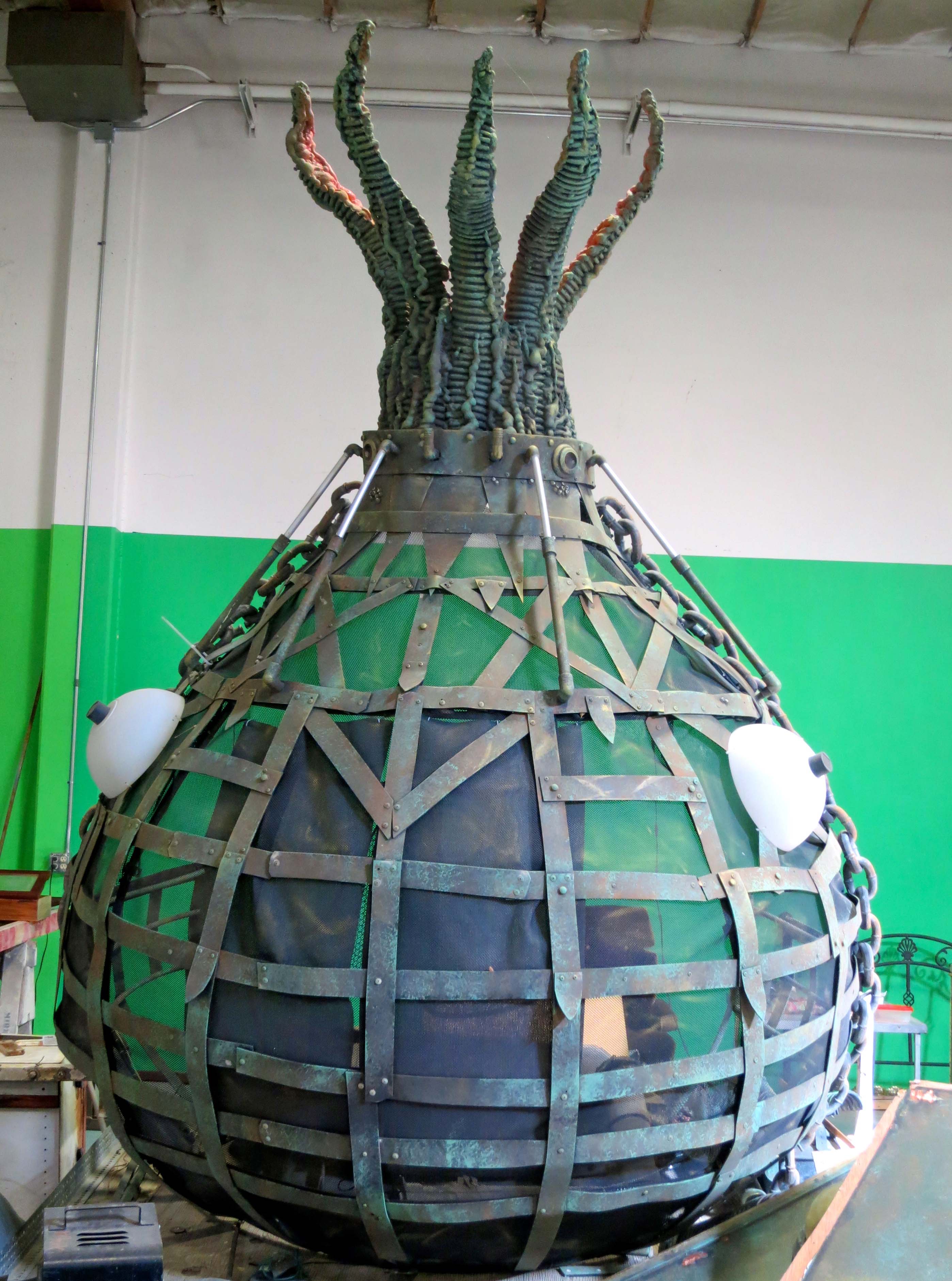
I wondered if this buggy eyed creature would be added to the art car.

I’ll conclude with this buggy eyed creature. I wondered if it was destined to be attached to the art car. NEXT BLOG: Spring has sprung in southern Oregon. I’ll introduce you to some of the wildlife that considers our five acres home. Love is in the air.


The Best of Burning Man Series: Conclusion… Things That Burn

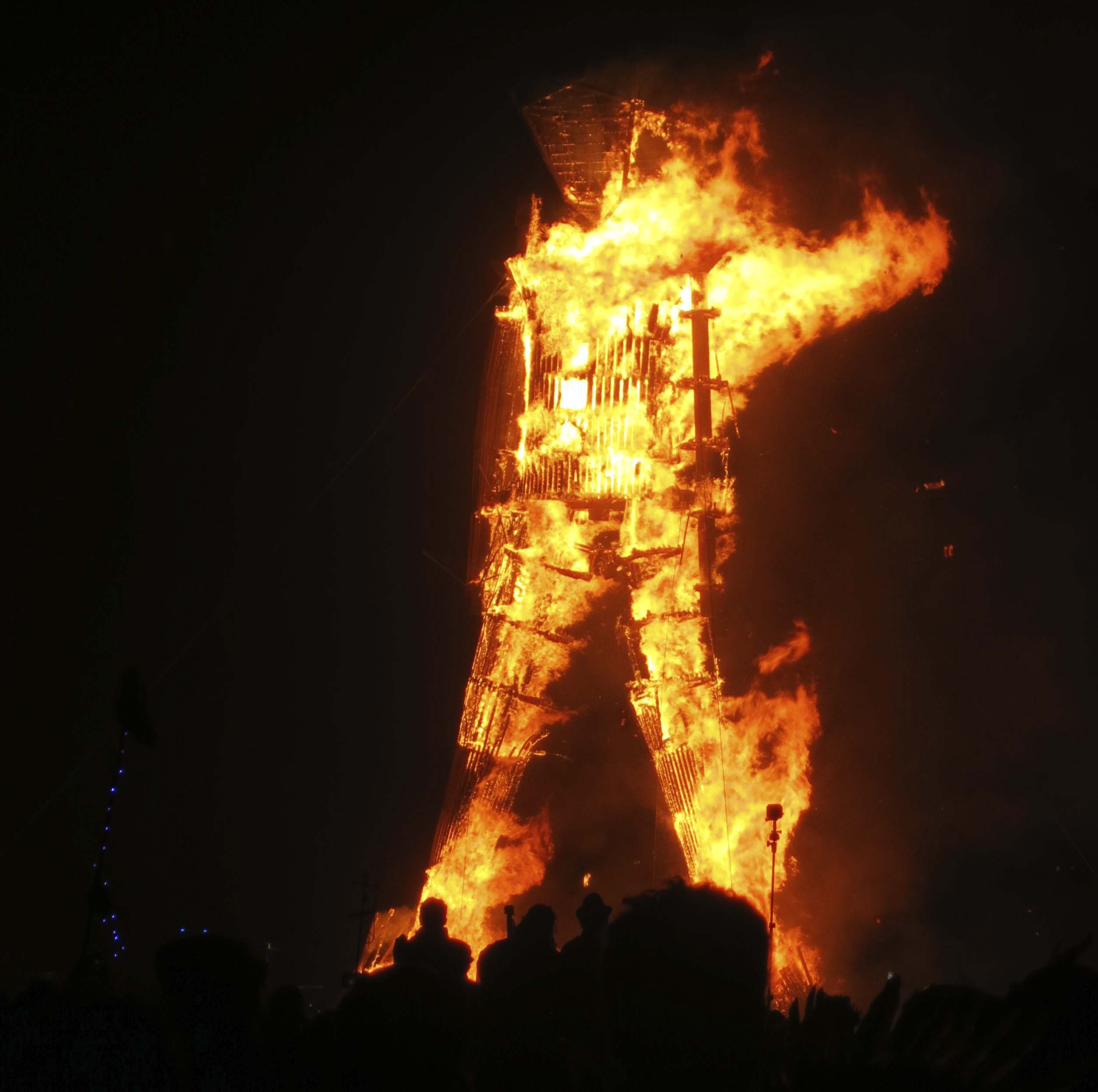
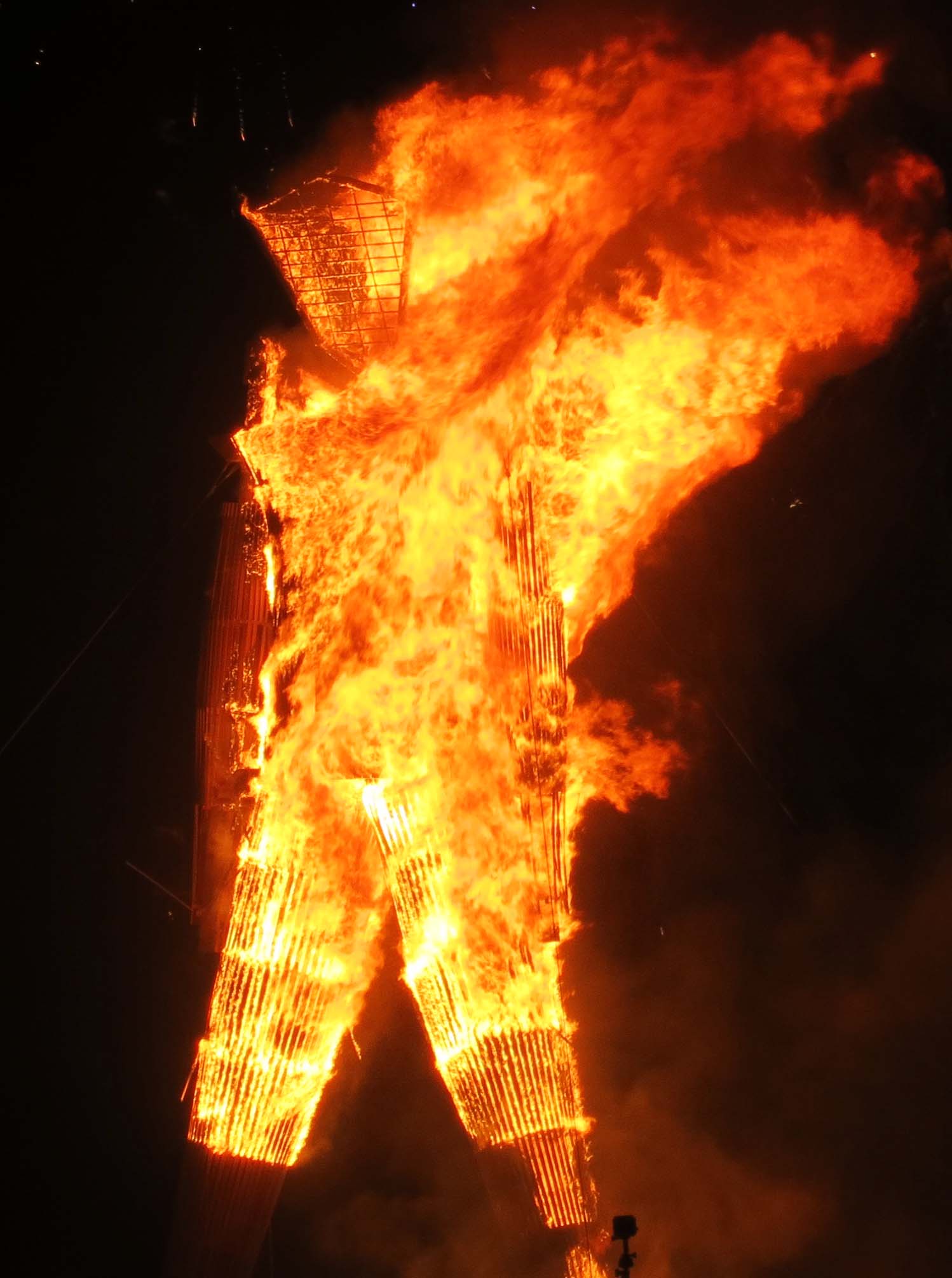
The Man goes to his fiery demise. Like the Phoenix, he will be back next year.

The Man goes to his fiery demise. Like the Phoenix, he will rise again.

At an event called Burning Man, you would expect to see the Man burn. And he does— in a spectacular fashion. It is almost worth the price of a ticket itself. But the Man is only one of many things that burn, including the Temple.

As to why they are burned, my understanding is that the burns represent the impermanence of life; don’t get attached to worldly goods. The Man goes beyond this, however, and behaves like the Phoenix. He goes up in flames at the end of Burning Man and is born again the next year. Hmmm.

Burning the Temple also has an extended meaning. The thousands of messages left for loved ones who have passed on go up in flames and are released to the heavens.

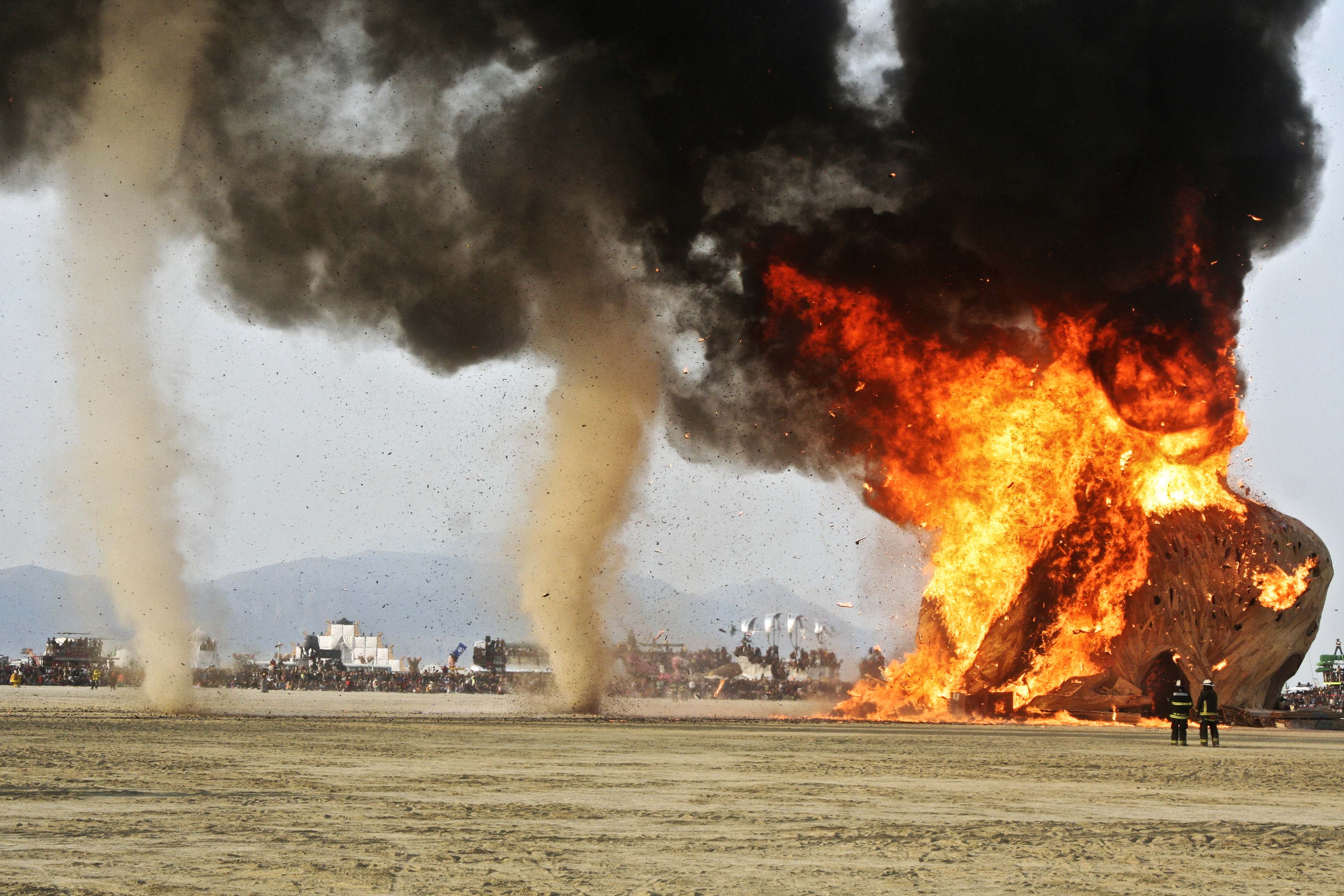
Beyond these reasons, there is a certain beauty and danger to fire that draws us to it like moths to flame. Great drama accompanies burns. Small fires grow to conflagrations. Mini-tornadoes whirl off like dancing dervishes. Burners hold their breath waiting for structures to crash to the ground. Shiva is at work.

Fireworks often accompany the burns and a whole show (including hundreds of fire dancers and drummers) accompanies the burning of the Man.

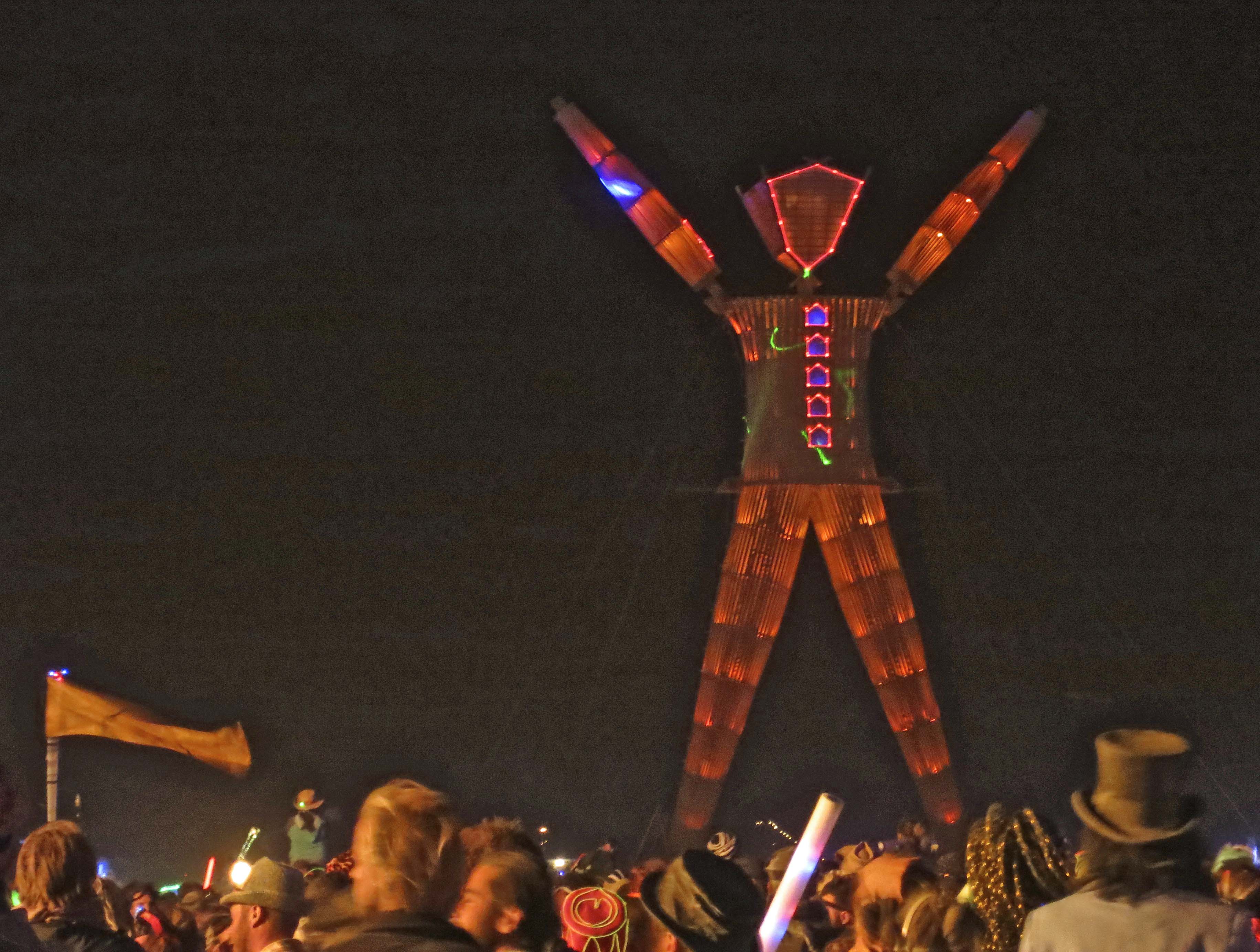
The Man, with arms raised, welcomes Burners to the night of his burn.

The Man, with arms raised, welcomes Burners to the night of his burn.

A fireworks show always precedes and often accompanies the burning of the Man. You'd think you were at a Fourth of July show.

A fireworks show always precedes and often accompanies the burning of the Man. You’d think it was Fourth of July.

Yoohoo!

Yoo-hoo!

Sometimes the Man burns quickly. Other times he may take an hour or longer.

Sometimes the Man burns quickly. Other times he may take an hour or longer.

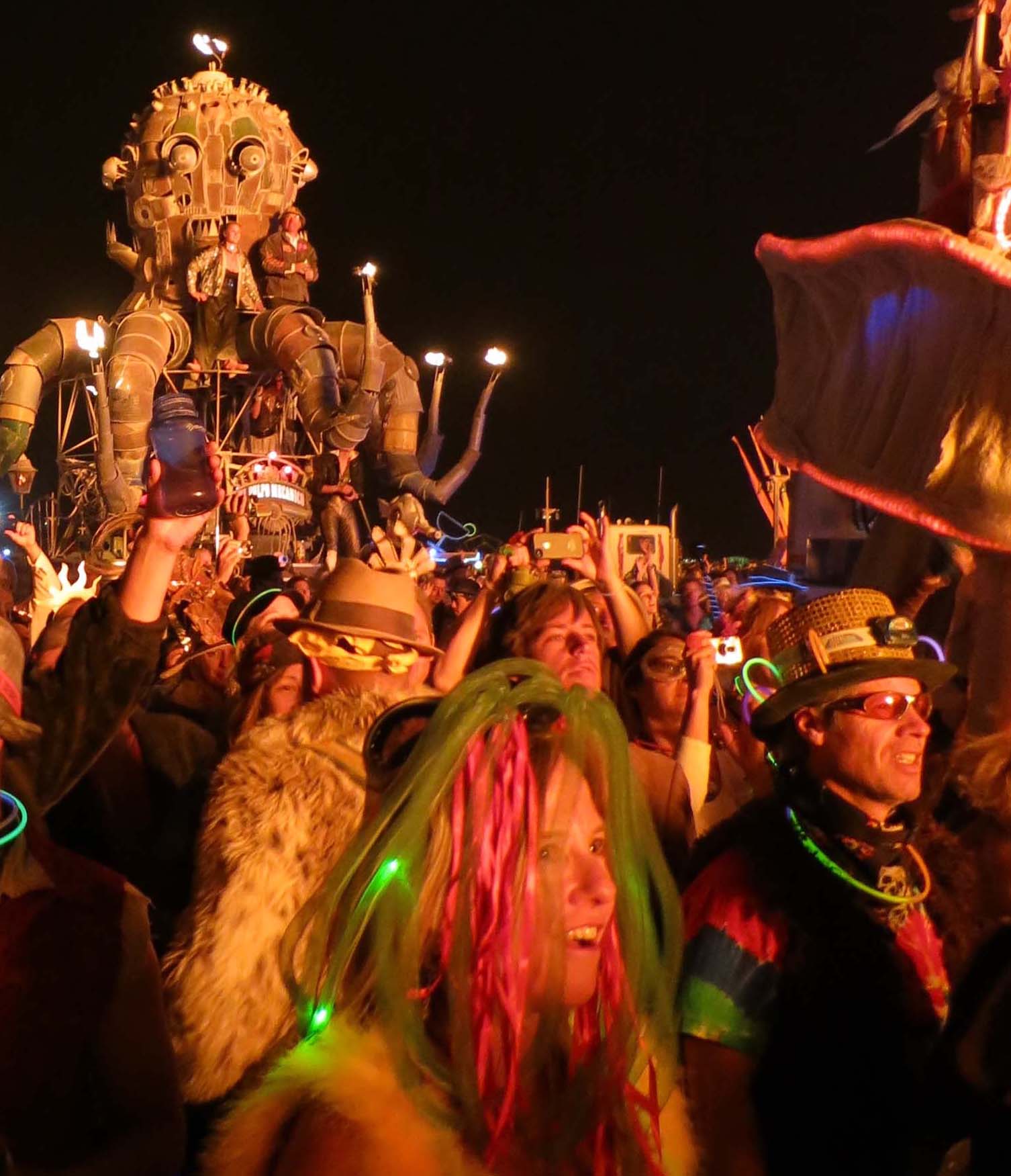
As the end approaches, Burners wait expectantly and raise their arms in salute. The mutant vehicle, El Pulpo Mechanico looks on.

As the end approaches, Burners wait expectantly and raise their arms in salute. The mutant vehicle, El Pulpo Mechanico, looks on.

Many things burn at Burning Man. Here it was Kokopelli. He seemed to be playing his flute to the fire.

Many things burn at Burning Man. In 2012 the New Mexico regional Burning Man group brought Kokopelli to the Playa. He seemed to be celebrating the flames with his flute. Thoughts of Nero fiddling while Rome burned come to mind.

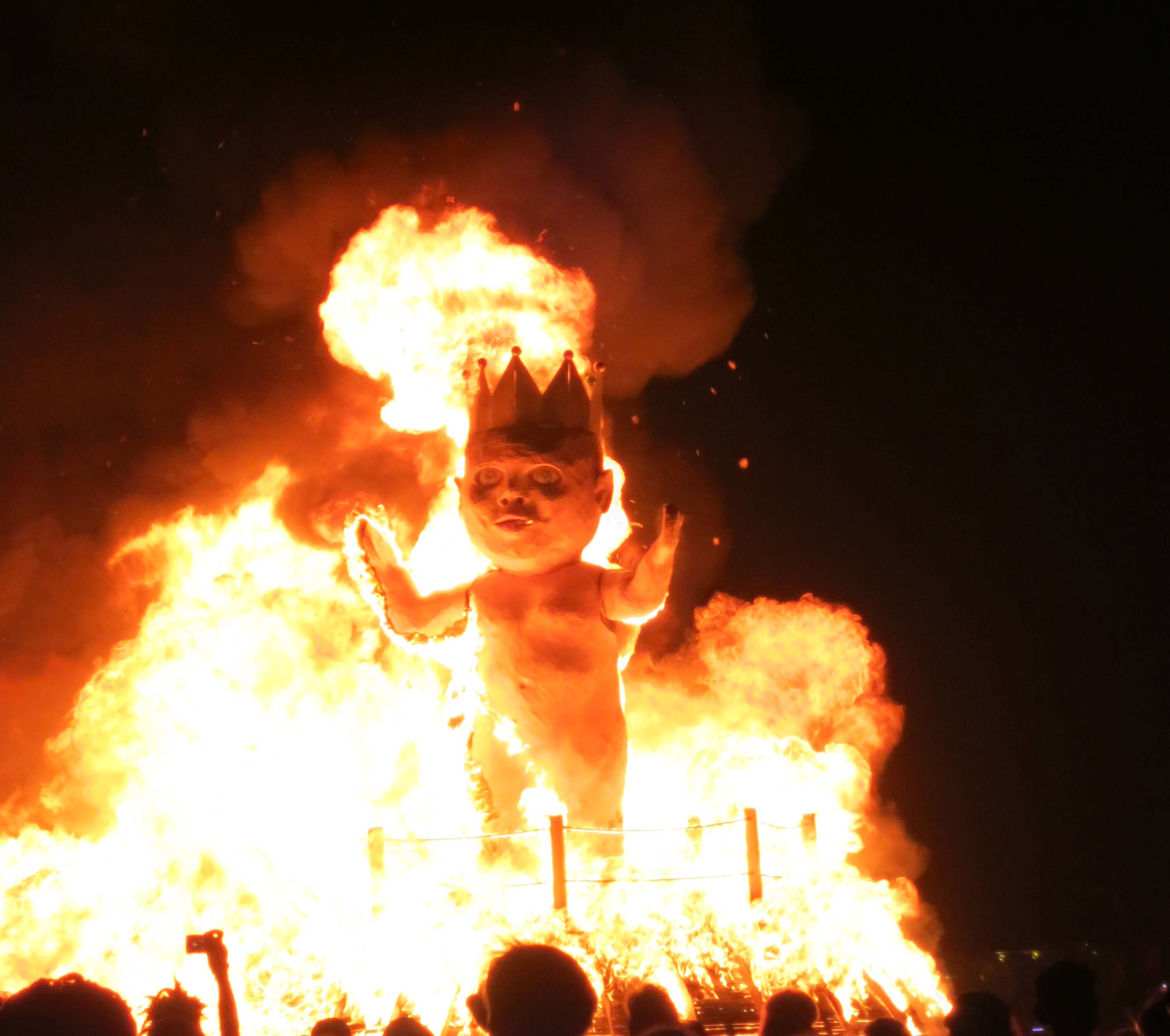
The New Orleans regional group brought an effigy of the Baby King that shows up in cakes at Mardi Gras time.

The New Orleans regional group brought an effigy of the Baby King that shows up in cakes at Mardi Gras time.

And Lithuanian Burners added a bird sculpture.

And Lithuanian Burners added a bird sculpture.

Fires start small.

Fires start small.

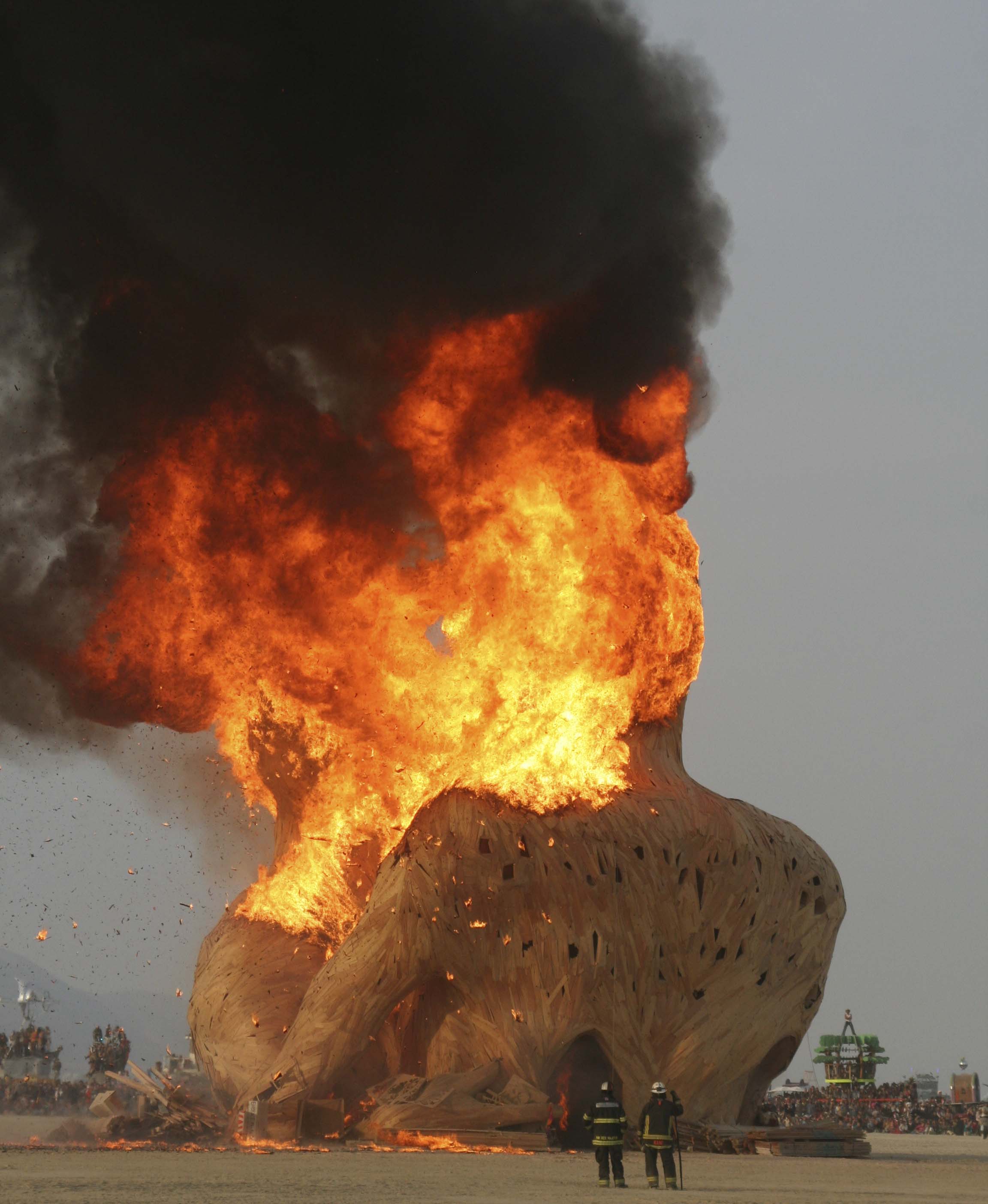
Turn into conflagrations.

Turn into conflagrations. (A pair of firemen get a close up view.)

And send dust devils whirling off.

And send dust devils whirling off.

The Temple burns on Sunday Night. Unlike the Burning of the Man which is a bit on the rowdy side, Burners watch silently and respectfully as the Temple Burns.

The Temple burns on Sunday night. Unlike the Burning of the Man, which can be a bit on the rowdy side, Burners watch silently and respectfully as the Temple burns. NEXT BLOG: I am off to Portland this weekend for the Press-Publish conference of Word Press. I will report on the event next week.

The Best of Burning Man: The Top Ten Series (1)… Monumental Art

Burning Man Fantasy sculpture

Monumental sculptures, some you can climb on, are among the most popular art works at Burning Man.

I am going to be on the road for the next few weeks, so I decided to produce several blogs that might be of interest to my readers but would be easy for me to do: Voila—The Best Of Burning Man series! I’ve now been to Burning Man for ten years starting in 2004 (and will be going again in 2015, assuming I get two tickets and a vehicle pass). Each blog will feature a top ten category such as top ten sculptures, mutant vehicles, etc.

Now, this is important. 1) These are from my perspective. Other people will have different points of view. 2) I never see everything that is available to see at Burning Man. There is simply too much. So it’s quite possible that I have missed some really great things. My apologies. 3) I missed 2011. 4) These photos are not in order of choice. How could I choose? (Grin)

Basically, this series will include a brief introduction and then my top ten choices. There may be captions on my photos, or not. Finally, while Peggy and I have taken the majority of these photos, I have also included photos from Tom Lovering, Beth Lovering, Don Green, and Ken Lake… all members of our ‘tribe,’ and friends.

Series 1: Monumental Sculptures

There is so much great art at Burning Man that selecting 10 would be impossible without some further breakdowns. So I am going to start with Really Big Sculptures. My criteria here is to feature sculptures that are at least 20 feet tall (with one exception). My top ten:

Fantasy sculpture at Burning Man.

A close up of the art work shown above. I call it Fantasy.

Burning Man sailing ship sunk in sand

This massive sailing ship was sunk half in the sand.

The classic female nude has always been a favorite subject of artists. This beautiful woman was over 50 feet tall.

The classic female nude has always been a favorite subject of artists. This beautiful woman was over 50 feet tall.

Nude sculpture at Burning Man reaches for the sky.

Another Burning Man classic by the same artist.

Female nude sculpture at Burning Man lit up at night.

The same sculpture at night. The colors were constantly changing.

Nude sculpture celebrates the break of day at Burning Man.

This beauty was featured during my earlier years at Burning Man. Her hair was made from chains and fire shot out of her hands.

These two oil tankers welded together represented one of Burning Man's environmental themes.

These two oil tankers welded together represented one of Burning Man’s pro-environmental themes.

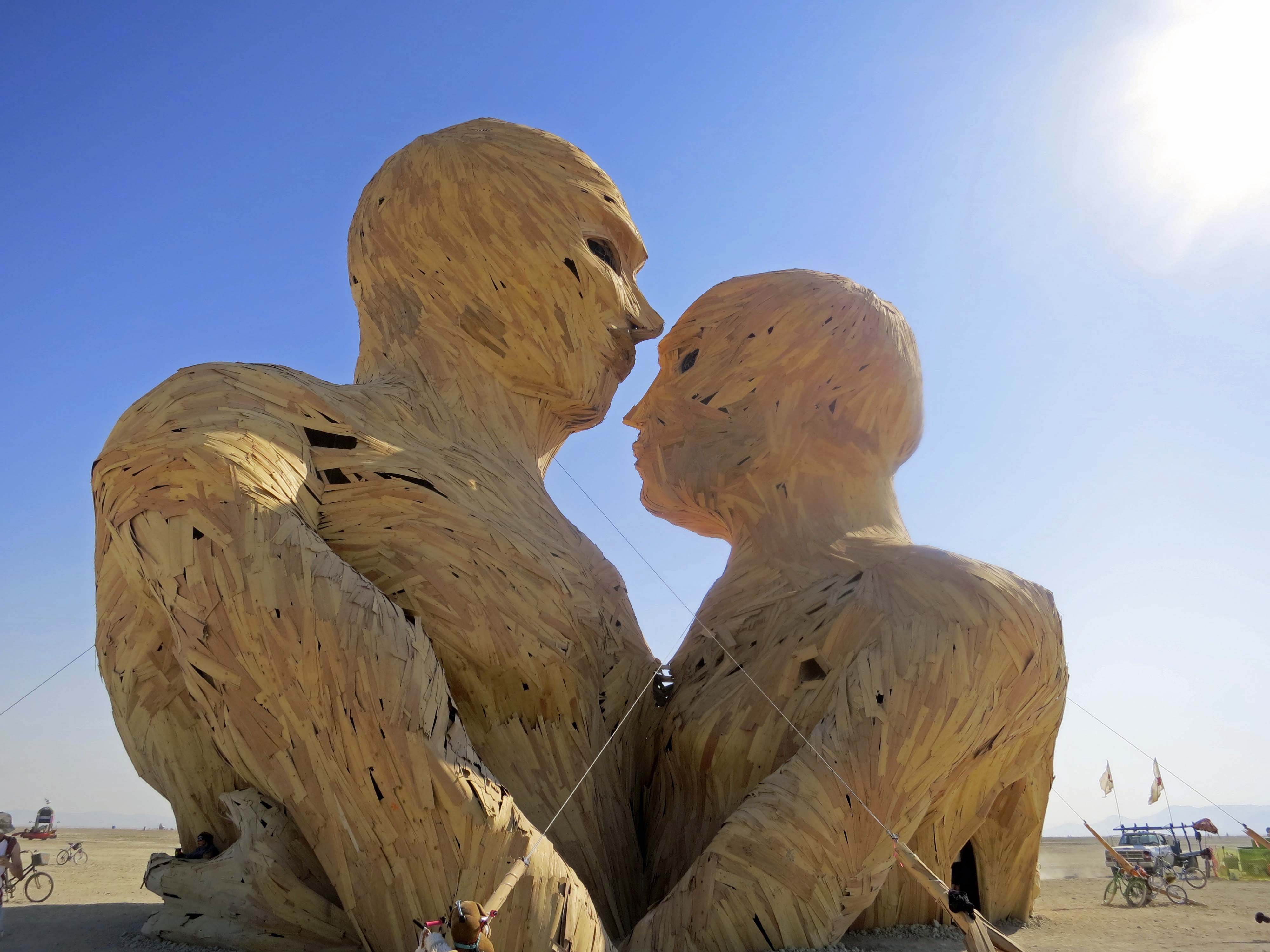
This monumental couple was featured at Burning Man in 2014. It would later be burned.

This monumental couple was featured at Burning Man in 2014. It would later be burned.

People were invited to rest in the belly of this coyote.

People were invited to rest in the belly of this coyote that was howling at the moon and came with a wire brush tail.

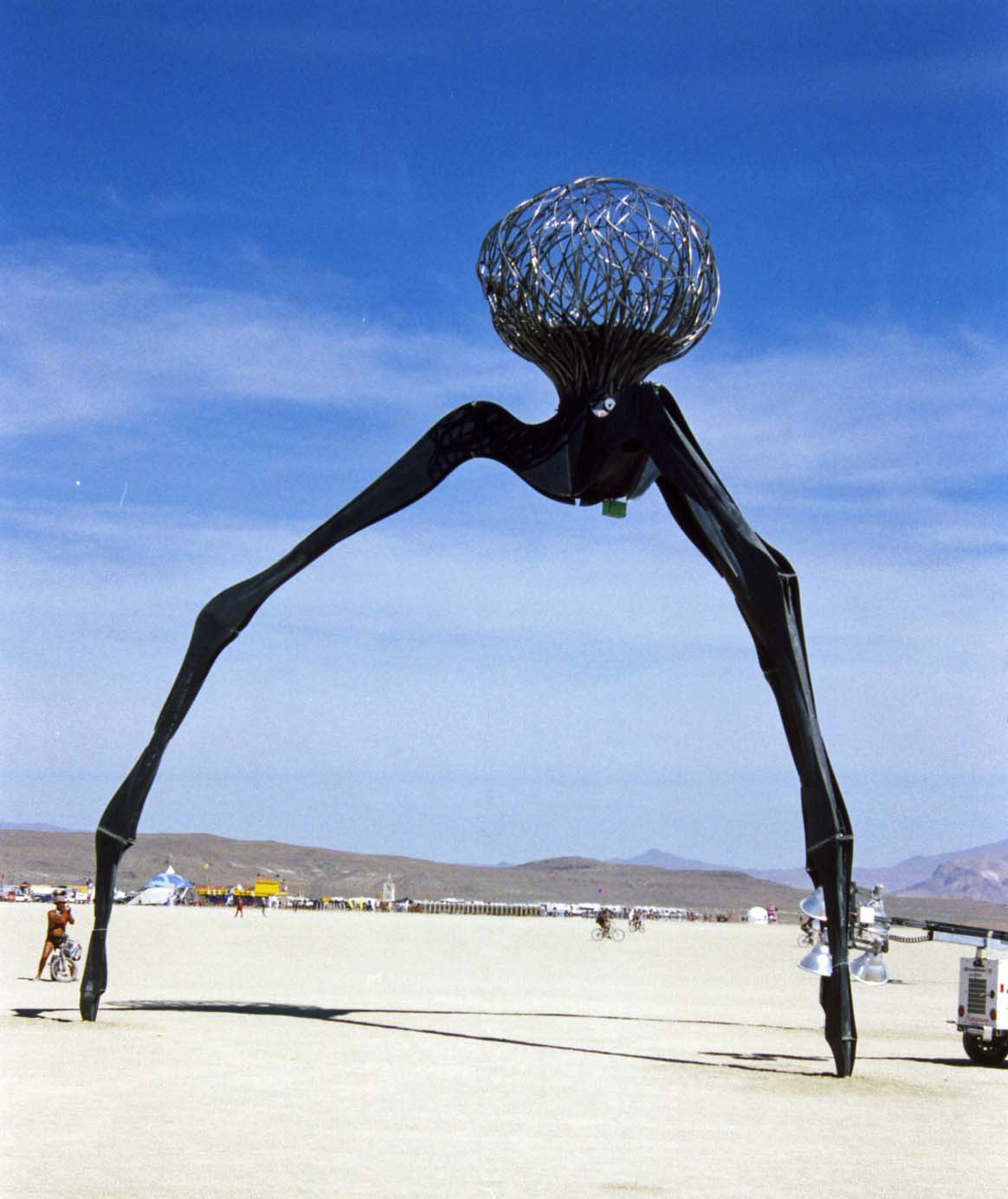
A what's-it sculpture stood on tip toes.

A what’s-it sculpture stood on tip toes.

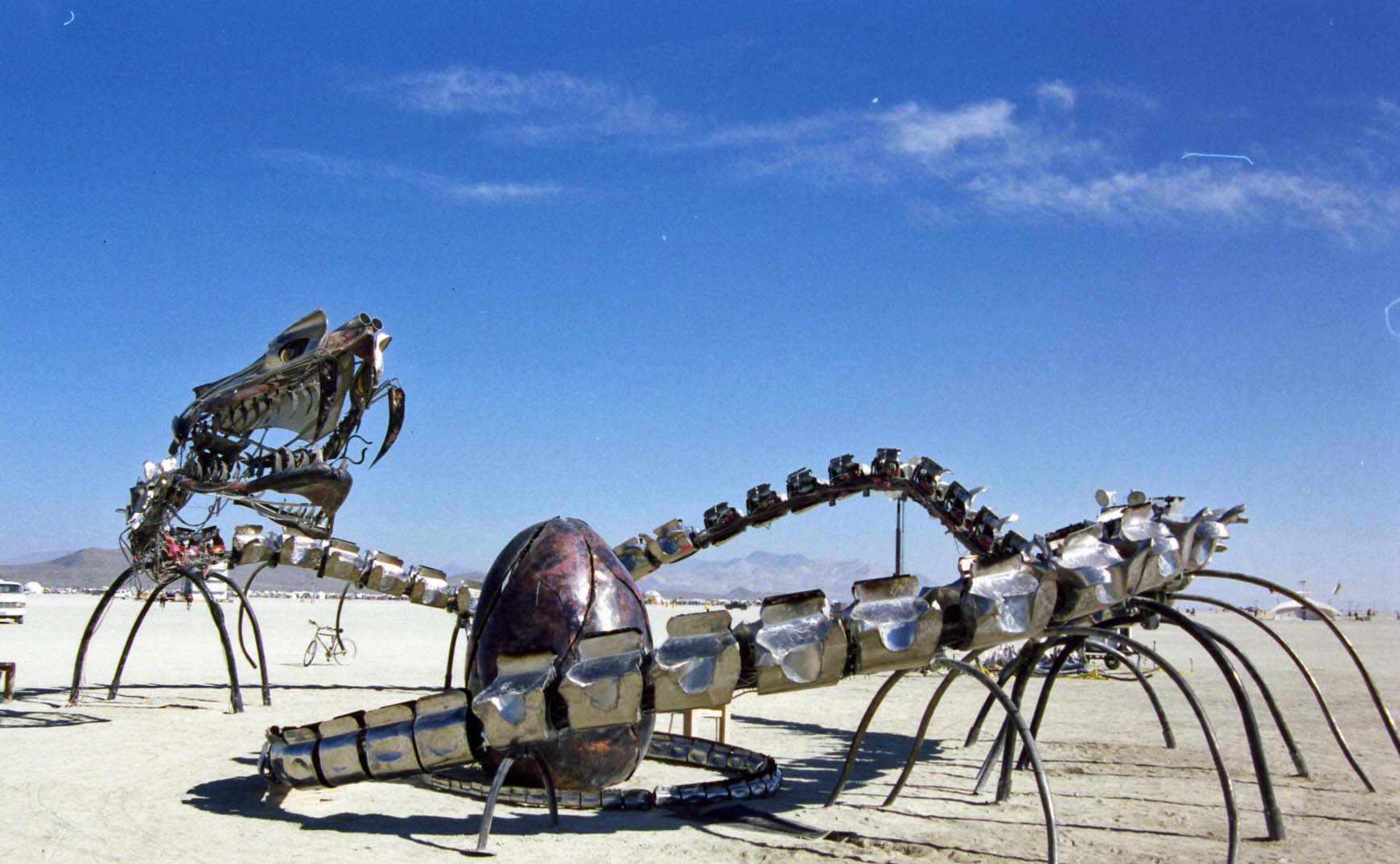
What this dragon curled around its egg lacked in height, she made up in length. And yes, she was a fire breathing dragon, as we discovered at night.

What this dragon curled around its egg lacked in height, she made up in length. And yes, she was a fire breathing dragon, as we discovered at night.

Another view. NEXT POST: I will introduce some smaller sculptures at Burning Man.

Another view. NEXT POST: Part 2 of my best of ten series: Smaller sculptures.


Blog Hopping the World… with Curt and Peggy Mekemson

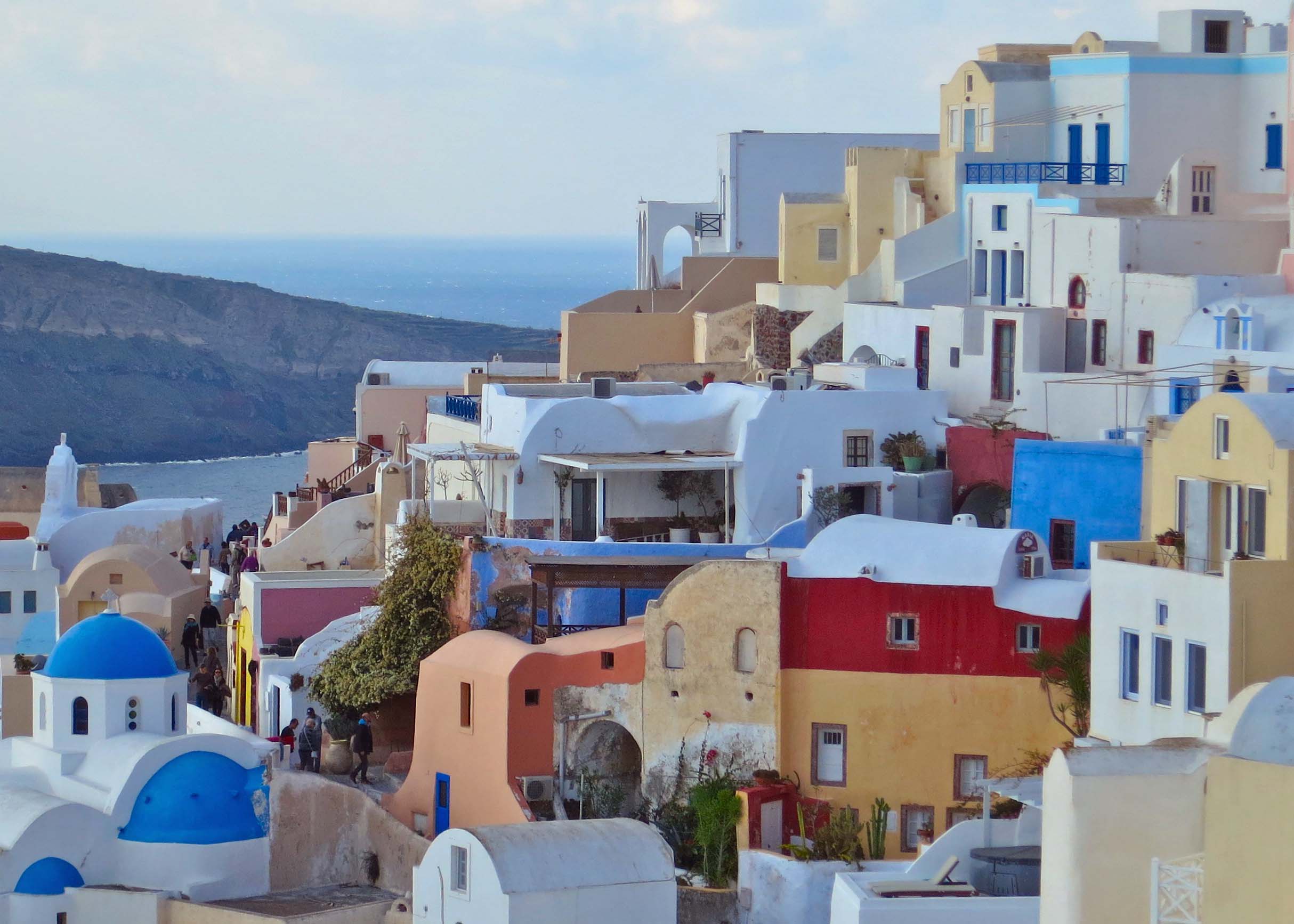
There are millions of beautiful photos of the Greek Island of Santorini, but none can match going there.

There are millions of beautiful photos of the Greek Island of Santorini, but none can match going there.

“There are travelers and then there are Travelers. If you take some time to review Curt’s lengthy résumé you’ll see what we mean: Peace Corps in Liberia, year after year at Burning Man, kayaking with orcas, and backpacking with the grizzlies. He walks the walk and his blog documents all of it.”

Travel Bloggers James and Terri Vance

"Now where did I leave that fish?" A big Kodiak Bear looks for salmon on the Frazer River of Kodiak Island.

“Now where did I leave that fish?” A big Kodiak Bear looks for salmon on the Frazer River of Kodiak Island. He was about 50 yards away from Peggy and me, a distance he could travel in 10 seconds. 1o, 9, 8,7…

A couple of weeks ago, two of my favorite world travelers, James and Terri Vance at Gallivance, nominated me to participate in what is called a “Behind the Scenes Blog Hop.” It’s a project making its way around the blogosphere where bloggers provide insight into why they blog. In this particular case, it was about people who travel frequently and write about their experiences. Go here to learn about what James and Terri have to say about their own journeys. I highly recommend following their blog if you don’t already.

The project sounded like fun but I was busy at the time. Today, I came up for air. Let me start by noting I am a wanderer by nature. I think it’s genetic. I’ve done a fair amount of genealogical research and discovered that my direct line of ancestors, at least as far as the 1600s, hit the road running and rarely looked back. As for me, as soon as I was allowed out of the house on my own, I set off to explore the fields, woods, ponds and creeks of the Sierra Nevada Mountain foothills where I grew up.

Why do you write what you write?

I am a storyteller and some of my best stories are about my travels and adventures. I believe that travel is one of the most enriching experiences we can have. Mark Twain said, “Twenty years from now you will be more disappointed by the things you didn’t do than by the ones you did do. So throw off the bowlines, sail away from the safe harbor. Catch the trade winds in your sails. Explore. Dream. Discover.” Explore, dream, discover: magical words that have always been my motto. Consequently, I have a lifetime full of wandering and very few regrets. My wife Peggy and I are wealthy with the experiences we have had.

And it is wealth we love to share— partially because it is fun to relive the adventures, but there is more. I hope to encourage those who read my blogs to “catch the trade winds in their sails.” And if not? I at least hope I can provide a taste of adventure, a dash of humor, a pinch of education, and on occasion, a serious thought.

There are two of other points I try to make with my travel writing. One, adventure travel doesn’t have to be expensive or difficult. Of course it can be, but it can also be a walk in the woods or a visit to a new restaurant. Anything that broadens our perspective on life can be an adventure. Just recently, for example, I wrote about a visit to a restaurant in Nashville that served really hot chicken. Believe me it was an adventure. And last year I wrote about a walk to my mailbox. It didn’t have to be an adventure, but I turned it into one.

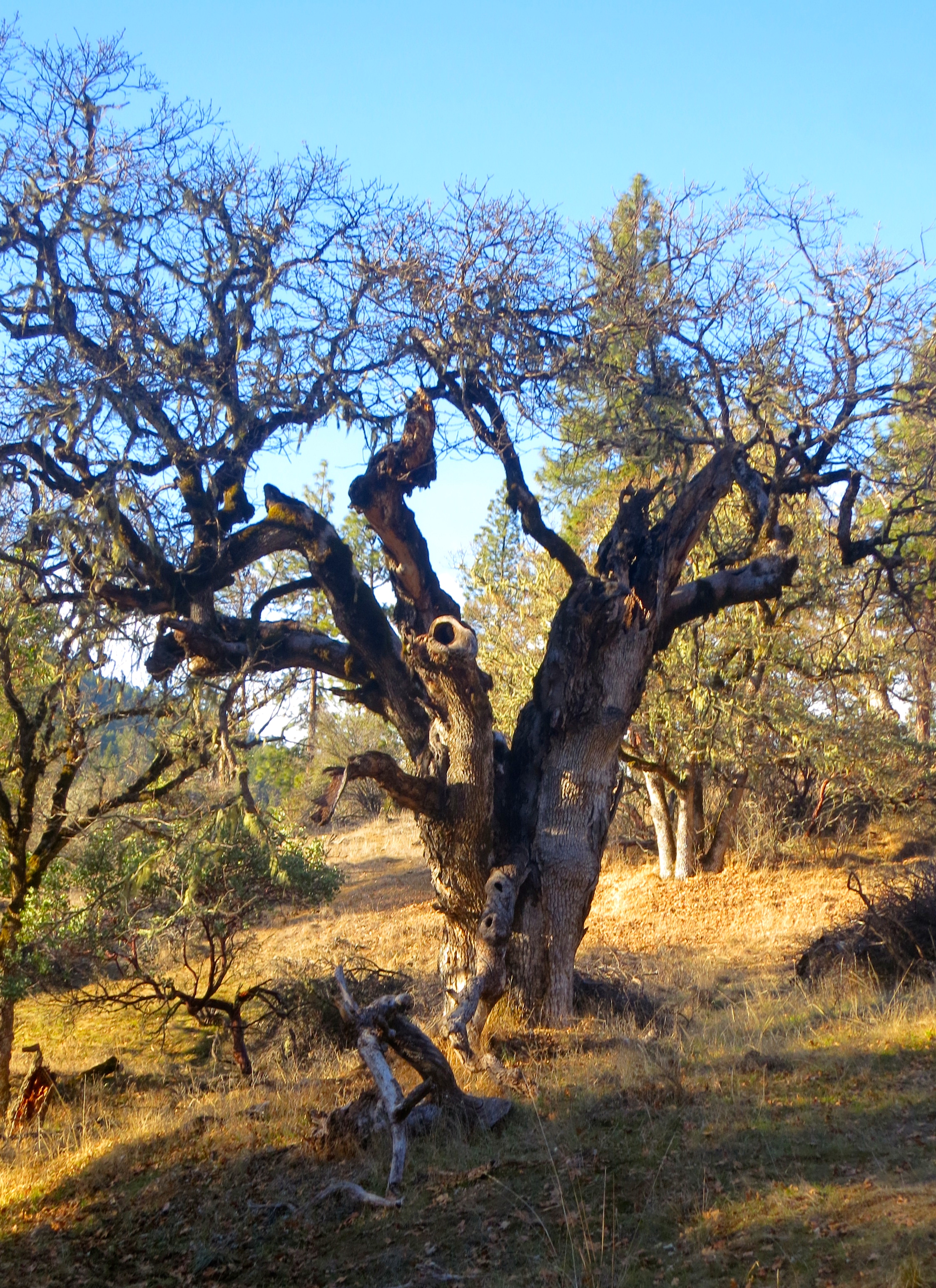
This oak tree lives along the path I walk to the mailbox.

This oak tree lives along the path I walk to the mailbox. In addition to having its own unique look, it serves as a home to a number of woodland creatures. A whole adventure could be built around watching it for 24 hours. I might add, this tree would be completely happy in the Hobbit.

Two, age does not have to be a barrier to travel. Peggy is big on this point. Young and old alike can have adventures. I am now in my 70s and Peggy is in her 60s and yet last year found us disappearing into a remote wilderness on a backpacking trip by ourselves, sea kayaking with the orcas off Vancouver Island, and going to Burning Man in the Nevada desert. If we can do these things, certainly people in their 50s, 40s, 30s and 20s can, not to mention 60s and 70s. And if you have children, take them along. You will create a lifetime of memories.

How does your blog differ from others of its genre?

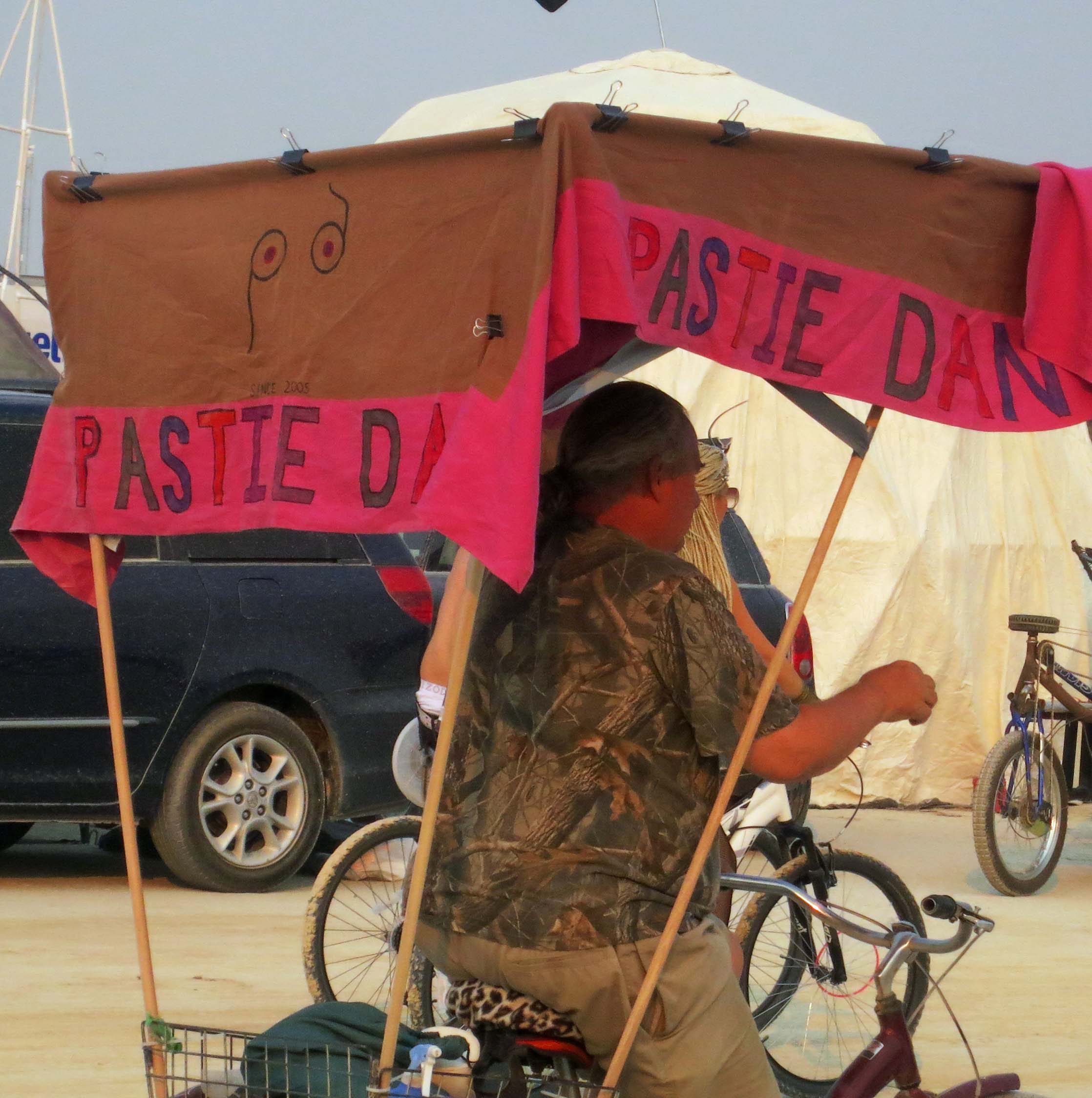
Variety comes to mind. One day I might be writing about cruising the Mediterranean Sea and visiting a Greek Island like Santorini. Another day I could be introducing you to Pastie Dan, a character at Burning Man who makes, and will gladly apply, pasties to cover women’s nipples. You might join me for a raft trip down the Colorado, a boat trip up the Amazon, or a narrow boat tour in England. Want a little excitement? Try waking up at 3 a.m. with a bear standing on your chest in the backcountry of Yosemite National Park. Then there was the rattlesnake that tried to bite me on the butt when I was doing my thing in the woods. My poor sphincter was frozen for a week. Want a touch of the exotic? Join Peggy and me as we search for Big Foot, UFOs and ghosts— it’s all in fun, and yet…

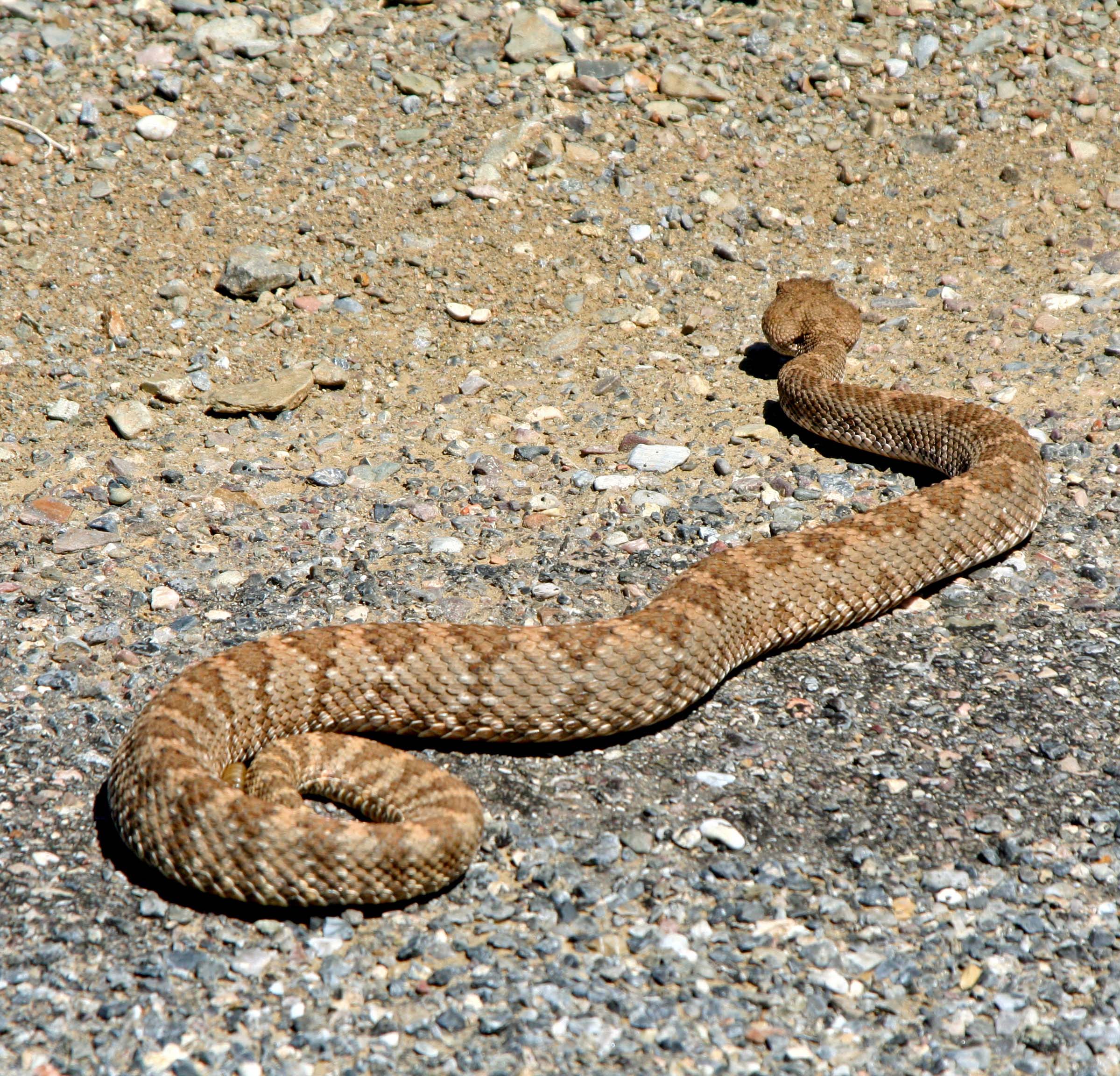
Panamint Rattlesnake in the Panamint Mountains, Death valley.

Admittedly, this guy is a little bigger than the rattlesnake that tried to bite me on the butt. With rattlesnakes, I am not sure size matters, however. (Photo by Peggy Mekemson.)

Bigfoot trap found above Applegate Lake in Southern Oregon.

This Bigfoot trap is located four miles from my home. It was maintained in the 70s in hopes of actually capturing one of the big fellows. (Photo by Peggy Mekemson.)

Pastie Dan in Black Rock City.

Normally Pastie Dan plies his trade at the Center Camp Cafe but occasionally, he wanders the roads of Black Rock City. He stopped at our camp to see if any of the women were in the market for pasties.

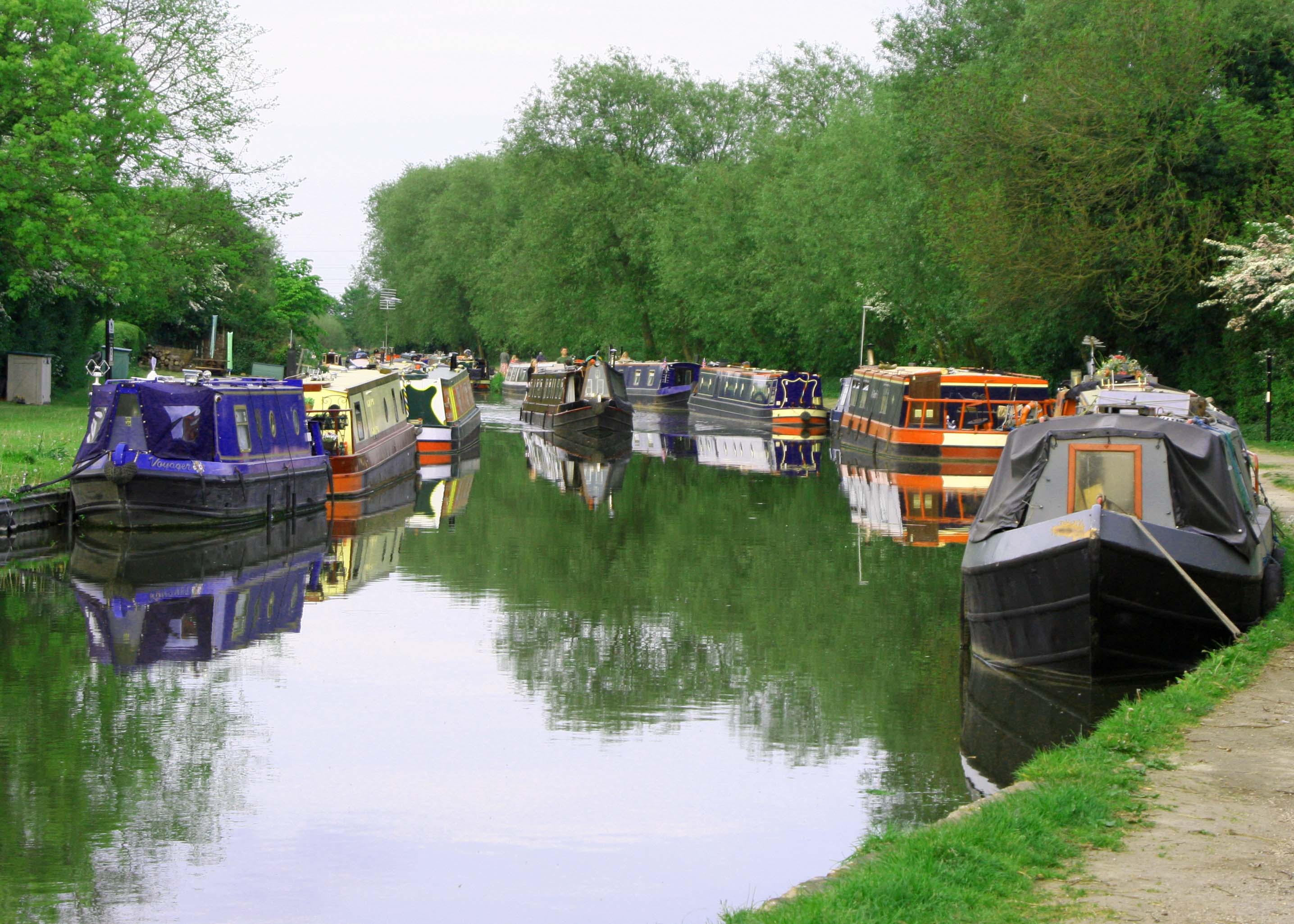
Maneuvering a 60 foot long Narrow Boat through the Trent and Mersey Canal in England two summers ago was a very different but equally rewarding experience.

Maneuvering a 60 foot long Narrow Boat through the Trent and Mersey Canal in England is a wonderful adventure that comes with pubs along the way.

How does your writing process work?

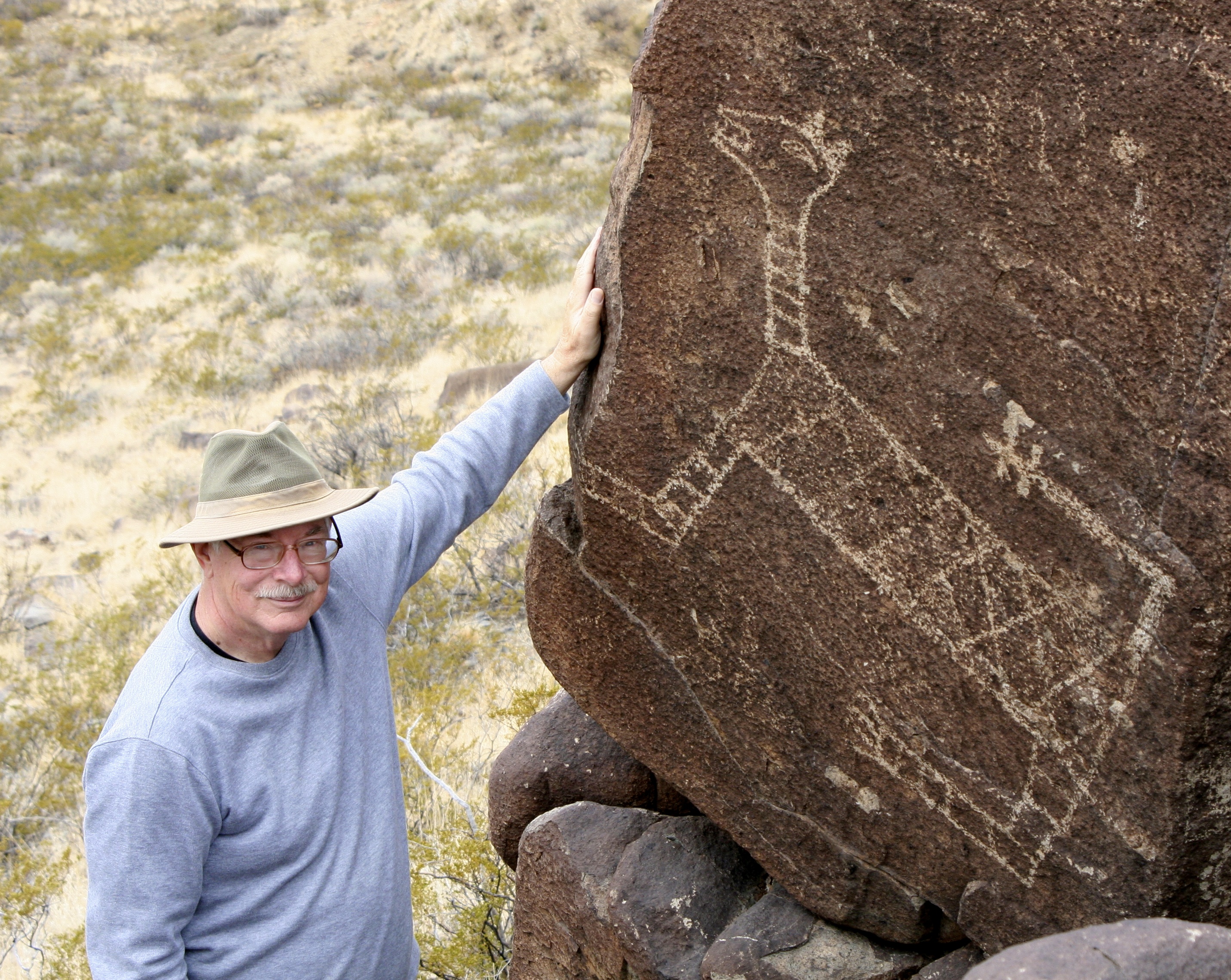
My stories start with experiences. I don’t scramble over rocks in New Mexico looking for petroglyphs because I want to write about the experience. I risk life and limb because I am fascinated with petroglyphs. I will confess, though, that when Peggy and I take photographs, we think about the blog— in addition to documenting our travels.

We call this large cat a cougar, mountain lion, puma… it would be interesting to know what the ancient Native American who made this rock art thought about and called his creation.

We call this large cat a cougar, mountain lion, puma… it would be interesting to know what the ancient Native American who made this rock art thought about and called his creation. (Photo by Peggy Mekemson.)

Research is also part of the process, either before we traipse off on an adventure because it enhances the experience, or afterwards because I want to add depth to what I am writing about.

As for the actual writing… writing is writing; it’s work. And I say this even though I love to write. I will normally think through what I want to write about, create a first draft, do a rewrite and then edit for mistakes. Then I turn it over to Peggy for further editing.

Photographs are also a very important part of my blogging. Between Peggy and me, we often have as many as 100 photos we have taken in relation to a particular blog. Ten to fifteen have to be selected out for a post and then processed. Mainly I work on cropping the photo to capture what I want, but I also make minor adjustments to light, color, shadows and sharpness if needed. Altogether, the process of creating a blog can take from three to eight hours.

What are you working on/writing?

I work from a calendar of blogs I want to write. I’ll usually have two or three months’ worth of blogs in mind. This time of the year, I often do several on Burning Man because many of my readers are Burners, excited about getting tickets. Since I have now been to Burning Man for ten years, I am going to do a best of ten series (from my perspective) of sculptures, mutant vehicles, burns, structures, etc. over the next few weeks. After that, I will return to my north coast series exploring the coast of Northern California, Oregon and Washington. Or I may do a series on California’s gold rush towns. (My home town was one.)

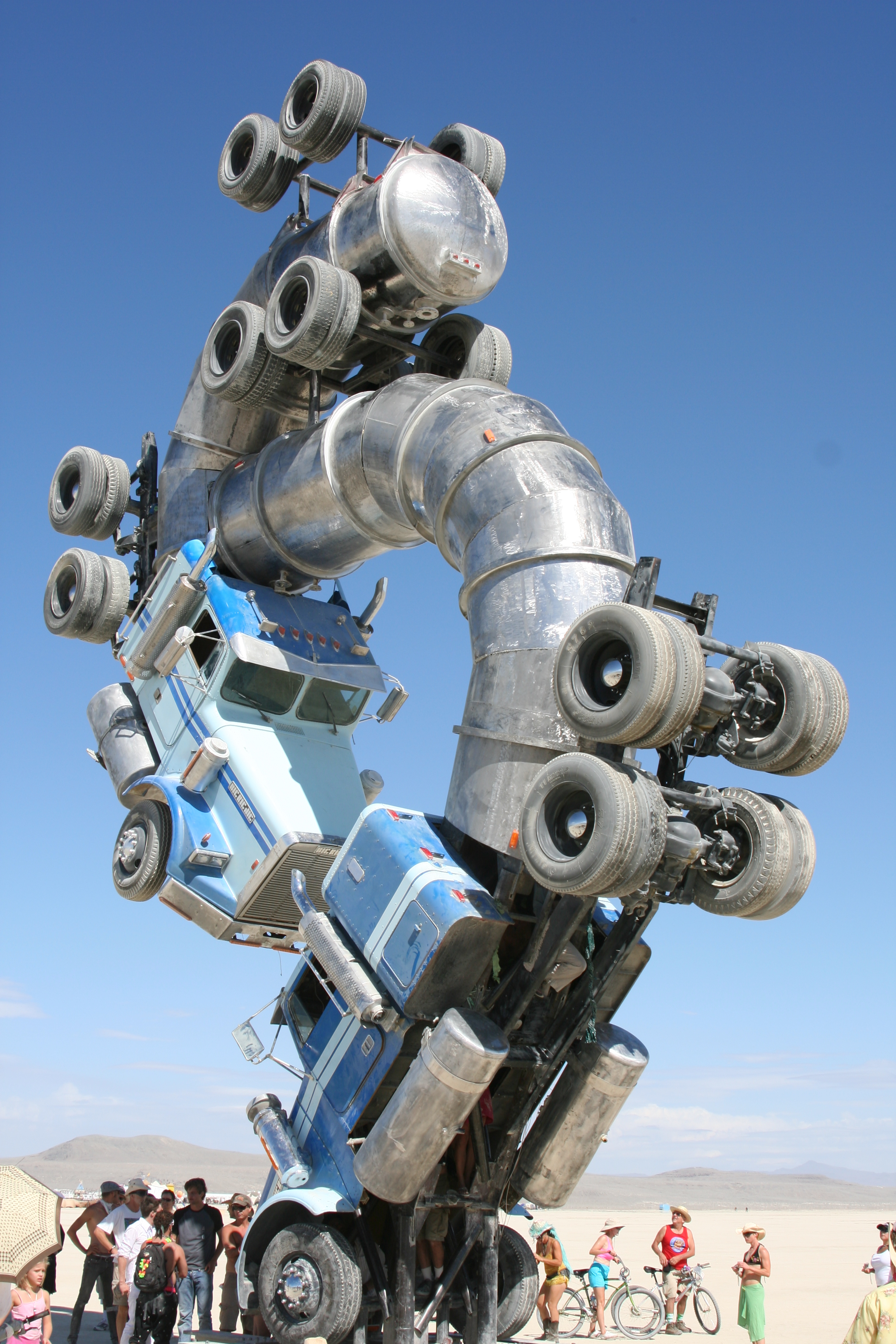
Two oil tankers provide an interesting Sculpture at Burning Man

One of my all-time favorite sculptures at Burning Man.

The really big writing project I have been working on has been the book about my Peace Corps experience in Liberia, West Africa: The Bush Devil Ate Sam. I’ve posted several chapters over the past couple of years on my blog and a number of you helped me select the title of the book. This is my first venture into self-publishing and let me say unequivocally and undeniably, it has been a steep learning curve (understatement). I wrapped up getting the book in to Bookbaby two months ago, or at least thought I did. Bookbaby dutifully put the book on numerous E-pub sites and sent me back printed copies I requested. And what did I discover? Even though Peggy and I had meticulously done a line-by-line edit, some 30 errors. Damn. (A woman who is really good at editing found 25 of them, friends and family others.) So it was back to the drawing boards. Anyway, I sent all the corrections in last Wednesday and also set up the print on demand option. Soon…

One good bit of news, Steven Spatz, the president of Bookbaby, wrote to me on Friday and said he would like to feature The Bush Devil Ate Sam this week on Bookbaby’s blog. Given that Bookbaby is one the largest self-publishing companies in the world, produces thousands of books, and has an excellent reputation, things are looking up. (And no, Steven is not going to use me as an example of how not to.)

Kpelle footbridge near Gbarnga, Liberia circa 1965.

When I graduated from UC Berkeley and travelled off to Liberia, West Africa as a Peace Corps Volunteer, I began one of the grandest adventures of my life. Once there, I continued to explore my surroundings by hiking off into the jungle. Here, I am standing on a bridge built by Kpelle villagers.

NOMINATIONS

As part of this process of blog hopping, we are asked to nominate two other bloggers to participate in the blog hop. This is tough; there are so many great bloggers I follow. But that said, here are my two nominations:

Linda at Shoreacres: Wow, this woman can write. While she isn’t exactly a travel blogger, I can guarantee she will take you on some great journeys. As a compliment to the posts she writes, her followers comment in paragraphs instead of sentences.

Cindy Knoke: Cindy takes you from her home in southern California, the Holler, to journeys around the world. Her photography, particularly in terms of birds and wildlife, is superb.


A World War II Blimp Hangar, a Guppy, and a Cow Escape Route… The Oregon Coast

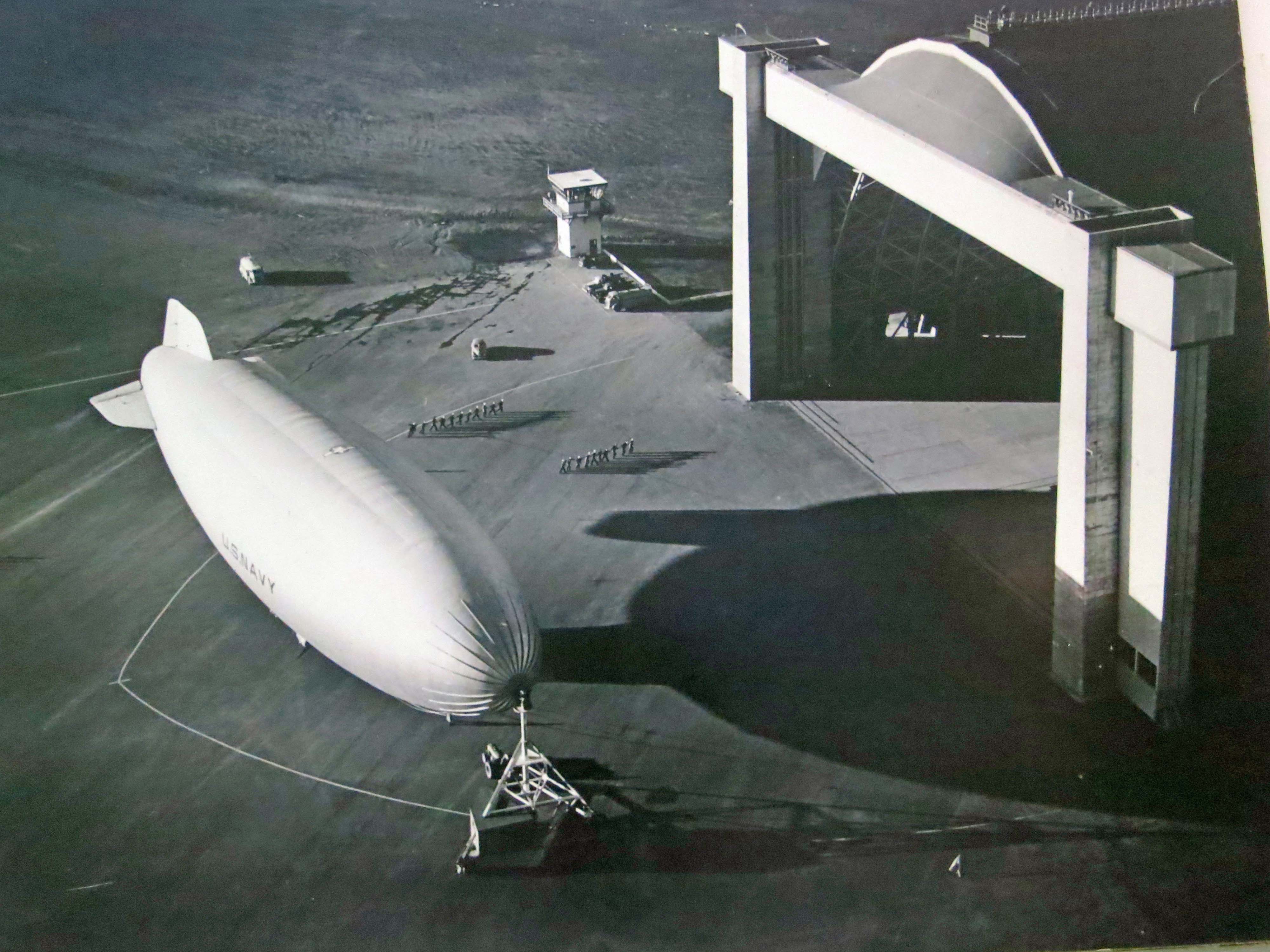
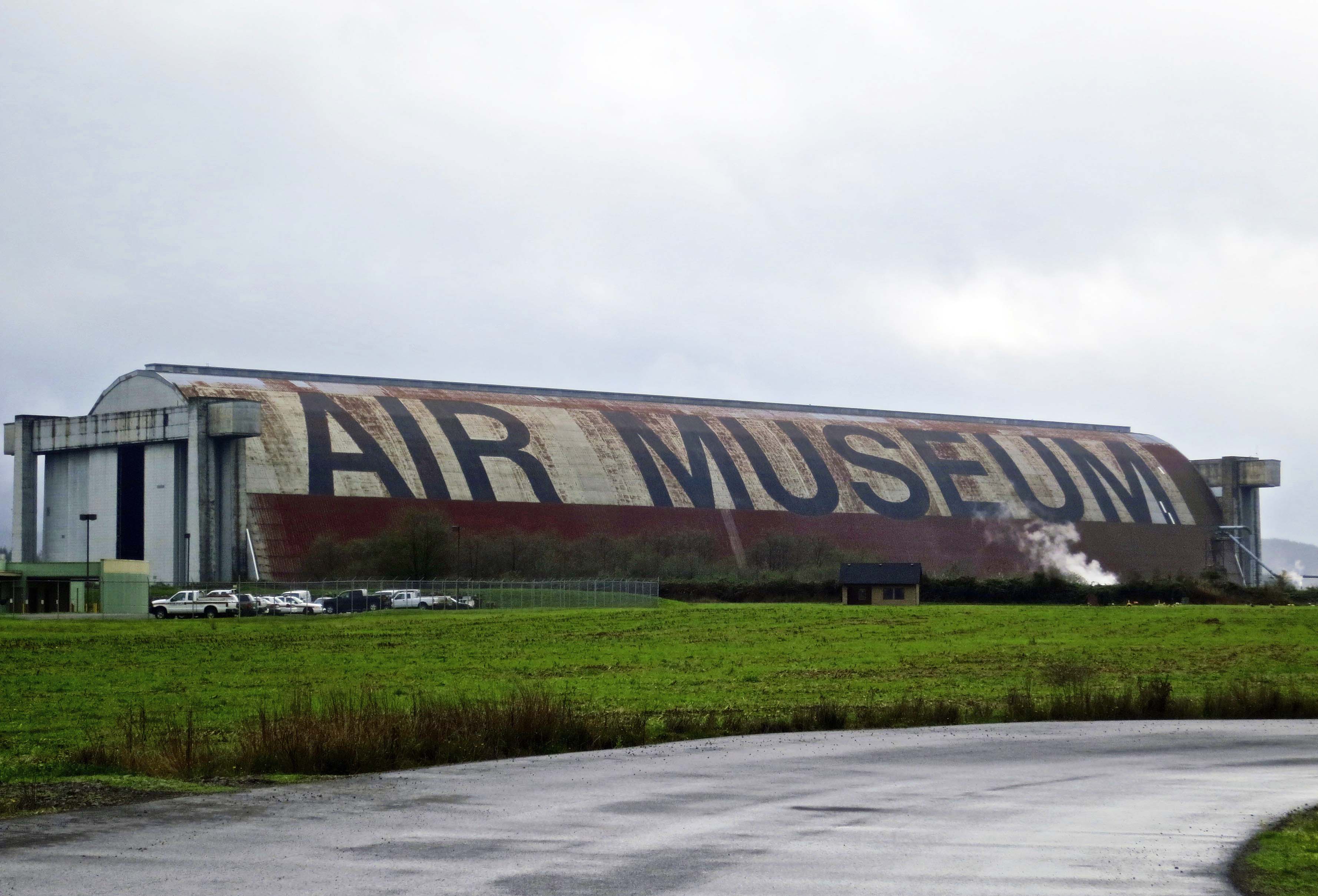
Eight blimps called this hangar in Tillamook, Oregon home during World War II. (Photo at Tillamook Air Museum.)

Eight blimps called this Tillamook, Oregon hangar home during World War II. (Photo at Tillamook Air Museum.)

I’d been through Tillamook, Oregon several times and never spotted the huge blimp hangar that was built there during World War II. It is plainly visible from the Highway 101. Who knows what I was thinking about when I made my way up and down the road? It must have been a heck of a daydream. I saw the hangar this time, however, and it was like, “Wow!” I immediately changed plans and decided to stay in the area for another day. The hangar was something I had to visit.

How I missed seeing this building is a mystery to me.

How I missed seeing this building is a mystery to me.

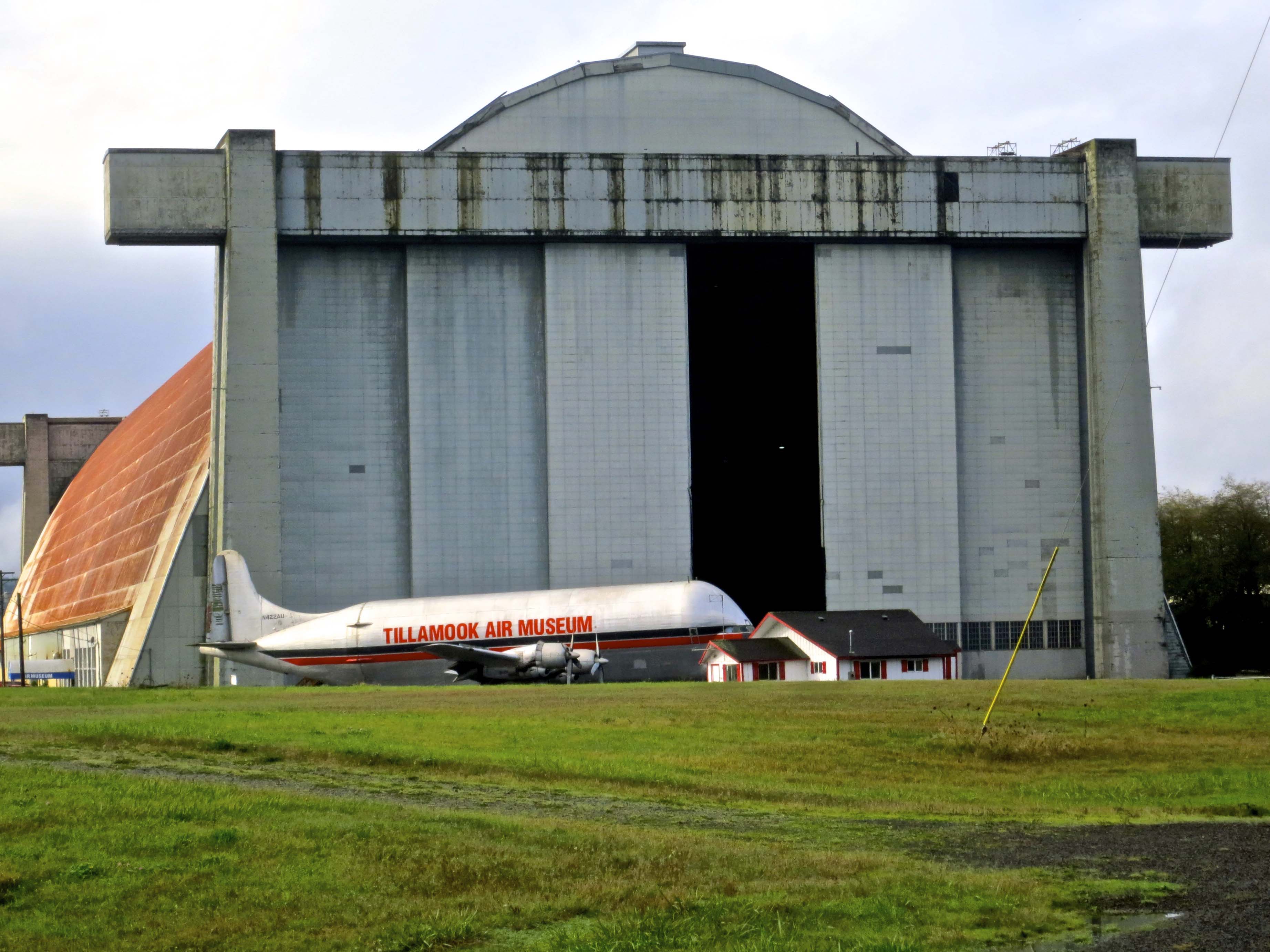
Today it serves as a partially abandoned air museum. (Most of its airplanes have been shipped off to Madras in eastern Oregon, where it’s hoped the vintage aircraft will survive better in a drier climate.) The facility is definitely worth a visit, however. The 170-foot high, 1000-foot long building was built to accommodate eight, 252 f00t K class blimps. One hundred and twenty-foot tall doors open up to a cavernous interior.

The Tillamook Air Museum shown here, served as a blimp hangar during World War II.

Here are the massive doors. The airplane in front is known as a Guppy. I’ll show you why below.

A view inside the Tillamook Air Museum that served as a blimp hangar during World War II.

This view inside the hangar gives an idea of its massive size.

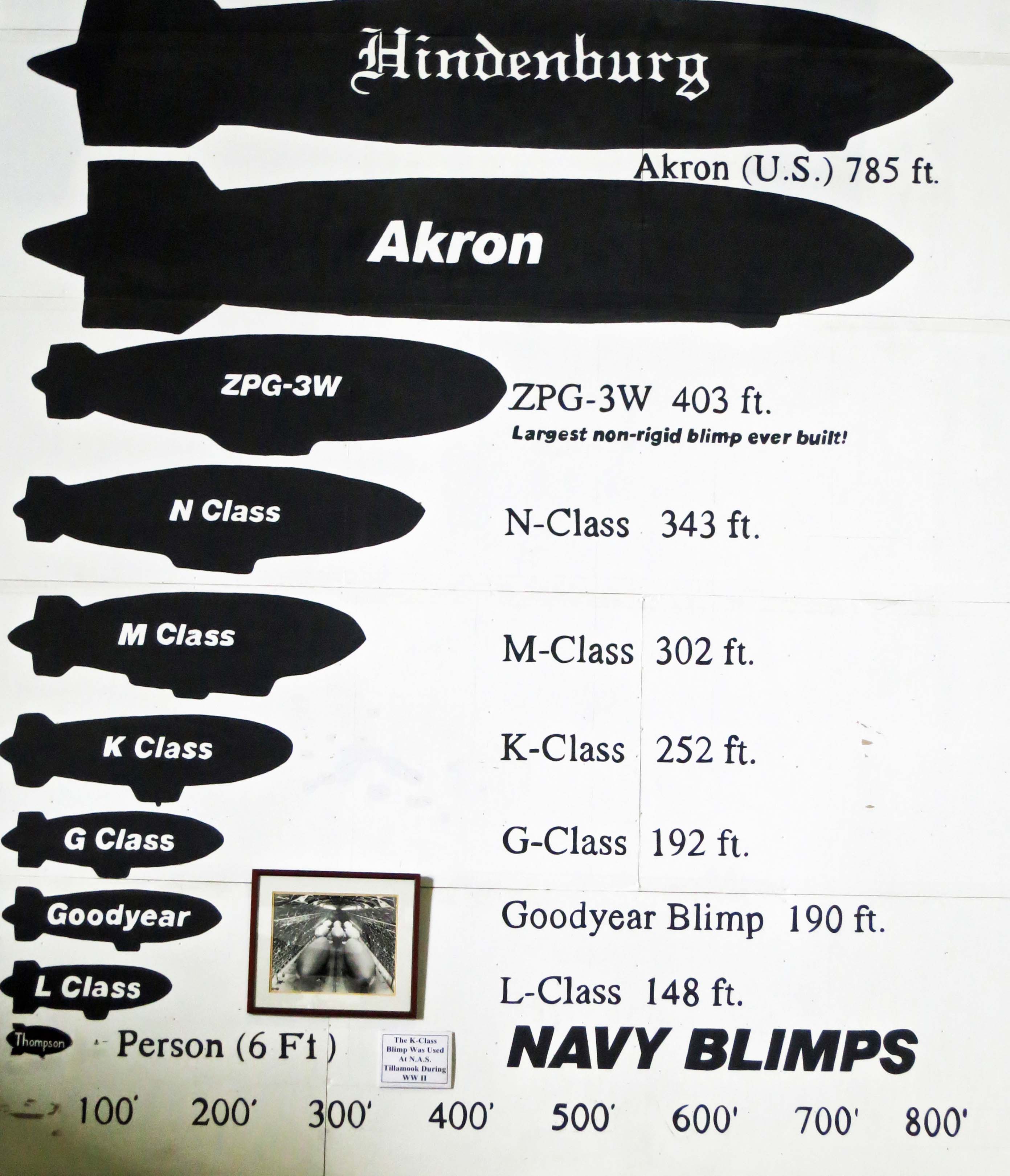
This illustration inside the Air Museum provides a perspective on the various sizes of blimps. The blimps housed at the Tillamook Naval Air Station were K-Class.

This illustration inside the Air Museum provides a perspective on the various sizes of blimps. The blimps housed at the Tillamook Naval Air Station were K-Class.

Blimps played an important role in World War II: They protected convoys and shipping lanes by spotting German and Japanese submarines. The blimps’ ability to fly in almost any type of weather, hover, and provide unobstructed views of the ocean made them an excellent choice for submarine patrol. The Tillamook facility was responsible for the coastline between British Columbia and northern California. Nine other naval air stations covered the rest of the west and east coasts of the US.

This illustration at the museum shows where blimp naval air stations were located during World War II.

Another illustration at the museum showed where blimp naval air stations were located during World War II. Sorry about the quality, but I found the illustration interesting. The dark symbols represent blimp hangars still in existence.

An introductory film and numerous World War II era photos at the museum provide an overview of the hangar’s history. I also found other interesting information on the war including posters, balloon bombs and a cow escape route.

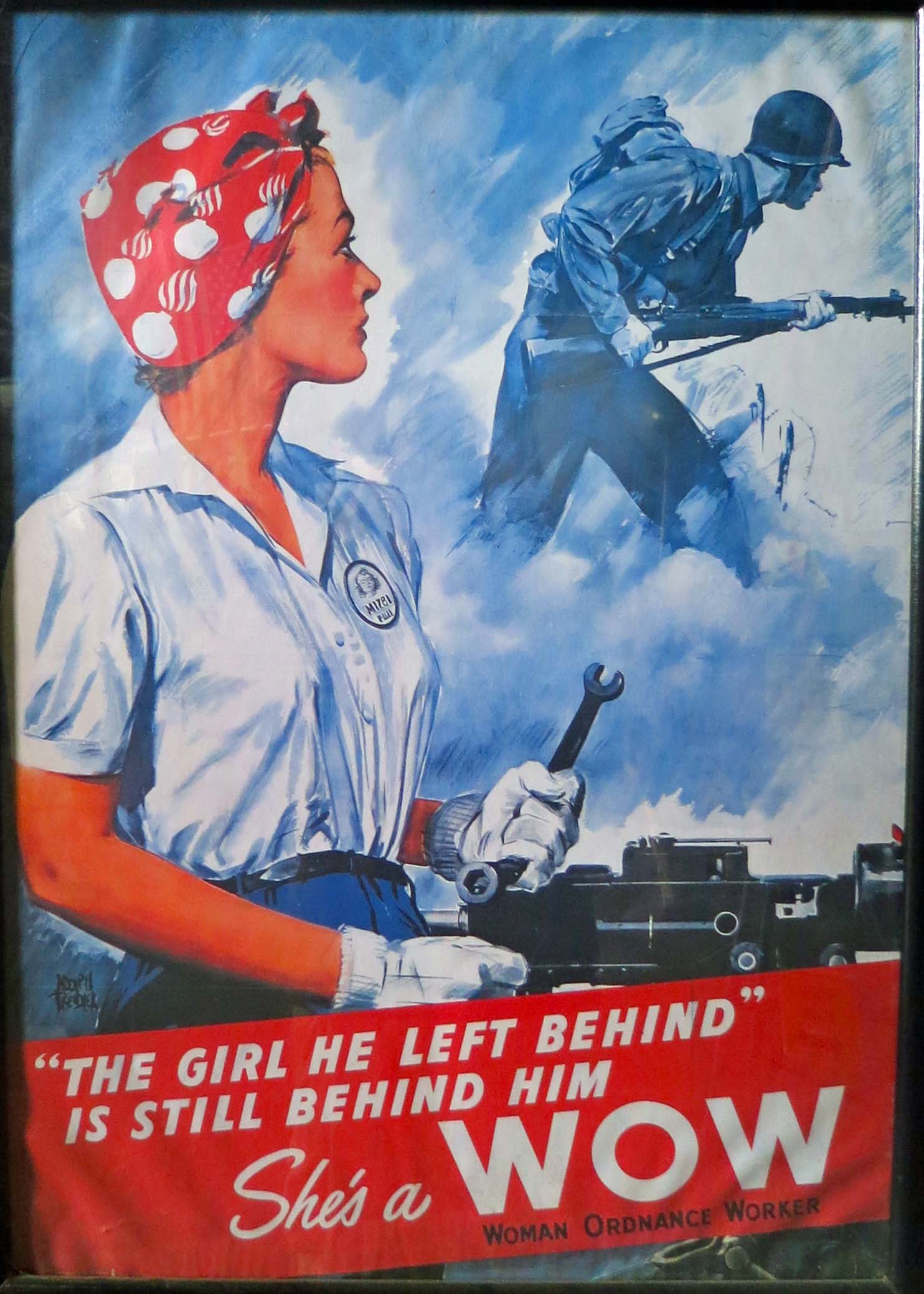
World War II Woman Ordinance Worker poster found at the Tillamook Air Museum.

Among the other World War II items found at the museum were a number of WW II posters including this one for WOW, a Women Ordinance Worker.

The first ICBM? As the Japanese war effort was reversed and the US began its air raids on the country, Japan initiated a desperate ploy:  the use of  the jet stream to carry explosive-loaded balloons 6200 miles to the Pacific Coast.

Speaking of ordinance, this fading photo of a balloon has a story to tell; it may have been the first ICBM. As Japan faced defeat in 1944, it initiated a desperate ploy: the use of the jet stream to carry explosive-laden balloons 6200 miles to the Pacific Coast of the US and Canada. Some 6000 were launched but only 300 reached their destination, and they fell on rain-soaked forests, causing little damage.

I was amused when I came across a report on the cow escape route. Tillamook takes its cows seriously. Some of the best dairy stock in the US is located in the area. So it isn’t surprising that the local farmers decided their cows needed an escape route in case the Japanese invaded. Woodsmen were called upon to plan out paths through the forest. Using old logging roads, deer trails, and hunters’ routes, a cow getaway plan was soon organized.

No one asked the cows what they thought. Given that their idea of exercise was to leisurely travel from well-stocked barns to grass filled pastures, they may have preferred to hang around and provide the Japanese with milk, butter and cheese rather than hightail it through the rugged wilderness with udders bouncing.

The guppy airplane at the Tillamook Air Museum.

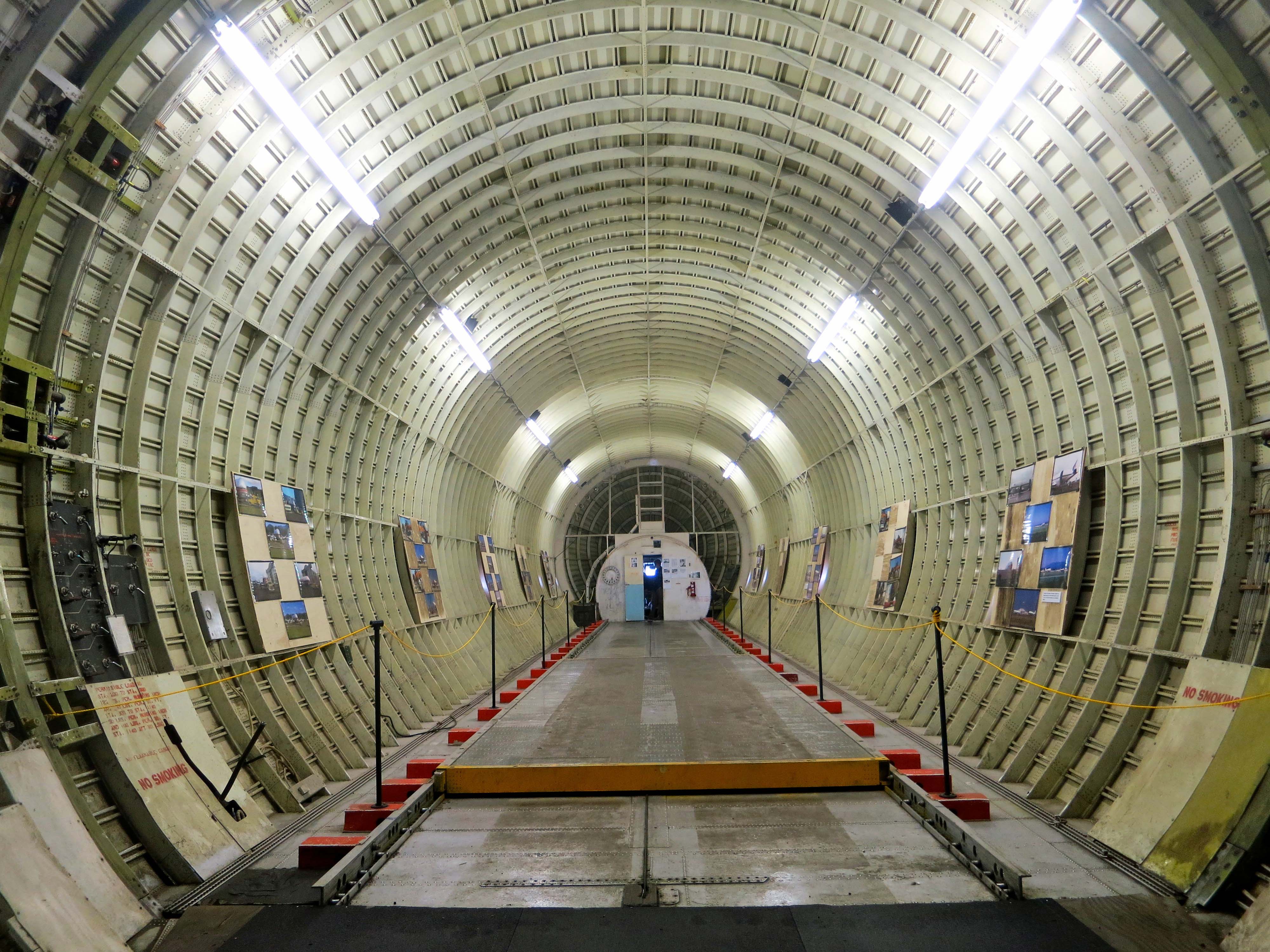
It isn’t too much of a jump to move from cows to a guppy is it?  One look at the front of this cargo plane explains its name. The Guppy is part of the Air Museums collection.

Inside the guppy.

Inside the Guppy.

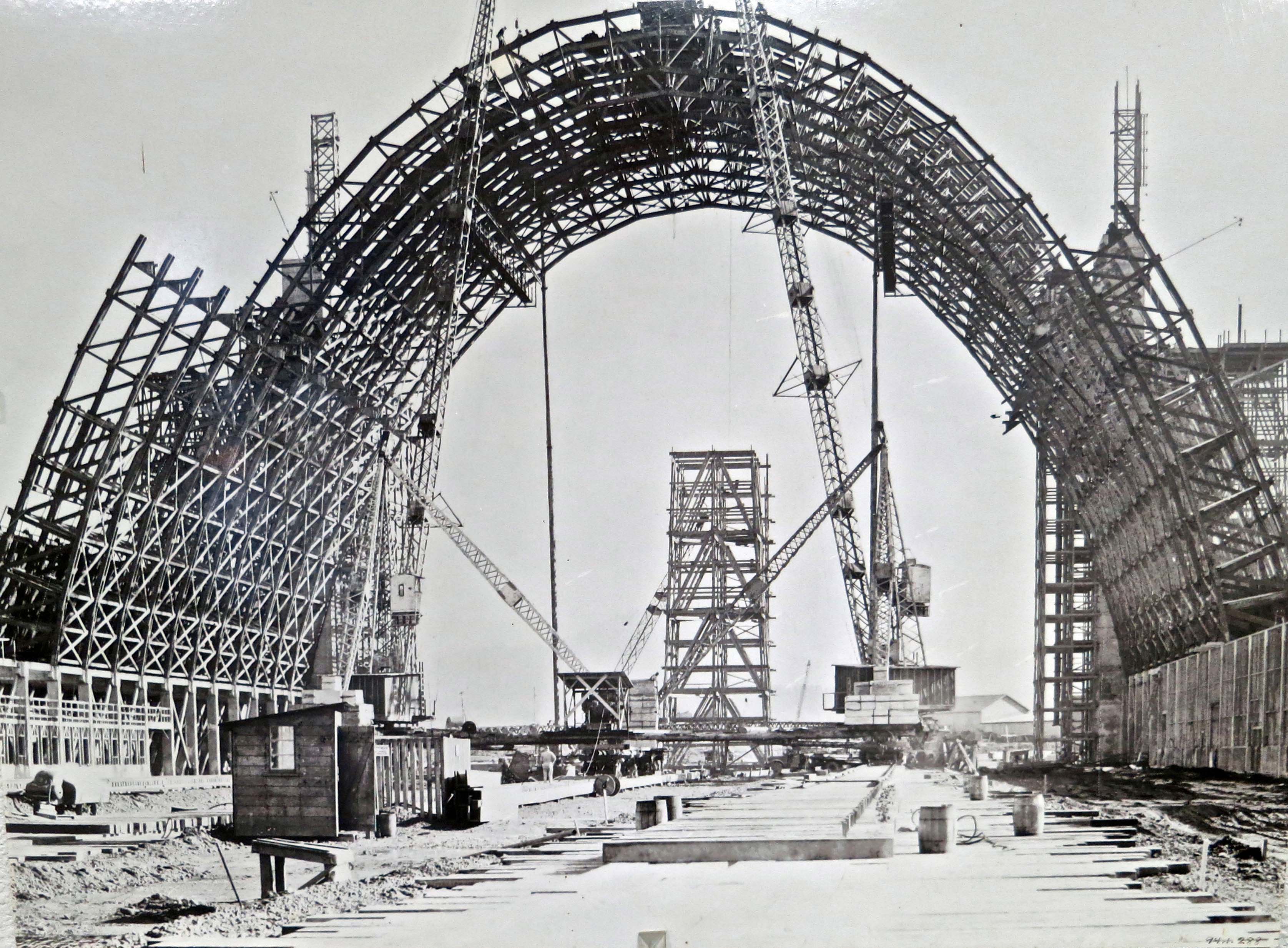
Building the two hangars at Tillamook was a massive undertaking. Unstable ground, a ferocious winter, and the use all provided challenges.

Building the two hangars at Tillamook was a massive undertaking. Unstable ground, a ferocious winter, and the use of wood instead of steel for the structure all provided challenges. Steel was being used at the time for other war purposes. (Photo from Tillamook Air Museum.)

A blimp is launched from the Tillamook Air Station during World War II.

A blimp is launched from the Tillamook Air Station during World War II. Note the men holding ropes for a size perspective. Missions could last as long as 15 to 20 hours and some blimps were equipped to stay out as long as 59 hours and travel over 1400 miles. (Photo from Tillamook Air Museum.)

A final view of blimps arrayed outside of the Tillamook hangar during World War II.

A final view of blimps arrayed outside of the Tillamook hangar during World War II. Next blog: I find a surprise in the museum that takes me back to World War II and my wife’s father. (Photo from Tillamook Air Museum.)


A Wild Ocean and Crashing Waves… The Oregon Coast

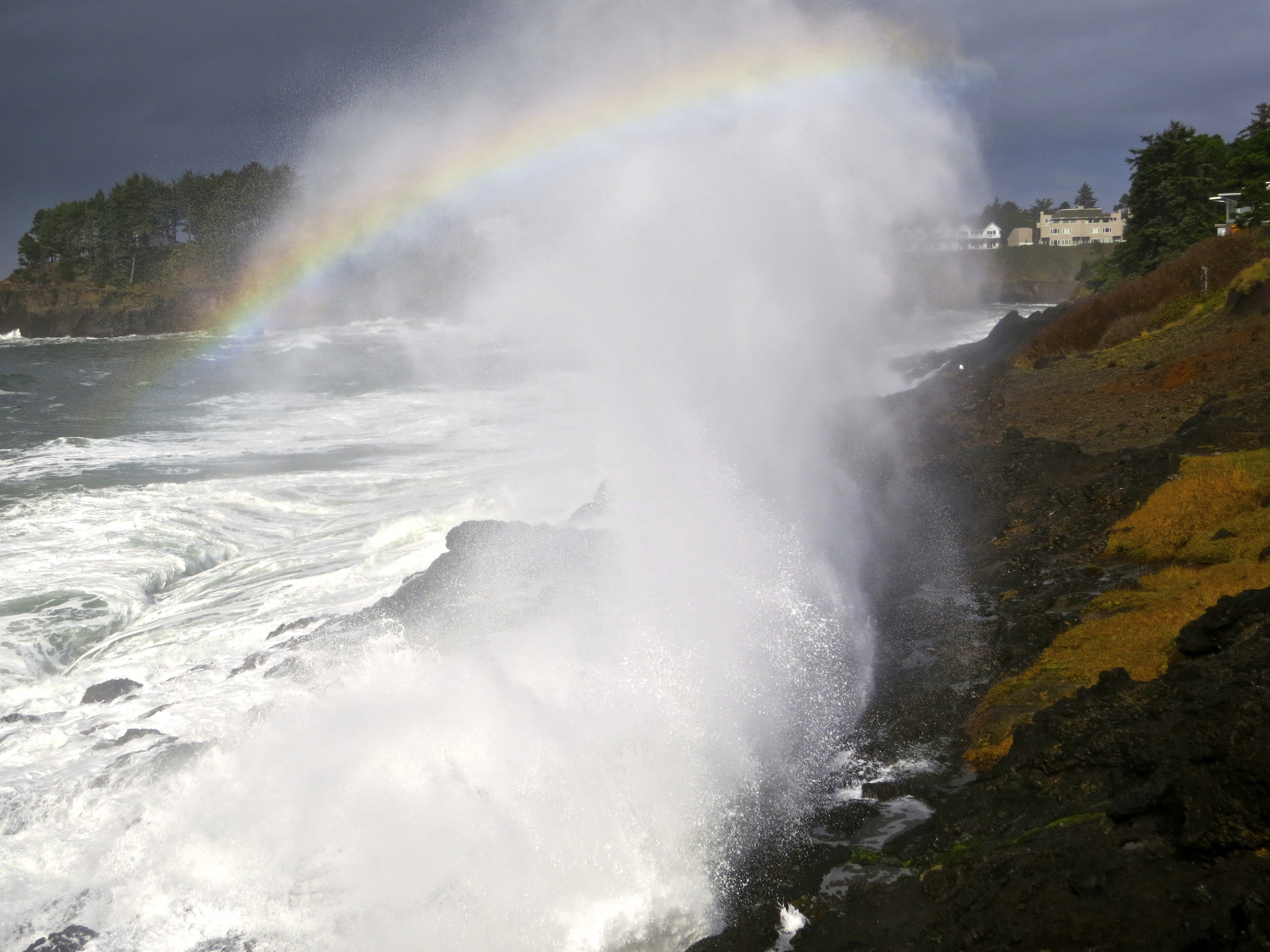
Rainbow created in waves crashing along the Oregon Coast at Depoe Bay. Photo by Curtis Mekemson.

A moment of sun creates a rainbow in waves crashing along the Oregon Coast.

A winter storm on the Oregon Coast is a sight to see. In fact, motels along the coast promote storm watching. Here’s one such pitch: “Sit back and relax in your cozy room by the fireplace and watch through your huge picture window as furious waves pound the rocks below.” And furious they are.

A storm was raging when I drove down the coast a few weeks ago. In between torrential rainfall, the sun would peek out, and I would stop to admire the crashing waves. I didn’t have a huge picture window, so I admired the waves as they were meant to be admired, up close and personal. Following are several photos I took.

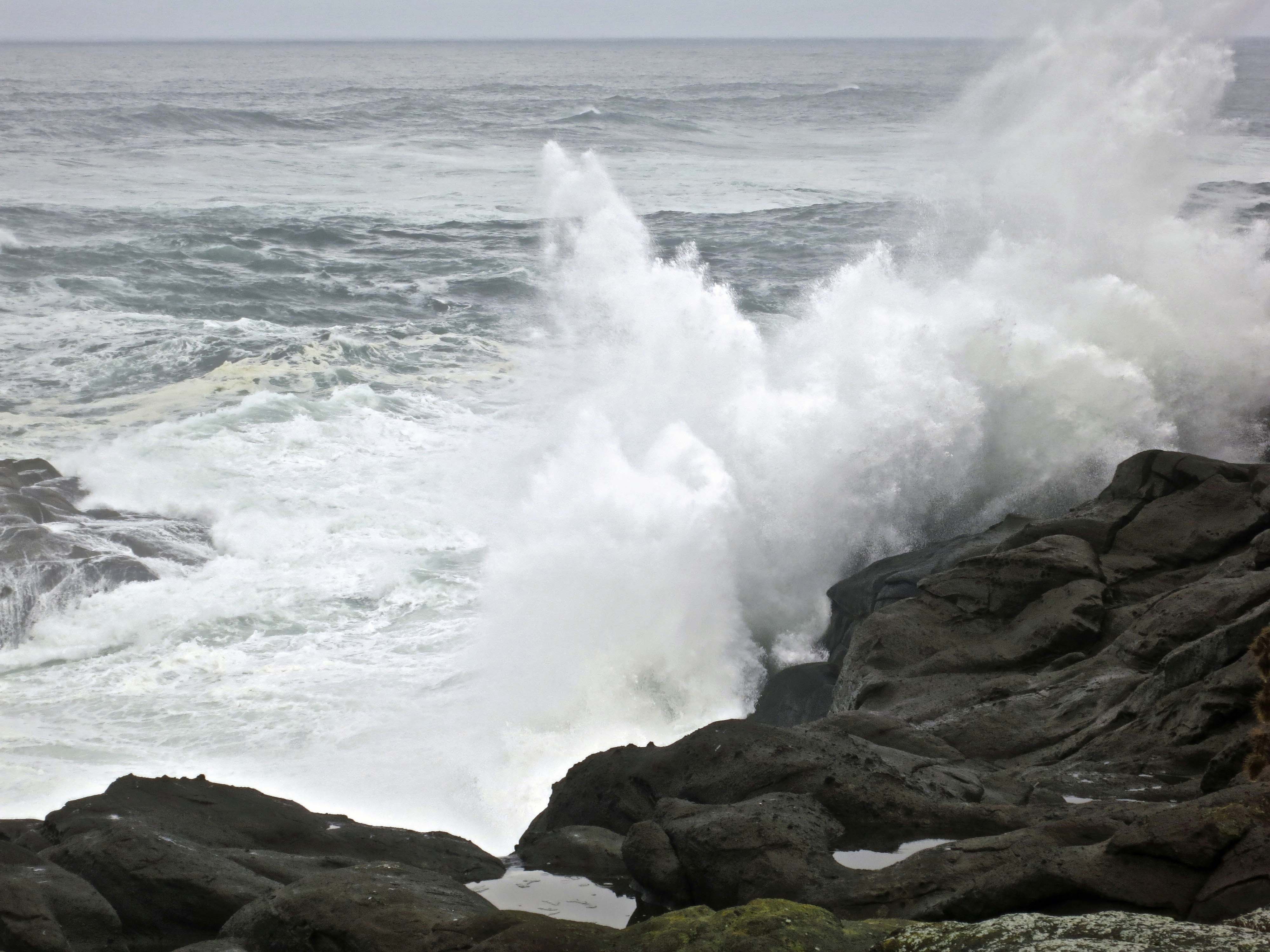
Dramatic waves crash ashore on the Oregon coast. Photo by Curtis Mekemson.

Very few shows are as dramatic as ocean waves during a storm.

Powerful waves crash ashore on the Oregon coast. Photo by Curtis Mekemson.

Rules numbers 1 and 2 when enjoying waves like these: Keep a distance, and never, never turn your back.

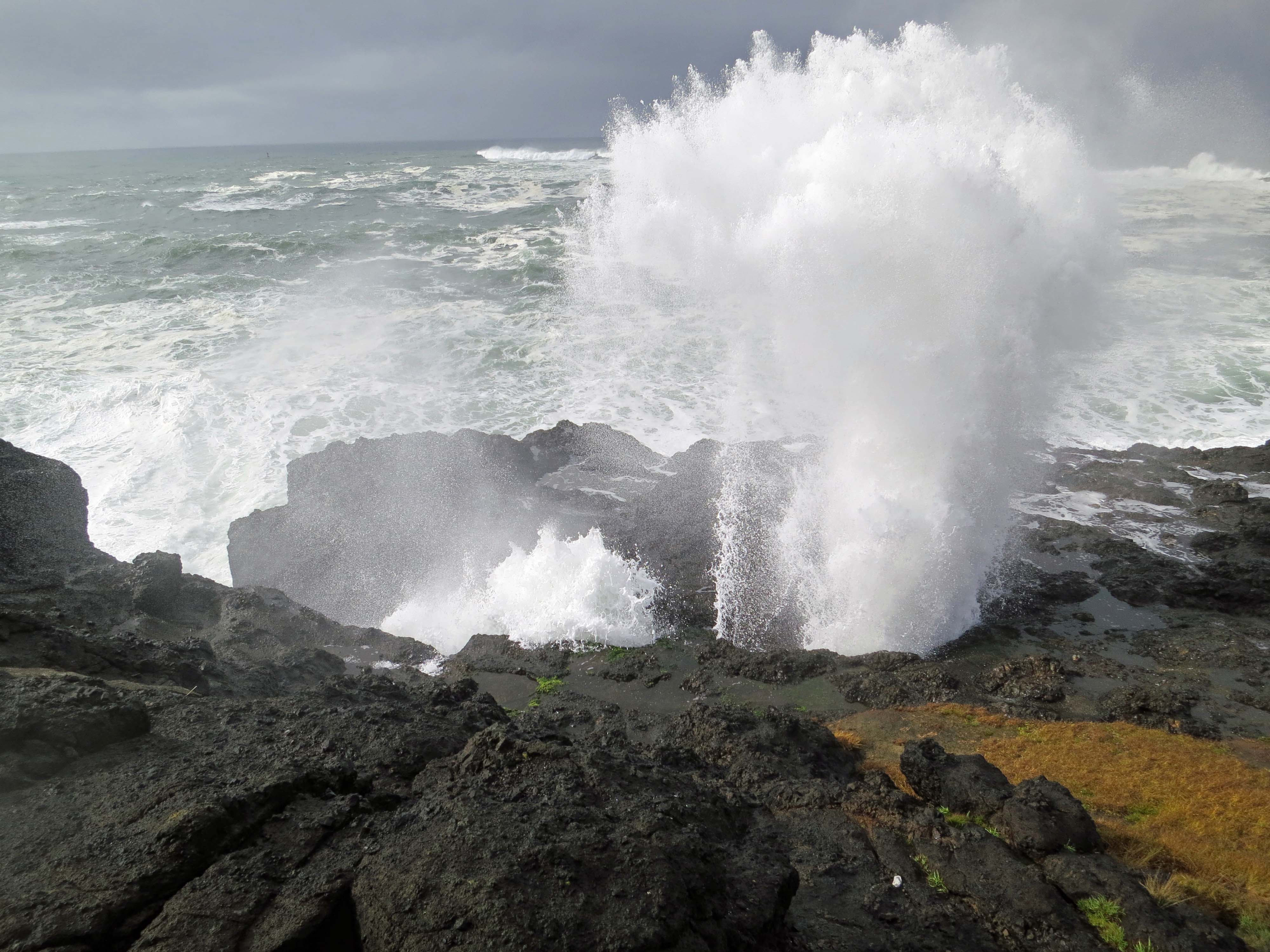
Spouting Horns at Depoe Bay shoot waves into the air. Photo by Curtis Mekemson.

One of the best know spots for watching waves on the Oregon Coast is in the community of Depoe Bay where the ocean shoots through lava tubes and is thrown high into the sky through what is known as the Spouting Horns.

View of Spouting Horns at Depoe Bay on the Oregon Coast. Photo by Curtis Mekemson.

Another view of the Spouting Horns. I could almost see a ghostly face staring back at me.

View of waves thrown into the air at Spouting Horns, Depoe Bay, Oregon. Photo by Curtis Mekemson.

And a third view.

Wave retreats at Depoe Bay, Oregon. Photo by Curtis Mekemson.

The wave’s energy expended by crashing against the rocks, the water flows back into the ocean.

The Devi's Churn on the coast of Oregon. Photo by Curtis Mekemson.

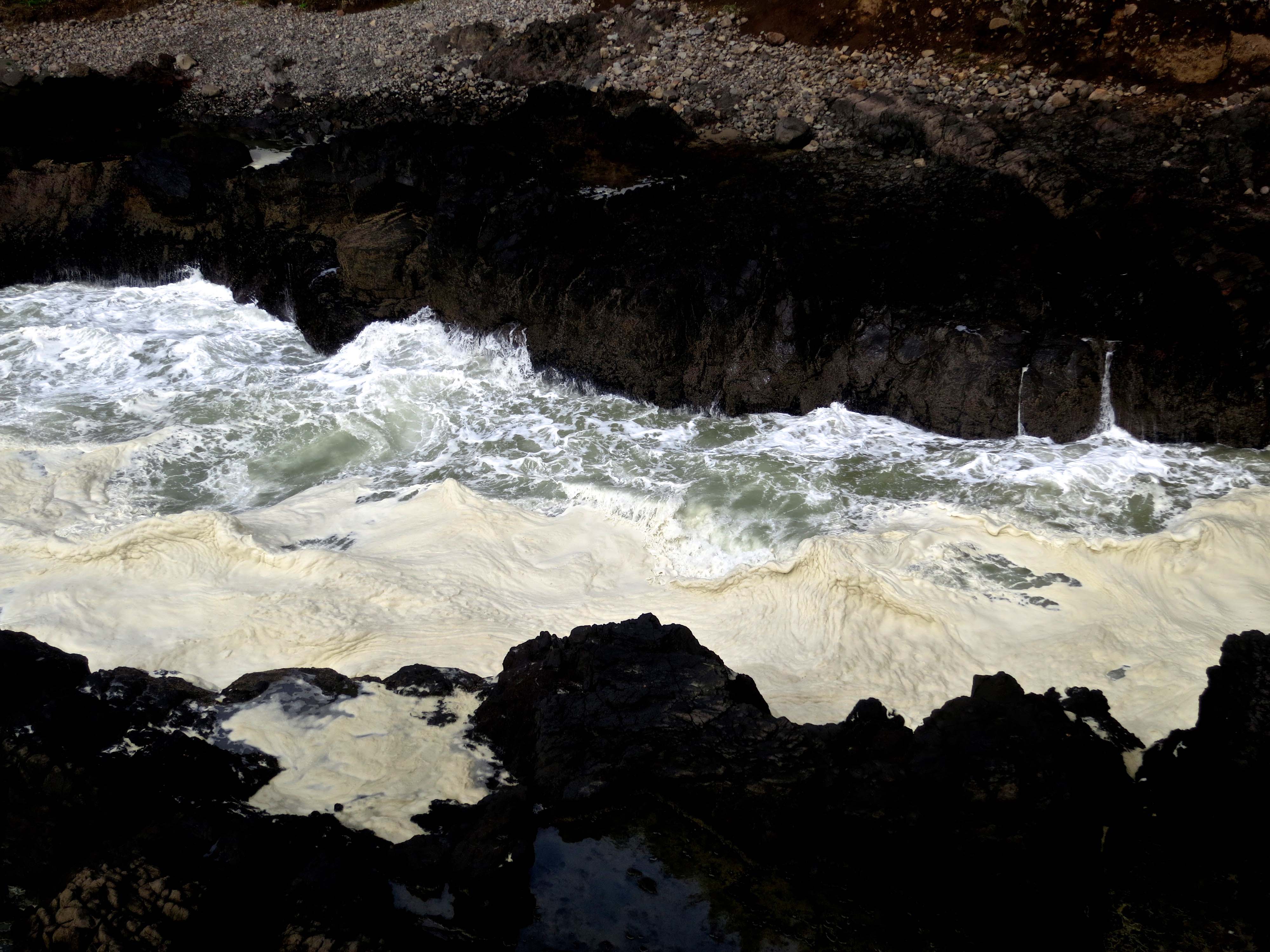
It’s known as the Devil’s Churn. Waves come driving in from the ocean and are forced up a narrow channel, turning the water into a frothy, whipped cream like texture.

Devil's Churn on Central oregon coast showing whip cream like texture of waves. Photo by Curtis Mekemson.

A close up of Devil’s Churn showing the whip cream like texture of the waves.

Devil's Churn on Oregon coast whips waves into a froth. Photo by Curtis Mekemson.

The Churn at work.

A final view of the Devil's Churn.

A final view of the Devil’s Churn. Next blog: A hangar large enough to accommodate eight blimps in Tillamook, Oregon.


When Orcas Go Swimming By… British Columbia Sea Kayak Adventure: The Conclusion

Orca family in Johnstone Strait, British Columbia.

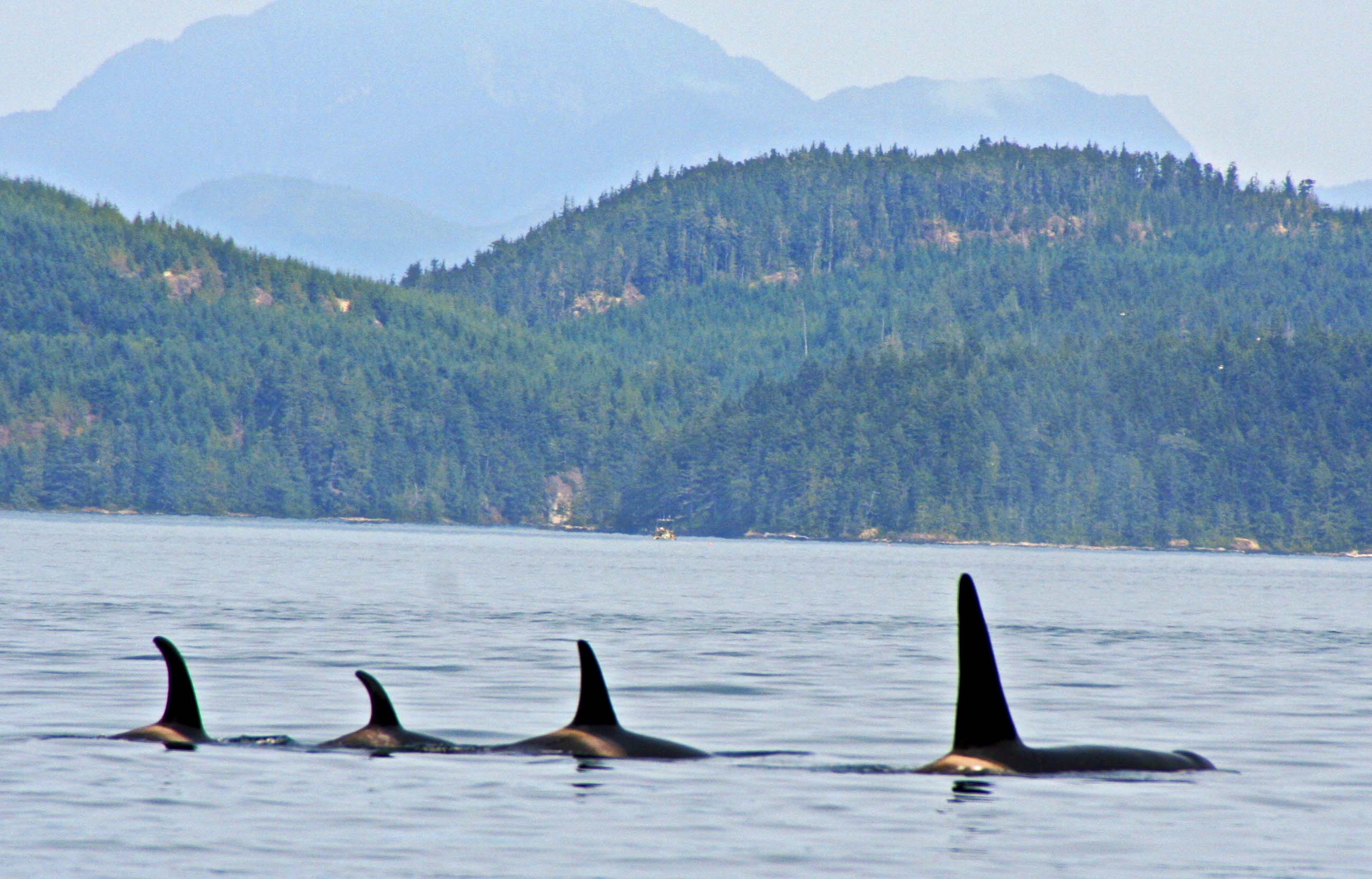
We dropped what we were doing to watch the orca family pass by our campsite. (Photo by Peggy Mekemson.)

“Orcas!” Kimberly cried out, and we all went dashing for the beach with our cameras. Kimberly liked to perch on convenient logs and rocks, looking out at the Johnstone Strait. It gave her a front row seat on the action. I get it. I can stare out at the Pacific Ocean for hours— watching the waves roll in, listening to the lonely calls of seagulls, admiring the crazy antics of pelicans, and, yes, looking for whales.

Looking for orcas in Johnstone Strait, British Columbia.

Perched on a rock, Kimberly keeps a sharp eye out for orcas.

We had barely arrived at our campsite when the first family of orcas came swimming by. We were still in the middle of tucking our kayaks away in the forest above the tide line. Everything was dropped, including the kayaks. There were whales to see.

Sea Kayak Adventures group watches orcas in Johnstone Strait, BC. Photo by Curtis Mekemson.

The rallying cry of “Orcas!” sent everyone scrambling for a view.

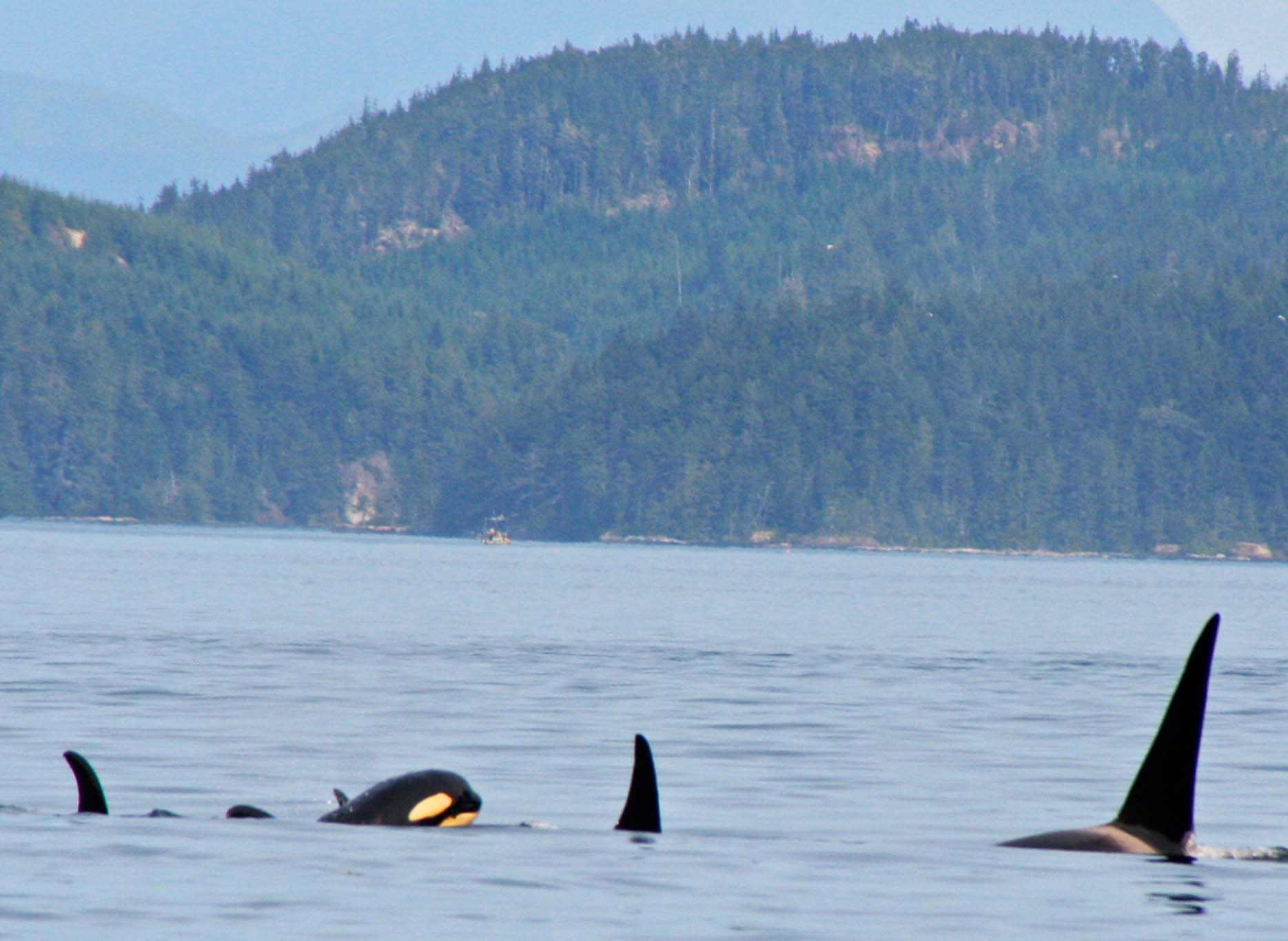
A baby orca surfaces in Johnstone Strait, BC.

A baby orca surfaces. Our reward for being vigilant. (Photo by Peggy Mekemson.)

This was our last campsite before heading home. Once again we had returned to Vancouver Island. We were located at Sea Kayak Adventures’ Little Kai Camp and would be there for two nights. Seeing orcas on our arrival was a good omen. We were happy campers. Not even the surround sound of fishing boats or a deluge of cold rain could dampen our spirits.

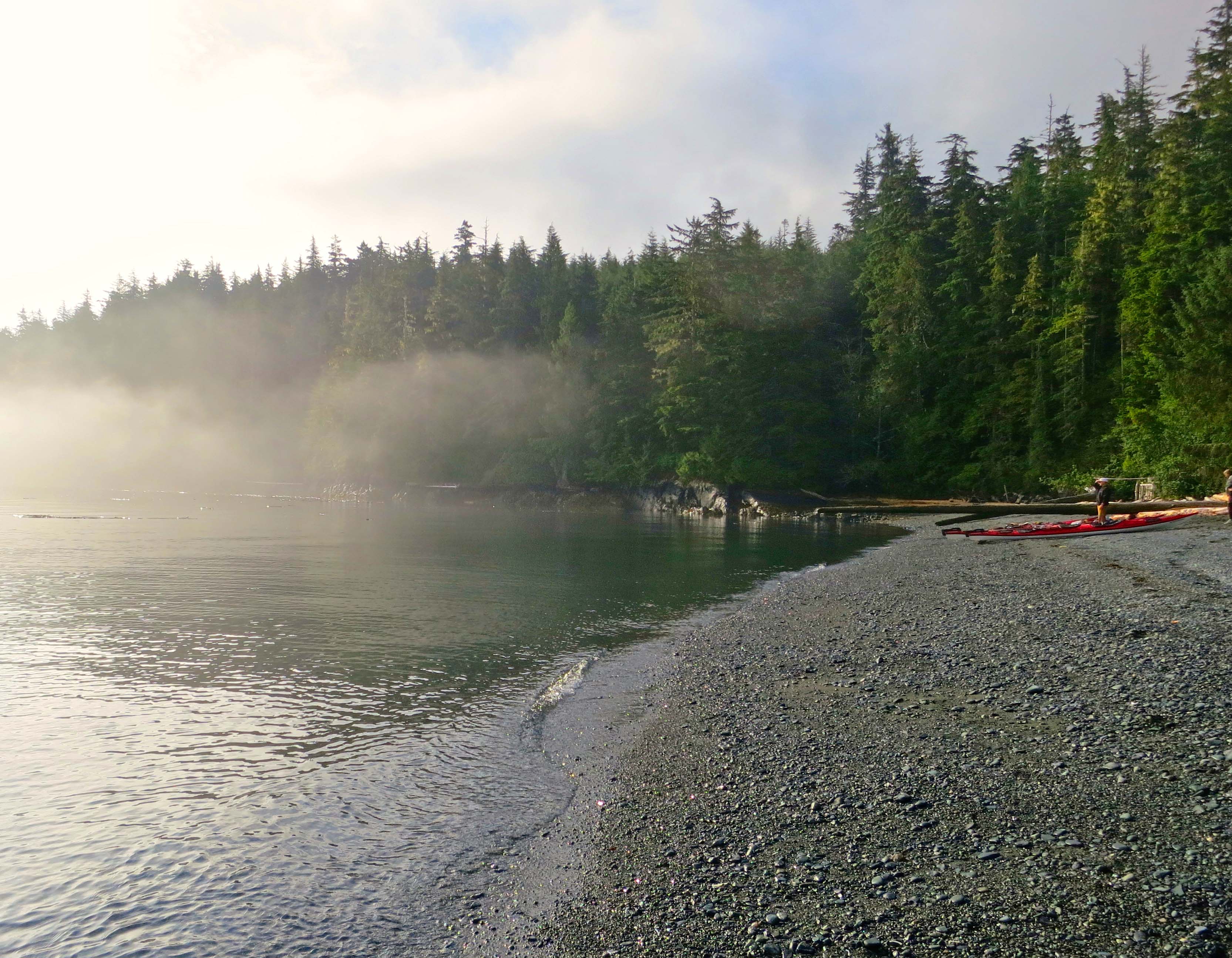
Beach at Little Kai Camp on Vancouver Island. and Johnstone Strait.

The beach at Little Kai camp.

Who can complain when surrounded by good people and beautiful scenery? But our trip was drawing to a close. After several more good meals, another kayak adventure, an evening of fun and story telling, and more orcas, it was time to pack up our kayaks and paddle back to Telegraph Cove. An orca gave us a final British Columbia send-off.

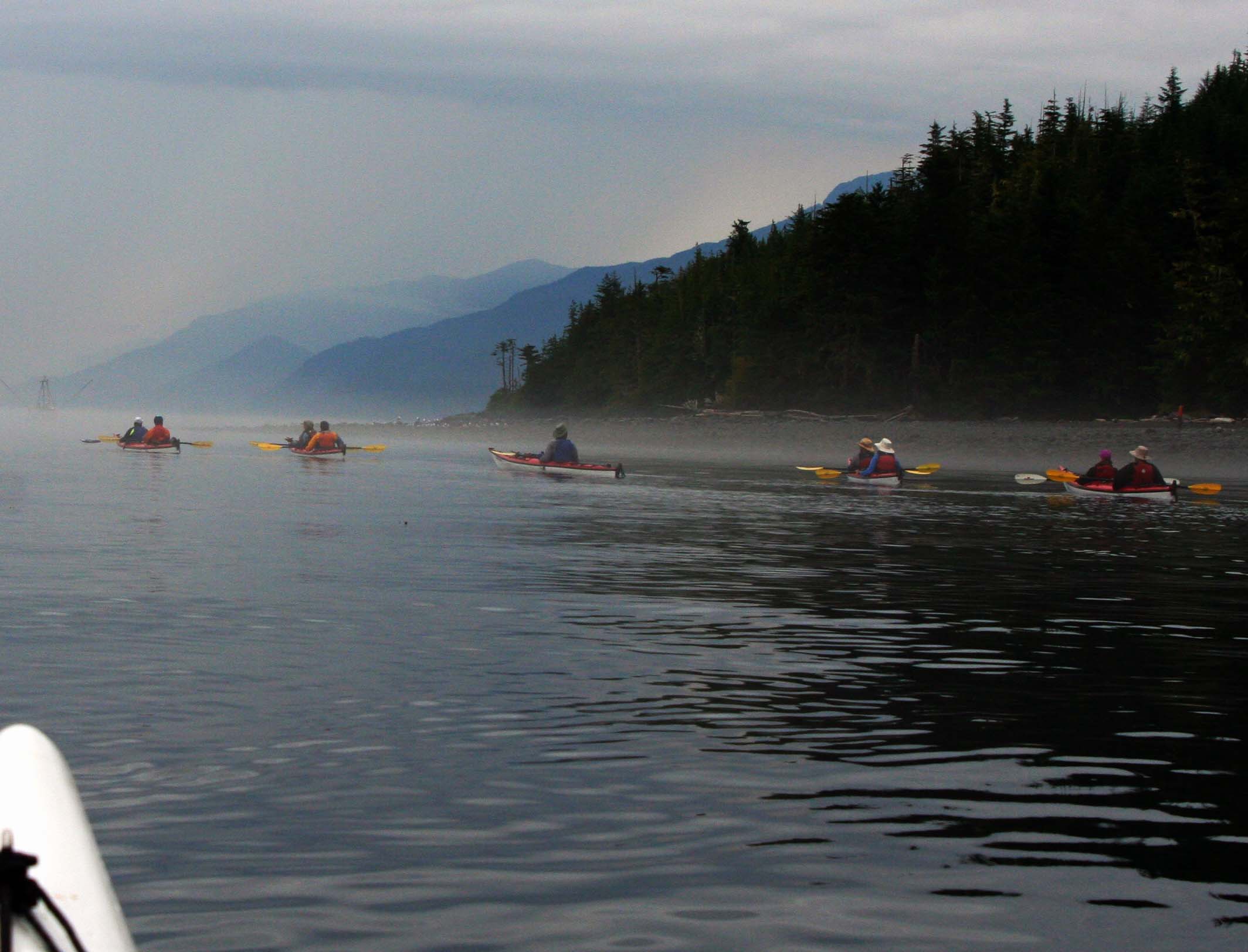
Our group works its way south along Vancouver Island. Shortly afterwards the skies opened up and dumped buckets of rain on us.

Our group works its way south from Little Kai Camp along Vancouver Island. Shortly afterwards the skies opened up and dumped buckets of rain on us. (Photo by Peggy Mekemson.)

Driftwood on Johnstone Strait, Vancouver Island. Photo by Curtis Mekemson.

Back at camp, I found interesting driftwood.

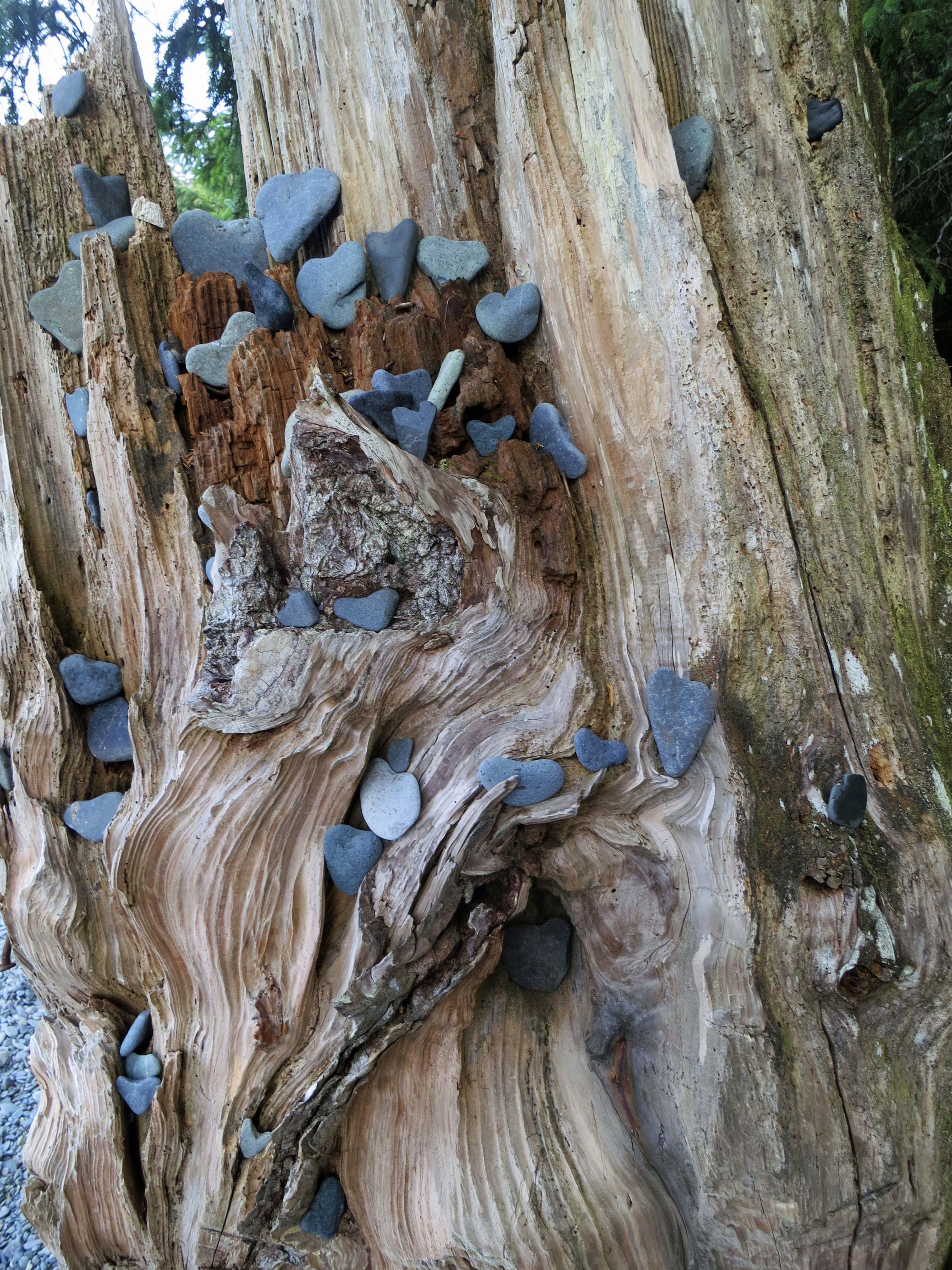
Heart shaped rocks found on Little Kai Beach off of Johnstone Strait. Photo by Curtis Mekemson.

We were amused to find that previous kayakers had collected numerous heart-shaped rocks off of Little Kai Beach.

Dinner is served on Sea Kayak Adventures' trip on Johnstone Strait.

Dinner is served.

Fishing boats shattered the quiet of our campground. BC fisheries had declared an eight hour fishing season to reduce the number of salmon trying to get up streams.

Fishing boats shattered the quiet of our campground. BC fisheries had declared an eight-hour fishing season to reduce the number of salmon trying to get up streams. Boats came from everywhere. (Photo by Peggy Mekemson.)

We wrapped up our final evening with a campfire, story telling, songs and a skit.

We wrapped up our last evening with a campfire, story telling, songs and skits.

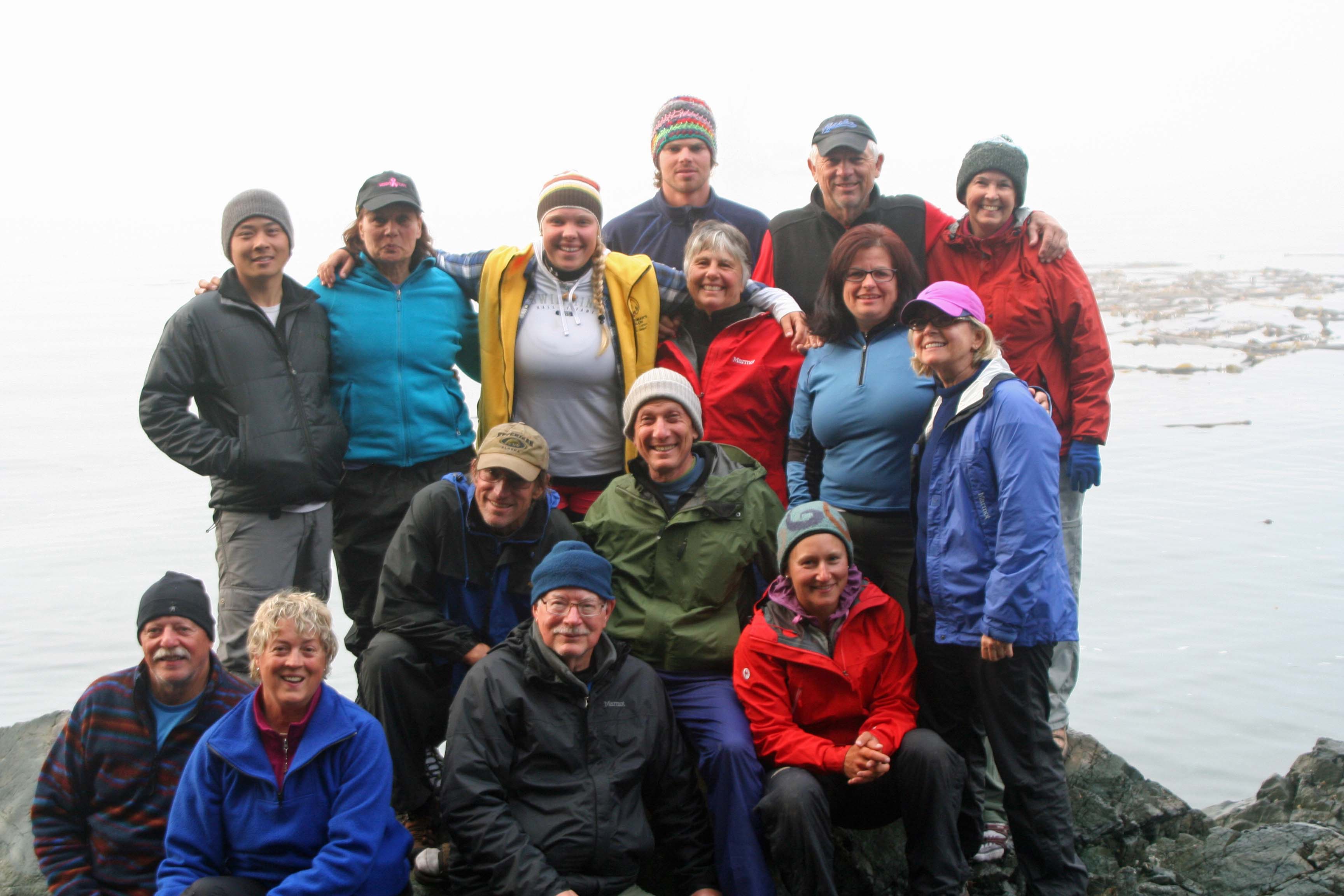
The final morning we posed for an 'official' group photo.

Our ‘official’ group photo.

Bear on Johnstone Strait, BC.

Kayaking back to Telegraph Cove, we came on a black bear. We weren’t able to determine how he managed to get the stick lodged in his fur. Was it the shaft of an arrow? (Photo by Peggy Mekemson.)

Since we had begun our kayak adventure searching for orcas, it is appropriate that I end this series with a picture of the final orca we saw. (Photo by Peggy Mekemson.)

Since we had begun our kayak adventure searching for orcas, it is appropriate that I end this series with a picture of the final orca we saw. (Photo by Peggy Mekemson.)


Free Corky— and Stay Out of the Death Vortex… British Columbia Kayak Adventure


Sea Kayak Adventures likes to stop for lunch at the beach next to Orca-Lab on Hanson Island.

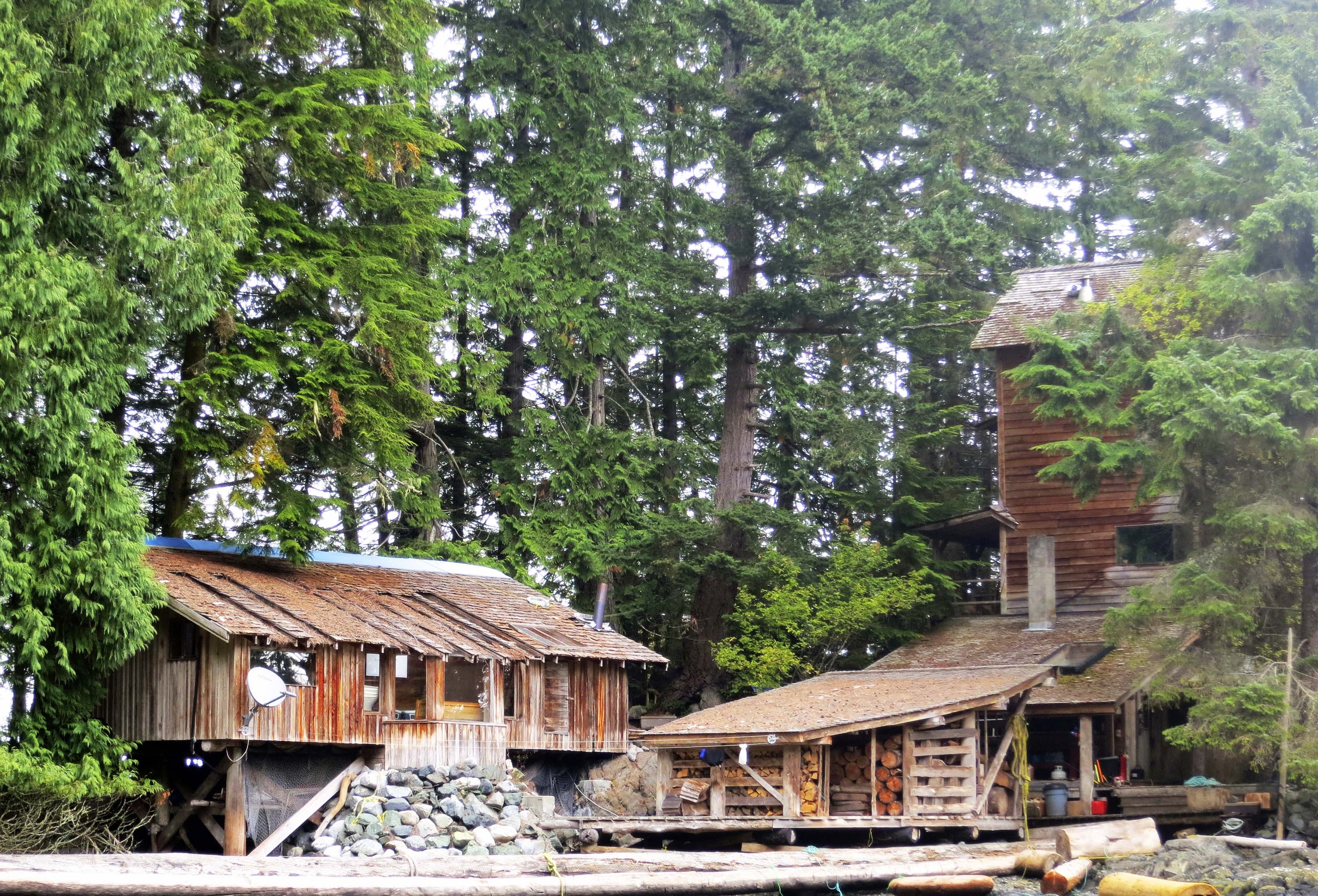
Sea Kayak Adventures likes to stop for lunch at the beach next to Orca-Lab on Hanson Island. One of the researcher’s cabins is on the left. (Photo by Peggy Mekemson.)

“Paddle, Curt and Peggy, paddle!” Julia yelled at us across the water. The tides of Johnstone Strait between Vancouver Island and mainland British Columbia can be ferocious. And we were caught in the current— the death vortex as the guides described it. We had been futzing along behind the group, happily paddling along, and matching strokes. Matching strokes is more efficient in kayaking, and it is certainly more aesthetic. I doubled my efforts and so did Peggy, paddling fast and digging deep, not concerned about style, driven by adrenaline. What seemed like an hour later (mere minutes), we were out of trouble. Afterwards, I continued to be unaesthetic, and we moved up to the head of the line.

The day had started out foggy. In fact the guides were worried about whether the fog would clear. As I mentioned before, sharing a narrow strait in zero visibility with huge cruise ships is at the top of every kayaker’s bad-idea list. The sun came out, however, and, beyond being caught in the death vortex, we had a great day of kayaking. The highlight, from my perspective, was visiting the site of the Orca-Lab.

A side view of the Orca-Lab and an out buildings. Tents were located behind these buildings, which I assumed housed some of the volunteers who come fro all over the world to work at the research facility.

A side view of the Orca-Lab and an out building. Tents were located behind these buildings, which I assumed housed some of the volunteers who come from all over the world to work at the research facility.

Some 150 orcas live and travel in Johnstone Strait and Blackfish Sound during the summer and fall months when the salmon are running. Orcas are quite social with the primary grouping built around the mother. She and her children stay together for life. Maternal groups form pods of extended family members and, beyond that, join together in clans, who more or less speak the same language: they share common calls.

Dr. Paul Spong established Orca-Lab on Hanson Island in 1970. It has been functioning ever since to study the local whale population. A number of hydrophones (underwater listening devices) are positioned around the Orcas’ territory to listen in on their ‘discussions.’ These sonic recordings are supplemented by visual sightings of orcas as they pass by Orca-Lab and from other land-based locations in Johnstone Strait.

Julia drops a hydrophone into the water to see if we can pick up any orca calls. Is that a huge orca photo bombing the picture under her arm??? No, unfortunately, it was a view of a peninsula modified by Julia's shirt. I was excited for a second, though.

Julia drops a hydrophone into the water to see if we can pick up any orca calls. Is that a huge orca photo bombing the picture next to her waist??? Nope, it was a view of a peninsula modified by Julia’s shirt. I was excited for a second, though… (Photo by Peggy Mekemson.)

In addition to Orca-Lab’s ongoing scientific studies, it works to improve whale habitat, free captive whales, and oppose whale hunting. Number one on its “Free Willy” type campaign is Free Corky. She was captured when she was four years old and has now been in captivity for 42 years. You are more likely to know her as Shamu of Sea World in San Diego. Orca-Lab wants her reunited with her family.

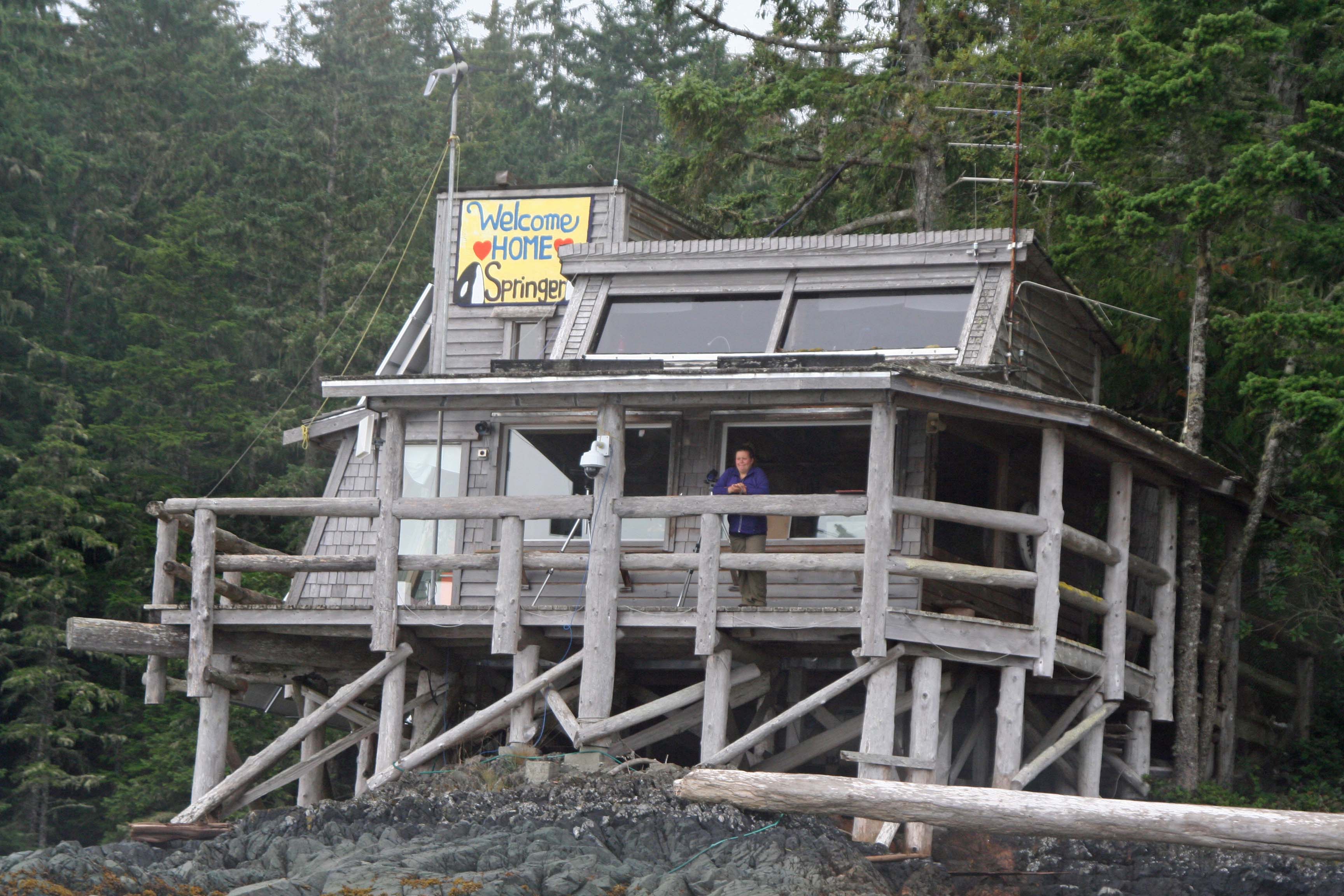
A frontal view of the Orca Lab with a Welcome Home Springer sign. Springer is the poster child of reuniting orca whales with their families. Orphaned as a child, she wandered far from home and begin approaching fishing boats for companionship. Close to starving, she was captured, fed and returned to her pod where family members adopted her— and taught her to stay away  from fishing boats. Each year, she returns to Johnstone Strait.

A frontal view of the Orca Lab with a Welcome Home Springer sign. Springer is the poster child of reuniting orca whales with their families. Orphaned as a child, she wandered far from home and began approaching fishing boats for companionship. Close to starving, she was captured, fed, and returned to her pod where family members adopted her— and taught her to stay away from fishing boats. Each year, she returns to Johnstone Strait. (Photo by Peggy Mekemson.)

Orca-Lab beach on Hanson Island, British Columbia. Photo by Curtis Mekemson.

There was some very impressive driftwood on the beach at Orca-Lab, including this massive example. One might assume there were some large trees around…

Giant cedar tree on Hanson Island near the Orca Lab in Johnstone Strait, British Columbia.

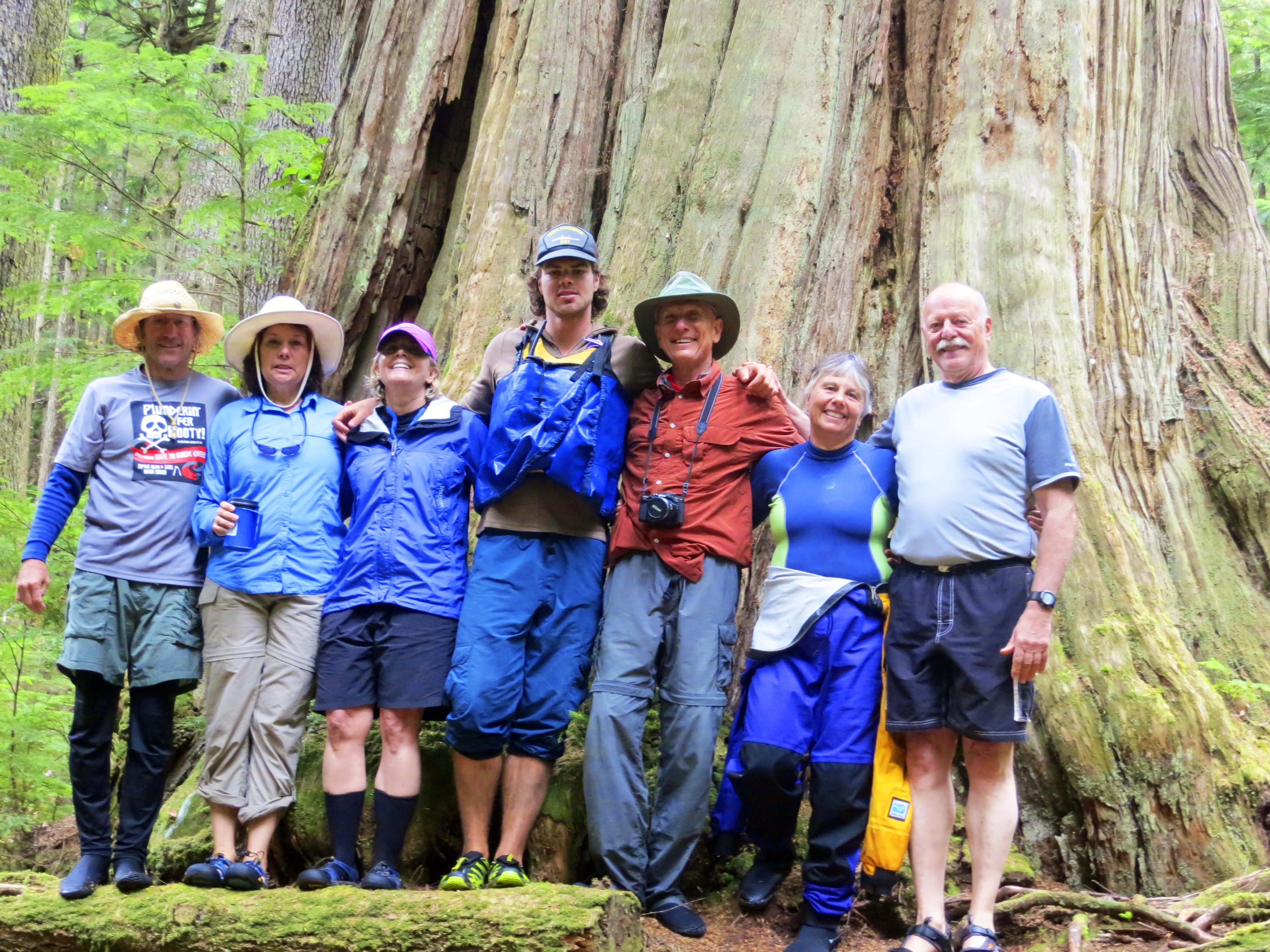
We went for a walk and found this giant tree that the folks at Orca-Lab call Grandma Cedar.

Grandma Cedar on Hanson Island BC near the Orca-Lab. Photo by Curtis Mekemson.

I took this photo of Grandma Cedar looking up.

Some photographers will go to any length to capture a photo of Grandma Cedar, as David demonstrates here.

Some photographers will go to any length to capture a photo of Grandma Cedar, as David demonstrates here.

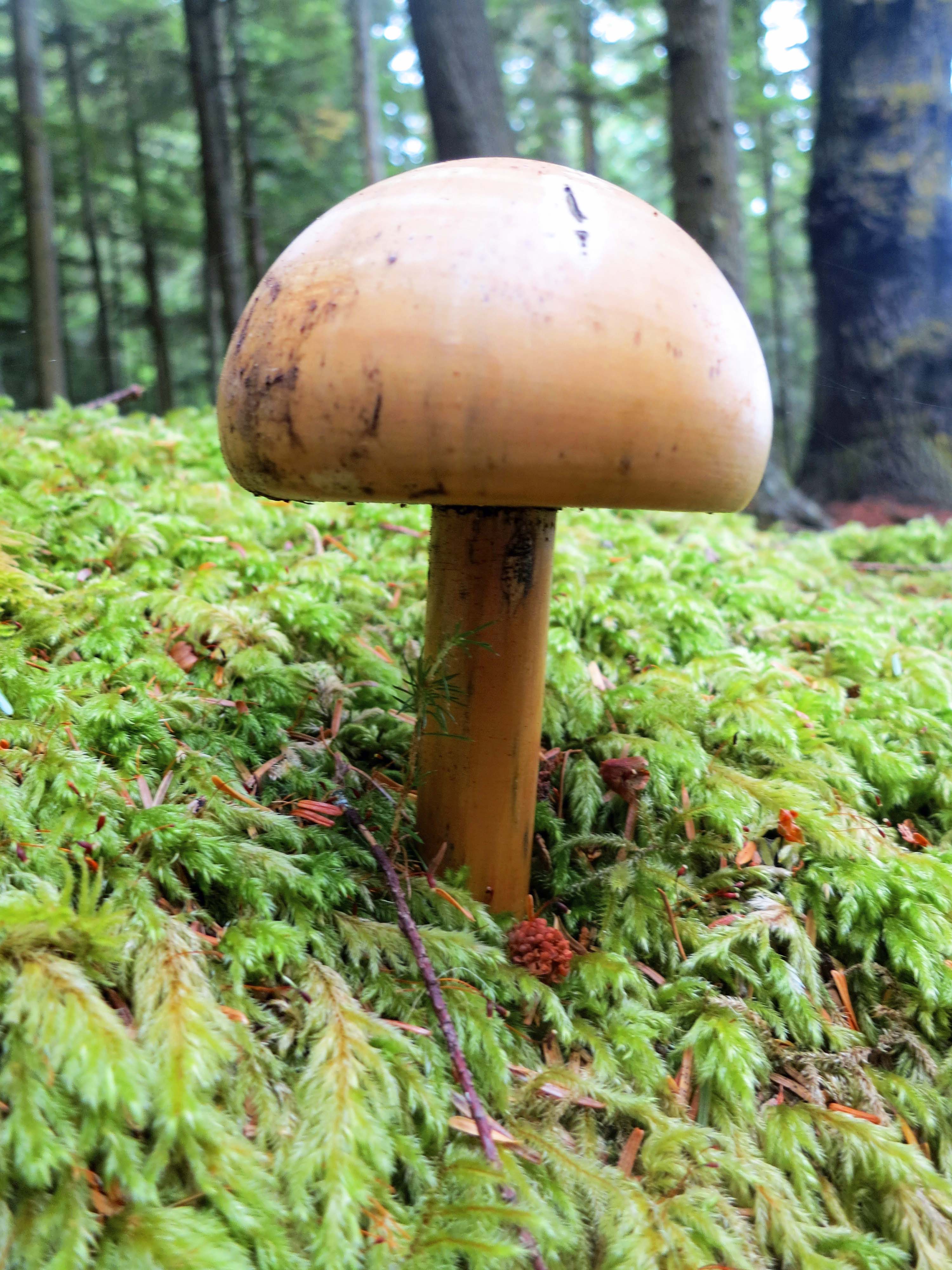
On the way back to the beach, I found some strange mushrooms growing along side the trail. On close inspection I discovered they were carved out of wood. My thoughts: the folks at Orca Lab were having a slow day.

On the way back to the beach, I found some strange mushrooms growing alongside the trail. On close inspection, I discovered they were carved out of wood. My thoughts: the folks at Orca-Lab were having a slow day.

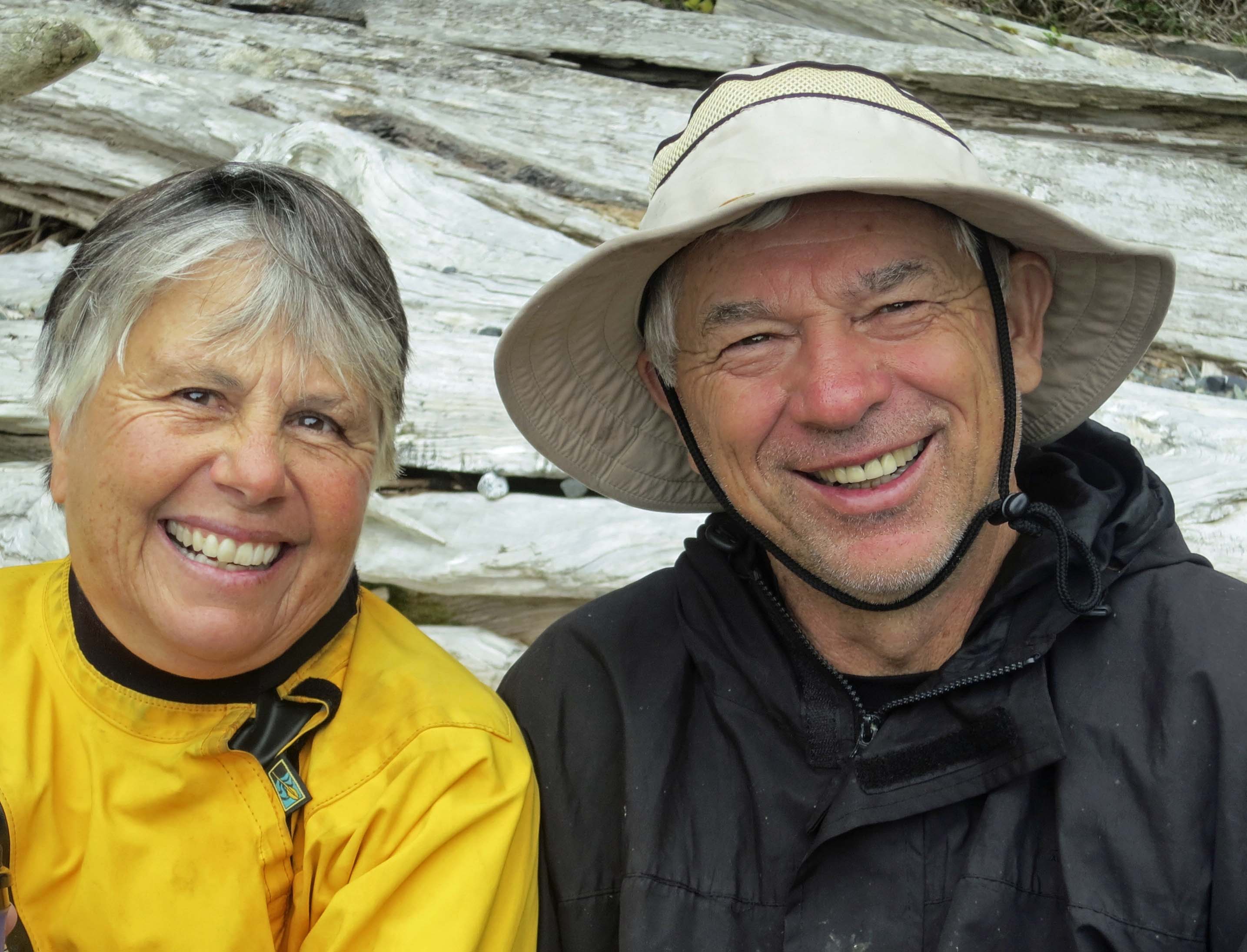
Back at the beach I found smiling faces— Wendy and Dennis.

Back at the beach I found smiling faces— Wendy and Dennis…

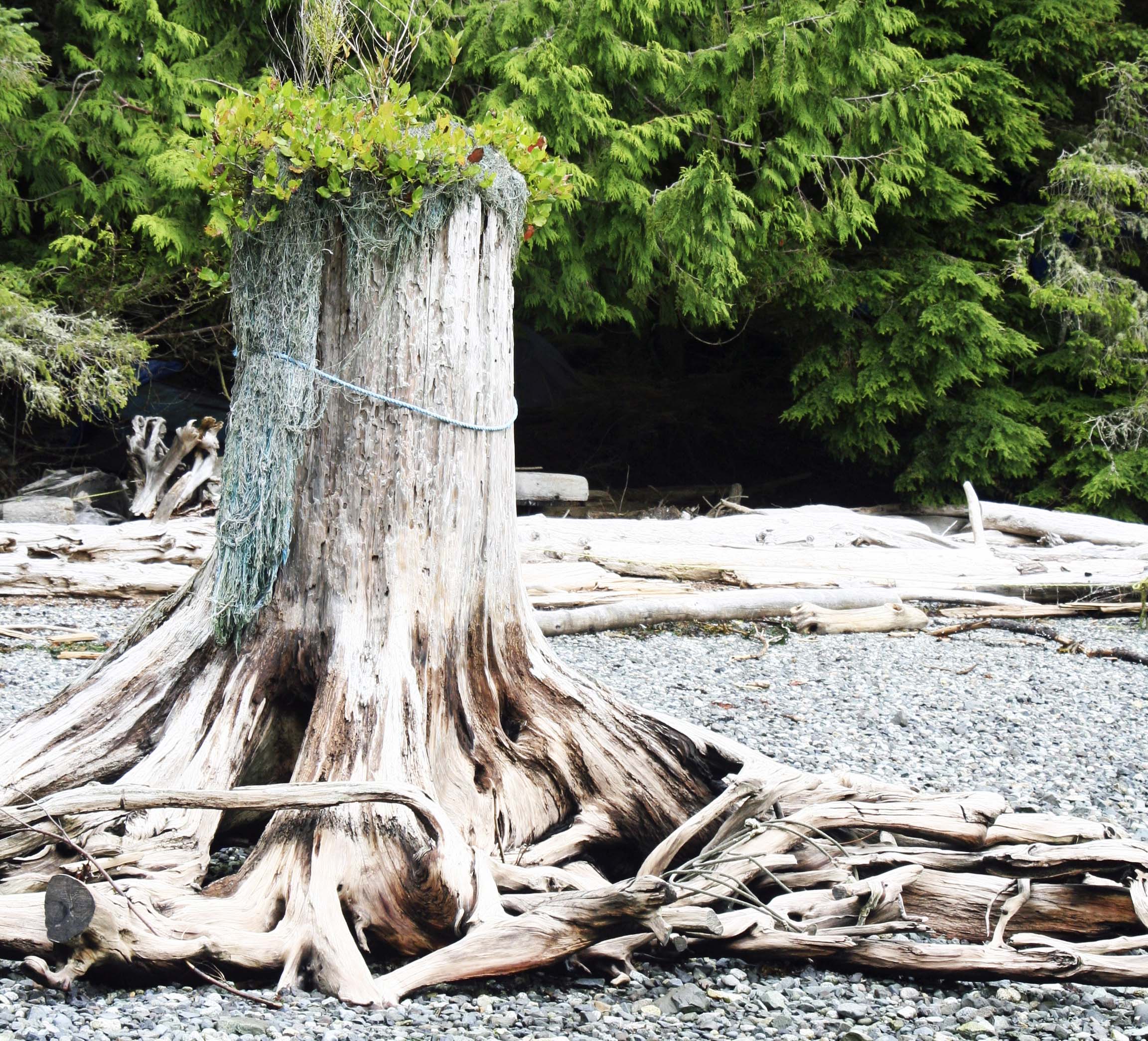
Dead stump with green growth on beach next to Orca-Lab on Hanson Island, Johnstone Strait, British Columbia.

A stump with green hair. Could it be Treebeard of Hobbit fame… (Photo by Peggy Mekemson.)

Driftwood found next to Orca-Lab on Hanson Island, British Columbia. Photo by Curtis Mekemson.

This entwined piece of driftwood…

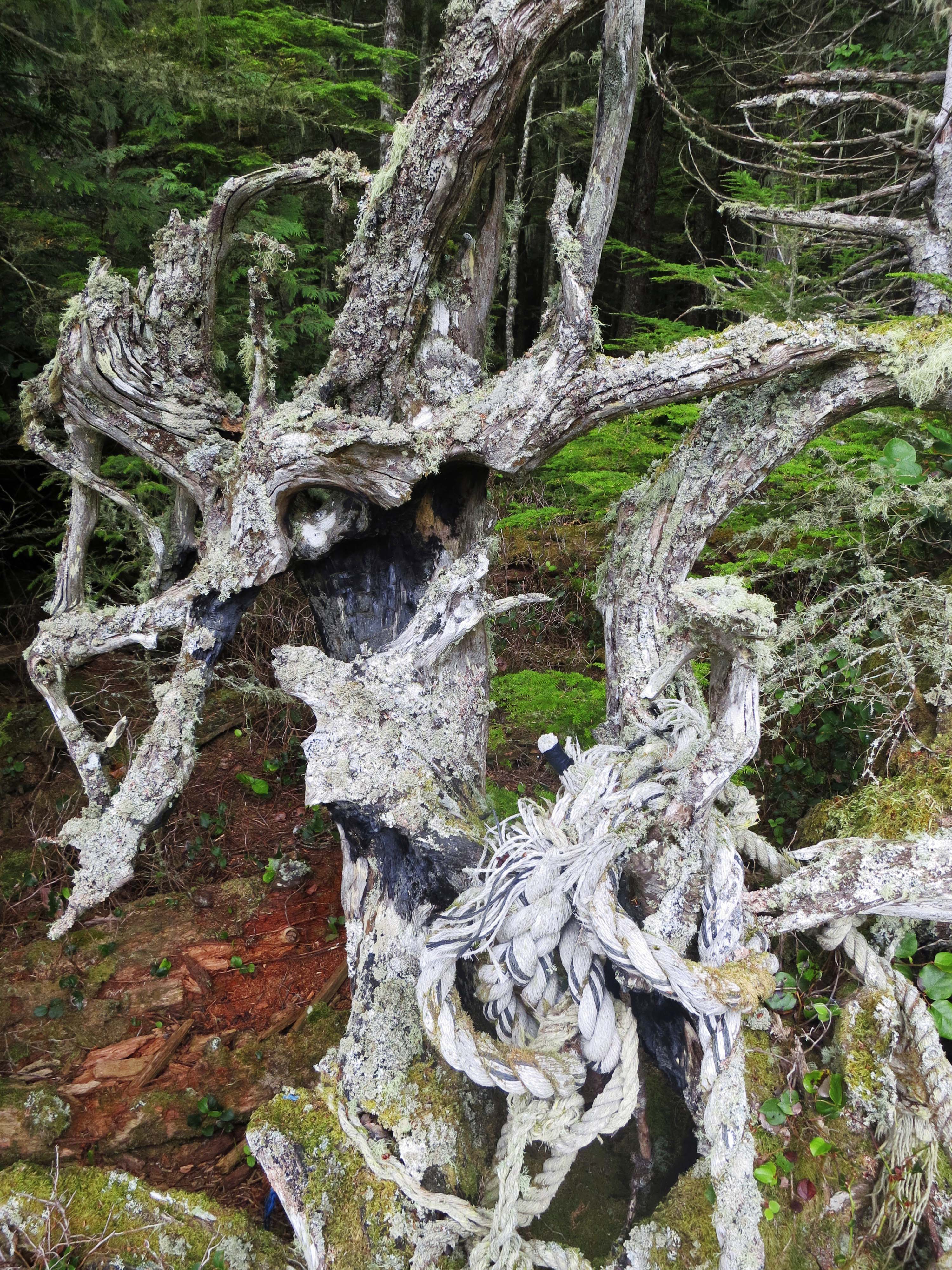
Old driftwood and rope on Hanson Island near the Orca-Lab.

An interesting combination of old wood and rope…

Sea kayaks of Sea Kayak Adventures waiting on Hanson Island next to Orca-Lab.

And our waiting kayaks. Our’s is third from the left. I was surprised she hadn’t escaped given that we had tried to dump her in the death vortex. It was time to saddle up and head for our last campground. Next Blog: I conclude the kayak adventure in British Columbia.

The Monster on the Rock— And Sasquatch… British Columbia Kayak Adventure: Part 4

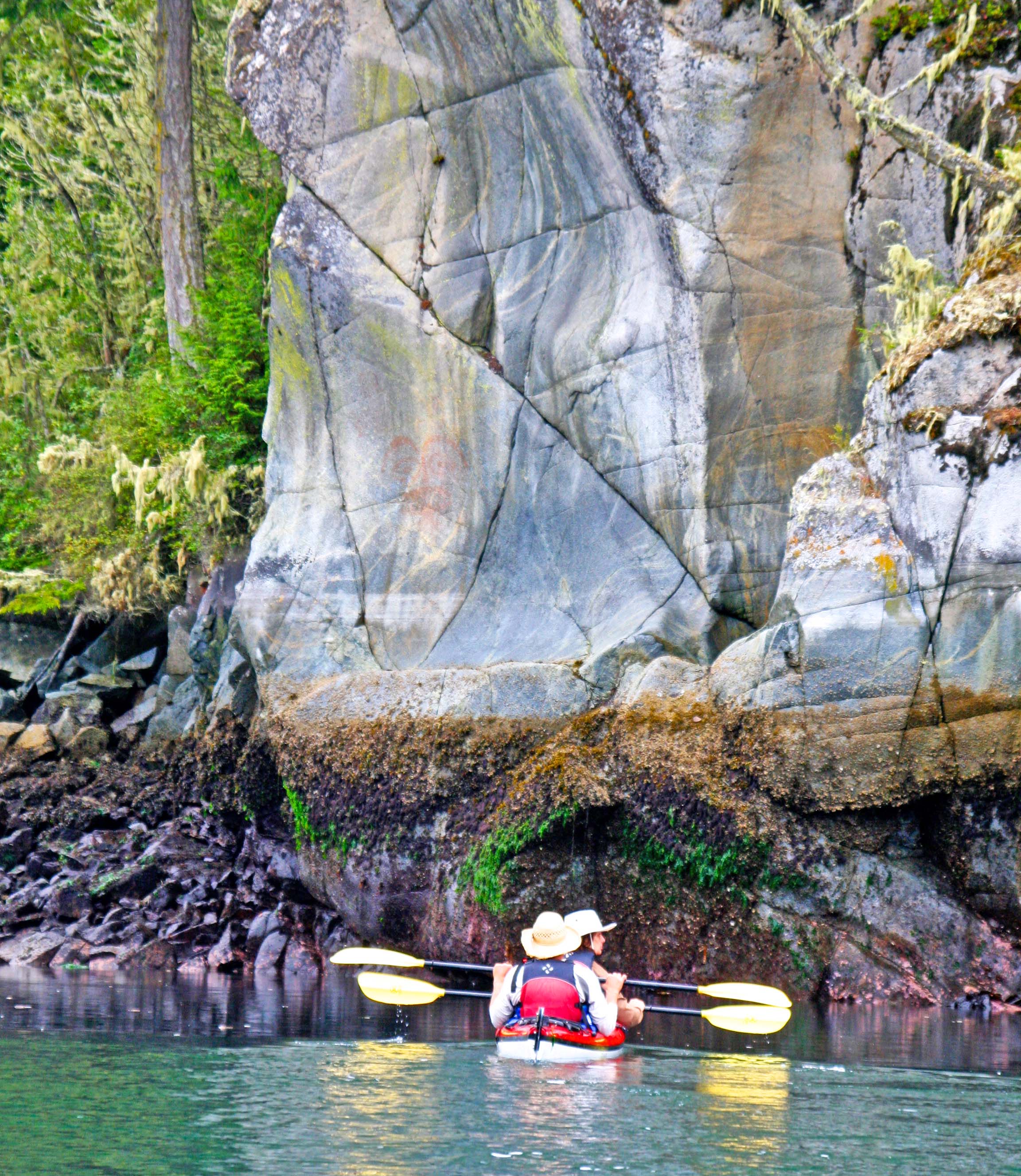
First Nation people had chosen this rock on Berry Island in Blackfish Sound, British Columbia as the location for a pictograph warning people to stay off of the island.

First Nation natives had chosen this rock on Berry Island in Blackfish Sound, British Columbia as the location for a pictograph warning people to stay off of the island. The dark line marks how high the tide climbs.

The third day of our kayak trip was a ‘layover day.’ It was a layover in the sense that we would be spending two nights at our camp on Compton Island, not that we would be sleeping in and relaxing. There was kayaking to do. Berry Island and a pictograph was our morning destination. We found the pictograph on a tall rock cliff that hung over the water.
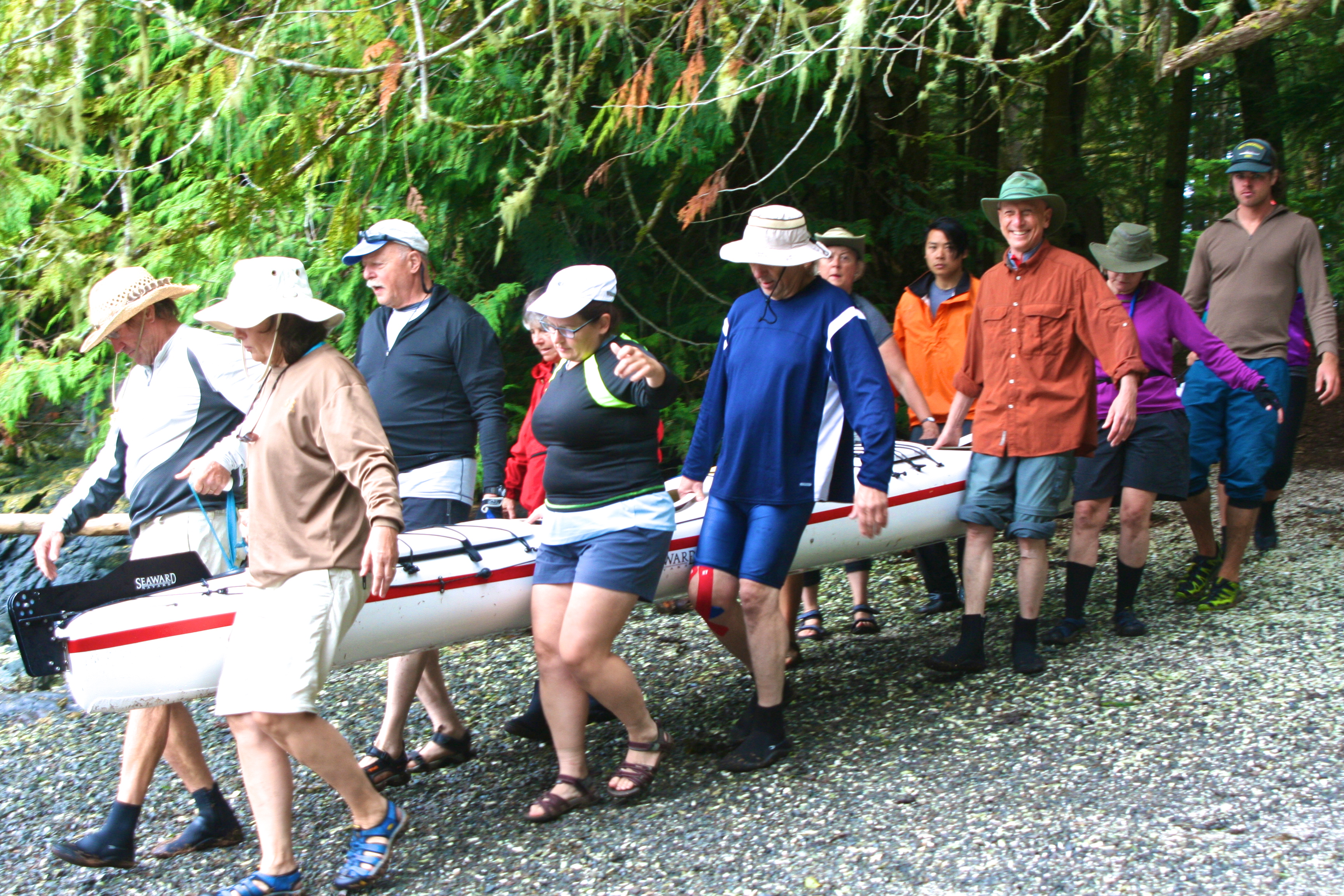
Our layover was not designed to be a kick-back and relax day. Here we are carrying our kayaks down to the water. The number of people required to move Peggy and my kayak suggests how heavy it was.  (Photo by Peggy Mekemson.)
Our layover was not designed to be a kick-back day. Here we are carrying our kayak down to the water. The number of people required to move it suggests how heavy it was. (Photo by Peggy Mekemson.)

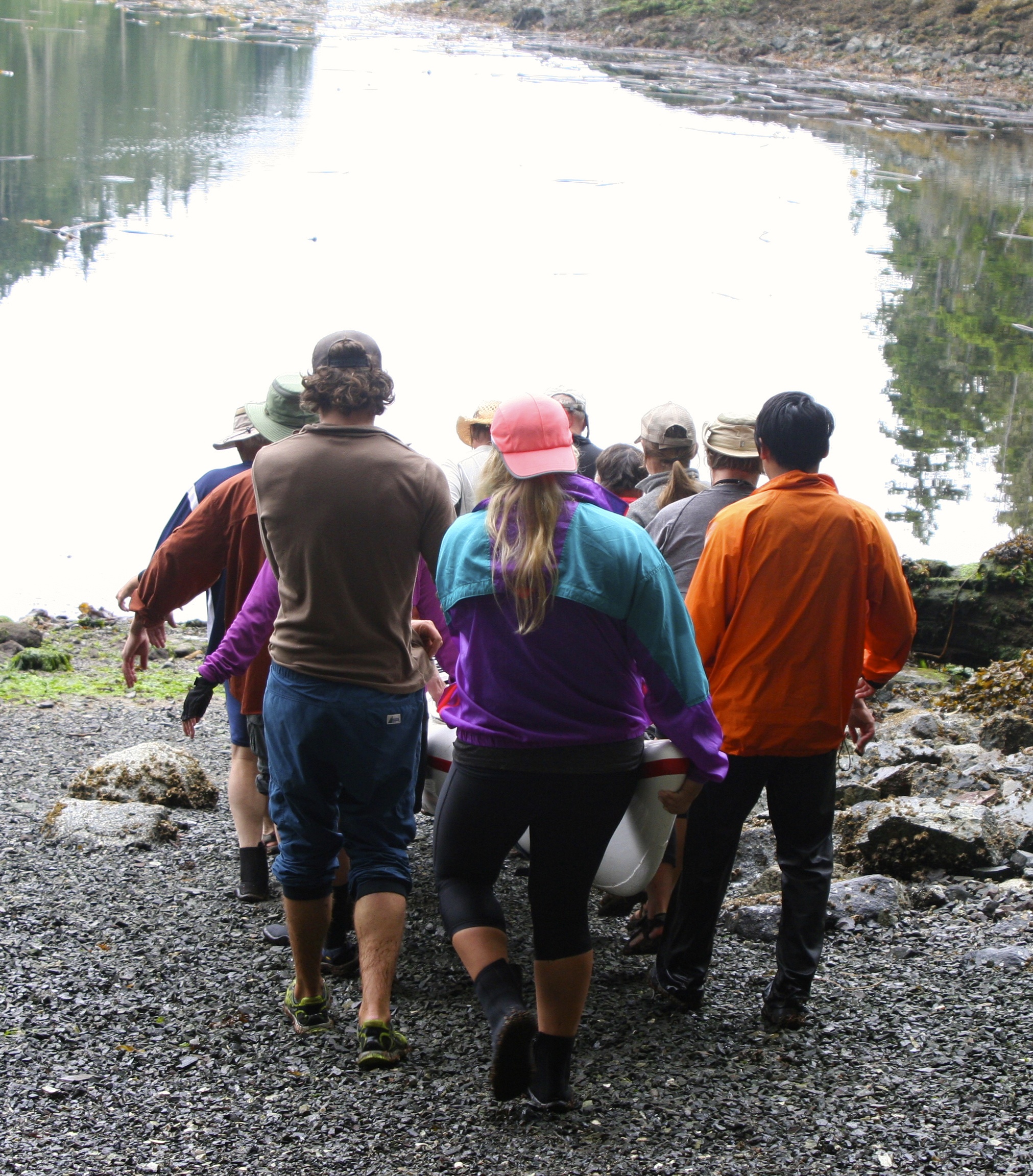
Extreme high and low tides in Johnstone Strait meant we often had to carry the kayaks a fair distance to water.

Extreme high and low tides in Johnstone Strait meant we often had to carry the kayaks a fair distance to water. (Photo by Peggy Mekemson.)

Stretching across the rock face, ancient First Nation natives had painted a monster to warn people away from Berry Island, where they buried their dead. It was an early no-trespassing sign— probably implying that the monster would eat you if you landed. I had seen its modern equivalent in west Texas, except there, the sign had declared that trespassers would be shot. Such admonitions make one hesitate; at least they do me. When my choice is to be eaten by a monster or shot by a Texan, I choose neither.

Mary and Rod, two of our kayakers from Idaho, paddle up close to get a look at the pictograph. It was above there right paddles on the shaded rock face. Can't see it? Don't feel bad; neither could I. (Photograph by Peggy Mekemson.)

Mary and Rod, two of our kayakers from Idaho, paddle up close to get a look at the pictograph(s). One is barely visible above the right paddles. Look closely and you will see two round eyes. Another is above the left paddles— red, round and also barely visible. (Photo by Peggy Mekemson.)

Rod seemed quite happy with what he saw, however. Or maybe he was happy the monster chose not to eat him.

Rod seemed quite happy with what he saw, however. Or maybe he was happy the monster chose not to eat him.

Our guide, Nick, told us another story; this one had been passed on by the kayaking community. A lone, female kayaker had stopped to camp on Berry Island and had set up her tent for the night. Shortly afterwards, a boulder went flying by her head. She neither saw nor heard anyone, but another boulder came whizzing past. It was time to vacate the premises. She grabbed her kayak and paddled away as more boulders landed nearby. When nothing else had been hurled at her for two hours, she paddled back in, grabbed her tent (rather quickly, I suspect) and hightailed it. Back in town, the locals told her that Berry Island was also known as Sasquatch Island. Had Bigfoot been lobbing rocks at her? The Sasquatch/Bigfoot Research Organization claims this is a common practice of the big, hairy fellow. See here.

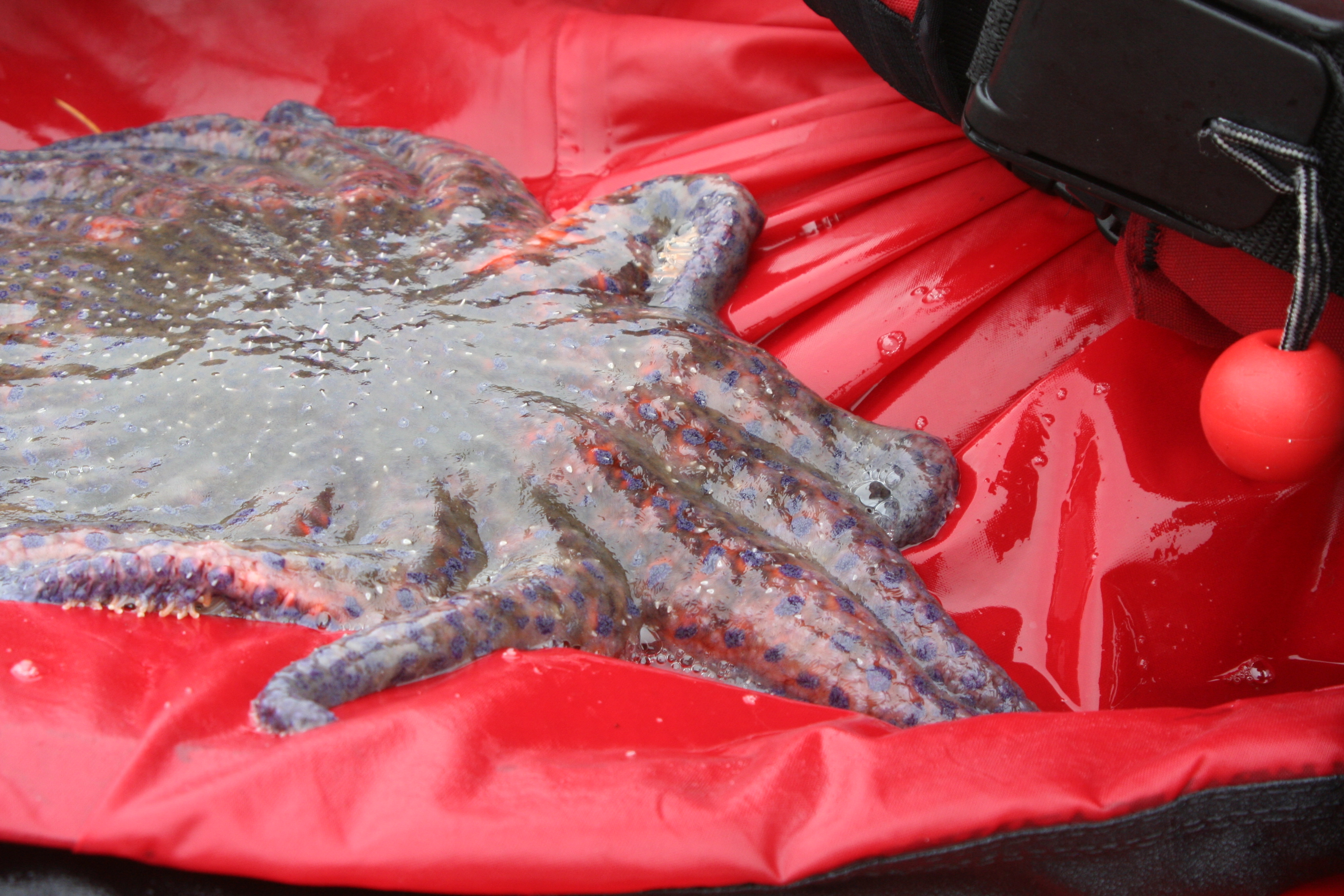
Heading back for camp and lunch, our guide, Julia, found a starfish that made Bigfoot seem normal in comparison. Julia handled it with aplomb, sort of. As for lunch, we ate the delicious salmon that I blogged about in my last post.

Starfish in Blackfish Sound, British Columbia.

This amorphous mass is actually a starfish. Here it rests on our guide Julia’s kayak skirt.

Julia picked the starfish up to show us. I think there was a slight 'ewww' factor. There certainly would have been for me.

Julia picked the starfish up to show us. I think there was a slight ‘ewww’ factor. There certainly would have been for me. (Photo by Peggy Mekemson.)

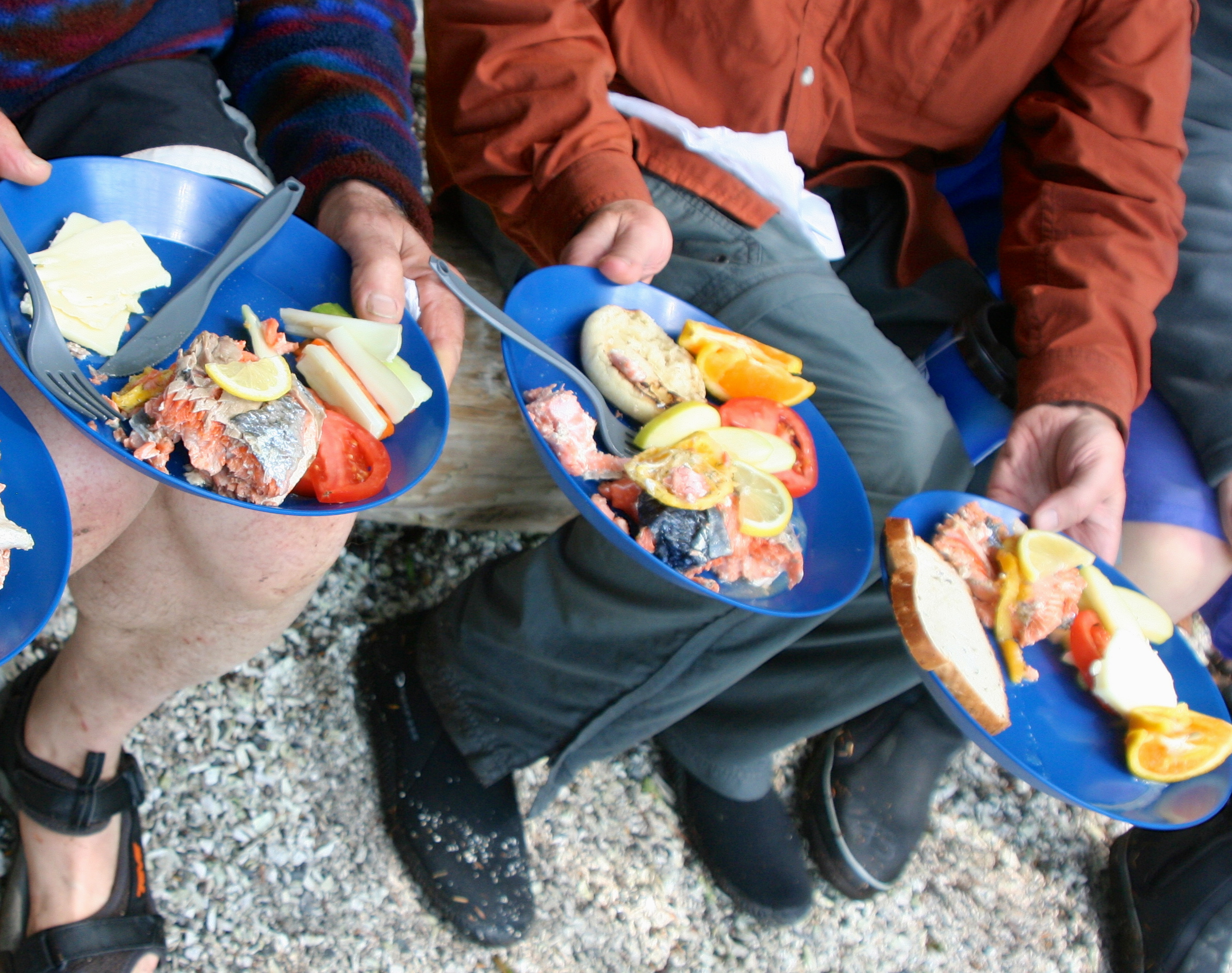
Sea Kayak Adventures cooks up a delicious lunch of freshly caught salmon at its camp on Compton Island, British Columbia.

The fresh salmon delivered to us the night before by a fisherman, ended up as a delicious lunch. We weren’t the only ones interested in the salmon, however…

Bald eagle on Compton Island in British Columbia.

Each bite was carefully monitored. This bald eagle had already eaten the salmon’s guts, and he was eager for more fish. Sushi would be fine.

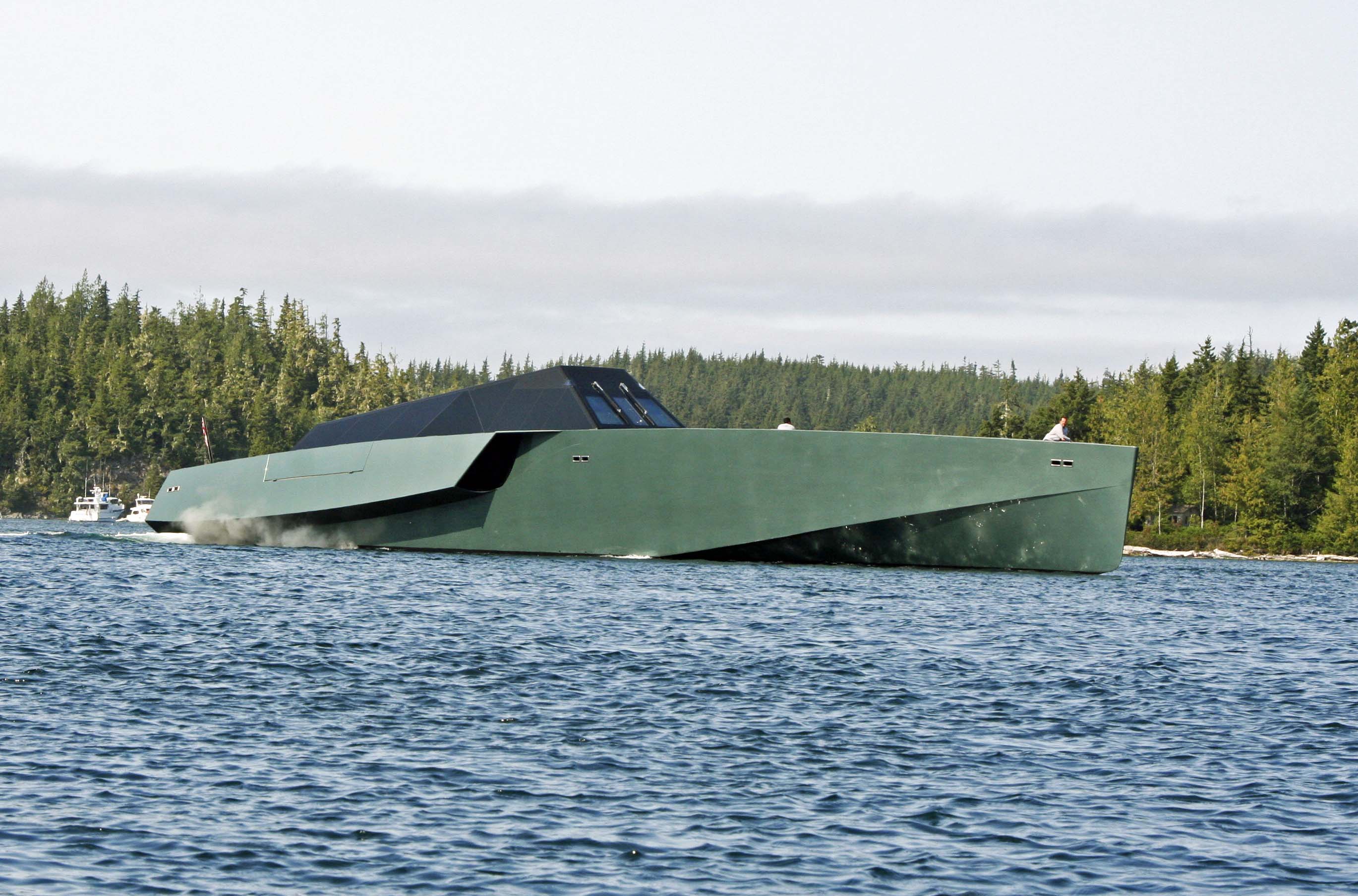
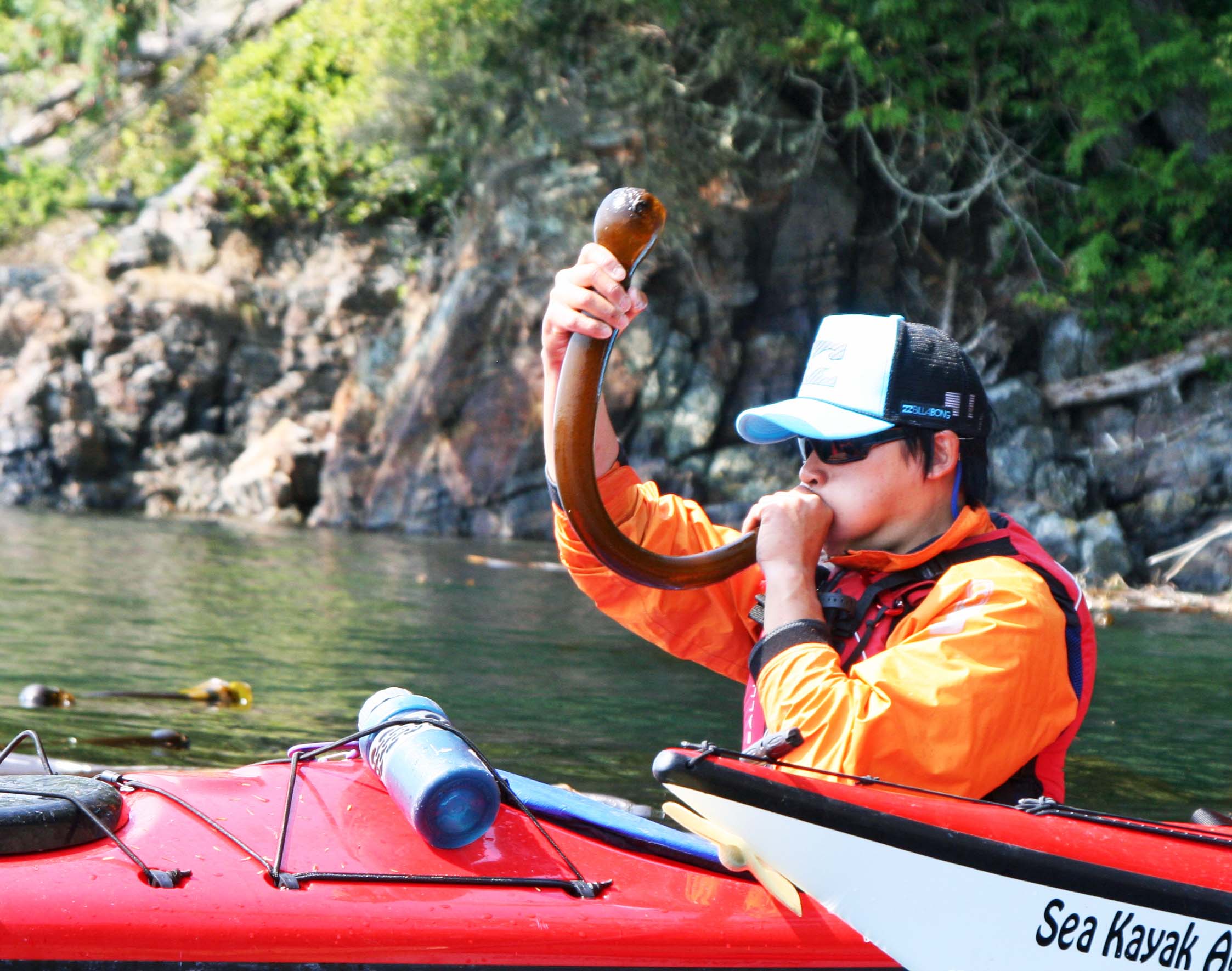
In the afternoon, we went searching for whales again. Along the way, Quy taught us how to blow kelp like a trumpet, and we saw a mysterious yacht that looked like it was straight out of a sci-fi flick.

Kelp beds off Vancouver Island in Blackfish Sound, British Columbia.

Floating kelp provided something of a challenge for kayaking through, but it also provided an opportunity.

Quy taught us how to cut up the kelp so it could be blown like a trumpet.

Quy taught us how to cut the kelp so it could be blown like a trumpet. (Photo by Peggy Mekemson.)

Here Lindy takes a turn. Peggy had also tried her luck. My advice to them: they should keep their day jobs.

Here Lindy takes a turn. Peggy had also tried her luck. My advice to the two of them: they should keep their day jobs.

Nick looks on in amazement at the performance.

Nick looked on in amazement at the performances.

The whales kept their distance, but a curious seal stopped by to check us out. (Photo by Peggy Mekemson.)

The whales kept their distance, but a curious seal stopped by to check us out. (Photo by Peggy Mekemson.)

This futuristic yacht didn't look nearly as friendly as the seal. (Photo by Peggy Mekemson.)

This futuristic yacht didn’t look nearly as friendly as the seal. At first we thought it belonged to the military. (Photo by Peggy Mekemson.)

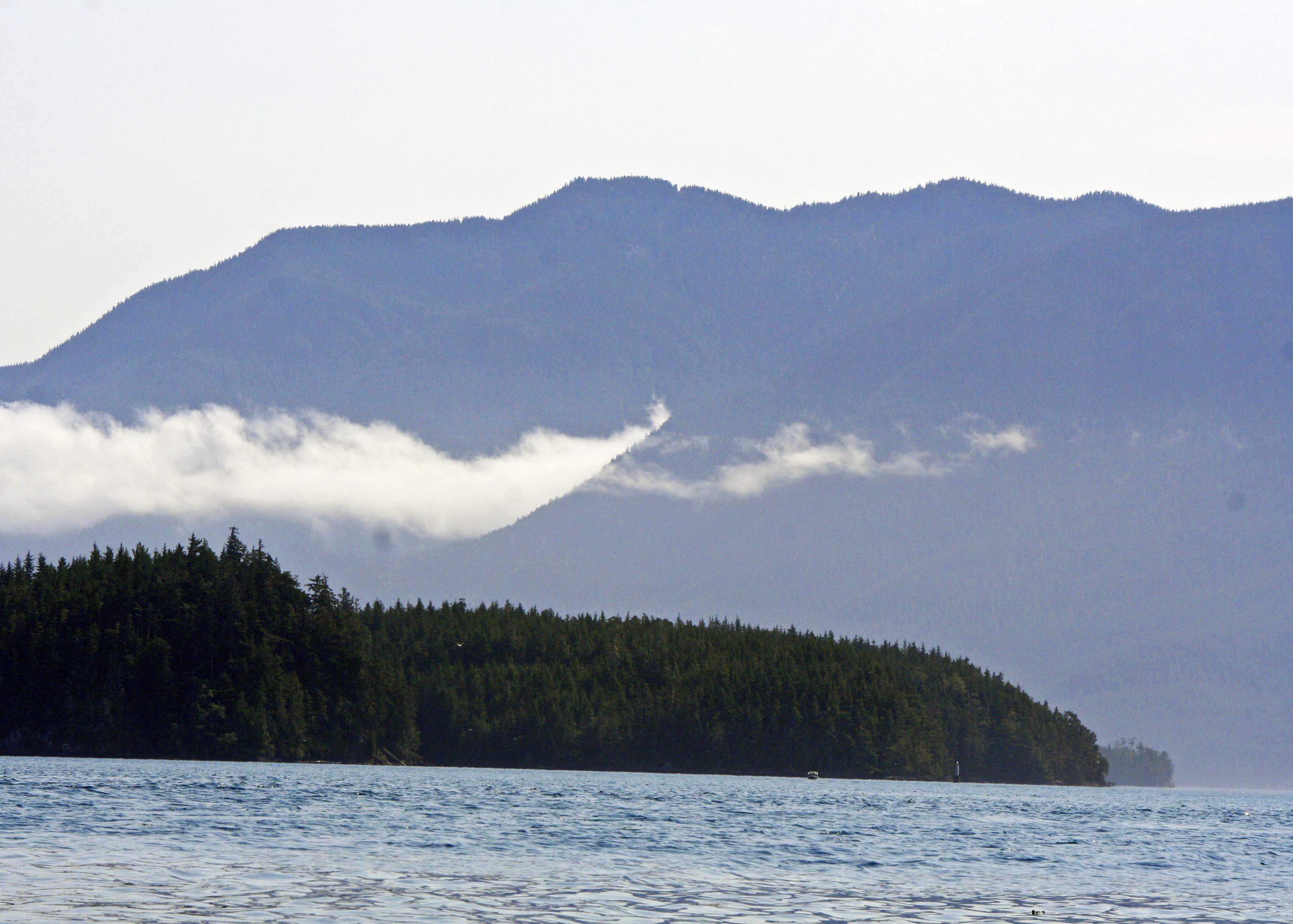
Blackfish Sound in British Columbia.

I liked the contrast here between water, clouds, and islands. (Photo by Peggy Mekemson.)

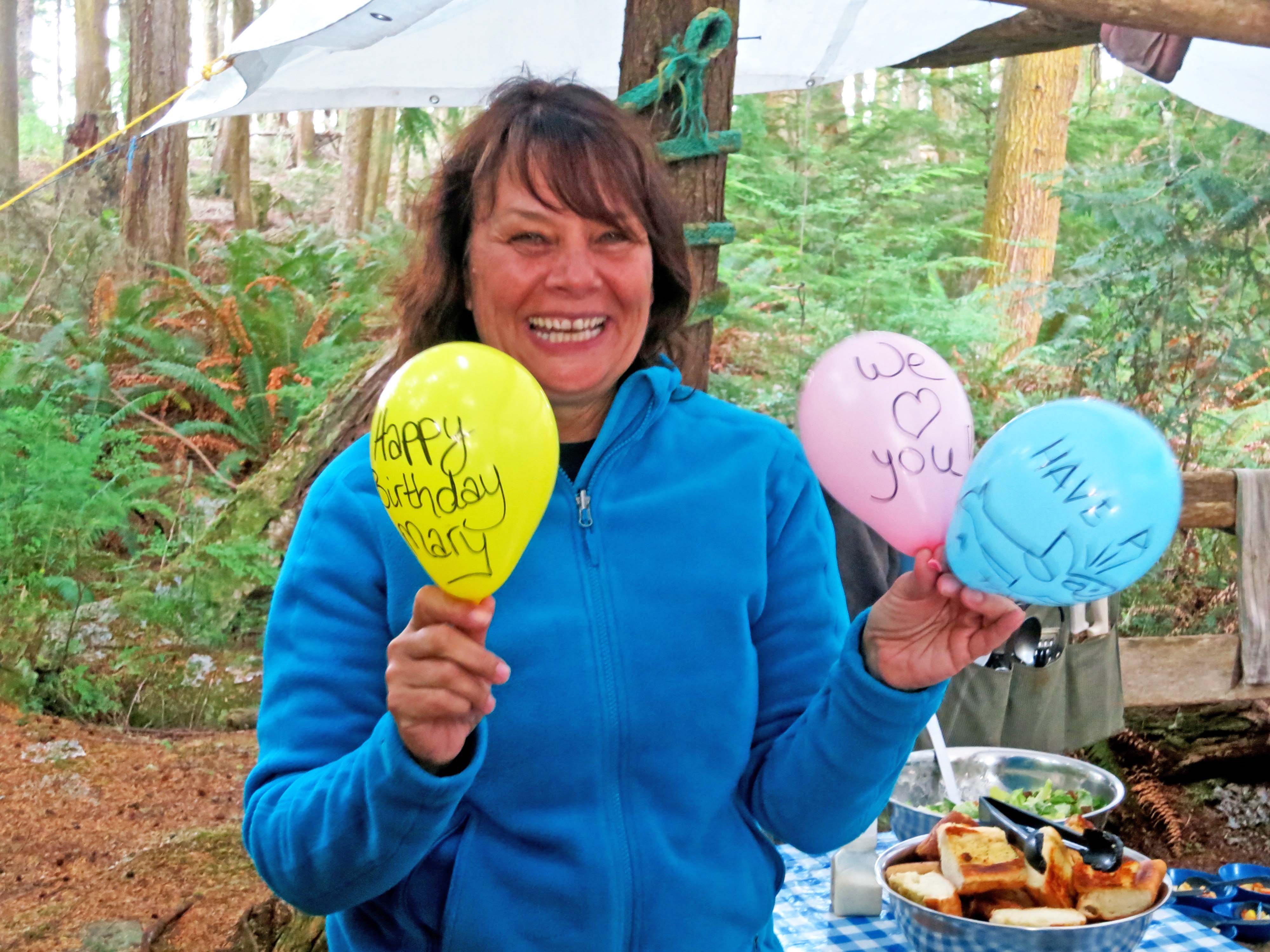
Back in camp, Mary celebrated her birthday...

Back in camp, Mary celebrated her birthday…

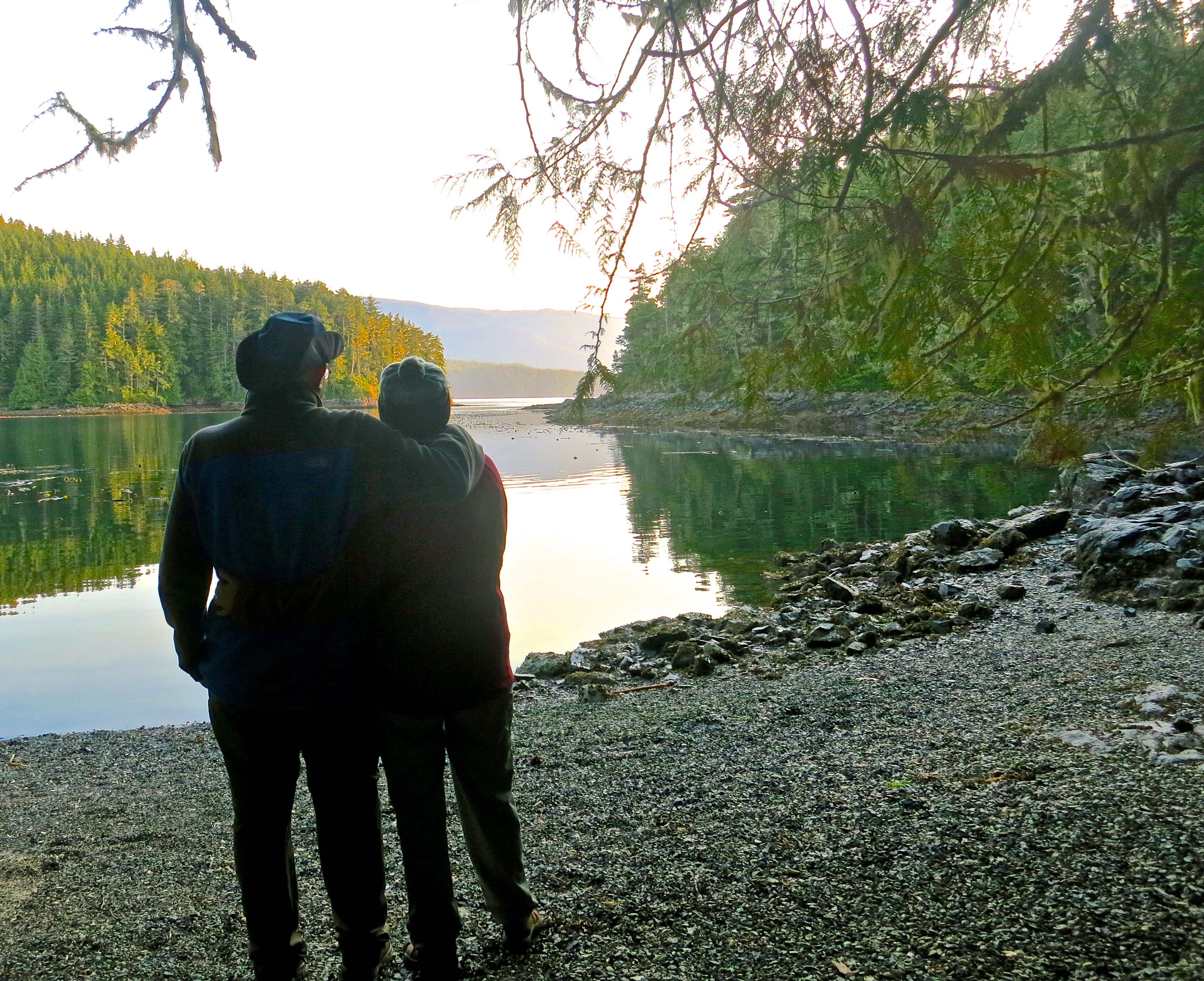
Peggy and Curtis Mekemson on Compton Island off of Vancouver Island, British Columbia.

Peggy and I shared a quiet moment…

Evening on Compton Island, Blackfish Sound, British Columbia. Photo by Curtis Mekemson.

And evening settled in. Next Blog: Peggy and I get caught in a powerful current.


Albion Manor: One of Canada’s Top Ten B&Bs… A Delightful Interlude

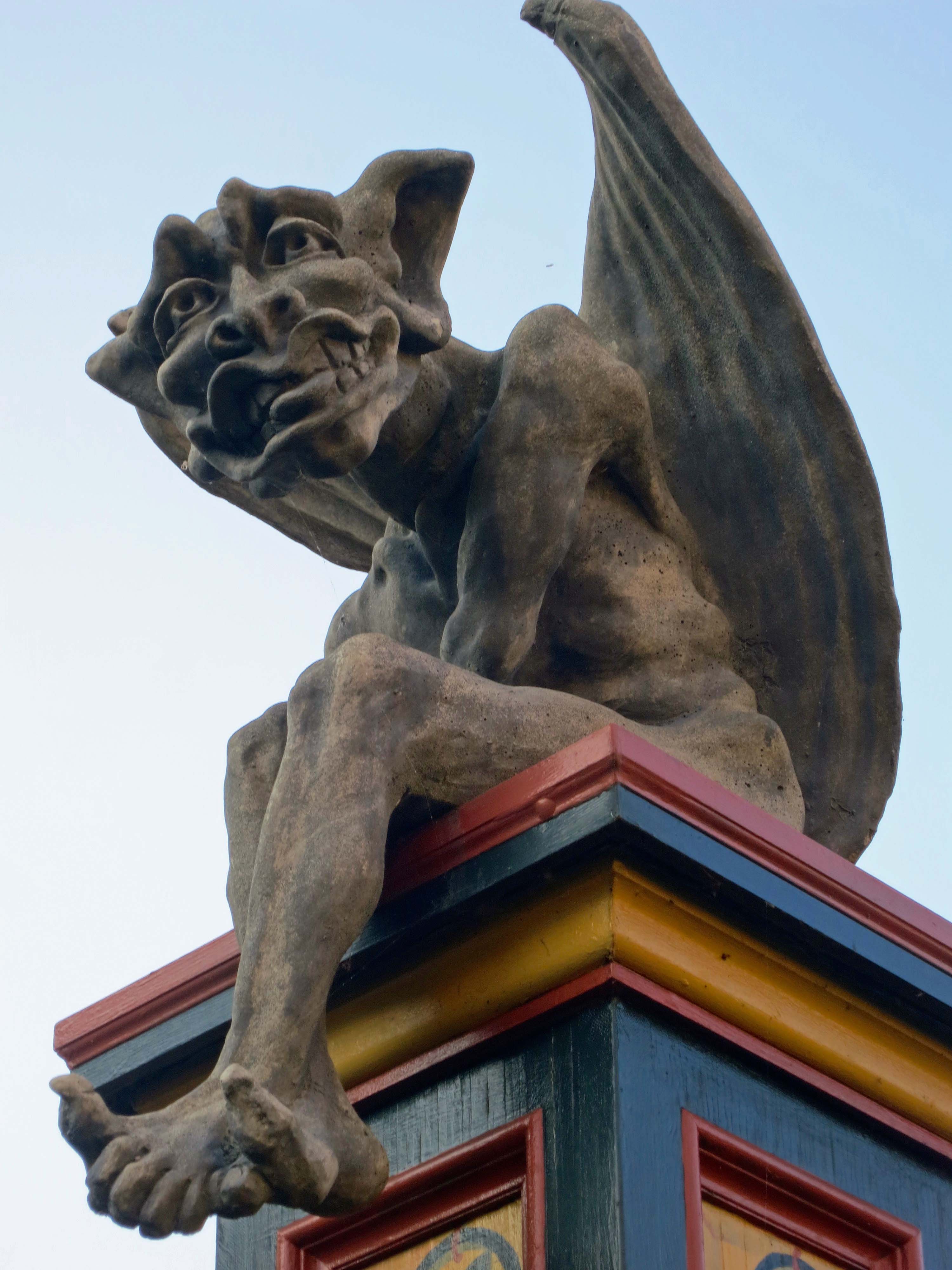
Gargoyle at Albion Inn in British Columbia. Photo by Curtis Mekemson.

We stayed at the Albion Manor in Victoria, British Columbia following our kayak adventure. This character was perched on top of our cabin, the Gargoyle Cottage. I felt he was representative of the unique nature of the B&B.

I was saving this blog for the end of our kayak adventure, which is where it fits. But Peggy and I are heading for the Bay Area this weekend for our book club. And that would mean no new blog until Tuesday or even Wednesday. Can’t have that, right? (The BSBC, or Bigger Sacramento Book Club, by the way, has been meeting for a quarter of a century and has read over 250 books. It consists of the same five couples who have been members since 1989.)

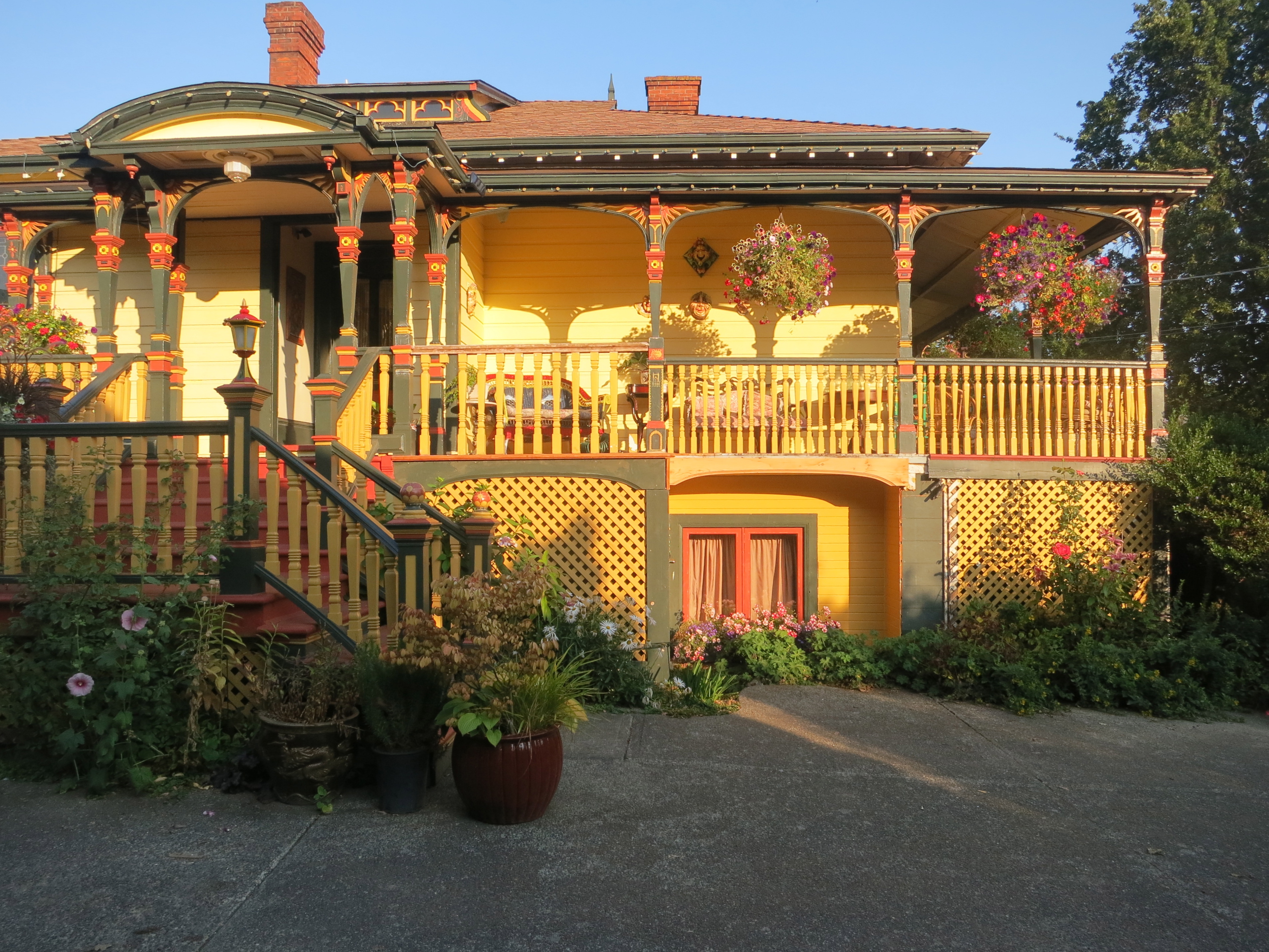
Welcome to the Albion Manor in Victoria, British Columbia. It is considered one of the top ten B&Bs in Canada. Our fellow kayakers and friends, David and Edie from Alaska, had made the arrangements for the four of us to stay at the Manor to celebrate the end of our adventure. We quickly discovered why it is so highly recommended. To start with, the inn is a beautiful Victorian, and it is located within easy walking distance of Victoria’s beautiful downtown. We found a colorful collection of house boats nearby. What really captured us, however, were the flowers and artwork. The story is best told in photos, enjoy.

An outside shot of the Albion Manor.

An outside shot of the Albion Manor.

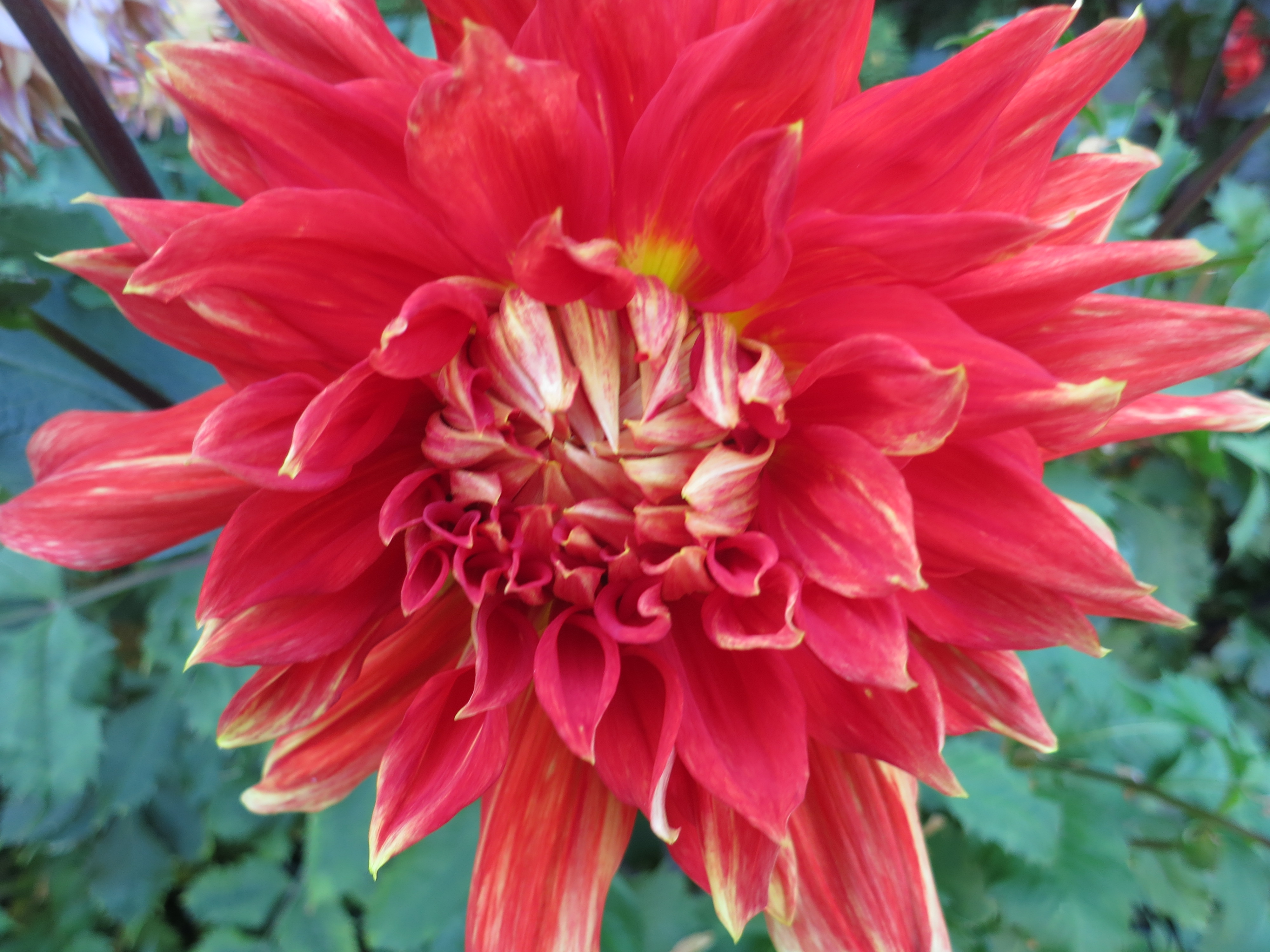
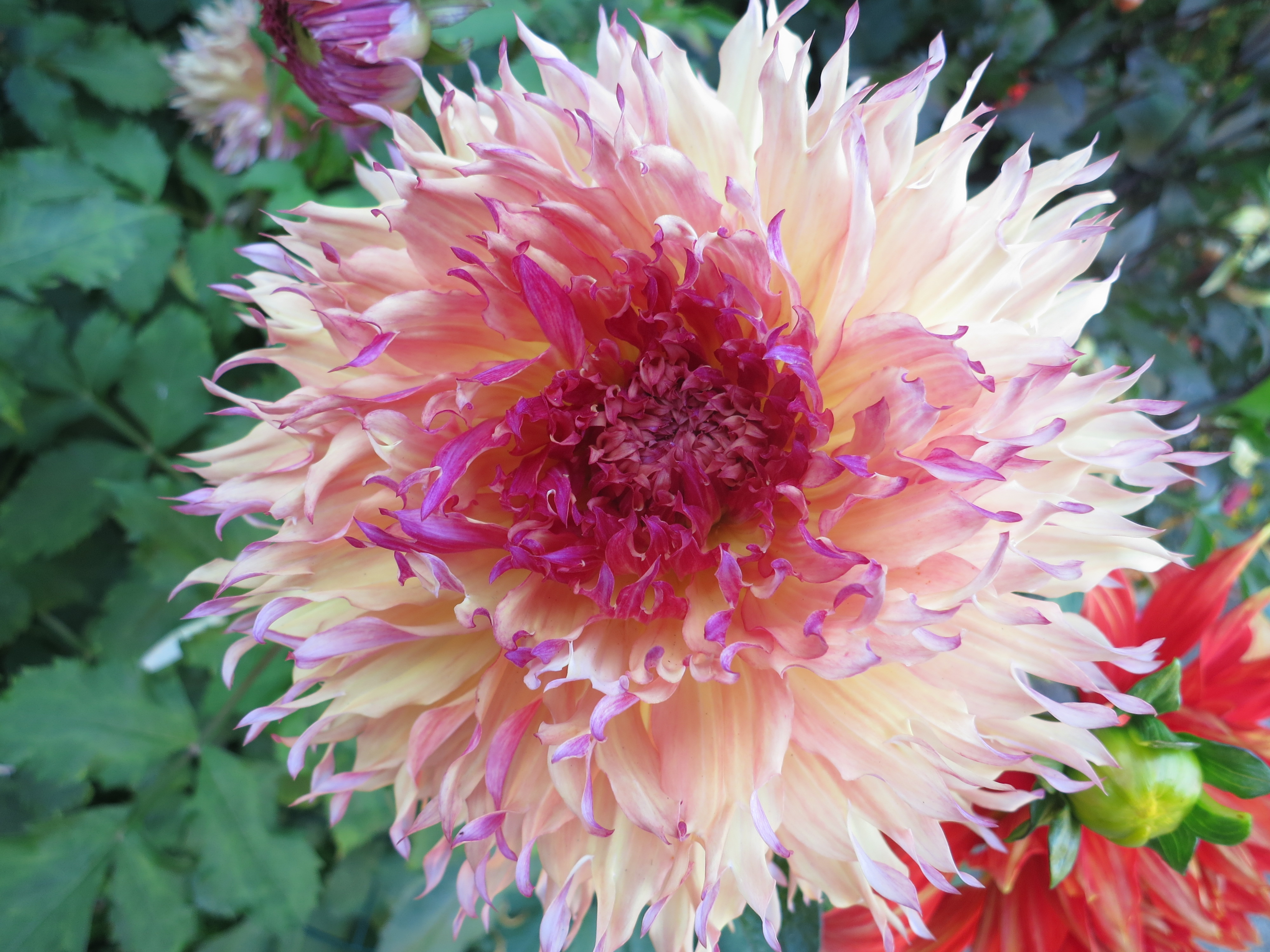
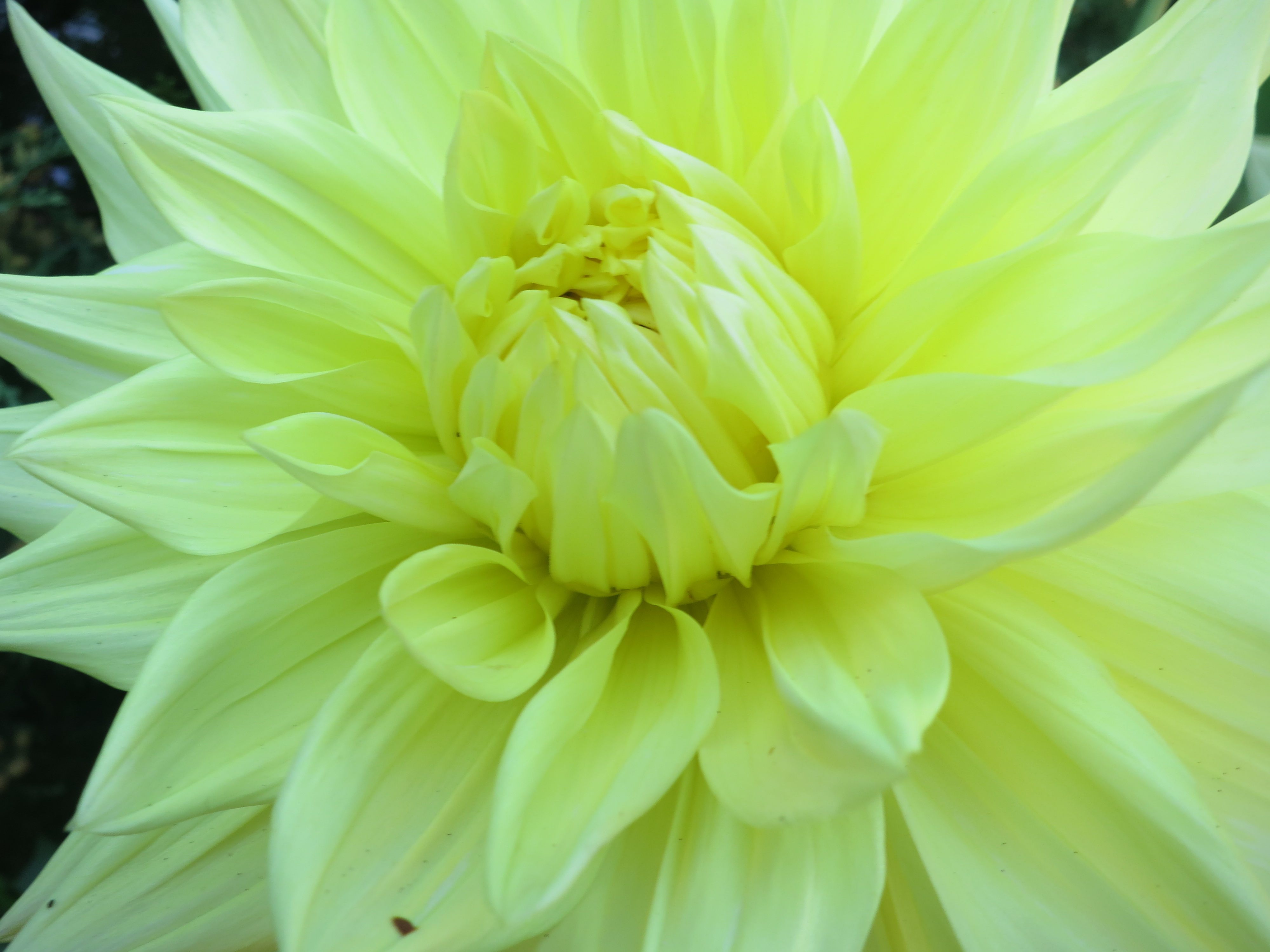
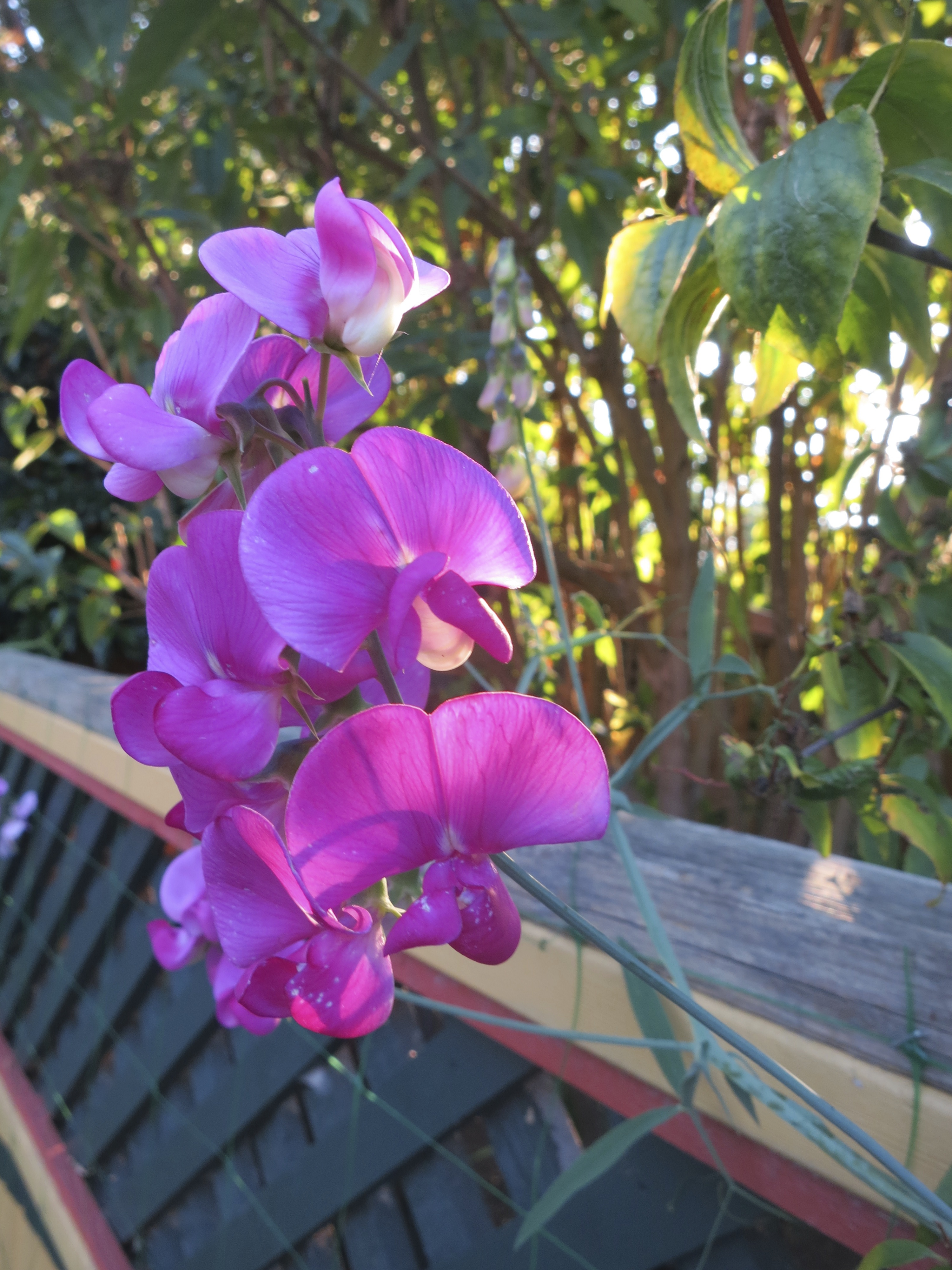
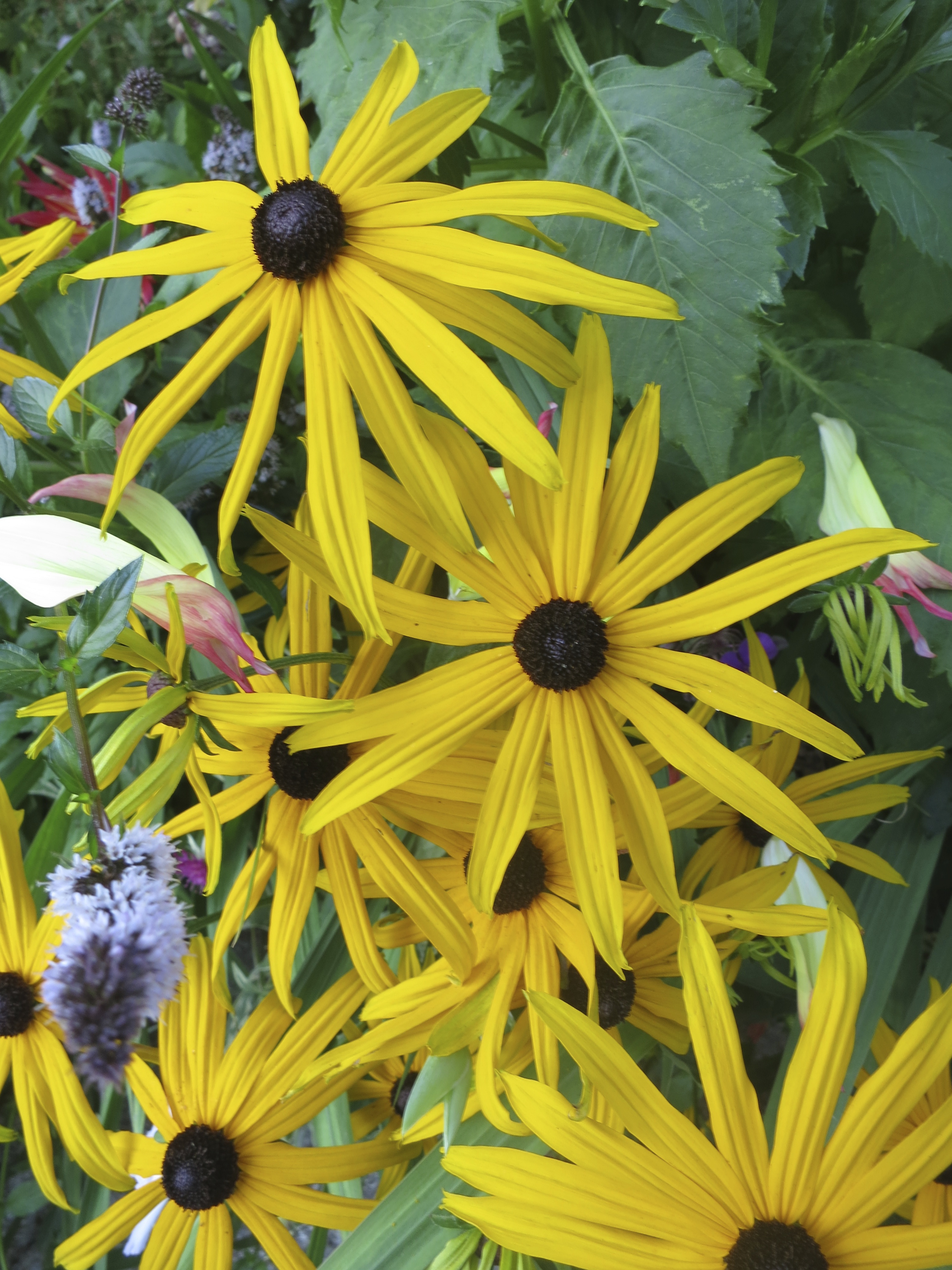
Here are some of my favorite flowers I photographed at the B&B.

Flowers at Albion Manor in Victoria British Columbia.. Photo by Curtis Mekemson.

Flower at Albion Manor in Victoria, British Columbia. Photo by Curtis Mekemson.


Flower at Albion Manor in Victoria, British Columbia. Photo by Curtis Mekemson.

Flowers at Albion Manor in Victoria, British Columbia. Photo by Curtis Mekemson.

Flowers at Albion Manor in Victoria, British Columbia. Photo by Curtis Mekemson.

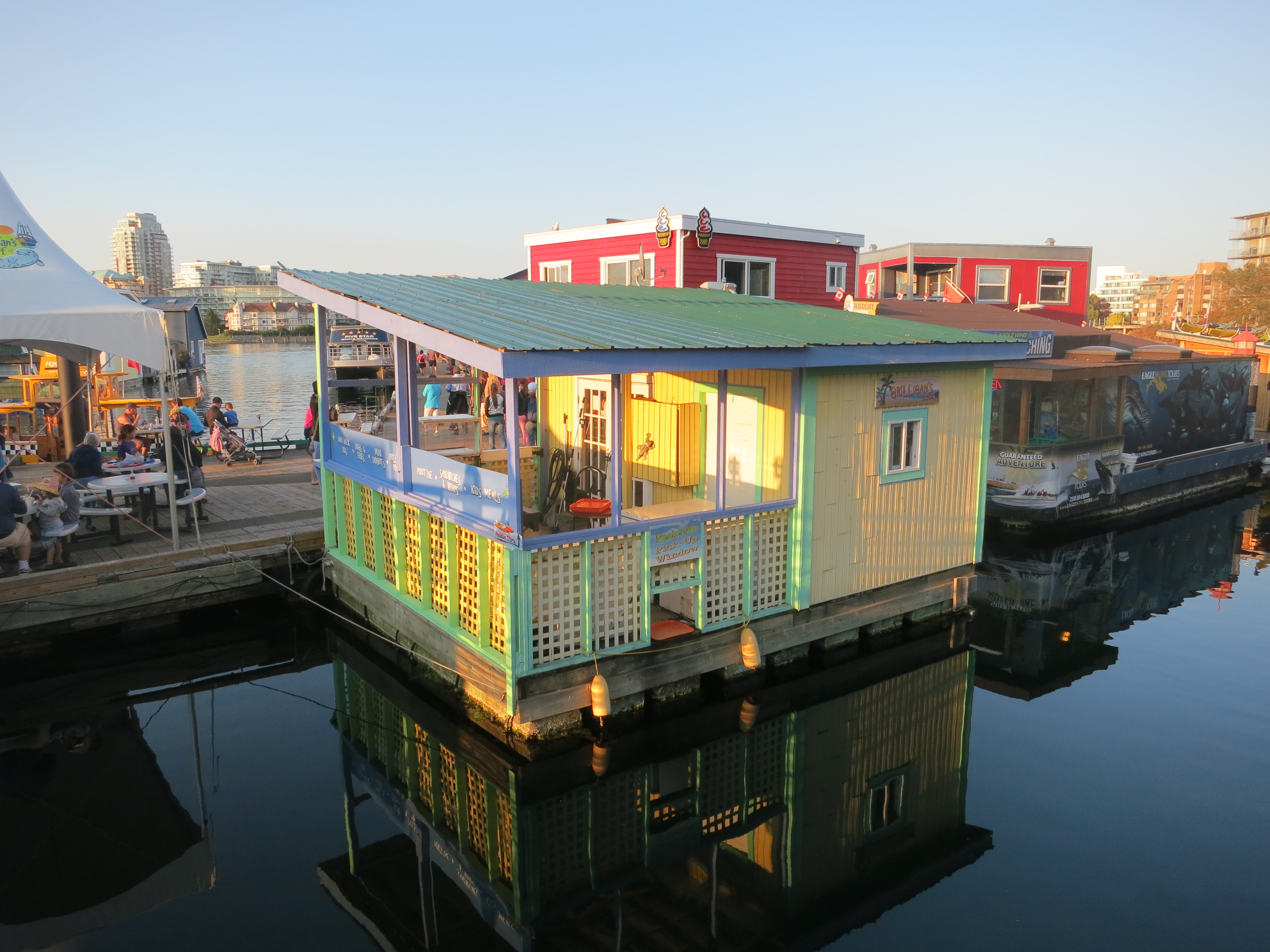
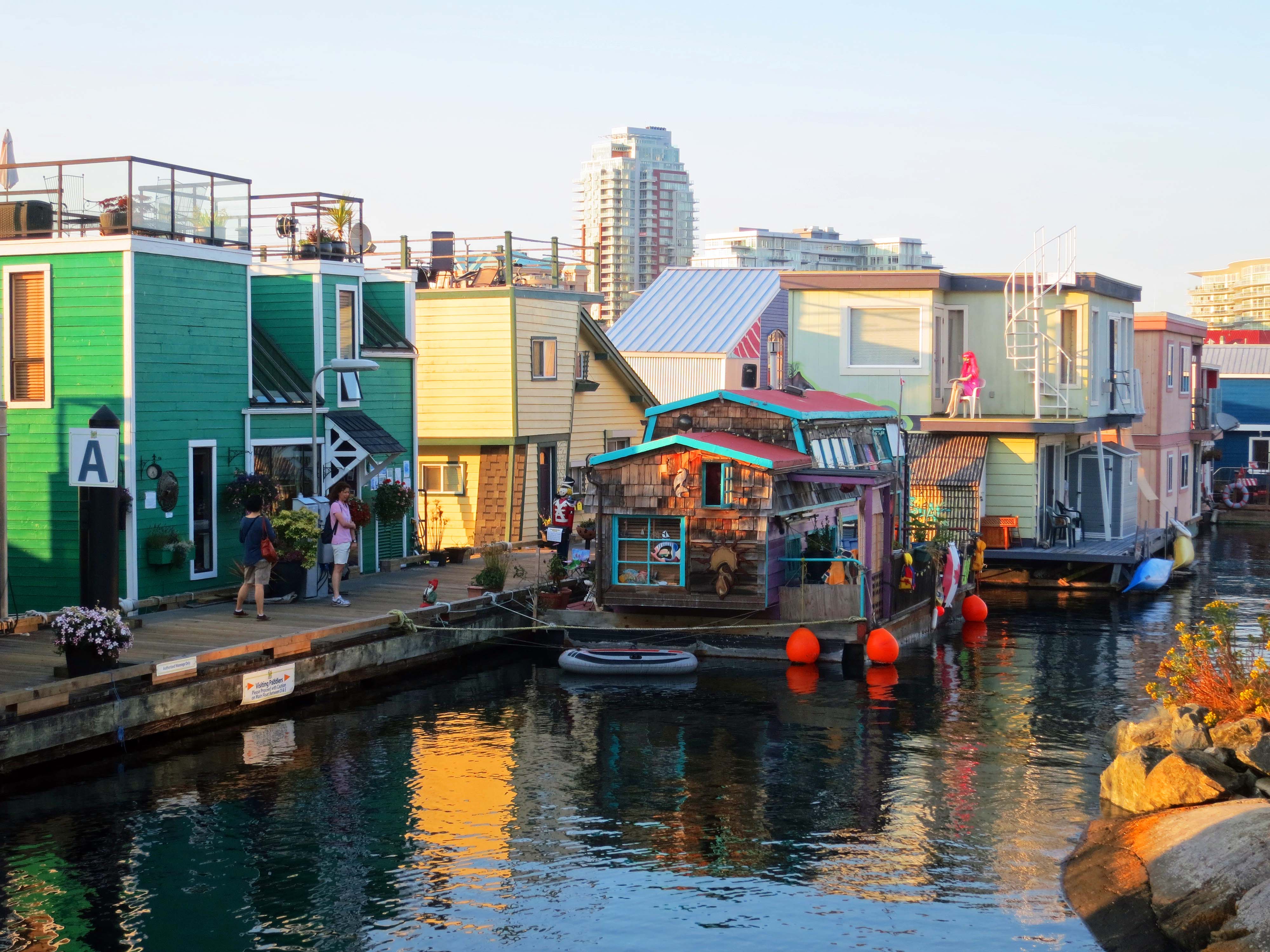
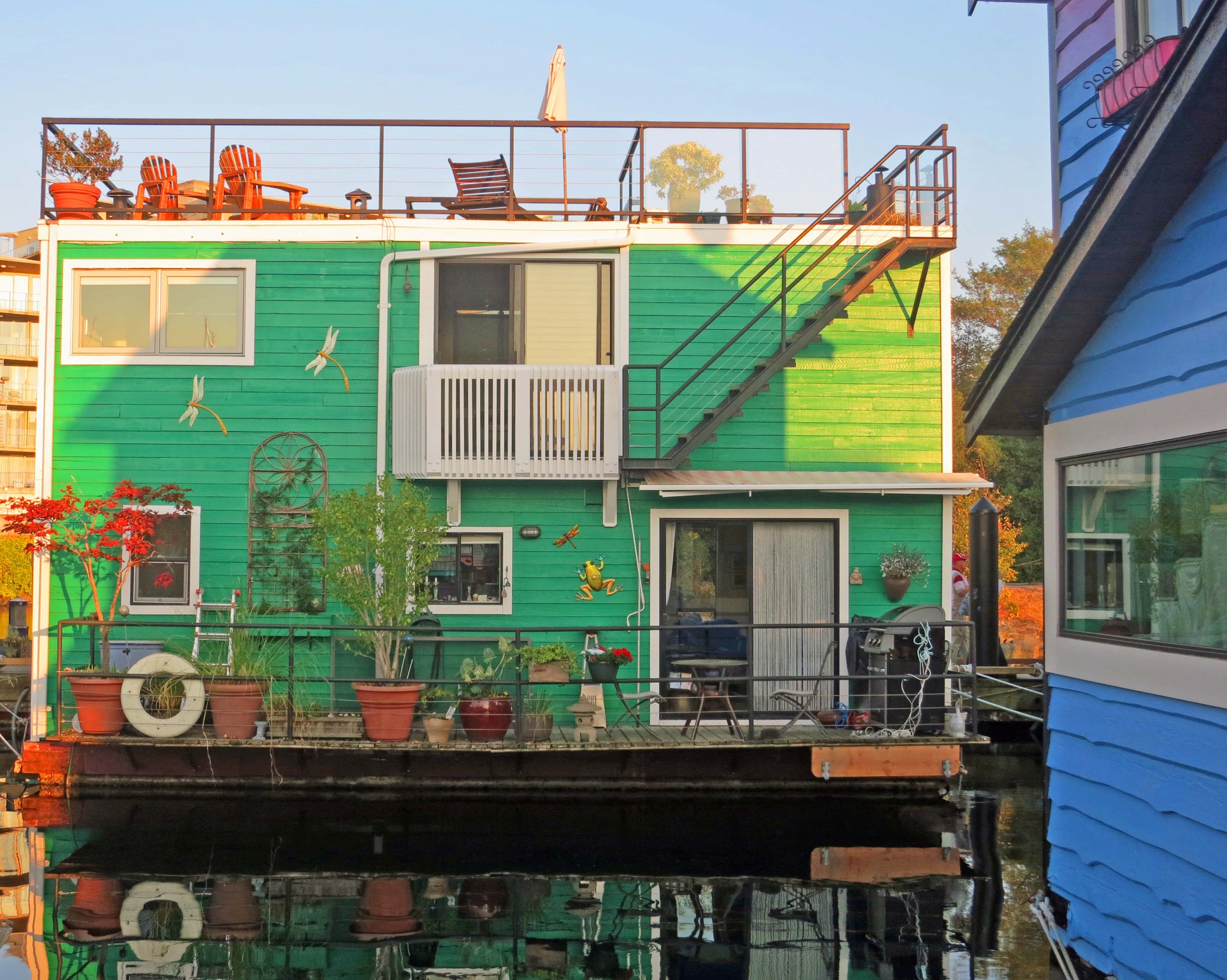
Searching for dinner, a ten minute walk from the Albion Manor brought us to a village of house boats at Victoria’s Fisherman’s Wharf. Peggy took these photos.

Houseboat at Fisherman's Wharf, BC. Photo by Peggy Mekemson.

Houseboats at Fisherman's Wharf in Victoria, BC. Photo by Peggy Mekemson.

Houseboats at Fisherman's Wharf in Victoria, BC. Photo by Peggy Mekemson.

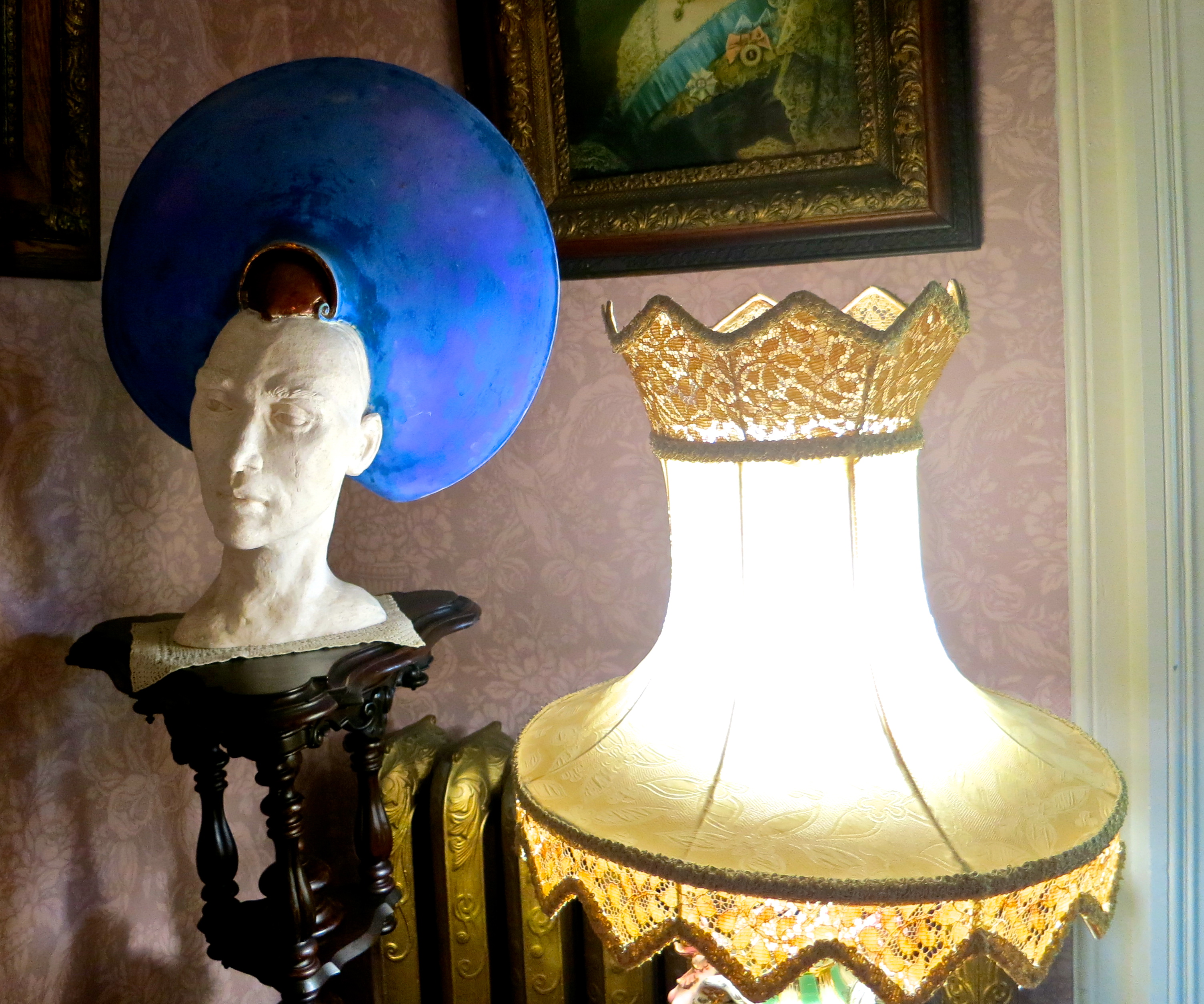
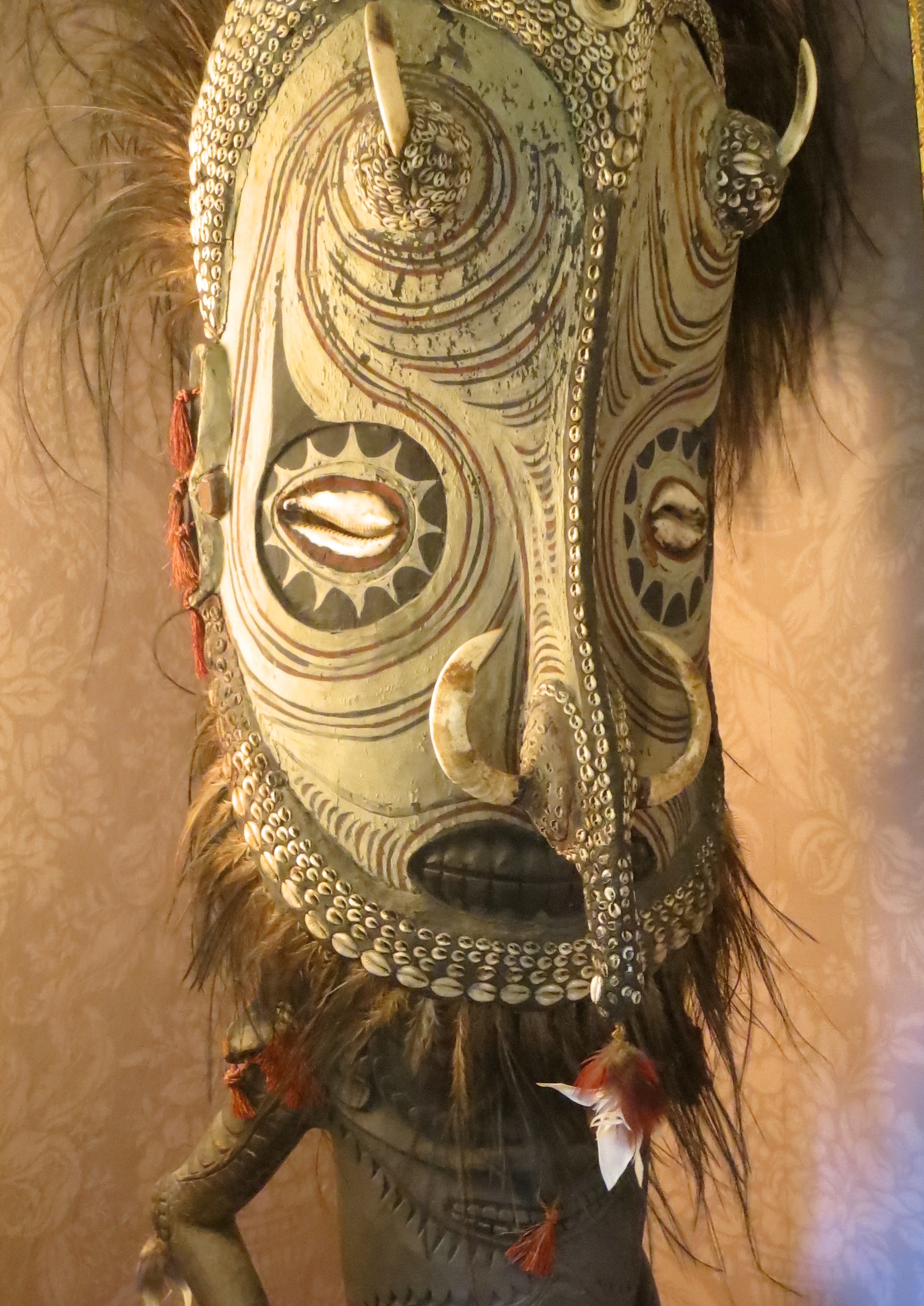
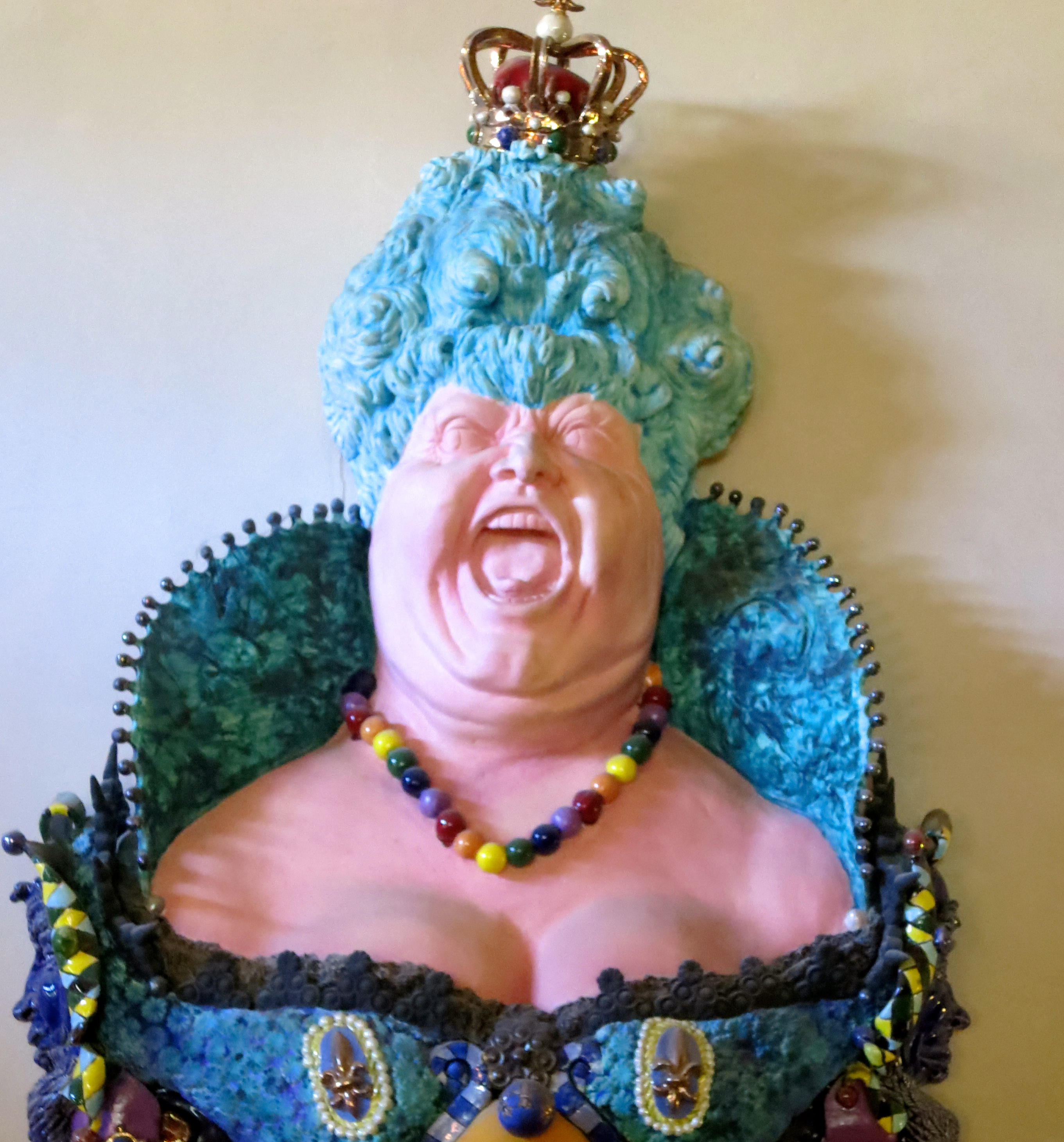
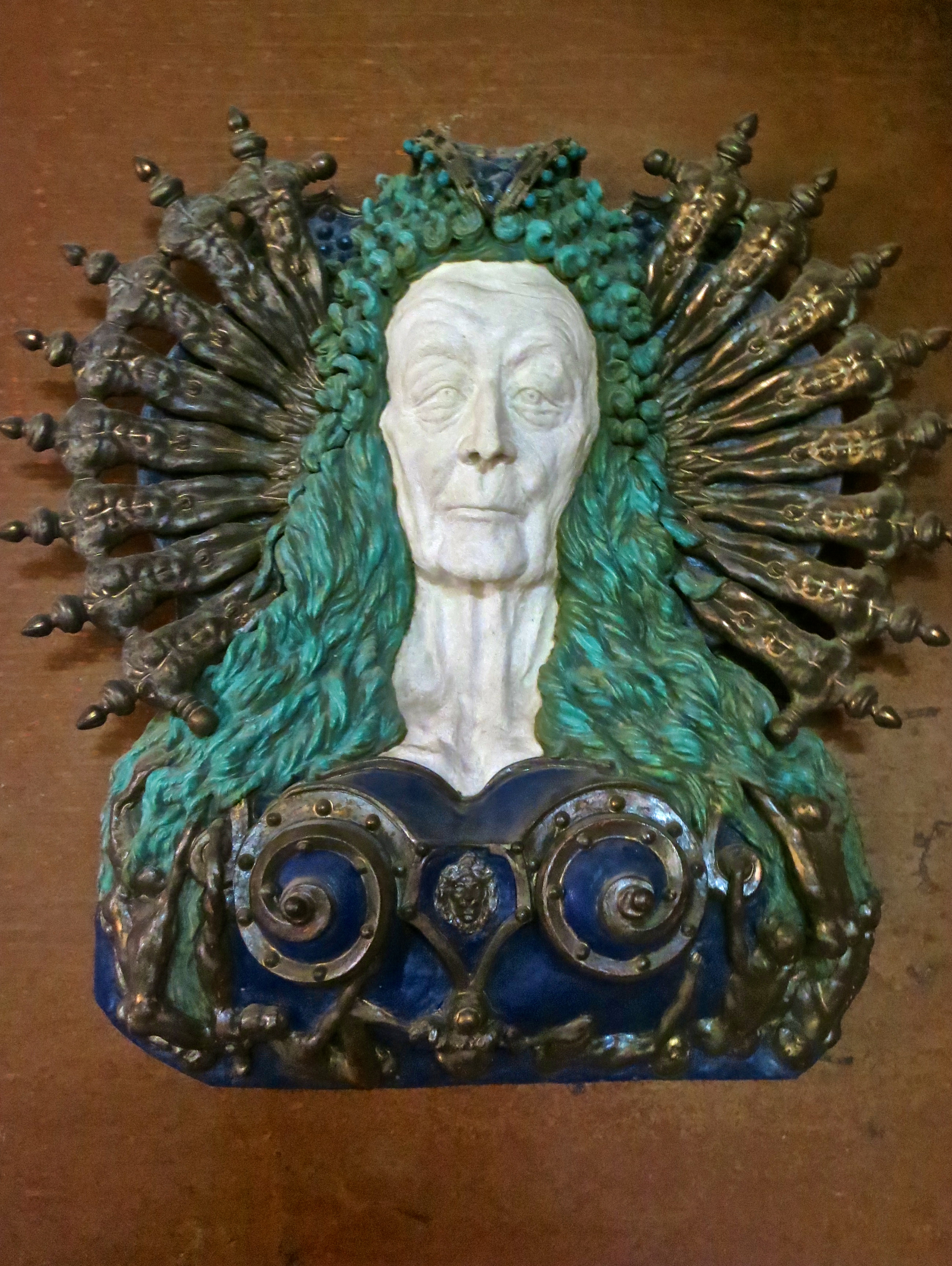
Art is located everywhere at Albion Manor, both inside and out. It’s humorous, offbeat nature, captured me immediately. Much of the work is done by Fernando Garcia, one of the two co-owners of the Manor.

The unique art of Albion Manor in Victoria, British Columbia. Photo by Curtis Mekemson.

African mask at Albion Manor in Victoria, BC. Photo by Curtis Mekemson.

The fat lady sings. Art at Albion Manor in Victoria, BC. Photo by Curtis Mekemson.

Art at Albion Manor in Victoria, BC. Photo by Curtis Mekemson.

I'll conclude with a photo of  Peggy snuggling up to one of the flowers at the Albion Manor. Next Blog; I will return to our kayak adventure off of the northeast coast of Vancouver Island.

I’ll conclude with a photo of Peggy snuggling up to one of the flowers at the Albion Manor. Next Blog; I will return to our kayak adventure off of the northeast coast of Vancouver Island.