The Great Tree Race… Blogging My Book on “MisAdventures”

Incense cedar tree in Diamond Springs graveyard

A view of the tall incense cedar in the Graveyard today.


Two incense cedars dominated the Graveyard. From an under five-foot perspective, they were gigantic, stretching some 75-feet skyward. The limbs of the largest tree started 20 feet up and provided scant hope for climbing. As usual, my brother Marshall found a risky way around the problem.

Several of the lower limbs came tantalizingly close to the ground at their tips. One could be reached by standing on a convenient flat tombstone. But only Marshall could reach it; I was frustratingly short by several inches. Marsh would make a leap, grasp the limb and shimmy up it hanging butt down until it became large enough for him to work his way around to the top. Then he would crawl up to the tree trunk, five Curtis lengths off the ground. After that, he would climb to wonderfully mysterious heights I could only dream about.

Eventually I grew tall enough to make my first triumphant journey up the limb. Then, very carefully, I climbed to the heart-stopping top, limb by limb. All of Diamond Springs spread out before me. I could see our school, and Caldor (the lumber mill where my father worked), and the woods, and the hill with a Cross where I had shivered my way through an Easter Sunrise Service. I could see my whole world. Except for a slight wind that made the tree top sway and stirred my imagination about the far away ground, I figured I was as close to Heaven as I would ever get.

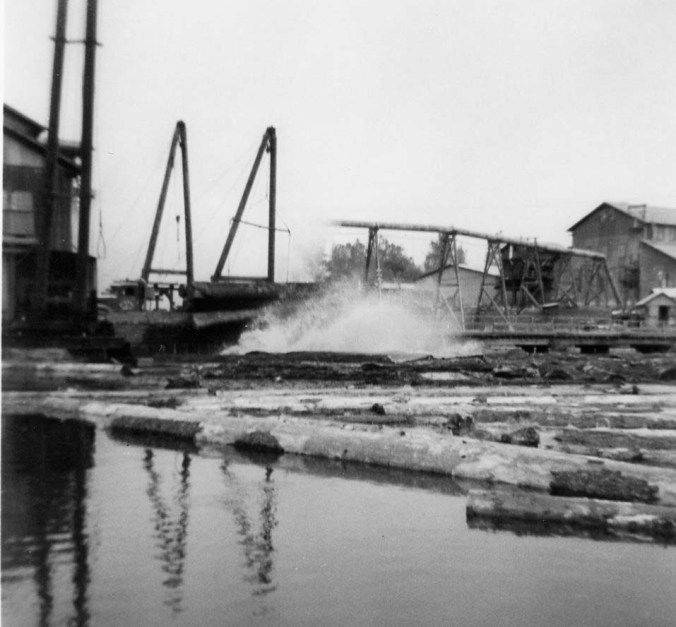
View of Caldor Lumber company circa 1958

The view from the top of the incense cedar tree in the Graveyard looking toward Caldor Lumber Company circa 1958. The mill had already closed down by this time.

By the time I finally made it to the top, Marshall had more grandiose plans for the tree. We would build a tree house in the upper branches. Off we went to Caldor to liberate some two by fours. Then we raided Pop’s tool shed for a hammer, nails, and rope. My job was to be the ground man while Marshall climbed up to the top. He would then lower the rope and I would tie on a board that he would hoist up and nail in. It was a good plan, or so we thought.

Along about the third board, Pop showed up. It wasn’t so much that we wanted to build a tree fort in the Graveyard that bothered him, or that we had borrowed his tools without asking. He even seemed to ignore the liberated lumber. His concern was that we were building our fort too close to the top of the tree on thin limbs that would easily break with nails that barely reached through the boards. After he graphically described the potential results, even Marshall had second thoughts. Pop had a solution though. He would build us a proper tree house on the large limbs that were only 20 feet off the ground. He would also add a ladder so we could avoid our tombstone-shimmy-up-the-limb route.

And he did. It was a magnificent open tree house of Swiss Family Robinson proportions that easily accommodated our buddies and us with room to spare. Hidden in the tree and hidden in the middle of the Graveyard, it became our special hangout where we could escape everything except the call to dinner. It became my center for daydreaming and Marshall’s center for mischief planning. He, along with our friends Allen and Lee, would plan our forays into Diamond designed to terrorize the local populace.

Cedar tree in Great Tree Race, Diamond Springs, CA

Looking up from the base of the tree today. The aging fellow is 65 years older from the days when I mastered climbing it. Pop’s tree house was built on the lower left limbs.

It also became the starting point for the Great Tree Race. We would scramble to the top and back down in one on one competition as quickly as we could. Slips were a common hazard. Unfortunately, the other boys always beat me; they were two to three years older and I was the one most susceptible to slipping. My steady diet of Tarzan comic books sustained me though and I refused to give up.  Eventually, several years later, I would triumph.

Marshall was taking a teenage time-out with Mother’s parents who had moved to Watsonville, down on the Central Coast of California. Each day I went to the Graveyard and took several practice-runs up the tree. I became half monkey. Each limb was memorized and an optimum route chosen. Tree climbing muscles bulged; my grip became iron and my nerves steel. Finally, the big day arrived and Marshall came home. He was every bit the big brother who had had been away at high school while little brother stayed at home and finished grade school. He talked of cars and girls and wild parties and of his friend Dwight who could knock people out with one punch. I casually mentioned the possibility of a race to the top of the Tree. What a set up. Two pack-a-day, sixteen-year old, cigarette smokers aren’t into tree climbing, but how can you resist a challenge from your little brother.

Off we went. Marsh didn’t stand a chance. It was payback time for years of big brother hassles. I flew up and down the tree. I hardly touched the limbs. Slip? So what, I would catch the next limb. Marsh was about half way up the tree when I passed him on my way down. I showed no mercy and greeted him with a grin when he arrived, huffing and puffing, back at the tree house. His sense of humor was minimal. He challenged me to a wrestling match and I pinned him to the ground. It was the end of the Great Tree Race, the end of big brother domination, and a fitting end to my years of associating with dead people.

Cedar tree spike in Diamond Springs Ca

This spike is all that remains of our treehouse dreams. As I recall, Marshall drove it into the tree with thoughts of several more to provide a way up the tree.

Cut down incense cedar tree in Diamond Springs graveyard

The jungle of Heavenly Trees that once covered the Graveyard has long since been tamed. Imagine my dismay during my last visit to Diamond Springs when I found that the cedar tree’s twin in the Graveyard had been cut down.  Could our tree be far behind?


MONDAY’S Travel Blog POST: A continuation of the trip through the Grand Canyon. How did we end up there? It’s an interesting tale.

WEDNESDAY’S Photo Essay POST: We’ll visit the ancient city of Pompeii in Italy that was buried by Mt. Vesuvius in 79 CE.

FRIDAY’S Blog-a-Book POST: There’s some catching up on the education front. I’m allowed back in school and try to take over the first grade.

SaveSave

SaveSave

The Red, Red Rocks of Sedona, Arizona… Part 2

Sunrise on rocks west of Sedona

The best time to be out and about for photography in Sedona is either early in the morning or late in the afternoon when the red rocks of Sedona at are their most colorful.


It’s photo essay Wednesday so I am returning to Sedona, Arizona to wrap up my look at some of the colorful red rocks that surround the town. Last Wednesday, I focused on the formations east of town and the striking Chapel of the Holy Cross. Today I will include photos of the rock formations west of town and take a trip up the ‘mystical’ Boynton Canyon.


Sedona rocks in morning

Peggy and I took these photos from up near the Sedona airport looking west across the town. The rock formation I featured at the beginning of the post is shown on the left here.

Peggy and view across Sedona

Peggy was standing on the ‘vortex’ near the airport when I took this photo. (Actually, looking at it, I think it is toward the east.)

Sedona view

Another perspective. Possibly my blogging friend who lives in Sedona, Johanna Massey, can provide the location.

Sunset west of Sedona

Definitely looking west here. This time the formation that I included in the first photo is on the right.

Sunrise west of Sedona

A close up…

Sedona Sunset

Sedona Sunset.

Layers upon layers, Sedona

I liked this photo because the ridges seemed to fade off into infinity.

Capstone rocks in Boynton Canyon

We took a detour on our hike up Boynton Canyon to visit with the Kachina Woman, on the left. There is supposedly another vortex in the area that emphasizes balance. (Photo by Peggy Mekemson.)

Capped rock in Boynton Canyon

A photo of the same formation from the Boynton Canyon Trail. Some claim that the vortex is between the Kachina Woman and the knoll. Since a little balance never hurts, I stood between the two formations for a few minutes. (Photo by Peggy Mekemson.)

Boynton Canyon

This is the type of view you can expect hiking up Boynton Canyon. No wonder people find the area mystical.

Sandstone rock in Boynton Canyon

Each sandstone formation provides several views as you hike up the short trail. Following are examples of this one…

Sandstone formations in Boynton Canyon

Sandstone in Boynton Canyon

Stacked rocks in Boynton Canyon

Stacked rocks and circles of rocks apparently reflect hiker’s spiritual journey up the canyon. There are so many that some people are beginning to feel that they detract from the beauty of the area. Not to worry; they are easily removed. I wonder if it gives you bad Karma.

Pinted by mineral water, Sedona

Mineral rich waters created this dry waterfall. If I remember correctly the cave on the left belonged to early Native Americans. (Photo by Peggy Mekemson.)

Anasazi dwelling in Boynton Canyon

This Anasazi dwelling definitely did. (Photo by Peggy Mekemson.)

Fortress rock in Boynton Canyon

Another of the impressive rock formations up Boynton Canyon.

Red rock of Boynton Canyon near Sedona

And another!

Peggy at end of trail in Boynton Canyon

That’s it for today, folks!


FRIDAY’S Blog-a-Book POST: The great tree race where my brother and I face off against each other in a death-defying race up and down the 70-foot tall Incense Cedar tree in the Graveyard.

MONDAY’S Travel Blog POST: Where Homeland Security checks out our food supply for the Colorado River trip.

WEDNESDAY’S Photo Essay POST: A visit to the ancient Roman city of Pompeii, Italy that was buried by the volcanic eruption of Mt. Vesuvius in 79 CE.

SaveSave

SaveSave

SaveSave

SaveSave

SaveSave

Hopi Gods and Squirrelly Squirrels… Rafting the Grand Canyon: Part 1

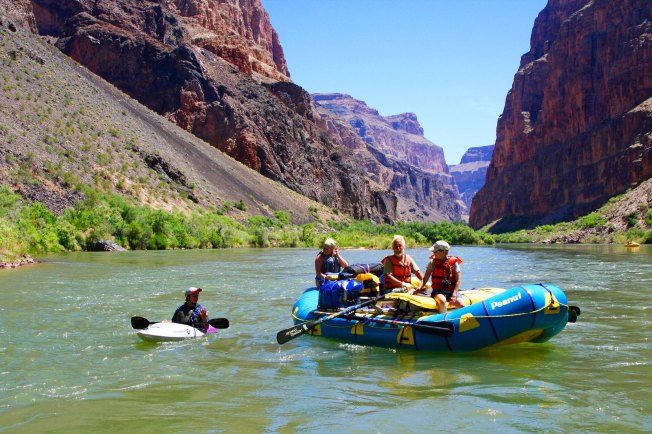
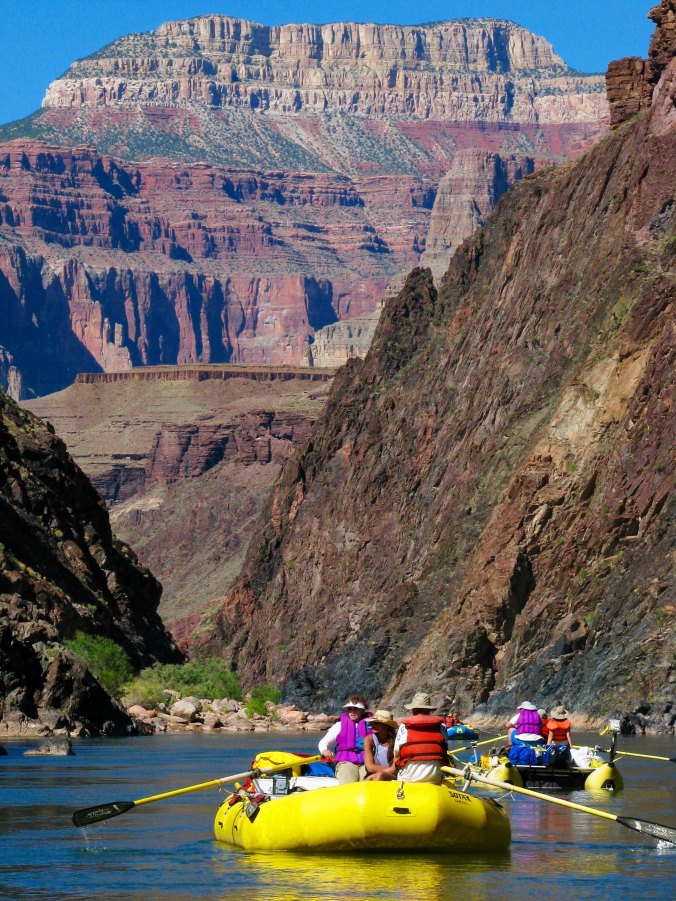
Rowing on the Colorado through the Grand Canyon

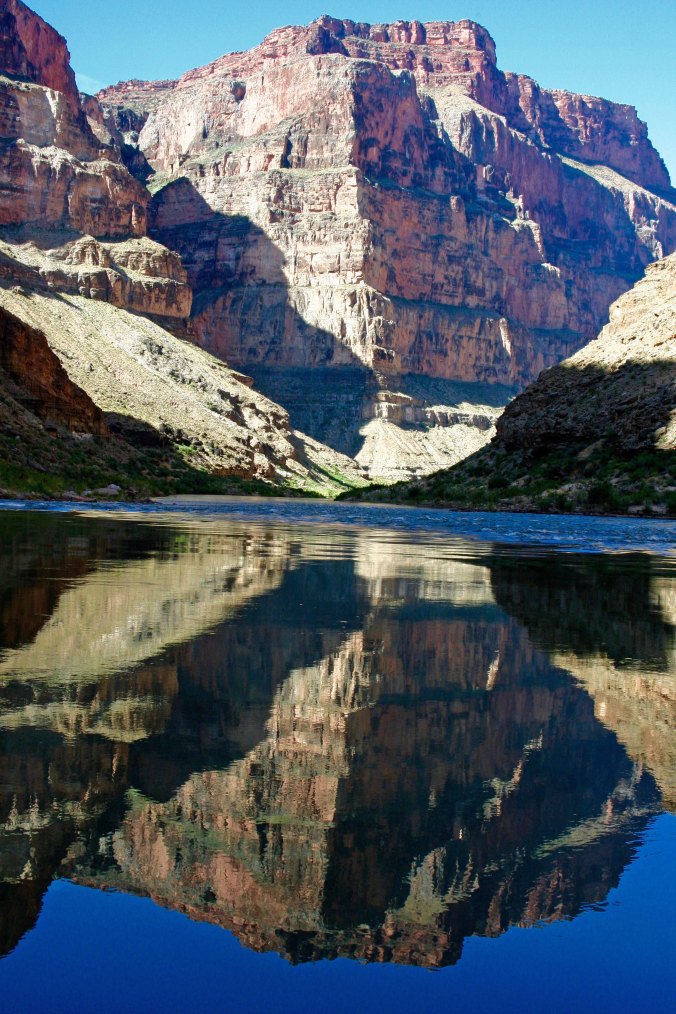
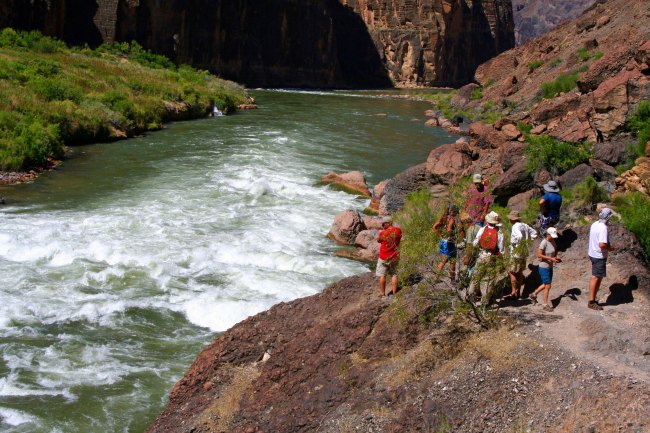
While a veteran crew of boatmen handled the more dangerous parts of our 18 day journey through the Grand Canyon, I was allowed near oars on some of the tamer sections.


Since Peggy and I will actually be hanging out at our home in Southern Oregon for a couple of months and not generating new material for my travel blog, I thought I would dip back in time to the very beginning of my posts.  I had attended a writer’s conference in San Francisco during the winter of 2010 and been told that writers need an Internet presence. I felt doing a series on an 18-day trip we had just completed rafting on the Colorado River through the Grand Canyon would make an excellent start. It was an epic-adventure, one that was burned into my memory banks.  Part of the experience was that Peggy and I would be traversing some of the earth’s most challenging rapids with a true cast of characters. That alone was enough to make it an epic adventure, but even more important, at least for me, was that we would be traveling through the heart of the Grand Canyon, one of the seven natural wonders of the world. Please join us on this adventure. By the end, I think you will see why the Grand Canyon has earned its world-class status. I will start with Peggy and me in Flagstaff, Arizona getting ready for our adventure…


Tom and Bone

One of the ‘cast of characters’ and our group leader, Tom Lovering with Bone in his hair. Tom and I had found Bone when we were backpacking in the Sierra Nevada Mountains in 1977 and he has traveled the world ever since.

Five squirrels with long tufted ears just went charging past our van— in a row. I think it must be love and Peggy agrees. We speculate that a female is leading the boys on a glorious romp. “Catch me if you can!” she giggles. It’s that time of the year when the Albert Squirrels are excited to make babies and perpetuate the species. Lust is in their hearts. Or maybe it’s just the guys working out territorial differences.

Someone they won’t be mating with are their northern cousins, the Kaibab Squirrels. It isn’t that they couldn’t or wouldn’t if they could, it’s just that the giant hole in the ground known as the Grand Canyon is too deep and too wide for them to cross. As a result, a new species has been created. Scientists and natural history folks call this process allopatric speciation— a pair of two-bit words for sure.

We are located at a KOA in Flagstaff, Arizona as we prepare for our raft trip down the Colorado River. It’s a big campground. Everywhere we look men and women wearing yellow shirts are busily preparing for the onslaught of summer tourists. It feels like a beehive, or squirrel’s nest. The camp cook tells us 28 people work here. Jobs are highly specialized. The man who straightens misplaced rocks stopped by to chat with us this morning.

Yesterday we watched two employees struggle for an hour on laying out the base of Teepee. It had all the flavor of an old Laurel and Hardy film. They kept measuring and re-measuring the angles. I expected one to leap up and start chasing the other around camp with a 2×4.

We wonder what the Kachina deities who live in the San Francisco Mountains overlooking our campground think about the squirrelly activity taking place beneath them. There are bunches of them up there, over 300 according to Hopi lore, and each one has a lesson to teach, wisdom to disperse. They come down from their perch in the winter to share their knowledge. I’m sure that they would have made quick work of the Teepee project.

Peggy and I hike up the mountain following Fat Man’s trail. Of course, there is no irony here as we desperately try to beat our bodies into shape for the Canyon trip. We’ve been out travelling in our van for months and the pounds have accumulated. The trail’s name suggests this is a gentle start. Instead it takes us straight up into a snowstorm. The Kachinas are rumored to mislead people under such circumstances. I once spent a week up on the mountain by myself and restricted my wandering to fair weather.

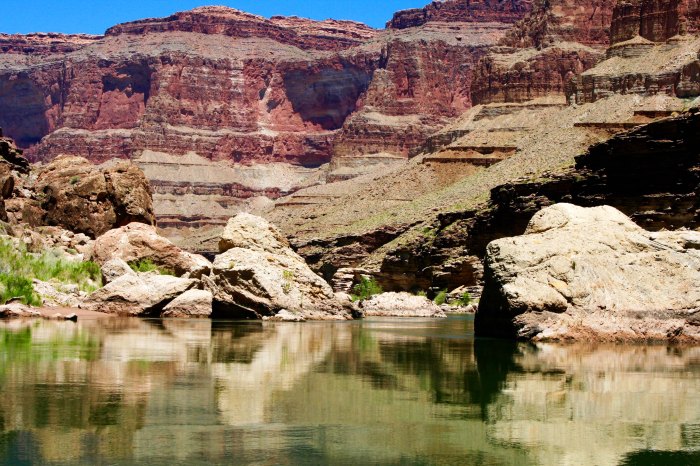
Grand Canyon rock formation

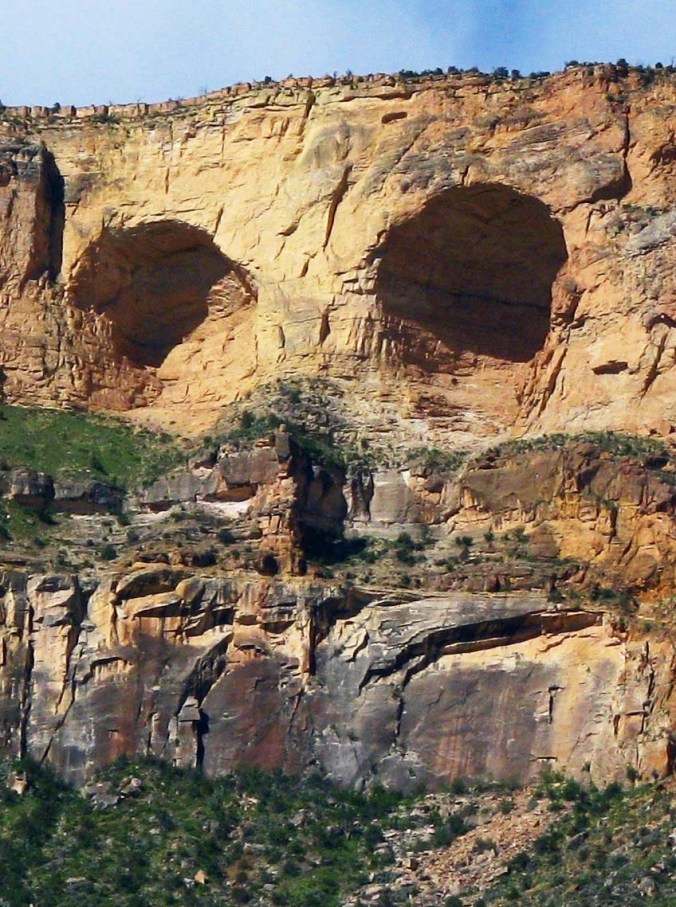
I’ve sometimes wondered what, if any, role that rock formations in the Grand Canyon influenced how the Hopi Indians pictured their Kachina gods.

Once they had the mountain to themselves but now they have competition. Technology has arrived— modern gods. Tower after tower bristling with arrays of tracking, listening and sending devices look out over the sacred lands of the Hopi, Navaho and other Native Americans.

It’s hard not to think Big Brother is watching or not be disturbed by the towers’ visual intrusion. But their presence means we can get cell phone coverage and climb on the Internet. We are addicted to these modern forms of communication so it is hypocritical to whine, at least too much.

But back to the squirrel theme, Peggy and I are a little squirrelly ourselves as we go through our gear and get ready for our grand adventure. I am nervous. This is my first multi-day river trip. What have we gotten ourselves into? Do we have the equipment we need? Will we survive the rapids? What will the people who are joining us be like? What challenges will we face that we are ill prepared for? There are many questions and few answers.

Would people who should not be let near knives suddenly be wielding them?

Would Canyon spirits stalk us?

Would we be required to paint our toenails so our rafts wouldn’t flip.


A note on photos: Peggy and I took most of the pictures that will be included in these posts on the Grand Canyon trip. Our friend Don Green was also along, however, and has generously shared his photos with us. I will note which photos are his.

WEDNESDAY’s Photo Essay POST: It’s back to the featuring the beautiful red rocks of Sedona, Arizona.

FRIDAY’S Blog a Book POST: The next chapter in MisAdventures sees my brother and I in a death-defying race to the top of the 75-foot tall Incense Cedar in the Graveyard.

MONDAY’S Travel Blog POST: It’s all about food, seemingly tons of it, as we make our final preparations for the Colorado River trip. Homeland Security puts a crimp in our efforts as it checks our supply for bombs.

SaveSave

SaveSave

SaveSave

SaveSave

SaveSave

SaveSave

SaveSave

SaveSave

SaveSave

SaveSave

SaveSave

SaveSave

How Not to Neuter Your Cat… A Quickie from MisAdventures

Curt and pets

It was rare that a photo of me in my childhood didn’t include one or several of our family pets. MC the Cat wasn’t in any of them, however…


This story is a bit short to include in my Friday Blog a Book series, but I still find it amusing enough to share. Remember how I reported on my efforts to hire the family pets to sleep on my bed and scare the ghosts away? MC was not one of the pets willing to join the effort. Here’s why.


While Demon had been an enthusiastic supporter of the ghost protection racket, MC never was, with good reason. He was a tom cat’s Tom Cat— as white as Demon was black, somewhat diminutive in size, and totally dedicated to scattering his sperm. Unfortunately, his small size meant that he often came out on the losing end in his battles with larger toms over fair kitty’s love. He would arrive home beat up and battered. One time a chunk of his ear was missing. Another time it was the tip of his tail. Pop decided that drastic measures were called for. M.C. would have to have to lose his offending appendages. Unfortunately, there wasn’t a lot of money in our family for veterinary bills. Our Italian neighbor, Papa, suggested an Old Country solution, a cheap way to castrate a cat.

“All you need is a pair of tin snips, a burlap bag, gloves, a pocket knife and a rope,” he suggested. Alarm bells should have gone off all over, but they didn’t. We moved ahead with the medical procedure.

While M.C. had never been a paragon of feline domesticity, he was at least partially tame.  He even managed a brief purr when I picked him up the morning of his ‘operation.’  Any previous pretensions of tolerating people ceased instantly, however, when his legs were tied up and he was dumped into the dark gunny sack.  When Pop cut a slit in the burlap with his pocket knife and reached a gloved hand through, he was met by claws of fury. M.C. had shed his ropes faster than Houdini.

No one, but no one, was going to grab him by the testicles and snip them off with a pair of tin snips. He clawed his way out of the bag and became a white blur as he disappeared into the Graveyard. After that we would only see him at dinner time and then only after we had put his food down and walked several feet away. Who could blame him.

Nancy Jo and the Graveyard Ghost… Blogging a Book

A photo of Nancy, Marshall and me somewhere around the time of the Graveyard Ghost. I’m on the left and my dog Tickle is next to me.


This is one of my Halloween favorites that I post every few years. Since it fits here in my blogged book on “MisAdventures,” I’m posting it again. 

My sister was seven years older than I and lived on a different planet, the mysterious world of teenage girls. Her concern about ghosts makes this story a powerful testimony to teenage hormones. If Marshall and I had a healthy respect for the Graveyard at night, Nancy’s fear bordered on monumental.

This story begins with Nancy falling in ‘love’ with the ‘boy’ next door, Johnny. His parents were good folks from a kid’s perspective. Marshall and I raided their apple trees with impunity, and Mama, a big Italian lady, made great spaghetti that included wild mushrooms. I was fascinated with the way she yelled “Bullll Sheeeet” in a community-wide voice when she was whipping Papa into line. He was a skinny, Old Country type of guy who thought he should be in charge.

I use the terms love and boy somewhat loosely since Nancy at 16 was a little young for love and Johnny, a 22-year-old Korean War Veteran, was a little old for the boy designation, not to mention Nancy. Our parents were not happy, a fact that only seemed to encourage my sister.

Her teenage hormones aided by a healthy dose of rebellion overcame her good sense and she pursued the budding relationship. Johnny didn’t make it easy. His idea of a special date was to drive down the alley and honk. Otherwise, he avoided our place. If Nancy wanted to see him, she had to visit his home. It should have been easy; his house was right behind ours.

But there was a major obstacle, the dreaded Graveyard. To avoid it, Nancy had to climb over the fence that separated our houses or walk up the alley past the Graveyard. Given her feelings about dead people, the solution seemed easy— climb the fence. Marsh and I had been over it many times in search of apples. Something about teenage girl dignity I didn’t understand eliminated fence climbing, however. Nancy was left up the alley without an escort.

While she wasn’t above sneaking out her window, Nancy asked permission to see Johnny the night of the Graveyard Ghost attack. She approached Mother around seven. It was one of those warm summer evenings where the sun is reluctant to go down and boys are granted special permission to stay up. Marshall and I listened intently.

“Mother, I think I’ll go visit Johnny,” Nancy stated and asked in the same sentence. Careful maneuvering was required. An outright statement would have triggered a parental prerogative no and an outright question may have solicited a parental concern no.

Silence. This communicated disapproval, a possible no, and a tad of punishment for raising the issue.

“Mother?” We were on the edge of an impending teenage tantrum. Nancy could throw a good one.

“Okay” with weary resignation followed by, “but you have to be home by ten.”

What we heard was TEN. Translate after dark. Nancy would be coming down the alley past the Graveyard in the dark and she would be scared. Knowing Johnny’s desire to avoid my parents, we figured she would also be alone. A fiendish plot was hatched.

At 9:45 Marsh and I slipped outside and made our way up the alley to a point half way between our house and Johnny’s. Next we took a few steps into Graveyard where weed-like Heavenly Trees and deep Myrtle provided perfect cover. Hiding there at night was scary, but Marshall and I were operating under inspiration. Marsh stripped the limbs off of one of the young trees, bent it over like a catapult, and draped his white T-shirt on the trunk. We then scrunched down and waited.

At exactly 10:00, Nancy opened the back door and stepped outside with Johnny. Our hearts skipped a beat. Would he walk her home? No. After a perfunctory goodnight, Johnny dutifully went back inside and one very alone sister began her hesitant but fateful walk down the alley.

She approached slowly, desperately looking the other direction to avoid seeing tombstones and keeping as far from the Graveyard as the alley and fence allowed. At exactly the right moment, we struck. Marshall let go of the T-shirt and the supple Heavenly Tree whipped it into the air. It arched up over the alley and floated down in front of our already frightened sister. We started woooooing wildly like the eight and eleven-year-old ghosts we were supposed to be.

Did Nancy streak down the alley to the safety of the House? No. Did she figure out her two little brothers were playing a trick and commit murder? No. Absolute hysteria ensued. She stood still and screamed. She was feet stuck to the ground petrified except for her lungs and mouth; they worked fine.

As her voice hit opera pitch, we realized that our prank was not going as planned. Nancy was not having fun. We leapt out to remedy the problem.

Bad idea.

Two bodies hurtling at you out of a graveyard in the dark of night is not a recommended solution for frayed nerves and an intense fear of dead people. The three of us, Nancy bawling and Marshall and I worrying about consequences, proceeded to the house. As I recall, our parents were not impressed with our concept of evening entertainment. I suspect they laughed after we went to bed. Sixty years later, Nancy, Marshall and I still are.

MONDAY’S POST: Join Peggy and me as we begin a raft trip down the Colorado River through the Grand Canyon.

WEDNESDAY’S POST: Back to Sedona’s red rock country for another Wednesday photo essay…

FRIDAY’S POST: The Great Tree Race… My brother and I face off in a race up the Graveyard’s 70-foot tall cedar tree.

SaveSave

SaveSave

The Incredible Red Rock Country of Sedona— and a Chapel… Part 1

Sedona west

The town of Sedona (center photo) is surrounded by striking scenery. I took this picture from near the airport looking west.


It’s time again for the Wednesday Photo Essay. Today and next Wednesday, I will be featuring Sedona, Arizona.


I still remember the first time I followed Oak Creek Canyon down from Flagstaff, Arizona to Sedona. I had been up backpacking down in the Grand Canyon in 1986 and the side trip was something of an afterthought. I’d seen photos of the area’s striking red rocks and knew of the town’s New Age reputation. There were supposedly vortexes found there, psychic hot-spots that UFOs liked to visit. How could I resist? On the other hand, how could it possibly match my experience in the Canyon? Would I be disappointed?

The answer is a firm no; the detour was different— but very worthwhile.

I’ve been back several times since. The beauty of the red rocks calls to me and I find the New Age character of its inhabitants both interesting and amusing. I read recently that there are 176 New Age-oriented businesses in Sedona. I doubt that any other community in the world can claim such a concentration. The Age of Aquarius is alive and well!

Sitting on a vortex in Sedona, Arizona

Ommm. Here I am, sitting on a red rock vortex point below the Sedona airport practicing my meditation technique and waiting for a UFO. A heretofore unnoticed aura is wrapped around my head. Grin. (Photo by Peggy Mekemson.)

My last visit was three years ago when Peggy and I visited for a week in November along with our friends Ken and Leslie Lake. The pictures from this and next week’s Wednesday photo essays are from that trip. Today’s will be mainly from the east side of town. Next week I will post photos from the west side including a hike up Boynton Canyon. Enjoy.

Chapel of the Holy Cross

One of Sedona’s most famous sites is the Chapel of the Holy Cross. (Photo by Peggy Mekemson.)

Chapel of the Holy Cross in Sedona

I decided that the chapel and its surroundings would do well as a black and white photo.

Chapel of Holy Cross in Sedona, Arizona photo taken by Curtis Mekemson

Another perspective.

Twin rocks in Sedona, Arizona

These striking rocks are located east of the chapel. We took several photos. This one was by Peggy. I think this pair is known as the Two Nuns.

Twin rocks in Sedona, AZ

I added a tree for contrast.

Sedona Cactus

Peggy caught this cactus just down from the chapel.

Cactus and twin rocks in Sedona

And I took a photo of its companion with the Nuns!

Twin rocks in Sedona

Several other towers were located above the Nuns…

Sedona red rock column

Including this beauty. (Photo by Peggy Mekemson.)

Sedona, Arizona

The view south wasn’t bad either!

Sedona Arizona rock

Bell Rock in Sedona

Most of the prominent rock formations around Sedona have been named. I’ll close today with Bell Rock. Be sure to check in next Wednesday for more of the red rocks of Sedona as we journey east of the town to the area featured at the top of this post.


FRIDAY’S POST: My sister Nancy Jo is attacked by the Graveyard Ghost. A very scary tale.

MONDAY’S POST: A trip through the Grand Canyon by raft on the Colorado River.

WEDNESDAY’S POST: We return to Sedona for more gorgeous red rocks.

SaveSave

SaveSave

SaveSave

Ocean Shores … Final Post on the Washington Coast Series

Grays Harbor photo by Curtis Mekemson.

There is no doubt about the beauty of Ocean Shores. This photo looks out into Grays Harbor. The Pacific Ocean is off to the right.


Several years ago, Peggy owned some property in Florida down around Port Charlotte. She and her first husband had purchased two pieces as an investment in one of the huge Florida land schemes. The first parcel, located on a man-made canal, had sold easily long before I knew Peggy. The second piece, which might best be described as swamp-land, was still hanging around when we met many years later and was valued at less than the original price. With skyrocketing real estate values in the mid 2000s, we were finally able to sell the land to some questionable characters out of Miami who had dollars to burn for a small profit. We breathed a huge sigh of relief and turned the money over to our kids.

I only tell this story now because Ocean Shores on the central coast of Washington has a similar history. Developers were going crazy in the 60s and purchasing oceanfront property as cheaply and as quickly as they could put together deals. Land was then subdivided, roads put in, and prices jacked up to create substantial profits. Potential buyers were fed glowing stories about the beauty of the land, its recreational value, and the potential for future profit. It didn’t matter if the land was part of a swamp or that profits would be far into the future.

Land speculation in the US is as old as our country. George Washington may have been the “Father of the Nation” but he was also the father of rampant land speculation, a pursuit he was joined in by the likes of Ben Franklin, John Adams, and other founding fathers who invested in as much land out on the western frontier as they could lay their hands on. (It didn’t matter if the land was already occupied by Native Americans.) It can be argued that one of the reasons for the Revolution was that the British wanted to curtail such speculation.

The Ocean Shores Development Company purchased the area that would become Ocean Shores in 1960 for $1 million. Its location on a peninsula with the Pacific Ocean on one side and Grays Harbor on the other provided a lot of waterfront property to sell. The company quickly brought in a dredge to build canals to create more.  Hollywood personalities such as Pat Boone were recruited for promotion and the land boom was underway. In 2003, National Recreation Properties bought hundreds of lots in Ocean Shores and then resold them at three and four times what it paid. Eric Estrada from CHIPS was brought in for promotion purposes this time. Today, with limited oceanfront property available on the West Coast, property values continue to escalate.

Ocean Shores

Ocean Shores’ peninsula location means it has lots of waterfront property. Man-made canals built throughout the area have added even more. We were staying north of the community up toward the Highway 109 marker.

Peggy and I drove around the peninsula and checked things out. It was an attractive area and I could see why people would want to live in Ocean Shores, but I couldn’t help but think about the community’s low elevation. It would provide scant protection in a Tsunami and, barring that disaster, might be inundated by rising ocean levels. But that’s me. I am sure potential buyers and real estate agents see it differently. Following are a few photos from Ocean Shores and more from where we were staying at Copalis Beach.

Tide coming in at Grays Harbor

Another view looking out into Grays Harbor as the tide rolls in.

Driftwood seahorse at Ocean Shores

The city of Ocean Shores has added some neat driftwood art as an attraction. This seahorse was decked out for Christmas. (Photo by Peggy Mekemson.)

Photo of a driftwood seahorse in Ocean Shores, Washington by Peggy Mekemson.

Another perspective by Peggy.

Driftwood horse at Ocean Shores, Washington photo by Peggy Mekemson.

Having decided that she really liked the driftwood art, Peggy walked across the road and captured this skinny-legged horse.

Driftwood deer in Ocean Shores, Washington photo by Curtis Mekemson.

While I photographed a deer. I liked its antlers.

Small lake at Ocean City Washington

A small lake north of Ocean Shores caught our attention. (Photo by Peggy Mekemson.)

Seagrass and dunes at Copalis Beach

Back at where we were staying in Copalis, we decided to celebrate our final evening by hiking out to the ocean again. It was just across the small dunes.

Copalis beach sunset in Washington

As the sun started to set, we were joined by a bald eagle.

Sunset central coast of state of Washington

Then the sun captured our attention.

Peggy Mekemson at Copalis Beach

Peggy decided to go in search of it across the long, flat beach…

Peggy Mekemson at Copalis Beach

And celebrated…

Peggy Mekemson and sunset at Copalis Beach

Before returning…

Moon over Copalis Beach

Where she was greeted by moonrise.

Sunset central coast of Washington

We stood holding hands as the sun completed its journey. And then returned to the condo. It was time to pack up and head home…


WEDNESDAY’S POST: The gorgeous red rock country of Sedona, Arizona

FRIDAY’S POST: Nancy Jo and the attack of the Graveyard Ghost


SaveSave

SaveSave

The Banning of the Animal Kingdom from My Bed… Blogging the MisAdventures Book


Big feet and army cot

A few years after the animals had been banned from my bed, I still had the old army cot, and bigger feet. I am reading a Western… serious literature.


In my last post, I related how I had hired the family pets to sleep on my bed when I slept outside in the summer to scare the ghosts away that lived in the Graveyard next to our house. Ir worked, but I had grown older and bigger. The pets were becoming more of a problem than the ghosts…

The night of the skunk was an exception to Pat’s normal stay-at-home routine. As usual, I had crawled into bed with an assortment of animals. That evening, it was minus Pat. Good, she took up a lot of room. Somewhere around midnight I half way woke as she hopped up on the bed, completed three dog turns and snuggled down. Consciousness made a quantum leap as my nose was assailed by an unmistakable perfume.

“Seems we have a skunk visiting,” I told Pat and reached down to scratch her head. The fur was moist. As I pulled my hand back, the skunk suddenly got much closer! Now, I was totally awake. Ms. Greyhound had been bullying the wrong pussy cat. It was a night to sleep inside. In fact, Marshall had a roommate for several days. I don’t know how many times I washed that hand but I do know that the bedding was tossed and Pat learned what a tomato juice bath was. When I finally made it back outside, the animals were put on notice, one more problem and off they went.

Then Demon made her contribution.

She was well into middle age by this time and there had been no pause in kitten production. Every few months she shelled out another litter. She had long since finished overpopulating Diamond and was working on surrounding communities. We were teetering on becoming known as the Cat Family of Diamond Springs.  She started hiding her kittens and became a master at subterfuge. If someone tried to follow her, she would stop and nonchalantly give herself a bath, her whole body, one lick at a time. Then she would wander off in the opposite direction.

Mother paid me in cookies to track Demon down. When the Graveyard was her destination, I had a flat tombstone I would stand on as a lookout. There was an added advantage; Demon didn’t check for people perched on tombstones. Who would? Eventually, the missing litter would be discovered. I felt like Daniel Boone.

Demon’s special home delivery took place the same summer Pat had her close encounter with the skunk. As noted earlier, my attitude about bed companions had become testy. I wasn’t above rolling over quickly to see how many I could dislodge. A really good roll would net three or four. Sleeping with me was like living on the San Andreas Fault.

I did feel guilt over routing Demon. Once again she was pregnant. I watched her balloon out. By this time, I was a veteran of the birthing process and found it interesting rather than troublesome. One night I had awakened to Pat howling, found that she was delivering puppies, and sat up with her through the process. Another time I had gone out with Tom Murphy, our grocer, and assisted in the delivery of a calf that wanted to come out the wrong way. It was messy, up to the elbow work. I really didn’t expect to be around for the arrival of Demon’s kittens. That would take place in some hidden nook. One should never make assumptions.

It started as a normal night. Roll over, kick off the animals, and go to sleep. Wake up and repeat the process. It was not a normal morning; I woke up with wet feet.

“What the heck!” I exclaimed as I sat up quickly, dislodging Pat in the process. Demon looked innocently back at me from the foot of the bed. Okay, nothing suggested why my feet were wet. Then I noticed movement. Demon was not alone. Several little black clones were lined up for breakfast. Demon had delivered her litter on the bed and my feet were awash in afterbirth.

That did it.  My bed was not a home for wayward dogs who encountered the business end of skunks and it certainly wasn’t designed as a maternity ward for unwed cats. I bought a water pistol and initiated a campaign of terror. Any four-legged critter on the bed became fair game. The cats learned quickly; getting shot with a water pistol was not their idea of a proper bath. The dogs were more resistant. Usually it took several squirts and then I would get the look: big brown eyes accusing me of dark deeds. But I was tough and my canine companions eventually vacated the premises. As soon as I fell asleep, however, the whole menagerie, fleas and all, would quietly slip back up on the bed.

SaveSave
Searching for Roots… A Photo Essay on Southwestern Scotland

Scenic Scotland

Peggy and I explored the southern and southwestern part of Scotland with its rolling hills and green, green pasture lands.


Today I am returning to the Wednesday photographic essay part of my blog. This time I will feature the southwestern area of Scotland with a few photos of Edinburgh thrown in. Peggy and I shared in taking the photographs.


Peggy, Jane, Jim and I wrapped up our narrowboat tour and then hopped on a train bound for Edinburgh, Scotland where we hung out together for a few more days before parting company. Jane and Jim returned to London while Peggy and I rented a car and headed out on a quest. I was eager to see some of the areas my ancestors had come from including the grave of a long dead Presbyterian martyr, John Brown, who had been shot down in the 1600s because he refused to recognize England’s king as God’s representative on earth. The Presbyterians were stubborn that way.

Edinburgh is an impressive city that is very easy to get lost in, or at least get lost trying to get out of!

Edinburg Scotland 1

Edinburg 3

Edinburg 4

Sir Walter Scott’s Memorial.

Edinburg 2

Duke of Wellington

The Duke of Wellington.

The car rental place upgraded us to a Mercedes and wished us good luck on finding our way out of the city.

Peggy and mercedes

Is this woman determined or deranged? And is she really biting the steering wheel? I thought that she was a bit old for a teething ring.

We quickly discovered that there are a lot of sheep in Scotland— big woolly creatures. They like to stand in the middle of the road and refuse to move.

Sheep in Scotland 2

My road

“My road!” Peggy and I were on a great detour (we were lost again) when we came on this sheep blocking the road. I thought I might have to get out of our car and pull a Crocodile Dundee on it. The red marking is to show ownership.

Sheep in Scotland

Smug.

Scottish sheep

Hungry. The great range wars of the Western United States between cattlemen and sheepmen in the 1800s were partially because sheep like to crop the grass so close to the ground.

Scottish cow

This steer seems to agree about sheep.

Shetland pony

And who knows what this wild Shetland was thinking?  It may have thought we were good for an apple. Or maybe it was a reincarnated ancestor of mine trying to make contact…

We checked out several graveyards. I was, after all, searching for dead people.

Scottish graveyard

These tombstones were so large they could have had books written on them. Wait, they did. Check out the light gray marker on the right.

Peggy and Scotland grave

Peggy demonstrates just how big the tombstones were.   If I am correct in reading her body language, she is saying, “And how many more graveyards are we going to visit today, Curt? Don’t you realize it is raining and cold out here?” (Actually, Peggy is a great sport about visiting graveyards and this might have been one of her ancestors.)

John Brown's grave

The lonely grave of John Brown, the Presbyterian martyr, who would have been a great, great, great, great, great, grandfather of mine, or something like that. My story of John Brown and the Presbyterian Covenanters, as they were known, can be found here.

Castles were also on our itinerary. There are bunches in Scotland. Each lord wanted one to protect himself from the English— or his neighbor. One of my fifth cousins had assured me that the Mekemson family once owned a Scottish Castle, but it was north of Edinburgh.

Scottish castle 4

Old castles are a feature of Scotland. They are well built, but a bit airy.

Scottish castle 2

Scottish castle 1

Cat

Here kitty, kitty, kitty. Wonderful whiskers. Nice bouquet.

Peggy in castle

I found a winsome wench in one. Oh wait, that was a fair maiden!

Most of our time was spent admiring the beautiful scenery and fun towns plus visiting with the warm and welcoming people of Scotland.

Scenic river in Scotland

The River Nith in Dumfries.

Scottish broom

Scotch broom

Scotch Broom was everywhere, adding its beautiful yellow to hillsides.

Scene in Scotland

I am a fan of stone walls. Fences don’t get much classier! But imagine the work…

Stone circles in Scotland

Speaking of moving rocks, these boulders were placed here several thousand years ago as part of a sacred site.

Homes in Scotland

Small towns were colorful and clean. Kirkcolm was where my great-grandmother on the Thompson side was from. It’s where we met the Shetland.

Great grandfather's home

And this might have been the home of her father.

Window in Scotland

A fun window with posies.

Flowers in Scotland

And a flower pot built into the front of a building to wrap up today’s post.


FRIDAY’S Blog-a-Book POST: The animal kingdom is kicked off my bed

MONDAY’S Travel Blog POST: A wrap up on the central coast of Washington

WEDNESDAY’S Photo Essay POST: The beauty of Sedona Arizona

A Think-Disaster Kind of Day… When It Comes Down to Move Your Town or Drown

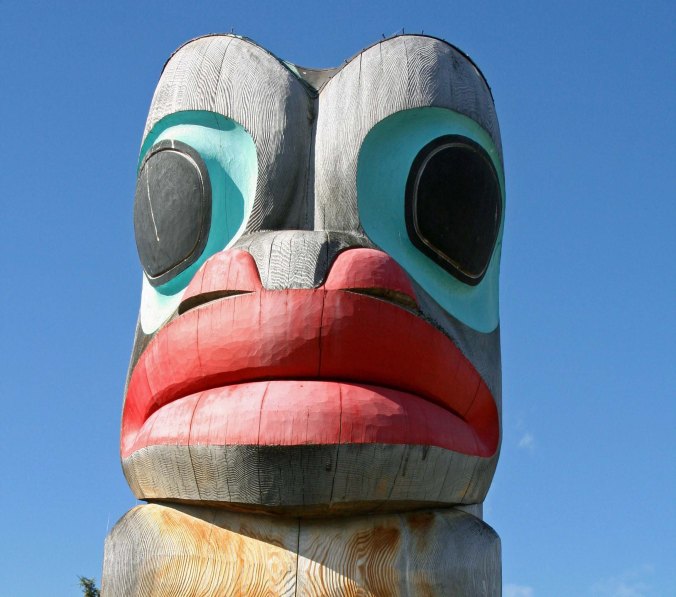
Gift of salmon totem pole at Taholah, WA

The ocean has provided sustenance to the Quinault Indians for thousands of years. This totem pole that Peggy and I found in the community of Taholah represents that bounty. But now both the community and salmon fishing are threatened by global warming.

The small town of Taholah located on the edge of the mighty Pacific has a plan. It’s going to move back from the rising ocean. Global warming is a reality for the self-governing Quinault Indian Nation encompassing some 316 square miles (819 square kilometers) on Washington’s Olympic Peninsula. Storm surges in 2014 and 2015 have inundated the lower part of the town where critical police, fire, education, and governing services for the nation are located. Moving will be a challenge, but it is one that has to be faced as ocean waters rise.

One can only wonder what cities like Los Angeles, New York and other major population centers located along the world’s oceans will do as they face similar problems.

Quinault River at Taholah, WA

The Quinault River empties into the Pacific Ocean at Taholah. A low seawall protects the community from the river and ocean, but it isn’t enough.

Taholah Memorial Park

A memorial park is one of the areas threatened by the rising water.

Thunderbird in Taholah, WA

We also found Thunderbird in the park.

Beaver totem pole at Ocean Shores Interpretive Center

Beaver, on the other hand, was hanging out at the Ocean Interpretive Center in Ocean Shores.

Peggy and I drove up to Taholah and checked out the town from where we were staying at Copalis Beach.  The area is rich in natural resources from both the forests and the ocean. Taholah sits on the edge of the Quinault River, which has provided a bounty of salmon to the natives for hundreds, if not thousands, of years. (The Quinault Indians believe that they have lived in the area from the beginning when Raven upended a clam shell and found humanity lurking underneath.) But even the salmon are facing the impacts of global warming. The glaciers that provided fresh, cold water to the Quinault are melting and severely impacting the salmon population with both warmer water and extensive silt.

Since hiking is limited on tribal lands, Peggy and I returned to Copalis and headed out to Griffith-Pride State Park for a walk. It was much flatter than the area around Taholah. My thoughts turned from global warming to tsunamis. The whole area from Copalis to Ocean shores could be wiped out in a big one. I couldn’t help but be a tad nervous. It was a think-disaster kind of day.

Wet boardwalk at Griffith-Pride State Park, WA

An interesting trail leads out to the ocean over the low sand dunes at Griffith-Pride State Park.

Douglas fir at Copalis Beach

It was wet along the way!

Old road through Griffiths-Pride State Park in Washington

At one time, the trail had been a road.

Half a rainbow at Griffith-Pride State Park in Copalis Beach, Washington

A half rainbow caught our attention. Clearing skies promised sunny weather. (Photo by Peggy Mekemson.)

Peggy on disappearing trail in Griffiths-Pride State Park

Occasionally, the trail disappeared into brush!

Connor Creek and rainbow at Griffith-Pride State Park, WA

Eventually we came on to Connor Creek and found the other half of the rainbow.

Connor Creek at Surfcrest Condominiums

Connor Creek also flowed by where we were staying. More time would have found us kayaking it! (Photo by Peggy Mekemson.)

Looking out to sea at Copalis Beach, WA

The creek flowing into the ocean provided a perspective on just how flat Copalis Beach is. Crashing waves can be seen in the distance. It would take a lot of running to escape a Tsunami!

Sunset at the Quinault Casino

We had a tender prime rib that night at the Quinault Indian Casino in Ocean City, where we were treated to this sunset. It’s a fitting end for today’s post.


WEDNESDAY’S POST: A photographic essay from Scotland

FRIDAY’S POST: Back to blogging “MisAdventures.” The animal kingdom gets banned from my bed

MONDAY’S POST: The end of my series on the Northwest Coast of northern Oregon and central Washington


SaveSave