Forget Waldo. Where’s the Petroglyph? Three Rivers Petroglyph Site

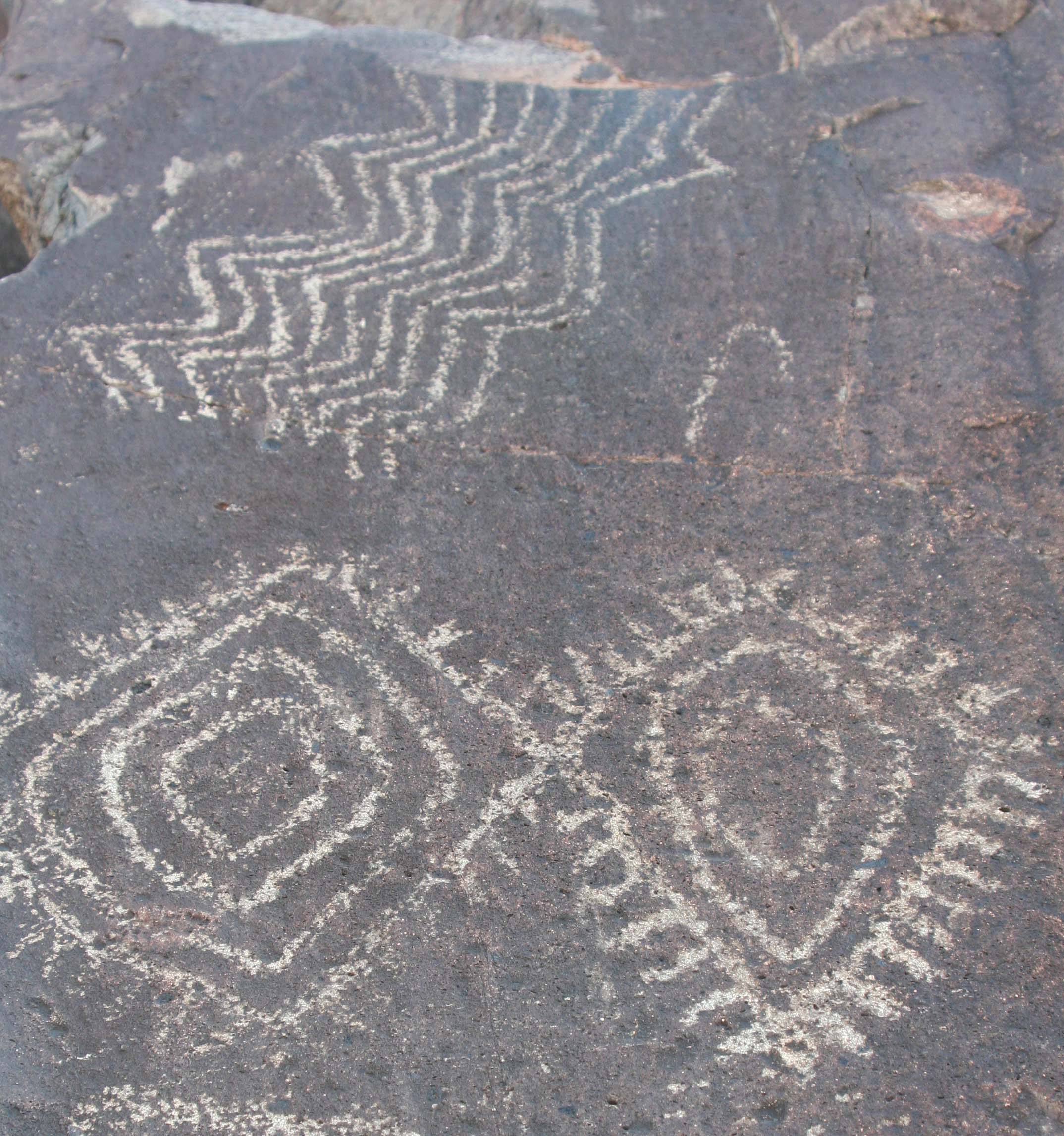
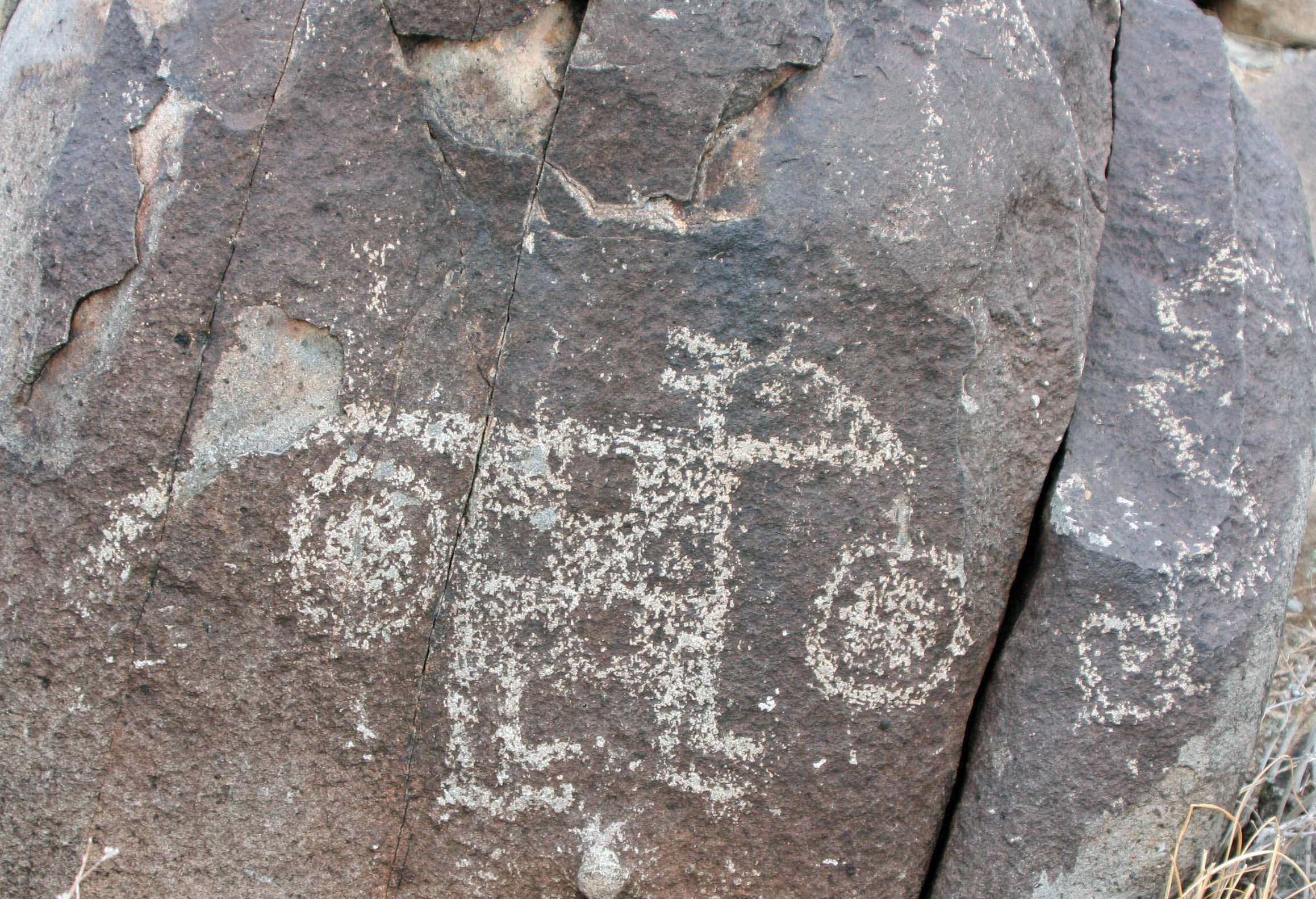
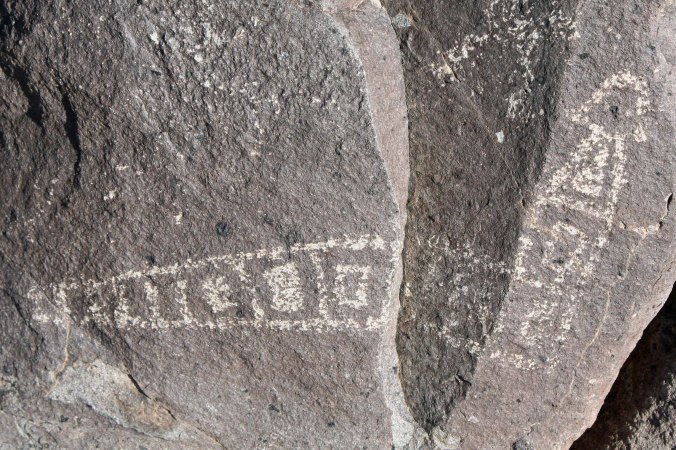
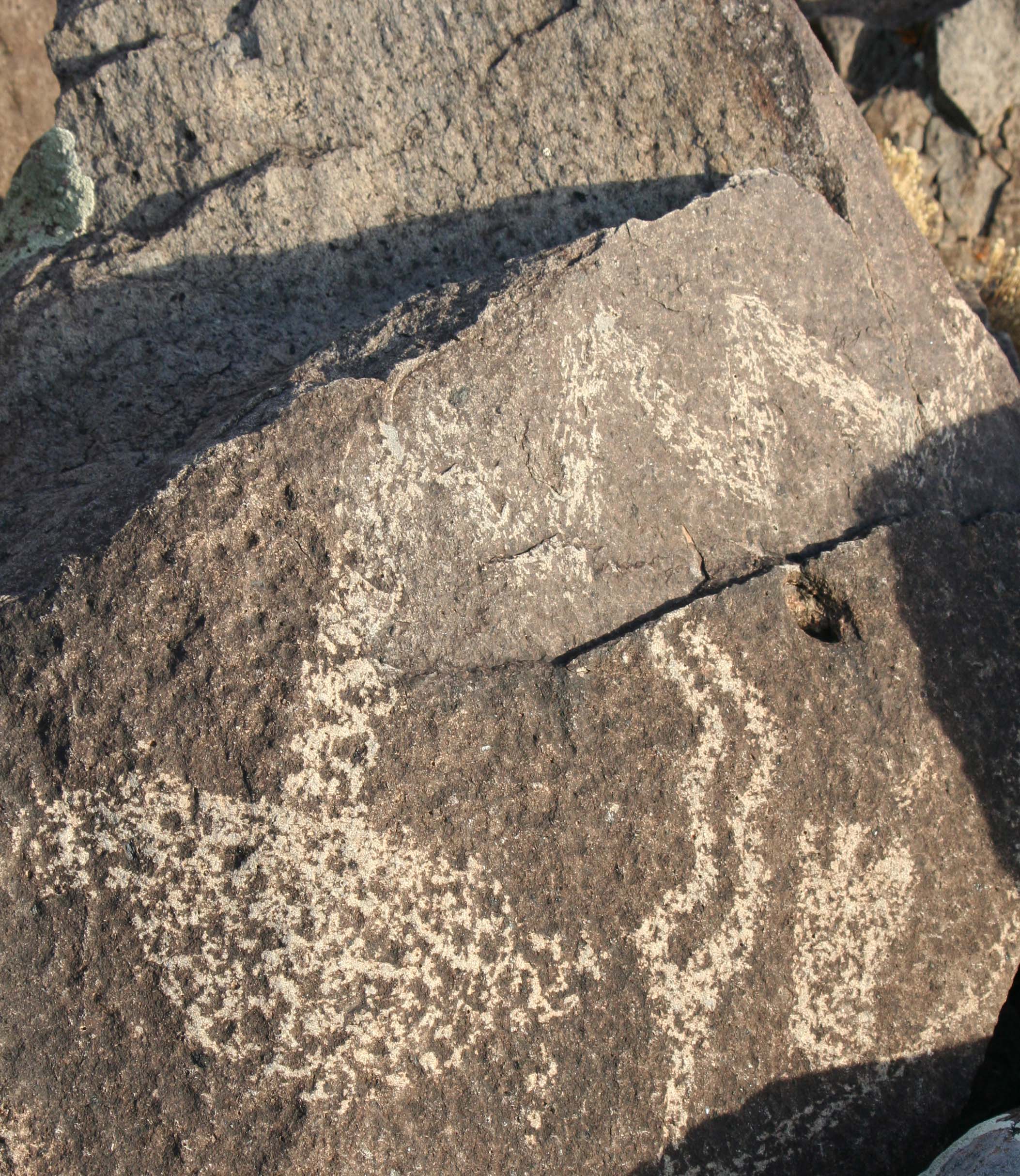
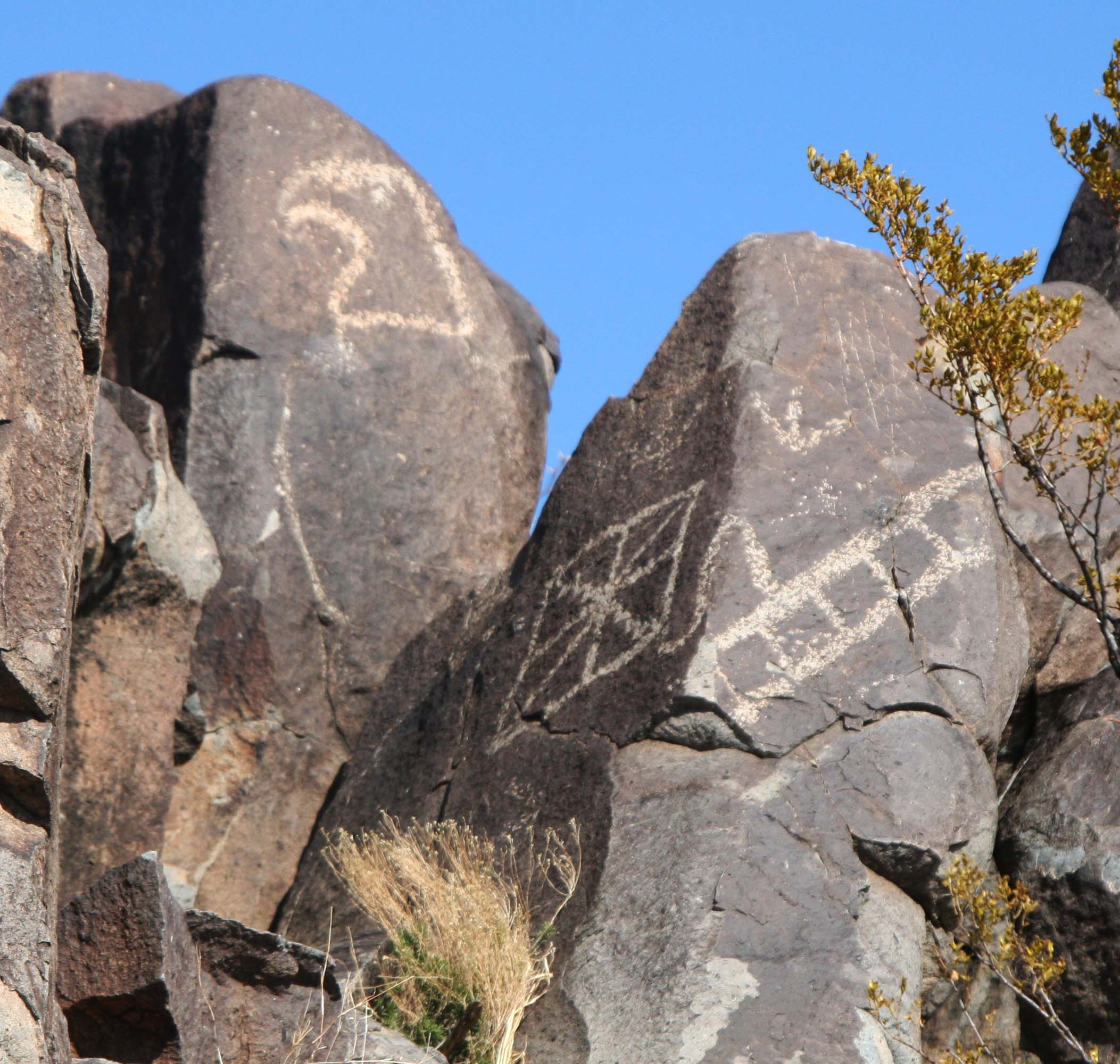
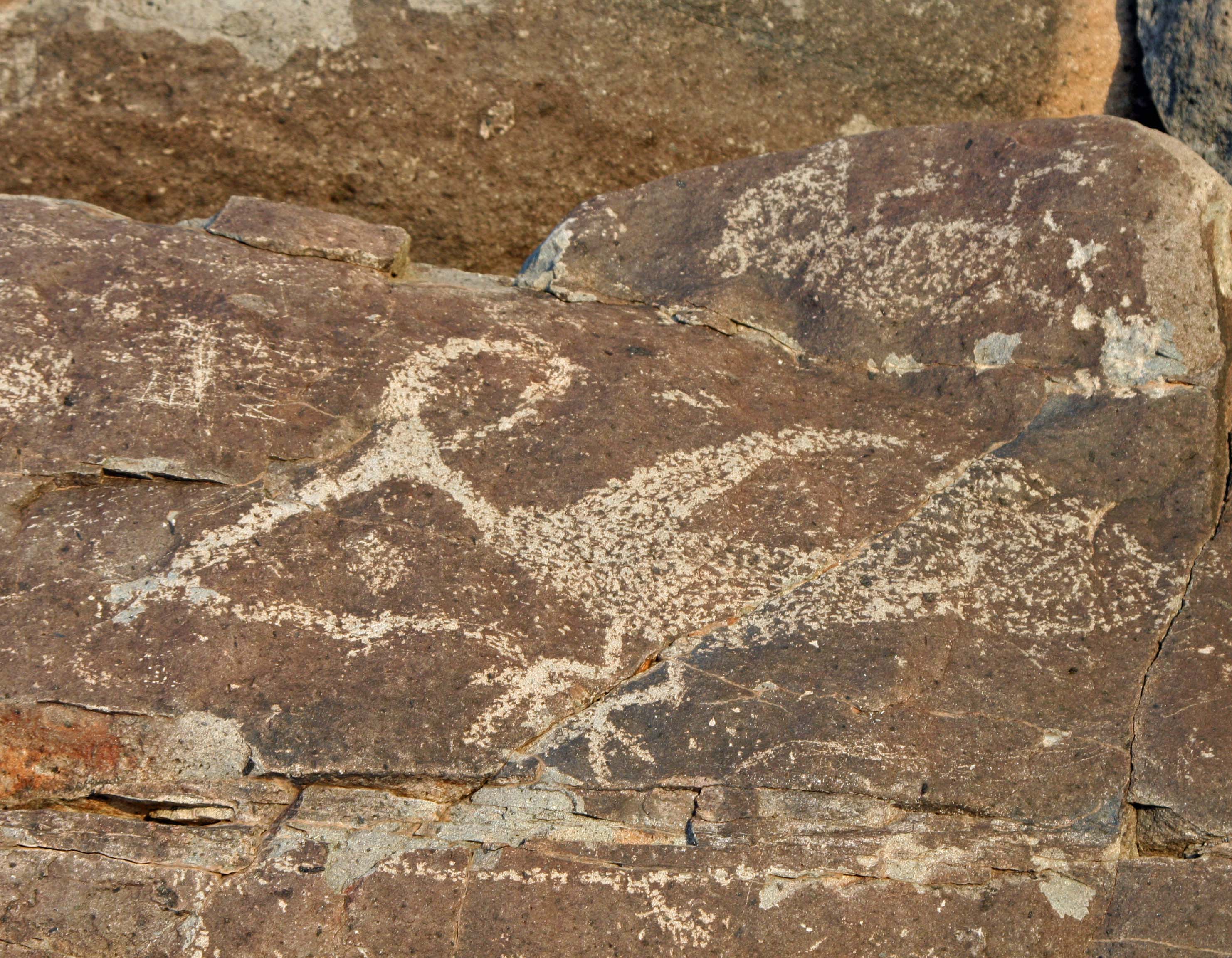
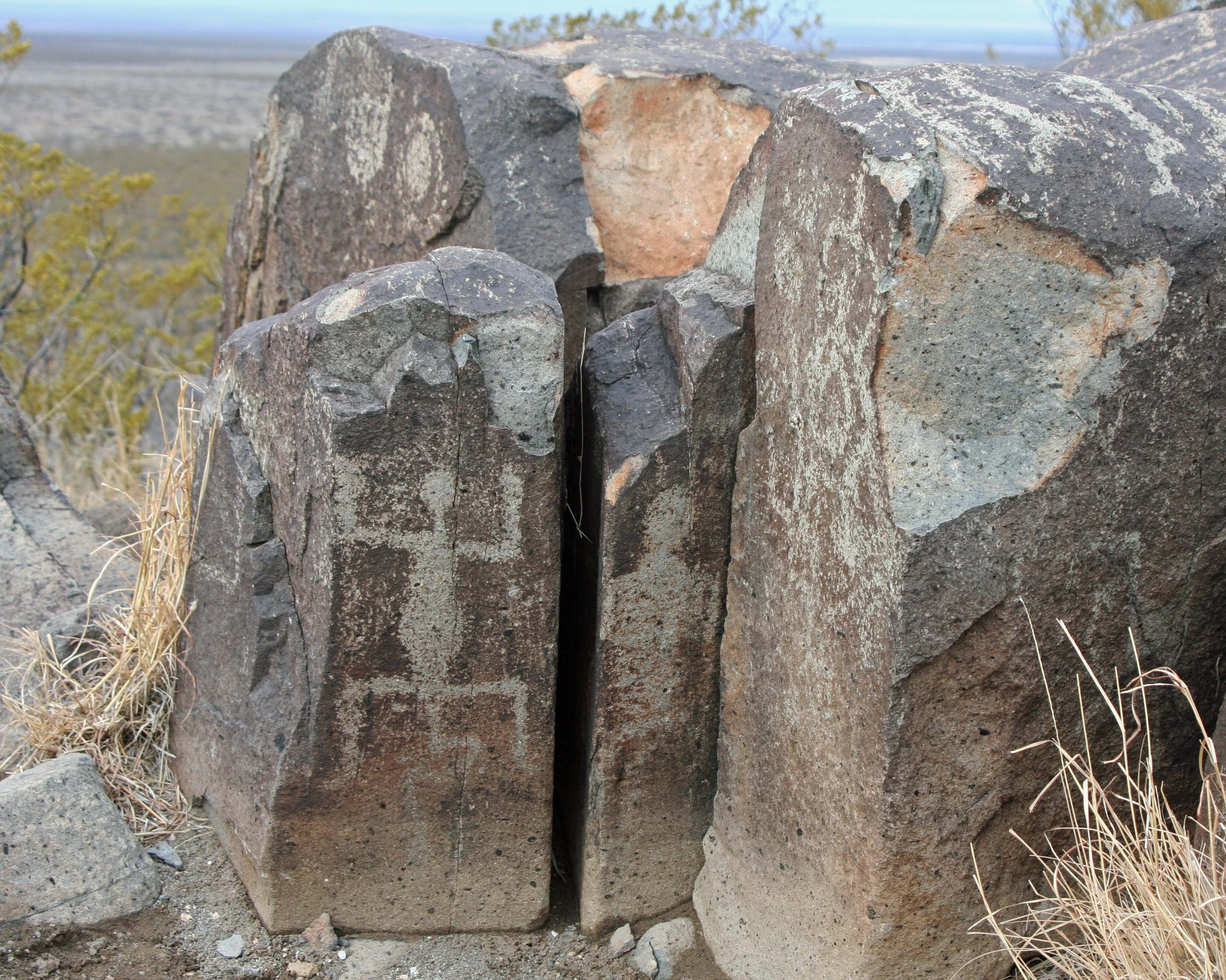
Groups of petroglyphs found at Three Rivers Site, New Mexico.

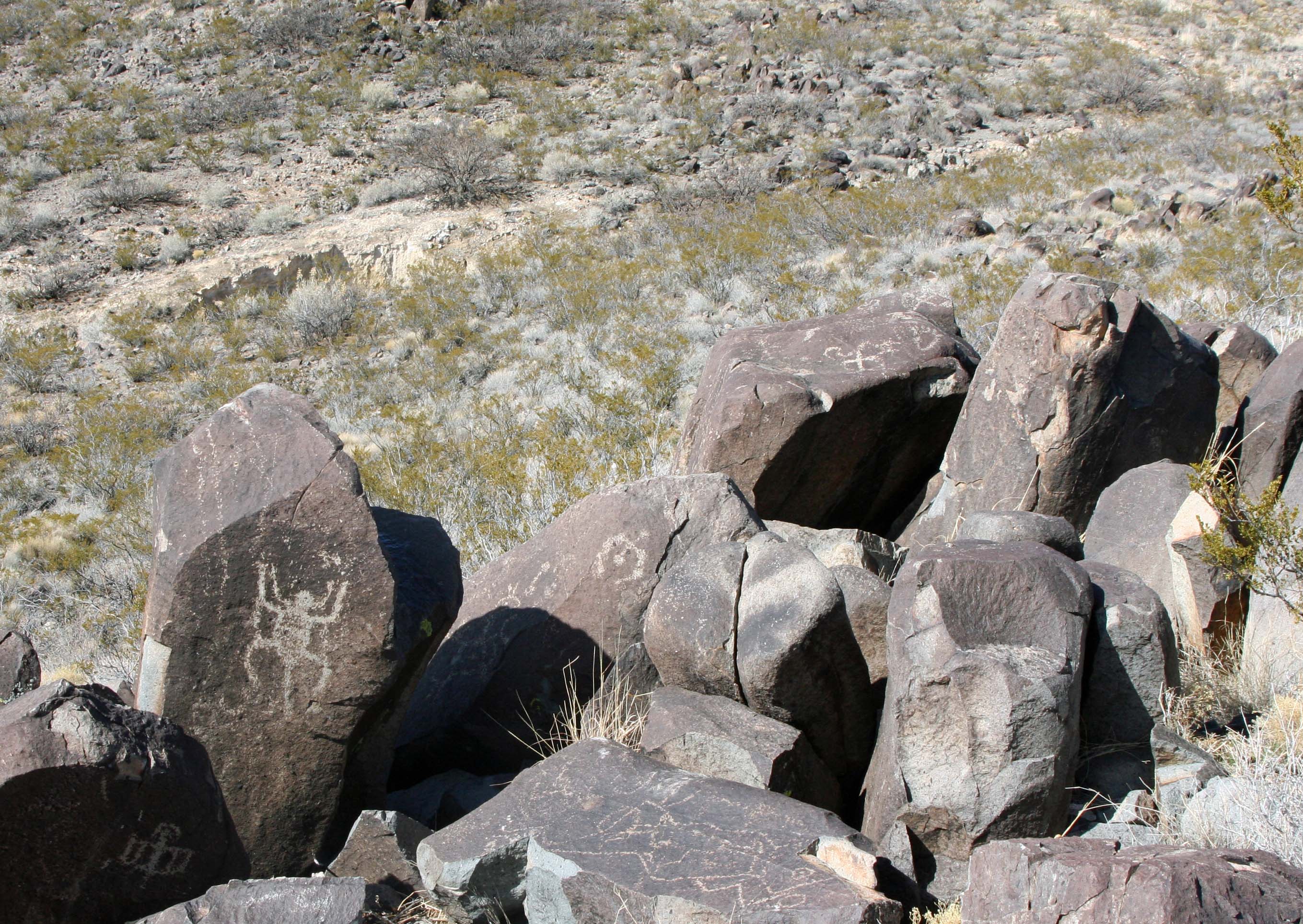
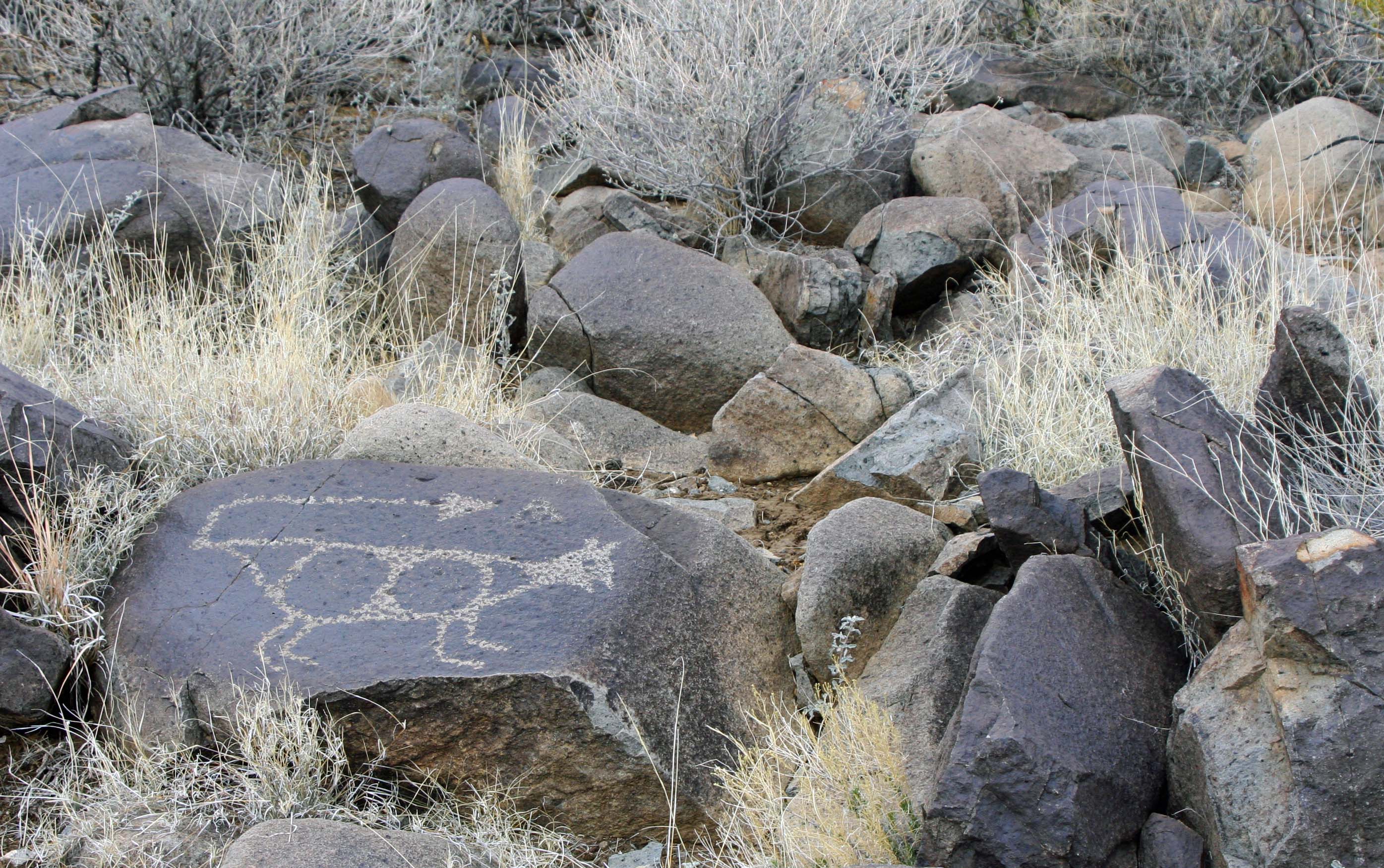
Petroglyphs are often found in the same location. How many can you find in the above photo? My answer is at the bottom of the blog.

When you find one petroglyph, you will almost always find more, frequently on the same rock. There is a general rule of thumb that Peggy and I follow: The more you look, the more you will find. Sometimes the petroglyphs were created at the same time and were tied together. More often, individual glyphs are added over time– in some cases over a period stretching out for a thousand years. Or more. Why waste a good rock?

The search is endlessly fascinating because you never know what’s going to pop up, or where. You may find hastily sketched glyphs for hours and then come on someone’s masterpiece, hidden away in a rock crevice or high up on a cliff.

Today, I am going to finish off my blogs about the Three Rivers Petroglyph site in New Mexico with photos featuring groups of petroglyphs on the same rock or nearby rocks. See how many you can find and let your imagination run wild with what they mean.

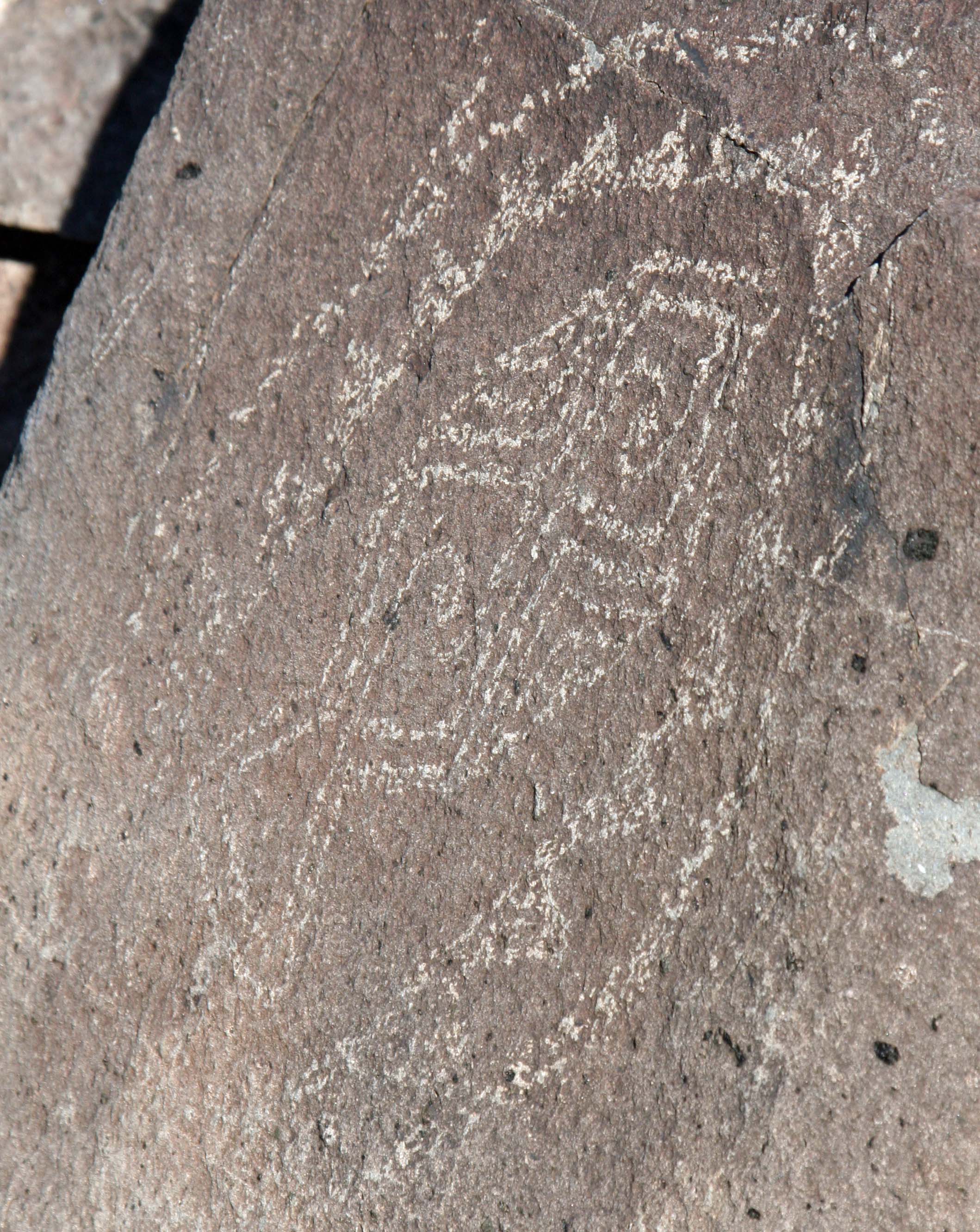
Petroglyph grouping at Three Rivers Petroglyph site in southern New Mexico.

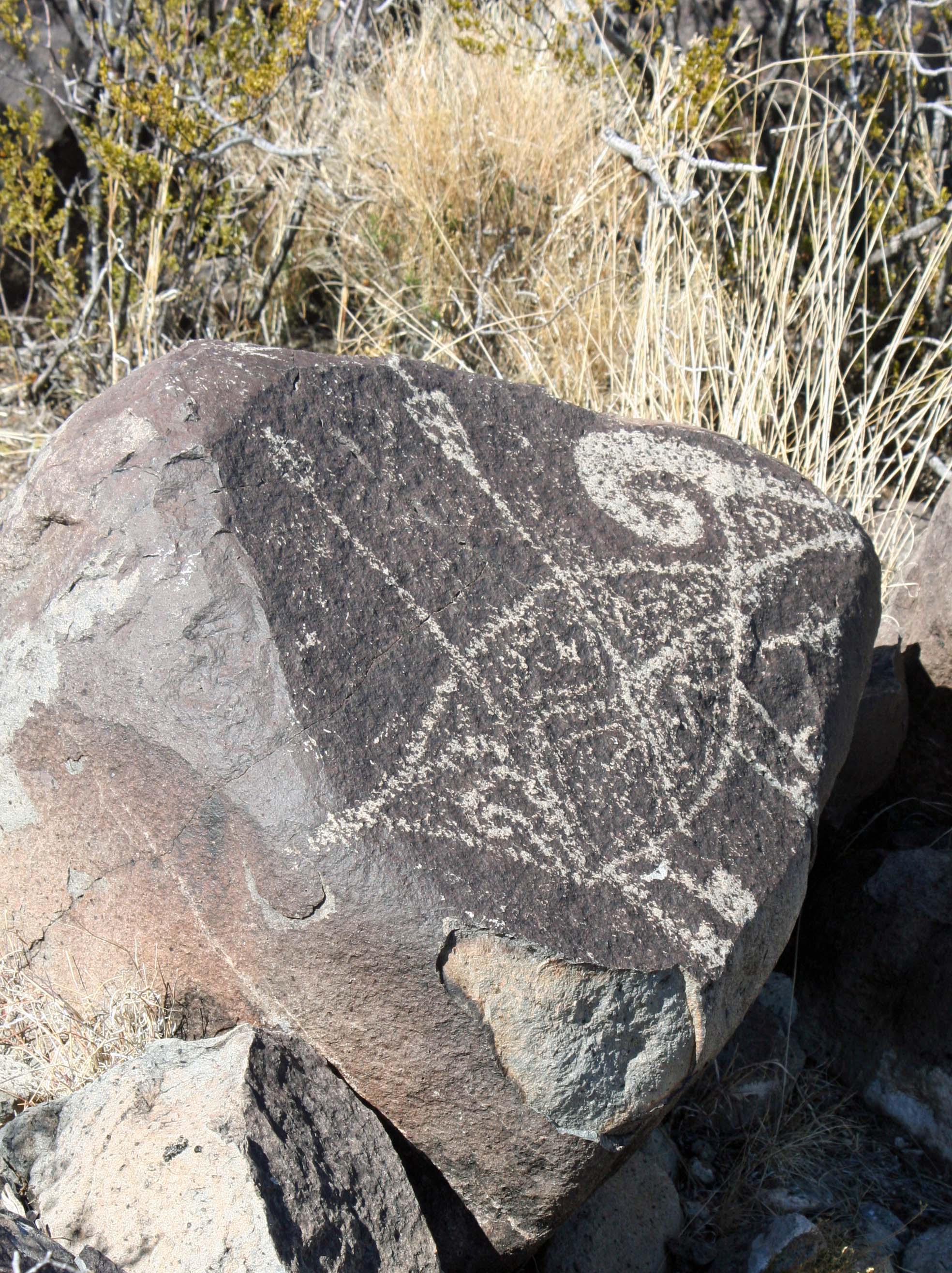
There may be even more petroglyphs here than in the first photograph. Check out the rock crevice behind the star. (Can you find the star? grin) I like the trail sneaking off over the rock on the right.

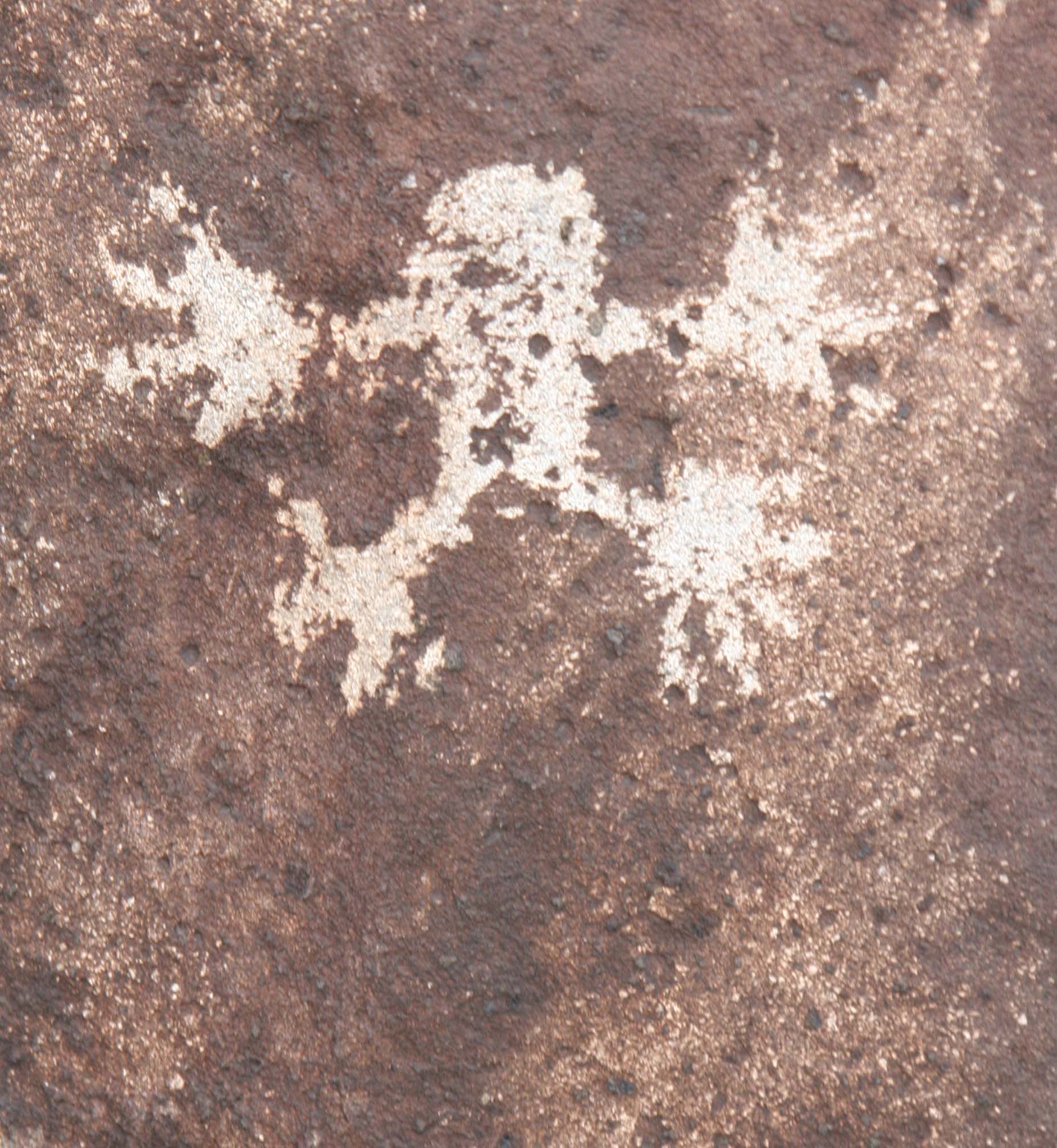
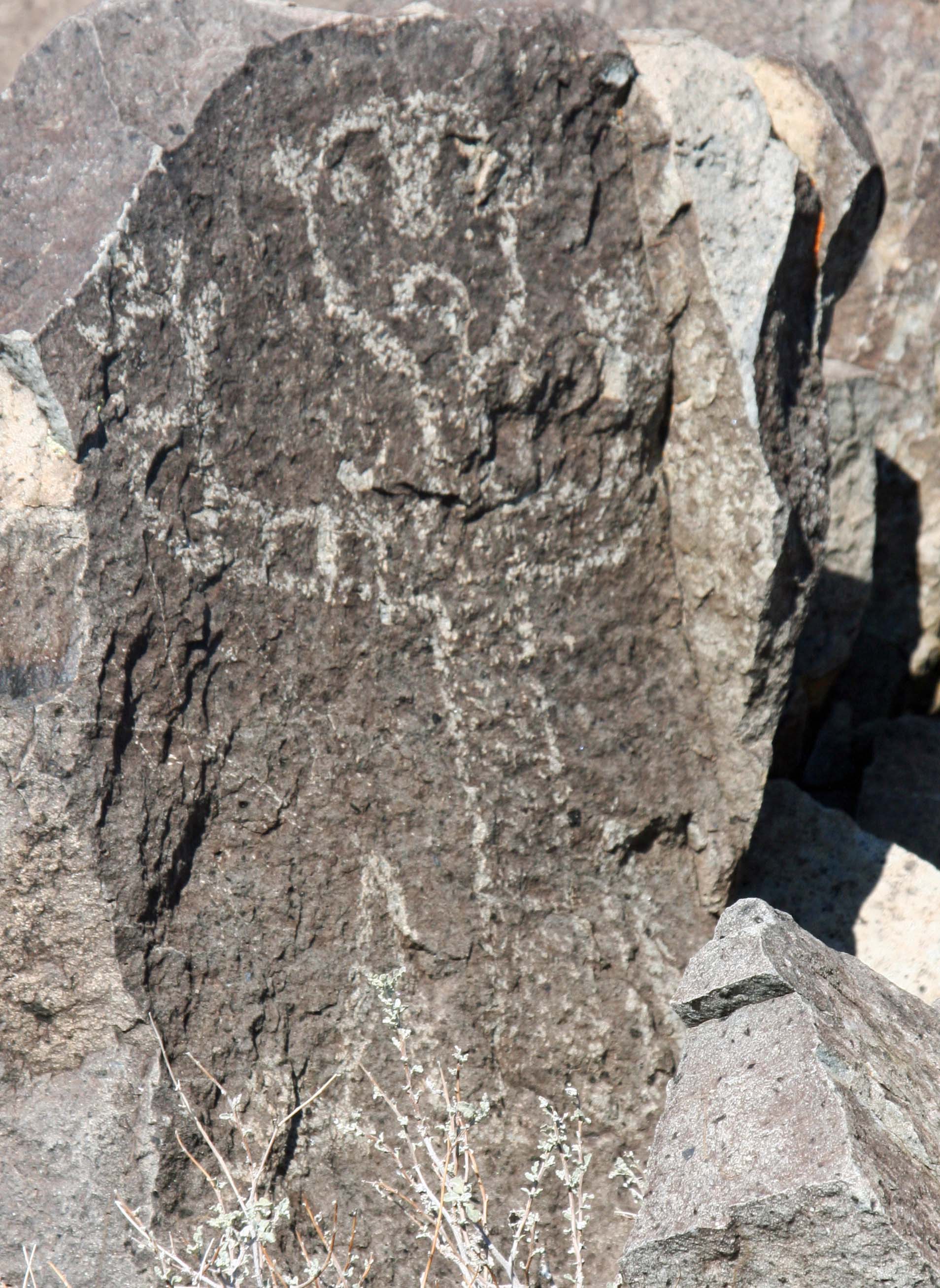
Petroglyph grouping at Thrre Rivers Petroglyph site in New Mexico.

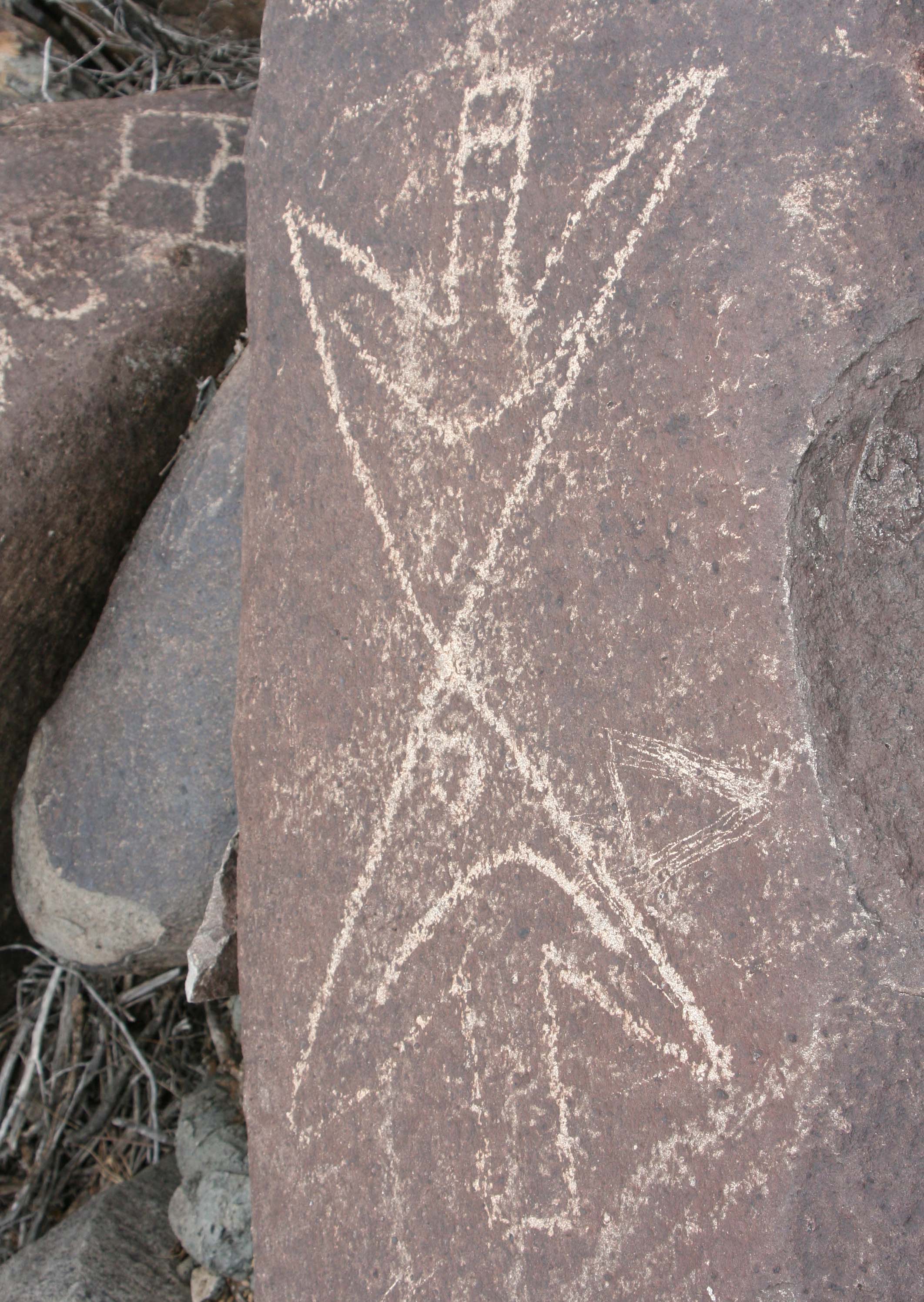
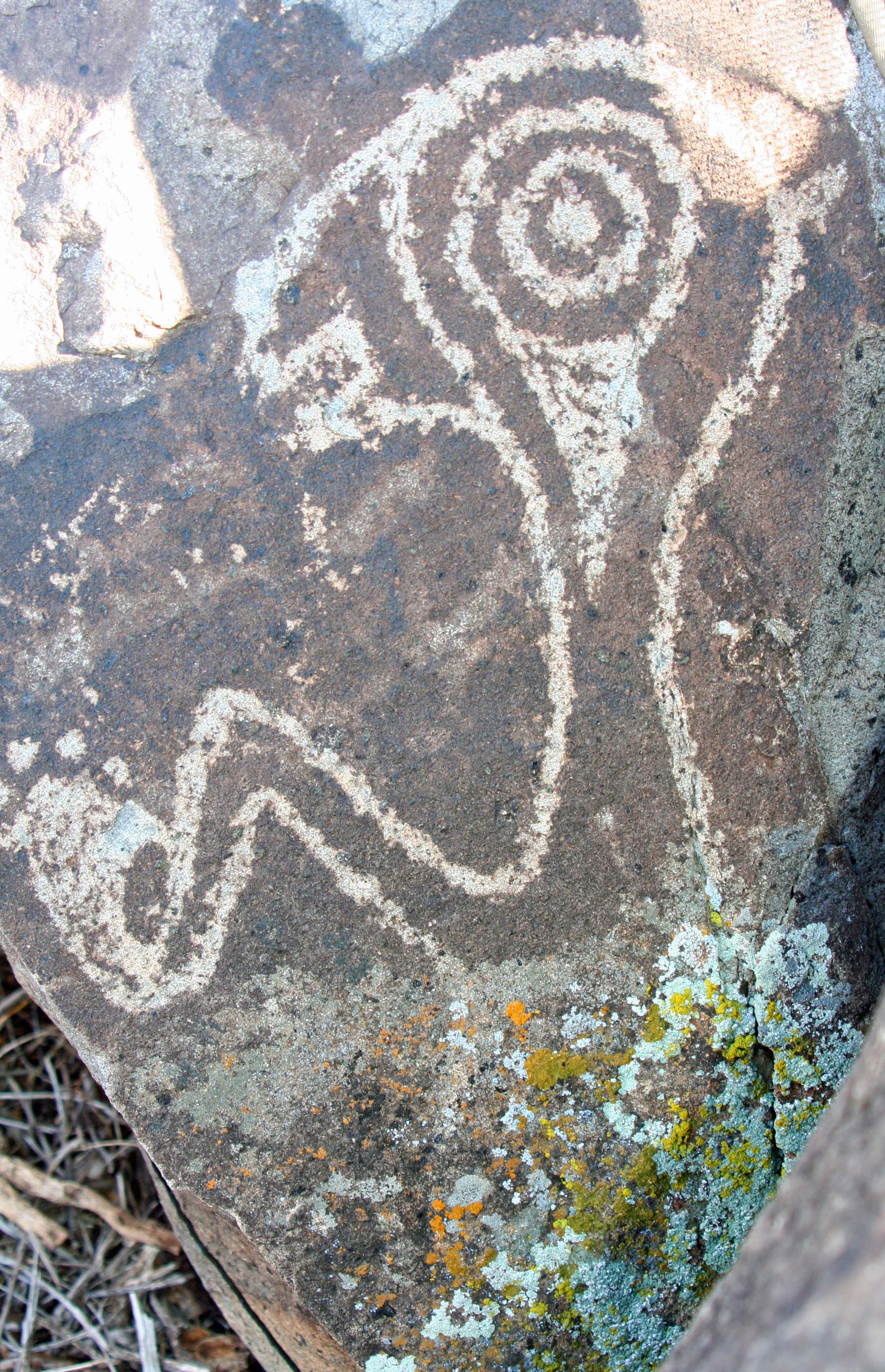
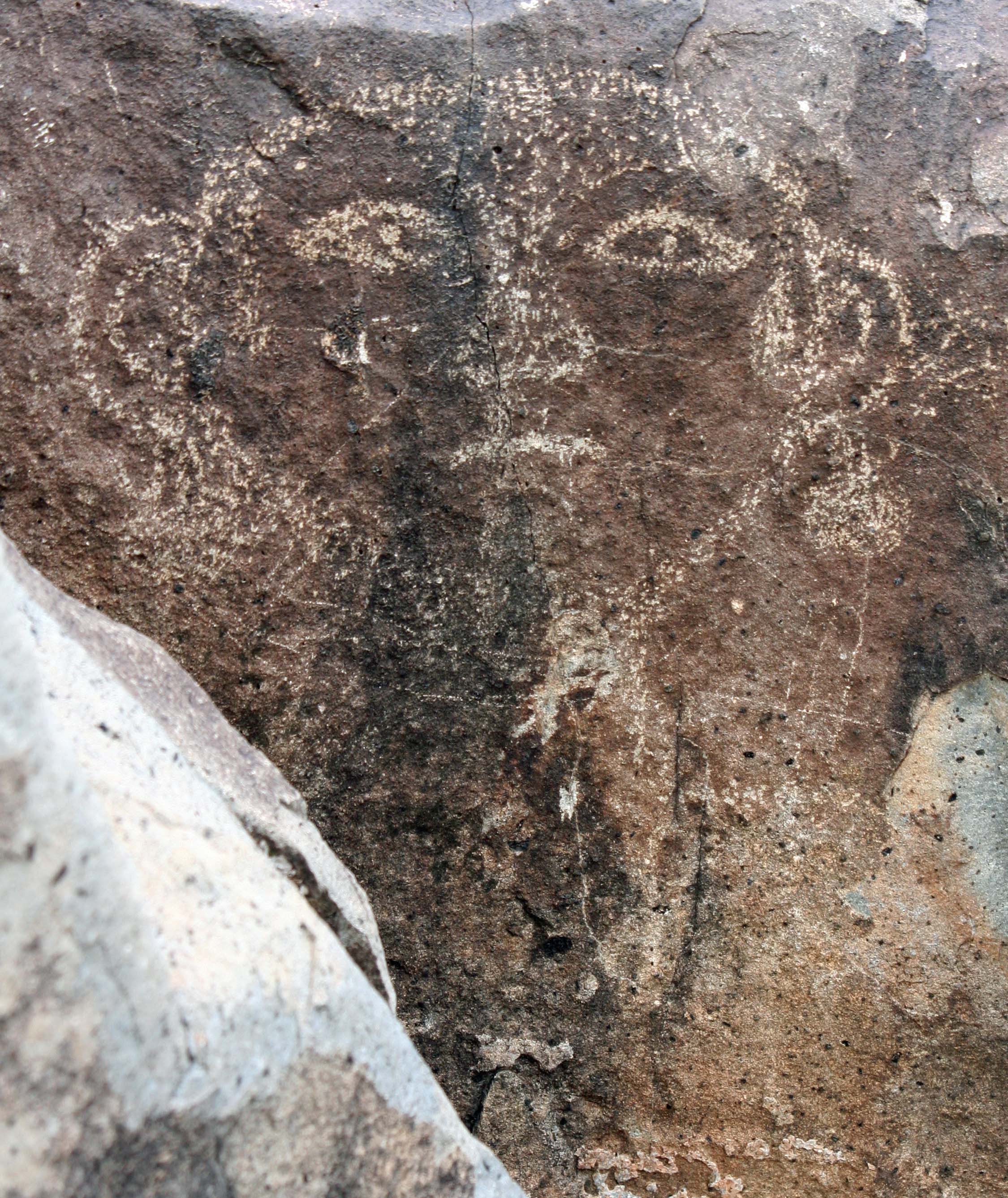
Here’s where interpretation can be fun. From left to right: Is the frog/lizard sticking its tongue out to catch a fly on top of the rock? Then there is the upside down man figure with the feet of a windmill. Next to it is the glow in the dark, Datura yoyo followed by an impressive bear foot, or is it a scared guy with his hair sticking out? And what’s with the turkey foot in the face of the Thunderbird/eagle? Did you catch the bear foot on top of the rock at the right?

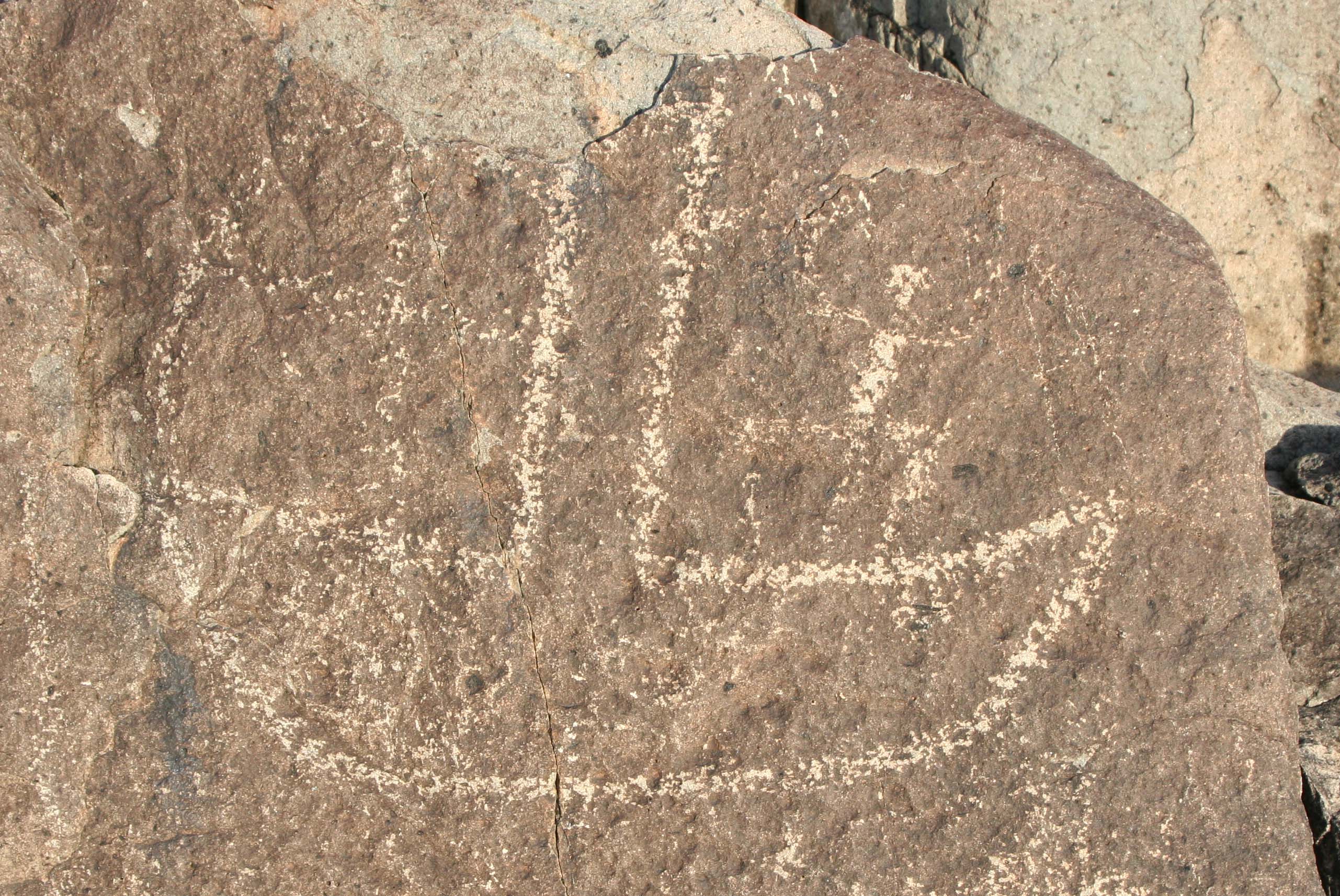
Petroglyph grouping at Three rivers Petroglyph site in southern New Mexico.

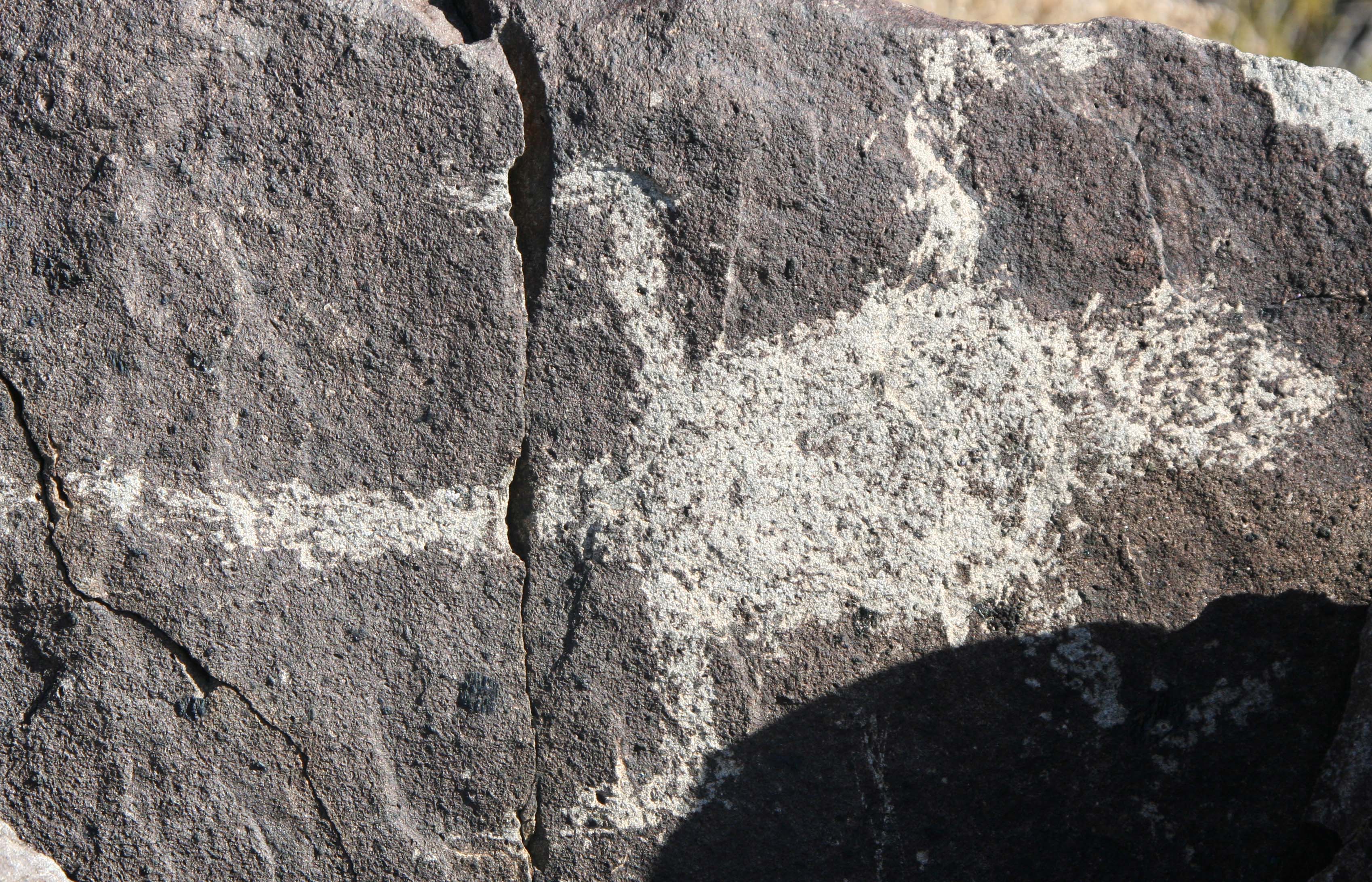
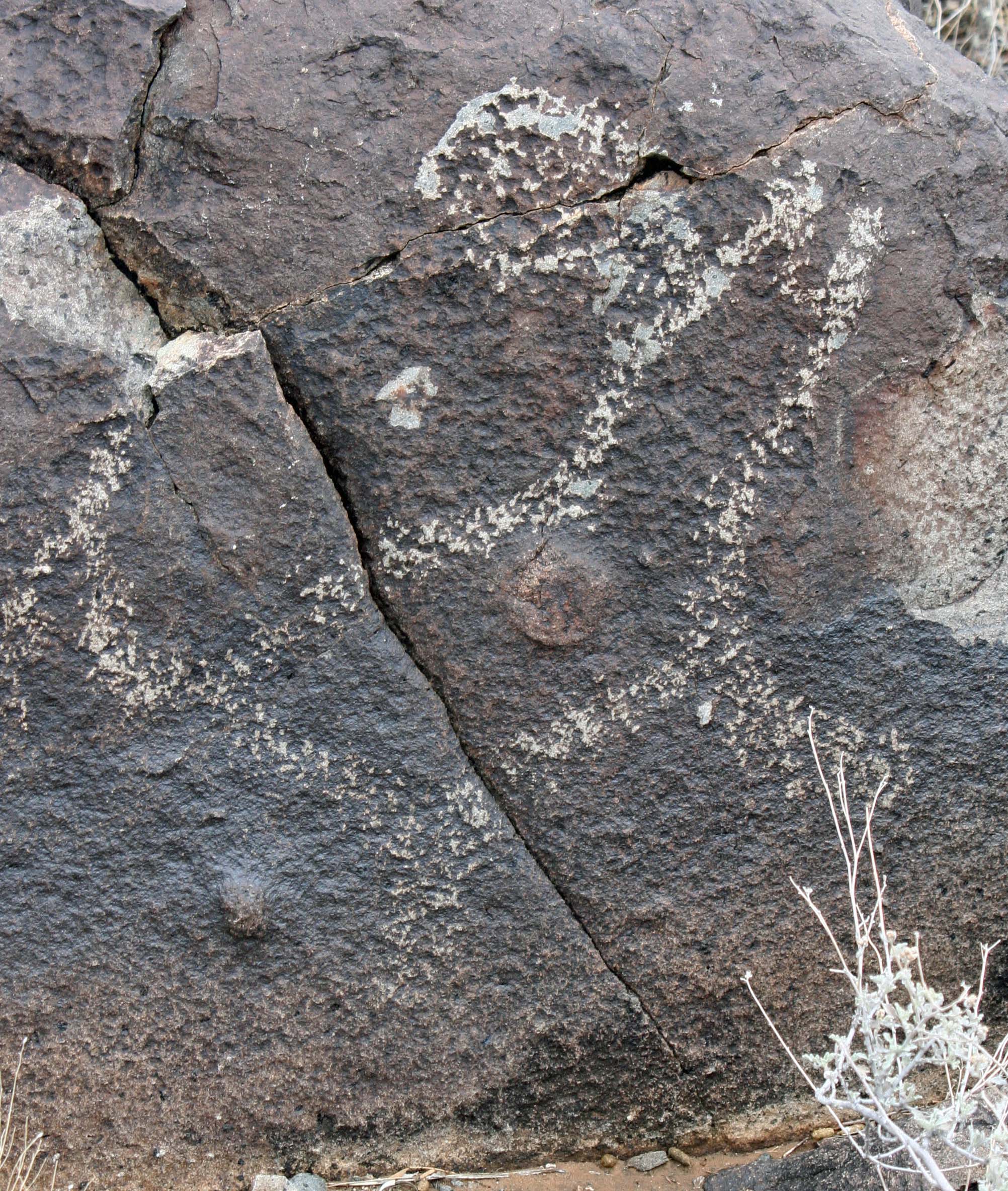
Hard to get more jumbled than this. Check out the lizard on the left with the X-ray eyes. Bottom left shows a guy shooting a bow and arrow. I like the Bighorn Sheep climbing the steep mountain.
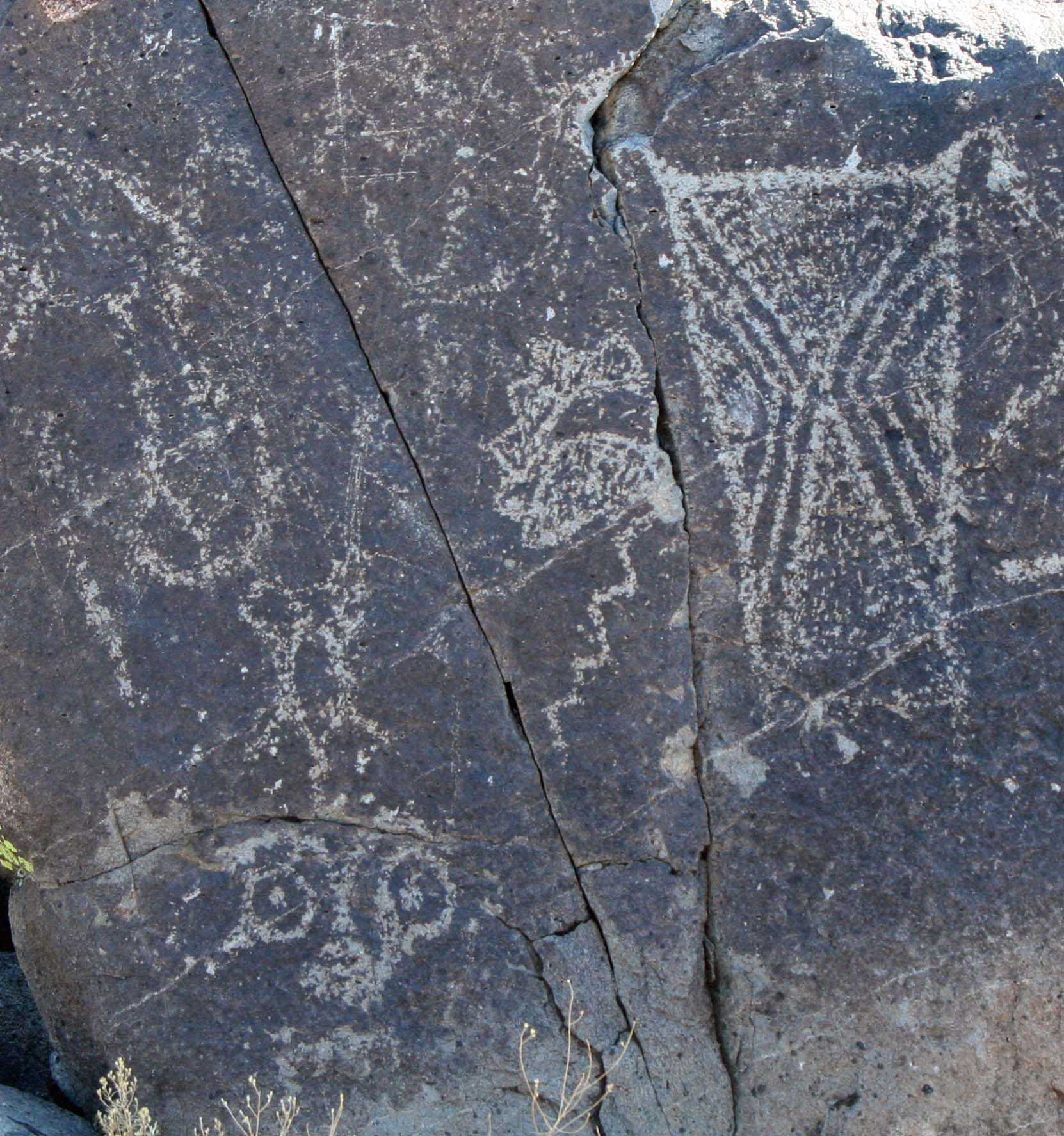
Cloud, lightning and sun petroglyph at Three Rivers Petroglyph site in New Mexico.

I’ve included this rock art because of the interesting petroglyph in the middle. Think of it as a weather forecast: It’s partly cloudy with a chance of thunder storms. The cloud with lightning is fairly common. But this one has the sun peeking out behind.

Milky Way petroglyph at Three Rivers Petroglyph site in New Mexico.

I’ll conclude with what I am calling a starry, starry night with Van Gogh in mind. At first, I thought river, but the more I looked at it, I decided the little specks were stars and the stream was the Milky Way. Maybe, maybe not– but it seems a fitting image to end this series with. Oh yeah, I’m pretty sure the round object is a UFO.

BTW: I found 15 petroglyphs in the first photo.

NEXT BLOG: The journey to Alaska begins. First up I will introduce you to Quivera the Van– our faithful traveling companion. Question: Could you and a companion live in 120 square feet for four years?

Sheep Cults and Ancient Mazes… The Rock Art of Three Rivers

Petroglyph maze at Three Rivers Petroglyph site.

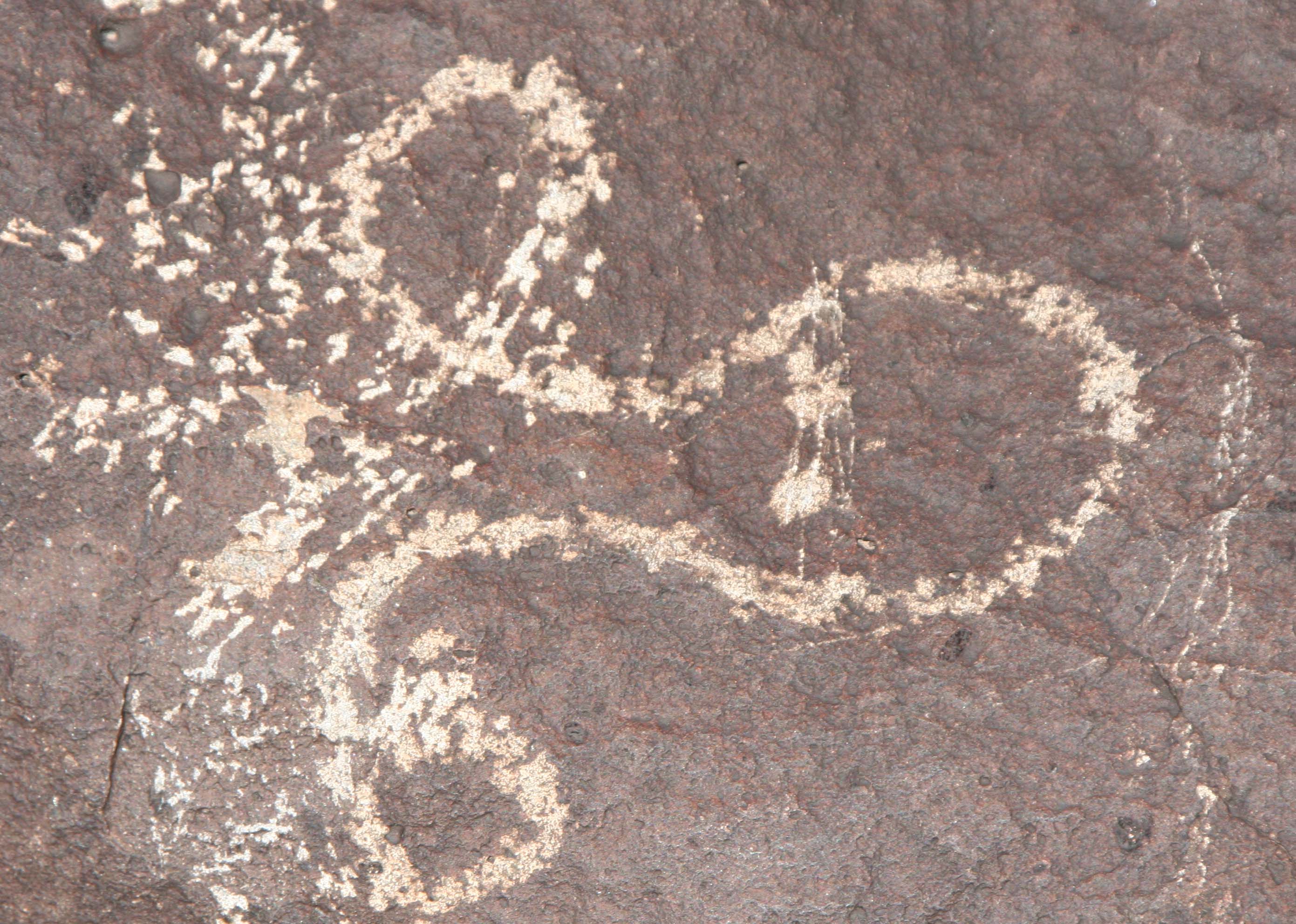
Set off by distant mountains, this petroglyph appears to be a maze.

It is fun to speculate on what petroglyphs mean. It can also be frustrating. What was the artist thinking when he created the above glyph? “This will make a nice blanket design.” Or how about, “Here is the path our ancestors followed to get out of the underworld.” Or, “Here’s a fun maze.” Or, “Like wow, that Datura is some serious dope.

The petroglyph is definitely a maze; follow the lines. Beyond this, speculation becomes iffy. The book by Alex Peterson, A Field Guide to Rock Symbols of the Greater Southwest, attempts to interpret the meaning of various petroglyphs. I’ve used him extensively. But Patterson provides a cover-all-contingencies disclaimer in the beginning of his book, “There is no proof that any of these meanings are correct.

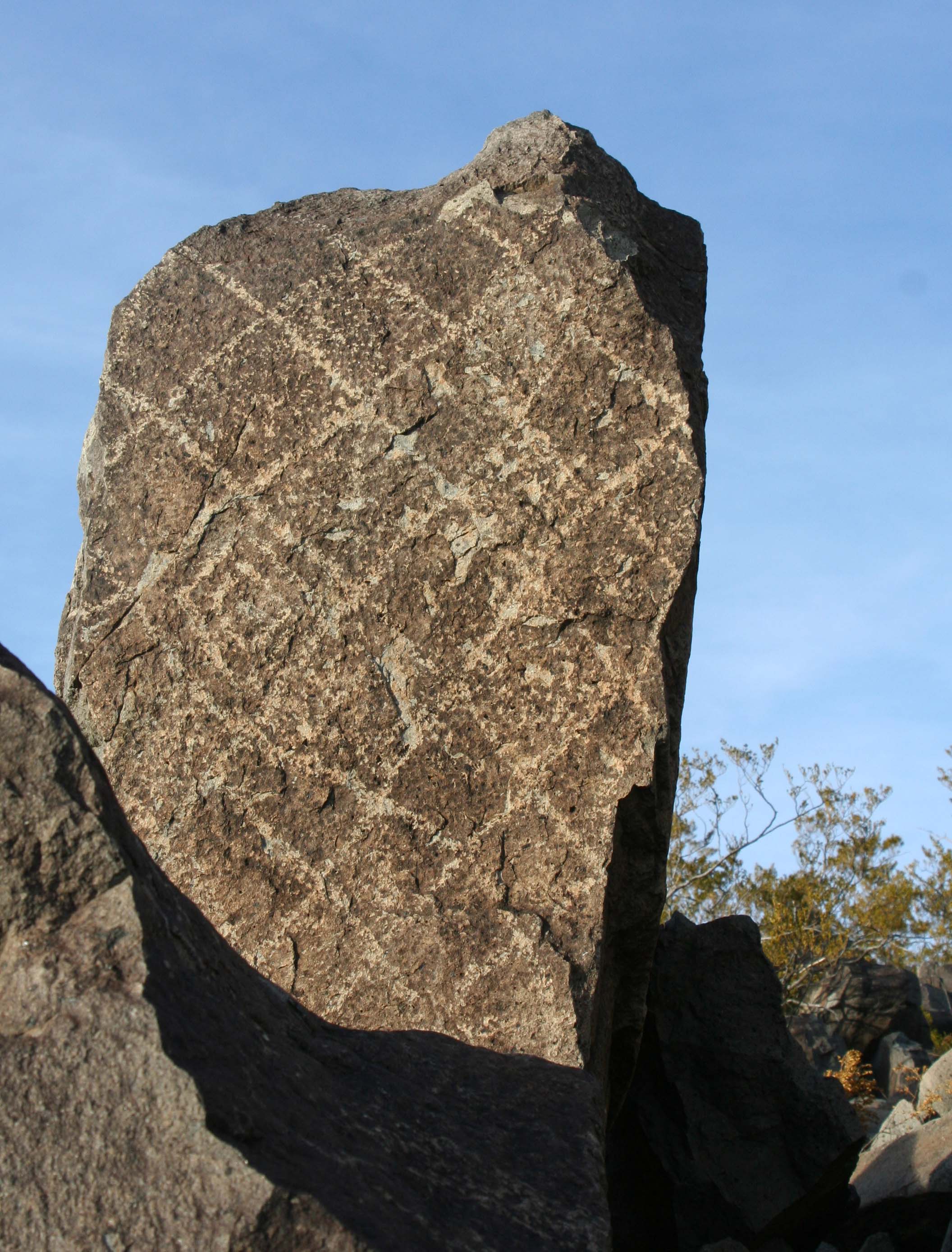
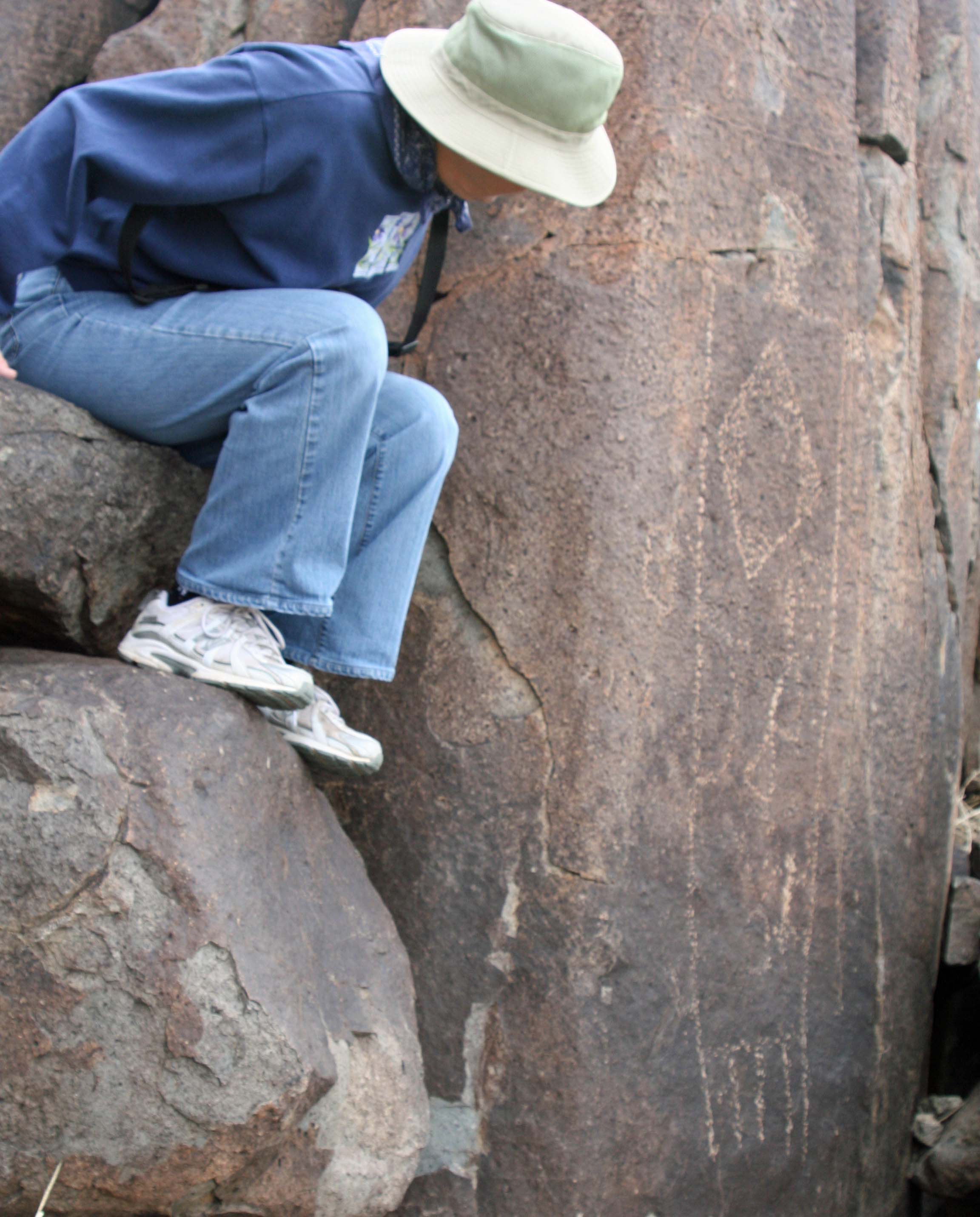
For example, join Peggy in checking out the rock art below. It’s obviously an anthropomorph (human-like), given that it standing upright and has a head. The robe has various patterns or symbols on it and a fringe at the bottom. Patterson notes that similar characters appear again and again in rock art, that “they almost certainly represent the costumed principals of the sheep cult and may have been shamans.” Sheep cults and shamans– sounds intriguing, doesn’t it.

Peggy Mekemson checks out a petroglyph at Three Rivers Petroglyph site in southern New Mexico.

We often find petroglyphs carved on difficult to reach places. If it is difficult for us, imagine what it must have been like for the rock artist.

At least Peggy is looking at a human-like figure. So far in my blog, I have featured identifiable subjects including people, animals, birds, reptiles, insects and one splattered frog. Today I am going to present geometric figures. Patterson has interpretations for many of these symbols, but what about the petroglyph featured below? All I can think of is, “Okay, children, today you are going to practice making squares.”

Petroglyph of squares at Three Rivers Petroglyph site in southern New Mexico.

Plans for a subdivision?

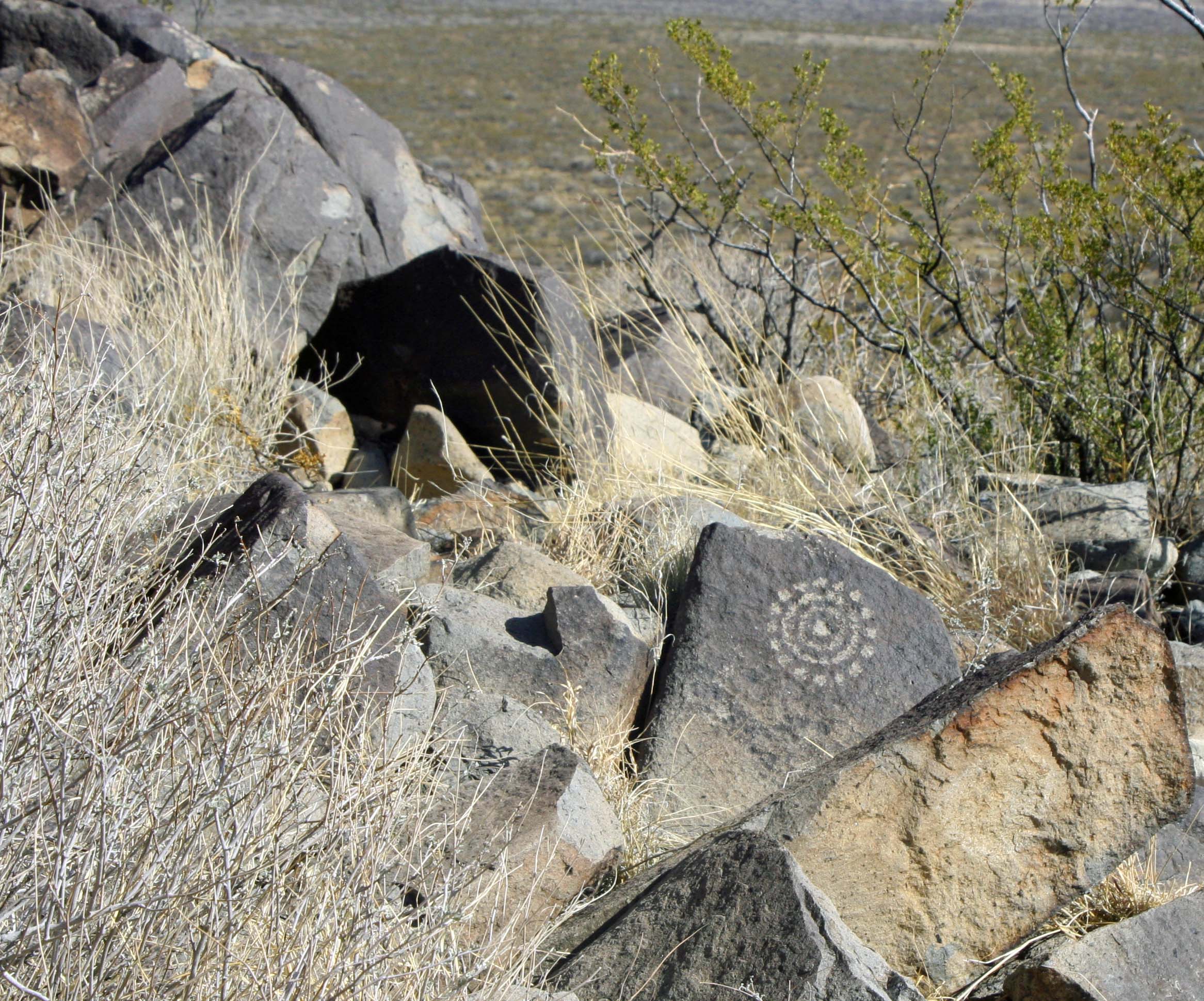
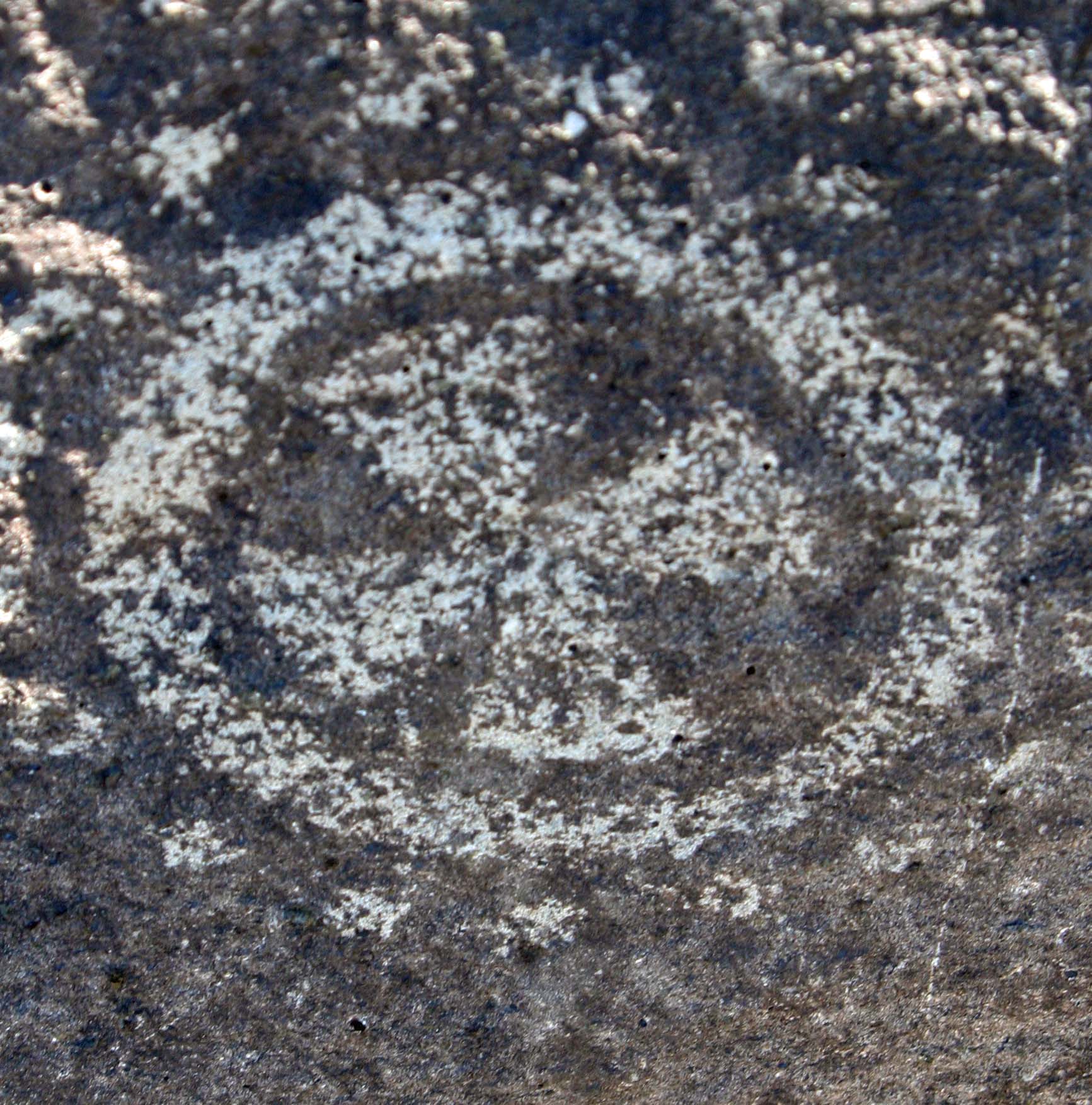
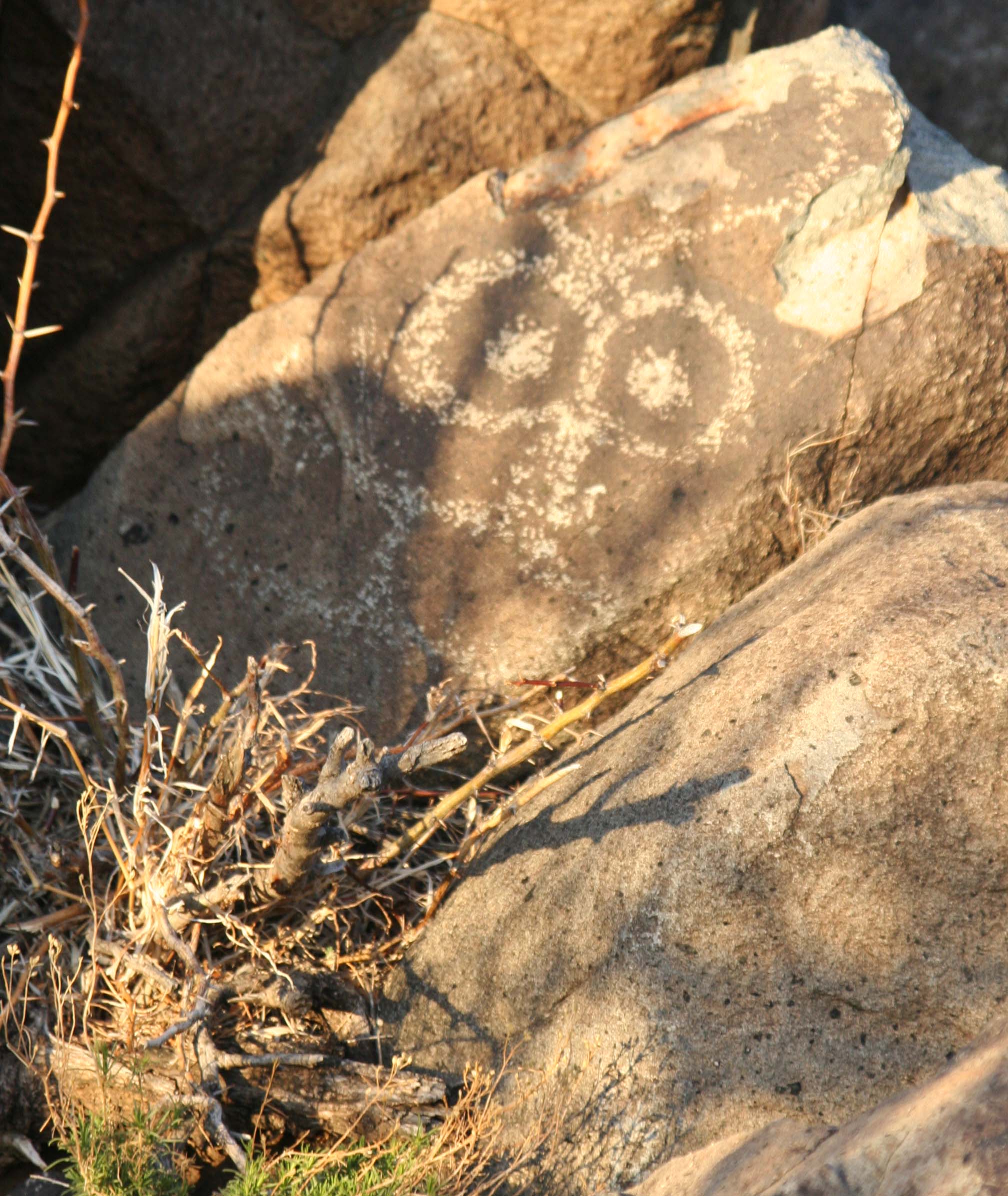
One of the most common geometric symbols is the circle. There are circles within circles, crosses in circles, circles made of dots surrounding other circles, etc. Naturally the sun and the moon come to mind. Also ripples on water. Once again, Patterson suggests Datura may be involved. It seems that people have similar visions when they close their eyes while under the influence. Wouldn’t know.

Solid circles surrounded by a circle with dots at Three Rivers Petroglyph site. Possibly influenced by Datura use.

Almost everywhere we looked at Three Rivers Petroglyph site we found circles. Many had outer circles made up of dots.

Petroglyph circle with cross found at Three Rivers Petroglyph site.

A number of the circle also feature crosses of various types. This was one of the more intriguing.

Circle petroglyph with possible sun at Three Rivers Petroglyph site.

I also found this interesting. My first thought is the sun.

Large spiral circle at Three Rivers Petroglyph site in New Mexico.

This is the most impressive circle petroglyph Peggy and I found at Three Rivers. It is actually a spiral. Start at the center and work outward. Which brings me to…

Spiral petroglyph at Three Rivers Petroglyph site.

… this spiral, which led me to think a bout a spiral galaxy. Could the Jornada have been in contact with little green men from outer space. Naw…….

Petroglyph found at Three Rivers petroglyph site in southern New Mexico.

Various interpretations. One is about a four eyed insect standing manlike who is bitten on the testicles by a sidewinder rattlesnake, a fate which would make any guy’s eyes go buggy.

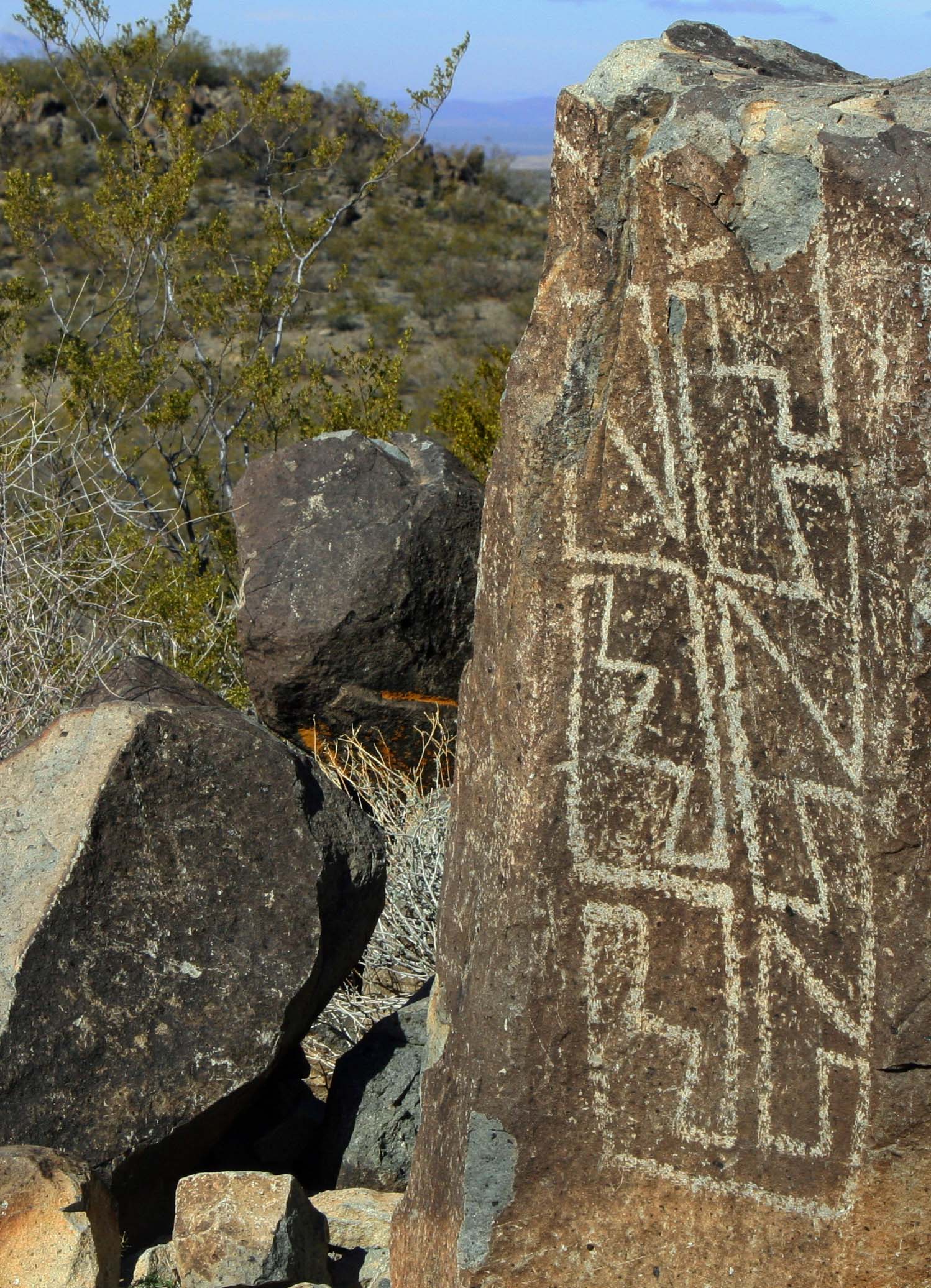
Some of the geometric patterns may be pottery or textile designs. Modern shops through out the South West feature pottery, blankets and other items made by Native Americans featuring similar motifs.

Geometric petroglyph found at Three Rivers Petroglyph site in southern New Mexico.

This repetition of pattern suggests a design that might be used for a blanket.


Geometric petroglyph at Three Rivers Petroglyph site.

Here’s another. This petroglyph might represent a butterfly.

Finally, we have petroglyphs that are almost map-like, featuring lakes, rivers, springs, hills and even farmlands.

Petroglyph found at Three Rivers Petroglyph site in New Mexico.

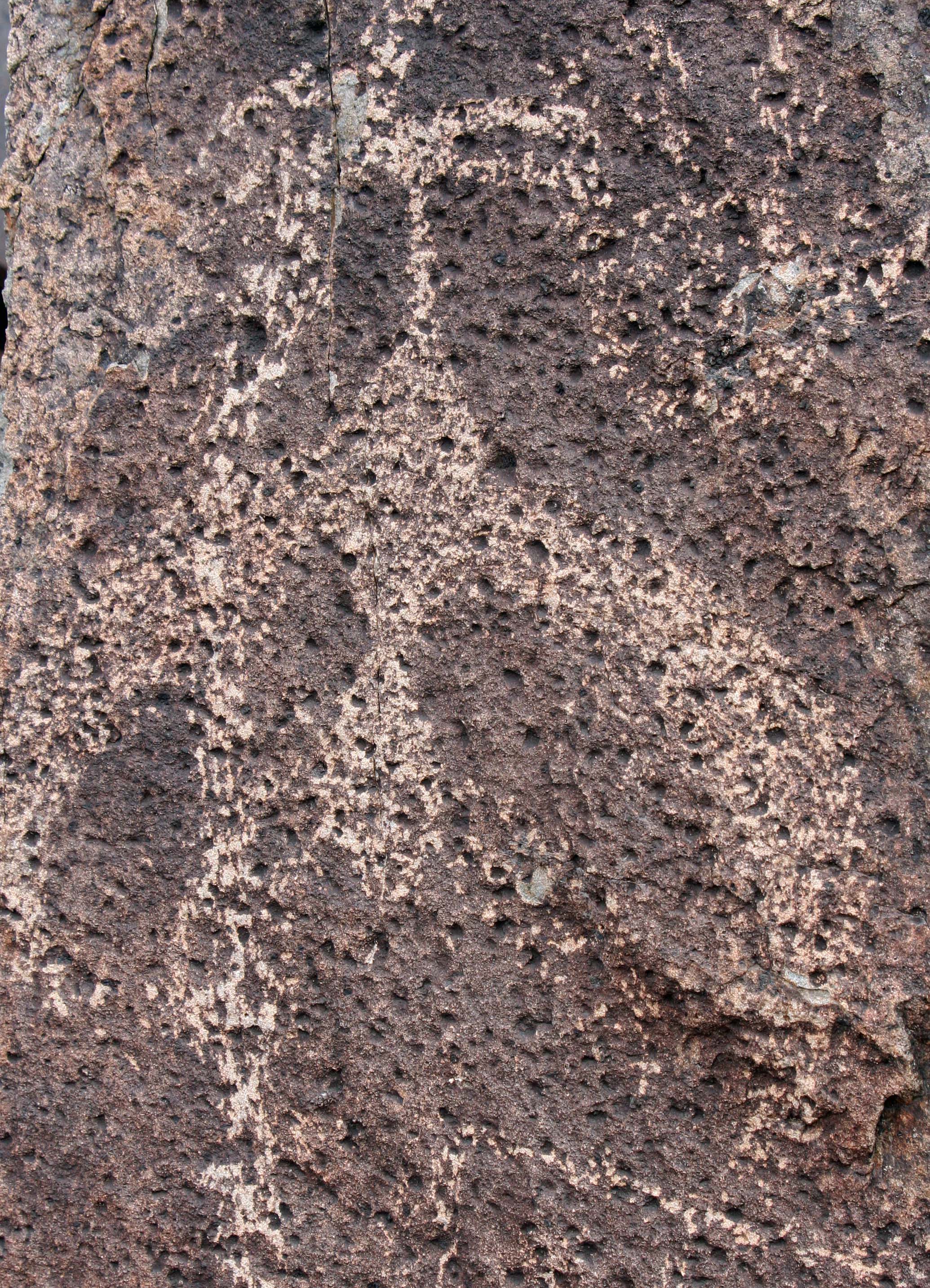
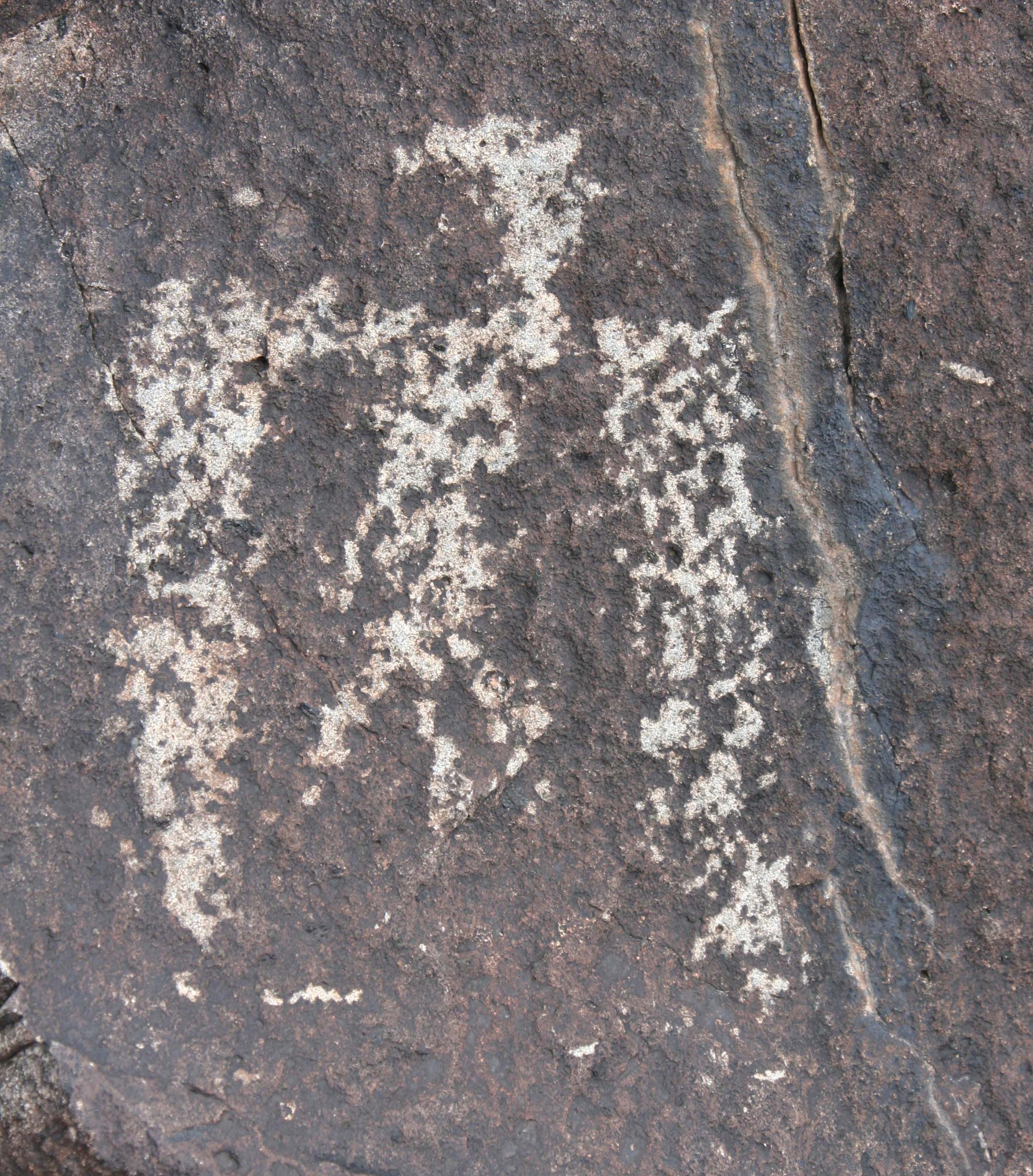
Who knows? Climb down the ladder to the crops at the bottom? (grin) Could the foot print on the right be saying “Walk this way?”
Three Rivers Petroglyph site rock art.

On of my favorites at Three Rivers. Peterson says the wavy lines represent water but what’s with the square eyes.

Horse petroglyph at Three Rivers Petroglyph site.

This captures it all: a cute horse with extended tail and big feet, Datura driven circles, and a simple pattern of squares. There is even a snake in the grass. Maybe that accounts for the horse’s stance.

NEXT BLOG: I will finish off the series on Three Rivers Petroglyph site with several collages of rock art. Petroglyphs are rarely found alone.


The Slithery Serpents of the Three Rivers Petroglyph Site

Rattlesnake petroglyph at Three Rivers Petroglyph Site in southern New Mexico.

I could rave about how this fellows curves follow the rock. In fact I am raving about it. Also check out the serpent hear on this guy and his buzzy tail. Rattlesnake for sure.

Bad snakes have been giving good snakes a bum rap for eons. It all started when the Biblical Eve bit into the apple she had obtained from the proverbial snake in the tree and realized she was naked. It must have been a shocking discovery. Snakes have been pummeled, stomped, cut up, diced, crushed, shot, speared and smashed ever since.

Actually, there is no such thing as a bad snake; there are only snakes that have had a bad childhood and will bite you if you step on them or wake them up when they are sunbathing on their favorite rock or lollygagging in a scummy pond. They don’t really mean to kill you; it’s a waste of good venom. Normally, we are too big to eat.

I’ve had numerous snake encounters over the years from the rainforests of the Amazon and West Africa to the rattlesnake country of the American West. Believe me when I say there is nothing like stepping on a log and having it come alive with the buzz of rattlesnakes. I once set an Olympic record for the standing long jump when that happened. Another time, I almost sat on a rattler when I was going to the bathroom in the woods. I couldn’t poop for days.

The Jornada Mogollon people of the Three Rivers Petroglyph site must have had a special relationship with snakes. There are numerous snake glyphs scattered throughout the area… and these are BIG snakes with BIG heads and jaws. “The better to bite you with my dear.” I suspect the snakes were considered sacred and worshipped, which is what the nearby Navajo and Hopi people did.

These long snakes slithering down the rocks are worthy of an Indiana Jones movie.

These long snakes slithering down the rocks are worthy of an Indiana Jones movie.

Petroglyph snake with large head in Three Rivers Petroglyph site.

In the world of big snake heads, this Three Rivers serpent would be a record holder.

Rattlesnakes weren’t the only poisonous denizens of the desert recorded in the petroglyphs of Three Rivers. There were also spiders and scorpions.  On the more benign side of the equation, there were numerous rock art lizards.

Spider petroglyph at Three Rivers Petroglyph site.

I think this large, scary bug is probably a spider.

Scorpion petroglyph at Three Rivers Petroglyph site.

My money would be on a scorpion here. Check out the rounded end of his tail and the two pincher claws up front.

A number of petroglyphs at Three Rivers Petroglyph site in New Mexico.

This is where we found the scorpion. I suspect that his modern-day cousins are lurking in the rocks surrounding him.

Lizards are considered much more benign than snakes, spiders and scorpions. For example, my eight year old grandson Ethan caught several during his recent visit.

Lizards are considered much more benign than snakes, spiders and scorpions. For example, my eight year old grandson Ethan caught several during his recent visit. He was only chomped on a couple of times.

A petroglyph lizard foud at the Three Rivers Petroglyph Site.

Pregnant petroglyph lizard?

Petroglyph lizard at Three Rivers Petroglyph site in southern New Mexico

A well-fed petroglyph lizard?

This frog doesn’t belong here along with the reptiles and bugs but he absolutely had to go somewhere.

Frog petroglyph at Three Rivers Petroglyph site.

Gotta love this guy.

NEXT BLOG: Patterns in the rock. We will look at some of the many geometric patterns found among the petroglyphs and guess at their meaning.

Pretty Weird Stuff… Three Rivers Petroglyph Site

Butterfly petroglyph at Three Rivers Petroglyph site.

A lot of the rock art at the Three Rivers Petroglyph site is simply fun, such as this butterfly.

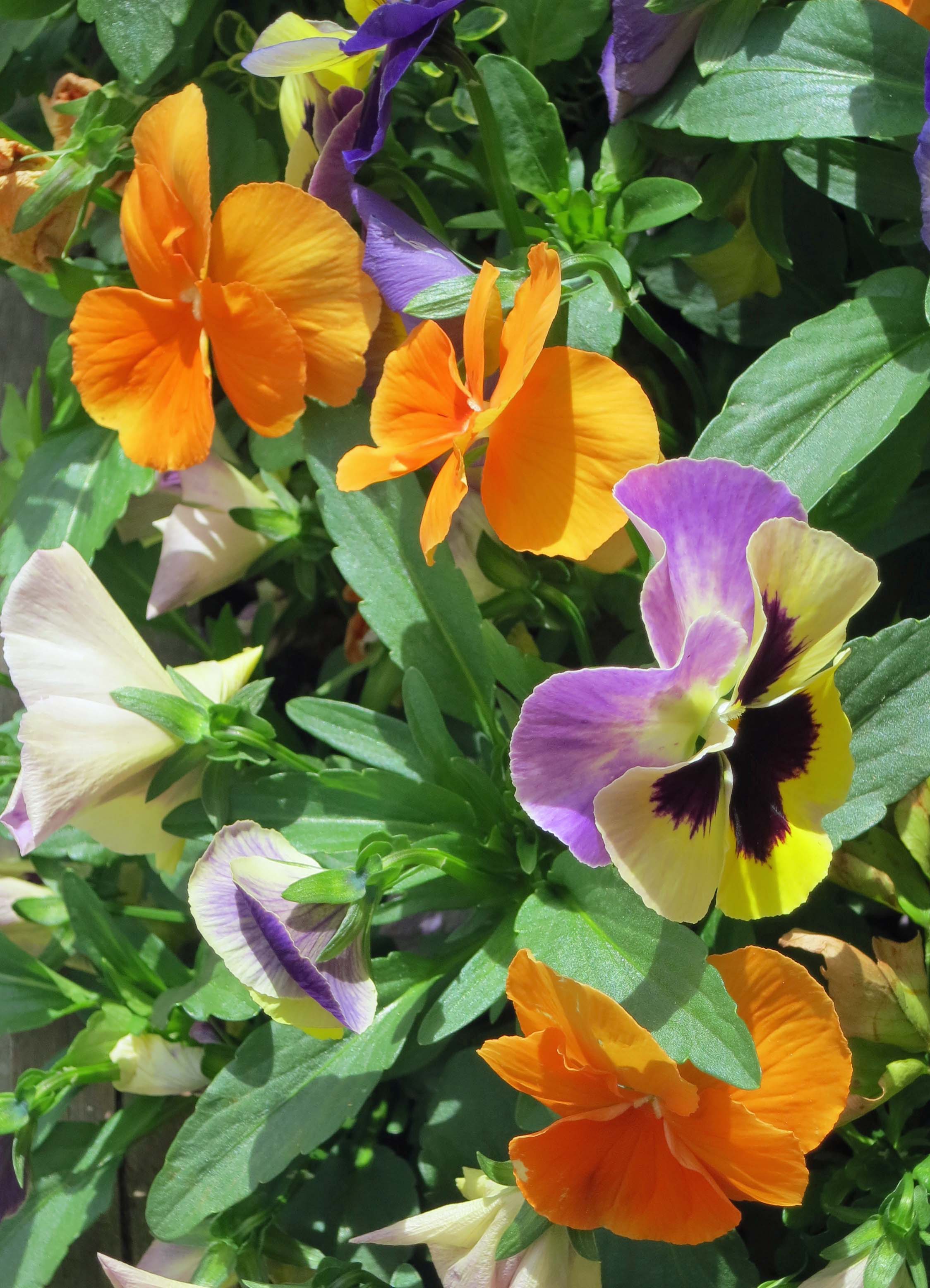
Is there a whale among the Three River petroglyphs? How about a ship? Or an octopus? The fish isn’t so strange, nor are the buggy bugs. But how did the ocean life end up in the middle of the Chihuahuan Desert? Maybe I am simply suffering from an overactive imagination brought on by staring at thousands of petroglyphs. I can guarantee I haven’t been imbibing in the Datura used by Shaman to create altered states. That stuff is dangerous. (Actually, it can be deadly.) The residents of Jamestown once fed it to British soldiers in 1676 and knocked them out of commission for 11 days. Afterwards, the plant was named Jimson Weed, after Jamestown.
Possible whale petroglyph at the Three Rivers Petroglyph site.

It looks like a whale to me… or at least a whale of a fish.

Octopus petroglyph at Three Rivers Petroglyph site.

And what’s with this octopus. Did the Jornada people travel to the ocean?

Ship petroglyph at Three Rivers Petroglyph site.

I guess if you have a whale and an octopus, it is only natural to have a ship with sails. Check out the guy jumping around in the back.

Possible seal petroglyph at Three Rivers Petroglyph site.

This looks suspiciously like a seal, minus the hind legs.

Fish petroglyph at Three Rivers Petroglyph site in southern New Mexico.

Okay, I’ll buy a fish petroglyph. Not sure about the circle. Maybe the fish is being served up on a platter.

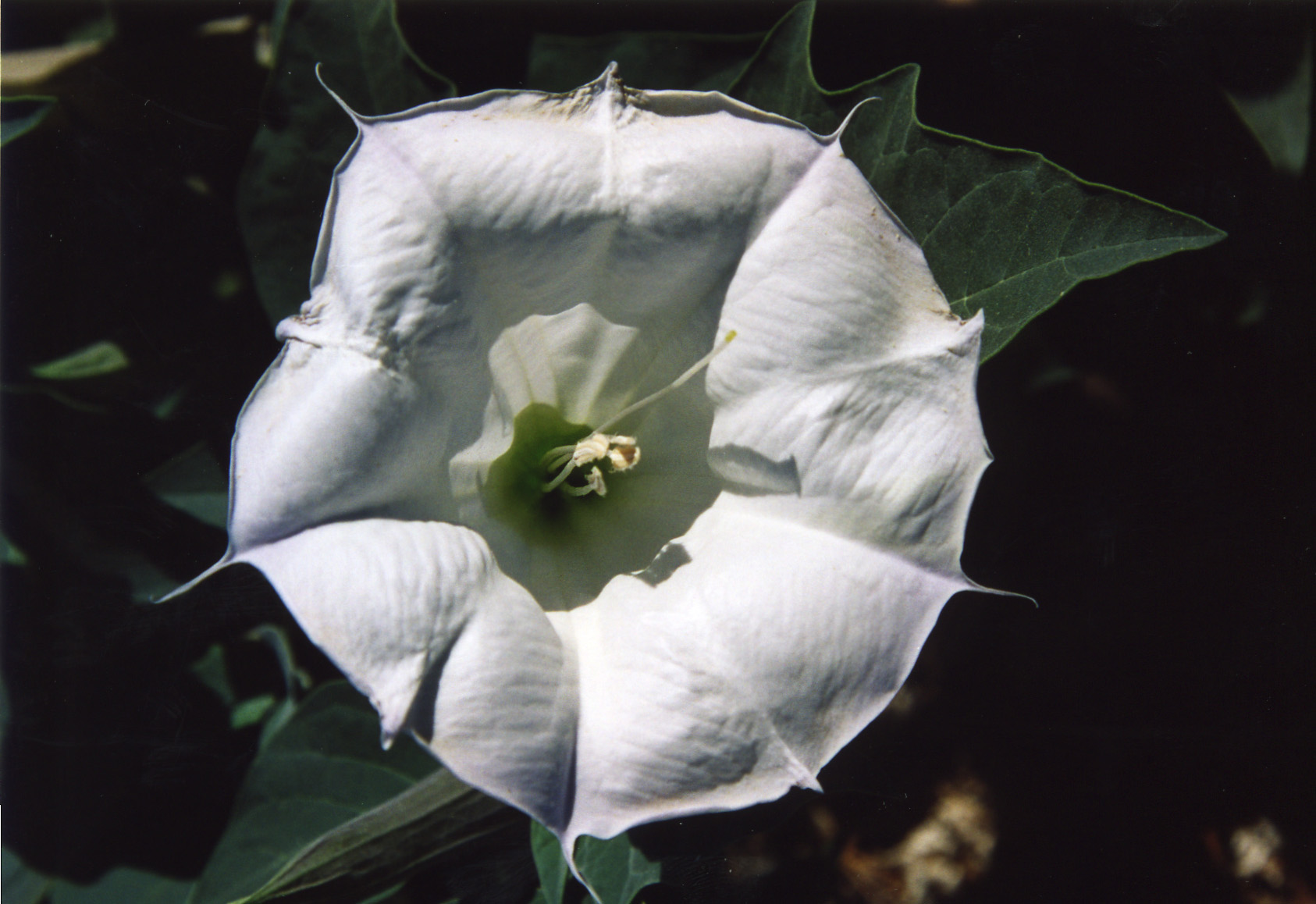
Datura, also known as Jimson Weed

Datura, a beautiful but dangerous plant. I took this photo on the American River Parkway in Sacramento.

Buggy eyed petroglyph at Three Rivers Petroglyph site.

What you might run into after consuming a few too many Datura seeds.

Arrow petroglyphs at Three Rivers Petroglyph site.

Or possibly you might meet a pair of arrows with attitude.

NEXT BLOG: Snakes, lizards and a few more bugs.


Thunderbird and Eagle Rule the Skies… Three Rivers Petroglyph Site

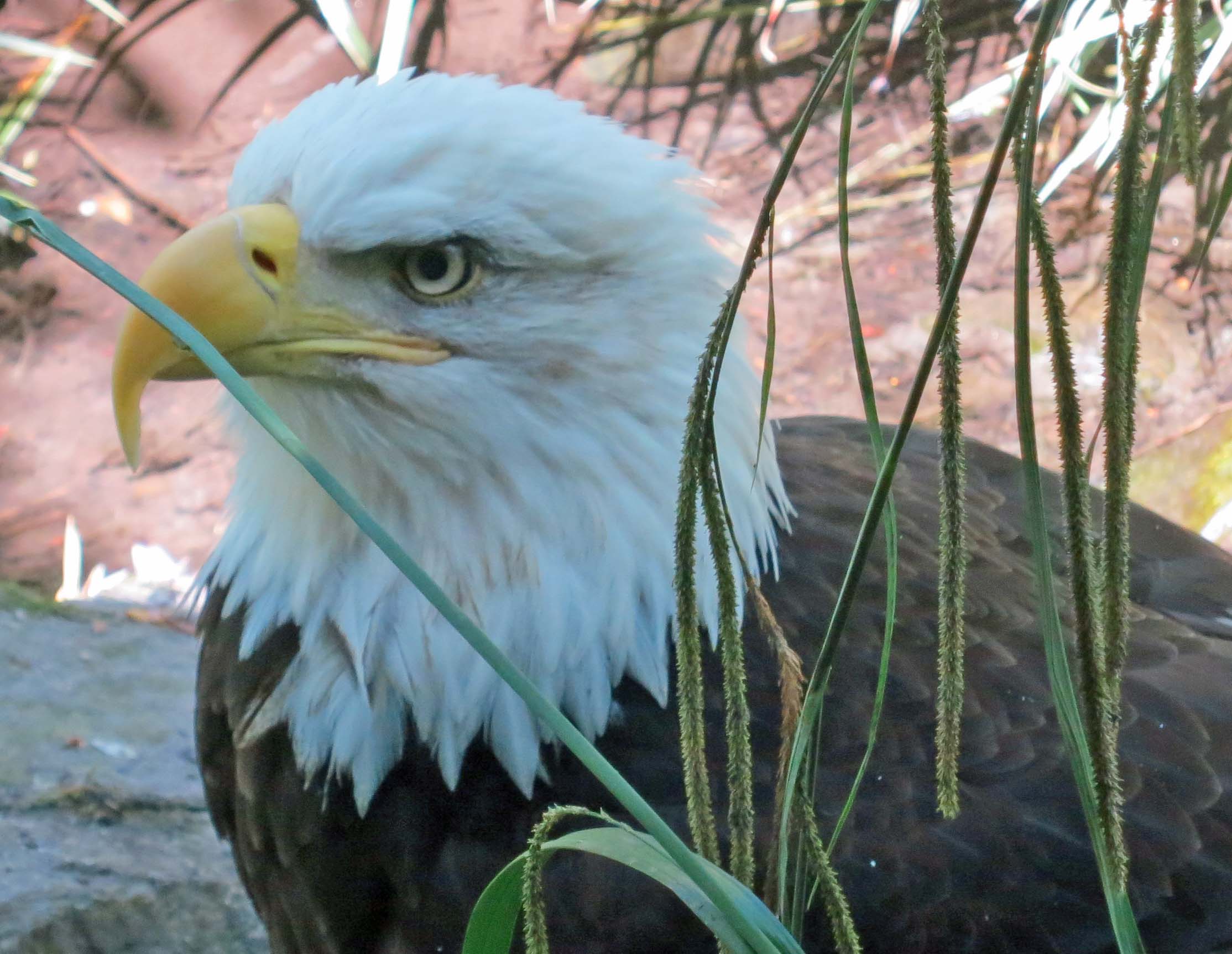
Close up of Bald Eagle

One look at this magnificent bird I photographed two weeks ago tells the story of why the eagle was regarded as sacred by Native Americans. This eagle is located at a wildlife sanctuary close to my home in southern Oregon. It was named Jefferson until it laid an egg. Now she is called Mrs. Jefferson.

Eagle petroglyph at Three Rivers Petroglyph site in southern New Mexico.

I think that the bird petroglyph on the left that Peggy and I found at Three Rivers is immediately recognizable as an eagle.

The mighty eagle may have ruled the skies of southern New Mexico but it was the Thunderbird that ruled the heavens. A flap of its wings would gather clouds and send thunder bouncing off the far mountains. Lightning would shoot out of its eyes. The Thunderbird existed in numerous Native American and First Nation cultures.Peggy and I have found images  from New Mexico to Alaska.

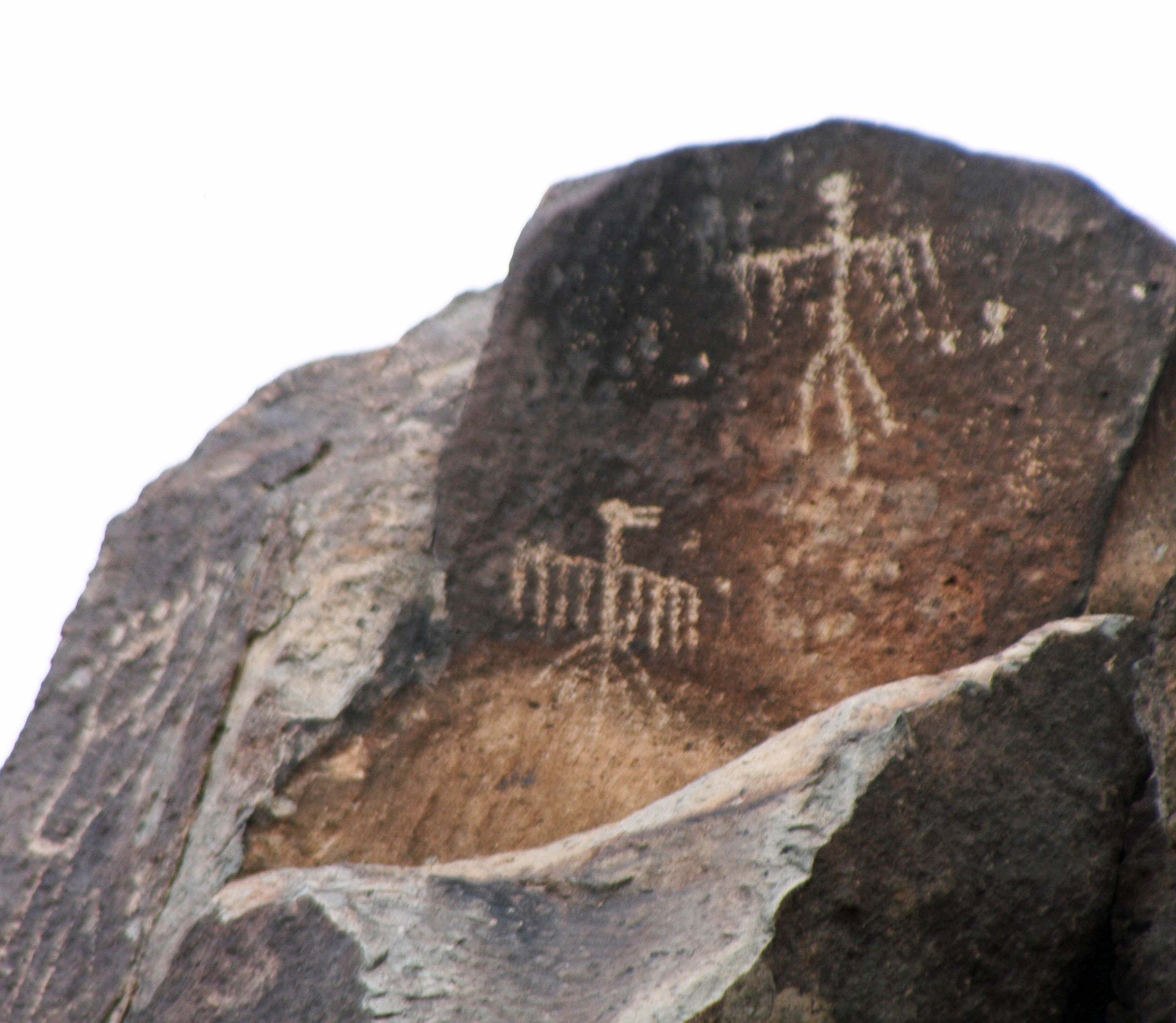
Thunderbird petroglyphs at Three Rivers Petroglyph site in southern New Mexico.

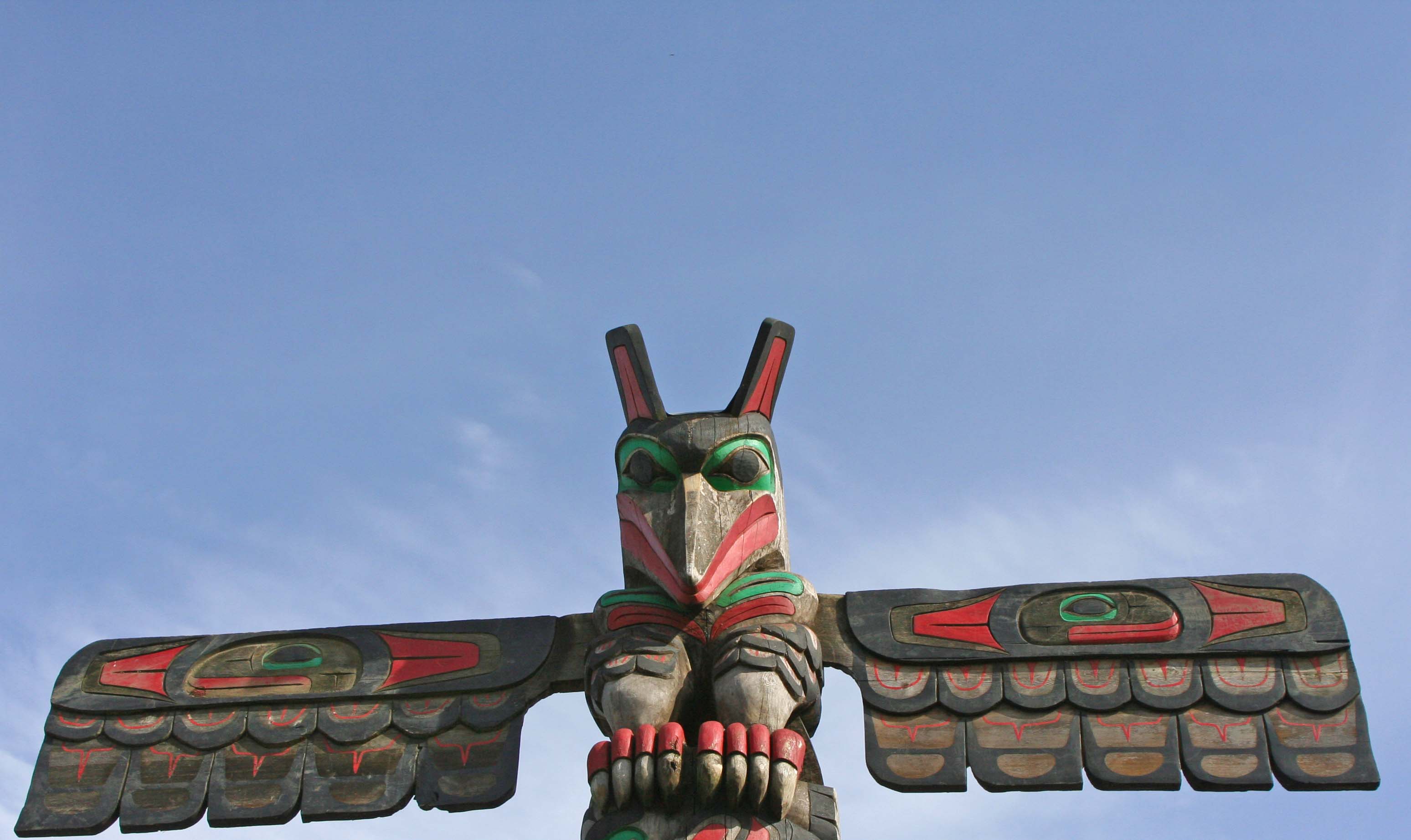
A pair of Thunderbirds decorate a rock at Three Rivers. Compare it with the First Nation totem pole below that Peggy and I photographed on Vancouver Island in Canada.

Totem pole Thunderbird on Vancouver Island

A First Nation totem pole Thunderbird Peggy and I found on Vancouver Island.

Petroglyph of a Thunderbird at Three Rivers Petroglyph site in southern New Mexico.

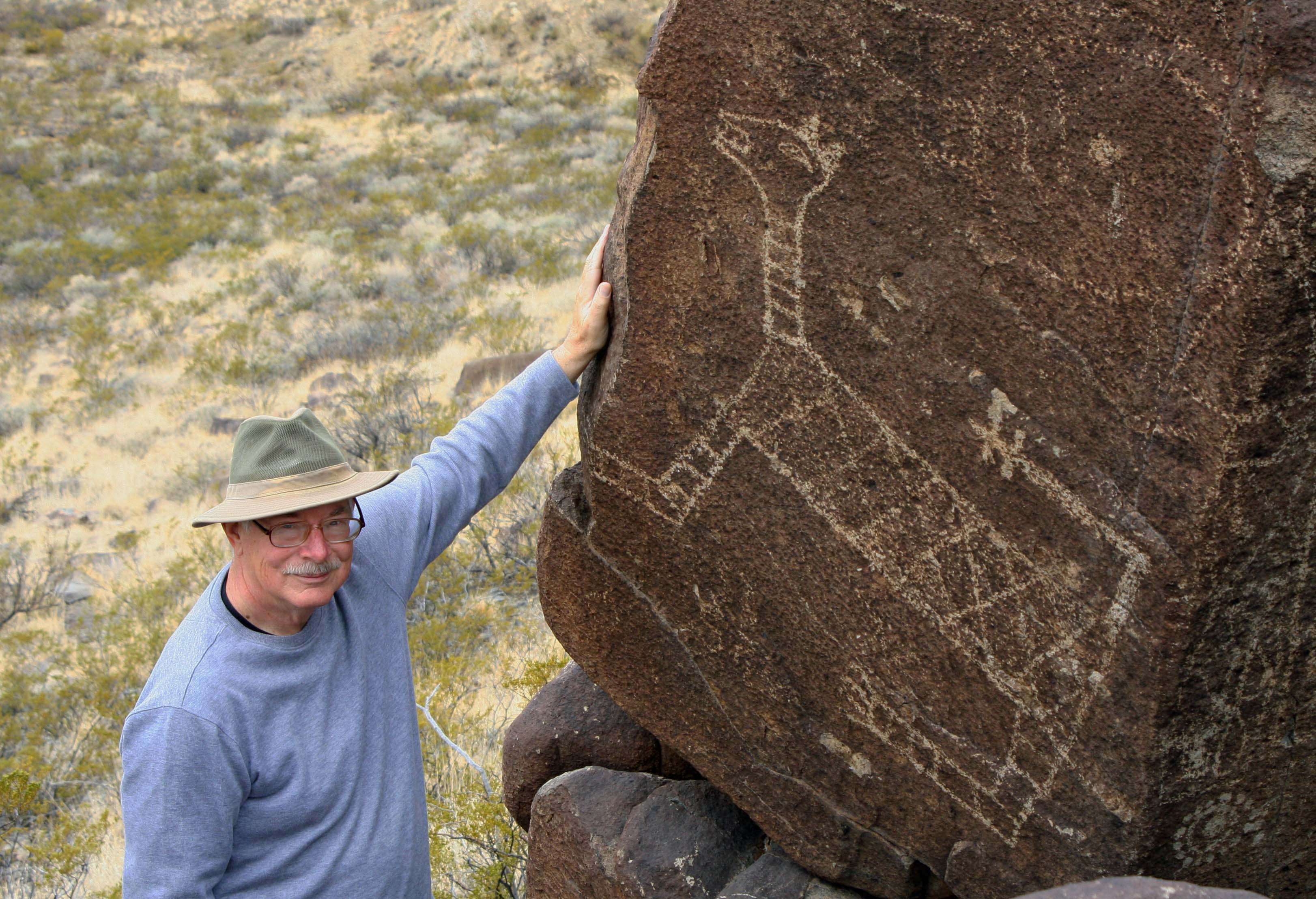
I find this petroglyph of what I assume is a Thunderbird both strange and powerful.

Another version of a Thunderbird found at Three Rivers Petroglyph site.

Another version of a Thunderbird found at Three Rivers Petroglyph site.

Turkeys, roadrunners, and even ducks can also be found among the petroglyphs of the Three Rivers Petroglyph site.

Petroglyph of roadrunner and snake at Three Rivers petroglyph site in southern New Mexico.

A roadrunner and its dinner. This Three Rivers petroglyph shows a roadrunner with one of its favorite meals, a snake.

Possible bird head petroglyph at the Three Rivers Petroglyph site.

Is this a petroglyph of a bird’s head with its beak stretching out to the left? If so, it must be another work of the Rembrandt of the Jornada.

Goose petroglyph at Three Rivers Petroglyph site in southern New Mexico.

This petroglyph strikes me as either a duck or goose. Note how the artist has taken advantage of the contour of the rock.

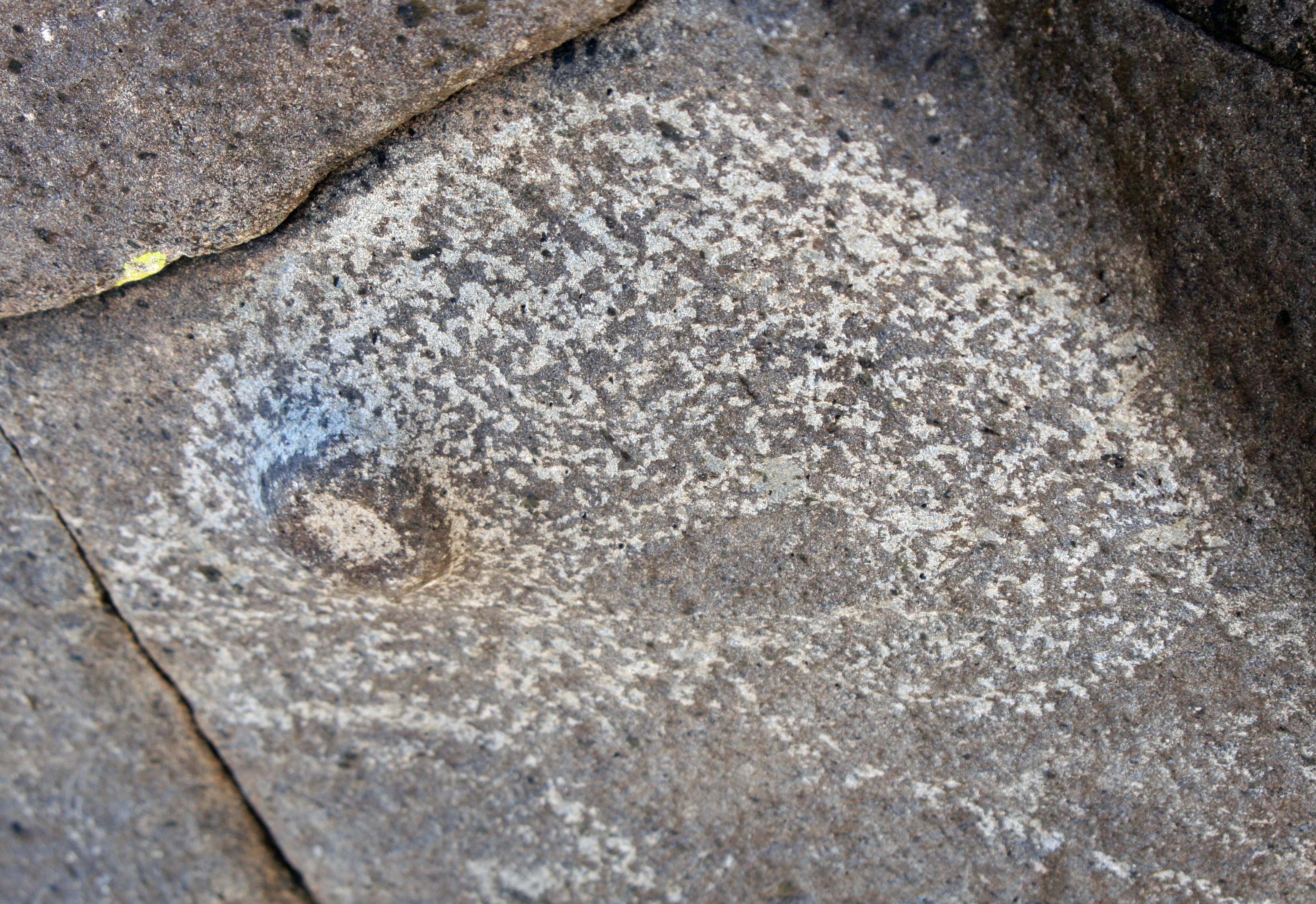
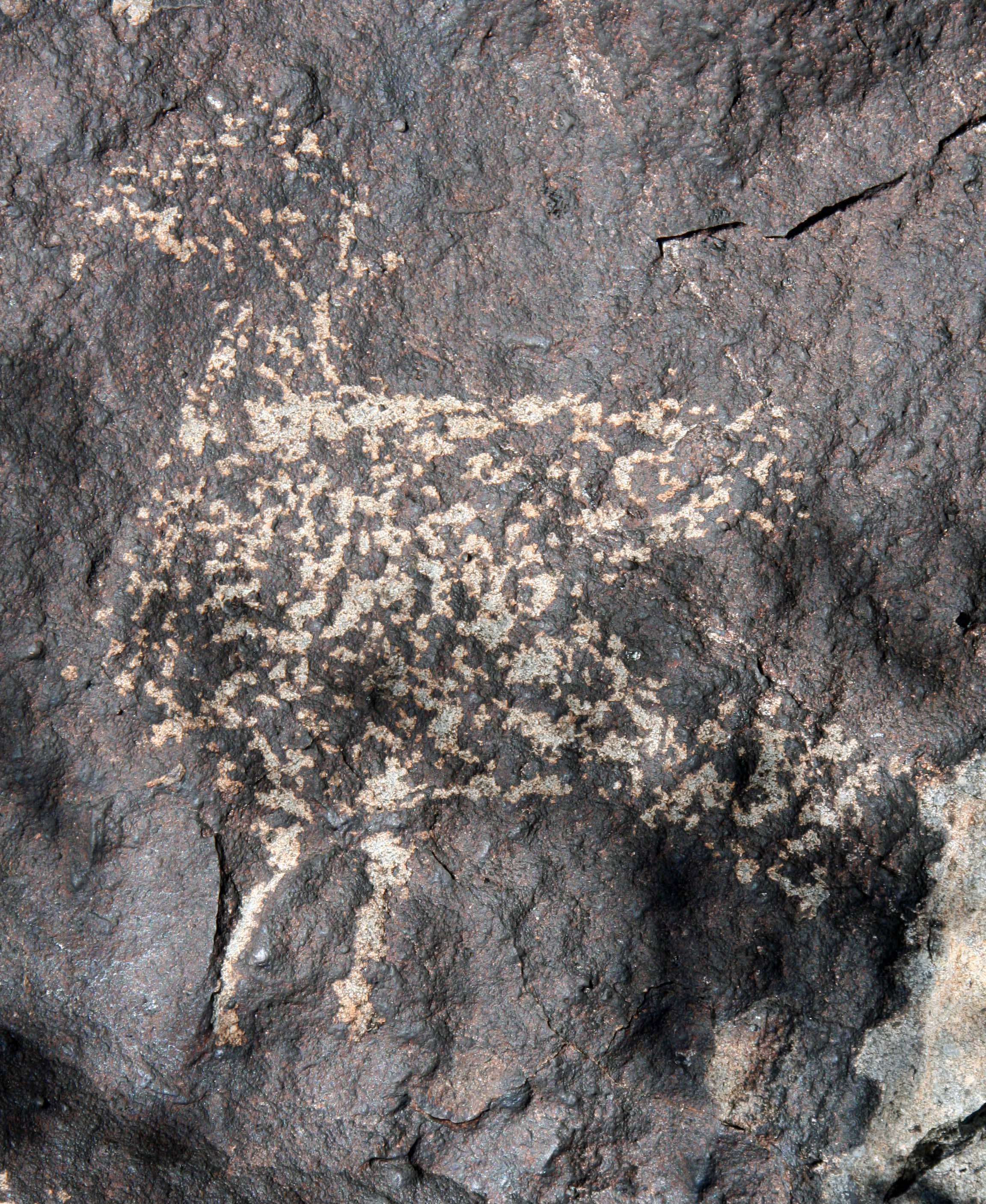
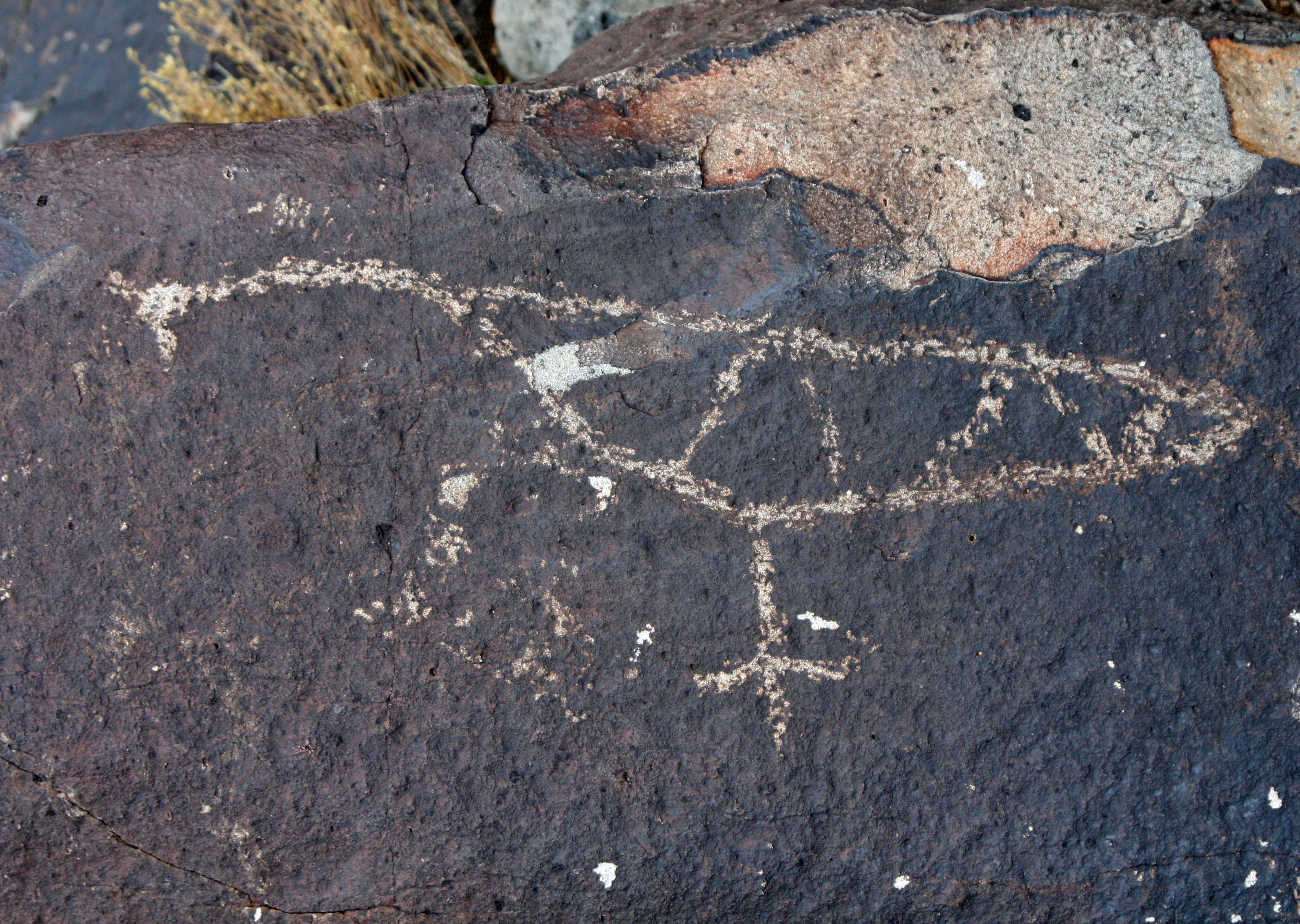
Turkey petroglyph at Three Rivers Petroglyph site.

A quickly pecked turkey?

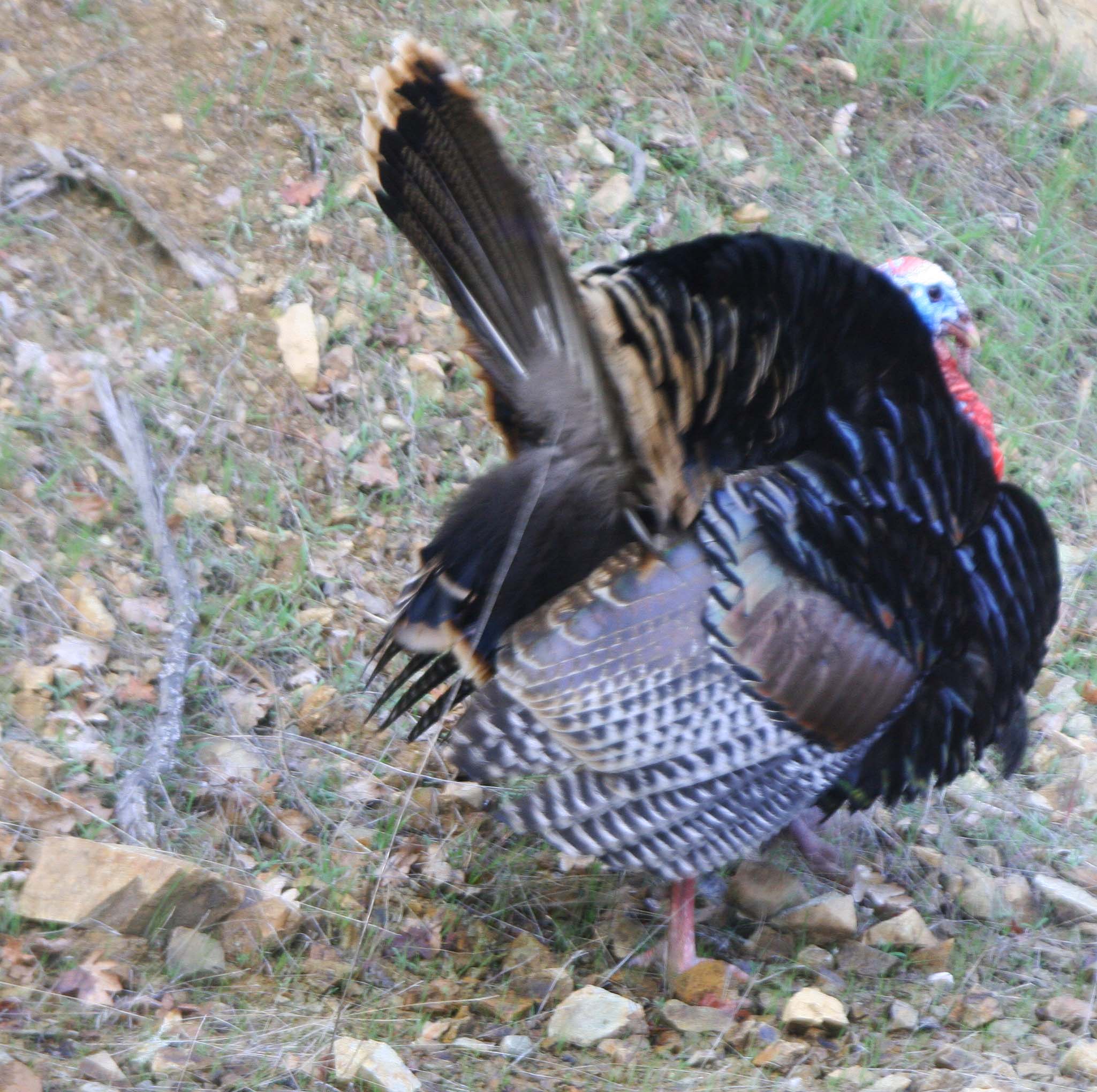
Wild turkey on Upper Applegate River in southern Oregon

A backyard turkey. I caught this guy strutting his stuff to impress several hens who had gathered in our back yard. They ignored him.

Strange petroglyph from Three Rivers Petroglyph site in Southern New Mexico.

A really weird turkey? The head seems right but the clawed hands are something else. If this is a turkey, he has passed into the realms of the gods. On the other hand, if you have ever had a turkey attack you, as I did when photographing its chicks, this is a close approximation.

NEXT BLOG: What is a whale petroglyph doing in the desert?

Big Horns and Sharp Claws… Animal Petroglyphs at Three Rivers

Bighorn sheep petroglyph with arrows at Three Rivers Petroglyph site in southern New Mexico.

Bighorn sheep were a major source of food for the Jornada Mogollon people of New Mexico and for Native Americans throughout the South West. Animals are often found with arrows sticking out.

Hunting wild animals for meat provided an essential source of food for the majority of mankind’s existence. While the Jornada Mogollon people at the Three Rivers’ Petroglyph site cultivated corn, hunting remained a vital activity.

Success meant learning as much as they could about the animals that inhabited their desert world: where they lived, what they ate, where they drank, and what trails they used were all important.  The Jornada were excellent trackers, able to read in a few scuffed tracks the story of who had wandered down a trail and what they were doing.

Petroglyph bear track at Thrre Rivers Petroglyph site in southern New Mexico.

A number of petroglyph tracks are found at the Three Rivers site. This big fellow is a bear.

Human foot print found at Three Rivers Petroglyph site in Southern New Mexico.

A human footprint for comparison. Human hand and foot print petroglyphs are relatively common.

Possible petroglyph of cougar print with claws extended at Three Rivers Petroglyph site.

I am not sure what these wicked claws belonged to but possibly it was a cougar with its claws extended.

There was a close, almost sacred, relationship between the hunter and the hunted. Clans assumed animal names and young people went on vision quests to discover which animal might serve as personal guides. Shaman put on animal cloaks and assumed animal personalities. The gods and the spirits of animals were both honored. (It helped assure they would be around at dinner time.)

Some animals were more important than others. Bighorn sheep were a primary food source throughout the South West. Cougars and bears were large predators demanding respect.  The arrival of Spaniards in the 1500s meant the arrival of horses.

Not surprisingly, the petroglyphs found at Three Rivers reflect the importance of the various animals in the life of the Jornada. We discovered numerous bighorn sheep and an unexpected number of cougars. There were also horses, rabbits and coyotes. Horses provided a radical new form of transportation; coyotes were known for their trickery; and rabbits provided an easy food supply.

I took this photo of a bighorn sheep near Lake Mead in southern Nevada. He had come down from the mountains to take advantage of the green grass of a small park.

I took this photo of a bighorn sheep near Lake Mead in southern Nevada. He had come down from the mountains to take advantage of the green grass of a small park. His arch rival was his reflection in an aluminum garage door. The owner had a hard time convincing the insurance agent that his door had been smashed in by the enraged animal.

Bighorn sheep petroglyph founf at Three Rivers Petroglyph site in southern New Mexico.

Similar horns are displayed on this Three Rivers Petroglyph. Note: It is not unusual to find geometric designs incorporated into animal petroglyphs.

Bighorn sheep petroglyph at Three Rivers Petroglyph site in southern New Mexico.

I thought this bighorn sheep petroglyph at Three Rivers was a sophisticated work of art. Did the Jornada have their Rembrandts?

Mountain lion photo

Peggy and I took our grandkids to a wildlife sanctuary last week and found this curious mountain lion that sniffed our five-year old. Nice kitty.

Mountain lion petroglyph found at Three Rivers Petroglyph site in southern New Mexico.

Peggy and I found a number of mountain lion petroglyphs at Three Rivers, which suggested that the cougar played an important role in the lives of the Jornada people.

Another mountain lion petroglyph. As to why the big cats have there tail extended over their backs, I don't have a clue. Any ideas?

Another mountain lion petroglyph. As to why the big cats have their tails extended over their backs, I don’t have a clue. Any ideas?

I used this petroglyph in my last blog. This photo provides an interesting view of the whole rock and the other petroglyphs.

I used this petroglyph in my last blog. This photo provides an interesting view of the whole rock.

Photo of Coyote in Death Valley near Scotty's Castle.

Coyote played an important role in Native American mythology as a Trickster. I took this photo in Death Valley.

Petroglyph of coyote howling at the moon found in the Three Rivers Petroglyph site.

While this petroglyph wasn’t as clear as many we found at Three Rivers, I am including it because the coyote is howling at the moon. Every gift shop in the South West will sell at least one item with a coyote howling at the moon.

The Spanish introduced the modern horse into North America six centuries ago, an act which had a major impact on the culture of Native Americans. I've been waiting for six months to reintroduce this Scotland pony into my blog.

The Spanish introduced the modern horse into North America six centuries ago, an act which had a major impact on the culture of Native Americans. I’ve been waiting for six months to reintroduce this Scotland pony into my blog. I snapped its picture two years ago when it ran up to greet me in the Scottish lowlands.

Horse petroglyph from Three Rivers Petroglyph site in southern New Mexico.

We found three horse petroglyphs that seemed to have a blanket with geometric designs draped over their bodies.

Rabbit petroglyph at Three Rivers Petroglyph site in southern New Mexico

I’ll conclude with what I felt was a good representation of a jack rabbit… until I noticed the possible tail arching over its back. (grin)

The next blog is for the birds.

A small, nondescript bird pecks away on a rock.

A small, nondescript bird roosts on a rock at Three Rivers Petroglyph site.

Strange Gods… The Rock Art of Three Rivers Petroglyph Site

Petroglyph in Three Rivers Petroglyph site of southern New Mexico.

This is one of my favorite glyphs from the Three Rivers Petroglyph site in Southern New Mexico– but what does it mean? I’ll go out on the proverbial limb. My guess is it represents a drug induced shamanistic vision. There is some thought that the circle with dots represents Datura, a powerful hallucinogen (and also a favorite flower subject of Georgia O’Keeffe).

A lot of guessing takes place in determining the meaning of rock art. Present day Native American myths and rituals provide some clues. Others can be deduced from the petroglyph itself. An antelope filled full of arrows relates to hunting, but is it a record of an actual event or a hopeful prediction of the future?

Today I am featuring petroglyphs from the Three Rivers site that represent humans and gods. Some can seem quite strange while the one below seems… quite human.

A realistic portrayal of a human found at the Three Rivers Petroglyph site in southern New Mexico.

This is the most realistic portrayal of a human we found among the Three River Petroglyphs. Note the ear rings.

Petroglyph at Three Rivers Petroglyph site in southern New Mexico.

I also found this triangular face fascinating. Many of the petroglyphs at Three Rivers take advantage of the rocks natural features. This one uses the ridge to set off the nose and eyes, and cracks to outline the chin.

Petroglyph at Three Rivers Petroglyph site in Southern New Mexico.

According to Alex Patterson in his book, Rock Art Symbols, this is either the Mother of Animals or a woman waiting for her honey. It could be she is having a baby. Check out her expression. Two different versions are below.

Petroglyph at Three Rivers Petroglyph site in southern New Mexico.

Another possible version of Mother of Animals at Three Rivers Petroglyph site.

Petroglyph at Three Rivers Petroglyph site in southern New Mexico.

And a third.

Three Rivers Petroglyph.

I introduced a close up of this character in my last blog. Here he is located in his rock setting. I am thinking “boo!”

Petroglyph from Three Rivers Petroglyph site in southern New Mexico.

Talk about scary, this guy qualifies. Big eyes and big, sharp teeth

Three Rivers petroglyph.

Petroglyphs can be quite graphic in their portrayals…

Petroglyph from Three Rivers Petroglyph site in southern New Mexico.

…And abstract. Geometric patterns are often included.

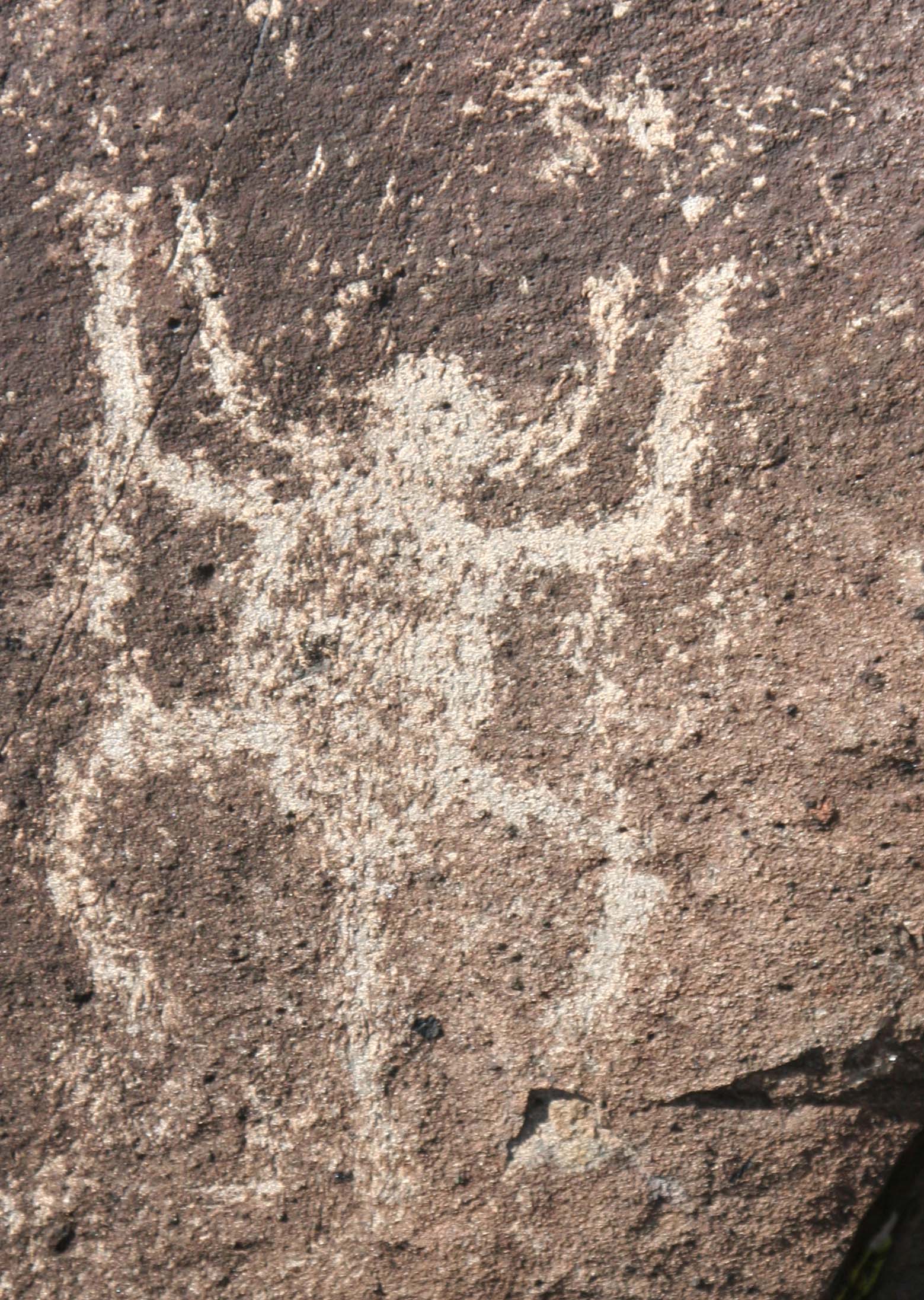
You can tell your god or someone's status in society by the headdress he or she wears. The plant on the left may be corn.

You can tell your god by the headdress he or she wears. The plant may be corn.

Petroglyph from Three Rivers Petroglyph site in southern New Mexico.

I’ll conclude this blog with this spiky haired character who appears to be waving bye-bye.

NEXT BLOG: We will enter into the petroglyph animal kingdom of Three Rivers.

Mountain lion petroglyph at Three Rivers Petroglyph site in southern New Mexico.

I check out a mountain lion petroglyph.

New Mexico’s Three Rivers Petroglyph Site… Where Art Rocks

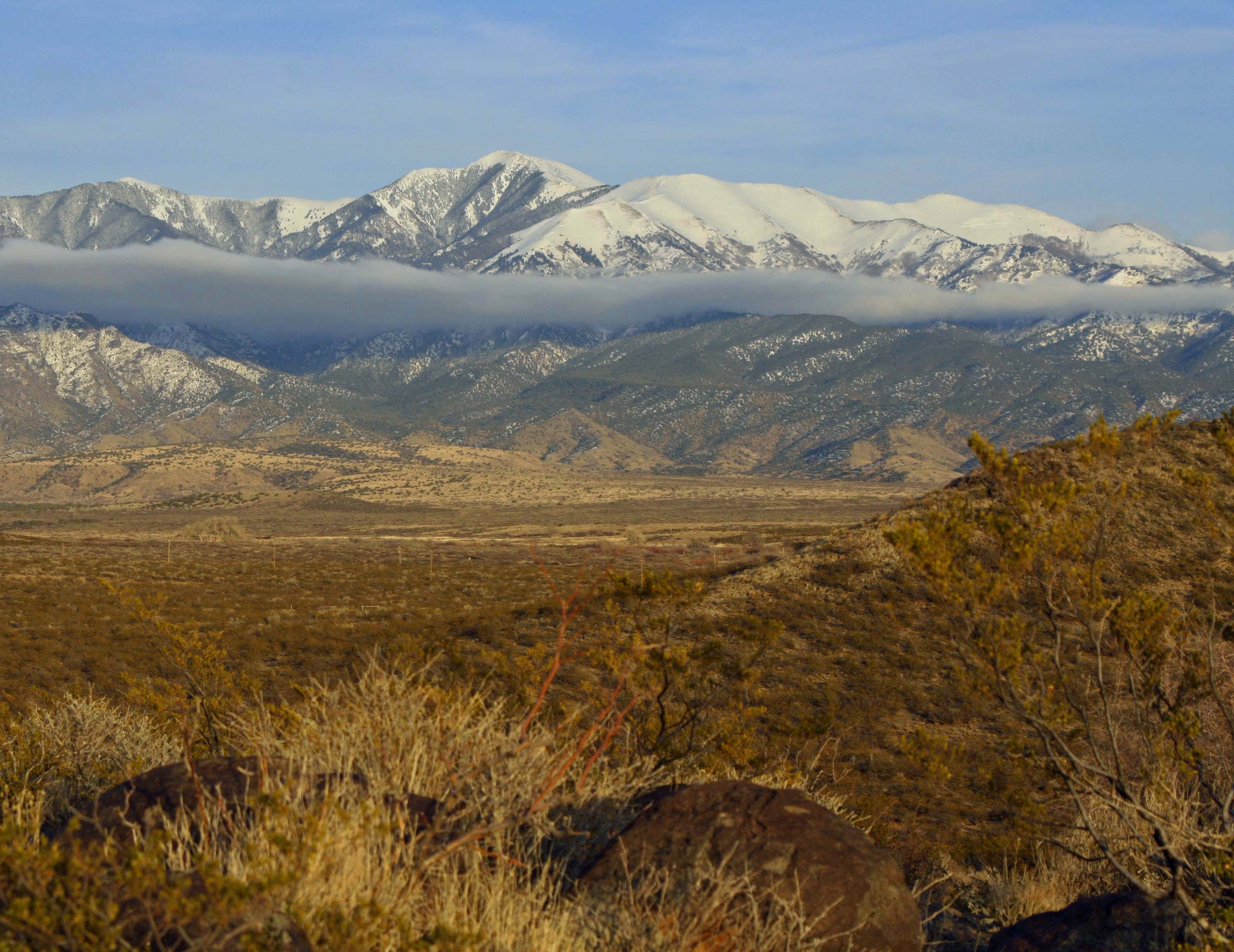
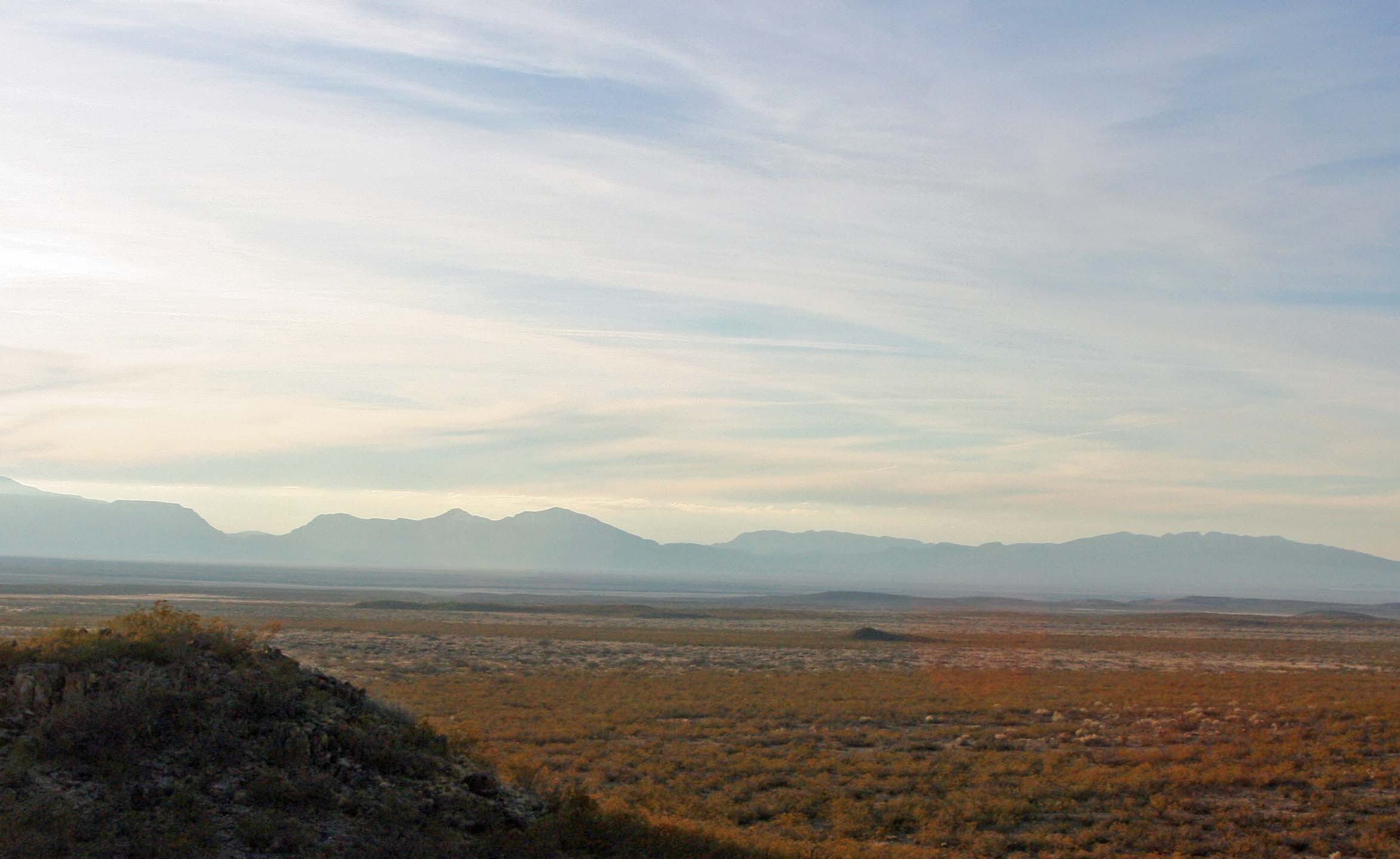
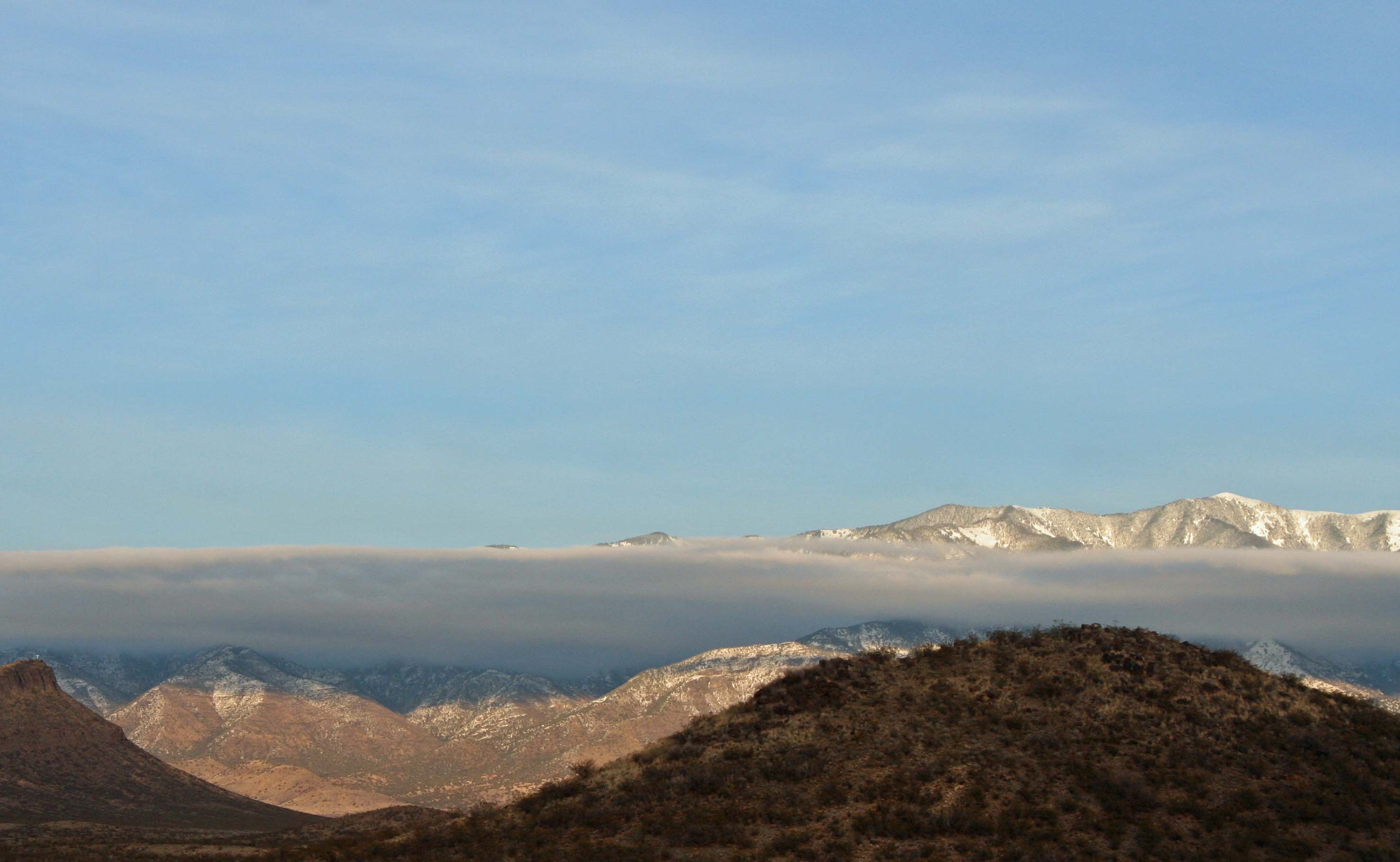
Sacramento Mountains of New Mexico.

A layer of clouds stretching along the Sacramento Mountains adds beauty and mystery to the Three Rivers Petroglyph site. It is easy to understand why Native Americans chose the area for their rock art.

This marks the beginning of a new series where we leave the beautiful but crowded cities of Europe to visit the lonely, wide-open spaces of the American and Canadian west. Our journey will take us from New Mexico’s northern Chihuahuan desert to Alaska’s remote Kodiak Islands.

For the next three weeks we will explore the mystical world of Native American rock art found in the Three Rivers Petroglyph site of southern New Mexico. Afterwards Peggy and I will spend six weeks travelling up the Alaska Highway through British Columbia and the Yukon Territory to Alaska and back.  We will finish off our summer at the celebration known as Burning Man held in Nevada’s Black Rock Desert.

Peggy and I have been visiting rock art sites throughout the Southwestern United States for the past 15 years. The Three Rivers’ site is one of our favorites. Some 21,000 petroglyphs featuring everything from people to bugs are spread out over 50 acres. Created by the Jornada Mogollon people of the Chihuahuan Desert, the glyphs were pecked into rock using stone tools for a period of over 500 years starting in 900 AD.

This is wide-open country set off by dramatic mountains. Within a hundred miles of Three Rivers, Billy the Kid fought in the Lincoln County Wars, Smokey the Bear was found hidden in a tree avoiding a forest fire, bug eyed aliens became synonymous with Roswell, and history was forever changed with the explosion of the world’s first atomic bomb.

I rode through the area on my bicycle as part of my ten thousand mile trek around North America. It’s a long way between pit stops.

Mountains and deserts of Southern new Mexico

What southern New Mexico looks like from a bicycle.

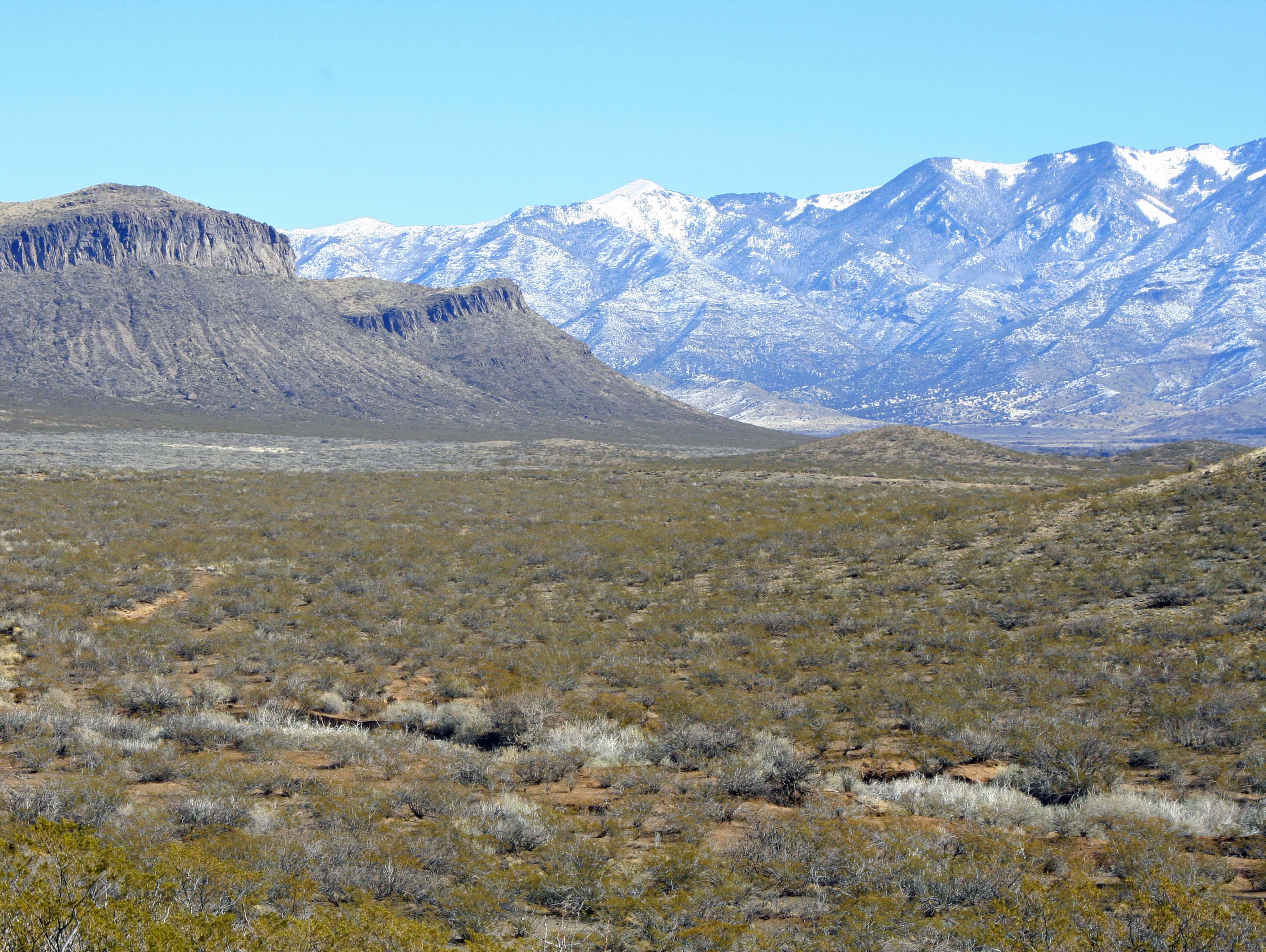
Native Americans often chose special sites for their rock art and it is immediately apparent that the Three Rivers site is special. The words “raw beauty” come to mind. Set on a ridge, the site provides commanding views of the surrounding desert and mountains. Today’s blog will explore the natural beauty of the region. In my next blogs I will feature petroglyphs of people, animals, birds, geometric designs, animal tracks, reptiles, bugs and anything else that caught the fancy of the Jornada people– including a whale and a mysterious ship.

Three Rivers Petroglyph site in southern New Mexico.

Another photo featuring the Sacramento Mountains and clouds from the perspective of the Three Rivers Petroglyph site.

Three Rivers Petroglyph site in southern New Mexico with Sacramento Mountains providing the backdrop.

Native Americans often chose cliff areas such as those on the left for their rock art.

Three Rivers Petroglyph site in southern New Mexico.

Our van, Quivera, provides a perspective on the region. We took this photo from the ridge where the majority of petroglyphs are located. We pretty much had the site to ourselves during the two days we were there.

Peggy stands on the ridge next to a rock likely to hold petroglyphs. Some glyphs are immediately obvious while others are hidden. Sharp eyes are required.

Peggy stands on the ridge next to a rock likely to hold petroglyphs. Some glyphs are immediately obvious while others are hidden. Sharp eyes are required.

Petroglyphs at Three Rivers Petroglyph site in southern New Mexico.

Faded bear and what may be badger prints are shown on these rocks. Petroglyphs are made by using a stone to peck away the outer layer of rock varnish (a layer of minerals that attaches to the rock over time).

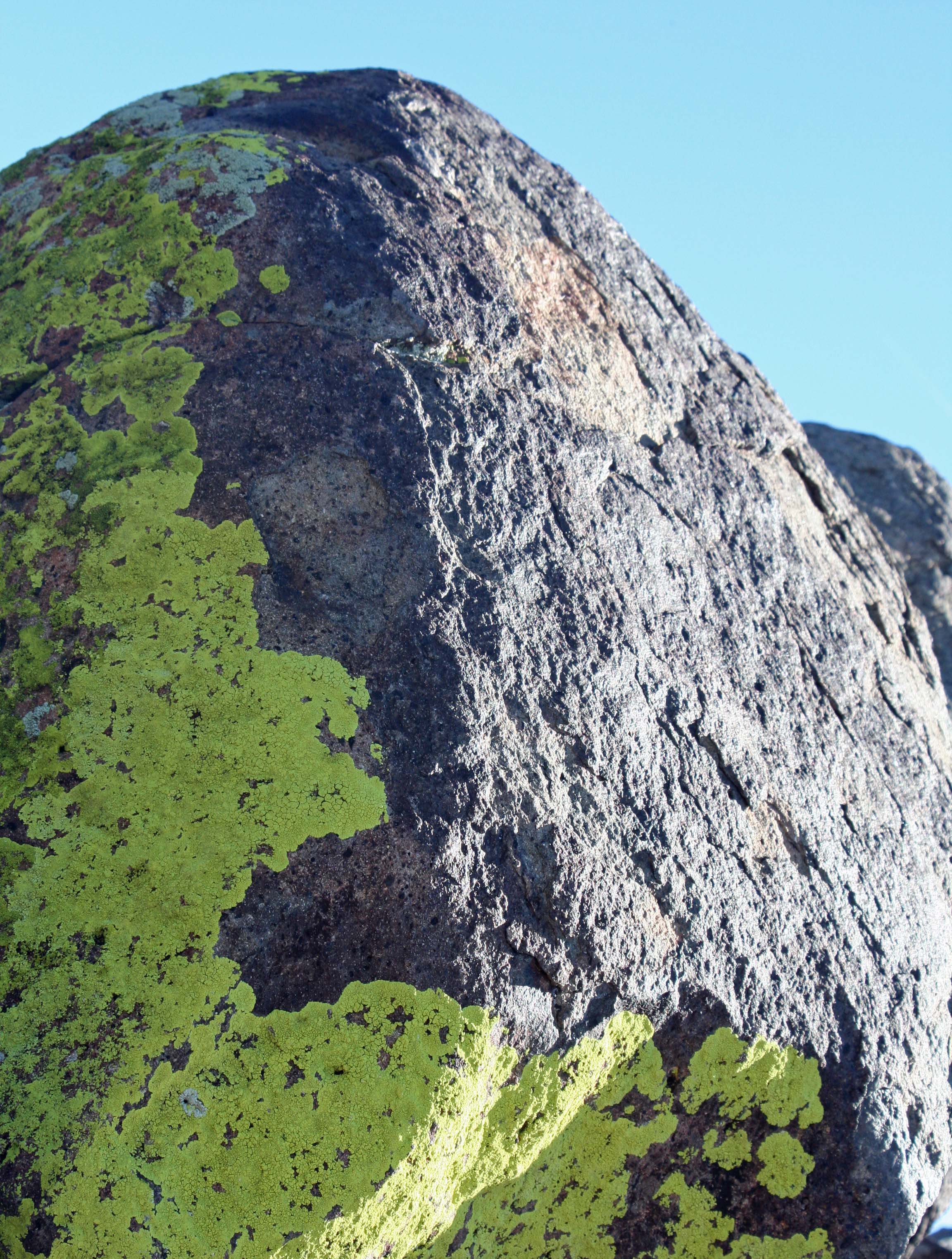
Lichen on rock at Three Rivers Petroglyph site in Southern New Mexico.

We also found the lichens to be quite attractive.

Lizard glyph at Three Rivers Petroglyph site in Southern New Mexico.

Many rocks at Three Rivers are covered with petroglyphs. In addition to the prominent lizard,we found circles, geometric designs, and a possible map on the various faces of this rock.

Evening clouds over the Sacramento Mountains of New Mexico.

Sunset lights up the Sacramento Mountains. I found the contrast created by the cloud layer quite interesting.

NEXT BLOG: I will look at glyphs that feature the Jornada Mogollon people and their gods.

Petroglyph at Three Rivers Petroglyph site in Southern New Mexico

One of the many strange beings we found lurking among the rocks.

Jacksonville, Oregon: A Gold Rush Kind of Town

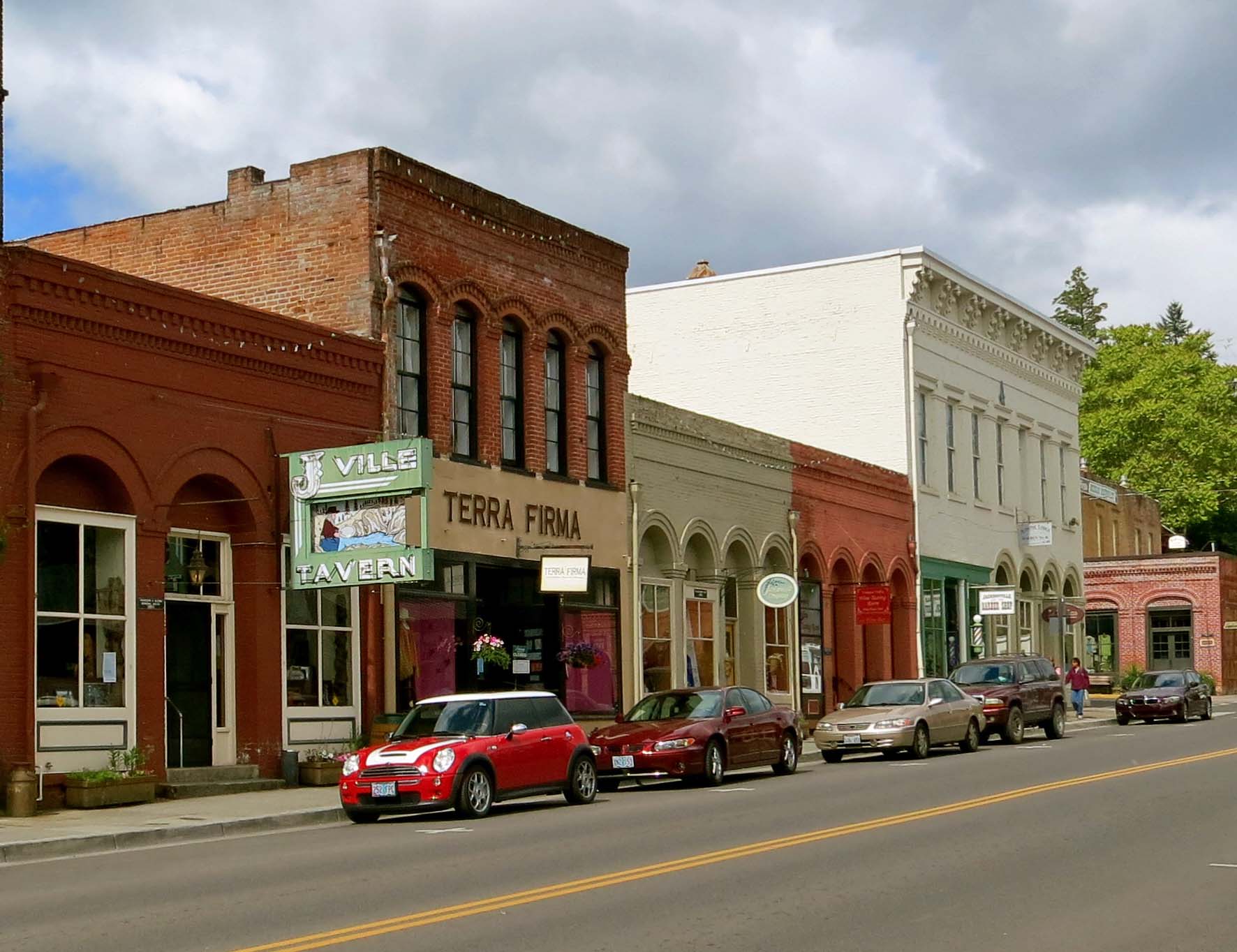
Historic buildings in Jacksonville, Oregon

The gold rush era buildings in Jacksonville, Oregon have been preserved by the community.

Peggy and I discovered Jacksonville in 2010 when we were doing genealogical research. My great grandparents are buried in the cemetery above the town. In fact, I have ancestors scattered throughout Southern Oregon. We were happily jumping from graveyard to graveyard  looking for dead people. It’s like going a treasure hunt.

We were also searching for a place to live after our three years of wandering around North America. Peggy was ready to settle. Our daughter Tasha was lobbying for us to move to Tennessee and live close to her family.  But I am a Western-type guy and the Rockies were about as far east as I was willing to travel. I had developed an affinity for New Mexico and both Peggy and I enjoyed the mountainous/less populated areas of Northern California.

We ended up falling in love with Jacksonville and the Siskiyou Mountains, which is why I am sitting here this morning in my home 25 miles outside of Jacksonville looking out at the Red Buttes and listening to the Applegate River while I write this blog.

Red Buttes in the Siskiyou Mountains.

A sunset view of the Red Buttes from our patio.

Jacksonville got its start in the 1850s. Southern Oregon, like Northern California, was part of the great gold rush that sent the 49ers scurrying west to seek their fortunes. Soon the town was booming. With the addition of a railroad, it became the county seat for Jackson County and one of the largest cities in Oregon. Eventually the gold was mined out. When the railroad bypassed the town in 1884, Jacksonville started on a gradual decline.

The good news here is that the historic buildings in town were preserved instead of being torn down in the name of progress. In 1966, the threat of bulldozers turning the town into a freeway encouraged the residents to apply for and become a National Historic District. Today the small community of 3000 has a substantial tourist trade based on its historic ambience. A growing wine industry in the region helps assure its future.

You know you are in an Old West town when you find the Wells Fargo Express building.  The town i grew up in the foothills of California, Diamond Springs, also had an old Wells Fargo building.

You know you are in an Old West town when you find the Wells Fargo Express (stage-coach stop) building. The gold rush town I grew up in the foothills of California, Diamond Springs, also had an old Wells Fargo building.

Street scene in downtown Jacksonville, Oregon.

A view on the opposite side of Jacksonville’s main street. The white building on the end is the Masonic Lodge. Fraternal organizations played an important role in communities during the 1800s.

Redmen's Hall Jacksonville, Oregon

Another historical fraternal organization of Jacksonville is the Improved Order of Redmen, which traces its history back to the Revolutionary War and the Boston Tea Party.

Redmen's Hall Jacksonville, Oregon.

Redmen’s Hall is one of my favorite buildings in Jacksonville. Built in 1884, it housed the local chapter of Redmen, the Oregonian Pocahontas Tribe #1. Hard to beat being #1.

5 cent Owl cigar billboard on the side of Redmen's Hall in Jacksonville Oregon.

There was a time when any blank building wall was an opportunity waiting for a billboard. This old billboard on the side of Redmen’s Hall, features five cent Owl Cigars and Levi Strauss overalls.

Redmen's Hall in Jacksonville, Oregon.

A shot looking upward at Redmen’s Hall.

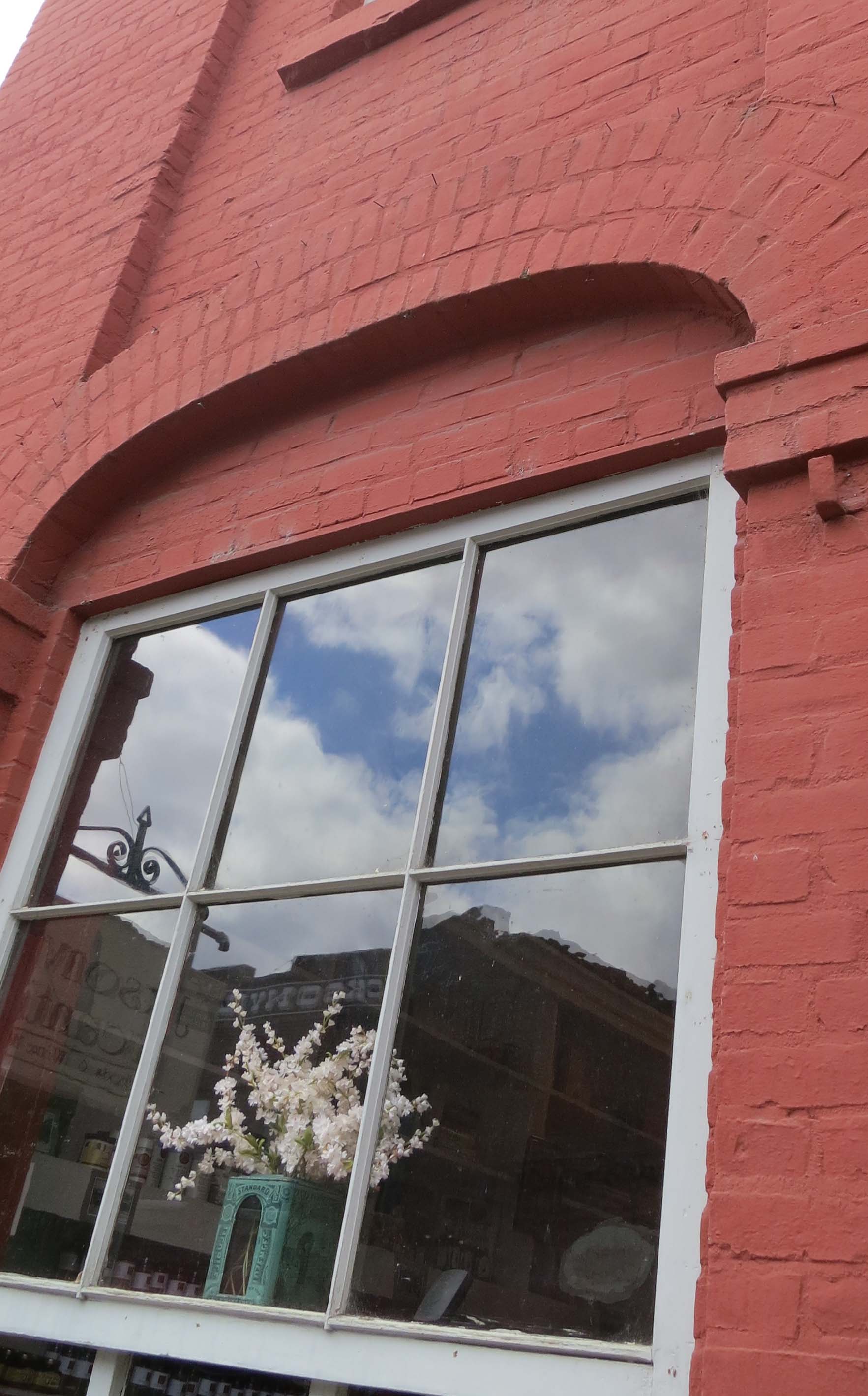
Window reflection photo in Jacksonville, Oregon.

I thought this was a rather classic window reflection shot.

A window reflection photo in Jacksonville, Oregon.

A closeup of the window reflection photo shown above.

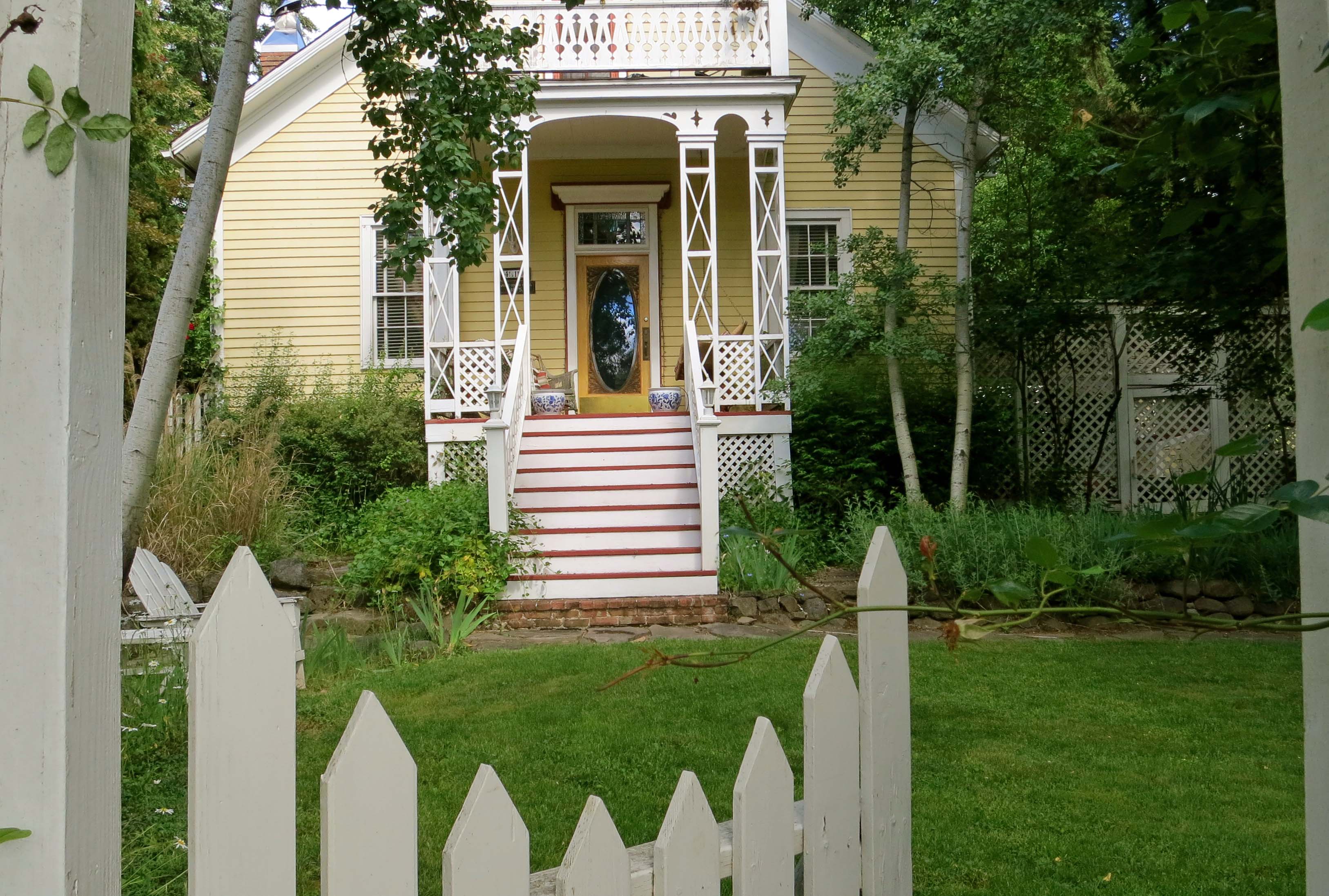
Bozo the Clown's boyhood home in Jacksonville, Oregon.

Many older homes have also been preserved in Jacksonville. This was the house of Judge Colvig. His son Pinto inspired the creation of Goofy and went on to become known worldwide as Bozo the Clown. My grandfather’s sister married Pinto’s older brother, which I guess, in a way, makes me related to both Goofy and Bozo.

Peggy and I were immediately impressed with the flower boxes and baskets lining the streets of Jacksonville. Flowers are changed regularly to reflect what is in season. All maintenance is done by volunteers.

Peggy and I were immediately impressed with the flower boxes and baskets lining the streets of Jacksonville. Flowers are changed regularly to reflect what is in season. All maintenance is done by volunteers.

Pansies in jacksonville, Florida.

More Jacksonville pansies.

Flower in Jacksonville, Oregon.

I liked the delicate, crinkled paper look of the flower.

Raindrops on flowers in Jacksonville, Oregon.

A brief rain left behind rain drops.

Giant grapevine in Jacksonville, Oregon.

This may be the Mother of All grapevines. I found it covering the sides of one of the buildings.

Woodland scene near Jacksonville, Oregon.

The size of Jacksonville is demonstrated by the fact that this scene is found five minutes from the main street.

NEXT BLOG: I return to one of my favorite hobbies, exploring the world of Native American rock art found in remote locations throughout the southwestern United States.

Sailing Off into the Sunset… And On to New Adventures

Mediterranean sunset.

What’s not to like about a beautiful sunset. This one took place off the southern coast of Italy in the Mediterranean Sea.

I am a sucker for sunsets, which is a good thing. Sunsets, waves and spectacular cloud formations are what pass for scenery on the open ocean. My dad, who started and ended his life as a painter, dismissed sunsets as postcard pictures. Nevertheless, when I went through several thousand of his photos after he died, I discovered numerous photos of the setting sun. Nobody can resist a beautiful sunset. Along with fireworks, they are the number one cause of oohs and ahs.

Mediterranean sunset off the coast of Southern Italy.

A close up of the same sunset shown above.

As for sailing off into the sunset, sailors have been doing this since the first sail was invented. (The western heroes of my youth rode off into the sunset, instead. After doing in the bad guys, they would kiss their girls goodbye– probably on the cheek, climb on their faithful horses, and ride off into the west as the sun sank behind the horizon and the picture slowly faded. “Hi-o Silver away!”)

Once we left our farthest point to the east, Kusadasi, Turkey, we sailed into the west all the way to Galveston, Texas. Since our ship inevitably pulled out of port in late afternoon, there were ample opportunities for sunset photos. I decided that a few of these sunsets, along with some cloud formations, would make a fitting end for my series on Mediterranean Ports.

Sun shining through clouds on the Atlantic Ocean.

Sun shining through clouds can be quite dramatic. We took this photo in the Atlantic.

Somewhere in my youth, I was required to color clouds like this in Sunday School. The image has never quite left me.

Close up of the above photo. Somewhere in my youth, I was required to color clouds like this in Sunday School. The image has never quite left me.

Cumulous clouds over Mediterranean Sea.

Clouds over the sea can also provide drama, as this towering cumulus does.

Towering Cumulous cloud over the Mediterranean.

Another cumulus cloud over the Mediterranean.

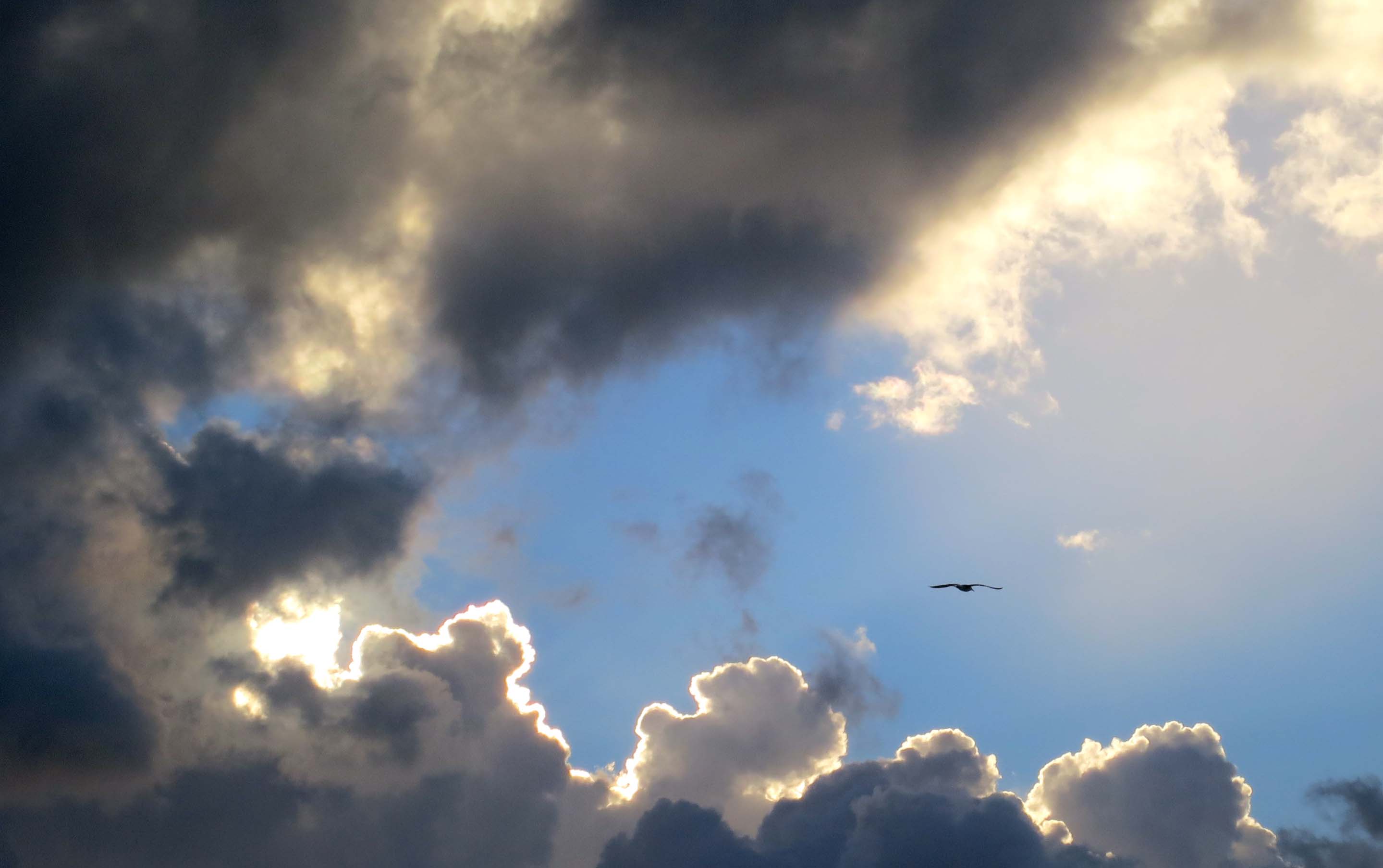
The sea bird soaring between the clouds spoke to how close we were to shore.

The seabird soaring between the clouds spoke to how close we were to shore.

These clouds over the Atlantic appeared less threatening but brought a storm.

These clouds over the Atlantic appeared less threatening, but brought a storm.

Caribbean sunset

This impressionistic photo of purples and pinks was taken in the Caribbean south of Florida at the end of the trip.

NEXT BLOGS: I hope you have enjoyed our journey through the Mediterranean. In three weeks Peggy and I will begin another adventure, this time driving from our home in Southern Oregon to Alaska via the Northwest US, British Columbia and the Yukon Territory. Please join us. In the meantime, I will introduce you to our hometown of Jacksonville, Oregon; take you on a trip though the Southwestern US exploring thousand-year-old Native American rock art, and catch up on what’s happening with Burning Man 2013. Peggy and I will again be traveling to Burning Man after we return from Alaska.