Wood Carving with a Chainsaw… North to Alaska

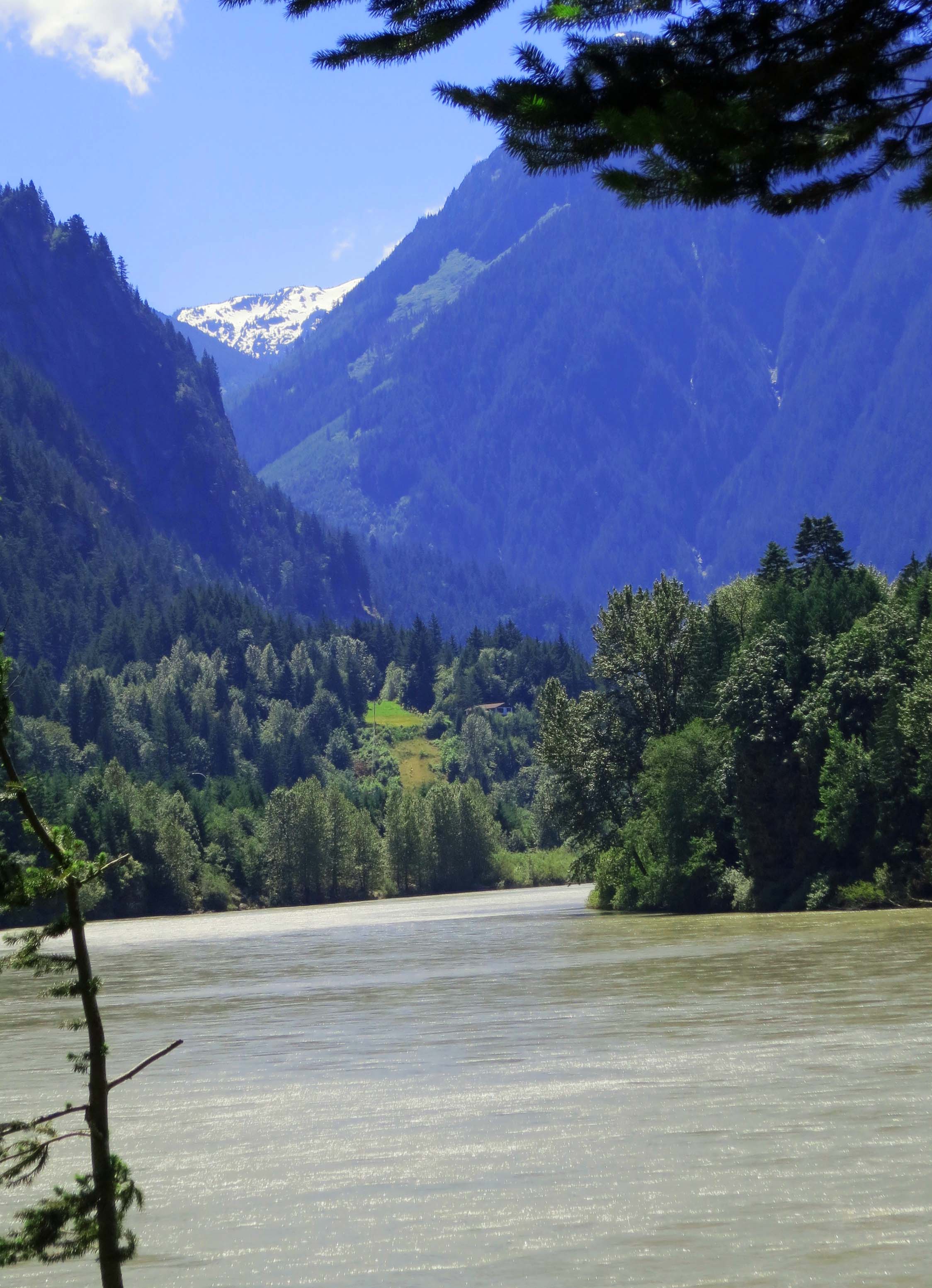
Fraser River, Hope BC

Hope, British Columbia sits on the Fraser River. This photo is taken from the river park in front of the town.

Peggy and I have ventured into British Columbia several times. And we have always been impressed. This time is no exception. The natural beauty, abundant wildlife, proud communities and friendly people guarantee our return– again and again.

We are also amused by the efforts of small communities to capture their moments of fame and share of tourist dollars. The world’s largest cross-country skis, the world’s largest beehive, and the world’s largest golf ball are all examples. These fun gestures make us smile. Out come our cameras for the obligatory photos.

The world's tallest cross country skis.

The world’s tallest cross-country skis.

Chainsaw wood carving exists on another level. This once primitive art form has taken on a surprising level of sophistication. Two towns we passed through on our journey north to Alaska featured chainsaw creations: Hope is an hour or so from the border of Washington State; Chetwynd is near Dawson Creek, the beginning of the Alaska Highway.

The helpful folks at the Chetwynd Information Center explained how they had obtained their extensive collection of carvings. Each year the town hosts a chainsaw wood carving contest. Participants come from all over the world. The process starts with importing logs from Vancouver Island. The logs dry for several months and are then tagged with numbers. Individual participants draw numbers to see which log he or she gets. Contestants then have 35 hours over five days to complete their masterpieces.

Today I am featuring Hope, which is located on the mighty Fraser River. Chetwynd will be featured two or three blogs up the road.

Woodcarvings in Hope BC

Hope is quite proud of its chainsaw woodcarvings. A map from the Visitor’s Center took us on a walk to find the town’s sculptures.

Woodcarvings in Hope BC

These herons are an example of how sophisticated chainsaw wood carving has become.
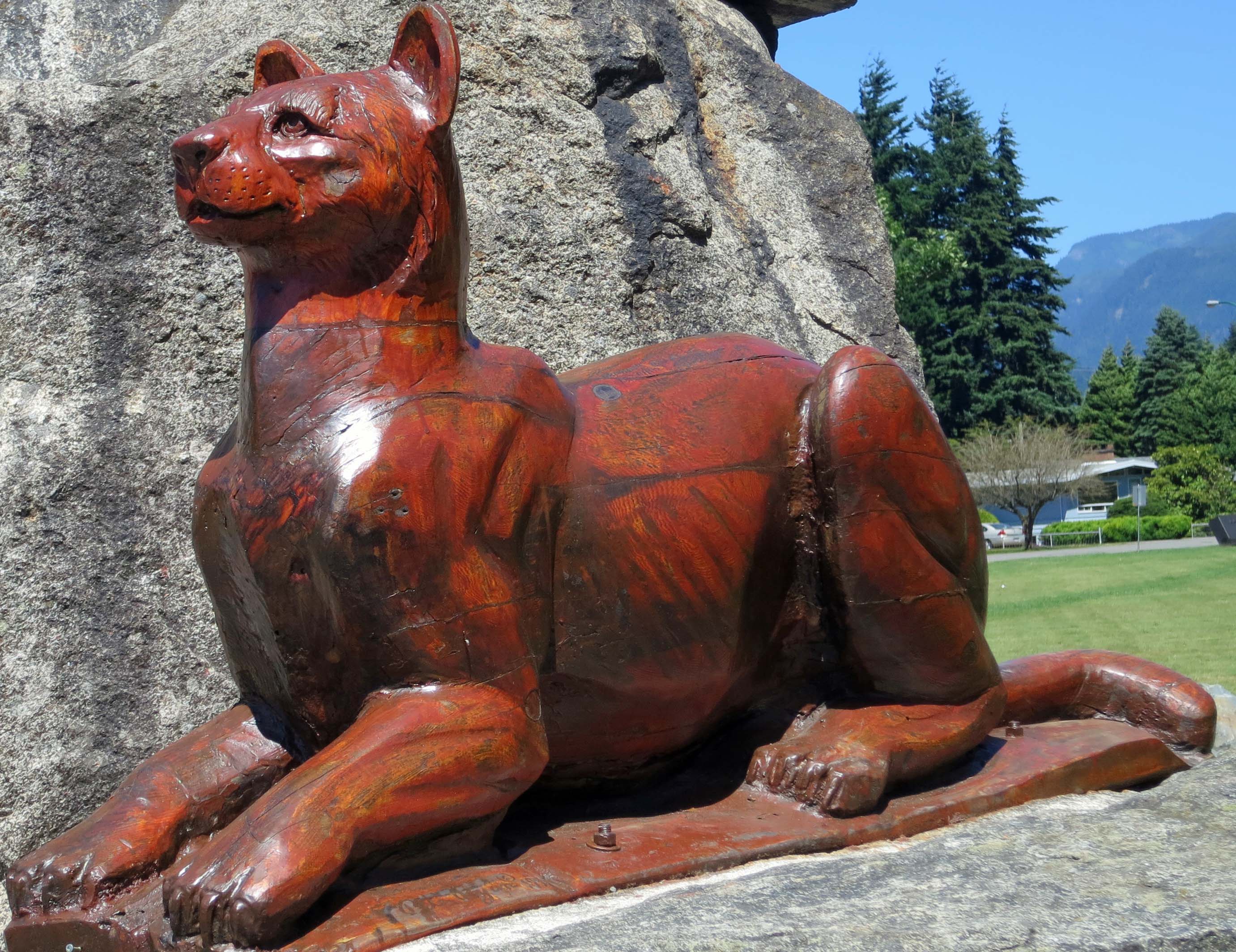
Chainsaw woodcarving in Hope BC

Animals are a common subject for chainsaw woodcarvers.

Chainsaw woodcarving in Hope BC

A pair of wolves.

Chainsaw carving in Hope BC

Fantasy figures, such as this wizard, also serve as common themes for chainsaw carvings. Note the mouse living in his beard.
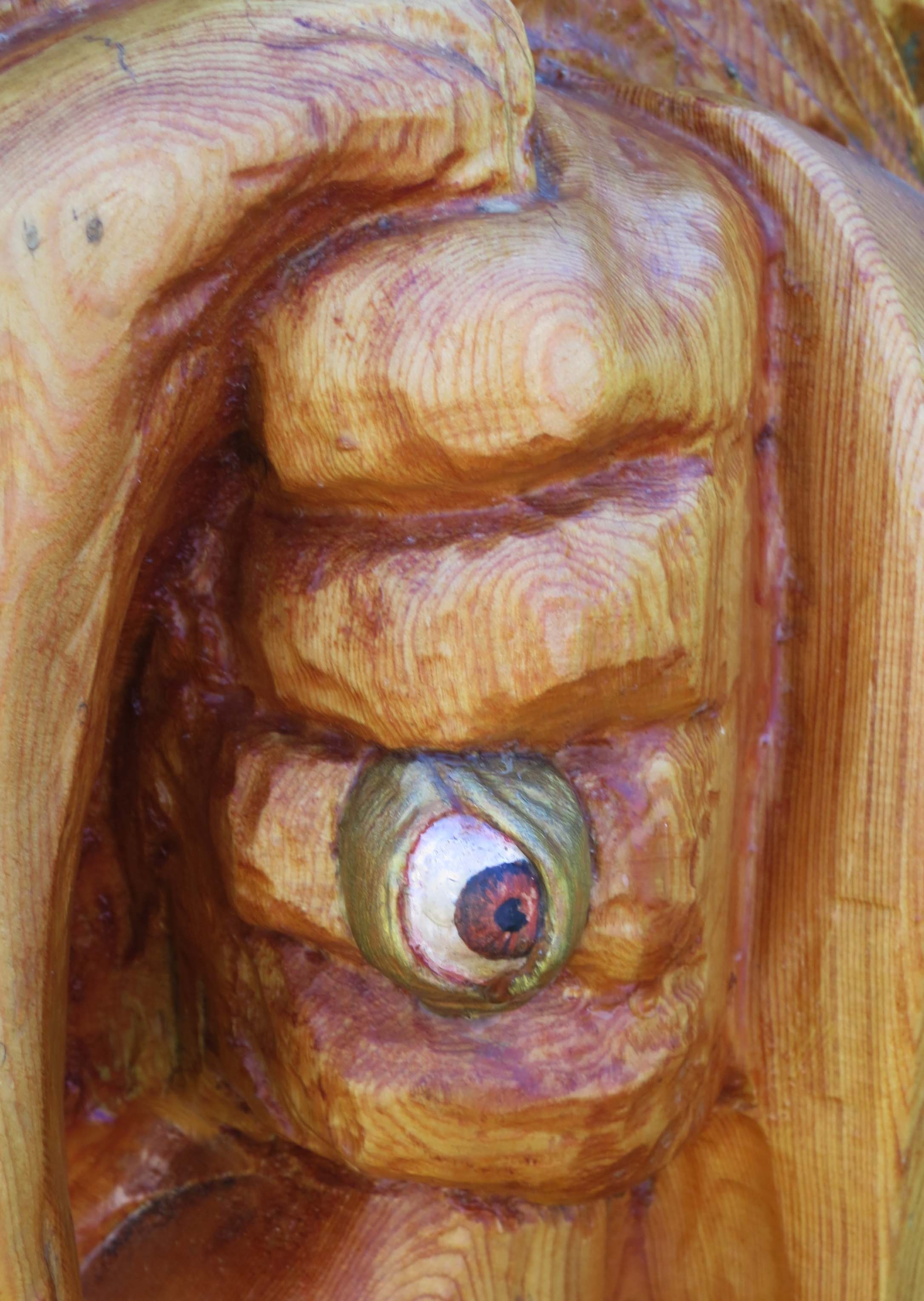
Chainsaw woodcarving in Hope BC

The wizard also wore an eyeball ring.

Many of the chainsaw woodcarvings in Hope, BC display a sense of humor such as this tourist with a guidebook in his hip pocket.

Many of the chainsaw wood carvings in Hope, BC display a sense of humor such as this tourist with a guidebook in his hip pocket. Another carving can be seen on the next block.
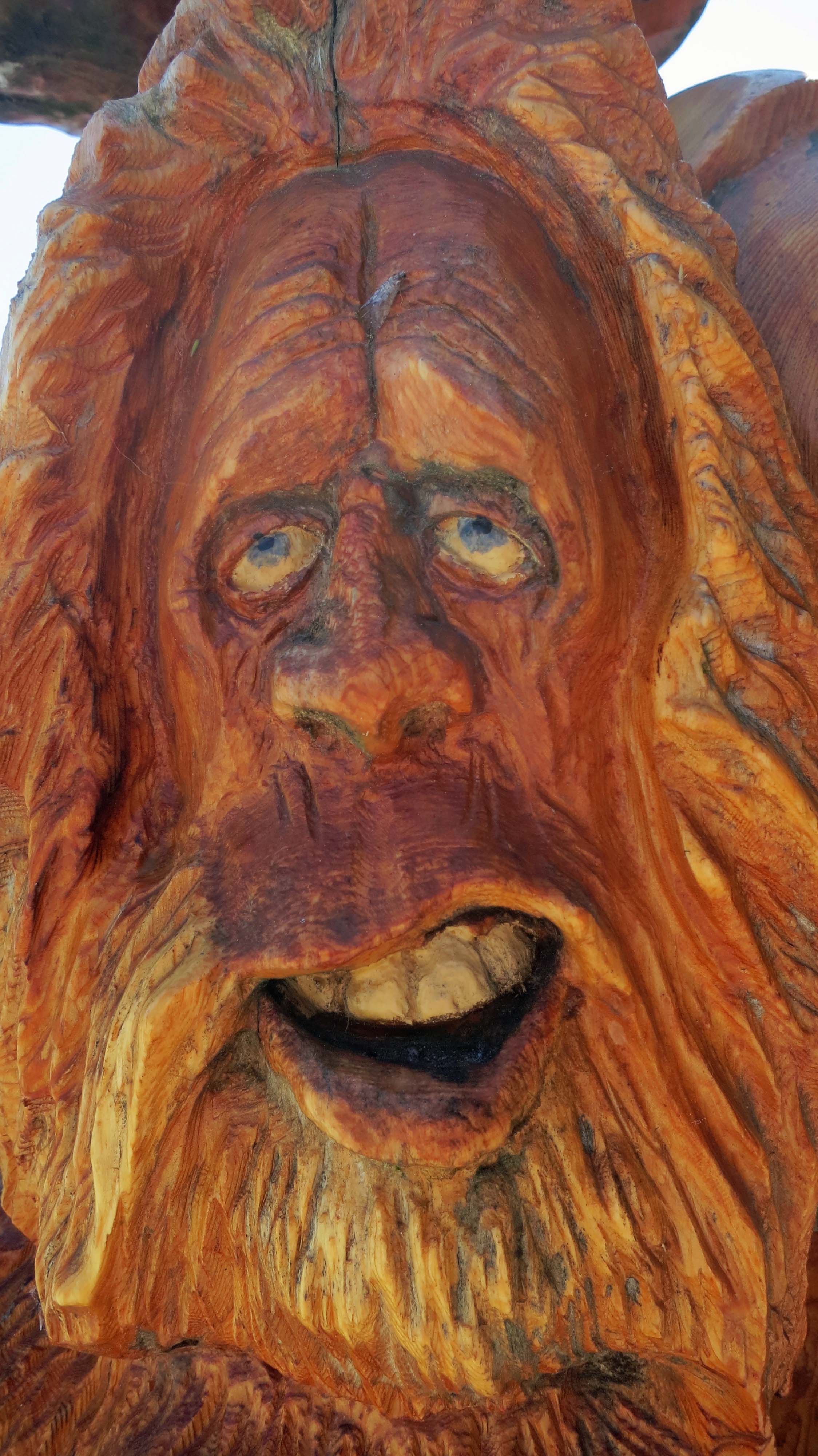
Chainsaw woodcarving in Hope BC

Speaking of humor, I found this face on a statue of Bigfoot rather funny.
Chainsaw woodcarvings in Hope BC

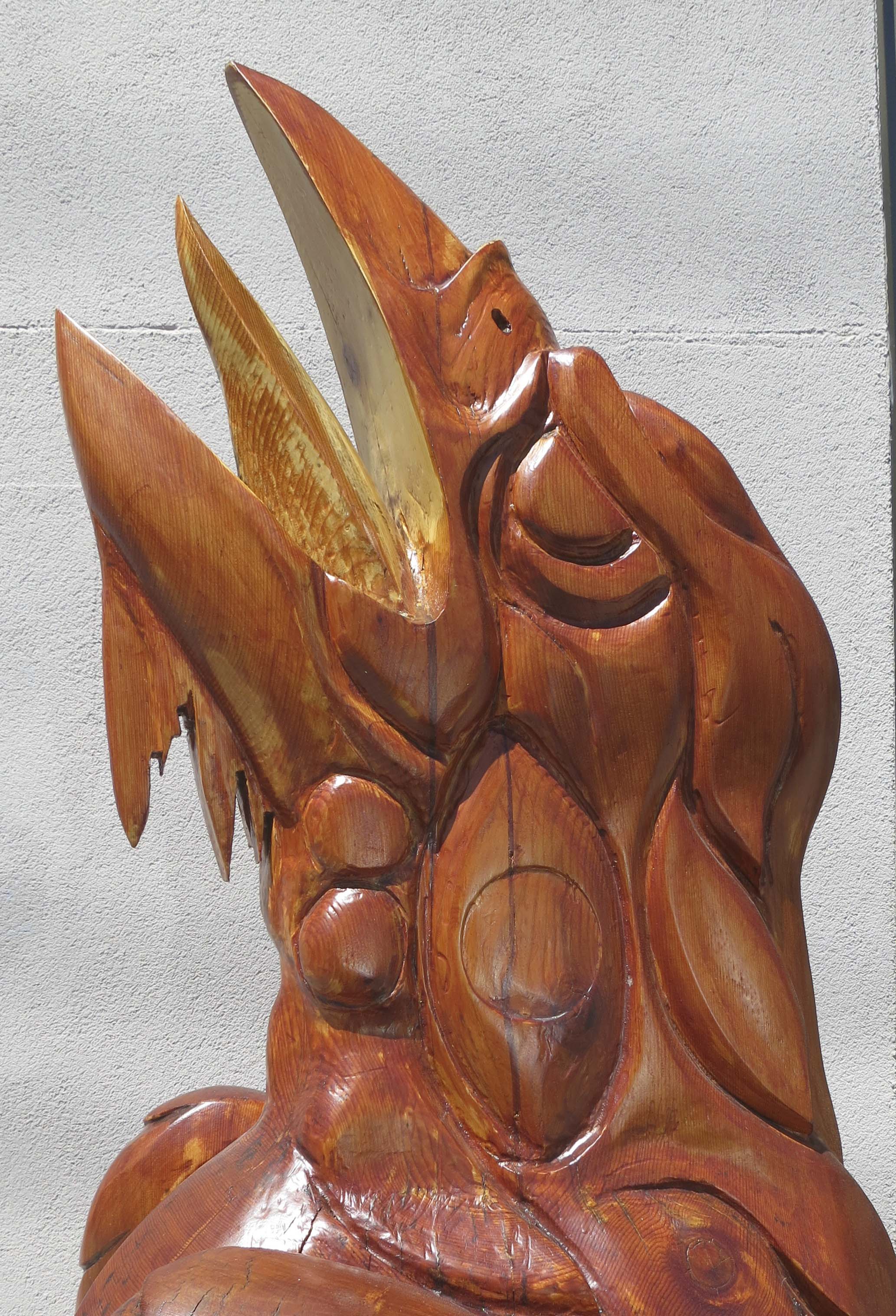
In my last blog I featured totem poles. Given the First Nation influence in British Columbia, it was not surprising to find Raven as one of the wood carvings.

Chainsaw woodcarving in Hope BC

This eagle and girl also represented a First Nation theme.
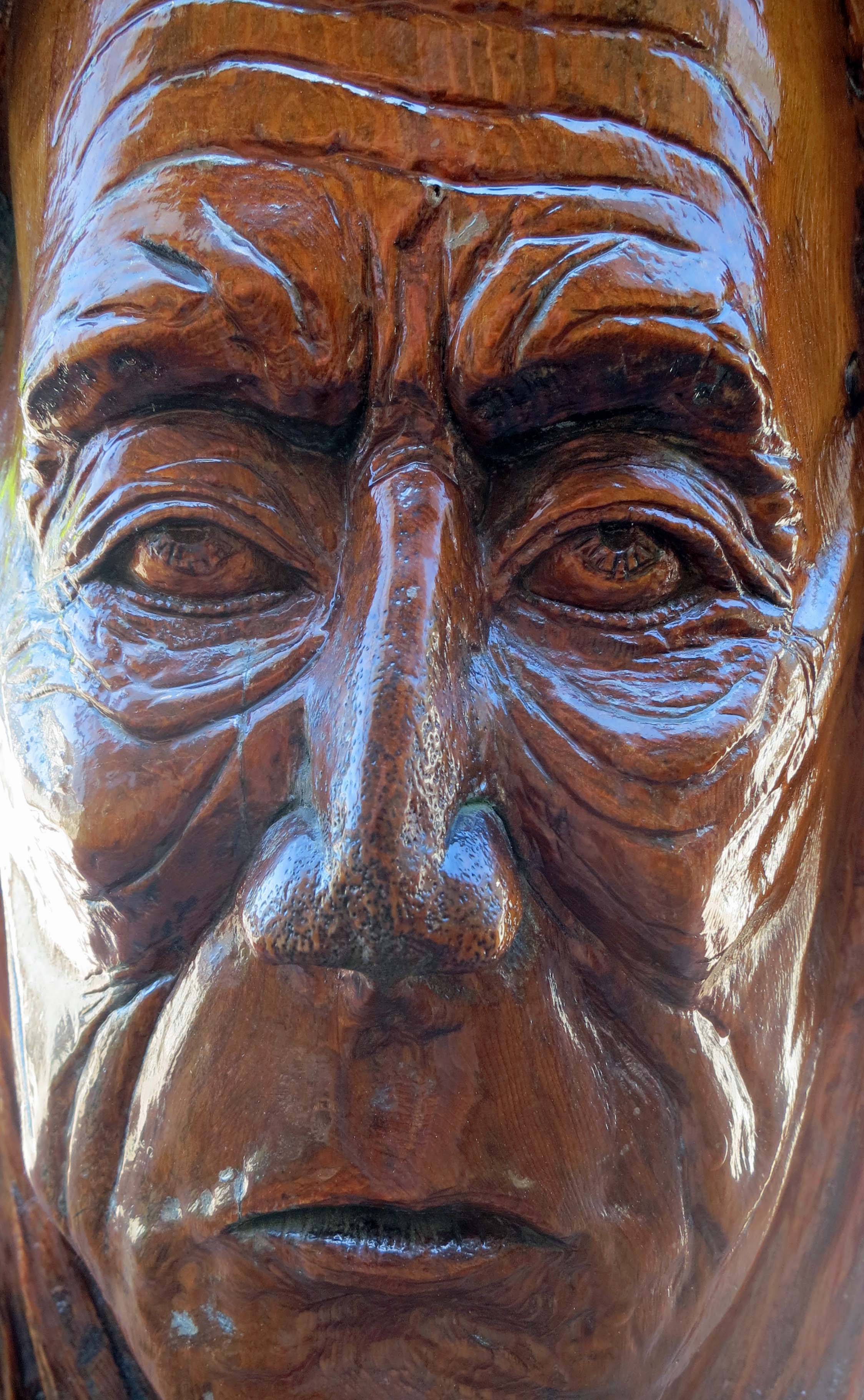
I also found this face rather powerful.

I found this face rather powerful.

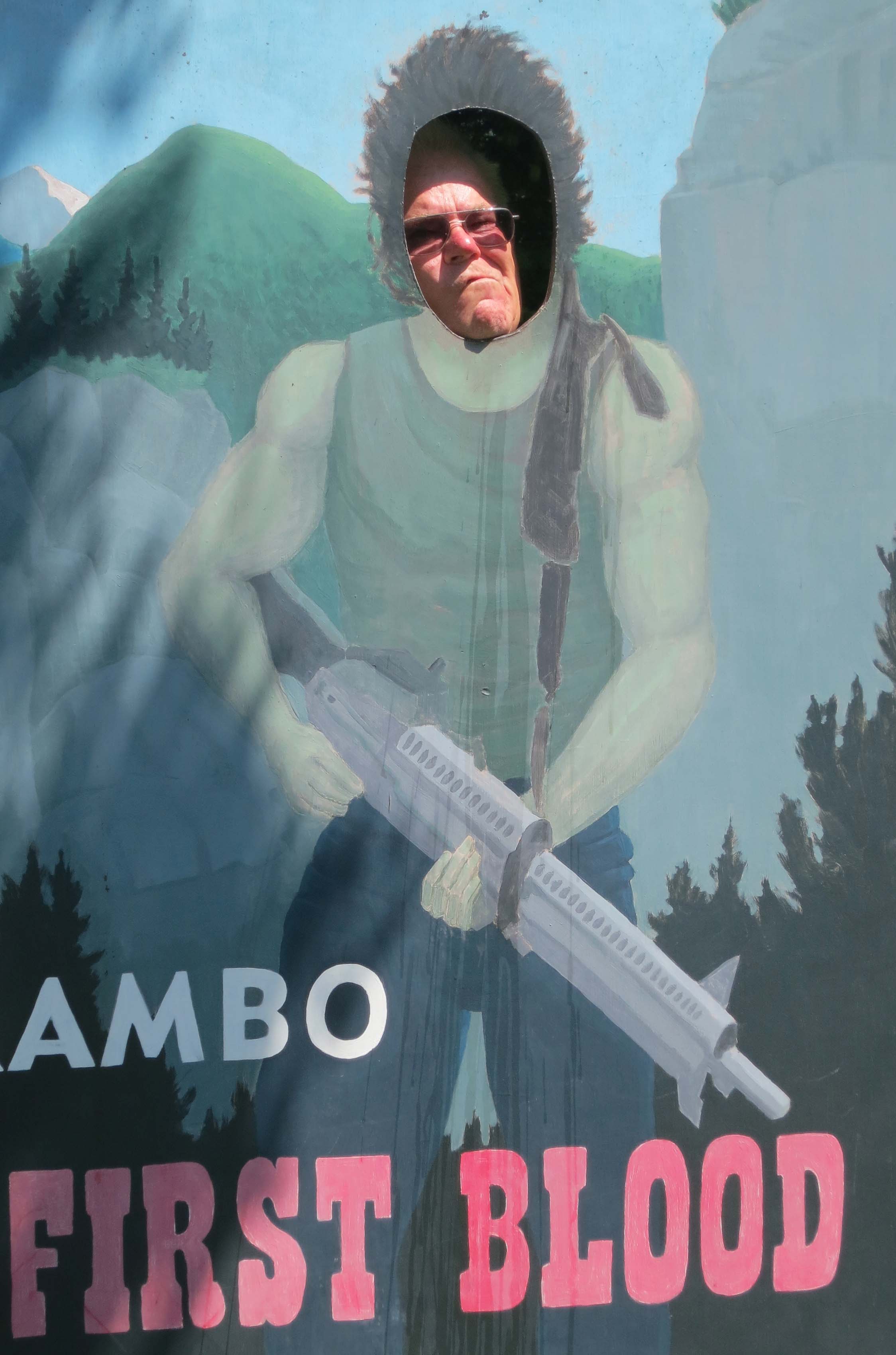
Stallones First Blood in Hope BC

My friend Bob decided to look tough in this Rambo photo board outside of the Hope Visitor Center. Stallone’s “First Blood” was filmed in the town.

Peggy and Linda share a laugh on the edge of the Fraser River at Hope BC.

Peggy and Linda share a laugh on the edge of the Fraser River at Hope BC. Possibly they were amused at Bob’s effort to look like Stallone.

Next Blog: When a campground is taken over by dogs.

Sailing Off into the Sunset… And On to New Adventures

Mediterranean sunset.

What’s not to like about a beautiful sunset. This one took place off the southern coast of Italy in the Mediterranean Sea.

I am a sucker for sunsets, which is a good thing. Sunsets, waves and spectacular cloud formations are what pass for scenery on the open ocean. My dad, who started and ended his life as a painter, dismissed sunsets as postcard pictures. Nevertheless, when I went through several thousand of his photos after he died, I discovered numerous photos of the setting sun. Nobody can resist a beautiful sunset. Along with fireworks, they are the number one cause of oohs and ahs.

Mediterranean sunset off the coast of Southern Italy.

A close up of the same sunset shown above.

As for sailing off into the sunset, sailors have been doing this since the first sail was invented. (The western heroes of my youth rode off into the sunset, instead. After doing in the bad guys, they would kiss their girls goodbye– probably on the cheek, climb on their faithful horses, and ride off into the west as the sun sank behind the horizon and the picture slowly faded. “Hi-o Silver away!”)

Once we left our farthest point to the east, Kusadasi, Turkey, we sailed into the west all the way to Galveston, Texas. Since our ship inevitably pulled out of port in late afternoon, there were ample opportunities for sunset photos. I decided that a few of these sunsets, along with some cloud formations, would make a fitting end for my series on Mediterranean Ports.

Sun shining through clouds on the Atlantic Ocean.

Sun shining through clouds can be quite dramatic. We took this photo in the Atlantic.

Somewhere in my youth, I was required to color clouds like this in Sunday School. The image has never quite left me.

Close up of the above photo. Somewhere in my youth, I was required to color clouds like this in Sunday School. The image has never quite left me.

Cumulous clouds over Mediterranean Sea.

Clouds over the sea can also provide drama, as this towering cumulus does.

Towering Cumulous cloud over the Mediterranean.

Another cumulus cloud over the Mediterranean.

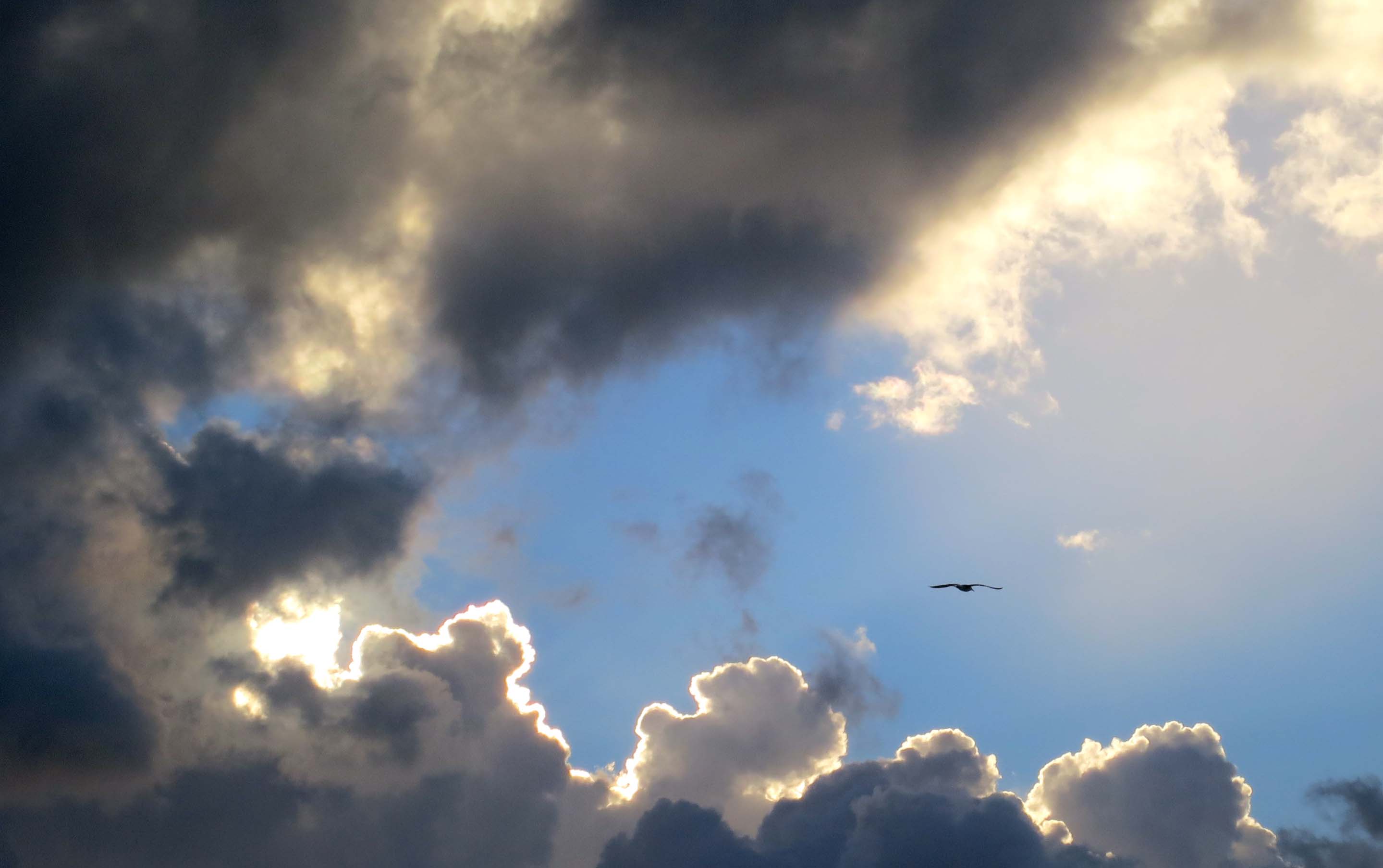
The sea bird soaring between the clouds spoke to how close we were to shore.

The seabird soaring between the clouds spoke to how close we were to shore.

These clouds over the Atlantic appeared less threatening but brought a storm.

These clouds over the Atlantic appeared less threatening, but brought a storm.

Caribbean sunset

This impressionistic photo of purples and pinks was taken in the Caribbean south of Florida at the end of the trip.

NEXT BLOGS: I hope you have enjoyed our journey through the Mediterranean. In three weeks Peggy and I will begin another adventure, this time driving from our home in Southern Oregon to Alaska via the Northwest US, British Columbia and the Yukon Territory. Please join us. In the meantime, I will introduce you to our hometown of Jacksonville, Oregon; take you on a trip though the Southwestern US exploring thousand-year-old Native American rock art, and catch up on what’s happening with Burning Man 2013. Peggy and I will again be traveling to Burning Man after we return from Alaska.

The Azores: Last Stop before Sailing into the Sunset

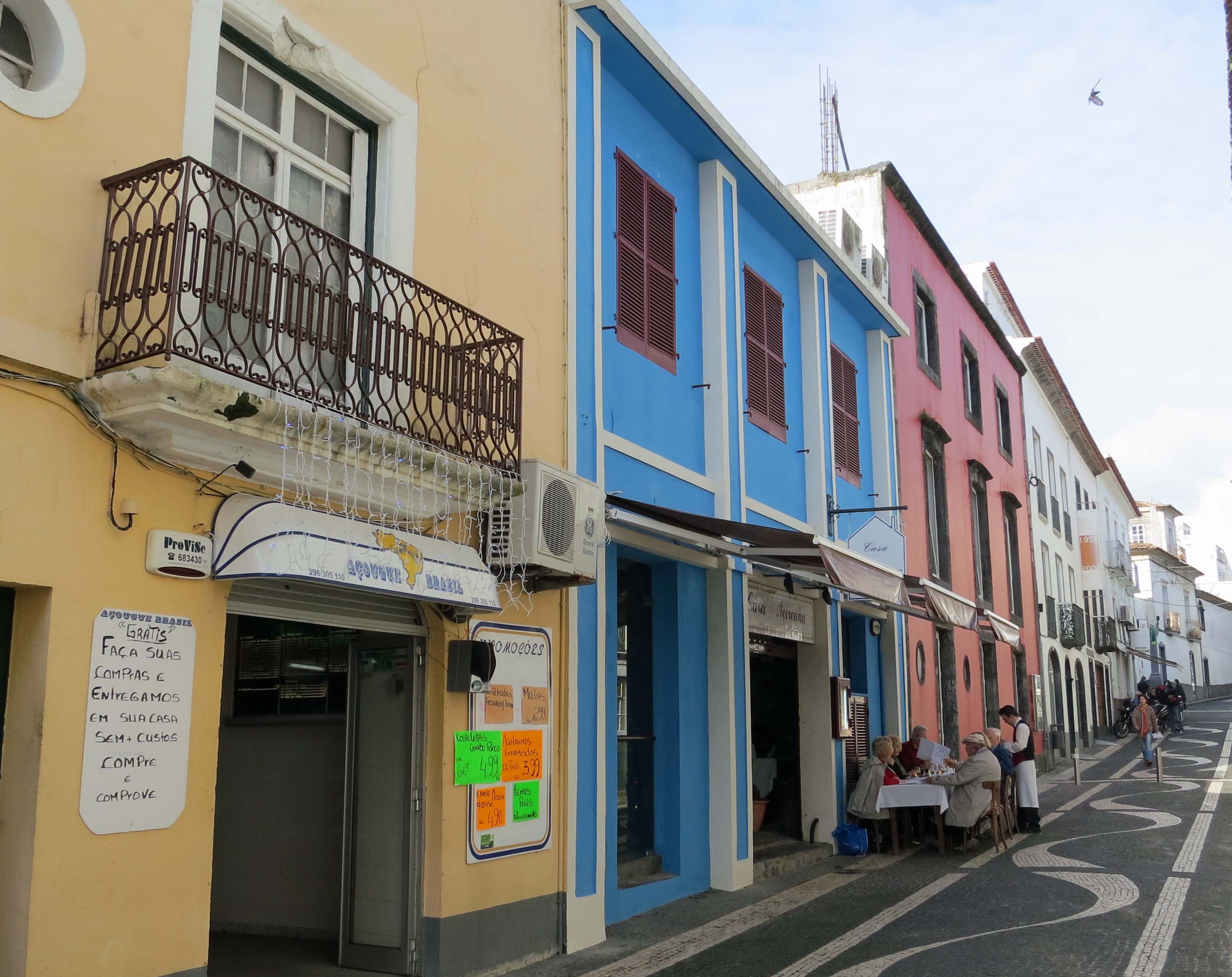
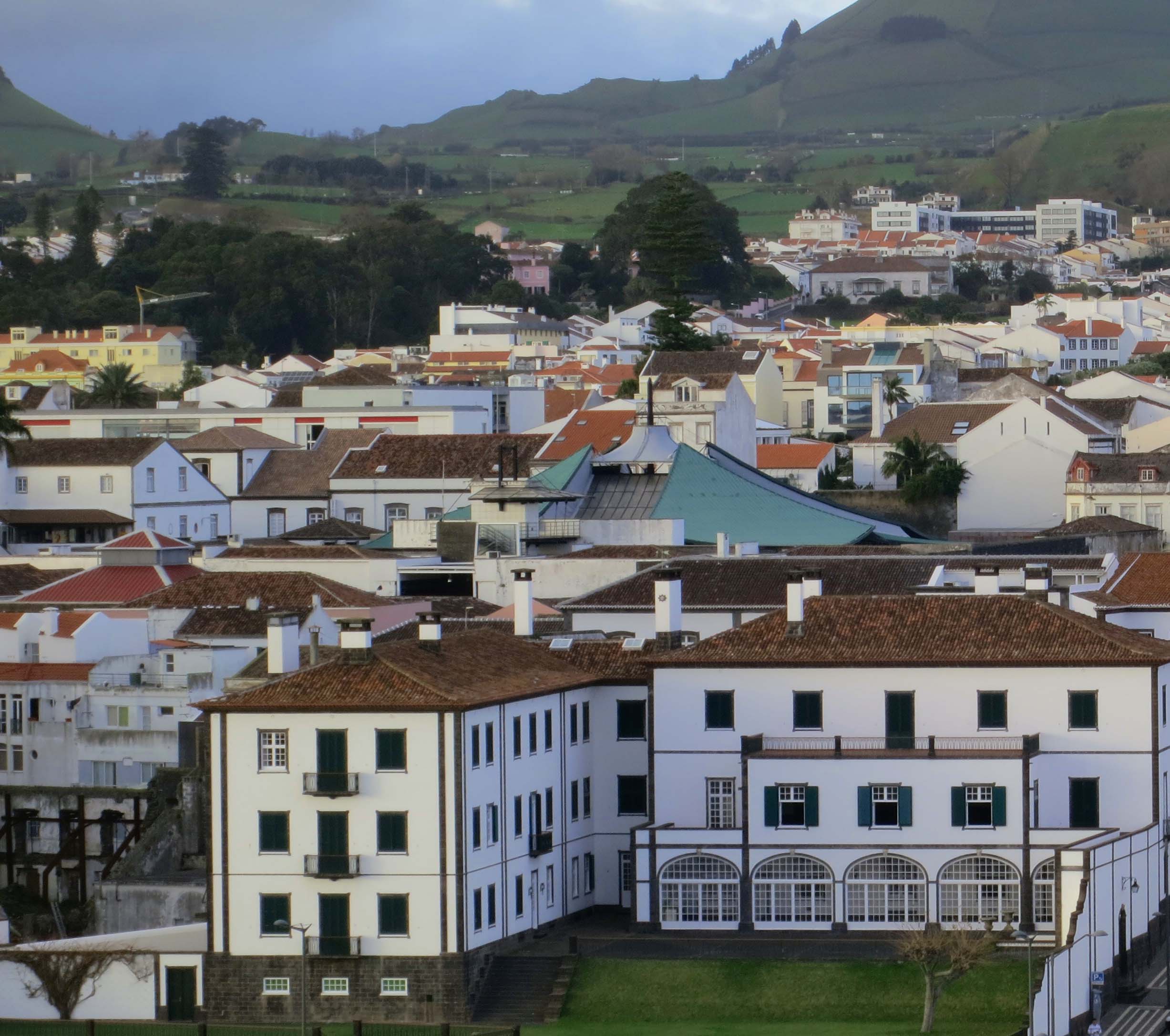
Street scene in Ponta Delgado on the Island of San Miguel in the Azores.

We spent a pleasant three hours wandering along the streets of Ponta Delgada. Note the fun pavement.

Nine hundred miles west of Portugal we arrived at Ponta Delgada on the island of San Miguel. The Azores Islands are an autonomous region of Portugal and Delgada is the administrative center. When the Portuguese arrived in the 1400s, they found the islands uninhabited. In the days of sailing ships the islands became an important stop for resupplying with fresh food and water.

We found Delgada quite occupied and very pleasant, almost charming. Surrounded by green mountains that feature pineapple groves and grazing cattle, the city of 45,000 is nestled against the ocean. Instead of scrambling to see sites, we simply wandered through the streets.

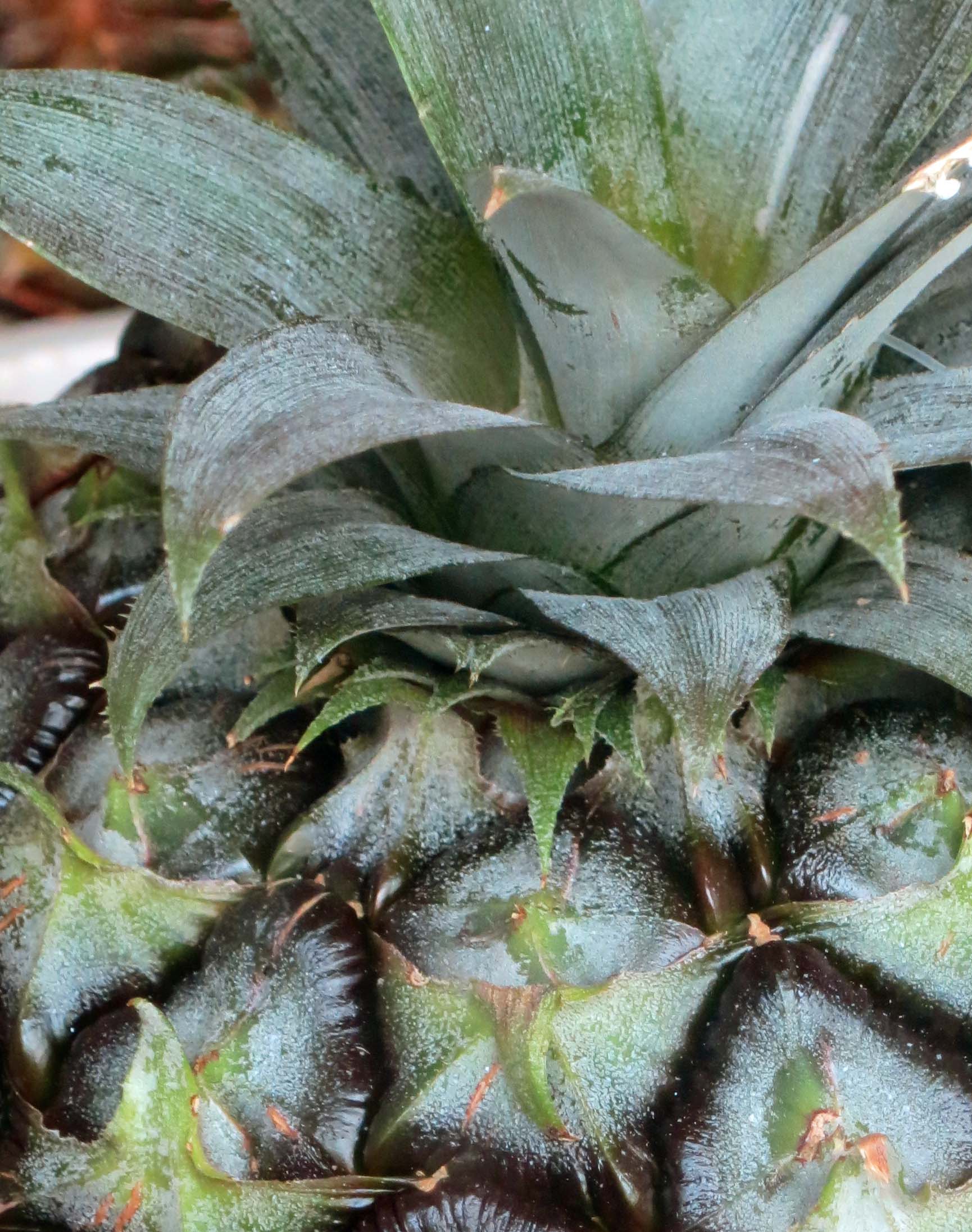
The pineapples grown in the Azores are known for their sweetness and considered a gourmet treat.

The pineapples grown in the Azores are known for their sweetness and are considered a gourmet treat.

I even found time to check in on my blog. Normally, I had to use the ship’s Internet, which cost the proverbial arm and a leg. (Cruise ships are dedicated to separating passengers from their cash. We were dedicated to keeping as much of ours as possible.)

The town of Punta Delgado on the Island of San Miguel in the Azores

The town of Pont Delgada is surrounded by green mountains where cattle graze.

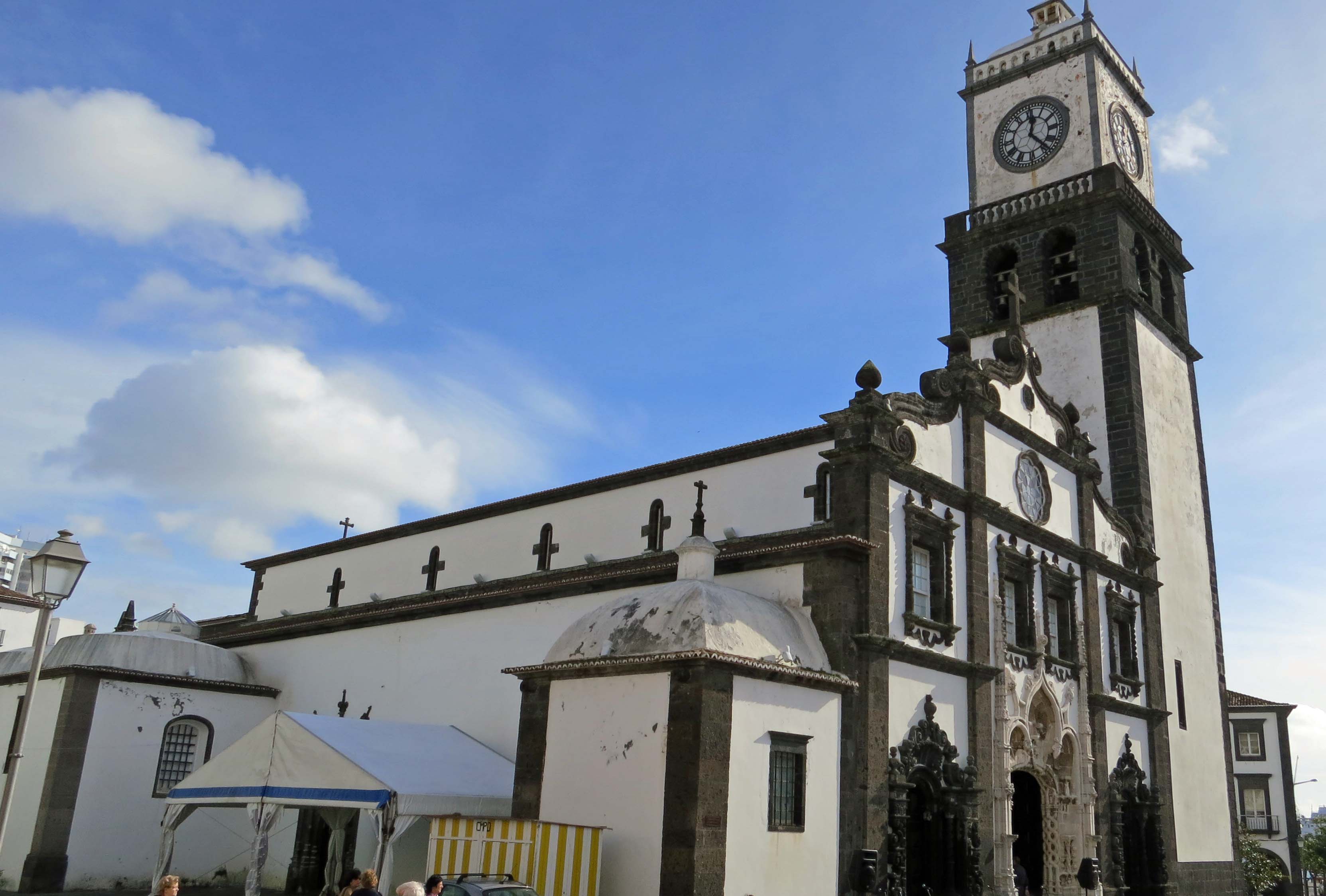
A church in Ponta Delgado in the Azores

Our stroll around Delgada took us past attractive churches.

Church door in Ponta Delgado in the Azores

This door on the church was quite dramatic with its white background.

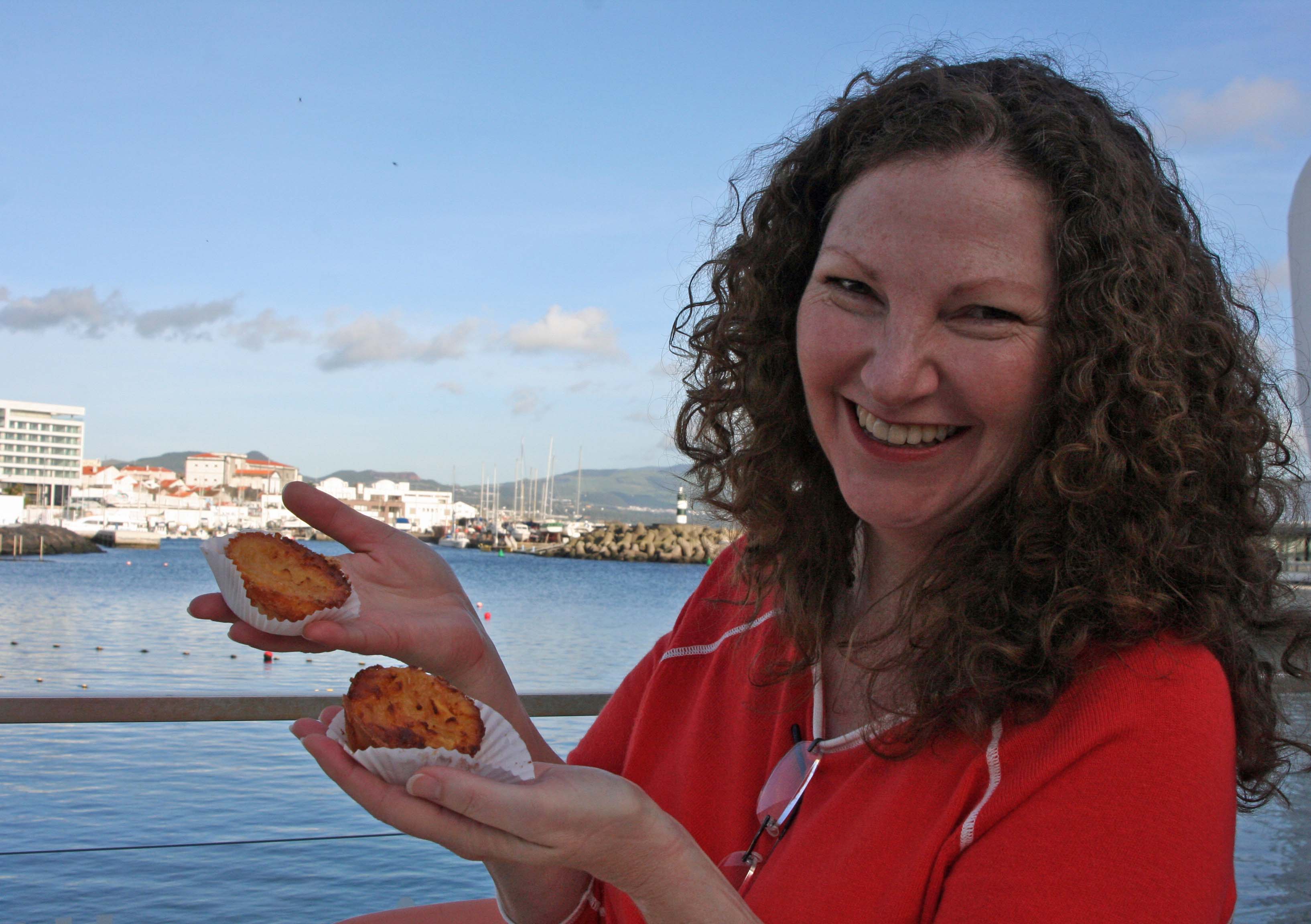
As always, our traveling companion, Kathi, could be expected to find tasty pastries.

As always, our traveling companion, Kathi, could be expected to find tasty pastries. (Photo by Peggy Mekemson)

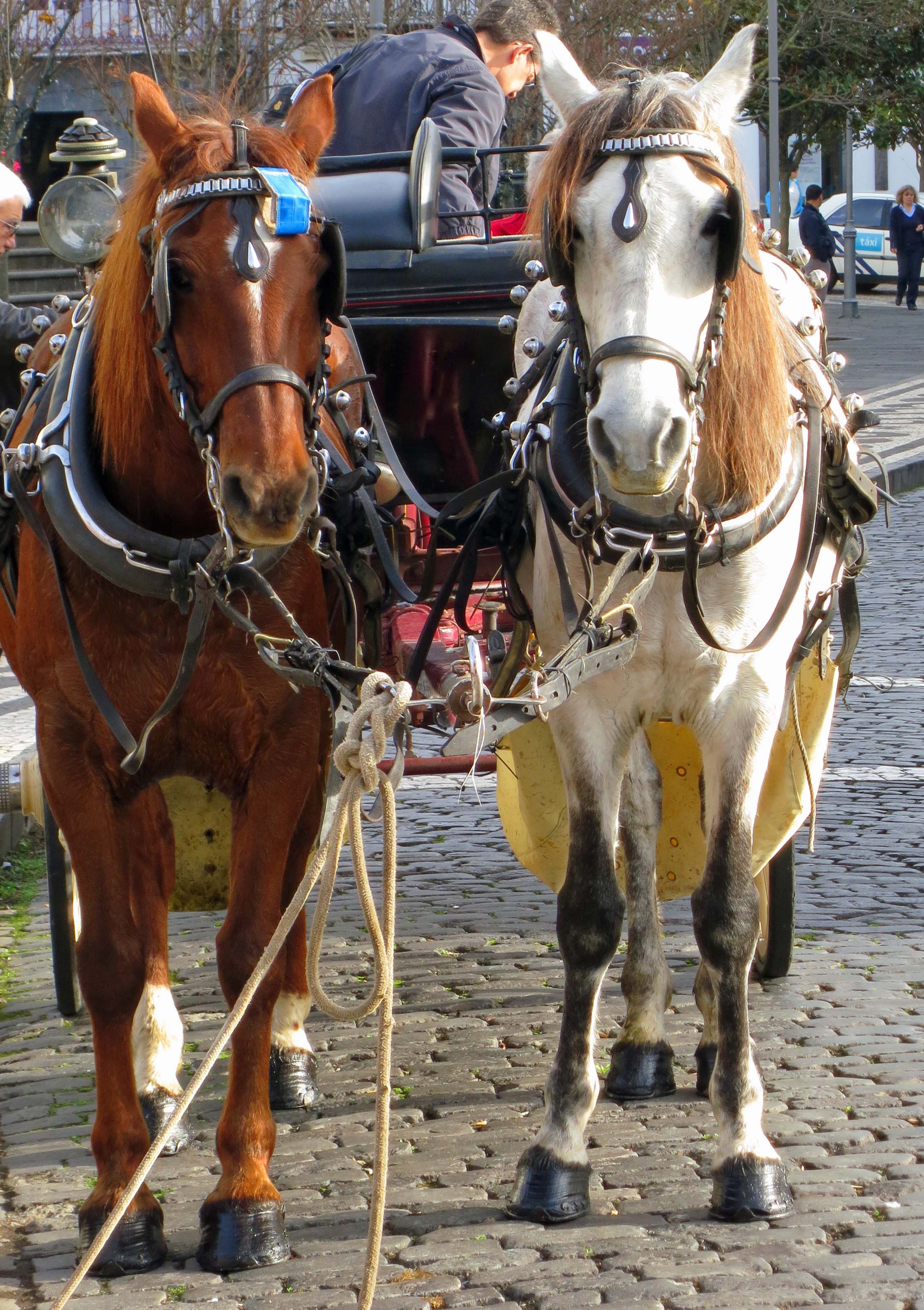
Carriage ride in Ponta Delgado in the Azores

These horses waited patiently to provide tourists with a carriage ride.

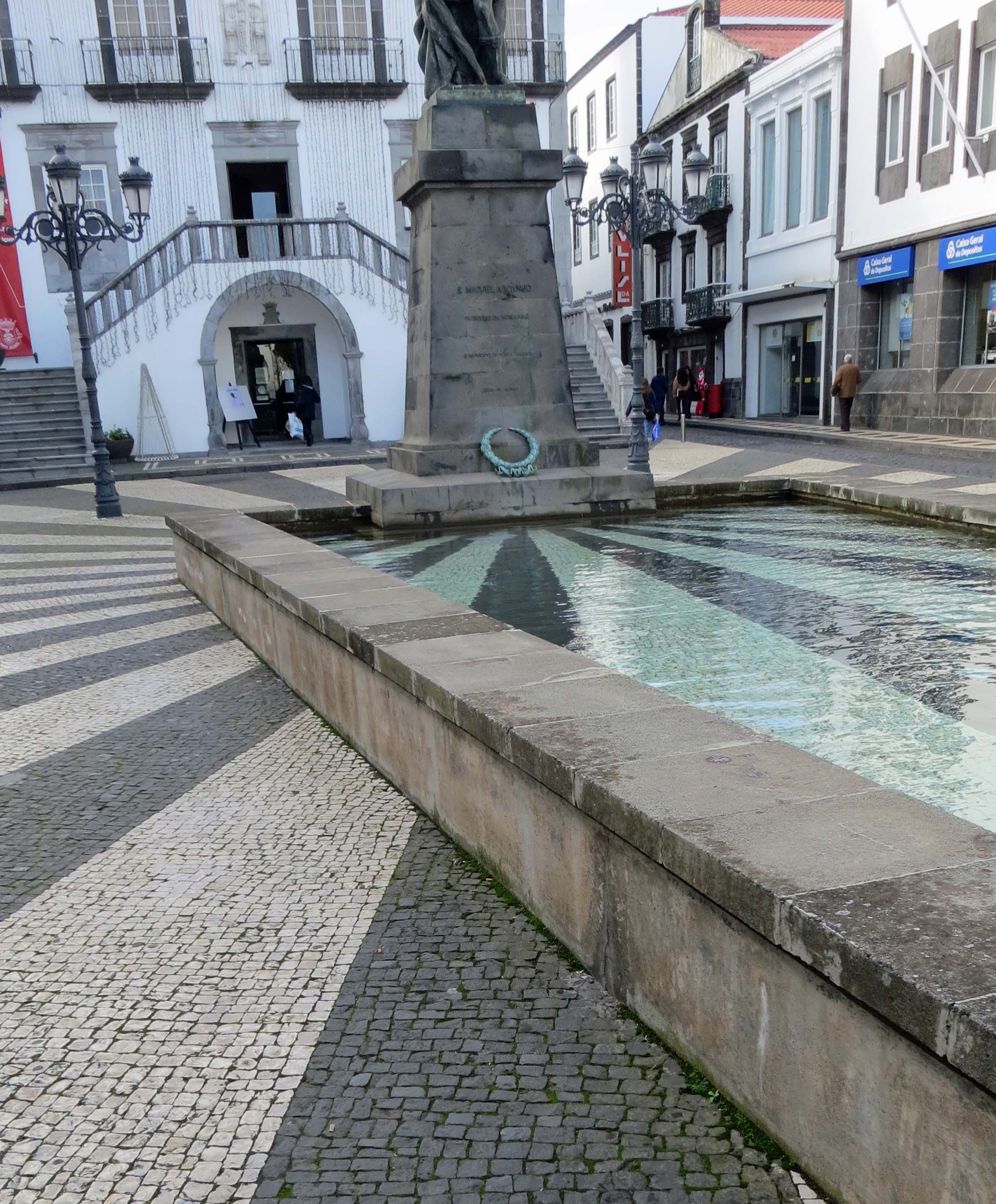
Ponta Delgado City Hall and reflection pool

I loved the way the street tile was extended into the reflection pool in front of Ponta Delgada’s city hall.

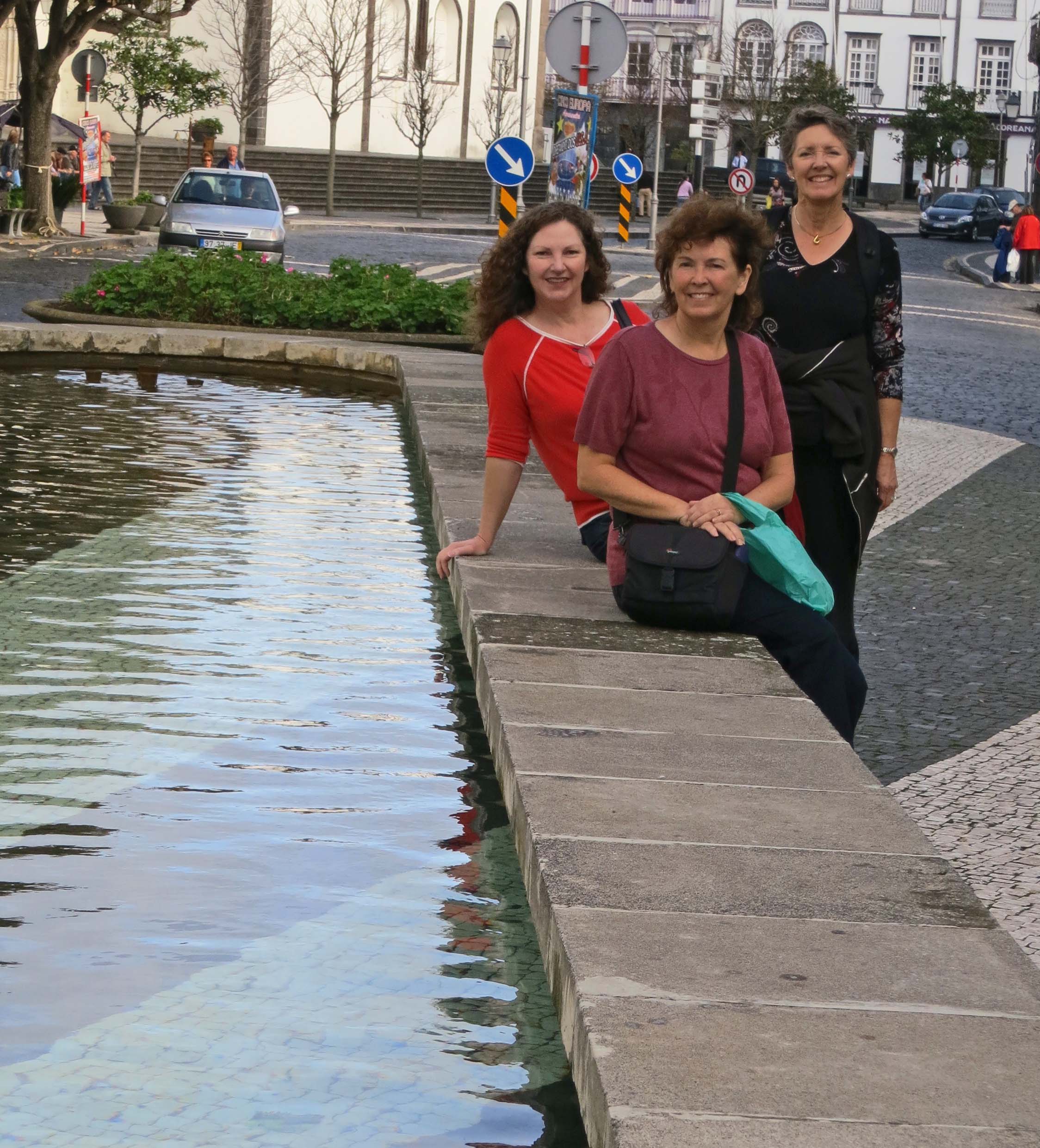
Peggy, Kathi and Frances take a break at the pool's edge.

Peggy, Kathi and Frances take a break at the pool’s edge.

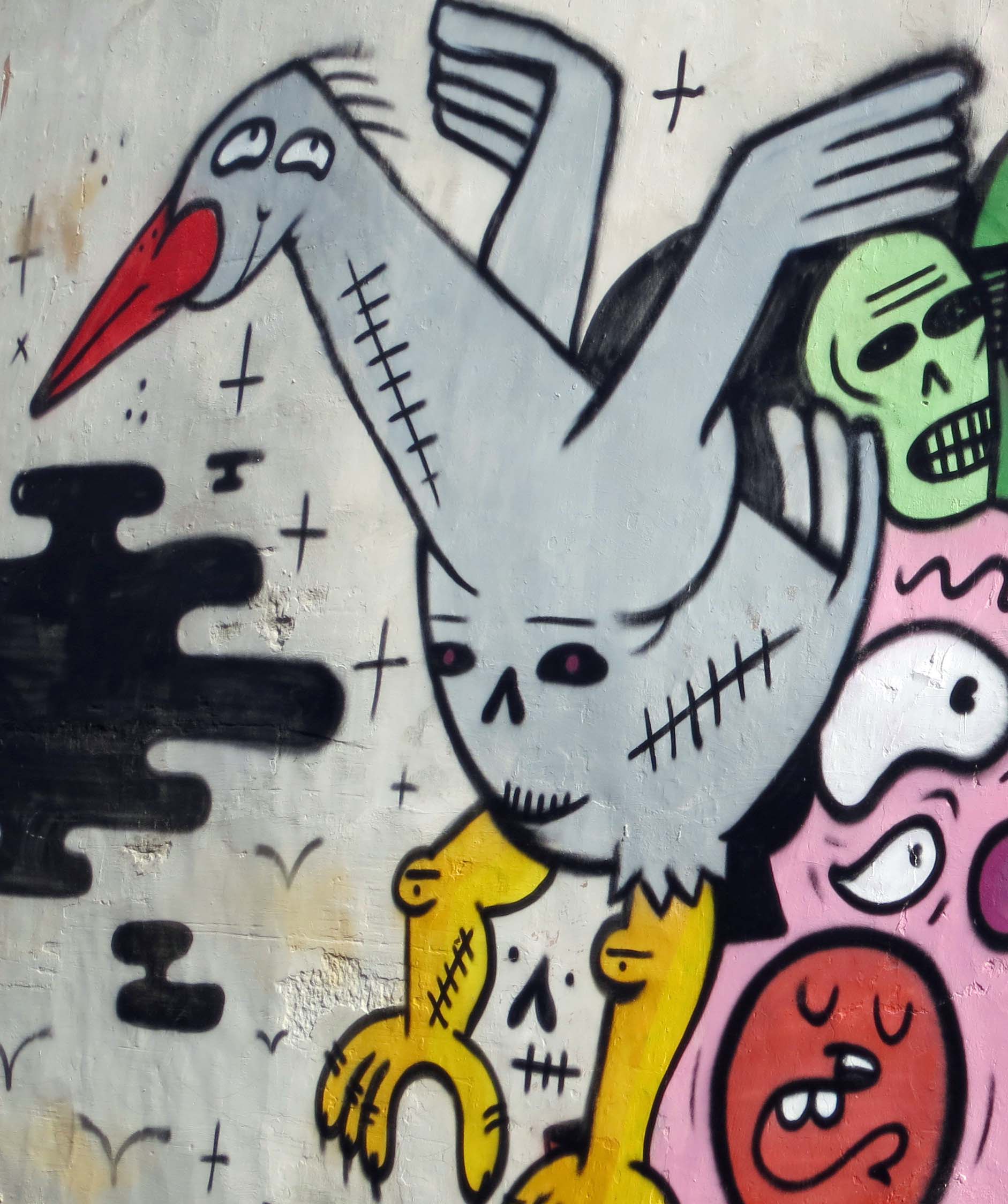
Graffiti in Ponta Delgado

We found interesting murals in Delgada including this chicken?

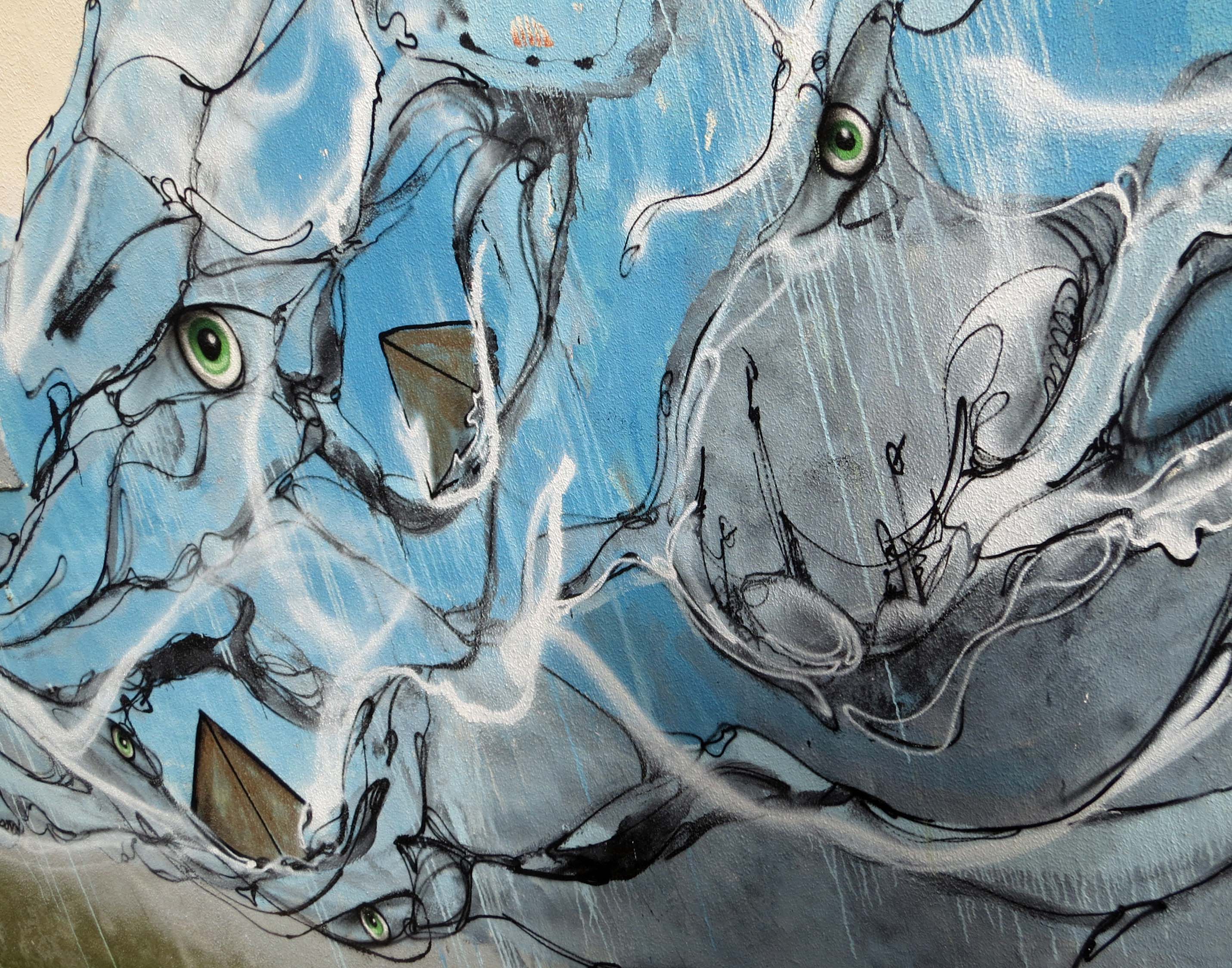
Whale mural in Ponta Delgado

I found these abstract squid quite attractive.

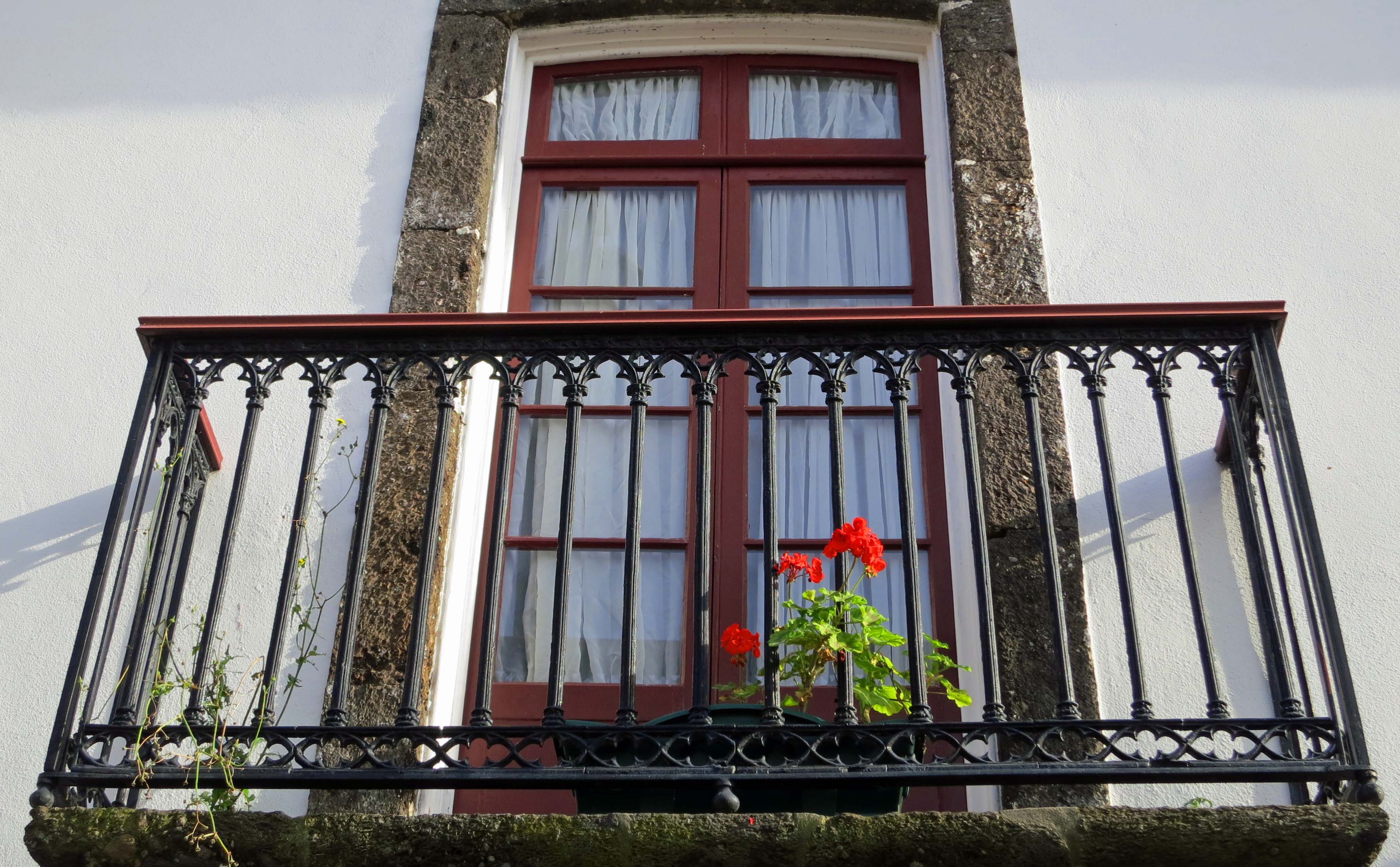
Ponta Delgado balcony in Azores

As in Europe, we found a number of attractive balconies.

Balcony in Ponta Delgado, Azores

Another balcony in Ponta Delgada.

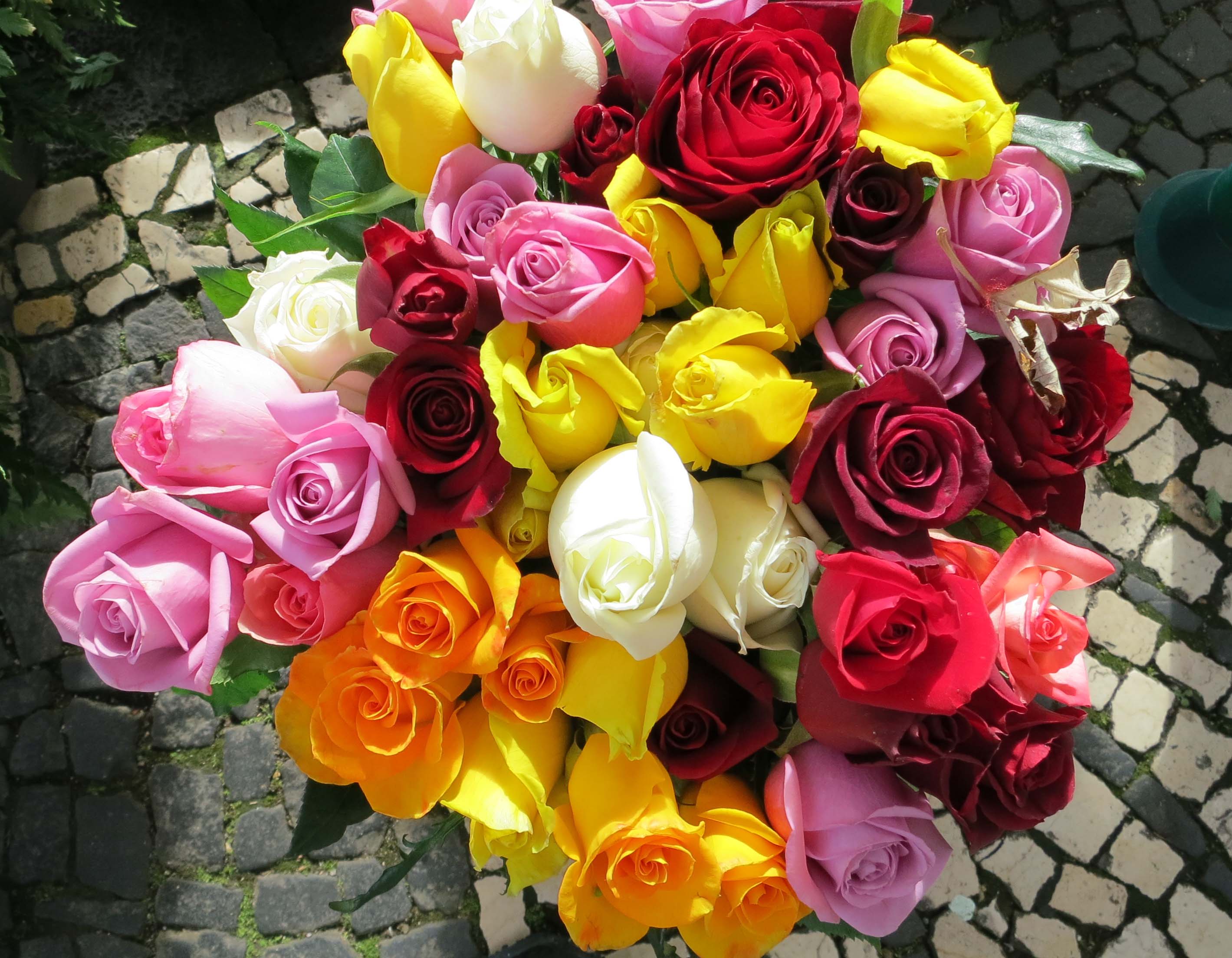
A bouquet of roses in the Azores

A flower stand provided a beautiful bouquet of roses.

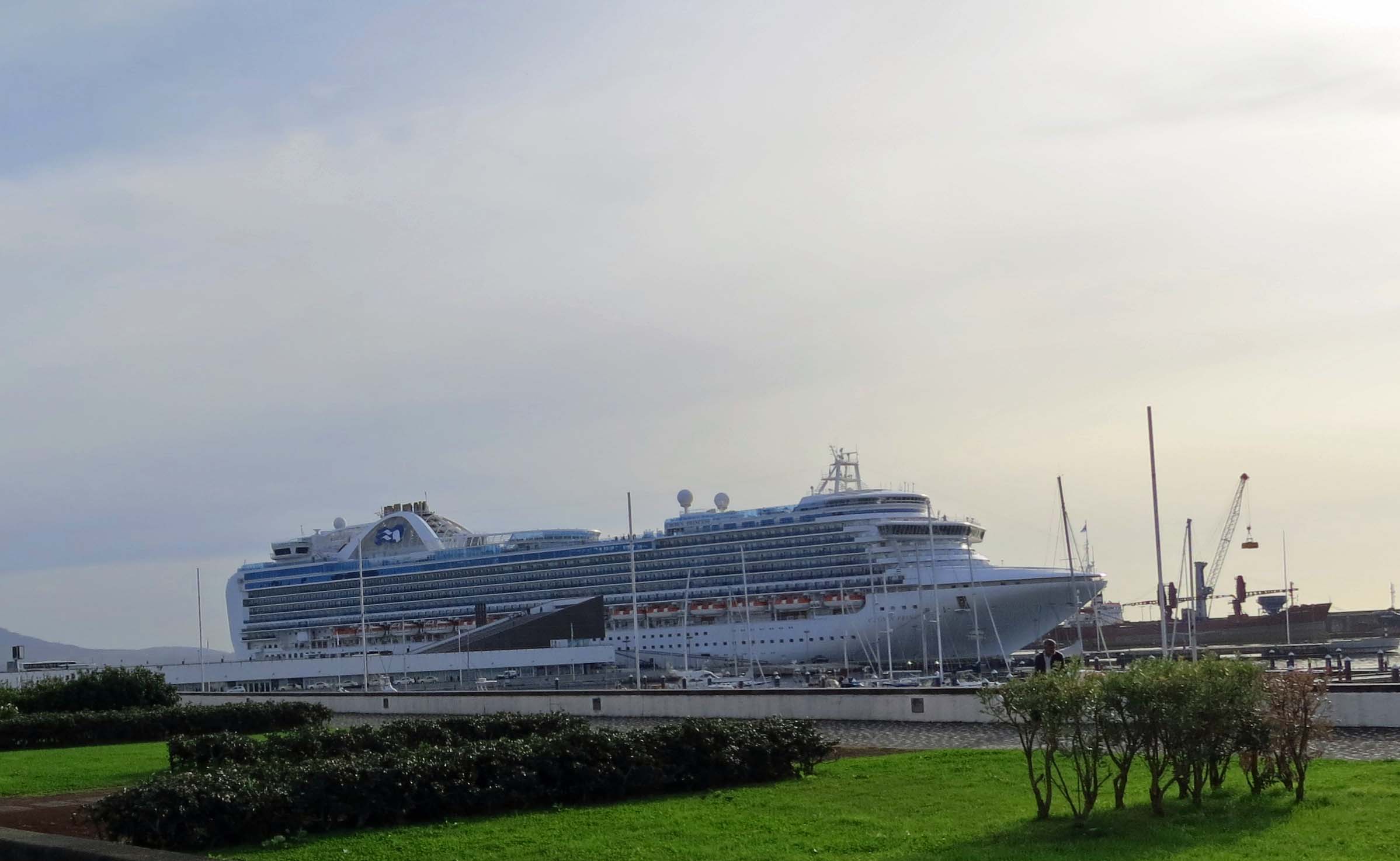
Crown Princess

As the shadows lengthened it was time to return to the ship.

NEXT BLOG: Sailing into the sunset. The proper term is probably cruising into the sunset but I find sailing much more romantic. Our next stop would be Florida.

Lisbon’s Rua Augusta: Where Mimes Rule… Quietly

Portuguese mime.

One of several mimes we met along Lisbon’s Rua Augusta. (Photo by Peggy Mekemson)

Leaving Barcelona meant we would soon be leaving the Mediterranean.Our time exploring several of the Western World’s most beautiful and historic areas was drawing to an end. We sailed past the Rock of Gibraltar and watched the sunset over North Africa. Our final stop on the European Continent would be Lisbon, after which we would begin our journey by ship across the Atlantic– a lifetime bucket list item of mine.

As our ship passed by the Rock of Gibraltar, we left the Mediterranean Sea behind.

As our ship passed by the Rock of Gibraltar, we left the Mediterranean Sea behind. (Photo by Peggy Mekemson)

African sunset

Later we watched the sunset over the North Coast of Africa.

Lisbon is one of Europe’s most ancient cities. Celts, Phoenicians, Romans, Germanic tribes, and Moors had all called it home at one time or the other. In the 1500s the small country of Portugal was a world power with colonies in South America, Africa and the East Indies. Five years ago Peggy and I had traveled to Albufeira on the south coast of Portugal and then wandered north to the fascinating walled city of Evora before flying out of Lisbon. This time we entered Lisbon by sea, passing the UNESCO Heritage site of Belem Tower and sailing under the 25 of April Bridge, which commemorates the overthrow of Portugal’s dictator Antonio Salazar in 1974.

Belem Tower in Lisbon, Portugal

We passed by Belem Tower. Built in the 1500s, it is now a UNESCO World Heritage site.

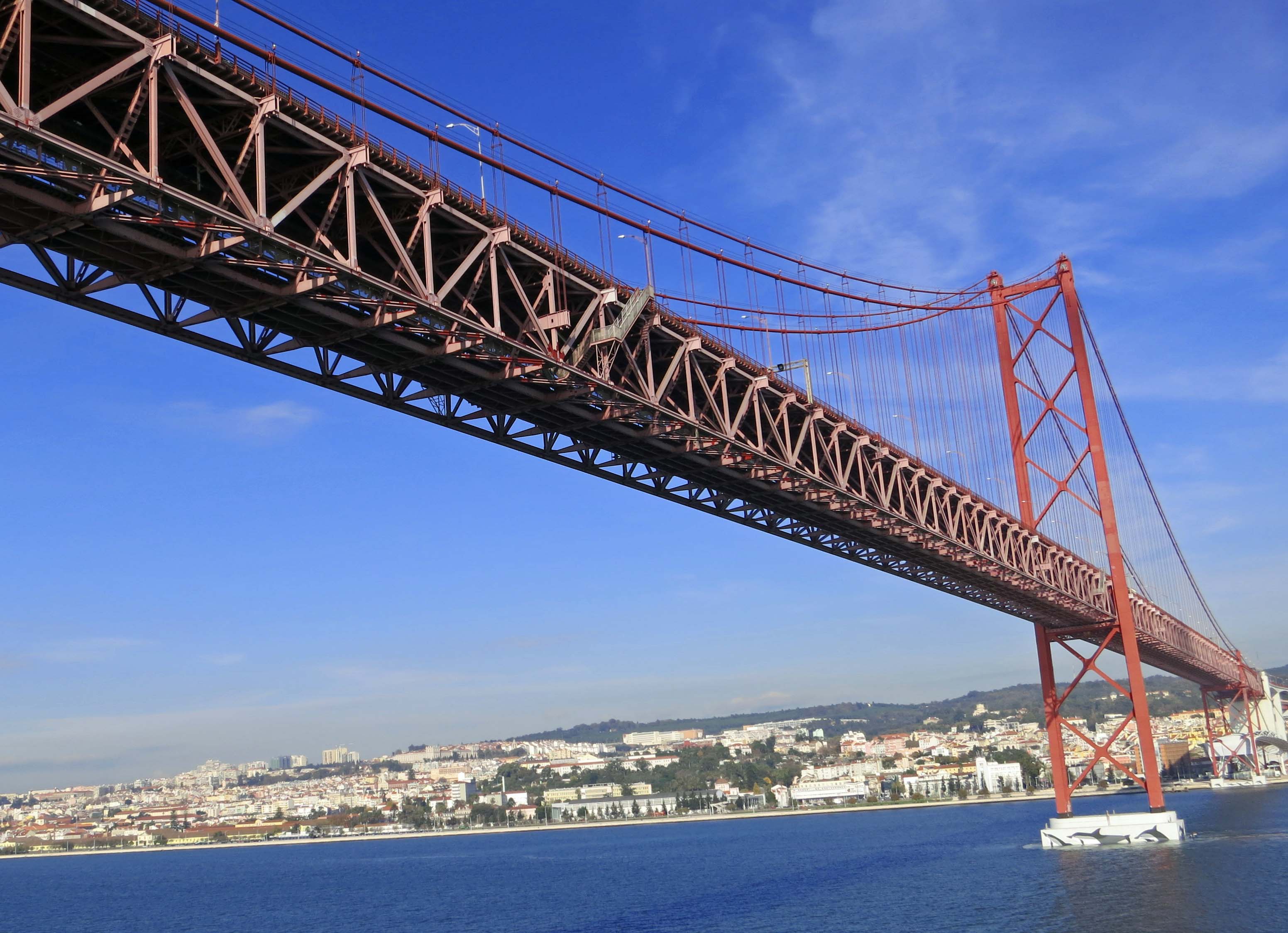
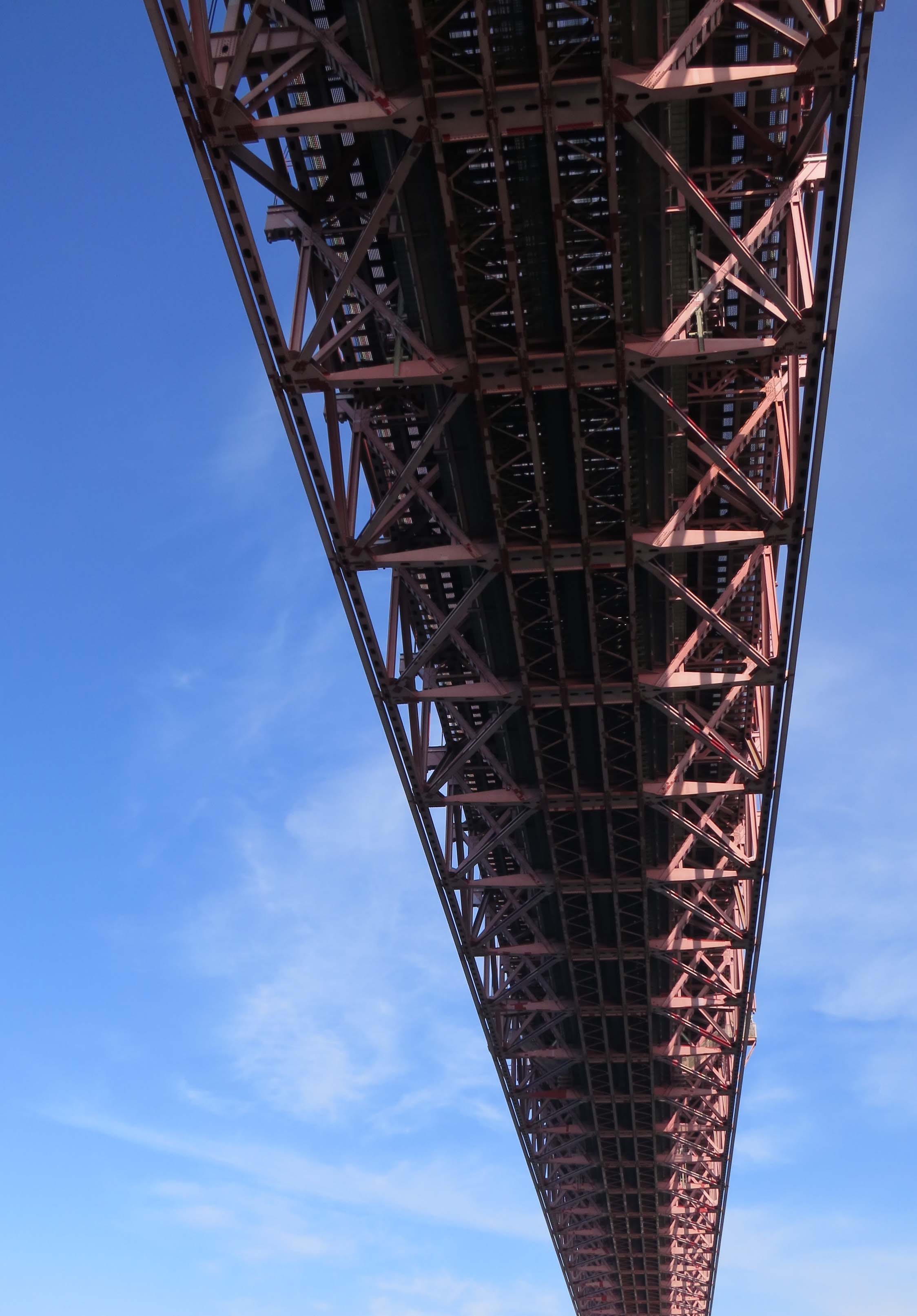
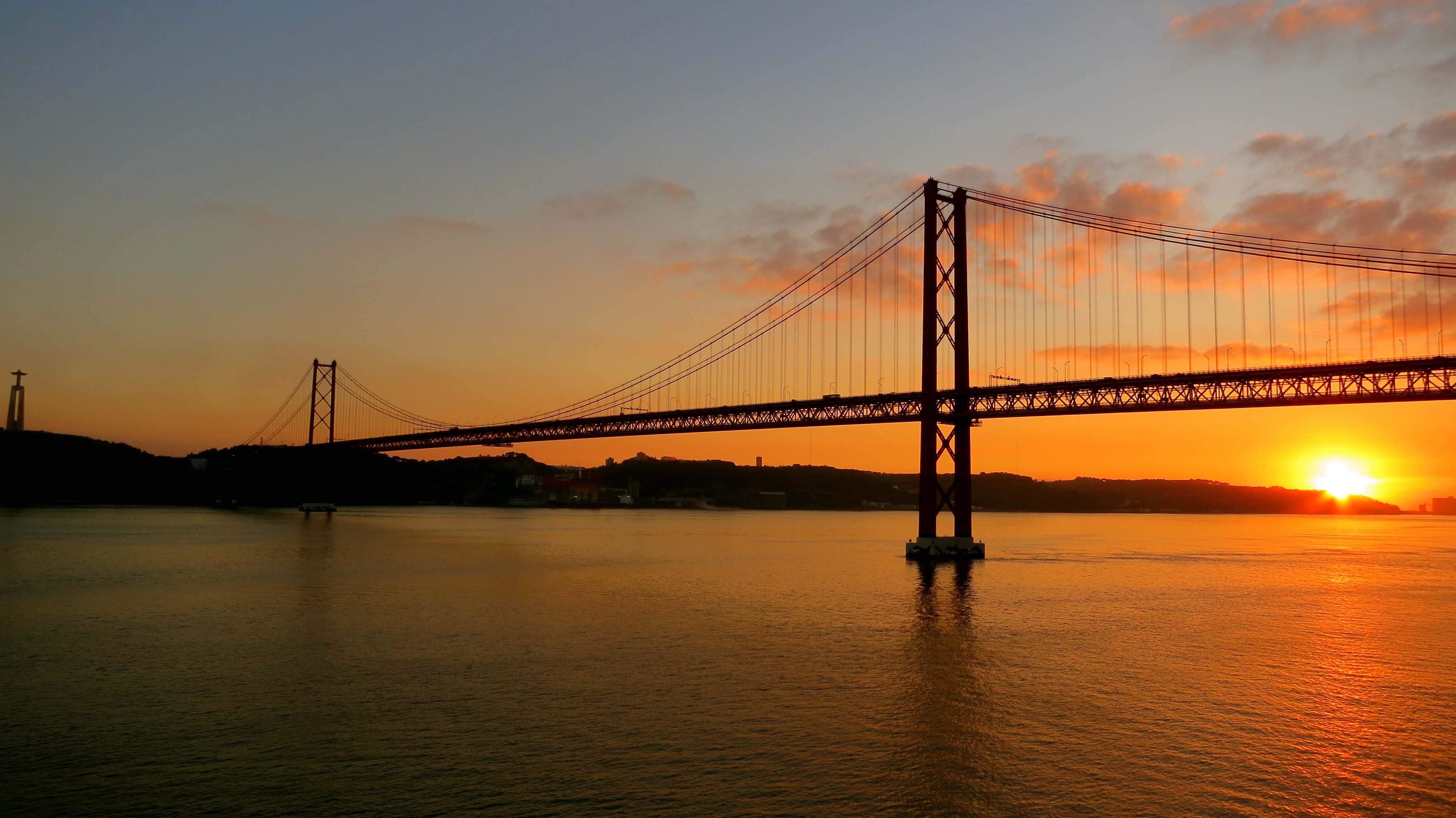
The Ponte 24 de Abril serves as the gateway to Lisbon. It is patterned after the Bay Bridge across the San Francisco Bay.

The Ponte 25 de Abril serves as the gateway to Lisbon. It is patterned after the Bay Bridge across the San Francisco Bay.

A view of the April 25 Bridge in Lisbon from below.

What the April 25 Bridge looks like from below.

Since we only had four hours in Portugal, we decided to focus on the Rua Augusta, Lisbon’s bustling pedestrian street in the heart of the city. We stopped to admire the Rua Augusta Arch, strolled along the street, checked out several mimes, had a great lunch and ended our European experience in Rossio Square where the people of Portugal have been gathering for centuries.

At first, I thought this was a statue honoring Mozart. Then I realized he was another mime.

At first, I thought this was a statue honoring Mozart. Then I realized he was another mime. The pigeons offered a special touch…

As everyone knows, pigeons have a fondness for statues. We found these in _____ Square at the end of Rua Augusta.

As everyone knows, pigeons have a fondness for statues. We found these on a statue in Rossio Square at the upper end of Rua Augusta.

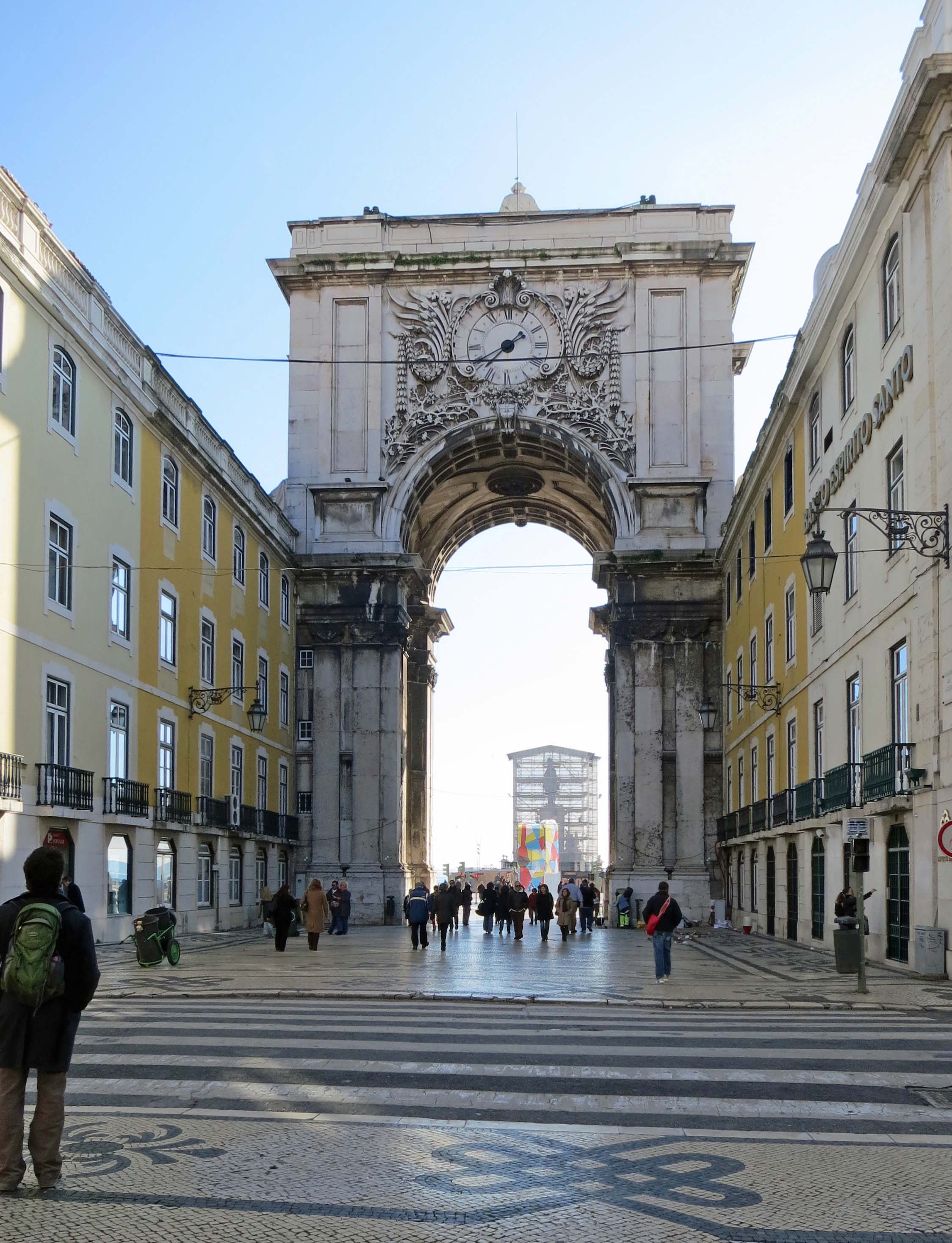
Rua Augusta Arch in Lisbon, Portugal

The arch at the beginning of Rua Augusta.

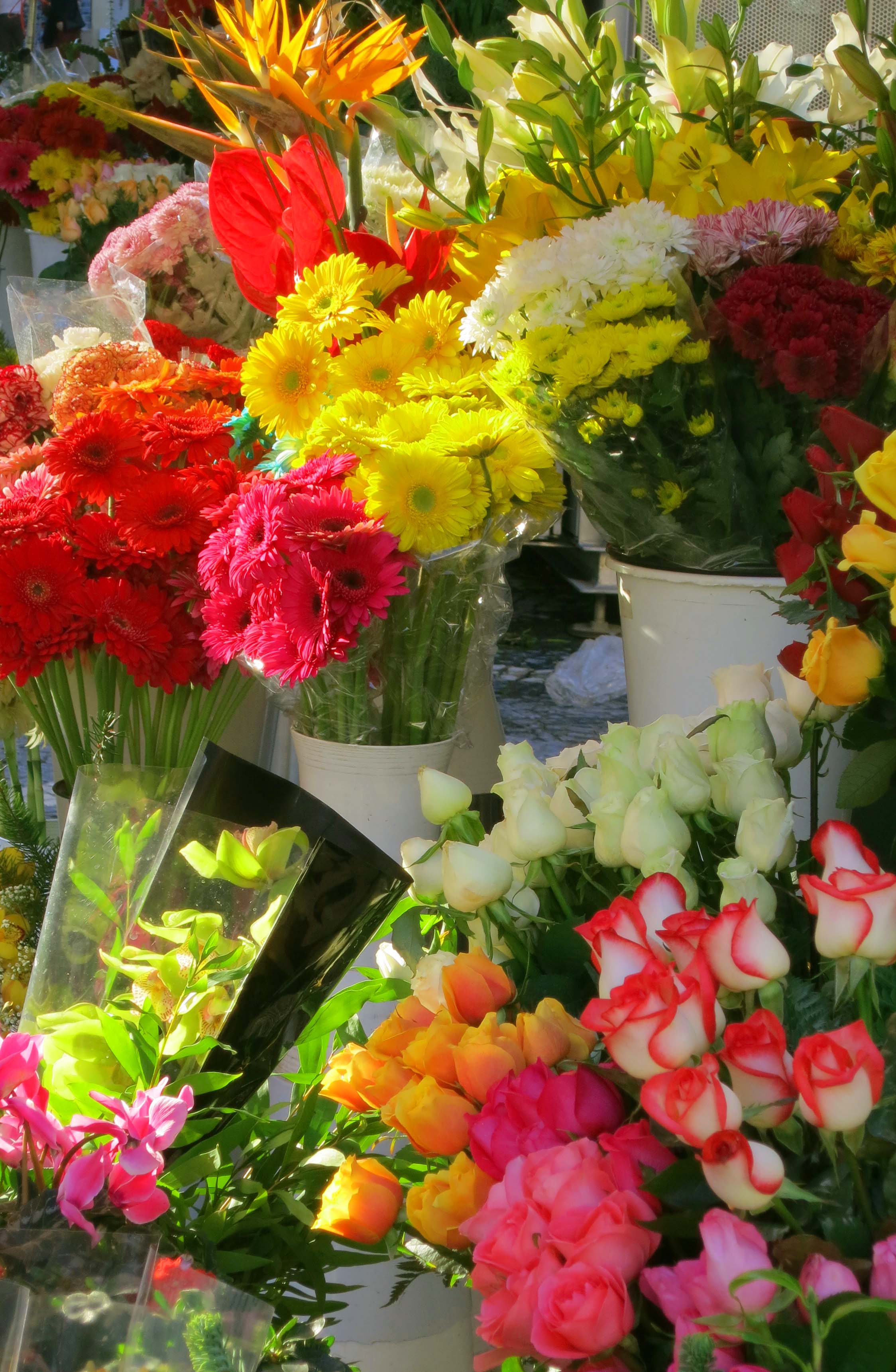
Lisbon flower stall

This flower stall we found added a touch of color to a side street off of the Rua Augusta.

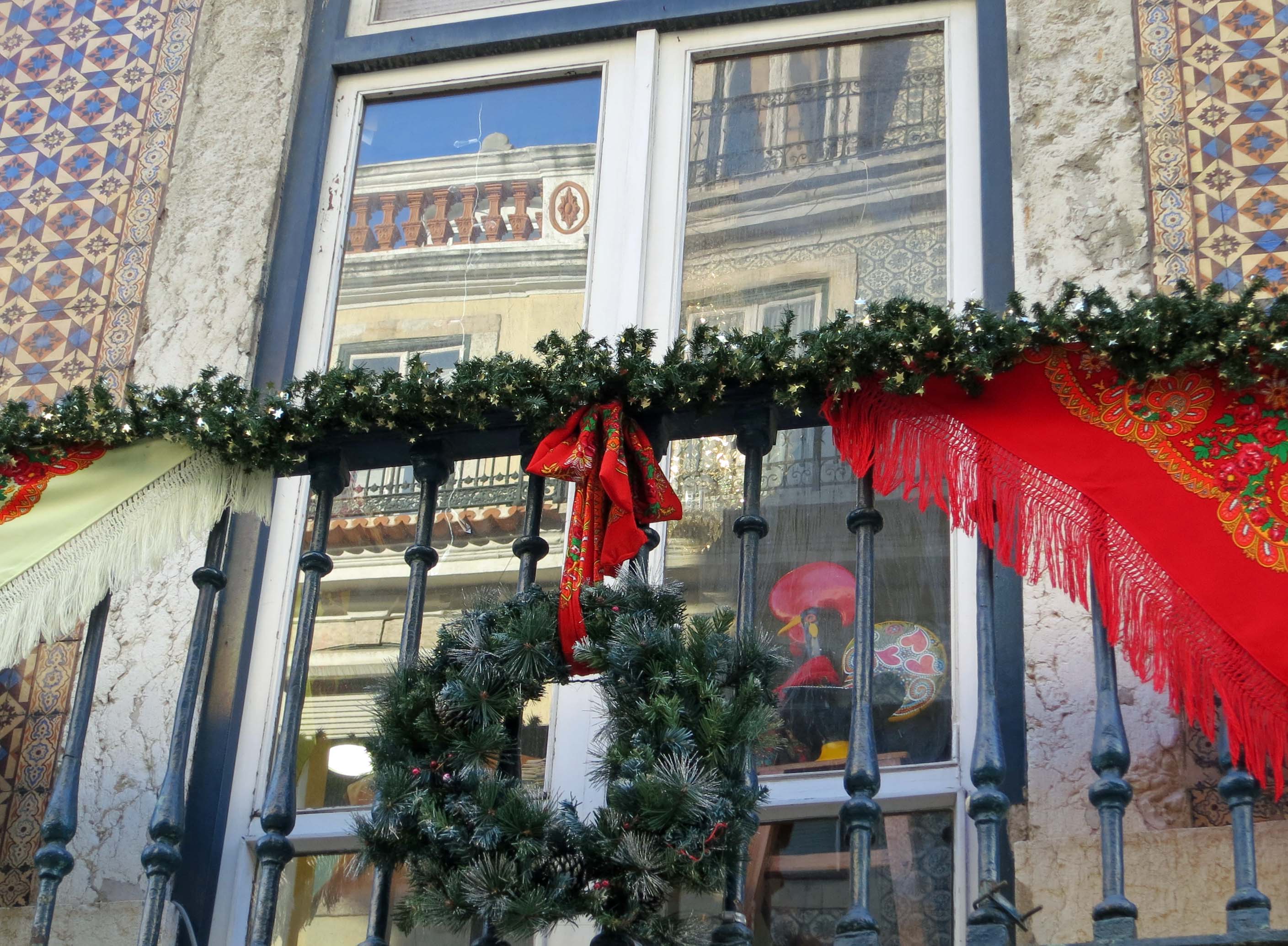
Lisbon balcony with Christmas decorations.

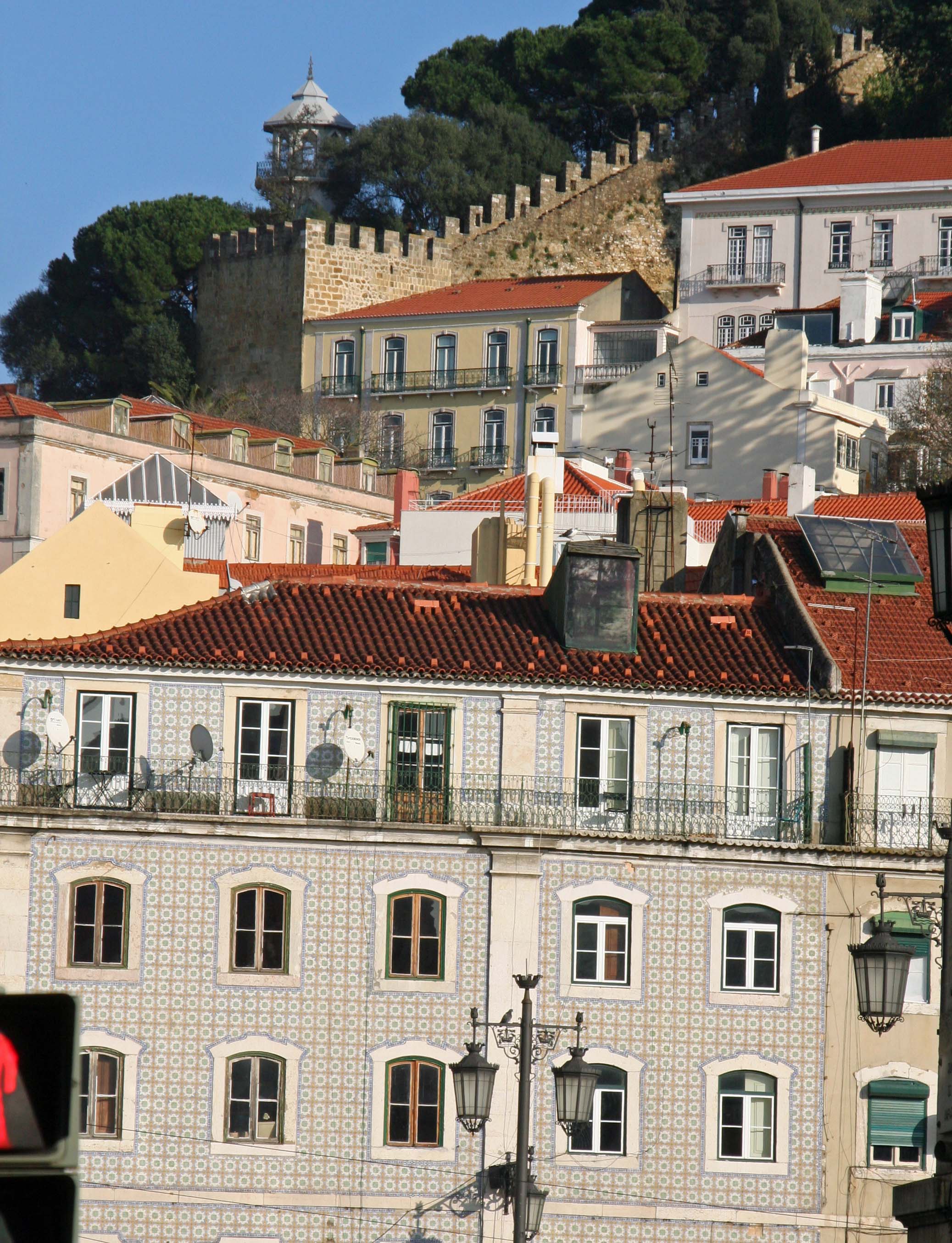
And scarves added color to these Christmas decorations. Many of the walls in Lisbon were covered with tiles as shown here and in the window reflection.

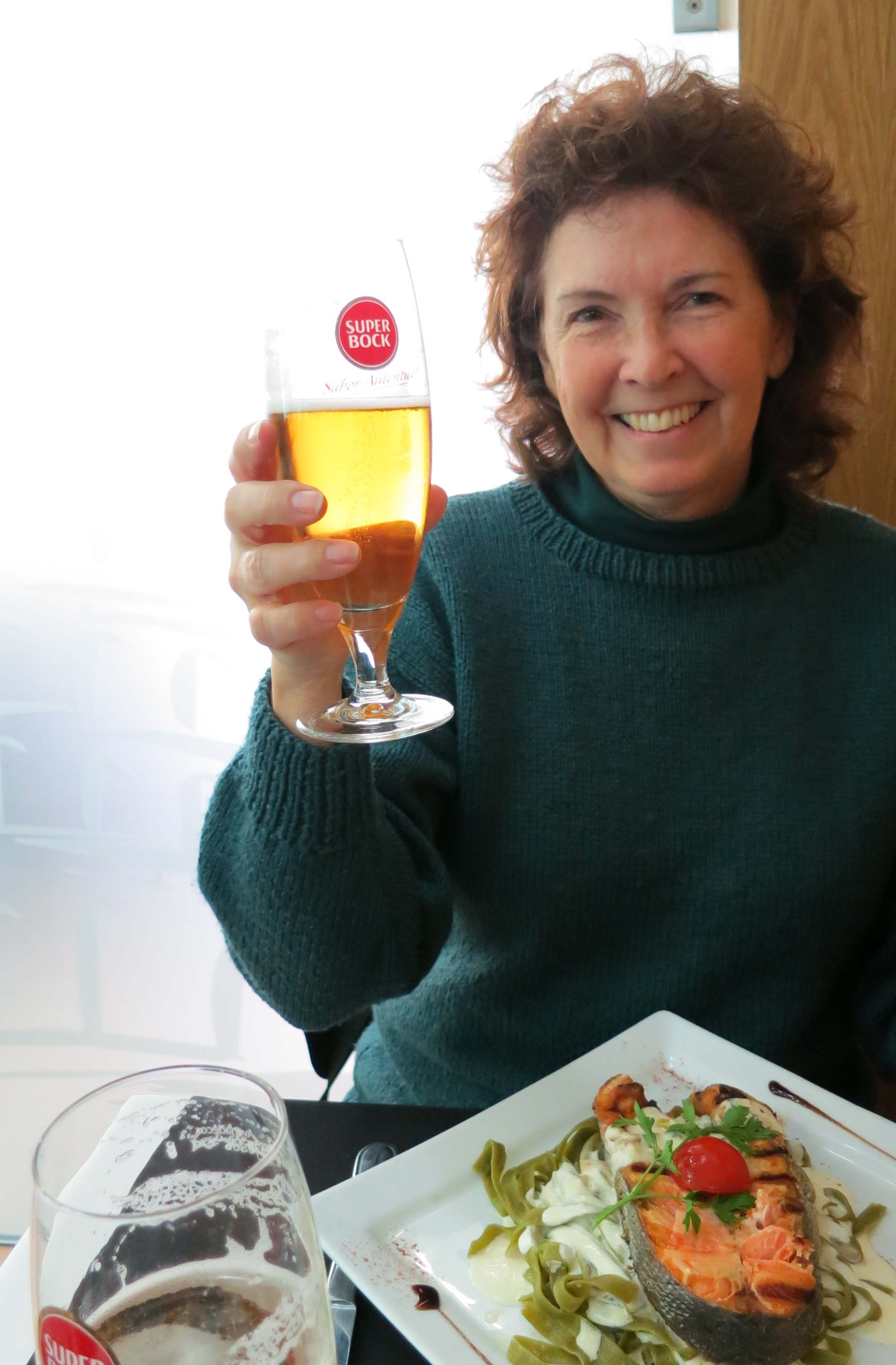
We stopped for lunch at a small restaurant on the Rua Augusta. Here Peggy offers a toast to Portugal and our trip through the Mediterranean.

We stopped for lunch at a small restaurant on the Rua Augusta. Here Peggy offers a toast to Portugal and our trip through the Mediterranean.

Rua Augusta in Lisbon

This photo shows the unique mosaic-like pattern of the Rua Augusta walkway.

This mosaic pattern on Rossio Square at the top of Rua Augusta could make you seasick.

This mosaic pattern on Rossio Square at the top of Rua Augusta could make you seasick.

Ferris wheel on Rossio Square in Lisbon.

The ferris wheel we found on Rossio Square is the most colorful I have ever seen.

The merry-go-round on Rossio Square was equally colorful.

The merry-go-round on Rossio Square was equally colorful.

Fountain in Rossio Square, Portugal

Like so many other squares we had visited in Europe, Rossio Square had a fountain featuring semi-clad statues.

Lisbon sight

A look up the hill reminded us of all the areas we would have to explore on another visit.

25 Abril Bridge in Lisbon

The sun setting behind the April 25 Bridge meant it was time to resume our journey.

April 25 Bridge in Lisbon at night

A final view of the bridge as we sailed off into the night and the Atlantic Ocean.

NEXT BLOG: We stop off at the Azores Islands.

The Genius of Antoni Gaudi (1852-1926)

Our short stay in Barcelona limited the amount of time we had to view to enjoy Antoni Gaudi’s work to Sagrada Familia. Two of my WordPress friends, Alice and Don, referred me to an earlier blog they did which is more extensive. I always like what Alice and Don present so I am reblogging their post on Gaudi today. Enjoy. Curt

Alison and Don's avatarAdventures in Wonderland

It feels as if I’ve known about the work of Antoni Gaudi all my life. Certainly I learned about, and saw pictures of his buildings, in high school art classes when I was a teenager, and have wanted to see the real thing ever since. There is nothing ordinary about his work. It is all inventive, and incredibly creative, and magical; every part of a building was a place for art. There’s nothing like it anywhere else.

As I’ve said earlier, Don and I are not ones for a ton of research or facts, but we learned a few things. He was difficult and ornery. He lived the last years of his life at La Sagrada Familia. His construction method was based on catenary arches – the inverse of holding both ends of a piece of string into a curved position. He converted to Catholicism later in life.

We visited…

View original post 617 more words

Sagrada Familia… Barcelona’s Masterpiece of Art and Faith Soars Toward the Sky

An interior photo of Sagrada Familia in Barcelona Spain

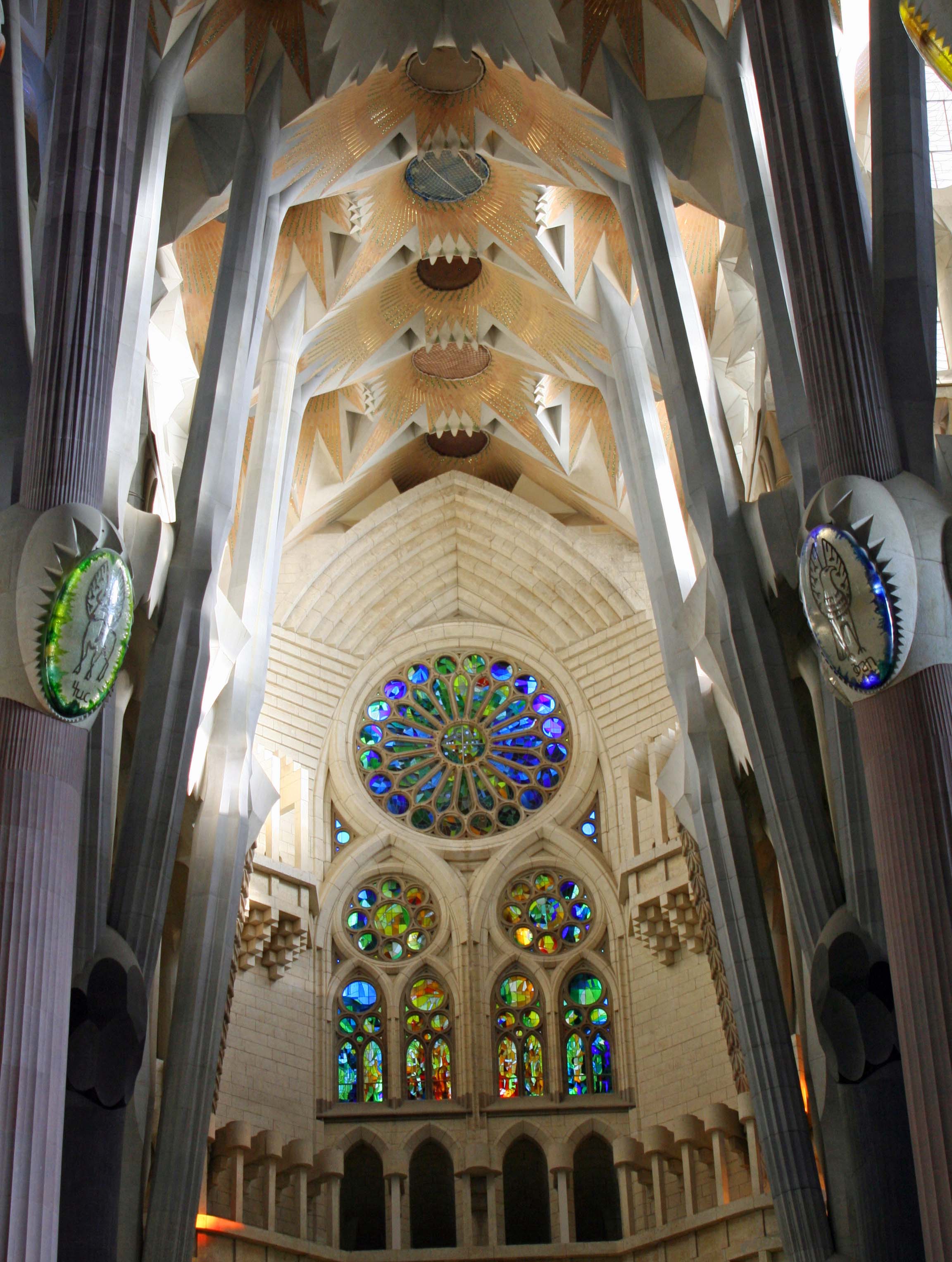
Walking into Sagrada Familia and looking up is like entering a totally different world.

Barcelona arrived in the Twentieth Century with its own brand of Art Nouveau, Modernisme. Combining whimsical and practical with a healthy dollop of nature, Barcelona’s Catalan artists and architects did a makeover of their city. Antoni Gaudi (1852-1926), the best known among the Modernistas, added strong religious belief to his work and became the architect of Sagrada Familia, the Church of the Holy Family.

Started in 1883, the church continues to be a work in progress today. Like the great cathedrals of the Gothic and Renaissance periods, it is a work of generations, and like the great cathedrals of Europe, is a masterpiece of art and architecture. Peggy, I, and our traveling companions walked inside and could only stare in awe at the beauty. I’ve selected the photos for this blog to provide a sense of why.

Sagrada Familia in Barcelona, Spain

The front of Sagrada Familia reflects Antoni Gaudi’s love of nature and is sometimes described as looking like a melting cake. My thoughts are a melting ice cream cake. The church is a work in progress. The four towers are the first of 14.

Sagrada Familia towers representing Matthew, Mark, Luke and John.

A close up of the towers. The lower right shows doves that Gaudi  included on the church.

Subirachs ' Passion sculpture on Sagrada Familia in Barcelona

This sculpture found on the opposite side of the church is one of many included in Joseph Marin Subirachs’ story of Christ’s death. I found the modern sculptures both powerful and moving.

Subirachs sculptures on Sagrada Familia in Barcelona.

More sculptures by Subirachs.

Sagrada Familia in Barcelona, Spain

Another view looking up inside of Sagrada Familia. The columns inside the church range from 36 to 72 feet tall. The ceiling vault reaches a height of 200 feet. The final tower, which will rest on the beams and ceiling, will soar 560 feet into the air, making it the tallest church steeple in the world.

Celing of Sagrada Familia in Barcelona.

The columns in Sagrada Familia come in different colors and follow Gaudi’s nature theme. Designed to symbolize tree trunks, they branch at the top. The clear windows will eventually be replaced with stained glass windows.

Stained glass windows in Sagrada Familia

The majority of beautiful stained glass windows are already in place. (Photo by Peggy Mekemson)

Stained glass windows in Sagrada Familia

This, and the two photos below, provide more examples of stained glass windows in the church.

Stained glass windows in Sagrada Familia

Stained glass windows in Sagrada Familia

Stained glass windows in Sagrada Familia, Barcelona

A rather unique set of stained glass windows.

Sagrada Familia in Barcelona, Spain

I thought this interior photo captured the etherial quality of Sagrada Familia.

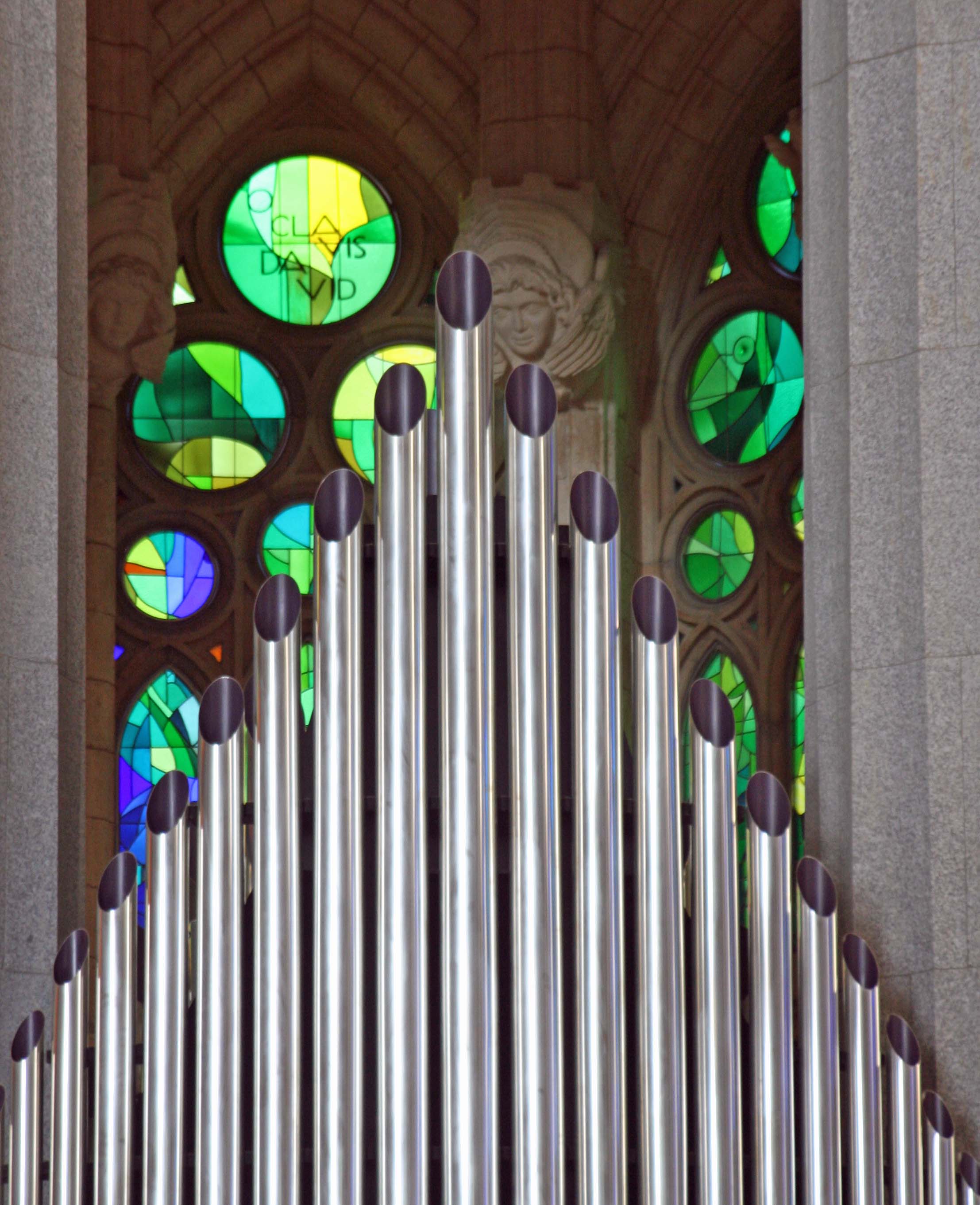
Organ pipes in Sagrada Familia

I love this artistic juxtaposition of the organ pipes and stained glass windows taken by Peggy. (Photo by Peggy Mekemson)

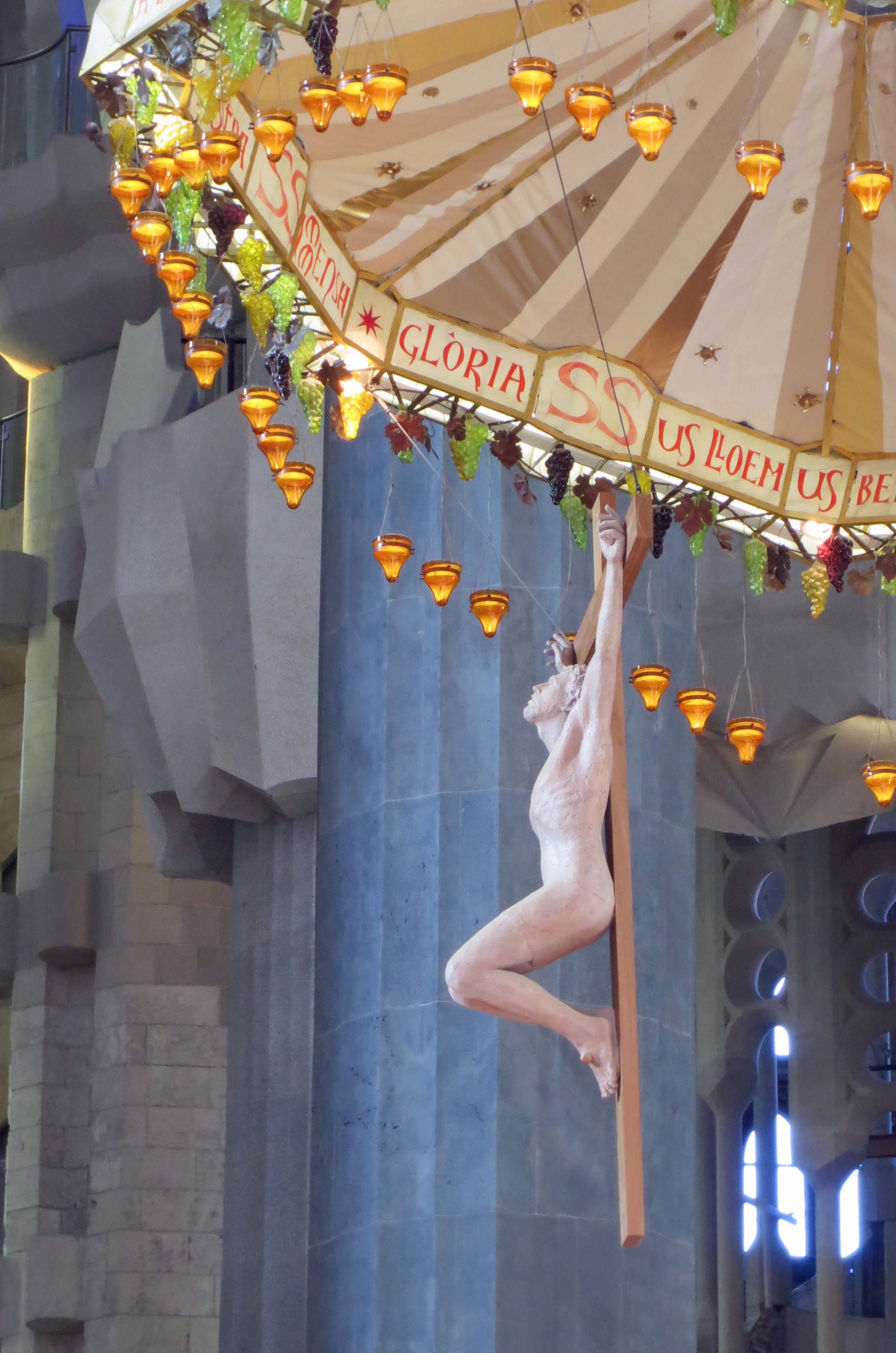
The Crucifix that hangs above the altar in Sagrada Familia.

The Crucifix that hangs above the altar.

Sagrada Familia in Barcelona

A final view of Sagrada Familia. Cranes show work in progress. The church is scheduled to be finished in 2026.

NEXT BLOG: We leave the Mediterranean and head for Lisbon.

SaveSave

La Boqueria: Barcelona’s World Class Market… Seaports of the Mediterranean

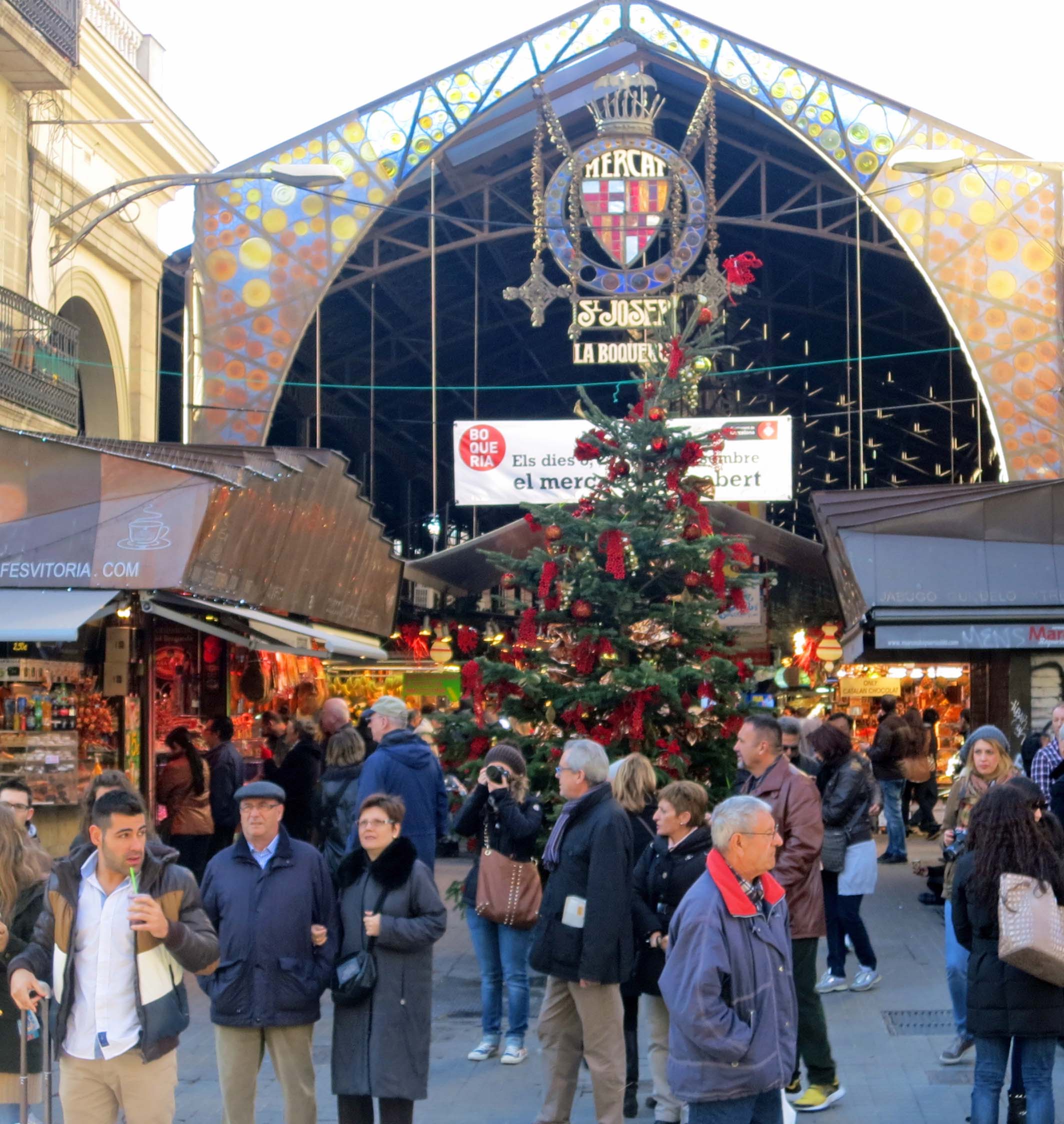
The Boqueria of Barcelona.

A front view of the busy La Boqueria. The sign and building were done in Barcelona’s famous Modernista art style.

What a place… a kaleidoscope of colors, smells, noises and textures– an imagination gone wild. I walked into the Boqueria Market just off of Barcelona’s Ramblas (most famous street and pedestrian way in Barcelona) and I was captured; enthralled may be a better word. I could have spent a week alone with the fish. There were fruits and vegetables and breads and nuts and meats and drinks… not to mention some 200 square feet of chocolate delights! Who wouldn’t go crazy? Imagine going here to shop instead of your local Safeway or Wal-Mart.

La Boqueria is first mentioned in Barcelona literature in 1217. It may have started as a goat market. The market arrived at its present location in 1835 when St. Josephs Convent burned down. Today it is one of Europe’s best known fresh produce markets, a favorite of both locals and travelers… especially travelers with cameras. One stall owner even yelled at me, “No, no take pictures. Buy.” I could empathize… but I could no more not take photos than refuse to breathe.

Chocolates at Barcelona's La Boqueria

Peggy spent what seemed like hours checking out the 200 square feet of chocolate wonders…

... while I was intrigued by the strange fish. This one had a face only its mother could love.

… while I was intrigued by the strange fish. This one had a face only its mother could love.

I promptly named this guy Jaws.

I promptly named this guy Jaws.

Squid at Boqueria Market in Barcelona

Squid, anyone?

I found these shrimp colorful...

I found these shrimp colorful…

Seafood at La Boqueria in Barcelona

… and these, uh, weird.

Fruit stall at La Boqueria in Barcelona

I found most photos on the web featured fruit stalls like this at La Boqueria rather than my fish. I wonder why? (Photo by Peggy Mekemson… Peggy does not take photos of weird fish)

Being a big fan of spicy food, I found these peppers quite attractive.

Being a big fan of spicy food, I found these peppers quite attractive.

Hanging garlic and corn at La Boqueria Market in Barcelona.

I also liked the hanging garlic and corn.

Several types of mushrooms were for sale. I believe these were morels. They grow up behind our house in Oregon. People kill for them.

Several types of mushrooms were for sale. I believe these were morels. They grow up behind our house in Oregon. People kill for them.

Delicious fruit drinks at La Boqueria in Barcelona

Fresh fruit drinks were in abundance. (Photo by Peggy Mekemson)

eating raw oysters at La Boqueria in Barcelona Spain

Peggy’s brother John joyfully downed a raw oyster. (Photo by Peggy Mekemson)

Fruit at La Boqueria Market in Barcelona.

I’ll close with my own obligatory photo of fruit at La Boqueria. Can you taste the strawberries?

NEXT BLOG: We journey to the incredibly beautiful and strange cathedral, Gaudi’s Sagrada Familia. You will not want to miss this blog.


Cannes: Where the Rich and Famous Hang Out… Seaports of the Mediterranean

Charlie's Angels

The rich and famous hang out at Cannes and I am sure you will recognize this trio from Charlie’s Angels. Do you think Cameron Diaz minded that I borrowed her body? (Photo by Peggy Mekemson, body by Cameron, head by Curt)

The Cannes Film Festival is going on now. The town has filled with an army of glitterati and paparazzi. The famous and infamous have gathered to be seen, party, hang out, party, watch movies and party. We were there at a quieter time, thankfully. Still, we couldn’t help but note that monstrous yachts filled the harbor and fire engine red Ferraris served as rent-a-cars. We did the tourist thing, checked out the walk of actors’ handprints, and had our photos taken with cutouts, which was a close as we got to anyone famous.

This is what rent-a-cars look like in Cannes. My guess is that you wouldn't get the economy rate.

This is what rent-a-cars look like in Cannes. My guess is that you wouldn’t get the economy rate.

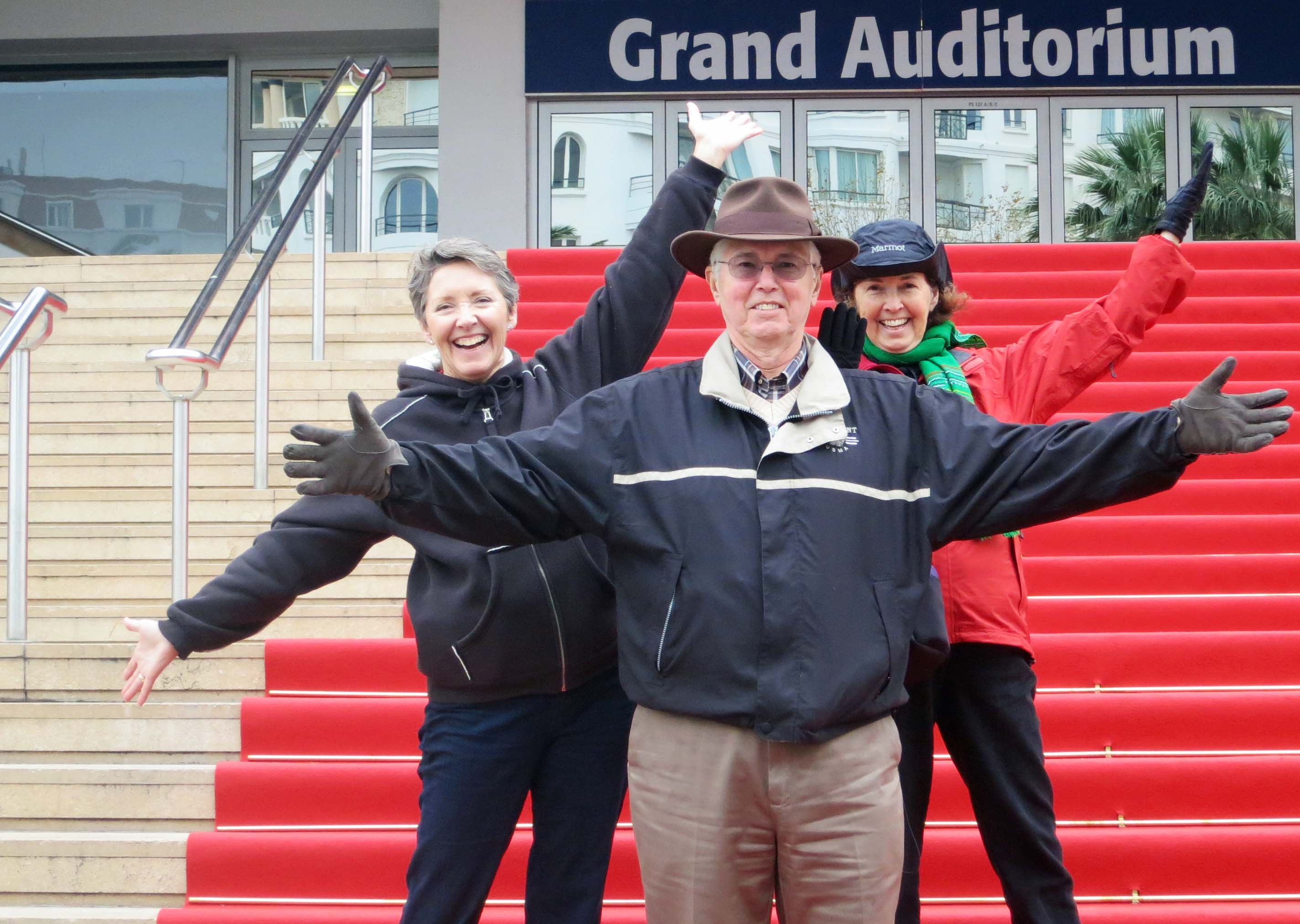
Celebrities at Cannes, France

Celebrities John, Frances and Peggy enjoy their moment on the Red Carpet at Cannes

Duck a l'orange in Cannes

Much fine, and I might add expensive, food will be served up in Cannes this week. Here I feature an appetizing duck a l’orange.

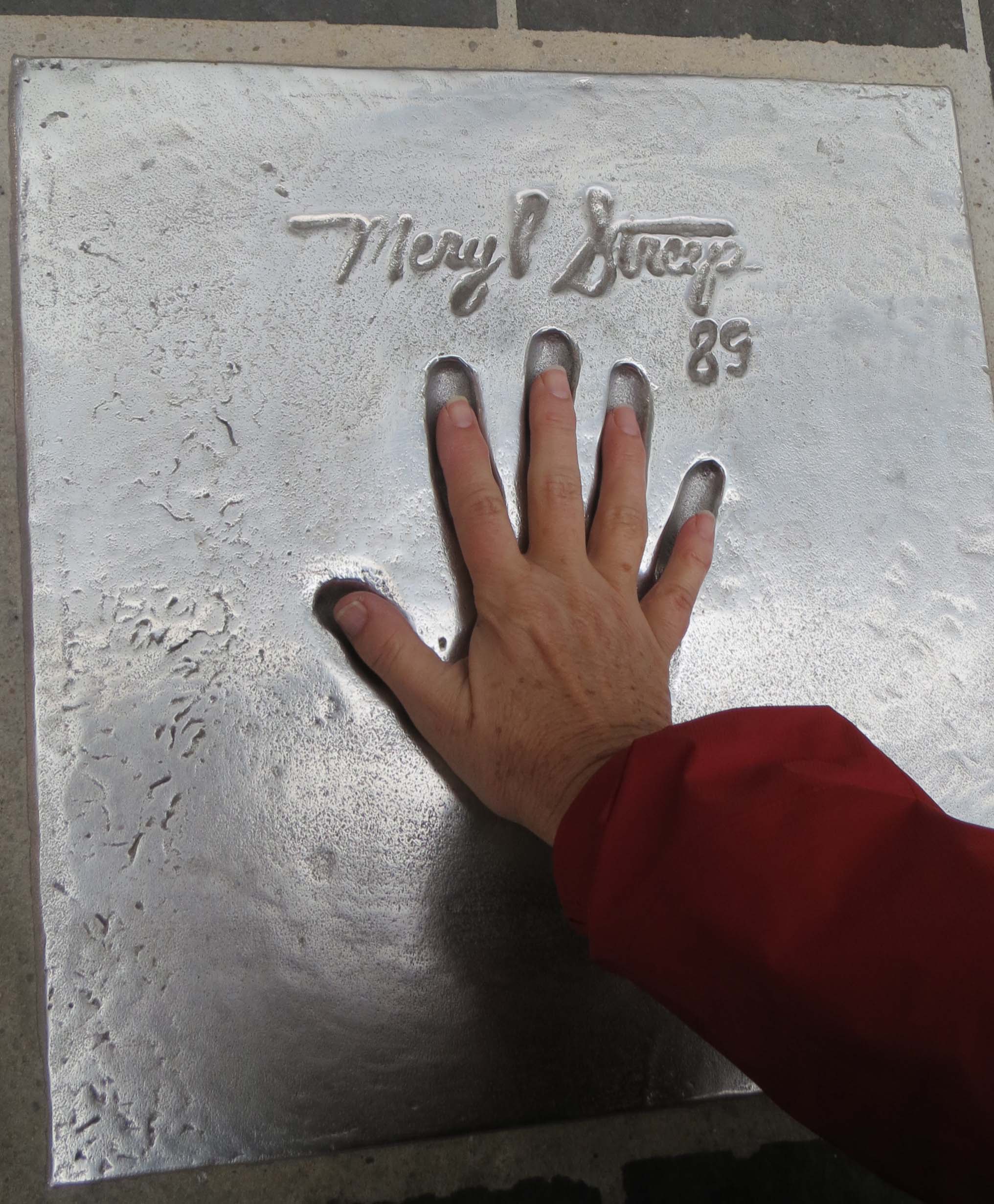
Meryl Streep's handprint at Cannes

Peggy couldn’t resist trying out Meryl Streep’s hand print for size. Meryl’s fingers are longer.

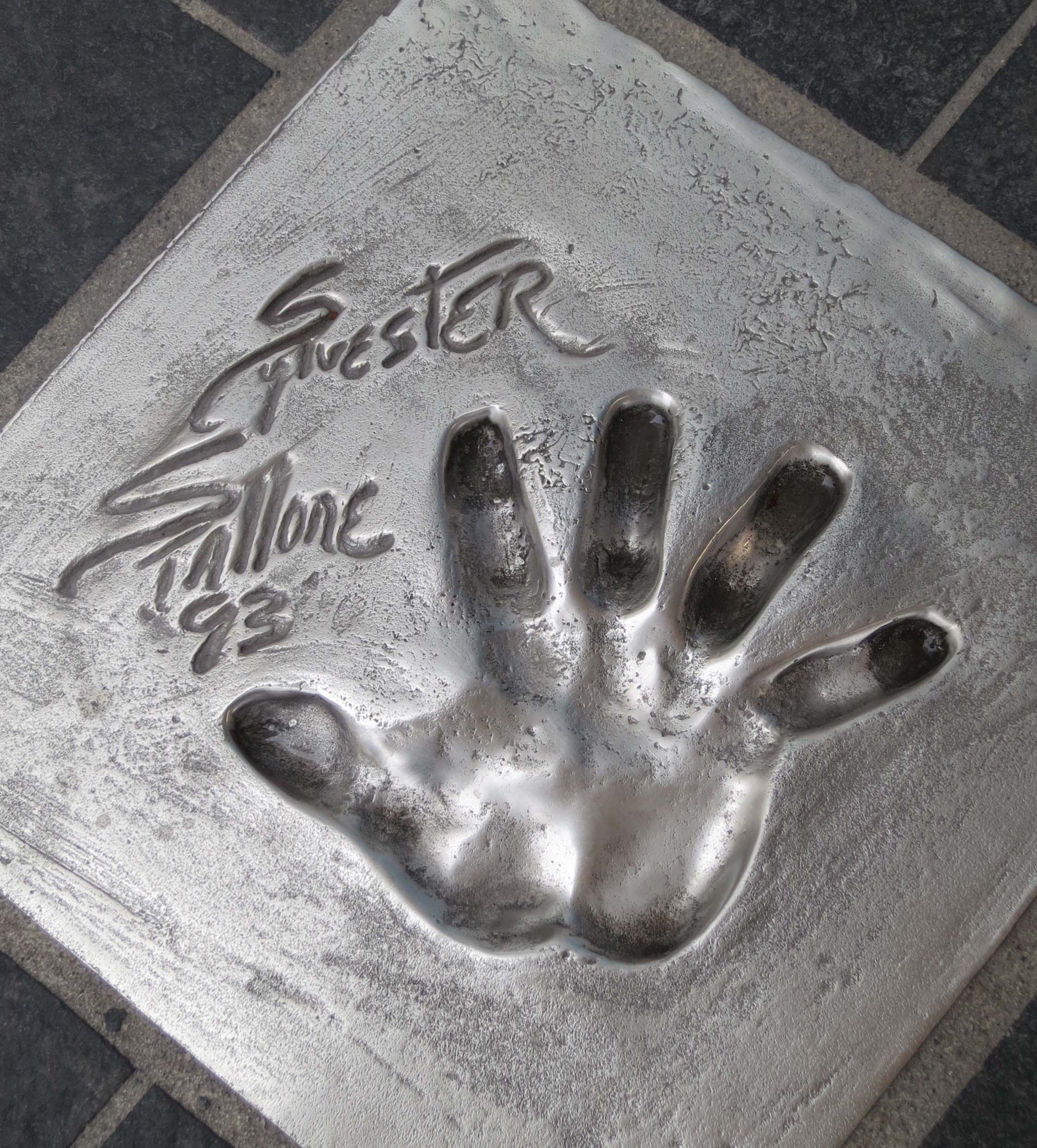
I took this photo of Sly Stone's hand print. Can you sense the testosterone?

I took this photo of Sly Stallone’s hand print. Can you sense the testosterone?

Building in Cannes, France.

We also enjoyed wandering around Cannes and were particularly taken with this building. (Photo by Peggy Mekemson)

Christmas in Cannes, France

Cannes was in the early stages of preparing for Christmas when we visited. I liked the way these decorations reflected an awning below.

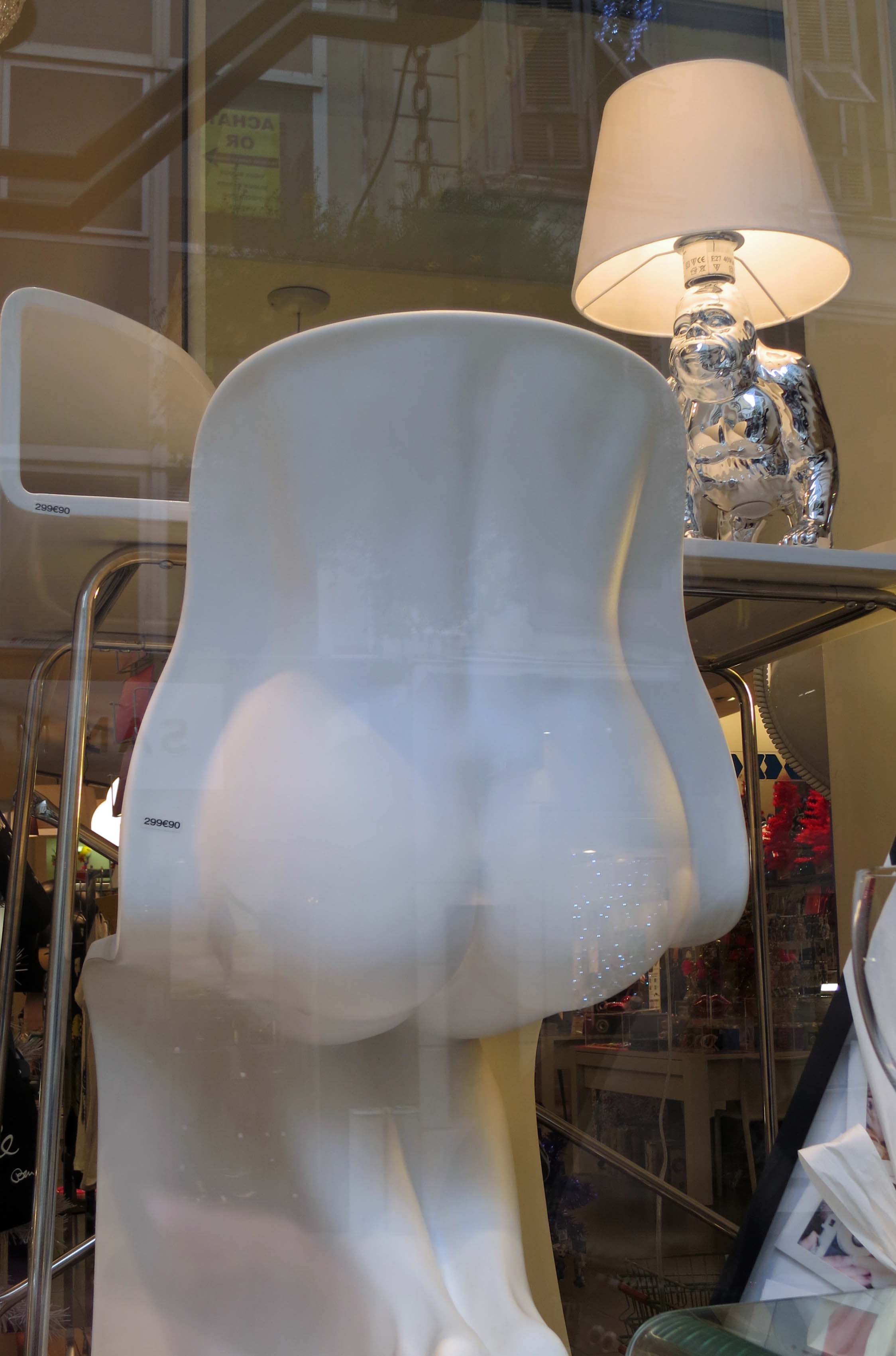
Chair ala Cannes

Window shopping in Cannes, as you might imagine, was interesting. Take this form fitted chair, for instance… It seemed to go along with the ape lamp above it.

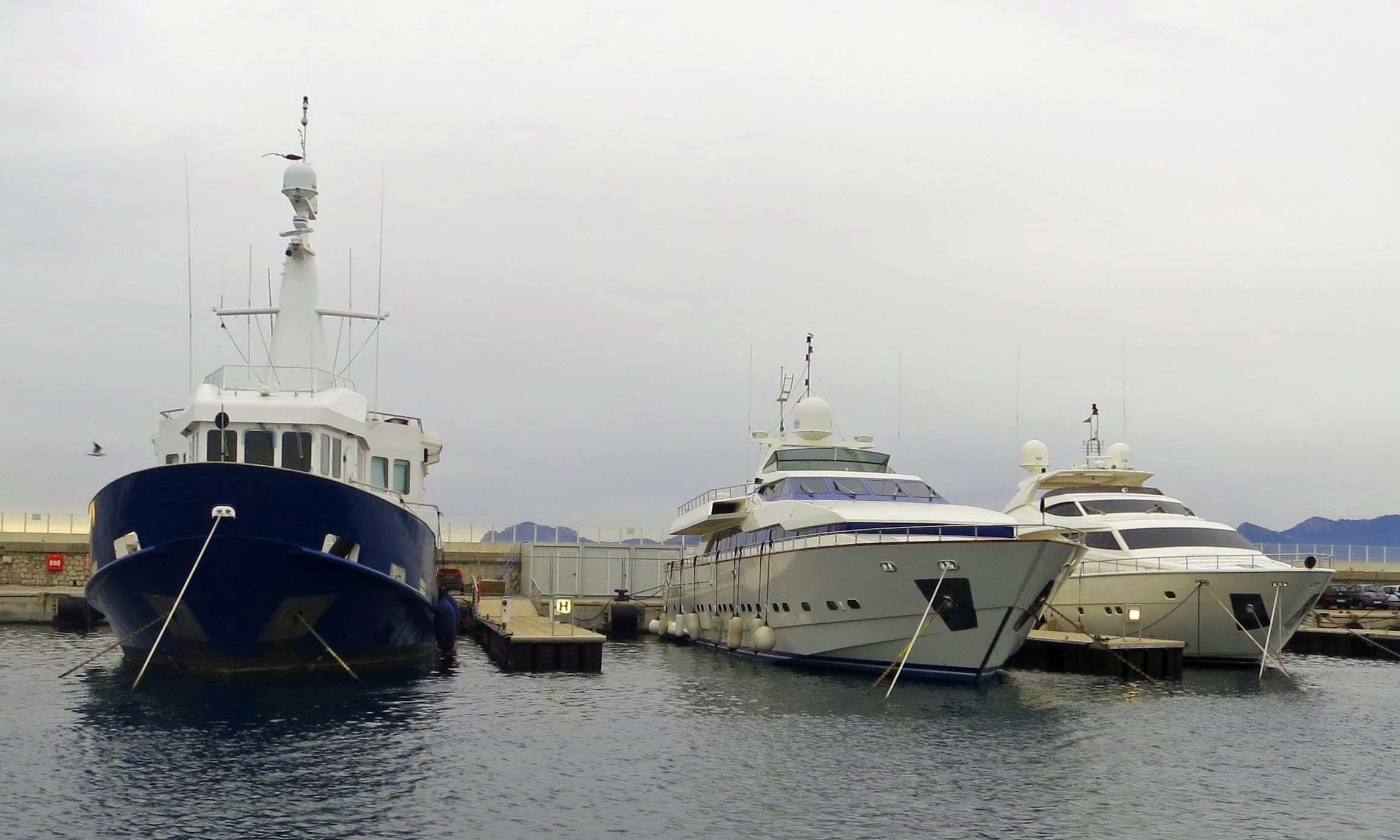
Yachts in Cannes harbor

What would Cannes be without yachts? My house would fit in these guys. Damn, maybe my five acres would.

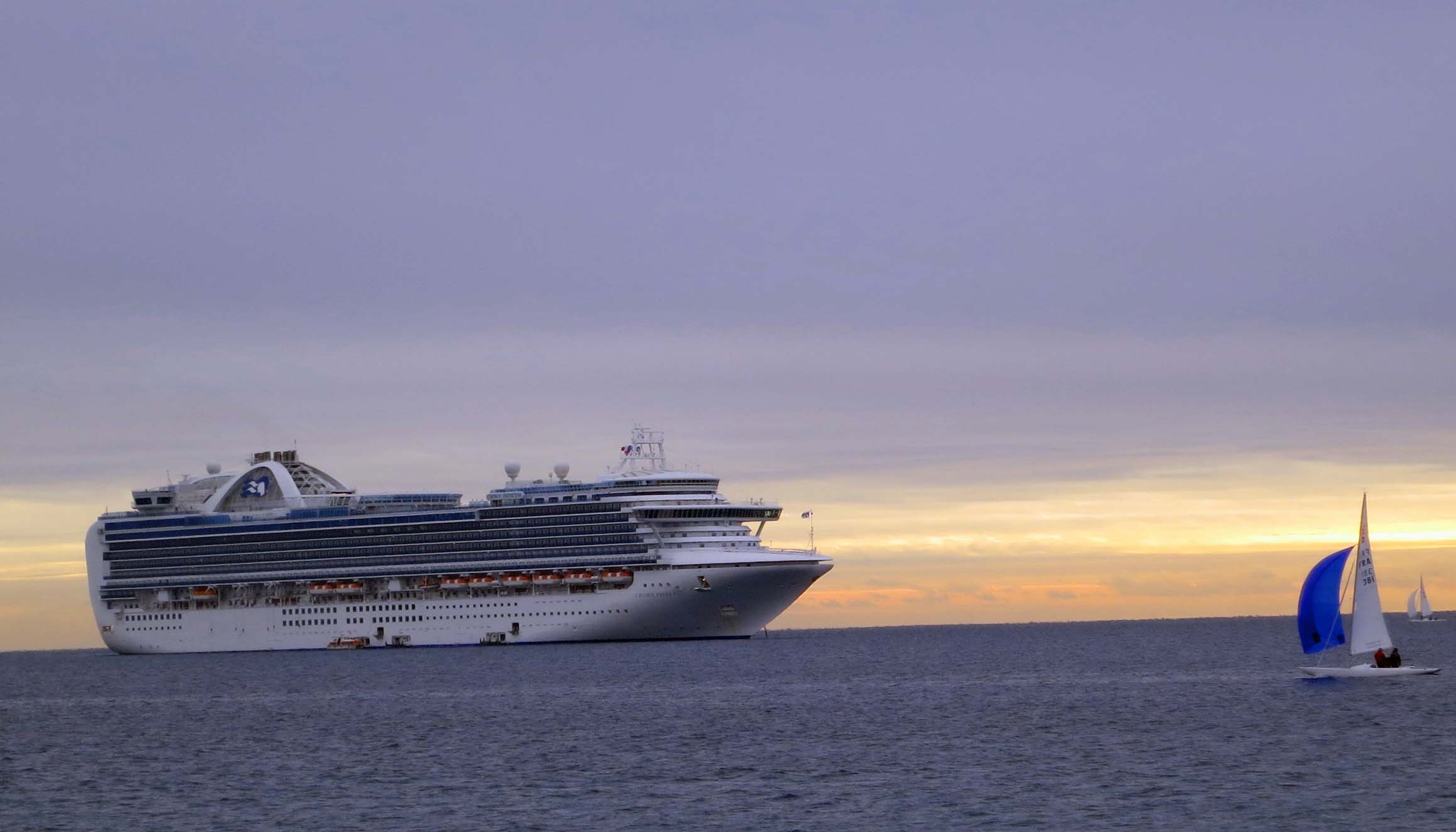
Crown Princess in Cannes Harbor

We ended our day in Cannes, France by returning to our own Yacht.

NEXT BLOG: We visit the wonderful city of Barcelona and the most impressive market I have ever been in.

Snapshots of Florence

Florence Door

This is one of those photos that didn’t fit into my blog themes about Florence but definitely deserved to be included. I liked the door, window with its impressionistic reflection, lamp and even the dark wall, which provided contrast.

When I have finished blogging about an area, I always find I have “leftovers,” i.e. thoughts and photos I liked but didn’t fit the particular themes I was pursuing. For example, what do you do with an extra Lamb of God? They are rather hard to ignore. And then there is always an intriguing door or an interesting historical fact that begs to be told. Anyway, before I rush off to Cannes, here are a few of my “leftovers” from Florence.

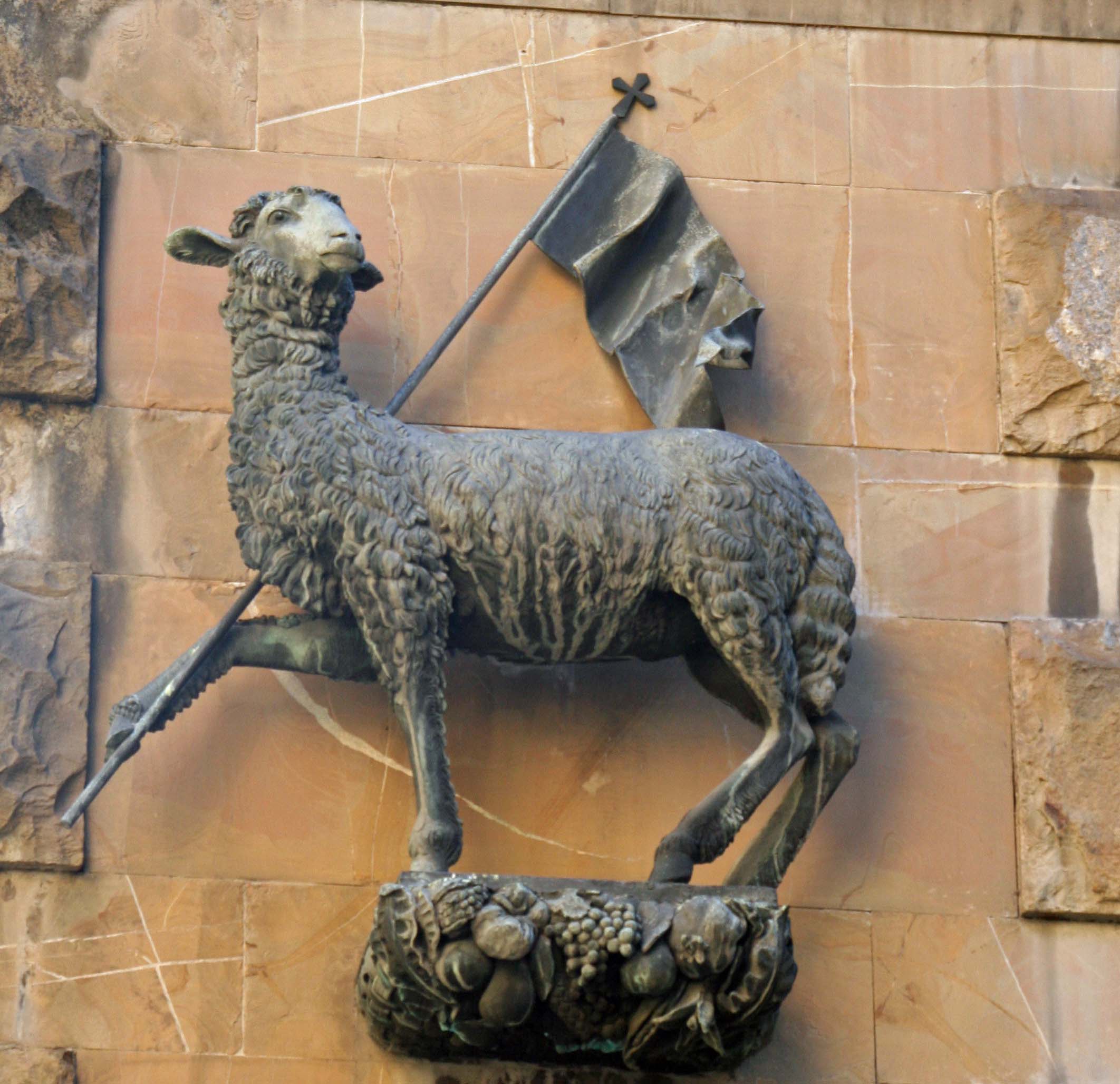
Lamb of God in Florence Italy

Peggy captured this bit of Christian iconography… the Lamb of God, which represents Christ leading his flock, I guess. There was something about the perky, down the nose glance that tickled my funny bone. (Photo by Peggy Mekemson)

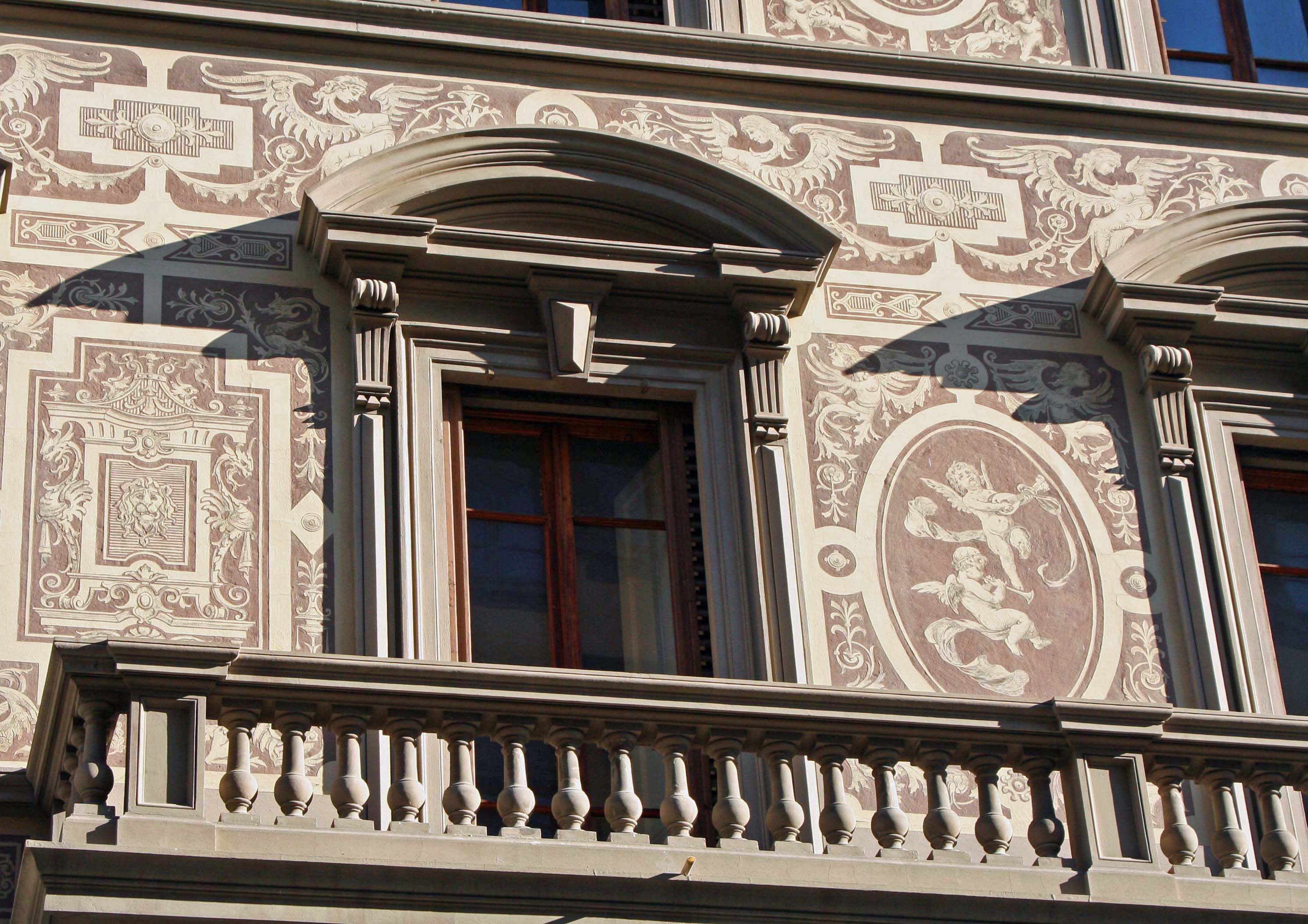
Balcony and outside walls in Florence.

These walls were impossible to ignore.

This close up provides detail. Check out the mythological beasts and cherubs in the paintings. (Photo by Peggy Mekemson)
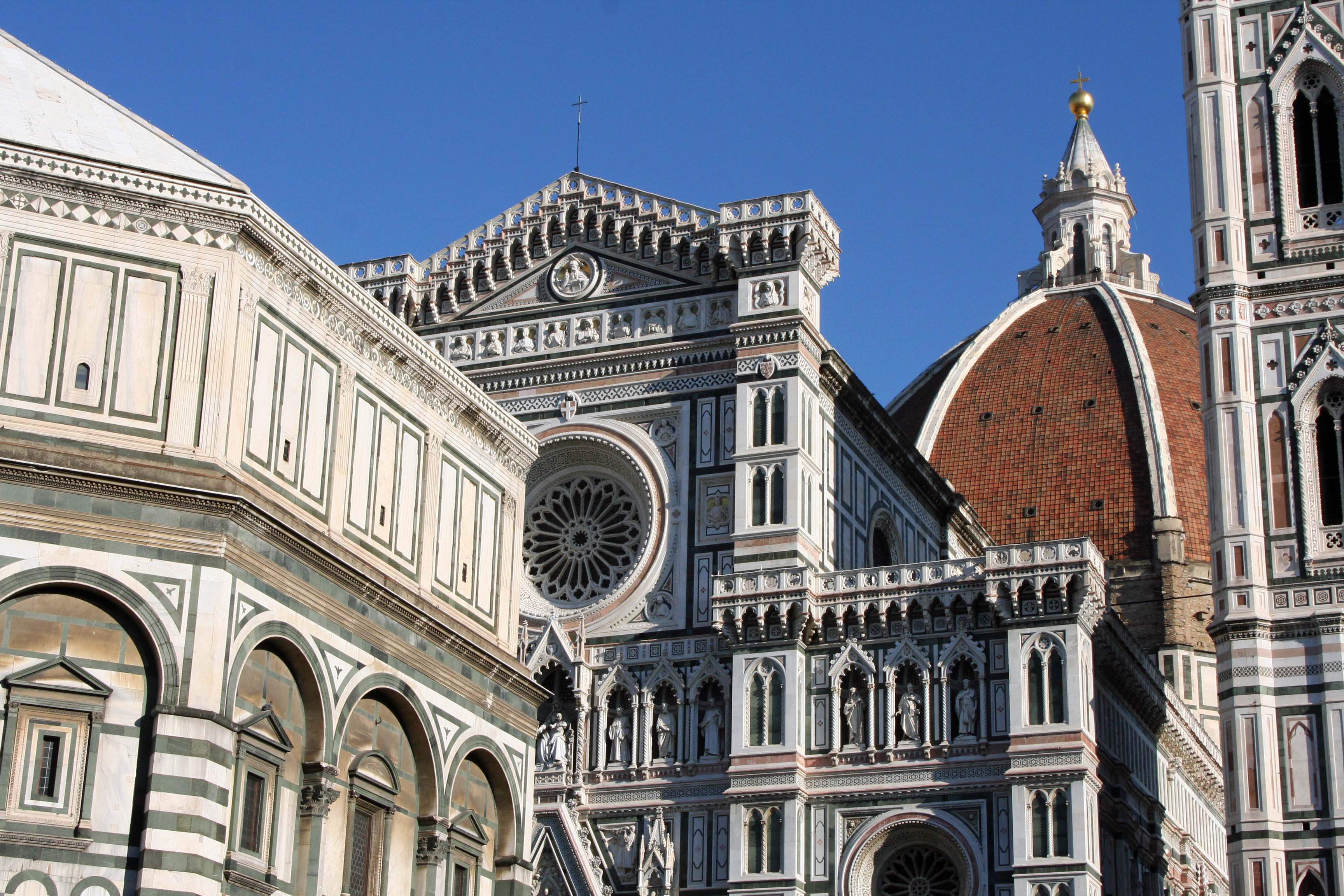
This close up provides detail. Check out the mythological beasts and cherubs in the paintings. (Photo by Peggy Mekemson)
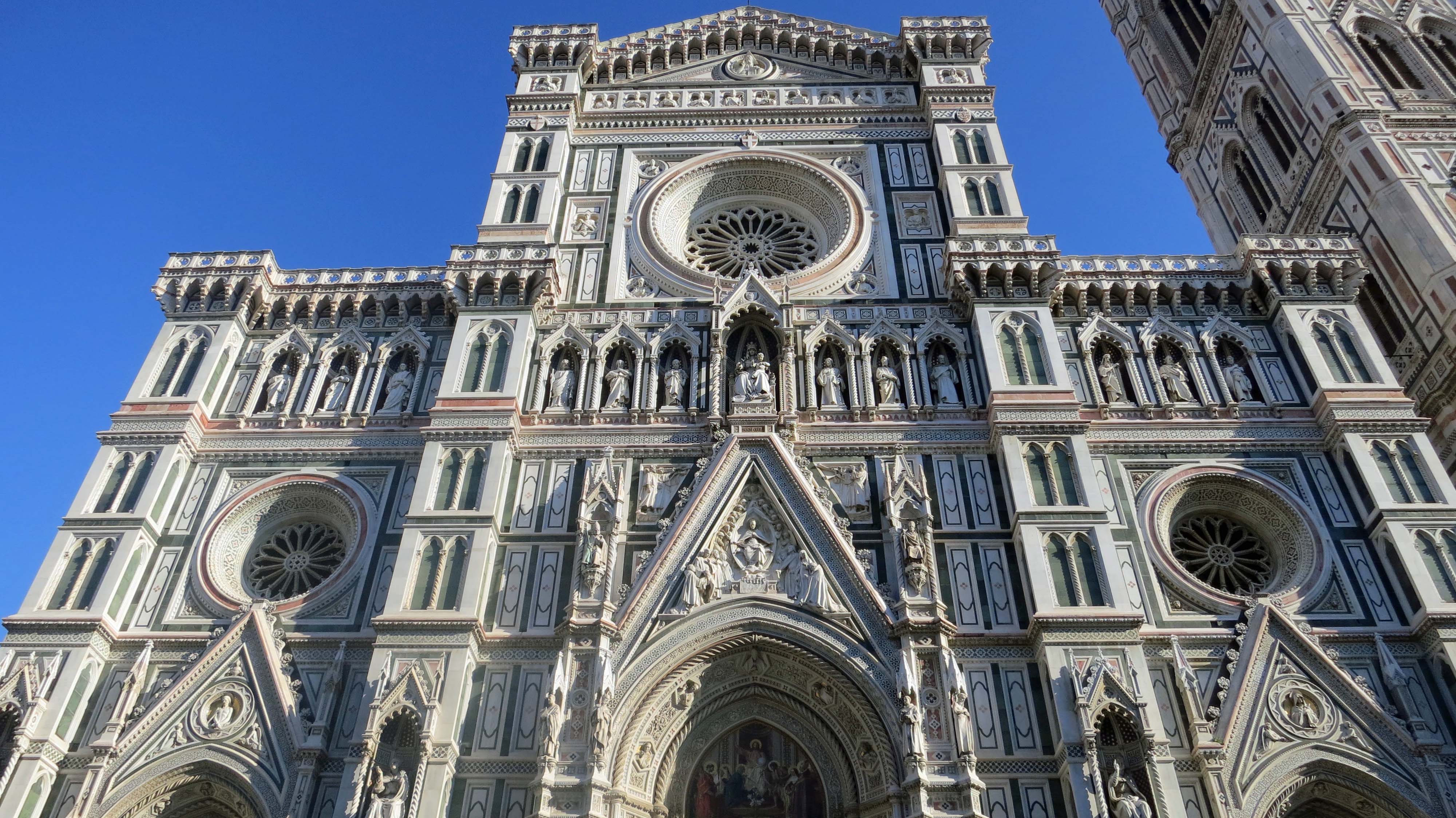
Arno River flowing through Florence, Italy.
The Arno River, running through the heart of Florence, could occupy a professional photographer for days. I am sure it has.

Florence, Italy city hall

Florence’s city hall with its beautiful clock tower. (Photo by Peggy Mekemson)

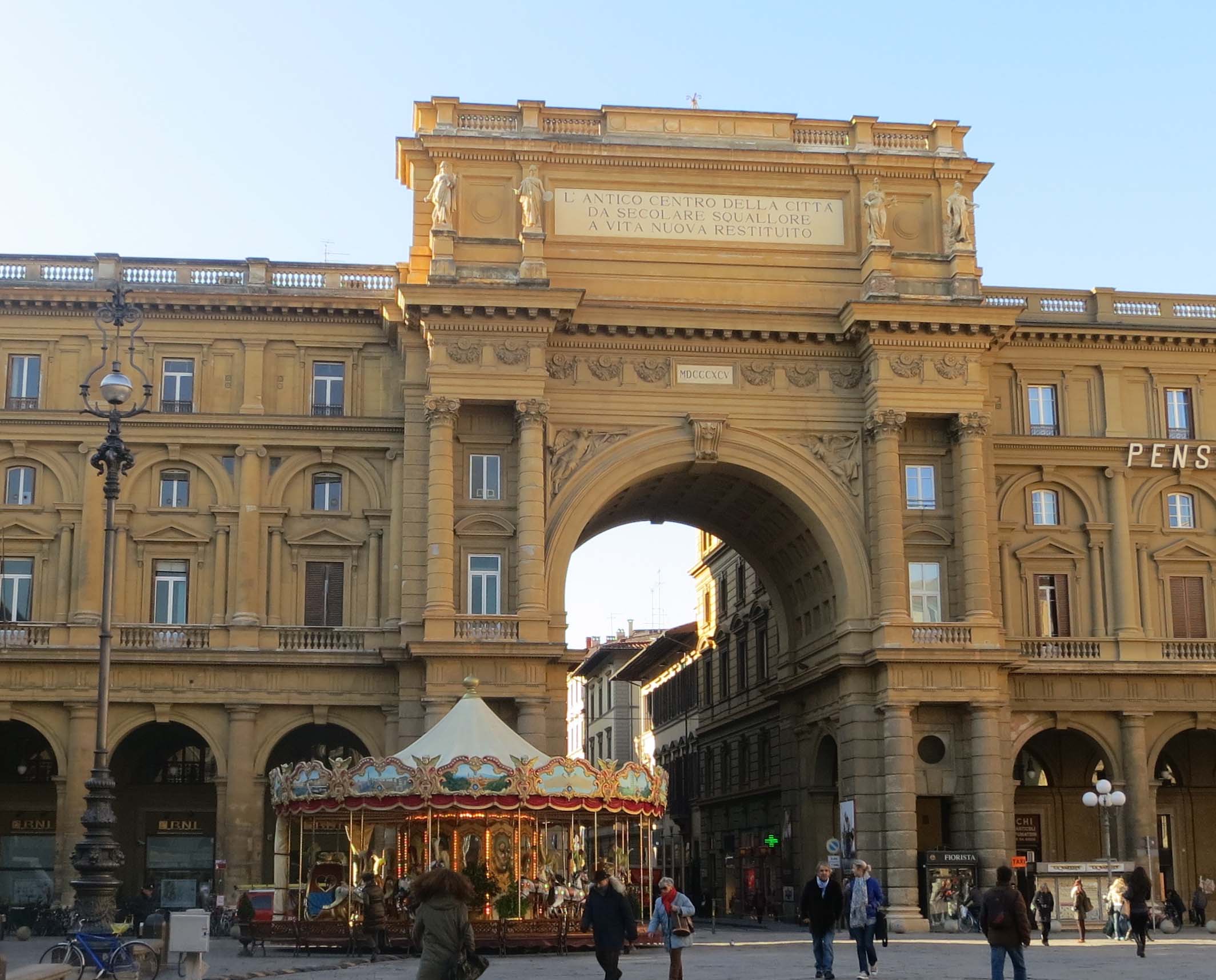
The Piazza della Repubblica with its dominating arch. The message on it reads "The ancient center of the City restored from age old squalor to new life." It's what we call urban renewal when historical treasures are bull dozed down to make way for the modern. Much was lost.

The Piazza della Repubblica with its dominating arch. The message on it reads “The ancient center of the City restored from age-old squalor to new life.” It’s what we call urban renewal where historical treasures are bulldozed down to make way for the modern. Much was lost.

Tower in Florence, Italy

Who can resist a tower? I Googled the heck out of this one but couldn’t find its name. Maybe one of my readers will help.

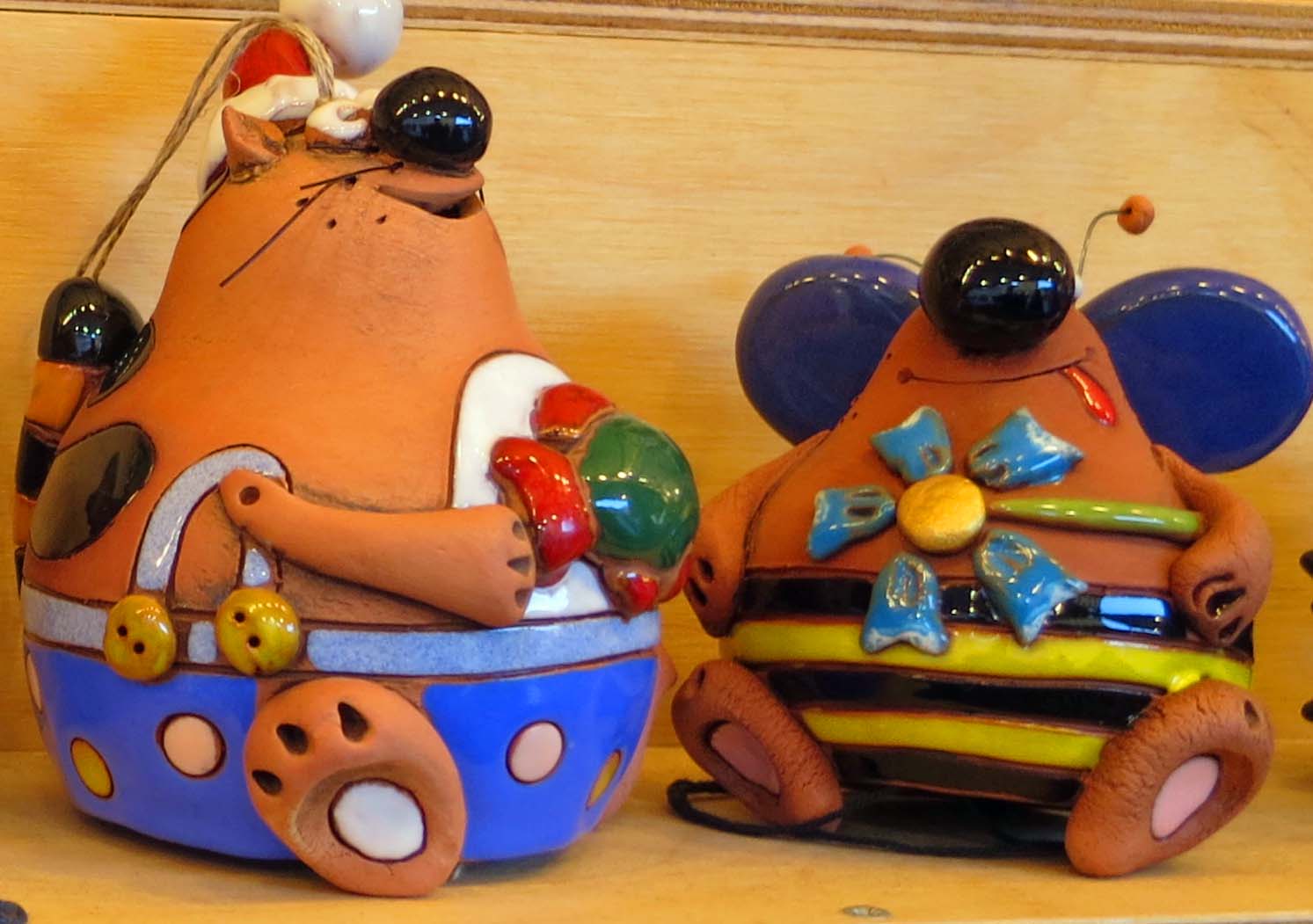
Cat and Mouse at Florence Christmas market

On the lighter side of things, Peggy and I visited Florence’s Christmas Market where this cat and mouse amused me. Note the mouse’s tongue.

Lion statue in Florence, Italy

Since I started my blogs on Florence with a lion, it is only appropriate that I finish with one.

NEXT BLOG: The Cannes Festival is going on now. We were there at a quieter time.

The Duomo and Santa Croce: Two Great Churches of Florence

Duomo Church in Florence

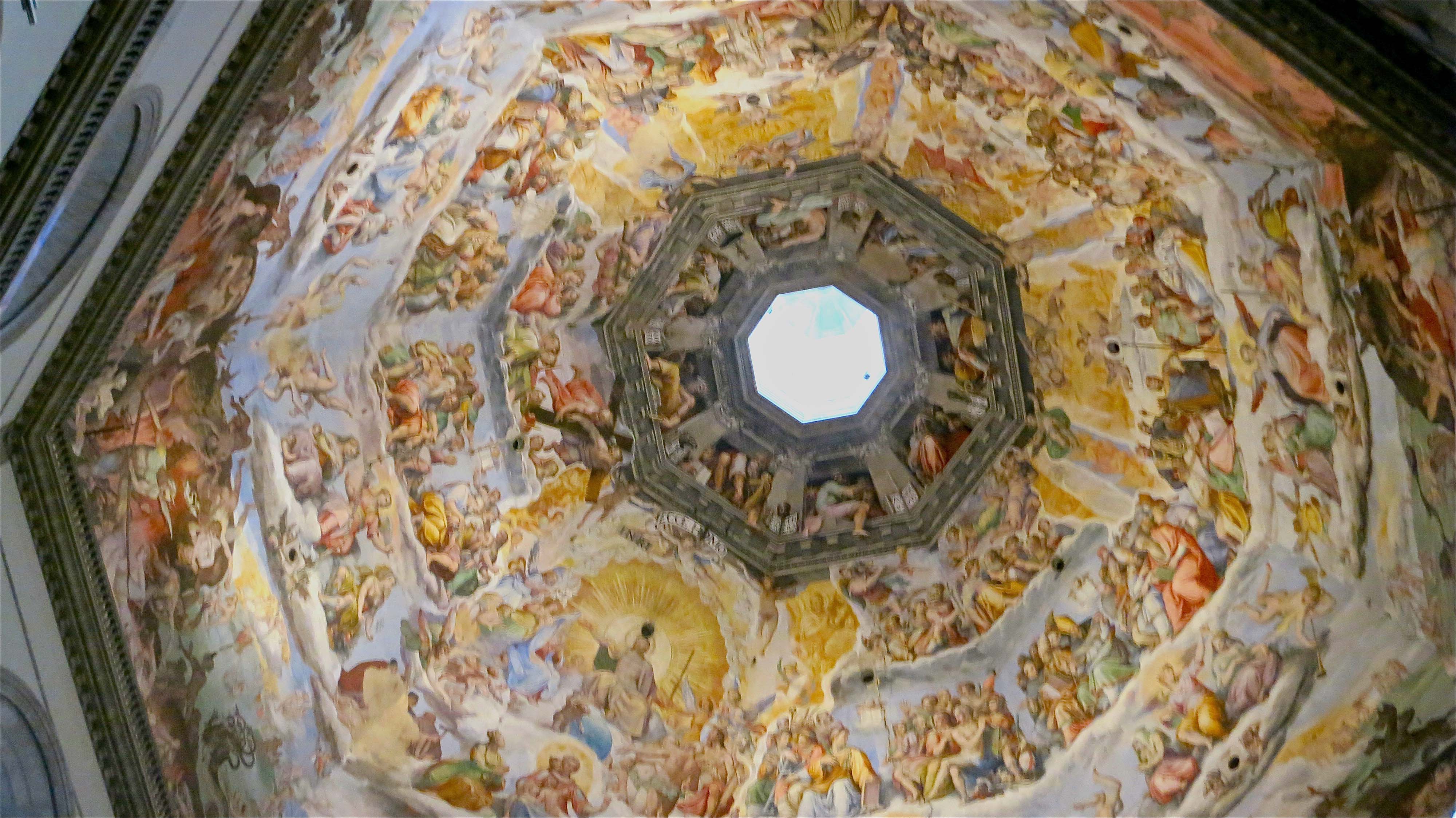
Looking up at the magnificent dome on Florence’s Duomo Cathedral.

There are three reasons for visiting Florence’s Cathedral, commonly known as the Duomo. First is the Church itself, second is the magnificent bell tower, which stands next to the church, and third is the octagonal-shaped Baptistery, which stands in front.

The dome of Duomo was one of the great works of the Renaissance. (The church had been waiting since the Middle Ages for its top.) Filippo Brunelleschi, who built the dome, first studied the ancient Pantheon in Rome. Like so much of the Renaissance, the dome represented a return to, or a rebirth of, the great Greek and Roman cultures that had thrived 1000 years earlier before the Dark Ages had arrived along with the Barbarian hordes.

Duomo Church in Florence Italy

This photo by Peggy captured the Baptistery on the left, the Duomo with its Dome in the center and the bell tower on the right. (Photo by Peggy Mekemson)

Duomo Church in Florence Italy

A front view of Florence’s Duomo Church

Looking up at the Duomo dome from inside the church.

Looking up at the Duomo dome from inside the church.

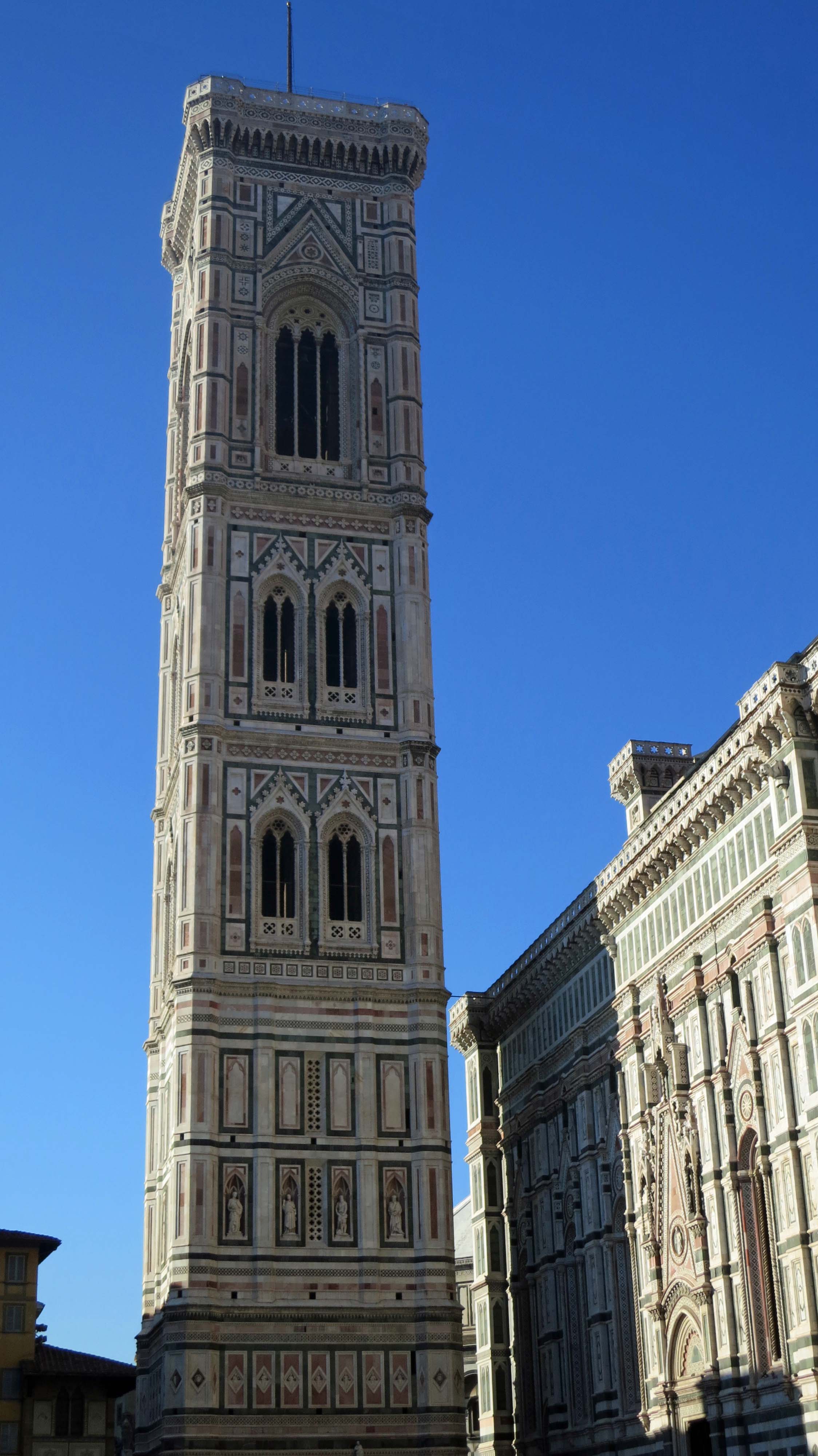
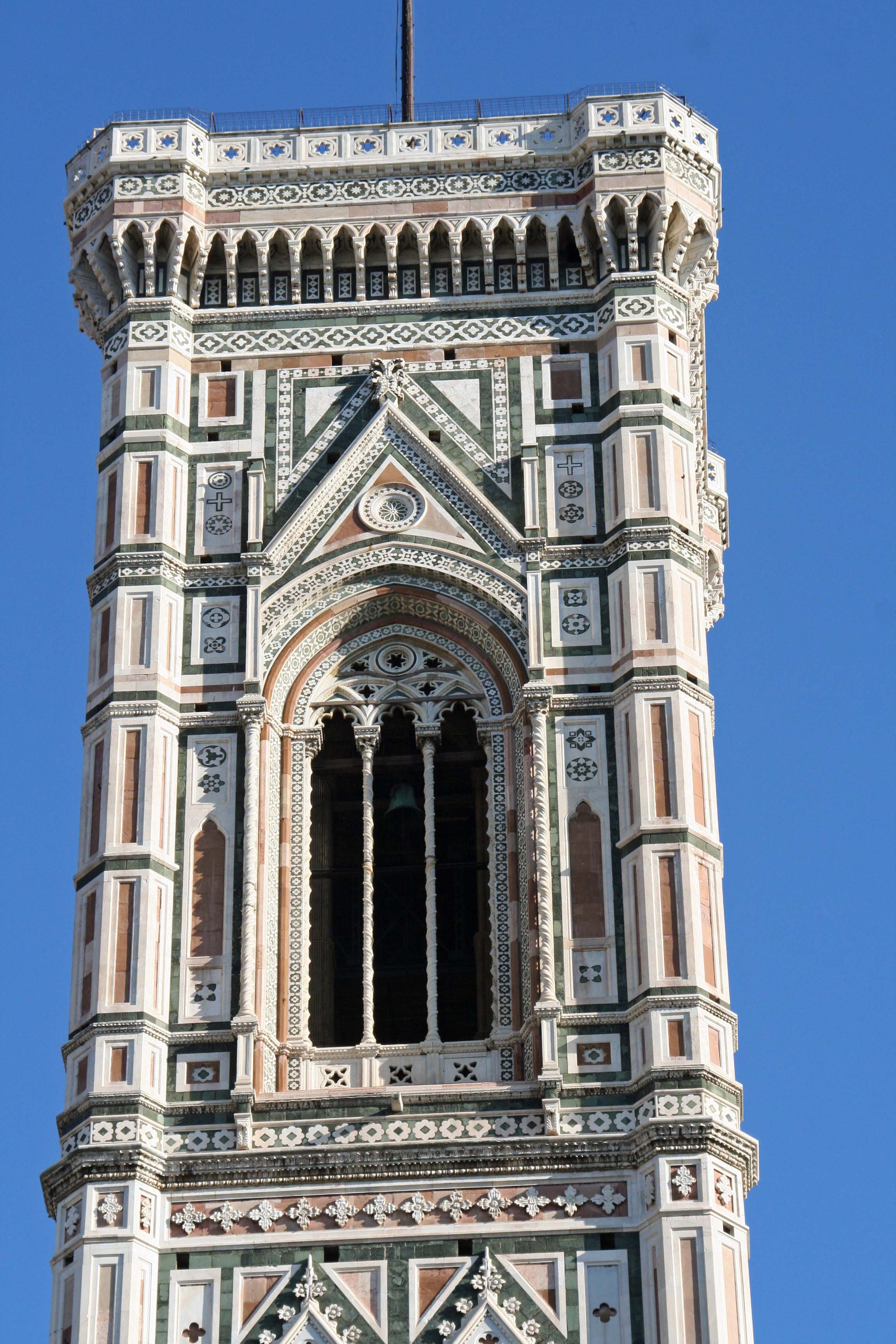
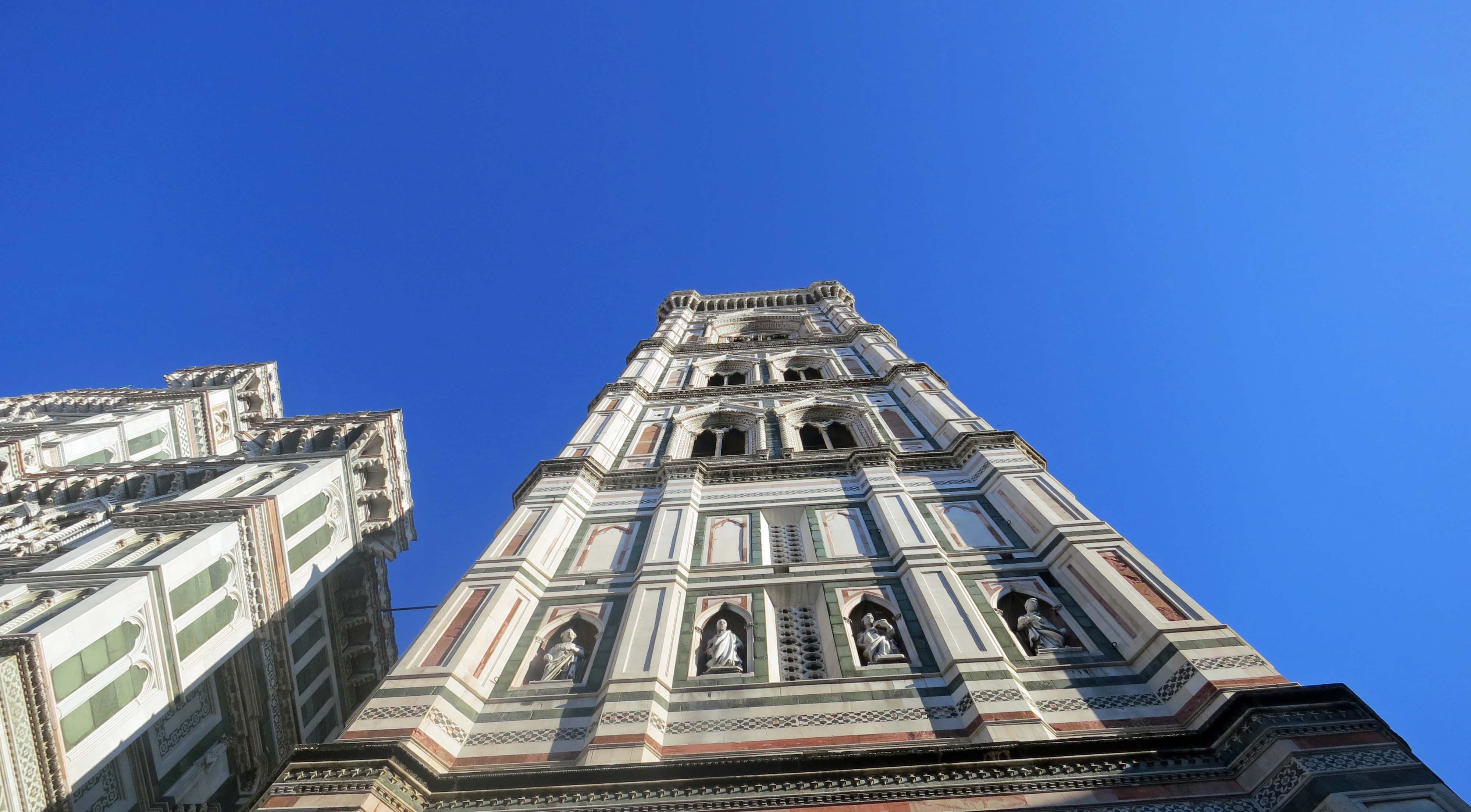
The 270-foot tall Campanile or Giotto’s Tower, which is located next to the Duomo, was actually completed 100 years before Brunelleschi put his finishing touches on the church. Many consider the bell tower to be among the most beautiful in Europe.

Giotto's Bell Tower in Florence Italy

Giotto’s Bell Tower in Florence, Italy

The top of Giotto's Bell Tower. (Photo by Peggy Mekemson)

The top of Giotto’s Bell Tower. (Photo by Peggy Mekemson)

Giotto's Bell Tower, Florence, Italy

A front view of Giotto’s Bell Tower with the Duomo to the left.

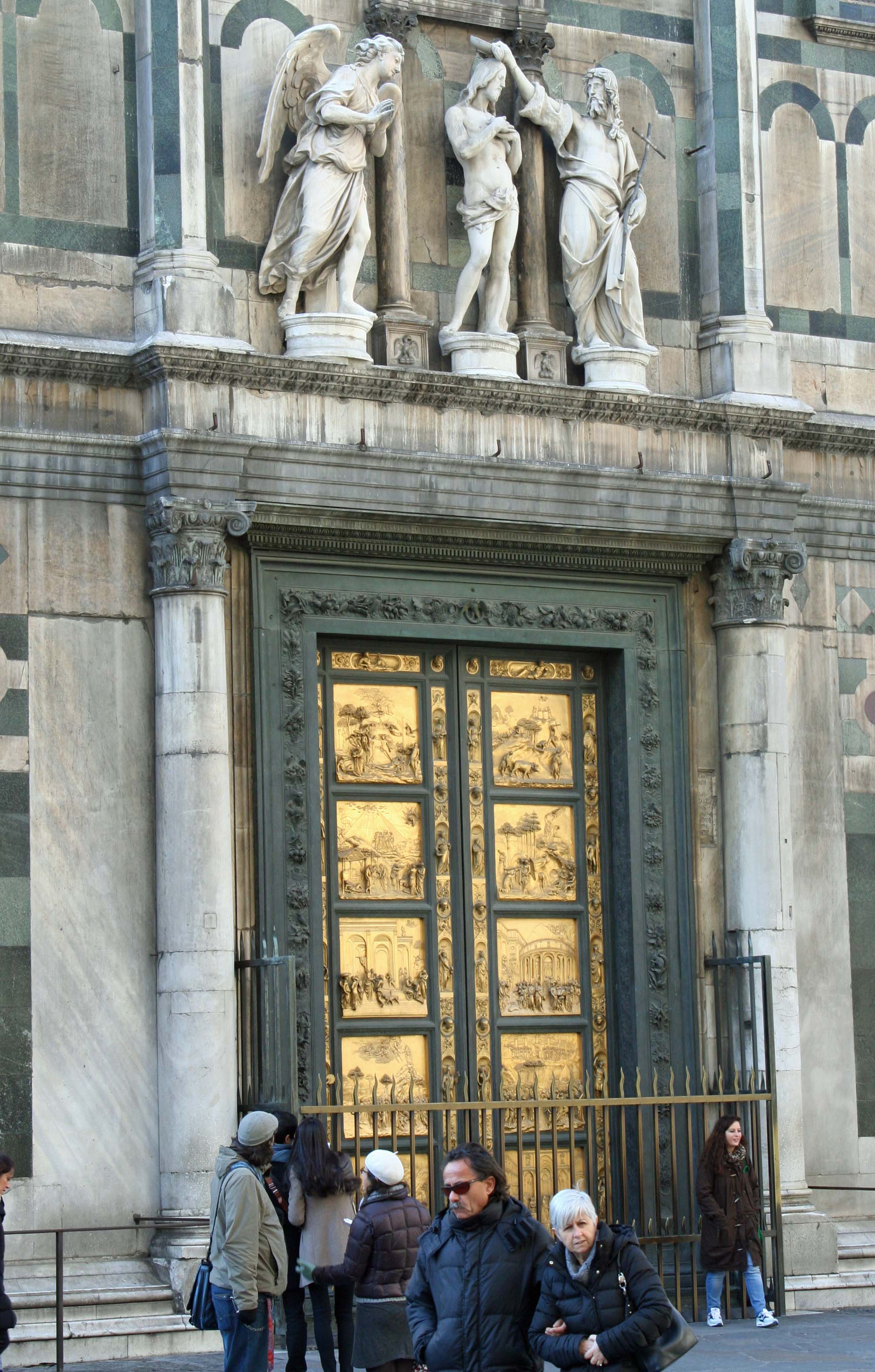
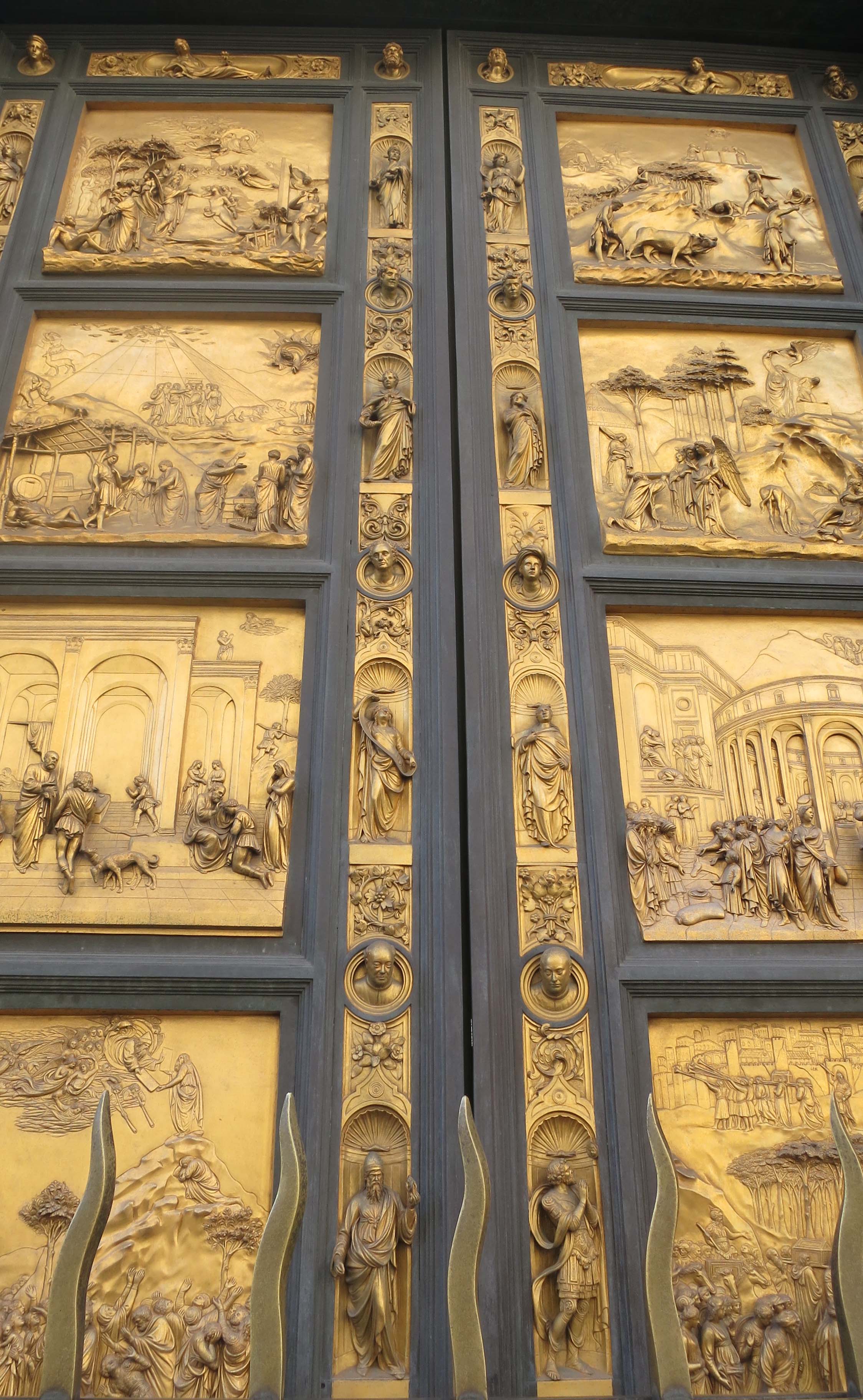
The Baptistery features Ghiberti’s bronze doors. Michelangelo believed these gates were so beautiful they could have served as “the Gates of Paradise.”

Ghiberti's Bronze Doors on the Baptistery in Florence. (Photo by Peggy Mekemson)

Ghiberti’s Bronze Doors on the Baptistery in Florence. (Photo by Peggy Mekemson)

Ghiberti's Baptistery doors in Florence Italy

A closer look at the Baptistery Doors.

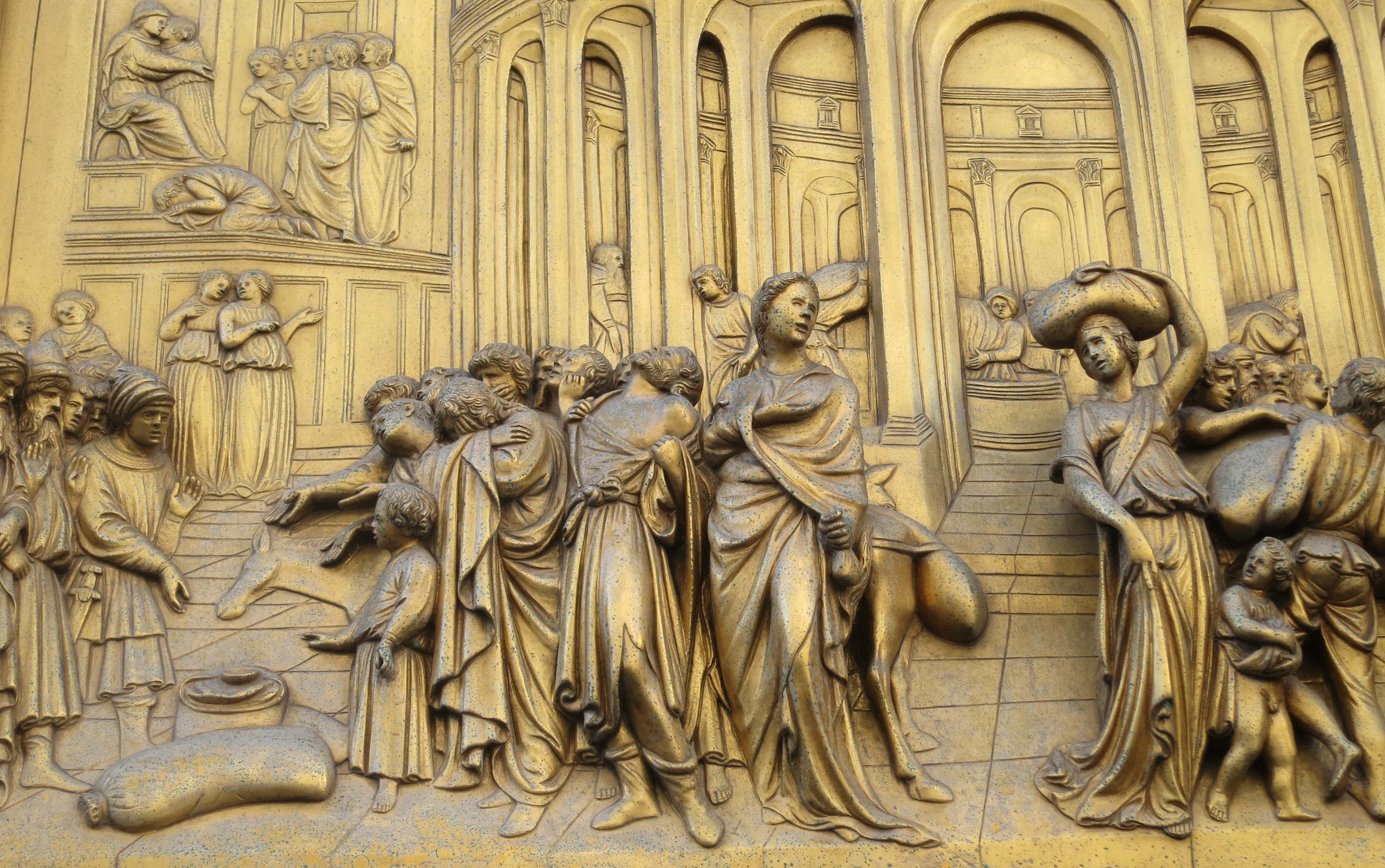
Close up of Baptistery doors Florence Italy

This view of the Baptistery door gives a sense of why Michelangelo spoke so highly of Ghiberti’s work.

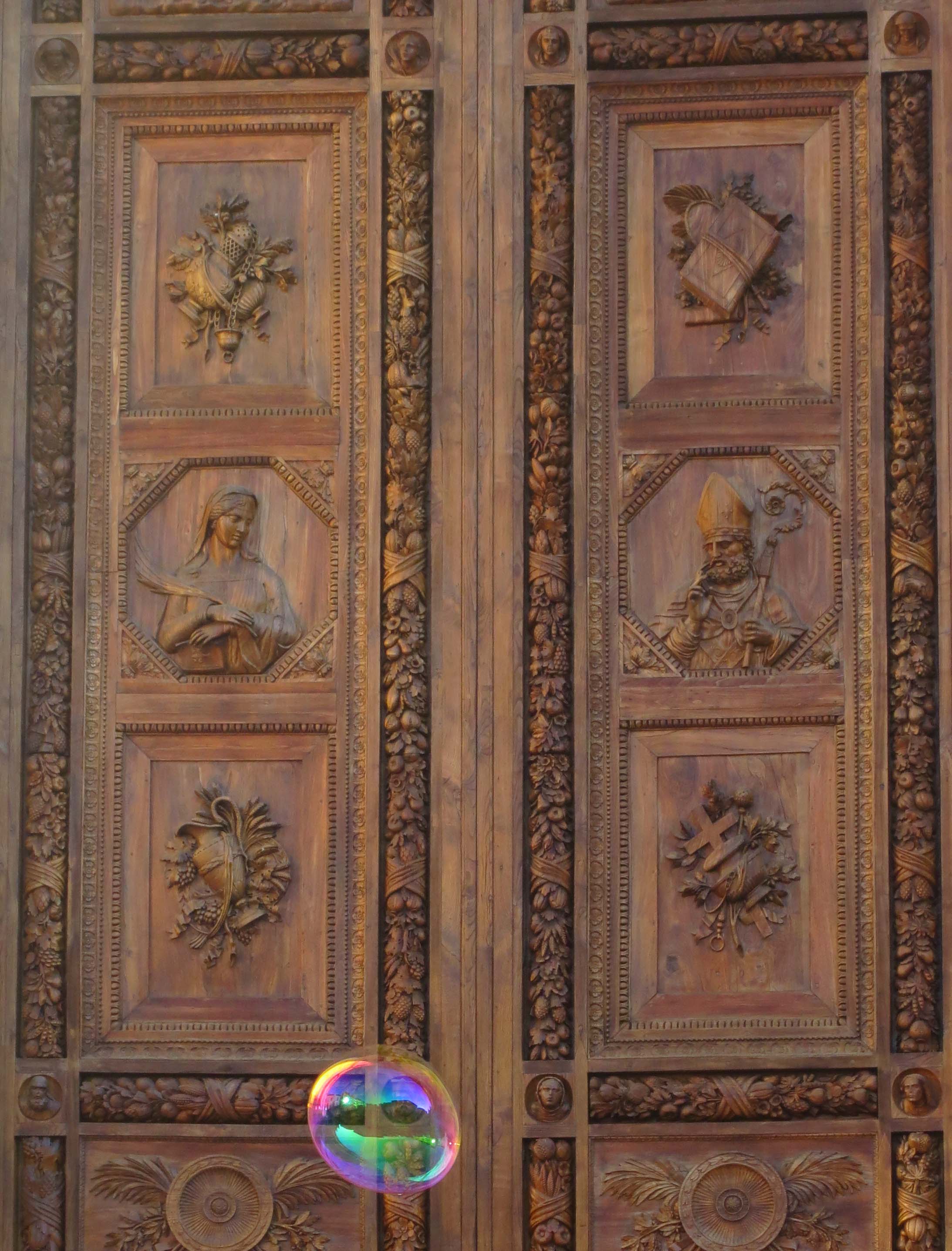
The Basilica of Santa Croce, a 14th Century Franciscan church, also had some great doors but is better known for the people buried inside including Michelangelo, Machiavelli, Rossini and Galileo. As we stood in front of the church admiring its doors, a man sent bubbles floating into the sky.

A huge soap bubble went floating up by the beautiful wooden doors of Santa Croce.

A huge soap-bubble went floating up by the beautiful wooden doors of Santa Croce.

The Basilica of Santa Croce in Florence.

The Basilica of Santa Croce in Florence.

NEXT BLOG: While you are reading this blog, Peggy and I are on the scenic Oregon Coast looking for whales. I will feature the trip on my next blog.