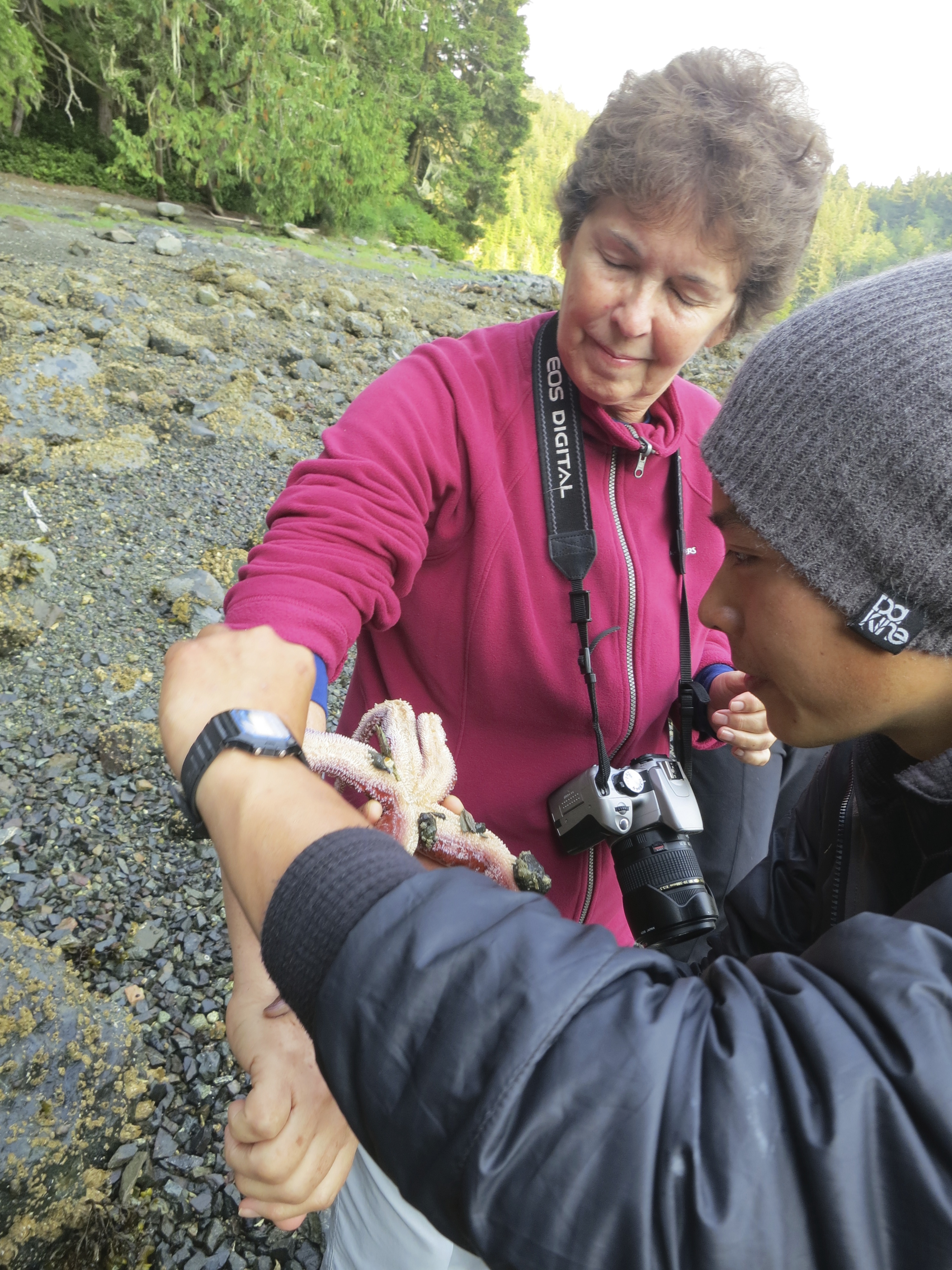
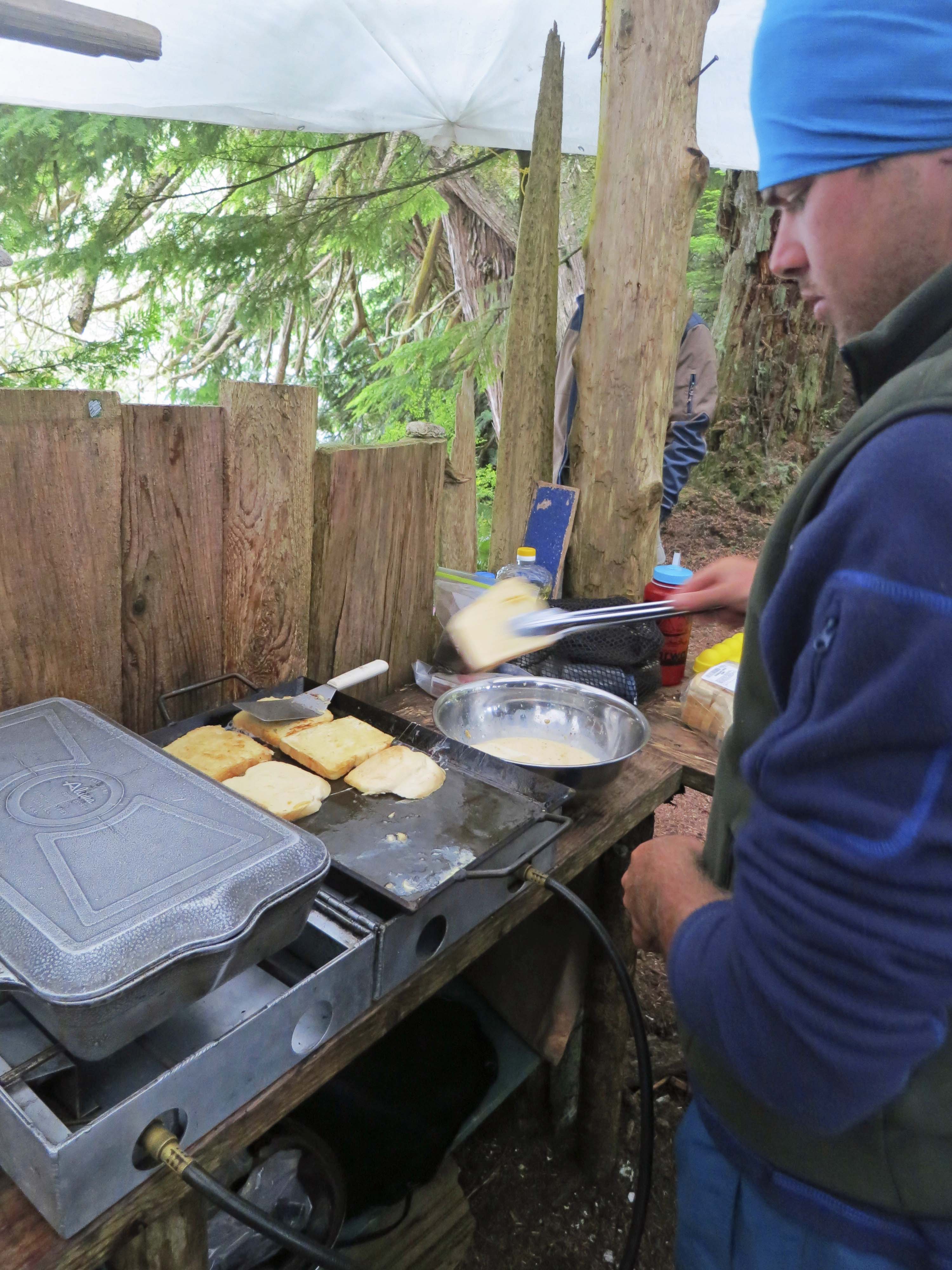
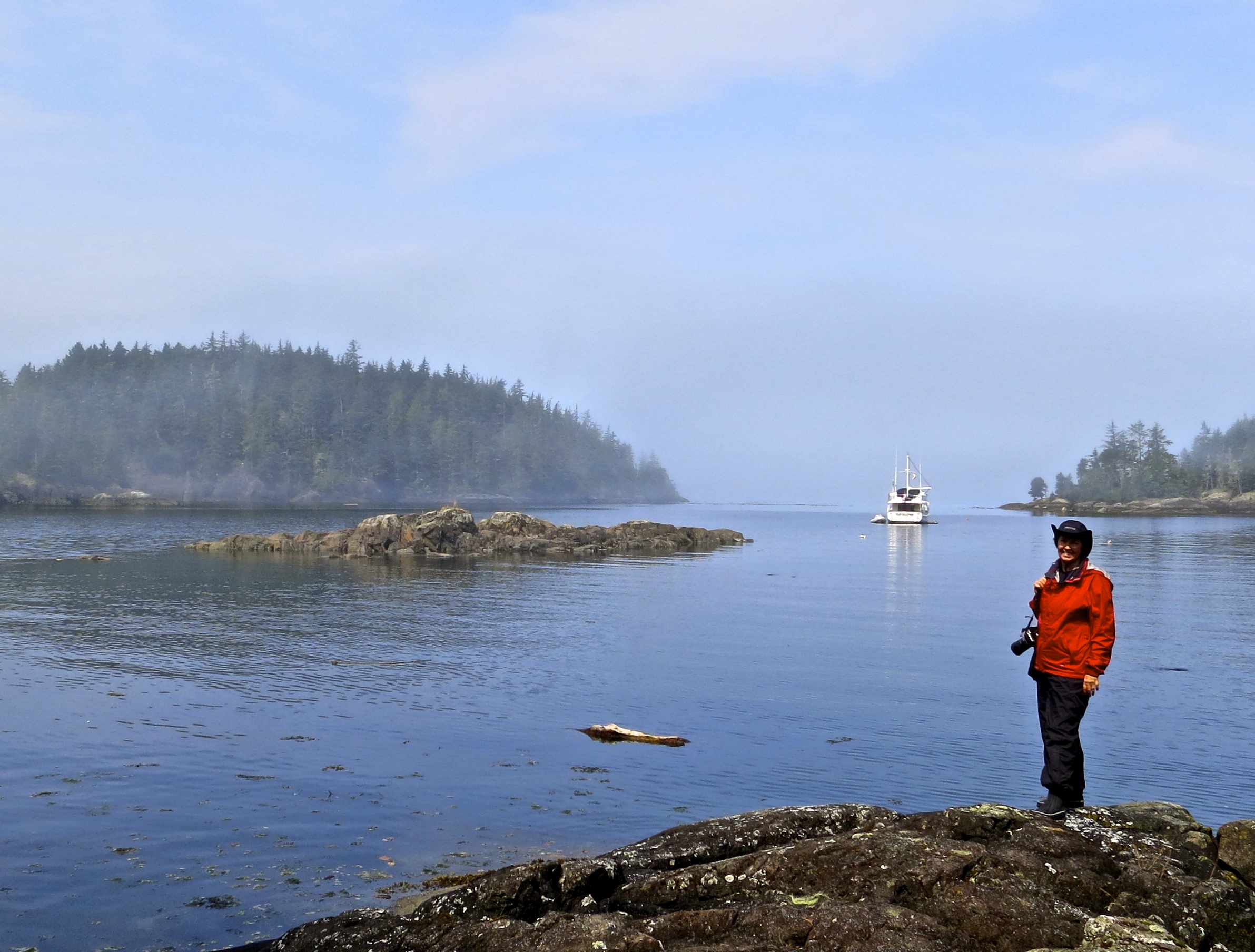
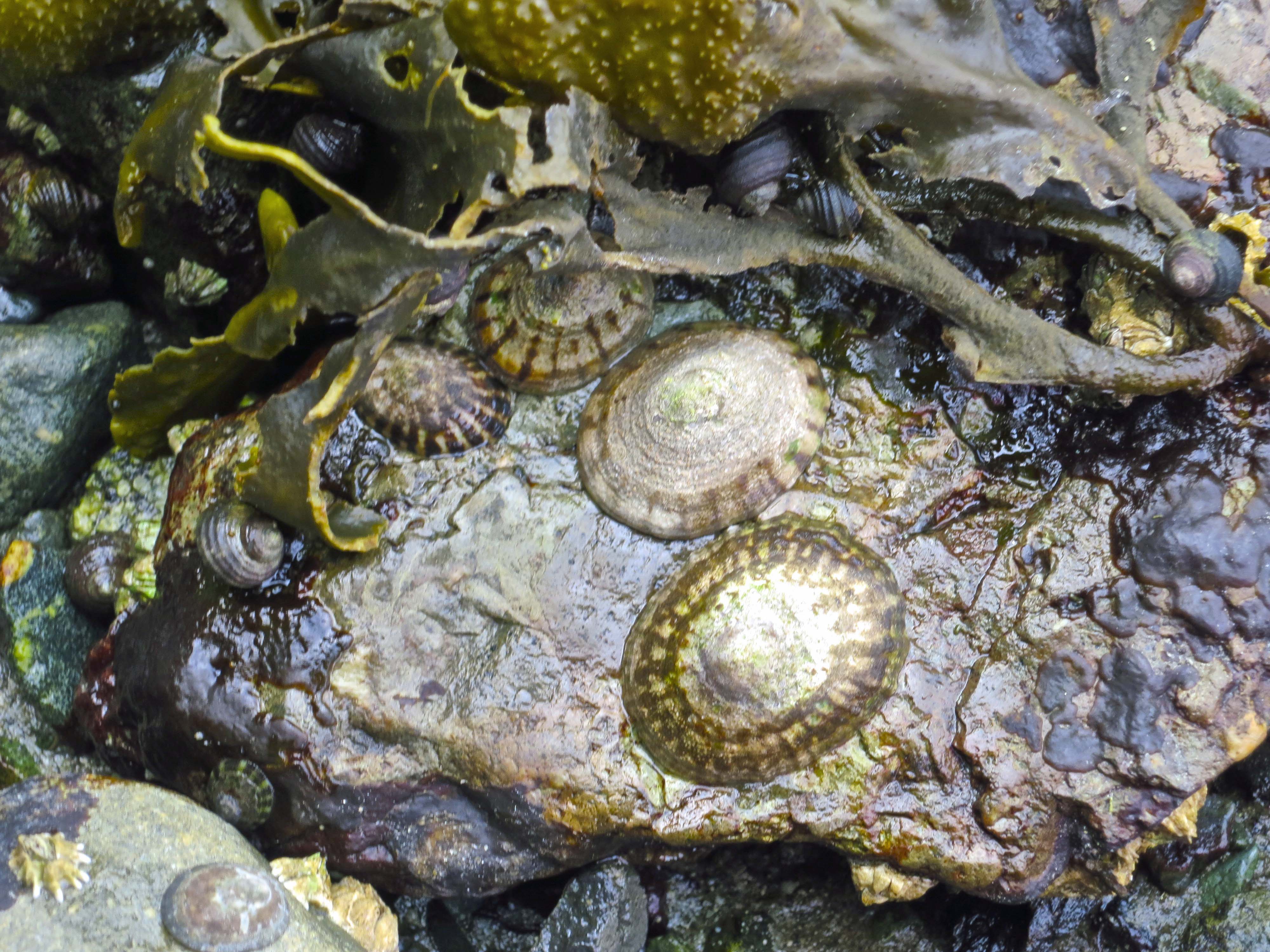
A Gorgeous Sunset and a Breaching Killer Whale… British Columbia Sea Kayak Adventure: Part 2

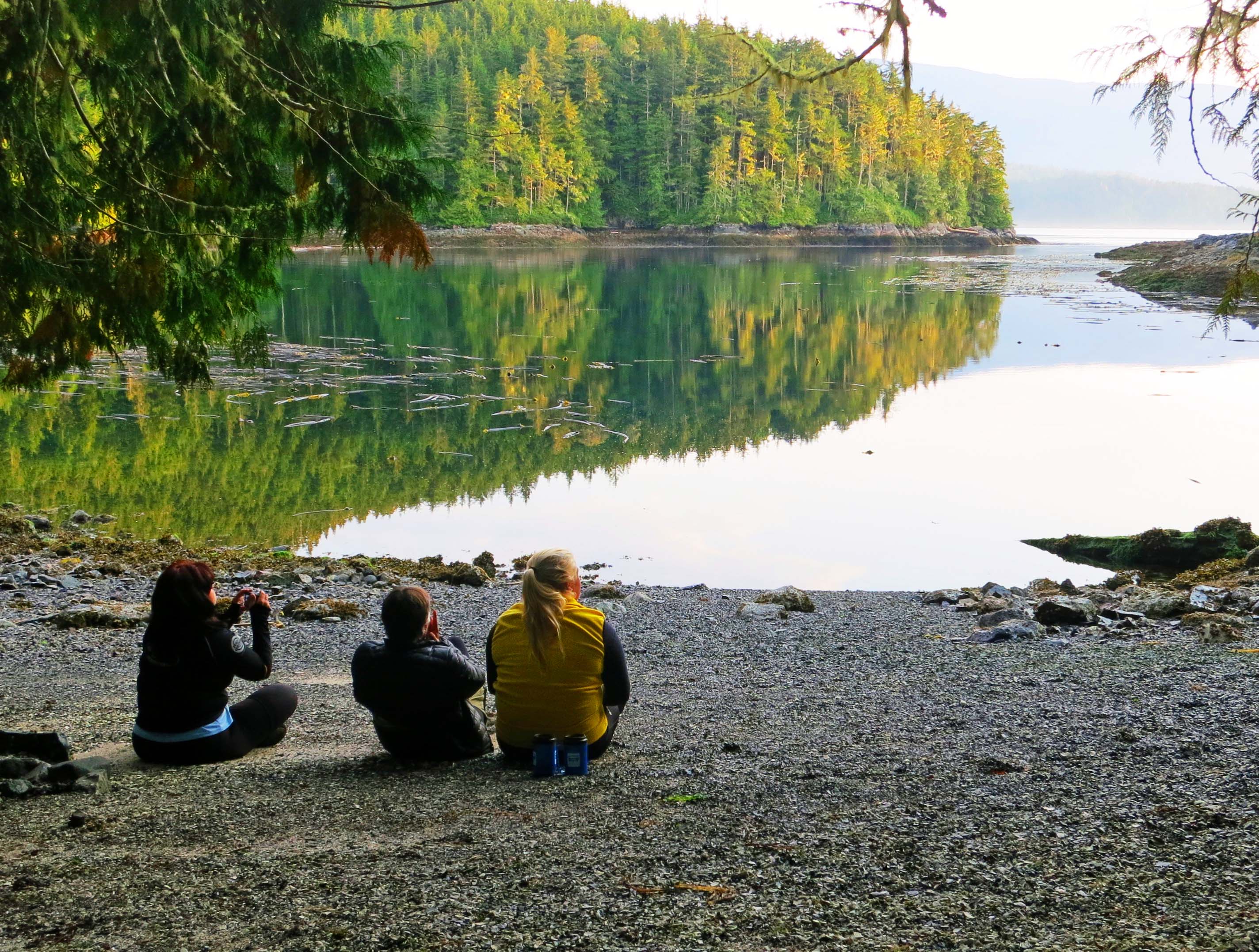
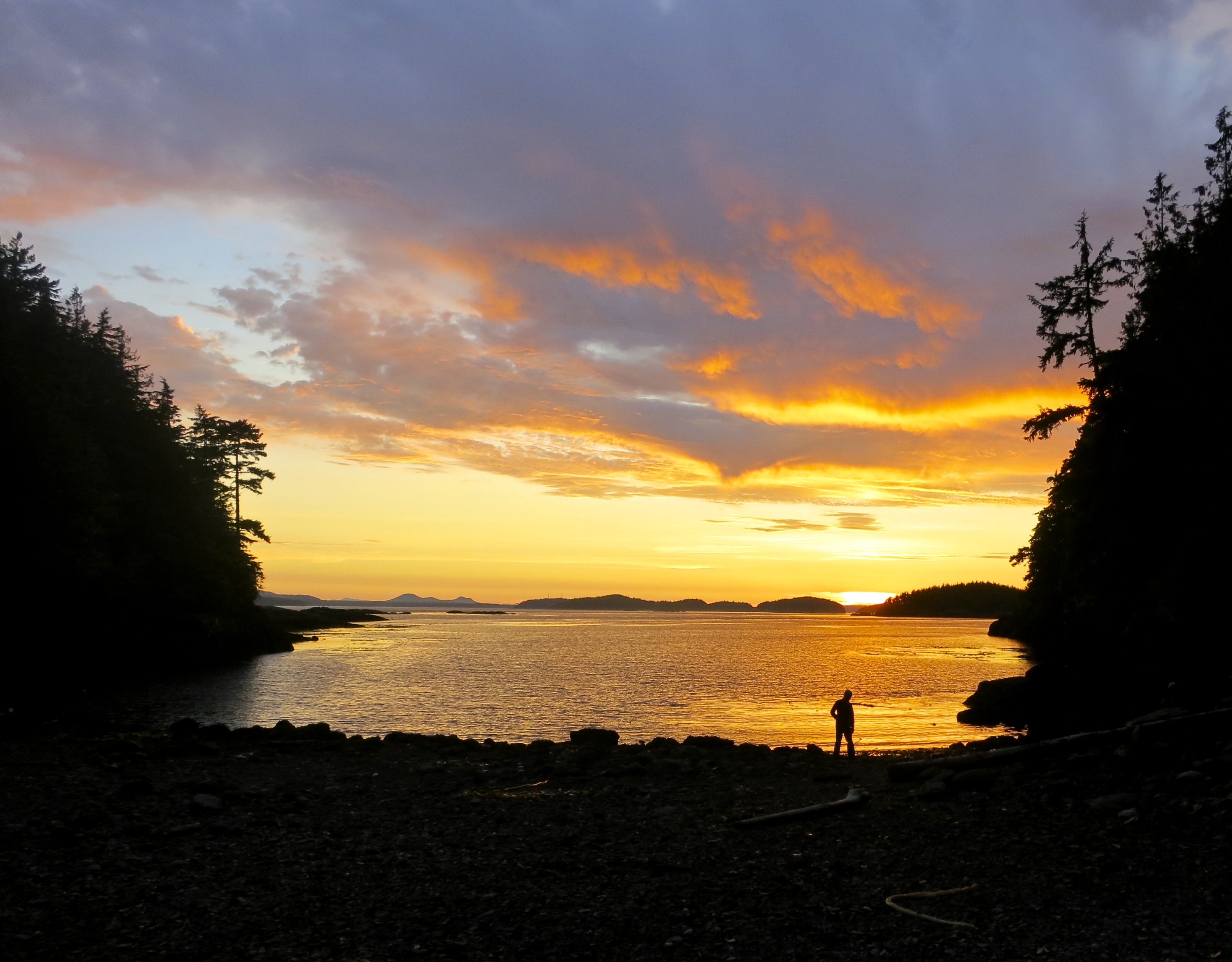
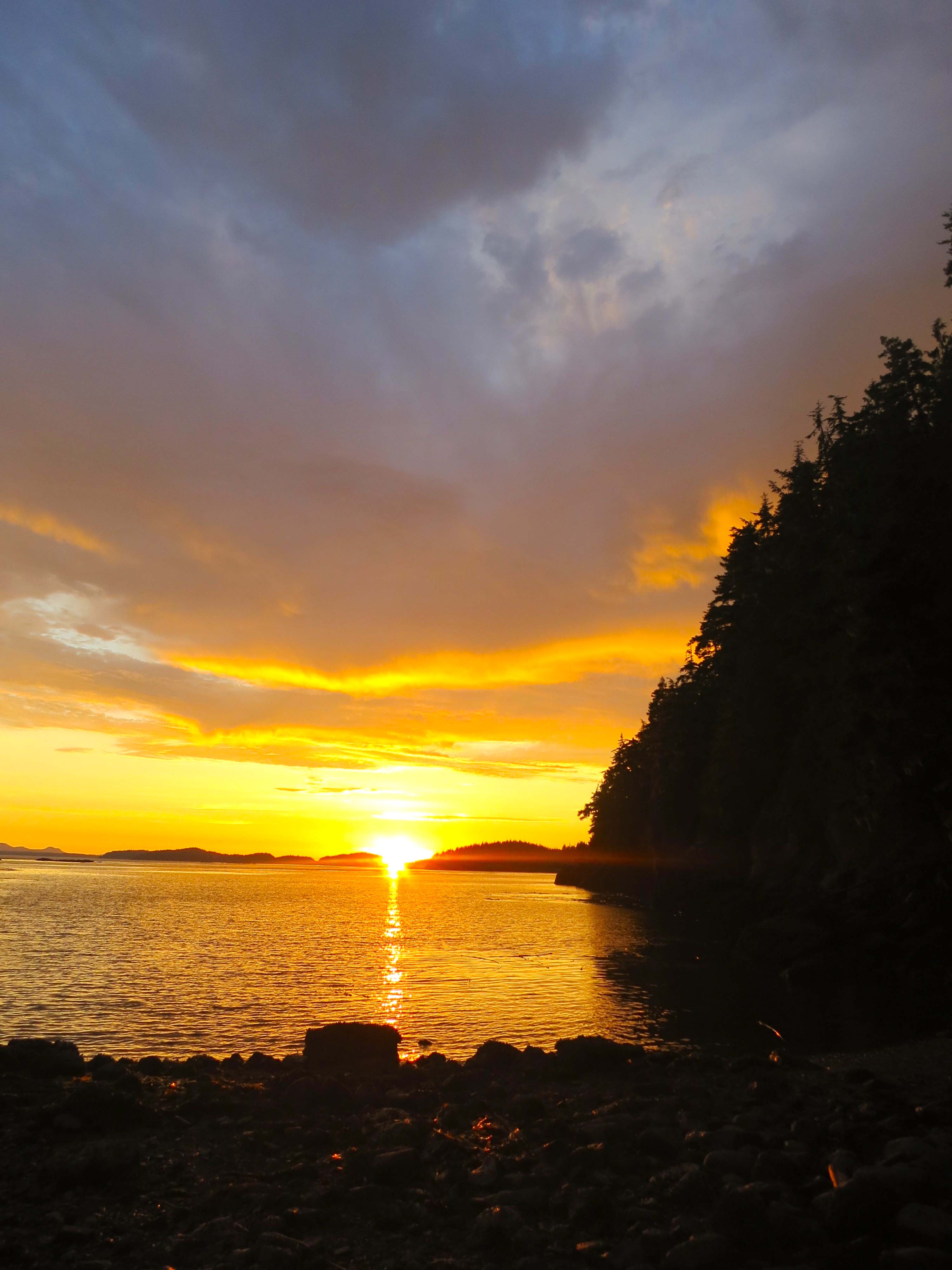
Sunset at Sea Kayak Adventure's campsite on Hanson Island in Johnstone Strait. Photo by Curtis Mekemson.

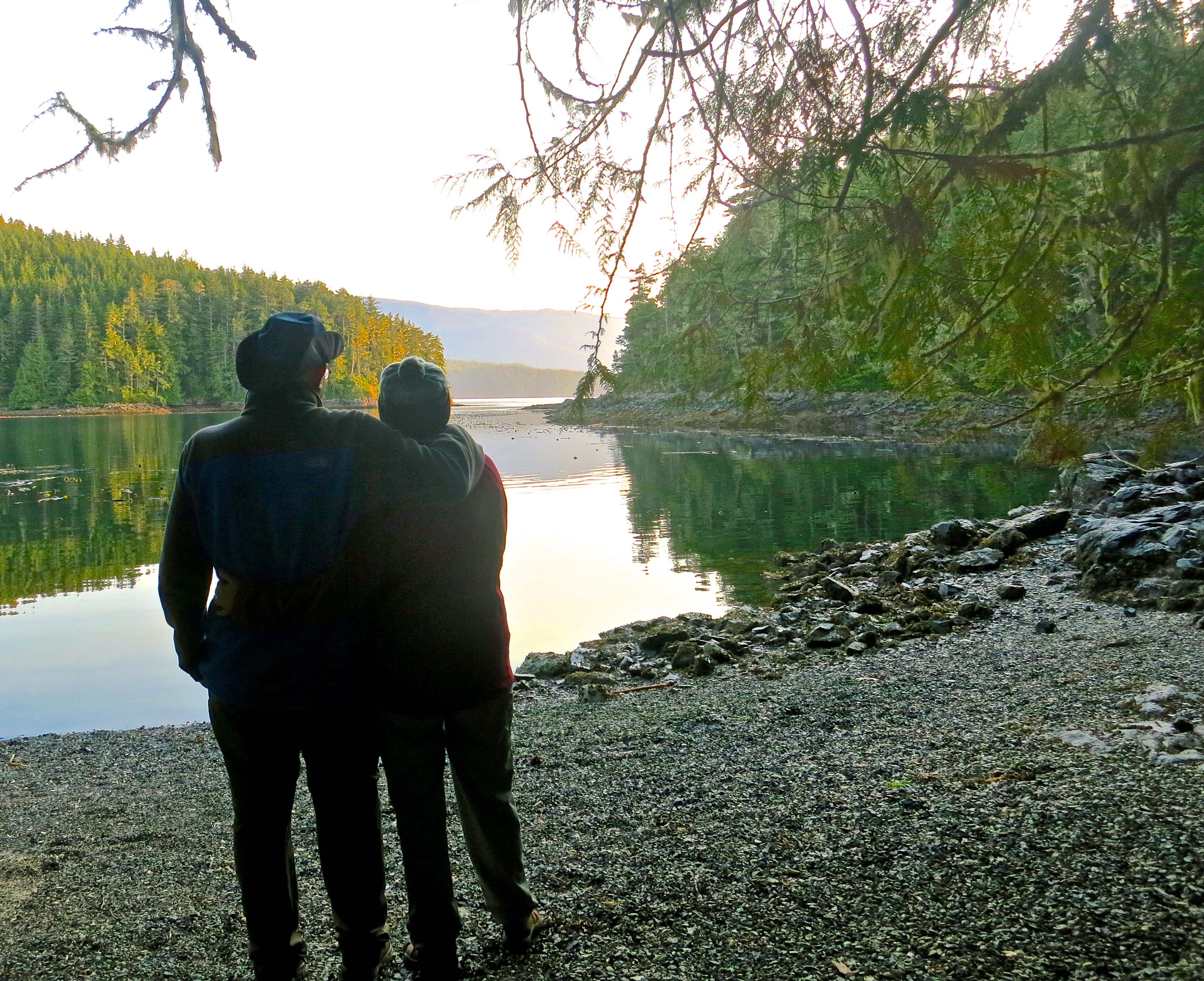
As the day ends, one of our kayakers takes a moment to enjoy the sunset from our campsite on Hanson Island.

A post-card-glorious sunset marked the end of Monday, our first day of kayaking on Johnstone Strait off the northeast coast of Vancouver Island. Morning seemed long ago and far away— and my body spoke to just how long ago and far away that was. It had passed 71 earlier in the year and was wondering when the fabled golden years were going to start. “They are here,” I told it with a grin. It grumped. My mind and body aren’t always in agreement.

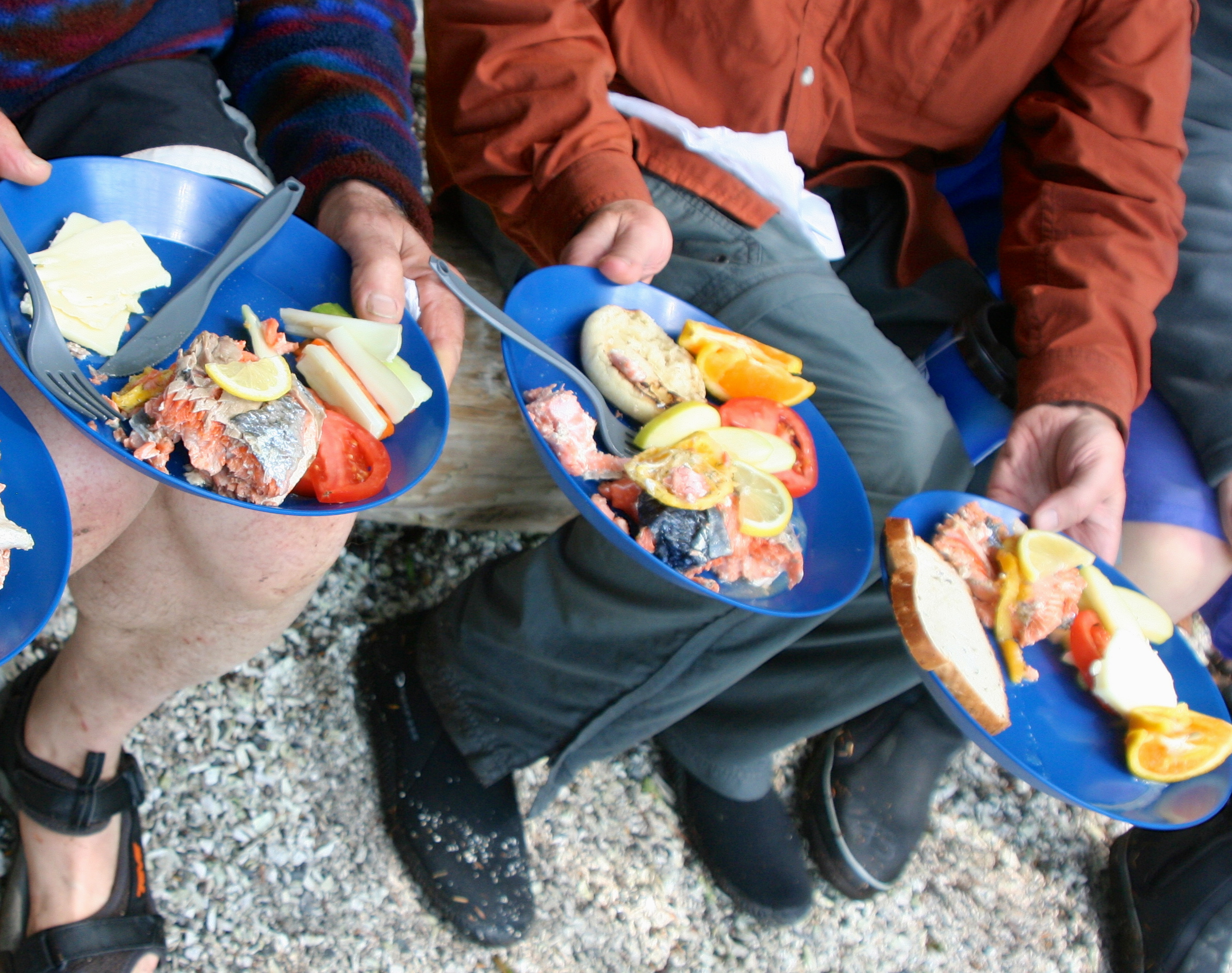
The guides and group, including Peggy and I, were in high spirits. We had successfully completed our first day of kayaking, seen stunning scenery, and watched an orca breach. We were in a beautiful setting. Our guides had just fed us a gourmet meal, and our tents were set up, promising a good night’s sleep. What was there to complain about?

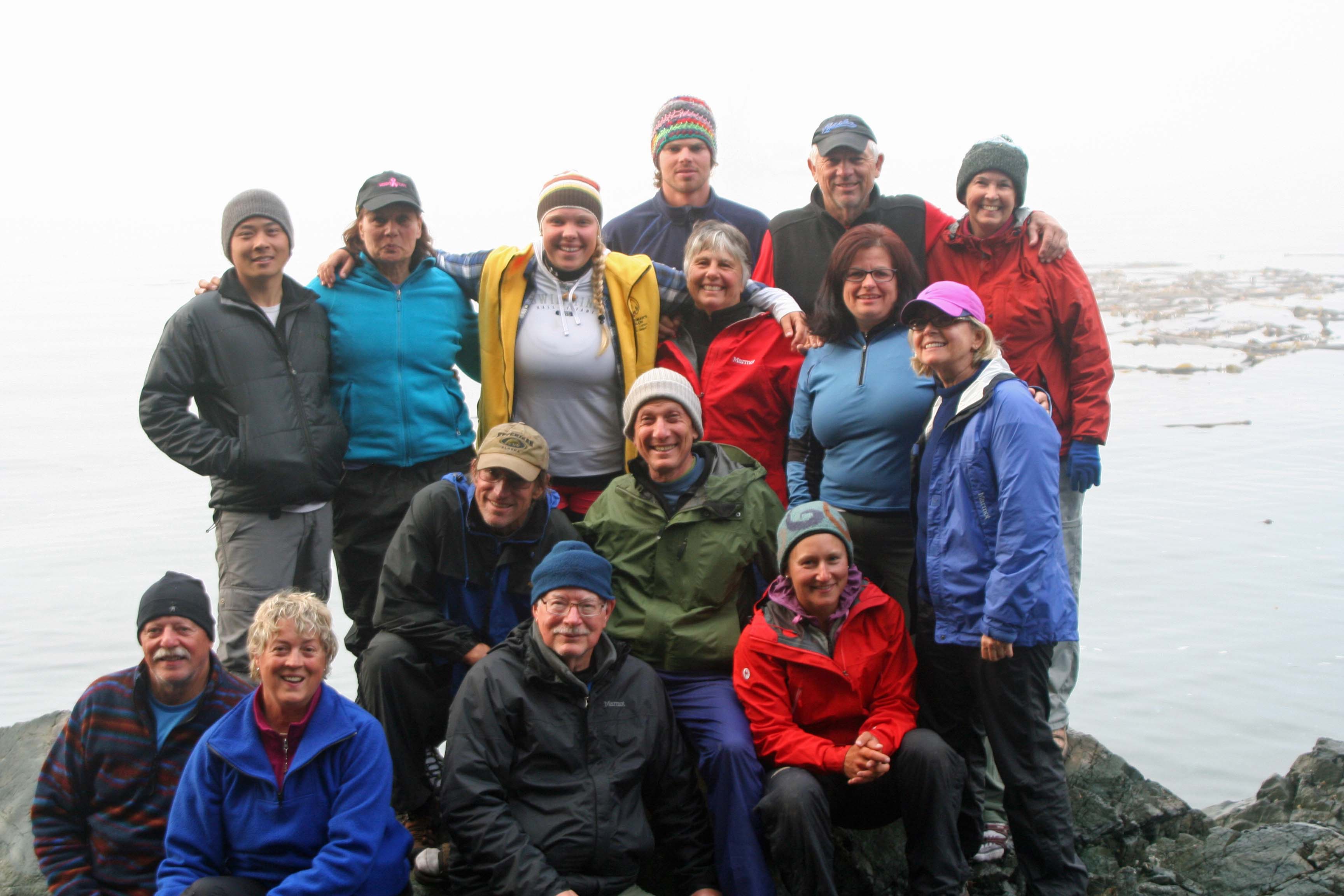
We had all met for the first time on Sunday night. The session had started with the usual meet and greet. “Tell us something about yourselves.” We half listened as we composed whatever we were going to say. There were the Canadian guides, a contingent from Idaho, three mid-westerners, one Californian, and our friends David and Edie from Alaska. Peggy and I are from Oregon. We also had a family of Asians until they figured out they had come to the wrong meeting. Everyone had at least some kayak experience. David and I, along with our child brides, were the elders.

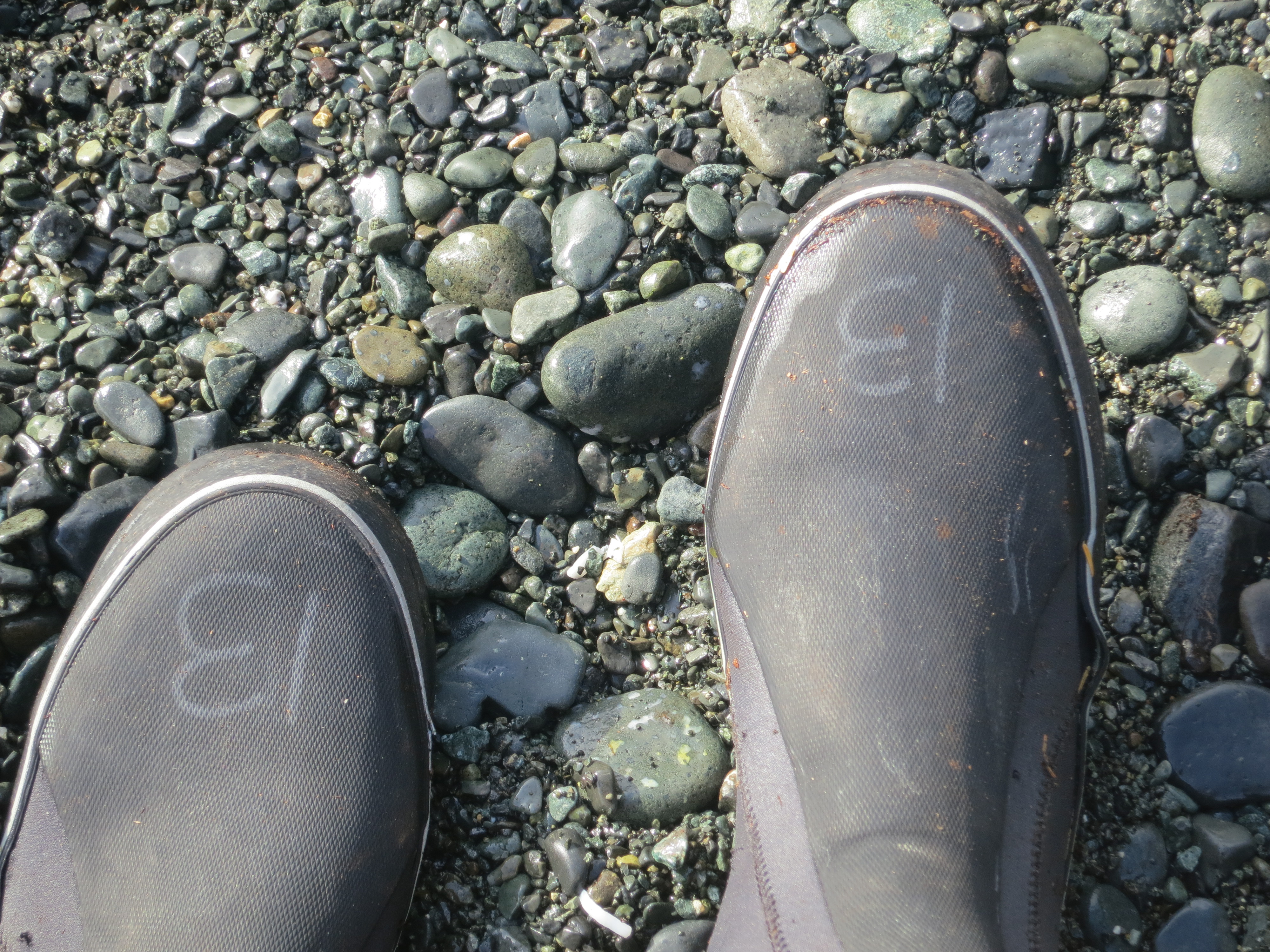
Our guides gave us an overview of the journey and then distributed dry bags and rubber boots. I debated between size 13 and 14. The 14s were a little loose, the 13s a little snug. I went with snug and wondered how my large feet would work in the tight confines of the kayak. Carefully, I presumed. Peggy and I retired to our rooms and begin the packing process— what to take and what to leave. Sea Kayak Adventures had recommended a lot and our guides had suggested less. Everything had to fit in the boats. There were important decisions to make.

Rubber boots issued by Sea Kayak Adventures.

My size 13 boots, clearly marked for all to see. I wondered how they would relate to the small rudder pedals in the Kayak.

The next morning we were up early, went through our gear for the umpteenth time, had a quick bite, and caught the taxi hired to take us to Telegraph Cove. It was time to break out the cameras.

Telegraph Cove started life as a lumber mill. Nowadays it is an eco tourism center. A couple of hundred thousand people visit in the summer for whale watching, kayaking, fishing and checking out grizzlies. In the winter, its population drops to 20. The town has done a great job of preserving historical buildings from its past.

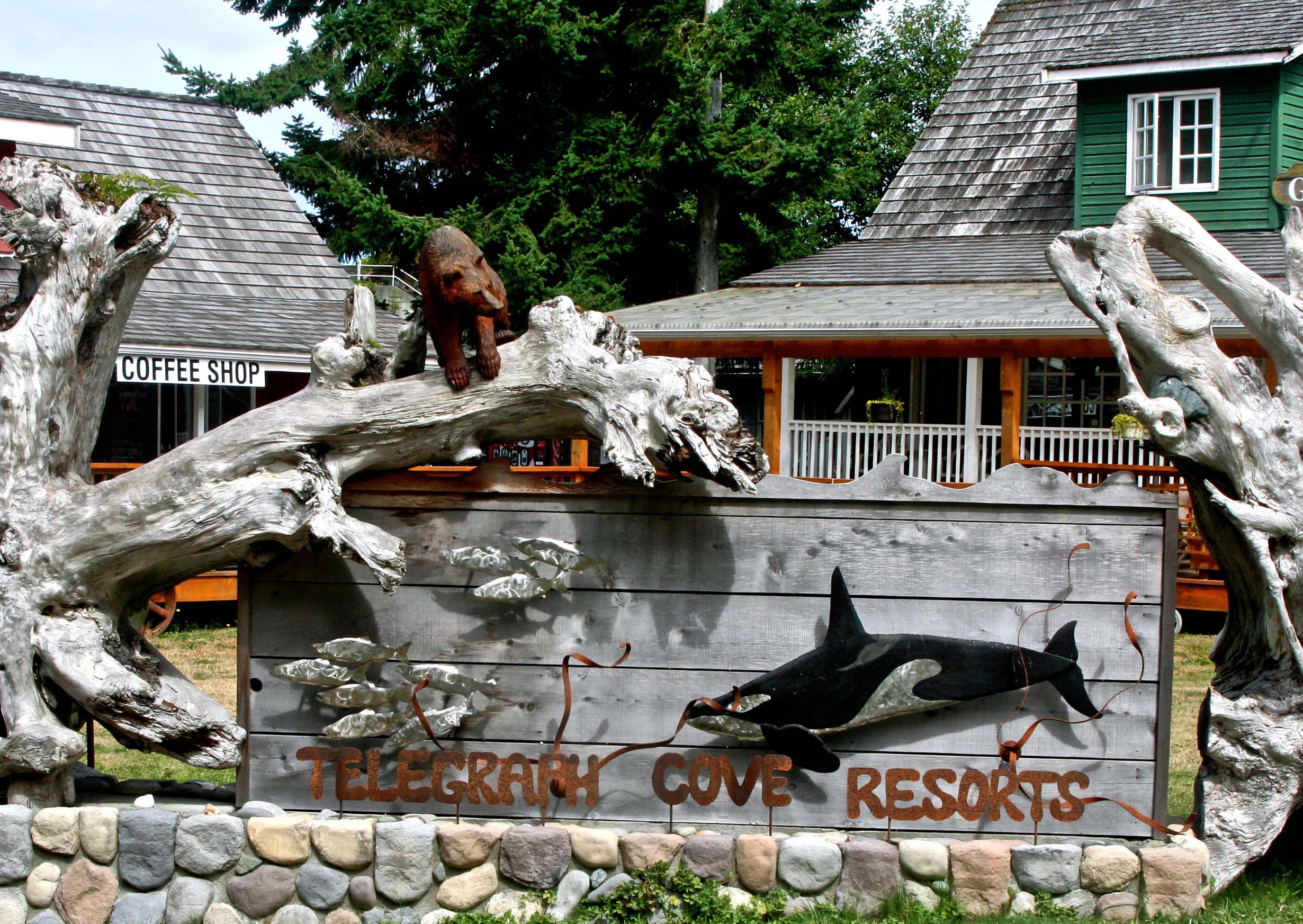
This sign, featuring an Orca, grizzly and salmon welcomes visitors to Telegraph Cove.

This sign, featuring an orca, grizzly and salmon, welcomes visitors to Telegraph Cove. Also note the impressive drift wood. We were to find some on our trip. (Photo by Peggy Mekemson.)

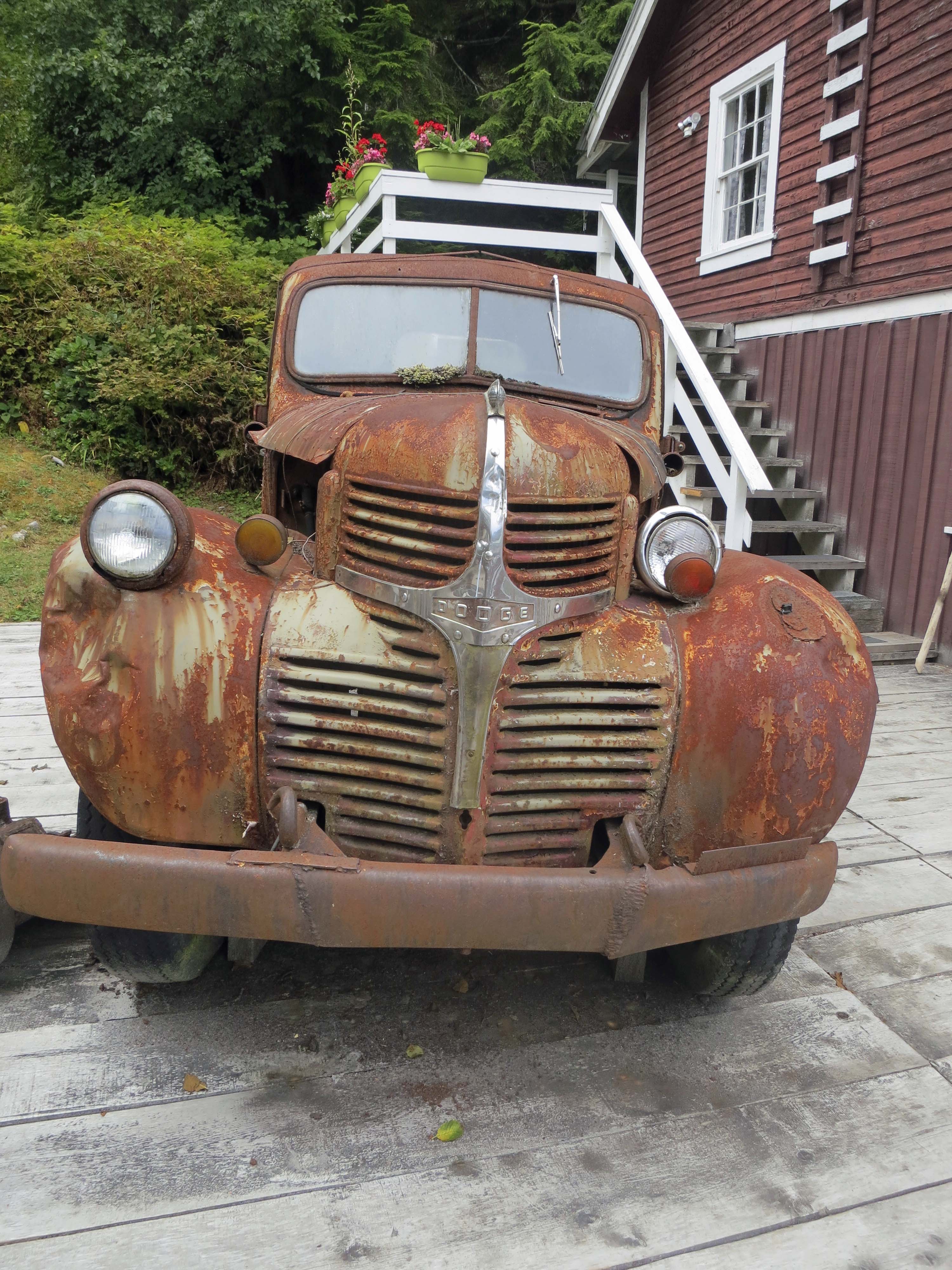
Old Dodge Truck at Telegraph Cove on Vancouver Island. Photo by Curtis Mekemson.

Part of the appeal of Telegraph Cove is its preservation of the past, as with this old Dodge truck. I think the truck was confused about where its lights should be. Or maybe it was so old it needed bifocals.

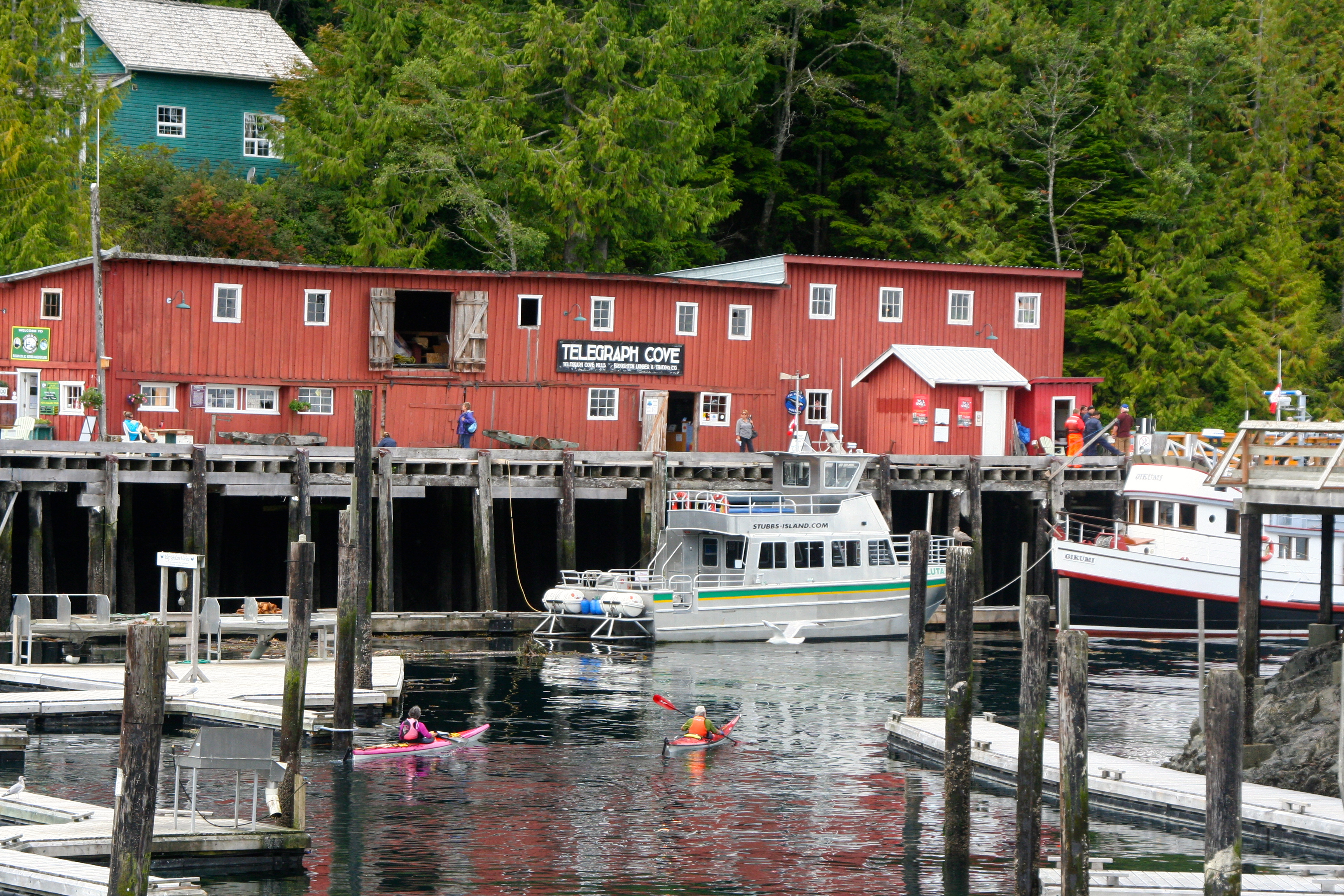
Telegraph Cove is all about water as this photo suggests. Here we see the Whale Interpretive Center, a fishing boat, and kayakers. (Photo by Peggy Mekemson.)

Telegraph Cove is all about water as this photo suggests. Here we see the Whale Interpretive Center, a fishing/tour boat, and kayakers. (Photo by Peggy Mekemson.)

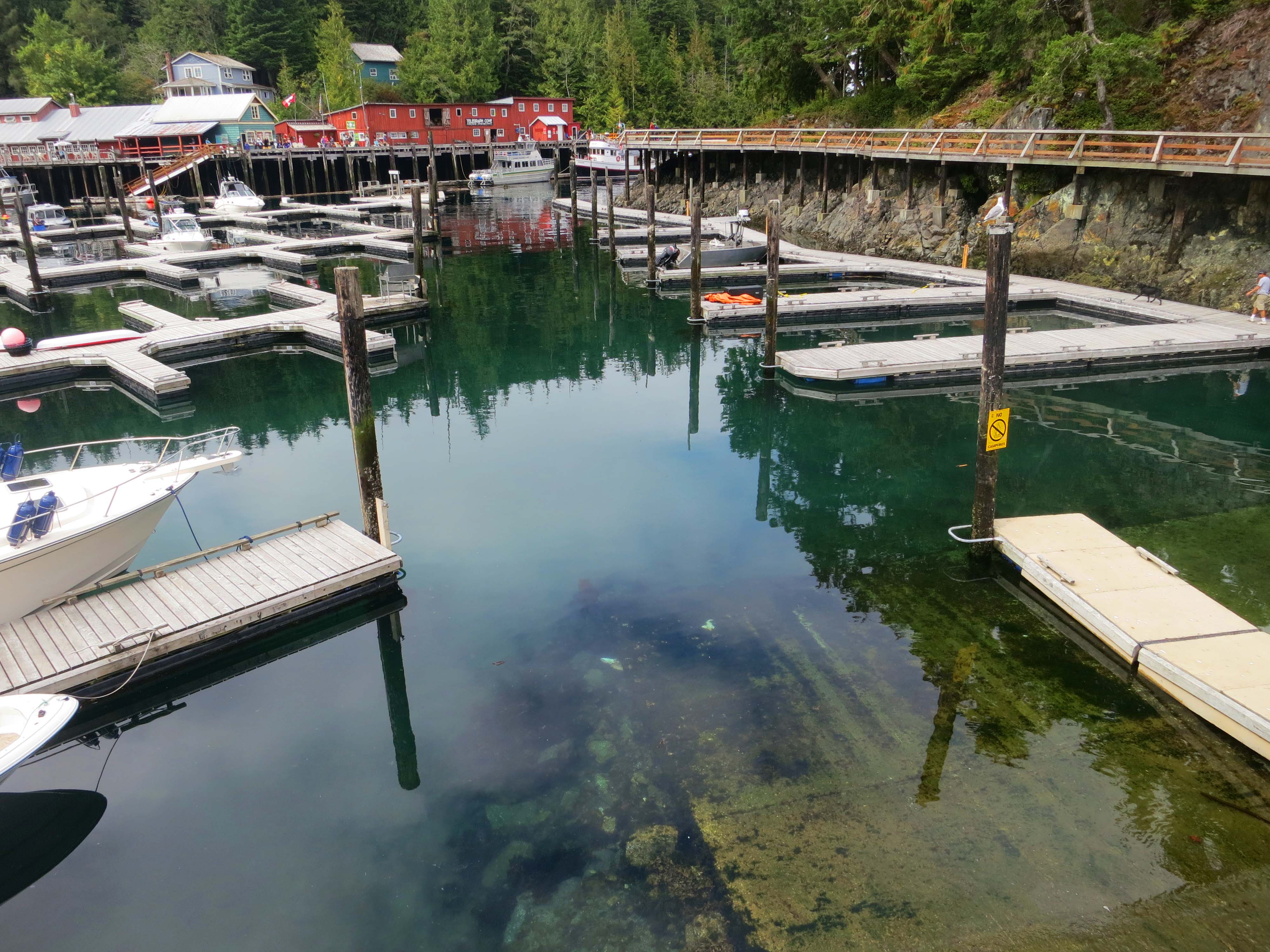
Empty docks at Telegraph Cove suggests all of the tours and fishing expeditions are already out on Johnstone Strait. Photo by Curtis Mekemson.

The empty boat docks tell a tale. We would not be the first to leave Telegraph Cove that morning for the Johnstone Strait. Our route took us right down the row and made a right at the Whale Interpretive Center.

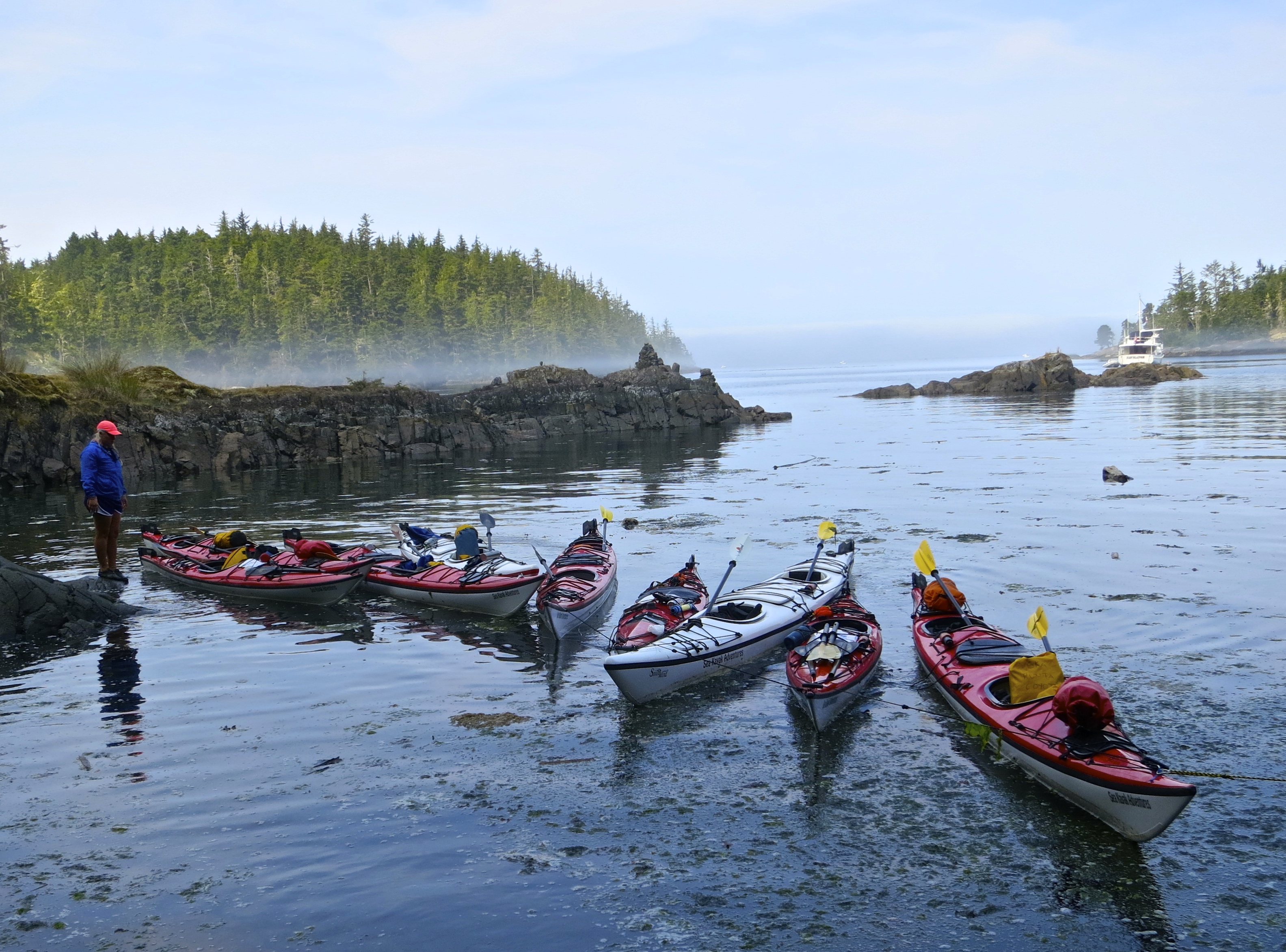
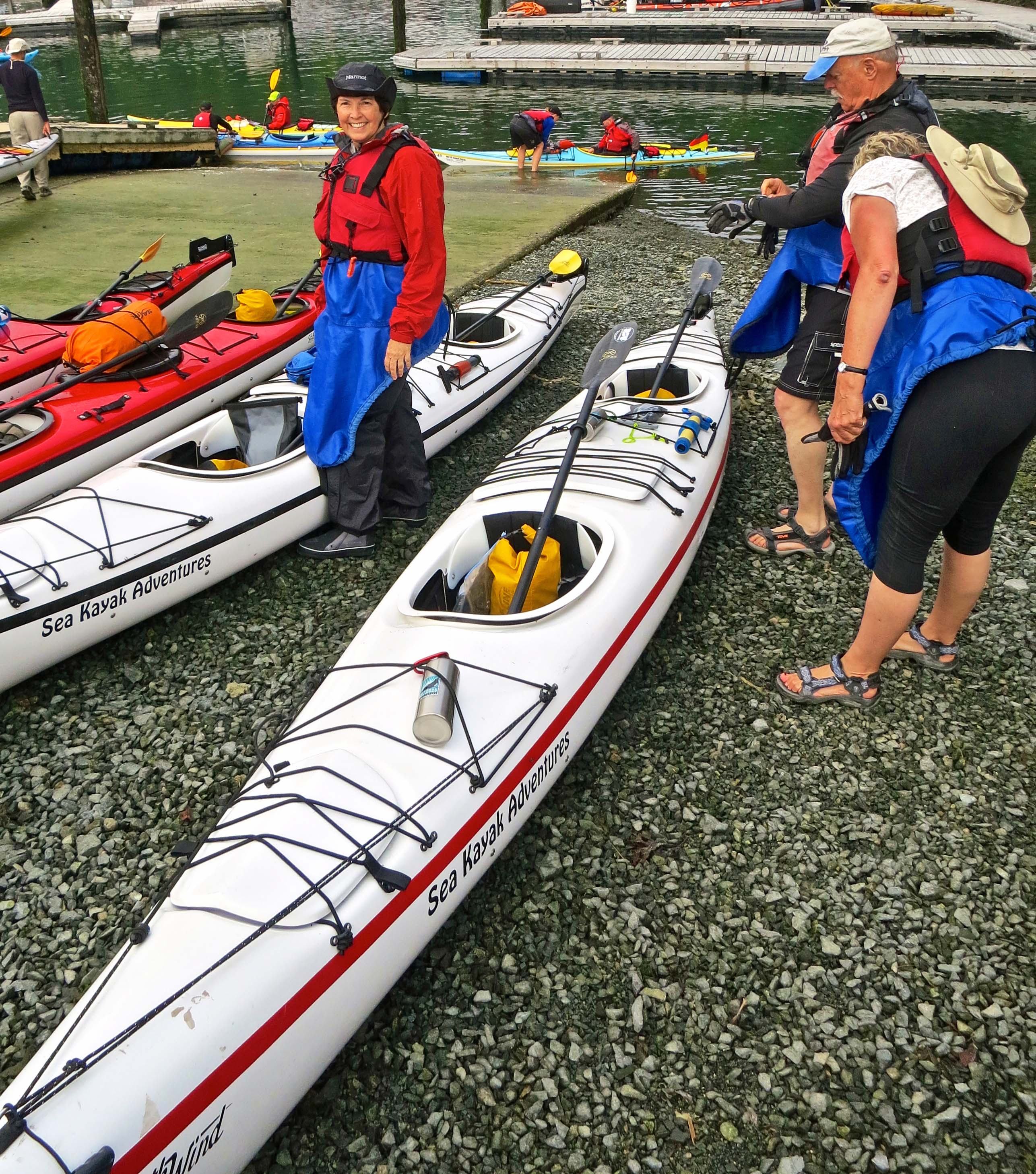
Once our taxis dropped us off at Telegraph Cove, it was time to get busy. There were kayaks to pick, gear to load, life vests to fit, and last-minute instructions, such as which side of our paddle was up.

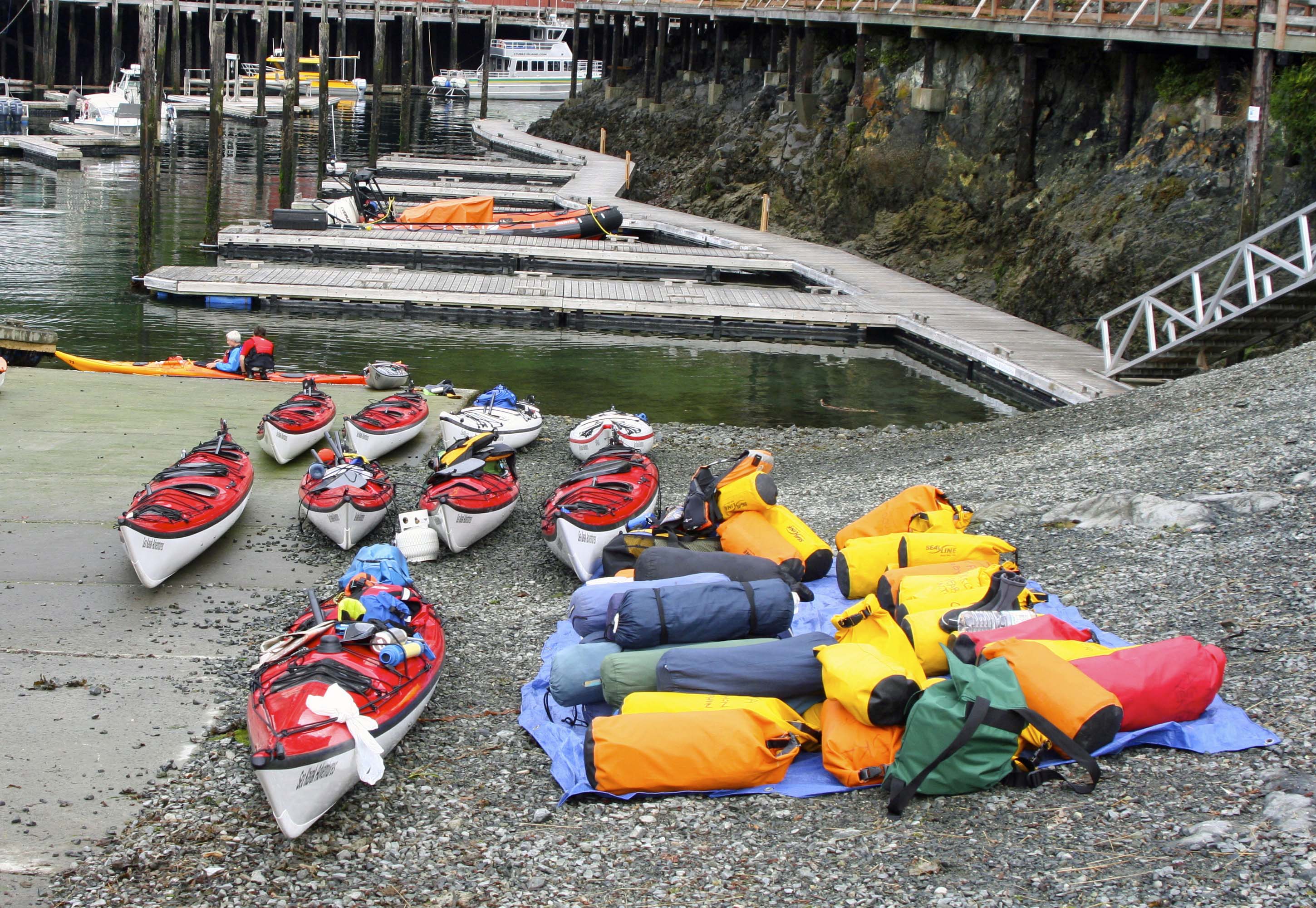
Sea kayaks wait for the next Sea Kayak Adventure tour group in Telegraph Cove.

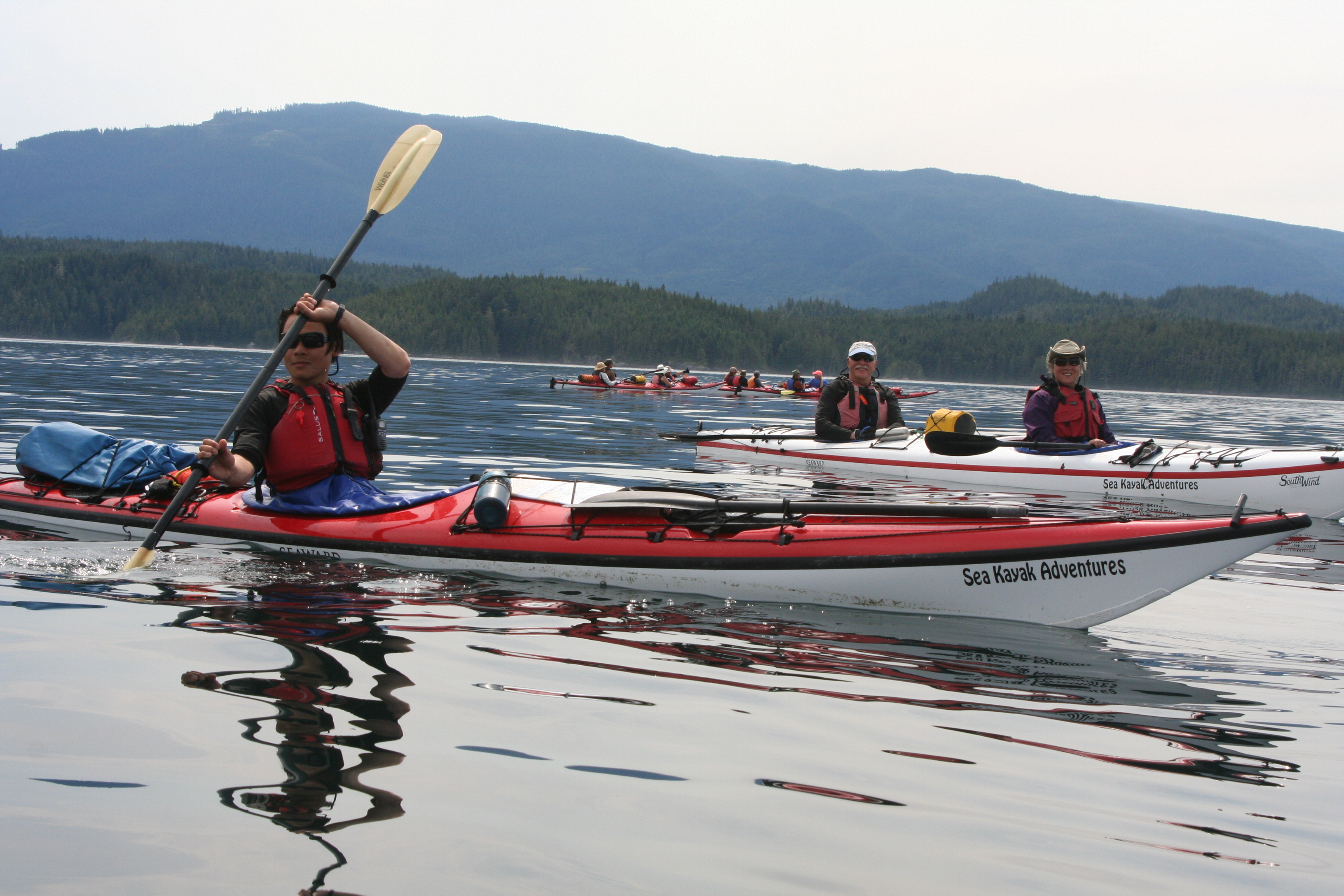
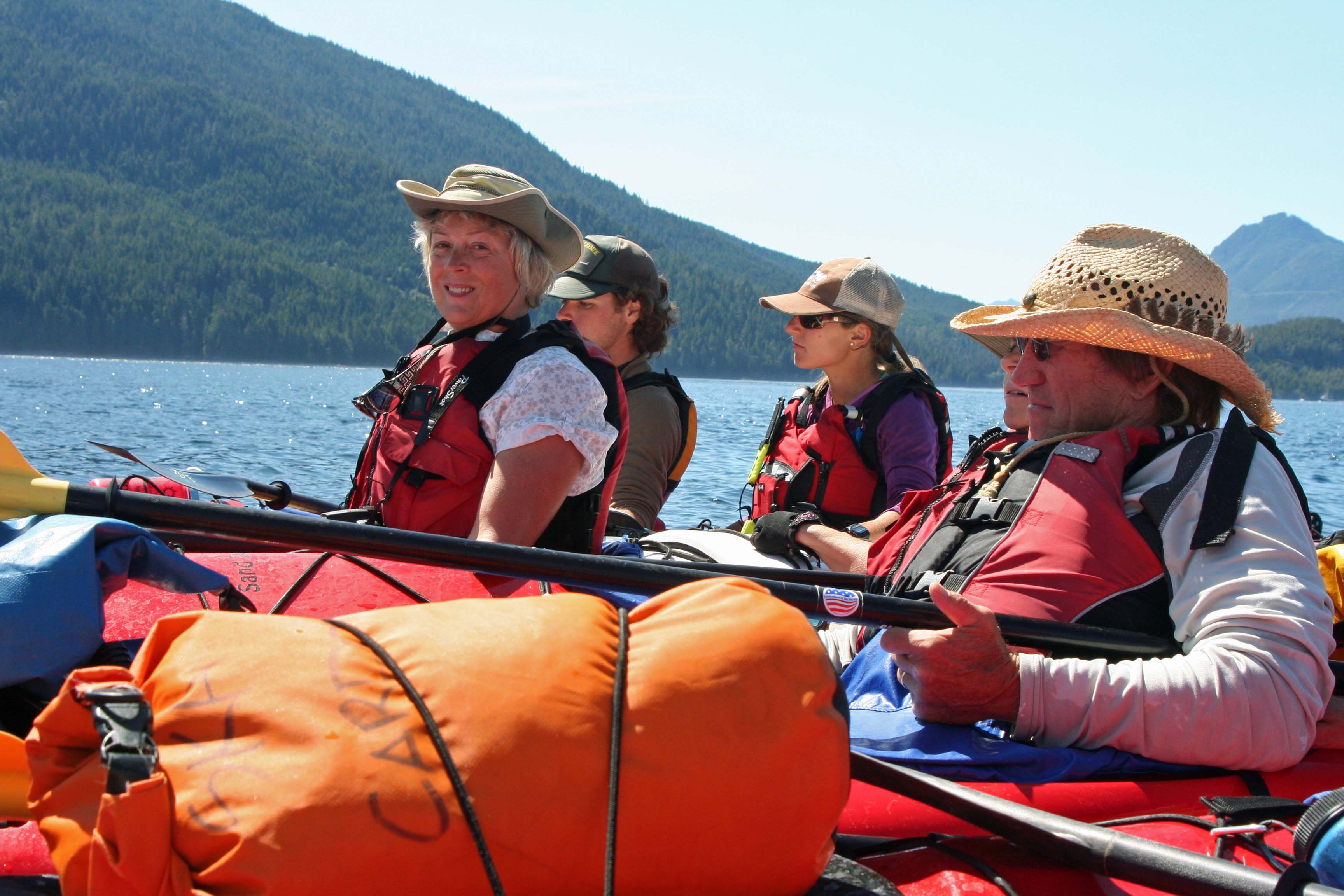
Our guides, Julia, Nick and Quy, had been up  before dawn getting ready for us. Kayaks, life vests, and sleeping pads were waiting. Group gear had already been packed. Our first chore was to pick out our kayaks. (Photo by Peggy Mekemson.)

The white boats are more stable, the guides told us. Being the oldest, David, Edie, Peggy and I decided we could use the most stability. What the guides failed to mention in the fine print was that the white kayaks were also the largest, the heaviest, and could carry more of the group gear.Translation: they would be slower and harder to move.

The white boats are more stable, the guides told us. Being the oldest, David, Edie, Peggy and I decided we could use the most stability. What we failed to think through was that the white kayaks were also the largest, the heaviest, and carried more of the group gear.Translation: they would be slower and harder to row.

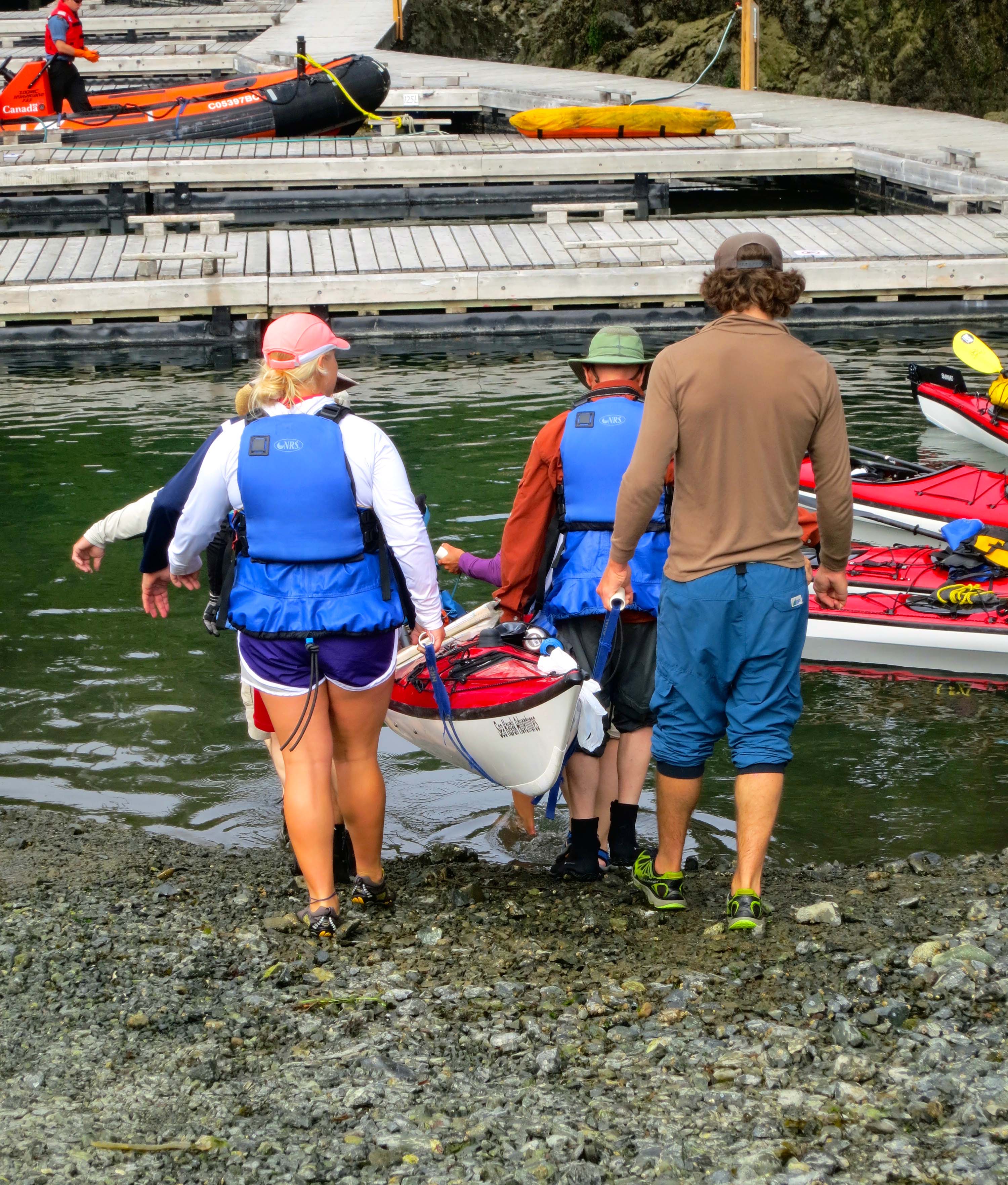
Kayaks are placed in the water at Telegraph Cove. Photo by Curtis Mekemson.

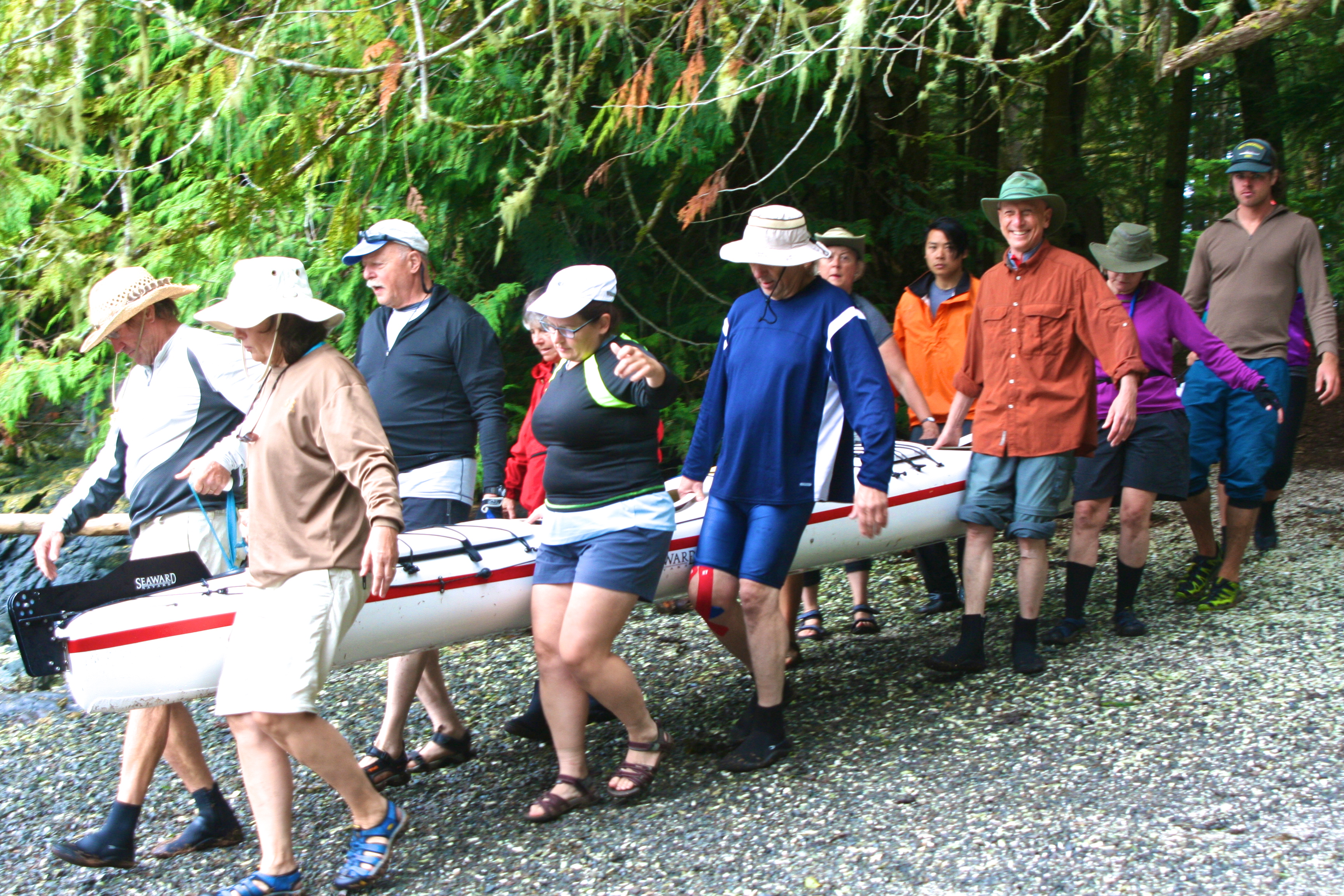
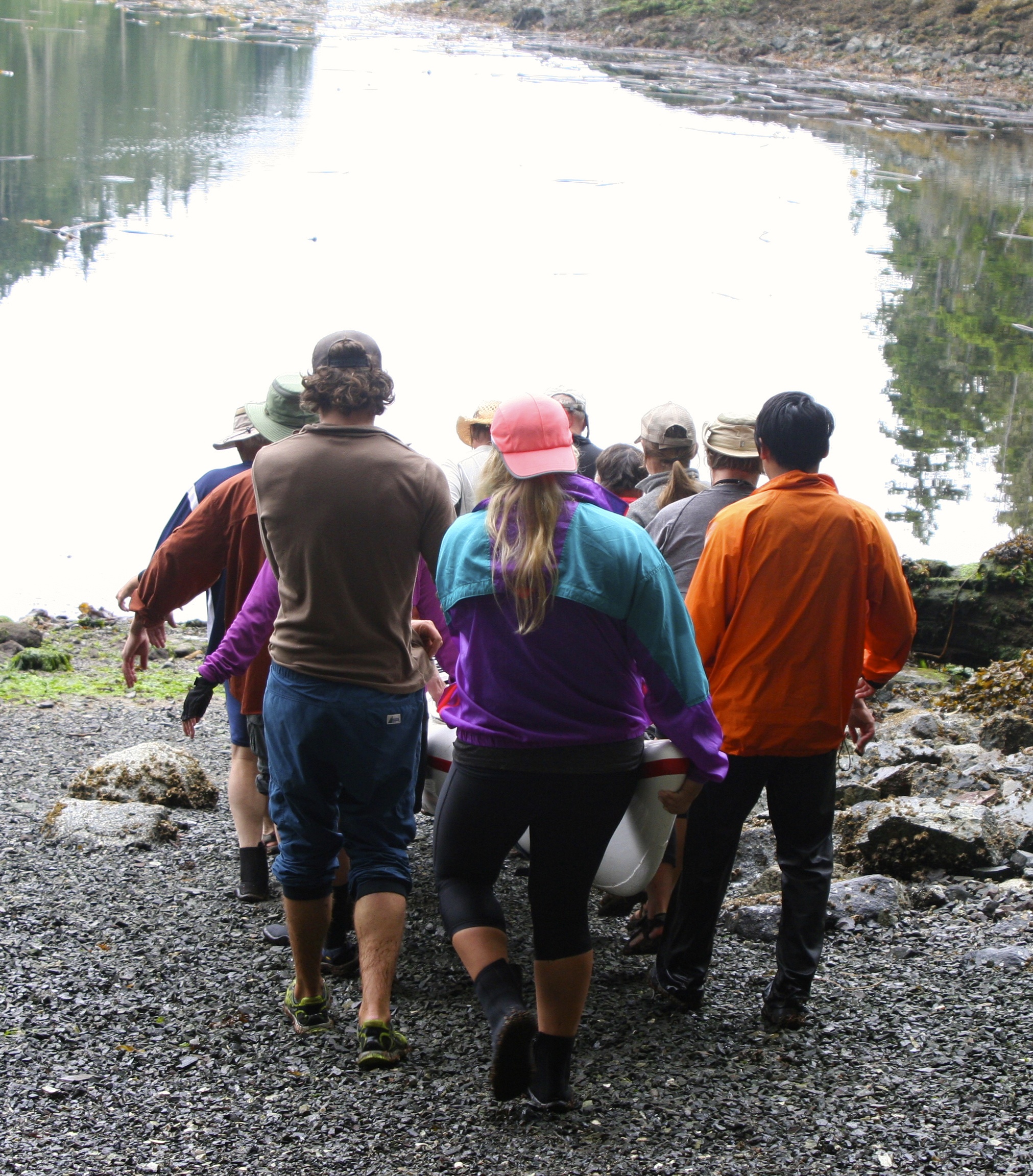
And then the moment arrived. It was time to put our kayaks in the water and start paddling. Put in and take out were always a group effort.

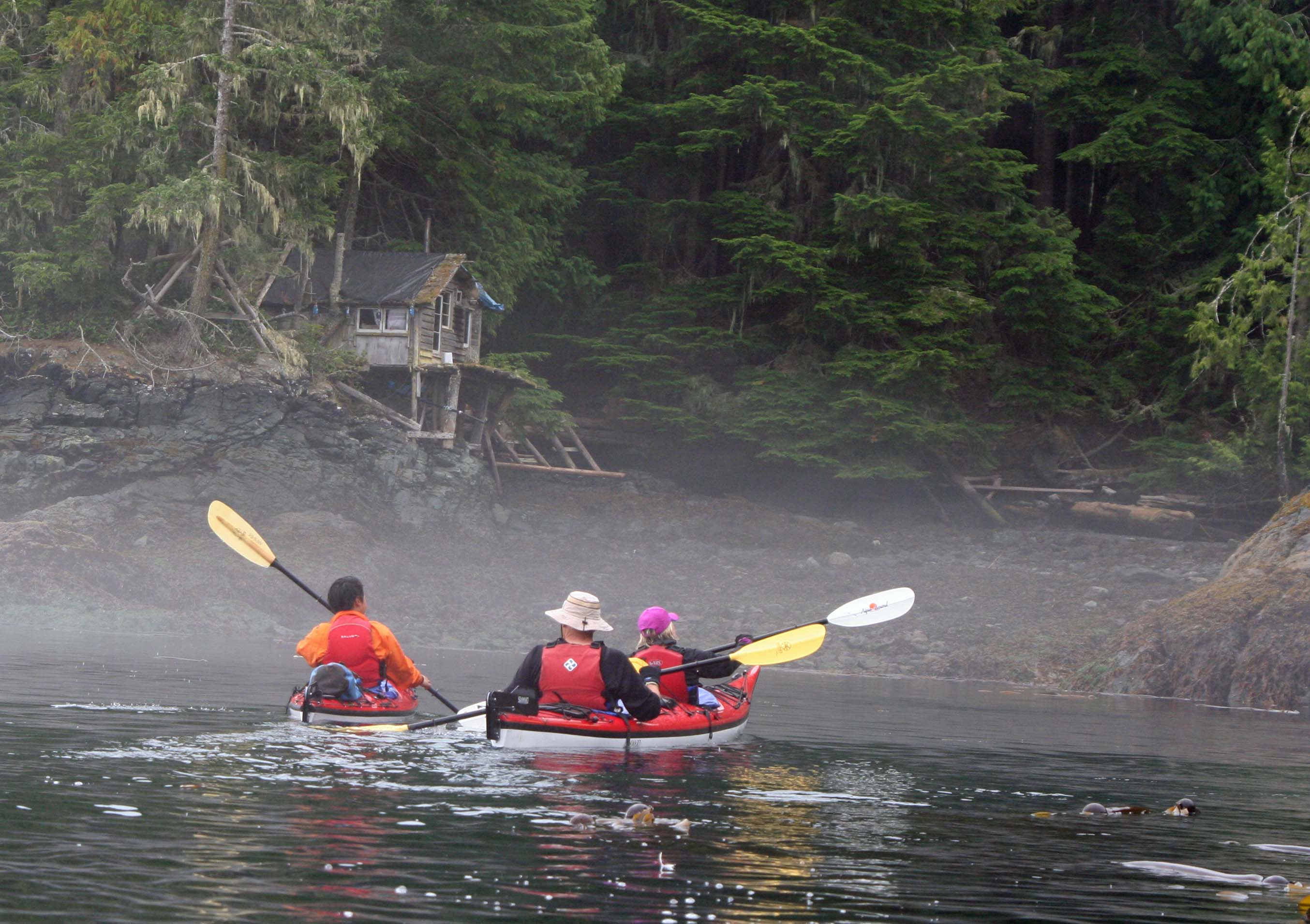
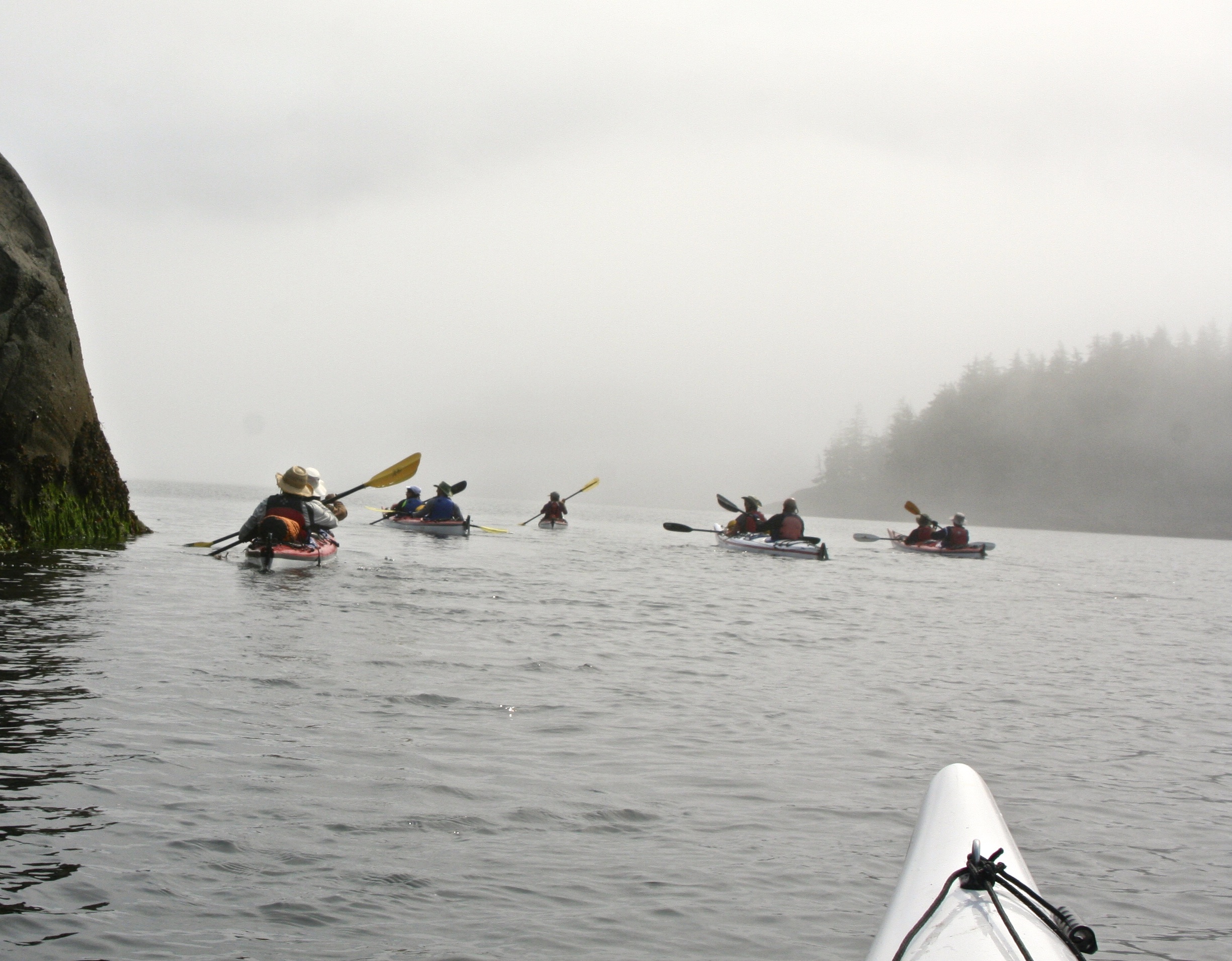
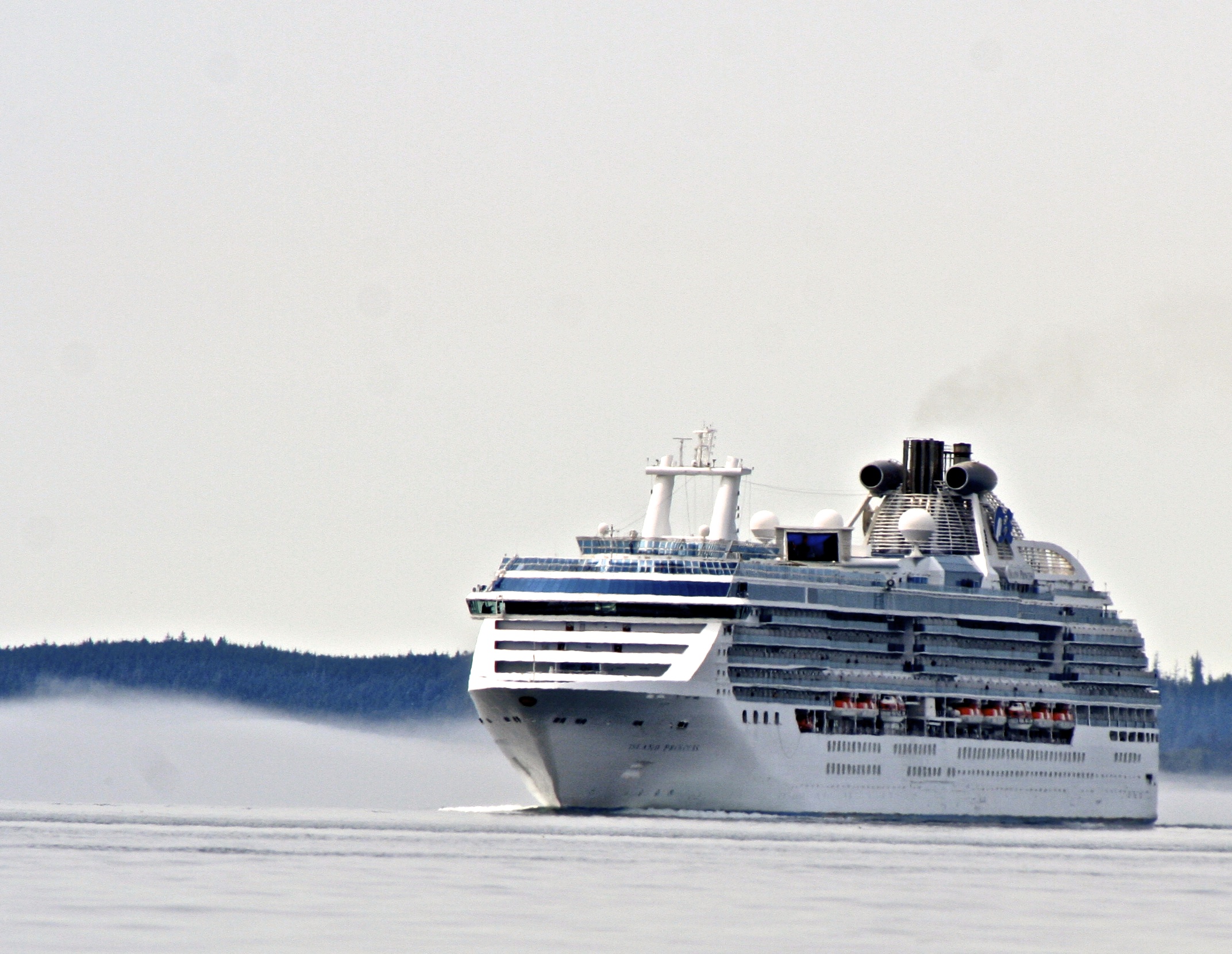
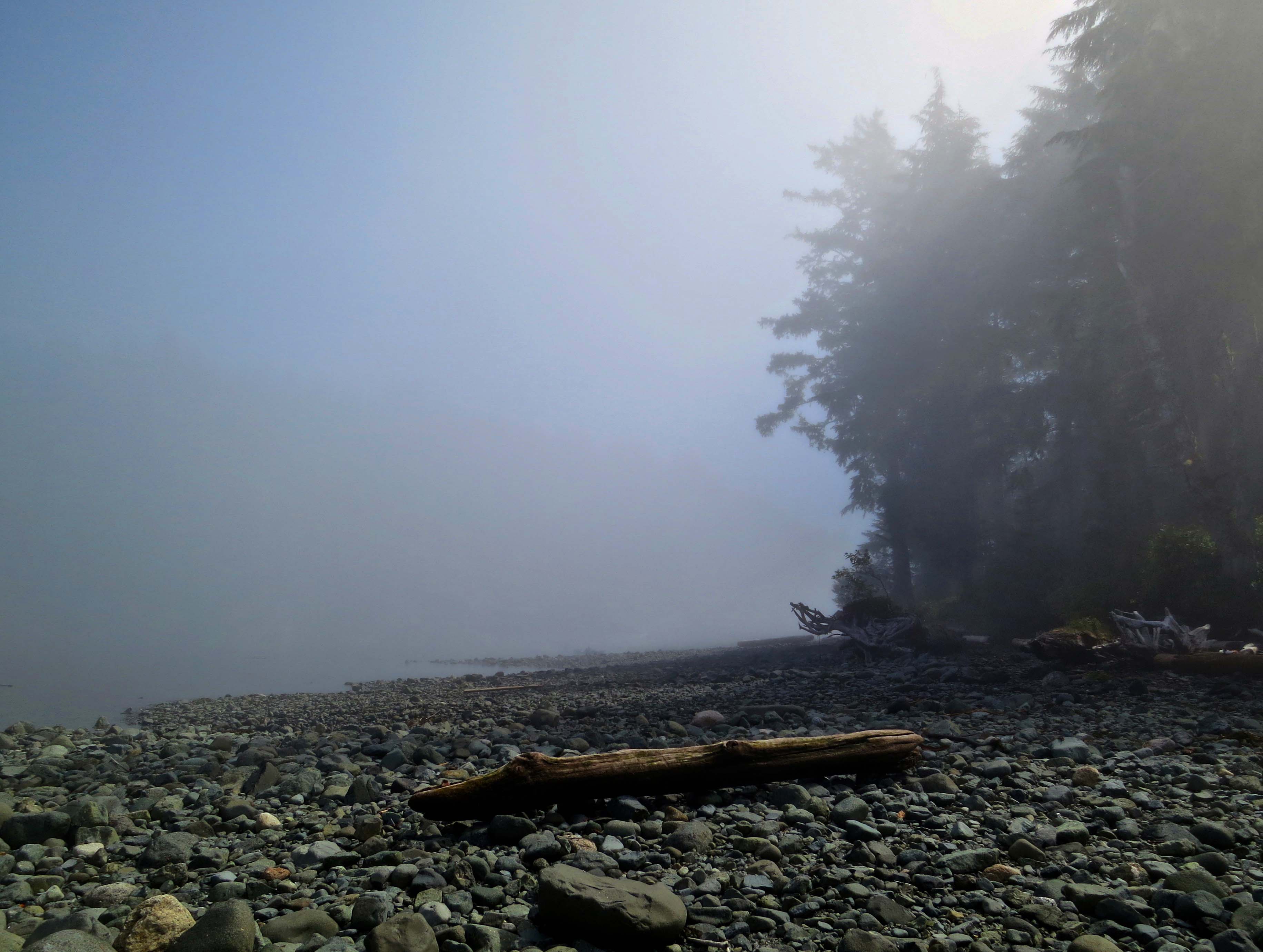
Heavy fog hung over Johnstone Strait and along the shore. We moved slowly, keeping each other in sight and waiting for the fog to clear. Large boats, including cruise ships, use the Strait. You want to be damn sure you can see them— and that they can see you. At one point, Nick, who was on rear guard duty, decided my seat needed adjusting. I was too laid back. By the time the adjustments were made, the other kayakers had disappeared into the fog. They waited patiently. We stopped and had a leisurely lunch. Then the sky turned a bright blue and we were off across the Strait. Orcas were waiting.

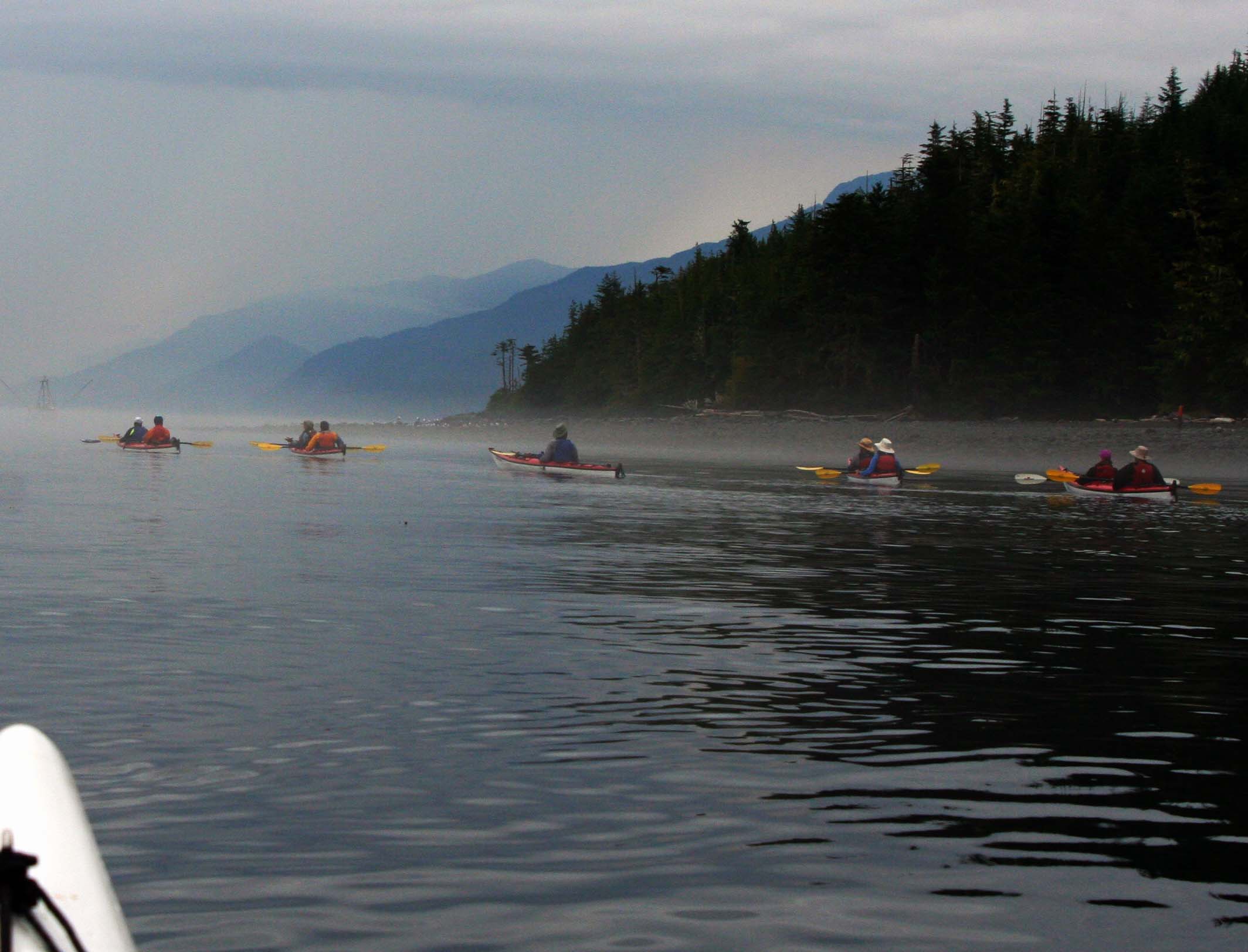
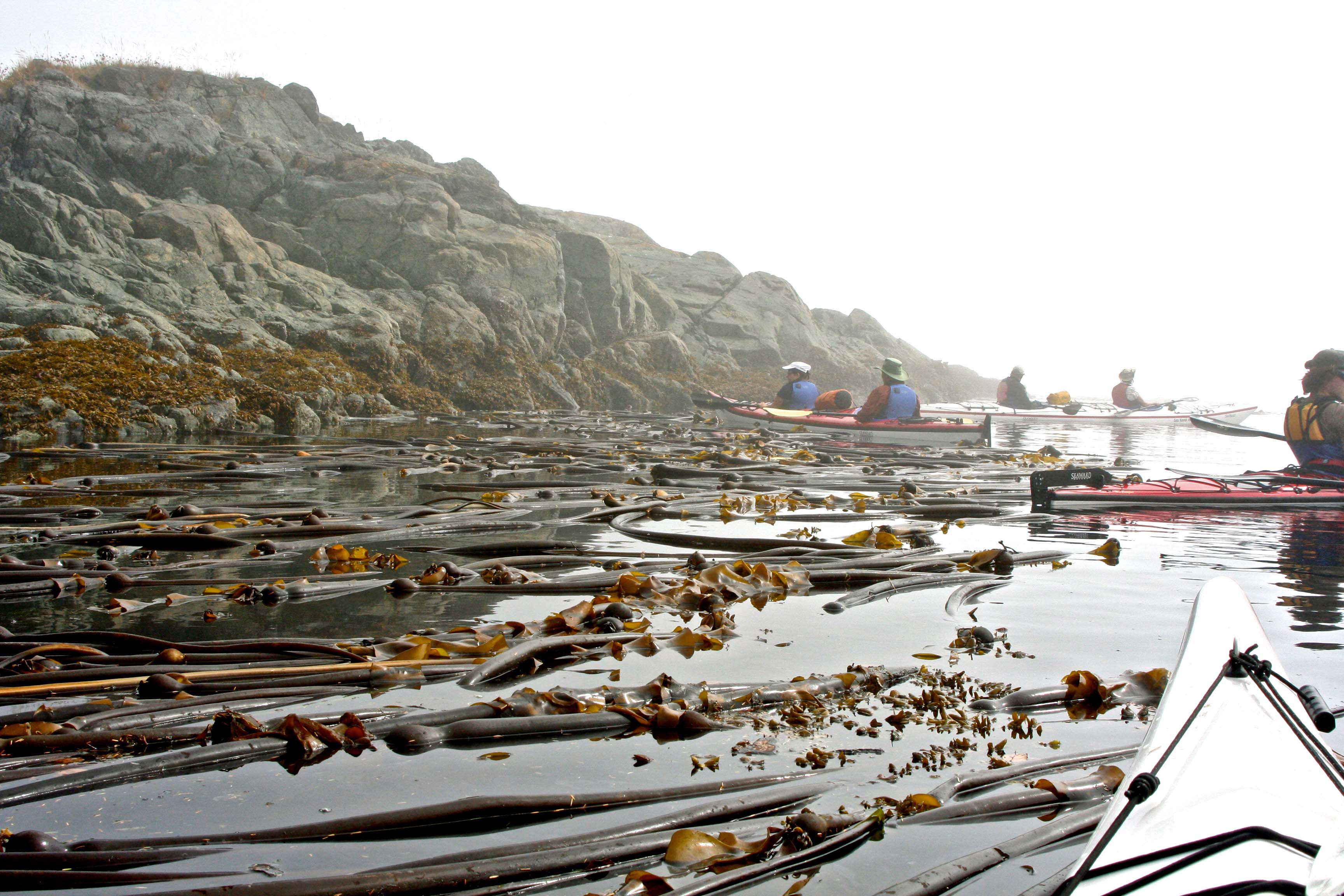
Kayakers work their way through kelp beds and fog in the Johnstone Strait of British Columbia.

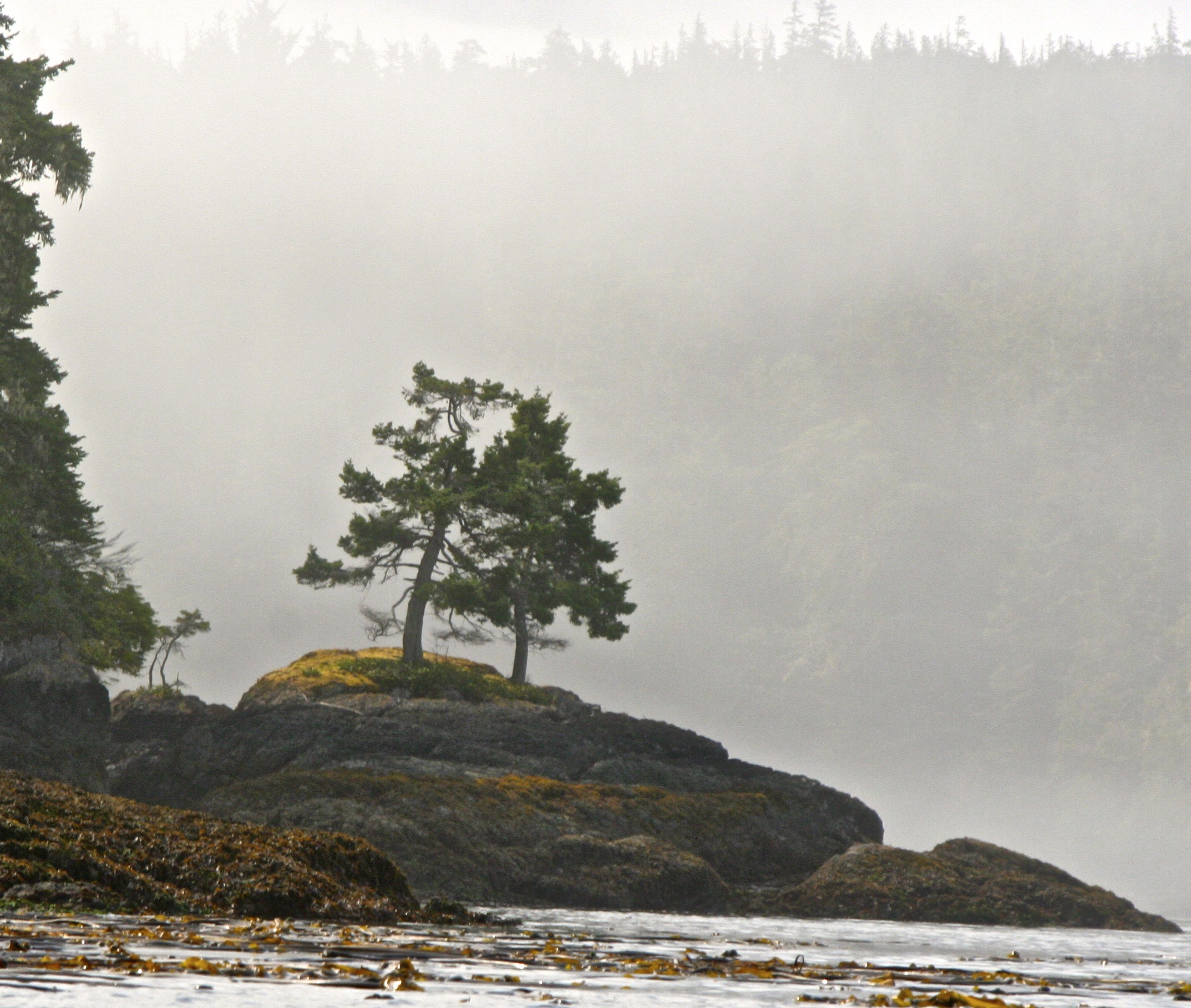
Kelp beds and fog slowed us down. Here, we maneuvered our way through the kelp. Some of our group had almost disappeared into the mist— and they weren’t that far away. (Photo by Peggy Mekemson.)
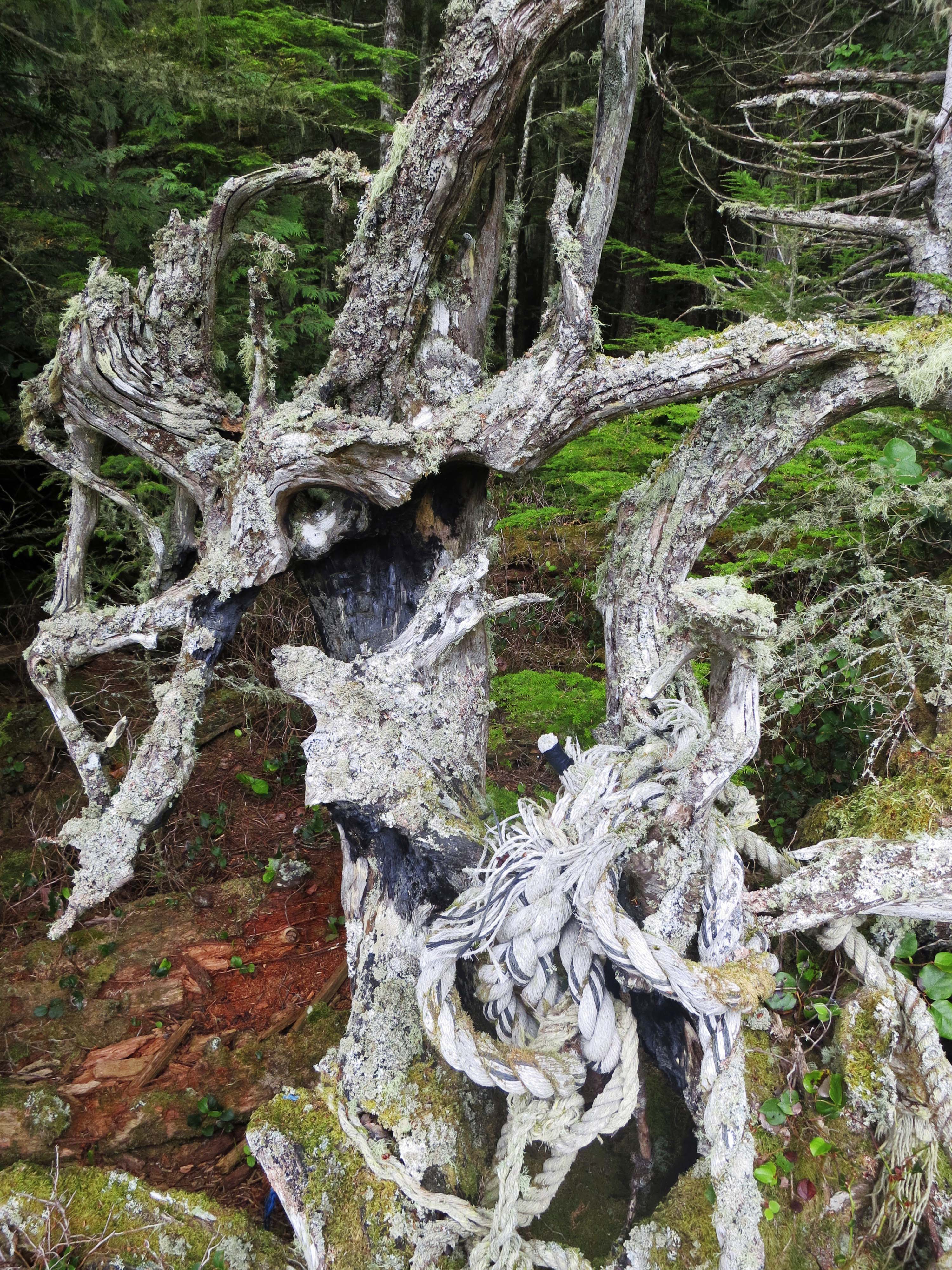
Vancouver Island cast on Johnstone Strait near Telegraph Cove. Photo by Curtis Mekemson.

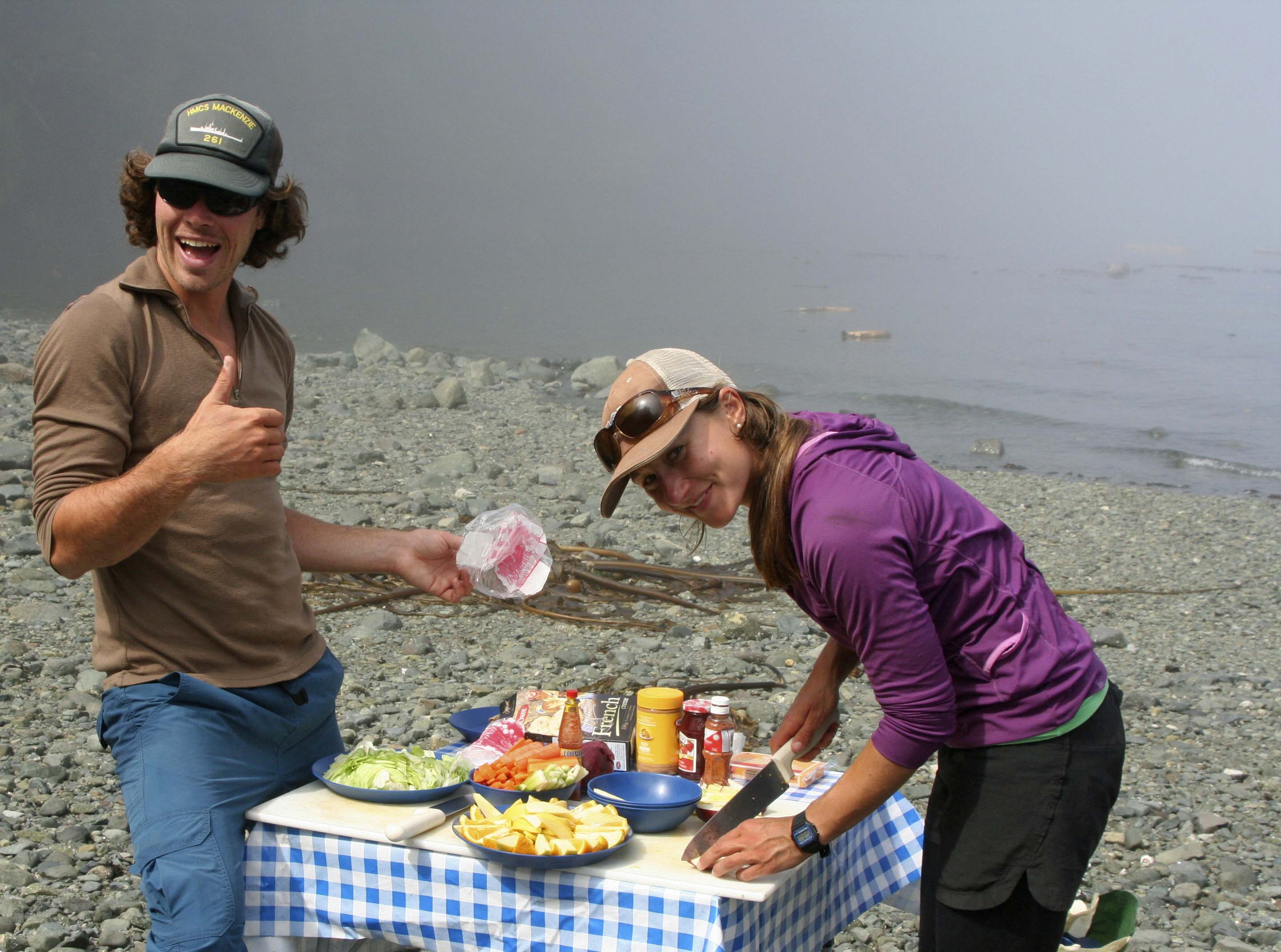
Working our way along Vancouver Island, Julia decided to stop for lunch and wait the fog out. The bright sun was already creating a patch of blue.

Sun illuminates forest during kayak trip on Johnstone Strait, BC. Photo by Curtis Mekemson.

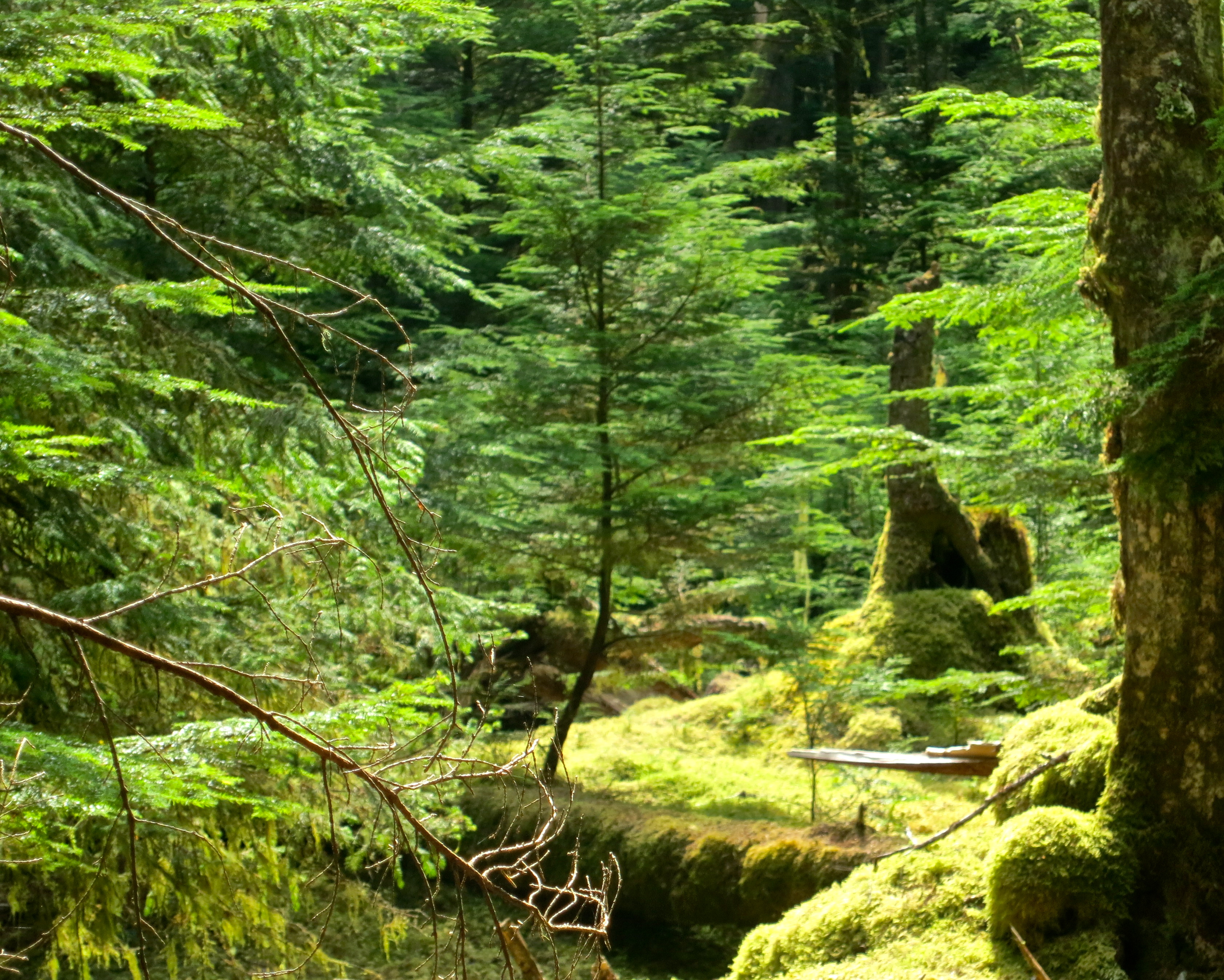
Everywhere we went, the beauty of the forests matched the beauty of the waterways.

Lunch on Sea Kayak Adventures tour on the Johnstone Strait in British Columbia.

“Come and get it.” Julia and Nick announced that lunch was ready. (Photo by Peggy Mekemson.)

Peggy Mekemson searches for Killer Whales while kayaking across Johnstone Strait off of Vancouver Island. Photo by Curtis Mekemson.
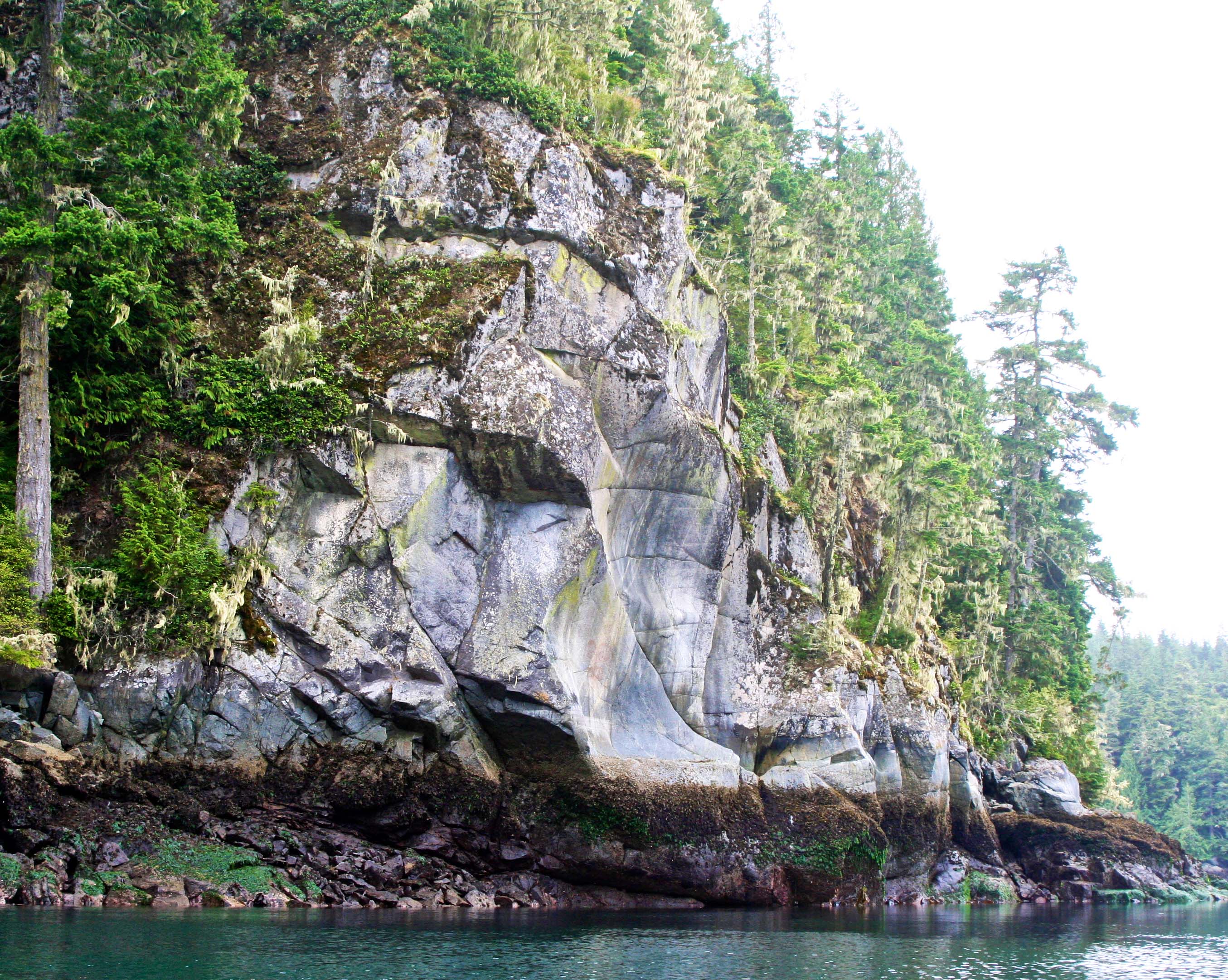
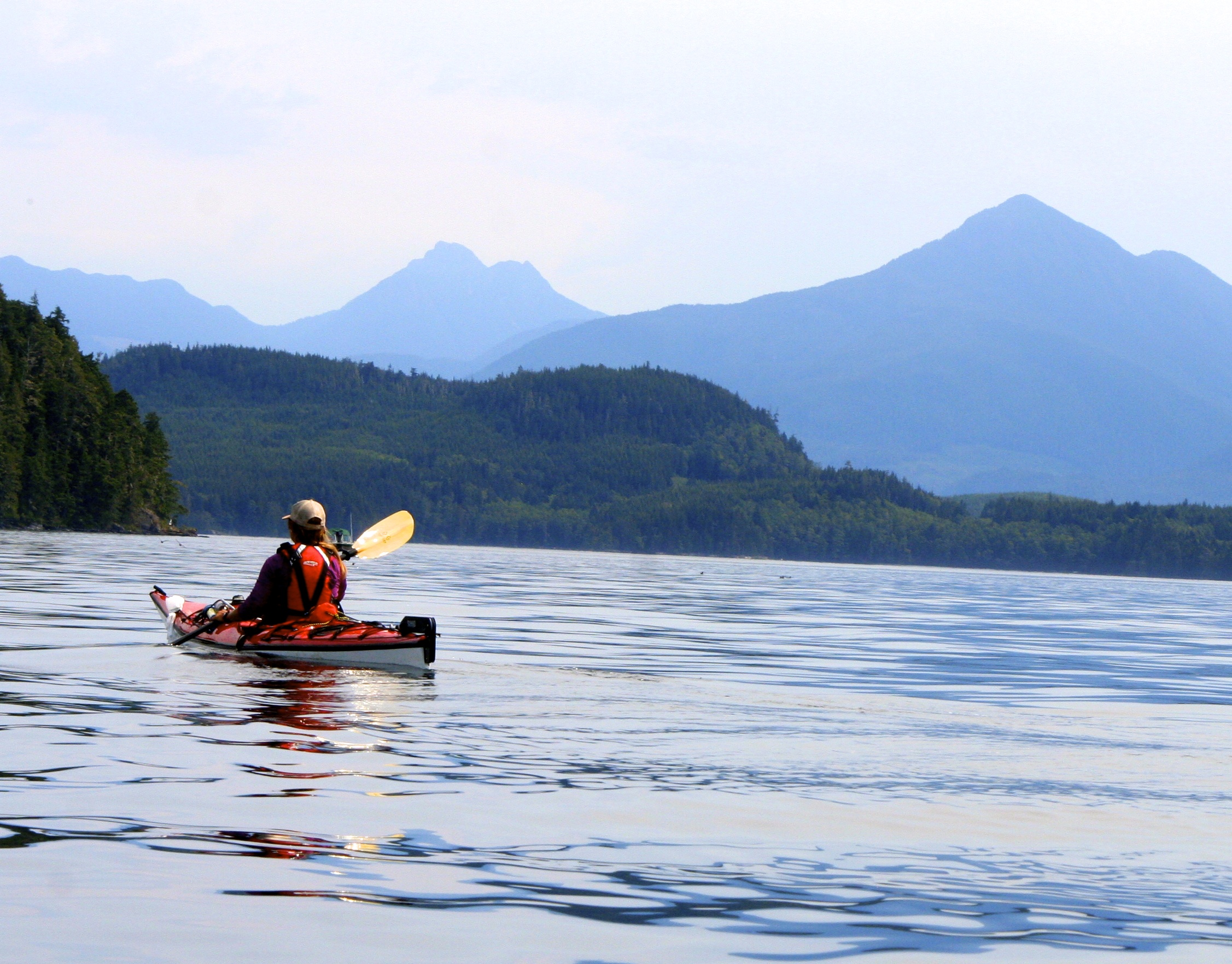
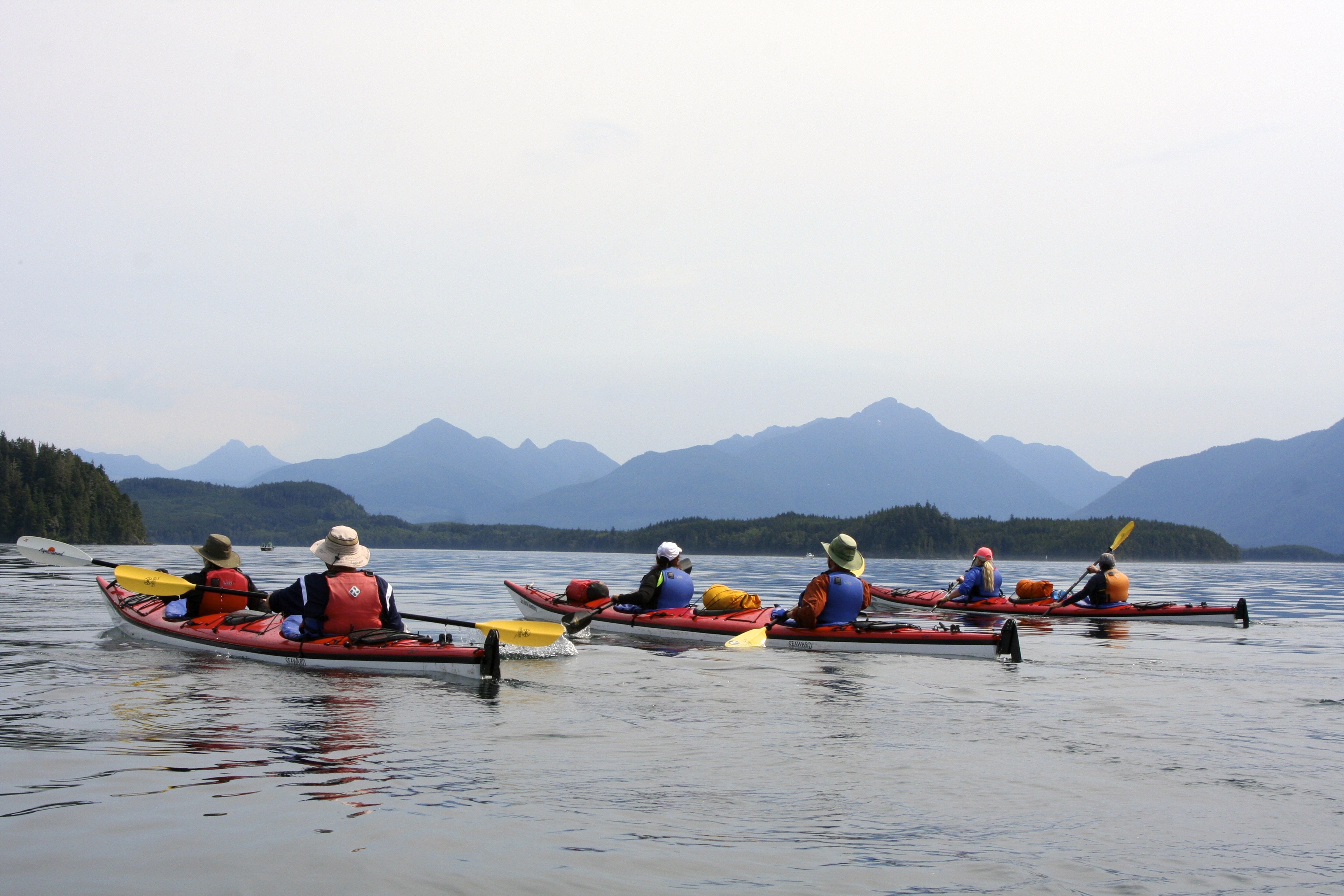
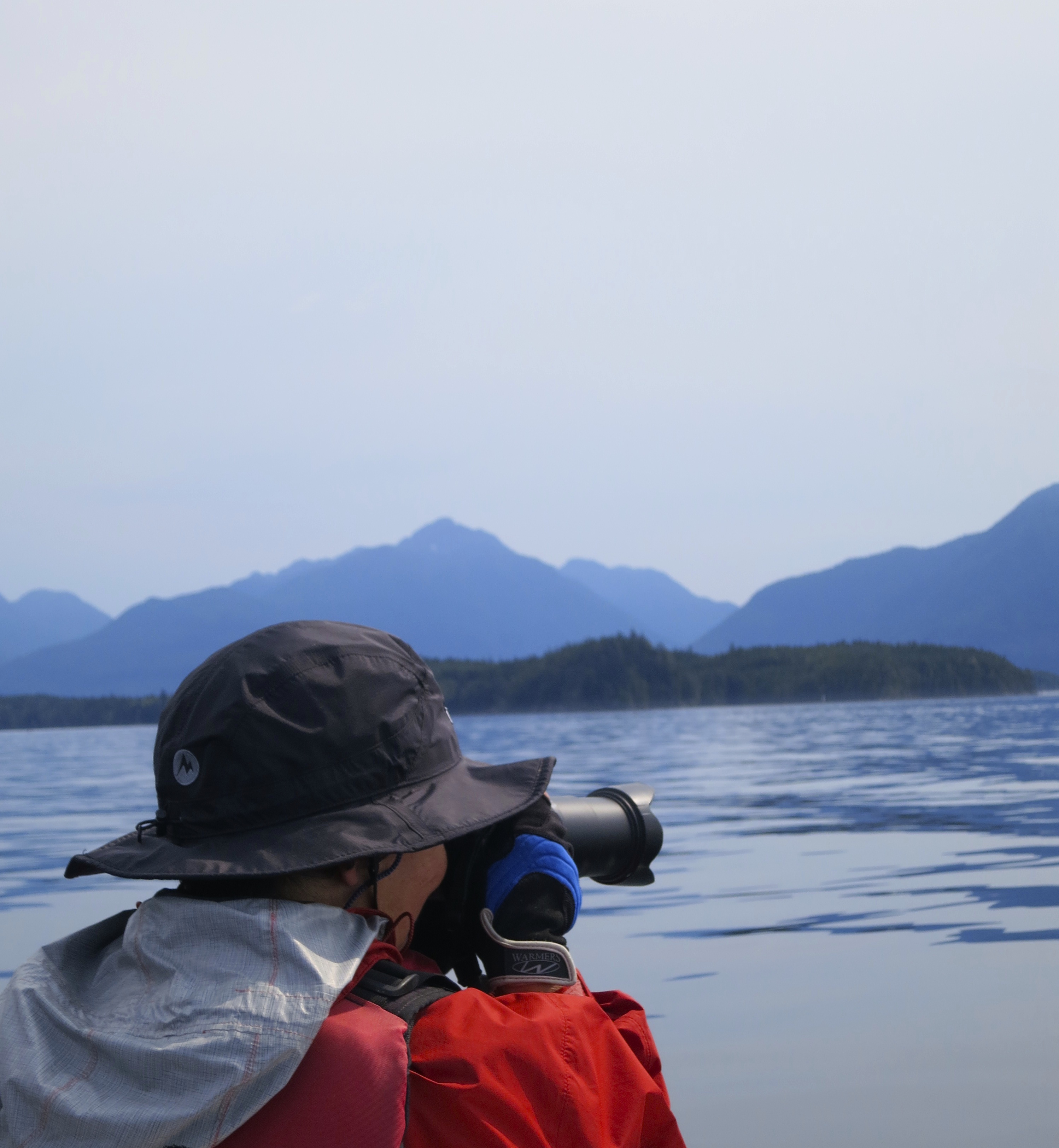
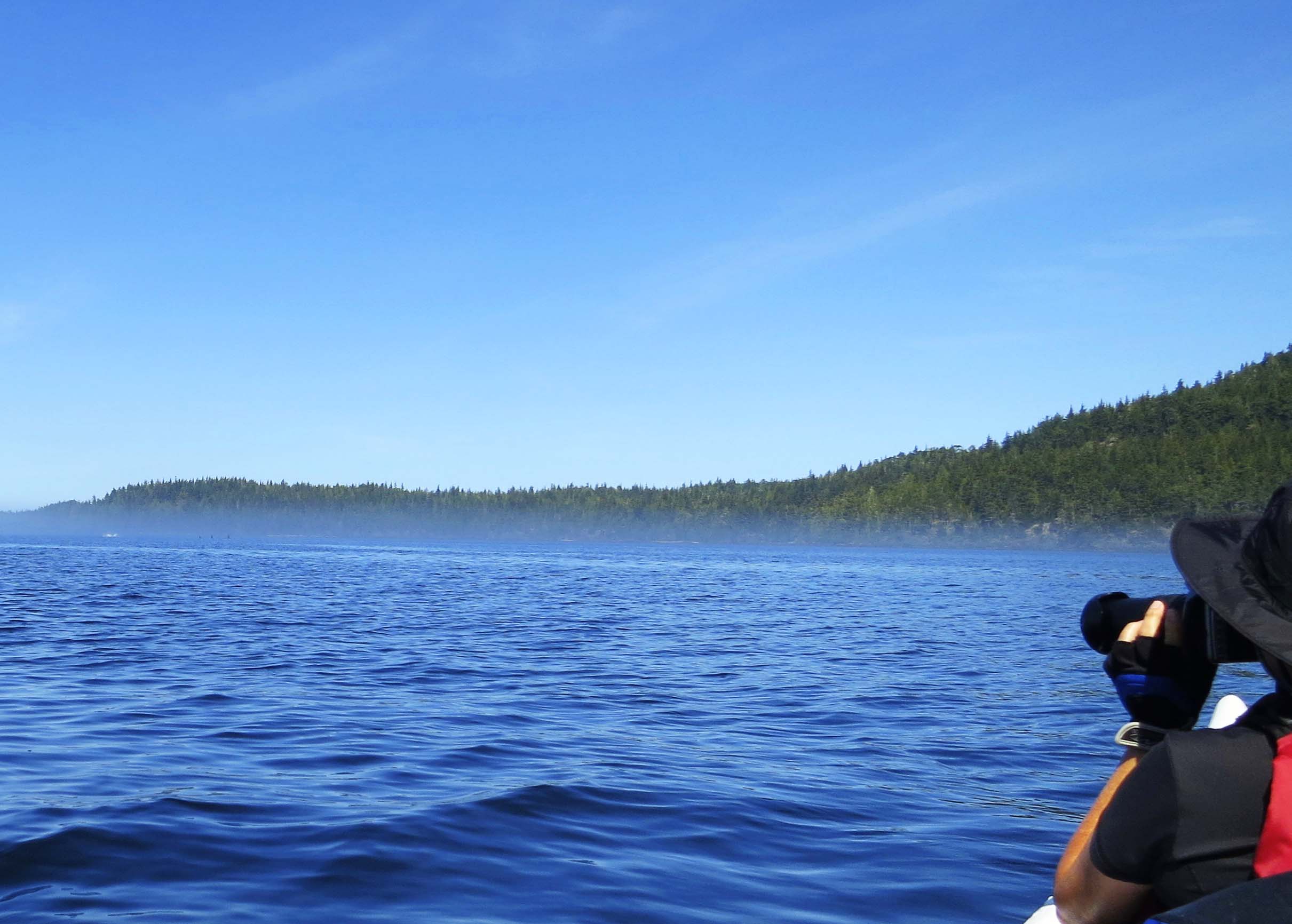
With lunch over and the fog lifted, we made our way across Johnstone Strait. Peggy searched the water for orcas/killer whales.

Kayakers with Kayak Adventure Tours raft up on Johnstone Strait in British Columbia when seeing a Killer Whale.

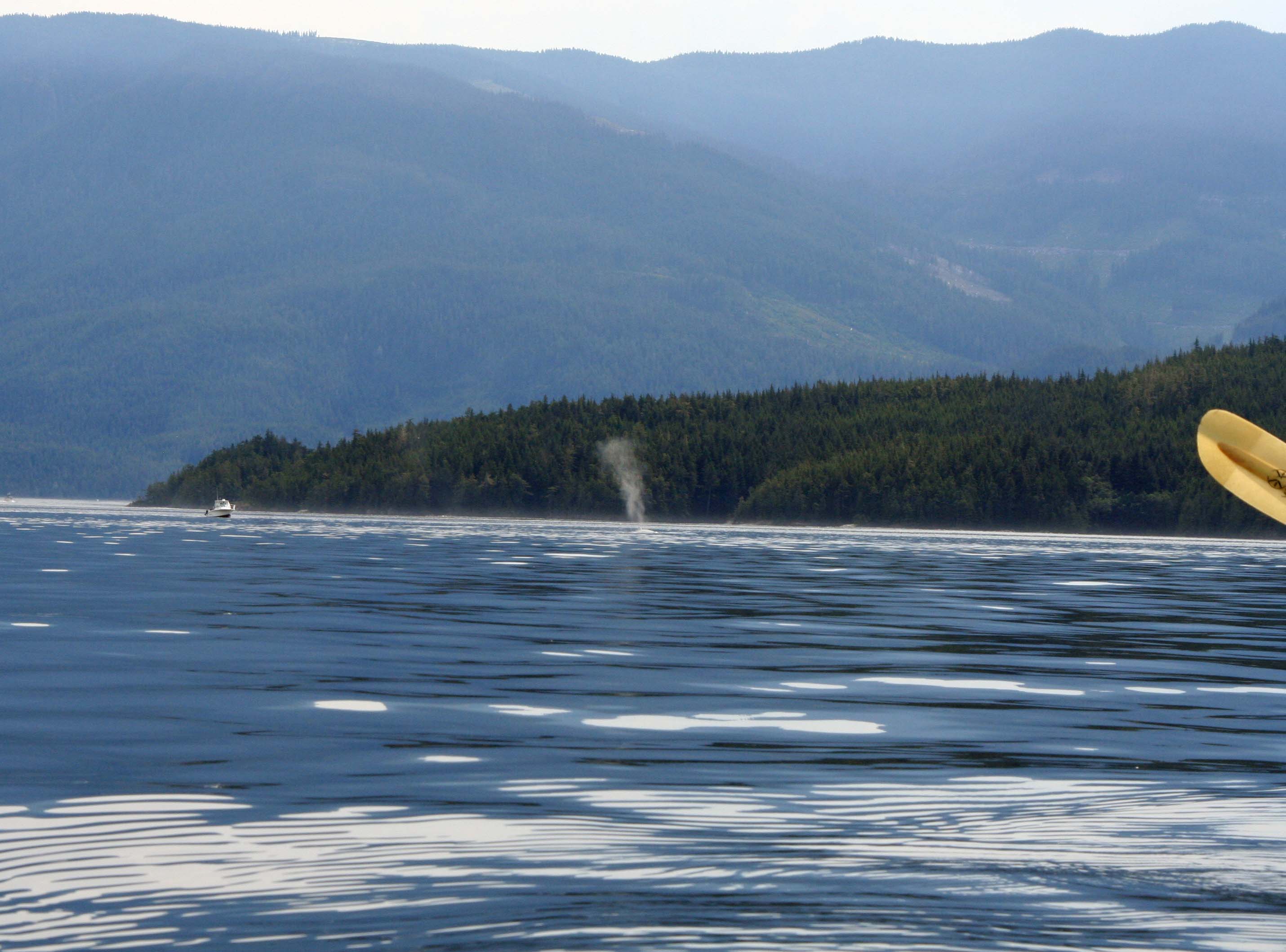
The distinctive whoosh made by a whale when it surfaced and blew caused our group to raft up, where we held on to each other’s kayaks. Edie gave us a smile while we waited, hoping to catch sight of the whale. (Photo by Peggy Mekemson.)

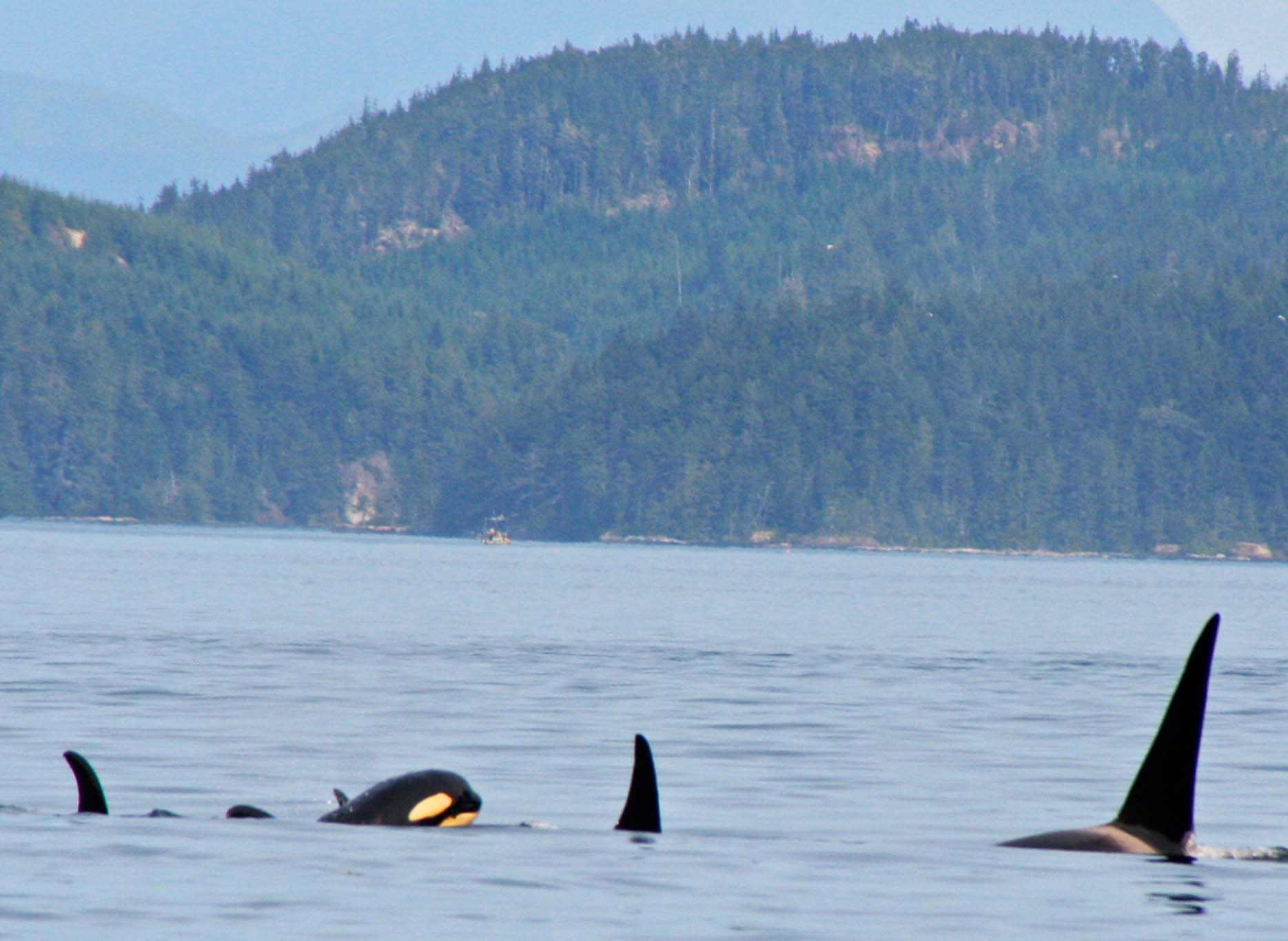
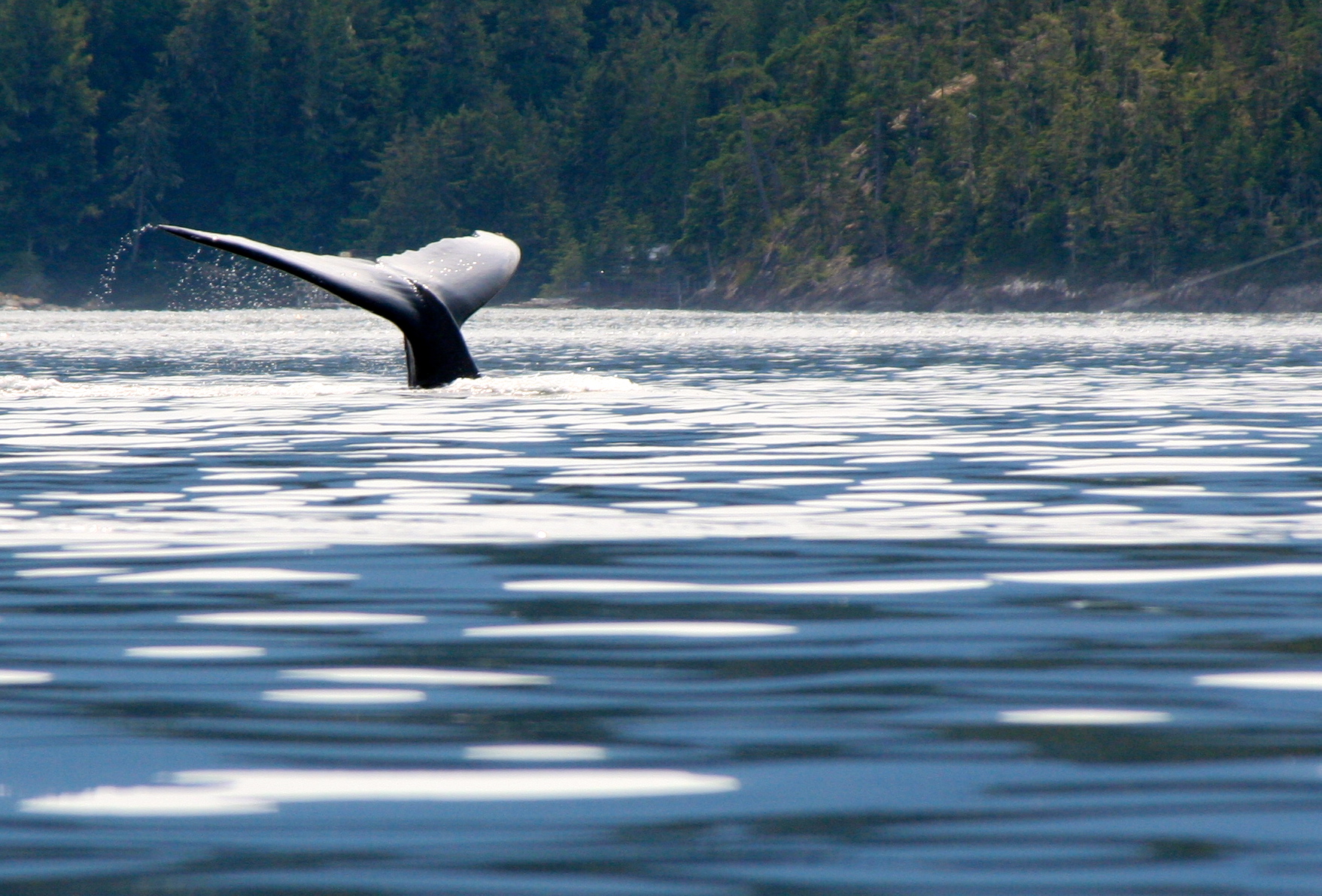
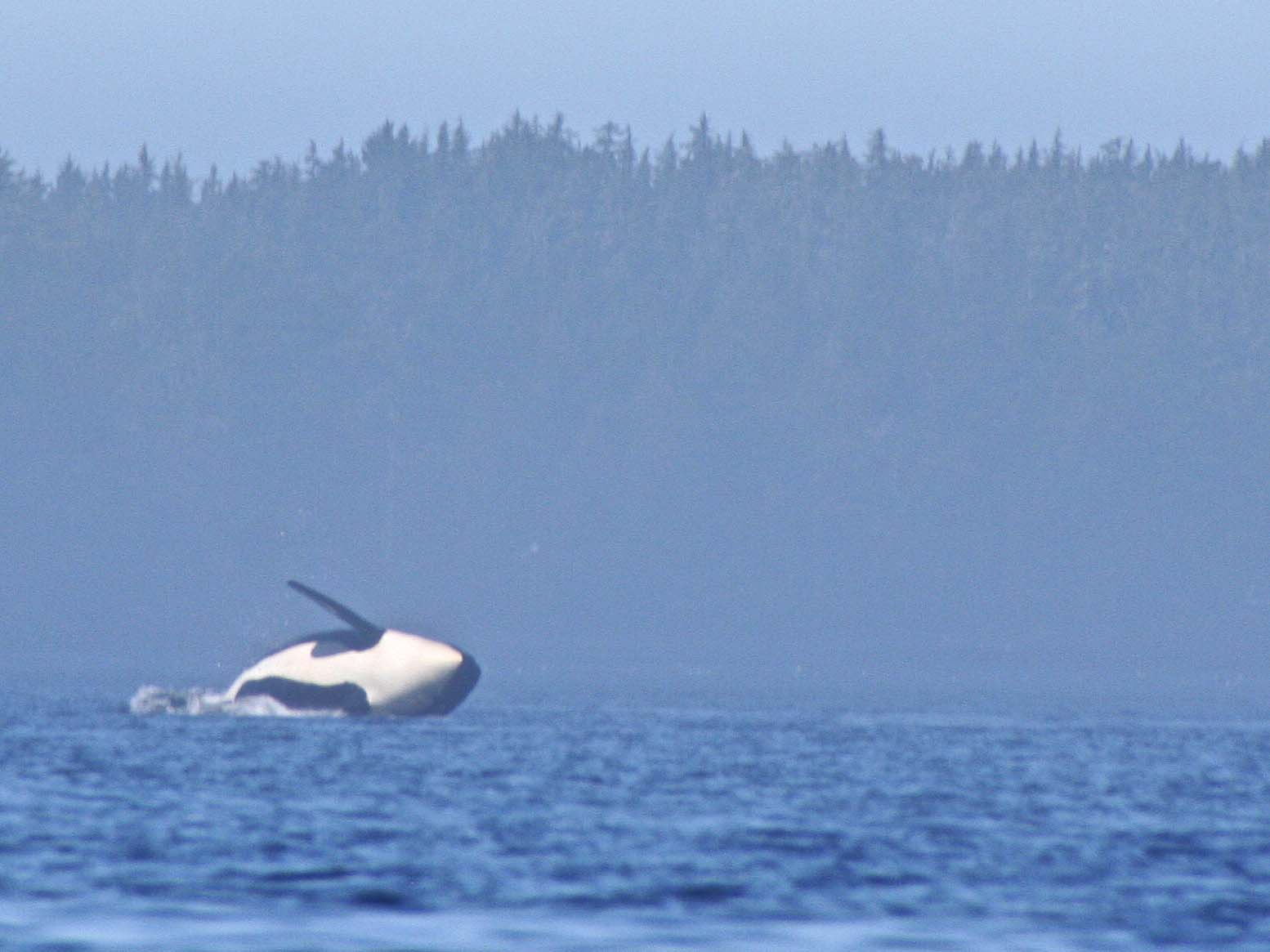
Orca breaches in the Johnstone Strait.

And were rewarded by one breaching in the distance. (Photo by Peggy Mekemson.)

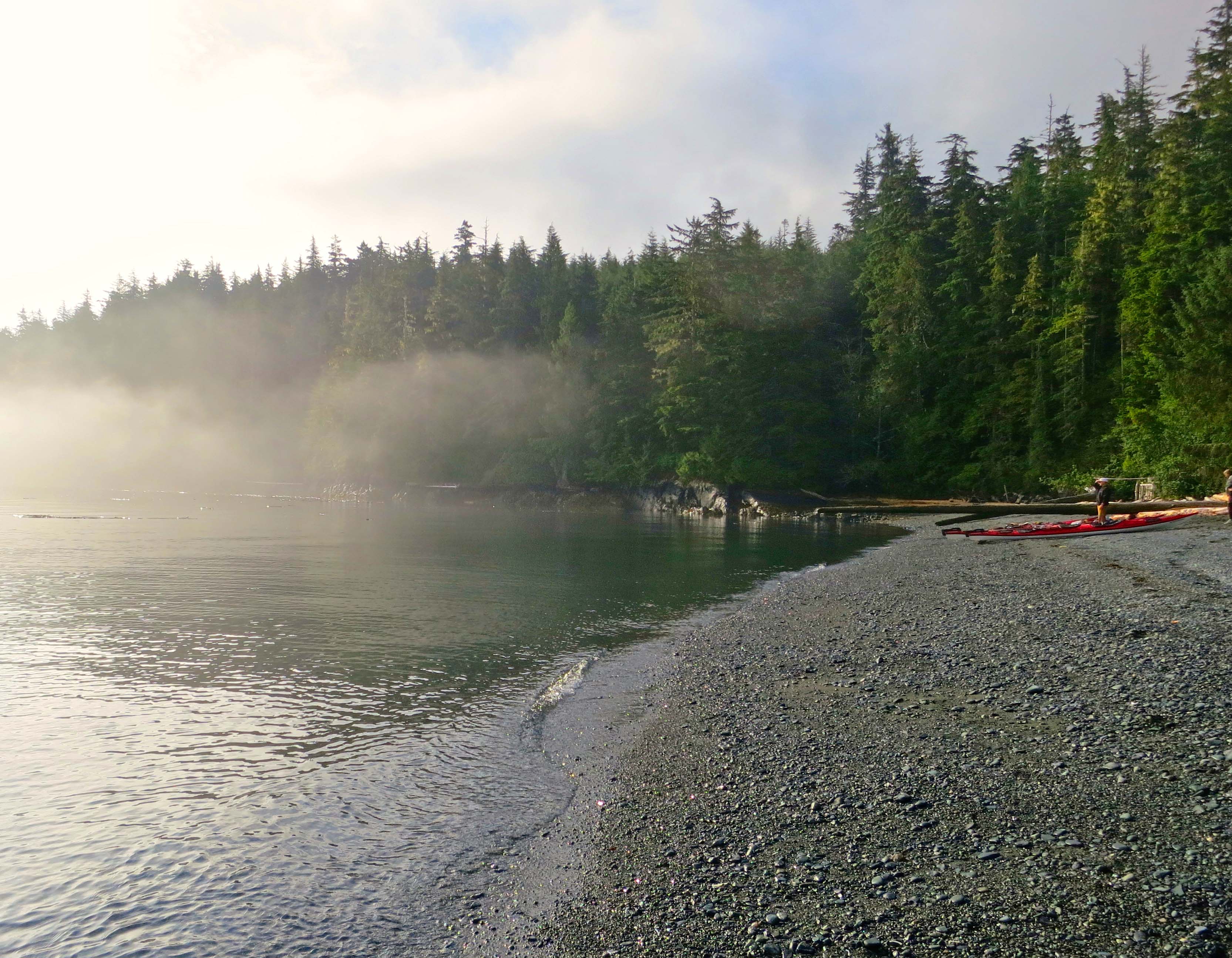
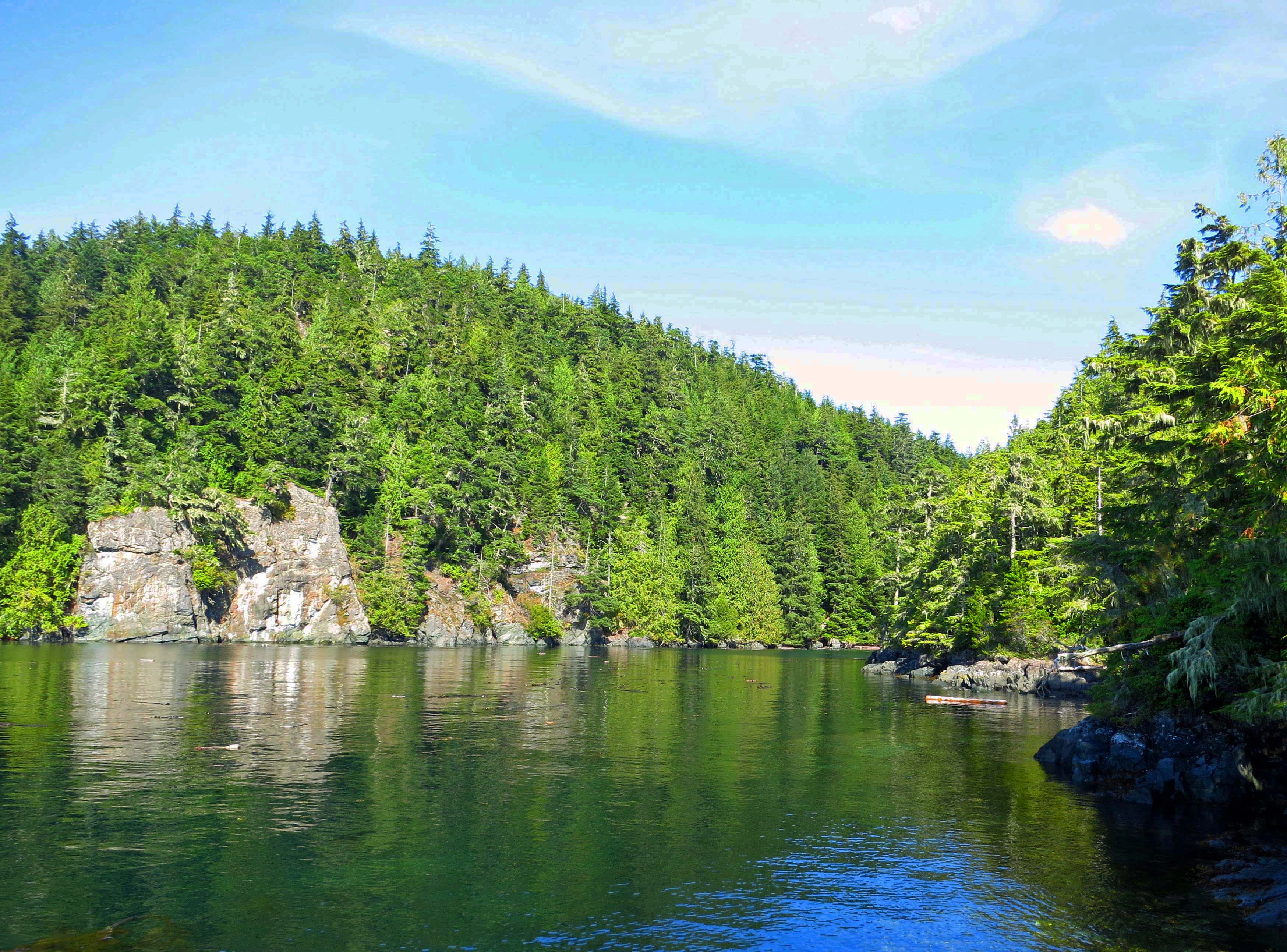
Sea Kayak Adventures campsite on Hanson Island in the Johnstone Strait, British Columbia.

Having also been slowed down by a pod of dolphins, we finally made it to our first night’s campsite on Hanson Island. The camp is to the right of the rocks, back in the cove.

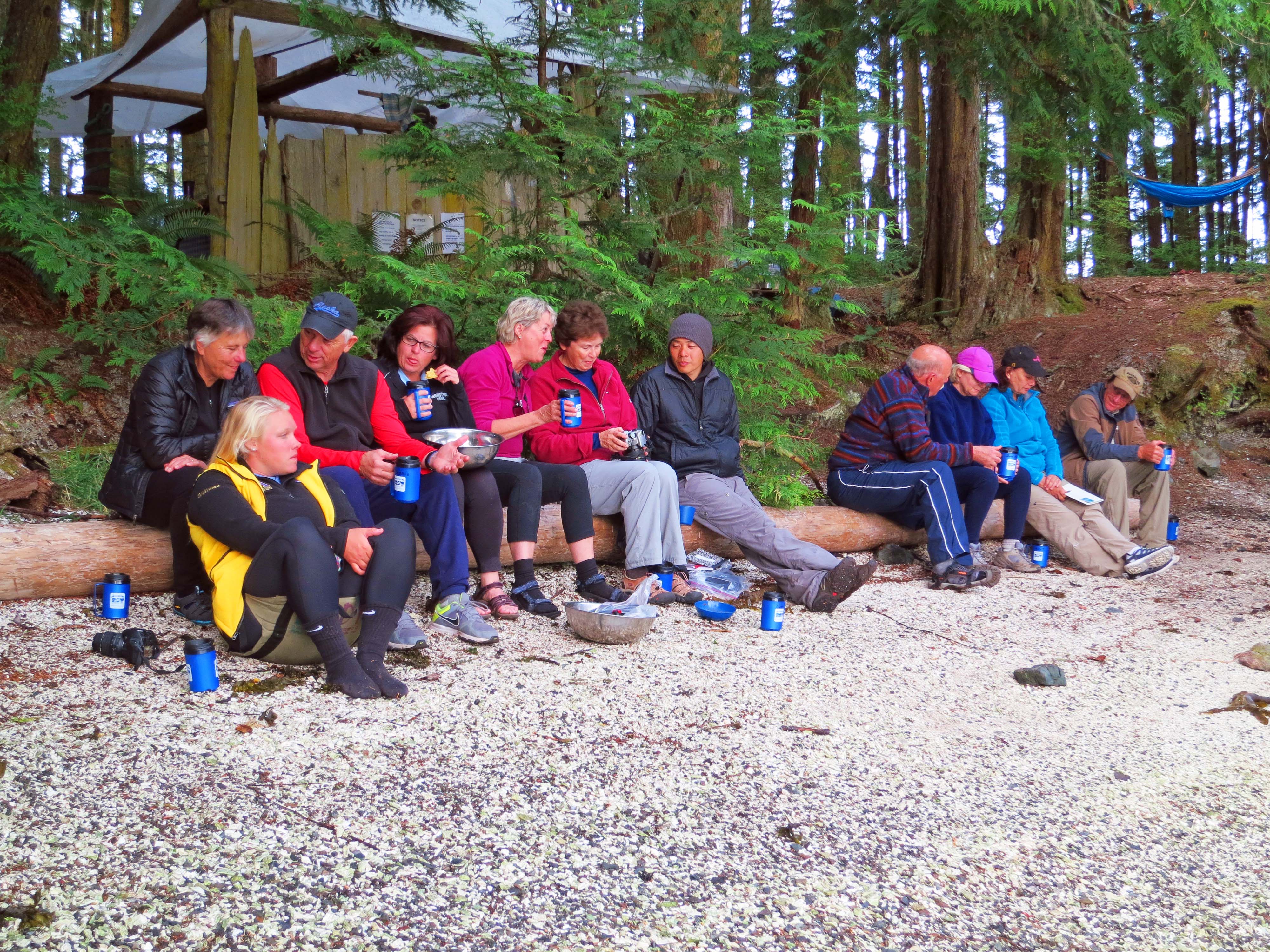
Sea Kayak Adventures leases its sites from a First Nation tribe. Each site is chosen for its beauty and its natural setting.  Camps are pre-set up with tents, a cooking area, and a primitive but comfortable and private open-air restroom. We carried our kayaks up into the camping area, selected tents, packed away gear, and then went for a hike. Afterwards it was time for cocktail hour and dinner. We finished off our evening watching the sunset— and a gorgeous sunset it was.

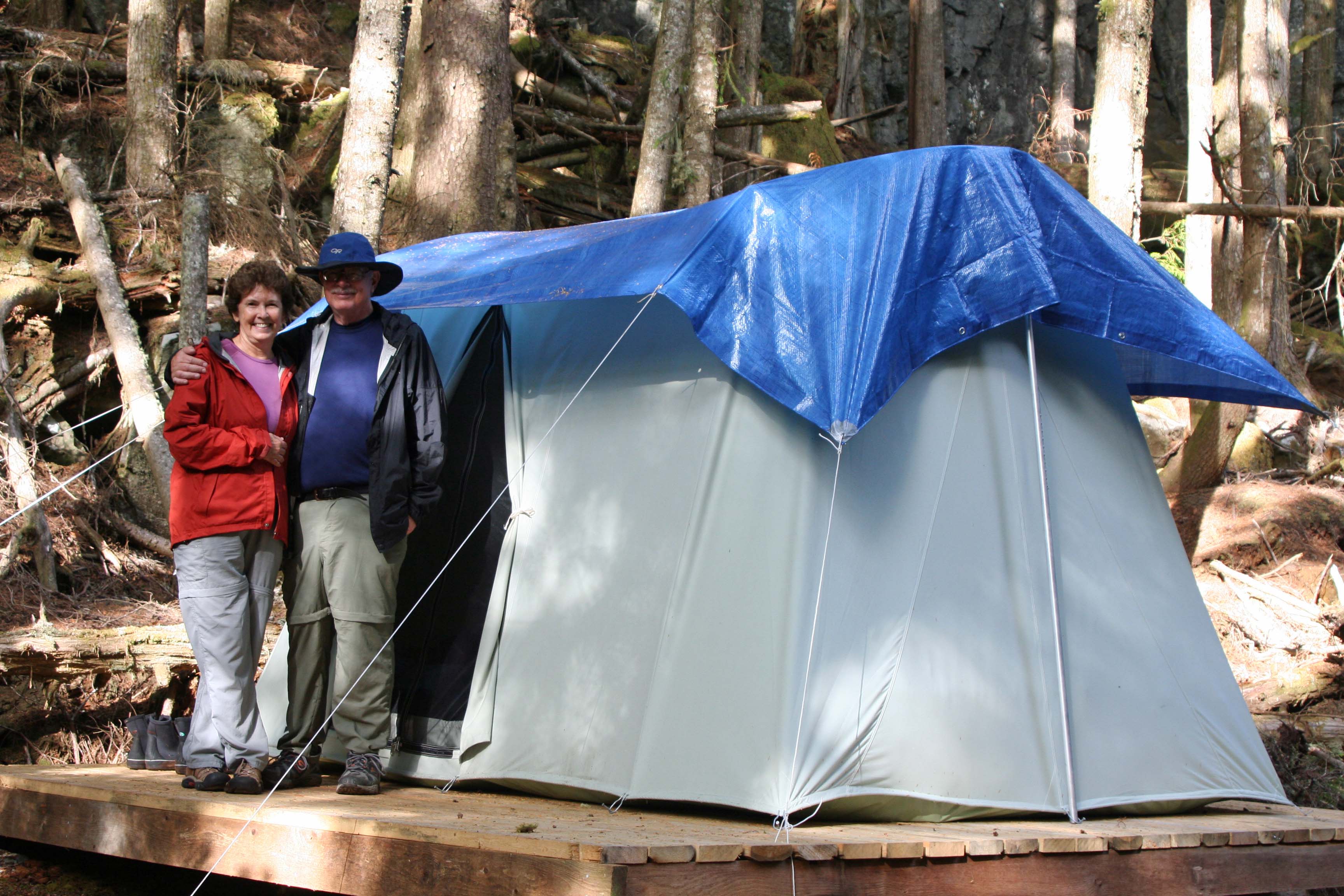
Sea Kayak Tours sets up comfortable tents for  guests to use while on their tours.

Peggy and I stand next to our home in the woods for the night.

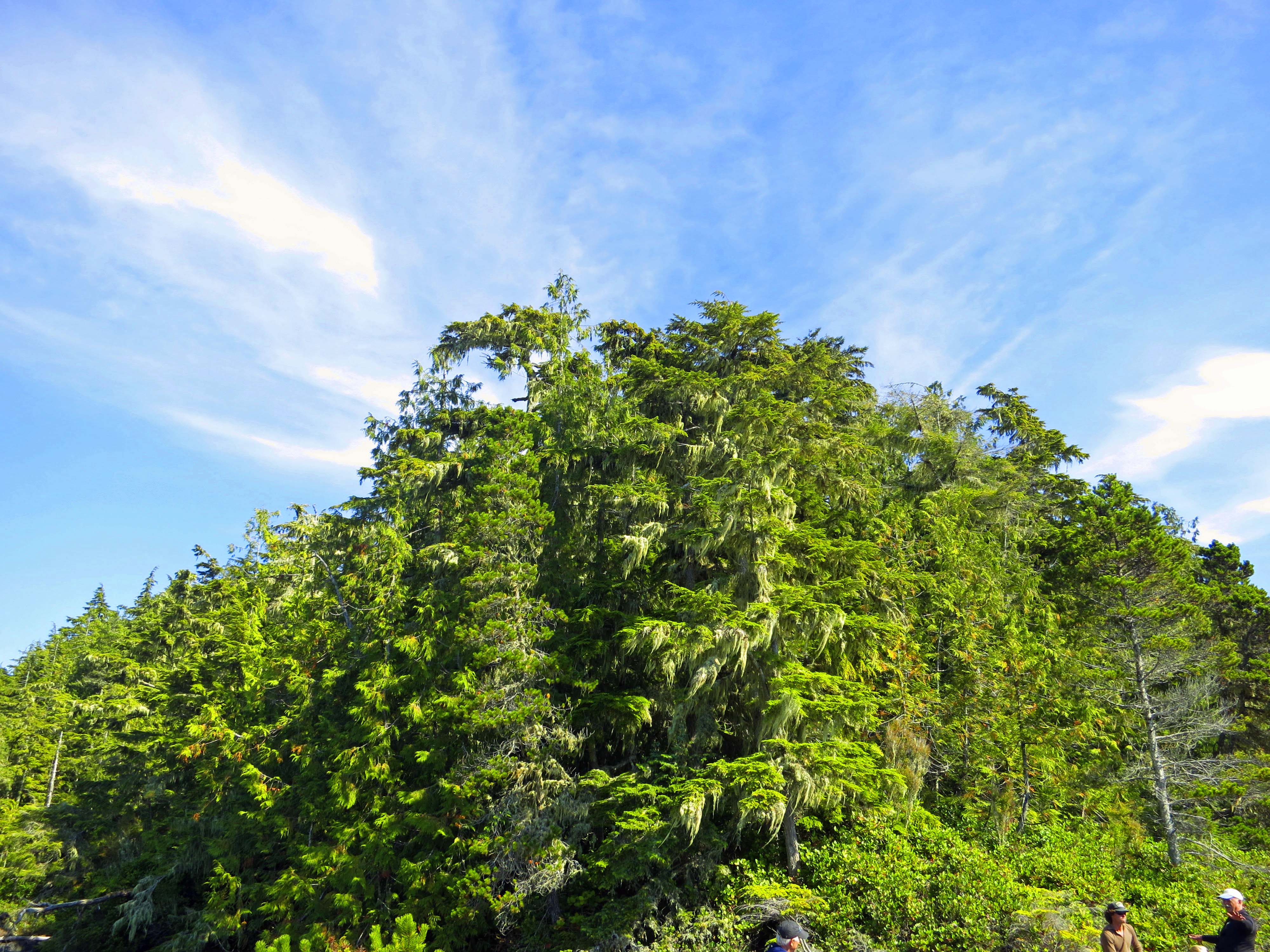
Sky and clouds meet forest on Hanson Island in the Johnstone Strait of British Columbia. Photo by Curtis Mekemson.

Our walk provided this fun photo where the sky and clouds met the forest…

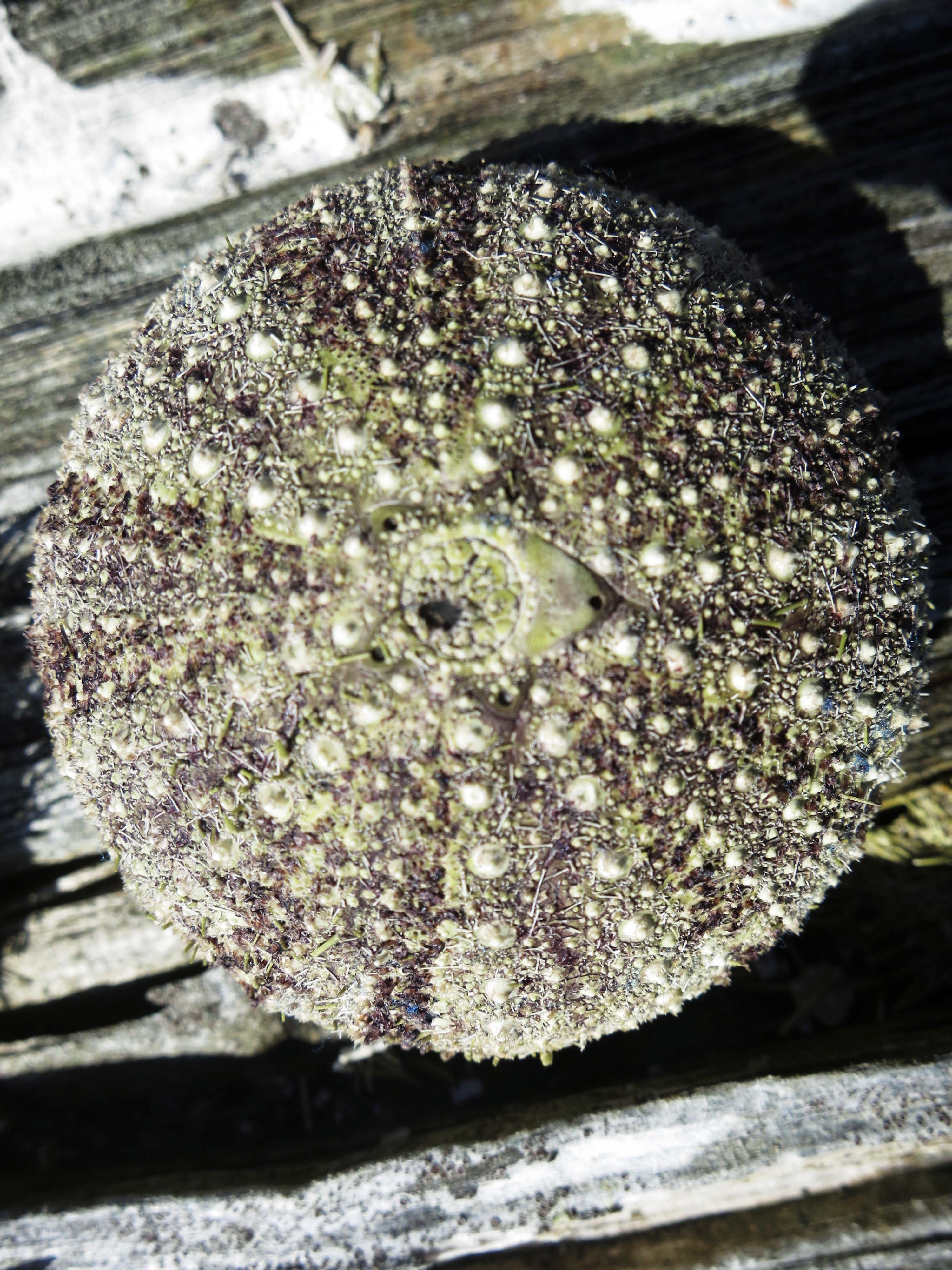
Urchin shell found on Hanson Island in Johnson Strait. Photo by Curtis Mekemson.

We found this jewel of an urchin shell…

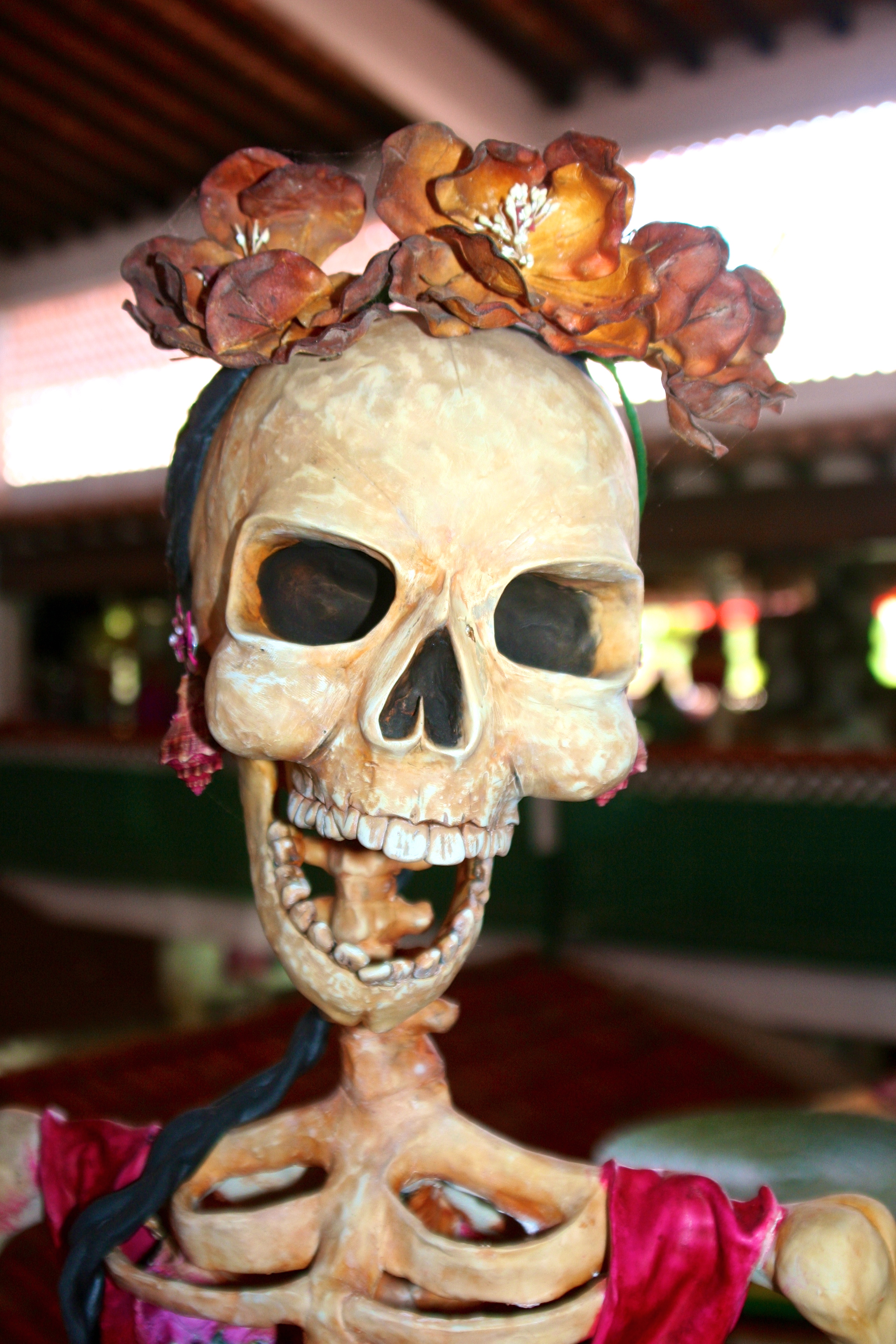
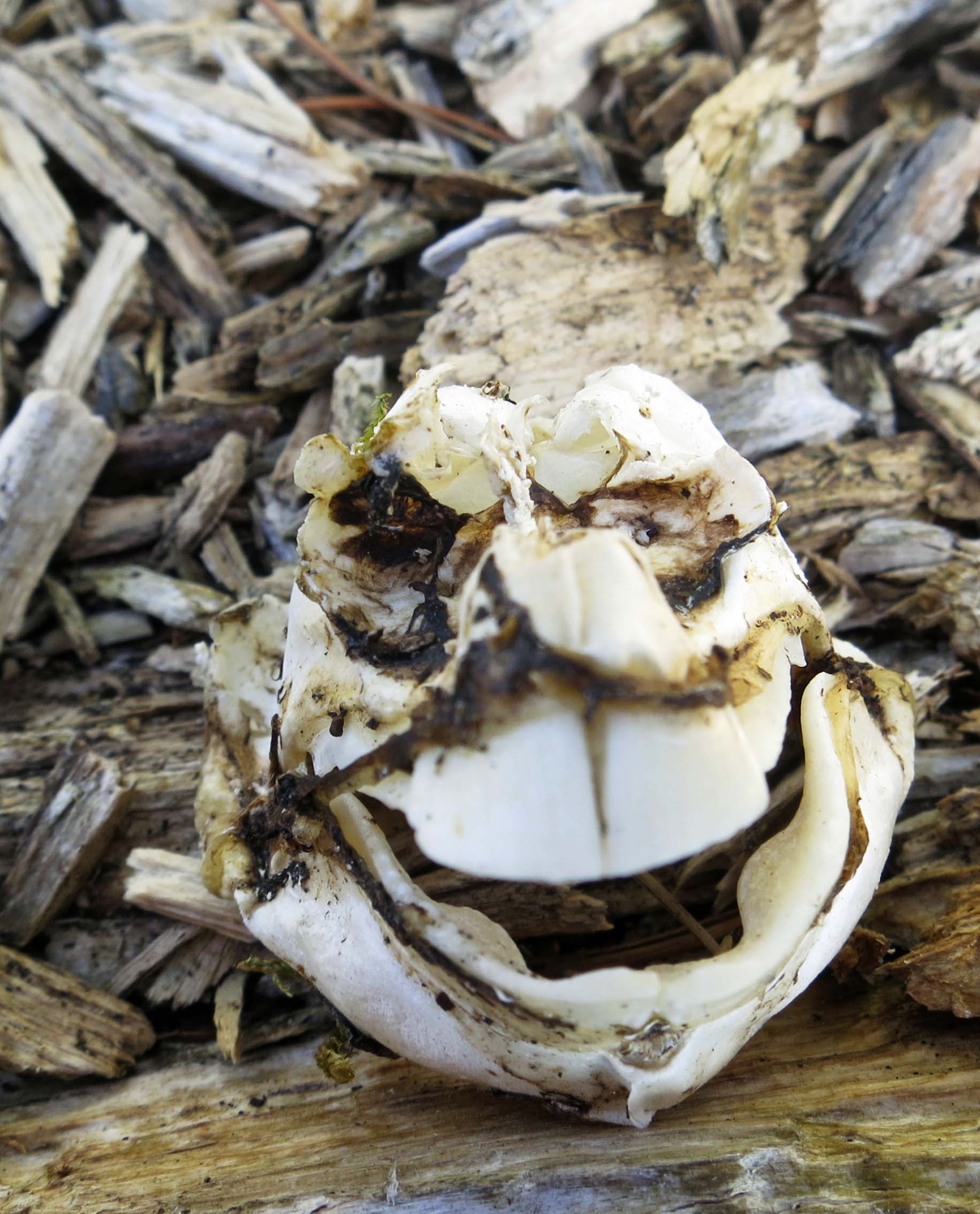
And this rather odd shell/skeleton that our experts debated over. Considering this post is going up on October 30th, I am going with Happy Halloween.

And this rather odd shell/skeleton that our experts debated over. Check out the buck teeth. This guy would put a beaver to shame. Considering this post is going up on October 30th, Peggy, the creature, and I would like to wish all of you a Happy Halloween.

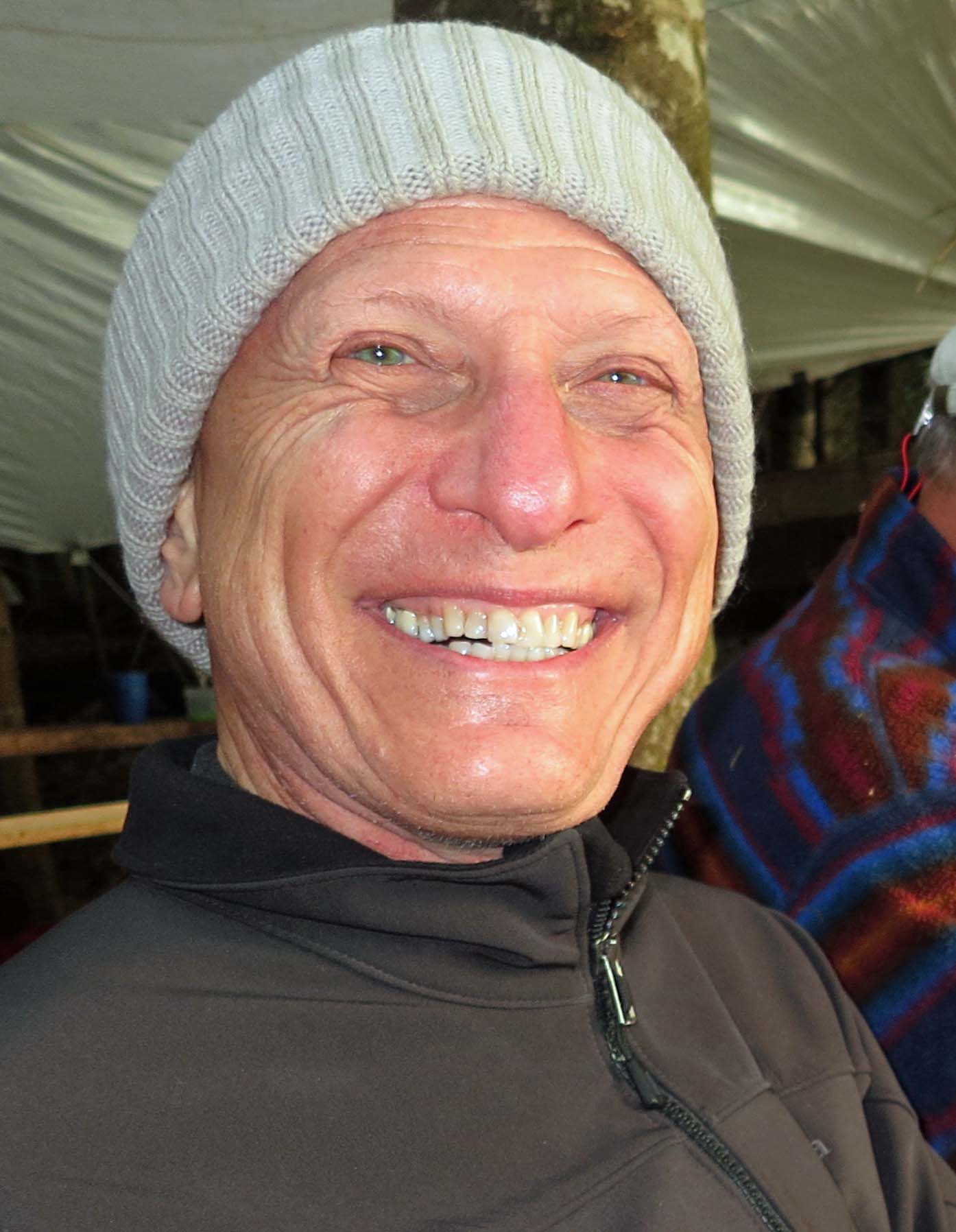
Back in camp, I got a happy, toothy grin from Dennis...

Back in camp, I got a happy, toothy grin from David…

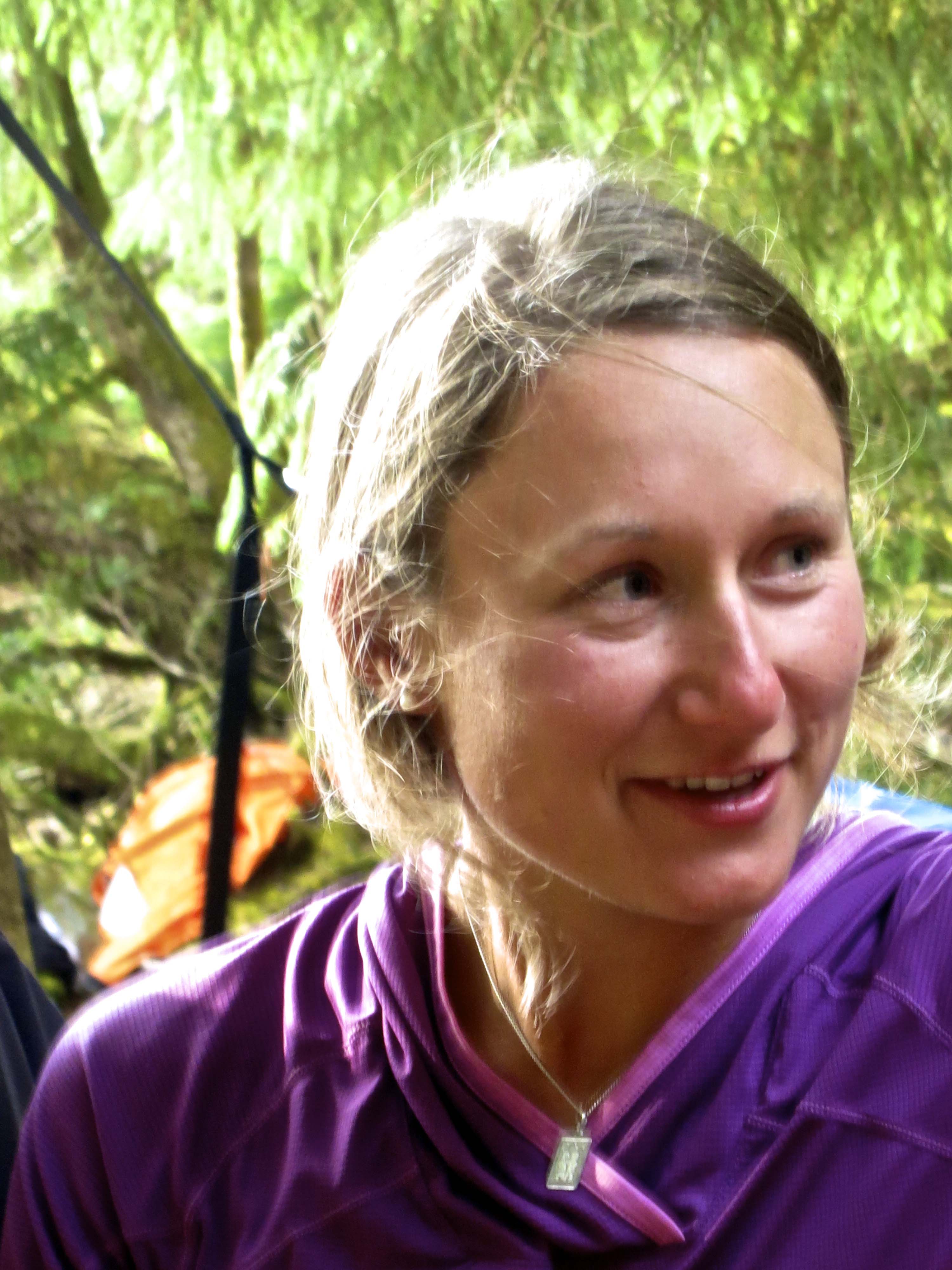
And a shy smile from Julia.

And a shy smile from Julia.

Sunset over Johnstone Striait off of Hanson Island. Photo by Curtis Mekemson.

We finished off the day by watching the sunset over Johnstone Strait. Next blog: We kayak onward to our next island.

From Kayaking the Cool Pacific to Bicycling the Hot Desert of Burning Man

One of our guides leads the way as we make our way between islands off the we make our way off the northwest coast of Vancouver Island, British Columbia.

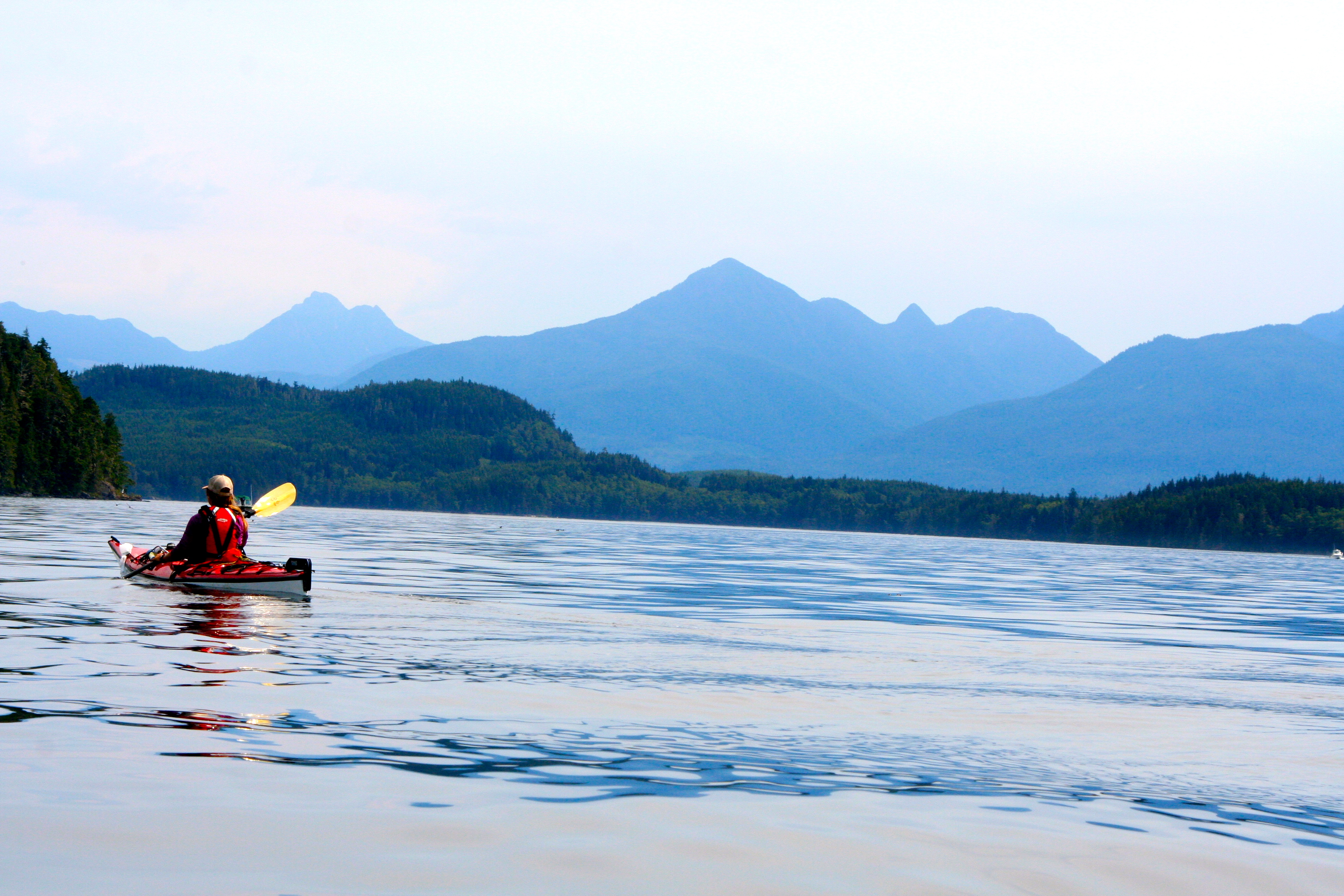
One of our guides, Julia, leads the way as we make our way between islands off the northwest coast of Vancouver Island, British Columbia. (Photo by Peggy Mekemson.)

Peggy and I just came off our kayaking adventure out of Fort McNeil on northwestern Vancouver Island. It was a great trip, complete with Orca Whales, good folks, and great food. I am sure there will be several blogs on the experience (grin). But now we are madly preparing for Burning Man. We take off today. Imagine jumping from kayaking in the cool waters of the Pacific Ocean to bicycling in the hot desert of Northern Nevada. Woohoo!

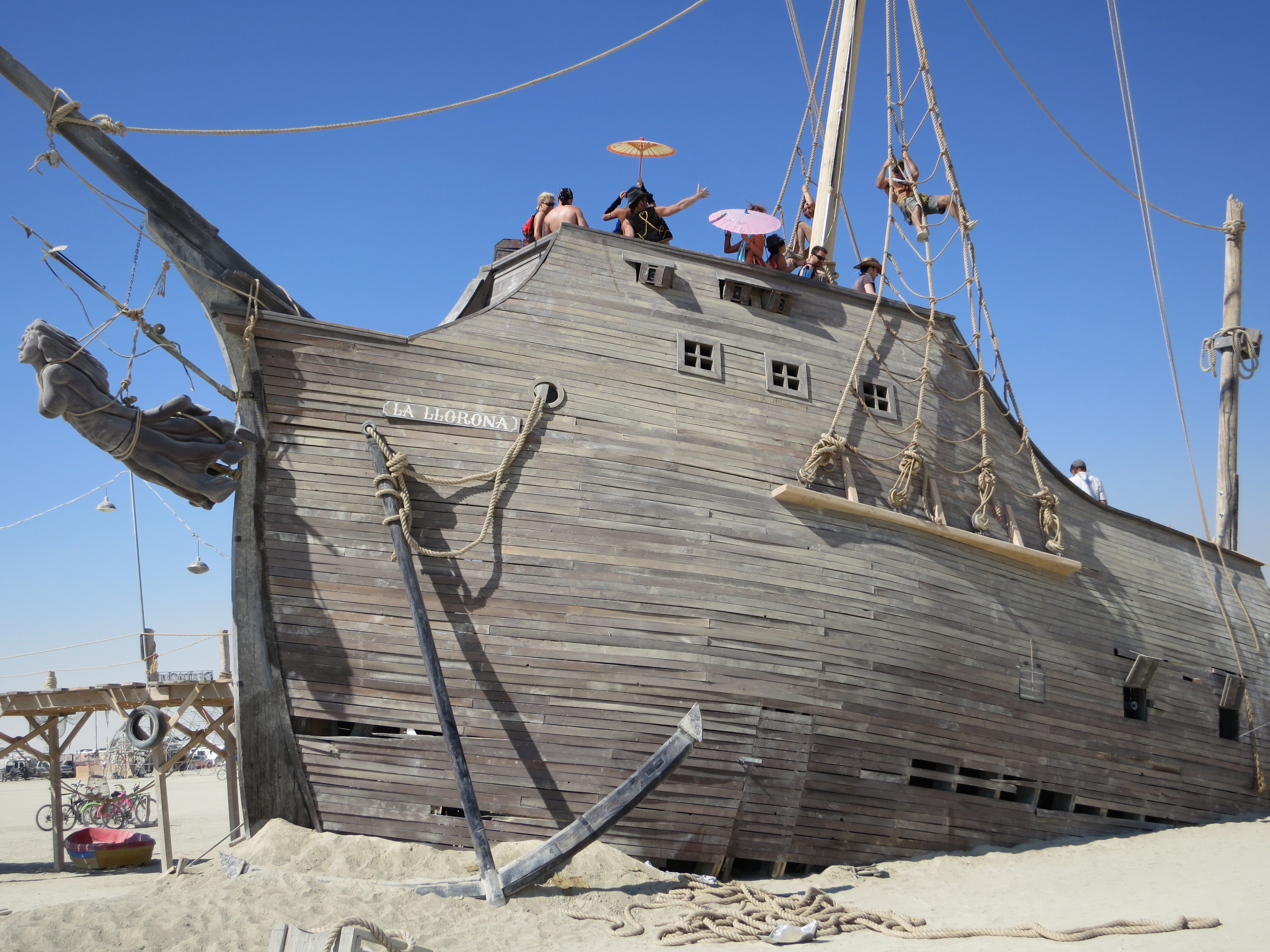
The burning of the Man gives Burning Man its name.

The burning of the Man gives Burning Man its name.

The annual event held in the Black Rock Desert of Northern Nevada ranges from wonderfully whacky to….  (Photo by Tom Lovering)

The art at  Burning Man ranges from wonderfully whacky…. (Photo by Tom Lovering)

…to magnificent.

…to magnificent.

To fill in on the missed blogs, I thought I would repost some stories on Bone. He is going with us to Burning Man. I suspect many of you have yet to meet him even though he figured prominently in my early posts.

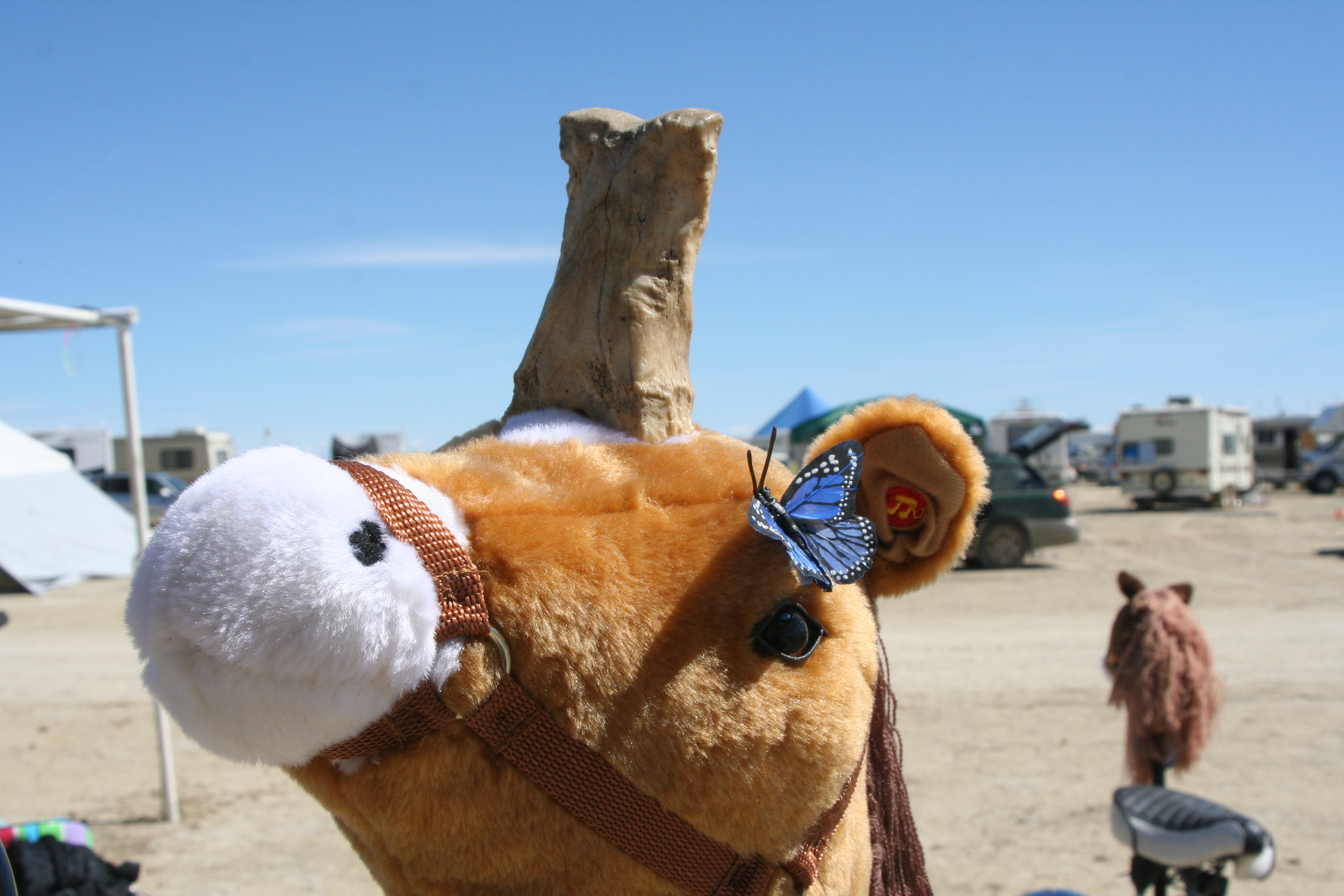
Bone hitches a ride on a willing horse at Burning Man.

Bone hitches a ride on a willing horse at Burning Man.

Bone is a diminutive character four inches high and two inches across. Once he was part of a horse, just above the hoof. Now he is free and has an attitude.

Tom Lovering and I found him lounging in a mountain meadow above Lake Tahoe when we were backpacking the Tahoe-Yosemite Trail in 1977. He has been wandering the world ever since. He began his travels with Tom on a two-year exploration of Asia, Africa and Europe in the early 80s and then joined me on my six month 10,000 mile solo bicycle trip around North America.

And that’s just the beginning.

In 1990 the International Society of the Bone was created in Mazatlan, Mexico and Bone began wandering with others. He traveled with a women’s group to the top of Mt. Kilimanjaro in Africa and the base of Mt. Everest in Nepal, went deep-sea diving in the Pacific and Caribbean, attended a Presidential Press Conference with Bill Clinton (Is that a bone in your pocket?) and was blessed by the Pope in St. Peter’s Square. He had a close encounter with Piranhas on the Amazon, was kidnapped in Mexico and was seized by a custom agent in New Zealand. He has been to Burning Man 9 times.

Bone looks out on Mt. Everest in Nepal.

Bone looks out on Mt. Everest in Nepal.

And poses perilously on the railing of a boat traveling up the Amazon River. I caught him just as he was about to fall into the Piranhnah infested waters.

And poses perilously on the railing of a boat traveling up the Amazon River. I caught him just as he was about to fall into the Piranha infested waters.

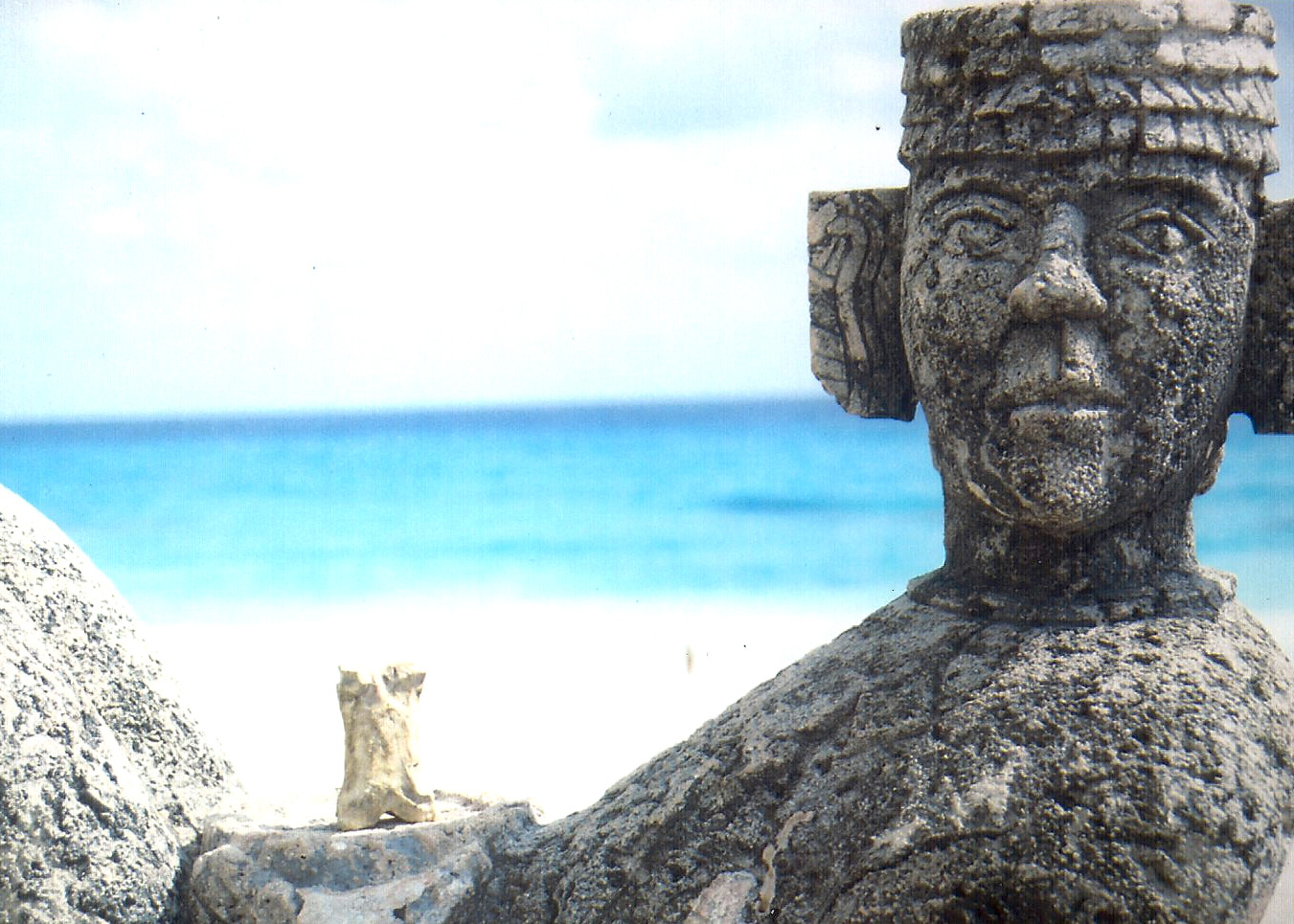
Traveling to Mexico, Bone takes a break by resting on Chacmool, where hearts were once offered up as sacrifices.

Traveling to Mexico, Bone takes a break by resting on Chacmool, where hearts were once offered up as sacrifices.

Checking out the rapids of the Little Colorado River as part of an 18 day trip down the Colorado through the Grand Canyon, Bone wears his life vest for safety.

Checking out the rapids of the Little Colorado River as part of an 18 day trip down the Colorado through the Grand Canyon, Bone wears his life vest for safety.

Tom Lovering goes native and wears Bone in his hair on the Colorado River trip.

Tom Lovering goes native and wears Bone in his hair on the Colorado River trip.

The Bone stories I will blog about this week are about how Tom and I found him. I wasn’t into photography at the time, so sorry, no photos.

The Murals that Saved Chemainus… The Vancouver Island Adventure

Homeowner and muralist Dan Sawatzky painted this 3D steam engine chugging out of his house/studio in Chemainus on Vancouver Island, British Columbia. The Number 3 engine was used for hauling logs and is symbolic of the town’s historic lumber industry.

This is another reposting of an earlier Vancouver Island blog. Again, Peggy and I still involved in our kayak trip among the Orcas. I know many of my followers enjoy murals and Chemainus has some great ones. I’ll catch up on comments when Peggy and I get back home– before we zip off to Burning Man. –Curt

“You have to visit Chemainus and see its murals,” the woman from Qualicum Beach urged. We were on the Black Ball Ferry between Port Angeles, Washington and Victoria, British Columbia. While I hunkered down and read, Peggy made new friends. Fortunately, one of us is much more social than the other.

Qualicum Beach is next to Parksville, which was our destination. A thirty-minute conversation generated a long list of restaurants to visit and places to see. I was yanked out of my book to take notes.

Chemainus is an excellent recommendation. This thriving community is located in the Chemainus Valley on the east coast of Vancouver Island about an hour north of Victoria. In 1983 it came close to dying. The primary place of employment, a lumber mill, shut down. 700 of the town’s 4000 residents were thrown out of work.

This is the point where most communities give up. Business and political leaders spend their energy assigning blame instead of seeking solutions. Not so with Chemainus.

“Let’s cover the walls of our town with historic murals,” Karl Schultz urged. It would capture the community’s history, develop local pride, and hopefully encourage tourism. As always, there were naysayers, but Karl’s enthusiasm won out. Today Chemainus is world-famous for its murals and tens of thousands of tourists visit the town annually.

Since it was on our way and we had the time, Peggy and I decided to stop. Good decision. First, I love the story of the small community that has adopted the motto of  “The Little Town that Did.” Second, I really like murals. Following are some our favorites out of the 39 (and increasing). For a complete tour visit www.chemainus.com/arts/murals/Chemainusmurals.htm.

A colorful 1948 view of Chemainus looking down Mill Street toward the bay.

Hong Hing arrived in Chemainus in 1915 and opened his waterfront store. Over time his store would serve as a laundry, grocery store, second-hand store, bootlegging establishment and gambling den. Declining business led him to close his store in 1950 and return to China where he married a younger woman and produced an heir. Black Cat, by the way, is an extinct brand of British/Canadian tobacco.

This mural captures the Chemainus Hospital in 1904 along with two nurses and the hospital cook.

What’s not to love about a band concert?

I’ve included this mural because of its history. In 1939 Chemainus celebrated its 50th anniversary. The float entered by the local Japanese-Canadian Community won first prize. By 1942 all of the community’s Japanese had been removed to Internment Camps. It is one of the darker pages of Canadian (and US) history.

Tent houses provided quick, inexpensive housing for the early loggers, fishermen and miners of Chemainus. When I was growing up in Diamond Springs California, one of my mother’s friends lived in a tent house. As a seven-year old, I was jealous.

This big guy’s face captures both the simplicity and the power of the mural art in Chemainus.

Dressed in their Sunday best, these early residents of Chemainus reflect a time when horses competed with ‘horseless’ carriages as the primary mode of transportation.

This Chemainus mural of First Nation people captures both the original inhabitants of Vancouver Island and their renaissance today. Peggy and I were both impressed and moved by the quality and quantity of First Nation Art during our visit to British Columbia. 

First Nation Totem Poles… North to Alaska

The totem pole of Thunderbird and the Wild Woman of the Woods found in Duncan, British Columbia on Vancouver Island.

Third times a charm. Right? Peggy and I are out kayaking among the Orca whales up off the northern tip of Vancouver Island as this blog is posted. Or I should say reposted for the second time. It’s appropriate given our trip, however. We are in First Nation country and we once again drove through Duncan. And, as many of you know, I am a big fan of First Nation and Native American art. –Curt

Dzonoqua comes sneaking through the woods, hands outstretched, red lips pursed and whistling, “ooh, ooh” to attract small children who have wandered into the forests. Some stories say she eats the whiny ones. She is also known as the Wild Woman of the Woods or Mrs. Bigfoot. Her large, dangling breasts capture the spirit of Salmon. Thunderbird perches on her shoulders. His wings crash together and make thunder; his eyes shoot out lightning.

Peggy and I, along with our friends Ken and Leslie Lake, visited Duncan BC on Vancouver Island to check out the numerous totem poles carved by First Nation artists and placed throughout the town.

The close relation of First Nation people to Bear, Eagle, Raven, Whale, Owl, Wolf, Beaver, Salmon, Otter and other animals stretches back to ancient times. Families would adopt particular animals as their totems and then carve these animals into totem poles. The poles would serve to both protect and instruct the families. Some families were even known to shape shift into their totem animal. (Jacob, morphing into a wolf in the Twilight series, is a modern example.)

The arrival of whites in the Northwest had a devastating impact on the people and culture of the First Nation tribes. Disease wiped out whole populations. The practice of native religion and the carving of totem poles were prohibited. It wasn’t until the 1930s that the art of totem pole carving was revived.

It thrives today. Native artists continue to carve traditional themes but they have also extended their interpretations and honed their skills. While the totem poles and masks still serve as important mythic symbols to First Nation people, they have also become a source of pride to all who live in BC and the Northwest. I might add they have also become an important attraction for tourist dollars.

Duncan BC and native artists have done an excellent job of displaying totem poles representative of the north coast. Visiting the town, located on the Trans-Canada highway halfway between Victoria and Nanaimo on Vancouver Island, is well worth the stop.

To enhance your visit, I highly recommend stopping by the Visitor’s Center and picking up the book, “The Totem Walk of Duncan” written by Joan Chisholm and illustrated by Crysta Bouchard and R. Howe. For more information go to: http://www.downtownduncan.ca/duncan_totem_tourNEW.html

Thunderbird in flight. I loved the bright colors of this totem pole in Duncan BC.

This totem pole in Duncan BC shows the spirit of the First Nation artist in the eagle’s chest. Eagle rests on Whale and has Wolf carved on his flukes. Both Whale and Wolf provide powerful protection for the person resting his hands on the flukes.

This photo provides a detail of the totem pole above. Note the fine detail of the carved fingers.

This totem pole was meant as a thank you from one chief to another. Raven perches on top and delivers the pole. Eagle is under Raven and represents the power of the chief, a member of the Eagle Clan. The chief’s son is next. His open hand symbolizes “thank you.” Raven, like Coyote of the Southwest, is a trickster. Both are among my favorite mythological animals.

Most totem poles are highly symbolic. This is a heraldic pole. The frog on top represents wisdom, the bear below power and courage, and the seal a spiritual being that can travel easily between spiritual and physical realms. The red and black mean strength and protection. I see it as one pole accomplishes all.

The bear’s tongue and wide grin caught my attention in this Duncan BC totem pole. I thought at first he might be sampling the guy he is holding in his paws. Apparently it means he is about to shape shift.

I am struck by the sheer power captured in some of Duncan BC totem poles. This eagle is an excellent example.

A different perspective on Bear. I enjoyed looking at and photographing the specific faces seen on the Duncan BC totem poles.

If it weren’t sacrilegious, I’d name this totem pole face smiley.

And finally, a Duncan BC totem pole I simply couldn’t resist. How could anyone say no to a pose and eyes like this?

NEXT BLOG: We cross the border into Canada and are reintroduced to the delicate art of carving with a chainsaw.

A Whale of a Tale– or has Nessie Migrated… Gone fishing in Puerto Vallarta

Photo of Pacific Ocean outside of Banderas Bay, Mexico. Photo taken by Curtis Mekemson.

The ocean is both beautiful and mysterious, filled with marvelous creatures of the deep. I took this photo outside of Banderas Bay, Mexico.

You have all seen the grainy photos of Nessie, the want-to-be monster that hangs out at Loch Ness in Scotland. I, too, have stood on the shores of the fabled lake with eyes peeled and camera poised. Unfortunately, Nessie didn’t bless me with her presence. Sigh. Neither fame nor fortune was to be mine.

One of the more famous photos of Nessie, the Loch Ness Monster. This is an AP photo.

One of the more famous photos of Nessie, the Loch Ness Monster. This is an AP photo.

But what if I were to discover Nessie in Banderas Bay off the coast of Puerto Vallarta. Or at least something that looked like Nessie. So what if a little help from Photoshop was called for. Would people believe me? Maybe my photos would appear on CNN… or glory of glories, even FOX News, which, as every one knows, is fair and balanced. I suspect I could at least count on support from the local chamber of commerce. Monster sightings are always good for tourism. Anyway, consider the following:

Nessita, Nessie's daughter looks across the Bay of Banderas in search of a fat tourist who as eaten too many tacos.

Nessita, Nessie’s daughter looks across the Bay of Banderas in search of a tourist who has eaten too many tacos.

Having spotted her prey, Nessita dives beneath the water, coils unfulring as she goes.

Having spotted her prey, Nessita dives beneath the water, coils unfurling as she goes.

And disappears beneath the waves.

And disappears.

I am basically an honest guy, however. Otherwise I’d be rich or in jail. Right? Plus, all of you good folks who follow me, not to mention Word Press, might get a little excitable if I deliberately misled you. I am already under suspicion for reporting on ghosts and Bigfoot. So, I have to confess. What my son-in-law Clay, grandson Ethan, and I came across while fishing were humpback whales frolicking in Banderas Bay. But even they were wonderful, and strange.

Dorsal fin of humpback whale taken off the coast of Puerto Vallarta. Photo by Curtis Mekemson.

Dorsal fin of humpback whale in the Bay of Banderas.

Head of humpback whale in the Bay of Banderas. Photo by Curtis Mekemson.

And the whale’s head.

How was the fishing? At least fair to middling, as the old timers say. Consider it from Ethan’s perspective. Any time you can catch a fish almost as big as you are, it’s a BIG fish. Imagine the tales that Ethan had to tell when he returned to school in Tennessee.
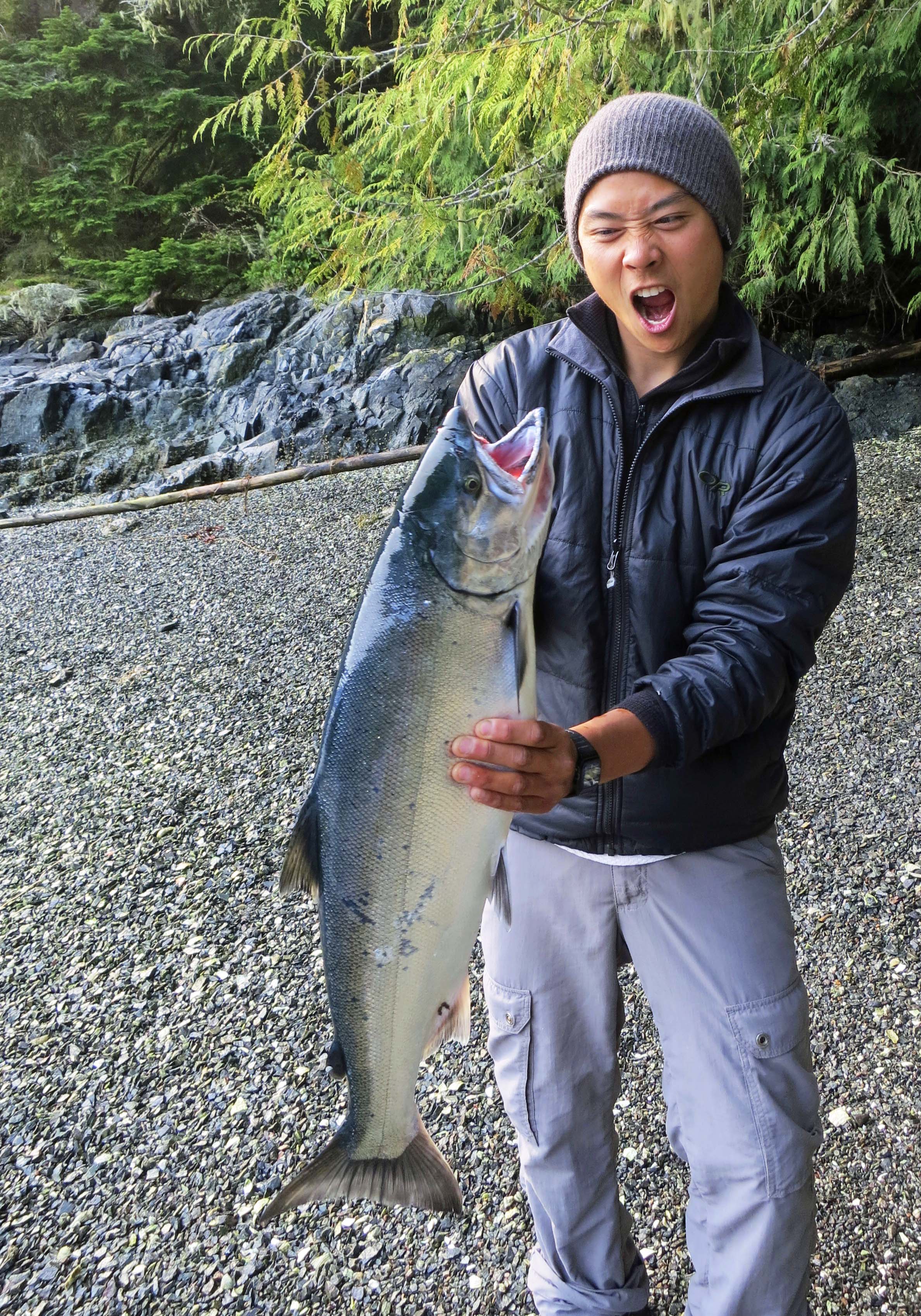
Fishing in the Bay of Banderas. Photo by Curtis Mekemson.

Our grandson Ethan displays his catch, a jack crevalle.

Even Clay and I got lucky.

Nice fish, but would you invite this motley crew into your house?

Nice fish, but would you invite this motley crew into your house?

NEXT BLOG: 2014 Burning Man tickets go on sale in February. I give you five reasons you might want to purchase one.

The Beautiful Sunsets of Banderas Bay, Puerto Vallarta

Sunset over Bandaras Bay, Puerto Vallarta. (Photo by Peggy Mekemson.)

Palm trees and sunsets seem to be made for each other. (Photo by Peggy Mekemson.)

My father, who was a talented landscape photographer and painter, always discussed sunsets with a certain disdain. “Post card art,” he would sniff.  When I sorted through his thousands of slides after he passed away, however, what did I find: dozens if not hundreds of sunset photos. Apparently, the old fellow had been as addicted to sunsets as I am.

Scenic sunsets beg to be photographed… even more so when warm tropical breezes and palm trees are involved. Peggy and I found ourselves out on the beach every evening in Puerto Vallarta waiting for the show to start, and we were never disappointed. I’ll let the photos tell the story.

Palm trees outlined against the sky in Puerto Vallarta. Photo by Curtis Mekemson.)

I caught these two palms outlined against the sky with just a hint of color in the clouds.

Puerto Vallarta beach vendor outlined by setting sun. Photo by Curtis Mekemson.)

After a long day of work, a beach vendor heads home just as the sun drops behind the horizon.

Clouds always add drama to sunsets. We watched as this impressive cumulous cloud changed from white, to golden, to pink. (Photo by Peggy Mekemson.)

Clouds always add drama to sunsets. We watched as this impressive cumulus cloud changed from white, to golden, to pink. (Photo by Peggy Mekemson.)

Cumulous cloud in Puerto Vallarta. (Photo by Curtis Mekemson.)

Cumulous cloud in sunset at Puerto Vallarta. (Photo by Curtis Mekemson.)

Our grandkids Ethan and Cody joined us in downtown Puerto Vallarta to catch the sunset. (Photo by Natasha Cox.)

Our grandkids Ethan and Cody joined us in downtown Puerto Vallarta to catch the sunset. (Photo by Natasha Cox.)

Sunset along Malecon in Puerto Vallarta. (Photo by Curtis Mekemson.)

Another shot from the same perspective looking down Puerto Vallarta’s beach front across Banderas Bay.
Puerto Vallarta beach sunset. (Photo by Curtis Mekemson.)

I took this photo with my camera inches above the sand. Think of it as a crab’s perspective on the sunset.

Sunset photo capturing sand, sea and sky in Puerto Vallarta. (Photo by Curtis Mekemson.)

Another view.

Puerto Vallarta sunset photo on Banderas Bay. (photo by Curtis Mekemson.)
Sea foam adds its own twist to sunset photos on the beach.
Sometimes the colors of a sunset are so vivid they seem unreal. (Photo by Peggy Mekemson.)

Sometimes the colors of a sunset are so vivid they seem unreal. (Photo by Peggy Mekemson.)

Palm tree view in Puerto Vallarta. (Photo by Curtis Mekemson.)

Just for fun, I’ll conclude this post with a non-sunset photo. I gave you the sea from the perspective of a crab. This is a palm tree from the perspective of an iguana.

NEXT BLOG: I will wrap up my Puerto Vallarta series with a few photos I couldn’t fit into my posts including a whale and one small boy catching a very big fish.

Puerto Vallarta’s Iconic Church… Our Lady Of Guadalupe

Photo of crown of the Church of Our Lady of Guadalupe in Puerto Vallarta,  Mexico. Photo by Curtis Mekemson.

The crown of Puerto Vallarta’s iconic Church of Our Lady of Guadalupe.

Juan Diego had a vision on December 9, 1531 according to the Catholic Church: the Virgin Mary, i.e. Our Lady of Guadalupe, met him on a hilltop near Mexico City and asked that a church be built on the site to honor her. To prove her identity, she cured Juan’s uncle of an incurable disease and had him take flowers bundled in his cloak to the local bishop. When Juan opened the cloak for the bishop, an image of the Virgin was embedded in it.

The Virgin got her church and Our Lady of Guadalupe has been big in Mexico ever since. Pope John Paul II declared her the Empress of Latin America in 1999. Juan Diego was canonized in 2002. He’s now a saint. As for the cloak, it is enshrined in the Basilica of Our Lady of Guadalupe in Mexico City. It is the most visited shrine to the Virgin Mary in the world. Millions of people stop by to pray and ask for blessings.

Thus it isn’t surprising that the people of Puerto Vallarta decided to name their church after the Lady when they built it in the early 1900s. The beautiful structure has become an icon for the city of Puerto Vallarta. We were there in early December for Our Lady of Guadalupe’s Feast Day. The church was packed with events and people.

Parade to honor Our Lady of Guadalupe in Puerto Vallarta, Mexico. Photo by Curtis Mekemson.

A number of activities were planned around the feast day of Our Lady of Guadalupe including this parade. The painting in the middle depicts the image on Juan Diego’s cloak.

This young lady was part of the parade. She seemed to take her role quite seriously.

This shy young lady was part of the parade. She seemed to take her role quite seriously. But is that the beginning of a smile?

The parade turned the corner and made its way up to the church. (Photo by our daughter Natasha Cox.)

The parade turned the corner and made its way up to the church. (Photo by our daughter Natasha Cox.)

Bell ringer at Our Lady of Guadalupe Church in Puerto Vallarta Mexico. Photo by Curtis Mekemson.

The church bell-ringer did his job, calling the faithful to church.

Inside Church of Our Lady of Guadalupe in Puerto Vallarta. Photo by Curtis Mekemson.

The number of events made it difficult to get inside and photograph the church. The first time I stopped by, a hearse was parked outside. I thought, um no, not a good time. This photo was of a Quinceanera, I believe, a 15-year-old girl’s coming out celebration.

Following are several more photos of the church.

Peggy caught this photo. (Photo by Peggy Mekemson.)

Peggy shot this photo. (Photo by Peggy Mekemson.)

Looking up at the Church of Our Lady of Guadalupe in Puerto Vallarta, Mexico. Photo by Curtis Mekemson.

Looking up at the Church of Our Lady Of Guadalupe.

Puerto Vallarta mural depicting Our Lady of Guadalupe Church in Puerto Vallarta, Mexico.Photo by Curtis Mekemson

One of many depictions we found of the church in Puerto Vallarta murals.

The Church of Our Lady of Guadalupe in Puerto Vallarta, Mexico at night. Photo by Curtis Mekemson.

The church at night.

A view of the Church of Our Lady of Guadalupe through stree decorations in Puerto Vallarta. Photo by Curtis Mekemson.

Looking up at the church through street decorations.

View of the Church of Our Lady of Guadalupe in Puerto Vallarta, Mexico through the trees. Photo by Curtis Mekemson.

A final view of the church through the trees.

NEXT BLOG: The tropical sunsets of Banderas Bay and Puerto Vallarta.

Puerto Vallarta Walkabout…

Husband day care center in Puerto Vallarta, Mexico. Photo by Curtis Mekemson.

You never know what you might find when wandering around a city. I was particularly impressed that this obvious tourist venue didn’t push timeshares. (And no, Peggy didn’t drop me off.)

Australia’s aborigines have it right. Going on a walkabout is good for the soul. (If this subject interests you, I highly recommend Bruce Chatwin’s Songlines.)

I am also one hundred percent convinced that a walkabout is the best way to see a city. Nothing– not cars, taxis, trains, busses or even bicycles, can match walking.  Everything else is too fast. “Wow,” you think, “that’s great…” and it’s gone.

But if you are walking you can stop and savor, you can admire, touch, smell, and even listen to a city. So Peggy and I walk… whether we are wandering the streets of Rome, New York City, or Puerto Vallarta. Following are some of the sights we saw along the way on our recent visit to PV.

This resident checked us out. Apparently we didn't pass muster. he immediately started barking. I could still here him two blocks away.

This resident dog checked us out. Apparently we didn’t pass muster. He immediately started barking. I could still hear him two blocks away.

Art on the Malecon of Puerto Vallarta. Photo by Curtis Mekemson.

These dogs, created by an artist on the Malecon, were more colorful, and quieter. I also liked the red bird, but who knows what it was up to. Picking off fleas???

The flying cow of Puerto Vallarta. Photo by Curtis Mekemson.

Also under the category of strange was this flying cow.

As were these two cuties.

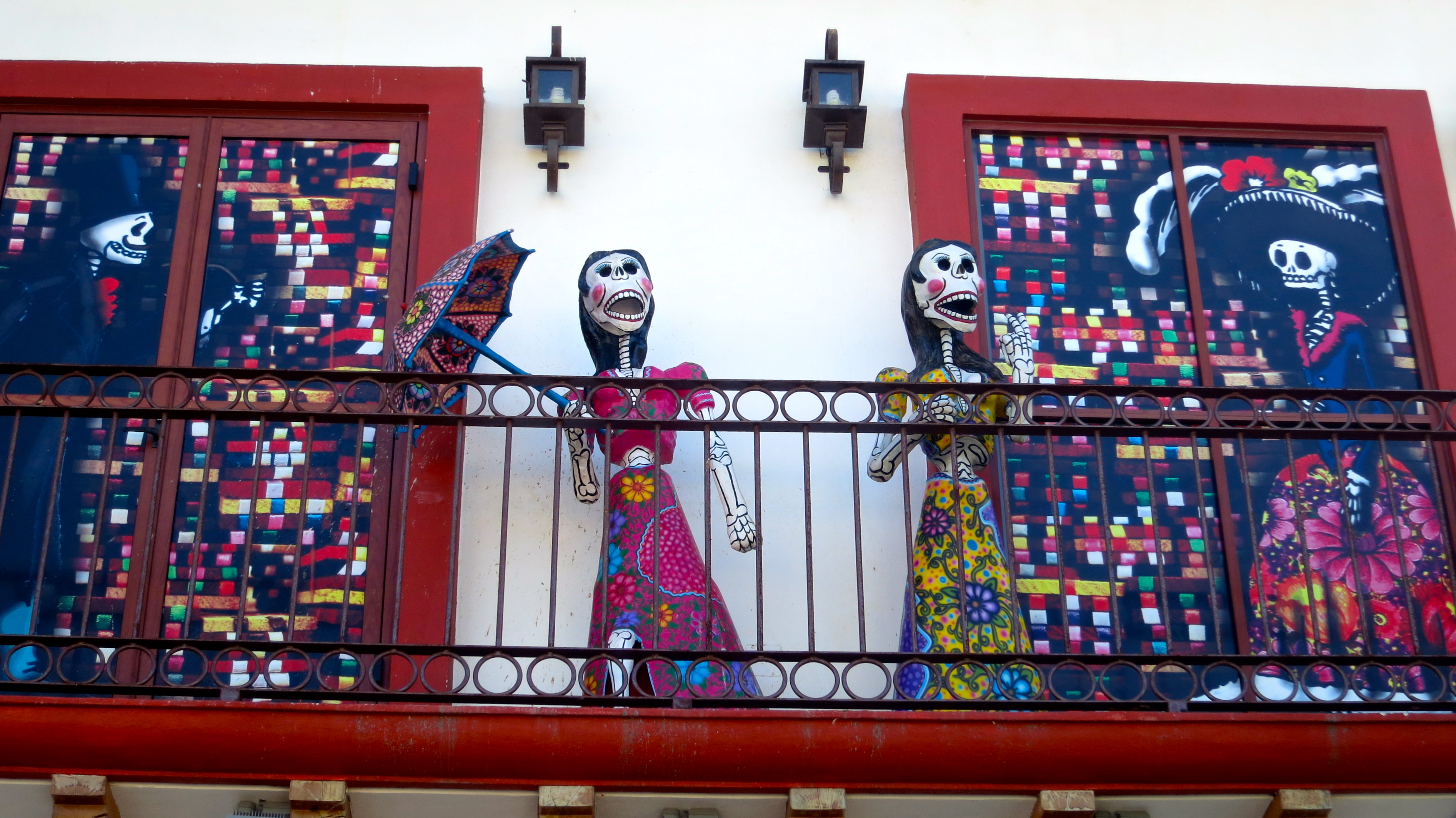
As were these two cuties. Day of the Dead skeletons are common throughout Mexico. BTW, I swear I did not position my camera to catch the railing circles in such prime locations. I only discovered this fortuitous positioning when I went to post the photo.

The bird men of Puerto Vallarta. Photo by Curtis Mekemson.

Then there are the Bird Men of Puerto Vallarta who climb up a hundred foot pole… (Photo by Peggy Mekemson.)

Bird men of Puerto Vallarta. Photo by Curtis Mekemson.

And tie themselves to ropes. The man in the center plays a flute and beats on a drum. (Photo by Peggy Mekemson.)

And then fall off backwards, twirling around the pole in ever larger circles until they reach the ground, or their rope runs out. (just kidding.) The people who perform this aerial feat every hour or so indigenous performers demonstrating an ancient cultural tradition of the Totonac tribe. (Photo by Peggy Mekemson.)

They then fall off backwards, twirling around the pole in ever larger circles until they reach the ground, or run out of rope. (Just kidding on the rope running out.) The people who perform this aerial feat are indigenous performers demonstrating an ancient cultural tradition of the Totonac tribe. (Photo by Peggy Mekemson.)

Puerto Vallarta home. Photo by Curtis Mekemson.

One thing we always check out is architecture. Peggy and I both like the adobe and tile look of Mexico and the Southwest of the US. It seems that Puerto Vallartans like to add something extra on top of their homes, like the small room. Another thing: note the shoes hanging off the power line in the upper left hand corner, undoubtably thrown there by  a teenager. Is this behavior worldwide?

Another 'topper' we found. (Photo by Peggy Mekemson)

Another ‘topper’ we found. (Photo by Peggy Mekemson)

Speaking of power lines, it is almost impossible to take a photo in Puerto Vallarta without them. They run willy-nilly everywhere.

Speaking of power lines, it is almost impossible to take a photo in Puerto Vallarta without them. They run willy-nilly everywhere.

Burton and Taylor homes in Puerto Vallarta. Photo by Curtis Mekemson.

If I remember my geography right, these two houses were where Richard Burton and Elizabeth Taylor hung out during the filming of the Night of the Iguana.

Tourist shop in Puerto Vallarta. Photo by Curtis Mekemson.

While there are expensive, high-end shops in Puerto Vallarta, the majority are open-air tourist meccas like this one. It seems like there are hundreds of them. The young woman on her cellphone would normally be outside soliciting people to come in and look around.

Puerto Vallarta craftsperson. Photo by Curtis Mekemson.

Crafts people and artists are common along the Malecon. This young man featured purses and jewelry made from beer and soda can pop tops.

Street vendor selling food in Puerto Vallarta. Photo by Curtis Mekemson.

Street vendors selling food are also common.

I already took you on a tour of Puerto Vallarta's fantastic sculptures. Murals are also common in the city. (Photo by Peggy Mekemson.)

I already took you on a tour of Puerto Vallarta’s fantastic sculptures. Murals are also common in the city. (Photo by Peggy Mekemson.)

Puerto Vallarta mural. Photo by Curtis Mekemson.

A close up showing children in a ring dance. Ring around Rosita?

Puerto Vallarta mural featuring indigenous person. Photo by Curtis Mekemson.

While most Puerto Vallarta murals feature ceramics, I found this painting of an indigenous person quite impressive.

The artist's Cafe also featured an impressive mural. (Photo by Peggy Mekemson.)

The Artist’s Cafe also featured an impressive mural. (Photo by Peggy Mekemson.)

Artist's Cafe mural in Puerto Vallarta. Photo by Curtis Mekemson.

A close up of the mural on Artist’s Cafe.

Puerto Vallarta mural featuring iguana. Photo by Curtis Mekemson.

One mural incorporated a pair of iguanas including this handsome fellow.

My favorite mural, and in fact my favorite art piece was a 196 by 9 feet mural designed by

My favorite mural, and in fact my favorite art piece in Puerto Vallarta, is a 196 by 9 feet mural designed by Natasha Moraga. I understand it is under threat of removal by the government. Why, I don’t know, but it would be tragic.

Made with tile and glass, the mural uses mirrors to reflect the street scene behind it, an effort that adds both beauty and interest.

Made with tile and glass, the mural uses mirrors to reflect the street scene behind it, an effort that adds both beauty and interest.

Wall mural by Natasha Moraga in Puerto Vallarta. Photo by Curtis Mekemson.

Numerous patterns and scenes are incorporated into the mural. This was one of my favorites.

Puerto Vallarta wall mural. Photo by Curtis Mekemson.

Major contributors are honored with their own tiles. This one was amusing. It appears Luis Rita has a house full of dogs.

Most murals we found in Puerto Vallarta feature a rendition of the town's primary landmark,

Most murals we found in Puerto Vallarta feature a rendition of the town’s primary landmark, the Church of Our Lady of Guadalupe, which I will feature in my next blog.

Puerto Vallarta's swinging bridge. Photo by Curtis Mekemson.

I’ll use this photo of Peggy crossing a swinging bridge as my last photo of our Puerto Vallarta walkabout. And believe me, the bridge does swing.

NEXT BLOG: Puerto Vallarta’s beautiful Church of Our Lady of Guadalupe.

Revolution, a Treasure, Dragons and Ghosts of Hollywood… San Sebastian, Mexico

Photo of rooftops in San Sebastian , Mexico. Photo by Curtis Mekemson.

Nestled in the Sierra Madre Mountains above Puerto Vallarta, the town of San Sebastian was once a bustling silver mining town of 20,000. Now it is a quiet village of 600.

We didn’t plan on visiting San Sebastian del Oeste on Mexican Independence Day. Neither did we expect to have a guide immersed in Mexican history. It was all happenstance, a fortuitous occasion. As our bus climbed the steep, curvy road into the Sierra Madre Mountains above Puerto Vallarta, our talkative guide climbed on his soapbox. We learned a lot about the Mexican Revolution.

On November 20, 1910, people throughout Mexico were urged to rise up in revolt against Mexico’s autocratic president, Porfirio Diaz. Times were bad, especially for the poor, i.e. just about everybody. Ninety five percent of Mexico’s wealth was controlled by five percent of the population. Vast swaths of land were tied up in haciendas. Peasants who worked these haciendas were treated little better than slaves.

It would take over a decade but eventually the people of Mexico won massive reforms and better living conditions for themselves. Two legendary figures, Pancho Villa and Emiliano Zapata, rose out of the conflict. Both would be assassinated but their names and legacy would live on into modern times as heroes of the common man and symbols of freedom, not only in Mexico but also around the world.

Pancho Villa's raid across the border into New Mexico to resupply military supplies made him a wanted man in the US and sent General John Pershing rushing into Mexico to capture him. Pershing and his troops spent a year chasing Villa through the mountains but never captured him. Pershing returned to the US to lead American troops in World War I.

Pancho Villa’s raid across the border into New Mexico for military supplies made him a wanted man in the US and sent General John Pershing charging into Mexico on horseback in hot pursuit. Pershing and his troops spent a frustrating year chasing Villa through the mountains but never caught the illusive patriot/bandit. Pershing returned to the US to lead American troops in a more successful World War I effort.

Our bus passed by cornfields, crossed over a high bridge and stopped. It was apparently a Kodak moment. The bridge was famous for cutting a couple of hours off the journey to San Sebastian. The old road made its way tortuously in and out of the canyon. Once it had been a burro trail, used to bring salt up from Puerto Vallarta, which was known as Las Peñas at the time. The salt was used in the smelting process to help break silver and gold out of the rich ores in the region.

Photo of bridge over deep canyon on the road to San Sebastian, Mexico. Photo by Curtis Mekemson.

Our dutiful tourist picture of the bridge on the road to San Sebastian.

Peggy and I dutifully took photos of the bridge. More importantly, we took advantage of the available restrooms. We’d consumed lots of coffee waiting for the bus. The next stop was a tequila factory where we sampled the wares, checked out an agave plant, and bought a bottle of orange-flavored tequila that made vanilla ice cream taste like you had died and gone to Valhalla, or some other yummy place. I am ever so glad we didn’t discover how good it tasted until just before we left Mexico.  Otherwise I would have consumed gallons of ice cream and been charged double for the airplane ride home.

The agave plant, shown here, is the source of tequila. (Photo by Peggy Mekemson.)

The agave plant, shown here, is the source of tequila. (Photo by Peggy Mekemson.)

Tequila distillery on the road to San Sebastian, Mexico. Photo by Curtis Mekemson.

Our host at the tequila distillery displays his wares. The first time I ever drank tequila I was a senior at UC Berkeley and the potent liquor came in a small barrel like the one above. I spent my night in a hallucinogenic haze. The next morning marked the beginning of the Free Speech Movement and the 60’s student revolution. Could there have been a correlation between the two? (grin)

Sampling tequila on the road to San Sebastian, Mexico. Photo by Curtis Mekemson.

This time I was more cautious.

Mexican Independence Day Parade. Photo by Curtis Mekemson.

We were in the midst of sampling when a Mexican Independence Day Parade passed. Check out the wooden rifle of the young boy.

The most interesting stop on our journey to San Sebastian was to visit Hacienda Jalisco, one of the old haciendas whose history was related to the silver mining. You can still see the smelters. The hacienda’s thick walls provided protection for storing the treasure of silver before it was sent onward. Burros carried it to Guadalajara, Mexico City, and finally Vera Cruz, where it was shipped out once a year to Spain, maybe. Getting to Spain assumed that pirates didn’t relieve the treasure ships of their glittery cargo in the Caribbean.

Hacienda Jalisco’s silver mining history came to an abrupt end with the Revolution of 1910 but another type of silver, the silver screen, awaited its future. Discovered and restored by the American expatriate Bud Acord in the 1960s, the hacienda was to become a favorite hangout of John Huston, Elizabeth Taylor and Richard Burton during and after the filming of the Night of the Iguana.  Today it happily continues to serve as a B&B. Brochures describe it as romantic. There is no electricity and rooms are lit by lantern at night. You might sleep in the same room where Burton and Taylor pursued their scandalous, extramarital affair.

Hacienda Jalisco near San Sebastian, Mexico. Photo by Curtis Mekemson.

The Hacienda Jalisco as it looks today.

Adobe wall and tile roof at Hacienda Jalisco near San Sebastian, Mexico. Photo by Curtis Mekemson.

I captured a bit of Old Mexico with this adobe wall and tile roof.

Part of the silver smelter at Hacienda Jalisco. (Photo by Peggy Mekemson.)

Part of the silver smelter at Hacienda Jalisco. (Photo by Peggy Mekemson.)

Jawbone of a boar. Photo by Curtis Mekemson.

While I found this jawbone of a boar interesting…

Peggy preferred to photograph flowers that adorn the Hacienda.

Peggy preferred to photograph flowers that adorned the Hacienda. (Photo by Peggy Mekemson.)

Photo of Hacienda Jalisco cat by Curtis Mekemson.

We both liked Gato.

This antique bed with its wild pillow was rather interesting. Wonder if it dated to the days of Richard and Liz?

You could almost hear the springs of this antique bed squeak given its wild pillow. I wonder if the ghosts of Elizabeth and Richard ever stop by for a midnight tryst?

Our final stop before San Sebastian was at a coffee plantation that shared a building with a coffin maker.

Photo of parrot at San Sebastian coffee plantation by Curtis Mekemson.

Peggy and I admired this guy as we drank our coffee and contemplated our ultimate demise.

Our son Tony made it to San Sebastian before we did. He bought a sailboat while living in San Diego, sailed it to Puerto Vallarta with his girlfriend Cammie (and our nephew Jay), took the bus up to San Sebastian (without Jay), went on a horseback ride to a remote waterfall, and asked Cammie to marry him. You can’t get much more romantic! We were eager to see the town.

Treasure seeking Spaniards settled San Sebastian in 1605. To put this into perspective, Jamestown, the first British settlement in North America, was founded in 1607. First Spain and then Mexico continued to pull silver from its surrounding mines up until the Revolutionary era of 1910-20. Once a bustling community of 20,000 importing luxury items from far away Europe, San Sebastian is now a quiet community of 600 surviving off of agriculture and a small tourist trade. Peggy and I liked it.

An attractive bandstand dominates the central plaza (Revolution Square) and provides views of the surrounding town and countryside. We had just missed the Independence Day celebration so Peggy and I had a pleasant lunch, walked through the town, visited the impressive Church of Saint Sebastian, and stopped to watch a local craftsperson weave a basket so quickly we could barely see her hands move. I could happily spend a week, or several in the town and surrounding area.

San Sebastian Bandstand. Photo by Curtis Mekemson.

An attractive bandstand dominates Revolution Plaza in San Sebastian. (Photo by Peggy Mekemson.)

Photo by Curtis Mekemson.

Looking up at the bandstand.

Dragons of San Sebastian. Photo by Curtis Mekemson.

Dragons, like this fellow, decorate the bandstand and plaza.

Views of the town, including this view of the Church Of San Sebastian were available from the bandstand. (Photo by Peggy Mekemson.)

Views of the town, including this view of the Church Of San Sebastian were available from the bandstand. (Photo by Peggy Mekemson.)

The Temple of Saint Sebastian in San Sebastian, Mexico. Photo by Curtis Mekemson.

A black and white rendition of the church under cloudy skies.

Inside Temple of Saint Sebastian in San Sebastian, Mexico. Photo by Curtis Mekemson.

An inside view of the church showing the altar. Saint Sebastian, who is normally depicted full of arrows, is pictured on the upper left. Sebastian is considered the patron saint of sports. Do you think this includes archery? (Bad Curt.)

San Sebastian Church dog. Photo by Curtis Mekemson.

This was the only local we found in the church. He was lying in the central aisle when we entered the church and then walked out with us.

Walkway of building facing Revolution Square in San Sebastian, Mexico. Photo by Curtis Mekemson.

Later we saw the dog making his way along the walkway of one of the buildings facing the plaza.

Basket weaver in San Sebastian, Mexico. Photo by Curtis Mekemson.

The hands of this basket weaver flew so fast I could hardly follow what she was doing. 

San Sebastian, Mexico side-street. Photo by Curtis Mekemson.

One of the side-streets in San Sebastian that Peggy and I wandered along.

Altogether, San Sebastian is a gem of a community nestled among the Sierra Madre Mountains. If you make it to Puerto Vallarta, it is well worth the day trip to see it. (Photo by Peggy Mekemson.)

Altogether, San Sebastian is a gem of a community nestled among the Sierra Madre Mountains. If you make it to Puerto Vallarta, it is well worth the day trip to see it. (Photo by Peggy Mekemson.)

NEXT BLOG: One Hundred Thousand Thank You’s for One Hundred Thousand Views.

Puerto Vallarta’s Ubiquitous Public Art… A Walk Along the Malecon

The Rock Eater (El Sulti Comepiedras) on the Malecon of Puerto Vallarta. Photo by Curtis Mekemson.

One of the more amusing works along the Malecon is the 7.8 foot Rock Eater created by Jonas Gutierrez in 2006. The magician, made from bronze with a huge obsidian belly, dangles a rock in front of his mouth.

One way I judge a community is by the quality and extent of its public art– mainly because it shows pride in the community. Other obvious indicators include parks, libraries, sports venues,  performance centers and museums. Each of these suggests a community has moved beyond mere survival mode and is striving to provide its residents with a quality life.

Schools, public transportation, affordable health care, sanitation, electricity, good government, and a fair legal system are essential but more basic.

Underlying all of this is a healthy economy. Puerto Vallarta’s is tourist-based. Huge cruise ships come in two or three days a week and disgorge thousands of passengers. The airport is always busy. Taxis dash about frantically. Hotels, restaurants and tours fill up, providing jobs and money to fuel the economy.

There are hundreds of small shops and individuals selling everything from trinkets to expensive art to visitors. Everyone in Puerto Vallarta, so it seems, is an entrepreneur– from the oily timeshare salesperson who buries you under a flood of words to the little girl who shyly offers you Chiclets.

Puerto Vallarta also has a thriving art community. It is easy to spend a day wandering in and out of galleries. At some point, the community decided that supporting public art projects would benefit both locals and visitors. Today, major works are found throughout Puerto Vallarta.

Nowhere are these art works more visible and accessible than on the Malecon, Vallarta’s beautiful walkway that separates the main part of the community from Banderas Bay. A short 30-45 minute stroll along the esplanade provides an introduction to some 20 works that invite you to admire and, in some instances, climb or sit on the art.

Rock Eater sculpture in Puerto Vallarta by Jonas Gutierrez. Photo by Curtis Mekemson.

A side view of the Rock Eater.

Photo of Puerto Vallarta Millennia sculpture by Curtis Mekemson.

Millennia was created by Mathis Lidice in 2001 to celebrate the new millennium and is packed full of symbolism relating to the passage of time.

Photograph of Puerto Vallarta's Millennia Statue by Curtis Mekemson.

The top figure on the Millennia sculpture is a woman with a dove, symbolizing a hope for world peace. I find it humorous that giant Frigate Birds often consider the woman and dove a convenient roost.

If searching for whimsical art is your thing, you will find the Rotunda del Mar by Alejandro Colunga a real treat. This series of surreal creatures was created in 1997 and, according to its sculpture, they were “made so they could be used and abused.” Our grandkids Ethan and Cody took full advantage of the offer.

Photo of Rotunda del Mar sculpture in Puerto Vallarta by Curtis Mekemson.

Peggy provides perspective on one of the creatures created by Colunga.

Photo of Rotunda del Mar in Puerto Vallarta by Curtis Mekemson.

Another perspective.

Rotunda del Mar sculpture in Puerto Vallarta. Photo by Curtis Mekemson.

Imagine blowing this nose… These chairs were quite comfortable.

And how about this chair. It was made to accommodate either one very large person, or... (Photo by Peggy Mekemson.)

And how about this chai? It was made to accommodate either one very large person, or… (Photo by Peggy Mekemson.)

...three smaller people including our grandkids Ethan and Cody and Our daughter, Natasha. (Photo by Peggy Mekemson.)

…three smaller people including our grandkids Ethan and Cody and Our daughter, Natasha. (Photo by Peggy Mekemson.)

Sculpture by Alejandro Colunga in Puerto Vallarta, Mexico. Photo by Curtis Mekemson.

Not sure what this creature is but I am sure it meets the definition of whimsical.

Rotunda sculpture of an octopus in Puerto Vallarta. Photo by Curtis Mekemson.

I’ll conclude Colunga’s work with the octopus.

Sculpture in Puerto Vallarta by Sergio Bustamante in 1990. Photo by Curtis Mekemson.

How about this face and what is she yelling at? It is part of a sculpture by Sergio Bustamante in 1990.

Sculpture in Puerta Vallarta by Sergio Bustamante. Photo by Curtis Mekemson.

As for the subject of her yelling, it’s her two children climbing up the ladder. According to the artist, the kids are searching for knowledge.

Photo of Triton Nereida sculpture in Puerto Vallarta by Curtis Mekemson.

Leave it to the Italian/Mexican artist Carlos Esprino to introduce Roman/Greek mythology to Puerto Vallarta. In this sculpture, the merman Triton, son of Neptune, courts the illusive sea-nymph Nereida. Triton’ s trident was missing for a while. (Photo by Peggy Mekemson.)

A closeup of Triton. You can see the love in his eyes. Or is that lust?

A closeup of Triton. You can see the love in his eyes. Or is that lust?

Seahorse sculpture in Puerto Vallarta. Photo by Curtis Mekemson.

This iconic sculpture of a boy riding a seahorse by Rafael Zammaripa is frequently used in photos representing Puerto Vallarta.

Photo of Puerto Vallarta sculpture Nostalgia by Ramiz Barquet. Photo by Curtis Mekemson.

These two lovers come with a story. It begins with the artist, Ramiz Barquet, falling in love with Nellie Galvan Duque as a young man. The two-part company and raise separate families only to be reunited many years later. A romantic walk the two took along the Malecon is the subject of this sculpture titled Nostalgia.

Sculpture of Vallarta Dancers by Jim Demitro. Photo by Curtis Mekemson.

This graceful rendition of the Mexican Hat Dance by the American artist Jim Demetro was inspired by a visit he made to Puerto Vallarta where he saw it being performed on the Malecon.

Dancing Dolphins sculpture in Puerto Vallarta, Mexico. Photo by Curtis Mekemson.

These dancing dolphins were also created by an American artist, James “Bud” Bottoms and were donated to Puerto Vallarta by her sister city, Santa Barbara, California.

This Unicorn by Anibal Riebeling supposedly brings people good luck. (Photo by Peggy Mekemson.)

This Unicorn by Anibal Riebeling supposedly brings people good luck. (Photo by Peggy Mekemson.)

And what's an ocean without sea urchins? These were created by Blu– one of those guys with a single name. (Photo by Peggy Mekemson.)

And what’s an ocean without sea urchins? These were created by Blu– one of those guys with a single name. (Photo by Peggy Mekemson.)

The last photo of the day is a sculpture of Pancho Villa, the Mexican Revolutionary. In my next blog Peggy and I visit the small mountain community of San Sebastian and learn about the 1911 Revolution from our guide. Puerto Vallarta sculpture of Pancho Villa. Photo by Curtis Mekemson.