The Slithery Serpents of the Three Rivers Petroglyph Site

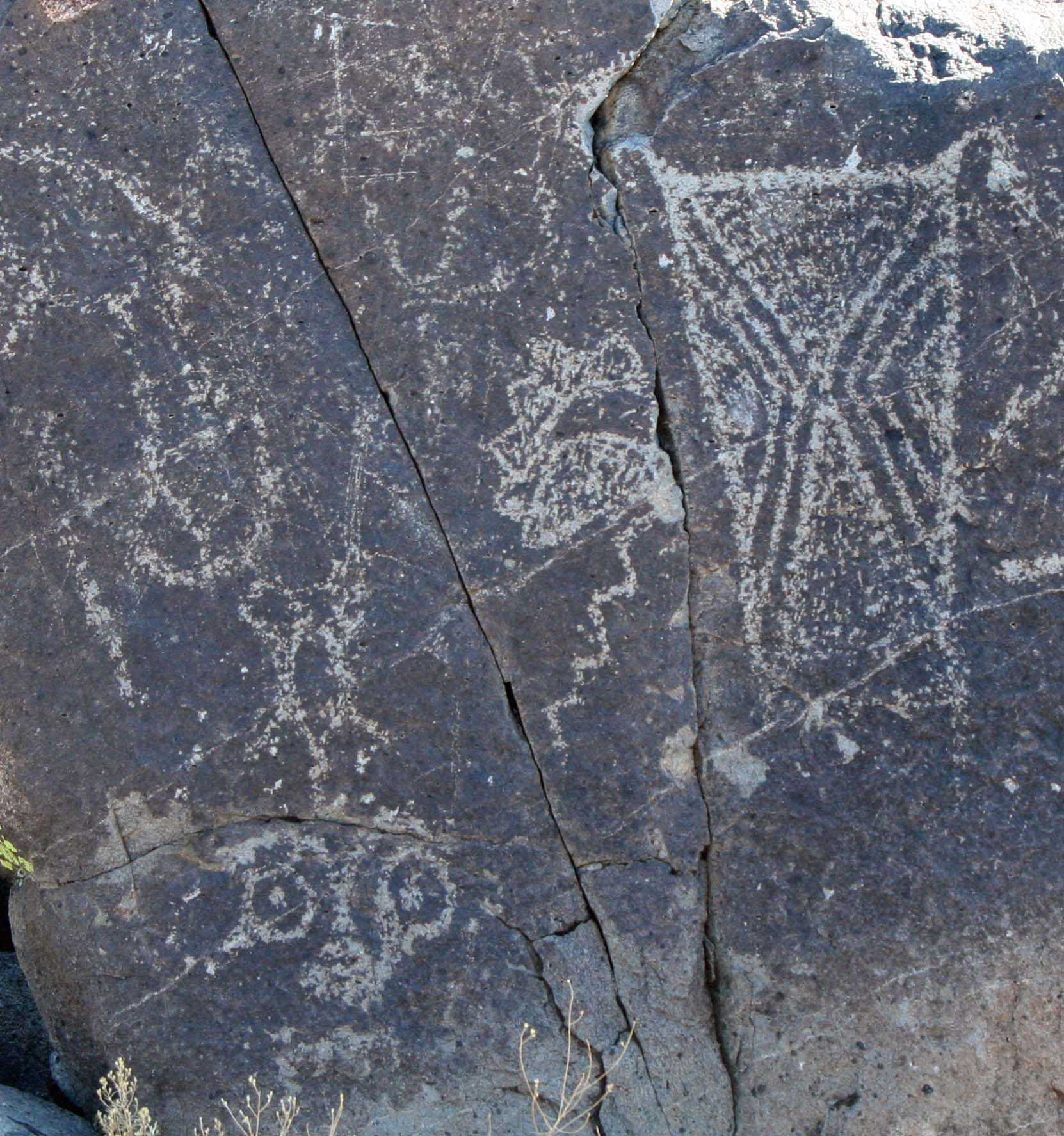
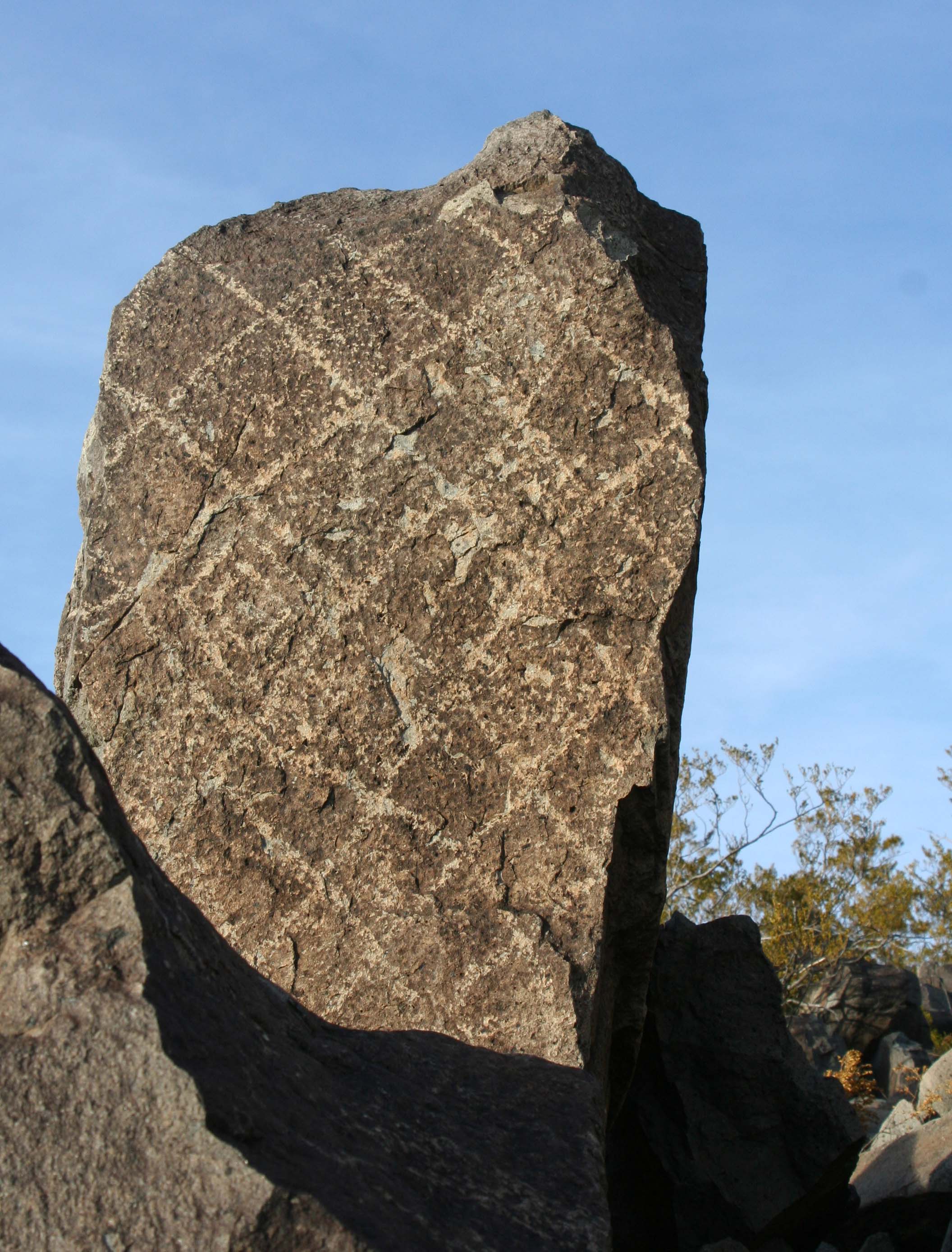
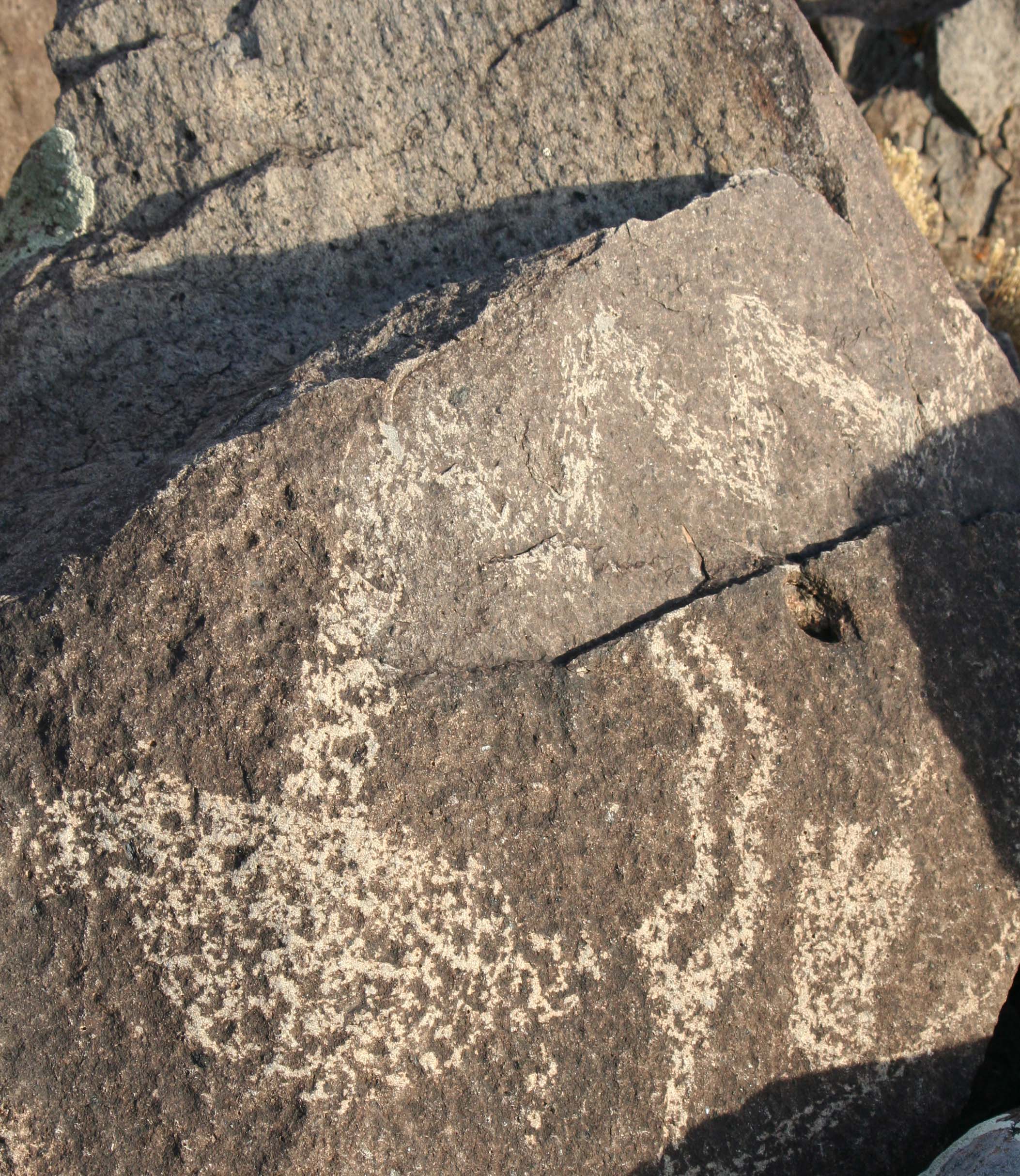
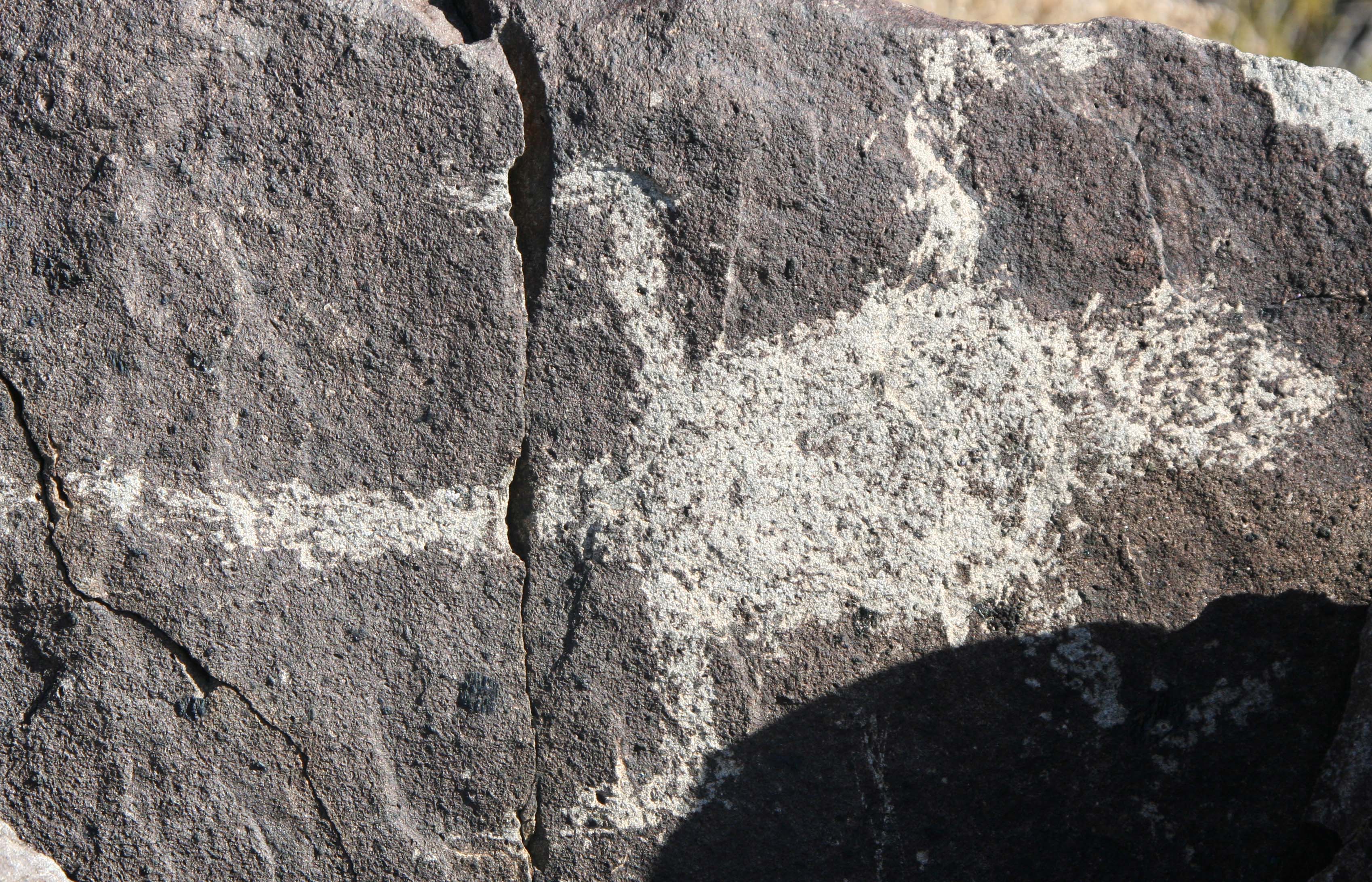
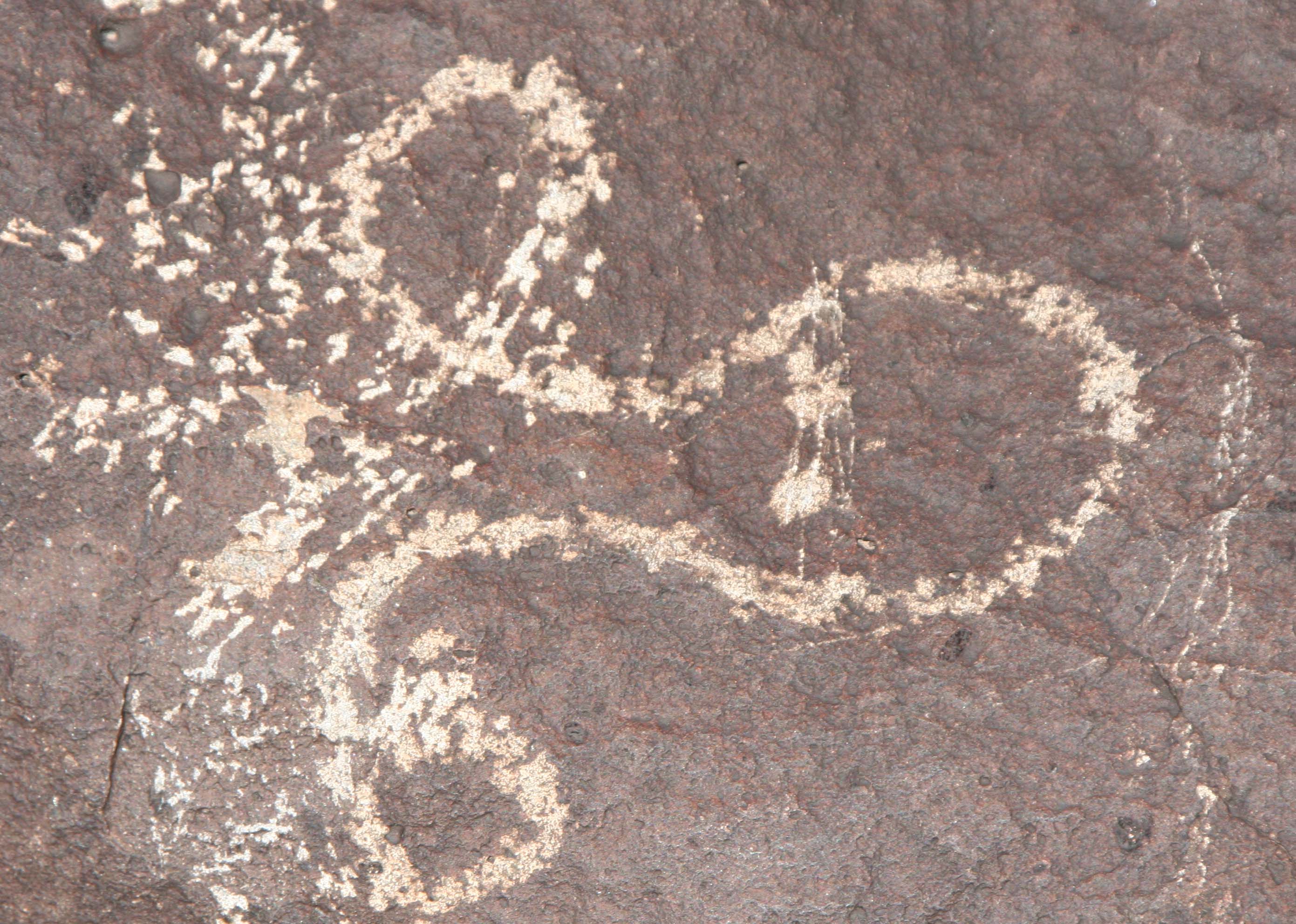
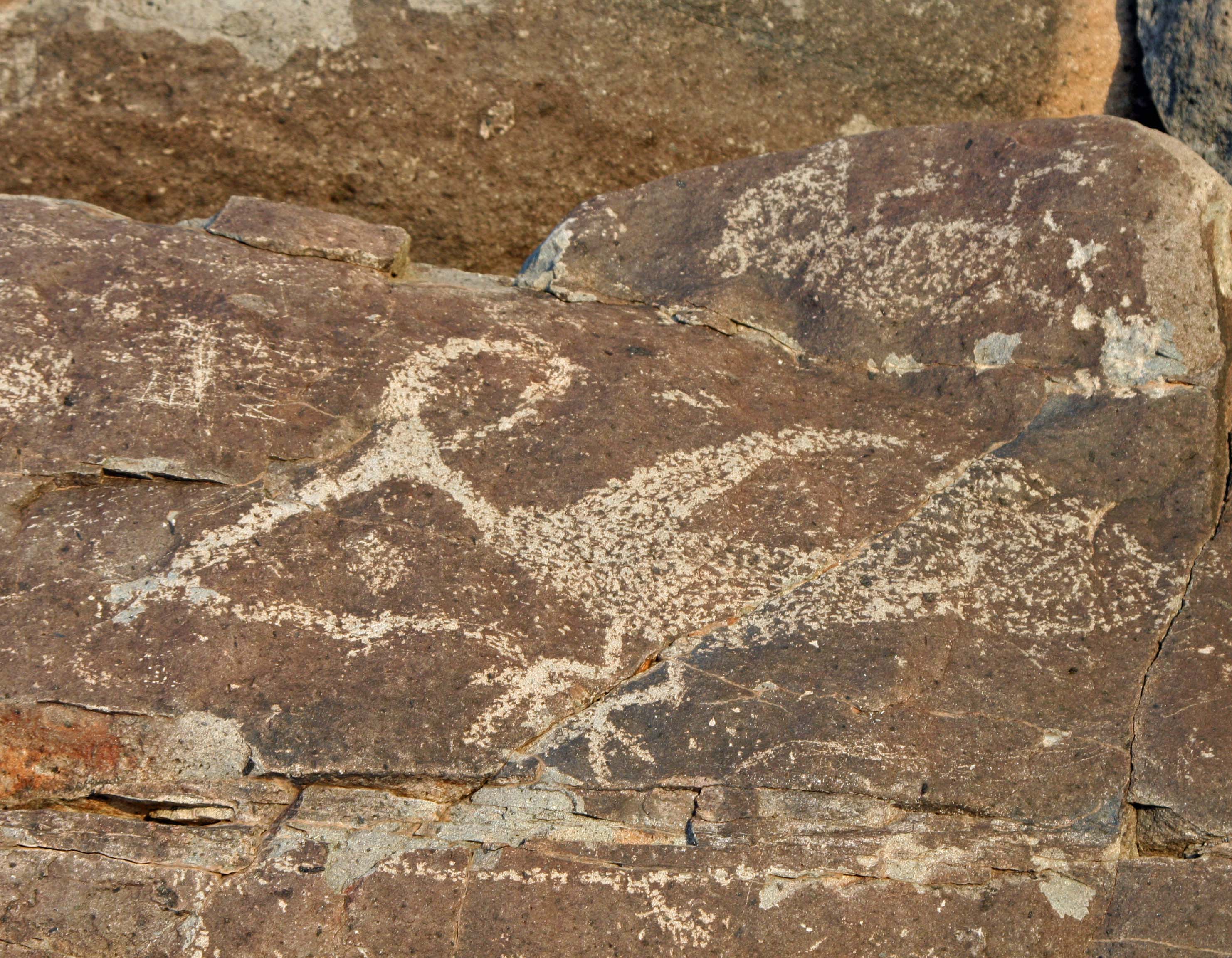
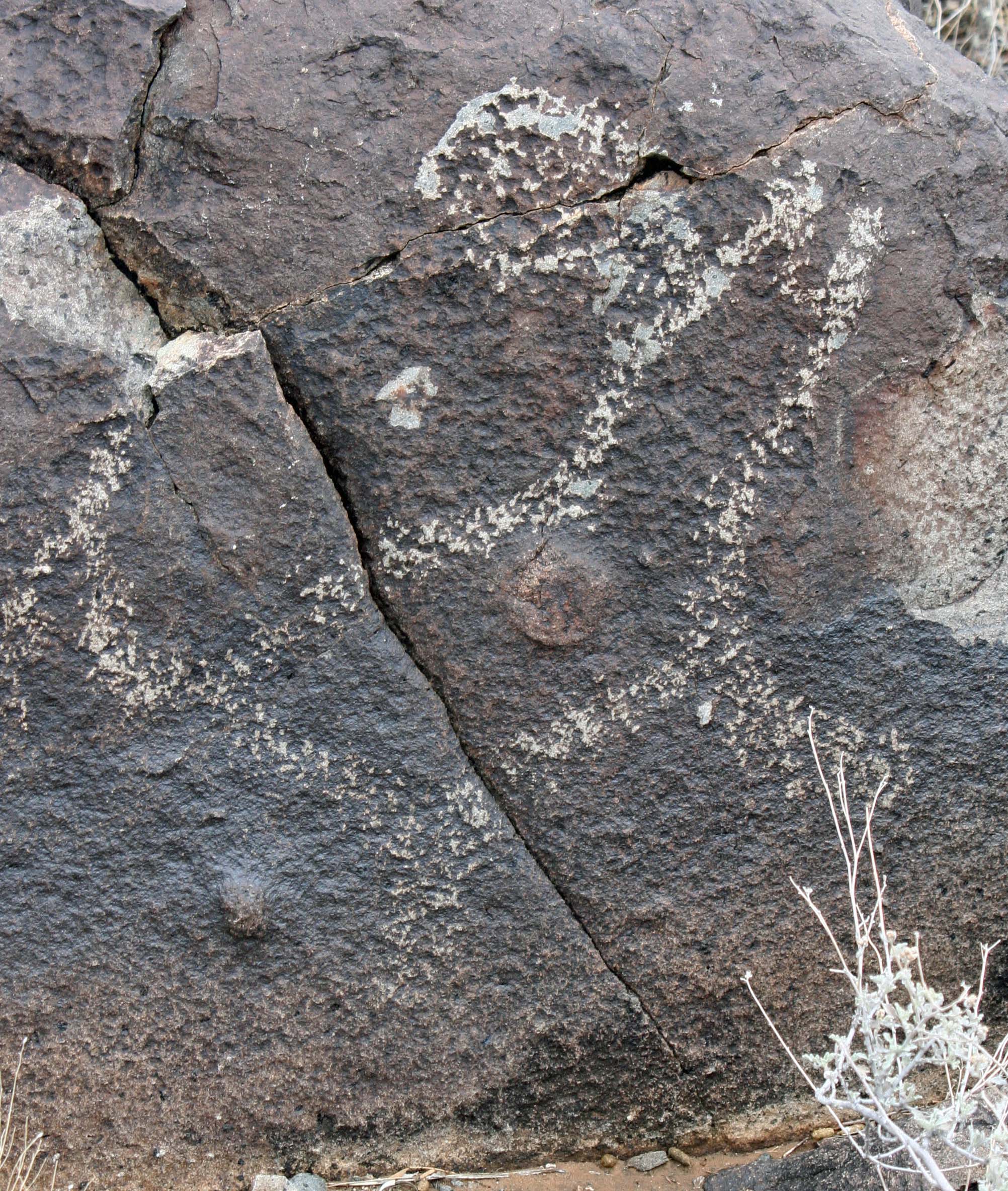
Rattlesnake petroglyph at Three Rivers Petroglyph Site in southern New Mexico.

I could rave about how this fellows curves follow the rock. In fact I am raving about it. Also check out the serpent hear on this guy and his buzzy tail. Rattlesnake for sure.

Bad snakes have been giving good snakes a bum rap for eons. It all started when the Biblical Eve bit into the apple she had obtained from the proverbial snake in the tree and realized she was naked. It must have been a shocking discovery. Snakes have been pummeled, stomped, cut up, diced, crushed, shot, speared and smashed ever since.

Actually, there is no such thing as a bad snake; there are only snakes that have had a bad childhood and will bite you if you step on them or wake them up when they are sunbathing on their favorite rock or lollygagging in a scummy pond. They don’t really mean to kill you; it’s a waste of good venom. Normally, we are too big to eat.

I’ve had numerous snake encounters over the years from the rainforests of the Amazon and West Africa to the rattlesnake country of the American West. Believe me when I say there is nothing like stepping on a log and having it come alive with the buzz of rattlesnakes. I once set an Olympic record for the standing long jump when that happened. Another time, I almost sat on a rattler when I was going to the bathroom in the woods. I couldn’t poop for days.

The Jornada Mogollon people of the Three Rivers Petroglyph site must have had a special relationship with snakes. There are numerous snake glyphs scattered throughout the area… and these are BIG snakes with BIG heads and jaws. “The better to bite you with my dear.” I suspect the snakes were considered sacred and worshipped, which is what the nearby Navajo and Hopi people did.

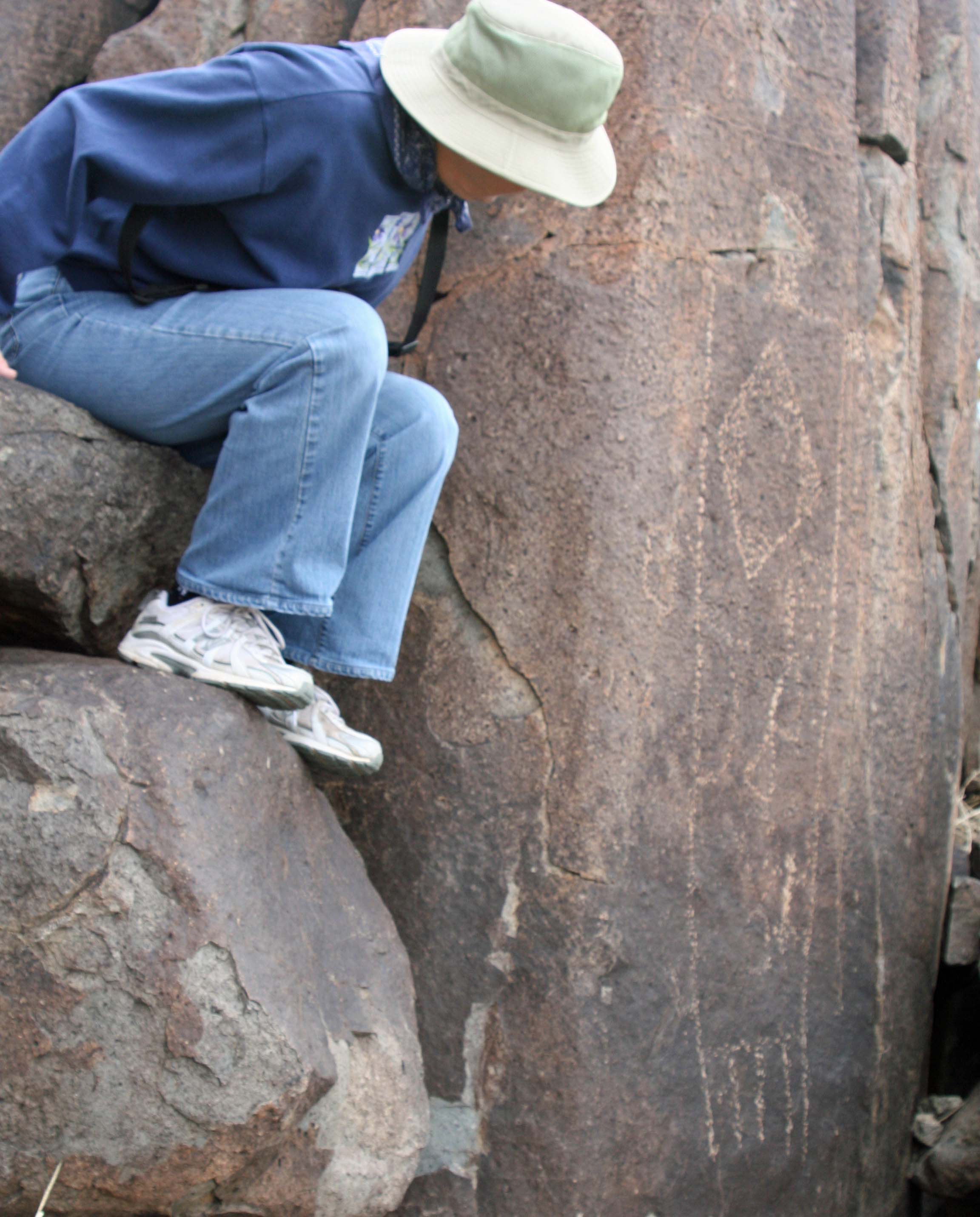
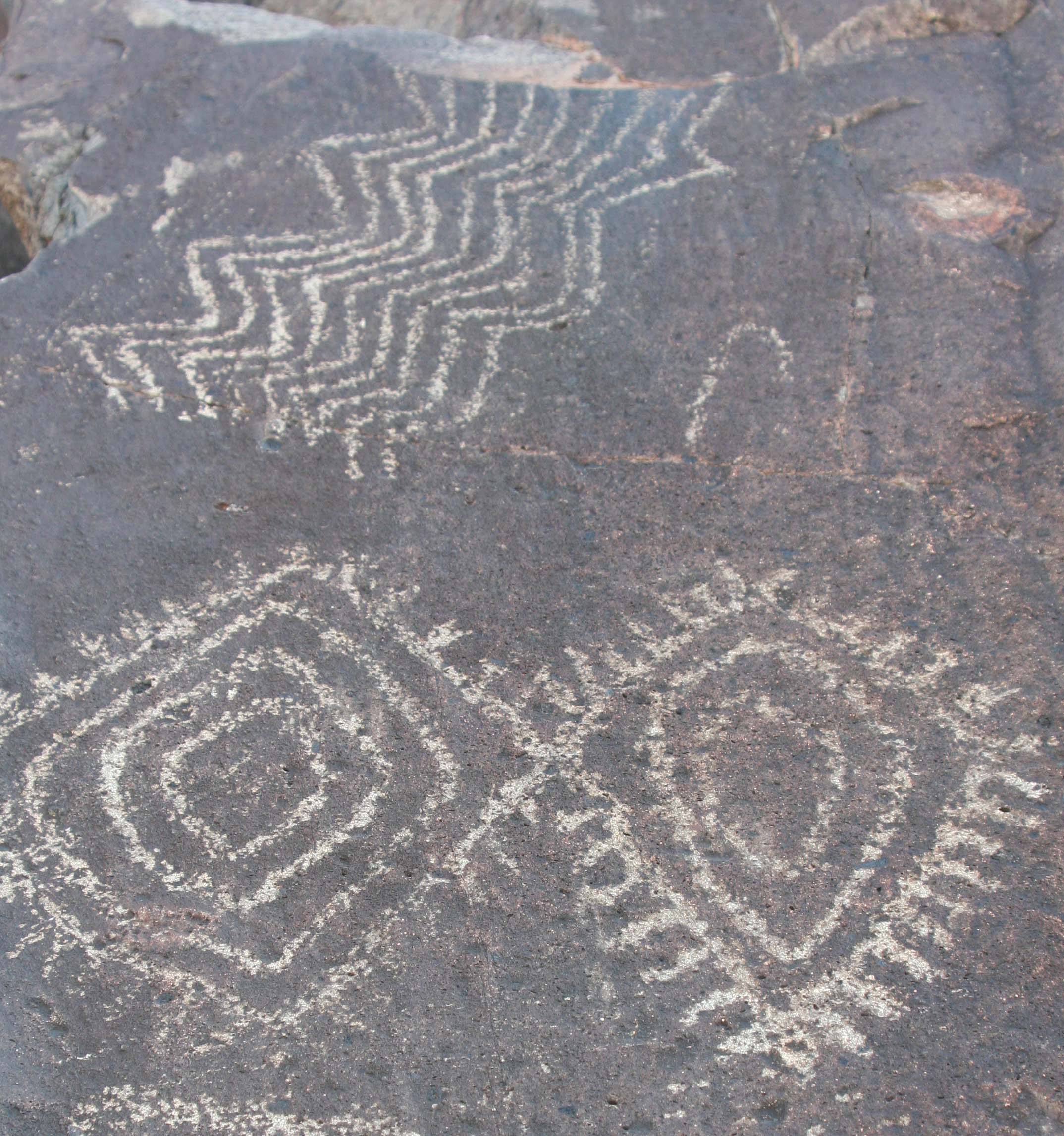
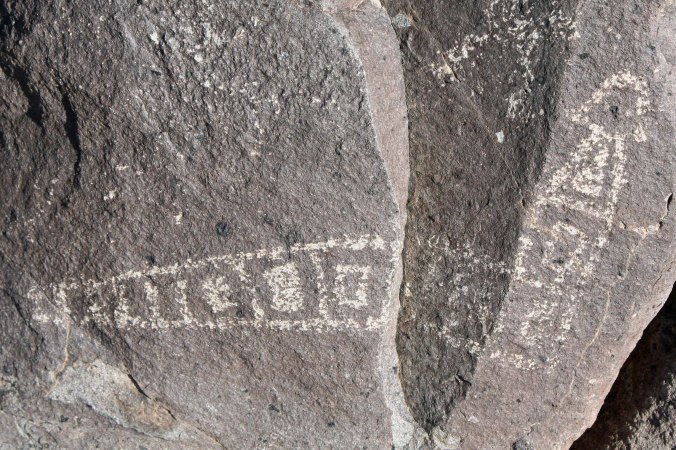
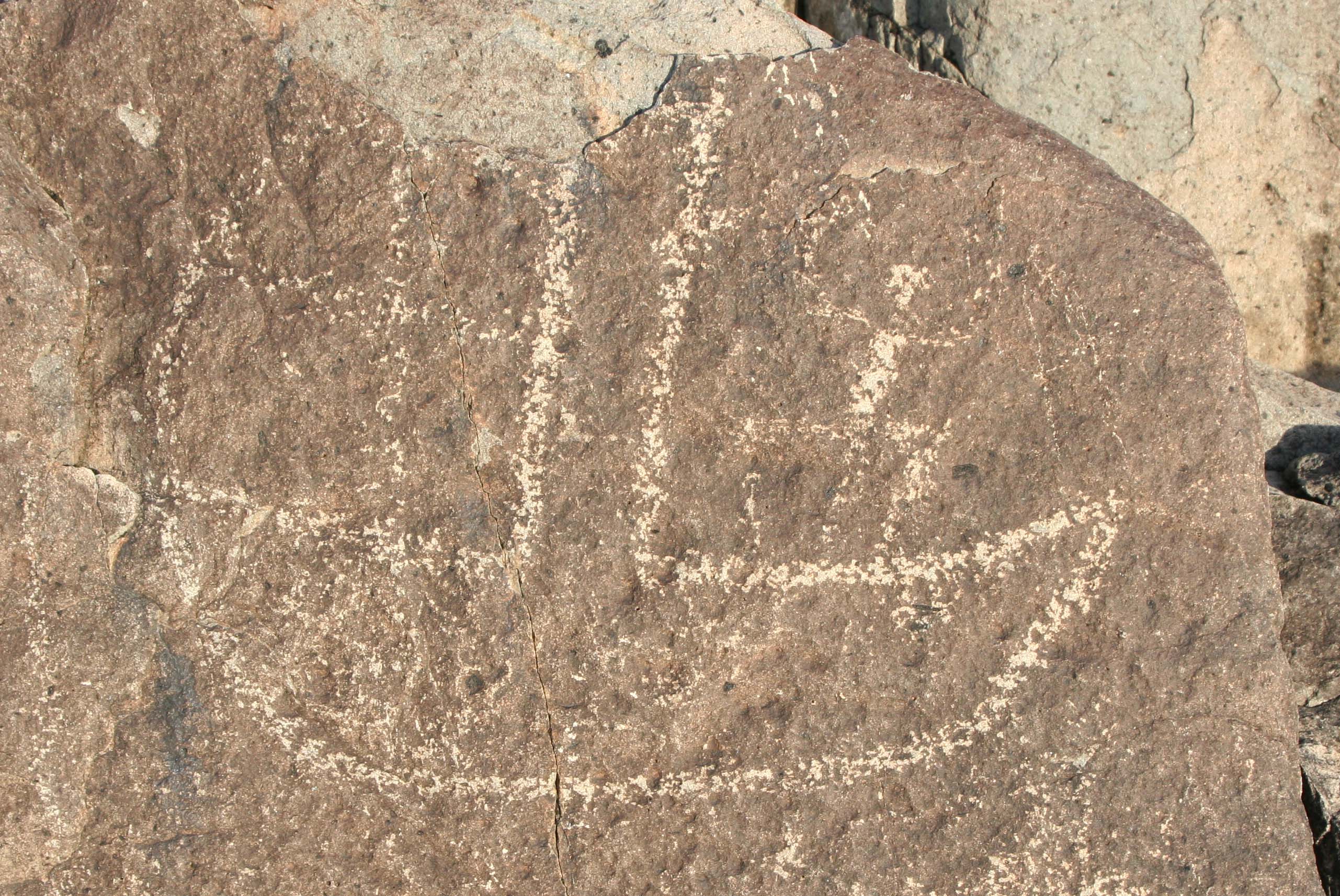
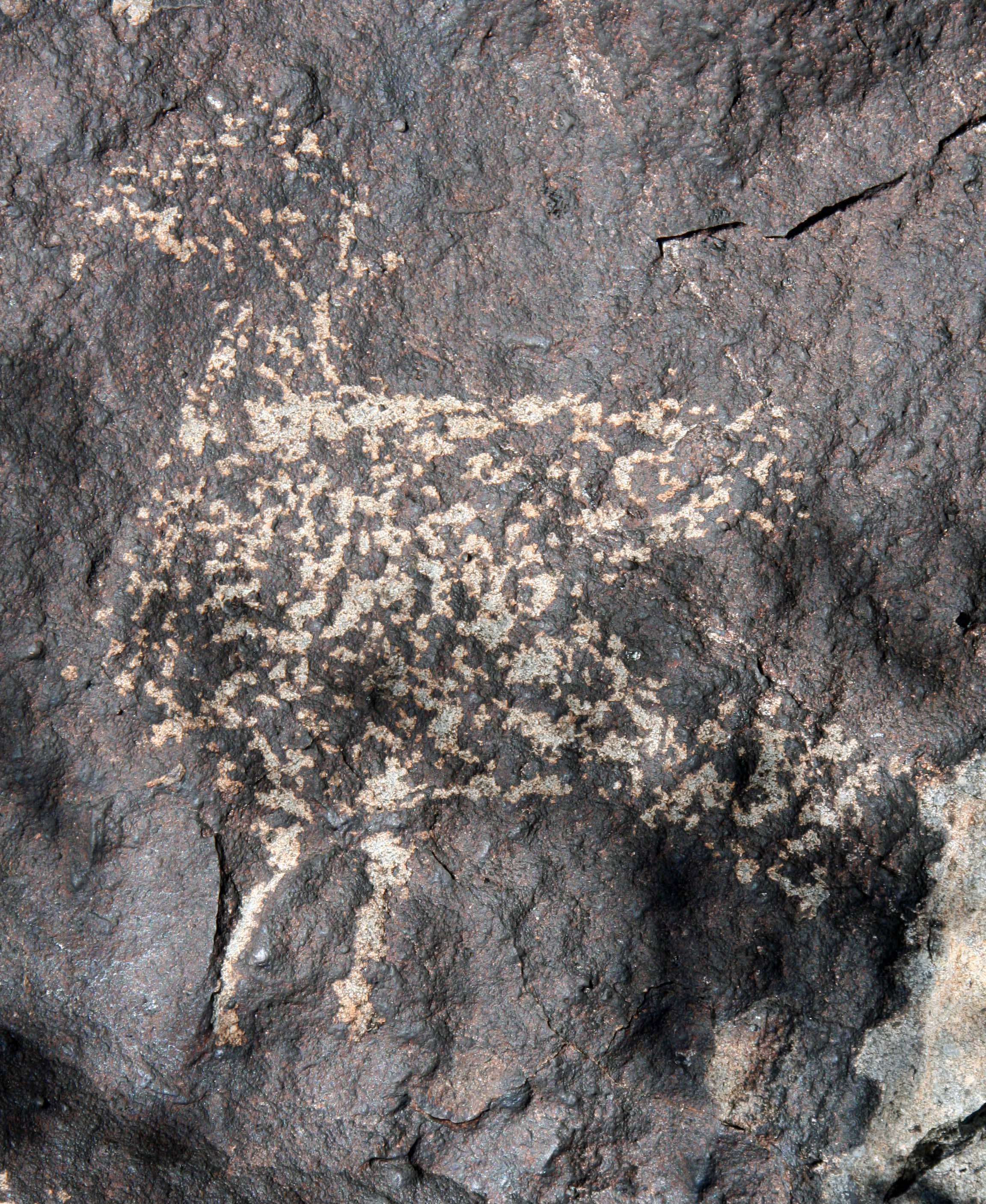
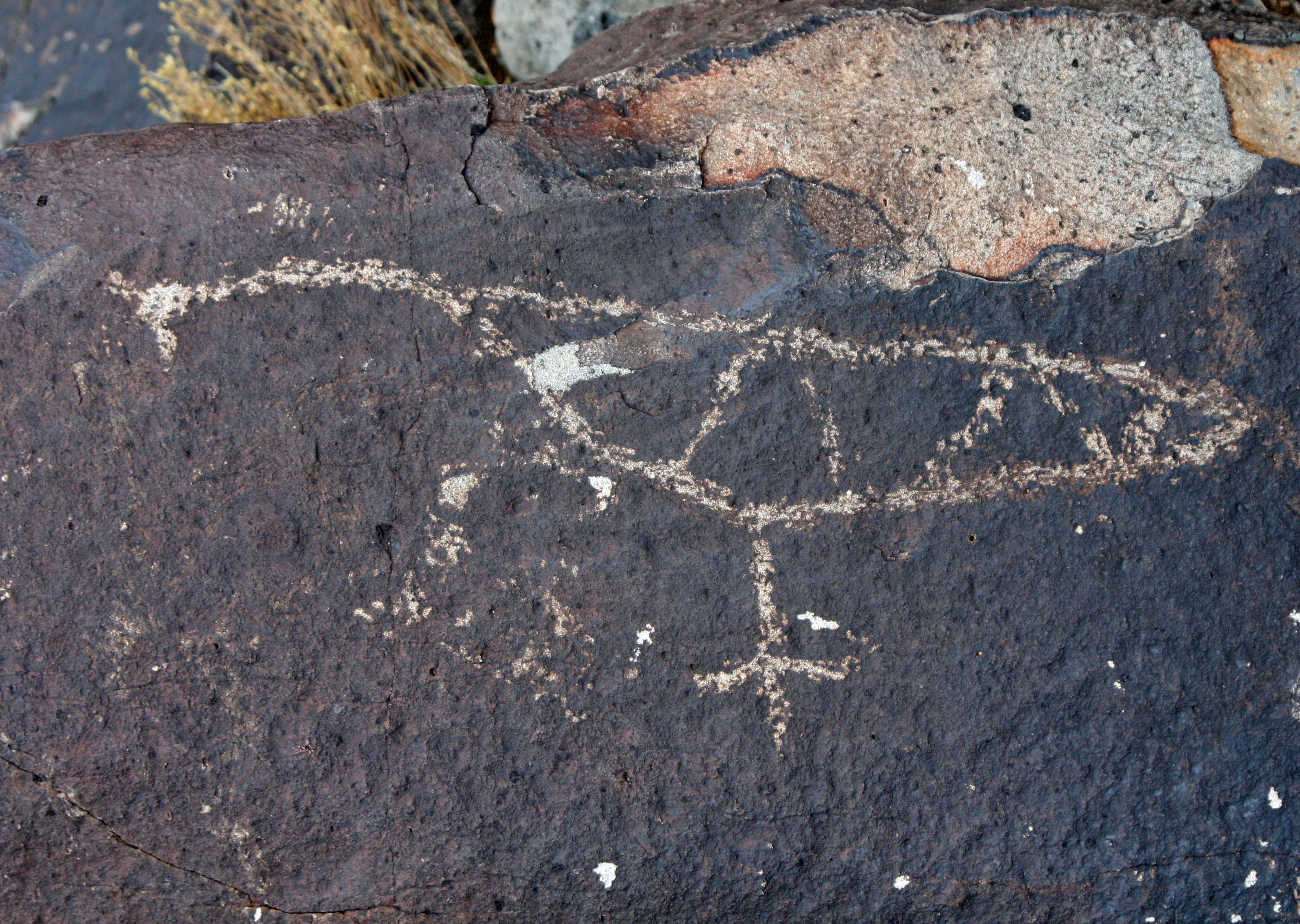
These long snakes slithering down the rocks are worthy of an Indiana Jones movie.

These long snakes slithering down the rocks are worthy of an Indiana Jones movie.

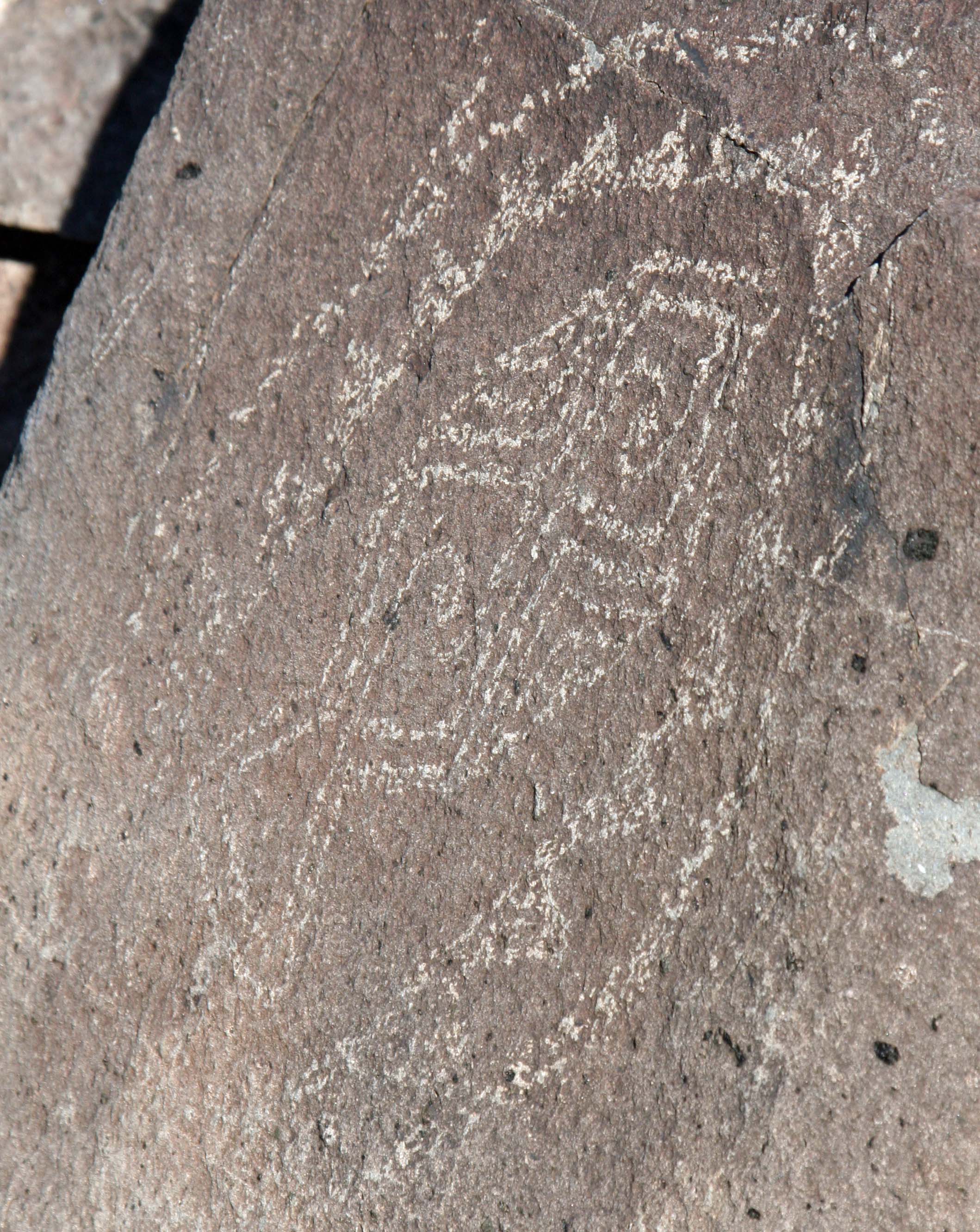
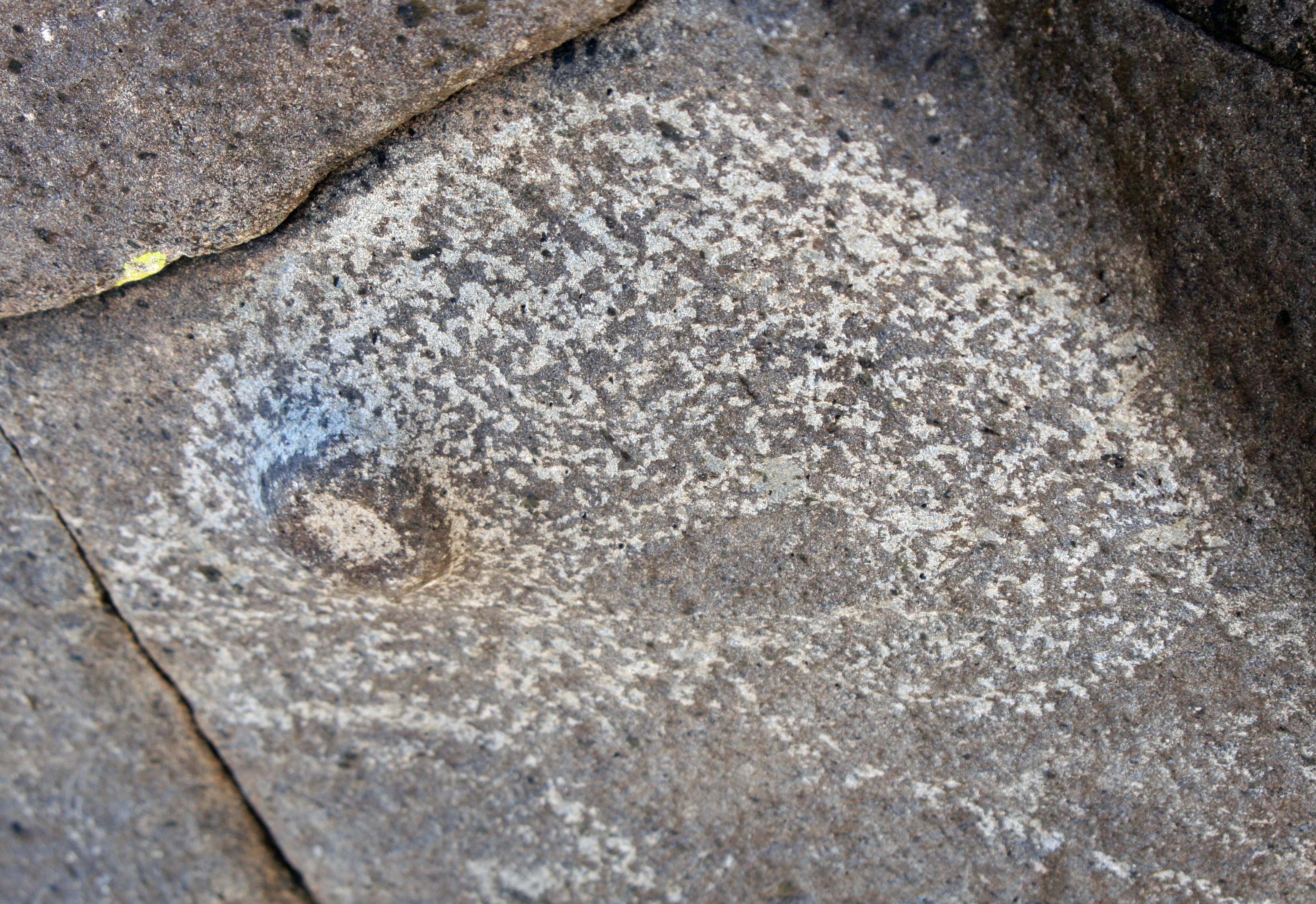
Petroglyph snake with large head in Three Rivers Petroglyph site.

In the world of big snake heads, this Three Rivers serpent would be a record holder.

Rattlesnakes weren’t the only poisonous denizens of the desert recorded in the petroglyphs of Three Rivers. There were also spiders and scorpions.  On the more benign side of the equation, there were numerous rock art lizards.

Spider petroglyph at Three Rivers Petroglyph site.

I think this large, scary bug is probably a spider.

Scorpion petroglyph at Three Rivers Petroglyph site.

My money would be on a scorpion here. Check out the rounded end of his tail and the two pincher claws up front.

A number of petroglyphs at Three Rivers Petroglyph site in New Mexico.

This is where we found the scorpion. I suspect that his modern-day cousins are lurking in the rocks surrounding him.

Lizards are considered much more benign than snakes, spiders and scorpions. For example, my eight year old grandson Ethan caught several during his recent visit.

Lizards are considered much more benign than snakes, spiders and scorpions. For example, my eight year old grandson Ethan caught several during his recent visit. He was only chomped on a couple of times.

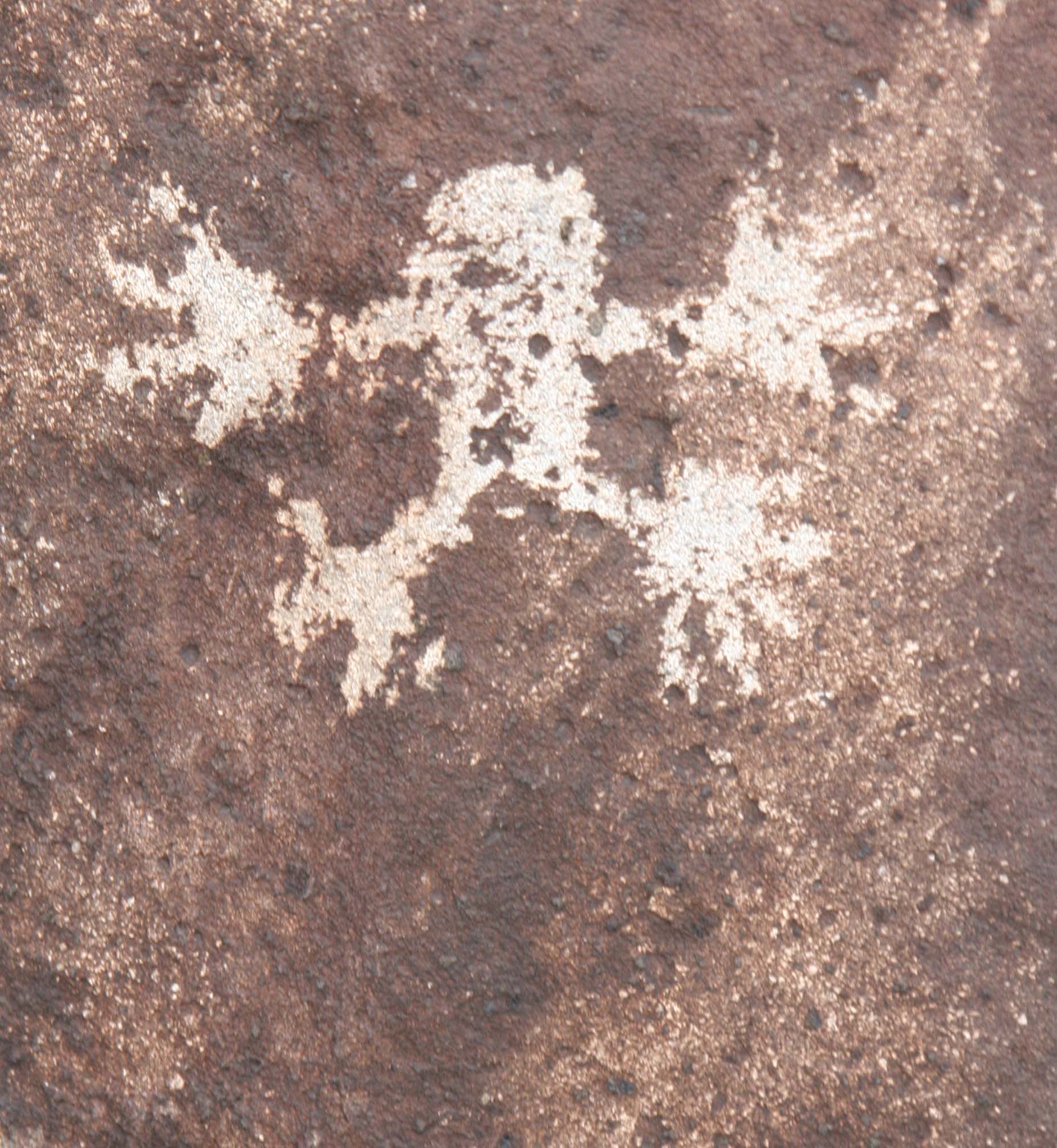
A petroglyph lizard foud at the Three Rivers Petroglyph Site.

Pregnant petroglyph lizard?

Petroglyph lizard at Three Rivers Petroglyph site in southern New Mexico

A well-fed petroglyph lizard?

This frog doesn’t belong here along with the reptiles and bugs but he absolutely had to go somewhere.

Frog petroglyph at Three Rivers Petroglyph site.

Gotta love this guy.

NEXT BLOG: Patterns in the rock. We will look at some of the many geometric patterns found among the petroglyphs and guess at their meaning.

Pretty Weird Stuff… Three Rivers Petroglyph Site

Butterfly petroglyph at Three Rivers Petroglyph site.

A lot of the rock art at the Three Rivers Petroglyph site is simply fun, such as this butterfly.

Is there a whale among the Three River petroglyphs? How about a ship? Or an octopus? The fish isn’t so strange, nor are the buggy bugs. But how did the ocean life end up in the middle of the Chihuahuan Desert? Maybe I am simply suffering from an overactive imagination brought on by staring at thousands of petroglyphs. I can guarantee I haven’t been imbibing in the Datura used by Shaman to create altered states. That stuff is dangerous. (Actually, it can be deadly.) The residents of Jamestown once fed it to British soldiers in 1676 and knocked them out of commission for 11 days. Afterwards, the plant was named Jimson Weed, after Jamestown.

Possible whale petroglyph at the Three Rivers Petroglyph site.

It looks like a whale to me… or at least a whale of a fish.

Octopus petroglyph at Three Rivers Petroglyph site.

And what’s with this octopus. Did the Jornada people travel to the ocean?

Ship petroglyph at Three Rivers Petroglyph site.

I guess if you have a whale and an octopus, it is only natural to have a ship with sails. Check out the guy jumping around in the back.

Possible seal petroglyph at Three Rivers Petroglyph site.

This looks suspiciously like a seal, minus the hind legs.

Fish petroglyph at Three Rivers Petroglyph site in southern New Mexico.

Okay, I’ll buy a fish petroglyph. Not sure about the circle. Maybe the fish is being served up on a platter.

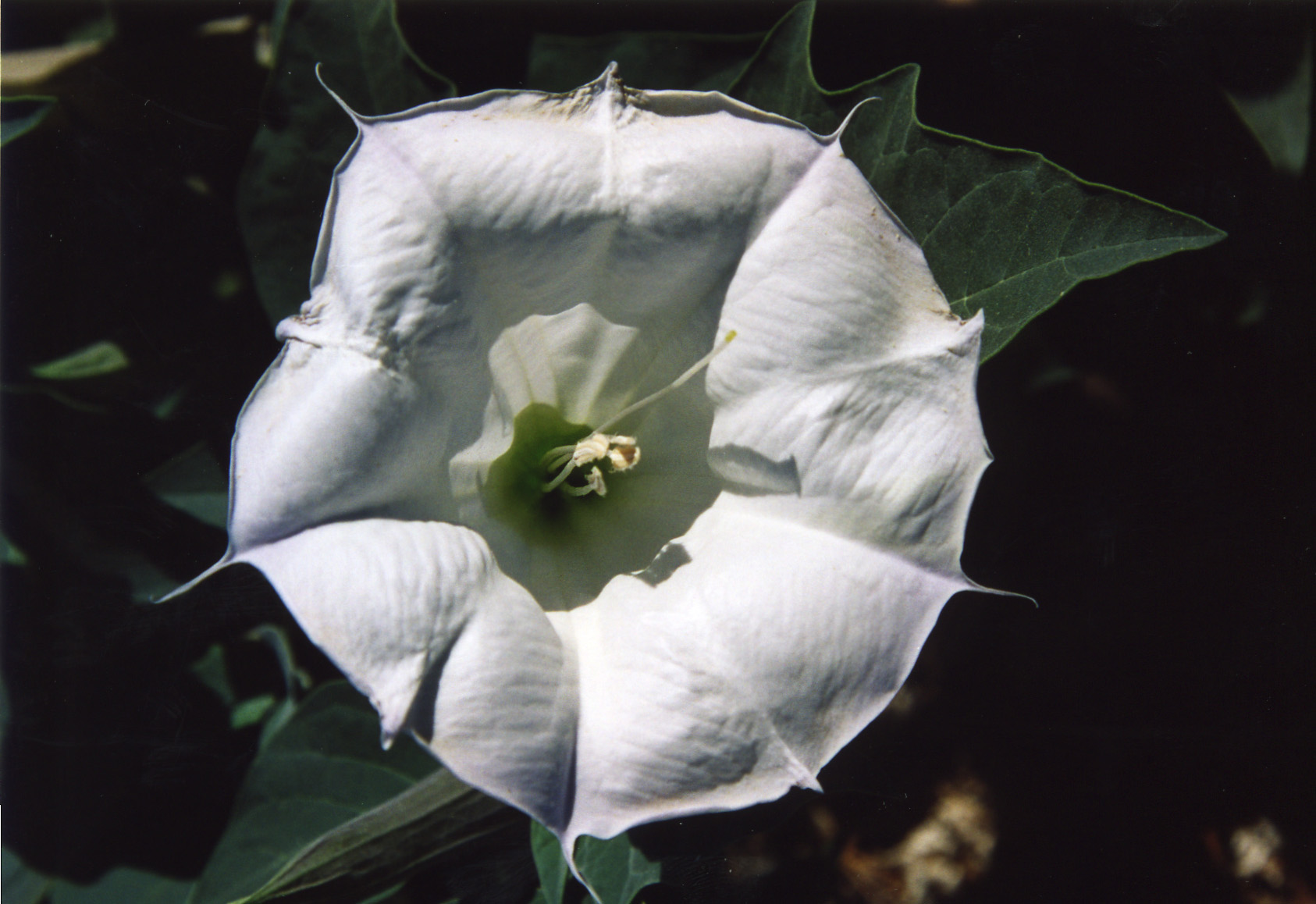
Datura, also known as Jimson Weed

Datura, a beautiful but dangerous plant. I took this photo on the American River Parkway in Sacramento.

Buggy eyed petroglyph at Three Rivers Petroglyph site.

What you might run into after consuming a few too many Datura seeds.

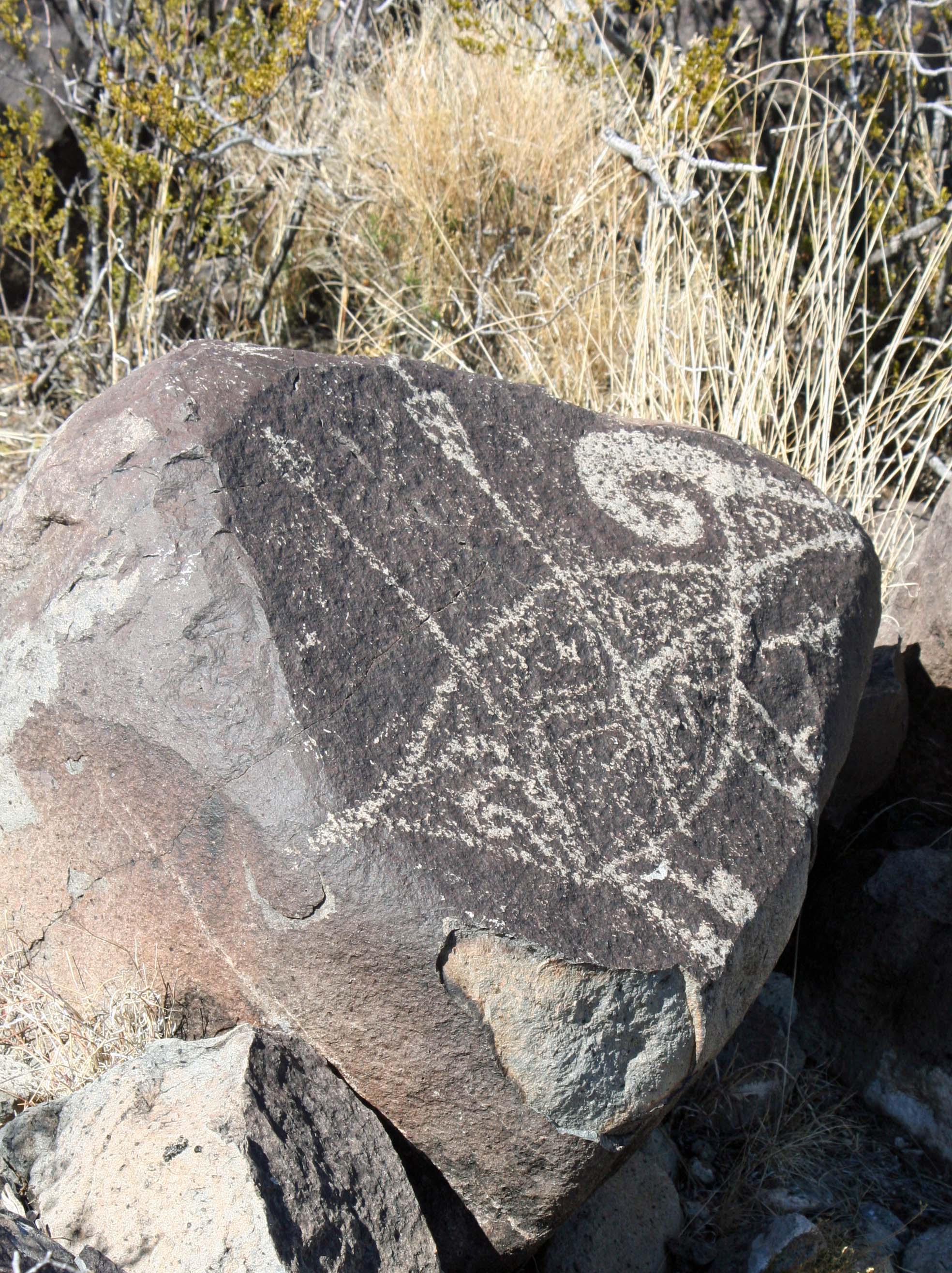
Arrow petroglyphs at Three Rivers Petroglyph site.

Or possibly you might meet a pair of arrows with attitude.

NEXT BLOG: Snakes, lizards and a few more bugs.


Thunderbird and Eagle Rule the Skies… Three Rivers Petroglyph Site

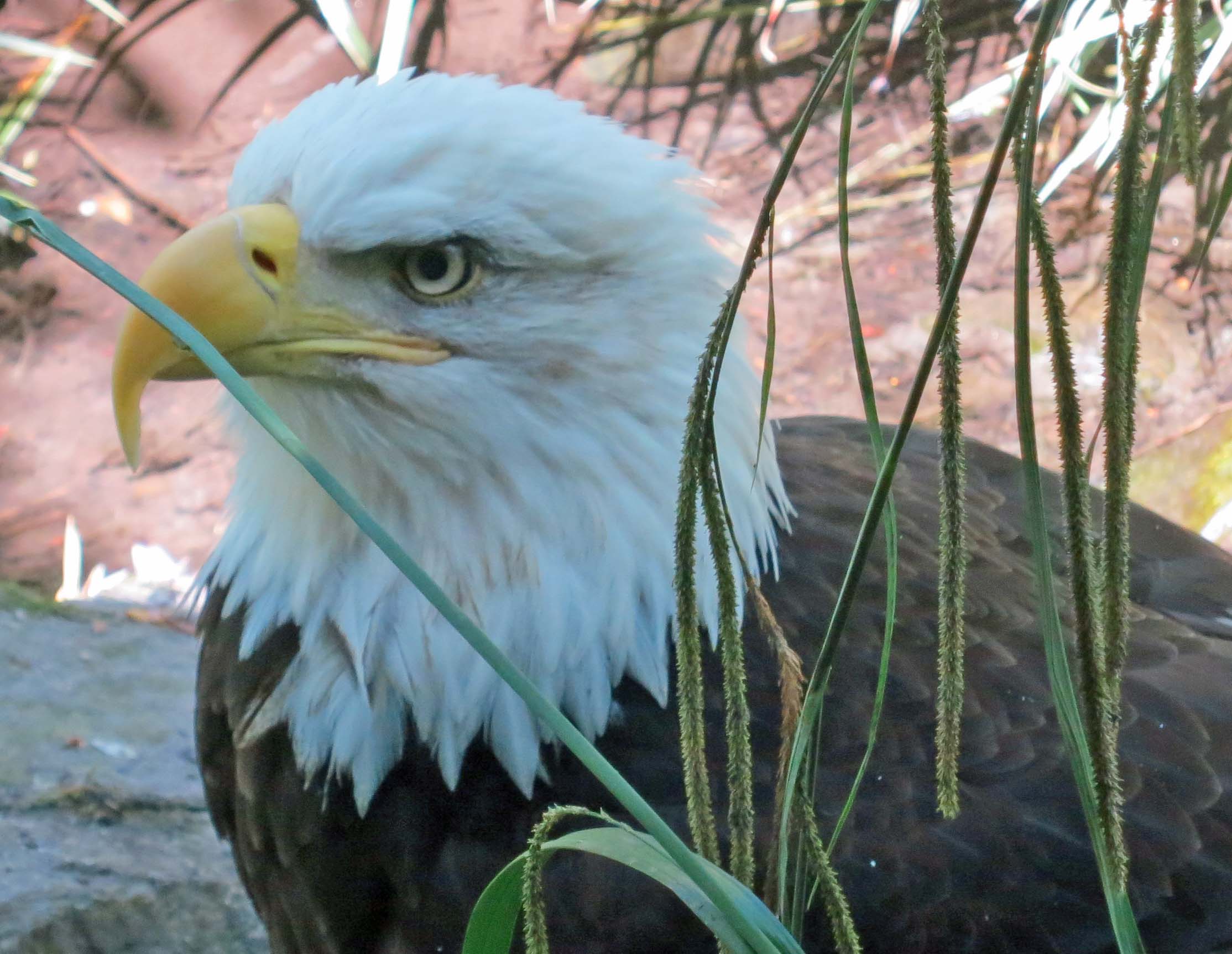
Close up of Bald Eagle

One look at this magnificent bird I photographed two weeks ago tells the story of why the eagle was regarded as sacred by Native Americans. This eagle is located at a wildlife sanctuary close to my home in southern Oregon. It was named Jefferson until it laid an egg. Now she is called Mrs. Jefferson.

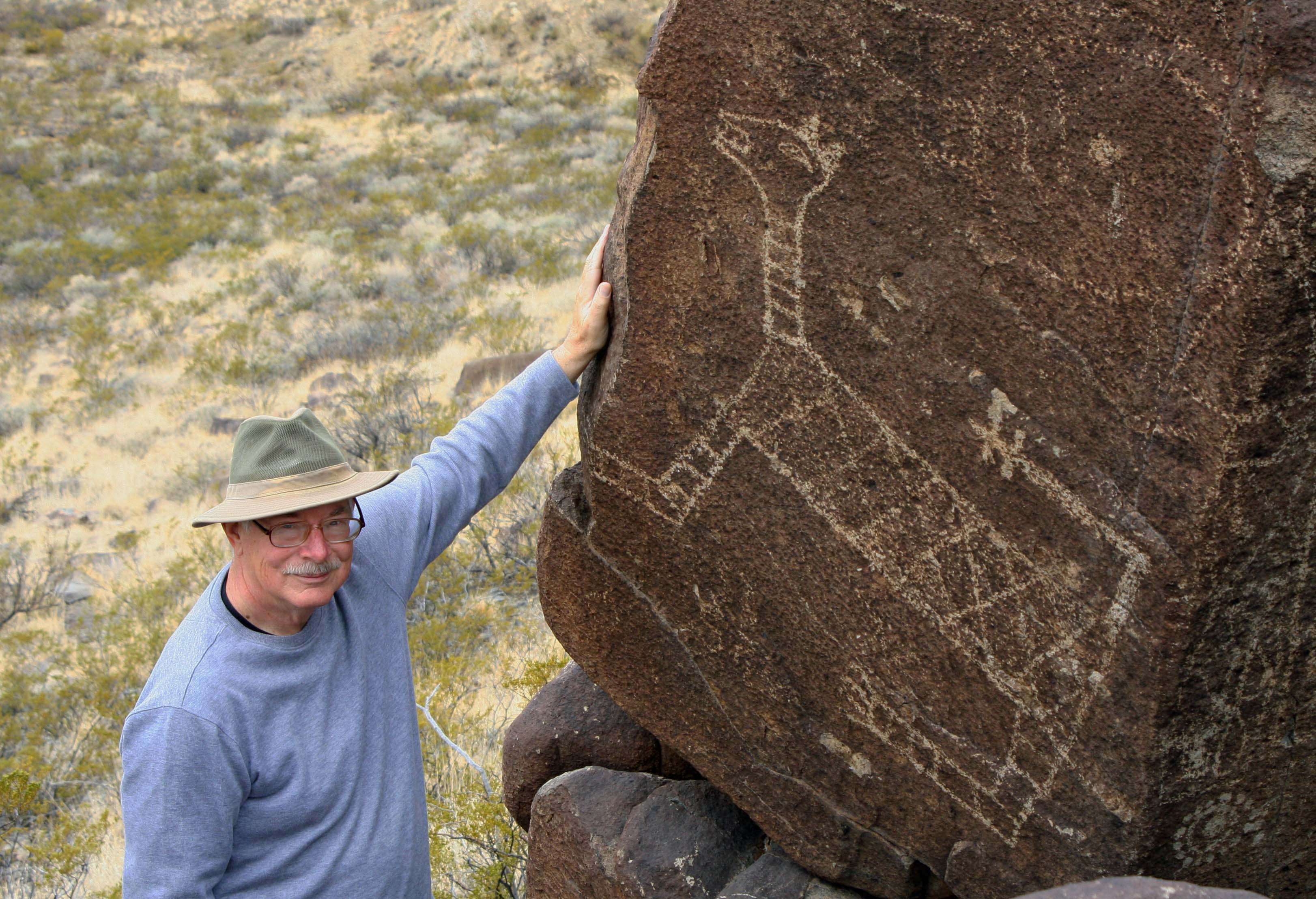
Eagle petroglyph at Three Rivers Petroglyph site in southern New Mexico.

I think that the bird petroglyph on the left that Peggy and I found at Three Rivers is immediately recognizable as an eagle.

The mighty eagle may have ruled the skies of southern New Mexico but it was the Thunderbird that ruled the heavens. A flap of its wings would gather clouds and send thunder bouncing off the far mountains. Lightning would shoot out of its eyes. The Thunderbird existed in numerous Native American and First Nation cultures.Peggy and I have found images  from New Mexico to Alaska.

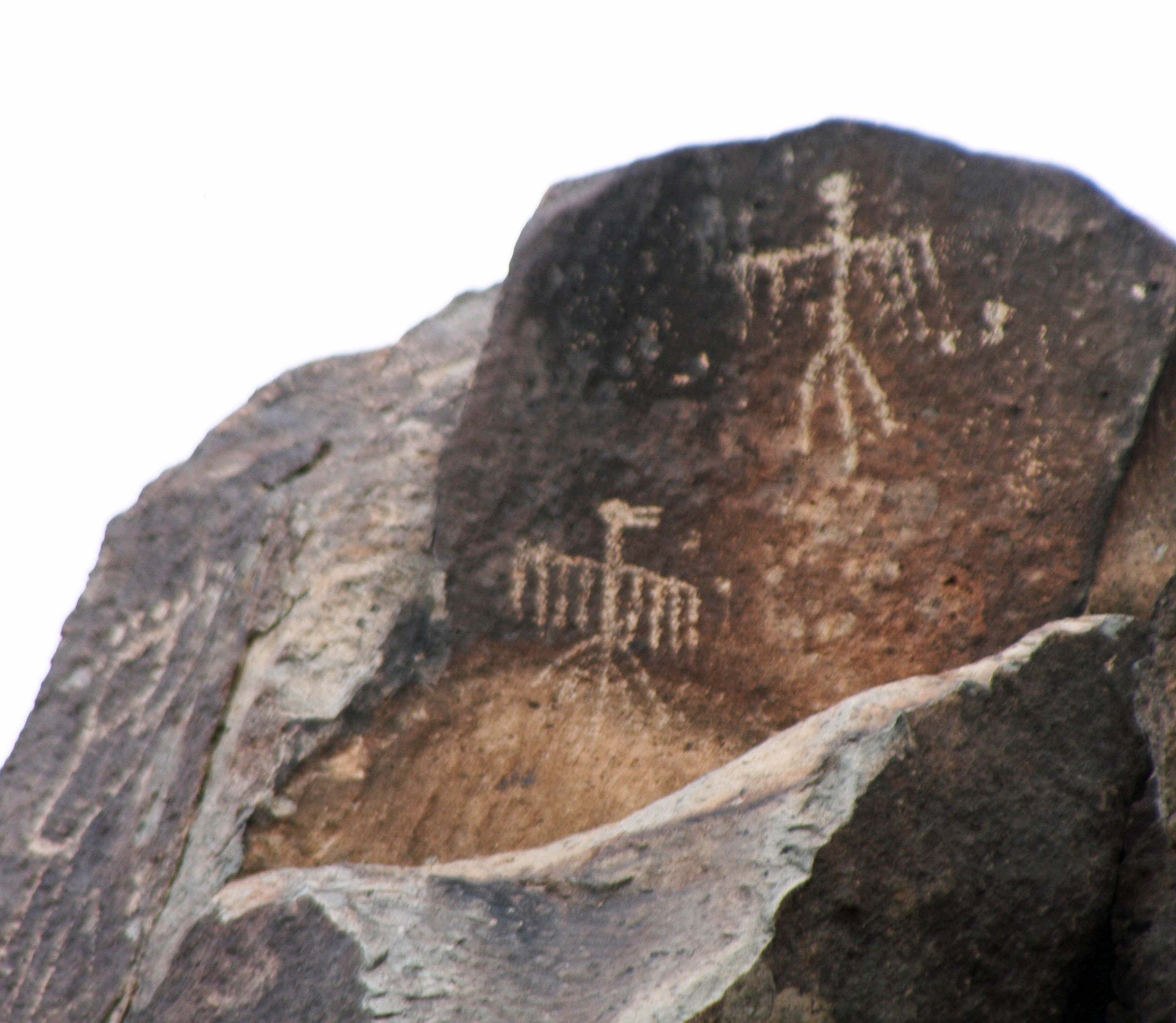
Thunderbird petroglyphs at Three Rivers Petroglyph site in southern New Mexico.

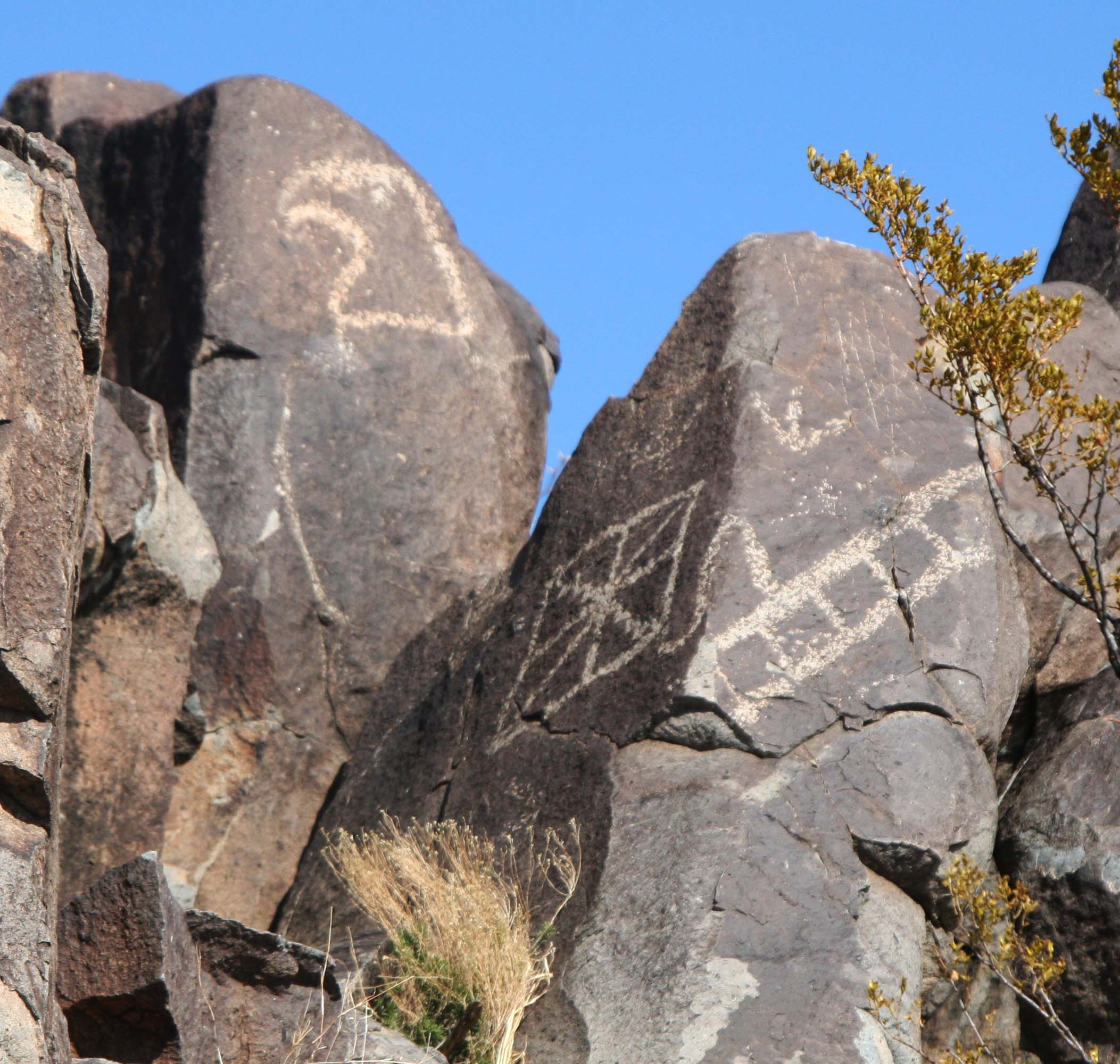
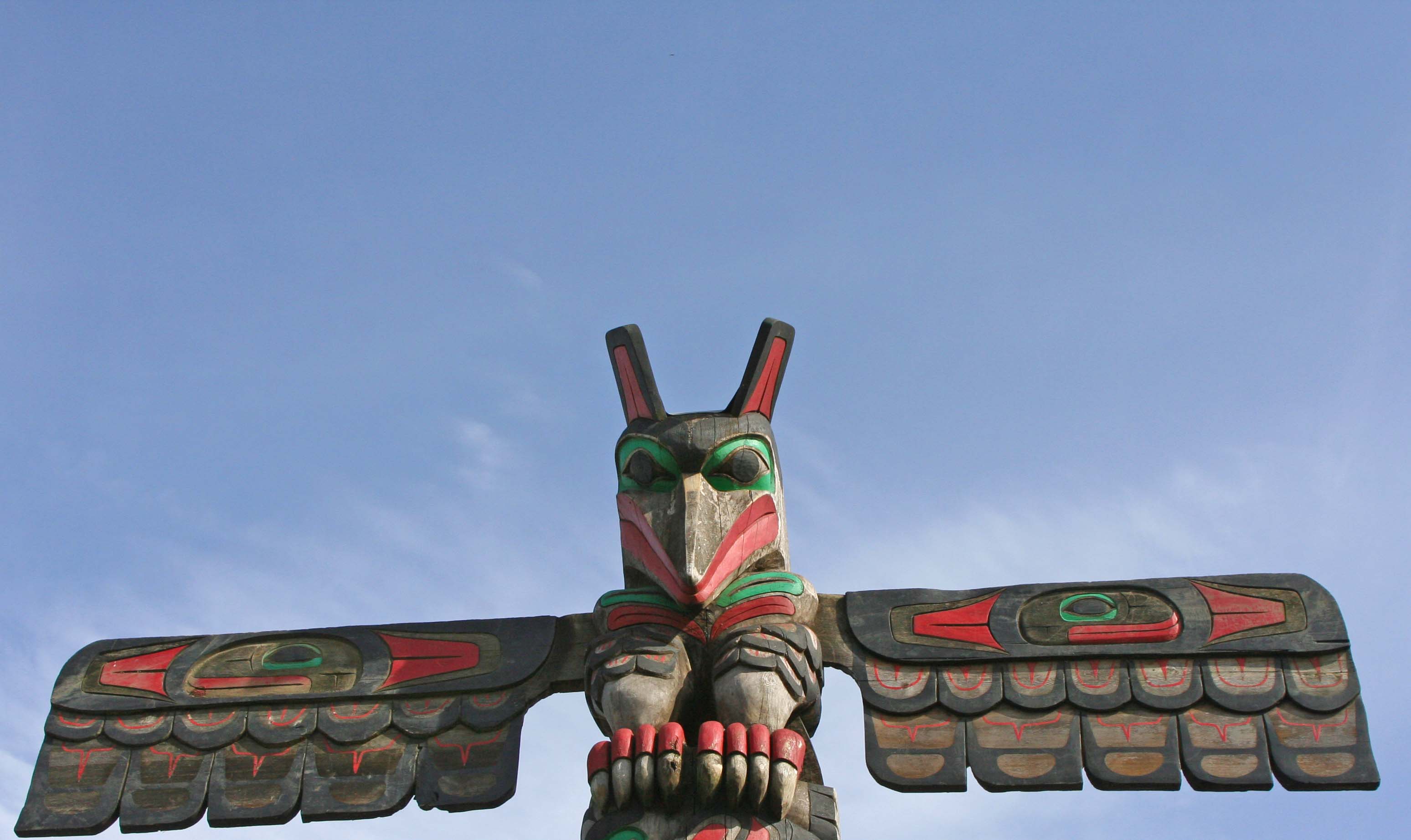
A pair of Thunderbirds decorate a rock at Three Rivers. Compare it with the First Nation totem pole below that Peggy and I photographed on Vancouver Island in Canada.

Totem pole Thunderbird on Vancouver Island

A First Nation totem pole Thunderbird Peggy and I found on Vancouver Island.

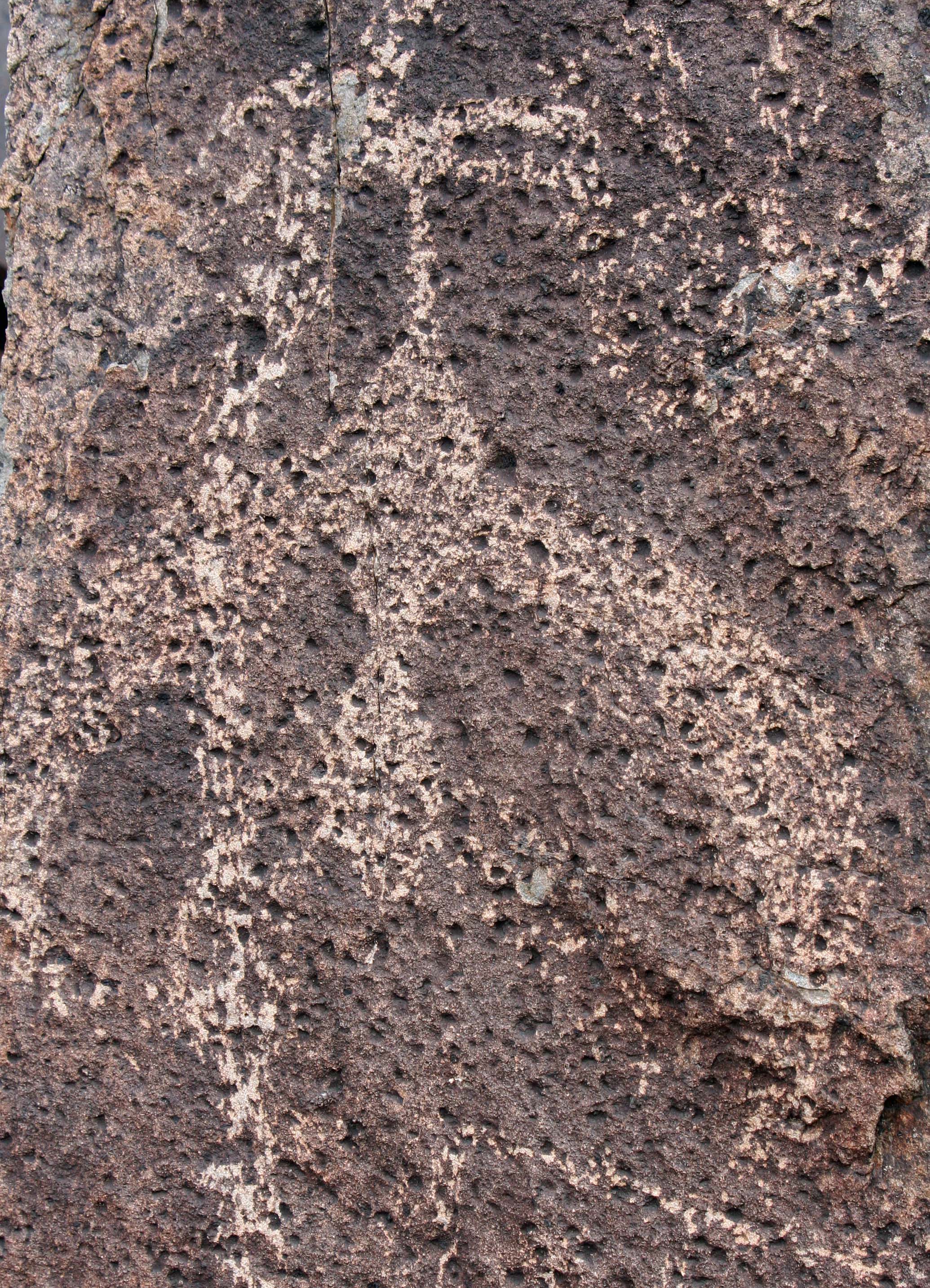
Petroglyph of a Thunderbird at Three Rivers Petroglyph site in southern New Mexico.

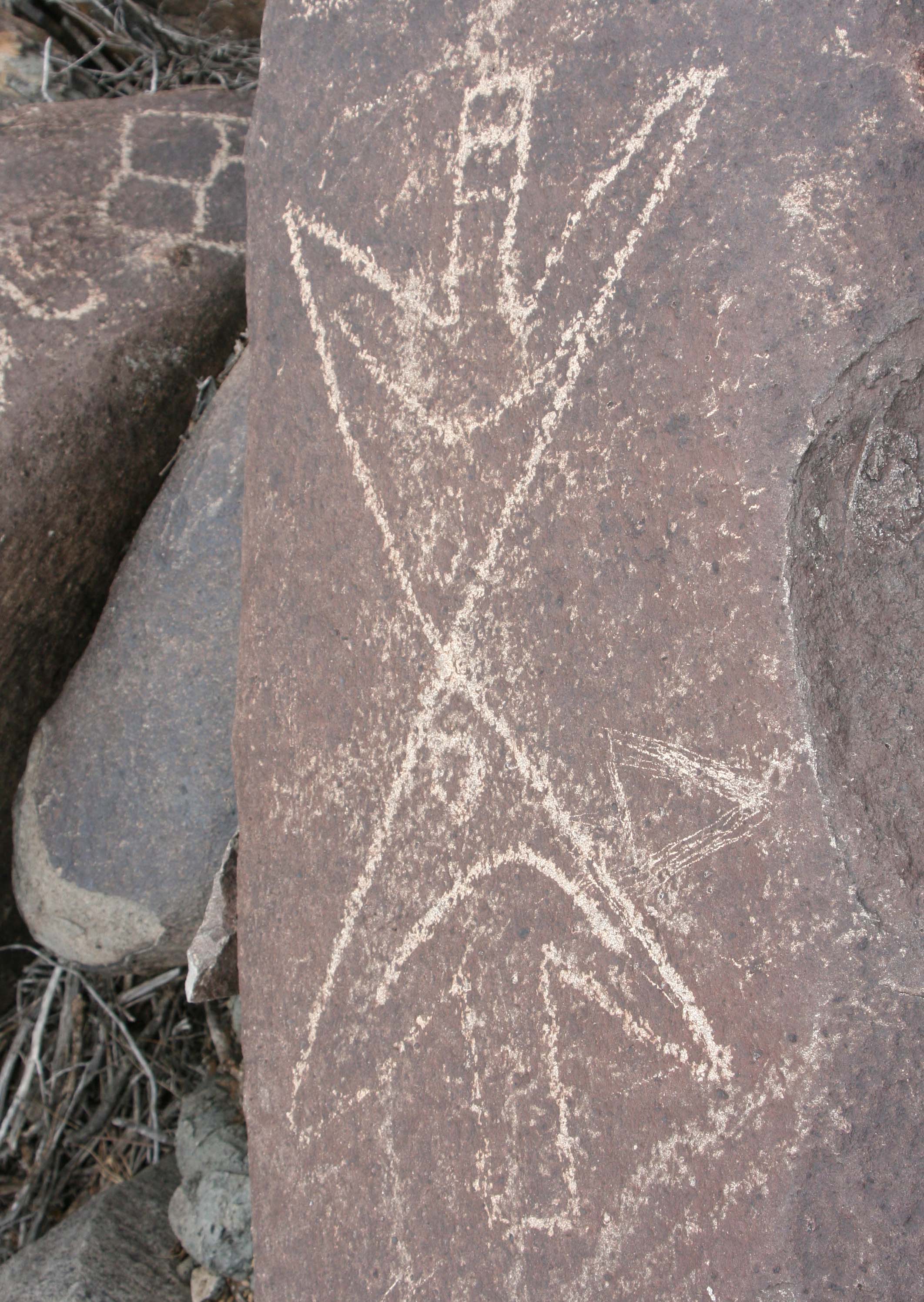
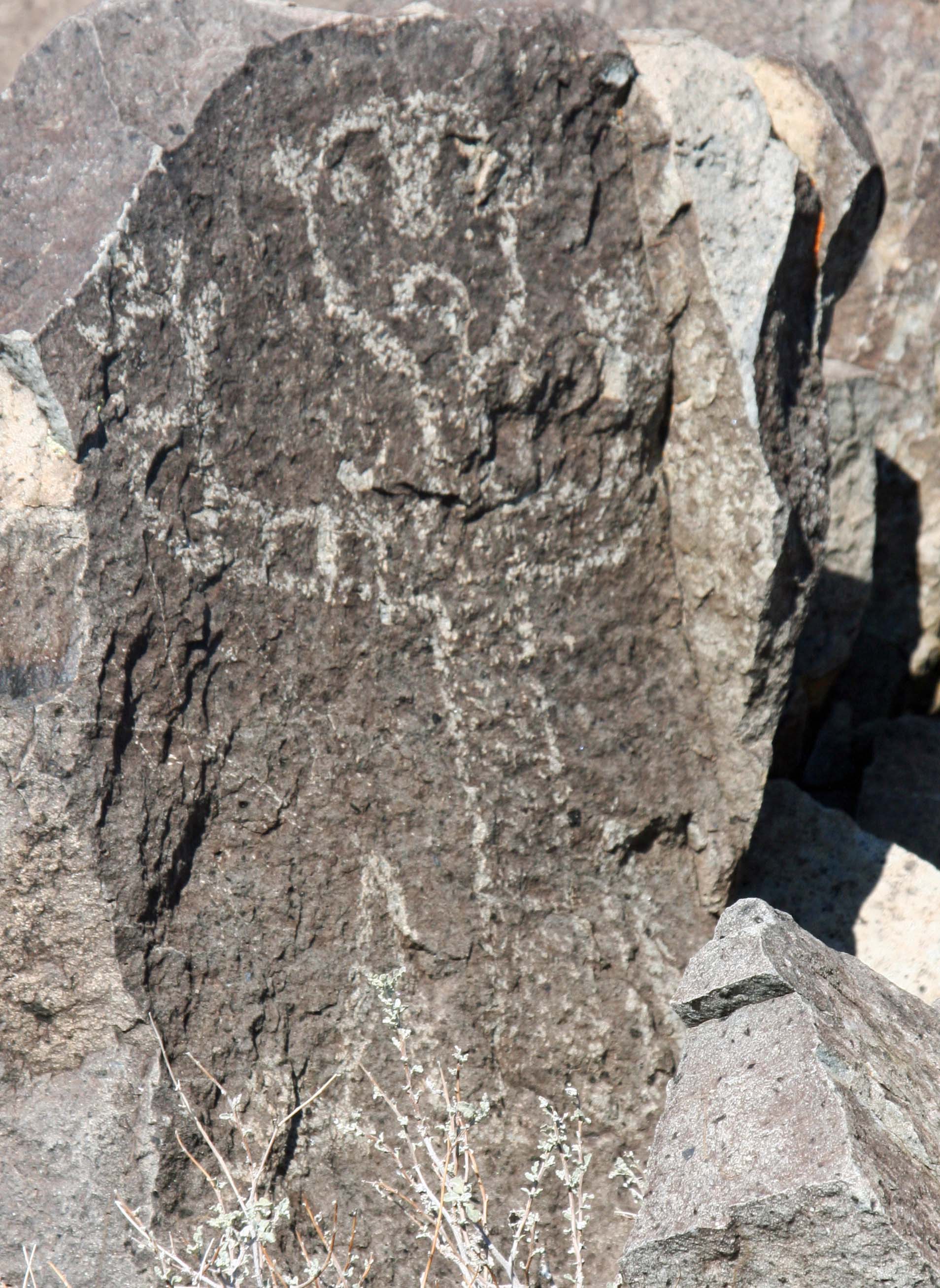
I find this petroglyph of what I assume is a Thunderbird both strange and powerful.

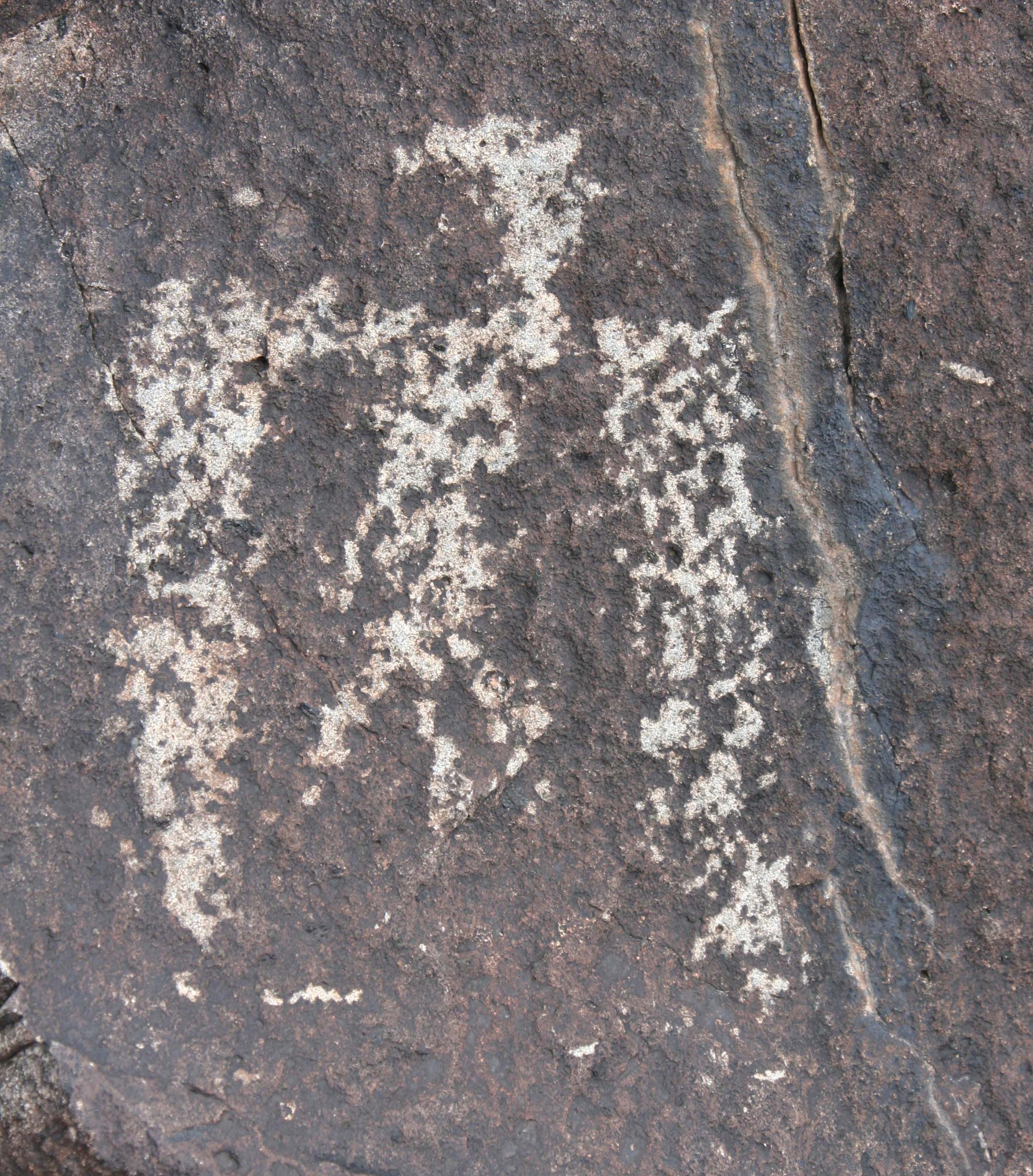
Another version of a Thunderbird found at Three Rivers Petroglyph site.

Another version of a Thunderbird found at Three Rivers Petroglyph site.

Turkeys, roadrunners, and even ducks can also be found among the petroglyphs of the Three Rivers Petroglyph site.

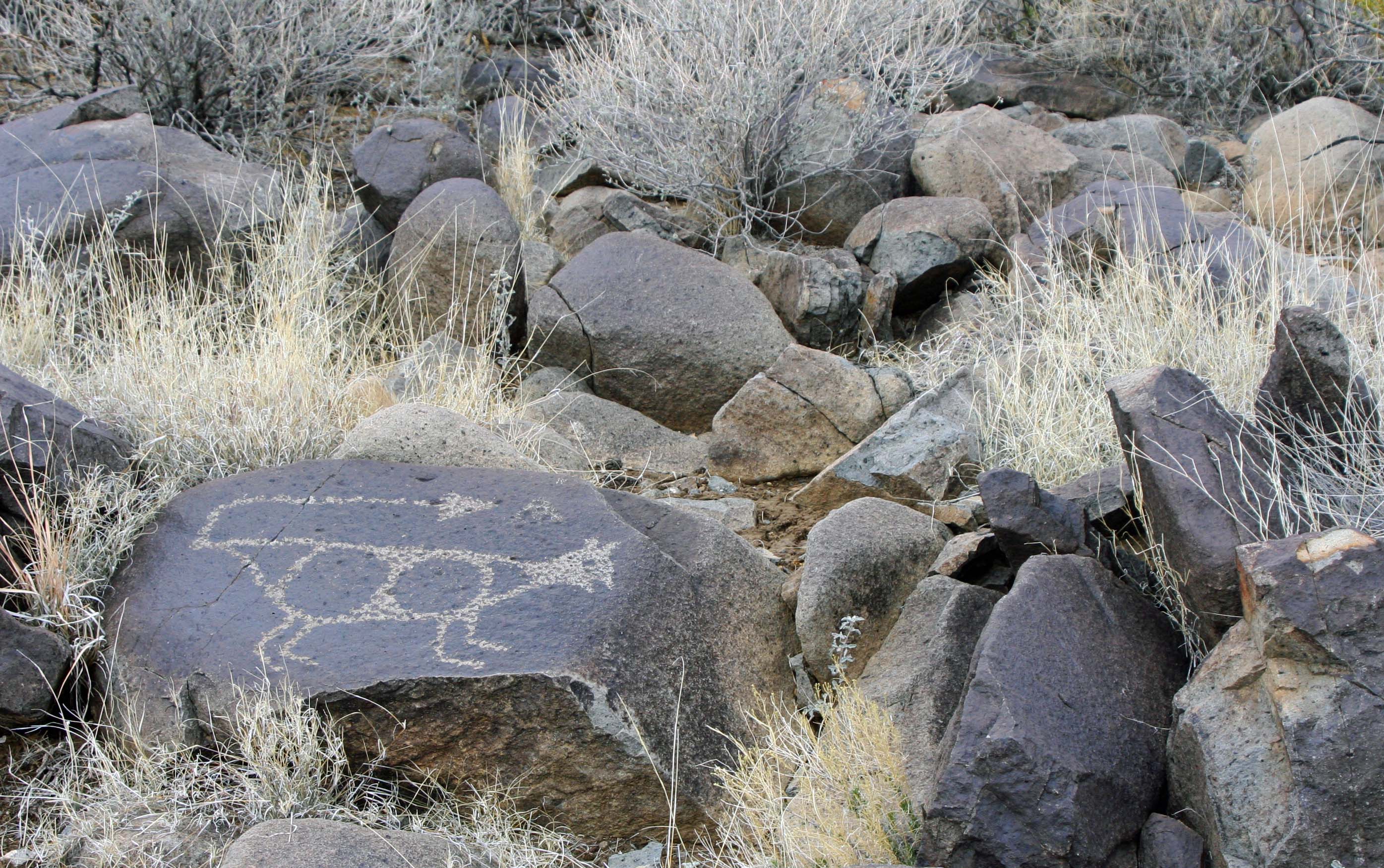
Petroglyph of roadrunner and snake at Three Rivers petroglyph site in southern New Mexico.

A roadrunner and its dinner. This Three Rivers petroglyph shows a roadrunner with one of its favorite meals, a snake.

Possible bird head petroglyph at the Three Rivers Petroglyph site.

Is this a petroglyph of a bird’s head with its beak stretching out to the left? If so, it must be another work of the Rembrandt of the Jornada.

Goose petroglyph at Three Rivers Petroglyph site in southern New Mexico.

This petroglyph strikes me as either a duck or goose. Note how the artist has taken advantage of the contour of the rock.

Turkey petroglyph at Three Rivers Petroglyph site.

A quickly pecked turkey?

Wild turkey on Upper Applegate River in southern Oregon

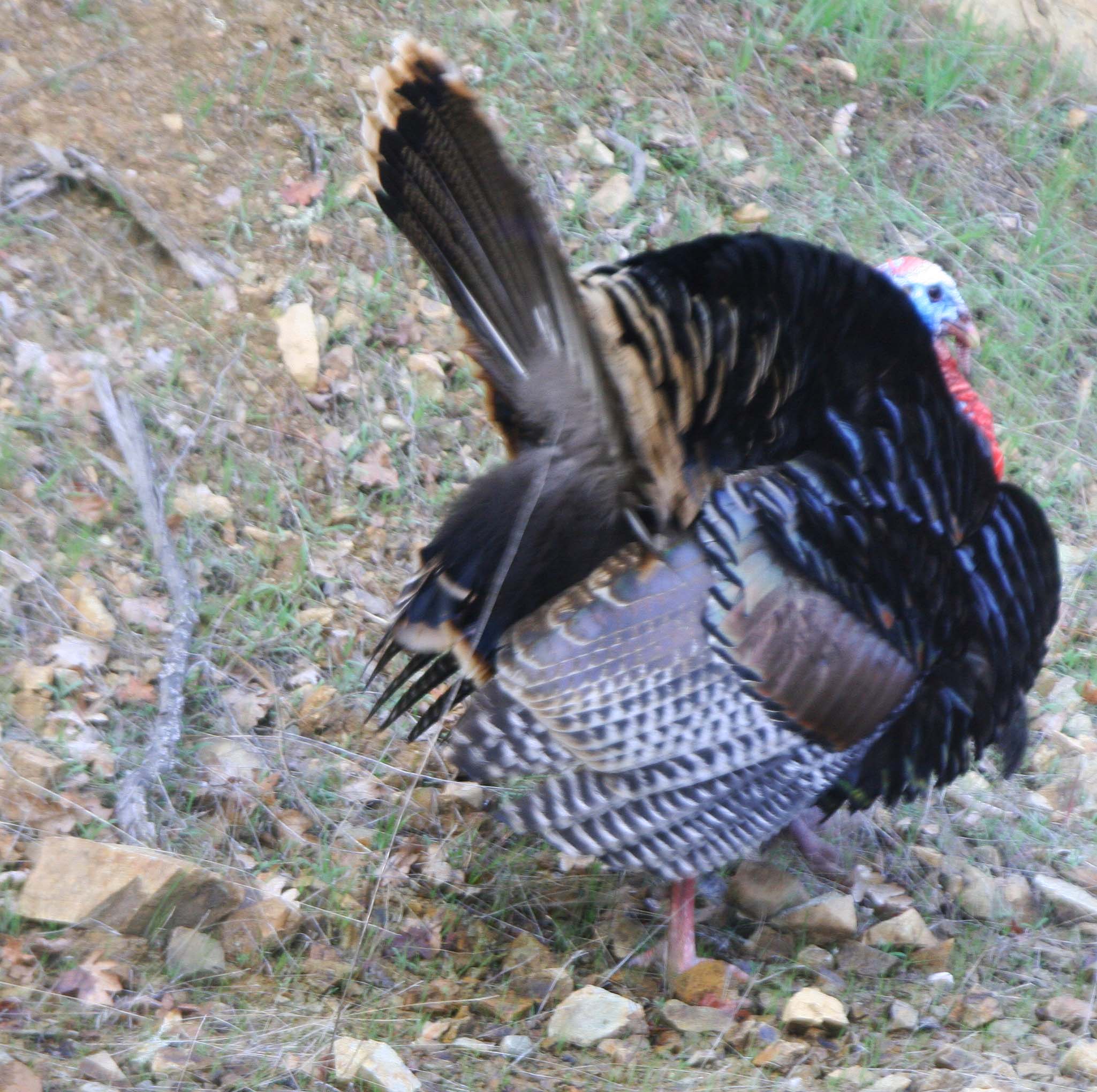
A backyard turkey. I caught this guy strutting his stuff to impress several hens who had gathered in our back yard. They ignored him.

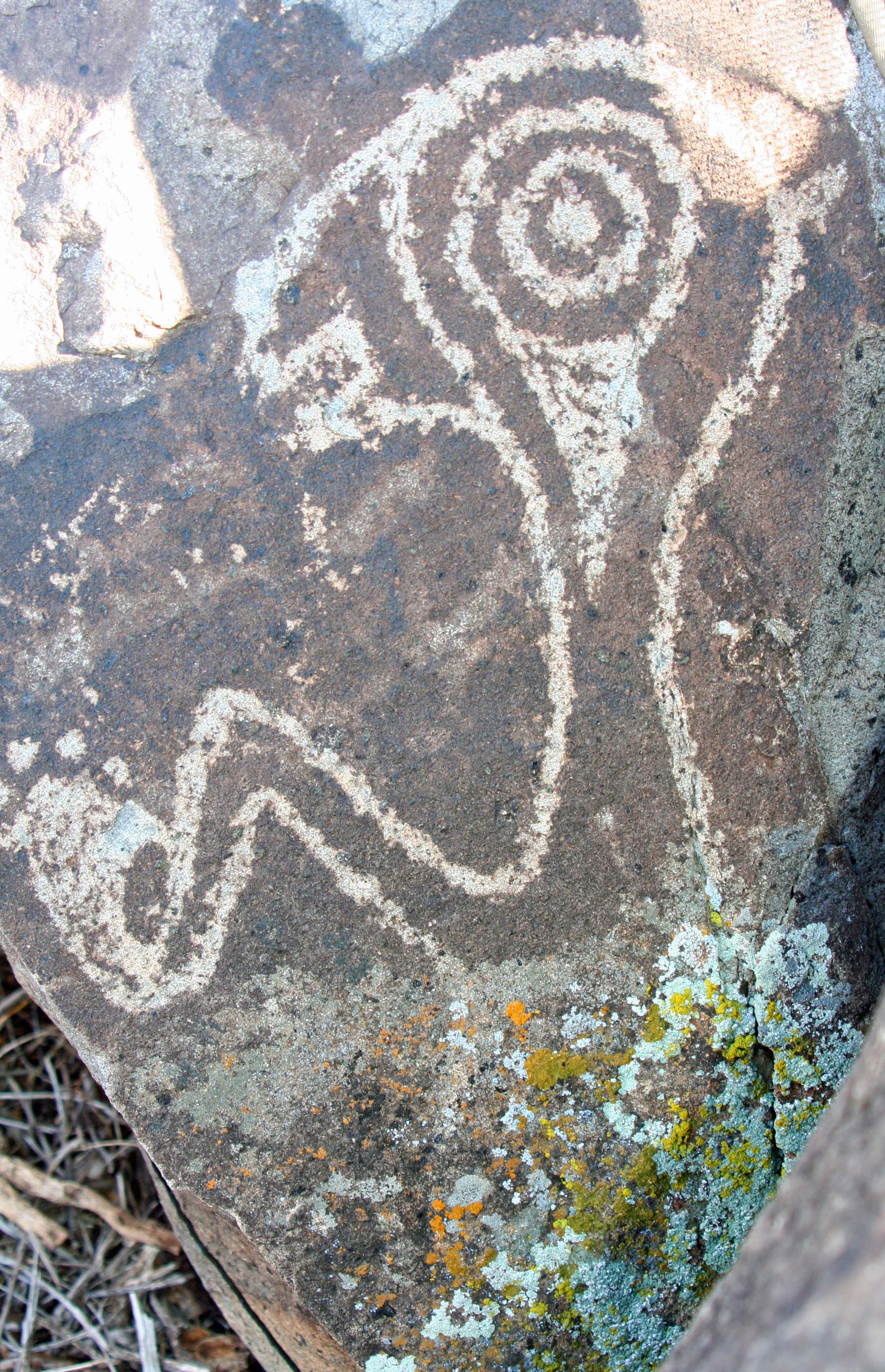
Strange petroglyph from Three Rivers Petroglyph site in Southern New Mexico.

A really weird turkey? The head seems right but the clawed hands are something else. If this is a turkey, he has passed into the realms of the gods. On the other hand, if you have ever had a turkey attack you, as I did when photographing its chicks, this is a close approximation.

NEXT BLOG: What is a whale petroglyph doing in the desert?

Big Horns and Sharp Claws… Animal Petroglyphs at Three Rivers

Bighorn sheep petroglyph with arrows at Three Rivers Petroglyph site in southern New Mexico.

Bighorn sheep were a major source of food for the Jornada Mogollon people of New Mexico and for Native Americans throughout the South West. Animals are often found with arrows sticking out.

Hunting wild animals for meat provided an essential source of food for the majority of mankind’s existence. While the Jornada Mogollon people at the Three Rivers’ Petroglyph site cultivated corn, hunting remained a vital activity.

Success meant learning as much as they could about the animals that inhabited their desert world: where they lived, what they ate, where they drank, and what trails they used were all important.  The Jornada were excellent trackers, able to read in a few scuffed tracks the story of who had wandered down a trail and what they were doing.

Petroglyph bear track at Thrre Rivers Petroglyph site in southern New Mexico.

A number of petroglyph tracks are found at the Three Rivers site. This big fellow is a bear.

Human foot print found at Three Rivers Petroglyph site in Southern New Mexico.

A human footprint for comparison. Human hand and foot print petroglyphs are relatively common.

Possible petroglyph of cougar print with claws extended at Three Rivers Petroglyph site.

I am not sure what these wicked claws belonged to but possibly it was a cougar with its claws extended.

There was a close, almost sacred, relationship between the hunter and the hunted. Clans assumed animal names and young people went on vision quests to discover which animal might serve as personal guides. Shaman put on animal cloaks and assumed animal personalities. The gods and the spirits of animals were both honored. (It helped assure they would be around at dinner time.)

Some animals were more important than others. Bighorn sheep were a primary food source throughout the South West. Cougars and bears were large predators demanding respect.  The arrival of Spaniards in the 1500s meant the arrival of horses.

Not surprisingly, the petroglyphs found at Three Rivers reflect the importance of the various animals in the life of the Jornada. We discovered numerous bighorn sheep and an unexpected number of cougars. There were also horses, rabbits and coyotes. Horses provided a radical new form of transportation; coyotes were known for their trickery; and rabbits provided an easy food supply.

I took this photo of a bighorn sheep near Lake Mead in southern Nevada. He had come down from the mountains to take advantage of the green grass of a small park.

I took this photo of a bighorn sheep near Lake Mead in southern Nevada. He had come down from the mountains to take advantage of the green grass of a small park. His arch rival was his reflection in an aluminum garage door. The owner had a hard time convincing the insurance agent that his door had been smashed in by the enraged animal.

Bighorn sheep petroglyph founf at Three Rivers Petroglyph site in southern New Mexico.

Similar horns are displayed on this Three Rivers Petroglyph. Note: It is not unusual to find geometric designs incorporated into animal petroglyphs.

Bighorn sheep petroglyph at Three Rivers Petroglyph site in southern New Mexico.

I thought this bighorn sheep petroglyph at Three Rivers was a sophisticated work of art. Did the Jornada have their Rembrandts?

Mountain lion photo

Peggy and I took our grandkids to a wildlife sanctuary last week and found this curious mountain lion that sniffed our five-year old. Nice kitty.

Mountain lion petroglyph found at Three Rivers Petroglyph site in southern New Mexico.

Peggy and I found a number of mountain lion petroglyphs at Three Rivers, which suggested that the cougar played an important role in the lives of the Jornada people.

Another mountain lion petroglyph. As to why the big cats have there tail extended over their backs, I don't have a clue. Any ideas?

Another mountain lion petroglyph. As to why the big cats have their tails extended over their backs, I don’t have a clue. Any ideas?

I used this petroglyph in my last blog. This photo provides an interesting view of the whole rock and the other petroglyphs.

I used this petroglyph in my last blog. This photo provides an interesting view of the whole rock.

Photo of Coyote in Death Valley near Scotty's Castle.
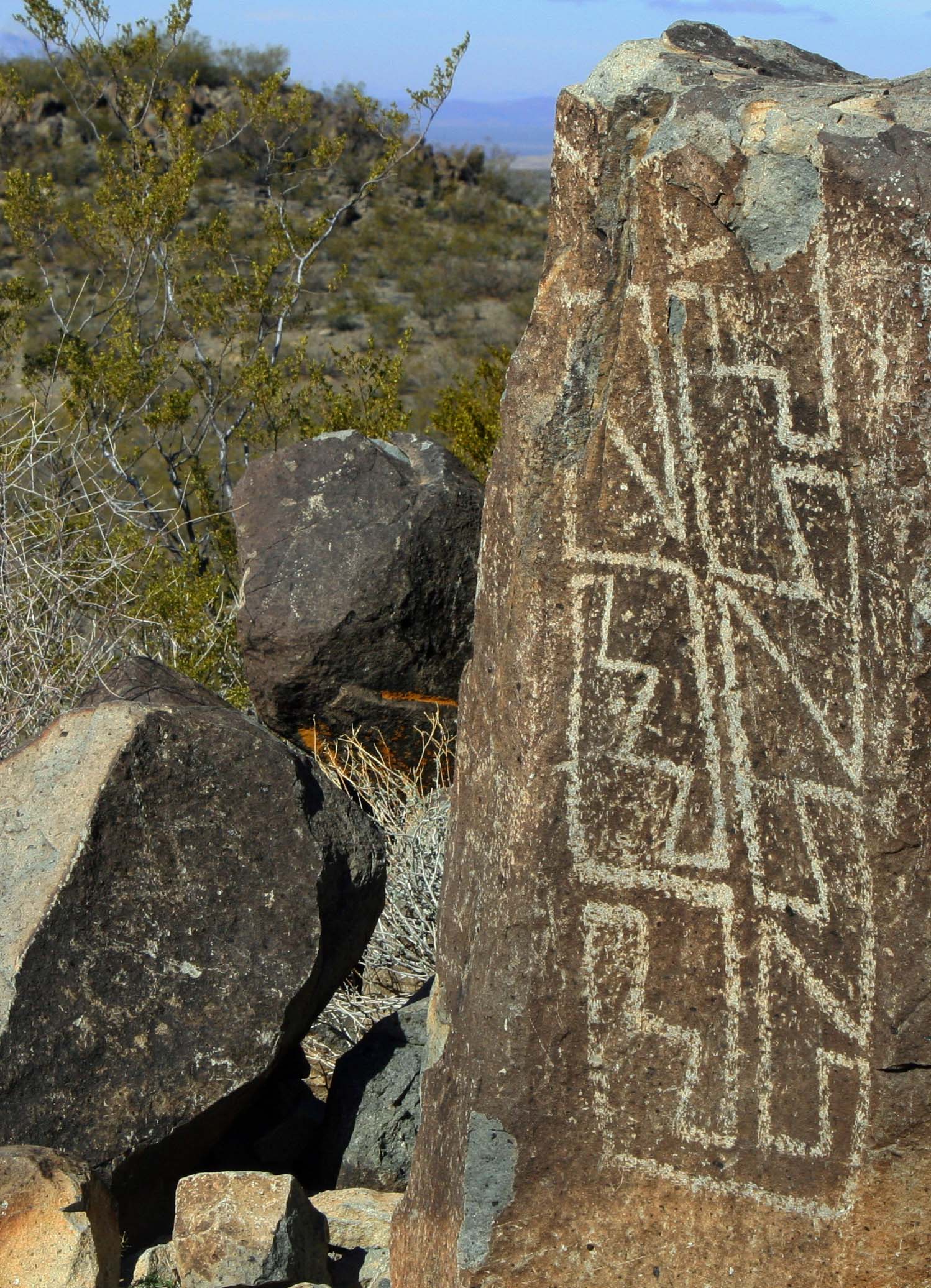
Coyote played an important role in Native American mythology as a Trickster. I took this photo in Death Valley.

Petroglyph of coyote howling at the moon found in the Three Rivers Petroglyph site.

While this petroglyph wasn’t as clear as many we found at Three Rivers, I am including it because the coyote is howling at the moon. Every gift shop in the South West will sell at least one item with a coyote howling at the moon.

The Spanish introduced the modern horse into North America six centuries ago, an act which had a major impact on the culture of Native Americans. I've been waiting for six months to reintroduce this Scotland pony into my blog.

The Spanish introduced the modern horse into North America six centuries ago, an act which had a major impact on the culture of Native Americans. I’ve been waiting for six months to reintroduce this Scotland pony into my blog. I snapped its picture two years ago when it ran up to greet me in the Scottish lowlands.

Horse petroglyph from Three Rivers Petroglyph site in southern New Mexico.

We found three horse petroglyphs that seemed to have a blanket with geometric designs draped over their bodies.

Rabbit petroglyph at Three Rivers Petroglyph site in southern New Mexico

I’ll conclude with what I felt was a good representation of a jack rabbit… until I noticed the possible tail arching over its back. (grin)

The next blog is for the birds.

A small, nondescript bird pecks away on a rock.

A small, nondescript bird roosts on a rock at Three Rivers Petroglyph site.

Strange Gods… The Rock Art of Three Rivers Petroglyph Site

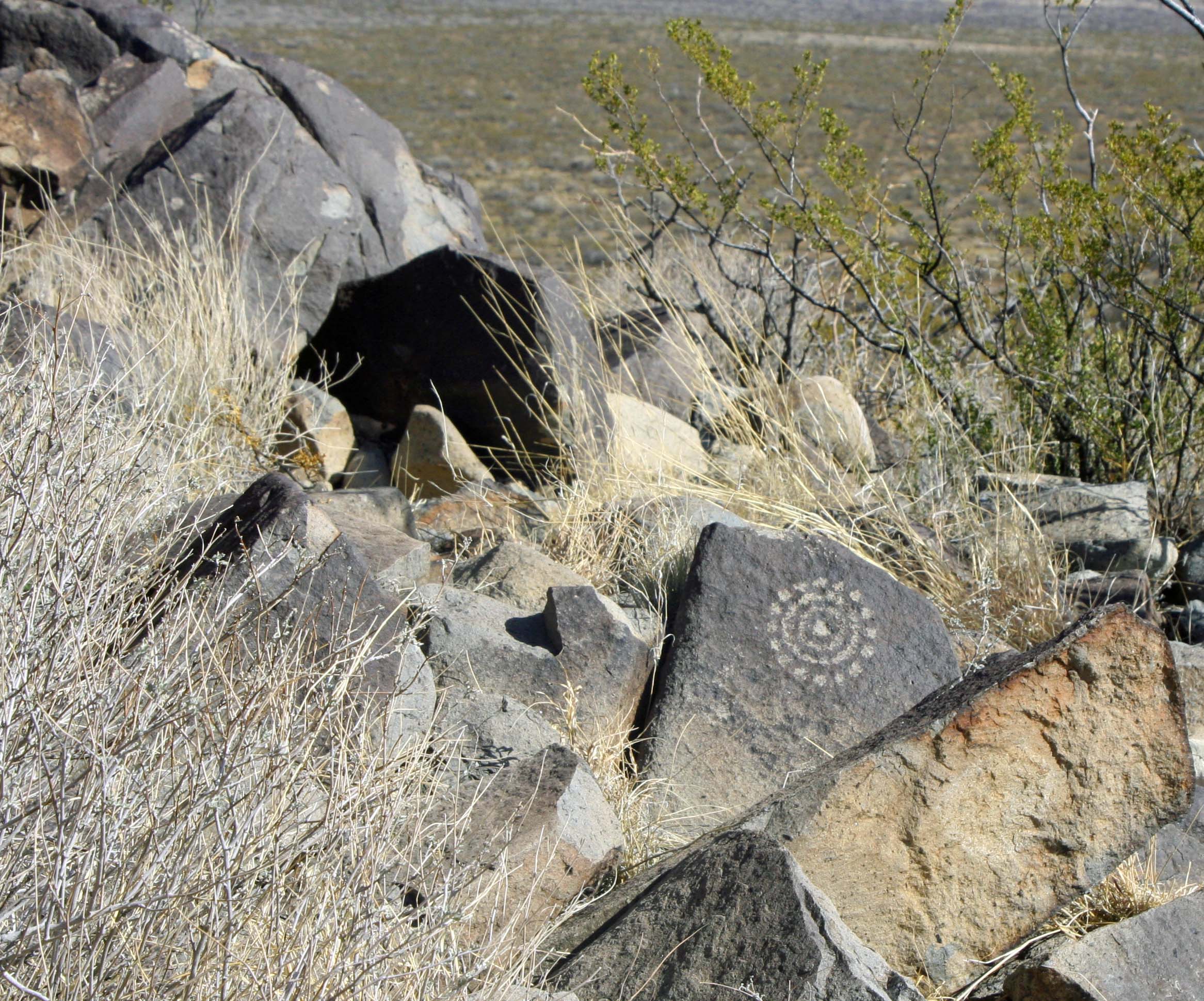
Petroglyph in Three Rivers Petroglyph site of southern New Mexico.

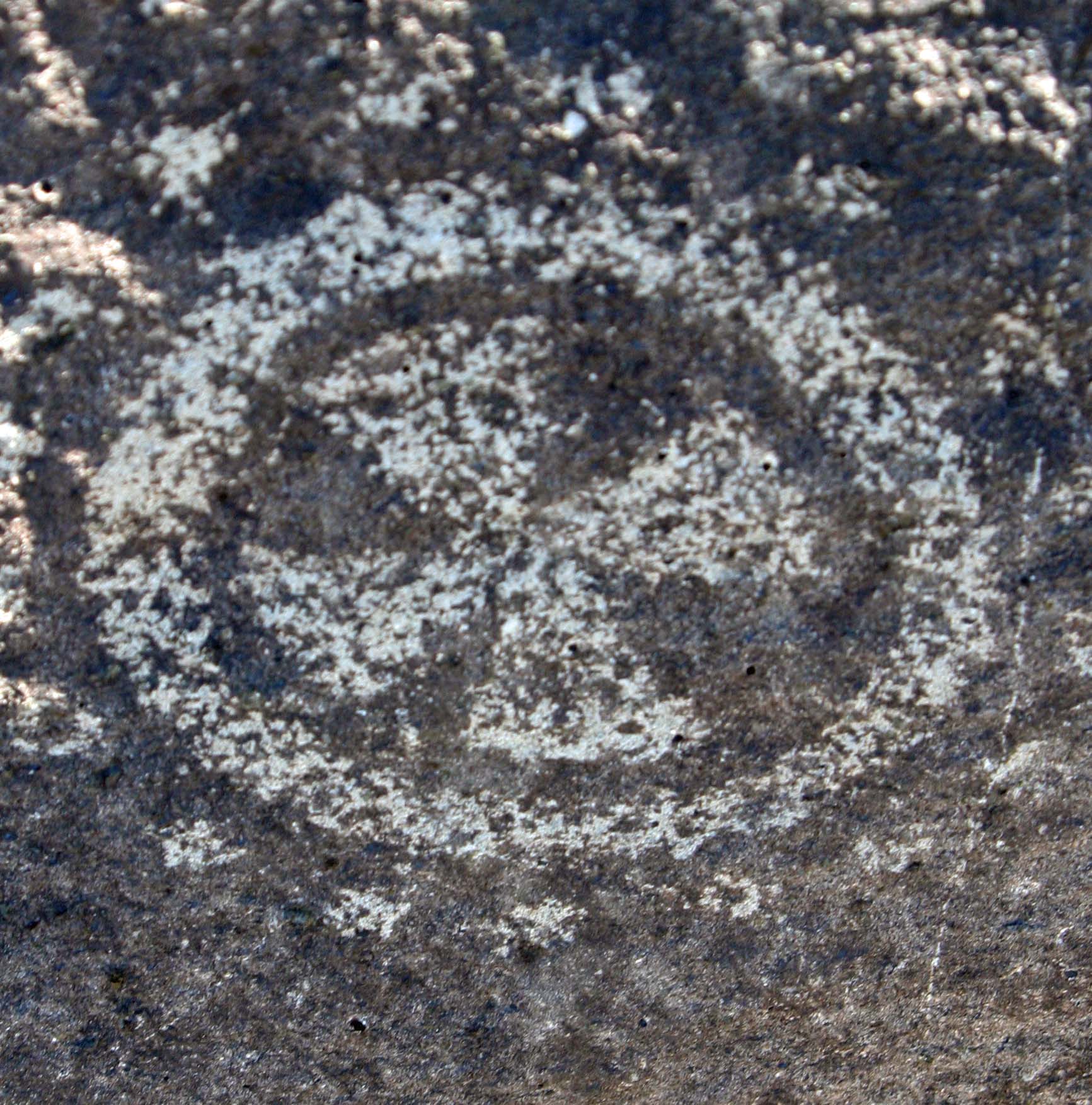
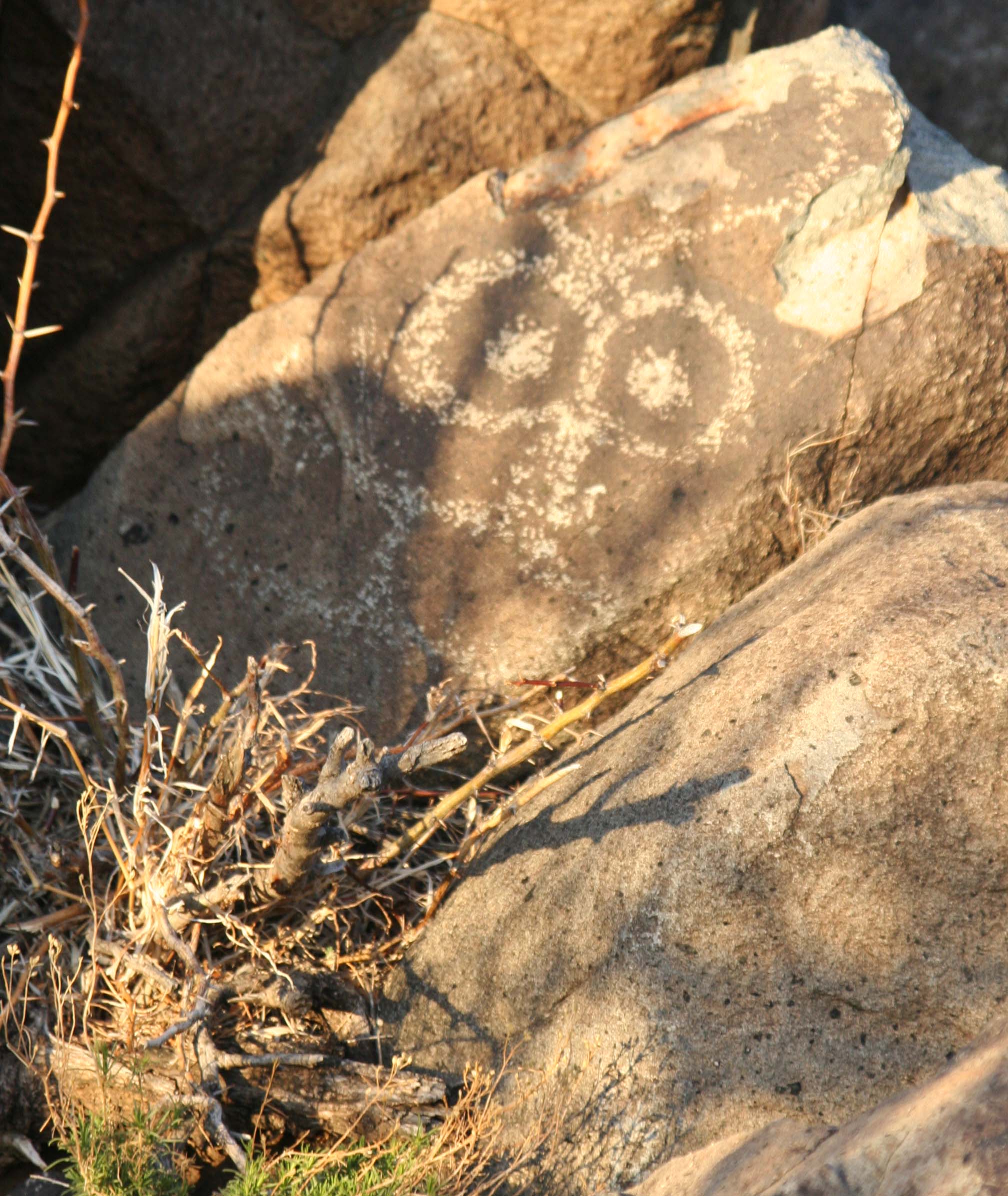
This is one of my favorite glyphs from the Three Rivers Petroglyph site in Southern New Mexico– but what does it mean? I’ll go out on the proverbial limb. My guess is it represents a drug induced shamanistic vision. There is some thought that the circle with dots represents Datura, a powerful hallucinogen (and also a favorite flower subject of Georgia O’Keeffe).

A lot of guessing takes place in determining the meaning of rock art. Present day Native American myths and rituals provide some clues. Others can be deduced from the petroglyph itself. An antelope filled full of arrows relates to hunting, but is it a record of an actual event or a hopeful prediction of the future?

Today I am featuring petroglyphs from the Three Rivers site that represent humans and gods. Some can seem quite strange while the one below seems… quite human.

A realistic portrayal of a human found at the Three Rivers Petroglyph site in southern New Mexico.

This is the most realistic portrayal of a human we found among the Three River Petroglyphs. Note the ear rings.

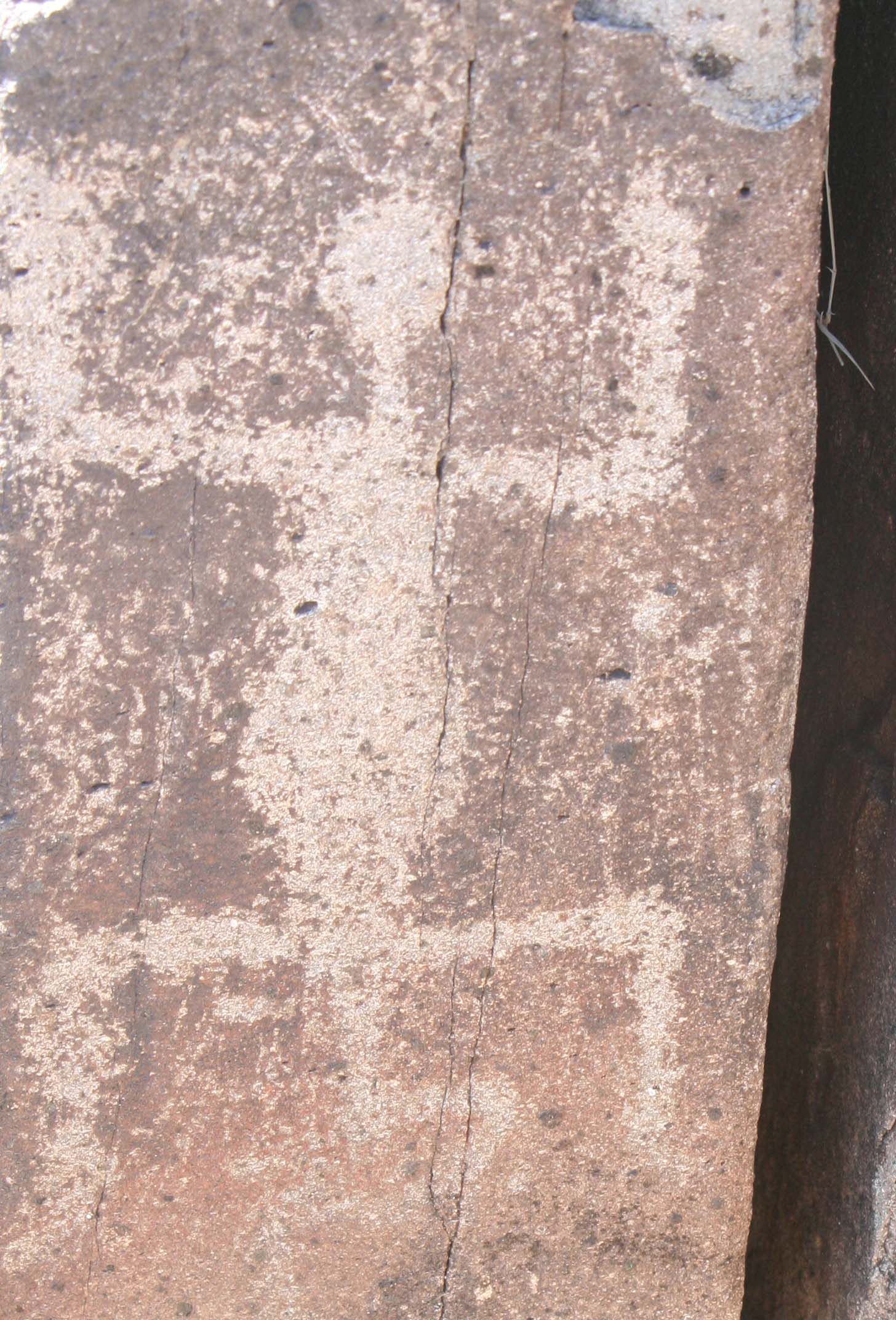
Petroglyph at Three Rivers Petroglyph site in southern New Mexico.

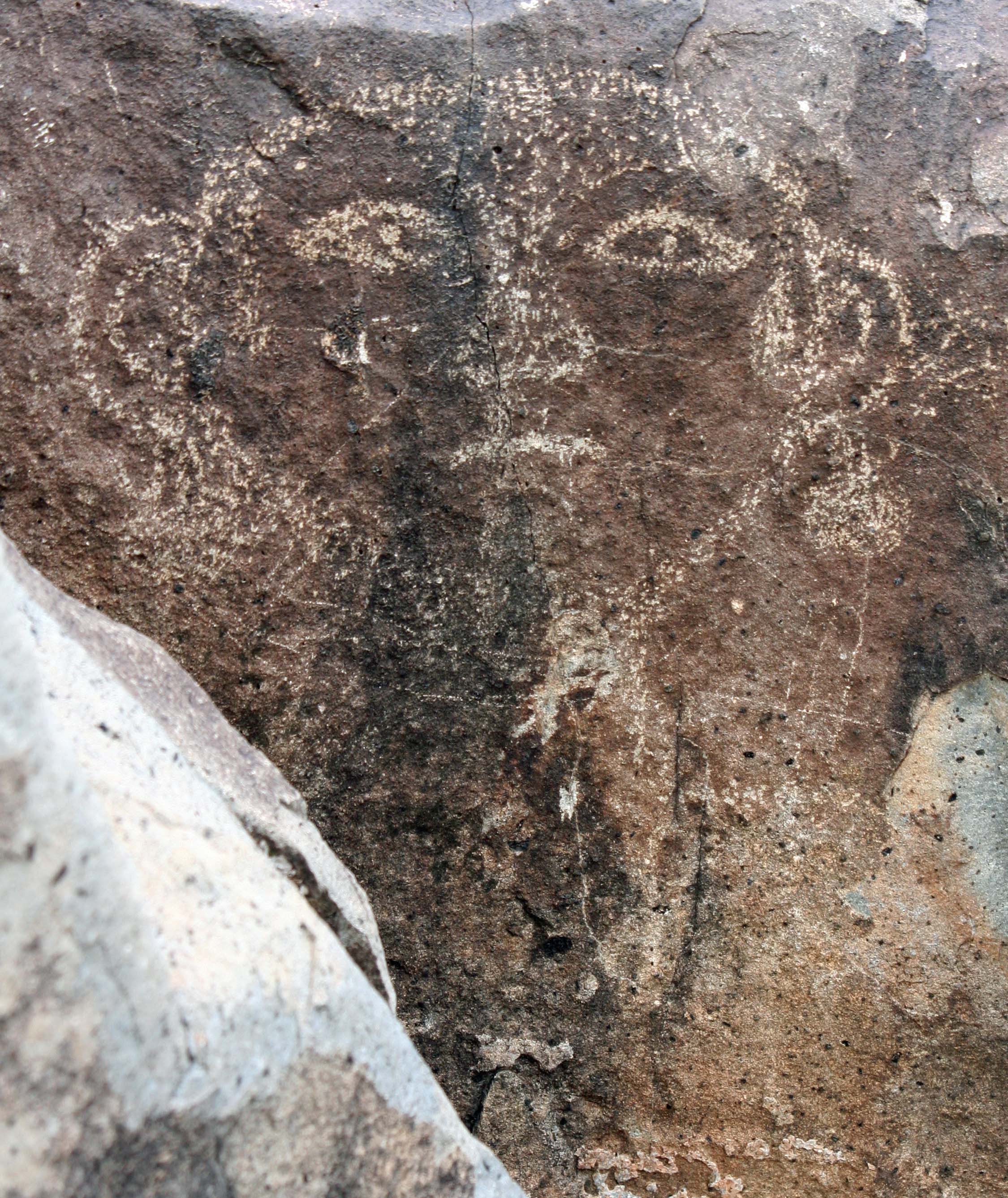
I also found this triangular face fascinating. Many of the petroglyphs at Three Rivers take advantage of the rocks natural features. This one uses the ridge to set off the nose and eyes, and cracks to outline the chin.

Petroglyph at Three Rivers Petroglyph site in Southern New Mexico.

According to Alex Patterson in his book, Rock Art Symbols, this is either the Mother of Animals or a woman waiting for her honey. It could be she is having a baby. Check out her expression. Two different versions are below.

Petroglyph at Three Rivers Petroglyph site in southern New Mexico.

Another possible version of Mother of Animals at Three Rivers Petroglyph site.

Petroglyph at Three Rivers Petroglyph site in southern New Mexico.

And a third.

Three Rivers Petroglyph.

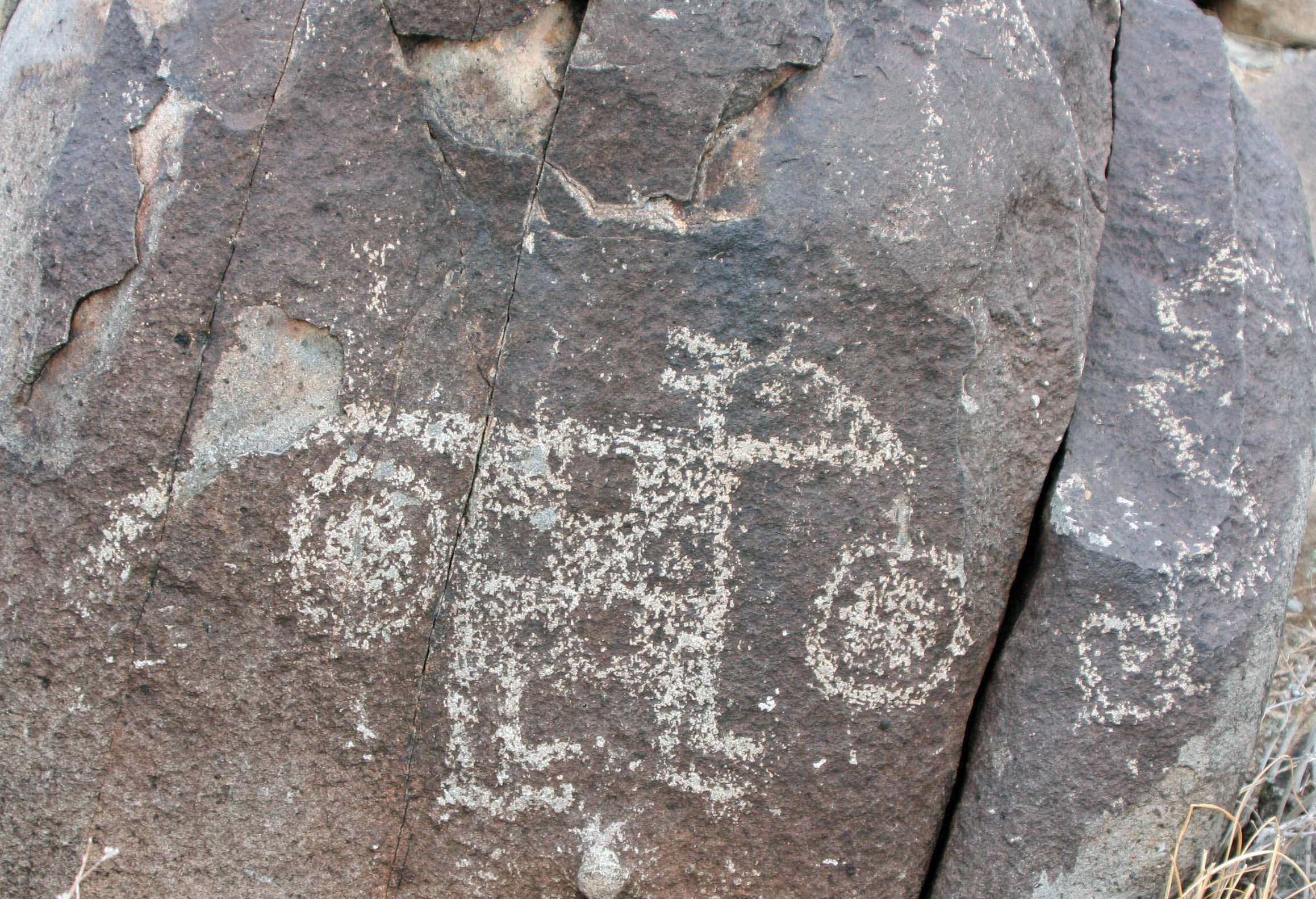
I introduced a close up of this character in my last blog. Here he is located in his rock setting. I am thinking “boo!”

Petroglyph from Three Rivers Petroglyph site in southern New Mexico.

Talk about scary, this guy qualifies. Big eyes and big, sharp teeth

Three Rivers petroglyph.

Petroglyphs can be quite graphic in their portrayals…

Petroglyph from Three Rivers Petroglyph site in southern New Mexico.

…And abstract. Geometric patterns are often included.

You can tell your god or someone's status in society by the headdress he or she wears. The plant on the left may be corn.

You can tell your god by the headdress he or she wears. The plant may be corn.

Petroglyph from Three Rivers Petroglyph site in southern New Mexico.

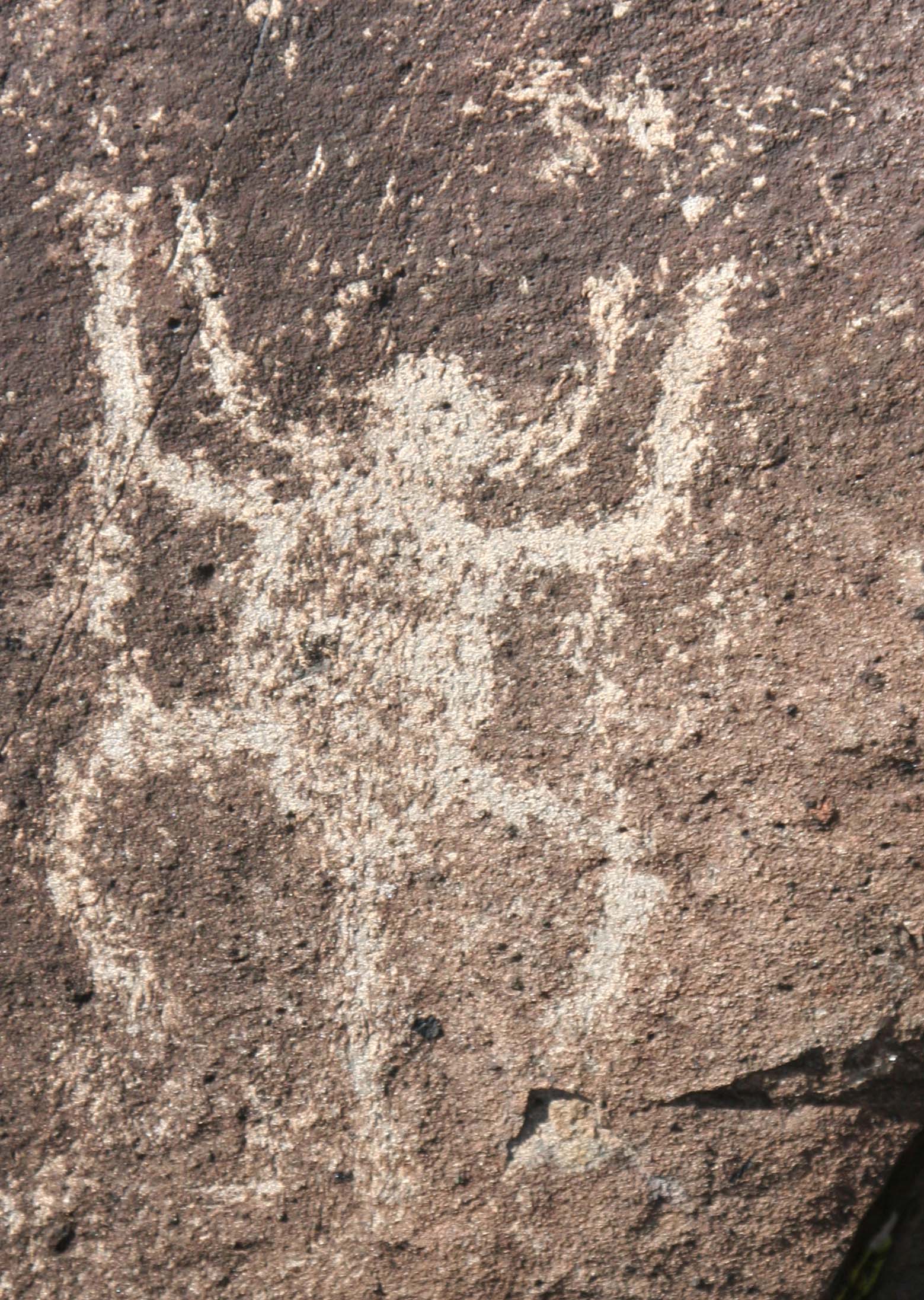
I’ll conclude this blog with this spiky haired character who appears to be waving bye-bye.

NEXT BLOG: We will enter into the petroglyph animal kingdom of Three Rivers.

Mountain lion petroglyph at Three Rivers Petroglyph site in southern New Mexico.

I check out a mountain lion petroglyph.

New Mexico’s Three Rivers Petroglyph Site… Where Art Rocks

Sacramento Mountains of New Mexico.

A layer of clouds stretching along the Sacramento Mountains adds beauty and mystery to the Three Rivers Petroglyph site. It is easy to understand why Native Americans chose the area for their rock art.

This marks the beginning of a new series where we leave the beautiful but crowded cities of Europe to visit the lonely, wide-open spaces of the American and Canadian west. Our journey will take us from New Mexico’s northern Chihuahuan desert to Alaska’s remote Kodiak Islands.

For the next three weeks we will explore the mystical world of Native American rock art found in the Three Rivers Petroglyph site of southern New Mexico. Afterwards Peggy and I will spend six weeks travelling up the Alaska Highway through British Columbia and the Yukon Territory to Alaska and back.  We will finish off our summer at the celebration known as Burning Man held in Nevada’s Black Rock Desert.

Peggy and I have been visiting rock art sites throughout the Southwestern United States for the past 15 years. The Three Rivers’ site is one of our favorites. Some 21,000 petroglyphs featuring everything from people to bugs are spread out over 50 acres. Created by the Jornada Mogollon people of the Chihuahuan Desert, the glyphs were pecked into rock using stone tools for a period of over 500 years starting in 900 AD.

This is wide-open country set off by dramatic mountains. Within a hundred miles of Three Rivers, Billy the Kid fought in the Lincoln County Wars, Smokey the Bear was found hidden in a tree avoiding a forest fire, bug eyed aliens became synonymous with Roswell, and history was forever changed with the explosion of the world’s first atomic bomb.

I rode through the area on my bicycle as part of my ten thousand mile trek around North America. It’s a long way between pit stops.

Mountains and deserts of Southern new Mexico

What southern New Mexico looks like from a bicycle.

Native Americans often chose special sites for their rock art and it is immediately apparent that the Three Rivers site is special. The words “raw beauty” come to mind. Set on a ridge, the site provides commanding views of the surrounding desert and mountains. Today’s blog will explore the natural beauty of the region. In my next blogs I will feature petroglyphs of people, animals, birds, geometric designs, animal tracks, reptiles, bugs and anything else that caught the fancy of the Jornada people– including a whale and a mysterious ship.

Three Rivers Petroglyph site in southern New Mexico.

Another photo featuring the Sacramento Mountains and clouds from the perspective of the Three Rivers Petroglyph site.

Three Rivers Petroglyph site in southern New Mexico with Sacramento Mountains providing the backdrop.

Native Americans often chose cliff areas such as those on the left for their rock art.

Three Rivers Petroglyph site in southern New Mexico.

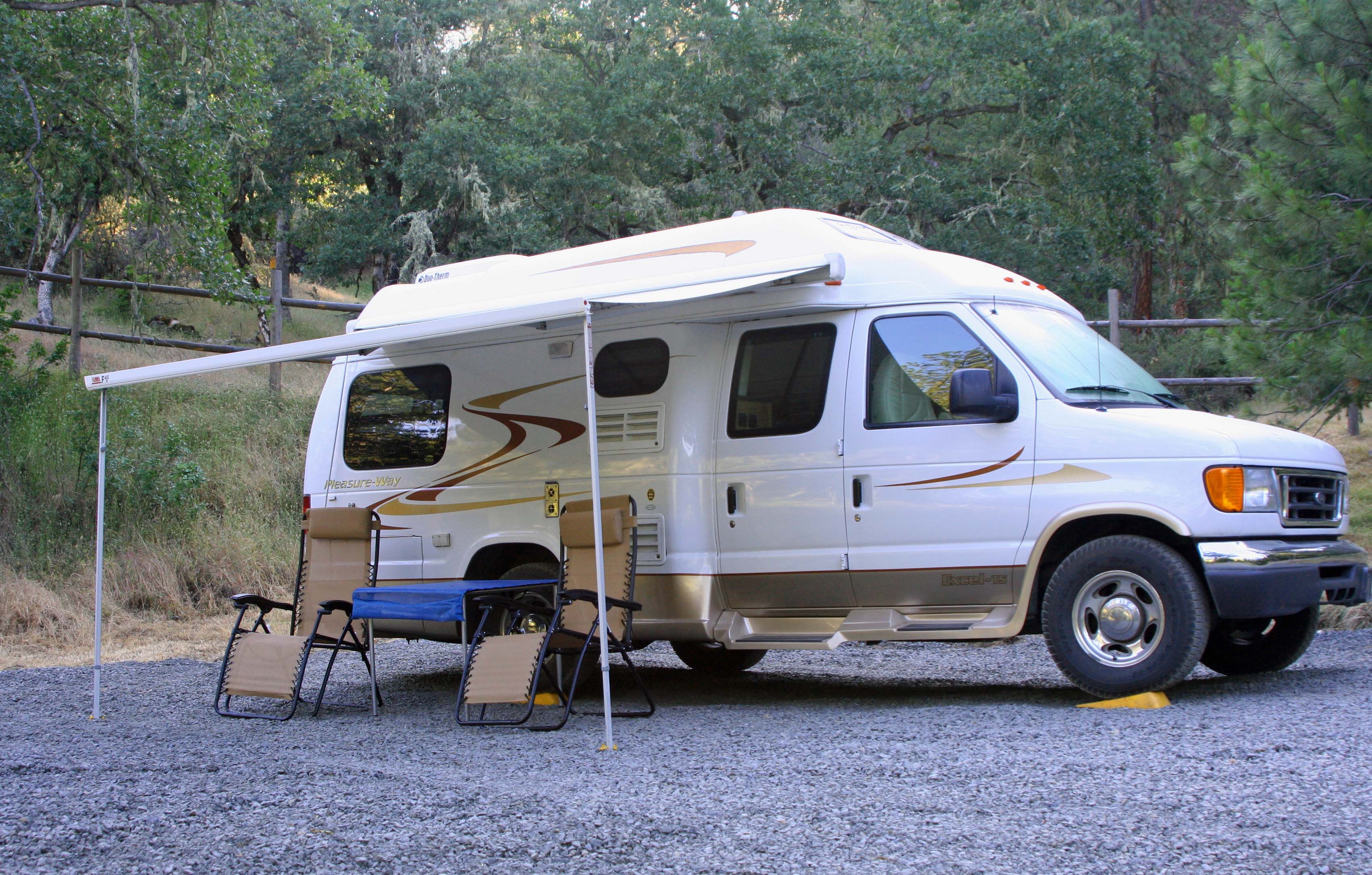
Our van, Quivera, provides a perspective on the region. We took this photo from the ridge where the majority of petroglyphs are located. We pretty much had the site to ourselves during the two days we were there.

Peggy stands on the ridge next to a rock likely to hold petroglyphs. Some glyphs are immediately obvious while others are hidden. Sharp eyes are required.

Peggy stands on the ridge next to a rock likely to hold petroglyphs. Some glyphs are immediately obvious while others are hidden. Sharp eyes are required.

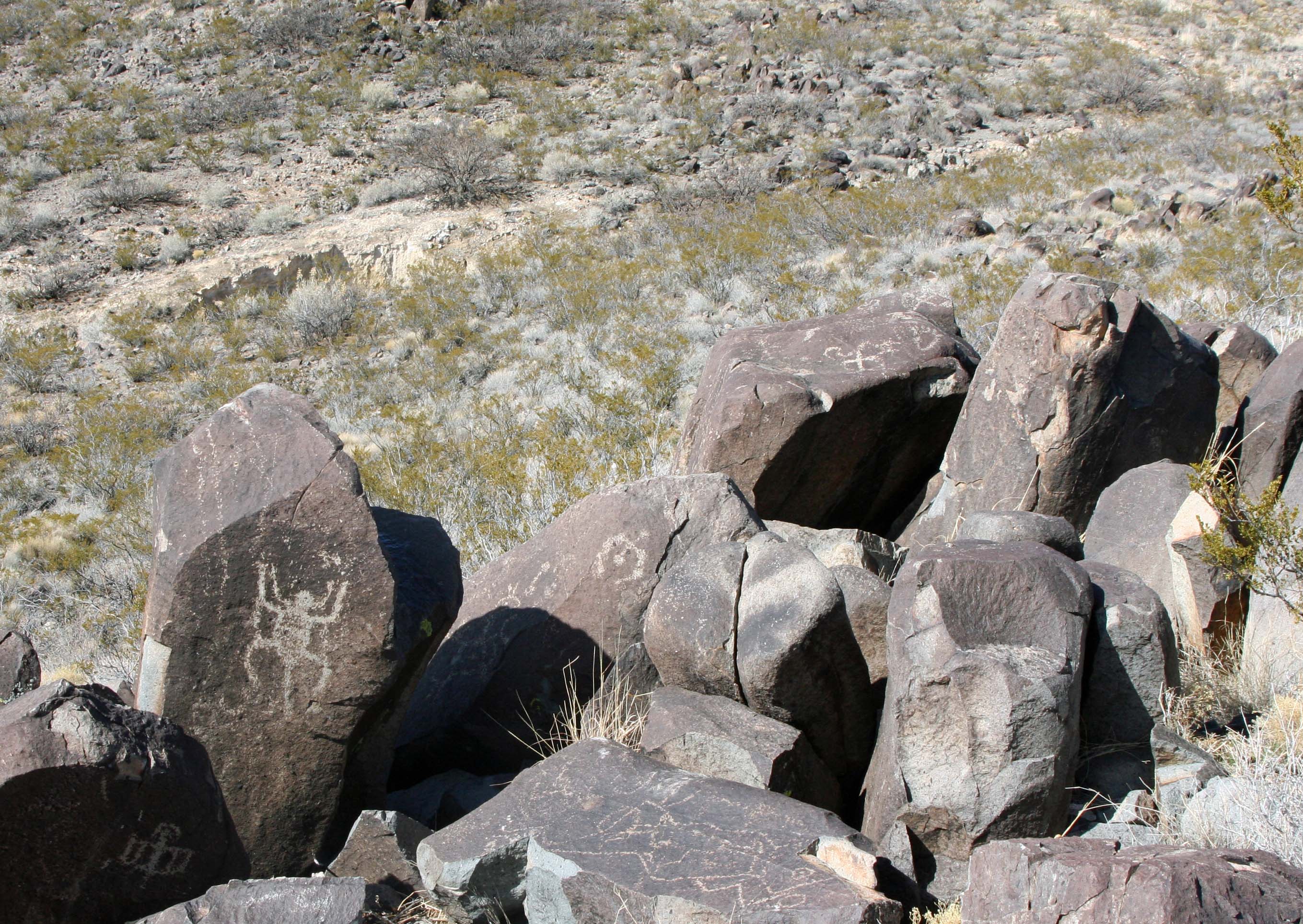
Petroglyphs at Three Rivers Petroglyph site in southern New Mexico.

Faded bear and what may be badger prints are shown on these rocks. Petroglyphs are made by using a stone to peck away the outer layer of rock varnish (a layer of minerals that attaches to the rock over time).

Lichen on rock at Three Rivers Petroglyph site in Southern New Mexico.

We also found the lichens to be quite attractive.

Lizard glyph at Three Rivers Petroglyph site in Southern New Mexico.

Many rocks at Three Rivers are covered with petroglyphs. In addition to the prominent lizard,we found circles, geometric designs, and a possible map on the various faces of this rock.

Evening clouds over the Sacramento Mountains of New Mexico.

Sunset lights up the Sacramento Mountains. I found the contrast created by the cloud layer quite interesting.

NEXT BLOG: I will look at glyphs that feature the Jornada Mogollon people and their gods.

Petroglyph at Three Rivers Petroglyph site in Southern New Mexico

One of the many strange beings we found lurking among the rocks.

Glamorous, Glitzy and Tacky Las Vegas … On the Road

Wandering down the Las Vegas Strip at night can be a jaw-dropping experience. This is the Excalibur Casino, an adult Disneyland.

Wandering down the Las Vegas Strip at night can be a jaw-dropping experience. This is the Excalibur Casino, an adult Disneyland.

Gambling interests in Nevada will make around a billion dollars in profit this month, so it is no surprise they can afford to build the massive pleasure palaces that line Las Vegas Boulevard. A walk down the Strip, as it is known, can be a jaw dropping experience, especially at night. Even McDonald’s has a sparkling sign. A recent article in the Smithsonian Magazine noted that Las Vegas is lit up by over 15,000 miles of neon tubes.

The New York, New York casino. The line snaking across the front of it is a towering roller coaster that adds screams to Las Vegas Boulevard.

The New York, New York Casino. The line snaking across the front of it is a towering roller coaster that adds screams to Las Vegas Boulevard.

New York, New York on the Las Vegas Strip,also features an imposing Statue of Liberty.

New York, New York Casino on the Las Vegas Strip,also features an imposing Statue of Liberty.

Not to be outdone, the Paris Casino features the Eiffel Tower.

Not to be outdone, the Paris Casino features the Eiffel Tower.

The Paris Casino on the Las Vegas Strip.

The Paris Casino on the Las Vegas Strip.

Even McDonalds adds a touch of glitz on the Strip.

Even McDs adds a touch of glitter on the Strip.

A stroll down Las Vegas Boulevard during the day also brings impressive sights, such as this one of the Wynn Hotel and casino.

A stroll down Las Vegas Boulevard during the day also brings impressive sights, such as this one of the Wynn Hotel and Casino.

Wandering through the various casinos can also provide a day's entertainment. The Venetian Casino in Las Vegas features canals, gondolas, and gondoliers who sing. The sky is fake.

Wandering through the various casinos can also provide a day’s entertainment. The Venetian Casino in Las Vegas features canals, gondolas, and gondoliers who sing. The sky is fake.

And there is glamour… some of the world’s top entertainers perform in Las Vegas. We took in Zarkana, the latest acrobatic Cirque du Soleil extravaganza, and two musicals.

Las Vegas been a glitzy kind of place ever since gambling was legalized in Nevada and the first mobsters set up shop in the town during the 40s, 50s and 60s. Those were the days when the Rat Pack roamed the streets and Frank Sinatra introduced John Kennedy to Judith Exner, a mistress the President shared with Mob Boss Sam Giancana.

The excellent Mob Museum in the older part of Las Vegas shares this and many other stories about the history of the mob in America. It is well worth a visit. Peggy and I, along with our friends Ken and Leslie Lake, spent three hours in the museum. We also took advantage of its location to wander down Fremont Street and experience Las Vegas as it once was before the Strip took over.

Among the three floors of displays in the Mob Museum is this electric chair.

Among the three floors of displays in the Mob Museum in Las Vegas is this electric chair.

A trip down Fremont Street is a trip down Memory Lane. At one time, this would have been one of Las Vegas's top casinos.

A trip down Fremont Street is a trip down Memory Lane. At one time, this would have been one of Las Vegas’s top casinos.

I confess to liking the old neon signs of Las Vegas as much as I like the glitzy neon of the strip.

I confess to liking the old neon signs of Las Vegas as much as I like the glitzy neon of the strip.

This old Binion Cadillac is a fitting companion to the neon sign above. The Benion of Binion's Casino was one of the early casino owners with close ties to the mob.

This old Binion Cadillac with its Wild West theme is a fitting companion to the neon horse above. The Binion of Binion’s Casino was one of the early casino owners with close ties to the mob.

In addition to being glamorous and glitzy, Las Vegas can also be tacky. Souvenir shops line the streets. Hustlers push everything from “free” drinks to nude women. People dressed up in dozens of costumes ranging from Bat Man to Sponge Bob and Darth Vader invite you to have photos taken with them… for a fee, of course.

My friend Ken Lake chose to pose with these "show girls" over Sponge Bob. It cost him a couple of bucks. I figured the least I could do was feature him in my blog.

My friend Ken Lake chose to pose with these “show girls” over Sponge Bob. It cost him a couple of bucks. I figured the least I could do was feature him in my blog.

I am not sure this display at the Hilton fits tacky but it was amusing.

I am not sure this display at the Hilton fits tacky but it was amusing.

Peggy, in another life, may have been a palm reader.

Peggy, in another life, may have been a palm reader. Alas Ms. Laurie was out, so Peggy is still wondering about her future.

Peggy also modeled for me in the pawn shop where the popular TV program Pawn Stars is filmed.

Peggy also modeled for me in the pawn shop where the popular TV program Pawn Stars is filmed.

I've saved my last two photos for those of you who have clown phobias. This guy is outside the Circus Circus Casino.

I’ve saved my last two photos for those of you who have clown phobias. This guy is outside the Circus Circus Casino.

We were walking back to our hotel one evening when I turned around and the Circus Circus clown was staring at us over a building.

We were walking back to our hotel one evening when I turned around and the Circus Circus clown was staring at us over a building. Does evil fit?

NEXT BLOG: I leave Las Vegas and return to my tour of Mediterranean Ports. Venice is up next.


Beauty vs. Glitz: A Break from Las Vegas at Red Rock Canyon… On the Road

Red Rock Canyon with its beauty and silence is just a few minutes a away from Las Vegas.

Red Rock Canyon with its beauty and silence is just a few minutes away from Las Vegas.

I was going to blog about glitzy Las Vegas today but we took a detour. Red Rock Canyon National Conservation Area is a few miles to the west of the Strip and it’s billion dollar pleasure palaces. Nothing could provide a greater contrast. Glitz and noise are replaced by beauty and silence. And, unlike Las Vegas, the park is not dedicated to separating you from your money. I could make the $7 dollar per vehicle entrance fee disappear into a video poker machine faster than it took the park ranger to collect it.

The Bureau of Land Management (BLM) Park features one of the most impressive visitor centers I have seen in my decades of visiting State and National Parks across the United States.

I took this desert tortoise photo at the Visitor Center for the Red Rock Canyon National Conservation Area.

I took this desert tortoise photo at the Visitor Center for the Red Rock Canyon National Conservation Area.

This human size silver lizard was one of several sculptures at the Red Canyon Visitors' Center.

This human size silver lizard was one of several sculptures at the Red Canyon Visitors’ Center.

Peggy is standing next to a sculpture resenting air.

Peggy is standing next to a sculpture representing air. Note the rabbit ears in the background.

Ken Lake, dressed up in his SF Giants memorabilia, demonstrates the proper se of the rabbit ears.

Ken Lake, dressed up in his SF Giants memorabilia, demonstrates the proper use of the rabbit ears.

We spent an hour with our friends Ken and Leslie Lake checking out the Visitor Center and then another three hours on a leisurely tour of the 13-mile drive through the park. We could have easily spent all day had we taken advantage of the numerous trails along the way.

A view of the mountains and their distinctive ribbon of red from the Red Rock Canyon Visitors's Center.

A view of the mountains and their distinctive ribbon of red from the Red Rock Canyon Visitor’s Center. (Photo by Peggy Mekemson)

Mnt View 2P

Another view of the mountains in Red Rock Canyon taken by Peggy.

I liked the contrasting rock colors provided by this photo on our 13 mile drive through Red Rock Canyon.

I liked the contrasting rock colors provided by this photo on our 13 mile drive through Red Rock Canyon.

The erosive forces of wind and water were at work here. (Photo by Peggy Mekemson)

The erosive forces of wind and water were at work here. (Photo by Peggy Mekemson)

Peggy captured this jumble of rocks which reminded me of Bryce Canyon.

Peggy captured this jumble of highly eroded rocks, which reminded me of Bryce Canyon.

Numerous trails and canyons along the way invited further exploration. Both springs and Indian Rock Art are found hidden away in the canyons. Next time...

Numerous trails and canyons along the way invited further exploration. Both springs and Indian Rock Art are found hidden away in the canyons. Next time…

NEXT BLOG: I will do the blog on Las Vegas glitz that I was going to do today.

A True Family Ghost Story… Halloween Tales I

On November 15, 1777, the British lobbed 1000 cannonballs per hour into the tiny Fort Mifflin in an all out effort to resupply British troops in Philadelphia. Four of my ancestors fought in the battle and two died heroically. Did they become ghosts?

Do you believe in ghosts?

With Halloween two days away I decided it is time to get into the spirit of the season and post two family ghost stories that involved me: the first took place at Fort Mifflin near Philadelphia; the second in Scotland. They are both true. I will return to my journey down the Colorado River on Friday.

Fort Mifflin

It was the week before Halloween and I was on a ghost hunt. The eerie creatures are known to hang out at Fort Mifflin, which is located next to Philadelphia International Airport on the Delaware River. It’s one of the hottest ghost watching spots in America and has been featured on the popular TV series, “Ghost Hunters.”

A little background is necessary.

In the fall of 1777, 234 years ago, all that stood between the British and the likely defeat of the American Revolution was the small Fort Mifflin on the Delaware River. It is a chapter in American History that is little known and rarely told.

For over a month, the fort had kept the mighty British Navy from resupplying General Howe at Philadelphia. It was a valiant effort that kept Howe from pursuing George Washington and likely defeating him, thus ending the war.

On the morning of November 15th, five British Warships including the sixty-four-gun Flagship Somerset appeared out of the mist below the fort. Of equal, if not more concern, the British had taken advantage of a high flood tide and pulled the converted and armed East Indian merchant ship Vigilant and the gun-sloop Fury within pistol range of Mifflin’s northwest corner. A number of land batteries also had cannons pointed at the fort. (Fort Mifflin had a total of 10 cannons.)

This model provides an overview of where the British Men-of-War were located in relation to Fort Mifflin. Andrew and James Mekemson were part of the artillery company protecting the wall under the guns of the two ships on the upper left hand corner.

Looking out from the lawn in front of Fort Mifflin, the barge is in the approximate location of the British Flagship Somerset.

The Vigilant was so closed to the wall that British Marines positioned in the masts could fire pistols down at my ancestors who were manning the American cannons.

As the sun rose, the ships and land batteries opened fire in a bombardment that sent over 1000 cannonballs per hour crashing into the fort. It was the heaviest naval bombardment of the Revolutionary War.

Joseph Plumb Martin, a young private from Massachusetts, was there during the battle and captured the sheer terror of the experience some years later in his book Ordinary Courage. “They mowed us down like corn stalks,” he reported.

At the height of the bombardment a decision was made to hoist a signal and request help from the galleys and floating batteries above the fort. A volunteer was requested to climb up the flagpole with the signal flag as the cannonballs hurtled in from all directions.

Fort Mifflin’s modern flagpole.

Joseph Plumb Martin had a vivid memory of the event. “…a sergeant of the artillery offered himself; he accordingly ascended to the round top and pulled down the (fort’s) flag to affix the signal flag to the halyard. The enemy, thinking we had struck (surrendered), ceased firing in every direction and cheered.”

“Up with the Flag!” was the cry from our officers in every part of the fort. The flag was accordingly hoisted and the firing was immediately renewed. The sergeant then came down and had not gone a half-rod from the foot of the staff when he was cut in two by a cannon shot.”

The sergeant who climbed up the flagpole was my ancestor, Andrew Mekemson. His brother James was also killed during the engagement. Two other brothers, stationed on the Floating Battery Putnam, also fought in the battle. I figured if there were ghosts at the fort, they might very well be relatives.

Since Fort Mifflin offers ghost tours, Peggy and I signed up for a nighttime tour by lantern.

We decided to do a reconnaissance during daylight hours but a police vehicle blocked the road. A dozen or so media crews were pointing their cameras into the airport at a large UPS cargo plane. It had just flown in from Yemen and was being searched for ink cartridge bombs. We were caught in the midst of a “credible terrorist threat” as President Obama described it.

Ghosts can’t be nearly as scary… can they?

By 6:30 the police car had moved but the TV crews were still on watch. We wound our way through the circus. Dusk had arrived at the Fort.  The tour was scheduled to start as soon as it is fully dark. Make that pitch black; there was no moon.

Our guide gathered us. His lantern immediately blew out. “It’s only the wind,” he explained. “I don’t believe in ghosts. I don’t hunt them and they don’t hunt me.”

His disclaimer comes with a ‘but.’ He works at the Fort, and occasionally ‘things’ happen. There are unexplained footsteps on stairs. Doors close and latch on their own. Voices are heard in the next room. A woman screams like she is being murdered. The police are called but can’t find anyone, or thing. A man walking on the rampart disappears into thin air.

Our guide relates story after story as we make our way through the candle lit buildings of the fort. Other staff, volunteers and visitors have also experienced strange phenomena. More than one visitor has left on the run and even the guide has packed up and gone home on occasion.

Our guide was spending the night in the room at the top of the stairs when he heard footsteps coming up the stairs. He opened the door and no one was there. Next he heard voices coming from the room next to him. He checked. No one was there. He packed up and went home.

We arrived at the Fort’s ammunition magazine, a bush covered hill that resembled an ancient burial mound. A bright hurricane torch outlined the dim opening. We entered and walked down a narrow, dimly lit corridor that opened out to a large, arched bunker. A single candle created dancing shadows on the far wall.

The grave-like ammunition magazine where visitors encountered the well-informed guide dressed as a Revolutionary soldier and where Peggy and I had our ghostly experience.

“I’ve never felt anything in here,” the tour leader related. “It’s dead space,” he quips and repeats himself in case we missed his humor. For others, the story has been different. A group tourists reported on encountering a wonderful guide in the bunker dressed as a Revolutionary soldier. He vividly described the horrendous battle that took place on November 15, 1777. The Fort had no such guide…

I stared hard into the corner where he supposedly stood, trying to create something out of nothing. But there were only the dancing shadows. Peggy tried to take a photo but the camera froze and refused to work. As she struggled with it, the last of our tour group disappeared down the narrow corridor, leaving us alone with the flickering candle.

We hurried after the group. There was no one outside the magazine, only the glowing torch and the dark night. “I saw them heading down a side corridor,” Peggy said. With more than a little reluctance, we dutifully trooped back inside. Peggy’s corridor is a bricked in wall. I was starting to feel spooked.

“Maybe we should go back to the bunker,” she suggested.

“No,” I replied and headed for the entrance. Just as we arrived, the hurricane torch made a poof sound and went out, leaving us with nothing but dark. The hairs on the back of my head stood at attention. Was Andrew trying to communicate with us? Peggy and I decided it was time to vacate the premises.

Fortunately we found our group several buildings away and stuck close to them the rest of the tour. We couldn’t have asked for a better Halloween experience.

Next Blog on Halloween: A Lonely Grave… Peggy and I are looking for the grave of an ancestor, shot down as a Scottish Martyr, when we see what almost has to be a ghost.

Once you’ve become thoroughly “spooked,” every dark corridor, such as this one at Fort Mifflin, becomes a potential hiding place for a ghost.

Flagstaff, Arizona: Countdown to Exploring the Grand Canyon by Raft

I have often wondered what part, if any, the strange rock formations in the Grand Canyon played in the development of the Hopi belief about Kachina deities.

Five squirrels with long tufted ears just went charging past our van… in a row. I think it must be love and Peggy agrees. We speculate a female is leading the boys on a glorious romp. “Catch me if you can!” she giggles. The Albert Squirrels are excited to make babies and perpetuate the race, or species, if you want to be biologically correct. Lust is in their hearts. Or maybe it’s just the guys working out territorial differences.

We are located at a KOA in Flagstaff, Arizona as we prepare for our raft trip down the Colorado River. It’s a big campground. Everywhere we look men and women wearing yellow shirts are busily preparing for the onslaught of summer tourists. It feels like a beehive, or squirrel’s nest. The camp cook tells us 28 people work here. Jobs are highly specialized. The man who straightens out misplaced rocks stopped by to chat with us this morning.

Yesterday we watched two employees struggle for an hour on laying out the base of Teepee. It had all the flavor of an old Laurel and Hardy film. They kept measuring and remeasuring the angles, first one way and then the other. I expected one to leap up and start chasing the other around camp with a 2×4.

We wonder what the Kachina deities who live in the San Francisco Mountains overlooking our campground think about the squirrelly activity taking place beneath them. There are bunches of them up there, over 300 according to Hopi lore, and each one has a lesson to teach, wisdom to disperse. They come down from their perch in the winter to share their knowledge. I suspect they would have made quick work of the Teepee project.

Peggy and I hike up the mountain following Fat Man’s trail. Of course there is no irony here as we desperately try to beat our bodies into shape for the Canyon trip. The trail’s name suggests this is a gentle start. Instead it takes us straight up into a snowstorm. The Kachinas are rumored to mislead people under such circumstances.

Once they had the mountain to themselves but now they have competition. Technology has arrived. Tower after tower bristling with arrays of tracking, listening and sending devices look out over the sacred lands of the Hopi, Navaho and other Native Americans.

It’s hard not to think Big Brother is watching. Or not be disturbed by the towers’ visual intrusion. But their presence means we can get cell phone coverage and climb on the Internet. We are addicted to these modern forms of communication so it is hypocritical to whine, at least too much.

But back to the squirrel theme, Peggy and I are a little squirrely ourselves as we go through our gear and get ready for our grand adventure. I am nervous. This is my first multi-day river trip. What have we gotten ourselves into? Do we have the equipment we need? Will we survive the rapids? What will the people who are joining us be like? What challenges will we face that we are ill prepared for? There are many questions and few answers.

Would pirates and bones wearing life vests be part of our trip? Would my every move be recorded on camera?

Would people who should not be let near knives suddenly be wielding them?

Would we be stalked by threatening spirits of the Canyon?

And, horror of horrors, would I be required to paint my toenails to keep rafts from flipping in the canyon? The answer to one of these four questions will be revealed in my next post.