The Beautiful and Rugged Northwest Coast… Brookings, Oregon

Beautiful weather and early morning sunlight combined for this reflection photo of a rock jutting out toward the Pacific Ocean at Harris Beach State Park just north of Brookings, Oregon where I was camping this week.

Nobuo Fujita had a job to do: bomb the United States. It was September 9, 1942 and his plane was loaded with incendiary bombs. He launched his floatplane from the Japanese submarine that had delivered him to the coastal waters off Southern Oregon, climbed over the ocean, and flew toward the mountains behind Brookings. His bombs were supposed to ignite a massive forest fire.

The forest didn’t cooperate but Fujita returned to Brookings in 1962 and presented the city with a 400-year-old Samurai sword that belonged to his family. In 1967 Brookings made him an honorary citizen.

On March 11, 2011 another intruder from the East came roaring into Brookings. This time it was the remnants of the devastating tsunami that had struck Japan and caused such horrendous loss of life and property. Brookings got off easy but considerable damage was done to the town’s harbor. It was a solemn reminder of what might happen when the next big earthquake hits the West Coast.

It’s hard to imagine this peaceful harbor scene at Brookings, Oregon being disrupted by the remains of the tsunami that struck Japan a year and a half ago.

I was in Brookings this week to camp out at Harris Beach State Park and enjoy the beautiful and rugged coastline. I divided my days between working on a book about my African Peace Corps experience and hiking on the beach. The weather was close to perfect. Naturally, I had a camera along.

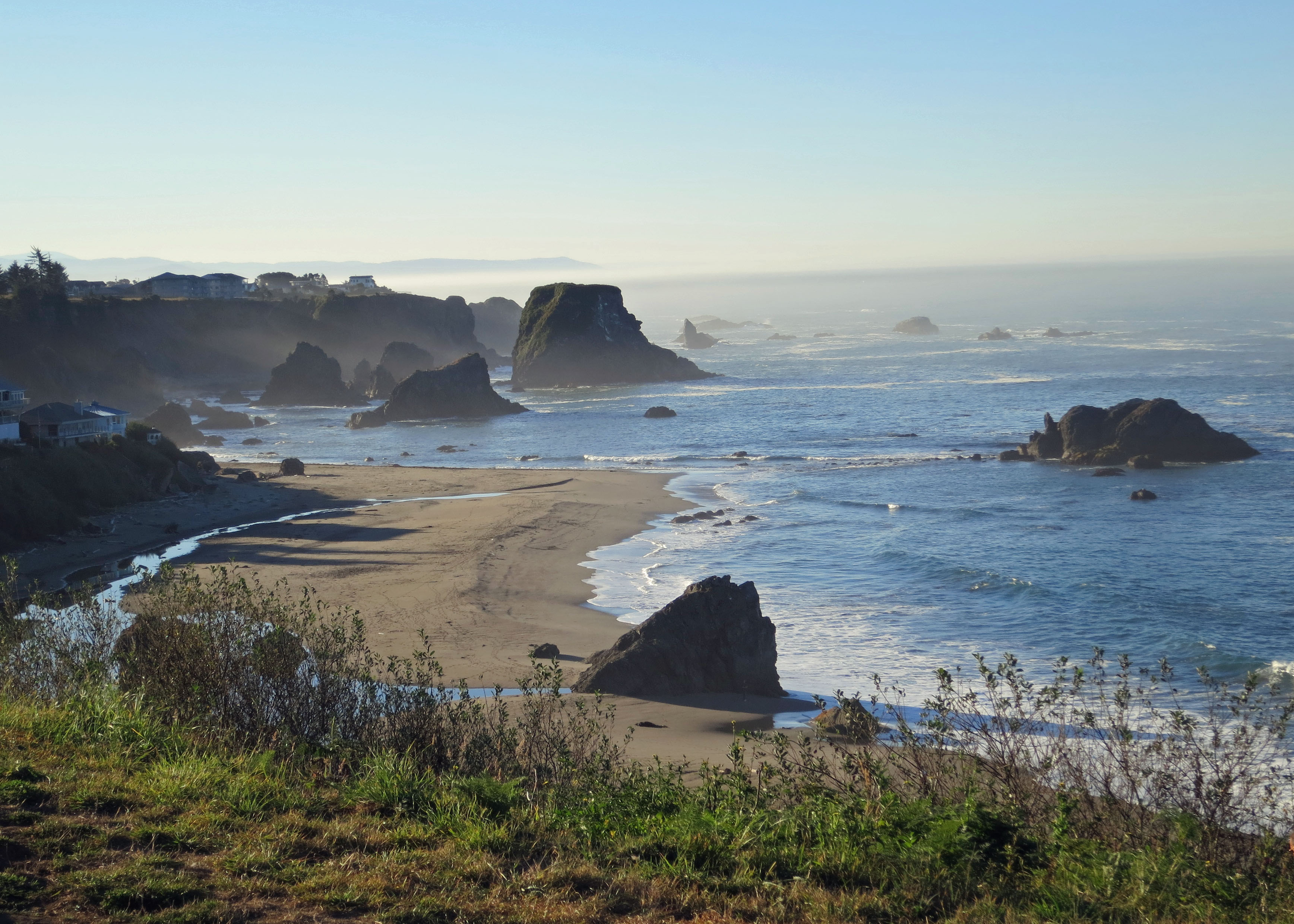
The view from Harris Beach State Park looking south toward Brookings, which was about a mile away.

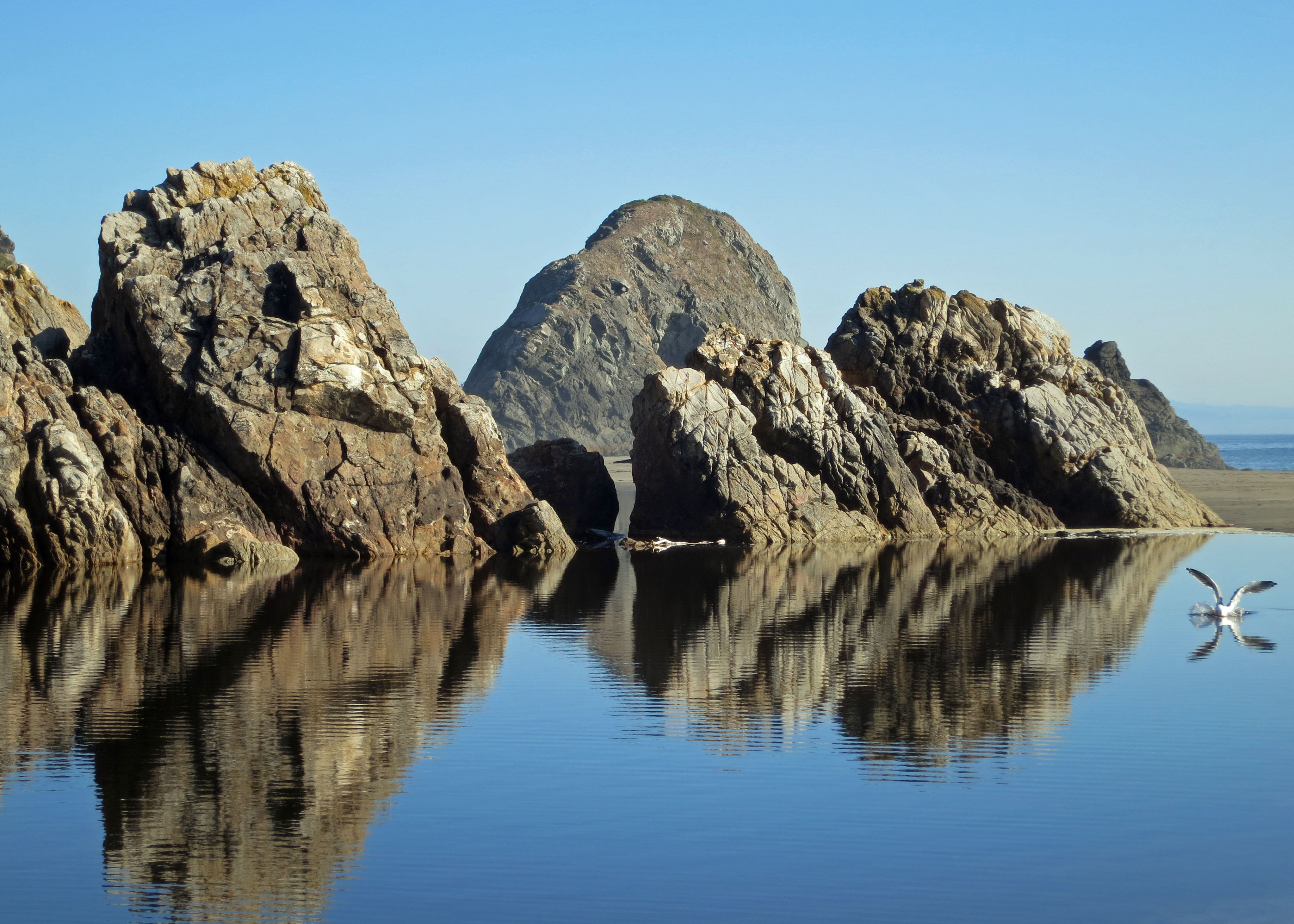
A sandbar created a small lagoon that was excellent for capturing reflections. Note the seagull on the right.

OK, I admit I can’t resist reflections. This shot at Harris Beach State Park, Oregon was taken late afternoon.

This view, similar to the photo at the beginning, was taken early morning.

Another early morning photo at Harris Beach State Park. This one is looking south. The sun has gently touched the rock on the right while those on the left remain in shadows.

The sandbar that separated the lagoon from the ocean.

I liked the combination of dark rock, sandy beach, sky and water.

Looking north up the Pacific Coast from Harris State Beach.

Low tide uncovers an abundance of sea life. When my dad lived on the Oregon Coast, he would gather the mussels for cooking.

And what’s an ocean without a seagull… This guy was hoping I would break out lunch.

The restless ocean and its waves were calm for my visit to Brookings, Oregon.

This large log, bleached white by the sun and sea, is a reminder of stormy oceans. In fact watching storms hit the coast has become a major spectator sport during the winter on the Oregon coast.
I’ll finish off my post on Harris Beach State Park and Brookings, Oregon with a final reflection picture. Next up: A visit to Organ Pipe Cactus National Park in Southern Arizona.

A Homeless Man with a Pickup Truck and a Bank Account

My brother Marshall describes himself as An Itinerant Idler and spends his time migrating between the mountains of North Carolina and the swamps of Southern Florida.

My brother Marshall turns 72 this week so I decided to repost an earlier blog I wrote about him and his wandering ways. His life has changed since I first wrote this story. He sold his truck that had 195,000 miles on it and bought a red Chevy van with 115,000 miles. This is more significant than it seems. Now, instead of living in a tent, he’ll be living in his van. “I am no longer sleeping on the ground,” he reported proudly to me.

A grin lights up my brother’s face as we drive into his remote campsite near Lake Okeechobee, Florida. It’s time for our annual visit. At least once a year, I track him down.
“Think of me as a homeless man with a pickup truck and a bank account,” Marshall likes to note when describing his lifestyle.  Once upon a time he made his living as a professional photographer. Another time he ran his own business as a real estate appraiser. He had a six-figure income, owned a nice home and drove a fancy car. He was a man of means.

But he wasn’t a happy man.

Nine years ago he stopped trying to live a ‘normal’ life and became a modern-day gypsy.  Like the wild geese, he chose to migrate with the seasons, moving between the mountains of North Carolina to the swamplands of southern Florida. He calls himself the Itinerant Idler.

Marshall travels with a tent, a Coleman stove, a five-gallon propane tank, two folding camp chairs and a folding table. Large plastic bins serve as cupboards and closets. Paper plates make up his dish collection. If something doesn’t fit in the back of his pickup, he doesn’t need it. He has become a minimalist.

Once he took pride in what he owned; now he takes pride in what he doesn’t.

His kitchen, dining room and living room are whatever nature provides. Instead of watching TV, he watches squirrels playing in the oaks and Osprey diving for fish. Last year when I was visiting him in Big Cypress National Preserve, two bobcats came trotting into our camp.

During inclement weather, the cab of his pickup truck provides shelter. When it gets too cold he moves south. When it gets too warm or buggy, he moves north. On rare occasions he will take a motel room.

NPR keeps him in touch with the world and he speaks knowledgeably about current events.  He is particularly interested in what is happening on the economic front. We listen closely when he provides advice on what to do with our condo in Sacramento. Age and distance have not dulled his knowledge of the real estate market.

Marshall takes delight in living inexpensively. “I’ve paid $14 in campground fees over the past six months,” he brags to Peggy. Careful records are kept. There is food and gas and cigarettes and beer. “If it weren’t for the cigarettes and beer, I could live for a month on what it costs you to get through a day.” And he is right, even though we are rarely accused of squandering money.

Books and reading are his passion. He visits libraries regularly and picks through their $.25 and $.50 paperback retirees. His goal is to read 80,000 pages a year. So far he is on target for 2010. Finished books are given away to fellow wanderers. We qualify.

“The Bookmobile has arrived,” Marsh announces and goes rooting around in the back of his truck. He comes up with 93 books stored in plastic grocery bags for us to peruse. He has been saving them up. Some 22 are transferred to our RV even though I don’t have a clue where to put them. We, too, travel with a full library.

I fix teriyaki chicken and Peggy cooks up an omelet chock full of goodies as a thank you.  Both are favorites of Marshall’s. He obviously enjoys the spoiling, companionship and three days of conversation. Our visits are important to him. “It always takes me two or three weeks to recover when you leave,” he admits. It can be lonely.

And yet, there is a brotherhood of wanderers out here, people who share Marshall’s love of the open road and the freedom it offers (not to mention the inexpensive life style). They often end up camping in the same places at the same time and form into transitory communities. They become friends, help each other out and share their most precious commodity: carefully guarded secrets about other free campsites.

Marshall took me around to visit his neighbors in Big Cypress last year. John and Phyllis were from Ontario, Canada. Tom had made his living as an engineer at a television station.  Bob, possibly in his 80s, created interesting art pieces from pinecones. Dave was soap opera handsome and spent most of his day riding his bicycle.

“You have to meet Dumpster Diver Steve,” several of them urged with a touch of amusement. “Be prepared to stay awhile.” Dave and Marshall walked me over to Steve’s site and quickly disappeared.

Steve lives out of his car and finds most of what he needs to survive in dumpsters, thus the name. “I am 50% child, 45% crazy and 5% rational adult,” he immediately informed me. “I save the 5% rational adult for when the cops stop me,” he allowed with a wink and then waxed enthusiastically on life as a dumpster diver.

“You won’t believe what people throw away.” A few weeks earlier he had been visiting dumpsters behind a grocery store in Naples and discovered dozens of flowers the store had tossed. “I brought them back to camp, divided them up, and gave each woman a bouquet.

I found the act romantic.

“Hey, would you like to see my oven? I am cooking up a batch of spaghetti.” How could I resist? We walked over to Steve’s car. It was old, beat up and packed to the brim with treasures. His ‘oven’ was a quart jar filled with spaghetti resting on the back windowsill. Sunlight streamed through the window and provided the heat.

He had found the spaghetti that morning in the camp dumpster. Someone had left it in a Ziploc. “I only take food that is packaged,” he announced with pride. Steve is a first class dumpster diver.

Marshall, at 71, is reaching the stage where life on the road is becoming more difficult, especially living in a tent. He lusts after our van. Still, considering he smokes heavily and weighs all of 113 pounds, he is amazingly healthy. “I haven’t had a cold in five years and have only been in a hospital once during my nine years on the road.” And he is happier than I have ever known him to be.

Before leaving Okeechobee, I mention there is an inexpensive trailer court backed up to the beautiful Applegate River about five miles from our new home in Oregon. Maybe he will come out and settle down. Maybe he won’t.

The Wonderful World of Birds’ Bills… On the Road

I love pelicans. They have that ‘put together by a committee’ look. Check out the sharp hook on his bill. I took this photo in Baja California near Cabo San Lucas.


A wonderful bird is the pelican, His bill will hold more than his belican.

Dixon Lanier Merritt

Whenever I see a pelican, Dixon Merritt’s poem pops into my mind unbidden. Birds’ beaks, or bills if you prefer, are wonderful adaptations to their environment.

As I write this blog from my home in southern Oregon, a Rufous Hummingbird has his beak buried deep in our feeder while a Black Headed Grosbeak worries sunflower seeds on the hill behind him. The hummingbird’s beak is long and delicate, designed to capture nectar in the hidden recesses of flowers. The grosbeak’s beak is short and stubby, perfect for cracking open seeds.

I photographed the Brown Pelican in Baja California near Cabo San Lucas. Peggy found the Snowy Egret there as well. The rest of the birds featured in this blog are from Florida except for my final picture of Brown Pelicans. Few places can match Everglades National Park when it comes to unique bird life with interesting bills.

Peggy captured this Snowy Egret on film on the same Baja trip we found the pelican. Both Egrets and Herons have spear like bills. I like the way the Egret’s shadow allows his feet to be seen.

Speaking of spear like bills, how would you like to be on the receiving end of this one? I took this photo of a Great Blue Heron in Florida. While we normally think of Great Blue Herons eating frogs, fish and baby alligators, they are also quite fond of small rodents. I have often watched them patiently stalk mice on the Bodega Bay Headlands of Northern California. Their strike is lightning fast.

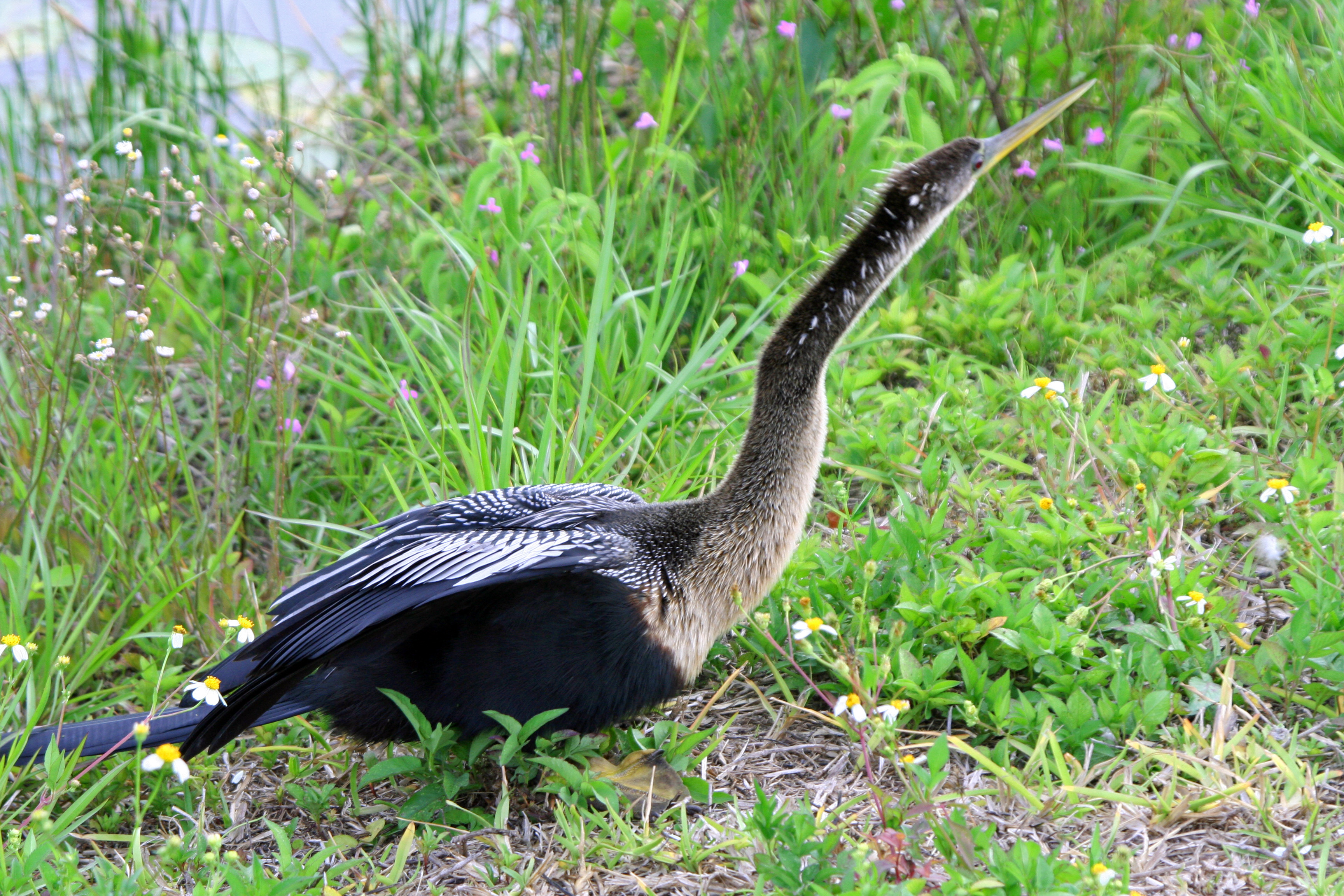
This Anhinga in Everglades National Park is obviously eyeing something in the grass next to it. Like Cormorants, Anhinga are designed to catch their dinner while diving and are well designed to do so.

A more typical picture of an Anhinga, drying its wings after a dive.

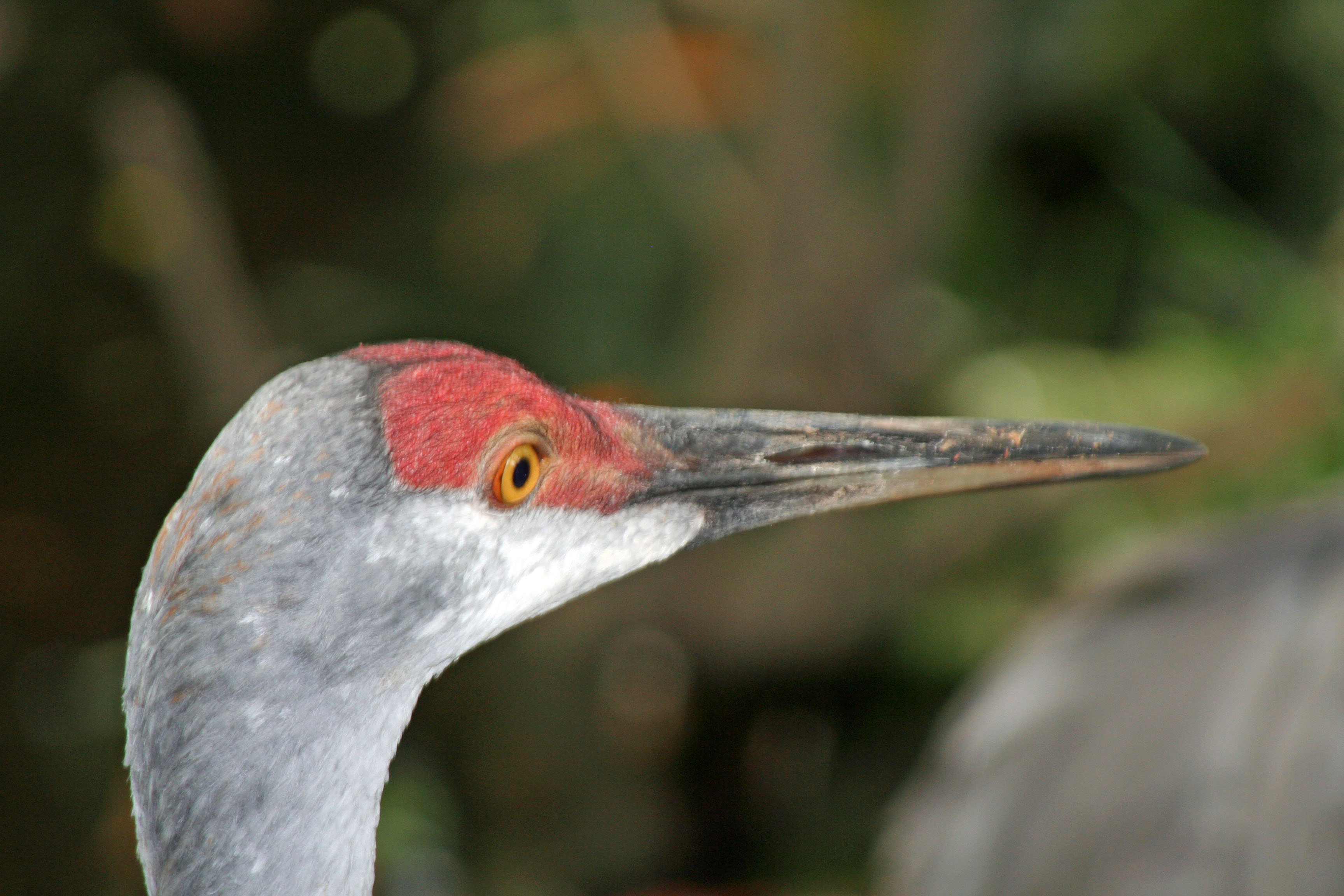
This Sand Hill Crane and four buddies came strolling into our camp in Central Florida.

When one thinks Florida and Everglades, it is natural to think of Flamingos. It’s hard to find more colorful beaks.

In my last blog I featured Black Vultures in Everglades National Park. This one looks pensive. Again, note the hooked bill designed for tearing flesh off of dead things.

White Ibis are common in the Everglades. They use their long curved bill to probe mud.

This guy is a little fuzzy but any collection of photos featuring birds beaks needs to include the Spoonbill, another resident of the Florida Everglades.

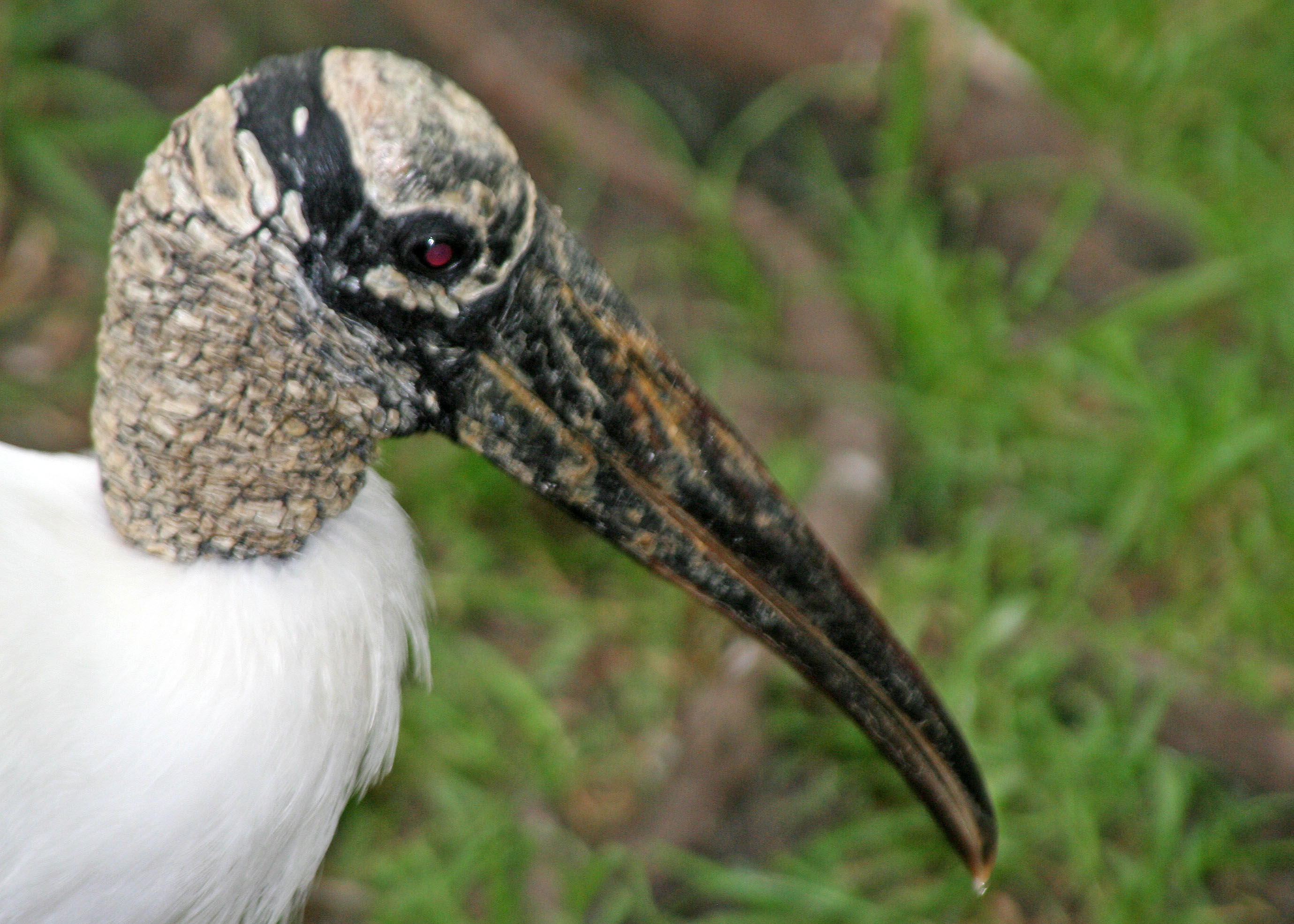
The mottled head and beak of a Wood Stork, also photographed in the Everglades.

I’ll close with my favorite bird. I took this shot of Brown Pelicans just south of Santa Barbara, California.

Newspaper Rock: 2000 Years of Indian Rock Art… All the News that’s Fit to Peck

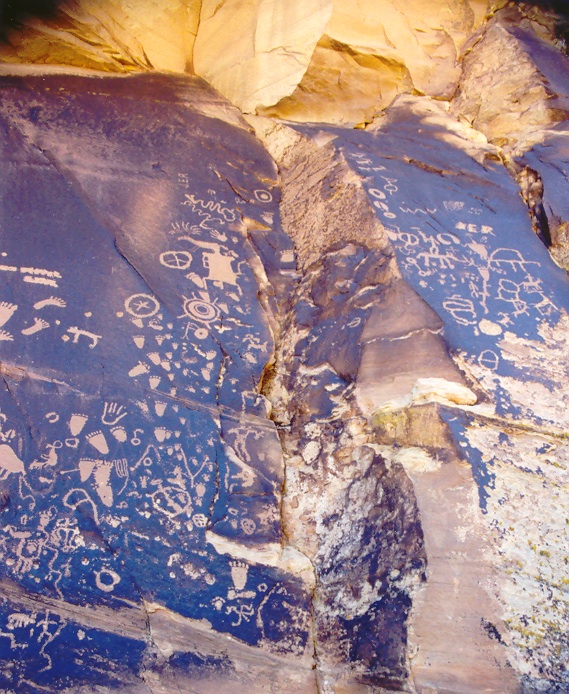
Newspaper Rock is filled with Indian rock-art that has been created over a period of 2000 years. This is my version of the headlines.

Sometime around when the historic Jesus was pounding the pavement of Jerusalem seeking recruits, Native Americans began pecking away at Newspaper Rock, creating petroglyphs. What they were trying to say is still something of a question mark. Guesses range from the mundane to the mysterious.

For example, was the guy shooting the buck in the rear a mystical symbol to give the hunter luck, or was it a recording of the event. “Shot big buck. Everyone is invited over for venison stew.”

Some images appear quite clear in intent. This Native American in sitting on a horse and using his bow and arrow to shoot a big buck. Hollywood would call it an action shot.

Like modern graffiti, some rock-art was likely meant to say, “I was here” or “This is the territory of clan such and such…” a no trespassing and no hunting sign. Enter at your own risk.

One interesting question is whether there was any purposeful art in rock-art? Did the creator peck away for the sheer joy of pecking away and creating a masterpiece?

In Navajo the rock is called Tse’ Hane or “rock that tells story.”

We can’t be sure when the individual petroglyphs were made. As I’ve noted before, Indian rock-art is very hard to date. The relative thickness of the rock varnish, the use of bow and arrows, the availability of horses, and the petroglyphs’ resemblance to other rock-art being created in the same era are all used as clues.

The National Historic Marker at the site notes that Archaic, Basket Maker, Fremont, Pueblo and Navajo cultures added their stories to the rock. In more modern times, pioneers even became involved.

Unfortunately, the tradition continues today. All too often people can’t resist adding their own names, marring and destroying the original petroglyphs at various sites. Think of spray-painting your name on the stained glass windows of the Cathedral Notre-Dame in Paris for comparison.

What’s fascinating about Newspaper Rock is the sheer number of petroglyphs included and the time frame over which they were created. I am also impressed with the variety of animals represented. For example, I can’t recall seeing flying squirrels or rabbit tracks in other rock-art sites Peggy and I have visited.

Newspaper Rock is located on Utah’s highway 211 which serves as the south entrance to Canyonlands National Park and is south of Moab. The following photos are a few examples of what you can expect to see. I take total responsibility for the interpretations.

A flying squirrel sails across the sky at Newspaper Rock.

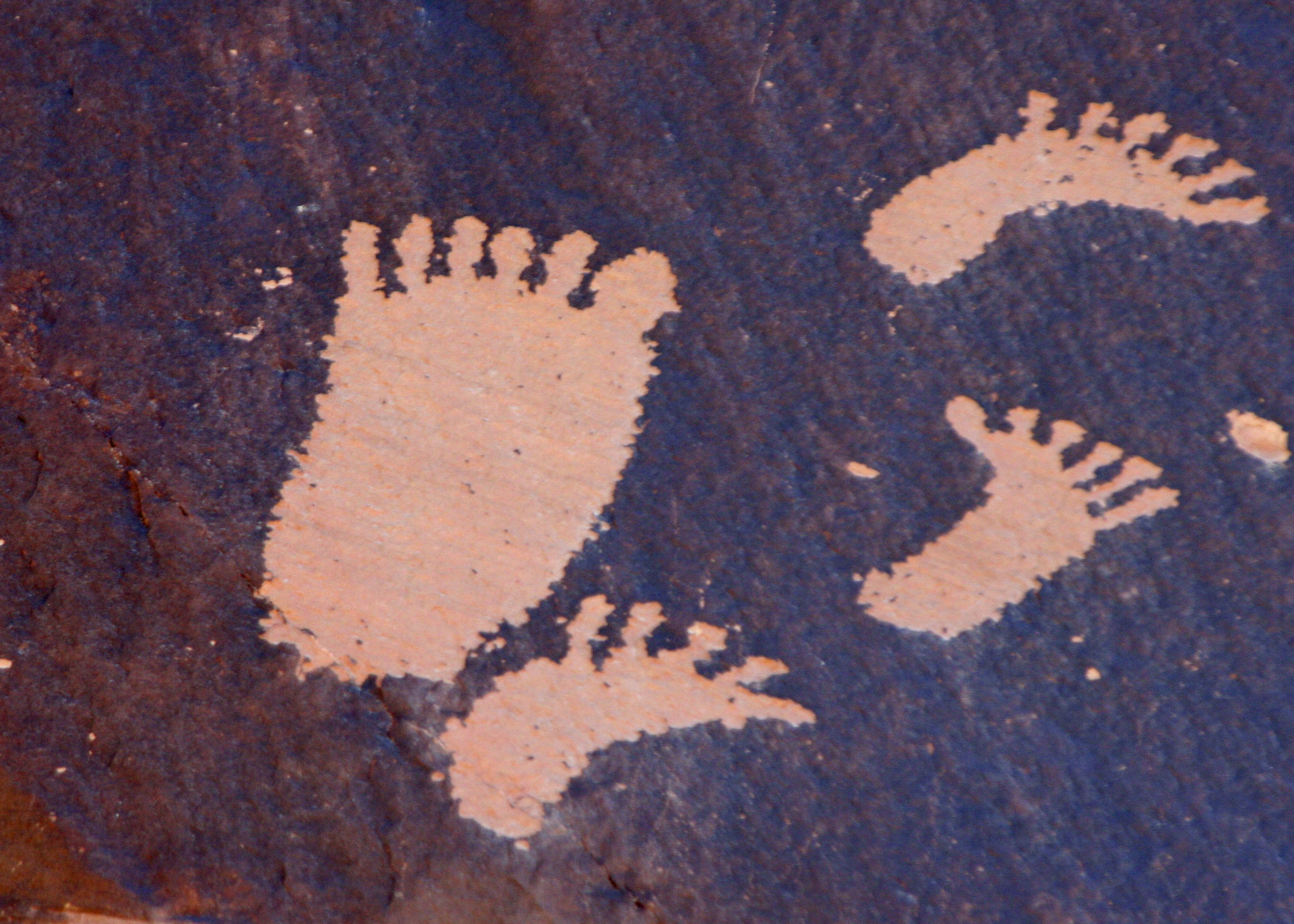
Big foot, bear foot, bird foot and a screaming ladder.

What little kids expect to find hiding under their bed at night.

A bow-legged trick rider?

A bow-legged trick rider? Yeehaw!

This represents the richness of wildlife found on Newspaper Rock. I see deer, a buffalo, big horn sheep, a bear and a lizard. I don’t have a clue what the long creature on the left with the strange legs is. Any guesses?

I’ve included this photo to illustrate how crowded the petroglyphs are on Newspaper Rock. Note the rabbit tracks working their way upward on the upper-right center.

Buffaloed?

Bear with me. (grin)

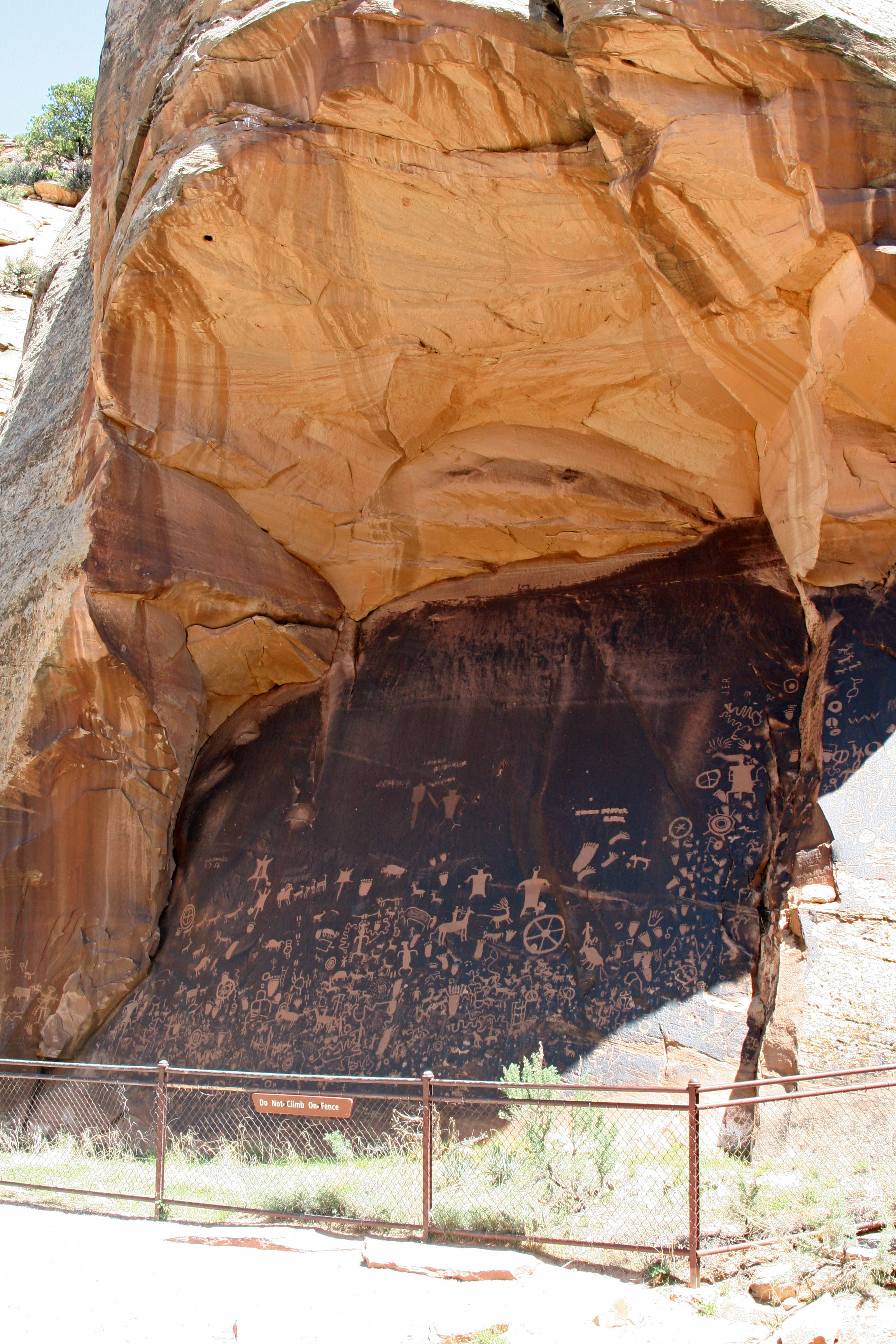
A picture of the complete Newspaper Rock site. The fence has been added to discourage people from defacing the petroglyphs.

My favorite photo. I like the contrast between the orange sandstone and dark rock varnish.

The Ancient World of Indian Rock Art… On the Road

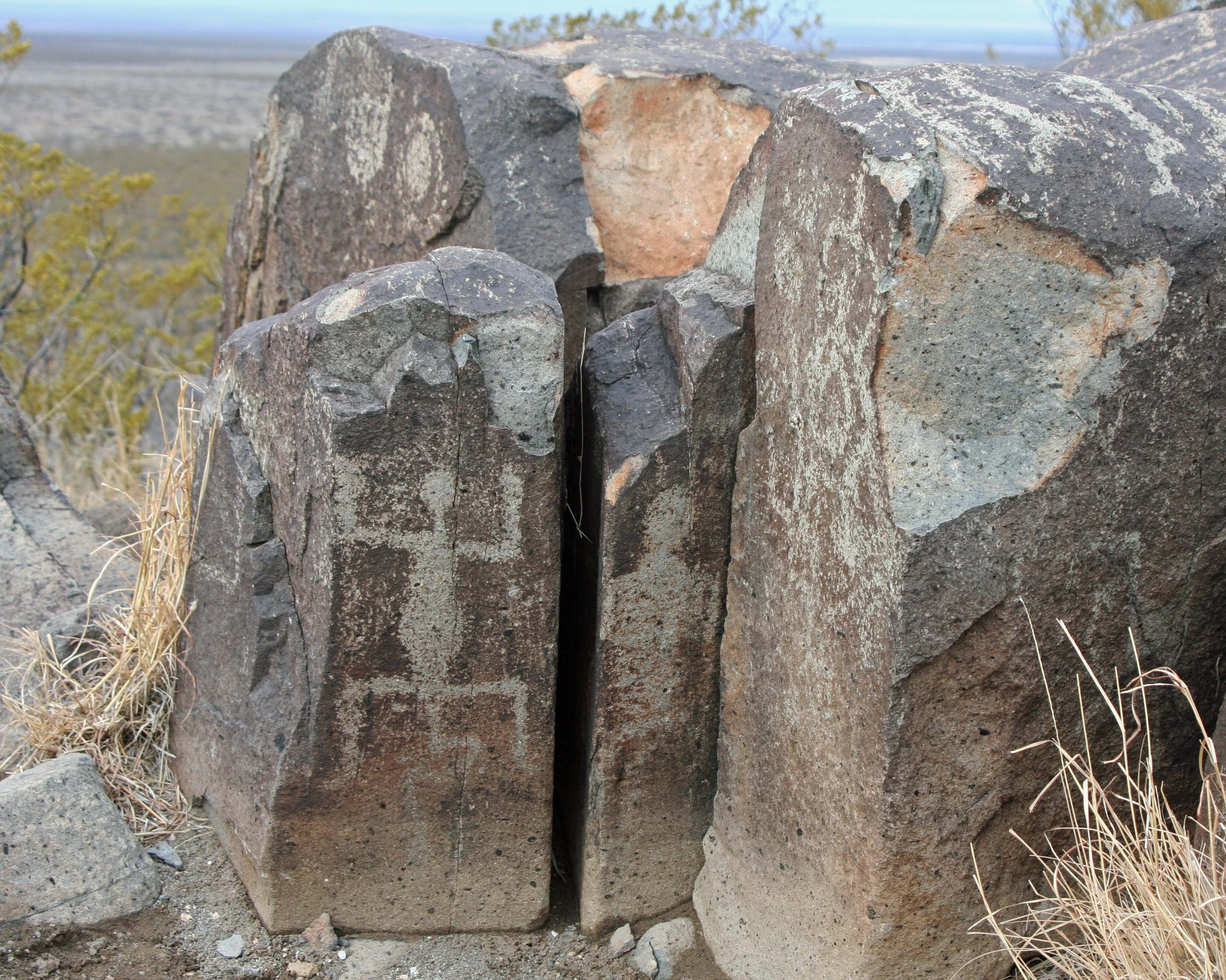
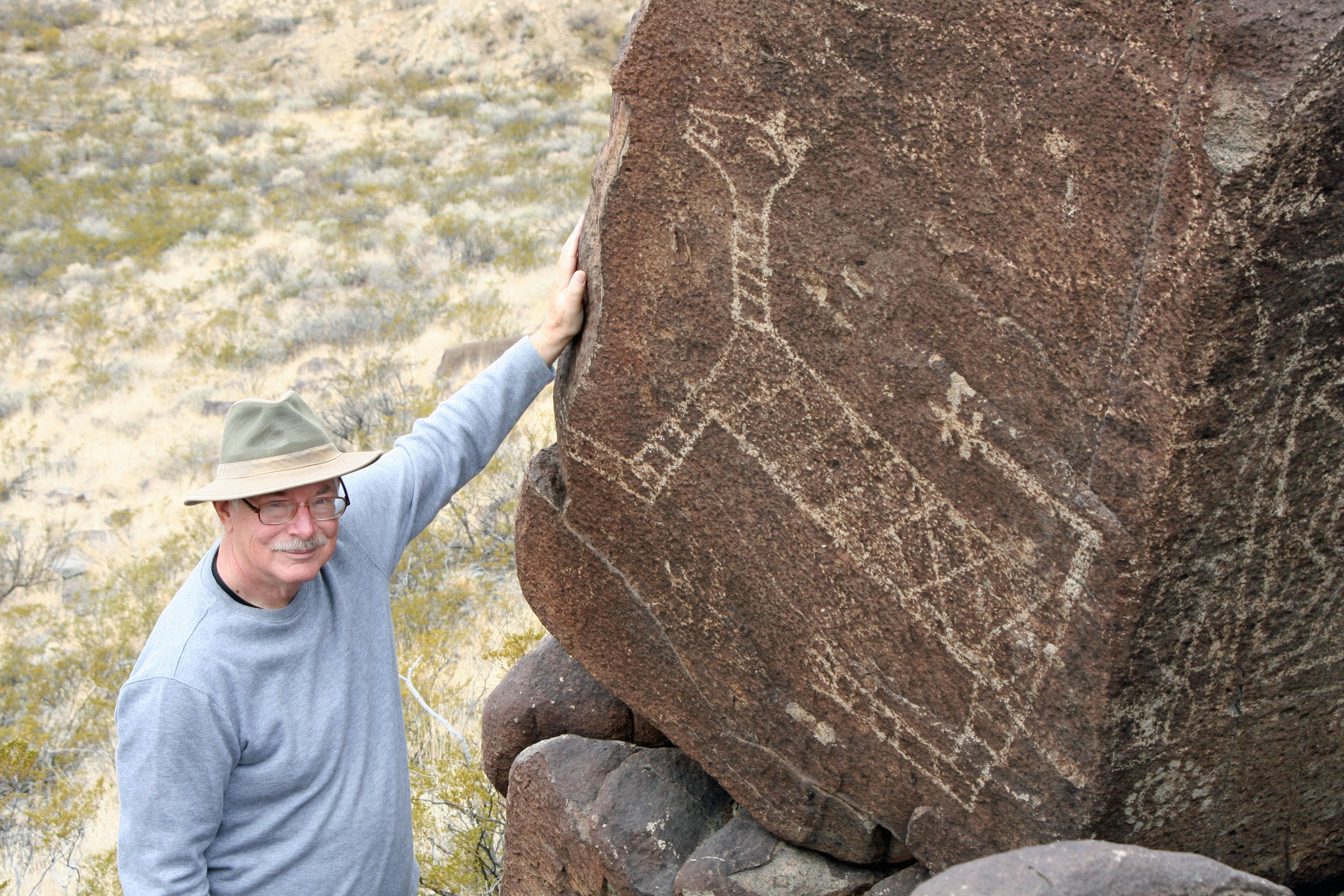
My wife Peggy and I have travelled throughout the western United States visiting and photographing Native American rock-art. We found this petroglyph of a cougar in the Three Rivers Petroglyph National Recreation Site of southern new Mexico.

I grew up in the town of Diamond Springs, California located in the foothills of the Sierra Nevada Mountains.

Once upon a time Diamond had been known as Mo-lok’epakan, or, Morning Star’s Spring. It was a very holy place to the Maidu Indians. They came from miles around bearing their dead on litters for cremation.

Apparently the Maidu had been living in the area for a thousand years. It is a sad commentary on both our education system and how we treated the Indians that I grew up never hearing the name Morning Star’s Spring much less Mo-lok’epakan.

Our only connection with the Maidu’s lost heritage was finding an occasional arrowhead or Indian bead.

The thrill of finding arrowheads, however, led to a lifelong fascination with the culture of Native Americans. Over the past ten years that fascination has led me to an interest in Indian rock-art or petroglyphs and pictographs. Petroglyphs are pecked or scraped from dark, rock varnish exposing a lighter color underneath. Pictographs are painted on rocks.

Indian rock-art is found at thousands of locations throughout the Western United States often near water or unique landmarks. Searching for rock-art is often like a treasure hunt. Here you can spot a group of petroglyphs on the left about a third of the way up the rock.

Peggy and I have explored and photographed major rock-art sites throughout the western US. Today I will introduce Sego Canyon located in eastern Utah off of I-70 near the small town of Thompson. Later I will blog about other sites such as the Three Rivers Petroglyph National Recreation Site of New Mexico.

What captured me about Sego Canyon is the unique, almost ethereal rock-art of the archaic peoples, and the fact that the rock-art represents three distinctive Native American cultures ranging over 8000 years.

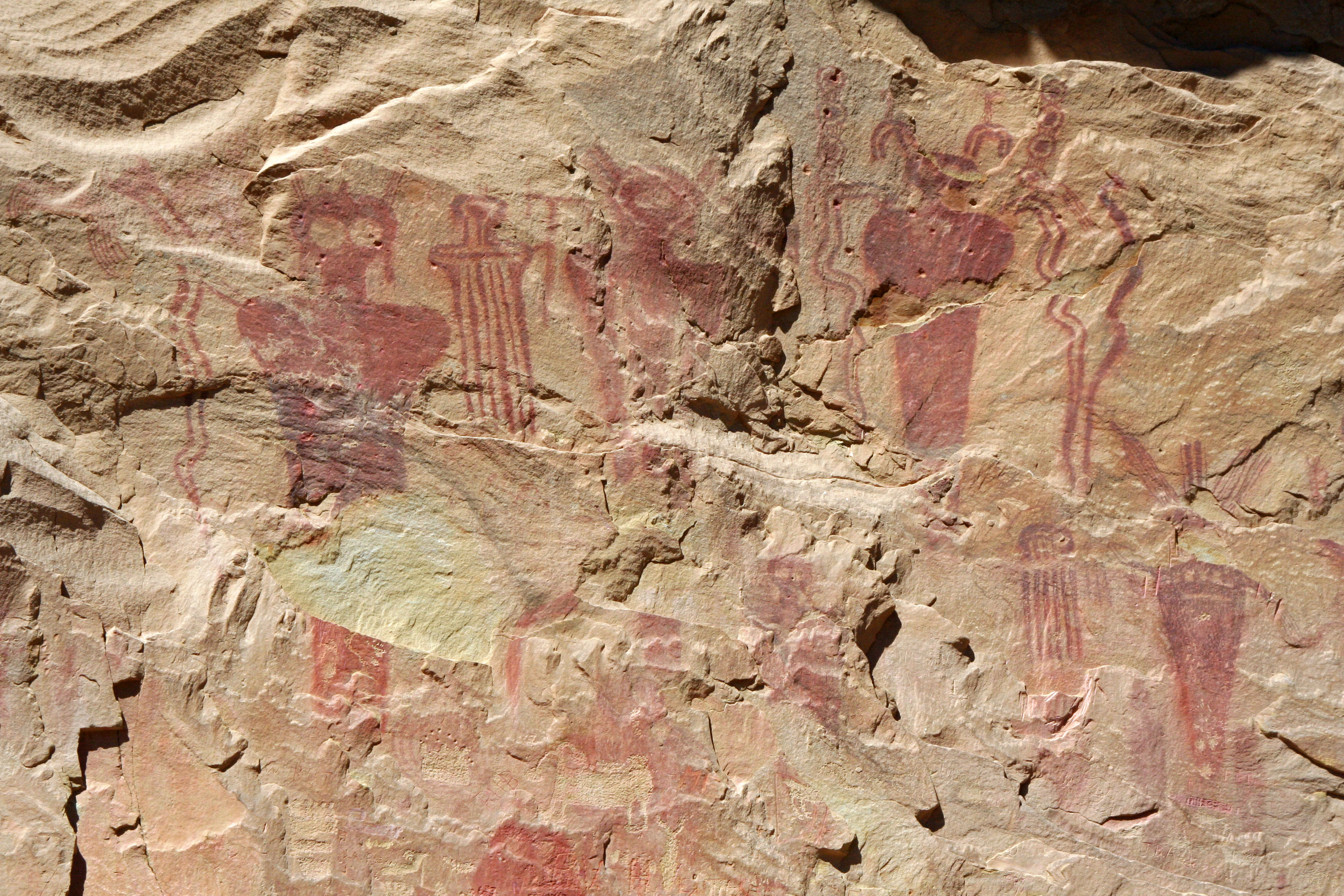
The pictographs featured below were made by archaic hunter-gatherer nomads who wandered across western North America between 6000 and 100 BC. Rock art is classified according to various styles and this particular style is known as Barrier Canyon. Its attributes include life-size, man-like creatures with hollow eyes, missing arms, antennae, and lots of snakes. The theory is that the figures may have represented shamanistic journeys to the underworld. I am voting for encounters with aliens… just kidding.

This rock-art, which is found in Sego Canyon, Utah, was created sometime between 6000 and 100 AD. It is classified as the Barrier Canon style. Note the hollow eye sockets, antennae, horns and snakes.

This is a close up showing images from the above photo. There is some thought that these figures reflect shamanistic visits to the underworld but one can understand why UFO fans might think they represent encounters with aliens.

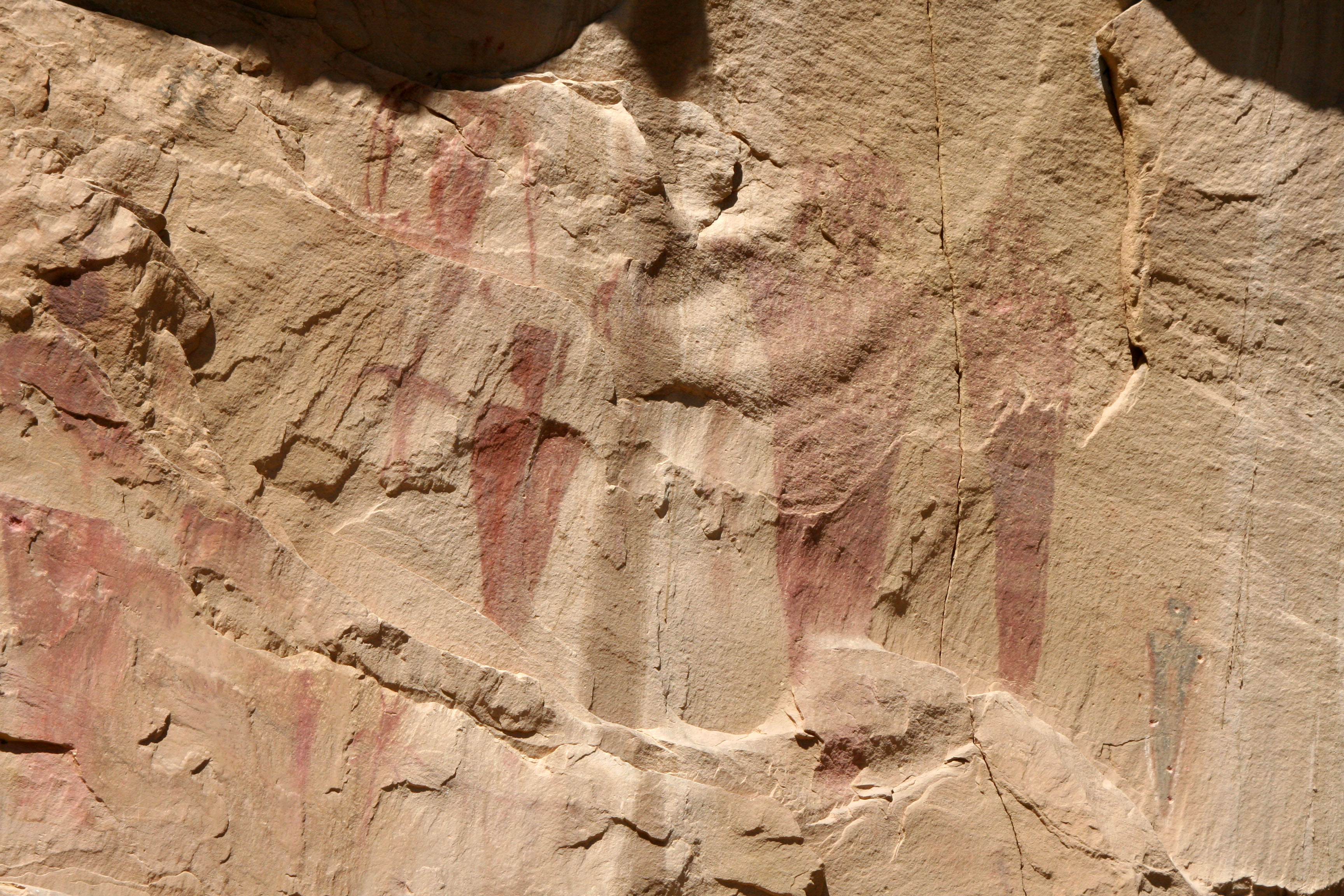
These figures from the Barrier Canyon style seem wraith-like… red ghosts arising from the rock.

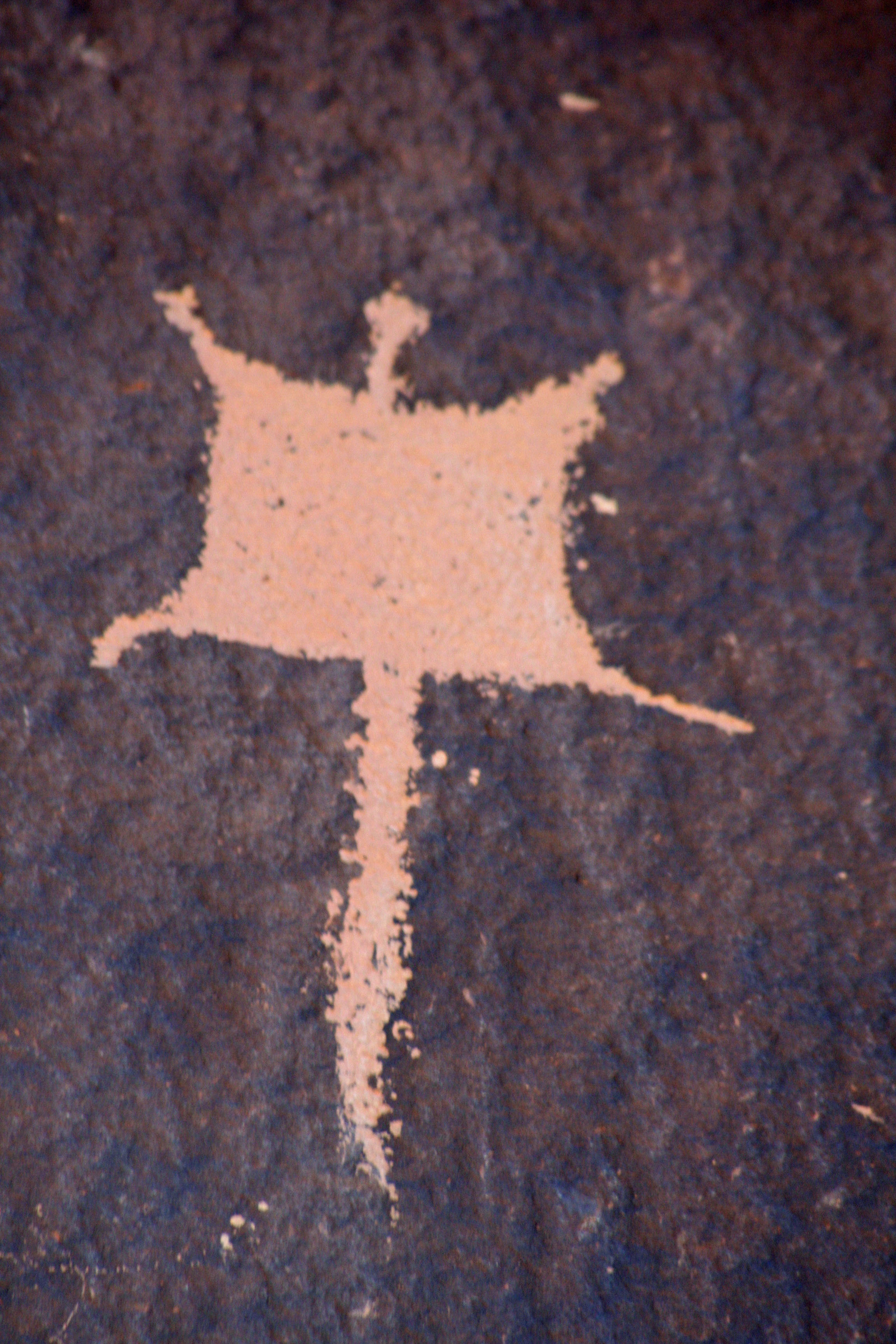
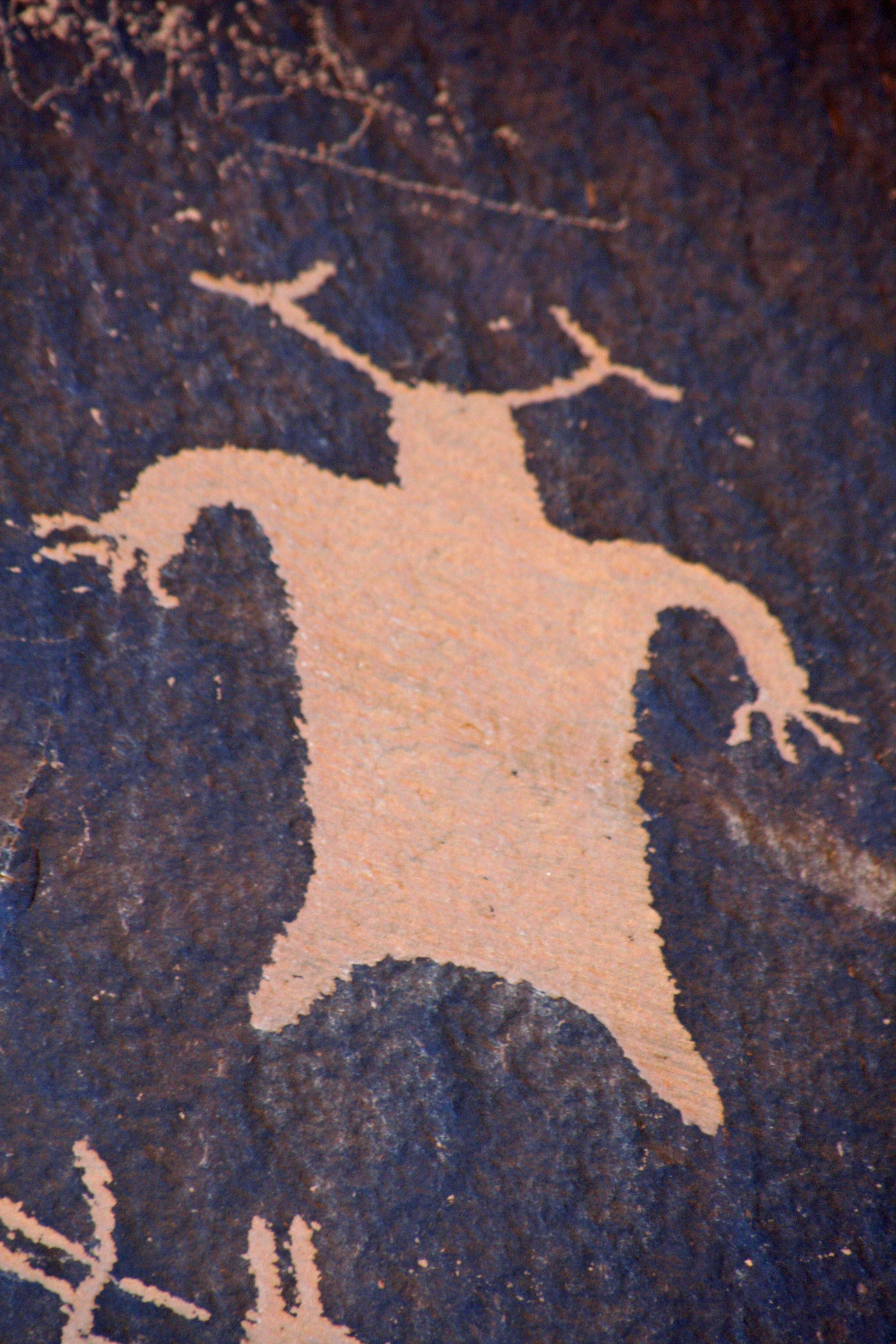
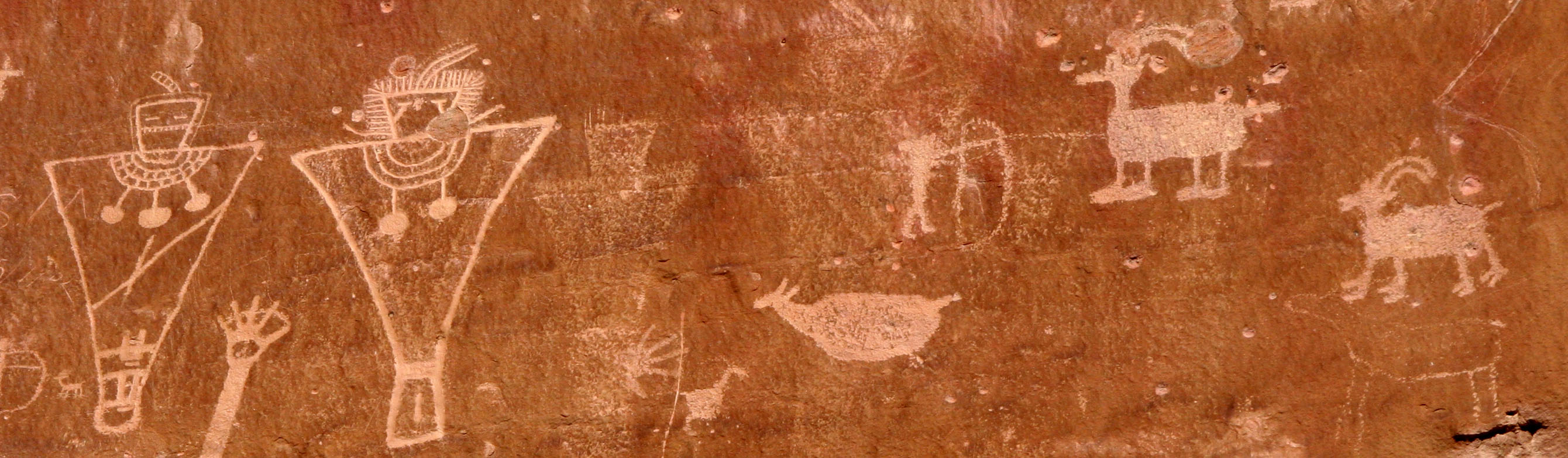
The Fremont Culture existed between 600 and 1200 AD and represented a more settled lifestyle. The rock-art of the Fremont Indians featured rectangular bodies with small heads. Both deer and mountain sheep are also found in the rock art below. Note the Indian shooting the mountain sheep with a large bow and arrow.

This rock-art found in Sego Canyon is done in the so-called Fremont style where rectangular figures with elaborate jewelry were common.

Mountain sheep are the most common animals found in Native America rock-art.

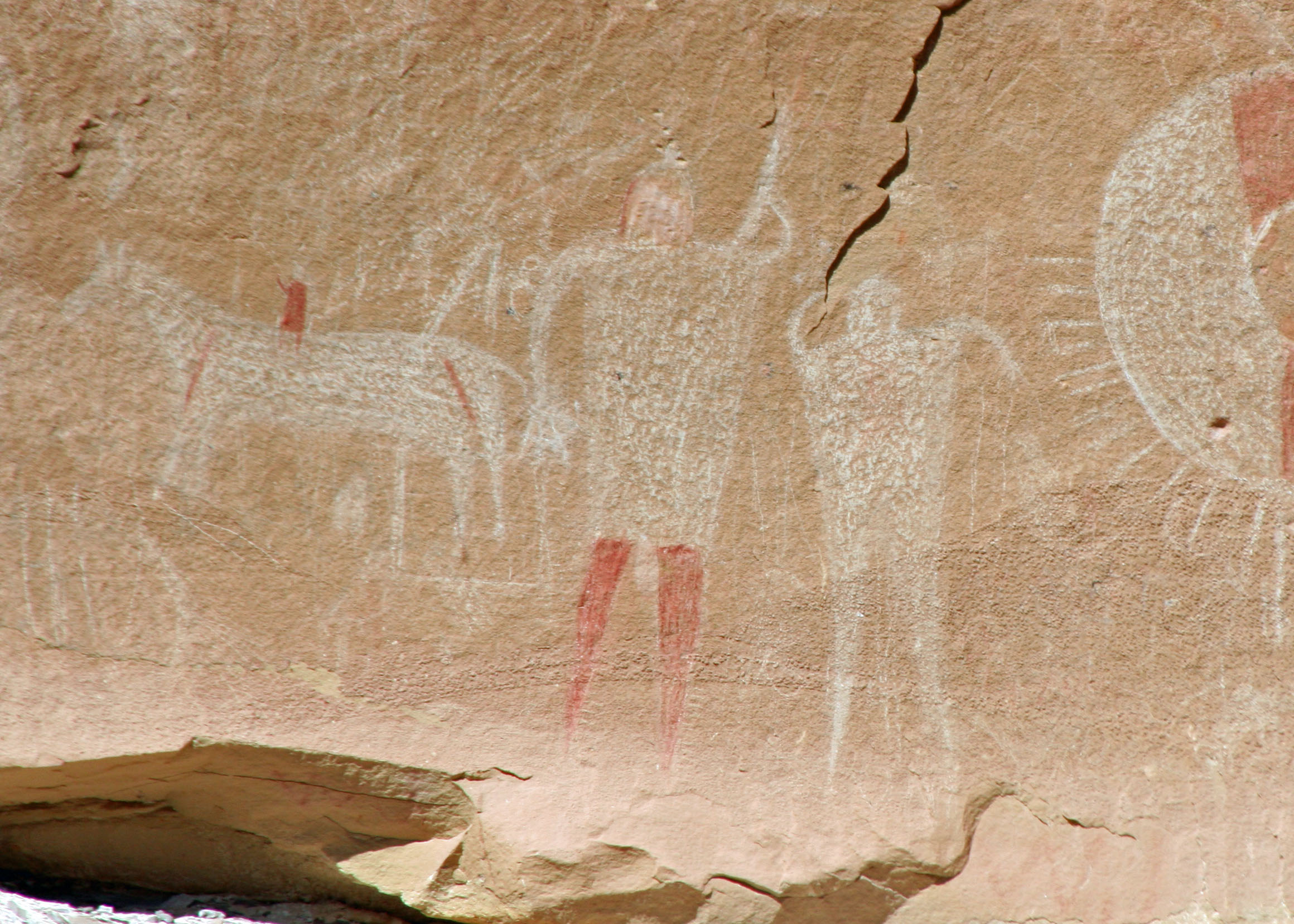
The final culture represented in Sego Canyon is that of the Ute Indians who lived in the area from 1300 AD up to 1880 when they were forced off the land to live on reservations. One indicator of more ‘modern’ rock-art is the presence of horses that didn’t exist in North America until the Spanish introduced them in the 1500s. Note the red leggings on the central figure. I also like the little red guy riding the horse. Yahoo! The round figure on the right is thought to represent a shield.

Identifying the age of petroglyphs is a difficult process. The appearance of horses shows that the petroglyphs were created after the 16th Century when the Spanish introduced horses to North America.

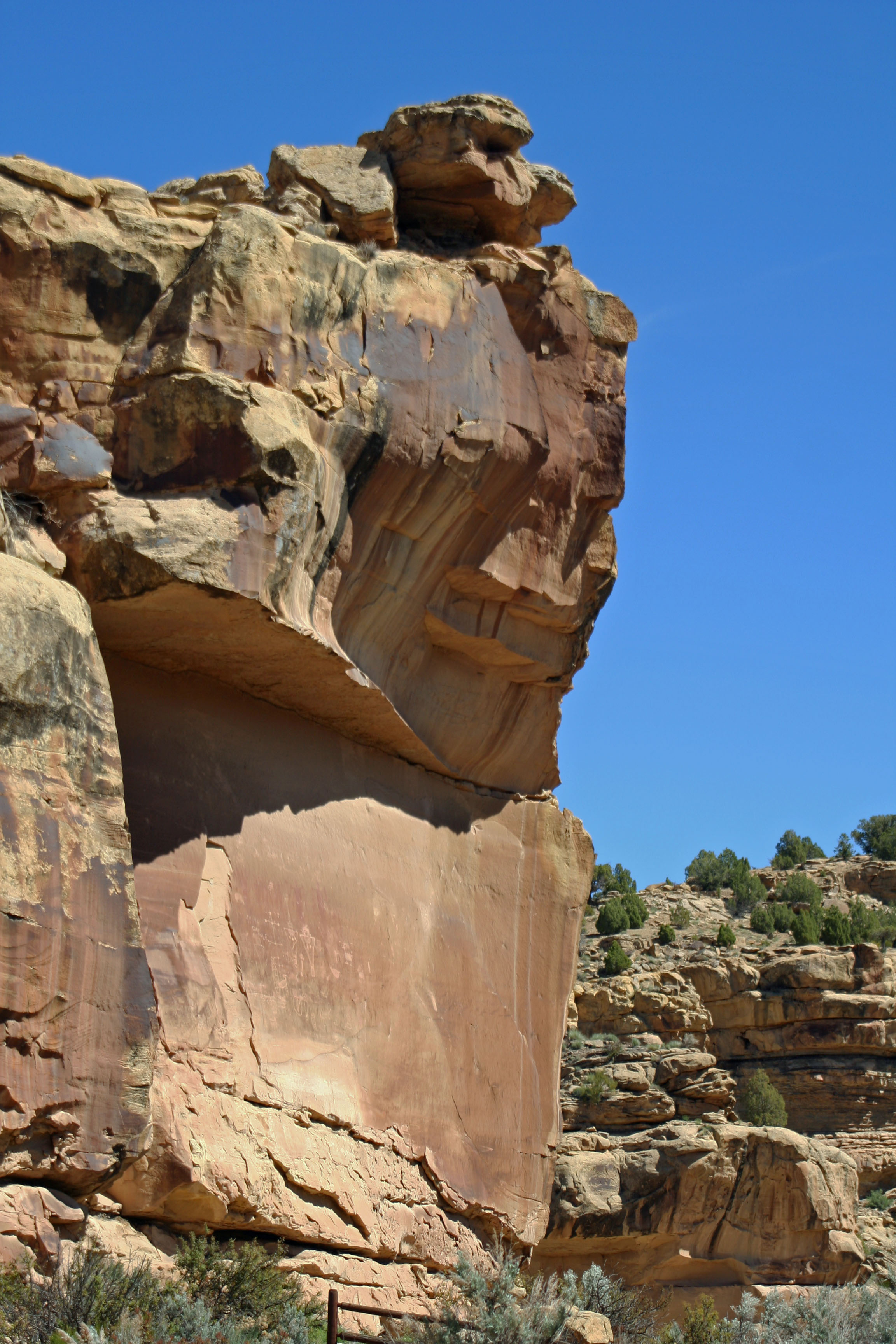
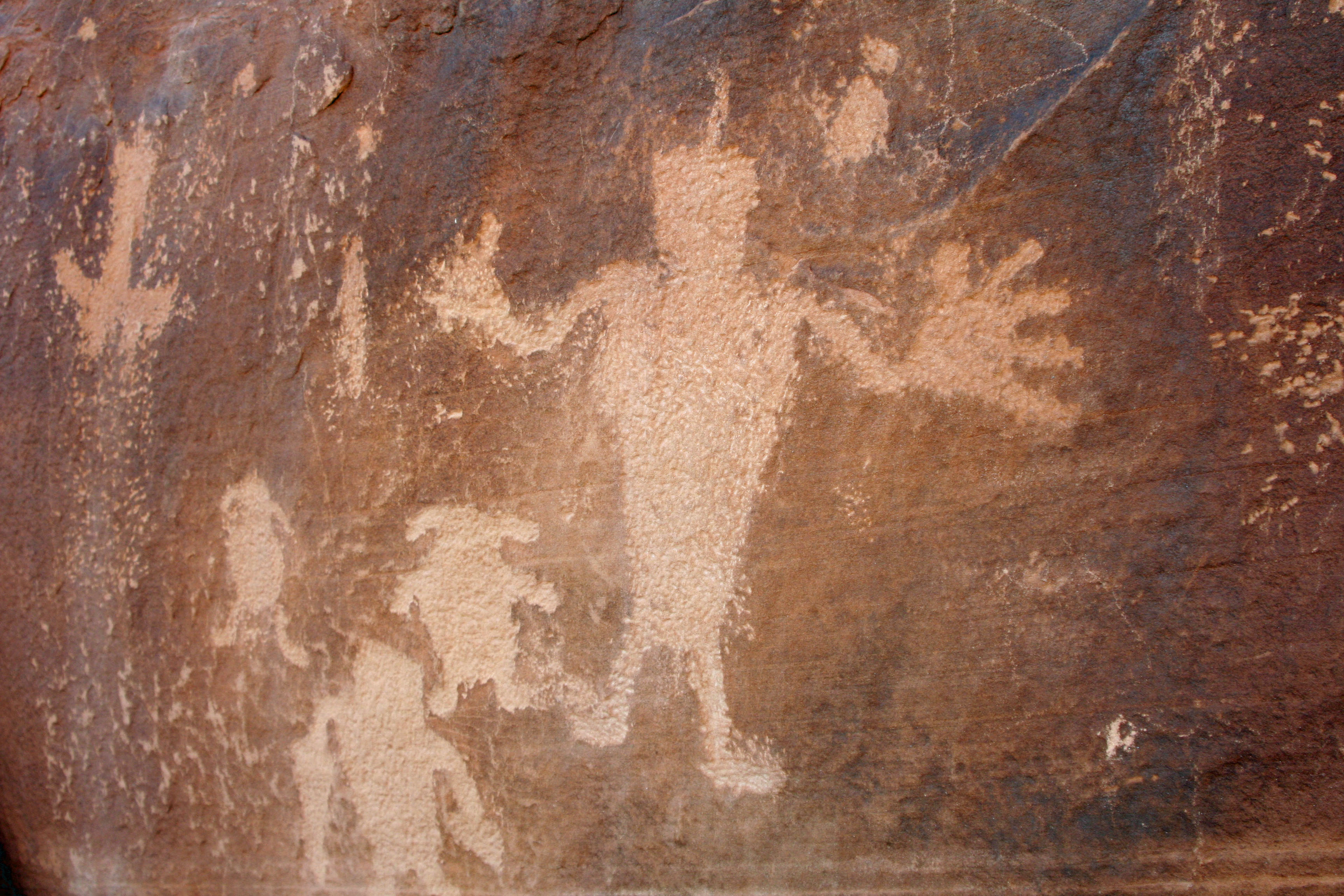
In my next post I will travel to Dinosaur National Monument, which also has some very unique Indian rock-art such as this one featuring what I assume is a woman with big hands and some very fat dogs.

When Good Toys Go Bad… On the Road

This toy elephant, left alone in the woods, apparently got into some bad drugs.

Sometimes my sense of humor goes awry. For example, I usually don’t deal with the macabre on this blog but have you ever thought about what happens to all of those toy animals that are left at roadside memorial sites. They go bad. I have proof.

I understand the practice; it’s as old as man. You are buried with your favorite dog, horse, wife, etc. so they can accompany you wherever you happen to be going. Chinese emperors and Egyptian pharaohs carried the practice to extremes. Vikings wanted to be buried with their weapons. In India, once upon a time, your widow was expected to make the ultimate sacrifice and throw her self on to your burning pyre so you could waft off together in the smoke.

The same motivation leads people to leave teddy bears and bunny rabbits at memorials to children. The idea is that the little kid will have something to play with in the afterlife. It’s a good thought.

But does anyone ever ask the toys what their preference is? I mean would you prefer to be in a warm dry house and be totally loved or would you prefer to be out at a roadside memorial abandoned to the rain and snow and fog and wind?

I’d be seriously irritated. Apparently the toys are as well. Consider the following photos:

Would you like to meet this bear on a dark night? He was scary enough during the day.

How about a lion whose mane had melted. As you might imagine, he was something of a grouch.

Then there was this bunny. He gave a new meaning to having a wild hare…

No sense of humor here… And he was one of the newest members of the menagerie.

Not far from where the animals lived, I found this memorial to lost soles. Could the toys have been leaving a message for us?

You know the mall shops where kids dress teddy bears… this Pilot Bear probably came from one. He was ready to go with a leather flight jacket and goggles, but would you fly with him?


On the Banks of the Klamath… Redwood National Park

We found this beautiful redwood stump with its twisted roots on the beach near where the Klamath River flows into the Pacific Ocean.

In my last blog, I wrote about experiencing the Redwoods through the eyes of our two and four-year old grandkids. There is still some question about whether they were more impressed by the big trees or the yellow banana slug.

“Can we eat it,” the four-year old asked? Peel away boy.

Two years ago, Peggy and I visited the same area along with our friends Ken and Leslie Lake out of Sacramento. We camped next to the Klamath River near where it flows into the Pacific. I have a special affinity for the Klamath. I was conceived on its banks.

At least that’s the story my parents told me. They were living in the small town of Copco, which is located just south of the Oregon border and east of Interstate 5. My mother always claimed she had the flu and it was a weak moment. It’s good to know where you stand with your mom.

After Ken, Leslie Peggy and I had explored our campground we headed for the ocean. We walked through a Yurok ceremonial site to reach the shore. The Yuroks have lived in the area for numerous generations and today constitute the largest tribe of Native Americans still living in California. The site includes several structures made of fallen redwood including a traditional sweathouse.

The Yurok ceremonial site on the edge of the Klamath River and next to Redwoods National Park includes this traditional sweathouse.

The Yuroks considered the giant redwoods sacred living beings. A comment from Zantippy on my last blog about Redwood National Park came close to capturing how the Yuroks must have felt.

“Oh man, these photos are gorgeous!!! How could Mr. Reagan have not felt these trees spirits? When I was ten, we went there, and my dad parked the car and we were going to walk the trail, but I wanted to stay by myself near the car, and just BE with the forest. It was one of the most amazing things I’ve ever experienced. Then I felt bad because my mother was worried about them walking too far away from the car where I was all alone, so they didn’t get to really explore. I think I told them to just stay still and listen. It is silent voices.”

It is easy for me to understand how the Yurok regarded the redwoods as sacred beings.

A recent storm had deposited driftwood on the beach including a large redwood stump and roots. Smaller pieces of driftwood displayed unique personalities. Waves crashed against the shore. Mist touched the ocean and the trees.  A bald eagle watched us from the distance.

Our friends Ken and Leslie Lake stand next to the redwood stump we found washed up on the beach.

Driftwood can inspire the imagination. I saw a wood duck in this piece.

Waves crashing against the rocks, mist and driftwood are typical of California’s North Coast in Redwood National Park.

A lone bald eagle in the trees on the left watched as we wandered along the beach.

Just up the narrow, winding Coastal Road, we came on another interesting site. It looked like an old farm. Appearances can be deceiving. It had been disguised to look like a farm. Once upon a time it housed an early radar warning system and two 50 caliber anti-aircraft machine guns. Its purpose was to guard against invasion from Japan following the bombing of Pearl Harbor during World War II.

This seemingly innocent farm building found in the North Coast Redwoods overlooking the Pacific once harbored an early warning radar system and two 50 caliber anti-aircraft submachine guns to guar against invasion from Japan during World War II.

Continuing on, we visited the big trees of Prairie Creek Redwoods State Park. I kept expecting to meet up with Ewoks. But there are scarier creatures about. Scenes from Jurassic Park were also filmed in the area.

I kept expecting to meet up with an Ewok. George Lucas used North Coast Redwoods to film his Ewok scenes. Portions of Jurassic Park were also filmed in the area. (Photo from Google images.)

The only strange creature I found was the Peripatetic Bone who insisted on having his picture take with one of the Big Trees. He considered it a humbling experience. Can you spot him?

Even my favorite Tree Huggers… Peggy, Ken and Leslie, were made to feel small.

Wandering through Time and Place… A Writer’s Perspective

Bone has wandered the world for 35 years doing strange things. Here he rests on the Mayan god Chacmool in the place where sacrificial hearts once resided.

After two years of blogging under the title of Peripatetic Bone, I’ve decided to make changes. Bone, as you may know, was found in the Sierra Nevada Mountains in 1977 and has been travelling the world ever since. He has visited over 50 countries, climbed mountains, gone deep-sea diving, been blessed by the Pope and had many epic adventures.

When I started this blog, my wife Peggy and I were travelling around North America full-time in a 22-foot van. Bone rode up front where he could see the world go by. Introducing him to strangers was a weird but great way to begin conversations. We would do a photo shoot with him and wait for people to start asking questions.

It seemed natural to name my blog The Peripatetic Bone. Times have changed, however. We are now settled in Southern Oregon and Bone has retired, at least temporarily, to his Bone Cave.

Also, from the beginning, I wrote about many non-Bone related subjects. He wasn’t around when three British Warships used Andrew Mekemson for target practice during the Revolutionary War, nor was he with me when I served as a Peace Corps Volunteer in Africa. He even missed Berkeley’s Free Speech Movement.

“Wandering through Time and Place” is my new title. This will allow me to continue my travel focus plus incorporate stories from the past. I also plan to expand my grass-roots solution series with an emphasis on the future. Presently I am reorganizing my blogs to fall under three categories: Looking Back in Time, Wandering the World, and Creating the Future

My new tagline, “A Writer’s Perspective,” is what this blog is primarily about and always has been… story telling. Plus I have another motivation. Presently I am pulling my Africa Peace Corps stories into a book that I will publish digitally this year and in print format next year. Some time in the next few weeks I will create a new WordPress blog linked to this one that will feature a new chapter each week.

None of this means Bone is going away. He will still have his own page on this blog and will appear frequently in my travel tales. Thanks again to all the people who read this blog and make the writing of it fun and worthwhile.

Bone contemplates the future of Bad Bones in Tombstone Arizona.

But not to worry… Bone is a good bone and he is not about to be hanged by mistake.

Nor is he likely to fall into any dark, bottomless pits.

Nor be shot down by a desperado such as Billy the Kid.

Nor is his fate to be chomped down by an ancient Hawaiian deity.

Or become iguana food.

Instead Bone will continue to wander the world.

And have adventures that most people only dream about.


Desert Big Horn Sheep… On the Road

The Desert Bighorn Sheep of the southern Nevada desert calmly eyed me.

He stood there with his magnificent rack of horns, eyeing me and idly chewing on grass. Normally this shy creature of the Southwest deserts would have been hunkering down in the shade on a remote cliff, hiding out from the intense summer sun of southern Nevada and avoiding people and other likely predators.

The greenery of a small park had seduced him and his companions, however. Each day they made a pilgrimage down from their hidden mountain retreat to graze on the tender foliage and contemplate the good life. Unfortunately, two-legged animals came with the territory. We had to be tolerated.

He did not have to tolerate the large Bighorn Sheep that waited for him on the edge of the park, challenging his right to the green grass and threatening to steal his lovely ewes. In a ritual dating back to ancient times, he reared up and charged full speed ahead, smashing into his enemy’s horns time and time again until the intruder was driven from the path. But the rival was as tough as he was stubborn. The next morning, he was there again, waiting…

It was a beautiful location for a new home. A green park placed just below the house provided relief from the parched desert. Surrounding mountains offered glorious picture window views. The man and his wife felt they had found heaven on earth. The loud crash that jarred them out of their bed changed their perspective. Their insurance agent refused to believe their story.

To get their money they had to have photos of the Bighorn ram that challenged his reflection on their metal garage door each morning. (A neighbor of the homeowner related the above story to us.)

It was easy to understand how the Bighorn could do serious damage.  An adult male weighs over 200 pounds and sports 30-pound horns. Plus he can clock out at 30 mph on level ground. Big Bang. Big Dent. His head is specially designed to absorb the shock. Rams have been known to crash horns for up to 24 hours to win a ewe.

Prior to my visit to the small park near Lake Meade I had only seen Desert Bighorn Sheep as small specks on high cliffs or along side canyons of the Colorado River. They are ideally suited for their mountainous, desert environment. Their hooves allow them to perch on two-inch ledges. They are capable of making prodigious leaps of up to 20 feet to land on another ledge, scrambling over difficult terrain at 15 mph. They can also go several days without drinking water, living off of the water they process from plants.

I spent a pleasant morning photographing the sheep doing what sheep do.

The Desert Bighorn Sheep totally ignored a jack-rabbit hopping by.

It would be hard to sneak up on these Bighorn Sheep. Note how each one is checking out a different direction. Predators include mountain lions, golden eagles and man. At one point, they were almost hunted to extinction.

I thought mowing machine when I watched these three rams munch their way across the park.

Both male and female Bighorn Sheep grow horns but the horns of the males curve all of the way around and can weigh up to 30 pounds. I was amused by this guy sticking his tongue out.

Who gets the girl? During mating season the two large rams would be charging each other from 20 feet away and crashing their horns together to determine who wins the lovely ewe. Battles have been known to go on for 24 hours.

I liked this photo because of the perspective it provided on the different size horns.

Regal is how I would describe this impressive pose by a Bighorn Sheep ram.

The (not so) Wild Burros of Oatman Az. and Route 66… On the Road

Oatman Arizona is noted for its history, location on Route 66 and its wild burros. As this photo suggests, its burros are not very wild, but they are characters.

Oatman, Arizona would be a ghost town if it weren’t for its wild burros and location on Route 66. Peggy and I stopped there on one of our explorations of the historic highway and were immediately greeted by the burros.

A ten million dollar gold strike in 1915 gave Oatman its initial growth spurt. Travel on Route 66 during the highway’s days as a major east-west road maintained its existence. Clark Gable and Carole Lombard spent a honeymoon night there and Clark returned occasionally to gamble with the miners.

A view of main street Oatman in its desert setting with its historic buildings.

The town received its name from Olive Oatman who had been kidnapped by the Yavapai Indians, rescued and tattooed by the Mohave Indians and eventually released near the town.

Olive Oatman with her tattoos that were applied by the Mohave Indians.

The wild burros, or donkeys, are a legacy of early prospectors who used the burros to carry their gear as they wandered in search of gold and other valuable minerals. Today they can be found throughout the desert Southwest. The burros of Oatman hit tourists up for carrots, provide lessons on donkey mating practices, and leave their calling cards on the streets of the town.

This cute little fellow had a no carrot sticker on his nose. Apparently young burros can choke on the carrots.

By 1960 the gold was gone and the highway was rerouted. Oatman was on its way to ghost town status. Fortunately the energy of the town’s citizens, the rebirth of Route 66 as a national historic treasure, and the desire of the burros for carrots have given Oatman reasons to prosper. It’s definitely worth a visit.

Oatman is located in northwestern Arizona off of Highway 95 on Historic Route 66 between Bullhead City and Needles.

The Peripatetic Bone joins an historic Route 66 sign on the edge of Oatman.

Historic Route 66 a few miles south of Oatman reminds travelers of another time and invites them onward.

A good reason to leave your windows up when visiting Oatman Arizona.

This photo deserves a caption. Mine would be, "Watch what you're sniffing, Mr.!"

Sheer pleasure?