The Best of Burning Man: The Top Ten Series (#5)… Mutant Vehicles

The tusks on they mammoth are what make this art car one of my favorite mutant vehicles at Burning Man. People sit inside the rib cage. The driver climbs into the head.

The tusks on this mammoth are what make this art car one of my favorite mutant vehicles at Burning Man. People sit inside the rib cage. The driver climbs into the head.


I am going to be on the road for the next few weeks, so I decided to produce several blogs that might be of interest to my readers but would be easy for me to do: Voila—The Best Of Burning Man series! I’ve now been to Burning Man for ten years starting in 2004 (and will be going again in 2015, assuming I get two tickets and a vehicle pass). Each blog will feature a top ten category such as top ten sculptures, mutant vehicles, etc.

Important: 1) These are from my perspective. Other people will have different points of view. 2) I never see everything that is available to see at Burning Man. There is simply too much. So it’s quite possible that I have missed some really great things. My apologies. 3) I missed 2011. 4) These photos are not in order of choice. That is beyond me. (Grin)

Basically, this series will include a brief introduction and then my top ten choices. There may be captions on my photos, or not. Finally, while Peggy and I have taken the majority of these photos, I have also included photos from Tom Lovering, Beth Lovering, Don Green, and Ken Lake… all members of our ‘tribe,’ and friends.

Series 5: Mutant Vehicles

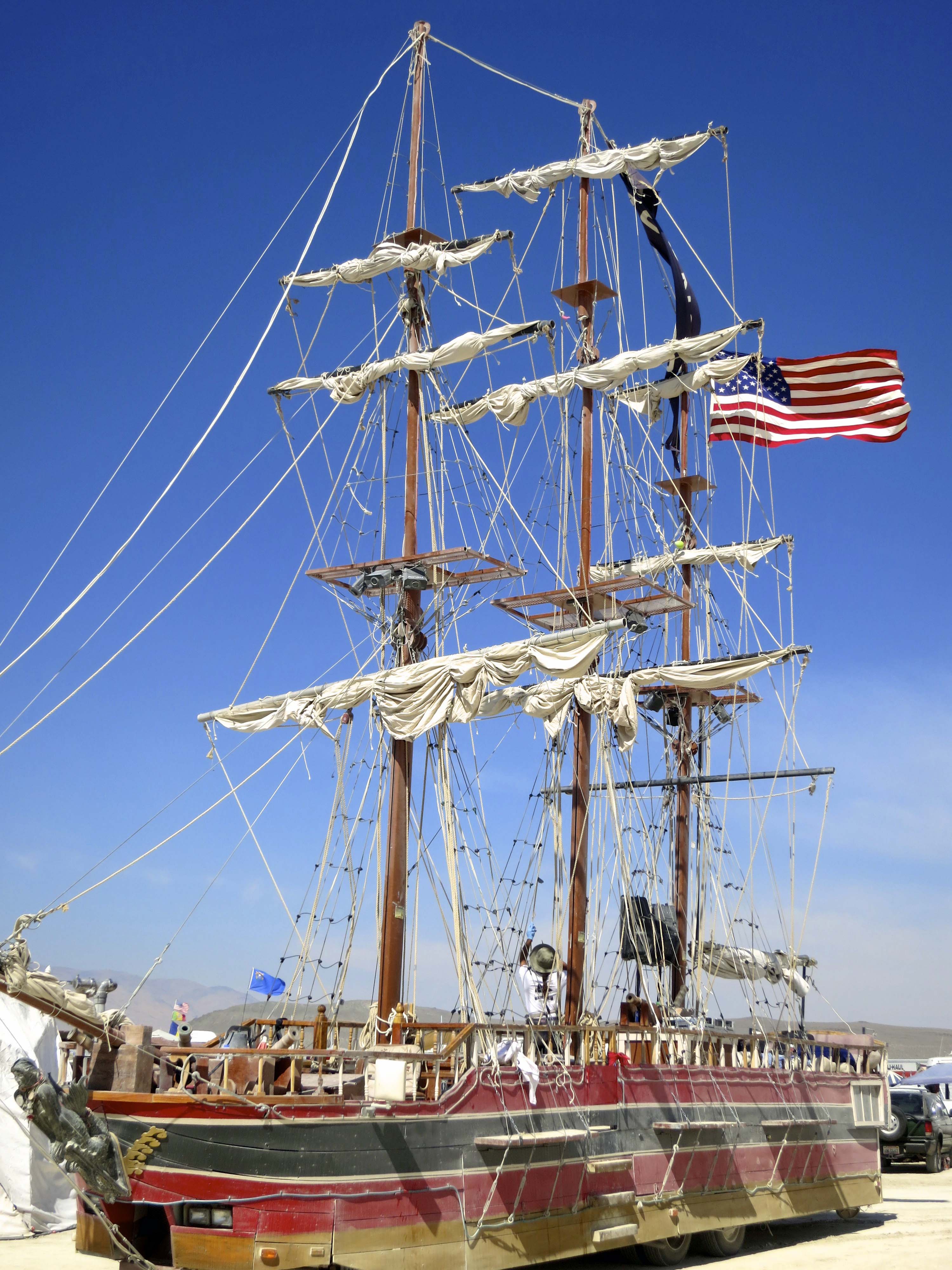
Burning Man requires that you park whatever you happen to be driving when you arrive at Black Rock City. You are expected to ride a bike or walk where you are going. The exceptions are mutant vehicles that are free to wander about. A mutant vehicle is a vehicle that has been modified to resemble something that in no way resembles the original car, truck, bus or golf cart it was. (There is a three-masted sailing ship that looks exactly like it did when it sailed the seven seas, however. And this year the playa is supposed to feature a recovered 747 jet.)

Some of the mutant vehicles are quite artistic. The best of these creations are jaw dropping unique. Most mutant vehicles take on a totally different persona at night when the Playa becomes magical with their comings and goings. I’ve included an example.

Here are a few of my favorites. If you have been following my blog for a while, they will be familiar.

El Pulpo Mechanico became an instant Burning Man classic when it first made its appearance on the Playa a few years ago. At night, its arms pump up and down shooting out fire.

El Pulpo Mechanico became an instant Burning Man classic when it first made its appearance on the Playa a few years ago. At night, its arms pump up and down shooting out fire.

Fire breathing dragons are also perennial favorites at Burning Man.

Fire breathing dragons are also perennial favorites at Burning Man.

Another, more ferocious looking dragon in Black Rock City.

Another, more ferocious looking dragon in Black Rock City.

Never Was Haul resembles a Victorian House that has been converted to a steam engine train.

Never Was Haul resembles a Victorian house that has been converted to a steam engine train.

Mutan vehicles, such as this vase, take on different personalities at night.

Mutant vehicles, such as this vase, take on different personalities at night.

The same mutant vehicle vase shown above, parked in Black Rock City during the day.

The same mutant vehicle vase shown above, parked in Black Rock City during the day.

Smaller mutant vehicles often brim over with character, such as this polar bear with its red rose.

Smaller mutant vehicles often brim over with character, such as this polar bear with its red rose.

The sailing ship I mentioned above.

The sailing ship I mentioned above.

A rhino even more massive than its counterpart in East Africa.

A rhino even more massive than its counterpart in East Africa.

And finally, a wart hog.  NEXT BLOG: The buildings of Burning Man.

And finally, a wart hog.
NEXT BLOG: The buildings of Burning Man.

Blog Hopping the World… with Curt and Peggy Mekemson

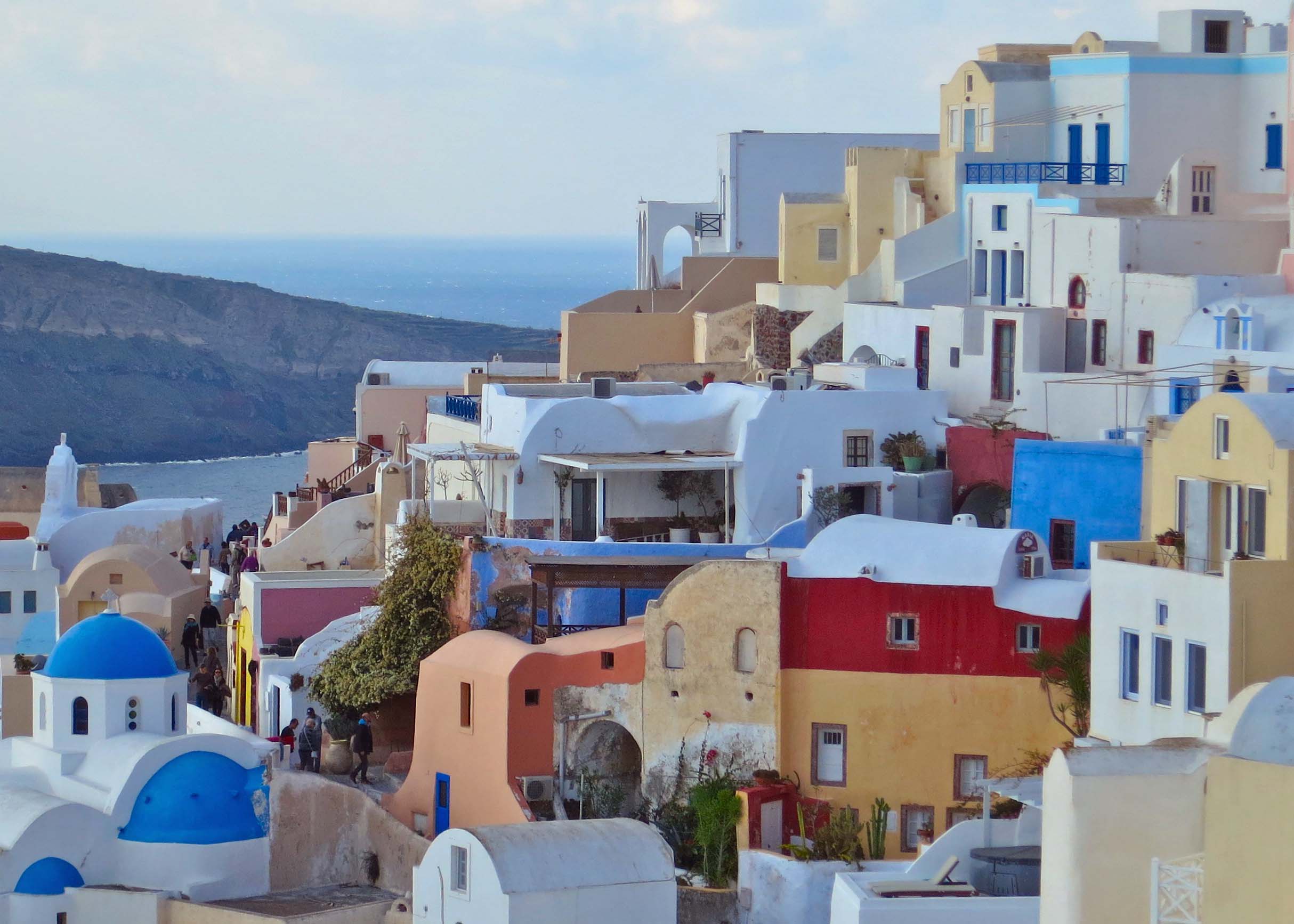
There are millions of beautiful photos of the Greek Island of Santorini, but none can match going there.

There are millions of beautiful photos of the Greek Island of Santorini, but none can match going there.

“There are travelers and then there are Travelers. If you take some time to review Curt’s lengthy résumé you’ll see what we mean: Peace Corps in Liberia, year after year at Burning Man, kayaking with orcas, and backpacking with the grizzlies. He walks the walk and his blog documents all of it.”

Travel Bloggers James and Terri Vance

"Now where did I leave that fish?" A big Kodiak Bear looks for salmon on the Frazer River of Kodiak Island.

“Now where did I leave that fish?” A big Kodiak Bear looks for salmon on the Frazer River of Kodiak Island. He was about 50 yards away from Peggy and me, a distance he could travel in 10 seconds. 1o, 9, 8,7…

A couple of weeks ago, two of my favorite world travelers, James and Terri Vance at Gallivance, nominated me to participate in what is called a “Behind the Scenes Blog Hop.” It’s a project making its way around the blogosphere where bloggers provide insight into why they blog. In this particular case, it was about people who travel frequently and write about their experiences. Go here to learn about what James and Terri have to say about their own journeys. I highly recommend following their blog if you don’t already.

The project sounded like fun but I was busy at the time. Today, I came up for air. Let me start by noting I am a wanderer by nature. I think it’s genetic. I’ve done a fair amount of genealogical research and discovered that my direct line of ancestors, at least as far as the 1600s, hit the road running and rarely looked back. As for me, as soon as I was allowed out of the house on my own, I set off to explore the fields, woods, ponds and creeks of the Sierra Nevada Mountain foothills where I grew up.

Why do you write what you write?

I am a storyteller and some of my best stories are about my travels and adventures. I believe that travel is one of the most enriching experiences we can have. Mark Twain said, “Twenty years from now you will be more disappointed by the things you didn’t do than by the ones you did do. So throw off the bowlines, sail away from the safe harbor. Catch the trade winds in your sails. Explore. Dream. Discover.” Explore, dream, discover: magical words that have always been my motto. Consequently, I have a lifetime full of wandering and very few regrets. My wife Peggy and I are wealthy with the experiences we have had.

And it is wealth we love to share— partially because it is fun to relive the adventures, but there is more. I hope to encourage those who read my blogs to “catch the trade winds in their sails.” And if not? I at least hope I can provide a taste of adventure, a dash of humor, a pinch of education, and on occasion, a serious thought.

There are two of other points I try to make with my travel writing. One, adventure travel doesn’t have to be expensive or difficult. Of course it can be, but it can also be a walk in the woods or a visit to a new restaurant. Anything that broadens our perspective on life can be an adventure. Just recently, for example, I wrote about a visit to a restaurant in Nashville that served really hot chicken. Believe me it was an adventure. And last year I wrote about a walk to my mailbox. It didn’t have to be an adventure, but I turned it into one.
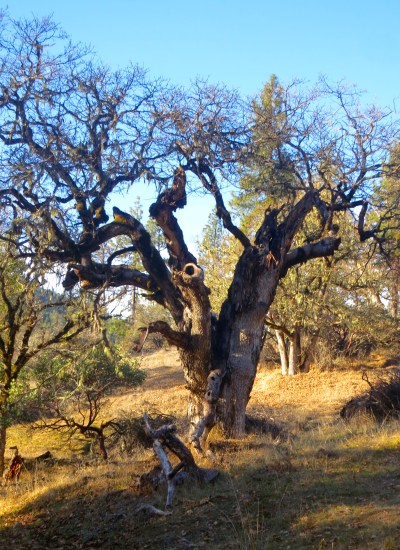
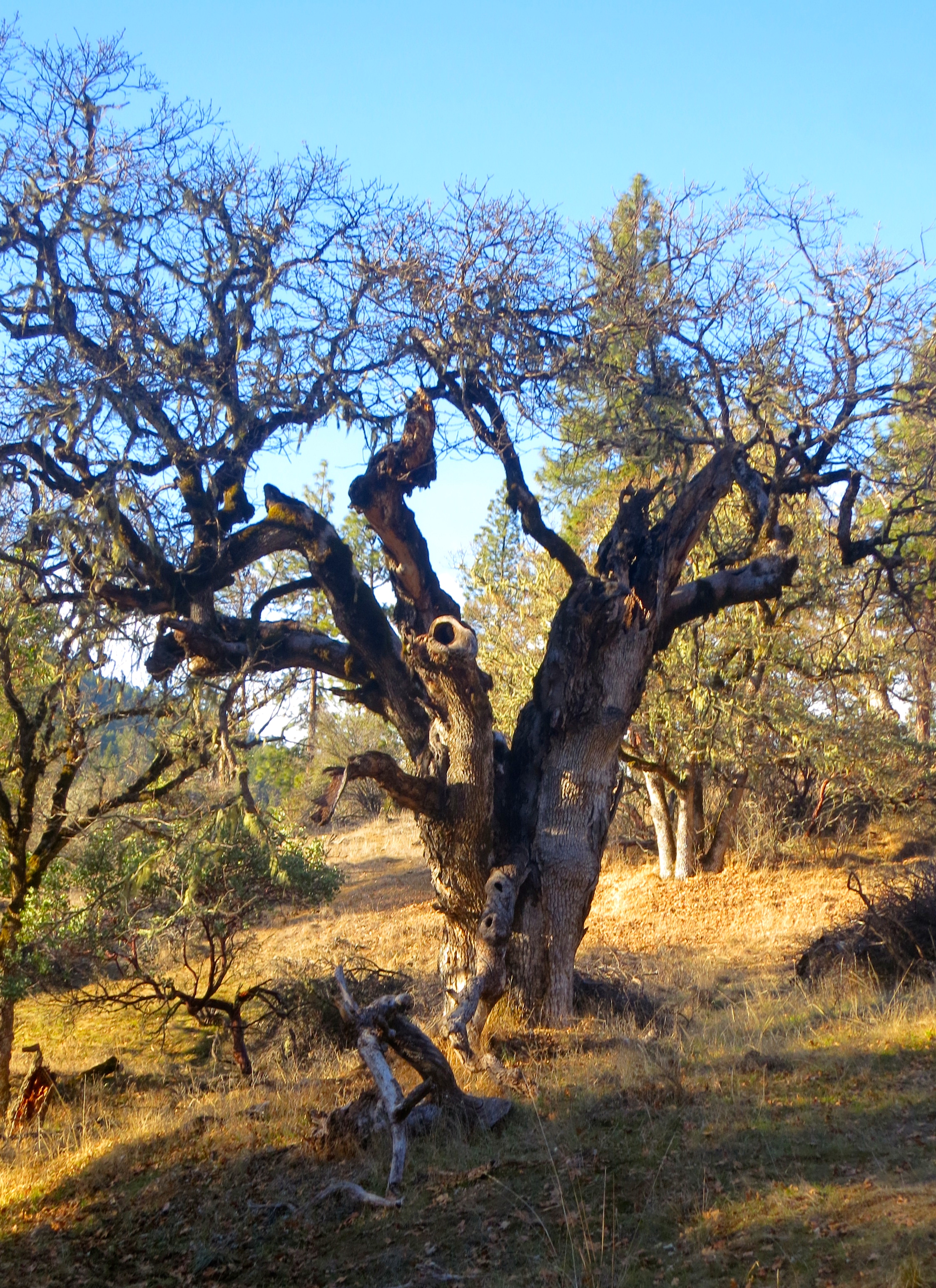
This oak tree lives along the path I walk to the mailbox.

This oak tree lives along the path I walk to the mailbox. In addition to having its own unique look, it serves as a home to a number of woodland creatures. A whole adventure could be built around watching it for 24 hours. I might add, this tree would be completely happy in the Hobbit.

Two, age does not have to be a barrier to travel. Peggy is big on this point. Young and old alike can have adventures. I am now in my 70s and Peggy is in her 60s and yet last year found us disappearing into a remote wilderness on a backpacking trip by ourselves, sea kayaking with the orcas off Vancouver Island, and going to Burning Man in the Nevada desert. If we can do these things, certainly people in their 50s, 40s, 30s and 20s can, not to mention 60s and 70s. And if you have children, take them along. You will create a lifetime of memories.

How does your blog differ from others of its genre?

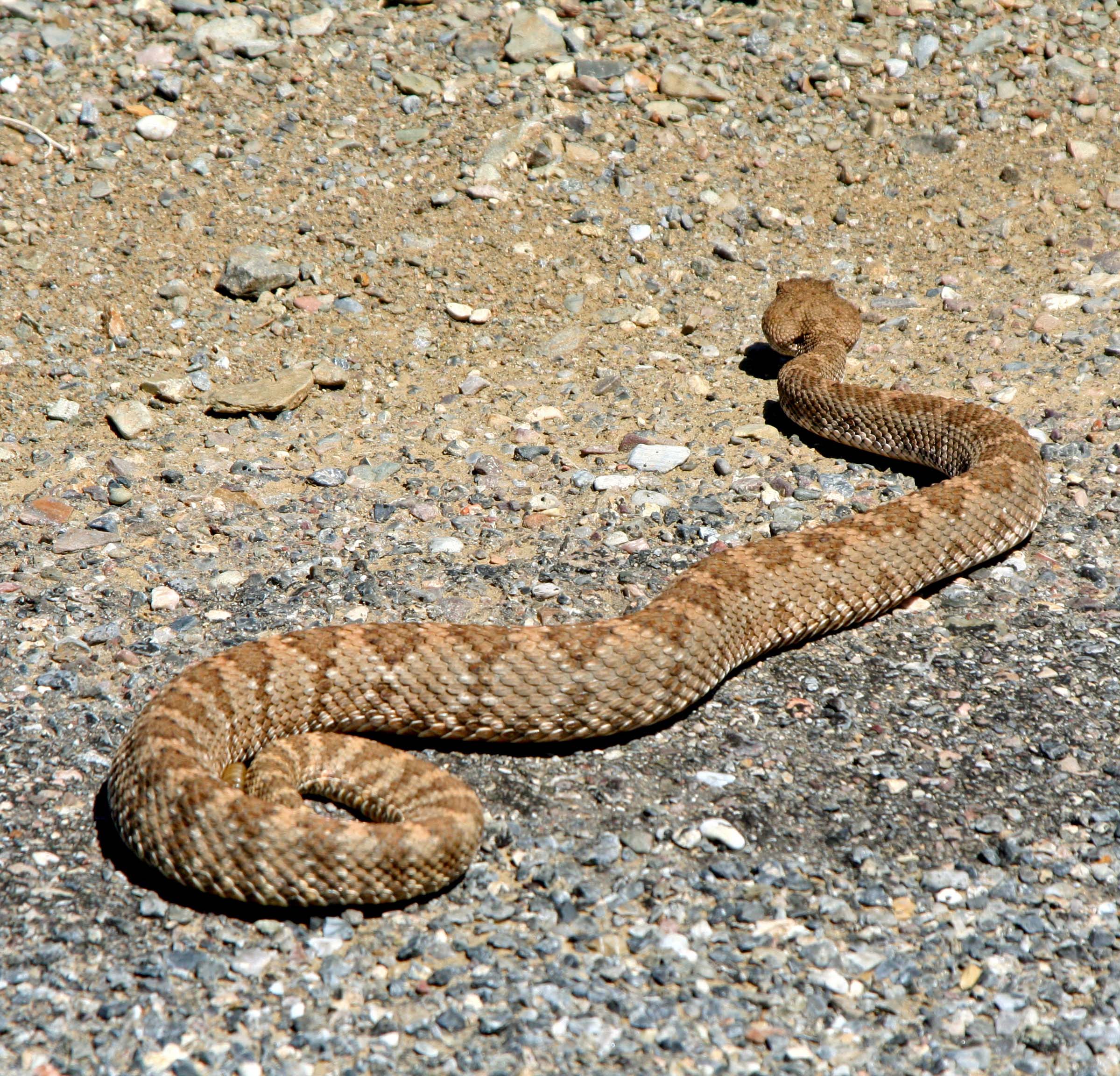
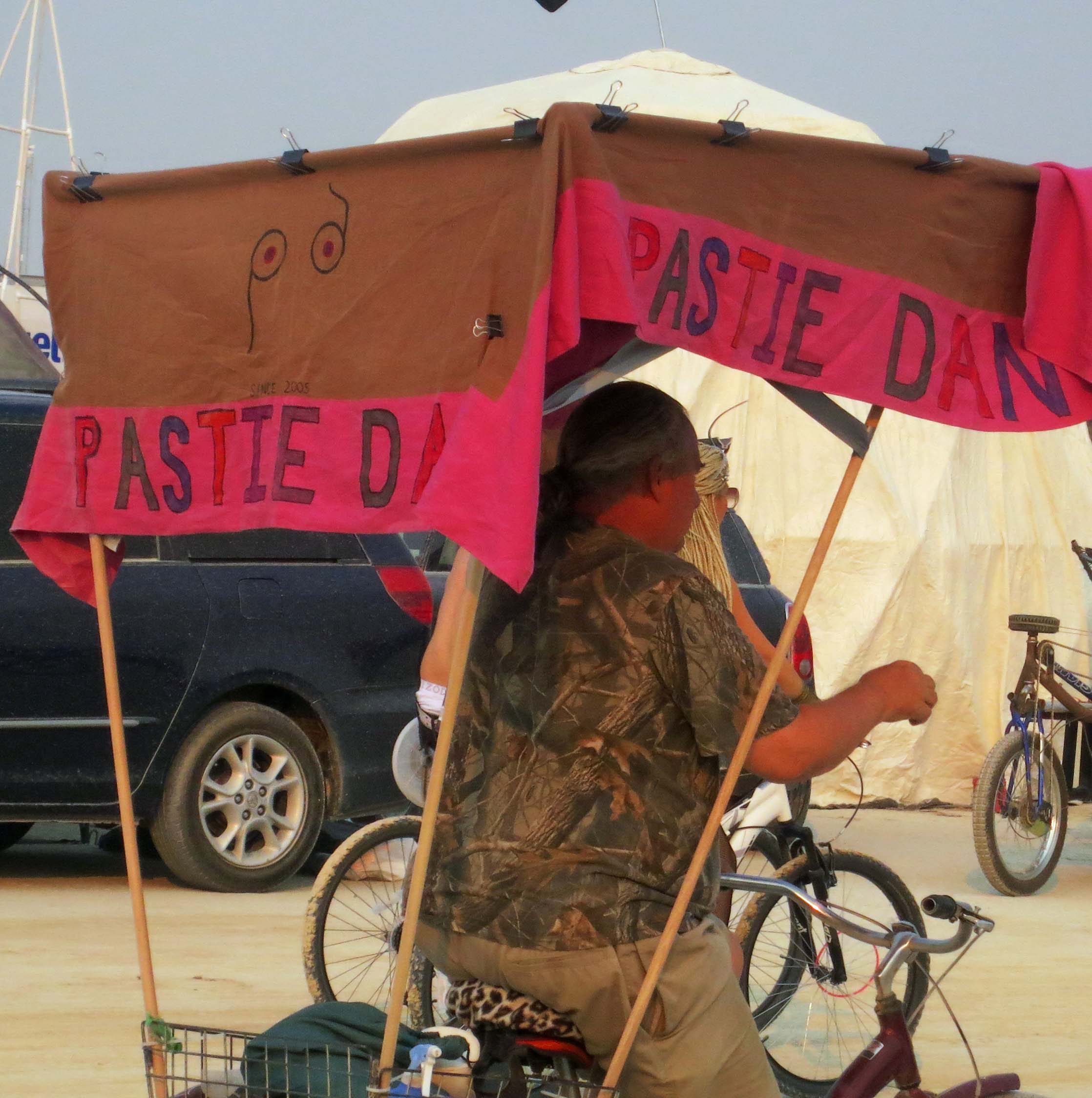
Variety comes to mind. One day I might be writing about cruising the Mediterranean Sea and visiting a Greek Island like Santorini. Another day I could be introducing you to Pastie Dan, a character at Burning Man who makes, and will gladly apply, pasties to cover women’s nipples. You might join me for a raft trip down the Colorado, a boat trip up the Amazon, or a narrow boat tour in England. Want a little excitement? Try waking up at 3 a.m. with a bear standing on your chest in the backcountry of Yosemite National Park. Then there was the rattlesnake that tried to bite me on the butt when I was doing my thing in the woods. My poor sphincter was frozen for a week. Want a touch of the exotic? Join Peggy and me as we search for Big Foot, UFOs and ghosts— it’s all in fun, and yet…

Panamint Rattlesnake in the Panamint Mountains, Death valley.

Admittedly, this guy is a little bigger than the rattlesnake that tried to bite me on the butt. With rattlesnakes, I am not sure size matters, however. (Photo by Peggy Mekemson.)
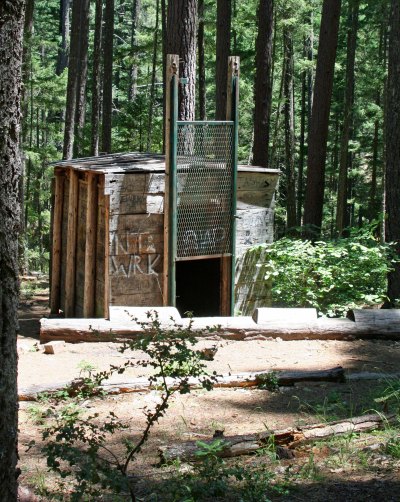
Bigfoot trap found above Applegate Lake in Southern Oregon.

This Bigfoot trap is located four miles from my home. It was maintained in the 70s in hopes of actually capturing one of the big fellows. (Photo by Peggy Mekemson.)
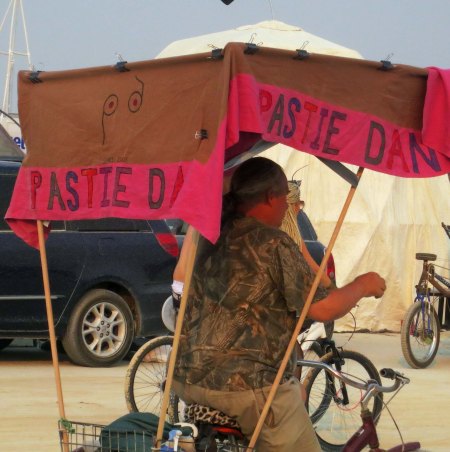
Pastie Dan in Black Rock City.

Normally Pastie Dan plies his trade at the Center Camp Cafe but occasionally, he wanders the roads of Black Rock City. He stopped at our camp to see if any of the women were in the market for pasties.
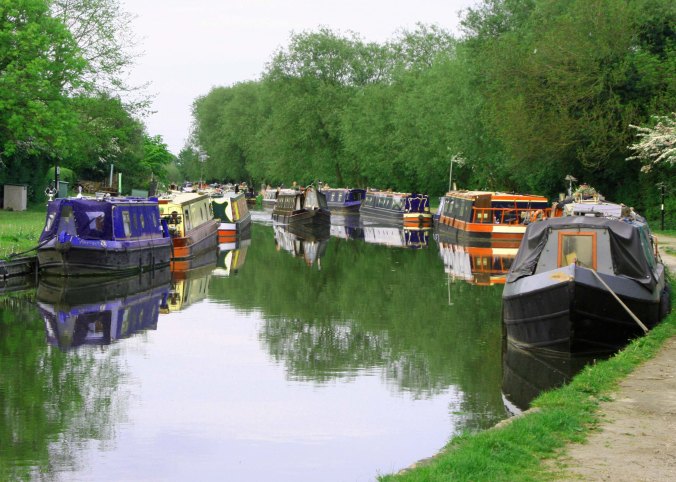
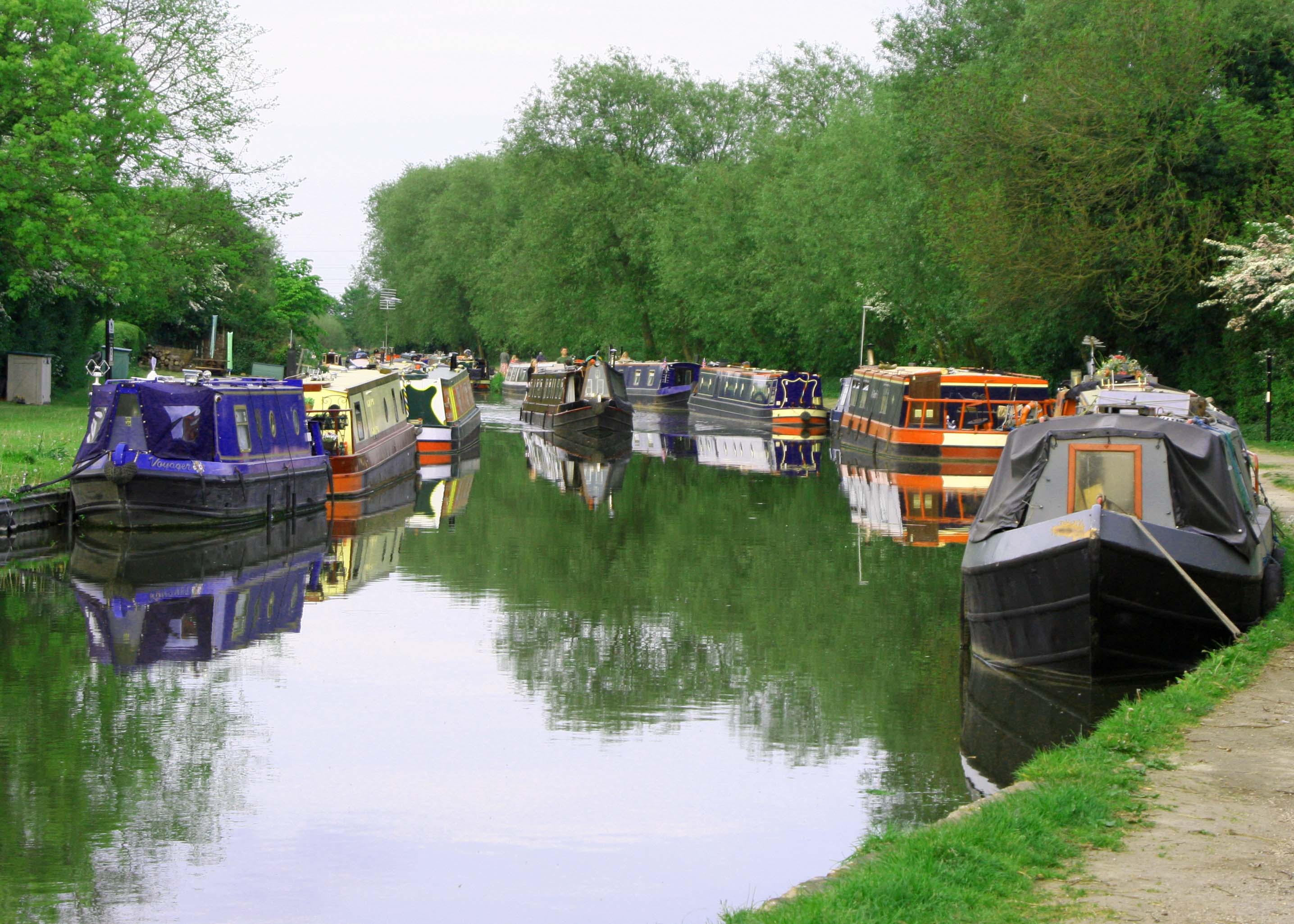
Maneuvering a 60 foot long Narrow Boat through the Trent and Mersey Canal in England two summers ago was a very different but equally rewarding experience.

Maneuvering a 60 foot long Narrow Boat through the Trent and Mersey Canal in England is a wonderful adventure that comes with pubs along the way.

How does your writing process work?

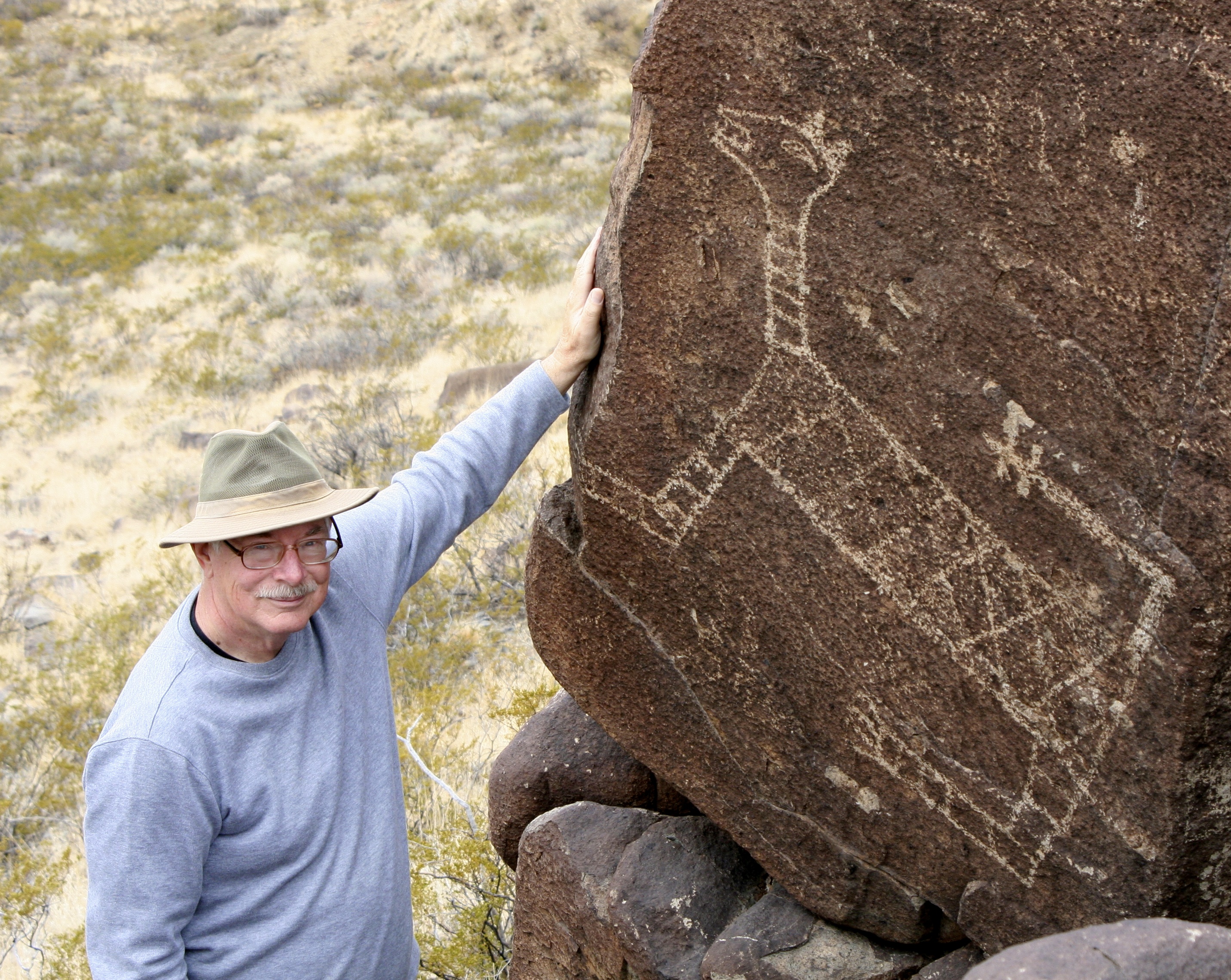
My stories start with experiences. I don’t scramble over rocks in New Mexico looking for petroglyphs because I want to write about the experience. I risk life and limb because I am fascinated with petroglyphs. I will confess, though, that when Peggy and I take photographs, we think about the blog— in addition to documenting our travels.

We call this large cat a cougar, mountain lion, puma… it would be interesting to know what the ancient Native American who made this rock art thought about and called his creation.

We call this large cat a cougar, mountain lion, puma… it would be interesting to know what the ancient Native American who made this rock art thought about and called his creation. (Photo by Peggy Mekemson.)

Research is also part of the process, either before we traipse off on an adventure because it enhances the experience, or afterwards because I want to add depth to what I am writing about.

As for the actual writing… writing is writing; it’s work. And I say this even though I love to write. I will normally think through what I want to write about, create a first draft, do a rewrite and then edit for mistakes. Then I turn it over to Peggy for further editing.

Photographs are also a very important part of my blogging. Between Peggy and me, we often have as many as 100 photos we have taken in relation to a particular blog. Ten to fifteen have to be selected out for a post and then processed. Mainly I work on cropping the photo to capture what I want, but I also make minor adjustments to light, color, shadows and sharpness if needed. Altogether, the process of creating a blog can take from three to eight hours.

What are you working on/writing?

I work from a calendar of blogs I want to write. I’ll usually have two or three months’ worth of blogs in mind. This time of the year, I often do several on Burning Man because many of my readers are Burners, excited about getting tickets. Since I have now been to Burning Man for ten years, I am going to do a best of ten series (from my perspective) of sculptures, mutant vehicles, burns, structures, etc. over the next few weeks. After that, I will return to my north coast series exploring the coast of Northern California, Oregon and Washington. Or I may do a series on California’s gold rush towns. (My home town was one.)
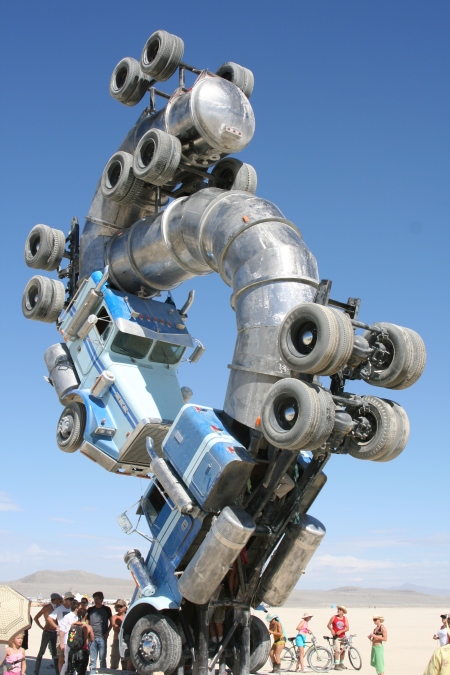
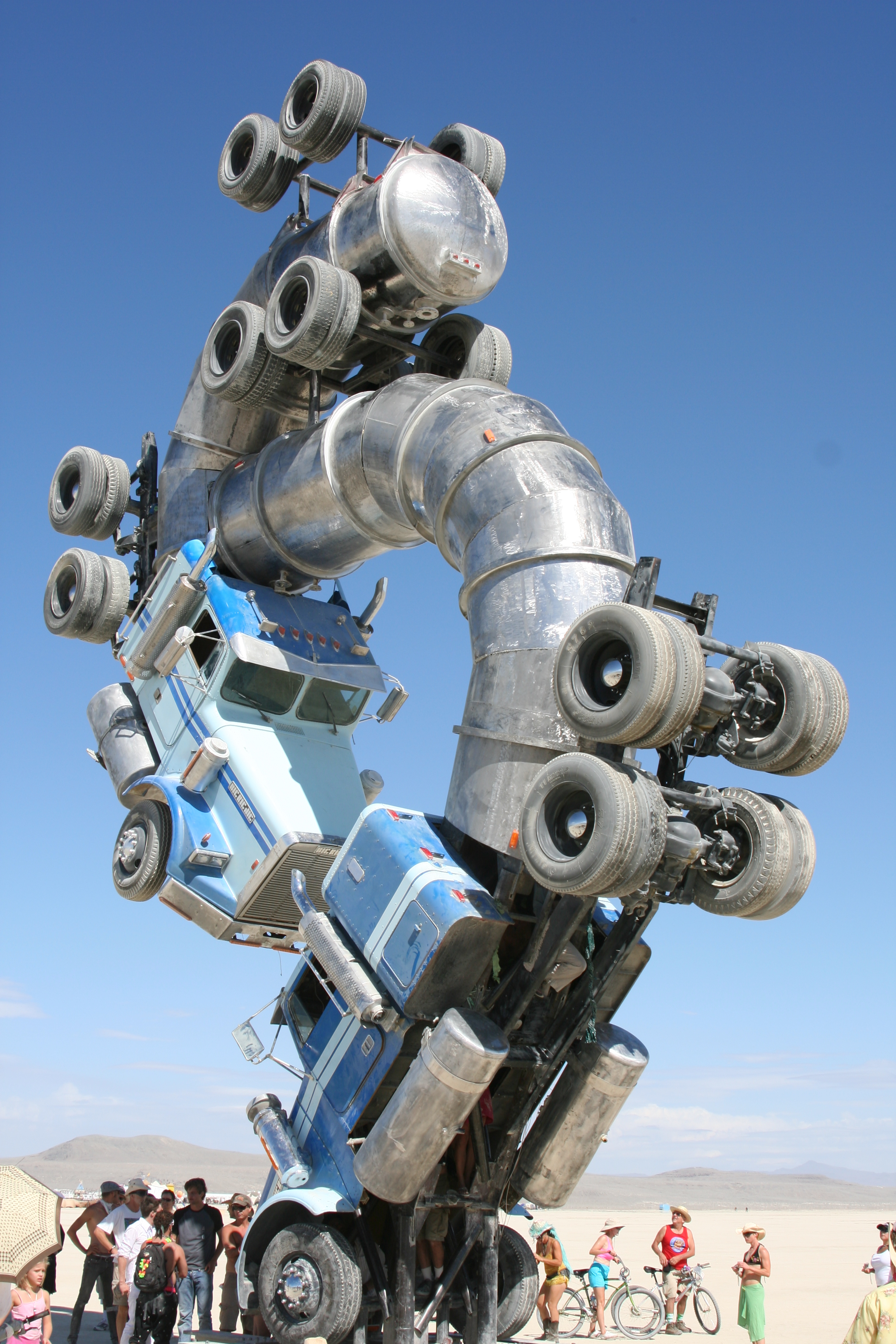
Two oil tankers provide an interesting Sculpture at Burning Man

One of my all-time favorite sculptures at Burning Man.

The really big writing project I have been working on has been the book about my Peace Corps experience in Liberia, West Africa: The Bush Devil Ate Sam. I’ve posted several chapters over the past couple of years on my blog and a number of you helped me select the title of the book. This is my first venture into self-publishing and let me say unequivocally and undeniably, it has been a steep learning curve (understatement). I wrapped up getting the book in to Bookbaby two months ago, or at least thought I did. Bookbaby dutifully put the book on numerous E-pub sites and sent me back printed copies I requested. And what did I discover? Even though Peggy and I had meticulously done a line-by-line edit, some 30 errors. Damn. (A woman who is really good at editing found 25 of them, friends and family others.) So it was back to the drawing boards. Anyway, I sent all the corrections in last Wednesday and also set up the print on demand option. Soon…

One good bit of news, Steven Spatz, the president of Bookbaby, wrote to me on Friday and said he would like to feature The Bush Devil Ate Sam this week on Bookbaby’s blog. Given that Bookbaby is one the largest self-publishing companies in the world, produces thousands of books, and has an excellent reputation, things are looking up. (And no, Steven is not going to use me as an example of how not to.)
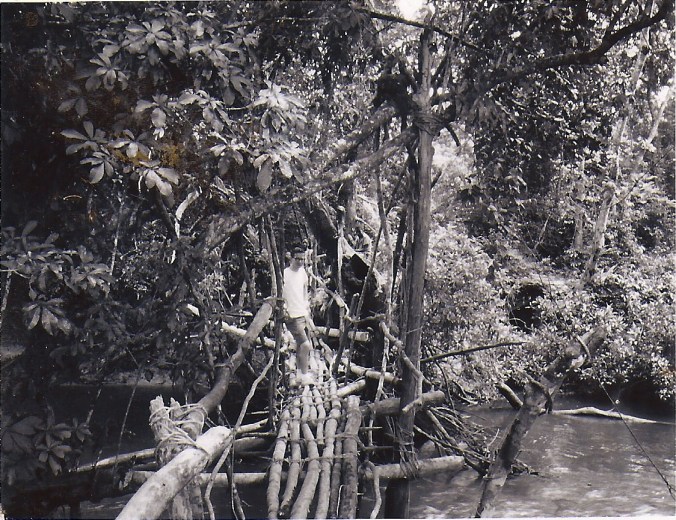
Kpelle footbridge near Gbarnga, Liberia circa 1965.

When I graduated from UC Berkeley and travelled off to Liberia, West Africa as a Peace Corps Volunteer, I began one of the grandest adventures of my life. Once there, I continued to explore my surroundings by hiking off into the jungle. Here, I am standing on a bridge built by Kpelle villagers.

NOMINATIONS

As part of this process of blog hopping, we are asked to nominate two other bloggers to participate in the blog hop. This is tough; there are so many great bloggers I follow. But that said, here are my two nominations:

Linda at Shoreacres: Wow, this woman can write. While she isn’t exactly a travel blogger, I can guarantee she will take you on some great journeys. As a compliment to the posts she writes, her followers comment in paragraphs instead of sentences.

Cindy Knoke: Cindy takes you from her home in southern California, the Holler, to journeys around the world. Her photography, particularly in terms of birds and wildlife, is superb.


A Big Bird Petroglyph and a 1.6 Million Gallon a Day Spring… The Sedona Series

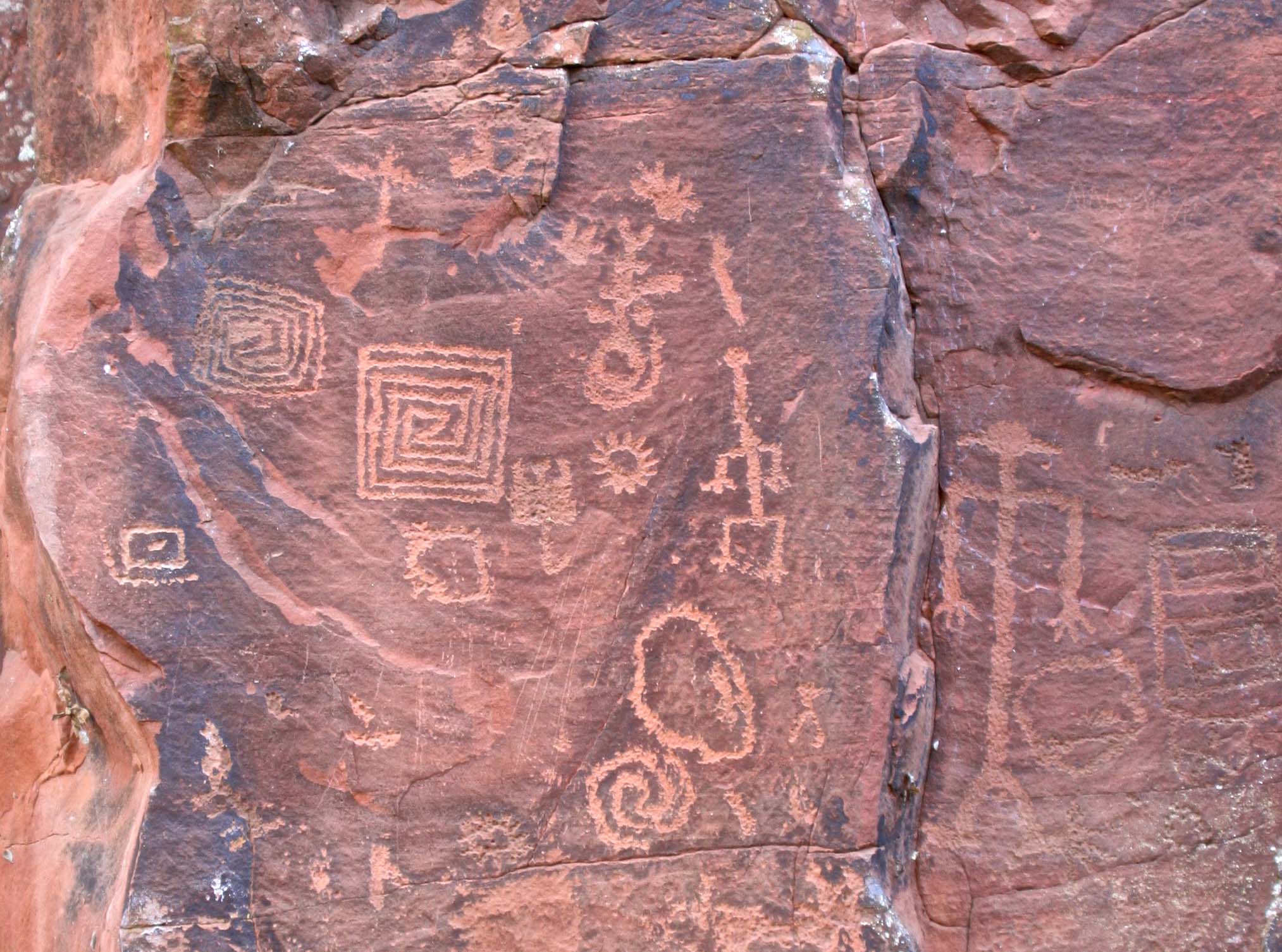
Big birds and camp dogs, four of !032 petroglyphs at the V-bar-V Heritage Site in the Verde Valley of Arizona.

Big birds and camp dogs, four of 1032 petroglyphs found at the V-bar-V Heritage Site in the Verde Valley of Arizona.

Sinagua rolls off the tongue easily, like so many Spanish words do. It is a name applied to Native Americans who lived in the Verde Valley between 500 and 1425 CE by the archeologist Harold Colton. Sinagua means ‘without water.’ The early Spaniards originally applied it to the San Francisco Mountains north of Flagstaff, the Sierra Sin Agua. I think they were disgusted that such beautiful mountains didn’t produce a river.

On our recent visit to Sedona, we visited two areas that did have water, however: the V-Bar-V Heritage Site and Montezuma’s well. The fact they had water made them important to the Sinagua. The V-Bar-V Heritage Site is known for its fine collection of petroglyphs— Native American rock art. Fortunately, the ranchers who had owned the V-Bar-V and ran their cattle along Beaver Creek both appreciated and protected the rock art.

V-Bar-V, by the way, reflects the ranches brand, V—V, that would have been burned onto the hide of its cattle. Branding helped identify the ranch’s cattle when they got mixed up with the neighbors. It also discouraged cattle wrestling, which was a popular way of supplementing your income in the Old West. Marketing gurus today apply the term branding to establishing your unique product, whether its potato chips or blogs.

If you been around my blog for a while, you are aware that Peggy and I really like rock art, both as an art form and for its historic context. I also find many of the petroglyphs humorous. Who know whether the Native Americans artists found them so. Most of what we know about rock art fits under the category of speculation.

The V-Bar-V site includes 1,032 petroglyphs on 13 panels, according to the archeologists who count such things. Most were created between 1150 and 1400 CE. The Sinagua packed their bags and abandoned the area in 1425 as part of a massive migration that impacted the whole Southwest for some unknown reason. Maybe a visionary shaman predicted that the Europeans were coming and would ruin the neighborhood. (Just kidding.) Anyway, the petroglyphs include zoomorphs, animal like figures, anthopomorphs, human like figures, and various geometric forms representing everything from maps to astronomy. While half listening to the volunteer led tour, Peggy and I were busy with our cameras.

Long neck or long body? I often fine a humorous side to rock art.

Long neck or long body? Check out the two human-like figures on the right. I often find something humorous about rock art. (Photo by Peggy Mekemson.)

Rock art at V-Bar-V Heritage Site near Sedona, Arizona

Love the tail.

Sinagua rock art at the V-Bar-V Heritage Site in the Verde Valley of Arizona.

Archeologists believe the circles represent the sun and serve as a planting calendar.

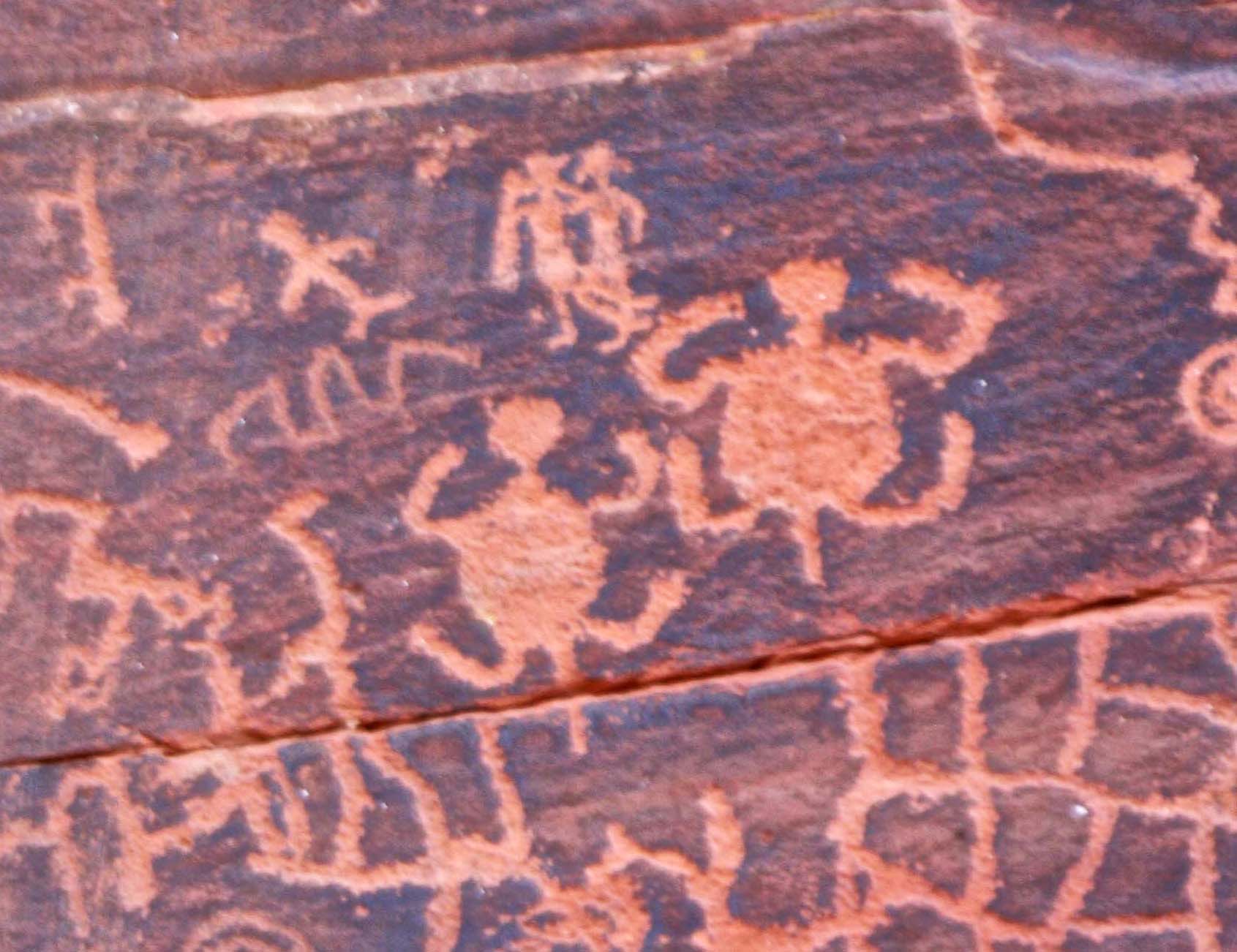
The two turtles are quite impressive. But what about the couple above the turtles. My imagination tells me they are dancing.

The two turtles are quite impressive. But what about the couple above the turtles. My imagination tells me they are dancing.

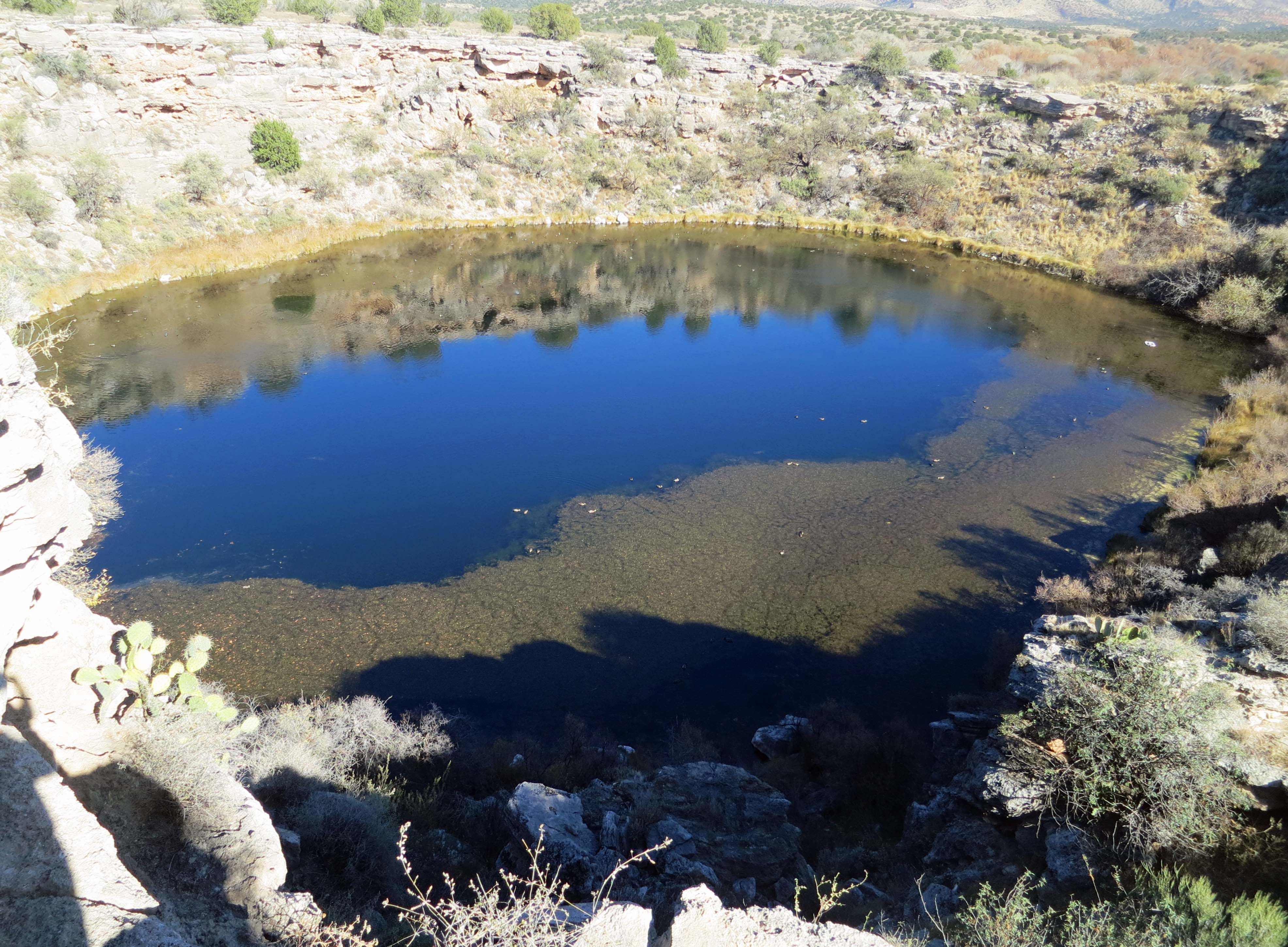
We found Montezuma’s Well a few miles away from the V-Bar-V Heritage Site. There is also a nearby Montezuma’s Castle that we didn’t get to. The so-called castle is a large cliff dwelling. Neither the Well nor the Castle has anything to do with Montezuma, however. Think profit. Early entrepreneurs believed that stealing the famous Aztec emperor’s name would attract more tourists. So here we are back to branding. They are lucky Montezuma didn’t wreak a little revenge on them for the theft. That could have gotten messy.

The Well is actually a large sinkhole with a very productive spring in the middle that pumps out some 1.6 million gallons (6 million liters) of water each day. Given that it manages to do this in the middle of a desert and has been for several thousand years, it is no wonder the Sinagua and other local natives found the spring so valuable. The Yavapai Indians even find it sacred; they believe that their ancestors emerged from the spring. Their legend contends that nothing can re-enter the hole once it has emerged. You can’t go home again.

Scientists have learned a lot about the spring. They have been studying it for decades. For one, they believe the water originates up on the Mogollon Rim where it percolates down through various rock layers until it hits the permeable Red Wall Sandstone, which it follows south until it reaches an impermeable volcanic dike, forcing it to the surface. Fish can’t live in the water, but leeches do, thousands of them. I was not tempted to go for a swim.

Not surprising, there is ample evidence including a number of dwellings that demonstrate the spring’s early use by the Sinagua and others. As for the name, I prefer the Hopi’s name for the spring, Tawapa, which means sun spring.

Montezuma's Well and cliff house in the Verde Valley of Arizona.

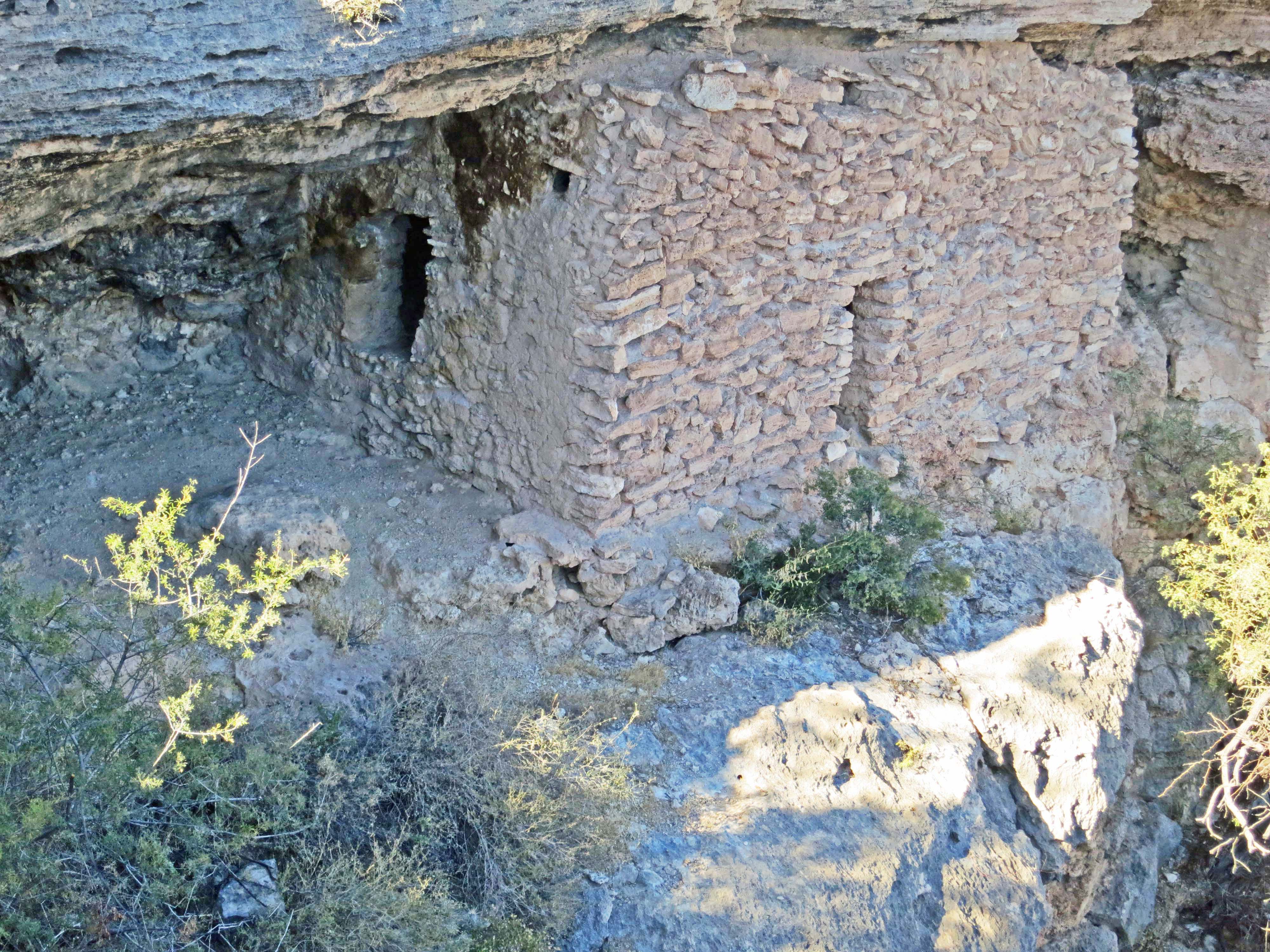
A cliff house perches above Montezuma’s Well. (Photo by Peggy Mekemson.)

The same cliff house from a different perspective.

The same cliff house from a different perspective. (Photo by Peggy Mekemson.)

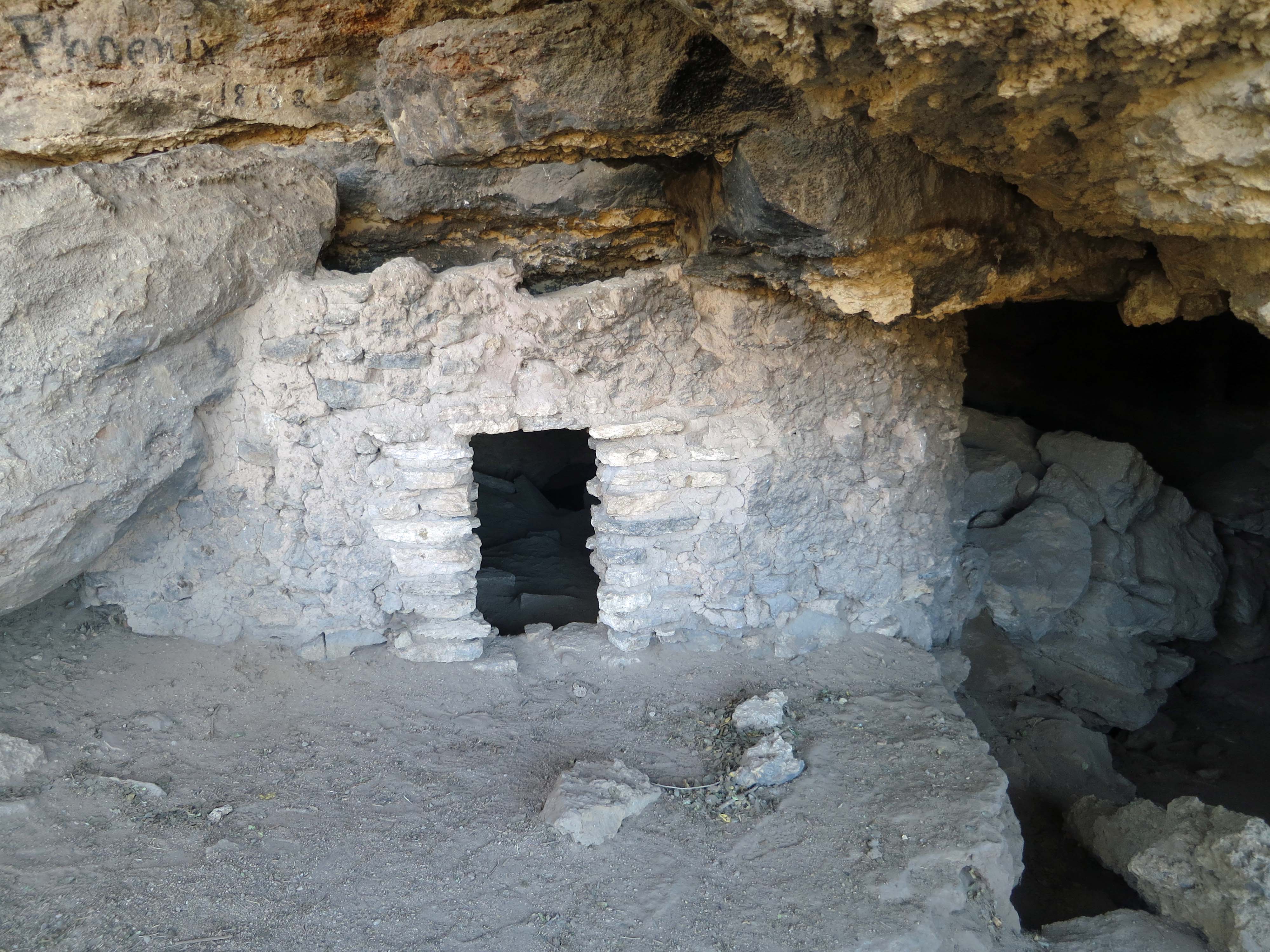
We found this shelter down next to the water, very well protected from the elements.

We found this shelter down next to the water, very well protected from the elements.

Inlet from Montezuma's Well in the Verde Valley of Arizona.

A small inlet from the spring ran next to the shelter and probably provided water. I liked the reflection shot it provided.

Ruins of Native American shelters found at Montezuma's Well in Verde Valley, Arizona.

Just down the trail from the shelter, we found more ruins.

A final shot taken down into Montezuma's Well. Next Blog: Burning Man 2015: the Theme.

A shot from the rim of Montezuma’s Well.

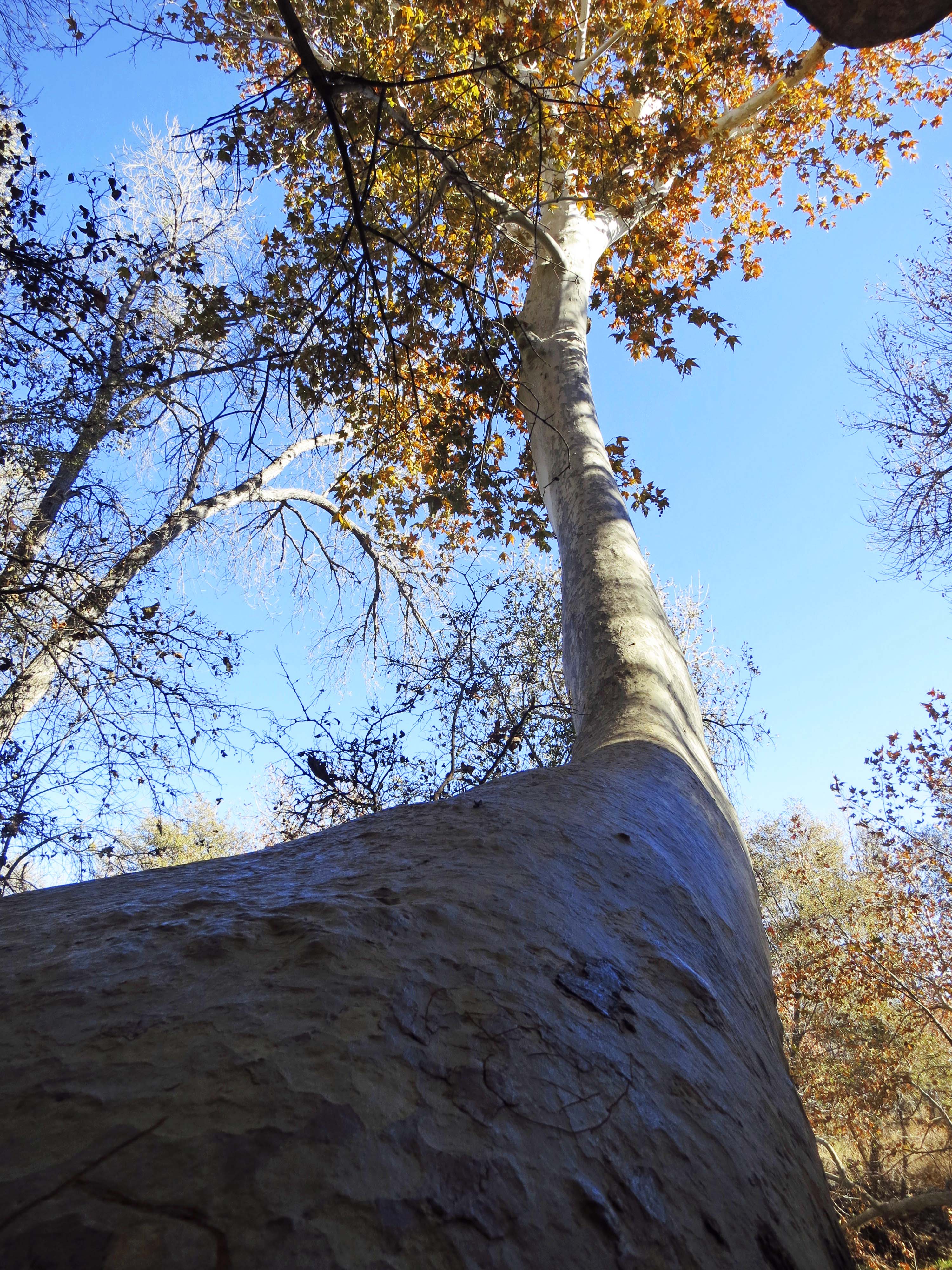
I found this tree growing  down in the valley. It demanded I take its picture.

I found this tree growing down in the valley below the Well. It demanded I take its picture. Native Americans farmed  in the valley with water from the spring.

More ruins are found above the well. Native Americans farmed some sixty acres in the valley below with water from the spring.

A final photo. This ruin was perched above the valley just down from the edge of the Well. NEXT BLOG: Burning Man… the 2015 theme.

How’d that Peccary Get in the House… Sedona Series

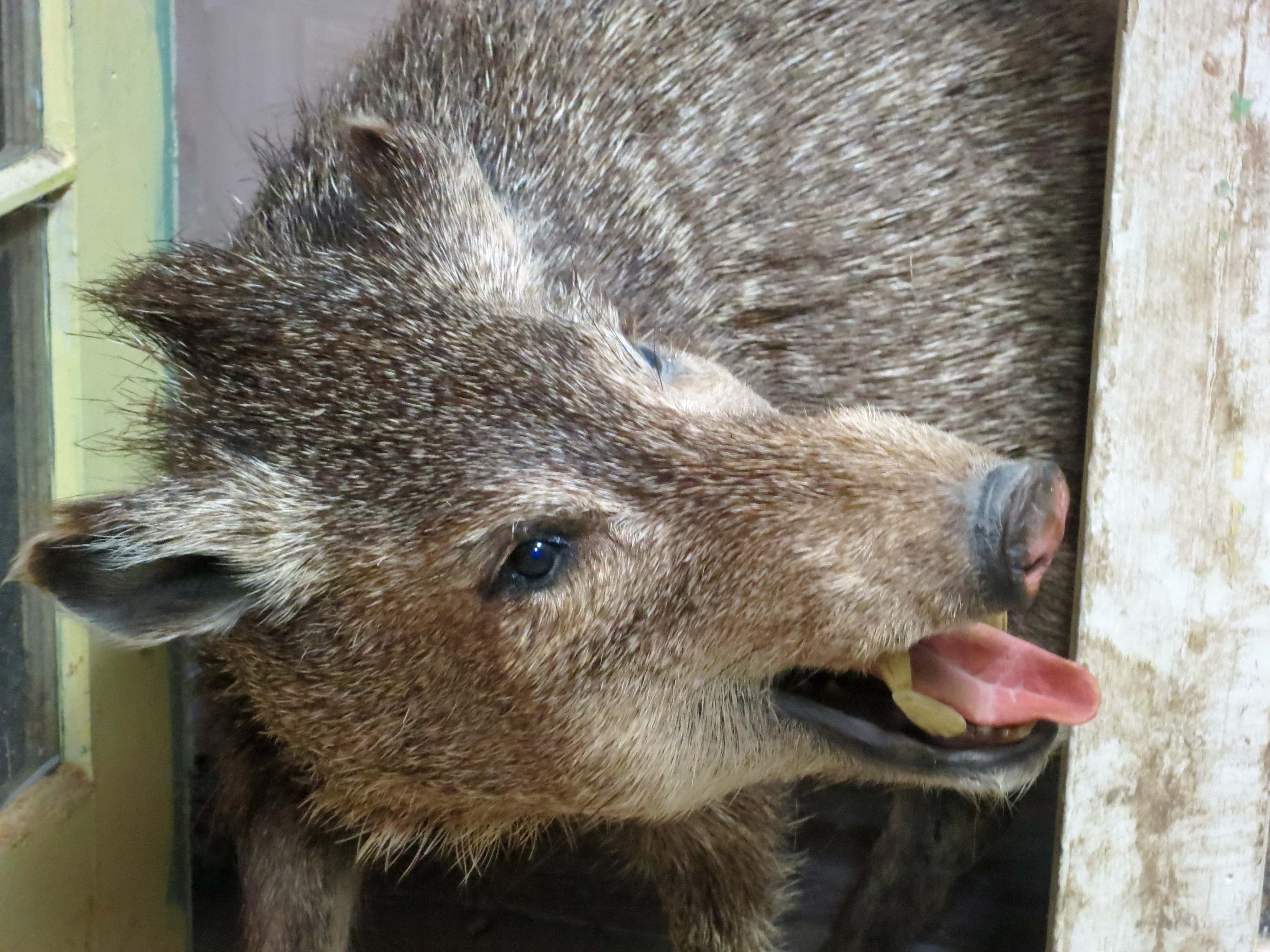
Peccary in Kingman, Arizona Museum of History.

This peccary was trying to get in the door.

I was going to write about Indian Rock Art today, but I ran out of time. So I decided to do a quickie. (And no, for those of you who think that way, it wasn’t that type of quickie.)

I woke up one night in Sedona and heard snorting outside our room, lots of snorting. It was the kind of snorting that made me check the door to make sure it was locked. The next morning, in the light of the day, mind you, I went searching for source. As it turns out, peccaries often make nighttime sorties onto the property of the Arroyo Robles Resort. As a general rule, they don’t eat people.

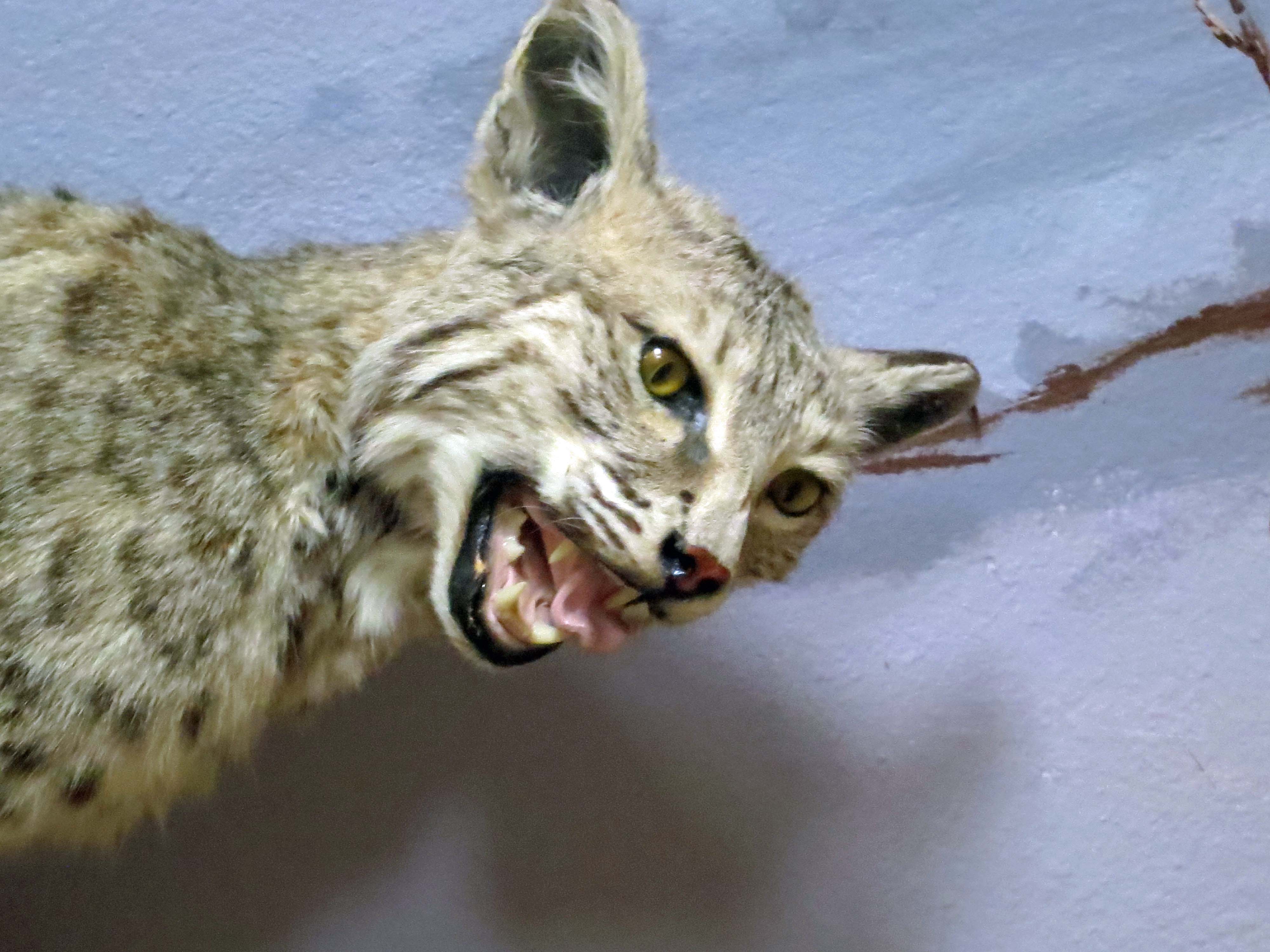
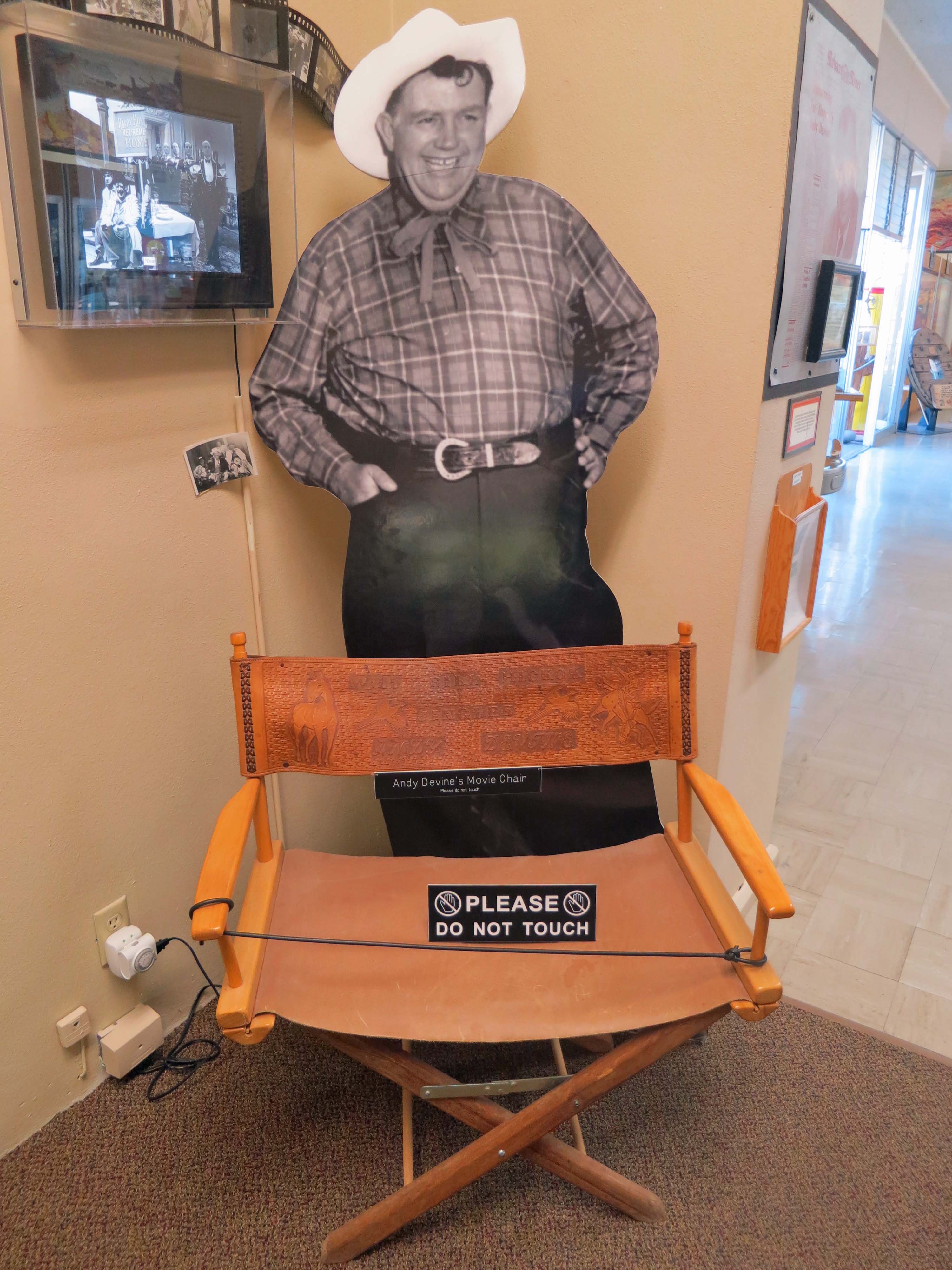
In the interest of transparency, a peccary didn’t get inside our house. I caught the guy in the photo hanging out in the Mojave Museum of History in Kingman, Arizona. He apparently did want in, however. Fortunately, he was stuffed. So was the bobcat. I don’t think Andy Devine was but he liked to stuff himself. Check out the humongous director’s chair.

I've run into several bobcats over the years, but none looked quite as ferocious as this fellow.

I’ve run into several bobcats over the years, but none have looked quite as ferocious as this fellow.

Old Andy here, might send half of my readers running to Google, but he was BIG in the 50s, and also the 40s and 30s. Peggy and I could have shared that chair together.

Old Andy here, might send half of my readers running to Google, but he was BIG in the 50s, and also the 40s and 30s. Peggy and I could have shared that chair together.

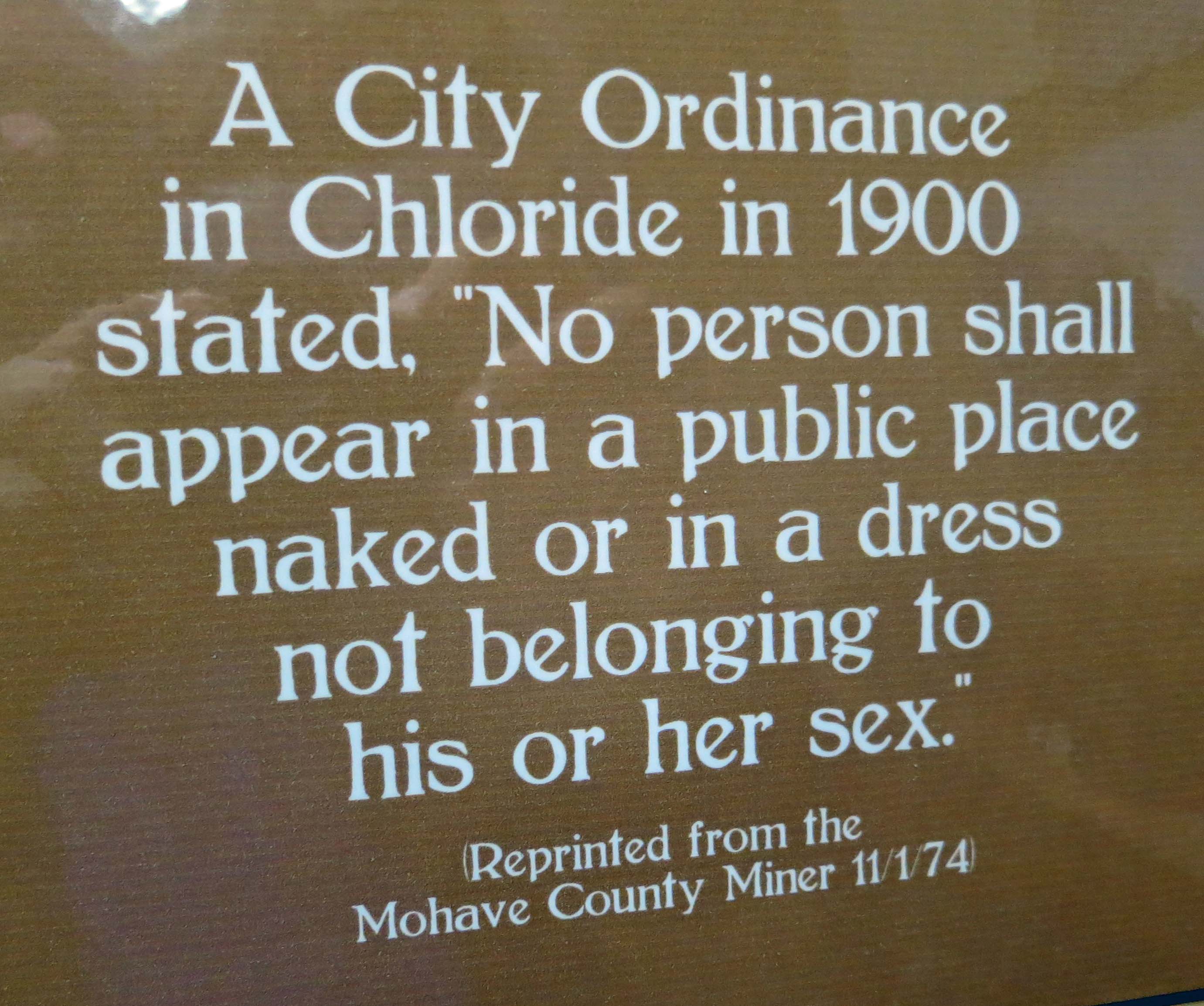
The museum was packed full of interesting, and I might add, amusing things, like the sign below.

I can guarantee you that you would not find this sign at Burning Man where the guy costume of a day is often a tutu.

I can guarantee you that you would not find this sign at Burning Man.

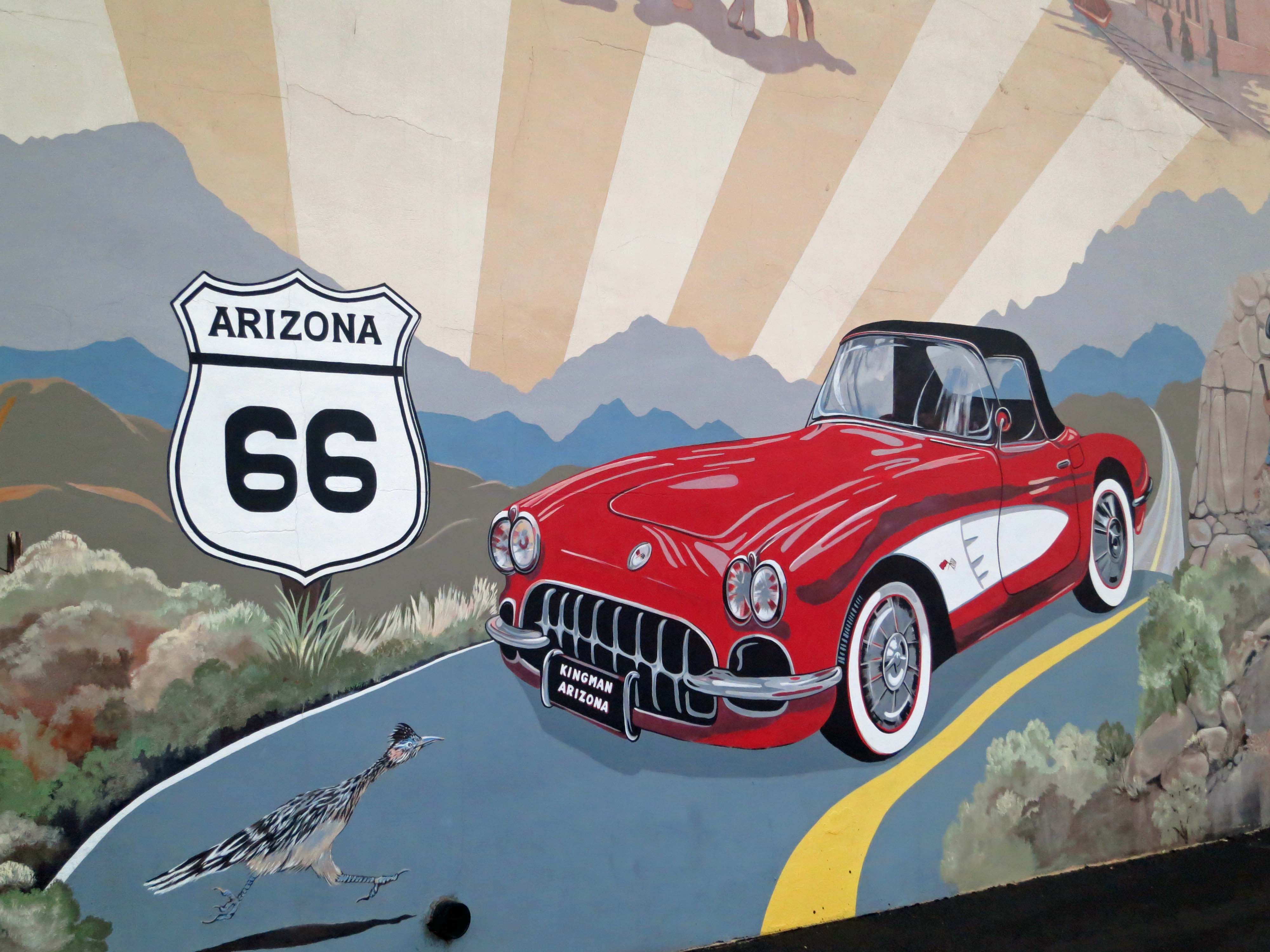
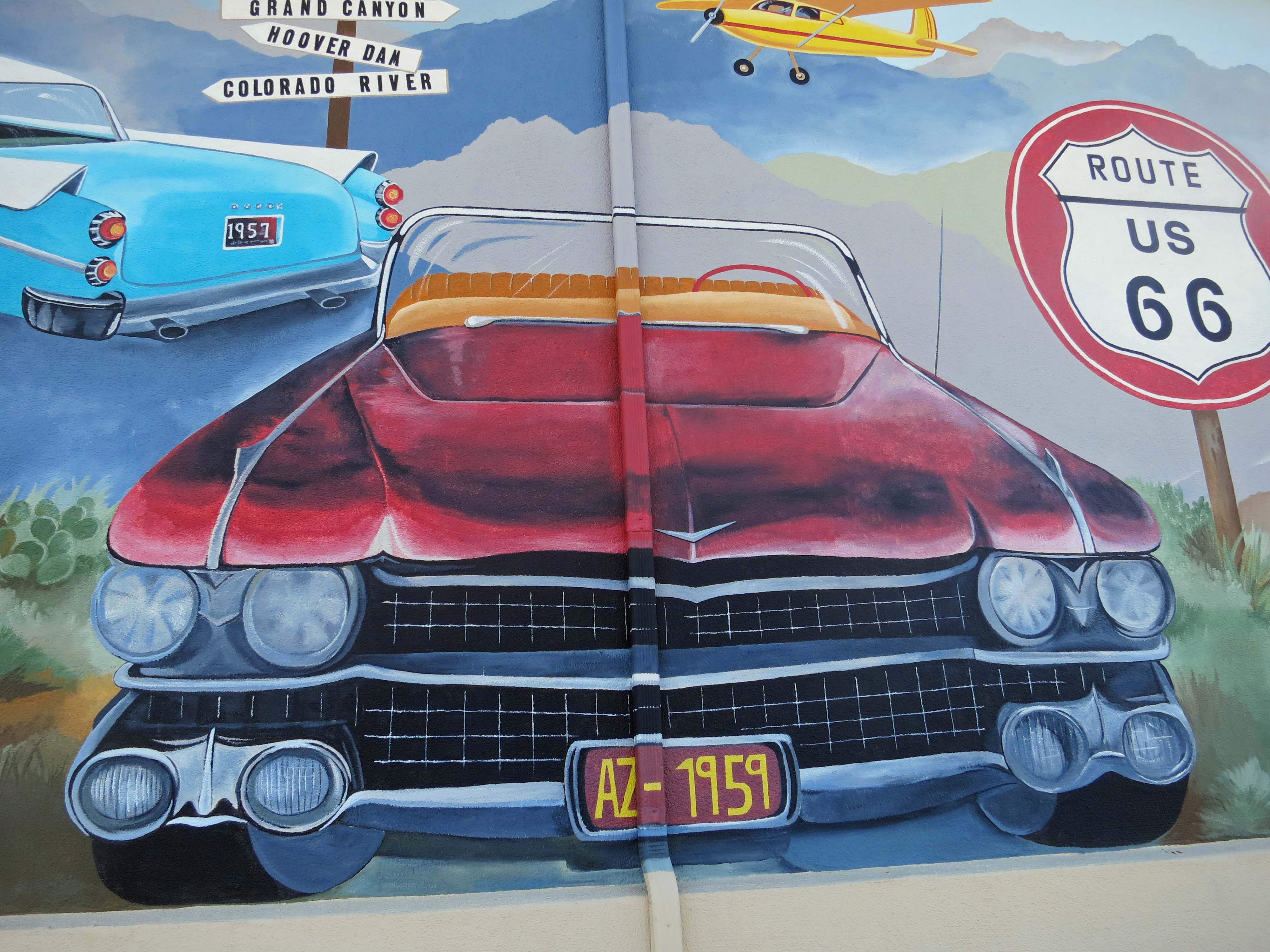
Outside of the museum I found contrasting murals of vehicles that once traveled over Historic Route 66. The museum sits alongside the old highway. Travelling back in time, which of these vehicles would have been your vehicle of choice?

Route 66 mural in Kingman, Arizona.

Route 66 mural in Kingman, Arizona.

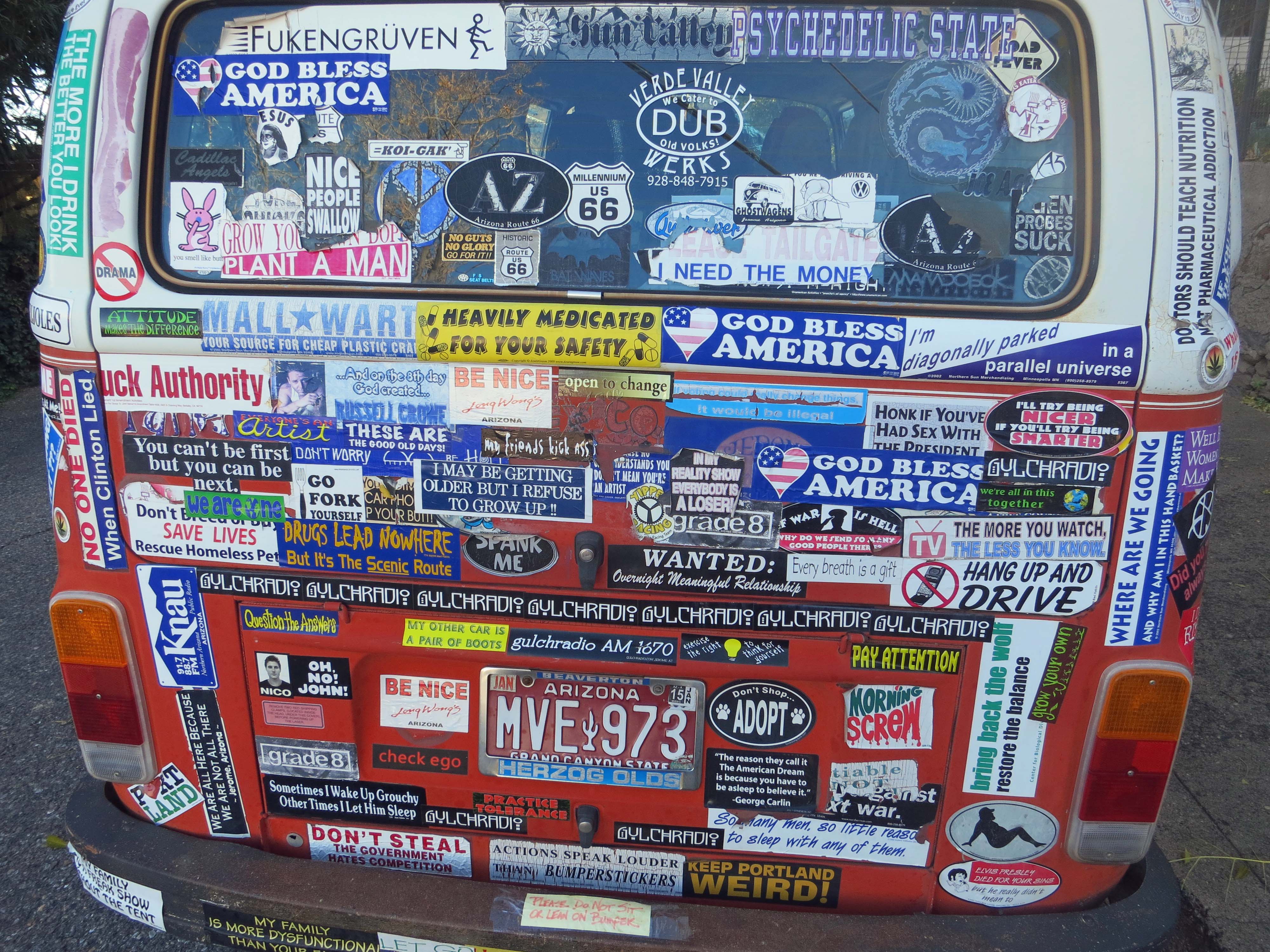
Or are you the Volkswagen van kind of person? That’s what I drove in the 70s. But I didn’t plaster it with bumper stickers like I found on this vehicle in Jerome. I found “heavily medicated for your safety” rather amusing.

VW Van in Kingman, Arizona

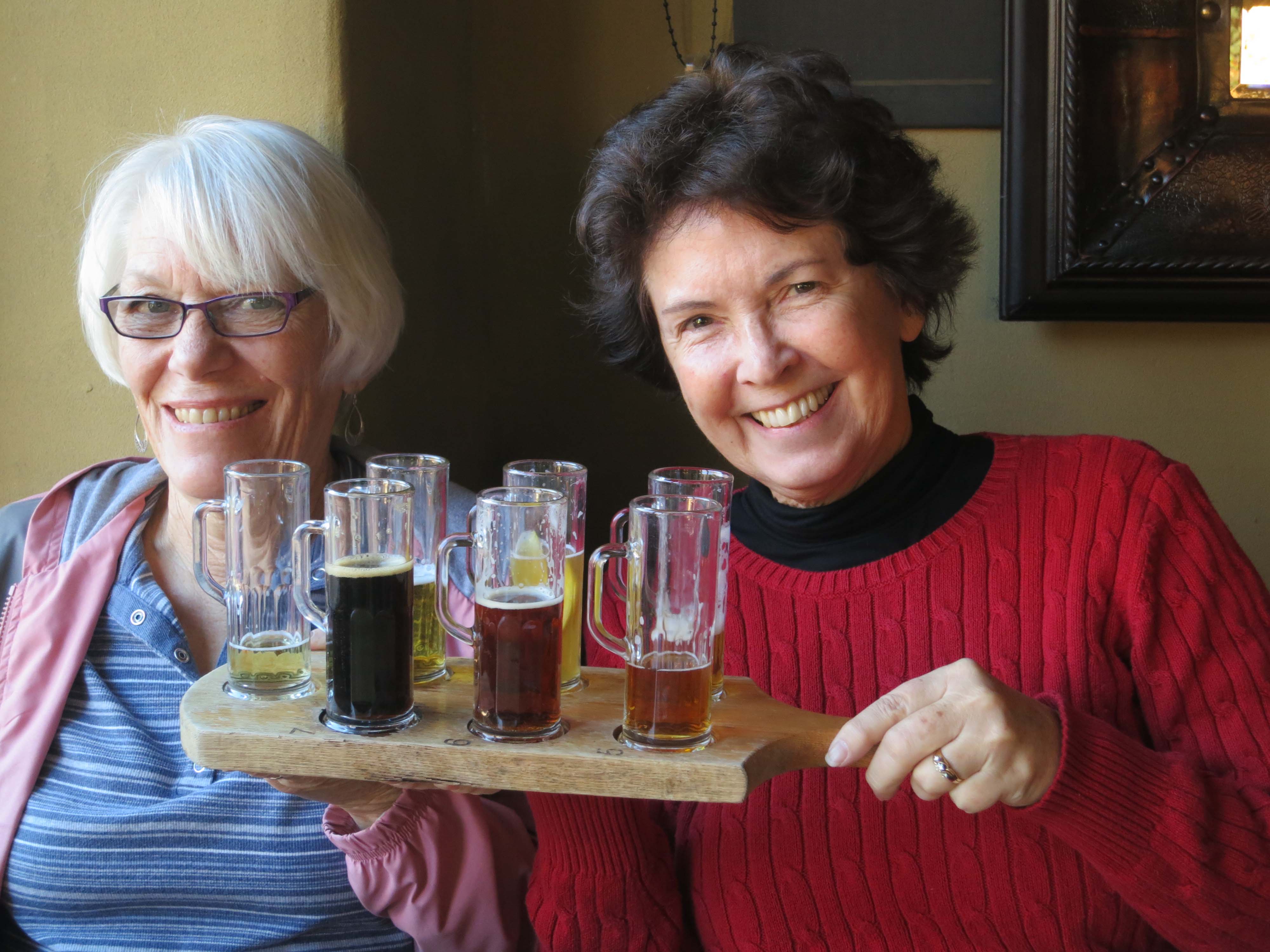
Peggy and Leslie did a little self-medicating at a pub in Sedona. Did it make the world a safer place? I don’t think so. But it did help them find Snoopy up in the rocks.

Pubs often serve what are known as flights (samples) of the beer they serve. But I've never seen them quite as generous as these.

Pubs often serve what are known as flights (samples) of the beer they serve. But I’ve never seen them quite as generous as these. The girls were happy. Quite happy.

Snoopy rock formation in Sedona, Arizona.

Yes, there is a rock formation known as Snoopy in Sedona. You can see it off to the right of the large formation. If not, try a flight of beer, or wine, or….     NEXT BLOG: I will get back to the Native American Rock Art, or maybe I will tell you how to pick up a copy of my book. (grin)


The Chapel of the Holy Cross and Boynton Canyon… Two Sedona Icons

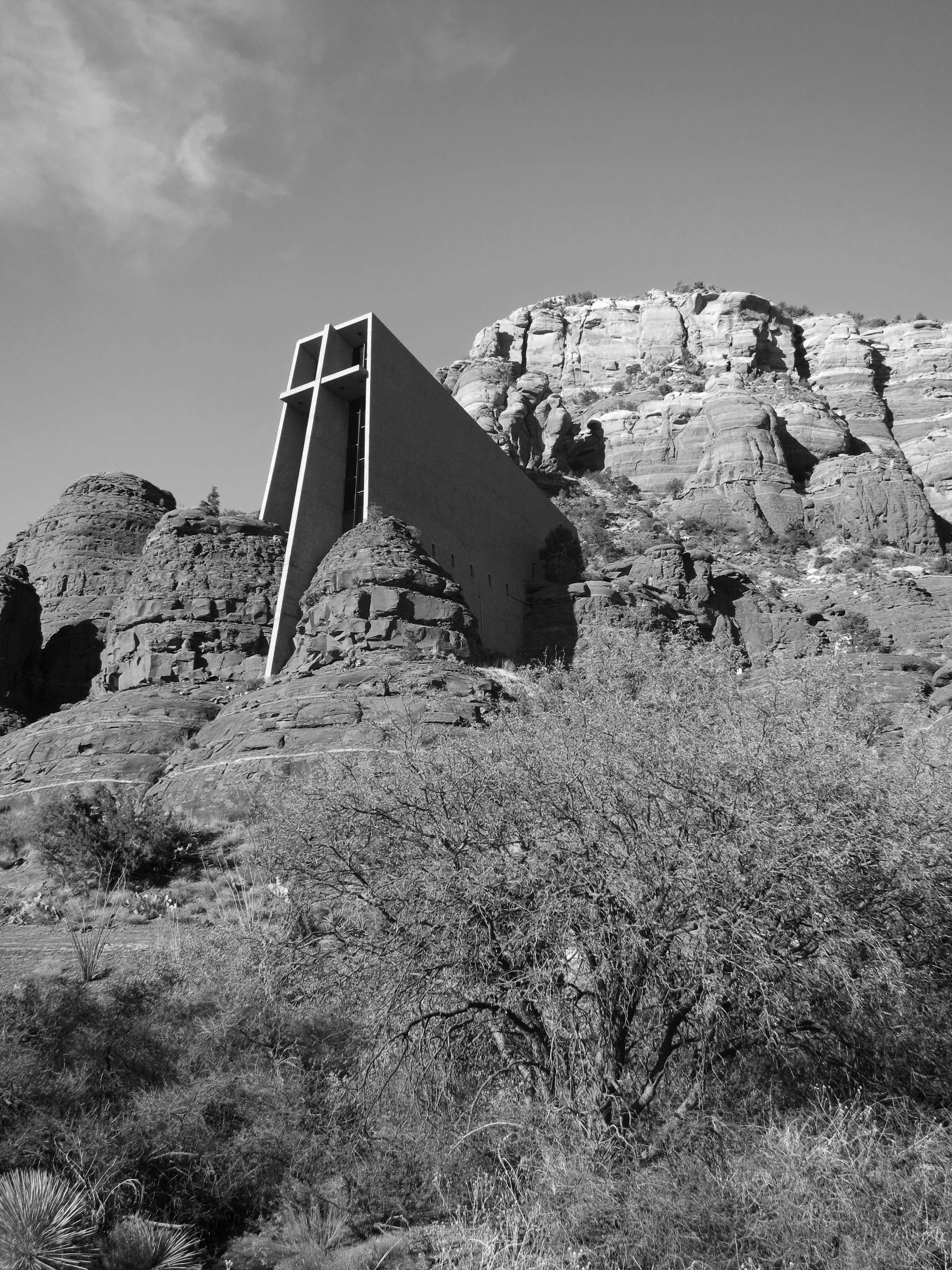
Church of Holy Cross in Sedona Arizona. Photo by Curtis Mekemson.

While Sedona is known for its spectacular colors, I felt this black and white rendition of Sedona’s Chapel of the Holy Cross emphasized the dramatic look of the church in its natural setting.

Peggy and I have seen numerous beautiful churches in our wandering around the world over the years, but few have matched the simple beauty of the Chapel of the Holy Cross in Sedona, Arizona. Rarely do buildings reflect the areas where they are built so dramatically. (I would place the Greek Orthodox churches on the island of Santorini in such a category.)

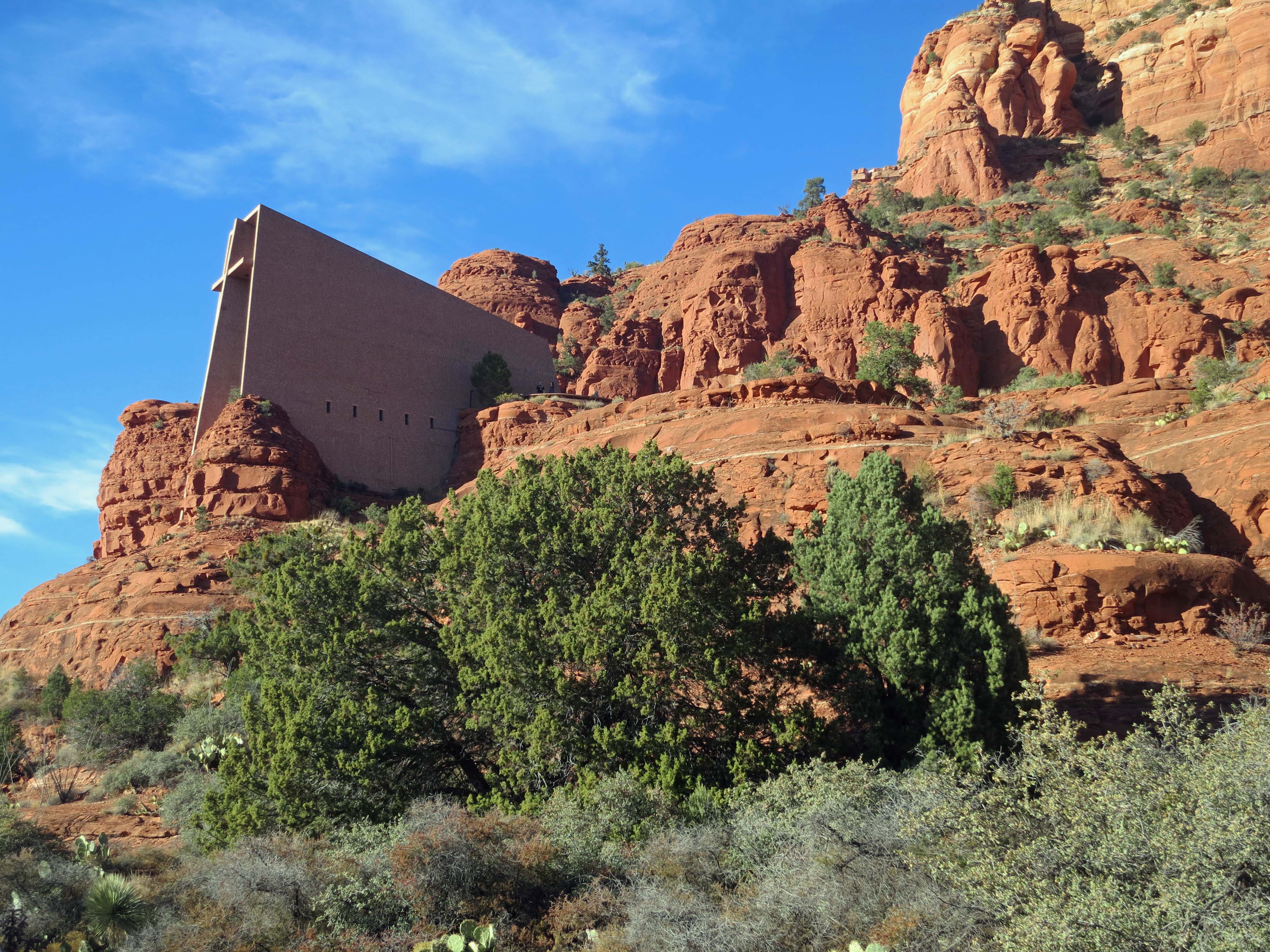
Another perspective on the Church of the Holy Cross, this time emphasizing its colorful surroundings. (Photo by Peggy Mekemson.)

Another perspective on the Chapel of the Holy Cross, this time emphasizing its colorful surroundings. (Photo by Peggy Mekemson.)

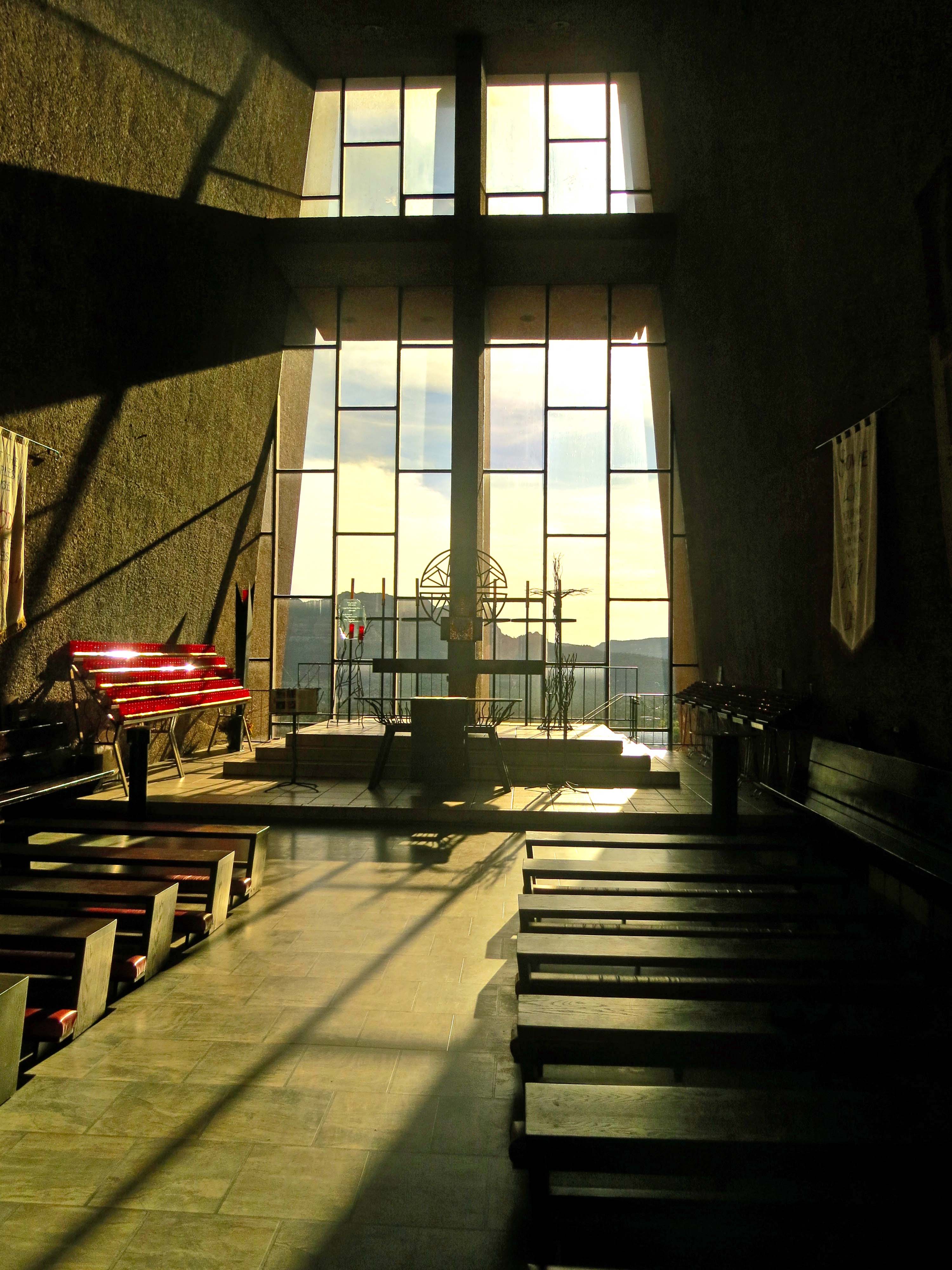
An inside view of the Church of the Holy Cross in Sedona, Arizona. Photo by Curtis Mekemson.

Inside, looking out.

Madonna and Child rock formation in Sedona, Arizona.

Surrounding rock formations are also impressive, as they are throughout Sedona. This one is appropriately known as the Madonna and Child. (Photo by Peggy Mekemson.)

View of rock formations near Church of Holy Cross in Sedona Arizona. Photo by Curtis Mekemson.

A distant shot of the Madonna and Child (in the center).

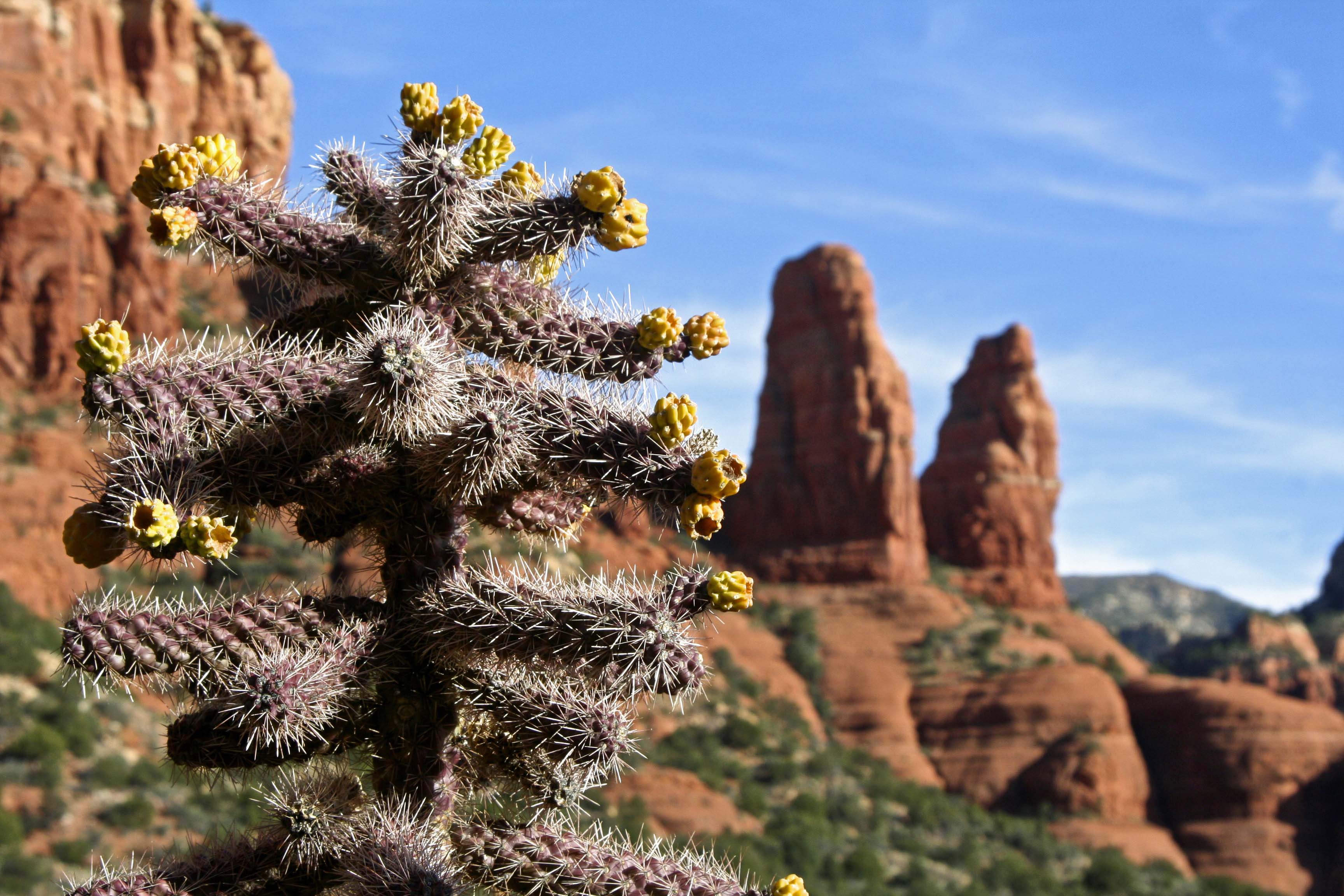
We found this cactus on the road going up to the Church of the Holy Cross. (Photo by Peggy Mekemson.)

We found this cactus on the road going up to the Chapel of the Holy Cross. (Photo by Peggy Mekemson.)

A local rancher from Sedona, Marguerite Staude, commissioned the church. Inspired by the Empire State Building, she had originally wanted to build the church in Hungary. When World War II aborted her plans, she decided to build the church in her hometown. Barry Goldwater helped Staude obtain a special land use permit to build the church on national forest land. It cost $350,000, took 18 months to build, and was completed in 1956. The American Institute of Architects gave the church its Award of Honor in 1957.

The clearest way into the Universe is through a forest wilderness.

John Muir

While I understand the importance of churches in people’s faith, I tend to agree with John Muir in terms of my own spiritual path. A quiet walk in the woods has always made me feel at peace with myself. Seen from this perspective, Boynton Canyon in Sedona is good for the soul.

It’s also a great place to hang out with friends— and a camera.

A view up Boynton Canyon in Sedona, Arizona. Photo by Curtis Mekemson.

One of many of the views Peggy and I, along with our friends, Ken and Leslie Lake, enjoyed on our walk up Boynton Canyon.

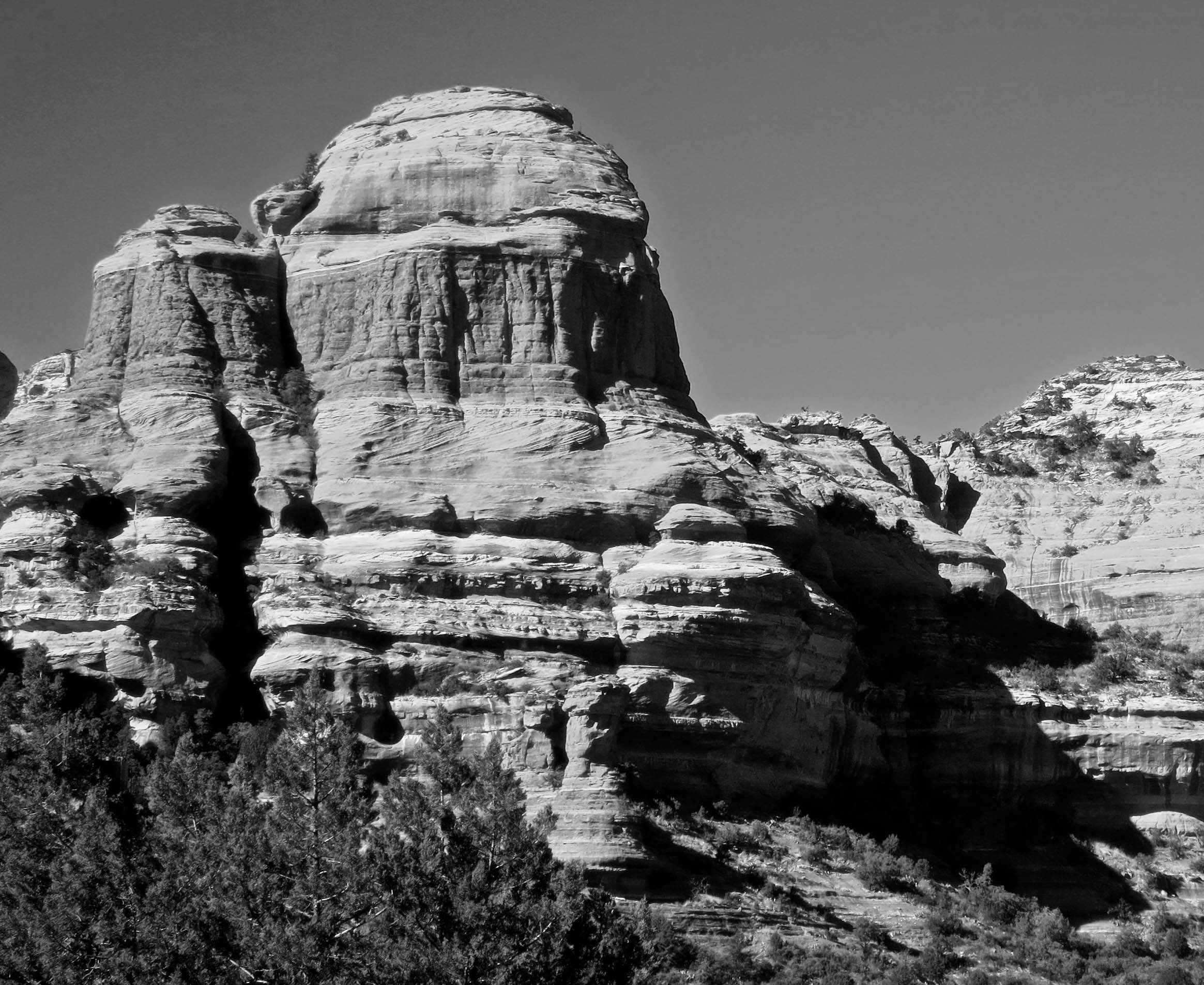
Boynton Canyon rock formation in Sedona, Arizona. Photo by Curtis Mekemson.

A close up of the same knob as a black and white photo. Note the various patterns in the rock.

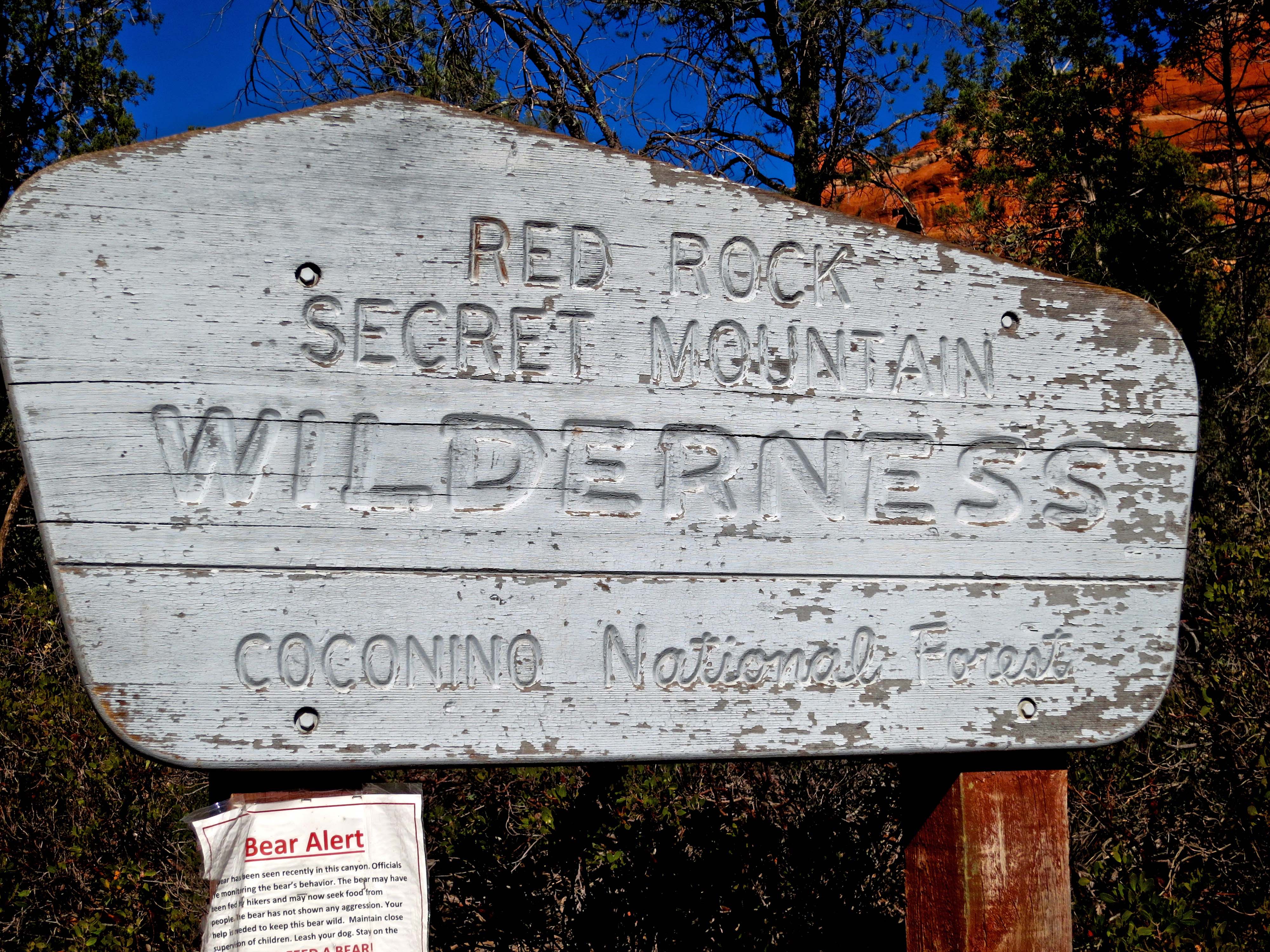
The wilderness sign warned people they might find a bear wandering around in the canyon. While most people might find this worrisome, I was looking forward to it. No such luck.

The wilderness sign warned people they might find a bear wandering around in the canyon. While most people might find this worrisome, I was looking forward to seeing one. No such luck.

Rock formation in Boynton canyon, Sedona Arizona. Photo by Curtis Mekemson.

Another dramatic rock formation. I liked the light and dark contrast.

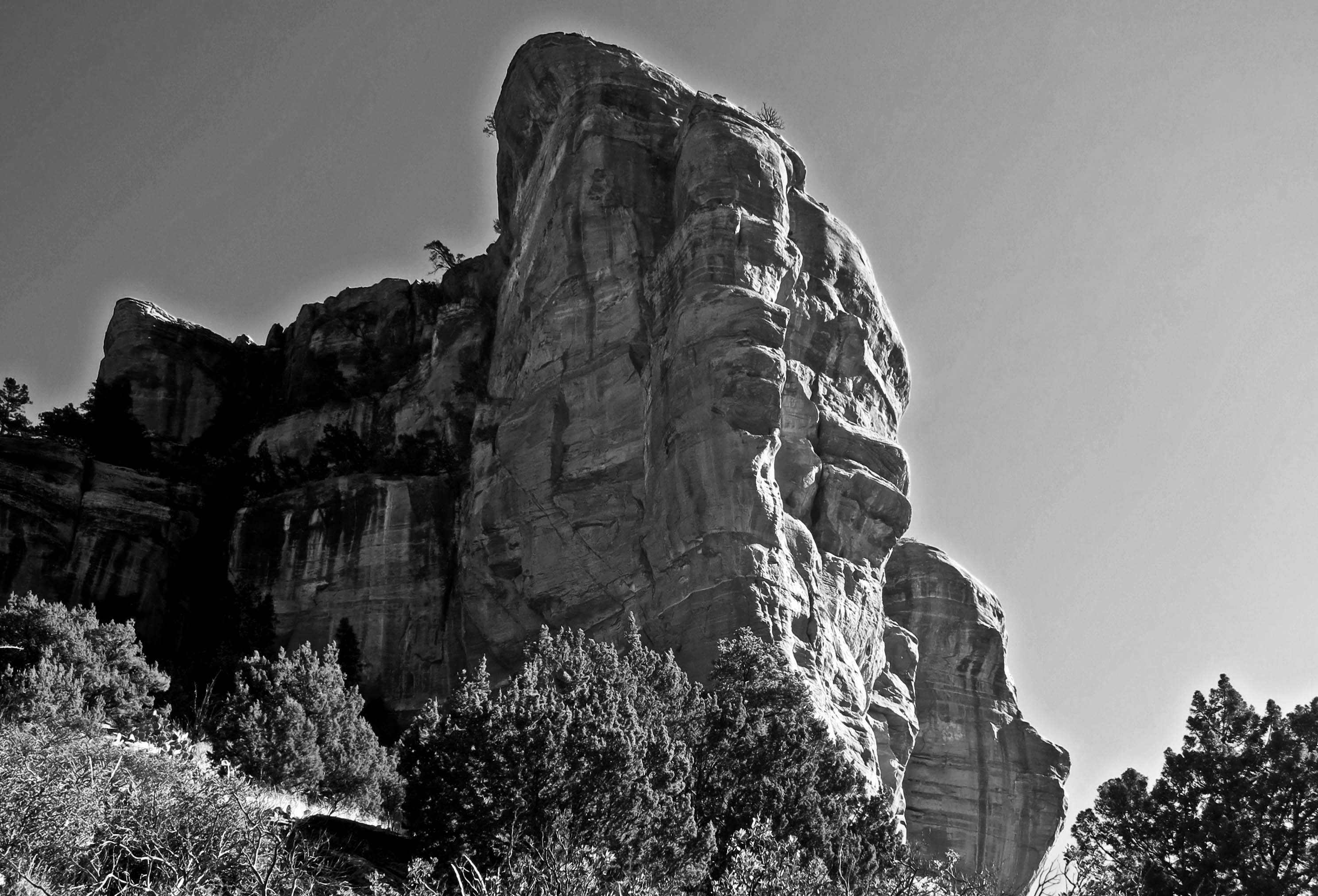
Black and white photo by Curtis Mekemson of a rock formation in Boynton Canyon.

The contrast is even more powerful from a black and white perspective. Check out the halo of light on top.

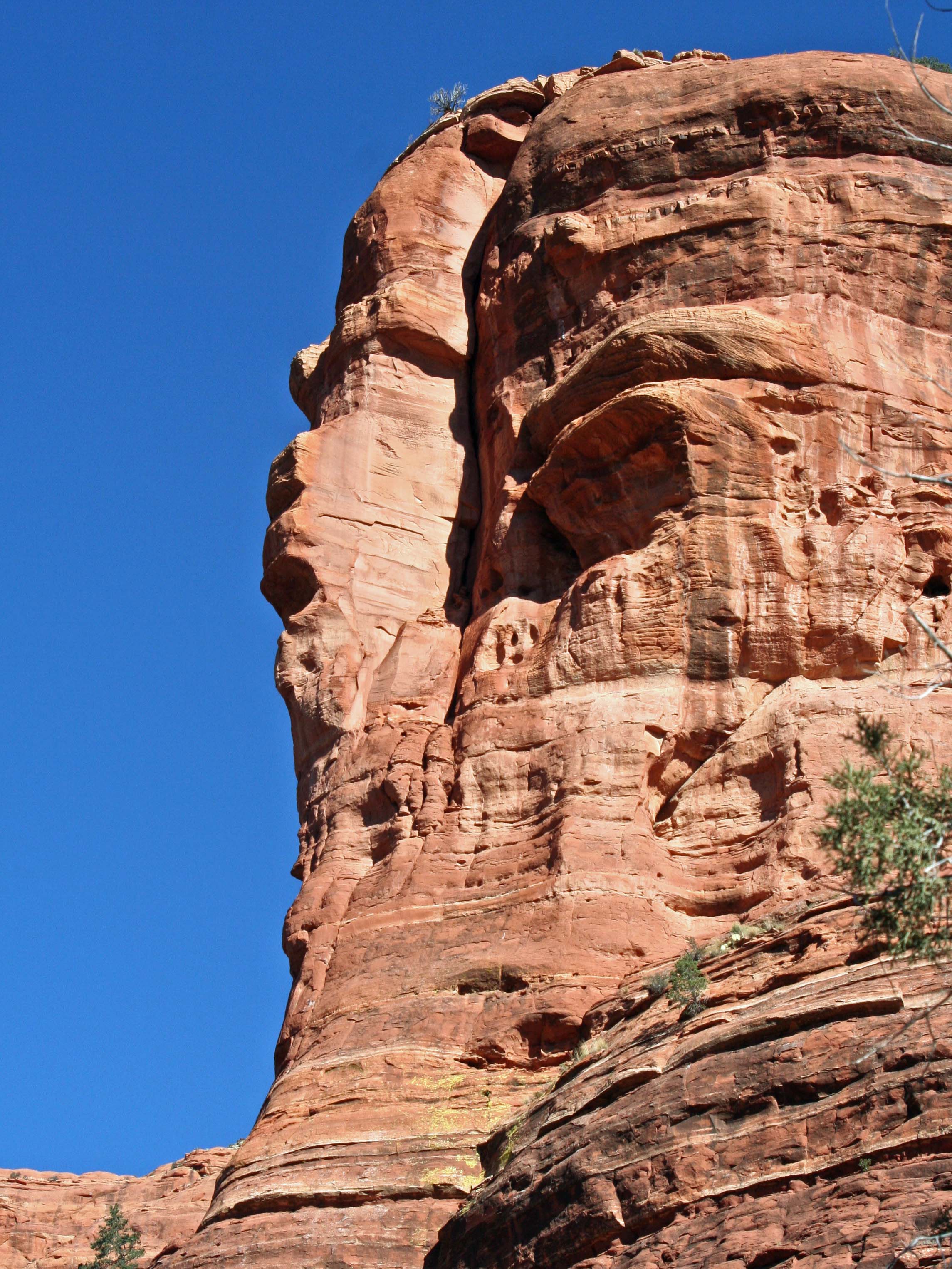
Face-like rock formation in Boynton Canyon, Arizona. Photo by Curtis Mekemson.

Always on the lookout for faces, I named this open-mouthed fellow, Scream. Maybe he had seen the bear.

Colorful walls of Boynton Canyon, Sedona reflected in the sun.

At one point, the sun reflected off the canyon wall like it was glowing with life. This is the natural color as we saw it.I had never seen anything like it. No wonder the New Agers think of Boynton Canyon with awe. (Photo by Peggy Mekemson.)

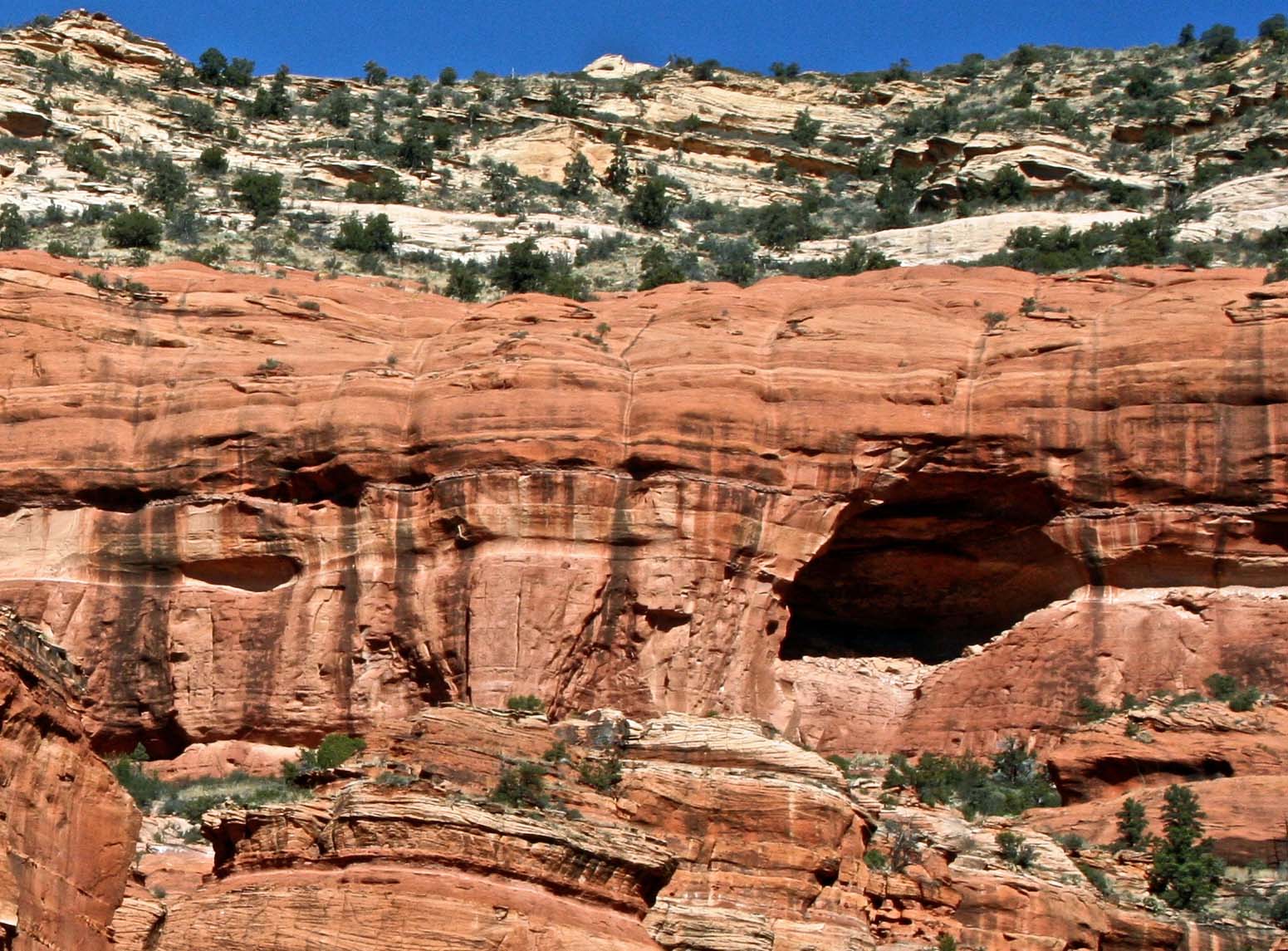
Native American cliff dwellings found in Boynton Canon in Sedona, Arizona.

At several points along Boynton Canyon, we saw where Native Americans had once built cliff dwellings. (Photo by Peggy Mekemson.)

Photo by Curtis Mekemson of a grinning rock formation in Sedona, Arizona.

This formation seemed to be grinning at me. Or maybe it was hungry. I know, I know… I have an overactive imagination.

Rock formation in Sedona Arizona.

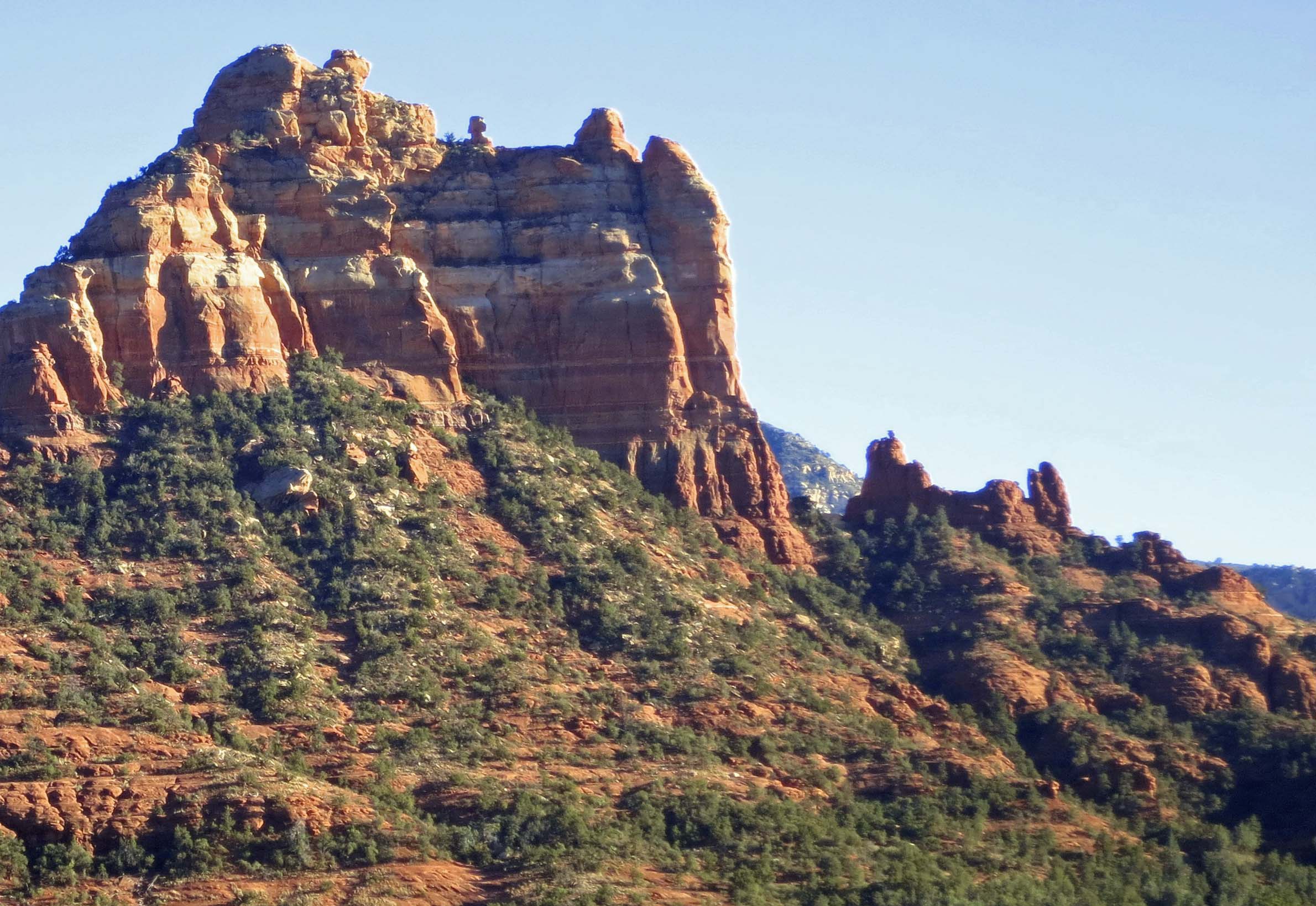
This rock formation looked like an ancient fortress. I wonder if the Native Americans ever used it at such? On another note, a number of early Westerns were filmed in the Sedona area.

Statue of horse from downtown Sedona, Arizona. Photo by Curtis Mekemson.

Found this horse in downtown Sedona.

A final photo from Boynton Canyon. NEXT BLOG: A look at Native American rock art near Sedona and a visit to an ancient 'well.'

A final photo from Boynton Canyon.

Old friends. Ken and I have been hanging out causing mischief for close to 40 years. Peggy's sister, Jane Hagedorn, and I hired Ken in 1977 when we co-executive directors of the American Lung Association in Sacramento.

Old friends. Ken and I have been hanging out causing mischief for close to 40 years. Peggy’s sister, Jane Hagedorn, and I hired Ken in 1977 when we were co-executive directors of the American Lung Association in Sacramento. Jane wanted him for his degree in public health education. I wanted him because he had just bicycled across America and I needed his expertise for the long distance Bike Trek program I had created.

NEXT BLOG: It is time to check out some Native American rock art in the Sedona area and visit a very old ‘well.’


A Spectacular Sunset and 300 Million Years of Geological History… The Sedona Series: Part 2

The sun sets on Capitol Buttes in Sedona, Arizona. Photo by Curtis Mekemson.

Wispy clouds added to the spectacular sunset Peggy and I watched from the airport overlook in Sedona, Arizona.

“They told us at the Chamber of Commerce that we could see the sunset from here,” a woman complained loudly. “And it is hidden by the trees.”

“Maybe we are supposed to be looking at the rocks,” her husband suggested timidly, like he was afraid he might be yelled at.

Peggy and I shared an amused look. The ‘rocks’ were spectacular, reflecting a sun still one hour away from sinking beyond the eastern horizon. The show would only get better; nature was having one of its grand moments. The overlook beneath Sedona’s airport was the place to be at sunset.

Sedona sits beneath the edge of the Colorado Plateau, and the rocks we were looking at reflected over 300 million years of the earth’s geological history. They told a story of ancient oceans, and lakes, and rivers, and sand dunes. Laid down in layers over the eons, most of the rocks were the same ones we had admired so often in the Grand Canyon.

The erosive forces of nature— wind, water and gravity, were chipping away at the Colorado Plateau, leaving us with the spectacular views we were admiring. Capped by volcanic rocks, the different layers of sedimentary rocks eroded at different speeds, adding formations that people couldn’t resist naming. The Coffee Pot, Chimney, Capitol Butte, and Sugar Loaf loomed directly in front of us.

While knowing a bit about the geology of the area enhanced the experience, the only requirement for admiring the beauty was to sit back and enjoy.

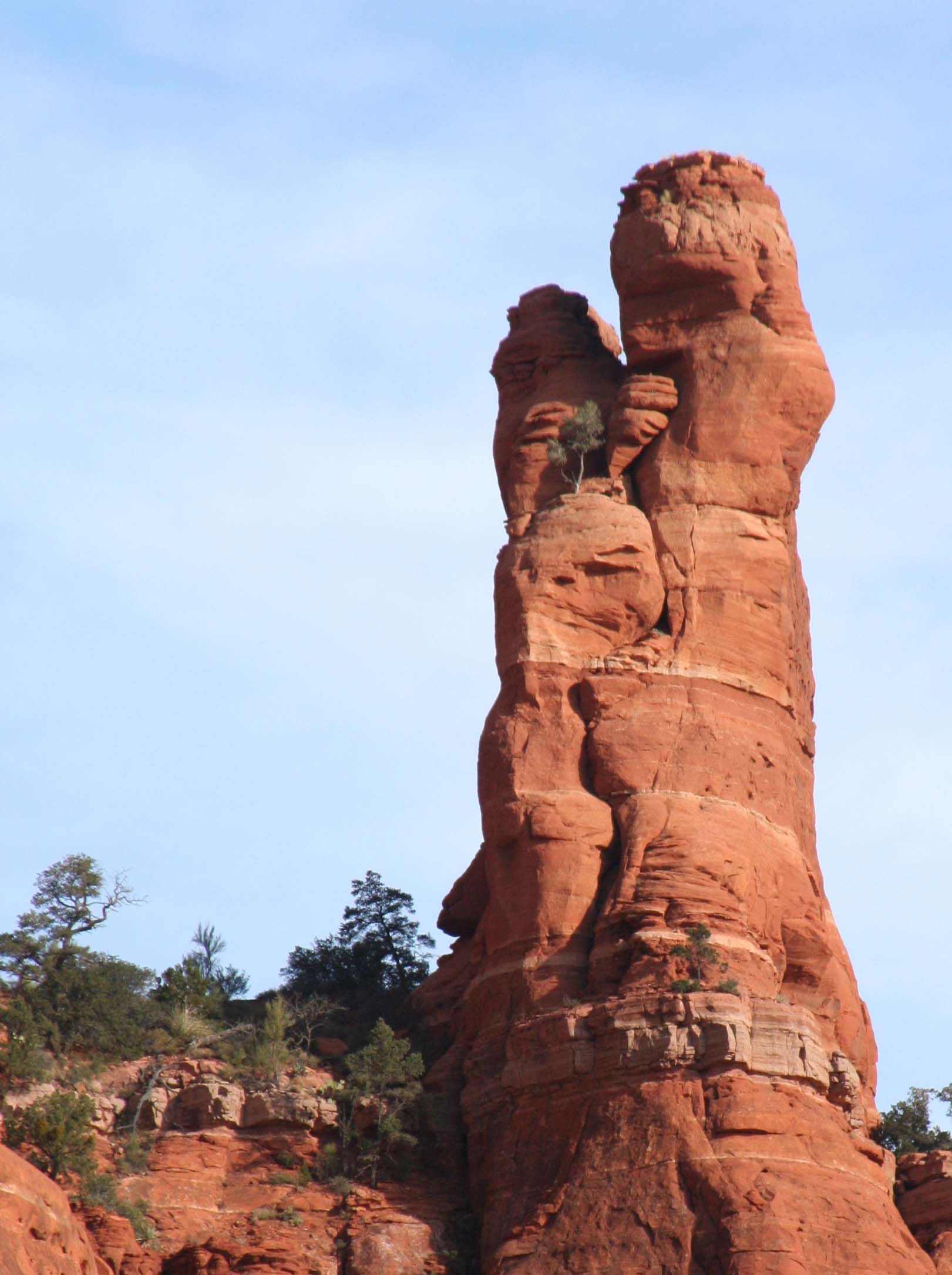
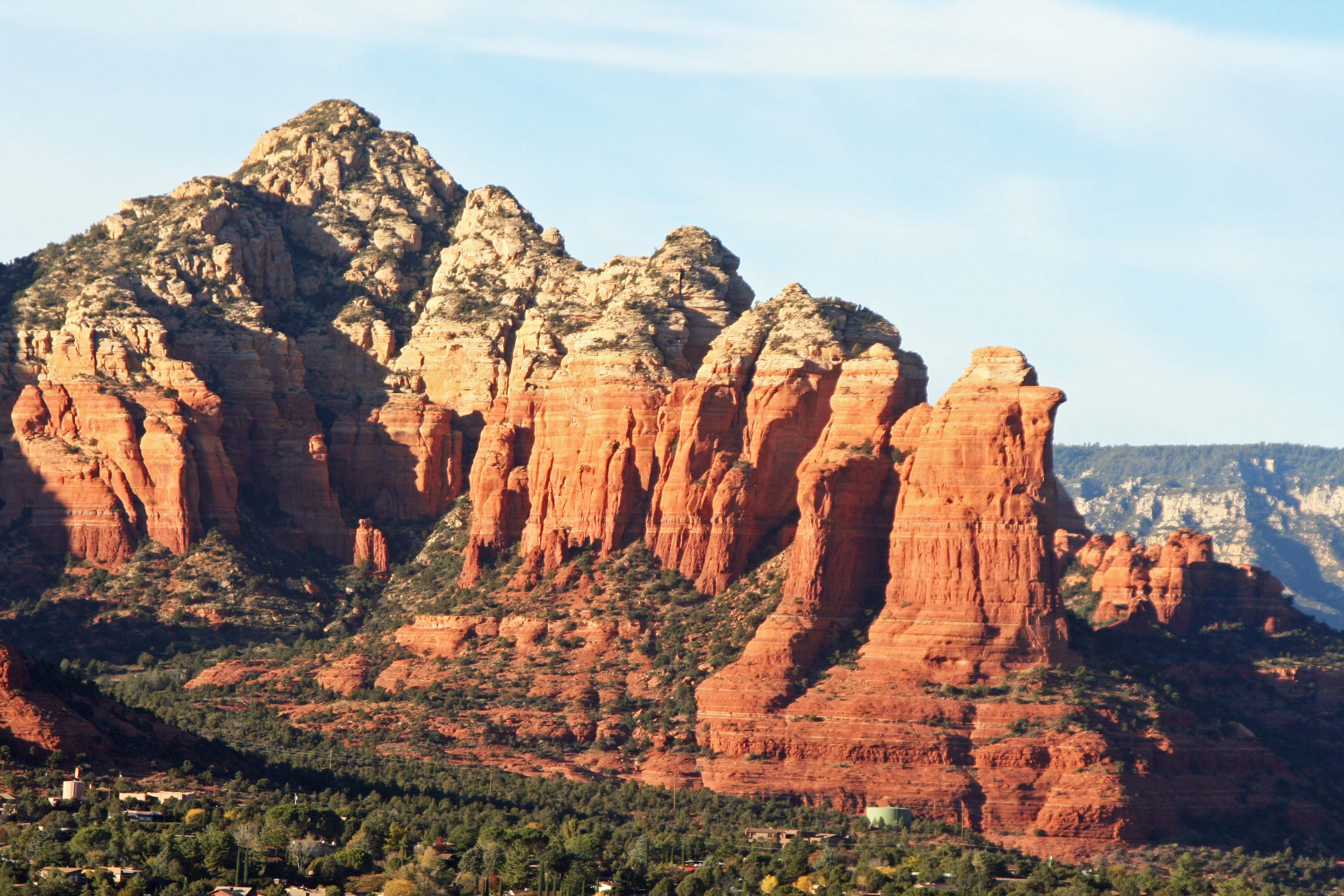
These rocks, known as the Coffee Pot, provide an excellent example of layering. The top, lighter layer is Coconino Sandstone and was once part of a huge desert filled with sand dunes like the Sahara Desert today.

These rocks, known as the Coffee Pot, provide an excellent example of layering and various rates of erosion. The top, lighter layer is Coconino Sandstone and was once part of a huge desert filled with sand dunes like the Sahara Desert today. The red rocks are known as Schnebly Hill Sandstone and were once laid down in an ocean. The red is caused by iron oxides captured by the sea. The rocks are ‘rusting,’ so to speak. (Photo by Peggy Mekemson.)

The Coffee Pot Rocks in Sedona, Arizona. Photo by Curtis Mekemson.

A close up. Note the different impacts of erosion. The Coconino Sandstone erodes much more quickly than the Schnebly Sandstone. (Photo by Peggy Mekemson.)

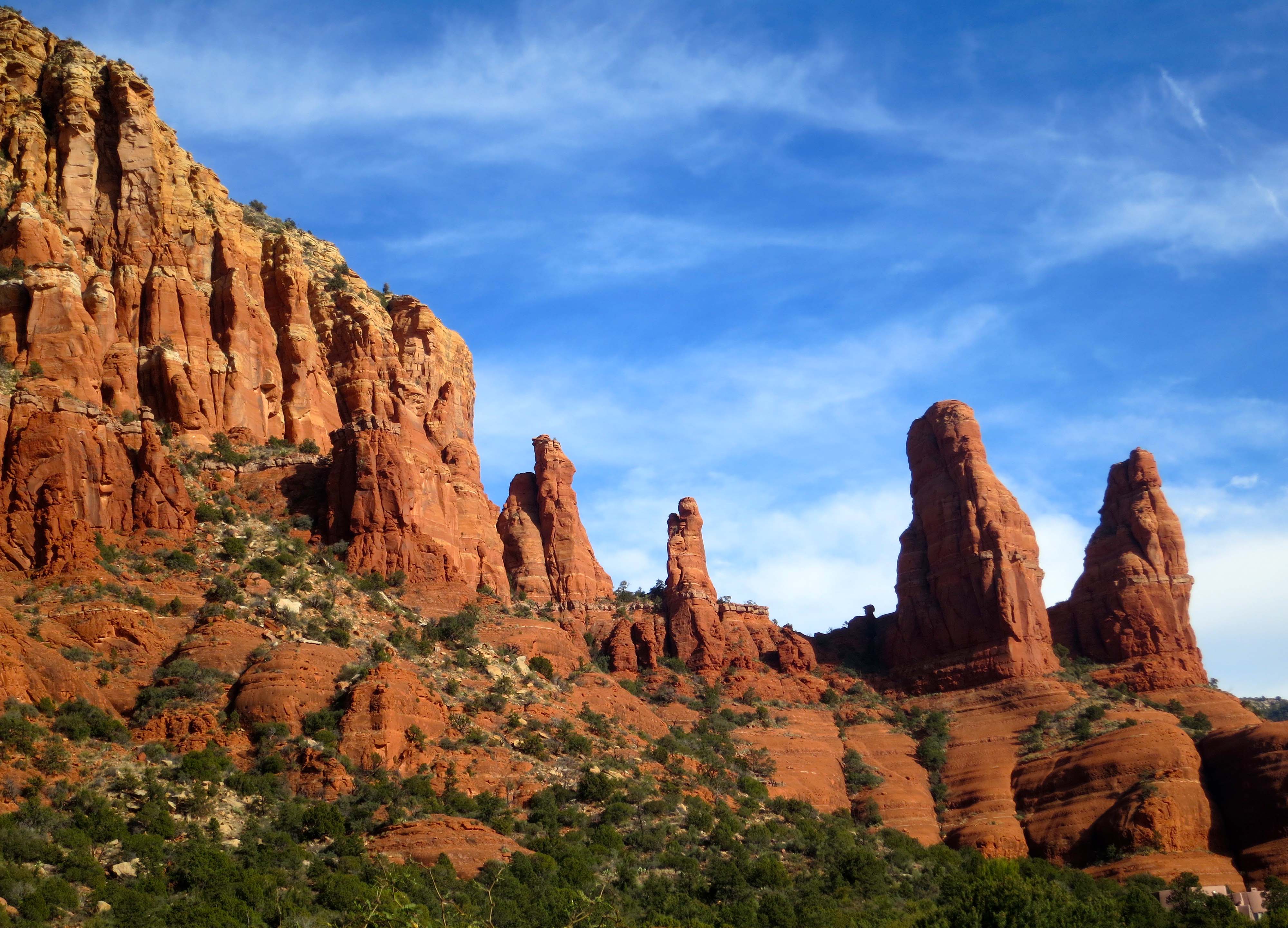
Coffee Pot and Sugar Loaf rock formations in Sedona, Arizona reflect the setting sun. Photo by Curtis Mekemson.

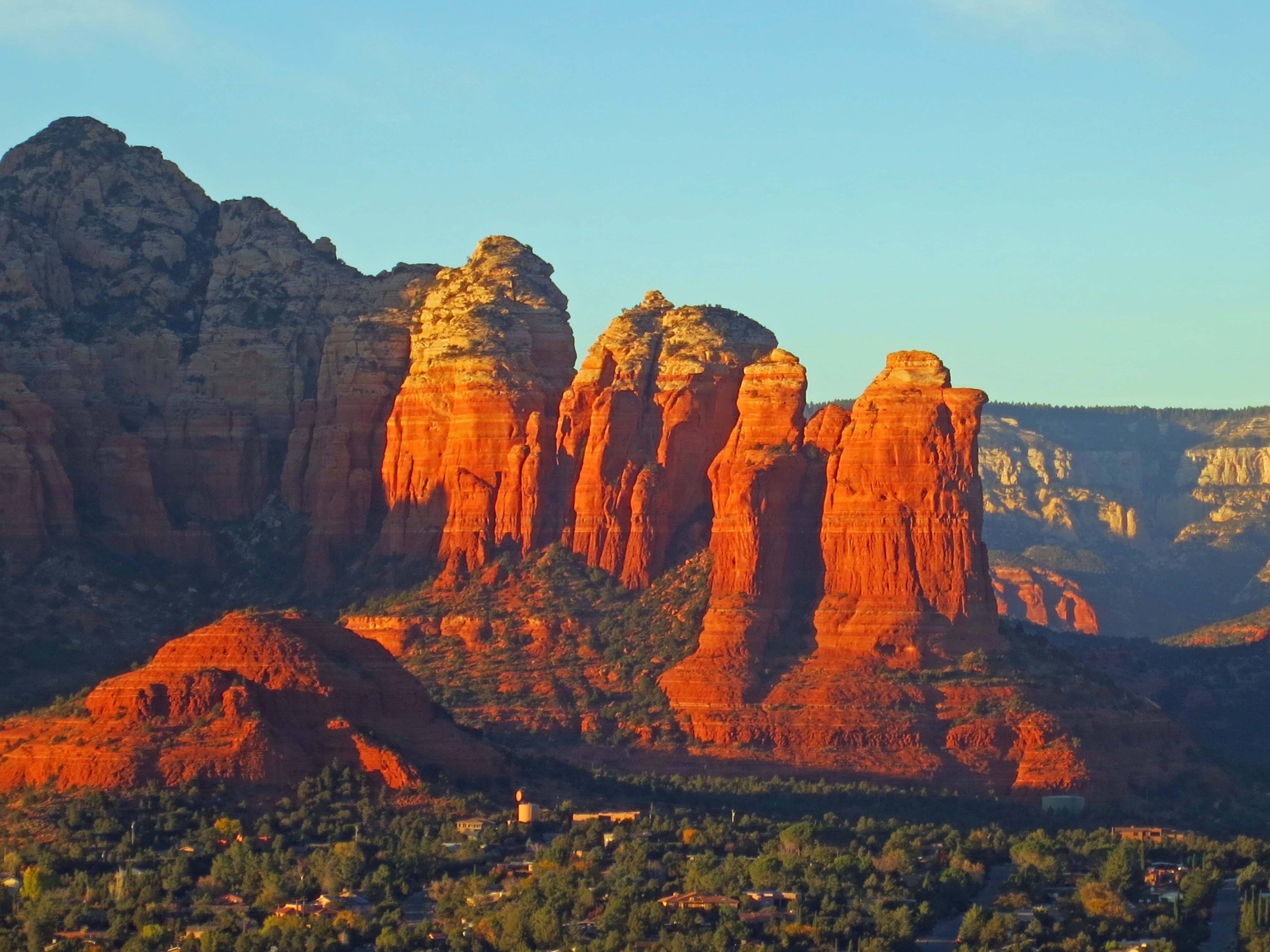
As the sun sank, the reds took on a deeper color. The Sugar Loaf formation is in the front.

Capitol Butte and Chimney Rock in Sedona, Arizona. Photo by Curtis Mekemson.

Capitol Butte is just to the left of Coffee Pot. Chimney rock is further to the left. Sedona stretches out from the Butte.

Chimney Rock in Sedona, Arizona.

A close up of Chimney Rock. (Photo by Peggy Mekemson.)

As the sun set, the shadow in the center of the photo grew. Here it almost looks like a hand.  The Mogollon Rim that runs east to west across Arizona, dividers the Colorado Plateau from the Basin and Ranges to the south.

As the sun set, the shadow in the center of the photo grew. Here it almost looks like a hand. The Mogollon Rim (in the background) runs east to west through central  Arizona and divides  the Colorado Plateau to the north from the Basin and Ranges to the south.

Steamboat rock formation in Sedona, Arizona. Photo by Peggy Mekemson.

Off to the right we could see the rock formation known as Steamboat. (Photo by Peggy Mekemson.)

Sunset view from airport overlook in Sedona, Arizona. Photo by Curtis Mekemson.

While off to the east, we could see the sunset hiding behind the trees that the woman I quoted in the beginning was apparently looking for. Still, not shabby.

NEXT BLOG: A hike up Boynton canyon and a visit to one of the world’s most unique churches.


Sedona, Arizona… New Age Mecca


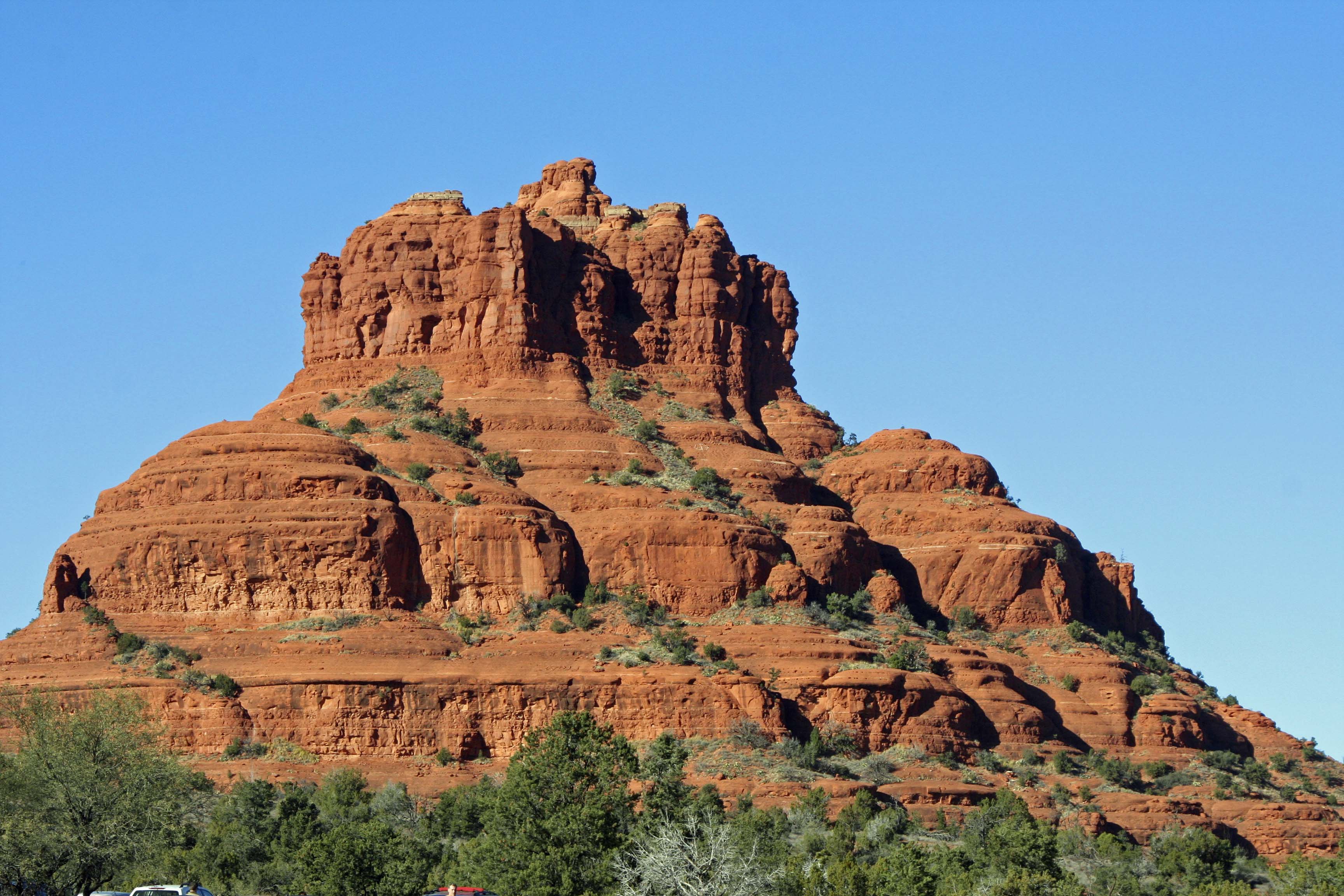
Photo of Bell Tower in Sedona, Arizona.

Sedona, Arizona is known for its beautiful red rock monuments and its New Age appeal. The Bell Rock incorporates both. A vortex, said to radiate positive energy, is located on its left flank. (Photo by Peggy Mekemson.)

Sedona, Arizona  bills itself as the capital of the New Age Movement, and maybe it is. Certainly everything we have come to identify with New Age thinking can be found here— from alternative medicine to goddess worship. You can buy dream catchers, crystals, wands, and statues of deities such as Ganesha, the Hindu elephant god. There are fortune tellers, psychics, and tarot card readers. I am sure you can discover your future in your palm, have an astrological chart prepared, and confirm whatever messages you’ve received by throwing the runes. Or possibly you need to sit down with a shaman. Certainly you can find a quiet and beautiful spot to meditate.

Vortexes are central to the New Age belief system in Sedona. Four major ones are found in and around the town. These sites are said to radiate subtle energy that flows up from the earth in a spiral path and helps people along on whatever spiritual journey they have chosen for themselves. Locals describe the vortexes as masculine, feminine or some combination of both in the energy they release.

Tens of thousands of tourists visit these sites annually. The vortexes are even said to attract aliens, who do UFO flyovers. An army of tour group operators is prepared to take visitors to the vortexes, or you can go on your own. That’s what Peggy and I decided to do when we visited Sedona in November. We visited three, one next to the airport, one in Boynton Canyon, and the Bell Tower, shown above.

Did we feel the power vibrating through our bodies? Did we experience spiritual enlightenment? Well, no… sigh. I expect a little more work is required to reach Nirvana. But the beauty of the sites was definitely inspirational. What more could we ask for? A UFO or two, perhaps…

Tens of thousands of people visit the vortexes of Sedona annually. The Chamber of Commerce gives out maps of where to find them. This one is next to the airport.

Tens of thousands of people visit the vortexes of Sedona annually. The Chamber of Commerce gives out maps of where to find them. This one is next to the airport.

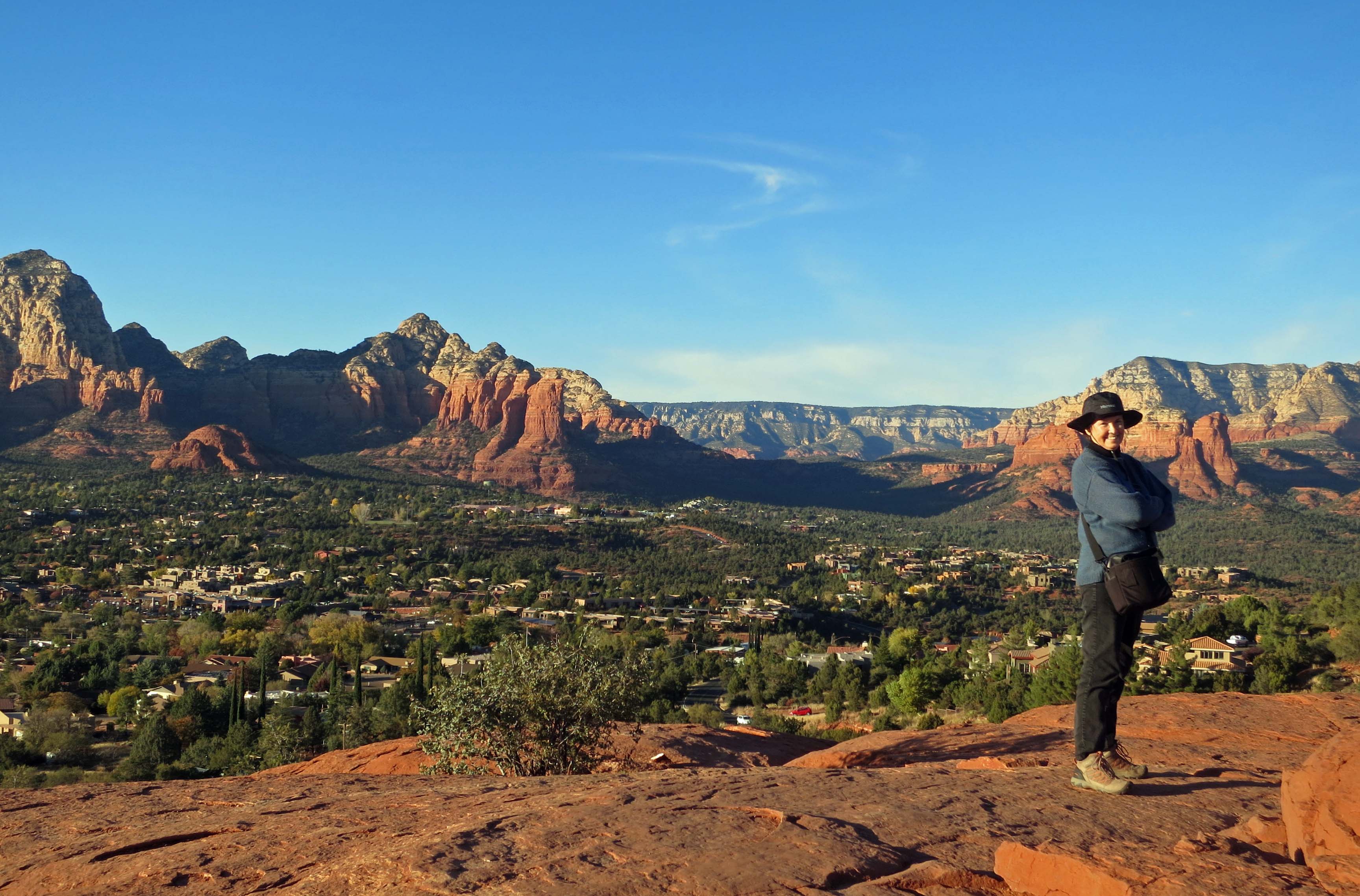
Peggy stands on top of the vortex located near the Sedona Airport. Sedona lies below, hemmed in by Red Rocks.

Peggy stands on top of the vortex. Sedona lies below, hemmed in by Red Rocks.

Peggy catches a photo of me in my one minute quest while sitting on the vortex rock. (Photo by Peggy Mekemson.)

Peggy catches a photo of me in my one minute quest to feel the  energy while sitting on the vortex rock. (Photo by Peggy Mekemson.)

Boynton Canyon vortex site. Photo by Curtis Mekemson.

The vortex in Boynton Canyon is located near this rock.

Boynton Canyon, Sedona Arizona vortex site.  Photo by Curtis Mekemson.

I could almost feel the vortex’s energy given this impressive rock.

Another perspective. (Photo by Peggy Mekemson.)

Another perspective. (Photo by Peggy Mekemson.)

When Peggy and I were hiking into Boynton Canyon with our friends Ken and Leslie Lake, a man stopped Leslie and Peggy and gave them each a heart carved out of stone. It was a very New Age kind of thing.

When Peggy and I were hiking into Boynton Canyon with our friends Ken and Leslie Lake, a man stopped Leslie and Peggy and gave them each a heart carved out of stone. It was a very New Age kind of thing.

NEXT BLOG: A sunset over Sedona.

A Pot, a Potter, and a Cat… The Pottery of Marian Heintz


Teapot by Marian Heintz from her studio in Chattanooga, Tennessee. Photo by Curtis Mekemson.

Form, glaze and function make for stunning pottery. My brother Marshall picked out this teapot for Peggy and me from the work his daughter Marian does in Chattanooga, Tennessee.


As my body of work grows, my hope is that it will reflect a life filled with wonder and yearning, as well as serious play. —Marian Heintz

Marian was making hearts— and not 100% happy about it. Valentine’s Day is coming, however, and people like to buy hearts. People buying hearts puts money in the bank. So, for the day at least, Marian had put aside her inner artist to be pragmatic and was whipping out product.

It wasn’t quite mass production, though. “Each piece needs to be carefully finished,” she insisted. Marian is a dedicated craftsperson as well as an artist. No part-finished work would escape out her door, even if it meant less profit.

One of the hearts that Marian was producing for Valentines Day.

One of the hearts that Marian was producing for Valentine’s Day.

Peggy and I had driven down from the Nashville area after Christmas to visit with Marian in Chattanooga, and to check out her studio and work. Marian is my niece (my brother Marshall’s daughter), and I have known her since she was a toddler. It had been far too long since we had seen her.

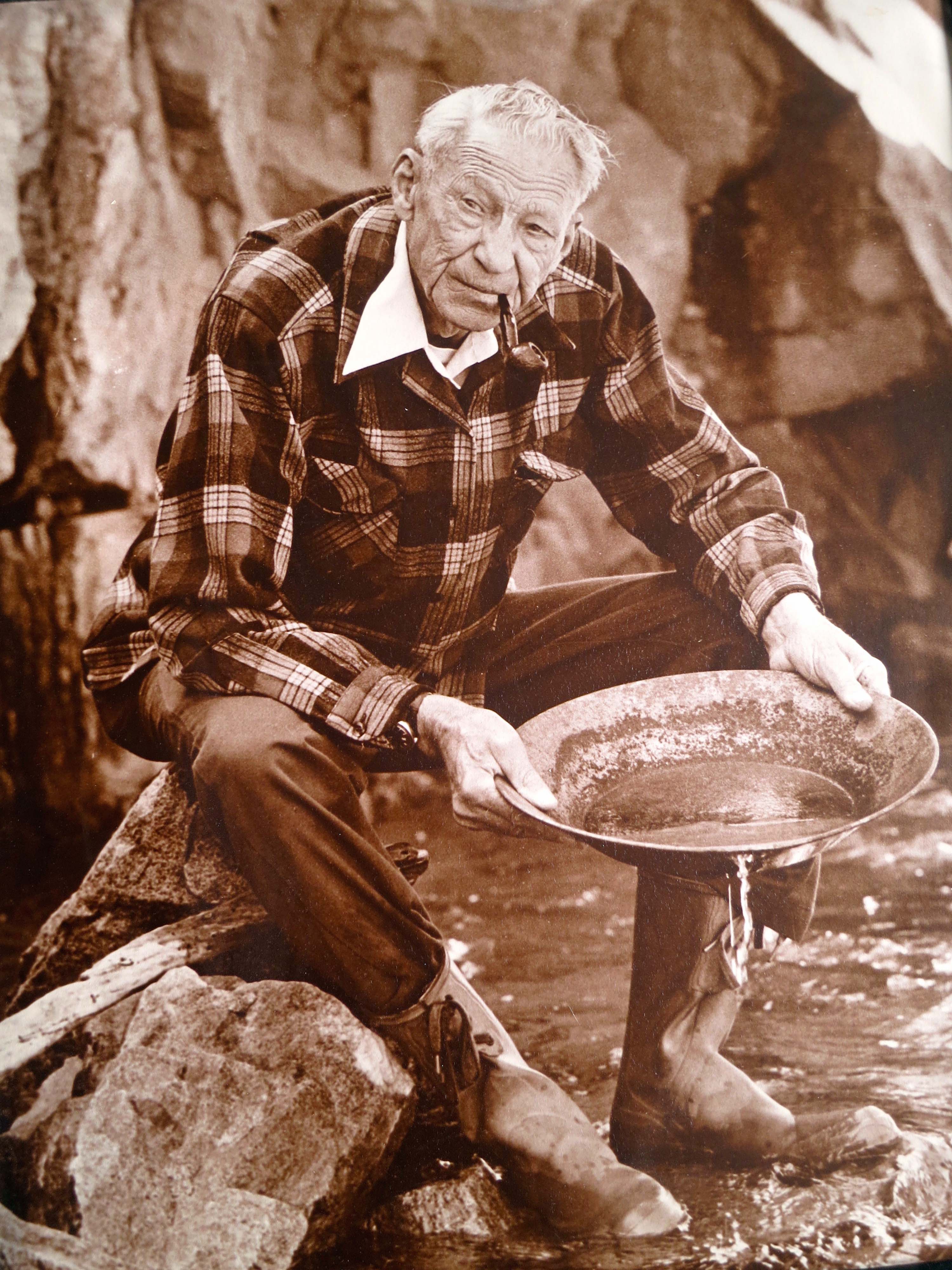
Marian has always had a creative bent, and it has carried her in several different directions. I first became aware of her passion for art when she was attending the Glen Fishback School of photography in Sacramento. She has a fine eye for photography, as does her brother, Wayne. She even managed to talk my dad into posing as a time-worn gold miner for her final portfolio at the school.

Photo of Herb Mekemson taken by Marian Heintz.

I have the photo that Marian took of my dad posing as a gold miner in his late 70s. Our daughter, Tasha, has put her name on the back of it to make sure she gets it in the future. (grin)

From photography, Marian branched out to the folk art of wheat weaving where straw is turned into decorative items and jewelry. From there, it was a natural step into making jewelry with copper and silver. Partially, as a result, she ended up teaching women in Haiti how to make jewelry out of rubble after the devastating 2009 earthquake.

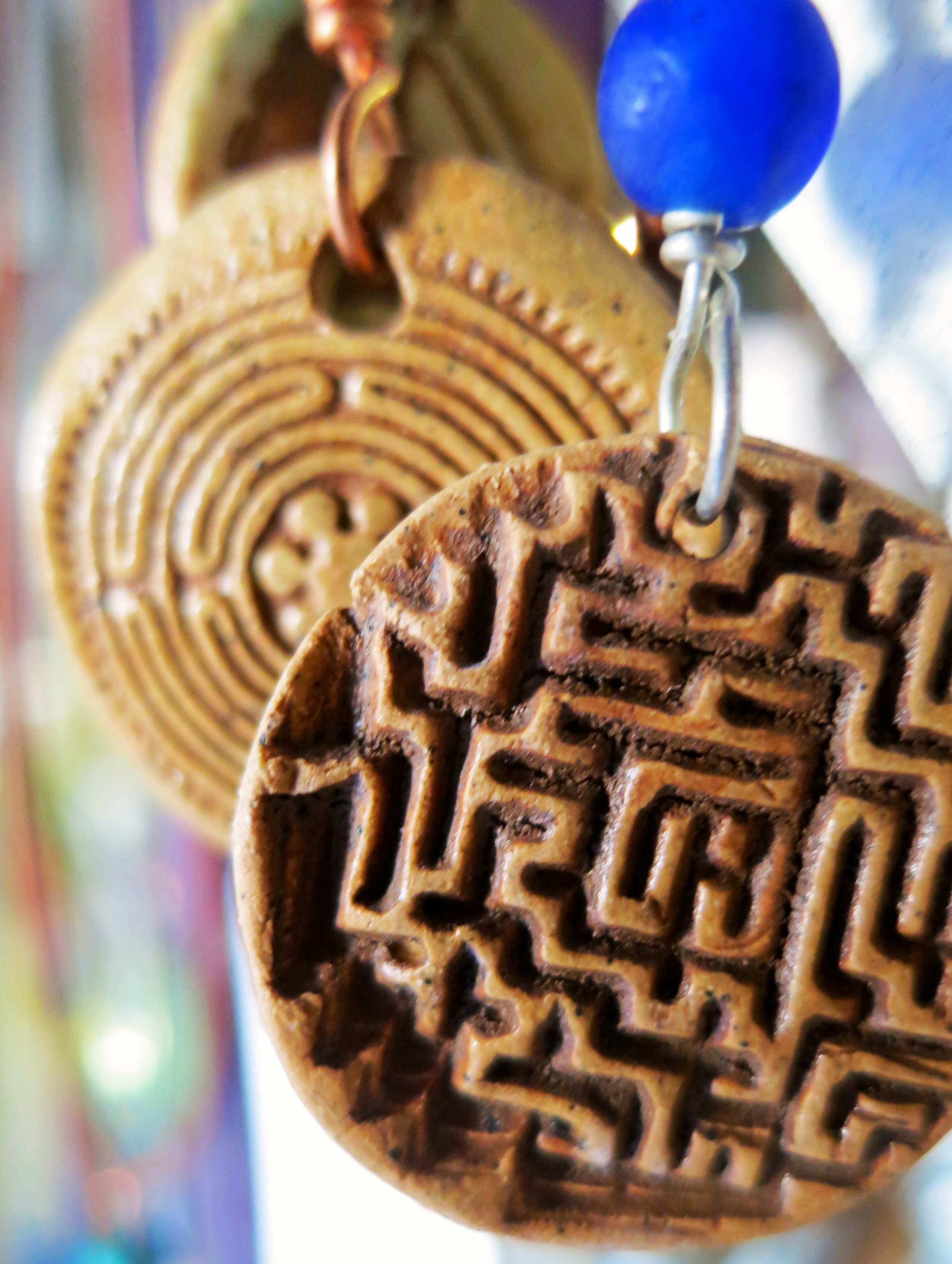
Jewelry made by Marian Heintz at her studio in Chattanooga, Tennessee.

Marian still makes jewelry using her skills as a potter. Peggy had to have one. Marian explained that making the labyrinth and maze serve as meditation for her.

Her introduction to pottery came when she was working on her undergraduate degree at the University of Tennessee, Chattanooga. “I first began working with ceramics sixteen years ago, and fell in love with clay the first time I touched it,” she wrote in a bio sketch.

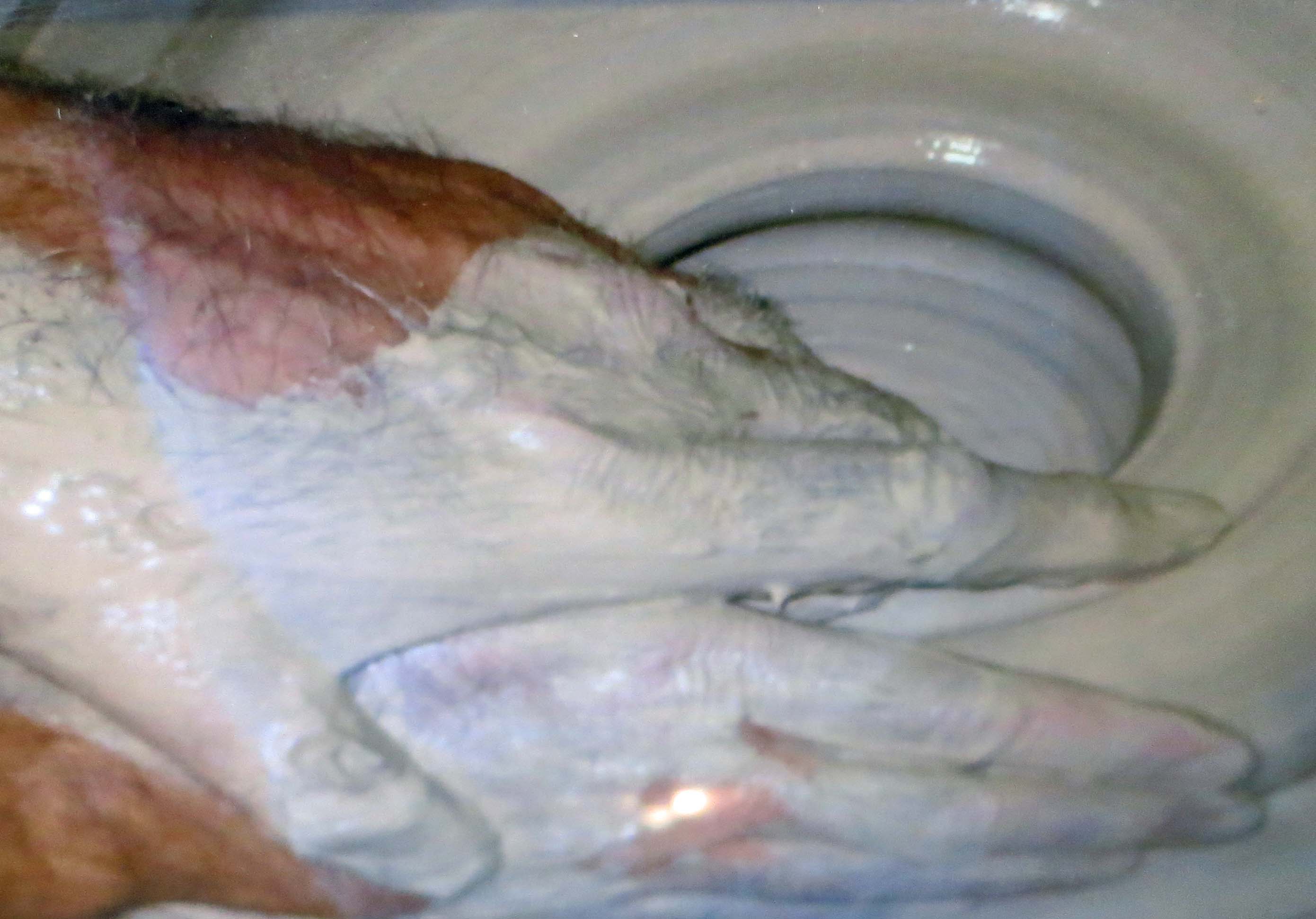
The hands of Marian's friend and mentor Talle Johnson as he throws a pot.

The hands of Marian’s friend and mentor Talle Johnson as he works clay and throws a pot.

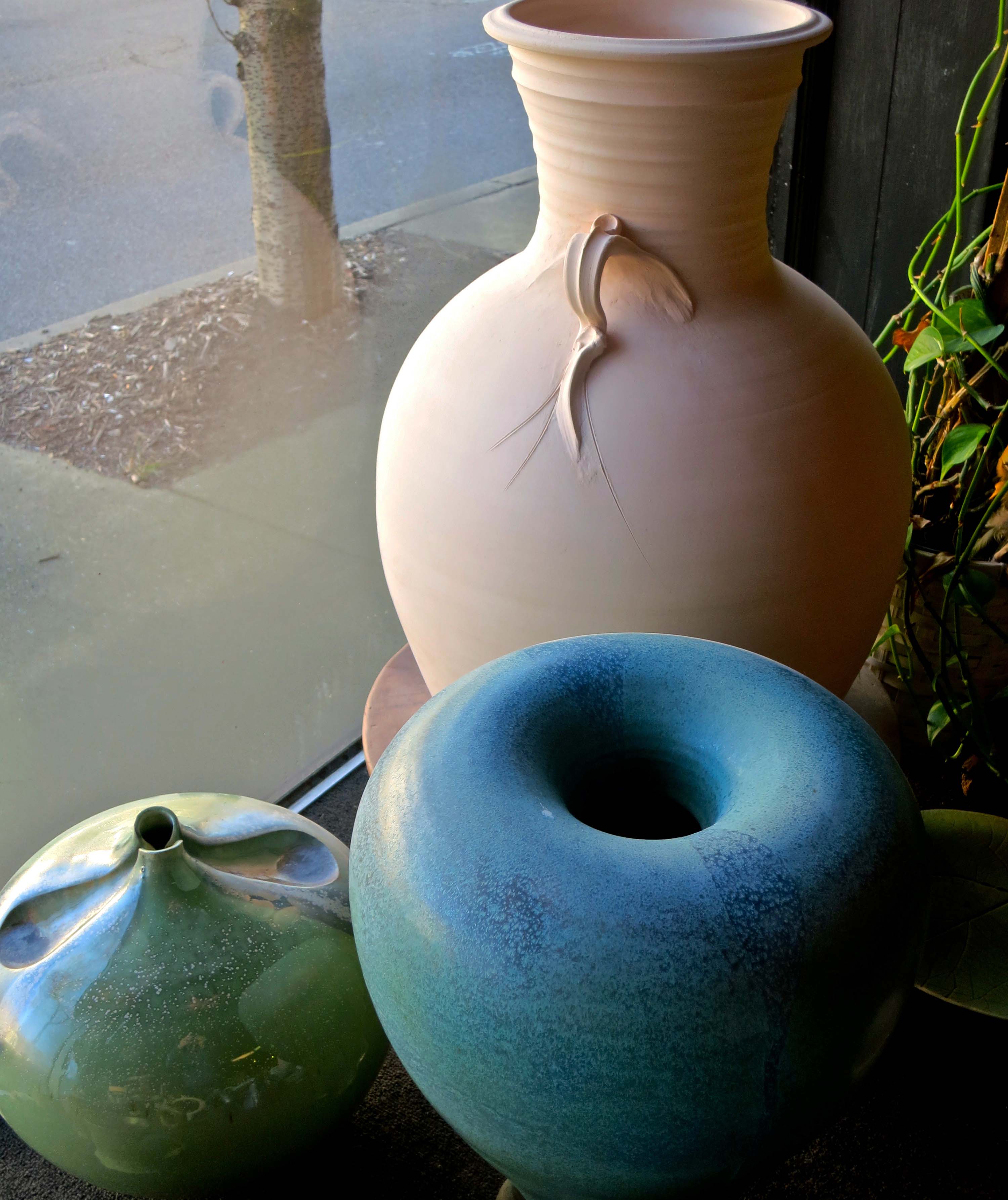
Talle Johnson pottery at the studio of Marian Heintx in Chattanooga, Tennessee. Photo by Curtis Mekemson.

A sample of Talle Johnson’s pottery that Marian keeps in her studio.

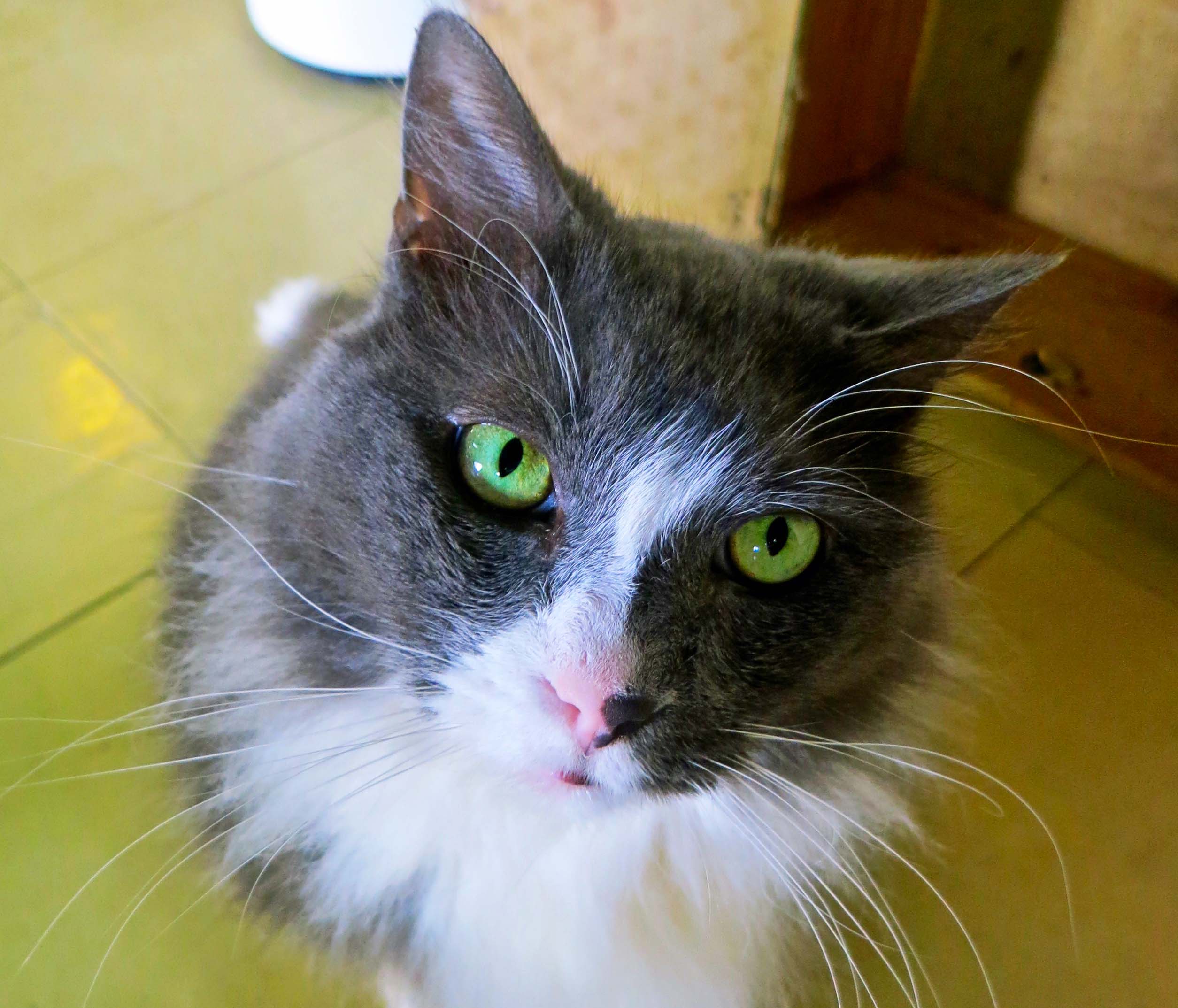
From 2007 up until he passed away in 2010, Marian worked as an apprentice to the highly talented and well-known potter, Talle Johnson. She credits much of her artistry, and in particular her emphasis on form, to his mentorship. As we entered through the backdoor of her studio, the first thing that greeted us was a memorial wall of photos featuring Talle and his work. The second thing to greet us was Wren, the studio cat.

Wren, the studio cat at the Marian Heintz Pottery studio. Photo by Curtis Mekemson.

Wren, the studio cat.

Marian greeted us with the same enthusiasm that she puts into her work. Within minutes she had us settled into her comfortable ‘transition lounge.’ (Adult students are invited to relax with a bite to eat or a glass of wine to “transition between work and throwing clay.”) Three hours later, we had almost caught up on our lives— and almost provided Wren with the amount of rubbing he was sure he deserved.

Marian's 'transition studio, was warm, colorful and comfortable. I felt it reflected her.

The transition lounge was warm, colorful and comfortable— much like Marian.

Marian Heintz at her pottery studio in Chattanooga, Tennessee. Photo by  Curtis Mekemson.

Marion chatted for three hours, filling us in on her journey into pottery and how it has reflected her own journey in life.

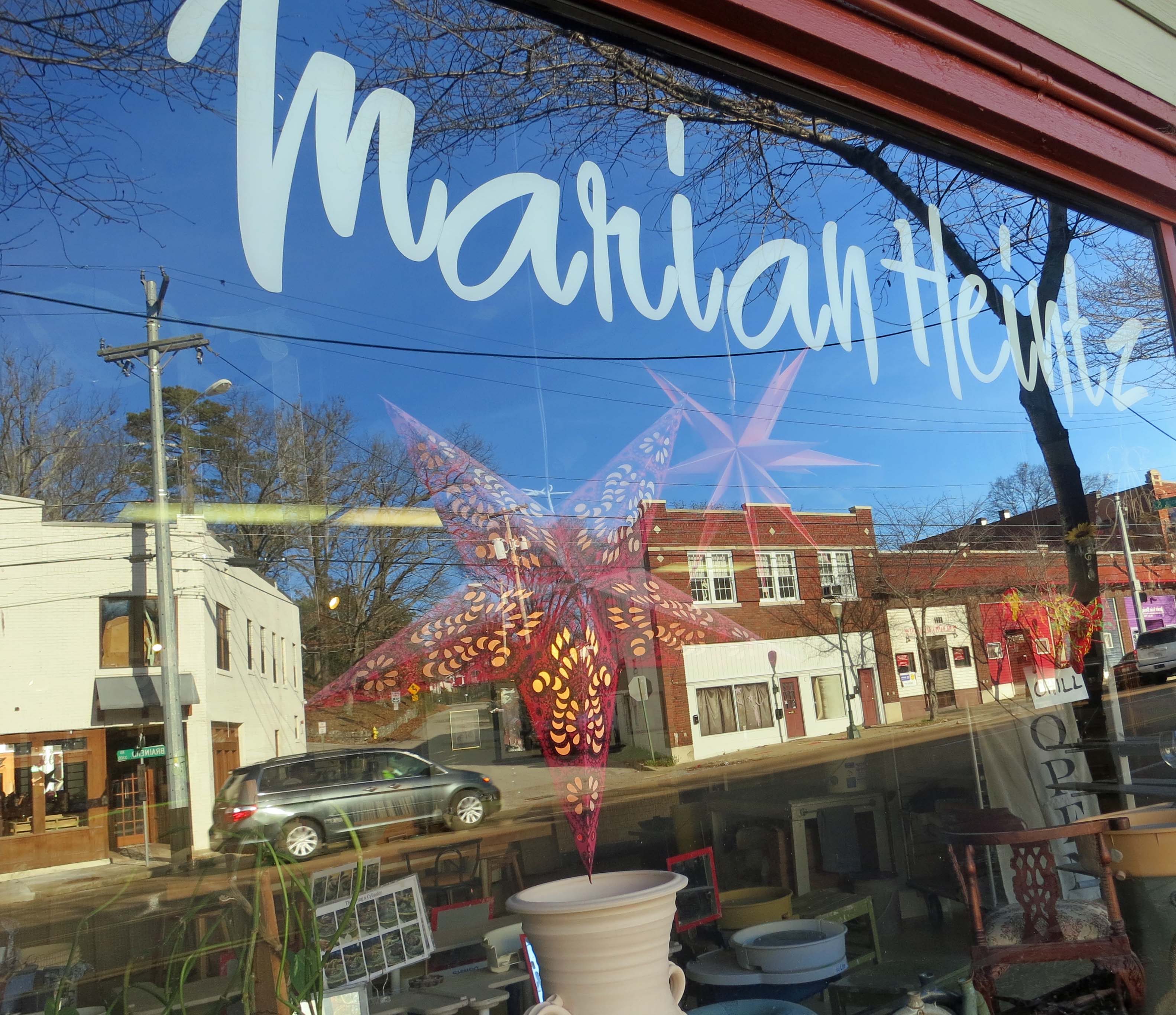
Marian’s studio is located on Brainerd Road in Chattanooga. The street is reflected in the window of her shop below. In addition to serving as her studio and as a retail outlet for her work, the space also includes potters’ wheels for classes she offers. She sees her studio as a place where students can “come in and leave everything else behind,” providing, if you will, a community— a place of peace where one can get lost in the rhythm of the potter’s wheel and the earthy feel of clay.

Chattanooga's Brainerd Road is reflected in the window of Marian's studio.

Chattanooga’s Brainerd Road is reflected in the window of Marian’s studio.

My work is both utilitarian and decorative, so that I try to find a balance between aesthetics and function. Using stoneware clay, I throw forms on the wheel as well as hand build. Some of these forms are altered on or off the wheel and many have paddled or textured surfaces. I would describe my forms as organic, sophisticated, yet simple and playful. There is a sense of movement and energy that radiates out of them. —Marian Heintz

Gravy bowl at Marian Heintz Pottery Studio in Chattanooga, Tennessee.

Gravy bowl.

Simple flower vase.

Simple flower vase.

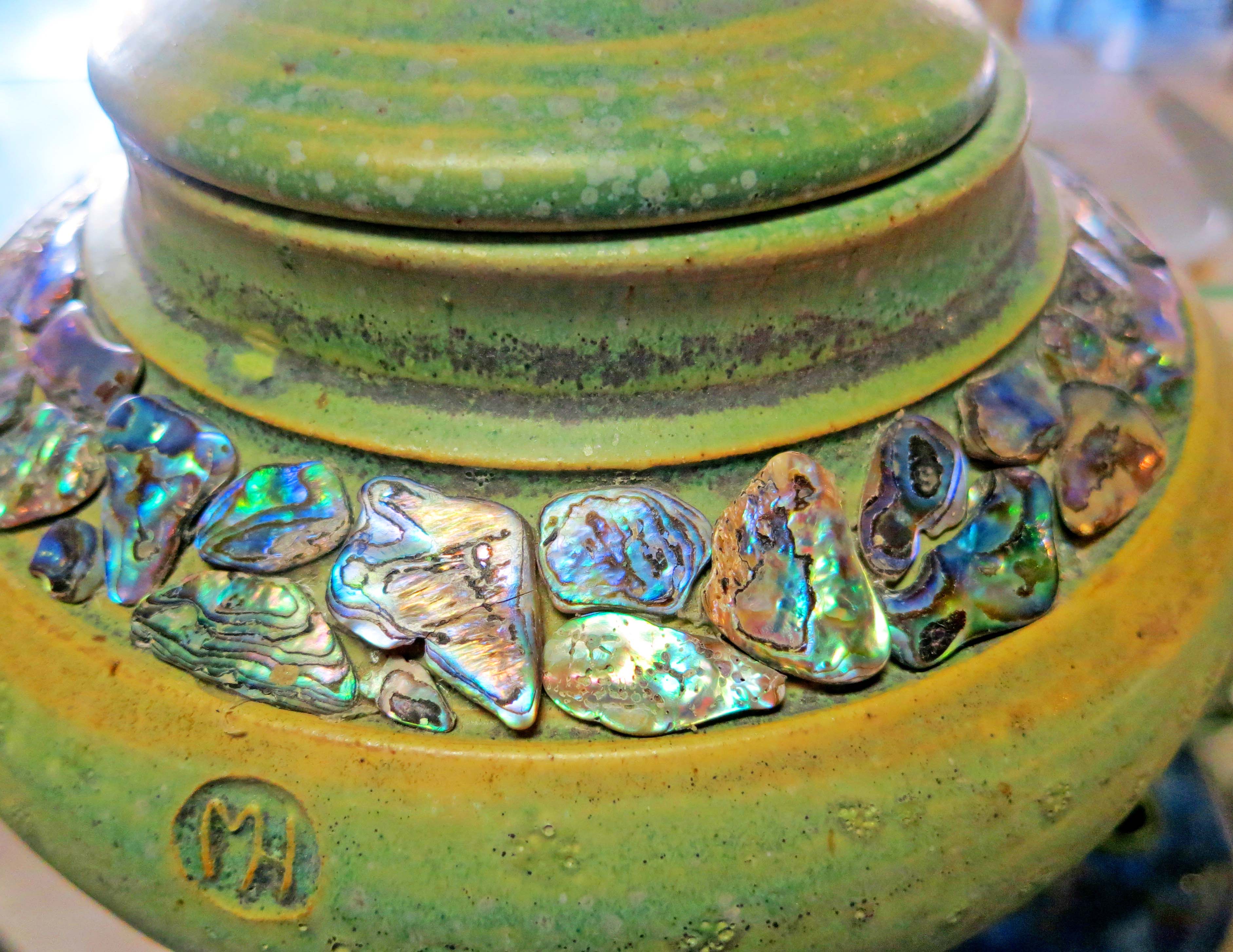
Pot incorporating abelone shells.

Pot incorporating abalone shells.

This coffee cup came home with me. The MH serves as Marian's signature.

This coffee cup came home with me. The MH serves as Marian’s signature.

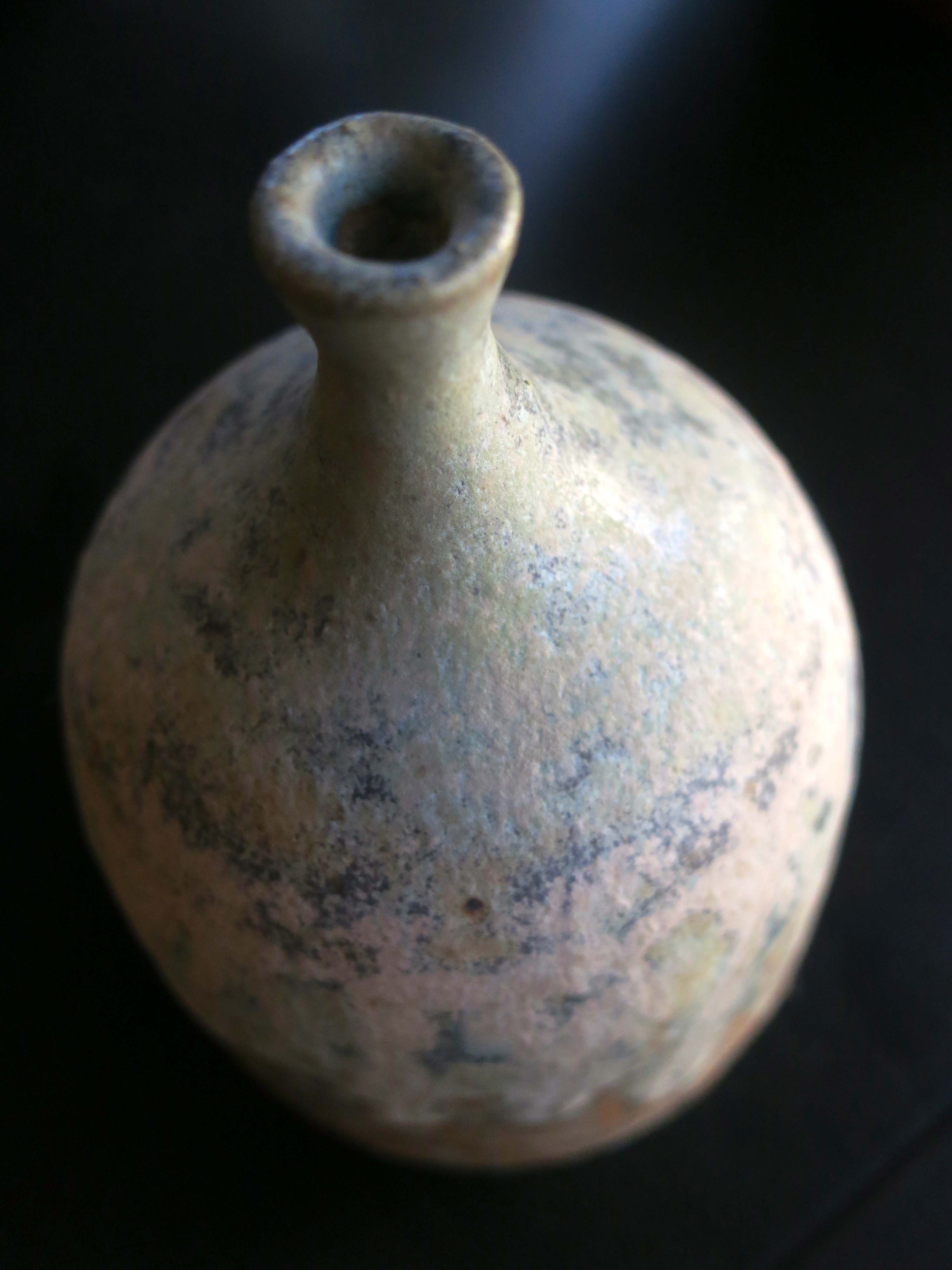
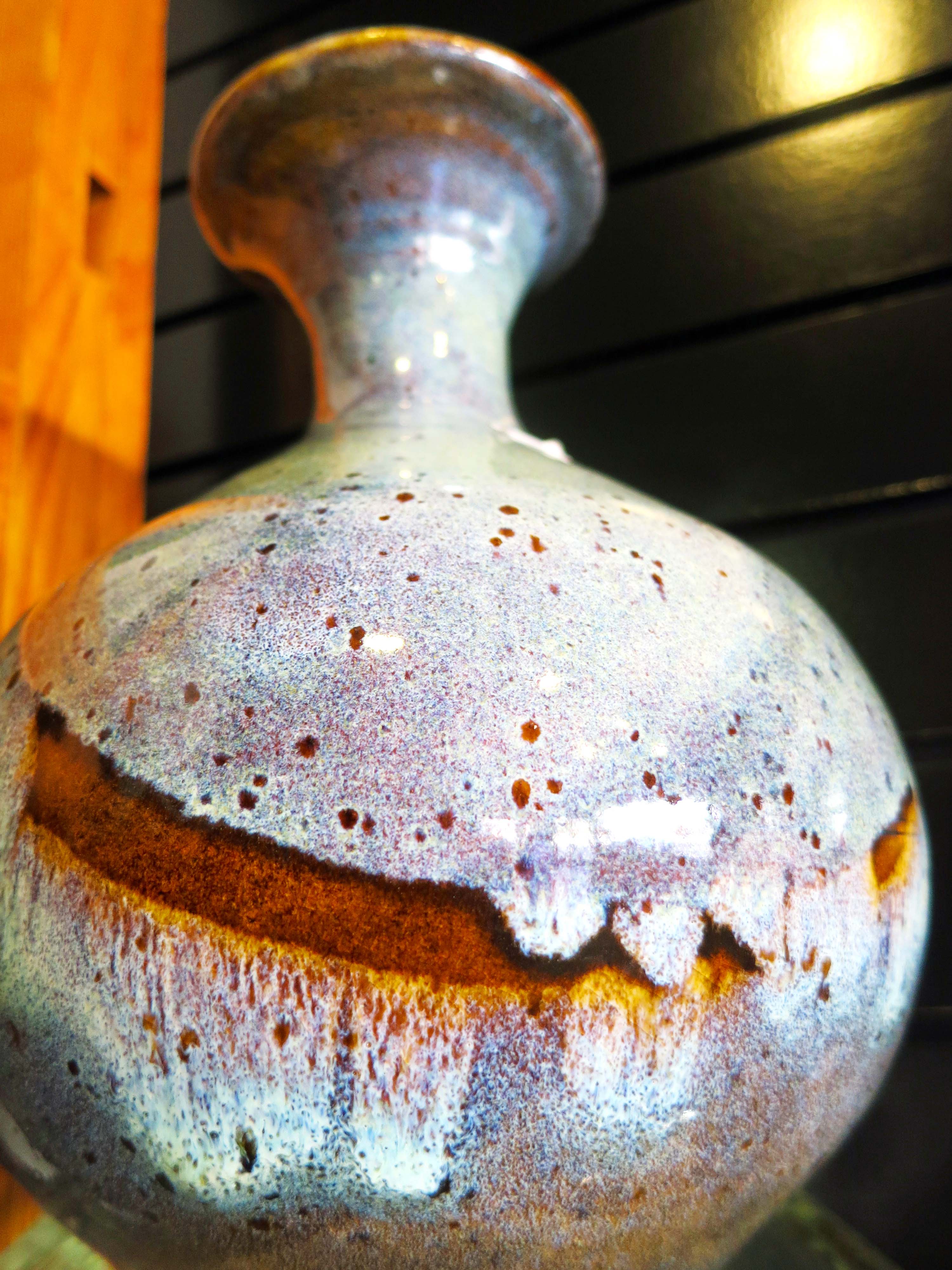
I enjoyed the top down perspective on this vase.

I enjoyed the top down perspective on this vase.

Marian has also branched out into porcelain.

Marian has also branched out into porcelain.

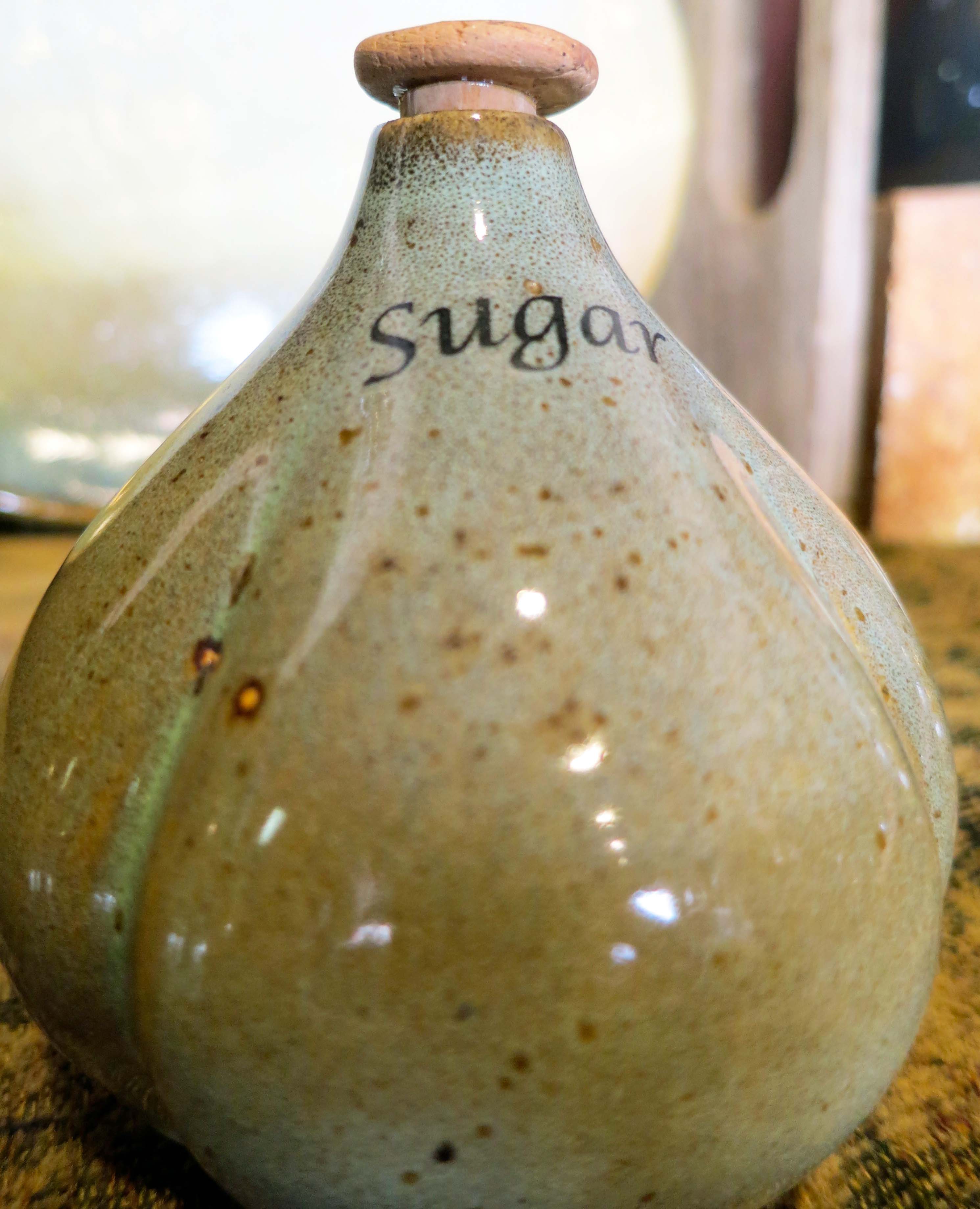
I found the small containers she made for sugar, salt, pepper and other spices quite unique.

I found the small containers she made for sugar, salt, pepper and other spices quite unique.

This vase made me think of Where the Wild Things Are.

This vase made me think of Where the Wild Things Are.

Marian’s work has been shown at the Tennessee Arts Commission gallery in Nashville and a piece has been purchased by Commission to add to its permanent collection. You can learn more about Marian by checking out her website.

While we were talking, Marian had mentioned how she felt her work in pottery had reflected her struggles in life. “I am good at struggling,” she had noted with a grin. “I have a knack for it.” Her dad had once commented to her how she was always able to take lemons and make lemonade. Her response had been, “I don’t want to make lemonade. I want to make something more beautiful and permanent.”

I think she has succeeded.

NEXT BLOG: It’s off to the beautiful red rock country of Sedona, Arizona.


I Bit the Chicken and the Chicken Bit Back… Nashville’s HOT Chicken Restaurants

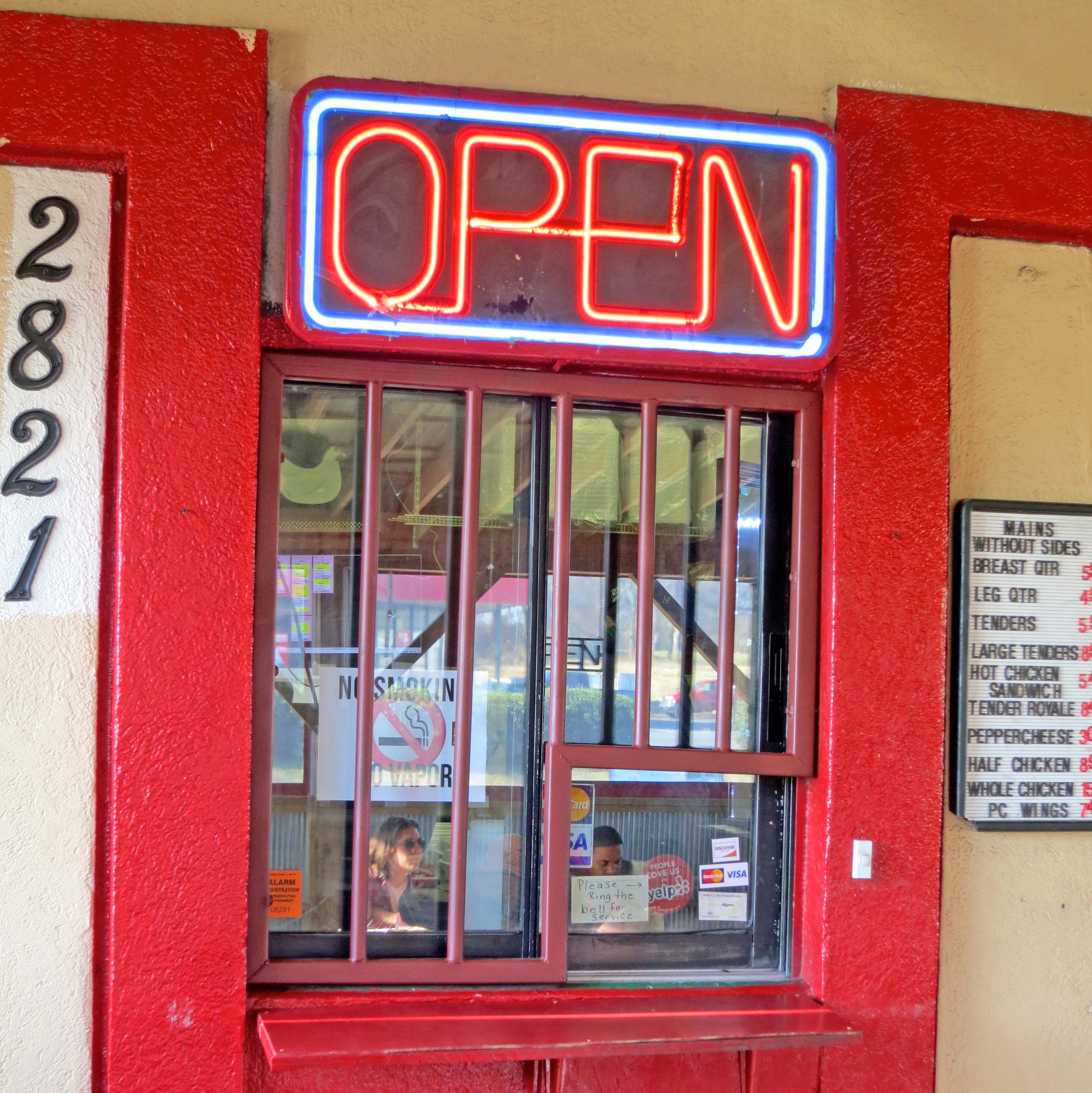
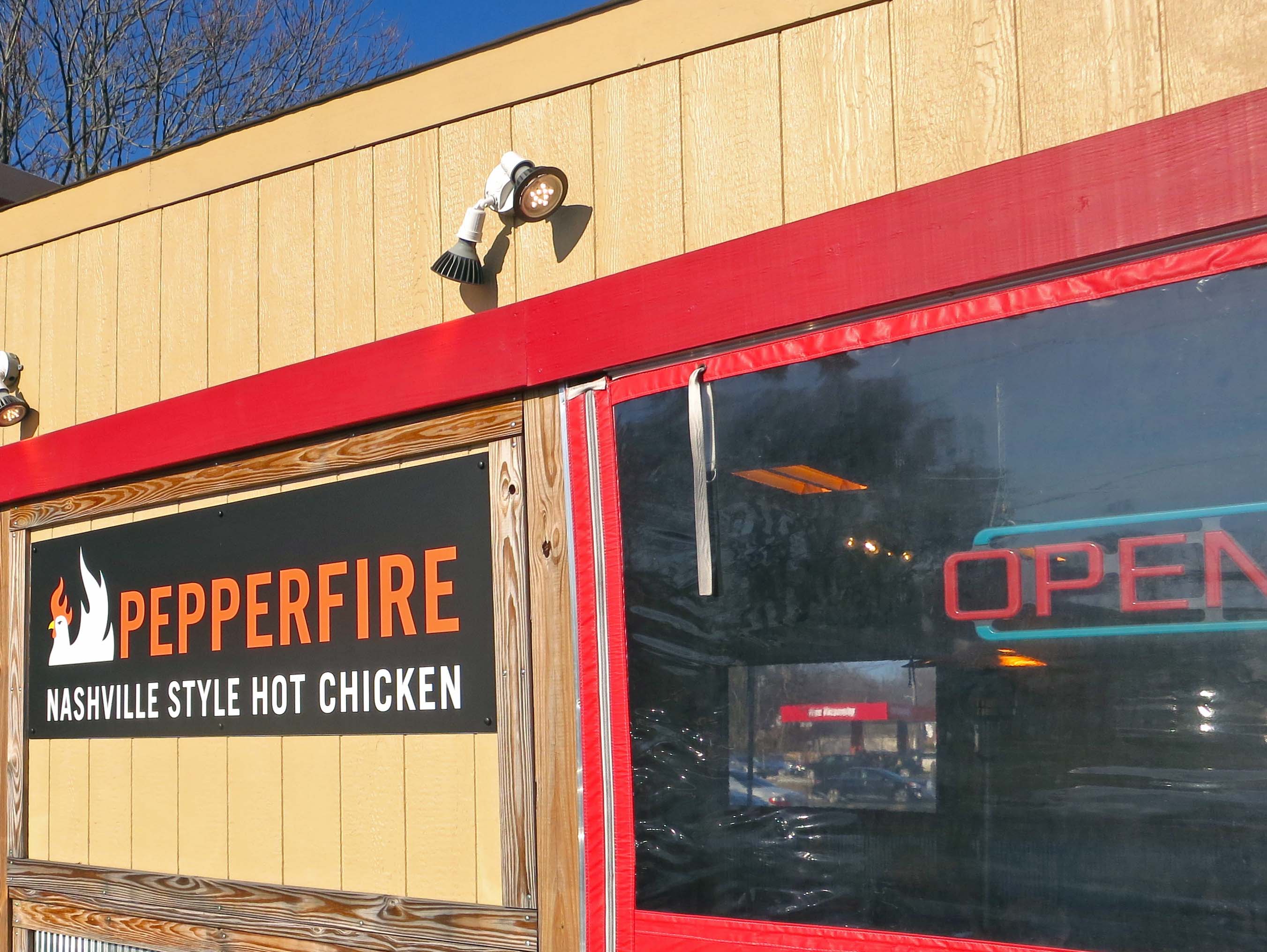
Pepperfire Restaurant in Nashville, TN. Photo by Curtis Mekemson

Hot chicken is all the rage in Nashville today. But just how hot is it?

My son-in-law Clay and I have been hassling each other over hot food ever since he first started dating our daughter. Clay, Tasha, Peggy and I had gone out to a steak house in Sacramento, California and ordered prime rib. Normally, the restaurant served a mild horseradish cream sauce along side. This time, for whatever the reason, it didn’t.
“Can we have a side order of horseradish cream sauce?” I had asked our waiter.

He had brought it out, straight up, no cream. I slathered it on my prime rib. Clay, watching me, had done the same thing. I took one bite and thought ‘Holy Ghost Pepper!’ as it burned all the way down to my toes. I quickly scraped it off. I didn’t mean to hide my action from Clay, but he didn’t see me do it. He just kept nonchalantly chewing away and all I could think was, ‘He is one tough dude.’
This went on for a while as perspiration broke out on Clay’s forehead and his eyes began to water. Suddenly he threw down his fork.

“You’re the man,” he declared. “How can you eat that stuff?”

We all had a good laugh when I confessed, but it established a tradition. Whenever Clay comes to visit, I take him out for the hottest food I can find. (The girls stay as far way from this activity as possible.) Last time we went to the India Palace, my favorite Indian restaurant in southern Oregon. Clay insisted on ordering the food one notch hotter than I did.

Of course what goes around comes around, right? So whenever Peggy and I visit Clay and Tasha in Tennessee, Clay introduces me to his latest mouth-burning find. He outdid himself this time. “Google Nashville hot chicken and pick out a restaurant,” he suggested to me as he scooted off to his job as a regional manager for Verizon. I was soon up to my ears in hot sauce.

The legend is that Thornton Prince was having girlfriend problems back in the 1930s. He had too many. Girlfriend number #1 decided on revenge. She secretly dumped several extra tablespoons of cayenne pepper on Thornton’s chicken when he came in late one night. The effort backfired. Prince loved it. In fact he loved the hot chicken so much he opened a restaurant featuring it.

The restaurant quickly became a gathering place for the local African American community. When white musicians playing at the Grand Ole Opry heard about the chicken, they started visiting as well. This was still the era of segregation, however. The whites had to come through the back door and eat in the kitchen. Seventy years later the restaurant is still serving up its signature dish. Everyone goes through the front door now.

Today, Nashville is renowned for its hot chicken. There are several restaurants present, and my sense is that they vie with one another over who can produce the hottest food. I should note here that I like hot food. I developed the taste when I was a Peace Corps Volunteer in Liberia, West Africa where I started out as a one-pepper person. By the time I left, I had worked my way up to three. Since then I have continued to increase my tolerance for hot.

But in the world of hot peppers, there is hot and there is HOT. Two blogs ago I wrote about how my father-in-law, John Dallen, was concerned about the Naga headhunters of Nagaland when he had to bail out of his airplane in World War II. Well, as it turns out, I just learned the Naga are also renowned for raising Bhut Joloki peppers (ghost peppers), which happen to be among the hottest peppers in the world. John was wise not to eat what the local natives offered.

To provide a perspective on how hot these peppers are, consider the following. Pepper heat is measured in Scoville heat units (SHU). Your typical jalapeno pepper checks in at around 4000 SHU. Habanero peppers are measured at 80,000 to 600,000 SHU. The Bhut Joloki pepper normally tests out between 500,000 and 1,500,000!

I doubted I would be eating any fried chicken infused with Bhut Joloki peppers on my Nashville excursion, but I still entered the Pepperfire restaurant with a touch of trepidation. I’d read the reviews and seen the menu. My choices ranged from mild to XX hot. The Internet description had said that either the X or XX will “jump on you and grab you.” I wasn’t sure what that meant. But how could it be good?

The menu listed the various levels of hot.

The menu listed the various levels of hot. The Pepperfire website had informed me that “hot” was painful for most.

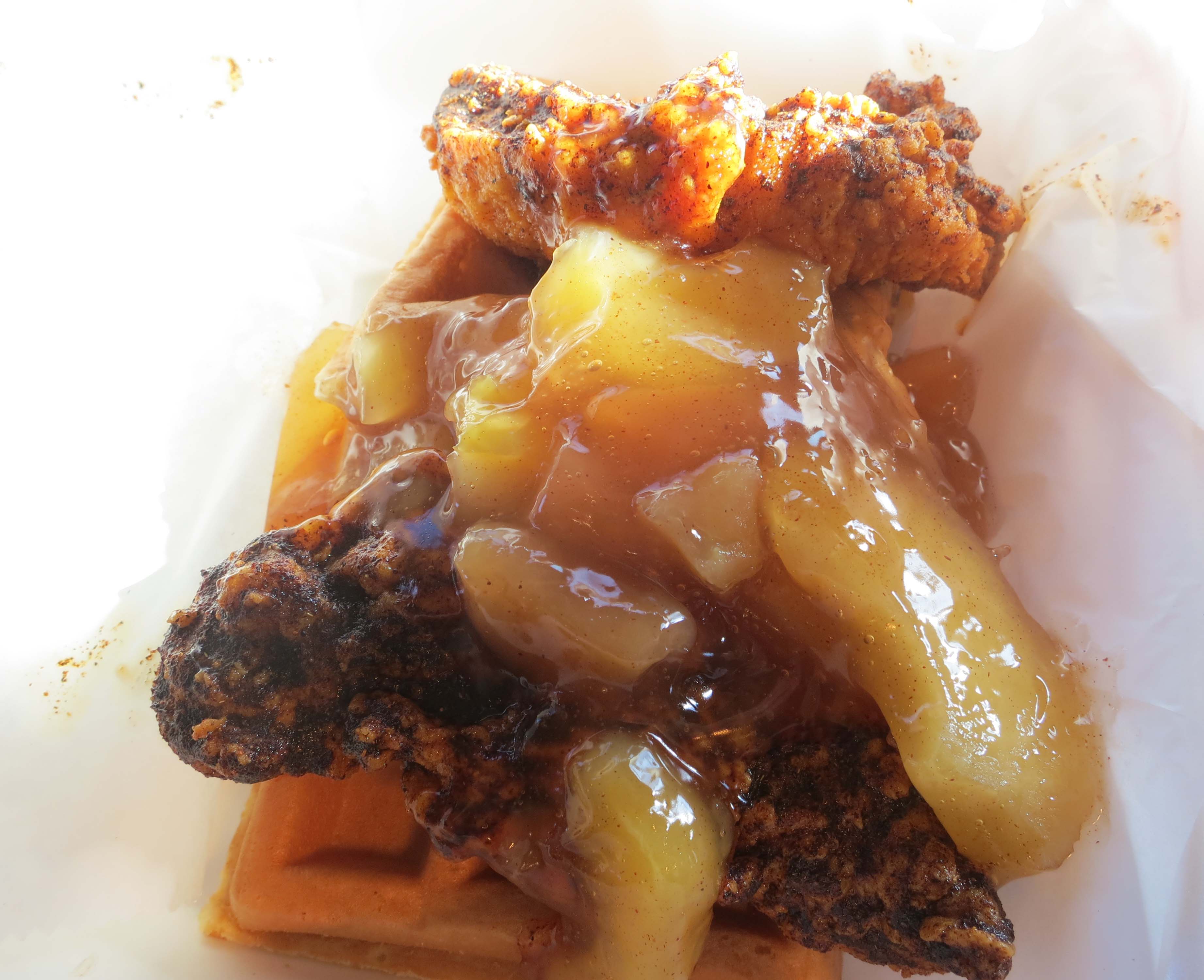
I was out with Clay, however, so I had to man-up. I went for chicken leg/thigh combo on the X level. Since I was in the south, I also ordered fried okra. Clay ordered XX chicken wings with French fries. For dessert we ordered a waffle that was topped off with hot chicken tenders and fried apples.

Chicken quarter at Pepperfire Restaurant in Nashville, Tennessee. Photo by Curtis Mekemson.

Just looking at this chicken quarter says hot. It reeks hot. You can see the flames. It was served on top of white bread, whose purpose is to soak up the grease.

Fried okra served at the Pepperfire restaurant in Nashville, Tennessee.

A close up of the okra. Eating it gave me that ‘old boy’ feeling. Just call me Bubba.

XX hot chicken wings served at the Pepperfire Restaurant in Nashville, Tennessee.

Clay’s hot chicken wings. It was the third one over from the left that bit me.

Dessert at Pepperfire Restaurant in Nashville Restaurant.

Dessert: a waffle topped by chicken tenders topped by fried apples. It was definitely unique— make that a tad weird.

When the food arrived, I picked up one of Clay’s chicken wings. Maybe it would make my food seem cool in comparison. I bit down. The damn chicken bit back. I smiled at Clay. “This really tastes good,” I managed to get out as my tongue turned into a pretzel, my throat screamed “water!” and my stomach proclaimed, “you idiot.” Only its words weren’t quite that polite. I will say that the chicken was tender and juicy, and that there were spices other than hot that were quite tasteful.

Did it make my chicken seem cooler? No way. Once you get beyond hot, you are beyond hot. Those are my words of wisdom for the day. Within two hours, Henny Penny was waging the mother of all wars in my stomach. It was a triple burn day. The chicken burned on the way in. It burned inside. And it burned on the way out. Enough said. Now I have to start planning for the next time Clay comes to Oregon.

All joking aside, if you are in Nashville and want to try the city's famous (infamous) hot chicken, I recommend checking out the Pepperfire restaurant.

All joking aside, if you are in Nashville and want to try the city’s famous (infamous) hot chicken, I recommend checking out the Pepperfire restaurant.

What Happens When Your Blog Becomes A Lesson Plan for Fifth Graders?

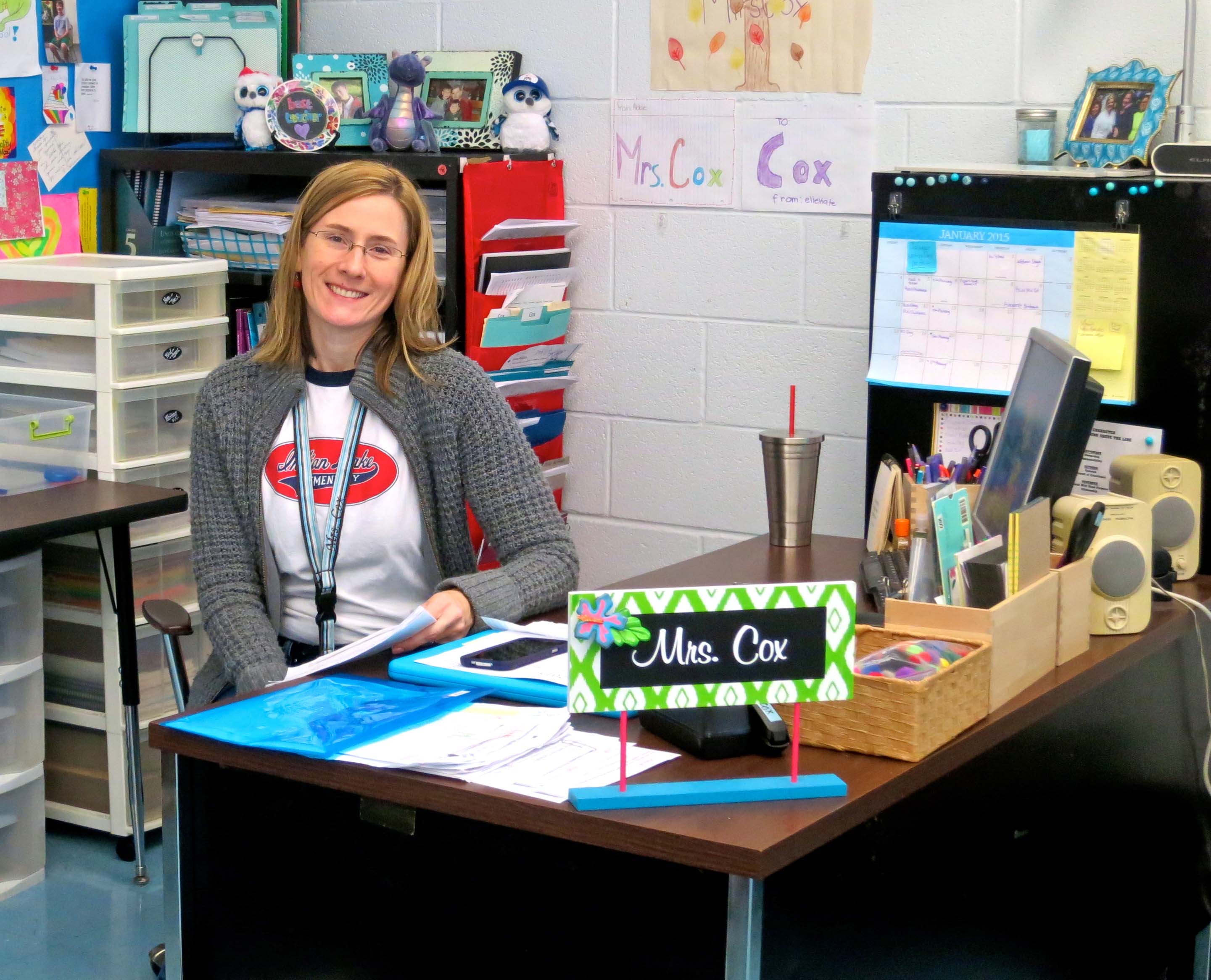
Tasha in her fifth grade classroom at Indian Lake Elementary School.

Tasha in her fifth grade classroom at Indian Lake Elementary School.

Our daughter, Tasha (Mrs. Cox), is a fifth grade teacher at Indian Lake Elementary School in Hendersonville, Tennessee where she teaches language arts, including writing. A month or so ago she called and asked if she could use one of my blogs in her writing class. “Of course,” I had replied. Parents often tell me they have shared some blog or the other I’ve written with their children. Most of my stuff is G-rated.

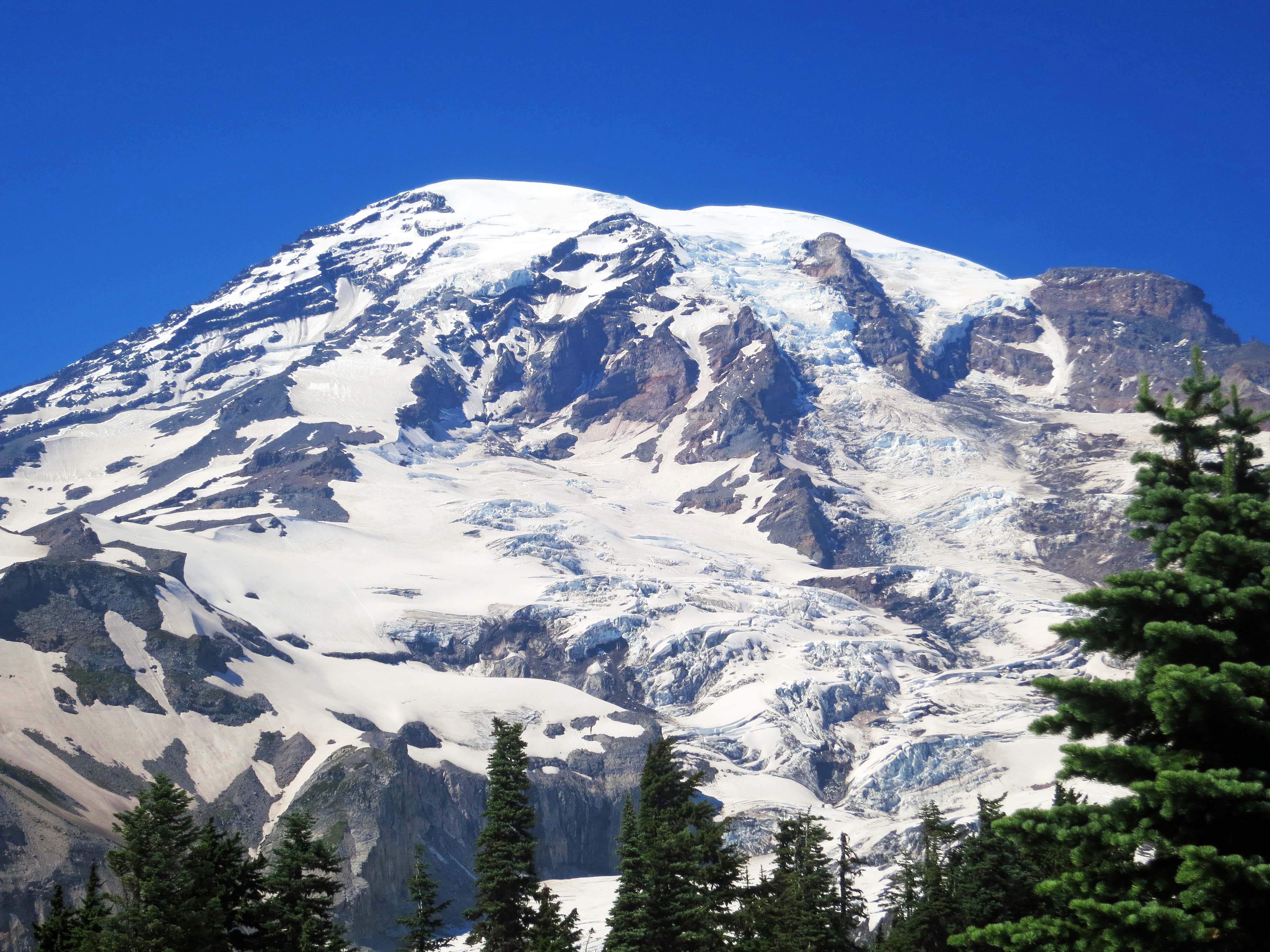
Tasha picked out a recent blog I had posted on Mt. Rainier National Park. It featured a picture of her brother, Tony, and of her son, Ethan, as well as lots of photos of the Park. I figured that was it. My work was done.

Mt. Rainier

Mt. Rainier

I should have known better.

When Peggy and I arrived in Hendersonville for Christmas, there was a two-inch stack of yellow Post-its waiting. Each one included a question from a student directed to me. It looked like I might spend Christmas answering them all. That would have been okay, but I also wanted to enjoy the season. Maybe jolly old St. Nick had brought me a rocket ship so I could zoom around the universe.

Tasha took pity. She organized the Post-its by category so I could answer a handful of questions instead of 5,472. She is good at organizing. She even wants to organize me. Lots of luck with that…

So here are the key questions and my answers. I thought the folks who follow my blog might find them interesting as well.

Why do you write a blog?

I started blogging with a specific purpose in mind. I wanted to write a book and a blog would introduce my writing to people. If they liked how I wrote and what I wrote about, they might like my book as well.

Since then blogging has also become valuable to me for other reasons. One, it allows my wife Peggy and I to share our travels and adventures with people who live all over the world. Two, I have made a lot of new friends who share their travels, photography, and ideas with me. Three, it helps me improve my writing.

Finally, I love to write and tell stories. Each morning I wake up excited to begin my blog.

Is blogging hard?

Yes and no. Since my blogs include both writing and photography, they take a fair amount of work. I often start by researching a subject I am going to blog about. Then I pick out photos. Peggy and I take a lot when we travel; I may have to choose ten from a hundred. I then use software to work over each photo to make it look the best I can. Finally I write and edit my blog. Peggy then does a final read-through to catch any errors I may have missed. Each blog takes from three to eight hours to produce.

Blogging can be a lot easier, however. I have friends who may put up a photo and write a few words about it, but still have a very good blog.

The platform I use for my blog, Word Press, takes care of all the technical aspects of blogging. If someone wants to start a new blog, all he or she has to do is go to Word Press and click on “get started.” Word Press will then take the person through the process.

Where do your ideas for a blog come from?

Since my blog focuses on travel, most of my ideas come from places we visit. I am always on the look out for good blog material. Maybe it will be a town we visit, or a national park, or an ancient site where Native Americans did rock art. When in Hendersonville over Christmas, my son-in-law, Clay (Tasha’s husband) took me out to eat outrageously hot (spicy) chicken that Nashville is famous for. My stomach is still complaining. I am going to blog about it.

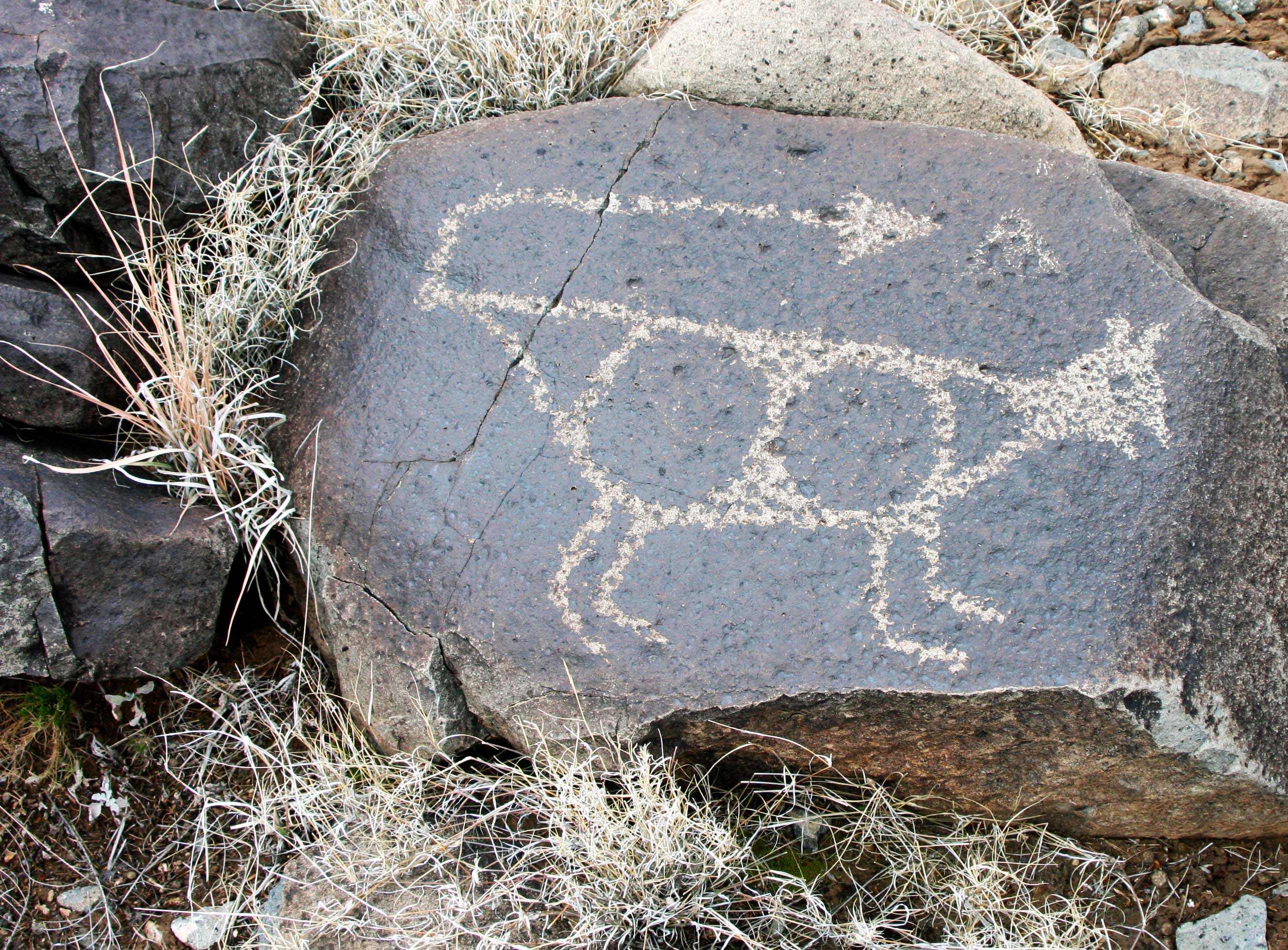
Indian rock art found in New Mexico.

Indian rock art found in New Mexico.

But I don’t limit my writing to travel. Sometimes I write about when I was growing up. Or I may write about where I live in Oregon. A while back some baby goats were born next door. I visited the goats and wrote a blog about them. Recently I did a series of blogs about Tasha’s grandfather who flew airplanes across the Himalayan Mountains in World War II. He had to bail out of his airplane when it ran out of gas and walk out of a jungle that was known for its tigers and headhunters.

What is the favorite place you have ever been?

This is a really hard question because different places have different things to offer. How do you compare Dubrovnik, Croatia with the Redwoods of California, or a cruise through the Mediterranean Sea with an 18-day raft trip down the Colorado River? Or, to bring it closer to home, how do you compare Nashville, Tennessee with Chattanooga. Each is unique.

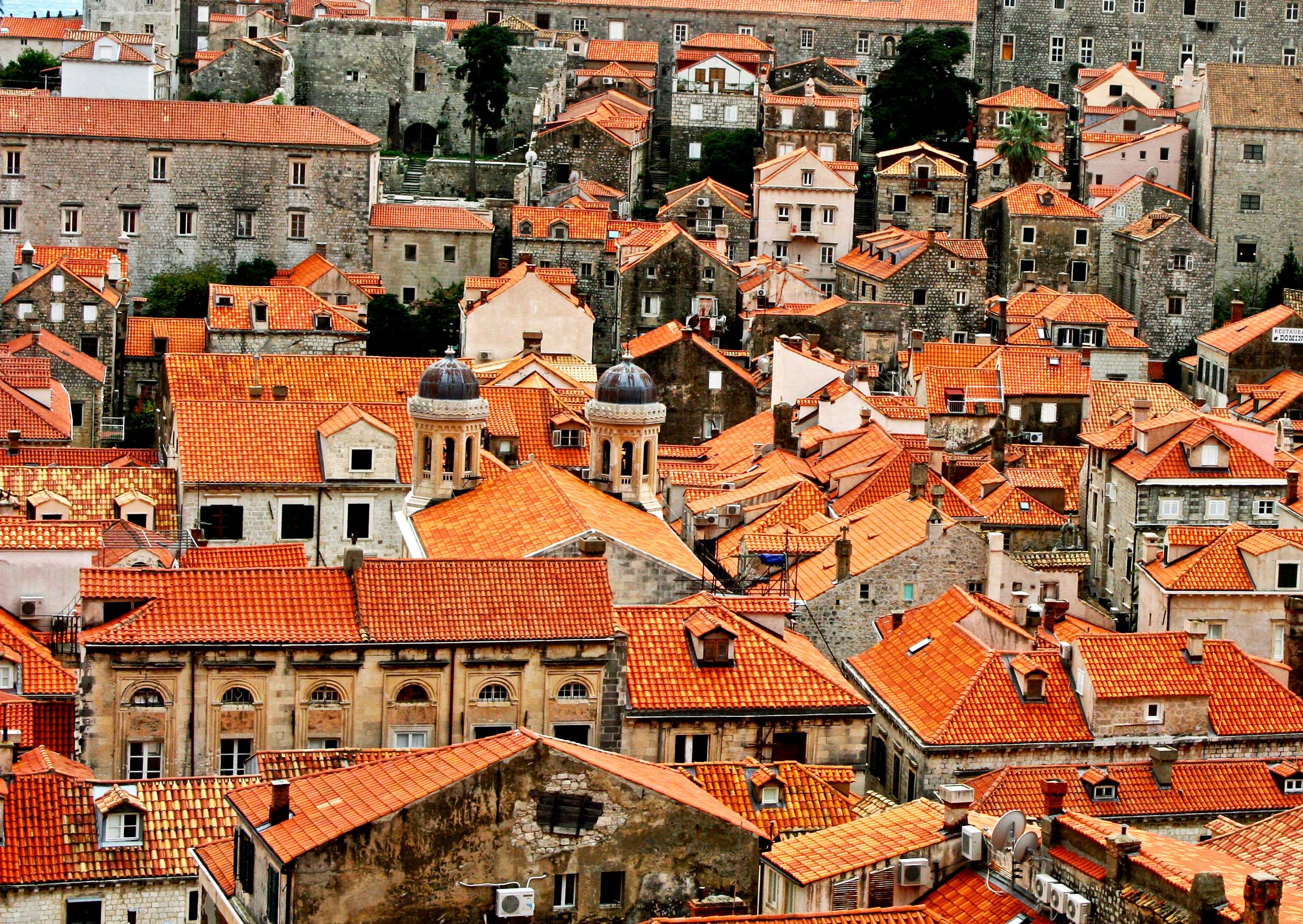
Dubrovnik, Croatia

Dubrovnik, Croatia

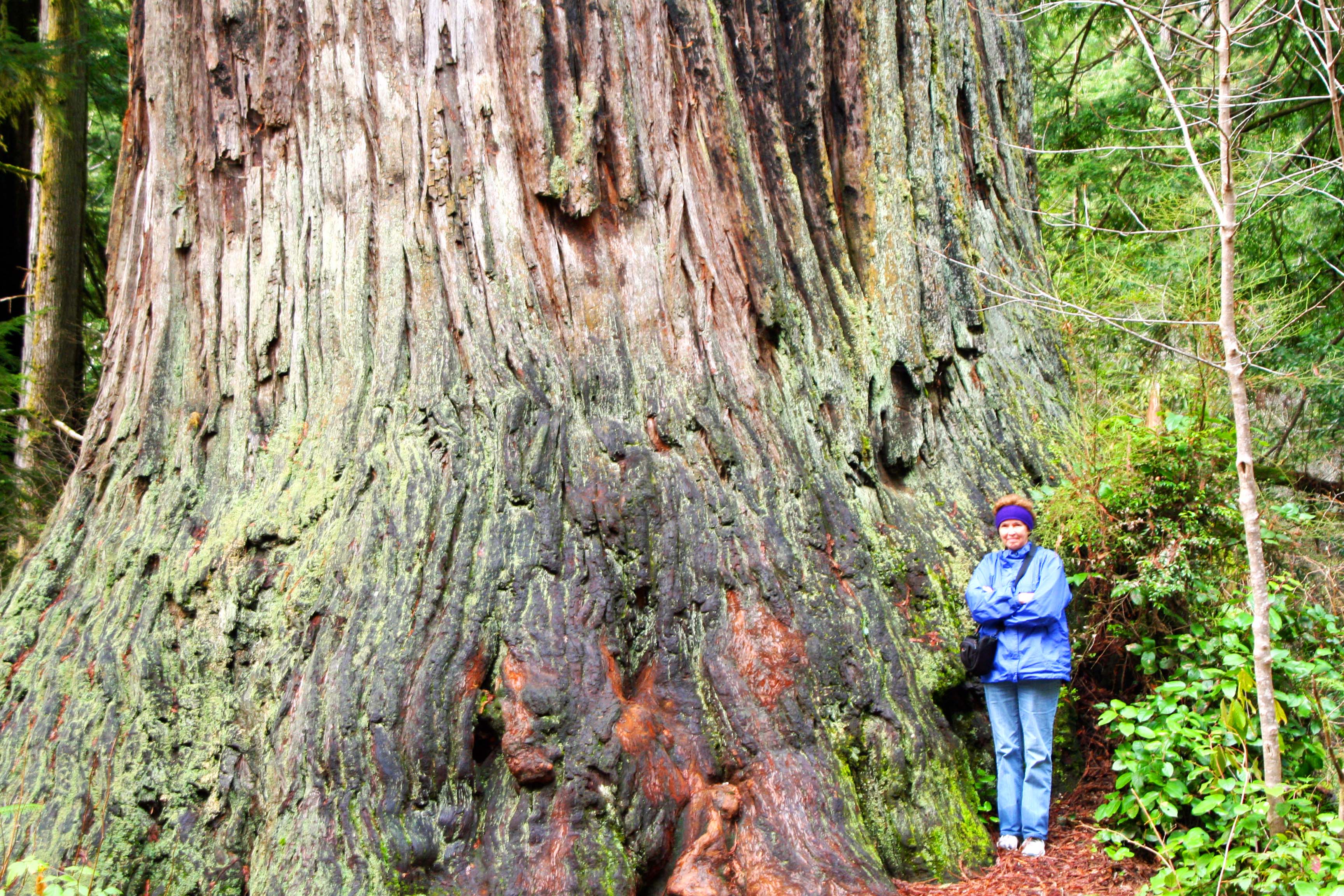
Tasha's mom, Peggy, stands next to a redwood tree.

Tasha’s mom, Peggy, stands next to a redwood tree.

My favorite type of travel is adventure travel. Peggy and I once took a boat ride up the Amazon River. This summer we were kayaking out among the Orca Whales off of British Columbia. I once climbed on my bicycle and did a 10,000-mile solo trip around the US that took me six-months. (I bicycled through Tennessee as part of my trip.)

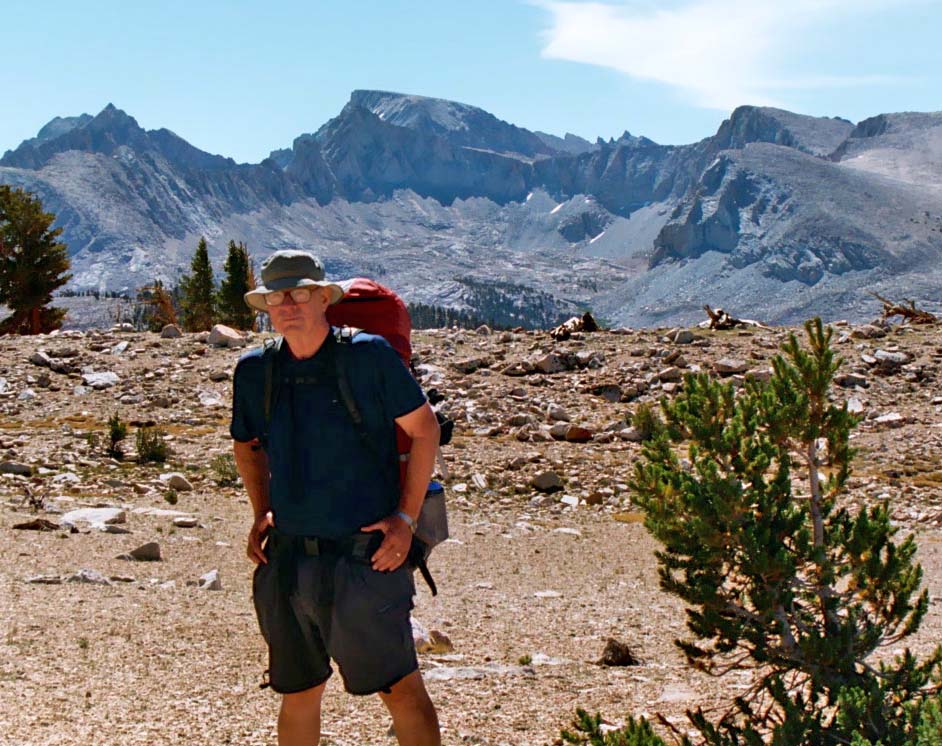
If forced to choose, I would say my favorite place to be is out in the woods. I am never happier than when I put on a backpack and disappear into the wilderness. I’ve backpacked all over the US including Alaska and Hawaii. When I turned 60, I backpacked 360 miles through the Sierra Nevada Mountains of California from Lake Tahoe to Mt. Whitney.

Nearing the end of my journey 360 mile backpack trek, Mt. Whitney stands in the background.

Nearing the end of my  360 mile backpack trek, I pose in front of Mt. Whitney.

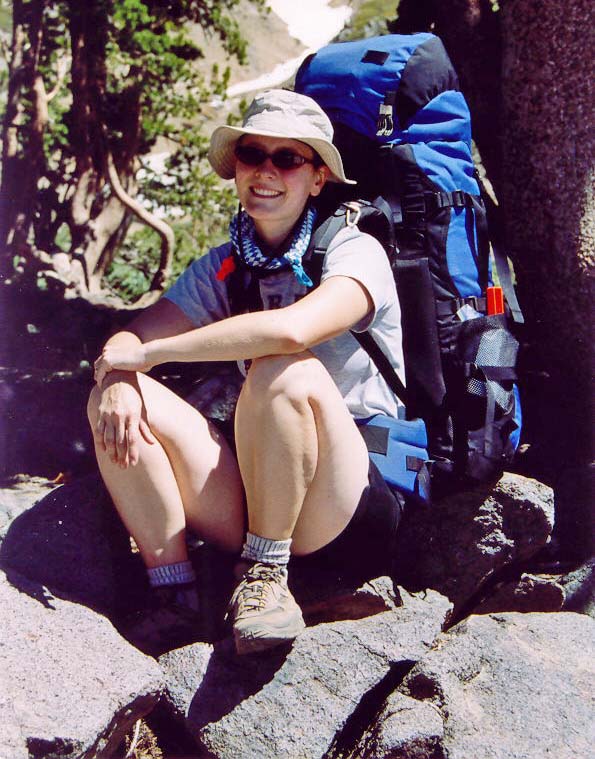
Tasha joined me along the way for one week of my trip.

Tasha joined me along the way for one week of my trip.

How do you become a writer?

Write! I am serious. The best thing you can do to become a writer is to write all of the time. Keep a journal; make up stories for your friends; start a blog. One girl wrote, “I am writing a book at home, and I don’t know if there is a specific age to start. Do you?” My answer is that now is the perfect time, whether you are in the fifth grade or your seventh decade.

Reading is also very important. Read authors who are known as good writers and pay attention to how they write. Also read authors in the genre you want to write. For example, if you want to write mysteries, read mysteries.

It is also important to pay attention to the details of writing, such as learning grammar, avoiding spelling errors and painting pictures with words. A couple of students wanted to know how I found adjectives to describe my travels. It was a good question. Was it a black cat that crossed my path or a cat as dark as a moonless night? Two of the best tools an author can have are an active imagination and a good thesaurus.

My thanks to the fifth graders at Indian Lake Elementary School for inspiring this blog. Good luck in your future writing efforts.

NEXT BLOG: I bite a chicken and the chicken bites back.