Bruneau Dunes State Park, Idaho… The Wednesday Photo Essay

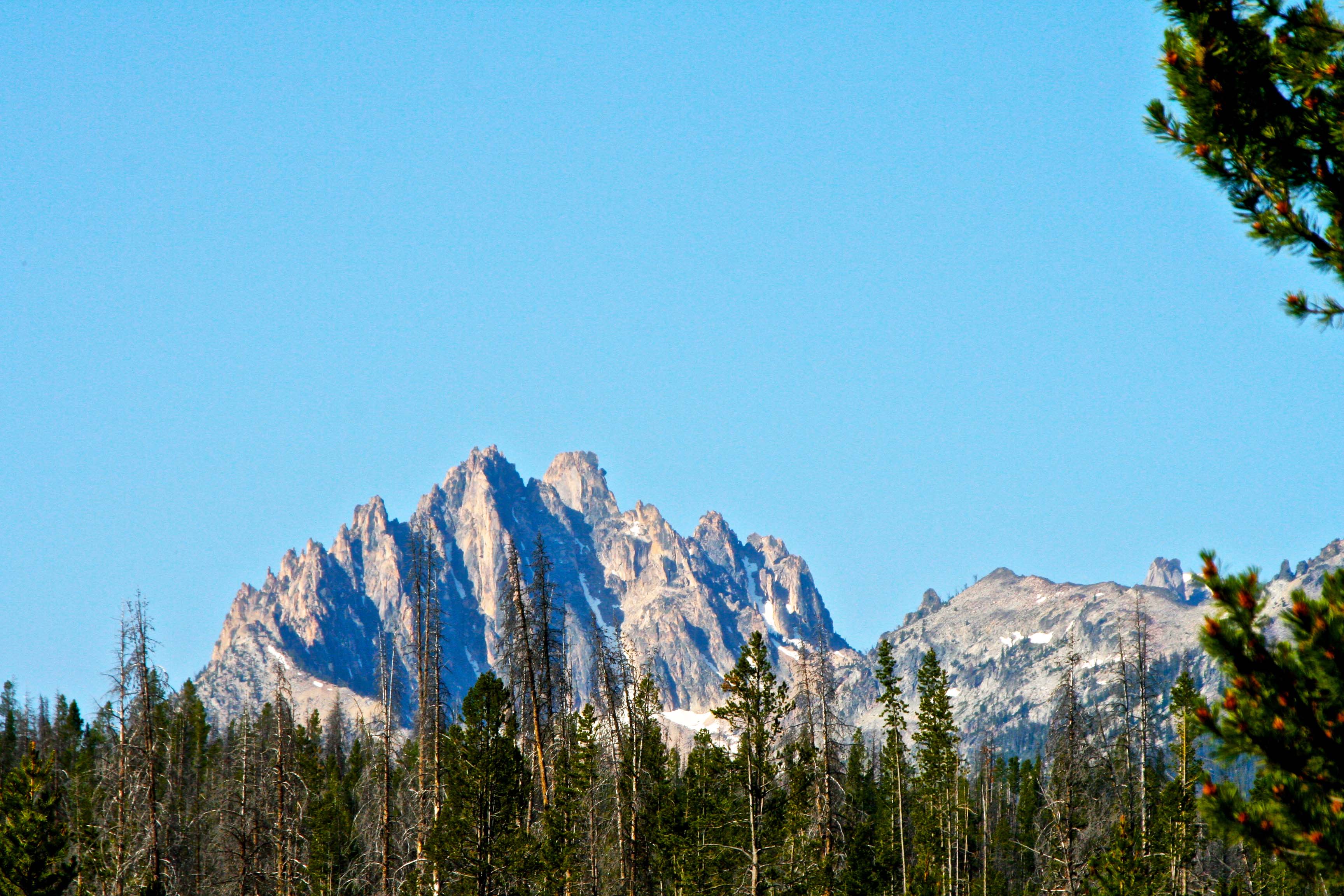
Peggy and I discovered Bruneau Dunes State Park after we had been up in Central Idaho admiring the Sawtooth Mountains.
Peggy and I discovered Bruneau Dunes State Park after we had been up in Central Idaho admiring the Sawtooth Mountains.
It’s Wednesday. That means I let my fingers do the walking down through my 20,000 pictures to come up with today’s photo essay. I closed my eyes, scrolled down through iPhoto, and randomly stopped.

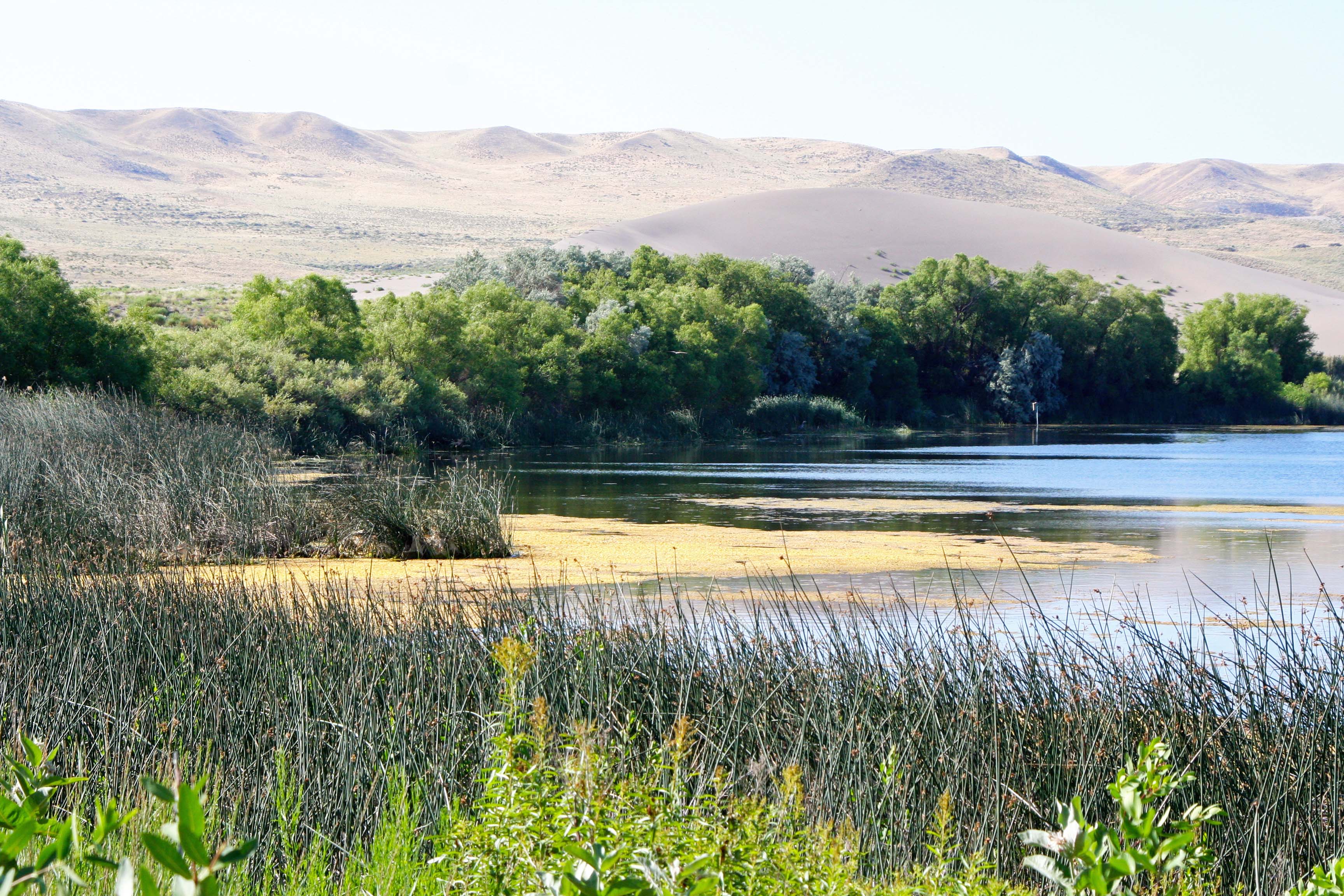
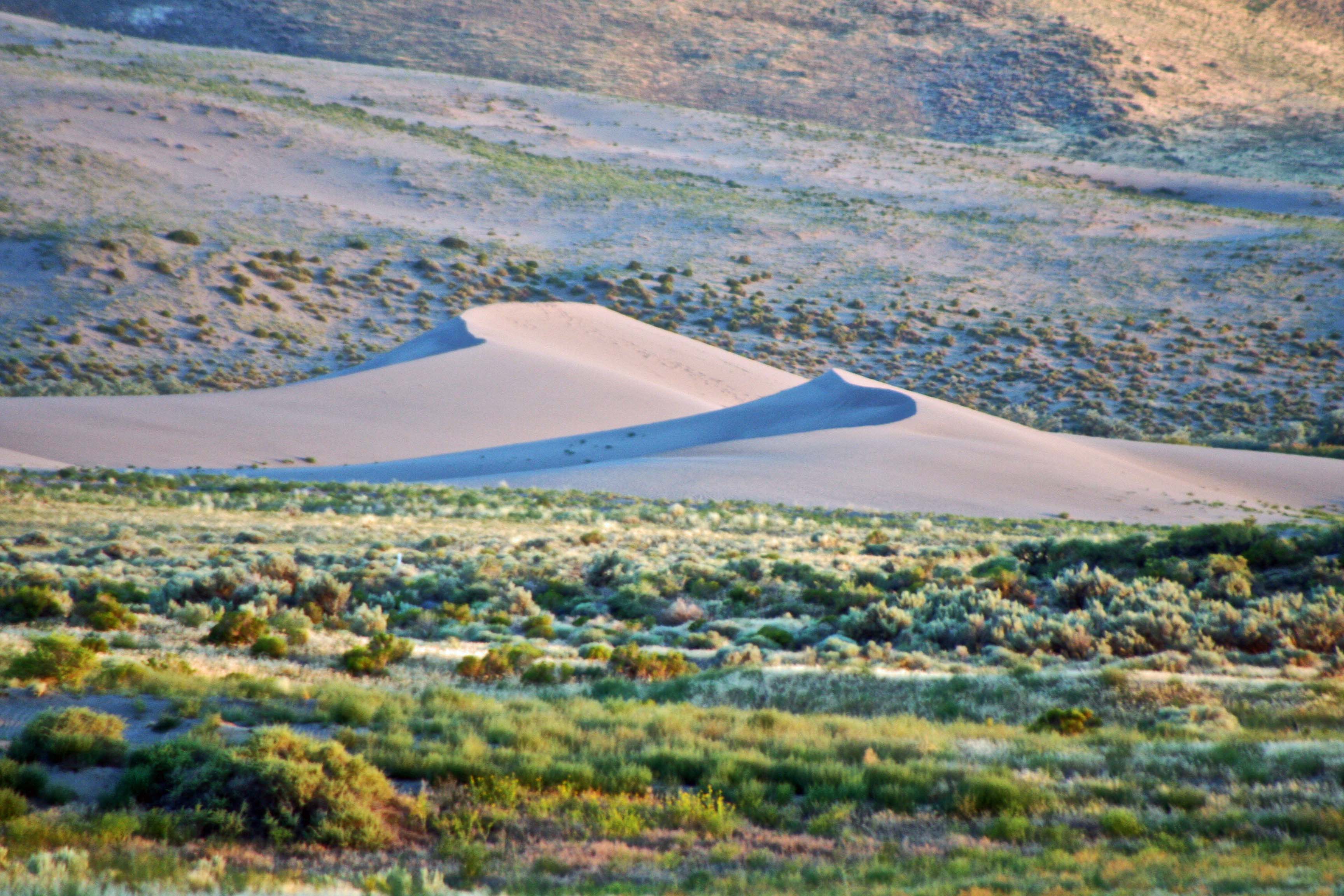
I landed on Bruneau Dunes State Park in southwestern Idaho. It’s a gem. Driving south on Idaho 51 heading toward Elko, Nevada, Peggy and I found the park pretty much the same way I found it on iPhoto— randomly. This 4800 acre state park features sand dunes and a small lake that gives the area an oasis feel. It’s noted for having the tallest single-structured sand dune in North America— 470 feet above the surrounding desert. (Photos by Curtis and Peggy Mekemson.)

Peggy and I had been up in central Idaho admiring the Sawtooth Mountains and were on our way to Nevada when we found Breneau Dunes State Park.

Peggy and I had been up in central Idaho admiring the Sawtooth Mountains and were on our way to Nevada when we found Bruneau Dunes State Park.

The small lake backed up by the 470 high Dune gives the area an oasis feel.

The small lake backed up by the 470 high dune gives the area an oasis feel.

Moving around the lake provided different perspectives on the dune.

Moving around the lake provided different perspectives on the dune.

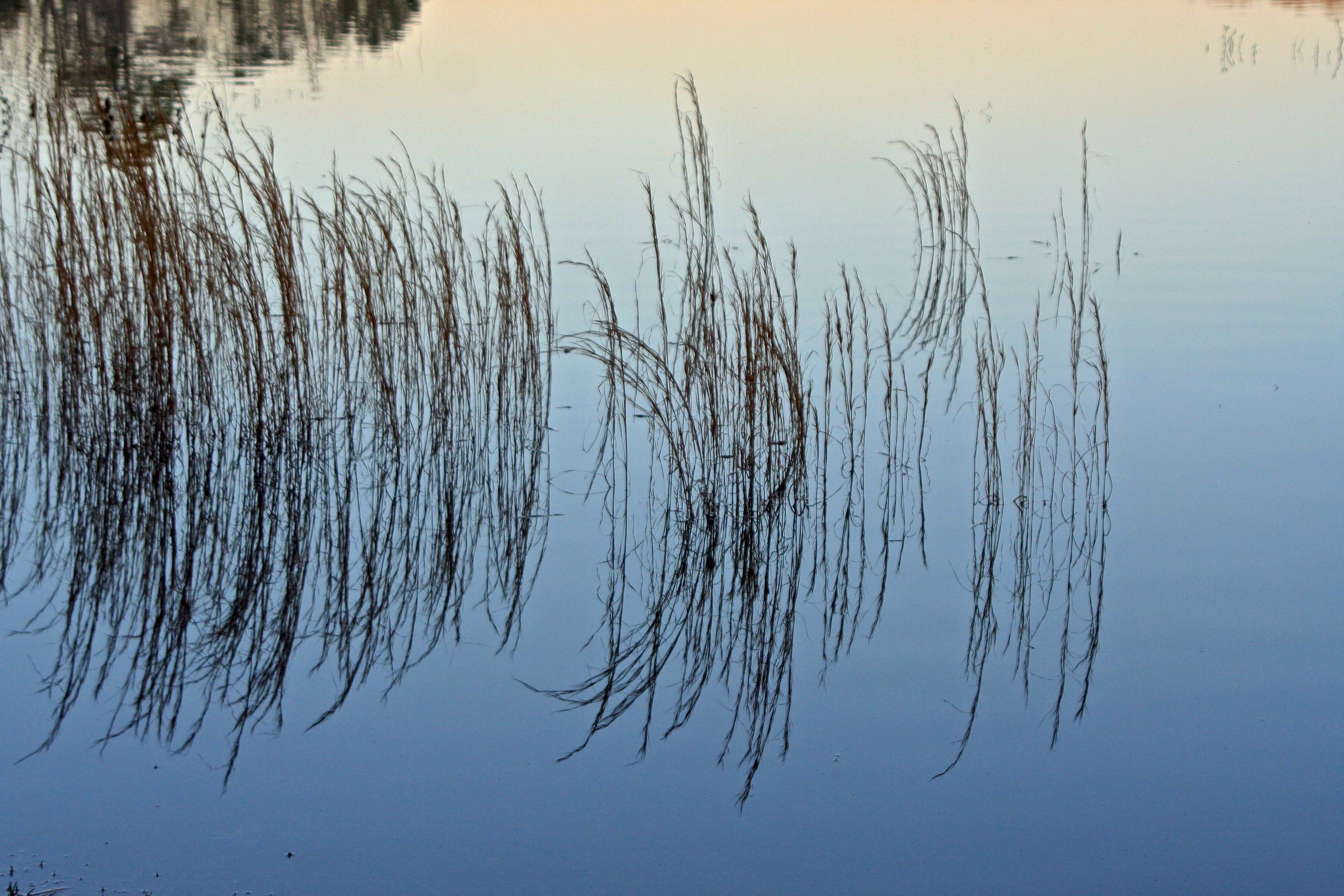
This view provided a reflection of the dune.

This view provided a reflection.

A view of the lake.

A view focused on the lake.

Having hiked around to the opposite side the lake, we were rewarded with a view of the dune.

Having hiked to the opposite side of the lake, we were rewarded with a closer view of the dune.

And lots of animal tracks.

And lots of animal tracks. Coyote possibly.
Bird tracks

Bird tracks

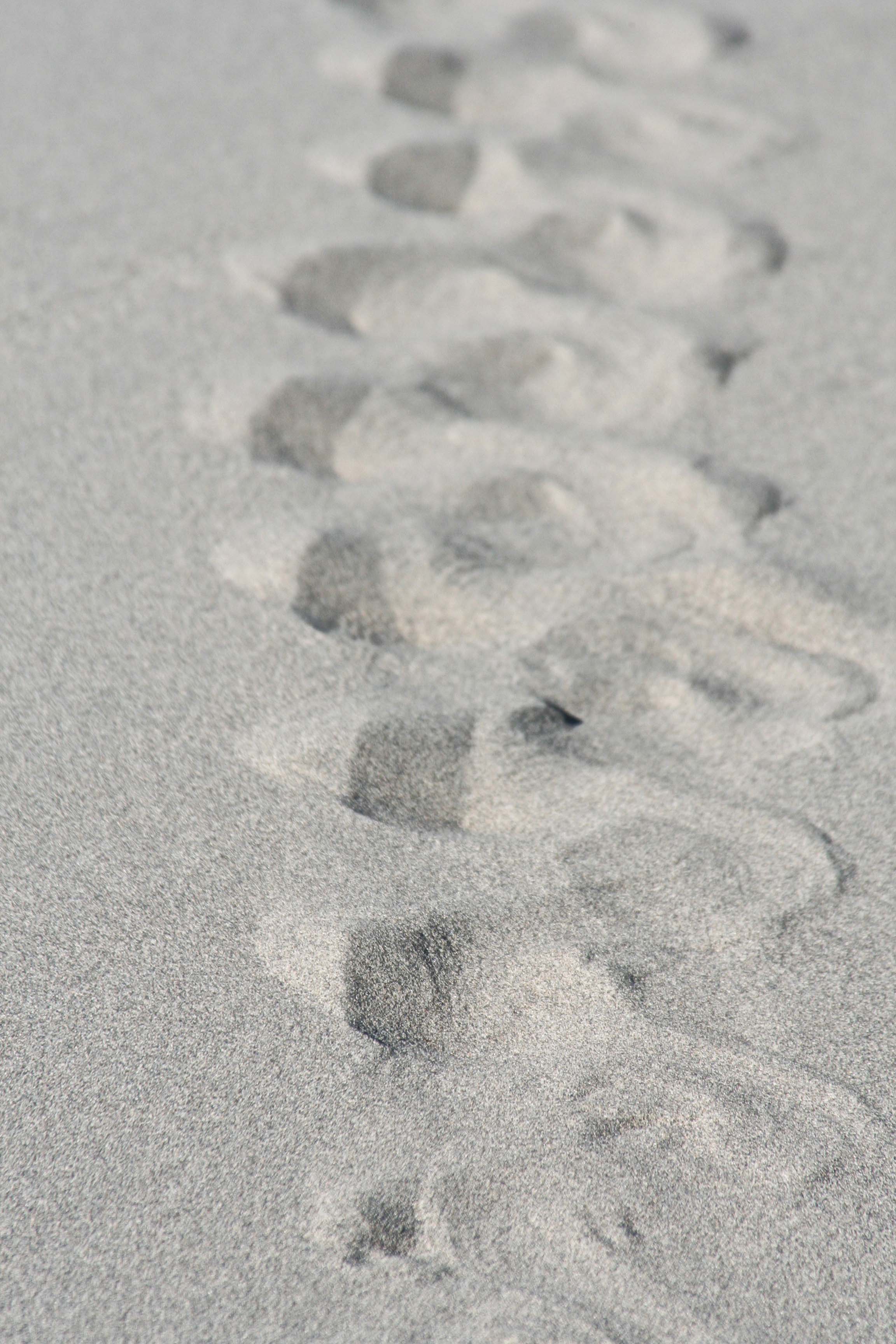
Your guess. I am thinking sidewinder rattlesnake.

Your guess. I am thinking sidewinder rattlesnake.

Later in the day, the dunes took on an almost purple tint as the sun went down.

Later in the day, the dunes took on an almost purple tint as the sun went down.

I liked the sage and other shrubs in this photo.

I liked the sage and other shrubs in this photo caught in the glow of the late afternoon sun.

The sun was almost down.

The sun was almost down.

Good night.

Good night.

We Visited Jackson, California and Bought a Giraffe. Help!

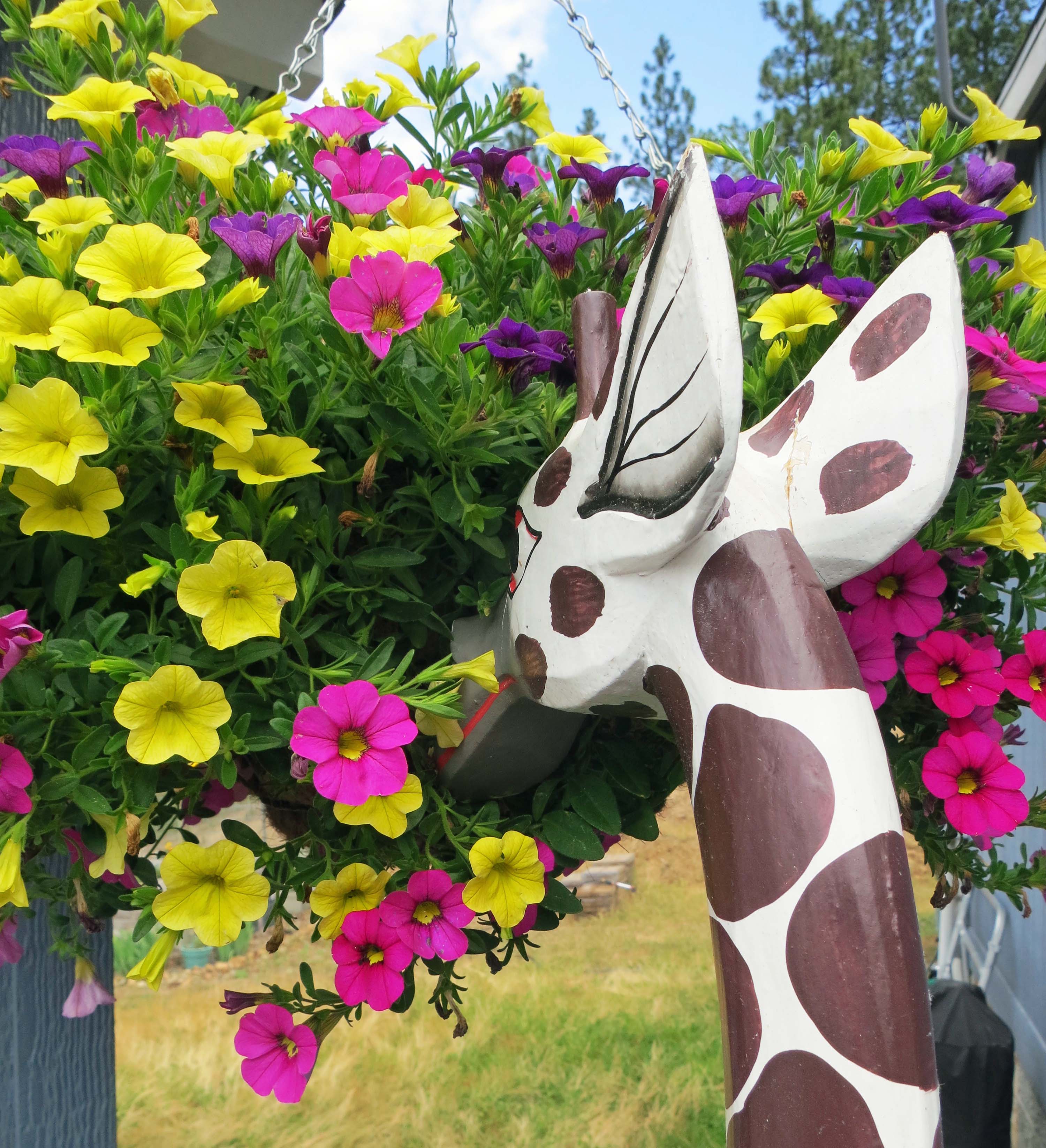
Peggy fell in love with this balsa wood giraffe we found in Jackson, California. So the giraffe came home with us. Little did we think it would have a taste for petunias.

Peggy fell in love with this balsa wood giraffe we found in Jackson, California. So the giraffe came home with us. Little did we think it would have a taste for petunias.

And here I thought our deer herd with its greedy appetite was bad. At least they couldn’t reach our hanging plants. It may be our imagination, but it seems that the wooden giraffe we bought in Jackson, California is poaching on Peggy’s petunias! We pretended to drive up the road and then I snuck back with the camera to see what the long-necked marauder was up to.

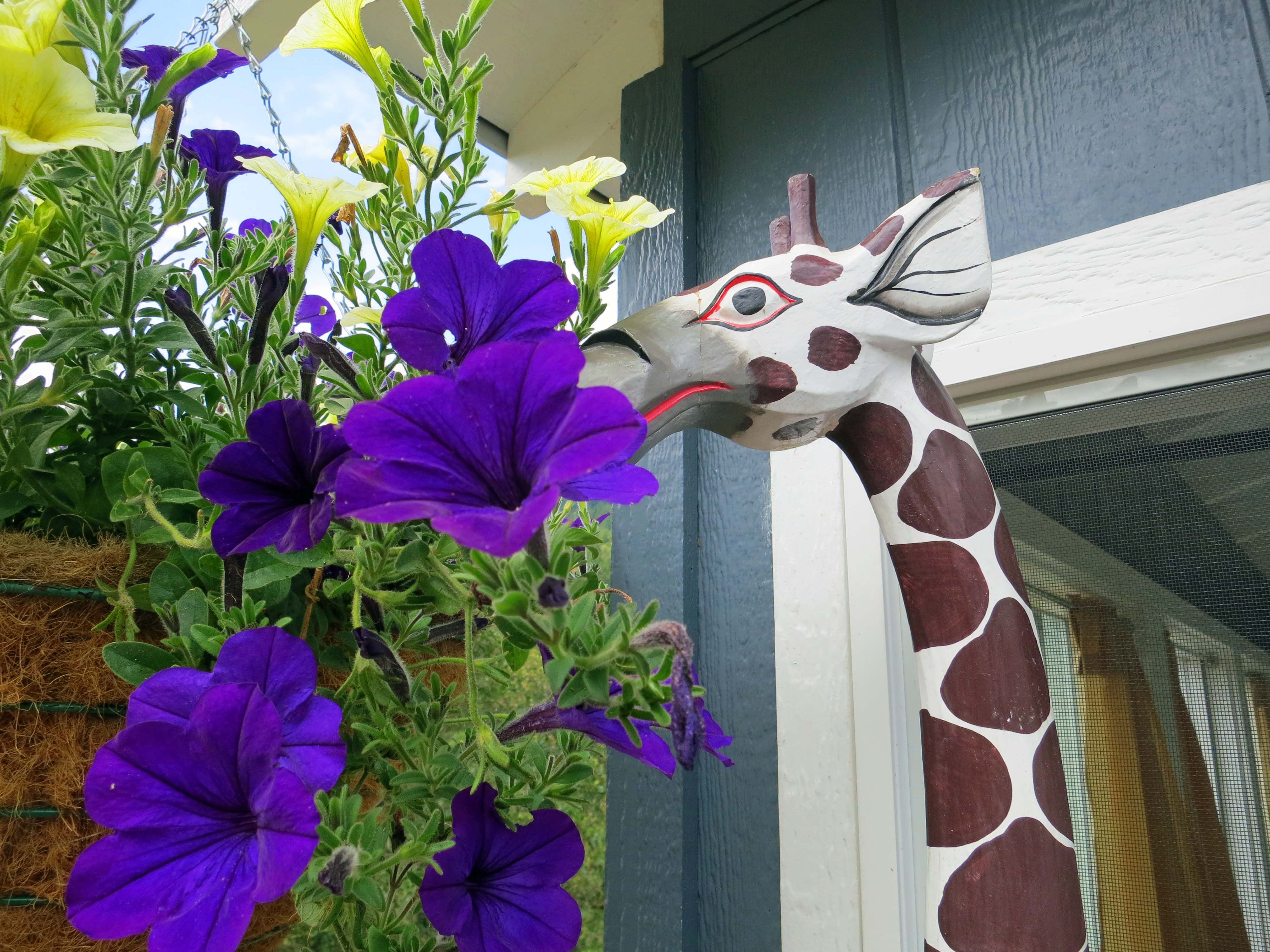
Aha! He was eating Peggy's petunias.

Aha! He was eating Peggy’s hanging petunias that the deer couldn’t reach.

Aha! He was eating petunias.

I caught the culprit purple lipped.

And apparently he was helping himself to all of our other hanging plants.

And apparently he was helping himself to all of our other hanging plants.

He was as much a glutton as the deer were.

He was as much a glutton as the deer were.

There was no stopping him!

There was no stopping him!

I confronted the giraffe with the photos. “I was not eating Peggy’s potted posies,” the giraffe replied indignantly. “I was sniffing them.” Yeah, right.

Jackson, California is an old gold rush town located on Historic Route 49 in the California foothills of the Sierra Nevada Mountains. It’s about 30 miles away from where I was raised in another old gold rush town, Diamond Springs. Highway 49, with its logging trucks and cattle drives, fronted our property. Jackson was a long ways off. I’ve driven back and forth across the country a lot more times that our family visited Jackson when I was growing up— seriously.

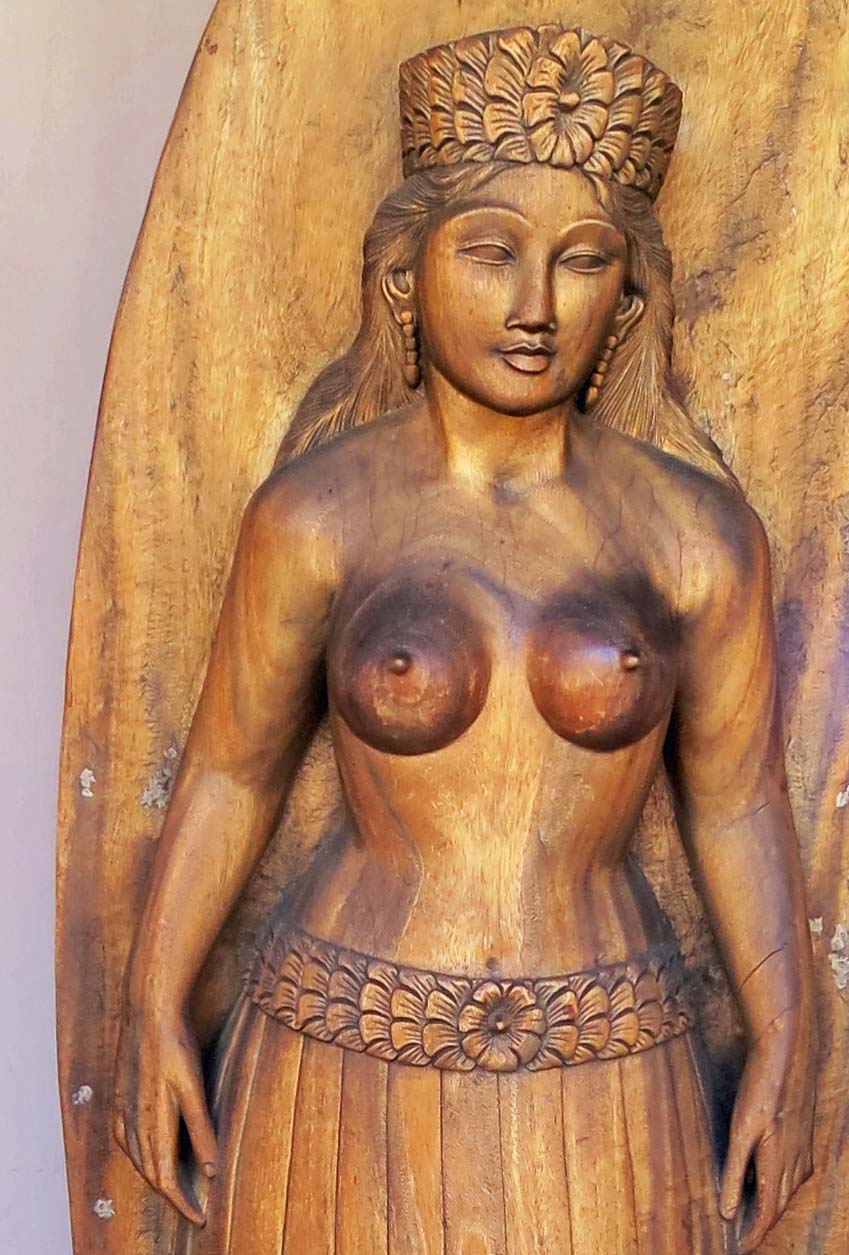
We also found other wonderful creatures in Jackson on our March visit including a frog, a Hindu monkey king, a topless hula dancer, and a wildebeest. Fortunately we didn’t bring any of them home even though I lobbied for the hula dancer.

I like frogs. And let me assure you, they can get their mouths open this wide when going after tasty morsels such as flies.

We found this marvelous frog at the same shop we found the giraffe, Richard and Sherry’s Collectables.   Were you ever told by your mother, “close your mouth or you’ll catch a fly.” Now you know where that come from.

I was also impressed with this monkey king with his pet snake.

I was also impressed with this Monkey King with his pet snake. I assume he is Hanuman from the Ramayana.

I remembered this, um, hula princess and her surf board from another visit to Jackson. She hangs out, so to speak, on main street and is kind of hard to forget.

I remembered this, um, hula princess and her surf board from another visit to Jackson. She hangs out, so to speak, on main street and is kind of hard to forget.

Wilbur the Wildebeest lives in the Book Store.

Wilbur the Wildebeest lives in a book store.

Apparently he has lived there a while.

Apparently he has lived there a while.

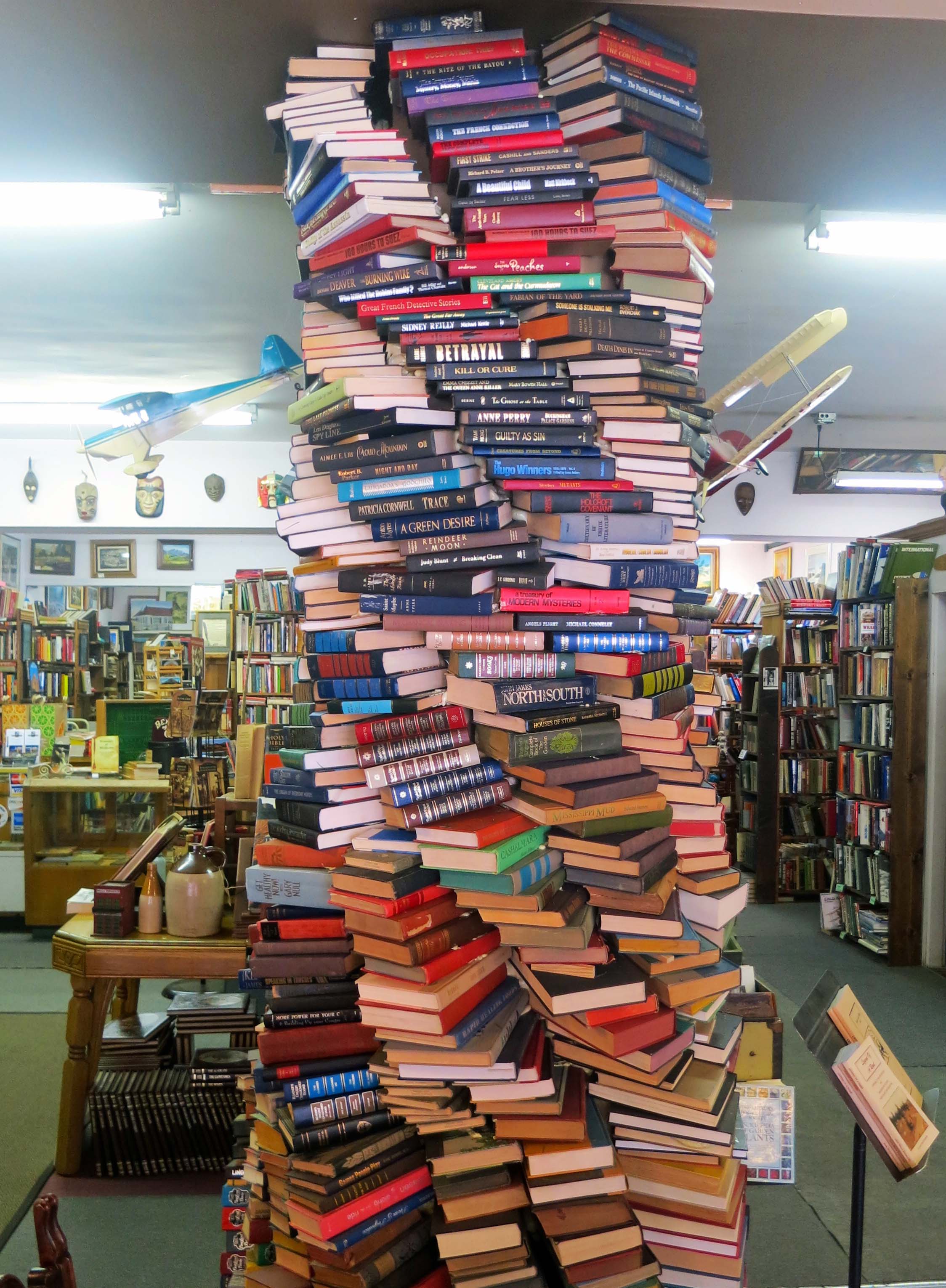
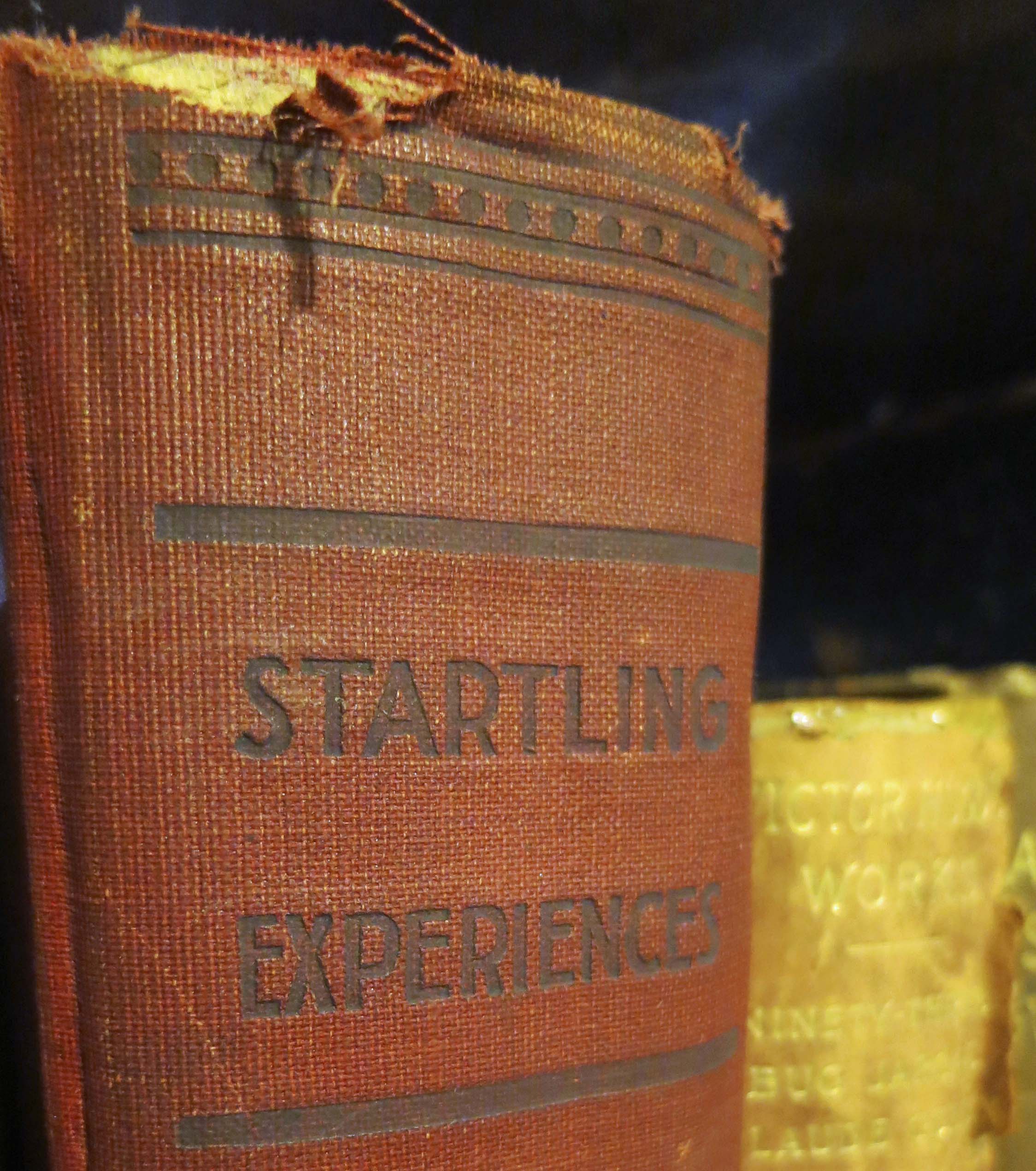
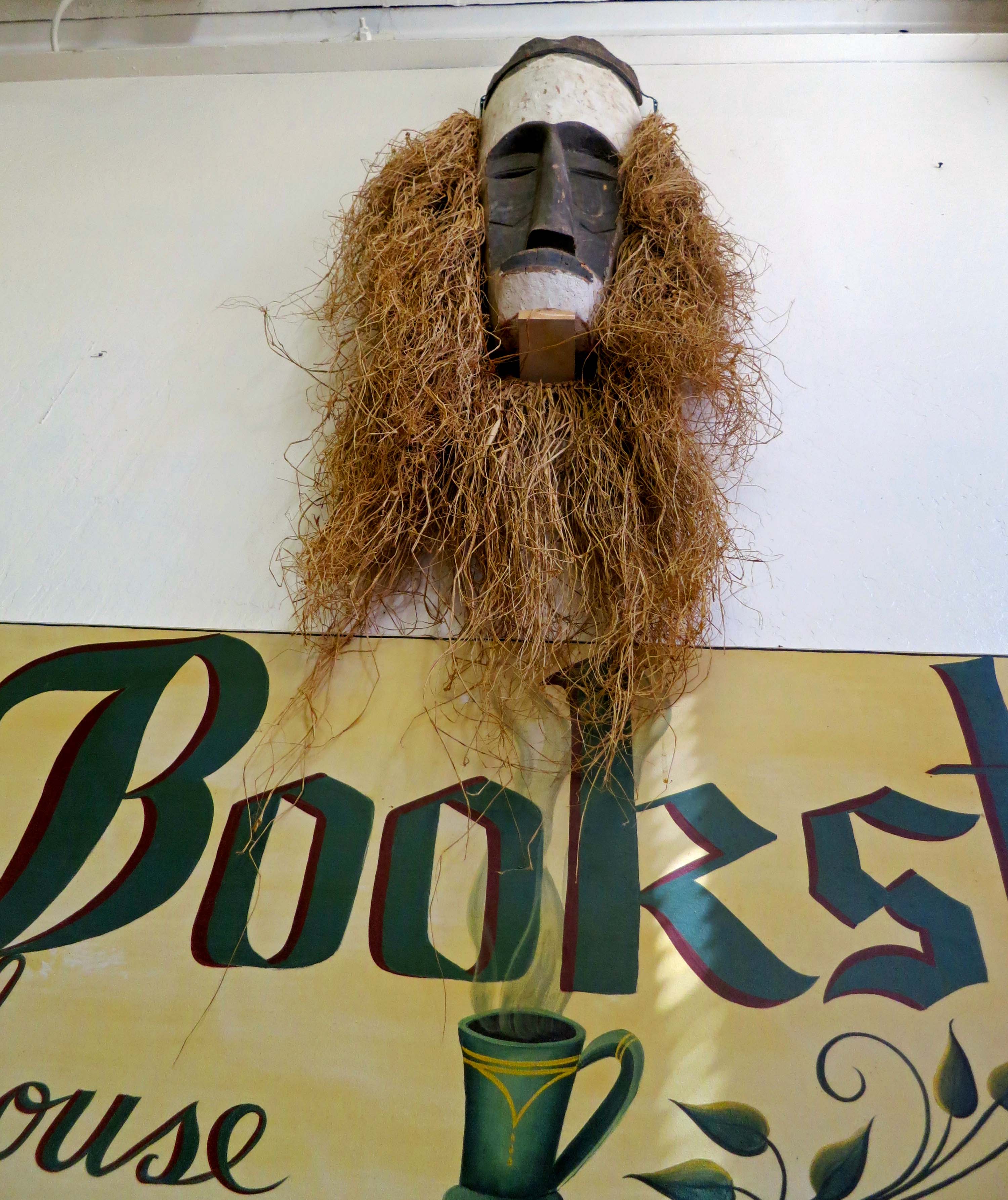
Wilbur the Wildebeest lived in the Hein and Company Bookstore along with a cat, strange masks, columns of books, and a number of other unusual items. It may be the most interesting used bookstore I’ve ever been in. Be sure to put it on your itinerary if you visit Jackson.

In addition to Wilbur, the Hein and Co Bookstore in Jackson is packed full of used books and

In addition to Wilbur, the Hein and Co Bookstore in Jackson is packed full of used books and numerous unusual/interesting items. Or do I mean weird?

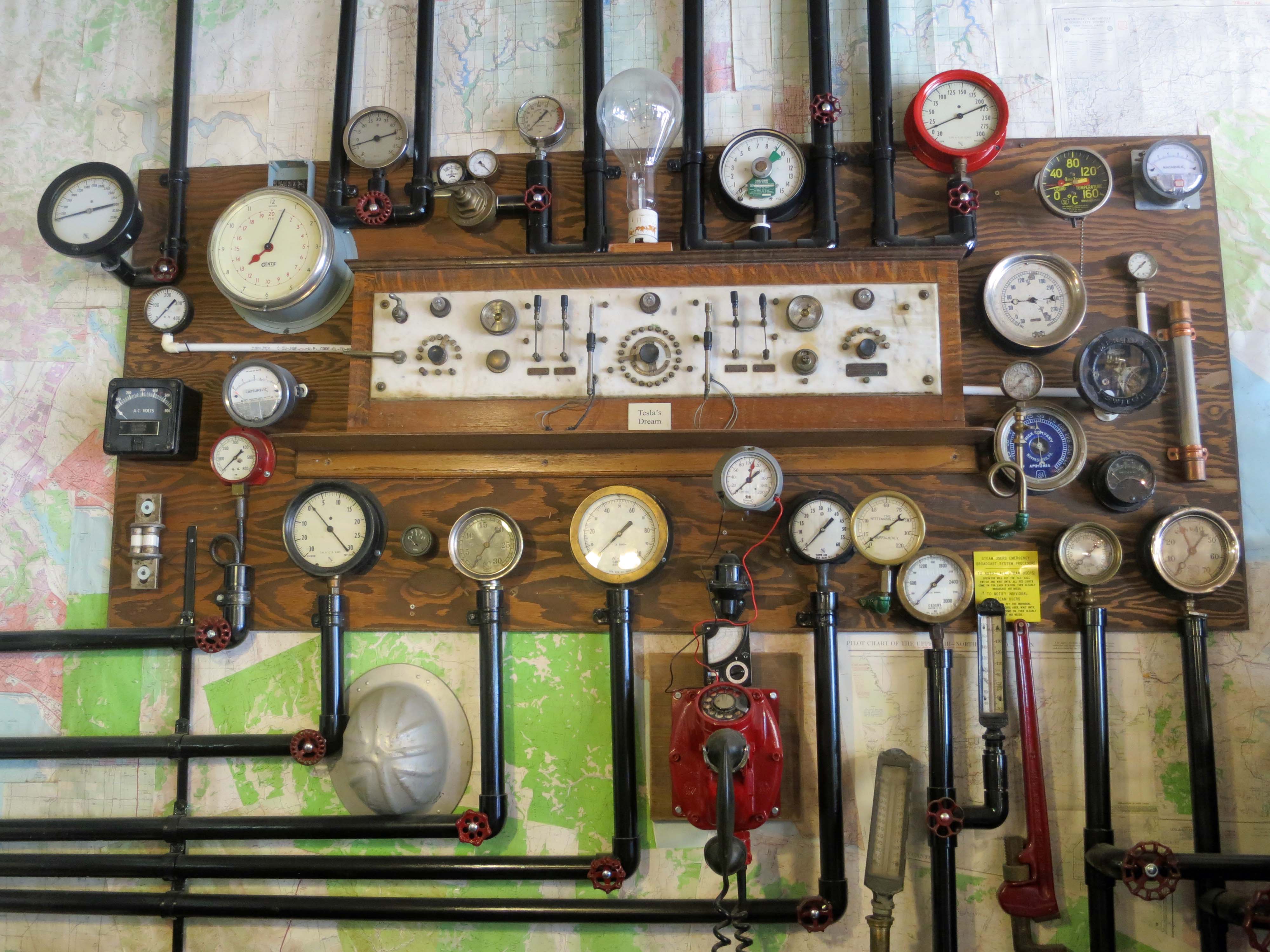
Such as this. Need a gage for anything?

Such as this en-gage-ing collection

Who knows what you might find around the next corner?

Who knows what you might find around the next corner?

Certainly made me want to go upstairs and check out books...

Certainly made me want to go upstairs and check out books…

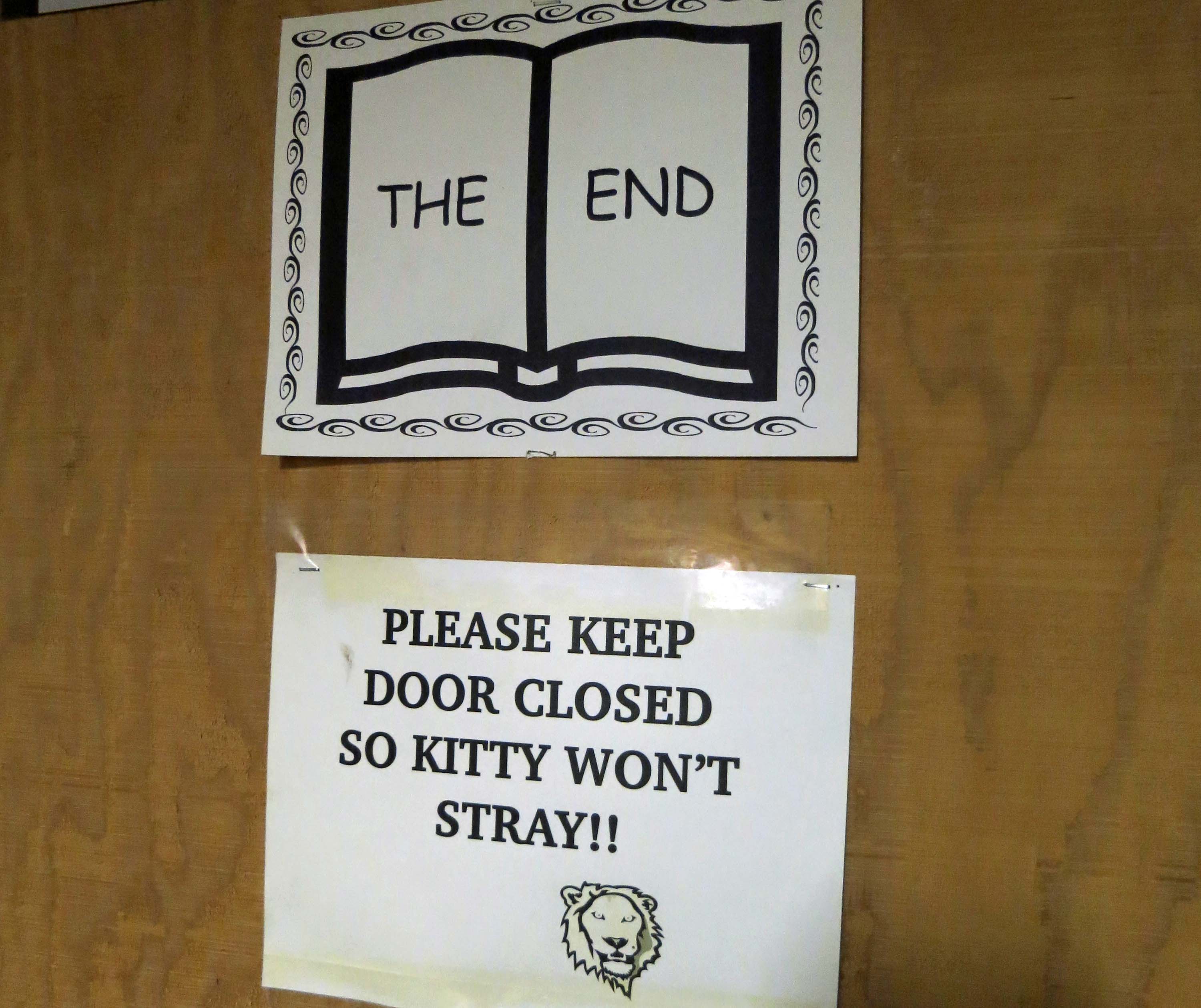
Where we found a virtual maze of book shelves and long corridors with mysterious doors and signs.

Where we found a virtual maze of book shelves and long corridors with mysterious doors and signs. I couldn’t resist walking down to the door to read the sign.

And found the end. Wouldn't you be slightly tempted to open the door and meet kitty?

And found the end. Wouldn’t you be slightly tempted to open the door and meet kitty?

Kitty?

Kitty?

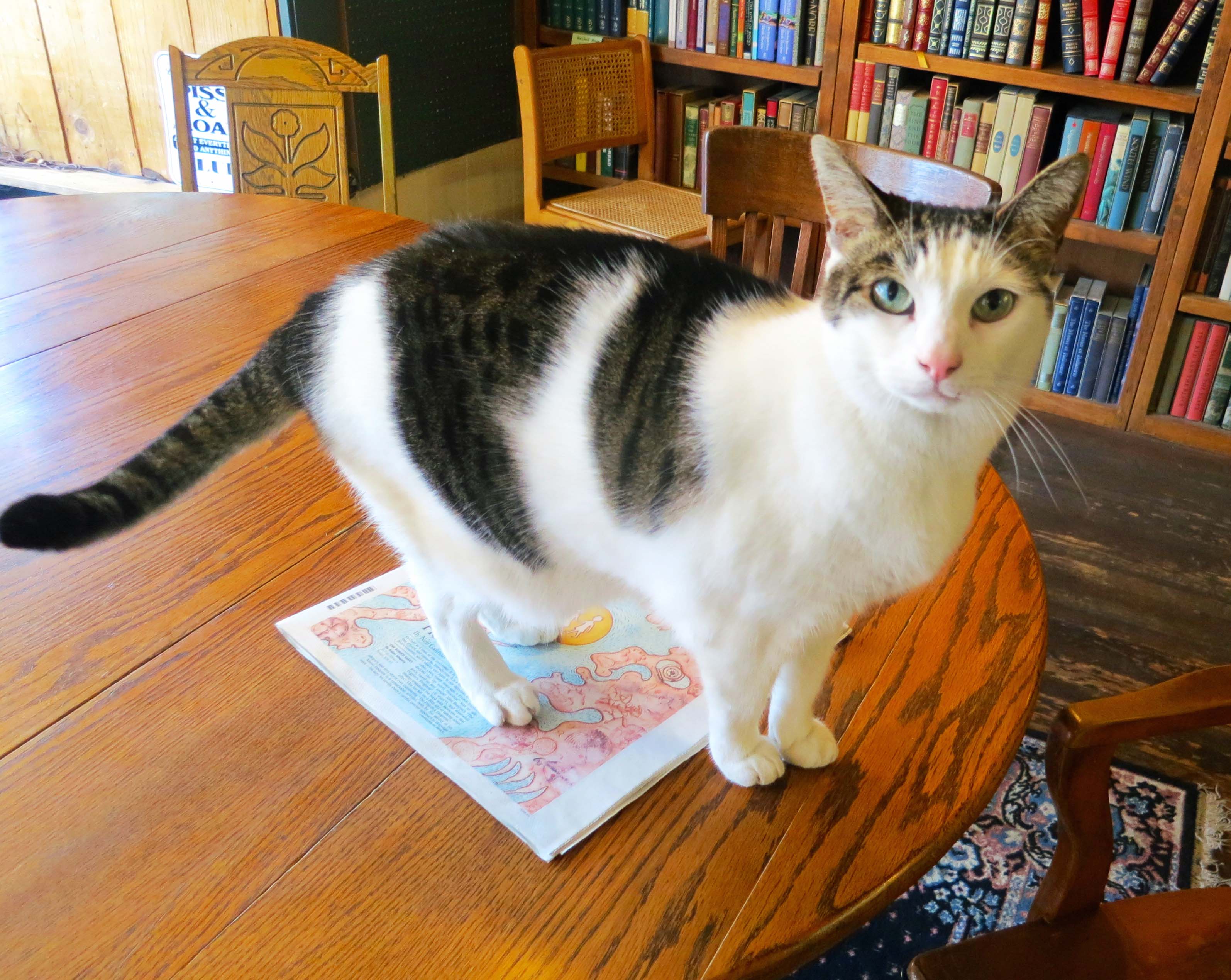
No, this was kitty. Most good bookstores have one.

No, this was kitty. Many good bookstores have one.

Our visit to the town also included a walk up and down the main street and dinner at the National Hotel, which also dates back to gold rush times. Ladies of the evening made liberal use of the hotel in its early days. They say you can still hear their ghosts giggling at night. Black Bart, the infamous gentleman bandit who robbed stages on foot (he hated horses) and occasionally left behind a poem, reputedly stayed here. As did Mark Twain, Chester Garfield, Herbert Hoover, and John Wayne. Wayne lost $43,000 in a 1933 game of poker at the hotel. His check bounced and the local sheriff hunted him down and made him pay in cash.

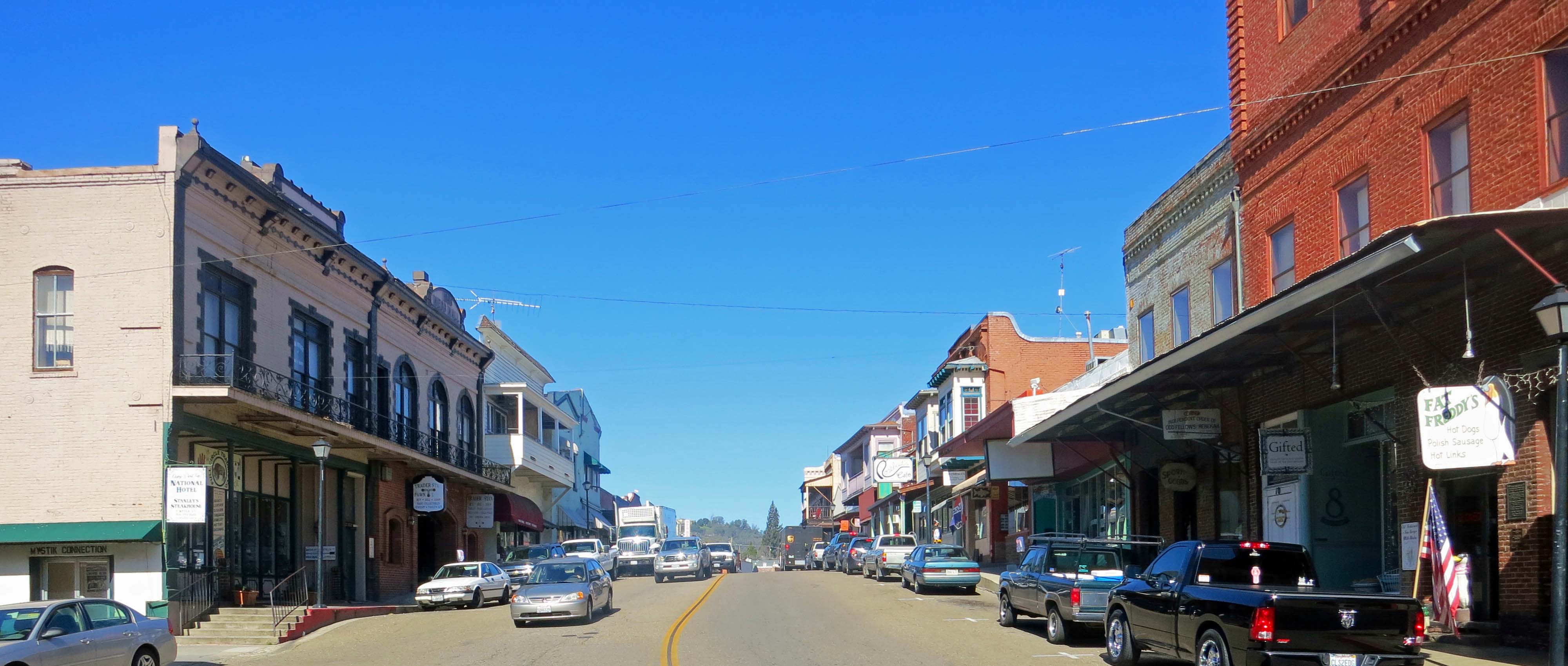
A look up main street, jackson.

A look up main street, Jackson.

The community has done a great job of renovating and maintaining its historic buildings.

The community has done a great job of renovating and maintaining its historic buildings.

The National Hotel that has entertained every one from US Presidents, to outlaws, to movie stars— and possibly ghosts.

The National Hotel that has entertained every one from US Presidents, to outlaws, to movie stars— and possibly ghosts.

We finished off our visit to the Jackson area by checking out several local wineries. I was looking for wine to feature at my book-signing event in Sacramento. By the end of the day, they all tasted pretty good. And no, I wasn’t driving.

Grapevines. Amador County has become an important wine producing area.

Grapevines. Amador County has become an important wine-producing area.

We visited several wineries looking for wine to use at my book-signing in Sacramento.

We visited several wineries looking for wine to use at my book-signing in Sacramento.

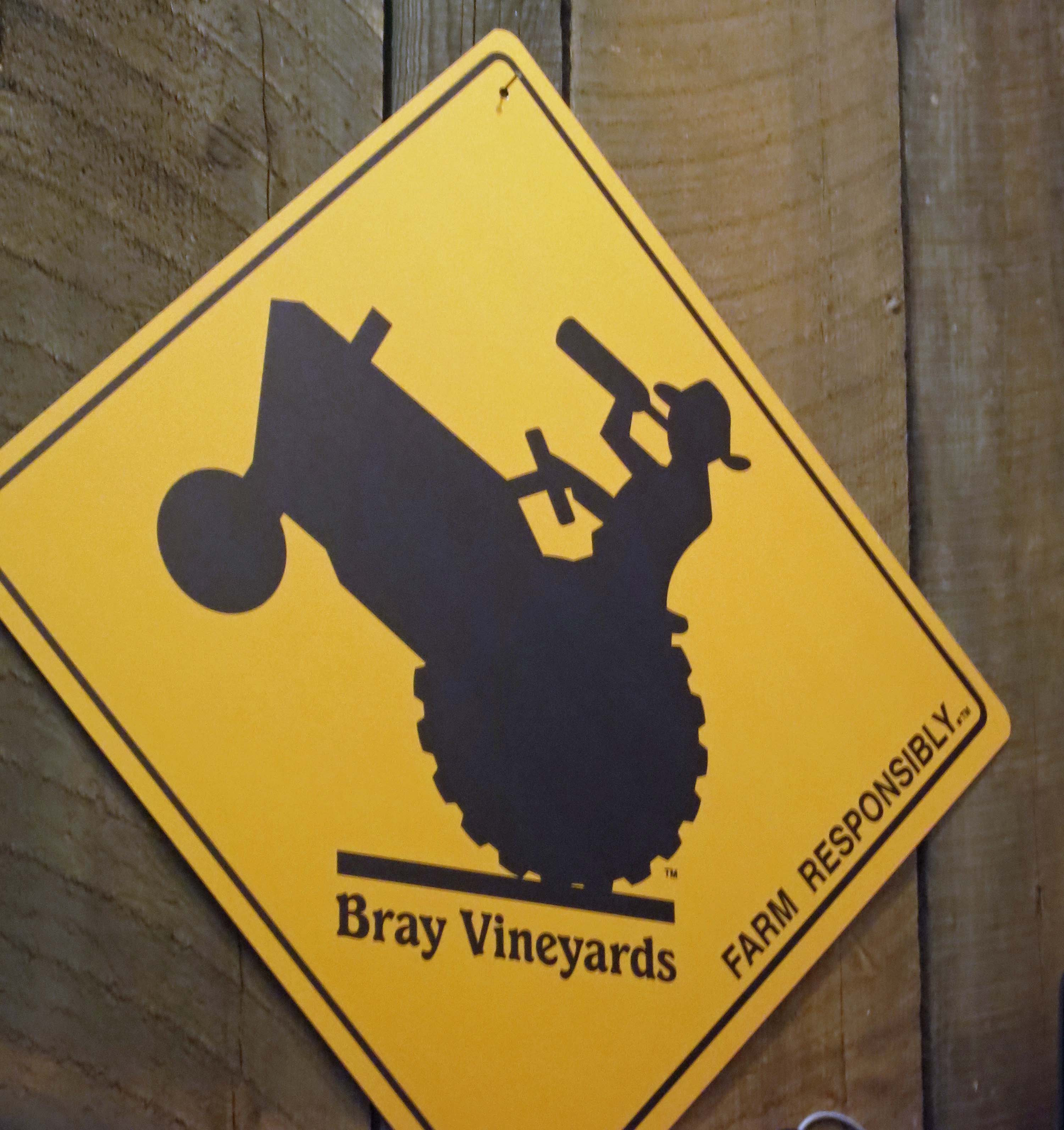
I thought my fellow bloggers who are into farming would appreciate this sign.

I thought my fellow bloggers who are into farming would appreciate this sign.

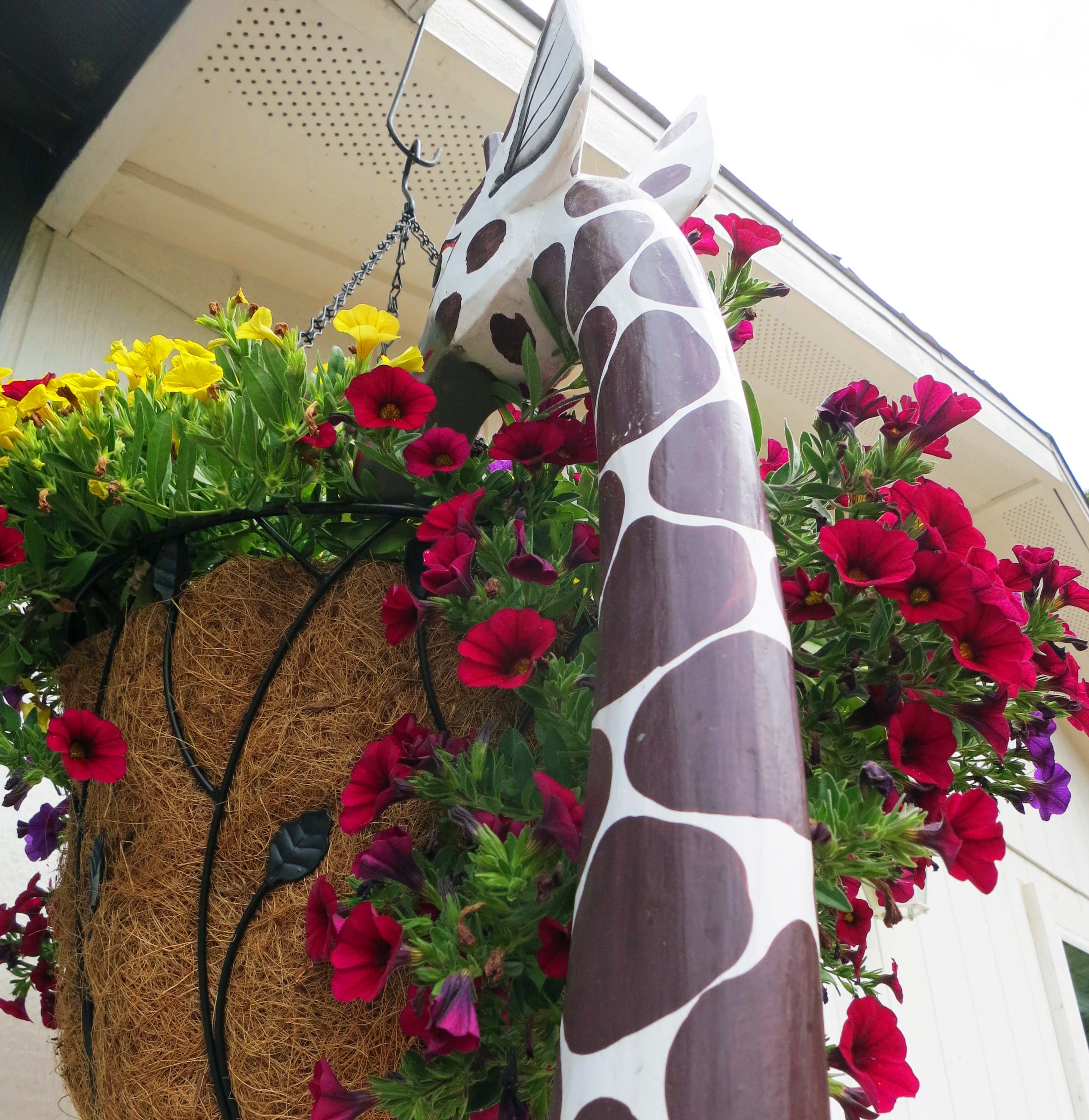
I'll conclude with a final photo of the giraffe munching flowers. Guilty.

I’ll conclude with a final photo of the giraffe munching flowers. Guilty.

Seaside, Oregon… Caught between the Past and the Future


A fortune teller had a small shop on the main street in Seaside, Oregon. This dog rested under the table where fortunes were told.

A fortune-teller had a small shop on Broadway Street in Seaside, Oregon. This dog rested on a carpet under the table where futures were foretold. I suspect his future is that he will be well-loved.

There is a certain feel to coastal tourist towns that earned their glory in an earlier era. I’d define it as rundown charm. Shops are crammed full of made-in-China souvenirs. Taffy and ice cream tempt people off of the street. Occasionally, one can hear the unmistakable sound of carousel music as horses and lions and emus and giraffes go around and around to the echoing laughter of generations of children.

Coffee shops have a down-home, utilitarian atmosphere where you can buy a cup of steaming clam chowder, coffee and cherry pie for under ten dollars. The saltines are free. The waitress is likely to have a few thousand miles on her feet. She may even call you honey.

But I am being nostalgic. Such places are a dying breed on the edge of extinction. Boutique shops and upscale restaurants are now the rule. Yesterday’s $7.00 T-shirt has become today’s $200 blouse. Lunch for two can easily cost $50.00. And the ten percent tip (remember it?) is now twenty.

We can thank the yuppies of the 1980’s and 90’s for this. They rolled out of the major cities along the West Coast of America from San Diego to Seattle with money to burn. Sharp entrepreneurs quickly figured out ways to separate them from their cash. Ocean side property was scarfed up and prices skyrocketed. Old buildings were renovated and new buildings built. Everything was impacted. The closer a town was to a major city, the greater the impact.

I am not saying all of this is bad. Things change. I like my designer coffee and handcrafted beer as much as the next person. And I am glad that artists and artisans have profited by being able to sell their work in the upscale shops.

I found a bit of the old and a bit of the new when I visited Seaside, Oregon last fall. Seaside was one of the grand old resort towns, like Santa Cruz in California or Myrtle Beach in North Carolina. It was where you flocked to in the summer if you had money. You can still see the old buildings: now renovated, spruced up and repurposed— to use a modern term. For example, the old courthouse had morphed into a modern brewpub. The single jail cell that once housed Saturday night drunks, now houses kegs of beer. I ate my $12.00 hamburger there and washed it down with a decent porter.

Seaside Brewery in Seaside, Oregon.

The brick drunk tank in Seaside’s old jailhouse now serves as a cooling room for kegs of beer. The beer taps are built directly into the wall. I am not sure about the skulls. They may have been left over from Halloween.

After lunch I walked downtown. Midweek, clouds, and rain meant I had Broadway more or less to myself. A few tourists, locals, and I scurried between store entranceways, trying to stay dry. I admired the old buildings, checked out the local carousel, and stopped off to visit a dog that was lying under a table in a small shop where its owner sat and offered to read my palm. I opted out of fortune-telling but did buy a book on the future at the local bookstore. Watch out for robots.

I was pleased to find a carousel with its horses eager to be ridden. Peggy loves these things. Had she been along, I probably would have been forced to climb on.

I was pleased to find a carousel with its horses eager to be ridden. Peggy loves these things. Had she been along, I probably would have been forced to climb on and ride around with her and the little kids.

A touch of Seaside's glory days can be seen in these buildings along Broadway Street.

A touch of Seaside’s glory days can be seen in these renovated buildings along Broadway Street.

Had I walked downtown before stopping off at the Seaside Brewery, I probably would have eaten at the Pig and Pancake.

Had I walked downtown before stopping off at the Seaside Brewery, I may have eaten at the Pig ‘n Pancake.

This mural was as closes as I got to Seaside's famous beach. It was not a day for sunbathing.

This mural was as closes as I got to Seaside’s famous beach. It was not a day for sunbathing.

The sunshine was of the liquid type. Other tourists, locals and I went searching for awnings that protected us from the rain.

The sunshine was of the liquid type. Other tourists, locals and I went searching for awnings that protected us from the rain.

It was a good day for being inside, though and I always enjoy futzing around in antique shops.

It was a good day for being inside, though, and I always enjoy futzing around in antique shops, where I found this dead pig room divider.

And this Chinese foo dog statue.

And what I believe is  Chinese foo dog statue. (Or maybe it is a lion about to eat a horse).

Another shop that caught my attention featured preserved scorpions and tarantulas.

Another shop that caught my attention featured preserved scorpions and tarantulas. I once caught a scorpion like the fellow on the left outside of my house in Liberia and kept it in a jar for a while. Maybe that is when my former wife first contemplated divorce.

Another symbol of historic coastal resort towns was the Penny Arcade. Although the games and prices have changed, the purpose remains the same: capturing youth. It worked for me as a kid.

Another symbol of historic coastal resort towns was the Penny Arcade. Although the games and prices have changed, the purpose remains the same: capturing youth. It worked for me. I happily mis-spent many hours in such joints playing pinball machines.

Historic street lamps with attached starfish were found along Broadway and seemed an appropriate symbol for Seaside.

Historic street lamps with attached starfish were found all along Broadway. They seemed an appropriate symbol for Seaside and a fitting end for this post. NEXT BLOG: A photo essay on the pregnant deer that has apparently adopted us. Maybe by Wednesday she will have had her fawn, preferably not on our back porch.


Green Grass, Redbud, and the Sacramento River… Wednesday Photos

A warm day with just enough clouds to make in interesting, provided a perfect day for a walk on the Sacramento River.

A warm day with just enough clouds to make it interesting, provided a perfect day for a walk on the Sacramento River.

In my last blog, we visited the beautiful Sundial Bridge on the Sacramento River. Today I am travelling just a few miles north on the river to a bike trail just below the outlet of the Keswick Dam. This trail is part of a 50-mile system that connects Redding with Shasta Lake. Our journey consisted of a stroll down the trail to a bike bridge across the river and back. Although it was early March, spring had sprung. The grass was green, the redbud was red, and the sun was warm. A family of river otters entertained us along the way. My Wednesday Photo Essay:

It wasn't quite spring, but no one had told the redbud growing along the Sacramento River.

It wasn’t quite spring, but no one had told the redbud growing along the Sacramento River.

A close up of the redbud.

A close up of the redbud.

Redbud on Sacramento River.

And here it is decorating the river.

While the river was low because of the drought, I still thought it was quite scenic. This is looking north from the bike bridge.

While the river was low because of the California drought, I still thought it was quite scenic. This is looking north from the bike bridge.

Peggy, along with our friends, Ken and Leslie, are half way across the 13-foot-wide, 418-foot-long bike bridge.

Peggy, along with our friends, Ken and Leslie, are half way across the 13-foot-wide, 418-foot-long bike bridge.

The view south.

The view south.

We were looking south when we spotted a family of four river otters making their way up the river. My small camera didn't handle the distance well, but the otters were too interesting to leave out.

We were looking south when we spotted a family of four river otters making their way up the river. My small camera didn’t handle the distance well, but the otters were too interesting to leave out. Note the size of the tail.

The otters gathered on a rock to cheek us out.

The otters gathered on a rock to check us out. There wasn’t quite room for the fourth one.

On the way back, I found this interesting lichen growing on a rock.

On the way back, I found this interesting lichen growing on a rock…

And a waterfall on a creek flowing into the river.

And a waterfall on a creek flowing into the river.

A final shot of a small cove on the river. NEXT BLOG: Tarzan shows me the light.

A final shot of a small cove on the river. NEXT BLOG: Tarzan shows me the light.


What Do You Get When You Cross a Sundial with a Bridge? Beauty.

Built to accommodate walkers, runners and bicyclists, the Sundial Bridge in Redding, California was constructed primarily with private funds.

Having written about the beautiful bridges found on the Oregon Coast and built in the 1930s, I now turn to a modern bridge with equal but different beauty built in 2004: The Sundial Bridge across the Sacramento River in Redding, California.

It seems like I have been driving through Redding, California forever— traveling back and forth between Southern Oregon and Northern California, heading into the beautiful Trinity Alps on backpacking adventures, and once, even starting a seven-day canoe trek down the Sacramento River from the town. I often stop for food or gas, but I have never considered Redding a destination.

That has changed.

In March, Peggy and I met our friends Ken and Leslie there to begin a week of wandering. We didn’t have anywhere we needed to be, so we decided to spend a day exploring the town and area, which Ken knows well. Our explorations led us to Turtle Bay Park and the incredibly beautiful Sundial Bridge. In addition to its architectural beauty, the bridge happens to be exactly what its name suggests, a sundial. In fact it is one of the largest sundials in the world.

The bridge, completed in 2004, spans the Sacramento River with a 700-foot deck that is made up of 200 tons of granite and glass. Graceful cables connect the deck with the bridge’s 217-foot tall sundial/pylon and provide suspension. The renowned Spanish architect, Santiago Calatrava, designed the bridge. Known for his work on bridges in Europe and numerous other structures around the world, the project was his first freestanding bridge in the United States.

Walkers, bicyclists, runners and one very large group of children on a school field trip were crossing the bridge when we arrived. Peggy, Leslie, Ken and I joined the crowd. I took out my camera and went to work while the others waited patiently. I think you will agree with me on just how spectacular the bridge is.

The Sundial Bridge in Northern California was designed by Spanish Architect Santiago Calatrava.

4300 feet of cable connect the deck with a 217 foot pylon, the sundial, and create a freestanding bridge. The deck is composed of glass and granite.

I was particularly struck by the elegance of the pylon that forms the sundial.

I was particularly struck by the elegance of the pylon that forms the sundial and took several photos from different angles.

Sundial Bridge in Redding, California  photographed from beneath the deck.

I shot this photo of the pylon from under the bridge. It also captured the glass used in the deck.

From the base looking up.

From the base looking up.

Another perspective.

Another perspective.

View of Sacramento River from the Sundial Bridge in Redding California.

A view of the Sacramento River from the bridge. Coastal Ranges can be seen in the distance.

The Sacramento River is the main source of water for the Northern Sacramento Valley, one of the richest farmlands in the world. The river eventually flows into San Francisco Bay and out into the Pacific Ocean.

The Sacramento River is the main source of water for the Northern Sacramento Valley, one of the richest farmlands in the world. The river eventually flows into San Francisco Bay and out into the Pacific Ocean. The region is now suffering from a severe drought.

One of the reasons for the bridge is to connect the town of Redding with an extensive series of hiking and biking trails on the opposite side of the river, starting with the McConnell Arboretum.

One of the reasons for the bridge is to connect the town of Redding with an extensive series of hiking and biking trails on the opposite side of the river, starting with a trail through the McConnell Arboretum. Redbud can be seen on the left.

Manzanita was also in bloom with its sweet smelling flowers. This shrub also grows on our property in southern Oregon.

Manzanita was also in bloom with its sweet-smelling flowers. This shrub grows on our property in southern Oregon.

A final view of the pylon that captures its 'sundial' look. NEXT BLOG: Since we were in the area, we went for a hike along the Sacramento River. I'll feature photos.

A final view of the pylon that captures its ‘sundial’ look. NEXT BLOG: Since we were in the area, we went for a hike along the Sacramento River. I’ll feature photos.


Out of 20,000 Photos… Newspaper Rock— a petroglyph wonderland!

Newspaper Rock. I am standing beside the National Historic Site to provide perspective. (Photo by Peggy Mekemson.)

Newspaper Rock. I am standing beside the National Historic Site to provide perspective. (Photo by Peggy Mekemson.)

It’s Wednesday, so that means a quick photographic essay, selected from my 20,000 pictures. It would be ever so easy to spend a day selecting photos, which would seriously detract from my objective of freeing up time. So I decided to do random. I closed my eyes and scrolled down iPhoto. When I hit enter, I opened my eyes, and there was Newspaper Rock, staring at me.

Newspaper Rock National Historic Site in Utah.

Over 2000 years of Native American petroglyphs are found on Newspaper Rock.

Newspaper Rock sits on the edge of Canyonlands National Park up in the northeastern corner of Utah. It contains all of the news that’s fit to print, or at least all the news from the perspective of local Native Americans who have chipped  away at the rock for over  2,000-years. Who knows what it all means. As the information sign says, “We do not know if the figures represent story telling, doodling, hunting magic, clan symbols, ancient graffiti or something else.” That means the figures are open to interpretation, right? So interpret, I will.

Food has been sighted. What’s on today’s menu?

Two flying squirrels were seen leaping between Ponderosa Pines.

Two flying squirrels were seen leaping between Ponderosa Pines.

Buffalo at Nrewspaper Rock National Historic Site in Utah.

A large buffalo is down at the wallow.

Elk are up on the ridge.

Three elk are up on the ridge.

Big horned sheep are feeding up on the ridge.

A Big Horned Sheep with scrawny front legs is feeding up on the mountain.

And Big Bird is down at the pond.

And Big Bird is down at the pond. (Nothing scrawny about her legs.)

Newspaper Rock National Historic Site.

Stay out of the canyon. The tracks of Momma Bear and her cub have been sighted.

Hop on your horse and grab your bow and arrows. It’s time to get dinner.

Petroglyph of Native American with bow on horse at Newspaper Rock near Canyonlands National Park.

Ready for the hunt.

Whoops.

Whoops.

Having been warned, Walks on Feet went into the canyon anyway. Now he is being stalked by Momma Bear.

Having been warned, Walks on Feet hiked into the canyon anyway. Now he is being stalked by Momma Bear. The trail ends here.

Success! Always Gets His Buck shoots elk in butt.

Success! Always Gets His Buck shoots an elk in the butt.

It’s time for a feast. All the cool guys will be there.

Wild hat.

Scorpion Hat shakes a leg and Sheep joins in.

Woohoo!

Ladder Man shouts “Woo hoo!”

Man With Antlers practices flying leap.

And Horny Fellow practices a flying leap.

Stands On Horse will perform his amazing trick.

For after dinner entertainment, Stands On Horse will perform his amazing tricks.

Frisbee starts at four. NEXT BLOG: Looking for God in all the wrong places.

And Antenna Guy will display his recently captured flying saucer.  That’s it for today. NEXT BLOG: I start my essay series. First up: Looking for God in All the Wrong Places.


The Beautiful Bridges of the Oregon Coast… Part Two

One of many bridges designed by Conde McCullough in the 1930s Yaquina Bay Bridge is located next to Newport on the Oregon Coast.

Gorgeous skies provide a dramatic backdrop for the Yaquina Bay Bridge near Newport, Oregon.

Last Monday I posted a story and photos on the Cape Creek Bridge designed by Conde McCullough. Today I am going to feature two more of his bridges: the Yaquina Bay Bridge near Newport, and the Siuslaw Bridge near Florence. I first became aware of these two beauties when I used to visit my dad who managed a hotel on the coast for my brother in the late 70s. Marshall later sold the place, an action for which I have never quite forgiven him. Neither have I forgiven my cousins who had the luck of growing up in Newport.

The property my brother owned and my dad managed. Writers, artists, and professors from the University of Oregon stayed there for $10 a night in the 70s. Now it is an expensive Bed and Breakfast.

Gull Haven: The property my brother co-owned and my dad managed. Writers, artists, and professors from the University of Oregon stayed there for $10 a night in the 70s. Now it is an expensive Bed and Breakfast.

I was driving across the Yaquina Bay Bridge on my trip down the coast last fall when I thought, damn, I have to get a photo of this (above). Being by myself meant I was designated photographer. You know all the warnings about driving and using your cell phone, or driving and texting— they should add driving and taking photos. Enough said. Once I got across the bridge I found a side road where I was able to get out of the car and take Highway Patrol approved photos.

Yaquina Bay Bridge near Newport, Oregon.

A side view of the Yaquina Bay Bridge. The gull on the right added a little action.

The Yaquina Bay Bridge on the Oregon coast designed by Conde McCullough.

A close up of the spans with the historic Newport waterfront in the background.

I spent the night at a delightful campground next to the Florence Marina. This gave me the opportunity to walk over to the Siuslaw Bridge and spend time admiring it. The bridge was built under Franklin Roosevelt’s New Deal Public Works Administration during the Great Depression. It was one of hundreds of projects across the nation designed to put Americans back to work. Both Peggy’s dad in Pennsylvania and my dad in Iowa benefited from this program. Some 140 men worked on the Siuslaw Bridge. It was opened March 31, 1936.

The bridge under construction. (Photo from display next to the bridge.)

The bridge under construction. (Photo from display next to the bridge.)

Ever the artist, McCullough incorporated Art Deco, Moderne, Gothic and Egyptian themes into his bridge.

Suislaw Bridge on the Oregon coast designed by Condi McCullough.

A view of the bridge as it looks today.

Siuslaw Bridge near Florence, Oregon.

A view of the bridge from the other side rendered in black and white., giving it the ‘old time’ feel.

Suislaw Bridge in Florence Oregon across the Suislaw River

I walked along the sidewalk going across the bridge to get this photo.

The walkway across the bridge.

The walkway across the bridge.

Structure on Siuslaw Bridge near Florence designed by Cond McCullough in the 1930s.

An art deco look? Or are we talking Egyptian here?

Siuslaw Bridge on the Oregon coast.

Having seen the bridge from both sides and on top, I decided to take a look underneath for my final view.

A New Approach to Blogging… Off to a Rocky Start

City of Rocks State Park in southwestern New Mexico.

Way down in a remote corner of New Mexico, Peggy and I came upon the City of Rocks State Park where nature had carved volcanic rock into a world you might find in science fiction or fantasy.

To date, I have been blogging for close to five years. This is my 475th post. It’s time for a change. It won’t be radical, but my intention is to blog three slightly different posts each week. Intention is the key word here. It may or may not happen. Bloggers understand this. Sometimes life gets in the way— or the next book. (Grin) Blogging three times a week may prove to be too much. But if I do…

Mondays and Wednesdays will continue to focus on travel. Mondays will reflect my standard blogs with an equal mixture of writing and photography. Wednesdays will be more of a photographic essay, heavy on photos. This will enable me to bounce around the world a bit more plus free up some time. Since I have close to 20,000 photos in my photo bank, I don’t expect to run out any time soon.

Fridays will be more along the line of opinion pieces. I intend to write about things I am passionate about, things that concern me. Expect such topics as searching for God in all the wrong places; is technology dumbing down the world; and how 25 cents saved one million lives. I intend to have fun, dabble in a little controversy. I’ll probably get in trouble.

Today is a preview of what you can expect on Wednesdays. Enjoy the rocks.

Peggy and I had just finished backpacking for a week in the Gila Wilderness of southwestern New Mexico and were on our way to Deming via Silver City (Billy the Kid country). It was getting late when we came across a sign that pointed to the City of Rocks State Park. It sounded intriguing, we were tired, and the park had a campground. We turned left— and found ourselves in another world…

The City of Rocks State Park near Silver City New Mexico.

Private vehicle and tent camping spaces are spread out around the perimeter of the rocks.

This is an example of one of the campsites hidden among the rocks.

This is an example of one of the campsites hidden among the rocks.

City of Rocks State Park near Deming, New Mexico.

I would describe these rocks as having personality. Each one is unique.

Paths wander in and among the square mile park. Convenient rocks invite hikers, such as Peggy, to sit and enjoy the beauty and solitude.

Paths wander throughout the square mile park. Convenient rocks invite hikers, such as Peggy, to sit and enjoy the beauty and solitude.

What to expect when hiking through the rocks.

What to expect when hiking through the rocks.

City of Rocks State Park near Silver City, New Mexico is filled with uniquely carved rocks.

I felt this fellow might fit in on Easter Island.

Golden grass provides an interesting contrast to the rocks.

Golden grass provides an interesting contrast to the rocks.

Trees and rocks create interesting photos at City of Rocks State Park in southwestern New Mexico.

Trees also add visual interest in this final photo. If you find yourself in southwest New Mexico, the City of Rocks State Park is definitely worth a detour. NEXT BLOG: It’s back to the beautiful bridges of the Oregon Coast.


Oregon’s Coastal Bridges… Where Engineering, Environment, and Art Meet

Cape Creek Bridge north of Florence, Oregon was designed by Conde McCollough and built during the early 1930s.

Combining form and function, Cape Creek Bridge in Oregon is an example of how highway bridges can move vehicles, provide beauty, and fit into the natural environment.

With Earth Day 2015 coming up on Wednesday, I stopped to think about the battles we fought during the 70s to protect the environment. One of the toughest was against the highway lobby—bankrolled primarily by the oil industry. “Build more highways!” it and its allies screamed. Buried under a burgeoning population of automobiles, local and state transportation agencies usually agreed. Moving cars and trucks, not people and goods, was the objective. Most traffic engineers believed that their sole task was to move vehicles from point a to b as quickly and efficiently as possible. And they did their job extremely well. Nothing got in the way, including established communities, farmlands and valuable natural habitats. It was the bulldozer era of ‘pave Paradise and put in a parking lot.’ (Joni Mitchell)

In the mid to late 70s, I was working with a community group called the Modern Transit Society (MTS) that was fighting to bring light rail transit to Sacramento, California. The City Traffic Engineer was adamantly opposed to the idea. More dollars for mass transit meant fewer dollars for highways, and the Engineer, along with his counterpart in the County, had roads and freeways planned everywhere. My role with MTS was to oversee political strategy. At one point, relations became so tense between the traffic engineer and me that he would walk out of a room when I walked in. Eventually we won. Today, Sacramento has light rail lines stretching throughout the city and county.

Bridges built at the time, and also during the 50s and 60s, reflected the mania for moving cars. Function, not form, was what mattered. As a result, large ugly concrete structures with minimal aesthetic appeal often dominated urban and even rural landscapes. Bridge construction hadn’t always been that way.

The coastal bridges of Oregon reflect an earlier era. Many were constructed in the 1920s and 30s when Highway 101 was being built to connect coastal towns. Oregon was extremely fortunate to have Conde McCullough at the helm of the highway department’s bridge division for much of this time. Part civil engineer, part architect, and part artist, he believed that bridges should be built economically, efficiently, and aesthetically. His vision lives on today, as any trip down the Oregon Coast quickly demonstrates.

Conde McCollough served as Oregon's state bridge engineer from 1919 to 1935, following which he spent a couple of years designing bridges along the Pan American Highway in Central America.

Conde McCollough served as Oregon’s state bridge engineer from 1919 to 1935, following which he spent a couple of years designing bridges along the Pan American Highway in Central America. (Photo from information sign on Highway 101.)

Today I am going to feature one of McCullough’s creations, the Cape Creek Bridge located on Highway 101 north of Florence, Oregon, and a small park that lies below the bridge. Later, I will do posts on two of his other bridges plus a modern pedestrian and bike bridge in Redding, California that is breathtaking.

Cape Creek Bridge north of Florence, Oregon on Highway 101.

Another view of the Cape Creek Bridge, this time including Cape Creek. It had been raining hard, as reflected by the creek’s muddy waters.

Looking out from a span of the Cape Creek Bridge onto the small ocean cove the creek empties into.

Looking out from a span of the Cape Creek Bridge onto the small ocean cove the creek empties into.

Cumulous clouds outline sea stacks in Cape Cove on the Oregon Coast.

Small islands in Cape Cove outlined by the dramatic sky. Sea gulls are gathered in the lower left corner.

One of the sea gulls takes flight. I was walking along behind it, posed to takes its photo when it flew.

One of the sea gulls takes flight. I was walking along behind it, poised to takes its photo when it flew. There are three things I like about the picture: the wings, the gulls left foot as it runs, and the reflection.

The tide rolls onto shore at Cape Cove on the Oregon Coast near Florence, Oregon.

The tide rolls in to Cape Cove.

Low tide exposes the beach at Cape Cove off of Highway 101 on the Oregon Coast.

And the tide rolls out.

Cape Creek Bridge in Lane County on the Oregon Coast.

A final perspective on the Cape Creek Bridge. The bridge is 619 feet (188.6 meters) long and was designed to look like a Roman aqueduct. NEXT BLOG: Earth Day

Reno’s Generator… What Happens at Burning Man, Doesn’t Necessarily Stay There

A beautifully carved and shaped piece of wood at the Generator in Reno, Nevada.

I wasn’t exactly sure what I was looking at, but I liked it. And I had the feeling it was looking back. To me it represented the artistic creativity that flourishes in the huge warehouse in Sparks/Reno, Nevada known as the Generator.

The Burning Man series I just completed focused on creativity. For one week in late August/early September, tens of thousands of people gather in a remote area of the northern Nevada desert to celebrate art in its numerous forms including sculpture, architecture, photography, mutant vehicles, painting, costumes and performance art.

While Burning Man’s vibrant creativity is what brings me back to Black Rock City year after year, the event is about more than art. A huge party, alternative life-styles, desert survival, focus on participation, community building, social responsibility, environmental awareness, personal growth, and a very long list of etceteras are all part of the equation that makes the event succeed.

Over the past two years, I have found my interest growing in what goes on before and after Burning Man— both in terms of preparation for the event and, more interestingly, the back story on the people and groups who participate. What brings them to Burning Man, how do they influence the event, what do they bring home, and how, in turn, does this impact their lives and the communities where they live?

Today, I am going to feature a 34,000 sq. ft. warehouse in Reno/Sparks, Nevada that is known as the Generator and has been responsible for some of the most striking monumental art to grace Black Rock City in the last few years including Pier 2 (a large pirate ship sunk partially in the desert), and Embrace. A few weeks ago I dropped by unannounced at the Generator and asked permission to wander around and take photos. “Sure,” one of the artists who was working on a project, told me. It wasn’t quite official, but it was enough. Off I went. I am going to share what I found.

Embrace sculpture built by the Pier Group at the Generator warehouse in Reno, Nevada and featured at Burning Man in 2015.

Even from a distance, the size of this 72 foot sculpture built by the Pier Group at the Generator is obvious.

Pirate ship at Burning Man built by the Pier Group at the Generator in Reno, Nevada.

This pirate ship partially sunk in the sand was another major project the Pier Group took on.

Logo of the Generator warehouse in Reno Nevada.

Logo.

First, however, I want to mention an event that took place in Londonderry, Northern Ireland in March. I’ve blogged several times about Burning Man’s Temples. Several of these were designed and built by David Best with a large crew of dedicated volunteers. This spring, David was invited to build a similar structure in Londonderry that would be burned, as each Burning Man Temple is. Not everyone in Londonderry thought it was a good idea. The Northern Ireland feud between the Protestants and Catholics has been tearing the city apart for what seems like forever, or at least since 1688 and things that burned were often related to fire bombs. As was noted in a New York Times article, “Burning a 75-foot-tall pagan temple in a Republican Catholic enclave on the loyalist Protestant side of town to ‘bring people together’ seemed, well, mad.” This could have proven to be, well, a gigantic understatement. But it wasn’t.

What happened was that the event turned out to be a powerful force of reconciliation, including bringing people together who had been dedicated enemies all of their lives. 60,000 people (half of the city’s population) came to the temple and left messages for loved ones who had passed on and 15,000 Protestants and Catholics joined in watching the Temple burn. The event is a powerful example of what I am talking about in terms of Burning Man’s impact outside of its home in the Black Rock Desert. I highly recommend reading the NY Times article.

A Burning Man Temple built by David Best and volunteers.

A Burning Man Temple built by David Best and volunteers.

I view the Generator as another example. Matt Schultz and his band of merry followers, the Pier Group, are the visionary force behind the Generator. “We’re an inclusive art space for anyone who wants to make art and be part of a creative community,” the Generator’s Internet site declares. While numerous Burning Man Projects are conceived and built at the Generator, the facility has no direct affiliation with the event, and many non-Burning Man art projects are also produced at the warehouse. Non-Burners as well as Burners are invited to become members. The process is incredibly easy. Just show up with a specific art project or dream of an art project. Discuss it with Matt or one of his cohorts, obtain approval, and sign a waiver. Welcome aboard.

Flower sculpture outside of the Generator warehouse in Reno, Nevada.

We drove around Sparks looking for the Generator. When we found this flower sculpture, we knew we had arrived. It is very Burning Man like. The small structure on the right is a tiny house that Matt is building for himself but hopes will become a model for other small houses in Reno.

There are no membership fees and no charges for using the facility. Members have access to an incredible array of tools ranging from large industrial tools to smaller hand tools. There is even a laser printer. The Generator houses a wood shop, a metal shop and a tech shop. There is also a sewing room, a stage, a lounge, a library filled with how-to books— and a small green house! More importantly, there is a warehouse full of creative types who inspire creativity and are more than willing to offer a helping hand when asked.

Strange book shelf arrangement at the Generator art warehouse in Reno, Nevada.

As you might imagine, even the library of how-to books takes on a different look at the Generator.

A variety of tools are available for use at the Generator including this saw. Anyone who wants to use tools like this one are checked out first to make sure they know how to use them. Safety is heavily emphasized.

A variety of tools are available for use at the Generator. Anyone who wants to use industrial sized tools like this one are checked out first to make sure they know how to use them. Safety is heavily emphasized.

A wide range of hand tools are available.

A selection of the hand tools that are available.

A mini-garden located at the Generator in Reno, Nevada.

I confess I was surprised to find a mini-garden growing.

The readiness to contribute is an underlying principle of the Generator. “We are looking for people willing to share their time, skills and resources to help build a greater community together.” Such sharing might come in terms of offering a workshop in an area of expertise, loaning out a tool, or even doing heavy lifting when heavy lifting is called for. There are also more nitty-gritty expectations such as keeping personal workspaces clean and helping to maintain common areas such as the bathroom and kitchen. I was somewhat amused to find that the Generator has an official “No Asshole Policy.” Members are expected “to be kind, honest and direct with each other.” “Hey birdbrain, why don’t you clean up your pigsty,” might meet the directness criteria but it fails on kindness.

There was nothing subtle about the sign on the refrigerator.

There was nothing subtle about the sign on the refrigerator.

While perusing the Generator’s website, I came across one of my favorite all-time quotes:

“Never doubt that a small group of thoughtful, committed citizens can change the world; indeed, it’s the only thing that ever has.” Margaret Mead

The website proclaims: “Our goal is to foster a community that spends more time pursuing creative endeavors of the mind and heart, inventing and building, and spending a bit more time enjoying the beautiful world we live in. By encouraging more thoughtful, creative interactions we believe everyone has the power to change the world! We are here to share knowledge, build our greatest dreams and laugh the entire time.”

I am a big fan of laughing.

Matt’s vision encompasses the surrounding community as well as the Generator. He is presently working with Reno’s City Council on finding a larger site nearer the center of town. His plans include building a community garden, creating small residential spaces for up to 25 artists, involving and revitalizing the surrounding community, and moving the Generator (expanding its size to 50,000 square feet). All of this, he states, will be done utilizing the latest in environmentally sound building techniques.

The most ambitious element of the plan is to utilize the pirate ship and Embrace, as the start of what would become a world-class sculpture garden on par with those of London, New York and Paris. All of this might seem a little naïve, perhaps a little pie in the sky… until you think about what Matt and the Pier Group have already accomplished.

As I wandered around in the Generator, I became a believer.

One of the fist things I noticed was this rock 'path' working its way along the back wall.

One of the fist things I noticed was this rock ‘path’ working its way along the back wall.

Rock art in Generator art warehouse in Reno, Nevada.

Checking closer, I found numerous little faces staring at me.

Painting at Generator ware house in Reno, Nevada.

The next thing that captured my attention was a work of modern art. Watch out Jackson Pollock.

Painter's art studio at the Generator in Reno, Nevada.

There was no doubt where the painting was created. Even the floor demanded attention.

I suspect this acrobatic woman spent time in the art studio. In fact, she may have been at least partially responsible for the decorated floor.

I suspect this acrobatic woman spent time in the art studio. In fact, she may have been at least partially responsible for the decorated floor and walls.

Je suis Charlie sign at the Generator warehouse in Reno, Nevada.

Located among the paintings was a poignant reminder.

Paintings of horses at the Generator warehouse in Reno, Nevada.

I was impressed with how the artist, Paula Rie Bonham, rendered the movement of these horses.

Miniature house being built at the Generator warehouse in Reno, Nevada.

Someone was having fun creating this miniature house. It reflected the diversity of the projects being undertaken in the Generator. It also looked like something my wife Peggy would love to tackle.

Art car in production at the Generator warehouse in Reno, Nevada.

My guess is that this is an art car or mutant vehicle in production that will eventually make its way to Black Rock City.

I wondered if this buggy eyed creature would be added to the art car.

I’ll conclude with this buggy eyed creature. I wondered if it was destined to be attached to the art car. NEXT BLOG: Spring has sprung in southern Oregon. I’ll introduce you to some of the wildlife that considers our five acres home. Love is in the air.