A Pot, a Potter, and a Cat… The Pottery of Marian Heintz


Teapot by Marian Heintz from her studio in Chattanooga, Tennessee. Photo by Curtis Mekemson.

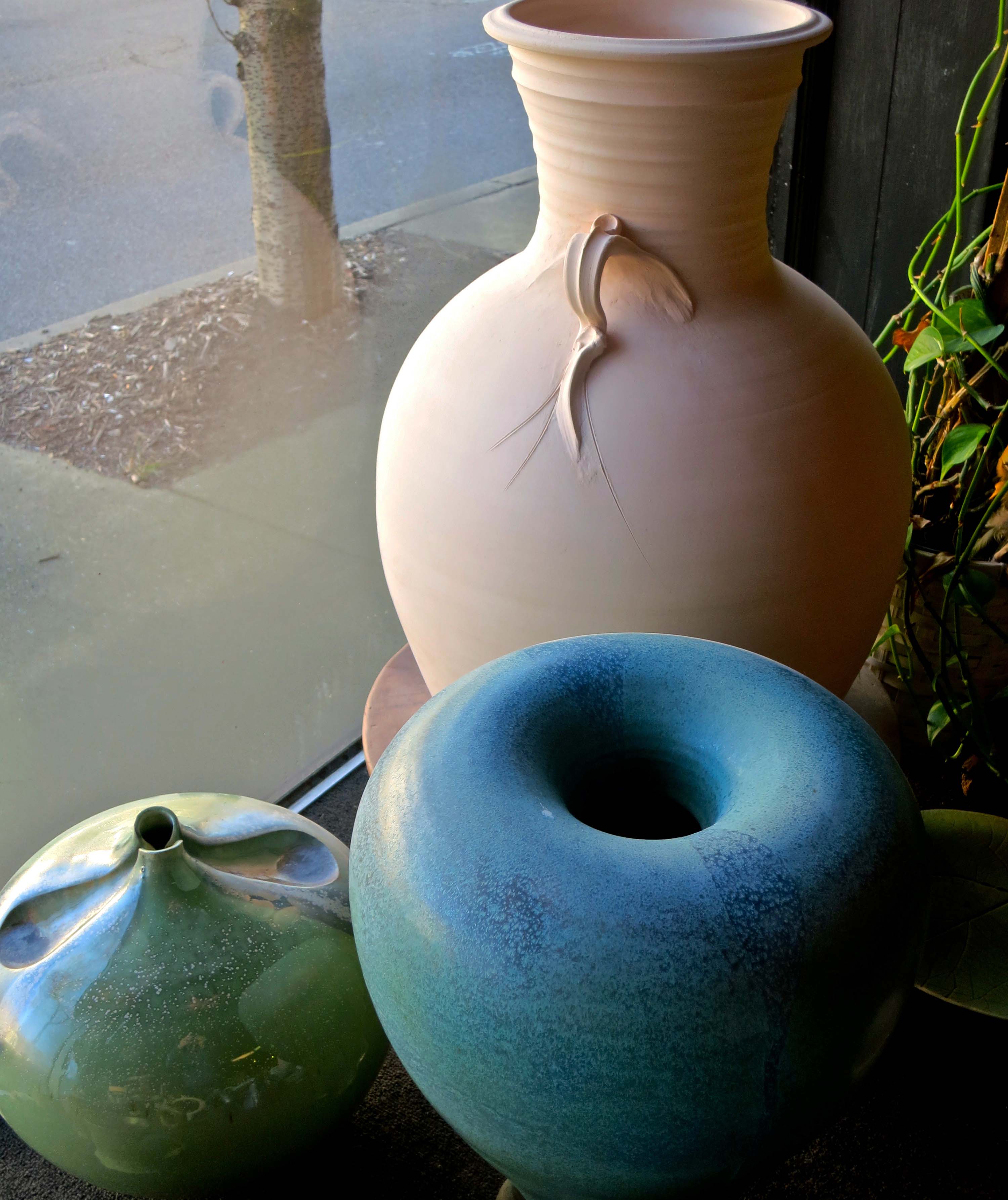
Form, glaze and function make for stunning pottery. My brother Marshall picked out this teapot for Peggy and me from the work his daughter Marian does in Chattanooga, Tennessee.


As my body of work grows, my hope is that it will reflect a life filled with wonder and yearning, as well as serious play. —Marian Heintz

Marian was making hearts— and not 100% happy about it. Valentine’s Day is coming, however, and people like to buy hearts. People buying hearts puts money in the bank. So, for the day at least, Marian had put aside her inner artist to be pragmatic and was whipping out product.

It wasn’t quite mass production, though. “Each piece needs to be carefully finished,” she insisted. Marian is a dedicated craftsperson as well as an artist. No part-finished work would escape out her door, even if it meant less profit.

One of the hearts that Marian was producing for Valentines Day.

One of the hearts that Marian was producing for Valentine’s Day.

Peggy and I had driven down from the Nashville area after Christmas to visit with Marian in Chattanooga, and to check out her studio and work. Marian is my niece (my brother Marshall’s daughter), and I have known her since she was a toddler. It had been far too long since we had seen her.

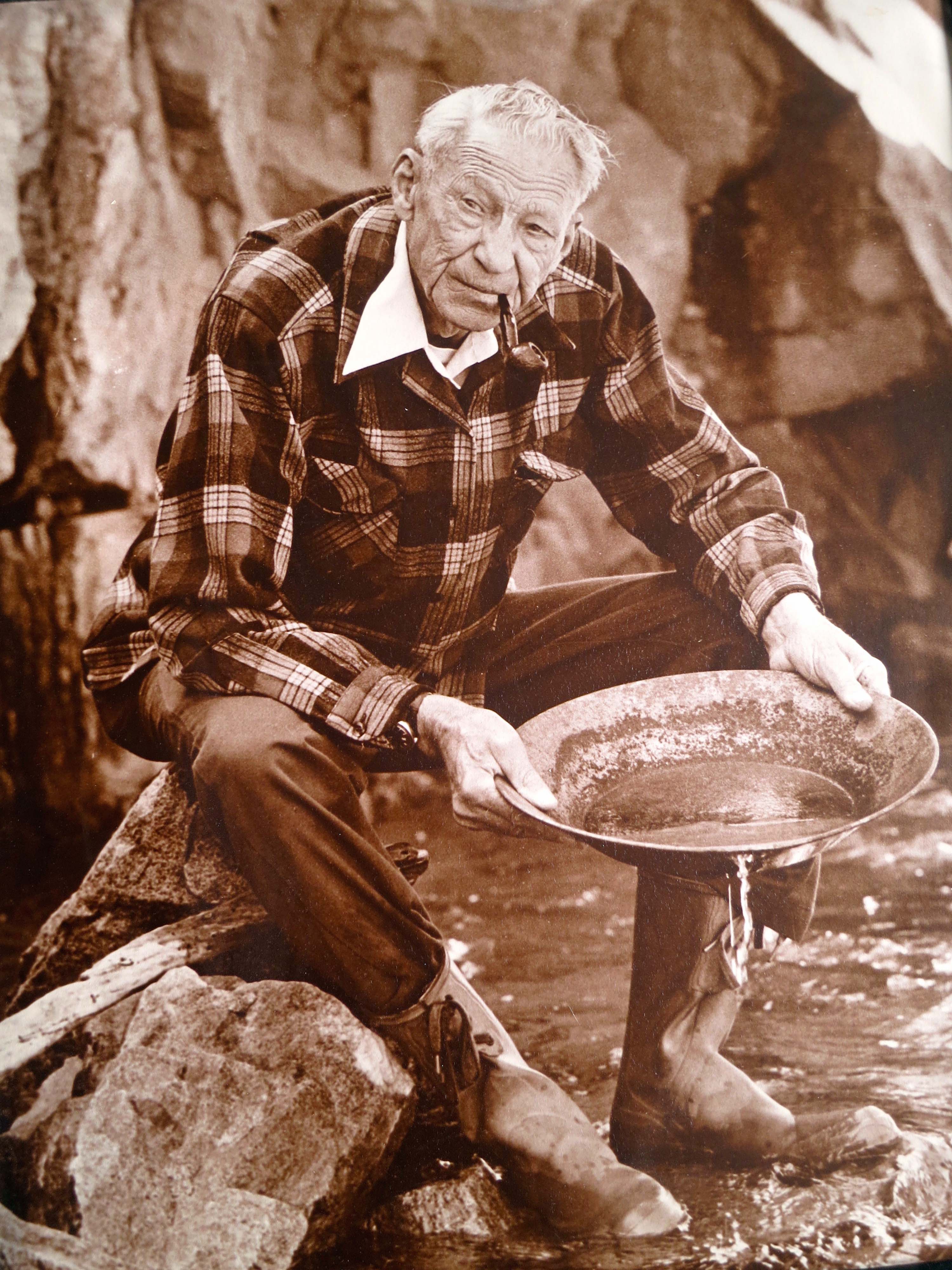
Marian has always had a creative bent, and it has carried her in several different directions. I first became aware of her passion for art when she was attending the Glen Fishback School of photography in Sacramento. She has a fine eye for photography, as does her brother, Wayne. She even managed to talk my dad into posing as a time-worn gold miner for her final portfolio at the school.

Photo of Herb Mekemson taken by Marian Heintz.

I have the photo that Marian took of my dad posing as a gold miner in his late 70s. Our daughter, Tasha, has put her name on the back of it to make sure she gets it in the future. (grin)

From photography, Marian branched out to the folk art of wheat weaving where straw is turned into decorative items and jewelry. From there, it was a natural step into making jewelry with copper and silver. Partially, as a result, she ended up teaching women in Haiti how to make jewelry out of rubble after the devastating 2009 earthquake.

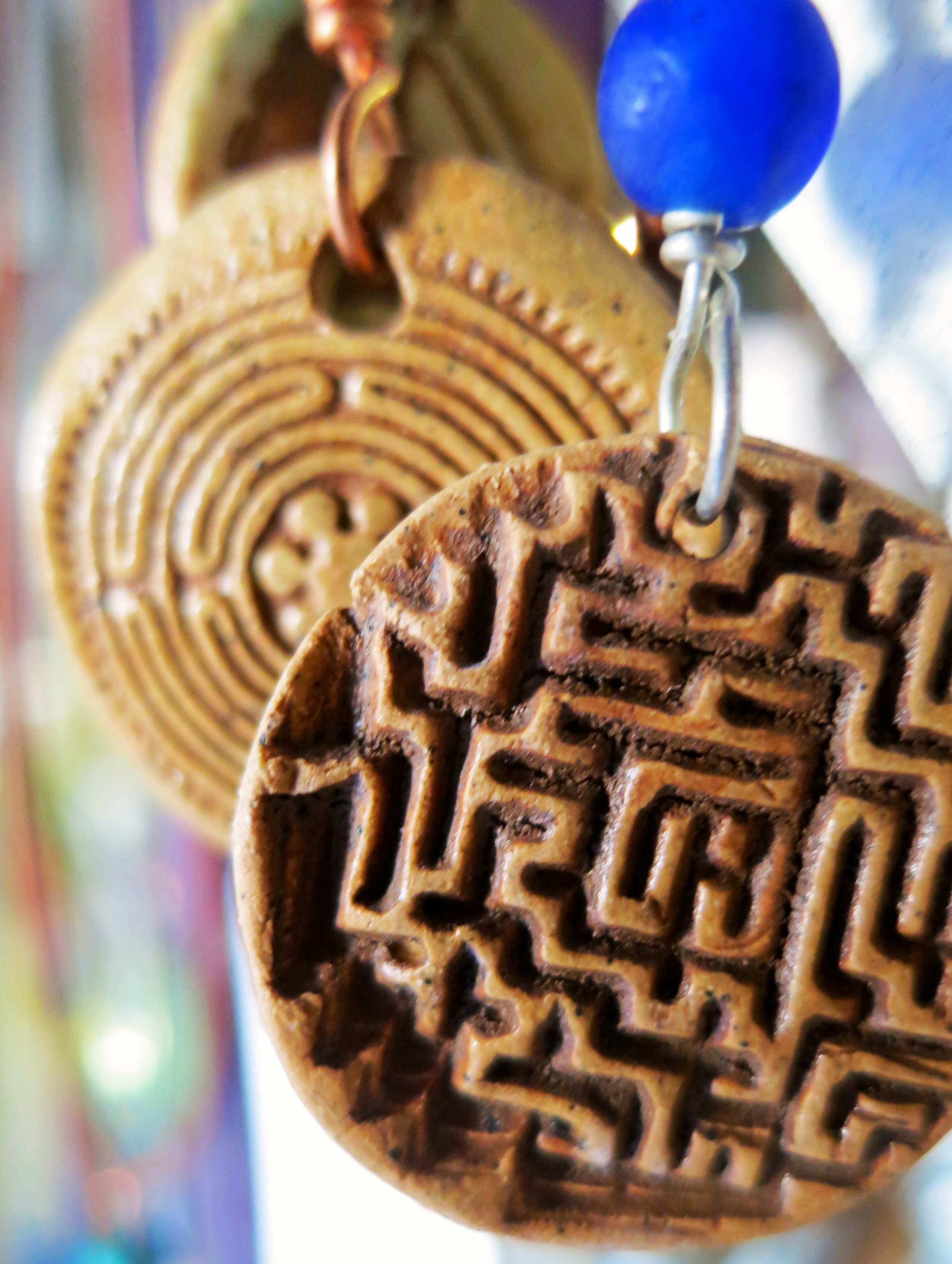
Jewelry made by Marian Heintz at her studio in Chattanooga, Tennessee.

Marian still makes jewelry using her skills as a potter. Peggy had to have one. Marian explained that making the labyrinth and maze serve as meditation for her.

Her introduction to pottery came when she was working on her undergraduate degree at the University of Tennessee, Chattanooga. “I first began working with ceramics sixteen years ago, and fell in love with clay the first time I touched it,” she wrote in a bio sketch.

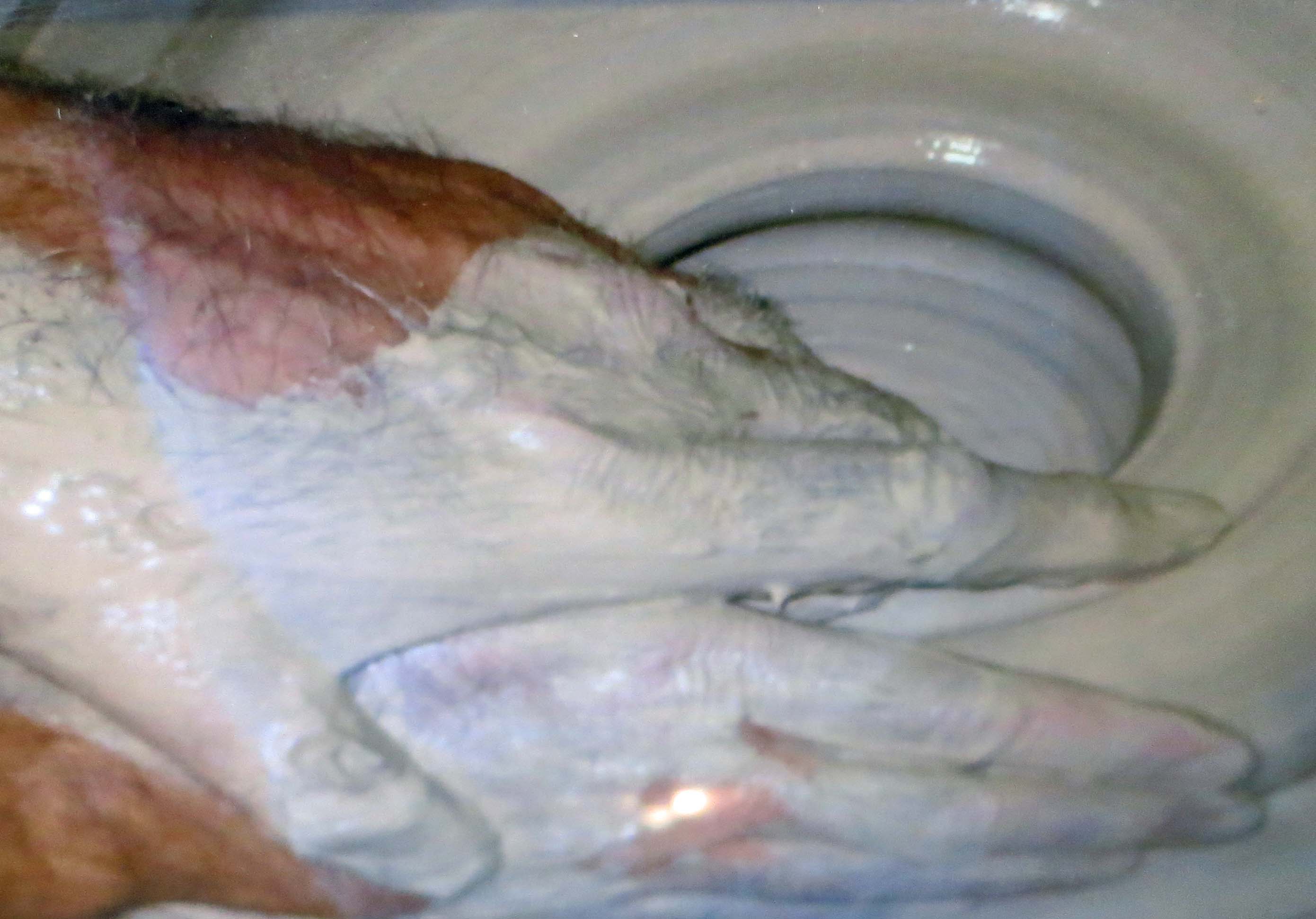
The hands of Marian's friend and mentor Talle Johnson as he throws a pot.

The hands of Marian’s friend and mentor Talle Johnson as he works clay and throws a pot.

Talle Johnson pottery at the studio of Marian Heintx in Chattanooga, Tennessee. Photo by Curtis Mekemson.

A sample of Talle Johnson’s pottery that Marian keeps in her studio.

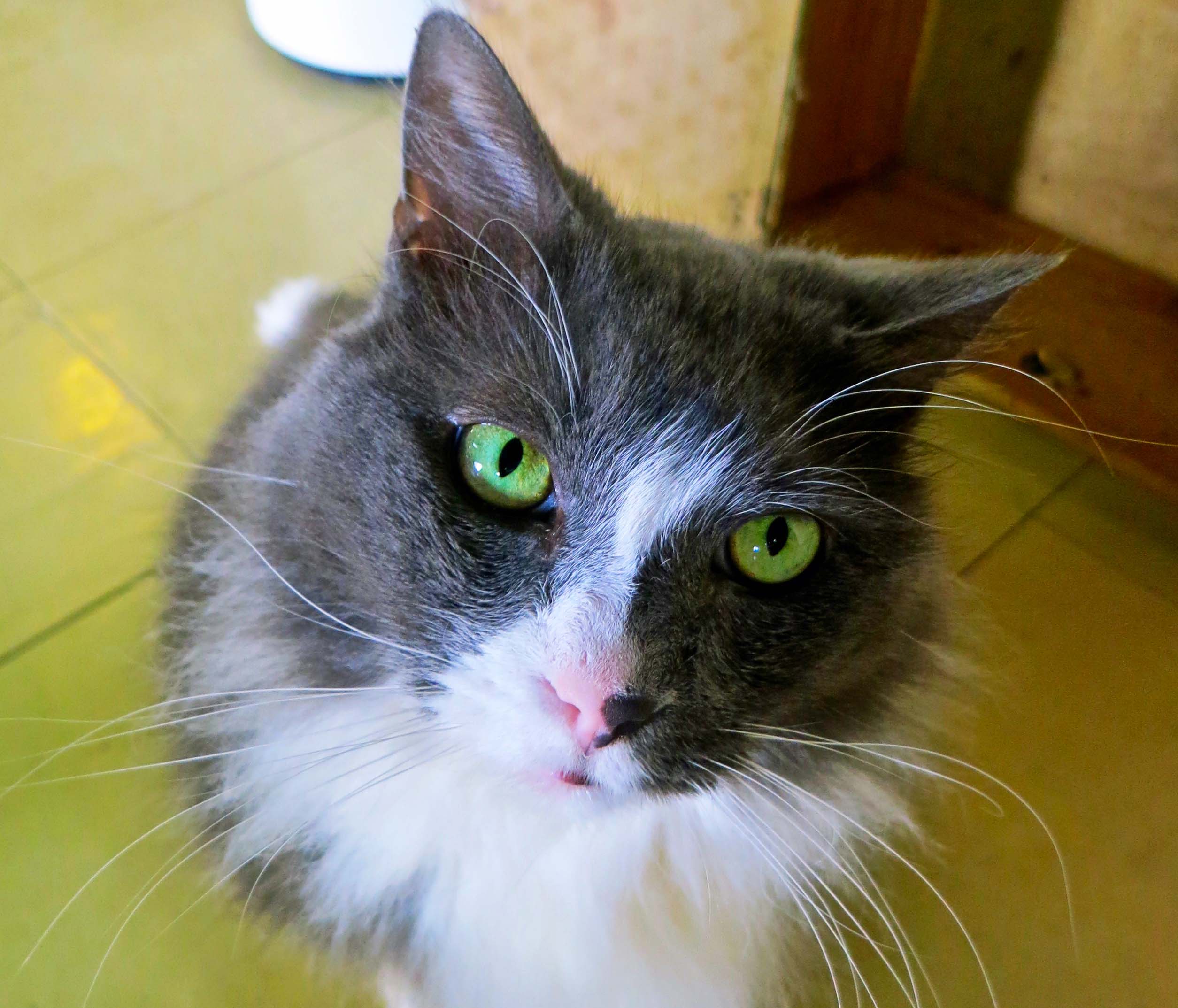
From 2007 up until he passed away in 2010, Marian worked as an apprentice to the highly talented and well-known potter, Talle Johnson. She credits much of her artistry, and in particular her emphasis on form, to his mentorship. As we entered through the backdoor of her studio, the first thing that greeted us was a memorial wall of photos featuring Talle and his work. The second thing to greet us was Wren, the studio cat.

Wren, the studio cat at the Marian Heintz Pottery studio. Photo by Curtis Mekemson.

Wren, the studio cat.

Marian greeted us with the same enthusiasm that she puts into her work. Within minutes she had us settled into her comfortable ‘transition lounge.’ (Adult students are invited to relax with a bite to eat or a glass of wine to “transition between work and throwing clay.”) Three hours later, we had almost caught up on our lives— and almost provided Wren with the amount of rubbing he was sure he deserved.

Marian's 'transition studio, was warm, colorful and comfortable. I felt it reflected her.

The transition lounge was warm, colorful and comfortable— much like Marian.

Marian Heintz at her pottery studio in Chattanooga, Tennessee. Photo by  Curtis Mekemson.

Marion chatted for three hours, filling us in on her journey into pottery and how it has reflected her own journey in life.

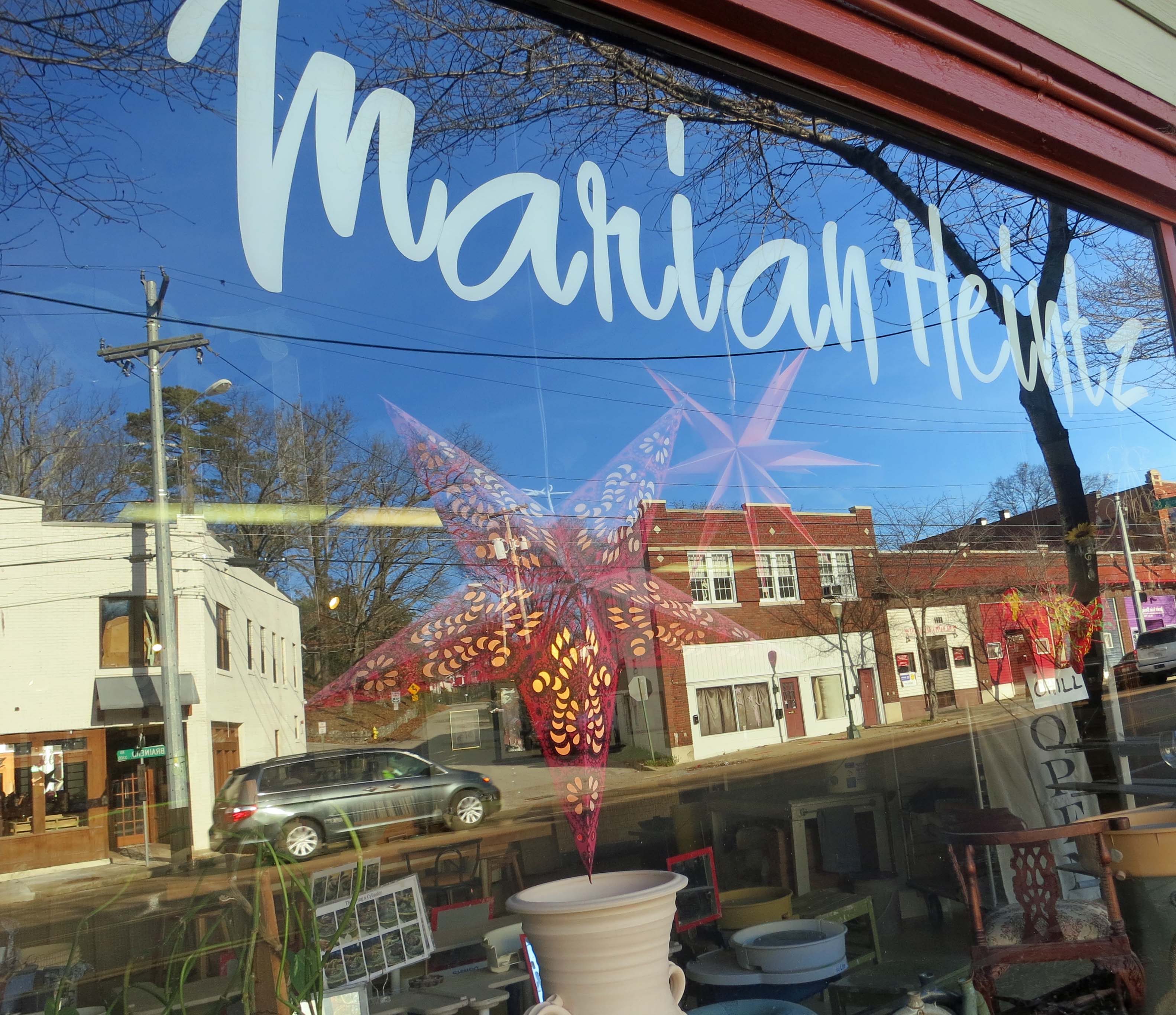
Marian’s studio is located on Brainerd Road in Chattanooga. The street is reflected in the window of her shop below. In addition to serving as her studio and as a retail outlet for her work, the space also includes potters’ wheels for classes she offers. She sees her studio as a place where students can “come in and leave everything else behind,” providing, if you will, a community— a place of peace where one can get lost in the rhythm of the potter’s wheel and the earthy feel of clay.

Chattanooga's Brainerd Road is reflected in the window of Marian's studio.

Chattanooga’s Brainerd Road is reflected in the window of Marian’s studio.

My work is both utilitarian and decorative, so that I try to find a balance between aesthetics and function. Using stoneware clay, I throw forms on the wheel as well as hand build. Some of these forms are altered on or off the wheel and many have paddled or textured surfaces. I would describe my forms as organic, sophisticated, yet simple and playful. There is a sense of movement and energy that radiates out of them. —Marian Heintz

Gravy bowl at Marian Heintz Pottery Studio in Chattanooga, Tennessee.

Gravy bowl.

Simple flower vase.

Simple flower vase.

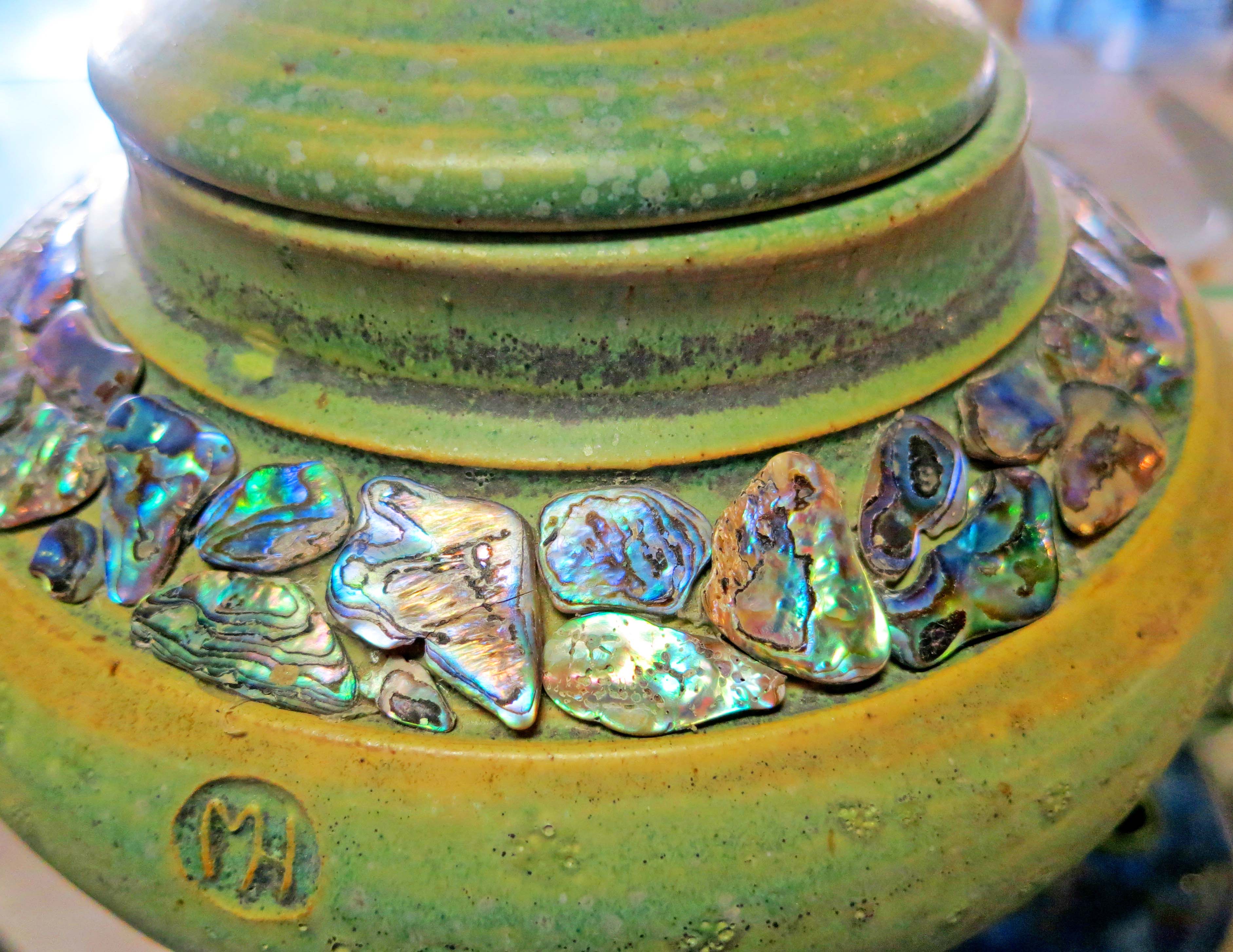
Pot incorporating abelone shells.

Pot incorporating abalone shells.

This coffee cup came home with me. The MH serves as Marian's signature.

This coffee cup came home with me. The MH serves as Marian’s signature.

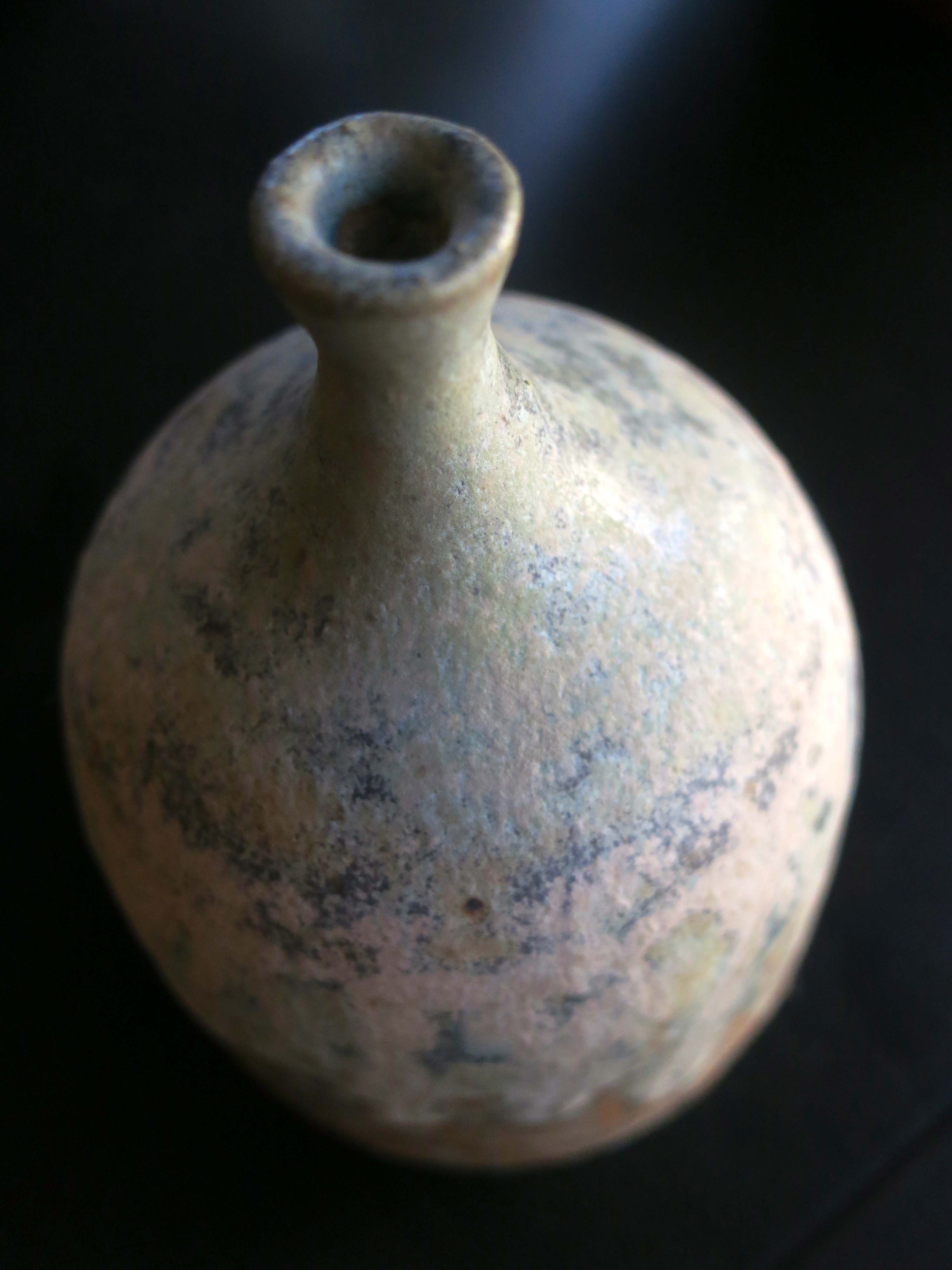
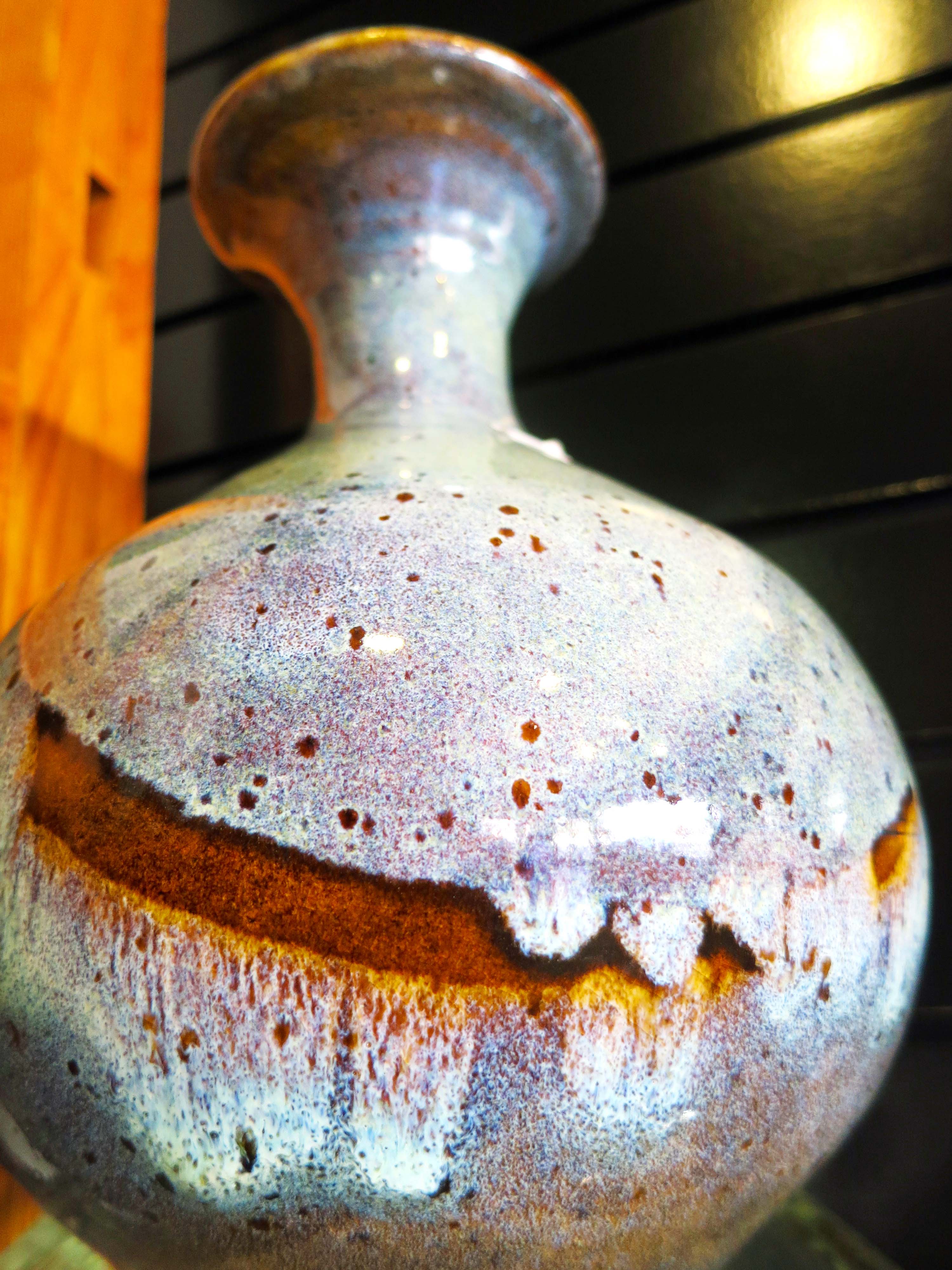
I enjoyed the top down perspective on this vase.

I enjoyed the top down perspective on this vase.

Marian has also branched out into porcelain.

Marian has also branched out into porcelain.

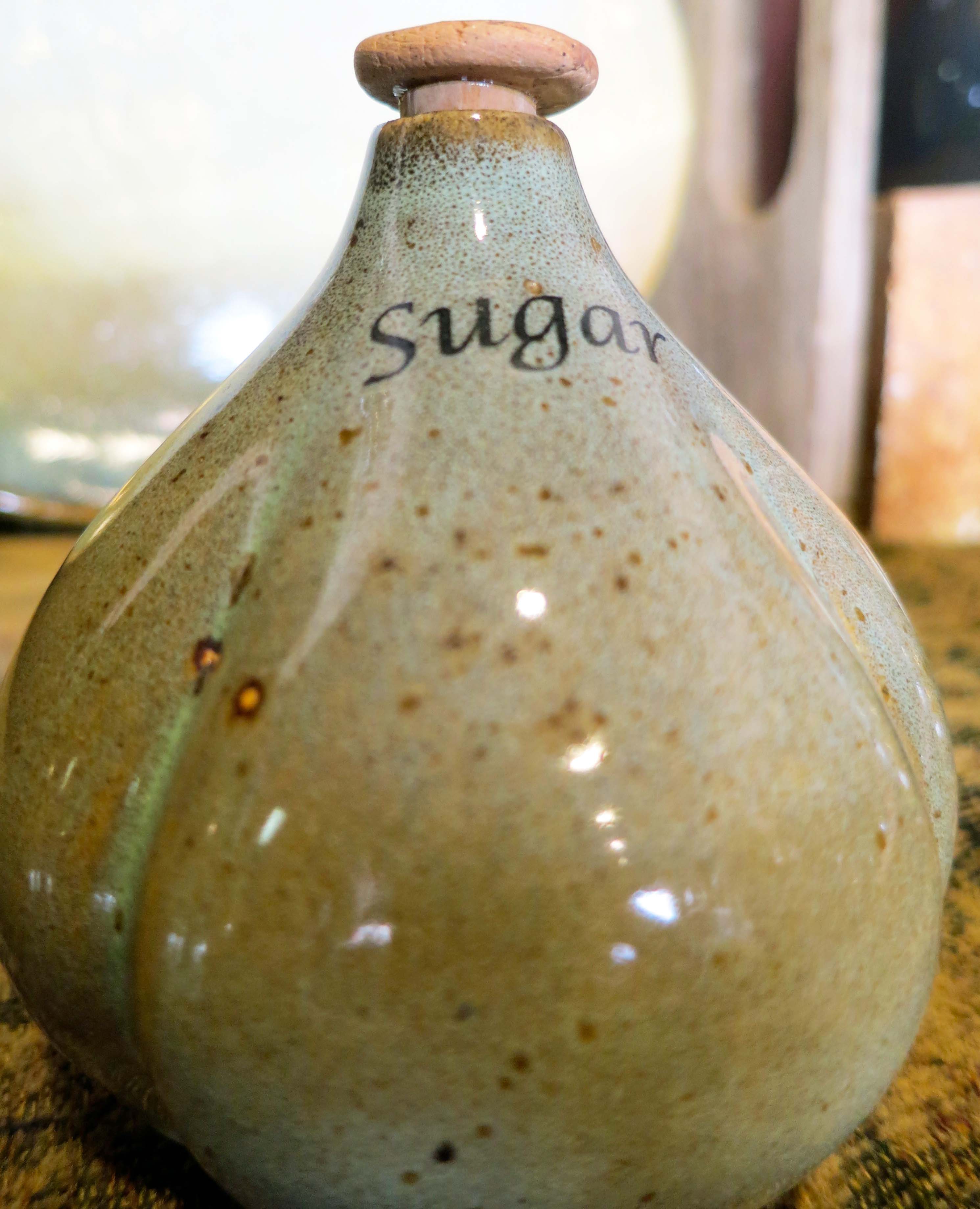
I found the small containers she made for sugar, salt, pepper and other spices quite unique.

I found the small containers she made for sugar, salt, pepper and other spices quite unique.

This vase made me think of Where the Wild Things Are.

This vase made me think of Where the Wild Things Are.

Marian’s work has been shown at the Tennessee Arts Commission gallery in Nashville and a piece has been purchased by Commission to add to its permanent collection. You can learn more about Marian by checking out her website.

While we were talking, Marian had mentioned how she felt her work in pottery had reflected her struggles in life. “I am good at struggling,” she had noted with a grin. “I have a knack for it.” Her dad had once commented to her how she was always able to take lemons and make lemonade. Her response had been, “I don’t want to make lemonade. I want to make something more beautiful and permanent.”

I think she has succeeded.

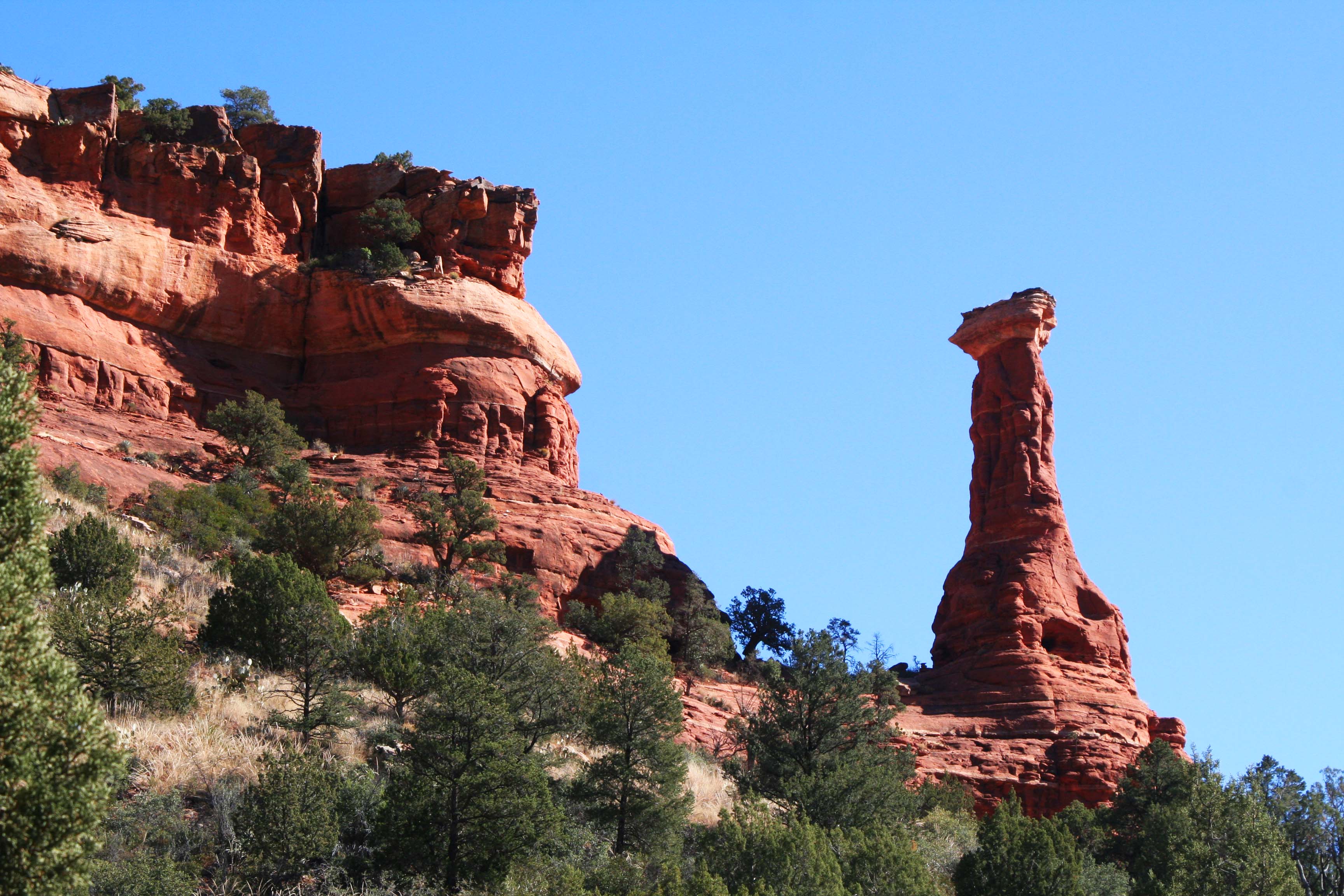
NEXT BLOG: It’s off to the beautiful red rock country of Sedona, Arizona.


I Bit the Chicken and the Chicken Bit Back… Nashville’s HOT Chicken Restaurants

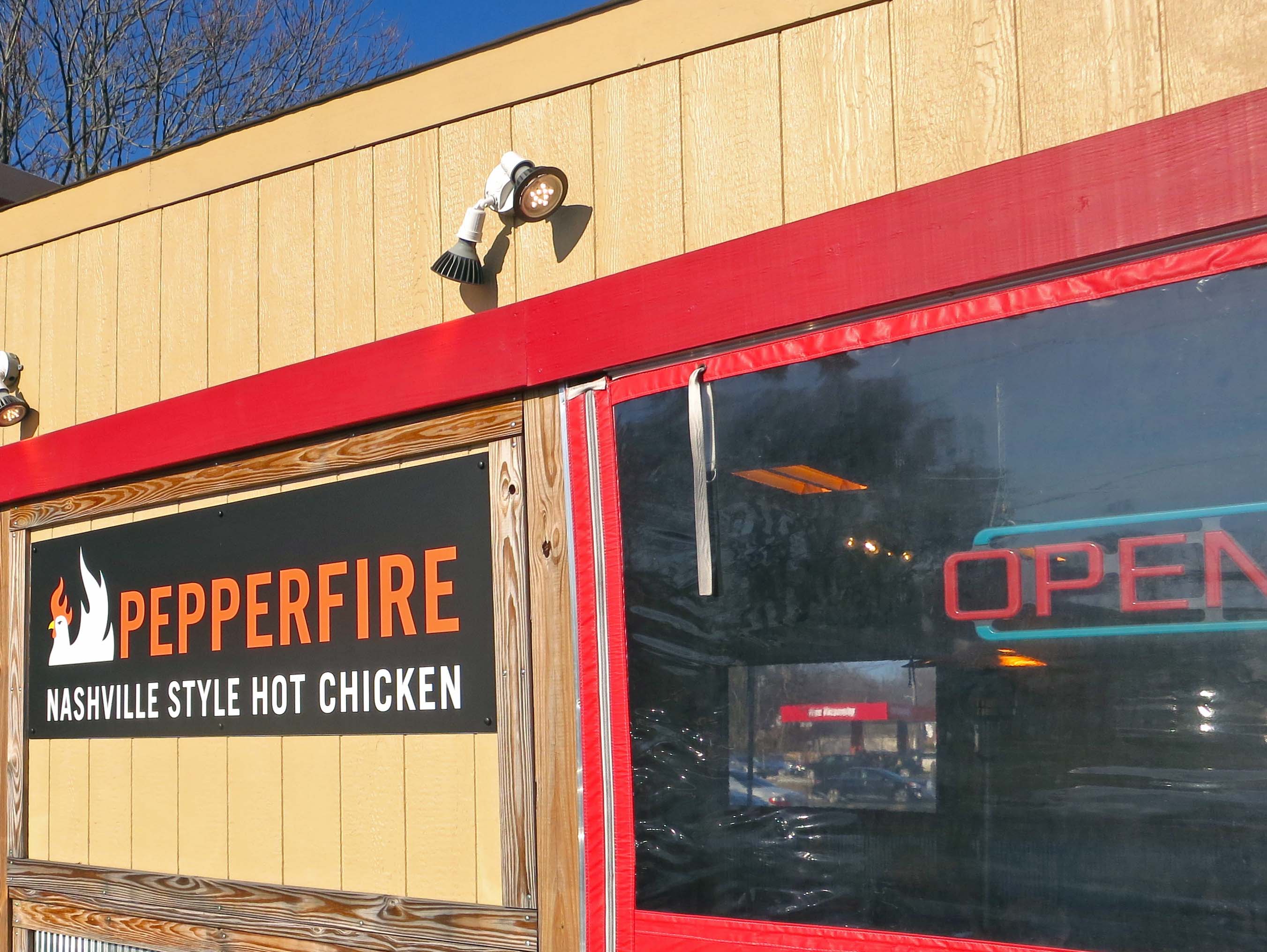
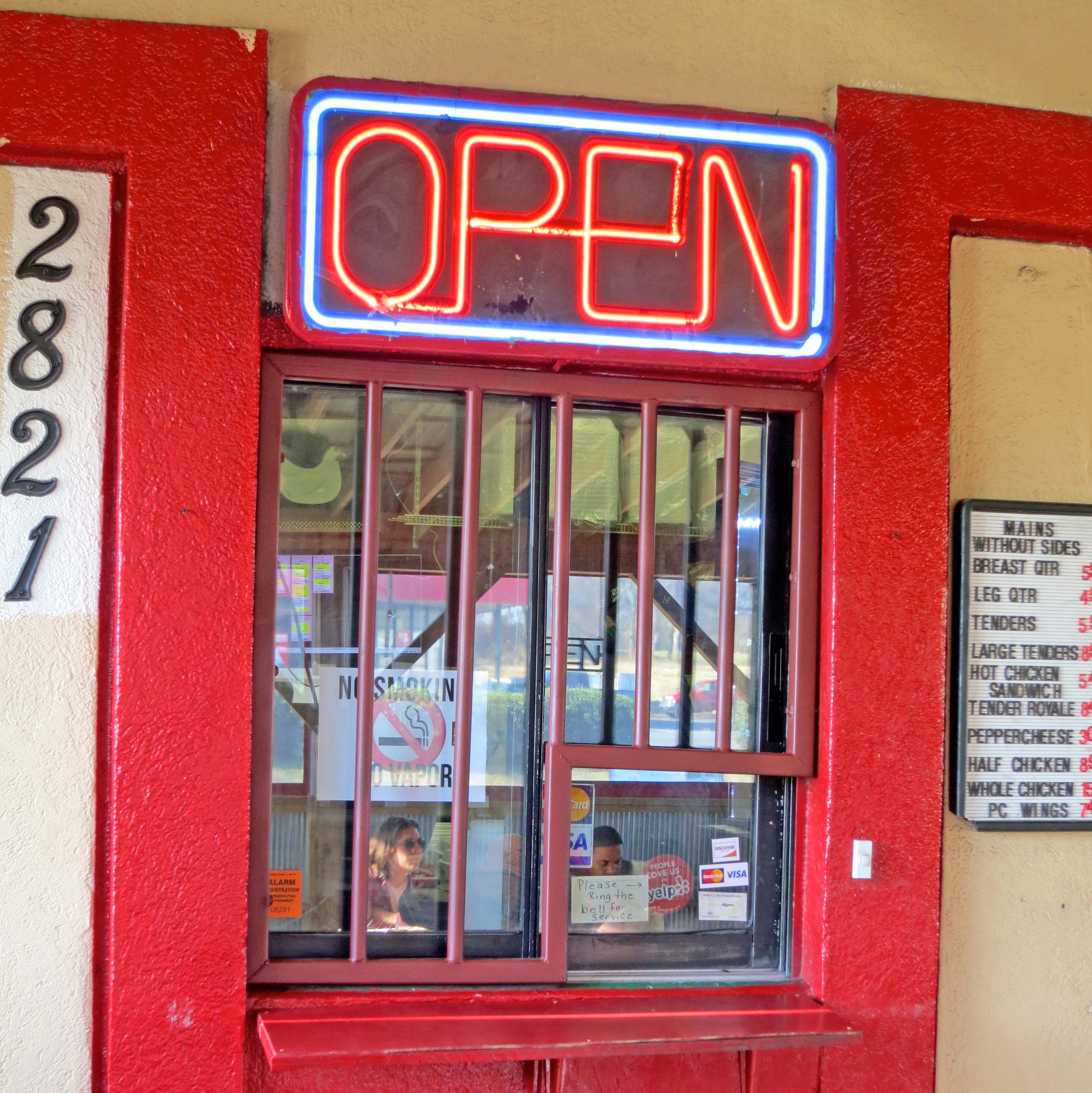
Pepperfire Restaurant in Nashville, TN. Photo by Curtis Mekemson

Hot chicken is all the rage in Nashville today. But just how hot is it?

My son-in-law Clay and I have been hassling each other over hot food ever since he first started dating our daughter. Clay, Tasha, Peggy and I had gone out to a steak house in Sacramento, California and ordered prime rib. Normally, the restaurant served a mild horseradish cream sauce along side. This time, for whatever the reason, it didn’t.
“Can we have a side order of horseradish cream sauce?” I had asked our waiter.

He had brought it out, straight up, no cream. I slathered it on my prime rib. Clay, watching me, had done the same thing. I took one bite and thought ‘Holy Ghost Pepper!’ as it burned all the way down to my toes. I quickly scraped it off. I didn’t mean to hide my action from Clay, but he didn’t see me do it. He just kept nonchalantly chewing away and all I could think was, ‘He is one tough dude.’

This went on for a while as perspiration broke out on Clay’s forehead and his eyes began to water. Suddenly he threw down his fork.

“You’re the man,” he declared. “How can you eat that stuff?”

We all had a good laugh when I confessed, but it established a tradition. Whenever Clay comes to visit, I take him out for the hottest food I can find. (The girls stay as far way from this activity as possible.) Last time we went to the India Palace, my favorite Indian restaurant in southern Oregon. Clay insisted on ordering the food one notch hotter than I did.

Of course what goes around comes around, right? So whenever Peggy and I visit Clay and Tasha in Tennessee, Clay introduces me to his latest mouth-burning find. He outdid himself this time. “Google Nashville hot chicken and pick out a restaurant,” he suggested to me as he scooted off to his job as a regional manager for Verizon. I was soon up to my ears in hot sauce.

The legend is that Thornton Prince was having girlfriend problems back in the 1930s. He had too many. Girlfriend number #1 decided on revenge. She secretly dumped several extra tablespoons of cayenne pepper on Thornton’s chicken when he came in late one night. The effort backfired. Prince loved it. In fact he loved the hot chicken so much he opened a restaurant featuring it.

The restaurant quickly became a gathering place for the local African American community. When white musicians playing at the Grand Ole Opry heard about the chicken, they started visiting as well. This was still the era of segregation, however. The whites had to come through the back door and eat in the kitchen. Seventy years later the restaurant is still serving up its signature dish. Everyone goes through the front door now.

Today, Nashville is renowned for its hot chicken. There are several restaurants present, and my sense is that they vie with one another over who can produce the hottest food. I should note here that I like hot food. I developed the taste when I was a Peace Corps Volunteer in Liberia, West Africa where I started out as a one-pepper person. By the time I left, I had worked my way up to three. Since then I have continued to increase my tolerance for hot.

But in the world of hot peppers, there is hot and there is HOT. Two blogs ago I wrote about how my father-in-law, John Dallen, was concerned about the Naga headhunters of Nagaland when he had to bail out of his airplane in World War II. Well, as it turns out, I just learned the Naga are also renowned for raising Bhut Joloki peppers (ghost peppers), which happen to be among the hottest peppers in the world. John was wise not to eat what the local natives offered.

To provide a perspective on how hot these peppers are, consider the following. Pepper heat is measured in Scoville heat units (SHU). Your typical jalapeno pepper checks in at around 4000 SHU. Habanero peppers are measured at 80,000 to 600,000 SHU. The Bhut Joloki pepper normally tests out between 500,000 and 1,500,000!

I doubted I would be eating any fried chicken infused with Bhut Joloki peppers on my Nashville excursion, but I still entered the Pepperfire restaurant with a touch of trepidation. I’d read the reviews and seen the menu. My choices ranged from mild to XX hot. The Internet description had said that either the X or XX will “jump on you and grab you.” I wasn’t sure what that meant. But how could it be good?

The menu listed the various levels of hot.

The menu listed the various levels of hot. The Pepperfire website had informed me that “hot” was painful for most.

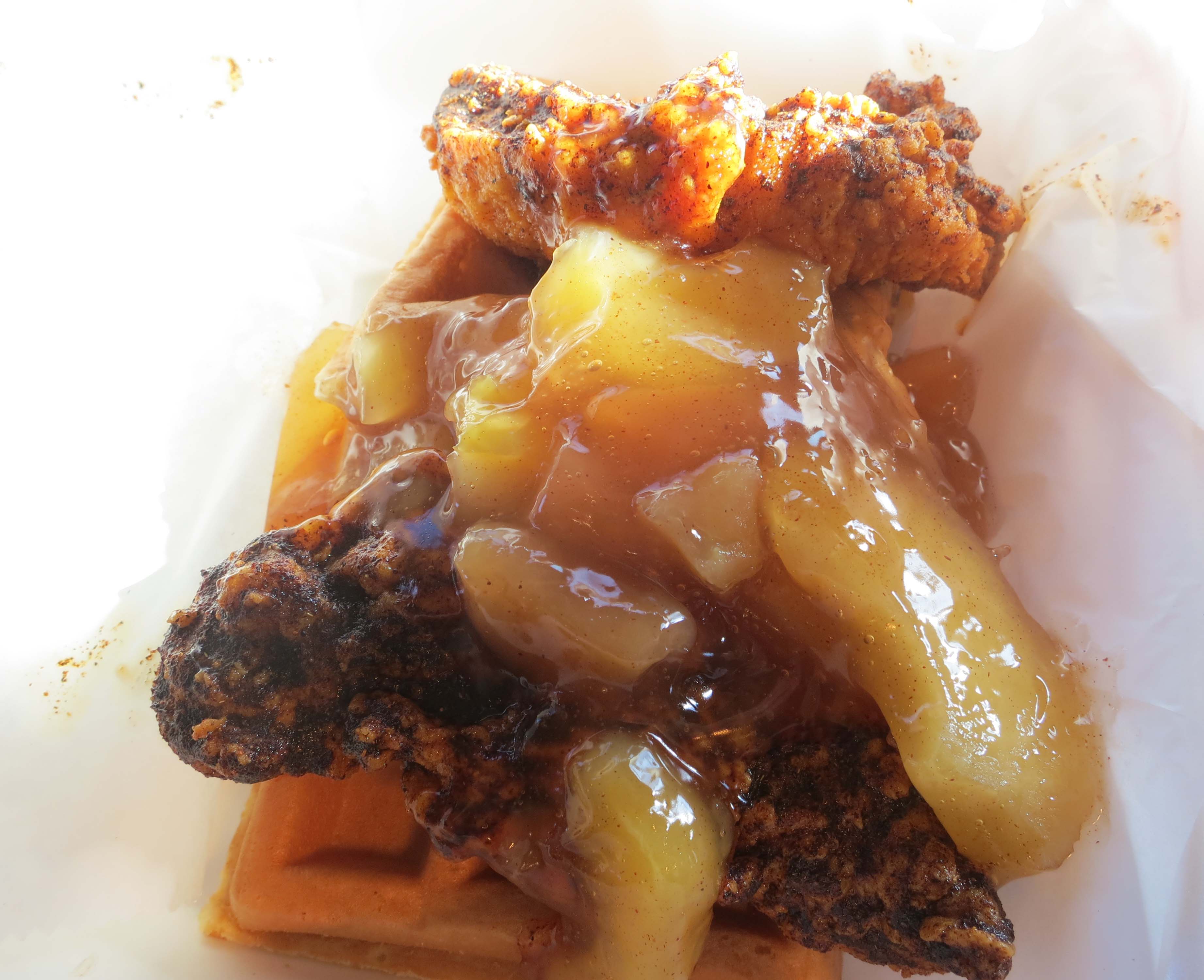
I was out with Clay, however, so I had to man-up. I went for chicken leg/thigh combo on the X level. Since I was in the south, I also ordered fried okra. Clay ordered XX chicken wings with French fries. For dessert we ordered a waffle that was topped off with hot chicken tenders and fried apples.

Chicken quarter at Pepperfire Restaurant in Nashville, Tennessee. Photo by Curtis Mekemson.

Just looking at this chicken quarter says hot. It reeks hot. You can see the flames. It was served on top of white bread, whose purpose is to soak up the grease.

Fried okra served at the Pepperfire restaurant in Nashville, Tennessee.

A close up of the okra. Eating it gave me that ‘old boy’ feeling. Just call me Bubba.

XX hot chicken wings served at the Pepperfire Restaurant in Nashville, Tennessee.

Clay’s hot chicken wings. It was the third one over from the left that bit me.

Dessert at Pepperfire Restaurant in Nashville Restaurant.

Dessert: a waffle topped by chicken tenders topped by fried apples. It was definitely unique— make that a tad weird.

When the food arrived, I picked up one of Clay’s chicken wings. Maybe it would make my food seem cool in comparison. I bit down. The damn chicken bit back. I smiled at Clay. “This really tastes good,” I managed to get out as my tongue turned into a pretzel, my throat screamed “water!” and my stomach proclaimed, “you idiot.” Only its words weren’t quite that polite. I will say that the chicken was tender and juicy, and that there were spices other than hot that were quite tasteful.

Did it make my chicken seem cooler? No way. Once you get beyond hot, you are beyond hot. Those are my words of wisdom for the day. Within two hours, Henny Penny was waging the mother of all wars in my stomach. It was a triple burn day. The chicken burned on the way in. It burned inside. And it burned on the way out. Enough said. Now I have to start planning for the next time Clay comes to Oregon.

All joking aside, if you are in Nashville and want to try the city's famous (infamous) hot chicken, I recommend checking out the Pepperfire restaurant.

All joking aside, if you are in Nashville and want to try the city’s famous (infamous) hot chicken, I recommend checking out the Pepperfire restaurant.

What Happens When Your Blog Becomes A Lesson Plan for Fifth Graders?

Tasha in her fifth grade classroom at Indian Lake Elementary School.

Tasha in her fifth grade classroom at Indian Lake Elementary School.

Our daughter, Tasha (Mrs. Cox), is a fifth grade teacher at Indian Lake Elementary School in Hendersonville, Tennessee where she teaches language arts, including writing. A month or so ago she called and asked if she could use one of my blogs in her writing class. “Of course,” I had replied. Parents often tell me they have shared some blog or the other I’ve written with their children. Most of my stuff is G-rated.

Tasha picked out a recent blog I had posted on Mt. Rainier National Park. It featured a picture of her brother, Tony, and of her son, Ethan, as well as lots of photos of the Park. I figured that was it. My work was done.

Mt. Rainier

Mt. Rainier

I should have known better.

When Peggy and I arrived in Hendersonville for Christmas, there was a two-inch stack of yellow Post-its waiting. Each one included a question from a student directed to me. It looked like I might spend Christmas answering them all. That would have been okay, but I also wanted to enjoy the season. Maybe jolly old St. Nick had brought me a rocket ship so I could zoom around the universe.

Tasha took pity. She organized the Post-its by category so I could answer a handful of questions instead of 5,472. She is good at organizing. She even wants to organize me. Lots of luck with that…

So here are the key questions and my answers. I thought the folks who follow my blog might find them interesting as well.

Why do you write a blog?

I started blogging with a specific purpose in mind. I wanted to write a book and a blog would introduce my writing to people. If they liked how I wrote and what I wrote about, they might like my book as well.

Since then blogging has also become valuable to me for other reasons. One, it allows my wife Peggy and I to share our travels and adventures with people who live all over the world. Two, I have made a lot of new friends who share their travels, photography, and ideas with me. Three, it helps me improve my writing.

Finally, I love to write and tell stories. Each morning I wake up excited to begin my blog.

Is blogging hard?

Yes and no. Since my blogs include both writing and photography, they take a fair amount of work. I often start by researching a subject I am going to blog about. Then I pick out photos. Peggy and I take a lot when we travel; I may have to choose ten from a hundred. I then use software to work over each photo to make it look the best I can. Finally I write and edit my blog. Peggy then does a final read-through to catch any errors I may have missed. Each blog takes from three to eight hours to produce.

Blogging can be a lot easier, however. I have friends who may put up a photo and write a few words about it, but still have a very good blog.

The platform I use for my blog, Word Press, takes care of all the technical aspects of blogging. If someone wants to start a new blog, all he or she has to do is go to Word Press and click on “get started.” Word Press will then take the person through the process.

Where do your ideas for a blog come from?

Since my blog focuses on travel, most of my ideas come from places we visit. I am always on the look out for good blog material. Maybe it will be a town we visit, or a national park, or an ancient site where Native Americans did rock art. When in Hendersonville over Christmas, my son-in-law, Clay (Tasha’s husband) took me out to eat outrageously hot (spicy) chicken that Nashville is famous for. My stomach is still complaining. I am going to blog about it.

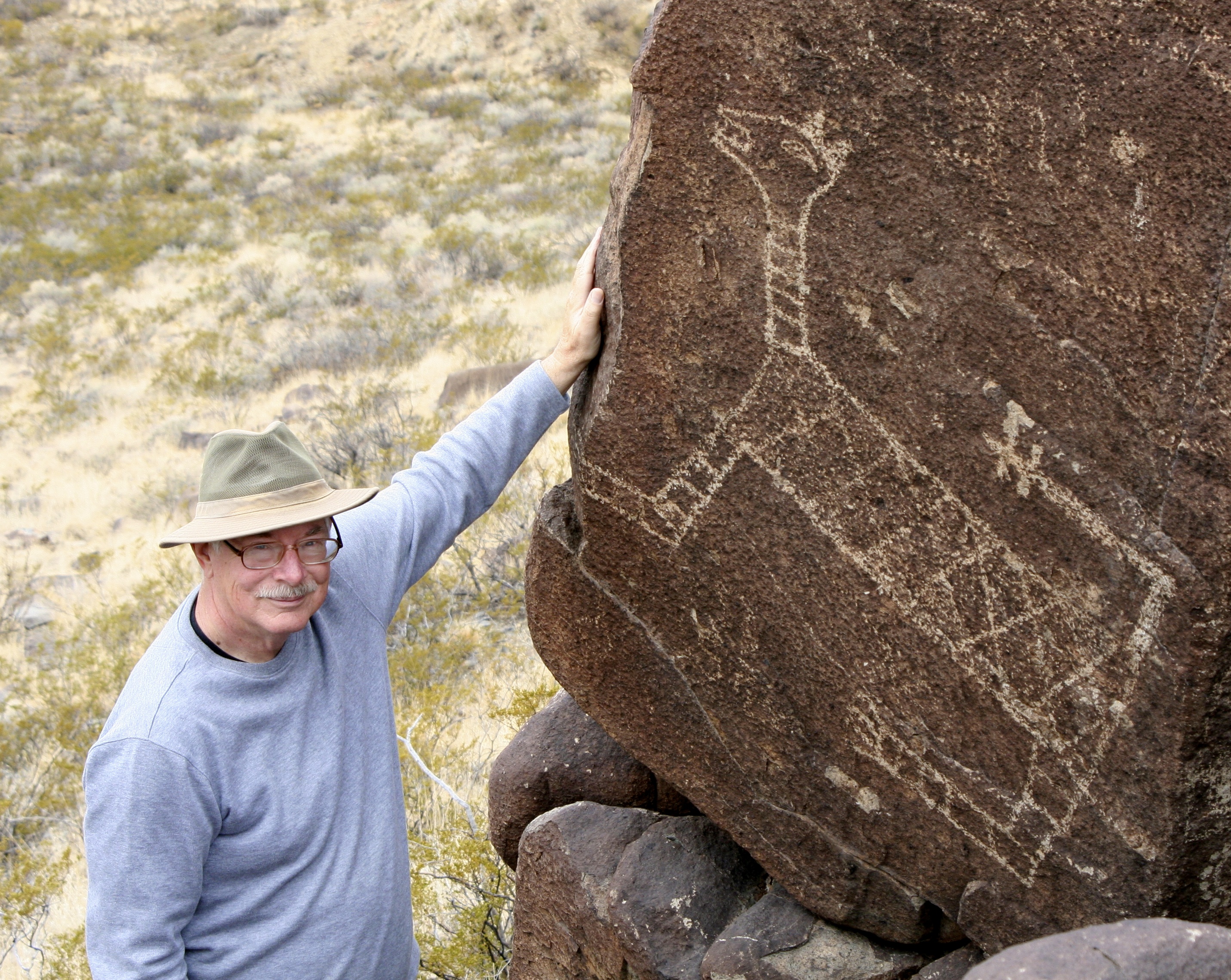
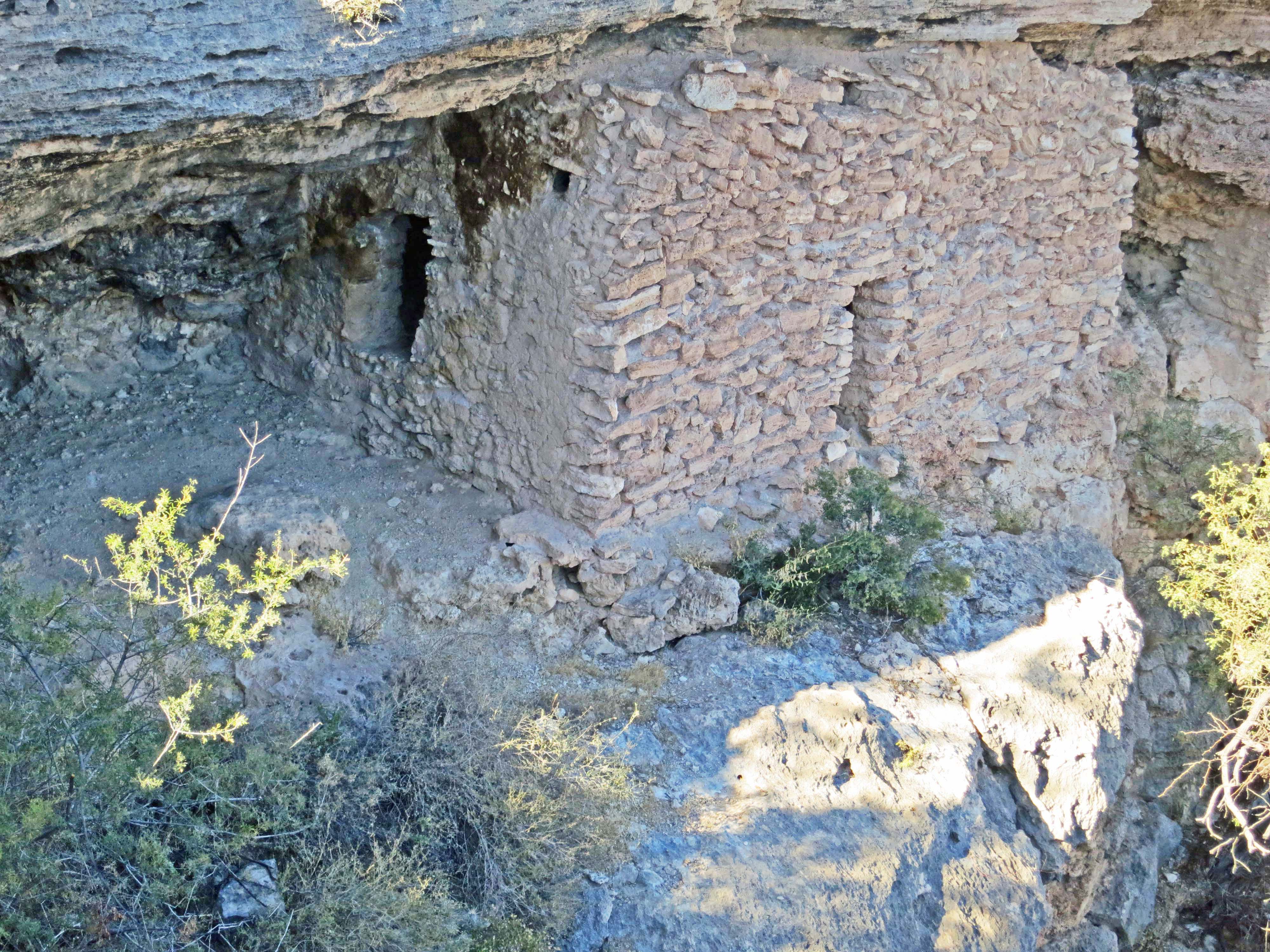
Indian rock art found in New Mexico.

Indian rock art found in New Mexico.

But I don’t limit my writing to travel. Sometimes I write about when I was growing up. Or I may write about where I live in Oregon. A while back some baby goats were born next door. I visited the goats and wrote a blog about them. Recently I did a series of blogs about Tasha’s grandfather who flew airplanes across the Himalayan Mountains in World War II. He had to bail out of his airplane when it ran out of gas and walk out of a jungle that was known for its tigers and headhunters.

What is the favorite place you have ever been?

This is a really hard question because different places have different things to offer. How do you compare Dubrovnik, Croatia with the Redwoods of California, or a cruise through the Mediterranean Sea with an 18-day raft trip down the Colorado River? Or, to bring it closer to home, how do you compare Nashville, Tennessee with Chattanooga. Each is unique.

Dubrovnik, Croatia

Dubrovnik, Croatia

Tasha's mom, Peggy, stands next to a redwood tree.

Tasha’s mom, Peggy, stands next to a redwood tree.

My favorite type of travel is adventure travel. Peggy and I once took a boat ride up the Amazon River. This summer we were kayaking out among the Orca Whales off of British Columbia. I once climbed on my bicycle and did a 10,000-mile solo trip around the US that took me six-months. (I bicycled through Tennessee as part of my trip.)

If forced to choose, I would say my favorite place to be is out in the woods. I am never happier than when I put on a backpack and disappear into the wilderness. I’ve backpacked all over the US including Alaska and Hawaii. When I turned 60, I backpacked 360 miles through the Sierra Nevada Mountains of California from Lake Tahoe to Mt. Whitney.

Nearing the end of my journey 360 mile backpack trek, Mt. Whitney stands in the background.

Nearing the end of my  360 mile backpack trek, I pose in front of Mt. Whitney.

Tasha joined me along the way for one week of my trip.

Tasha joined me along the way for one week of my trip.

How do you become a writer?

Write! I am serious. The best thing you can do to become a writer is to write all of the time. Keep a journal; make up stories for your friends; start a blog. One girl wrote, “I am writing a book at home, and I don’t know if there is a specific age to start. Do you?” My answer is that now is the perfect time, whether you are in the fifth grade or your seventh decade.

Reading is also very important. Read authors who are known as good writers and pay attention to how they write. Also read authors in the genre you want to write. For example, if you want to write mysteries, read mysteries.

It is also important to pay attention to the details of writing, such as learning grammar, avoiding spelling errors and painting pictures with words. A couple of students wanted to know how I found adjectives to describe my travels. It was a good question. Was it a black cat that crossed my path or a cat as dark as a moonless night? Two of the best tools an author can have are an active imagination and a good thesaurus.

My thanks to the fifth graders at Indian Lake Elementary School for inspiring this blog. Good luck in your future writing efforts.

NEXT BLOG: I bite a chicken and the chicken bites back.

Wandering the Far West in 2014… Interim 2

The cover: A tufa tower in Mono Lake with Sierra Nevada Mountains in Background. Eastern California.

The cover of our 2015 calendar: A tufa tower at Mono Lake with Sierra Nevada Mountains in background. Eastern California.

I am still working on my blog about Peg’s dad and his experience as a Hump pilot in World War II. In fact, Peggy’s brother, John Dallen Jr., is now helping. I’ve been learning a lot. For example, yesterday, I discovered the approximate location where the plane John Sr. was flying crashed in the Indian jungle. I find the new information fascinating, but the research is slowing down the post.

In the meantime, I decided to put up another interim post or two. Today is calendar day. Each year, Peggy and I create a calendar for our families using photos we have taken during the year. Family birthdays and anniversaries are included. This year we are mailing out 28 calendars, which include 80 birthdays and anniversaries.   It’s quite the production.

Since the photos we use on the calendar reflect this past year’s adventures and are among some of our favorites, I thought they would be fun to share on the blog. If you are a regular follower of Wandering through Time and Place, I am sure you will recognize several of them. All photos were taken by either Peggy or me. Enjoy.

January: Burney Falls. Northern California

January: Burney Falls. Northern California

February: Cactus flowers. Valley of Fire State Park, Southern Nevada.

February: Cactus flowers. Valley of Fire State Park, Southern Nevada.

March: Red Rock Canyon National Conservation Area in southern Nevada.

March: Red Rock Canyon National Conservation Area in southern Nevada.

April: Old road with April flowers in Death Valley National Park. Eastern California.

April: Old road with April flowers in Death Valley National Park. Eastern California.

May: Weathered buildings at Bodie State Historical Park, a ghost town in Eastern California.

May: Weathered buildings at Bodie State Historical Park, a ghost town in Eastern California.

June: Sierra Nevada Mountains form the East. Peggy and I have backpacked through these mountains numerous times.

June: Sierra Nevada Mountains from the East. Peggy and I have backpacked through these mountains numerous times.

July:: Mt. Rainier National Park. Washington State.

July:: Mt. Rainier National Park. Washington State.

August: Humpback whale dives when Peggy and I are on kayaking trip off Vancouver Island.

August: Humpback whale dives when Peggy and I are on kayaking trip off Vancouver Island.

September: Burning Man in remote northern Nevada desert.

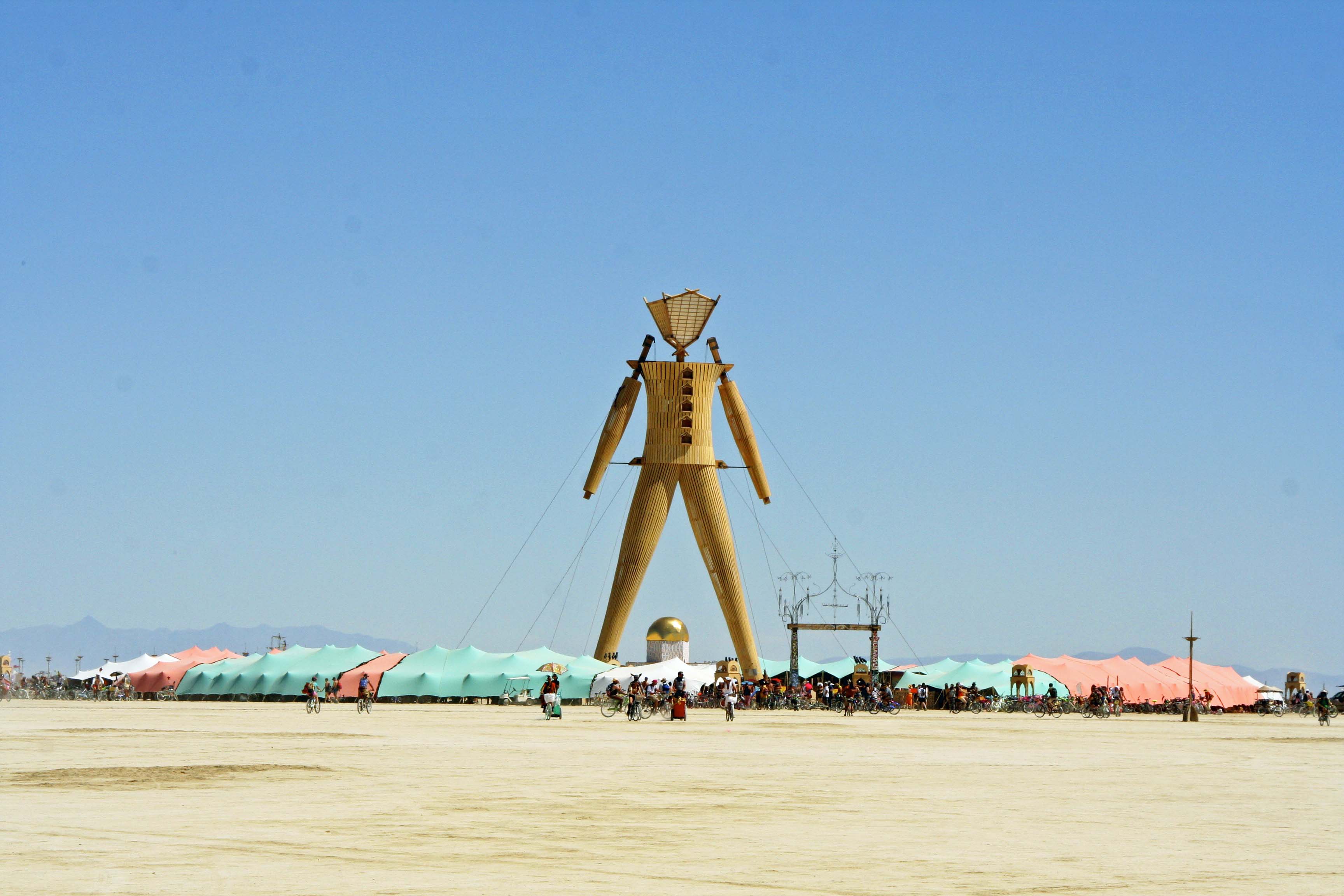
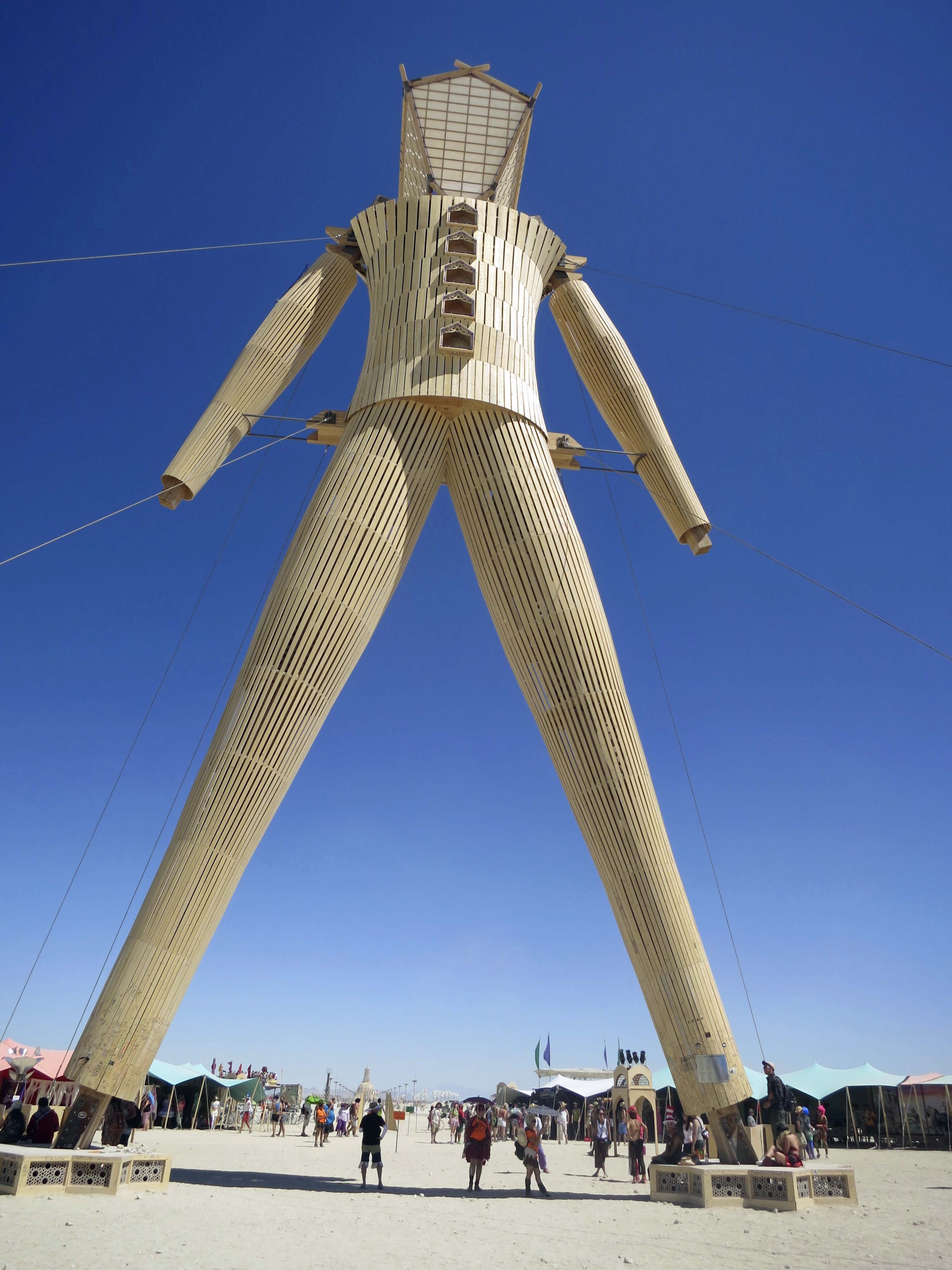
September: Burning Man in remote northern Nevada desert.

October: Rainbow caught in waves on Oregon Coast.

October: Rainbow caught in waves on Oregon Coast.

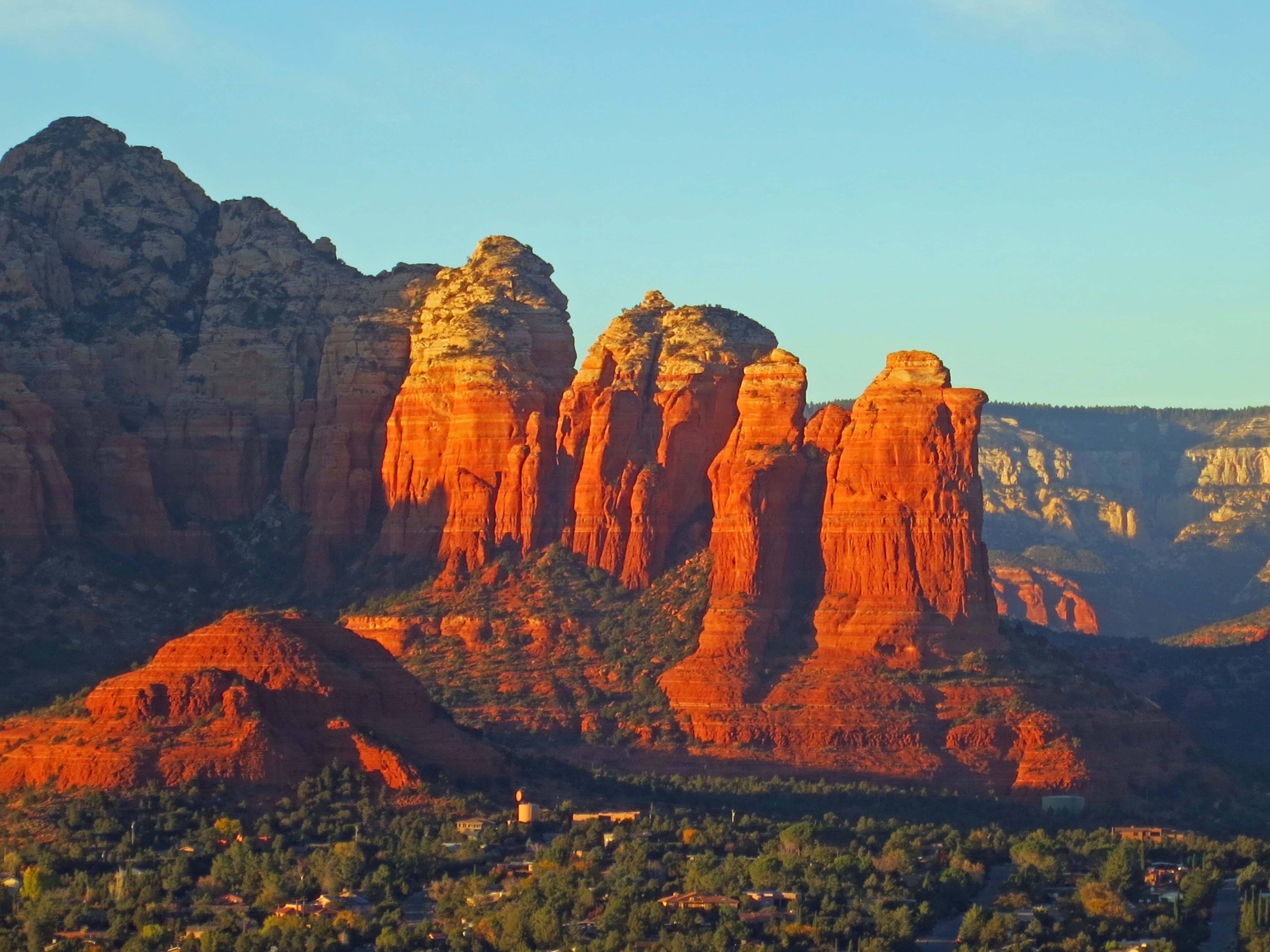
November: Sunset in Sedona, Arizona.

November: Sunset in Sedona, Arizona.

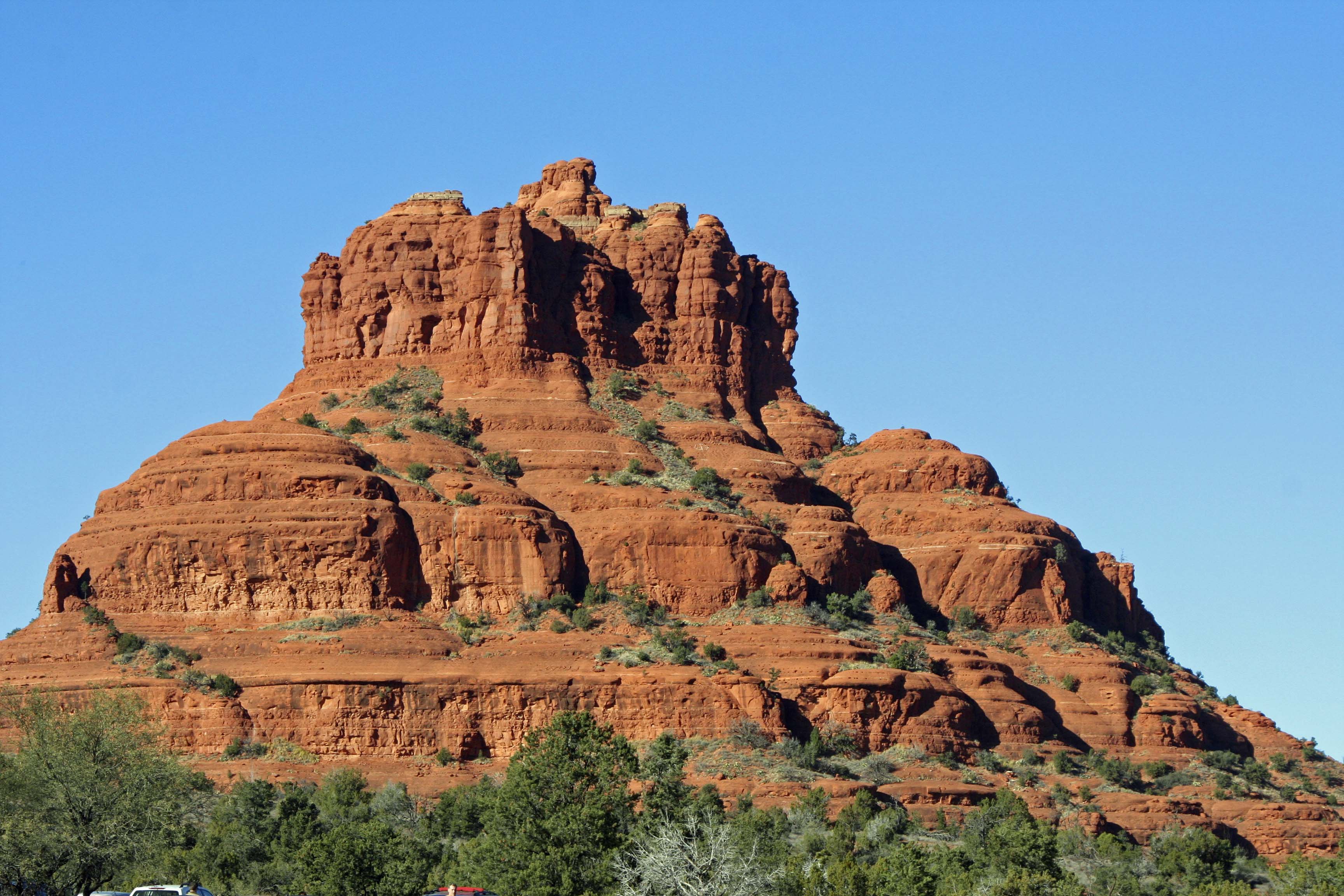
December: Bell Rock in Sedona, Arizona.

December: Bell Rock in Sedona, Arizona.


A World War II Blimp Hangar, a Guppy, and a Cow Escape Route… The Oregon Coast

Eight blimps called this hangar in Tillamook, Oregon home during World War II. (Photo at Tillamook Air Museum.)

Eight blimps called this Tillamook, Oregon hangar home during World War II. (Photo at Tillamook Air Museum.)

I’d been through Tillamook, Oregon several times and never spotted the huge blimp hangar that was built there during World War II. It is plainly visible from the Highway 101. Who knows what I was thinking about when I made my way up and down the road? It must have been a heck of a daydream. I saw the hangar this time, however, and it was like, “Wow!” I immediately changed plans and decided to stay in the area for another day. The hangar was something I had to visit.

How I missed seeing this building is a mystery to me.

How I missed seeing this building is a mystery to me.

Today it serves as a partially abandoned air museum. (Most of its airplanes have been shipped off to Madras in eastern Oregon, where it’s hoped the vintage aircraft will survive better in a drier climate.) The facility is definitely worth a visit, however. The 170-foot high, 1000-foot long building was built to accommodate eight, 252 f00t K class blimps. One hundred and twenty-foot tall doors open up to a cavernous interior.

The Tillamook Air Museum shown here, served as a blimp hangar during World War II.

Here are the massive doors. The airplane in front is known as a Guppy. I’ll show you why below.

A view inside the Tillamook Air Museum that served as a blimp hangar during World War II.

This view inside the hangar gives an idea of its massive size.

This illustration inside the Air Museum provides a perspective on the various sizes of blimps. The blimps housed at the Tillamook Naval Air Station were K-Class.

This illustration inside the Air Museum provides a perspective on the various sizes of blimps. The blimps housed at the Tillamook Naval Air Station were K-Class.

Blimps played an important role in World War II: They protected convoys and shipping lanes by spotting German and Japanese submarines. The blimps’ ability to fly in almost any type of weather, hover, and provide unobstructed views of the ocean made them an excellent choice for submarine patrol. The Tillamook facility was responsible for the coastline between British Columbia and northern California. Nine other naval air stations covered the rest of the west and east coasts of the US.

This illustration at the museum shows where blimp naval air stations were located during World War II.

Another illustration at the museum showed where blimp naval air stations were located during World War II. Sorry about the quality, but I found the illustration interesting. The dark symbols represent blimp hangars still in existence.

An introductory film and numerous World War II era photos at the museum provide an overview of the hangar’s history. I also found other interesting information on the war including posters, balloon bombs and a cow escape route.

World War II Woman Ordinance Worker poster found at the Tillamook Air Museum.

Among the other World War II items found at the museum were a number of WW II posters including this one for WOW, a Women Ordinance Worker.

The first ICBM? As the Japanese war effort was reversed and the US began its air raids on the country, Japan initiated a desperate ploy:  the use of  the jet stream to carry explosive-loaded balloons 6200 miles to the Pacific Coast.

Speaking of ordinance, this fading photo of a balloon has a story to tell; it may have been the first ICBM. As Japan faced defeat in 1944, it initiated a desperate ploy: the use of the jet stream to carry explosive-laden balloons 6200 miles to the Pacific Coast of the US and Canada. Some 6000 were launched but only 300 reached their destination, and they fell on rain-soaked forests, causing little damage.

I was amused when I came across a report on the cow escape route. Tillamook takes its cows seriously. Some of the best dairy stock in the US is located in the area. So it isn’t surprising that the local farmers decided their cows needed an escape route in case the Japanese invaded. Woodsmen were called upon to plan out paths through the forest. Using old logging roads, deer trails, and hunters’ routes, a cow getaway plan was soon organized.

No one asked the cows what they thought. Given that their idea of exercise was to leisurely travel from well-stocked barns to grass filled pastures, they may have preferred to hang around and provide the Japanese with milk, butter and cheese rather than hightail it through the rugged wilderness with udders bouncing.

The guppy airplane at the Tillamook Air Museum.

It isn’t too much of a jump to move from cows to a guppy is it?  One look at the front of this cargo plane explains its name. The Guppy is part of the Air Museums collection.

Inside the guppy.

Inside the Guppy.

Building the two hangars at Tillamook was a massive undertaking. Unstable ground, a ferocious winter, and the use all provided challenges.

Building the two hangars at Tillamook was a massive undertaking. Unstable ground, a ferocious winter, and the use of wood instead of steel for the structure all provided challenges. Steel was being used at the time for other war purposes. (Photo from Tillamook Air Museum.)

A blimp is launched from the Tillamook Air Station during World War II.

A blimp is launched from the Tillamook Air Station during World War II. Note the men holding ropes for a size perspective. Missions could last as long as 15 to 20 hours and some blimps were equipped to stay out as long as 59 hours and travel over 1400 miles. (Photo from Tillamook Air Museum.)

A final view of blimps arrayed outside of the Tillamook hangar during World War II.

A final view of blimps arrayed outside of the Tillamook hangar during World War II. Next blog: I find a surprise in the museum that takes me back to World War II and my wife’s father. (Photo from Tillamook Air Museum.)


A Wild Ocean and Crashing Waves… The Oregon Coast

Rainbow created in waves crashing along the Oregon Coast at Depoe Bay. Photo by Curtis Mekemson.

A moment of sun creates a rainbow in waves crashing along the Oregon Coast.

A winter storm on the Oregon Coast is a sight to see. In fact, motels along the coast promote storm watching. Here’s one such pitch: “Sit back and relax in your cozy room by the fireplace and watch through your huge picture window as furious waves pound the rocks below.” And furious they are.

A storm was raging when I drove down the coast a few weeks ago. In between torrential rainfall, the sun would peek out, and I would stop to admire the crashing waves. I didn’t have a huge picture window, so I admired the waves as they were meant to be admired, up close and personal. Following are several photos I took.

Dramatic waves crash ashore on the Oregon coast. Photo by Curtis Mekemson.

Very few shows are as dramatic as ocean waves during a storm.

Powerful waves crash ashore on the Oregon coast. Photo by Curtis Mekemson.

Rules numbers 1 and 2 when enjoying waves like these: Keep a distance, and never, never turn your back.

Spouting Horns at Depoe Bay shoot waves into the air. Photo by Curtis Mekemson.

One of the best know spots for watching waves on the Oregon Coast is in the community of Depoe Bay where the ocean shoots through lava tubes and is thrown high into the sky through what is known as the Spouting Horns.

View of Spouting Horns at Depoe Bay on the Oregon Coast. Photo by Curtis Mekemson.

Another view of the Spouting Horns. I could almost see a ghostly face staring back at me.

View of waves thrown into the air at Spouting Horns, Depoe Bay, Oregon. Photo by Curtis Mekemson.

And a third view.

Wave retreats at Depoe Bay, Oregon. Photo by Curtis Mekemson.

The wave’s energy expended by crashing against the rocks, the water flows back into the ocean.

The Devi's Churn on the coast of Oregon. Photo by Curtis Mekemson.

It’s known as the Devil’s Churn. Waves come driving in from the ocean and are forced up a narrow channel, turning the water into a frothy, whipped cream like texture.

Devil's Churn on Central oregon coast showing whip cream like texture of waves. Photo by Curtis Mekemson.

A close up of Devil’s Churn showing the whip cream like texture of the waves.

Devil's Churn on Oregon coast whips waves into a froth. Photo by Curtis Mekemson.

The Churn at work.

A final view of the Devil's Churn.

A final view of the Devil’s Churn. Next blog: A hangar large enough to accommodate eight blimps in Tillamook, Oregon.


Mono Lake: Four Trillion Brine Shrimp Call It Home… the Desert Series

Strange towers made of lime, tufa, give Mono Lake its unique personality.

Towers made of lime known as tufa give Mono Lake its unique personality.

To say the least, Mono Lake is a strange place. Some people even call it weird. Once upon a time, back when glaciers stretched across North America, it was part of a series of large lakes that covered much of modern-day Eastern California, Nevada and Utah, a region that is now primarily desert. Left behind as a remnant by retreating glaciers, Mono Lake is at least 760,000 years old and could be as old as three million years, making it one of the oldest lakes in North America.

What flows into Mono Lake, stays. There are no outlets. As a result, the lake is 2-3 times as salty as the ocean. Swimmers don’t have to worry about sinking. In fact the lake contains some 280 million tons of dissolved salts, which makes it even too salty for fish. An effort to introduce trout left them belly up on the surface, like the proverbial dead gold-fish destined for a close encounter with the family toilet.

Algae, brine shrimp, and alkali flies thrive in the water, however. The thumbnail-sized shrimp population is estimated to be somewhere between 4 and 6 trillion in the summer. Historically, the fly pupae served as a major source of food for the Kutzadika’a Indians. In fact, the name for the tribe means fly eater.

Today, both the flies and shrimp provide food for some two million birds that migrate through the area. One visitor, Wilson’s Phalarope, a tiny, fist-sized shorebird, takes advantage of the gourmet flies to double its weight and grow a new set of feathers before journeying 3000 miles to South America— a feat that is accomplished in three days of nonstop flying at speeds of over 40 miles per hour.

It isn’t flies, shrimp, birds, or salt water that Mono Lake is famous for, however. It’s tufa, the fantastical, fairy-like structures that grow in the lake and appeal to photographers from around the world. Calcium-rich water bubbling up from underwater springs combines with the lakes carbonate-rich waters in a chemical reaction to create the lime-based structures.  Towers as high as 30 feet can be built under water through this process in a time span that may involve centuries.

The reason these towers are visible today is due to the unquenchable thirst of millions of people in Los Angeles. This thirst came close to destroying Mono Lake, as it did the Owens River and Owens Valley south of Mono Lake. Starting in 1941 the politically formidable Los Angeles Water and Power Company tapped into the streams flowing into Mono Lake and sent the water on a one-way, 330 mile journey south, reducing water in the lake from 4.3 million acre feet in 1941 to 2.1 million acre feet in 1982.

The United States Navy also posed a threat to Mono Lake by carrying out a series of under water explosion tests during the Cold War. The plaque at the site described these explosions as top-secret seismic tests. Whether the navy was searching for a way to predict earthquakes and tsunamis or cause them is the question. Fortunately, public pressure and concerns for public safety led to the navy abandoning its activities at Mono Lake in the late 50s/early 60s.

It was the growing environmental movement of the 70s and the Mono Lake Organization that eventually forced the Los Angeles Power and Water Company to reduce the amount of water it was exporting from Mono Lake’s tributaries.  Today the lake is on the way to recovering its pre 1941 water levels (assuming it isn’t wiped out by global warming and drought). Mono Lake is found just north of Lee Vining off of Highway 395. Following Highway 120 west out of Lee Vining will take travelers into Yosemite National Park.

The Sierra Nevada Mountains provide a scenic backdrop in the west for Mono Lake. Highway 395 runs slog the base of the foothills. Tufa can be seen emerging from the lake.

The Sierra Nevada Mountains provide a scenic backdrop in the west for Mono Lake. Highway 395 runs along the base of the foothills. Tufa can be seen emerging from the lake.

Following Highway 120 east off of Highway 395 will bring visitors to Mono Lake's South Tufa Trail where the photos in they blog were taken.

Following Highway 120 east off of Highway 395 will bring visitors to Mono Lake’s South Tufa Trail where the photos in this blog were taken. (Photo by Peggy Mekemson.)

Prior to Los Angeles tapping into the streams that provide water to Mono Lake, this tufa tower would have been underwater.

Prior to Los Angeles tapping into the streams that provide water to Mono Lake, this tufa tower would have been underwater. Now it sits on dry land.

Reflections add extra character to this often photographed tufa island in Mono Lake. (Photo by Peggy Mekemson.)

Reflections add extra character to this often photographed tufa island in Mono Lake— as they do in the next two photos. (Photo by Peggy Mekemson.)

Tufa at Mono Lake near Lee Vining.Tufa reflection in Mono Lake, California near Lee Vining.

Tufa tower at Mono Lake, California.

I thought of this tufa tower as a frog face topped off by a frog hat. (Photo by Peggy Mekemson.)

Tufa towers located at Mono Lake, California near Lee Vining.

A tufa family? (Photo by Peggy Mekemson.)

A final view of the Sierra Nevada Mountains framed by tufa towers at Mono Lake.

A final view of the Sierra Nevada Mountains framed by tufa towers at Mono Lake.

NEXT BLOG: Having finished our desert series, Peggy and I return to Oregon and visit Oregon Caves National Monument.


Mt. Whitney: 14,505 feet— Or Is that 14,496.811 Feet… But Who’s Counting?

Highway 395 is one of America's most scenic drives. This view looking up at Mt. Whitney, center top, is one of the reasons why.

Highway 395 is one of America’s most scenic drives. This view looking up at Mt. Whitney, center top, is one of the reasons why.

Highway 395, with its panoramic views of the eastern Sierra Nevada Mountains, is one of the most scenic highways in the United States. I will admit to a degree of prejudice, however. John Muir called the High Sierras the Range of Light. I think of them as ‘home.’ I have backpacked up and down the range numerous times. The mountains call to me in a way that no city or town does.

Driving up California's Highway 395 provides and ever changing perspective of the eastern Sierra Nevada Mountains.

Driving up California’s Highway 395 provides an ever-changing perspective of the eastern Sierra Nevada Mountains.

Another view of the Sierra Nevada Mountains along highway 395.

Another view of the Sierra Nevada Mountains along highway 395. This seems to fit Muir’s Range of Light description. (Photo by Peggy Mekemson.)

I celebrated my 60th birthday by backpacking over 300 miles down the spine of the Sierras, I started at Squaw Valley, which is north-west of Lake Tahoe, and ended by climbing up Mt. Whitney. It was my sixth trip up Whitney. I figured it would be a fitting way to kick off my sixth decade.

View of Mt. Whitney from the west including Curtis Mekemson.

Wrapping up five weeks of backpacking, my final climb looms in the distance. The curved mountain just to the right of my head is Whitney. I will be sitting on top the next day. The Sierras are fault block mountains, climbing gradually on their western slope and dropping off rapidly in the east. (Photo by Jay Dallen.)

Curtis Mekemson sitting on top of Mt. Whitney.

And here I am on top, complete with a large grin. The Owens Valley and Highway 395 lie some 10,000 feet below. (Photo by Jay Dallen.)

Looking north form Mt. Whitney up the crest of the Sierra Nevada Mountains that I had just hiked through following the Pacific Crest and John Muir Trails.

Looking north from Mt. Whitney up the crest of the Sierra Nevada Mountains where I had just backpacked following the Pacific Crest and John Muir Trails.

View looking down from the top of Mt. Whitney. Photo by Curtis Mekemson.

Another view from the top of Mt. Whitney.

The mountain’s claim to fame is being the highest mountain in the contiguous United States. It stands at 14,505 feet (4,421 meters). My friends in Alaska are quick to point out that Mt. McKinley/Denali is 20,322 feet. Mt. Shasta, where I began this particular series, is 14, 180 feet. And finally, for comparison, Mt. Everest, the world’s highest mountain, tops out at 29,029 feet (8,848 meters).

Mt. Shasta is one of the world's most beautiful mountains. Driving up I-5 through Northern California on a clear day presents this view.

Mt. Shasta.

Once the snow has melted, climbing Whitney does not require any technical climbing skills. A good trail leads to the top. According to the plaque on top, it is the highest trail in the United States. It was started in 1928 and completed in 1930. The plaque used to (and still may) claim that the mountain is 14, 496.811 feet high, which would seem pretty darn accurate, especially given the .811 feet. Apparently modern measuring techniques have added a few feet. Not that it matters, unless you happen to be the person climbing those last nine feet.

Getting to the top requires stamina, lots of it. The eastern route up the mountain starts at Whitney Portal and climbs 6000 feet. That’s a bunch of up, and the higher you climb, the thinner the air becomes. Most people slow way down near the top as their bodies fight to get enough oxygen.

I’ve always started from the west since I am either ending or in the middle of a backpack trip. There are two advantages. Most important, I’ve already spent several days hiking at higher elevations. My body has both toughened up and adjusted to thinner air. Second, by starting at Guitar Lake, the climb is only 4,000 feet. Still that’s 4000 feet up and 6,000 feet down on a 15-mile day carrying a 40-pound pack— hardly a walk in the park. (Grin)

The reason for climbing the mountain, beyond being able to say you have, is the spectacular scenery. I wouldn’t recommend the trip for anyone with acrophobia (fear of heights), however, given that all of the views involve looking down several thousand feet.

Jay Dallen standing on the edge of Mt. Whitney.

My nephew, Jay Dallen, stands on the edge of a thousand foot precipice and looks down. He obviously does not suffer from acrophobia. Different people joined me on each of my five-week segments. Jay was 16 at the time.

The Alabama Hills, featured in the photo below, are located just outside of Lone Pine at the base of Mt. Whitney. Over 300 movies, mainly Westerns, have been filmed in the area. Almost every major Hollywood cowboy from the 1920s up to the present have made movies there. (Photo by Peggy Mekemson.)

A final view of Mt. Whitney. This one features the Alabama Hills, the site of many early movies featuring the likes of Hop-a-long Cassidy and the Lone Ranger.

A final view of Mt. Whitney. This one features the Alabama Hills, the site of many Western movies featuring everyone from Tom Mix, Hop-along Cassidy and Roy Rogers to John Wayne and Johnny Depp. (Photo by Peggy Mekemson.)

“Goodbye God. I am going to Bodie.” Ghost Towns of the Old West


Tattered curtains, a cracked window, and a reflection of weather warn buildings capture the essence of the Old West ghost town of Bodie, California.

Ghostly curtains, a cracked window, and a reflection of weather worn buildings capture the essence of Bodie, California.

Goodbye God, I am going to Bodie,”  was a statement made by a ten-year old in her journal when her family took her to Bodie during its glory days as a gold rush town.

She was right to be concerned. There was plenty of sin to go around as various bad men of the Old West came together with gold seekers and other adventurers in the 1870s. Killings took place almost daily. The fire station would toll the age of the person killed. Robberies, stagecoach holdups and barroom brawls filled in around the edges. It’s “a sea of sin lashed by the tempests of lust and passion,” Reverend F.M. Warrington noted.

And if that weren’t enough, there was the weather to contend with. Winter could bring snows as deep as 20 feet, winds up to 100 miles per hour, and temperatures that dropped to 30˚ F below zero. Freezing to death was on the list of things that might kill you.

Today Bodie is maintained in a state of “arrested decay” as a California State Historical Park. This makes it substantially different from Rhyolite, where things are more or less allowed to fall apart. Most of Bodie’s buildings are still intact– even though some may need a little help. (Grin)

Propped up outhouse in the ghost town of Bodie, California.

Decay doesn’t get much more ‘arrested’ than this propped up outhouse. (Photo by Peggy Mekemson.)

Leaning building in the Bodie State Park ghost town. Photo by Curtis Mekemson.

This building is a little confused about which direction it wants to lean. The support beam it is ‘leaning into’ is on the left.

Building held up by support beams at Bodie State Park in California.

A building that apparently needed a lot of help. (Photo by Peggy Mekemson.)

Bones of building at Bodie State Park in California.

Almost beyond help, this building relies on its neighbor for support. (Photo by Peggy Mekemson.)

Bodie is located east of the Sierra Nevada Mountains off of Highway 395 near the town of Bridgeport. A paved side road that soon turns to dirt delivers visitors to the ghost town. When we arrived, Mono County was seriously engaged in tearing up the dirt section of the road. Our truck was not happy. (I assume they have put the road back together by now.) Peggy and I got ‘lost’ leaving the town. It is really hard to do. I chalk it up to subconsciously wanting to avoid another personal encounter with the Mono County Highway Department. Anyway, we explored 20 or so miles of dirt road before finding our way back to the highway.

Mining equipment at Bodie State Historical Park in California.

As expected, one place to find old mining equipment is in old mining towns. The cages seen beneath the head frame were used to lift miners into and out of the mines.

Place setting covered in dust at Bodie State Historical Park.

I’ll classify this as a ‘still life’ photo. Apparently it’s been still for decades. It’s what happens when you are late for dinner.

Old bed at Bodie State Historic Park in California.

Why does ‘spring into action’ come to mind?

An old truck at Bodie State Historical Park in California.

This truck had character including the yellow rim on the back wheel. I assume the roped door was to keep kids (both small and big) out of the vehicle.

Old car remains at Bodie State Historical Park in California.

This car was more open for inspection.

Prairie dog at Bodie State Historical Park in California.

Speaking of inspection, a prairie dog stopped his busy rounds of grass chomping to check us out. (Photo by Peggy Mekemson.)

Shell gas station at Bodie State Historical Park in California.

A Shell gas station.

Old Shell gas sign at Bodie Historical Park in California

Apparently someone was upset about the increased cost of gas. Maybe it had jumped from fifteen to sixteen cents a gallon.

Methodist Church is Bodie State Historical Park in California.

The end of the bad old days in the West was often signified by the building of a church. It appears they weren’t quite over in Bodie however. An oil cloth painting of the Ten Commandants in the Methodist Church that hung behind the altar was stolen. So much for “Thou shalt not steal.”

The morgue at Bodie State Historical Park in California.

If there are haunted places in Bodie, the morgue is a prime location. The featured casket provides a window to view the deceased. A Bible rests on the table. Or maybe it is a copy of Mortuary Science for Dummies.

Old power pole in the ghost town of Bodie.

This power pole seemed sufficiently ghostly to reside in a ghost town.

House of mine worker at Bodie ghost town.

Peggy stands in front of one of the shacks where a miner  lived.

The J.S. Caine residence at Bodie State Historical Park in California.

Here she stands in front of the house of the guy who owned the mine.

IOOF Hall in the ghost town of Bodie.

The International Order of Odd Fellows Hall. I’d almost join for the name alone.

View of the ghost town of Bodie.

A wider view of Bodie. (Photo by Peggy Mekemson.)

Getting lost on the way out of Bodie wasn't bad considering the scenery.

Getting lost on the way out of Bodie wasn’t bad considering the scenery.

We did become a little concerned as evening approached and we were still wandering around on our dirt road.

We did become a little concerned as evening approached and we were still wandering around on our dirt road. But eventually we arrived in Bridgeport and could declare our detour another adventure.

NEXT BLOG: We journey up California’s beautiful Highway 395 and stop to admire Mt. Whitney, the highest mountain in the contiguous United States. And, I might add, a mountain I have climbed six times.


Rhyolite’s Neighbor: The Goldwell Open Air Museum… The Desert Series

A tall, naked, pink lady is visible from the Nevada ghost town of Rhyolite. Known as the The Venus of Nevada, this 1992 work by Hugo Heyrman is part of the Goldwell Open Air Museum.

A tall, pink lady is visible from the Nevada ghost town of Rhyolite. Known as the Venus of Nevada, this 1992 work by Hugo Heyrman is part of the Goldwell Open Air Museum.

The first time we drove into Rhyolite, I noticed a tall, naked  lady with blond hair next door to the town. And no, I hadn’t consumed any peyote or other hallucinogenic drugs normally found in deserts and used by shamans to enter places that might be inhabited by tall, naked, pink ladies. I was gazing down at the Goldwell Open Air Museum, a truly unique art museum in the world of art museums.

Goldwell was started in 1984 by the Dutch artist Albert Szukalski as a way to display ghostly figures he created by wrapping live models in wet plaster. Soon, other Dutch artists joined him in his efforts to create a sculpture museum in the desert. Today, a Nevada non-profit organization cares for the museum and supports on-site artistic endeavors.

I’ve blogged about the museum before and I will undoubtedly blog about it again. Why? I’ll let the photos tell the story.

Albert Szukalski's work, The Last Supper, was the first sculpture created for the Goldwell Open Air Museum.

Albert Szukalski’s work, The Last Supper, was the first sculpture created for the Goldwell Open Air Museum. The mountains and clouds provide a dramatic backdrop for the sculpture.

Albert Szukalski's Last Supper sculpture at the Goldwell Open Air Museum just east of Death Valley National Park.

Using Davinci’s fresco of the Last Supper as a model, Szukalski wanted a desert setting for his sculpture. Here, the ghostly figures are seen from behind.

Lady Desert and the Last Supper sculptures at the Goldwell Open Air Museum located east of Death Valley.

Lady Desert, the Venus of Nevada, is located behind the Last Supper. (Photo by Peggy Mekemson.)

Looking up at Lady Desert at the Goldwell Open Air Museum in Nevada.

Hugo Heyrman used cinder blocks in his creation of the Venus of Nevada to represent the pixellated, technological world we live in. I found this perspective interesting. Peggy just shook her head.

Ghost Rider Sculpture by Albert Szukalski at the Goldwell Open Air Museum east of Death Valley.

A local resident of the nearby town of Beatty donated his bike and his body for this sculpture by Albert Szukalski. He served as the model by allowing wet, plaster infused burlap to be draped over his body.The sculpture is appropriately named Ghost Rider.

Every lonely desert prospector needs a penguin for company, right? Wait, isn't that a donkey? The artist Fred Bervoets decided on a penguin for his tribute to Shorty Harris at the Goldwell Open Air Museum. And Fred is an artist; he's supposed to see the world in a strange way. As for Shorty, he was a legendary prospector who worked the Rhyolite area.

Every lonely desert prospector needs a penguin for company, right? Wait, isn’t that a donkey? The artist Fred Bervoets decided on a penguin for his tribute to Shorty Harris at the Goldwell Open Air Museum.  Shorty was a legendary prospector who worked the Rhyolite area.

Couch by Sophie Siegmann at the Goldwell Open Air Museum in Nevada.

This couch by Sofie Siegmann is titled “Sit Here.”

the Sit Here couch by Sophie Siegmann at the Goldwell Open Air Museum near Beatty, Nevada.

So Peggy did. The buildings in the background are located in the ghost town of Rhyolite.

Detail on couch sculpture at Goldwell Open Air Museum.

The back of the couch featured this face. (Photo by Peggy Mekemson.)

Statue of Icara by Dre Peters at the Goldwell Open Air Museum.

Dre Peeters named his hand carved statue Icara, a female equivalent of Icarus, the legendary Greek boy who flew too close to the sun.

Wagon wheel at the Goldwell Open Air Museum near Beatty, Nevada.

An old wagon was located at the base of the Icara, so naturally I had to take a photo of its wheel. It makes a fitting end for this blog about an art museum located next to a ghost town.

NEXT BLOG: Off to the well know California ghost town of Bodie.