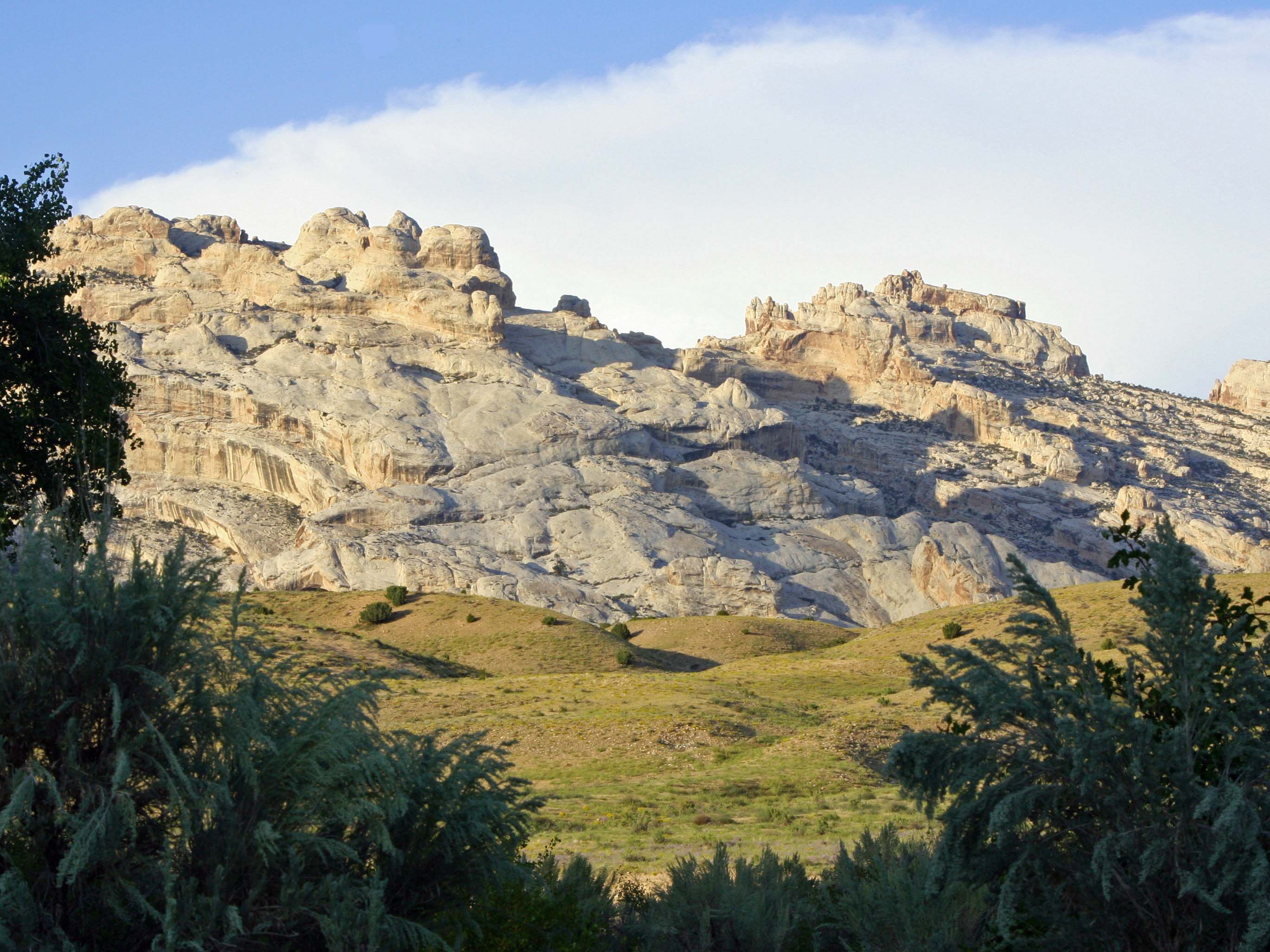
The Panamint Range of Death Valley: A Rattlesnake, Flowers, and Very Large Kilns… The Desert Series


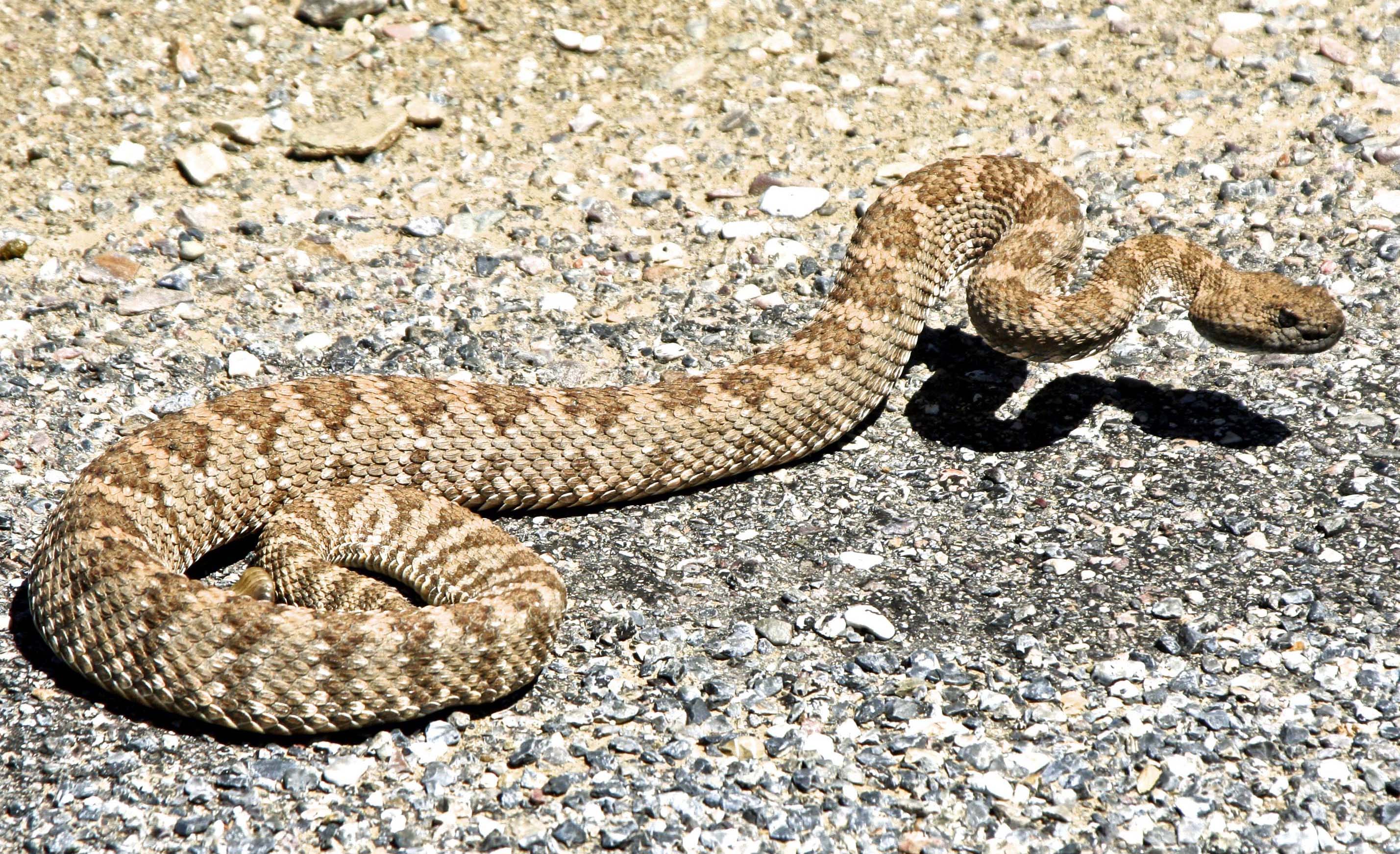
Panamint Rattlesnake in Death Valley.

We found this rather handsome fellow on our way up to Wildrose in Death Valley. Check out the shadow! (Photo by Peggy Mekemson.)

I crossed over the Panamint Range once on a bicycle. It wasn’t fun. Or let me put it this way, the nine-mile climb up out of Panamint Valley wasn’t fun. It was at the beginning of my 10,000-mile solo trip around the US. I only had seven days of cycling behind me so I was still getting in shape (massive understatement).  Adding to the challenge, I was carrying over 50 pounds of gear, everything I needed to survive six months on the open road.

Standing out of the saddle in my lowest gear, and exerting every bit of muscle power I could, I averaged two miles an hour. And yes, it would have been much easier to get off my bike and push. But I am a stubborn when it comes to things physical. The ride down, on the other hand, was lovely and about 20 times as fast.

Our Toyota Tacoma thought nothing of the climb out of Death Valley to the Emigrant Canyon Road and on to Wildrose Canyon. In fact the pickup loves a challenge and likes to be on the road as much as Peggy and I do. Or maybe I am anthropomorphizing a bit too much here. (And don’t you just love that word, all 18 letters of it.)

We were lollygagging along on the Wildrose road and stopping often to photograph flowers when we passed the rattlesnake. Peggy was driving. “Stop, back up,” I urged. Laughing, Peggy complied. She’s used to my fascination with rattlesnakes. I’ve had dozens of encounters over the years. One of my favorite tricks is to get down on my belly in front of them to take photos as they crawl toward me. Unfortunately, my headshots are usually blurry. Could it be that I am backing up too fast?
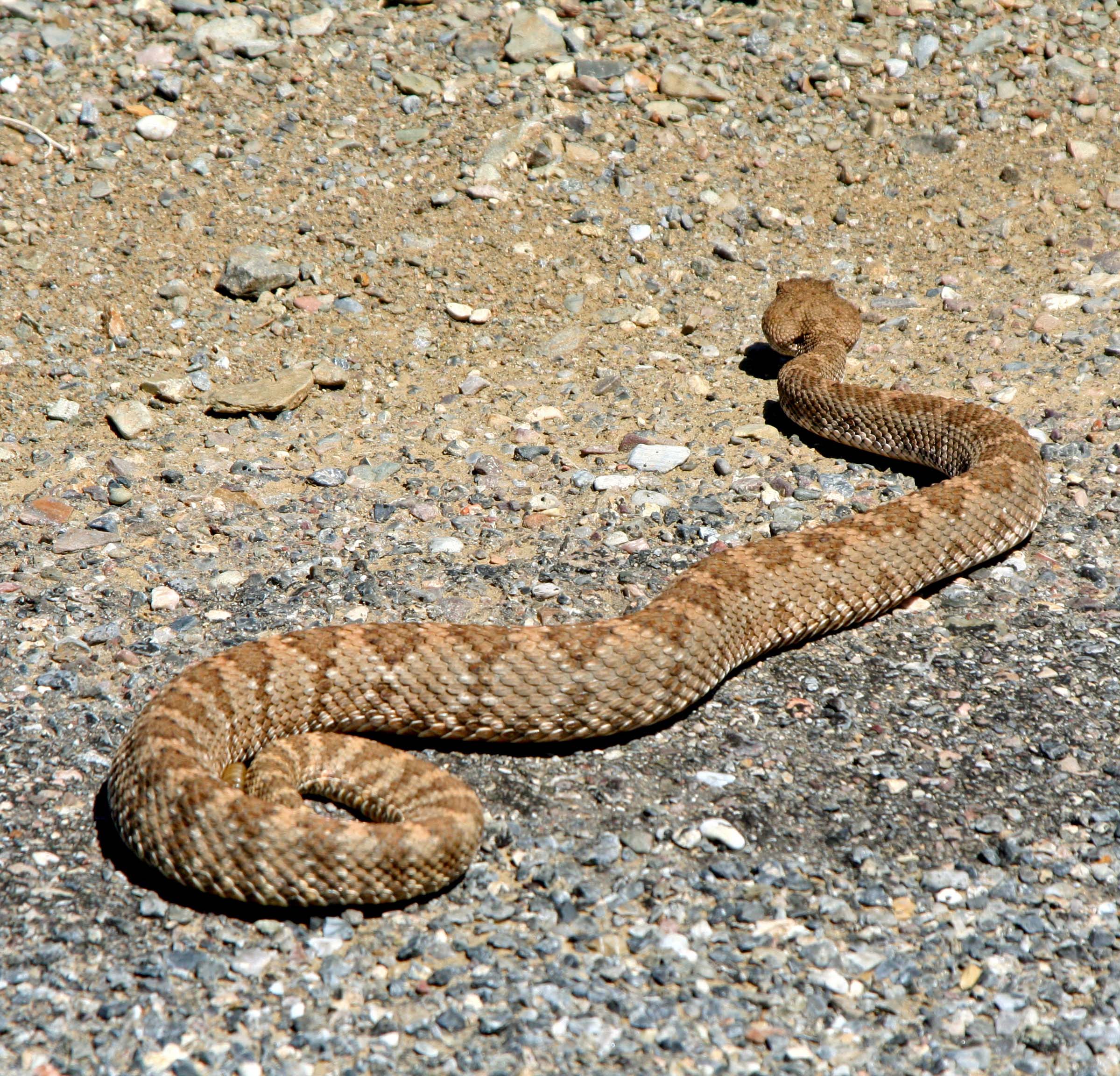
Panamint Rattlesnake in the Panamint Mountains, Death valley.

Having determined that we weren’t edible, the large snake went on his way. Isn’t the head magnificent? It shouts pit viper.(Photo by Peggy Mekemson.)

This guy was a beauty, a Panamint rattler (Crotalus stephensi), and I would guess almost record size. He was on the driver’s side of the truck so I handed Peggy her camera and she snapped three shots. And then, before I could get out to the truck for some close-ups, she stepped on the gas and we were out of there. Can you imagine that? I whined for an hour.

The flowers soon assuaged my disappointment, however. At our elevation of around 5,000-7,000 feet, they were everywhere. While we were too late to catch flowers blooming in the valley, our trips up to Dante’s View and Wildrose more than made up for it.

Desert flowers in the Panamint Range of Death Valley.

I was taken by this old desert road that cut off the main road and was covered with flowers as far as the eye could see.
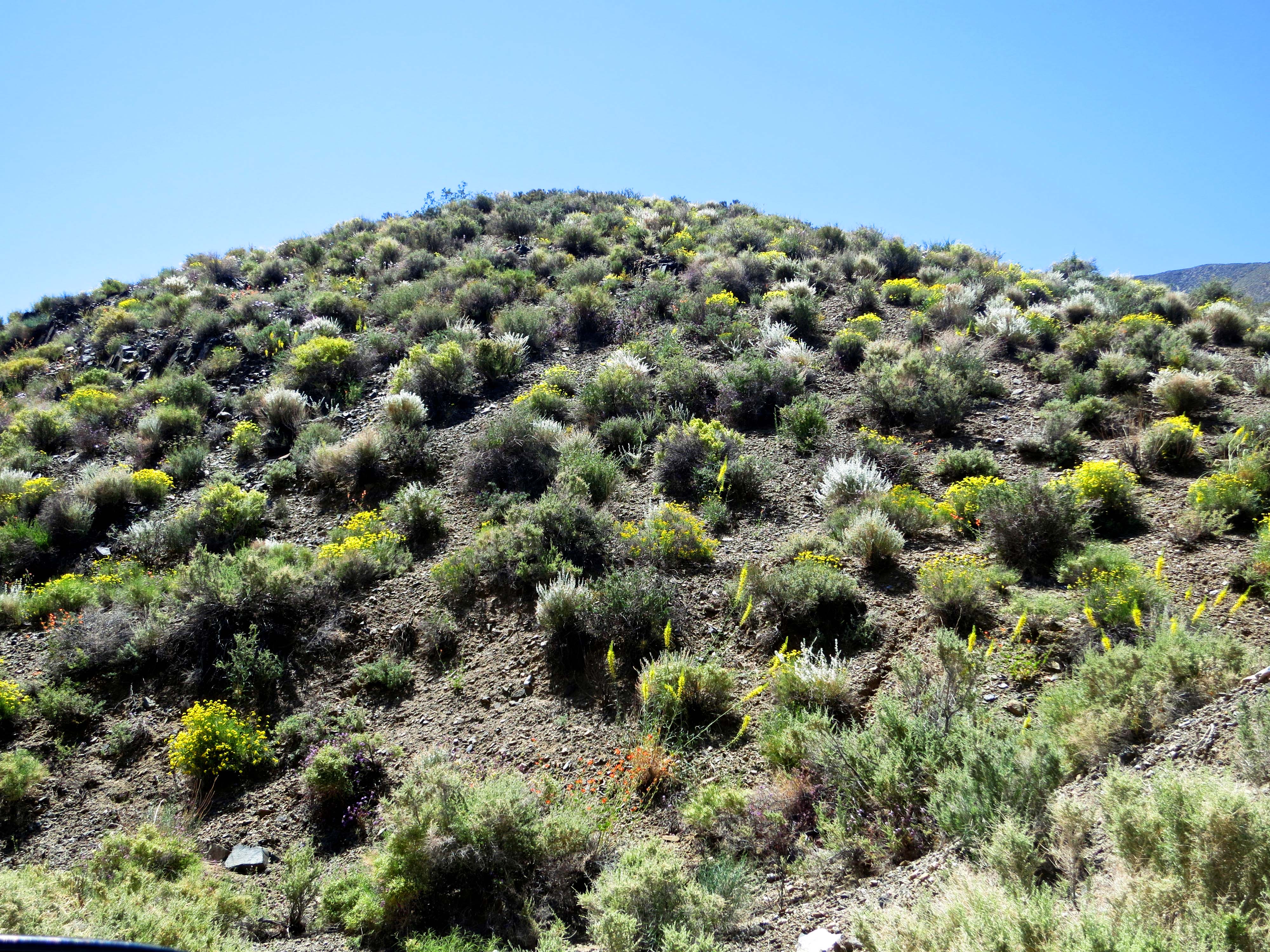
Hill covered with flowers in the Panamint Range of Death Valley.

And how about this hillside?

Prickly poppies growing in the Panamint Range of Death Valley.

These prickly poppies were attractive. Petals were tissue paper thin. The red beetle was quite busy.

Death Valley flower.

I don’t know what this striking yellow beauty was. Maybe one of my readers can identify it. (Finally found it in one of my field guides. It’s called Desert Plume and is a member of the mustard family.)
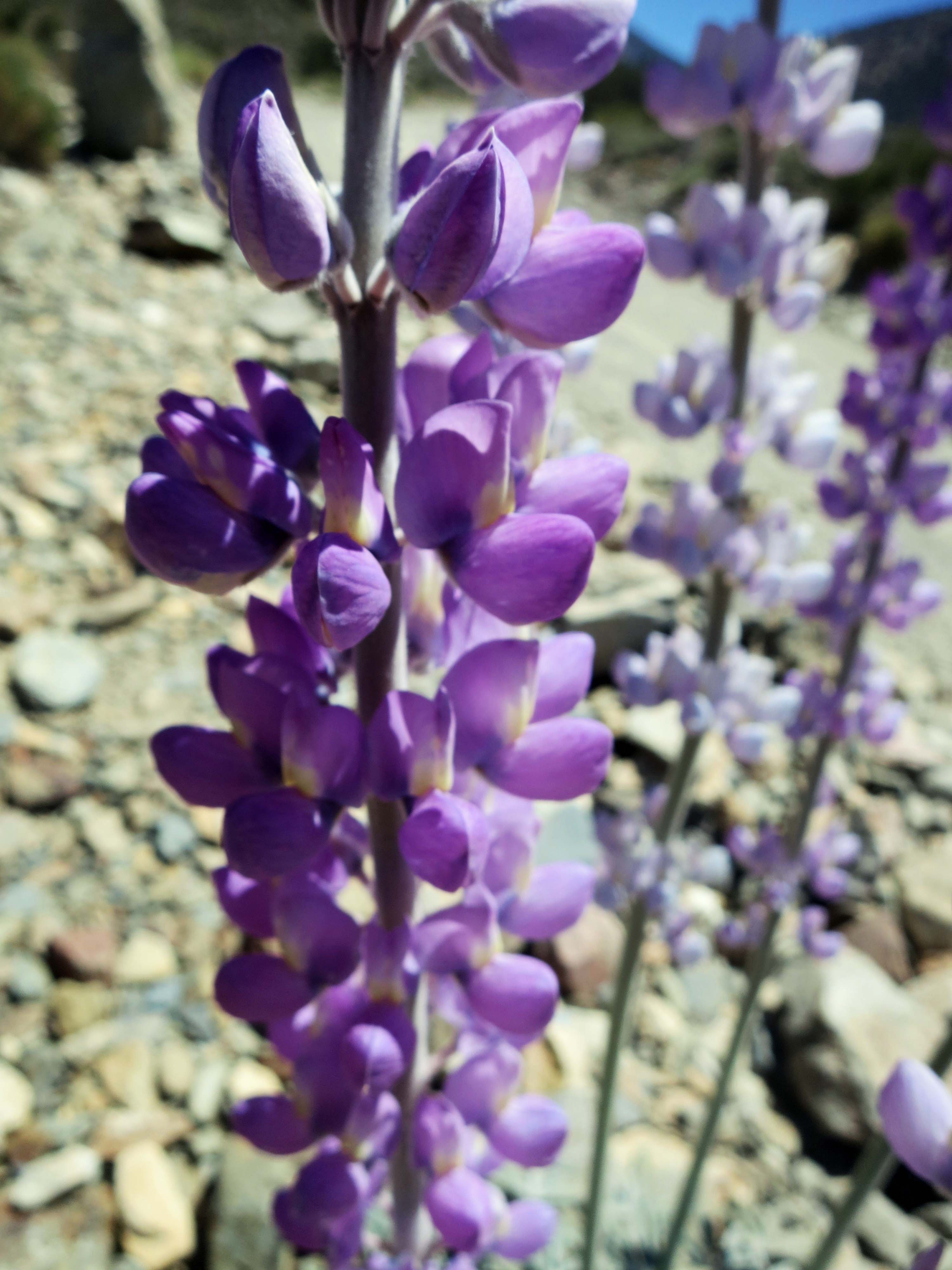
Lupine growing in the Panamint Range of Death Valley.

This lupine, however, is an old friend. It is common throughout the west. Peggy is even growing some. What was amazing about this plant was its size. I would say around four feet tall.

Beyond the rattlesnake and the flowers, the highlight of the tour was the ten charcoal kilns built in by the Modoc Consolidated Mining Company in 1877 to prepare charcoal to be used in smelters at its lead-silver mine about 25 miles away. Local pinion pines and junipers were cut down and hauled to the kilns. It took approximately four cords of wood to fill one kiln. After 6-8 days for burning and another 5 days for cooling the charcoal was then transported by an army of jackasses.

Charcoal kilns located in Death Valley.

The kilns, which were used for about three years, have sat quietly for over a century. Navajo Indian stonemasons from Arizona restored the kilns in 1971. (Photo by Peggy Mekemson.)

An interesting aside is that George Hearst was the principal investor in the mining company. His son, William Randolph Hearst, would go on to found the Hearst media empire. And it was his great grand-daughter, Patty Hearst, who was kidnapped by the Symbionese Liberation Army in the 70s. Where this is going is that I met Patty and her abductors in the Sierra Nevada Mountains. I was up with some friends scouting out streams for trout fishing when a van roared around us and got stuck in a snow bank, which we found rather amusing. A group of folks came tumbled out of the van including a young woman who came over to talk with us while her companions tried to dig out of the snow.

“Do you have any guns in your car?” she asked. “My friends have been teaching me how to shoot automatic weapons in the Bay Area and we are up here for practice today.” That’s when the alarm bells started going off for me. We were talking to Patty Hearst and her ‘friends’ were SLA members. When Patty wandered off to check on the van’s progress, I whispered my concerns to my friends and suggested we help get the van on its way, which is what we did.

But so much for the detour (grin). I was either going to tell you stories about rattlesnakes today or the Patty Hearst. Patty won. Back to the kilns.

Charcoal kiln in Panamint Mountains in Death Valley.

Peggy provides perspective on the size of the kilns that are 25 feet tall.

Back view of charcoal kilns in Death Valley.

Back view of kilns showing window where smoke escaped. You can still smell the smoke inside.

View looking out from inside a charcoal kiln in Death Valley.

View from inside the kiln looking out at the pines.
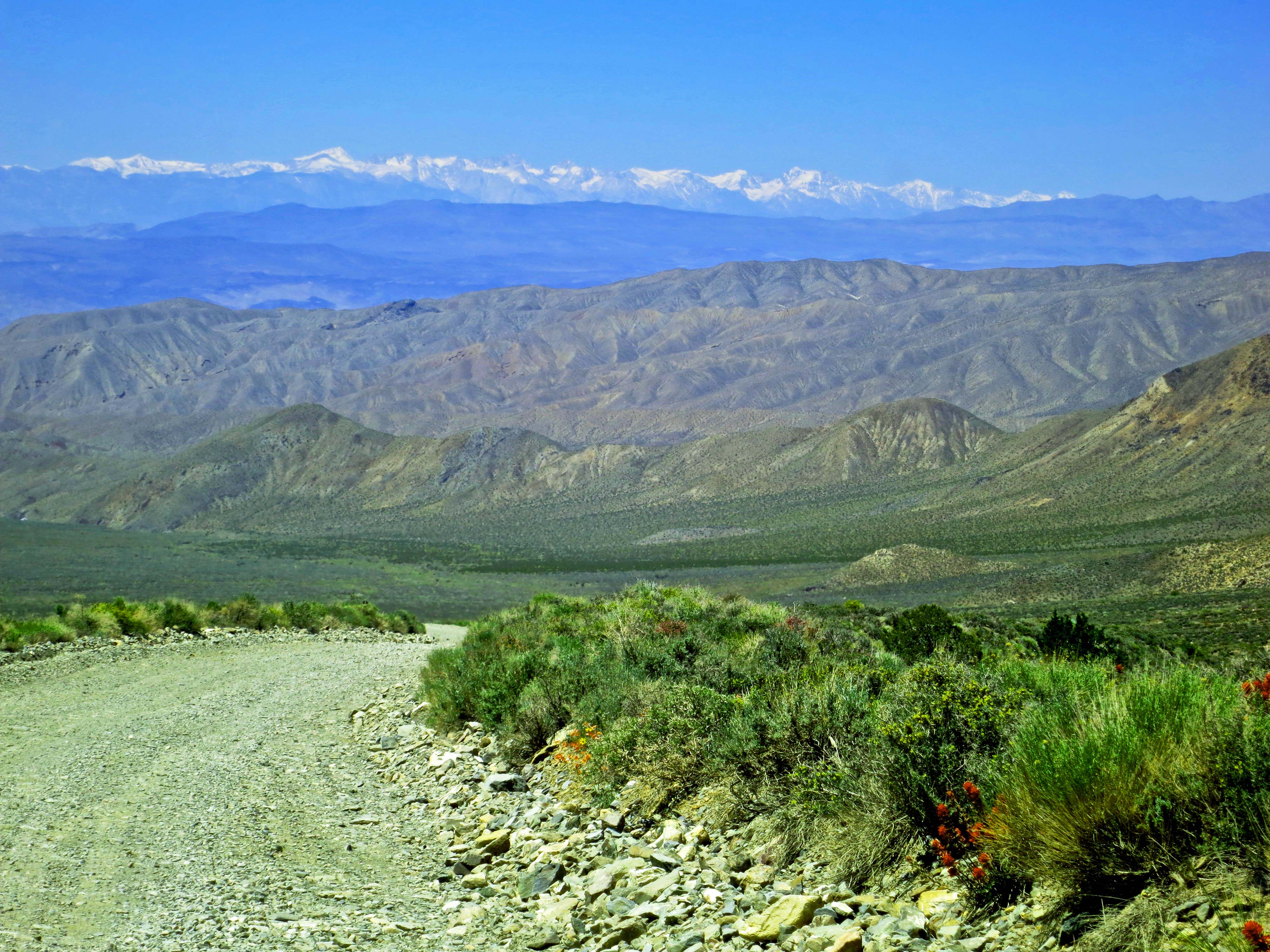
A final view from Wildrose. What appears to be puffy white clouds on the horizons are the snow covered Sierra Nevada Mountains.

A final view from Wildrose. What appears to be puffy white clouds on the horizons are the snow-covered Sierra Nevada Mountains.

NEXT BLOG: What’s a desert without a ghost town, or two. We head off to the old mining town of Rhyolite sitting on the edge of  Death Valley.

Death Valley Part II: We Are At Zabriskie Point but Where Is R2-D2… The Desert Series

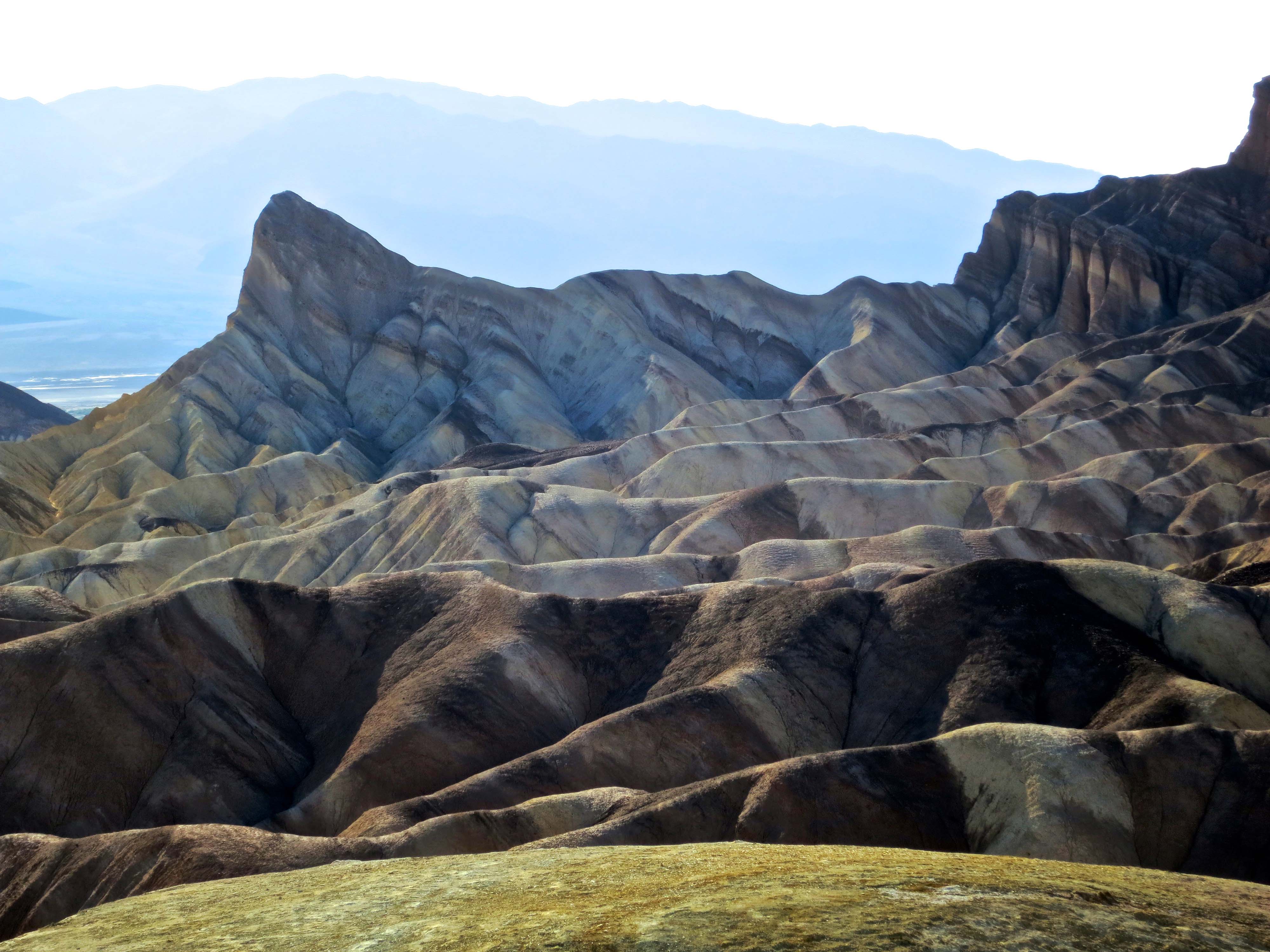
Erosion of rocks created in an ancient lake bed gives Zabriskie Point its unique look.

Erosion of rocks gives Zabriskie Point its unique look.

Zabriskie Point is one of the most photographed spots in Death Valley. Tour busses stop here and disgorge thousands of passengers annually. Everyone comes armed with a camera, or at least a cell phone camera. Twenty shots or so later they are on their way, scurrying back to the bus and Death Valley’s next must-see sight. We are more leisurely in our approach, but we also take a more photos. Erosion is king here, wearing away rocks that were deposited in a lakebed some five million years ago– back before tectonic forces created Death Valley and back before the region became a desert.

Zabriskie Point Death Valley.

As in other parts of Death Valley, the rocks of Zabriskie Point are multi-hued. (Photo by Peggy Mekemson.)

Manly Beacon in Death Valley.

Manly Beacon or Point, is another popular view from Zabriskie Point. Justifiably so.

Peggy and I were at Zabriskie Point in the late afternoon. The rocks above Manly Beacon seemed to take on an inner glow.

Peggy and I were at Zabriskie Point in the late afternoon. The rocks above Manly Beacon seemed to take on an inner glow.

The volcanic caprock provides an interesting contrast. (Photo by Peggy Mekemson.)

The volcanic caprock provides an interesting contrast. (Photo by Peggy Mekemson.)

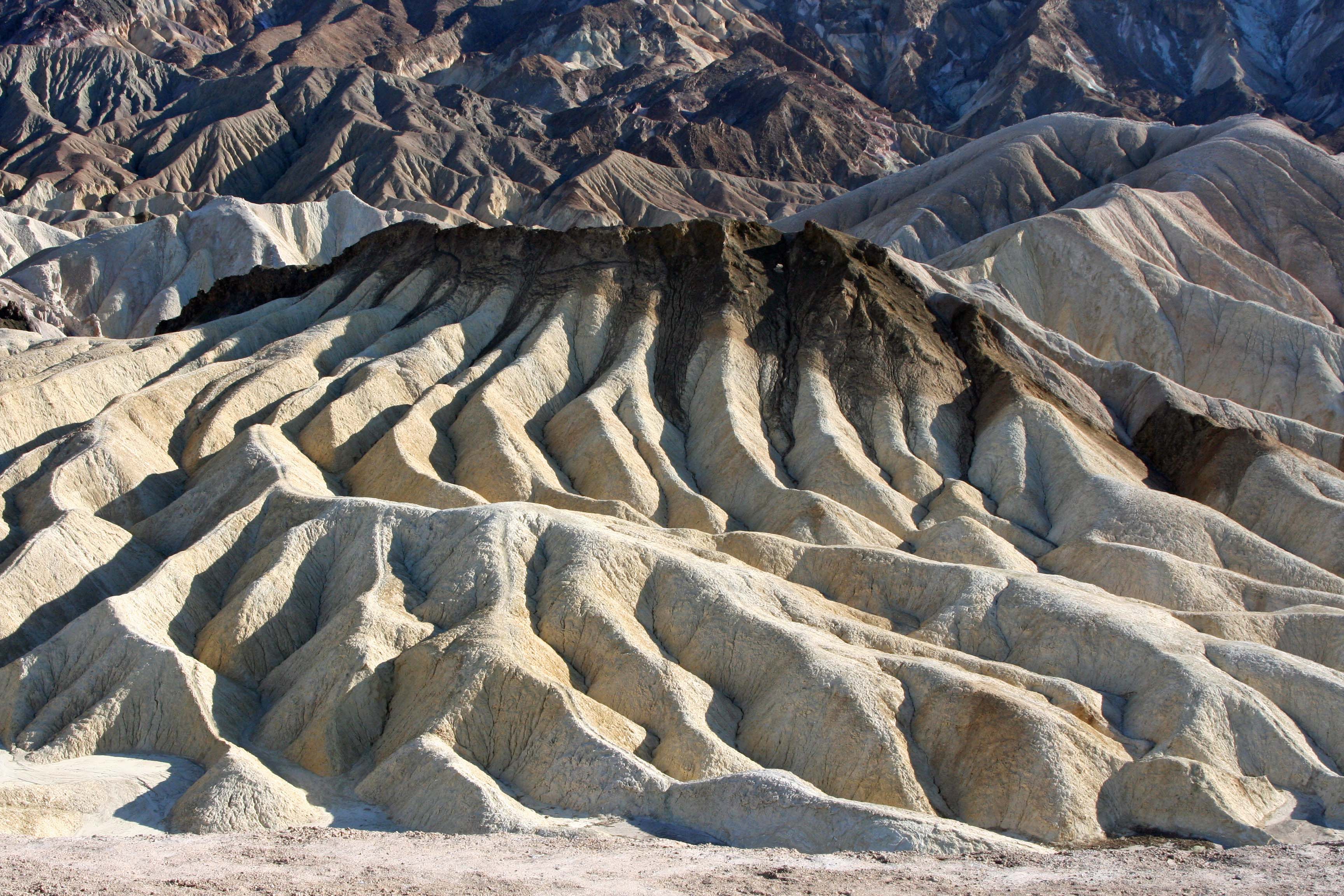
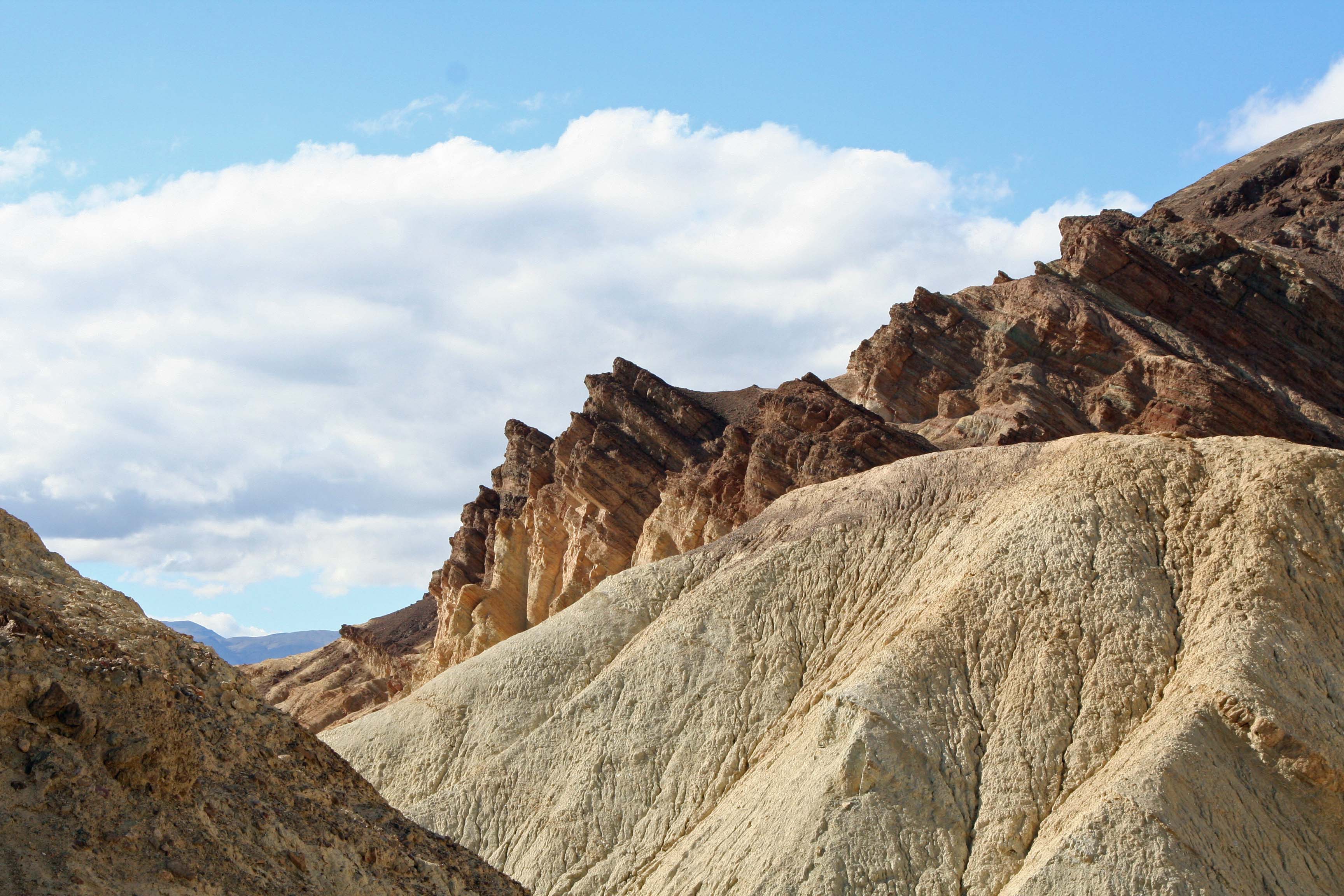
A three-mile trail leads down to the Valley floor from Zabriskie Point and passes through Golden Canyon on the way. For fans of Star Wars IV, segments of the movie were filmed in Golden Canyon. The diminutive, eye glowing Jawas captured R2-D2 and C-3PO there.  So you can think of Death Valley as Tatooine, the home planet of Luke Skywalker. (Tunisia was also used for scenes on Tatooine.)

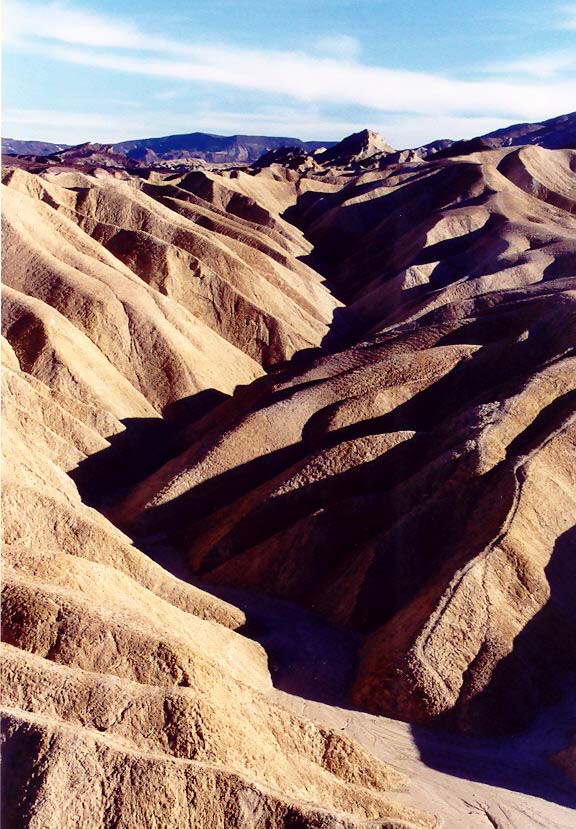
Golden Canyon looking out toward Death Valley

Golden Canyon looking out toward Death Valley. This photo and the one below were taken from an earlier trip. R2-D2 and C-3PO were captured in the canyon by the Jawas.

Golden Canyon in Death Valley

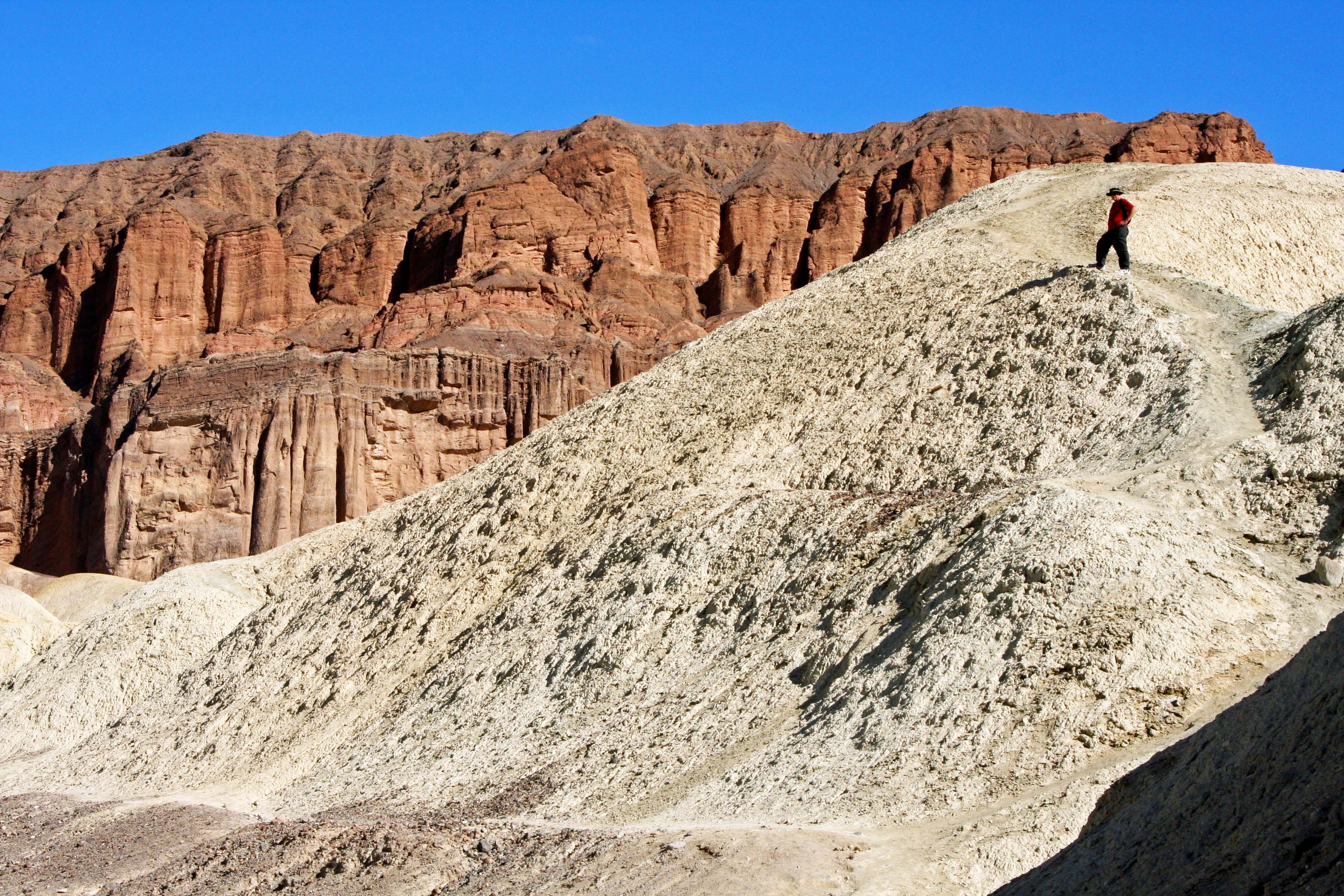
Golden Canyon looking up toward Zabriskie Point. I am on the trail. (Photo by Peggy Mekemson.)

Here’s some Star Wars trivia I picked up when doing research for this blog that you can use to wow your friends: sounds made by dogs, bears, lions, tigers and walruses were combined to create Chewbacca’s voice.

The Twenty Mule Team Canyon that I blogged about in my last post starts a mile or so above Zabriskie Point. A few miles farther, a road jogs off to the right that leads to Dante’s View, which towers some 5000 feet above the valley floor. The last part of the road is steep and narrow but the view is worth it.

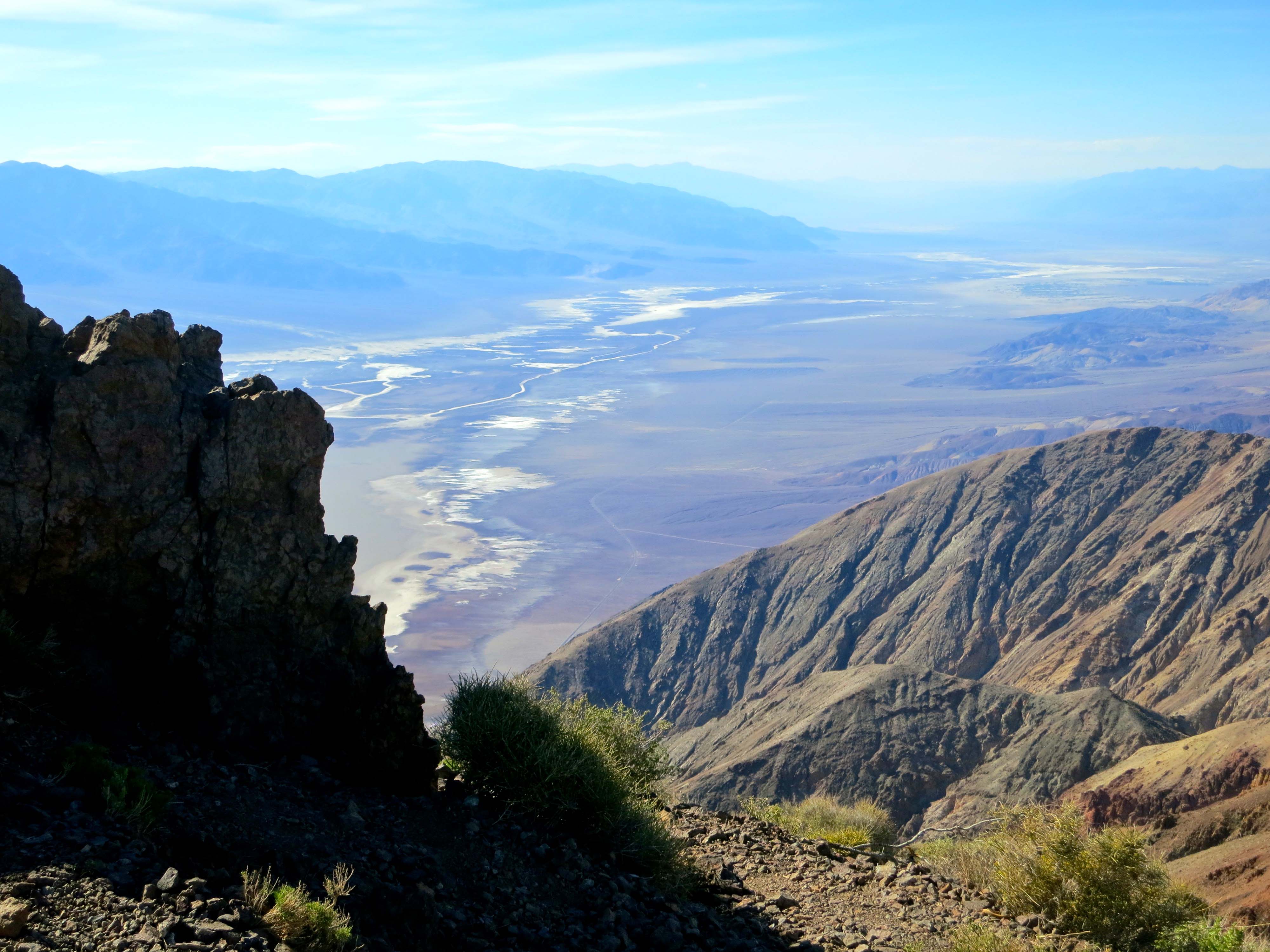
Looking down into Death Valley from Dante's View.

Looking down into Death Valley from Dante’s View.

Dante's View provides a spectacular view of Death Valley.
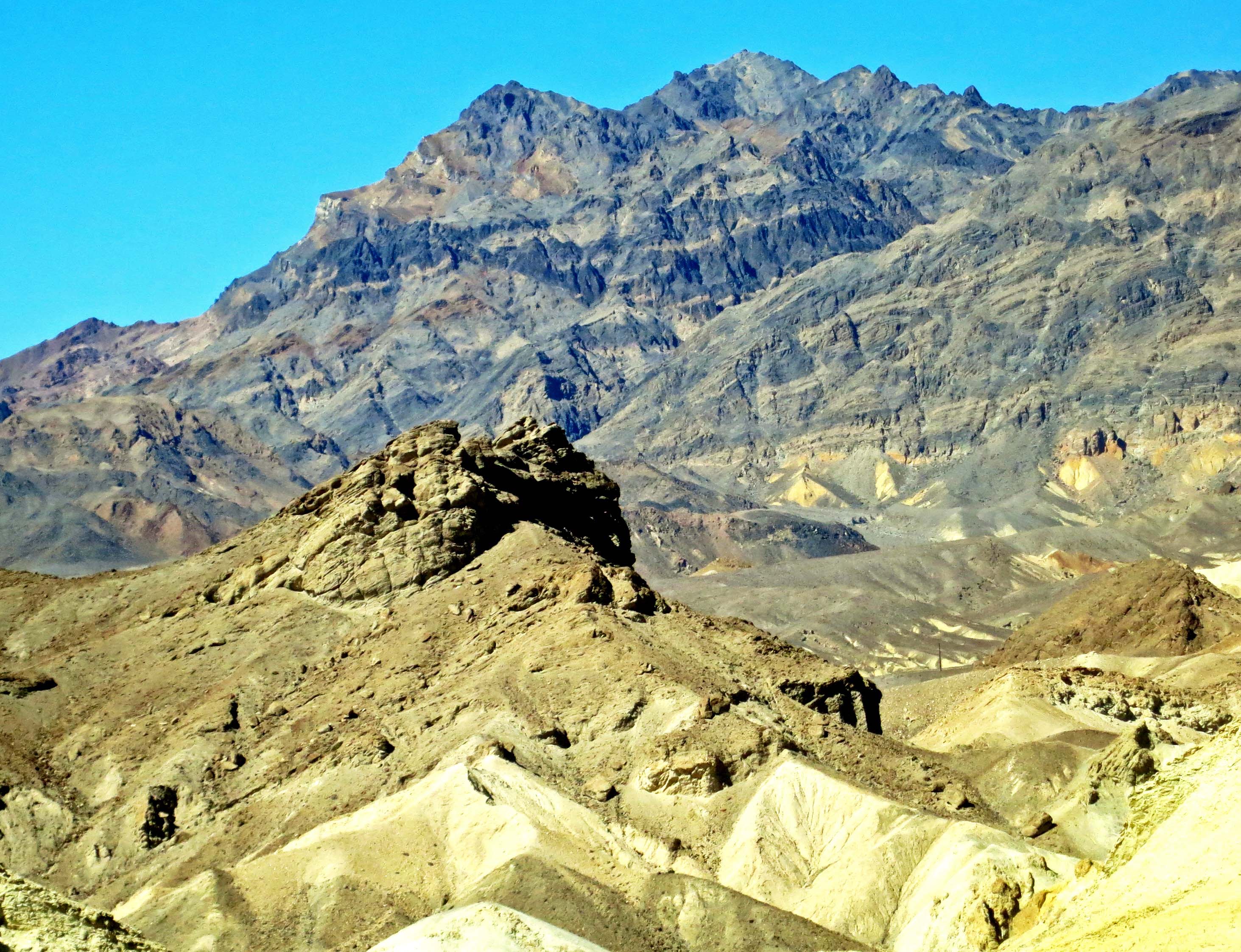
Another perspective.

Given the higher elevation at Dante's View, Spring Flowers were still blooming.

Given the higher elevation at Dante’s View, spring flowers were still blooming.

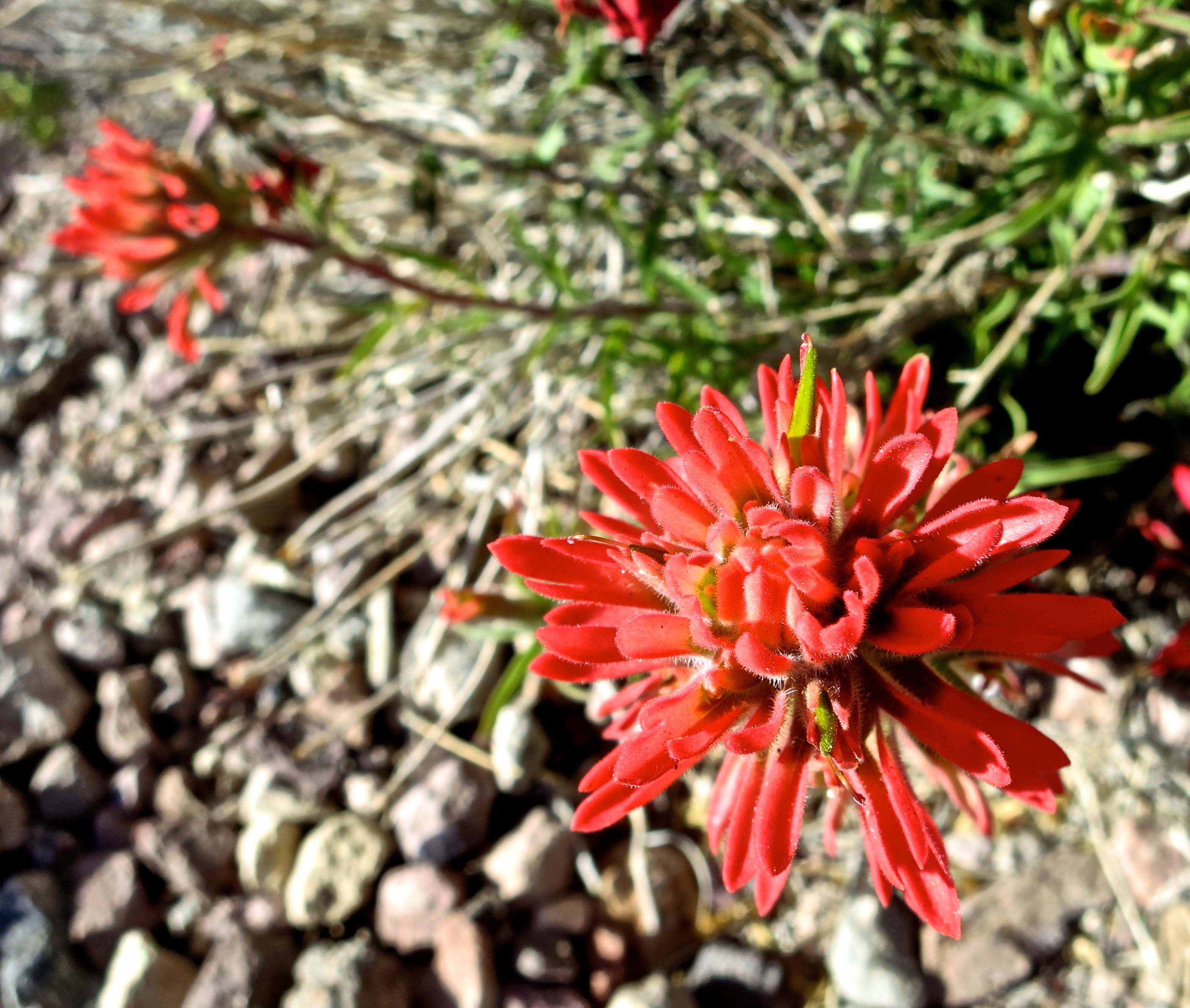
Indian Paintbrush at Dante's View in Death Valley National Park.

This is an Indian Paintbrush.

I took this photo to capture the very impressive alluvial fan spreading out on the Death Valley floor far below Dante's View. Debris coming down off the mountain had built this fan up over thousands of year.

I took this final photo from Dante’s View to capture the very impressive alluvial fan spreading out on the Death Valley floor far below. Debris coming down off the mountain had built this fan up over thousands of year.

NEXT BLOG: Traveling into the Panamint Range of Death Valley: wild flowers, huge charcoal kilns, and one very large, irritated rattlesnake.

Death Valley: Part I: The Twenty Mule Team Canyon… The Desert Series

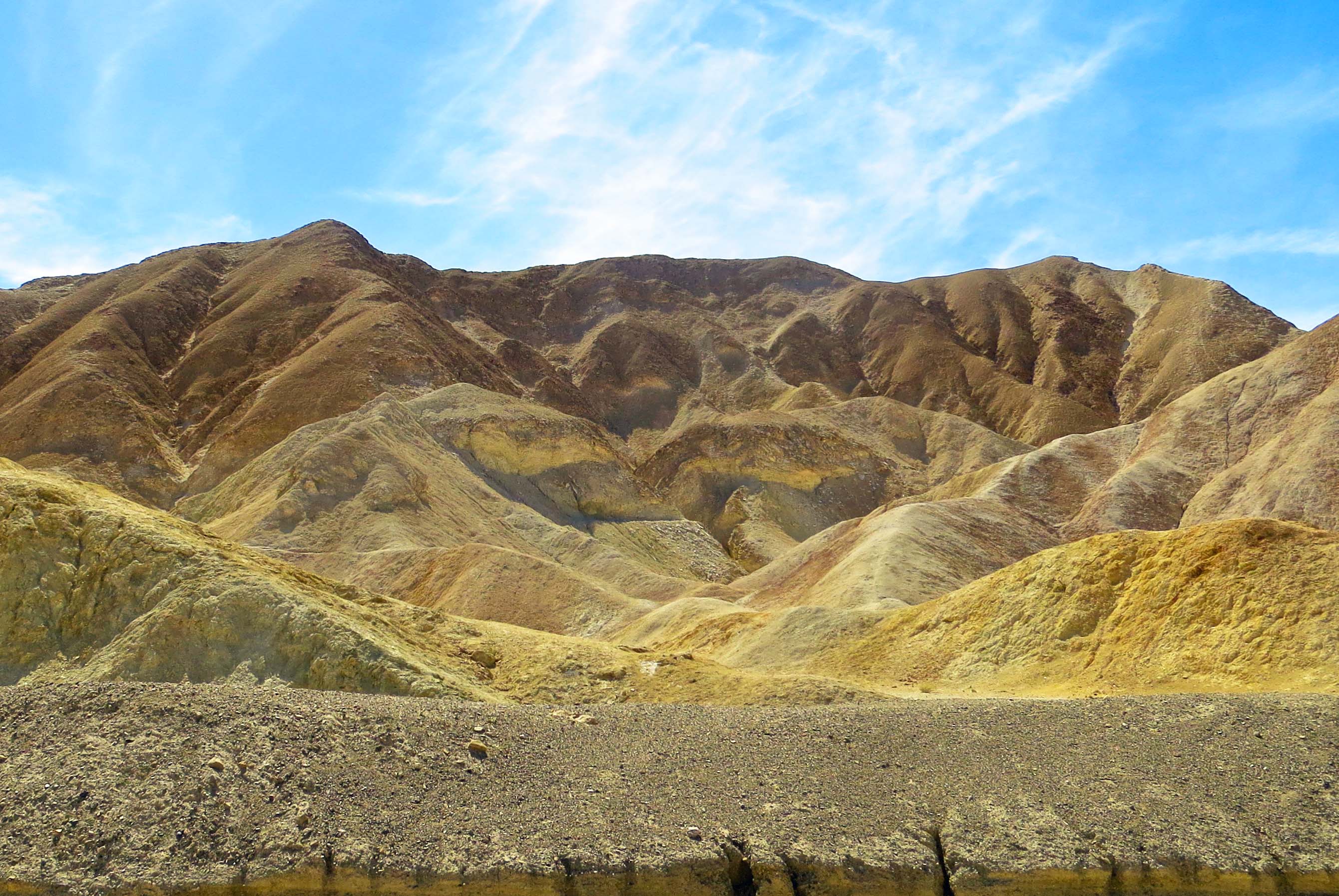
Prepare to be dazzled with a kalaidiscope of color on a drive through Twenty Mule Team canyon in Death Valley.
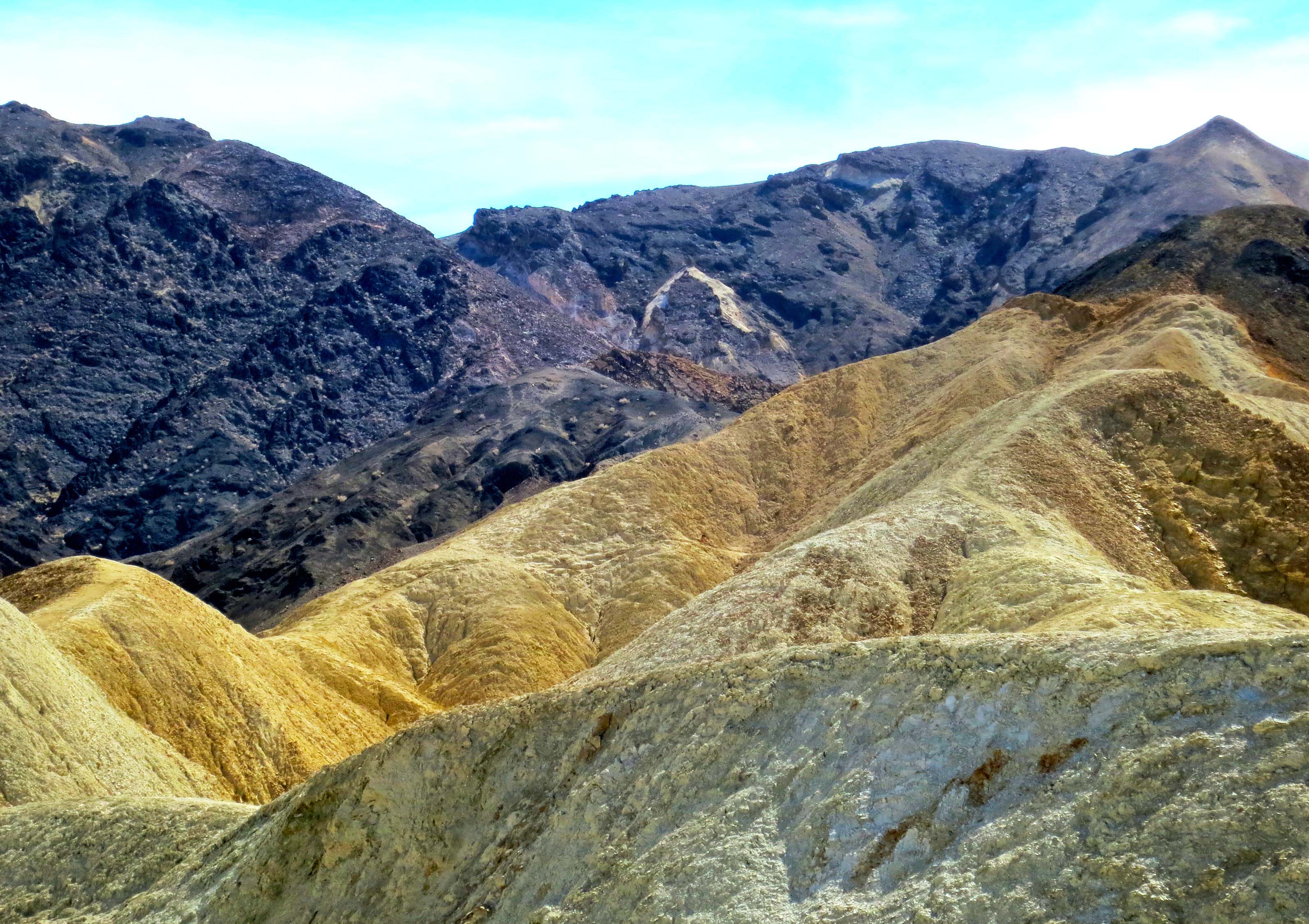
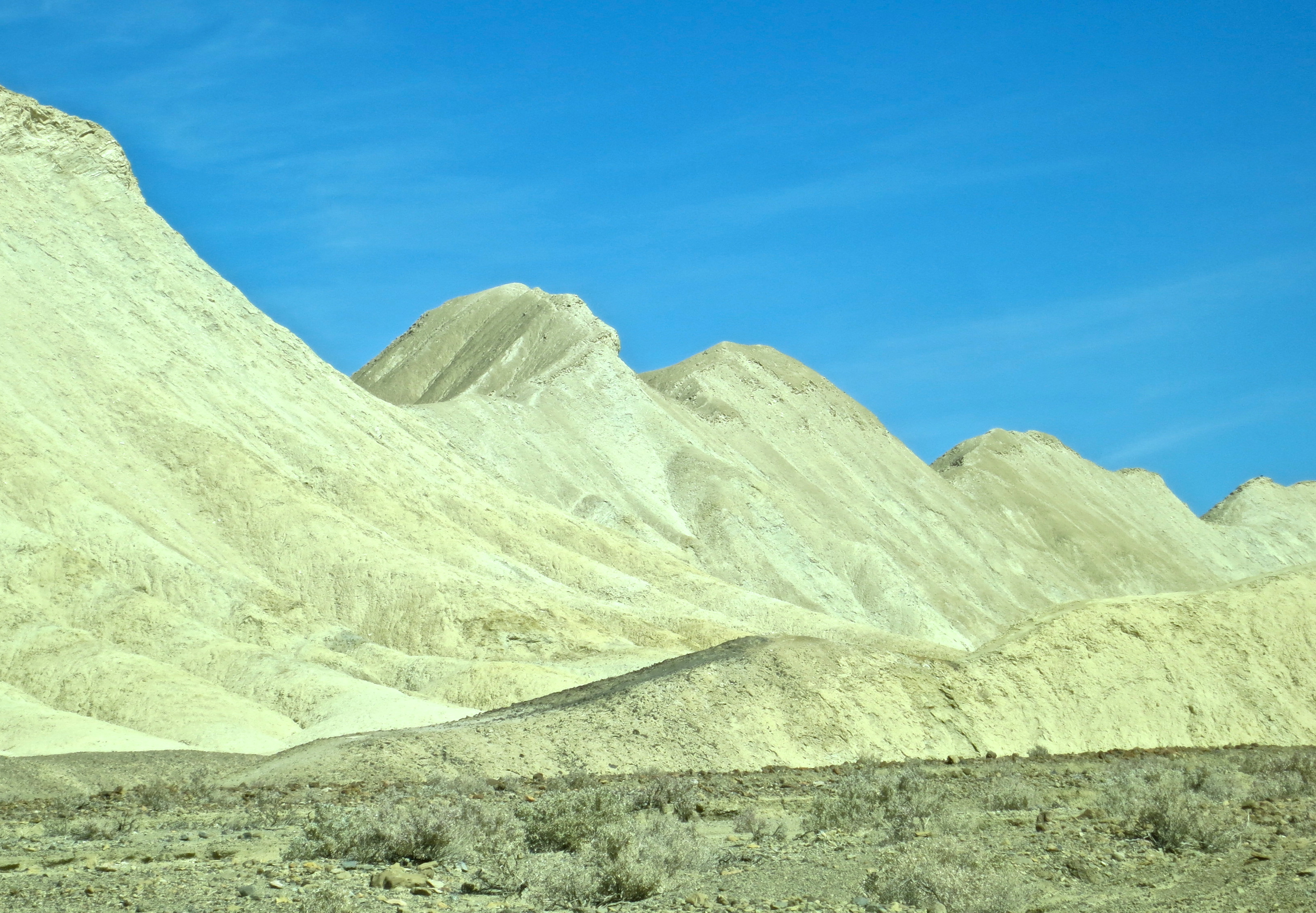
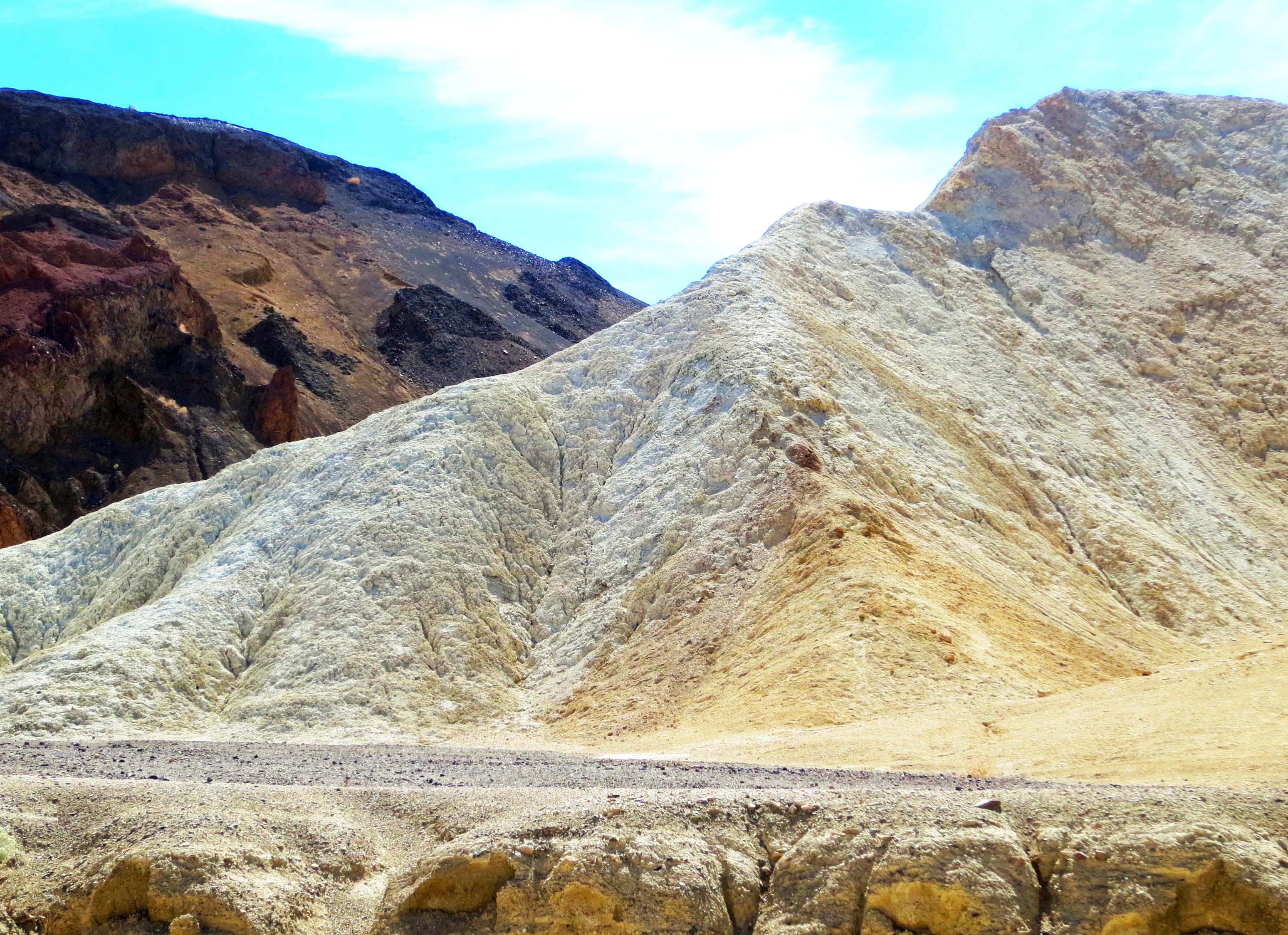
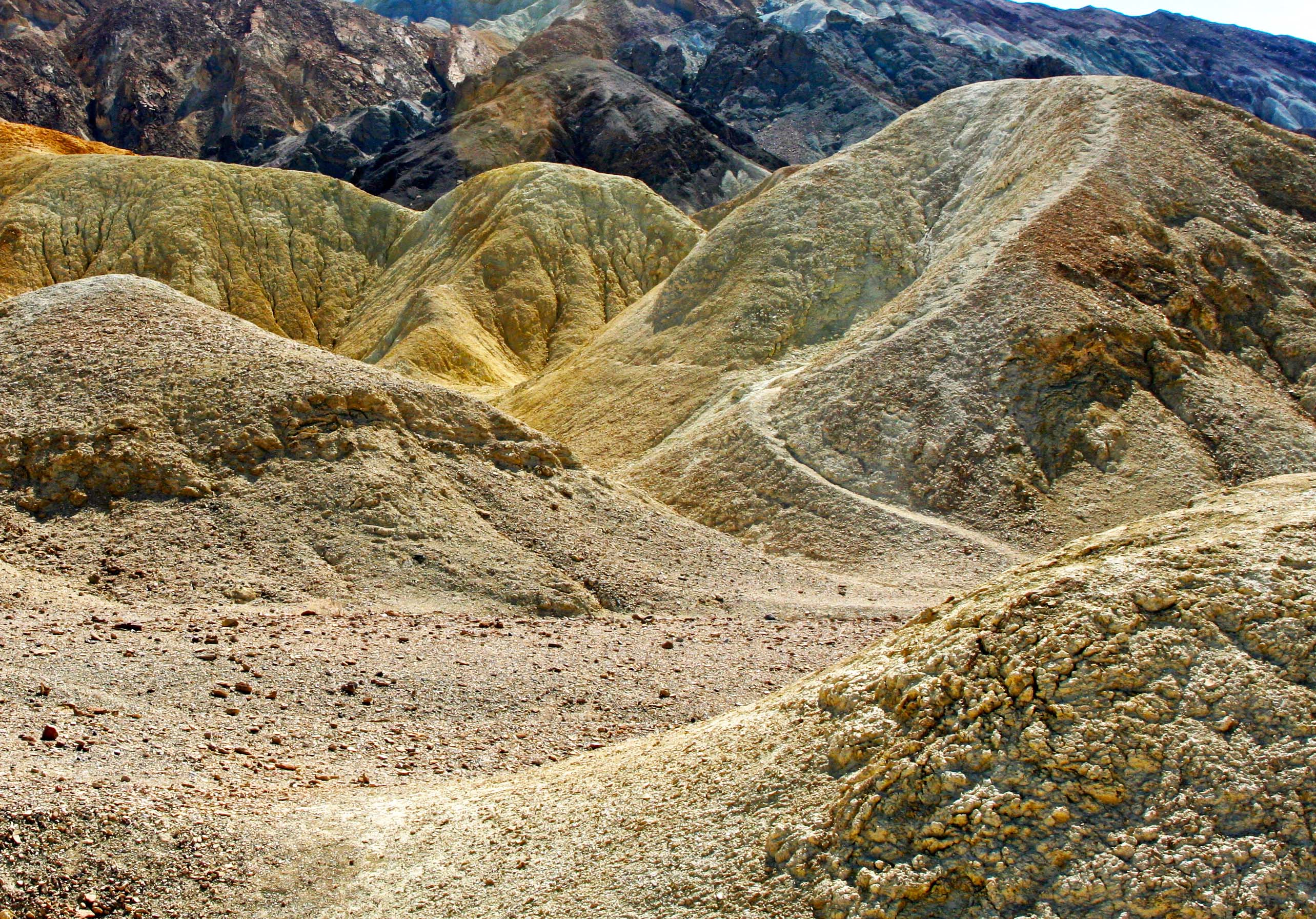
Prepare to be dazzled with a kaleidoscope of color on a drive through Twenty Mule Team Canyon in Death Valley. Various minerals are responsible for the colors.
Death Valley is a land of superlatives. Think hottest, lowest, and driest place in North America. It holds the world record for heat at 134 ˚ F (57˚ C). Ground temperatures have actually been measured at 201˚ F. As for rainfall, there are years without any and the annual average is 2.36 inches (60 mm). Finally, a trip into Badwater Basin, easily reachable by car, will drop you down to 282 feet below sea level.

Given these extremes, a person might wish to travel to Death Valley for the sole purpose of saying he or she has been there. (Or conversely avoid Death Valley passionately.) But from my perspective, the reason for visiting Death Valley is its exotic beauty. Over the past three weeks, I’ve taken you to the Valley of Fire and Red Rock Canyon. Not bad on scenery, eh? Consider it a warm up.

I’ve been to Death Valley numerous times and have blogged about it in the past. On our recent trip, we climbed out of the valley and explored other parts of the National Park including Twenty Mule Team Canyon, Dante’s View, Zabriskie Point and the unusual Charcoal Kilns high up in the Panamint Mountains.

Today, we will begin our journey with a drive through the colorful badlands of Twenty Mule Team Canyon. Imagine for the moment, taking 18 mules and two horses, hitching them to a huge wagon, and hauling 10 tons of borax over desert terrain for 160 miles. That is how borax was hauled out of Death Valley between 1883-1889 and it has become part of the local lore and legend. Francis Smith, the founder of Pacific Borax was also a first class promoter and sent his mule teams out to major cities across the US to push his soap products.  At one point, they paraded down Broadway in New York City.

This early, unattributed photo in the public domain, provides a view of the team with its Death Valley backdrop.

This early, unattributed photo in the public domain, provides a view of the 20 mule team with its Death Valley backdrop. The driver had a very long bullwhip to encourage his mules along the way.

Old Dinah steam tractor in Death Valley National Park.

The mules were eventually replaced by a steam tractor. “Old Dinah” is featured at Furnace Creek. Dinah, in turn, was replaced by a railroad.

Twenty Mule Team Canyon was never part of the route the mules followed. So why the name? It could have been to honor the teams but I suspect it was the bright idea of a tour agent. Whatever, no harm was done. Twenty Mule Team Canyon provides a kaleidoscope of color, a laboratory of erosion, and a fun drive.

Road through Twenty Mule Team Canyon in Death Valley.

The 2.8 mile road through Twenty Mule Team Canyon is a fun drive but it isn’t made for large RVs or fifth wheels. (Photo by Peggy Mekemson.)

Scene on Twenty Mule Team Canyon road in Death Valley. Photo by Curtis Mekemson.

Every corner you turn brings a new view and most are quite dramatic…

Dramatic view along Twenty Mule Team Canyon road in Death Valley.

Case in point.

Road shot traveling through Twenty Mule Team Canyon in Death Valley National Park.

Another road shot. (Photo by Peggy Mekemson.)

View along the Twenty Mule Team Canyon road in Death Valley.
I liked the effect of these contrasting light and dark colors.

Photo of blue skies with puffy clouds provides backdrop for Twenty Mule Team Canyon in Death Valley.
Blue skies, light clouds provide a backdrop for gold, reddish-brown and tan rocks.

Trail in Twenty Mule Team Canyon, Death Valley.

A number of trails wander off into the rocks, inviting visitors to stay for a while and explore. (Photo by Peggy Mekemson.)

Funeral Mountains provide a dramatic backdrop in Twenty Mule Team Canyon, Death Valley.

Mountains provide the backdrop here. These, BTW, are the Funeral Mountains.

Distant mountains appear purple in Twenty Mule Team Canyon, Death Valley.

More distant mountains appear almost purple. (Photo by Peggy Mekemson.)

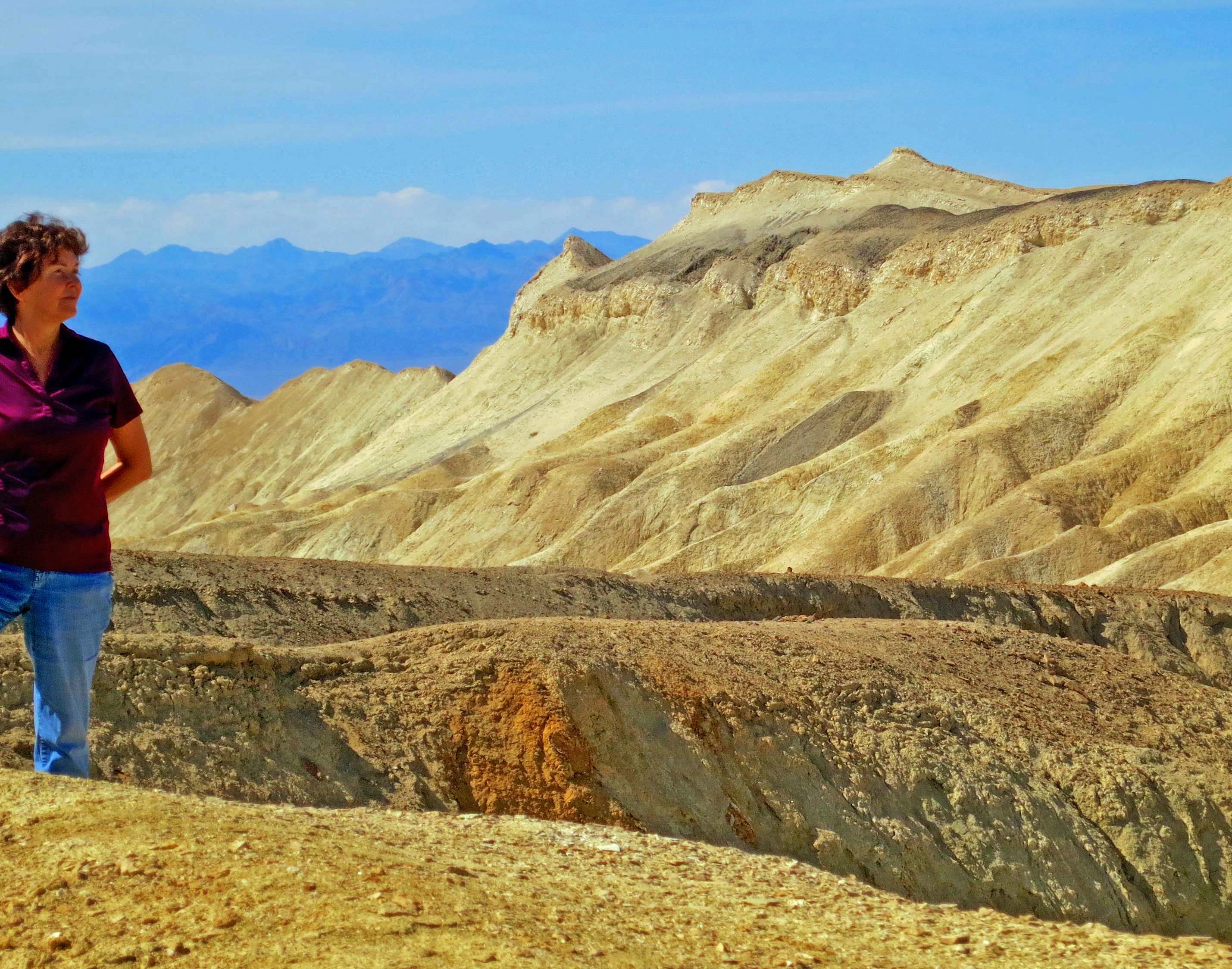
Peggy Mekemson checks out the view at Twenty Mule Team Canyon in Death Valley.

Peggy admires the view.

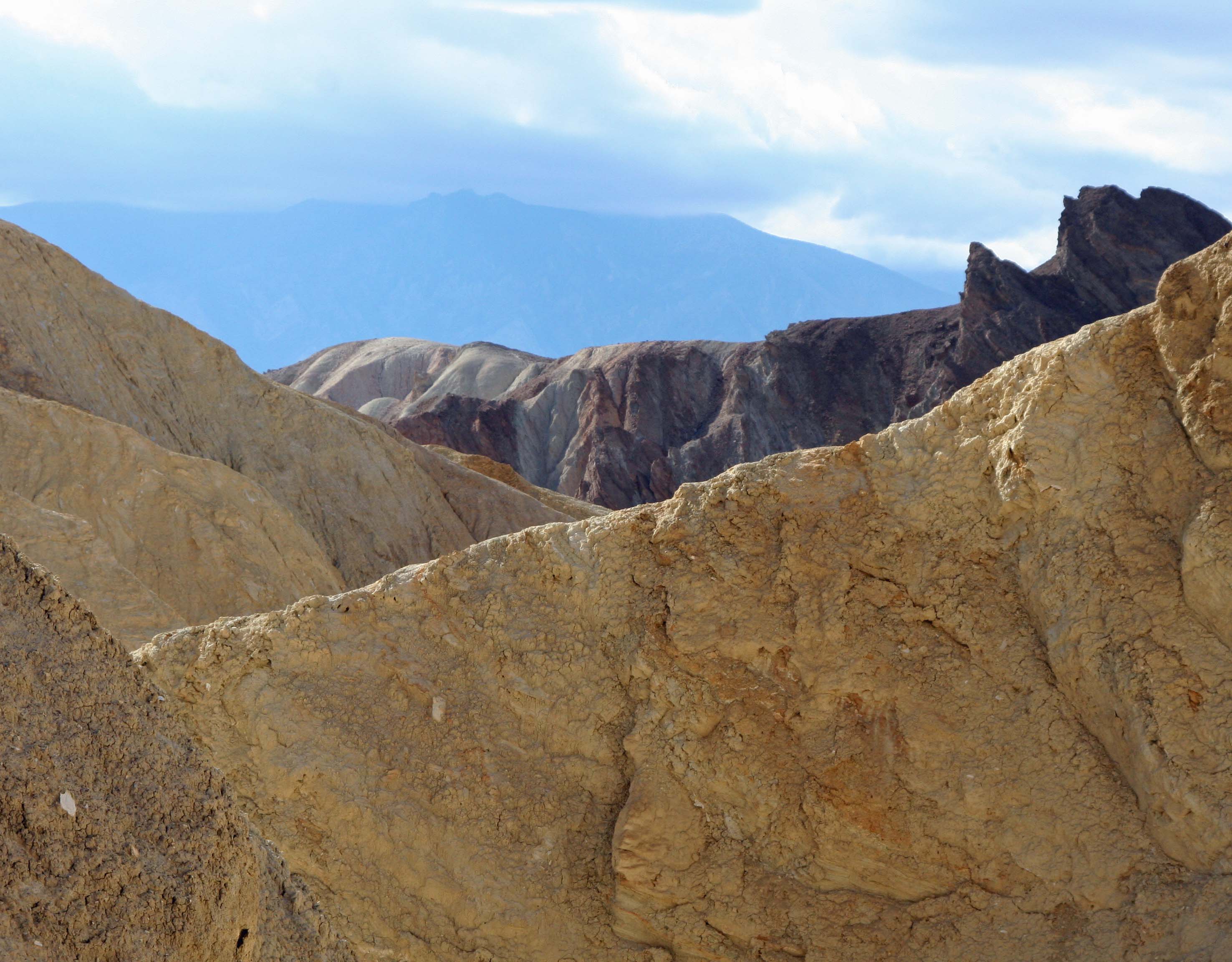
A final view of the riotous colors found in Twenty Mule Team Canyon.

A final view of the riotous colors found in Twenty Mule Team Canyon.

NEXT BLOG: We check out what is probably the most photographed area of Death Valley, Zabriskie Point, and climb 5000 feet above the valley to Dante’s View floor for a bird’s eye perspective.

A Photographic Journey through America’s National Parks… Series Conclusion

Grand teton photo by Curtis Mekemson.

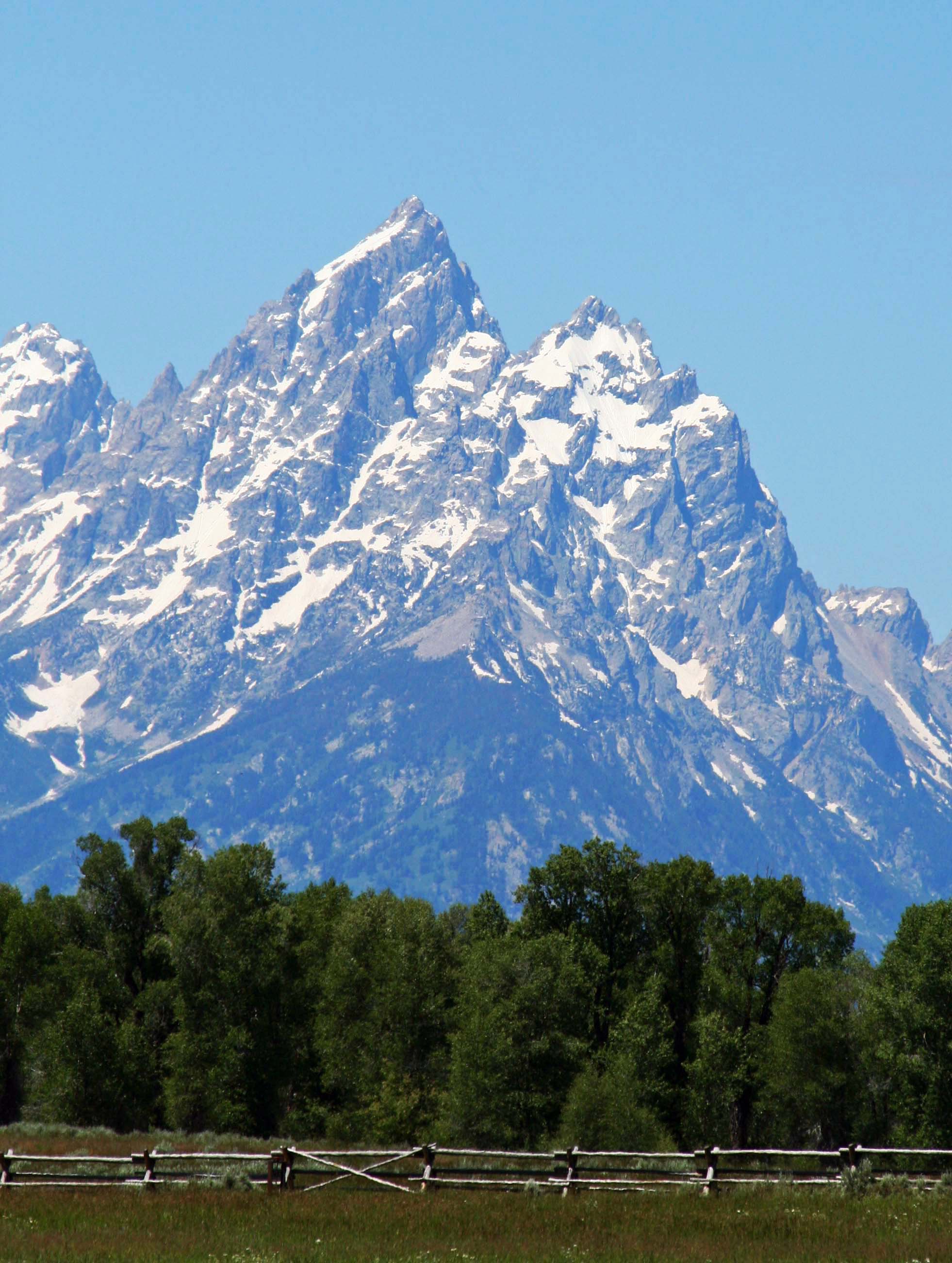
National Parks in the United States and throughout the world protect and preserve many of our most scenic natural areas. This photo is of the Grand Teton Mountains in Wyoming.

Peggy and I decided to take a year off from work in 1999 and travel around North America. I worked as a consultant/citizen advocate on health and environmental issues when I was behaving like a serious adult, and led wilderness treks when I wasn’t. Peggy was fully adult and served as an assistant principal at a middle school.

People were more or less resigned to the fact that I came and went. You might say I was self-employed and self-unemployed. The only person I really had to check with was myself. Peggy’s situation was different, but the school district really wanted to keep her. They offered her an unpaid sabbatical. We bought a travel van and off we went.

We left on July 1. Planning was close to zero. Our only obligations were to meet up with friends for backpacking and kayaking in Alaska and to join Peggy’s parents in Florida for Thanksgiving. Beyond that we could be wherever we wanted to be and do whatever we wanted to do.

Early on, we decided to visit National Parks, Seashores, Monuments and Historical sites whenever we had the opportunity. It was a goal we continued when Peggy retired from being an elementary school principal in 2007 and we wandered in our van for another three years. As a result, we have visited the majority of America’s National Parks as well as many in Canada.

Over the past three weeks I have blogged about a few of the parks we visited. I hope you have enjoyed the journey. Today, I will wrap up this series with photos from several more. I will return to the National Park theme from time to time in the future.
Volcano Natioanl park photo by Curtis Mekemson.

A view of Volcano National Park on the island of Hawaii. The white steam in the background is coming from an active volcano.

Big Bend National Park photo by Curtis Mekemson.

A view of the Rio Grande River as it winds through Big Bend National Park in Texas. Peggy and I spent Christmas at the park.

Exit Glacier in Kenai Fjord National Park. Photo by Curtis Mekemson.

Exit Glacier at Kenai Fjords National Park. I ended backpack treks I led across the Kenai Peninsula near here.

Sunset at Grand Canyon National Park in Arizona. (Photo by Peggy Mekemson.)

Sunset at Grand Canyon National Park in Arizona. (Photo by Peggy Mekemson.)

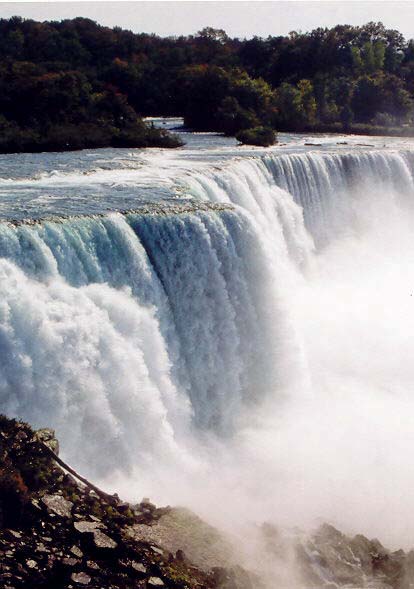
Niagara Falls photo by Curtis Mekemson.

Niagara Falls is not a National Park but it is a National Heritage Site.

Luna Moth on Natchez Trace.

We found this colorful Luna Moth on the Natchez Trace, a National Historic Highway that winds through Mississippi and Tennessee. No commercial traffic is allowed on the road, which makes it great for bicycling. (Photo by Peggy Mekemson.)

This brick outhouse found on the Natchez Trace is included because it is my favorite brick outhouse in the world. I hid out in it with my bicycle as a tornado tore up the countryside nearby.

This brick outhouse found on the Natchez Trace is included because it is my favorite brick outhouse in the world. I hid out in it with my bicycle as a tornado tore up the countryside nearby.

Photograph of Rocky Mountains National Park by Curtis Mekemson.

Rocky Mountains National Park in Colorado.

Photograph from inside Mammoth Cave by Curtis Mekemson.

A view from inside of Mammoth Cave National Park in Kentucky.

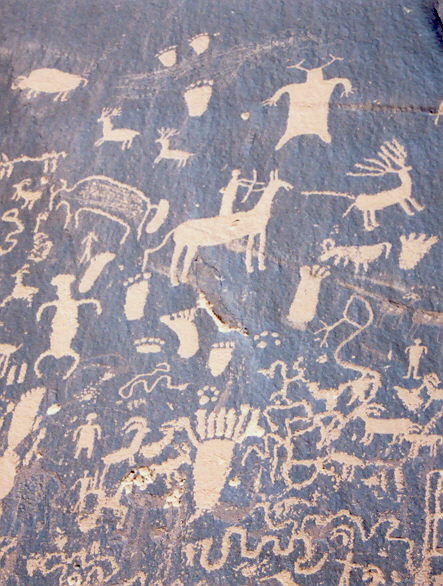
Photograph of Newspaper Rock by Curtis Mekemson.

A small section of Newspaper Rock National Historic Site in Utah. Native Americans have been leaving messages on this rock for over a thousand years. Note the guy shooting the elk in the butt with an arrow.

Photo of Painted Desert National Park in Arizona.

Painted Desert National Park in Arizona.

I'll conclude for today with this photo Peggy took of Capitol Reef National Park in Utah. (Photo by Peggy Mekemson.)

I’ll conclude for today with this photo Peggy took of Capitol Reef National Park in Utah. (Photo by Peggy Mekemson.)

NEXT BLOG: We are off to Puerto Vallarta, Mexico and the beginning of a new series. First up will feature photographs of Pelicans diving for fish in Banderas Bay. We were fortunate to be close to the action and caught some great shots. You won’t want to miss this blog.

The Redwoods… A Photographic Journey through America’s National Parks

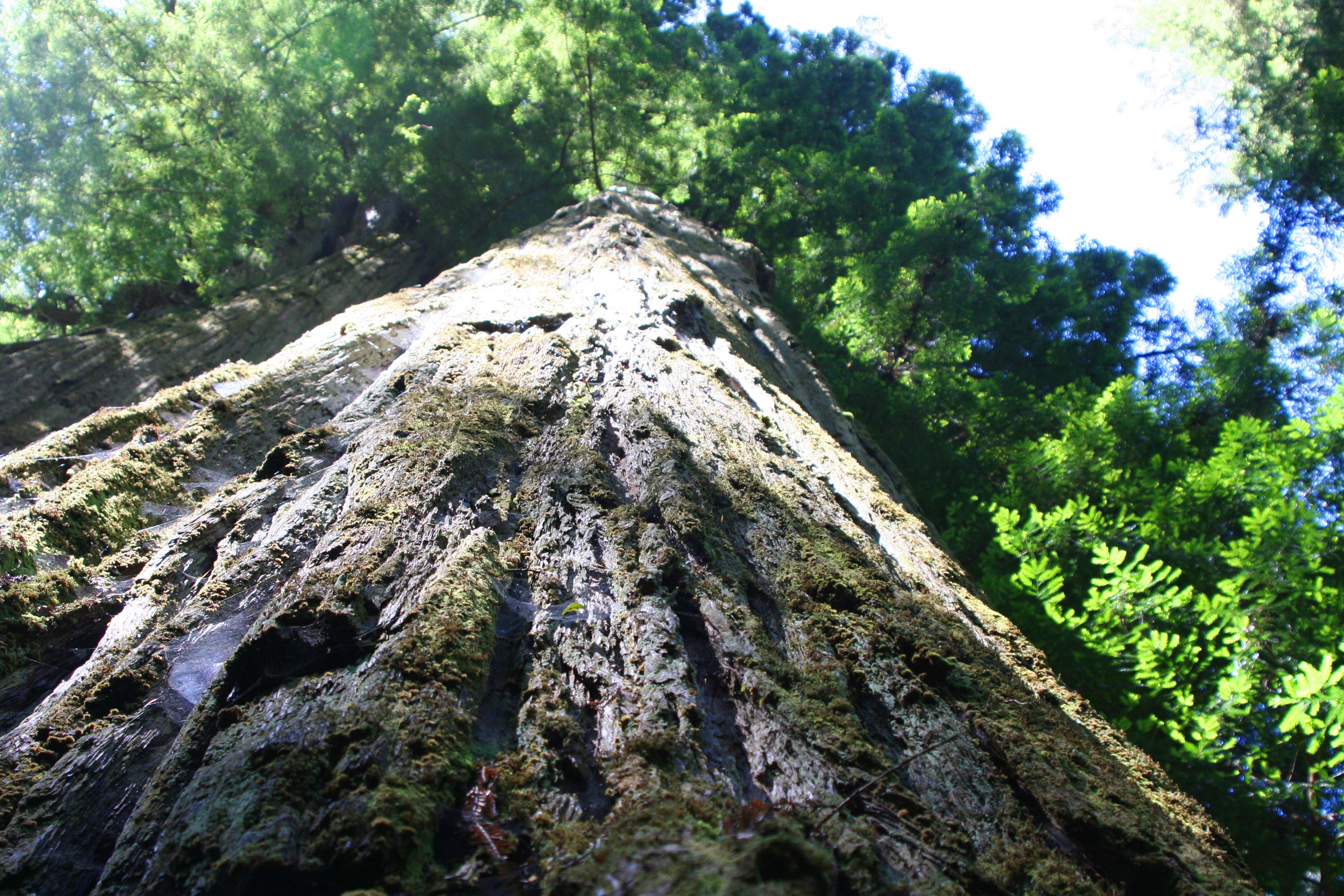
A giant of the forest.

A giant of the forest: “an ambassador from another time.”

“The redwoods, once seen, leave a mark or create a vision that stays with you always. No one has ever successfully painted or photographed a redwood tree. The feeling they produce is not transferable. From them comes silence and awe. It’s not only their unbelievable stature, nor the color which seems to shift and vary under your eyes, no, they are not like any trees we know, they are ambassadors from another time.”

                                                                                                                                                                                                         John Steinbeck

Like John Steinbeck, I am in awe of the Redwoods. These giants of the forest can live for two thousand years and grow to over 300 feet tall. The so-called Big Tree in Redwood National Park, for example, is 304 feet tall, has a circumference of 68 feet and an estimated age of 1500 years.

Our home in Southern Oregon is a short three-hour drive from the coastal redwoods of Northern California so Peggy and I have visited them three times in three years. My first visit to the Redwoods was as a child and it is still a clear memory. Our last two visits we had our grandkids with us. My hope is that their memory of the visit will be like mine– and pull them back, time and again.

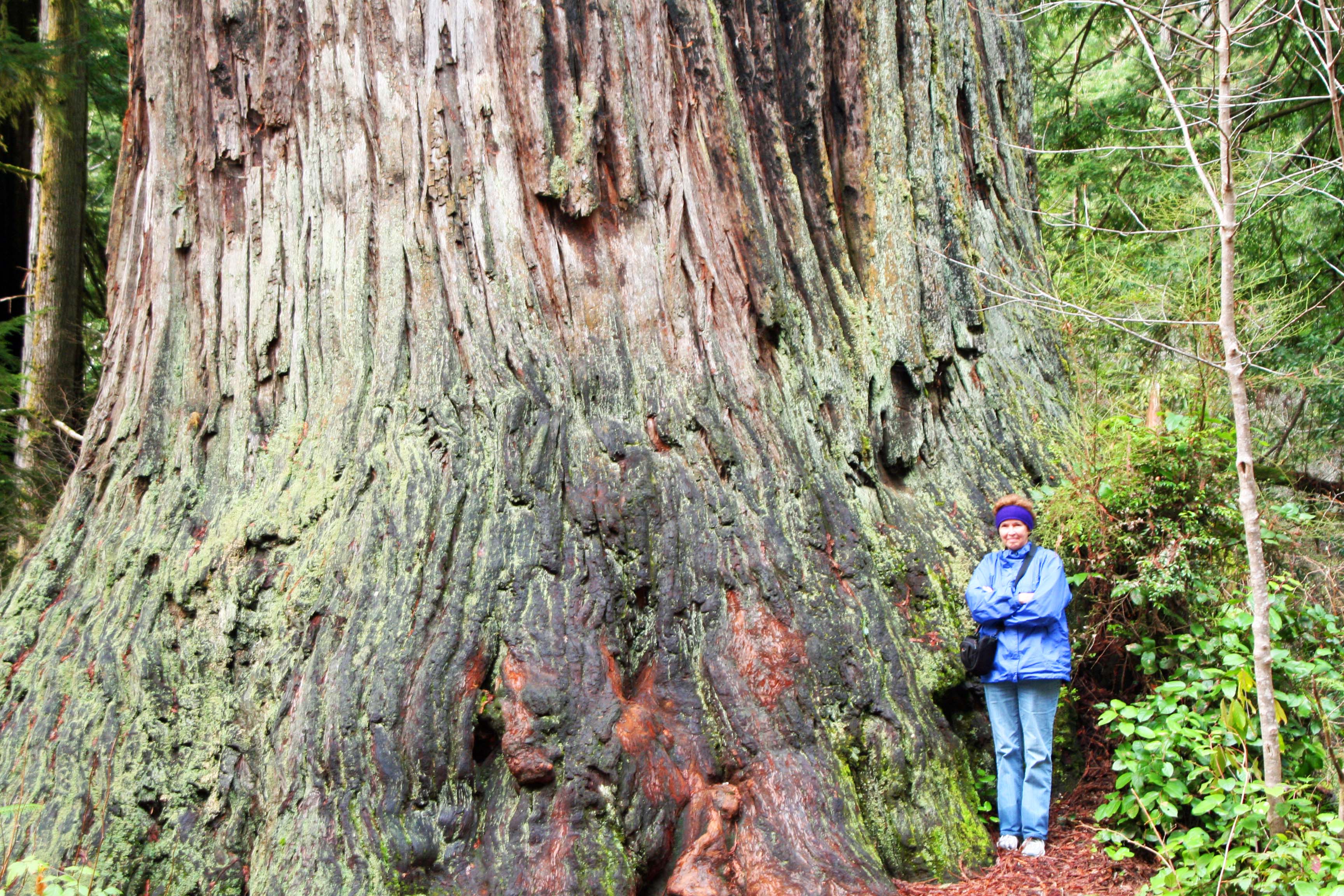
Peggy provides a perspective on the actual size of a giant redwood.

Peggy provides a perspective on the actual size of a giant redwood.

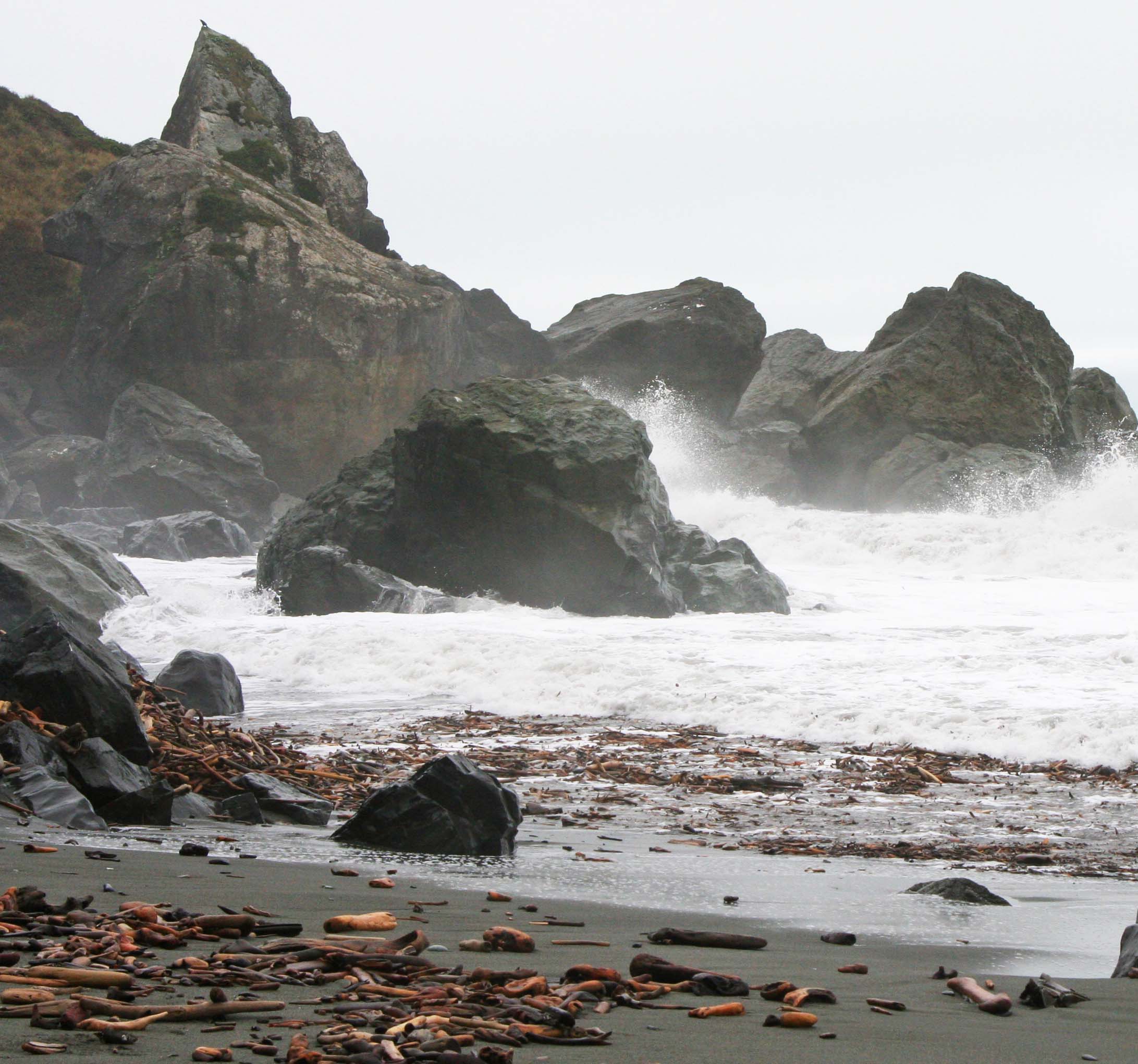
California's rugged North Coast. Photo by Curtis Mekemson.

Redwoods National Park is located along California’s rugged North Coast. Stormy seas had left behind piles of driftwood.

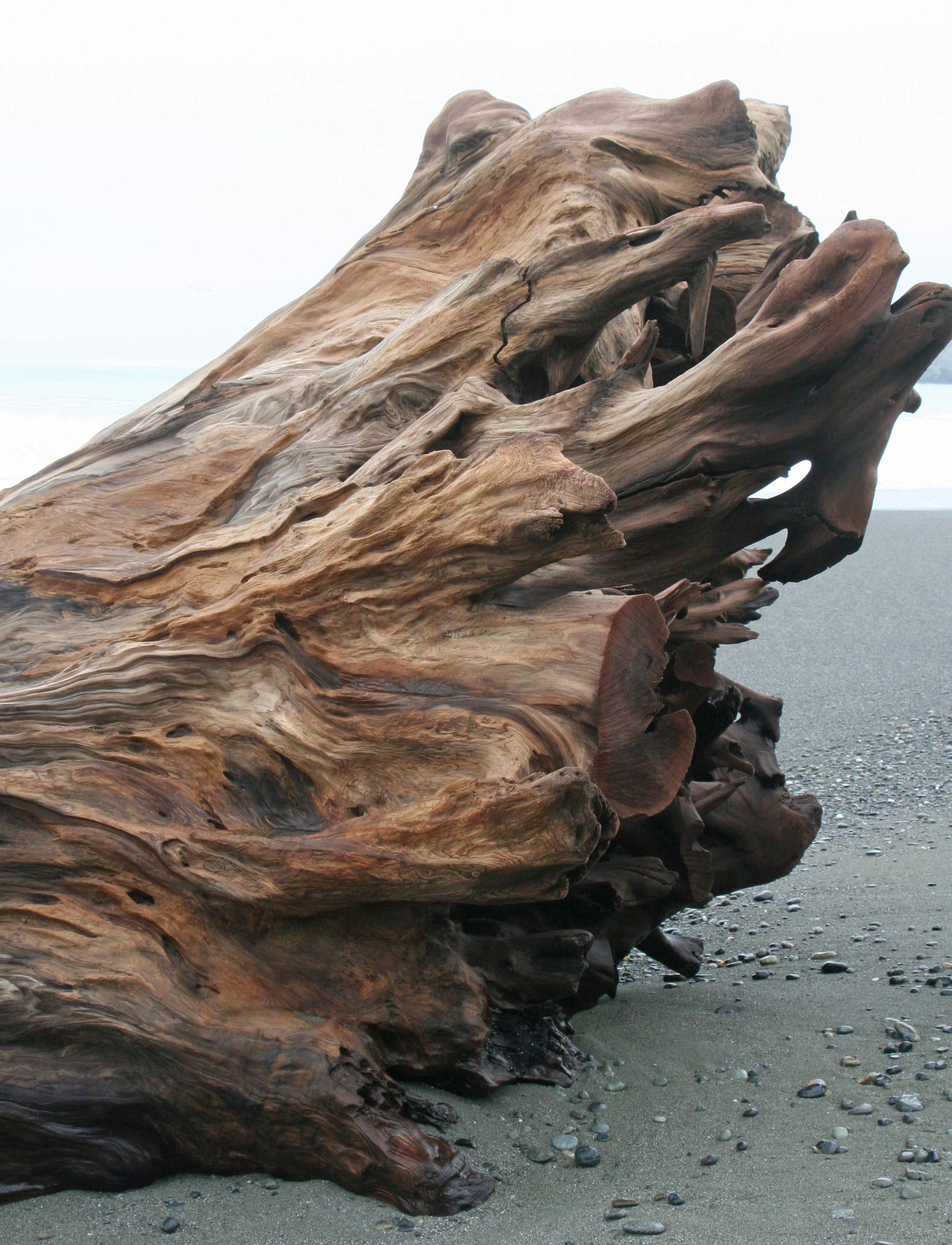
Redwood tree root on Northern California coast. Photo by Curtis Mekemson.

Among the driftwood was this large redwood tree root.

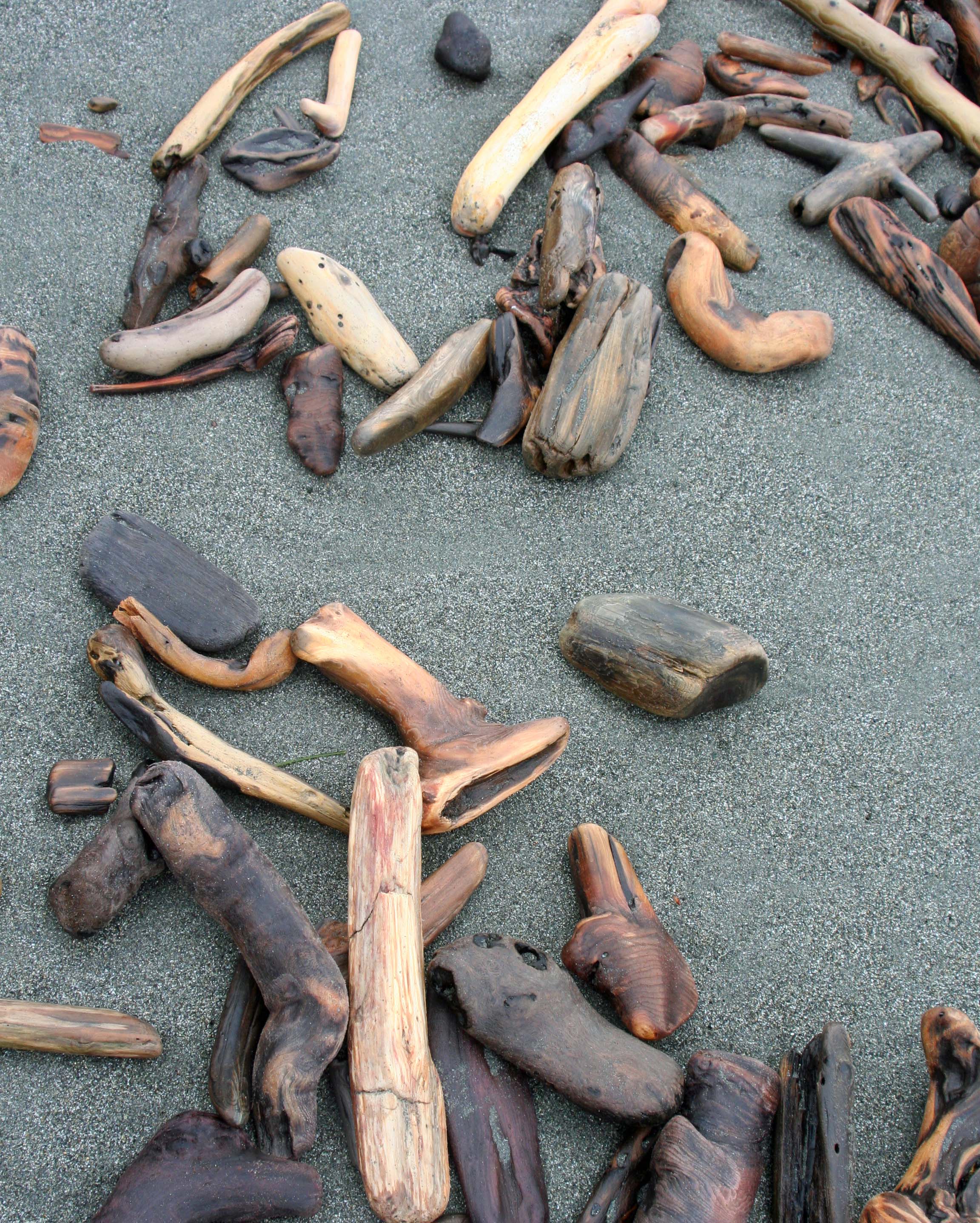
Driftwood at Redwood National Park. Photo by Curtis Mekemson.

Most of the driftwood was small but also quite attractive. It was easy to imagine the various shapes as creatures…

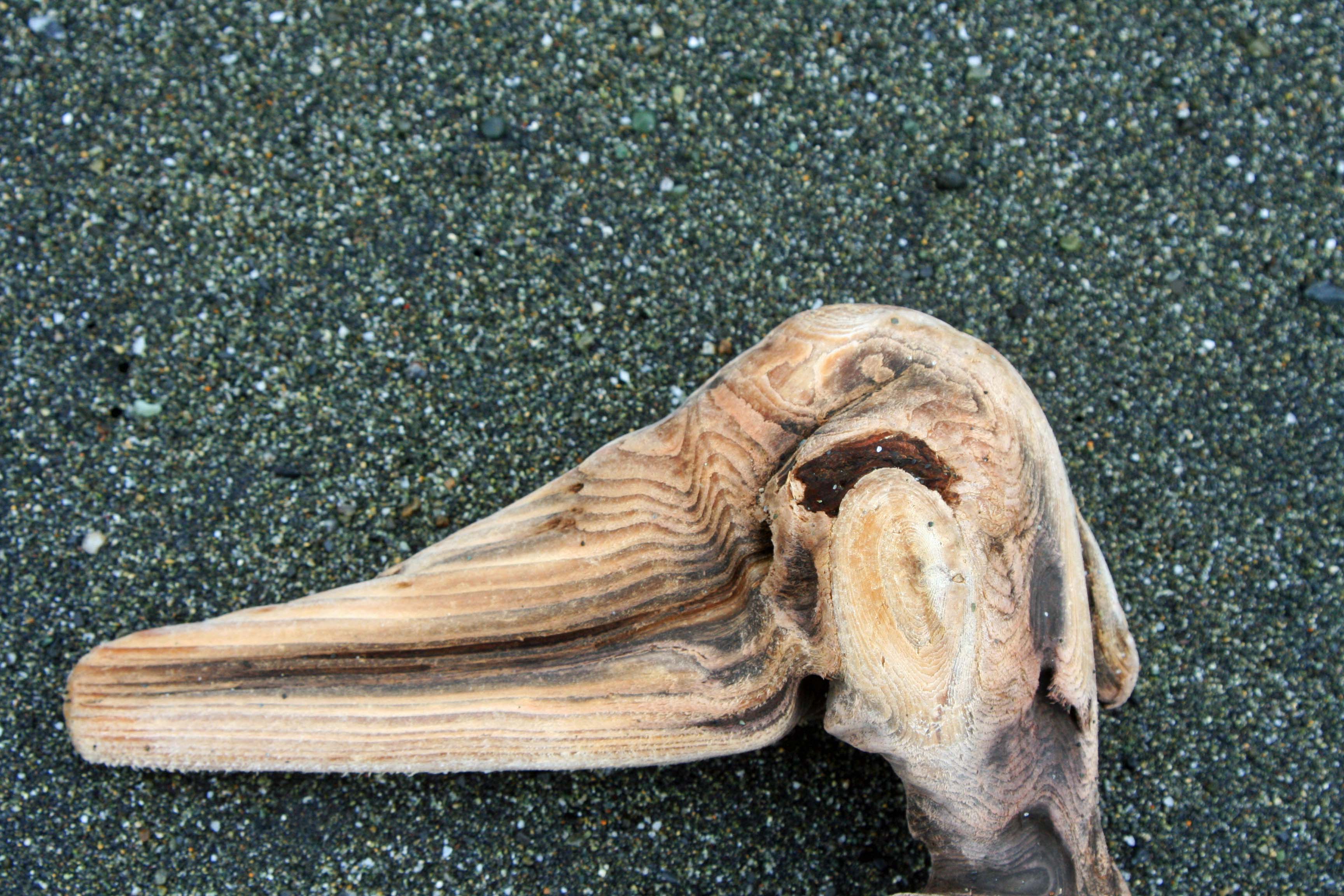
Driftwood shapes at Redwood National Park. Photo by Curtis Mekemson.

I thought of this piece as a wood duck.

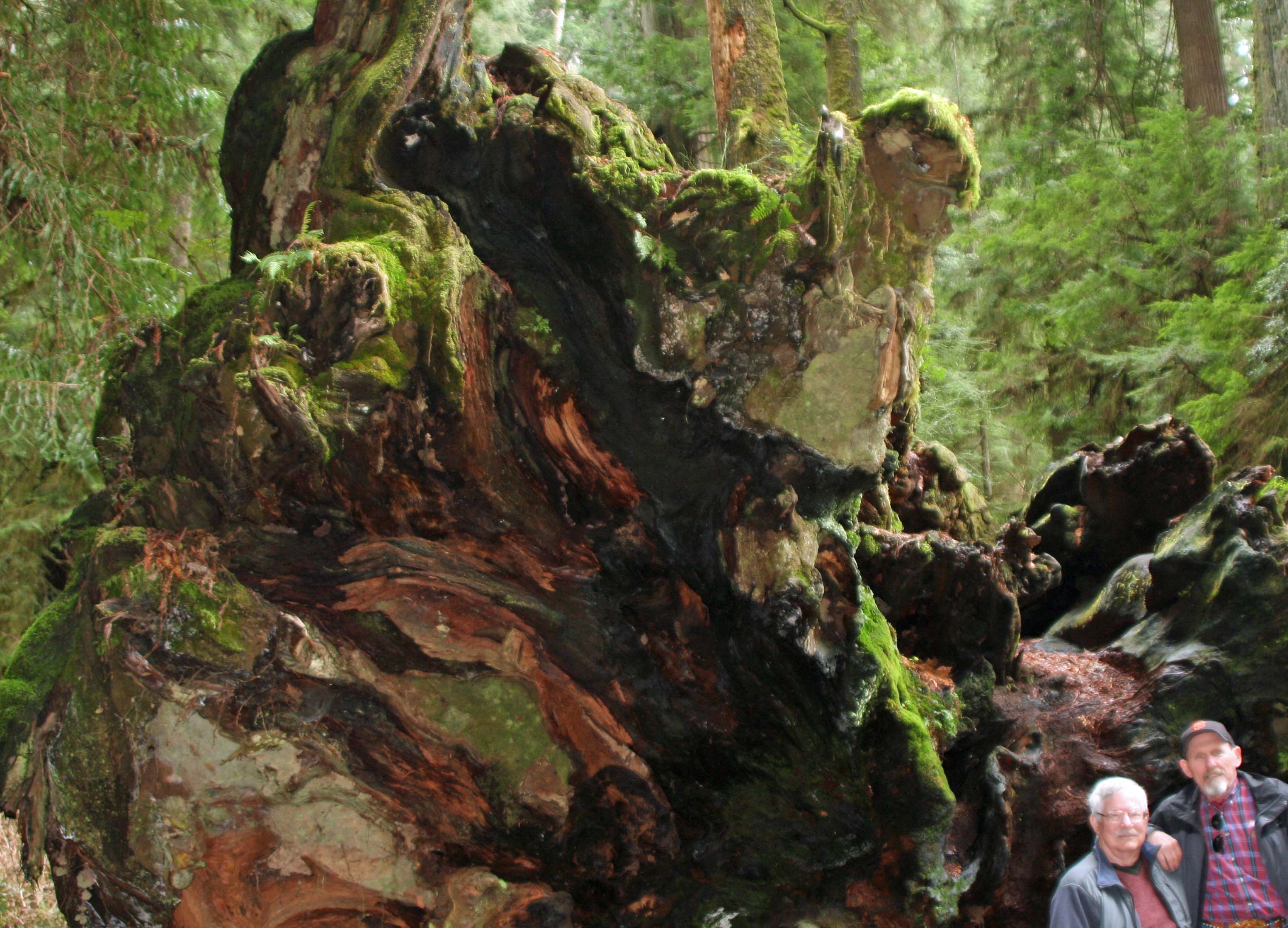
Downed tree root in Redwood National Park.

Back to the forest, my friend Ken Lake and I stand next to another massive root. (Photo by Peggy Mekemson.)

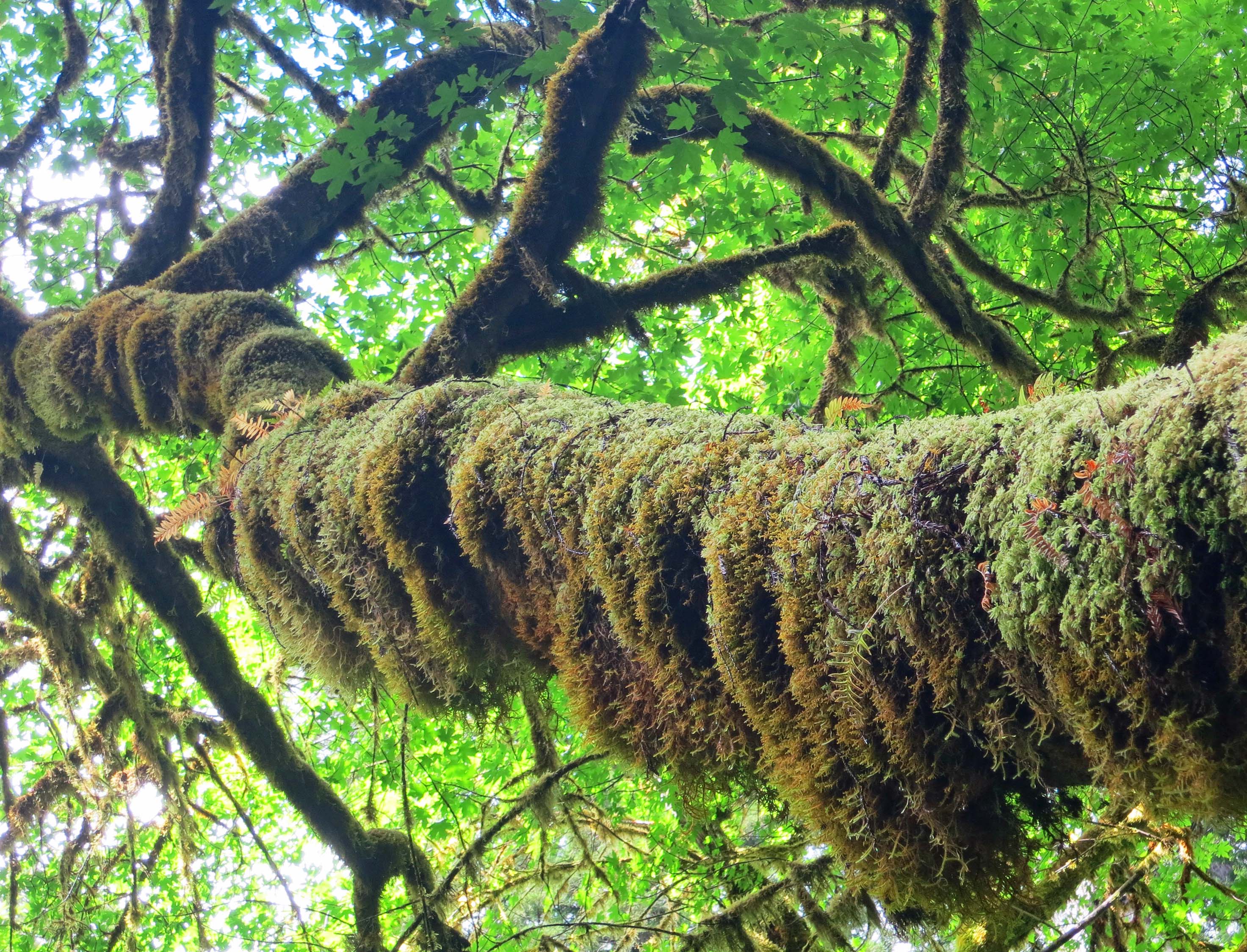
Moss coverend tree at Redwood National Park. Photo by Curtis Mekemson.

The moss growing on this tree is a reminder that Redwood National Park receives 60-80 inches of rain per year, thus making it a rainforest.

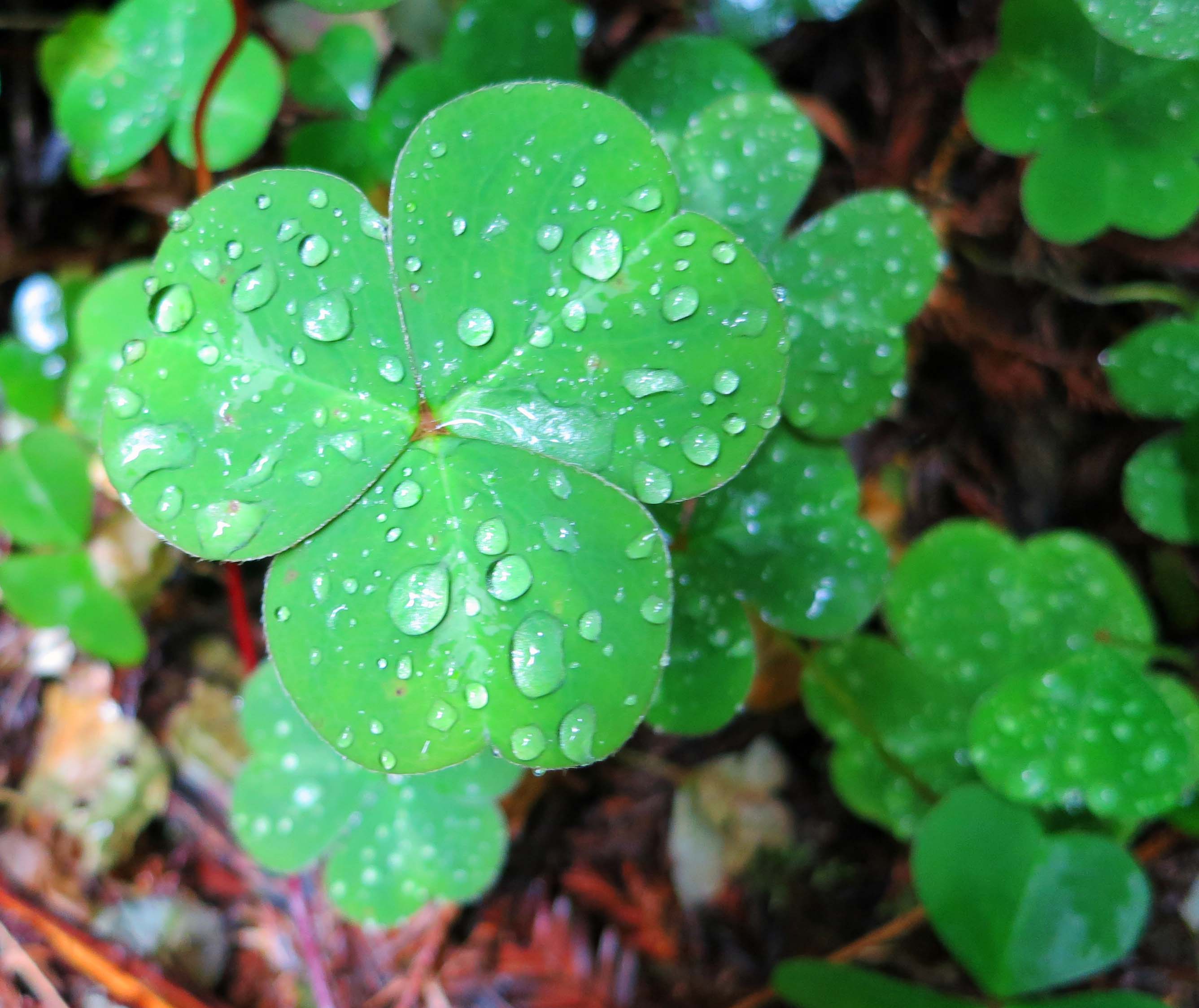
Large clover leaf in Redwood National Park. Photo by Curtis Mekemson.

The size of clover is another reminder that things grow big in Redwood National Park– as my favorite model demonstrates below…

Peggy Mekemson wears a Redwood National Park clover in her hair. Photo by Curtis Mekemson.

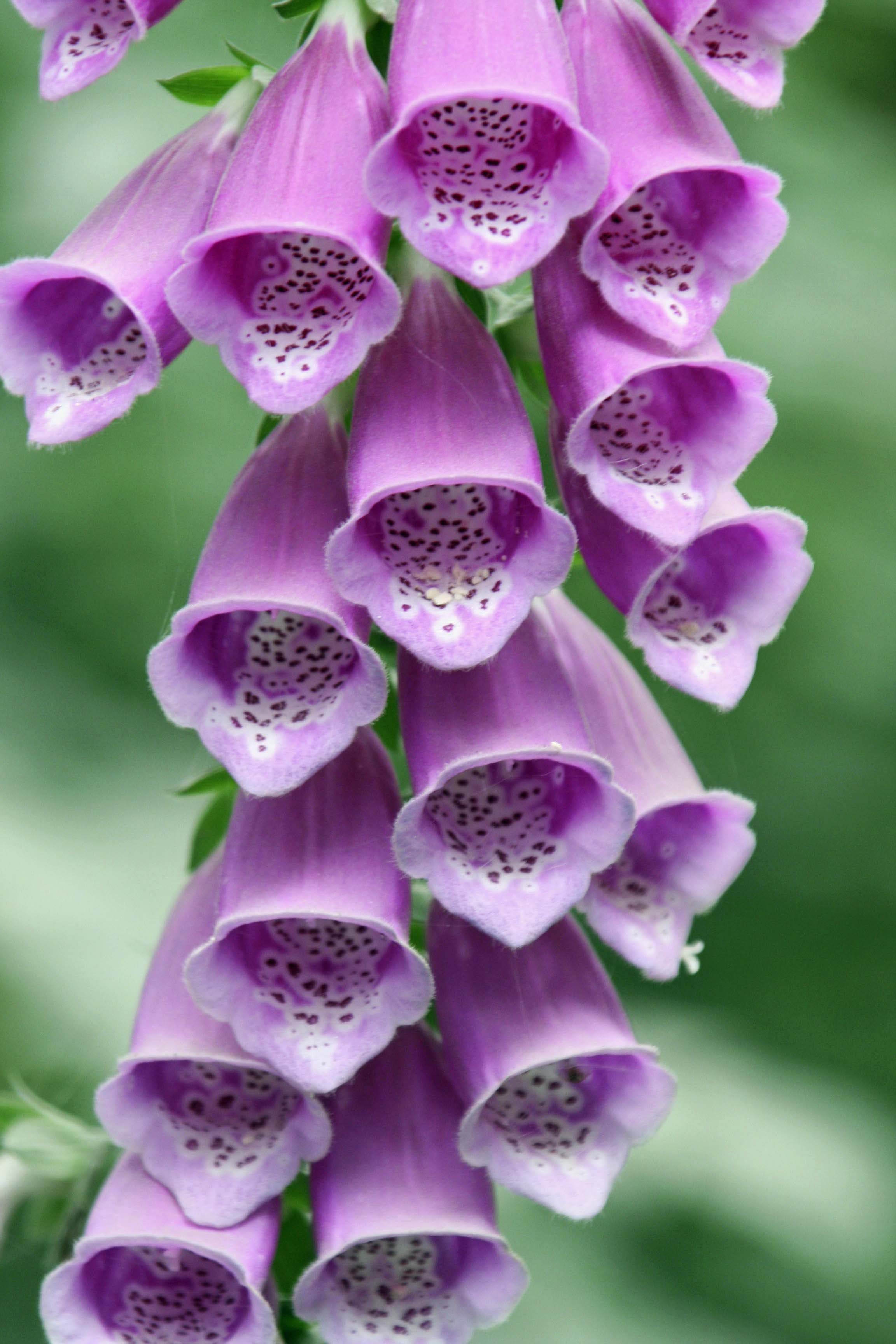
Foxglove growing at Redwoods National Park.

Beautiful Foxglove is also found growing among the redwoods. (Photo by Peggy Mekemson.)

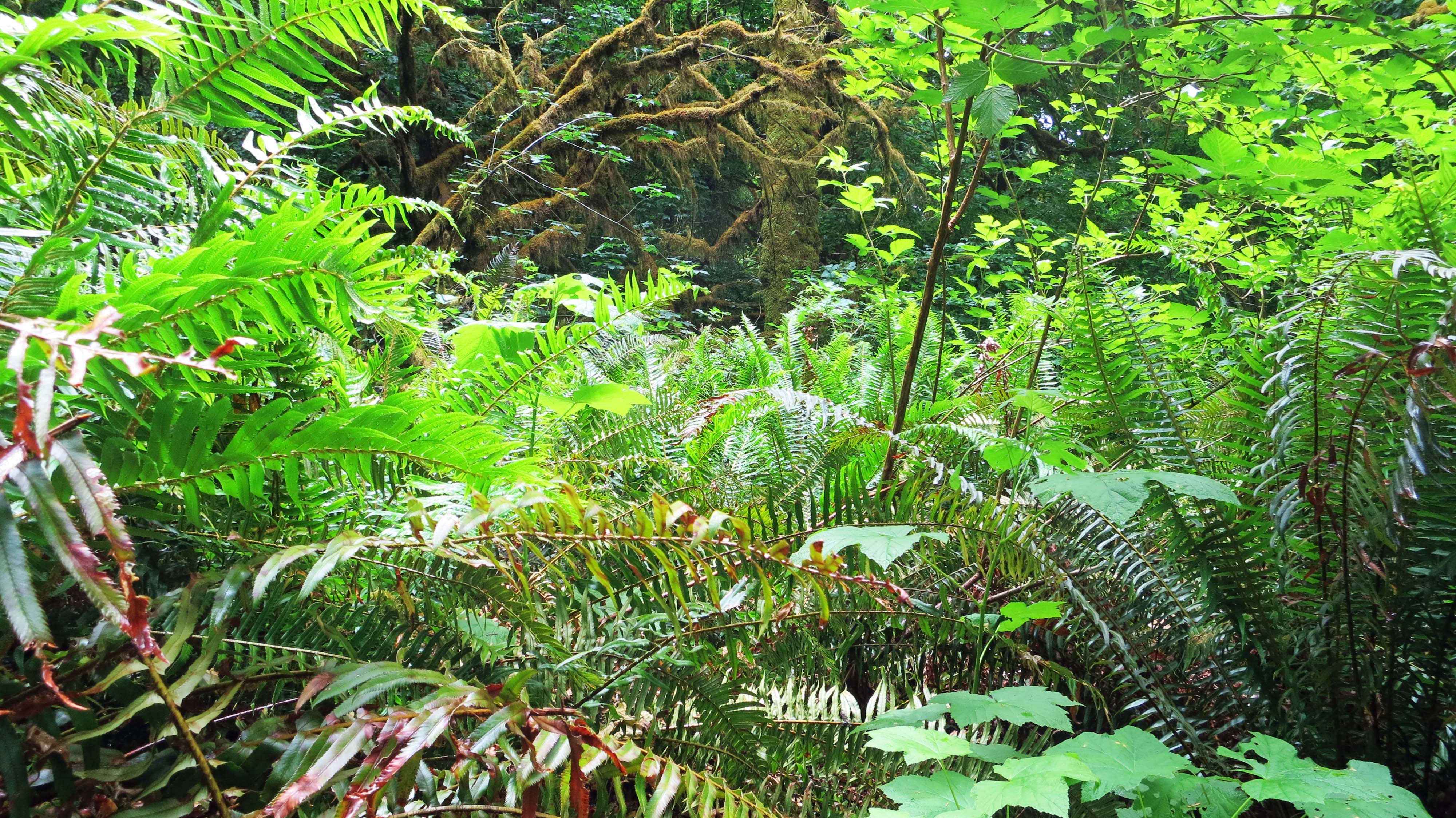
Fern growing in Redwoods National Park. Photo by Curtis Mekemson.

Another perspective on the rainforest look of Redwoods National Park.

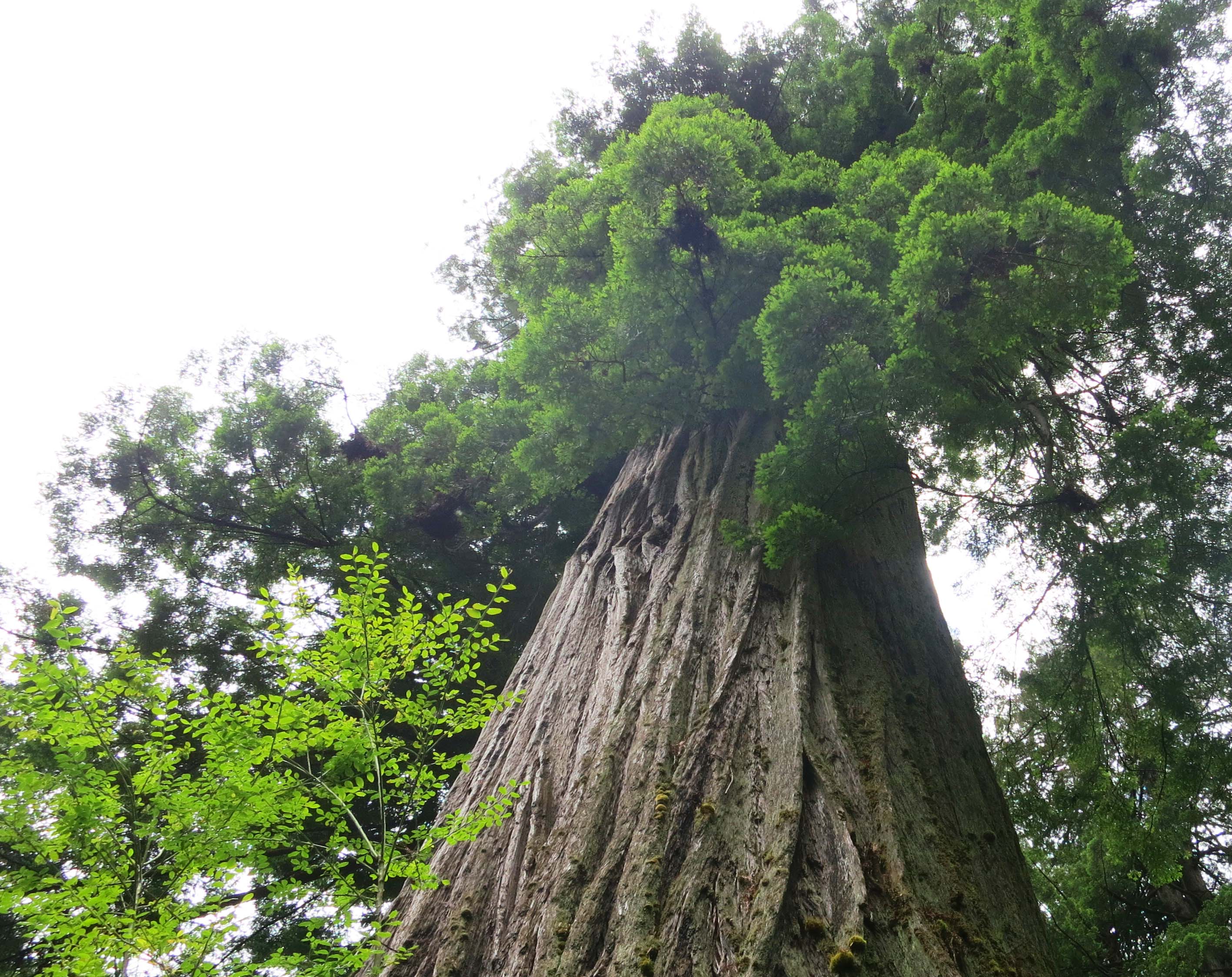
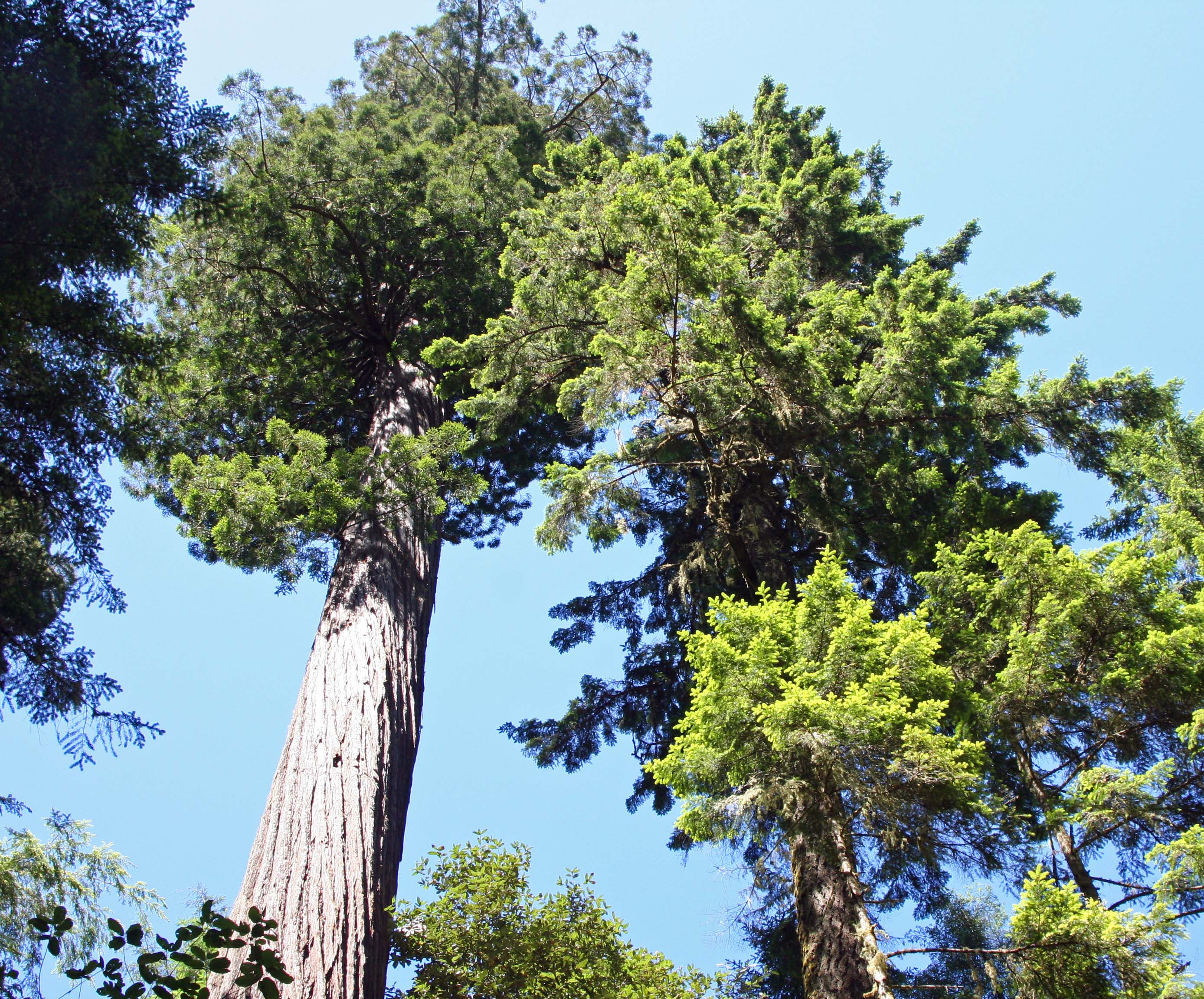
Two final views of the magnificent redwoods.

Giant redwood tree at Redwoods National Park. Photo by Curtis Mekemson.

Tops of redwoods at Redwoods National Park. Photo by Curtis Mekemson.


NEXT BLOG: Wrap up of park series (for the present) with photos from several different parks.

Bryce Canyon and the Hoodoos… A Photographic Journey through America’s National Parks

Bryce Canyon photograph by Curtis Mekemson.

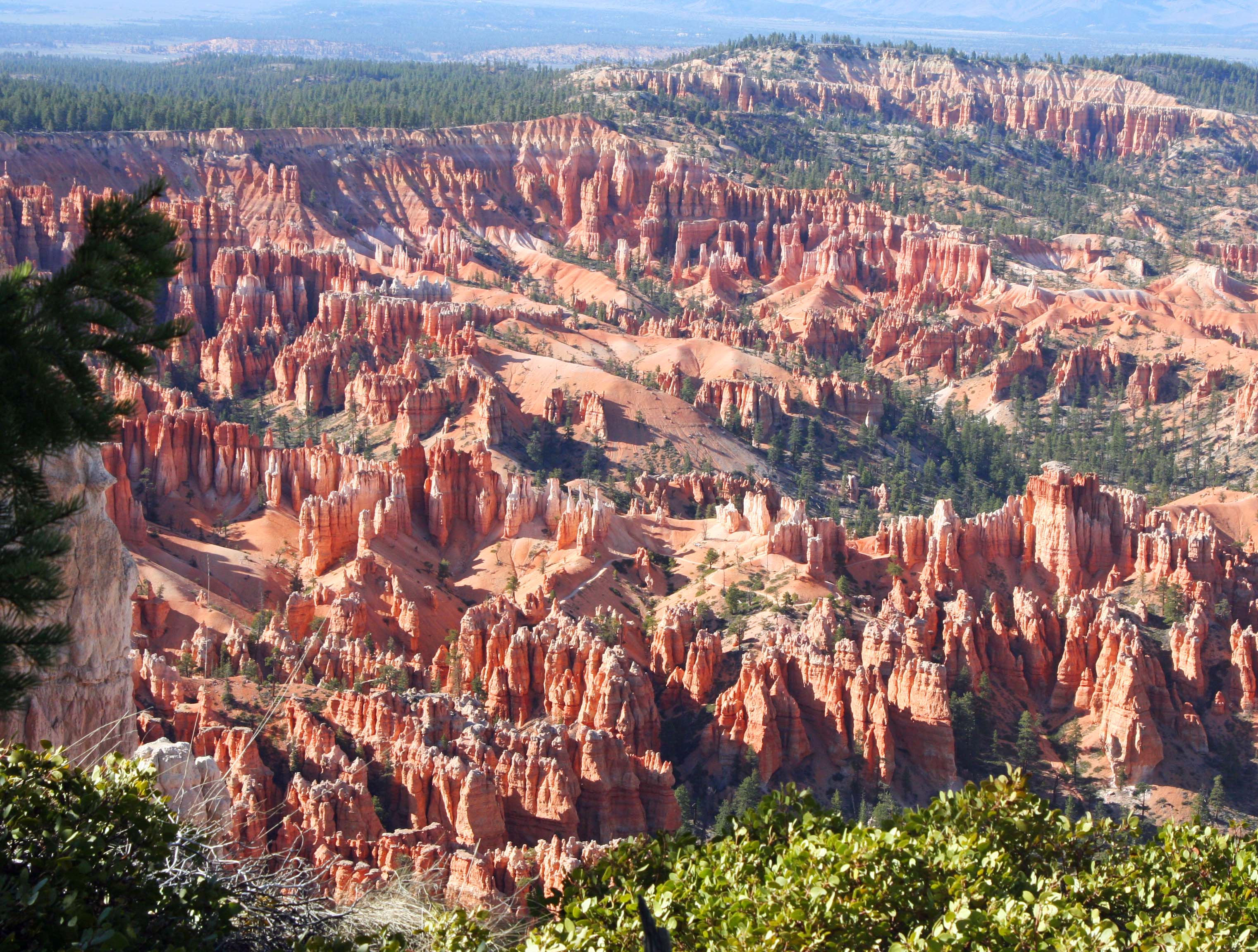
Bright colors combine with interesting rock formations to make Bryce Canyon.

There is nowhere in the world quite like Bryce Canyon. This is a place where you can let your imagination run as wild as it wants to run. I am always struck first by the colors of the rocks and then immediately afterwards by their shapes.

Thousands of years of ice-driven erosion have created a fantasy world of amphitheaters filled with hoodoos and other rock formations climbing down the side of the Paunsaugunt Plateau in Southern Utah.

The best way to experience the canyon is to hike down the trails but even a quick drive-through is rewarding. Early morning and evening are best times to catch the colors. Snow adds another dimension.

Bryce Canyon overlook. Photo by Curtis Mekemson.

An overview of Bryce Canyon from one of the major overlooks.

Bryce Canyon Amphitheater. Photo by Curtis Mekemson.

Bryce Canyon is actually not a canyon created by a river but is a series of amphitheaters dropping on of the Paunsaugunt Plateau.

Walls, Fins and hoodoos at Bryce Canyon. Photo by Curtis Mekemson.

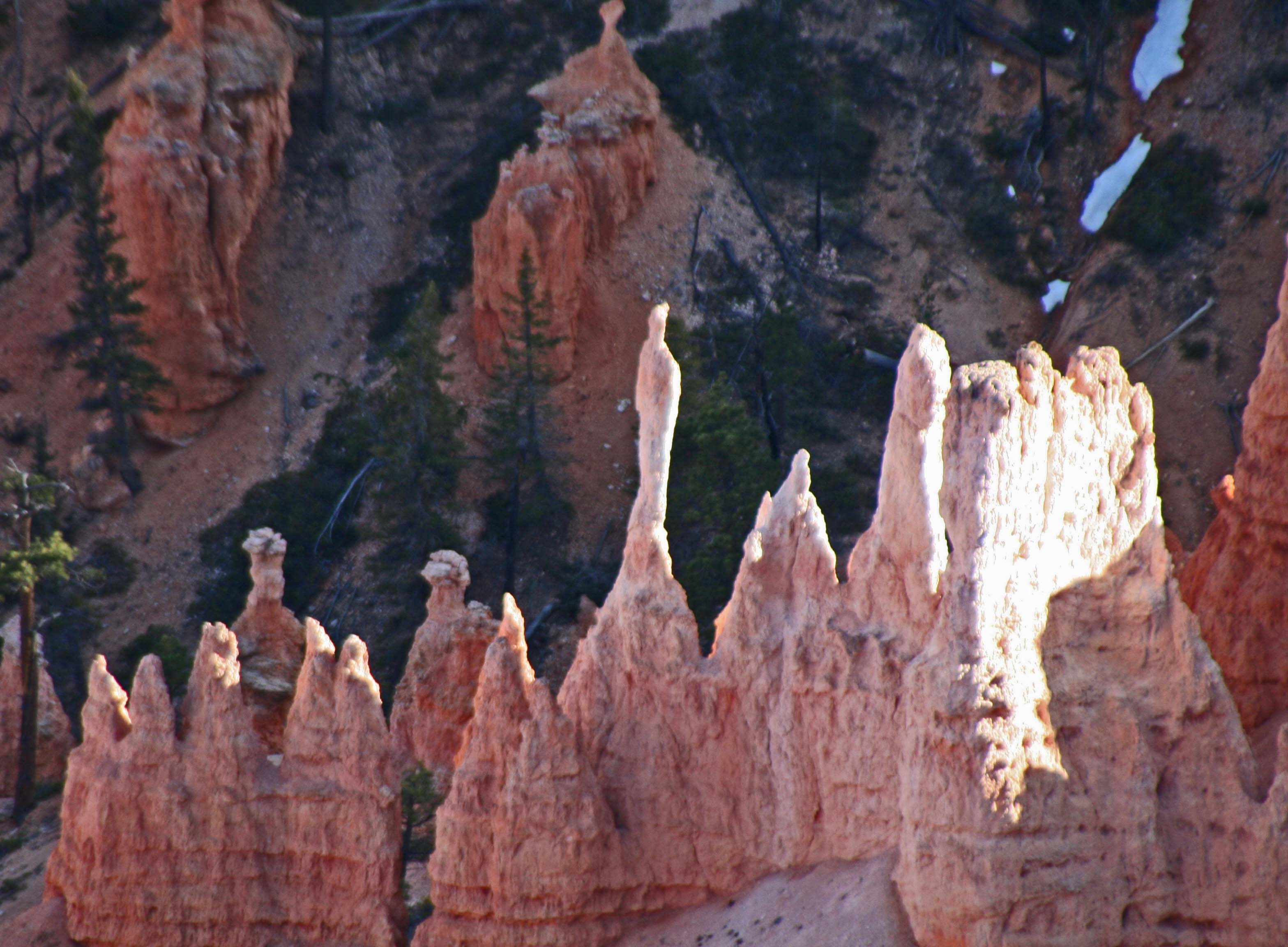
Hoodoos are stand alone rocks created by the process of erosion. A thick wall becomes a fin. Arches are created in the fin and then cave in, leaving hoodoo behind.

Hoodoo formation at Bryce Canyon. Photo by Curtis Mekemson.

A close-up of hoodoo formation. The rock in the foreground is showing cracks and a small arch that will eventually fall in and form a hoodoo.

A hoodoo at Bryce Canyon National Park. Photo by Curtis Mekemson.

A ghostly hoodoo.

More views of Bryce Canyon:

Bryce Canyon photo by Curtis Mekemson.

Bryce Canyon photo by Curtis Mekemson.

Bryce Canyon photograph by Curtis Mekemson.

NEXT BLOG: A visit to the Redwoods.


Dinosaur National Monument… A Photographic Journey through America’s National Parks

Dinosaur National Monument is filled with quiet beauty.

Dinosaur National Monument is filled with quiet beauty.

Located on the border between Colorado and Utah, Dinosaur National Monument is known for it’s large deposit of Dinosaur Bones. The Park also features a quiet beauty and an interesting collection of Native American petroglyphs. The Yampa and Green Rivers snake their way through the canyons of the park and attract white-water rafting enthusiasts– including several of my friends.

So there is a little bit of something for everyone in this little known National Monument.  Hopefully, this blog will encourage some of my readers to visit. You won’t regret the decision.

Asters in Dinosaur National Monument. Photo by Curtis Mekemson.

Bright asters decorated the roadside on our way into camp.

Petroglyph at Dinosaur National Monument. Photo by Curtis Mekemson.

This person with his/her large hands and dogs is one of my favorite petroglyphs.

Green River flowing through Dinosaur National Monument. Photo by Curtis Mekemson.

Shadows stretch across the Green River while the evening sun gently bathes the cliffs above in light. Not a bad view from our camp!

Dinosaur bone in cliff at Dinosaur National Monument. Photo by Curtis Mekemson.

This large dinosaur bone was sticking out the edge of a cliff.

Lizard petroglyph in Dinosaur National Monument. Photo by Curtis Mekemson.

I thought this Native American petroglyph was particularly appropriate for the park.

Elephant Toes rock at Dinosaur National Monument. Photo by Curtis Mekemson.

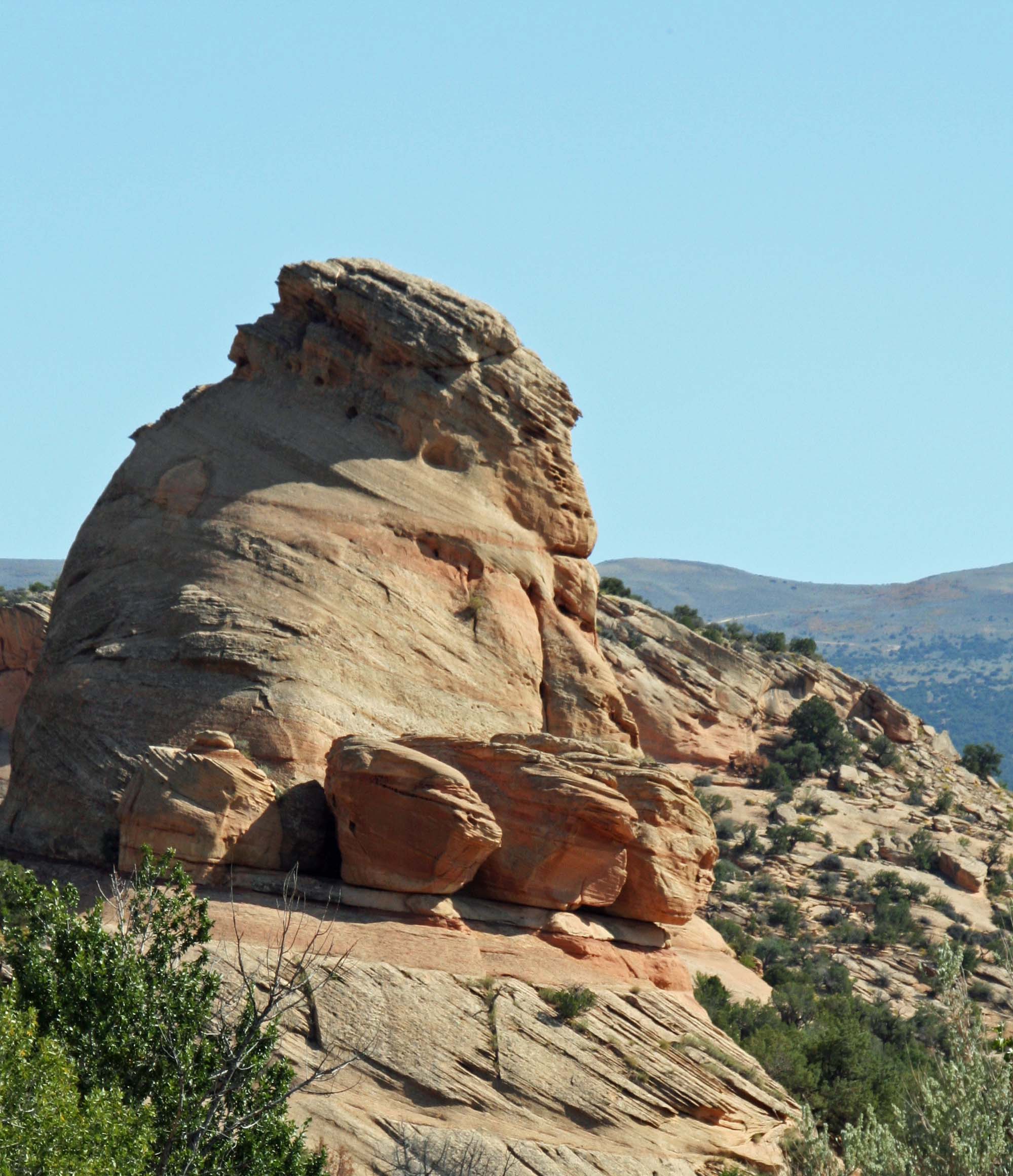
Rock monuments are given names in Dinosaur National Monument, as they are throughout the West. What would you name this? The local answer is below.

Cliff of petroglyphs in Dinosaur National Monument. Photo by Curtis Mekemson.

Peggy sits beside a series of petroglyphs we found high above the road.

Petroglyph at Dinosaur National Monument. Photo by Curtis Mekemson.

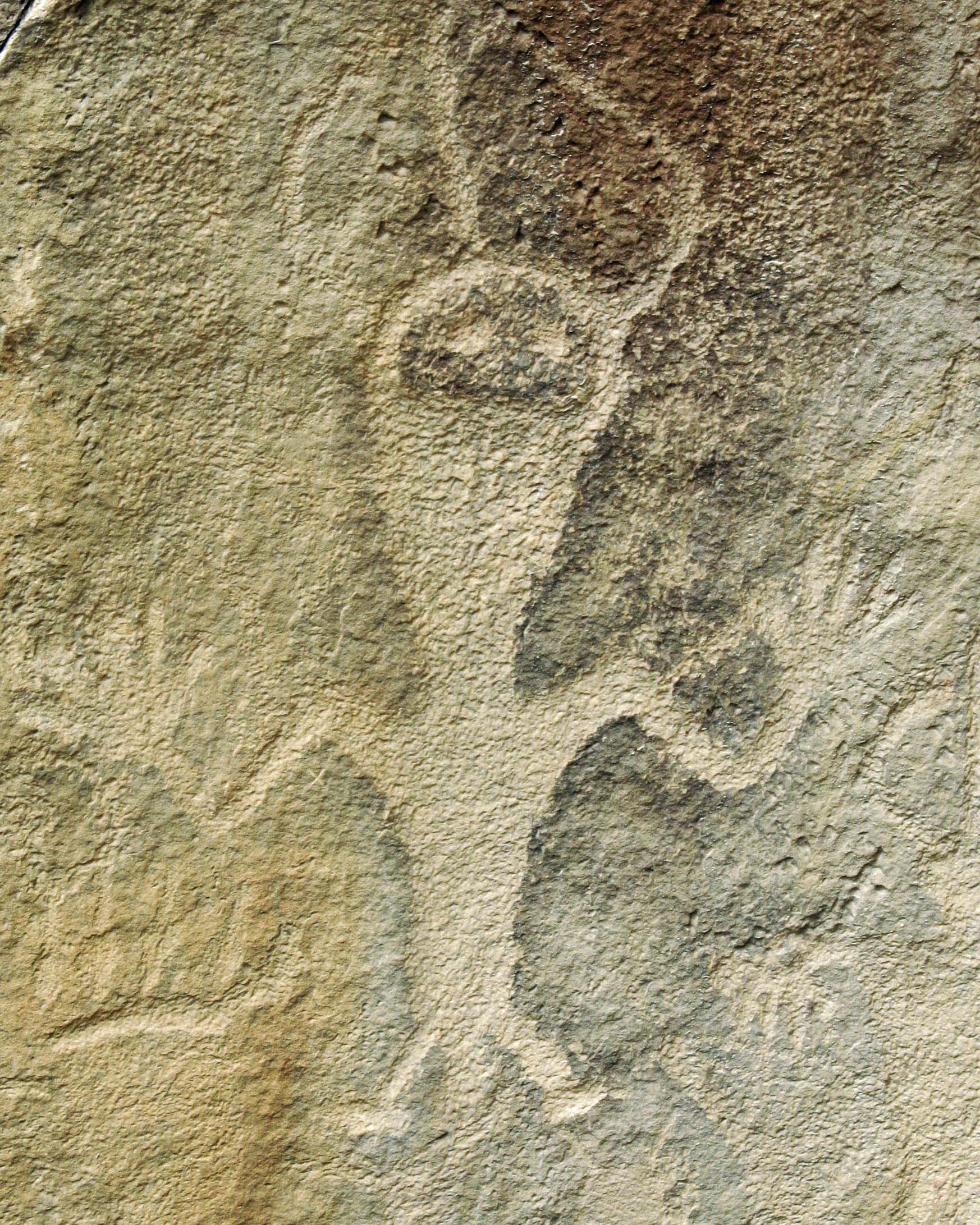
An alien petroglyph?

Dinosaur National Monument. Photo by Curtis Mekemson.

A final scene from our campsite.

The monument was named Elephant Toes. NEXT BLOG: The incredible rocks of Bryce Canyon National Park.

Organ Pipe Cactus National Monument… A Photographic Exploration of America’s National Parks

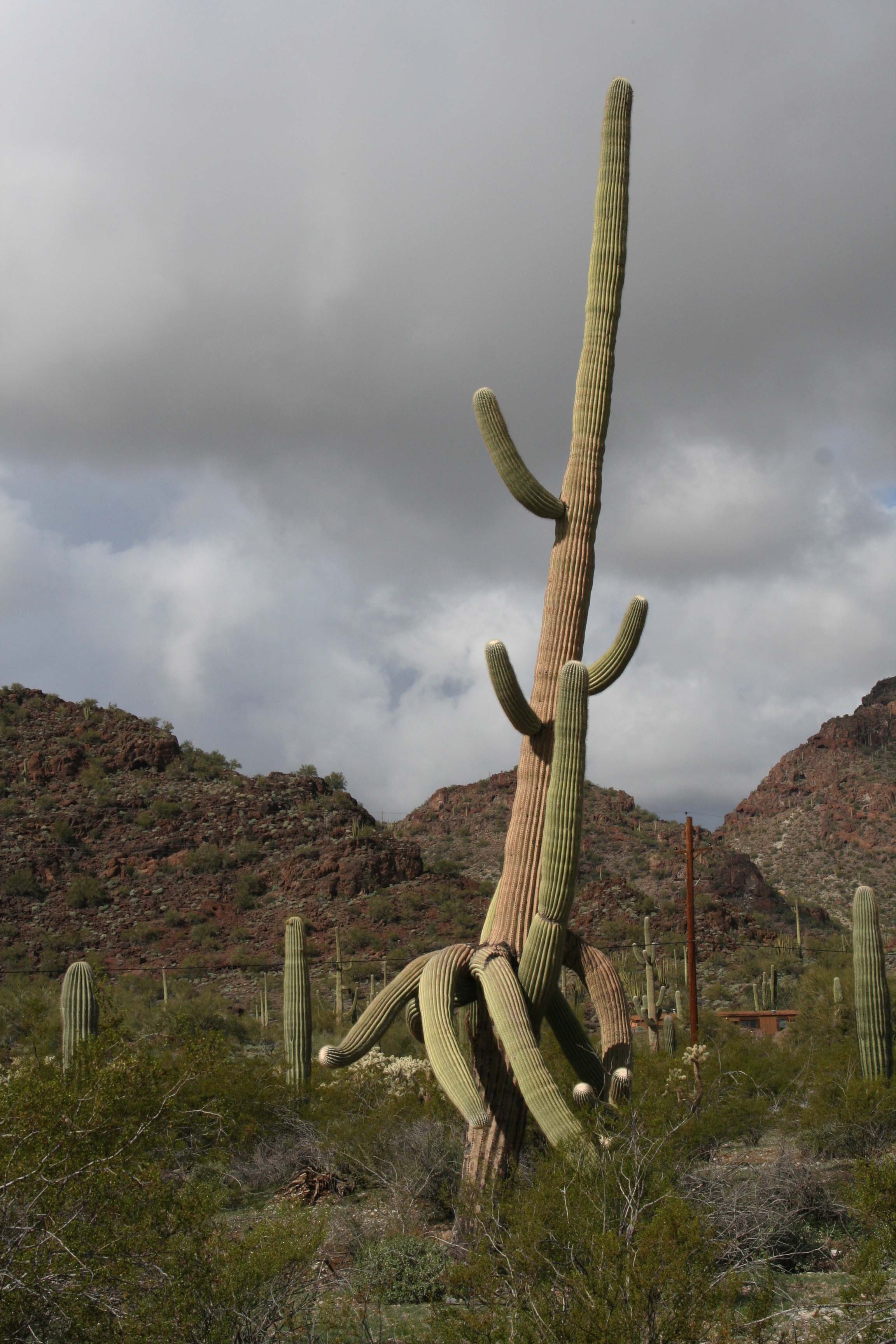
Saguaro Cactus in Organ Pipe National Monument. Photo by Curtis Mekemson.

While Organ Pike cactus give the National Monument its name, Multi-limbed Saguaro give it character. The power lines in the background are headed for the Visitors’ Center.

Organ Pipe National Monument had been on my bucket list for a long time. I liked its remote feel, how it hugged the Mexican Border, and how the only way to get there was via a small, rural road.

What surprised me were the number of Border Patrol police and their extensive network of roadblocks. I felt like I had left the US and entered a police state. People with guns to shoot you, dogs to sniff out your innermost secrets, and X-ray machines to probe your car make me nervous.  It didn’t matter if I was innocent, I felt guilty.

On top of the national paranoia over illegal immigrants, there was Arizona’s unique twist on the issue. Mexican-Americans and Mexicans were guilty until proved innocent.

As an aside, Peggy and I were on a bus to the small Mexican town of San Sebastian in the Sierra Madre Mountains last week. Our guide asked where we were all from and one couple announced they were from Arizona.

“Aha!” the guide proclaimed to the couple, “You must show me your passports.” He was joking and we all laughed, including the couple. But his point was made. What if people from Arizona had to carry special papers when they traveled in Mexico and were regularly stopped by police?

Politics aside, Organ Pipe Cactus National Monument was, um, filled with cacti. There were mighty Saguaro, whip-like Ocotillo, Barrel Cactus, Organ Pipe Cactus, Cholla, and round Prickly Pears that something with a large mouth had been eating. We got up early in the morning to miss the midday heat and followed a winding trail out into the desert. Dark clouds hung over the mountains; birds were busy announcing the day. Curiosity pulled us off the trail but sharp thorns required that we walk with care. The dark of early morning gradually gave way to bright sun.

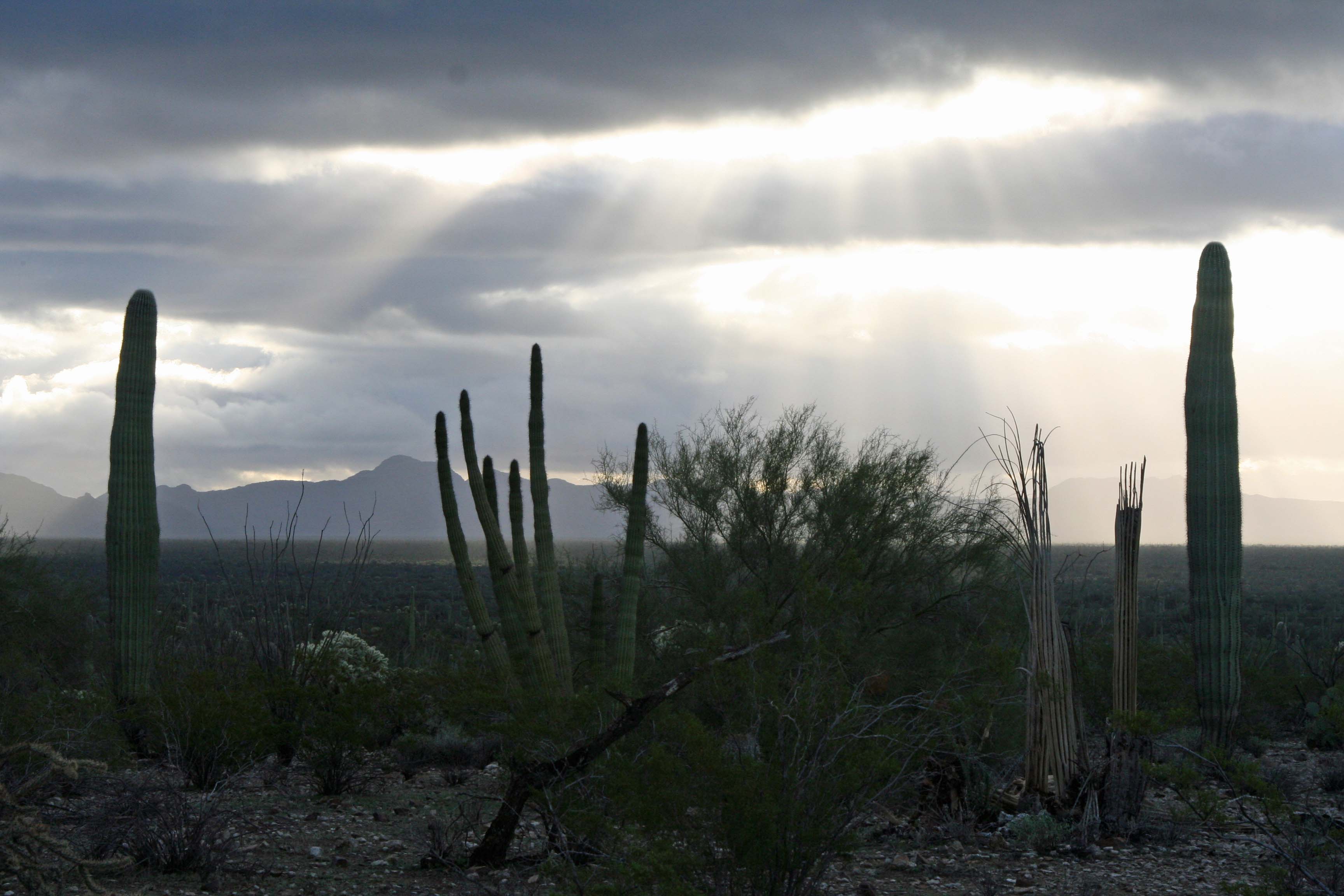
Organ Pipe National Monument in early morning light. Photo by Curtis Mekemson.

Early morning sun broke through the dark clouds and provided enough light to walk by. Sort of. Running into cactus thorns is not fun.

Two Saguaros and an Organ Pipe Cactus in Organ Pipe national Monument. Photo by Curtis Mekemson.

An Organ Pipe Cactus grows between two Saguaros.

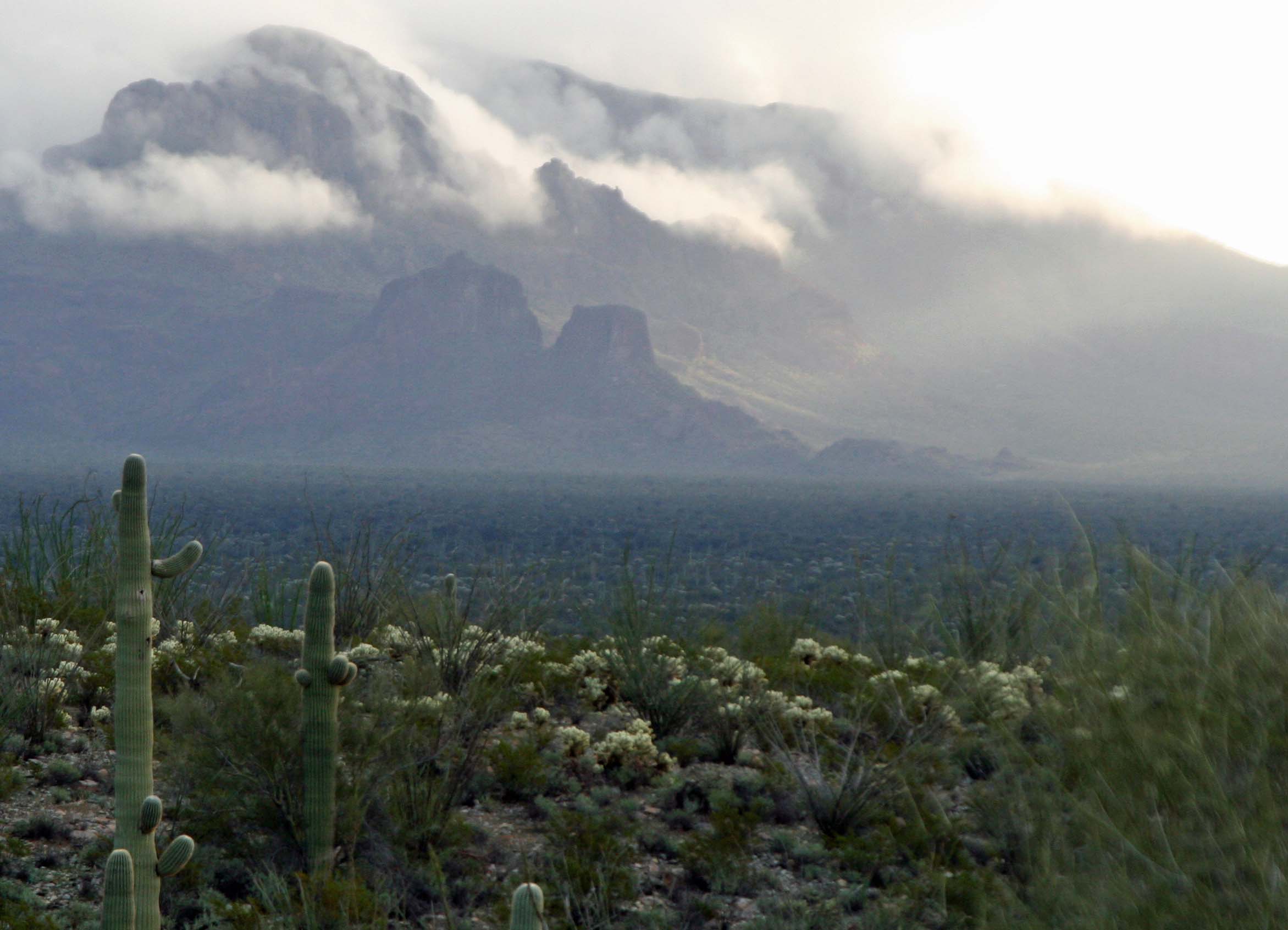
Misty mountains in Organ Pipe National Monument. Photo by Curtis Mekemson.

I loved this photo of the misty, almost mystical mountains.

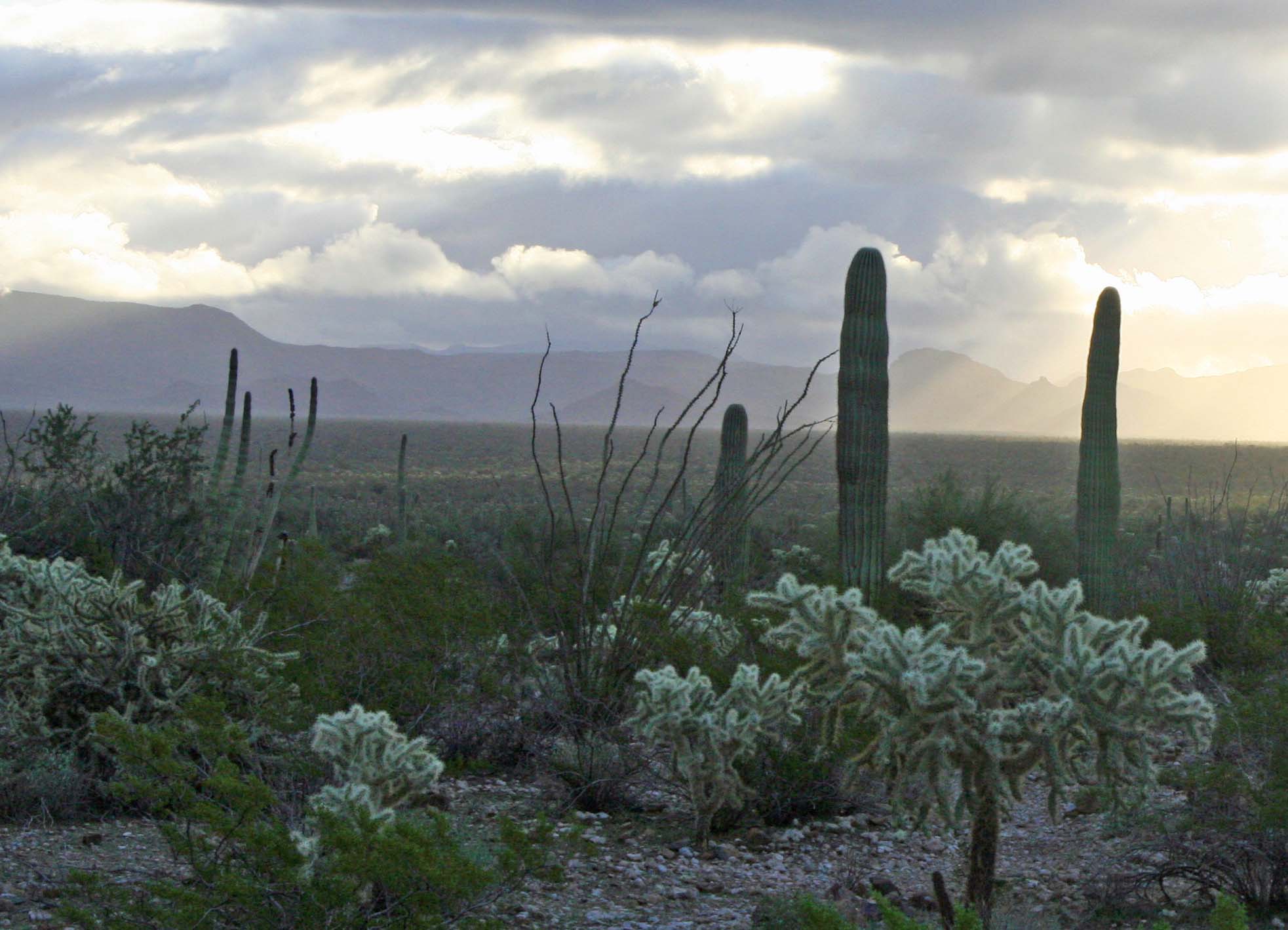
Organ Pipe National Monument. Photo by Curtis Mekemson.

Whip-like Ocotillo Cactus grows behind fuzzy Cholla.

The "bones' of a Saguaro at Organ Pipe Cactus National Monument. Photo by Curtis Mekemson.

The “bones” of a Saguaro.

Cactus garden in Organ Pipe Cactus National Monument. Photo by Curtis Mekemson.

A cactus garden with an Organ Pipe Cactus on the left. It’s easy to see why care is required when walking off trail.

Organ Pipe Cactus in Organ Pipe National Monument. Photo by Curtis Mekemson

A mature Organ Pipe Cactus. Note the small holes in the top where birds nest.

Multi-armed Saguaro Cactus in Arizona. Photo by Curtis Mekemson.

I’ll close today’s blog with a Saguaro who didn’t quite know what to do with its arms.

NEXT BLOG: We are off to Dinosaur National Monument where the big lizards roamed.


The Everglades… A Photographic Exploration of America’s National Parks

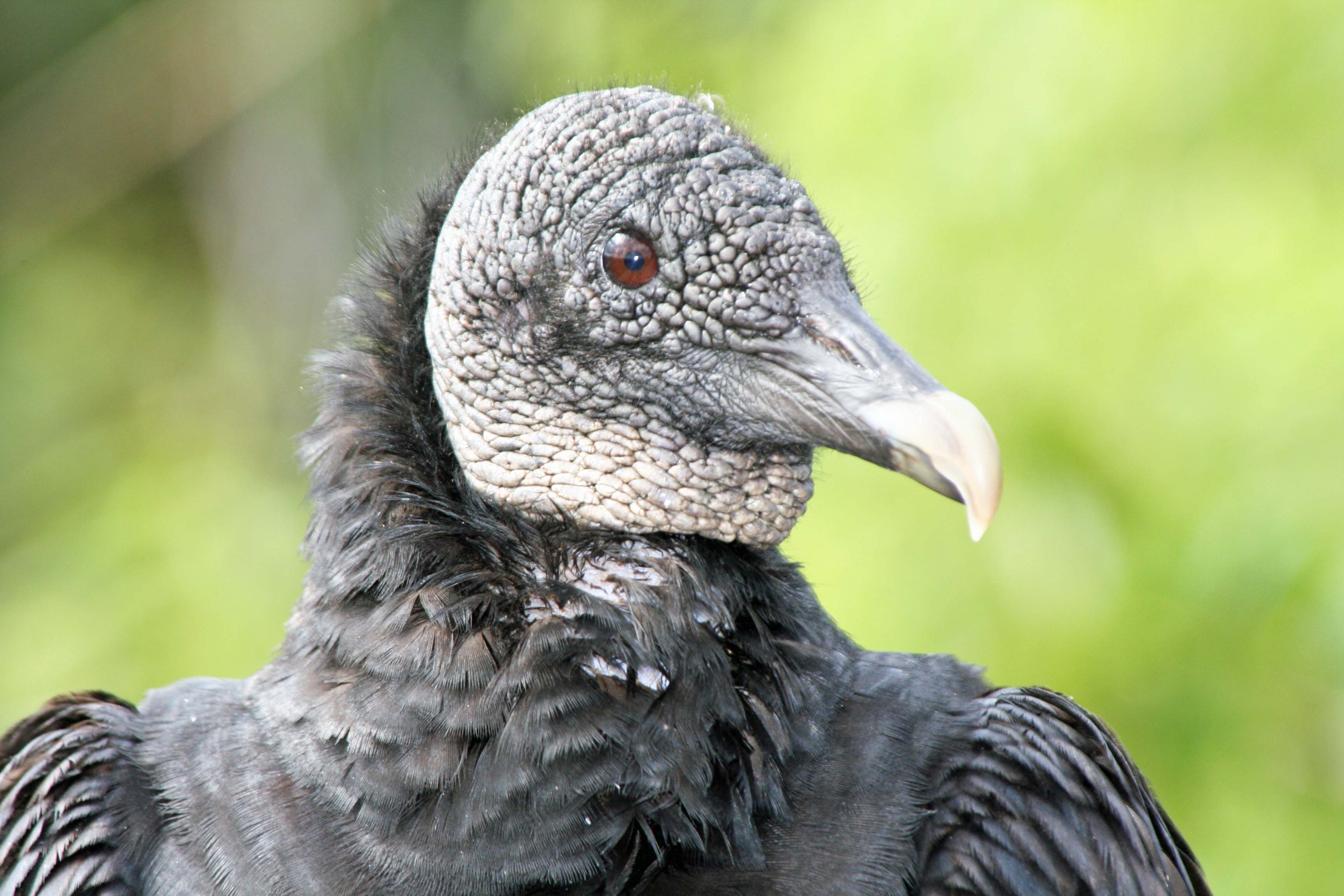
Photo of a Black Buzzard in Everglades National Park. Photo by Curtis Mekemson.

I’ve blogged about Black Buzzards before, but these characters deserve a repeat visit.

Peggy, in her former life, which I refer to as BC, before Curt, bought some swampland in Port Charlotte, Florida with dreams of a handsome profit. Eventually, over a period of about 20 years, the land reached the value she and her ex-husband had paid for it. In the heady years of the early 2000s, the property shot up to triple the original investment. We were able to dump (oh, I mean sell) it before the 2006 housing crash to a land speculator. We split the profits between our kids, the realtor, and Uncle Sam.

I tell this story because the property provided an excuse to visit Florida. It was one of three. The second was that Peggy’s parents had retired to the state from Ohio, joining the relentless flood of people from the Midwest whose elderly bones had lost their sense of humor about freezing cold winters. My brother, Marshall, a homeless man with a bank account and a van, provided the third excuse. He included Florida on his migration route. Marshall, in fact, gave us advice on when to sell the property. In the days before he had decided being homeless was more fun, he had owned a successful real estate appraisal business.

Our regular trips to Florida gave us a chance to explore the state, which can be quite scenic if you can see around the billboards and like orange trees. It’s long sandy beaches are very attractive. Peggy loves them. As a general rule, the state is too flat for me. I can gain more elevation in the twenty-minute walk to our mailbox than I can from driving to the top of Florida’s highest hill.

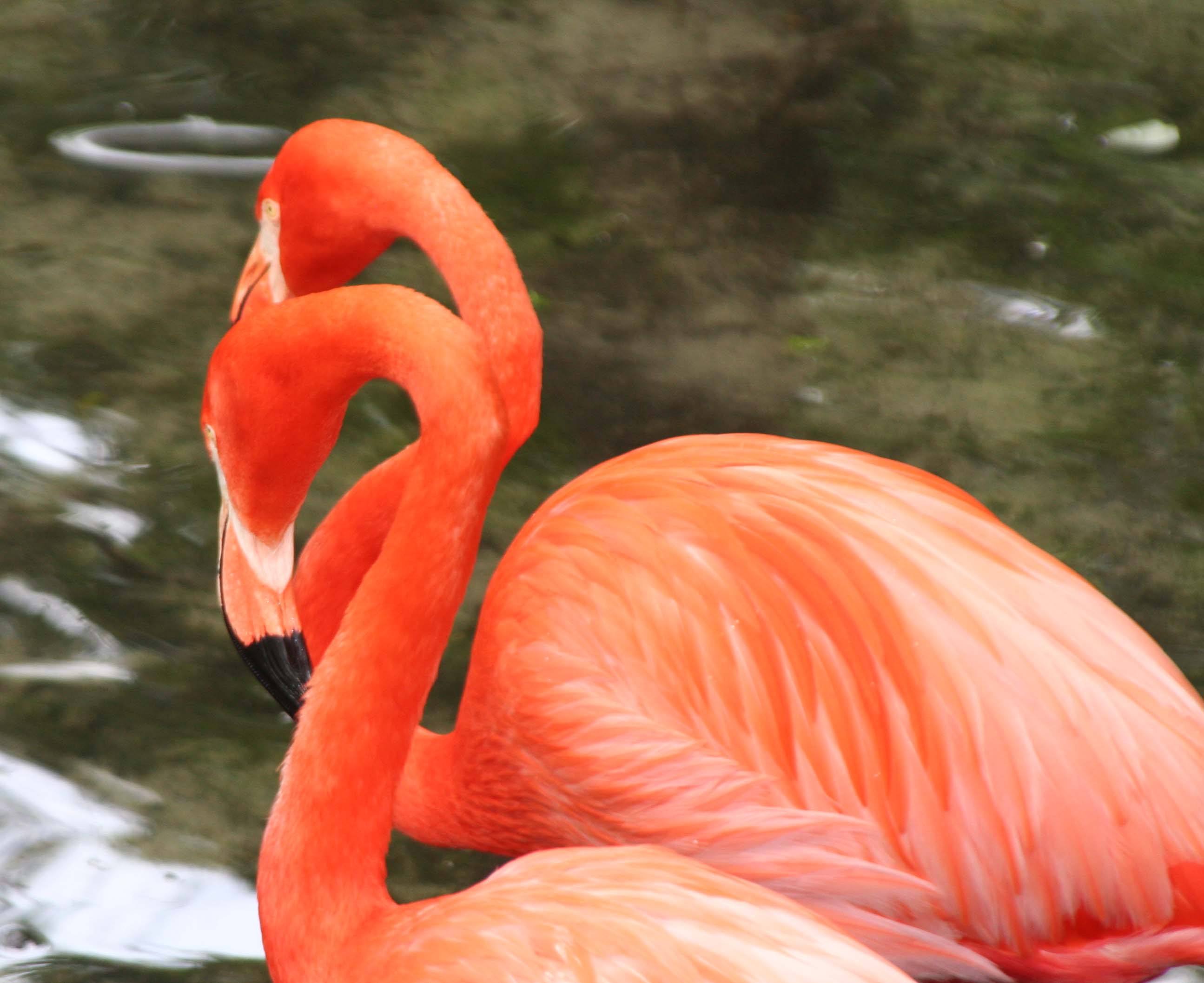
The low elevation and flat land make for  extensive wetlands in Florida, however. And I find this quite attractive. The swamps are filled with fascinating wildlife such as Black Buzzards, Pink Flamingos and the lurking alligators. Everglades National Park provides an excellent opportunity to explore what Florida has to offer.

Photo of Flamingos by Curtis Mekemson.

You are much more likely to see photographs about Flamingos than Black Buzzards when reading about the Everglades. I suspect you have never seen a yard featuring plastic buzzards.

Anhinga in Everglades National Park.

This Anhinga was drying his feathers and presented another photo-op. (Photo by Peggy Mekemson.)

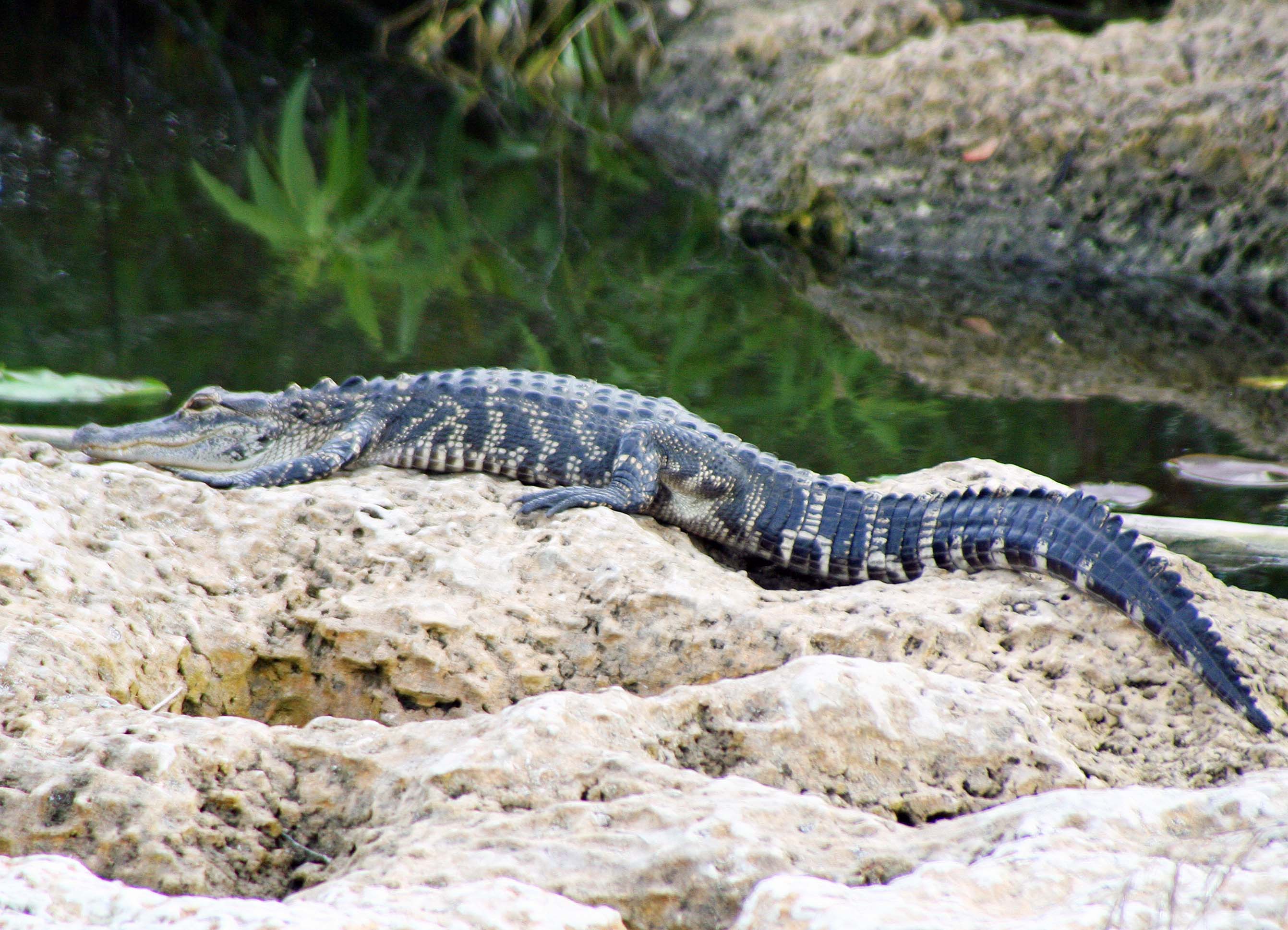
Alligator sunbathing in the Florida Everglades.

We came on this alligator sunbathing. It would be hard to appear more relaxed. (Photo by Peggy Mekemson.)

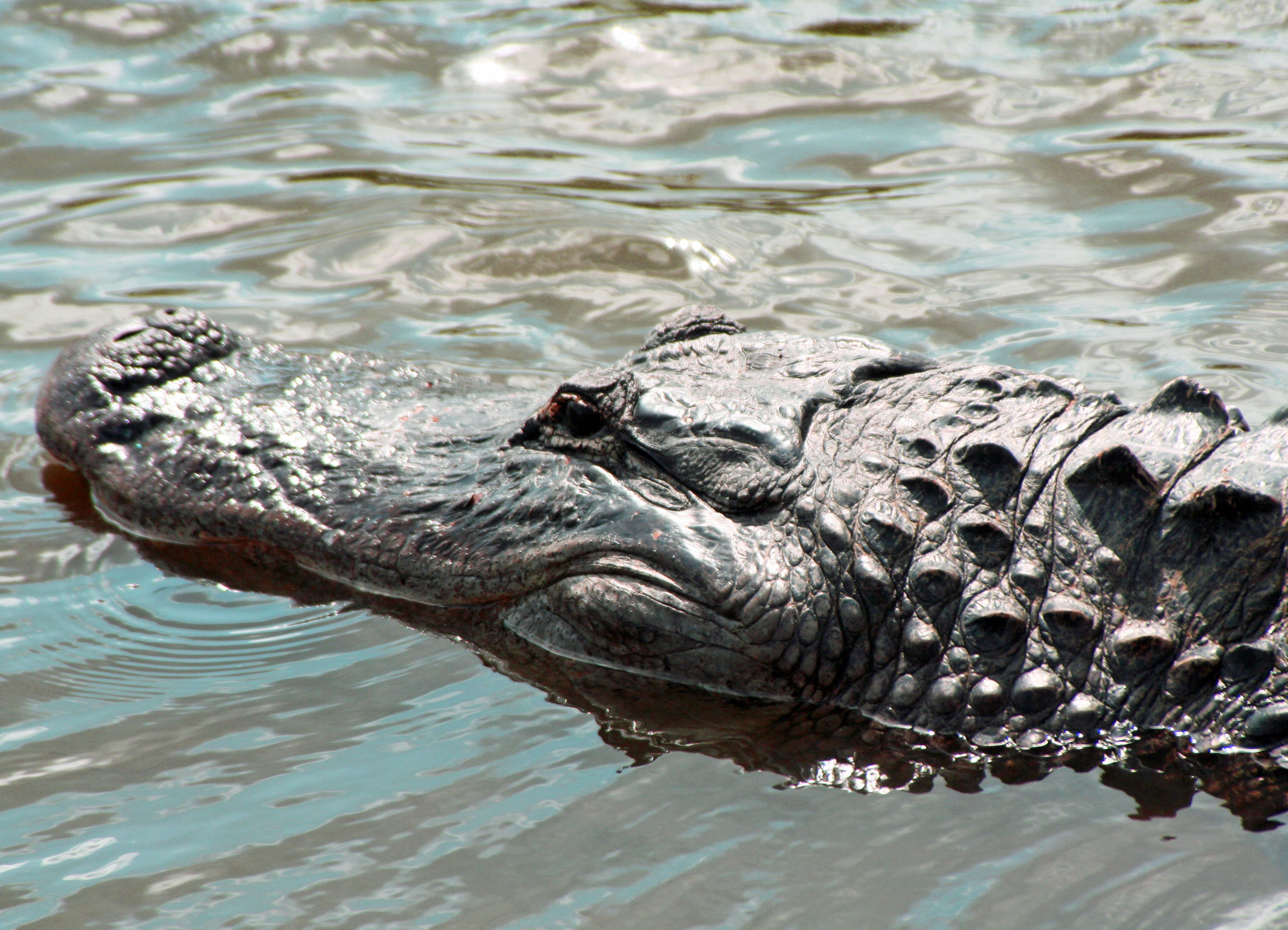
Alligator swimming through water in Florida Everglades. Photo by Curtis Mekemson.

I photographed this guy as he swam under a wooden bridge the park had built out above the wetlands.

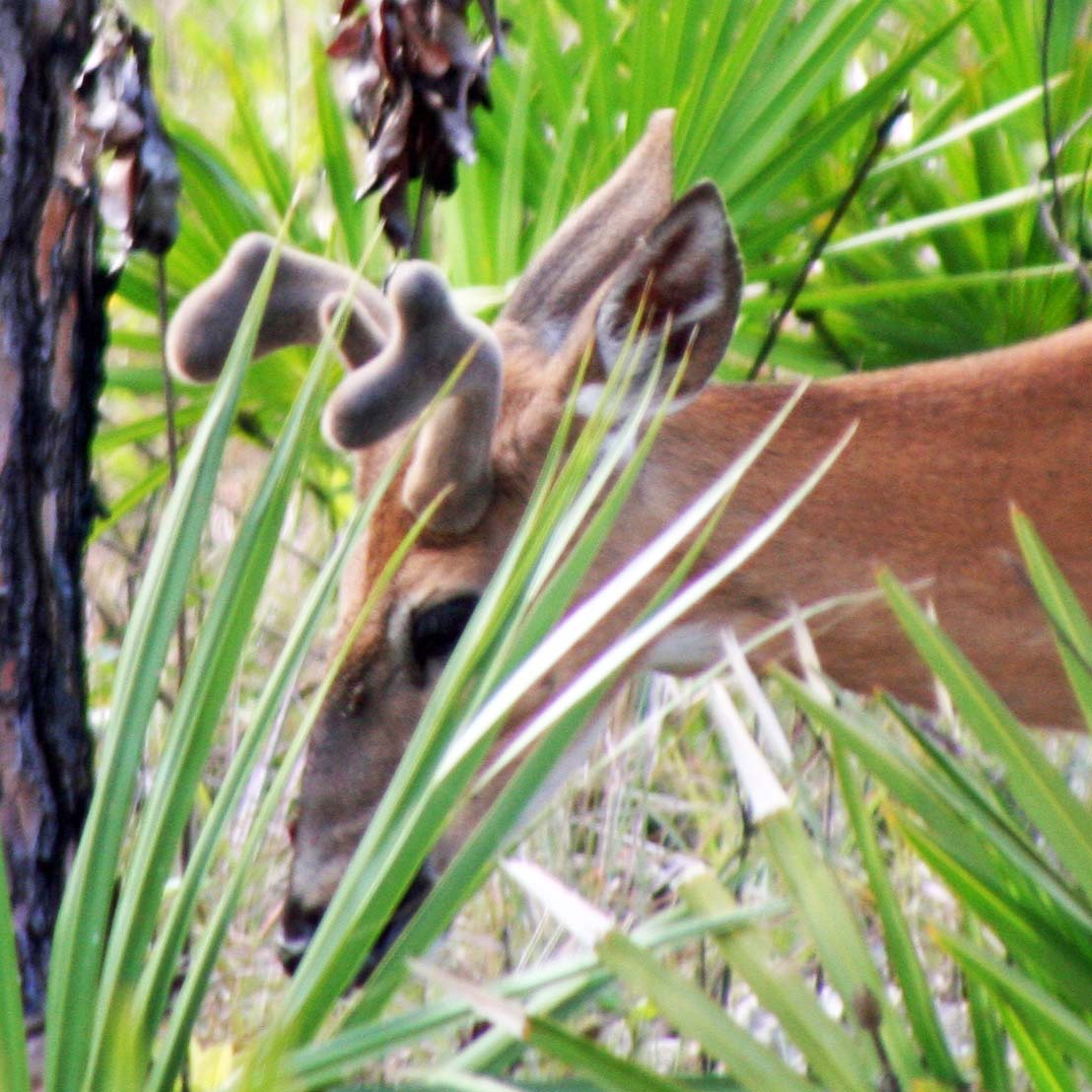
Everglade deer photographed by Curtis Mekemson.

This buck, whose antlers were still in velvet, came by to visit our campsite.

Everglades lake photo by Curtis Mekemson.

The Everglades teem with life. Our binoculars showed that the trees across the lake were filled with birds.

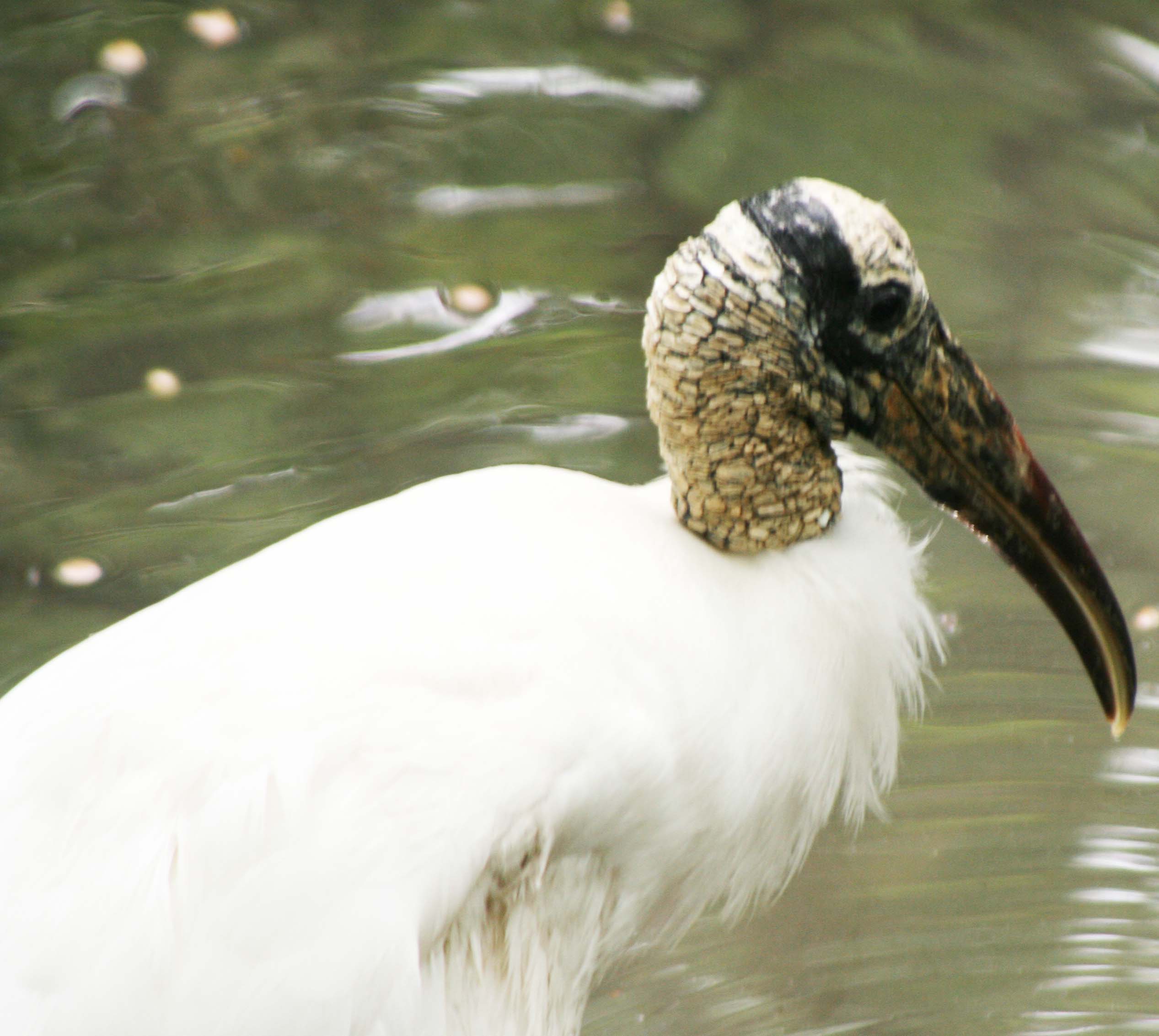
Photo of Wood Stork in Everglades by Curtis Mekemson.

This fellow, with his definitive neck and bill, is a Wood Stork.

Everglades Black Buzzard. Photograph by Curtis Mekemson.

I’ll close this brief visit to the Everglades with two more photos of the Black Buzzards.

Florida Everglades Black Buzzard take a bow. Photo by Curtis Mekemson.

Taking a bow. The buzzard and I thank you for following this blog. (grin)

NEXT BLOG: Since we’ve been hanging out where it is really wet, let’s dry out and head for Organ Pipe Cactus National Monument in Southern Arizona next to the Mexican Border.

Death Valley… A Photographic Journey through America’s National Parks

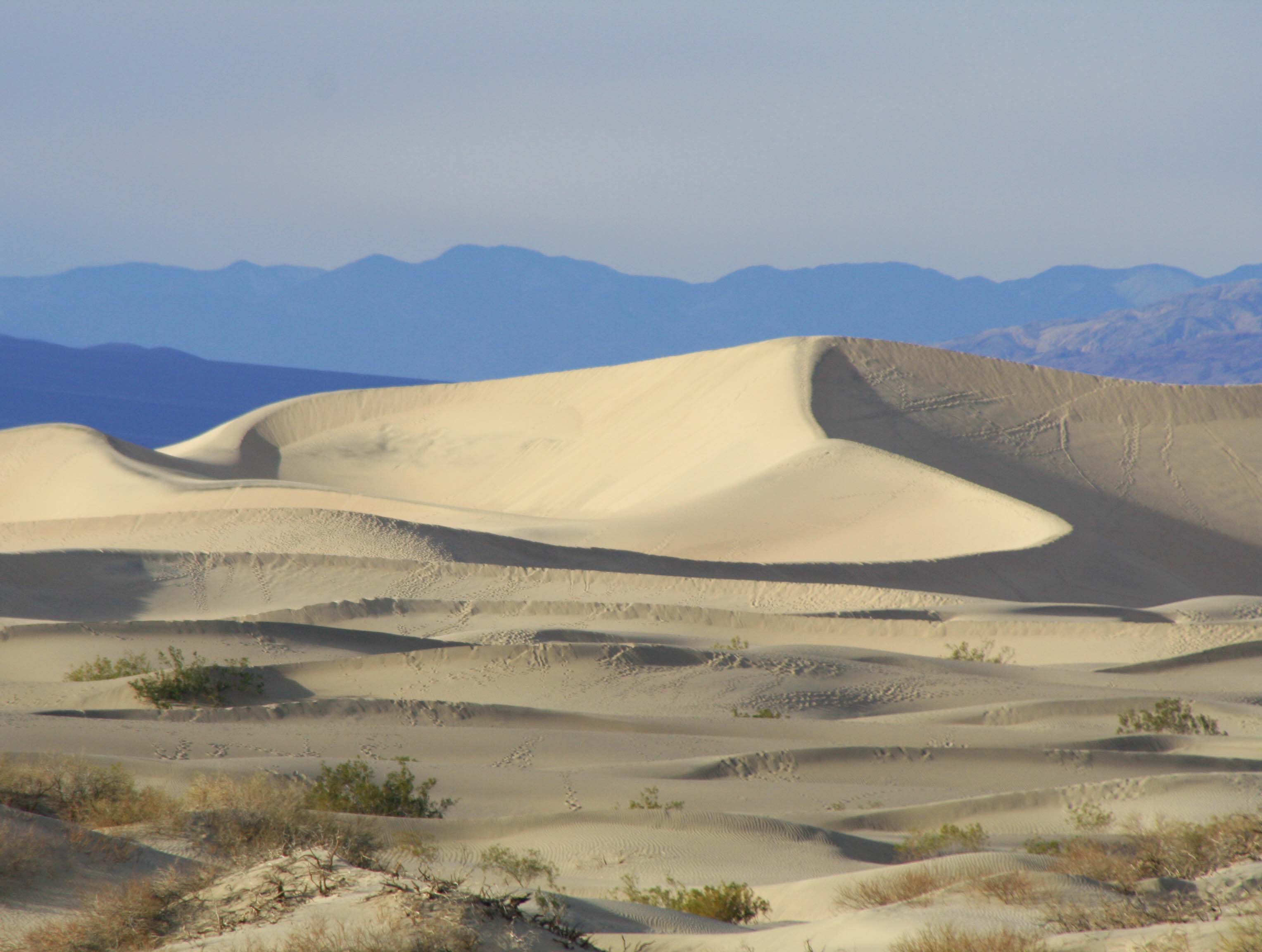
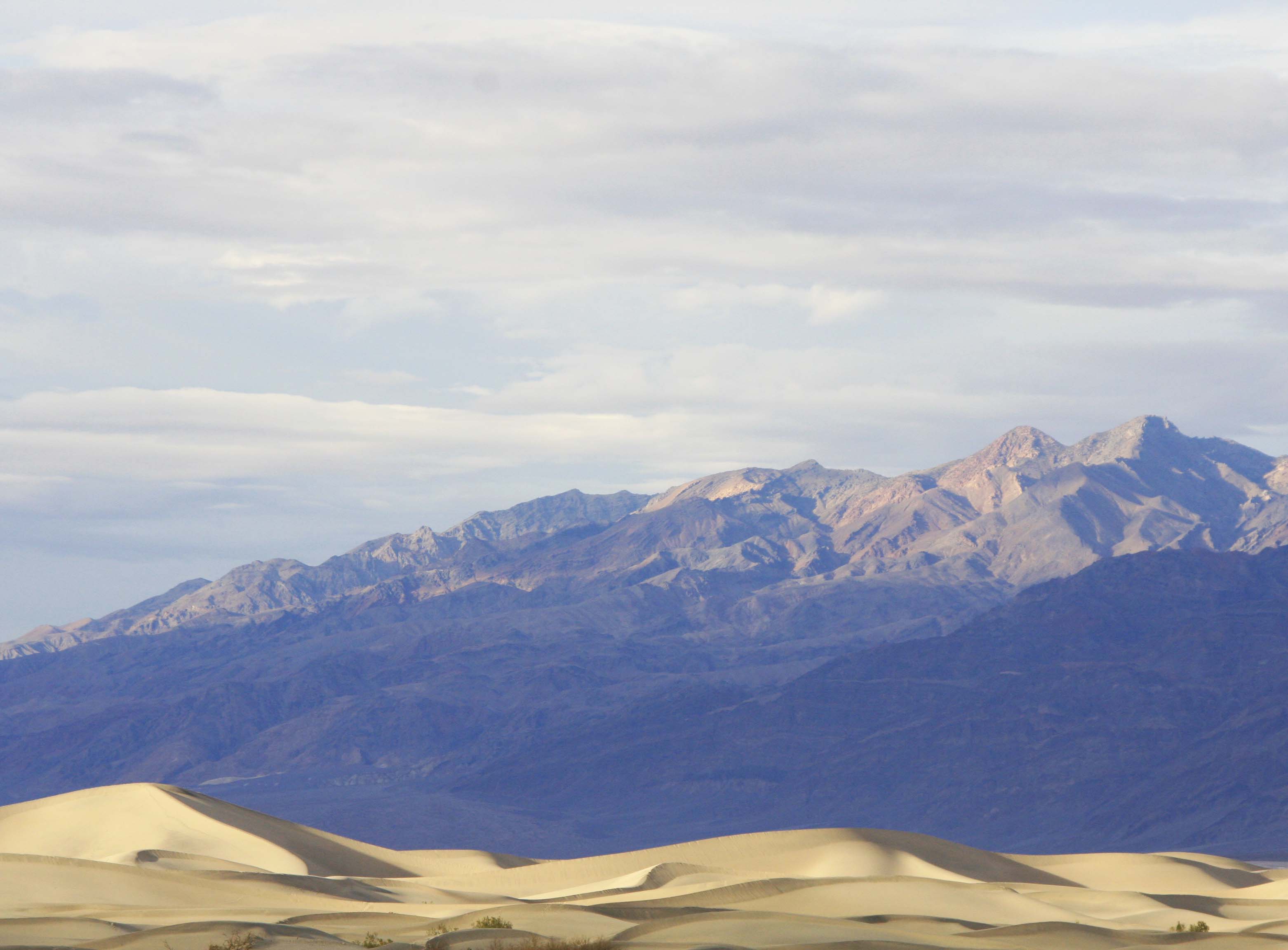
Sand dunes in Death Valley. Photo by Curtis Mekemson.
Tall sand dunes with their graceful curves loom up near Stove Pipe Wells in Death Valley National Park. It is quite an experience to walk out and climb to the top of the dunes.

I rode through Death Valley on my bicycle once. It was part of the six-month 10,000-mile solo trip I made around the US and Canada in 1989.

I had started my adventure in the small town of Diamond Springs near Sacramento, California, bicycled down the Central Valley, climbed up and over the Sierra Nevada Mountains from Bakersfield and, dropped down into Panamint Valley.  The climb from Panamint Valley to Death Valley was the toughest of my whole trip. I was out of the saddle, standing on the pedals, and travelling at 2-3 miles per hour under a relentless sun.

Halfway up there was a large water tank for cars that overheated and couldn’t make it. There was nothing for bicyclists. I was on my own. The climb was burned into my memory banks. But I made it, crossed the valley, and biked on to Maine, where I turned around and started back.

I had been to Death Valley several times before I made the bike trip and have been back several times since. The National Park’s solitude, stark beauty, history and geology have brought me back, time and time again.

Photo of sand dunes and mountains near Stove Pipe Wells in Death Valley by Curtis Mekemson.

I like this photo because of the contrast between the golden dunes and purple mountains in evening sunlight.

Devil's Golf Course, Death Valley. Photo by Curtis Mekemson.
They call this section of Death Valley the Devil’s Golf Course. It’s easy to see why. Salt deposits left behind by an evaporated lake go down several thousand feet. (Photo by Peggy Mekemson.)

Zabriskie Point, Death Valley. Photo by Curtis Mekemson.
It is difficult to imagine the variety of landscapes in Death Valley unless you have been there. This photo was taken looking down from Zabriskie Point.

Photo of Zabriskie Point, Death Valley taken by Curtis Mekemson.

Another photo taken from Zabriskie Point. This one looks out across Death Valley.
Golden Canyon, Death Valley. Photo by Curtis Mekemson.
You can hike up to Zabriskie Point following an old road that goes up through Golden Canyon. Part of the original Star Wars movie was filmed in this canyon. I kept a sharp lookout for Luke.

Here, Peggy caught a shot of me following the trail toward Zabriskie Point. The hiking was ever so much easier than my bicycling experience. (Photo by Peggy Mekemson.)

Here, Peggy caught a shot of me following the trail toward Zabriskie Point. The hiking was ever so much easier than my bicycling experience. (Photo by Peggy Mekemson.)

Golden Canyon, Death Valley. Photo by Curtis Mekemson.

Our view on the way down Golden Canyon.

Artist's Palette, Death Valley. Photo by Curtis Mekemson.
The colors here are created by different minerals in the rocks. Because of the color, this site is known as Artist’s Palette.

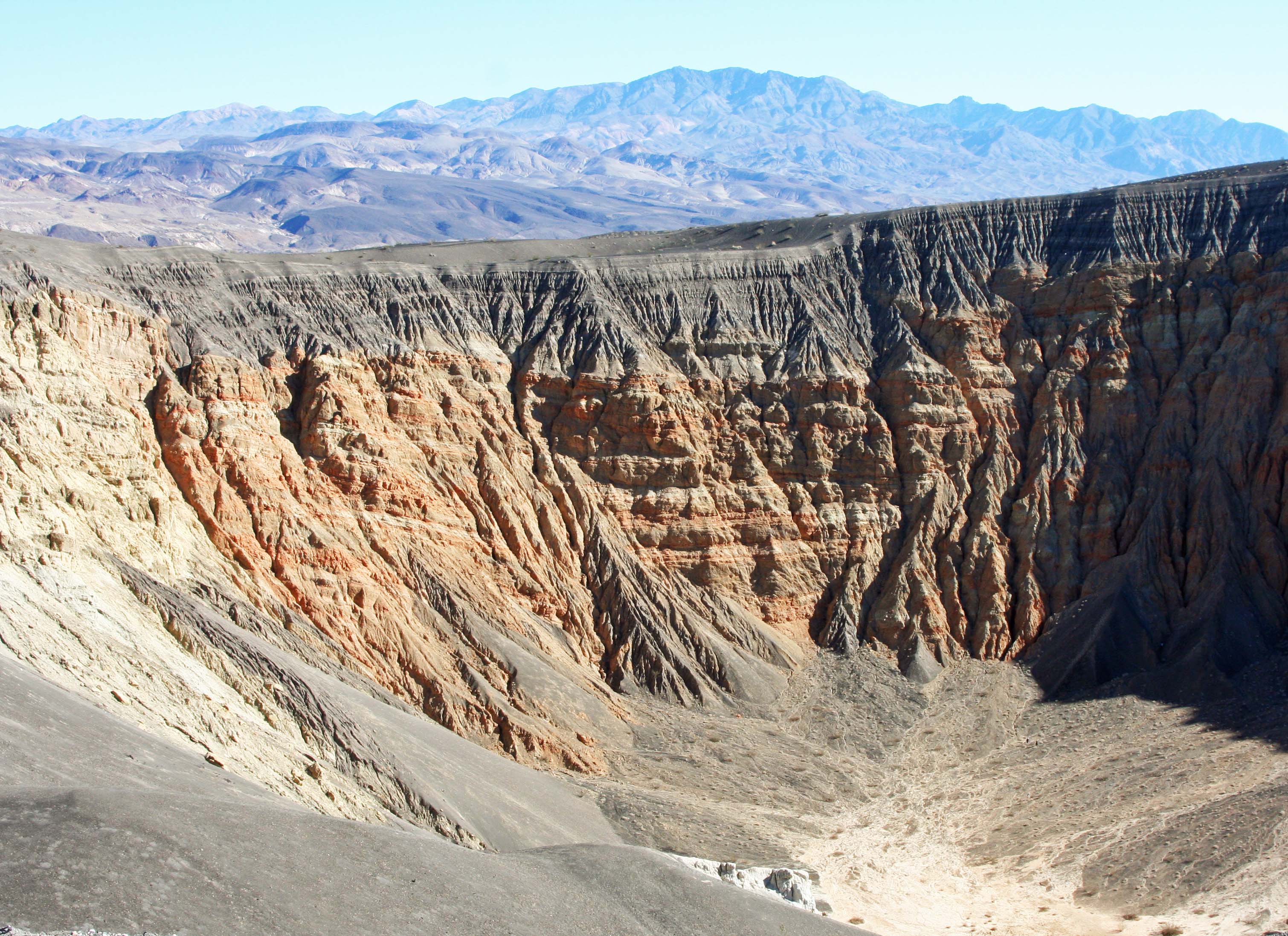
Traveling north, we come to Ubehebe Volcanic Crater, another of Death Valley's geological wonders. (Photo by Peggy Mekemson.)

Traveling north, we come to Ubehebe Volcanic Crater, another of Death Valley’s geological wonders. (Photo by Peggy Mekemson.)

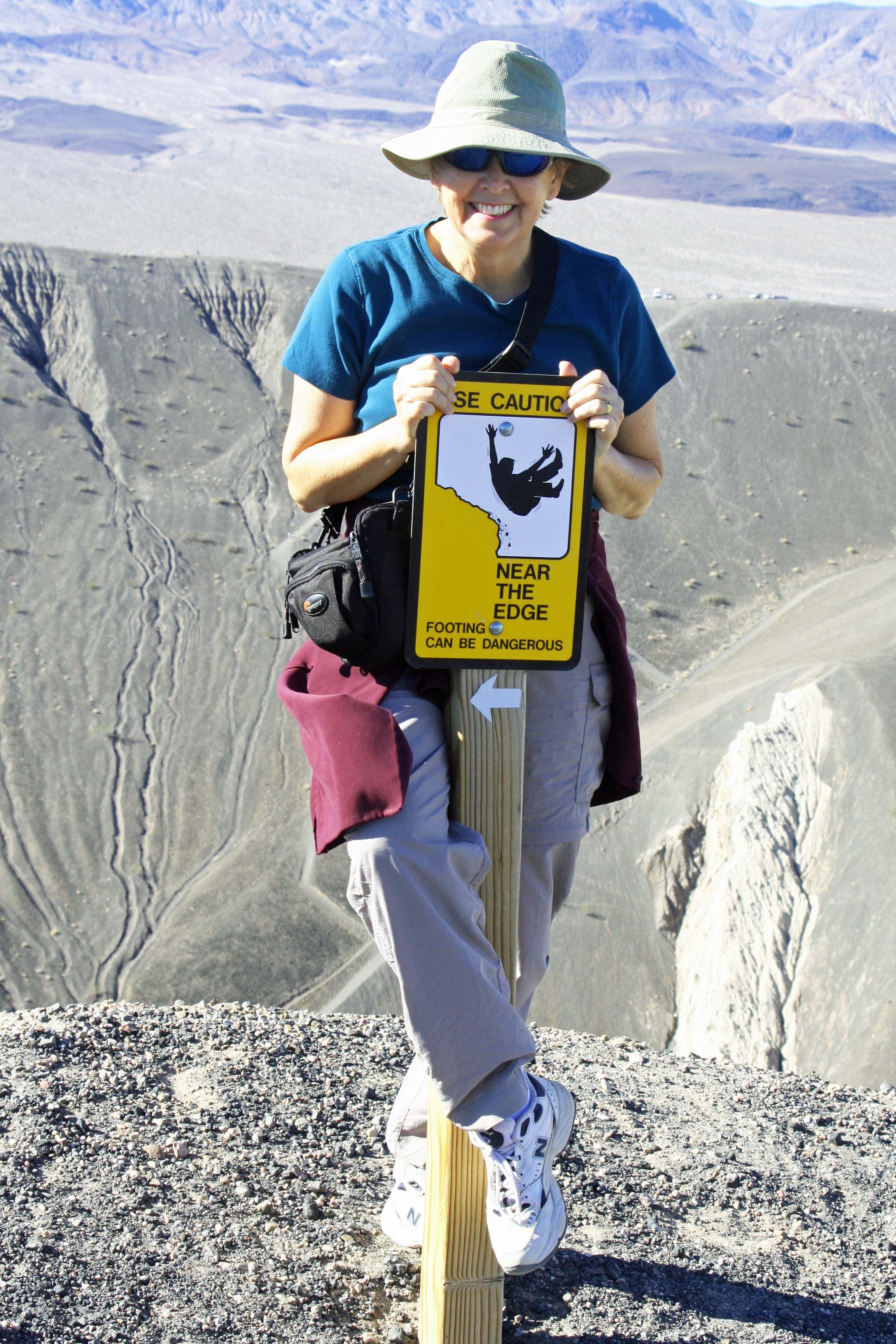
Warning sign at Ubehebe Crater, Death Valley. Photo by Curtis Mekemson.
You are welcome to walk into the crater. Falling is not recommended, as demonstrated by Peggy.

Small crater next to Ubehebe Crater in Death Valley. Photo by Curtis Mekemson.

A smaller crater next to Ubehebe.

Erosion patterns near Ubehebe crater. Photo by Curtis Mekemson.

I think the erosion patterns near Ubehebe are fascinating.

Scotty's Castle, Death Valley. Photo by Curtis Mekemson.
Scotty’s Castle. The history of Death Valley is filled with characters and none was greater than Scotty. Born Walter Scott, Scotty was a first class con-man who persuaded Albert Johnson to build the castle and then claimed it was built with money from his own gold mine. Albert, who loved Death Valley and liked Scotty, went along with the tale.

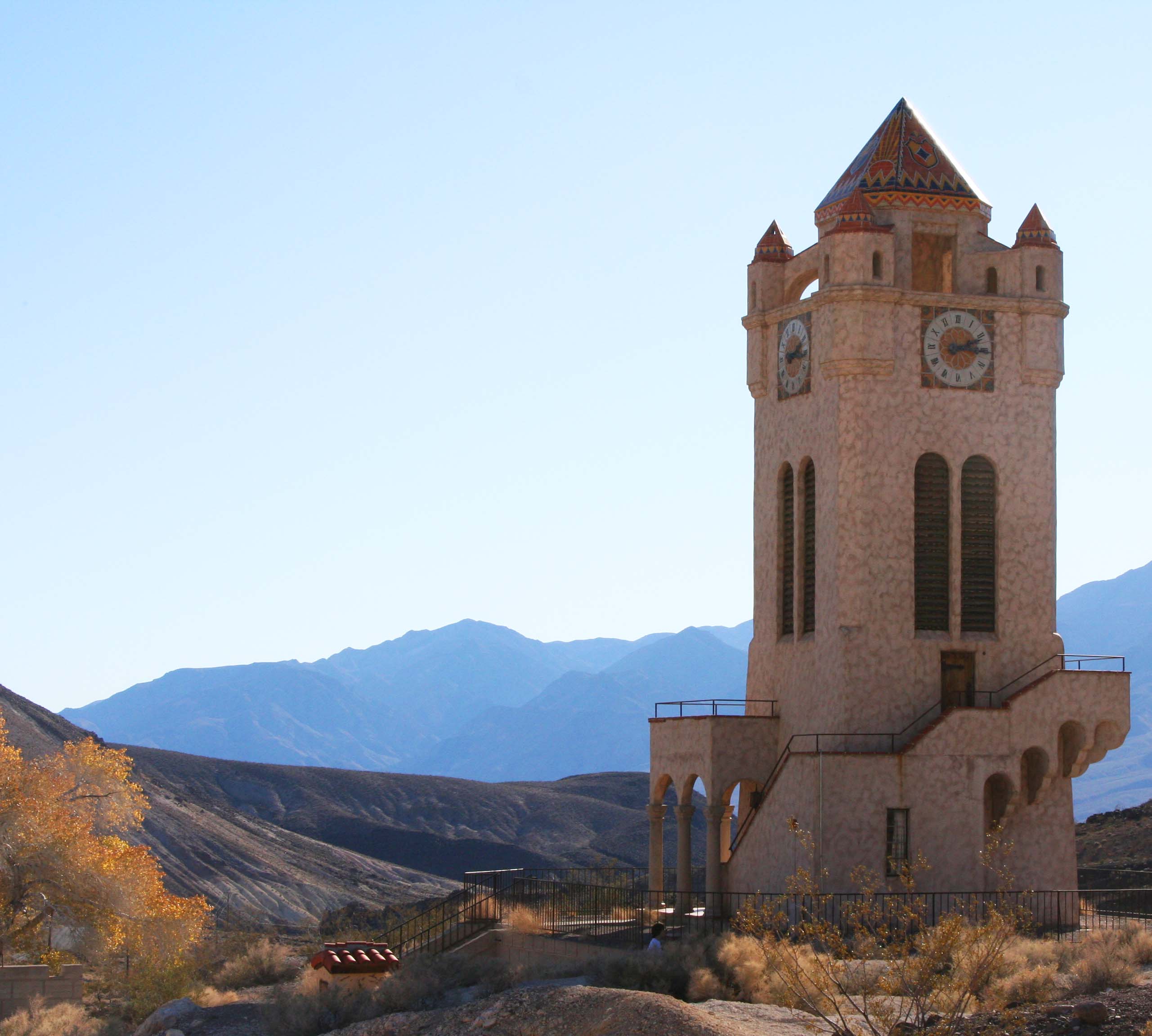
Scotty's Castle at Death Valley. Photograph by Curtis Mekemson.
The clock tower at Scotty’s Castle.

NEXT BLOG: We will journey east to the Everglades and I will introduce you to my all-time favorite buzzard.