STRANGE PLANTS THAT EAT BUGS: Glasgow’s Botanic Gardens
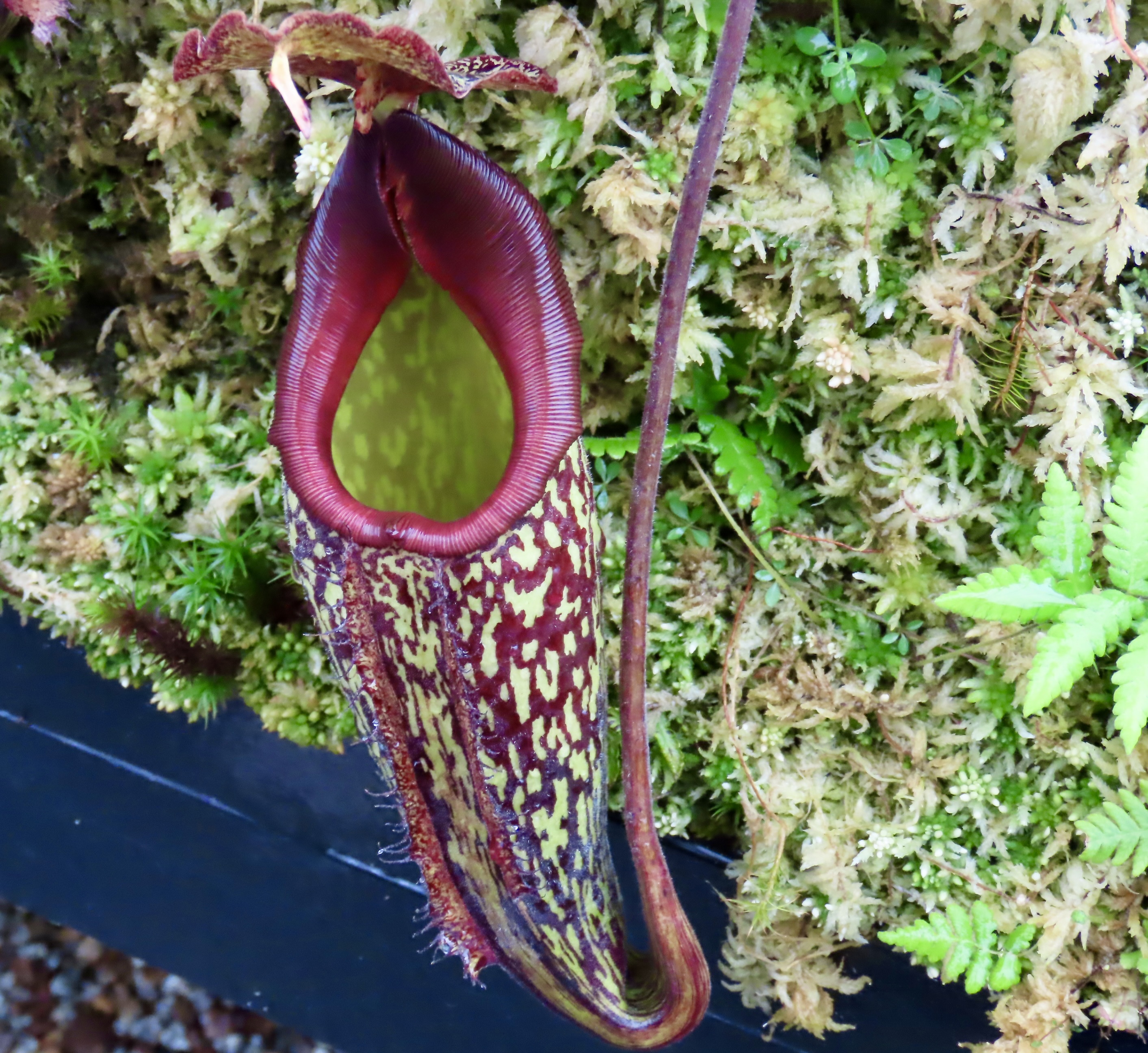
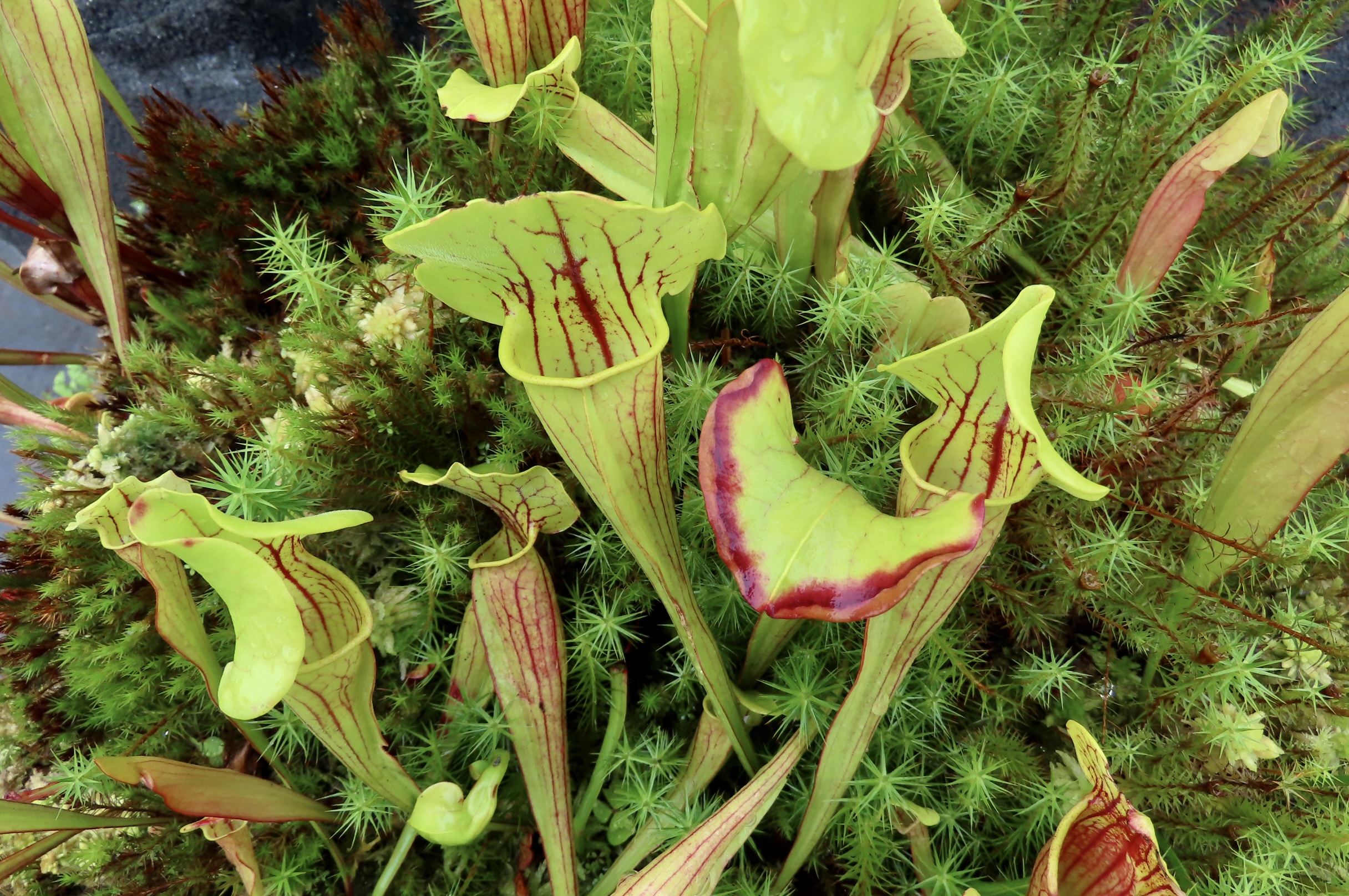
I’ve always been fascinated by carnivorous pitcher plants that lure insects into an untimely demise by attracting them with nectar into specialized, cup-shaped leaves, and then dissolving them in digestive fluid. Sounds a bit like a horror plot out of a B-movie. This beauty, as well as several others were featured at the Kibble Palace/Glass House of the Glasgow Botanical Garden.
In our last Scottish Highlands post, we took you on a tour of the areas natural scenic beauty. This time we are going to feature human efforts to beautify the country: attractive landscapes, colorful flowers, and interesting plants. We’ve already included some of these as we have explored Scotland’s castles and communities. Today, we are going to visit the Botanic Gardens located in Glasgow and the Inverewe Gardens located in the northwestern Highlands. Both feature plants and flowers that come from around the world as well as native plants. Unless otherwise noted, all photos in this post were taken by Peggy, our grandson Cody, or me on a CIE bus tour we took of the Scottish Highlands this summer.
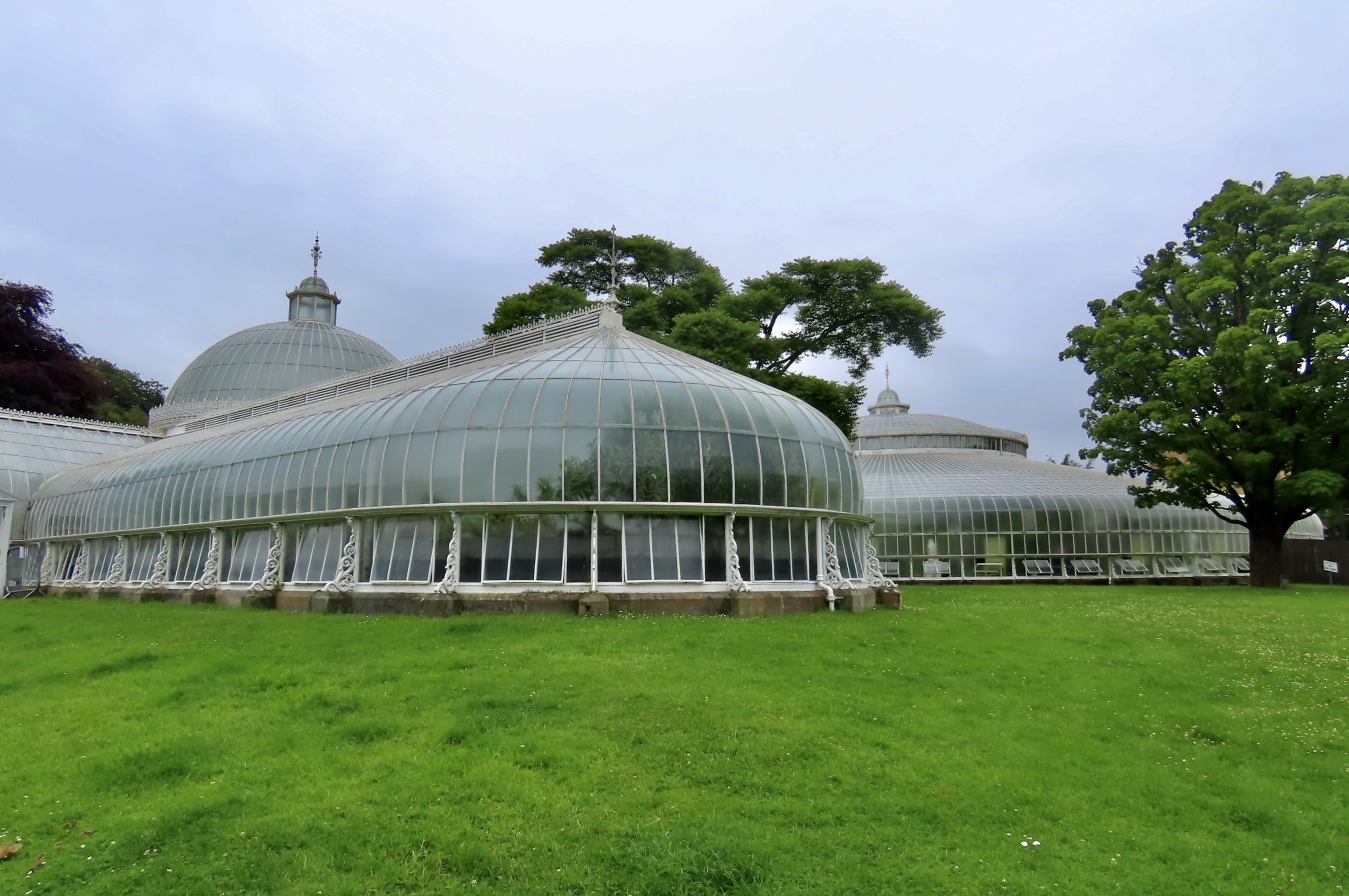
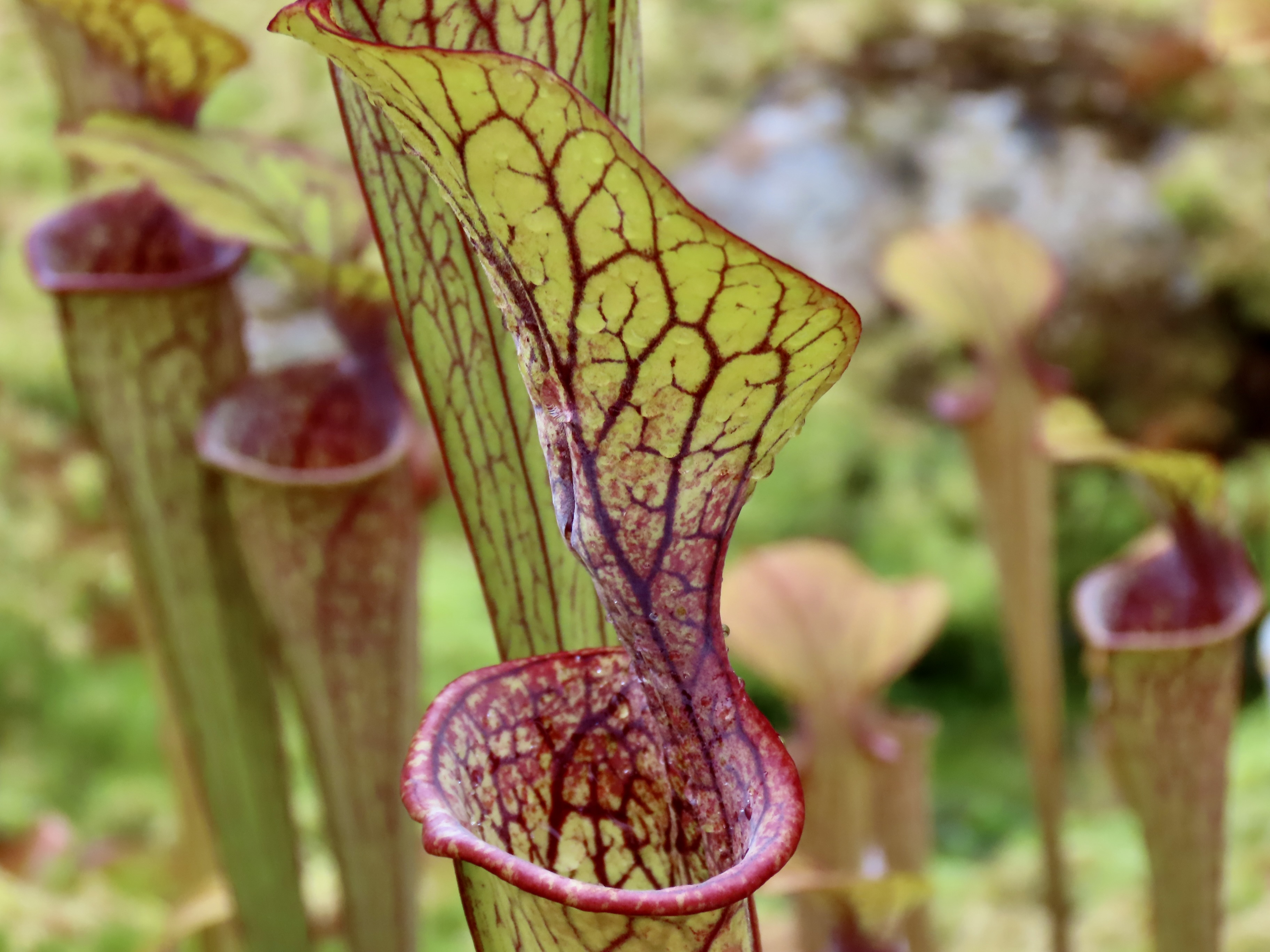
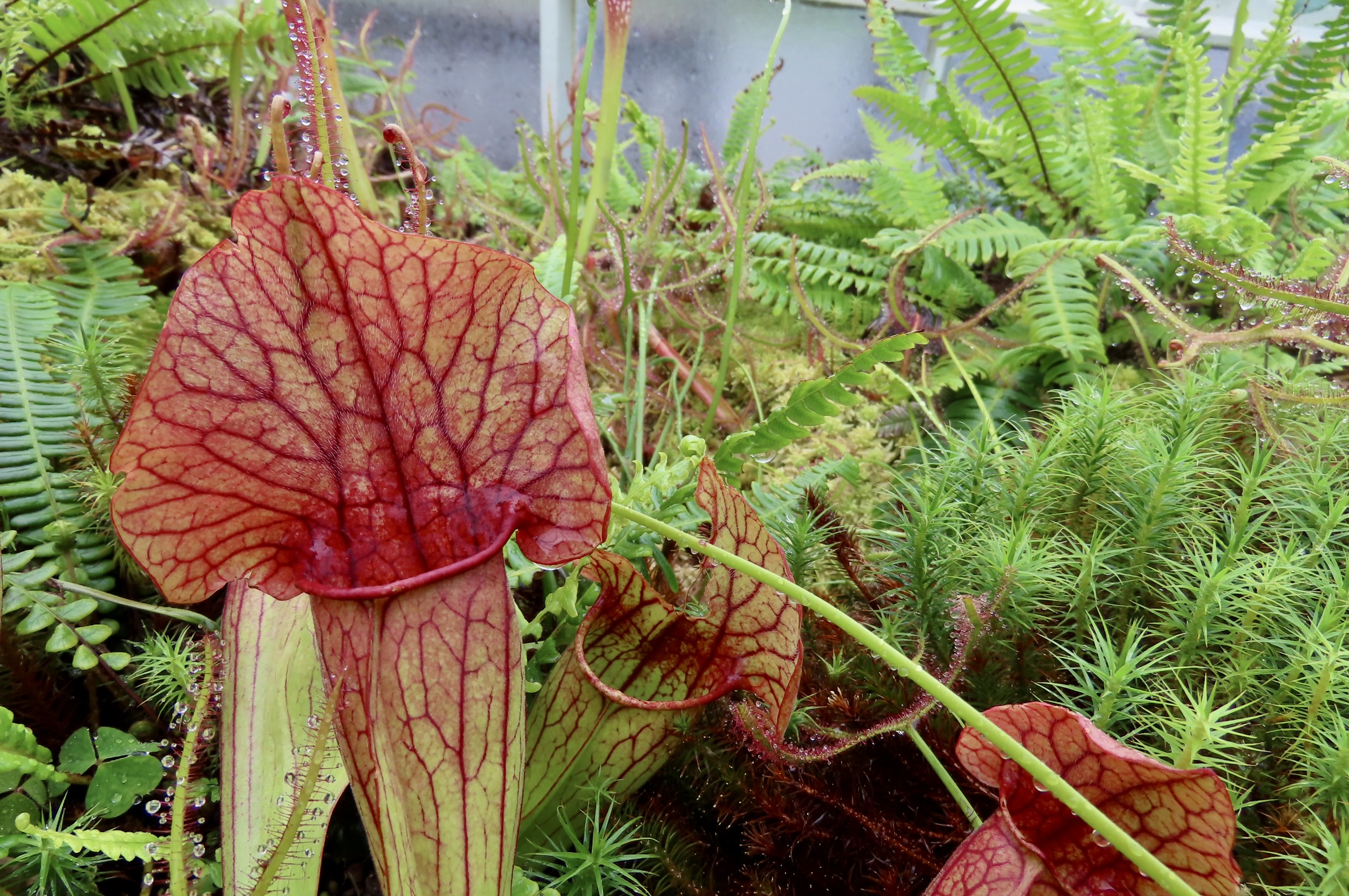
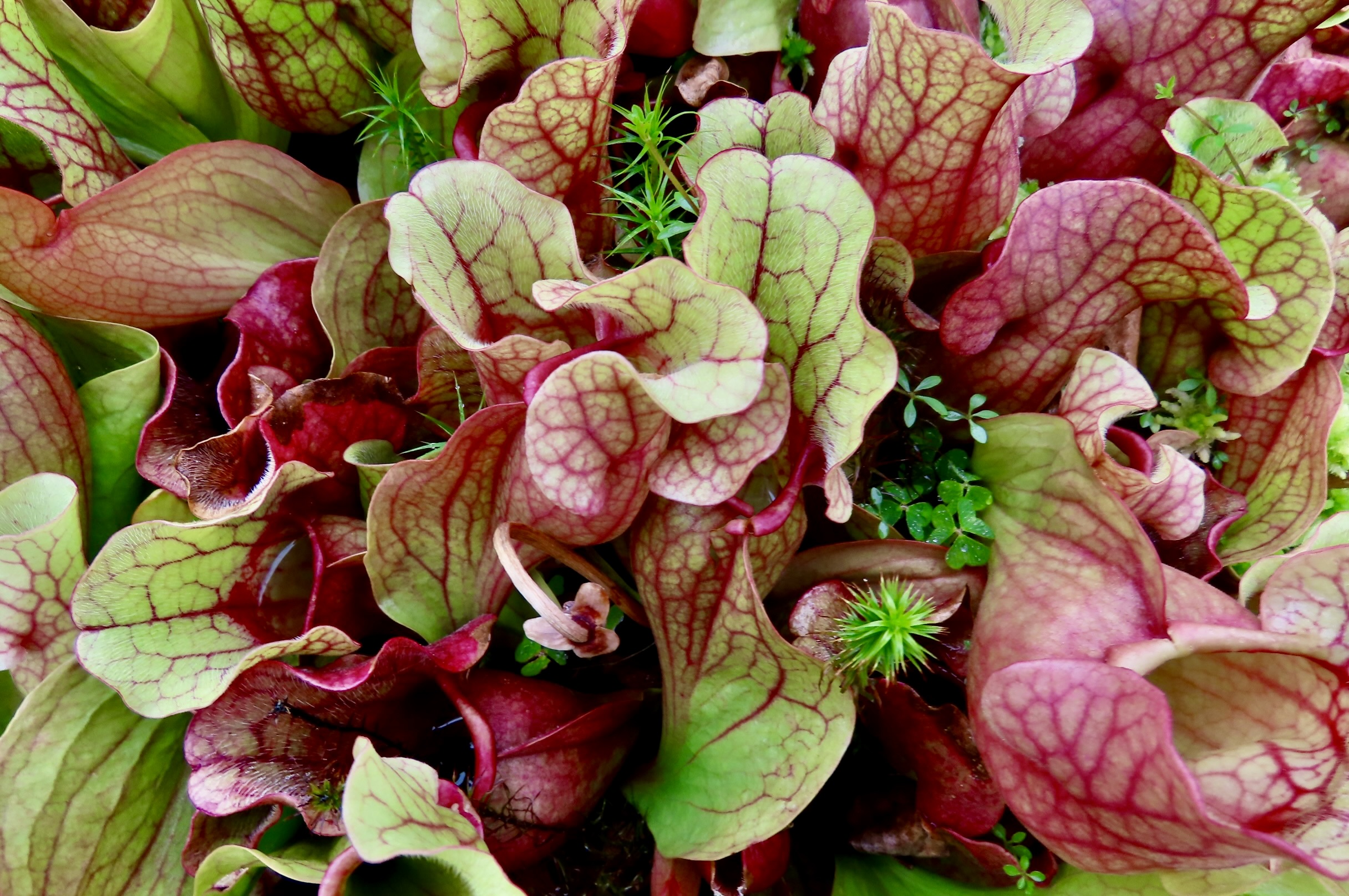
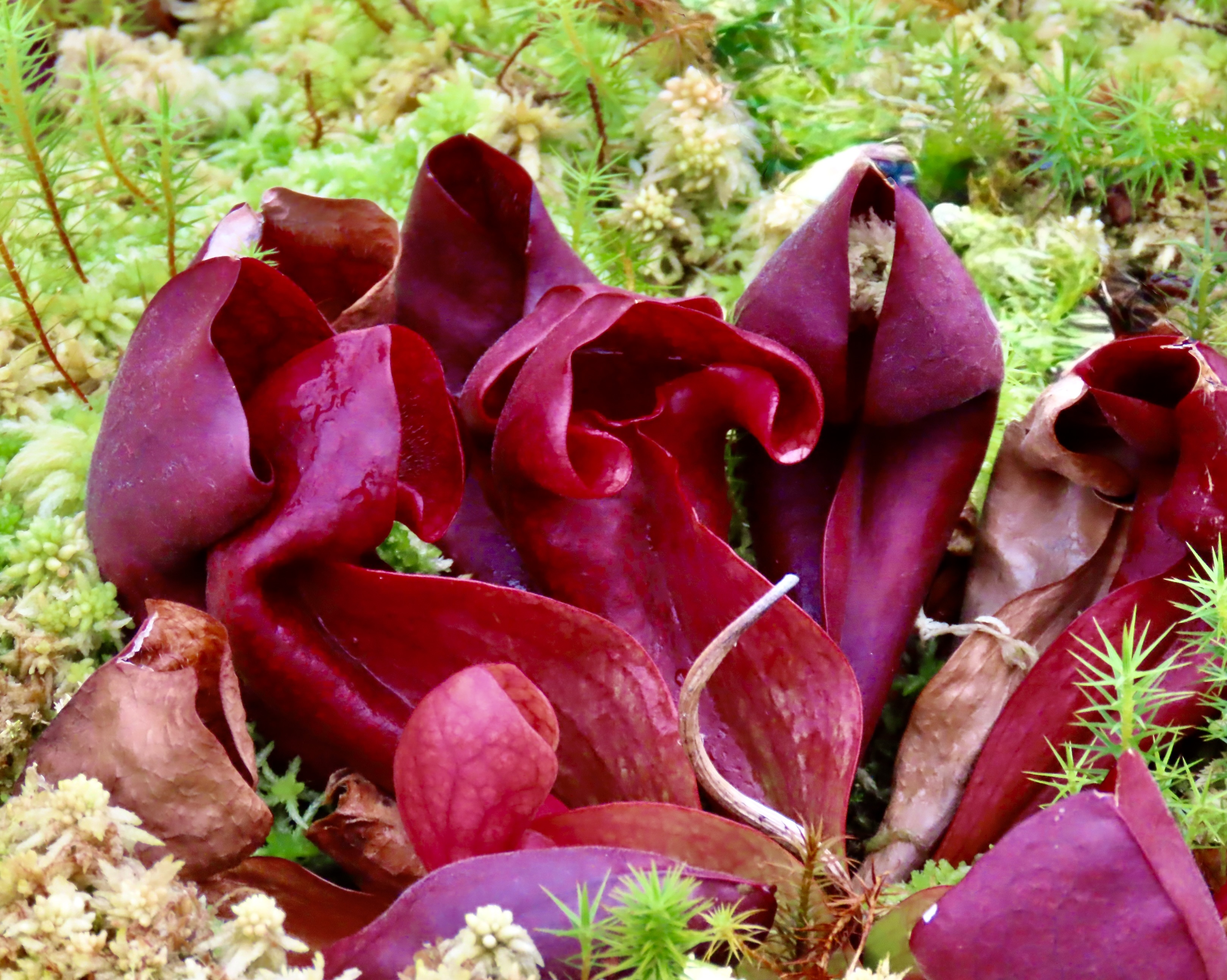
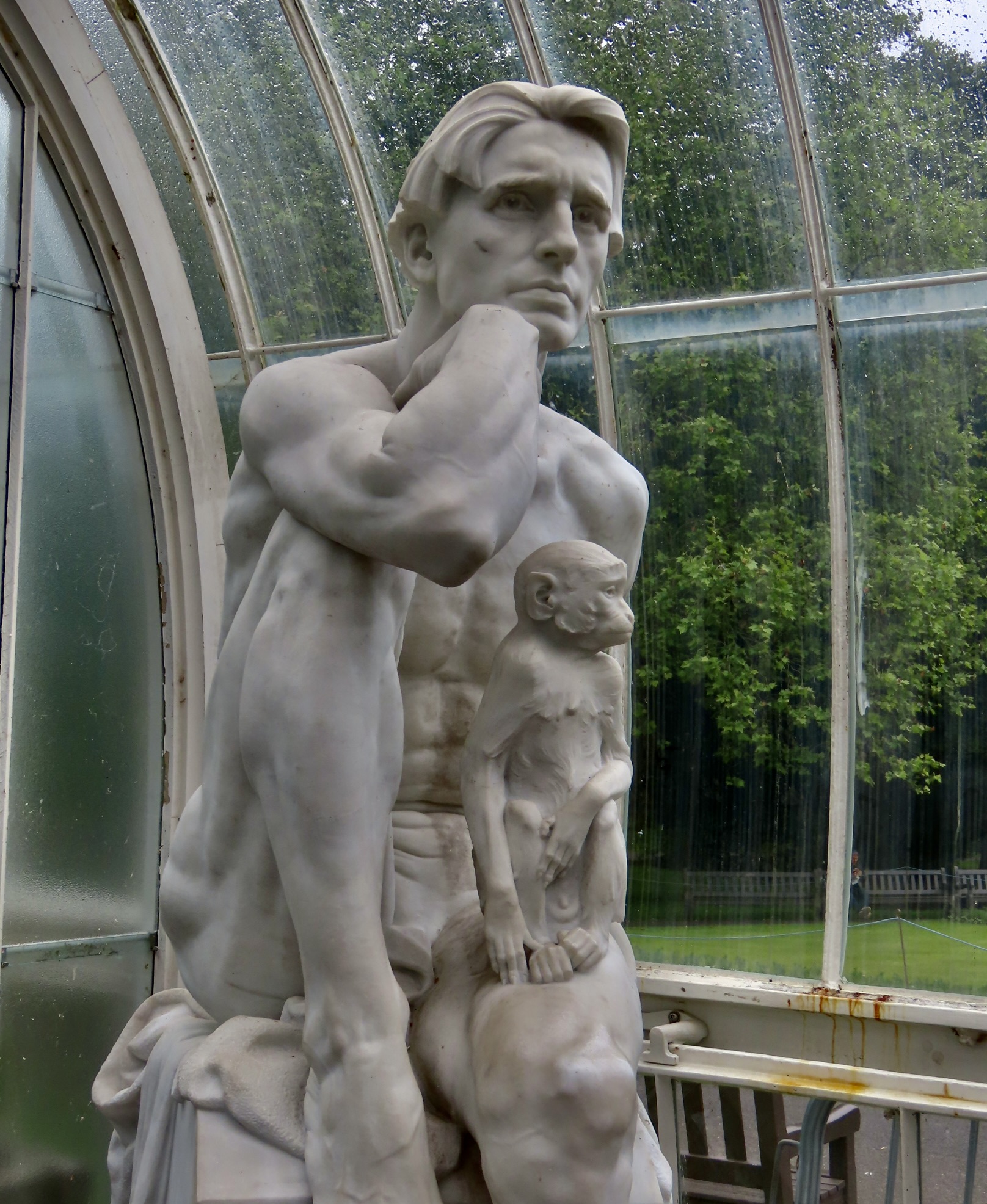
The Kibble Palace/Glass House of Glasgow’s Botanical Garden was built for housing tropical plants. Several of these large, ornate glass structures were built during the 1800’s Victorian era throughout the British Isles and in a number of major cities worldwide.Displaying red/purple veins. The leaf-like structures on top of pitcher plants—known as the lid or operculum, serve to attract insects and prevent excessive rain from entering the plant, diluting its digestive juices.A rather showy operculum that advertises ‘Come this way bugs!’This lime-green species provides more cover. If the operculum fails on this pitcher plant, or others, and fills with rain, the plant folds over from the weight, dumps the water, straightens back up, and produces more digestive juice. Sorry, bugs. Close to-the-ground crowded pitcher plants.Also small and crowded but red with an attitude! (hoodies)We found this Rodin-like statue of The Thinker created by Scottish sculptor George Henry Paulin in Glasgow’s glass house. The monkey, assuming a similar pose, added a touch of humor.
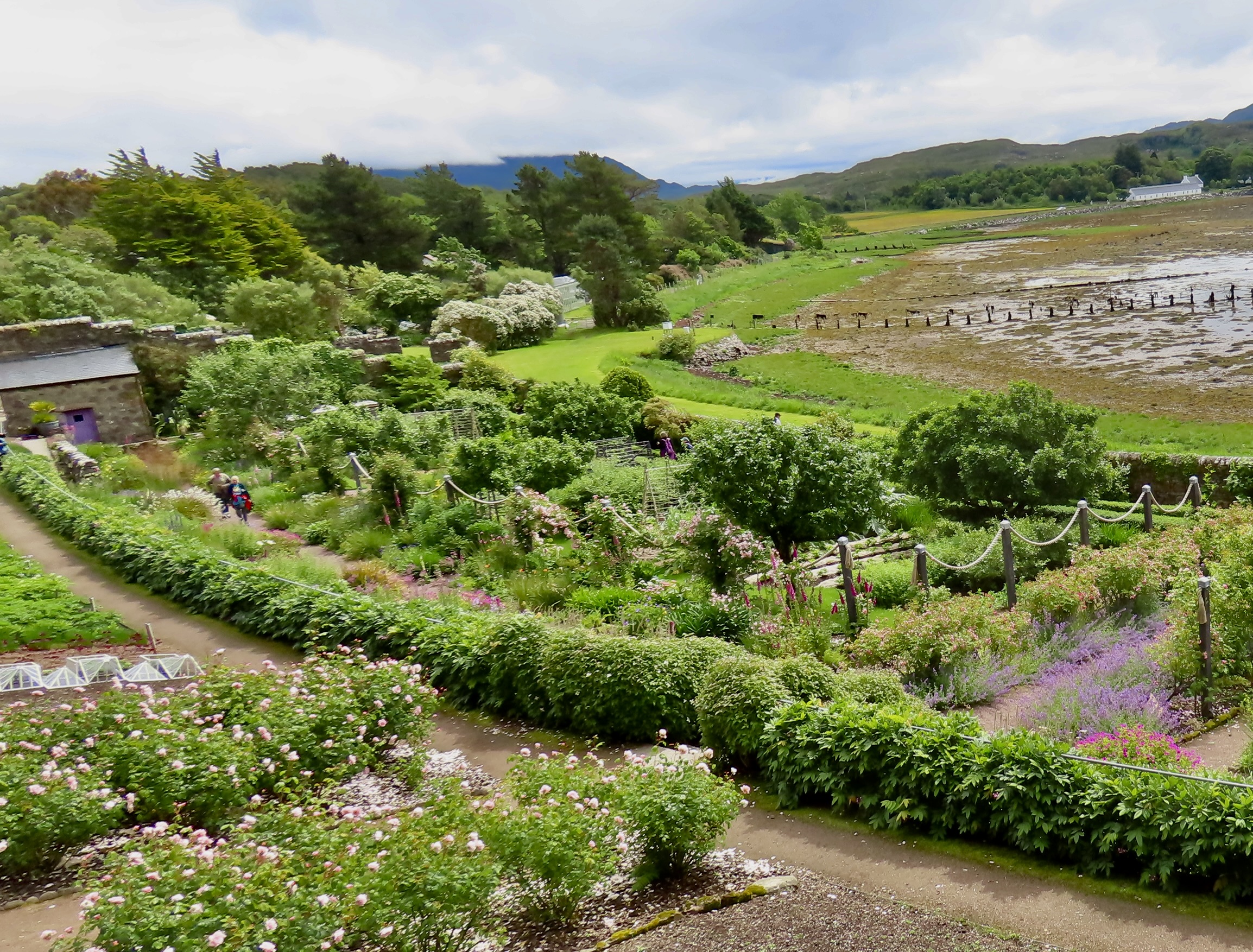
INVEREWE GARDENS: An around-the-world collection of exotic flowers and plants in a botanical garden created by Osgood Mackenzie starting in 1862 on an undeveloped 2100 acre parcel of land given to him by his mother. It is now owned and operated by the Scottish Land Trust.
The two Grahams, our guide and bus driver, dropped us off and gave us three hours to explore the 2100 acres on our own, following the numerous paths that wandered through the garden. (The prefix ‘inver‘ in Scottish place names, BTW, refers to where the mouth of a river meets the sea, a loch or another river. In this case, it was the River Ewe flowing into the Loch Ewe. In case you are wondering about Ewe, no female sheep were involved. It’s the Scottish Gaelic spelling for the yew tree.)
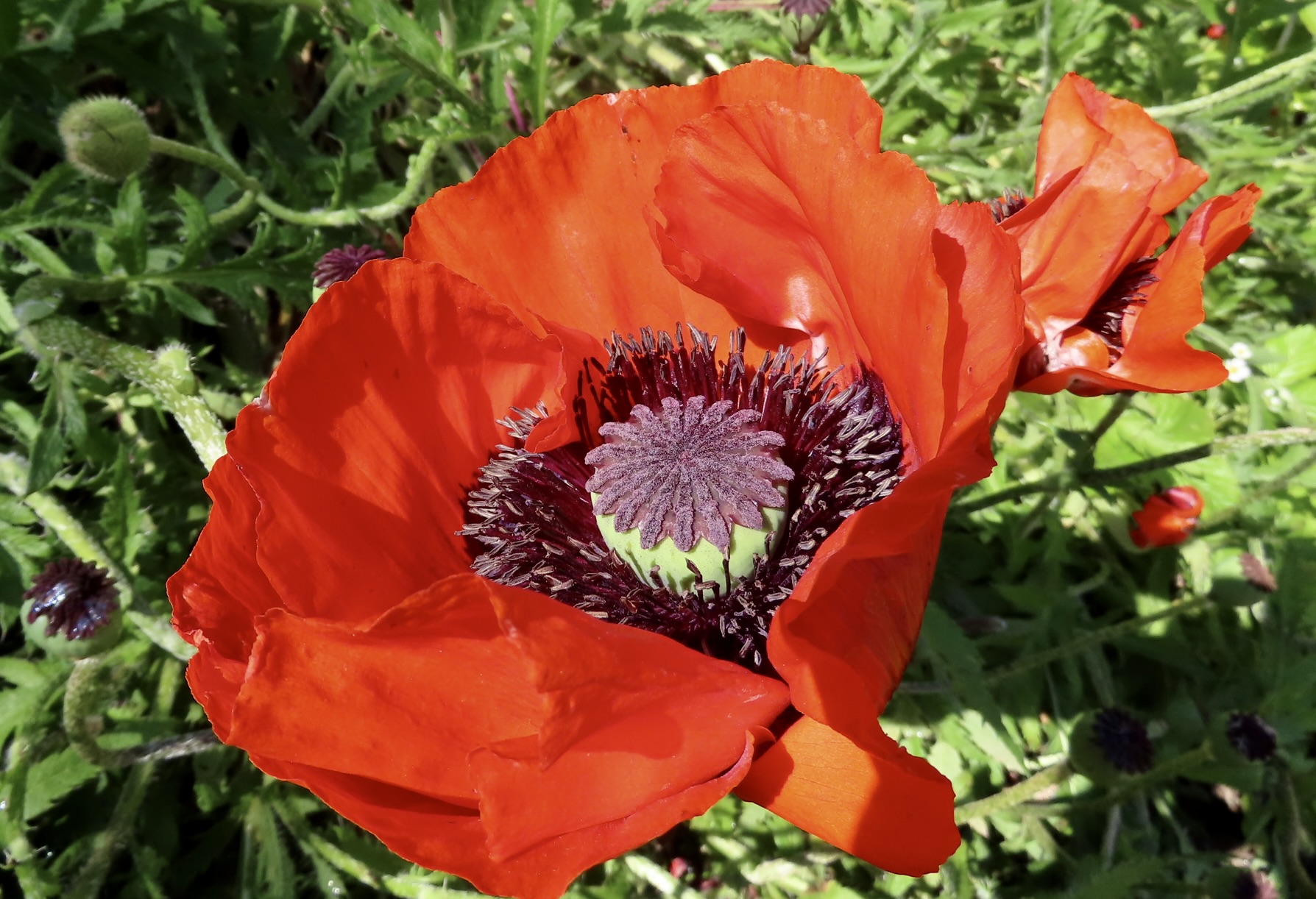
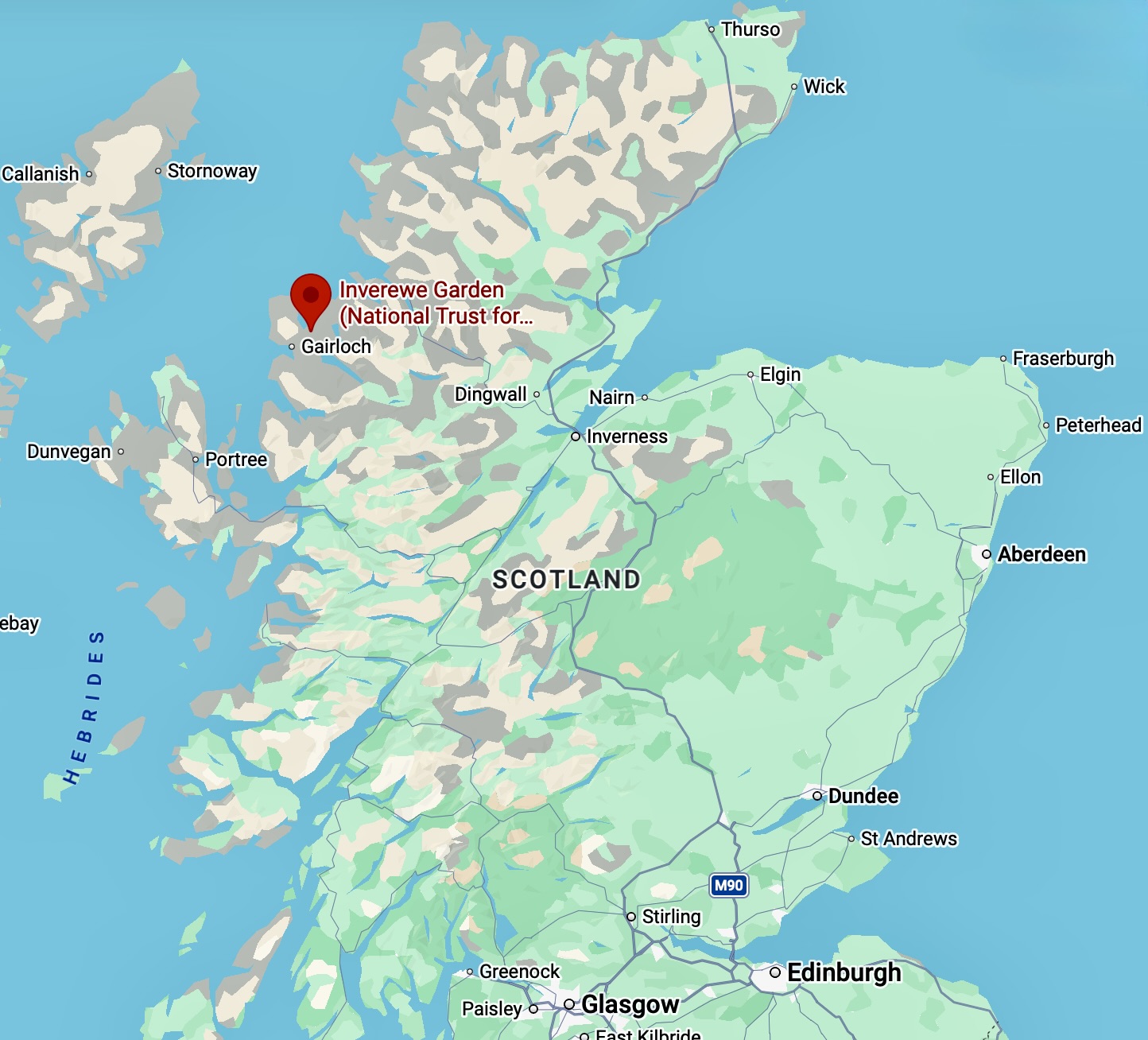
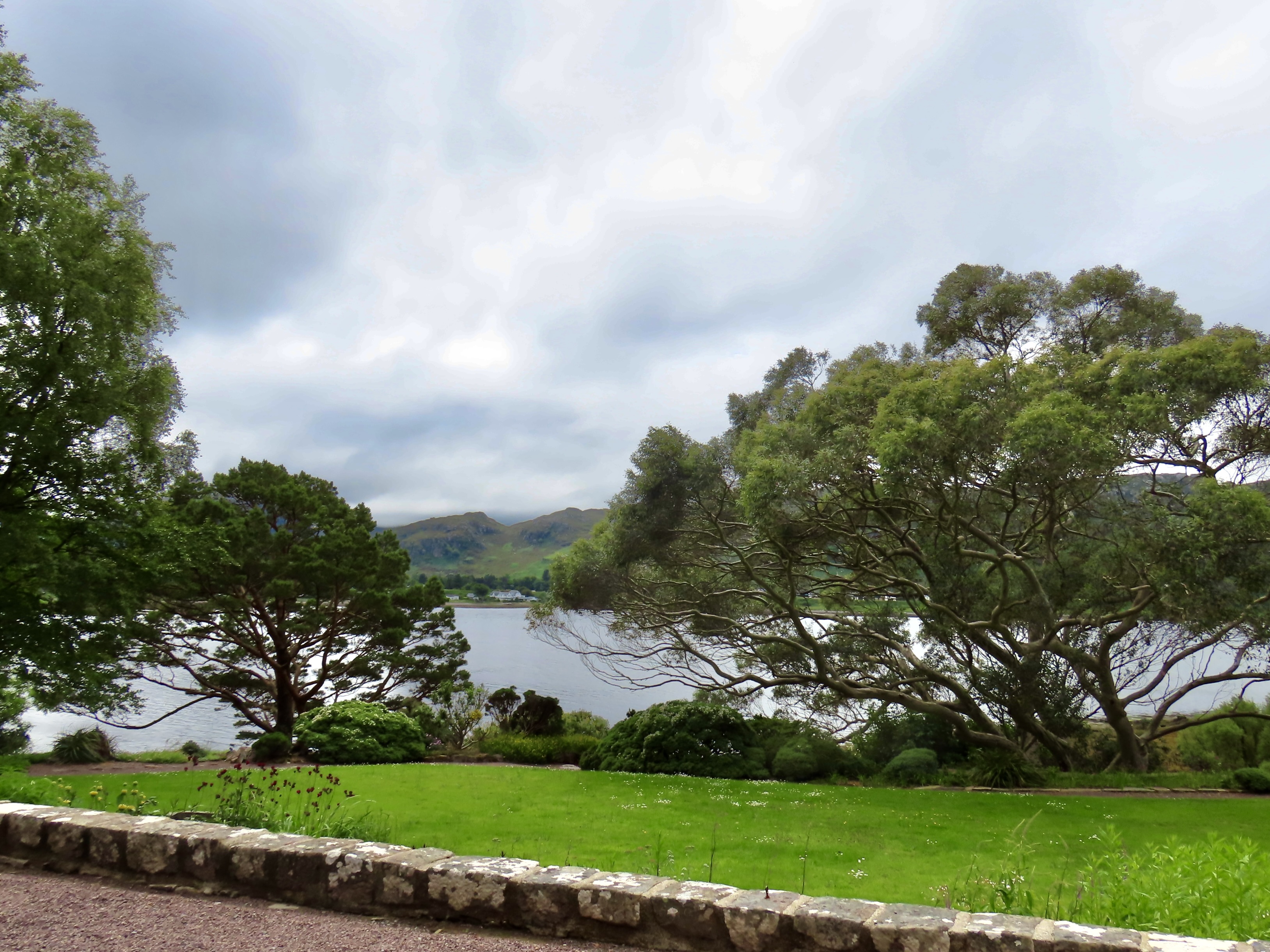
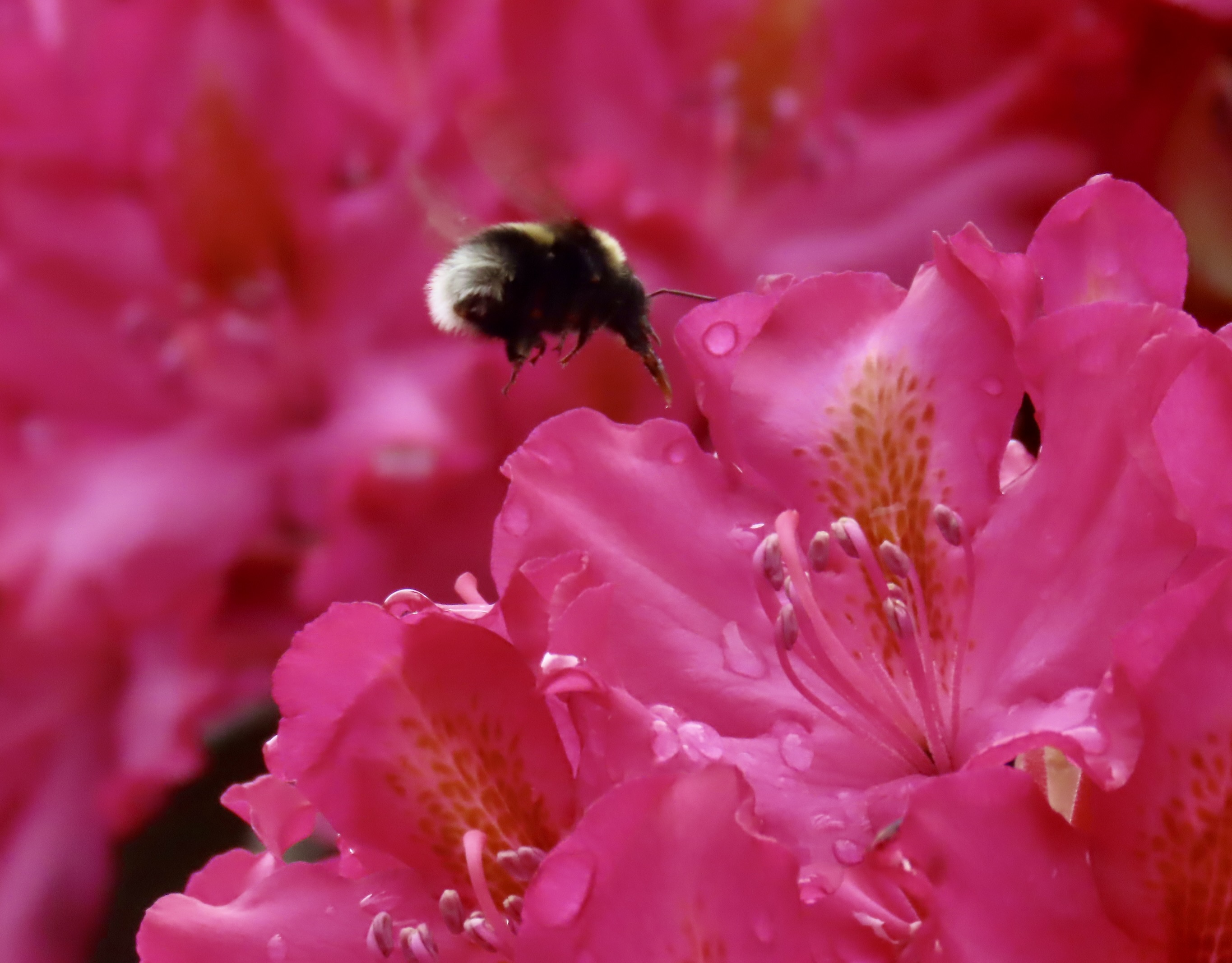
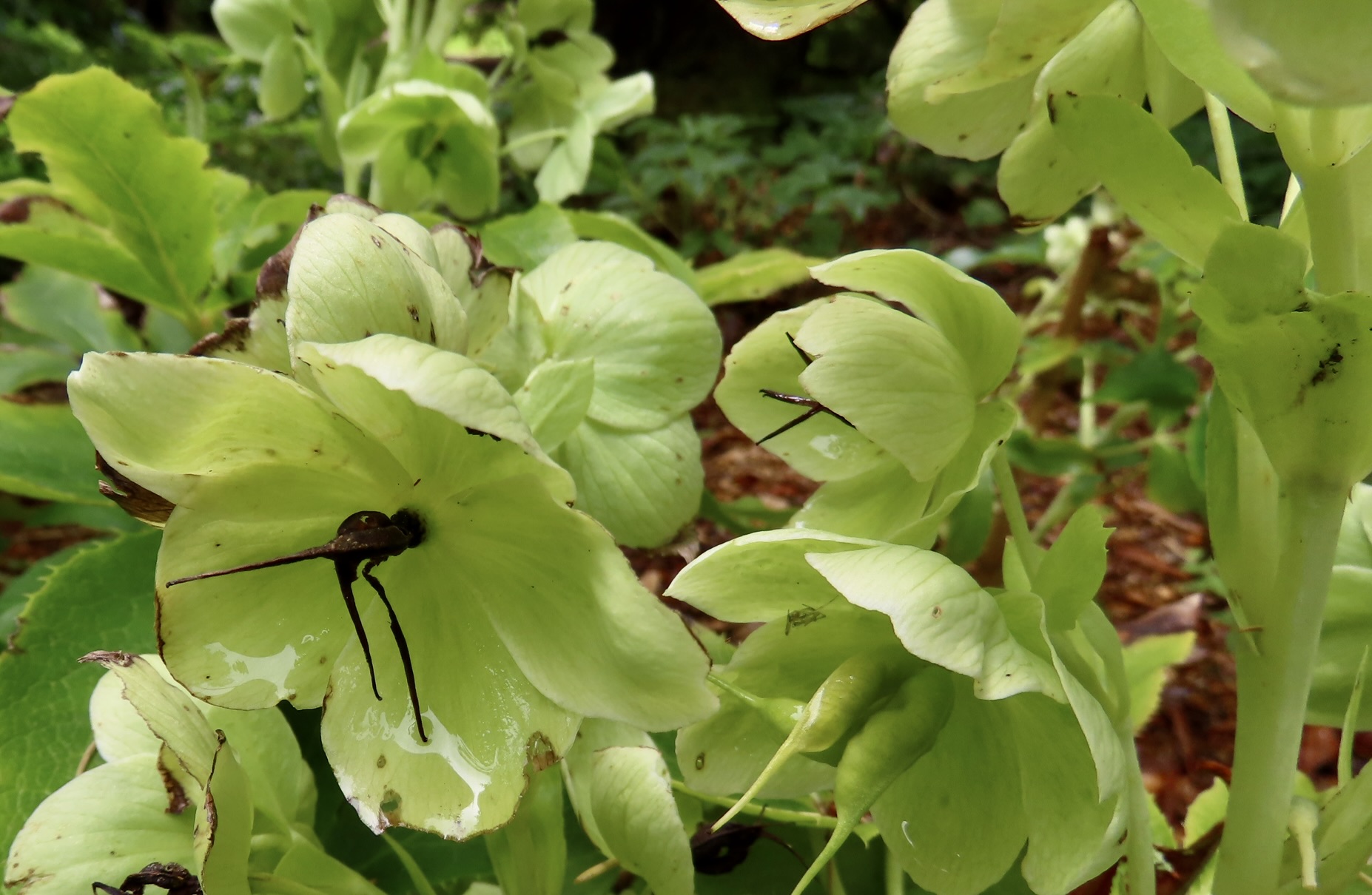
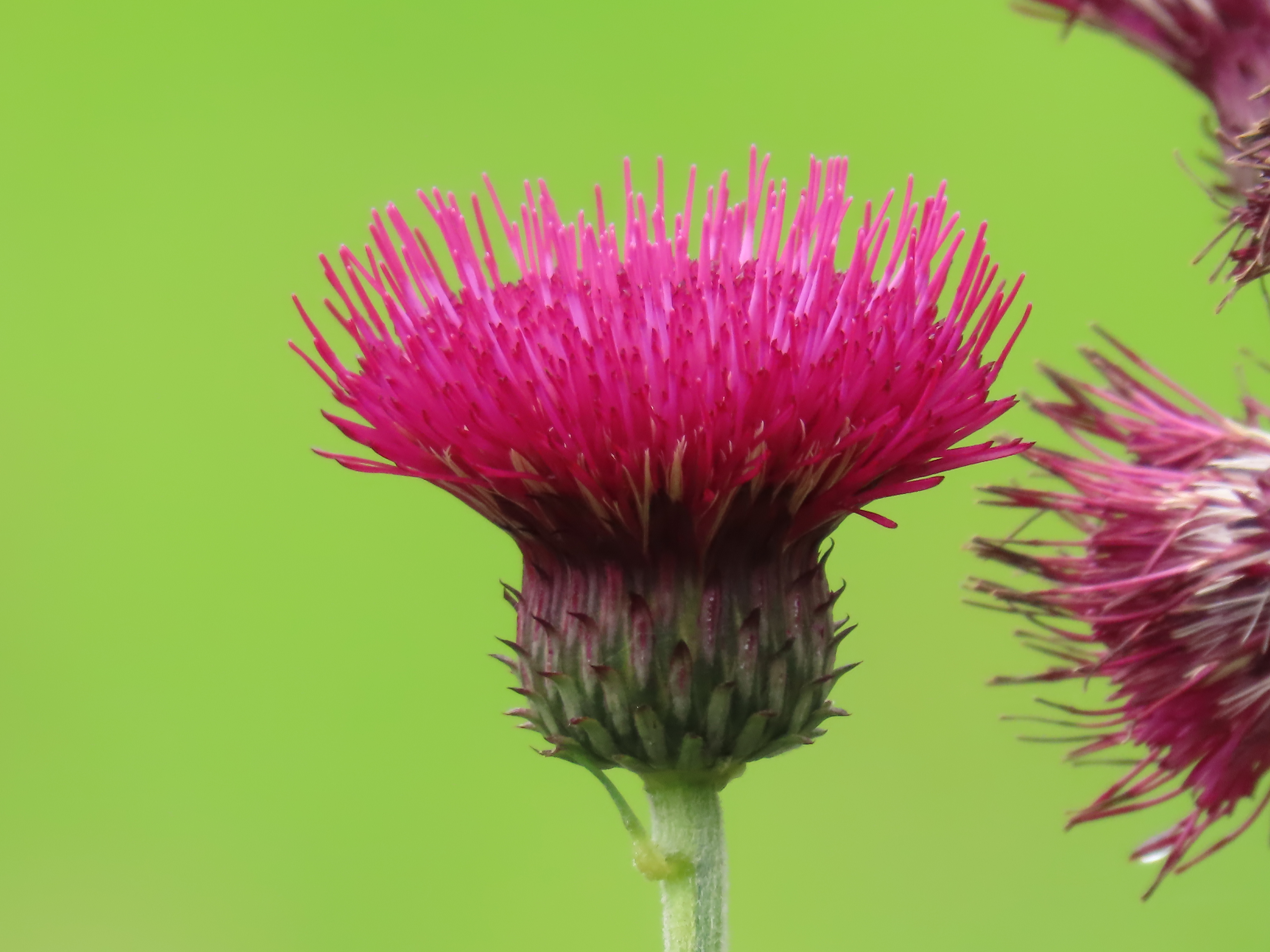
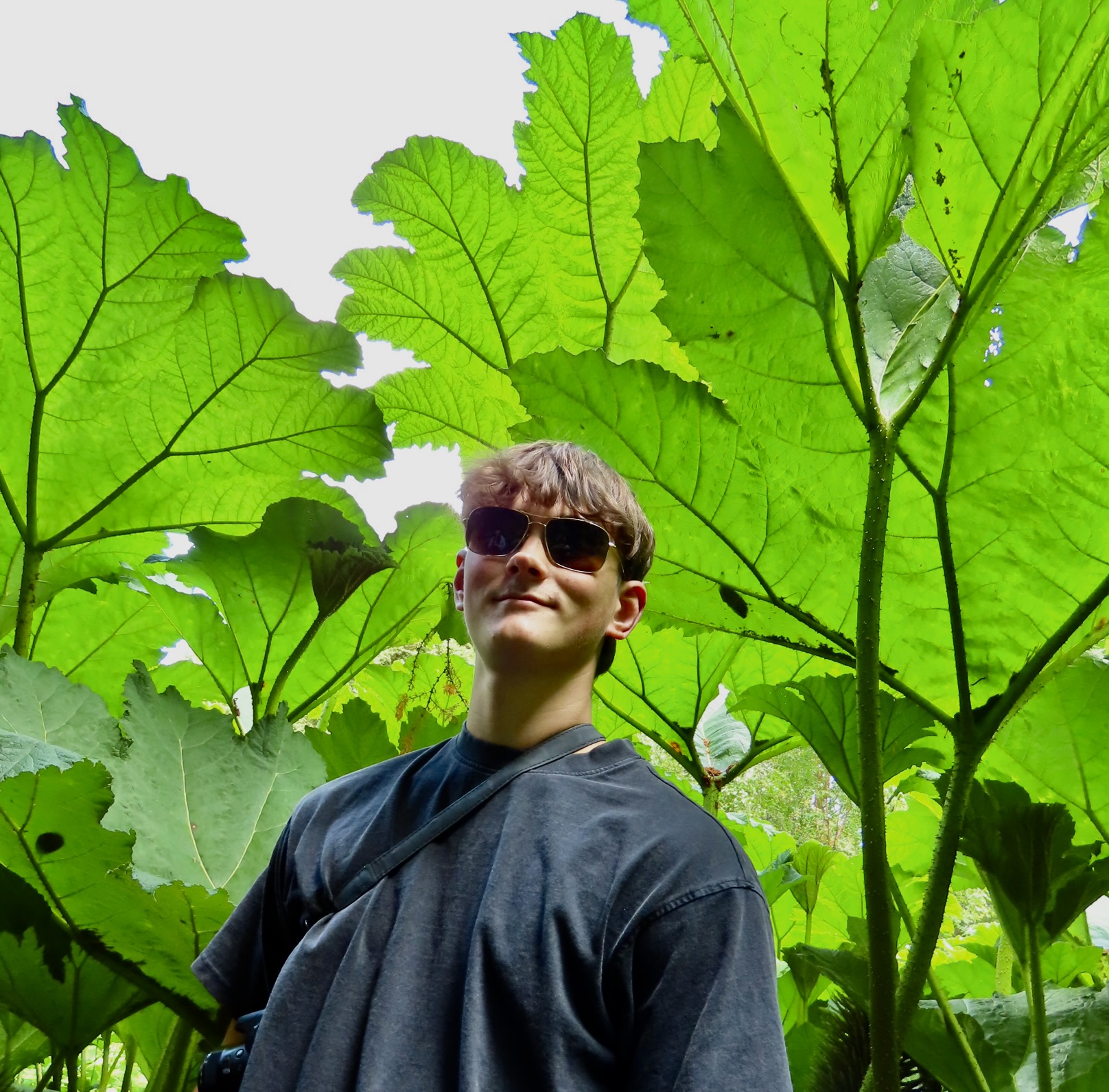
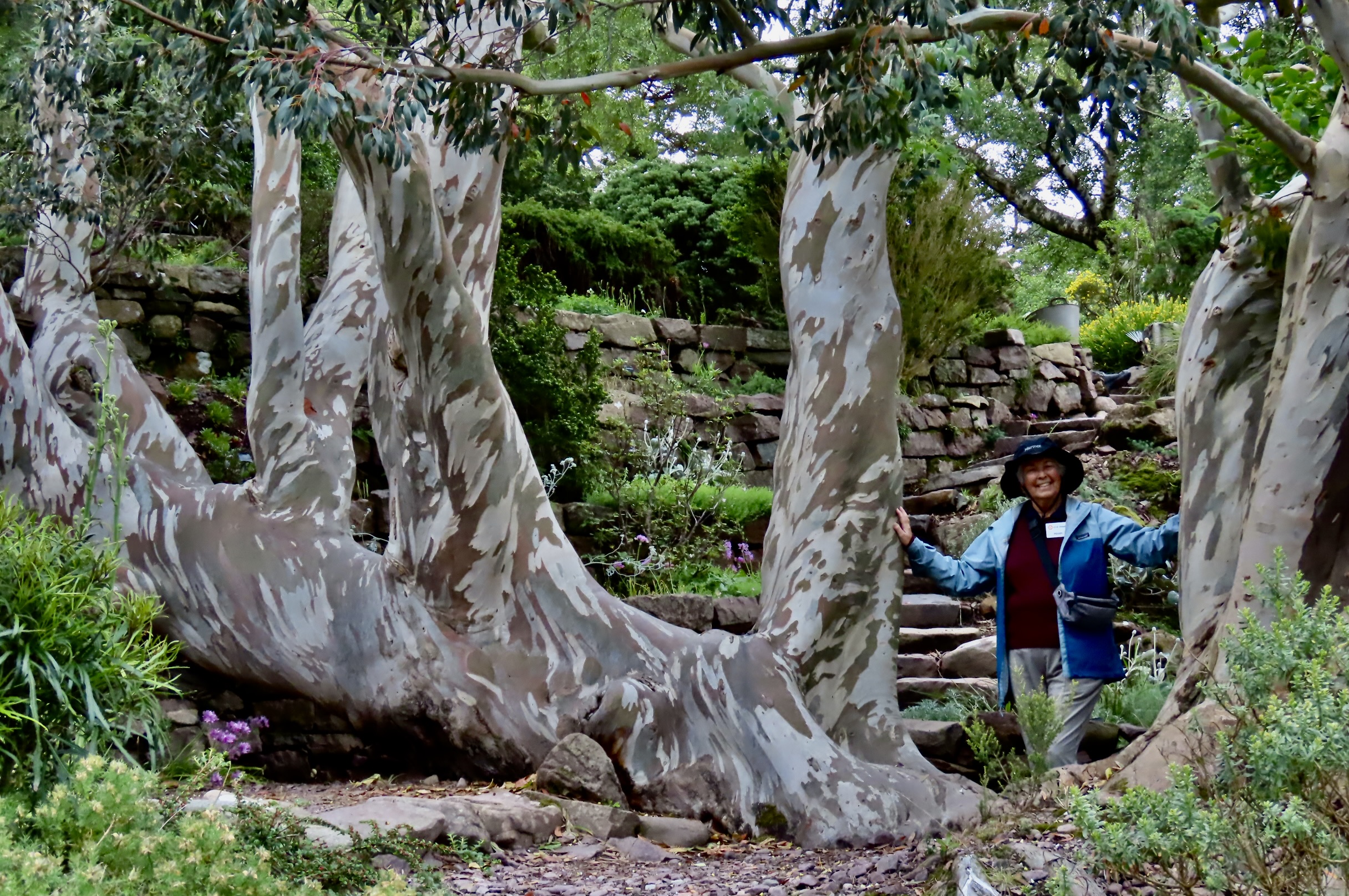
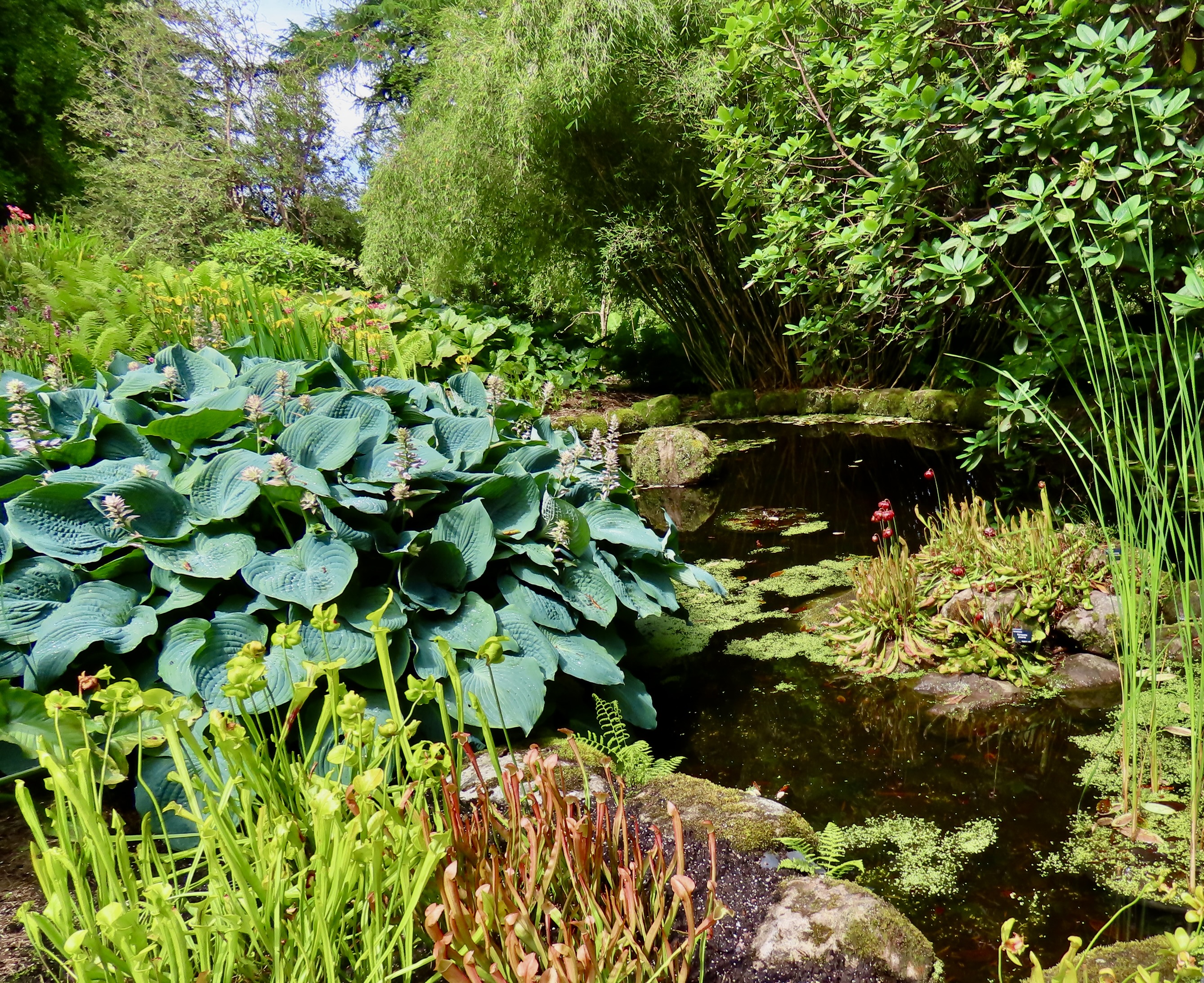
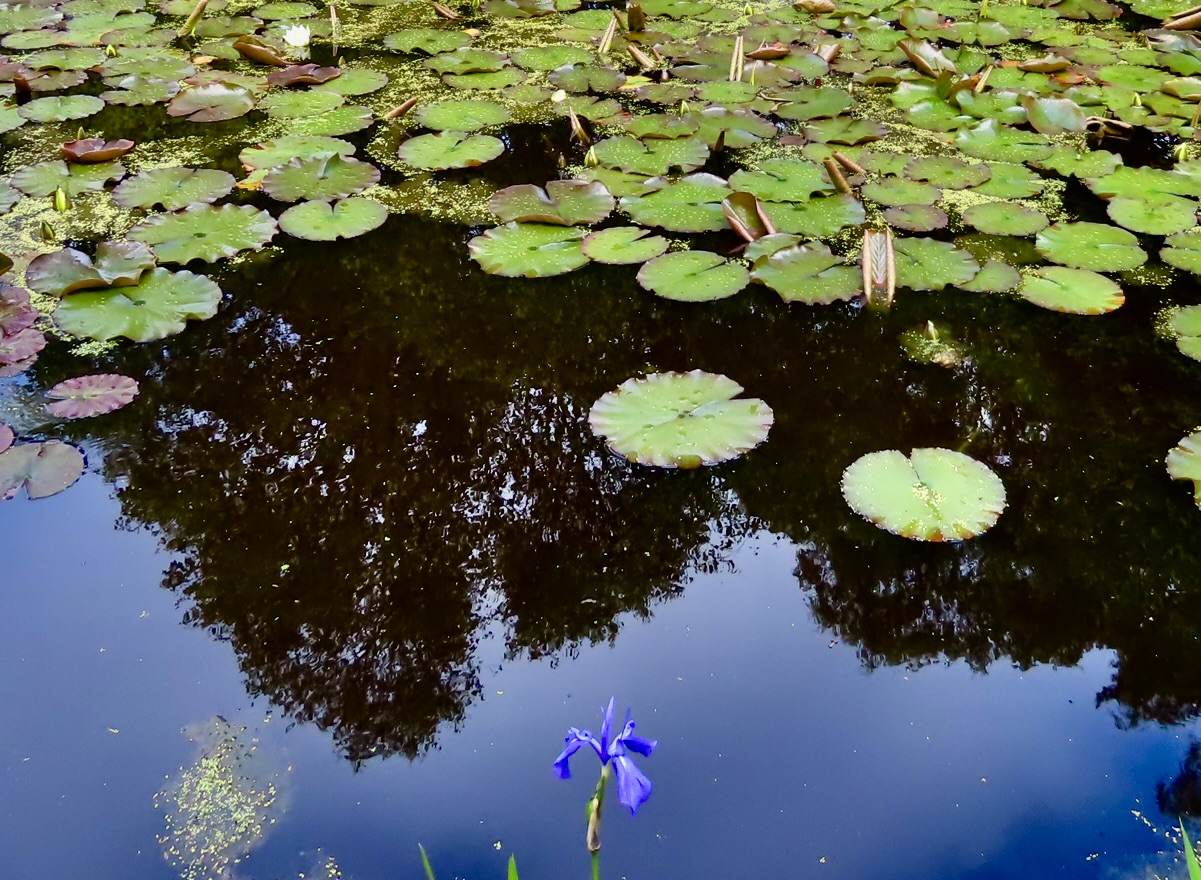
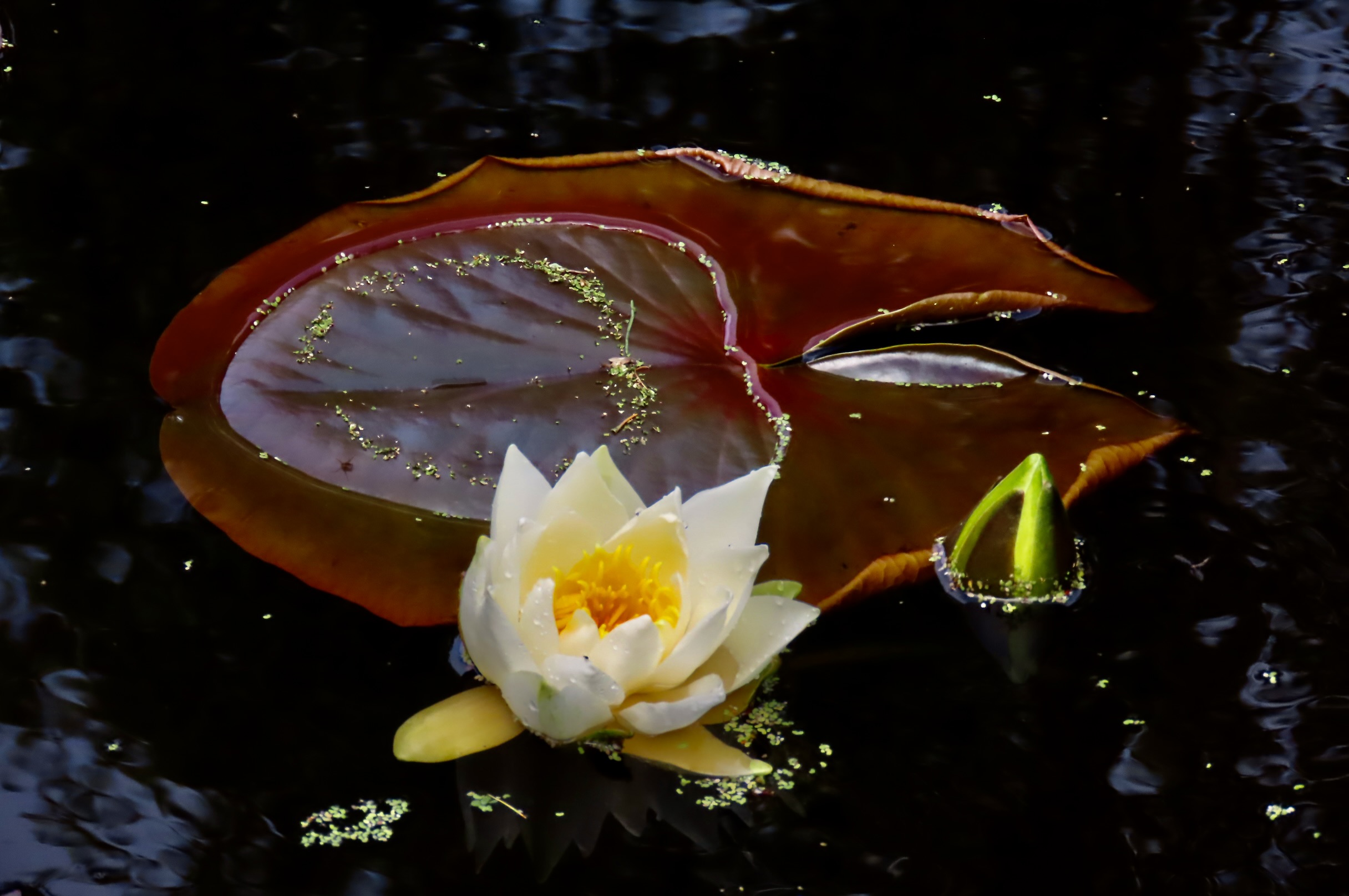
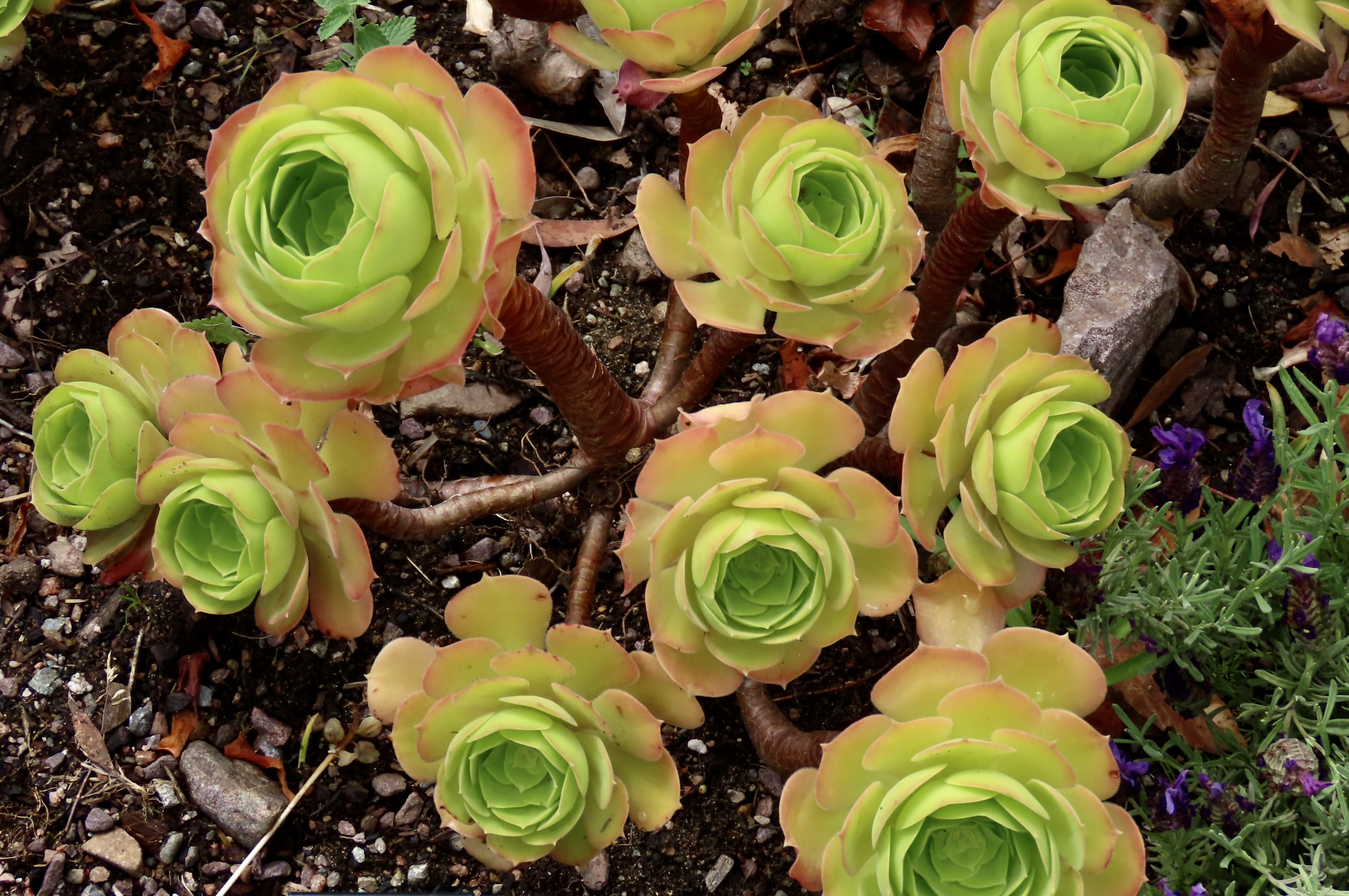
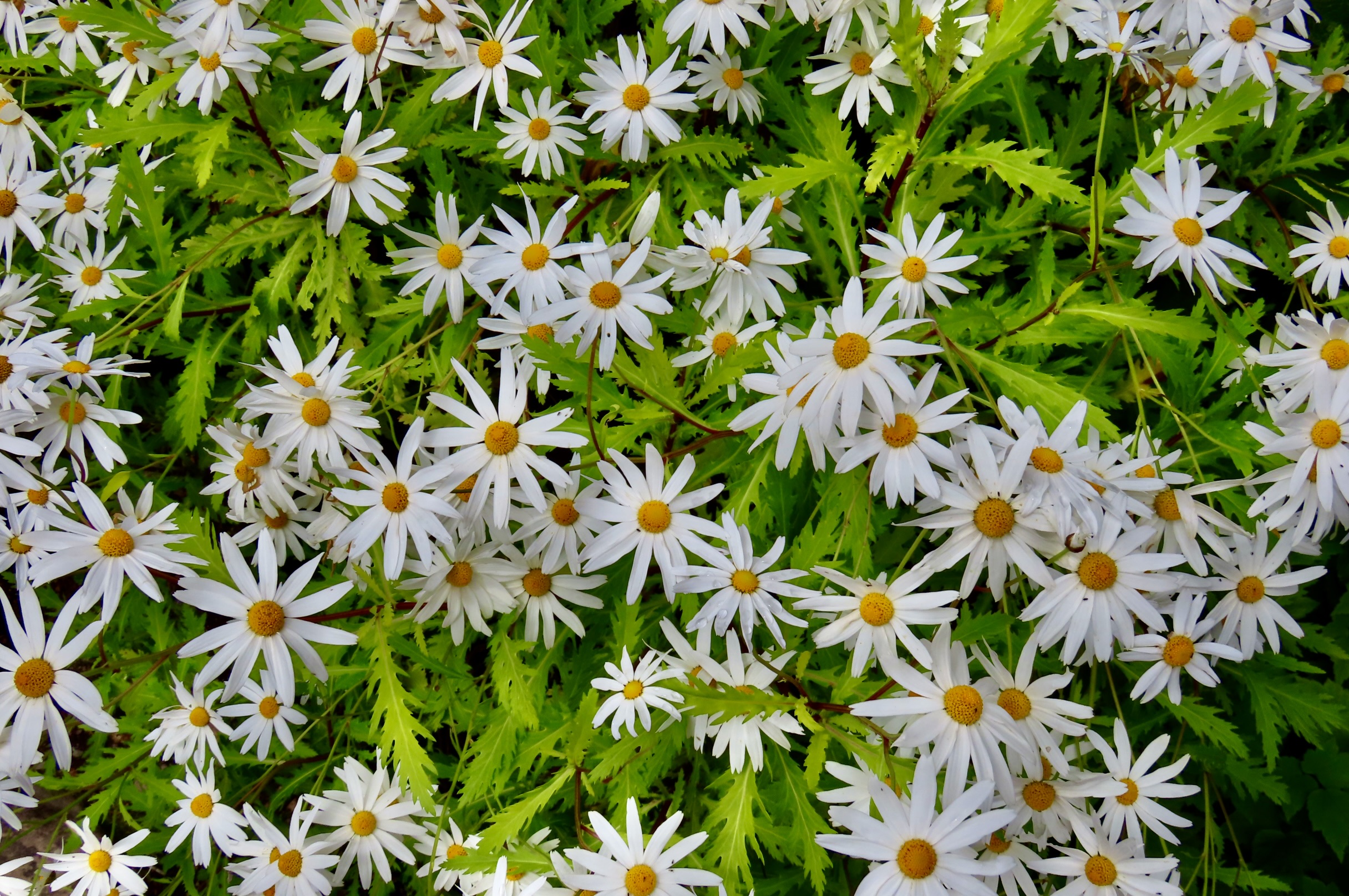
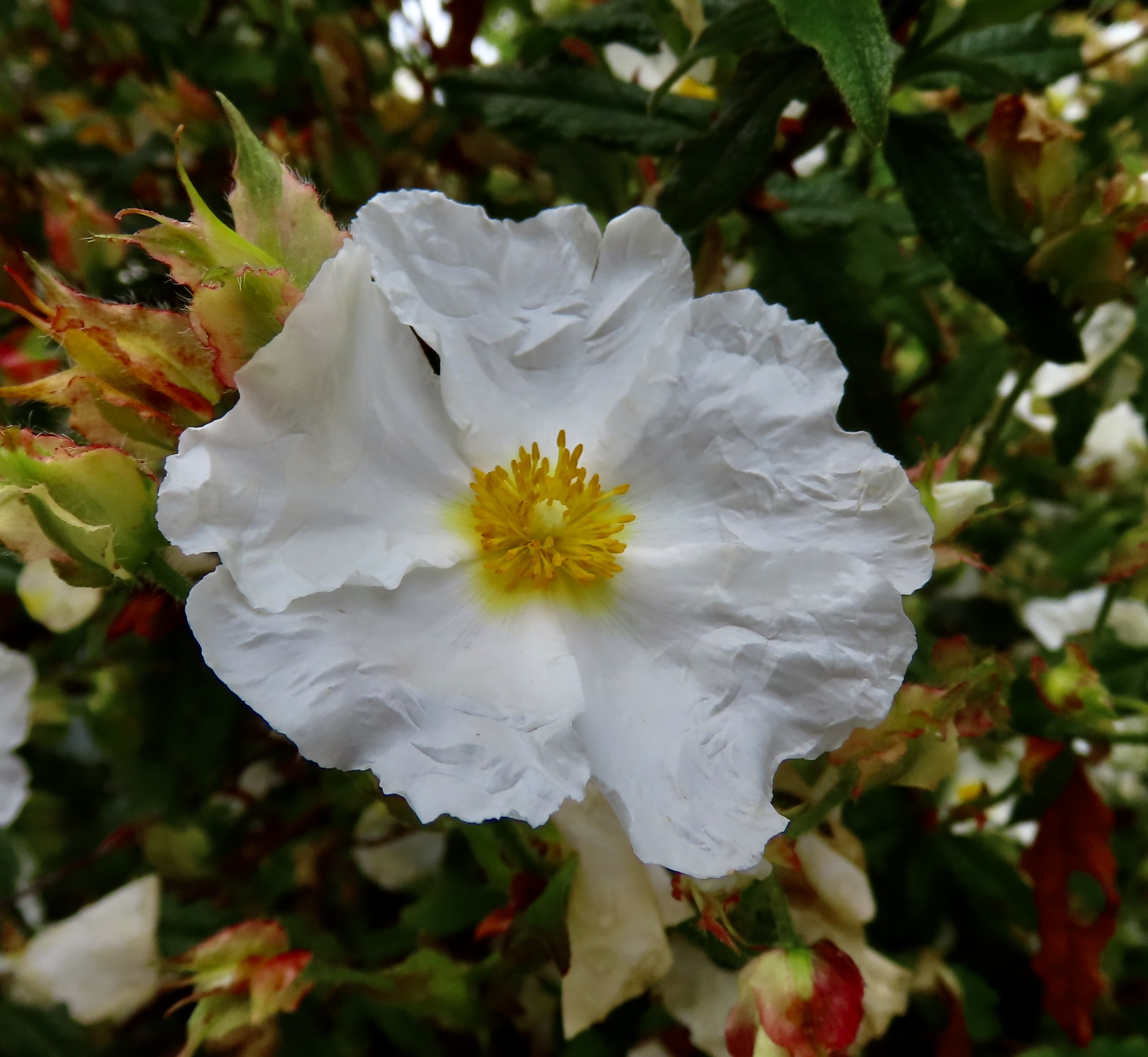
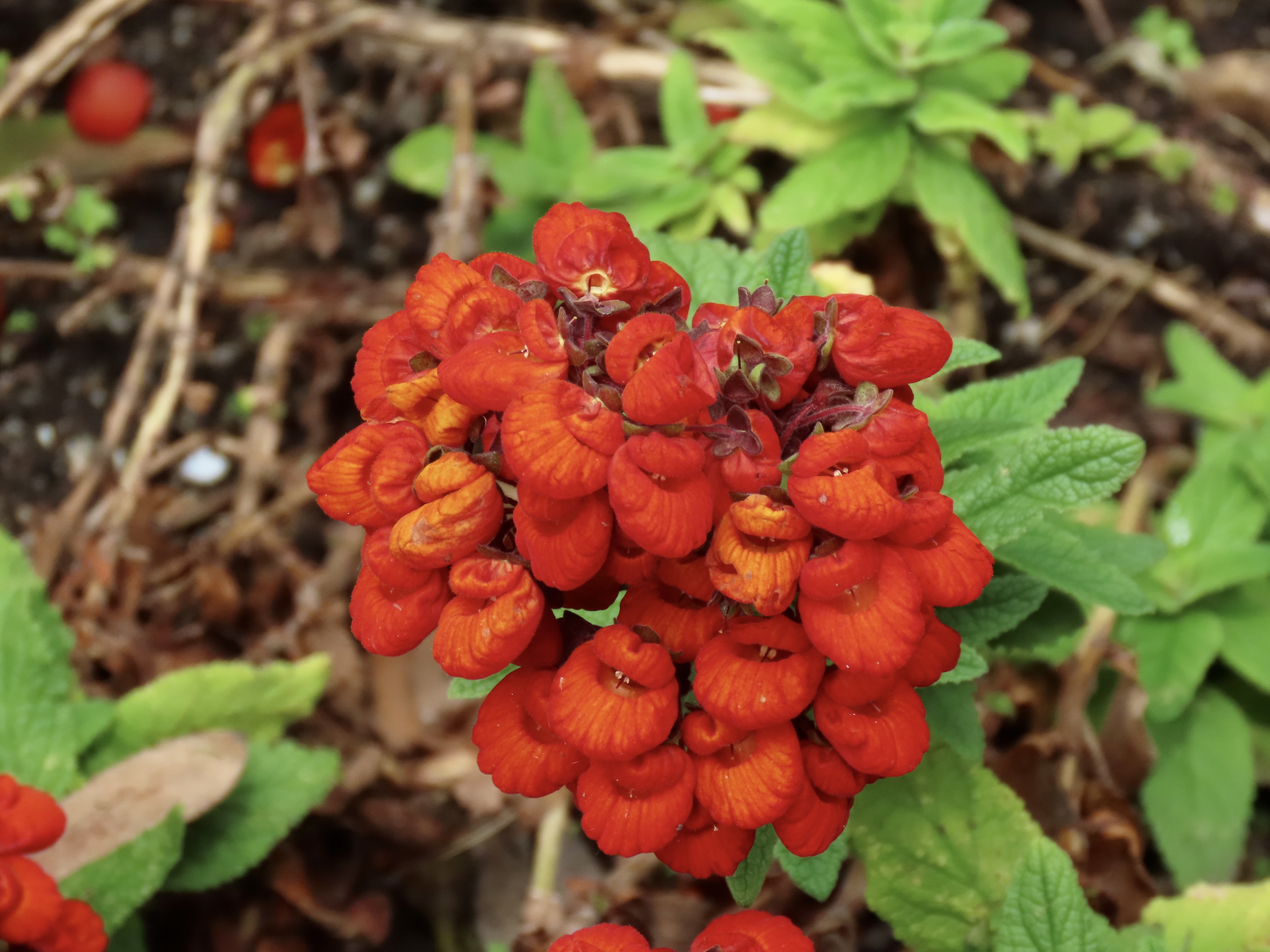
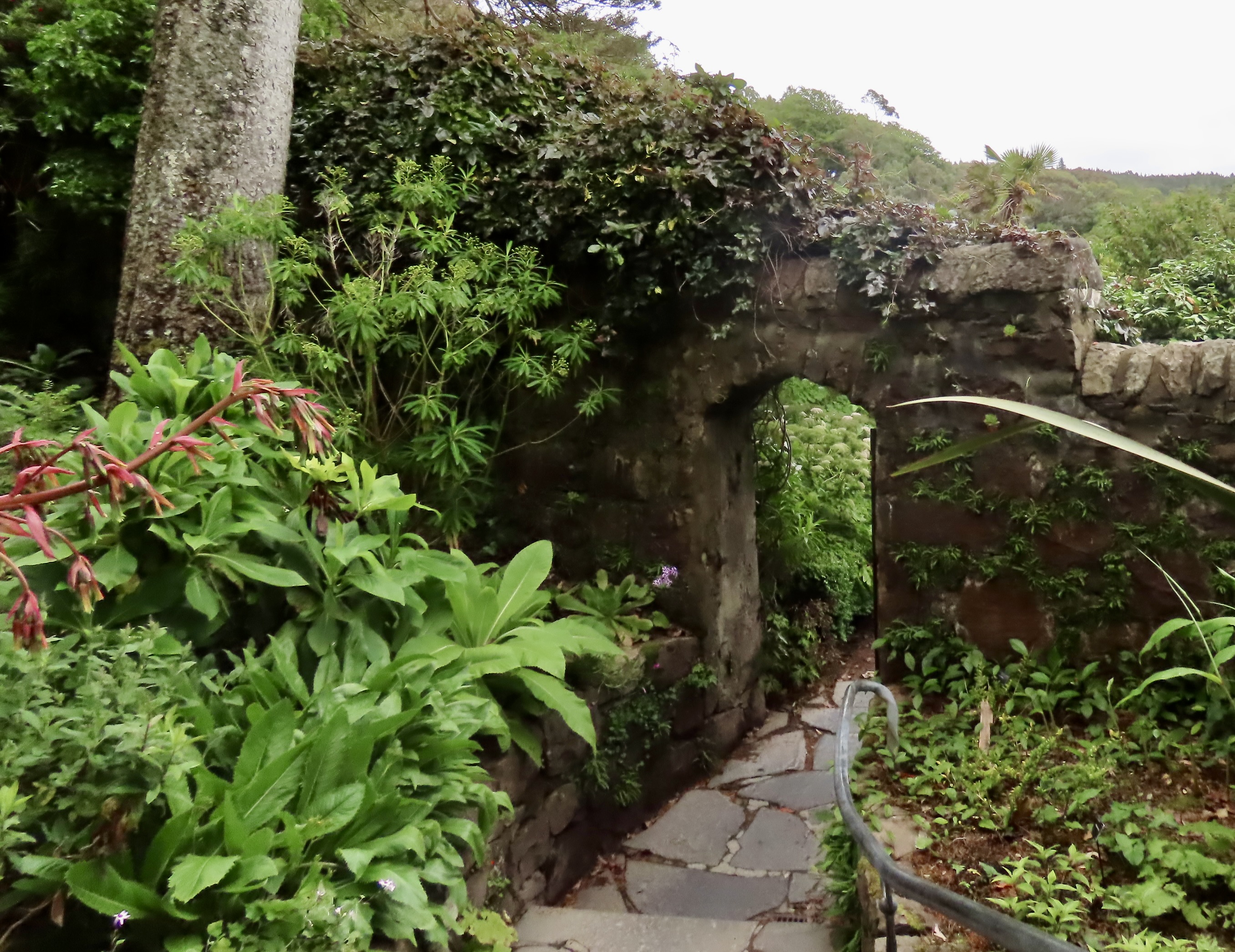
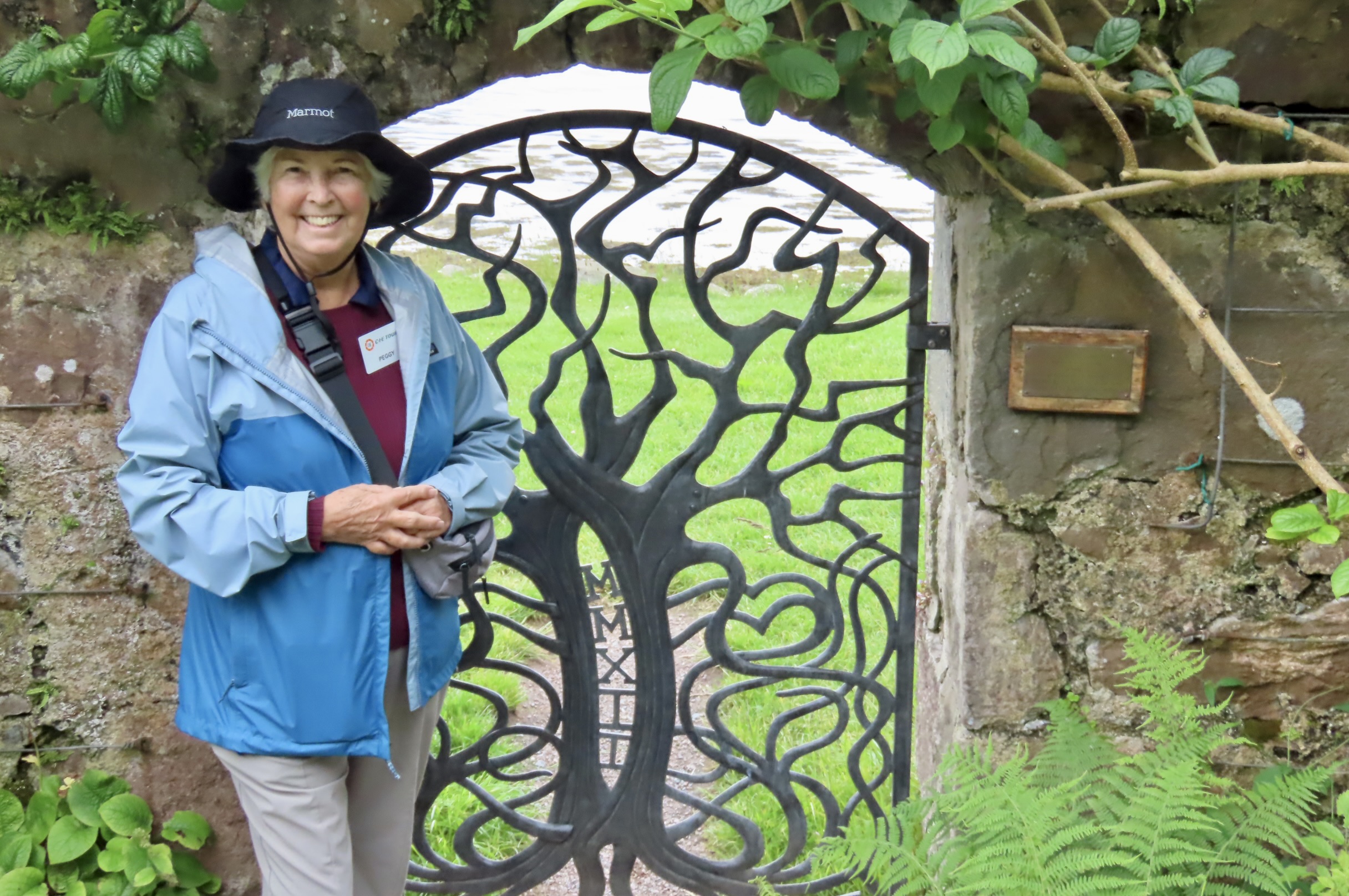
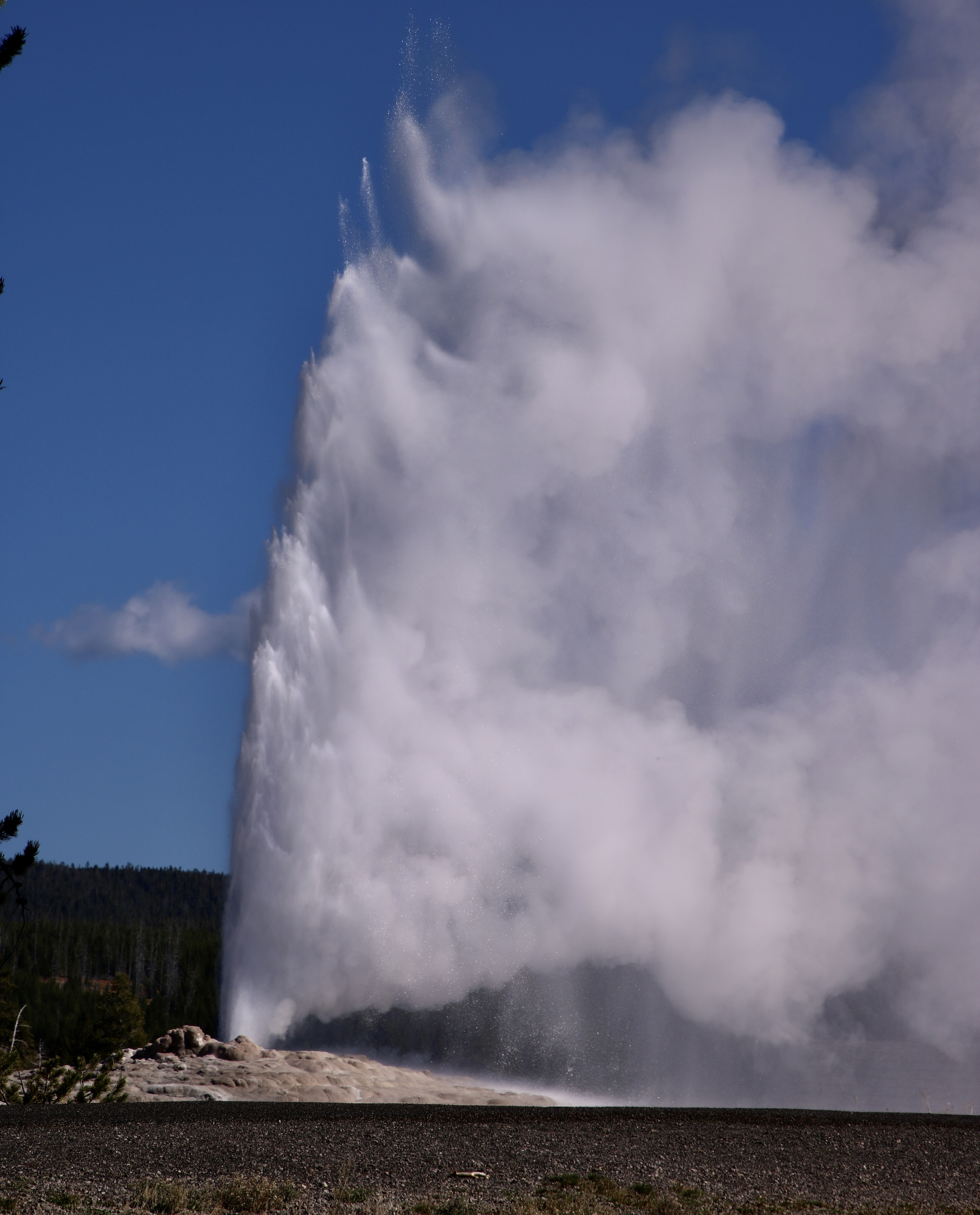
Inverewe Gardens provided us with numerous flowers, shrubs and trees to admire, but no ancient yew trees. Too bad, Scotland’s Fortingall Yew, is estimated to be around 5,000 years old, making the oldest non-clonal tree in Europe. Trails that started through a highly organized garden, soon led off to the more ‘wild’ sections.The location of Inverewe Garden as shown on a Google map. Overlooking Loch Ewe, the garden sits on a north-facing bay that takes advantage of the warm ocean currents of the Gulf Stream, which provides the climate that the various tropical plants can thrive in at the same latitude as Hudson Bay in Canada.Looking out on Loch Ewe from the Inverewe Garden.The garden is well known for its Rhododendrons. Here, a bumble bee makes a visit. While its identity is easily established…What is this?! Any ideas? Is it an insect with its head and front legs buried deep in the pistil, leaving a stinger like tail and dangling legs outside? Or could it be part of the plant? The only reason I ask that question is because the flower just above it to the right, and the flower just below it on the right suggests the possibility??? The flower, according to my plant ID app is stinky hellebore.A thistle. According to the Scottish Land Trust, “The thistle is Scotland’s oldest recorded national flower and iconic emblem, symbolizing resilience, strength, and defense.”I get the defense part.In the ‘wilder’ part of the garden, Cody found some giant leaves to stand under. I wonder if they would serve as an umbrella in a rainstorm?And Peggy found an unusual eucalyptus tree to hold up.A quiet pool on the wild side caught my attention.It was filled with water lilies.Including this blooming fellow with a bud to the right and a dead leaf behind it. The water gathering on the leaf caused an interesting see-through effect.On this succulent, with the common name of Darley Blush, the outer leaves do seem to be blushing.We went from flower to flower like a hungry hummingbird. Did you know that hummingbirds can visit between 1-2,000 flowers per day?They stood alone…Were surrounded…Came tumbling down…Popped up…Were skirted…And unusual.There was much more to see but our bus would be waiting and we wanted to eat first. It was time to look for an exit.We had options. That’s it for today. Next up is the incomparable Yellowstone NP, the third in our series of visiting 25 world renowned national parks in the US honoring the nations 250th Birthday.Old Faithful letting off steam!