Beautiful scenery, abundant wildlife, and incredible geology. Yellowstone has it all. There is a reason why it became America’s first National Park in 1872. In fact, according to the National Geographic Magazine, it is the world’s best known National Park. It is estimated that some 215 million have visited since it was created in 1872— and this includes people from all over the world as well as the US. It is the third in our series featuring 25 US based national parks in celebration of America’s 250th Birthday. While the series celebrates the parks, it is also a celebration of the men and women who have had the vision, courage, and commitment to set aside and protect these areas for their intrinsic value as natural wonders.
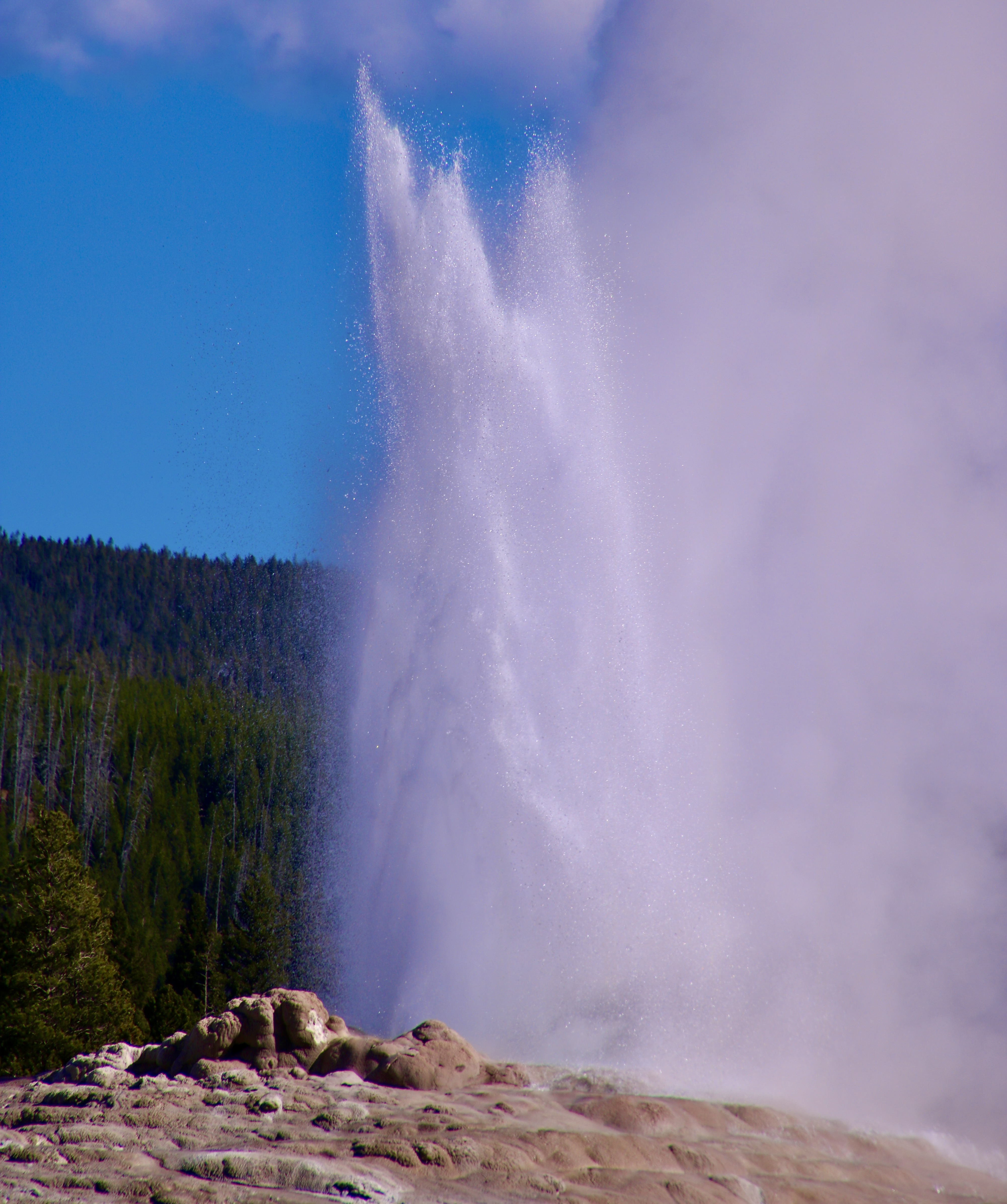
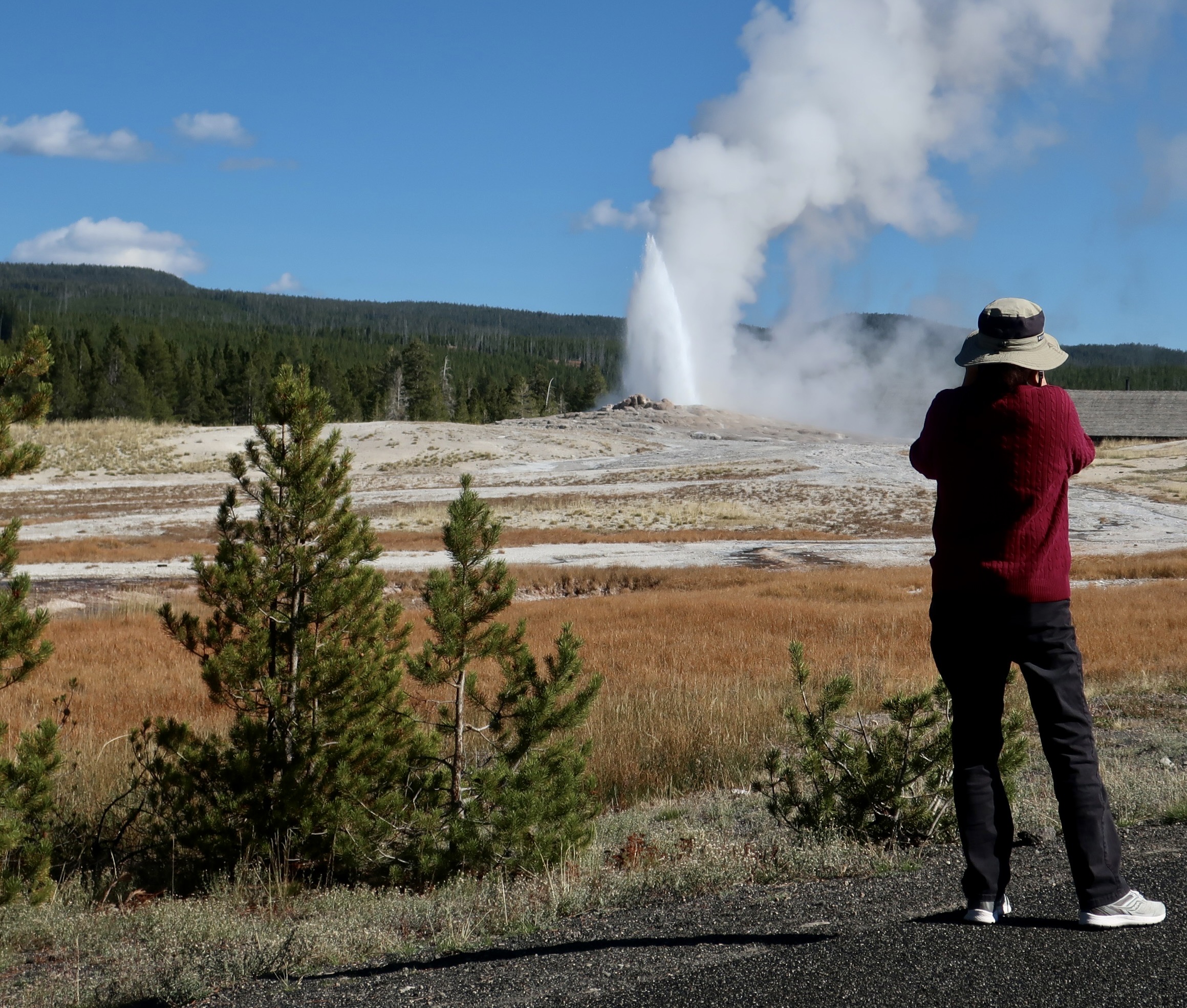
One of the first things visitors to the park rush to see is Old Faithful Geyser. One of the reasons why is it is ‘faithful’ as well as spectacular. If you are willing to wait, you are guaranteed to see it erupt. According to the National Park Service, “its average interval between eruptions is about 90 minutes, varying from 50 to 127 minutes. An eruption lasts 1.5 to 5 minutes, expels 3,700–8,400 gallons (14,000–32,000 liters) of boiling water, and reaches a height of 106–184 feet (30–55 m).”Peggy was no exception. Our pickup had barely rolled to a stop on our 2022 visit when she jumped out the door with her camera! We had lucked out and driven in just as Old Faithful had started to erupt. Peggy wasn’t going to miss a second if she could help it. She and Old Faithful go way back. BC if you will: Before Curt. She spent her 1969 summer here between her freshman and sophomore year in college as a waitress in the park’s main family restaurant. The windows looked out on Old Faithful. She had a front row seat.
An interesting fact about Yellowstone is that it has half of the world’s know geysers. Geysers, however, are only one of several reasons to visit the park. The park’s hydro-thermal features also include hot springs, fumaroles and mud pots. Each of these is unique and worth seeing— as we hope to show you. (All photos here are taken by either Peggy or me unless otherwise noted.)
The reason for Yellowstone’s super abundance of hydro-thermal wonders is that it sits on top of a supervolcano. Semi-molten rock exists in some areas as close as 2-5 miles below the surface. This extremely hot rock heats ground water, creating Yellowstone’s unique features. Fortunately, the volcano is dormant and not expected to erupt in the near future, which is good news given how massive the explosion might be. According to the United States Geological Service (USGS) it would “cause immediate, catastrophic destruction across the surrounding region and trigger severe, long-lasting global climate and food crises.”
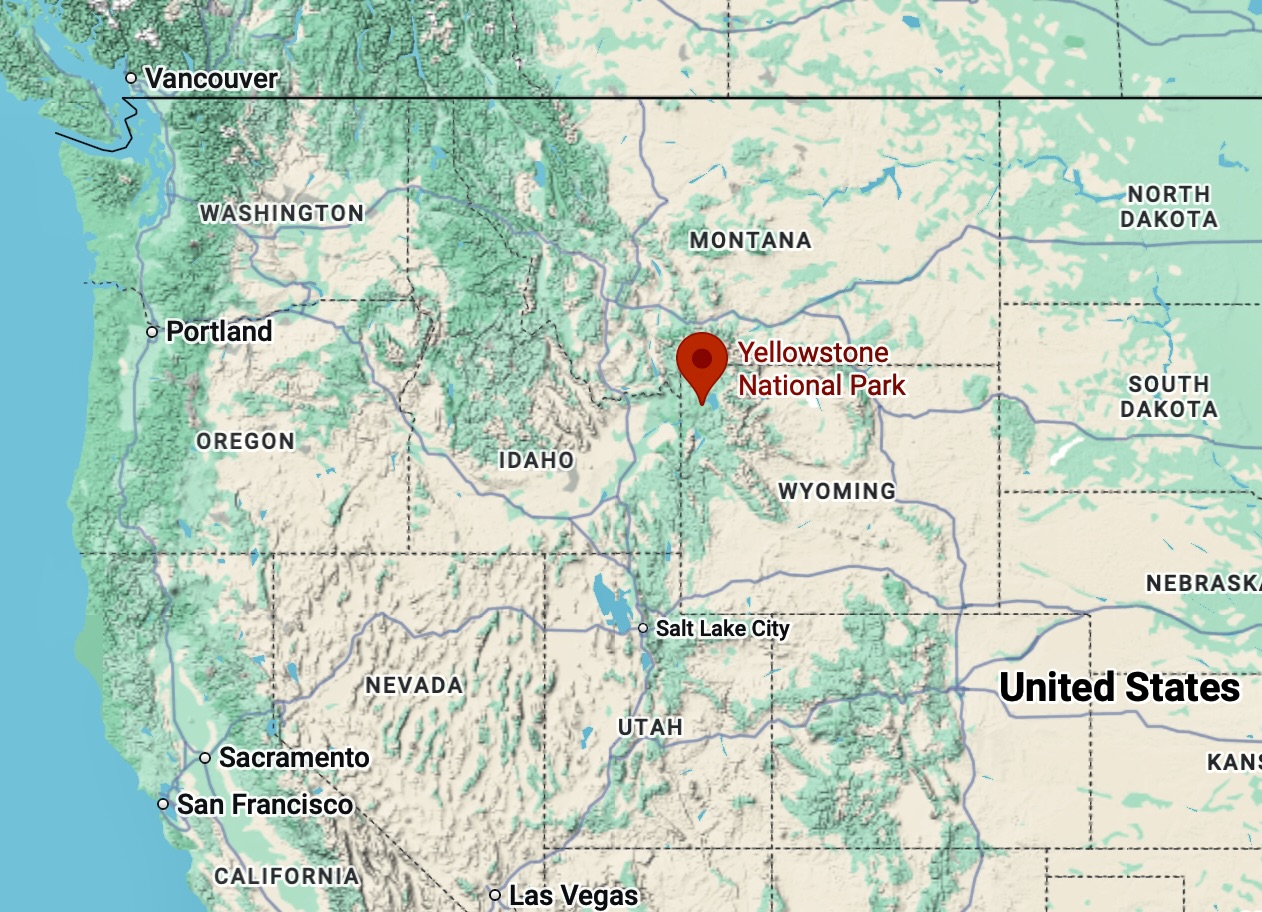
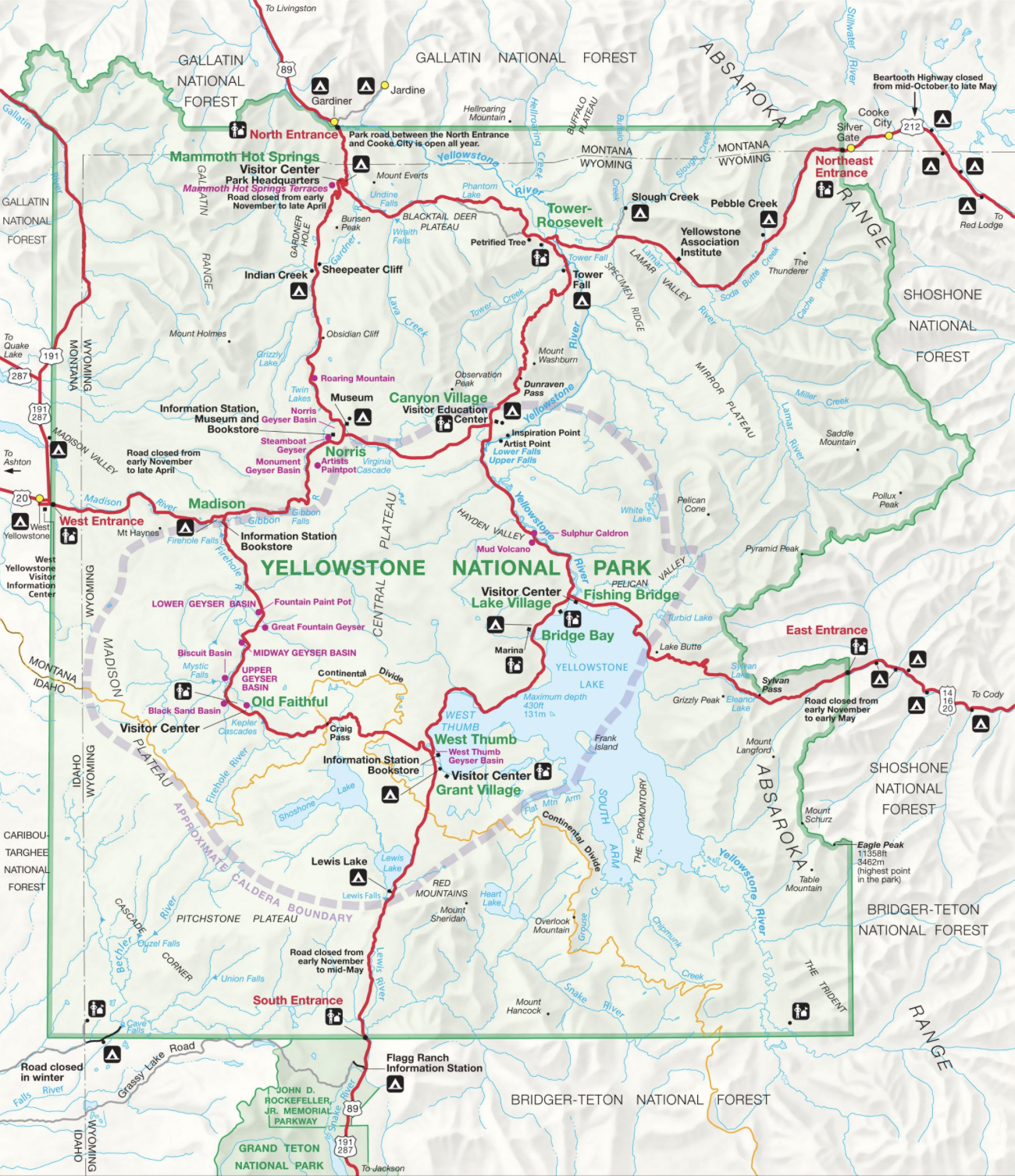
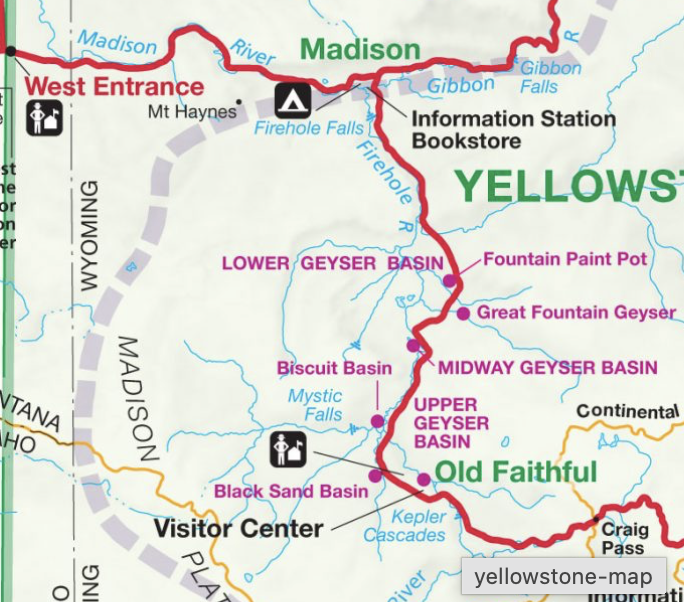
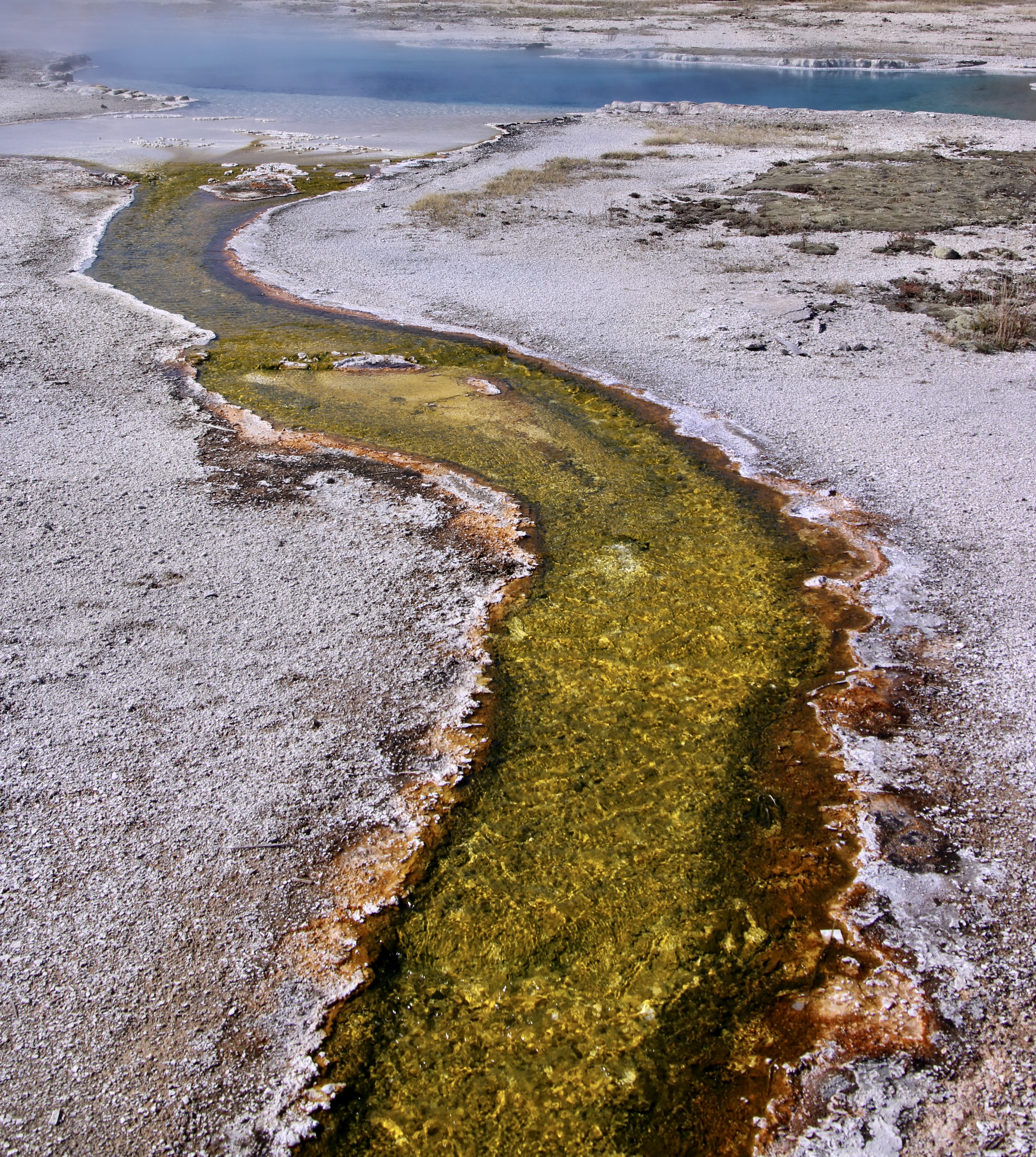
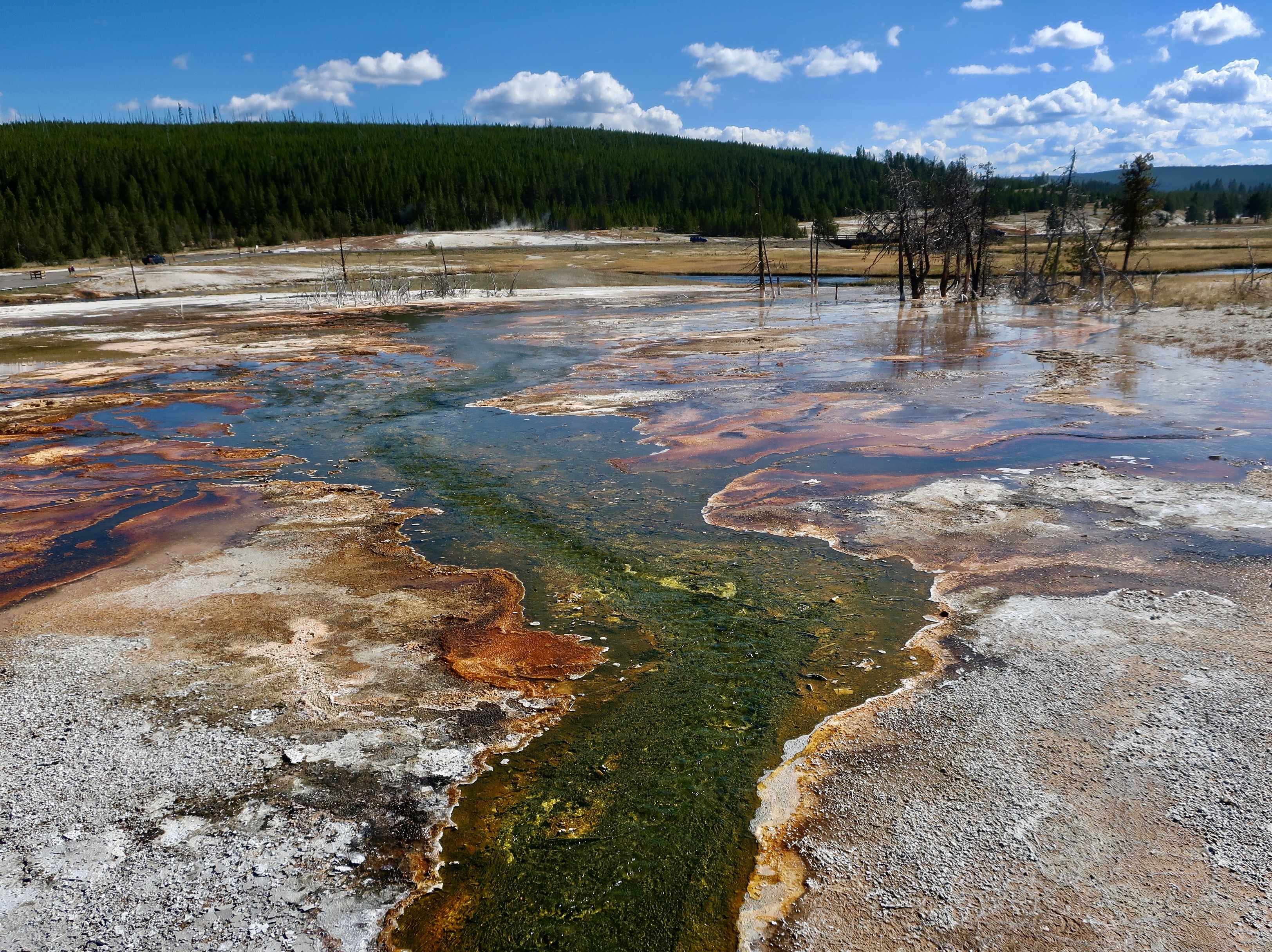
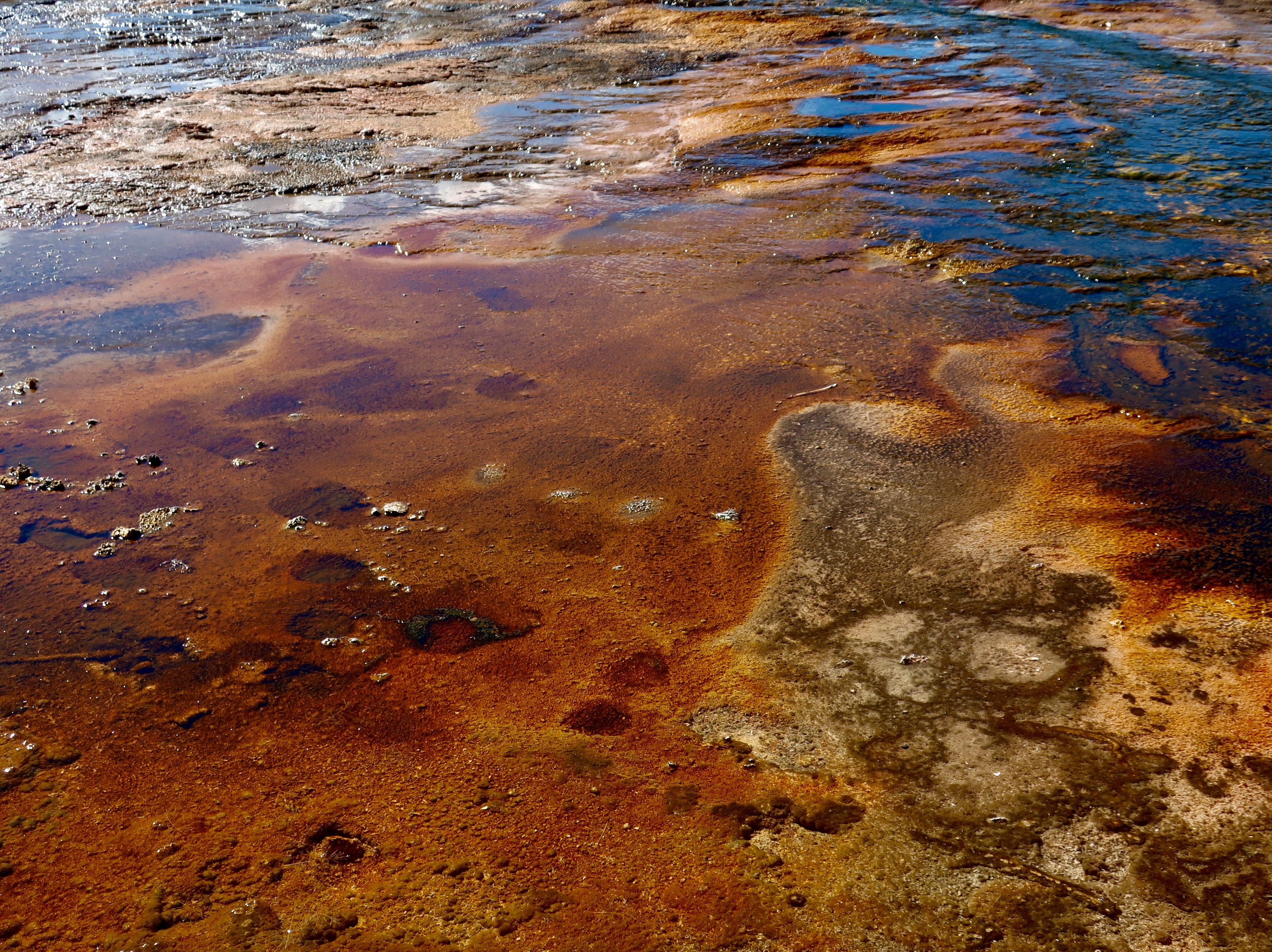
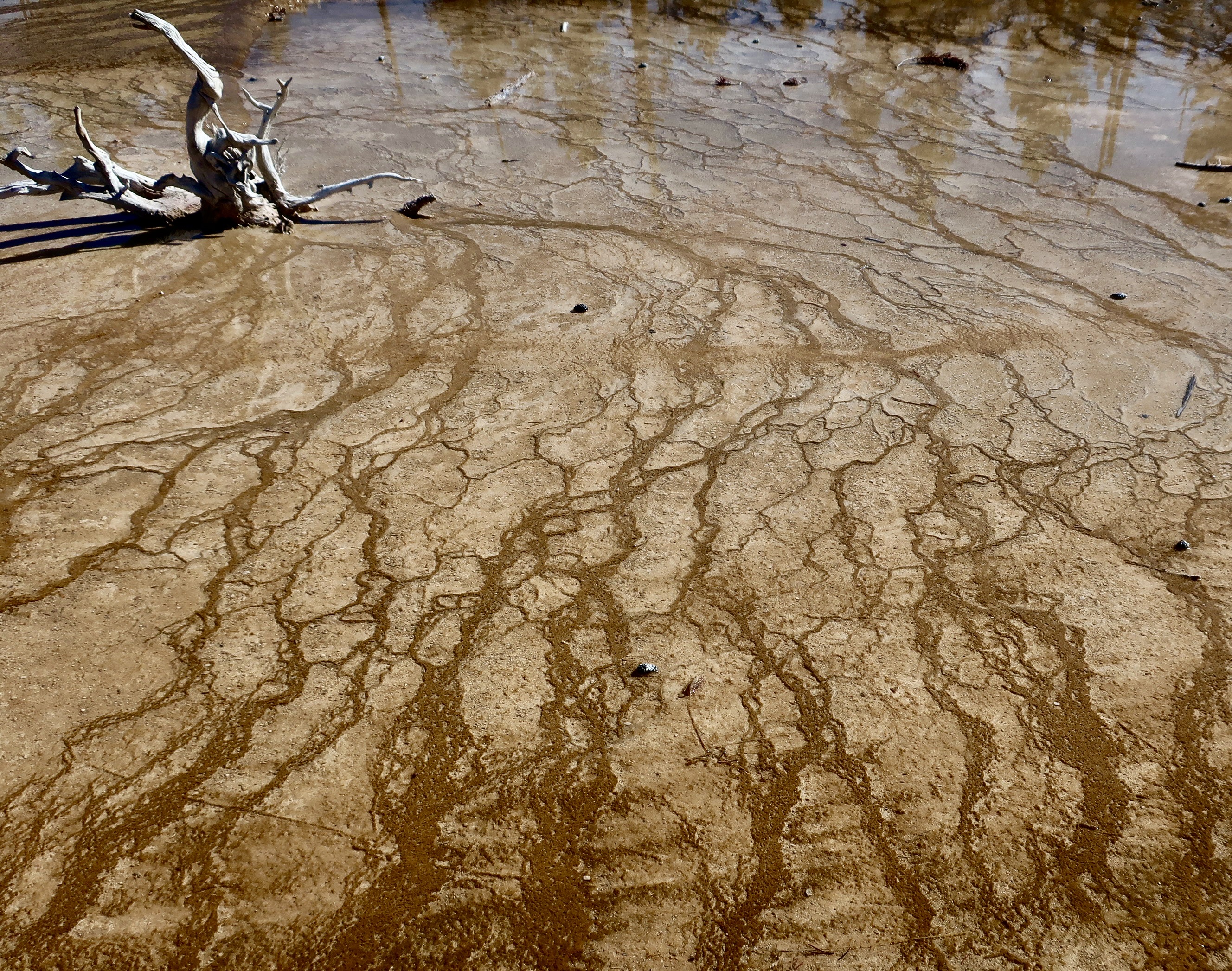
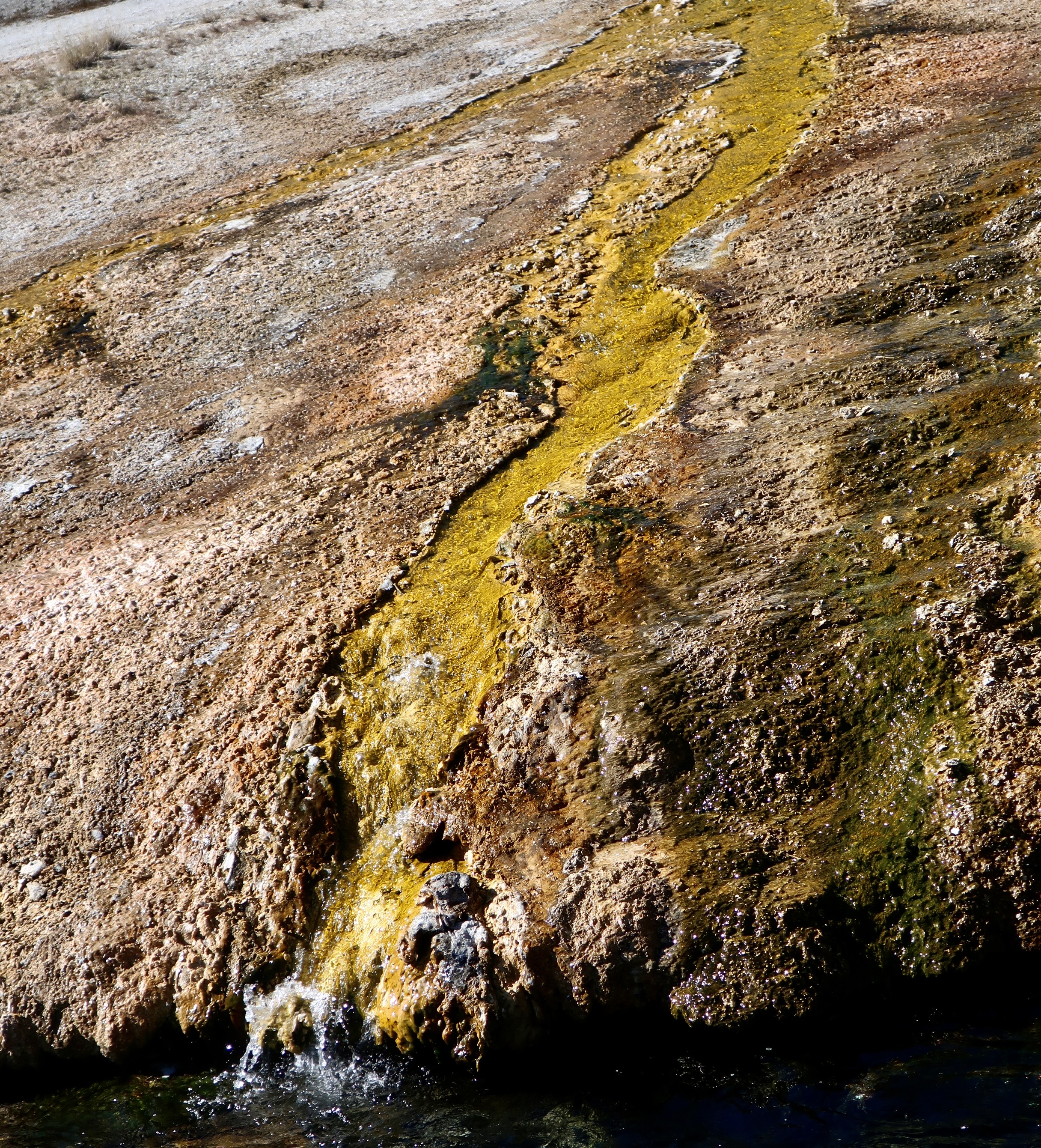
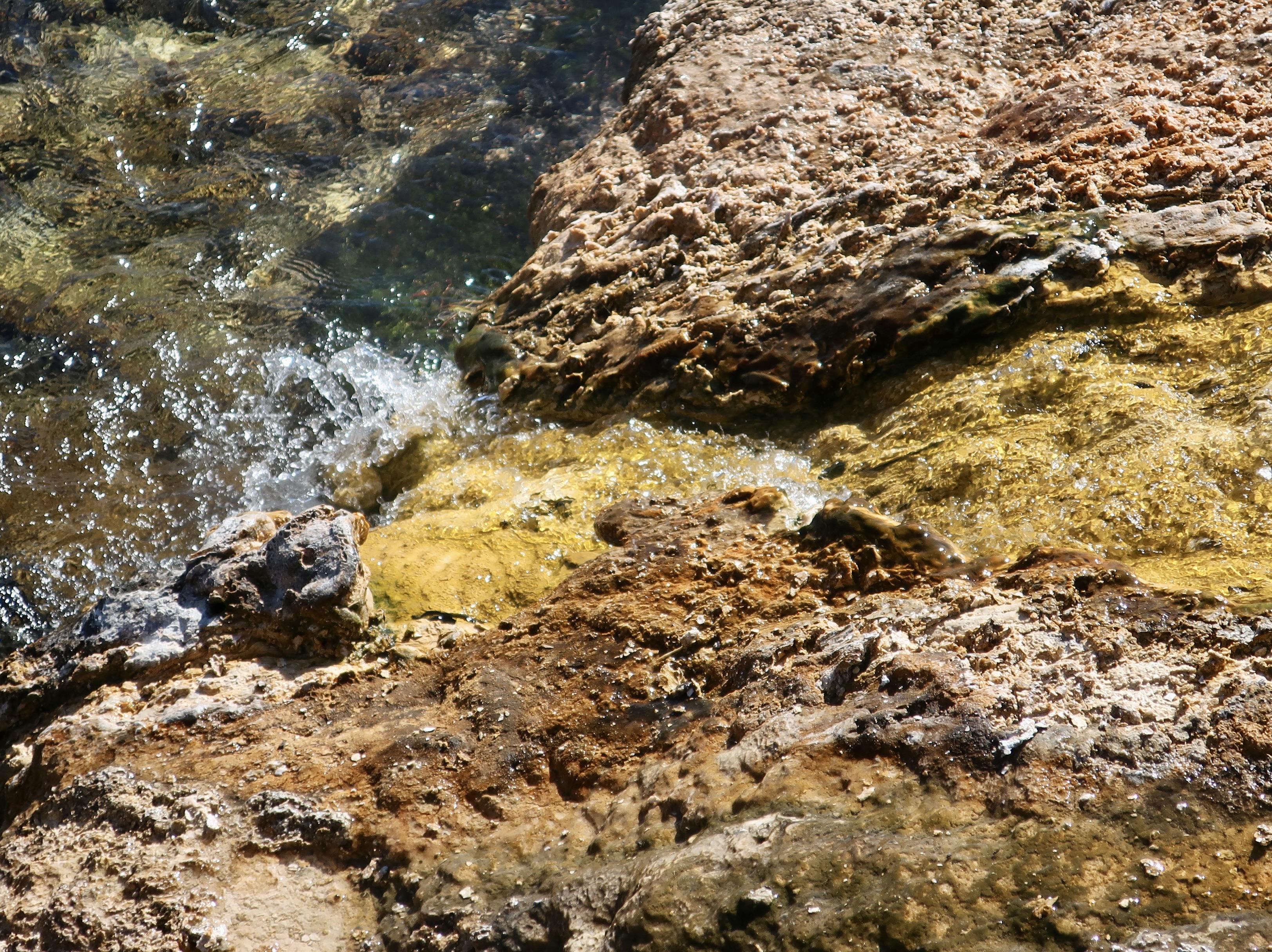
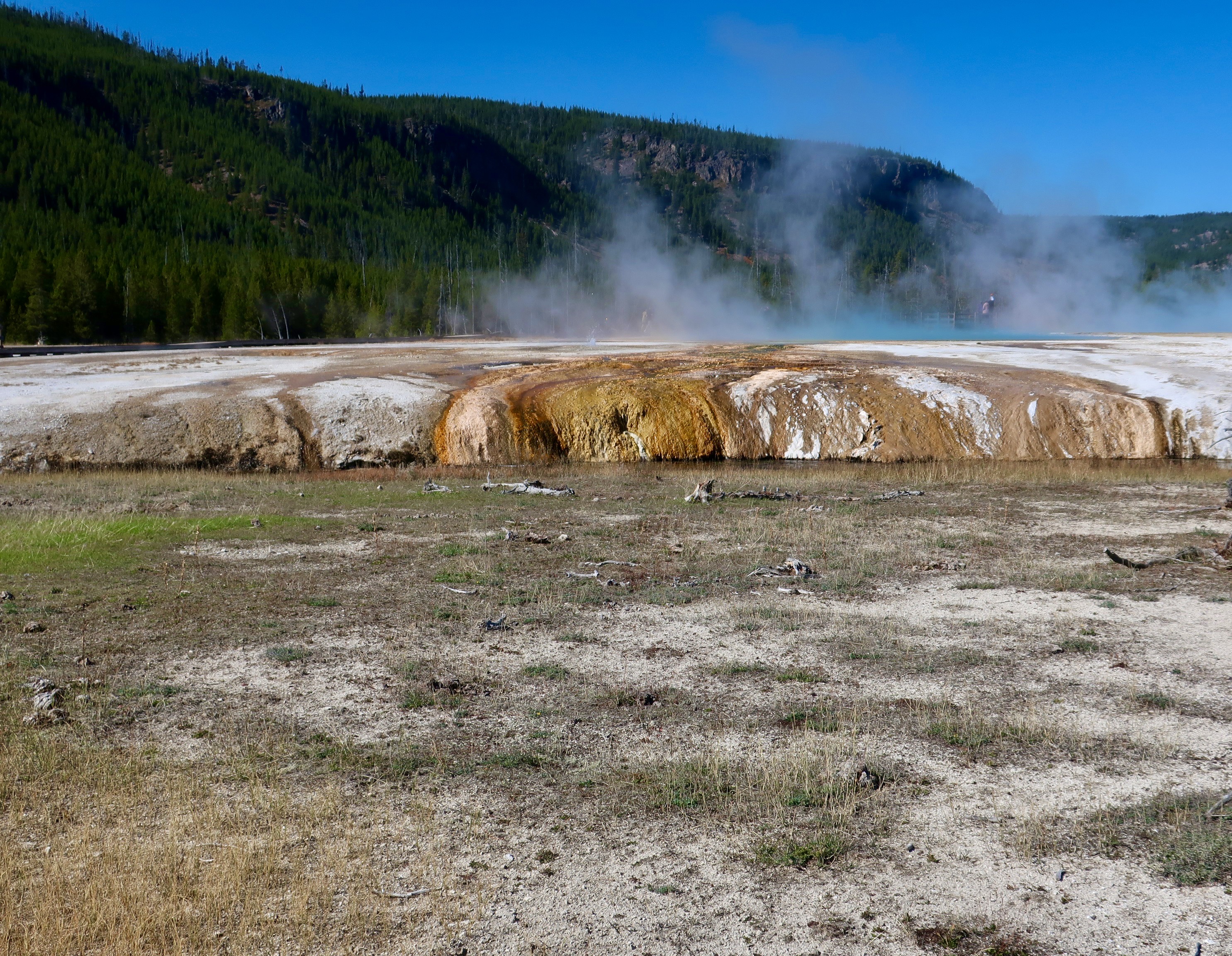
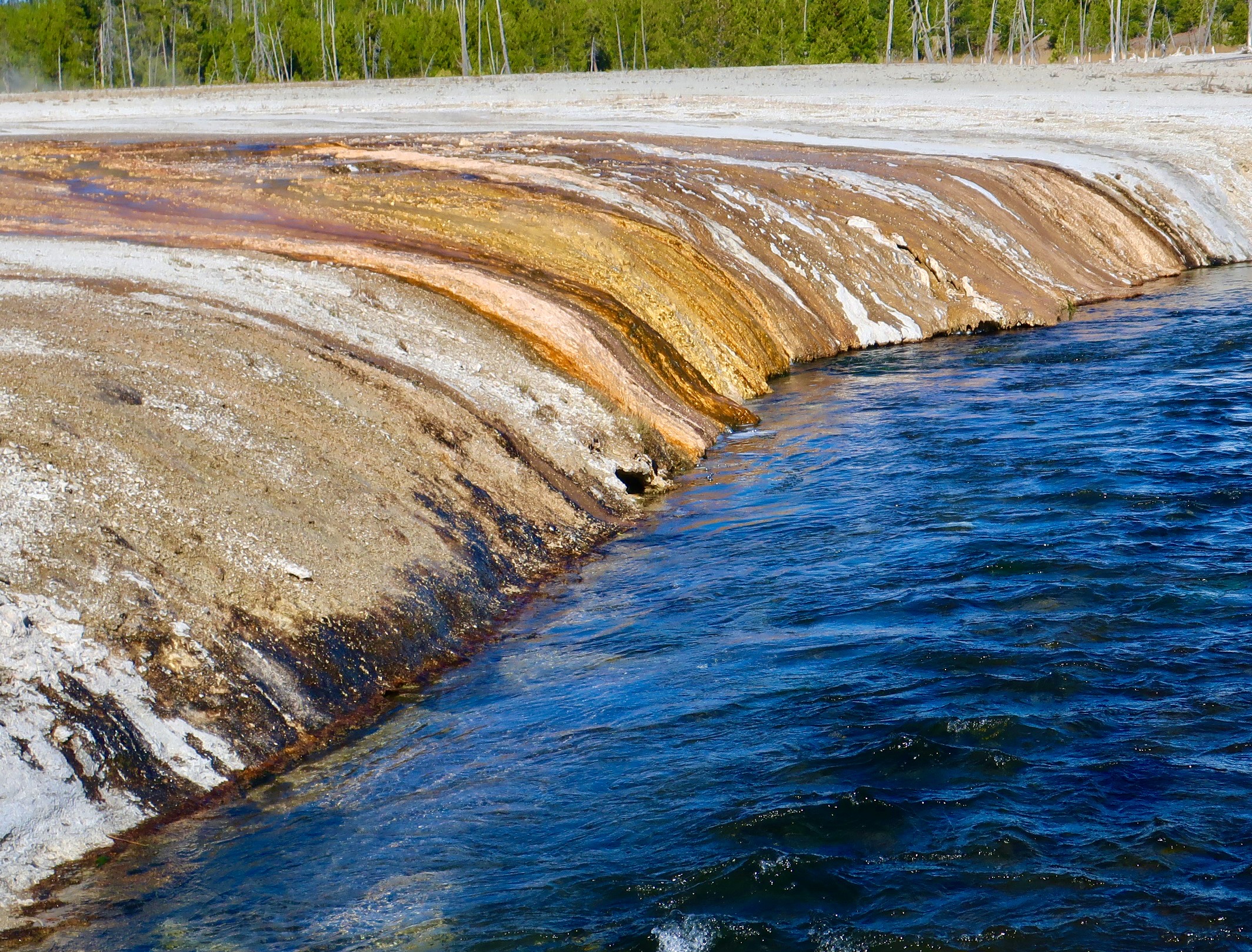
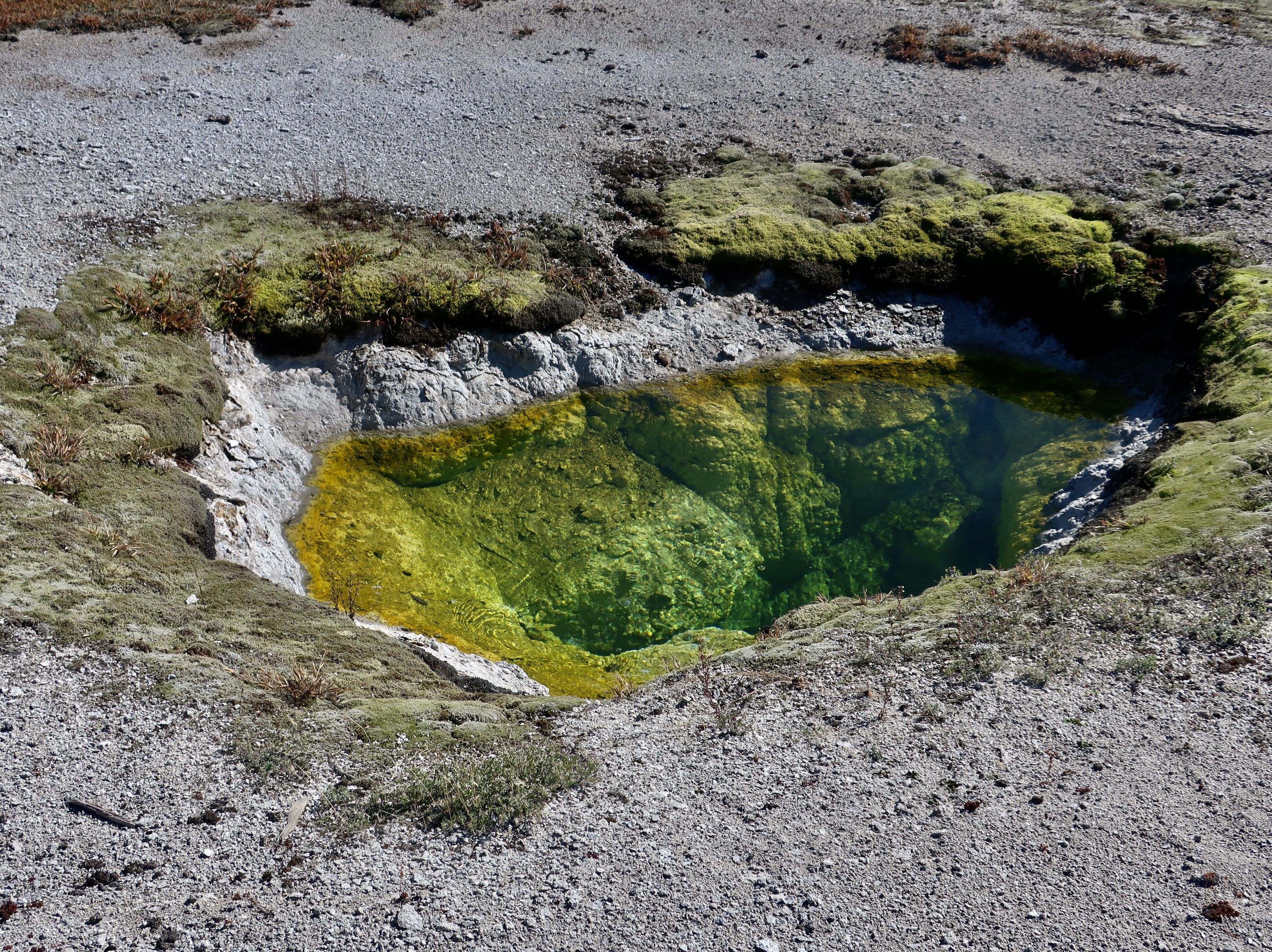
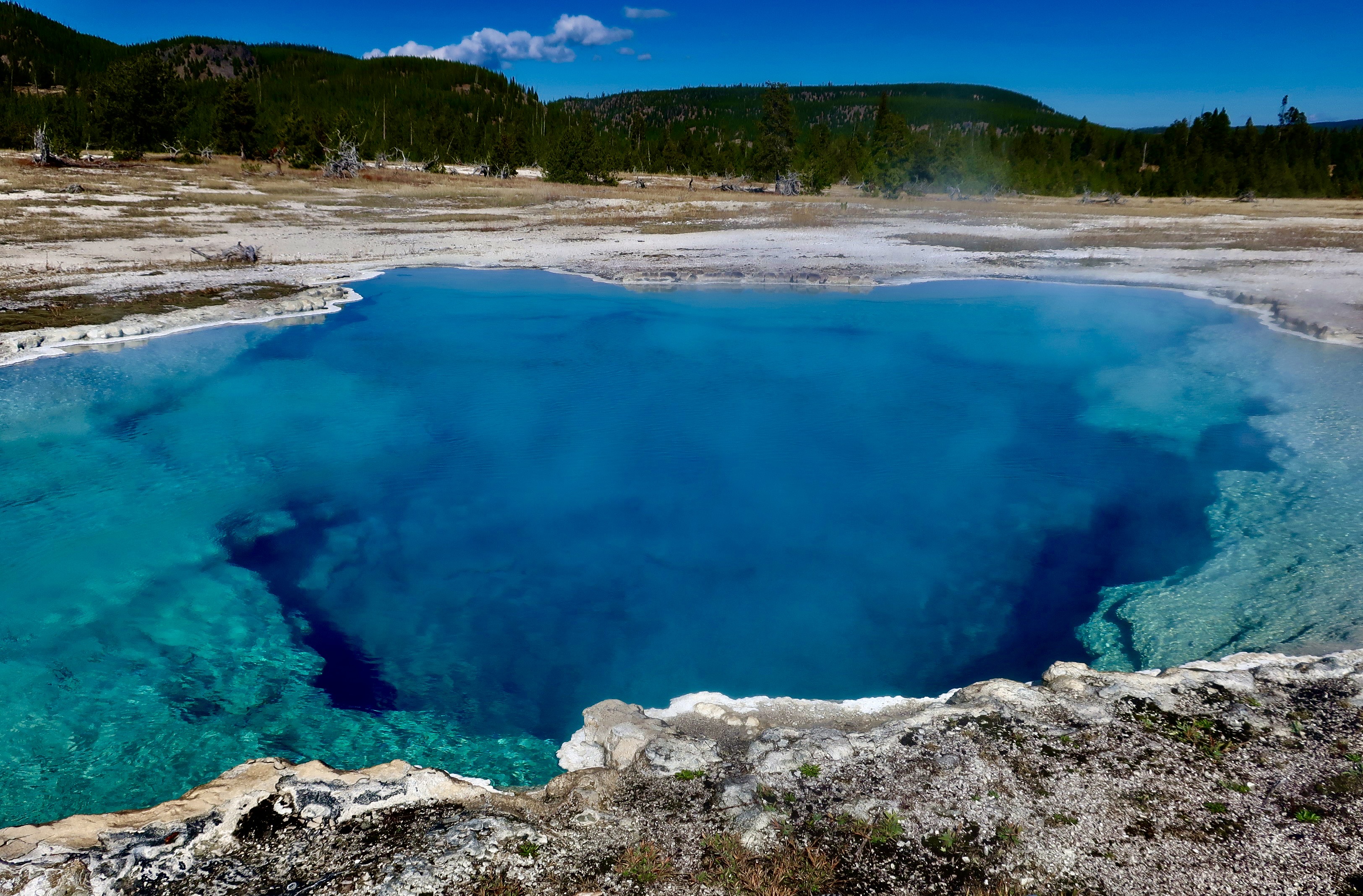
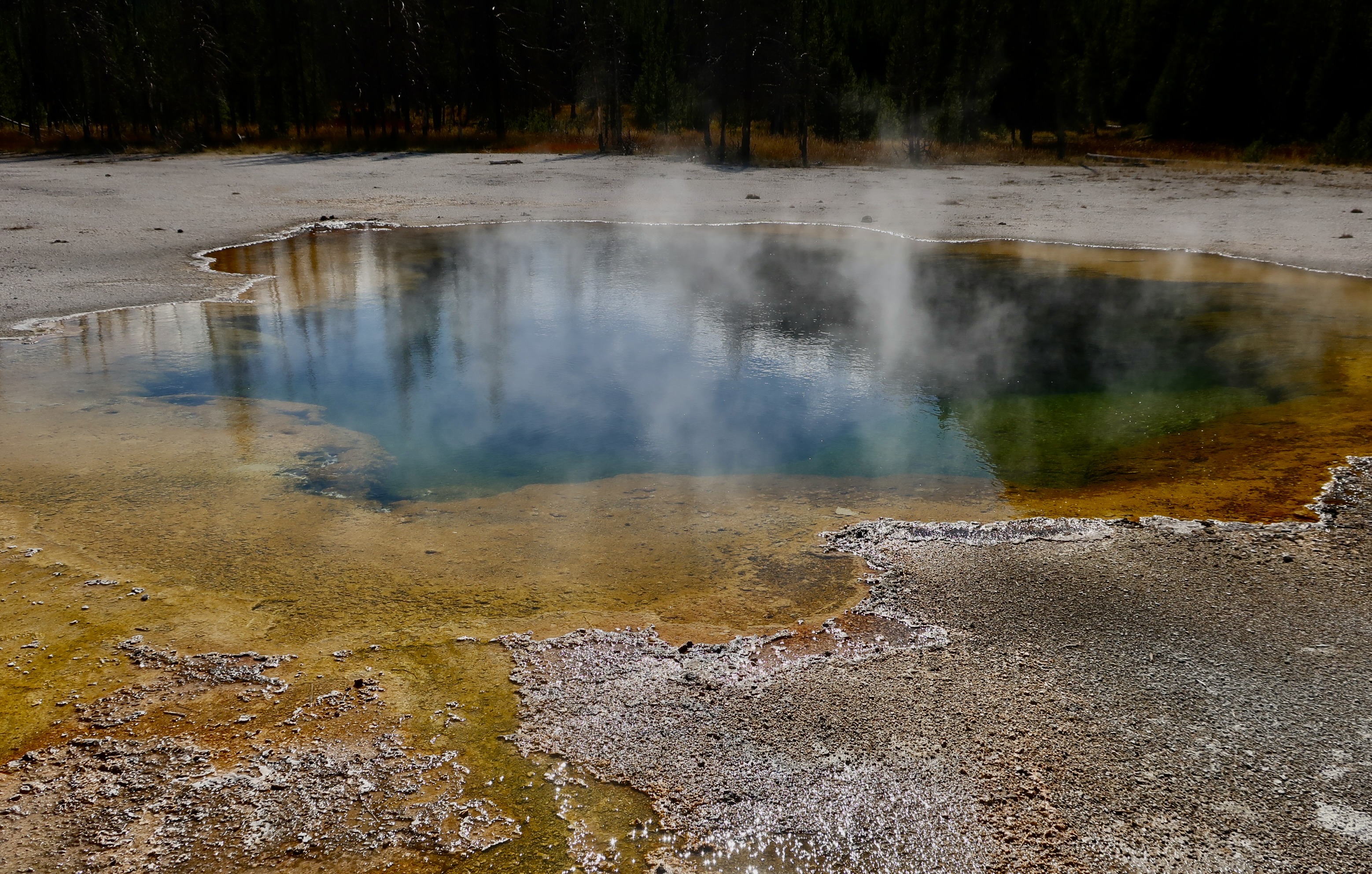
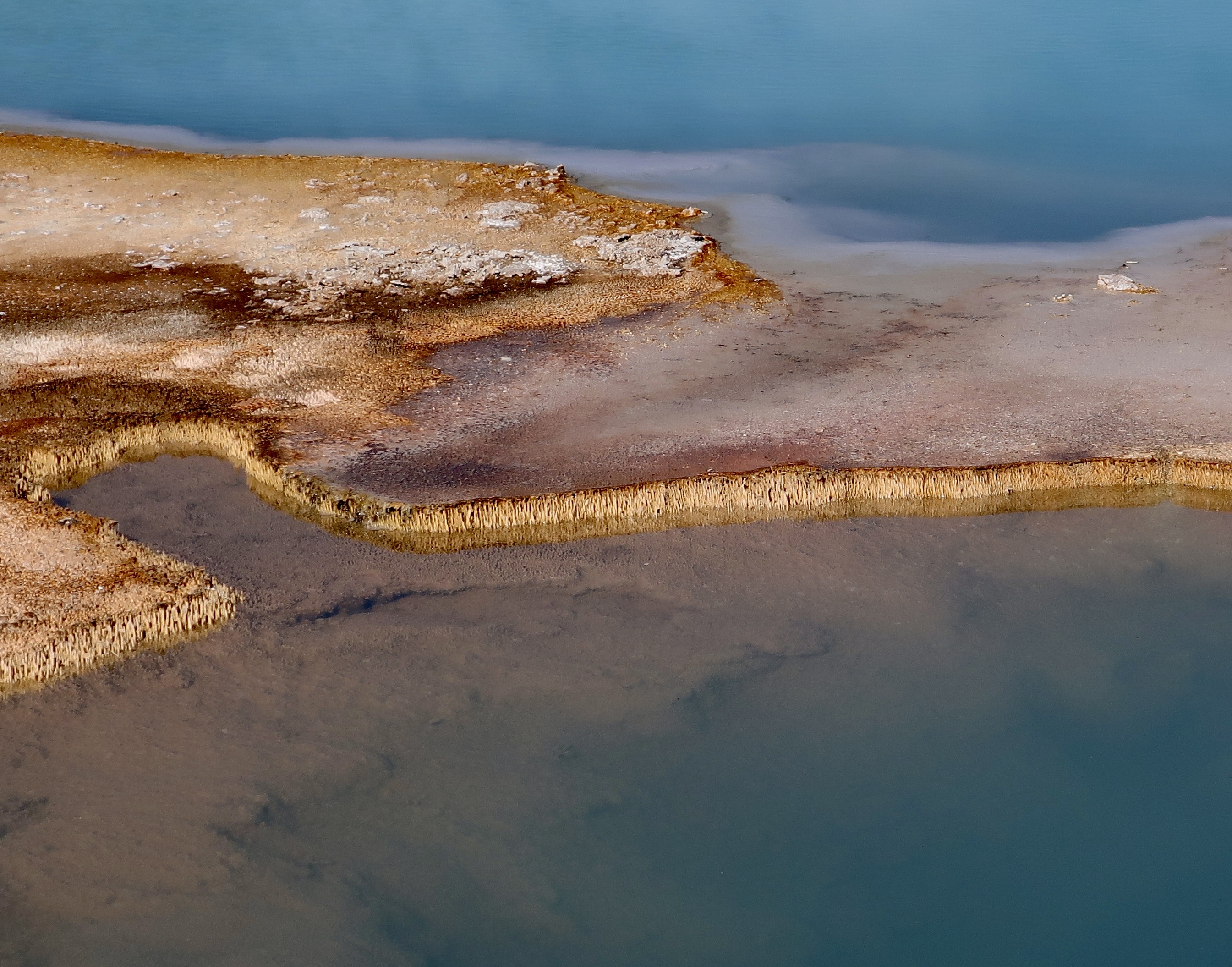
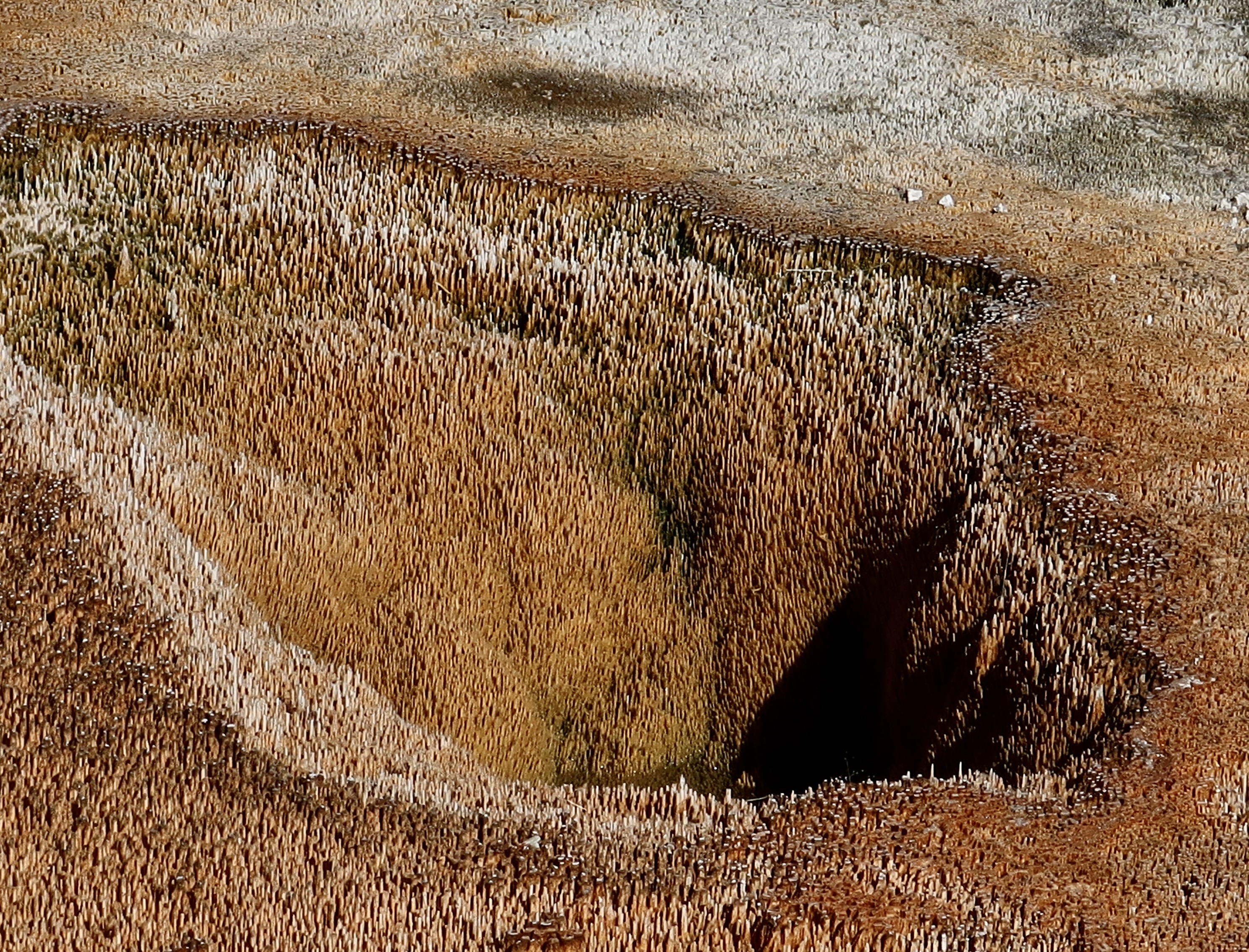
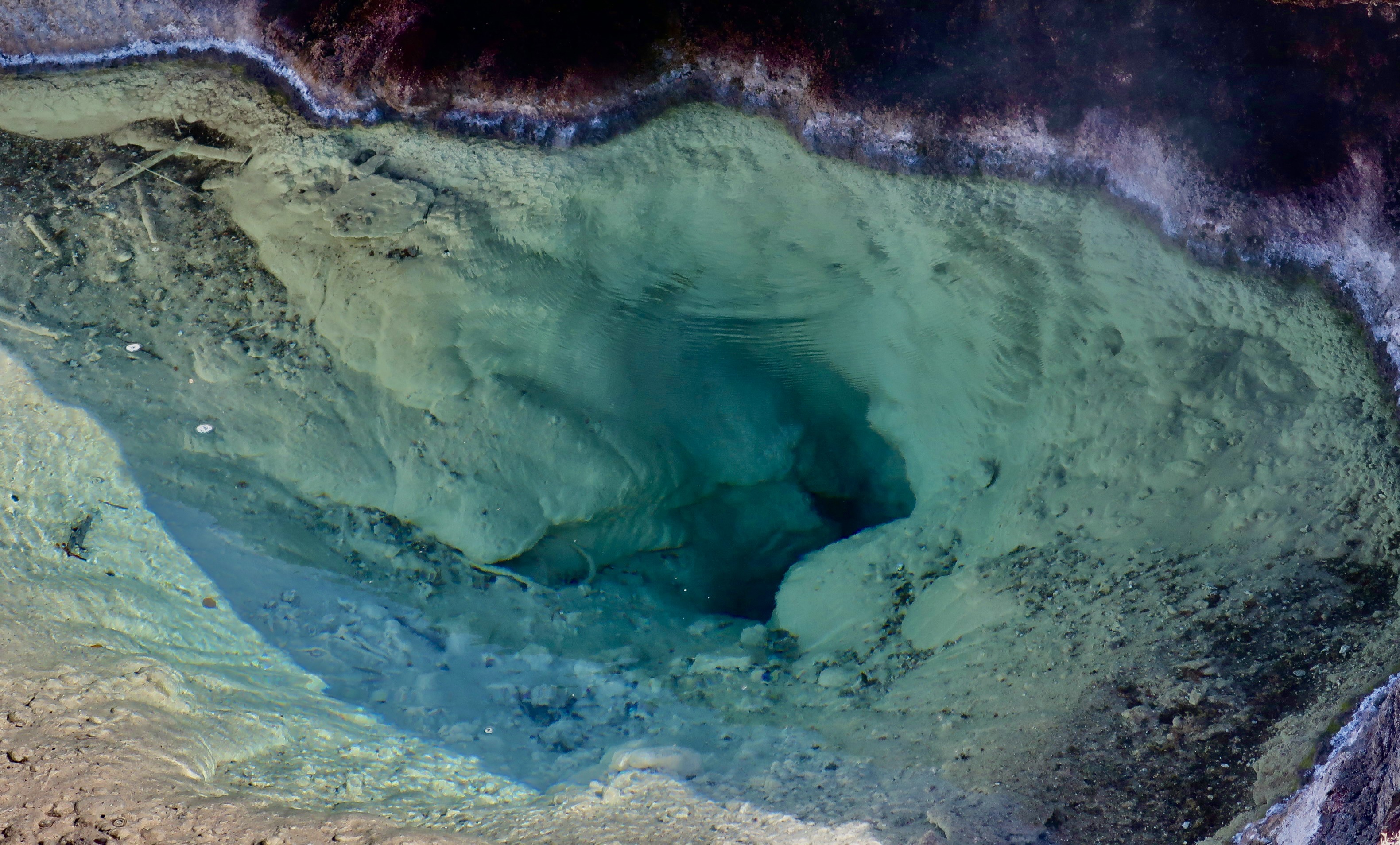
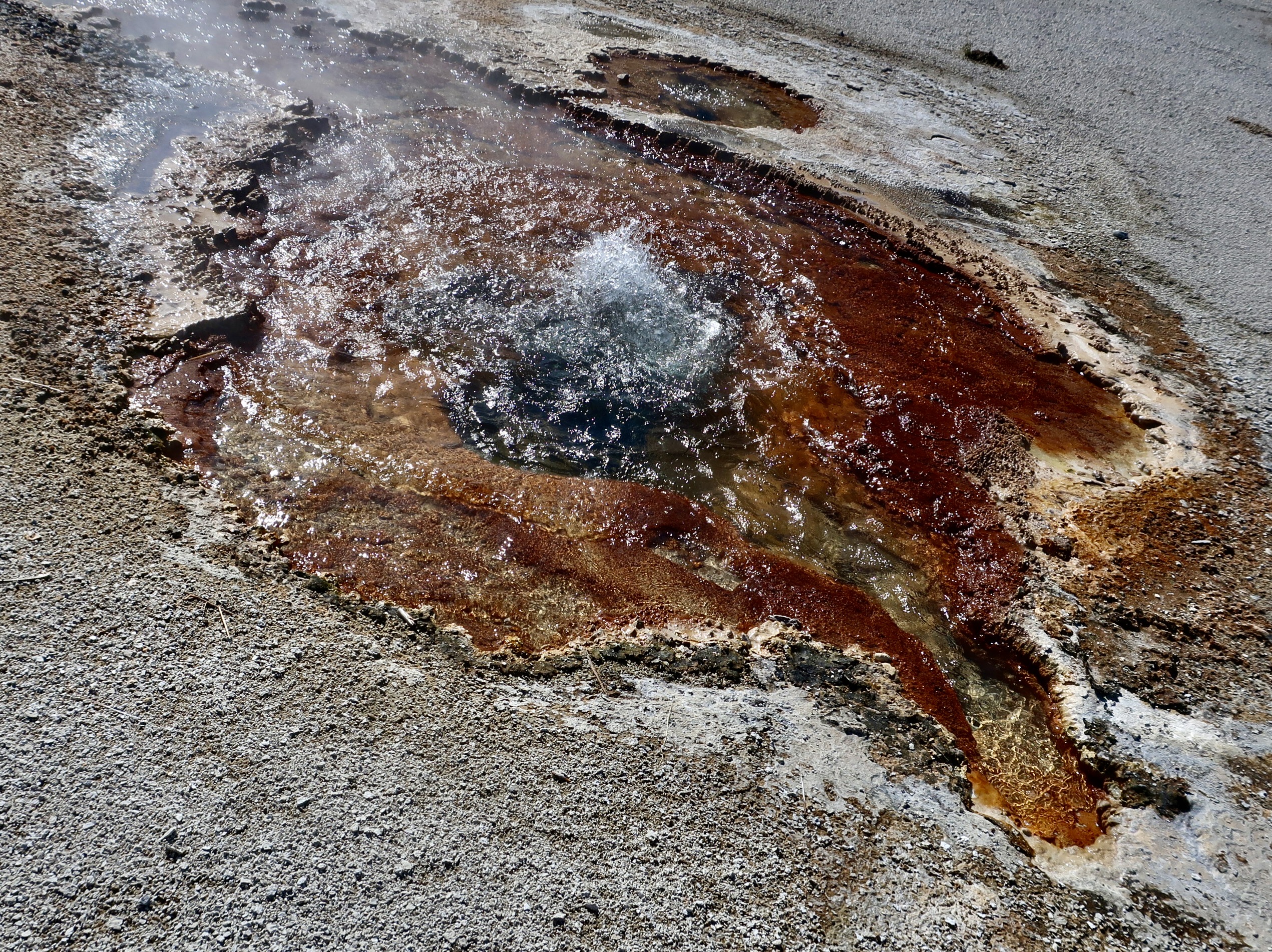
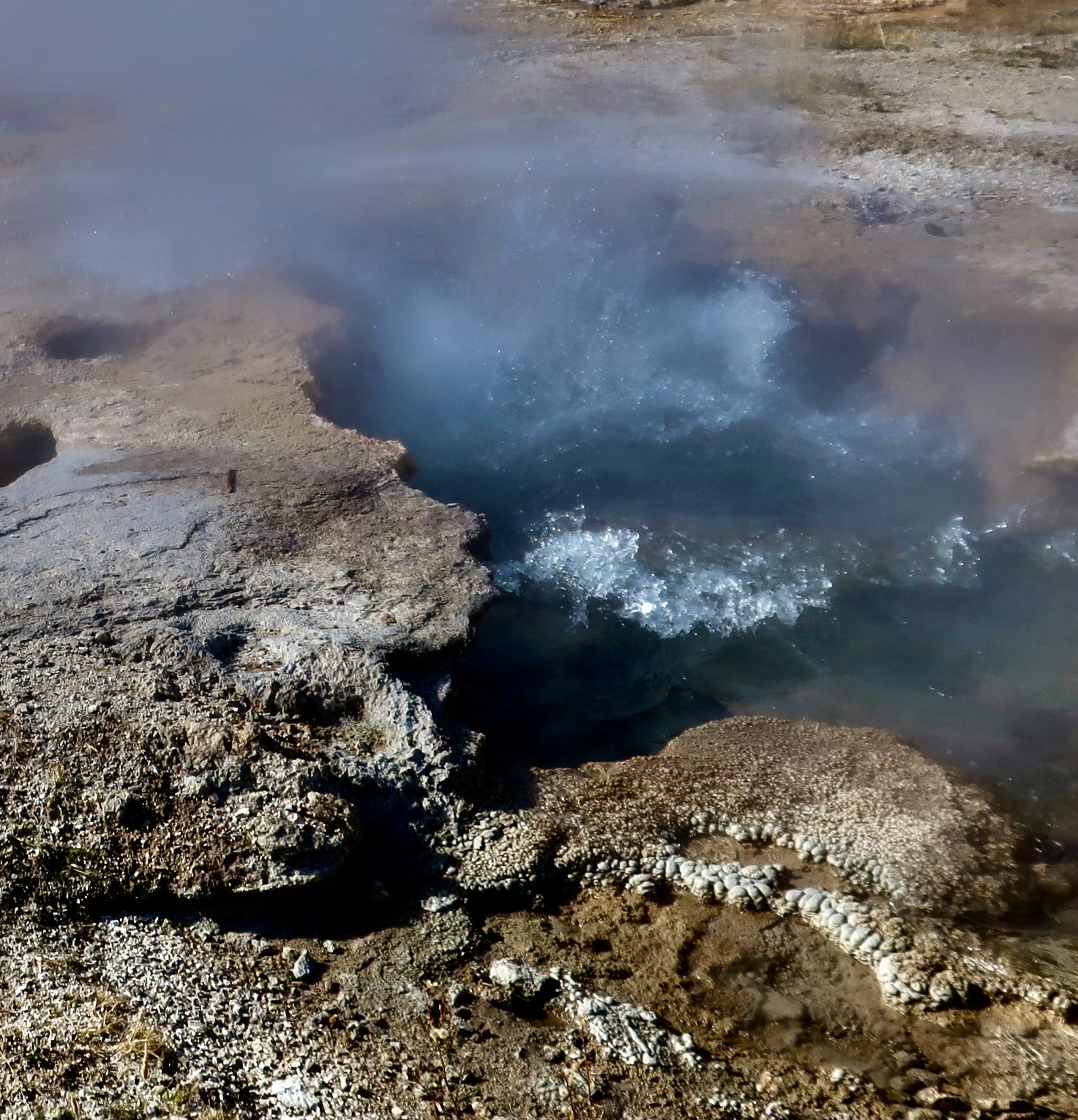
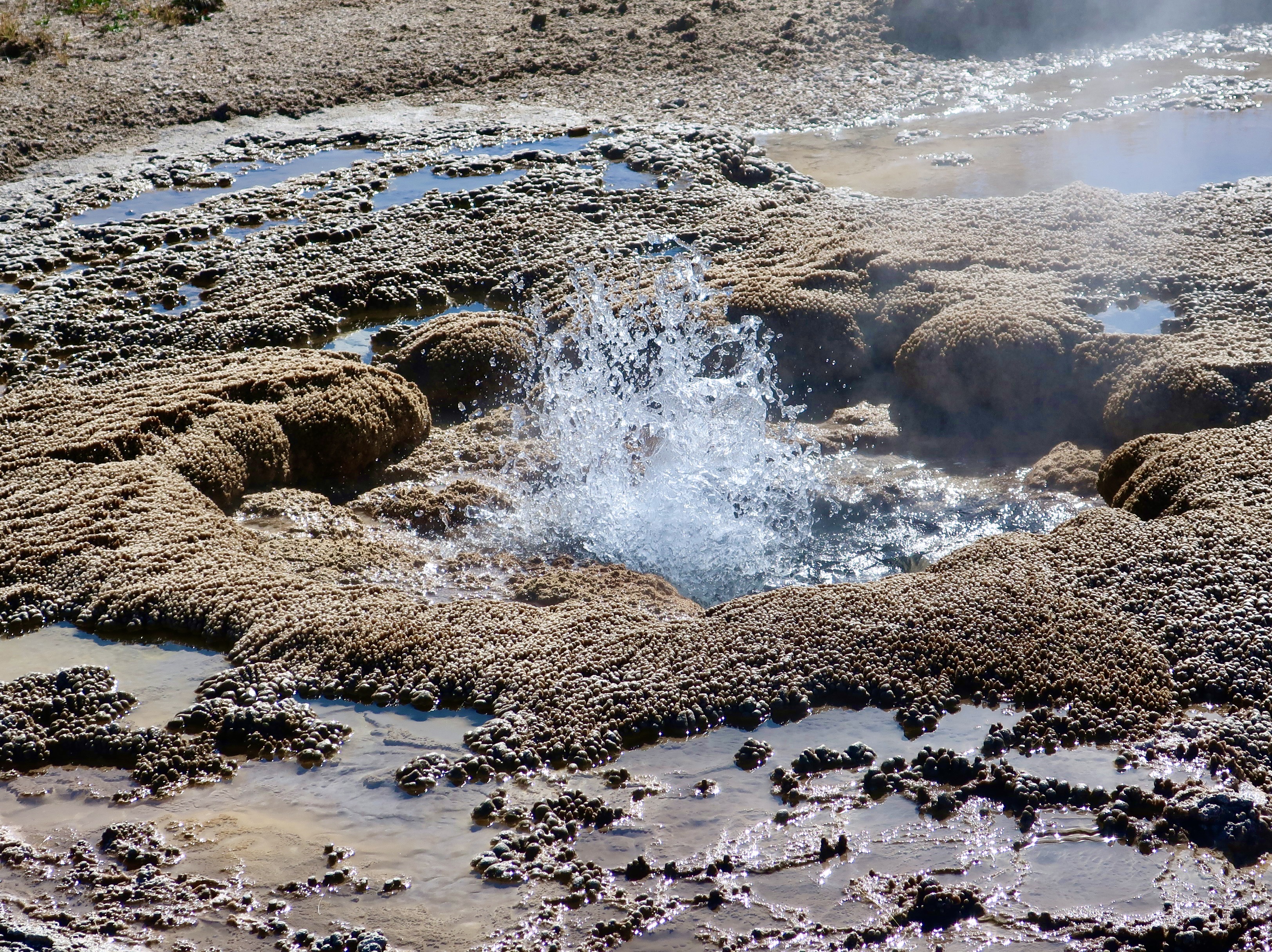
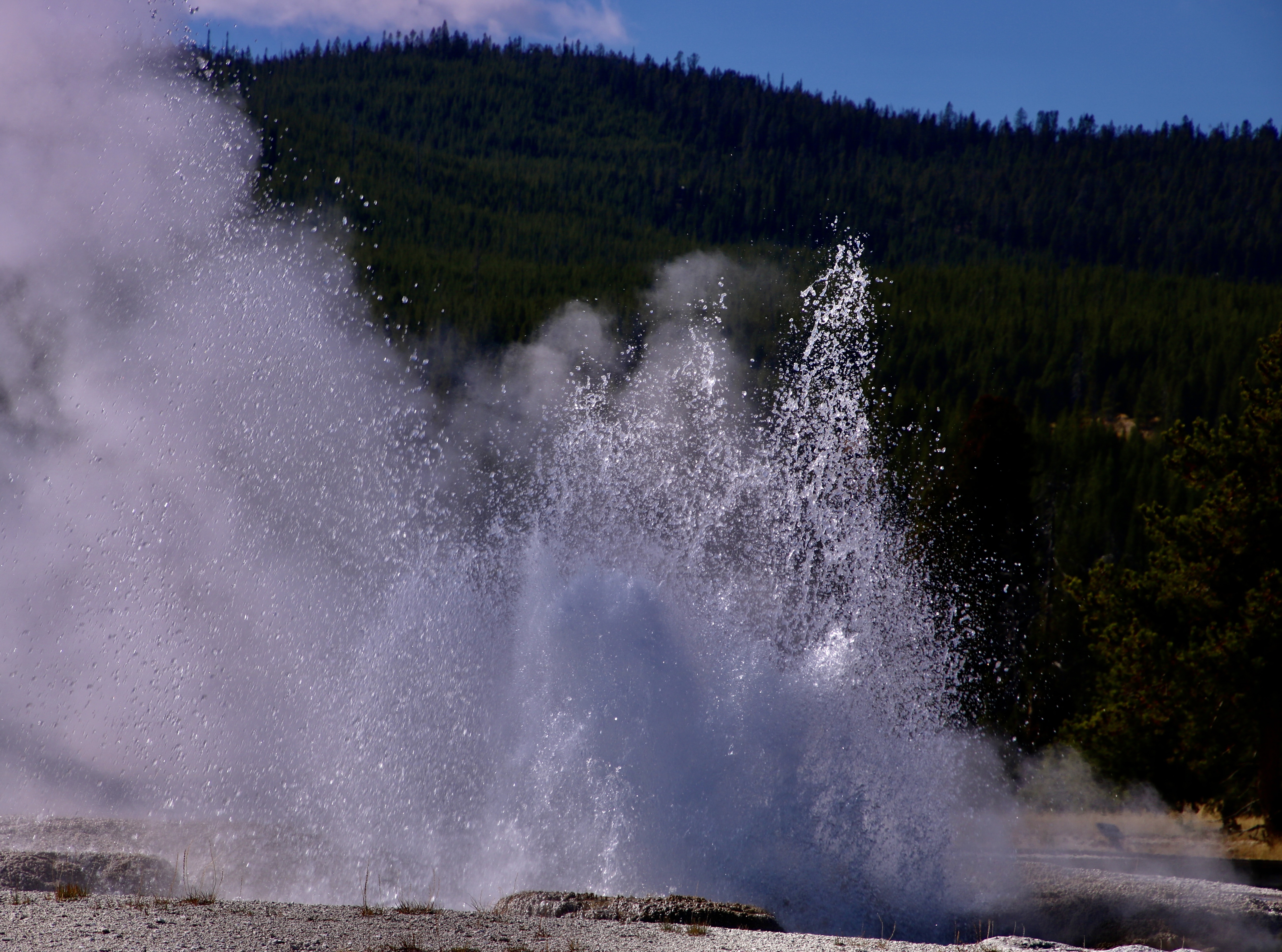
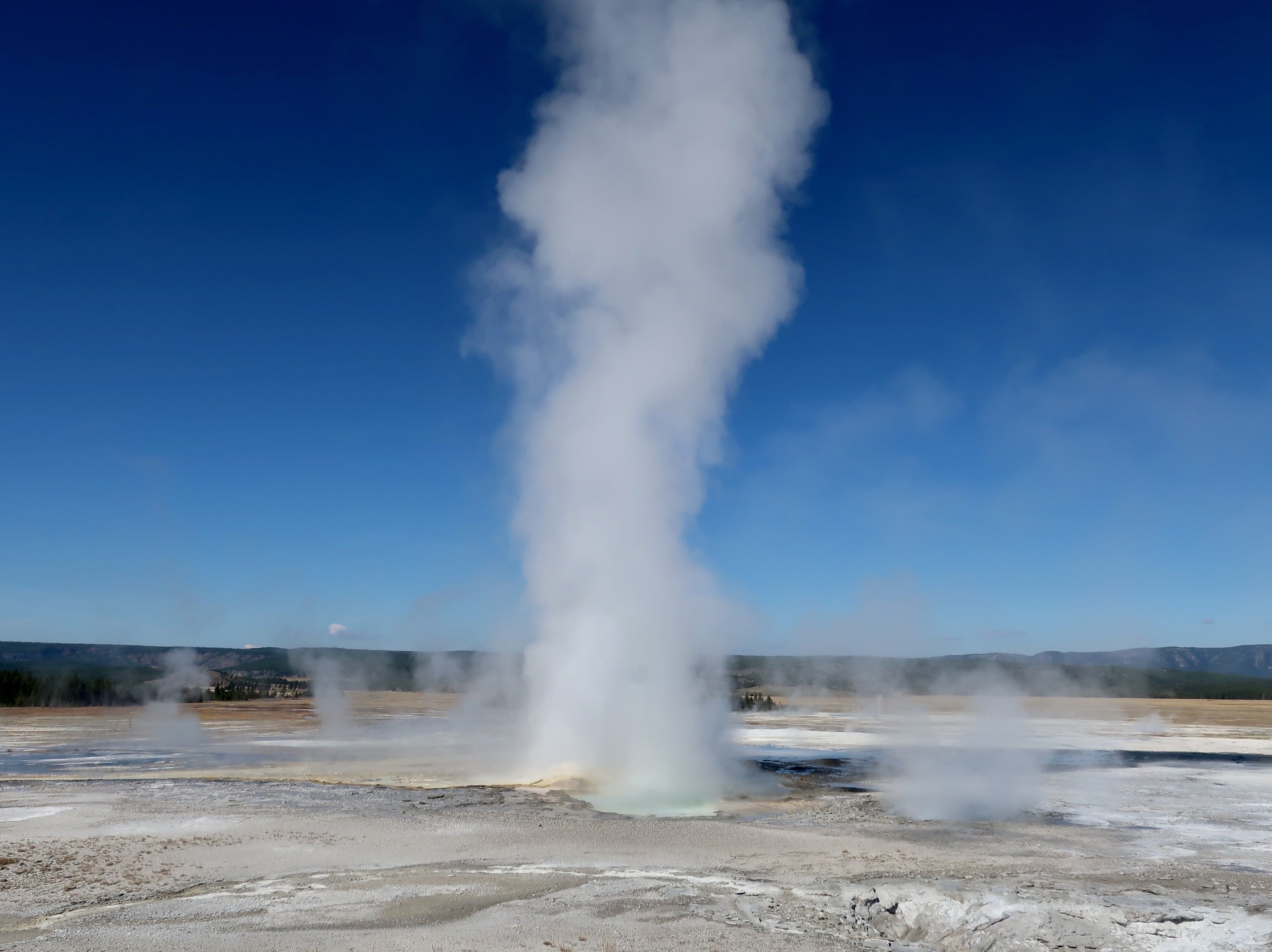
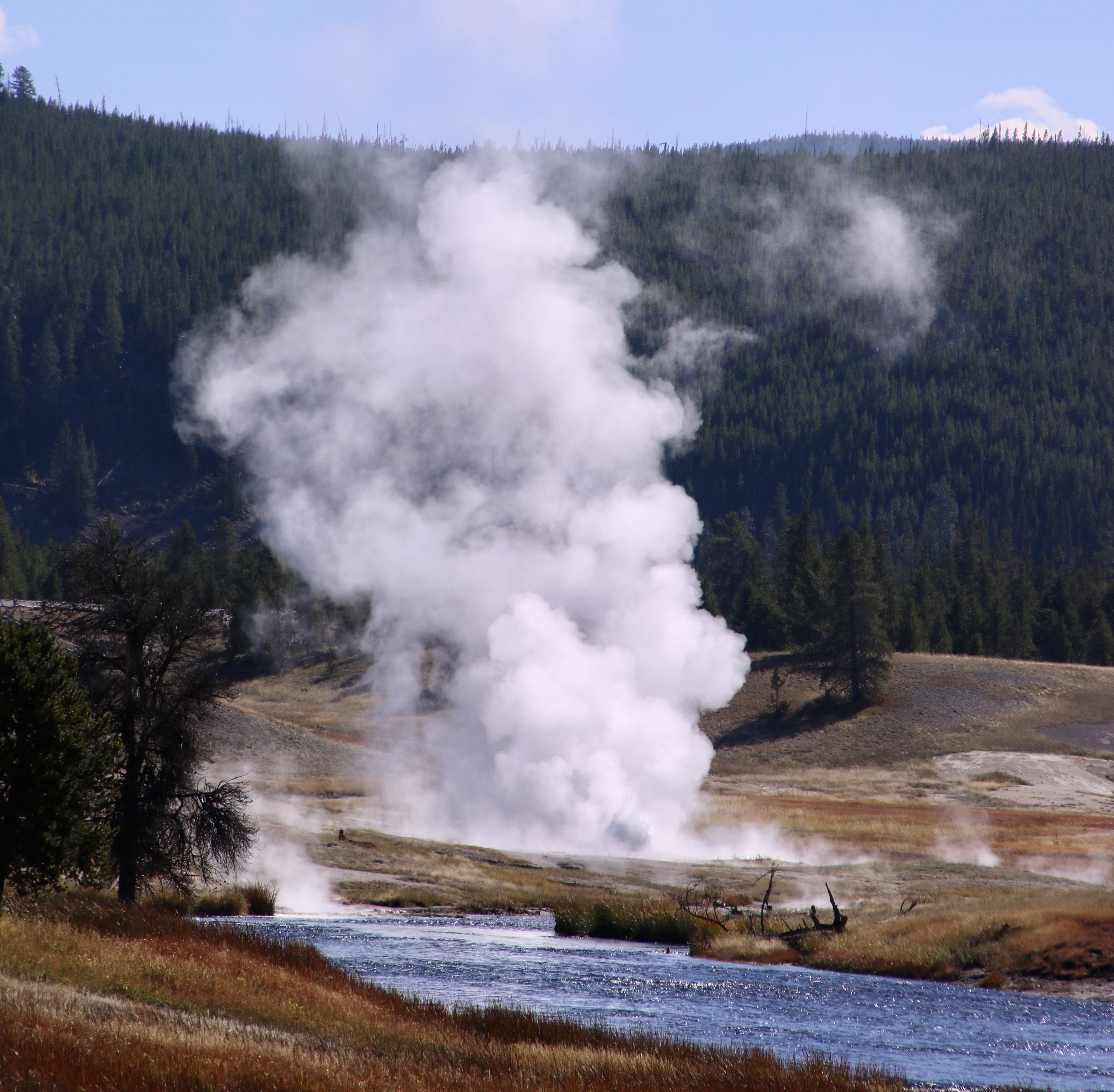
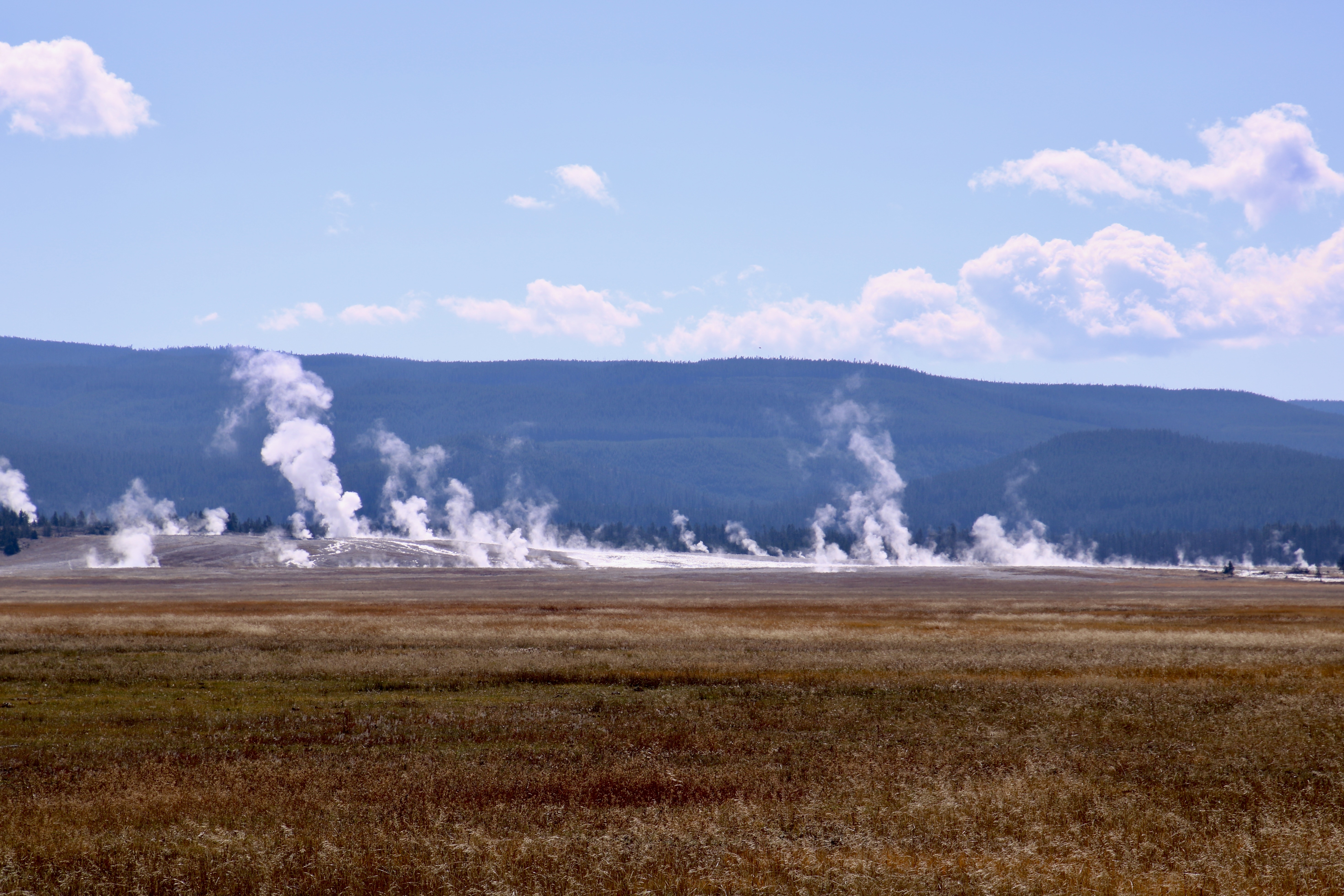
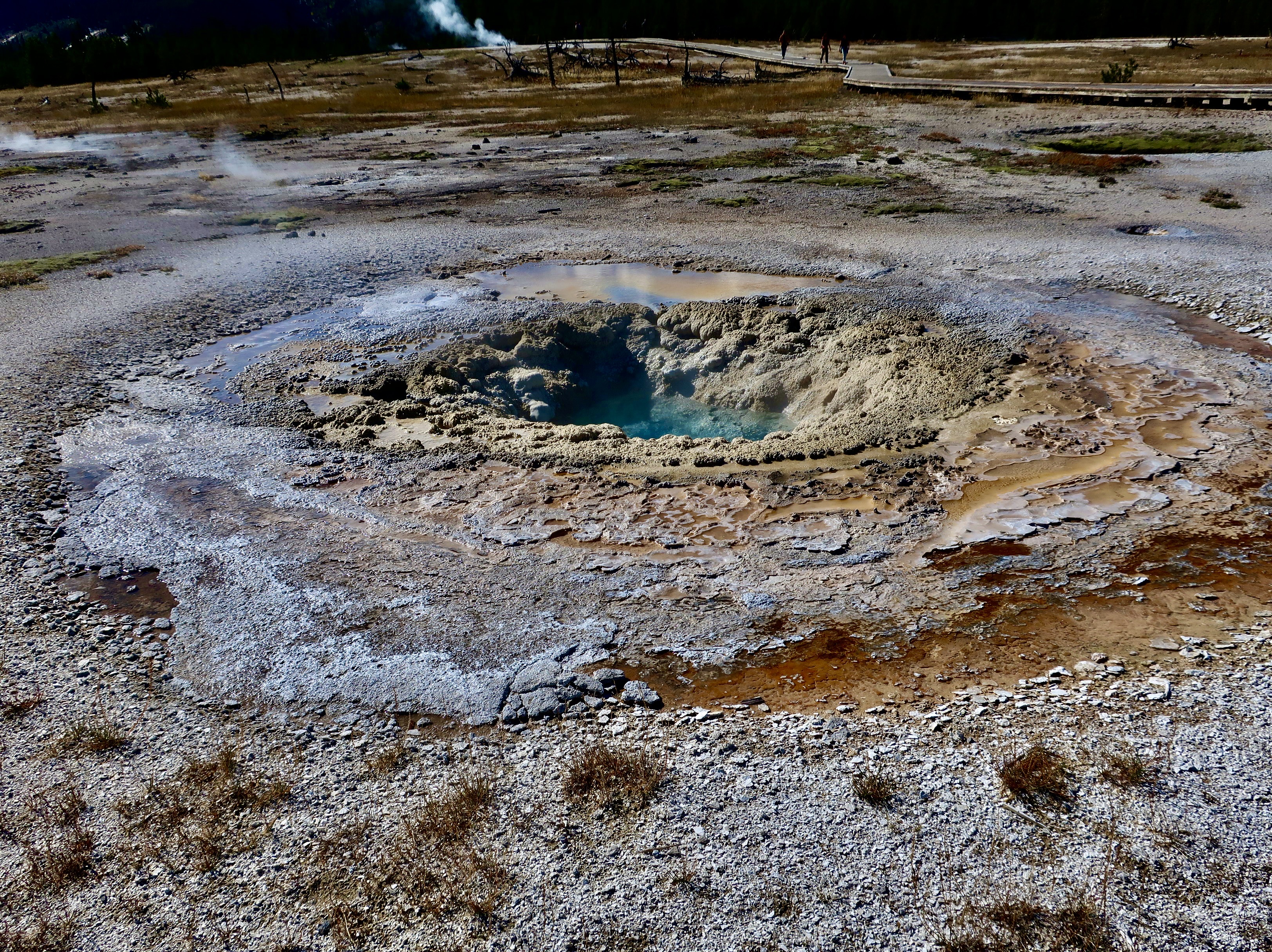
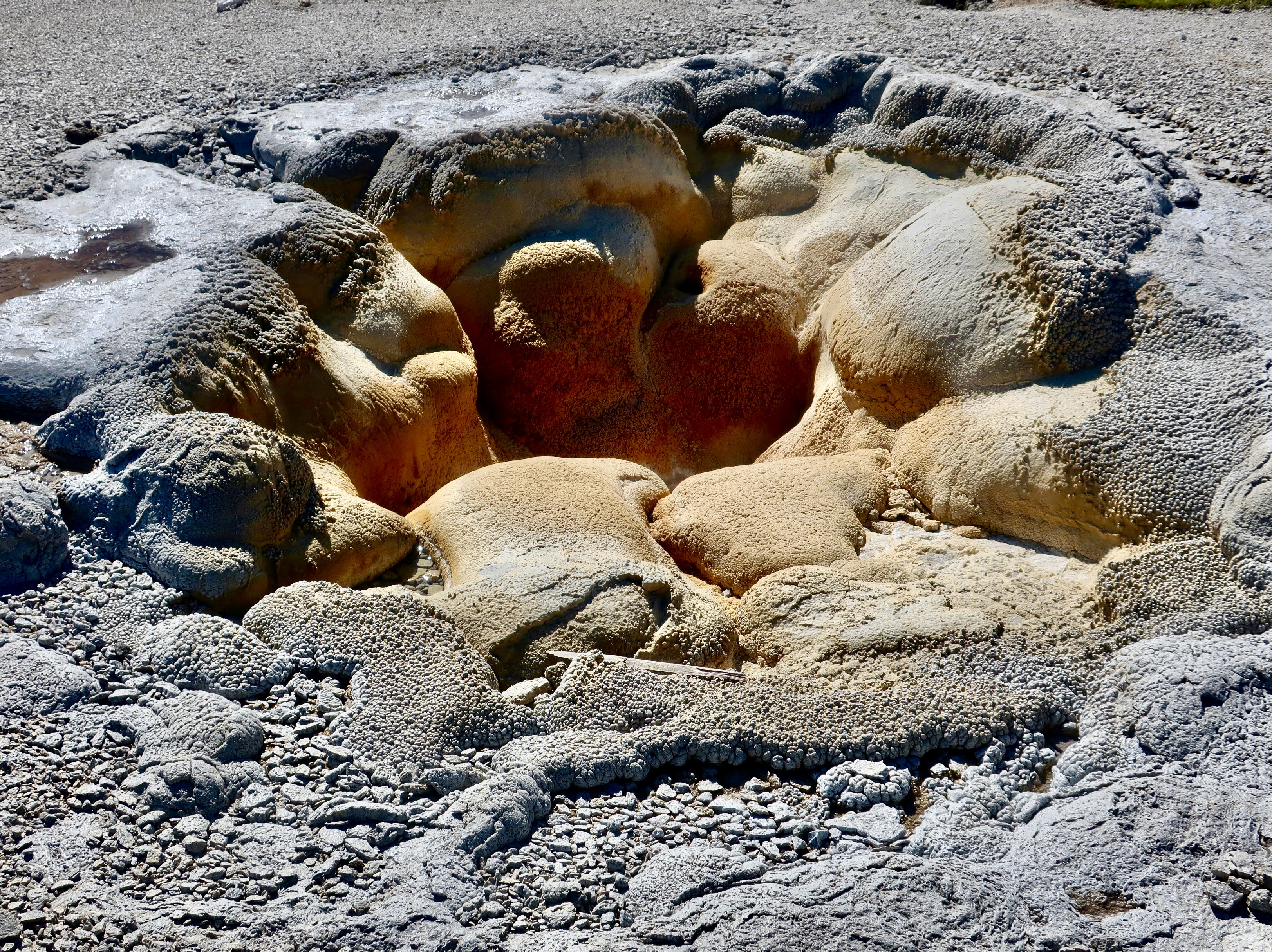
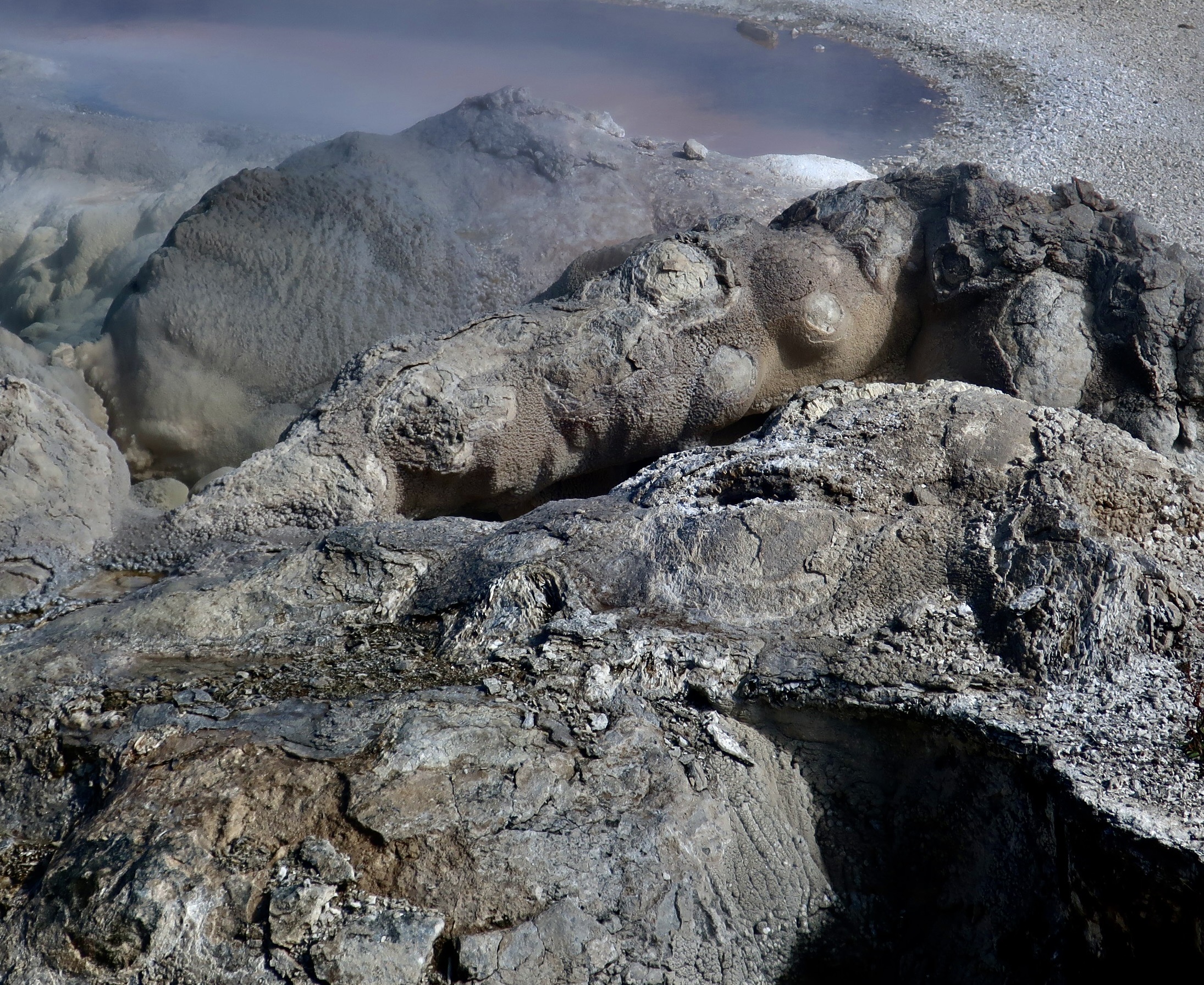
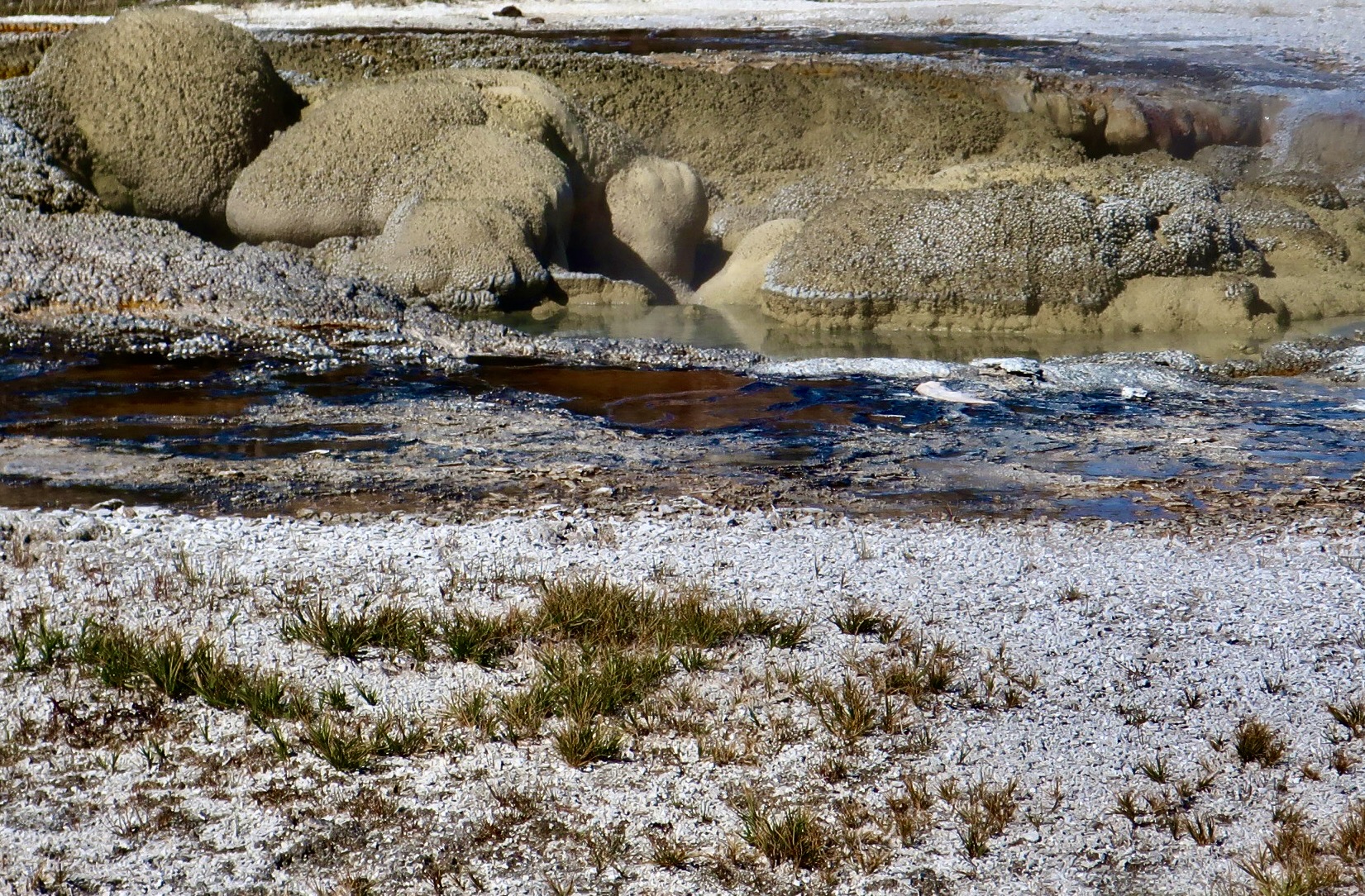
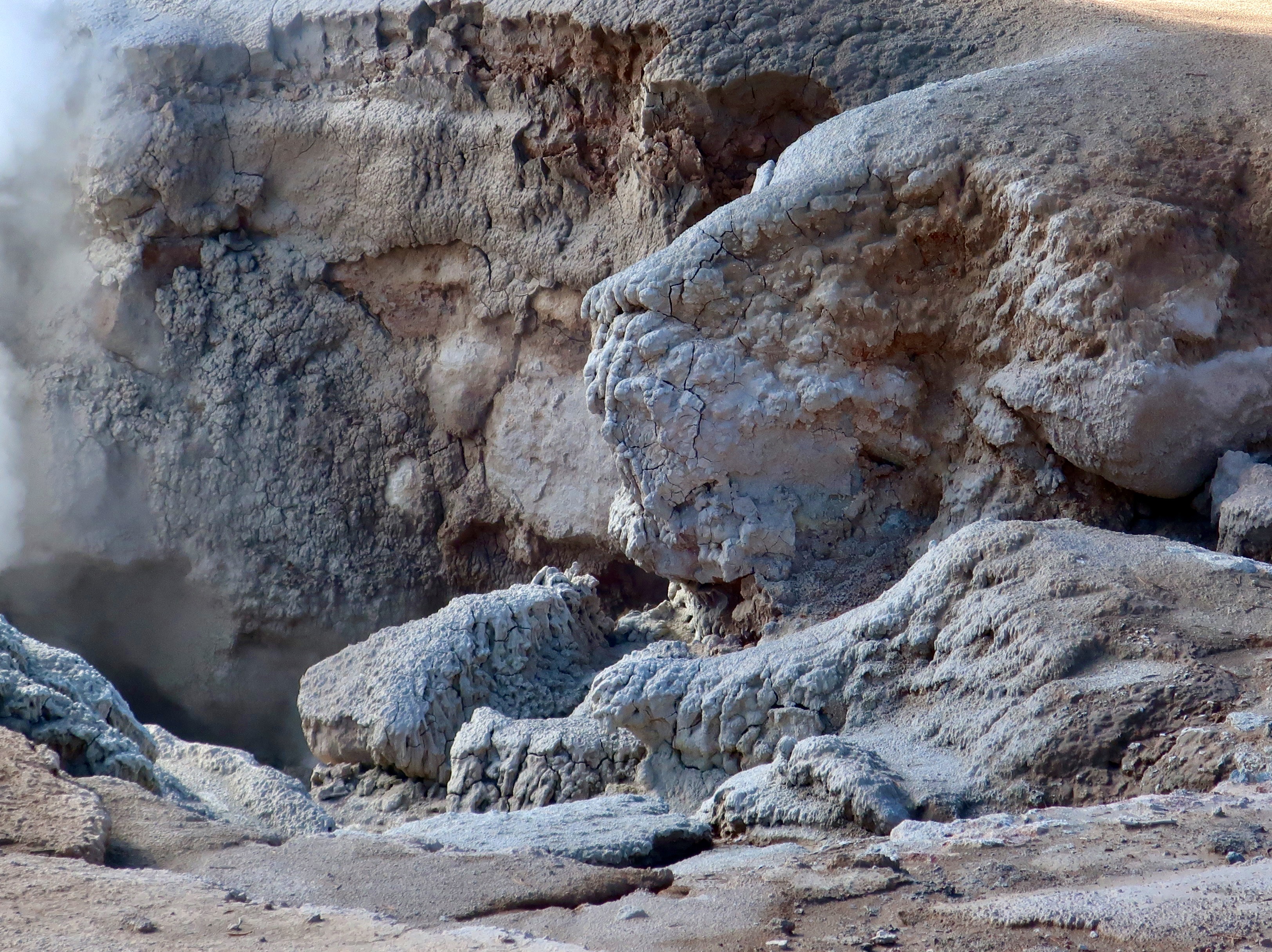
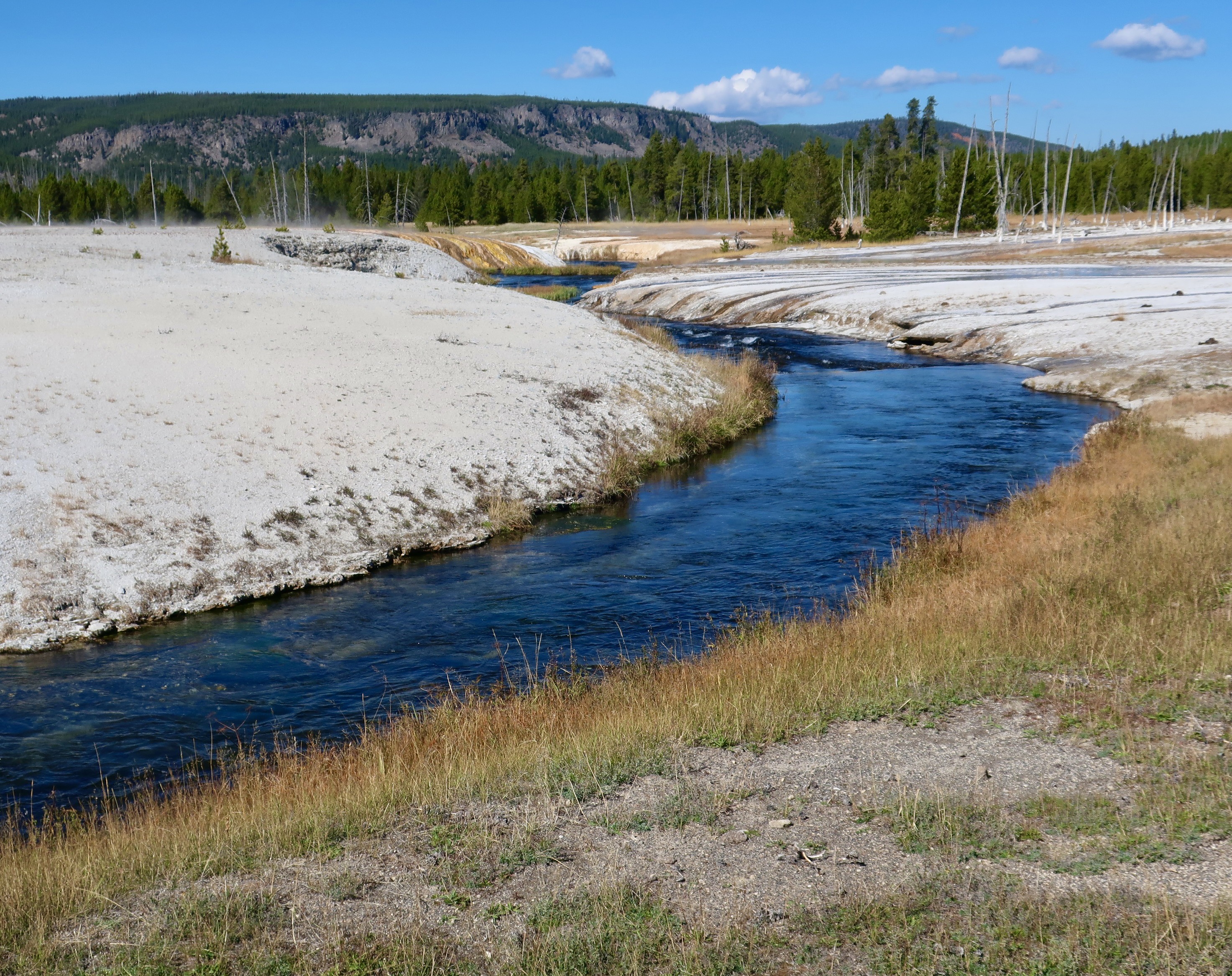
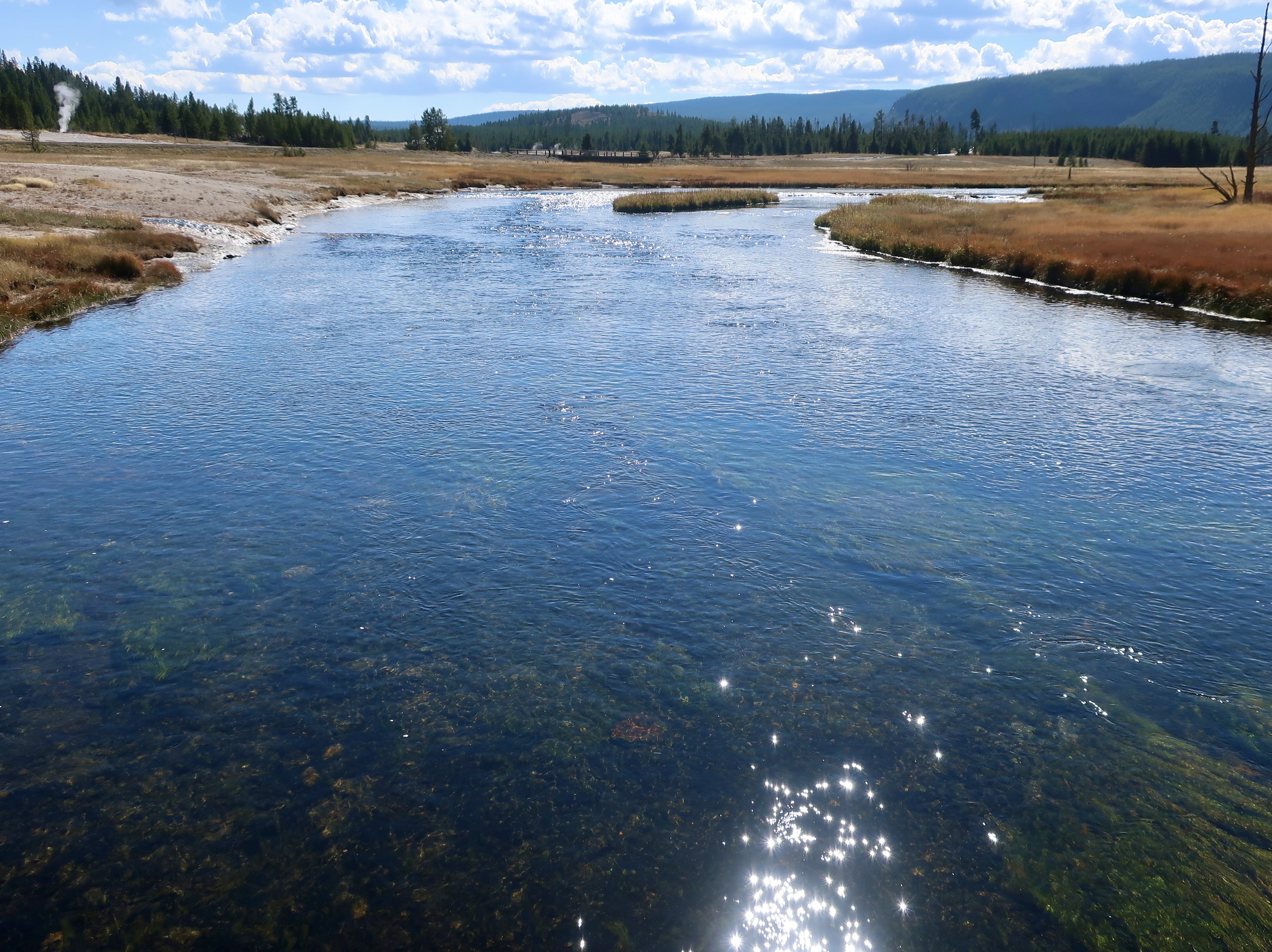
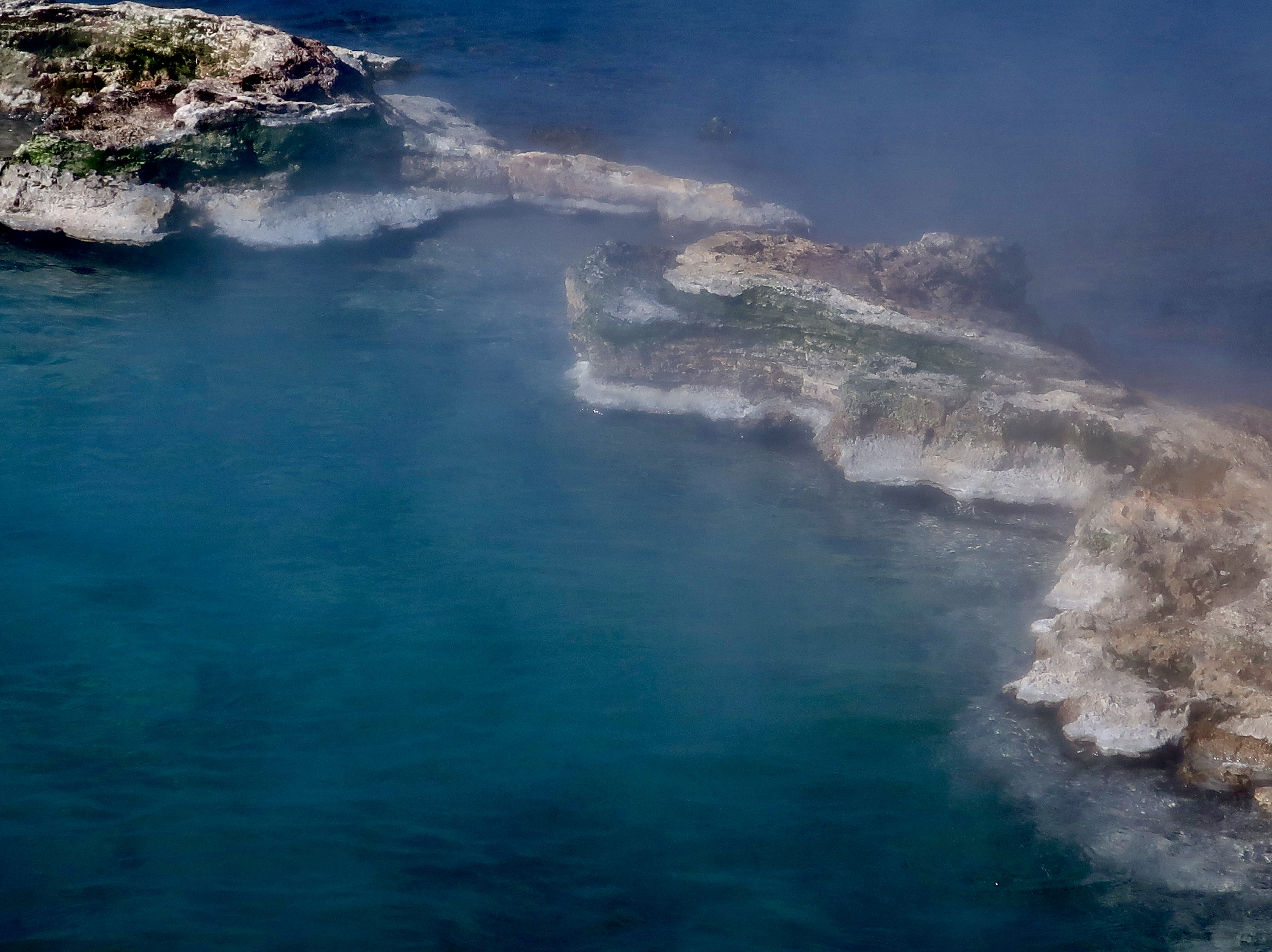
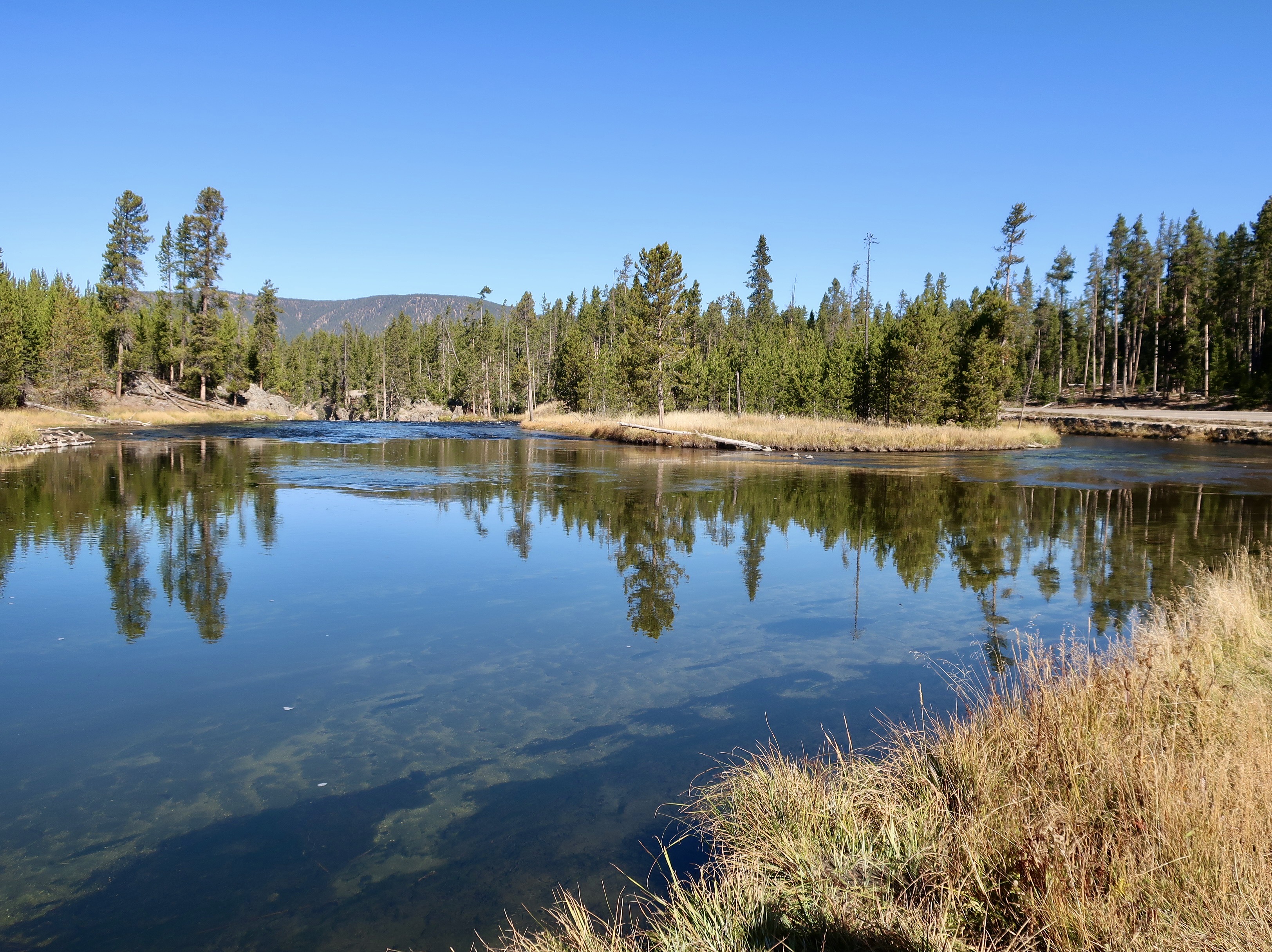
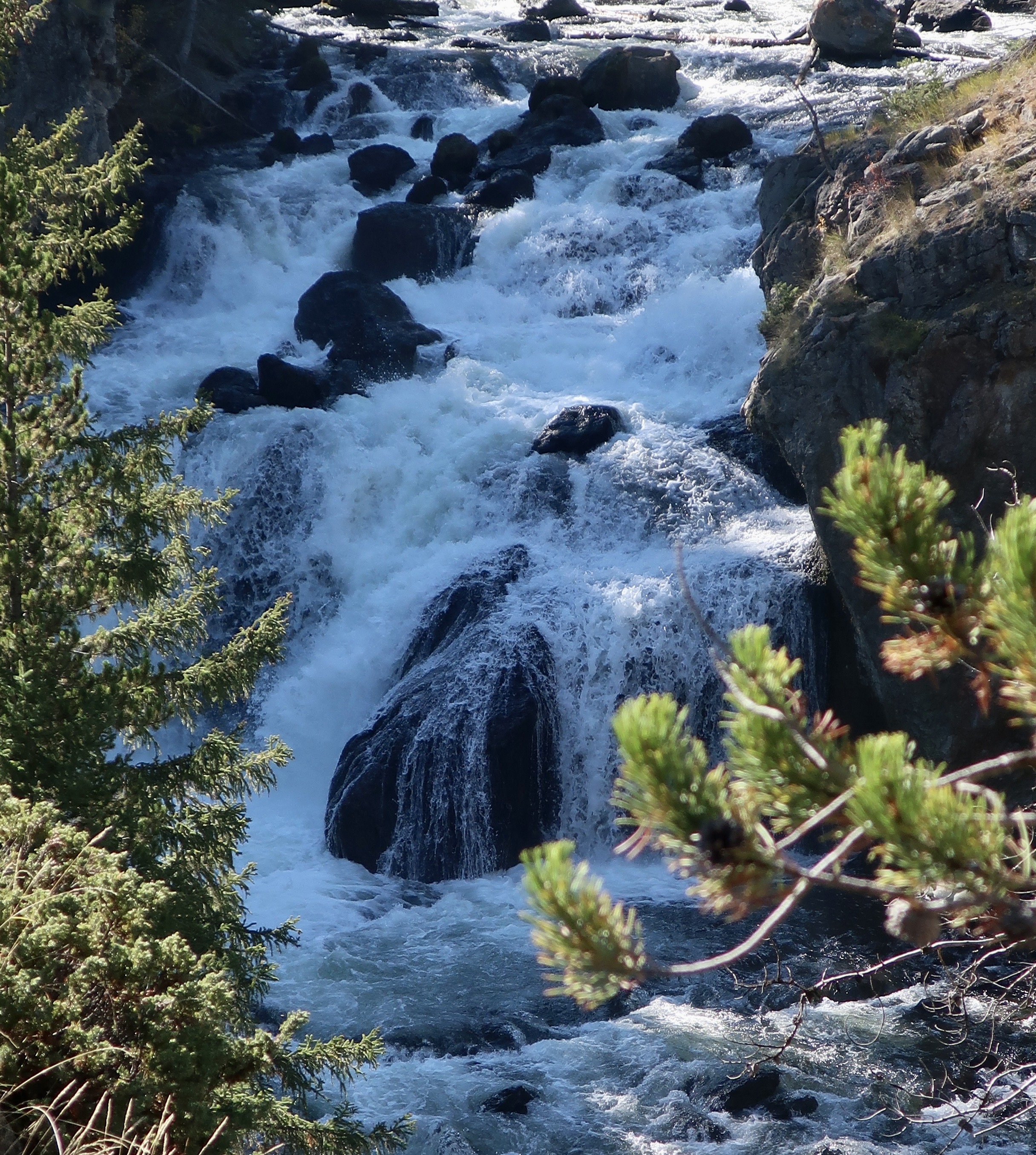
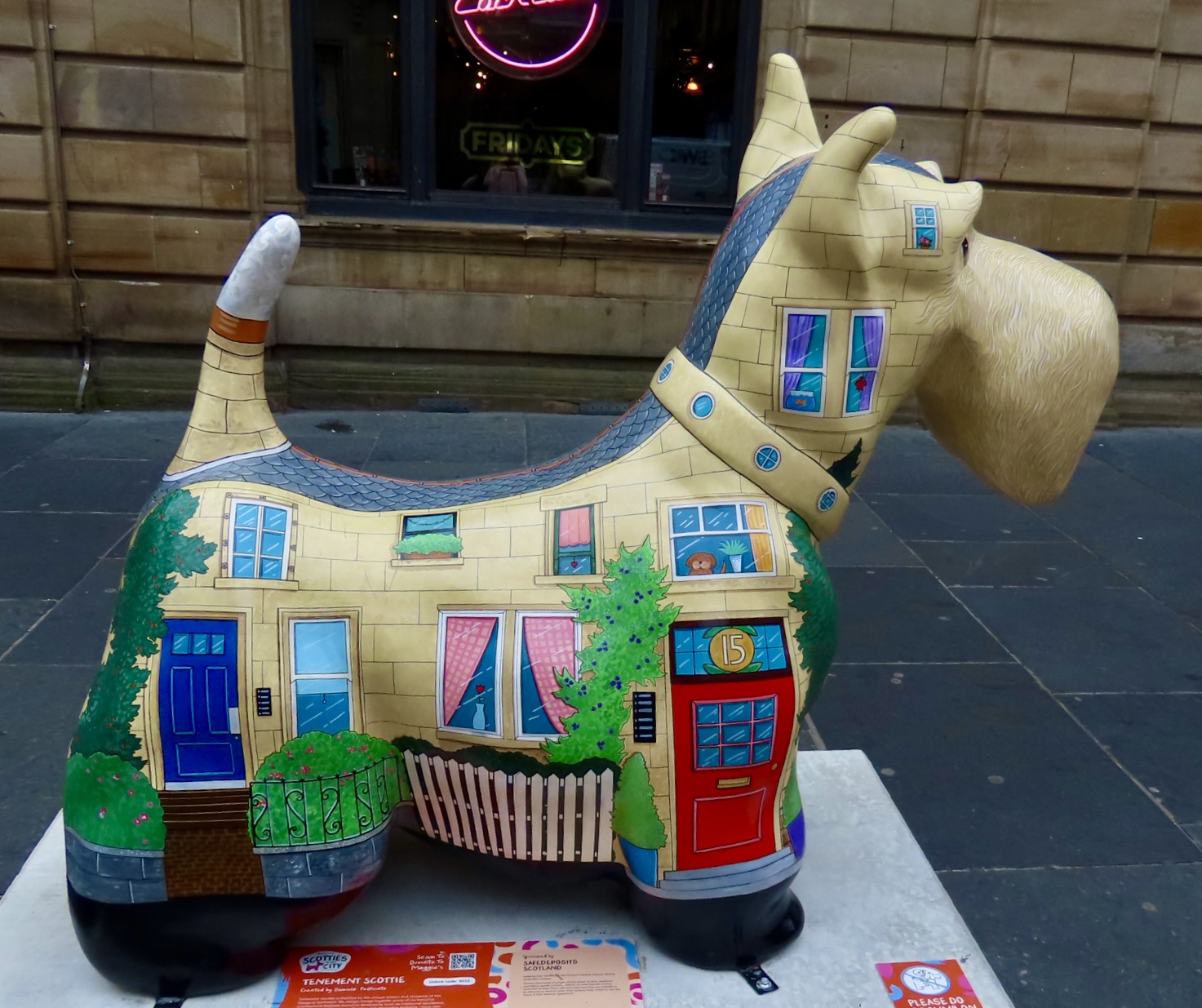
Location of Yellowstone National Park in northwestern Wyoming on a Google Map.This map provides an overview of the park. On this visit, Peggy and I drove up from Grand Teton National Park in the south and focused our visit on the western side of the park from Old Faithful (center left) to Mammoth Hot Springs (top left). The dotted line shows the extent of the Yellowstone Caldera. We are going to do 3 posts: From Old Faithful to Madison, from Madison to Mammoth Hot Springs and, finally, Mammoth Hot Springs. (Source: National Park Service map.)Here’s a close up of the area we will be visiting today from Old Faithful to just below Madison. Located in the heart of the Caldera, we will be featuring geysers, hot springs and the Firehole River. The latter received its name because the geysers and hot springs are its primary source of its water. We will start with colorful streams making their way from the geysers and hot springs to the Fireball River. Get ready for color!The color of the streams, geysers and hot springs in the Caldera section of Yellowstone is a constant source of surprise and wonder to those who visit the park. Credit goes to thermophiles, tiny microorganisms that thrive in the hot springs. Different types of thermophiles have different tolerance for the heat and come in different colors based upon heat and exposure to sunlight. Those that can tolerate the most heat live deep in the pools and tend toward blue and green. The ones living on the cooler, outer edges are more in the brown and yellow range.“Wow!” is an apt description of the colors.Oranges, browns, yellows, and darker colors.Artistically, this view is one of our favorites, and that’s saying a lot. The dead stump has created an obstacle in the flow of the water and created this pattern..One can see where the name Yellowstone came from here with this golden yellow rock. It was cascading down into one of the tributaries flowing into the Firehole River.A view from the top. The clear water shows that the color is in the rock, not the water.A combined effort creating a waterfall of rock.Just downstream on the Firehole River tributary, a different view. Now, back to the source, the hot springs and geysers. The Irish would be jealous of this beautiful, green hot spring found in Yellowstone National Park— and, the clarity of the water. It almost wants to make visitors shed their clothes and jump in. Bad idea. The water emerges from its volcano based heater at 198° F (92° C). A little warm for a hot spring experience unless your goal is to be cooked. I found it interesting that all geysers are a form of hot springs but not all hot springs are geysers. The difference is in the plumbing. In normal hot springs water from rain, snowmelt or a river/creek “seeps deep into the Earth, gets heated by magma or hot rock, and rises steadily back to the surface.” In geysers, there are deep constricted, cavities where the water is captured and superheated until it turns into steam and blasts its way to the surface. Meanwhile the vacated cavities are filling again with water and the process is repeated.The record in Yellowstone for the largest hot spring goes to the Grand Prismatic Spring. It is 200-330 feet in diameter and more than 121 feet deep, making it the largest hot spring in the US and the third largest in the wold. Trillions of thermophiles give the spring its color. Thermophile, btw, means lover of heat.Another view with brown thermophiles dominating the cooler water.We thought that this barrier between two large hot springs was interesting.This small, presently non-erupting geyser hole nearby left us wondering.The purple rim around the rim around this green colored hot spring provided a colorful contrast. The bubbles here suggest that this hot spring is a geyser.Boiling water and steam: Two signs that a geyser is about to erupt.They come in all sizes.Bigger.Large.And even larger.There are bunches.An easy way to tell the difference between a normal hot spring and a geyser is the build up around the edges caused by the eruptions.They are fun to check out and photograph. We find them fascinating. Each one is unique.Rugged…Rounded.And my favorite: With character. I can let my imagination run wild. Do you see the great lion on the right, here?Eventually the tributaries created by all the water from the hot springs and geysers will flow into the Firehole River…Shown here.Hot springs are also found along the river.But eventually, the Firehole River spreads out and presents this vision of calm. Don’t be fooled. Just beyond this photo the river makes a dramatic drop and turns to falls and rapids. And that is where our next Yellowstone post will start. Falls on the Firehole River.But first, we will be doing a post on some of the odd things we found in Scotland. We love quirky. This, in case you are wondering, is a Scottish Terrier dog house.


Your photographs made me want for visit Yellowstone NP again.