When …—… Saved Lives: The Marconi Telegraph Station at Point Reyes


1 Tunnel of Cypress Trees at Marconi-RCA wireless site Point Reyes

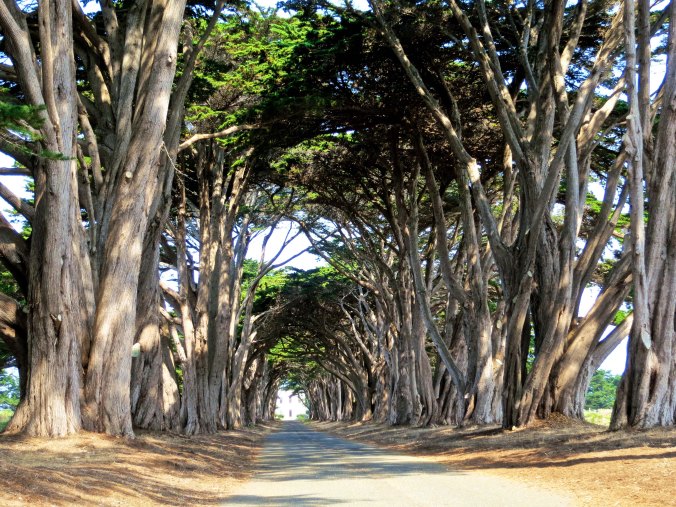
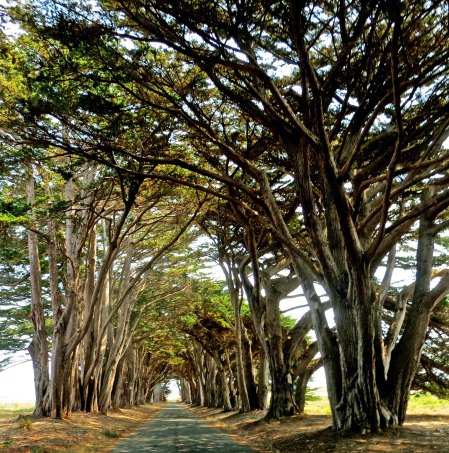
This tunnel of cypress trees leading into the Marconi-RCA wireless receiving station at Point Reyes National Seashore in California is considered one of the most beautiful tree tunnels in the world.

Do you recognize the dits and dahs? I memorized what they meant for a Boy Scout badge back in the Dark Ages, back before satellites and modern communication systems came to connect almost anyone, anywhere, anytime. Here’s a clue: the three dots stands for S, and the three dashes for O. Think SOS: Save Our Ship. You will recognize the whole alphabet spelled out in dits and dahs as Morse Code, named after the American inventor Samuel Morse, who developed it in 1838.

Morse Code

Morse Code

Combined with telegraph lines and operators, it revolutionized communication. Getting the quickest message between points A and B no longer required finding the fastest horse or train. Seconds instead of days or weeks became the rule for sending important communications over long distances.

What Morse did for land based communication, Guglielmo Marconi did for oceans. His claim to fame was being the prime inventor of wireless communication using radio waves. He started at the young age of 21, working in his attic in Italy with his butler Mignani. (I am reminded of the young Steve Jobs, sans butler, working out of his garage in Palo Alto.) Like Jobs, Marconi was an entrepreneurial genius as well as an electronics wizard, or geek, if you prefer. He began by sending a message across his attic in 1894 to ring a bell. By 1902, he’d cornered the market on sending wireless messages using Morse Code across the Atlantic Ocean.

Ships at sea and their passengers were among the primary beneficiaries of the new technology. “Surprise, you are a new father. Send money,” could now be transmitted immediately instead of weeks down the line. There was also a safety factor. For the iceberg bound Titanic, it meant that 30% of its passengers were saved— instead of none.

By 1914, Marconi had extended his operation to the Pacific Ocean and built sending and receiving stations in the Marin County towns of Bolinas and Marshall north of San Francisco. (Because of interference, sending and receiving stations had to be separated.) During and immediately after World War I, military concerns combined with a touch of nationalism, and, I suspect, a generous dollop of old-fashioned greed, led to the take over of Marconi’s American operation and its transformation into RCA, the Radio Corporation of America.

A Mural in Olema, California that provides a look at what the community looked like when it served as the sending station of Marconi telegraph. The blue surfboard represents a bit of artist creativity. (grin)

A mural in Olema, California just north of San Francisco that provides a look at what the community looked like when it served as the Pacific Ocean telegraph sending station for Marconi-RCA telegraph. The blue surfboard represents a bit of artist creativity. (grin)
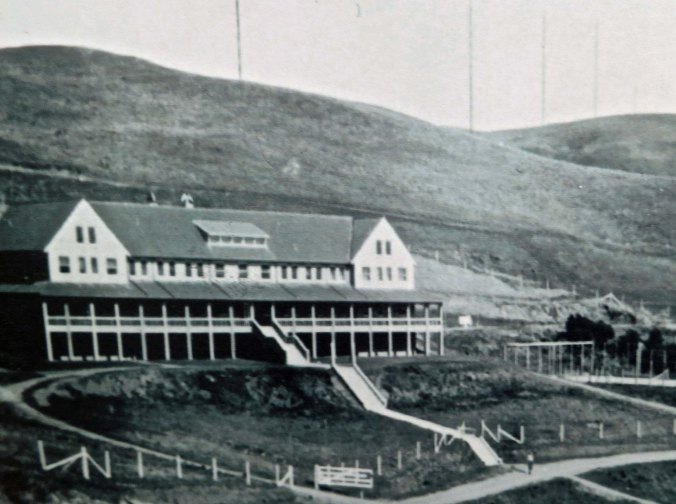
An early photo of the Marconi receiving site in the small town of Marshall on Tomales Bay.

An early photo of the Marconi receiving site in the small town of Marshall on Tomales Bay. Workers lived in the hotel.

The hotel as it looks today as part of the Marconi Conference Center.

The hotel as it looks today as part of the Marconi Conference Center.

6. Old Highway 57 and Highway 1 in Marshall

Old Highway 57, the dirt road, once serviced the Marshall Marconi wireless receiving site. Modern Highway 1 is seen below along with Tomales Bay. The distant hills are part of Point Reyes National Seashore.
7 Old 1873 Seafood restaurant in Marshall Ca

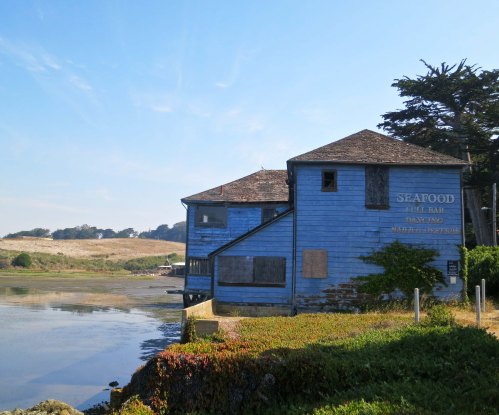
Historic Marshall included this old/now deserted seafood restaurant built in 1873.
Today, Marshall is know for its oysters and kayak eco-tours.

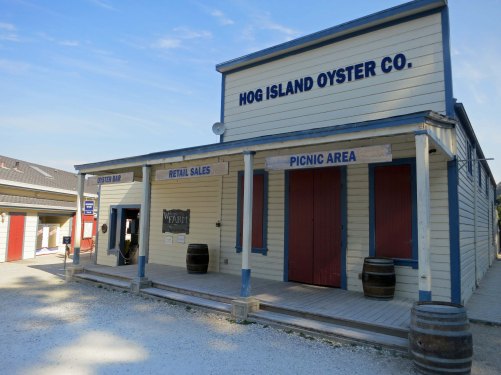
Today, Marshall is known for its oysters and kayak eco-tours.
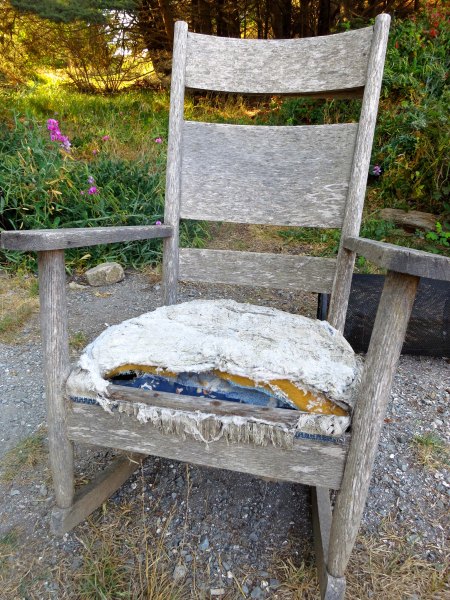
I hound this old rocking chair sitting alone Highway one. All it needed was an old codger to sit in it.

I found this old rocking chair sitting along Highway 1. All it needed was an old codger to sit in it.

In 1929, the Marshall operation was moved to Point Reyes. It was still there actively receiving messages when I first started visiting the National Seashore in the late 60s and early 70s. A forest of receiving antennas and no trespassing signs announced its presence. Most of the communication with American ships involved in the Vietnam War passed through the facility. On July 12, 1999, the station sent its last message. Dits and dahs had been made obsolete by bits and bytes.

I was drawn there on my August trip up the North Coast of California by a statement I had found on the Net stating that the cypress trees at the entrance formed one of the most beautiful tree tunnels in the world. Even though I had driven by the facility dozens of times over the years, I had never noticed. Shame on me. When I drove up, a group of amateur photographers with expensive cameras were busily proving the point. I joined the queue with my small Cannon S-100.

I was also blessed with a touch of serendipity. A display sign announced that the Maritime Radio Historical Society was featuring a display on telegraph use in Marconi’s impressive Art Deco headquarters. I drove down under the tunnel of trees and walked through the building’s open door. An hour later I emerged with the distinctive sound of a telegraph keys clattering away in my ears and enough information for a dozen blogs.
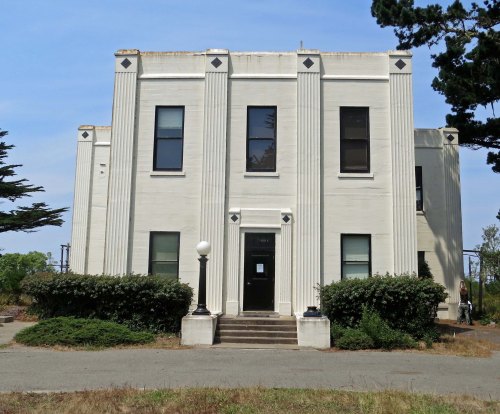
The lovely art deco building built by Marconi-RCA for its telegraph receiving station at Point Reyes National Seashore.

The lovely art deco building was built by Marconi-RCA for its telegraph receiving station at Point Reyes National Seashore.
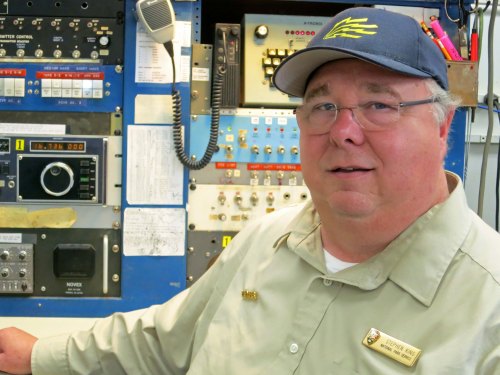
Steven King, a volunteer with the Marine

Steven King, a volunteer with the Maritime Historical Radio Society and the Point Reyes National Seashore spent most of an hour explaining how the Marconi-RCA wireless receiving station worked during its heyday.

12 Telegraph call letters for ships at Marconi-RCA wireless site Point Reyes

Every ship at sea had its own call sign for receiving telegraphs. These were left when the last telegraphs were sent out in 1999.
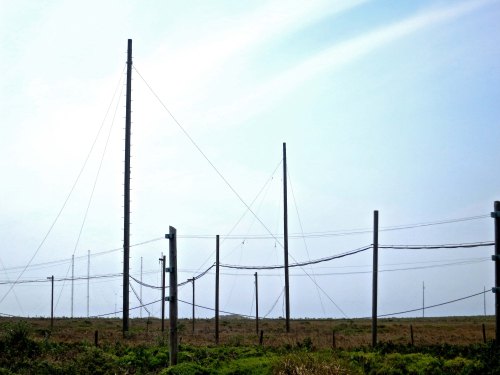
A view of the telegraph receiving antennas as they look today.
A view of the telegraph receiving antennas as they look today.

This tunnel of cypress trees leading into the Marconi-RCA headquarters receiving station at Point Reyes National Seashore in California is considered one of the most beautiful tree tunnels in the world.

I had a final opportunity to drive under the beautiful bower of trees as I returned to the highway.

NEXT BLOG: I head north for the small town of Bodega to explore where Alfred Hitchcock’s movie The Birds was filmed and discover a church that was photographed by Ansel Adams.
What to Do When a Nike Missile Is Pointed at You… Surrender.

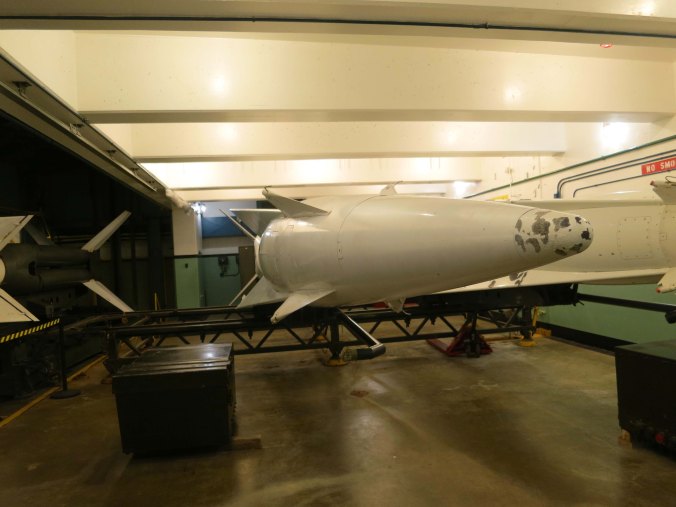
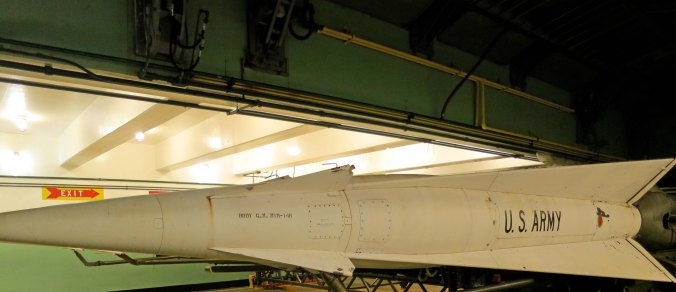
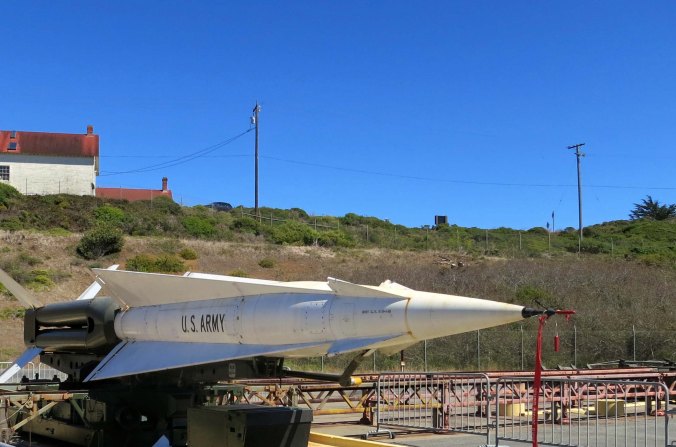
This Nike missile came out of the ground and was pointed at me when I was visiting Golden Gate National Recreation Area just north of San Francisco. I quickly moved aside and snapped its photo.

This Nike missile came out of the ground and was pointed at me when I was visiting Golden Gate National Recreation Area just north of San Francisco. I quickly moved aside and snapped its photo. Missiles were raised skyward before being fired.


I heard a whirring sound just before the large metal gates clanked open. A Nike missile rose ominously out of the ground. It was pointed at me. “I surrender,” I said to the missile as I slowly raised my hands. It seemed like the wise thing to do. Not very long ago (1953-1979), back in the disturbing days of the Cold War, this deadly weapon had been loaded with a nuclear warhead two-three times as powerful as the atom bombs America had dropped on Japan at the end of World War II. It still spoke of destruction, but now it was defanged. It had become a museum piece, a shell of its former self, a relic of our very scary past.

SF-88 is located in what is now the Golden Gate National Recreation Area just across the Golden Gate Bridge from San Francisco. It was one of 300 Nike missile sites across the US built as a last line of defense against Soviet bombers carrying nuclear weapons. It now serves as the only restored Nike site in America.

I visited the museum as part of my August trip up the North Coast of California. When I arrived, two park rangers sat outside enjoying the sun. I put one to work; he volunteered to take me on a personal tour of the underground facility. We climbed down the stairs with our footsteps echoing into a large room filled with missiles. After describing how the massive weapons were to be used, he suggested I try pulling one on its track. I couldn’t believe how easily it moved; I felt like I had super powers. He explained that the system was designed for getting the missiles up and ready to fire in 15 minutes. Several million lives depended on quick action.

Each of the 300 Nike missile sites around the US had several Nike missiles ready to fire off in 15 minutes to take down Russian bombers.

Each of the 300 Nike missile sites around the US had several Nike missiles ready to fire off in 15 minutes to take down Russian bombers approaching the country.

4. One of the Nike missiles at SF-88

A view of one of the missiles. They were large enough I couldn’t capture the full missile within the confines of its underground bunker.

I easily moved one of the Nike Missiles.

I easily moved one of the Nike Missiles along the track toward its launching station.

5.The Nike missiles at SF-88 would rise through these gates

These gates would open in preparation for a launch of the Nike Missiles.

The Nike missiles at SF-88 were intended to target Russian bombers 90 mile off the coast from the Golden Gate. The nuclear warheads were to assure that none got through. The greatest fear was that they might be carrying 50-megaton Tsar Hydrogen bombs, the mother of all bombs. The Russians had built one and blown it up as a warning to the US. To put things in perspective, it had 1,350–1,570 times the explosive power of the atom bombs that destroyed Hiroshima and Nagasaki.

“The Tsar Bomb,” the park ranger explained, “would be exploded a few thousand feet up in the air above San Francisco.” All people living in the region would be killed. There would no longer be a San Francisco, an Oakland, a San Jose, a Berkeley, or any of the other communities located in the Bay Area. Neither would there be any birds, mammals, reptiles, trees, grass, or other life left living. A chill settled over me as I recalled I was a student at Berkeley during the 60s, at the height of the Cold War.

I thought even the smaller Nike weapons would be devastating to the region. The prominent west winds would bring deadly radiation from the explosions raining down on the Bay Area and points east. “What would it matter?” the ranger asked. What indeed. Once a nuclear war started, the US and Russia had enough nuclear weapons to wipe out life on earth— several times over.

Having heard enough bad news, I climbed out of the bunker leaving the ranger to explain doomsday to another group of visitors that had arrived. I was outside by myself when Nike Missile came rumbling up from its underground hideout. No one had told me it was part of the tour.

The gates as seen from above. I don't know, but I suspect they would have been camouflaged during the Cold War.

The gates as seen from above. I don’t know, but I suspect they would have been camouflaged during the Cold War.

I heard a whirring sound, the gates clanked open, and the missile arose out of its bunker.

I heard a whirring sound, the gates clanked open, and the missile arose out of its bunker.

What would have been lost during a nuclear war.

A view of the Golden Gate Bridge and San Francisco from the Golden Gate National Recreation Area. The Nike missile site is over the hill from where I took this photo.

NEXT BLOG: I visit the Marconi Station at Point Reyes National Seashore where Morse Code messages were once sent out to all ships at sea in the Pacific Ocean— and are still sent out to the sunken Titanic in the Atlantic.


Adios Puerto Vallarta, Hasta Luego

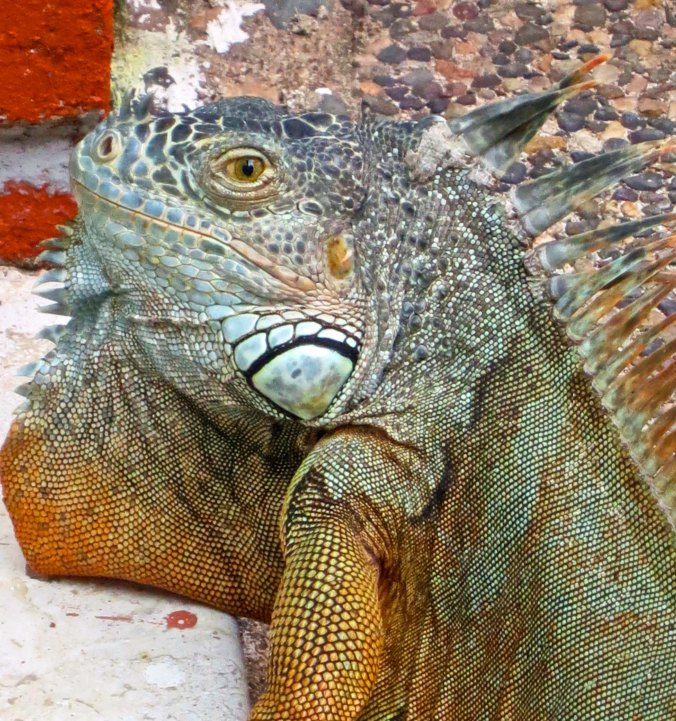
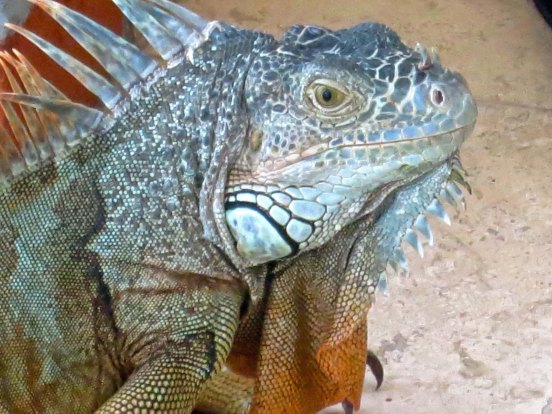
No doubt about it, the highlight of our visit to Puerto Vallarta, Mexico this year was our visit by Senior Iggy, the Iguana.

No doubt about it, the highlight of our visit to Puerto Vallarta, Mexico this year was our visit by Senior Iggy, the Iguana.

It was time to say goodbye to Puerto Vallarta. We packed up our clothes, laptops, dock kits, etc., and were wondering where we would find space for the goodies we had bought. Like most experienced travellers, we carry minimum luggage. Space is at a premium. Somehow, we always seem to have a few square inches to spare, however. Our Kindles help; a travelling library is no longer required.

Checkout was at 10:00. The plane was leaving at 3:30. Translate: Lots of time to kill. We headed over to the hotel’s open-air restaurant that overlooks Banderas Bay. Maybe some dolphins would entertain us. We didn’t see any, but Angel, the headwaiter, spotted us and came hurrying over. Peggy has befriended him over the years. I am in charge of generous tips. The combination assures excellent service.

 Peggy and Angel at Krystal Hotel in Puerto Vallarta

Peggy and our waiter, Angel, at the Krystal Hotel.

While we missed seeing any dolphins during breakfast, we found this father-son look-a-like team rather amusing.

While we missed seeing any dolphins during breakfast, we found this scene rather amusing. I wonder who the boy’s father is? (Grin)

As always, we had enjoyed our two weeks— one with friends and one on our own. We had eaten several good meals, sat out on the beach, watched beautiful sunsets, appreciated the art, and enjoyed the wildlife, including Senior Iguana, who had stopped by for a visit. Walking three to five miles a day and limiting ourselves to one major meal meant we might go home skinnier than we came. That would be a first.

Much of the art on the Malecon encourages interaction, much like Burning Man art. Here I am with our friends Ken and Leslie Lake.

Much of the art on the Malecon encourages interaction, much like Burning Man art. Here I am with our friends Ken and Leslie Lake.

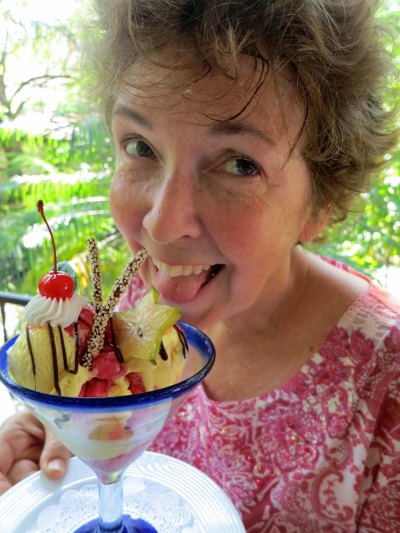
Numerous good restaurants in Puerto Vallarta always tempt us. Peggy chomps down on a tropical creation.

Numerous good restaurants in Puerto Vallarta always tempt us. Peggy chomps down on a tropical creation.

Tropical look in Puerto Vallarta

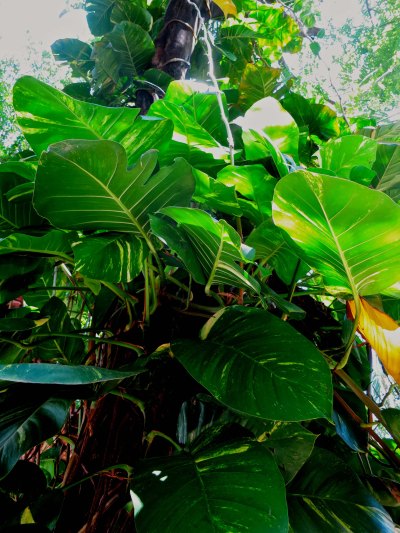
Speaking of the tropics, this plant certainly had a tropical look.

7 Tropical flowers in Puerto Valarta

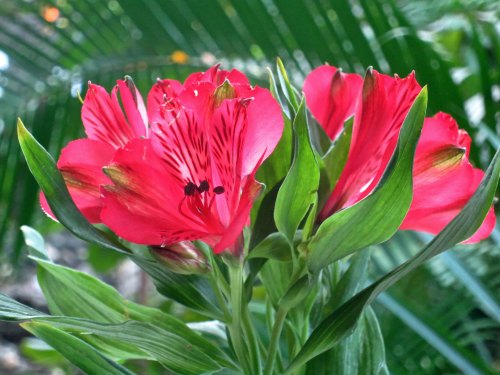
As did this flower.

 Palm tree in Puerto Vallarta

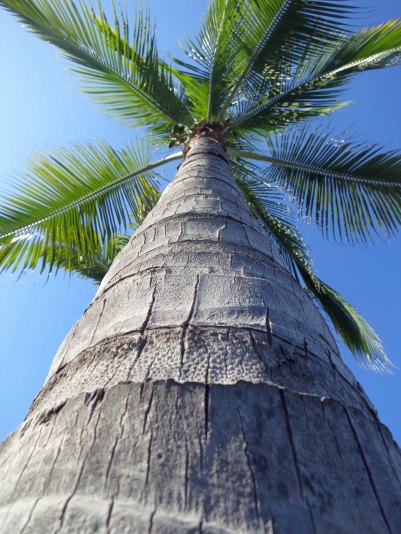
And this palm tree.

Pigeon with flying symbol on back in Puerto Vallarta

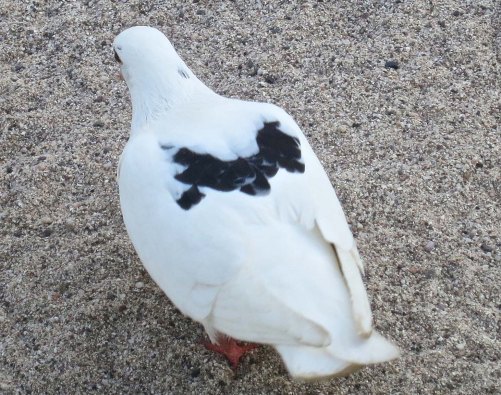
Pigeons are  found everywhere but this fellow with his unusual ‘flight patter’ on his back caught my attention. I must have chased after him for ten minutes with my camera.

A view of our hotel. When we started going to Puerto Vallarta, the Krystal stood side by side with one-two story buildings. Now surrounding skyscrapers have destroyed the ambience.

A view of our hotel. When we started going to Puerto Vallarta, the Krystal stood side by side with one-two story buildings. Now it is surrounded by skyscrapers. So much for ambience.

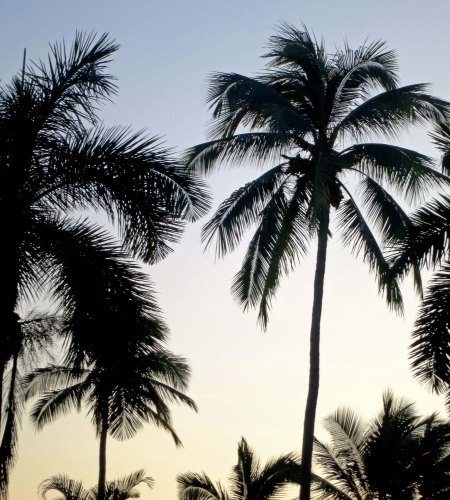
We would head out to the beach every evening to catch the sunset. I liked the silhouette of these palm tress created by the setting sun.

We headed out to the beach every evening to catch the sunset. I liked the silhouette of these palm tress that was created by the setting sun.

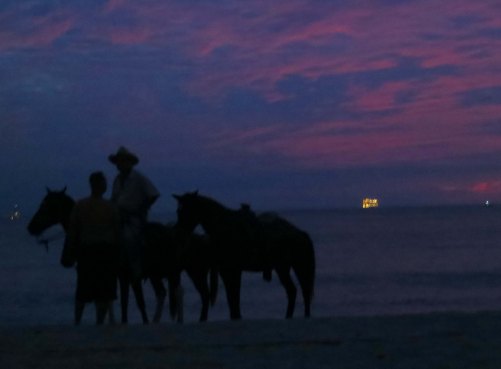
14 Cowboy and cruise ship in Puerto Vallarta

Old and new Puerto Vallarta: A cowboy stops to talk with someone as a cruise ship disappears into the distance.

Counting up left over pesos is always part of our departure ritual. Peggy’s responsibility is to then go out and spend them. She darted across the street to the furniture-plus store while I worked on writing in the hotel’s lobby. I now have another blog in the Grand Canyon series (you will see it on Friday), and Peggy has two new colorful cereal bowls.

Finally, after what seemed like a long, long time, we grabbed a cab for the short ten-minute ride to the airport. And here I have something important to report— the security-check was a pleasure. What?? No way!!! Peggy and I work really hard to make TSA officials in the US laugh. On rare occasions, we even get a glimmer of a grin. I think TSA has a no-smile rule, like the guards at Buckingham Palace. But here, the agents were actually smiling on their own, like they enjoyed their jobs, like they were happy to see visitors, like they recognized the odds of us being terrorists were infinitesimally small. Back in the US they probably would have been fired.

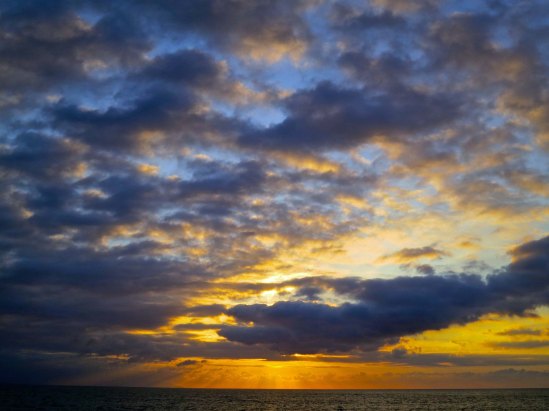
15 Sunset in Puerto Vallarta

A final Puerto Vallarta sunset.

NEXT BLOG: Back to the Grand Canyon and hostile spirits from another realm.

Shape Shifting and Art in Puerto Vallarta— or, On Becoming Your Favorite Animal

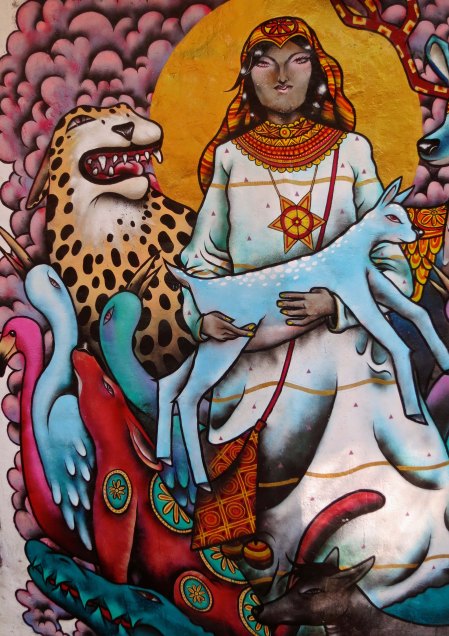
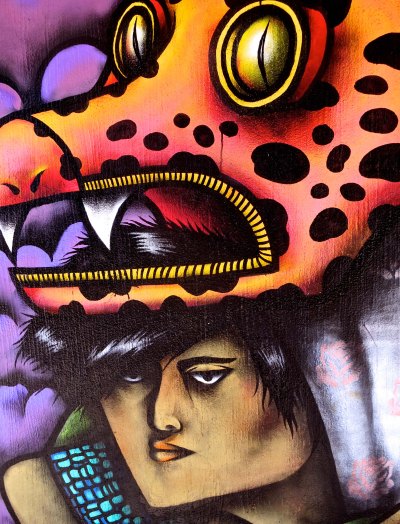
1. Mystical mural of animals in Puerto Vallarta

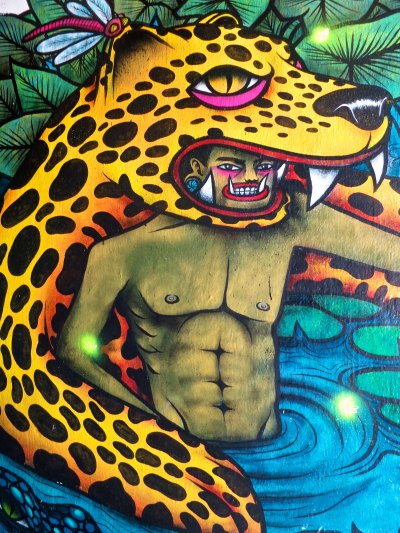
Shamans choose their animals to shape shift into based on certain characteristics. The Jaguar is powerful and dangerous, the deer and rabbit fleet of feet, the bird fleet of wing, and the coyote clever.

Shamanistic traditions around the world often involve shape shifting. The shaman enters a trance and adopts the form and/or spirit of an animal, for healing, travel to another world, or more sinister purposes. Often the switch is made with the aid of a hallucinogenic drug, such as peyote. This is the drug of choice among the Huichol Indians of Mexico and is frequently portrayed in their art. In addition to works produced by indigenous people for sale in Puerto Vallarta, I also found a number of murals that illustrated the indigenous tradition of shape shifting.

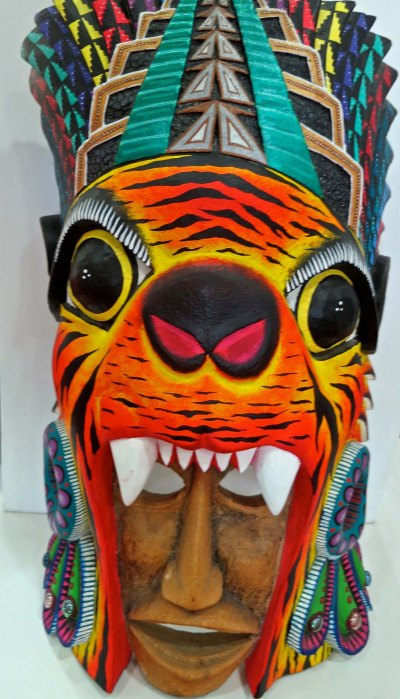
2. Shape shifting mural mask in Puerto Vallarta

Masks are reflective of shape shifting. Jaguars are a common animal of choice, as in the Puerto Vallarta Mural, and…

This Oaxaca mask.

This Oaxaca mask.

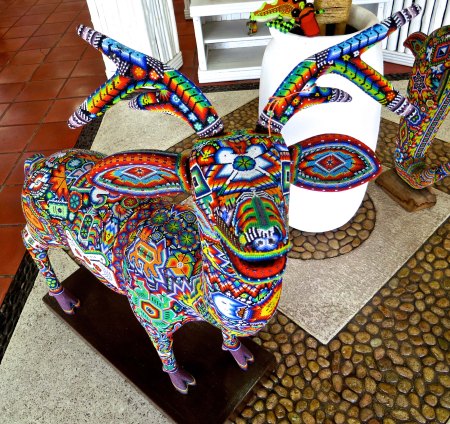
Deer are fast, a good choice if you have to get somewhere in a hurry. This Huichol deer is covered with beads that make up symbols that relate to the Huichol's belief system.

Deer are fast, a good choice if you have to get somewhere in a hurry. This Huichol deer is covered with beads that make up symbols that relate to the Huichol’s belief system. That’s peyote on his forehead.

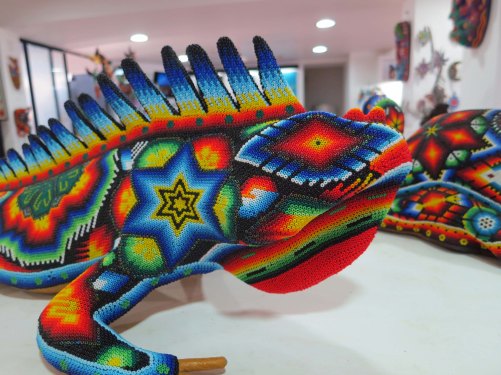
I haven't heard of iguanas being a choice for shape shifting. Maybe that's why this Huichol piece looks sad.

I haven’t heard of iguanas being a choice for shape shifting. Maybe that’s why this Huichol piece looks glum. Or is that my imagination working overtime?

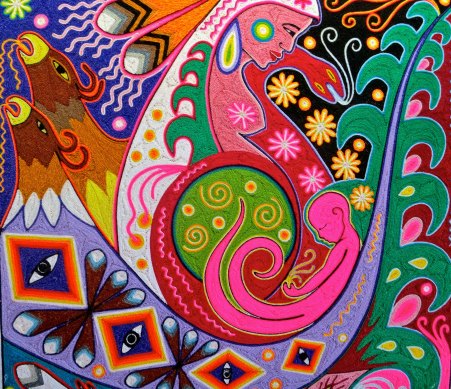
In this Huichol string painting, I couldn't help but believe that even the baby was shape shifting. A squid, perhaps?

In this Huichol string painting, I couldn’t help but believe that even the baby was shape shifting. A squid, perhaps? The mother-to-be seems to prefer a snake form.

While almost all Huichol creations reflect the tribe’s belief system, much of the art created in Oaxaca is created solely for the beauty and pleasure it brings, often with a sense of humor attached. The same can be said for Puerto Vallarta’s murals.

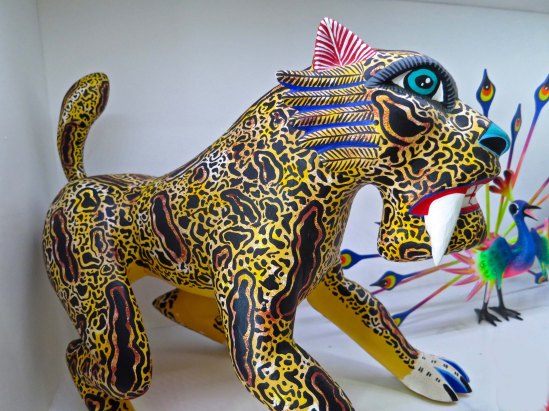
There is no apparent shape shifting in the Oaxaca saber toothed tiger. Or in the peacock behind it.

There is no apparent shape shifting in the Oaxaca saber toothed tiger. Or in the peacock behind it.

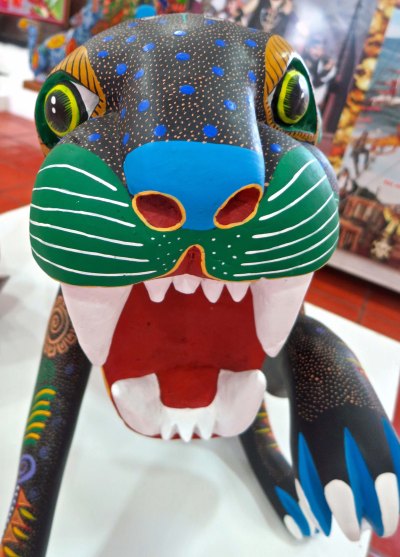
Another Oaxaca cat with big teeth.

Another Oaxaca cat with big teeth.

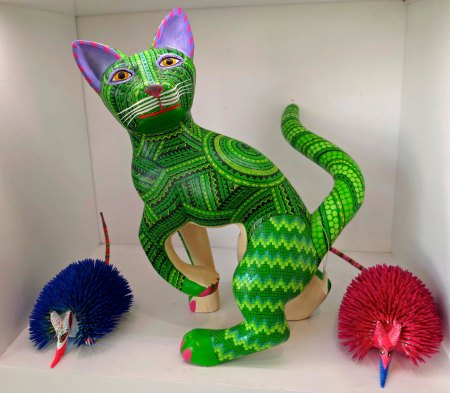
And here we have Felix Domesticatus.

And here we have the domestic version is his “feed me now” pose.

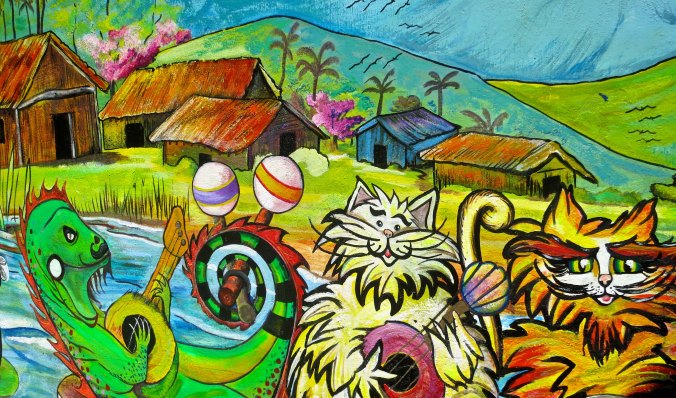
Cool cats, perhaps— as jazz musicians were once referred to as, and a musical iguana were the subject of this mural we found on the Rio Cuale.

Cool cats, perhaps— as jazz musicians were once called, and a multi-talented iguana, were the subject of this mural we found on the Rio Cuale.

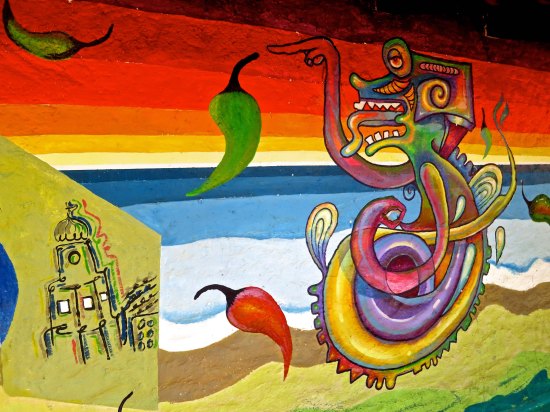
An iguana of a different stripe? This is one pointing to one of life's great pleasures: hot peppers.

An iguana of a different stripe? This is one pointing to one of life’s great pleasures: hot peppers. Apparently they are hot enough to shake Puerto Vallarta’s Cathedral.

Shape shifting is a thing of dreams in our minds as well. We imagine what it might be like to be a hawk soaring across the sky, or a cheetah running with the wind. I’ve been reading a book on lucid dreaming, just for fun. If you aren’t familiar with the concept, it has to do with consciously being aware that you are dreaming and doing things you can’t normally do in life, like walk through walls, or take off flying whenever you wish. Basically, you control what happens in the dream.

The book, A Field Guide to Lucid Dreaming, even has a section on shape shifting. “Before you go to sleep,” the book directs, “decide what person, beast, or object you want to transfer into.” Say you want to try being a tiger. Imagine it before you go to sleep. When you awake in your dream, “feel the sensations a tiger would feel. Stand on all fours and feel your teeth getting sharp.” Good advice (grin). Once you become a skilled Oneironautic, you might actually make it happen according to the book.

Feel your teeth growing and becoming sharper!

Feel your teeth growing and becoming sharp!

Now, I confess I am a little skeptical. At least I haven’t suddenly become awake in my dreams and decided to become a yappy Chihuahua. That’s not saying it isn’t worth a try. I do on occasion change the course of a dream from a bad ending to a good ending. I actually get up and run away from the monster instead of lying there in a semi-paralyzed stupor as he starts to devour me from the toes up. It’s a start, but not enough. I dearly want to be that hawk winging across the sky or the Cheetah charging along at 35 miles per hour. How about you?

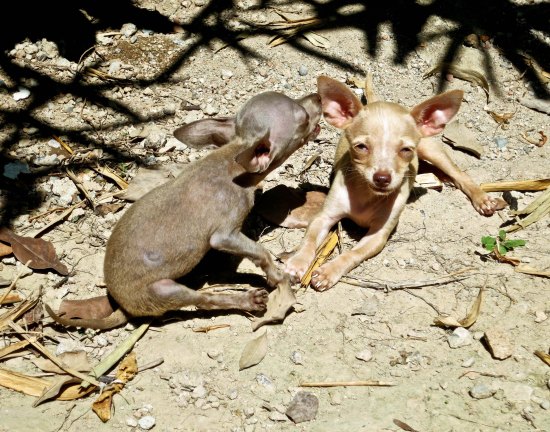
Is there a Chihuahua in your future. Even though Senior Pooch pretended to be deaf, he couldn't avoid having his numerous faults listed, again and again.

Is there a Chihuahua in your future. I found these guys playing along the Rio Cuale. My thought:  Even though Senior Perro pretended to be deaf, he couldn’t avoid having his numerous faults reiterated— again. Don’t you just love the look on his face?

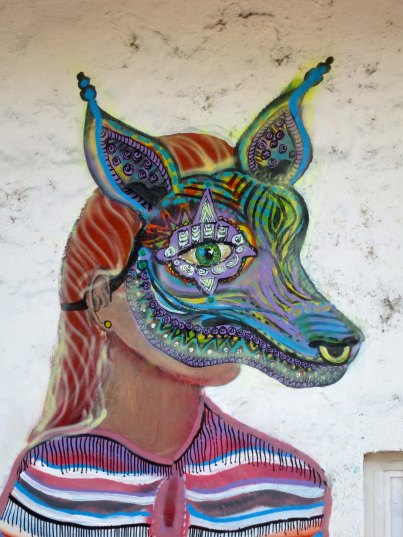
Or possibly you have something more elegant in mind, as reflected in this Puerto Vallarta Mural.

Or possibly you have something more elegant in mind with a ring in your nose, as reflected in this Puerto Vallarta Mural.

NEXT BLOG: Peggy and I say goodbye to Puerto Vallarta

The Markets of Puerto Vallarta— Where Hustle Is the Name of the Game

Beach vendor in Puerto Vallarta Mexico.

The old vendor’s face, wrinkled with decades of toil, was backlit by a strong sun.

The old man waved beaded bracelets and necklaces as us. We were having lunch at la Palapa and a tasty red snapper was demanding my attention. I couldn’t have cared less about the beads. In fact, I was irritated by the interruption— by the constant interruptions as one after another street/beach vendor rudely shook his or her wares at us, demanding our attention and dollars.

But the face of the old man— the deep wrinkles and lines, the scraggly whiskers, the cloudy eyes: the character— it caught me. I broke out my camera and ten pesos. I wasn’t going to buy trinkets; I was paying for a likeness, a reflection of life and how hard it can be, but also capturing a certain beauty, won by years of struggle.

2. Blanket vendor in Puerto Vallarta

A blanket vendor also insisted on showing us her wares as we ate lunch. The bright sun behind her made photography difficult but it helped capture the rich colors of her blankets.

Puerto Vallarta is a tourist town. Its primary source of income is the thousands of people who are disgorged weekly from airplanes and giant cruise ships. The challenge, from a purely economic perspective, is how to sort the visitors from their cash before they leave, to get a piece of the action. Hustle is the name of the game, from the small girl selling Chiclets for pennies to the timeshare salesperson selling future vacations for 25 thousand dollars. The small girl has only her haunted eyes to push her product; the timeshare salesman has a whole arsenal of half-truths and a tenacity that would put a tick to shame.

(While I write this post, I realize that it will be published on Black Friday, the day that America’s merchants are desperately hoping to sort Americans from their cash. When I turn the TV on, it is one continuous ad— marketers rudely shaking their products in our faces with half-truths that would put a timeshare salesman to shame.)

An hour of relaxing on the beautiful Banderas Bay beach in front of the Krystal Hotel is like an hour lesson in basic capitalism. Beach vendors are specialists. Whether you need a shirt, a dress, a hat, a ring, a necklace, a tattoo, a trip, a cigar, a massage, a woodcarving, a drink, dark glasses, a blanket, or food (or not), someone will be there to sell it to you. The hat man has hats perched on top of his head as high as they will go. The blanket sales vendor a stack of blankets a yard thick. The henna tattoo guy comes at you with a book of tattoos to pick from. Will it be a Harley or a harlot? A polite, no gratias, usually sends them all on their way, at least for the moment. But show a bit of interest and they descend like buzzards, ready to pick your wallet, if not your bones, clean.

Peggy is the shopper in our family. She bought a small turtle, iguana, and beaded eggs from a Huichol artist, two gorgeous tablecloths at the Municipal Market, and a silver necklace from a beach vendor. Peggy had recognized the beach vendor from years past.

3. Huichol artist ion the Rio Cuale in Puerto Vallarto

Ernesto, a Huichol artist, has a bright smile for us whenever we stop by. If he doesn’t have what we want, he makes it for us. The brightly decorated eggs (lower-center) are covered with Huichol symbols and will be decorating our son’s Christmas tree.

Peggy checks out a new table cloth she is buying. The day before we had checked it out and Peggy had mentioned she wanted the edges sewn. The young woman took the tablecloth home that night and did the work.

Peggy checks out a new table-cloth she is buying. The day before we had checked it out and Peggy had mentioned she wanted the edges finished. The young woman took the tablecloth home that night and did the work— on three table cloths. We ended up buying two.

5. Felix the beach vendor in Puerto Vallarta

Felix, as in Felix the Cat, displays his bracelets and necklace pendants on the beach in front of the Krystal Hotel.

“Do you remember my name?” he asked. “It’s Felix, like in Felix the Cat. Meow.” I particularly liked the meow and meowed back. While Felix was entertaining us with his patter, he had opened his box of silver jewelry. Peggy showed a spark of interest in two necklaces. “Which do you like?” Peggy asked, turning to me. Felix knew he had her. “I’ll sell you both for 1400 pesos,” he offered. “Too much,” Peggy responded. “How much will you pay?” he asked. We had entered the negotiation stage. The general rule of thumb is about 50% of the asking price. Vendors double the price, and add a bit for profit. We ended up only buying one and paying too much. Felix left with a large smile.

Large public markets are a step up from the beach in terms of sheer quantity. A walk through the Municipal Market (Mercado Municipal) will introduce you to dozens of vendors, each with his or her own space packed to the ceiling. All are trying to entice you in. “I make you good deal.” “Half price.” “Almost free.” “Look will cost you nothing.” “Two for one happy hour cost.” And on and on, over and over. One vendor on the Rio Cuale asked, “Want to buy some junk?” It was a welcome and humorous change.

6. Vendors stall at the Mercado in Puerto Vallarta

Vendors stalls at the Municipal Market next to the Rio Cuale are stuffed to the ceiling with items designed to capture a tourist’s attention. It quickly becomes overwhelming unless you are shopping for something specific.

The market is two stories high and must contain at least a hundred stalls… each with one or more vendors eager for you to check out their goods.

The market is two stories high and must contain at least a hundred stalls… each with one or more vendors urging you to check out their goods.

My friend Ken Lake and I were wandering through the market at the seaport while Peggy and Leslie were having massages when we received a different offer. Ken was using the line, “We have to wait for our wives,” to put off vendors.

A rather short and squat, older woman responded, “Who needs wives? I have a sister. Only $50. I have two sisters, one for each of you.”

“For $50,” I asked as Ken made a hasty retreat. “No, no. $50 each,” she insisted as the eyed the rapidly disappearing Lake. “You could have two at once. Much fun.” She said laughing. “Mañana,” I responded as I hurried to catch my friend before he disappeared.

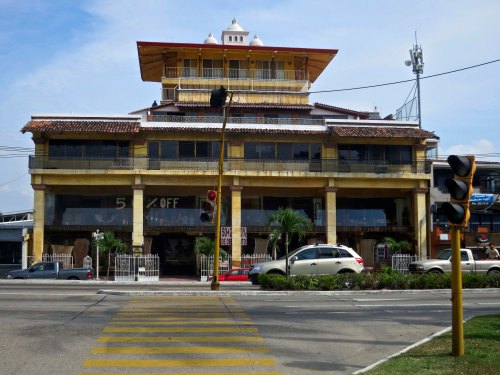
The most intriguing market, it turns out, was right across from our hotel. We had visited years earlier and I hadn’t been impressed. This time was different. Peggy, Ken and Leslie had gone across the road for a visit while I was working on a blog. She came back saying I had to go. Turns out, the place is a huge furniture market, with the furniture being made on site. But that’s only the beginning. It’s an interior decorators dream, packed with thousands of items. I walked around in awe for two hours, going from room to room. And there was no pressure to buy. Not one salesperson approached us unless we had a question. I was so appreciative I was tempted to buy a 20 foot table as a thank you.

The furniture store as seen across the street from our hotel. It must have has several thousand feet of display space.

The furniture store as seen across the street from our hotel. It must have has several thousand feet of display space.

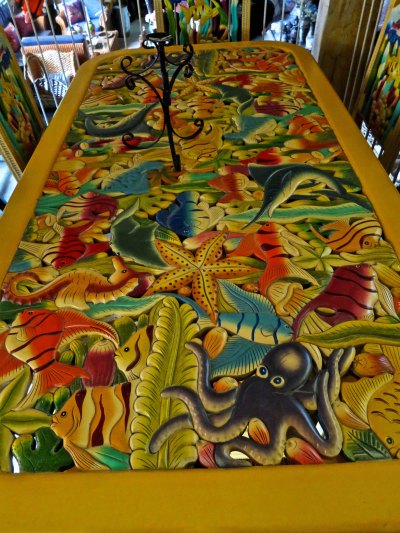
8. Large table at furniture store in Puerto Vallarta

This large slab of wood is destined to be turned into a table! Can you imagine the size of the house you would need to accommodate it? Do you own a castle?

I would love to have a table like this. You would never be at a lack for conversation when you had guests over.

I would love to have a table like this. You would never be at a lack for conversation when you had guests over. The chairs were equally delightful.
Peggy came and rooted me out of one of the rooms I was wandering through to look at this chest.

Peggy came and rooted me out of one of the rooms I was wandering through to look at this chest.

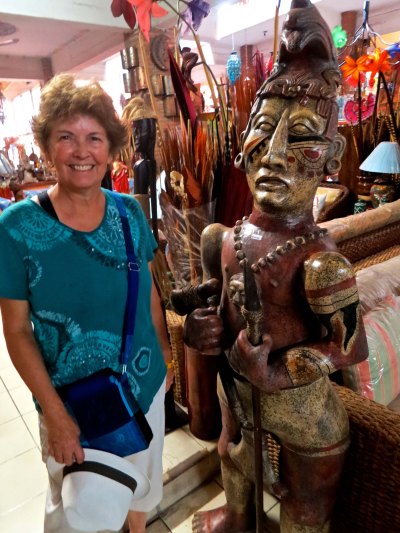
12. Peggy and scuplture at Puerto Vallarta furniture store

I took advantage of the break to have her pose in front of one of the warrior statues that were found throughout the store…

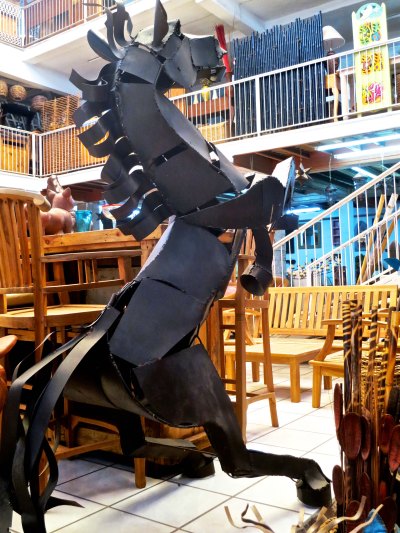
10. Life sized horse at Puerto Vallarta furniture store

There was also this full sized horse. It must have gone with the 20 foot table and the castle to put it in.

And these frogs.

Along with these musical frogs.

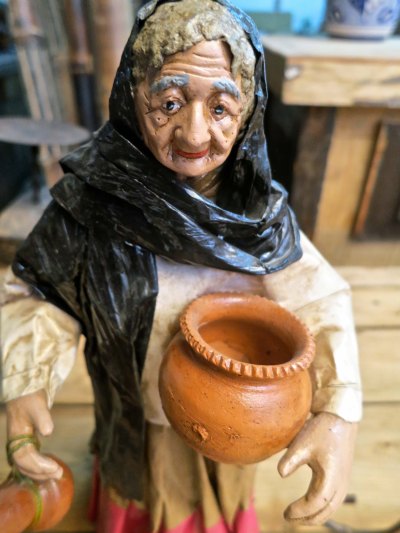
13. Old woman at furniture store in Puerto Vallarta

For all of the large pieces in the store, there were dozens of smaller works. This old woman with her wrinkles reminded me of the old vendor I kicked off this post with. It’s a fitting place to end.

NEXT BLOG: The fine art of shape shifting in Mexico. Jaguars are really popular when it comes to turning yourself into an animal. What would you become?


Strange Art, Wild Nature, and Bounteous Beauty… Puerto Vallarta’s Malecon

Unique, often humorous art, along Puerto Vallarta’s Malecon is one of several attractions that make the walkway appealing.

Unique, often humorous art, is one of several attractions that make a stroll along Puerto Vallarta’s Malecon a must-do activity each time I am in the city. How could anybody resist this flying/swimming whatever?

Puerto Vallarta’s Malecon, or walkway, along Banderas Bay is special. Most cities would offer up their top five attractions— or their Chamber of Commerce president, to have it. Beautiful sunsets, cascading pelicans, and waves rolling in from the Pacific are only part of the appeal. Interesting/fun art, views of the town, and the charm of the Malecon itself capture locals and visitors alike.

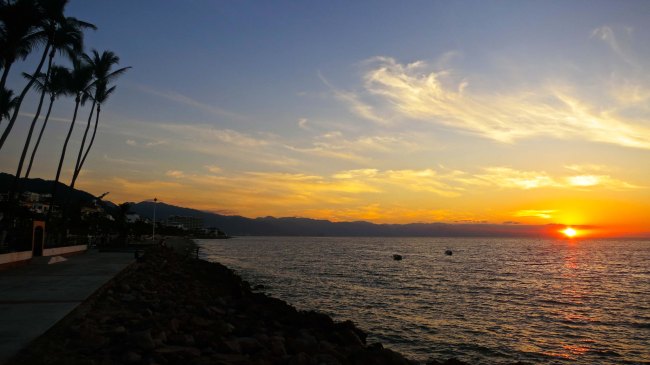
Looking south from the northern section of the Malecon as the sun sets over Puerto Vallarta and Banderas Bay.

Looking south from the northern section of the Malecon as the sun sets over Puerto Vallarta and Banderas Bay.

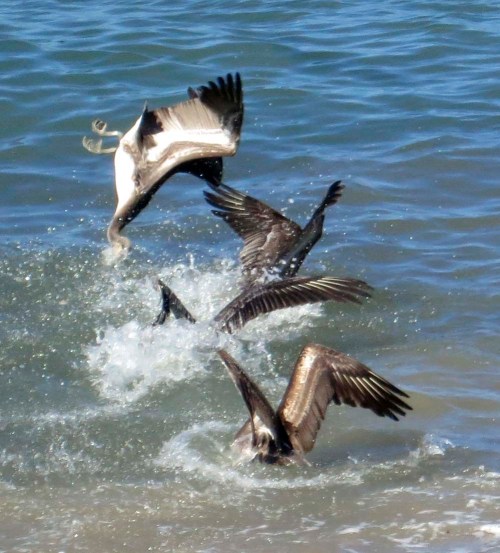
Pelicans join a feeding frenzy as they dive into Banderas Bay after a school of fish. The upside down guy made me laugh.

A photo of pelicans in a feeding frenzy from two years ago as they dive into Banderas Bay after a school of fish. The upside down guy made me laugh. Now that is dedication!

A number of sculptures adorn the walk including the Eggplant man…

A number of sculptures adorn the walk including the Eggplant Man, who just happens to be eating an eggplant. His substantial girth captured a bit of the Puerto Vallarta in reflection.

…Long Nose,

I wasn’t sure whether this was an octopus with one tentacle or a creature with a long nose that featured suction cups. “The better to smell you with, my dear.”

…this sea monster with a large mouth. (Check out his tongue and the hand pointing where food is supposed to go.)

This smiling sea monster with a large mouth featured a tongue with directions as to where it hoped tasty tourists might go.

…these graceful dancers,

A taste of the beauty and grace of Mexico…

and this beautiful sculpture that suggests that two heads are better than one.

…and a suggestion that two heads are better than one.

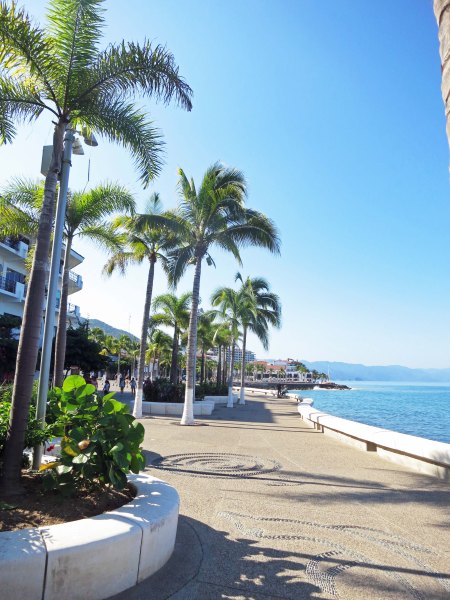
Even without the art and the bay, the Malecon is a very attractive walkway.

Even without the art and the bay, the Malecon is  very attractive. Note the designs built into the walkway.

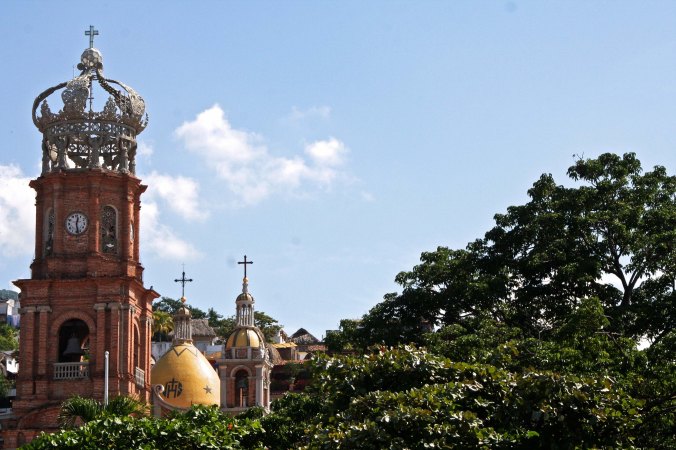
Puerto Vallarta’s iconic cathedral is one of many sights looking inland from the Malecon.

Puerto Vallarta’s iconic cathedral is one of many views looking inland from the Malecon.

For those more into partying or shopping, a walk on the non-ocean side of the Malecon provides countless opportunities for mischief. Senior Frogs and many other bars line the non-ocean side of the walkway. Shops selling everything from tourist trinkets to humorous folk art compete for your attention. Or, you can get serious and spend the kid’s inheritance on something large and silver.

Peggy has her photo taken with Senorita Frog on the landside of the walkway.

Peggy holds hands with Senorita Frog on the landside of the walkway.

A flying cow serves as an enticement to one of the many bars.

A flying cow serves as an enticement to one of the many bars. From the expression on her face, I doubt that she is drinking milk.

Anybody want to buy a great ape? This big fellow is decorated with thousands of beads, Huichol Indian style. The shop was packed full of Huichol art. Peggy bought a small turtle. Apparently the ape was a little large to carry home on the plane.

Anybody want to buy a great ape? This big fellow is decorated with thousands of beads, Huichol Indian style— and a Corona hat. The shop was packed full of Huichol art. Peggy bought a small turtle. Apparently the ape was a little large to carry home on the plane.

I found this three foot alligator in Old Town Puerto Vallarta, but similar silver gifts are available along the Malecon. Armed guards were outside and inside the store.

I found this three foot alligator in Old Town Puerto Vallarta, but similar silver gifts are available along the Malecon. Armed guards were outside and inside the store. And no, we didn’t spend the kid’s inheritance on it. That money goes to our travels. (grin)

Peggy and I usually choose to walk on the ocean side. The ubiquitous vendors found along the bay front of Puerto Vallarta apparently aren’t allowed to push their wares on the Malecon north of the town center. Normally the sales pitches don’t bother us. It comes with the territory, and the people are only trying to make a living. Still, an occasional break is appreciated. Our tolerance for hassling doesn’t extend to timeshare sales people, however. Their approach bares a striking resemblance to that of used-car salesmen.

South of town center as you approach the Rio Cuale and Old Town on the Malecon, your opportunity to obtain ‘bargains’ increases exponentially. Our friend Lesley Lake made the mistake of allowing a bracelet vendor put a bracelet on her wrist. She ended up buying four. These guys are good. When they get you, you’re got.

Our friend Leslie made the mistake of showing interest in a hawker’s bracelets on the lower Malecon and ended up buying four. He was one happy salesman.

The vendor has Leslie. She won’t get away.

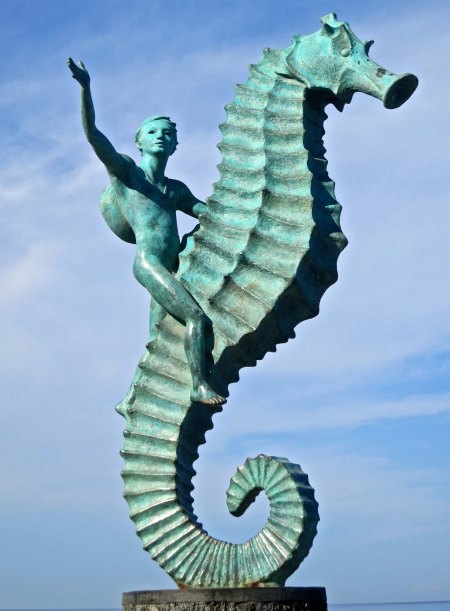
It is appropriate to end this blog on Puerto Vallarta’s Malecon with the statue of a boy on a seahorse, the symbol of Puerto Vallarta.

It is appropriate to end this blog on Puerto Vallarta’s Malecon with the adopted symbol of Puerto Vallarta, a statue of a boy wearing naught but a sombrero while riding a seahorse. Seems it might get a little rough, to me.

NEXT BLOG: Folks in Mexico take dead people seriously— sort of.

The Day of the Iguana… Adventures in Puerto Vallarta

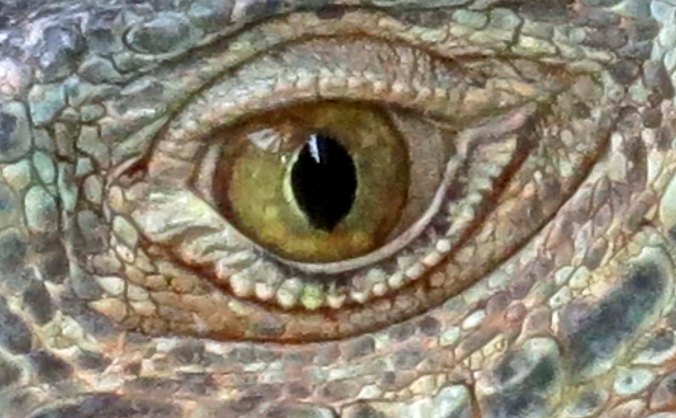
As the iguana stared balefully back at me, his eye seemed to grow.

As the iguana stared balefully back at me, his eye seemed to grow.


Peggy and I are in Puerto Vallarta, Mexico. While she works on her next Cotswolds post, I decided to slip one in on Puerto Vallarta.

I was home alone when I heard the scratching on our door. Peggy had gone off with our friends Ken and Leslie in hopes of finding Wi-Fi in the hotel lobby. I had wished them luck. The Internet is an on again/off again proposition here at the Krystal Hotel in Puerto Vallarta.

I looked up, thinking maybe the maid had come early, or the pool man. But usually they knock and shout “Ola.” No one was there. I went back to writing. I was editing Peggy’s blog on the villages of the Cotswolds.

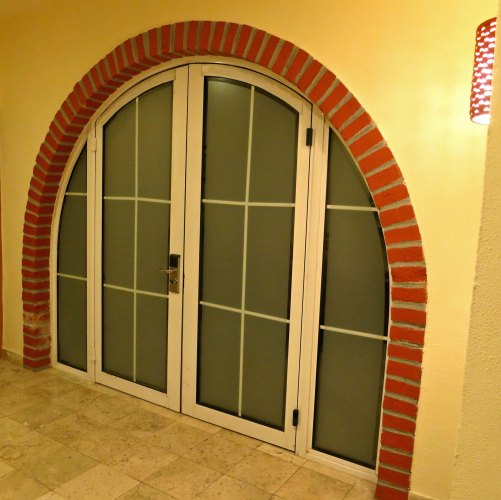
SCRATCH, SCRATCH, SCRATCH. “What the…?” I thought, looking up again. The villa has these large, arch-shaped doors made of frosted glass that let in light but not prying eyeballs. Off to the right I spotted what appeared to be large, scary head staring at me through the opaque glass. I recognized it.

The doorways to our villa in Puerto Vallarta were arched. The iguana appeared in the lower right window.

The doorways to our villa in Puerto Vallarta were arched. The iguana appeared in the lower right window.

The head of the iguana appearing through frosted glass reminded me of the Creature from the Black Lagoon.

The head of the iguana appearing through frosted glass reminded me of the Creature from the Black Lagoon.

“Aha!” went racing through my mind, “Senior Iguana is here for a visit.” I rushed over to the door and opened it, wondering if he would come in. It would be amusing to watch Peggy, Ken and Leslie’s reaction to finding a large lizard hanging out on the floor of our living room. Maybe I could entice him up onto the couch with a banana.

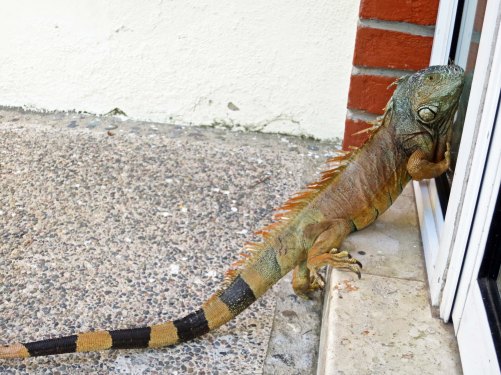
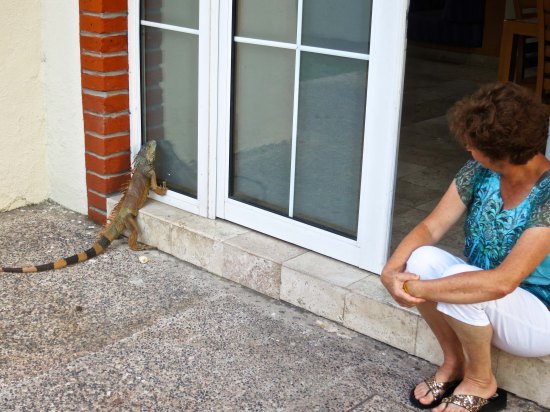
I found the Puerto Vallarta iguana outside scratching at our window. Was it asking to come in?

I found the Puerto Vallarta iguana outside scratching at our window. Was it asking to come in?

“Ola, Buenos Dias Senior Iggy. Welcome!” I proclaimed. Senior Iggy stared up at me balefully and said not a word. Maybe he didn’t like being called Iggy. He went back to scratching the window with his long claws.

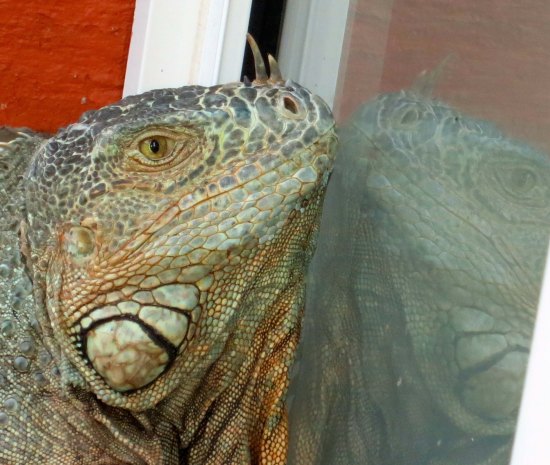
I went inside and retrieved a banana. Back outside I sat down on the porch step, peeled the banana, and tossed a piece to the iguana. He ignored it, like he was ignoring me. It was then that I noticed that Iggy was staring at the window, not through it. He had found true love in a perfect reflection of himself. What’s a puny banana in comparison?

I discovered the iguana was admiring its reflection in the window and wondered if it was breeding season and the large Puerto Vallarta lizard believed he had found true love— or possibly a rival.

I discovered the iguana was admiring its reflection in the window and wondered if it was breeding season and the large Puerto Vallarta lizard believed he had found true love— or possibly a rival.

I was still sitting on the doorstep when Ken, Leslie and Peggy returned. I heard them laughing with one of the gardeners when they spotted me sitting with the iguana. “They are good to eat,” the gardener told them. “They taste like chicken.” Naturally. My friends approached quietly, not wanting to scare Iggy.

“Don’t worry, the iguana is in love.” I doubt that a brass band would have disturbed him. Ken, Leslie, and Peggy each sat down on the porch step where I had been to admire our new best friend. We went inside with the iguana still staring at himself, deeply in love, or perhaps lust. He was still there when we left 45 minutes later, but had departed when we returned in four hours, undoubtedly heart-broken.

Peggy sat where I had and admired the iguana as he tried to reach his reflection.

Peggy sat where I had and admired the iguana as he tried to reach his reflection.

Two days later Peggy and I noticed that another iguana was outside, this time at the door leading to our pool. “Do you think he will come in if we open the door this time?” Peggy asked. “One way to find out,” I responded. Sure enough, a few minutes later we saw a head peaking in. And then the whole iguana followed. Peggy quickly jumped up and closed the door to our bedroom. We might find an iguana in our living room and kitchen amusing. Sleeping under our bed or in our shower would be another issue. He (I am assuming it was a male) wandered around looking for the beautiful girl iguana he knew lived in our villa. He stopped to eat a couple of mosquitos, his big tongue lashing out. (“Go big fellow!” we urged.) Finally, I opened the front door. Off he went.

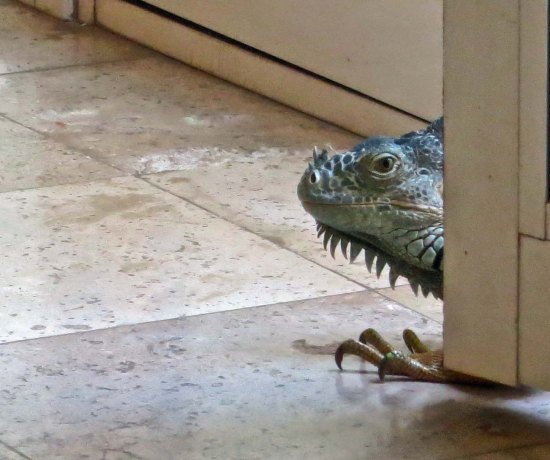
We left the door open to see if the iguana would come inside searching for the other iguana. We were thrilled to see his head appear…

We left the door open to see if the iguana would come inside searching for the other iguana. We were thrilled to see his head appear…

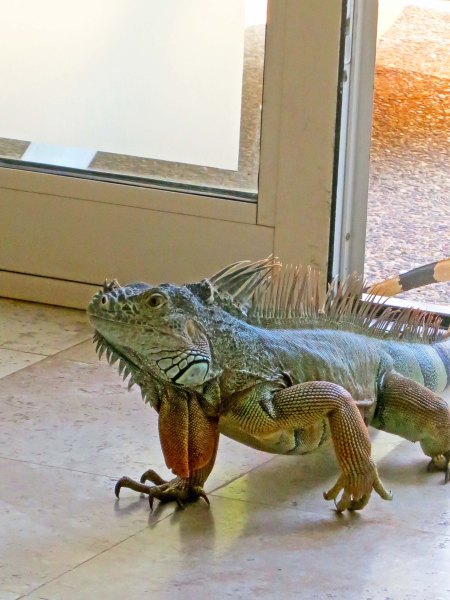
…Soon to be followed by the rest of the iguana.

…Soon to be followed by the rest of the iguana.

The iguana settled onto the floor and checked us our. He looked much less beat up than the first iguana that had come to visit. Note the size of the claws.

The iguana settled onto the floor and checked us out. He looked much less beat up than the first iguana that had come to visit. Note the size of the claws.

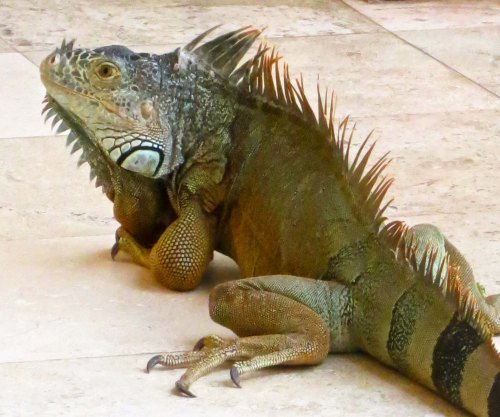
He was truly a handsome specimen.

He was truly a handsome specimen.

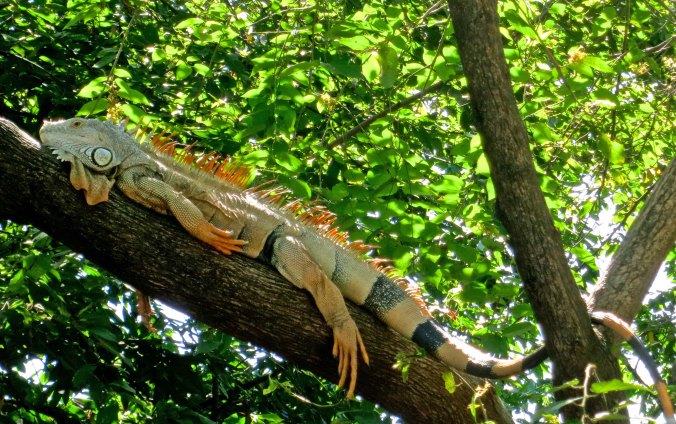
Iguanas are common in Puerto Vallarta. We often spot them on the Rio Cuale, big fellows hanging out in the trees above the river— and this isn’t the first time we have spotted them at our villa. Their images are captured in everything from tourist trinkets to expensive art. They even played a major role in Puerto Vallarta’s top industry: tourism.

This big fellow was taking his afternoon siesta in a tree next Puerto Vallarta’s attractive River Cuale.

This big fellow was taking his afternoon siesta in a tree next Puerto Vallarta’s attractive River Cuale.

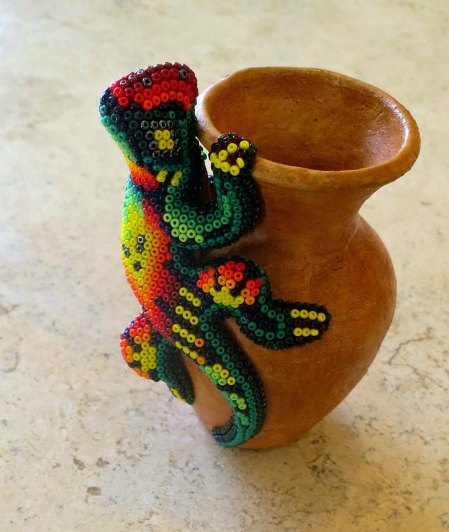
This small vase with a beaded iguana was made by our friend, Ernesto, a Huichol Indian, for our grandson Ethan whom he had met two years ago.

This small vase with a beaded iguana was made by our friend, Ernesto, a Huichol Indian, for our grandson Ethan whom he had met two years ago.

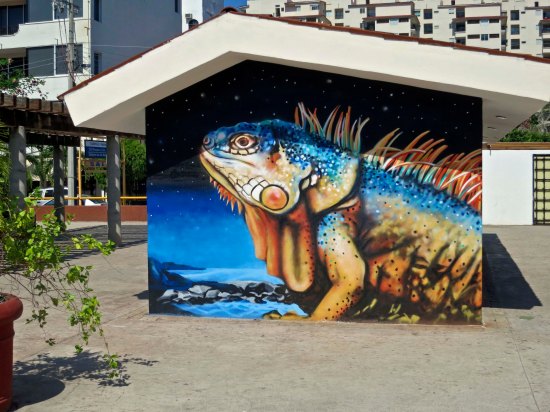
We found this large mural of an iguana in Old Town Puerto Vallarta.

We found this large mural of an iguana in Old Town Puerto Vallarta.

In 1964, Hollywood director John Huston brought his all-star cast of Richard Burton, Ava Gardner, and Deborah Kerr to the area to film The Night of the Iguana (thus the title of this blog), which was based on a play written by Tennessee Williams in 1961. To add a little spice, Burton, who was still married, brought along his future wife, Elizabeth Taylor. Hollywood had discovered Puerto Vallarta, and, because of the scandal between Dick and Liz, the world did as well.

Richard Burton and Elizabeth Taylor had adjoining houses connected by a bridge when they were in Puerto Vallarta for filming The Night of the Iguana in 1964.

Richard Burton and Elizabeth Taylor had adjoining houses connected by a bridge when they were in Puerto Vallarta for filming The Night of the Iguana in 1964.

My Fantasy: Living on a House Boat


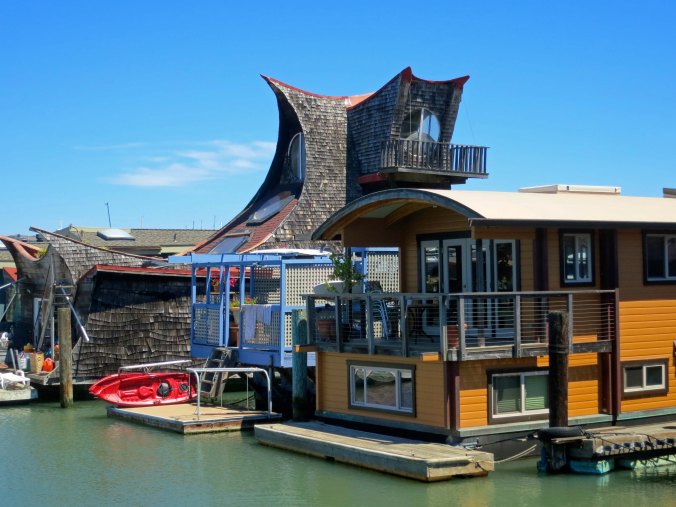
House Boats in Sausalito come in a wide range of shapes, colors and sizes.

House Boats in Sausalito come in a wide range of shapes, colors and sizes.

Peggy and I are in Puerto Vallarta, Mexico. Since the beautiful sandy beaches and an occasional margarita have pulled Peggy away from her guest blogging, I decided to do a quick post on houseboats. Peggy may have soaked up enough sun to get back to blogging later this week. (grin)

As water people go, I’d place myself on the lower end of want-to. Even though I’ve travelled by sailboat, water taxi, gondola, fishing boat, raft, kayak, canoe and cruise ship, I prefer other means of transport— like walking, or bicycling, or driving, or flying. (The flying part, however, thanks to security hassles and the modern cattle car approach to air travel, has worked its way down the list over the years, while kayaking, which I’ve come to think of as walking or backpacking on water, has worked its way up.)

I have a confession to make here, though; I have always dreamed about living on a houseboat. I can’t really explain why. Somehow, it seems romantic. Maybe it appeals to the nascent hippie in me. My introduction to these floating fantasies was in Sausalito during the late 60s. I’d wandered into the town on a whim and there they were: beckoning. I was a responsible adult at the time, however, or at least trying to be. I had a wife, a job, an apartment, and a large basset hound named Socrates who drooled a lot. How much more responsible can you get? (Yeah, I know, have babies who drool a lot.) Anyway, I banished the thought of living on a houseboat and returned to my exciting life in Sacramento.

On my August trip up the Northern California coast, I learned that Don McCoy had helped establish Sausalito’s houseboat community in the mid-60s before he had tuned in and dropped out to found the Chosen Family commune at Olompali. This fact led me to drive thirty minutes south down 101 from Novato to re-explore my lost youth.

Sausalito has changed almost beyond recognition. At least it seems that way to me. I spent most of my time dodging tourists. There were at least a million (slight exaggeration). I didn’t have time to look around when I drove through town for fear of running over one. But the houseboat community felt familiar. Each home had a unique personality, emphasized even more by art and plants surrounding it. If there were a major difference from the 60s, it was in who could afford them. The days of naked hippies joyfully cavorting on the decks had long since passed.

How you build your houseboat is only limited by your imagination. And I might add, the size of your pocketbook.

How you build your houseboat is only limited by your imagination. And, I might add, the size of your portfolio.

Ditto the above with art and plants.

Ditto the above with art and plants.

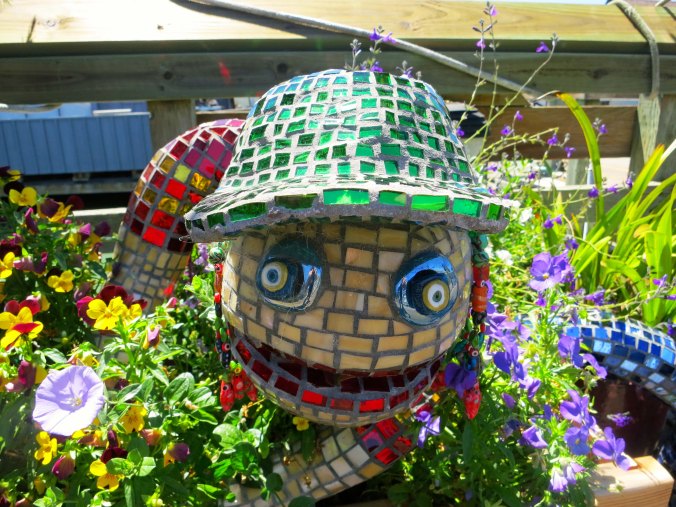
This driftwood crocodile was lurking on a ledge.

This driftwood crocodile was lurking on a ledge.

And this guy popped out of a flower pot.

And this guy popped out of a flower-pot.

The houseboat docks were decorated with flower gardens. The flower head here seemed like it was lit from within.

The houseboat docks were decorated with flower gardens. The flower here seemed like it was lit from within.

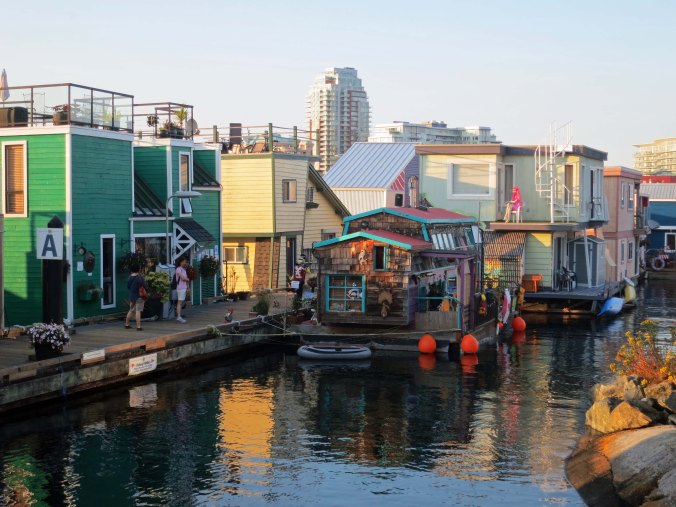
Other areas also have their houseboat communities. Victoria, British Columbia is one. Peggy and I stopped by to check them out on our way home from a weeklong kayak tour on the north coast of Vancouver Island last year.


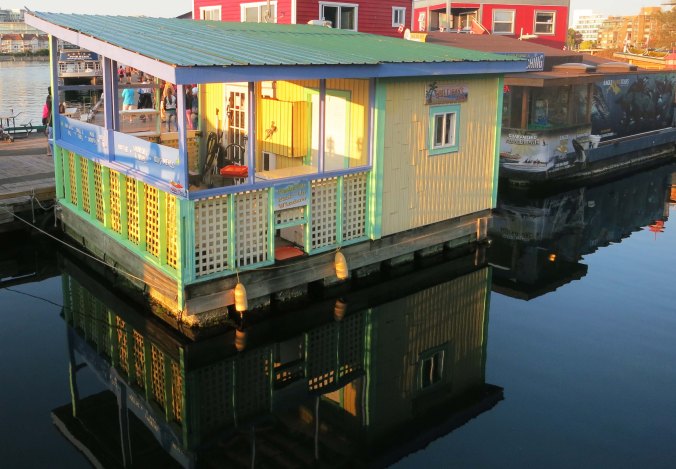
We discovered this little yellow jewel on the Island of Vancouver in Victoria, BC

We discovered this little yellow jewel and its perfect reflection on the Island of Vancouver in Victoria, BC

Caption

Several Victoria, BC houseboats with downtown Victoria in the background.

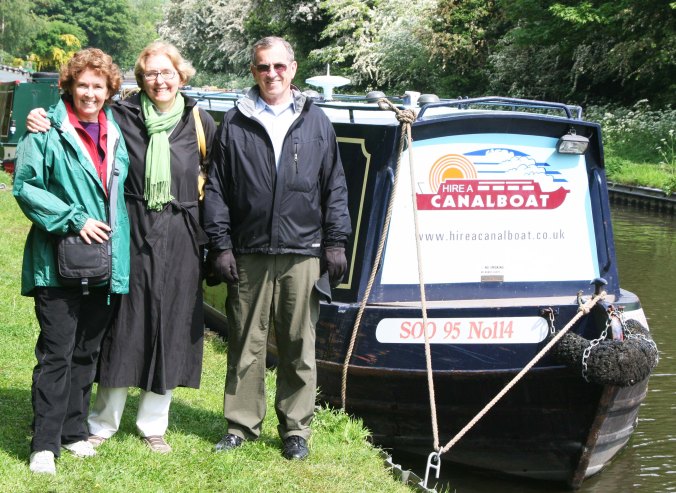
We found a different kind of houseboat in England. They were six feet wide and up to sixty feet long. (Think of it this way: If we were configured in the same way, our noses would stretch out some 20 feet. Pinocchio would be jealous.) Three summers ago Peggy and I, along with Peggy’s sister Jane and her husband Jim, spent a week piloting one of these “narrowboats” along the Trent and Mercey Canals near Robin Hood’s old hangout. It was a kick— maneuvering our long boat, stopping at pubs and villages along the way, and pulling off at night to camp along the canal. This inexpensive, gypsy-like lifestyle has great appeal for some people and they’ve turned their narrow vessels into gaily painted, imaginatively named houseboats. Sign me up.

Here I am, piloting our 60 foot boat down the Trent and Mercey Canal. It's a good thing we only travelled 3-4 miles per hour.

Here I am, piloting our 60 foot boat down the Trent and Mercey Canal. It’s a good thing we only travelled 3-4 miles per hour.

Our crew. Peggy and Jane operated the locks. Jim and I piloted the boat.

Our crew. Peggy and Jane operated the locks. Jim and I piloted the boat.

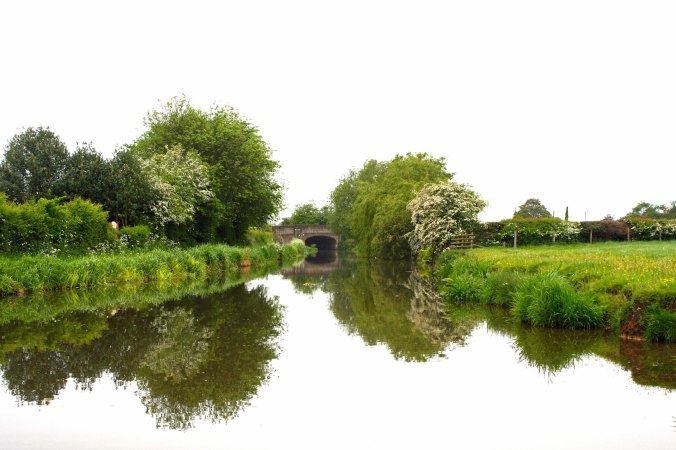
As this photo suggests, the Trent and Mercey Canal Canal can be quite scenic.

As this photo suggests, the Trent and Mercey Canal can be quite scenic. Low underpasses limit the height of the narrowboats.

How would you like to have a house named Belly Button? Fun names, plants and unique paint jobs give narrow boats personality.

How would you like to have a house named Belly Button? Fun names, plants and colorful paint jobs give narrowboats their personality.

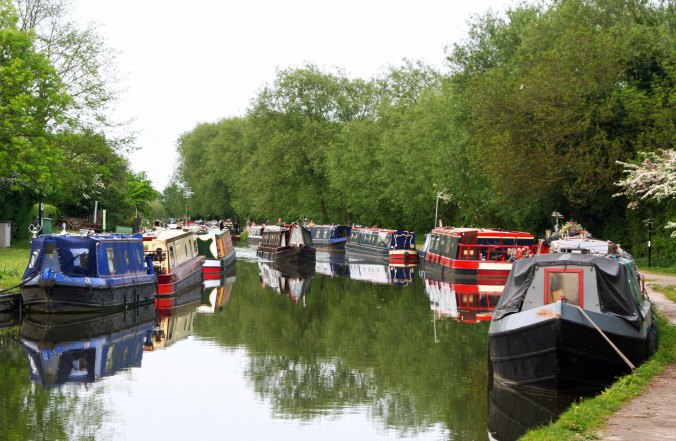
A community of houseboats, Trent and Mercey Canal style. They could be gone the next day.

A community of houseboats, Trent and Mercey Canal style. They could be gone the next day.

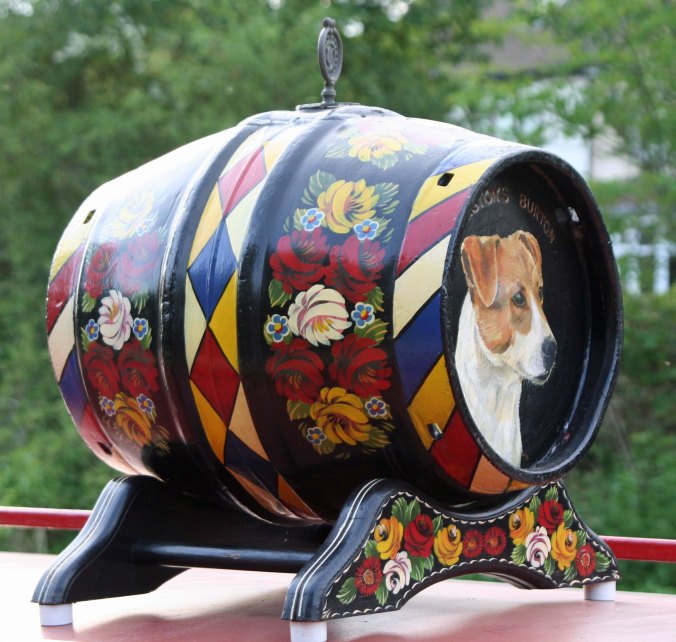
We spotted this water cask with its realistic portrayal of a dog on top of a narrowboat.

We spotted this water cask with its realistic portrayal of a dog on top of a narrowboat.

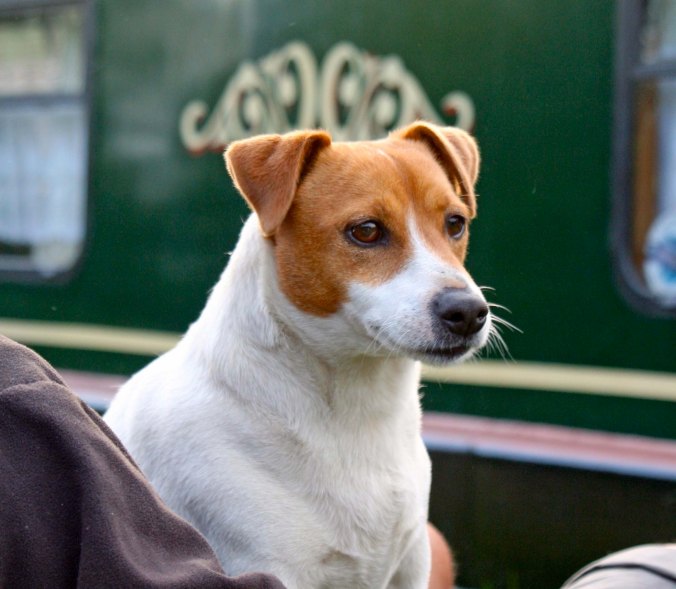
Next to the boat, sitting on the owner's lap, was the dog.

Next to the boat, sitting on the owner’s lap, was the dog.


NEXT BLOG: Peggy will post her blog on the small towns of Cotswold, England.

Rancho Olompali: “The White House of Hippiedom”

It was quiet and peaceful when I visit Olompali. But this platform was once alive with laughter, music and work as members of the Chosen Family made bread to be distributed by the Diggers in San Francisco.

It was quiet and peaceful when I visited Olompali. But this platform was once alive with laughter, music and bread as members of the Chosen Family commune made thousands of loaves to be distributed by the Diggers for free in San Francisco during the late 60s.

Today marks the end of my series on Olompali. Originally, I had planned to write one blog. This is my fifth, and each post has been relatively long. The truth is, I got caught up in the subject, and the more research I did, the more caught up I became. I lived through the 60s and spent considerable time in the Bay Area where these tales took place. I became an activist, committed to change, but I missed the early rock scene, didn’t do LSD, and steered clear of communes. None-the-less, I shared many of the values of those who did travel down these paths. 

The 60s were a time when a significant number of young people rebelled against the world of their parents and went seeking something else. As Don McCoy, the founder of the Chosen Family would say, to “create a new way of life, a new way of doing things, a new way of living together, getting along in a peaceful world.” Looking back, this perspective seems almost Quixotic to me. We were tilting at windmills.

But the windmills were real— and scary. America and Russia had accumulated enough nuclear weapons to wipe out the world several times over. Minorities, women, and gays were buried under a suffocating blanket of discrimination that limited who they were and what they might become. Leaders that promised change, John Kennedy, Martin Luther King, and Bobby Kennedy, were shot down, one after another by people who may have been insane— but were reflective of something deeper and darker. A far-off war in Southeast Asia was sucking us into a quagmire that was tearing our nation apart. And last, but far from least, we were awakening to the fact that our desire for more and more of everything was polluting the planet, literally poisoning our home. “We have met the enemy, and he is us,” Pogo proclaimed.

In spite of all of this, or maybe because of it, change was in the air. People across the country felt it. In the Bay Area it was so palpable you could almost taste it. (Listen to the Age of Aquarius here by the Fifth Dimension to get an over-the-top sense of its idealistic flavor.)

Those of us who got caught up in optimism and passion of the 60s believed we could make a difference. Our solutions varied tremendously. For some, like me, it meant joining groups like the Peace Corps and Vista, and working from within the system to achieve change. Others believed more radical solutions were called for. Massive protests and even violence resulted. And some people opted out, either by focusing inward with the aid of meditation or drugs such as LSD, or, more directly, by simply removing themselves from every day society and establishing a new life.

Don McCoy represented the latter. He and a few friends, plus their children, moved to Rancho Olompali in November of 1967 to establish the Chosen Family commune. “God chose us to be family with each other, and also, we chose each other for family,” he said. McCoy was aided in his vision by a $350, 000 inheritance, which is the equivalent of close to 3½ million dollars today.

By most accounts, McCoy was a generous man. One story that reflects his generosity relates to Alan Watts, the Zen philosopher, who was living on a houseboat in Sausalito (possibly one of Don’s). When the Indian musician, Ali Akbar Khan, told Watts he wanted to start a music college for teaching Indian music in Northern California and needed money, Alan immediately called Don. Within an hour, McCoy had shown up and given Khan a check for $20,000. (Khan, along with Ravi Shankar, was instrumental in introducing Indian music to the West. His college still exists today in San Rafael.)

As for Rancho Olompali, McCoy picked up the full tab. He started by leasing the property around the house and barns, including the swimming pool. When neighbors, who ran a riding school business on another section of the property, complained about seeing nude people in the swimming pool, he leased the whole ranch and kicked out the neighbors.

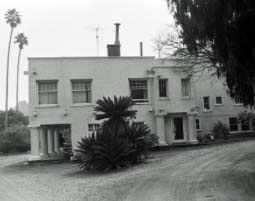
Olompali provided an excellent location for the Chosen Family and Included this 20 plus room mansion.

Olompali provided an excellent location for the Chosen Family. It included this 20 plus room mansion, beautiful landscaping and an Olympic-size swimming pool. (Archival photo.)

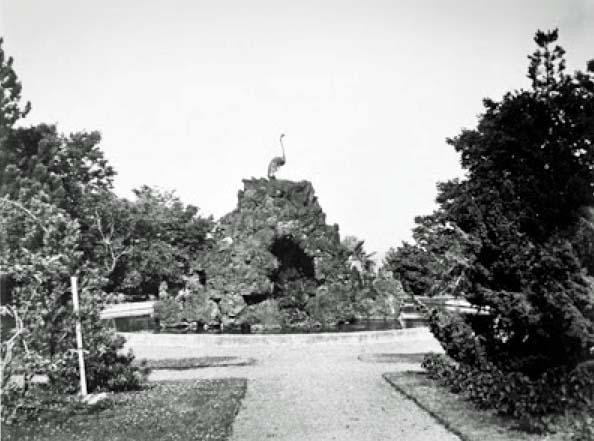
This large fountain with a blue heron sculpture on top was part of the landscaping.

This large fountain with a blue heron sculpture on top was part of the landscaping. (Archival photo.)

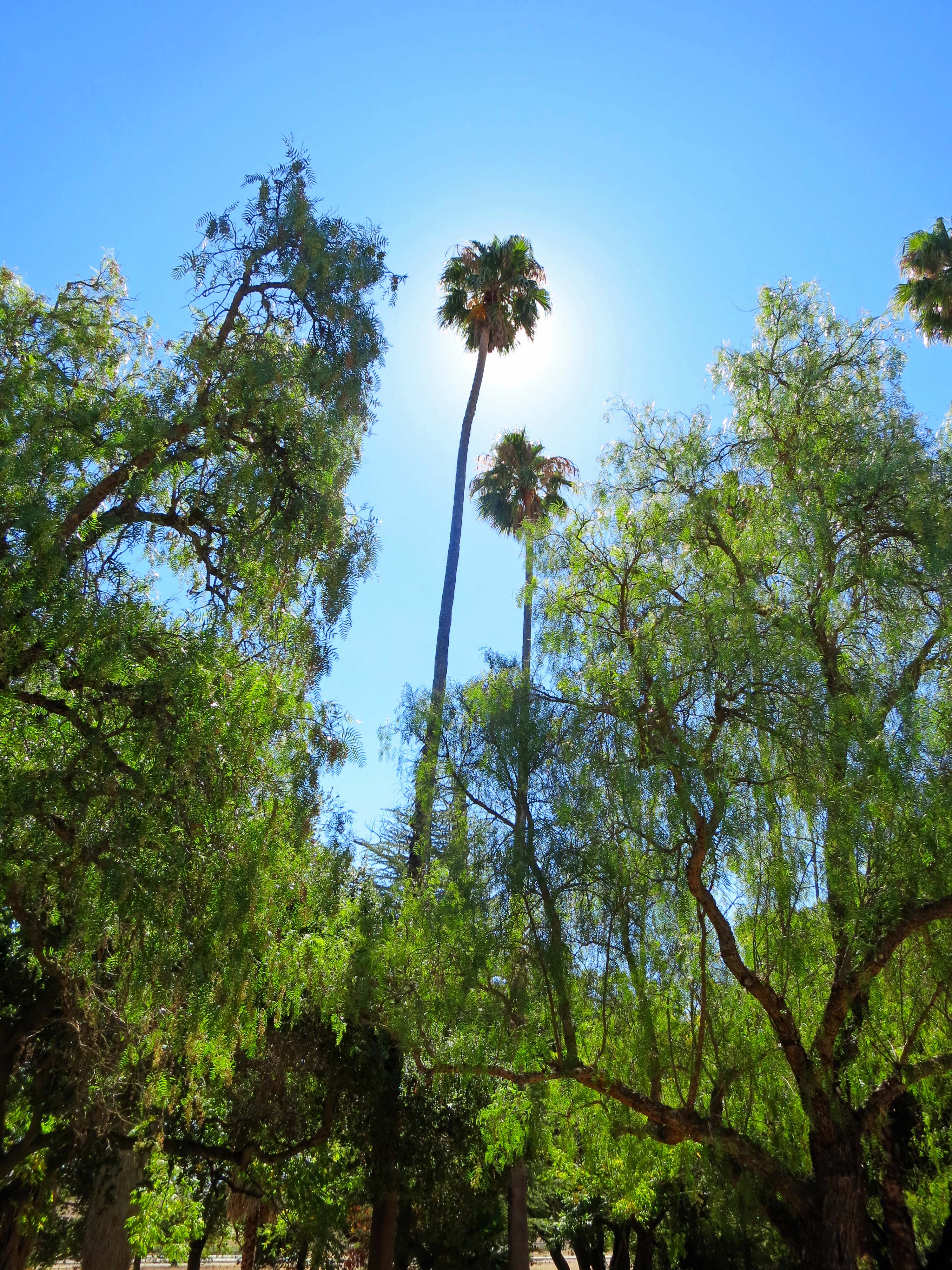
The palms seen on the left side of the mansion as they appear today.

The palms seen on the left side of the mansion as they appear today.

Leasing the rest of the property open up several hundred acres for the commune members to wander through.

Leasing the rest of the property opened up several hundred acres of beautiful country for the commune members to wander through.

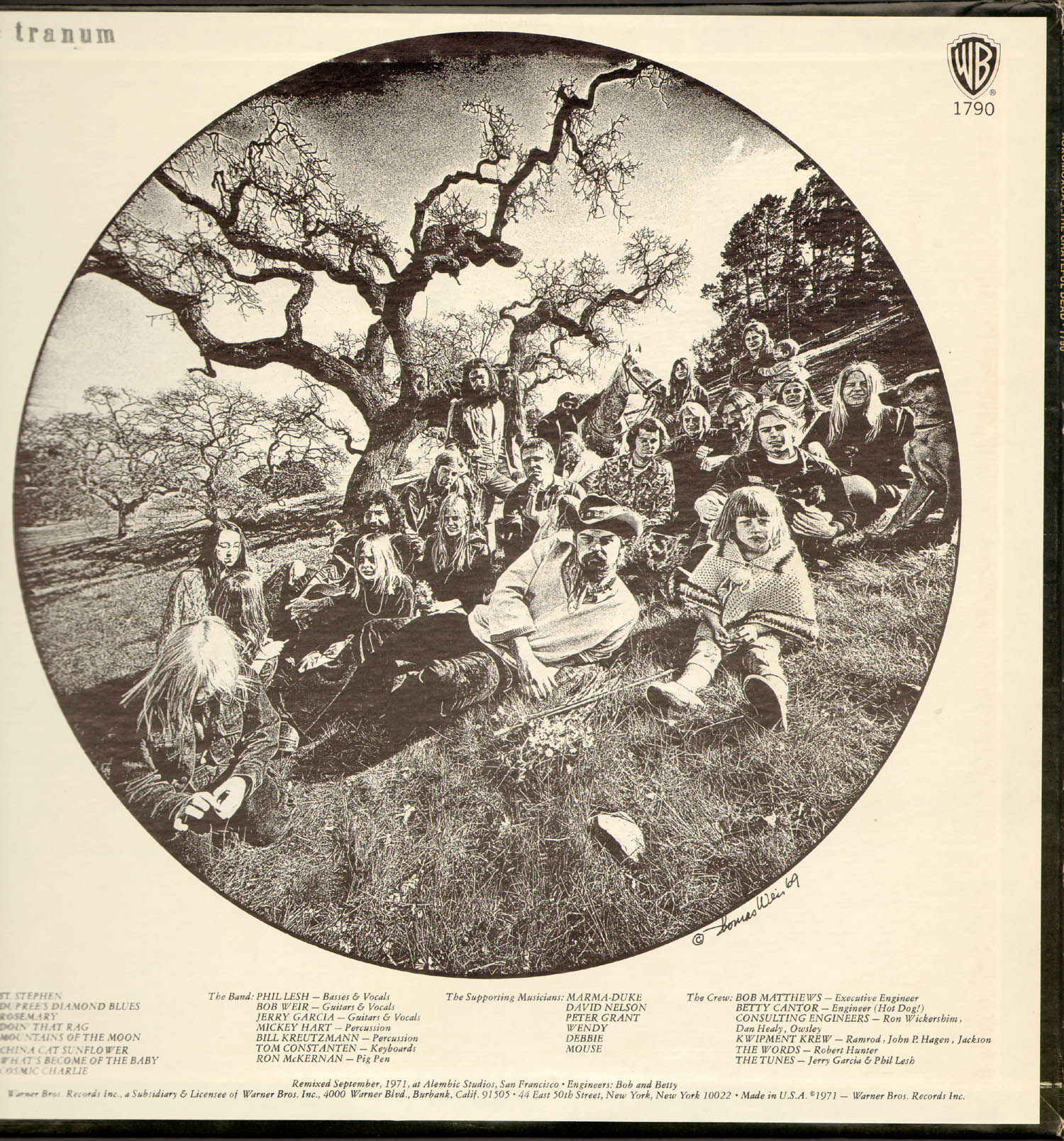
McCoy insisted that the adults who came to live at Olompali give up their day jobs. The commune was to be the center of their lives. Food, transportation, health care, and even entertainment were to be supplied, everything necessary to live. And McCoy would pay for it. This didn’t mean that commune members didn’t work. There was food to grow, meals to cook, dishes to do, cows to milk and horses to care for. The property had several horses, including one boarded by Mickey Hart, the Grateful Dead percussionist. Snorty, the horse, even made it into the group photo taken at Olompali that appeared on the back of the Dead’s album, Aoxomoxoa.

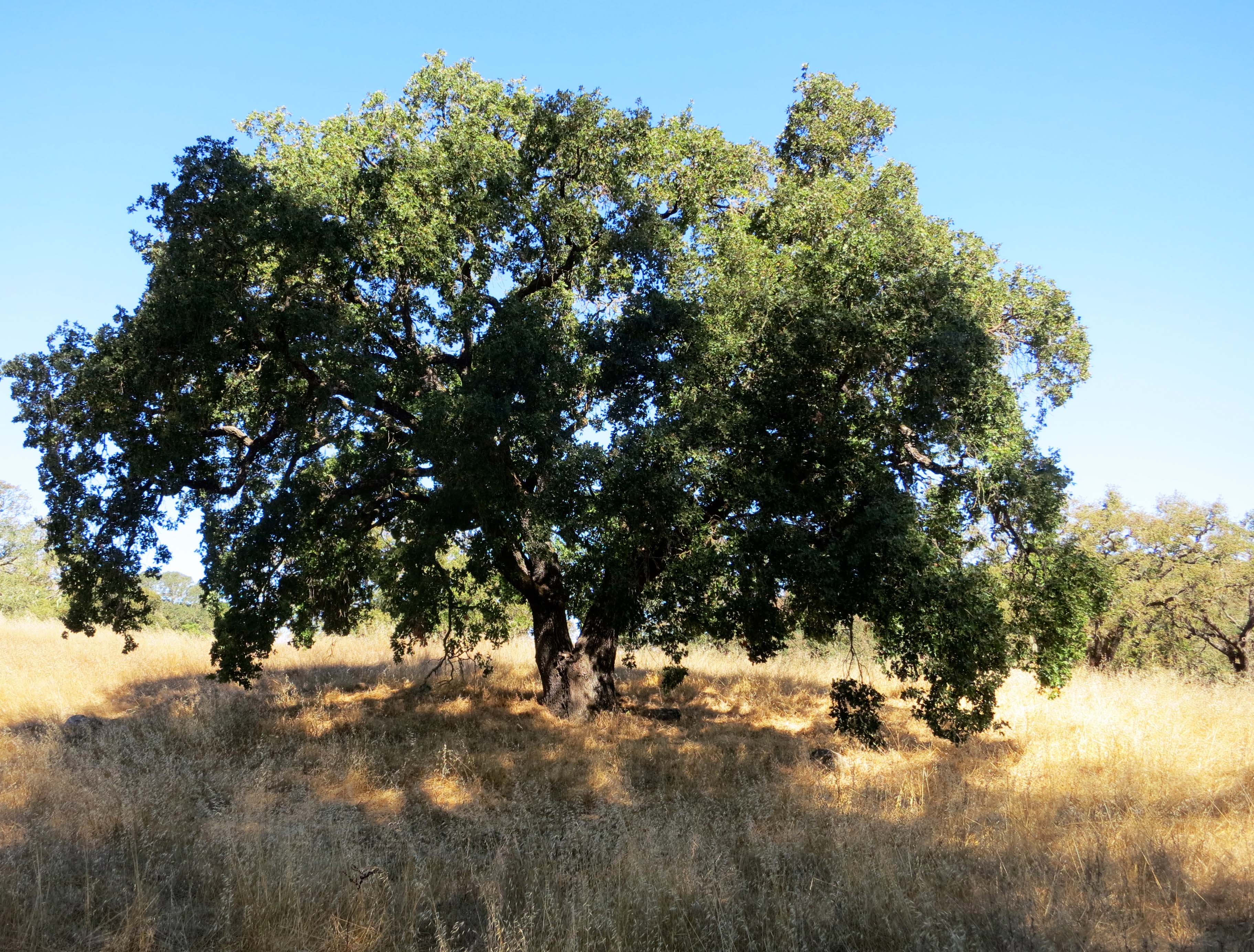
Snorty is in the back of the photo.

Snorty is in the back of the photo to the right of the oak tree.

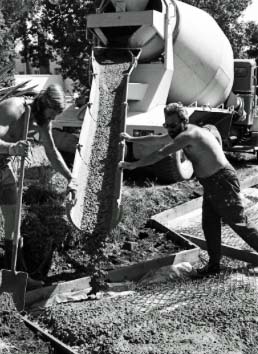
All of the commune members, including the children, were expected to chip in when it came to chores. One of the biggest was cooking bread. A bakery owner had gone out of business and donated his equipment to the commune. A seven-sided cement pad was poured (it still stands at the park as shown in the top photo), and the equipment installed. Commune members then went to work. Clothing was optional. Twice a week they would bake several hundred loaves of bread in coffee cans. The bread was then turned over to the Diggers to distribute for free in San Francisco.

Pouring concrète for the cement pad.

Pouring concrète for the cement pad. (Archival photo.)

Chosen Family members making bread at Rancho Olompali that will be distributed by the Diggers for free in San Francisco. Clothing was optional. (Photo from the Berkeley Barb.)

Chosen Family members making bread at Rancho Olompali that was distributed by the Diggers for free in San Francisco. Clothing was optional. The bread was put in coffee cans as seen in foreground and rose over the top, giving it the name mushroom bread. (Photo from the Berkeley Barb.)

There was also a side business known as The Garden of Delights where commune members would put on light shows for the various rock groups performing at venues in the Bay Area.

Children were regarded as a communal responsibility. On Mondays, their names were placed in a hat. Adults would then draw names and adopt the child he or she drew for the week. If you had issues as a child, you took them to your adopted parent, not Mommy or Daddy.

A decision was made to educate the children on site rather in local schools. (Otherwise, how could you instill the proper hippie values?) An ex-principal/teacher from the Nicasio Elementary School, Garnet Brennan, was recruited into the commune as the teacher. Brennan had been fired from the Nicasio School District after a thirty-year career in education because she had admitted to smoking pot when she was testifying on behalf of a young man who faced a five-year to life sentence for selling marijuana. She had noted that she knew marijuana wasn’t harmful because she had smoked it for 18 years on a daily basis without any notable damage to herself or anyone else. The issue received national attention including an article in Life Magazine.

Brennan set up a Montessori-type school that the children named Not School. Children were encouraged to pursue subjects that captured their imagination. Education was slipped in as part of the process. “We had displays, supplies, books, and tests,” Maura McCoy remembers. “She was a professional educator and a great person to have there.” Brennan had been known as a “beloved teacher” at the Nicasio School according to the Life magazine article.

Extensive freedom was granted to the children. If you wanted to skip school or go to town, okay. If you wanted smoke pot or try LSD, okay. If you wanted to ride horses, go swimming, or go for a walk in the woods, it was your choice. You were even allowed to pick your own bedtime. (After all, how could you go to sleep with the Grateful Dead playing music in your front yard or living room?) And, if you wanted to run around naked— well that was okay, too. Understandably, some people would and did condemn the freedom, lack of structure and use of drugs as a form of abuse. For the most part, however, the children who spent two years of their life growing up at Olompali remember the experience as fun and filled with loving support. They even took delight in going into Novato and being the “Hippie Kids.”

Not surprisingly, the media pounced on the commune. It was big news: pot-smoking hippies ran around naked and baked bread while grooving out to music produced by the Grateful Dead. They labeled Rancho Olompali as the White House of Hippiedom and Don was their guru, the supreme Hippie. They also recorded the bad times. A horse escaped, ran out on Highway 101, and caused an accident that killed a trucker. There were two raids to seize drugs. Faulty wires caused a fire that gutted the mansion.

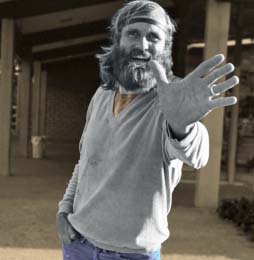
Don McCoy. (Archival photo.)

Don McCoy. (Archival photo.)

Don’s family, concerned about how life on the commune was affecting the children, obtained a conservatorship that took away custody of his children and stopped the flow of money. He ended up in the hospital suffering from physical and mental illness.

The final straw for the Chosen Family was that two of the commune’s children, cycling around the half empty swimming pool, fell in and died. With the death of the children, the commune died as well, its utopian dream snuffed out. The University of San Francisco, who still owned the property, evicted the Chosen Family and set about selling it to a developer who was planning on turning Olompali into condos and a trailer park, an inglorious ending to a fascinating history. But it wasn’t the end of the story.

Olompali was saved by a coin, not just any coin, but an English sixpence found on the property that traced the area’s history all the way back to the initial contact between the Miwoks and Sir Francis Drake. Plans for the trailer park were dropped. Marin Open Space, working with the State of California, obtained the property in 1977 and turned it into Olompali State Park.

Final Notes: Maura McCoy, along with another former member of the commune, Noelle Olompali-Barton, is now making a documentary about the commune. As Noelle says, “We have a lot of colorful history.” Their Facebook page is worth a visit. Scroll down and check out the trailer for the documentary.

NEXT BLOGS: Peggy (my wife) will do several guest blogs on her recent trip to England where she visited a number of gardens and estates, starting with Downton Abbey (Highclere Castle.)

Houseboats, Hippies and Haight-Ashbury… Olompali Part IV

Don McCoy would create one of the first modern houseboat communities in Sausalito California in the years before he created the Chosen Family commune at Olompali. A large, thriving community of houseboats still exists in Sausalito.

Don McCoy would create one of the first modern houseboat communities in Sausalito, California in the years before he created the Chosen Family commune at Olompali. A large, thriving community of houseboats still exists in Sausalito.

“I felt we were chosen for something. I thought we were going to create a new society. I thought we were going to change the world, or create a new way of life, a new way of doing things, a new way of living together, getting along in a peaceful world.” —Don McCoy, founder of the Chosen Family. It would be hard to find a statement that better summarizes the hope surrounding ‘The Age of Aquarius’ that seemed so tantalizingly close in the 60s, but was ever so far away.

“The failure to curb personal indulgence was a major collective error. Our journeys down the path (of extensive drug use)… disordered our senses, senselessly wasted young lives, and often sabotaged what we labored so diligently to construct. … It is the artist’s responsibility to manifest sanity and health—something we did not fully understand.” Peter Coyote— Co-founder of the Digger Movement in San Francisco, and friend of Paula McCoy. He would go on to become chair of the California Art’s Council under Jerry Brown, a popular actor (think ET), and a Zen advocate.

“I was definitely exposed to different ways of thought, to people who had yearning for peaceful ways of living, collectively with others. It gave me a more liberal and progressive outlook on life in general, introduced me to organic foods, to eastern religion, to farming, to alternative theater.  Maybe today that sounds almost mainstream, but we were really counterculture then.” Maura McCoy, daughter of Paula and Don, who is presently finishing up a documentary on The Chosen Family that Peter Coyote will narrate.


“What I remember about Thanksgiving dinners at Uncle Bud’s was that they were always loud— boisterous in a positive, friendly way,” my brother-in-law Jim told me, as his mind reached back to his childhood in the 40s and early 50s. Jim is married to Peggy’s sister, Jane. Bud Carrington was Jim’s uncle and Paula McCoy’s father, so Paula was his cousin. Maura is her daughter. Paula would have been part of the boisterous Thanksgiving holidays.

What Jane and Jim recall of the 60s and 70s hippie culture in San Francisco was the darkness of the drug scene that Peter Coyote referred to. It would lead to Paula’s early death. Understandably, they see the Chosen Family, the Diggers, and the Summer of Love in the light of Paula’s shortened life.

My own perspective of the time is somewhat different. My stint at Berkeley was from 1963 to 65, when the Bay Area rock music scene was in its formative stages. Herb Caen had yet to make the word ‘hippies’ part of our every day vocabulary. The Free Speech Movement, Peace Corps, graduation, and marriage dominated my thinking. My awareness of ‘hip’ hadn’t travelled beyond the Beatniks. (I was curious enough about the Beats, however, to make a pilgrimage across the Bay to Lawrence Ferlinghetti’s City Lights Bookstore.)

I was in the final months of my Peace Corps assignment in Liberia in July of 1967 when I first became aware of the Summer of Love. A new group of Volunteers hosted a party in Tapeta. A large sign claiming Haight-Asbury Africa greeted us on the edge of town. There wasn’t any LSD (at least that I was aware of), but Liberia’s Club Beer ran freely. And the Bush Devil was there. He seemed to fit right in. Any of the 60’s rock groups would have been delighted to have him shuffle across their stage. (If you want to learn more about the Bush Devil, check out my book, The Bush Devil Ate Sam, on Amazon.)

By the summer of 1968, I was Director of Peace Corps Recruiting and Public Affairs for Northern California and Northern Nevada. While my territory didn’t cover San Francisco, I travelled into the city on a monthly basis for staff meetings. Out of curiosity I wandered over to Haight-Asbury, which had already lost its luster. I also spent much of my time on college campuses, and some, especially Sonoma State— just up Highway 101 from Olompali, closely reflected what was happening in the more open society of the times. I was drawn to the sense of exploration and freedom the lifestyle offered. My feelings could have easily carried me in that direction, but I got caught up in the world of environmental action instead. “Tune in, Turn on, Drop out” never became part of my vocabulary. But, back to the McCoys.

In 1961, Don and Paula McCoy moved from Southern California to Marin County and Don started an investment property and construction company with his brother Douglas. Within two years they were busily developing Sausalito’s first modern houseboat community at the Sausalito heliport on Richardson Bay. Houseboat living, apparently, had great appeal to artists and musicians. A young Bill Cosby rented a space at the development and Otis Reading used one of Don’s houseboats as an escape from San Francisco. Otis used his stay as inspiration for the hit songSitting on the Dock of the Bay.” A warehouse that Don owned at the Heliport also became a popular rehearsal space for local bands including the Grateful Dead, Country Joe and the Fish, and Quicksilver. Chicago apparently practiced there as well.

At some point, Don and Paula bought a house in San Francisco at 715 Ashbury Street. The Grateful Dead lived directly across the road at 710 Ashbury Street. A constant stream of people moved back and forth between the two Victorian houses.

Paula and Don divorced in September of 1977. I couldn’t find the reason, but given the couple’s close association with rock bands, drugs, and the era of free love, it isn’t hard to imagine. Whatever the reason, Don got the kids and within a couple of months he would be creating his commune at Olompali. Paula stayed at the house on Ashbury Street.

While this blog series is focused on Olompali, I broadened my research when I learned about the relationship between my brother-in-law and Paula. Her life in San Francisco was equally interesting to Don’s at the commune. 215 Ashbury became one of the focal points of Haight-Ashbury and the Summer of Love. Janis Joplin was so close by that she could stand out on her balcony and yell out to her neighbors at 215 and 210. Peter Coyote describes an incident where he was upstairs at Paula’s when Neal Cassady came out of the Dead’s house. Peter lobbed apples at him from the window and Cassady came over to visit and get high. Ken Kesey reportedly used the house to stop his car when he lost his brakes. Several people with close connections to the Dead actually lived at Paula’s. This included Stanley Mouse and Alton Kelly, who would earn fame for their psychedelic Grateful Dead poster art and album covers.

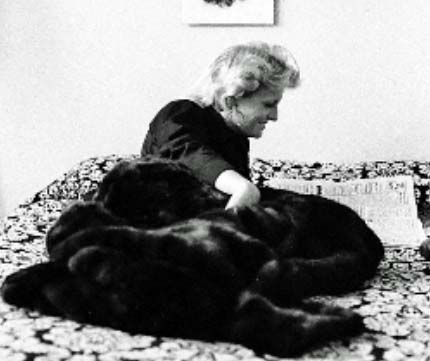
A photo of Paula McCoy wearing her fur coat taken by Peter Coyote.

A photo of Paula McCoy wearing her fur coat taken by Peter Coyote.

715 Asbury Street also became a gathering point for the Hell’s Angels and Diggers. The Angels had developed an early relationship with the Pranksters during the acid tests and this relationship extended to the Dead. Two Angels, Frisco Pete Knell, president of the San Francisco Chapter of the Hells Angels, and Billy “Sweet William” Fritsch, even accompanied the Grateful Dead, Paula, Ken Kesey, and Peter Coyote on a mission to London to meet with the Beatles in 1968. The Dead were concerned about whether the Beatles had a social conscience and were ‘socially adventurous.’ While the Dead found the Beatles more focused on making money than making change, the Beatles found the Dead scary, which is no surprise, considering Knell smashed one of their staff in the nose because Christmas dinner was late. Lennon was present to witness this episode and Coyote had to use his diplomatic skills to calm John down.

Paula and Coyote were invited on the journey because of their close connection with the Dead and with the anarchic Diggers, who were major players in San Francisco and Haight-Ashbury’s 1967 Summer of Love. Coyote, who went by his birth name at the time, Peter Cohon, was one of the founders of the Diggers, along with Emmett Grogan and Peter Berg. Free is the word that best describes what the Diggers did during the summer of 1967 when up to 100,000 young people (hippies/flower children) descended on Haight-Ashbury with little more than the clothes on their backs. The Diggers operated a free store and health clinic, provided free crash pads, gave away free bread in Golden Gate Park (much of which was baked at Olompali), and performed free, radical theater events on the streets and in the parks of the city. (Both Coyote and Berg had been members of the San Francisco Mime Troupe.)

The Diggers would distribute thousands of loaves of bread, baked in a coffee can like this.

The Diggers would distribute thousands of loaves of bread, baked in a coffee can like this.

The Diggers were always welcome at 215 Ashbury. Coyote referred to Paula as the doyen of the Diggers and Vanity Fair described her as the group’s patron. Either way, she played an important role in the Diggers’ loose knit organization, the Summer of Love, and what came afterwards. (Imagine being able to say, “Oh, I went off with the Grateful Dead to meet with the Beatles and discuss their social conscience.”) Paula also became part of the dark side of the 60s counter-culture, the use of hard drugs. Coyote blames Emmett Grogan for introducing Paula to heroin. A woman commenting in the March 15, 2003 Digger Archives confirms this observation:

“Emmett was a junkie. Every woman he got involved with, perhaps his last wife being the exception, ended up strung out right along with him, big time. He left a wake and it amazed me some of the women that gave in. Not all of them lived through it. Paula McCoy being a prime example. She was the most intelligent high-toned woman in the scene. God was she smart and politically hip. I never in a million years could have seen those two together.”

But give in she did, and in 1976 the addiction plus ‘a drug deal gone bad’ would lead to her death in San Rafael. As Coyote would note “The Sixties turned into the Seventies and the hard-life changed a lot of things. A lot of friends died: Tracy, Marcus, Bill Lyndon, Billy Batman, Pete Knell, and Paula McCoy. The list is longer than I have the heart to type.”

Emmett Grogan died of an overdose in 1978.

NEXT BLOG: Olompali… the final chapter.