What Do Burning Down a Bank and the Sierra Trek Have in Common? … The Sierra Trek: Part 2

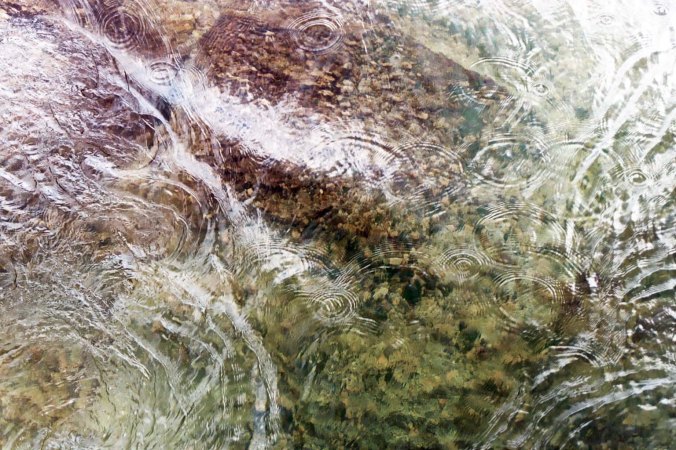
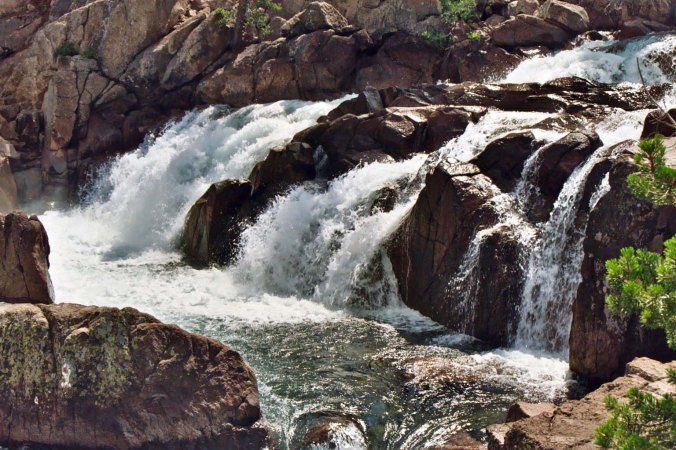
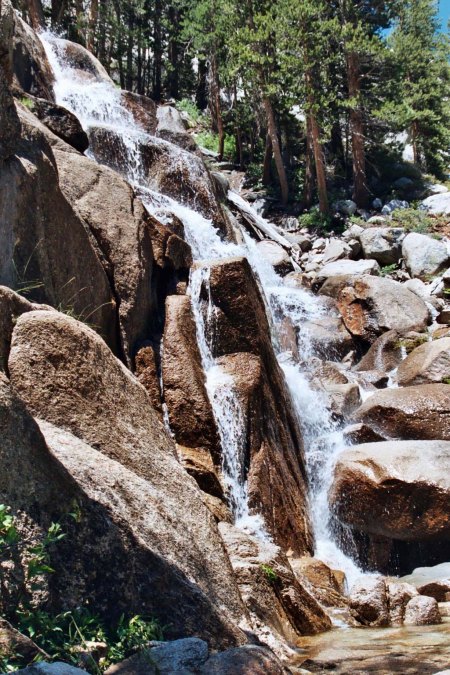
Waterfall and pool on Five Lakes Creek in the Granite Chief Wilderness area behind Squaw Valley, California.

The Granite Chief Wilderness behind Squaw Valley, home of the 1960 Winter Olympics, is an area of rugged terrain and natural beauty. This pool on Five Lakes Creek was an open invitation for a dip on a hot summer day. (Photo by Peggy Mekemson.)


The vision part of being a visionary is always the easy part, as any visionary will tell you. It is the execution of the idea that separates the mouse from the moose. In my first blog on the Sierra Trek, I told how Steve Crowle and I had come up with the crazy idea of raising money for the non-profit I was executive director of by running a 9-day, 100-mile backpack trip in the Sierra Nevada Mountains of California. I had six weeks to plan and run the event. It would have been a major undertaking even if I had six months!

A note on photos: I didn’t take any pictures during the first Sierra Trek. It was before I became interested in photography, plus I had my hands full shepherding 63 people across the mountains— as you will learn. The photos in this blog and in the rest of the series were taken on later Treks and on personal trips in the Sierra’s and other California mountain ranges where we trekked. They will give you an idea of why I fell in love with backpacking and the Sierras. 


My first challenge on the trek was selling it to Board of Directors. Running a backpack trip as a fundraiser was a huge leap from sending out Christmas seals. At 29, I was close to the youngest Lung Association Executive Director in the nation in 1974 and I had already ruffled some feathers. A research doctor from UC Davis was foaming at the mouth because I wanted our organization to focus on prevention programs as opposed to medical research. What would he think of me running off to the woods on a backpack trip?

Leading a group of people through rugged terrain for long distances was a bit more scary than sending out Christmas Seals. Here we are looking south from the Granite Chief Wilderness to the Desolation Wilderness, a route we followed several times on the Sierra Trek.

Leading a group of people through rugged terrain for long distances was a bit more scary than sending out Christmas Seals. Here we are looking south from the Granite Chief Wilderness to the Desolation Wilderness, a route we followed several times on the Sierra Trek. Snow would often be a challenge on our adventures.

“You want to do what?” with a decided emphasis on the first and fifth words is the best way I can describe the Board’s reaction to my proposal. It was easy to translate: “Why would a 29-year-old executive director with less than a year of experience under his belt, want to risk his career on such a harebrained idea?”

I echoed wild Steve, “Why not?”

Actually I had a great Board. Once the members were convinced that this was something I really, really wanted to do, their final response was “OK, go for it!” I called Steve immediately. I had a wide range of responsibilities ranging from administration to program to fundraising. I would have a limited amount of time to devote to the project and I didn’t know anyone else who was crazy enough to take on the challenge.

I had originally talked Steve into replacing me as Executive Director of Sacramento’s Ecology Information Center with a sales pitch that included, “Look, I have this great job where you work 60 hour weeks, have a Board that likes to scream at each other, and has a starting salary of $200 per month. Are you interested?” Minus a screaming Board of Directors, organizing the Trek wouldn’t be all that different.

Steve had a bright, curious mind and was knowledgeable on environmental issues. He also seemed to have unlimited energy and was built like a bear. It had served his well as Executive Director of EIC. In addition to overseeing the Center’s ongoing projects, he had immediately set out to develop a community garden downtown. Initially known as the terra firma Garden and later as the Ron Mandela Garden, it would provide inner city residents with a touch of nature for over 30 years— all the way until the State of California decided to grow buildings on the site.

The downside about Steve was that he existed on the edge. I later learned that one of his friends who he recruited to volunteer on the Trek frequently flew to Columbia and returned with his cargo holds filled with pot. Steve was a ‘person of interest’ to the FBI.

A year after the Trek, Steve called me and told me that the FBI had showed up on his doorstep. My immediate thought was that they had tied Steve to the Colombia operation or that some of the terra firma/Mandela gardeners were growing marijuana. Steve’s concern was that his radical youth was catching up with him. He had been a little too close to the fire when the Bank of America had been burned down in Santa Barbara in 1970 as a protest against the Vietnam War. “And what were you doing with those matches?” Mr. Crowle. (Steve told me the Santa Barbara story a few years ago before he passed away.)

Actually, the FBI had bigger fish to fry. Apparently one of his gardeners had gone from farming her plot to plotting an assassination. Young Lynette Fromme grew up in Southern California where she was a star performer in a children’s dance group, performing at such venues as the Lawrence Welk Show and the Whitehouse.

At 19, a strong disagreement with her dad sent her scurrying off to Venice Beach where she found comfort from an older man, Charles Manson. She soon found herself one of Manson’s clan, taking care of an aging George Spahn at his ranch where the ‘family’ hung out. It was Spahn who gave Lynette her nickname “Squeaky,” because, as legend has it, she squeaked each time he tried to grope her.

Squeaky missed out on the murderous rampage the family undertook in 1969 killing Sharon Tate among others, but she remained intensely loyal to Charles, defending him to the press and anyone else who would listen. After Manson’s conviction and sentence to a lifetime in prison, she moved to Stockton where two of the people she was living with, James and Lauren Willett, mysteriously ended up dead.

Abandoning Stockton, Squeaky moved to Sacramento and rented an apartment with another Manson groupie, Sandra Good. The two of them adopted a new life style and persona as ‘nuns’ in Manson’s latest crusade, saving the earth. Manson even gave them new names with Squeaky becoming ‘Red’ and Sandra becoming ‘Blue.’ It was with her new name, persona, and purpose that Squeaky took up gardening at the Mandela Garden. Steve knew her, of course (she liked his intense eyes), but knew nothing about her background.

It was with her new purpose of ‘saving the earth’ that she left her apartment on the fateful morning of September 5, 1975 and strolled over to Capitol Park where she got within a few steps of the visiting President Gerald Ford before pointing her Colt 45 at him, creating immediate pandemonium. She later claimed she was “just trying to get the President’s attention.” She did. Three months later she found herself convicted of an attempted assassination and in prison.

As for Steve, he informed the FBI that he didn’t have a clue as to who Fromme was or what she was up to other than being a gardener. Like Pangloss, he went back to cultivating his garden.

But all of this was in the future. My phone call to Steve went something like the following:

“How would you like to go backpacking and get paid for it?” I asked.

“Give me a hard question,” Steve responded.

“Are you willing to work for two dollars an hour?” I casually threw in as fine print.

“That,” he replied, “is the question.”

I went on to explain that while the Board members had approved of the concept, they weren’t particularly enthusiastic about spending large sums of money to see if it worked. I could just barely squeeze out the minimum wage of the day for two months to see if we could pull it off. Steve, after ample groaning, allowed that it would supplement what he was earning at the Center and took the job.

My next responsibility was to come up with a name. While thinking of backpacking 100 miles in nine days the word trek popped in to my mind. So I looked it up in the dictionary. “A long, arduous journey” was the definition. That seemed appropriate, and since we were doing our long, arduous journey through the Sierra Nevada Mountain range, I decided to call it the Sierra Trek.

Where to go posed a more serious challenge. I came up with three criteria: one, it had to be 100 miles long; two, it needed be in our territory; and three, the trail should be easy to follow. The hundred miles was a given, and ‘being in our territory’ seemed feasible since several of ALASET’s (the American Lung Association of Sacramento-Emigrant Trails) nine counties encompassed a significant portion of the Northern Sierra.

The clinker in our selection process was the ‘easy to follow.’ I had nightmares of having Sierra Trekkers lost all over the mountains with Steve and me scrambling to find them. We’d be lucky if we could avoid becoming lost. Serendipity stepped in and helped out. I was reading the Sacramento Bee when I came across our solution.

The horse people were planning their annual 100-mile horse race across the Sierra Nevada, the Tevis Cup Race. The event started in Squaw Valley and ended in Auburn. Horses had to follow substantial trails, I reasoned. Squaw Valley had been the sight of the 1960 Winter Olympics and would provide an internationally known resort to kick off our event.

A trail sign for the Tevis Cup Trail behind Squaw Valley, California.

A trail sign marking the Tevis Cup horse race. The same route is now used for a 100-mile ultra marathon run across the mountains.

Auburn was one of the main foothill communities in the Association’s territory and would make an ideal ending place. The trail had the added advantage of being an early trail used by pioneers. We could use the historical angle and tie in with our name. My major concern was following a trail filled with horse poop.

Steve made contact with the woman in Auburn who was organizing the Tevis Cup Race. “Yes, the trail is easy to follow.” They marked it with yellow ribbons and the ribbons would still be up for our Trek. As for my concern about horse manure, “There should be plenty of time between the race and your trek for the manure to dry out.”

“Fine,” I said to Steve when he reported back, “our Trekkers will be shuffling down trails in dry horse shit up to there ankles.” On the other hand, I thought, we can tell them to follow the horse droppings if the ribbons run out. The important thing was we had a route and could begin publicizing the event. Steve and I agreed to preview the route in advance of the Trek to pin down campsites and reduce the possibility of nasty surprises.

So now, we had a route and a name. It was time to recruit participants, obtain food, and preview the route— all of which I will include in my next blog, where I will also learn a very valuable lesson from a 70-year old.

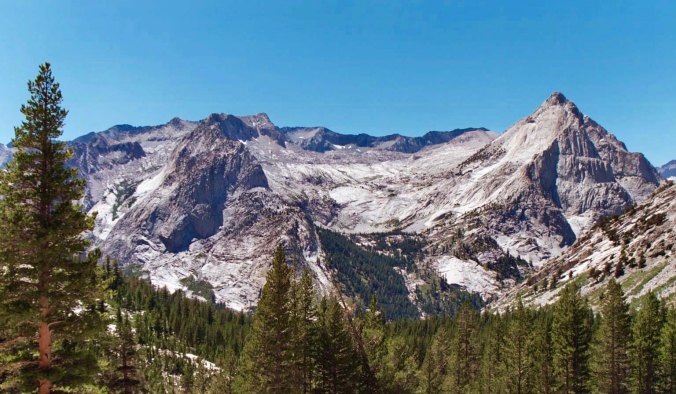
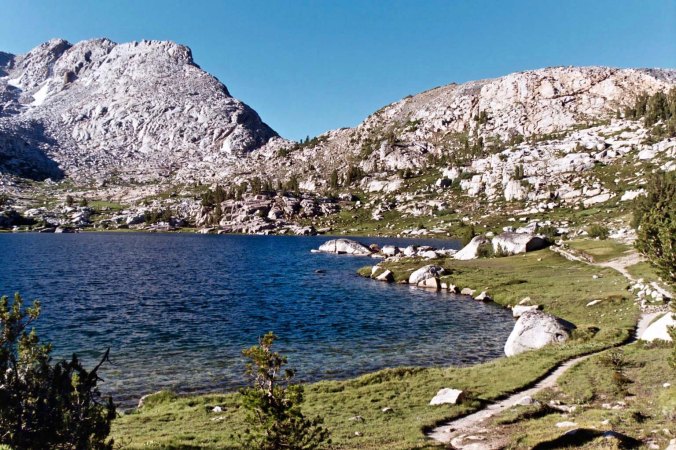
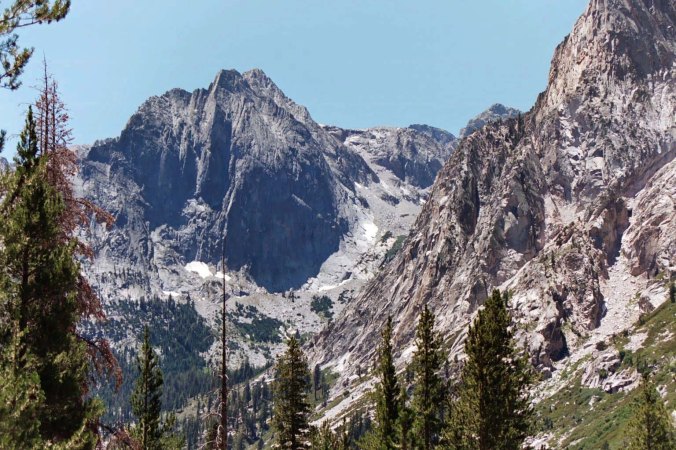
The Granite Chief Wilderness in the Sierra Nevada Mountains north of Lake Tahoe.

One of my favorite Granite Chief Wilderness views. Lake Tahoe, Squaw Valley, and Alpine Meadows are on the other side of the mountain. The flowers are called Mule Ears. (Photo by Peggy Mekemson.)

Another field of mule ears in Granite Chief.

Another field of mule ears in Granite Chief. The trail wound its way through here.

A close up of the Mule Ears blooming. There are few places in the Sierra's that can match the display of flowers in the Granite Chief Wilderness,

A close up of the Mule Ears blooming. There are few places in the Sierra’s that can match the display of flowers in the Granite Chief Wilderness.

Washington Lilies found in the Granite Chief Wilderness area behind Squaw Valley.

These Washington Lilies are found on the trail as it makes its way through the Granite Chief Wilderness down toward Five Lakes Creek.

Mariposa Lilies found in dry areas behind Squaw Valley.

As are these Mariposa Lilies…

And Tiger Lilies.

Tiger Lilies.

Indian Paint Brush found in Granite Chief Wilderness behind Squaw Valley, California.

And Indian Paint Brush.

Lichens add color along the trail as well.

Lichens add color along the trail as well.

Snag found in the Granite Chief Wilderness north west of Lake Tahoe, California.

This old snag provided a different type of photo-op…

Lodge Pole Pines found in the Granite Chief Wilderness of the Sierra Nevada Mountains.

As did these weathered Lodge Pole Pines.

Little Needle Lake in the Granite Chief Wilderness.

Little Needle Lake is a short three-mile hike from the top of Squaw Valley. I enjoyed the reflection here. At night there is an amazing chorus of frogs. I’ve often camped beside the lake.

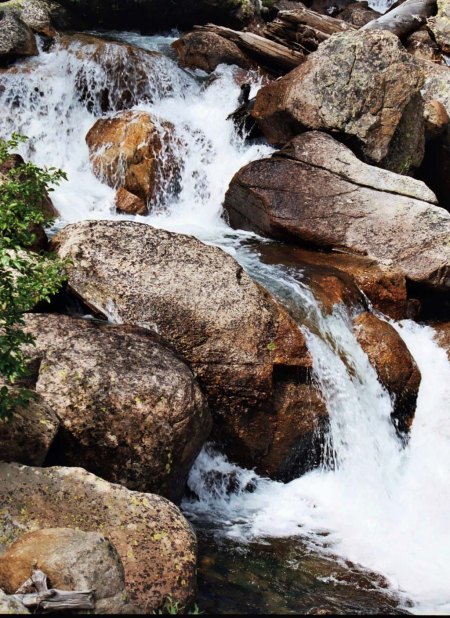
Five Lakes Creek in the Granite Chief Wilderness area behind Alpine Meadows ski area.

Five Lakes Creek flows along quietly here and provides and invitation to cool off in the middle of summer. Earlier it can be roaring with snow melt and icy water.

Peggy provides an example of how the creek should be enjoyed on a hot August afternoon.

Peggy provides an example of how the creek should be enjoyed on a hot August afternoon.

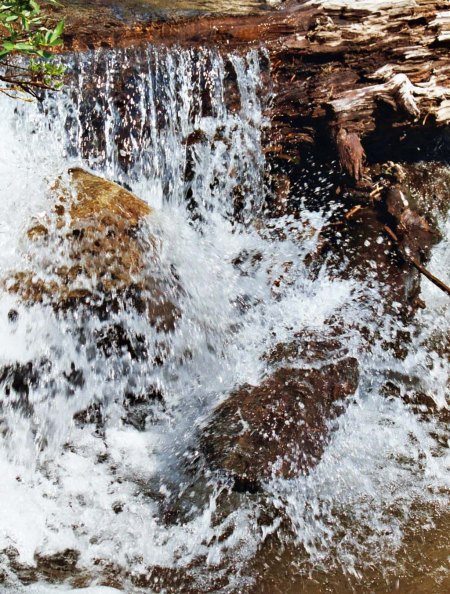
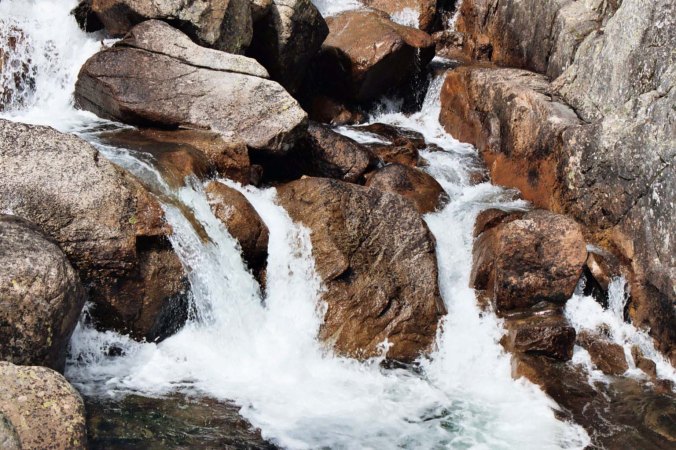
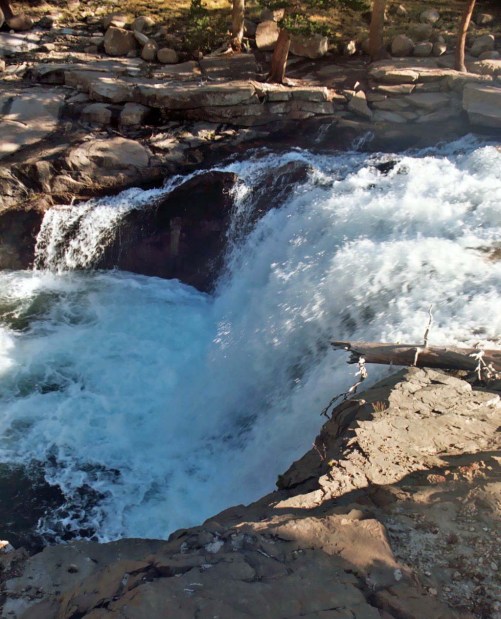
Canny on Five Lakes Creek near Diamond Crossing in the Granite Chief Wilderness.

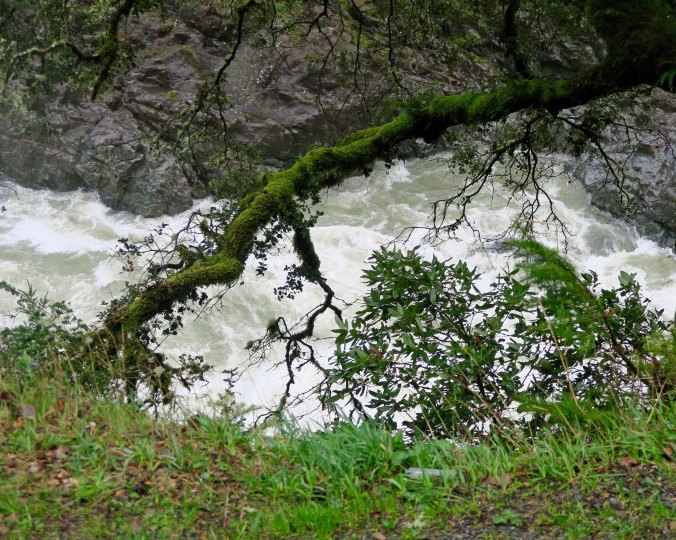
The final photo of the day. Five Lakes Creek drops into a canyon a few miles below where Peggy enjoyed her cooling off. The top photo on this post provide a closeup. I often camped Treks at Diamond Crossing near here. (Photo by Peggy Mekemson.)


Sunset Bay: A Hidden Treasure on the Oregon Coast… The North Coast Series

The setting sun illuminates the cliffs surrounding Sunset Bay, giving support to its name.

The setting sun lights up the cliffs surrounding Sunset Bay, providing support for the bay’s name.

The Oregon Coast is world-renowned for its combination of hidden coves, towering cliffs and crashing waves. Peggy and I are fortunate to live only a couple of hours away from this beauty and have resolved to spend much more time exploring the coastline in 2017. It should be one resolution that is easy to keep.

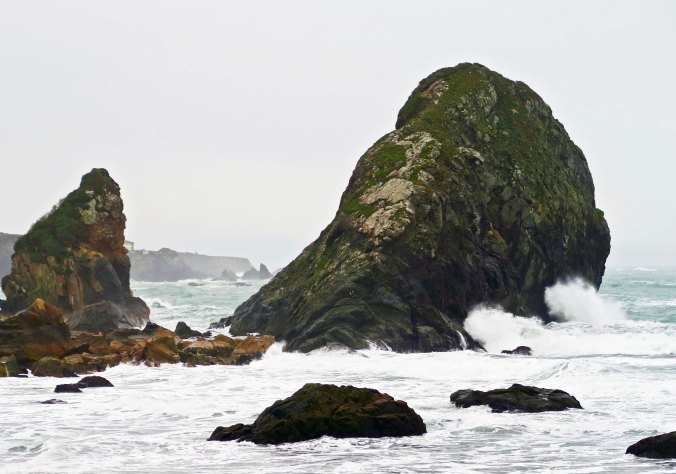
The Oregon Coast is noted for its crashing waves such as these at Sunset Bay near Coos bay, Oregon.

Towering Pacific Ocean waves crash on rocks just outside of Sunset Bay.

I called and made reservations to stay at Sunset Bay State Park on the Oregon Coast in November. Normally I wouldn’t bother with reservations during late fall, but the Christmas light show at nearby Shore Acres Park attracts up to 50,000 people annually. Odds were that a number of them would be staying at the campground.

I needn’t have worried. The park was under two feet of water when I called. A high tide had joined forces with a flooding stream. The park reservation company in California had happily collected its seven-dollar reservation fee and failed to fill us in on the little detail that we might need a boat to get to our campsite.

Peggy and I already had that experience. We had camped in our small RV at a private campground near Mendocino a few years ago and woke up to discover a seagull floating by our window. Water was lapping at our doorstep. We had departed quicker than a jack rabbit on steroids, not even stopping to pay our campground fee. They probably would have charged extra for the seagull. Besides, a warning in the night that the area was flooding would have been appreciated.

Fortunately we lucked out at Sunset Bay. We weren’t even aware of the flood until we arrived and the water had already receded. Apparently we had missed the flood by a day and a gang of prisoners had swept through the campground and cleaned up the debris. Other than the campground host, we pretty much had the area to ourselves.

Sunset Bay is a hidden jewel, snuggled in along the coast near Coos Bay. It is part of a 6000-feet thick geological formation known as the Coaledo Formation after the coal deposits found in the area. For a while, starting in the 1850s, coal mining was a major industry in the area. By 1904 there were some 40 active mines. The coal was used primarily for running steam locomotives. The appearance of diesel engines in the 1920s had reduced the demand for the Coos Bay coal, however, and the last coal mine was shut down in 1940.

Coal fired steam locomotives are mainly a footnote in history now, but Peggy and I ended up on a train being pulled by one just before Christmas. Our son Tony and his wife Cammie had purchased tickets for the family to travel on the Polar Express out of Essex, Connecticut. We arrived just about dark and the locomotive was warming up to leave. Manny Mistletoe entertained us on our way to the ‘North Pole’ where Mr. and Mrs. Clause greeted us and entertained our grandsons who were appropriately decked out in their pajamas. Hot chocolate was served.

Steam train rides are featured throughout the year in Essex, Connecticut.

The ‘Polar Express’ locomotive of Essex, Connecticut prepares to leave the station on its journey to the ‘North Pole.’

The sedimentary rocks of the Coaledo Formation, laid down in layers over millions of years, have been tilted steeply upward by the crashing Pacific and North American tectonic plates. Varying levels of hardness found among the sedimentary rocks have allowed for different levels of erosion and account for the interesting land formations found at Sunset Bay. I am going to do two posts on our visit. Today’s photos are focused on looking out toward the ocean. On Friday I will do a photographic essay on the fun things we found along the shoreline. (Wednesday’s blog returns to the Sierra Trek.)

Low tide at Sunset Bay on the Oregon Coast near Coos Bay.

Looking out toward the Pacific Ocean at low tide from the beach at Sunset Bay.

Seagulls and sunset at Sunset Bay near Coos Bay on the Oregon Coast.

Seagulls take advantage of the low tide to search for dinner.

A November sunset at Sunset Bay.

Shooting toward the sun provided this view. The sun is more centered on the bay during the summer months.

Tide pools at Sunset Bay in Oregon near Coos bay lit up by the sun at sunset.

I also liked the ‘black and white’ feel the sunset provided with these tide pools.

Early morning at Sunset Bay on the Oregon Coast near Coos Bay, Oregon.

Early morning light the next day and high tide provided a totally different scene at Sunset Bay.

Sun lights up small waves at Sunset Bay on the Oregon Coast near Coos Bay.

I liked the way the sun lit up these wavelets.

Backlit wave crashes over rock at Sunset bay near Coos Bay, Oregon.

And how it lit this wave as it crashed over a rock just outside of the Bay.

Waves crashing over rocks outside of Sunset Bay near Coos Bay, Oregon.

And a final view of the restless Pacific Ocean outside of Sunset Bay.

WEDNESDAY’S  BLOG: Part 2 of the Sierra Trek, a nine-day hundred mile backpack trip across the Sierra Nevada Mountain Range.

FRIDAY’S BLOG: The wrap up on Sunset Bay… a photographic essay.


The Glass Forge of Grants Pass… From the Sublime to the Wacky

Two bowls from the Glass Forge of Grants Pass Oregon.

The Glass Forge of Grants Pass creates a wide range of glass art ranging from the sublime to the wacky. I loved the tree like pattern in the left bowl.

Red lipped blue fish produced at the Glass Forge in Grants Pass, Oregon.

How can you not fall for a blue fish with red lips. While the artists of the Glass Forge produce much traditional glass art, they also have a wonderful sense of humor.

It’s Friday, so this is my day to produce a photographic essay for my blog. My choice for today is the Glass Forge in Grants Pass, Oregon. Peggy and I visited the studio on one of our Wednesday Date Days in November. (We’ve been having Wednesday Date Days for 27 years!) When we arrived the staff was working on glass art for the Lodge at Yosemite.

The Glass Forge of Grants Pass, Oregon was founded by Lee Wassink, shown above creating a vase.

One of the neat things about the Glass Forge is that you are encouraged to watch the artists at work. In this photo, Lee Wassink, founder of the Glass Forge, demonstrates the creation of a vase.

Groups and individuals have an opportunity to attend a workshop and create simple glass work of their own, such as these Christmas ornament.

Groups and individuals have an opportunity to attend a workshop and create simple glass work of their own, such as these Christmas ornaments.

Vase found at the Glass Forge in Grants Pass, Oregon.

The studio provides an opportunity to peruse the wide variety of glass art available, such as this vase. As I posted this photo I notice a slight reflection of myself, a selfie.

Looking down into a vase at the Glass Forge Studio in Grants Pass Oregon.

I always like looking down into glass art for a different perspective, as in this vase…

Looking at the patterns inside a glass bowl at the Glass Forge in Grants Pass, Oregon.

And this bowl. I am amazed at the patterns, variety and beauty created.

Humorous mugs created by the artists working at the Glass Forge in Grants Pass, Oregon.

I really like weird and wacky. These mugs certainly qualify!

Glass fish with character at Glass Forge in Grants Pass, Oregon.

And here’s another fish.

Variety of bowls displayed at the Glass Forge in Grant's Pass, Oregon.

This collection of bowls demonstrated the variety available.

A tall, graceful vase at the Glass Forge in Grants Pass, Oregon.

One of several tall, graceful vases.

Glass paperweights available for purchase at the Glass Forge in Grants Pass Oregon.

Someday, I am going to return to the Glass Forge to find out how these paper weights are created.

We were able to watch a vase being made. The furnaces used to melting the glass are over 2000 degrees F (1100 degrees C).

We were able to watch a vase being made. The furnaces used to melt the glass are over 2000 degrees F (1100 degrees C).

Furnaces for heating glass at Glass Forge in Grants Pass, Oregon.

A bubble is blown into the glass. Layers are added by returning to the furnace for more glass. The larger the piece, the more returns.

Bins that hold colored glass to add color to glass art created at the Glass Forge in Grants Pass, Oregon.

These bins hold colored glass that will be added to the various pieces.

The following series of photos follow the artists as they work together to finish a vase:

Color has been added to a vase at the Glass Forge in Grants Pass, Oregon.

Check out the gorgeous color!

Top is added to vase at Glass Forge in Grants Pass, Oregon.

A bottom is added.

Shaping a top on a vase at the Glass Forge in Grants Pass, Oregon.

And shaped.

A close to finished vase at the Glass Forge, Grants Pass, Oregon.

The finished product.

If you are driving up or down Interstate 5 in Southern Oregon or live in the area, I highly recommend stopping off at the Glass Forge in Grants Pass.

If you are driving up or down Interstate 5 in Southern Oregon or live in the area, I highly recommend stopping off at the Glass Forge in Grants Pass.

Glass Genie created at the Glass Forge in Grants Pass, Oregon.

I’ll conclude my Friday photographic essay today with this marvelous glass genie.

MONDAY’S BLOG: We will return to the Oregon Coast and visit the scenic Sunset Bay.

WEDNESDAY’S BLOG: Part 2 of my Sierra Trek series. I have to persuade a reluctant Board of Directors (“You want to do what?”), decide on a name, hire Steve, and determine our route.

FRIDAY’s BLOG: California mountain wildflowers.


Redwoods, the Stone Lagoon, and the Smith River along California’s Highway 101

Stone Lagoon on the north coast of California is part of the largest lagoon system in North America.

The Stone Lagoon along Highway 101 on the North Coast of California provides a unique environment that supports a wide diversity of life. The distant barrier beach separates the lagoon from the Pacific Ocean. Winter storms breach the barrier and allow sea water into the lagoon.

Back before Peggy and I flew east to be with our kids and grandkids to celebrate the holidays, we made a brief trip up the North Coast of California. I’ve already posted three blogs on the trip: one on Mendocino, one on the coast, and one on Roosevelt Elk. Today I will wrap up our journey starting at Stone Lagoon State Park on Highway 101 north of Eureka and working our way up to Highway 199 out of Crescent City.

The North Coast of California is one of my very special places. I’ve returned there again and again. From rugged coastlines, to majestic redwoods, to picturesque towns, and interesting history, the region is both beautiful and magical.

Highway 101 traces its history back to 1769 when the Spanish explorer Juan Gaspar de Portola followed what would eventually become El Camino Real (The King’s Highway) and connected some 21 Catholic missions from San Diego to the Bay Area. North of San Francisco, the road becomes known as the Redwood Highway as it travels through grove after grove of redwoods.

Giant redwood tree at Redwoods National Park. Photo by Curtis Mekemson.

Towering Redwoods give the Redwood Highway its name.

Massive root systems that can extend out 100-feet from the tree provide hundreds of gallons of water per day to a giant redwood.

Massive root systems that can extend out 100-feet from the tree provide hundreds of gallons of water per day to a giant redwood. Root width rather than depth provides the tree with stability.

Redwood roots on display along California's Highway 101.

I find the twisted roots quite beautiful.

Salmon carved from redwood along Highway 101 on California's North Coast.

A number of places along Highway 101 sell carved redwood featuring everything from bears to this salmon.

Highway 101 follows a path inland through various river valleys until it reaches Eureka and then it follows the ocean to the border. Occasional views of the Pacific are provided along the way and several county, state and national parks provide opportunities for camping and exploration.

Waves come ashore along California's Highway 101.

Highway 101, seen on the right side of the photo, parallels the Pacific Ocean north of Eureka, California providing occasional views of the Pacific Ocean.

Looking out toward the Pacific from the same location on Highway 101.

Looking out toward the Pacific from the same location on Highway 101. The point has character.

Sea foam created by a storm along the Pacific Coast.

While the skies were blue for our drive up the coast, a storm had chopped up the water the night before, creating sea foam.

Sea foam beat into whip cream type consistency along Highway 101 on the North Coast of California.

The result was this whip cream like sea-foam I included in an earlier blog.

Stone Lagoon, which is part of the largest lagoon system in North America, is one of the views along Highway 101. Separated from the Pacific Ocean by a barrier beach, the waters of the lagoon are neither fresh nor salt. Fed by fresh water for most of the year, winter storms fill the lagoon with water until it breaches the beach barrier, allowing ocean water to flow in and establish a unique environment that supports a great diversity of life. When Peggy and I arrived, Stone Lagoon was the picture of tranquility with calm waters reflecting the surrounding hills and trees.

Stone Lagoon State Park on Highway 101.

The calm water reflected trees and hills surrounding Stone Lagoon.

Reflection shot on Stone Lagoon ion Highway 101 ion the Northern California coast.

A close up.

In Crescent City, Peggy and I picked up Highway 199 and followed the Smith River up and away from the ocean on our way into Southern Oregon.

The Smith River as seen from Highway 199, the Redwood Highway , in Northern California.

The Smith River crosses Highway 101 north of Crescent City and is the largest free-flowing river in California that hasn’t been damned.

Another view of the Smith River flowing along Highway 199 in Northern California.

Another view of the Smith River flowing along Highway 199 in Northern California.

Rapids along the Smith River next to Highway 199, (the Redwood Highway) in Northern California.

A final photo of the Smith River.

NEXT BLOG: A somewhat crazy 100 mile backpacking adventure across the Sierra Nevada Mountains with 60 people aged 11 to 70. Part 1

Wandering through Time and Place in 2017… And Some Thoughts on Planning

Curtis Mekemson hiking along the Pacific Crest Trail behind Squaw Valley.

It’s time to start planning and dreaming about 2017. One of my goals is a seven week, 500-mile backpack trip on the Pacific Crest Trail. Here I am in the Granite Chief Wilderness behind Squaw Valley, California. (Photo by Peggy Mekemson)

It’s the first day of the New Year. It’s the time to make resolutions and plans— a time to dream.

There was a time in my life when I was obsessive about the planning process. I would lay out goals and objectives. And then I would move into YAPs, QUAPs, MAPs, WAPs and DAPs, or, to spell it out: yearly, quarterly, monthly, weekly and daily action plans based on my goals and objectives. I set priorities, created time lines, made to-do lists, checked things off, kept records, and made plan revisions. Things that didn’t work were modified or dropped. New opportunities were taken advantage of. I did it for my personal as well as professional life. It was how I accomplished things I wanted to do, and how I kept some control over my often chaotic life.

Early on I had learned if I didn’t plan out what I wanted to do with my time, someone else was more than willing to do it for me. And I had also learned that there is power in planning, in knowing what you want to do, and in determining what is important, what has the greatest impact.

I am not as obsessive as I once was, but old habits die hard. And, even though I am “retired,” it is still important to have an idea of where I want to go, of what I want to do, and of what is important to me. Of course I don’t exist in a vacuum. Ask Peggy. (grin) Most of what we do is jointly decided.

So given all of this, what are my writing and travel plans for 2017?

Kpelle footbridge near Gbarnga, Liberia circa 1965.

I hope to revise and republish “The Bush Devil Ate Sam,” a memoir about my Peace Corps experience in West Africa. Here, a much younger Curt makes his way across a river on a native bridge in the heart of the African jungle.

Under writing objectives, I plan to finish my next book, tentatively titled Tales of an Incorrigible Wanderer. My 10,000-mile bike trip plus other outdoor adventures will be included. (I am sure you will want to buy a copy. Grin.) I also plan to revise and republish The Bush Devil Ate Sam. I will continue to blog two to three times a week on current travels/adventures as well as past adventures. I am thinking in terms of doing one blog each week on current travels, one blog on past adventures, and one blog as a photographic essay. But we’ll see. I have to reduce the time I spend on blogging so I have more time for other goals, like play, for example.

Our travels this coming year will likely go in three directions. One, Peggy would like us to do a more thorough job of exploring the Pacific Northwest. I might add California down to Big Sur simply to expand my Pacific Coast blogging series. (And I really like Big Sur, Carmel and Monterey.) I expect we will also spend more time exploring the East Coast now that our two kids and their families are living there. Finally, I am hoping we can plan a trip to Ireland and possibly England where I would like to continue my genealogical research.

Photo of Scottish pony taken by Curtis Mekemson.

I photographed this pony in Kirkcolm, Scotland when I was doing research on my Scots-Irish ancestors a few years ago. I promised myself at the time that I would return for more research in Ireland and England.

I am also hoping we can make it back to Burning Man. It is one of my most popular blog topics and I would like to write a book in 2018 on my 14 years of experience with the event. We will know in February if we can get tickets for this year.

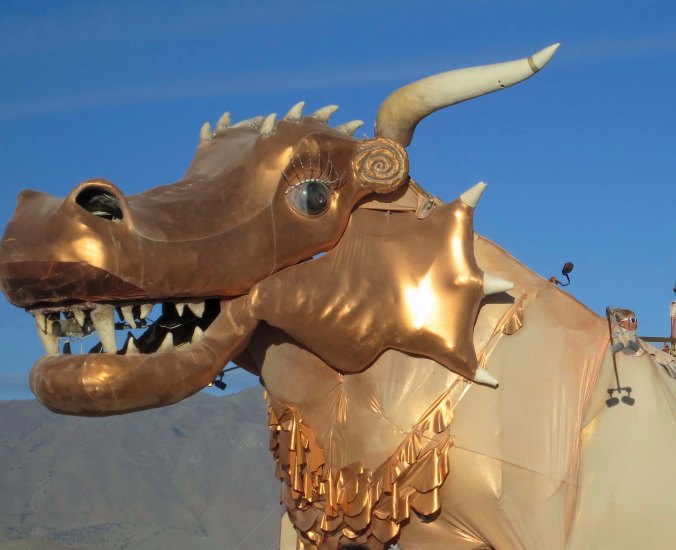
The Temple of Promise at Burning Man in 2015 is caught by the morning sun.

Morning sun catches the copper face of the Temple of Promise at Burning Man 2015.

Finally, it is time for another grand adventure. I celebrated my 60s by doing a six-week 360-mile backpack trip down the Sierra Nevada Mountain range from Lake Tahoe to Mt. Whitney. It seems only appropriate that I celebrate my 70s by doing a seven-week, 70-miles per week, 490-mile backpack trip on the Pacific Crest Trail. But I’ll have to see whether my 74-year old body is willing to cooperate. Maybe it will be a one-week 70-mile trip, or a one-day 7-mile hike, or a .7-mile hike to the mailbox. Laughing.

Whatever… I am sure there will be many adventures to share!

Santorini’s Akrotiri: An Impressive Ancient City… but Is It Atlantis?

This piece of pottery is one of my favorites on display at the museum. I like to believe that the Minoans of Akrotiri had a sense of humor.

This piece of pottery is one of my favorites on display at the Museum of Historic Thira on Santorini. I like to believe that the Minoans of Akrotiri had a sense of humor. Note the red lips.

The small Museum of Historic Thira is definitely worth a visit if you are on the Greek island of Santorini. Located in the town of Fira, it’s mission is to trace the development of prehistoric Thira from 3000-1600 BC by displaying artifacts found in the ruins of ancient Akrotiri. Before Santorini blew its top in a massive volcanic explosion around 1600 BC and buried the city under a sea of volcanic ash, Akrotiri was a center of a Bronze Age Minoan Culture second only to Knossos on Crete.

Picture hot and cold water running water, indoor bathrooms, two and three-story buildings, beautiful frescos, intriguing pottery, weights and measures, and a fleet of ships that delivered cargo throughout the known world of the time. We are fortunate that many of these artifacts have been preserved under the volcanic ash, which makes Akrotiri similar to Pompeii. Unlike Pompeii, no bodies have been found in the ruins. Apparently the Minoans were given ample warning to escape.

This fresco is one of many that lined the walls of buildings in Akrotiri, Santorini is close to 4000 years old.

This fresco is one of many that lined the walls of buildings in Akrotiri, Santorini is close to 4000 years old.

Excavations of the ruins, which are located on the southern part of Santorini, began in 1957 and continue today. Only a small portion of the city has been uncovered. Because of its level of civilization combined with the fact that it disappeared, there is speculation that Akrotiri may have served as the inspiration for the myth of Atlantis.

Plato mentioned the fabled city around 360 BC. He described it as an ancient civilization existing some 9000 years before his time that was buried under a flood of water. Modern archeologists suggest that the 9000 years may have been mistranslated from earlier Egyptian accounts and actually be 900 years, which would put the destruction of Atlantis right around the time Akrotiri met a similar fate. Substitute an ocean of ash for a sea of water and there is ample room for the speculation. Buried is buried. We will probably never know the truth.

The volcanic activity that brought Akrotiri to its spectacular end continues to be a fact of life on Santorini, however. “Santorini Bulges as Magma Balloons Underneath” a September 12, 2012 article in National Geographic news reported. Somewhere between 13-26 million cubic yards of molten rock were filling the magma chamber located directly under the sea where our cruise ship was anchored! The Crown Princess did not cover the bulge in its newsletter. Apparently, there is no imminent danger… at least to speak of.

Here's another favorite Akrotiri artifact of mine. It's called a nipple ewer (or pitcher) for obvious reasons. This one comes with tiny breasts, ear rings and a beak. Archeologists speculate that the ewer may have had religious significance. My wife Peggy, always practical, suggests that may have been used like baby bottles.

Here’s another favorite Akrotiri artifact of mine. It’s called a nipple ewer (or pitcher) for obvious reasons. This one comes with tiny breasts, ear rings and a beak. Archeologists speculate that the ewers may have had religious significance. My wife Peggy, always practical, suggests that may have been used like baby bottles.

Another nipple ewer. This one featured a swallow. Both wild and domestic animals were featured prominently on Akrotiri artifacts. The yellow color, BTW, is because of the lights used by the museum to protect the ancient works of art.

Another nipple ewer. This one featured a swallow. Both wild and domestic animals were featured prominently on Akrotiri artifacts. The yellow color, BTW, is because of the lights used by the museum to protect the ancient works of art.

I found this elongated double pitcher with its leaping dolphins to be quite graceful.

I found this elongated double pitcher with its leaping dolphins to be quite graceful.

This reconstructed storage container features a bull that appears to be mooing quite loudly.

This reconstructed storage container features a bull that appears to be mooing quite loudly.

Much of the pottery found in Akrotiri also featured common crops grown by the Minoans. The grapes reflect the wine industry that has been in existence on Santorini for over 4000 years.

Much of the pottery found in Akrotiri also features common crops grown by the Minoans. The grapes on this jar reflect the wine industry that has been in existence on Santorini for over 4000 years.

The Museum of Historic Thira also displays a number of small figurines such as this bull.

The Museum of Historic Thira also displays a number of small figurines such as this bull.

For those who like to attribute alien influence to the development of Atlantis, I will end my photos from the museum with this piece, possibly as old as 2700 BC. (grin)

For those who like to attribute alien influence to the development of Atlantis, I will end my photos of artifacts from Akrotiri with this piece (grin), possibly as old as 2700 BC.

As we returned to our ship, which was anchored above the bulging lava chamber, we had a final look at the towering cliffs of Santorini and their beautiful white villages.

As we returned to our ship, which was anchored above the bulging lava chamber, we had a final look at the towering cliffs of Santorini with their beautiful white villages perched on top.

A beautiful sunset greeted our ship as we headed out to sea and our next adventure.

A beautiful sunset greeted our ship as we headed out to sea and our next adventure.

NEXT BLOG: I continue my travel blog on the Mediterranean with a visit to the second largest city in the Roman Empire, Ephesus, which is located on the Turkish mainland.

Reading and Writing and Arithmetic Taught to the Tune of an Ebony Stick

The elementary school was made from cement blocks. Windows without glass or screens provided air conditioning. Jo Ann and her first grade class provide perspective on the size of the school.

(Peace Corps turned 50 on Tuesday and I am not discussing what I turn on Thursday. But each day this week I am honoring Peace Corp’s birthday by sharing tales on my travel blog of my own experience as a PC Volunteer in Gbarnga, Liberia, West Africa from 1965 to 1967. Yesterday I wrote about my introduction to teaching second grade and about contacting a mysterious illness. Today I return to my unruly class of second graders and try to bring them under control.)

When I returned to school from being sick, my second graders had become rambunctious from their time off. After five days I had worked my way through every classroom management skill I had picked up during Peace Corps’ training and several I made up. Nothing worked.

“They need to be whipped,” my fellow Liberian teachers suggested. “That’s what we do.”

I patiently explained that Peace Corps teachers weren’t supposed to whip their students. Somewhere it was chiseled in stone. Eternal damnation and banishment to North Dakota would result.

“Then pretend you are going to whip them. Just don’t do it,” was the next helpful suggestion.

Being desperate and up for a little corruption, I thought about it. Where did it say in the Peace Corps rules that positive threatening was out of line? After all, hadn’t Teddy Roosevelt said, “Speak softly and carry a big stick?” Wasn’t the American government accumulating enough nuclear weapons to kill everyone in the world several times over using the same philosophy?

So I went out in the jungle and cut myself a big stick. Next I introduced it to my students.

“Oh, Mr. Mekemson, what a big stick you have,” they said. I could see the respect shining in their eyes. I explained its purpose. They could behave and earn positive points or they could misbehave and earn negative points. If they earned enough negative points, THE BIG STICK WOULD BE WAITING.

I didn’t tell my students I put the point total for the stick so high it would take a combination of Al Capone and Count Dracula to reach it.

The system worked. Whenever the class bordered on chaos, I would head for the blackboard, chalk in hand. Instant silence resulted. It was ‘Reading and writing and arithmetic taught to the tune of an ebony stick.’ We started making up for lost time.

A part of John Bonal's extended family. Mary is on the left.

Of course there was an exception. Isn’t there always? It came in the form of Mary, an 11-year old going on 13. Her uncle was principal of the high school and a Big Man in town so this meant she was important. Mere mortals such as Peace Corps Volunteers didn’t count. No Liberian teacher would dare touch a stick to her ornery hide, so certainly a Peace Corps teacher wouldn’t.

She called my bluff and pushed her points right up to the rim. I urgently sought reasons to give her positive points but the opportunities were few and far between. She went over the top and smugly whispered to her girlfriends to watch what would happen.

Now I had a real problem. Obviously I couldn’t beat her. I am really not the beating kind. But neither could I ignore her. The end of the day came and I dismissed the class but asked her to stay. The students walked out the door and stopped just on the other side. They weren’t leaving. Nobody at the school was, including all of the teachers. They were all waiting to see what Mr. Mekemson would do.

Mr. Mekemson was worrying. That’s what he was doing. I got out my big stick. Little Miss Mary was no longer so nonchalant.

“Don’t beat me Teacha, I beg you, don’t beat me,” she screamed and screamed and screamed. I gently touched her with my stick. You would have thought I was pulling all of her fingernails and half of her toenails out, slowly. I knew everyone in the school was listening in on this little drama and I imagined that half of Gbarnga was as well.


Oh boy, I thought, you have royally screwed up this time, Curtis.

I mumbled something about the importance of changing her ways and sent her off. And then I waited. How long would it be before the Peace Corps jeep came by to carry Jo Ann and me away? The next day at school was quiet.  Mary stayed home and I had a class of angels. Even other classes were quiet.

At noon, one of the Liberian teachers stopped by. She had a student she wanted me to beat. I declined… less than graciously.

Two days later I received the message; John Bonal, Mary’s Uncle, wanted to see me. This was it. I prepared my case carefully. I didn’t want to leave. A lovely war was waiting for me at home and I had developed a considerable fondness for Liberia and its people.

I went to see Mr. Bonal with all of the enthusiasm of an African hippopotamus crossing the Sahara. John was smiling when I greeted him. I even managed to get a decent snap out of the handshake.

“I’ve heard about your reputation,” he started and paused. Many words went roaring through my mind; words like child beater, monster, and hater of kids to name a few. “And I would like you and your wife to come and teach at the high school. We think you would make a great addition to our faculty. We would like you to teach history and geography and Jo Ann to teach French and science.”

Talk about surprise. Here I was prepared to be booted out of the country, ready to beg as the Liberians liked to say, ready to humble myself and crawl across the floor if need be, and I was being offered the opportunity to teach two of my all time favorite subjects.

“Sir, your niece…” I managed to stumble out.

Mr. Bonal’s smile widened, “Ah yes,” he said, “that was a good job. Now she will be a much better student.” Suddenly I had the suspicion that Mr. Bonal wanted me for a reason other than my ‘great’ teaching ability. I pictured myself practicing with a bullwhip out behind the high school as students lined up for their daily punishment. “Mr. Mekemson will see you now. Do you have any final words?”

(Tomorrow I write a second grade reader but the government labels me as a radical and refuses to publish the book because I focus on tribal children and African Tales. At high school I encourage the creation of a student government. The Liberian Government accuses me of creating political parties to oppose the True Whig Party and threatens to kick me out of the country.)

How Do-Your-Part the Dog Evaded Half the Nation of Islam

(The Peace Corps turns 50 on Tuesday, March 1. In this series of travel blogs, I honor its Anniversary by relating my own experience a Peace Corps Volunteer in Gbarnga Liberia, West Africa starting in the summer of 1965.)

John Bonal, the High School Principal, lived in a cement-block house next to ours. He was a ‘Big Man’ in town by Gbarnga standards. Being successful in Liberia meant that your relatives came over and lived with you. It was the ultimate share-the-wealth-social-welfare program.

Part of John’s extended family included three dogs creatively named Puppy Doodle, Brownie Girl and Do Your Part. They came over to watch us white washing our new house and decided to stay. We fed them.

If I have my genealogy correct, Brownie Girl was Do your Part’s mom who in turn was Puppy Doodle’s mother. This three-generation family dug foxholes around the outside of our house and quickly established that they were our pets. Other dogs need not apply.

The Bonals were more than happy to have us take over feeding responsibilities and Rasputin was pleased to have someone new to terrorize. So everyone was happy.

Do Your Part took things a step further and adopted me. She was a charming little Basenji with impeccable manners. Everywhere I went, she went, including school.  Normally this amused my students. I would walk into the class with DYP a respectful three feet behind. She would immediately arrange herself under my desk and quietly remain there until I left the classroom.

This worked fine until she had puppies. They started following her as soon as they could walk the 100 yards to the school.

I would arrive in my classroom followed by DYP who in turn was followed by four puppies. It was quite the parade. Unfortunately, the puppies lacked Do Your Part’s decorum and considered the classroom a playpen. The students decided it was not an appropriate learning environment and I agreed.
DYP and company had to go. It was not a happy parting.

“Take your puppies and go,” I ordered firmly. Do Your Part looked at me in disbelief.

“Out!” I said.

Sad eyes stared back accusingly. But I held firm. She didn’t let it get her down, however. As soon as the puppies had departed she was back in class. One time her insistence on following me had more drastic consequences.

Gbarnga had a sizeable population of Mandingoes, most of whom were Muslims. They had been gradually sifting into Liberia from across the Guinea border. Originally the Americo-Liberians had blocked their entrance to the country, fearing they might pose a threat to their power.

President Tubman’s open door policy changed that and by the time we had arrived their numbers had reached the point where they decided to build a mosque in town. I’d wander over on occasion to check their progress. The mosque was an impressive edifice by Gbarnga standards, easily five times larger than any other structure on the main road.

At last the day came for the mosque’s grand opening. Having watched it being built, I decided to attend the festivities. I put on a tie, grabbed our two cameras and headed out the door.

Do Your Part was waiting, as she always was, ready to go along. This was not a Do Your Part type of celebration, however. Muslims aren’t particularly fond of dogs and consider them unclean.

I figured this meant they didn’t want any dogs, even polite dogs, attending their holy ceremony. I suggested to Do Your Part she stay home. Fat chance. I walked 100 yards and glanced back over my shoulder. There was DYP, slinking along behind. I knew there was no way I would make it to the ceremony without a little brown dog lurking in the background.

Do Your Part would have to be left in our house. The action was drastic; the only time we let her in was to eat dead insects in the evening. She would come in just before we went to bed and wander around crunching down sausage bugs. It eliminated sweeping. She had never been locked inside.

Since my ex-wife Jo Ann was reading to a blind friend and Sam was off for the day, I couldn’t even leave DYP with company. I reluctantly shoved her inside and marched off to the sounds of doggy protest

It seemed to work. I reached the mosque just as the outside ceremonies were concluding and people were preparing to move inside. Dignitaries were everywhere. It was my intention to hang out on the periphery and remain inconspicuous.

This is hard when you are the only white person in the crowd and you have two cameras hanging around your neck. It took about thirty seconds for a tall, official looking man in a white robe to arrive and express in broken English how pleased he was that the international press from Monrovia had decided to cover the event.

While I struggled to inform him that I was only a local Peace Corps Volunteer, he ushered me into the mosque to a seat of honor. I looked around nervously. The podium was about 10 feet away and I was in the front row.

A hush descended on the crowd as an obviously important dignitary approached the podium. Liberia’s top Muslim Cleric had come to town to officiate at the opening ceremony. He gave me his best media smile and I dutifully took his picture.

Unexpectedly, there was a disturbance at the back of the mosque. Several men were trying to capture a little brown dog that was deftly eluding them and was making a beeline for me.

Do Your Part had managed to escape from the house. Now she was escaping from half the Nation of Islam. In seconds that seemed like hours she was in front of me, wagging and prancing around like she hadn’t seen me in six months. Hot on her tail were three huge Mandingo men.

“Is this your dog?” their leader managed to stammer out in barely repressed fury as he gave DYP a tentative boot in the butt. Fortunately she figured out that the situation was a little tense and decided there were other parts of town she wanted to see.

I was amazed at her ability to avoid lunging people. I dearly wished I could have escaped with her. It wasn’t to be. It was my job to stay behind and be glared at. I was so embarrassed I don’t remember a single part of the ceremony.

Later when I arrived home, Do Your Part was outside the house, all wiggles and waggles, obviously no worse for her adventure. Jo Ann greeted me.

“It was the strangest thing when I got home,” she said. “Do Your Part was inside and frantic to get out. When I let her loose she took off like our house was on fire. I wonder if Sam let her in by mistake.” So much for my planning…

If Someone Steals your Dog, Spouse or Car, Who Do You Call: The Lightning Man

(This is one of a series of travel blogs I am doing on my experience as a Peace Corps Volunteer in Gbarnga, Liberia, West Africa to honor the 50th Anniversary of the Peace Corps.)

The dark side of tribal beliefs arrived at our house late one evening in the middle of a tropical downpour.

A very wet and frightened candidate for student body president, Mamadee Wattee, knocked on our door. The opposition had purchased ‘medicine’ from a Ju Ju Man (witch doctor in Tarzanese) to make him sick.

It was serious business; people were known to die in similar circumstances.

Had the opposition slandered Mamadee or stuffed the ballot box, I could have helped but countering black magic was way out of my league. I took the issue to the High School Principal and he dealt with it. Mamadee stayed well and won the election.

Later, he unintentionally introduced us to another tribal phenomenon, the Lightning Man.
I had left Mamadee with $50 to buy us a drum of kerosene while my wife and I were on vacation. When we returned home, Mamadee was sitting on our doorstep. Someone had stolen the money and he was obviously upset. Fifty dollars represented a small fortune to most tribal Liberians. (Given that we were paid $120 dollars a month for teaching, it was hardly spare change to us.)
Mamadee’s father, a chief of the Kpelle tribe, was even more upset and wanted to assure us that his son had nothing to do with the missing money. It was a matter of honor. He offered to hire a Lightning Man to prove Mamadee’s innocence.

The Lightning Man had a unique power; he could make lighting strike whoever was guilty of a crime. If someone stole your cow or your spouse, ZAP! Since we were in the tropics, there was lots of lightning. Whenever anyone was struck, people would shake their heads knowingly. One more bad guy had been cooked; justice had been served.

We didn’t believe Mamadee had taken the money and even if he had we certainly didn’t want him fried, or even singed. We passed on the offer.

Another Liberia Peace Corps Volunteer chose a different path. Here’s how the story was told to us. Tom had just purchased a $70 radio so he could listen to the BBC and keep up with the news. He enjoyed his new toy for a few days and it disappeared.

“I am going to get my radio back,” he announced and then hiked into the village where he quickly lined up some students to take him to the Lightning Man. Off they went, winding through the rainforest to the Lighting Man’s hut.

“I want you to make lighting strike whoever stole my radio,” Tom said, and then paid five dollars for the service. (Lightning Men have to eat too.)

Tom and his entourage then returned home. By this time, everyone in the village knew about the trip, including undoubtedly, the person who had stolen the radio.

That night, there was a tremendous thunder and lightning storm. Ignoring for the moment that it was in the middle of the rainy season and there were always tremendous thunder and lightning storms, put your self in the shoes of the thief who believed in the Lightning Man’s power. Each clap of thunder would have been shouting his name.

The next morning Tom got up, had breakfast and went out on his porch. There was the radio.

(In my next blog I will relate the story about how Do Your Part, my dog, invaded a mosque and barely escaped.)

The Bush Devil Ate Sam

(This travel blog is one of a continuing series where I relate my experience as a Peace Corps Volunteer in the mid 60s in Liberia, West Africa honoring the Peace Corps’ 50th Anniversary.)

Joining the Peace Corps should come with a label like they put on cigarette packs. It would read “Warning: This experience may change your concept of reality.

Our vision of the world is perceived through culturally tinted glasses. Not surprisingly, the reality of our parents and our society becomes our reality. It’s hard to imagine life from any other perspective. Close encounters with other cultures can shake this vision but not easily. We wear our culture like bulletproof vests, rarely allowing a stray thought to enter. Or we focus so hard on extolling our own culture that we fail to learn valuable lessons another culture may teach us.

One of the great values of the Peace Corps experience is the sensitivity and respect it teaches for the beliefs and values that other people hold. Often this leads to a greater appreciation of our own culture.

There are definite risks involved in running headlong into another society, however. Culture shock is one. The environment may be so different that it becomes disorienting and may lead to depression. My transition from California to Liberia was relatively smooth. At first, Gbarnga didn’t seem significantly different from my old hometown of Diamond Springs. I suffered much greater shock going from Diamond Springs to UC Berkeley.

Going native, or bush as it was called in Liberia, is another risk. A person becomes so enthralled with the new culture that he adopts it as his own. A joke circulated among West Africa Volunteers on how to determine if you were teetering on the edge.

Phase One: You arrive in country and a fly lands in your coffee. You throw the coffee away, wash your cup and pour yourself     a new cup.

Phase Two: You’ve been there a few months and a fly lands in your coffee. You carefully pick the fly out with your spoon and then drink the coffee.

Phase Three: It’s been over a year and you have become a grizzled veteran. A fly lands in your coffee. You yank it out with           your fingers, squeeze any coffee it swallowed back into the cup, and then drink the coffee.

Phase Four: You’ve been there too long. A fly lands in your coffee cup. You yank the fly out of the cup, pop it into your mouth     and throw the coffee away. It’s time to go home.

If Peace Corps Volunteers had a hard time with culture shock and going bush, the tribal Liberians had a tougher one. Traditional cultures normally find their confrontations with the western world a losing proposition. It isn’t that our culture is so great; it’s just that our technology is so glitzy. How do you keep Flumo down on the farm when he has heard the taxi horn calling or climbed on the Internet?

Gbarnga was on the frontier of cultural change in the 60s. On the surface, life appeared quite westernized. An occasional John Wayne movie even made it to town. My students would walk stiff-legged down the main street and do a great imitation of the Duke. They dreamed some day of traveling to America where they would swagger down dusty streets and knock off bad guys with their trusty six shooters.

In town, loud speakers blared out music at decibel levels the Grateful Dead would have killed for while Lebanese shops pushed everything from Argentinean canned beef to London Dry Gin. The epitome of Americana, a Coca Cola sign, dominated the road as you left town on the way to Ganta and Guinea.

We had enough US-based churches to satisfy Pat Robertson. Missionaries were everywhere. Baptists, Catholics, Episcopalians, Presbyterians and numerous other Christian groups worked the streets in unending competition to recruit African souls.

Sometimes, if I closed my eyes and pretended, I could almost believe I was home. Almost. Then Africa would whip around and bite me.

Sure, the local villagers would dutifully file in to church on Sunday morning and pray for blessings like their western counterparts did but Sunday afternoon would find them out sacrificing a chicken to make sure God got the message. And yes, the Coca Cola sign was there but next to it was a giant Cottonwood with offerings to the spirit that lived inside the tree.

Sam, the young Liberian who worked for us and spent hours listening to our record player getting Charley off the MTA, was another case in point. Scarification marks marched down his chest in two neat rows.

“How did you get those,” my ex-wife Jo Ann asked with 10 percent concern and 90 percent curiosity.

“I can’t tell you,” Sam replied with obvious nervousness as Jo’s eyebrows rose. “But I can tell Mr. Mekemson.”

“Aha,” I thought, “Sam and I belong to the same organization, the Men’s Club!” Actually Sam belonged to a very exclusive men’s organization, the Poro Society. Its function was to pass on tribal traditions and keep errant tribe members in line. The women had a similar organization called the Sande Society.

Sam had been to Bush School the previous summer and learned how to be a good Kpelle man. Graduation to adulthood consisted of an all-consuming encounter with the Poro Society’s Bush Devil.  It ate him. Sam went in as a child and was spit out as a man. The scarification marks had been left by the devil’s ‘teeth.’

It seemed like a tough way to achieve adulthood but at least it was fast and definitive. Maybe we should introduce the process to our kids and skip the teenage years. Think of all of the angst it would avoid.

Bush Devil was the missionary’s designation for a very important tribal figure who was part religious leader, part cultural cop and part political hack. Non-Kpelle types weren’t allowed to see him. When the Devil visited outlying villages, a front man came first and ran circles around the local Peace Corps Volunteer’s home while blowing a whistle. The Volunteer was expected to go inside, shut the door, close the shutters and stay there. No peeking.

We did get to see a Grebo Bush Devil once. The Grebo Tribe was a little less secretive or at least more mercenary than the Kpelle. Some Volunteers had hired the local Devil for an African style Haight-Ashbury Party. The Devil was all decked out in his regalia. Description-wise, I would say his persona was somewhere between a Voodoo nightmare and walking haystack. Grebo men scurried in front of him with brooms, clearing his path and grunting a lot.

We stayed out of the way and took pictures.

While the Bush Devil and the Sassywood Man I blogged about last week seem foreign and even threatening to the Western mind, the truth is that they played an important role in maintaining order within the tribal culture.

Next up: If somebody steals your dog, car or wife, who do you call: The Lightning Man!