A Gorgeous Sunset and a Breaching Killer Whale… British Columbia Sea Kayak Adventure: Part 2

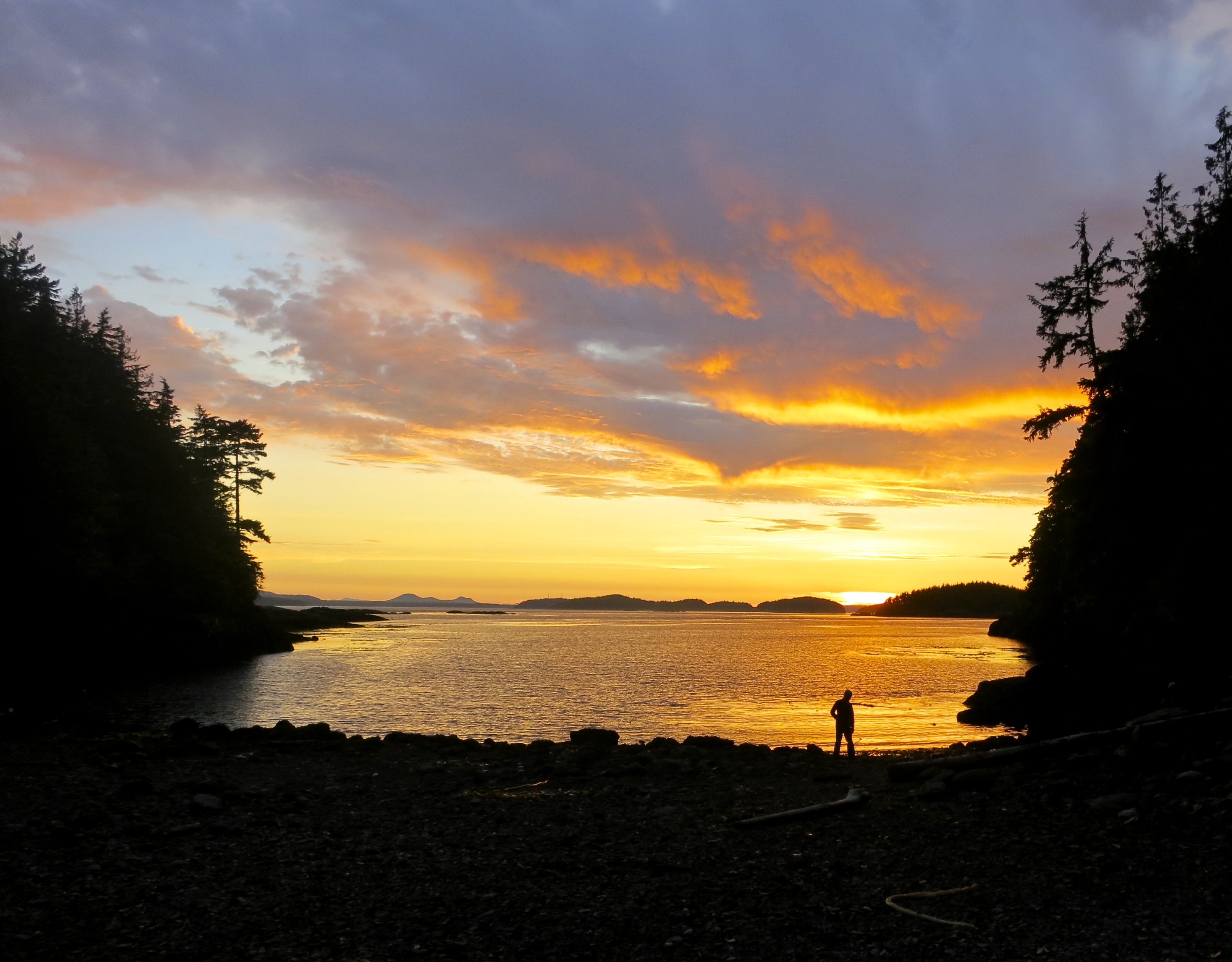
Sunset at Sea Kayak Adventure's campsite on Hanson Island in Johnstone Strait. Photo by Curtis Mekemson.

As the day ends, one of our kayakers takes a moment to enjoy the sunset from our campsite on Hanson Island.

A post-card-glorious sunset marked the end of Monday, our first day of kayaking on Johnstone Strait off the northeast coast of Vancouver Island. Morning seemed long ago and far away— and my body spoke to just how long ago and far away that was. It had passed 71 earlier in the year and was wondering when the fabled golden years were going to start. “They are here,” I told it with a grin. It grumped. My mind and body aren’t always in agreement.

The guides and group, including Peggy and I, were in high spirits. We had successfully completed our first day of kayaking, seen stunning scenery, and watched an orca breach. We were in a beautiful setting. Our guides had just fed us a gourmet meal, and our tents were set up, promising a good night’s sleep. What was there to complain about?

We had all met for the first time on Sunday night. The session had started with the usual meet and greet. “Tell us something about yourselves.” We half listened as we composed whatever we were going to say. There were the Canadian guides, a contingent from Idaho, three mid-westerners, one Californian, and our friends David and Edie from Alaska. Peggy and I are from Oregon. We also had a family of Asians until they figured out they had come to the wrong meeting. Everyone had at least some kayak experience. David and I, along with our child brides, were the elders.

Our guides gave us an overview of the journey and then distributed dry bags and rubber boots. I debated between size 13 and 14. The 14s were a little loose, the 13s a little snug. I went with snug and wondered how my large feet would work in the tight confines of the kayak. Carefully, I presumed. Peggy and I retired to our rooms and begin the packing process— what to take and what to leave. Sea Kayak Adventures had recommended a lot and our guides had suggested less. Everything had to fit in the boats. There were important decisions to make.
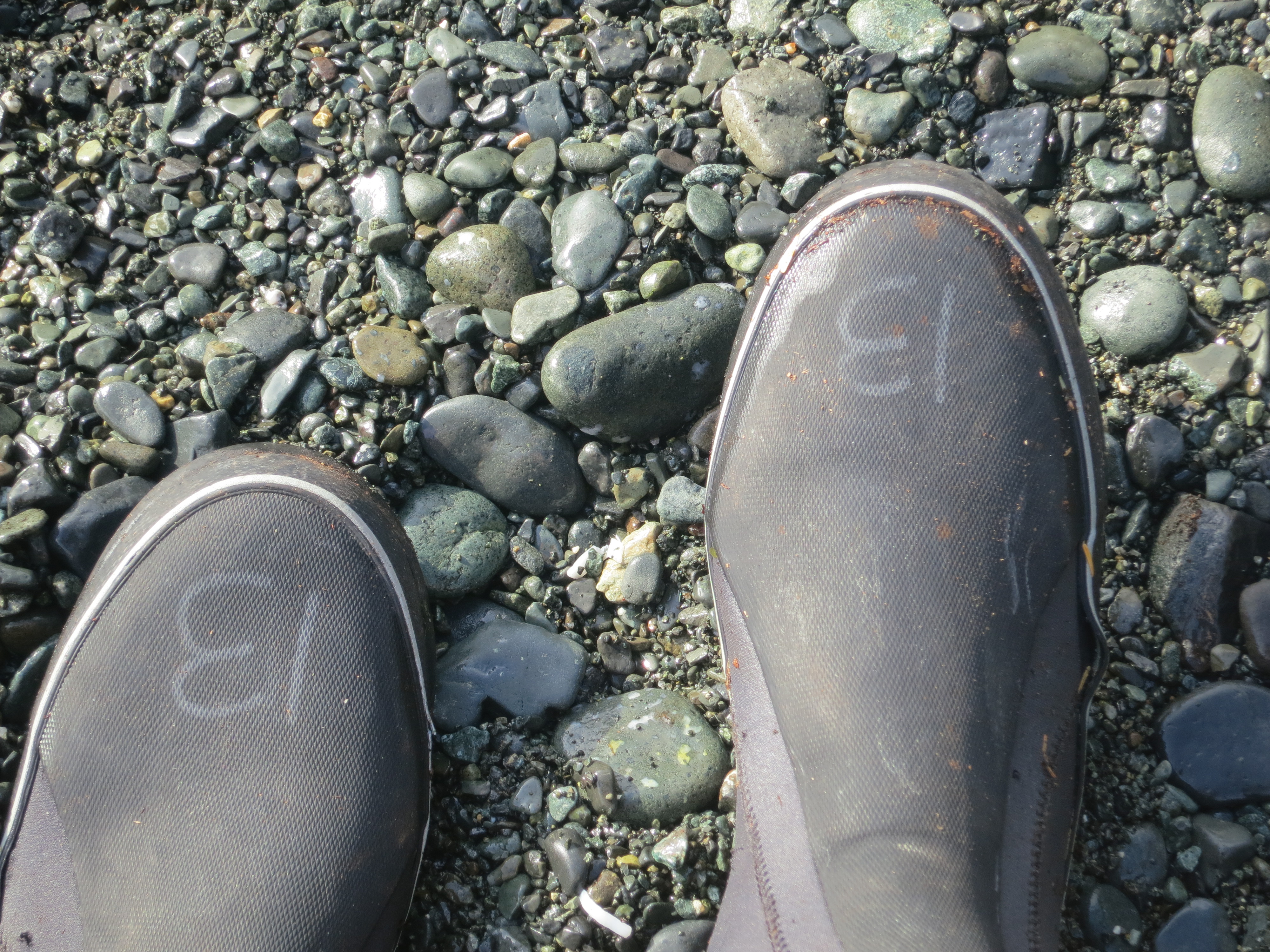
Rubber boots issued by Sea Kayak Adventures.

My size 13 boots, clearly marked for all to see. I wondered how they would relate to the small rudder pedals in the Kayak.

The next morning we were up early, went through our gear for the umpteenth time, had a quick bite, and caught the taxi hired to take us to Telegraph Cove. It was time to break out the cameras.

Telegraph Cove started life as a lumber mill. Nowadays it is an eco tourism center. A couple of hundred thousand people visit in the summer for whale watching, kayaking, fishing and checking out grizzlies. In the winter, its population drops to 20. The town has done a great job of preserving historical buildings from its past.
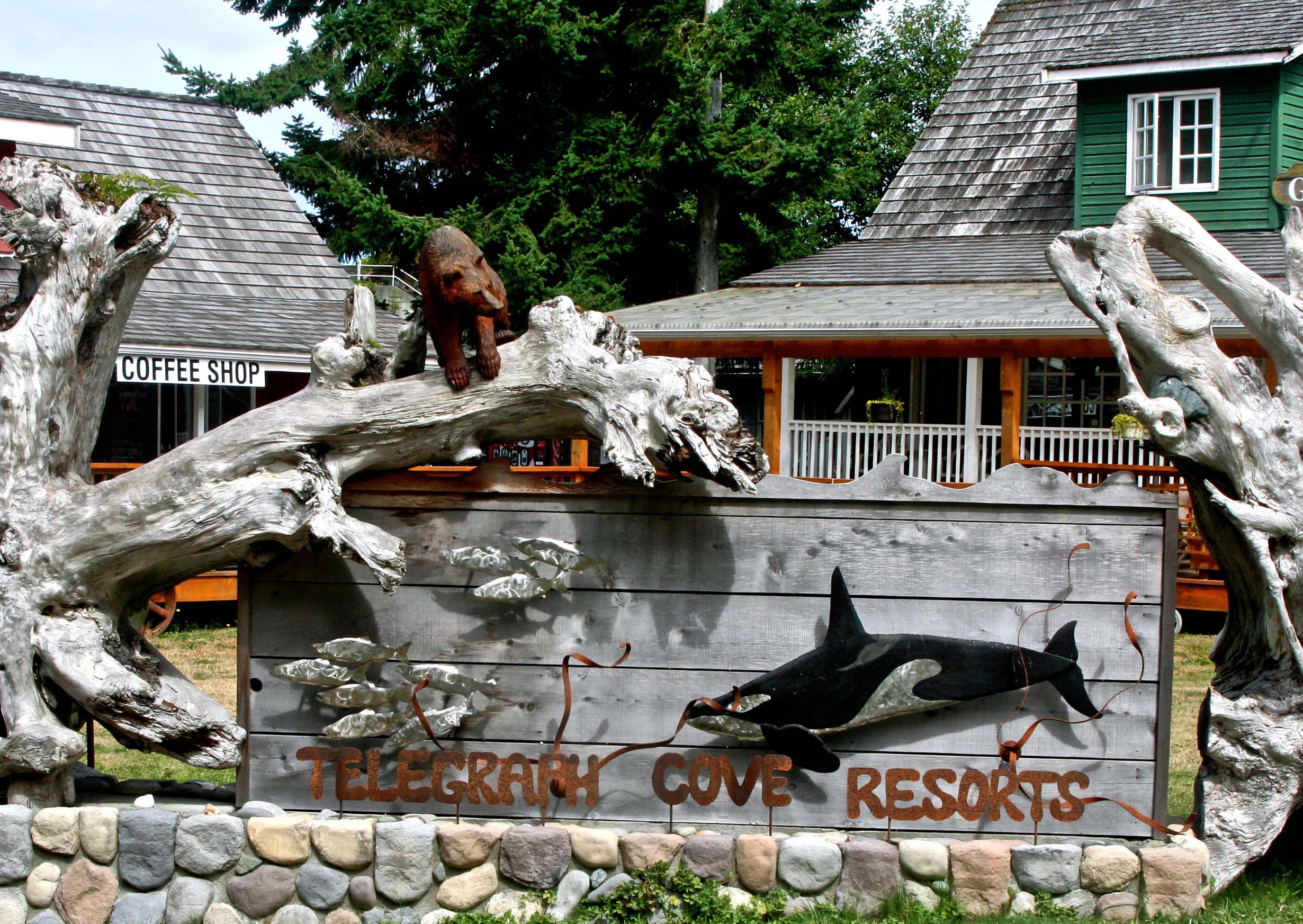
This sign, featuring an Orca, grizzly and salmon welcomes visitors to Telegraph Cove.

This sign, featuring an orca, grizzly and salmon, welcomes visitors to Telegraph Cove. Also note the impressive drift wood. We were to find some on our trip. (Photo by Peggy Mekemson.)
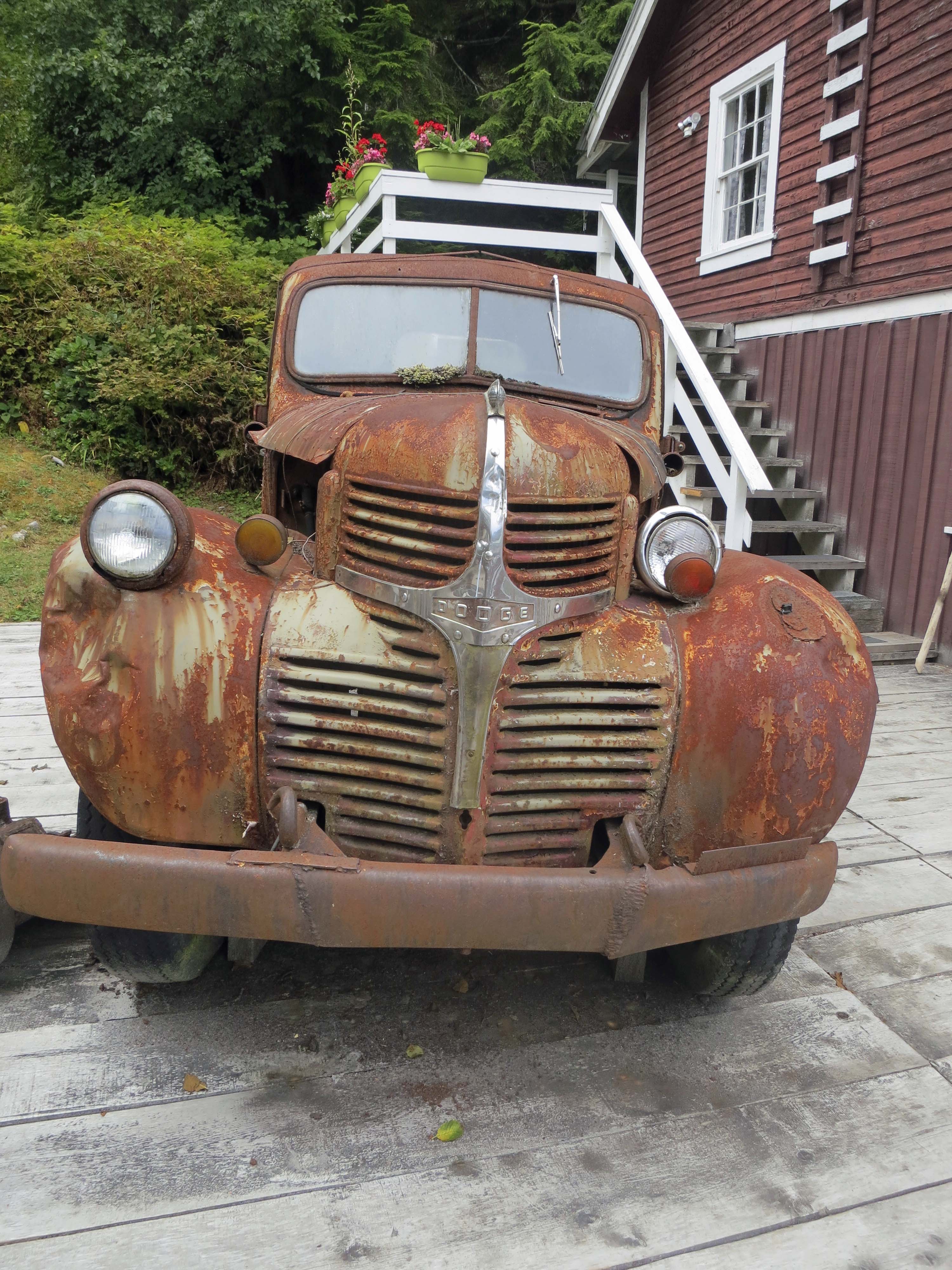
Old Dodge Truck at Telegraph Cove on Vancouver Island. Photo by Curtis Mekemson.

Part of the appeal of Telegraph Cove is its preservation of the past, as with this old Dodge truck. I think the truck was confused about where its lights should be. Or maybe it was so old it needed bifocals.
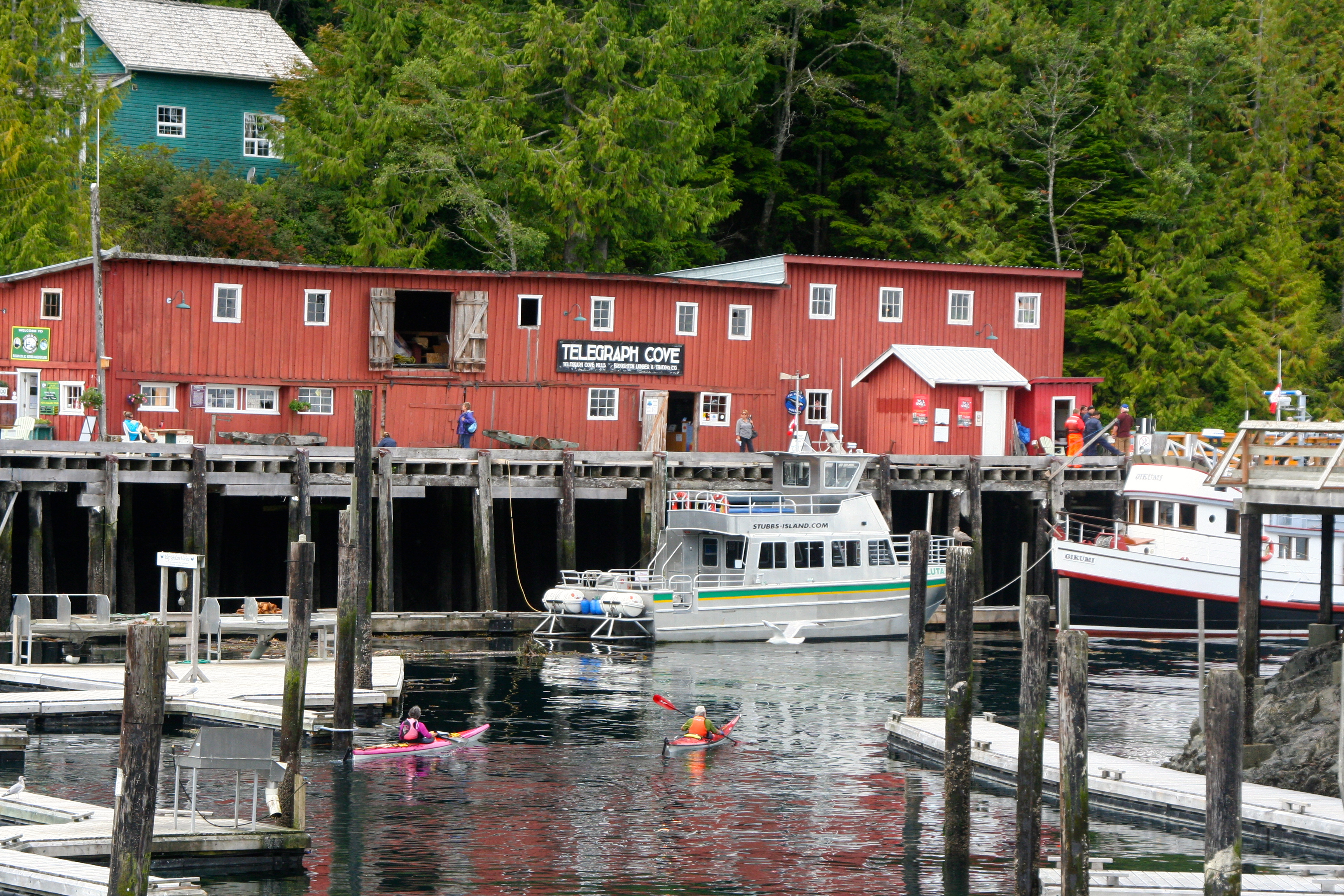
Telegraph Cove is all about water as this photo suggests. Here we see the Whale Interpretive Center, a fishing boat, and kayakers. (Photo by Peggy Mekemson.)

Telegraph Cove is all about water as this photo suggests. Here we see the Whale Interpretive Center, a fishing/tour boat, and kayakers. (Photo by Peggy Mekemson.)
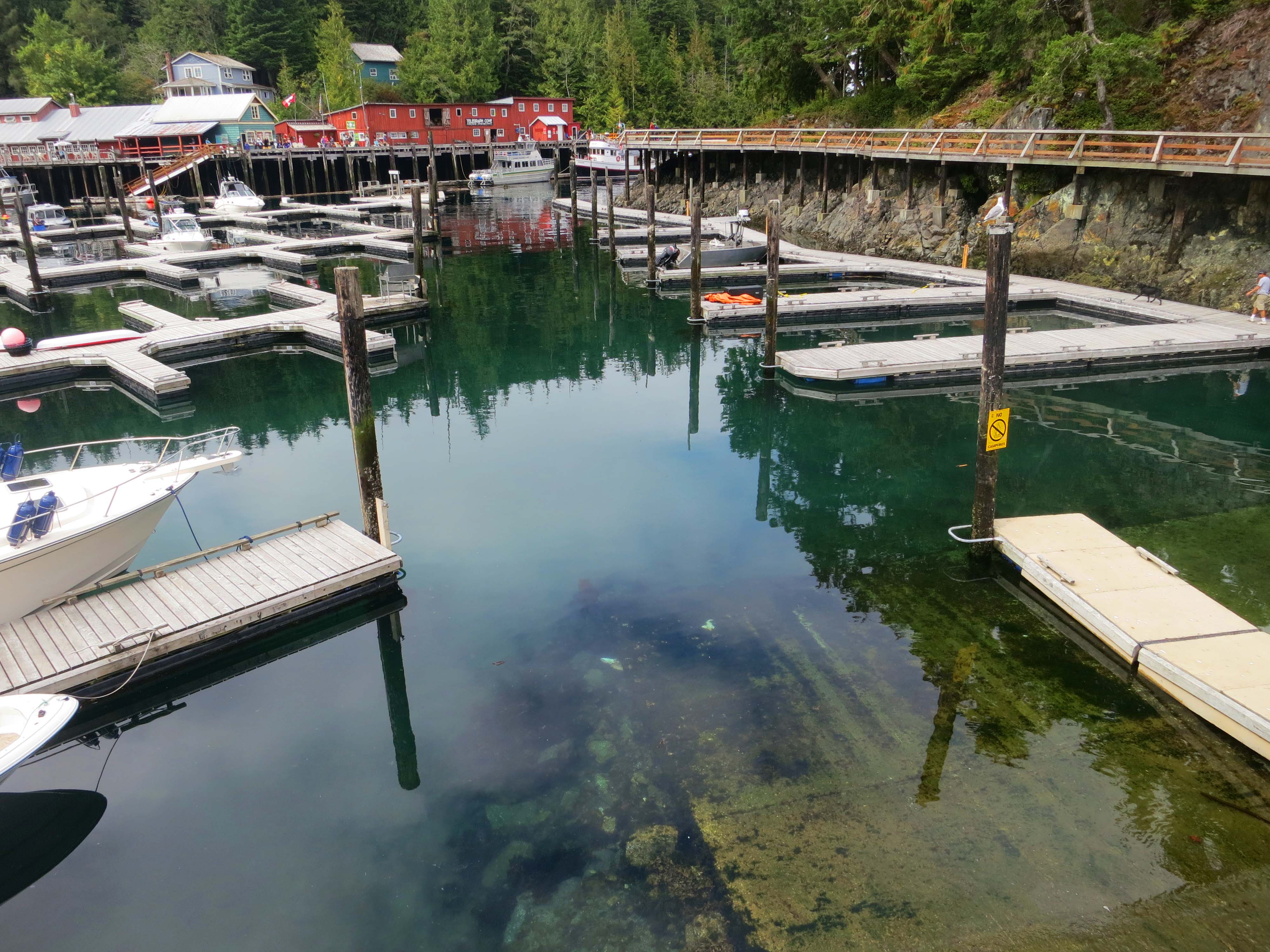
Empty docks at Telegraph Cove suggests all of the tours and fishing expeditions are already out on Johnstone Strait. Photo by Curtis Mekemson.

The empty boat docks tell a tale. We would not be the first to leave Telegraph Cove that morning for the Johnstone Strait. Our route took us right down the row and made a right at the Whale Interpretive Center.

Once our taxis dropped us off at Telegraph Cove, it was time to get busy. There were kayaks to pick, gear to load, life vests to fit, and last-minute instructions, such as which side of our paddle was up.
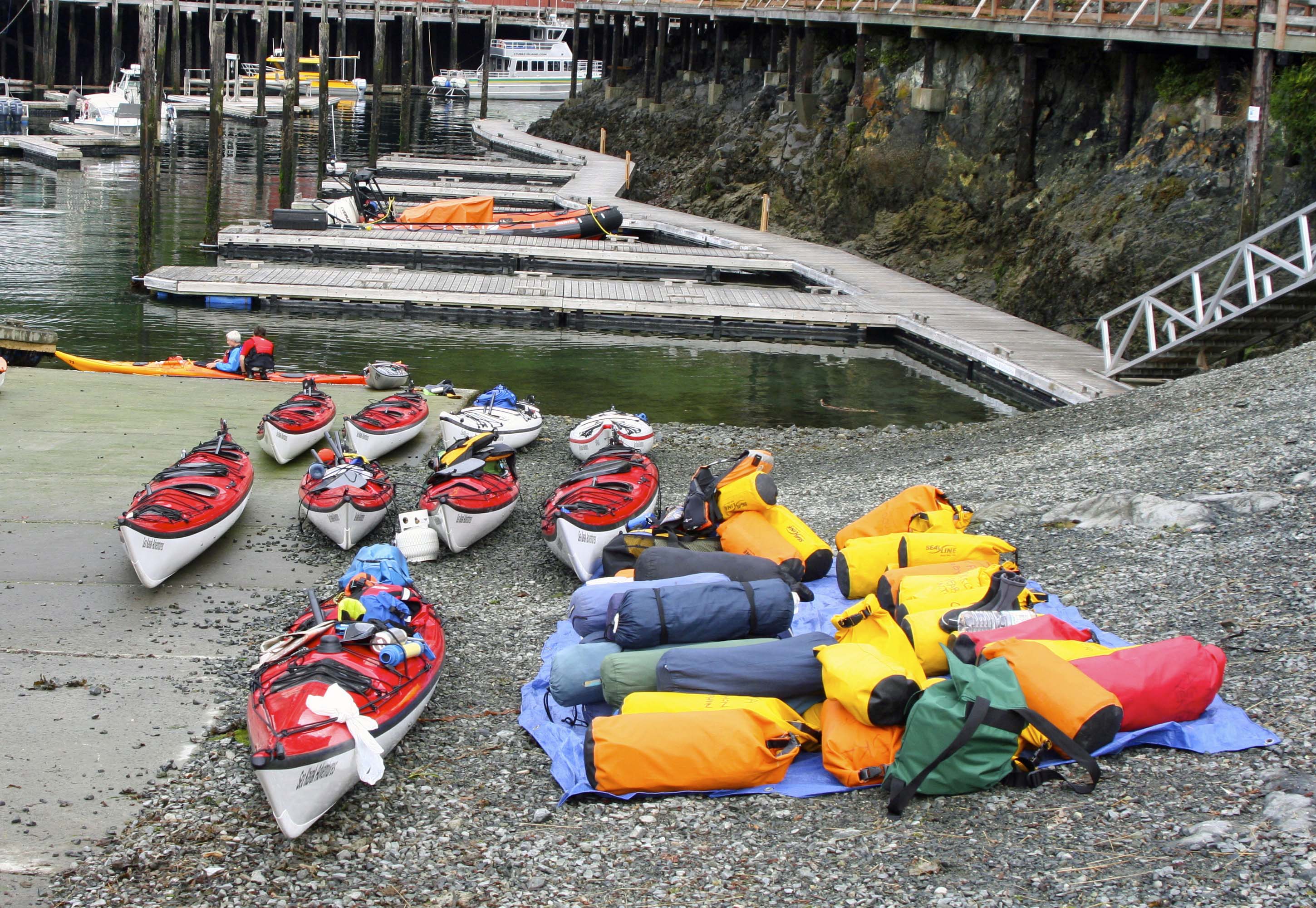
Sea kayaks wait for the next Sea Kayak Adventure tour group in Telegraph Cove.

Our guides, Julia, Nick and Quy, had been up  before dawn getting ready for us. Kayaks, life vests, and sleeping pads were waiting. Group gear had already been packed. Our first chore was to pick out our kayaks. (Photo by Peggy Mekemson.)
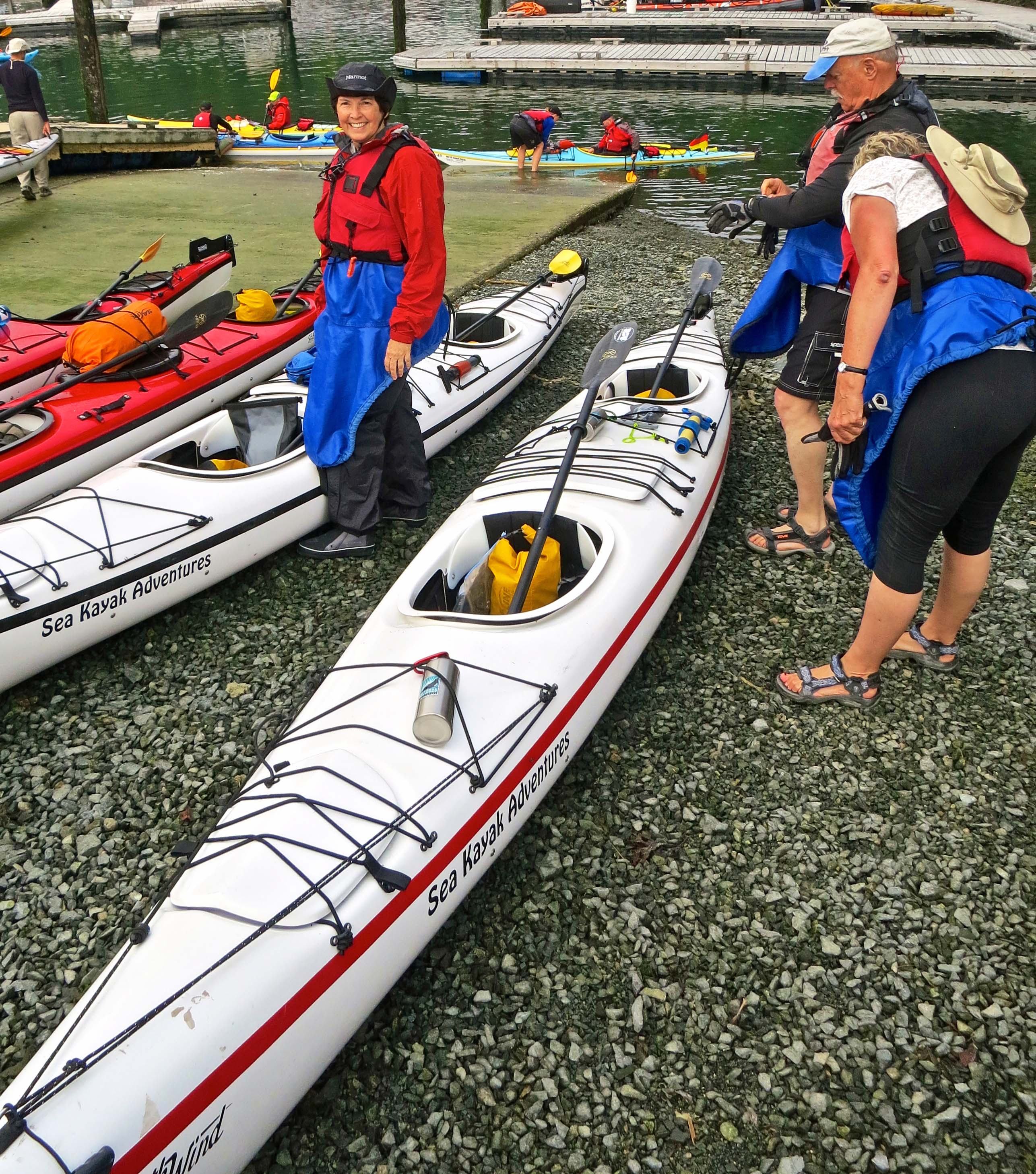
The white boats are more stable, the guides told us. Being the oldest, David, Edie, Peggy and I decided we could use the most stability. What the guides failed to mention in the fine print was that the white kayaks were also the largest, the heaviest, and could carry more of the group gear.Translation: they would be slower and harder to move.

The white boats are more stable, the guides told us. Being the oldest, David, Edie, Peggy and I decided we could use the most stability. What we failed to think through was that the white kayaks were also the largest, the heaviest, and carried more of the group gear.Translation: they would be slower and harder to row.
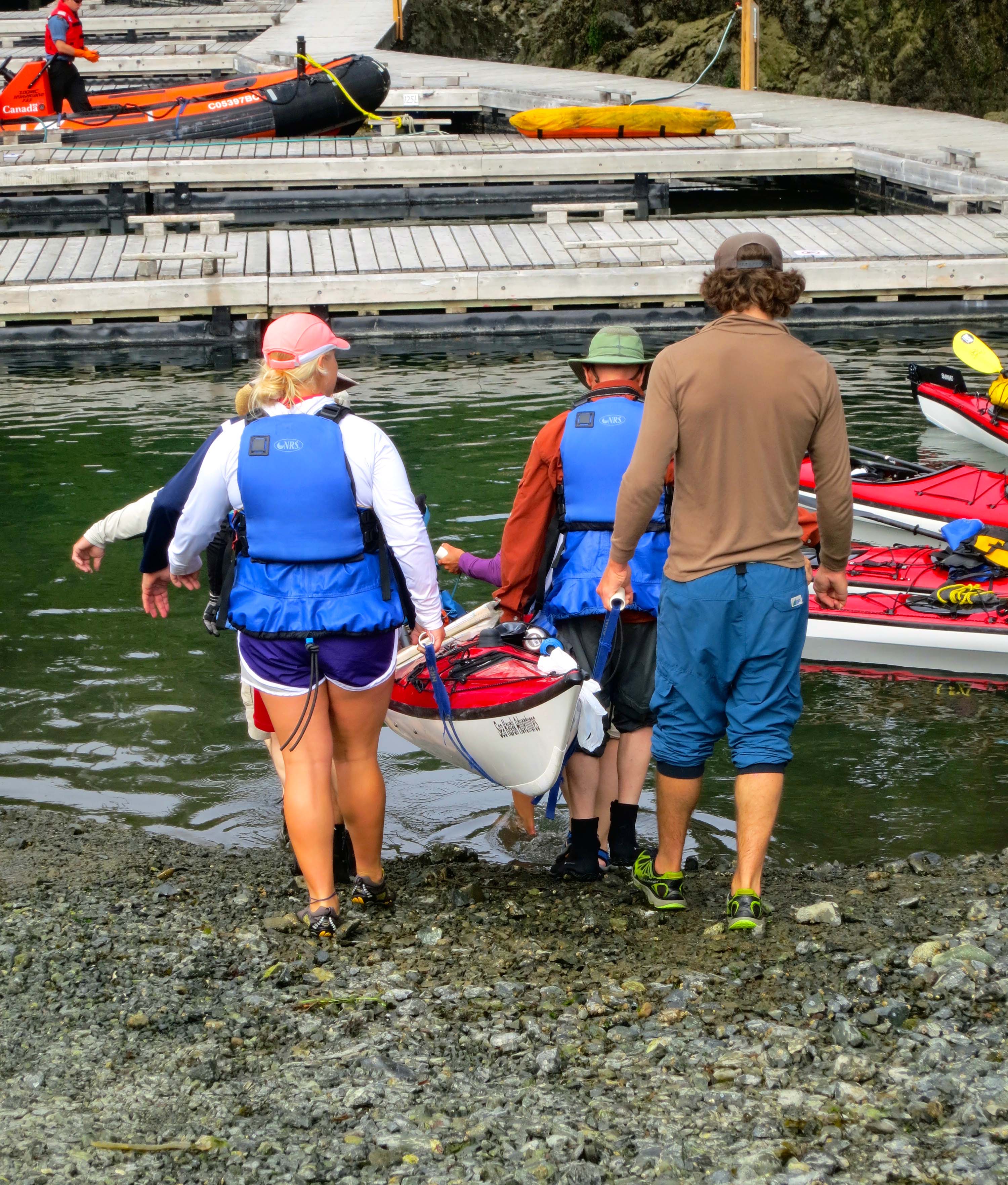
Kayaks are placed in the water at Telegraph Cove. Photo by Curtis Mekemson.

And then the moment arrived. It was time to put our kayaks in the water and start paddling. Put in and take out were always a group effort.

Heavy fog hung over Johnstone Strait and along the shore. We moved slowly, keeping each other in sight and waiting for the fog to clear. Large boats, including cruise ships, use the Strait. You want to be damn sure you can see them— and that they can see you. At one point, Nick, who was on rear guard duty, decided my seat needed adjusting. I was too laid back. By the time the adjustments were made, the other kayakers had disappeared into the fog. They waited patiently. We stopped and had a leisurely lunch. Then the sky turned a bright blue and we were off across the Strait. Orcas were waiting.
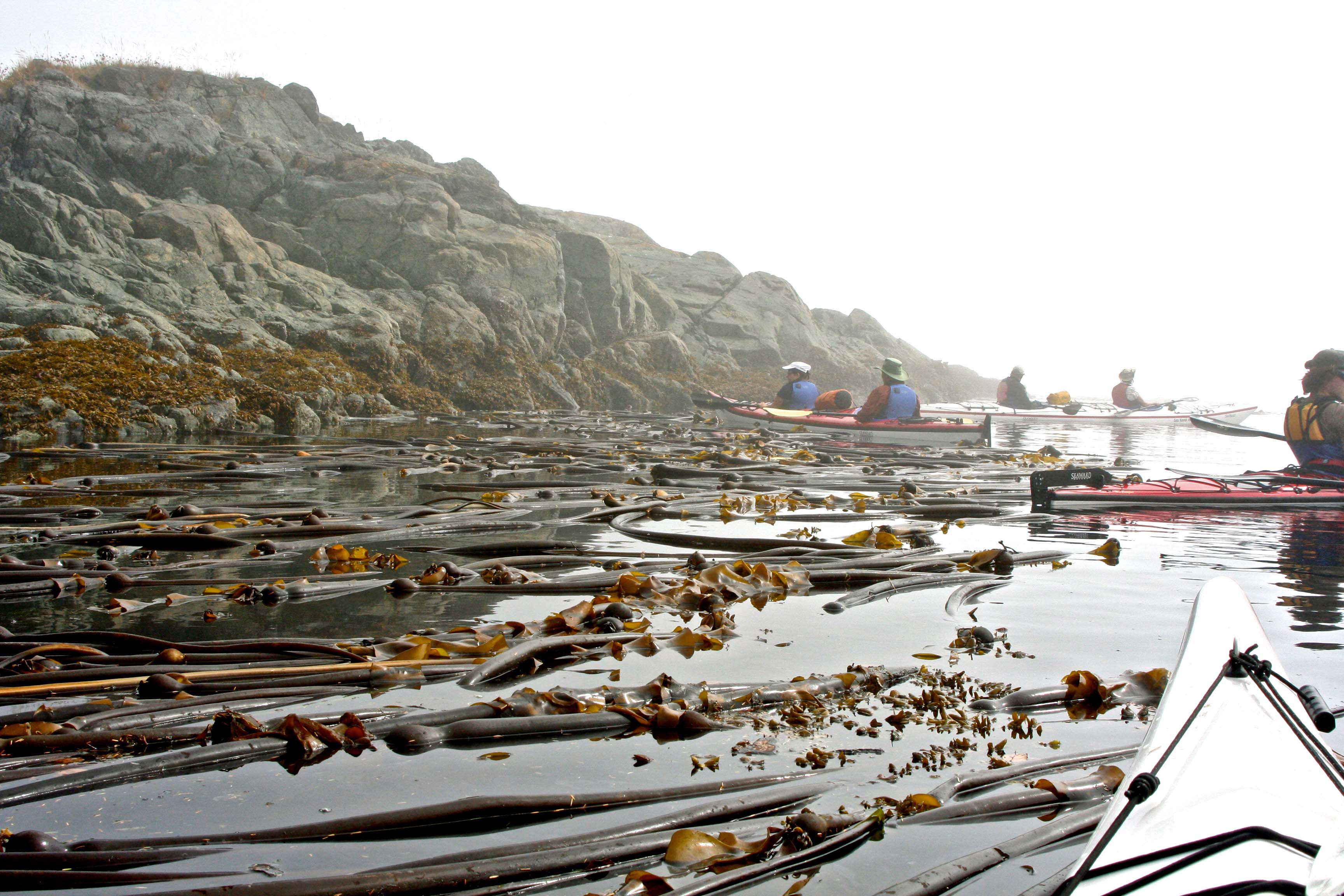
Kayakers work their way through kelp beds and fog in the Johnstone Strait of British Columbia.

Kelp beds and fog slowed us down. Here, we maneuvered our way through the kelp. Some of our group had almost disappeared into the mist— and they weren’t that far away. (Photo by Peggy Mekemson.)
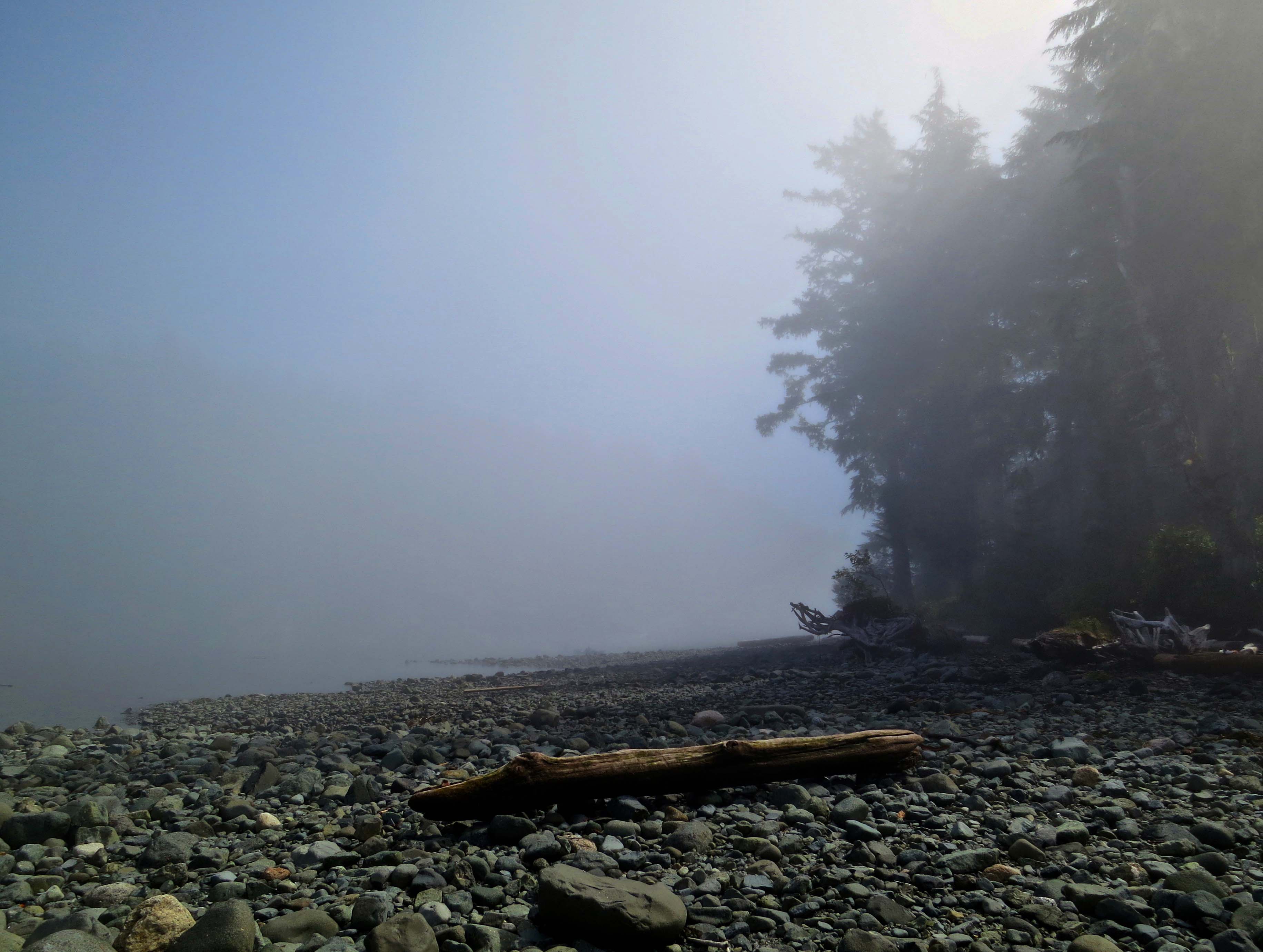
Vancouver Island cast on Johnstone Strait near Telegraph Cove. Photo by Curtis Mekemson.

Working our way along Vancouver Island, Julia decided to stop for lunch and wait the fog out. The bright sun was already creating a patch of blue.

Sun illuminates forest during kayak trip on Johnstone Strait, BC. Photo by Curtis Mekemson.

Everywhere we went, the beauty of the forests matched the beauty of the waterways.
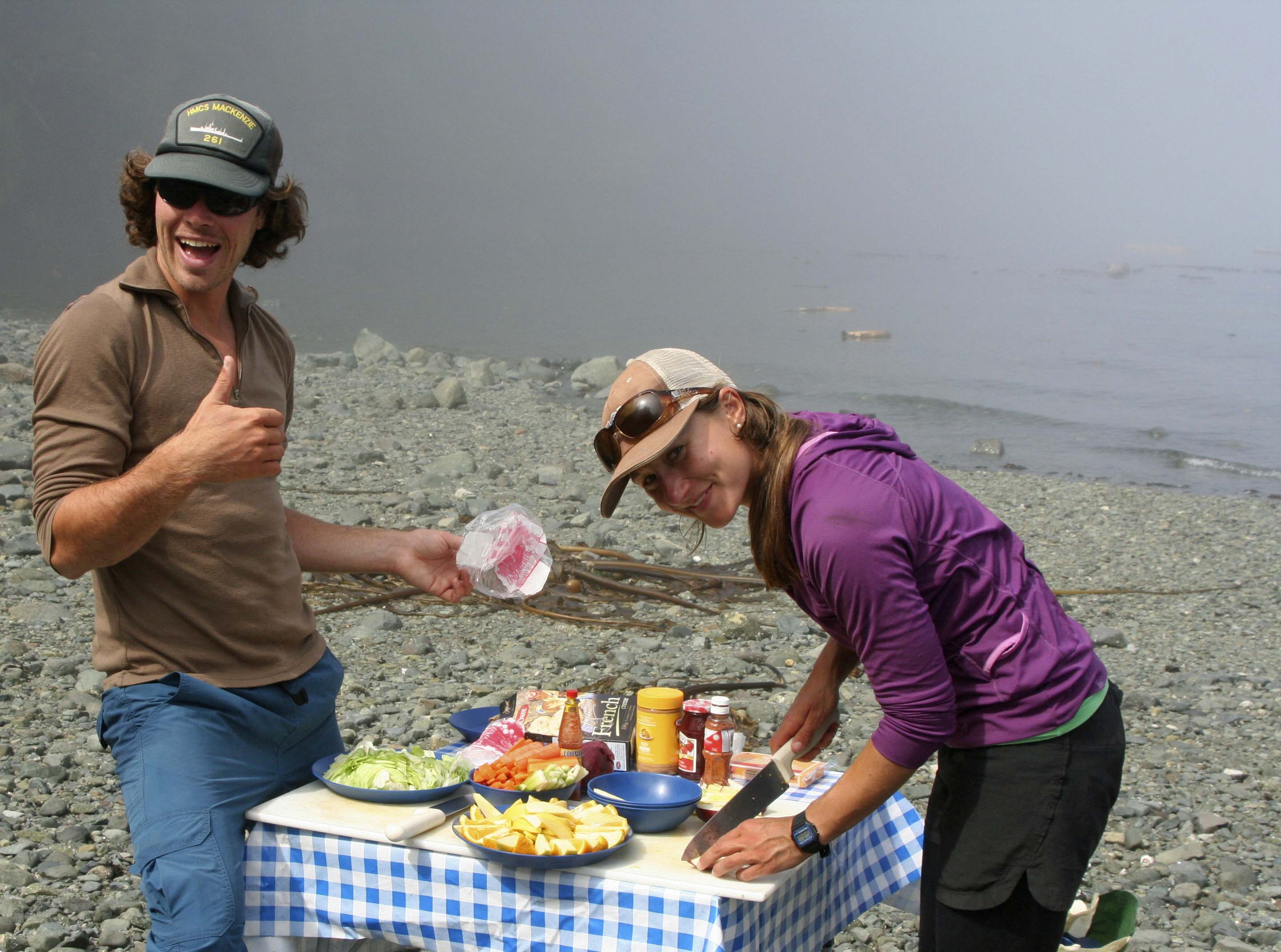
Lunch on Sea Kayak Adventures tour on the Johnstone Strait in British Columbia.

“Come and get it.” Julia and Nick announced that lunch was ready. (Photo by Peggy Mekemson.)
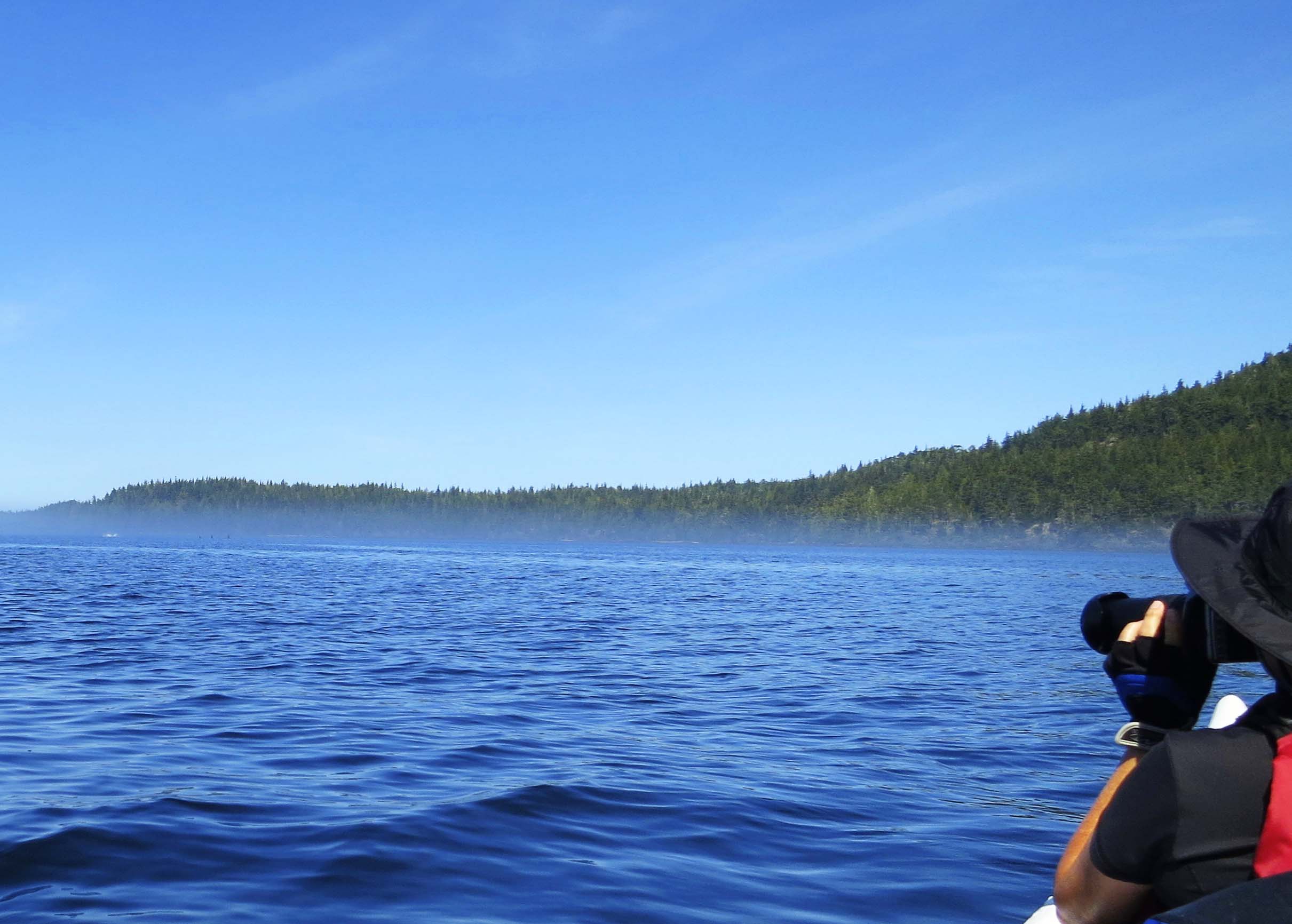
Peggy Mekemson searches for Killer Whales while kayaking across Johnstone Strait off of Vancouver Island. Photo by Curtis Mekemson.

With lunch over and the fog lifted, we made our way across Johnstone Strait. Peggy searched the water for orcas/killer whales.
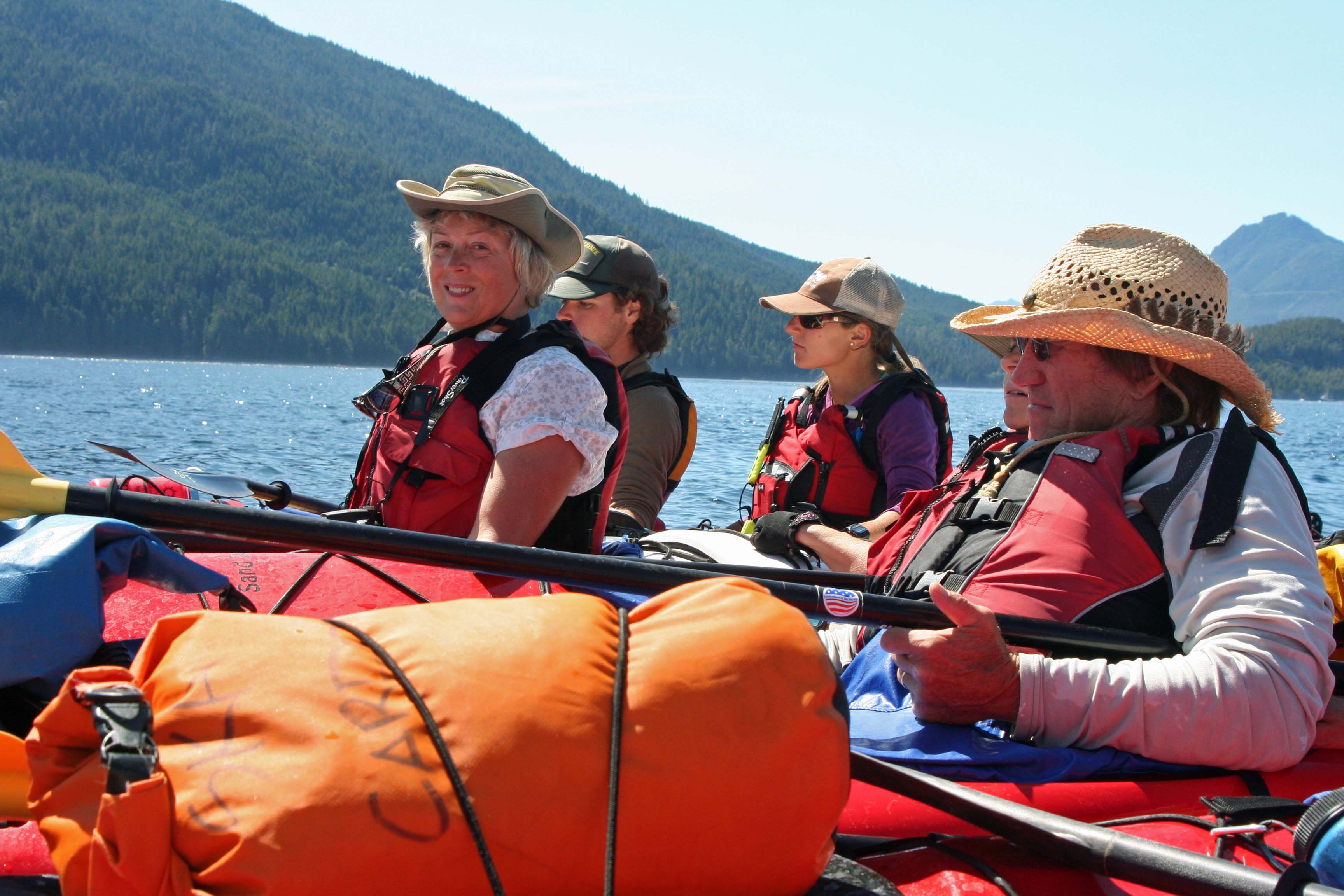
Kayakers with Kayak Adventure Tours raft up on Johnstone Strait in British Columbia when seeing a Killer Whale.

The distinctive whoosh made by a whale when it surfaced and blew caused our group to raft up, where we held on to each other’s kayaks. Edie gave us a smile while we waited, hoping to catch sight of the whale. (Photo by Peggy Mekemson.)
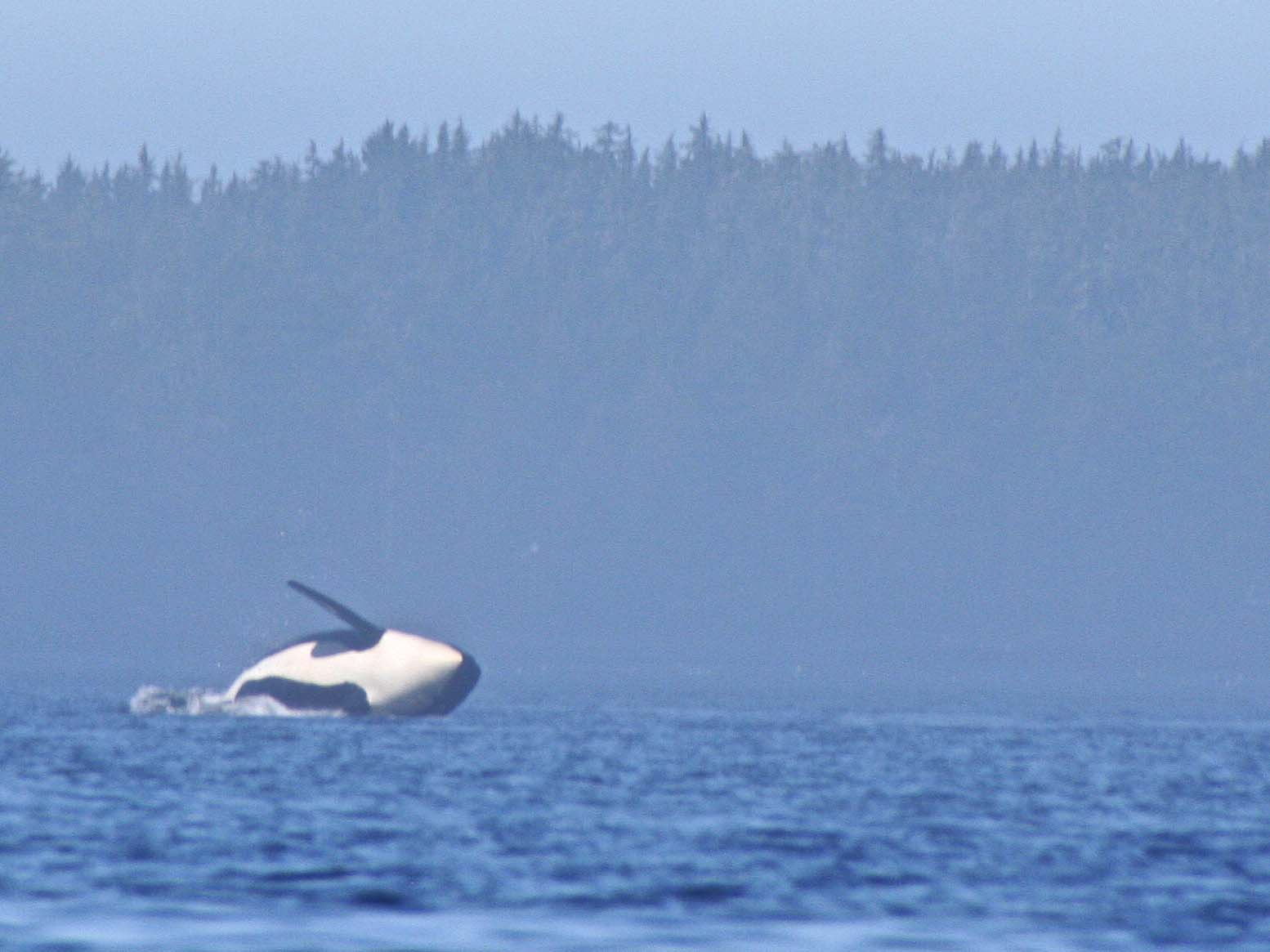
Orca breaches in the Johnstone Strait.

And were rewarded by one breaching in the distance. (Photo by Peggy Mekemson.)
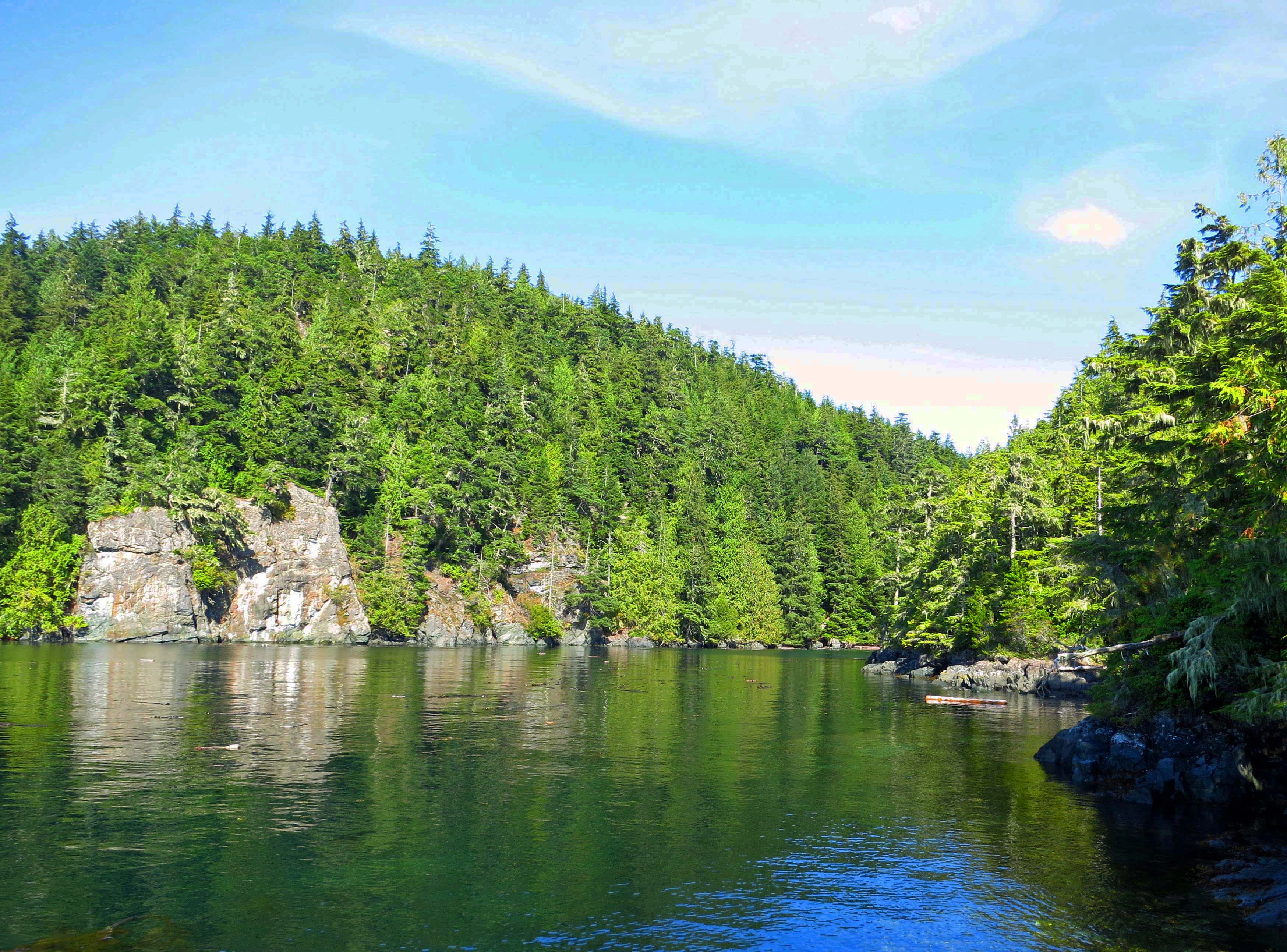
Sea Kayak Adventures campsite on Hanson Island in the Johnstone Strait, British Columbia.

Having also been slowed down by a pod of dolphins, we finally made it to our first night’s campsite on Hanson Island. The camp is to the right of the rocks, back in the cove.

Sea Kayak Adventures leases its sites from a First Nation tribe. Each site is chosen for its beauty and its natural setting.  Camps are pre-set up with tents, a cooking area, and a primitive but comfortable and private open-air restroom. We carried our kayaks up into the camping area, selected tents, packed away gear, and then went for a hike. Afterwards it was time for cocktail hour and dinner. We finished off our evening watching the sunset— and a gorgeous sunset it was.
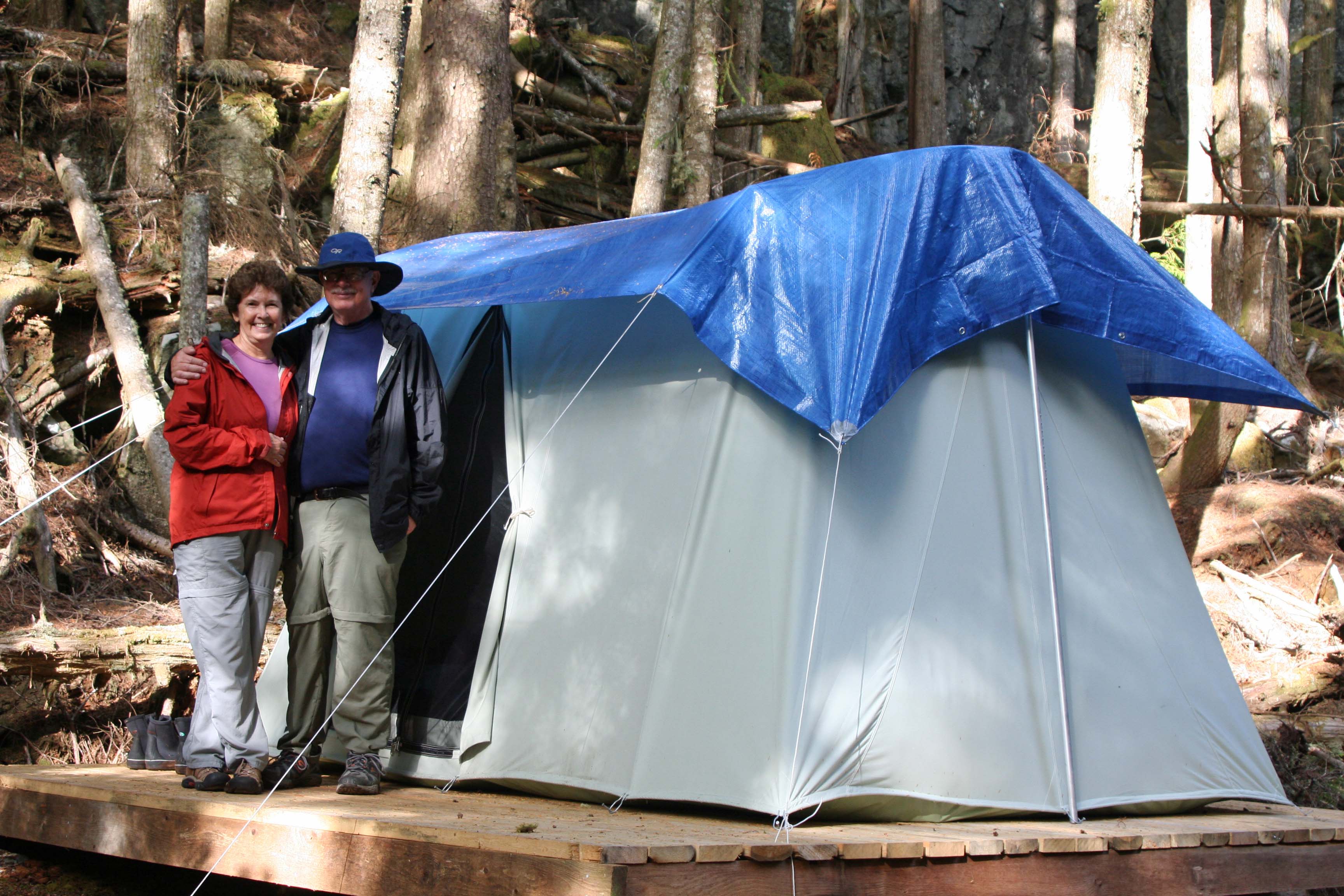
Sea Kayak Tours sets up comfortable tents for  guests to use while on their tours.

Peggy and I stand next to our home in the woods for the night.
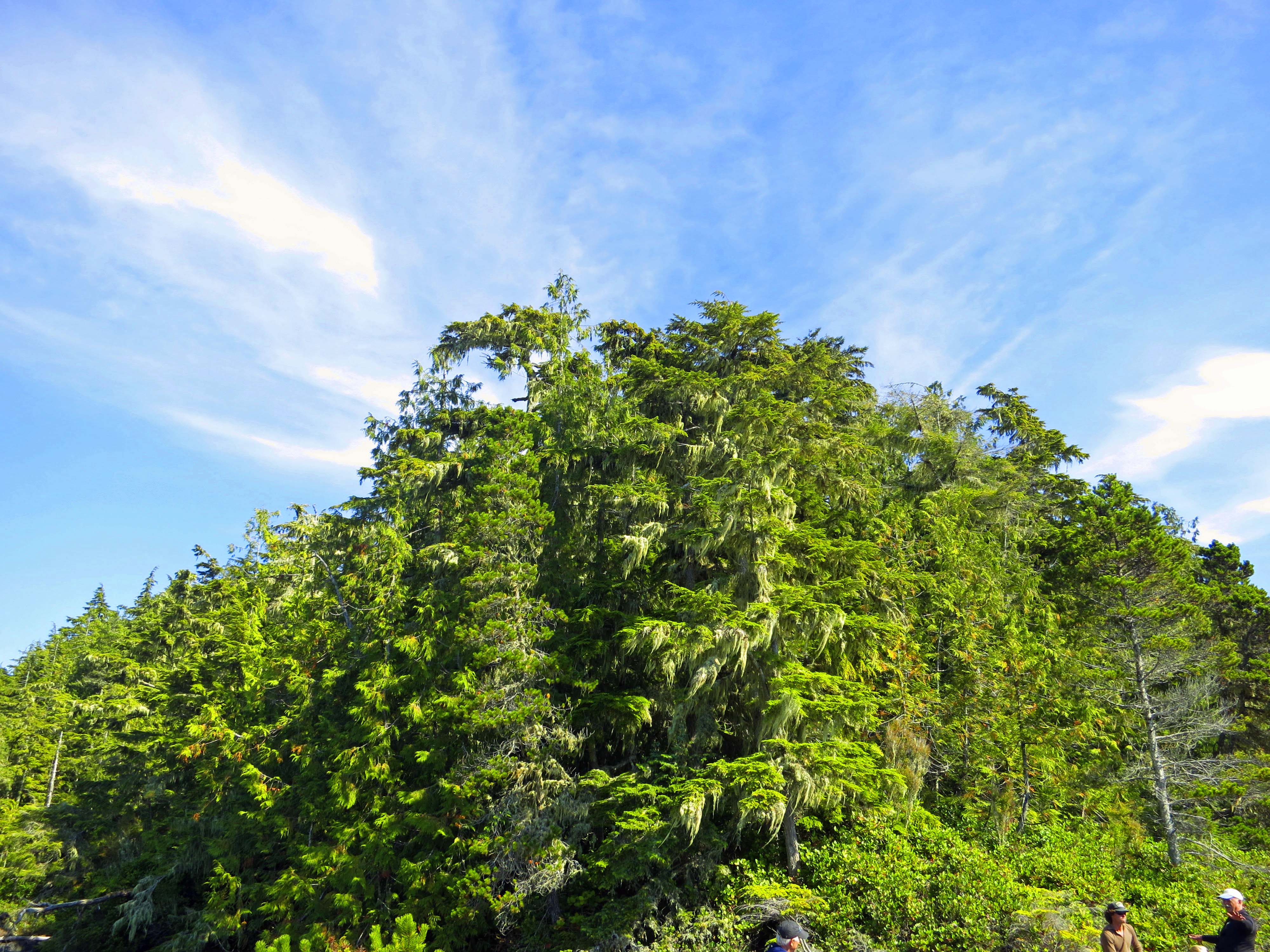
Sky and clouds meet forest on Hanson Island in the Johnstone Strait of British Columbia. Photo by Curtis Mekemson.

Our walk provided this fun photo where the sky and clouds met the forest…
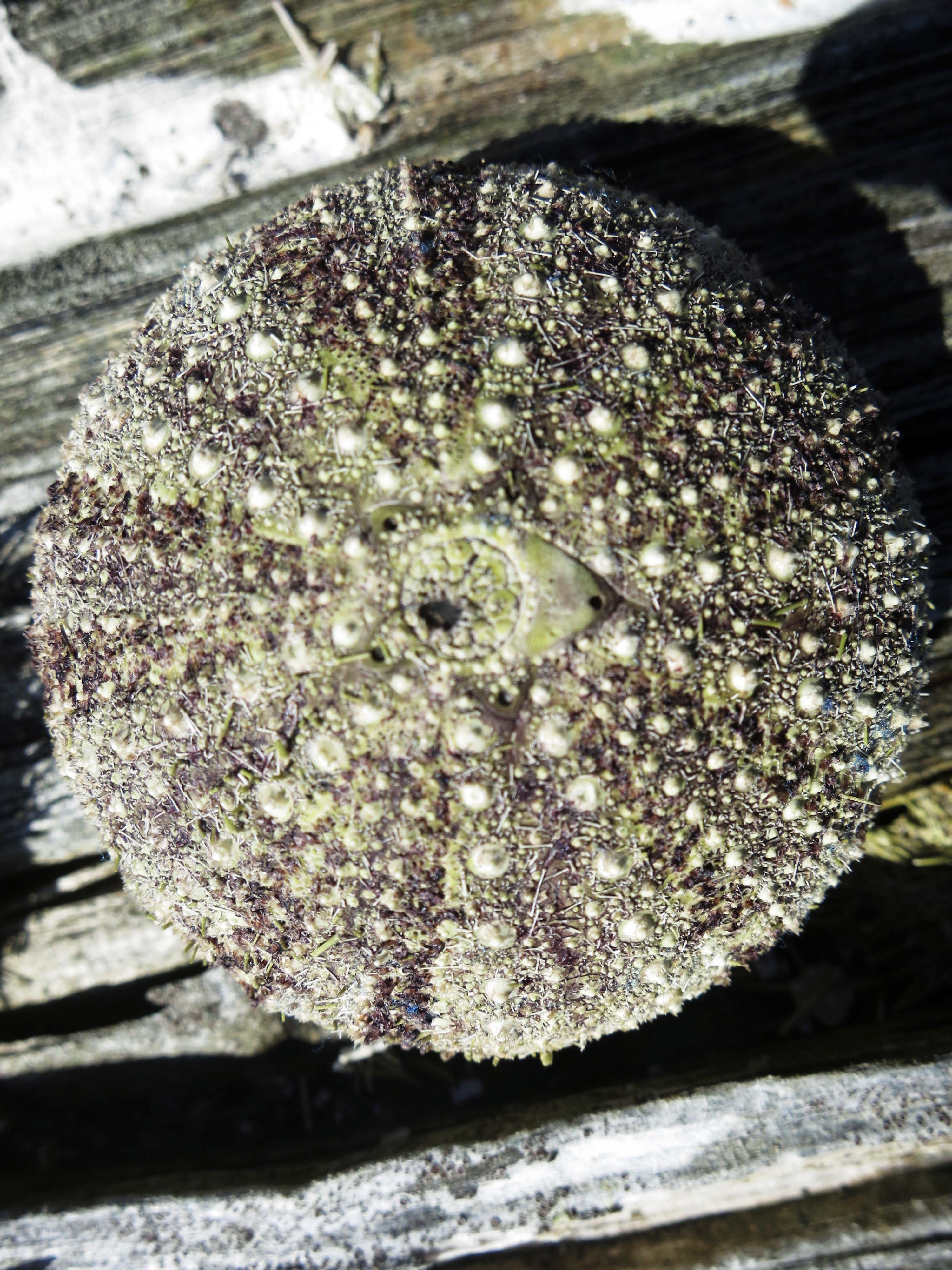
Urchin shell found on Hanson Island in Johnson Strait. Photo by Curtis Mekemson.

We found this jewel of an urchin shell…
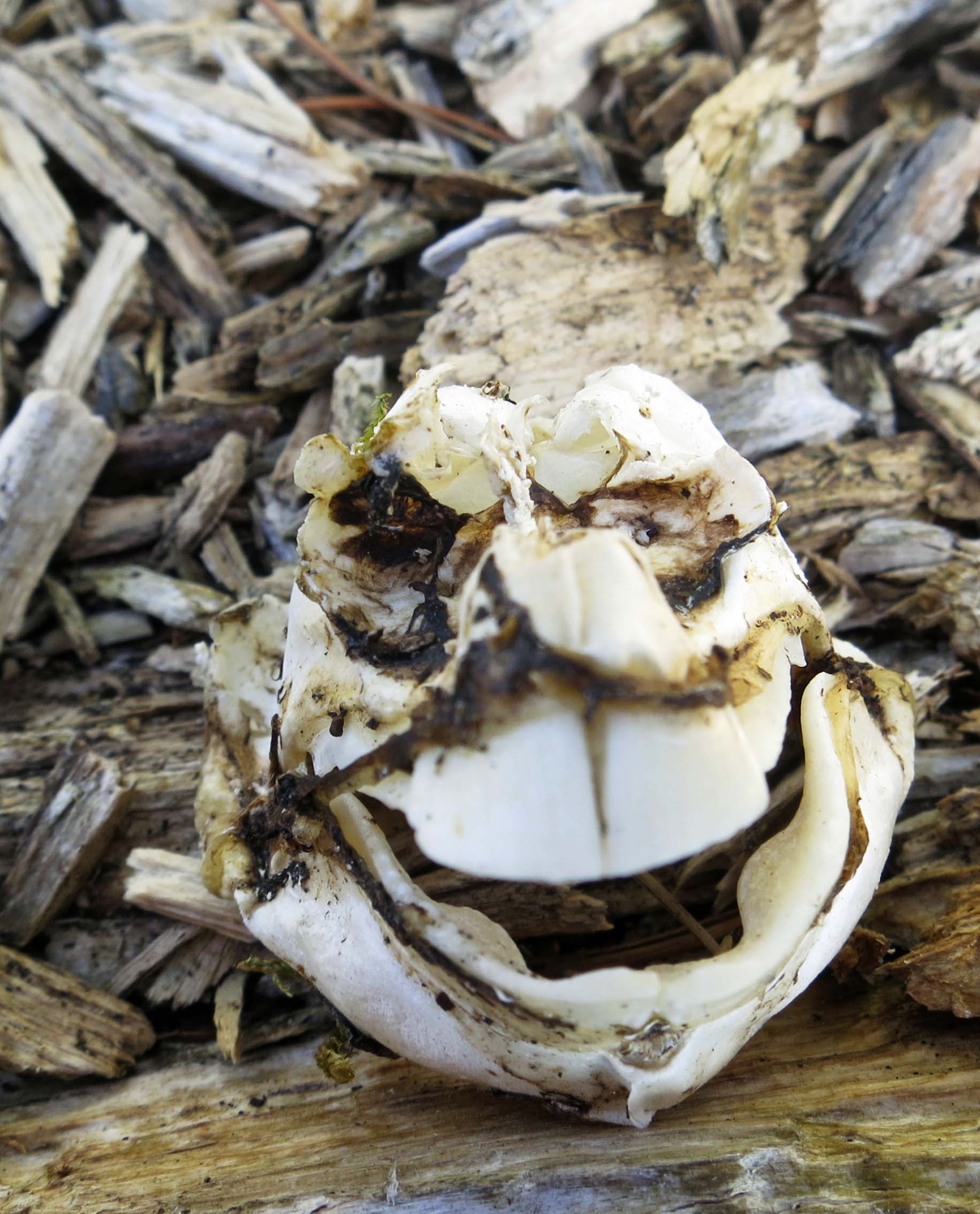
And this rather odd shell/skeleton that our experts debated over. Considering this post is going up on October 30th, I am going with Happy Halloween.

And this rather odd shell/skeleton that our experts debated over. Check out the buck teeth. This guy would put a beaver to shame. Considering this post is going up on October 30th, Peggy, the creature, and I would like to wish all of you a Happy Halloween.
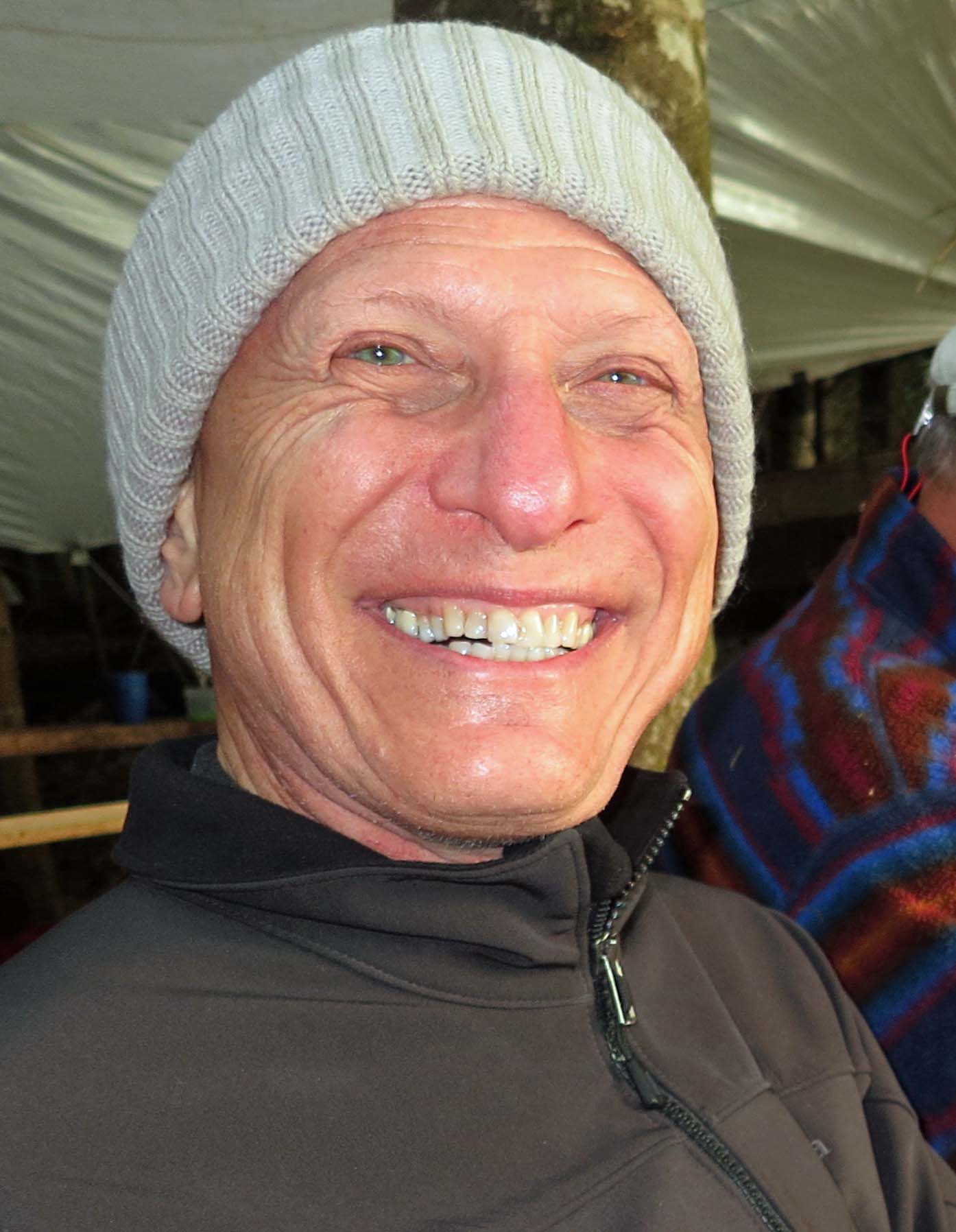
Back in camp, I got a happy, toothy grin from Dennis...

Back in camp, I got a happy, toothy grin from David…
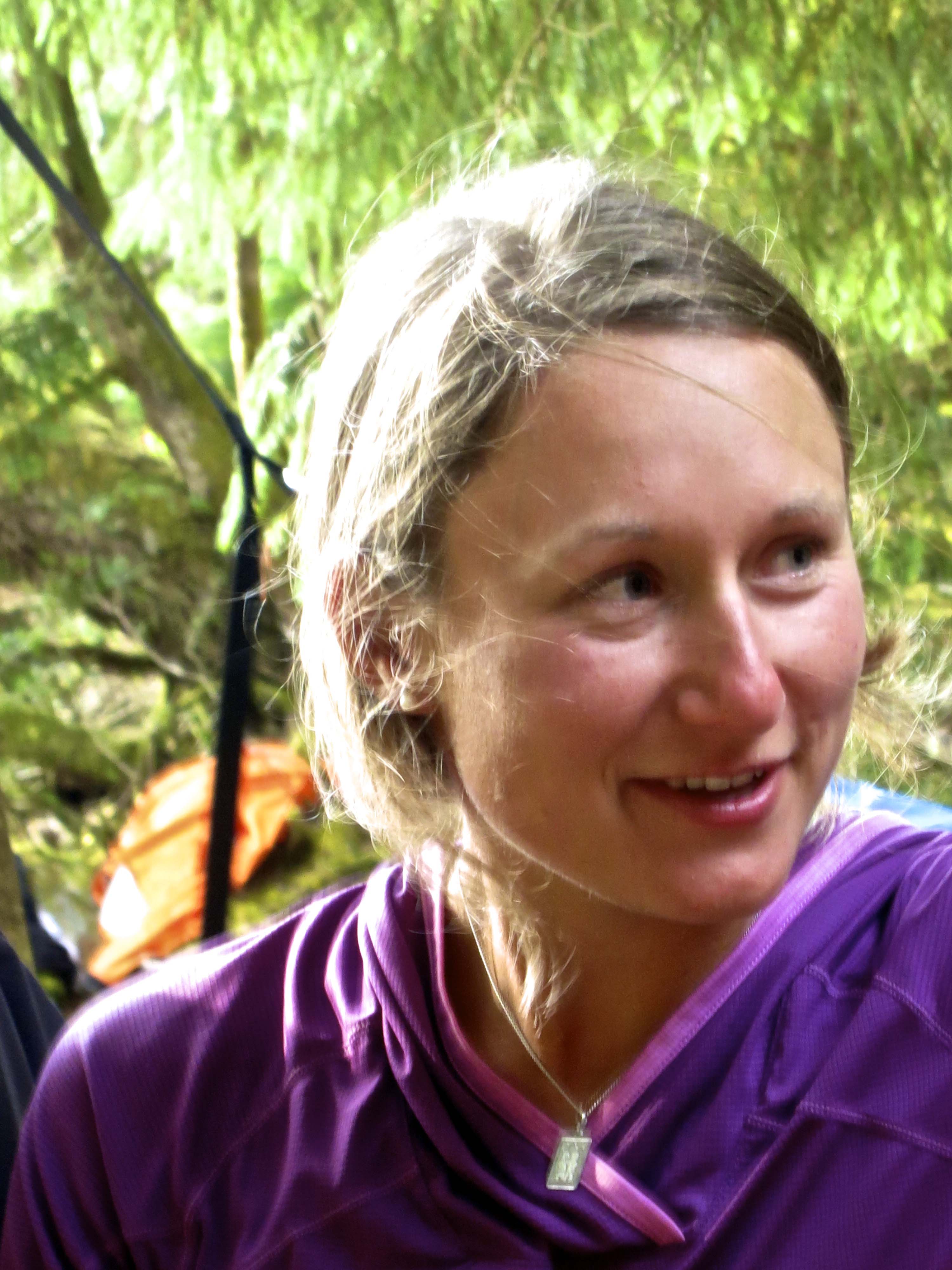
And a shy smile from Julia.
And a shy smile from Julia.

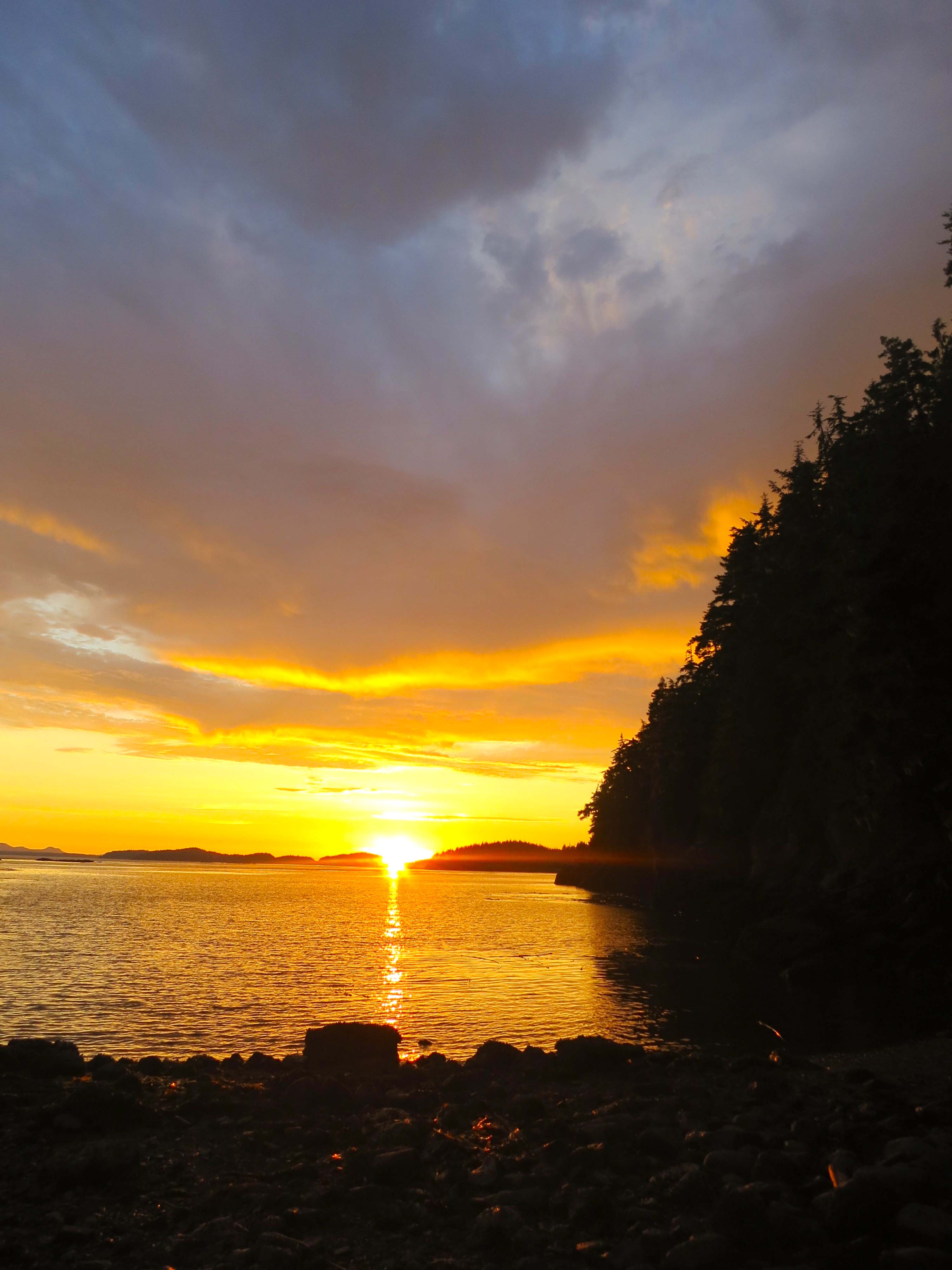
Sunset over Johnstone Striait off of Hanson Island. Photo by Curtis Mekemson.

We finished off the day by watching the sunset over Johnstone Strait. Next blog: We kayak onward to our next island.

There Is Much More to Mt. Rainier National Park than a Mountain

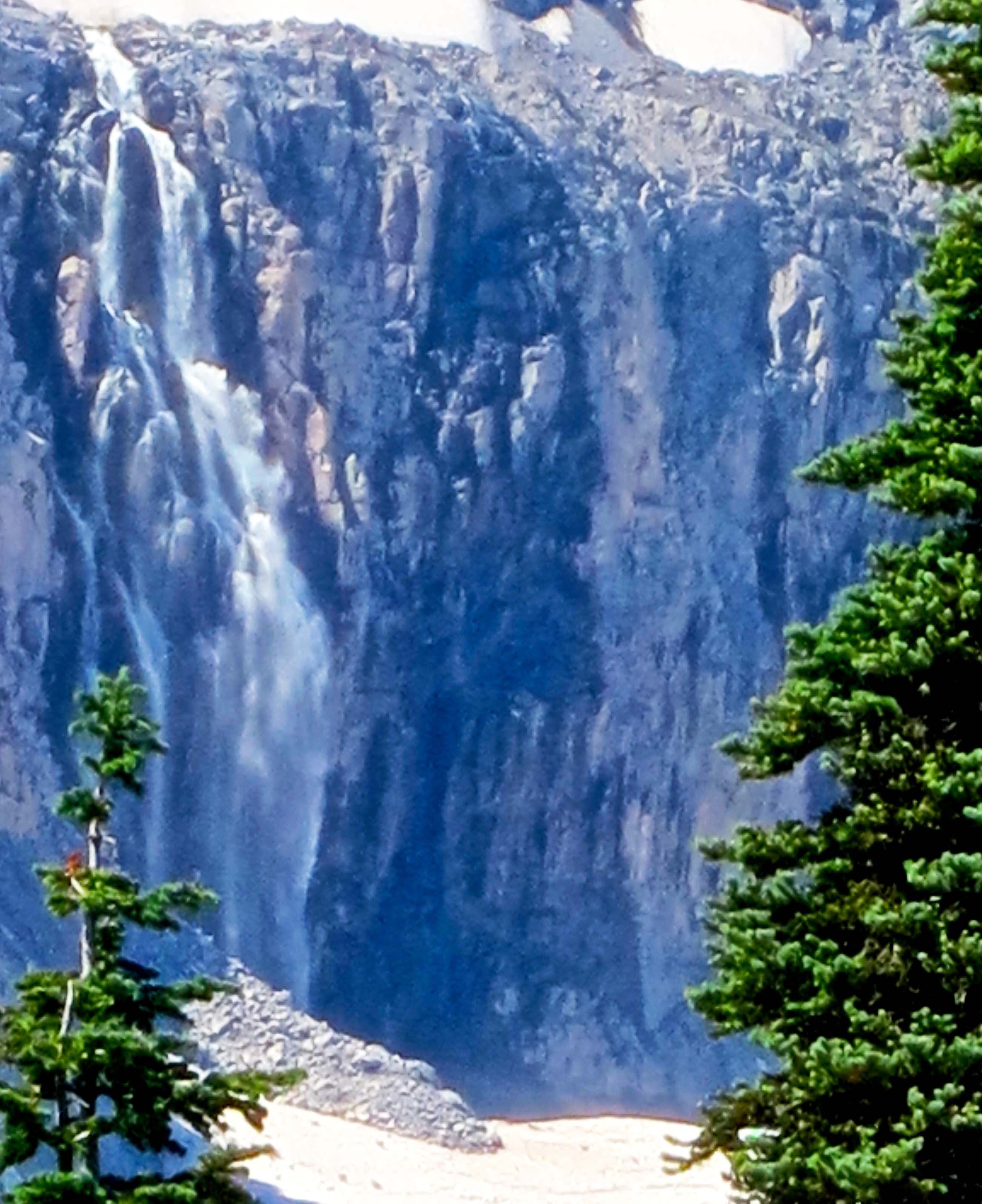
A waterfall in Mt. Rainier National Park. Photo by Curtis Mekemson.

Mt. Rainier National Park has much more that its majestic mountain to offer visitors. Ancient forests, glacial rivers and tumbling waterfalls are found throughout the Park.

At 14, 410 feet (4,392 meters), Mt. Rainier is the tallest volcano in the Cascade Mountains, a range that starts in northern California and works its way through Oregon and Washington before ending in southern British Columbia. The range is part of the famous, or perhaps I should say infamous, Ring of Fire that surrounds the Pacific Ocean and represents the epic crashing of oceanic and continental tectonic plates. Volcanic eruptions, earthquakes and tsunamis are its legacy.

Mt. Shasta in northern California. Photo by Curtis Mekemson.

Starting at Mt. Shasta (shown here) and Mt. Lassen in northern California, the Cascade Mountain Range of volcanoes works its way northward into southern British Columbia.

Rainier is an active volcano, which means it is capable of blowing its top at any time. Every volcanic eruption in the last 200 years that has taken place in the contiguous United States (outside of Hawaii and Alaska) has happened in the Cascade Range. The most recent was Mt. St. Helens in southern Washington, which exploded in 1980. I flew over the mountain a few weeks after the eruption. The destruction was unimaginable.

Mt. St. Helens in Washington. Photo by Curtis Mekemson.

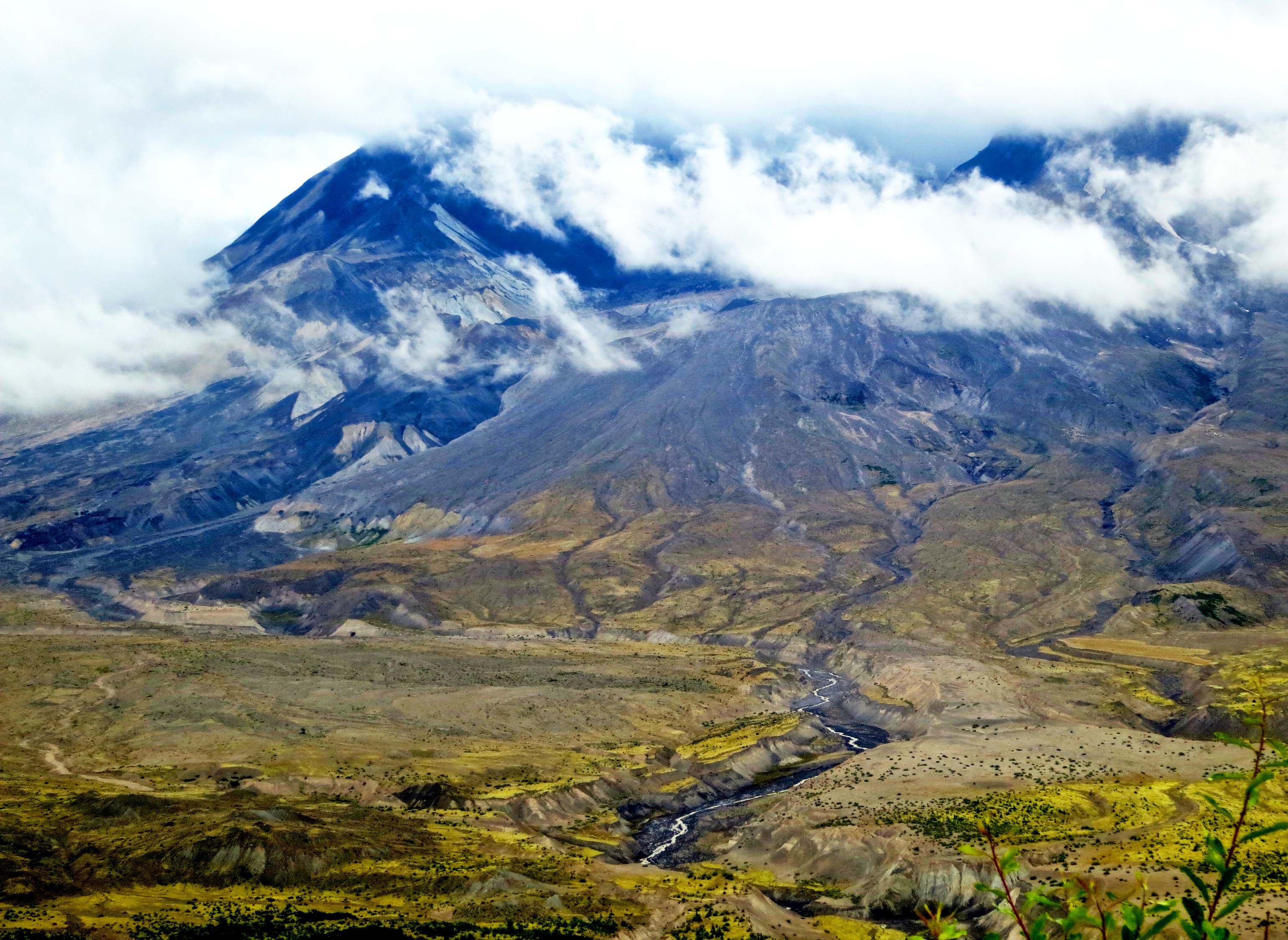
Mt. St. Helens today, its once majestic peak now a crater. The river has carved a canyon through the mudflow the volcano left behind. I took this photo two years ago.

Jet stream driven storms coming off the Pacific Ocean bring the rain that the North West is justifiably famous for. During the winter, this rain turns to snow as the storms are forced up and over Mt. Rainier— lots of snow. During the winter of 1971/72, 1,122 inches of snow fell. This translates into 93.5 feet or 28.5 meters. It set a world record at the time. The snow is responsible for the 14 named glaciers that slowly work their way down from the top, grinding up rocks as they go, and creating several rivers.

Photo of Mt. Rainier Glacier taken by Curtis Mekemson.

Fourteen named glaciers make their way down Mt. Rainier.

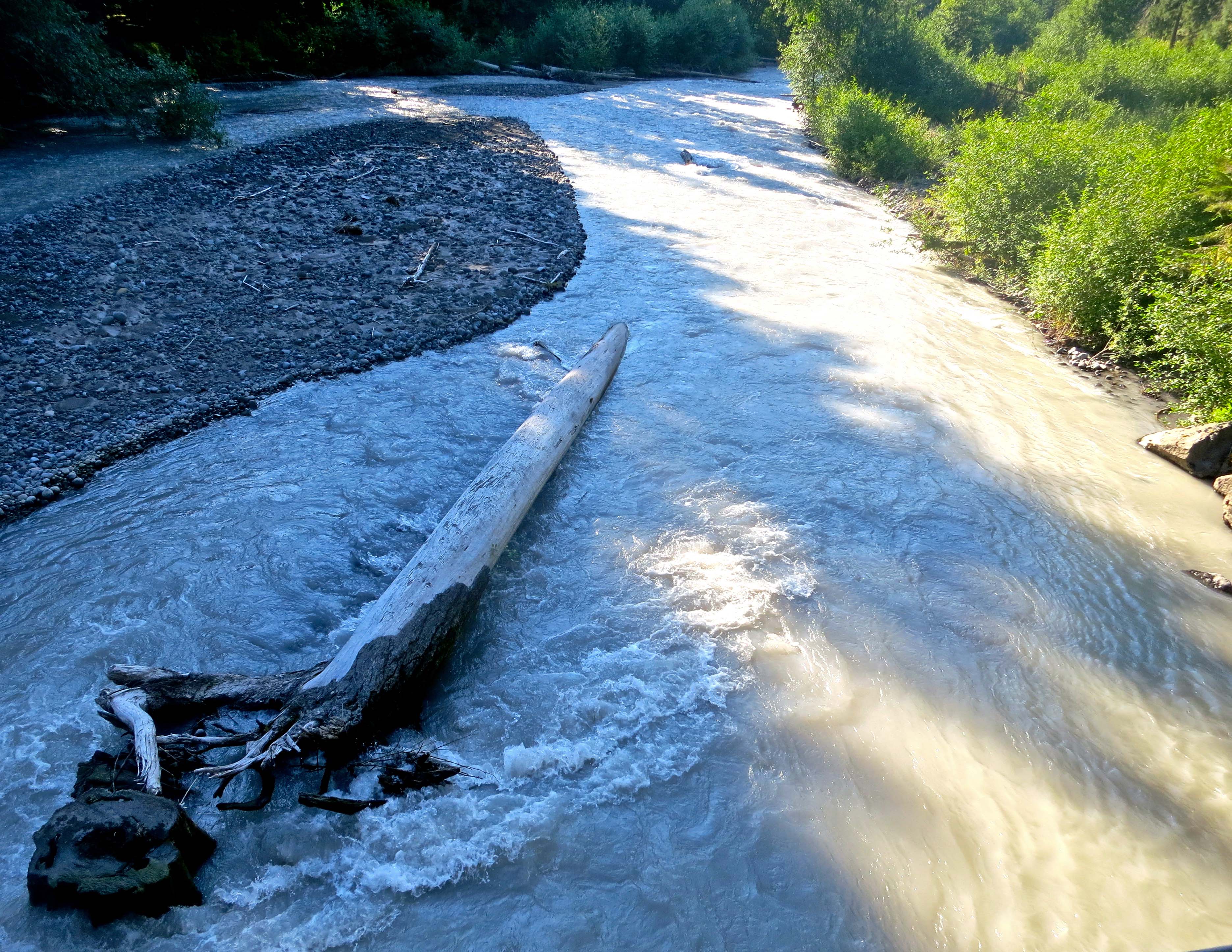
Fed by the Emmons, Frying Pan and Winthrop Glaciers, the White River is given its color by ground glacial rock dust.

Fed by the Emmons, Frying Pan and Winthrop Glaciers, the White River is given its color by ground glacial rock dust. BTW: Ancestors of my mother barely missed being massacred by indians on the White River around the time Seattle was founded.

Peggy and I, along with our son Tony, worked our way clockwise around the mountain from the Sunrise Visitor Center to the Henry (Scoop) Jackson Memorial Visitor Center, covering about a third of the mountain. The road has enough twists and turns to hassle a snake and has more picturesque scenes than a National Geographic photographer could capture in a month. Misty waterfalls and an ancient forest competed with the snow-topped mountain for our attention. We finished off our exploration of Mt. Rainier with a breath-stealing hike that climbed up 1400 feet behind the Jackson Memorial Visitor Center.

Roots of a downed giant in the Grove Of Patriarchs, Mt. Rainier National Park. Photo by Curtis Mekemson.

You would expect to find large trees in an area called the Grove of Patriarchs. We weren’t expecting this. Peggy is perched inside the roots of a downed patriarch. Or maybe it was a matriarch.

Creek reflects green of surrounding forest in Mt. Rainier National Park. Photo by Curtis Mekemson.

This creek flowing through the Grove of Patriarchs immediately made me think of a Claude Monet Impressionist painting.

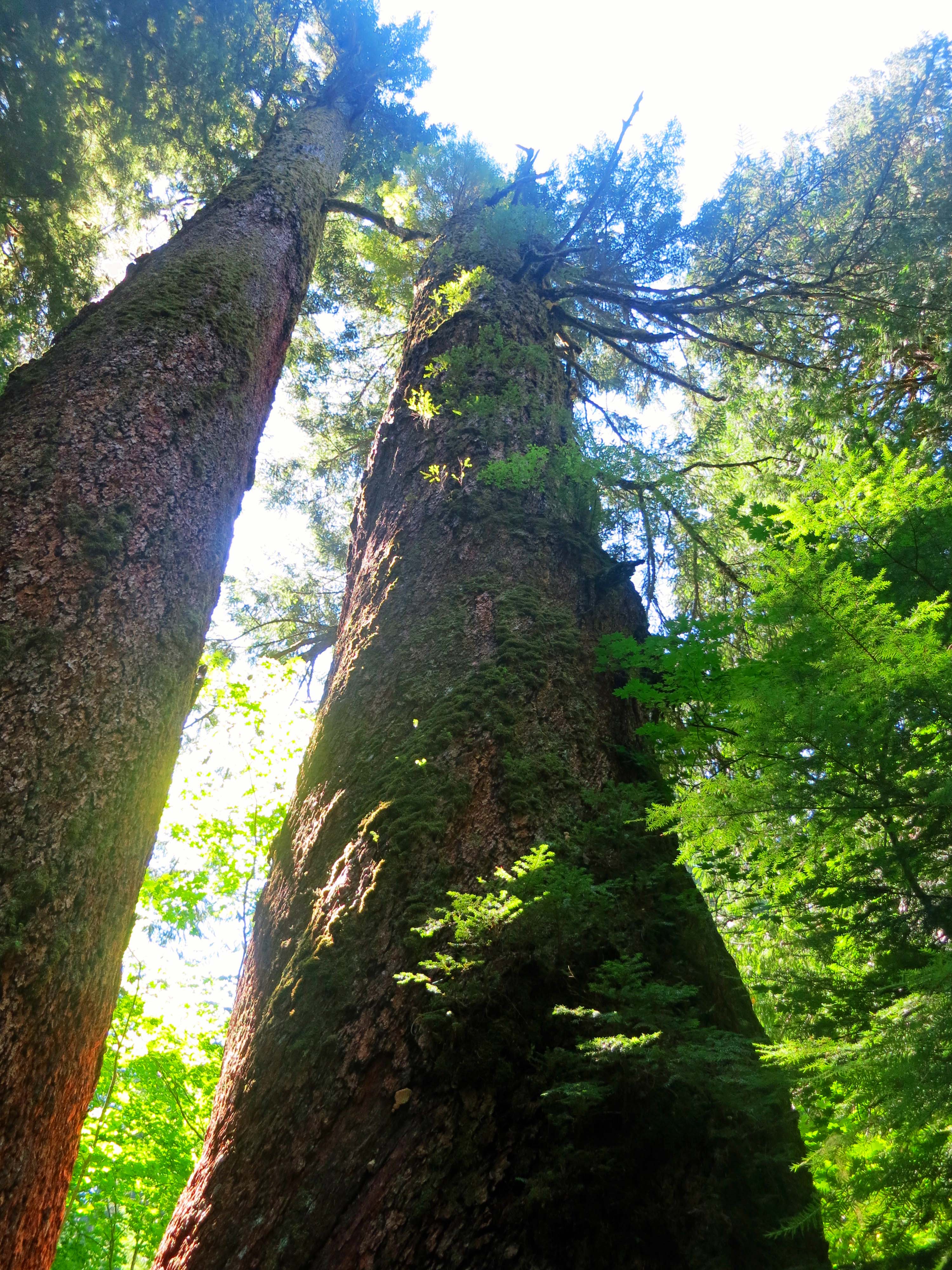
Since we are in the Grove of Patriarchs, a photo of big trees is required.

Since we were in the Grove of Patriarchs, a photo of big trees is required.

Wood grains on a downed tree in Patriarch Grove, Mt. Rainier National Park. Photo by Curtis Mekemson.

Whirls of wood grain appeared on a downed tree in the Grove. I was reminded of a 3-D topographic map.

Saffron robed monk throws snowball on trail above Jackson Memorial Center at Mt. Rainier National Park. Photo by Curtis Mekemson.

We came across a saffron robed monk throwing snowballs as we hiked on the trail above the Jackson Memorial Visitor Center. “Throw one at me,” I urged with camera poised.

View from Mt. Rainier above the Jackson Memorial Center. Photo by Curtis Mekemson.

One of many views we had climbing up the trail. As I recall, Peggy broke out singing Climb Every Mountain. It was a Julie Andrews’ moment.

Looking around we saw several waterfalls tumbling off the mountain.

Looking around we saw several waterfalls tumbling off the mountain.

Peggy captures Tony at our turn around point on the trail. He definitely wanted to keep on going. (Photo by Peggy Mekemson.)

Peggy captured Tony at our turn around point on the trail. He wanted to keep going to the top of the green hill but was outvoted by Mom and Dad. (Photo by Peggy Mekemson.)

Phlox flowers at Mt. Rainer National Park. Photo by Curtis Mekemson.

I took time to photograph these cheerful Phlox flowers on the way down.

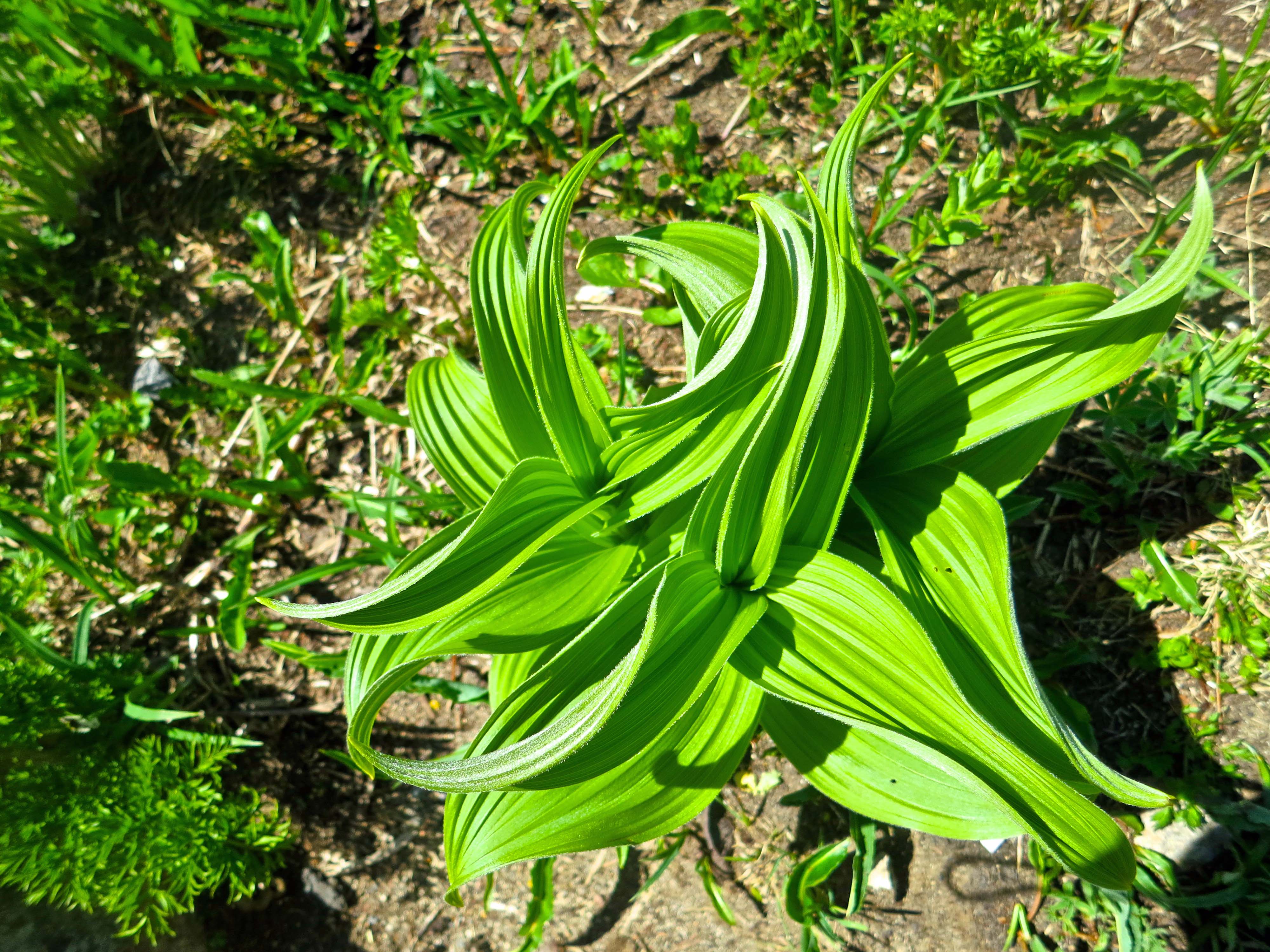
Corn lily growing on the side of Mt. Rainier. Photo by Curtis Mekemson.

And this wonderfully wild corn lily.

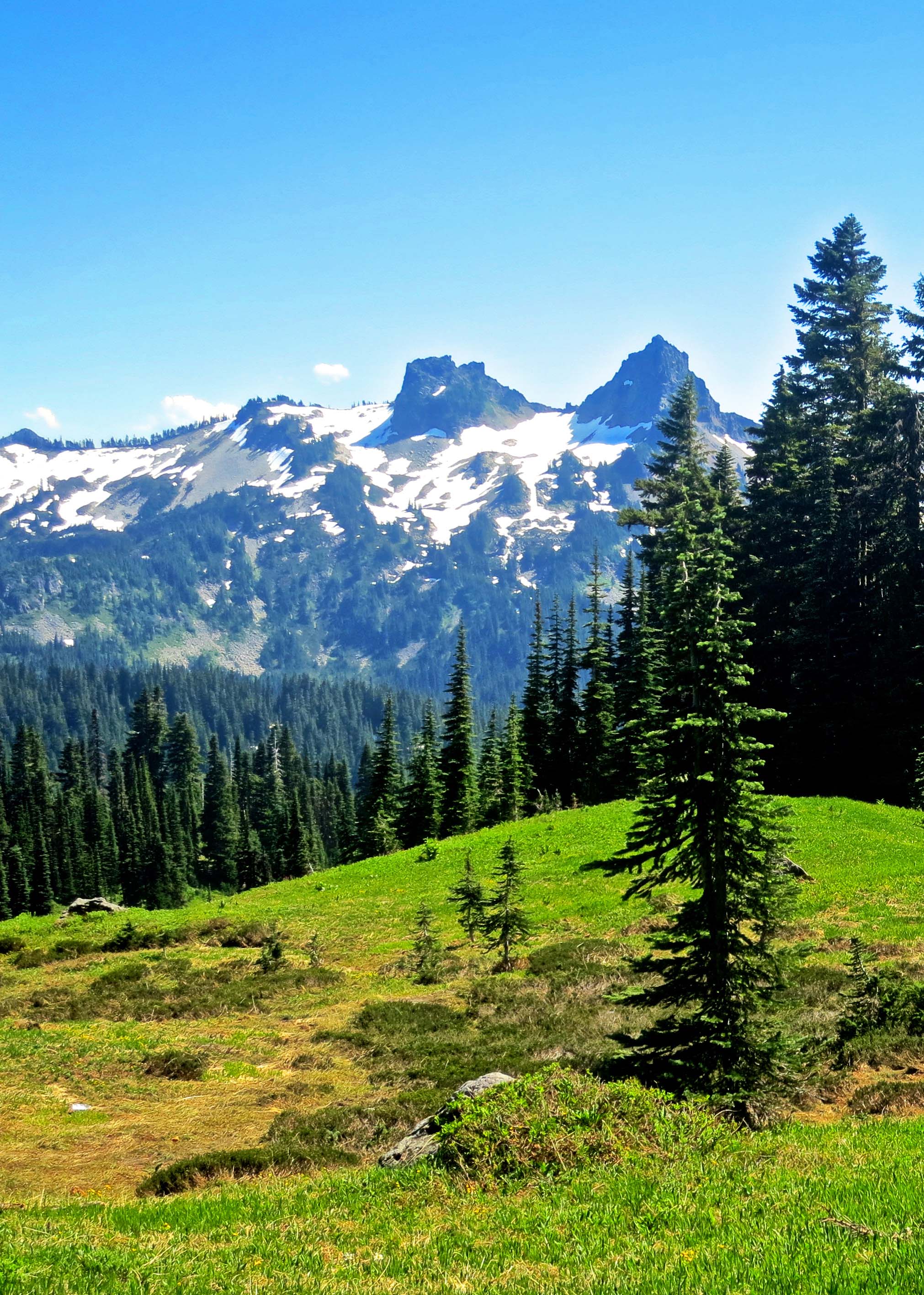
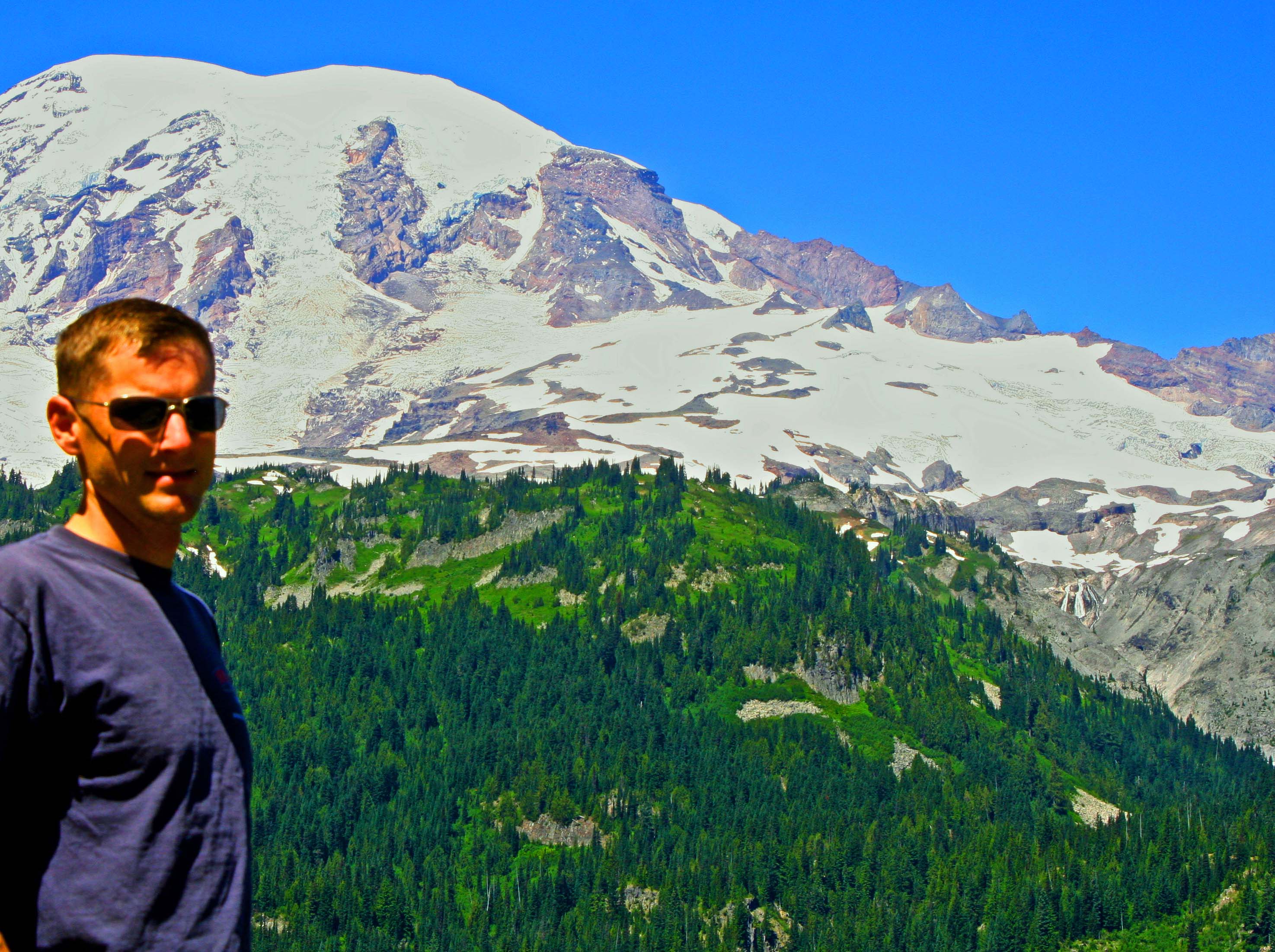
A goodbye view of Mt. Rainier.

A final goodbye view of Mt. Rainier. Next Blog: We begin our kayak adventure and search for Orca Whales off the north coast of Vancouver Island.


“Now, that’s a glacier…” Mt. Rainier National Park

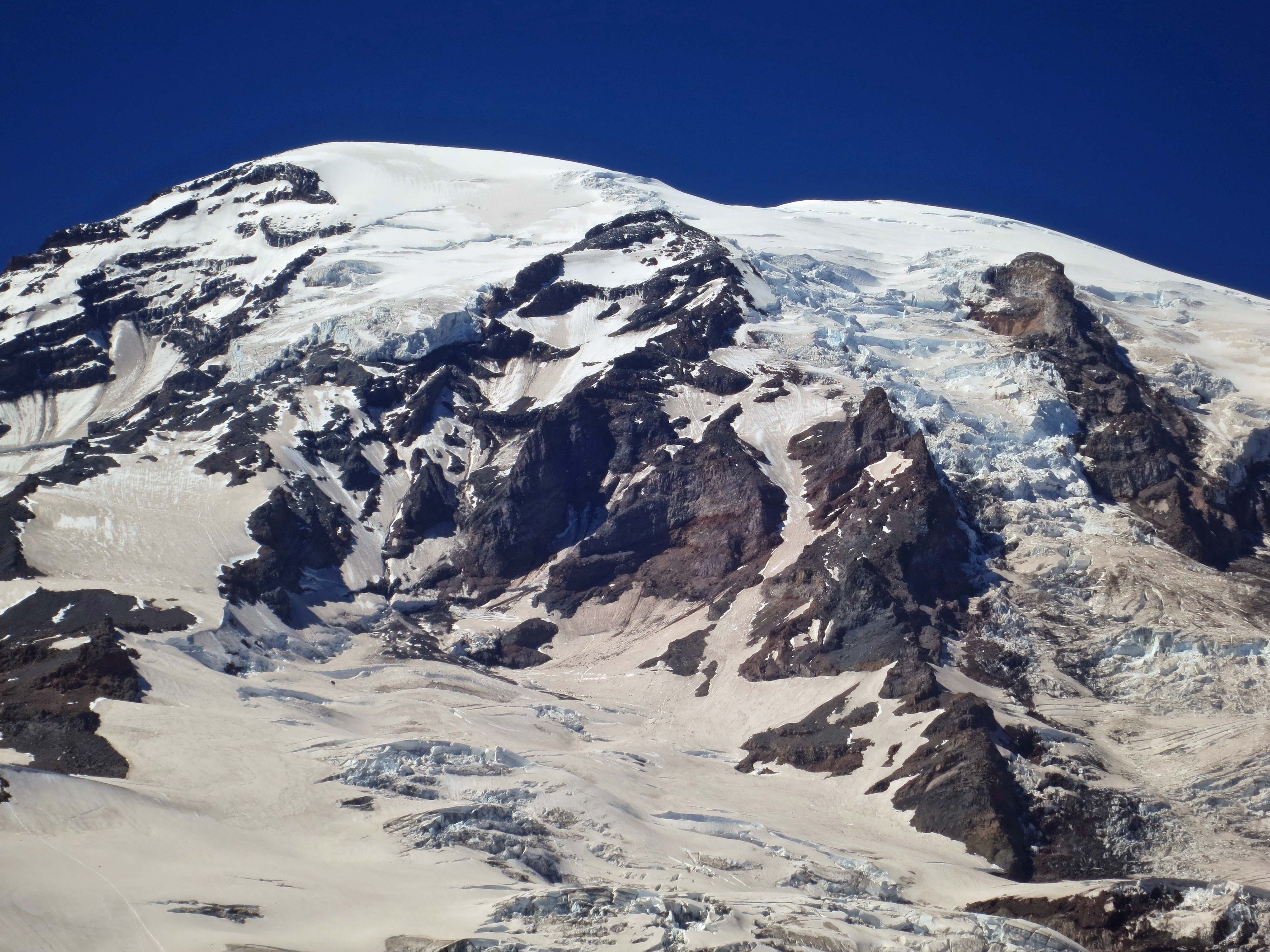
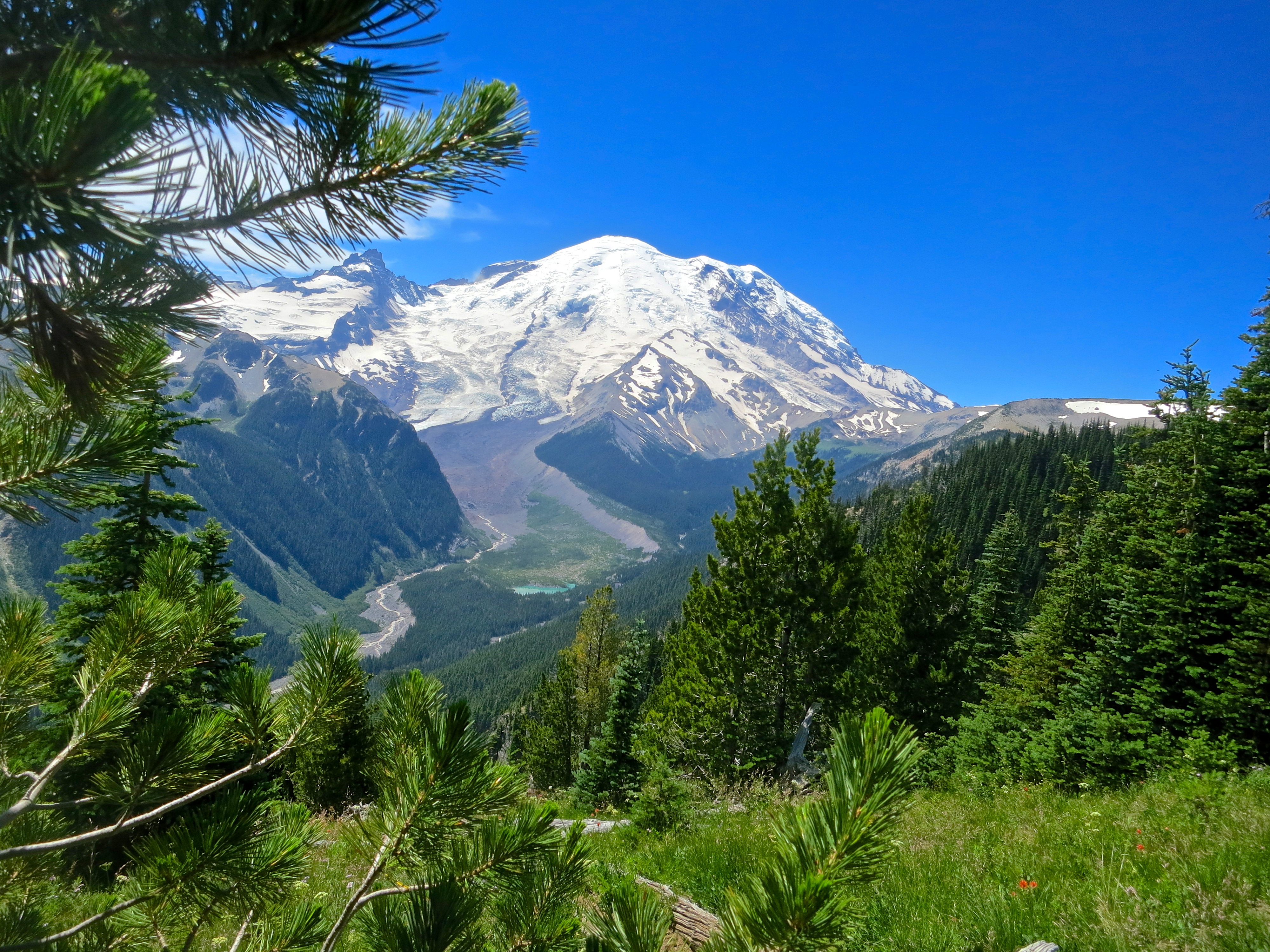
Mt. Rainier National Park. Photo by Curtis Mekemson.

Mt. Rainier is the most glaciated mountain in the lower 48 states of the US.

It was supposed to be a laid-back summer. Our daughter Tasha would come out from Tennessee with our grandsons Ethan and Cody for a week or two in June. And then we would go to Burning Man in late August. In between, we’d hang out at our home in the mountains, relax, and explore more of Southern Oregon— if we had the energy.

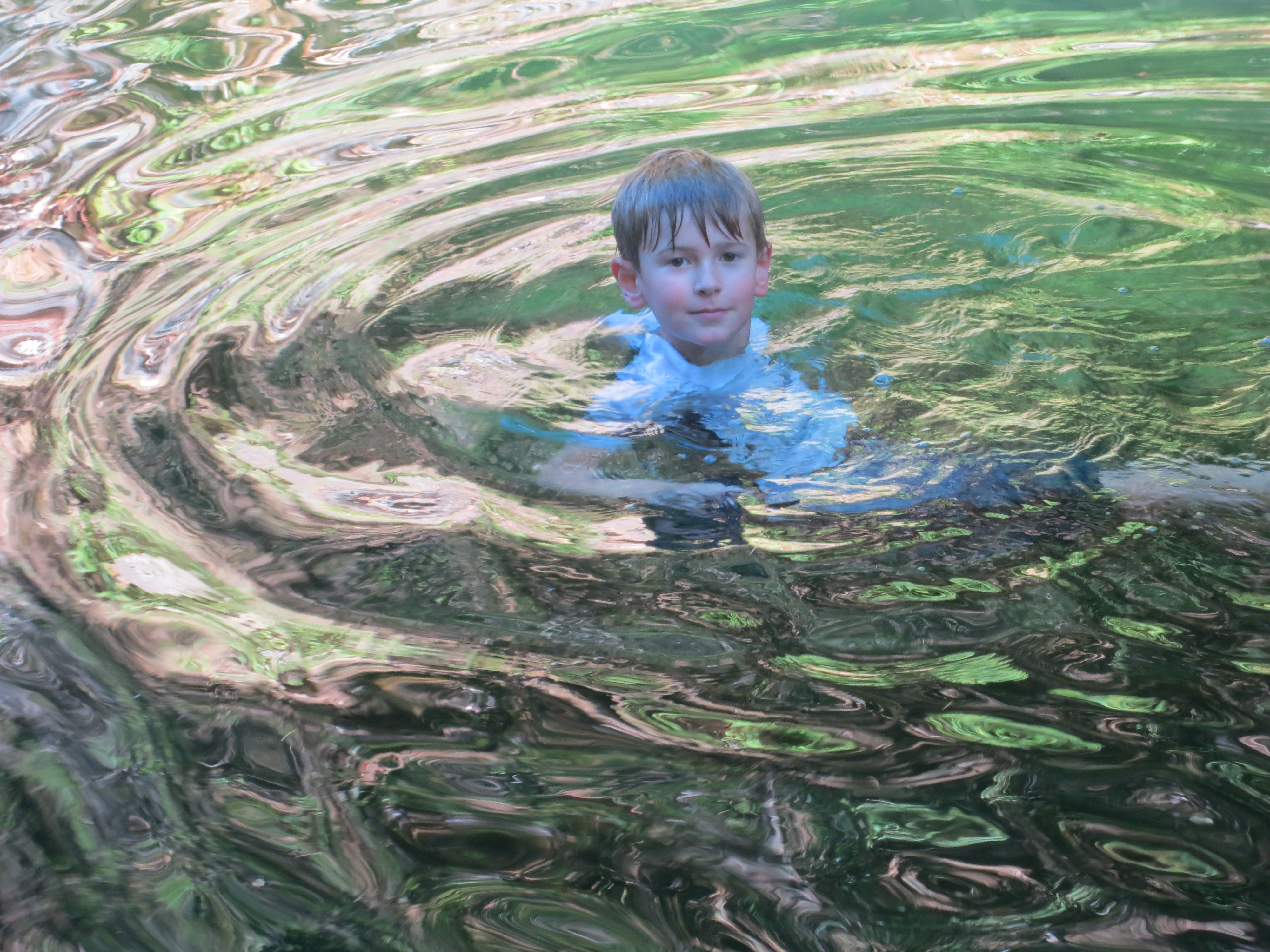
Our grandson Ethan enjoys a dip in the Applegate River this summer a few miles from our house .

Our grandson Ethan enjoys a dip in the Applegate River this summer a few miles from our house.

Then Edie called. Edie is Peggy’s old high school friend who lives in Anchorage, Alaska. She and her husband David had found what sounded like a great sea-kayak adventure looking for Orcas off the northern tip of Vancouver Island in August. Would we like to go? How could we resist? It would make our trip to Burning Man tight, but it was still doable.

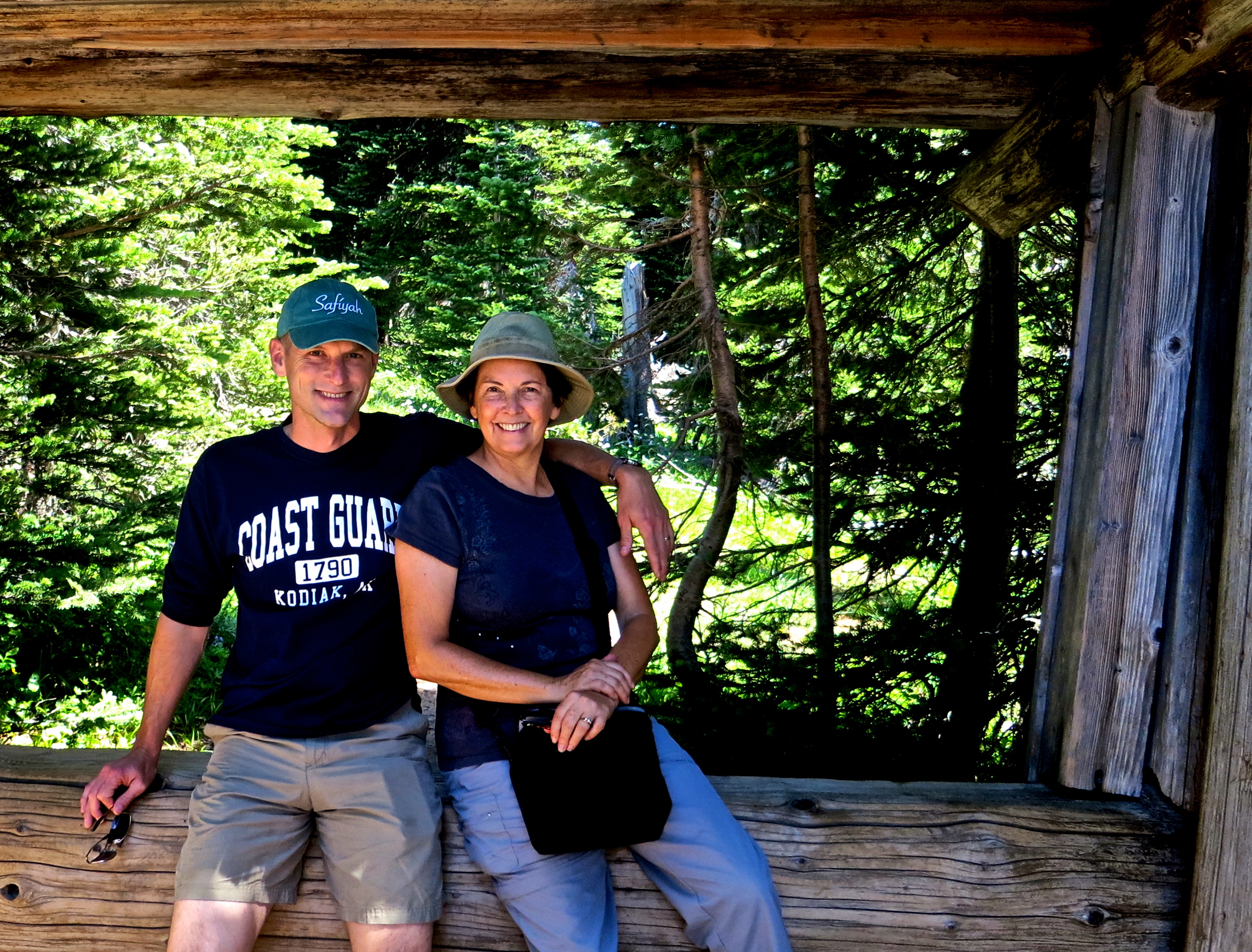
Tony, our son who flies helicopter rescue missions for the Coast Guard off Kodiak Island, was next. He had helicopter crash training in Spokane in early August. This is where a huge machine takes a helicopter and dumps it upside down in a large pool of water so the pilot and crew can practice their escape routines. Wouldn’t it be great if we could pick him up at the Seattle airport before the training and head out for a few days of camping and hiking at Mt. Rainier? Yes it would, declared Peggy, doing a happy-mother dance. I wasn’t to worry that the Rainier trip backed up on the kayak trip that backed up on Burning Man.

Then Tasha called. She couldn’t come in June but had found some great tickets to fly out in July for a couple of weeks. Oops, said Mom. The latter part of the trip was double booked with the Tony trip. Not to worry, said Tasha. She’d only stay for a week and a half. If we hurried we could get to Seattle the day before Tony arrived so we could grab a campsite before they all disappeared. We found a campsite, barely. What disappeared was our laid-back summer.

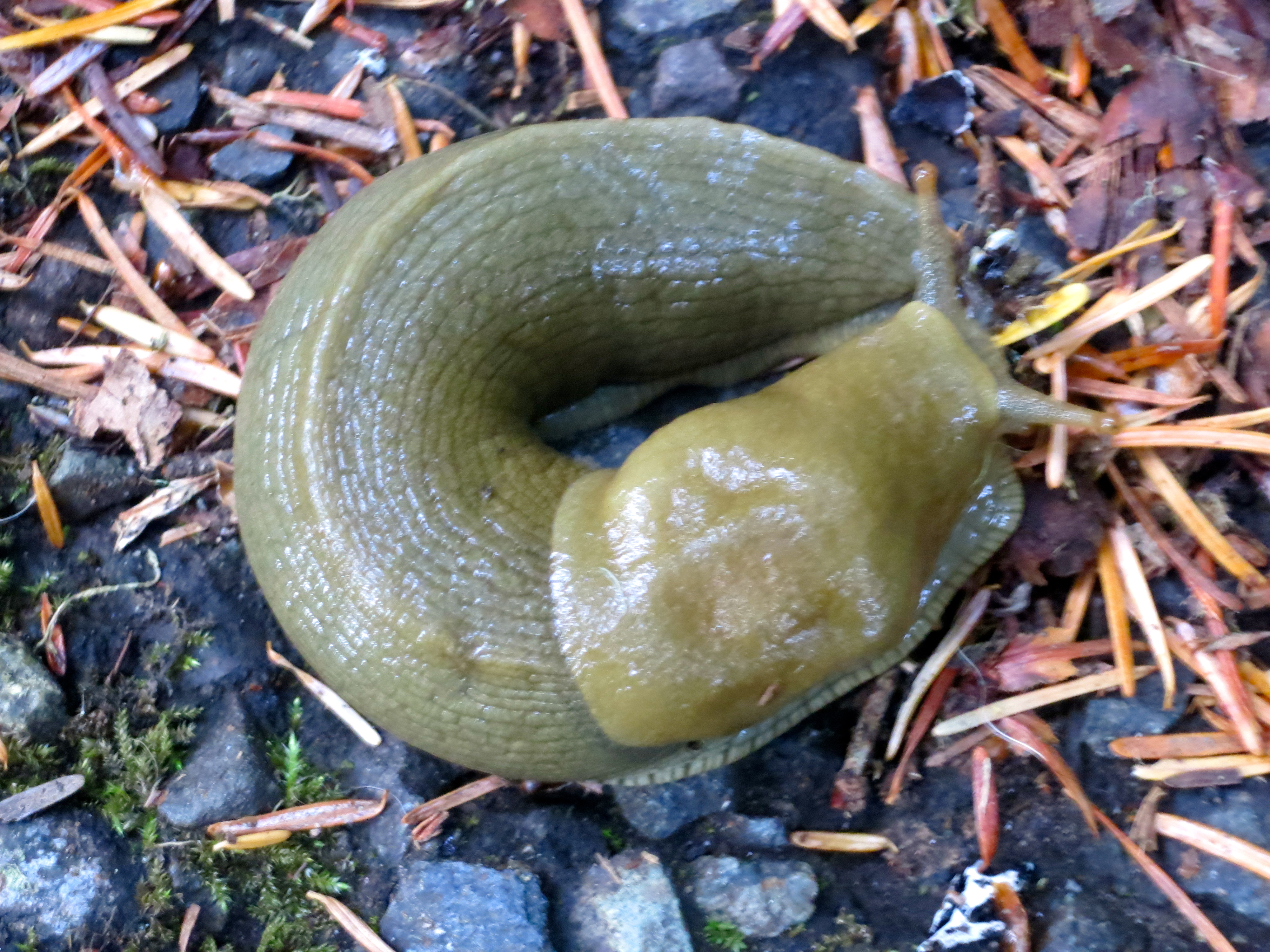
Photo of large slug at Mt. Rainier by Curtis Mekemson.

This slug we found at Mt. Rainier National Park was traveling at just about the pace I had hoped we would enjoy our summer. It wasn’t to be.

Join Peggy and me on my next two posts as we explore Mt. Rainier with Tony. After that, we will zip off on a search for whales with Edie and David.

View from Sunrise Visitors center at mt. Rainier National Park. Photo by Curtis Mekemson.

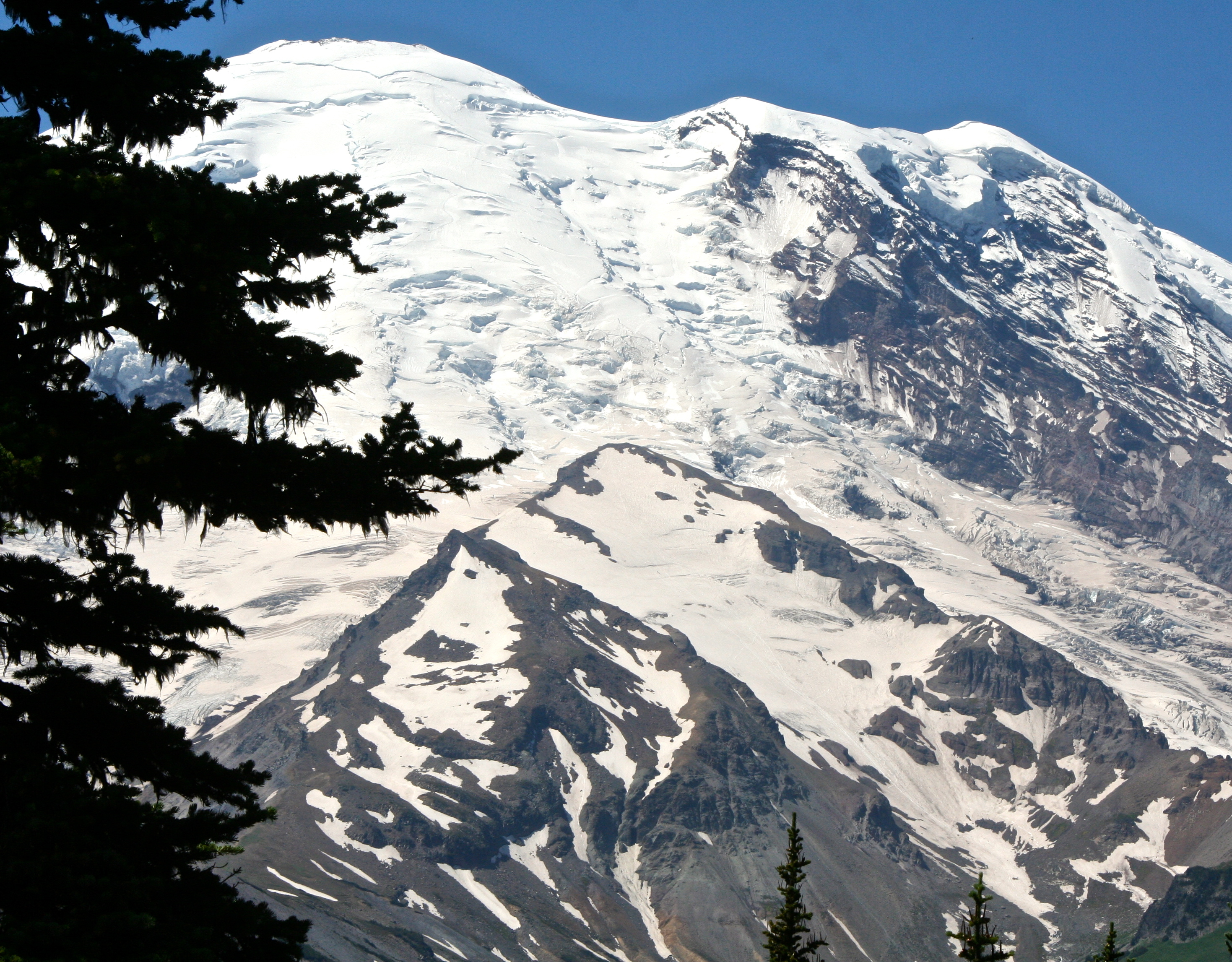
Looking up at Emmons Glacier from the Sunrise Visitor’s Center at Mt. Rainier.

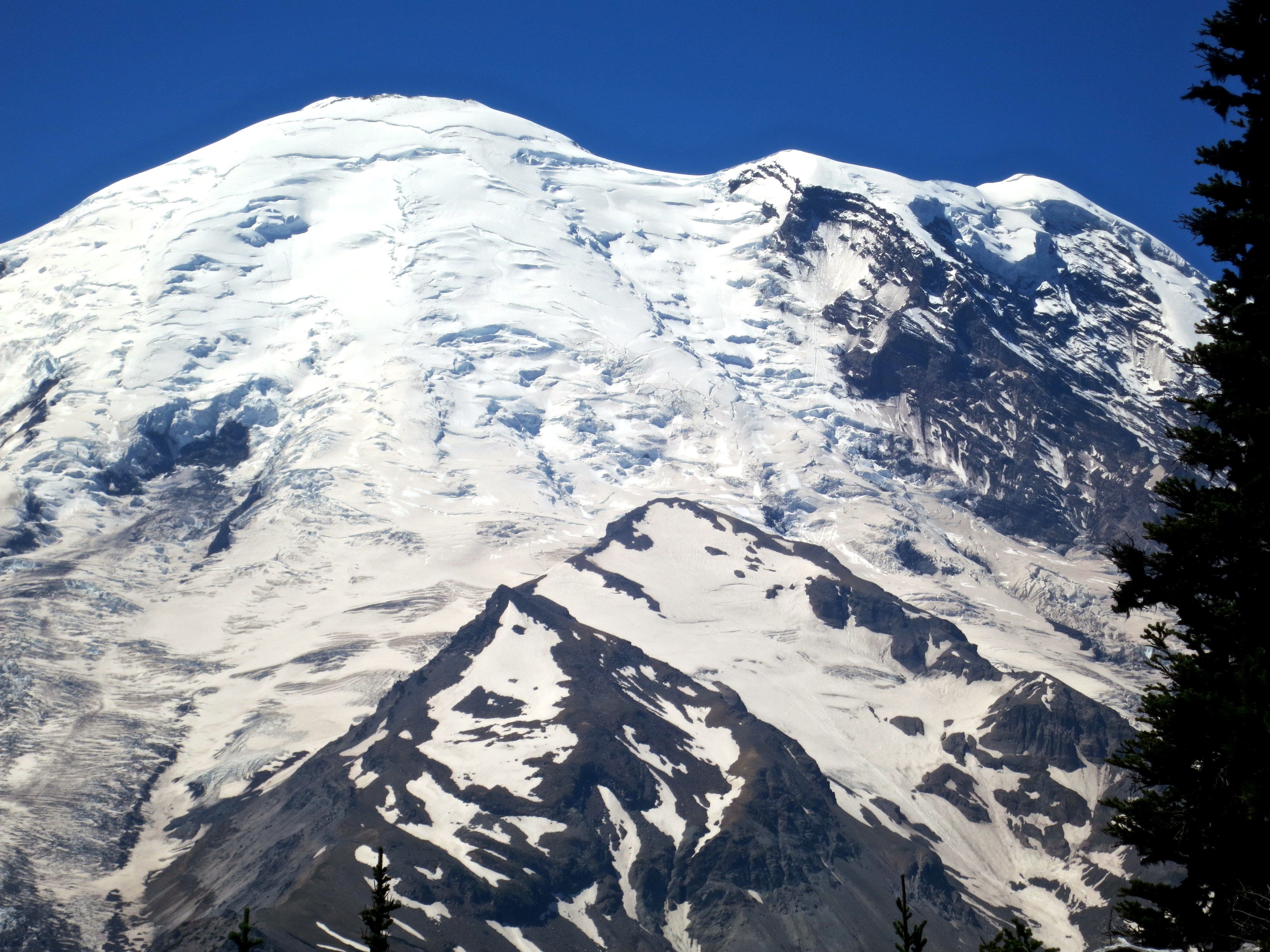
Close-up of Emmons Glacier at Mt Rainier National Park. Photo by Curtis Mekemson.

A close-up of Emmons Glacier.

Peggy and Tony pose fro a picture near the Sunrise Visitor Center at Mt. Rainier National Park.

Peggy and Tony pose for a picture near the Sunrise Visitor Center at Mt. Rainier National Park.

Indian Paintbrush at Mt. Rainier. Photo by Curtis Mekemson.

A short walk along the Silver Forest Trail from Sunrise Center included fields full of flowers as well as spectacular views of the mountain. This is Indian Paintbrush.

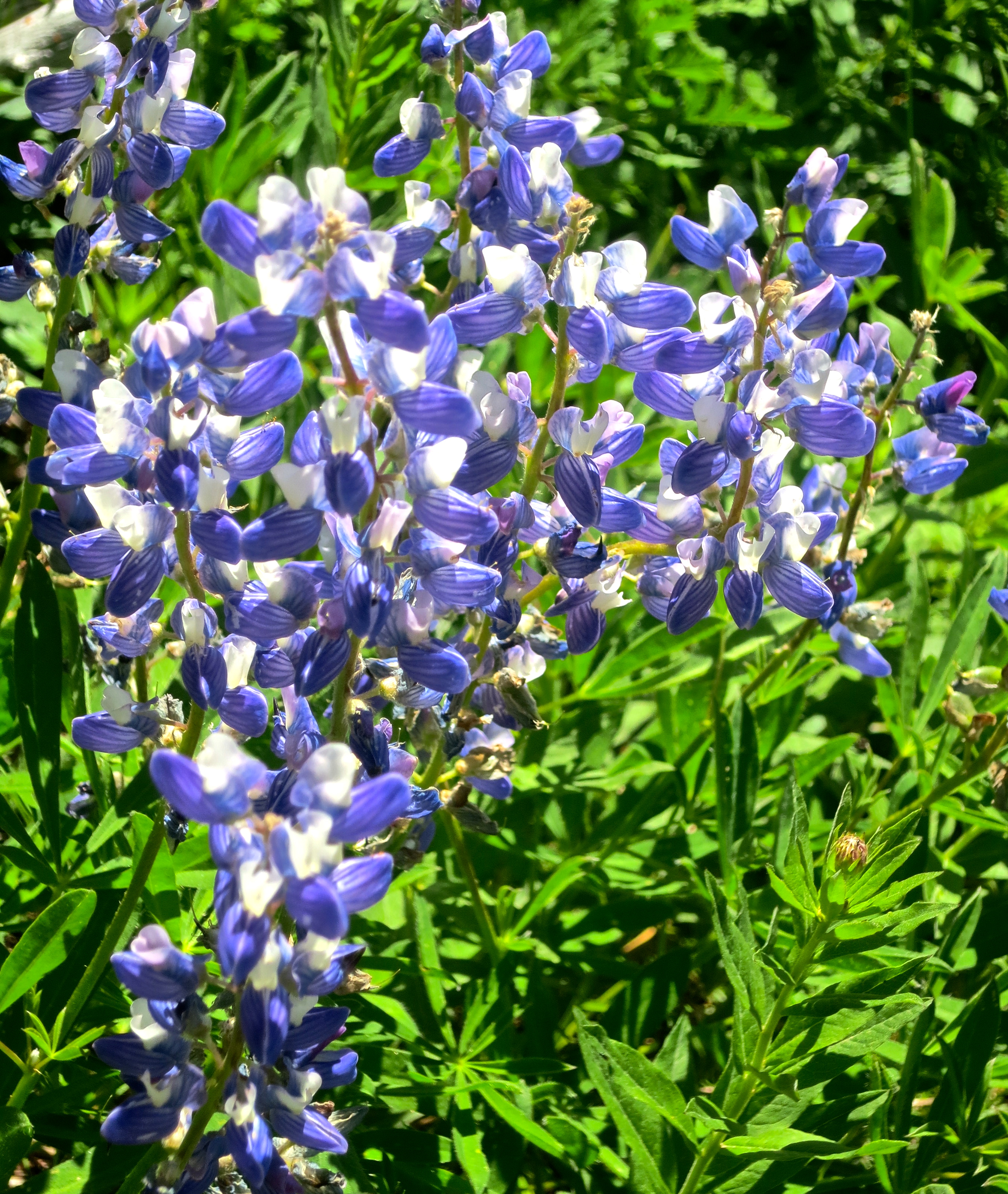
Lupine at Mt. Rainier National Park. Photo by Curtis Mekemson.

Lupine.

A strange and fuzzy Western Pasqueflower. Photo by Peggy Mekemson.

A strange and fuzzy Western Pasqueflower. Photo by Peggy Mekemson.

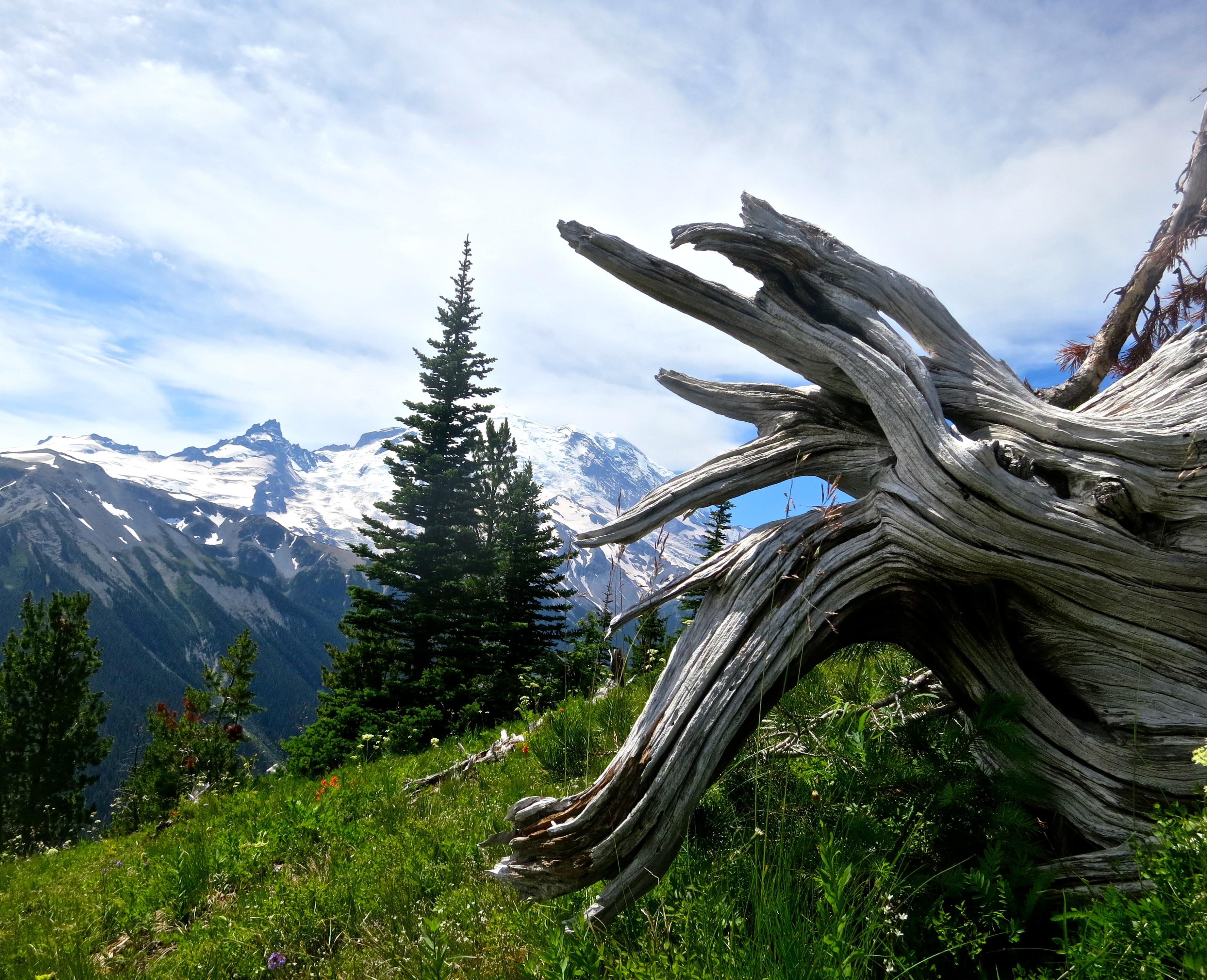
Aged tree root near Sunrise Center at Mt. Rainier National Park. Photo by Curtis Mekemson.

This aged tree root with its magnificent backdrop caught my attention.

Dead tree outlined against the sky in a black and white photo at Mt. Rainier National Park. Photo by Curtis Mekemson.

As did this dead tree.

A final view of Emmons Glacier. Next Blog: A giant forest, beautiful falls, and more views of Mt. Rainier. (Photo by Peggy Mekemson.)

A final view of Emmons Glacier. (Photo by Peggy Mekemson.) Next Blog: A giant forest, beautiful falls, and more views of Mt. Rainier. 

Welcome to Burning Man’s Temple… A Spiritual Place

Early morning photo of the Temple of Grace at Burning Man 2014. Photo by Curtis Mekemson.

Outlined by early morning sunlight, the 2014 Temple of Grace (designed by David Best) adds an element of tranquility and spirituality to Burning Man.

Black Rock City does an annual census that is chock-full of interesting information, including the spiritual beliefs of Burners. I was going to write about the overall census results today, but decided to wait for the final 2014 data. That means this will be my last post for the season on Burning Man.

Census form being filled out at Burning Man 2014. Photo by Curtis Mekemson.

Burning Man takes its annual census seriously. Here a Burner fills out his form while his friend checks out the entertainment at the Center Camp Cafe.

It seems appropriate that I conclude with the Temple. I consider it to be Burning Man’s most unique structure. And yes, this includes the Man. The Temple is a spiritual place. Thousands of Burners leave messages to friends and loved ones who have passed on, including pets. They also leave messages of thanks and love to people who are still very much with us. By Saturday, it is challenging to find a reachable space that hasn’t been written on. When the Temple burns on Sunday evening, all of these messages are sent skyward, with a prayer, if you will.

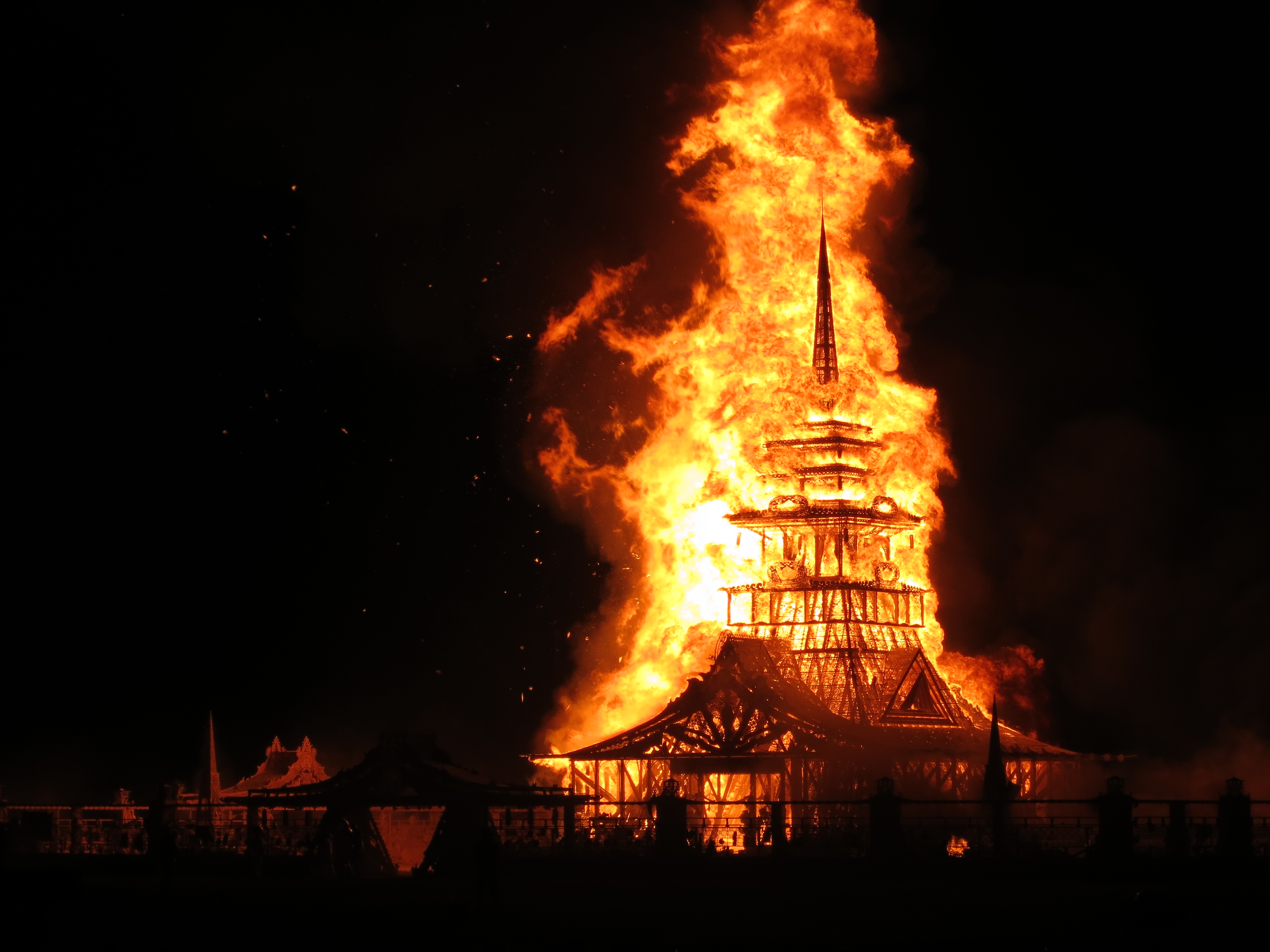
Burning of 2102 Temple of Juno designed by David Best. Photo by Curtis Mekemson.

While Peggy and I left before the burning of the 2014 Temple, we were able to stay for the burning of 2012 Temple, which was also built by David Best.

This does not mean that Burners are religious. In fact, only 7% of Burners define themselves as belonging to a particular religion according to the 2013 Census. Half of all Burners consider themselves spiritual, however. And most of these folks, including me, think of the Temple as sacred space. The thousands of messages of grief and deeply felt love make it impossible to think otherwise.

Messages written on the walls of the Temple of Grace at Burning Man 2014. Photo by Curtis Mekemson.

So many messages are written on the walls of the Temple that no space is left, as this photo illustrates. I was amused by the upper left message that stated, “Goodbye to who I thought I was. Yes!” Warning: Going to Burning Man may impact your concept of reality.

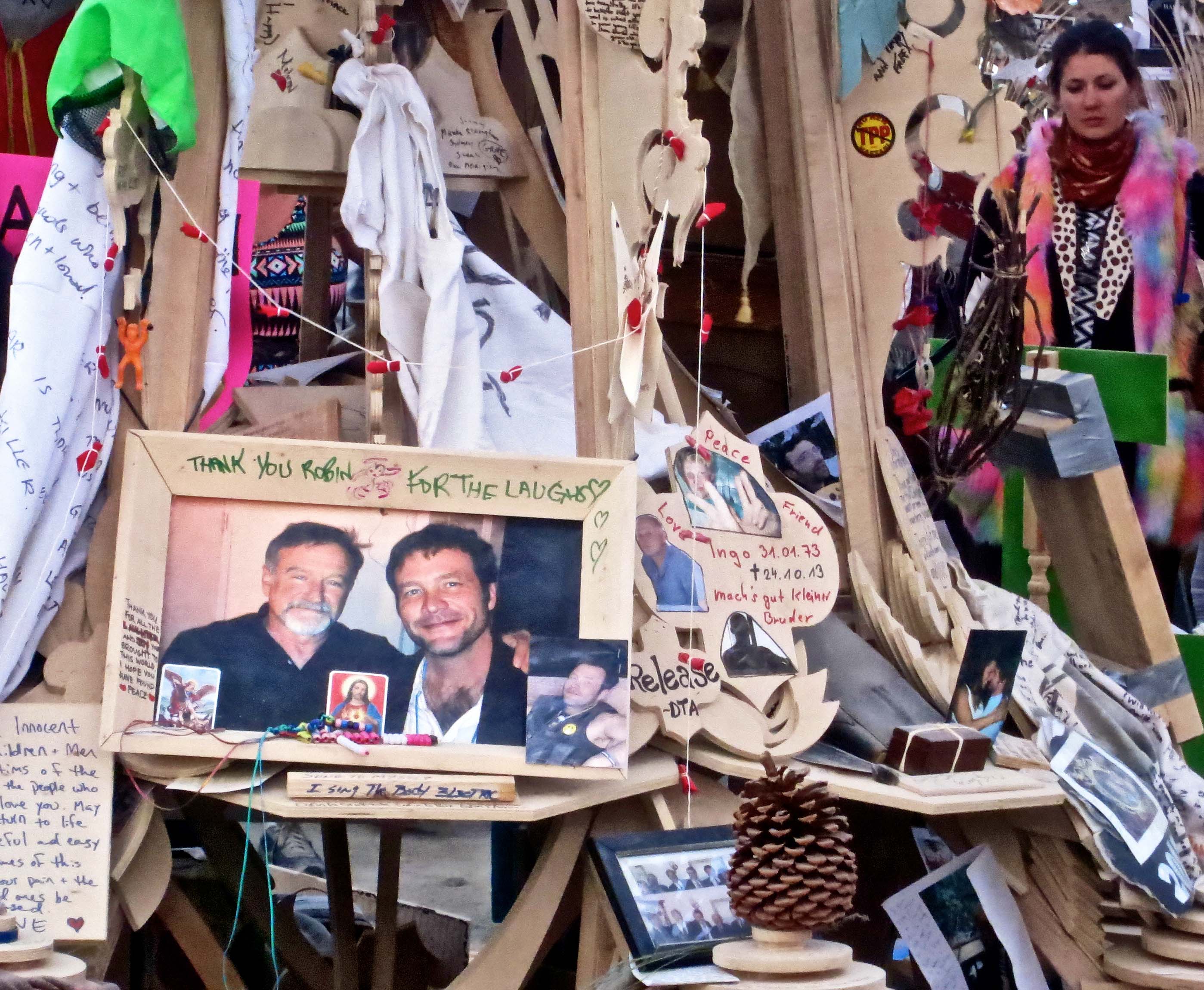
A memorial to Robin Williams at the 2014 Temple of Grace at Burning Man 2014.  Photo by Curtis Mekemson.

There was also a memorial to Robin Williams. “Thank you Robin for the laughs.”

View of Temple of Grace at Burning Man 2014. Photo by Curtis Mekemson.

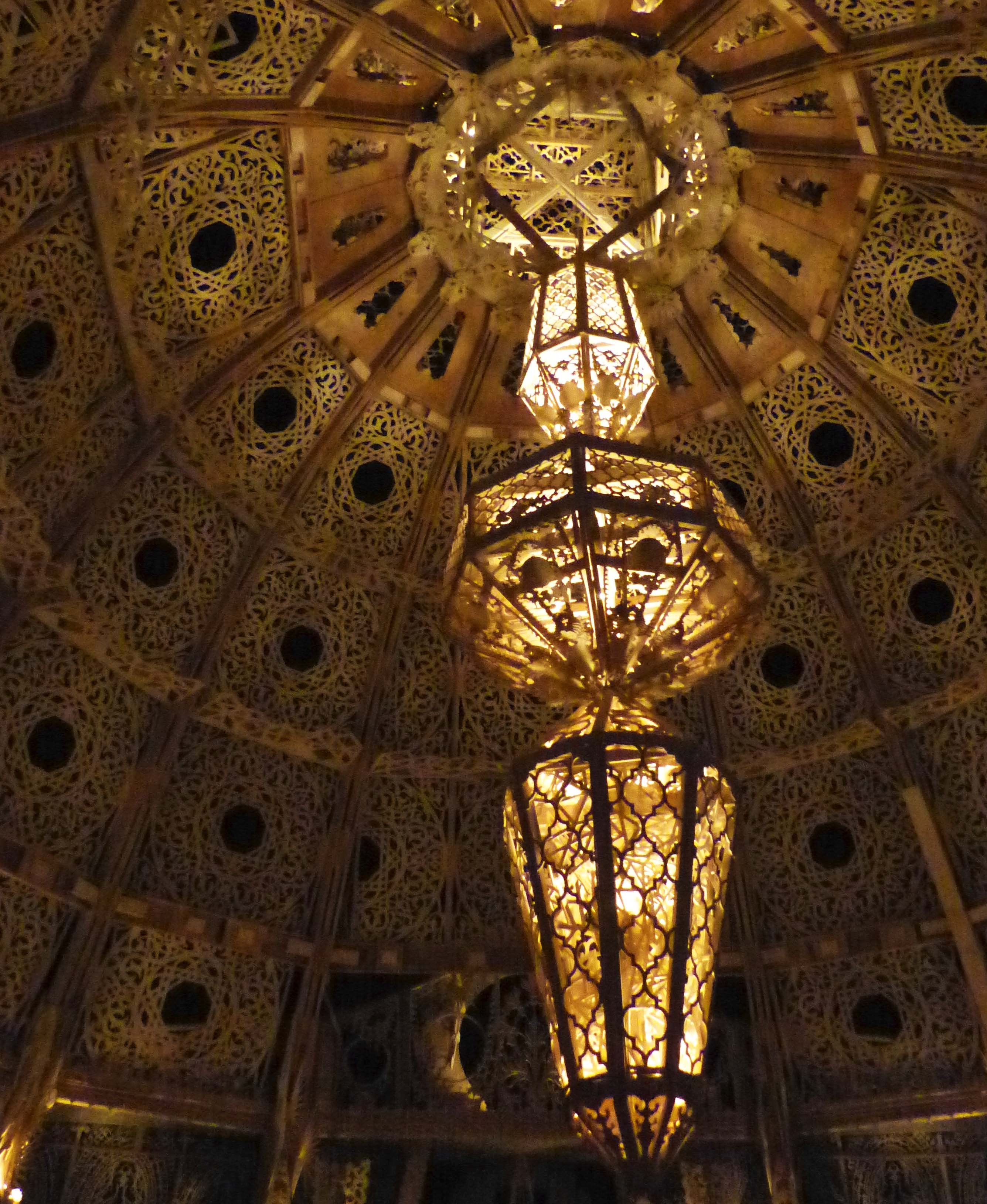
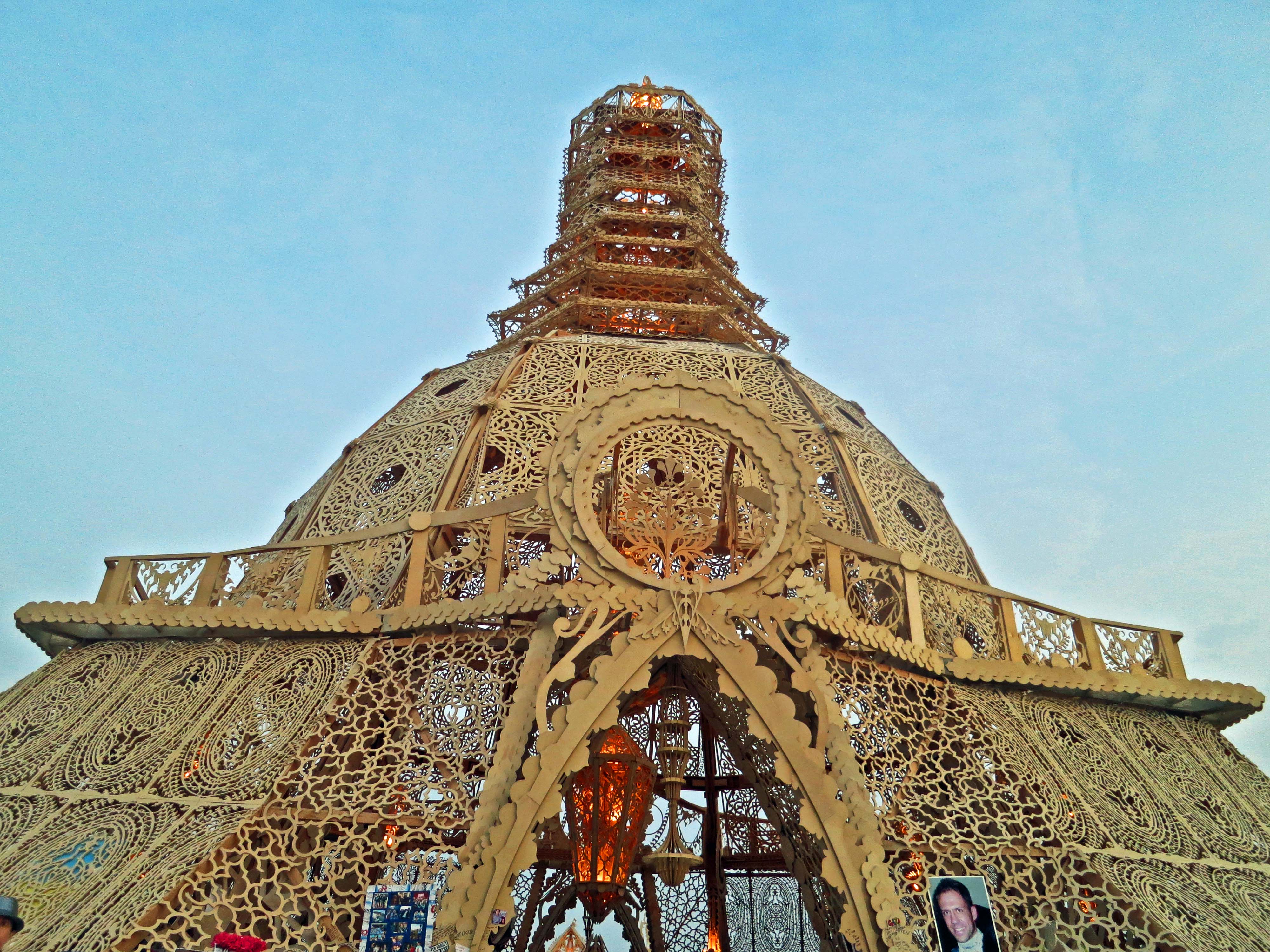
I like this photo because of the perspective it provides on how intricately the walls of the Temple were carved.

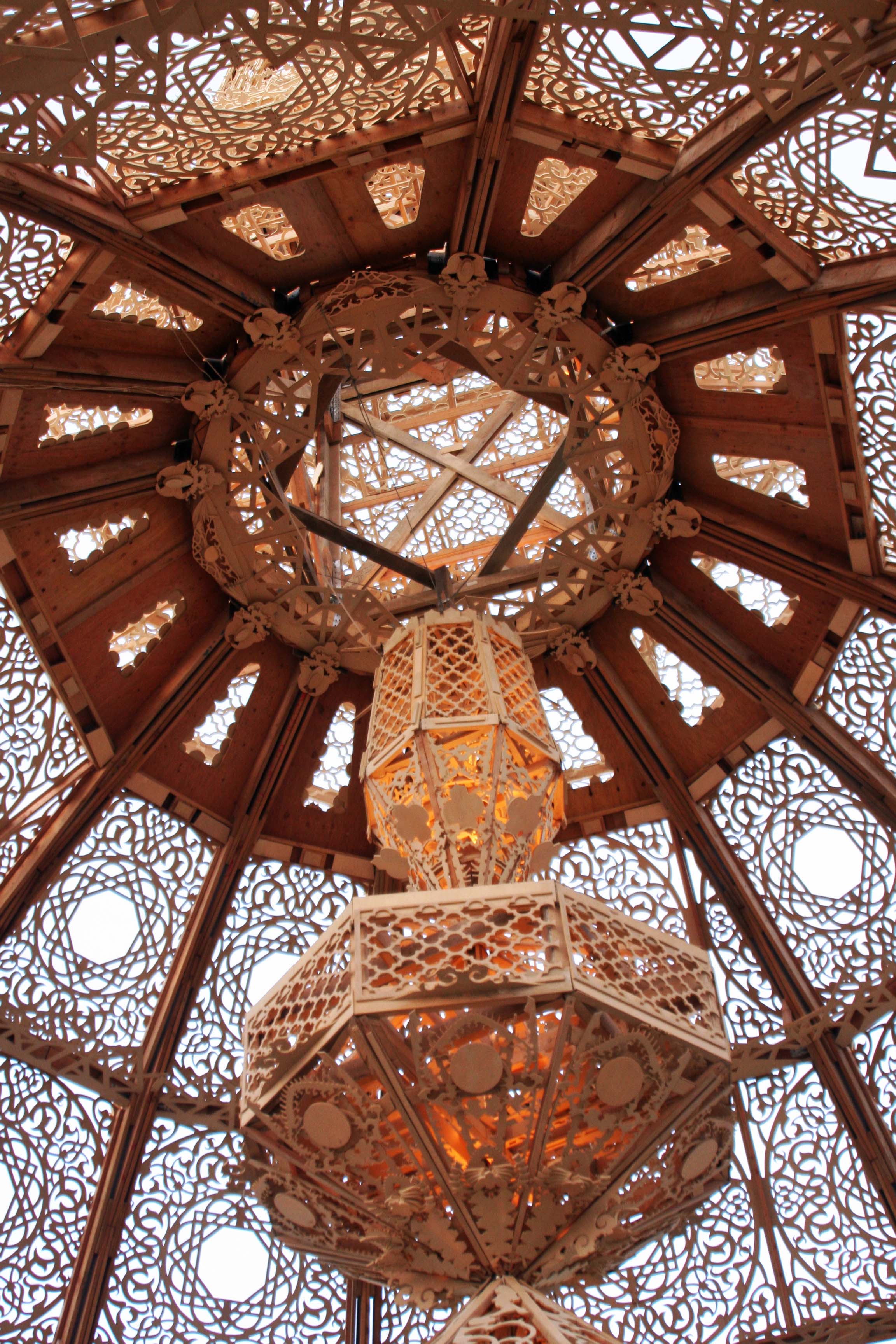
Center piece at Temple of Grace, Burning Man 2014.

This view of the Temple’s centerpiece also demonstrates the intricate carving as well as the open feeling of the Temple. (Photo by Peggy Mekemson.)

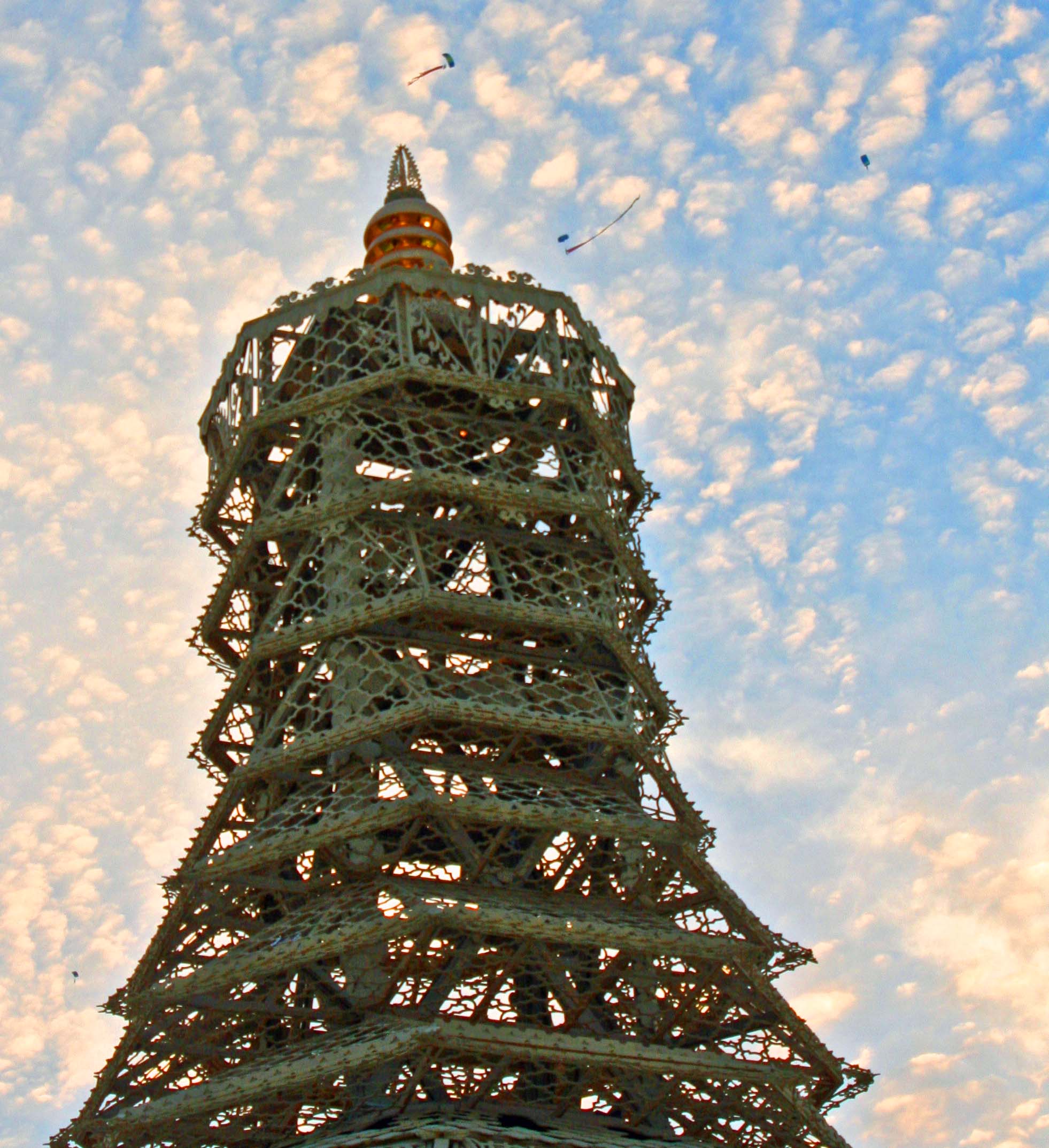
Top of Temple of Grace at Burning Man 2014.

Peggy caught this early morning photo of the Temples top. The specks you see up in the sky, BTW, are skydivers. Hundreds of jumps are made during the week. (Photo by Peggy Mekemson.)

Gateway to Temple of Grace at Burning Man 2014. Photo by Curtis Mekemson.

One of the main gateways into the Temple of Grace.

Gateway pillar at Temple of Grace, Burning Man 2014. Photo by Curtis Mekemson.

I liked the contrast with this gateway pillar and the morning sky.

Photo of early morning clouds taken from Temple of Grace at Burning Man 2014. Photo by Curtis Mekemson.

Looking over the wall that surrounds the Temple of Grace, I took this photograph of clouds caught at dawn.

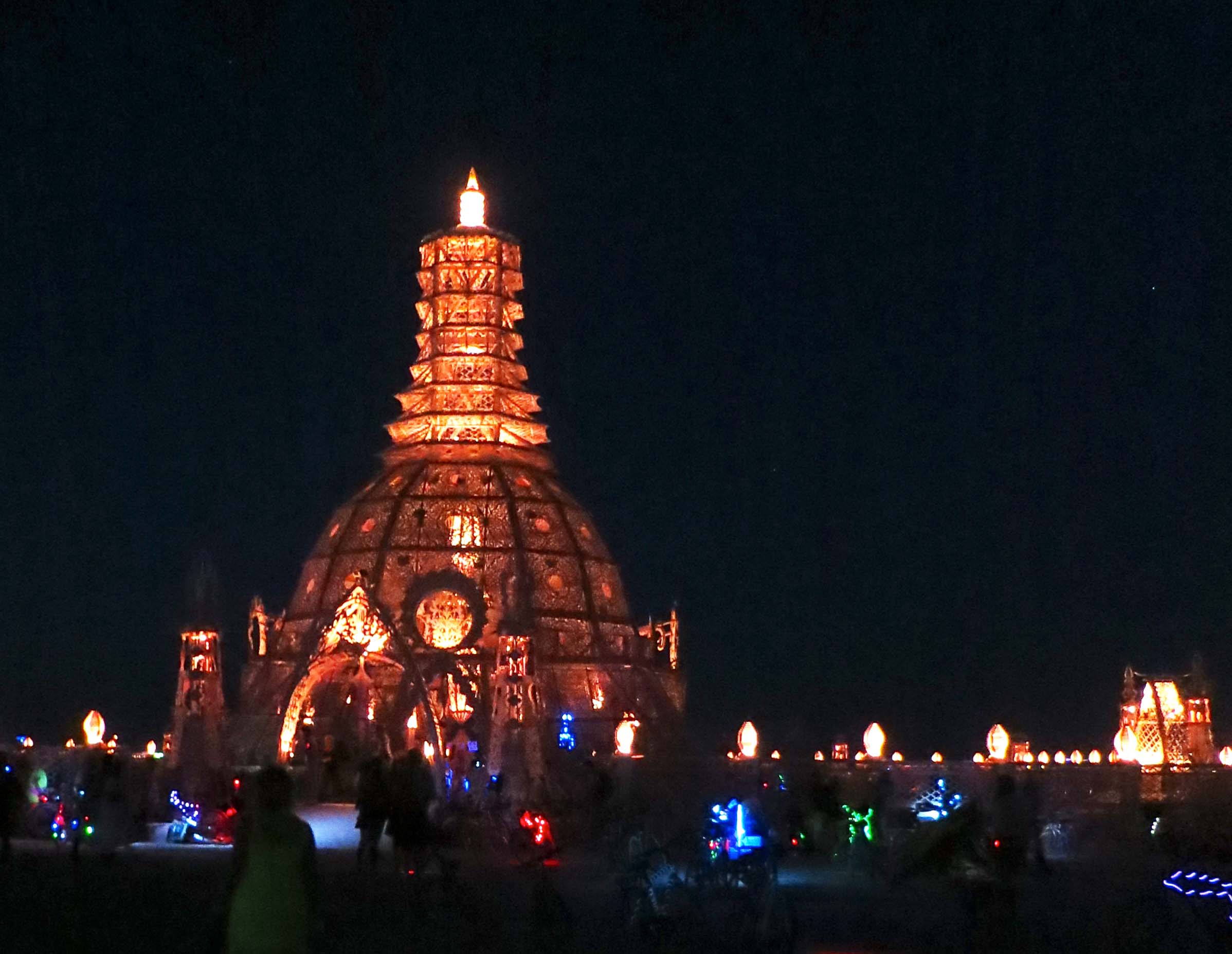
A view of the 2014 Burning Man Temple of Grace at night. Photo by Curtis Mekemson.

A view of the Temple of Grace at night.

A view of the Temple's centerpiece at night. (Photo by Don Green.)

The Temple’s centerpiece at night. (Photo by Don Green.)

Temple of Grace at night during Burning Man 2014. Photo by Curtis Mekemson.

A final view of the Temple of Grace.

NEXT BLOGS: I am beginning a new series on North America’s fabulous Northwest. I will start with a week-long sea kayak trip Peggy and I took this summer off the coast of northern Vancouver Island looking for Orcas. I will then move inland for a look at Washington’s beautiful Mt. Rainier National Park where Peggy and I hiked with our son Tony in August. I will finish up with a road trip down the Oregon coast, which I am on right now. It may even include portions of Washington and California’s Coast. Who knows where I might end up. I don’t.

A Goat with a Pink Tutu— Walkabout at Black Rock City: Burning Man 2014

Goat at Burning Man 2014 wearing a pink tutu. Photo by Curtis Mekemson.

Where else, other than Black Rock City, would you find a goat with purple hair wearing a rosy pink tutu.

Going on walkabout was a rite of passage for Australian Aboriginals. Young men would journey through the Australian Bush for up to six months while contemplating their navels and pondering the wonders of the universe. At least I assume that is what they did. Native Americans had a similar practice where young people would go out on vision quests to discover their totem animals and earn such names as Bear Who Throws Bone in Air.

Brown Bear throwing bone in air. Photo by Curtis Mekemson.

So, if you were on a vision quest and came across a huge brown bear throwing a moose bone in an air, would you name yourself after the event? Or would you just run?  (I took this photo last year in Alaska.)

My parents used to send me outside as well, although I expect their motives were different. I was more than happy to wander off into the woods during such exiles. I even found my own totems: Robin Hood, Tarzan and the Lone Ranger. The woods were full of outlaws, man-eating tigers and one illusive 20-foot boa. I was, of course, able to defeat them all. The names of my heroes were already taken, however. I had to settle for Boy Who Peed on the Poison Oak. Like how much more daring could I get?

Peggy and I love to go on walk-abouts and bike-abouts at Burning Man. I’ve already introduced you to some of the creatures we met this year including a rhinoceros and a giant octopus. You’ve journeyed with us to Center Camp, watched the Man and Embrace burn, and checked out the art on the Playa.

This is what the rhino looked like up close and personal.

This is what the rhino looked like up close and personal.

I was charged by a rhino once when I was in Ngorongoro Crater, Africa. I took this photo with my Kodak Instamatic just before he charged. I didn't get any closeups.

I was charged by a rhino once when I was in Ngorongoro Crater, Tanzania, Africa. It was a while ago. I took this photo with my Kodak Instamatic just before he charged. I didn’t get any close-ups.

Today you are invited to join us as we explore the back roads of Black Rock City. The thing about this one week, temporary home for 65,000 people is it doesn’t matter which way you go, there are bound to be interesting sights. We found a goat with purple hair wearing a pink tutu, Elvis, a home for little people, and a woman falling off a tight rope… not to mention a 20-foot tall sculpture known as, umm, the Divine Masculine. I’ll let your imagination tackle that one for a bit.

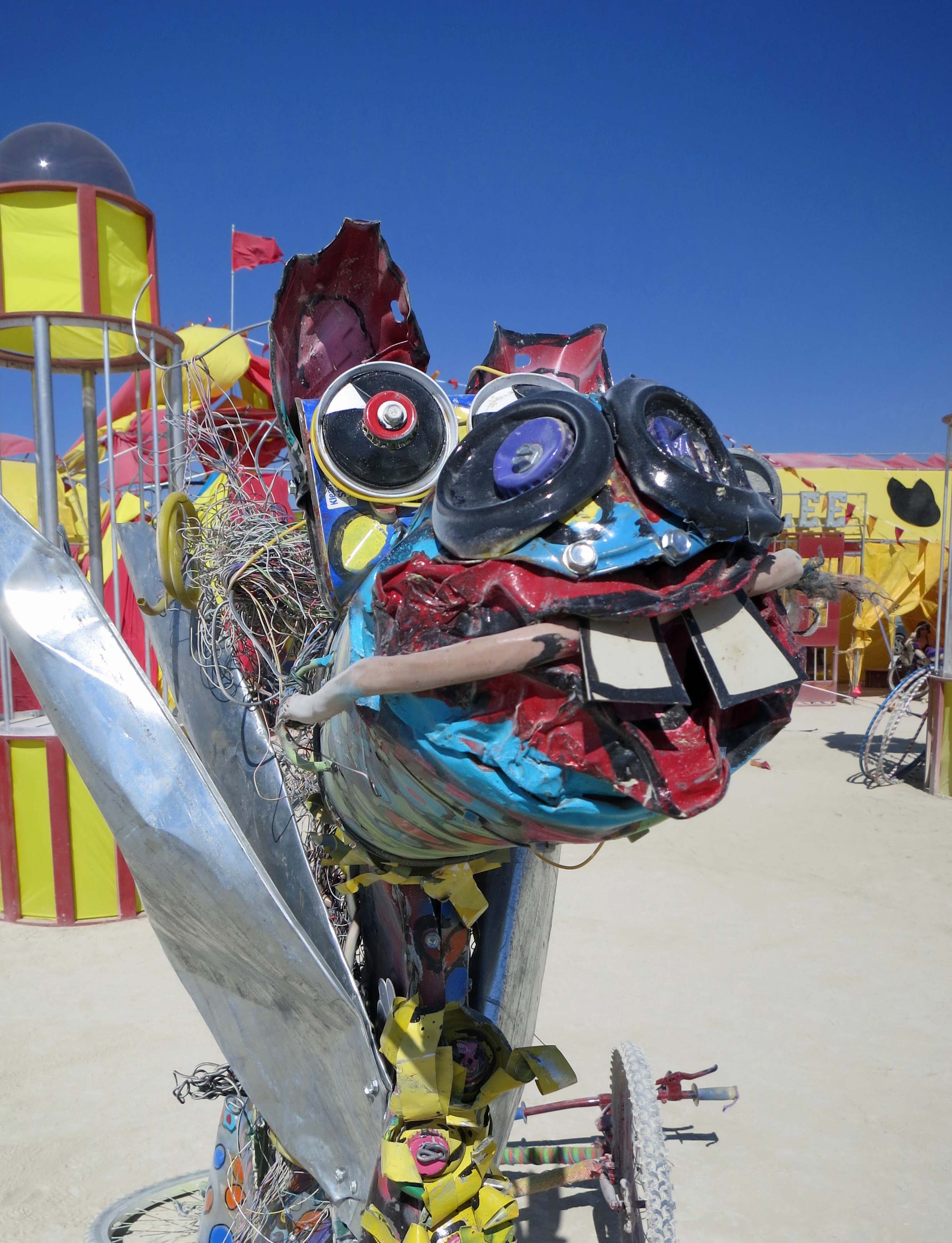
Crazy Horse at Burning Man 2014. Photo by Curtis Mekemson.

We came across this crazy hose with buck teeth. “Is that supposed to be a joint in its mouth?” I asked Peg. “That would explain a lot,” she replied.

The Elvis wedding Chapel at Burning Man 2014. Photo by Curtis Mekemson.

I’ve never really believed the tales of Elvis sightings around the world. But if he is alive, I am convinced he goes to Burning Man.

A small house at Burning Man 2014. Photo by Curtis Mekemson.

Peggy came across a series of little houses and crawled into this one. It was set up for a chess game.

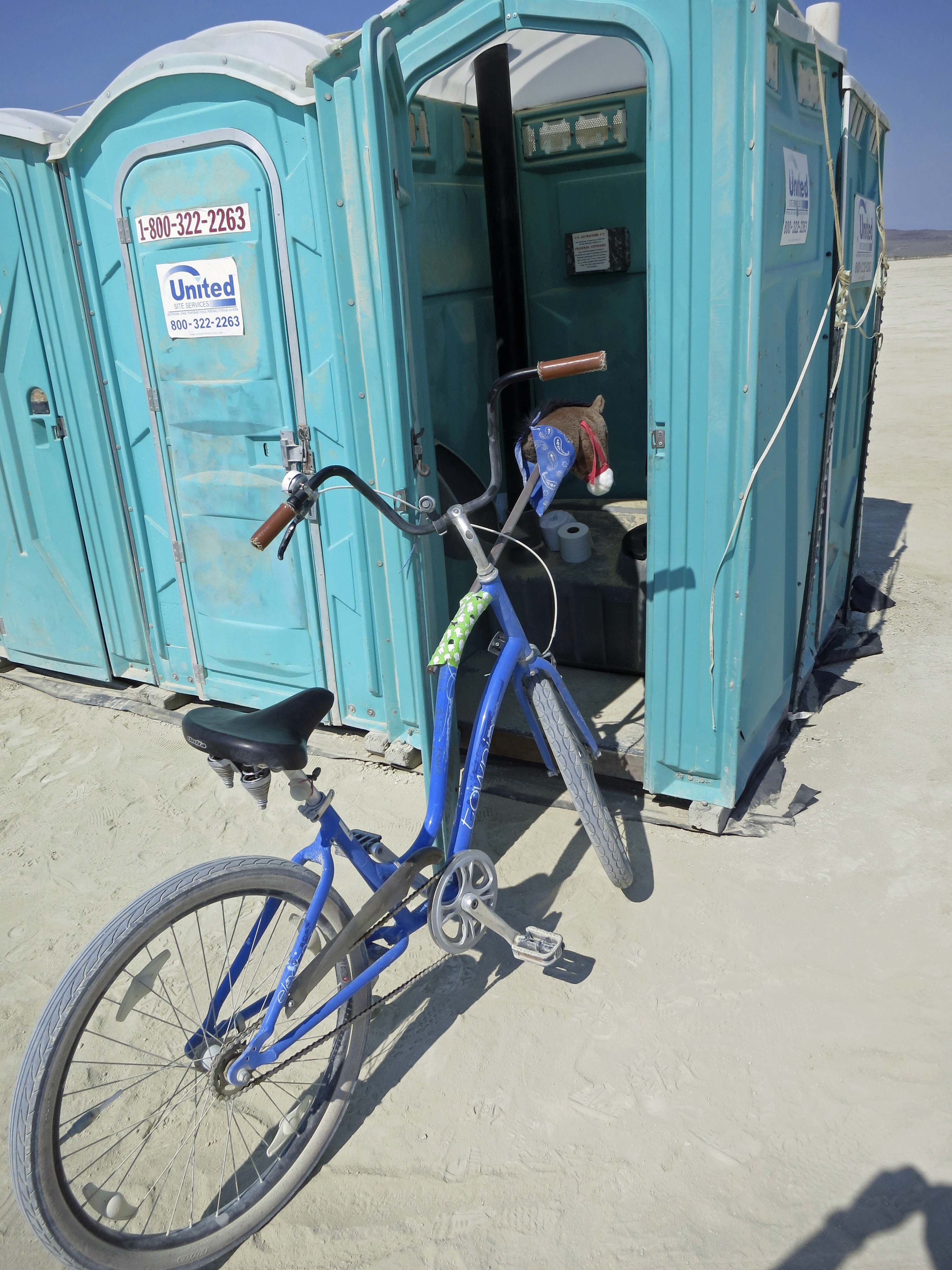
While Peggy was checking out the little house, my hose was checking out a port-a-pot.

While Peggy was checking out the little house, my horse was checking out a port-a-pot and found a surprise.

Flowers in a port-a-pot at Burning Man 2014. Photo by Curtis Mekemson.

Flowers.

And made a graceful exit.

We watched a woman fall off a tight rope, or maybe she was being launched. Fortunately the rope was only a foot off the ground. I thought her exit was rather graceful.

Vamp Camp at Burning Man 2014. Photo by Curtis Mekemson.

One of the fun things to do on a walkabout is to check out the various camps. Many are quite elaborate.

Camps can be quite elegant at Burning Man. (Photo by Peggy Mekemson.)

And they can be elegant. (Photo by Peggy Mekemson.)

In small print, under the skull and crossbones, this camp declared "I am quite famous at Burning Man."  (Photo by Peggy Mekemson.)

Most large camps are unique, once again reflecting the creativity at Burning Man. In small print, under the skull and crossbones, this camp declared “I am quite famous at Burning Man.” (Photo by Peggy Mekemson.)

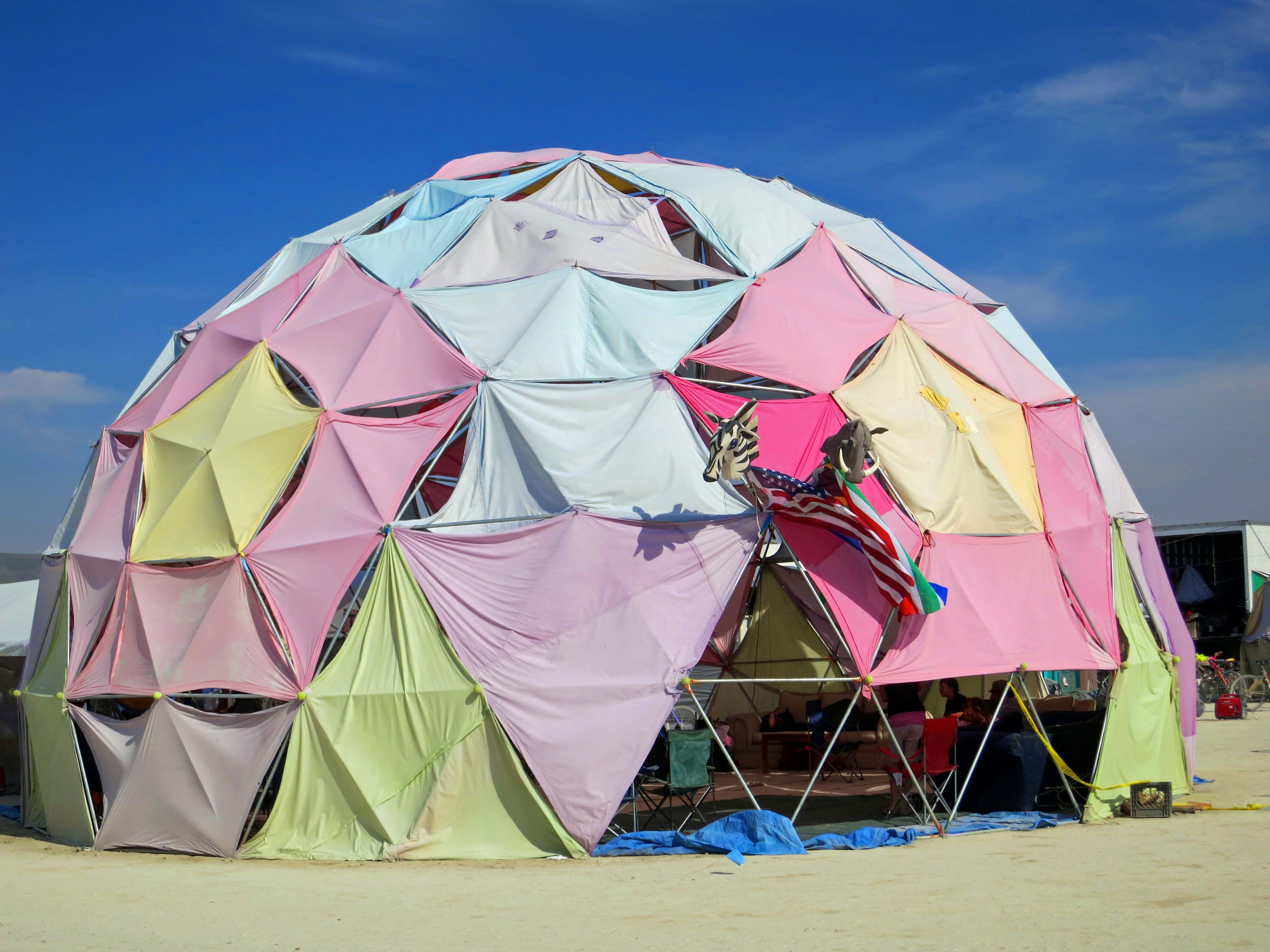
Pastel dome at Burning Man 2014. Photo by Curtis Mekemson.

This pastel dome flew the US flag under a zebra and a wart hog. Flags are common in Black Rock City, but you don’t see many zebras and wart hogs.

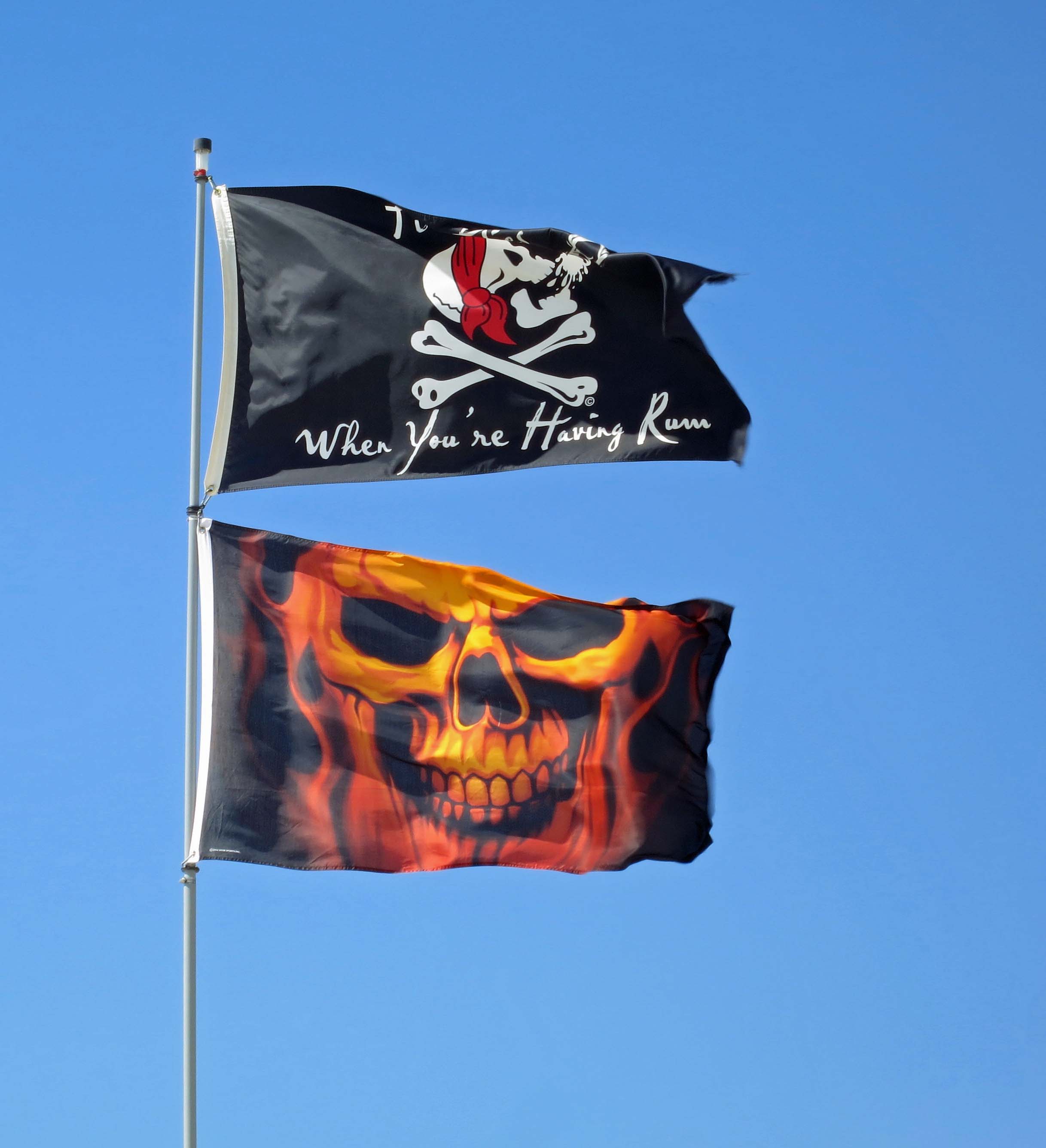
Flags at Burning Man 2014. Photo by Curtis Mekemson.

Judging by the flags, there are lots of pirates at Burning Man.

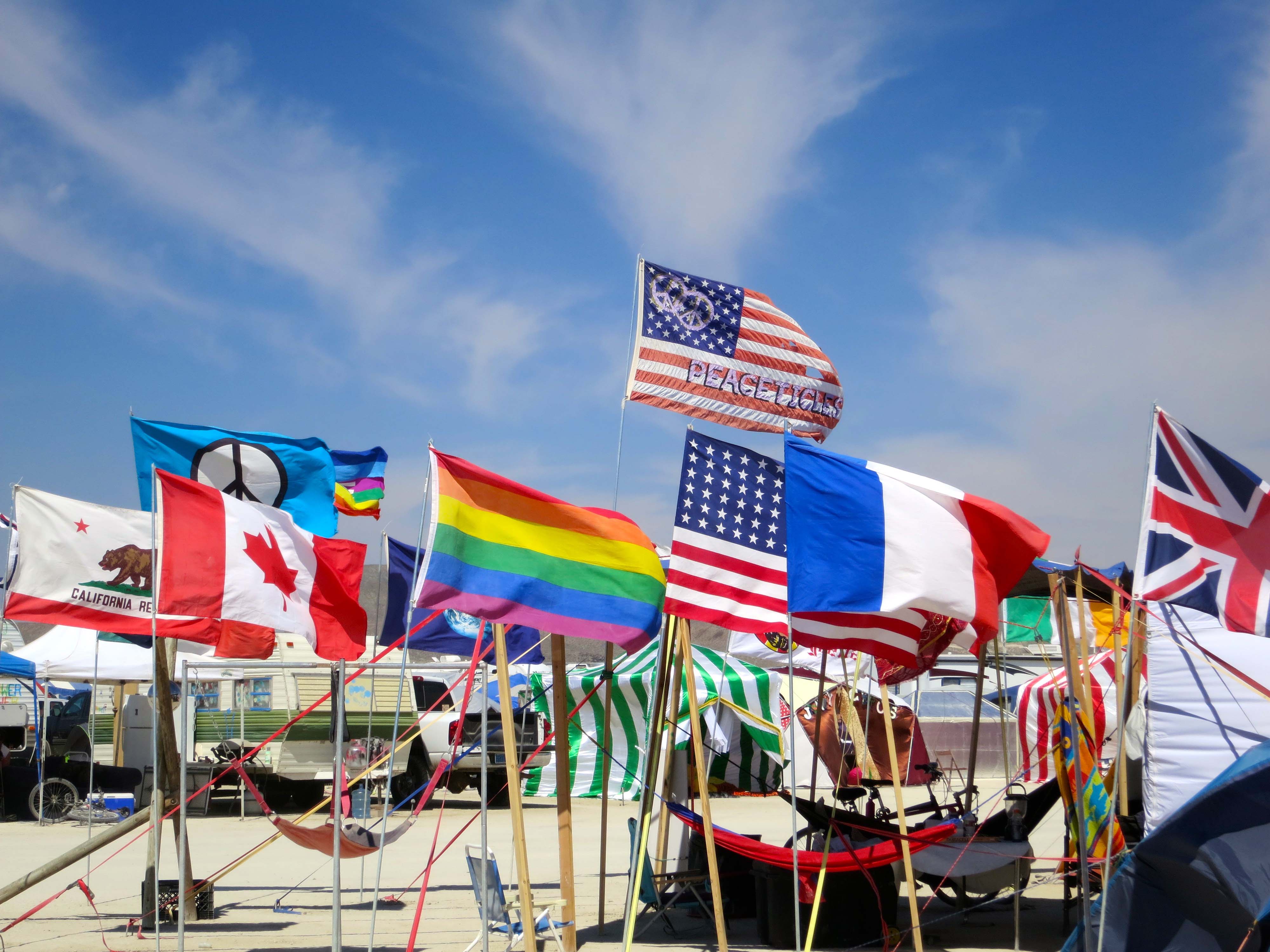
Flags of Burning Man 2014. Photo by Curtis Mekemson.

The flags at this camp represented the growing international presence in Black Rock City.

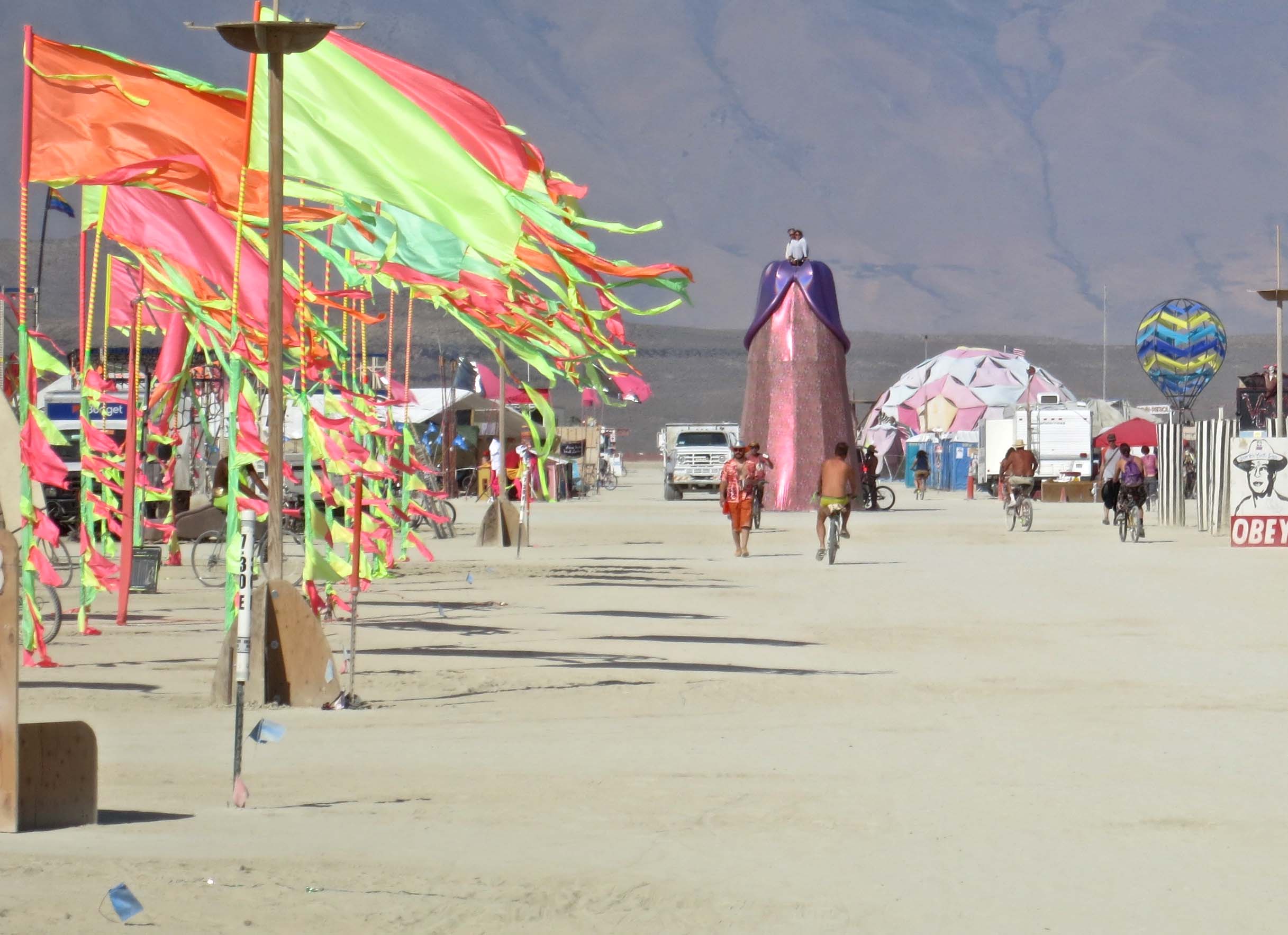
It's time to wrap up this blog and I've put this off long enough. The Divine Masculine is set off by flags as a truck provides perspective. A pair of Burners enjoy the view from the top.

It seems appropriate to wrap up this blog with a photo of the Divine Masculine. A pair of Burners enjoy the view from the top. This may be irrelevant and possibly irreverent, but I am reminded of the 1950’s hit, “He was a one-eyed, one horned flying purple people eater.” 

NEXT BLOG: Who goes to Burning Man? It may be your next door neighbor.


The Art Of Burning Man 2014— From Praying Mantis to LOVE

Giant praying mantis at Burning Man 2014. Photo by Curtis Mekemson.

This giant praying mantis was one of many art works featured at Burning Man 2014.

The praying mantis appeared out of a dust storm with wings flapping. He was one big guy. Think humongous. Think scary. Peggy and I had to go check him out. It was art— and art is our primary reason for attending Burning Man.

When you arrive at Burning Man, the greeters give you a map that shows where most of the art is. The 2014 art map showed 233 installations scattered across the Playa and throughout  Black Rock City. Since weather had delayed us by two days, there was no way we could see it all. So we decided to go “random.” We would wander around and check out whatever caught our attention. Following are a few examples.

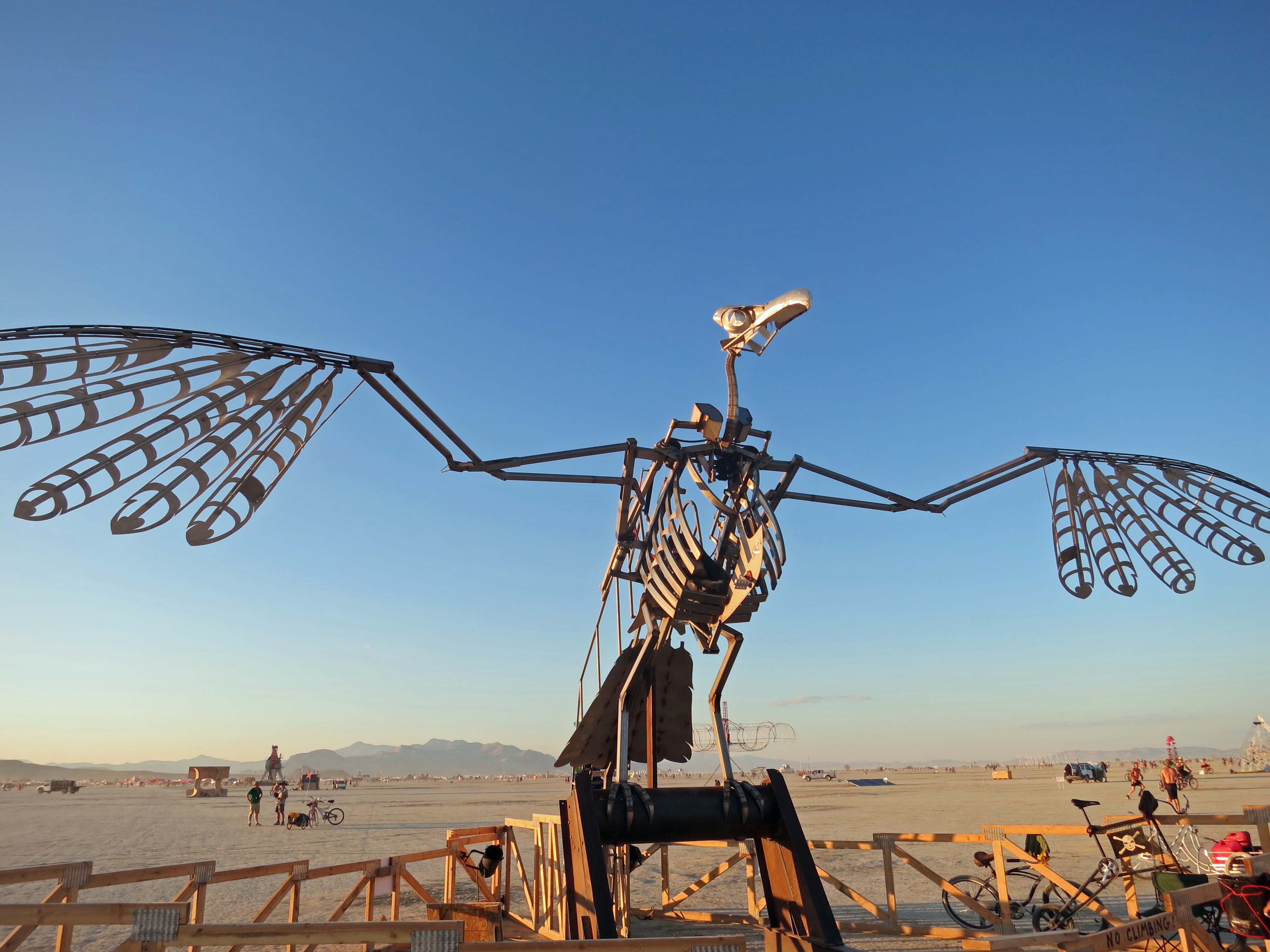
Bird with wings lowered and raised by pedals. Photo by Curtis Mekemson.

Much of Burning Man art is interactive. This bird immediately attracted Peggy. She climbed up the ramp and into its stomach. The bird’s wings were designed to be raised or lowered by pedal power.  Peggy went to work. A crowd urged her on.

Large bird sculpture at Burning Man 2014. Photo by Curtis Mekemson.

Another view.

Geometric sculpture at Burning Man 2014. Photo by Curtis Mekemson.

The geometric lines of this sculpture caught my attention.

Geometric Sculpture and Man at Burning Man 2014. Photo by Curtis Mekemson.

Shooting from a different angle, I caught the Man in the background.

Much art at Burning Man incorporates a sense of humor. I called this guy big ears. (Photo by Peggy Mekemson.)

Much art at Burning Man incorporates a sense of humor. I called this guy Big Ears. He was wired for sound. (Photo by Peggy Mekemson.)

Love letters in the dust at Burning Man 2014. Photo by Curtis Mekemson.

Love is big at Burning Man. (grin) The Embrace sculpture can be seen in the distance through the E.

Peggy caught this interesting reverse perspective on the love letters. (Photo by Peggy Mekemson.)

Peggy caught this interesting reverse perspective on the love letters. (Photo by Peggy Mekemson.)

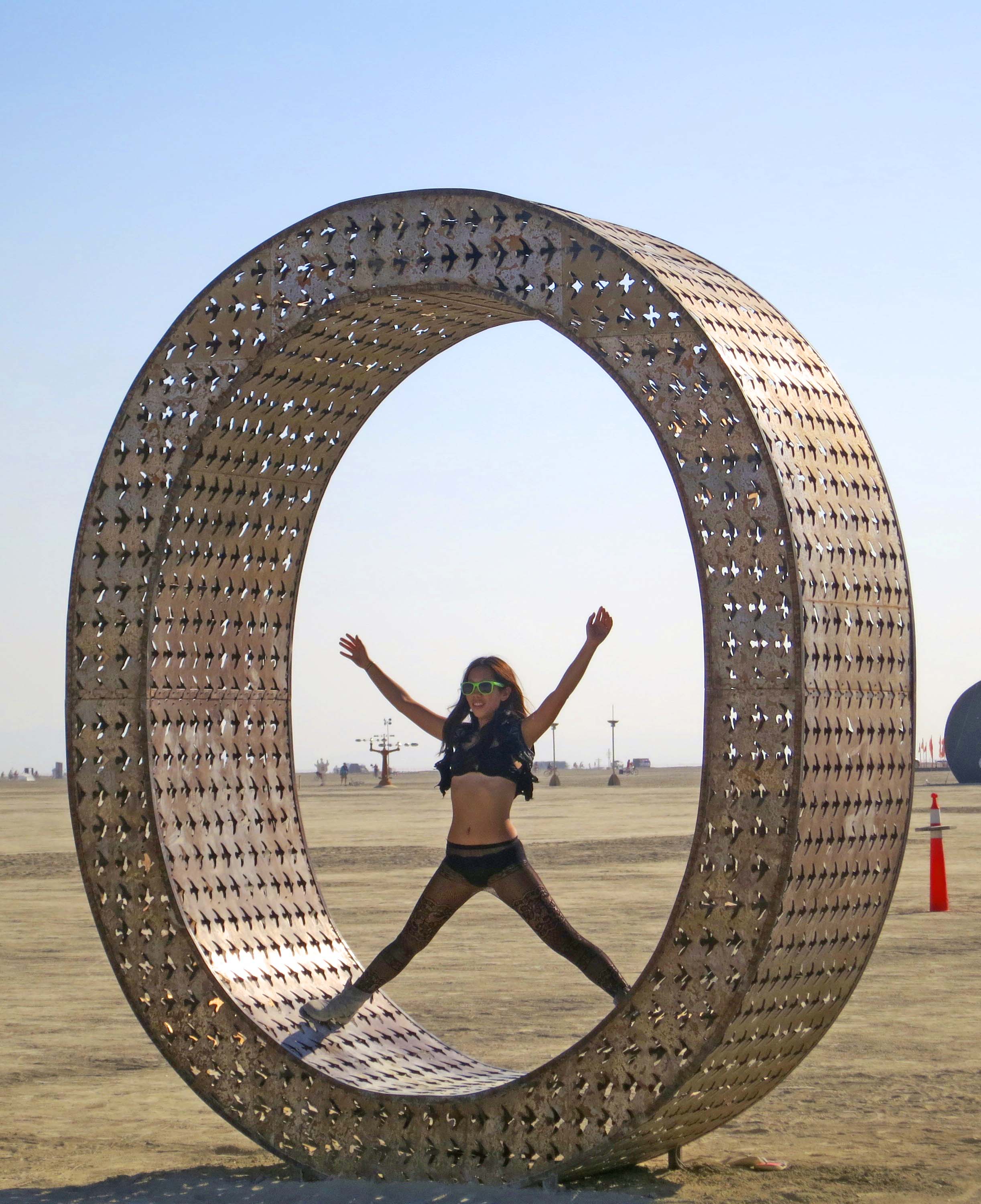
Big O in Love sculpture at Burning Man 29014. Photo by Curtis Mekemson.

The big O in Love was hard to resist.

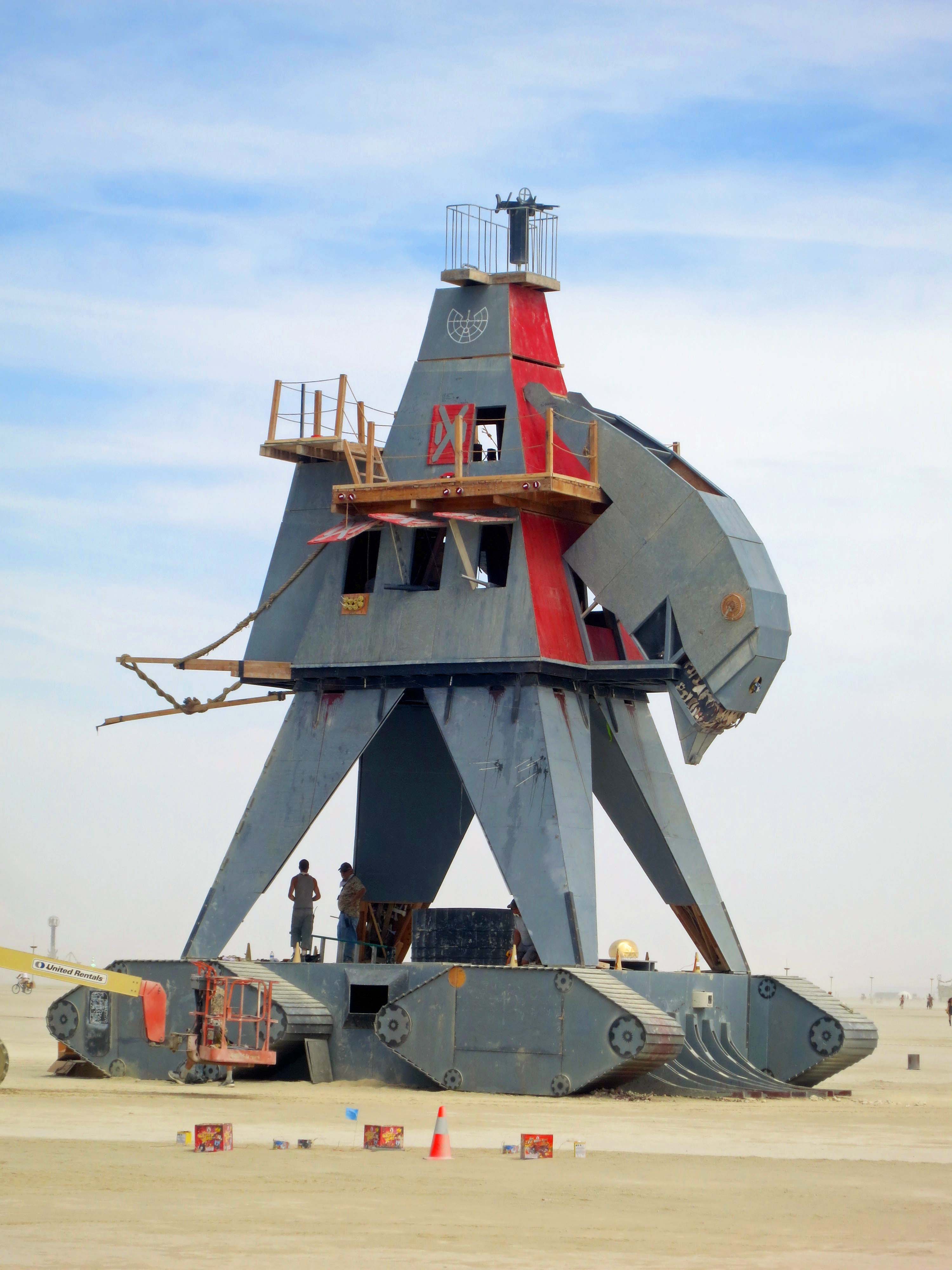
This sculpture reminded me of a Hollywood set piece.

This sculpture reminded me of a Hollywood set piece.

Climbing up a sculpture at Burning Man 2014. Photo by Curtis Mekemson.

Burners love any sculpture you can climb. Often, as in this case, climbing is encouraged.
Wind operated kinetic sculpture at Burning Man 2014. Photo by Curtis Mekemson.
Wind operated this kinetic sculpture.

These cubes created the illusion of climbing far into the sky. (Photo by Don Green.)

These cubes created the illusion of climbing far into the sky. (Photo by Don Green.)

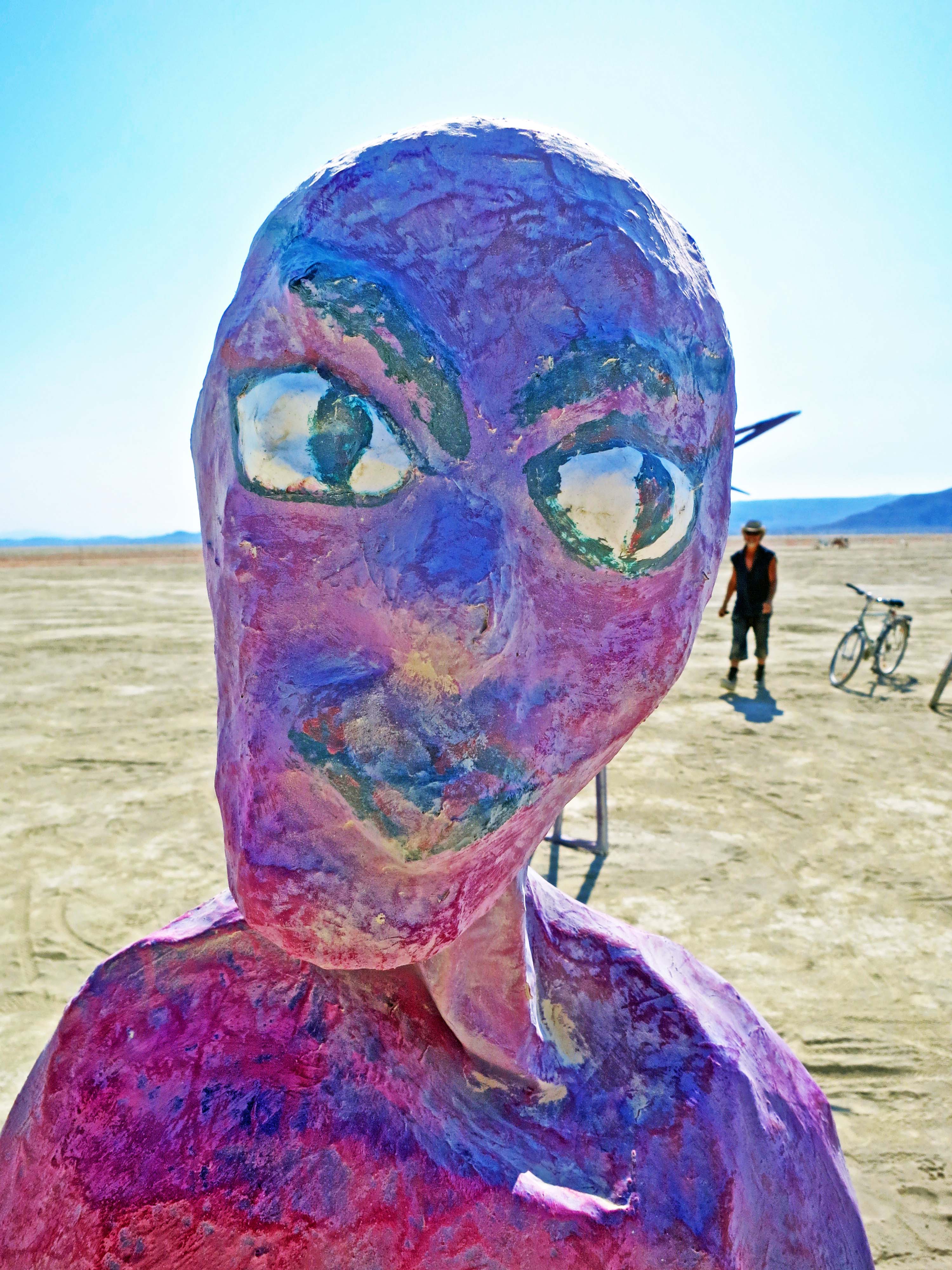
Alien at Burning Man 2014. Photo by Curtis Mekemson.

For the past several years, strange alien creatures have been found far out on the Playa near the perimeter fence.

NEXT BLOG: Wandering around Black Rock City.

Embrace the Dawn Burns… The Art of Burning Man 2014

Embrace the Dawn at Burning Man 2014. Photo by Curtis Mekemson.

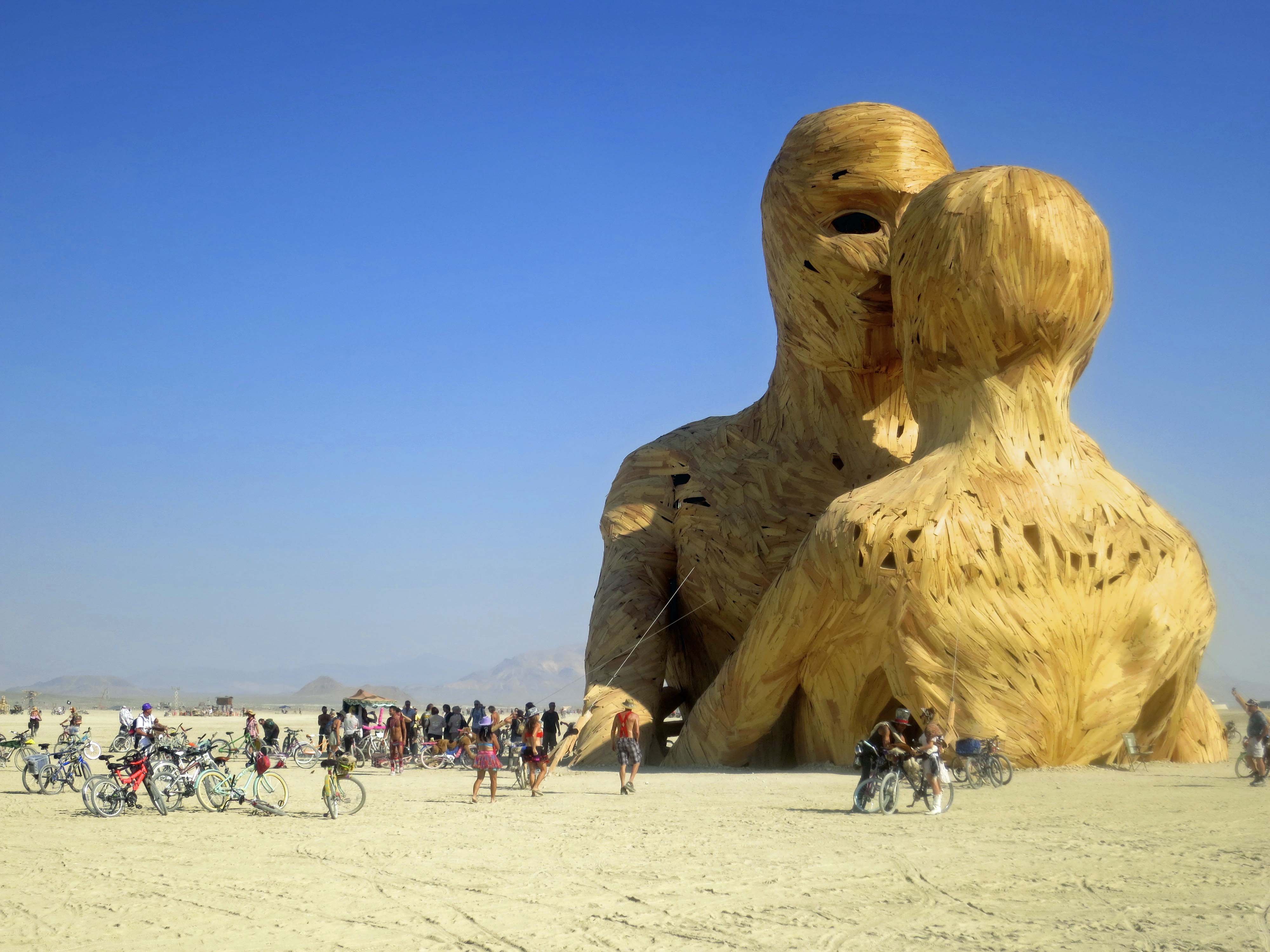
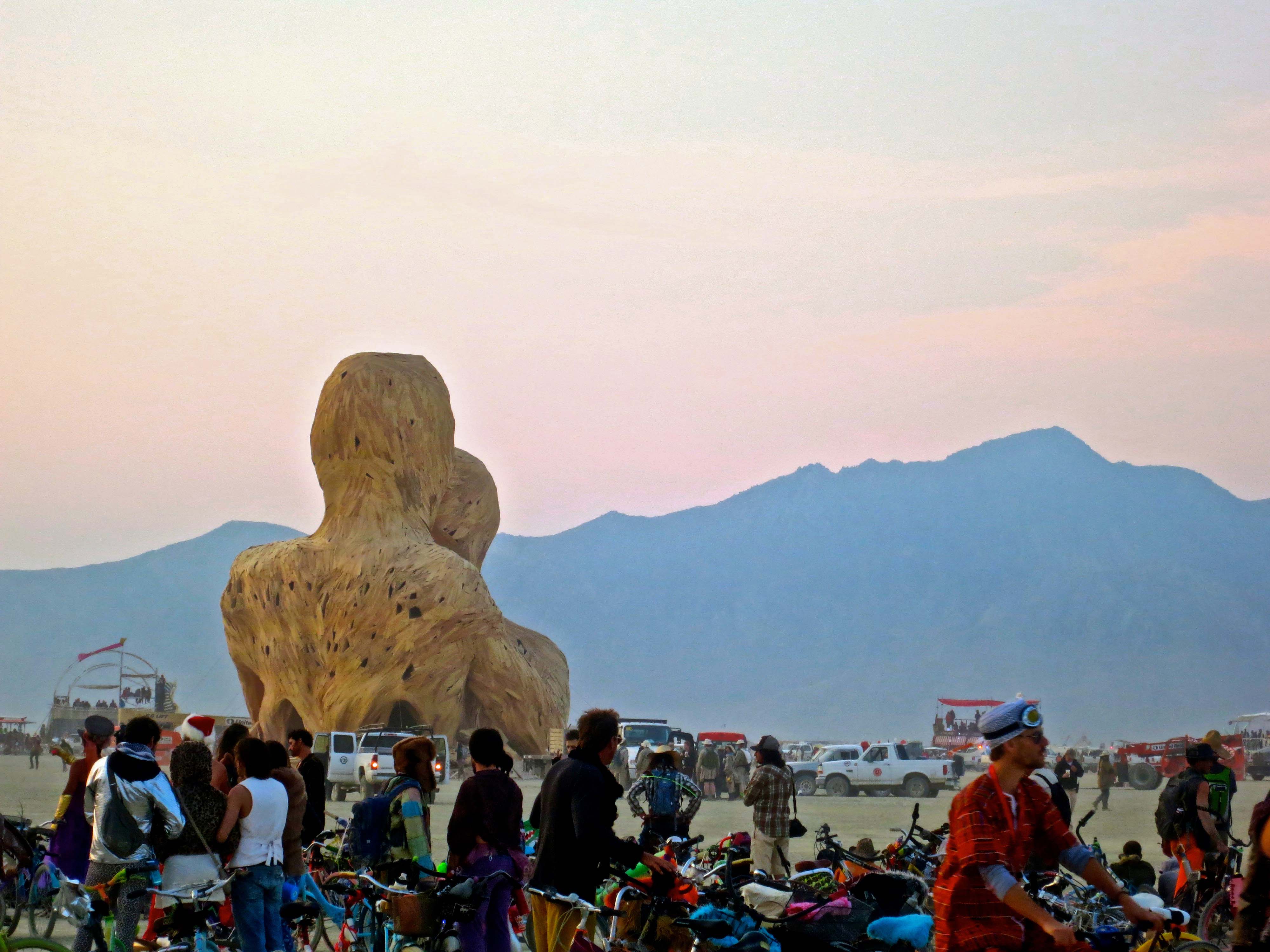
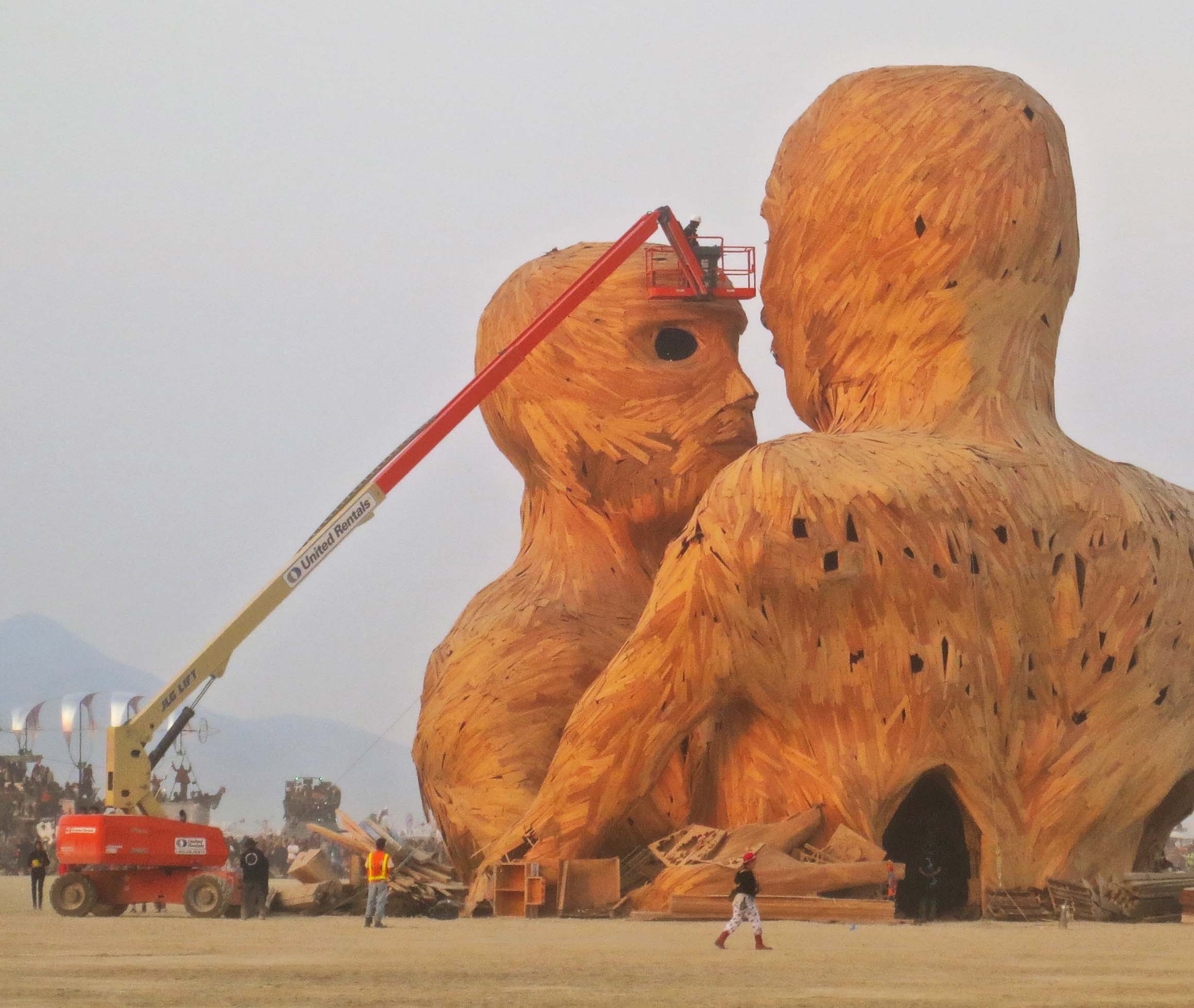
Monumental sculpture has become a tradition at Burning Man. 2014’s Embrace the Dawn by the Pier Group out of Reno, Nevada is a prime example.

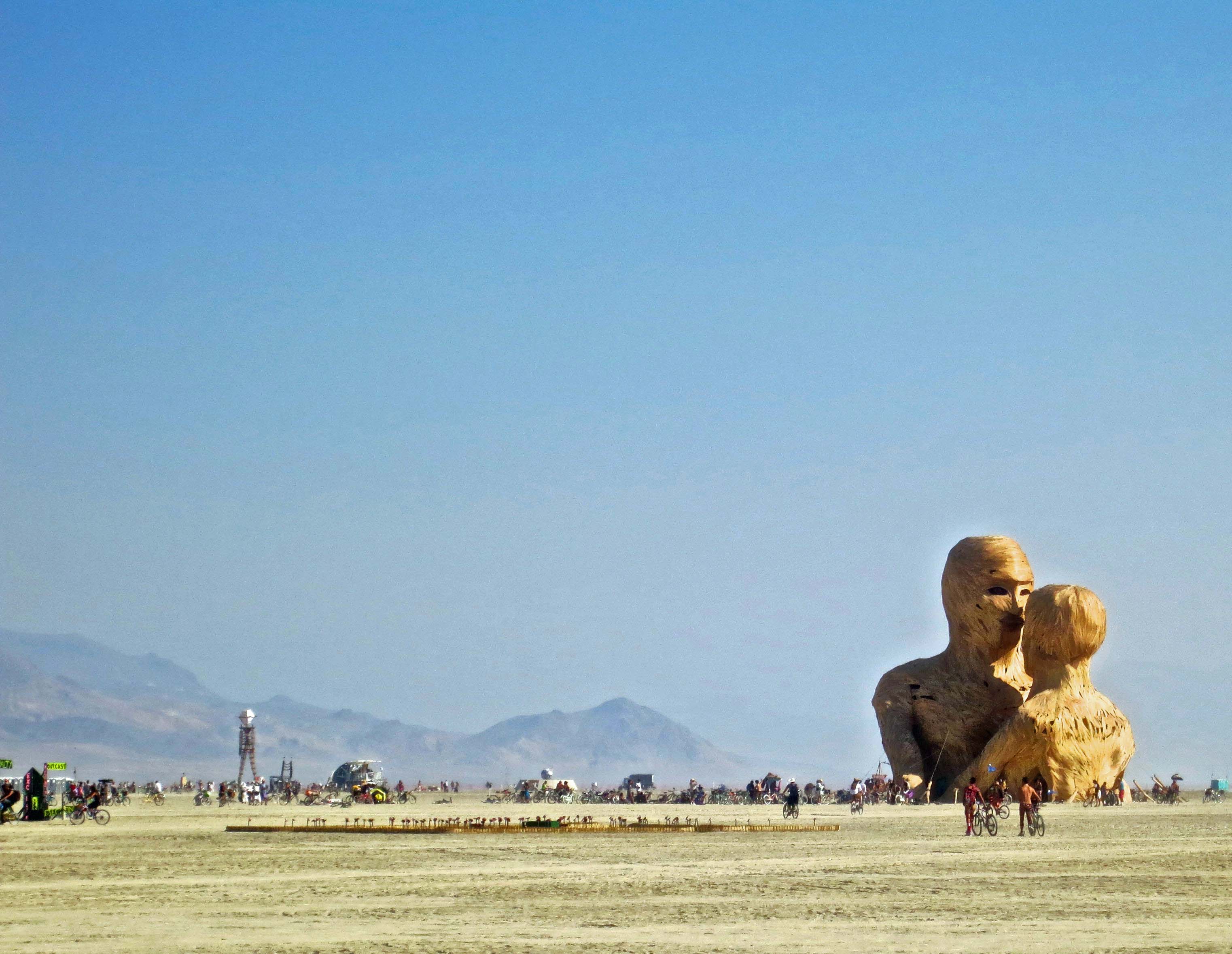
Monumental art has become a tradition at Burning Man. Each year I return to Black Rock City excited to see the latest creations. Last year, the Truth Is Beauty sculpture pulled me to it like a moth to flame. This year it was the 72-foot tall sculpture called Embrace by the Pier Group out of Reno/Sparks, Nevada. Related groups in Portland, Oregon and Vancouver, B.C. Canada also worked on the project.

Working out of a huge warehouse studio in Reno known as the Generator, the Pier Group has created several art pieces for Burning Man, including another one of my all time favorites, a huge sailing ship sunk partway into the desert.

Spanish Galleon created by the Pier Group for Burning Man 2014. Photo by Curtis Mekemson.

This Spanish Galleon, named La Llorona, was created by the Pier Group for Burning Man 2012.

This year the Pier Group had hoped Embrace would become the 2014 Temple. Matt Schultz, the lead artist, envisioned Embrace as a space where people could “sit, reflect, look up, feel the wind through the sculpture, and think about life and love.” Another project was selected. That didn’t stop Matt and the Pier Group, however; they went ahead and built the monumental sculpture anyway, much to the benefit of Burning Man and the 67,000 people present.

Embrace the Dawn Sculpture at Burning Man 2014. Photo by Curtis Mekemson.

Seeing Embrace from the distance provides a perspective on the sculpture’s size. The Man looks on from the distant left.

The Embrace sculpture at Burning Man 2014 provided access to go inside and climb up into the heads. Photo by Curtis Mekemson.

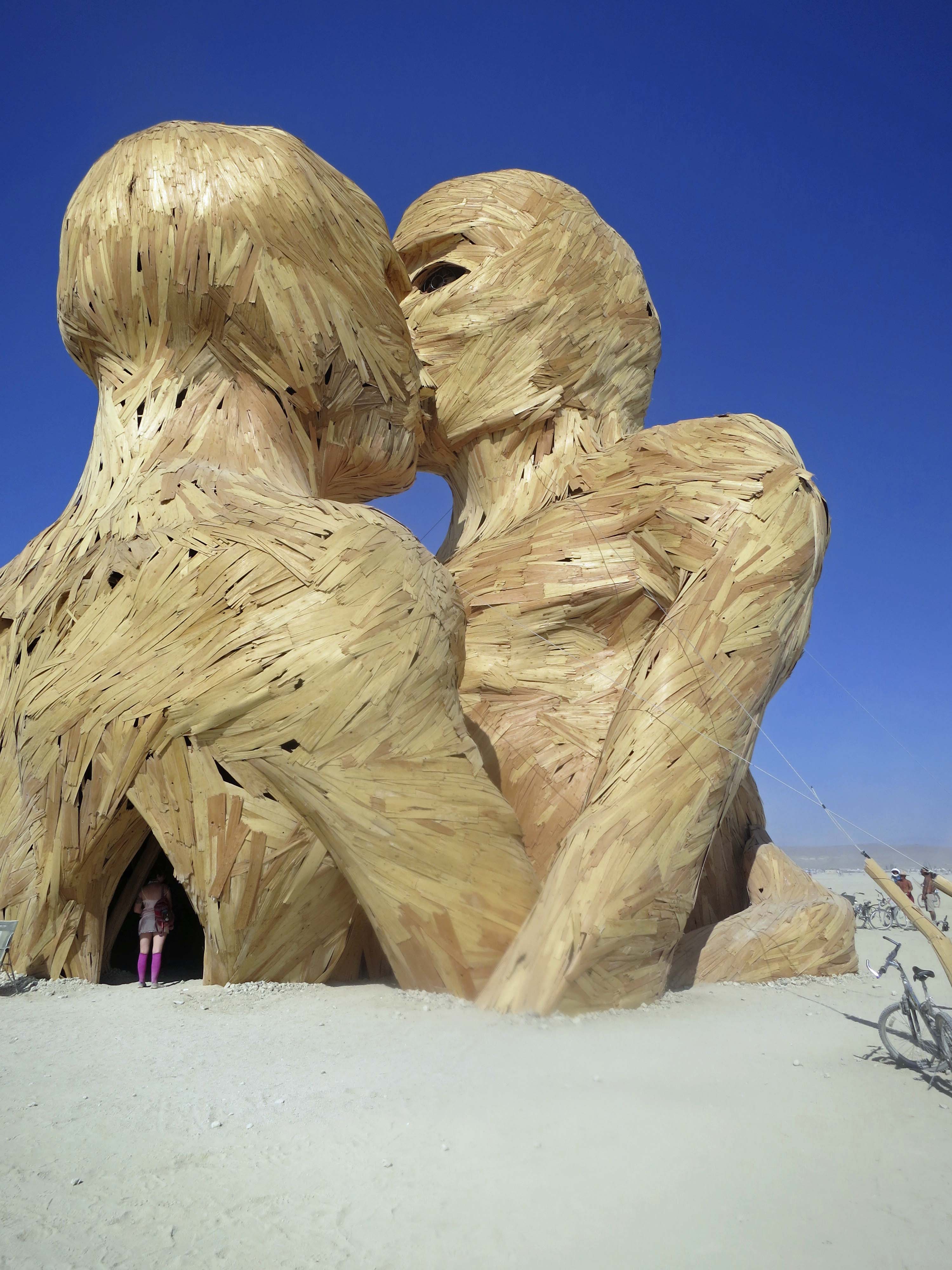
In this view, it appears the couple is kissing. (They weren’t.) The space on the bottom provided access to the figures where you could climb up into the heads and look out through the eyes.

The heart of the Embrace sculpture at Burning Man 2014. Photo by Curtis Mekemson.

Each of the figures had a large, unique heart that had been created by artists in Portland, Oregon and Vancouver, BC.

View form the eye of the Embrace statue at Burning Man 2014. Photo by Curtis Mekemson.

Looking out at Black Rock City through the eye of Embrace.

Art inside the head of the Embrace sculpture at Burning Man 2014. Photo by Curtis Mekemson.

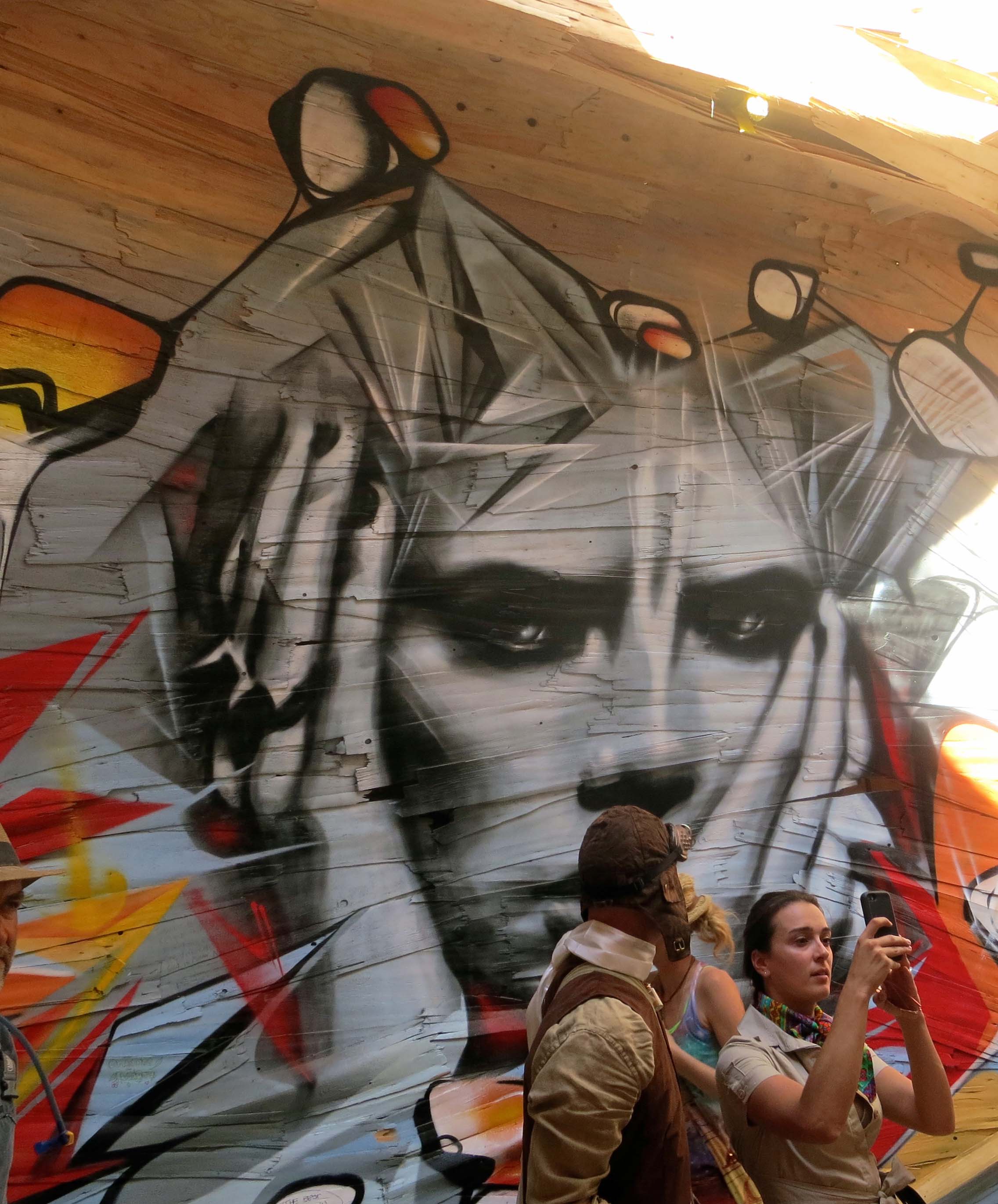
Dramatic art inside the head of Embrace.

Mural sized art inside the head of the Embrace the Dawn sculpture at Burning Man 2014. Photo by Curtis Mekemson.

More head art. Light is coming in from the top of the head, which was left open so Burners could see the stars at night.

This night photo was taken by Don Green, a member of our camp.

This night photo was taken by Don Green, a member of our camp. The red high heel is a mutant vehicle.

The decision was made to burn Embrace at dawn, which, to my knowledge, was the first major burn at Burning Man to take place in the morning. A significant number of Burners present had partied far into the night and 7:00 a.m. had come awfully early. Some were up so late they decided to stay up all night. A few who had come to watch the burn slept through the event. It was amazing how quickly the 160,000 pounds of wood in the sculpture went up in flames.

Preparation for burning Embrace the Dawn at Burning Man 2014. Photo by Curtis Mekemson.

Preparation for a major burn can take hours. Burners arrive early to get prime seats in the dirt. The trucks in the middle are all part of the preparation.

Preparation to burn the large sculpture, Embrace the Dawn, at Burning Man 2014. Photo by Curtis Mekemson.

Another perspective on preparation for the burn.

Crowd gathers to watch burning of Embrace the Dawn at Burning Man 2014. Photo by Curtis Mekemson.

I like this photo because it provides a view of the size of the crowd that stretched all the way around Embrace. The Burners in the right center of the photo are trying to catch up on sleep.

Mutant vehicles wait for the burning of the Embrace sculpture at Burning Man 2014.

Mutant vehicles, like these shown here, also stretched all the way around the burn circle. (Photo by Peggy Mekemson.)

Colorful crowd gathered to watch the burning of Embrace at Burning Man 2014. Photo by Curtis Mekemson.

One thing is guaranteed, any group that gathers at Burning Man is bound to be colorful. Check out the leggings.

The beginning of the burn of Embrace the Dawn at Burning Man 2014. Photo by Curtis Mekemson.

Two puffs of smoke announce the beginning of the burn. Firemen stand watch.

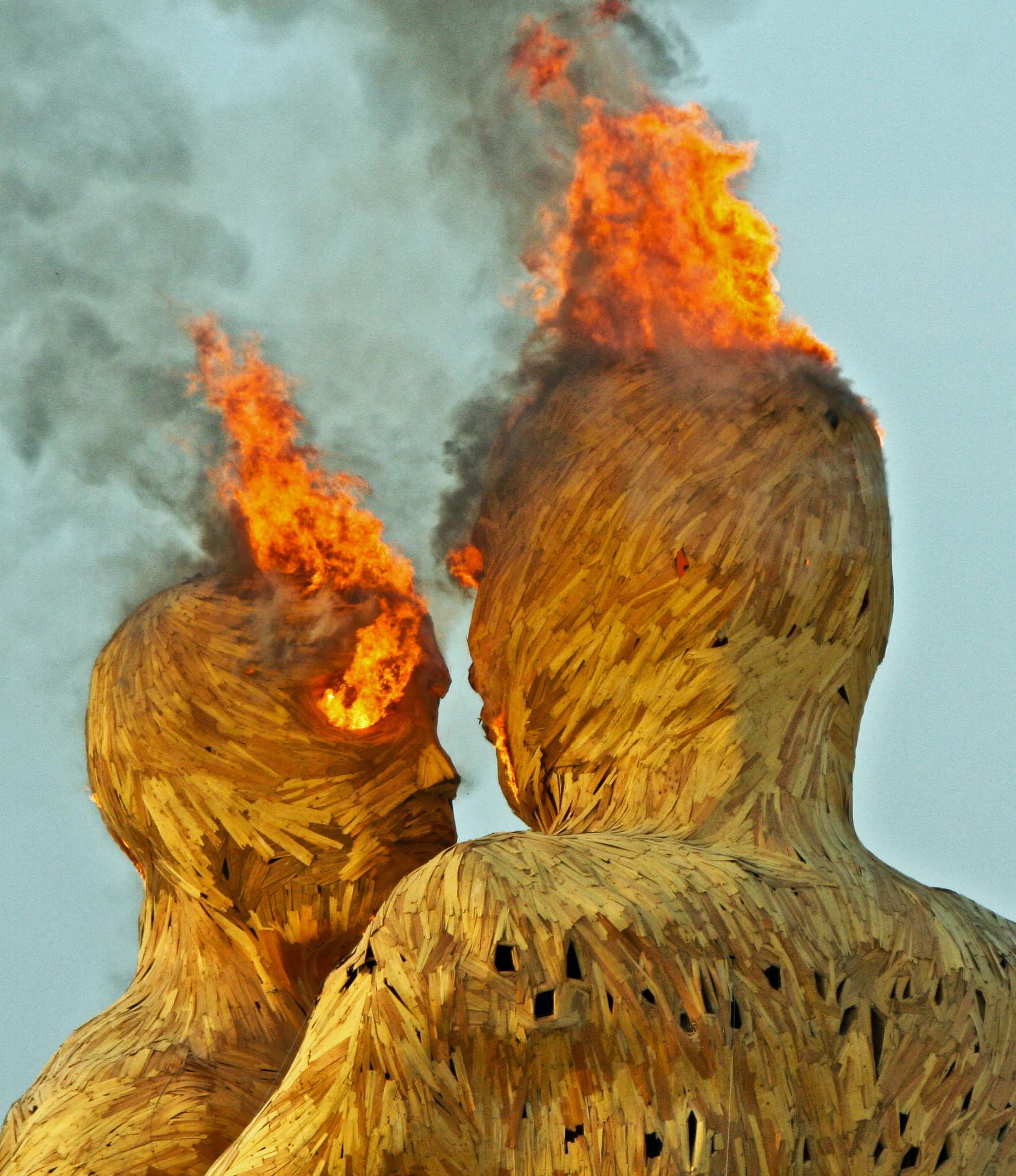
Flames begin shooting form the head and eyes almost immediately. (Photo by Peggy Mekemson.)

Flames begin shooting from the head and eyes almost immediately. (Photo by Peggy Mekemson.)

Embrace sculpture burns at Burning Man 2014. Photo by Curtis Mekemson.

Shortly thereafter, the whole torso starts to burn.

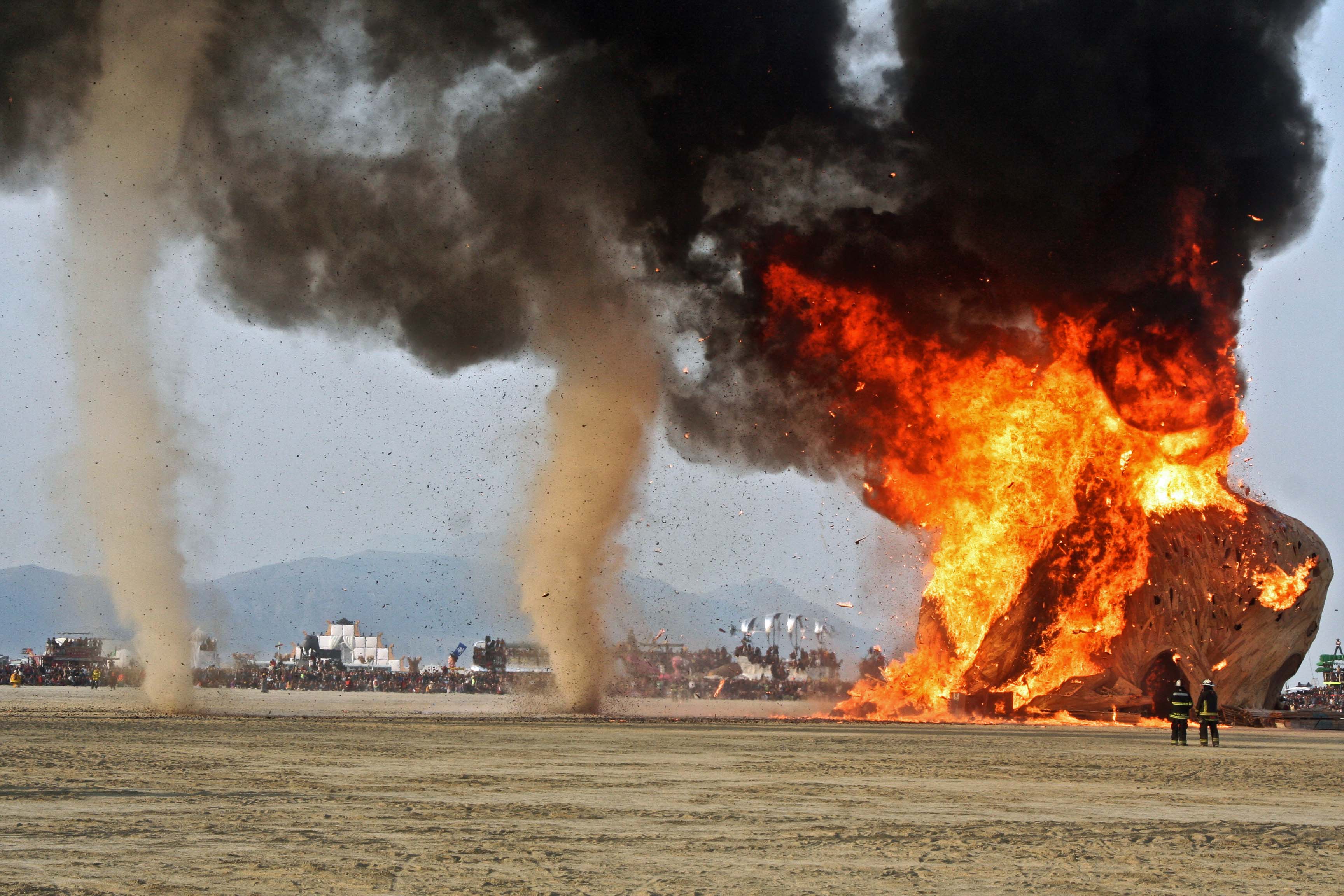
Flames are so intense that mini-tornadoes, large dust devils are created. (Photo by Peggy Mekemson.)

Flames are so intense that mini-tornadoes, large dust devils, are created. (Photo by Peggy Mekemson.)

And soon only a skeleton remains. (Photo by Tom Lovering.)

And soon only a skeleton remains.   An interesting dust devil outlines the head. (Photo by Tom Lovering.) Next Blog: I take another detour from Burning Man to travel back in time to UC Berkeley’s student revolution 50 years ago. I was there.

Kayaking the Beautiful Squaw Lakes of Southern Oregon… An Interlude

Kayaking on Squaw Lake, Oregon. Photo by Curtis Mekemson.

Peggy paddling our inflatable Innova Kayak on Little Squaw Lake.

We went kayaking yesterday at a small lake near our house. It’s about seven miles away southeast of Applegate Lake. We can easily head up there when we have a couple of hours to spare. I am not done with my Burning Man series but thought you might enjoy this interlude. When I complete Burning Man, I am going to blog about a weeklong sea kayak trip Peggy and I took this summer off of Vancouver Island, British Columbia.

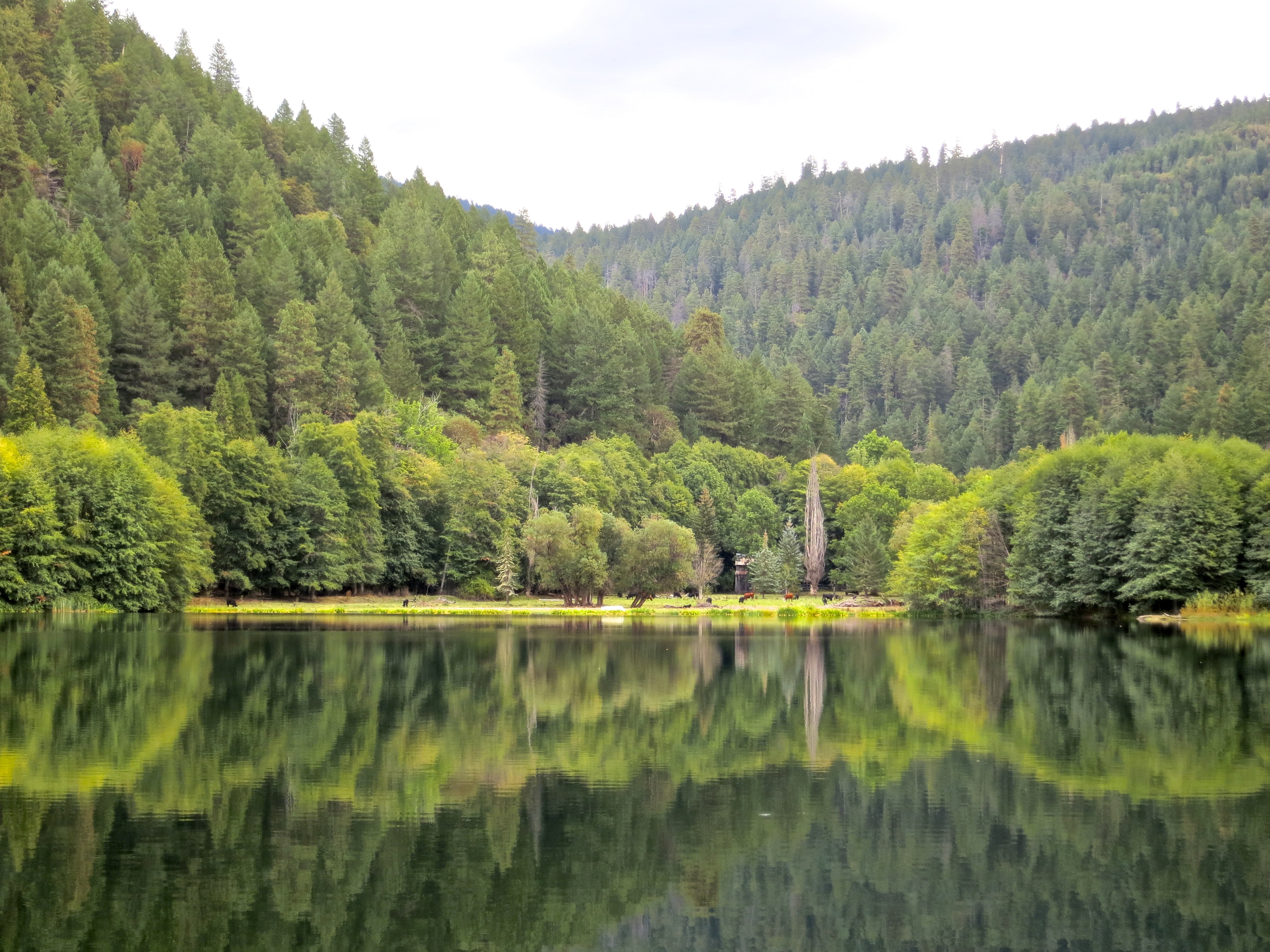
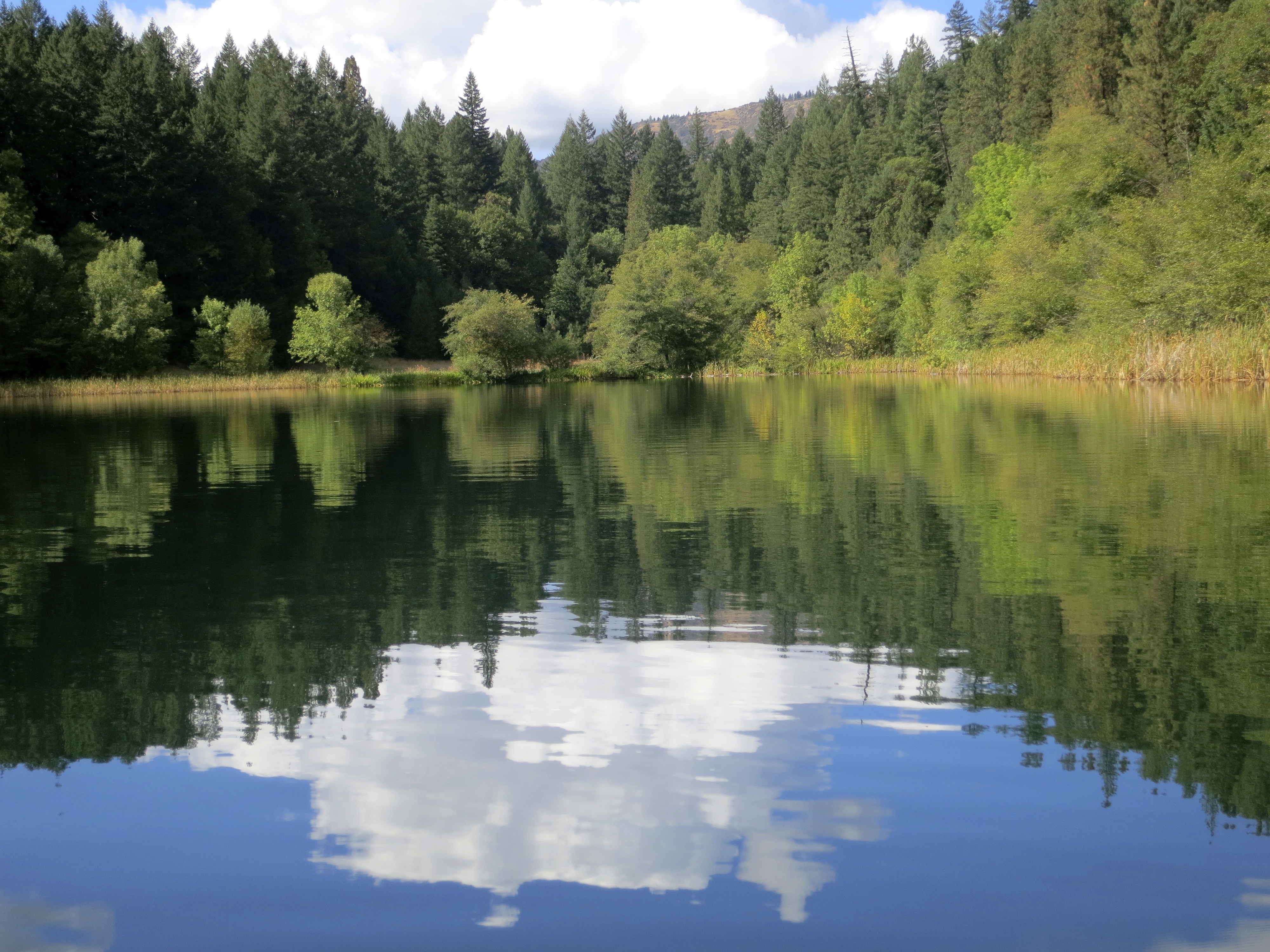
Reflection shot on Squaw Lake in southern Oregon.

Paddling under cloudy skies, we thought it might rain.

Kayaking on the small Squaw Lake in southern Oregon provides beautiful refection shots. Photo by Curtis Mekemson

But then the sun came out, allowing for this very green reflection shot.

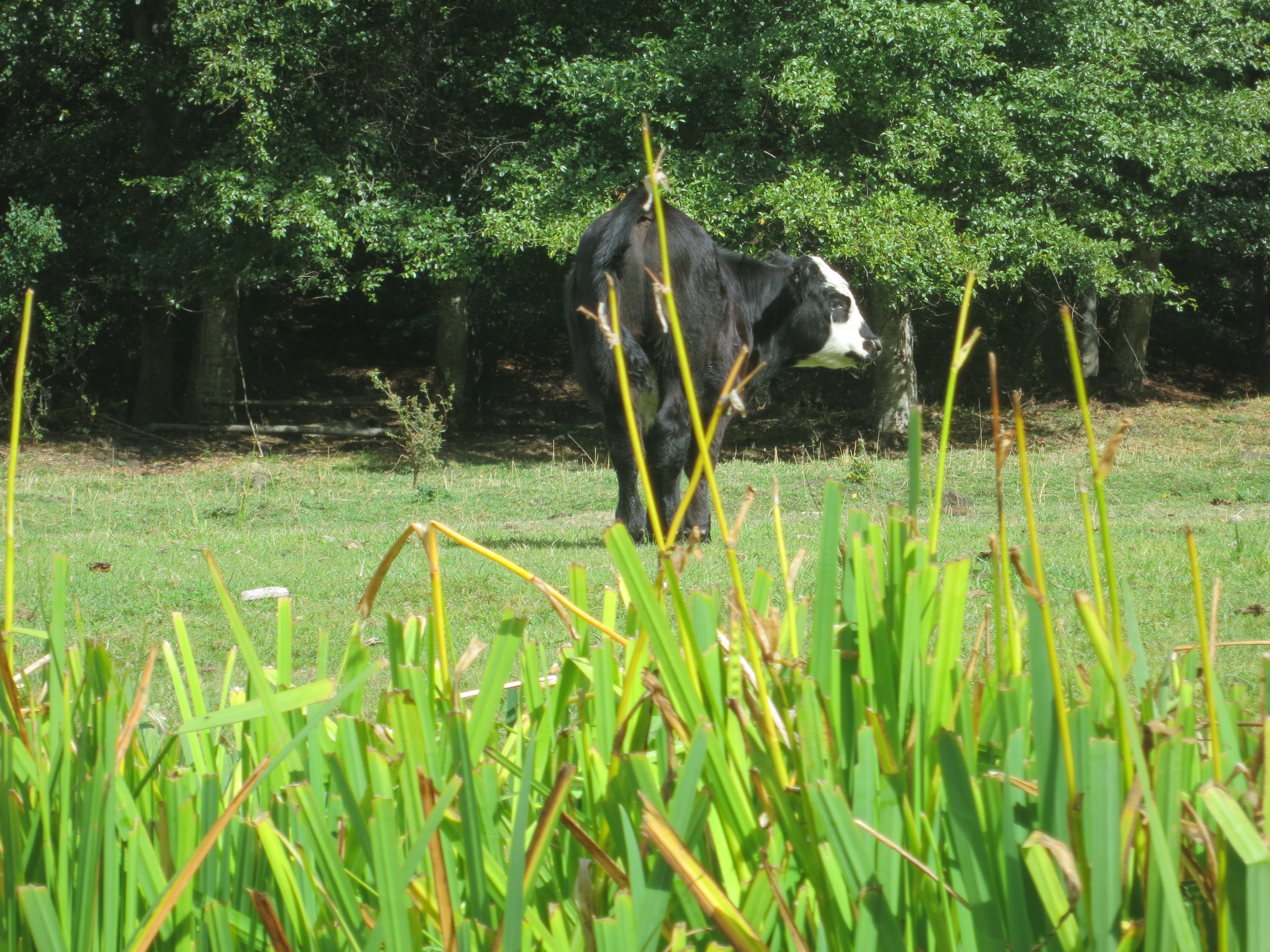
Young steer next to Squaw Lake in Southern Oregon. Photo by Curtis Mekemson.

We kayaked up to the end of the lake and caught this photo of a young steer, who also seemed happy to see the sun. 

Cumulous clouds dominate the horizon at Squaw Lake in southern Oregon.

Towering cumulus clouds dominated the horizon.

Cumulous clouds reflected in Squaw Lake of Southern Oregon near Applegate Lake. Photo by Curtis Mekemson.

And were reflected in the lake.

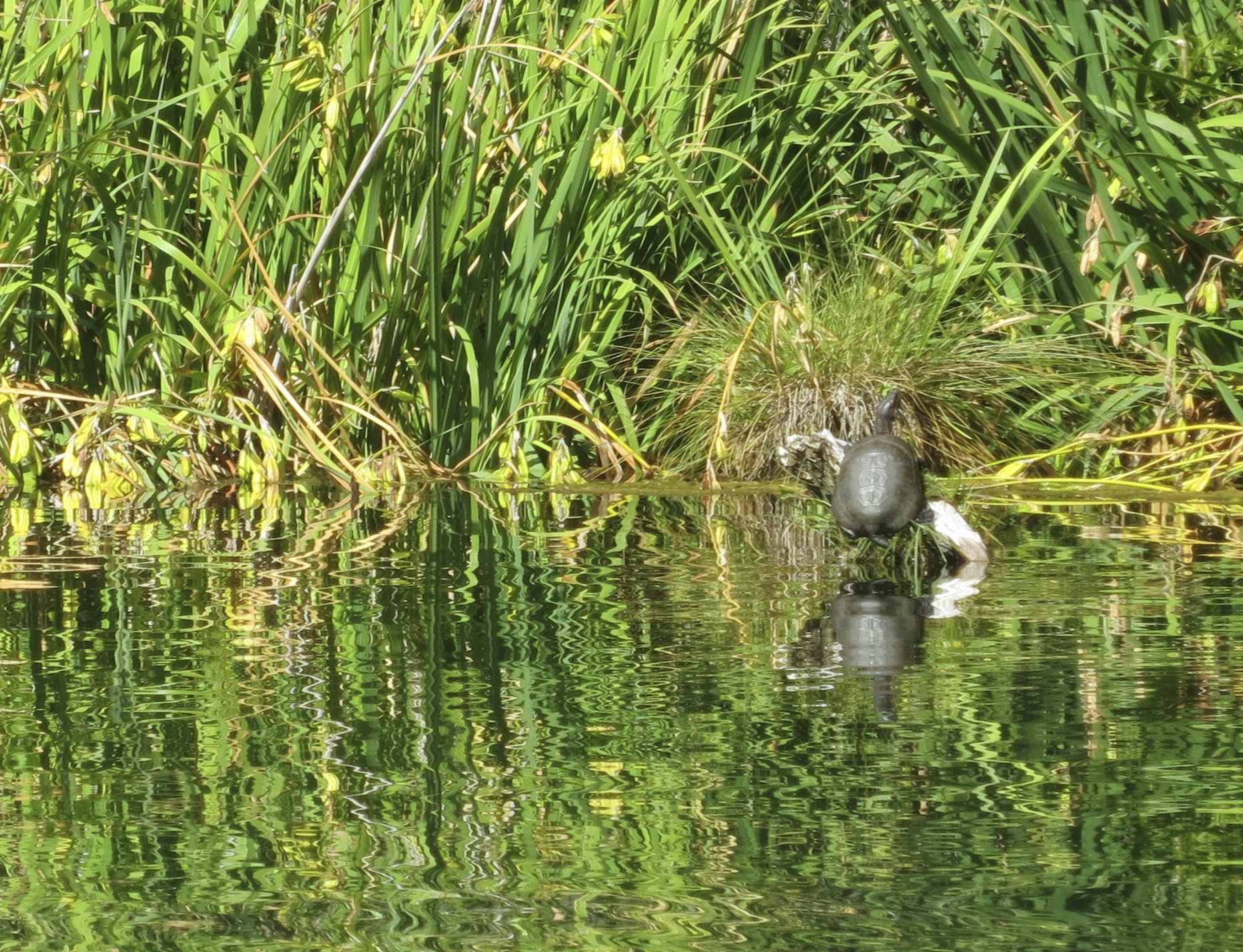
Turtle sunning on Squaw Lake in Southern Oregon near the California border. Photo by Curtis Mekemson.

A curious turtle, blending into the green, checked us out.

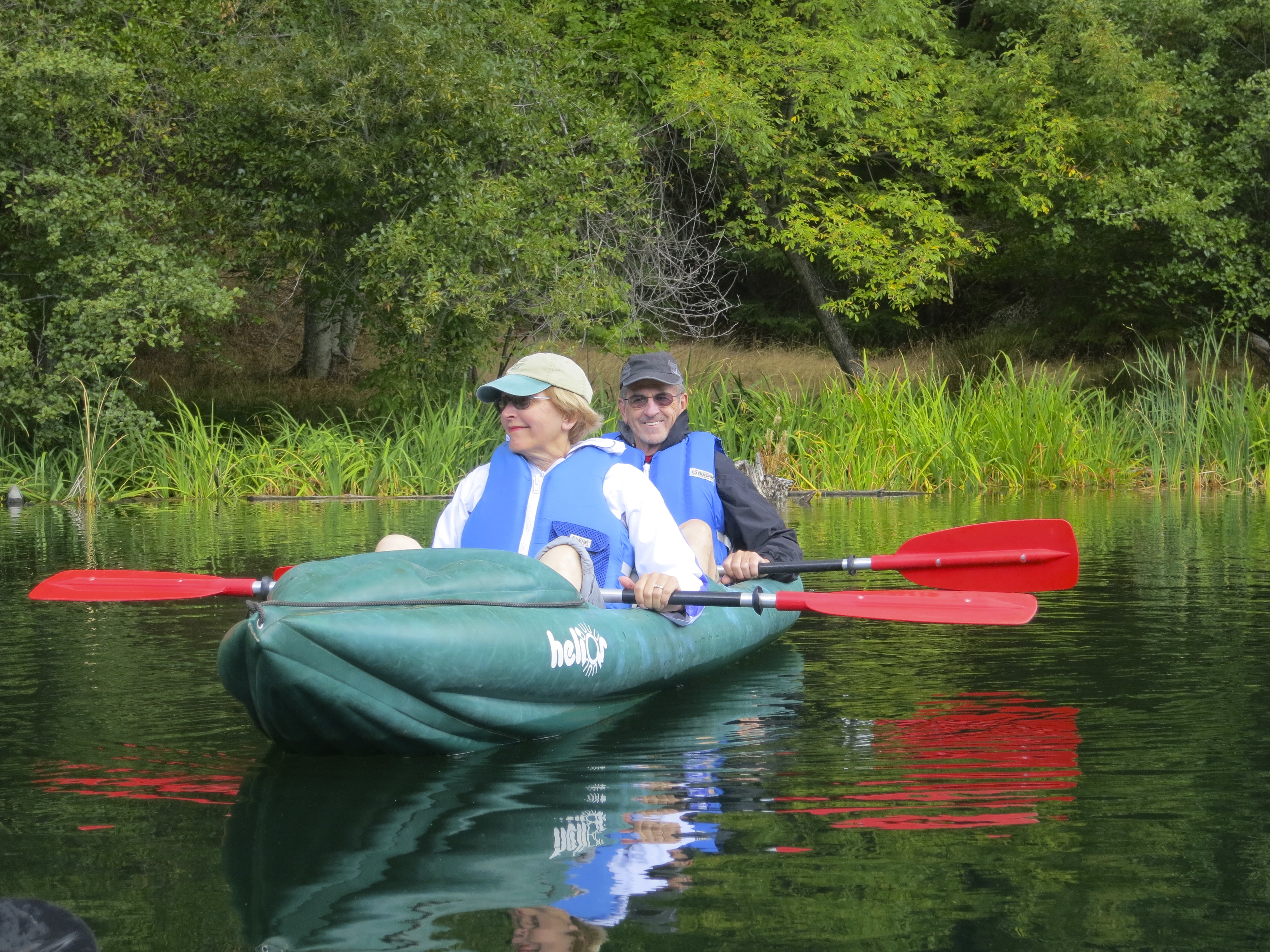
Jane and Jim Hagedorn kayaking on Squaw Lake in Southern Oregon. Photo by Curtis Mekemson.

Peggy’s sister, Jane Hagedorn and her husband Jim, joined us. We often take friends and family up to Squaw Lake. Its beauty and small size make it an ideal location for beginning kayakers.

Photo of Squaw Lake in Southern Oregon. Photo by Curtis Mekemson.

A final photo capturing the beauty and peace of the lake. Ripples from a fish that had just jumped are on the lower right. Next blog: Back to Burning Man.

A Giant Rhino, an All-Seeing Eye and Other Mutant Vehicles of Burning Man 2014

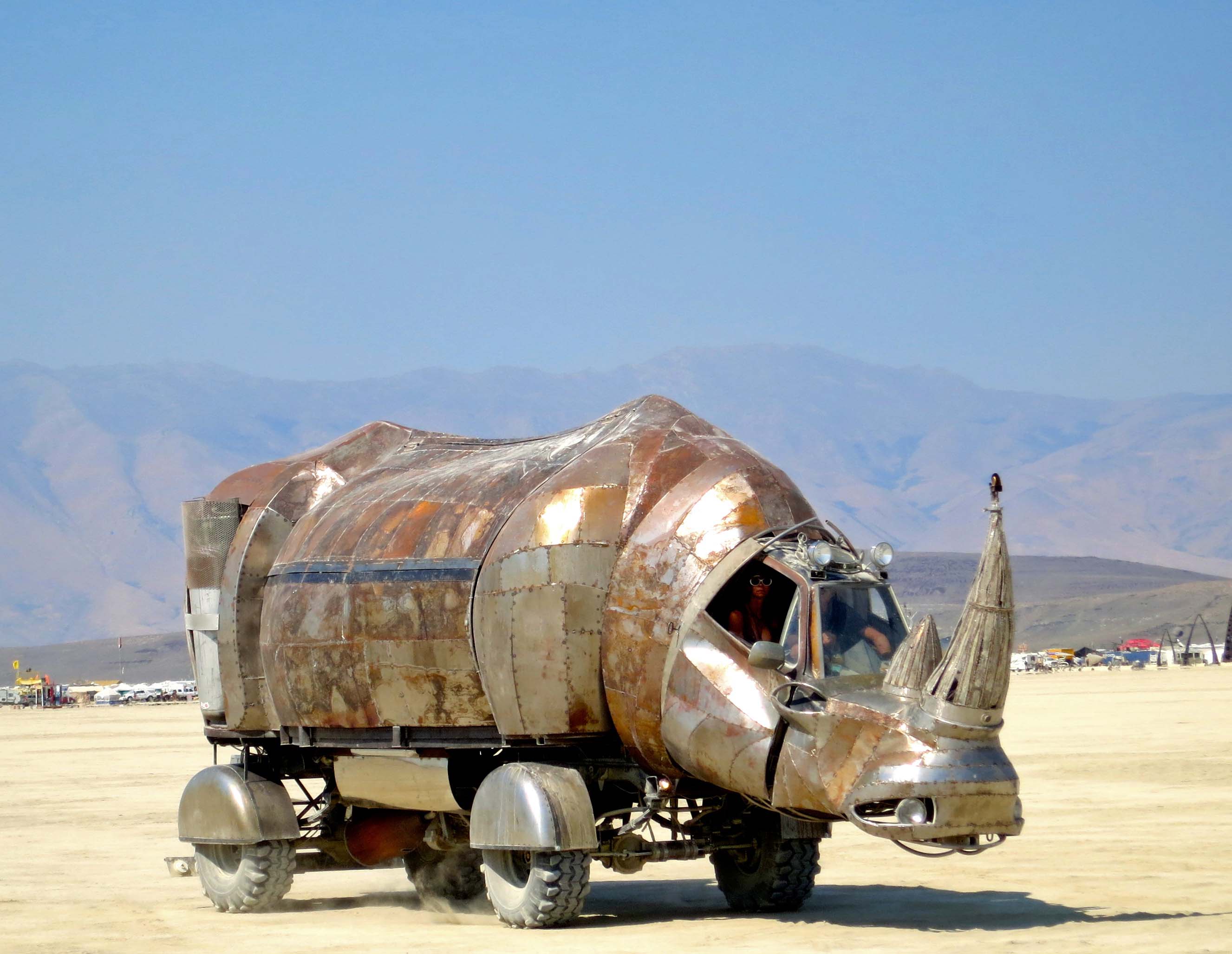
Giant rhino mutant vehicle at Burning Man 2014. Photo by Curtis Mekemson.

So who needs an African Safari? (grin)

A journey to Burning Man is a voyage into one of the world’s most creative environments. A kaleidoscope of art, costumes, theme camps, and live performances constantly demand your attention. Mutant vehicles are another form of marvelous creativity. In my last blog I introduced you El Pulpo Mecanico. Here are some other favorites of mine from Burning Man 2104.

Rhino at Burning Man 2014.

A horn of plenty? (Photo by Tom Lovering.)

I would say that this Burner is quite proud of her Rhino.

I would say that this Burner is quite proud of her Rhino.

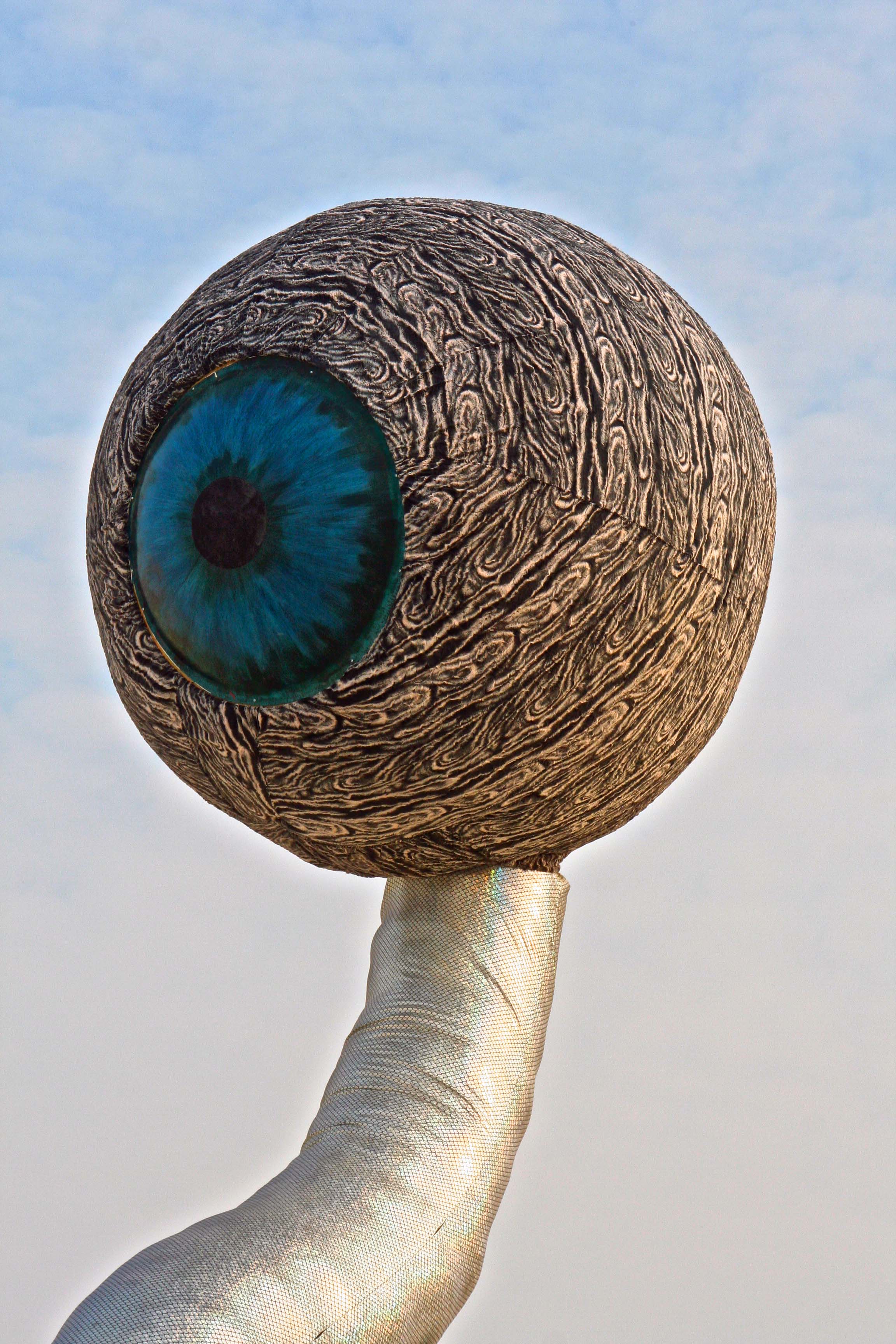
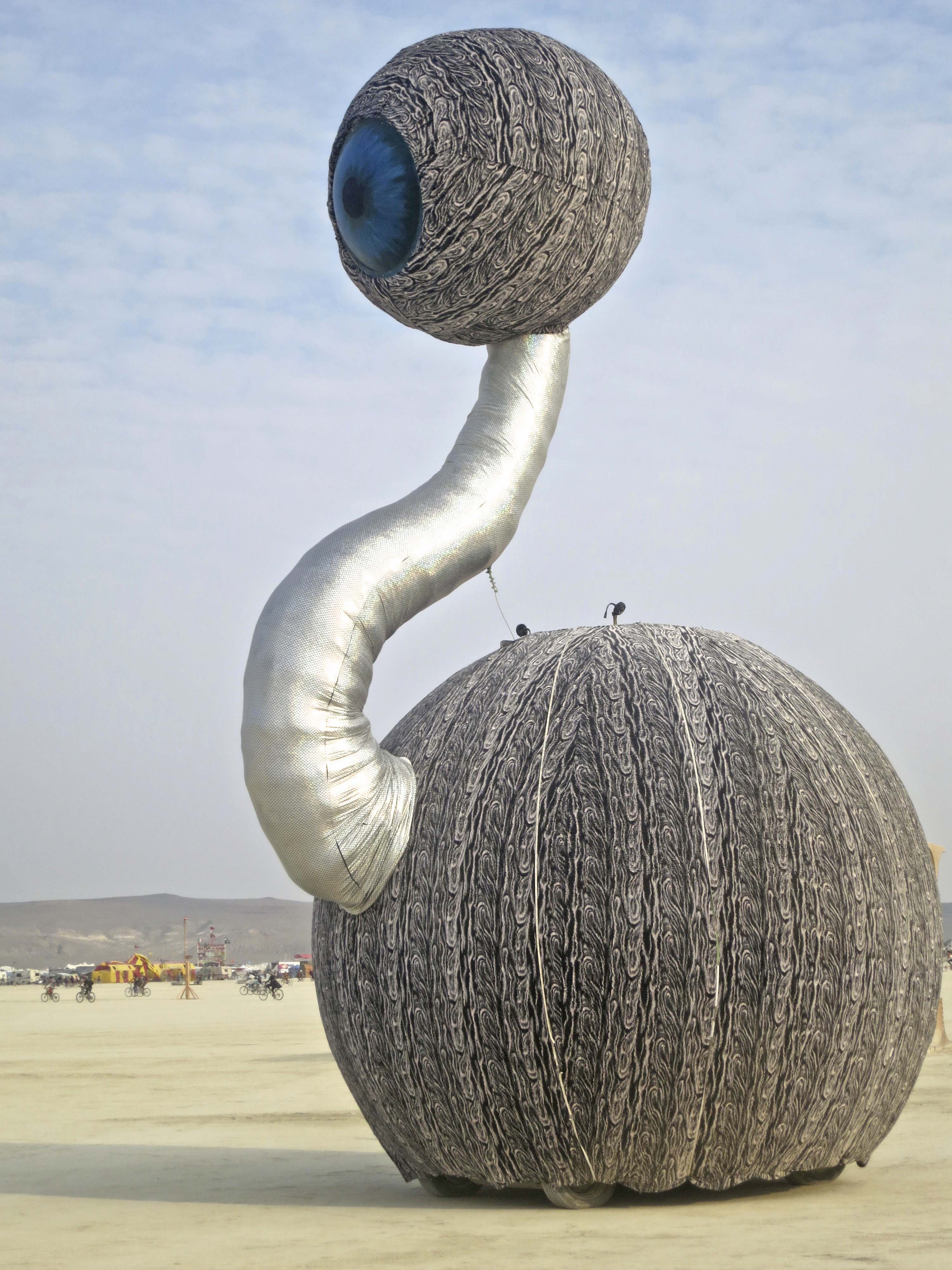
The all seeing eye at at Burning Man 2014.

The all-seeing eye and… (Photo by Peggy Mekemson.)

The all seeing eye mutant vehicle at Burning Man 2014. Photo by Curtis Mekemson.

…its mutant vehicle.

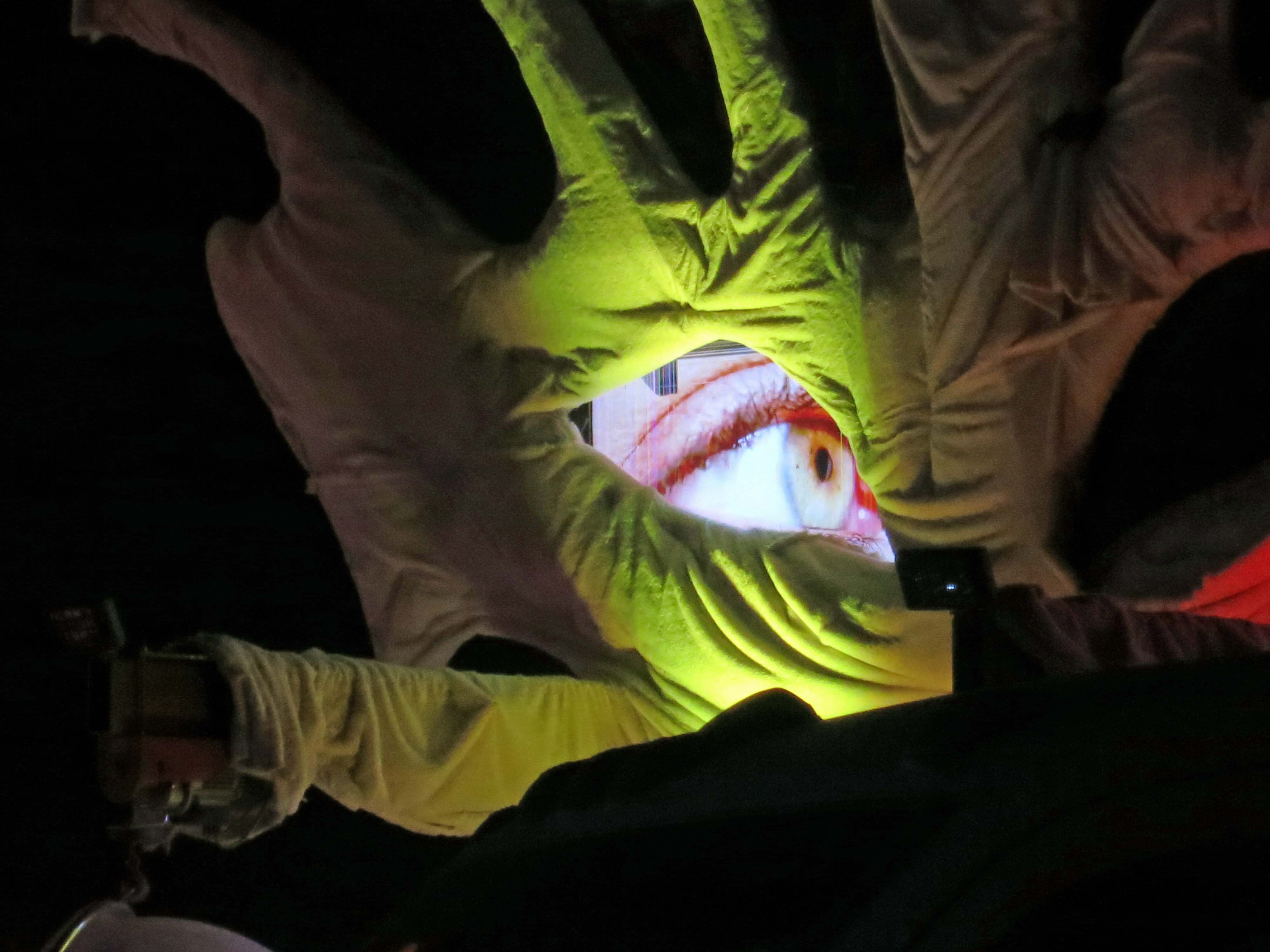
Mutant vehicle eye. Photo by Curtis Mekemson.

Speaking of eyes, I caught this man-sized  one on a mutant vehicle the night they burned the Man.

Peggy found this dragon out on the Playa while the owners were away. Good thing they didn't leave the keys. (Photo by Tom Lovering.)

Peggy found this dragon out on the Playa while the owners were away. Good thing they didn’t leave the keys.  Giddy-up! (Photo by Tom Lovering.)

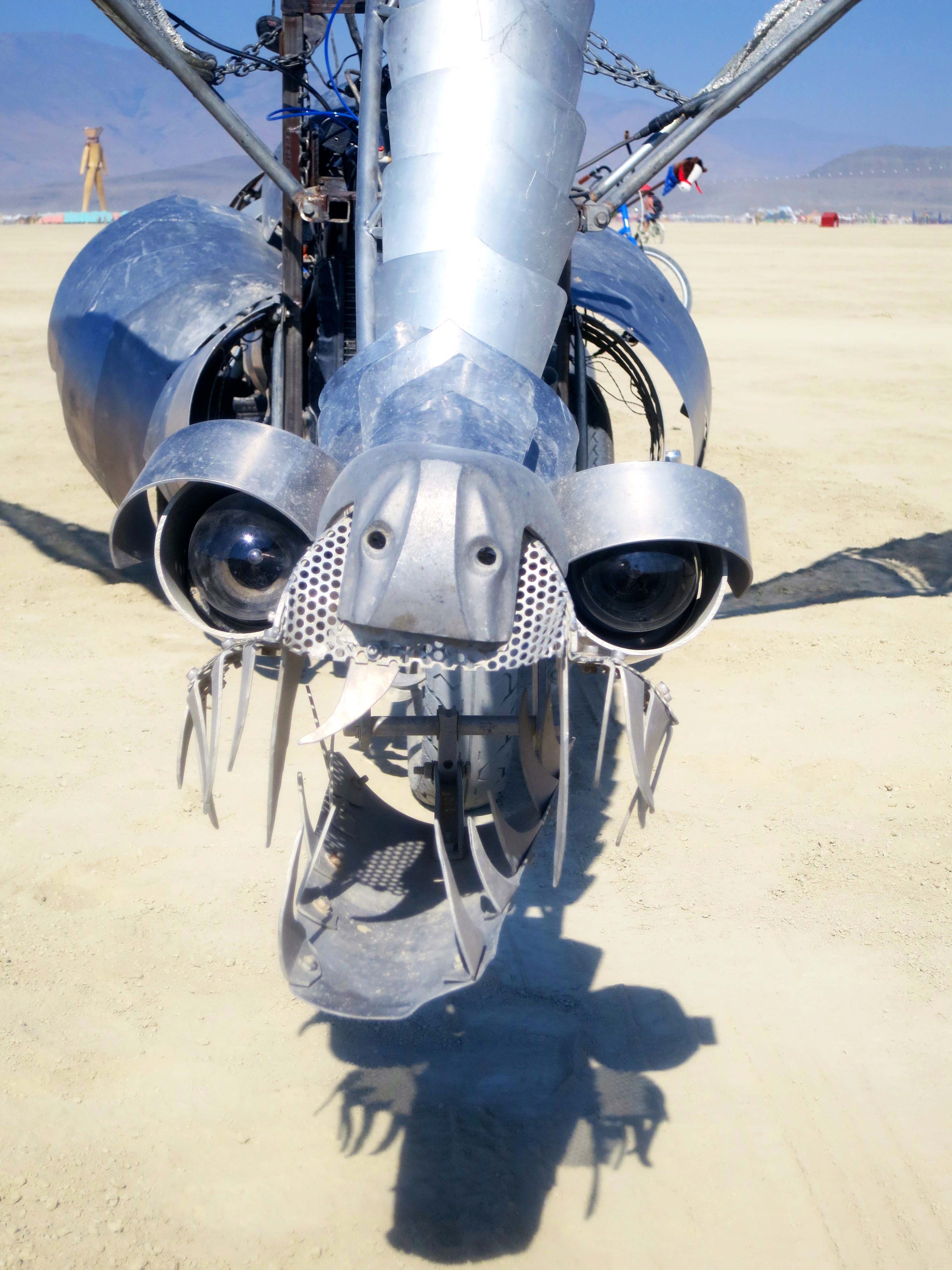
Close up of a dragon head at Burning Man 2014. Photo by Curtis Mekemson.

Close up of the dragon’s head.

Winged dragon mutant vehicle at Burning Man 2014. Photo by Curtis Mekemson.

This is a rather attractive fellow with gossamer wings.

Fish mutant vehicle emerges out of a dust storm at Burning Man 2014. Photo by Curtis Mekemson.

Imagine for a moment you didn’t know what was happening and you saw this creature of the deep emerge out of a dust storm.

A steampunk horse and carriage at Burning Man 2014. Photo by Curtis Mekemson.

A steampunk horse shows off his inner workings. The carriage is also quite unique.

Steampunk vehicle at Burning Man 2014.

Another steampunk vehicle with a unique look. (Photo by Peggy Mekemson.)

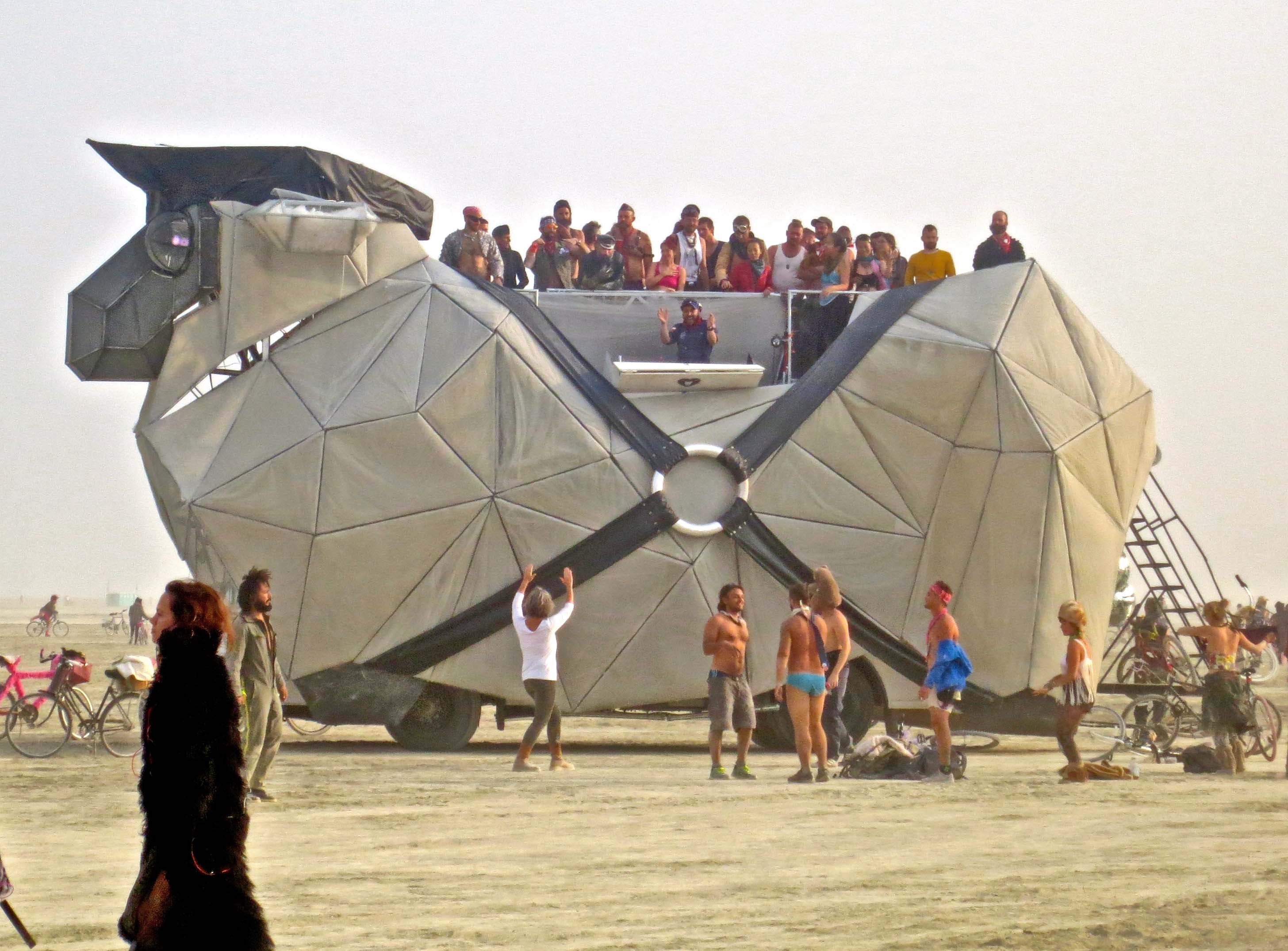
Large mutant vehicles can carry a number of people at Burning Man. Photo by Curtis Mekemson.

Large mutant vehicles such as this bull can accommodate a number of people.

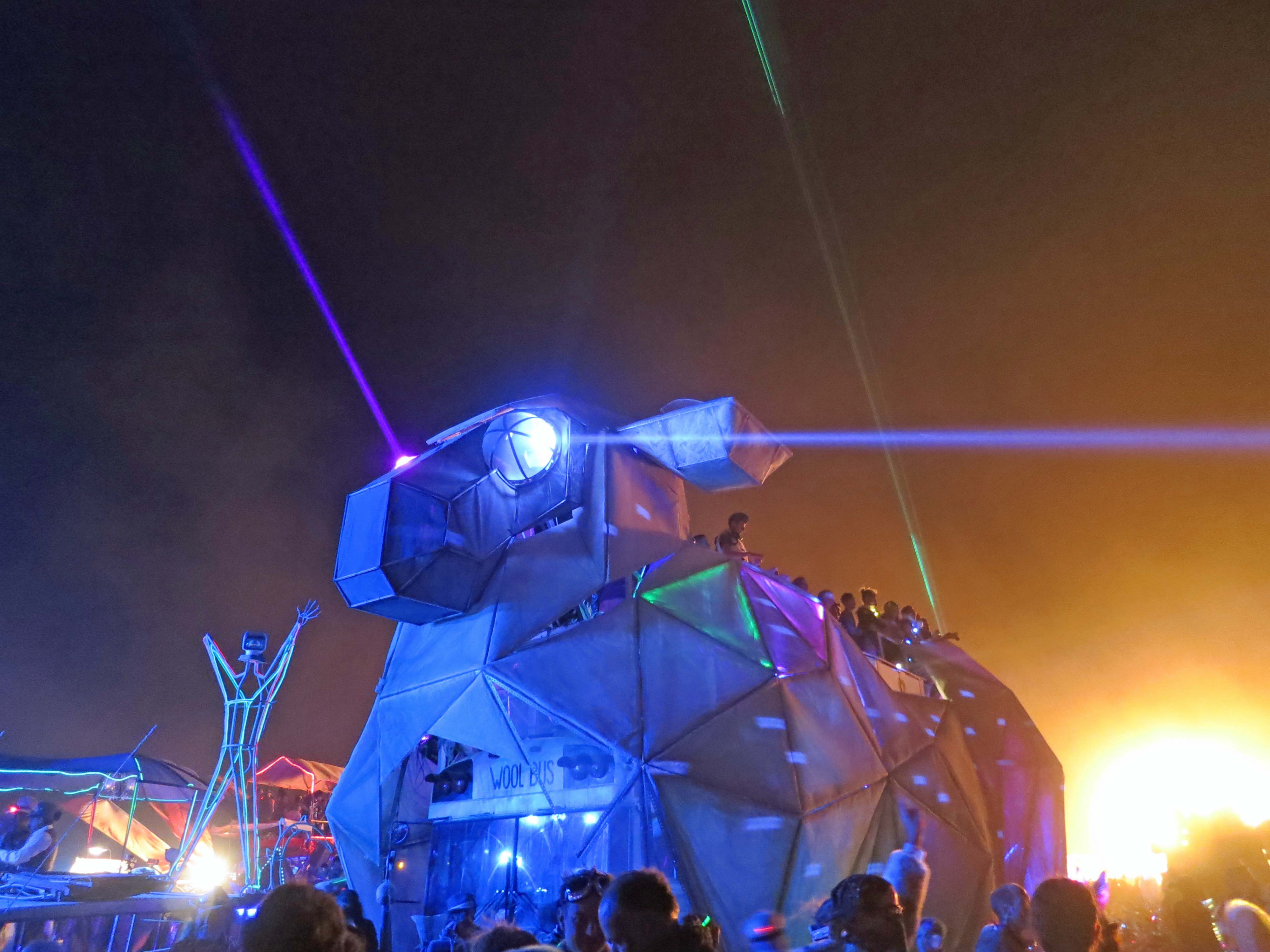
The same bull at night provides a perspective on how dramatically different mutant vehicles look at night.

The same bull at night provides a perspective on how dramatically different mutant vehicles can look when the sun goes down.

Cheshire cat at Burning Man 2014.

This Cheshire Cat rolled by our campsite.

Lady Sassafras mutant vehicle at Burning Man 2014.

Lady Sassafras built by the Crown Collective of New Orleans is made from debris left over by Hurricane Katrina.

ATV mutant vehicle at Burning Man 2014. Photo by Curtis Mekemson.

Mutant vehicles come in all sizes as this ATV demonstrates. Every square inch of available space is covered.

Close up of decorations. I liked the dog.

Close up of the decorations. I liked the dog.

A three mast sailing ship at Burning Man 2014. Photo by Curtis Mekemson.

This three mast sail boat makes a good conclusion for this blog on the mutant vehicles at Burning Man 2014. Next blog: A huge sculpture known as Embrace.


El Pulpo Mecanico… The Magnificent Octopus of Burning Man

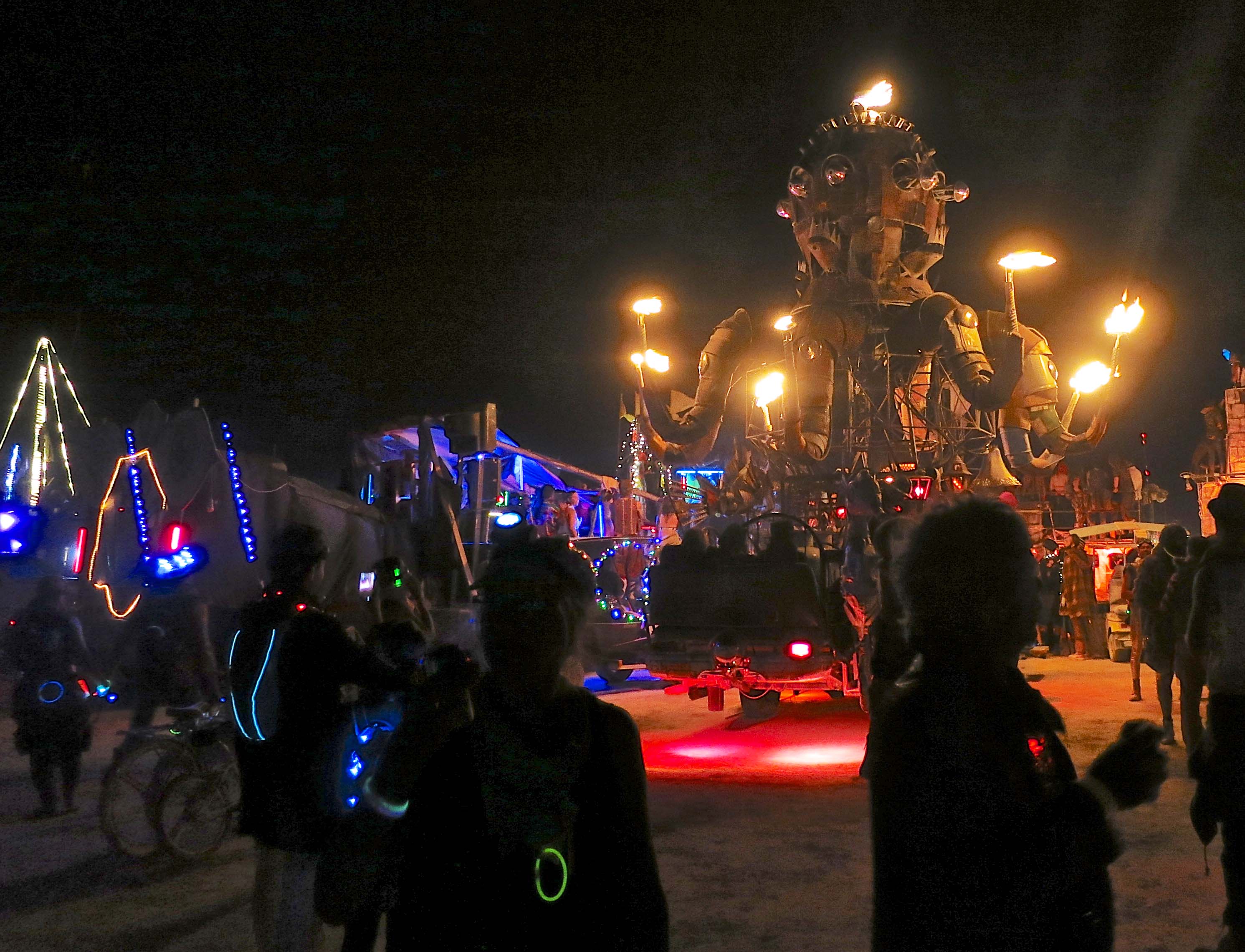
The mutant vehicle El Pulpo Mechanico lights up the night at Burning Man 2014. Photo by Curtis Mekemson.

El Pulpo Mecanico doing what he does best: spout fire and entertain Burners.

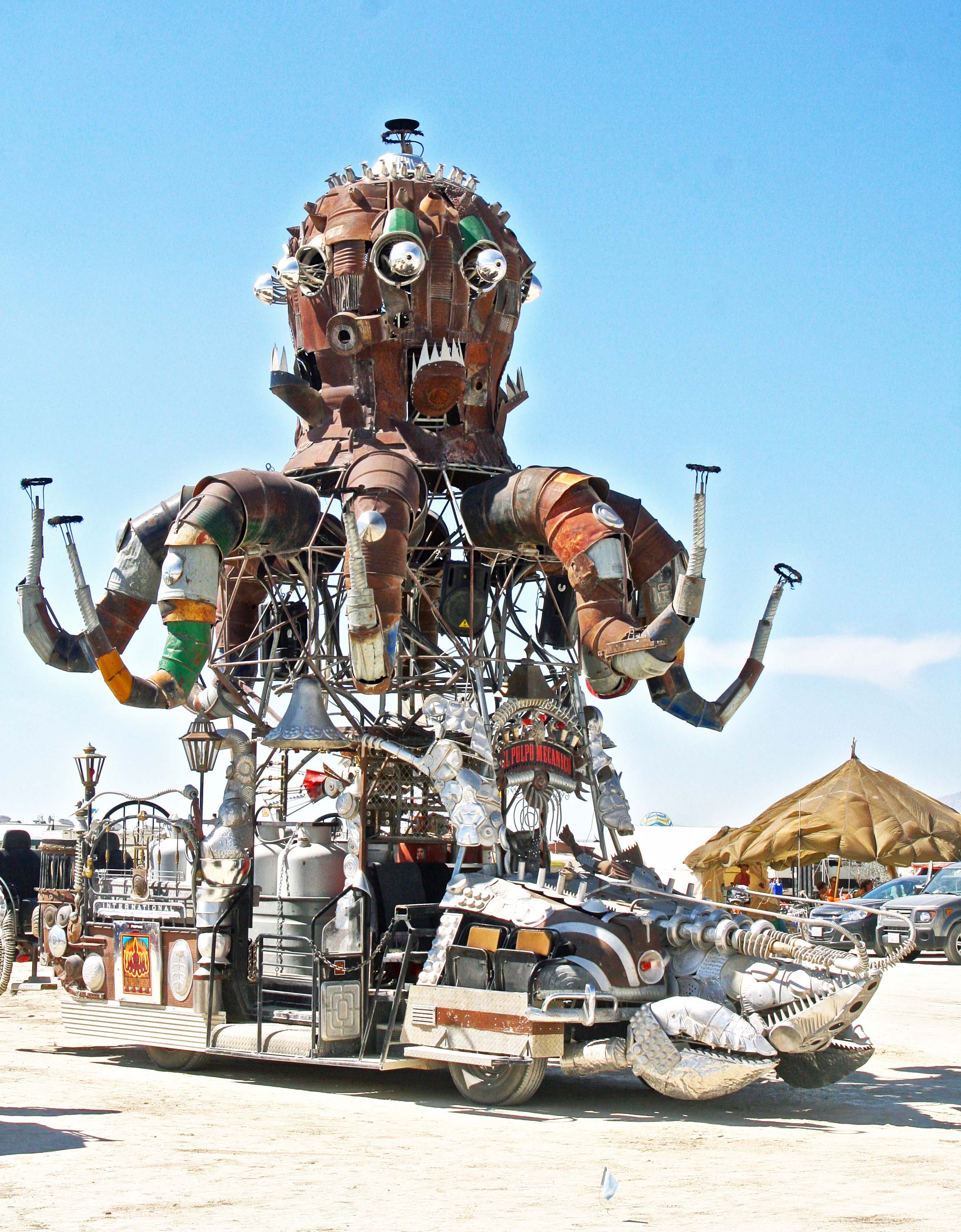
He comes through the desert night with eyes bulging, jaws dropping, and eight arms flaming like an ancient god. The 26 foot tall El Pulpo Mecanico, the mechanical octopus, arrives in a cloud of dust and fire. An admiring group of Burners gather round, cameras poised. This is El Pulpo’s fourth trip to Burning Man, and he still elicits wonder wherever he goes.

The head of El Pulpo Mechanico at Burning Man 2014.

It’s hard to look at the head of El Pulpo and not imagine some ancient god. He even has his own church. (grin)

El Pulpo is a mutant vehicle or art car in the language of Black Rock City. The powerful DMV, the Department of Mutant vehicles, has licensed him. Beyond getting to campsites, Burners are not allowed to drive on the Playa or in Black Rock City without a DMV permit. And you don’t get a permit unless your vehicle has morphed into something else— like an octopus, or rhinoceros, or sailing ship, or even a push-button telephone.

Push button phone mutant vehicle at Burning Man 2014 photographed by Curtis Mekemson.

Mutant vehicles come in all shapes and sizes at Burning Man. This phone vehicle at Burning Man 2014 represents both the imagination and humor of Burners.

El Pulpo sprang from the creative imagination of Duane Flatmo, a graphic artist and mural painter who lives in Arcata, California along with his wife and fellow artist, Micki Dyson. Duane’s murals can be found throughout Eureka and Arcata. Or, if you stop off for one (or more) of the excellent beers at the Lost Coast Brewery and pause long enough to admire the labels, you are admiring Duane’s work.

The label from Alleycat Ale of the Lost Coast Brewery in Eureka California. Duane Flatmo created the label.

The label from Alleycat Ale of the Lost Coast Brewery in Eureka California.

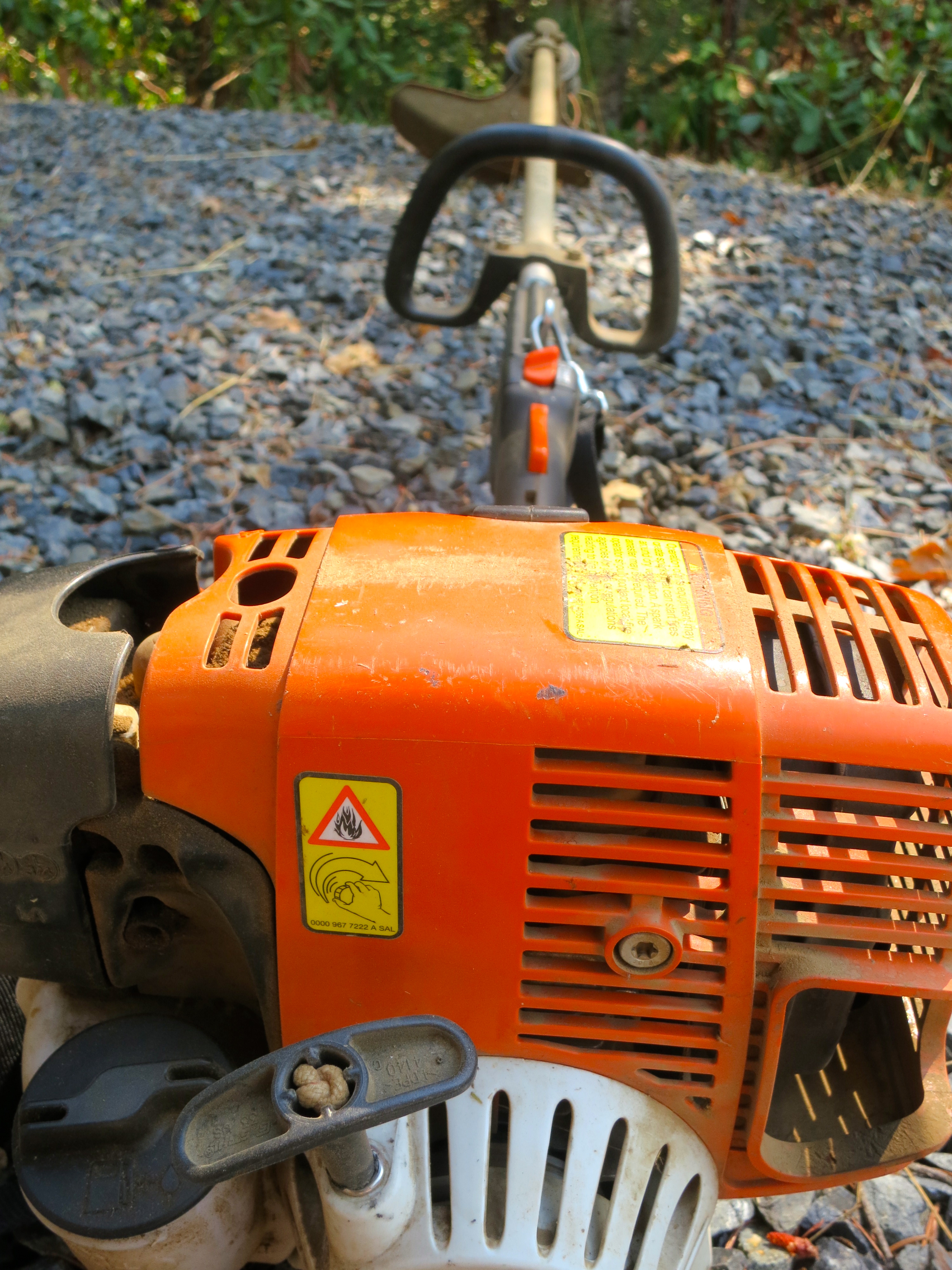
Duane’s talents apparently include music as well. In 2006, he became a finalist on America’s Got Talent by playing a guitar with a weed whacker and an eggbeater. It would take me less than .01 seconds to destroy a guitar with my weed whacker. I suspect a bit longer with an eggbeater.

My weed whacker. I challenge any guitar to stand up to it.

My weed whacker. I challenge any guitar to stand up to it. Bring on your Martin!

Going to Disneyland as a child inspired Duane to build things from an early age. It was the Kinetic Grand Champion Race in Humboldt County that encouraged him to build things that move, however. The race, which is known as the triathlon of the art world, takes place annually and pits human-powered art sculptures against each other in a grueling 38-mile race over land, water, sand and mud between the communities of Arcata and Ferndale. Duane created the first of his 30 plus entries in 1982.

His passion for building led him to England in 2001 to participate in the TV series the Junkyard Wars where participants were challenged to create specific objects such as a car crusher from junk. Two years later he was in China participating in the Strange Vehicle Games and building a monster truck.

All of this was accomplished before El Pulpo Mecanico. Somewhere around 2005 Duane and his creative group of fellow travellers made it to Burning Man. Not surprisingly, they soon began dreaming about creating mutant vehicles.

It was in the small town of La Peñita, Mexico about 40 miles north of Puerto Vallarta, that El Pulpo was born. (It’s a pretty area; I was fishing off its shore last fall.) The Flatmos have a home there that they visit for a couple of months every year. With an idea in mind, Duane hit the streets searching for junk. Out of this junk he built the first model of El Pulpo.

Ocean north of Puerto Vallarta. Photo by Curtis Mekemson.

The Pacific Ocean off the coast from La Penita.

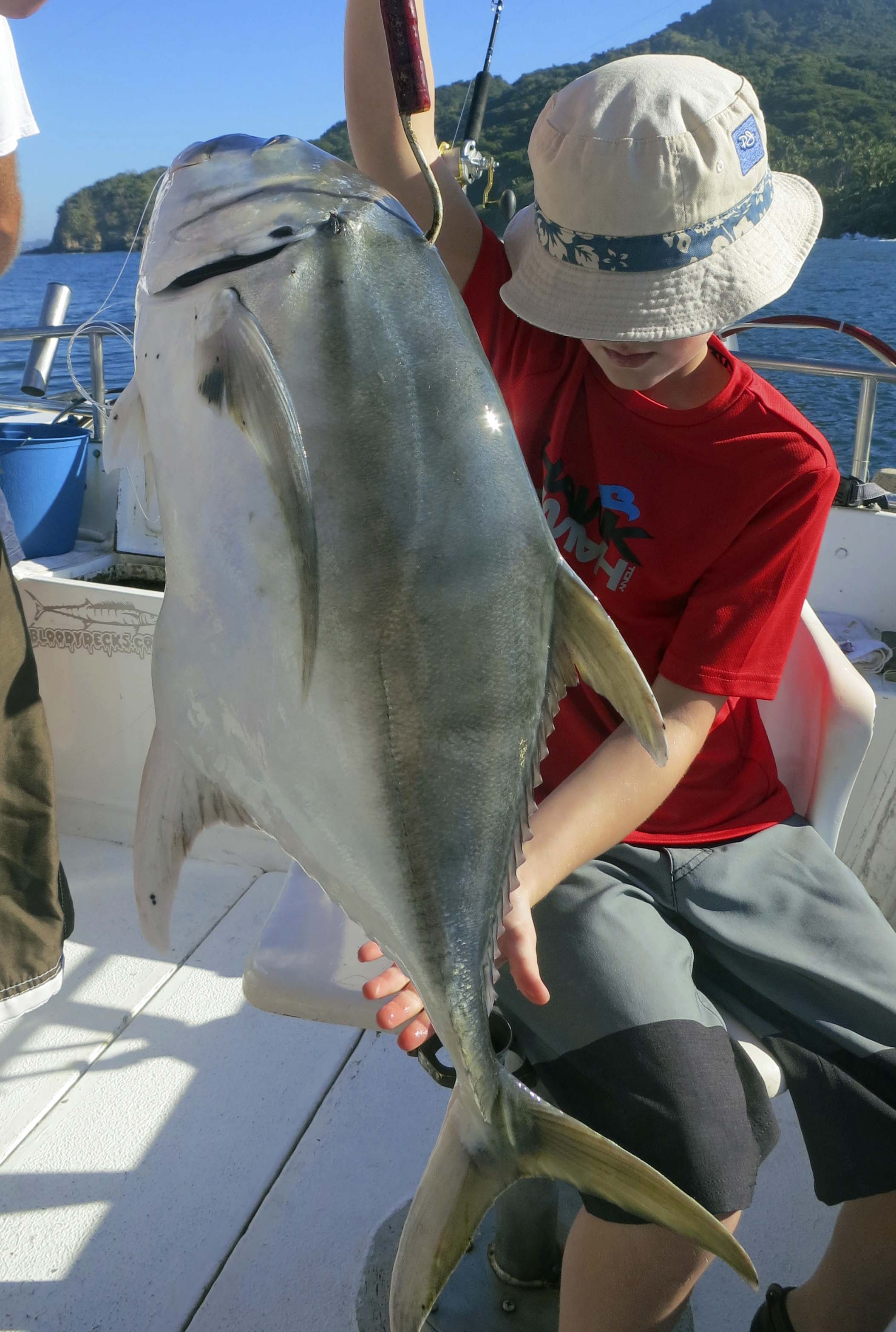
My grandson Ethan proudly displays a fish he caught on our fishing trip north of Puerto Vallarta.

My grandson Ethan proudly displays a fish he caught on our fishing trip north of Puerto Vallarta. He was lucky it didn’t catch him.

Back home in Arcata, Duane pulled together a team to help him create the giant cephalopod. Steve Gellman was brought on board to help with the fireworks and long time friend Jerry Kunkel was recruited because of his expertise in electrical work and engineering. While a number of others helped with the assembly, it is particularly important to note Bonnie Connor. She owns Arcata Scrap and Salvage, the home for most of El Pulpo’s parts.

Black and white of El Pulpo Mechanico taken by Curtis Mekemson.

El Pulpo was made out of junk gathered from the Arcata Scrap and Salvage Yard. Duane says the size of the 55 gallon drums used to make El Pulpo’s upper legs determined his whole size.

Photo of El Pulpo's head featuring salvaged parts at Burning Man 2014. Photo by Curtis Mekemson.

This close up of El Pulpo’s head demonstrates his salvaged parts, including the 55 gallon drums.

The skin of El Pulpo Mechanico , like the rest of the Burning Man octopus is made from salvaged junk. Photo by Curtis Mekemson.

I was amused by El Pulpo’s junk yard skin. Muffins anyone?

The octopus was built on top of a donated 1973 Ford 250 4×4. A giant cam provides the muscle power— raising and lowering his eight legs, thrusting out his eight bulging eyes, and dropping the jaws on his four mouths. Neither computers nor hydraulics are used. Four fifty-gallon propane tanks provide flames for a night of fun on the Playa. The fire spouting legs and head send flames roaring out 30 feet. And here’s a final fun fact, the sound of the escaping flames can be used as a percussion instrument. Duane plays El Pulpo like a drum. And why not. Anyone who can play a guitar with a weed whacker should be able to make music with an octopus.

Four propane tanks provided El Pulpo Mechanical with fuel for his fiery performances at Burning Man. Photo by Curtis Mekemson.

The four 50 gallon propane tanks that fire up El Pulpo for a night. As you can imagine, keeping these tanks full is expensive.

El Pulpo Mechanico sign. Photo by Curtis Mekemson.

Indeed he does.

El Pulpo made his first trip to the Burning Man in 2011. What is the most fun Duane has had with his mutant vehicle ? He lists two incidents: providing transportation for Susan Sarandon as she toured the Playa and watching San Francisco firemen line up to admire El Pulpo. The head fire inspector “hit the fire buttons and giggled like a child.”

Duane and company are now in the process of creating a new mutant vehicle for Burning Man. I can’t wait to see the results.

El Pulpo Mechanico during the day at Burning Man 2014.

Even during the day, El Pulpo Mecanico is magnificent. (Photo by Peggy Mekemson.)

El Pulpo Mechanico shown up in the air at Burning Man 2014. Photo by Curtis Mekemson.

Up in the air.

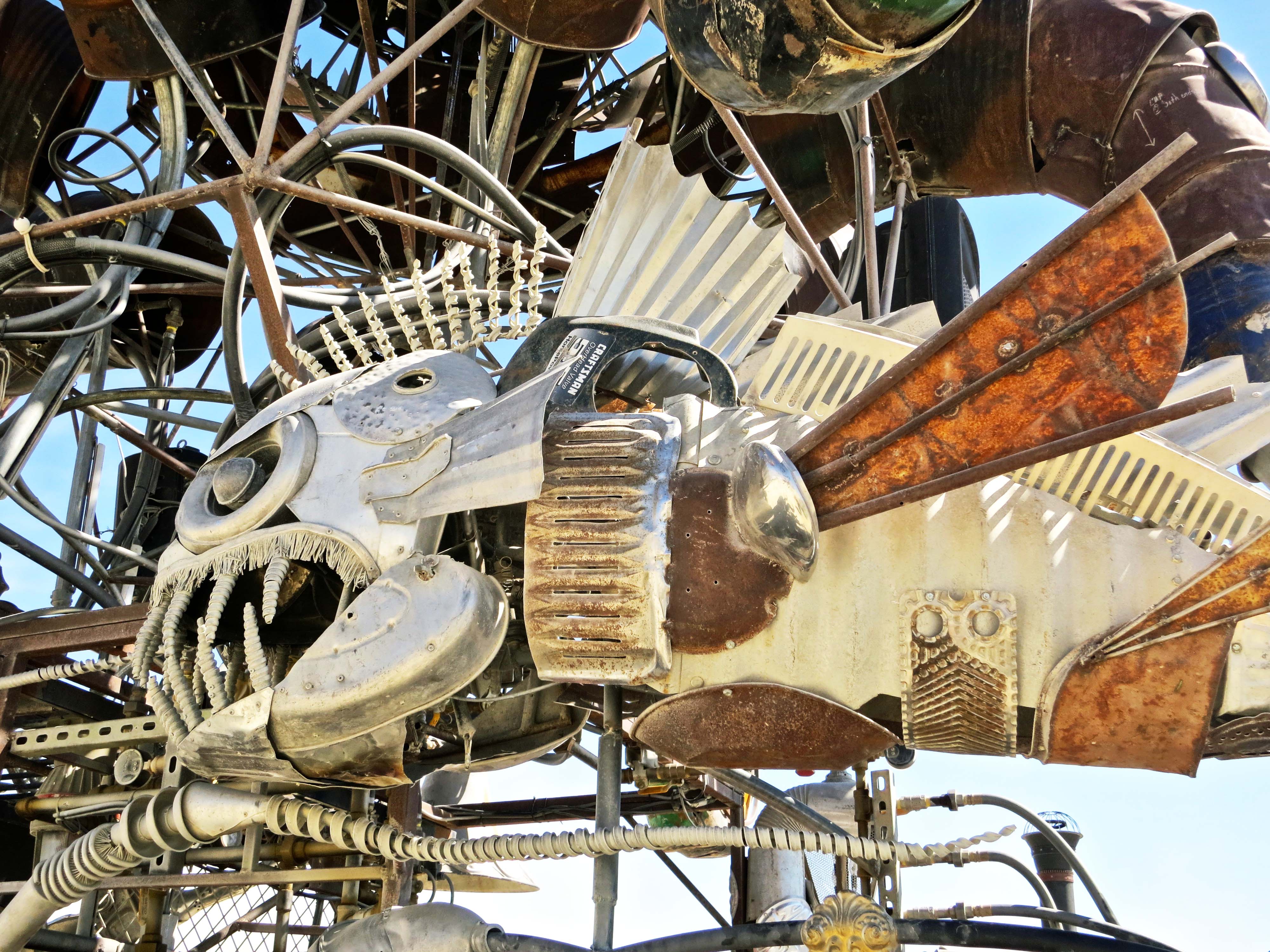
Fish sculpture found on El Pulpo Mechanico at Burning Man 2014.

As might be imagined, other sea creatures such as this fish can be found sharing El Pulpo’s ocean.

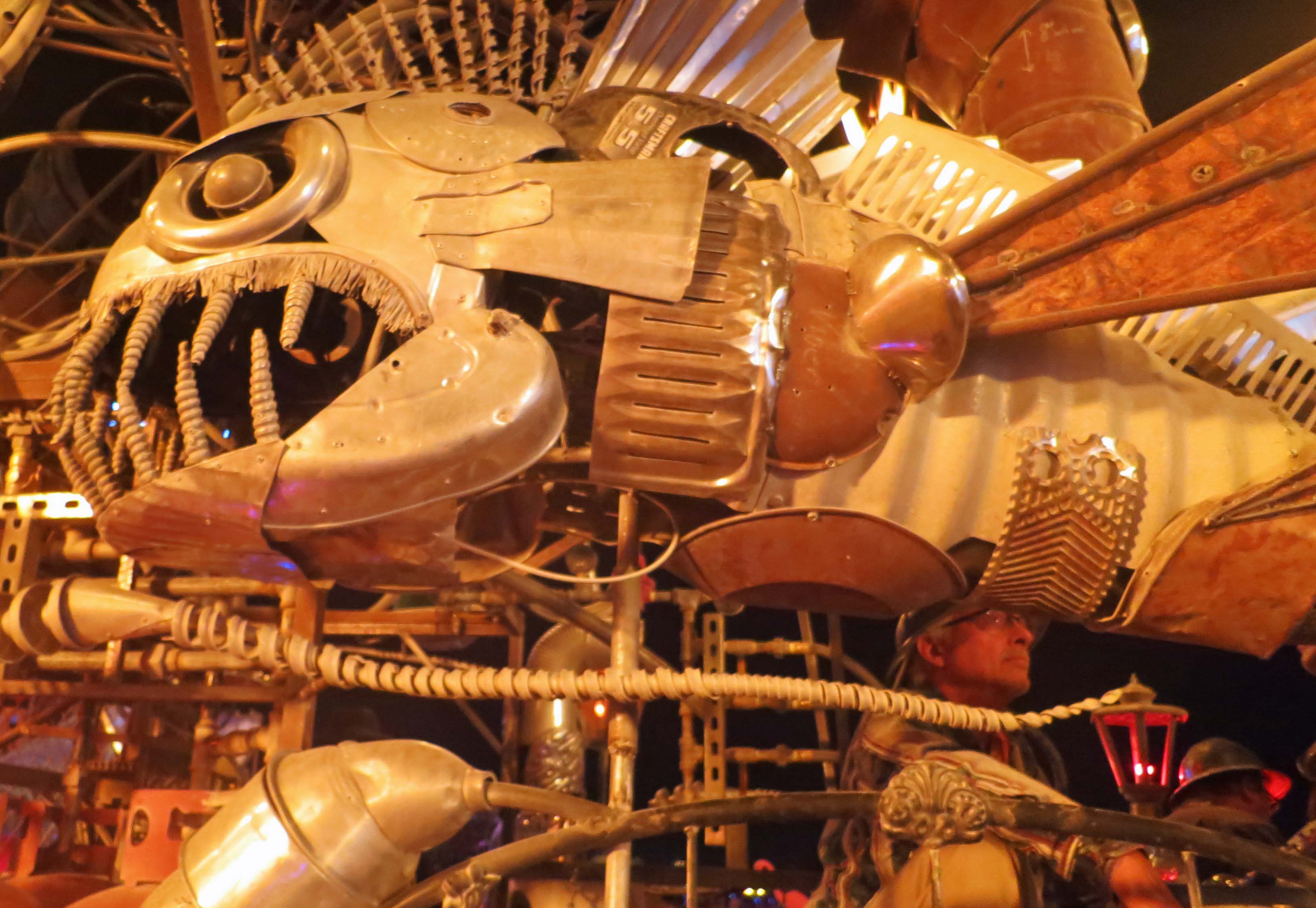
Fish sculpture found on El Pulp Mechanico shown at night, Burning Man 2014. Photo by Curtis Mekemson.

The fish at night.

Sea horse sculpture found on El Pulpo Mechanico, Burning Man 2014.

This friendly sea horse is another of El Pulpo’s companions. (Photo by Peggy Mekemson.)

Crab sculpture found on El Pulpo Mechanico, Burning Man 2014. Photo by Curtis Mekemson.

As is this crab with large claws. It looks a lot like the crawdads my brother and I caught as kids and our mother boiled up for dinner. Sweet meat! Duane created this guy for the Kinetic Grand Champion Race and adapted it to El Pulpo. See this article in Popular Mechanics.

El Pulpo Mechanico line up with other mutant vehicles waiting for the Man to burn at Burning Man 2014. Photo by Curtis Mekemson.

A final shot of El Pulpo waiting patiently for the Man to burn at Burning Man 2014. Next blog: I will introduce you to some of the other fun mutant vehicles Peggy and I found this year at Burning Man.