I Am Dreaming of a White Christmas…

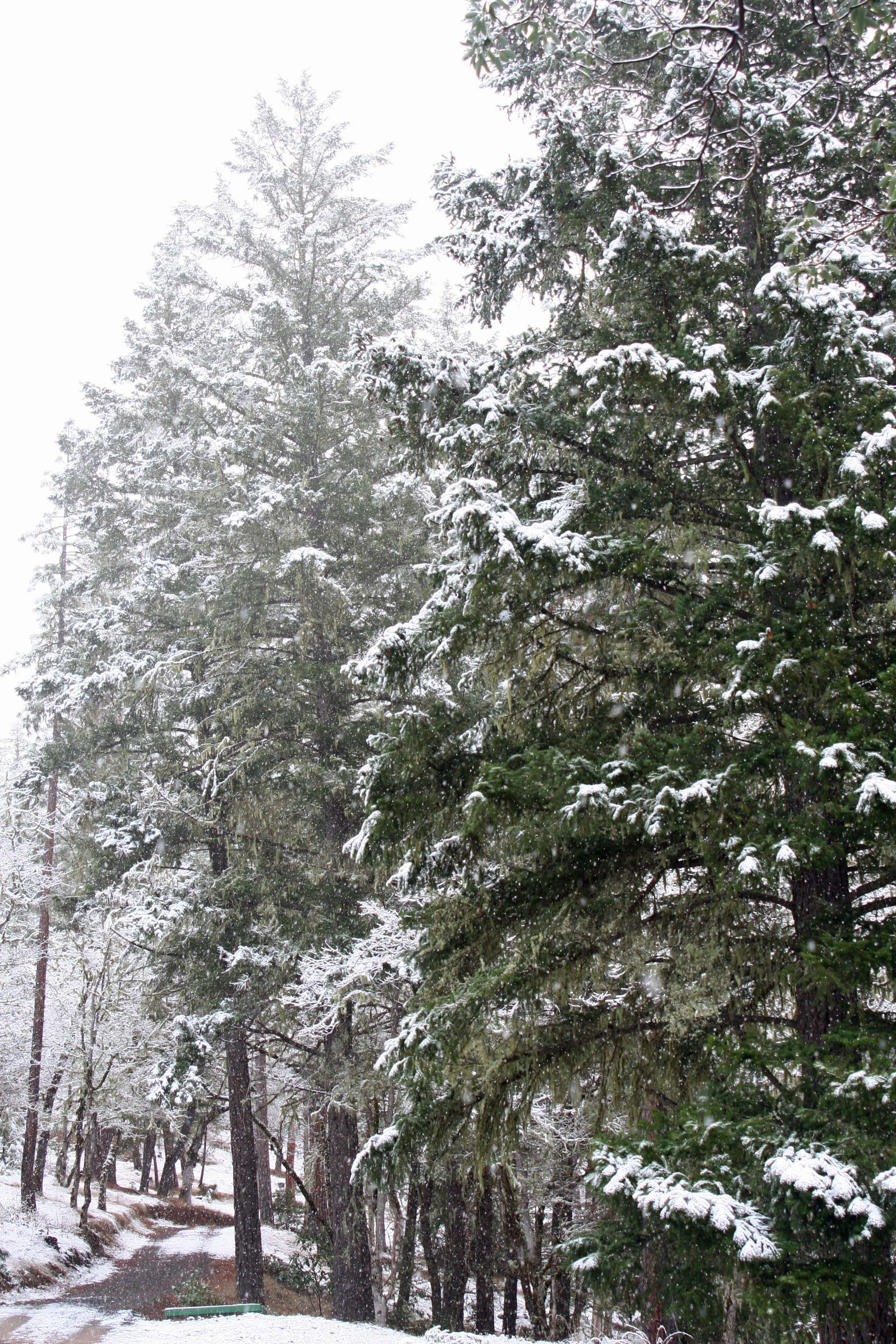
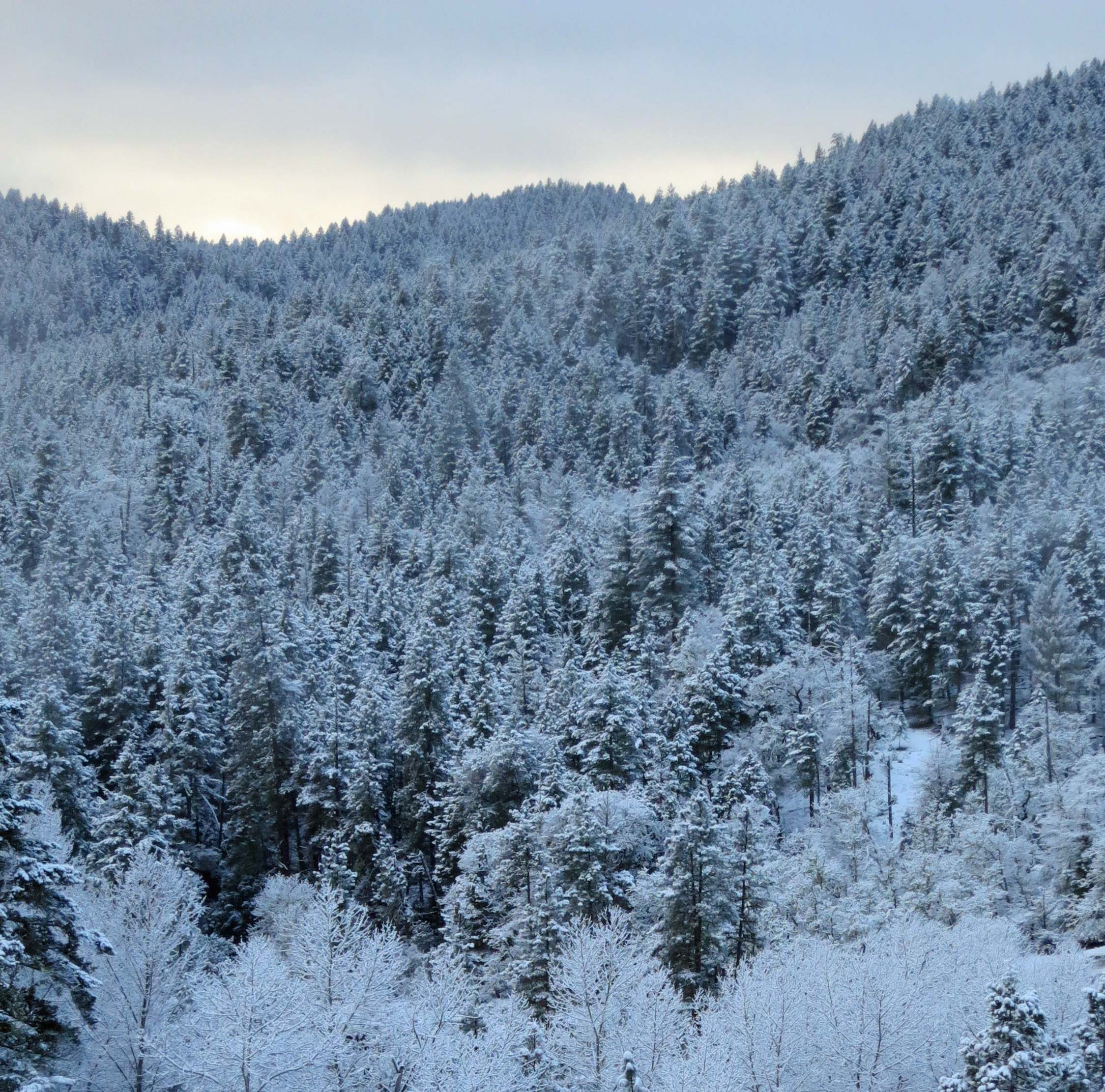
White oaks ans cedar covered with snow on the Applegat River of southern Oregon.

White oaks and one of our cedars dressed in white as seen from our patio.

I grew up listening to Bing Crosby singing White Christmas. It was one of my mother’s all-time favorite carols and became one of mine as well. As hard as I wished for a white Christmas in Diamond Springs, however, we never had one. I didn’t in Liberia or Sacramento, either. Alaska was a different story. (Grin)

This past week, I was hoping, hoping, hoping to wake up and find the ground covered in white. The local weather forecasters even hinted that there might be some snow in our future. It wasn’t to be, however. Sigh. As this post goes up, we are off in Tennessee celebrating Christmas with our daughter and family. Who knows what is happening on the Upper Applegate River?

It does snow here, though, in the Oregon foothills of the Siskiyou Mountains. And when it does, I dash outside with my camera. With that in mind, I went searching through i-Photo looking for snowstorms of the past, so you—and I, could have a white Christmas. All of these photos are taken from our property. Enjoy.

Peggy and I would like to take this opportunity to thank each and every one of you for joining us on our adventures this past year. We’ve enjoyed having you along. May all of our friends around the world have a joyous holiday season and a wonderful New Year.

Curt and Peggy

Upper Applegate Valley of southern Oregon covered in snow. Photo by Curtis Mekemson.

Another view from our patio looking out across the Applegate River south toward California.

Southern Oregon forest covered with snow. Photo by Curtis Mekemson.

This time, the forest is decorated with a low cloud.

White oaks in the Applegate Valley of southern Oregon covered in snow. Photo by Curtis Mekemson.

Our white oaks covered in snow.

A close up.

A close up. Can’t you just feel it? This is the type of snow I put on my tongue and let melt.

View of driveway on Mekemson property in southern Oregon.

A view of our driveway with the snow coming down.

Snow falls on cedars in Upper Applegate Valley of southern Oregon.

Huge, white, fluffy Flakes.

Doe and buck black tail deer in snow in southern Oregon.

A doe and a buck black tail deer, part of the herd that owns our property, wonder what we are doing out in the snow storm.

And what is a snowstorm without a snowman? I called this guy George. He reminded me of someone.

And what is a snowstorm without a snowman? I called this guy George.

And this was Peggy's joyous creation. Happy Holidays everyone.

And this was Peggy’s joyous creation. Happy Holidays everyone.


Wandering the Far West in 2014… Interim 2

The cover: A tufa tower in Mono Lake with Sierra Nevada Mountains in Background. Eastern California.

The cover of our 2015 calendar: A tufa tower at Mono Lake with Sierra Nevada Mountains in background. Eastern California.

I am still working on my blog about Peg’s dad and his experience as a Hump pilot in World War II. In fact, Peggy’s brother, John Dallen Jr., is now helping. I’ve been learning a lot. For example, yesterday, I discovered the approximate location where the plane John Sr. was flying crashed in the Indian jungle. I find the new information fascinating, but the research is slowing down the post.

In the meantime, I decided to put up another interim post or two. Today is calendar day. Each year, Peggy and I create a calendar for our families using photos we have taken during the year. Family birthdays and anniversaries are included. This year we are mailing out 28 calendars, which include 80 birthdays and anniversaries.   It’s quite the production.

Since the photos we use on the calendar reflect this past year’s adventures and are among some of our favorites, I thought they would be fun to share on the blog. If you are a regular follower of Wandering through Time and Place, I am sure you will recognize several of them. All photos were taken by either Peggy or me. Enjoy.

January: Burney Falls. Northern California

January: Burney Falls. Northern California

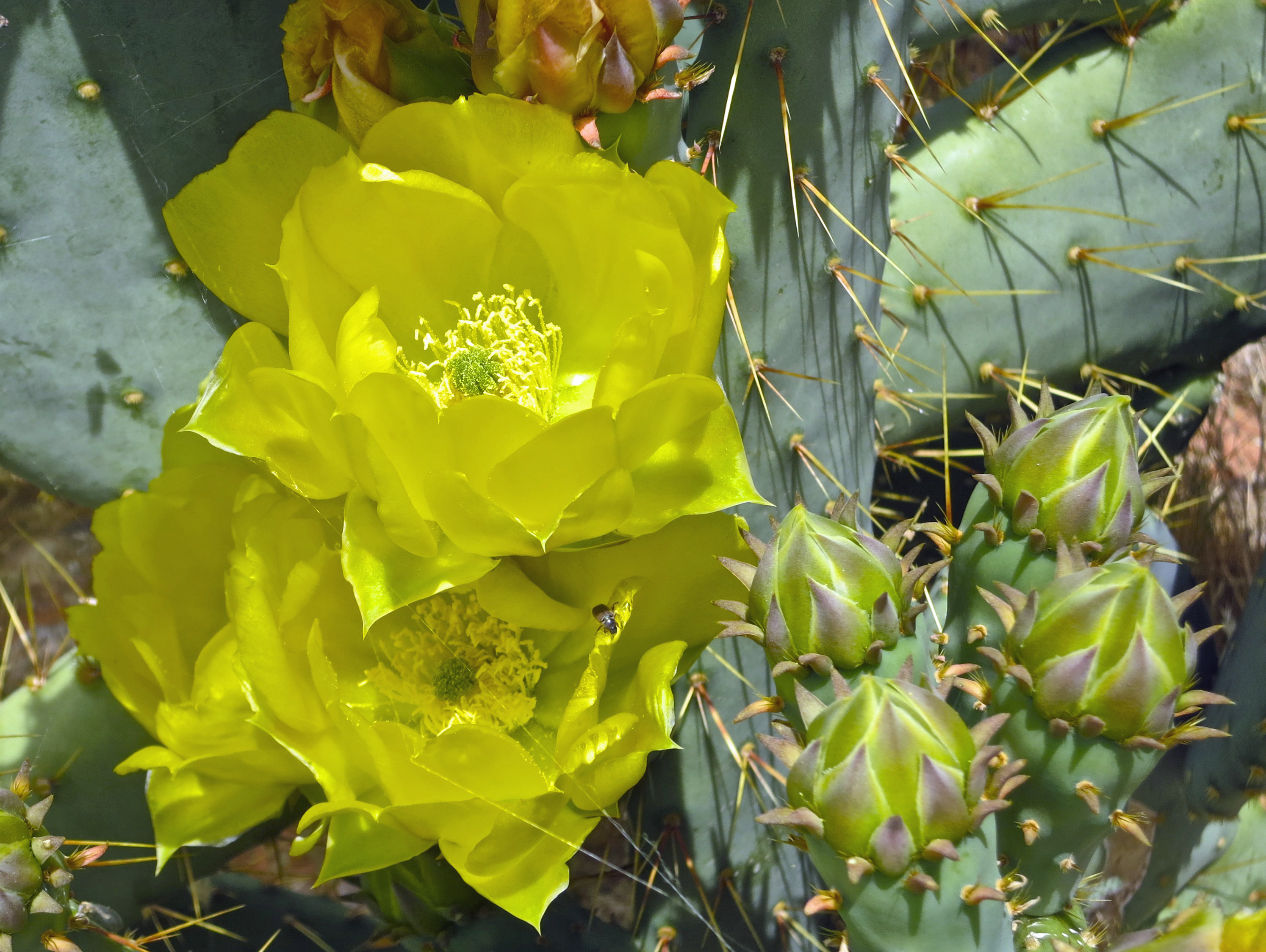
February: Cactus flowers. Valley of Fire State Park, Southern Nevada.

February: Cactus flowers. Valley of Fire State Park, Southern Nevada.

March: Red Rock Canyon National Conservation Area in southern Nevada.

March: Red Rock Canyon National Conservation Area in southern Nevada.

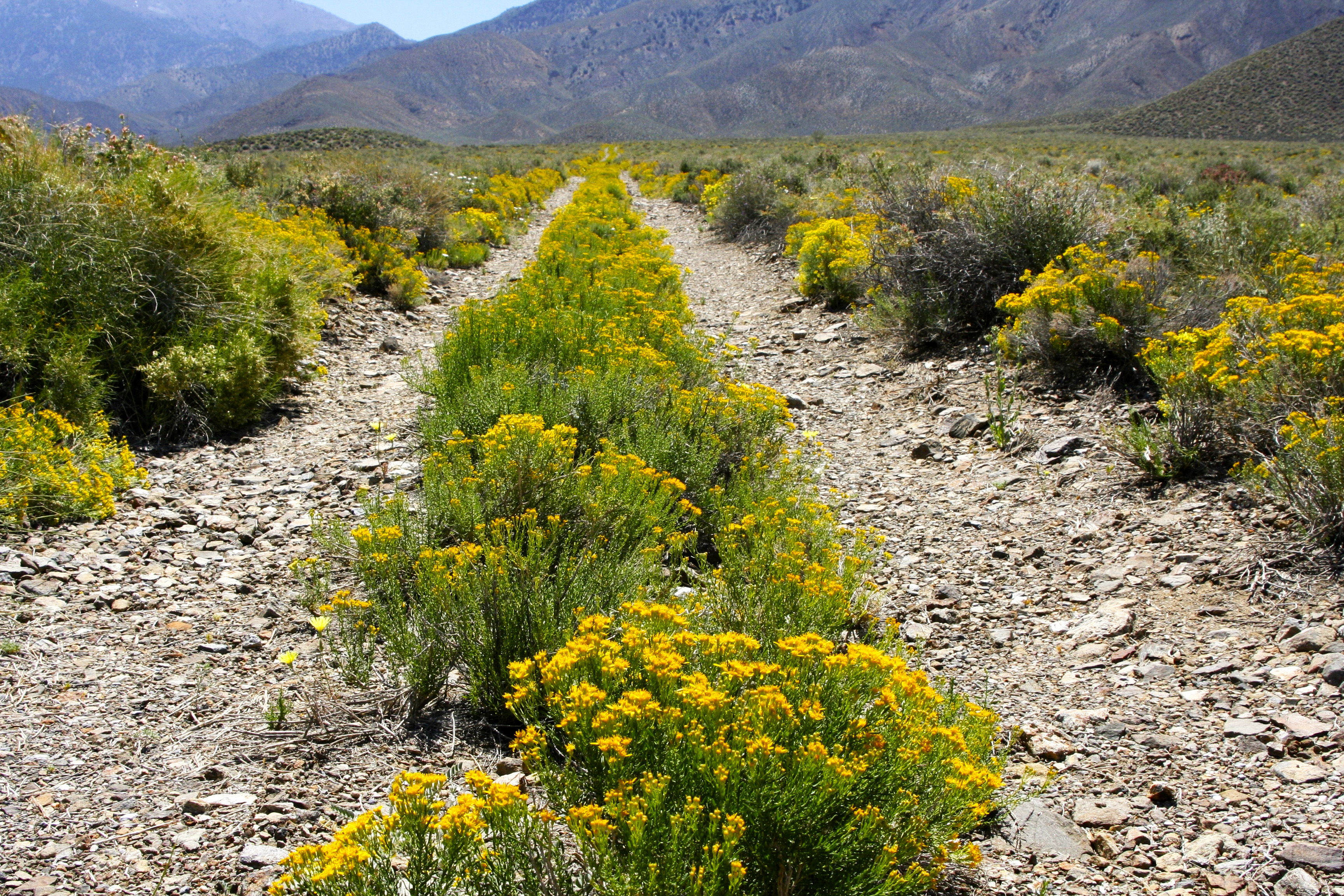
April: Old road with April flowers in Death Valley National Park. Eastern California.

April: Old road with April flowers in Death Valley National Park. Eastern California.

May: Weathered buildings at Bodie State Historical Park, a ghost town in Eastern California.

May: Weathered buildings at Bodie State Historical Park, a ghost town in Eastern California.

June: Sierra Nevada Mountains form the East. Peggy and I have backpacked through these mountains numerous times.

June: Sierra Nevada Mountains from the East. Peggy and I have backpacked through these mountains numerous times.

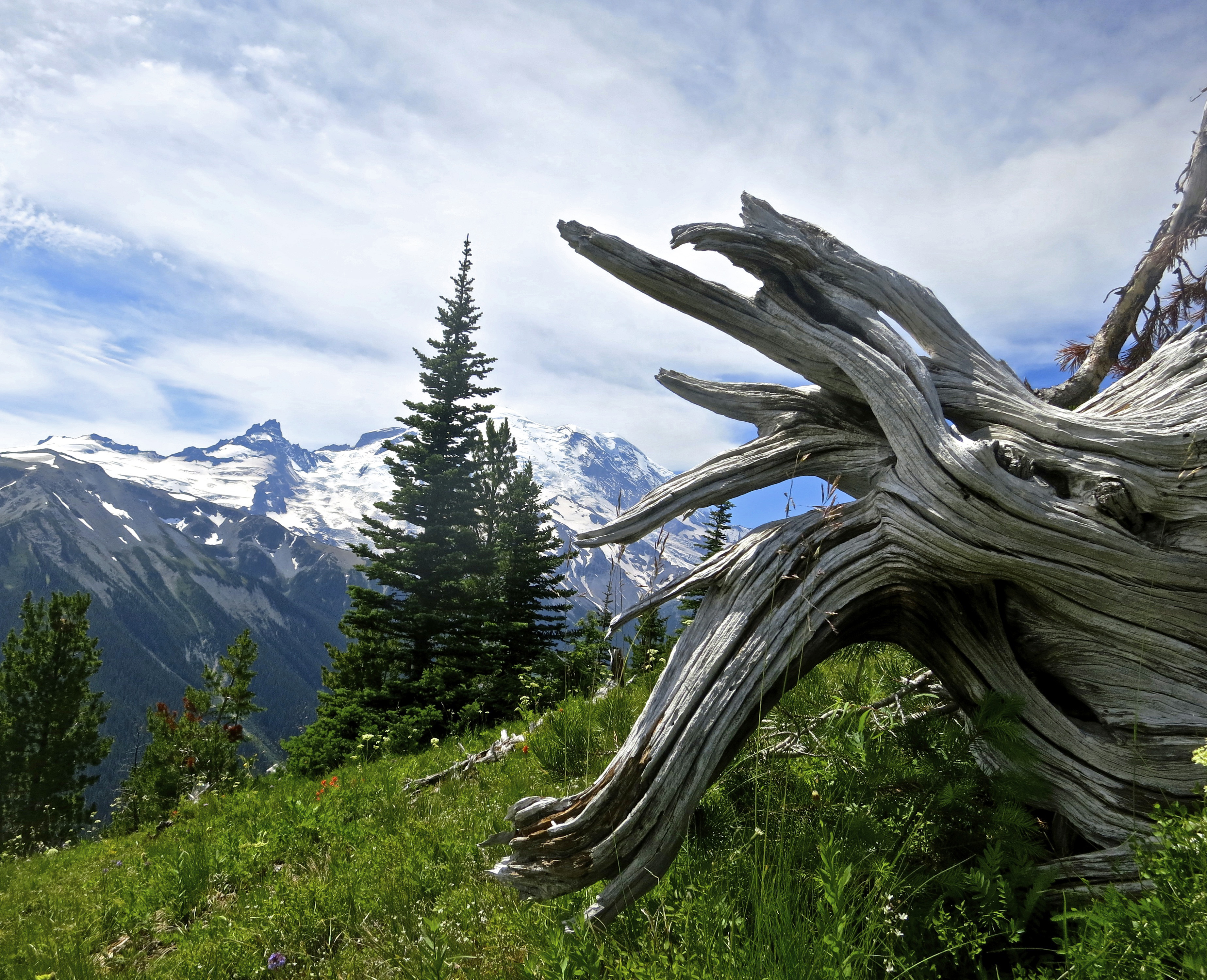
July:: Mt. Rainier National Park. Washington State.

July:: Mt. Rainier National Park. Washington State.

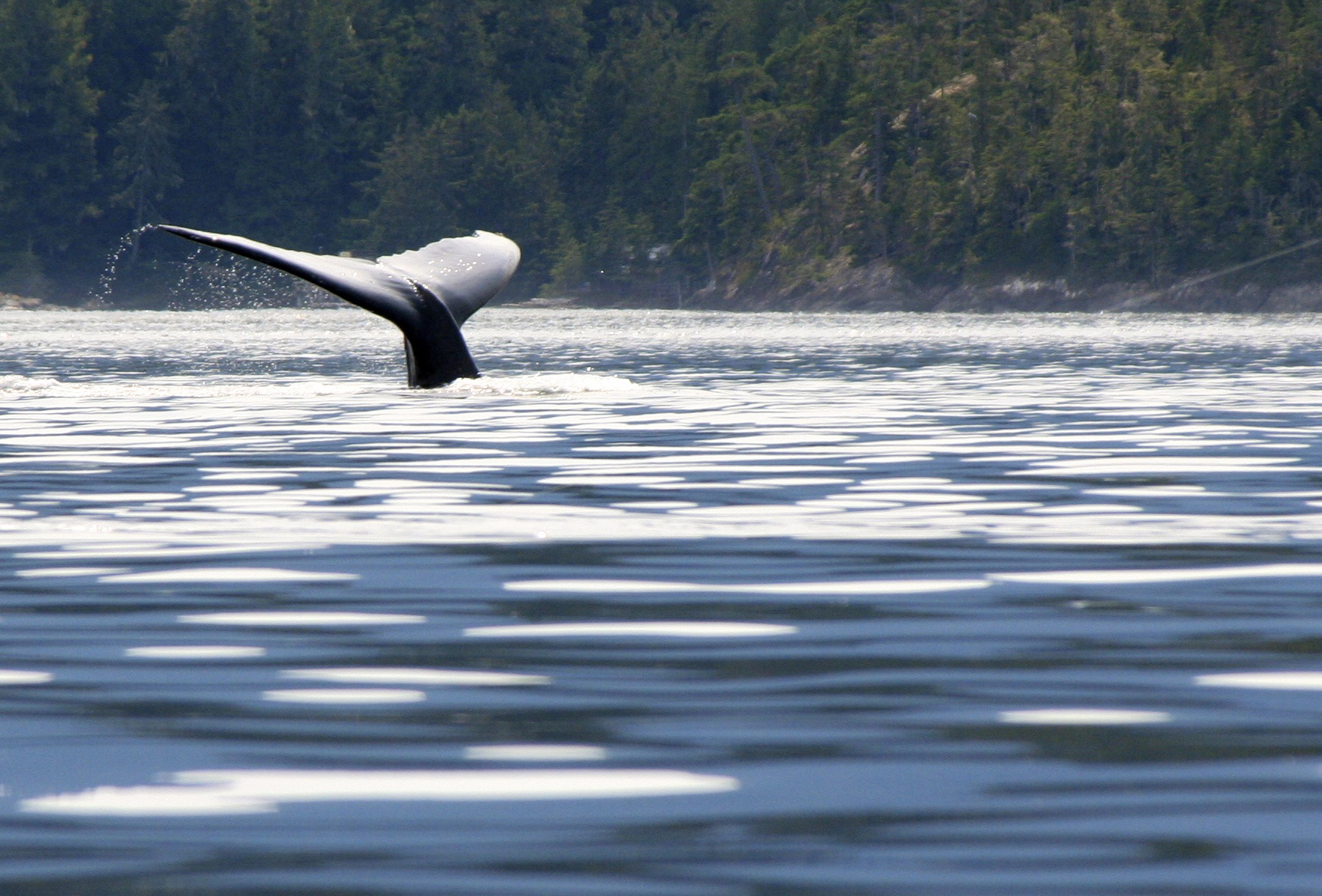
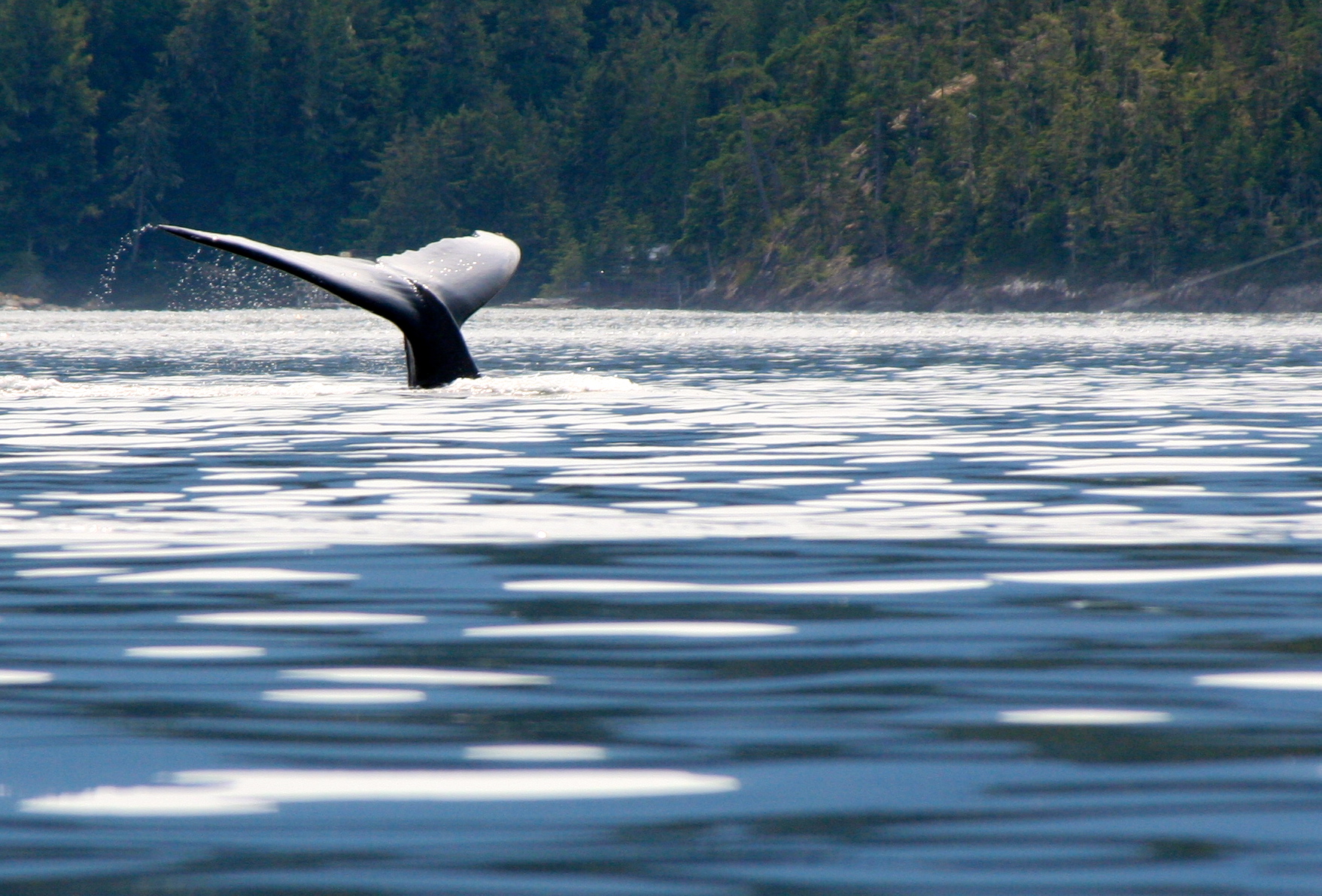
August: Humpback whale dives when Peggy and I are on kayaking trip off Vancouver Island.

August: Humpback whale dives when Peggy and I are on kayaking trip off Vancouver Island.

September: Burning Man in remote northern Nevada desert.

September: Burning Man in remote northern Nevada desert.

October: Rainbow caught in waves on Oregon Coast.

October: Rainbow caught in waves on Oregon Coast.

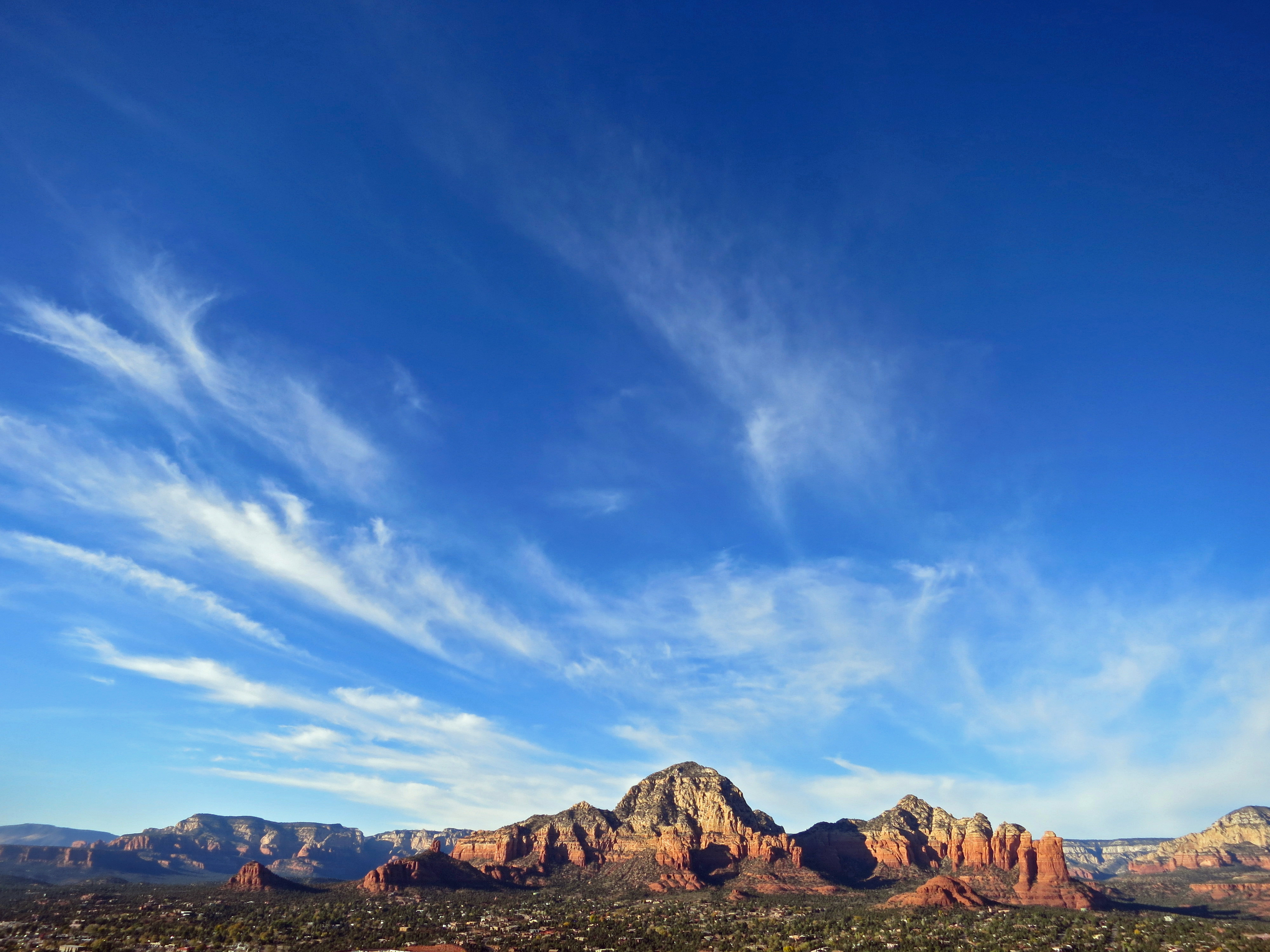
November: Sunset in Sedona, Arizona.

November: Sunset in Sedona, Arizona.

December: Bell Rock in Sedona, Arizona.

December: Bell Rock in Sedona, Arizona.


Now Playing in Our Back Yard: A Turkey Fan Dance… An Interlude

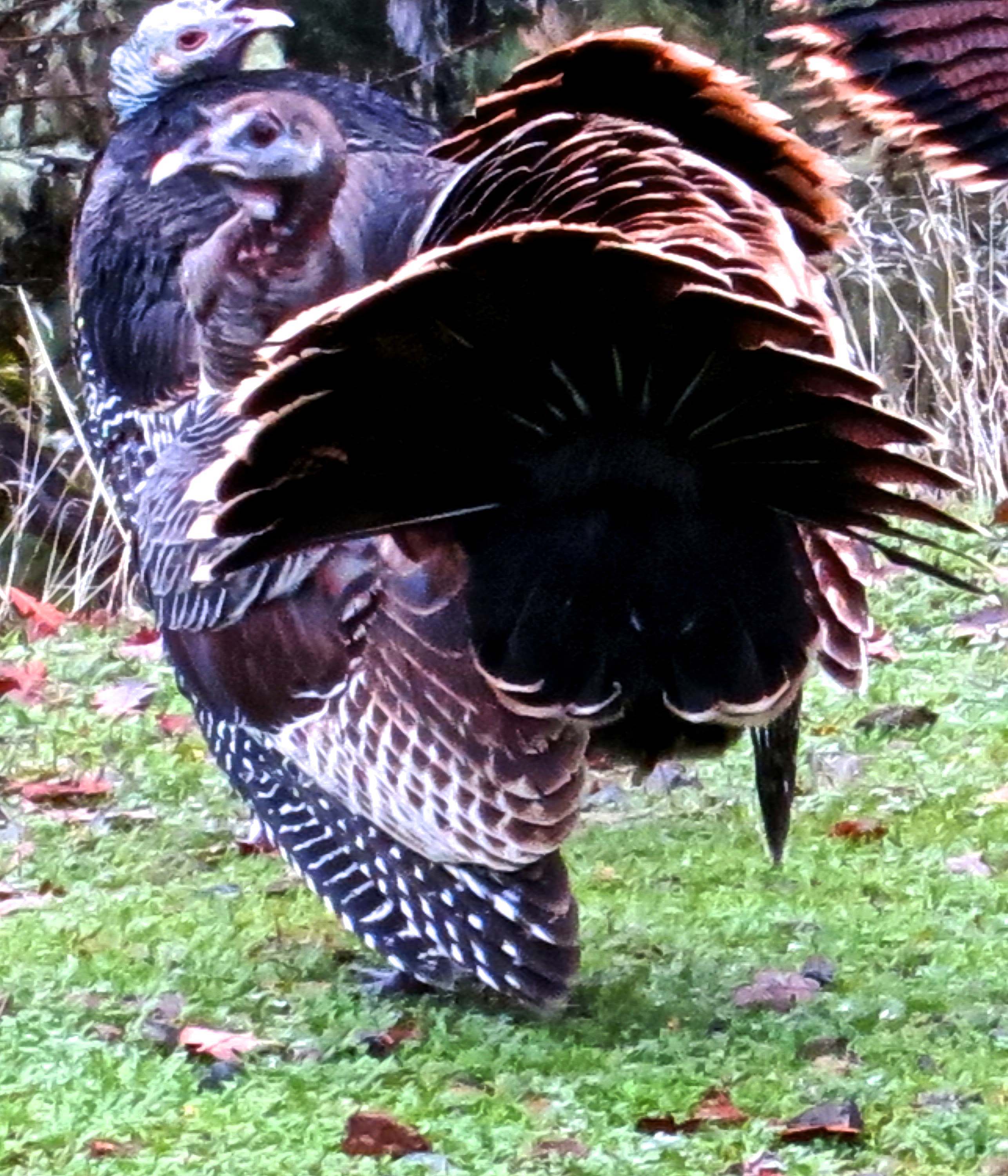
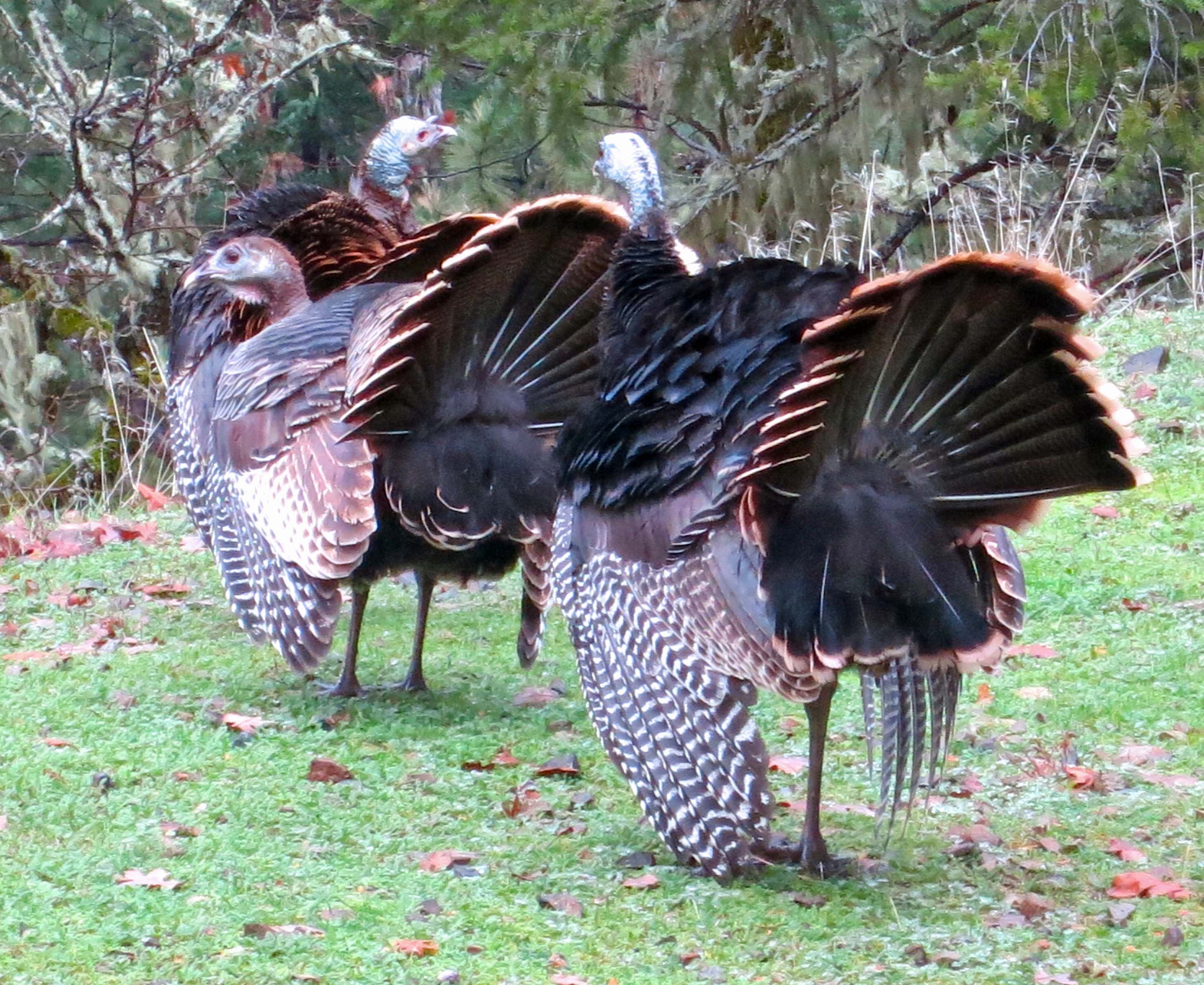
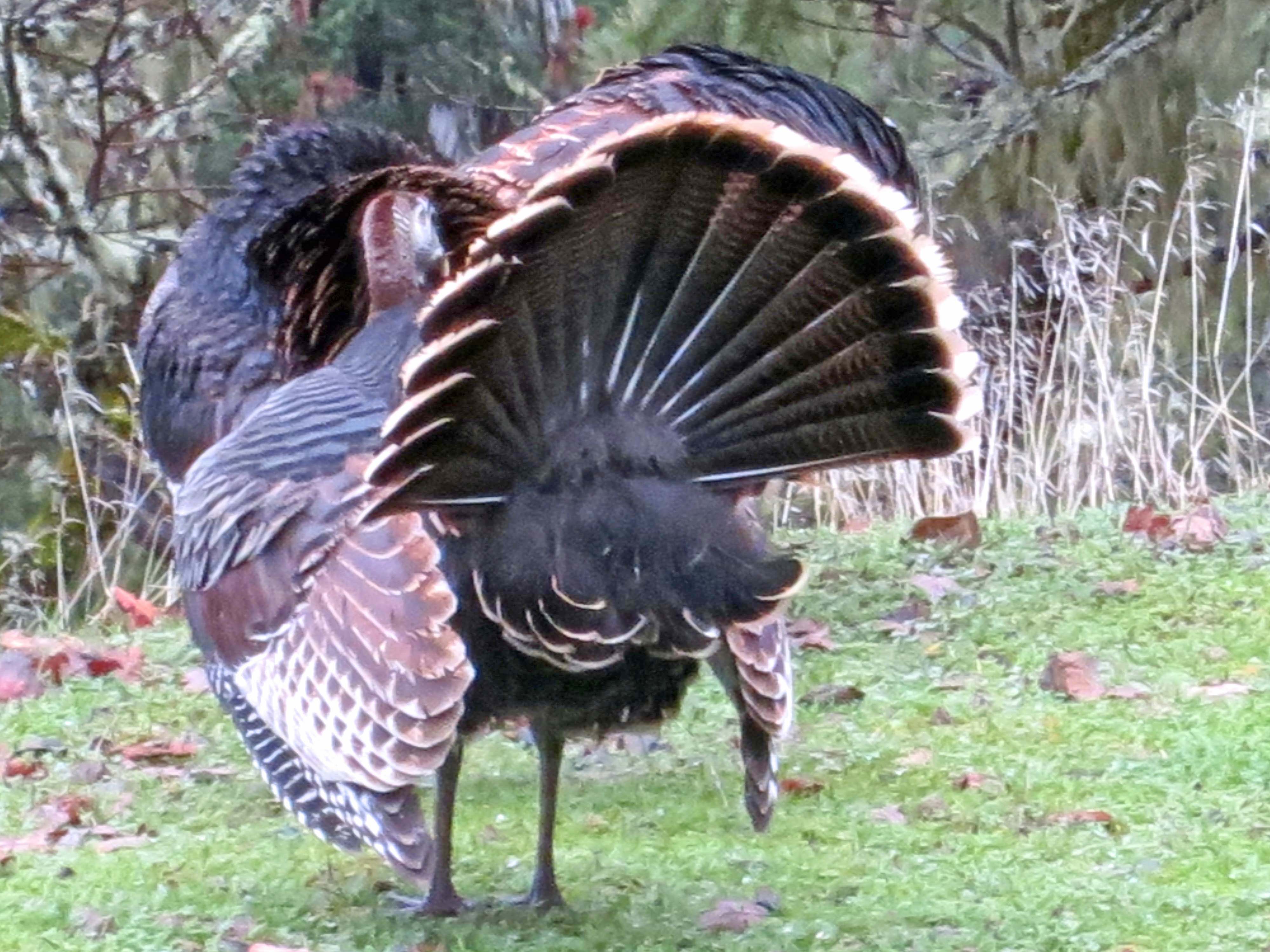
Wild turkeys use their tails for a fan dance in southern Oregon. (Photo by Curtis Mekemson.)

Wild turkeys use their tails to perform a fan dance in our back yard.

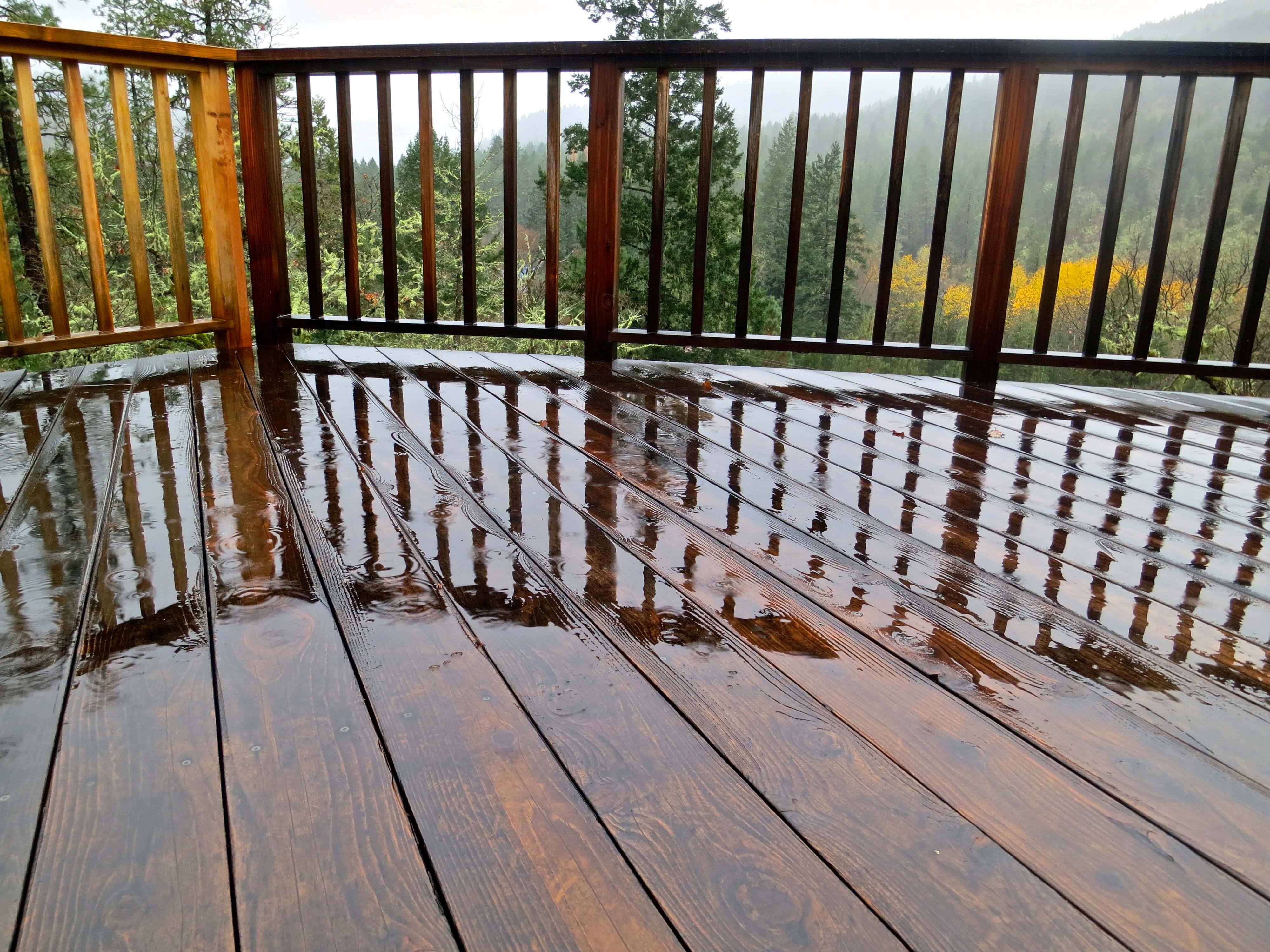
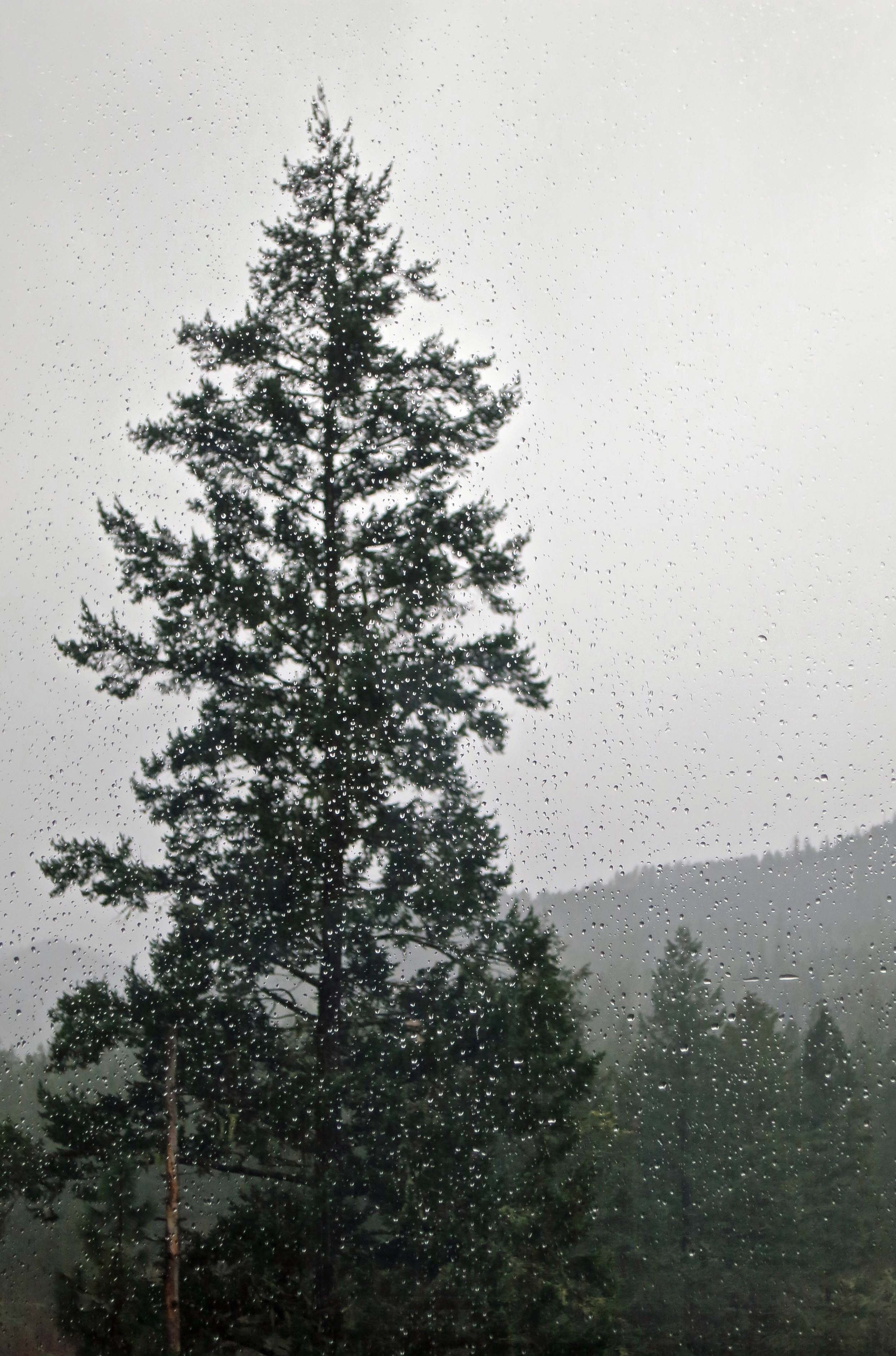
It’s pouring down rain as I write. Northern California is getting slammed and some of the rain is slipping across the border into Southern Oregon. The Weather Channel has named our deluge THE MONSTER STORM. Get out your hammer, Noah. I sat in our sunroom (very much a misnomer today) and watched the rain fall while Peggy listened to Christmas carols and worked on a quilt inside.

Our deck reflects the rain.

Our deck reflects the rain. The last of fall adds a touch of color along the Applegate River.

Rain splattered windows provided a view of our cedar tree out of the sunroom.

Rain splattered windows provided a view of our cedar tree from the sunroom.

I was escaping from work, playing hooky. Things have become a bit hectic around here. Christmas and a trip to Tennessee are just around the corner. So I have been shopping, writing the Christmas letter, and putting together the annual family calendar.

I am also up to my eyeballs in writing an extensive blog about the time that Peggy’s father was forced to bail out of a damaged airplane into the jungle known for headhunters when he was flying supplies into China during World War II.

And last— very far from least, the final proofs on the book about my Peace Corps experience in West Africa are supposed to come in today or tomorrow. I can’t figure out whether I am more nervous or excited. The book should be available world-wide as an E-book by Christmas. So keep your eyes open for The Bush Devil Ate Sam. Several of you helped me choose the title. I will post how to obtain copies on my blog as soon as it is available. Peggy and I are donating half of whatever profits we receive to fighting Ebola in Liberia.

A carved rendition of a Liberian Bush Devil that I purchased from a leper in Ganta, Liberia in 1965.

A carved rendition of a Liberian Bush Devil that I purchased from a leper in Ganta, Liberia in 1965.

One result of all this activity is that my blog production has slowed down. So I was delighted this afternoon when a flock of turkeys that hangs out on our property came by and put on a fan dance with their tails. It was a blog-ready show! And the rain was taking a break. I grabbed my small S-100 Canon and ran out to join them.

Wild turkeys on display in southern Oregon. Photo by Curtis Mekemson.

The turkeys line up for their dance.

Turkeys strut their stuff in southern Oregon. Photo by Curtis Mekemson.

Begin.

And strut their stuff.

And strut their stuff.

Doing the turkey trot.

Doing the turkey trot.

With tail feathers extended. Next blog: Peggy's dad crashes his air plane in a remote Burma jungle.

With tail feathers extended. Next blog: Peggy’s dad bails out into a remote Burma jungle during World War II.

A Wild Ocean and Crashing Waves… The Oregon Coast

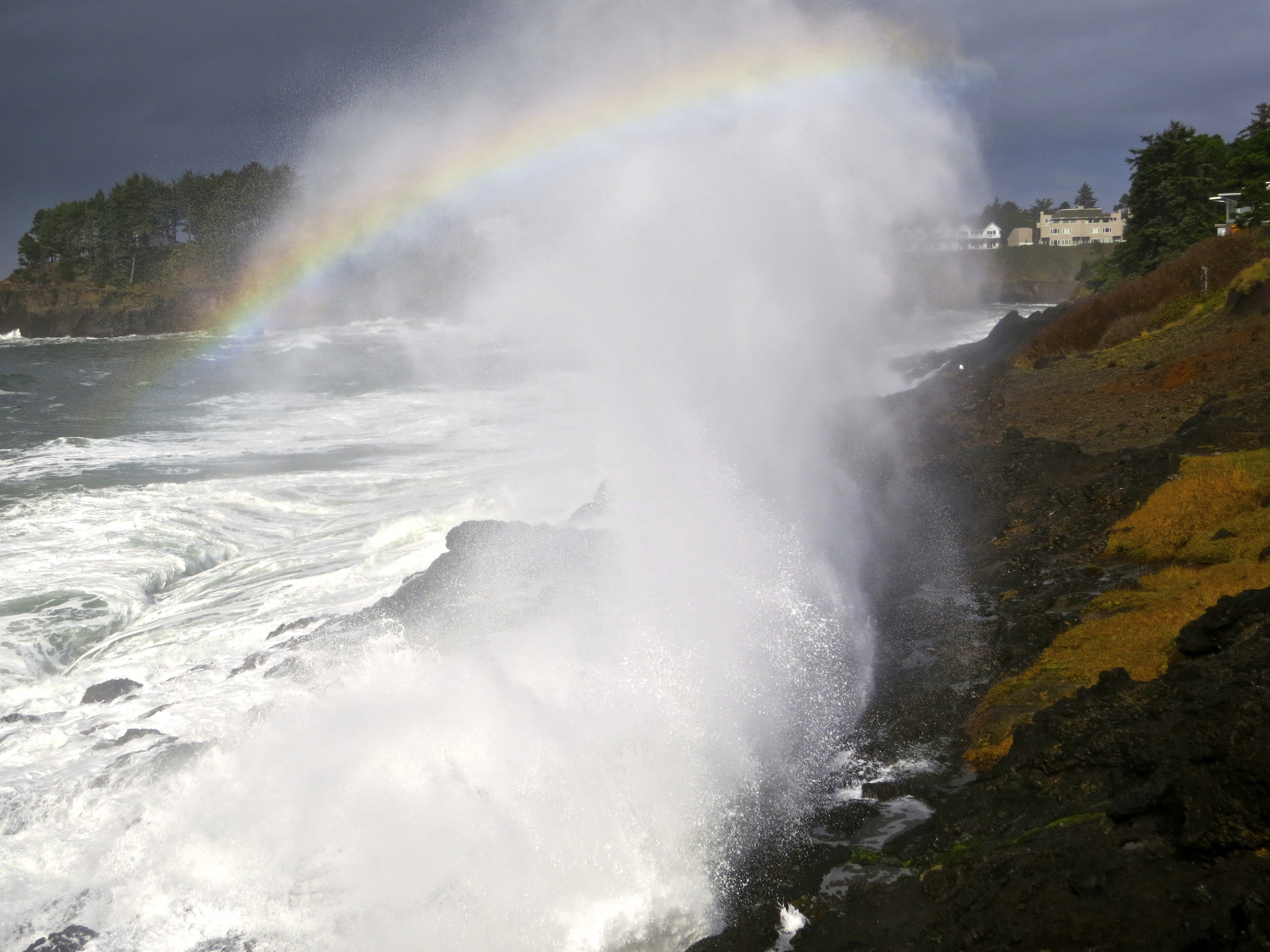
Rainbow created in waves crashing along the Oregon Coast at Depoe Bay. Photo by Curtis Mekemson.

A moment of sun creates a rainbow in waves crashing along the Oregon Coast.

A winter storm on the Oregon Coast is a sight to see. In fact, motels along the coast promote storm watching. Here’s one such pitch: “Sit back and relax in your cozy room by the fireplace and watch through your huge picture window as furious waves pound the rocks below.” And furious they are.

A storm was raging when I drove down the coast a few weeks ago. In between torrential rainfall, the sun would peek out, and I would stop to admire the crashing waves. I didn’t have a huge picture window, so I admired the waves as they were meant to be admired, up close and personal. Following are several photos I took.

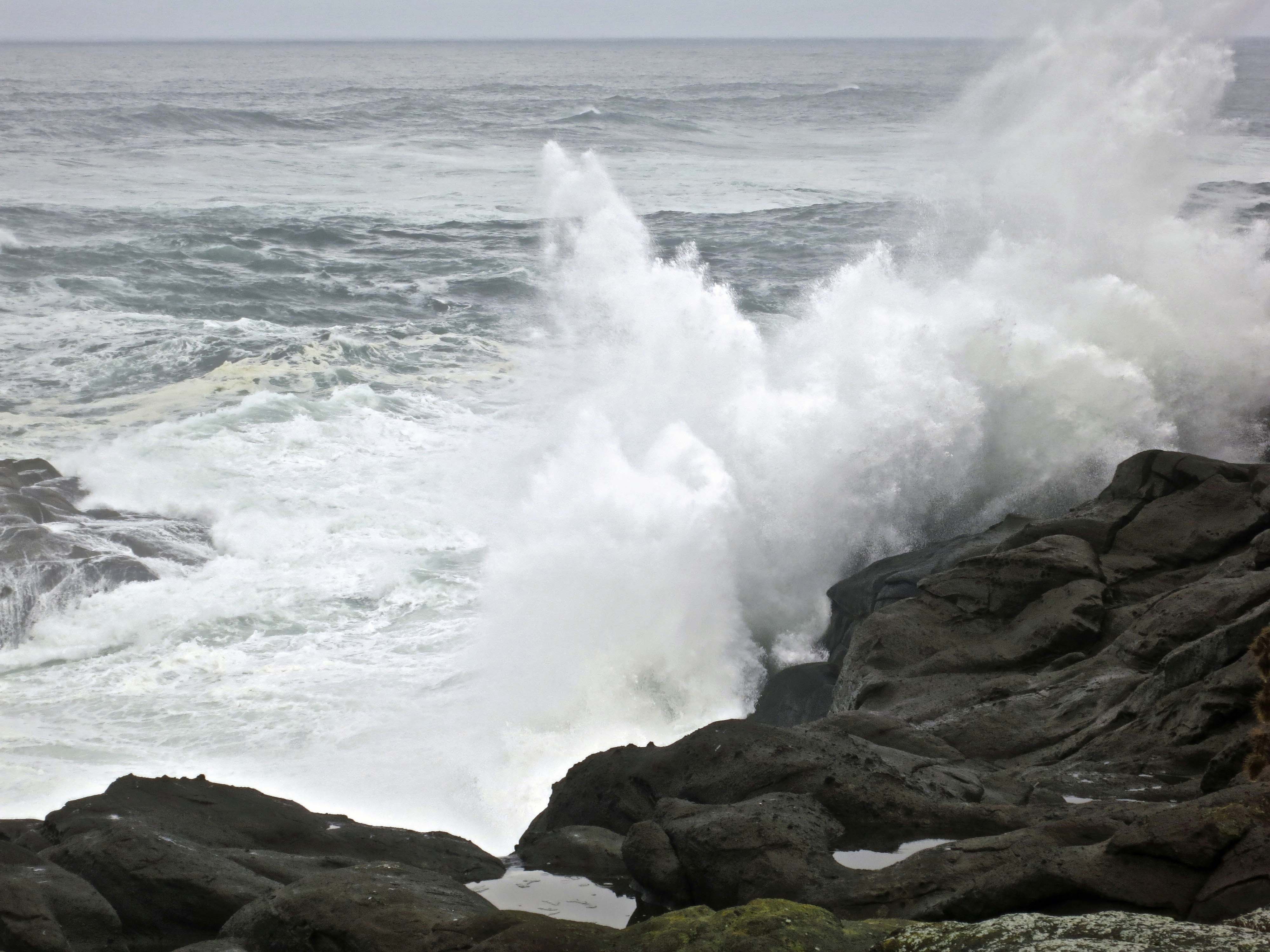
Dramatic waves crash ashore on the Oregon coast. Photo by Curtis Mekemson.

Very few shows are as dramatic as ocean waves during a storm.

Powerful waves crash ashore on the Oregon coast. Photo by Curtis Mekemson.

Rules numbers 1 and 2 when enjoying waves like these: Keep a distance, and never, never turn your back.

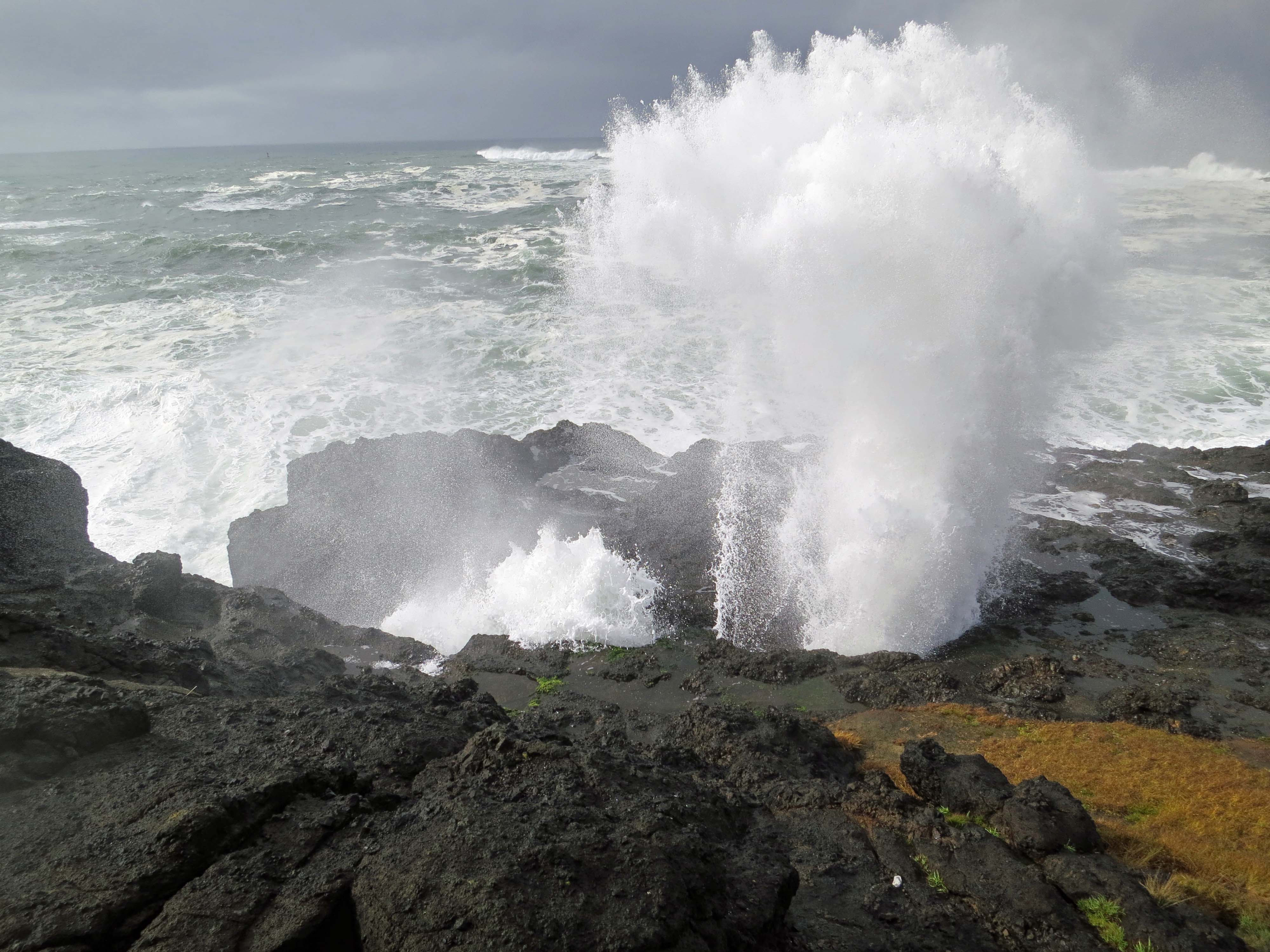
Spouting Horns at Depoe Bay shoot waves into the air. Photo by Curtis Mekemson.

One of the best know spots for watching waves on the Oregon Coast is in the community of Depoe Bay where the ocean shoots through lava tubes and is thrown high into the sky through what is known as the Spouting Horns.

View of Spouting Horns at Depoe Bay on the Oregon Coast. Photo by Curtis Mekemson.

Another view of the Spouting Horns. I could almost see a ghostly face staring back at me.

View of waves thrown into the air at Spouting Horns, Depoe Bay, Oregon. Photo by Curtis Mekemson.

And a third view.

Wave retreats at Depoe Bay, Oregon. Photo by Curtis Mekemson.

The wave’s energy expended by crashing against the rocks, the water flows back into the ocean.

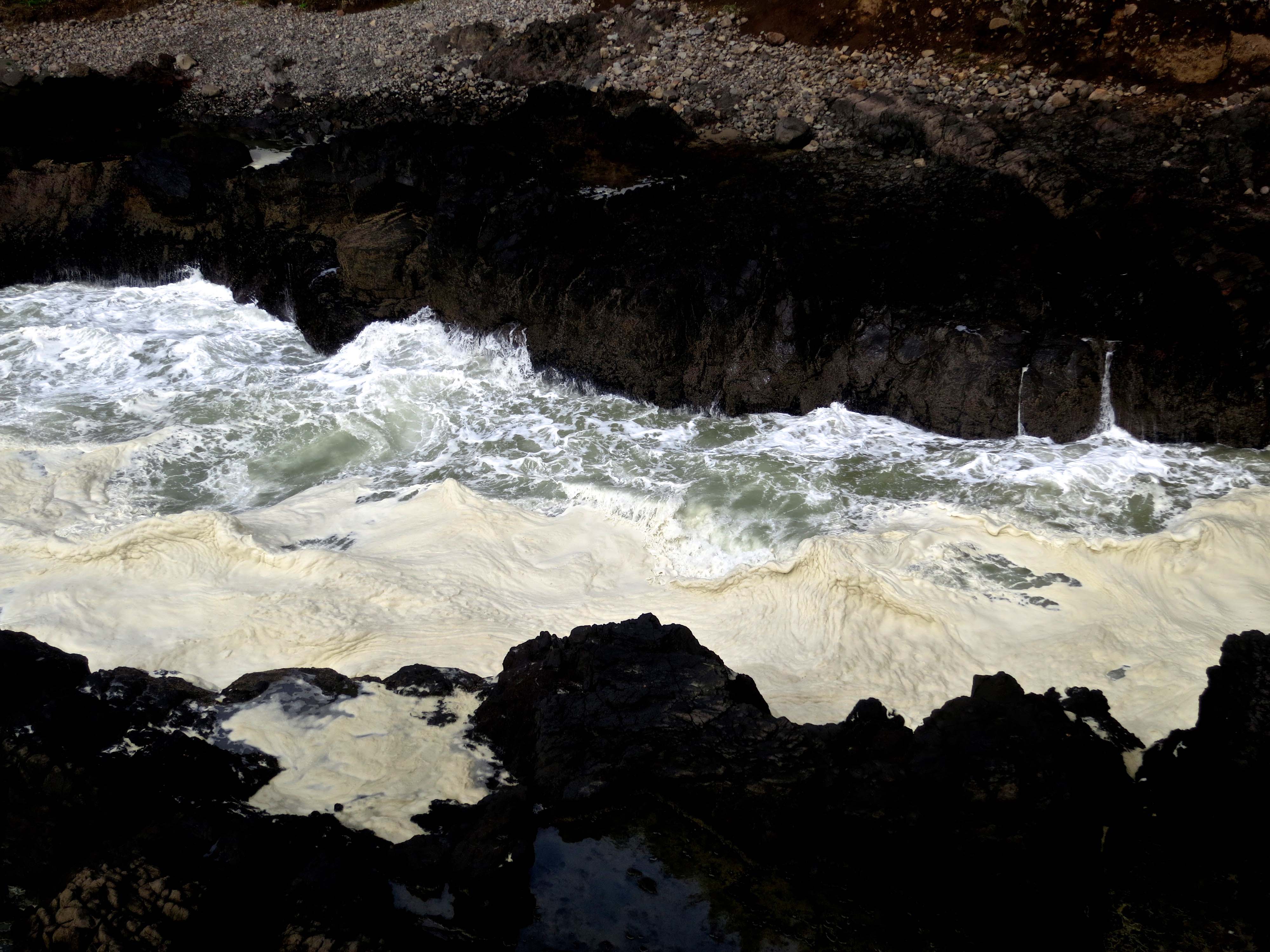
The Devi's Churn on the coast of Oregon. Photo by Curtis Mekemson.

It’s known as the Devil’s Churn. Waves come driving in from the ocean and are forced up a narrow channel, turning the water into a frothy, whipped cream like texture.

Devil's Churn on Central oregon coast showing whip cream like texture of waves. Photo by Curtis Mekemson.

A close up of Devil’s Churn showing the whip cream like texture of the waves.

Devil's Churn on Oregon coast whips waves into a froth. Photo by Curtis Mekemson.

The Churn at work.

A final view of the Devil's Churn.

A final view of the Devil’s Churn. Next blog: A hangar large enough to accommodate eight blimps in Tillamook, Oregon.


When Orcas Go Swimming By… British Columbia Sea Kayak Adventure: The Conclusion

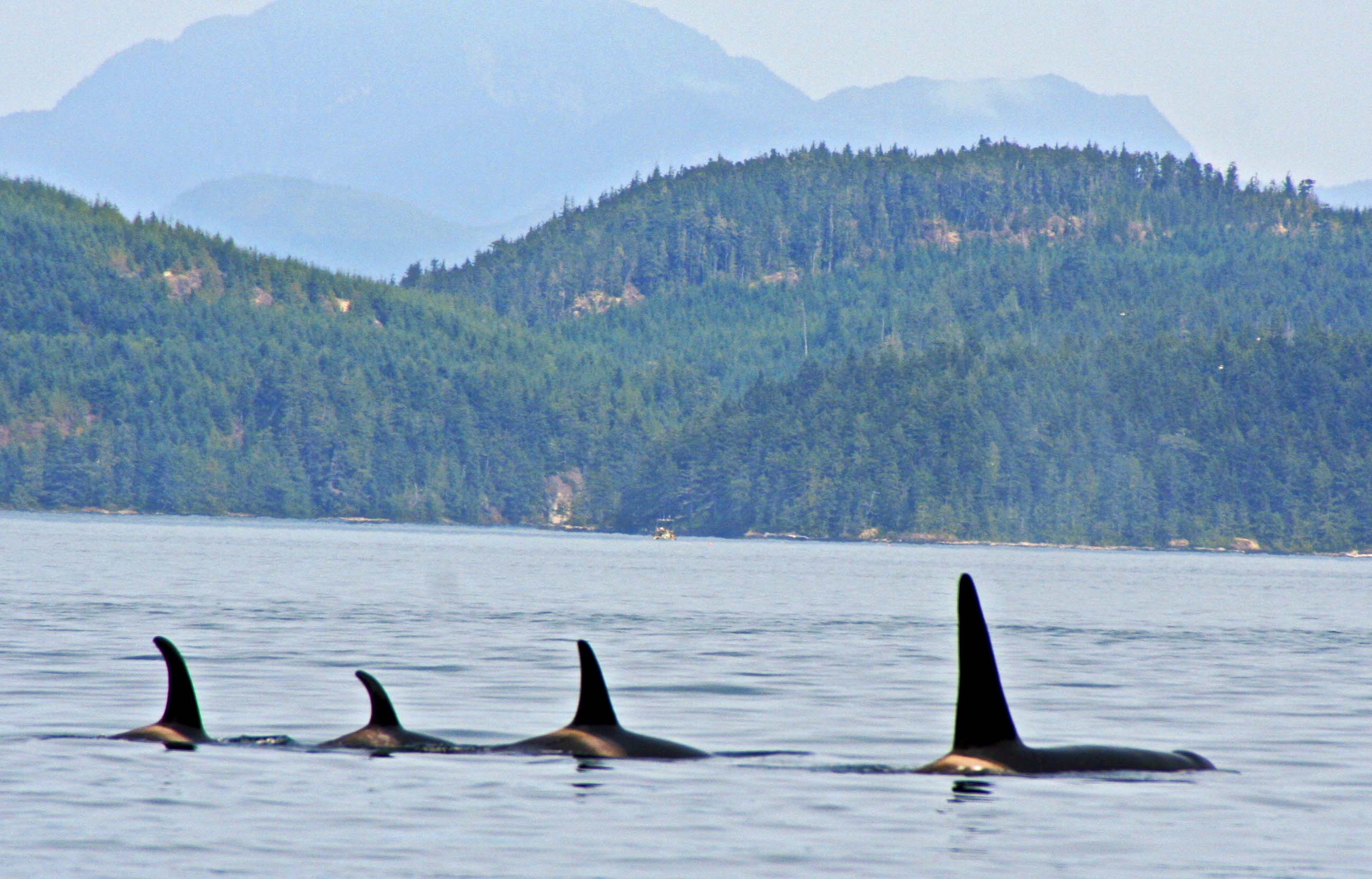
Orca family in Johnstone Strait, British Columbia.

We dropped what we were doing to watch the orca family pass by our campsite. (Photo by Peggy Mekemson.)

“Orcas!” Kimberly cried out, and we all went dashing for the beach with our cameras. Kimberly liked to perch on convenient logs and rocks, looking out at the Johnstone Strait. It gave her a front row seat on the action. I get it. I can stare out at the Pacific Ocean for hours— watching the waves roll in, listening to the lonely calls of seagulls, admiring the crazy antics of pelicans, and, yes, looking for whales.

Looking for orcas in Johnstone Strait, British Columbia.

Perched on a rock, Kimberly keeps a sharp eye out for orcas.

We had barely arrived at our campsite when the first family of orcas came swimming by. We were still in the middle of tucking our kayaks away in the forest above the tide line. Everything was dropped, including the kayaks. There were whales to see.

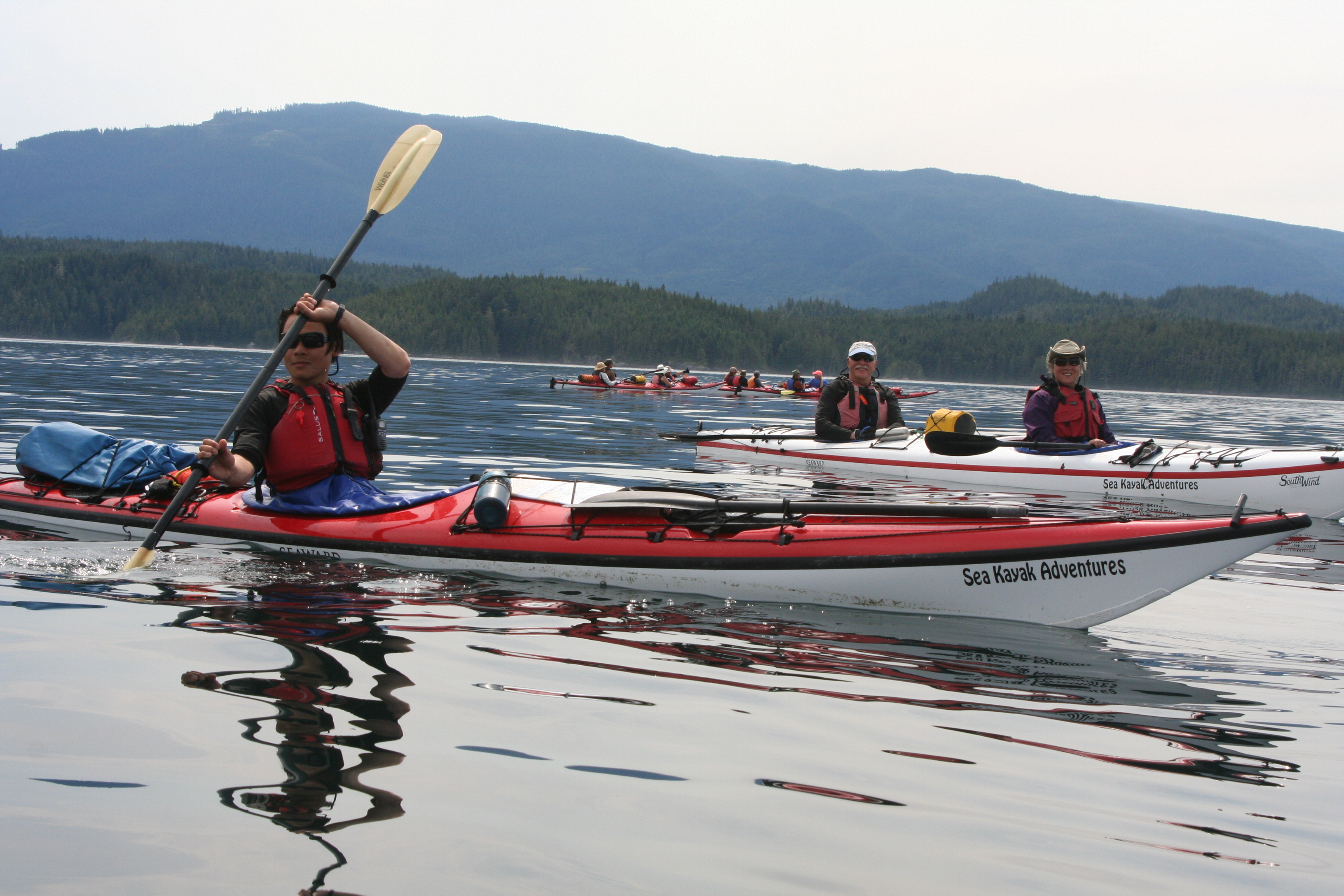
Sea Kayak Adventures group watches orcas in Johnstone Strait, BC. Photo by Curtis Mekemson.

The rallying cry of “Orcas!” sent everyone scrambling for a view.

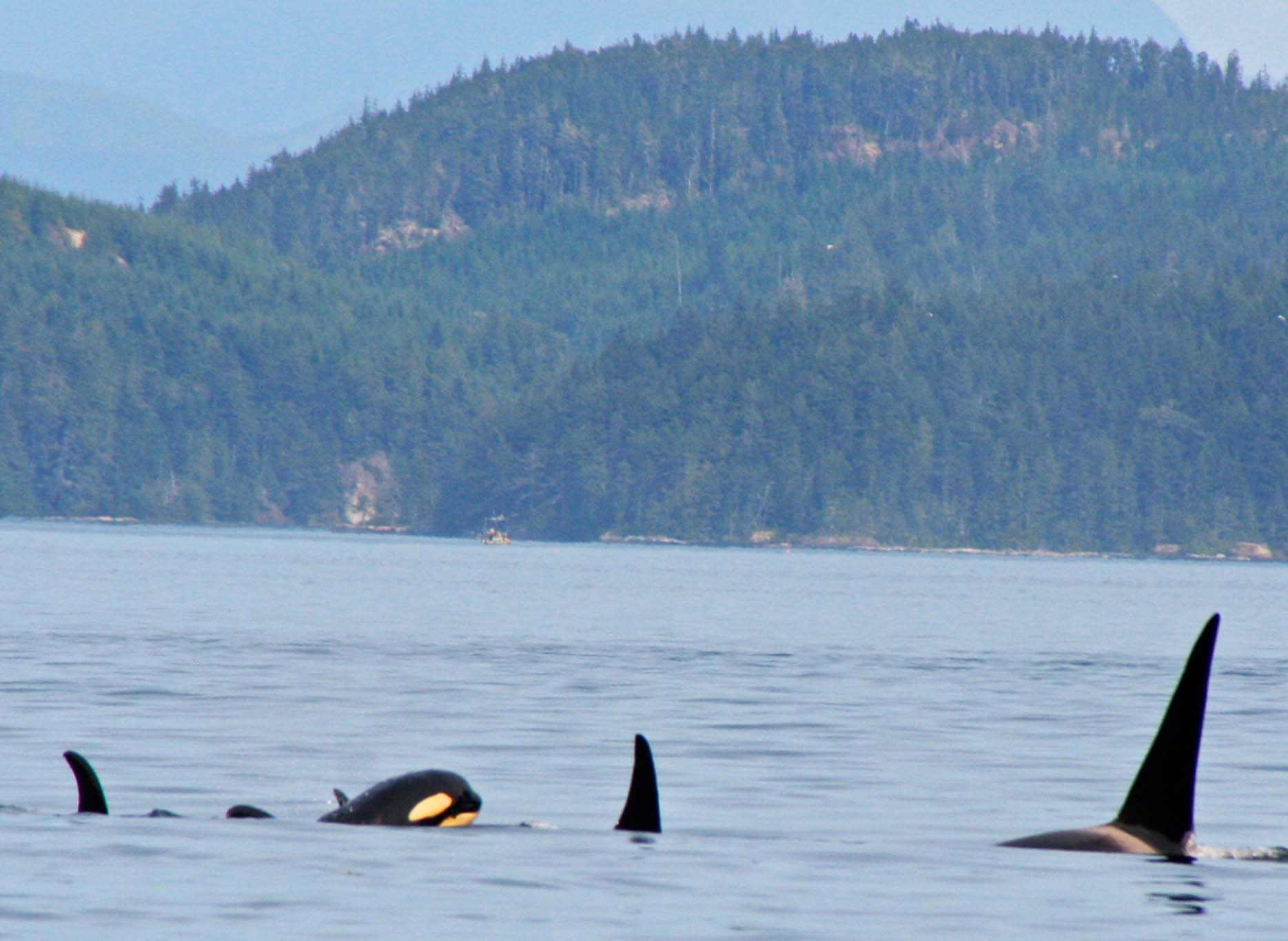
A baby orca surfaces in Johnstone Strait, BC.

A baby orca surfaces. Our reward for being vigilant. (Photo by Peggy Mekemson.)

This was our last campsite before heading home. Once again we had returned to Vancouver Island. We were located at Sea Kayak Adventures’ Little Kai Camp and would be there for two nights. Seeing orcas on our arrival was a good omen. We were happy campers. Not even the surround sound of fishing boats or a deluge of cold rain could dampen our spirits.

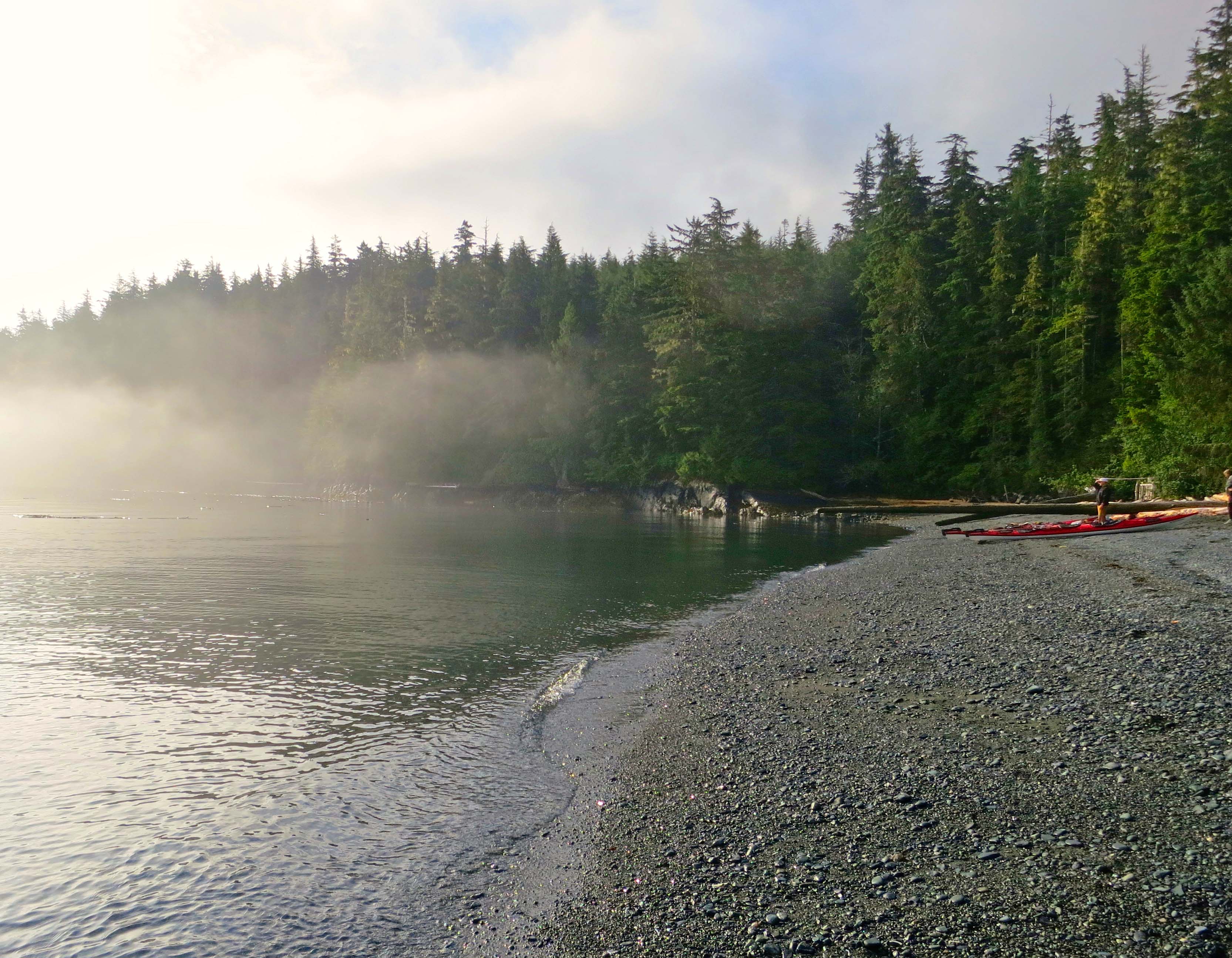
Beach at Little Kai Camp on Vancouver Island. and Johnstone Strait.

The beach at Little Kai camp.

Who can complain when surrounded by good people and beautiful scenery? But our trip was drawing to a close. After several more good meals, another kayak adventure, an evening of fun and story telling, and more orcas, it was time to pack up our kayaks and paddle back to Telegraph Cove. An orca gave us a final British Columbia send-off.

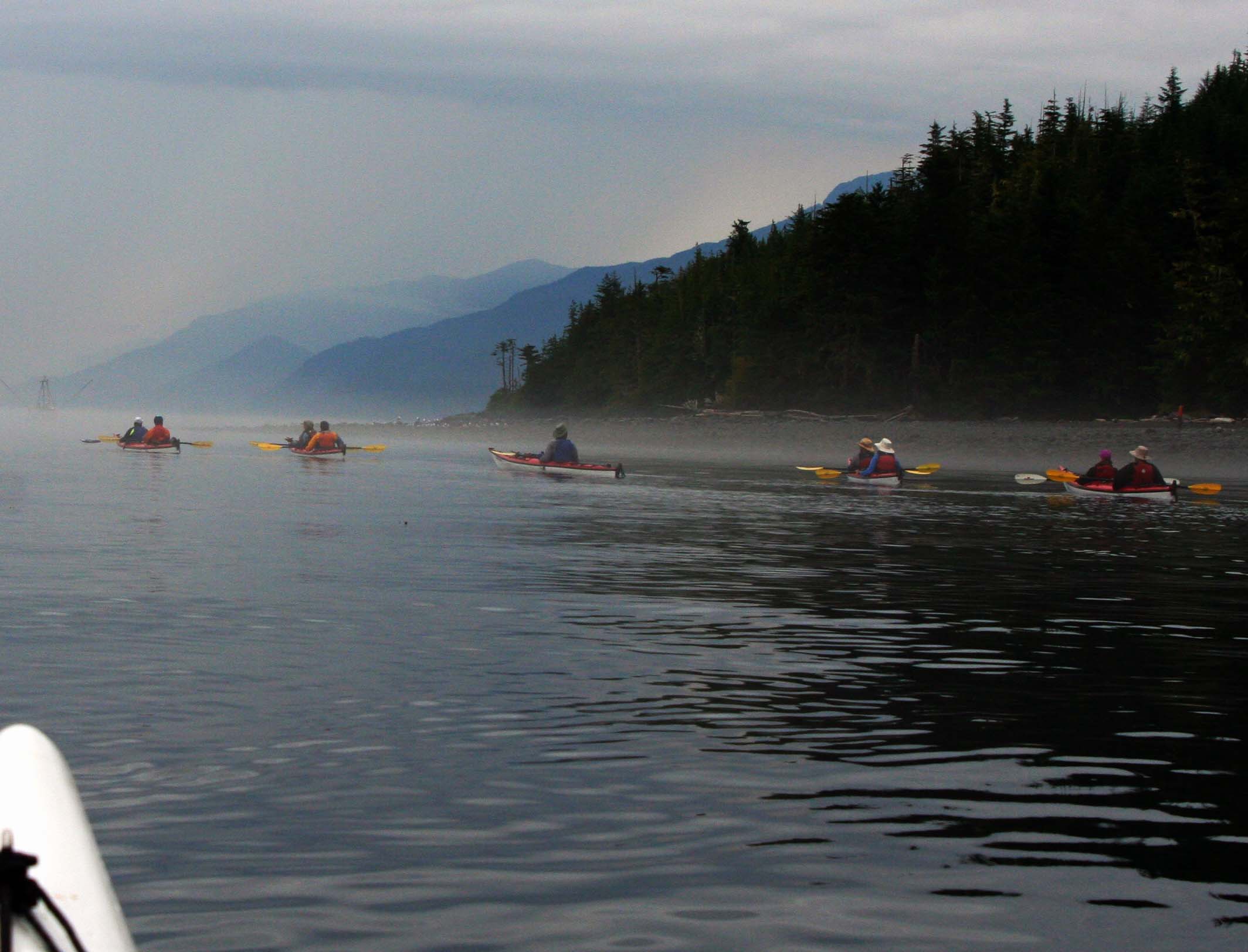
Our group works its way south along Vancouver Island. Shortly afterwards the skies opened up and dumped buckets of rain on us.

Our group works its way south from Little Kai Camp along Vancouver Island. Shortly afterwards the skies opened up and dumped buckets of rain on us. (Photo by Peggy Mekemson.)

Driftwood on Johnstone Strait, Vancouver Island. Photo by Curtis Mekemson.

Back at camp, I found interesting driftwood.

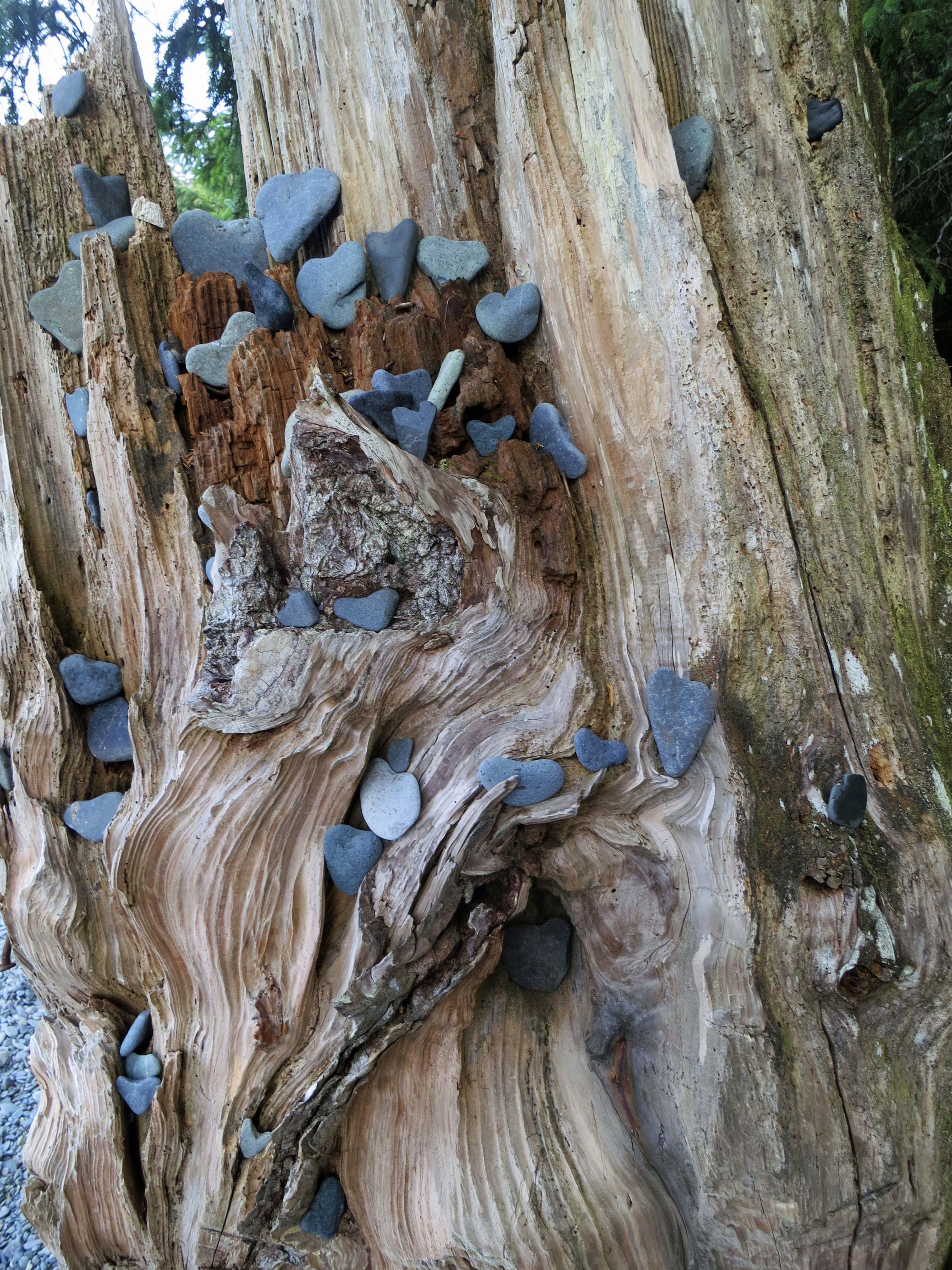
Heart shaped rocks found on Little Kai Beach off of Johnstone Strait. Photo by Curtis Mekemson.

We were amused to find that previous kayakers had collected numerous heart-shaped rocks off of Little Kai Beach.

Dinner is served on Sea Kayak Adventures' trip on Johnstone Strait.

Dinner is served.

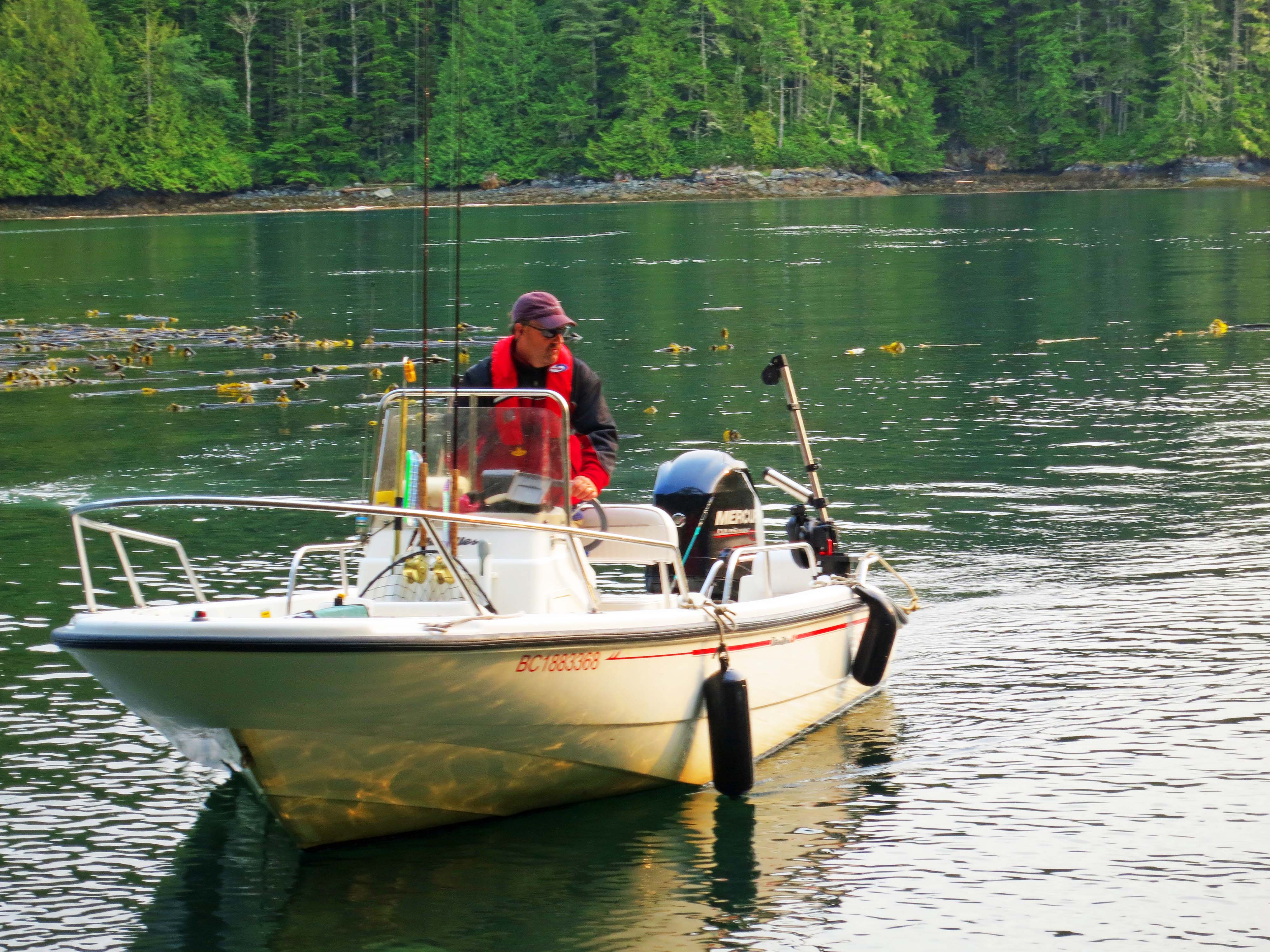
Fishing boats shattered the quiet of our campground. BC fisheries had declared an eight hour fishing season to reduce the number of salmon trying to get up streams.

Fishing boats shattered the quiet of our campground. BC fisheries had declared an eight-hour fishing season to reduce the number of salmon trying to get up streams. Boats came from everywhere. (Photo by Peggy Mekemson.)

We wrapped up our final evening with a campfire, story telling, songs and a skit.

We wrapped up our last evening with a campfire, story telling, songs and skits.

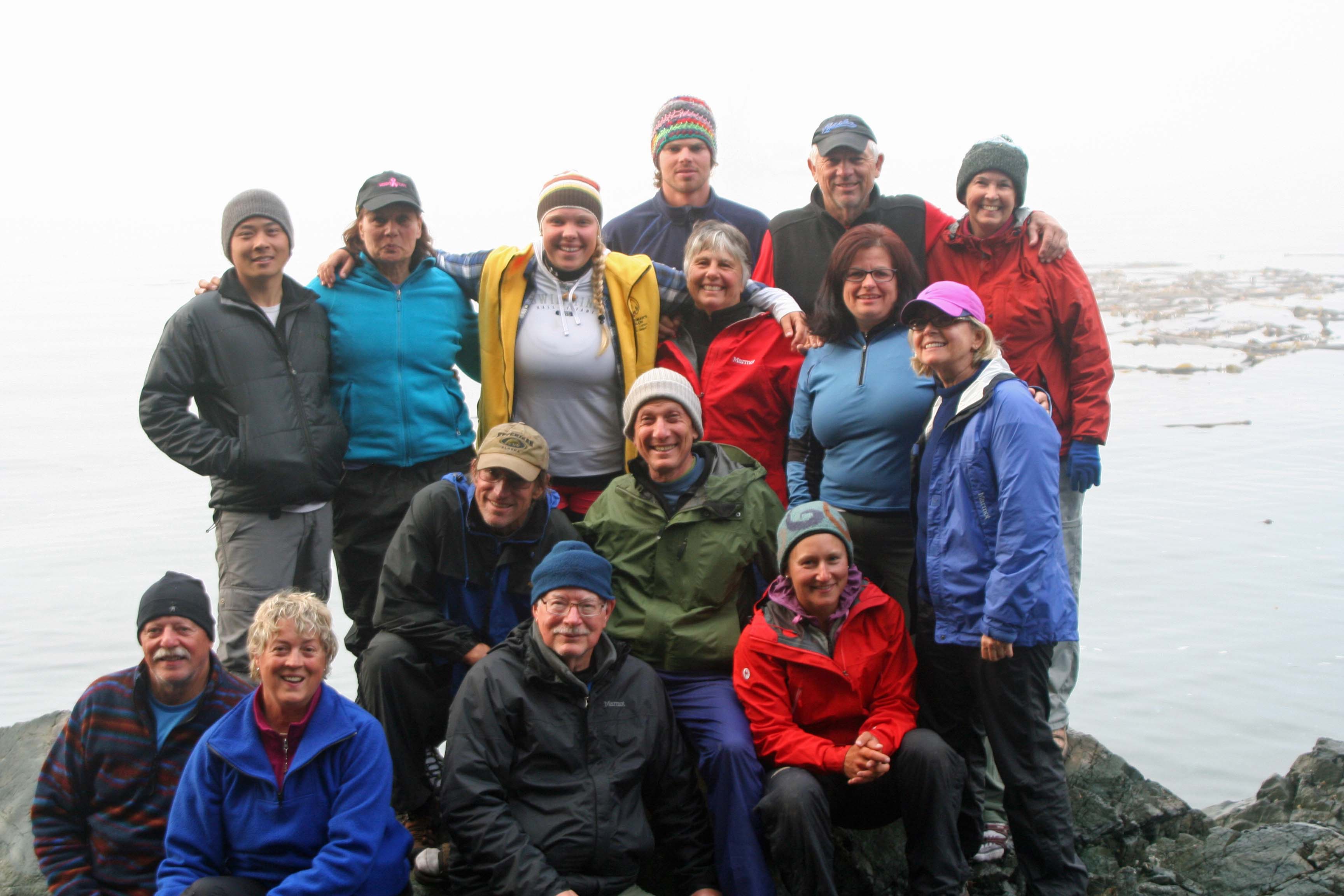
The final morning we posed for an 'official' group photo.

Our ‘official’ group photo.

Bear on Johnstone Strait, BC.

Kayaking back to Telegraph Cove, we came on a black bear. We weren’t able to determine how he managed to get the stick lodged in his fur. Was it the shaft of an arrow? (Photo by Peggy Mekemson.)

Since we had begun our kayak adventure searching for orcas, it is appropriate that I end this series with a picture of the final orca we saw. (Photo by Peggy Mekemson.)

Since we had begun our kayak adventure searching for orcas, it is appropriate that I end this series with a picture of the final orca we saw. (Photo by Peggy Mekemson.)


Free Corky— and Stay Out of the Death Vortex… British Columbia Kayak Adventure


Sea Kayak Adventures likes to stop for lunch at the beach next to Orca-Lab on Hanson Island.

Sea Kayak Adventures likes to stop for lunch at the beach next to Orca-Lab on Hanson Island. One of the researcher’s cabins is on the left. (Photo by Peggy Mekemson.)

“Paddle, Curt and Peggy, paddle!” Julia yelled at us across the water. The tides of Johnstone Strait between Vancouver Island and mainland British Columbia can be ferocious. And we were caught in the current— the death vortex as the guides described it. We had been futzing along behind the group, happily paddling along, and matching strokes. Matching strokes is more efficient in kayaking, and it is certainly more aesthetic. I doubled my efforts and so did Peggy, paddling fast and digging deep, not concerned about style, driven by adrenaline. What seemed like an hour later (mere minutes), we were out of trouble. Afterwards, I continued to be unaesthetic, and we moved up to the head of the line.

The day had started out foggy. In fact the guides were worried about whether the fog would clear. As I mentioned before, sharing a narrow strait in zero visibility with huge cruise ships is at the top of every kayaker’s bad-idea list. The sun came out, however, and, beyond being caught in the death vortex, we had a great day of kayaking. The highlight, from my perspective, was visiting the site of the Orca-Lab.

A side view of the Orca-Lab and an out buildings. Tents were located behind these buildings, which I assumed housed some of the volunteers who come fro all over the world to work at the research facility.

A side view of the Orca-Lab and an out building. Tents were located behind these buildings, which I assumed housed some of the volunteers who come from all over the world to work at the research facility.

Some 150 orcas live and travel in Johnstone Strait and Blackfish Sound during the summer and fall months when the salmon are running. Orcas are quite social with the primary grouping built around the mother. She and her children stay together for life. Maternal groups form pods of extended family members and, beyond that, join together in clans, who more or less speak the same language: they share common calls.

Dr. Paul Spong established Orca-Lab on Hanson Island in 1970. It has been functioning ever since to study the local whale population. A number of hydrophones (underwater listening devices) are positioned around the Orcas’ territory to listen in on their ‘discussions.’ These sonic recordings are supplemented by visual sightings of orcas as they pass by Orca-Lab and from other land-based locations in Johnstone Strait.

Julia drops a hydrophone into the water to see if we can pick up any orca calls. Is that a huge orca photo bombing the picture under her arm??? No, unfortunately, it was a view of a peninsula modified by Julia's shirt. I was excited for a second, though.

Julia drops a hydrophone into the water to see if we can pick up any orca calls. Is that a huge orca photo bombing the picture next to her waist??? Nope, it was a view of a peninsula modified by Julia’s shirt. I was excited for a second, though… (Photo by Peggy Mekemson.)

In addition to Orca-Lab’s ongoing scientific studies, it works to improve whale habitat, free captive whales, and oppose whale hunting. Number one on its “Free Willy” type campaign is Free Corky. She was captured when she was four years old and has now been in captivity for 42 years. You are more likely to know her as Shamu of Sea World in San Diego. Orca-Lab wants her reunited with her family.

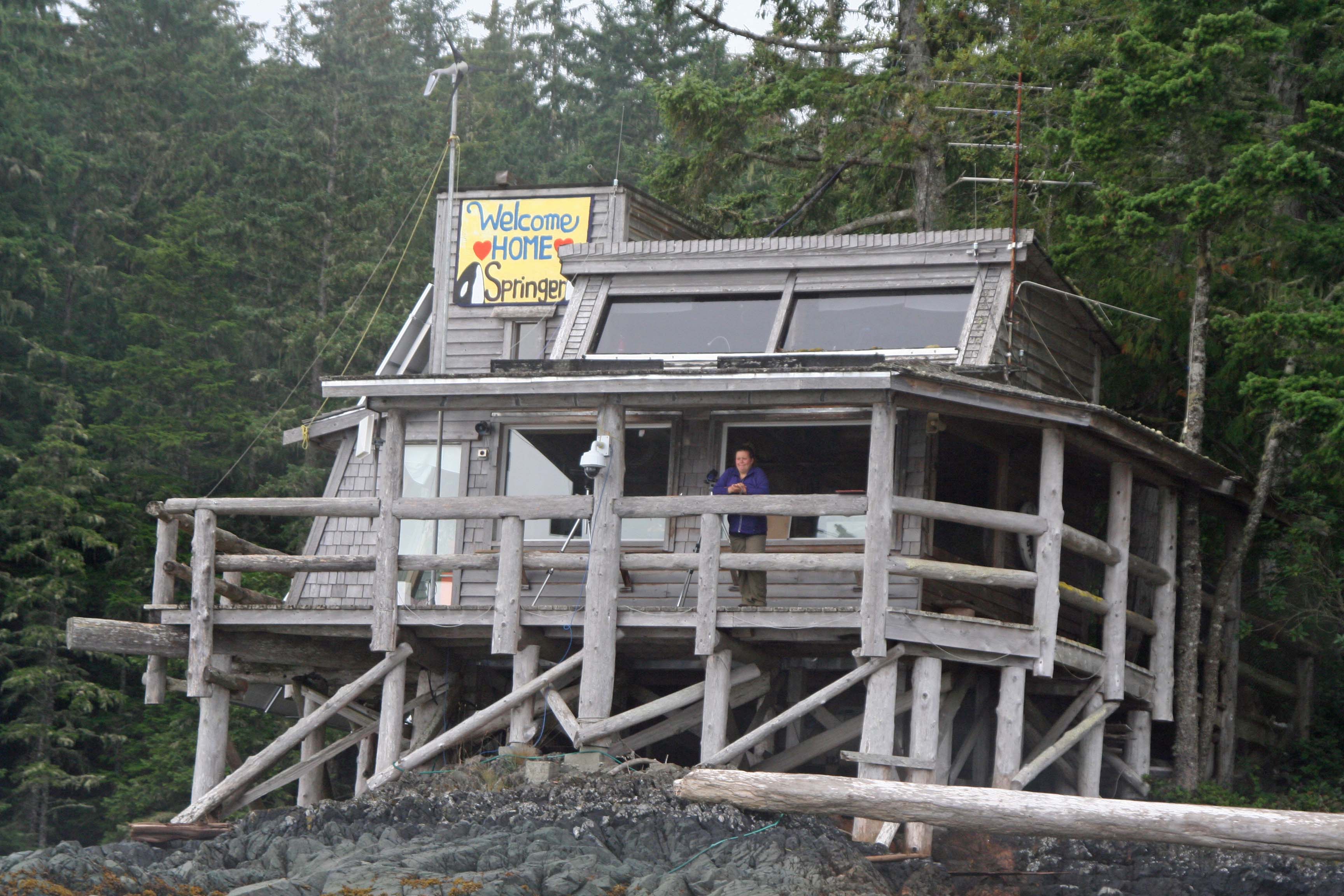
A frontal view of the Orca Lab with a Welcome Home Springer sign. Springer is the poster child of reuniting orca whales with their families. Orphaned as a child, she wandered far from home and begin approaching fishing boats for companionship. Close to starving, she was captured, fed and returned to her pod where family members adopted her— and taught her to stay away  from fishing boats. Each year, she returns to Johnstone Strait.

A frontal view of the Orca Lab with a Welcome Home Springer sign. Springer is the poster child of reuniting orca whales with their families. Orphaned as a child, she wandered far from home and began approaching fishing boats for companionship. Close to starving, she was captured, fed, and returned to her pod where family members adopted her— and taught her to stay away from fishing boats. Each year, she returns to Johnstone Strait. (Photo by Peggy Mekemson.)

Orca-Lab beach on Hanson Island, British Columbia. Photo by Curtis Mekemson.

There was some very impressive driftwood on the beach at Orca-Lab, including this massive example. One might assume there were some large trees around…

Giant cedar tree on Hanson Island near the Orca Lab in Johnstone Strait, British Columbia.

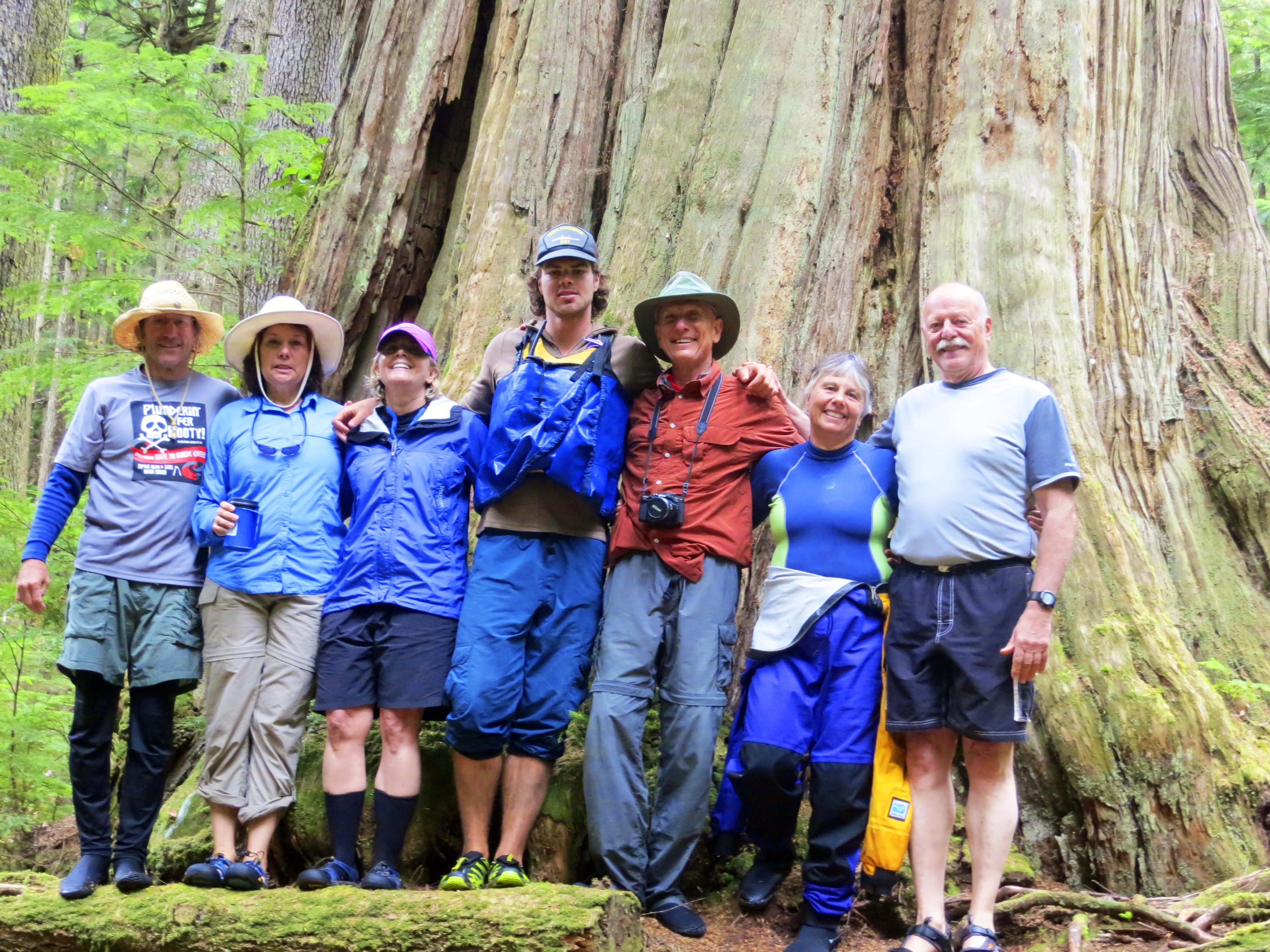
We went for a walk and found this giant tree that the folks at Orca-Lab call Grandma Cedar.

Grandma Cedar on Hanson Island BC near the Orca-Lab. Photo by Curtis Mekemson.

I took this photo of Grandma Cedar looking up.

Some photographers will go to any length to capture a photo of Grandma Cedar, as David demonstrates here.

Some photographers will go to any length to capture a photo of Grandma Cedar, as David demonstrates here.

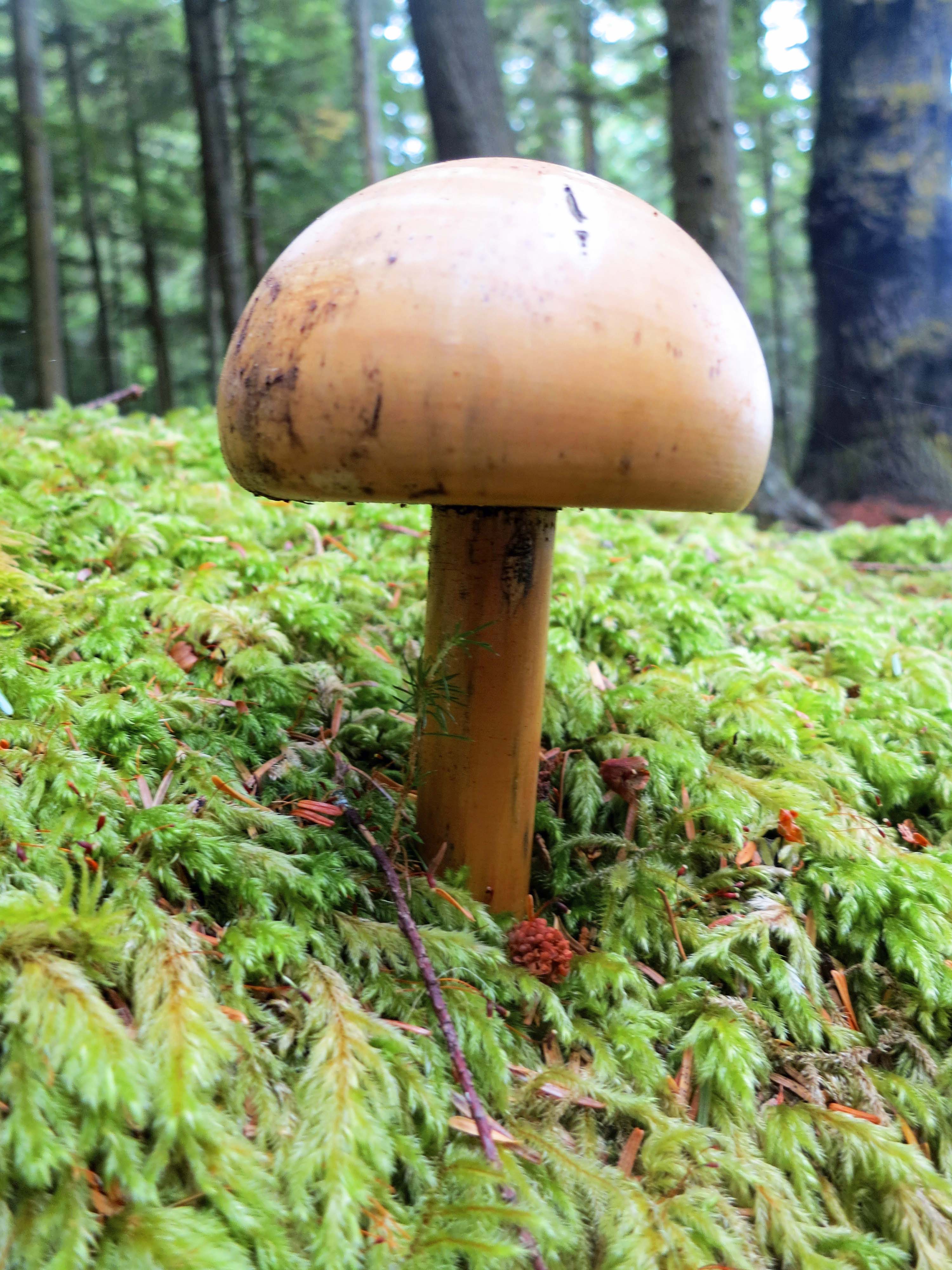
On the way back to the beach, I found some strange mushrooms growing along side the trail. On close inspection I discovered they were carved out of wood. My thoughts: the folks at Orca Lab were having a slow day.

On the way back to the beach, I found some strange mushrooms growing alongside the trail. On close inspection, I discovered they were carved out of wood. My thoughts: the folks at Orca-Lab were having a slow day.

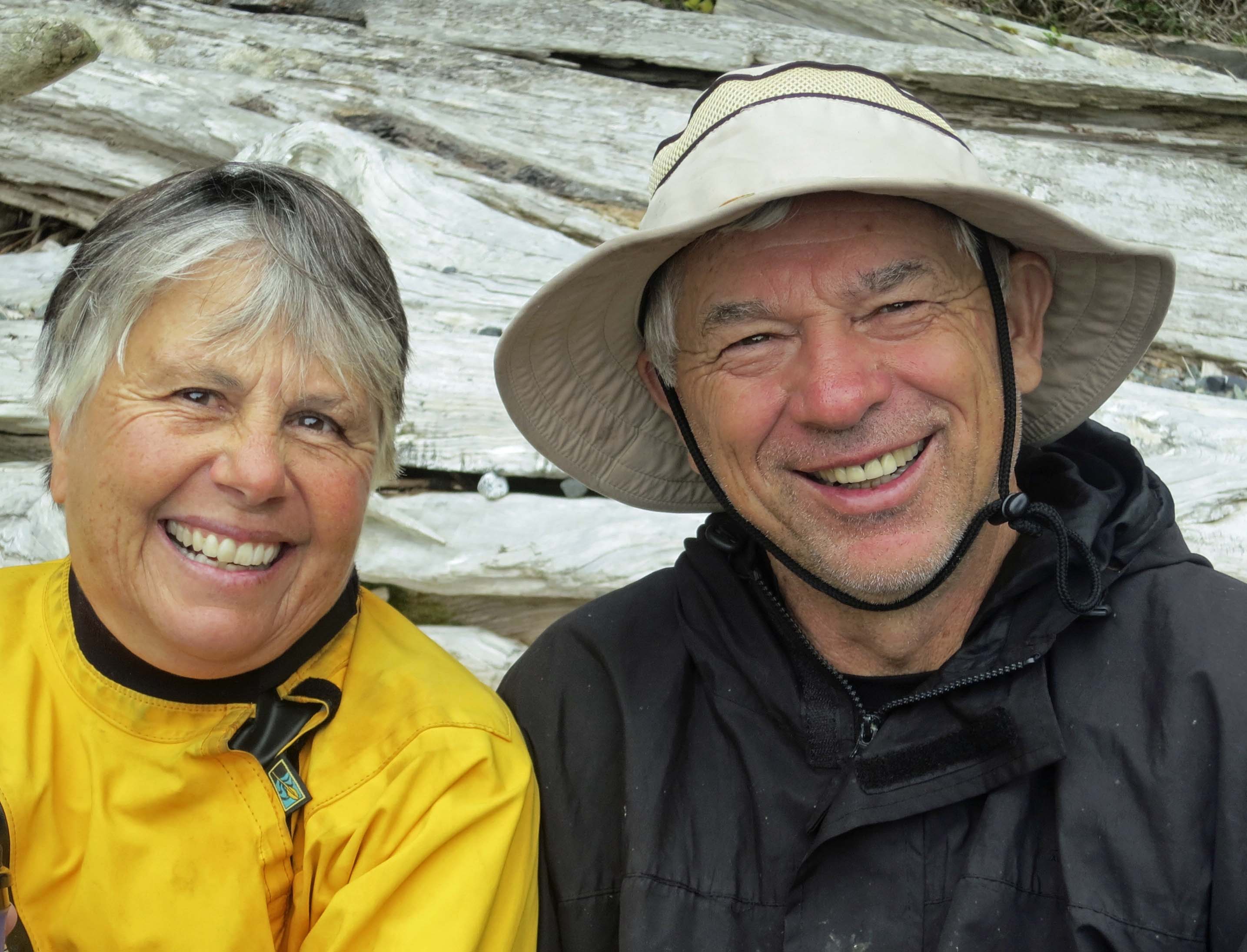
Back at the beach I found smiling faces— Wendy and Dennis.

Back at the beach I found smiling faces— Wendy and Dennis…

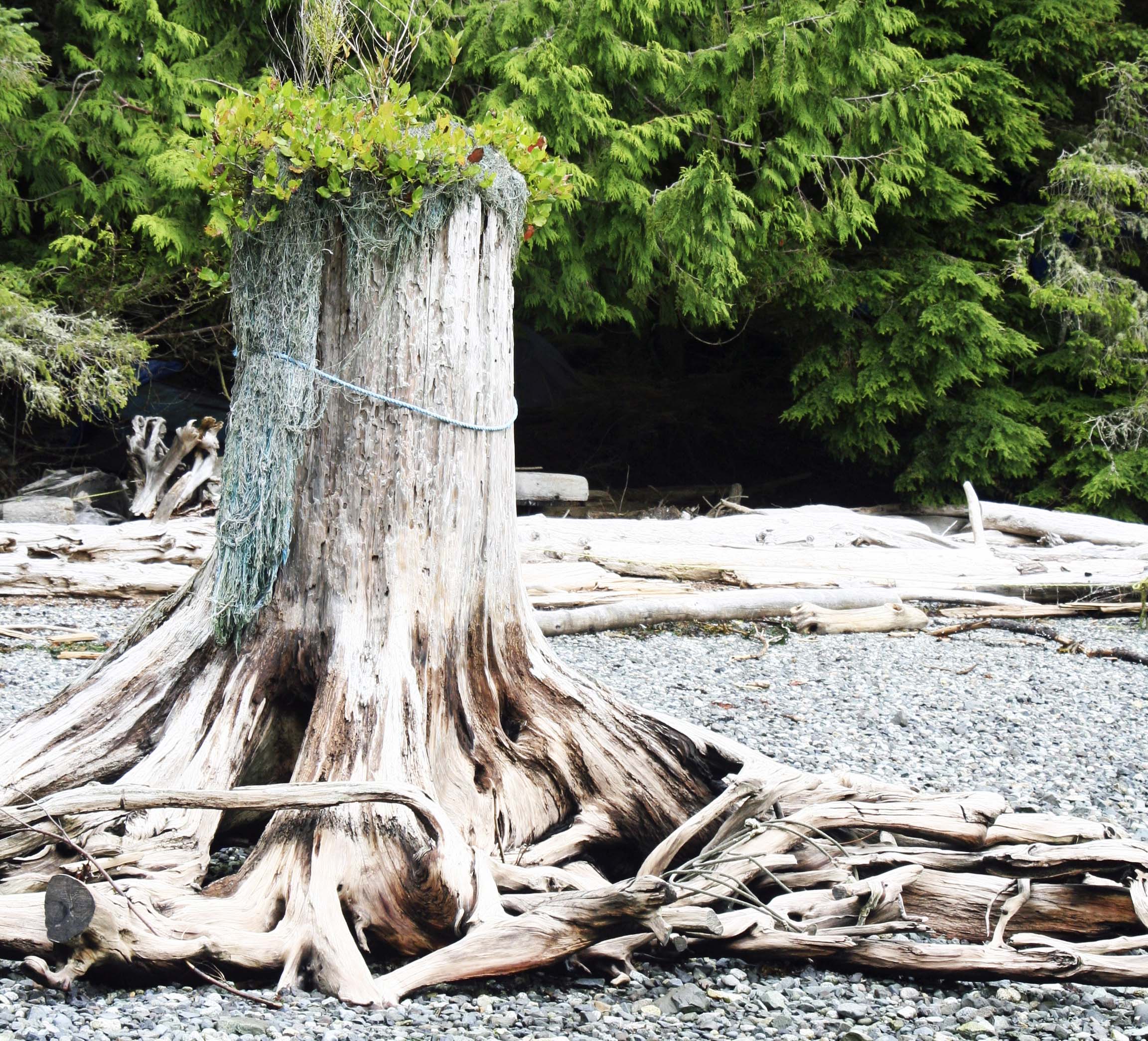
Dead stump with green growth on beach next to Orca-Lab on Hanson Island, Johnstone Strait, British Columbia.

A stump with green hair. Could it be Treebeard of Hobbit fame… (Photo by Peggy Mekemson.)

Driftwood found next to Orca-Lab on Hanson Island, British Columbia. Photo by Curtis Mekemson.

This entwined piece of driftwood…

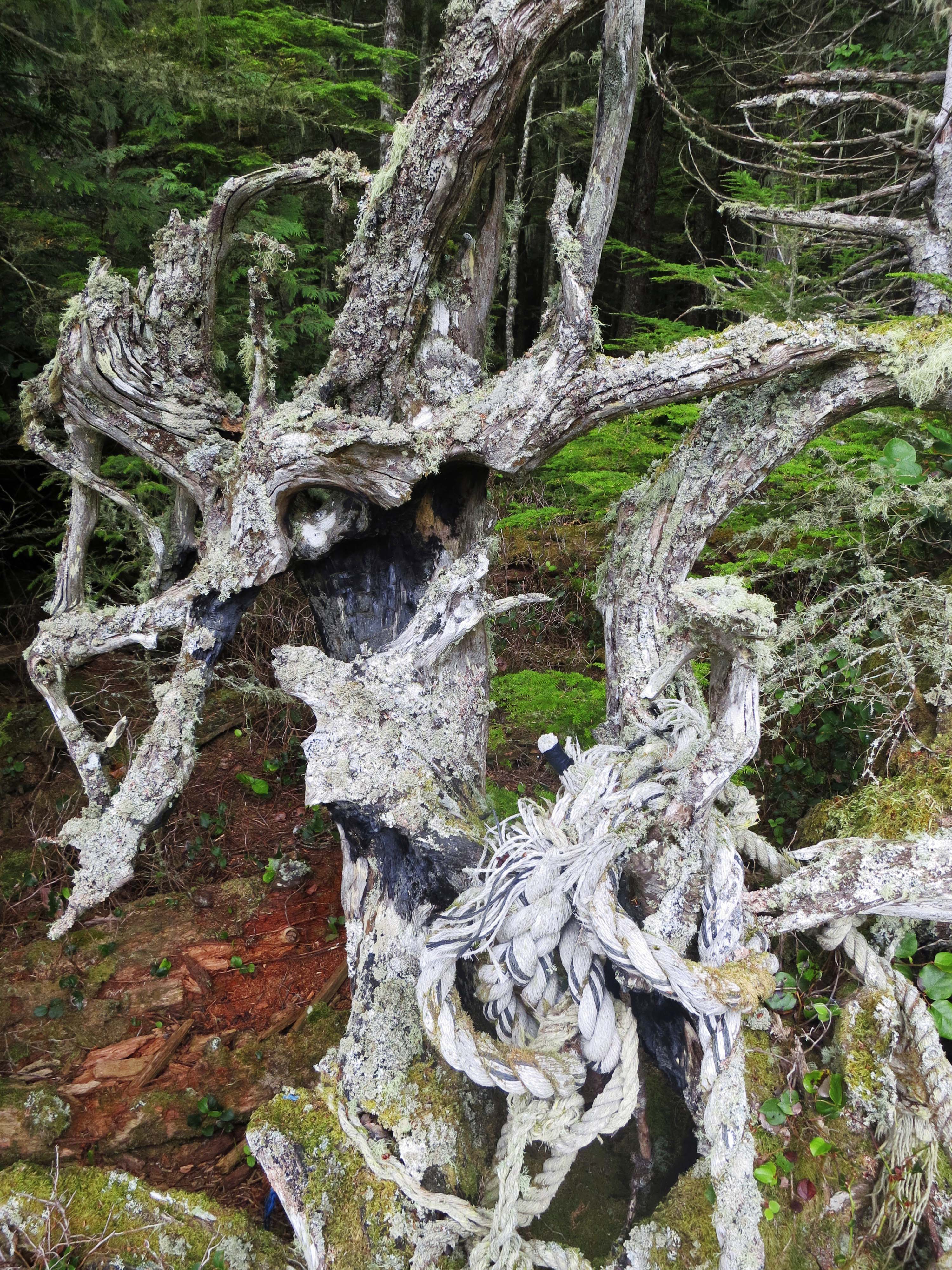
Old driftwood and rope on Hanson Island near the Orca-Lab.

An interesting combination of old wood and rope…

Sea kayaks of Sea Kayak Adventures waiting on Hanson Island next to Orca-Lab.

And our waiting kayaks. Our’s is third from the left. I was surprised she hadn’t escaped given that we had tried to dump her in the death vortex. It was time to saddle up and head for our last campground. Next Blog: I conclude the kayak adventure in British Columbia.

The Monster on the Rock— And Sasquatch… British Columbia Kayak Adventure: Part 4

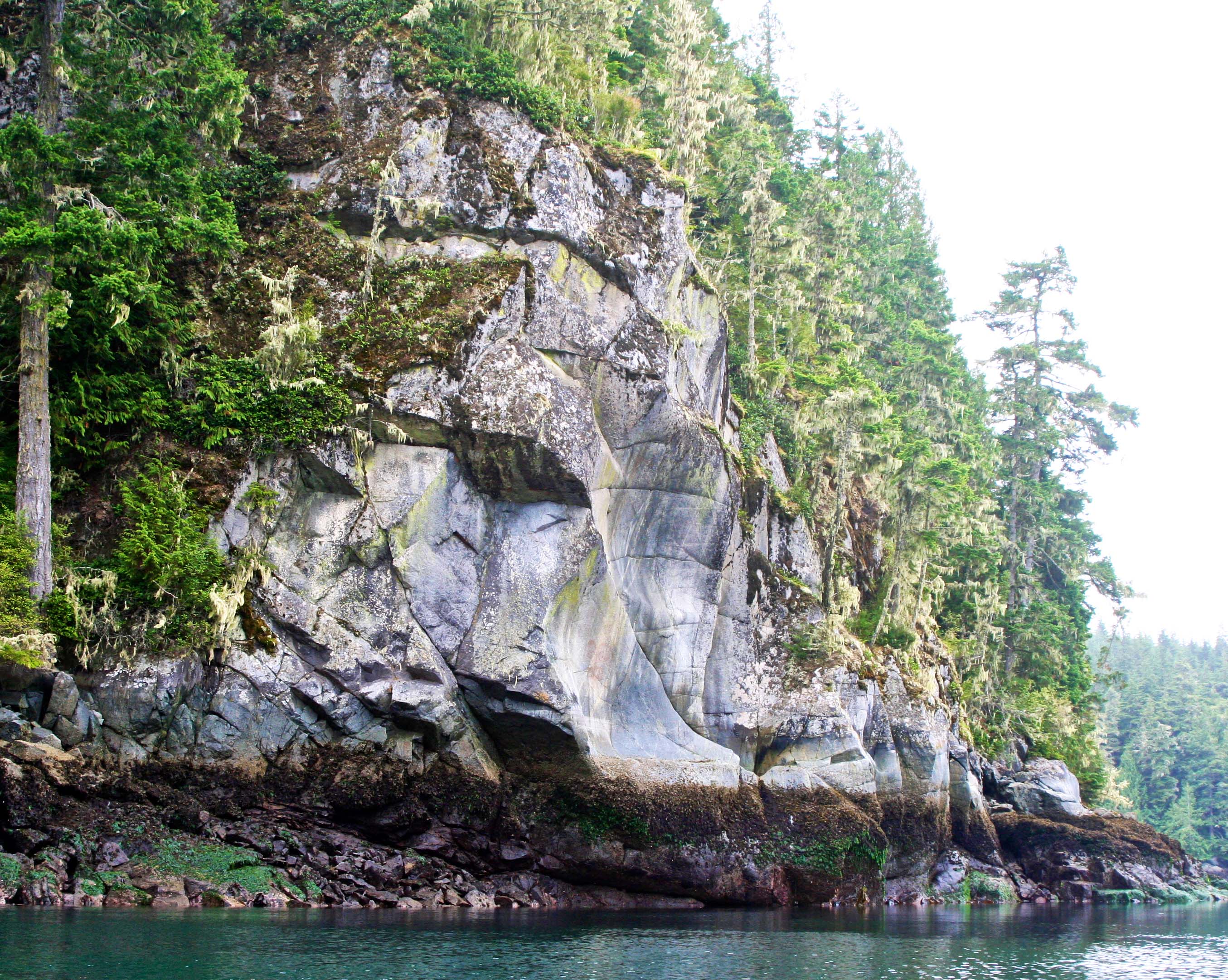
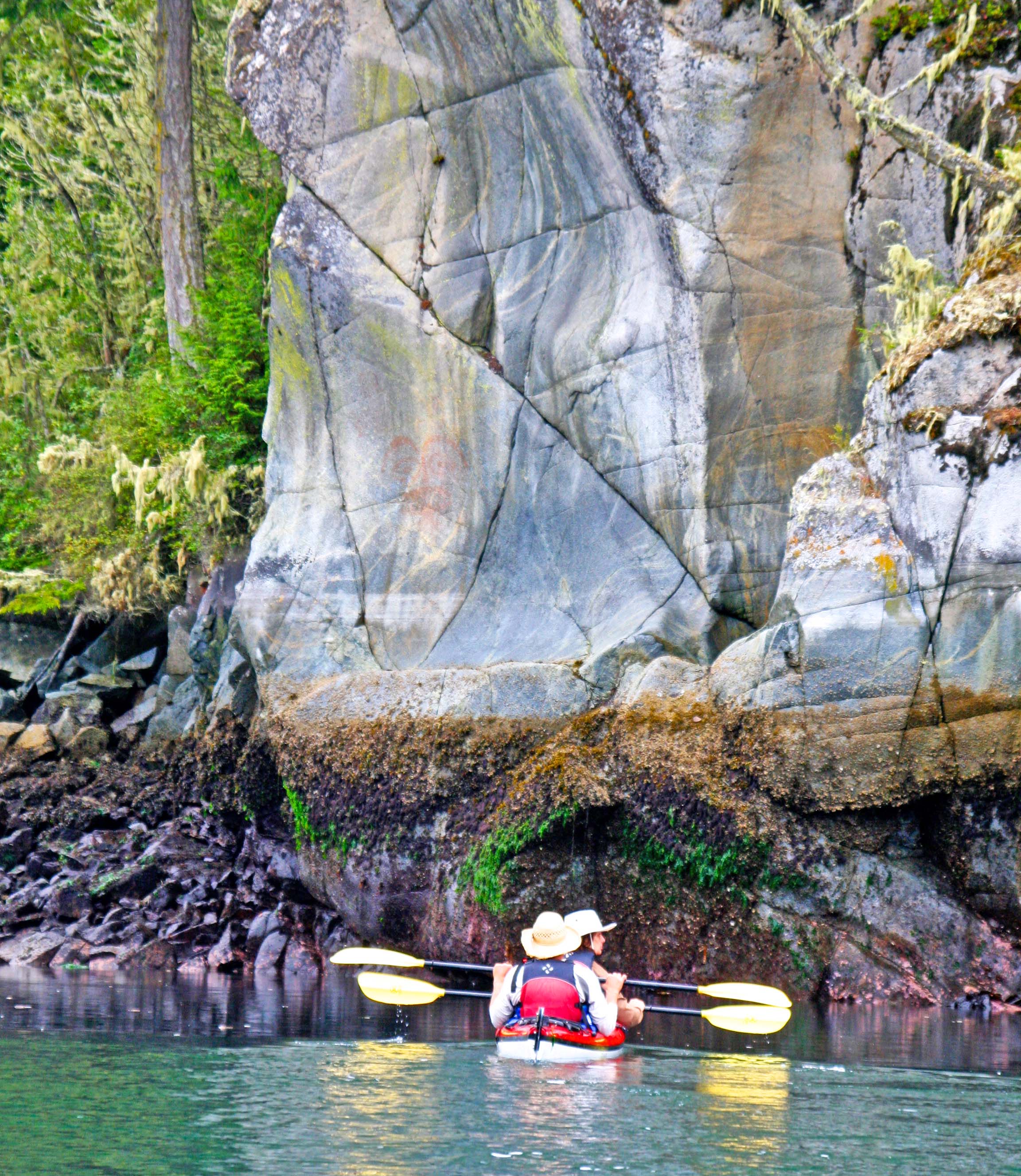
First Nation people had chosen this rock on Berry Island in Blackfish Sound, British Columbia as the location for a pictograph warning people to stay off of the island.

First Nation natives had chosen this rock on Berry Island in Blackfish Sound, British Columbia as the location for a pictograph warning people to stay off of the island. The dark line marks how high the tide climbs.

The third day of our kayak trip was a ‘layover day.’ It was a layover in the sense that we would be spending two nights at our camp on Compton Island, not that we would be sleeping in and relaxing. There was kayaking to do. Berry Island and a pictograph was our morning destination. We found the pictograph on a tall rock cliff that hung over the water.

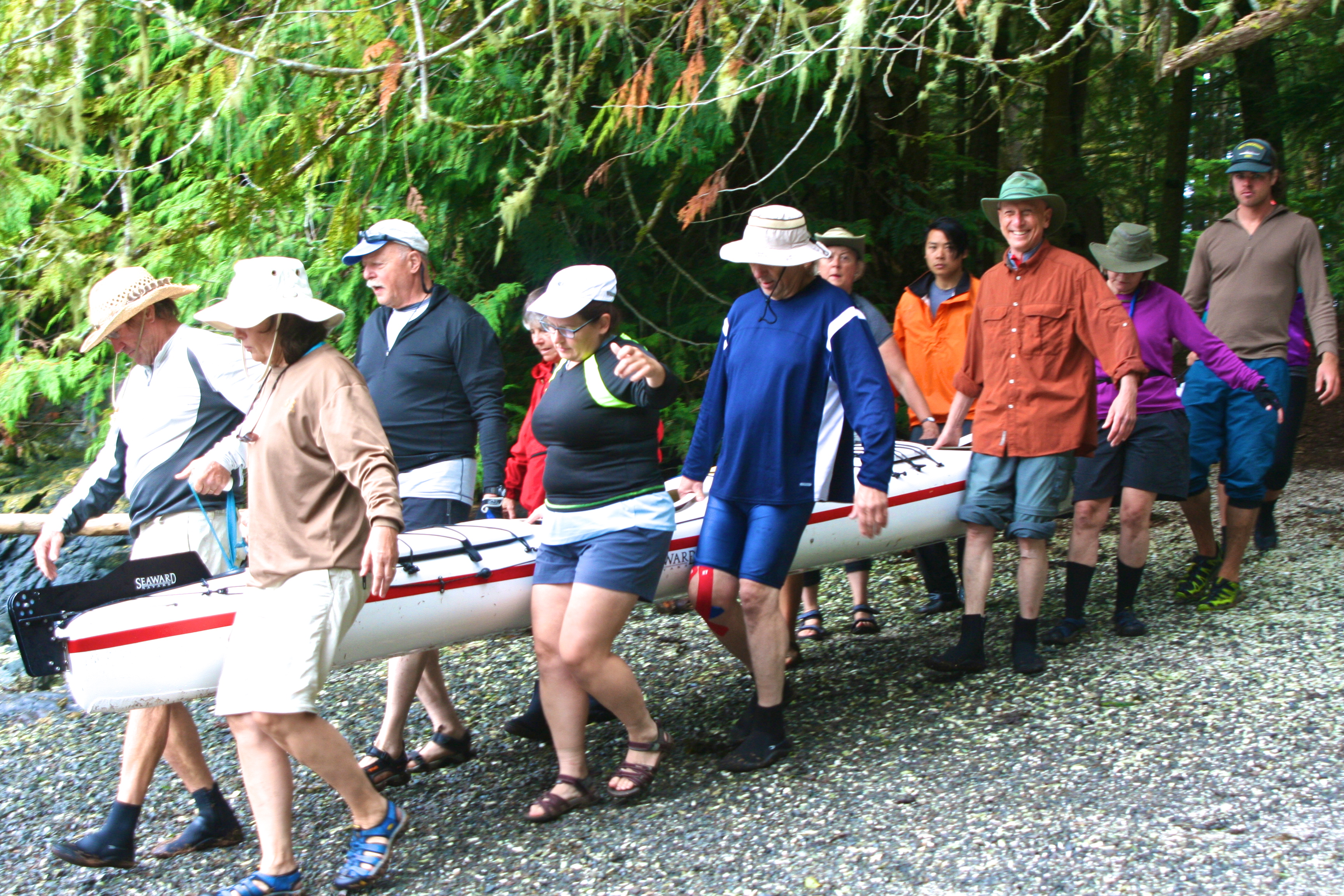
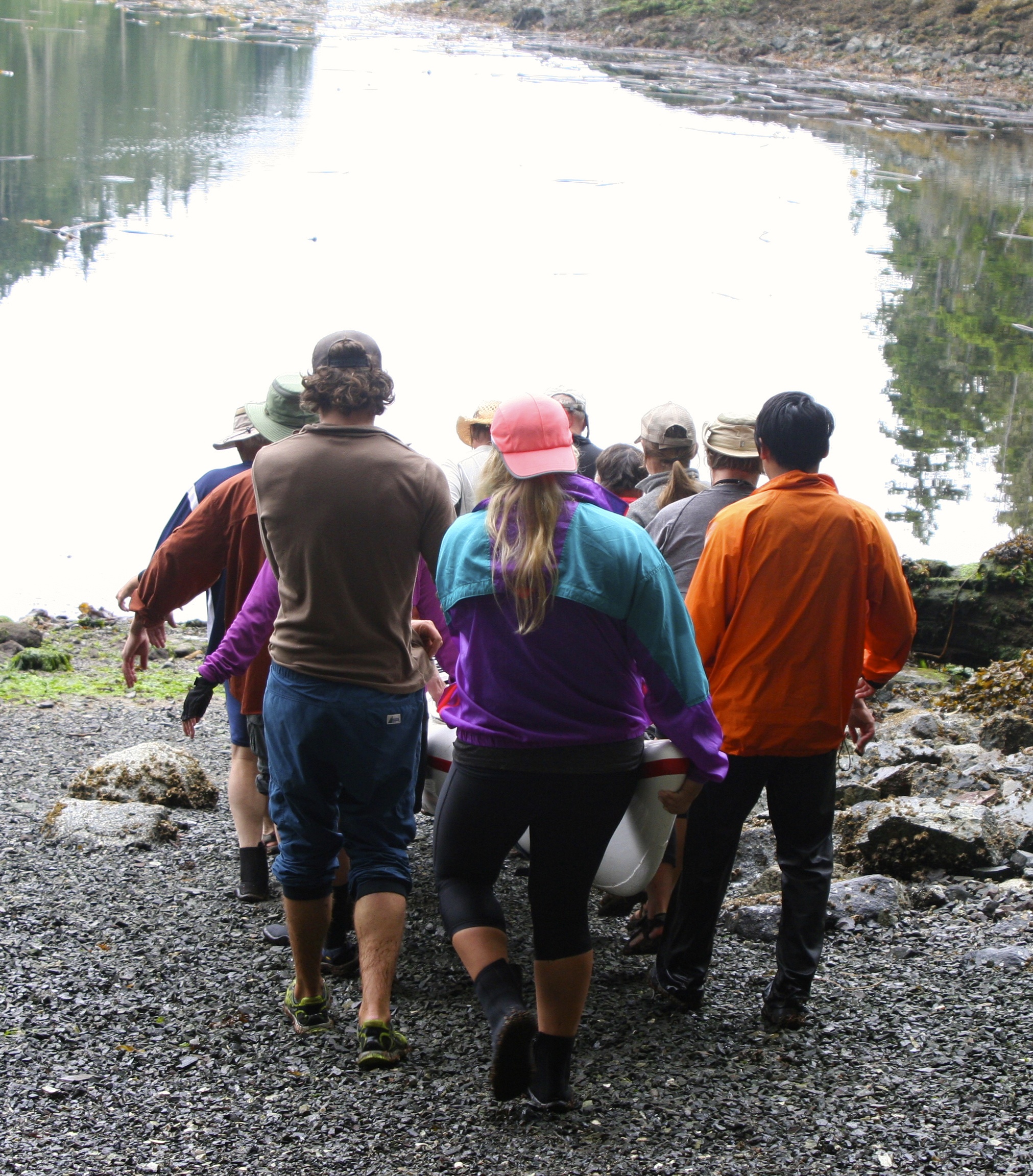
Our layover was not designed to be a kick-back and relax day. Here we are carrying our kayaks down to the water. The number of people required to move Peggy and my kayak suggests how heavy it was.  (Photo by Peggy Mekemson.)

Our layover was not designed to be a kick-back day. Here we are carrying our kayak down to the water. The number of people required to move it suggests how heavy it was. (Photo by Peggy Mekemson.)

Extreme high and low tides in Johnstone Strait meant we often had to carry the kayaks a fair distance to water.

Extreme high and low tides in Johnstone Strait meant we often had to carry the kayaks a fair distance to water. (Photo by Peggy Mekemson.)

Stretching across the rock face, ancient First Nation natives had painted a monster to warn people away from Berry Island, where they buried their dead. It was an early no-trespassing sign— probably implying that the monster would eat you if you landed. I had seen its modern equivalent in west Texas, except there, the sign had declared that trespassers would be shot. Such admonitions make one hesitate; at least they do me. When my choice is to be eaten by a monster or shot by a Texan, I choose neither.

Mary and Rod, two of our kayakers from Idaho, paddle up close to get a look at the pictograph. It was above there right paddles on the shaded rock face. Can't see it? Don't feel bad; neither could I. (Photograph by Peggy Mekemson.)

Mary and Rod, two of our kayakers from Idaho, paddle up close to get a look at the pictograph(s). One is barely visible above the right paddles. Look closely and you will see two round eyes. Another is above the left paddles— red, round and also barely visible. (Photo by Peggy Mekemson.)

Rod seemed quite happy with what he saw, however. Or maybe he was happy the monster chose not to eat him.

Rod seemed quite happy with what he saw, however. Or maybe he was happy the monster chose not to eat him.

Our guide, Nick, told us another story; this one had been passed on by the kayaking community. A lone, female kayaker had stopped to camp on Berry Island and had set up her tent for the night. Shortly afterwards, a boulder went flying by her head. She neither saw nor heard anyone, but another boulder came whizzing past. It was time to vacate the premises. She grabbed her kayak and paddled away as more boulders landed nearby. When nothing else had been hurled at her for two hours, she paddled back in, grabbed her tent (rather quickly, I suspect) and hightailed it. Back in town, the locals told her that Berry Island was also known as Sasquatch Island. Had Bigfoot been lobbing rocks at her? The Sasquatch/Bigfoot Research Organization claims this is a common practice of the big, hairy fellow. See here.

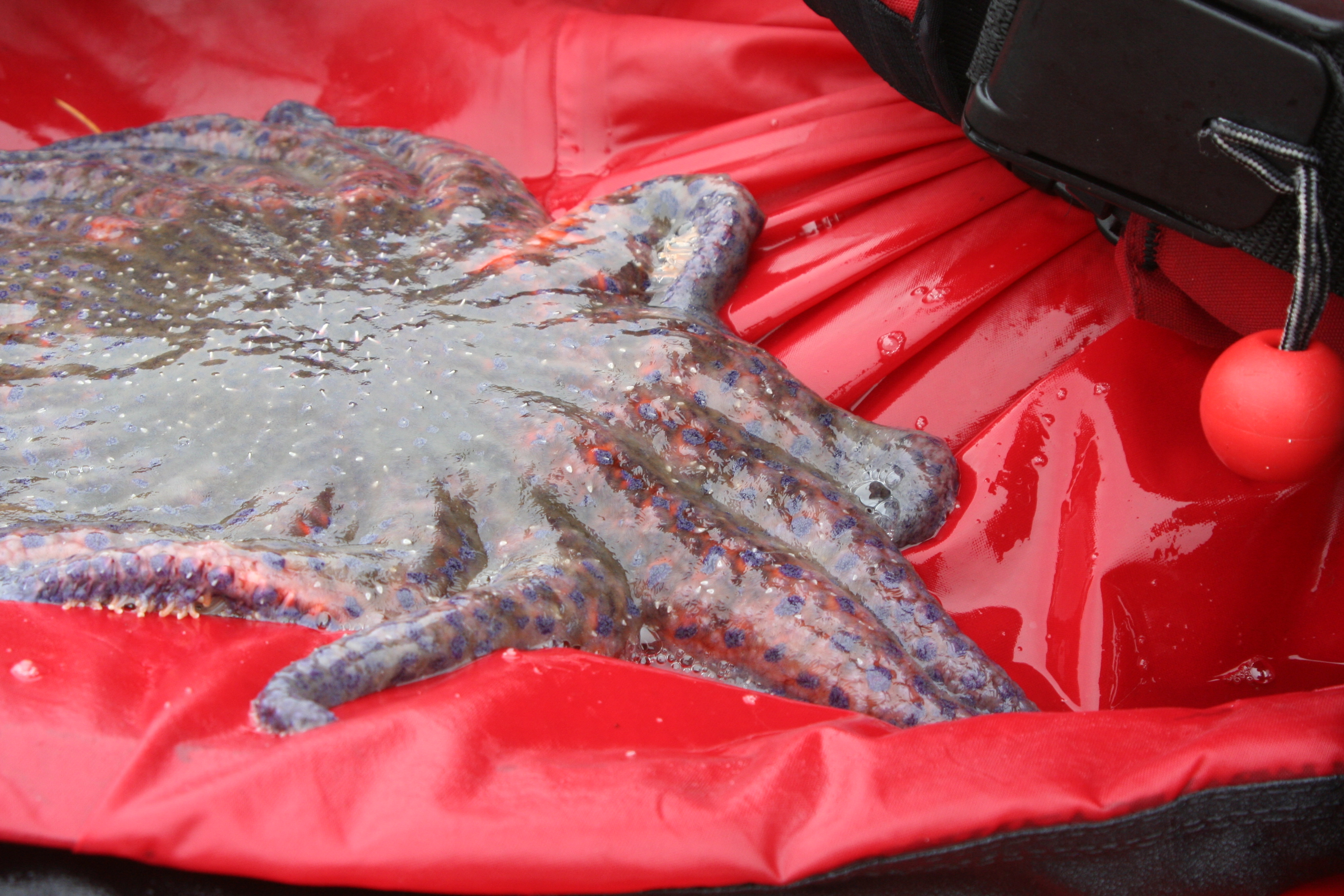
Heading back for camp and lunch, our guide, Julia, found a starfish that made Bigfoot seem normal in comparison. Julia handled it with aplomb, sort of. As for lunch, we ate the delicious salmon that I blogged about in my last post.

Starfish in Blackfish Sound, British Columbia.

This amorphous mass is actually a starfish. Here it rests on our guide Julia’s kayak skirt.

Julia picked the starfish up to show us. I think there was a slight 'ewww' factor. There certainly would have been for me.

Julia picked the starfish up to show us. I think there was a slight ‘ewww’ factor. There certainly would have been for me. (Photo by Peggy Mekemson.)

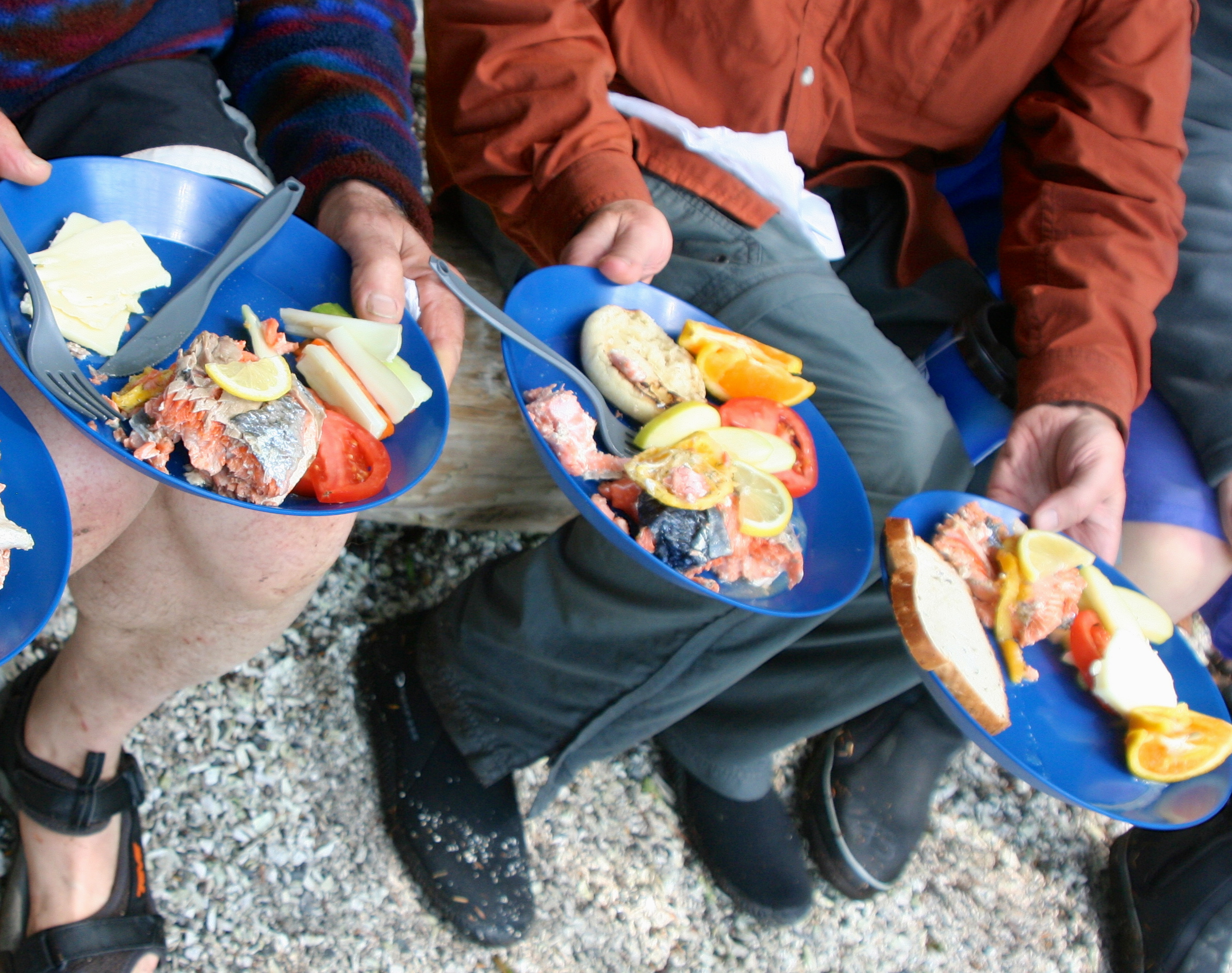
Sea Kayak Adventures cooks up a delicious lunch of freshly caught salmon at its camp on Compton Island, British Columbia.

The fresh salmon delivered to us the night before by a fisherman, ended up as a delicious lunch. We weren’t the only ones interested in the salmon, however…

Bald eagle on Compton Island in British Columbia.

Each bite was carefully monitored. This bald eagle had already eaten the salmon’s guts, and he was eager for more fish. Sushi would be fine.

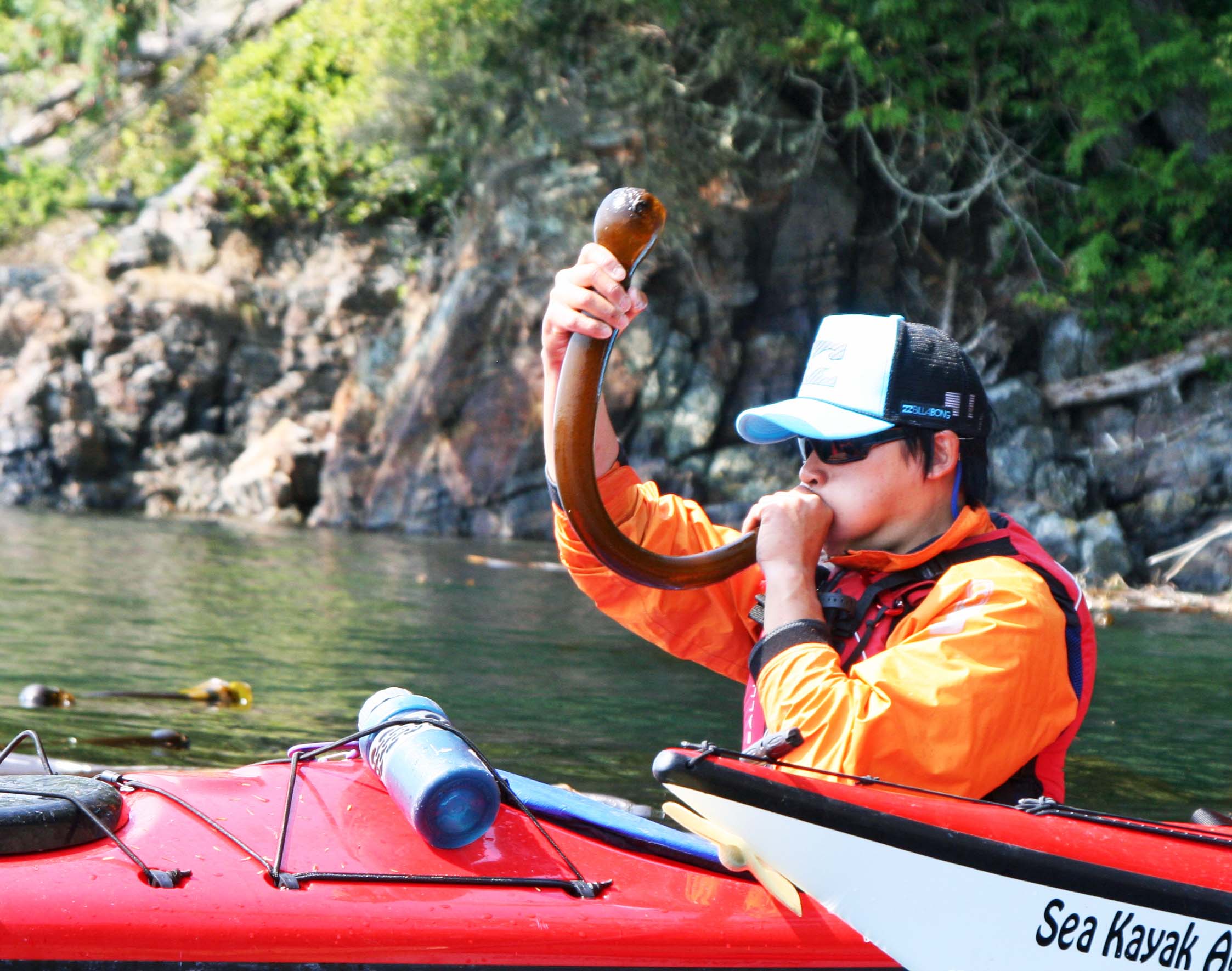
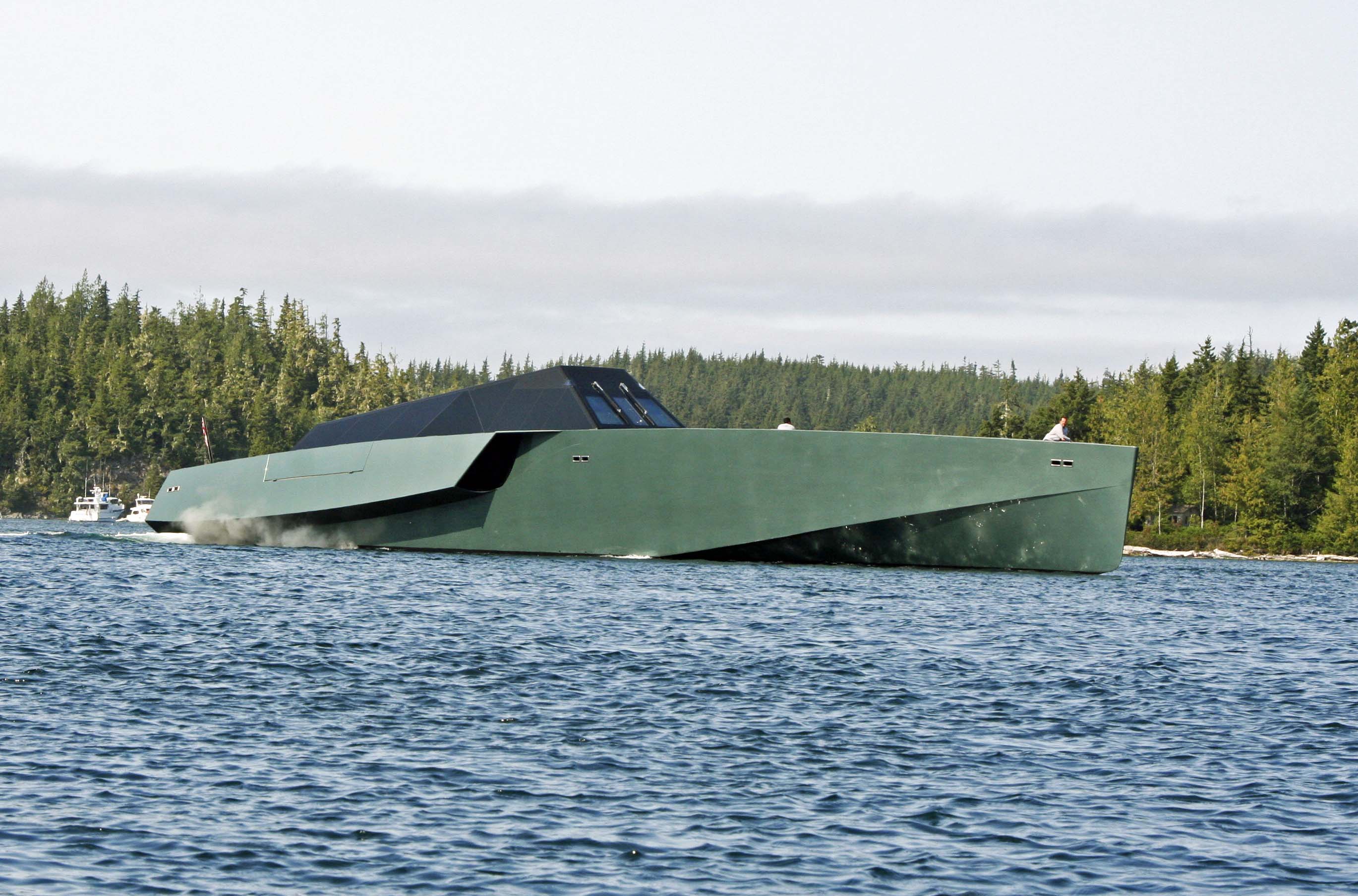
In the afternoon, we went searching for whales again. Along the way, Quy taught us how to blow kelp like a trumpet, and we saw a mysterious yacht that looked like it was straight out of a sci-fi flick.

Kelp beds off Vancouver Island in Blackfish Sound, British Columbia.

Floating kelp provided something of a challenge for kayaking through, but it also provided an opportunity.

Quy taught us how to cut up the kelp so it could be blown like a trumpet.

Quy taught us how to cut the kelp so it could be blown like a trumpet. (Photo by Peggy Mekemson.)

Here Lindy takes a turn. Peggy had also tried her luck. My advice to them: they should keep their day jobs.

Here Lindy takes a turn. Peggy had also tried her luck. My advice to the two of them: they should keep their day jobs.

Nick looks on in amazement at the performance.

Nick looked on in amazement at the performances.

The whales kept their distance, but a curious seal stopped by to check us out. (Photo by Peggy Mekemson.)

The whales kept their distance, but a curious seal stopped by to check us out. (Photo by Peggy Mekemson.)

This futuristic yacht didn't look nearly as friendly as the seal. (Photo by Peggy Mekemson.)

This futuristic yacht didn’t look nearly as friendly as the seal. At first we thought it belonged to the military. (Photo by Peggy Mekemson.)

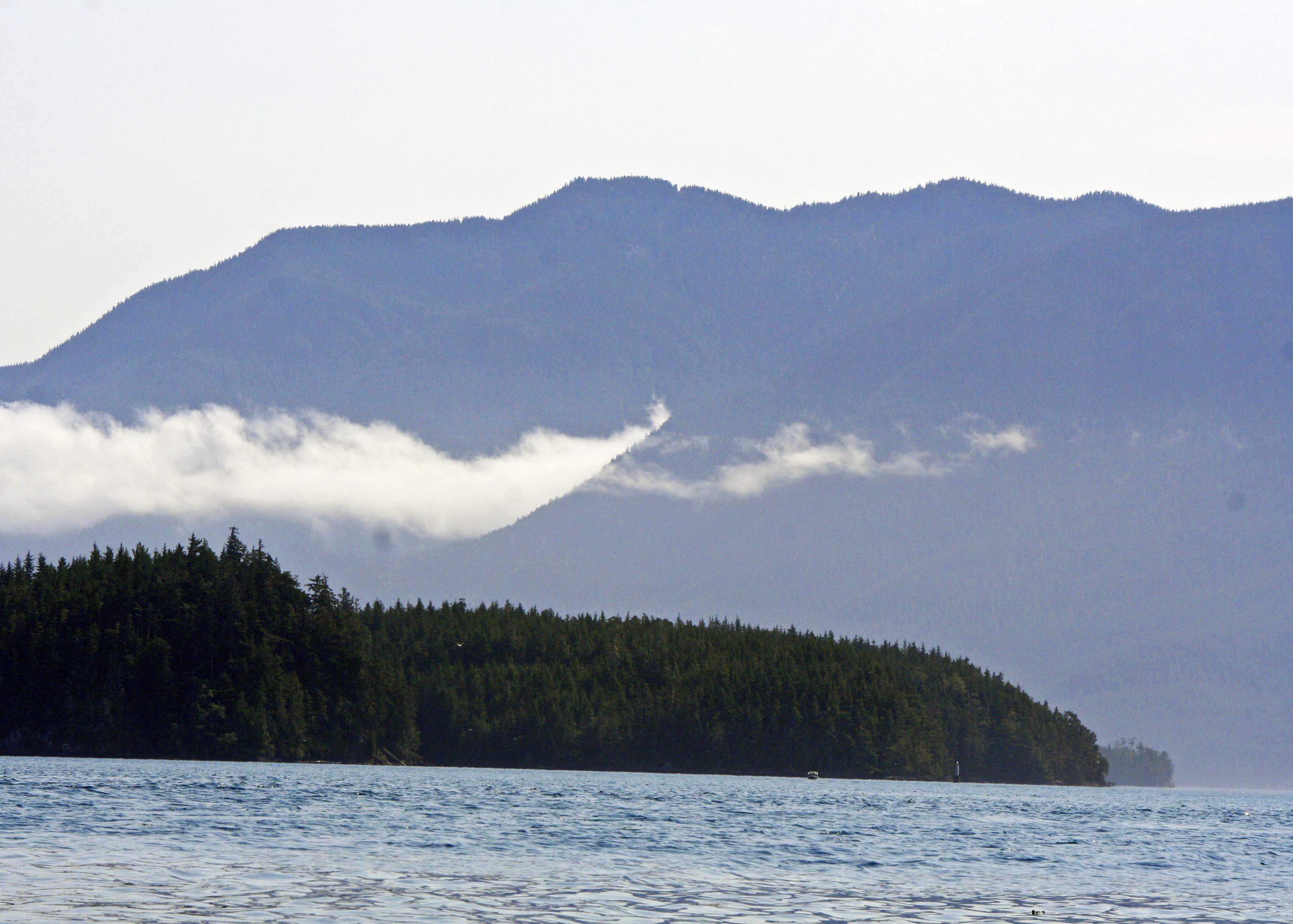
Blackfish Sound in British Columbia.

I liked the contrast here between water, clouds, and islands. (Photo by Peggy Mekemson.)

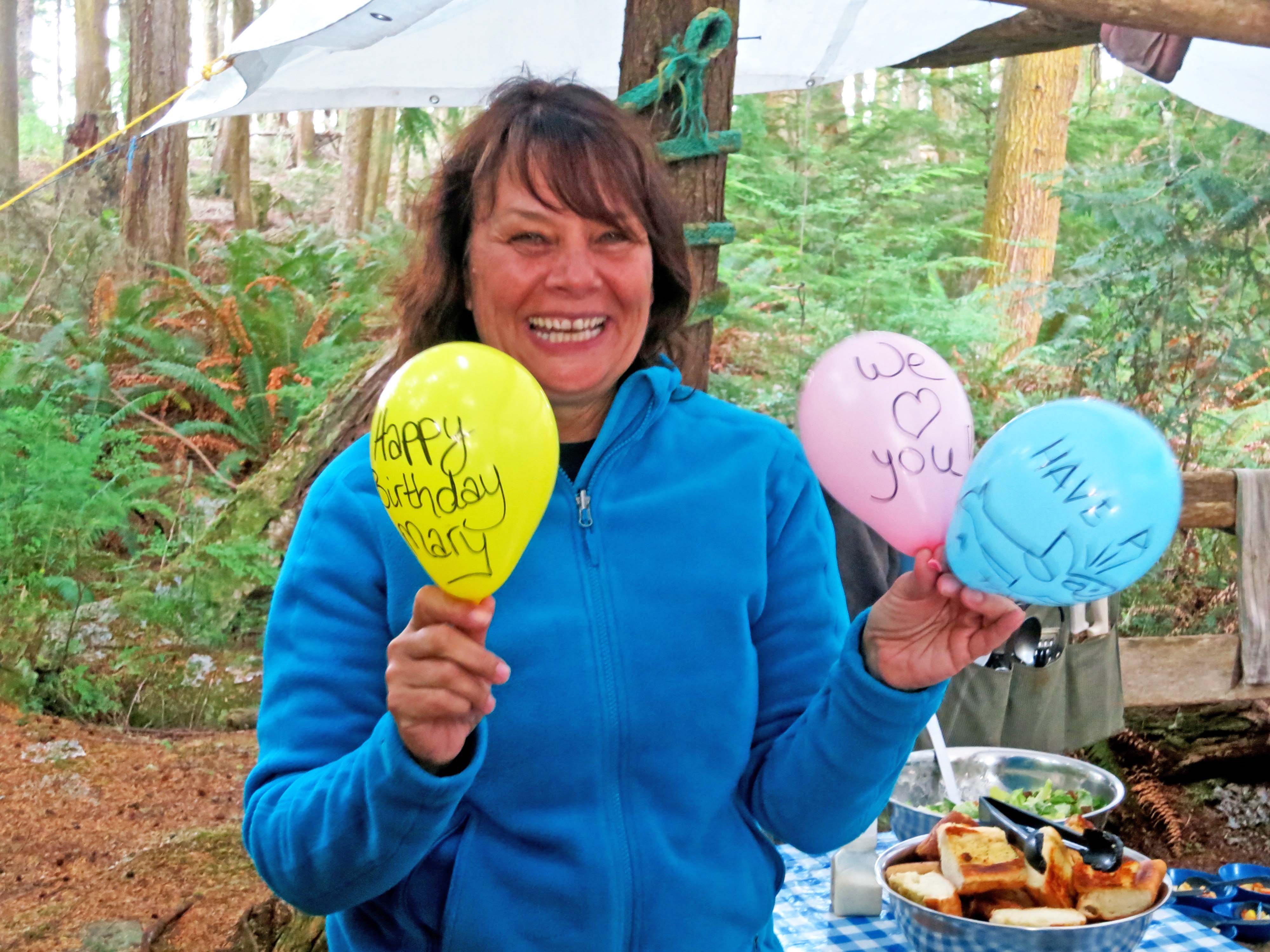
Back in camp, Mary celebrated her birthday...

Back in camp, Mary celebrated her birthday…

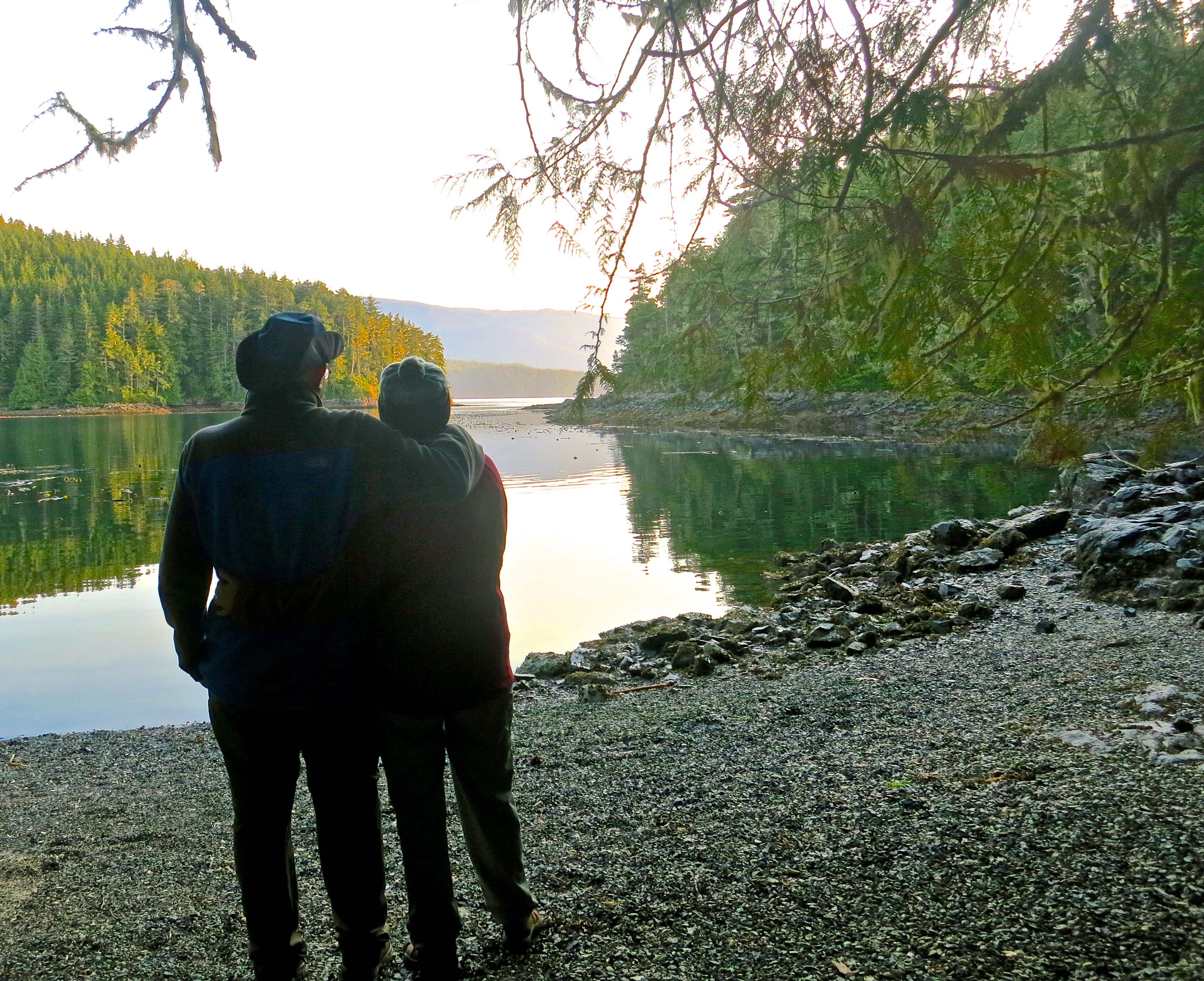
Peggy and Curtis Mekemson on Compton Island off of Vancouver Island, British Columbia.

Peggy and I shared a quiet moment…

Evening on Compton Island, Blackfish Sound, British Columbia. Photo by Curtis Mekemson.

And evening settled in. Next Blog: Peggy and I get caught in a powerful current.


Albion Manor: One of Canada’s Top Ten B&Bs… A Delightful Interlude

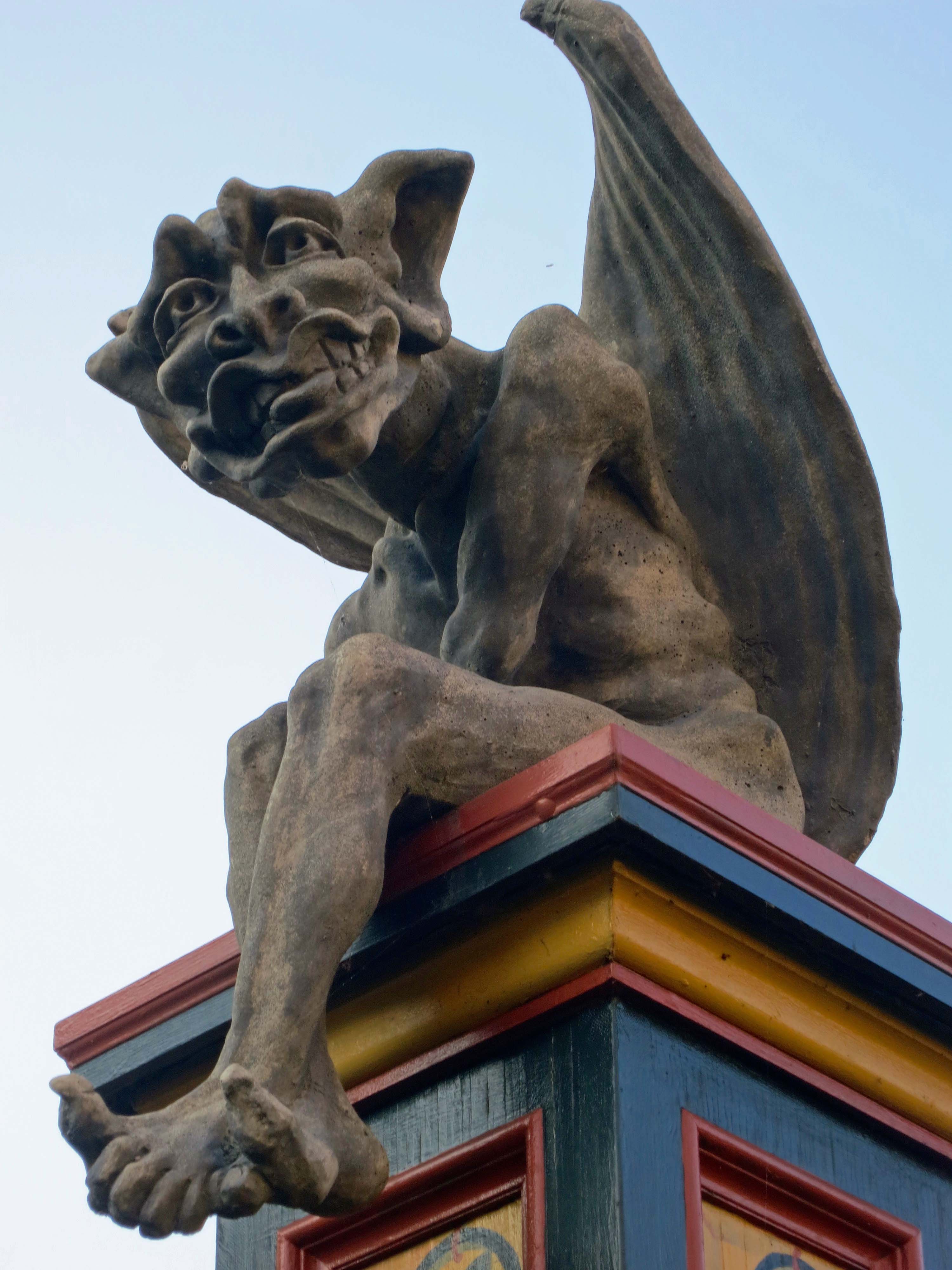
Gargoyle at Albion Inn in British Columbia. Photo by Curtis Mekemson.

We stayed at the Albion Manor in Victoria, British Columbia following our kayak adventure. This character was perched on top of our cabin, the Gargoyle Cottage. I felt he was representative of the unique nature of the B&B.

I was saving this blog for the end of our kayak adventure, which is where it fits. But Peggy and I are heading for the Bay Area this weekend for our book club. And that would mean no new blog until Tuesday or even Wednesday. Can’t have that, right? (The BSBC, or Bigger Sacramento Book Club, by the way, has been meeting for a quarter of a century and has read over 250 books. It consists of the same five couples who have been members since 1989.)

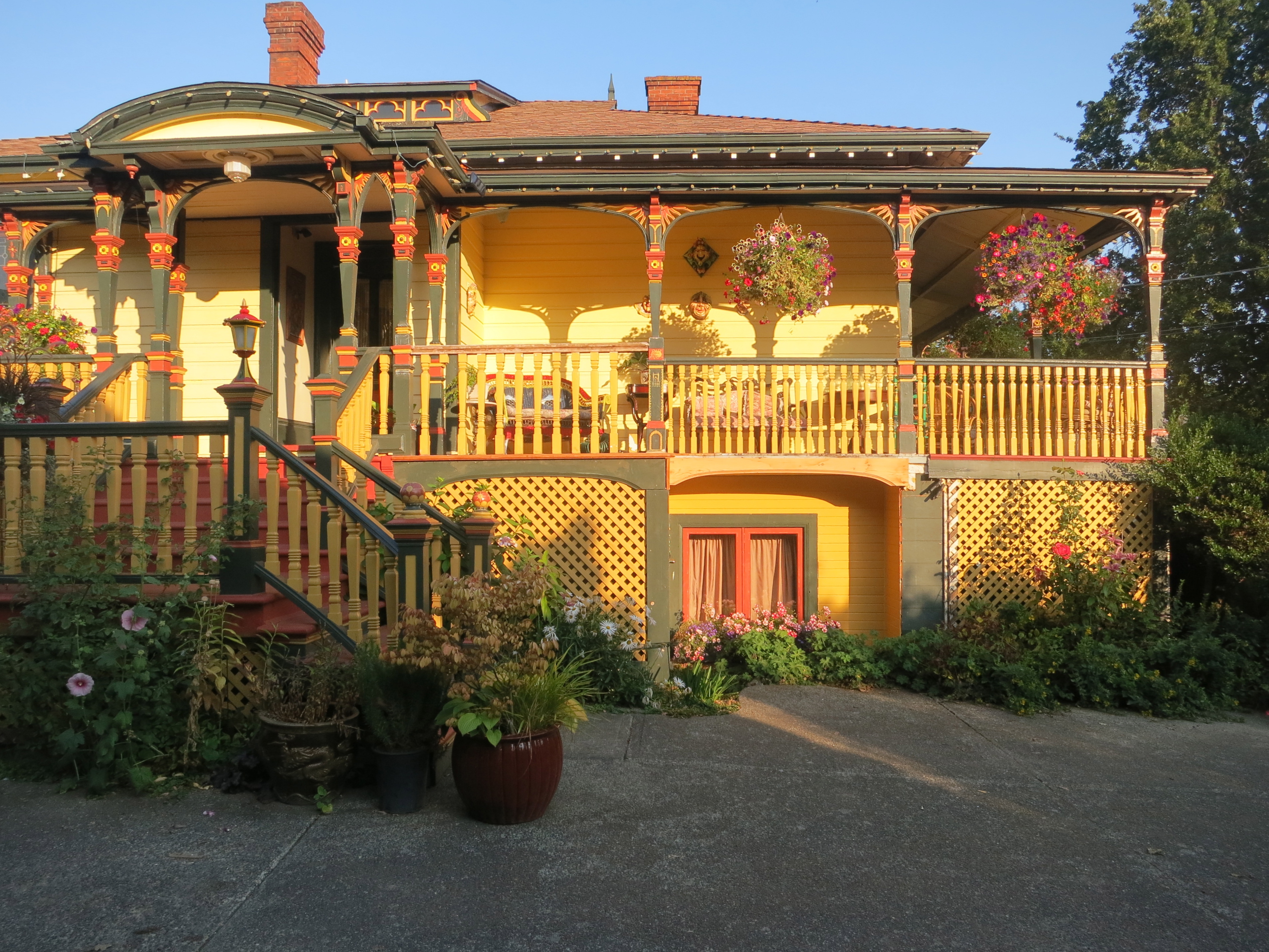
Welcome to the Albion Manor in Victoria, British Columbia. It is considered one of the top ten B&Bs in Canada. Our fellow kayakers and friends, David and Edie from Alaska, had made the arrangements for the four of us to stay at the Manor to celebrate the end of our adventure. We quickly discovered why it is so highly recommended. To start with, the inn is a beautiful Victorian, and it is located within easy walking distance of Victoria’s beautiful downtown. We found a colorful collection of house boats nearby. What really captured us, however, were the flowers and artwork. The story is best told in photos, enjoy.

An outside shot of the Albion Manor.

An outside shot of the Albion Manor.

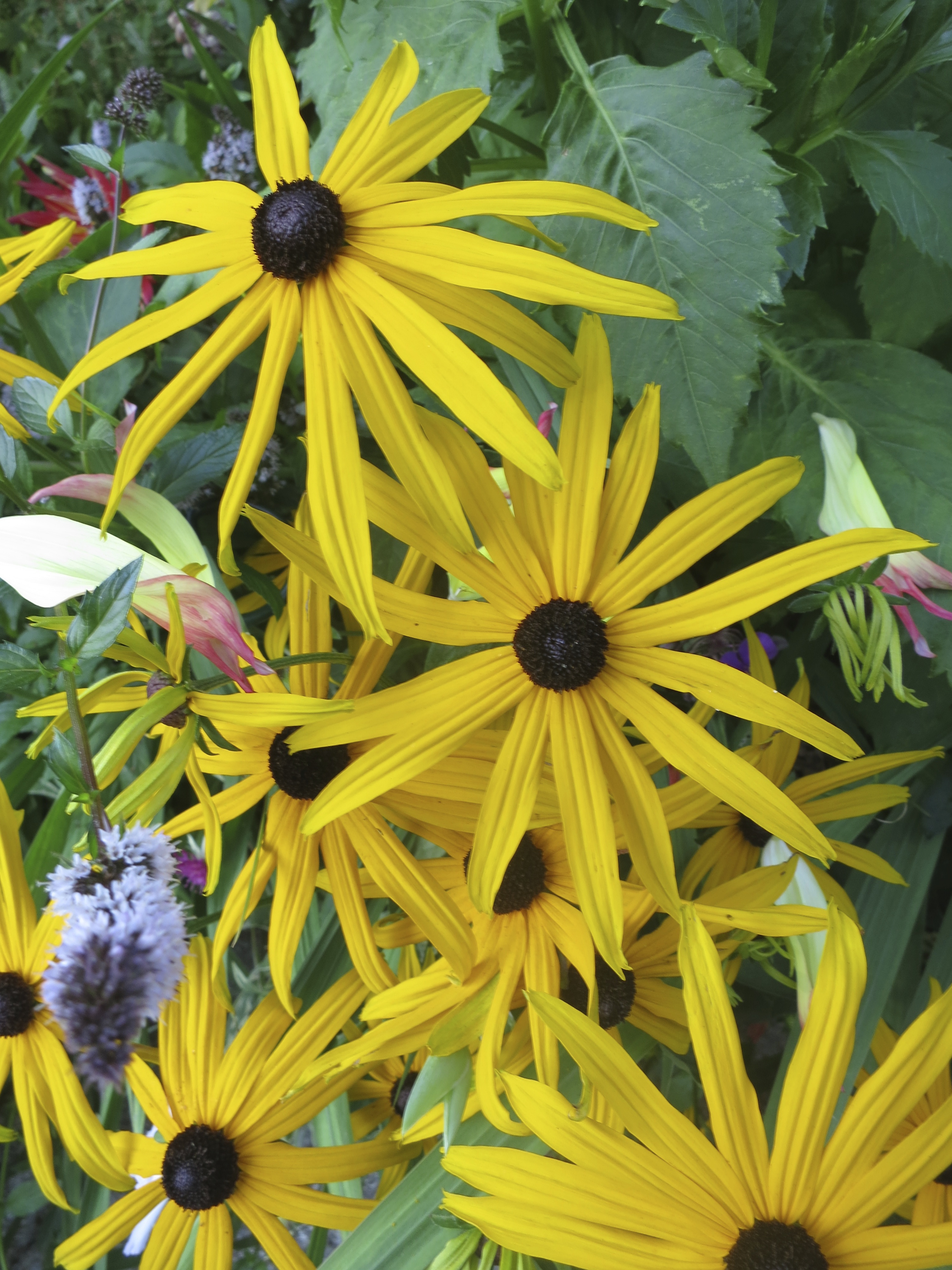
Here are some of my favorite flowers I photographed at the B&B.

Flowers at Albion Manor in Victoria British Columbia.. Photo by Curtis Mekemson.

Flower at Albion Manor in Victoria, British Columbia. Photo by Curtis Mekemson.


Flower at Albion Manor in Victoria, British Columbia. Photo by Curtis Mekemson.

Flowers at Albion Manor in Victoria, British Columbia. Photo by Curtis Mekemson.

Flowers at Albion Manor in Victoria, British Columbia. Photo by Curtis Mekemson.

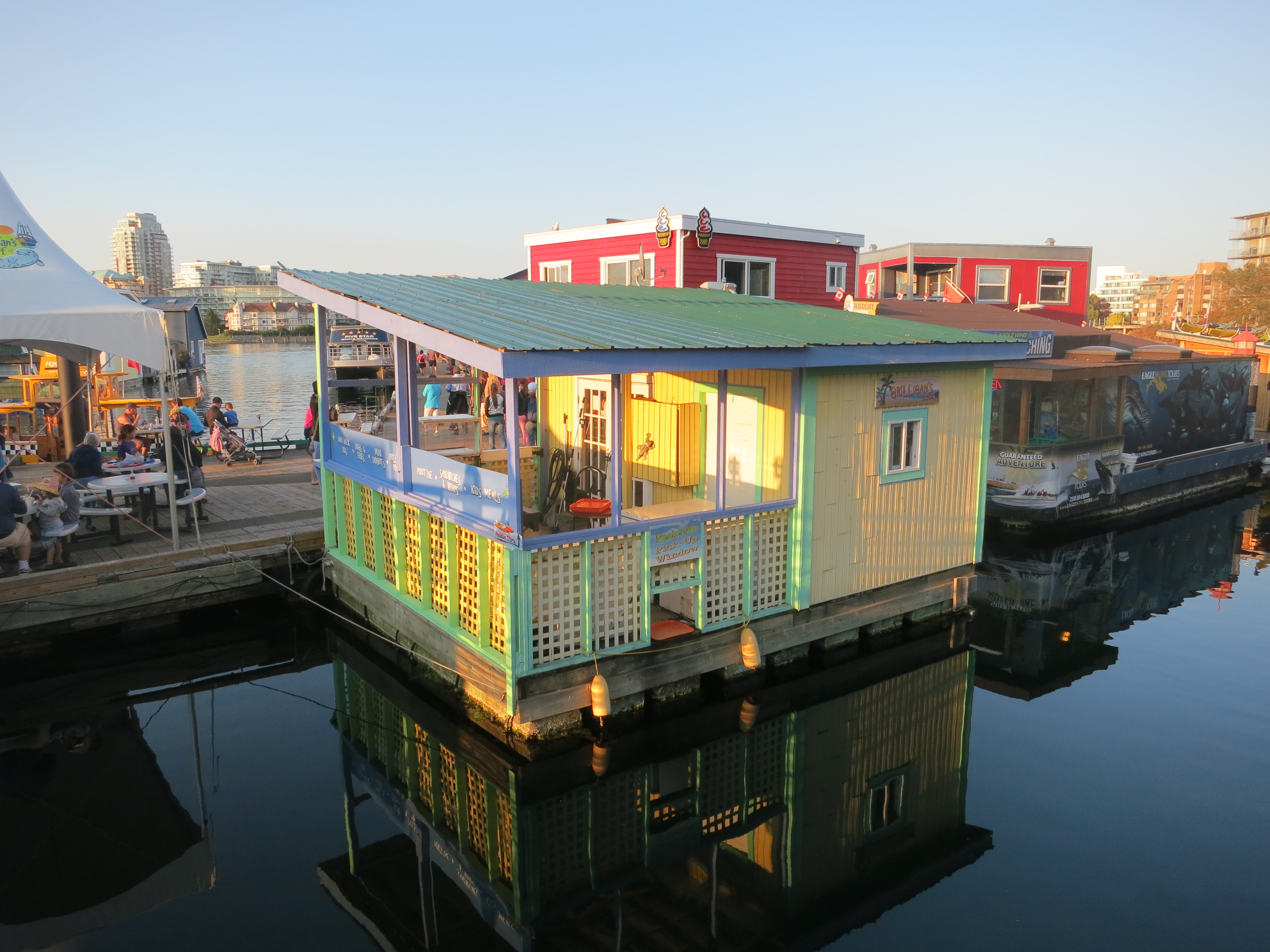
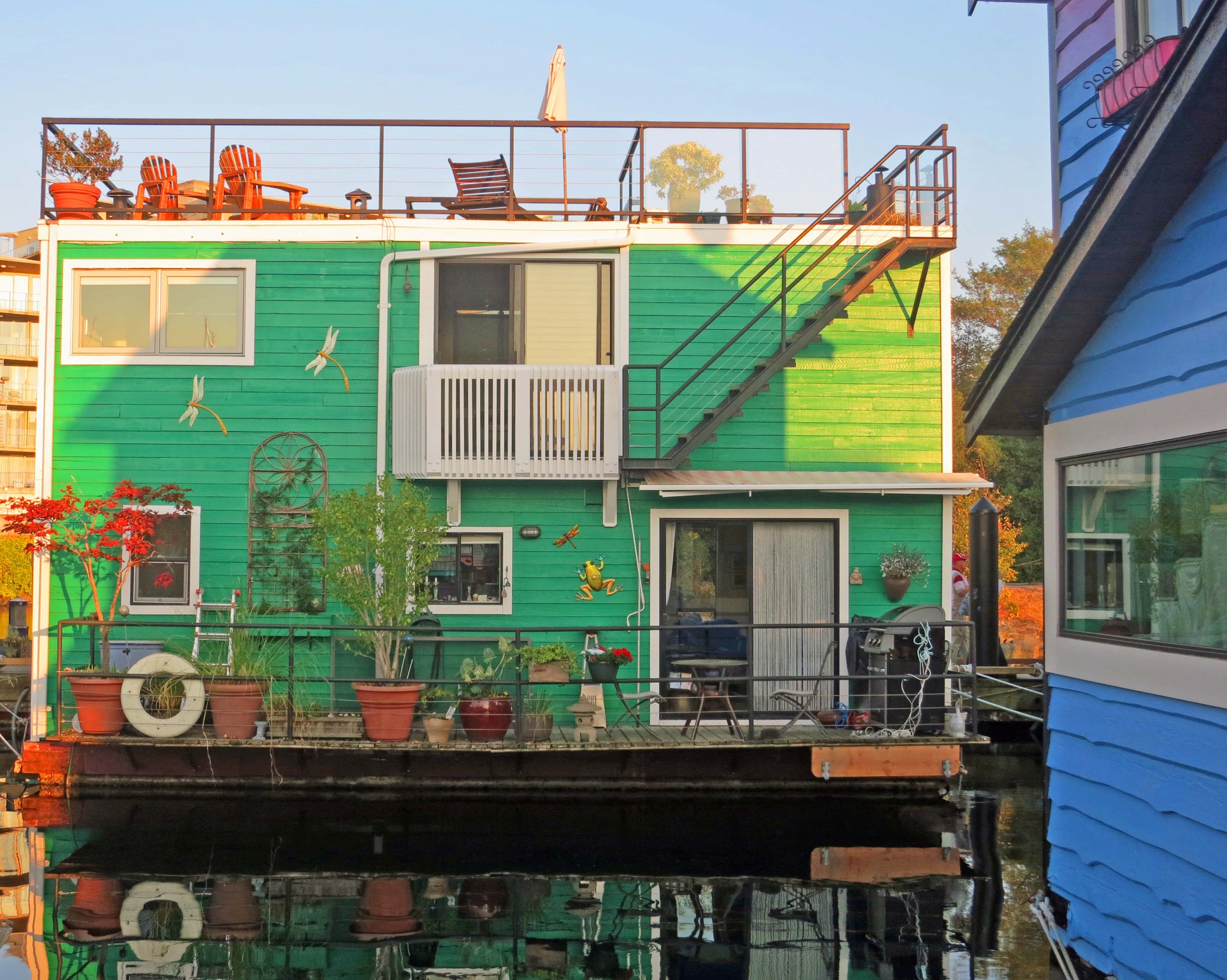
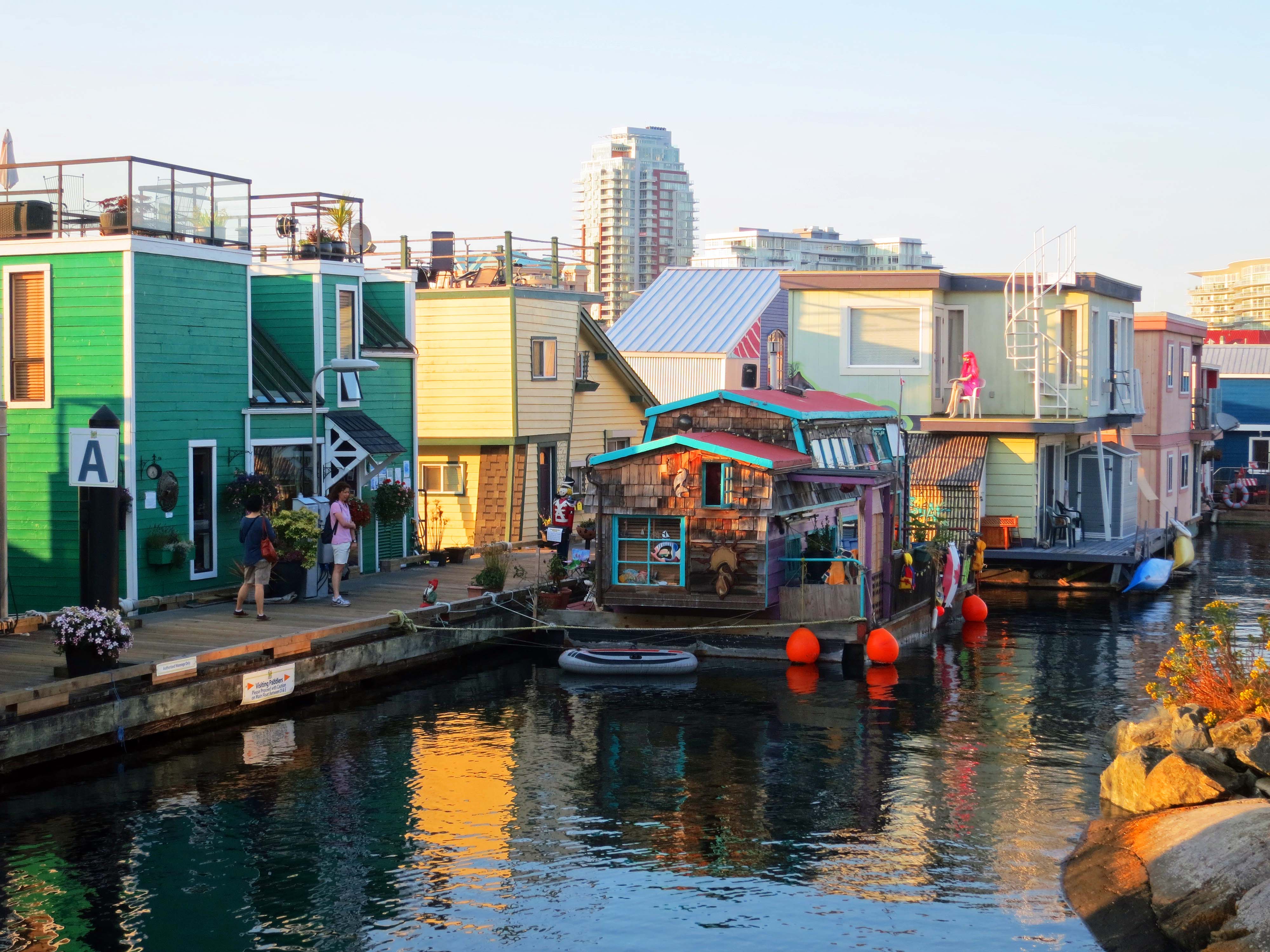
Searching for dinner, a ten minute walk from the Albion Manor brought us to a village of house boats at Victoria’s Fisherman’s Wharf. Peggy took these photos.

Houseboat at Fisherman's Wharf, BC. Photo by Peggy Mekemson.

Houseboats at Fisherman's Wharf in Victoria, BC. Photo by Peggy Mekemson.

Houseboats at Fisherman's Wharf in Victoria, BC. Photo by Peggy Mekemson.

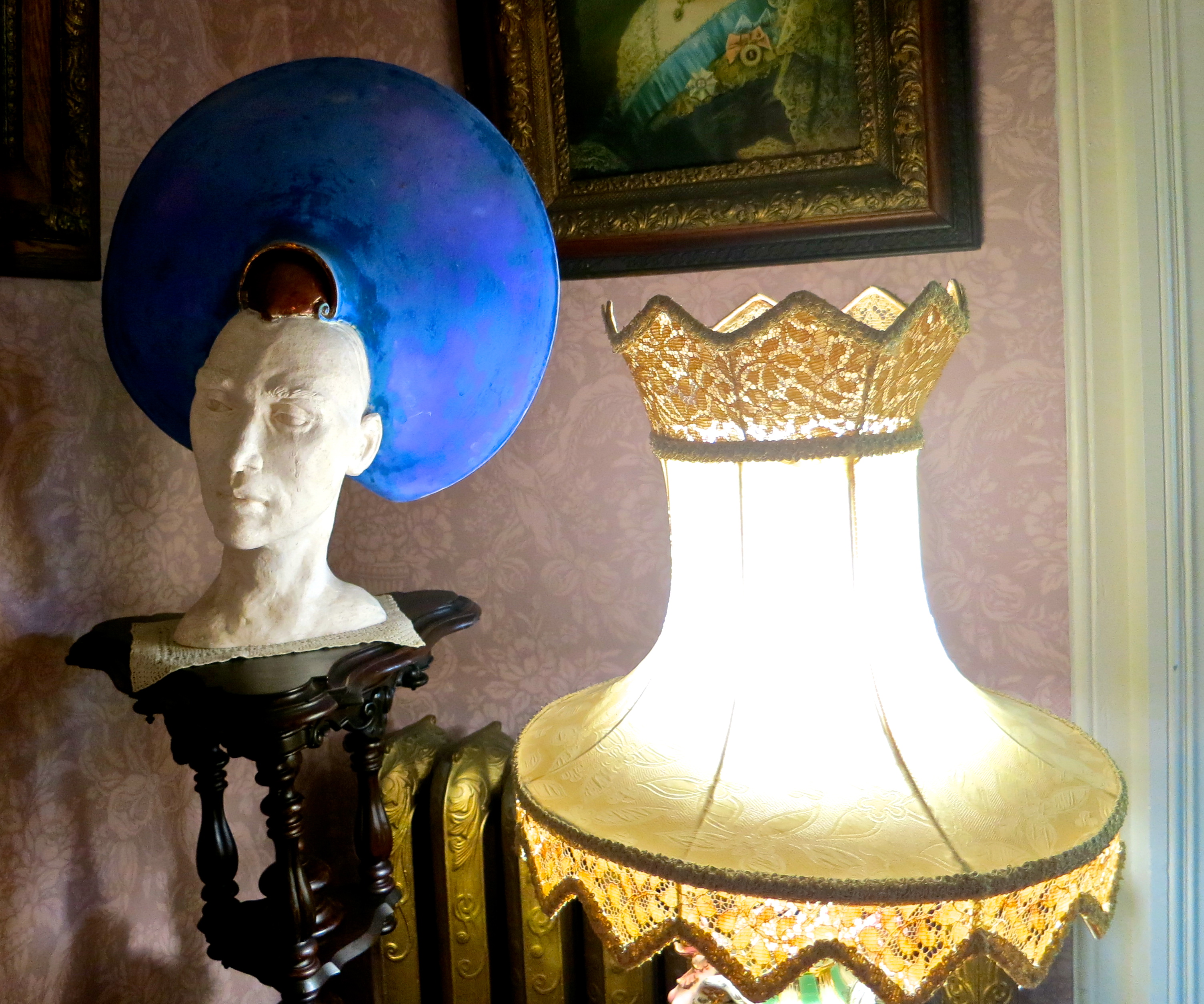
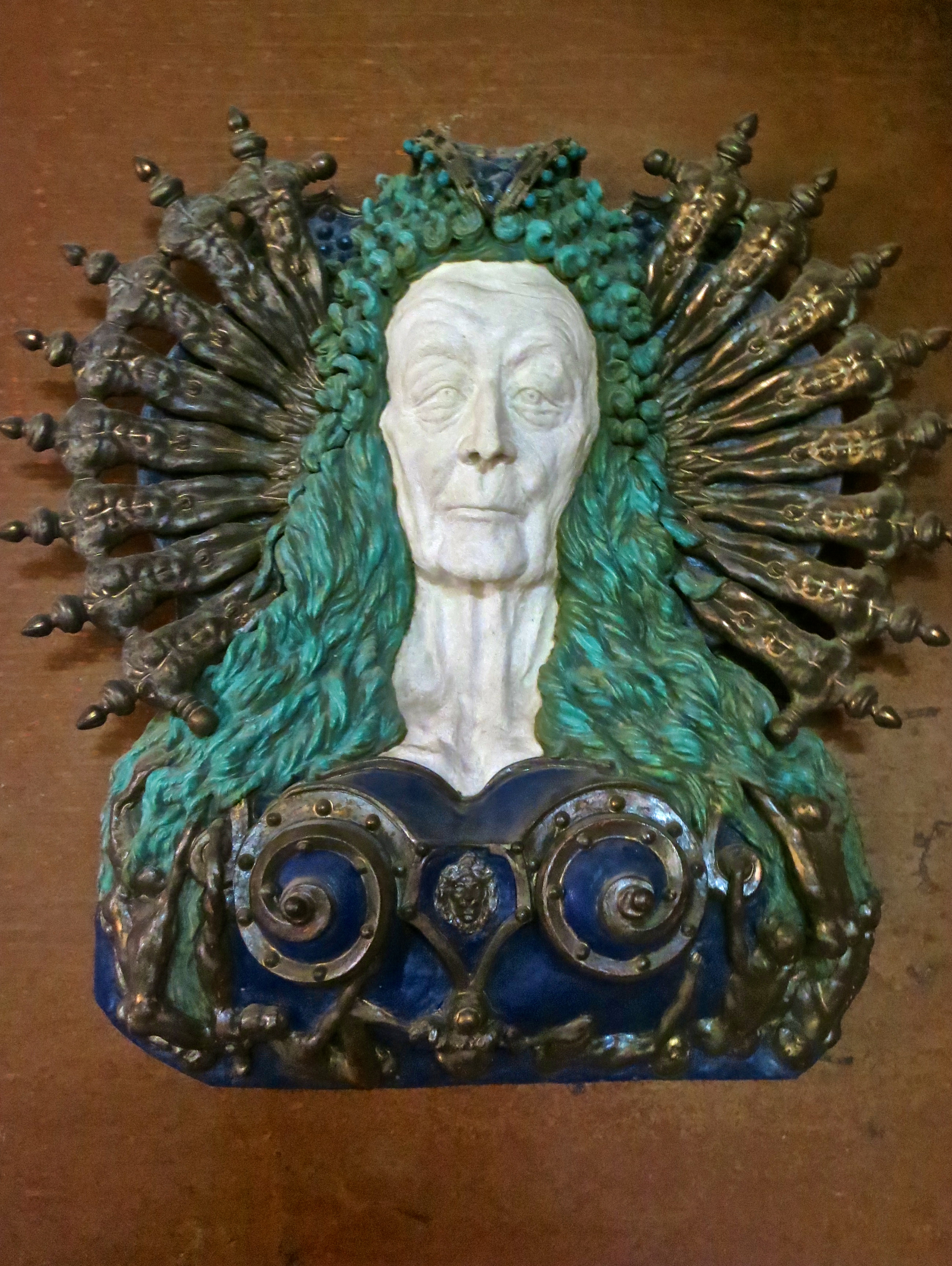
Art is located everywhere at Albion Manor, both inside and out. It’s humorous, offbeat nature, captured me immediately. Much of the work is done by Fernando Garcia, one of the two co-owners of the Manor.

The unique art of Albion Manor in Victoria, British Columbia. Photo by Curtis Mekemson.

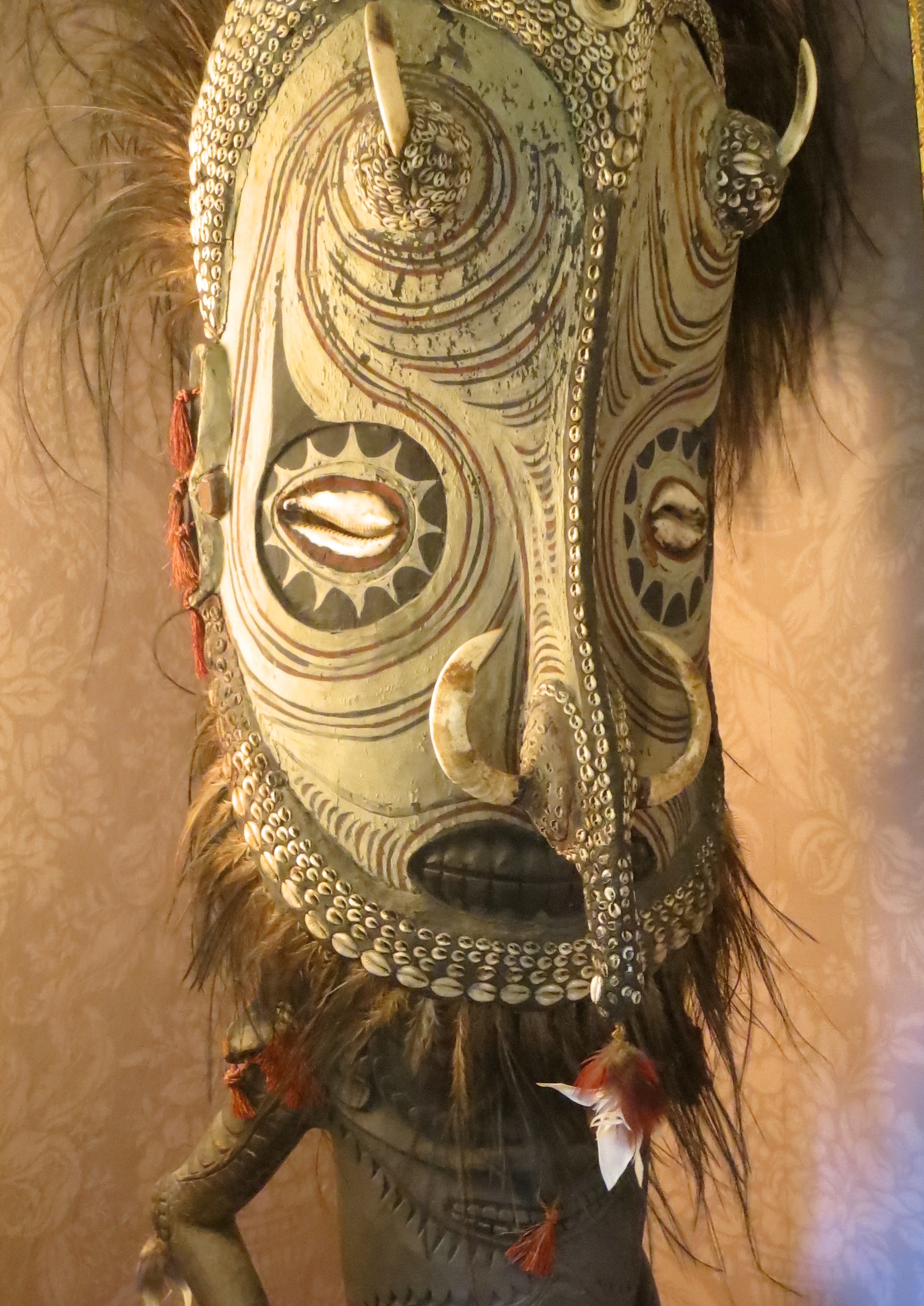
African mask at Albion Manor in Victoria, BC. Photo by Curtis Mekemson.

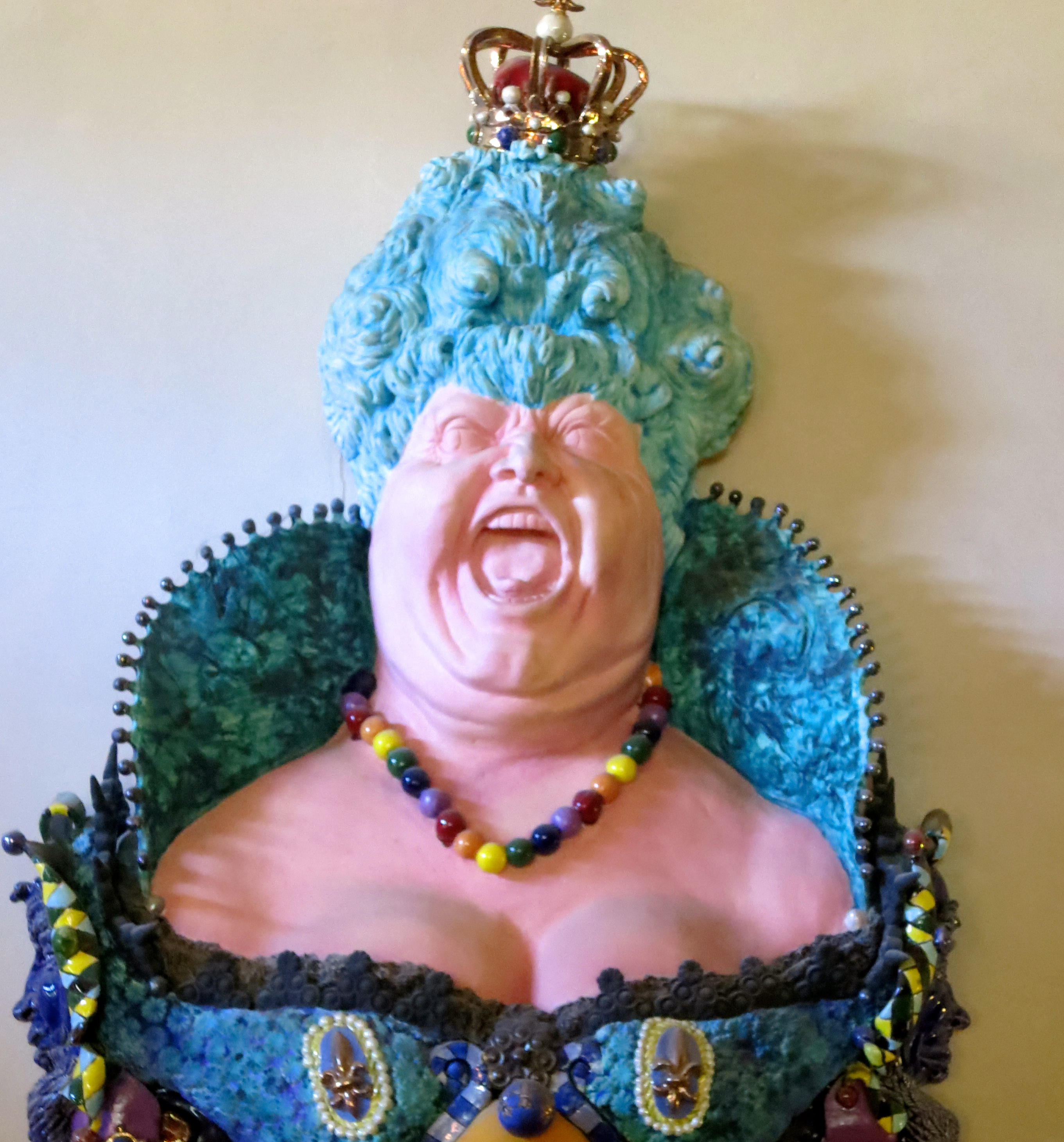
The fat lady sings. Art at Albion Manor in Victoria, BC. Photo by Curtis Mekemson.

Art at Albion Manor in Victoria, BC. Photo by Curtis Mekemson.

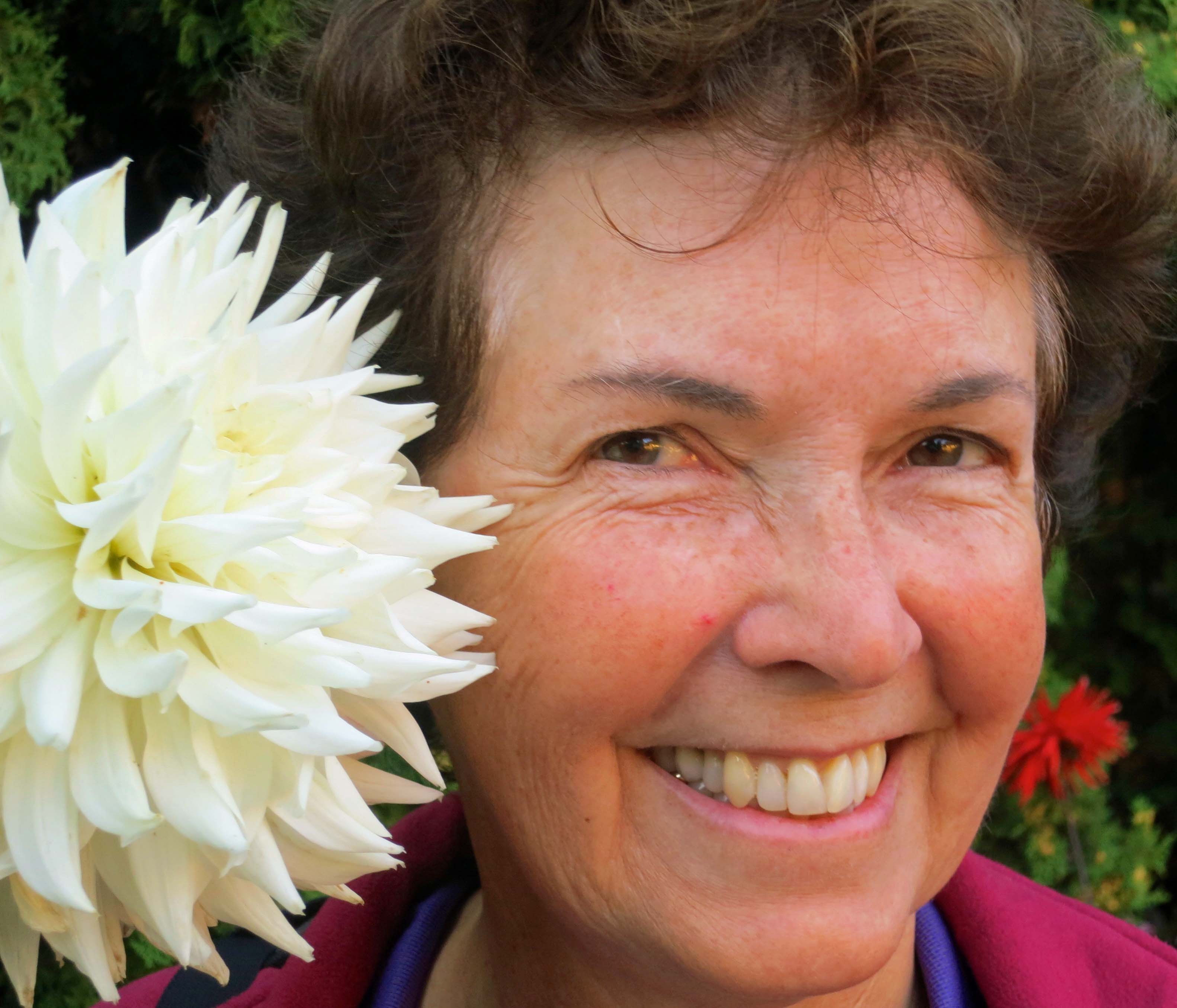
I'll conclude with a photo of  Peggy snuggling up to one of the flowers at the Albion Manor. Next Blog; I will return to our kayak adventure off of the northeast coast of Vancouver Island.

I’ll conclude with a photo of Peggy snuggling up to one of the flowers at the Albion Manor. Next Blog; I will return to our kayak adventure off of the northeast coast of Vancouver Island.


Who Needs A Barber When You Have a Starfish? British Columbia Sea Kayak Adventure: Part 3

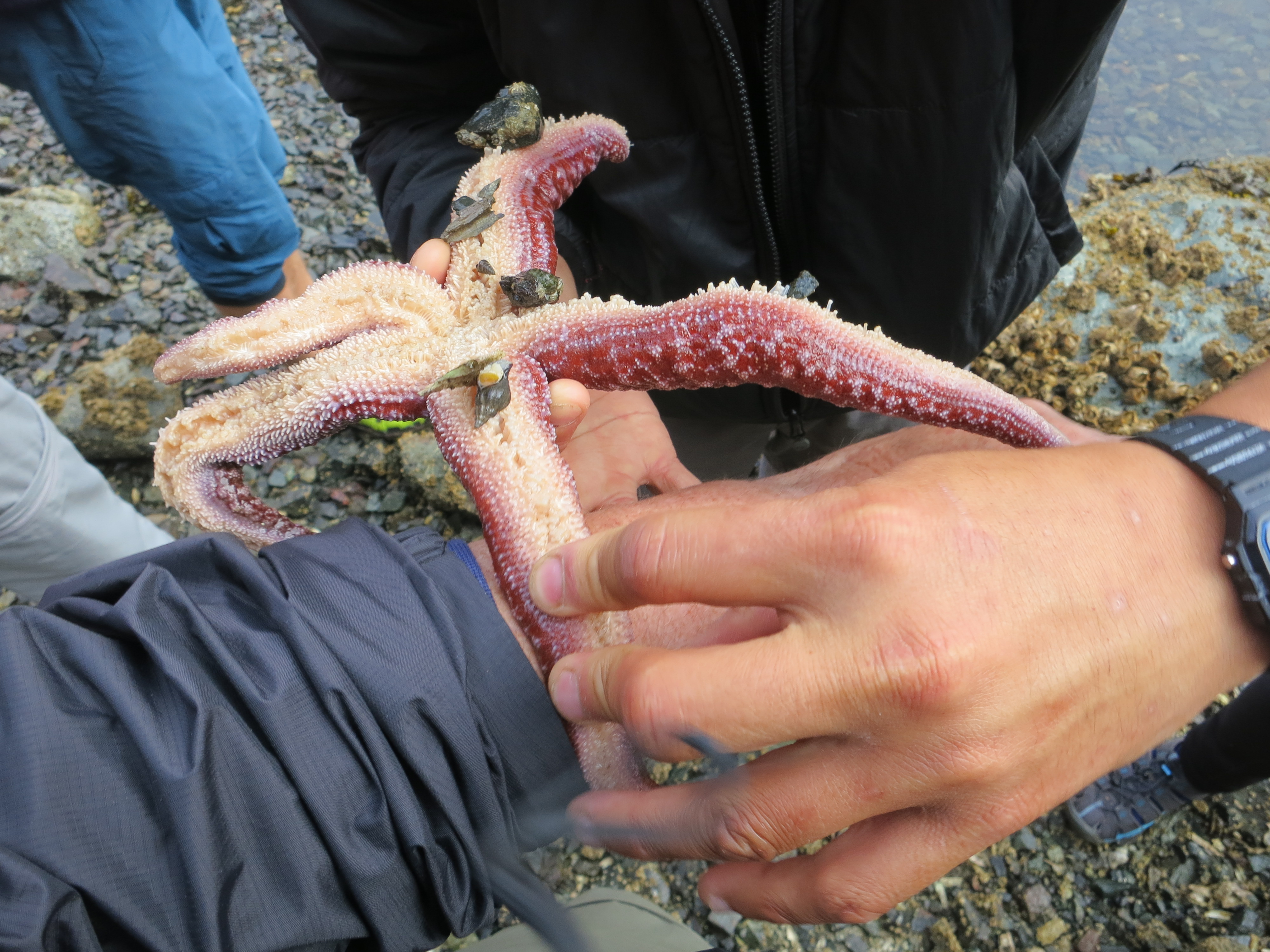
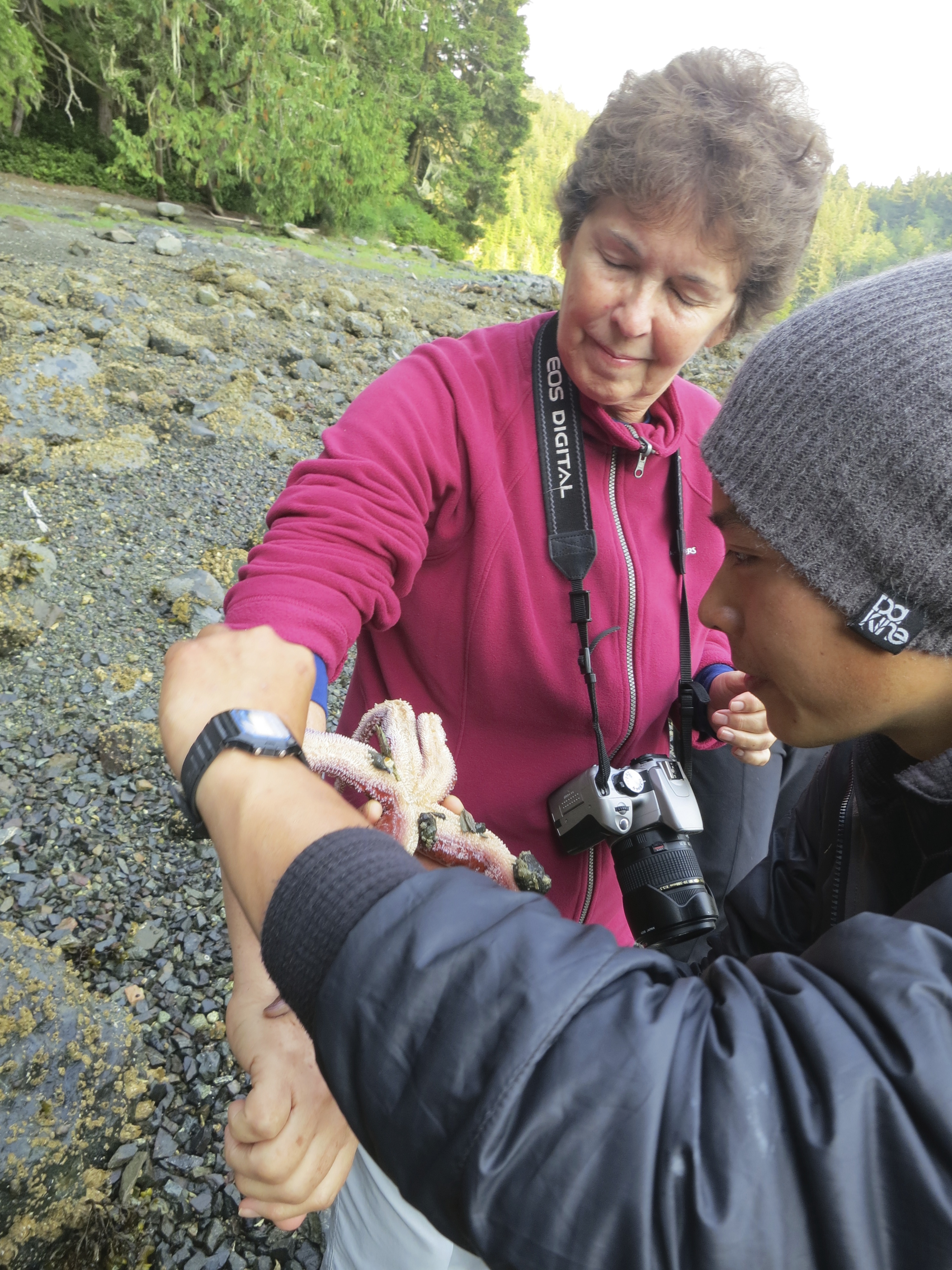
Starfish pedicellariae can clip the hair off an arm. Photo by Curtis Mekemson.

Quy bent the starfish over my wrist, and it clipped hair off my arm while I took a selfie of the process.

I’ve never been much of a with-it type guy. When there is a fad, I try to do the opposite. But I confess I’ve tried a selfie or two. And I just had to take a picture of the starfish clipping hair off of my arm. When Quy picked up a starfish on our six-day, British Columbia sea kayak adventure and offered to demonstrate pedicellariae at work, I was the first to volunteer. Pedicellariae what, you say?

While you are probably stumbling over the word like I did, I’ll explain how it works. Starfish have a defense mechanism for destroying tiny parasites that land on their skin. They have tiny claws that cut the bad guys in half. If you put these claws under a microscope, they look like your worst nightmare. (Check this out.)

Quy, however, assured us that while the pedicellariae would define our hairs as enemy invaders and clip them off, there would only be a slight pulling sensation with no harm done to us. Easy for him to say, right. But that’s what happened. Quy bent the arm of the starfish over my wrist and I felt the pulling sensation. When he removed the starfish, my arm was bare. Peggy was up next.
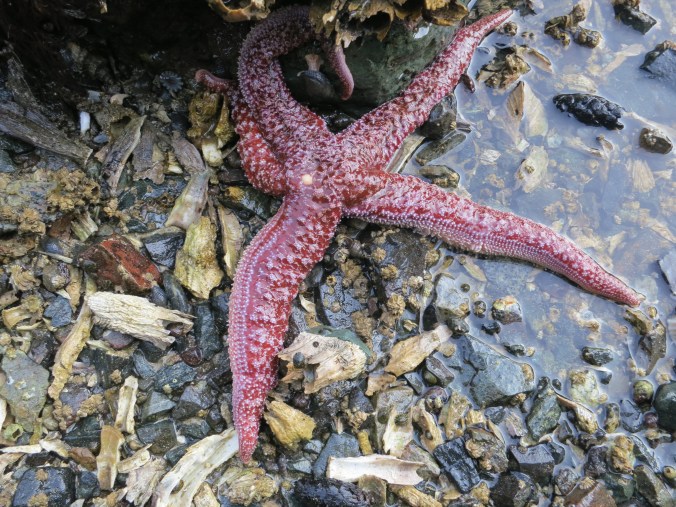
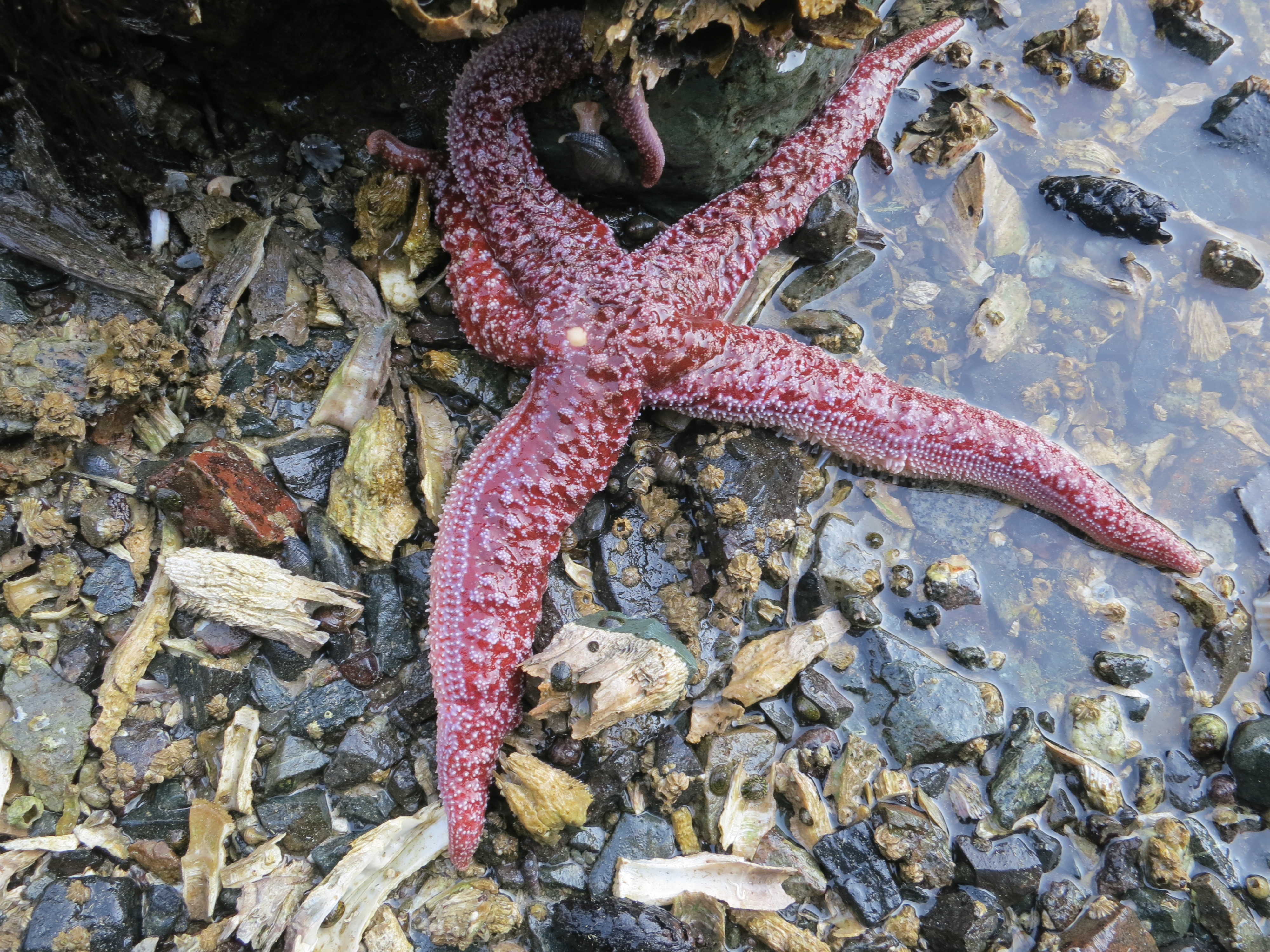
Here is the starfish happily at home in Johnstone Strait before Quy picked him up to clip hair.

Here is the innocent starfish, happily at home in Johnstone Strait before Quy picked him up to clip hair.
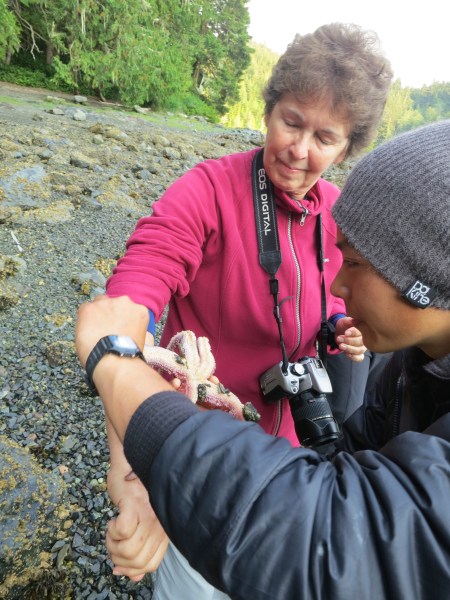
And here, the starfish goes to work on Peggy. Is that a smile or a grimace on her face?

And here, the starfish goes to work on Peggy. Is that a smile or a grimace on her face?

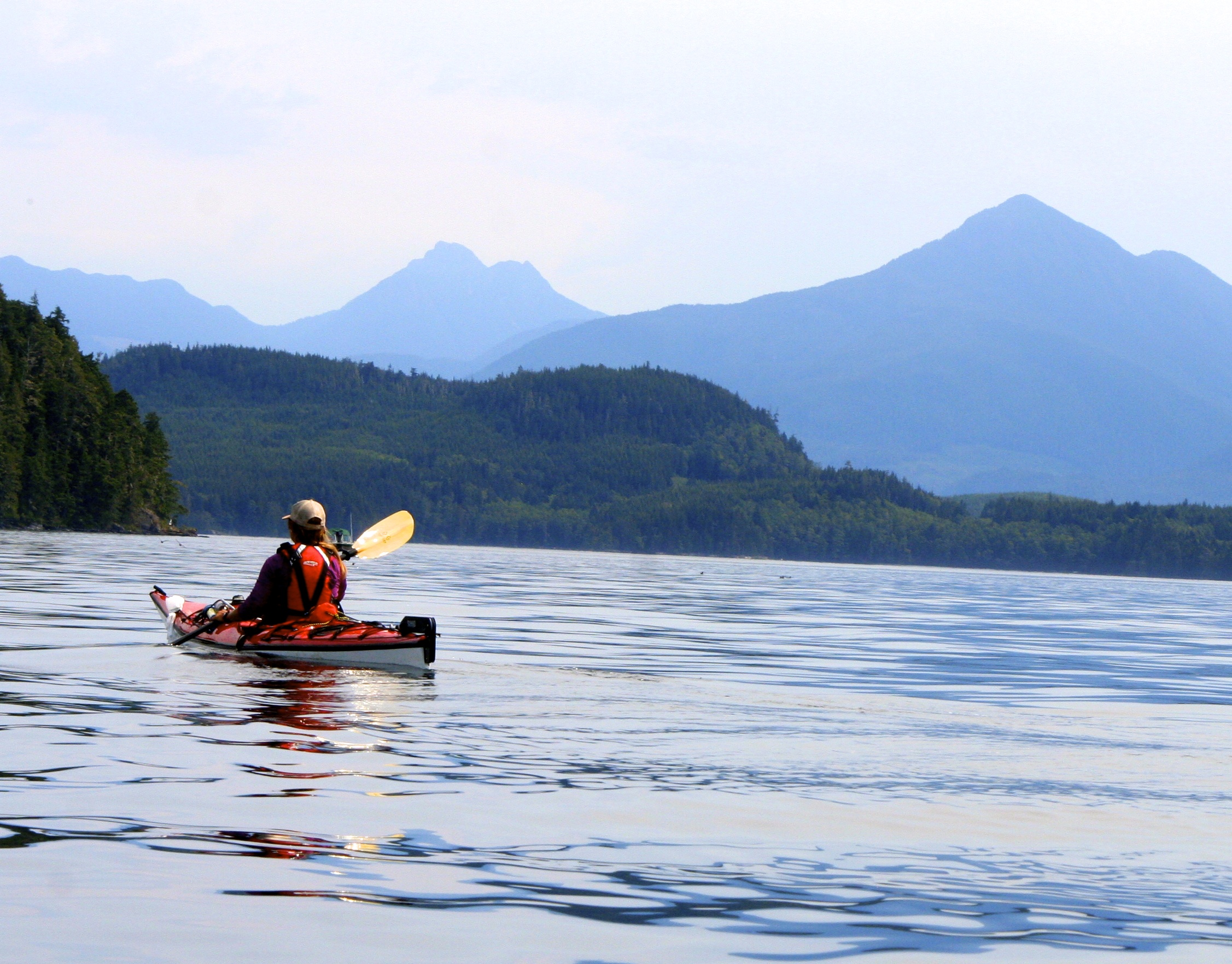
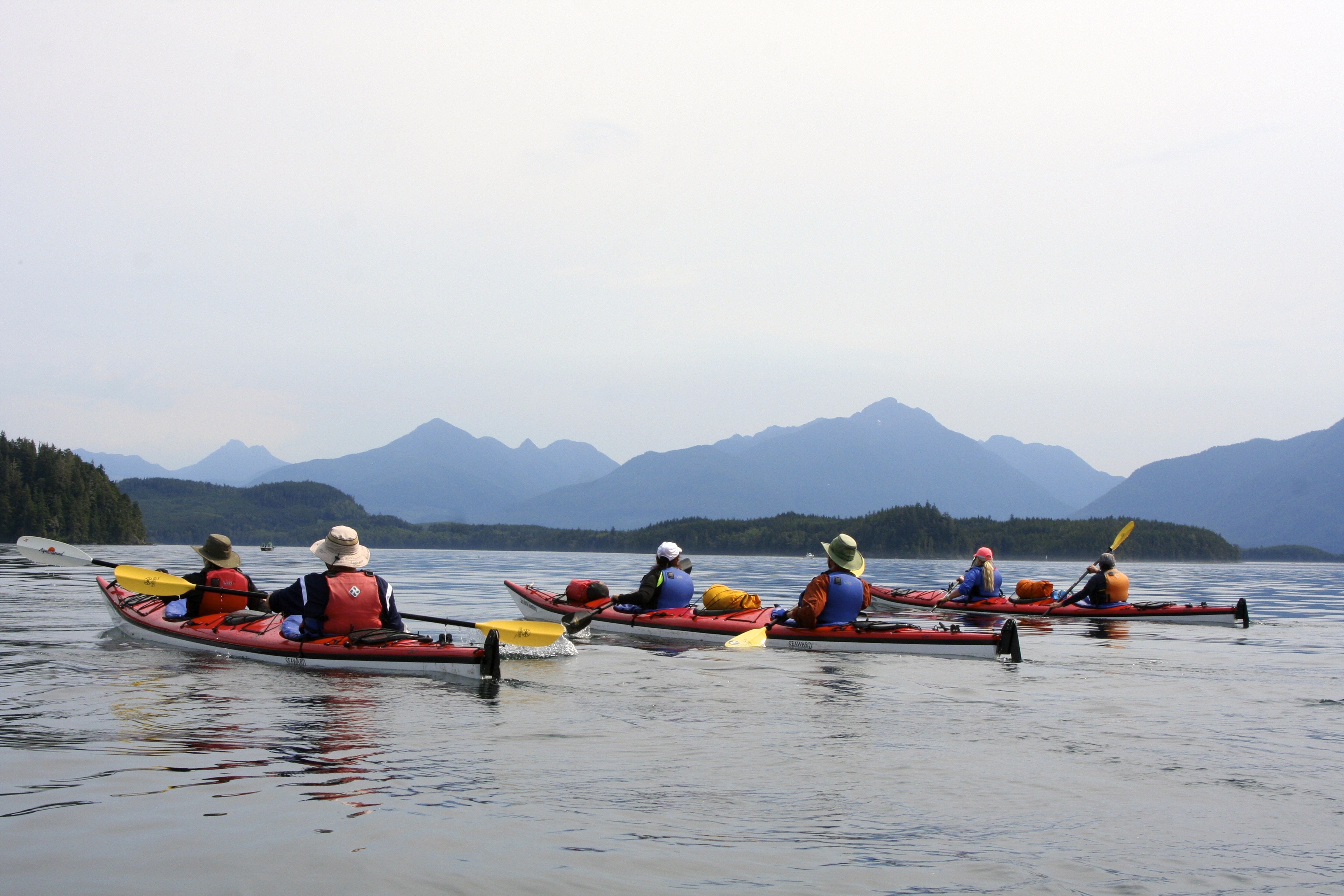
I expected whales and striking scenery on our Sea Kayak Adventures’ trip, but hair-removing starfish, no way. The pedicellariae were only a small part of our second day, however. We kayaked from our campsite on Hanson Island to Compton Island on Blackfish Sound. Along the way we watched humpback whales and were once again awed by the beauty of the region. At Compton Island, we got to play with our food….
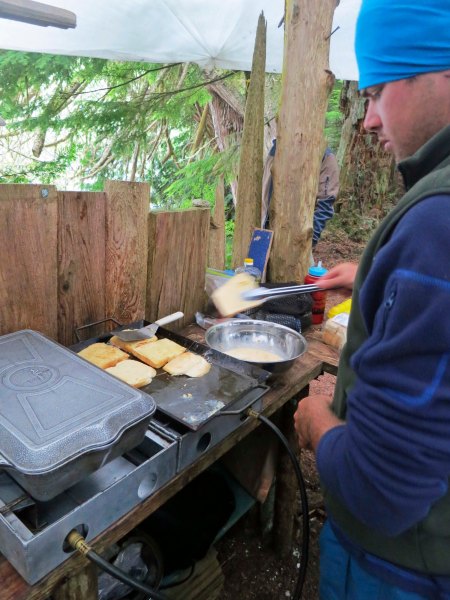
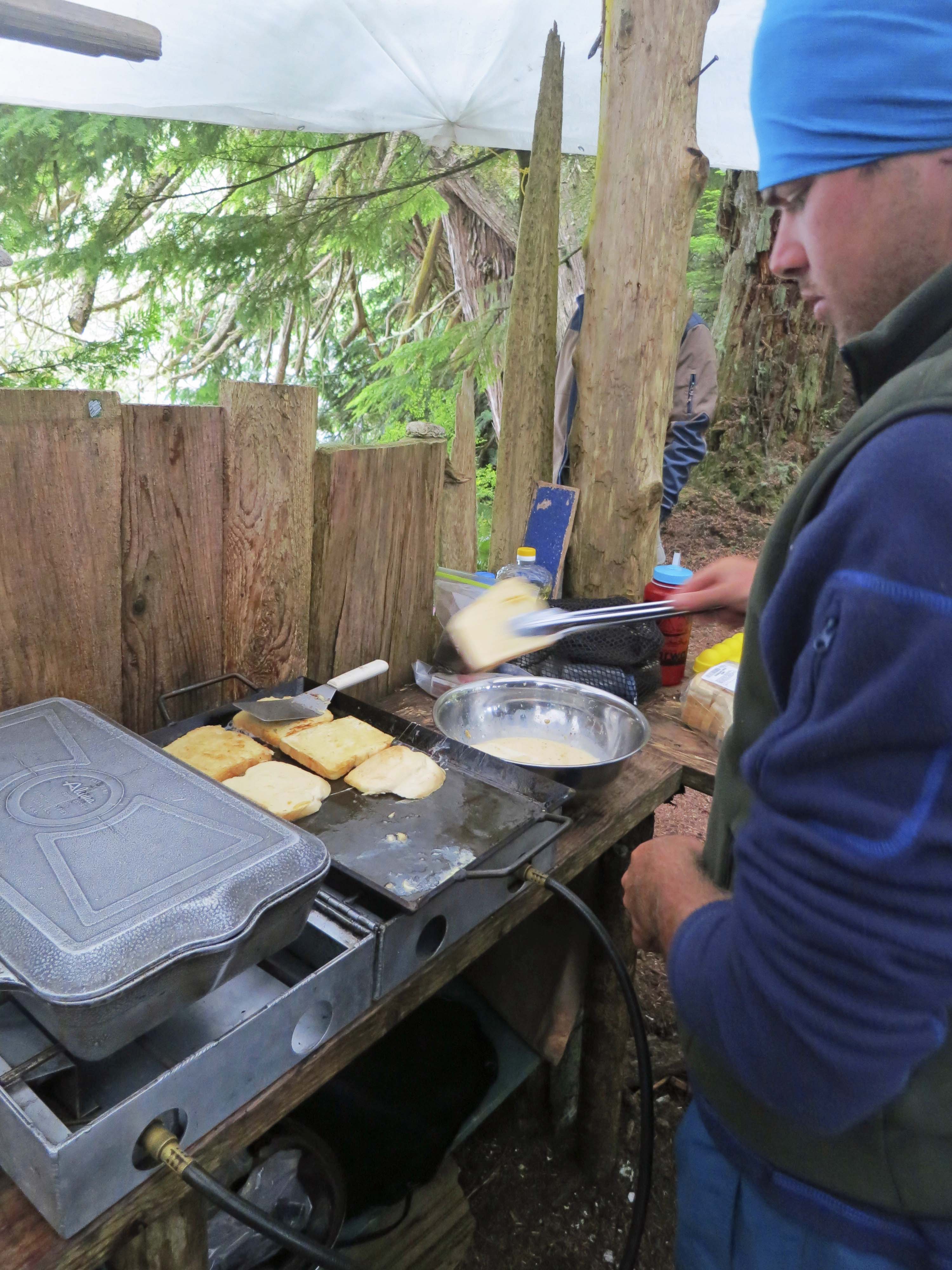
Sea Kayak Adventures provides a hearty breakfast to its sea kayakers.

Coffee would be waiting when we got up each morning— to be followed by a hefty breakfast. Here, our guide, Nick, whips up French toast in the make-shift kitchen.
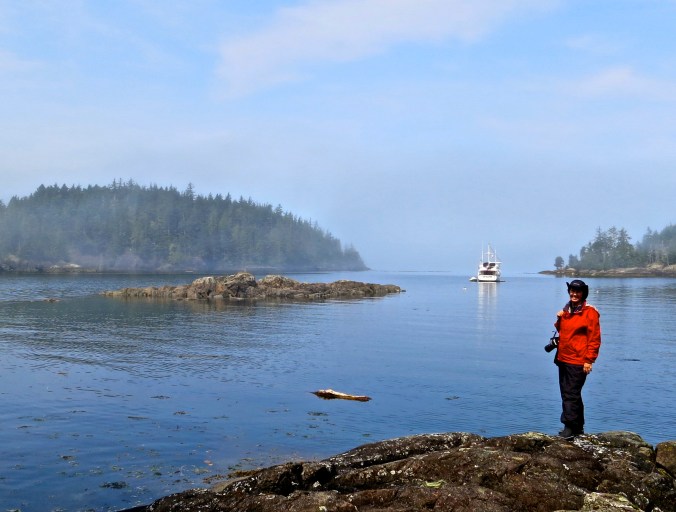
Fishing boat in Johnstone Strait off of Hanson Island. Photo by Curtis Mekemson.

After breakfast, we had time to go for a brief walk. A fishing boat moves between islands on  Johnstone Strait looking for salmon.
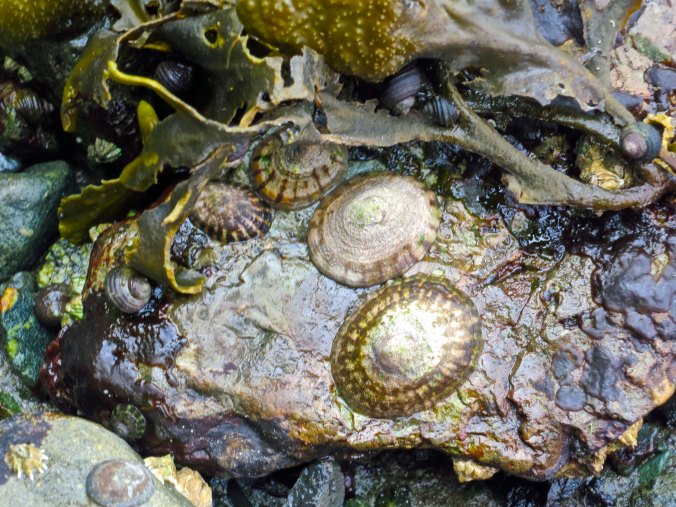
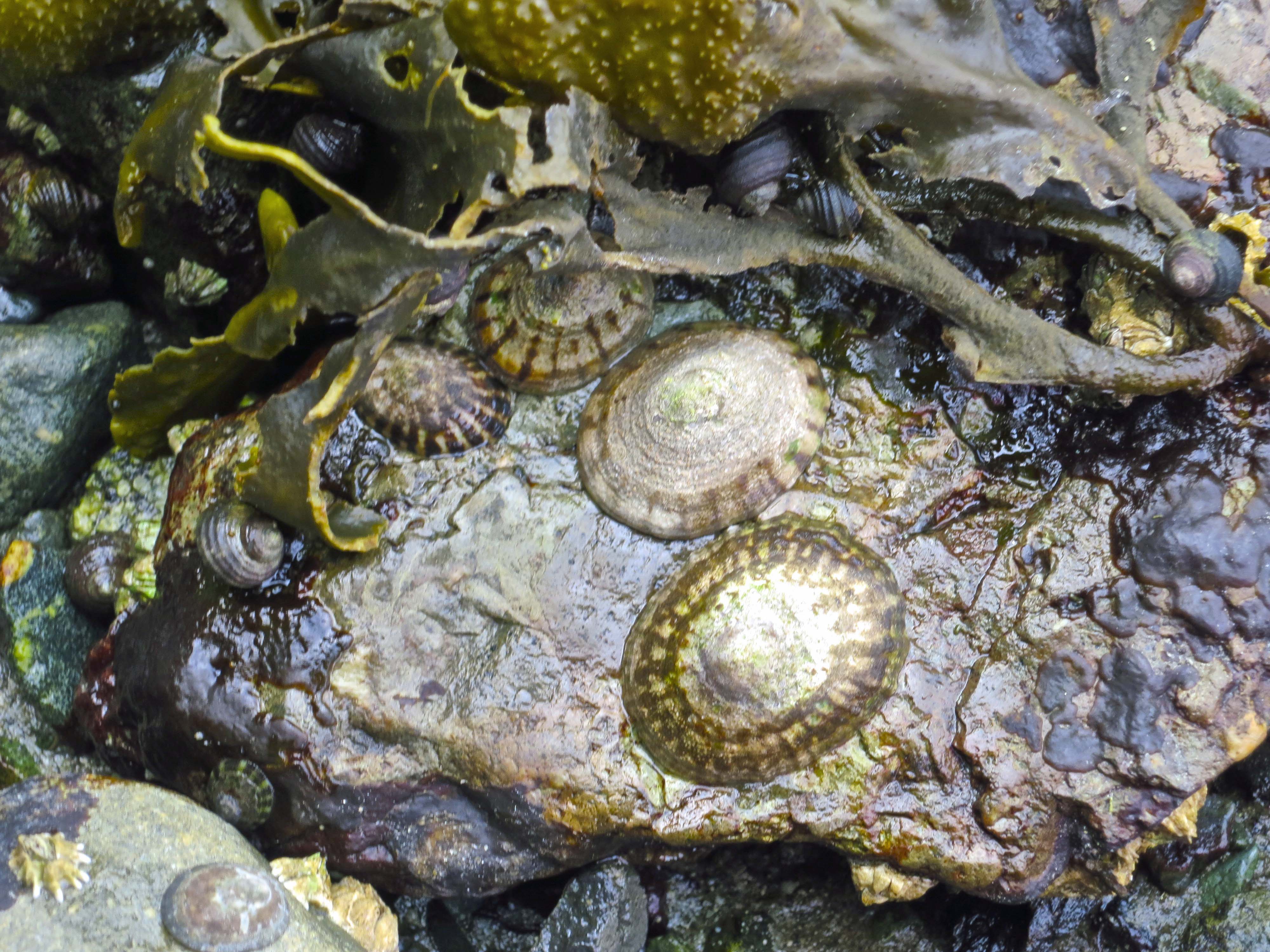
Limpets and snails are exposed by low tide on Hanson Island British Columbia off of Johnstone Strait. Photo by Curtis Mekemson.

Low tide exposed theses limpets and snails.
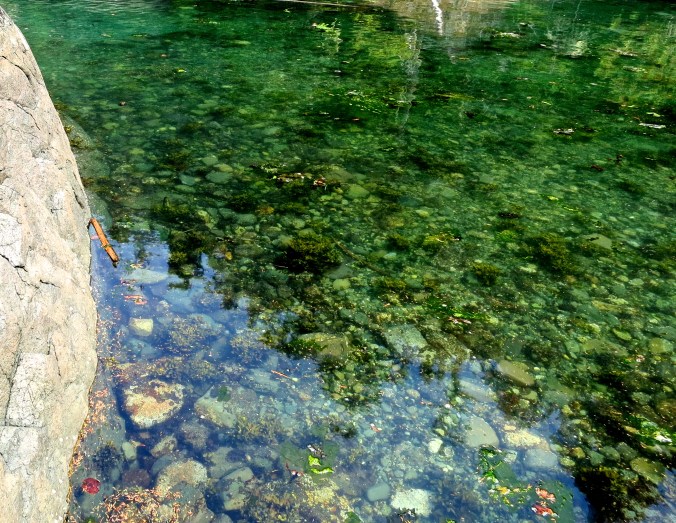
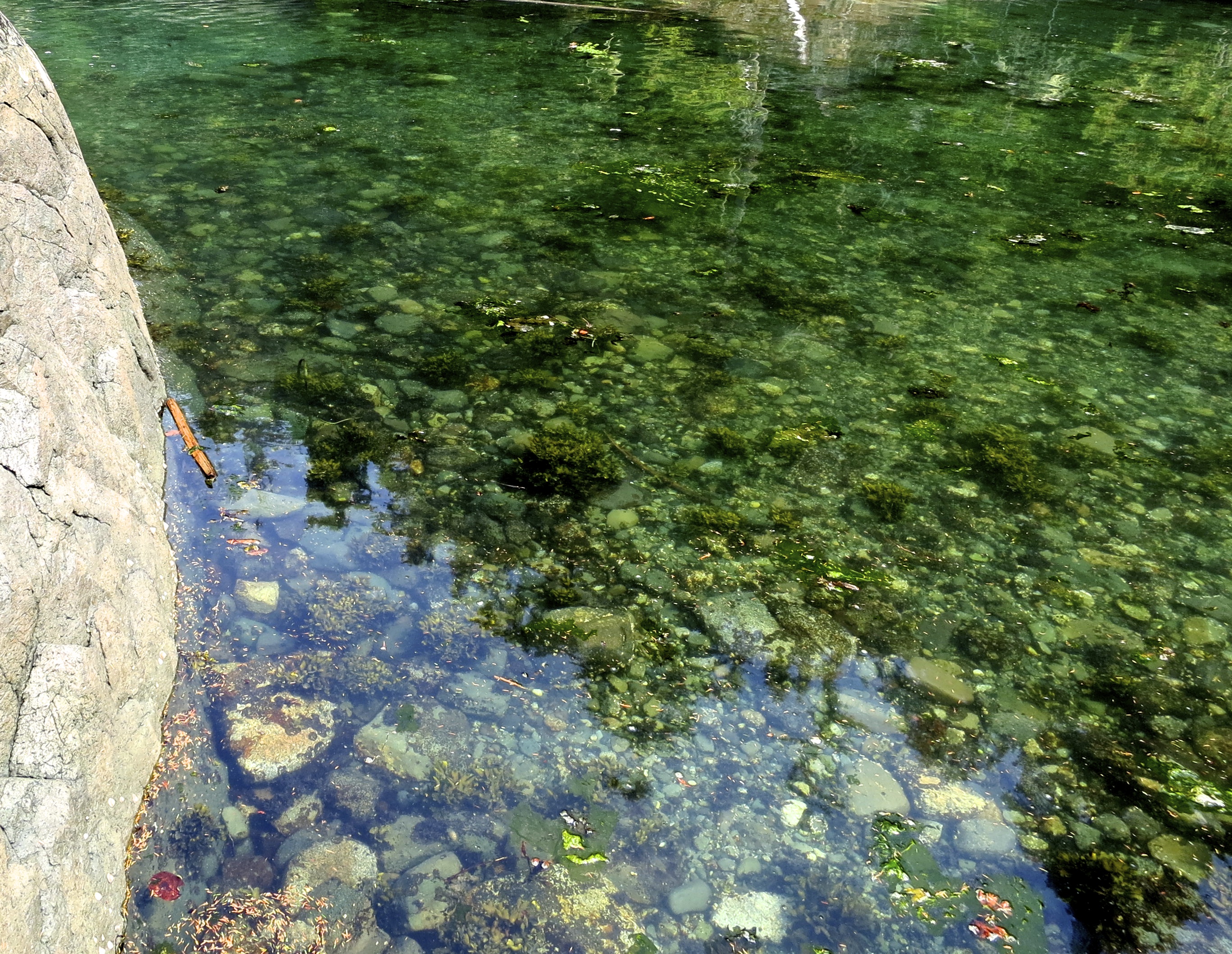
Green waters of a small bay on Hanson Island on Johnstone Strait off of Vancouver Island. Photo by Curtis Mekemson.

We peered in to the green waters of the small bay we were camped on.
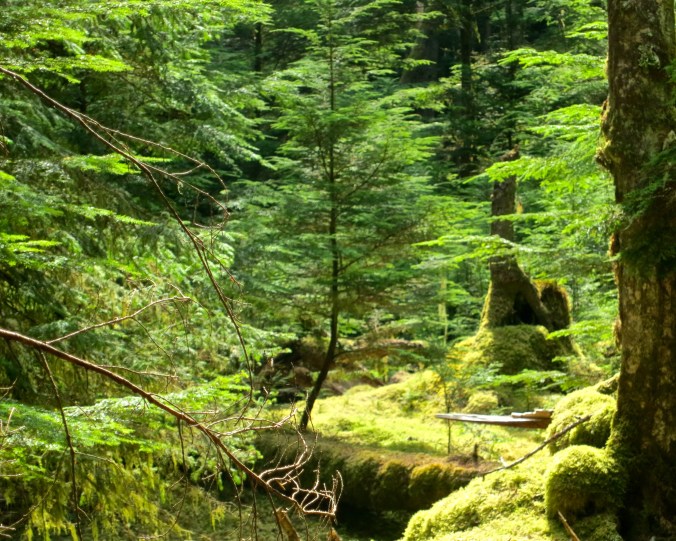
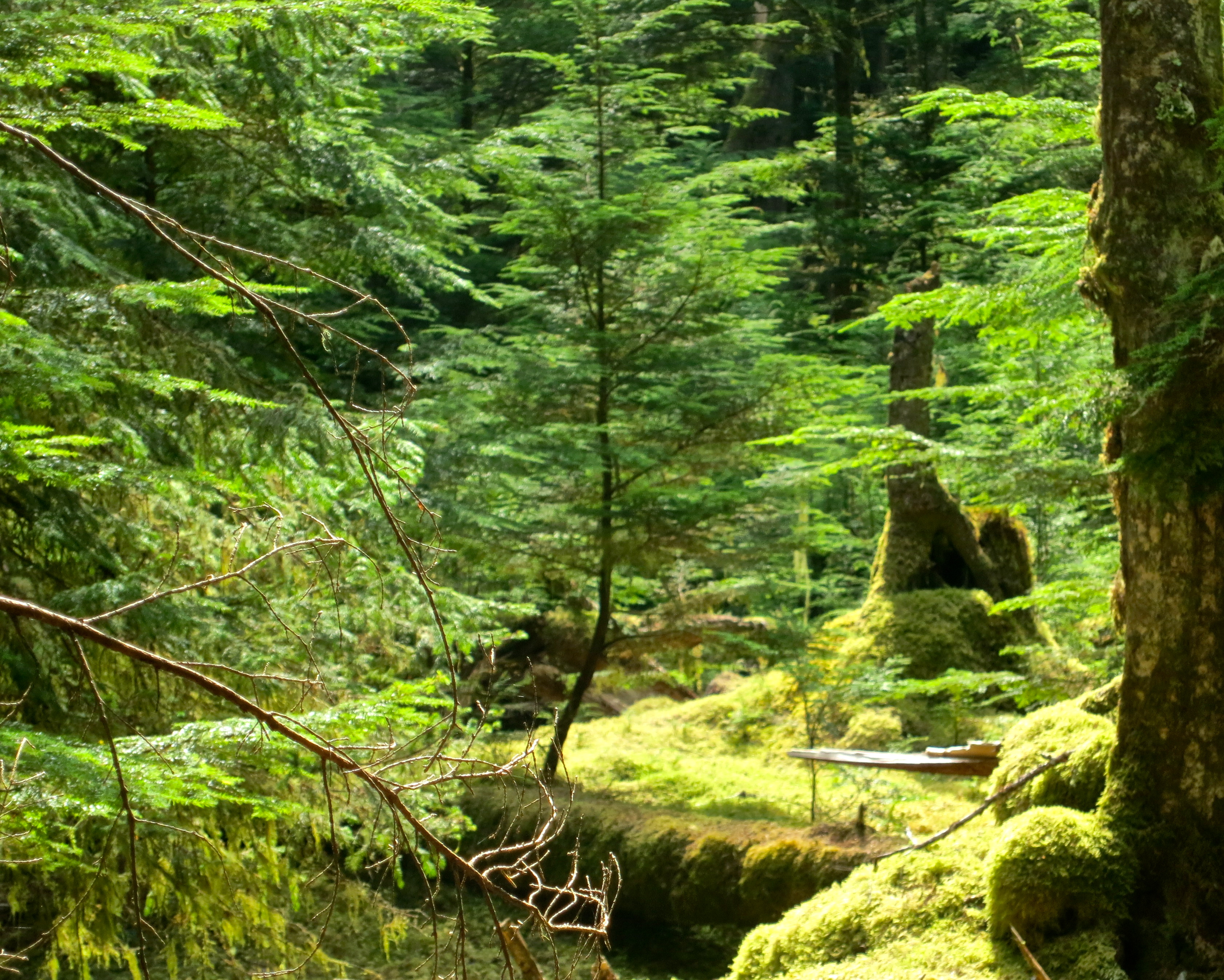
Sunlight illuminates a very green forest on Hanson Island in British Columbia. Photo by Curtis Mekemson.

And were dazzled by the sun illuminated green of the forest.
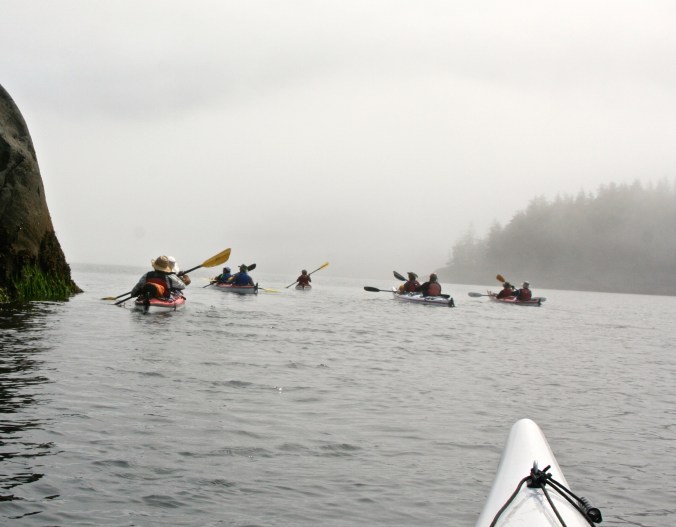
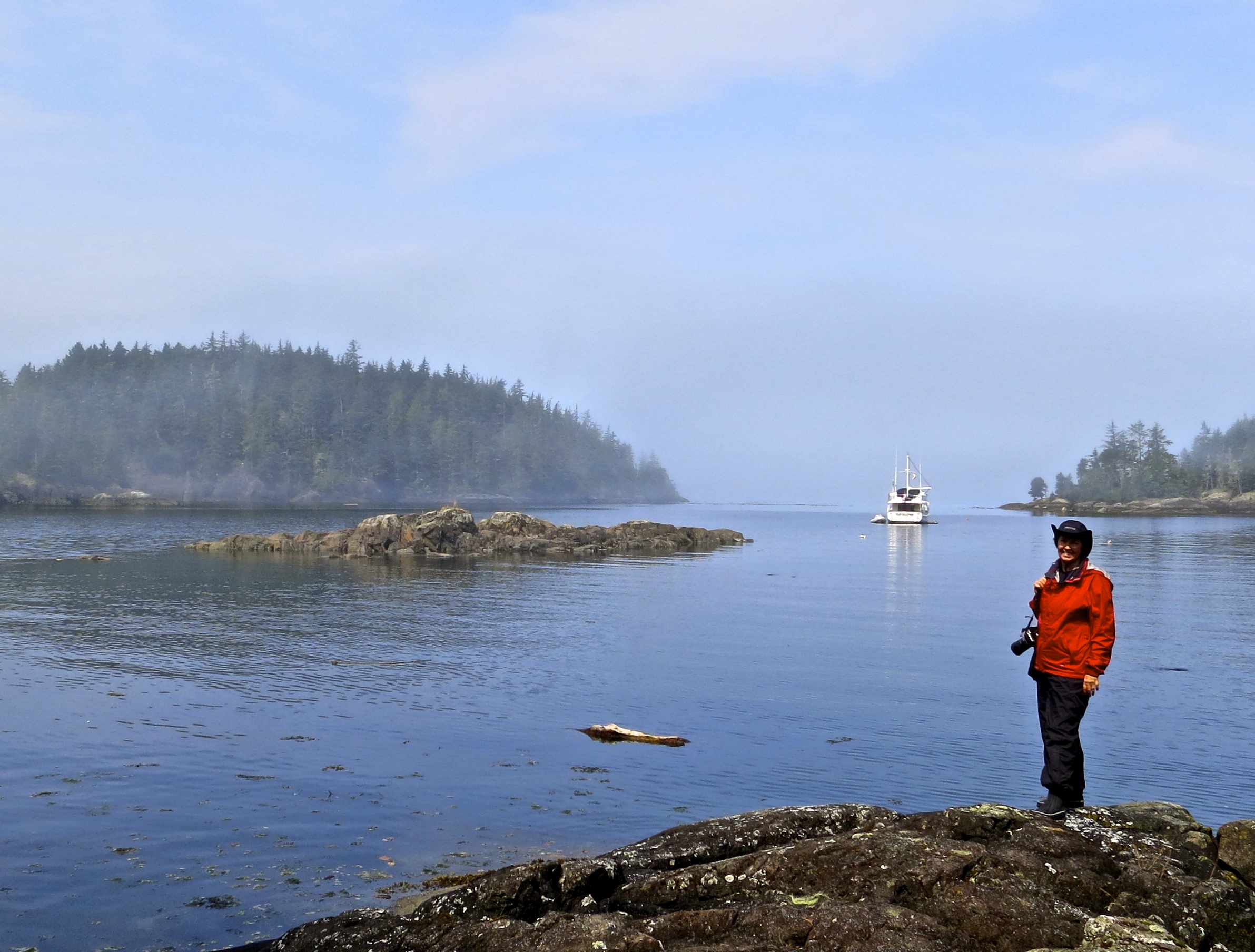
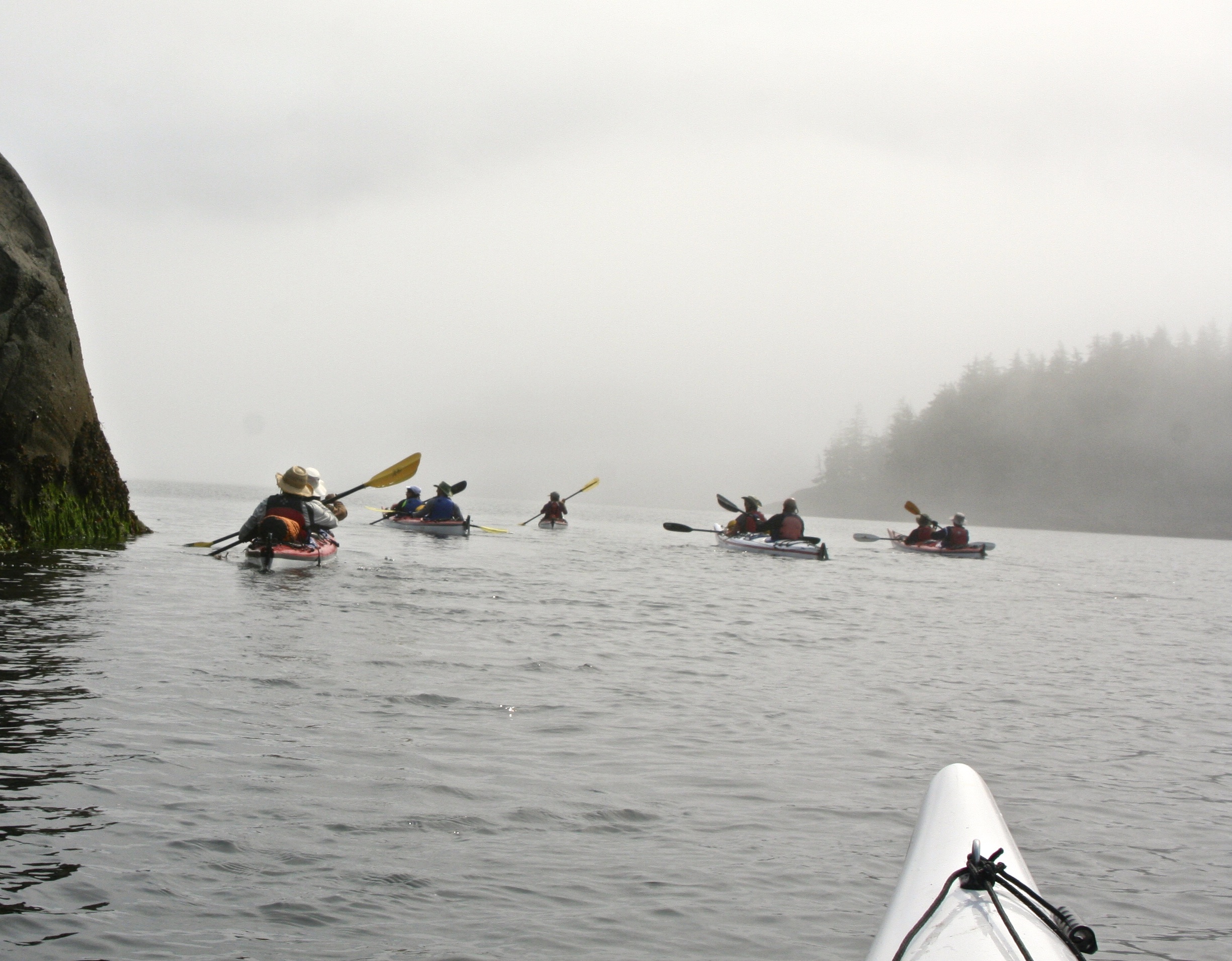
Sea Kayak Adventure group works its way around Hanson Island, British Columbia in the fog.

Morning fog greeted us as we worked our way around Hanson Island and into Blackfish Sound. (Photo by Peggy Mekemson.)
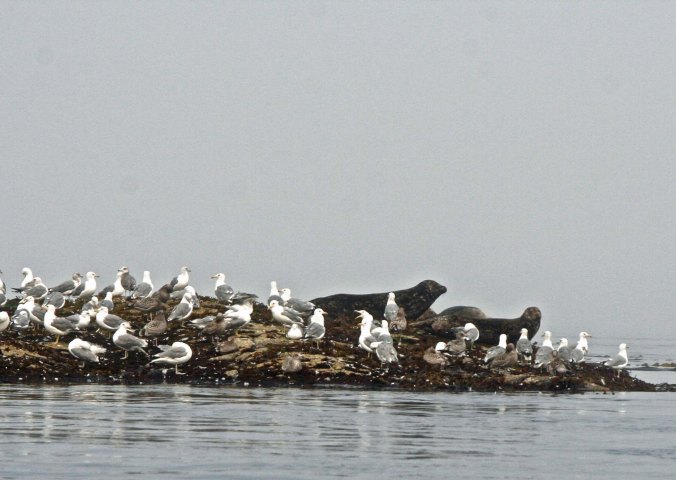
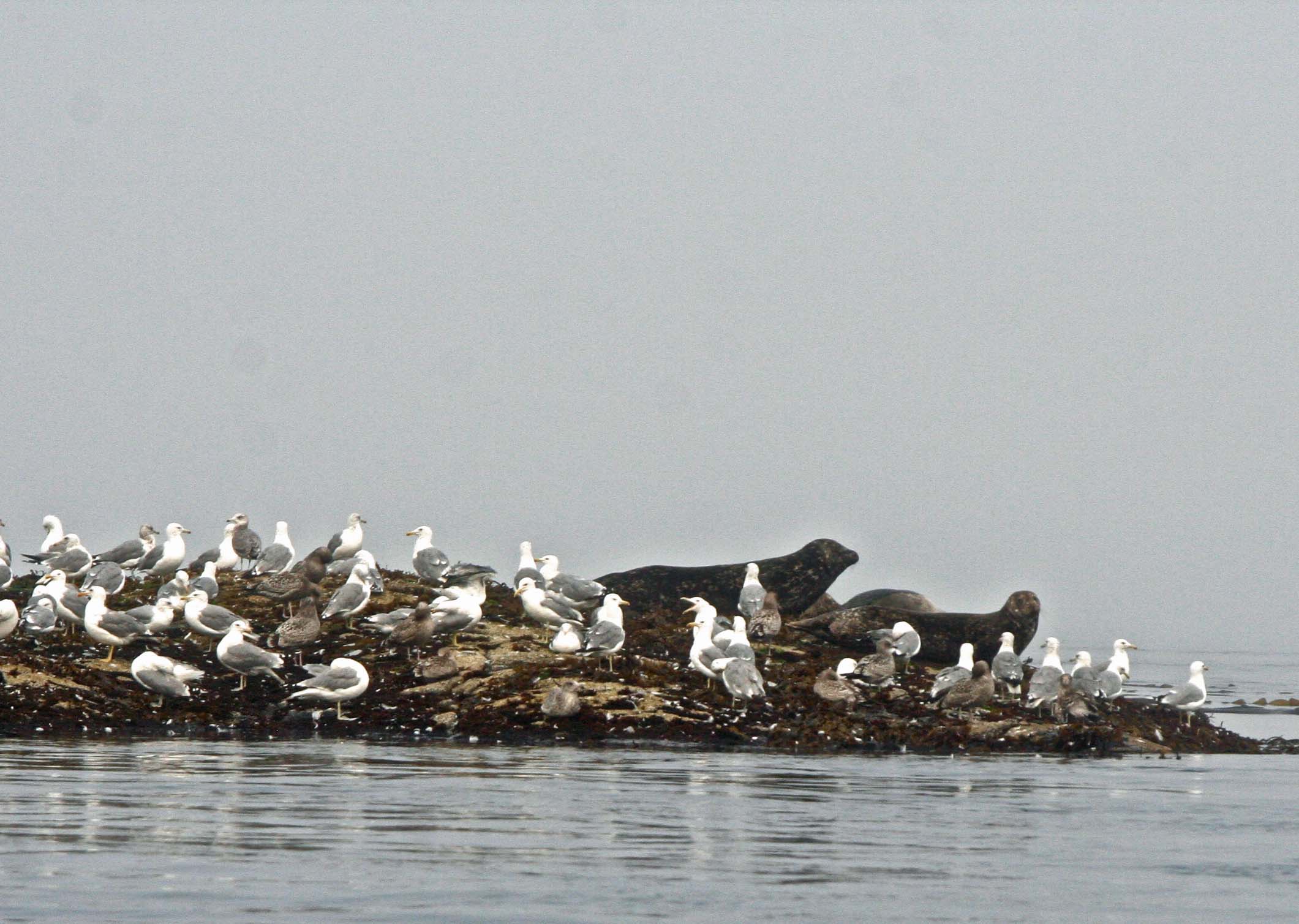
Seals and seagulls on an island in Blackfish Sound, British Columbia.

We checked out these seals and seagulls on a small island. Or were they checking us out? (Photo by Peggy Mekemson.)
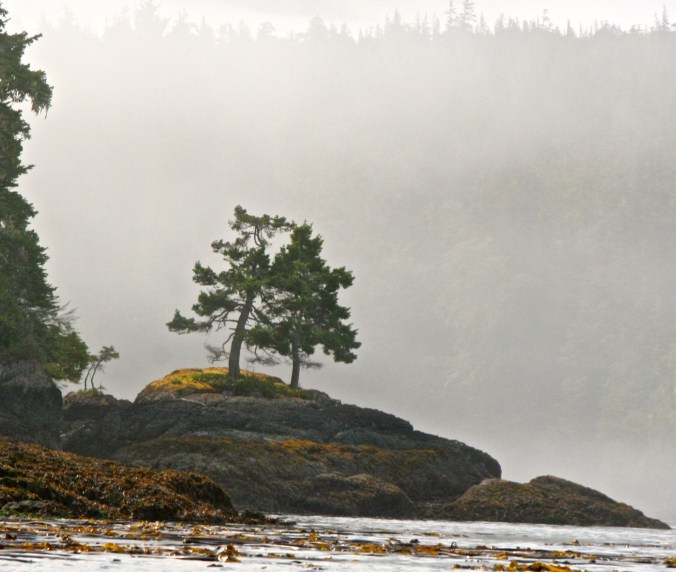
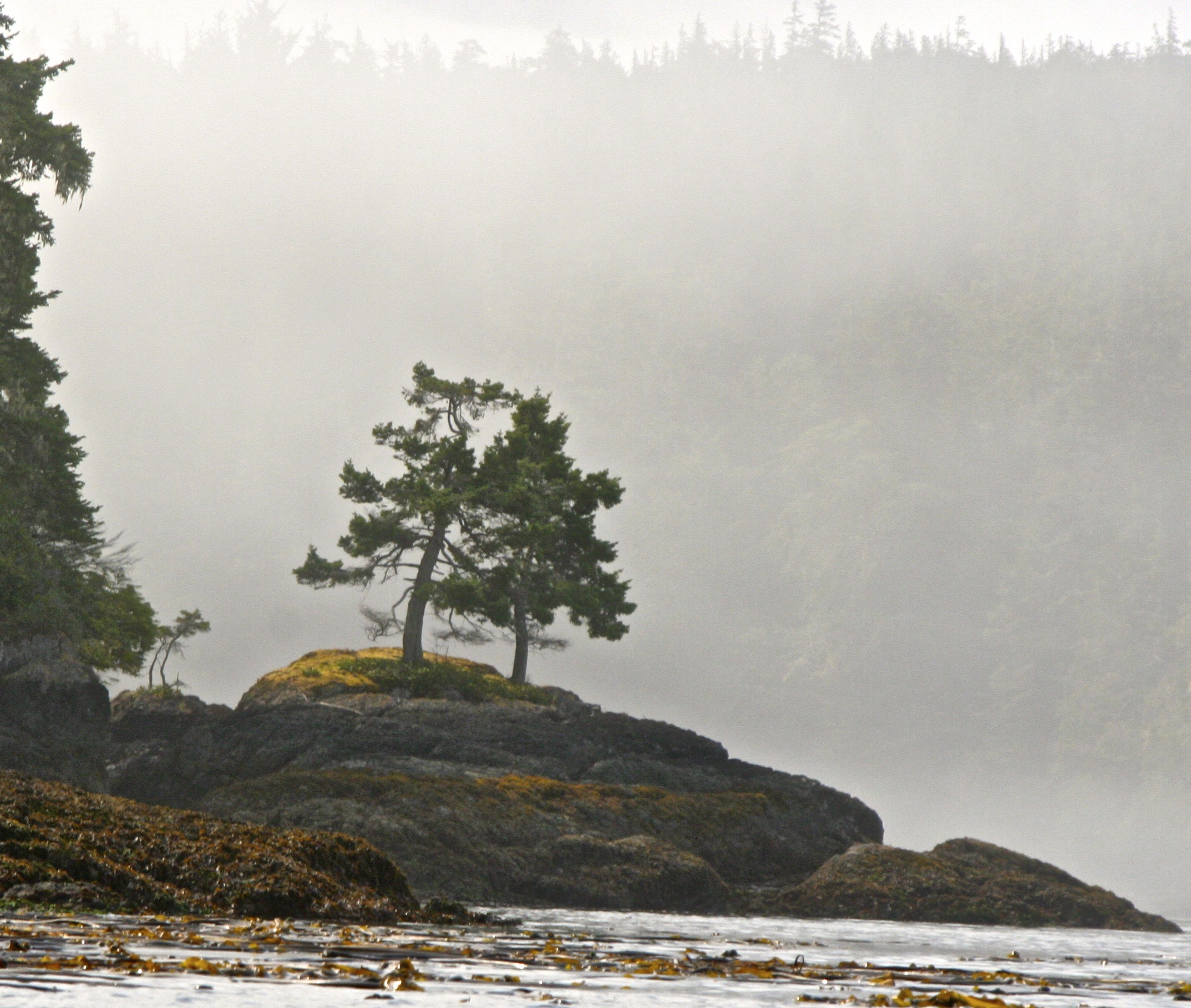
By the time we had worked our way around the end of Hanson Island, the sun was beginning to peak through. (Photo by Peggy Mekemson.)
By the time we had worked our way around the end of Hanson Island, the sun was beginning to peak through. (Photo by Peggy Mekemson.)

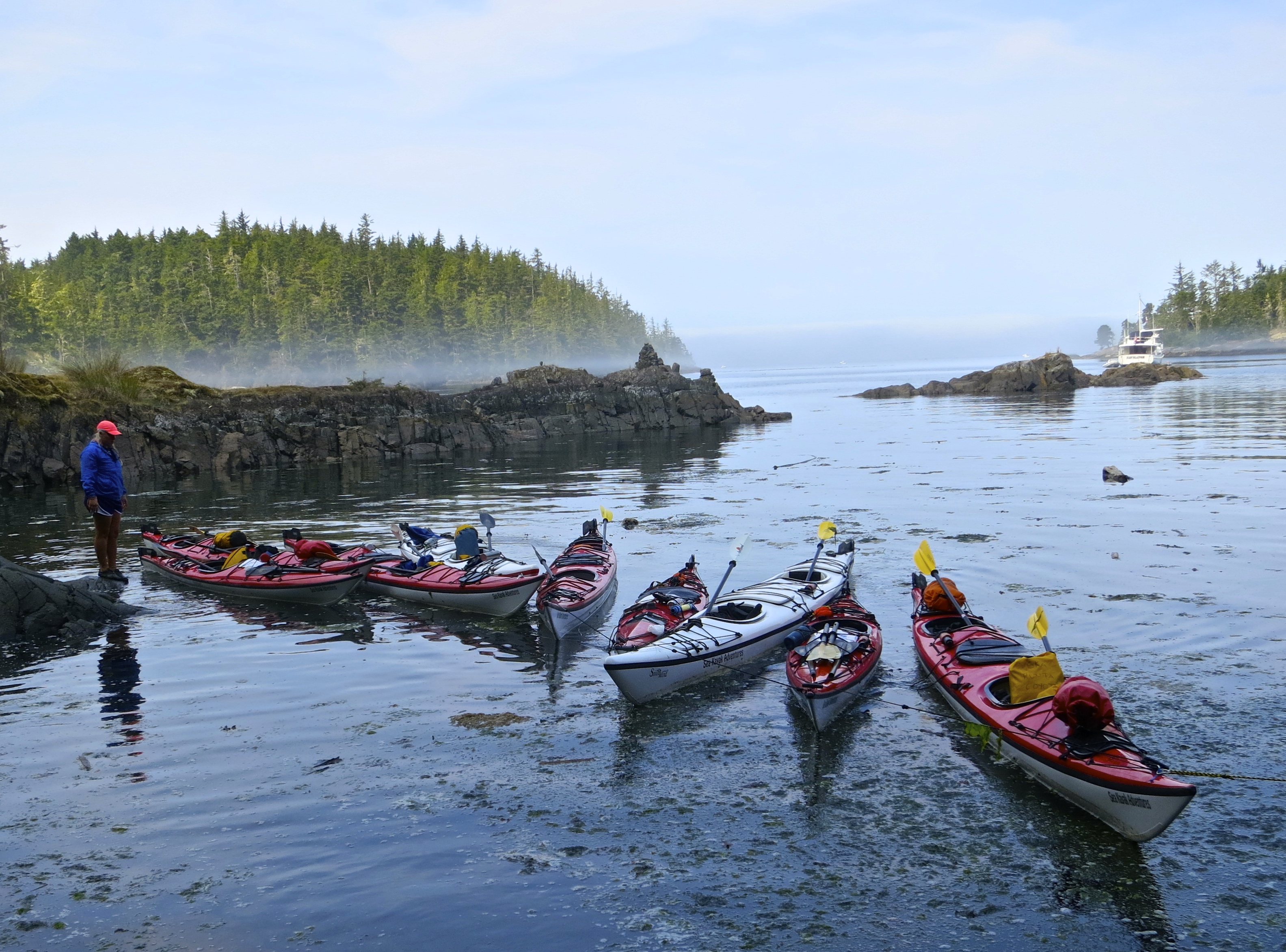
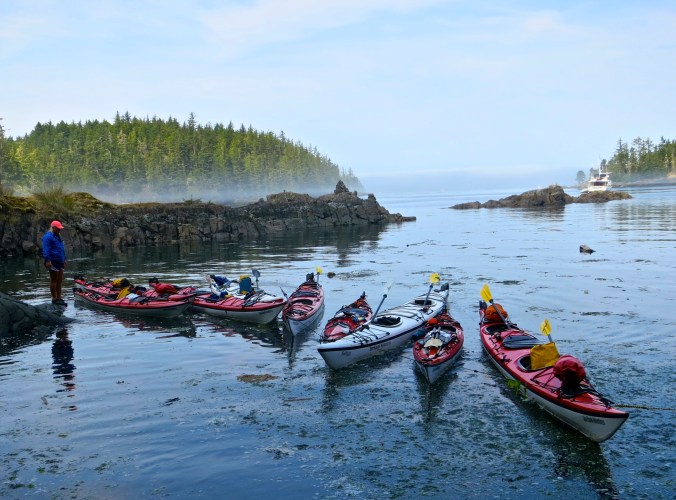
Sea Kayak Adventure kayaks roped together in small inlet on Hanson Island. Photo by Curtis Mekemson.

I took this picture of our kayaks at lunch. They were roped together so they wouldn’t stray.
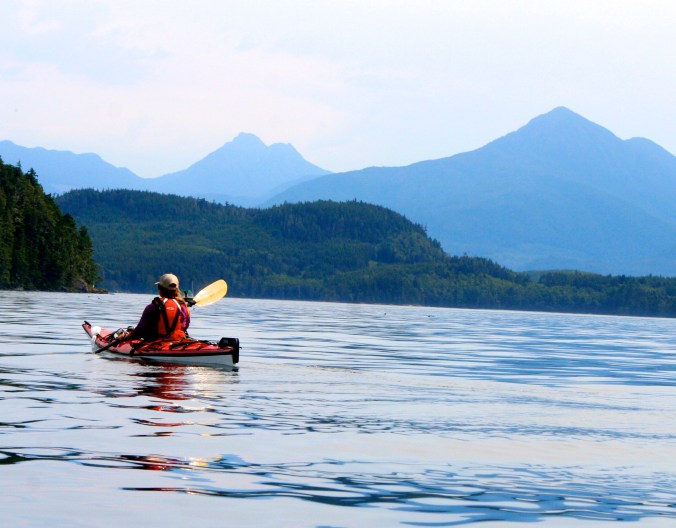
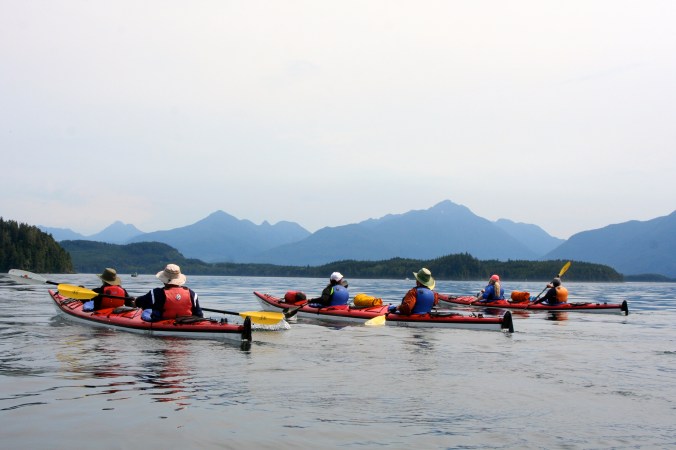
After lunch, we followed out trip leader, Julia, out into Blackfish Sound. As you will note, most of our on-water photos are taken by Peggy. I was busy paddling. (grin) (Photo by Peggy Mekemson.)

After lunch, we followed out trip leader, Julia, out into Blackfish Sound. As you will note, most of our on-water photos were taken by Peggy. I was busy paddling. (grin) (Photo by Peggy Mekemson.)
A whooshing sound caused us to stop and search for whales. (Photo by Peggy Mekemson.)
A whooshing sound caused us to stop and search for whales. (Photo by Peggy Mekemson.)

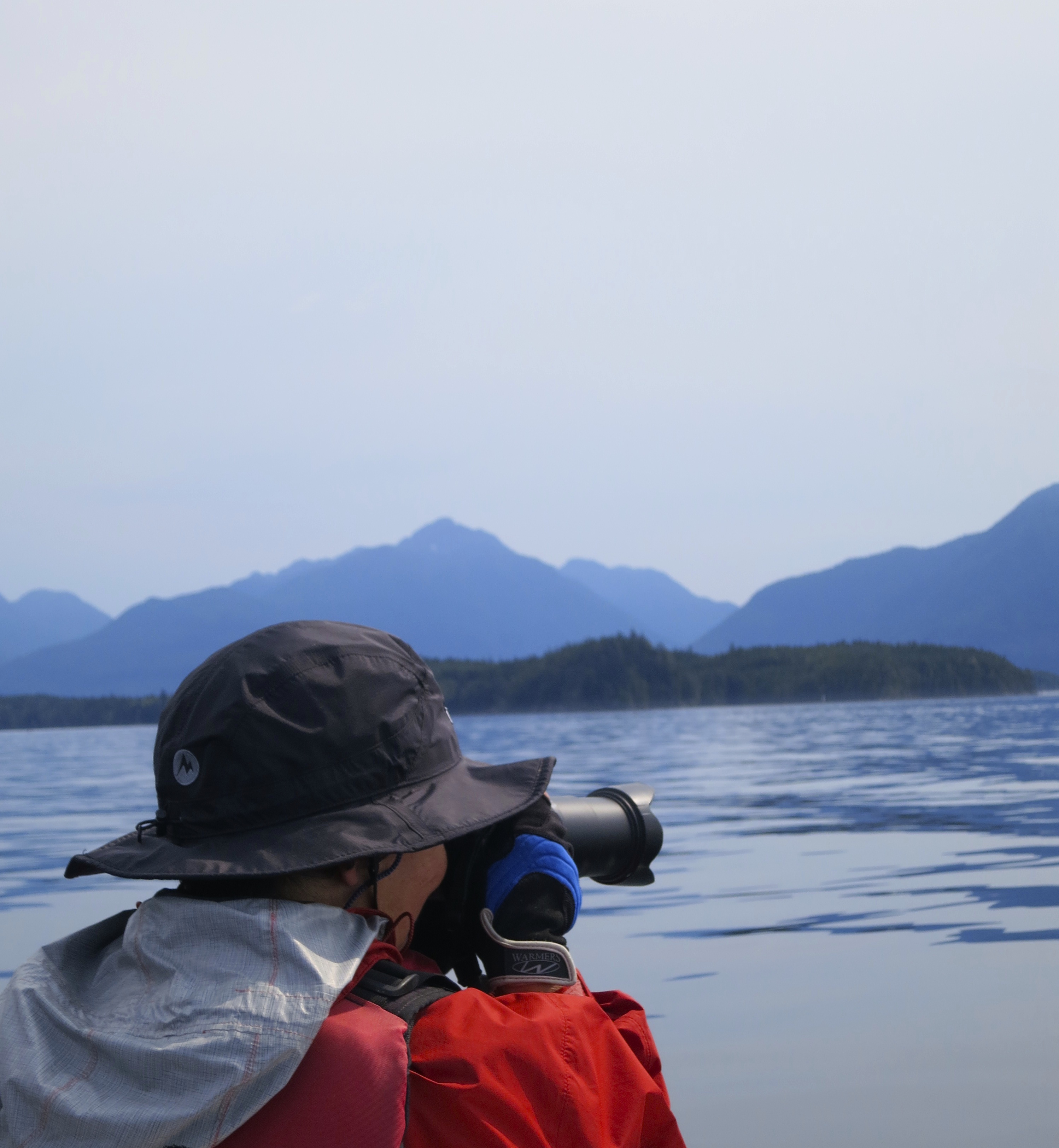
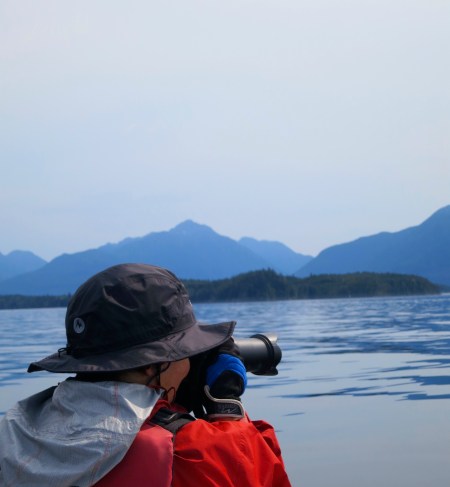
Peggy Mekemson prepared to photograph whales in Blackfish Sound, British Columbia. Photo by Curtis Mekemson.

I took this photo of Peggy poised to capture a picture of the whale with her telephoto.
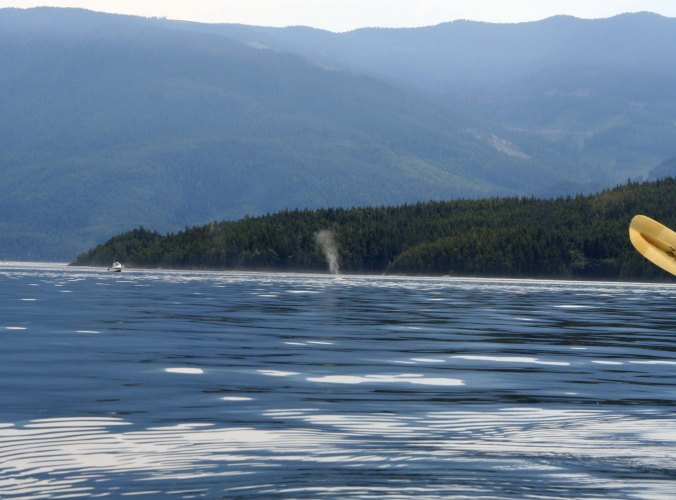
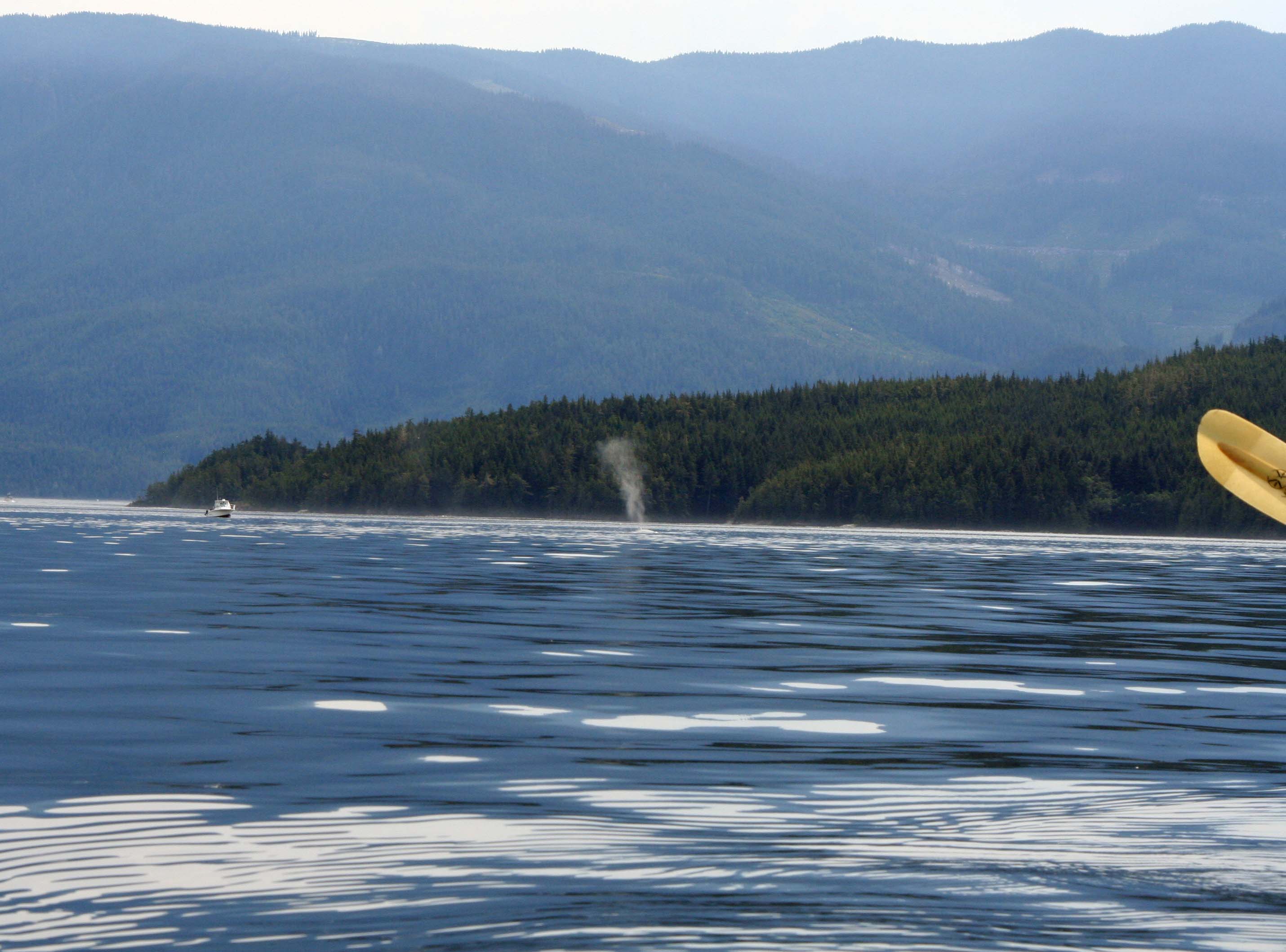
Thar she blows! We spot the tell-tale spume of a humpback whale as it surfaces. (Photo by Peggy Mekemson.)

Thar she blows! We spot the tell-tale spume of a humpback whale as it surfaces. That’s a kayak paddle on the right.(Photo by Peggy Mekemson.)
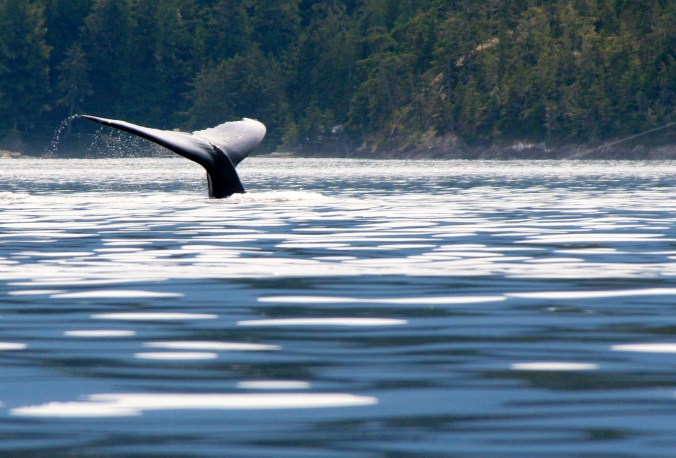
The humpback, brought in closer by Peggy's telephoto, dives back under the water. (Photo by Peggy Mekemson.)

The humpback, brought in closer by Peggy’s telephoto, dives back under the water. (Photo by Peggy Mekemson.)
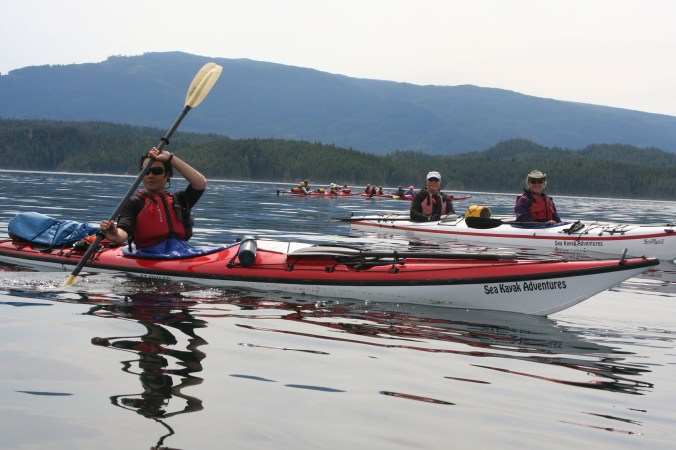
I liked the watch the waves distorted the reflection of Quy in the water. Edie and Dave look on. The other kayakers are watching the approach of a cruise ship. (Photo by Peggy Mekemson.)
I liked the way the waves distorted the reflection of Quy in the water. Edie and Dave look on. The other kayakers are watching the approach of a cruise ship. (Photo by Peggy Mekemson.)

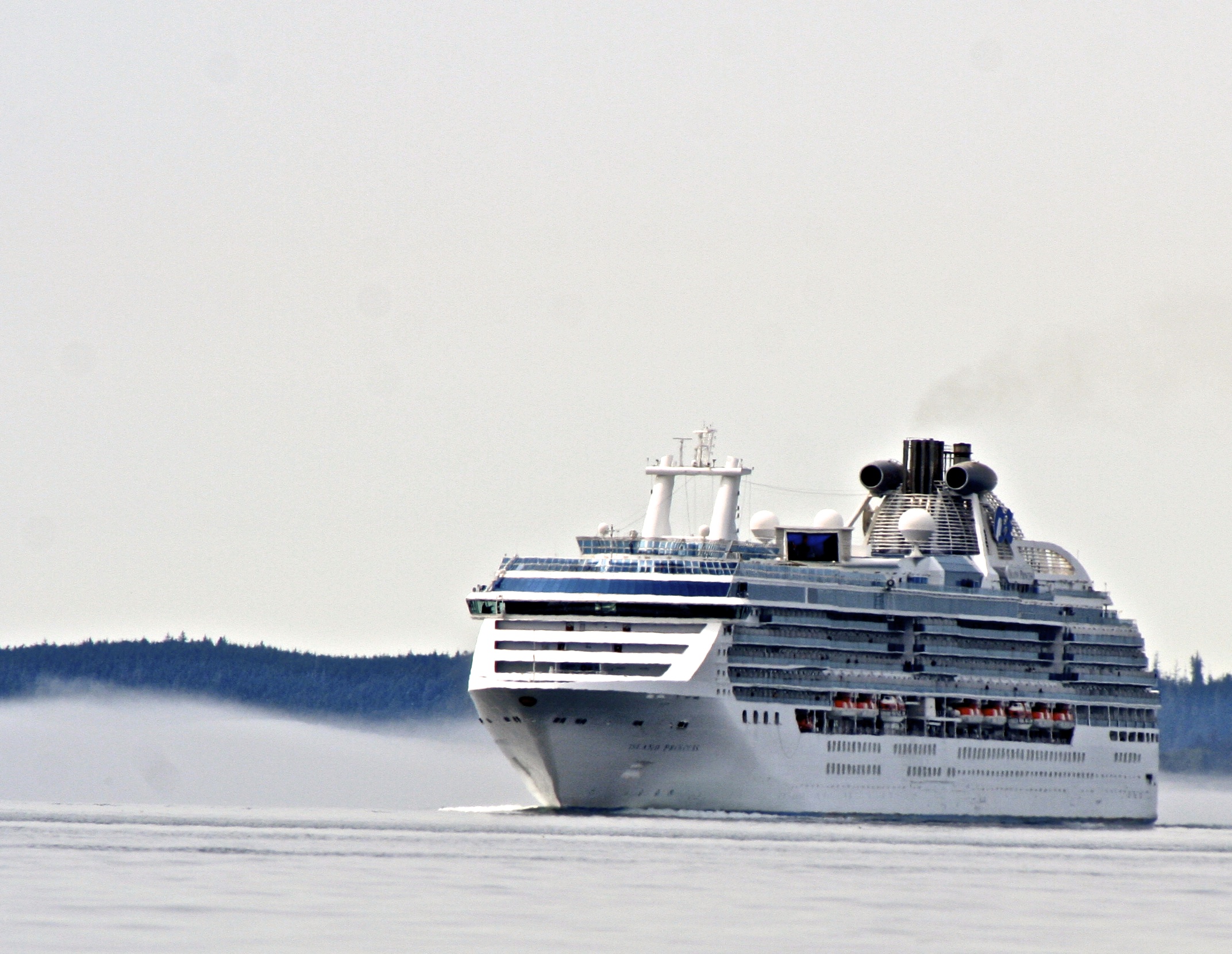
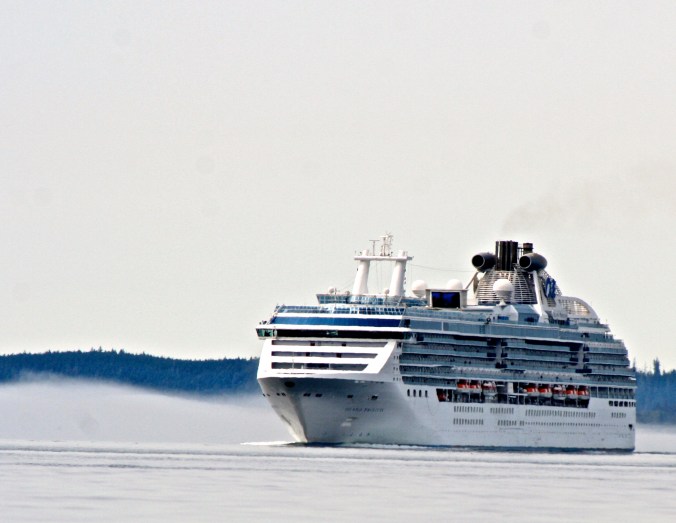
The cruise ship. You can imagine how big the ship seems from the perspective of a kayak. You do not want to get in the way. (Photo by Peggy Mekemson.)
The cruise ship. You can imagine how big the ship seems from the perspective of a kayak. You do not want to get in the way. (Photo by Peggy Mekemson.)

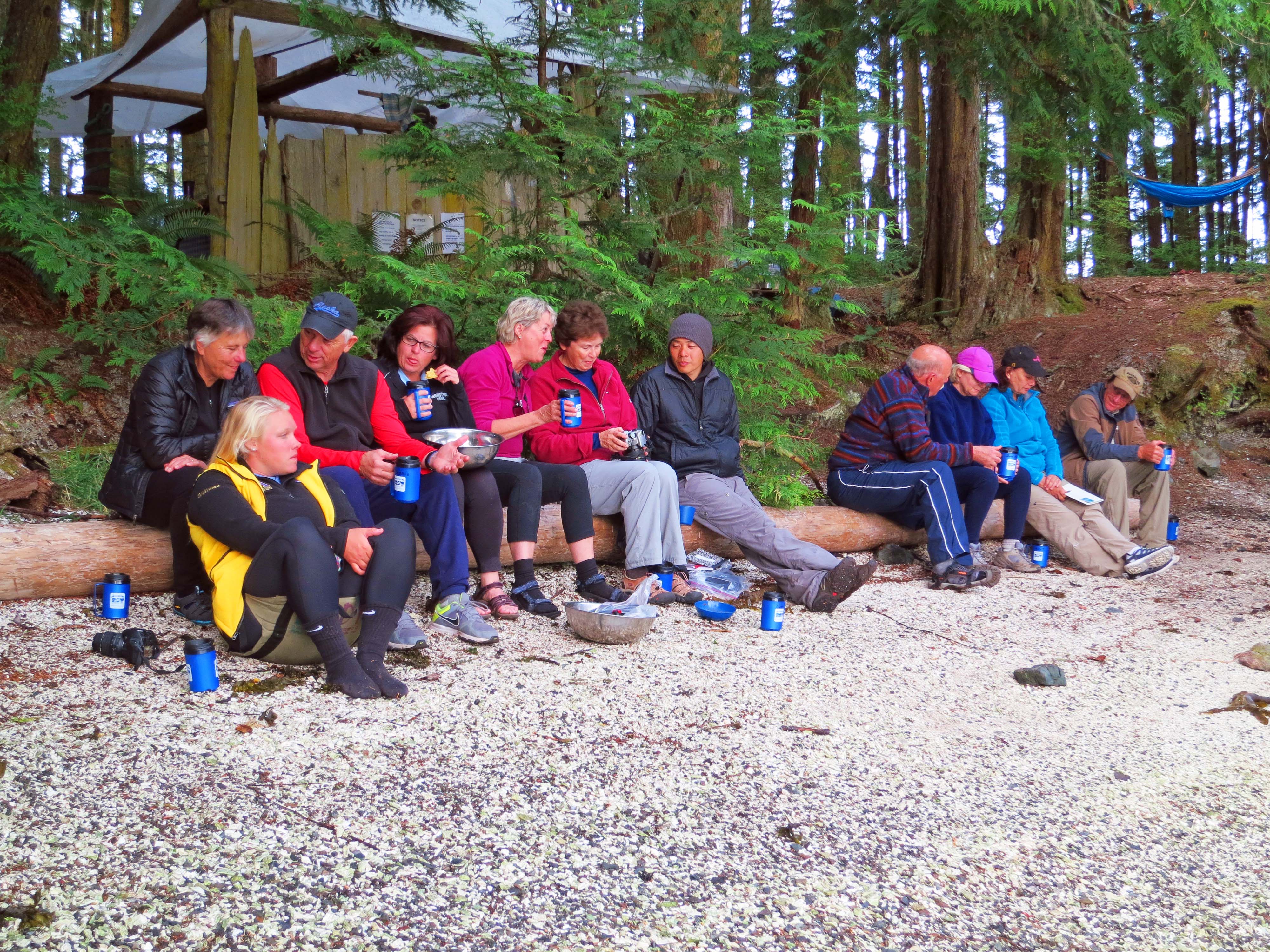
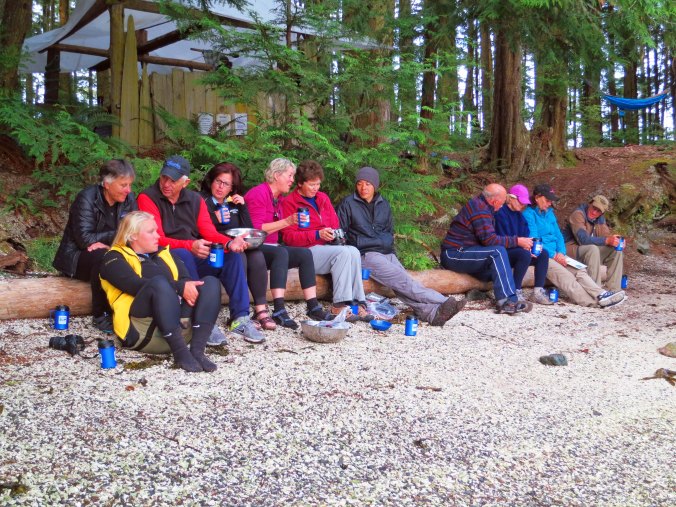
Sea Kayak Adventures group relaxes on beach at campsite on Compton Island, British Columbia.

Our group, having safely navigated through the whales and the cruise ships, relaxes at cocktail hour in our campsite on Compton Island. It was right about then that a fishing boat approached the beach.
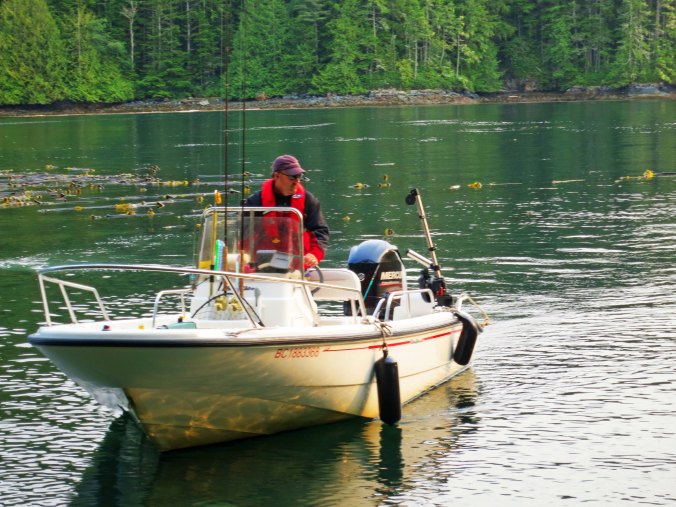
"Would you like a salmon?" he asked— and to our enthusiastic  yes, threw it overboard.

“Would you like a salmon?” he called out— and to our enthusiastic, yes!, threw it overboard.
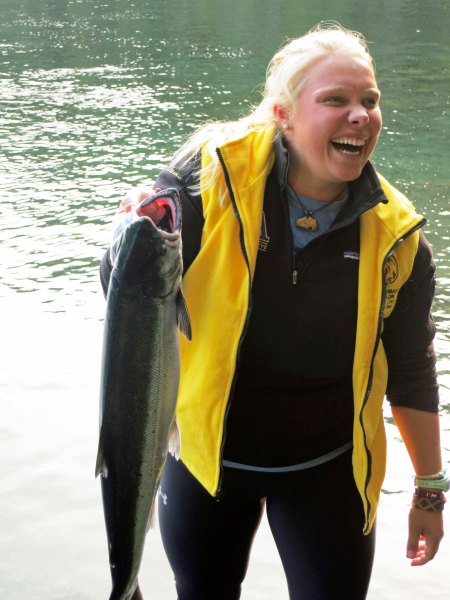
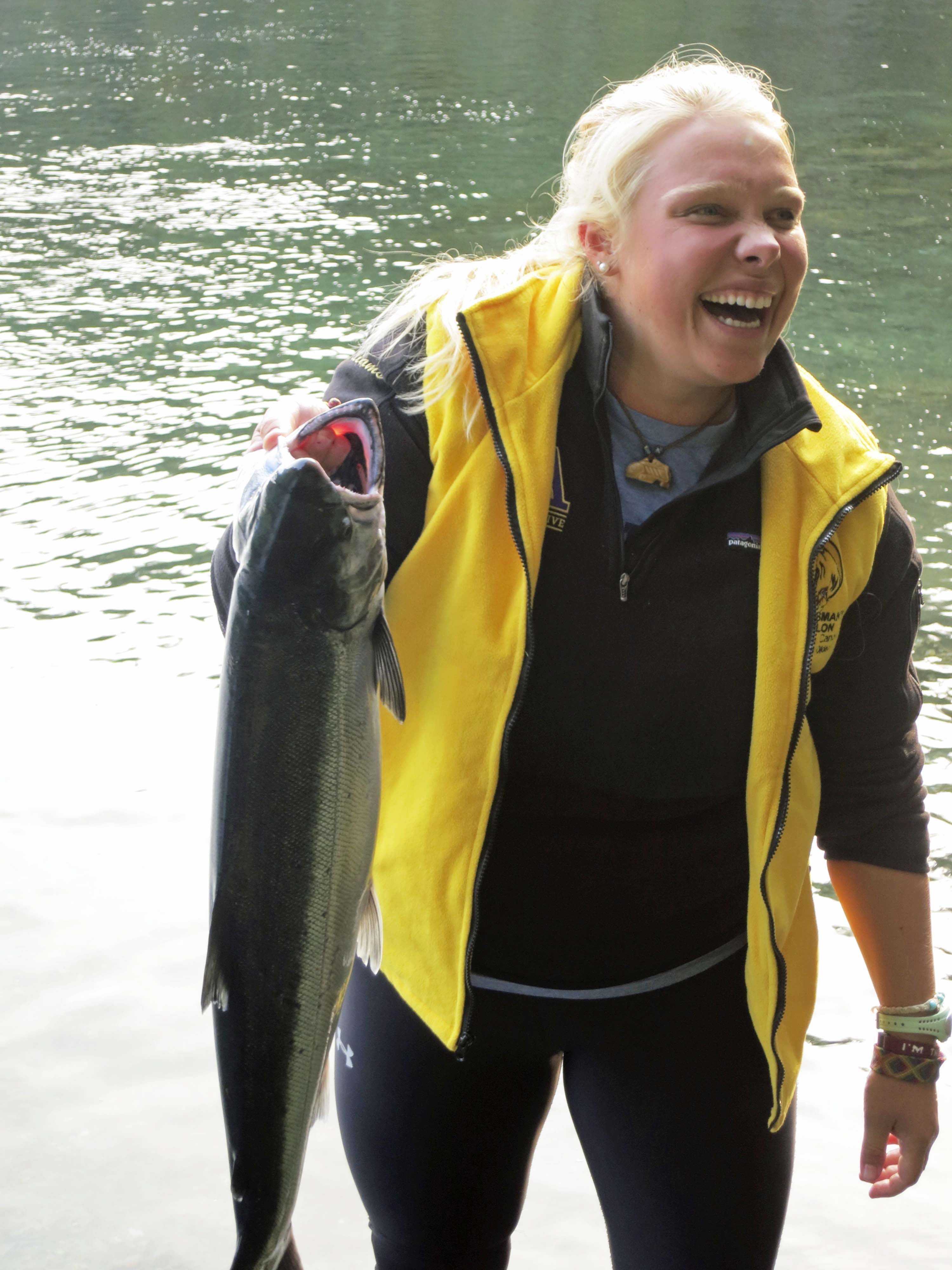
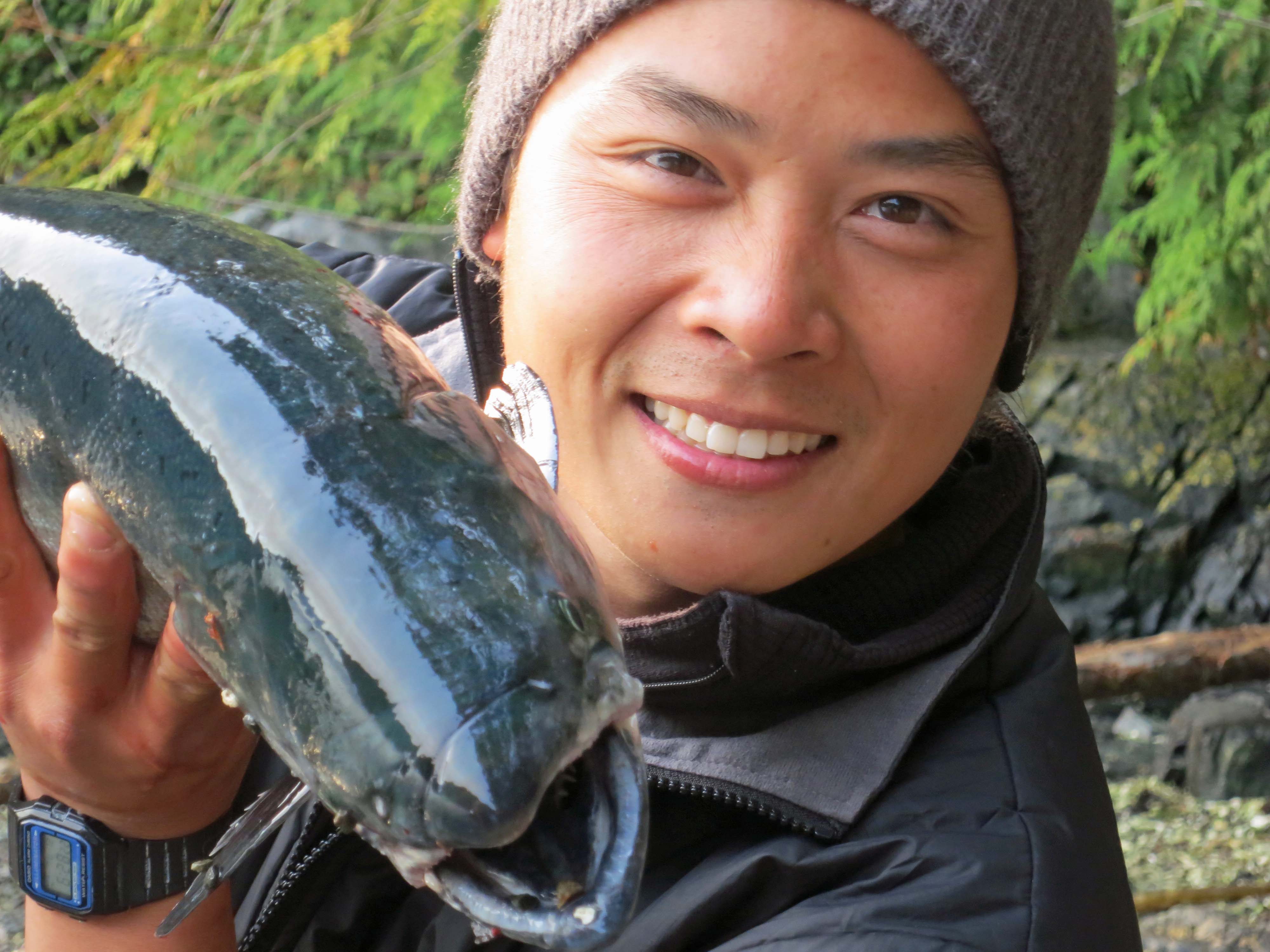
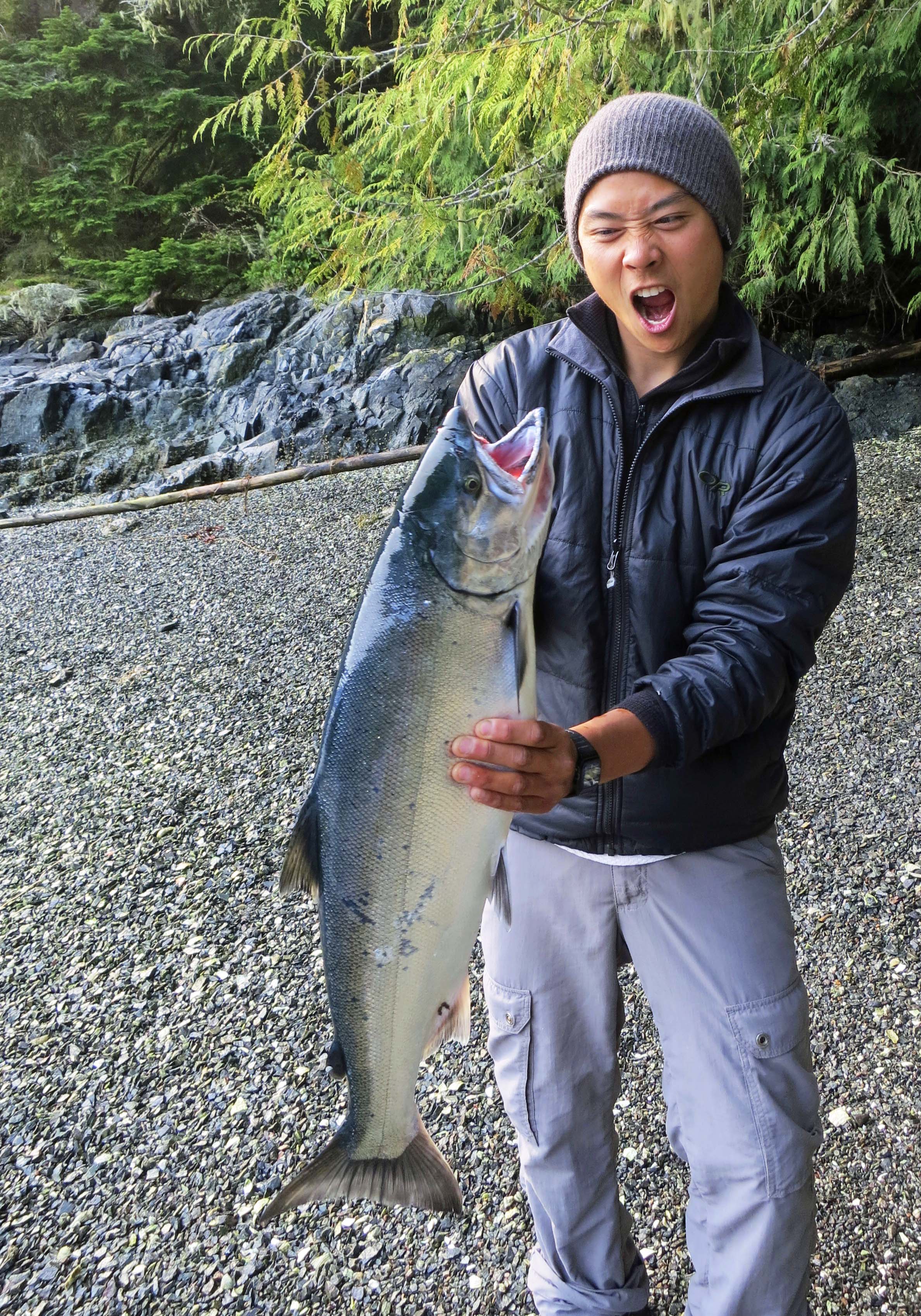
Coho salmon caught in Blackfish Sound, British Columbia. Photo by Curtis Mekemson.

The ever energetic and vivacious Lindy retrieved the salmon and handed it off to Quy.
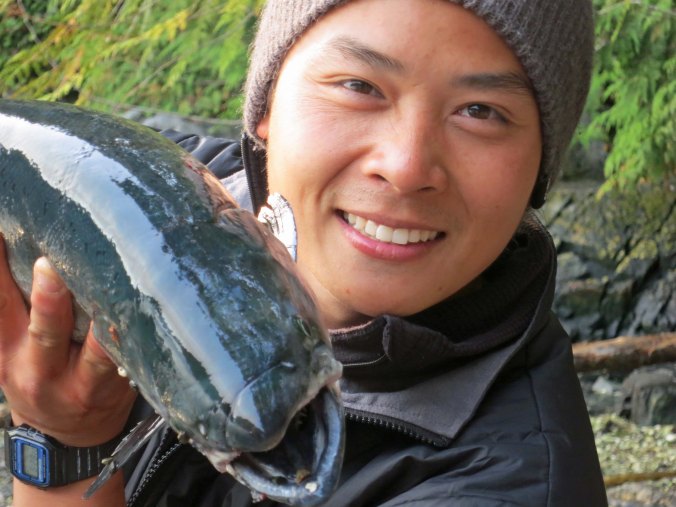
Quy was happy to pose with the salmon, until...

Quy was happy to pose with the salmon, until…
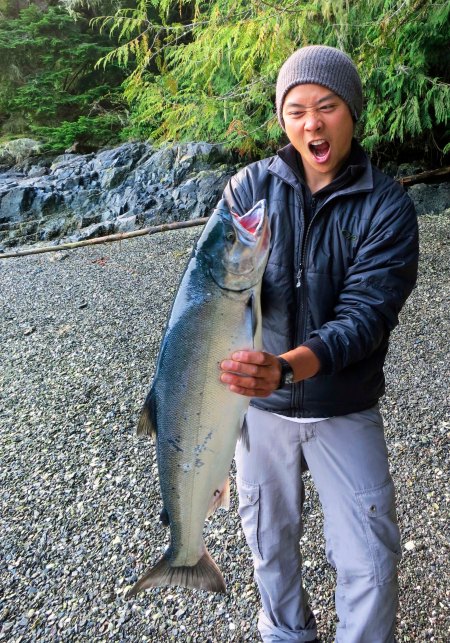
Sea Kayak Adventures guide reacts to wiggling salmon he thought was dead.

… it wiggled.

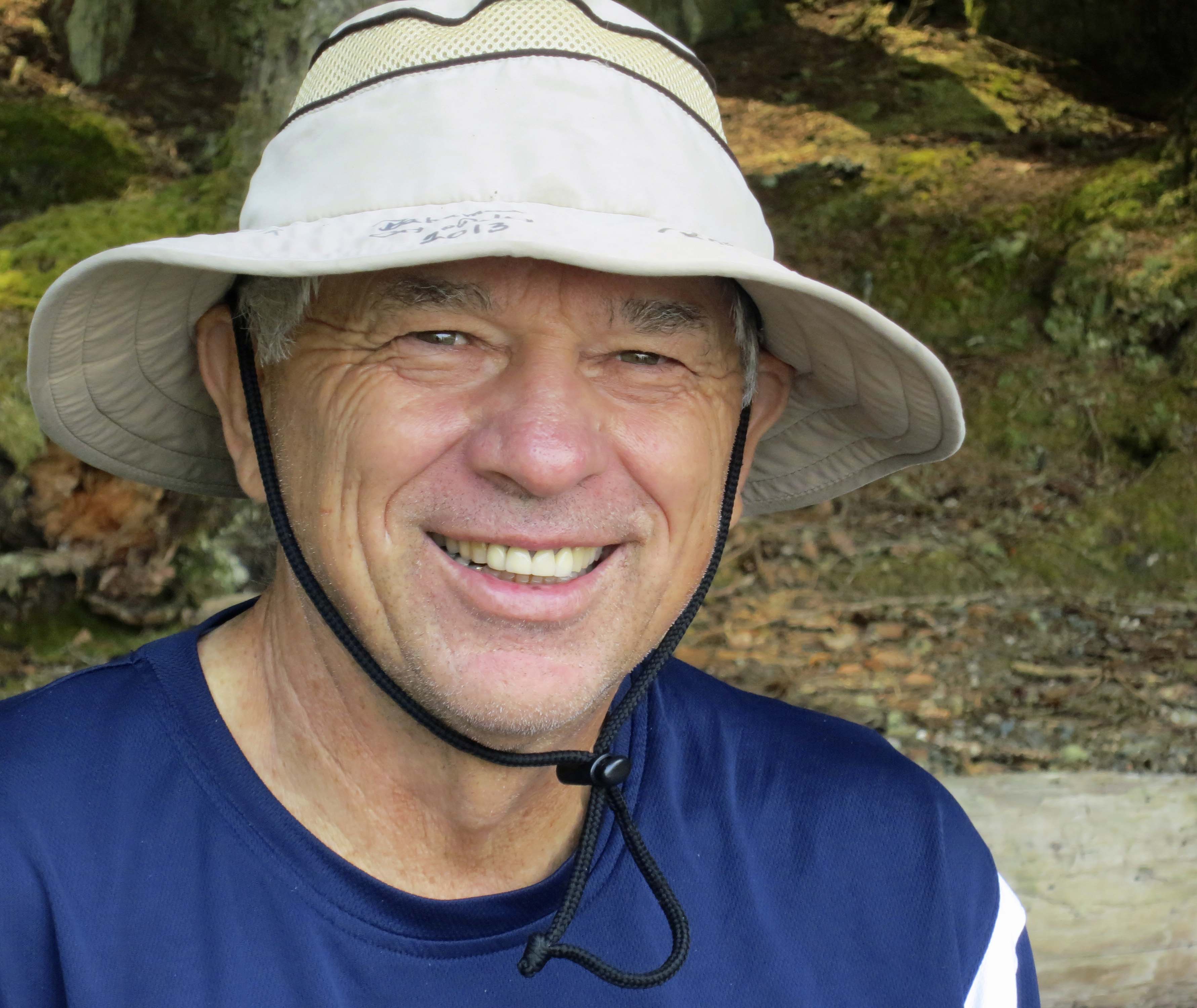
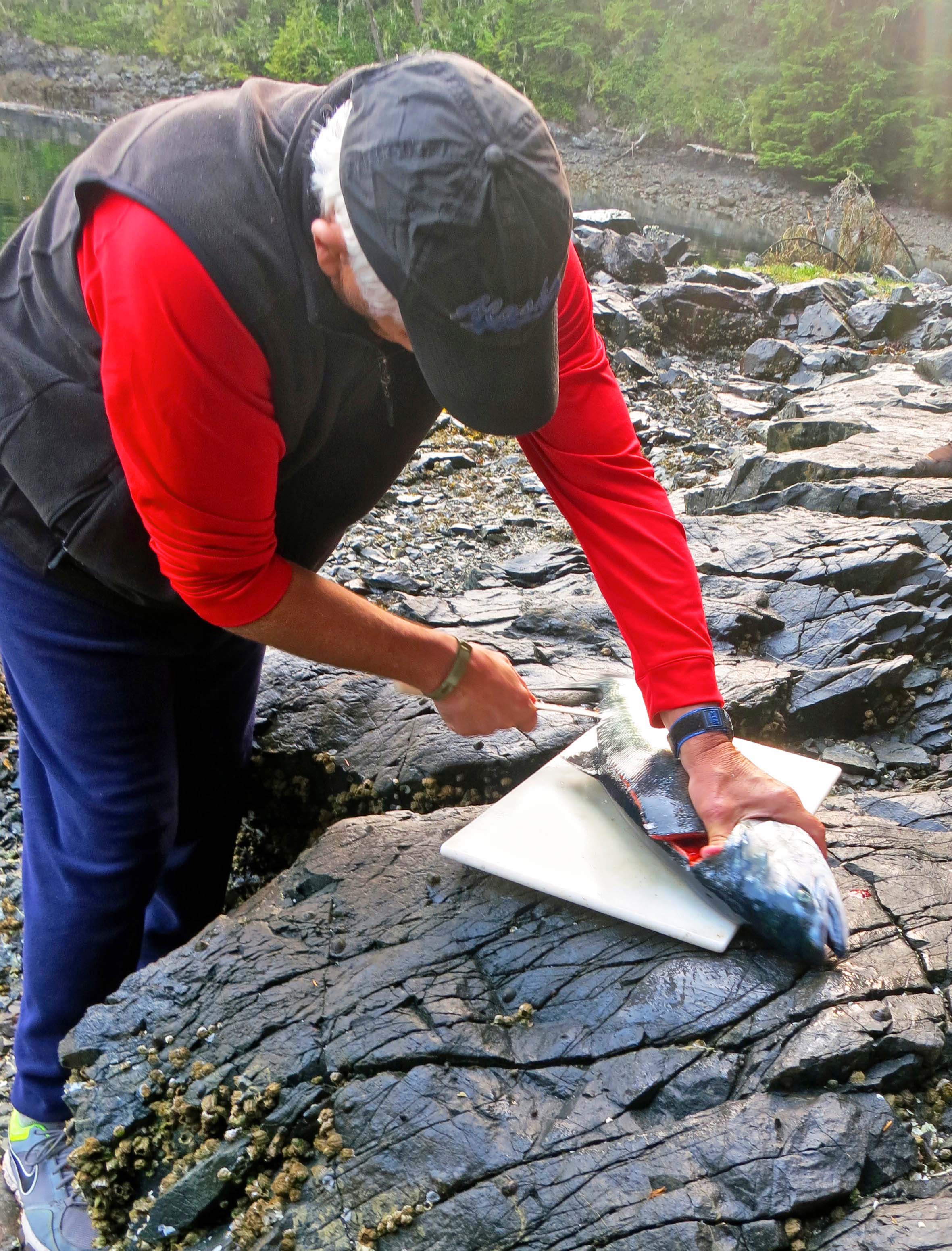
The true hero of the day was Dennis who now lives in Idaho but has fished extensively off of Alaska. He offered to fillet the fish.

The true hero of the day was Dennis, who now lives in Idaho but has fished extensively off of Alaska. He offered to fillet the fish.
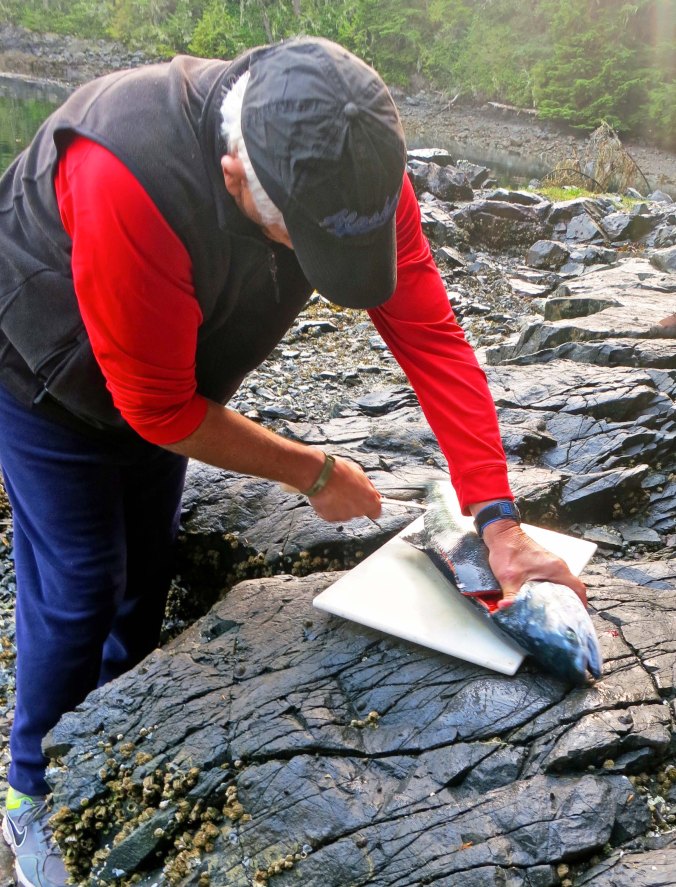
Here, Dennis goes to work.
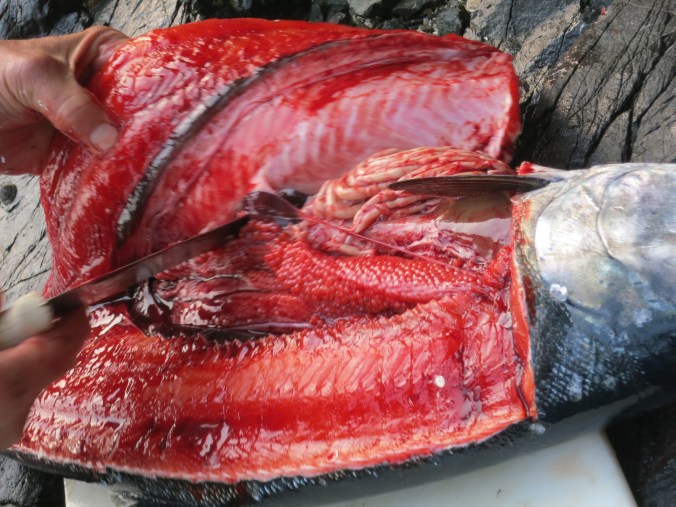
Here, Dennis goes to work.

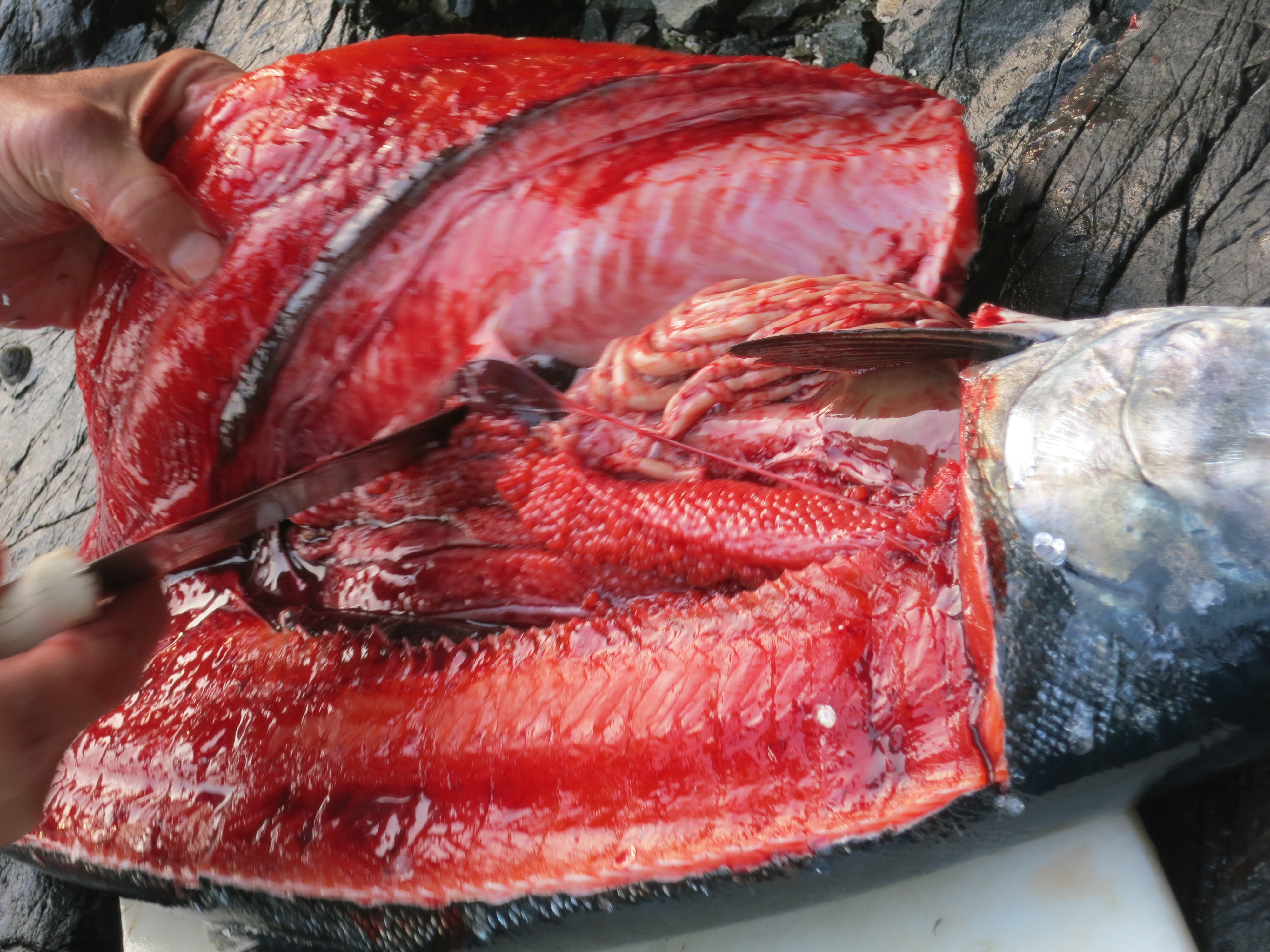
A filleted coho salmon displaying roe. Photo by Curtis Mekemson.

And displays the rich red meat, roe, and innards of the salmon. The salmon made a delicious lunch the next day, easily feeding all of us.
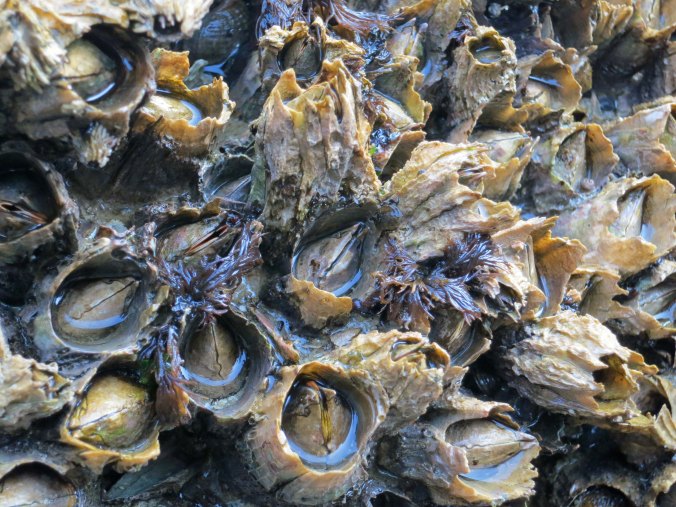
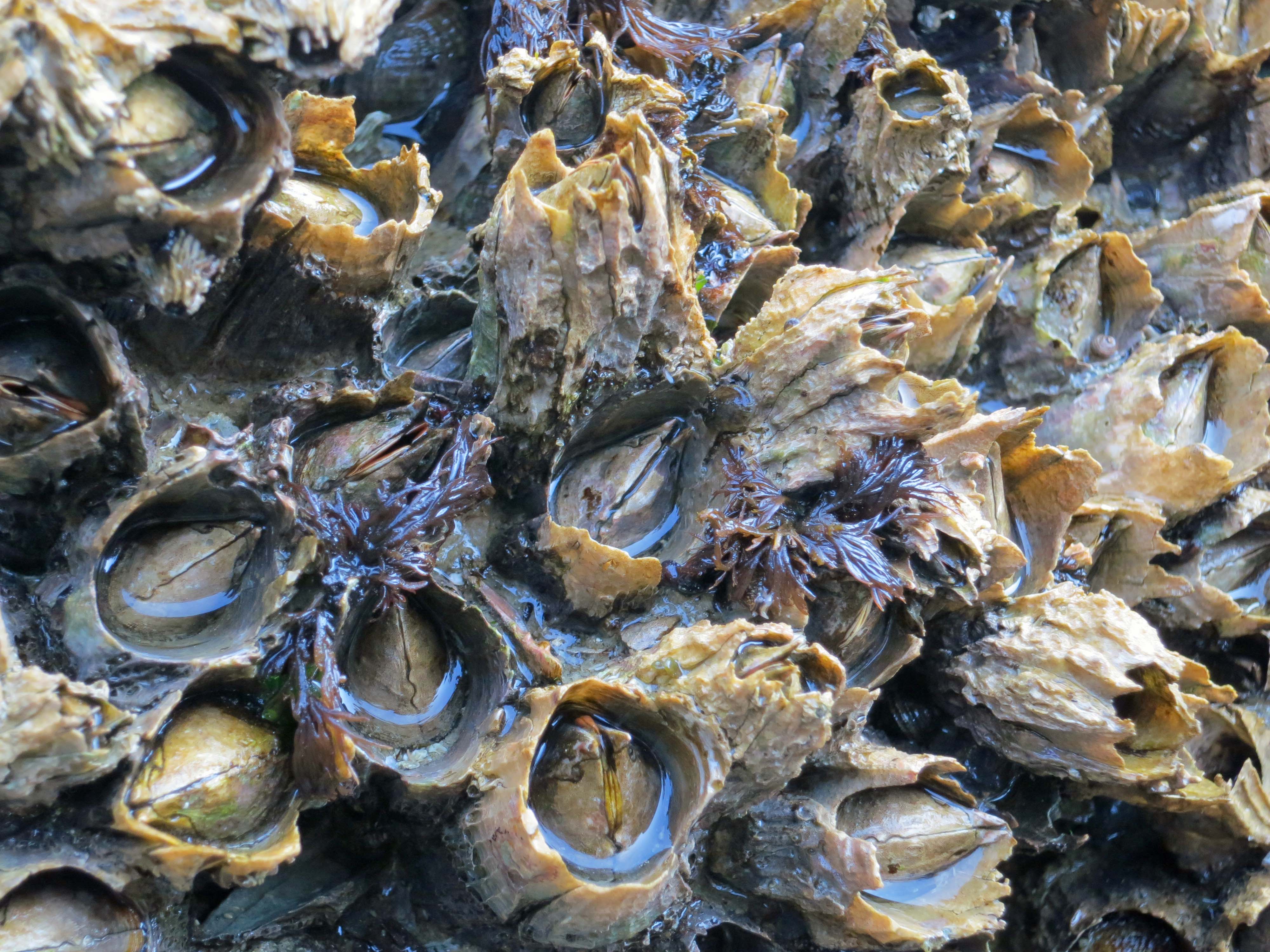
Photo of barnacles off of Compton Island in Blackfish Sound, British Columbia. Photo by Curtis Mekemson.

It was after all of the salmon excitement that we discovered the starfish, and these barnacles.
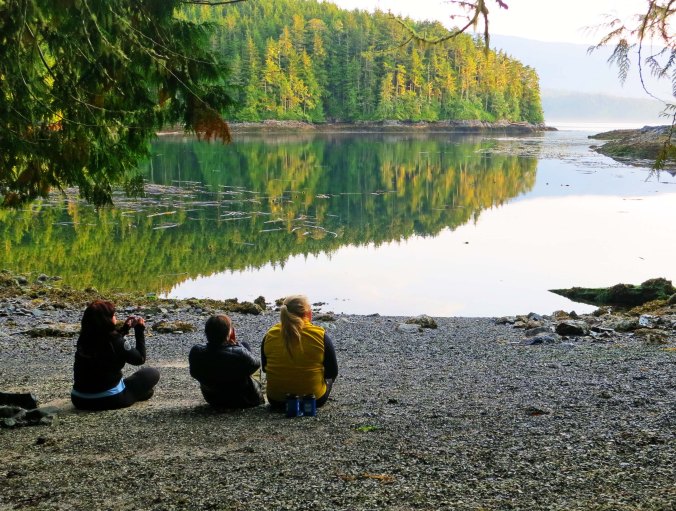
Members of our group enjoy a quiet moment at the end of the day, hoping for a whale to appear. Next blog: we kayak to Berry Island and hear a tale about Bigfoot.

Members of our group enjoy a quiet moment at the end of the day, hoping for a whale to appear. Next blog: we kayak to Berry Island and hear a strange tale about Bigfoot.

The Day of the Dead… A Brief Interlude

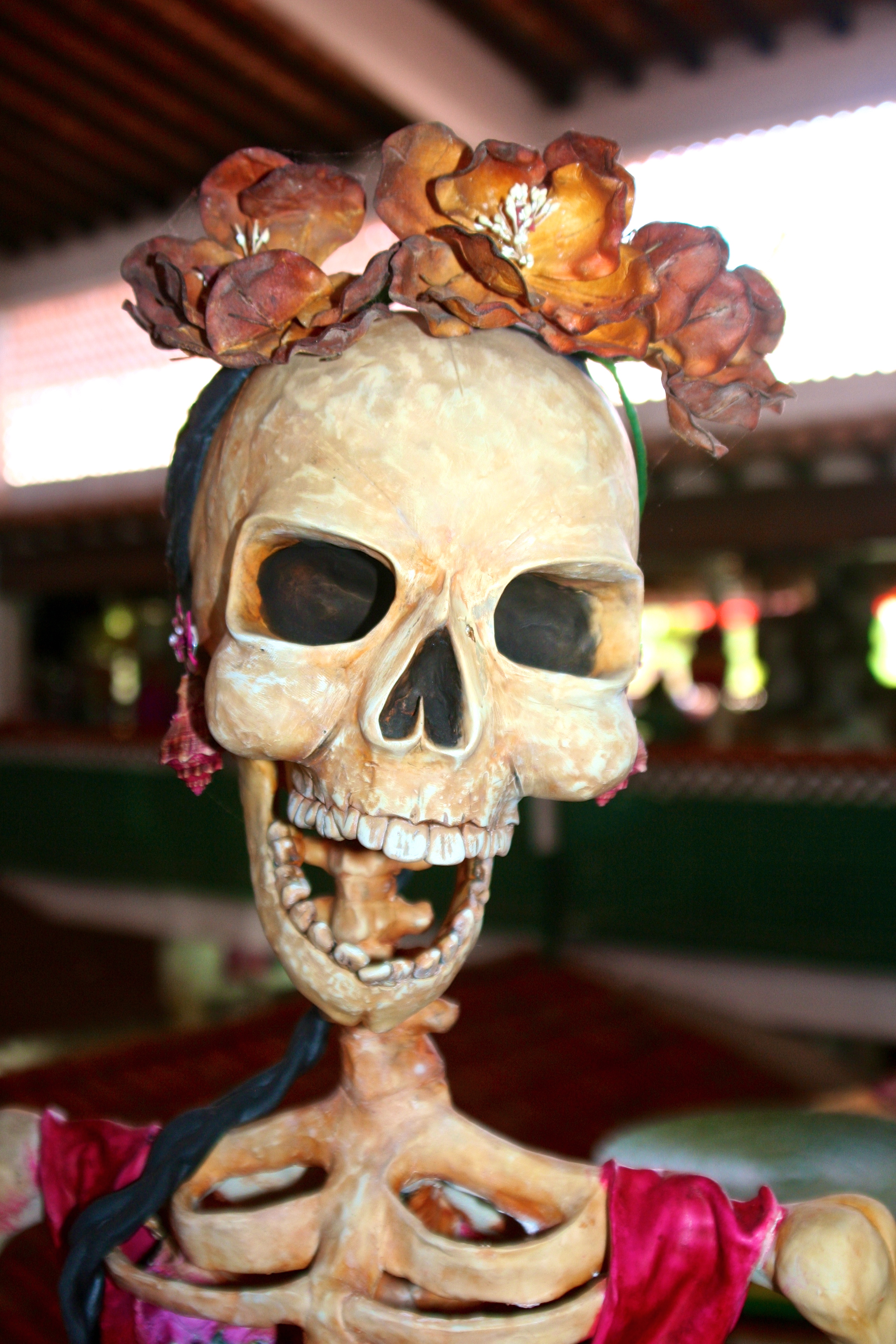
Day of the Dead skeleton in Puerto Vallarta, Mexico.

This girl was all decked out for the Day of the Dead

It’s the Day of the Dead, or Día de Muertos in Spanish. My blogging friend, James at Gallivance, and Google inspired me to post my favorite Day of the Dead skeleton as a quick break from my kayak series. (I’ll get back to kayaking in my next blog.)

Peggy and I found this beauty at the public market in Puerto Vallarta, Mexico. The purpose of the day is to remember friends and family who have passed on. It’s big in Mexico. And Mexicans have made a fortune in selling representative statues to tourists.

Today, Día de Muertos is a Catholic festival, but it owes its beginning to the Aztecs. People often take the favorite foods of the deceased out to the gravesite so the dead person can feast. Got to keep those ghosts happy. Trick or treat comes to mind.
May all your ghosts be happy ghosts. –Curt

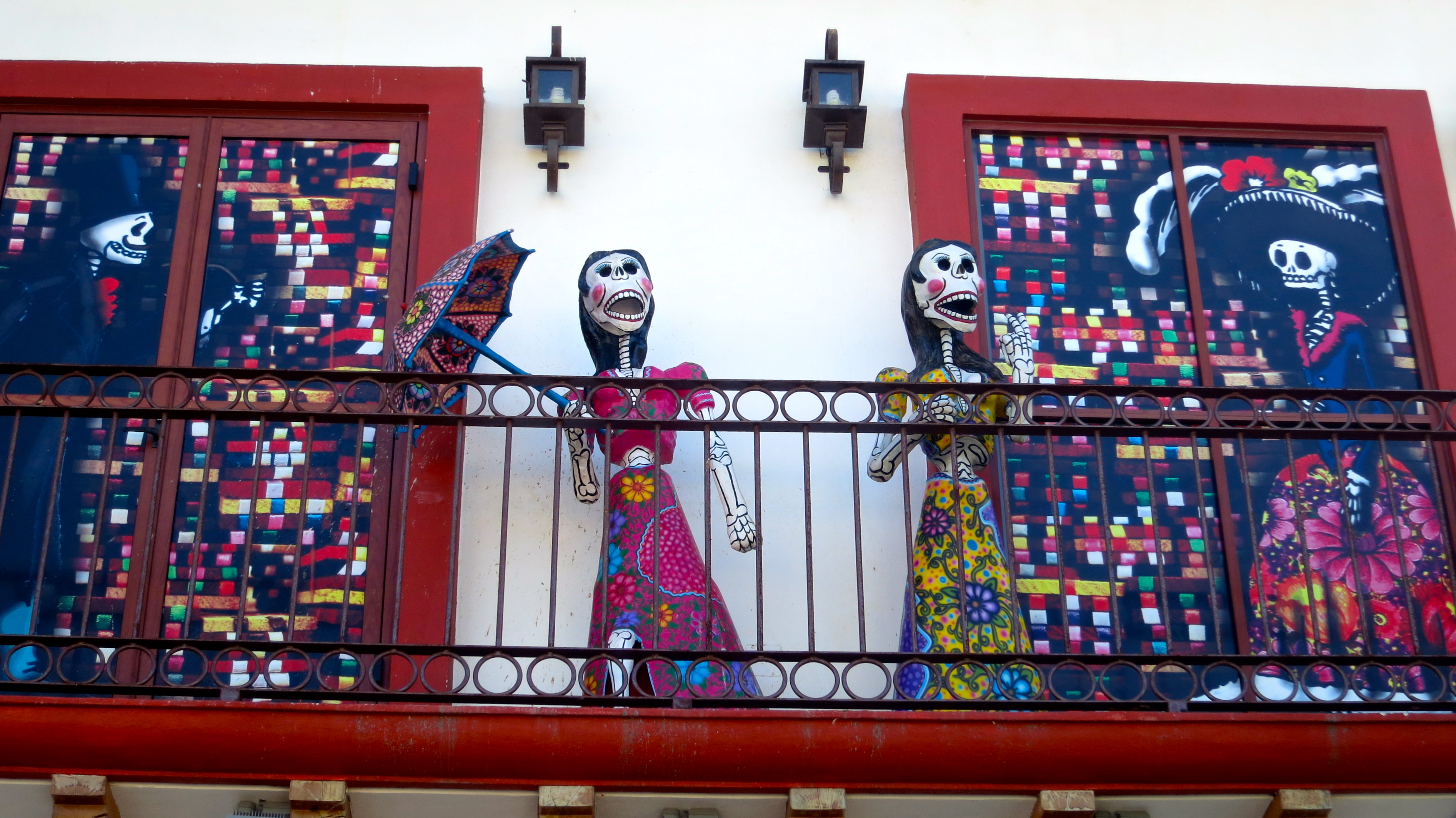
A popular restaurant in Puerto Vallarta features these to singing cuties on its balcony.

A popular restaurant in Puerto Vallarta features these two singing cuties on its balcony.

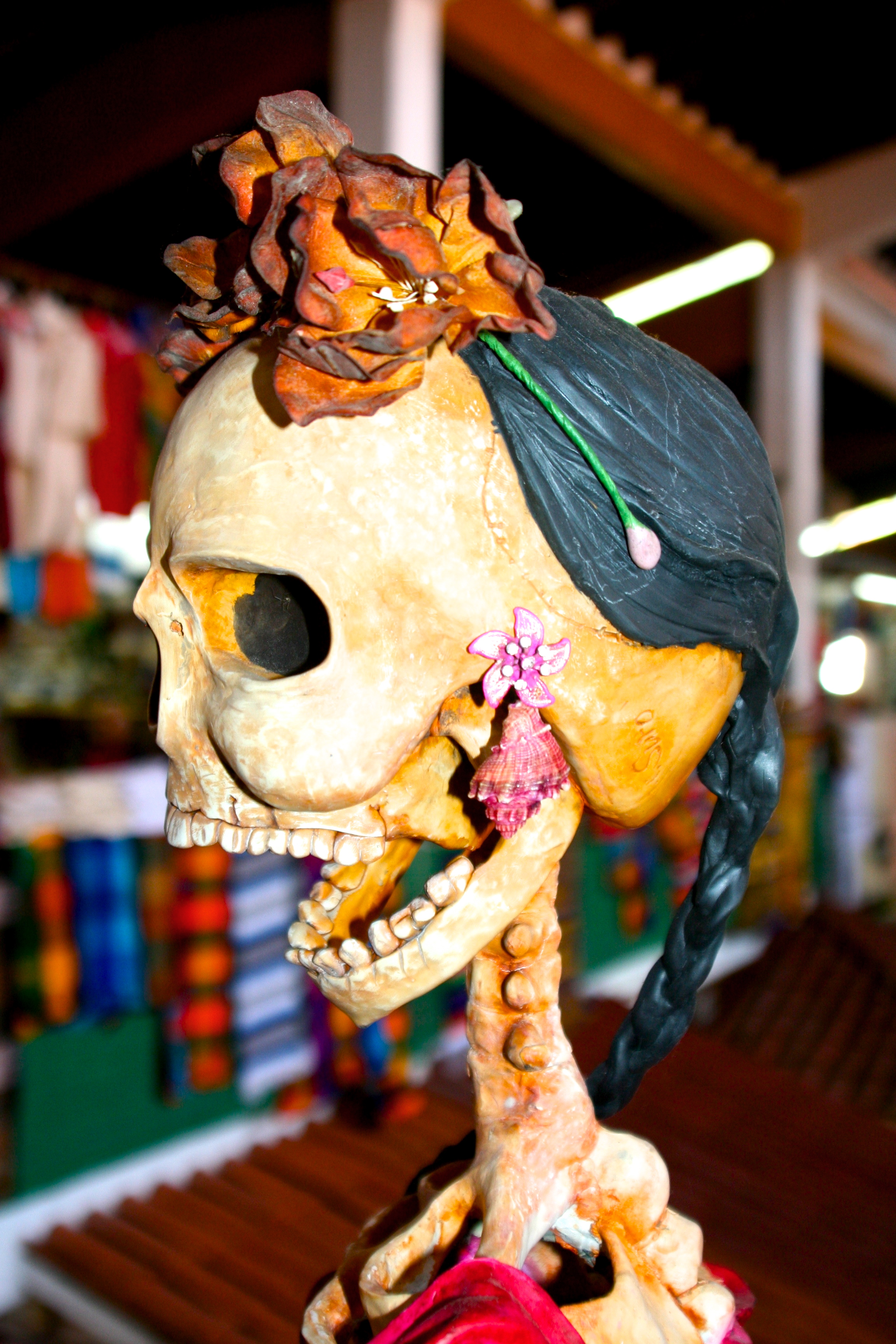
A side view of my favorite. Check out the earrings!

A side view of my favorite. Check out the earrings!