Rattlesnakes… Lots of Them: Eek!

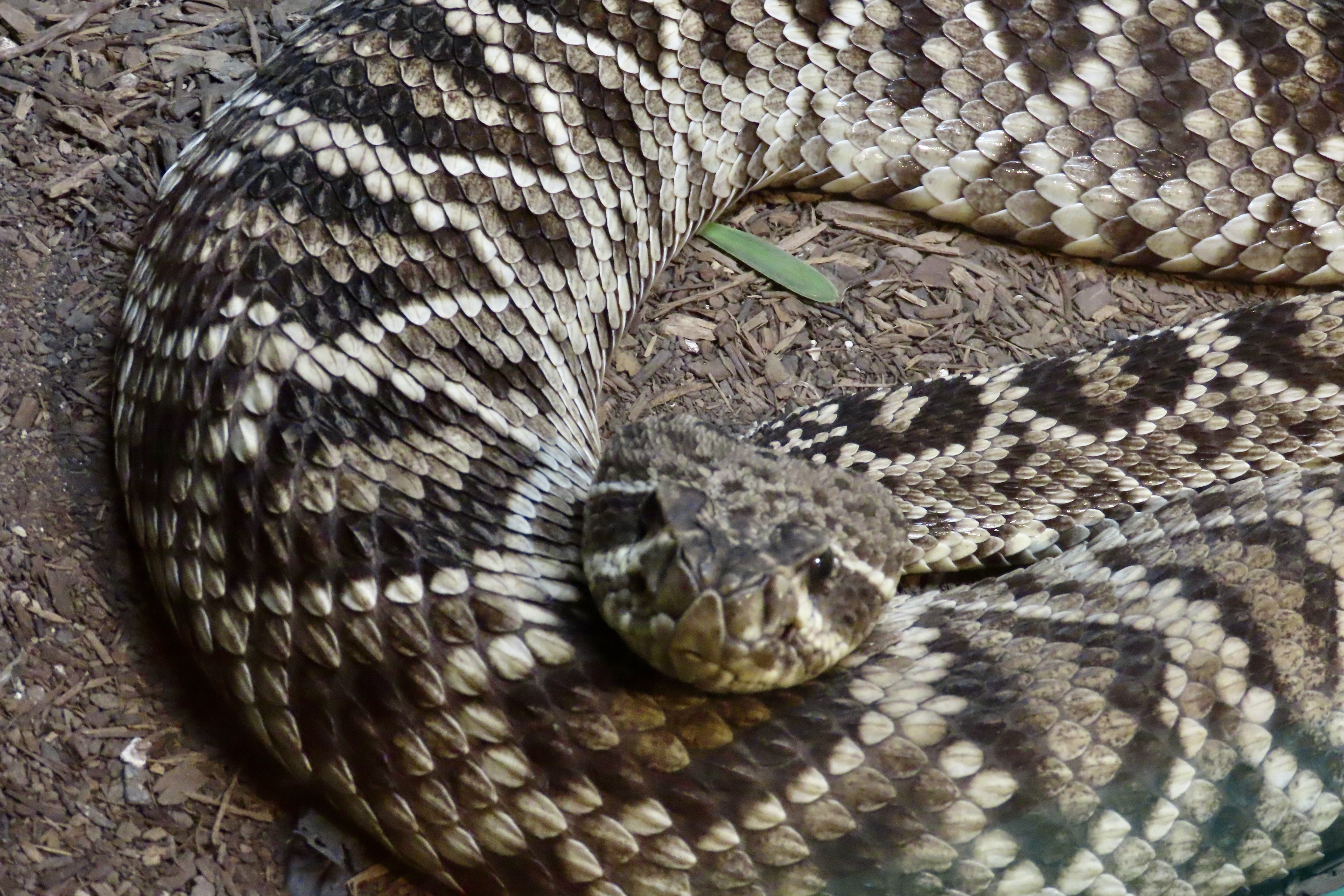
The eastern diamondback rattlesnake has been known to grow almost eight feet long.

I’ve have been to Albuquerque, New Mexico several times over the years. One place that I always wanted to go but never managed to was the American International Rattlesnake Museum. They have one of the largest collections of live rattlesnakes in the world. Could it be that whoever I was traveling with didn’t share my enthusiasm?

Peggy, however, is game for almost anything and snake images almost always show up among the petroglyphs that fascinate her so much. So off we went to the museum two weeks ago. 
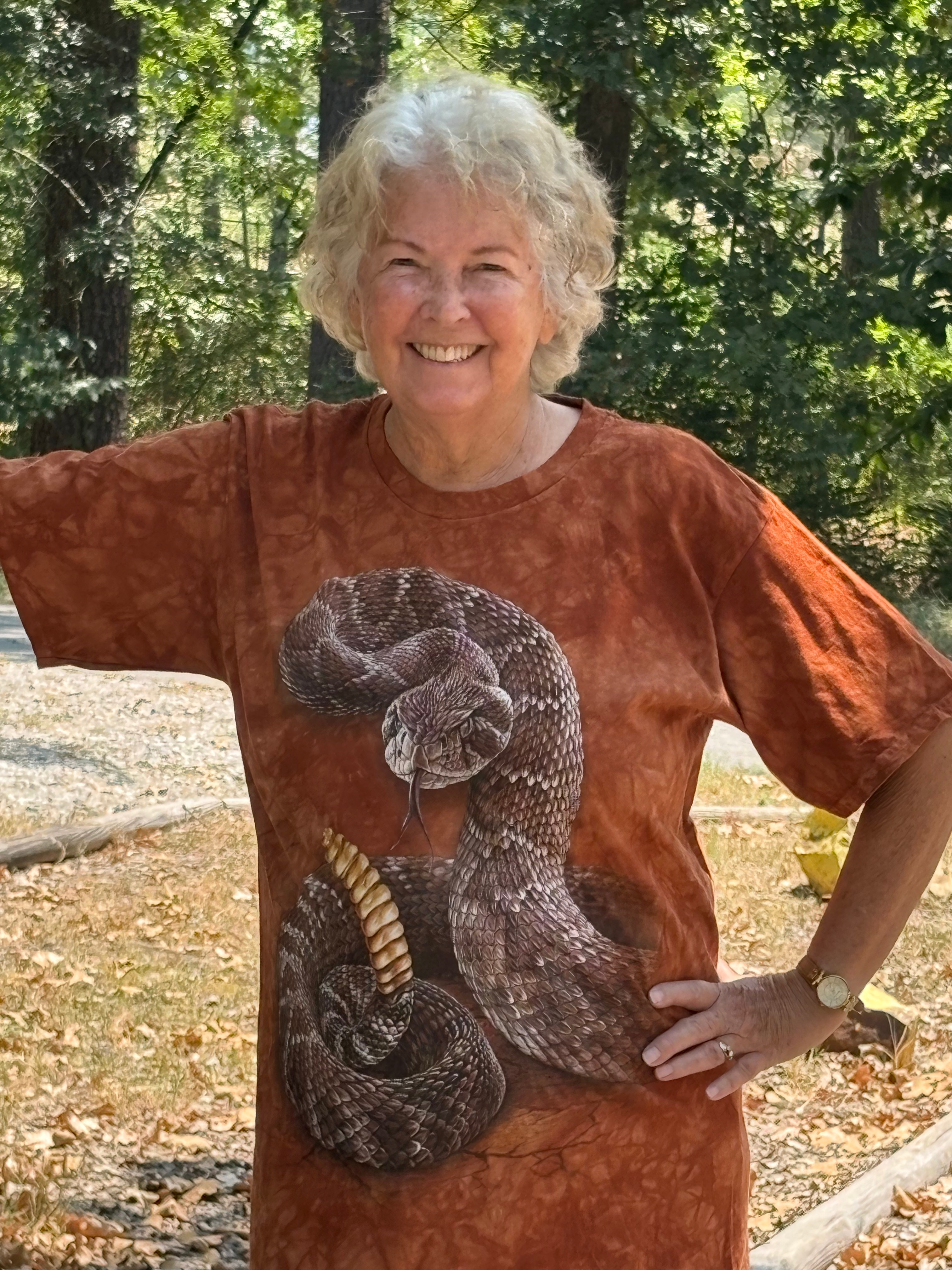
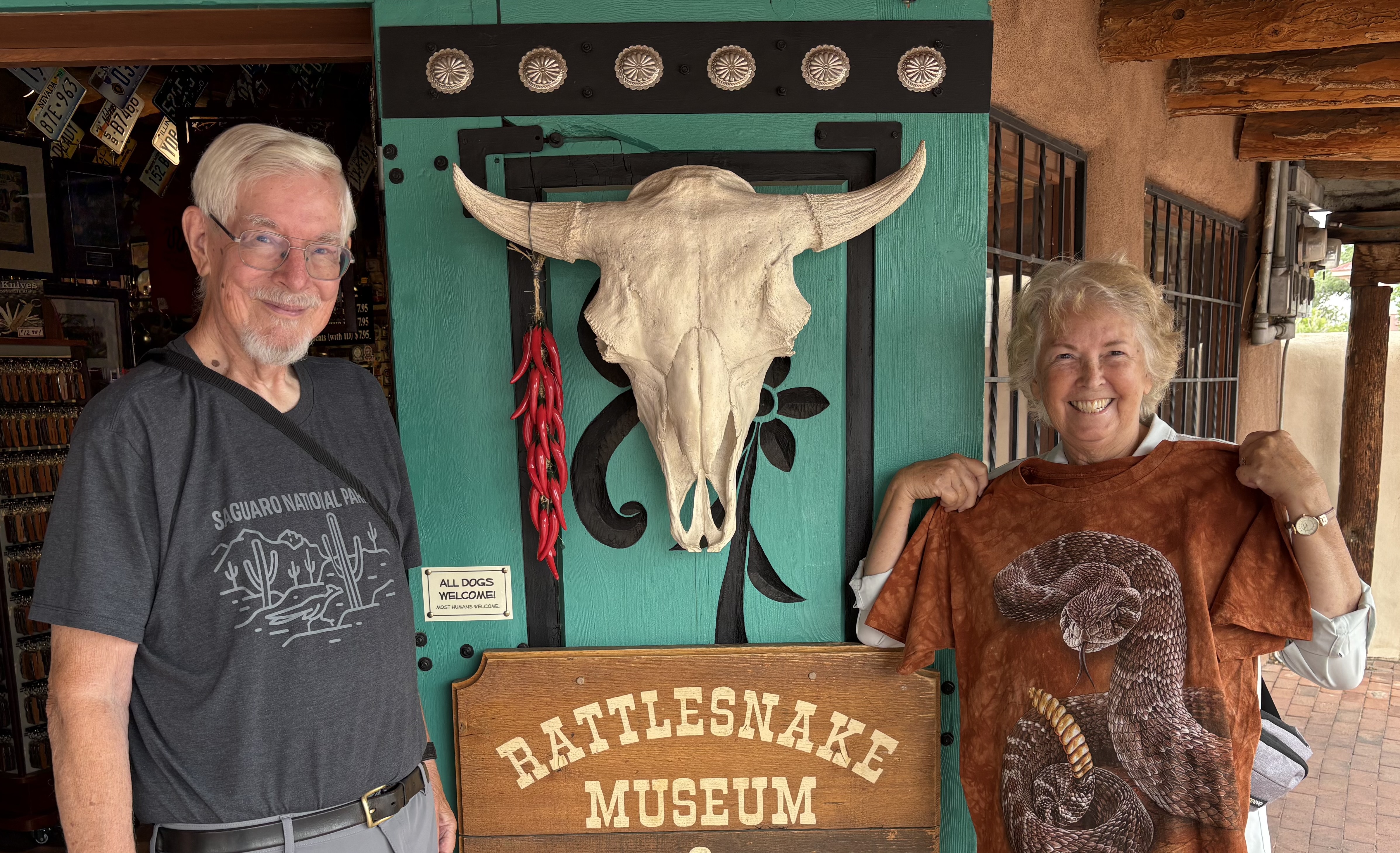
Peggy even bought a rattlesnake T-shirt from the museum. Is there a message here?

That I have a certain ‘fondness’ for rattlesnakes isn’t news to my blog followers. I’ve had numerous encounters with them over the years and have written about several. I’ve even been known to get down on my stomach when they are crawling toward me so I can get better head shots. (Peggy gets a little ouchy about that.) I suspect my attitude would be considerably different if I’d ever been bitten by one. Rattlesnake bites can be deadly, or at a minimum, extremely painful. It’s not something one wants to test. 

Fortunately, rattlesnakes come with an early warning system. They rattle. The rattles are made up of keratin, that’s the same thing your fingernails are made of. When irritated, the snake vibrates its tail, knocking its rattles together. It makes a very distinctive sound, one you never forget, one guaranteed to shoot your heart rate up faster that a skyrocket on the 4th of July.
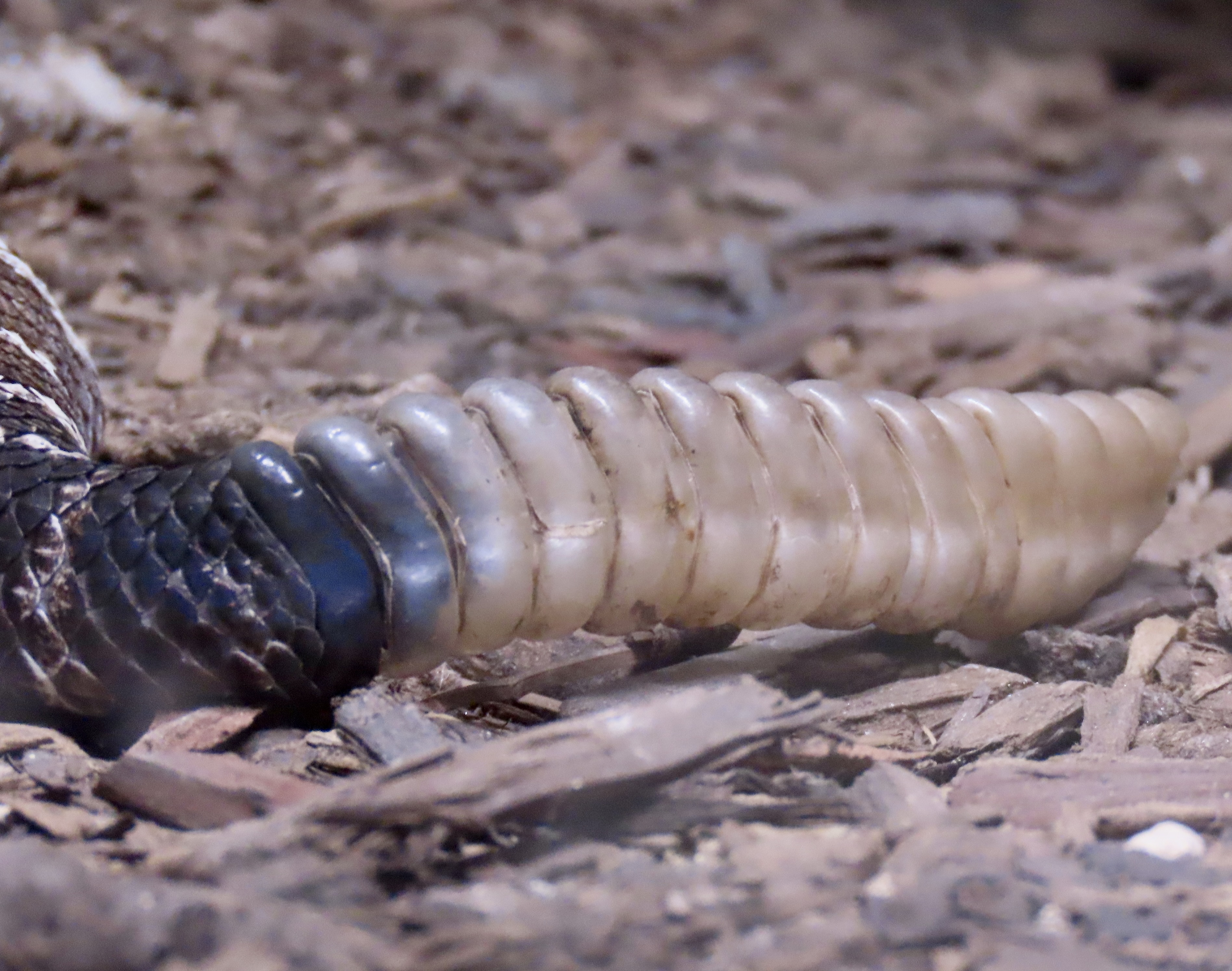
Each time a rattlesnake sheds its skin in grows a new rattle. This makes up for ones it has lost. The bigger the snake the bigger the rattle.
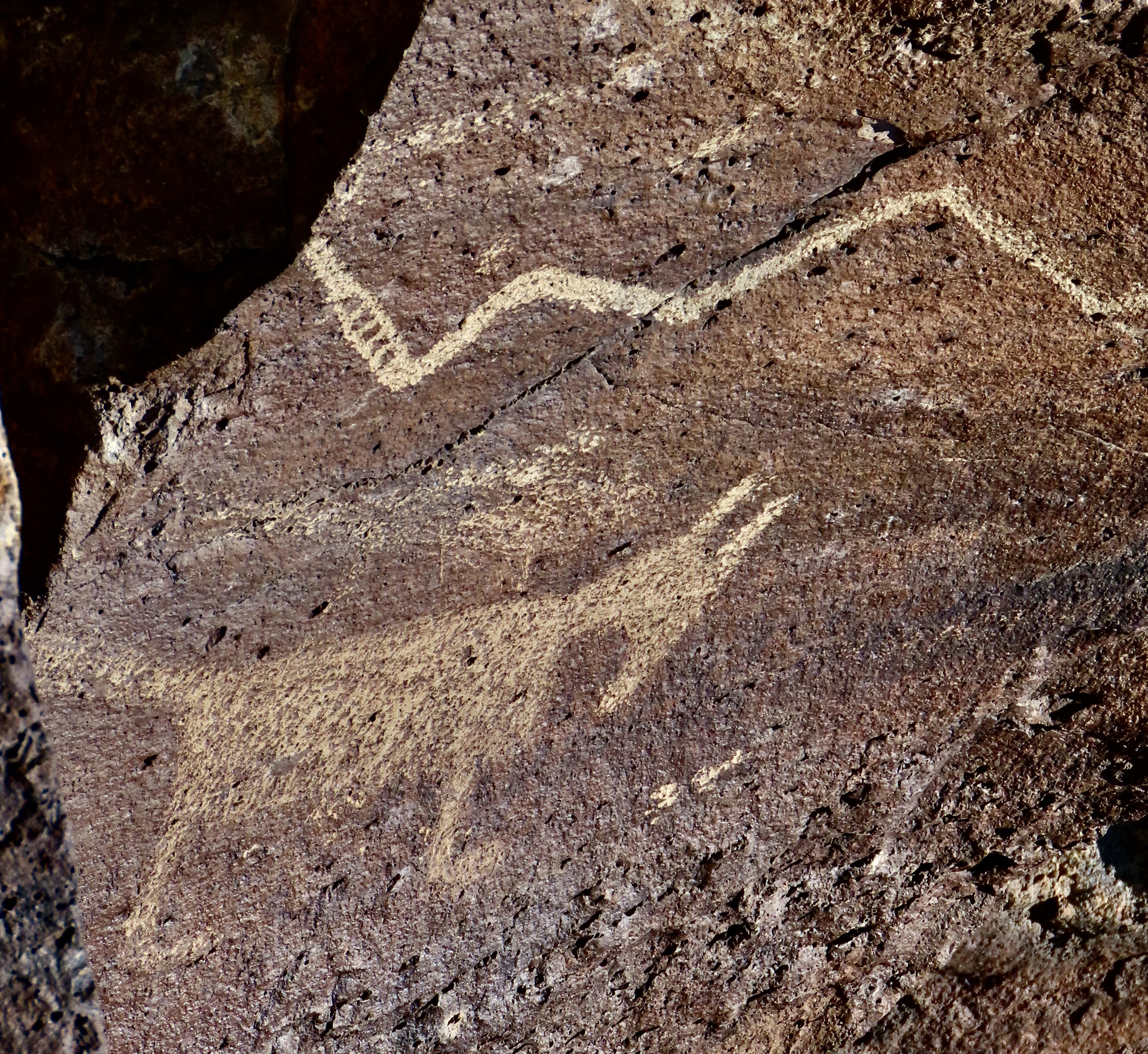
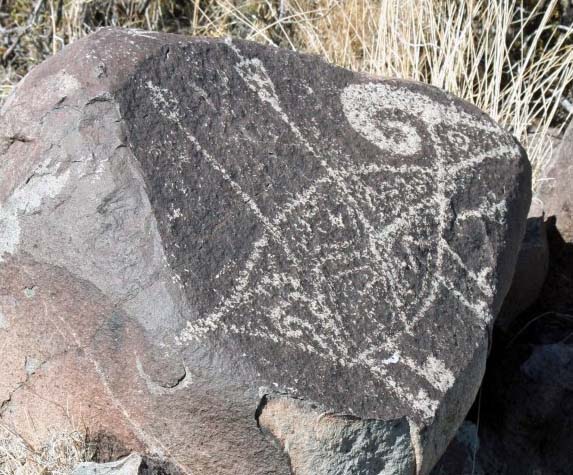
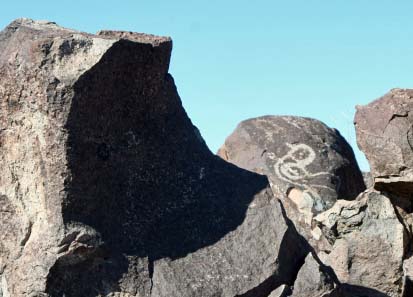
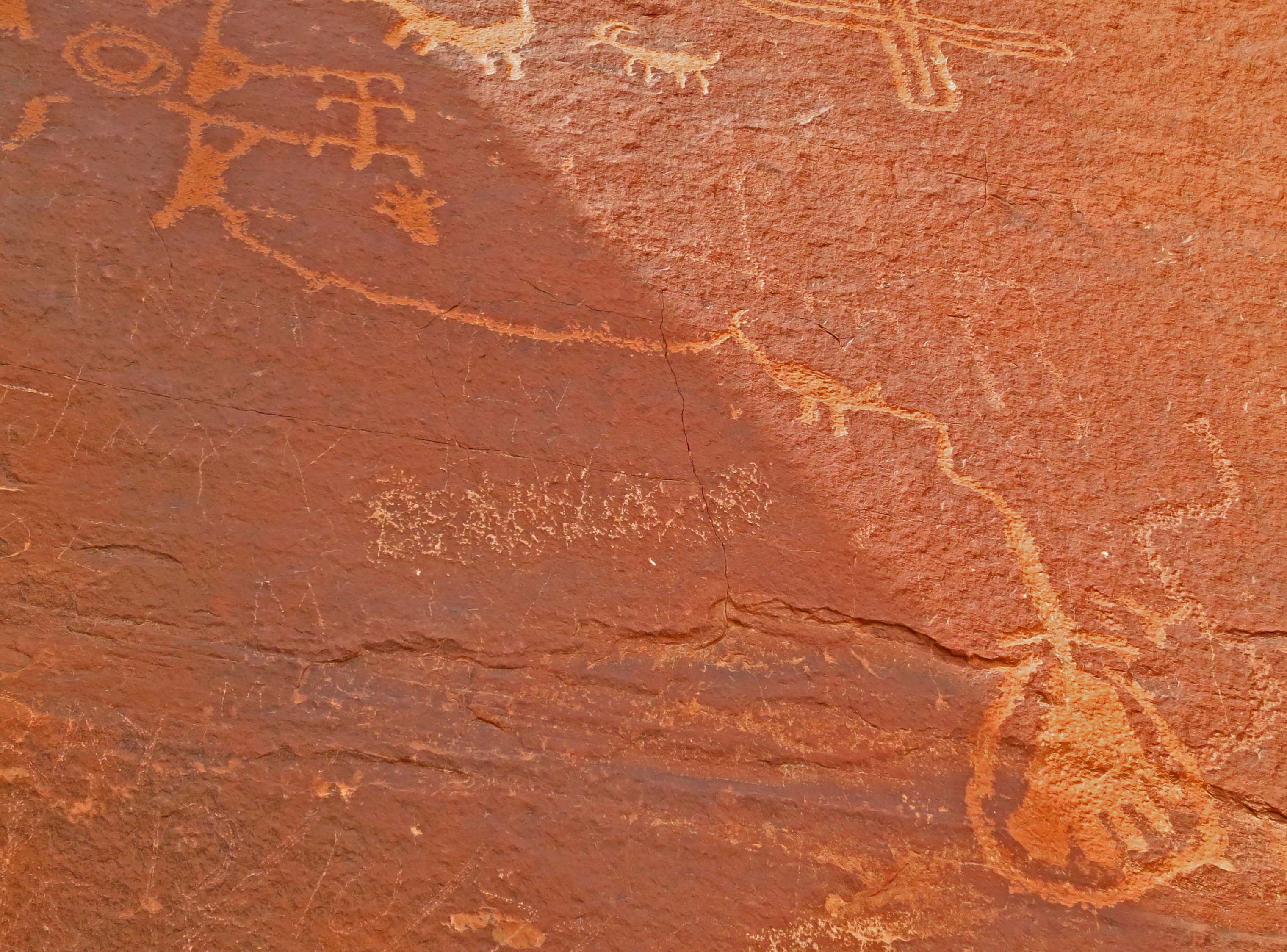
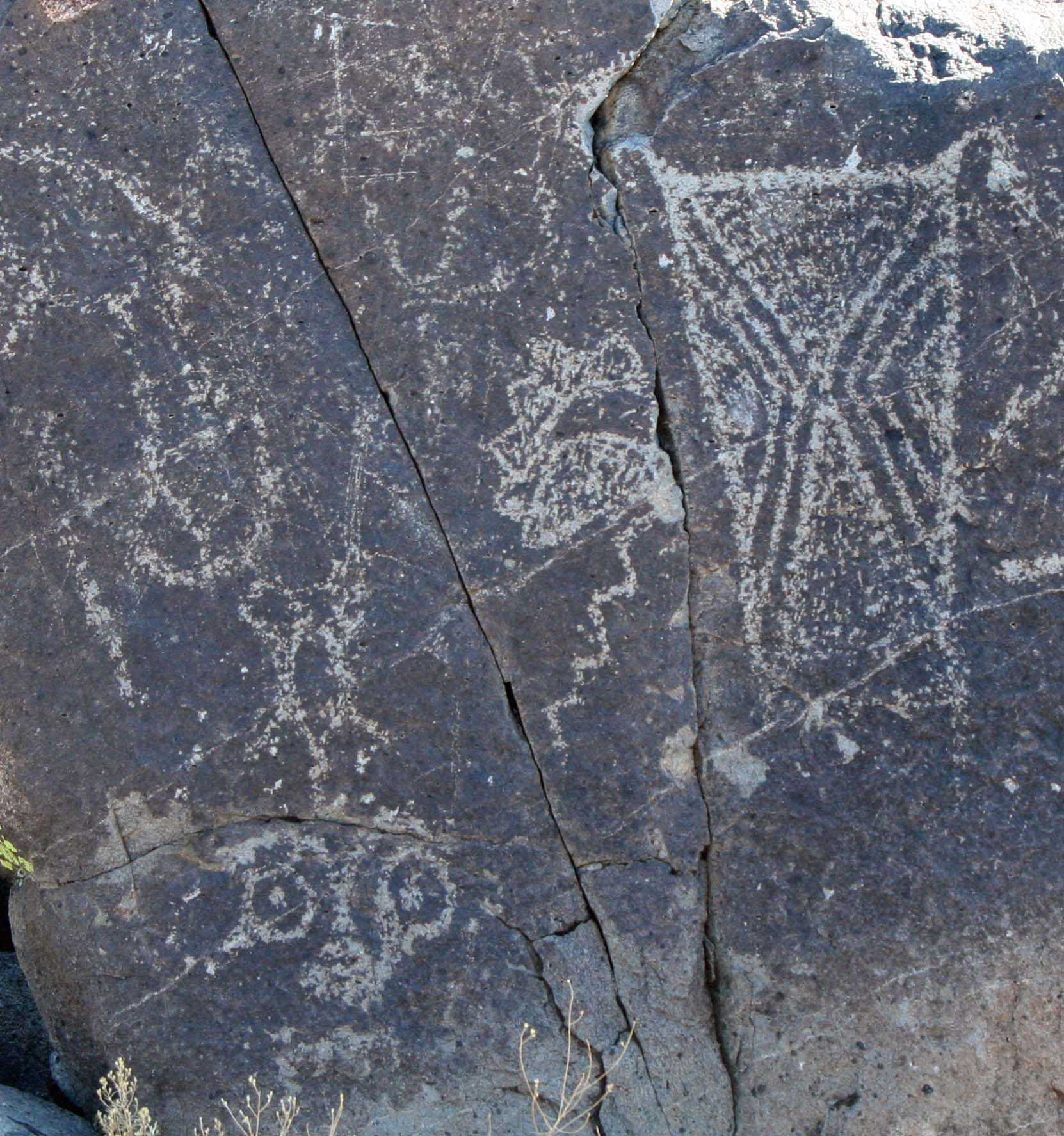
The Ancestral Puebloans included a rattle on this petroglyph of a rattlesnake in Petroglyph National Monument, Albuquerque. It’s probably a coyote or a dog beneath the rattler, obviously not worried.

A rattlesnake you see coiled up, rattling its tail, and ready to strike is worrisome, to put it mildly. It’s not a problem, however— as long as you stay clear of its strike zone, which can range from half to two thirds of its body length. For a six foot snake (which is a very big snake), that would be from 3 to 4 feet. If you want to check this out, use a long stick. I have. (Don’t try this at home, kids.)

One you can hear but can’t see is a quantum leap scarier. I stepped on a dead log once ‘that started to rattle’ and found myself an olympic winning 15 feet down the trail before my mind registered snake. There is some evidence that our fear of snakes is instinctive. For example, have you ever come close to stepping on one you didn’t see in advance. Did you find yourself thinking, “snake, maybe I should be concerned.”
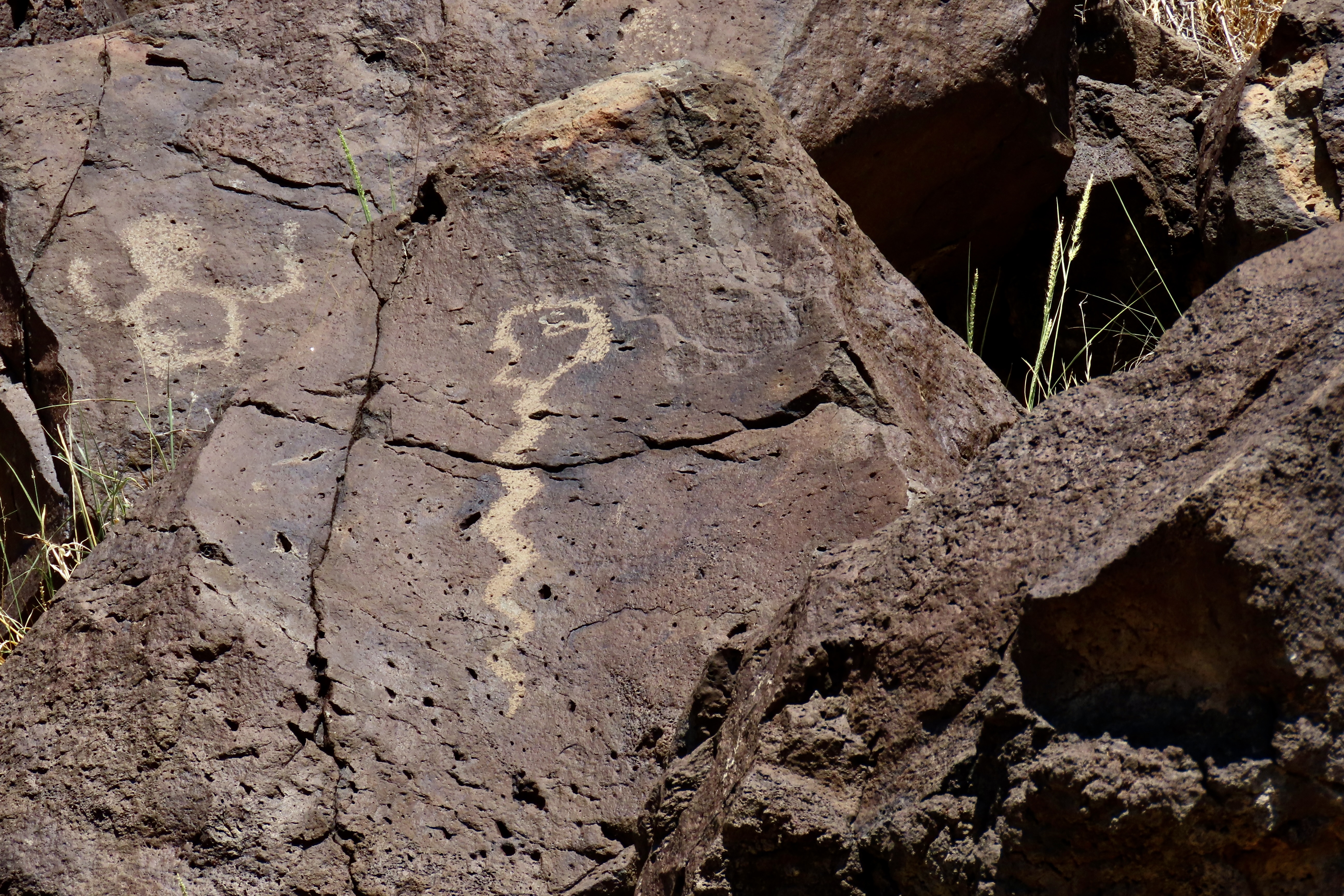
Odds are your reaction was more like this guy from another petroglyph at Petroglyph National Monument. Eek!

When I was a Peace Corps Volunteer in West Africa, I had a cat named Rasputin that proved the hypothesis about fear of snakes. I discovered if I took the old fashioned spring off my back door and rolled it toward him, he would leap 6 feet into the air and land on our couch or other piece of furniture well out of reach from the deadly ’snake.’ Being scientifically oriented, I did it 3 or 4 times just to make sure. 

On the other hand, back in California I had a basset hound named Socrates that seemed to counter the theory. I was hiking with him one day at Folsom Lake near Sacramento when I noticed him walk out on to a granite ledge and start sniffing down into the cracks. Suddenly he began barking like the baying hound he was: Loud. Simultaneously, the rock became alive with rattles. Socrates had discovered a rattlesnake den. They can get big, big like in a hundred snakes. Some have even been found with a thousand. Talk about an Indiana Jones’ nightmare…

It was for me, as well. “Socrates, come here!” I demanded. And then again. And again. Each time louder and more desperate. All, to no avail. He just kept barking louder. Damn, that dog could be stubborn. Finally, there was nothing I could do but walk out on the buzzing rock, grab him by the collar, and bodily drag him off. I was lucky I didn’t pee my pants. Had I not immediately put his leash on and pulled him away, he would have gone right back to barking up a storm at the irritated, poisonous serpents.

Here are a few facts on rattlers: 

  • There are between 32 and 45 species of rattlesnakes, many of which live in the Southwest where Peggy and I just spent five months wandering around outside. They can range in size from 15-24 inches like the pigmy rattlesnake of the South up to close to 8 feet like the eastern diamond back. Peggy’s brother John and his wife Frances found one of these monsters in their backyard in Texas. 
  • They are superb predators. While lacking an outer ear that would allow them to hear their prey, they have an inner ear that allows them to sense the vibrations of a prey’s movements. Vertical pupils aid in depth perception for strikes and pits on the side of their faces serve as heat detectors which allow rattlers to see their prey in pitch dark situations. Being members of the pit viper family they have large, sharp, hollow fangs that are designed to deliver venom. The fangs fold back against the rattlesnake’s mouth when not in use.
  • And finally, here’s a long word for you to impress your friends with: ovoviviparous. It means the rattlesnake mommy hatches her eggs inside of her body and her babies are born alive, ready for action as soon as they can bite their way out of the protective sack they are born in.

And now for a few of the photos we took at the museum.
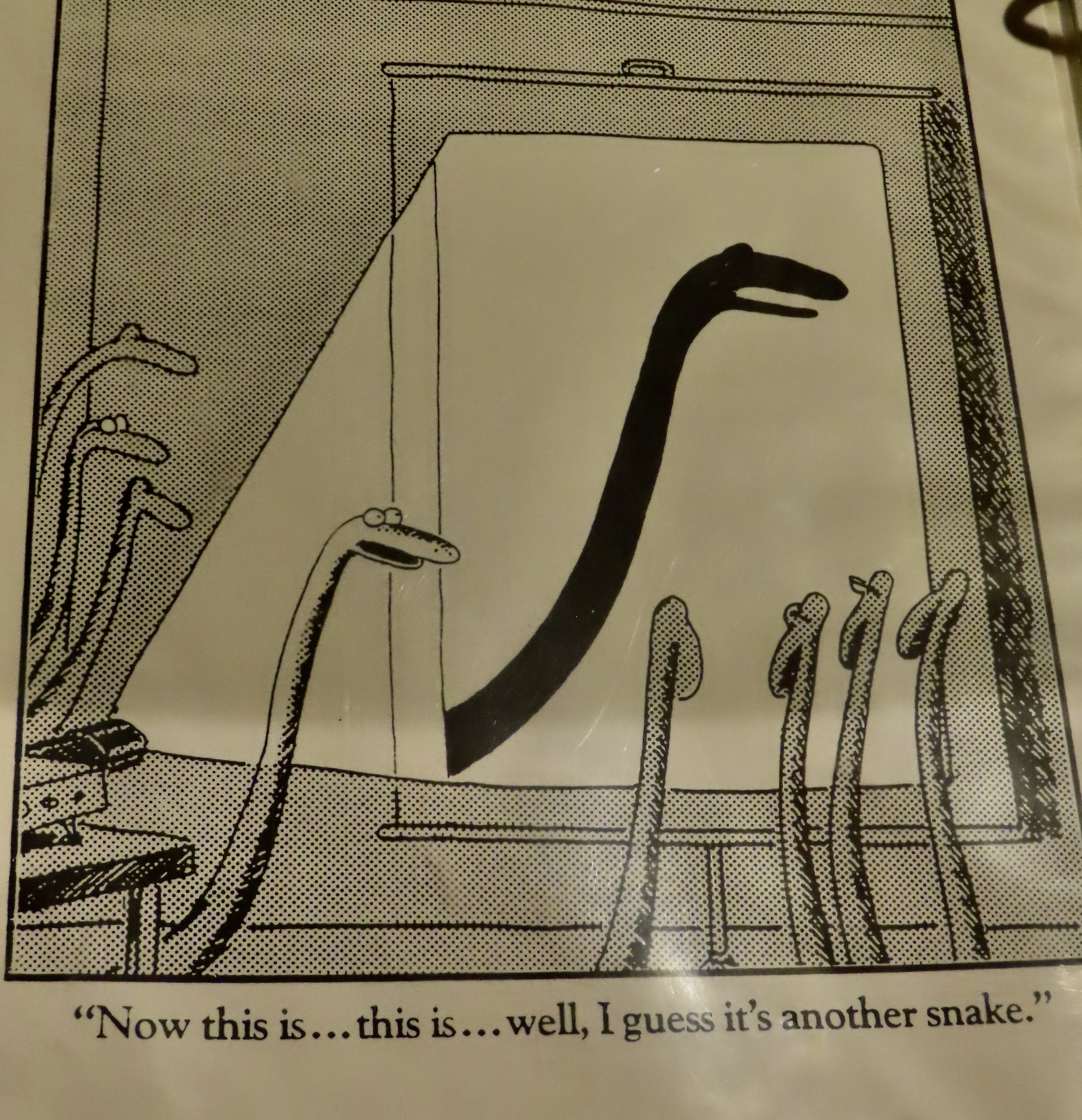
The museum had a book of Gahan Wilson cartoons on snakes.
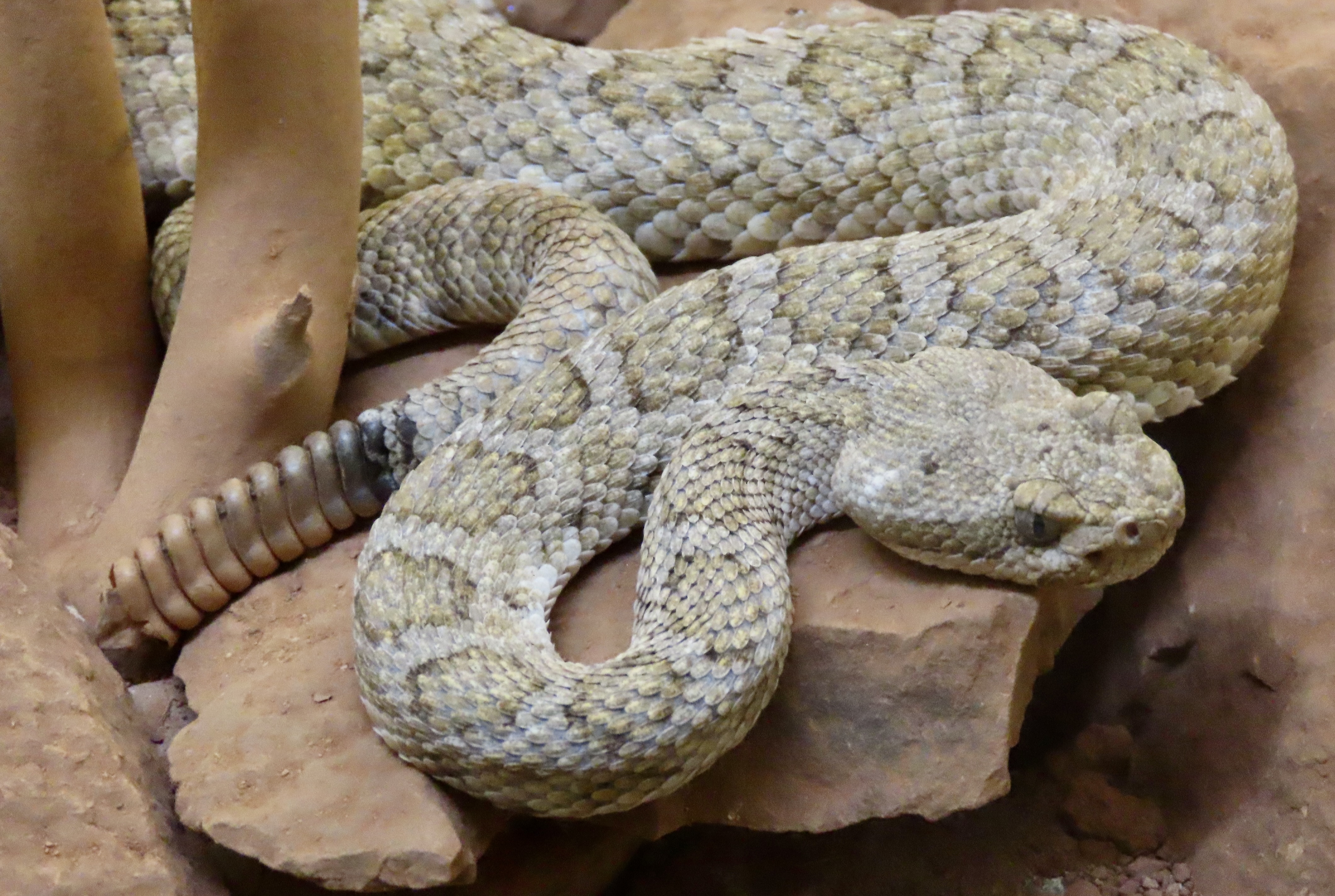
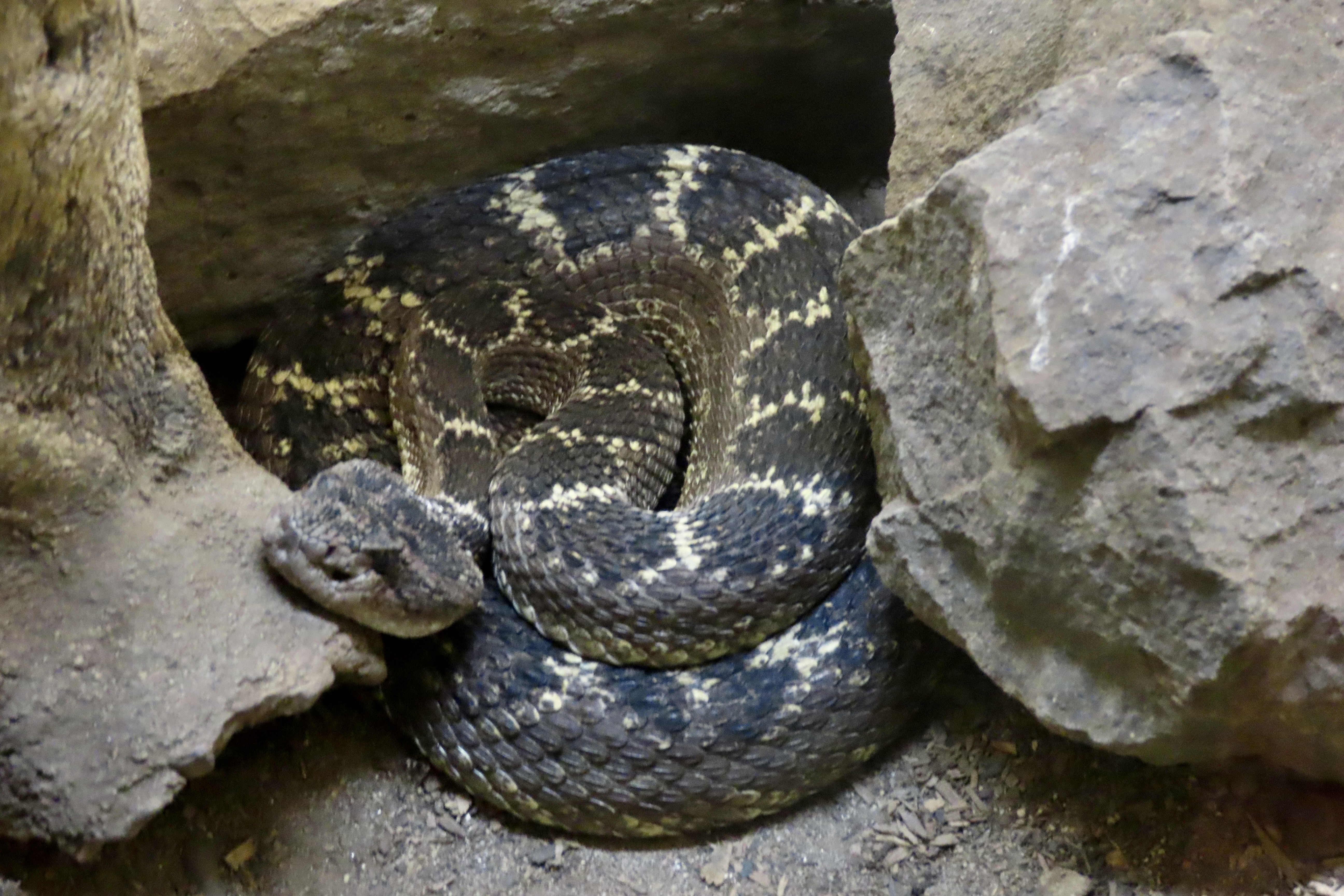
One way to recognize a rattlesnake, beside the obvious rattles, is by the distinctive shape of its head, which it shares with other pit vipers.
Okay, a bit scary.
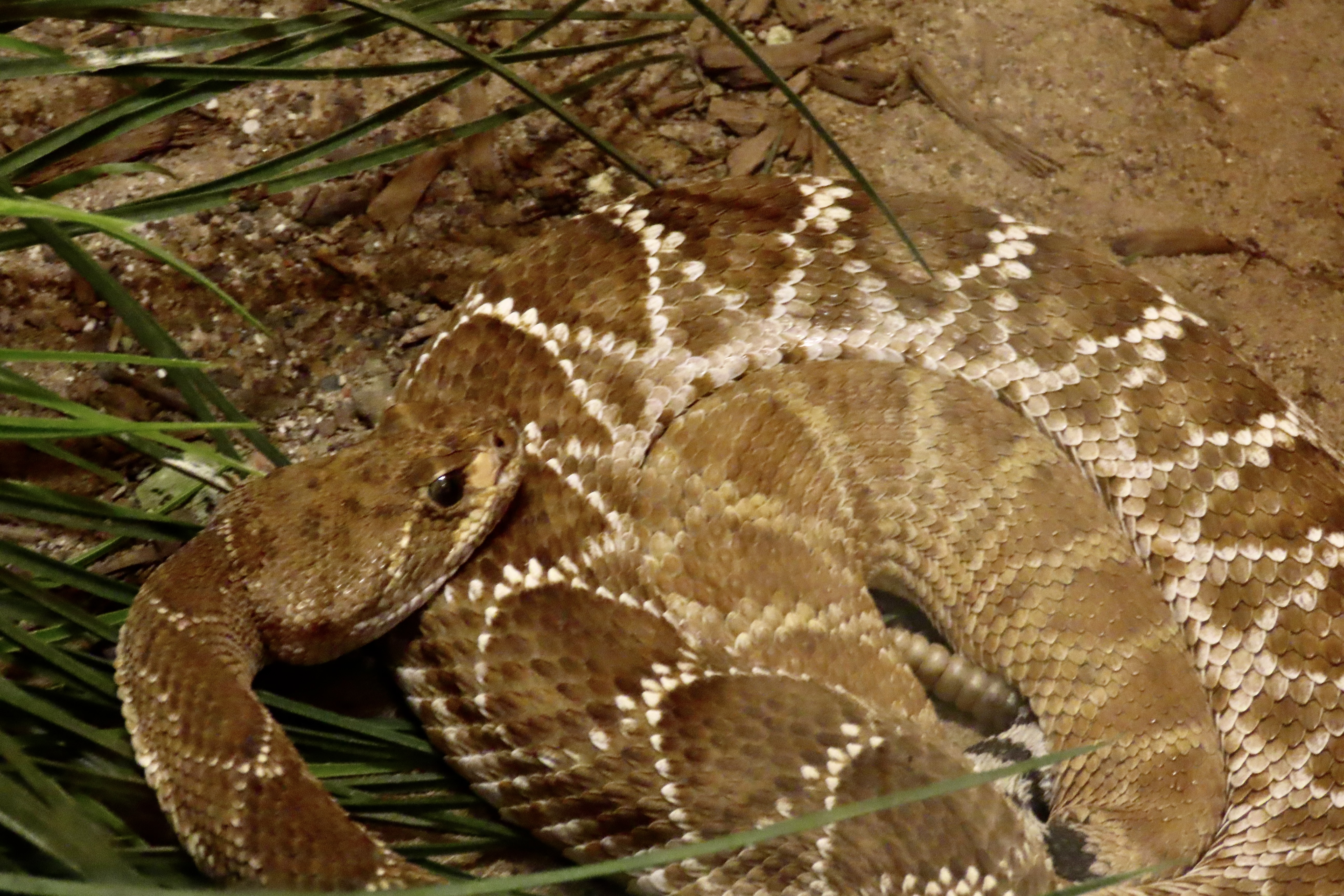
Beautiful brown.
Coiled and ready.
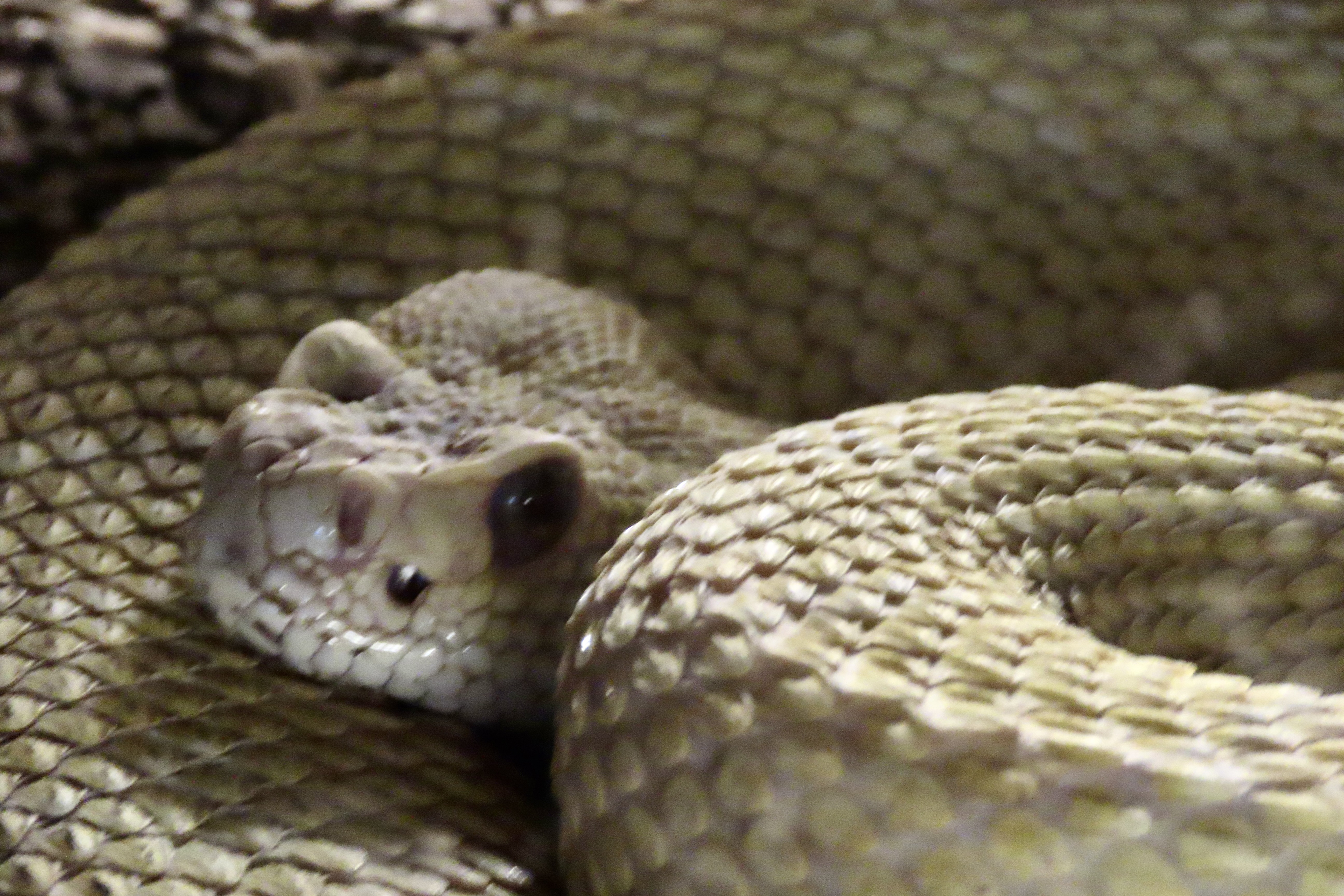
Note the vertical pupils.
Moving along.

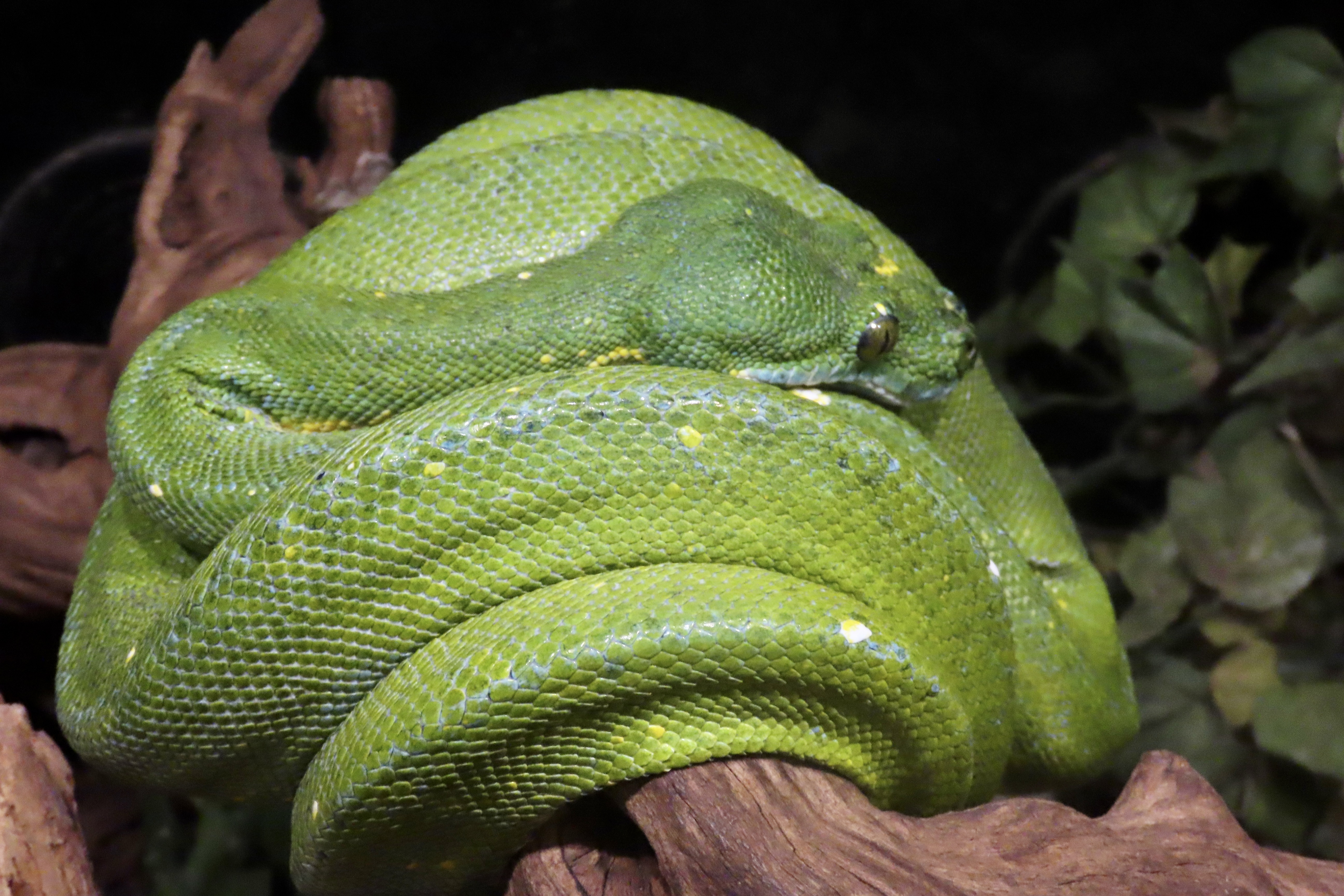
Plus a couple of snakes that weren’t rattlers, but we were fascinated by their colors.
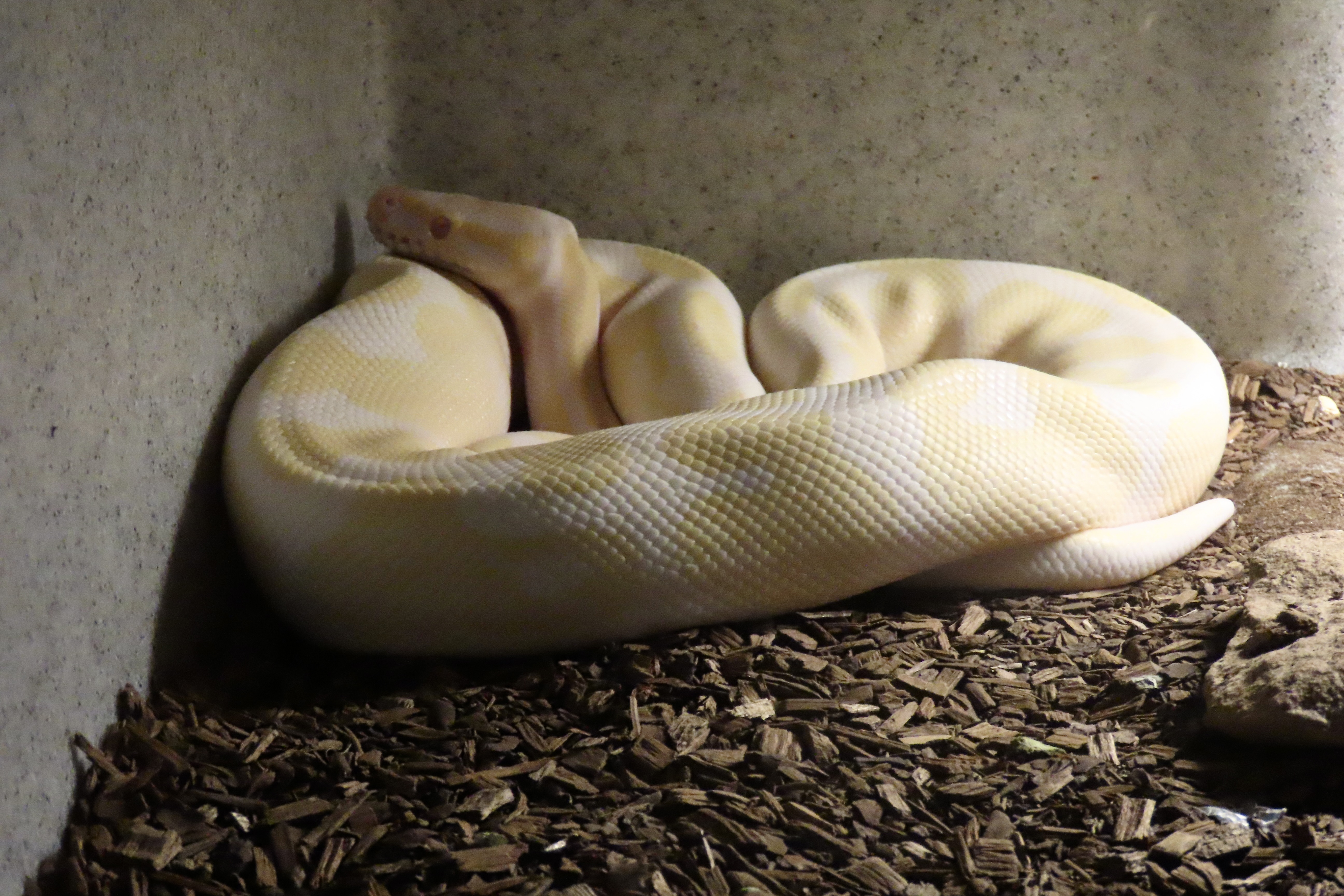
An albino milk snake.
And this striking green snake which, as I remember, was a python. (Don’t quote me.)
And finally, Peggy and I in front of the museum, which is located in the historic section of Albuquerque. Not sure why they chose the skull and string of peppers instead of a rattlesnake but they are symbols of New Mexico. Next up, we will conclude our posts on Canyon de Chelly National Monument.

Nice Kitty, But Why Is Your Tail Over Your Back… The Three Rivers Petroglyph Site: Part 3

There are several mountain lion petroglyphs at the Three Rivers Petroglyph Site. Each one has his tail bent up over his back. I don’t have a clue why. And what’s with the arrow?


Peggy and I are still out wandering. So this is my third post revisiting the Three Rivers’s Petroglyph Site in southern New Mexico.

Hunting wild animals for meat provided an essential source of food for the majority of mankind’s existence. While the Jornada Mogollon people at the Three Rivers’ Petroglyph site cultivated corn, hunting remained a vital activity.

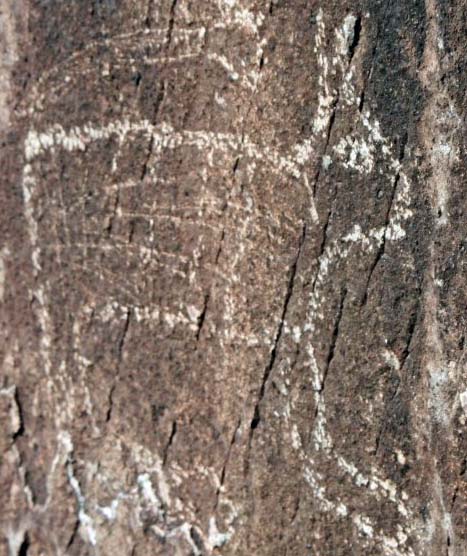
Arrows can often be found sticking out of Big Horn Mountain Sheep in petroglyphs. They were a major source of food in the South West.

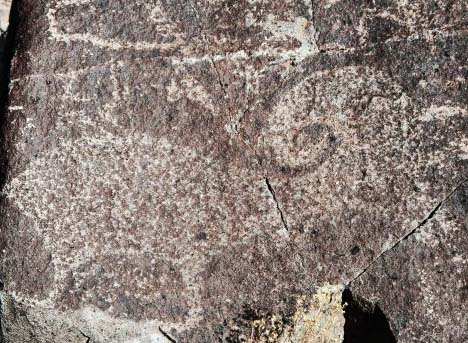
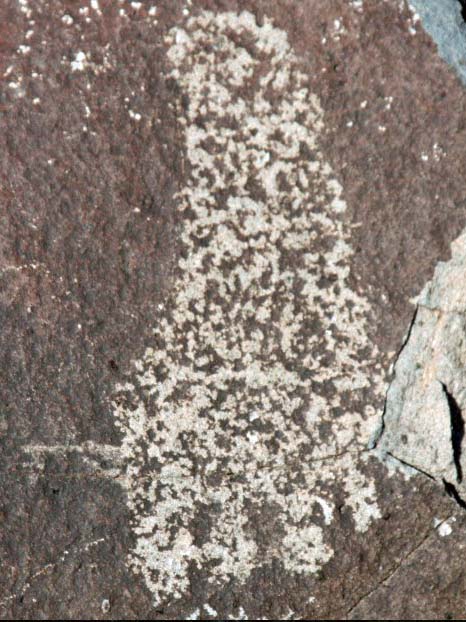
The Big Horn Sheep petroglyphs at Three Rivers were some of the most sophisticated I’ve seen. It’s rare to see bodies filled in.

A Big Horn head with geometric patterns.

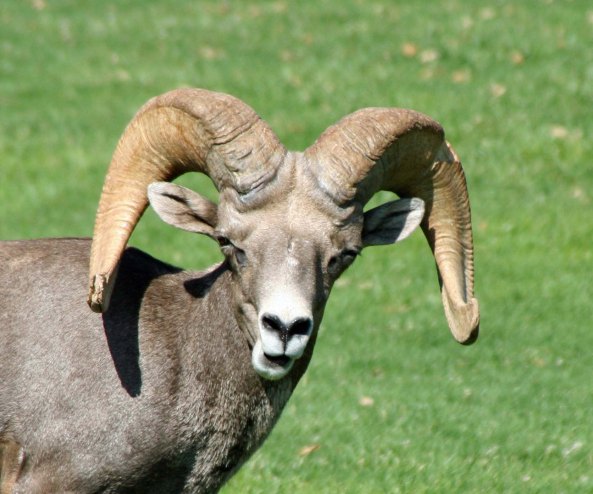
I took this picture of a Big Horn ram in Nevada. He was wondering if he should object to his photo being taken.

Success meant learning as much as they could about the animals that inhabited their desert world: where they lived, what they ate, where they drank, and what trails they used were all important.  The Jornada were excellent trackers, able to read in a few scuffed tracks the story of who had wandered down a trail and what they were doing.

Tracking was a vital skill of Native Americans in hunting, or in being hunted. This was probably the track of a mountain lion.

Definitely human!

There was a close, almost sacred, relationship between the hunter and the hunted. Clans assumed animal names and young people went on vision quests to discover which animal might serve as personal guides. Shamans put on animal cloaks and assumed animal personalities. The gods and the spirits of animals were both honored. (It helped assure they would be around at dinner time.)

Not surprisingly, the petroglyphs found at Three Rivers reflect the importance of the various animals in the life of the Jornada. We discovered numerous bighorn sheep and an unexpected number of cougars. There were also horses, rabbits and coyotes. Horses provided a radical new form of transportation; coyotes were known for their trickery; and rabbits provided an easy food supply.

I featured this cougar in my last post. Again, note the tail over the back.

Another big cat with proud tail.

This cougar came up to sniff us at a wildlife sanctuary in southern Oregon. He looked quite friendly but it was one of those instances I was glad I was on the other side of the fence.

I suspect he would have liked to have had this rabbit in the enclosure with him. Everyone, it seems, likes to eat rabbits. They would have been another important food source for the Jornada.

These two long-eared Jack Rabbits (hares) stopped by our house for a visit a couple of weeks ago. They wanted to know if we had a coyote free zone. I couldn’t make any promises so they moved on.

The arrival of the Spaniards to the New World in the 1500s meant that the Jornada had a dramatic new form of transportation available.

I’ll finish up with this happy songster. (Or maybe it’s not so happy. That could be an arrow.) My next post on Three Rivers is for the birds.

SaveSave

SaveSave

SaveSave

SaveSave

SaveSave

SaveSave

SaveSave

A Journey Back in Time to the Spectacular Three Rivers’ Petroglyph Site of New Mexico… Part 1

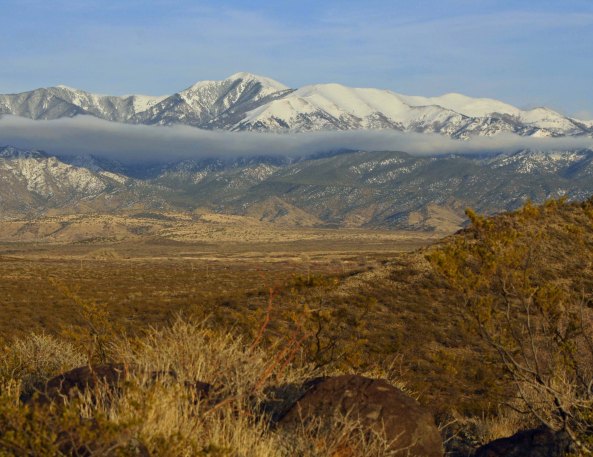
Sacramento Mountains of New Mexico.

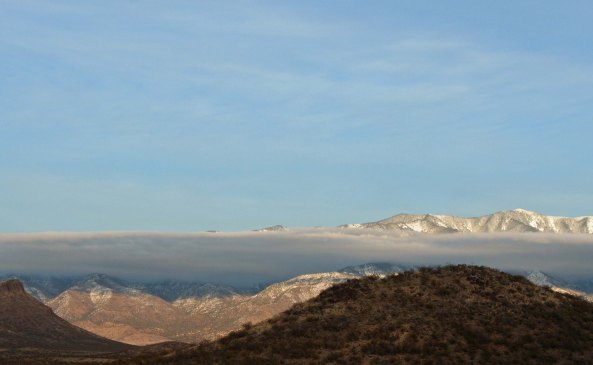
Evening shadows, combining with a layer of clouds stretching along the Sacramento Mountains, provided an air of mystery for the Three Rivers’ Petroglyph Site of southern New Mexico. Peggy and I could hear coyotes on the hunt calling to each other in the valley below, a sound as old as humankind.


It’s tough when play gets in the way of blogging. Something has to give. Guess what? (grin) I had slated today for the beginning of my Native American rock art series. And so it shall be. But I was going to feature the trip we made a few days ago through the Lava Beds National Monument. There’s no time to produce it now; Peggy and I are on the road again. After all, we stayed home for five days. So, I am going to take you back in time to our visit of the Three Rivers’ Petroglyph Site of southern New Mexico. I know some of you traveled there with us. I think you will find the revisit worthwhile. For the rest of you, be prepared for a treat. I can’t think of a better place to begin an exploration of the rock art sites that are found scattered throughout the western United States.

Groups of petroglyphs found at Three Rivers Site, New Mexico.

Three Rivers is chock full of petroglyphs, made by ancient peoples using a rock to peck through desert varnish. Searching for rock art is like a treasure hunt. Sometimes you strike it rich and find a bunch in one location, like this. How many can you find among the rocks here?

Peggy and I have been visiting rock art sites throughout the Southwestern United States for the past 19 years. The Three Rivers’ site is one of our favorites. Some 21,000 petroglyphs featuring everything from people to bugs are spread out over 50 acres. Created by the Jornada Mogollon people of the Chihuahuan Desert, the glyphs were pecked into rock using stone tools for a period of over 500 years starting in 900 AD.

This is wide-open country, set off by dramatic mountains. Within a hundred miles of Three Rivers, Billy the Kid fought in the Lincoln County Wars, Smokey the Bear was found hidden in a tree avoiding a forest fire, bug-eyed aliens became synonymous with Roswell, and history was forever changed with the explosion of the world’s first atomic bomb.

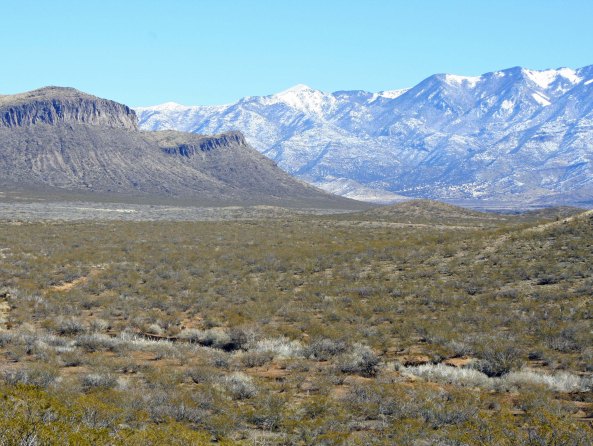
Three Rivers Petroglyph site in southern New Mexico with Sacramento Mountains providing the backdrop.

Native Americans often chose cliff areas such as those on the left for their rock art. Peggy and I have spent a lot of time scrambling around on such cliffs.

I rode through the area on my bicycle as part of my ten-thousand-mile trek around North America. It’s a long way between pit stops. The remoteness of the area is reflected well in the photo above.

Native Americans often chose special sites for their rock art and it is immediately apparent that the Three Rivers site is special. The words raw beauty come to mind. Set on a ridge, the site provides commanding views of the surrounding desert and mountains. Today, I am featuring the natural beauty of the region. In my next posts, I will focus on petroglyphs of people, animals, birds, geometric designs, animal tracks, reptiles, bugs and anything else that caught the fancy of the Jornada people, and us– including a whale and a mysterious ship.

Peggy stands on the ridge next to a rock likely to hold petroglyphs. Some glyphs are immediately obvious while others are hidden. Sharp eyes are required. And you need to hike around the whole rock.

Three Rivers Petroglyph site in southern New Mexico.

A final view of the remote, mysterious area. I’m always on the lookout for UFOs!

NEXT BLOG: I will look at glyphs that feature the Jornada Mogollon people and their gods. Below is an example.

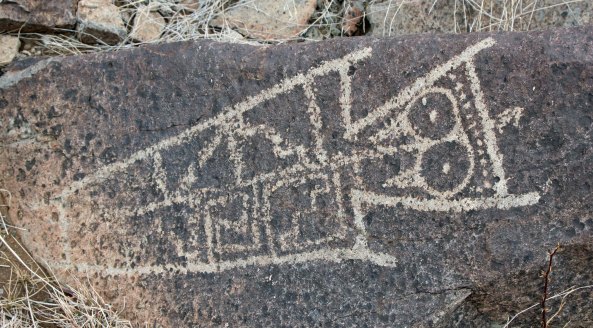
Petroglyph from Three Rivers Petroglyph site in southern New Mexico.

…An abstract geometric design with eyes. Another reason I scan the skies for aliens!

SaveSave

SaveSave

SaveSave

SaveSave

SaveSave

SaveSave

SaveSave

SaveSave

SaveSave

Out of 20,000 Photos… Newspaper Rock— a petroglyph wonderland!

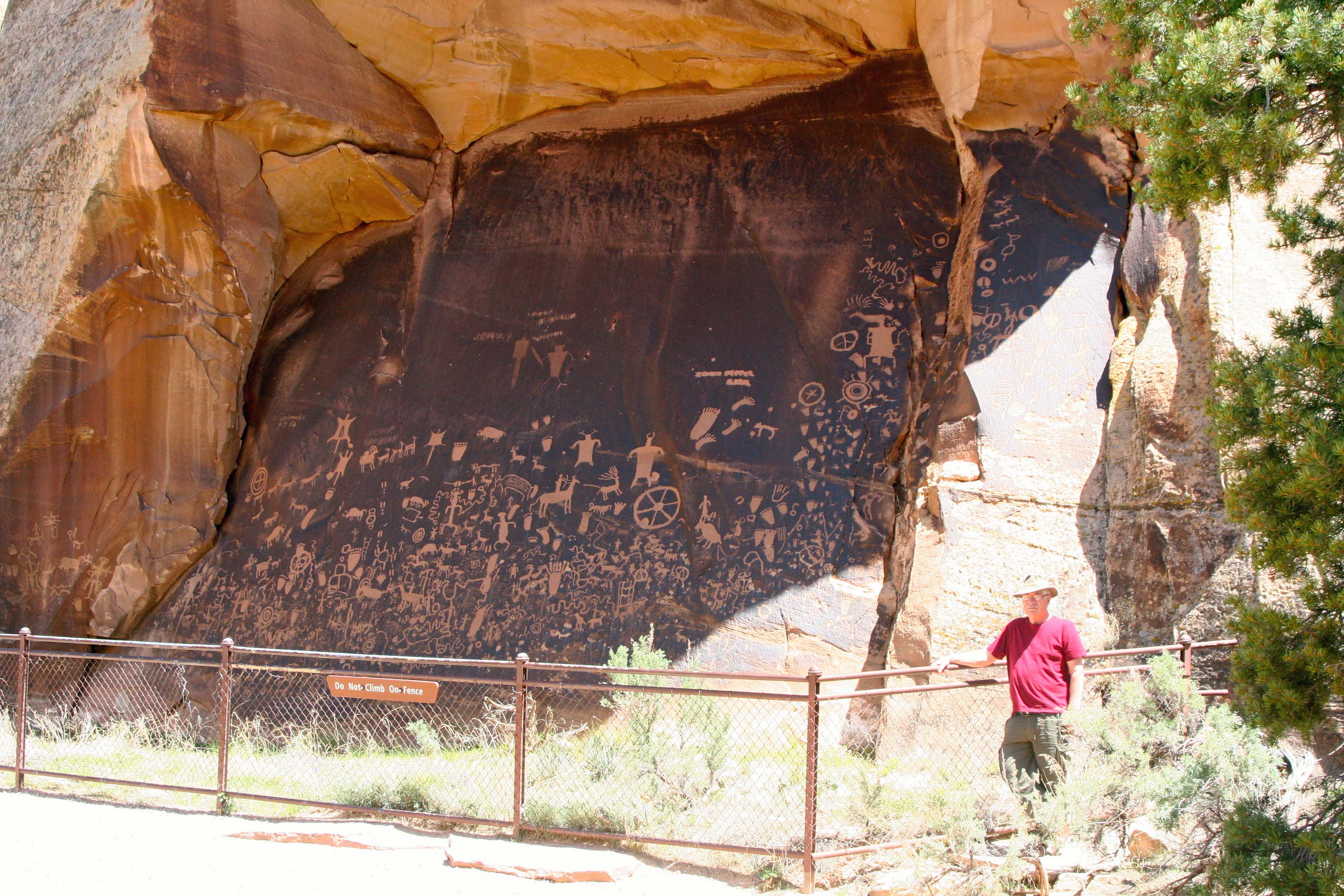
Newspaper Rock. I am standing beside the National Historic Site to provide perspective. (Photo by Peggy Mekemson.)

Newspaper Rock. I am standing beside the National Historic Site to provide perspective. (Photo by Peggy Mekemson.)

It’s Wednesday, so that means a quick photographic essay, selected from my 20,000 pictures. It would be ever so easy to spend a day selecting photos, which would seriously detract from my objective of freeing up time. So I decided to do random. I closed my eyes and scrolled down iPhoto. When I hit enter, I opened my eyes, and there was Newspaper Rock, staring at me.

Newspaper Rock National Historic Site in Utah.

Over 2000 years of Native American petroglyphs are found on Newspaper Rock.

Newspaper Rock sits on the edge of Canyonlands National Park up in the northeastern corner of Utah. It contains all of the news that’s fit to print, or at least all the news from the perspective of local Native Americans who have chipped  away at the rock for over  2,000-years. Who knows what it all means. As the information sign says, “We do not know if the figures represent story telling, doodling, hunting magic, clan symbols, ancient graffiti or something else.” That means the figures are open to interpretation, right? So interpret, I will.

Food has been sighted. What’s on today’s menu?

Two flying squirrels were seen leaping between Ponderosa Pines.

Two flying squirrels were seen leaping between Ponderosa Pines.

Buffalo at Nrewspaper Rock National Historic Site in Utah.

A large buffalo is down at the wallow.

Elk are up on the ridge.

Three elk are up on the ridge.

Big horned sheep are feeding up on the ridge.

A Big Horned Sheep with scrawny front legs is feeding up on the mountain.

And Big Bird is down at the pond.

And Big Bird is down at the pond. (Nothing scrawny about her legs.)

Newspaper Rock National Historic Site.

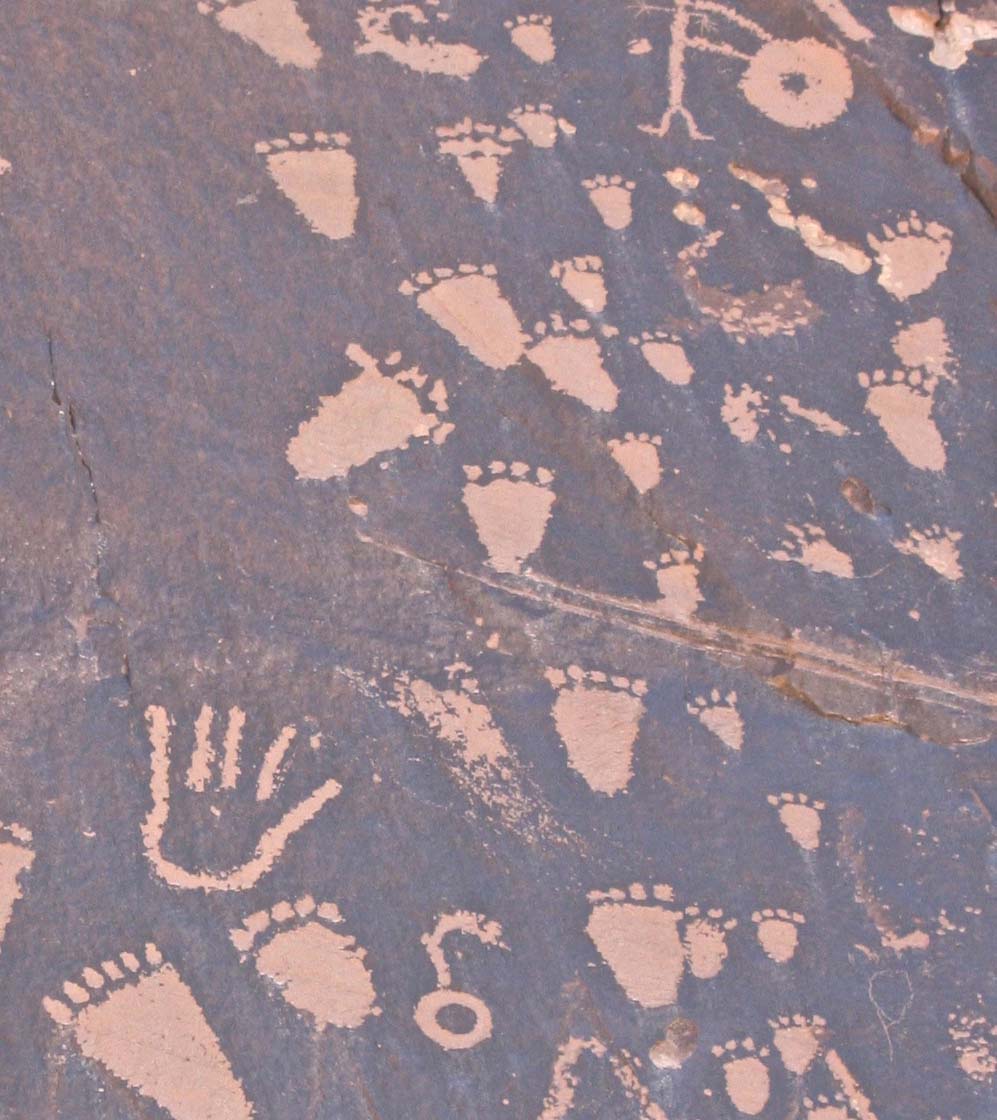
Stay out of the canyon. The tracks of Momma Bear and her cub have been sighted.

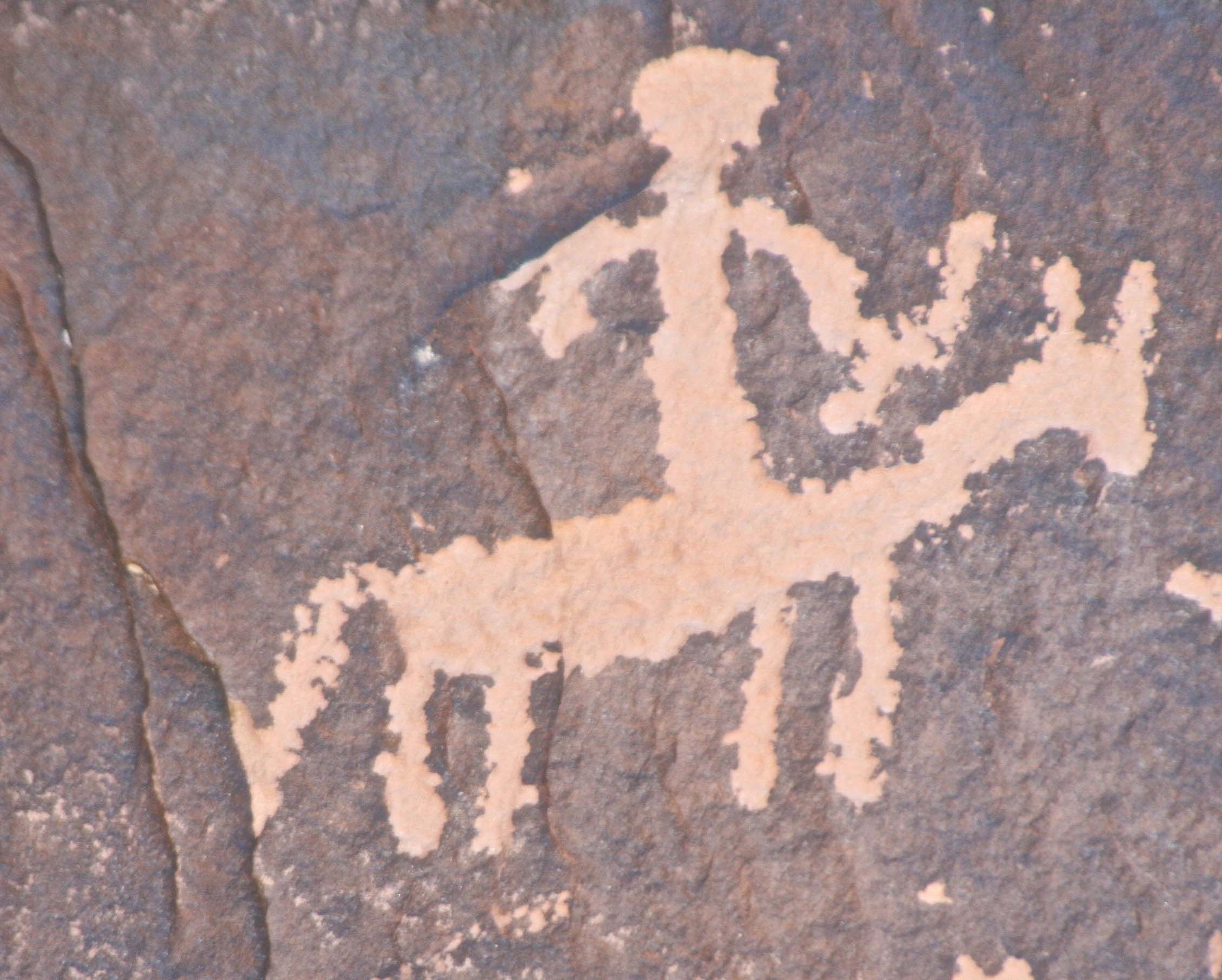
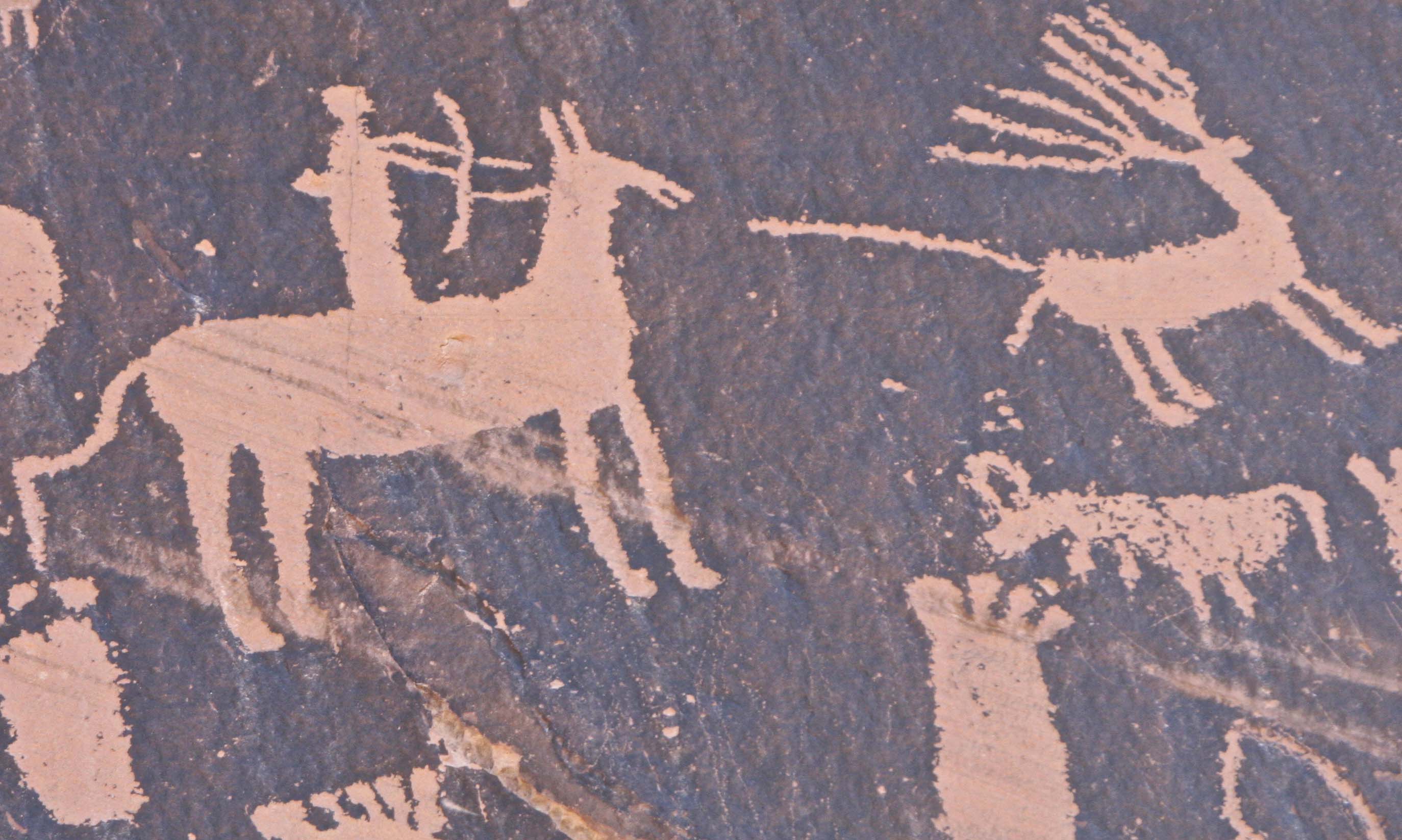
Hop on your horse and grab your bow and arrows. It’s time to get dinner.

Petroglyph of Native American with bow on horse at Newspaper Rock near Canyonlands National Park.

Ready for the hunt.

Whoops.

Whoops.

Having been warned, Walks on Feet went into the canyon anyway. Now he is being stalked by Momma Bear.

Having been warned, Walks on Feet hiked into the canyon anyway. Now he is being stalked by Momma Bear. The trail ends here.

Success! Always Gets His Buck shoots elk in butt.

Success! Always Gets His Buck shoots an elk in the butt.

It’s time for a feast. All the cool guys will be there.

Wild hat.

Scorpion Hat shakes a leg and Sheep joins in.

Woohoo!

Ladder Man shouts “Woo hoo!”

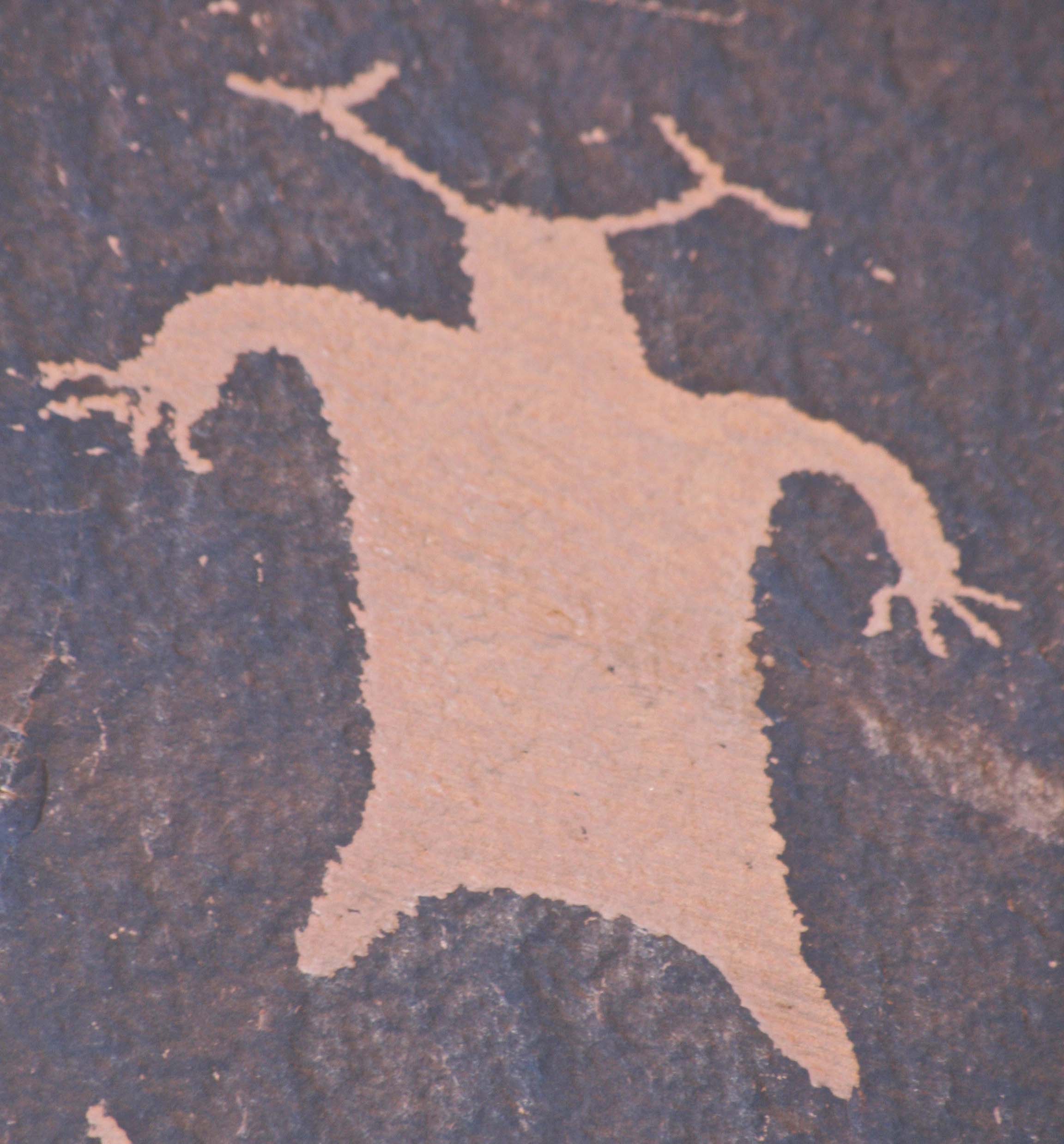
Man With Antlers practices flying leap.

And Horny Fellow practices a flying leap.

Stands On Horse will perform his amazing trick.

For after dinner entertainment, Stands On Horse will perform his amazing tricks.

Frisbee starts at four. NEXT BLOG: Looking for God in all the wrong places.

And Antenna Guy will display his recently captured flying saucer.  That’s it for today. NEXT BLOG: I start my essay series. First up: Looking for God in All the Wrong Places.


A Big Bird Petroglyph and a 1.6 Million Gallon a Day Spring… The Sedona Series

Big birds and camp dogs, four of !032 petroglyphs at the V-bar-V Heritage Site in the Verde Valley of Arizona.

Big birds and camp dogs, four of 1032 petroglyphs found at the V-bar-V Heritage Site in the Verde Valley of Arizona.

Sinagua rolls off the tongue easily, like so many Spanish words do. It is a name applied to Native Americans who lived in the Verde Valley between 500 and 1425 CE by the archeologist Harold Colton. Sinagua means ‘without water.’ The early Spaniards originally applied it to the San Francisco Mountains north of Flagstaff, the Sierra Sin Agua. I think they were disgusted that such beautiful mountains didn’t produce a river.

On our recent visit to Sedona, we visited two areas that did have water, however: the V-Bar-V Heritage Site and Montezuma’s well. The fact they had water made them important to the Sinagua. The V-Bar-V Heritage Site is known for its fine collection of petroglyphs— Native American rock art. Fortunately, the ranchers who had owned the V-Bar-V and ran their cattle along Beaver Creek both appreciated and protected the rock art.

V-Bar-V, by the way, reflects the ranches brand, V—V, that would have been burned onto the hide of its cattle. Branding helped identify the ranch’s cattle when they got mixed up with the neighbors. It also discouraged cattle wrestling, which was a popular way of supplementing your income in the Old West. Marketing gurus today apply the term branding to establishing your unique product, whether its potato chips or blogs.
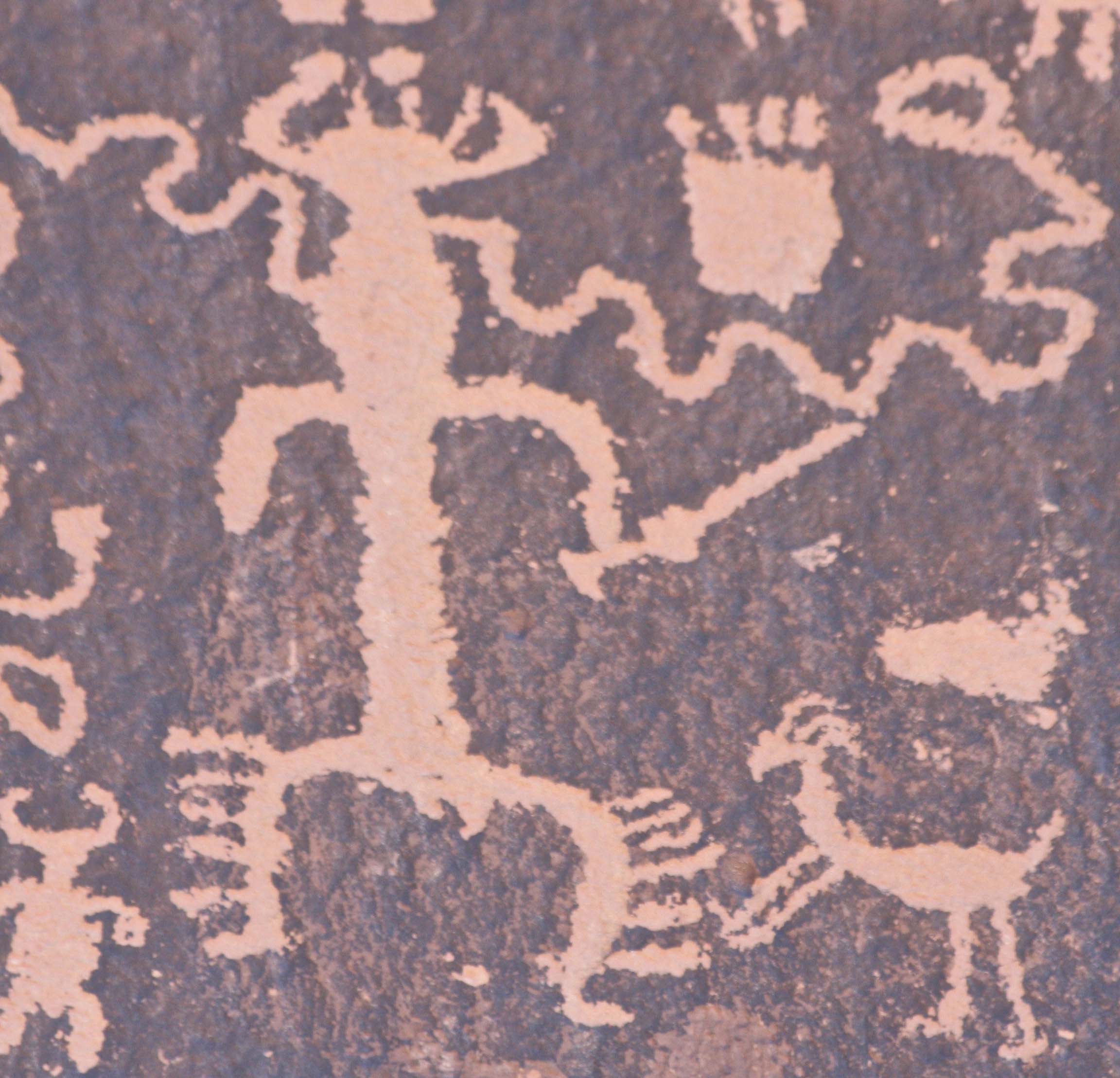
If you been around my blog for a while, you are aware that Peggy and I really like rock art, both as an art form and for its historic context. I also find many of the petroglyphs humorous. Who know whether the Native Americans artists found them so. Most of what we know about rock art fits under the category of speculation.

The V-Bar-V site includes 1,032 petroglyphs on 13 panels, according to the archeologists who count such things. Most were created between 1150 and 1400 CE. The Sinagua packed their bags and abandoned the area in 1425 as part of a massive migration that impacted the whole Southwest for some unknown reason. Maybe a visionary shaman predicted that the Europeans were coming and would ruin the neighborhood. (Just kidding.) Anyway, the petroglyphs include zoomorphs, animal like figures, anthopomorphs, human like figures, and various geometric forms representing everything from maps to astronomy. While half listening to the volunteer led tour, Peggy and I were busy with our cameras.

Long neck or long body? I often fine a humorous side to rock art.

Long neck or long body? Check out the two human-like figures on the right. I often find something humorous about rock art. (Photo by Peggy Mekemson.)

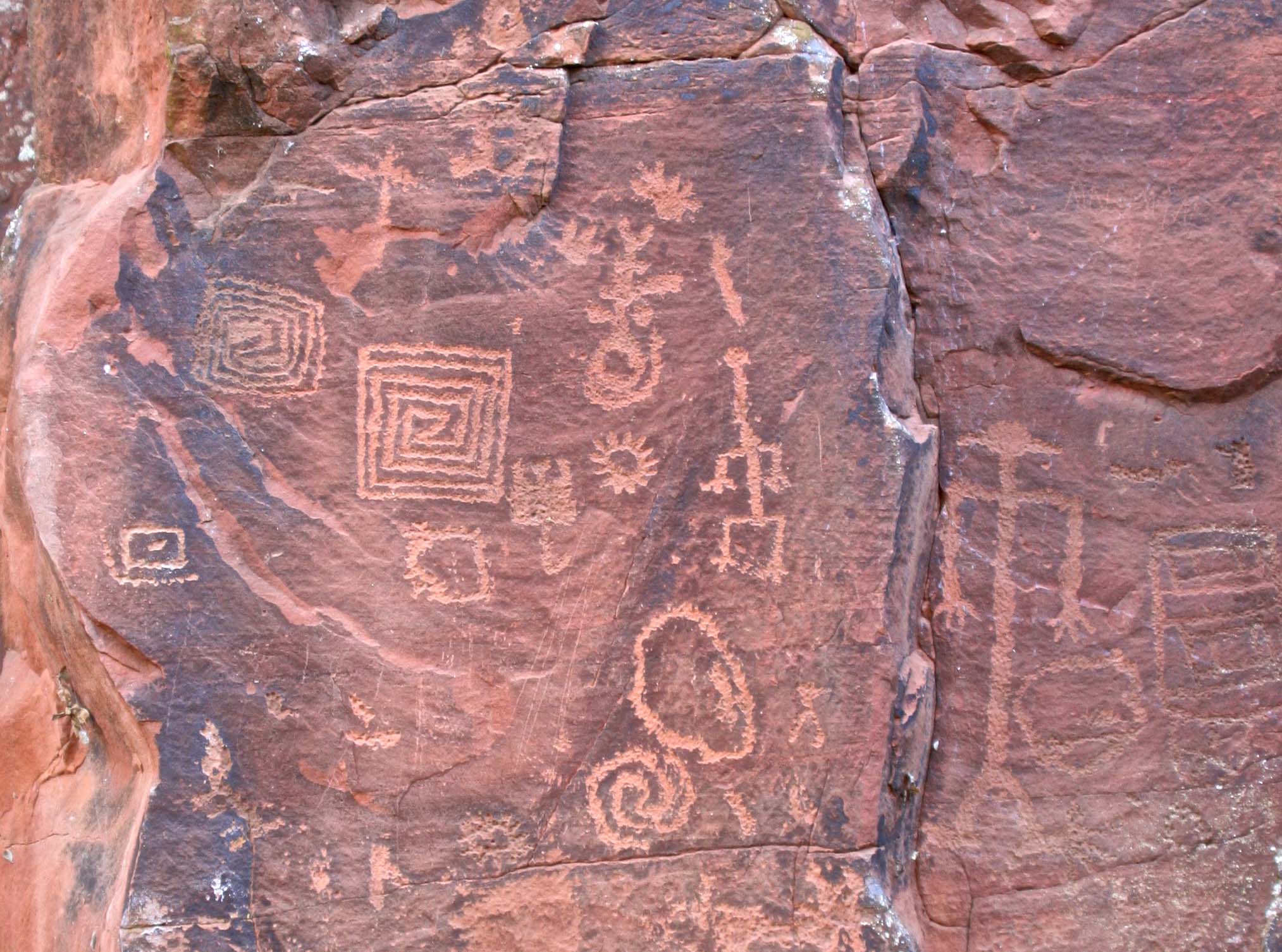
Rock art at V-Bar-V Heritage Site near Sedona, Arizona

Love the tail.

Sinagua rock art at the V-Bar-V Heritage Site in the Verde Valley of Arizona.

Archeologists believe the circles represent the sun and serve as a planting calendar.

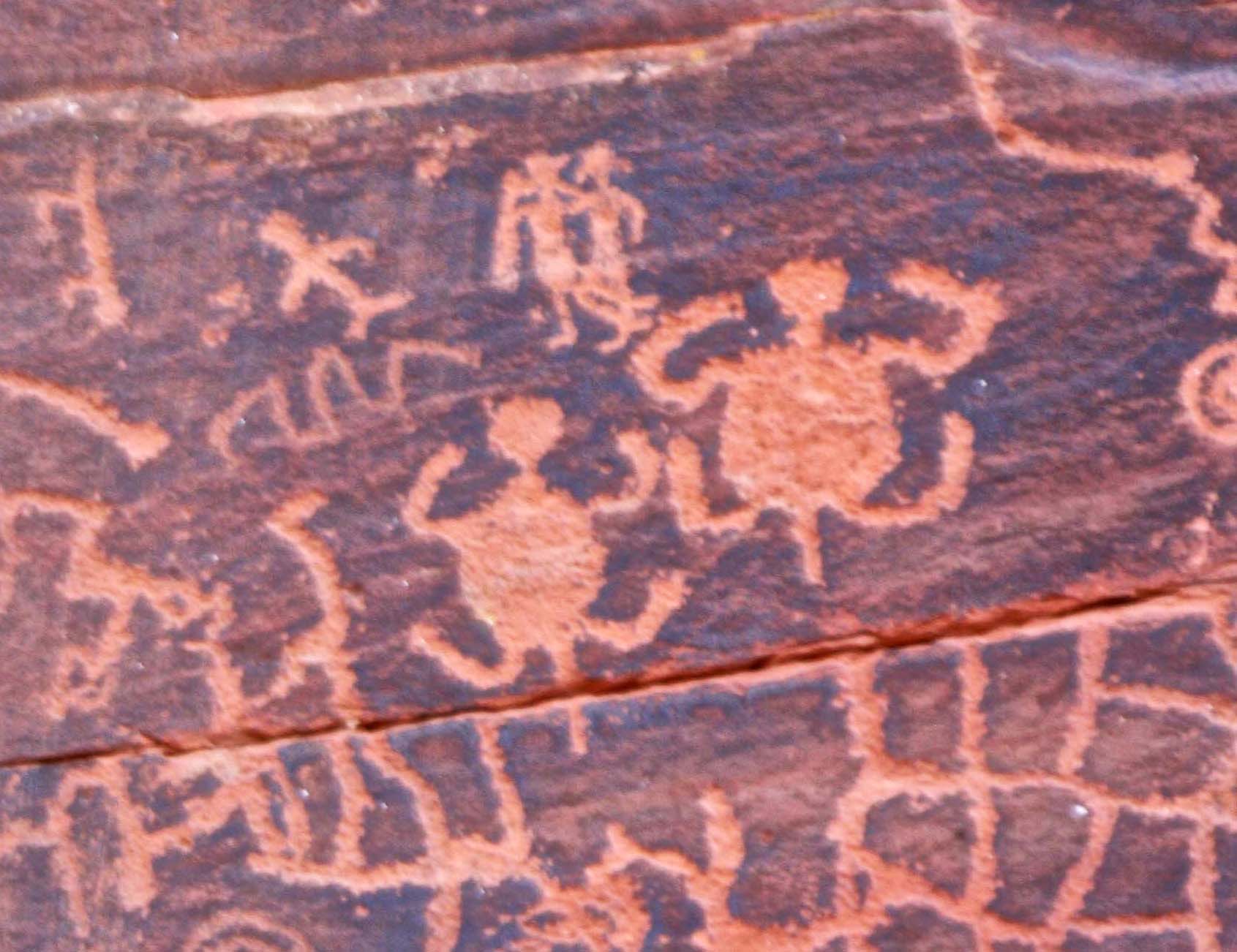
The two turtles are quite impressive. But what about the couple above the turtles. My imagination tells me they are dancing.

The two turtles are quite impressive. But what about the couple above the turtles. My imagination tells me they are dancing.

We found Montezuma’s Well a few miles away from the V-Bar-V Heritage Site. There is also a nearby Montezuma’s Castle that we didn’t get to. The so-called castle is a large cliff dwelling. Neither the Well nor the Castle has anything to do with Montezuma, however. Think profit. Early entrepreneurs believed that stealing the famous Aztec emperor’s name would attract more tourists. So here we are back to branding. They are lucky Montezuma didn’t wreak a little revenge on them for the theft. That could have gotten messy.

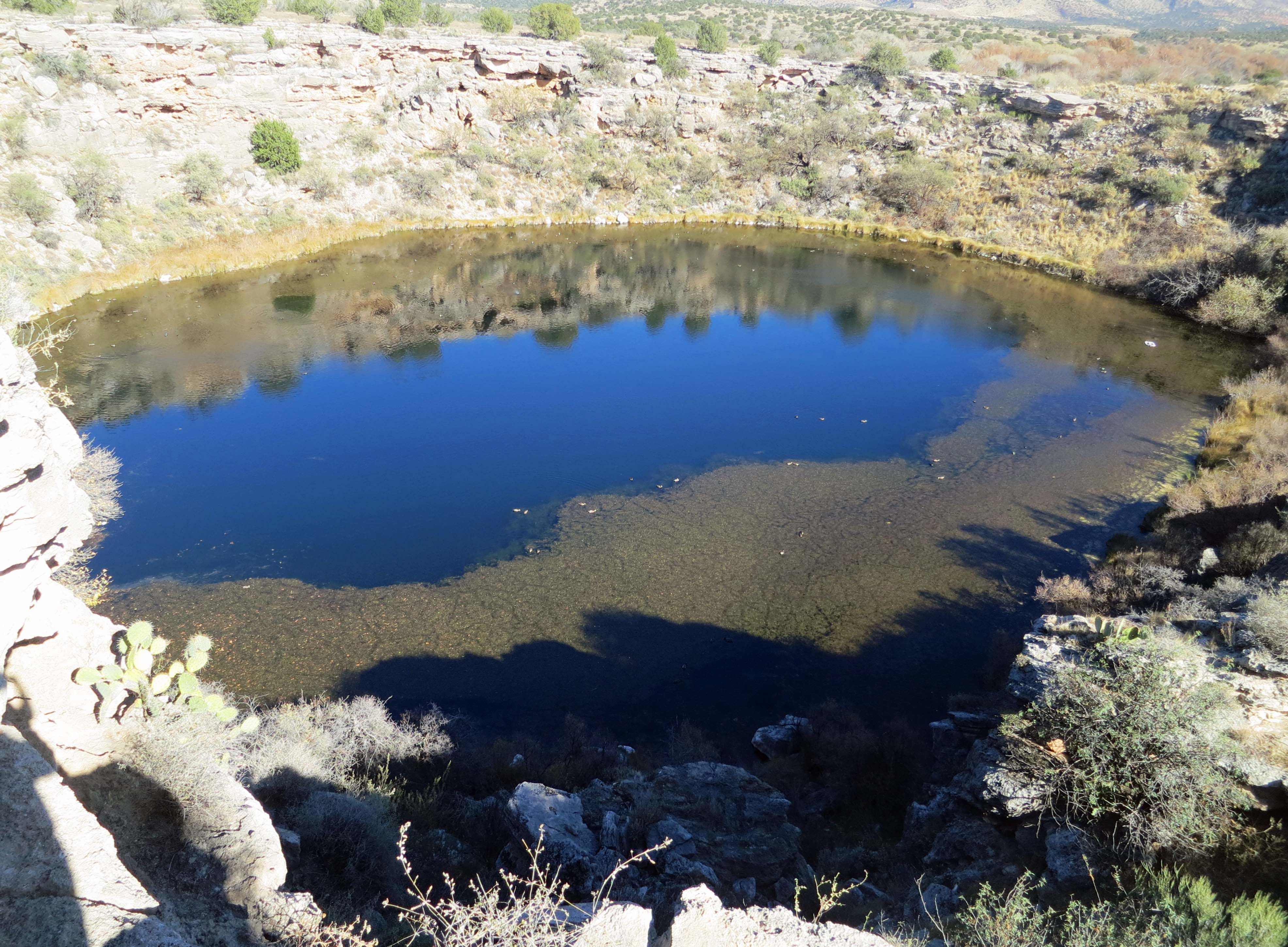
The Well is actually a large sinkhole with a very productive spring in the middle that pumps out some 1.6 million gallons (6 million liters) of water each day. Given that it manages to do this in the middle of a desert and has been for several thousand years, it is no wonder the Sinagua and other local natives found the spring so valuable. The Yavapai Indians even find it sacred; they believe that their ancestors emerged from the spring. Their legend contends that nothing can re-enter the hole once it has emerged. You can’t go home again.

Scientists have learned a lot about the spring. They have been studying it for decades. For one, they believe the water originates up on the Mogollon Rim where it percolates down through various rock layers until it hits the permeable Red Wall Sandstone, which it follows south until it reaches an impermeable volcanic dike, forcing it to the surface. Fish can’t live in the water, but leeches do, thousands of them. I was not tempted to go for a swim.

Not surprising, there is ample evidence including a number of dwellings that demonstrate the spring’s early use by the Sinagua and others. As for the name, I prefer the Hopi’s name for the spring, Tawapa, which means sun spring.

Montezuma's Well and cliff house in the Verde Valley of Arizona.

A cliff house perches above Montezuma’s Well. (Photo by Peggy Mekemson.)

The same cliff house from a different perspective.

The same cliff house from a different perspective. (Photo by Peggy Mekemson.)

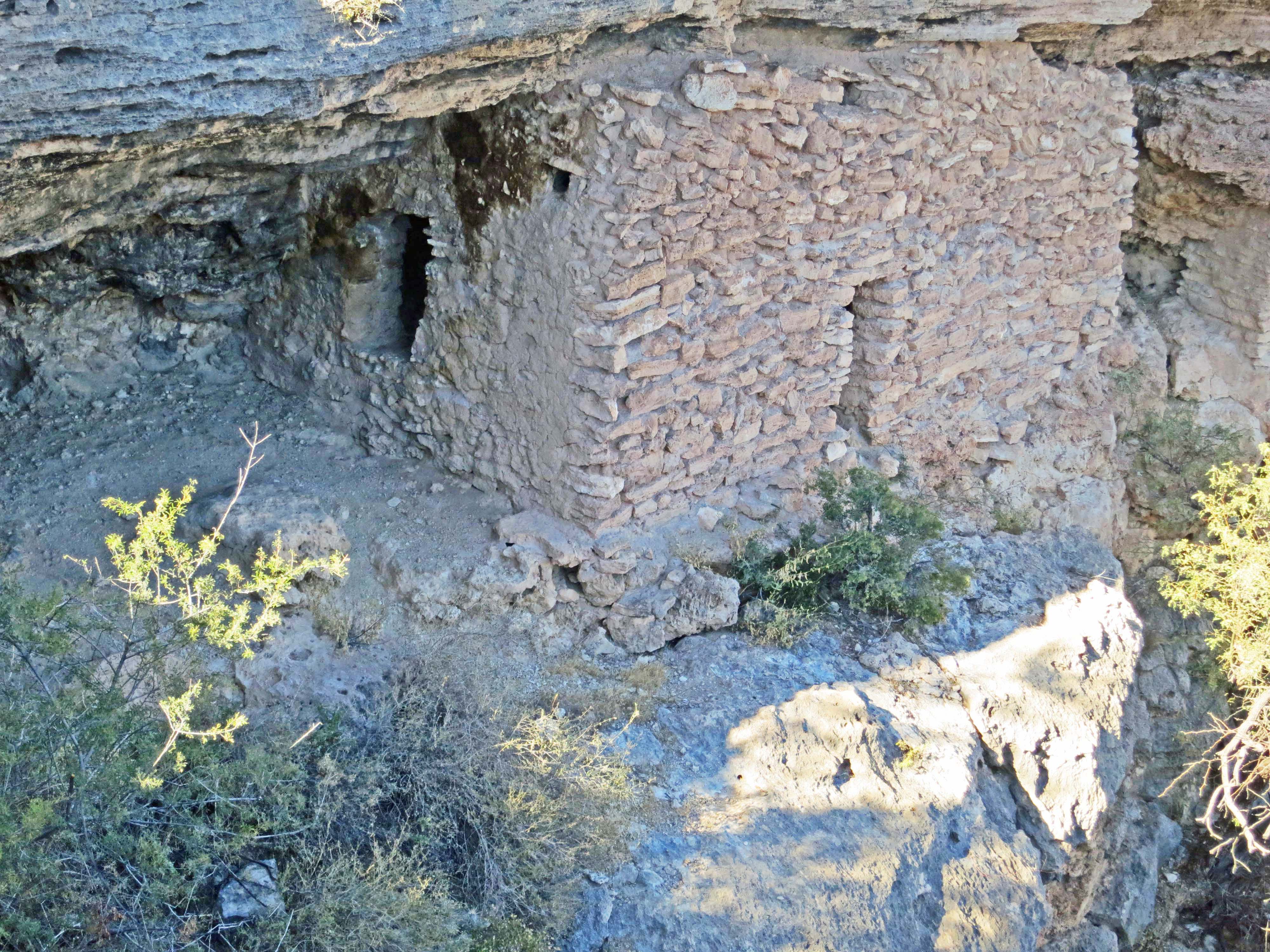
We found this shelter down next to the water, very well protected from the elements.
We found this shelter down next to the water, very well protected from the elements.

Inlet from Montezuma's Well in the Verde Valley of Arizona.

A small inlet from the spring ran next to the shelter and probably provided water. I liked the reflection shot it provided.

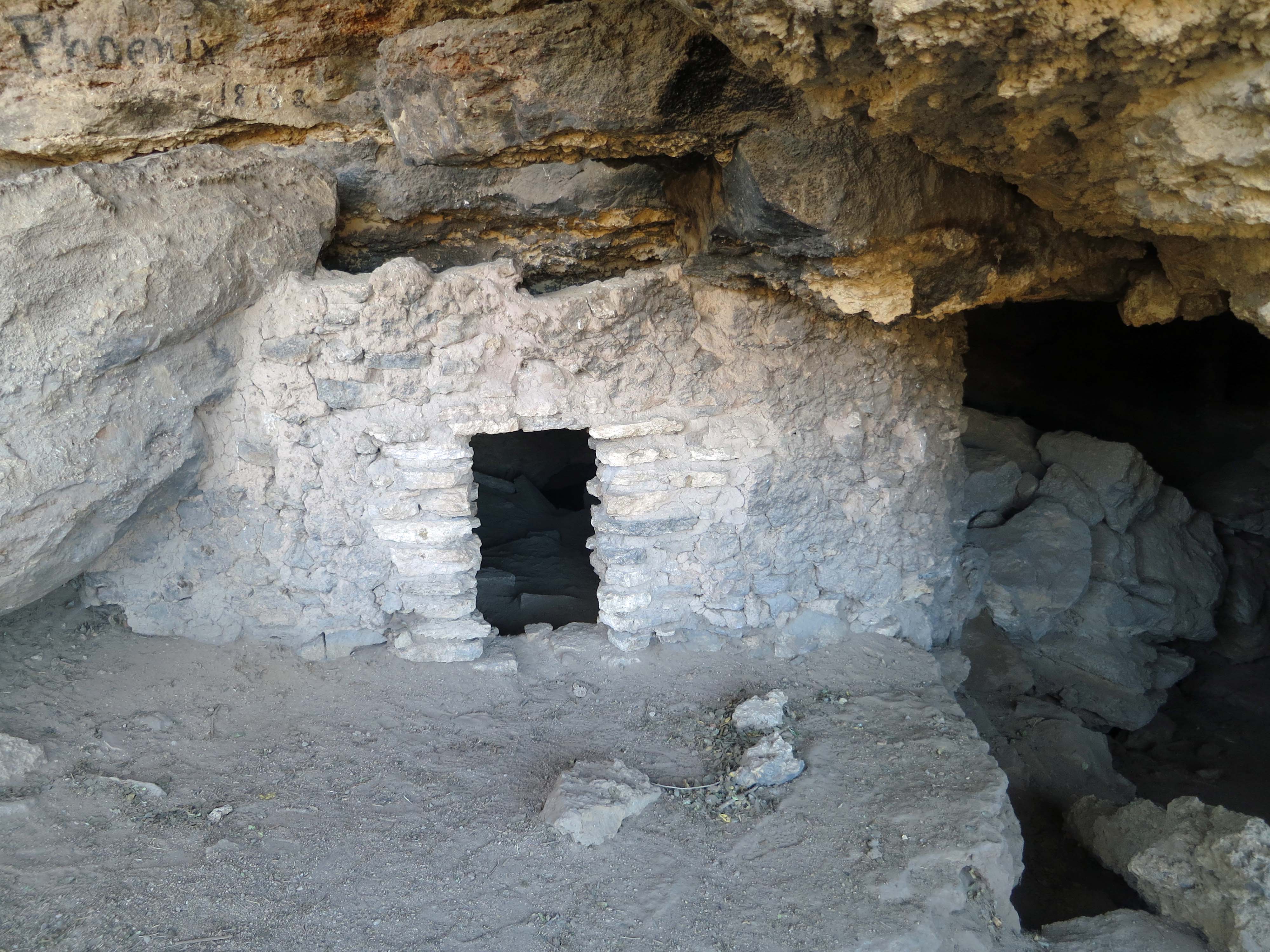
Ruins of Native American shelters found at Montezuma's Well in Verde Valley, Arizona.

Just down the trail from the shelter, we found more ruins.

A final shot taken down into Montezuma's Well. Next Blog: Burning Man 2015: the Theme.

A shot from the rim of Montezuma’s Well.

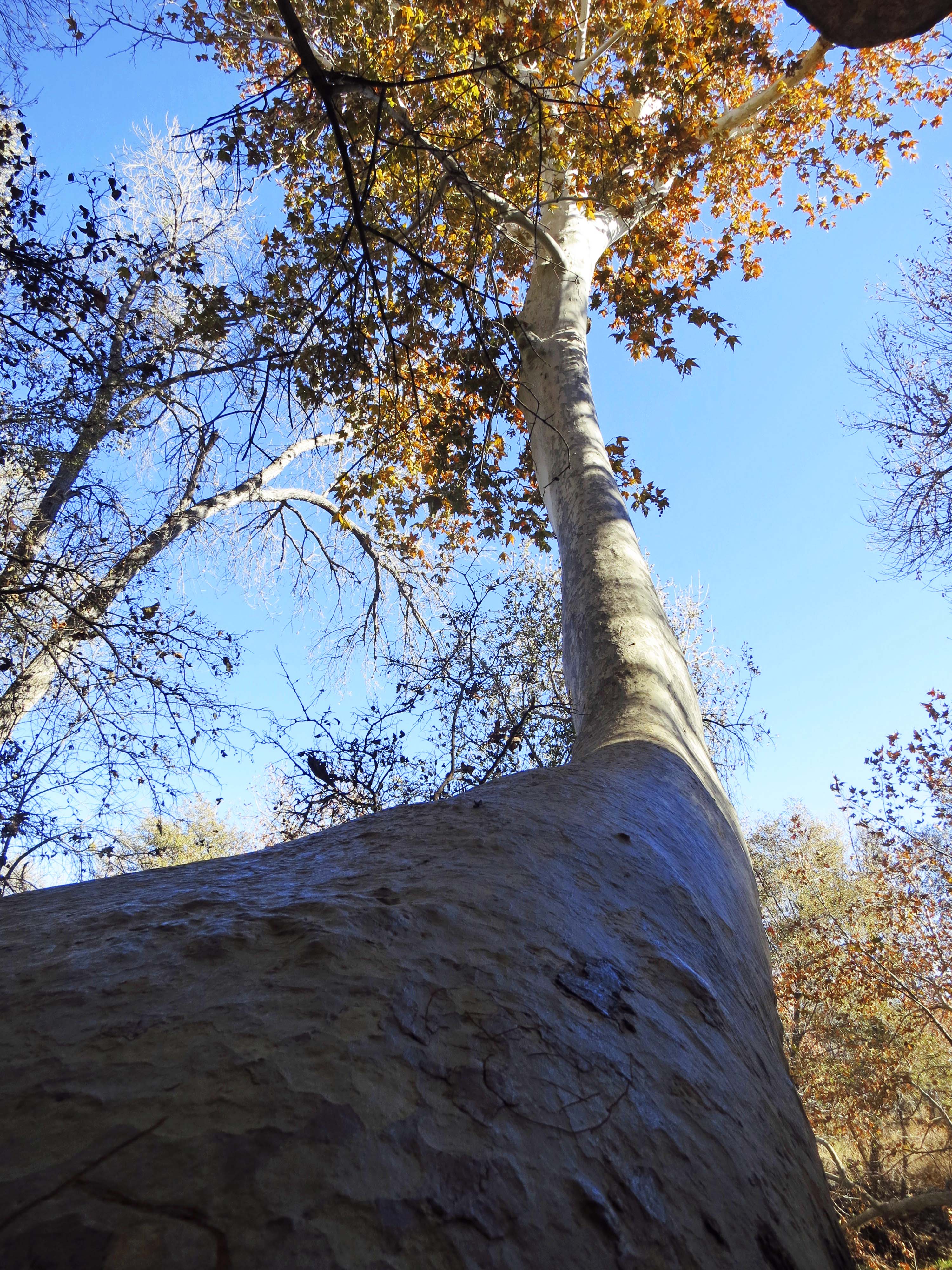
I found this tree growing  down in the valley. It demanded I take its picture.

I found this tree growing down in the valley below the Well. It demanded I take its picture. Native Americans farmed  in the valley with water from the spring.

More ruins are found above the well. Native Americans farmed some sixty acres in the valley below with water from the spring.

A final photo. This ruin was perched above the valley just down from the edge of the Well. NEXT BLOG: Burning Man… the 2015 theme.

Ancient Petroglyphs in the Valley of Fire State Park… The Desert Series

Petroglyphs found at the Valley of Fire State Park

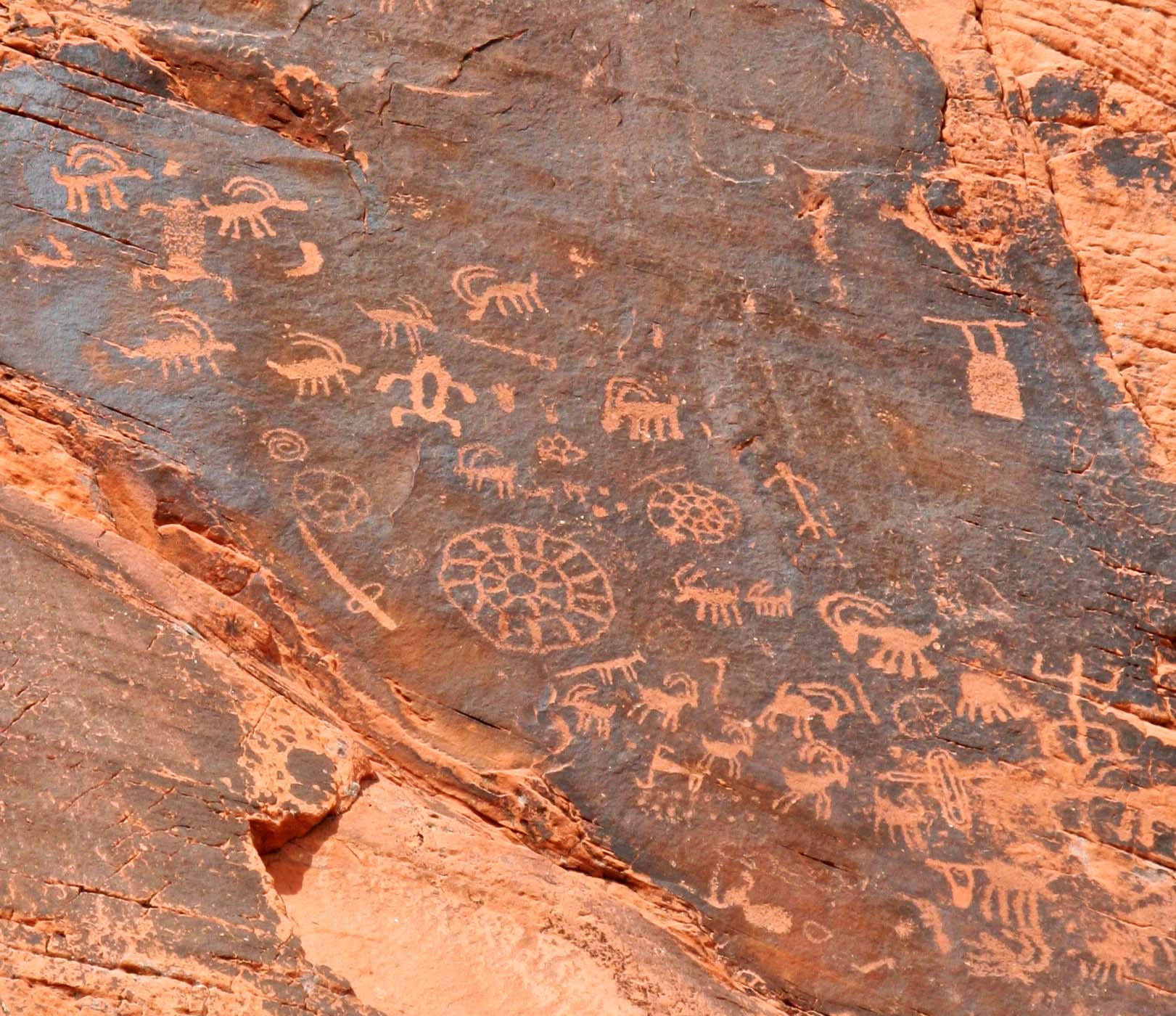
Imagine walking around a corner and coming on this wall of petroglyphs. The red sandstone provided a dramatic canvas for early artists. (Photo by Peggy Mekemson.)

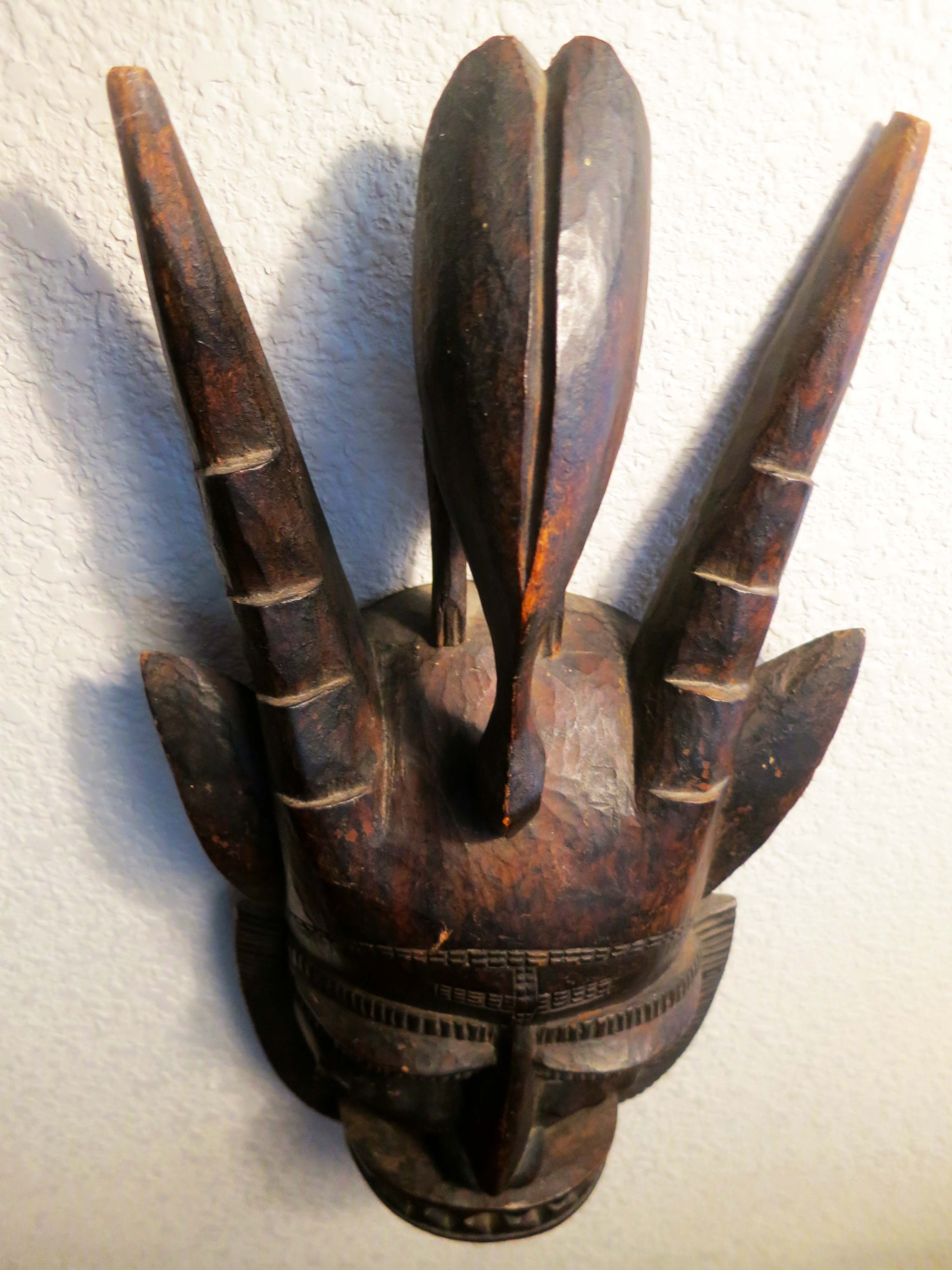
I first became aware of art from traditional cultures as a Peace Corps Volunteer in Liberia, West Africa. The power of its simplicity and almost magical connection with another world caught my imagination– as it had artists such as Picasso and Matisse in the early 1900s. I collected several pieces and brought them home. Two of my favorites are the medicine mask and the bush devil shown below.

African medicine mask from the Ivory Coast.

African medicine mask from the Ivory Coast.

African Bush Devil from Liberia, West Africa.

African Bush Devil from Liberia

It was a natural transition for me to like and appreciate the rock art of Native Americans in the Southwestern United States. Found in hundreds of locations, it reflects several thousand years of cultural traditions. The arid climate of the Southwest combined with the fact that petroglyphs are carved in stone has allowed for their preservation. Only modern man with his graffiti poses a threat.

The Valley of Fire State Park near Las Vegas, Nevada hosts a significant collection of petroglyphs. The rock art was created by a culture known as the Basket makers (2000-1450 years ago) and the Anasazi/Ancient Pueblo group (1500-850 years ago). The Anasazi lived throughout the Southwest and were responsible for creating the impressive cliff dwellings at Mesa Verde National Park. They mysteriously disappeared around 1300, a fact which still has archeologists searching for answers.

The majority of the petroglyphs at Valley Of Fire are found at a site named Atlatl Rock by the park. The atlatl was a carved stick used for throwing spears and is featured in petroglyphs at the site. A steep, metal stairway leads up to the petroglyphs. Most tourists stop, climb the stairs and then hurry on their way. Walking a few hundred feet in either direction, which most tourists don’t do, leads to the discovery of hundreds of other petroglyphs– and Chuck. Following is a sample of what we found on our walk-about.

Petroglyph wall at Valley Of Fire State Park in Nevada.

A closeup of the petroglyph wall shown above. Can you find the dog?

Dog petroglyph at the Valley of Fire State Park.

The dog– or what I think is a dog, is located in the photo above on the left beneath what may be a river.

Petroglyph trees at Valley of Fire State Park in southern Nevada.

I have never seen such a direct representation of trees in petroglyphs. It is possible they are being struck by lightning. And check out the strange horned being on the right. He likely has shamanistic connections.

Petroglyph showing use of an atlatl at Valley of Fire State Park near Las Vegas, Nevada.

I am intrigued by this petroglyph. The figure in the upper left is using an atlatl to launch a spear. But follow the line down. It starts from his left leg, passes through what appears to be a fox or coyote, and then becomes a big foot. How would you interpret this? On the left, you can see graffiti scratched on the stone by more recent visitors.

Petroglyph showing birth at Nevada's Valley Of Fire State Park.

Early rock artists could be quite graphic in their depictions. This shows a child being born. I like to think of it as an early day birth announcement: “Big Bear and Bird Song are proud to announce the birth of their first daughter…” Not sure what the bird is doing sitting on her head. Maybe it’s a singing telegram. (Photo by Peggy Mekemson.)

Big horn sheep petroglyph at Valley of Fire State Park in Nevada.

Big horn sheep, from our experience, are the most common animal found on Southwest petroglyphs, which speaks to their importance, probably as a food source.

Donkey-like petroglyph at Valley of Fire State Park.

Given that donkeys weren’t around in North America when this petroglyph was created, I don’t have a clue what this animal is. The ears may be antlers, but even then… Any ideas?

Big horn sheep petroglyph with sun at Valley of Fire State Park.

The sun is shining down on this big horn sheep. What surprised me were the eyes. It is unusual to see eyes on an animal petroglyphs. (Photo by Peggy Mekemson.)

Petroglyphs high on cliff at Valley of Fire State Park.

We often find petroglyphs perched high up on cliffs and marvel at the rock artists ability to climb up and do their work.

Petroglyphs on cliff at Valley of Fire State Park in Nevada.

Here is a closer photo of the work they were doing, and my final photo for this blog.

NEXT BLOG: On to Red Rock Canyon.


Painted Rocks Petroglyph Site of Southern Arizona… Nice Doggy

Petroglyph at Painted Rock Petroglyph Site in Southern Arizona. Photo by Curtis Mekemson.

My sister had a Jack Terrier named Jack  that looked a lot like this petroglyph, except for floppy ears. And this is how I was greeted when I visited. Bounce, bounce, bounce. I like to speculate that ancient Native American artists created petroglyphs  just for fun on occasion. This might be a candidate.

Anyone who wanders the Southwest and comes across petroglyphs wonders about their origins and what they mean. Some seem so clear: a mountain sheep, a man on a horse, a rattlesnake, a coyote, a hand. While others are more remote: wiggly lines, alien looking figures, concentric circles, and galaxy-like spirals for example.

Petroglyph of a hand found at Painted Rocks Petroglyph Site in southern Arizona.

No question about this petroglyph of a hand.

Scorpion petroglyph found at Painted Rock Petroglyph Site in southern Arizona.

Or this scorpion with its stinger, a common bane of the Southwest.

Chain petroglyph from Painted Rocks Petroglyph Site in southern Arizona.

But what does this chain represent? My first thought: it was the path of a beetle that had sipped too much tequila. The information plaque told me that the more abstract designs represented the archaic cultures which would make this petroglyph over 2000 years old! (This certainly impressed me but one of my followers from Australia reminded me that Australian aboriginal rock art dates back 50,000 years.)

The grid on this rock is another example of archaic petroglyphs. There is some suggestion that the grid represents a rough map and the dots represent where people lived.
The grid on this rock is another example of archaic petroglyphs. There is some suggestion that the grid represents a rough map and the dots represent where people lived.

Experts say we can’t be sure about the meaning of petroglyphs. Some were created thousands of years ago and even the more recent can be several hundred years old. Since there were no written languages among the southwestern cultures of the time, we are left to speculate. Descendants of the ancient peoples provide our best clues. The Hopi, Navajo and other natives of the Southwest look backwards in time from their unique cultural perspectives and provide insights.

Certainly some petroglyphs have spiritual significance. Shamans would take drug-enhanced journeys into other worlds to learn the secrets of nature and gain control over natural elements. Some petroglyphs reflect these journeys and show the beings encountered along the way. (Either that or little green men were frequent visitors.) Shamans of the Huichol culture in western Mexico follow a similar path today.

Huichol work of art representing the journey to gather Peyote. Photo by Curtis Mekemson.

Peggy and I bought this Huichol yarn art painting several years ago in Mexico. The Huichol are a native people who live in the Sierra Madre Mountains of Mexico and practice a lifestyle similar to that of their ancestors. Their art represents visions their Shamans have on their mystical, peyote induced journeys. This piece represents the tribes annual journey to gather more peyote for more visions.

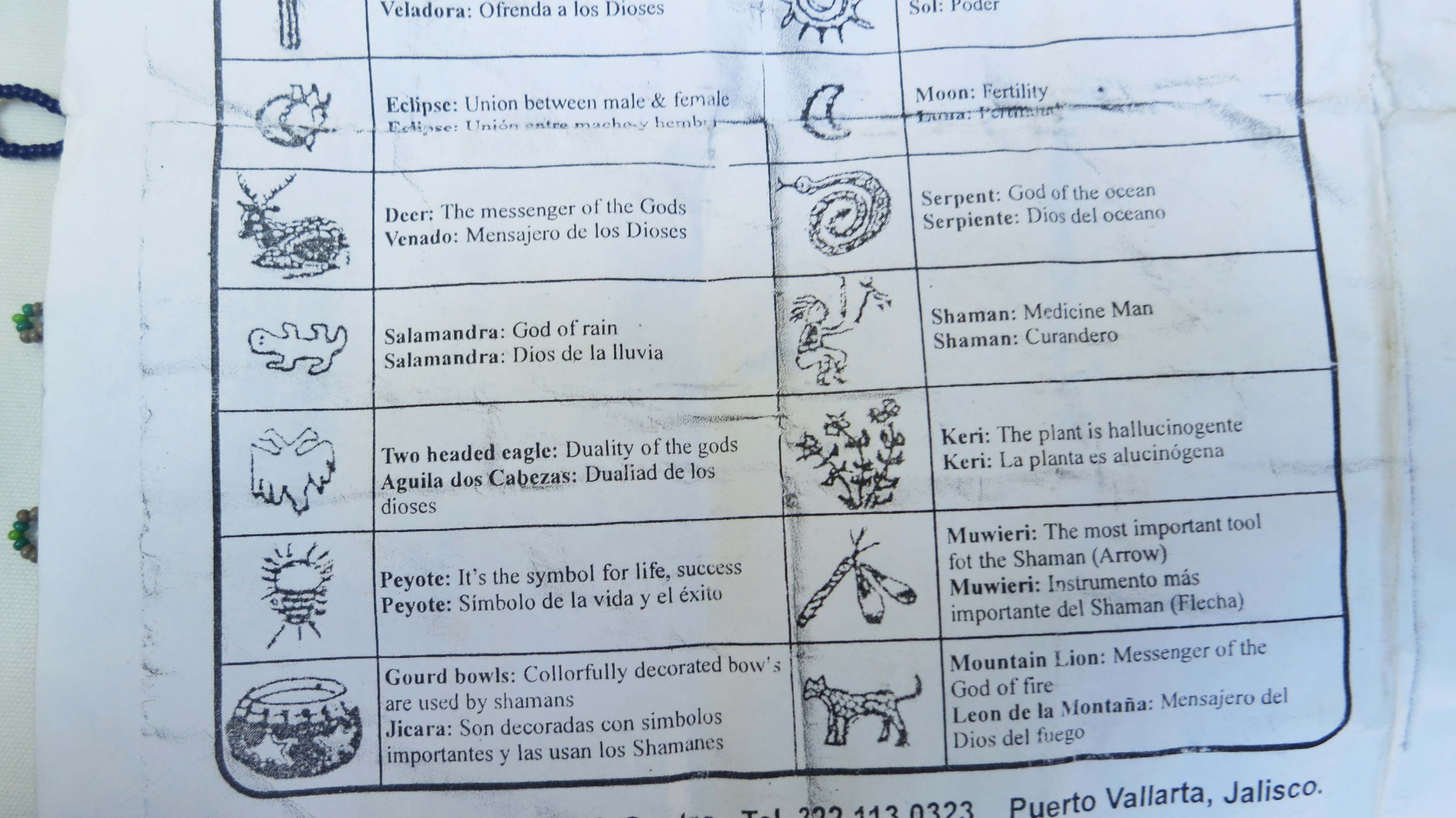
This sheet, conveniently provided by the Huichol man who sold us art, provides interpretations for some of the figures. The deer, for example, are messengers of the gods. People of the Huichol culture immediately recognize them as such whenever they are included in a painting. Early  Christian artists provided similar types of symbolism for their non-reading flocks. A head on a platter meant St. John the Baptist, for example. We can assume that the rock art of the Southwest also incorporated commonly recognized symbols.

This sheet, conveniently provided by the Huichol man who sold us art, provides interpretations for some of the figures. The deer, for example, are messengers of the gods. People of the Huichol culture immediately recognize them as such whenever they are included in a painting. Early Christian artists provided similar types of symbolism for their non-reading flocks. We can assume that the rock art of the Southwest was also highly symbolic.

Peggy and I photographed this petroglyph I call carrot top in Dinosaur National Monument. It is very likely it represents a shamanistic vision.

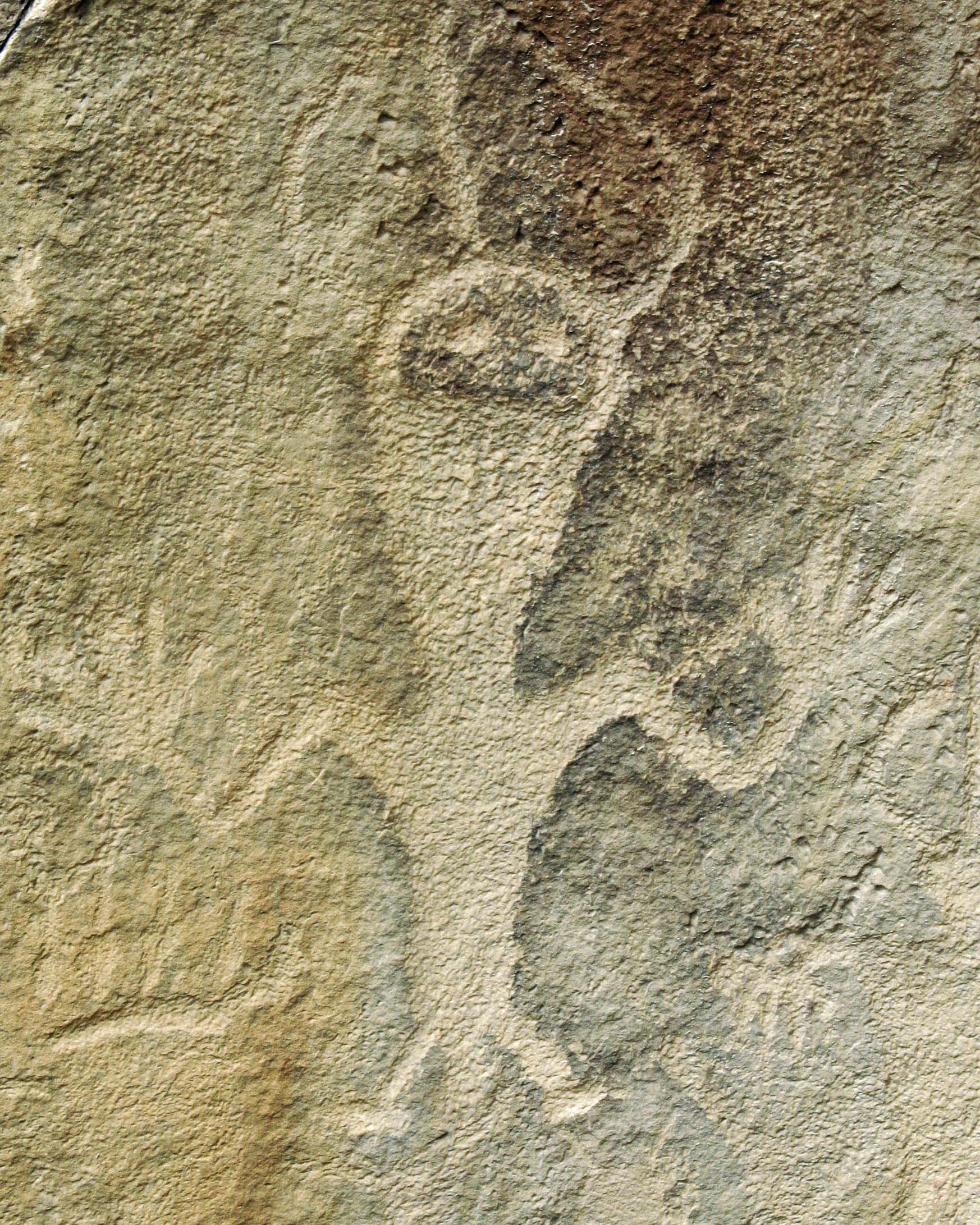
Peggy and I photographed this petroglyph I call Carrot Top and his dog in Dinosaur National Monument. It is very likely it represents a shamanistic vision. It would also make a great alien, however. Note the little legs.

Clan names, common animals, and important food sources like corn are common. Some may have even served as maps showing the layout of a village or where to find a spring.   And maybe some were created for the sheer joy of creation, pounded out by an early Michelangelo of the desert carving in stone. I am hitting a 9.99 on the speculation meter here, but I like to think the artist that created the dog/coyote (or possibly horse) featured at the beginning of the post was having fun.

Man on horse petroglyph from Painted Rock Petroglyph Site in Southern Arizona.

Petroglyphs are difficult to date but one thing is for sure: if you find a man riding a horse, it had to take place after Spaniards first introduced modern horses to North America in the 1500s.

Petroglyph of mountain sheep found at Painted Rocks Petroglyph Site in southern Arizona.

Big Horn sheep were common in the early Southwest, so it isn’t surprising that petroglyphs representing Big Horns are found at Painted Rock Petroglyph Site and at most other sites we have visited.

Big Horn Sheep photo by Curtis Mekemson.

I caught this family of wild Big Horn Sheep grazing in a public park near Hoover Dam. I considered the Jack Rabbit a bonus. Obviously, I was not their major concern.

Petroglyph of Mountain Sheep found at Painted Rocks Petroglyph Site in Southern Arizona.

The belly on this Big Horn Sheep suggests to me that this was one pregnant lady.

Elk petroglyphs in Painted Rock Petroglyph Site in Southern Arizona.

I thought these were deer at first but their large horns may suggest they are elk.

Petroglyph of a lizard found at Painted Rock Petroglyph Site in Southern Arizona.

Another common petroglyph found throughout the Southwest is that of the lizard.

Tortoise petroglyph at Painted Rocks Petroglyph Site.

I am going with tortoise on this one. It’s another petroglyph that makes me smile.

This petroglyph of a dog looks even more like Jack. He has floppy ears and is barking. (grin) So I'll end the post here.

This petroglyph of a dog/coyote/horse looks even more like Jack. He has floppy ears and is barking. (grin) So I’ll end the post here.

NEXT BLOGS: Peggy and I are heading out tomorrow for the remote corners of Nevada where there may or may not be Internet service. I’ll be gathering material for some fun blogs plus I want to finish up the last details on my book. So, I’ve decided to put my blog activities on hold for three weeks. See you all at the beginning of May with stories on the ET Highway, Area 51, Ghost Towns, and more! Plus I’ll be back checking in on your fun and interesting posts. –Curt


Painted Rock Petroglyph Site… Voices from the Ancient Past: Part I

The rocks at Painted Rock Petroglyph Site in Southern Arizona are covered with petroglyphs as shown in this photo with Peggy.

The rocks at Painted Rock Petroglyph Site in Southern Arizona are covered with hundreds of petroglyphs, as shown in this photo with Peggy. Some my be several thousand years old.

Peggy and I had just been through one of those checkpoints that make Arizona so endearing to visitors: armed men with guns and dogs and x-ray machines had slowed us to a crawl as men stared, dogs sniffed and x-rays probed. It was for our own good. Yeah, right.

Having survived yet another checkpoint on our way to Organ Pipe Cactus National Monument, I stepped on the gas and almost missed it. A small brown BLM sign on Interstate 8 announced we were passing the Painted Rock Petroglyph Site. At 70 plus miles per hour all that registered in my mind was petroglyph. “Whoa Quivera,” I said to our van who has little humor about stopping quickly at 20, much less 70.

Peggy and I are big petroglyph fans, having visited and blogged about several sites in the Southwestern US. This one was new to us– and now it was fading into the distance. America’s freeway system has little forgiveness for missed turns. Should we go on? No, the answer came easily. We decided that Organ Pipe could wait.

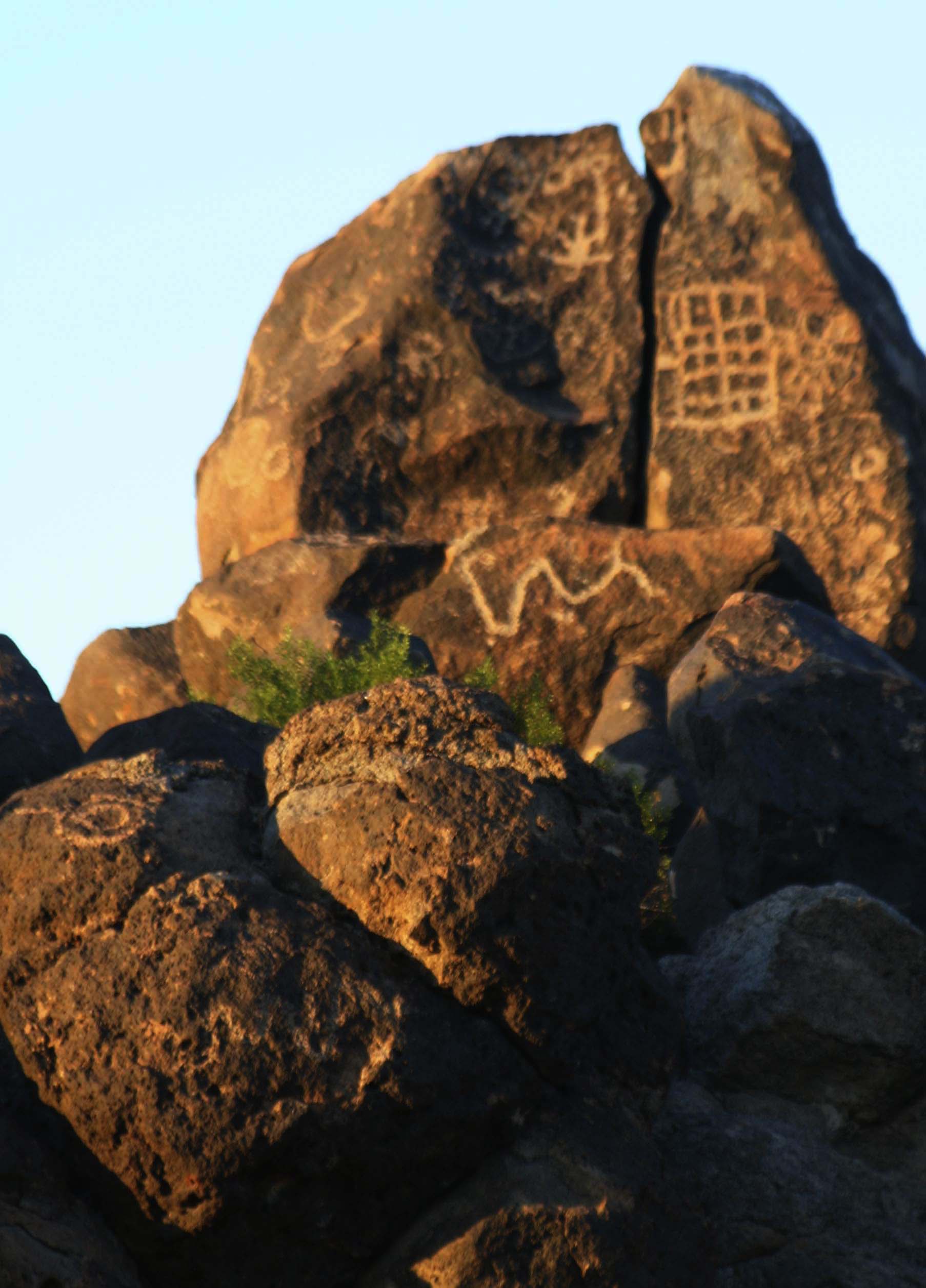
We soon found a place to turn around. After driving a few miles off the freeway, we arrived at the site. And were greeted by a large pile of rocks, flat ground, and a lonely saguaro. So much for this detour I thought– until Peggy pointed out that the rocks were covered from top to bottom with petroglyphs. A command decision was made. We would spend the night at the BLM campground.

We arrived at Painted Rock Petroglyph Site in southern Arizona and found a large pile of volcanic rocks stacked up on the flat desert floor. Only when we got closer did we realize that the rocks were covered with Petroglyphs.

We arrived at Painted Rock Petroglyph Site in southern Arizona and found a large pile of volcanic rocks stacked up on the flat desert floor. Only when we got closer did we realize that the rocks were covered with Petroglyphs.

Painted Rock Petroglyph Site in Southern Arizona

The closer we got to the rocks, the more petroglyphs we could see.

Rock covered with petroglyphs at Painted Rock Petroglyph Site in southern Arizona.

Some, such as this rock Peggy is standing next to, were totally covered. Internet sites claim there are around 900 petroglyphs at Painted Rock. I would argue there must be more judging from this rock.

A sign nearby informed us that Native Americans had occupied the region for over 9000 years. (How much more native can you get?) Hunting and gathering peoples had lived in the area from approximately 7500 BC up until around 1 AD. A group, known as the Hohokam, had come afterwards and occupied the region up until the 1400s. Both cultures were represented by petroglyphs found at the site. We could almost hear their voices from the ancient past whispering to us.

Staying over night allowed us to capture the petroglyphs in different light.

Staying over night allowed us to capture the petroglyphs in different light.

Petroglyphs at Painted Rock Petroglyph Site.

In my next blog I’ll feature individual petroglyphs and discuss what we (assume) to know about their meanings. Meanwhile, I’ll finish today’s post off with photos of the saguaro cactus that dominated the site.

Saguaro cactus found at Painted Rock Petroglyph Site in Southern Arizona.

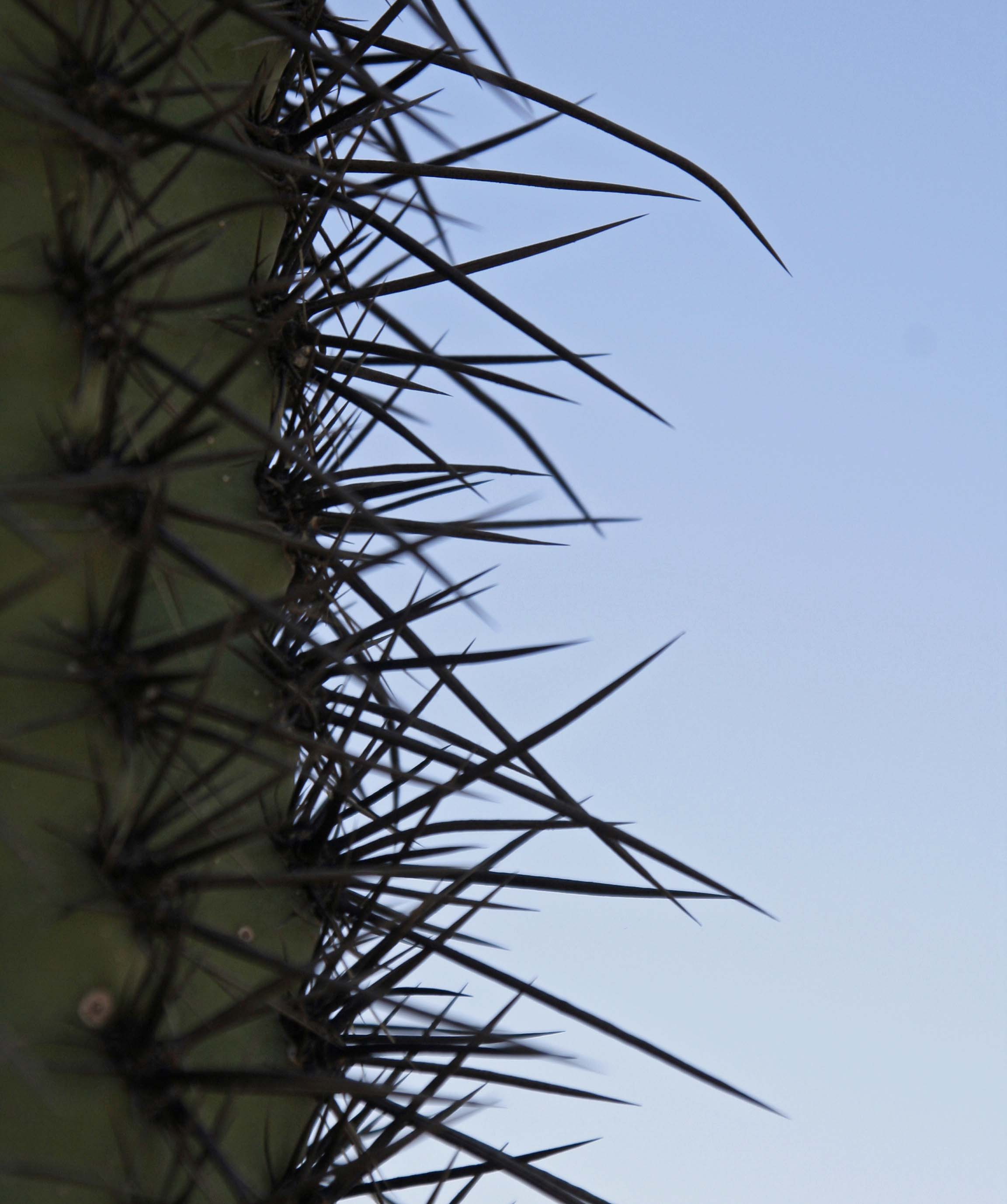
This saguaro may be a youngster since it had yet to grown any arms. Youngster is relative meaning 50-75 years old. Check out the spines…

Here's a close up.

Here’s a close up of why snuggling up to a saguaro is a bad idea.

Setting sun outlines Saguaro Cactus at Painted Rock Petroglyph Site in southern Arizona. Photo by Curtis Mekemson.

The setting sun outlined the Saguaro.


Dinosaur National Monument… A Photographic Journey through America’s National Parks

Dinosaur National Monument is filled with quiet beauty.

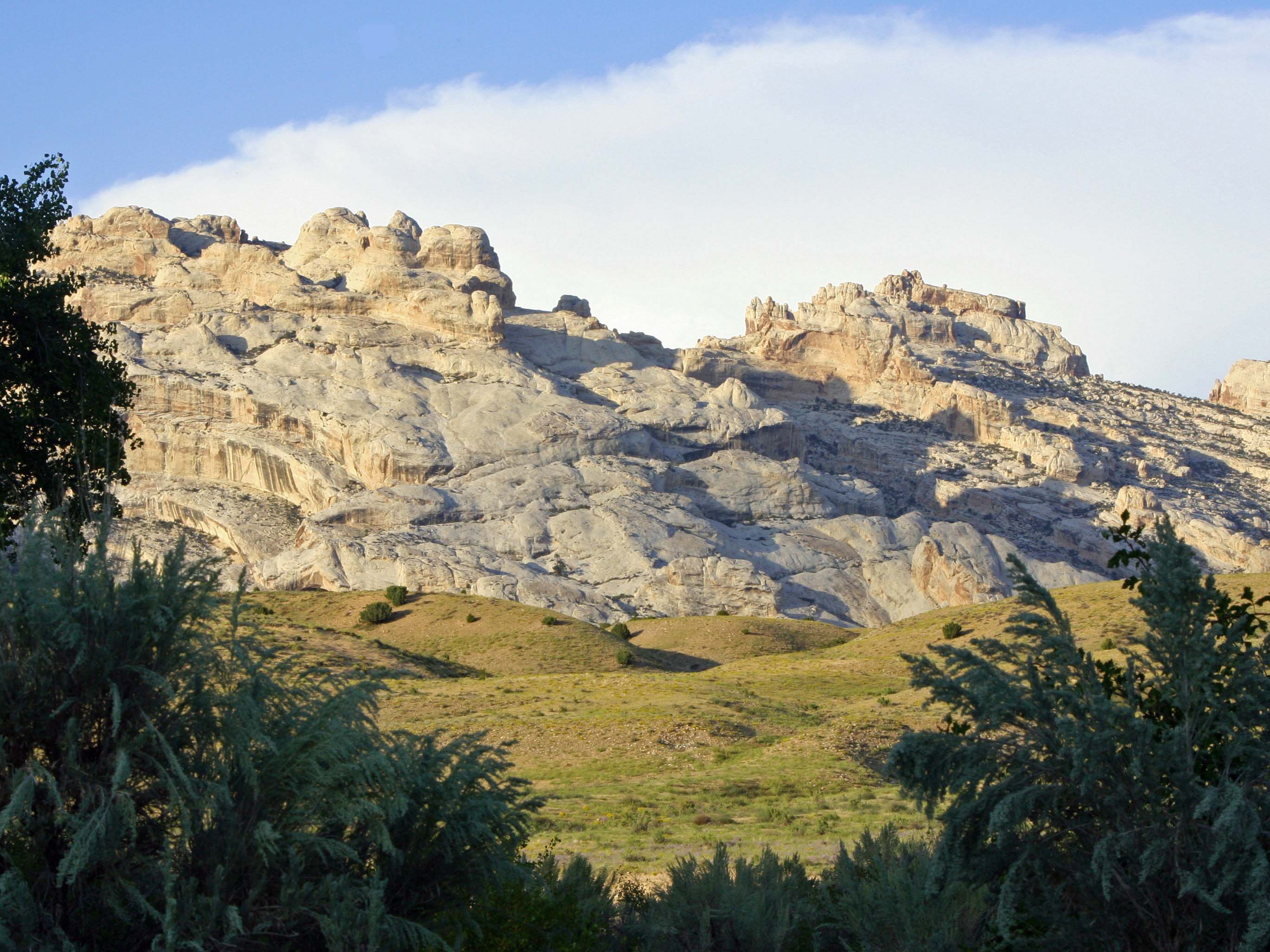
Dinosaur National Monument is filled with quiet beauty.

Located on the border between Colorado and Utah, Dinosaur National Monument is known for it’s large deposit of Dinosaur Bones. The Park also features a quiet beauty and an interesting collection of Native American petroglyphs. The Yampa and Green Rivers snake their way through the canyons of the park and attract white-water rafting enthusiasts– including several of my friends.

So there is a little bit of something for everyone in this little known National Monument.  Hopefully, this blog will encourage some of my readers to visit. You won’t regret the decision.

Asters in Dinosaur National Monument. Photo by Curtis Mekemson.

Bright asters decorated the roadside on our way into camp.

Petroglyph at Dinosaur National Monument. Photo by Curtis Mekemson.

This person with his/her large hands and dogs is one of my favorite petroglyphs.

Green River flowing through Dinosaur National Monument. Photo by Curtis Mekemson.

Shadows stretch across the Green River while the evening sun gently bathes the cliffs above in light. Not a bad view from our camp!

Dinosaur bone in cliff at Dinosaur National Monument. Photo by Curtis Mekemson.

This large dinosaur bone was sticking out the edge of a cliff.

Lizard petroglyph in Dinosaur National Monument. Photo by Curtis Mekemson.

I thought this Native American petroglyph was particularly appropriate for the park.

Elephant Toes rock at Dinosaur National Monument. Photo by Curtis Mekemson.

Rock monuments are given names in Dinosaur National Monument, as they are throughout the West. What would you name this? The local answer is below.

Cliff of petroglyphs in Dinosaur National Monument. Photo by Curtis Mekemson.

Peggy sits beside a series of petroglyphs we found high above the road.

Petroglyph at Dinosaur National Monument. Photo by Curtis Mekemson.

An alien petroglyph?

Dinosaur National Monument. Photo by Curtis Mekemson.

A final scene from our campsite.

The monument was named Elephant Toes. NEXT BLOG: The incredible rocks of Bryce Canyon National Park.

Forget Waldo. Where’s the Petroglyph? Three Rivers Petroglyph Site

Groups of petroglyphs found at Three Rivers Site, New Mexico.

Petroglyphs are often found in the same location. How many can you find in the above photo? My answer is at the bottom of the blog.

When you find one petroglyph, you will almost always find more, frequently on the same rock. There is a general rule of thumb that Peggy and I follow: The more you look, the more you will find. Sometimes the petroglyphs were created at the same time and were tied together. More often, individual glyphs are added over time– in some cases over a period stretching out for a thousand years. Or more. Why waste a good rock?

The search is endlessly fascinating because you never know what’s going to pop up, or where. You may find hastily sketched glyphs for hours and then come on someone’s masterpiece, hidden away in a rock crevice or high up on a cliff.

Today, I am going to finish off my blogs about the Three Rivers Petroglyph site in New Mexico with photos featuring groups of petroglyphs on the same rock or nearby rocks. See how many you can find and let your imagination run wild with what they mean.

Petroglyph grouping at Three Rivers Petroglyph site in southern New Mexico.

There may be even more petroglyphs here than in the first photograph. Check out the rock crevice behind the star. (Can you find the star? grin) I like the trail sneaking off over the rock on the right.

Petroglyph grouping at Thrre Rivers Petroglyph site in New Mexico.

Here’s where interpretation can be fun. From left to right: Is the frog/lizard sticking its tongue out to catch a fly on top of the rock? Then there is the upside down man figure with the feet of a windmill. Next to it is the glow in the dark, Datura yoyo followed by an impressive bear foot, or is it a scared guy with his hair sticking out? And what’s with the turkey foot in the face of the Thunderbird/eagle? Did you catch the bear foot on top of the rock at the right?

Petroglyph grouping at Three rivers Petroglyph site in southern New Mexico.

Hard to get more jumbled than this. Check out the lizard on the left with the X-ray eyes. Bottom left shows a guy shooting a bow and arrow. I like the Bighorn Sheep climbing the steep mountain.

Cloud, lightning and sun petroglyph at Three Rivers Petroglyph site in New Mexico.

I’ve included this rock art because of the interesting petroglyph in the middle. Think of it as a weather forecast: It’s partly cloudy with a chance of thunder storms. The cloud with lightning is fairly common. But this one has the sun peeking out behind.

Milky Way petroglyph at Three Rivers Petroglyph site in New Mexico.

I’ll conclude with what I am calling a starry, starry night with Van Gogh in mind. At first, I thought river, but the more I looked at it, I decided the little specks were stars and the stream was the Milky Way. Maybe, maybe not– but it seems a fitting image to end this series with. Oh yeah, I’m pretty sure the round object is a UFO.

BTW: I found 15 petroglyphs in the first photo.

NEXT BLOG: The journey to Alaska begins. First up I will introduce you to Quivera the Van– our faithful traveling companion. Question: Could you and a companion live in 120 square feet for four years?