Sixty Thousand Bikes… Burning Man 2012

Not everybody, but almost everybody, brings a bike to Burning Man. This 30 foot tall archway made from used bicycles by Mark Grieve and Ilana Spector for Burning Man in 2007 reflects the importance of bikes in Black Rock City.

There will be close to 60,000 participants at Burning Man this year and close to 60,000 bikes.

You can walk at Burning Man; in fact I enjoy it. Every block of Black Rock City offers new sights and adventures to experience. The City covers some seven square miles, however.  A bike is a necessity of life for getting around.

The primary requirement for a Burning Man bike is that it have big tires and be old and beat up or Wal-Mart cheap. Translation: the black Rock desert is not kind to bikes. Skinny tired expensive bikes, or for that matter, fat tired expensive bikes will not be happy. Bring a clunker. Dust gets into everything. If it rains, mud gets into everything. Actually mud grabs on to tires and feet alike with super-glue tenacity and brings everything including mutant vehicles and bikes to a screeching halt.

In addition to being messy, Playa dirt is corrosive.

Preparation for night is important. You want to be seen. As you might imagine, thousands of bikes wandering around on a dark night is a disaster waiting to happen. Bikes are adorned with headlamps and tail lights or at least glow sticks.

Smart Burners also bring spare tubes, bike oil and basic tools. Remember the motto of radical self-reliance. You will also want a bike lock. In a city of 60,000 there are bound to be a few thieves, or at least people who borrow your bike for a short ride or several days and then abandon it.
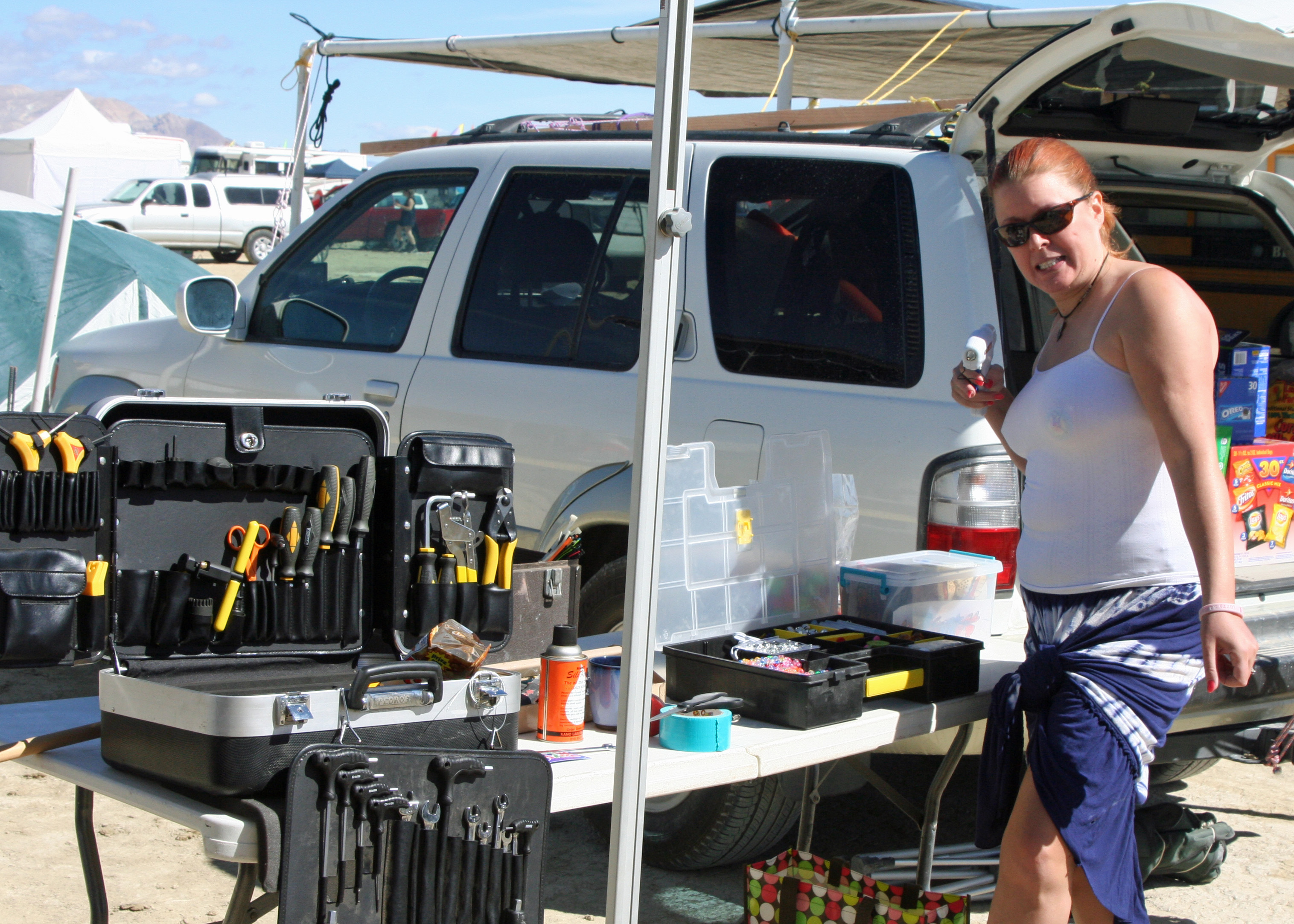
The Horse-Bone camp is lucky. Punkin-Beth, owner of B&L Bikeshop in Davis California is a master bike mechanic and member of our tribe. In addition to helping us with bike problems, she gifts our neighbors. There are camps at Burning Man dedicated to helping with bike repair.

Pimp your bike! Decorations can be simple or elaborate. Burning Man is all about art. Your bike is a blank canvass waiting for your creative touch. Burners will appreciate your efforts, your bike will be easier to find in a crowd of several thousand look-alikes, and people are less likely to ‘borrow’ it.

Bikes lined up in front of Center Camp looking a lot like each other.

A bike with a personality… easy to find and unlikely to be stolen.


Tiger Bike.
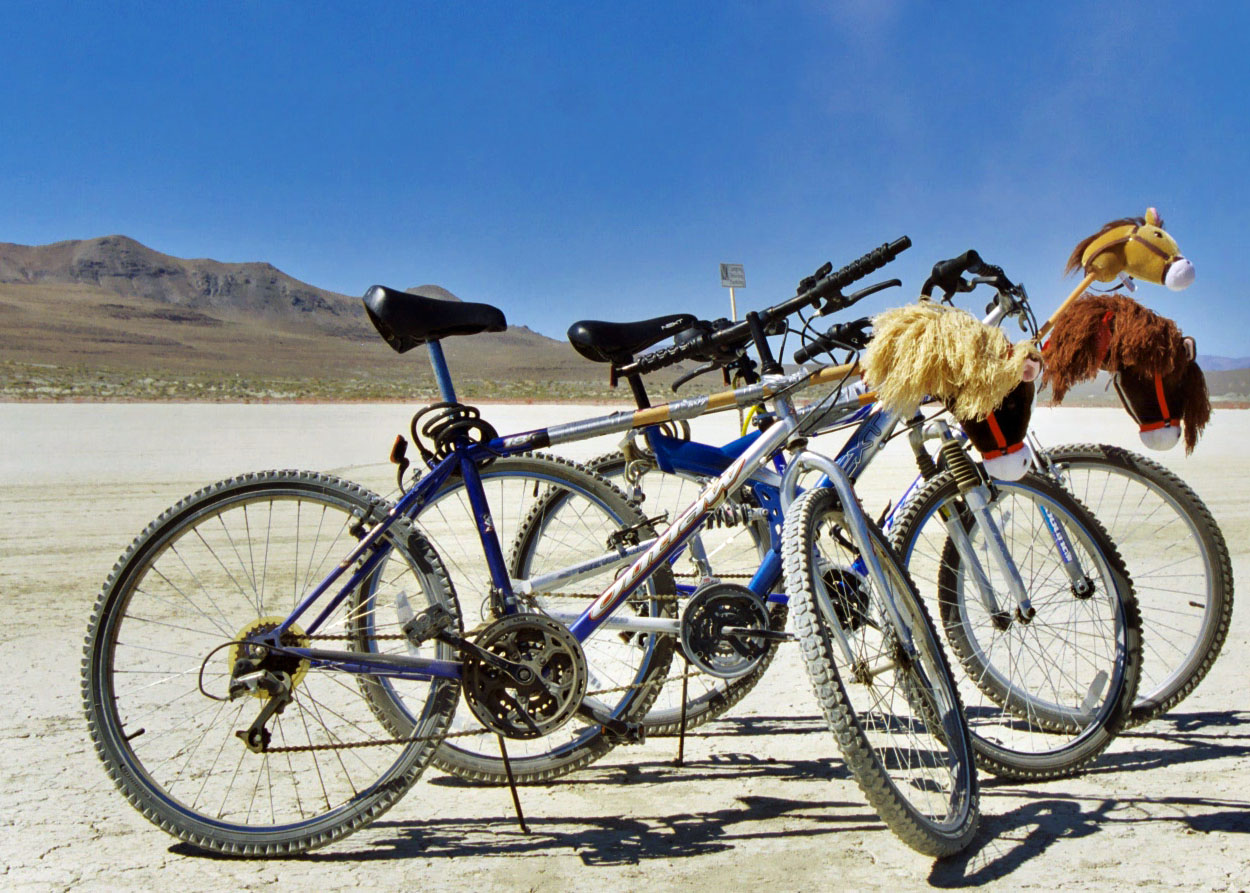
Wild horses are often spotted in Nevada. These are actually steeds of the Horse-Bone camp.

Luna, AKA Peggy, adds decorations to her horse.
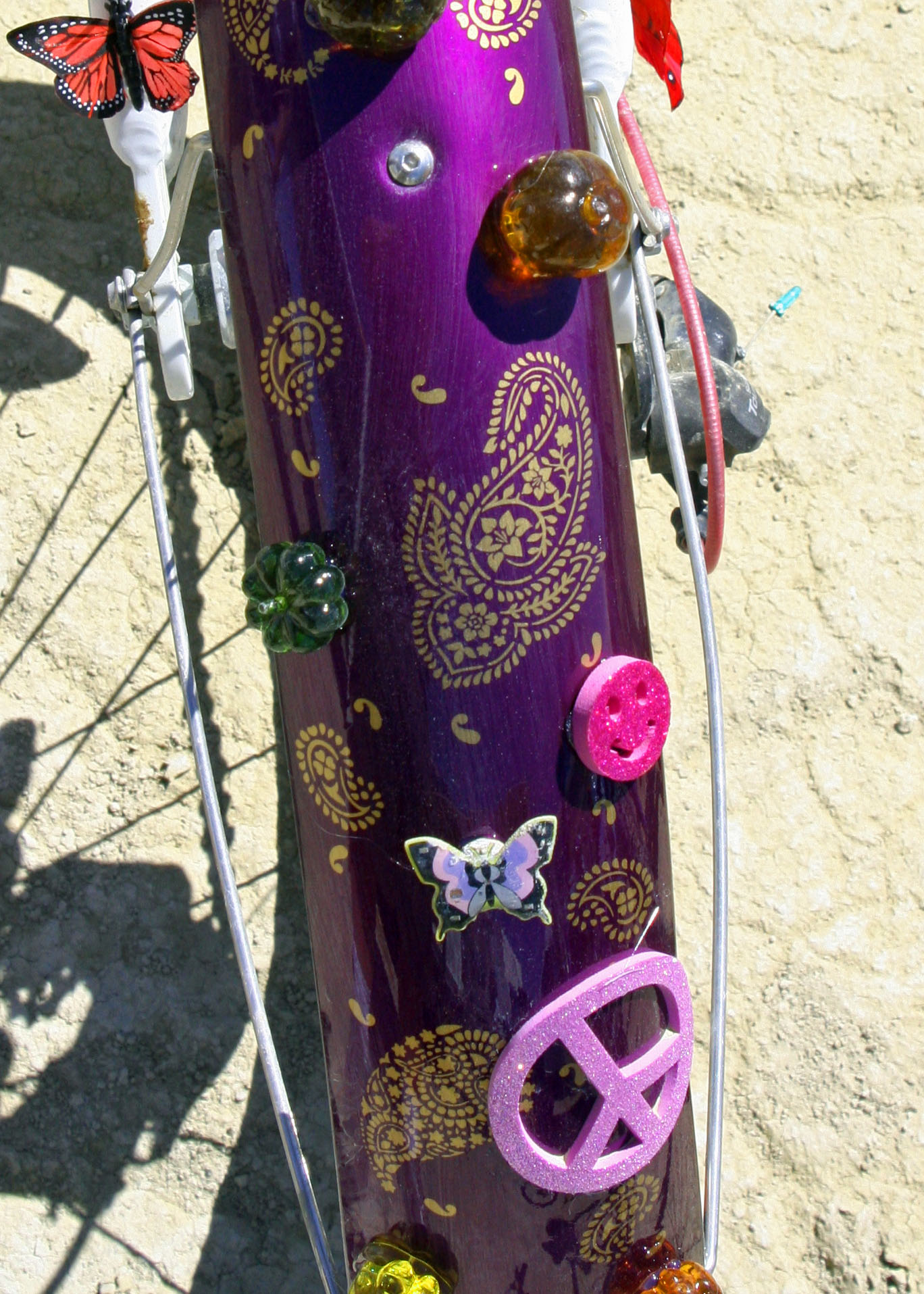
Fender art.
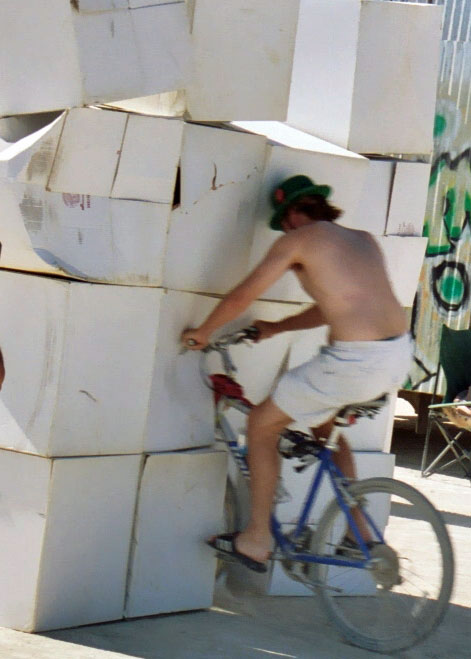
Crash testing a bike?
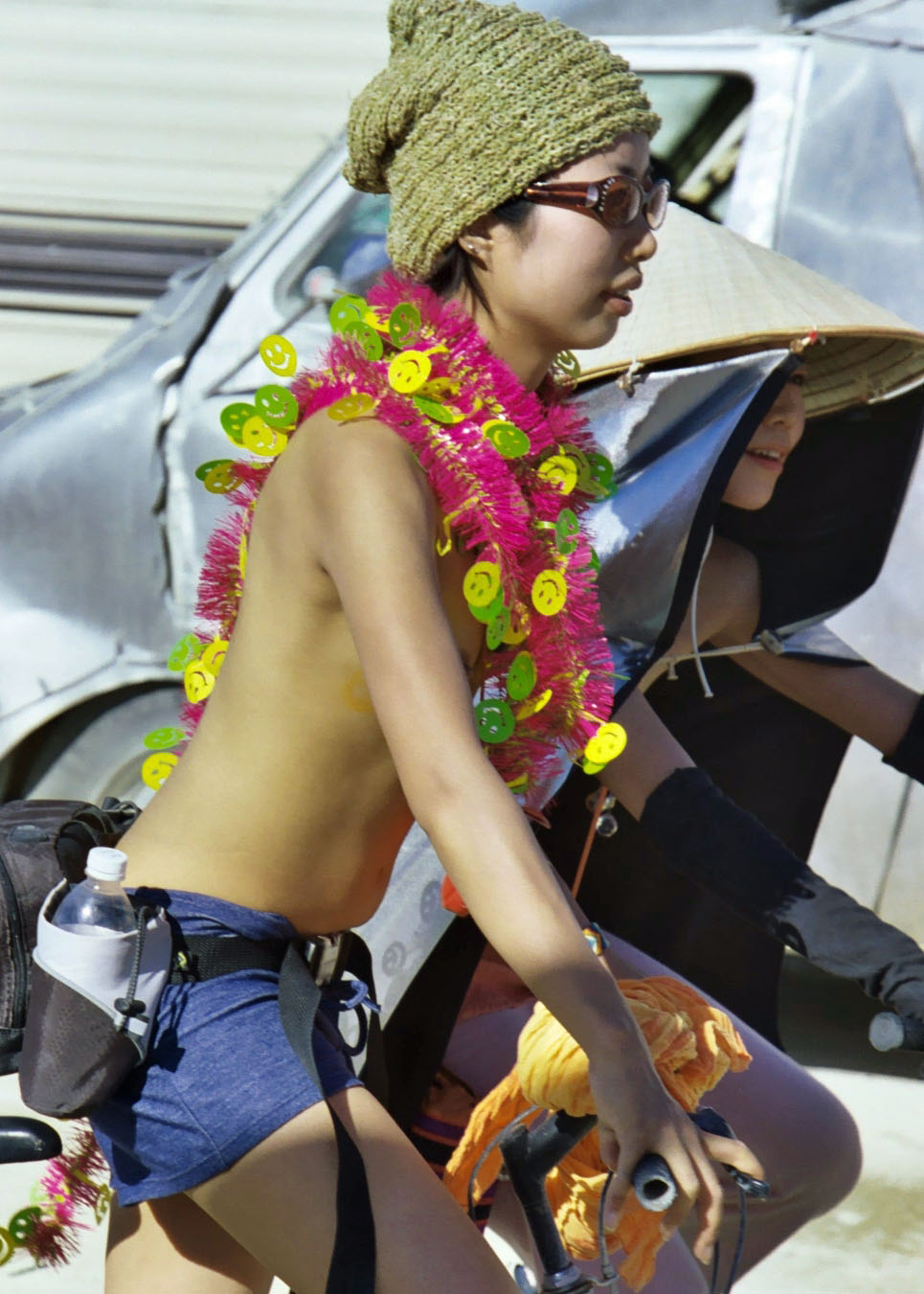
The biggest bicycling event at Burning Man is the CT Parade where over a thousand women take off their tops, decorate, and go on a joyous bike ride.
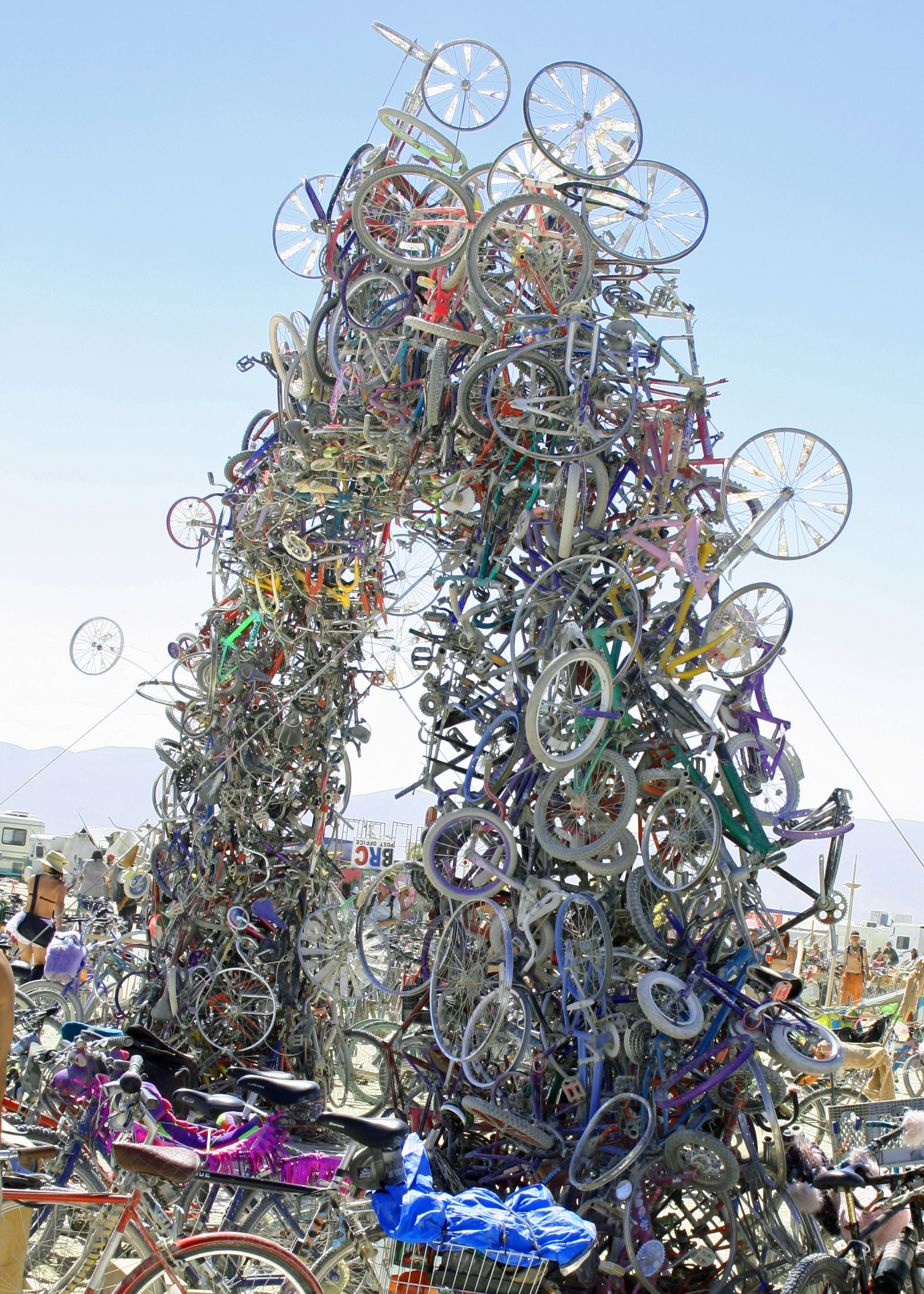
Another picture of the bike tower, surrounded by bikes.


Mutants in the Desert… Burning Man

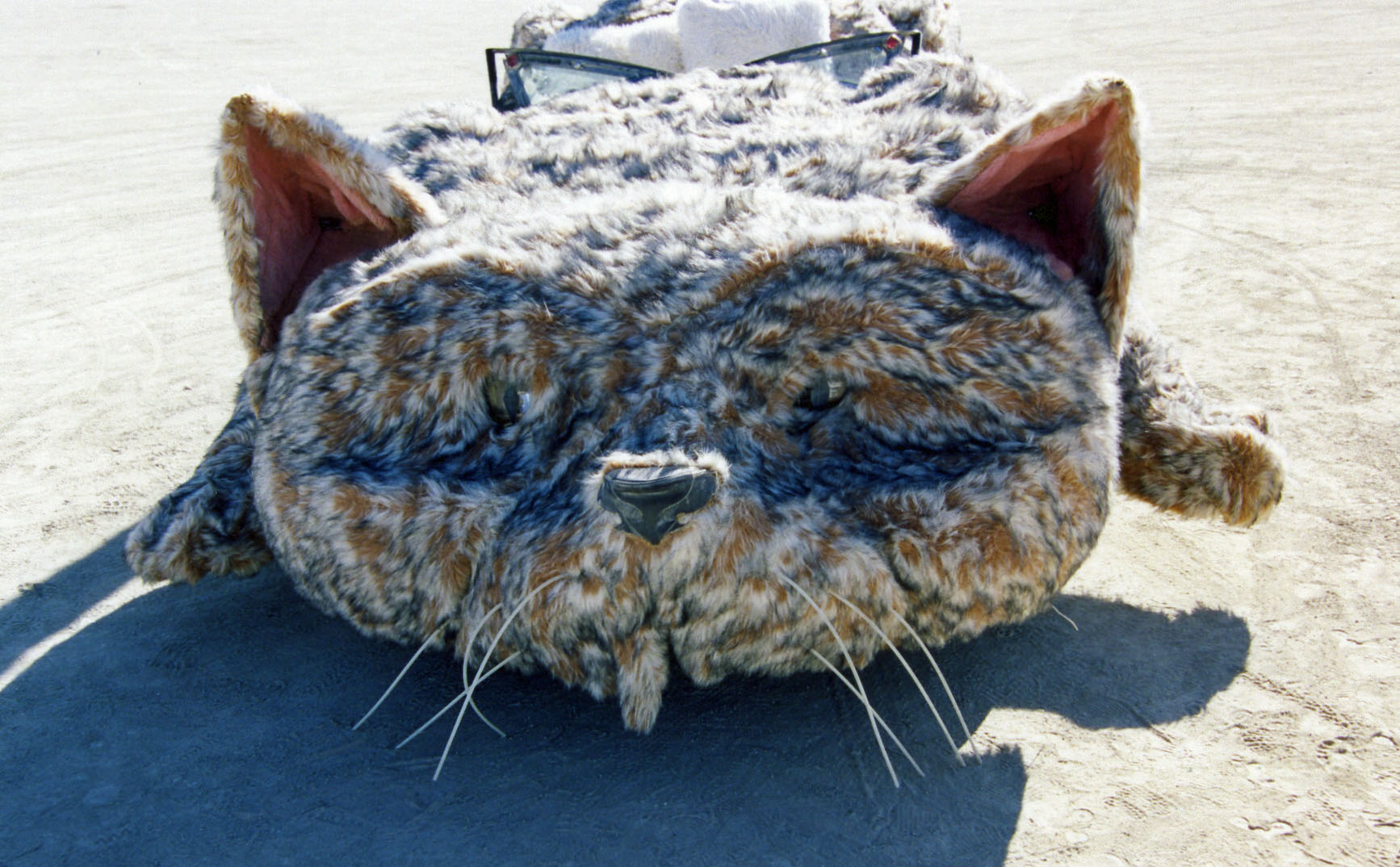
If you find a convertible that has morphed into a cat, the odds are you are at Burning Man.

If you wish to drive a vehicle at Burning Man, you have to obtain a permit from DMV. I am not talking about the Department of Motor Vehicles here; I am talking about the Department of MUTANT Vehicles.
Cars, golf carts, trucks, and busses have to change into something completely different and unrecognizable to cruise through Black Rock City and out on the Playa. Only bikes are allowed to roam free. And even they are known to morph into dragons, horses, camels and a multitude of other creatures. (Check out my next blog.)

The same creative energy that goes into art, costumes and performances at Burning Man goes into the production of mutant vehicles. A tractor pulls a false-front house and bar across the playa while an outhouse trails behind. An old bus changes into a riverboat, the Lady Sassafras, courtesy of Fractal-Nation. A convertible morphs into a cat. Dragons, polar bears, bugs and pirates roam the playa with impunity. There is even a vehicle for the couch potato.
A closeup of the cat car that prowls the nighttime streets of Black Rock City.

Out on the edge of Burning Man’s Playa we found a false front house and bar being pulled by a tractor.

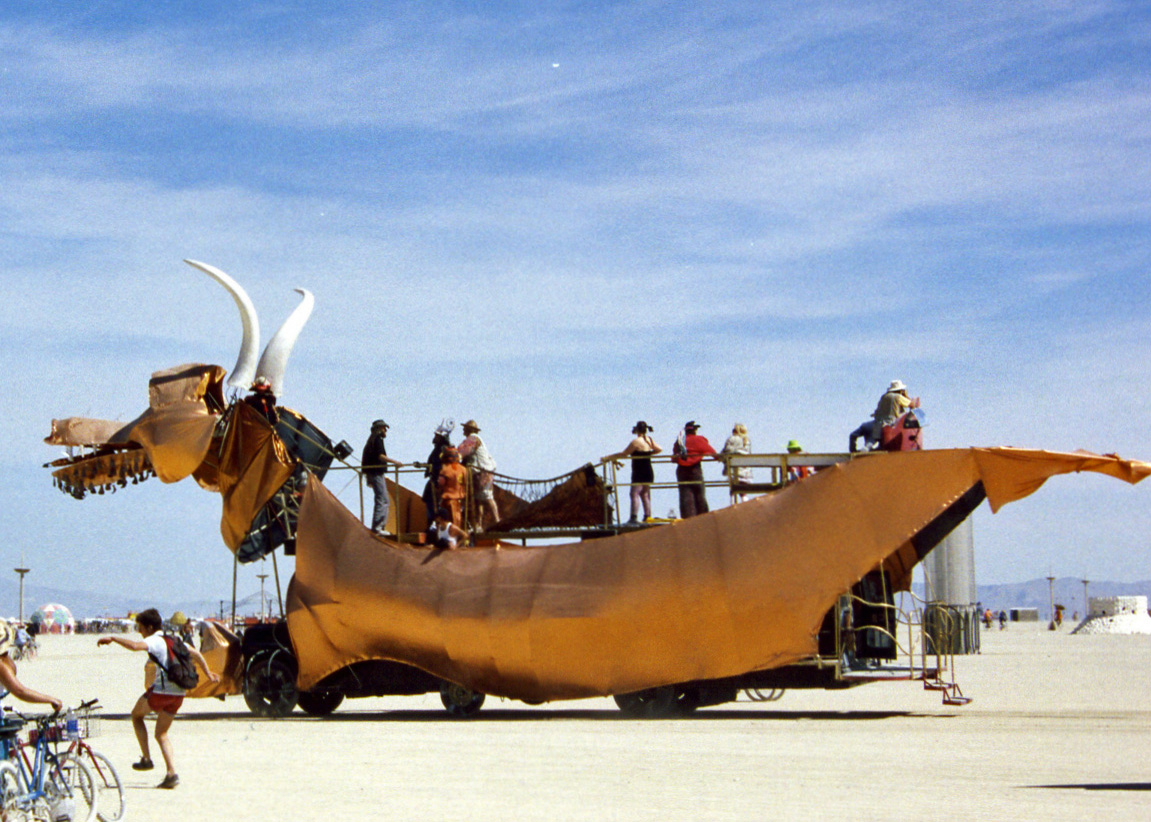
Dragons are common themes for mutant vehicles at Burning Man. As for the dancing lady on the left, who knows?

This River Boat, the Lady Sassafras, was created by Fractal Nation, one of the major theme camps at Burning Man. (Photo by Tom Lovering)

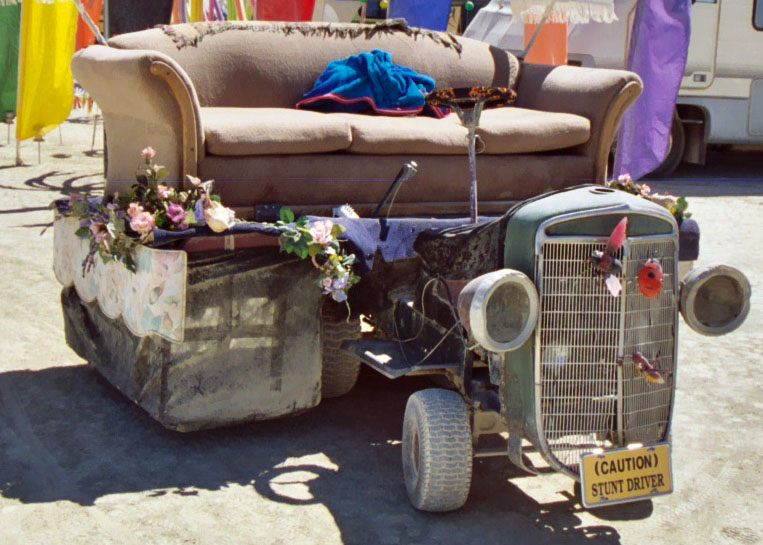
A mutant vehicle for couch potatoes. Note the license plate.

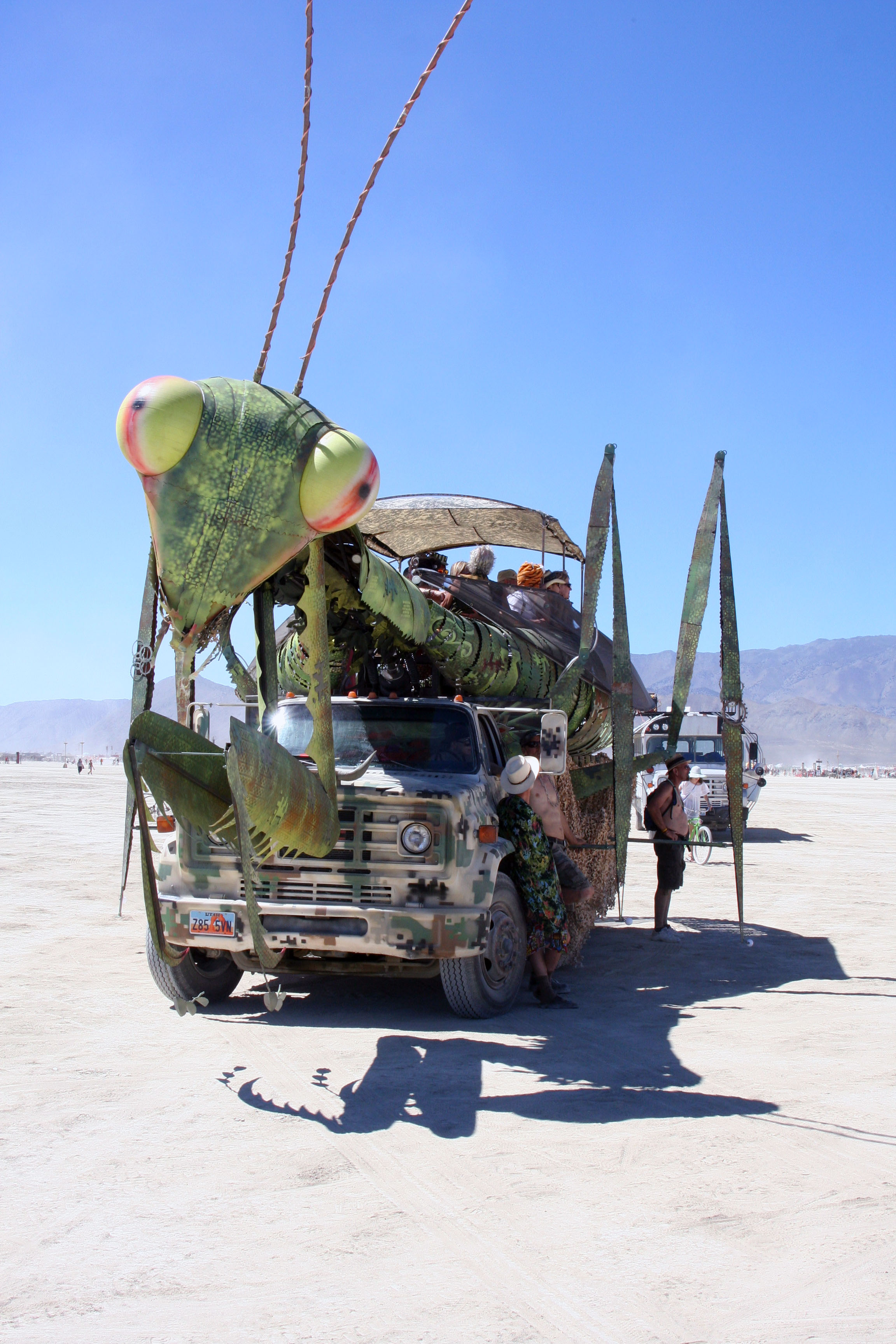
I am not sure whether this Praying Mantis or her shadow was more frightening.

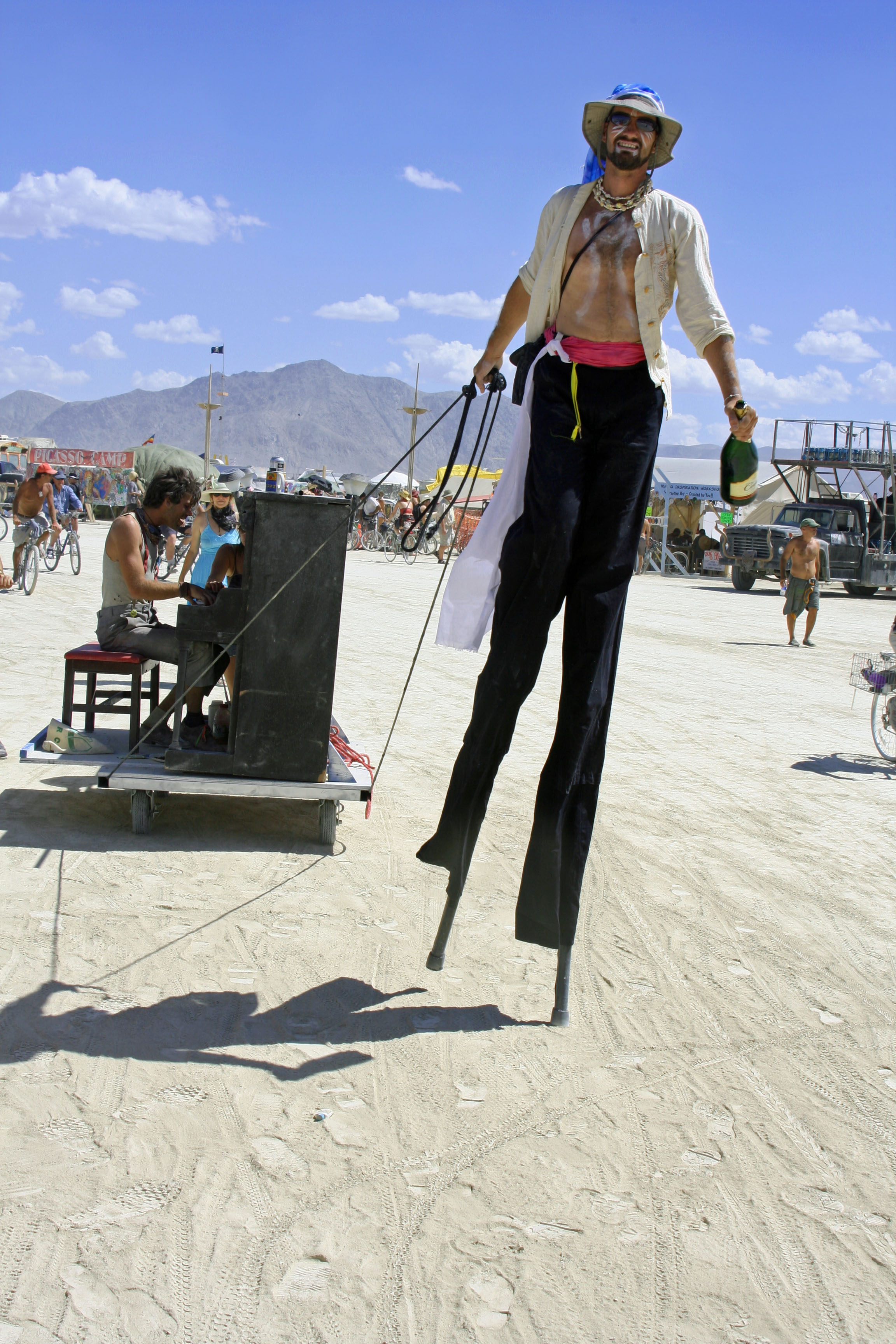
A human-powered mutant vehicle? Note the fuel in the engine’s left hand.

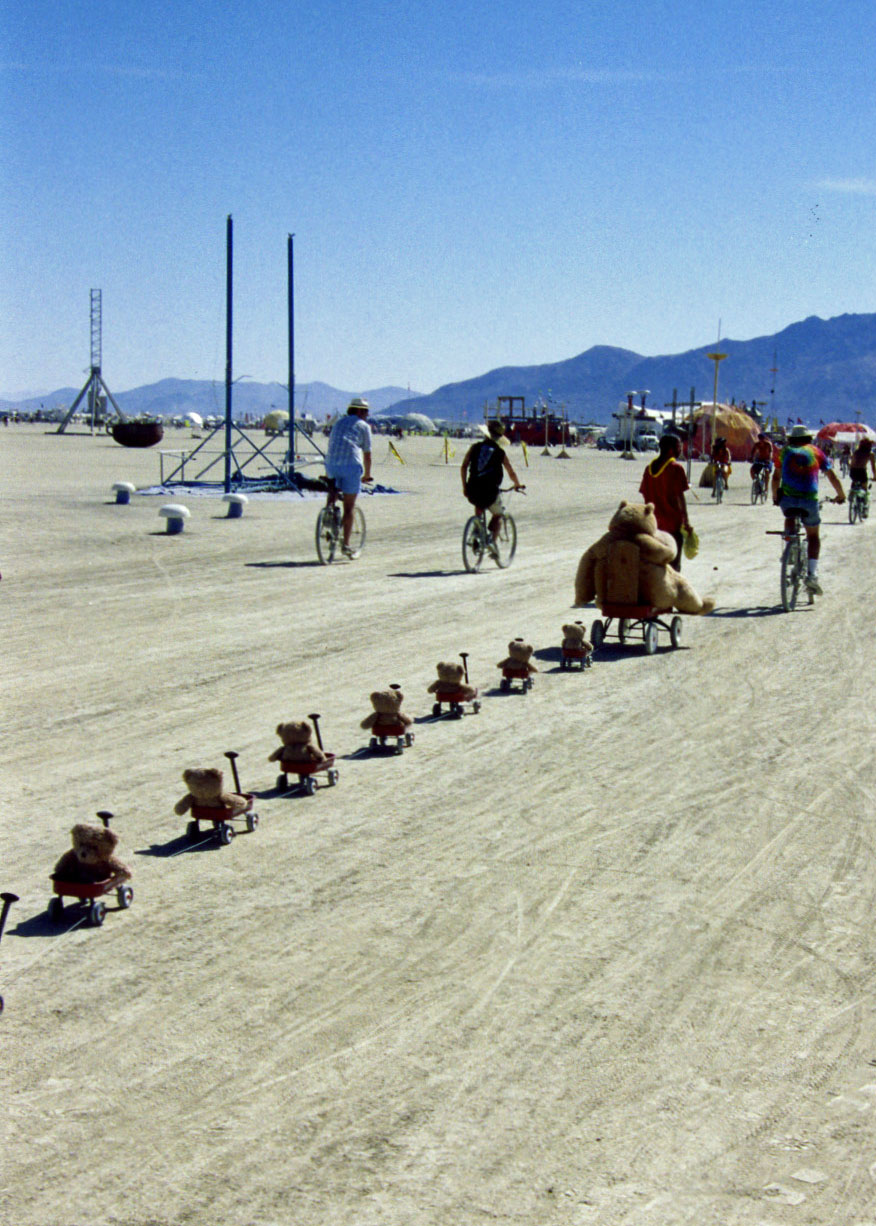
Like the man pulling the piano, I am not sure Mama Bear qualifies as a mutant vehicle. (Actually I am sure they don’t, but I have to put these wonderful images somewhere.)

This Conestoga Wagon seems appropriate for the desert. Pioneers once made their way through the Black Rock Desert on their way to Oregon following the Applegate Trail. The device on the side of the wagon is for shooting out flames at night.

My all time favorite mutant vehicle is the Neverwas Haul, a three-story Victorian house with the characteristics of a railroad steam engine including a cattle catcher. Horse-Bone Camp member Sailor Boy, AKA Tom Lovering, likes the Haul so much that he donated an antique ship-telegraph last year. The telegraph was designed to allow the pilot to communicate with the engine room.

The Neverwas Haul.

Center Camp… A Tale from Arabian Nights: Burning Man

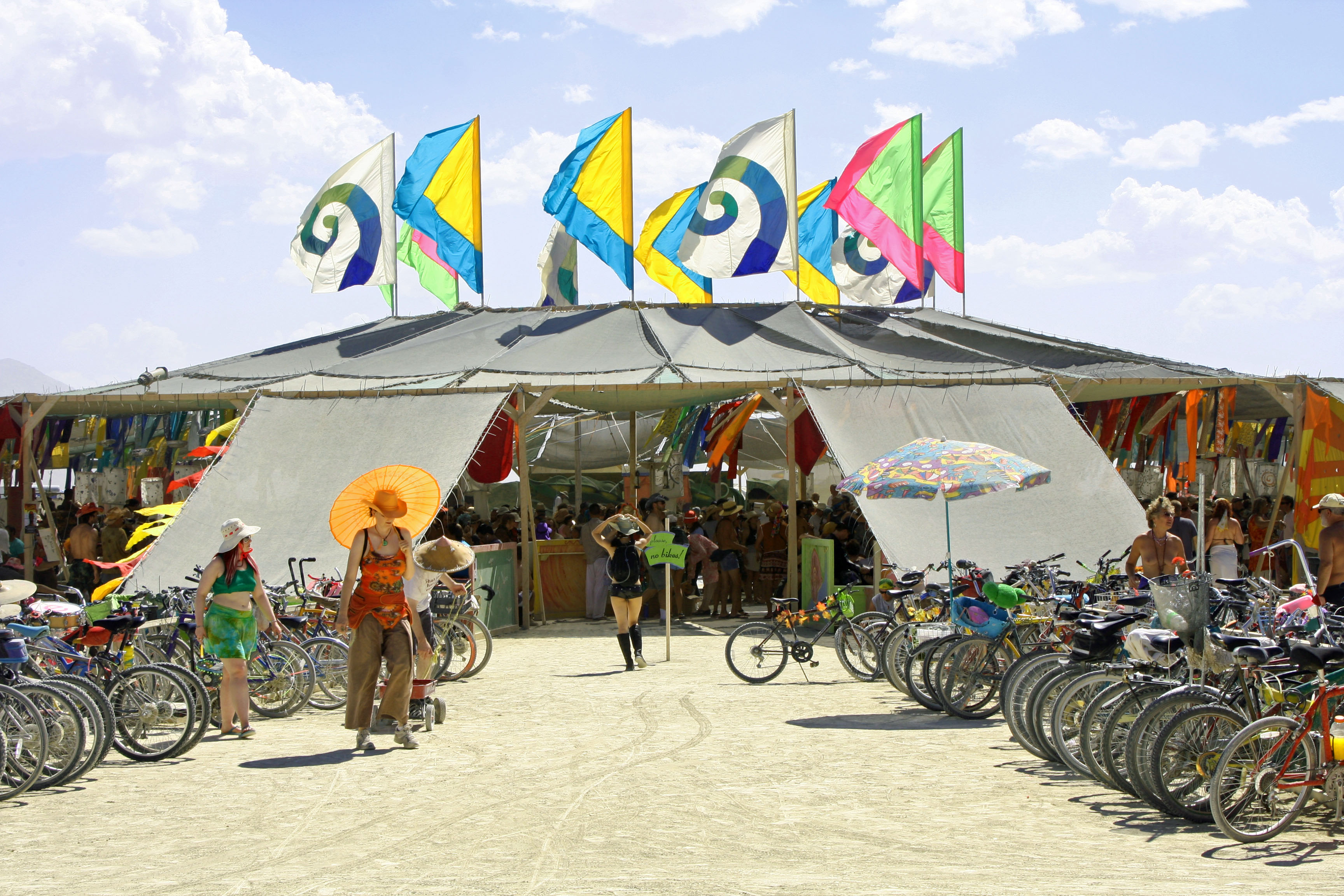
Festooned with welcoming flags, Center Camp provides around the clock entertainment, coffee drinks and iced tea. Most Burners visit the Center daily… some, like me, visit several times a day.

I was preparing to write this blog on Center Camp at Burning Man and the image of a yuppie oasis popped into my mind. My mind, behaving as it usually does, made the leap to the Arabian desert and the book of ancient tales, One Thousand and One Nights, which led me to think about Scheherazade.  This in turn led to go in search of my iPod and the music by Rimsky-Korsakov. All of which explains why it takes me so damn long to put up a blog.

Naturally I had to Google everything. In the process, I came across the following image. How much more Burning Man can you get?

One Thousand and One Nights has seen numerous movie and book spinoffs. I found this representative painting on Google. It looks amazingly like Center Camp at Burning Man.

For ongoing entertainment conveniently located in one place, Center Camp Café is the place to be. It is the only location on the Playa where Burning Man’s unique wildlife can gather and actually purchase lattes. But it is much more than a desert watering hole.

An ever-changing kaleidoscope of exotic entertainment and colorful characters wander through its doors. Sensuous belly dancers are replaced by even more sensuous hula hoopers. Poi twirlers practice ancient Maori rites while drummers pound away in ecstatic, almost religious, fervor.

This young woman was part of a belly dancer troupe that came jingling and jangling through Camp Center.

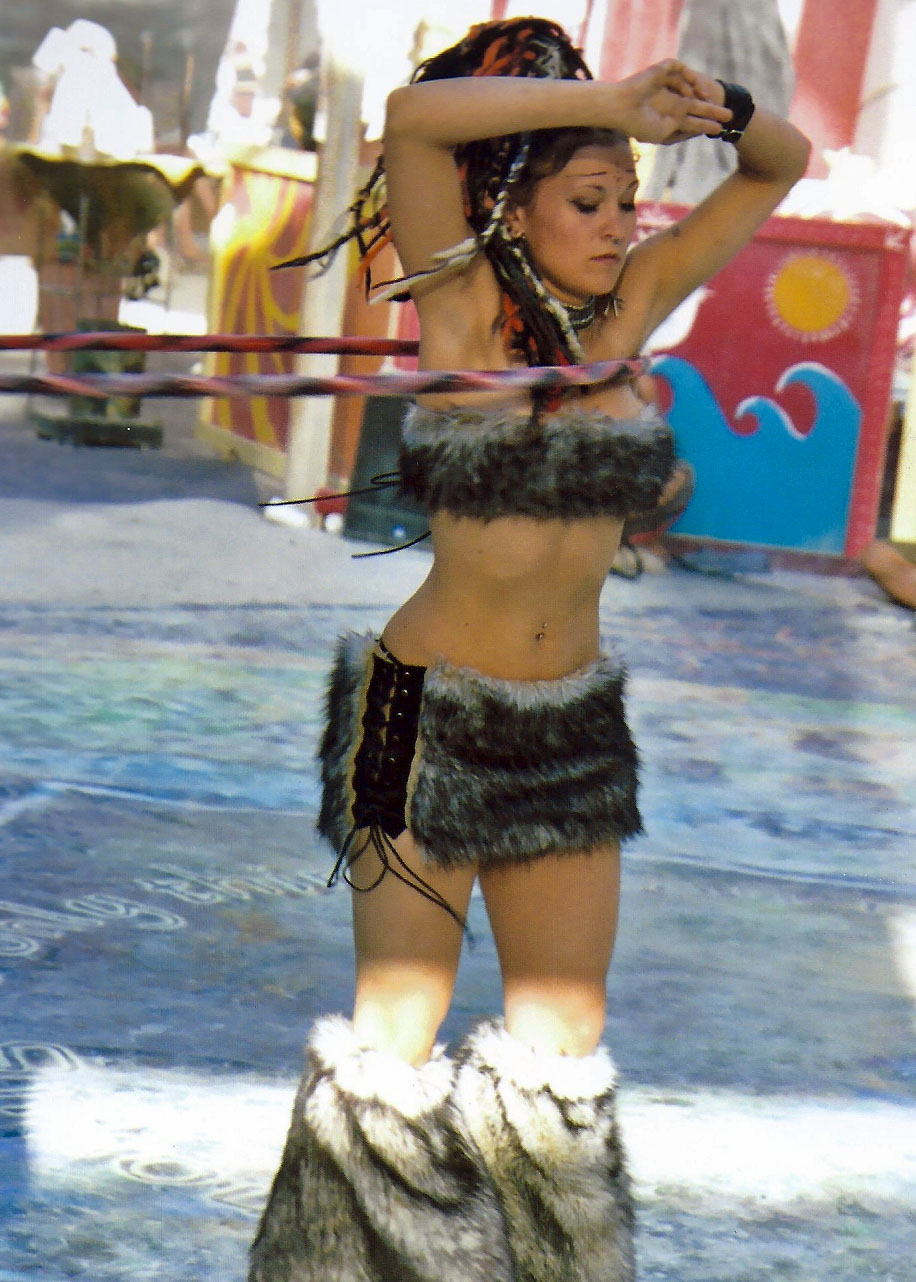
I had never realized how sensual twirling a hula hoop could be before I came to Burning Man.

An impromptu jam session at Camp Center.

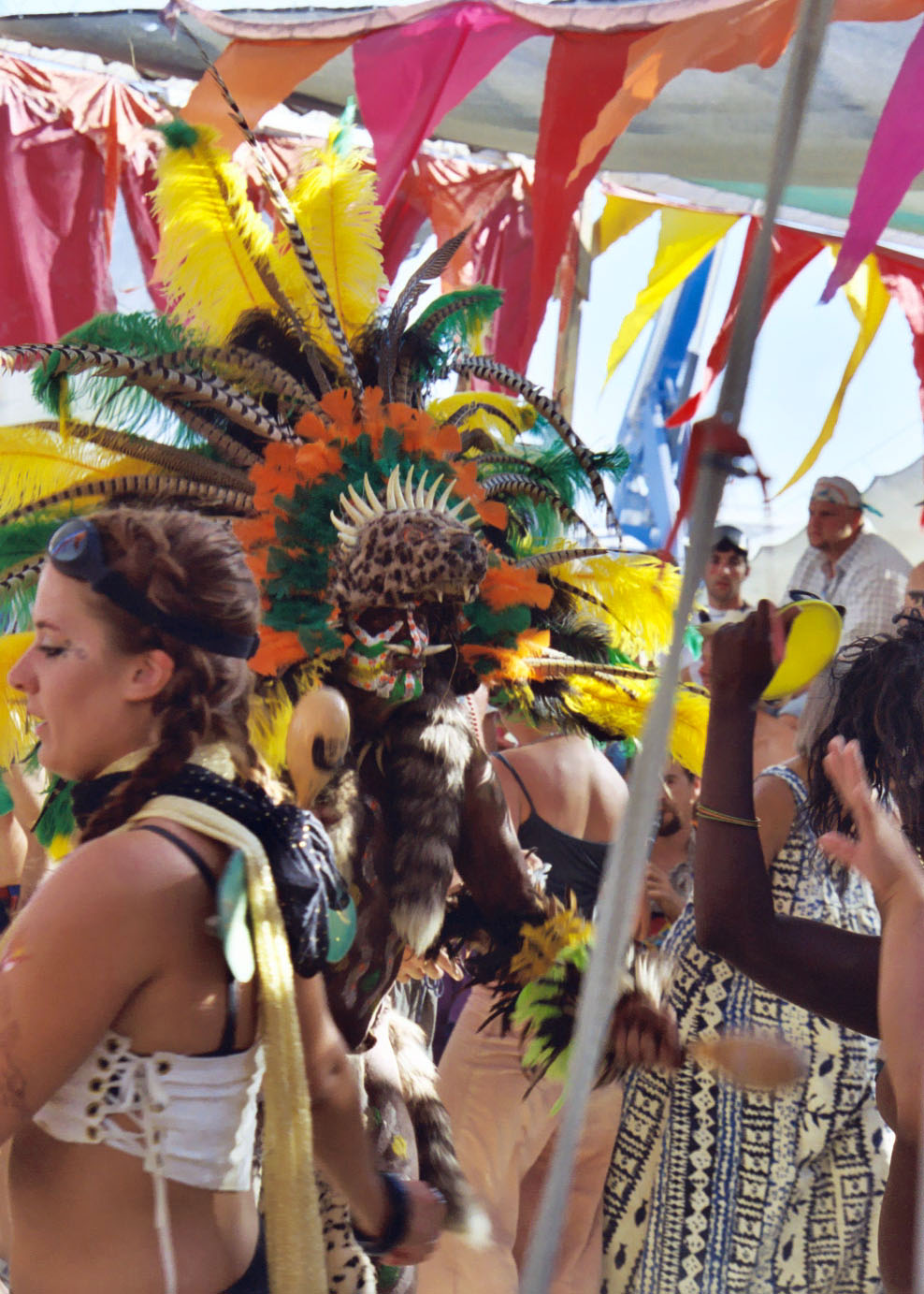
A beautiful, semi-clad black woman moves to the music and a mysterious shaman peers out from behind a painted, bone in nose face. His feather headdress dazzles the eyes, as does the large fan of a clown painted woman. A beautiful girl draped in damask white skillfully plays her flute with closed eyes. A naked man painted silver holds an animated conversation with a tattooed lady.

This shaman with his bright yellow feathers demonstrates how elaborate costumes can be at Burning Man. Center Camp is one of the best places to see and be seen.

Several photographers lined up for this photo-op of a clown woman with a bright fan.

This talented flutist played a haunting melody. While many performers at Burning Man are in the learning stage, others are highly talented. Everyone is encouraged to participate.

Yoga masters practice contorted moves while costumed Burners are invited to show off their zebra striped and pink finery in the annual fashion show. Just when you think you’ve seen it all, a suit attired right-winger charges on to the runway and threatens to blow up Black Rock City. In the end, the good vibes of Burning Man win him over.

Welcome to Center Camp.

Coffee drinks and ice tea are available at Camp Center. It’s about the only thing you can buy at Burning Man. (Ice is also available for purchase.) Volunteers do the work. Horse-Bone Camp member, the Papester, takes a turn at the latte machine.

Center Camp is also a prime location for Burning Man art.

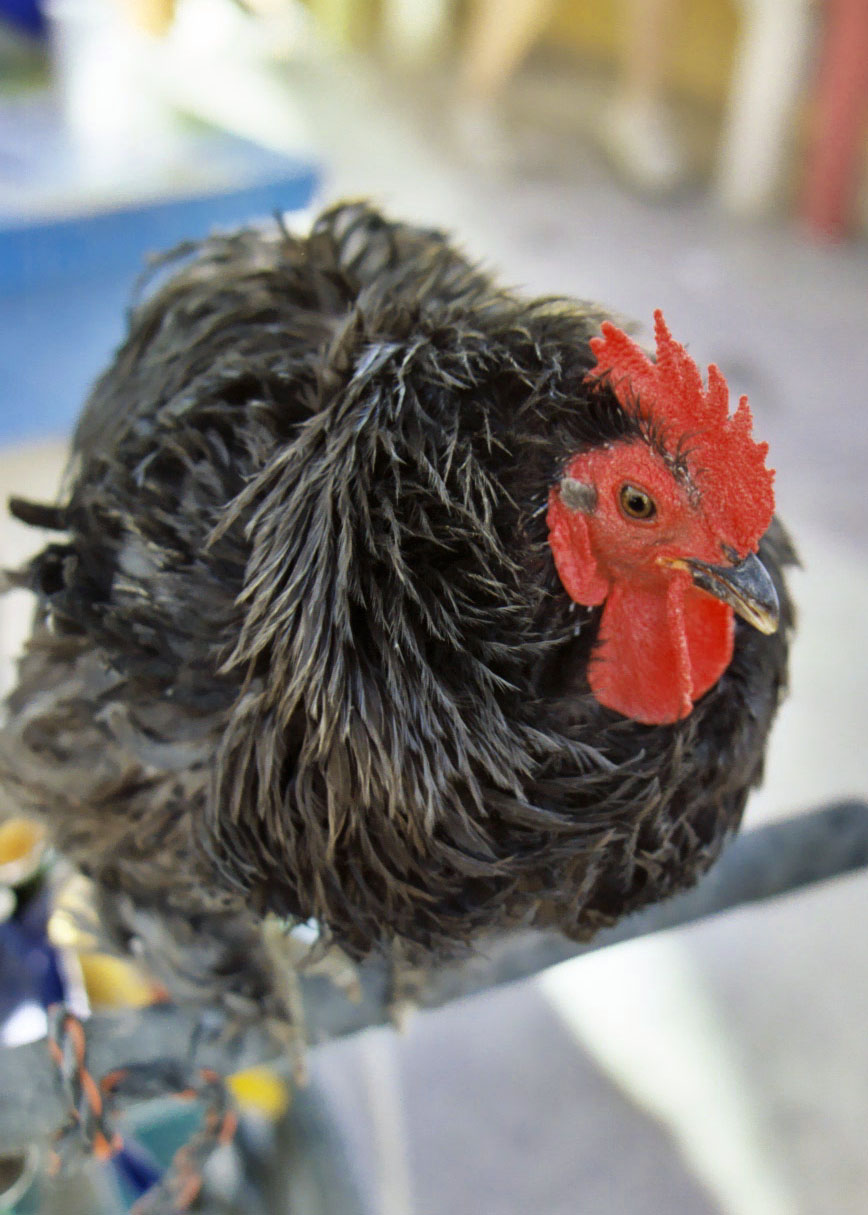
While I’ve come to expect almost anything at Burning Man, I never expected to find this Center Camp fowl.

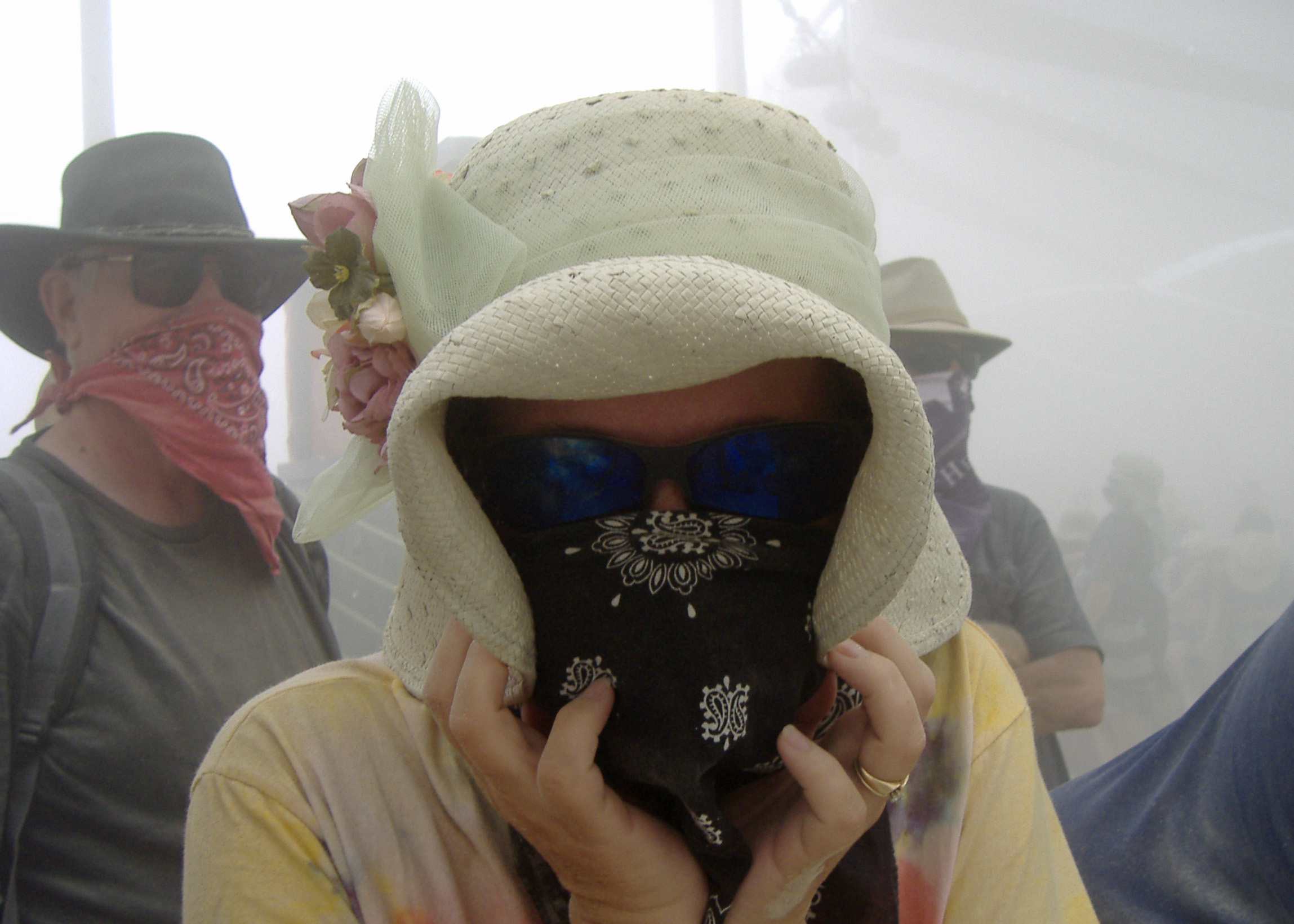
While you can obtain a cold drink and avoid the sun at Center Camp, you can’t avoid the dust storms that come whirling through. This is a photo of my wife Peggy, AKA Luna, doing everything she can to hide. A reminder to all of the new Burners coming to Burning Man this year: major dust storms are expected. Come prepared.

The Whimsical Art of Burning Man

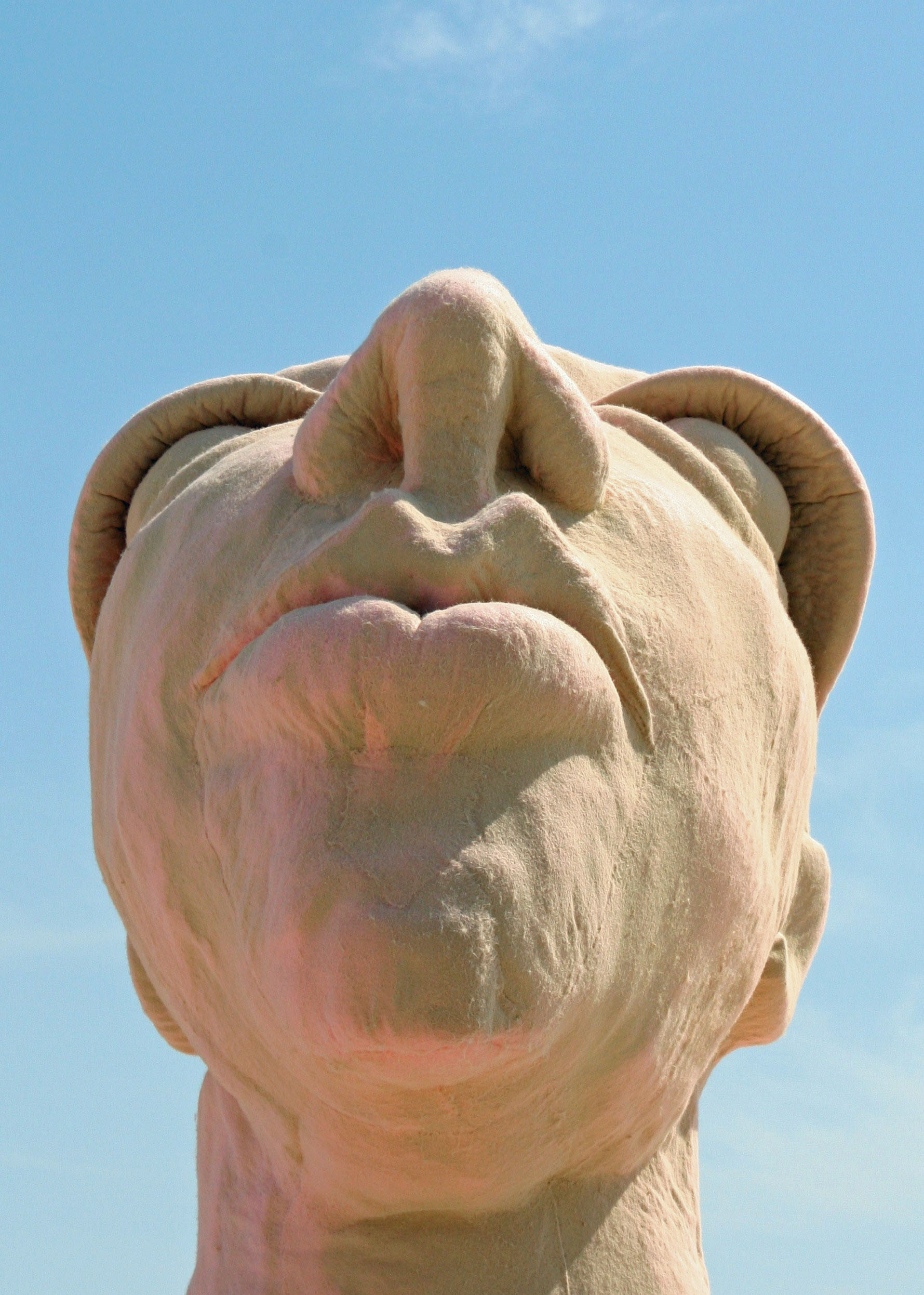
What’s not to like about this lovely face? Burning Man art often comes with a sense of humor attached. See what’s attached to this face below.

It shouldn’t come as a surprise that many of the artists who display their art at Burning Man have a sense of humor. I mean anyone who is willing to brave hundred degree plus weather, unending noise, towering dust storms, minimal bathing and a week of well-used porta potties must have a sense of humor. Right?

I like the word whimsical. It means to be playfully fanciful in an appealing or amusing way. It also means acting in a capricious manner. Both seem to fit Burning Man. Each year I wander around Burning Man with my camera in a totally capricious ramble looking for amusing art. I am never disappointed.

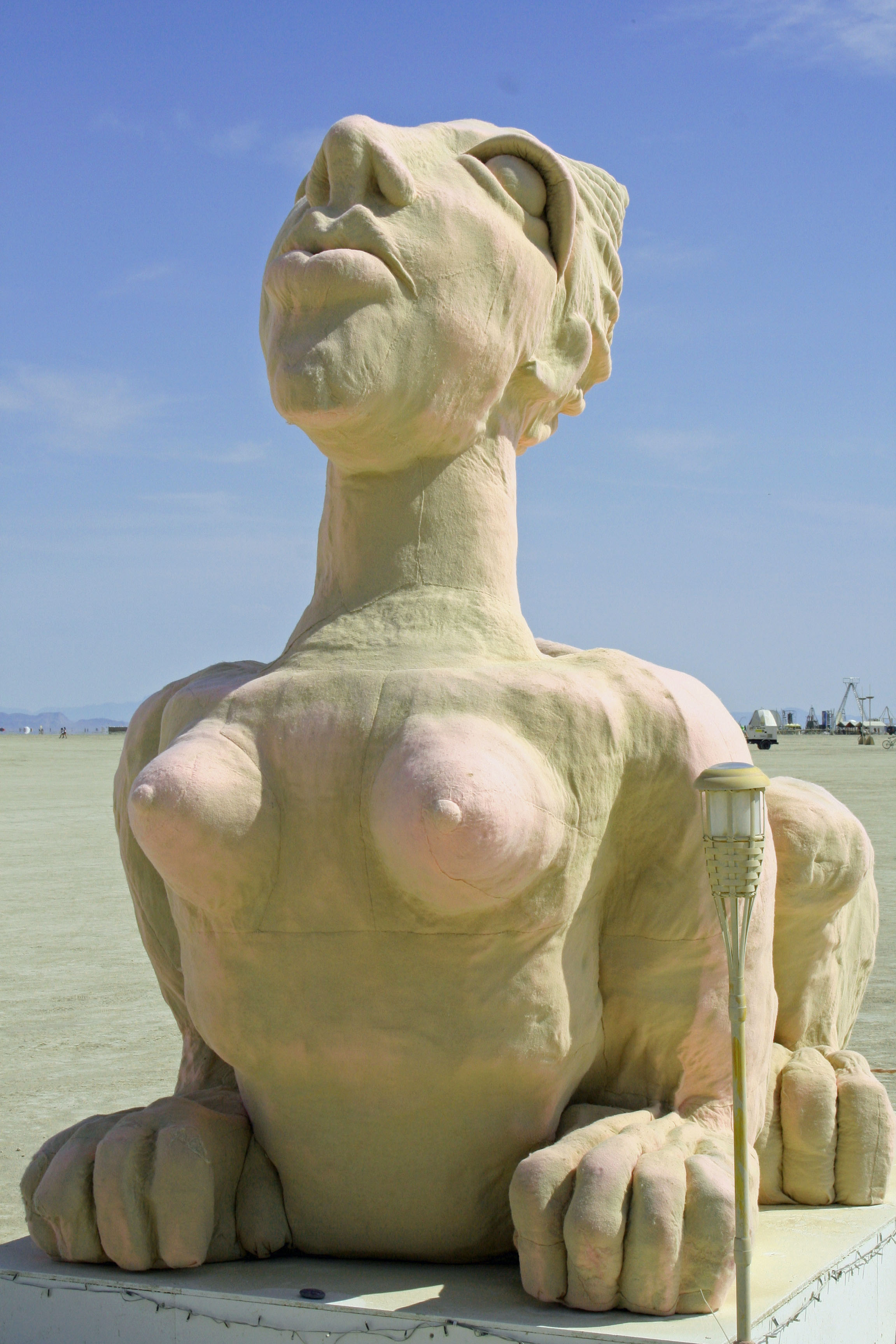
Here’s the body attached to the face above… a suave sphinx.

Art doesn’t get much more whimsical than these sculptures created by Pepe Ozan.

This dog by Pepe Ozan was particularly amusing. My friend Ken Lake, a noted contrarian, immediately climbed on the dog and rode him backward. Imagine trying that at a museum.

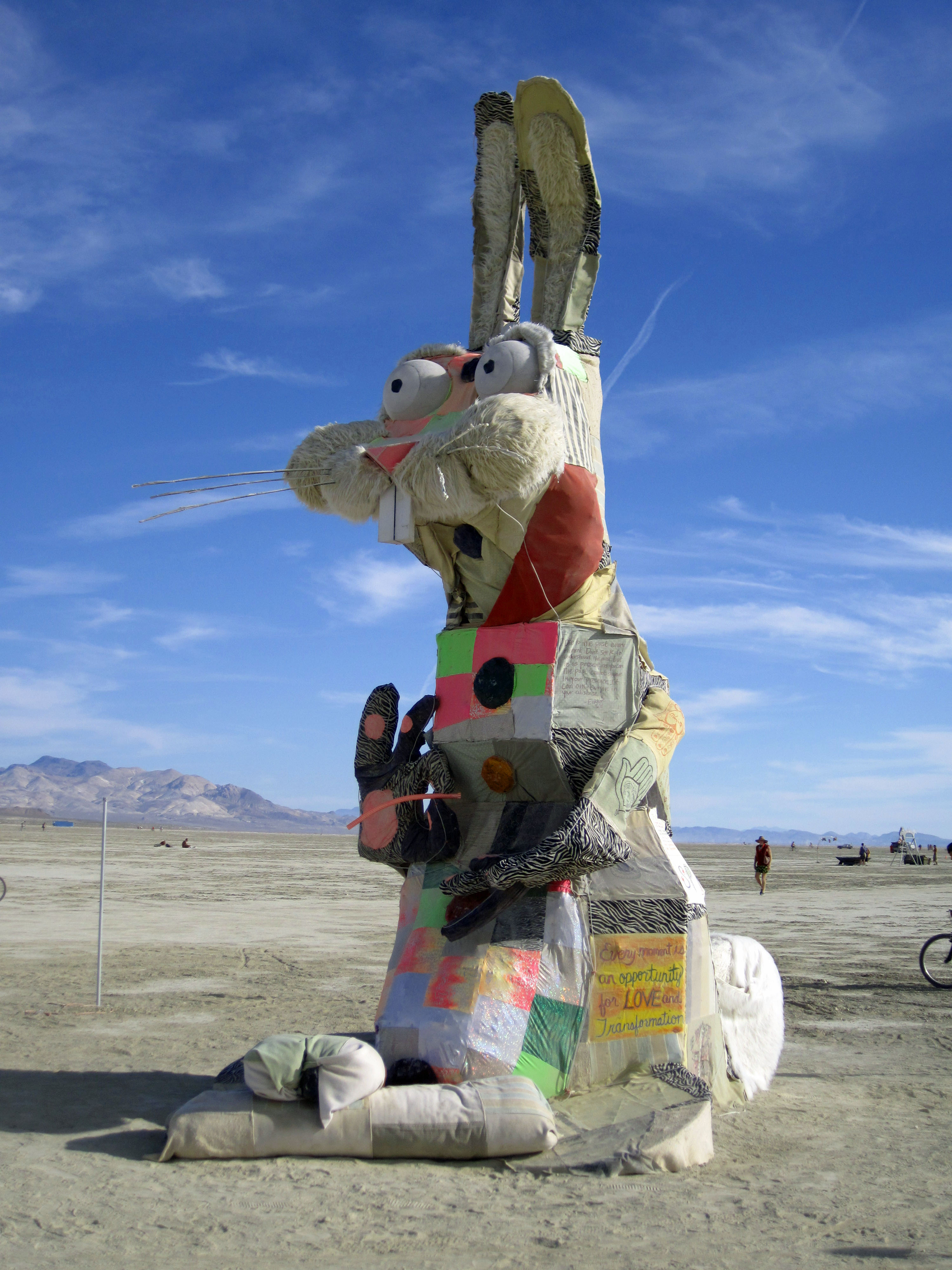
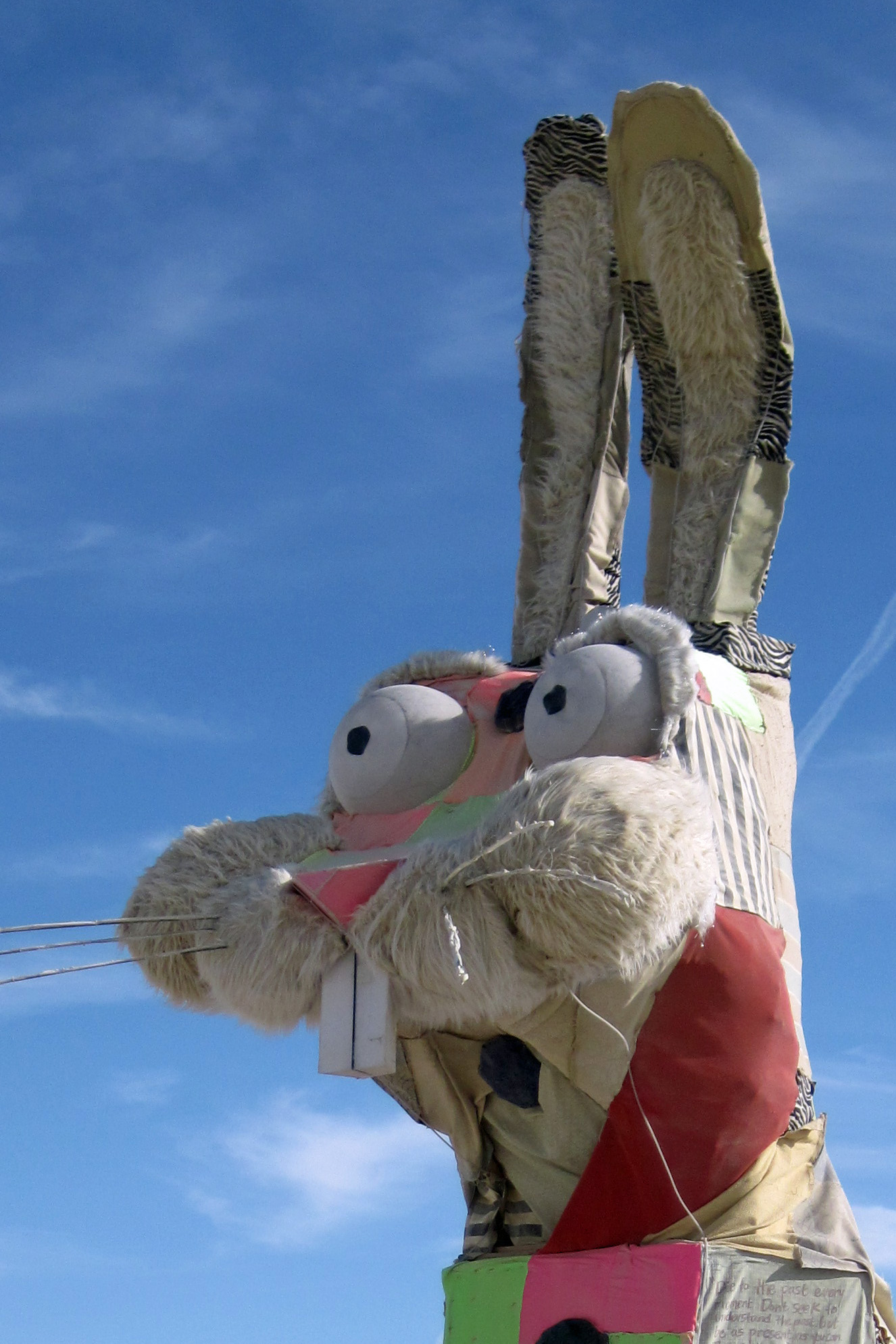
I keep coming back to this rabbit in my blogs because he makes me laugh. Isn’t that a OMG expression on his face? There is an annual bunny parade at Burning Man where a thousand or so people put on rabbit costumes and hop around Black Rock City.

Dragons are common at Burning Man… no surprise there. But this guy struck me as more whimsical than ferocious. After dark, his fire-breathing personality takes over, however.

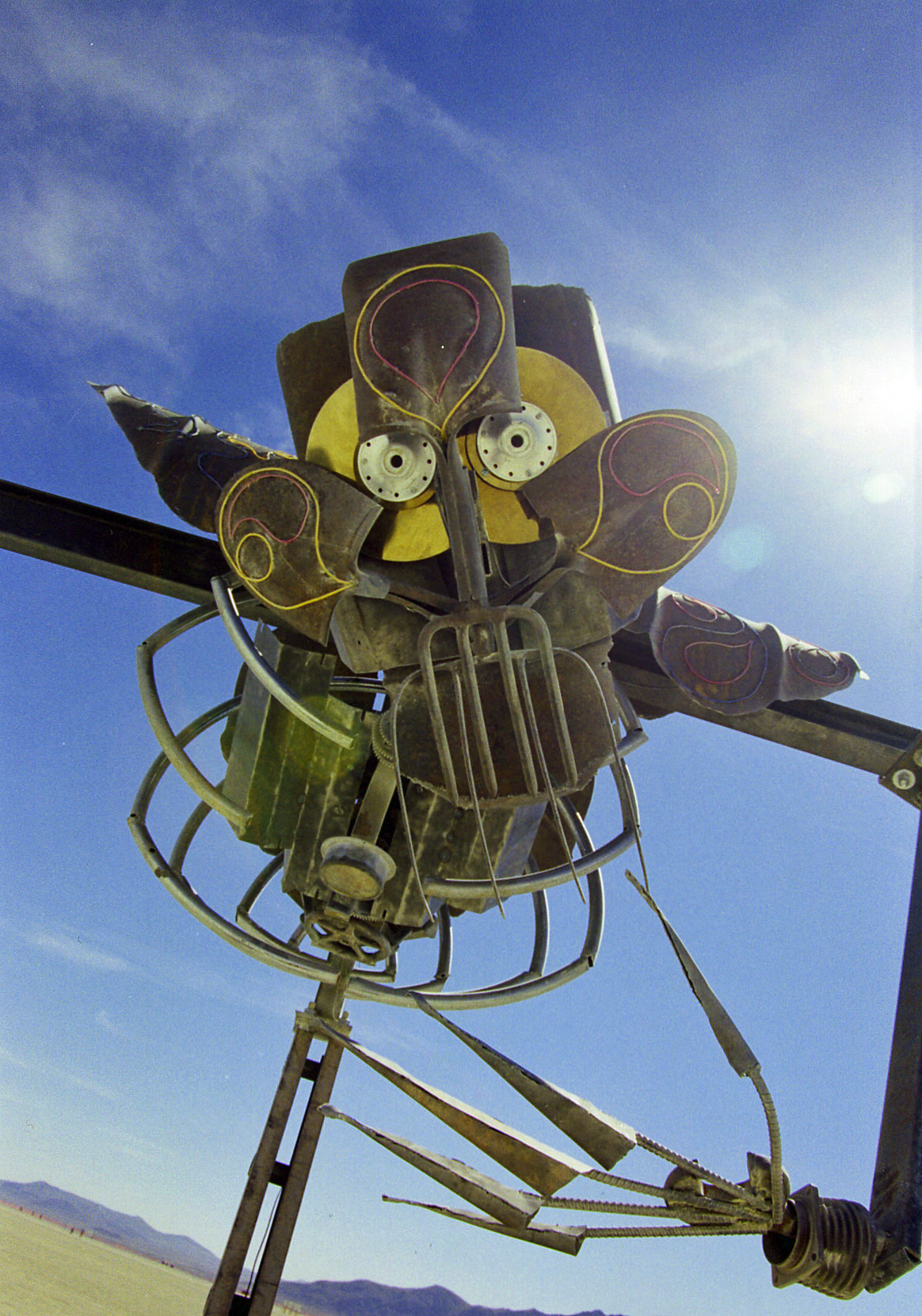
Here’s another sculpture with scary potential that I found humorous. His creator, Diarmaid Harkan, named him Metaluselah but I dubbed him Pitchfork Man.

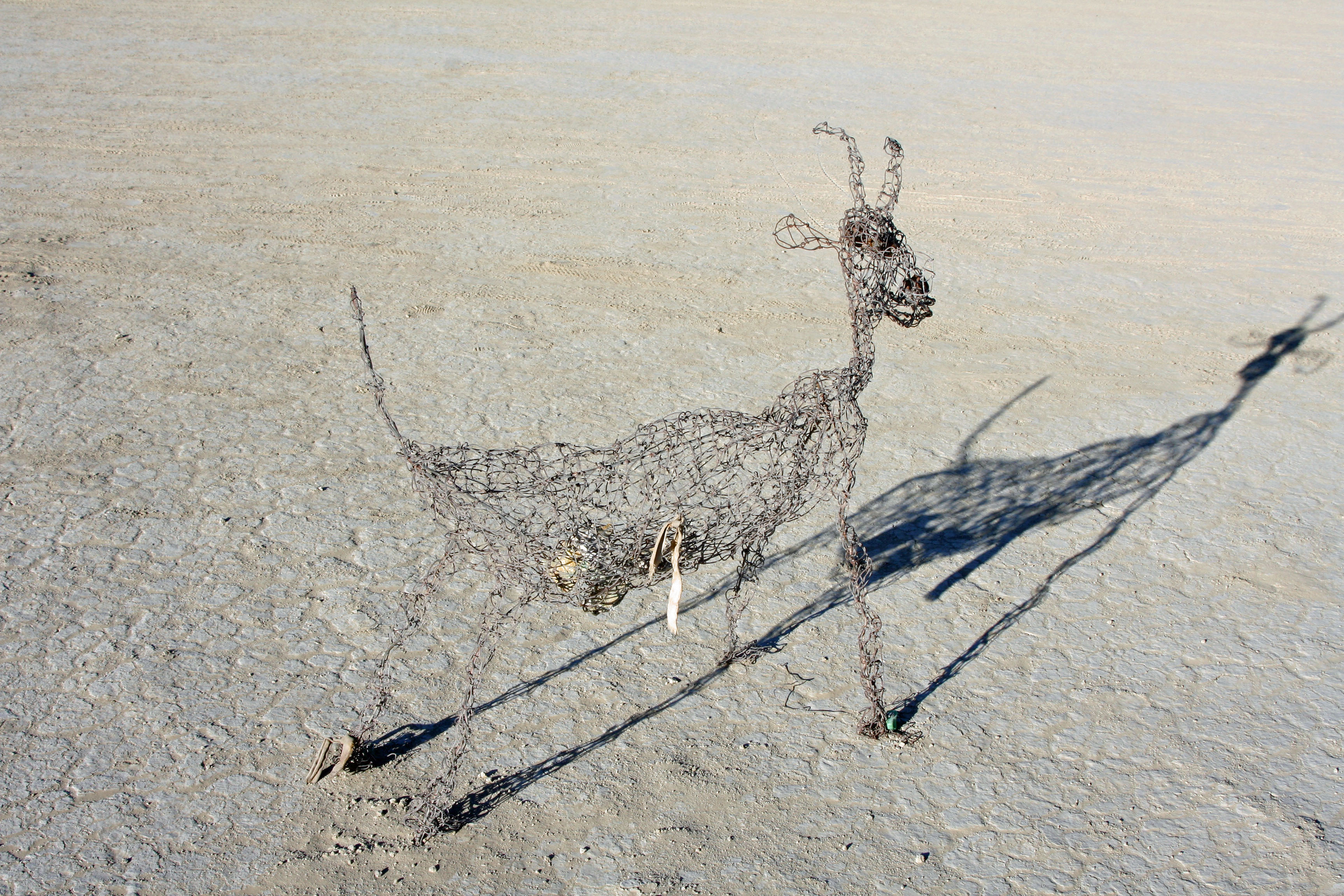
Certainly a see-through goat with trash in his stomach qualifies as being fanciful. Check out the shadow.

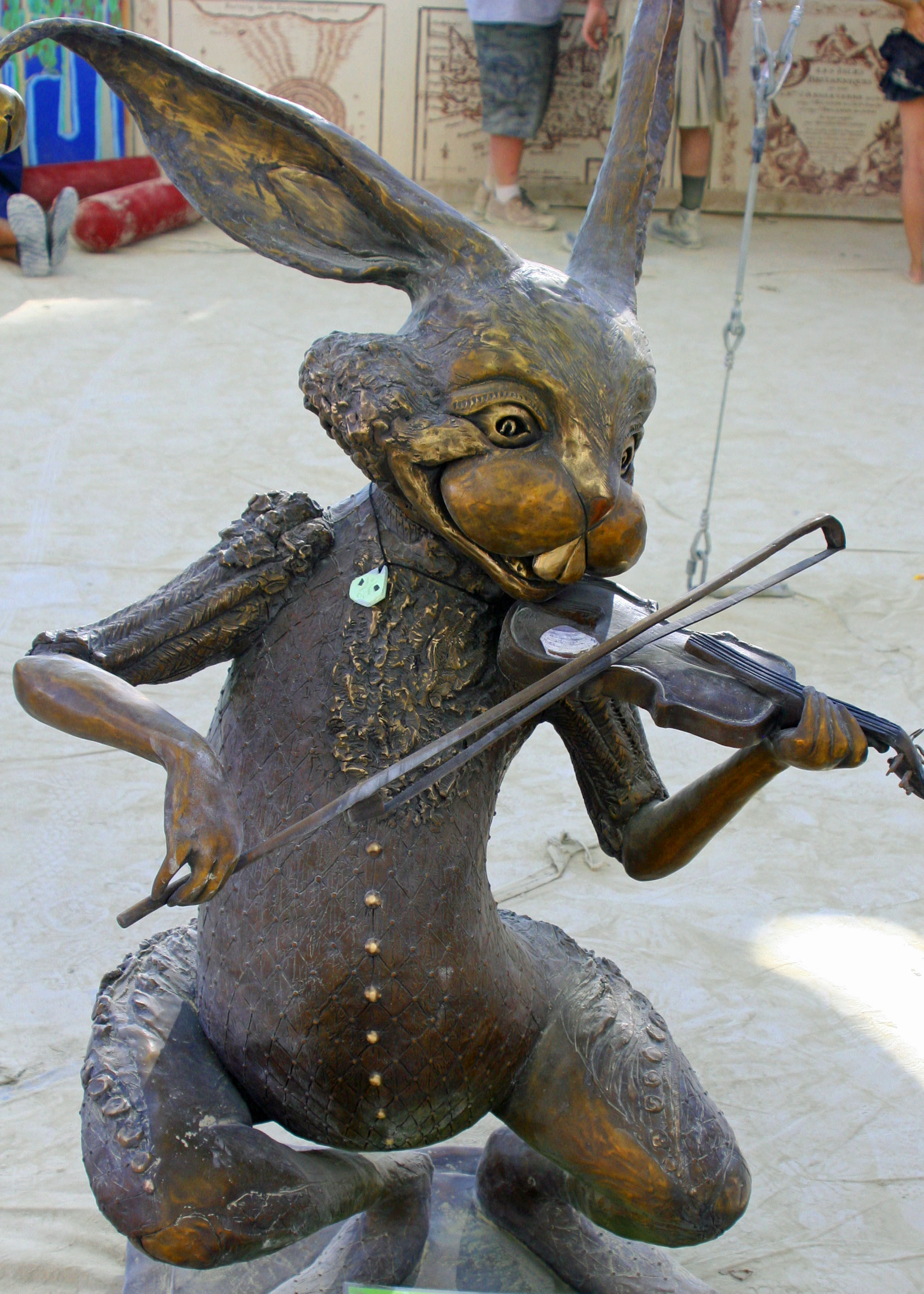
This violin fiddling hare was found in Center Camp, which is always a great place for art. (Photo by Don Green)

This amply endowed Statue of Liberty welcomed visitors to Silicon Village. Apparently her baby default mode was off and she and an ear piece for translating guy speak. Silicon Camp has over 200 members, most of whom come from Silicon Valley.

One day I was wandering around Black Rock City, I found a camp that specialized in photo montages. There must have been a dozen works and each captured a unique slice of Burning Man. Check out this photo carefully. What you see reflects the fun of Burning Man.

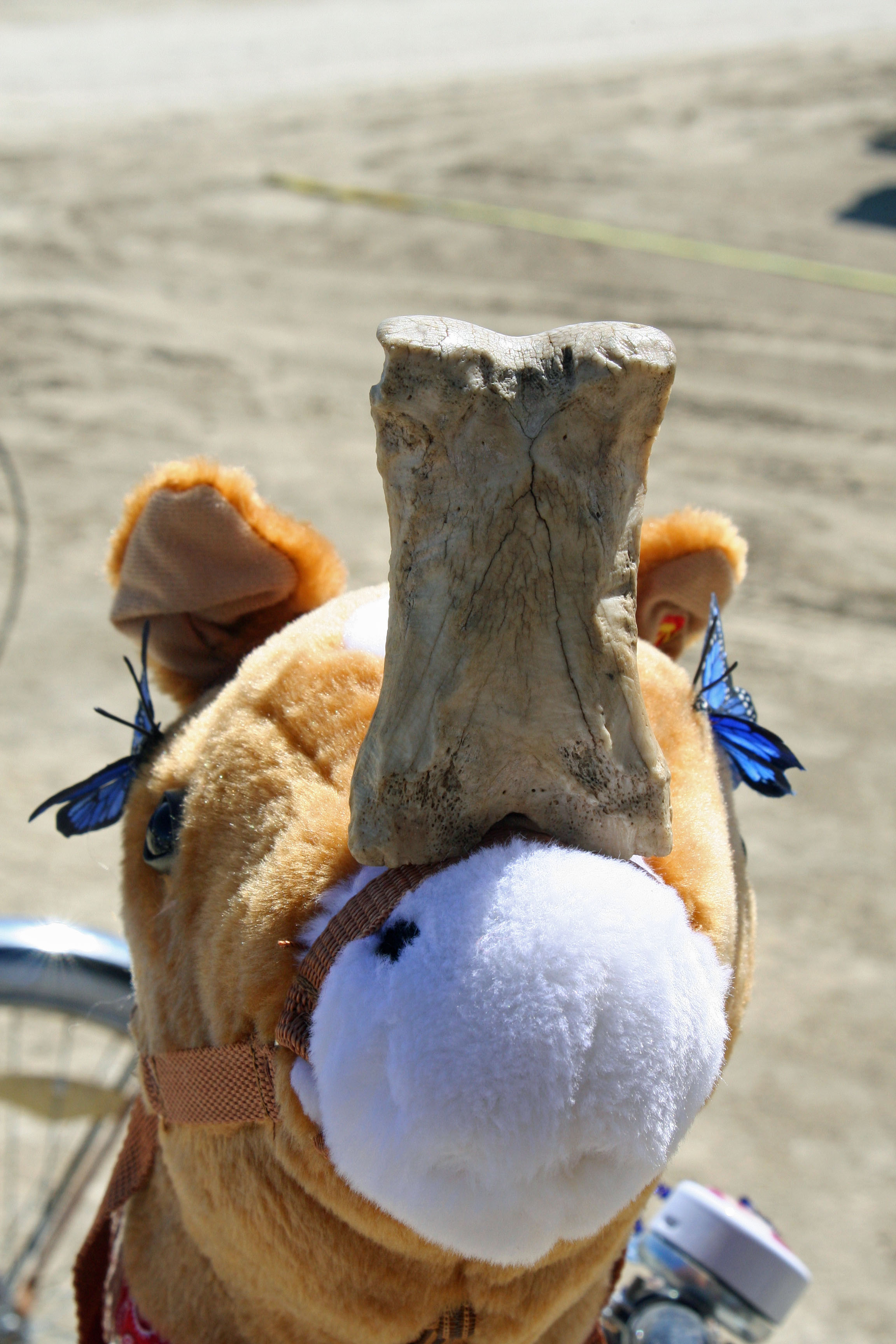
And finally, the Peripatetic Bone insisted on being included in this section on whimsical art. He jumped on the nose of my noble steed, Horse with No Name, and declared the horse was a Unicorn. “Art,” he claimed, “is the process of changing the usual into the unique.” I told Bone he looked more Rhino-like that unicorn-like. He said, “Whatever.”

The Big Rig Jig, Bliss and Ecstasy… Burning Man Art

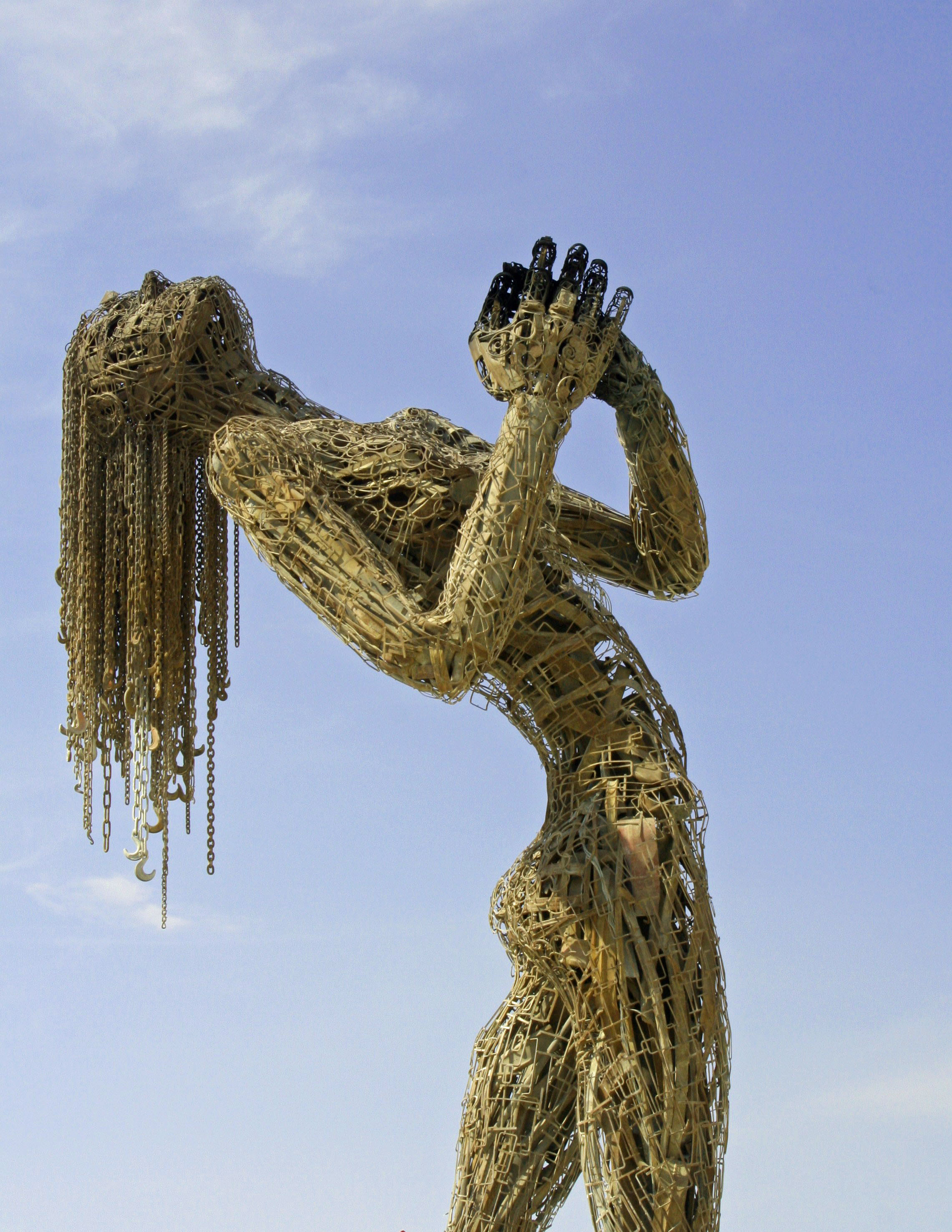
I return to Burning Man for a number of reasons but the art is what truly captures my imagination. This sculpture by Dan Das Man and Karen Cochrane is titled Ecstasy. At night, fire shoots from the statue’s hands.

Art, for me, is the essence of Burning Man. Today I am going to feature three monumental sculptures that I found to be particularly impressive during my six visits to Black Rock City.

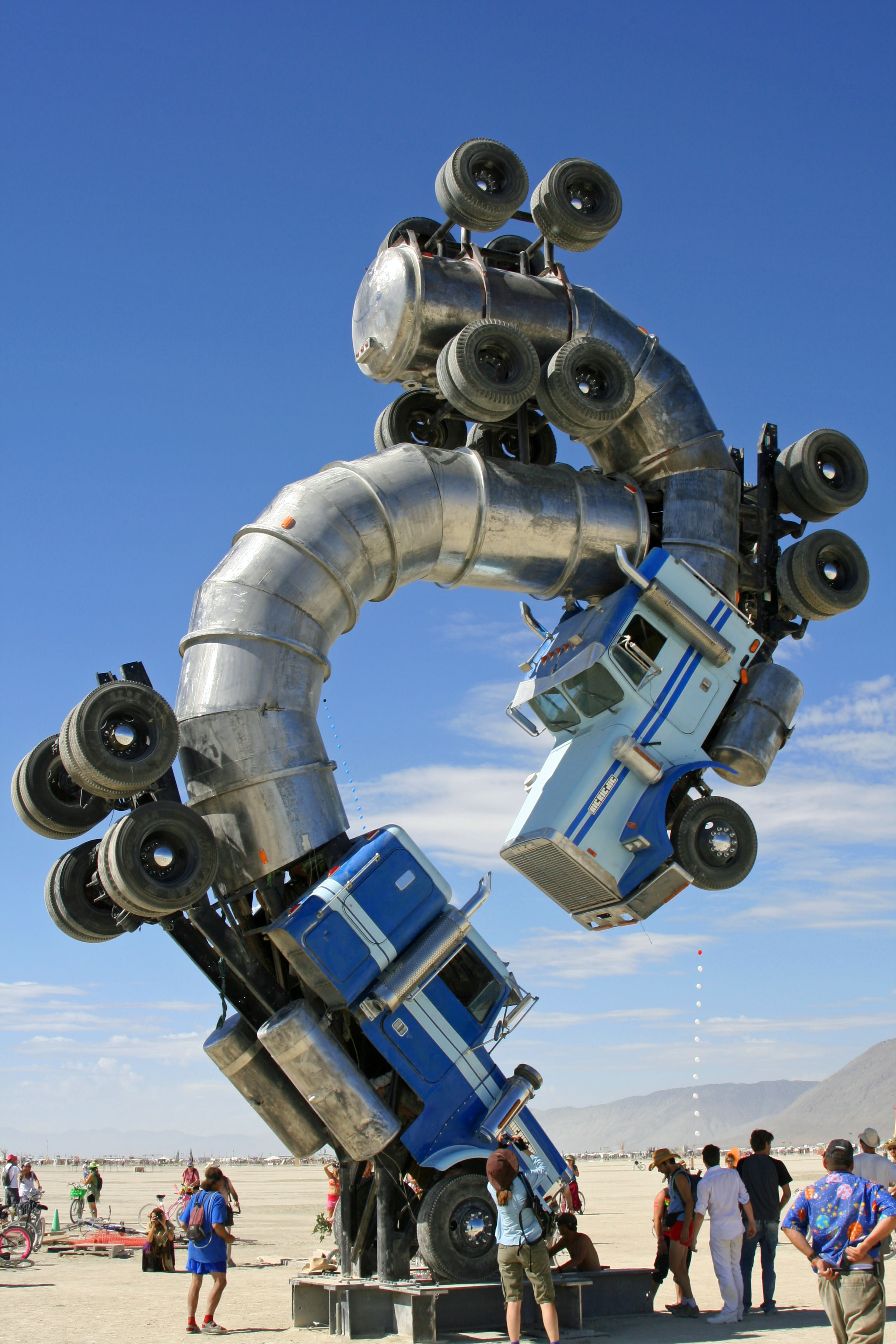
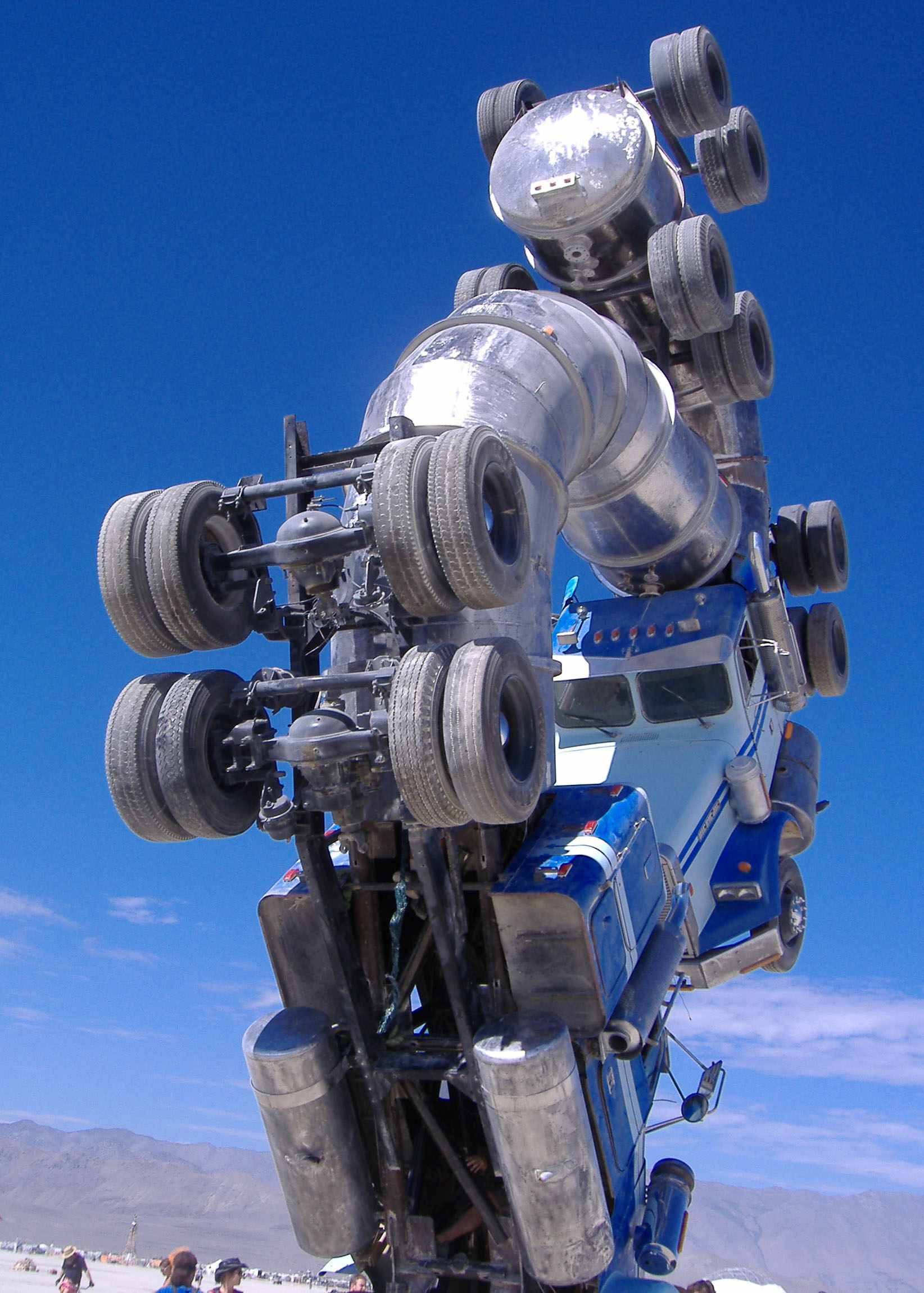
The 2007 theme for Burning Man was The Green Man. Artists were encouraged to develop pieces with an environmental message. Mike Ross, a New York sculpture artist, chose to cut up and weld together two 18-wheel oil tankers as a reminder of the impact oil consumption has on our environment. Like much Burning Man art, people were invited to climb over and into this 42-foot high sculpture titled the Big Rig Jig.

Two 18 wheel oil tankers were cut up and reassembled to create this 42 foot high sculpture created by Mike Ross of New York.

Another view of the Big Rig Jig by Mike Ross at Burning Man. Each year Burning Man selects a new theme and encourages artists to create works of art that reflect the theme.

I really like this photo of the Big Rig Jig taken by my fellow member of the Horse-Bone Tribe and friend, Ken Lake.

Dan Das Man who works out of the Bay Area has had several sculptures featured at Burning Man over the past decade. My favorites are his colossal human figures.

The statues by Dan Das Man at Burning Man are guaranteed to excite photographers and elicit emotions from Burners.

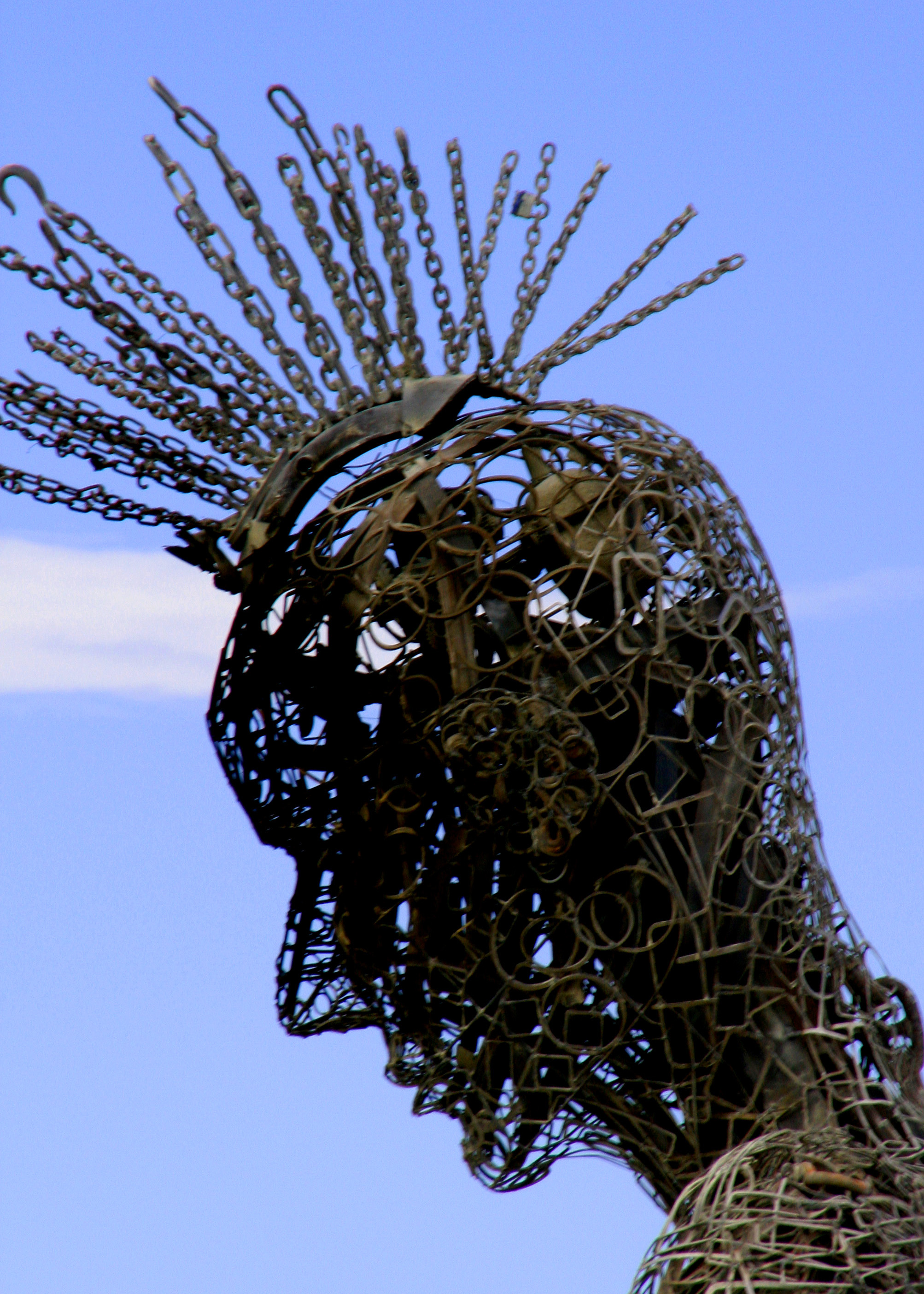
A new definition for spiked hair?

The bikes and Center Camp provide a perspective on the size of this sculpture by Dan Das Man at Burning Man.

In 2010 it was the 40-foot high, 7000-pound sculpture Bliss that caught my attention. Treasure Island was the birthplace of this piece by artist Marco Cochrane.

In 2010 the monumental sculpture named Bliss by its creator Marco Cochrane caught my attention.

Almost any time of the day or night a crowd was gathered around the 42 foot tall, 7000 pound sculpture Bliss at Burning Man.

The sun provided a Kodak moment at Burning Man for this photo of Bliss.

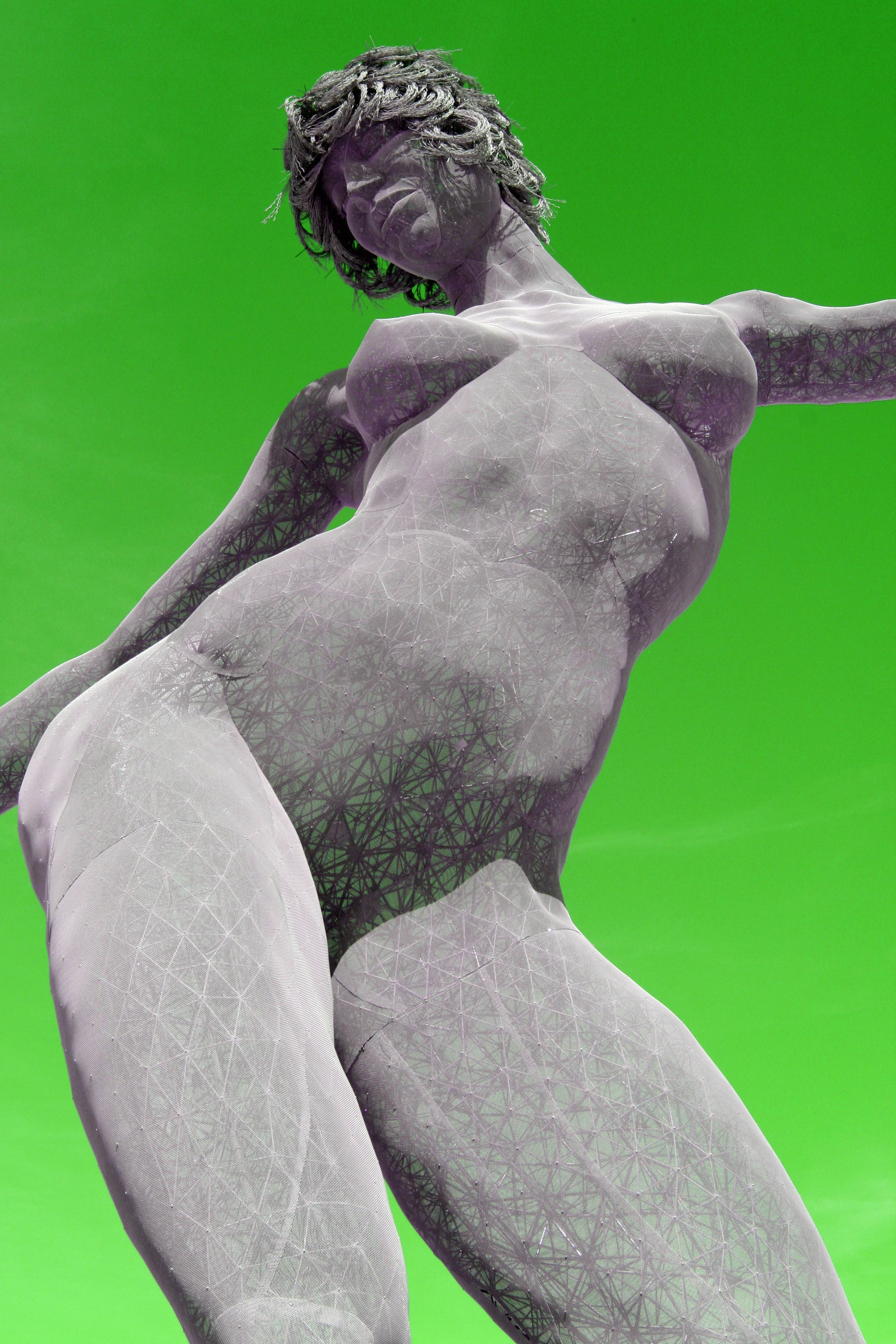
I added a green background in my final photo of Bliss.

A Large Bear with A Huge Tuning Fork… Burning Man

There is always space at Burning Man. Finding a prime location may be a challenge. 2005 found us camping on the edge of the desert. Here, our faithful mounts wait patiently for us.

As I wrote in my last post, Burning Man is less than three weeks away. To provide my readers with a sense of what this event is like, I am reposting some of my earlier blogs. This post reflected my trip to Burning Man in 2005.

I arrived with four friends in tow; an education specialist, an architect, a judge and an interior designer – all of us members of the post-50 crowd and well entrenched in the middle class world.

While I can’t speak for the others, my primary reason for showing up was simple. I love fairs.  I will also confess that I still have a tiny spark of Beatnik/Hippie lurking in the dim recesses of my mind left over from living in the Bay Area during the 60s.

My job was to show up early in my van and find space. It wasn’t easy. While your ticket guarantees a place, you have to be early to obtain prime real estate.

“Look for me on Catharsis Street between 8:00 and 9:00,” I told my friends. Streets are renamed each year depending on the year’s art theme. In 2005 it was Psyche.

This is the official 2012 Burning Man map. Named streets, following the alphabet, are semi-circular. Numbered streets, based on time, cut across the named streets and carry participants down toward the Playa. The Man is at the center. The blue areas of Black Rock City are preassigned. Other spaces are first come, first serve. 60,000 people will attend Burning Man this year. 

I was happily sitting in Reno making my contribution to Nevada’s economy when the Catharsis property was gobbled up. Nor could I find space on Amnesia, Bipolar, Delirium, Ego, Fetish or Gestalt Streets. I ended up in the boonies at Hysteria and 8:00 with nothing beyond but empty desert. “Far out,” I giggled to myself.

Setting up camp and adopting aliases are the first orders of business at Burning Man. Many folks come as large groups or ‘tribes’ and set up elaborate theme camps with names like Zenplicity, Plato’s Cave, Tribal Thunder, Mousetrap, Heebeegeebee Healers and the Mind Shaft Society. Over 450 such camps were listed in the 2005 directory.

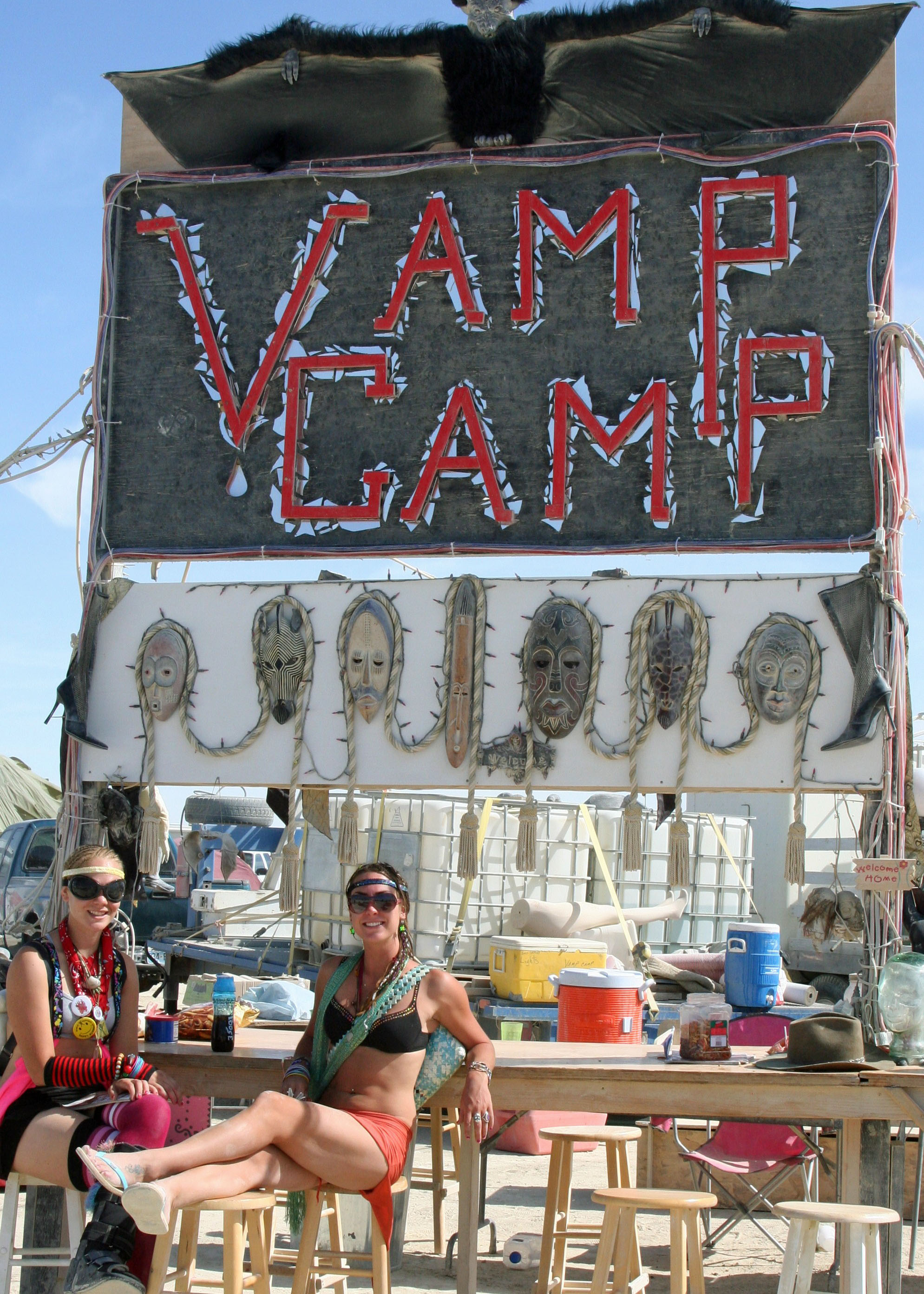
“Tribes” come in all shapes and sizes. Some build elaborate theme camps such as the members of Vamp Camp.

The Mind Shaft Society, a tribe made up of scientists, created these colorful monsters that Peggy, AKA Luna, is standing in front of.

Most tribes bring large tents, build massive shade structures and decorate their camps extensively. Ours consisted of a simple shade structure, two small tents and my RV. We also put up a hitching post for our faithful steeds/bicycles.

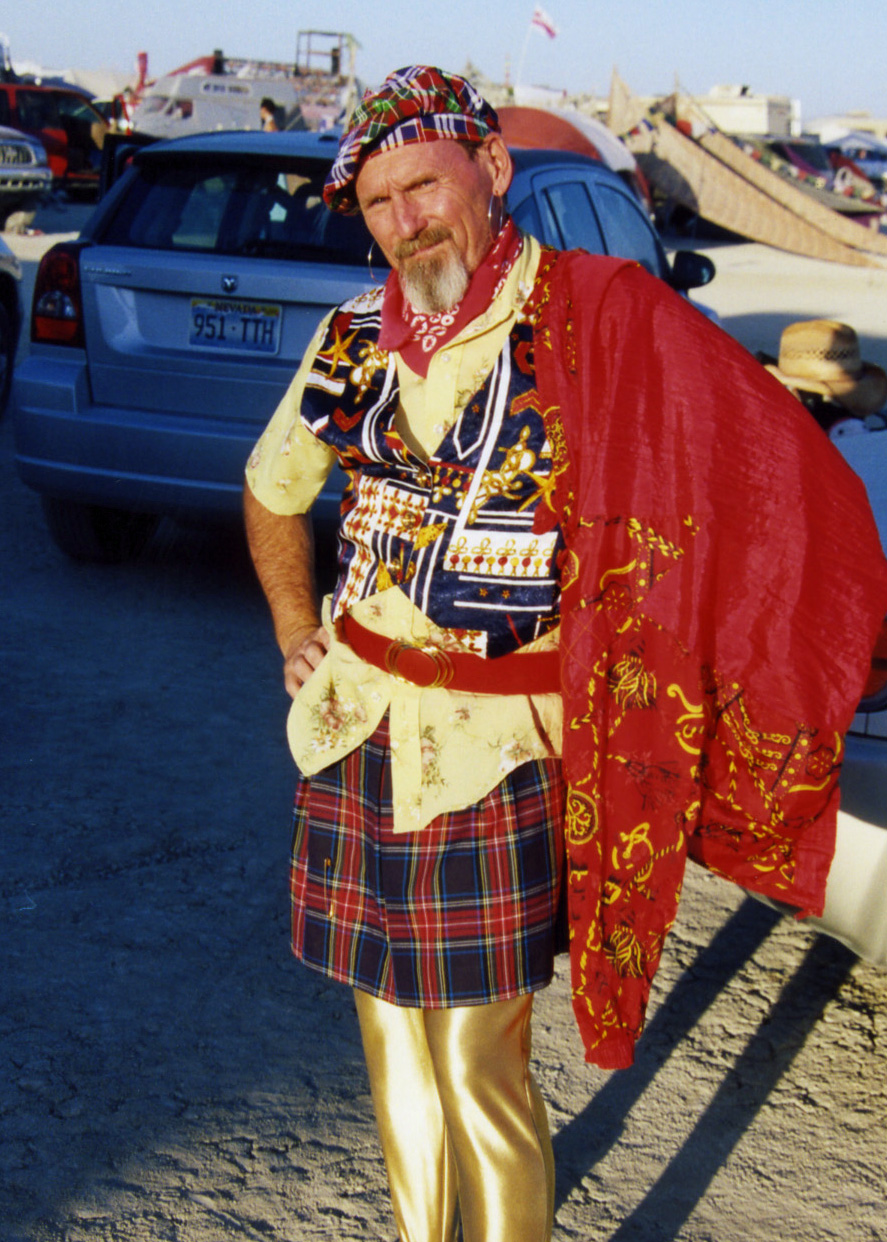
Since one of our intrepid ‘tribe’ brought kids’ stick horses to affix to our bikes we adopted the name Horse Camp. Our aliases and costumes also reflected the theme, sort of. I was Outlaw and my steed, Horse with No Name. Then there was Scout with his Palomino Trigger, Wilbur and Mr. Ed, “It’s a kilt not a skirt” Scottie with Grand Teton and Nancy, a.k.a. Nancy, with a unicorn she named Horny Princess.

Scottie shows off his fine clothes.

With business taken care of, we were free to meet the neighbors. One set was from Auburn/Nevada City, California and the other from Arizona. Both groups were made up of veteran Burners. I was somewhat amused when our southern neighbors arrived to apologize that they had a generator along but would only operate it early in the morning to make Lattes. In true Burner style, they invited us to show up with our cups.

“Gifting” is an important concept at BM. In addition to free Lattes, our neighbors had soon offered us bracelets and necklaces. They even wanted to silk-screen our T-shirts with the BM symbol. Our most unusual gift, however, arrived when we were drinking beer with the Arizonans. Bear came by and offered us a tune up.

He stood over seven feet tall and must have weighed 300 pounds. His tools of trade were a five-foot long tuning fork and a rubber mallet. Scout the Judge, an adventuresome type of guy, immediately volunteered. His neck had been bothering him. I was more reluctant but the Arizonans insisted I needed help, lots of it. Bear took on Scottie and me together. My arthritic hip was in need of a miracle cure and Scottie was searching for peace of mind.

“Do you believe you can heal yourself,” Bear asked. Bam, bam, bam, bong! He pounded on his fork with his mallet and elicited a bell-like tone.  He drew the fork down over my body. I could feel my prostate vibrate.

“How do you feel now?” Bear asked. “Fine,” I responded quickly. Scout had answered negatively and Bear had immediately started growling and sucking on his neck… sucking out the offending evildoer in true Shamanistic style. I didn’t want Bear near my hip. I made it through the night without pain but my hip started aching again the next day. Maybe I should have taken the full cure. 

Next Blog… My favorite art at Burning Man

While the Horse Bone tribe has remained small. We do know how to have fun.

Burning Man: It’s Not for the Faint Hearted

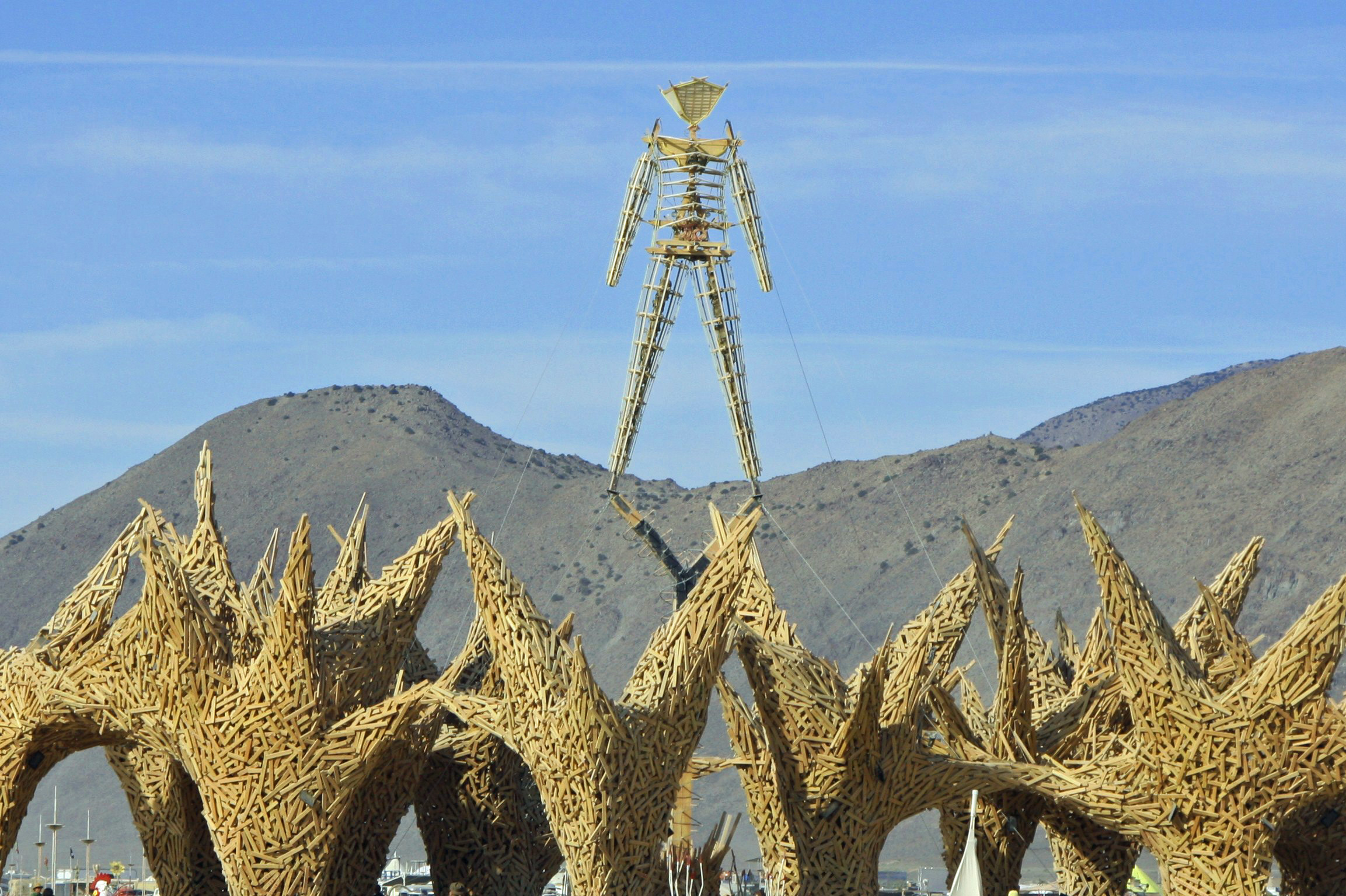
Burning Man’s roots go back 27 years to the burning of an 8 foot tall statue on Baker Beach in San Francisco. Today’s man stands some 40 feet tall and rests on a 60 foot pedestal. The wooden man and his fiery demise symbolizes the annual event that takes place in the remote Black Rock Desert of Nevada.

Finally I have lucked out and scored a ticket to Burning Man. Now I have to scurry about and get ready. The event is three weeks away; it is serious countdown time. This means my usual blog is going on vacation. For the next three weeks, my posts will be all about Burning Man. I am going to reblog some of my most popular Burning Man blogs and include many of my favorite photos.

Afterwards I promise full coverage on what the 2012 event was like. You are invited along!

I discovered my passion for deconstructing pumpkins in 1992 and came to accept Halloween as an adult holiday. I still had a major hurdle, though; I refused to wear a costume. Even as a kid I resisted dressing up for Halloween. Somehow it seemed un-cool.

Five trips to Burning Man have changed my mind. If you are one of those folks who can’t wait to morph into Count Dracula or Suzy Siren, you might want to visit this annual event.

Burning Man is close to Libertarian in its rules. You are, however, highly encouraged to wear a costume. These range from the simple, such as this guy wearing a neck piece and a bowler, to the more fanciful such as the woman with high shoes and a bikini bottom. Expect some nudity.


But be warned: Black Rock City, the home of Burning Man, is not for the faint hearted.

Temperatures can rise to over 115 during the day and drop to freezing at night in this instant city located in a remote section of the northern Nevada desert. Dust storms whip across the Playa creating zero visibility and coating everything with a fine layer of dust. Eyes, ears, lungs, clothes, tents, vehicles, cameras and laptops become instant victims in this environment. Cleaning up afterwards is a weeklong process, so serious that some RV companies refuse to rent to Burning Man bound celebrants.

A huge dust storm makes its way across the Playa creating close to zero visibility along the way. (Photo by Don Green.)

Just when you believe you have mastered the heat and dust, it rains and you find two inches of mud caked on the bottom of your shoes or bike tires.

None of this seems to deter participants. They come in the thousands to this happening, which runs for a week including Labor Day. Burners, as they like to be known, come from all over the world to see and be seen, to party and perform, to enjoy and create art. And they get there in almost every conceivable mode of transportation including ancient busses, trucks, autos, bicycles, airplanes and over 3000 RVs – all loaded down with the paraphernalia necessary for a week of desert survival.

Overnight, a community of 50 thousand plus rises out of the desert, making Black Rock City the fourth largest city in Nevada for its one week of existence. Burners arrive to a well laid out semi-circular street system, some 450 port-a-potties, a Center Camp Café, the 40-foot tall Burning Man statue (perched on a 60-foot plus base) and little else. Everything they need must be brought with them.

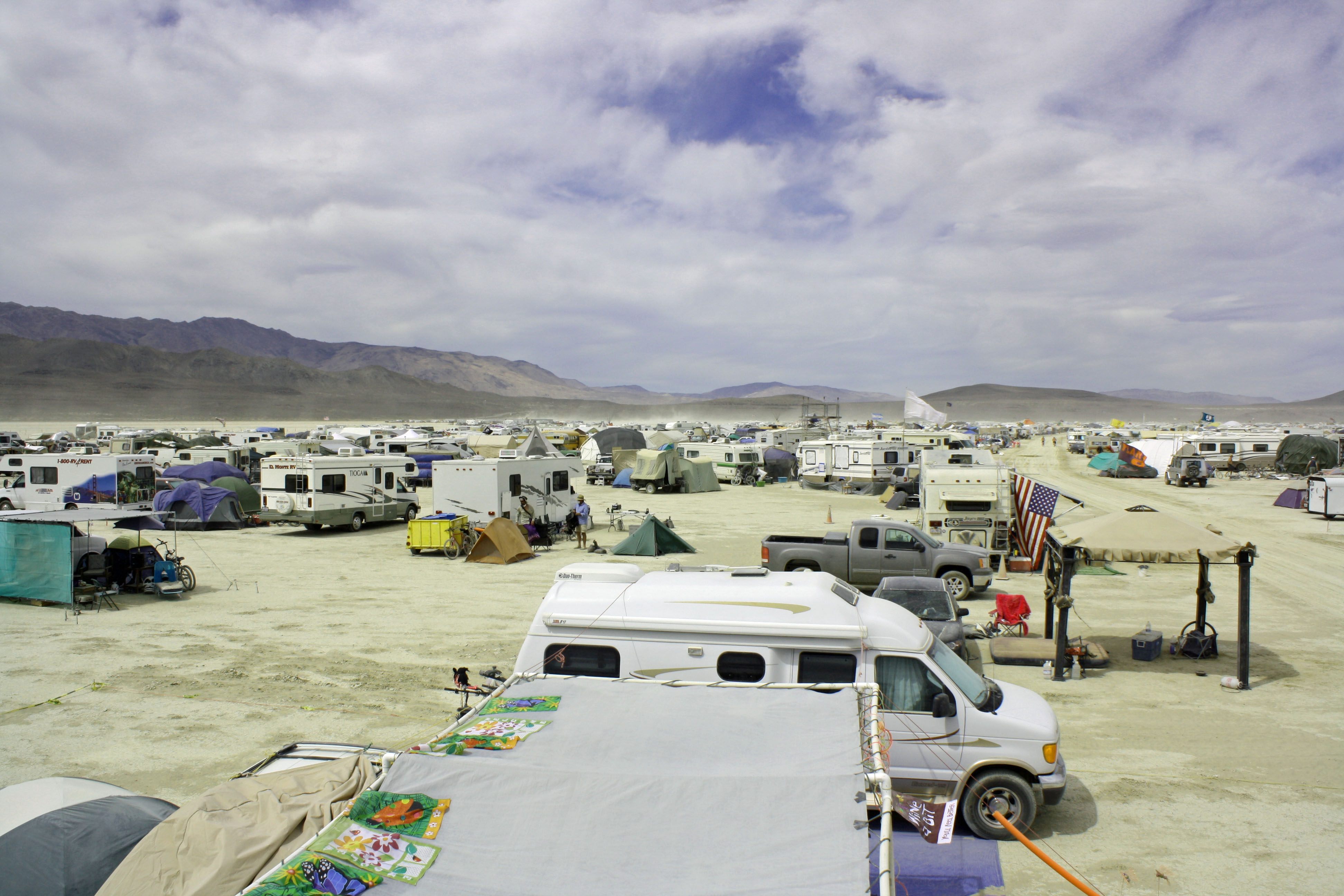
This year a city of 60,000 people will appear and disappear in the Nevada Desert during Burning Man. This photo illustrates what it looks like early in the week. There are still spaces. My van Quivera, is in the foreground. (Photo by Ken Lake)

Center Camp is one of the few structures Burners find set up when they arrive. Here it is operating full tilt as shown by the hundreds of bikes (BM’s primary mode of travel), which are parked outside.

With the exception of coffee, tea, lemonade and ice, nothing can be bought or sold. There is zero commercialization.

As for what the event is, it can be almost anything an individual wants it to be. The only requirements are that you pay the entrance fee and follow a few basic rules.

I asked my friends to describe the event. Their answers included 1) Las Vegas glitter with a new age twist, 2) Haight Ashbury, Woodstock and Mardi Gras rolled into one, 3) a medieval fair dropped into an ancient Greek Bacchanal, and 4) a frat party with avant-garde art.

I view Burning Man as one of the greatest shows on earth. It ranges from the whimsical, as represented by this rabbit, to more serious themes.

My own take is that Burning Man may very well be the greatest show on Earth, a modern-day ‘Hippy Happening’ of gargantuan proportion. New age idealism combines with personal liberation, art, exhibitionism, holistic healing, self-discovery, environmental awareness and partying. Step aside Barnum and Bailey.

The event reaches back 27 years when an eight-foot version of the ‘Man’ was first burned on Baker Beach in San Francisco. Legend has it that Larry Harvey, the creator of Burning Man, was mourning a lost love.

Revisionist thinking suggests something deeper was involved, a search for meaning and unity in our Post-Modern world. And there is an element of that at Burning Man. Certainly much of the art is reflective of Post-Modern thought. There is also an underlying Utopian fervor among the BM true believers that the event can create positive change in the world.

Next Burning Man Blog: Beware of Large Bears with Tuning Forks

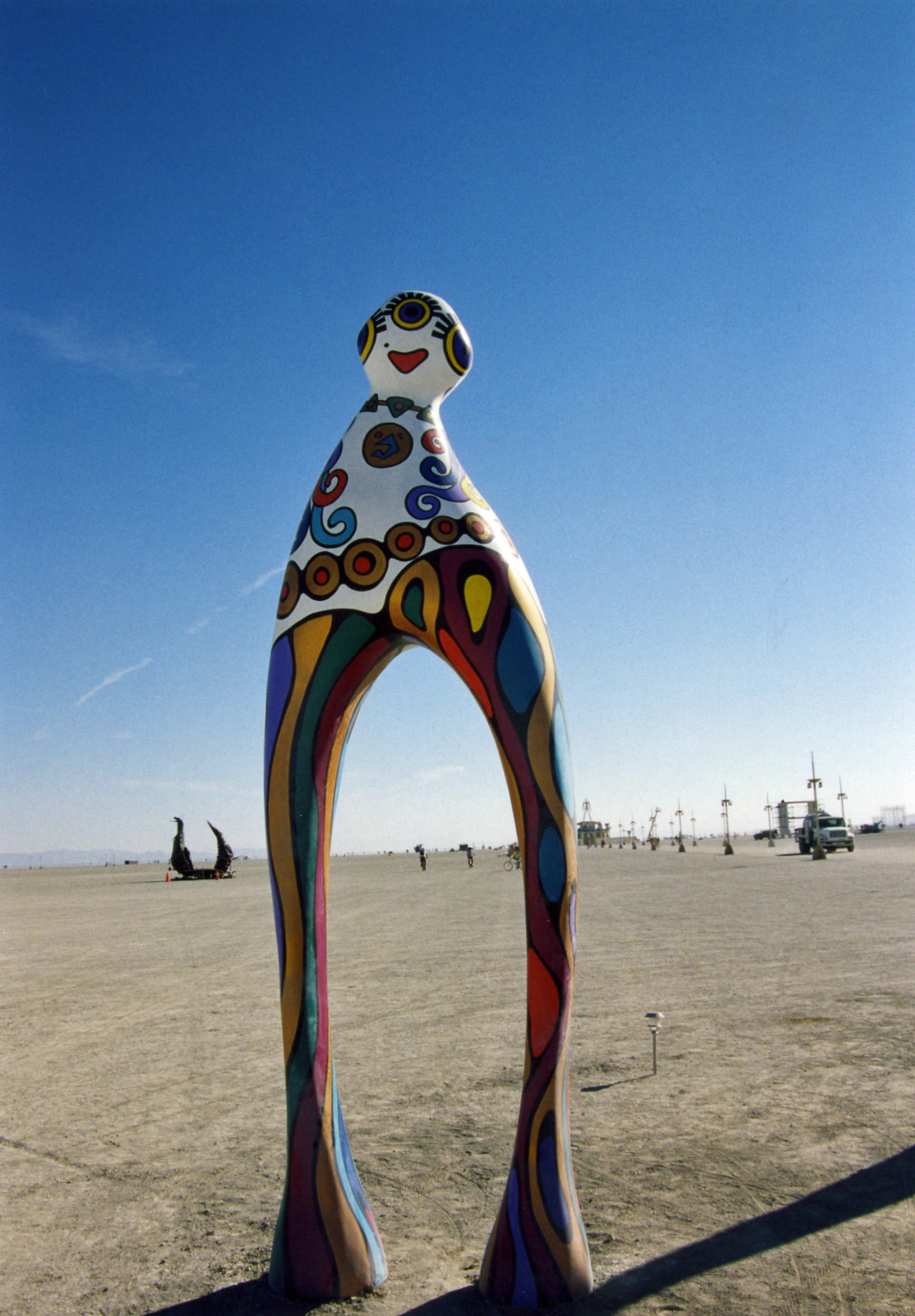
When I think Burning Man I think art. This colossal woman appears to be celebrating the event.


The Wonderful World of Birds’ Bills… On the Road

I love pelicans. They have that ‘put together by a committee’ look. Check out the sharp hook on his bill. I took this photo in Baja California near Cabo San Lucas.


A wonderful bird is the pelican, His bill will hold more than his belican.

Dixon Lanier Merritt

Whenever I see a pelican, Dixon Merritt’s poem pops into my mind unbidden. Birds’ beaks, or bills if you prefer, are wonderful adaptations to their environment.

As I write this blog from my home in southern Oregon, a Rufous Hummingbird has his beak buried deep in our feeder while a Black Headed Grosbeak worries sunflower seeds on the hill behind him. The hummingbird’s beak is long and delicate, designed to capture nectar in the hidden recesses of flowers. The grosbeak’s beak is short and stubby, perfect for cracking open seeds.

I photographed the Brown Pelican in Baja California near Cabo San Lucas. Peggy found the Snowy Egret there as well. The rest of the birds featured in this blog are from Florida except for my final picture of Brown Pelicans. Few places can match Everglades National Park when it comes to unique bird life with interesting bills.

Peggy captured this Snowy Egret on film on the same Baja trip we found the pelican. Both Egrets and Herons have spear like bills. I like the way the Egret’s shadow allows his feet to be seen.

Speaking of spear like bills, how would you like to be on the receiving end of this one? I took this photo of a Great Blue Heron in Florida. While we normally think of Great Blue Herons eating frogs, fish and baby alligators, they are also quite fond of small rodents. I have often watched them patiently stalk mice on the Bodega Bay Headlands of Northern California. Their strike is lightning fast.

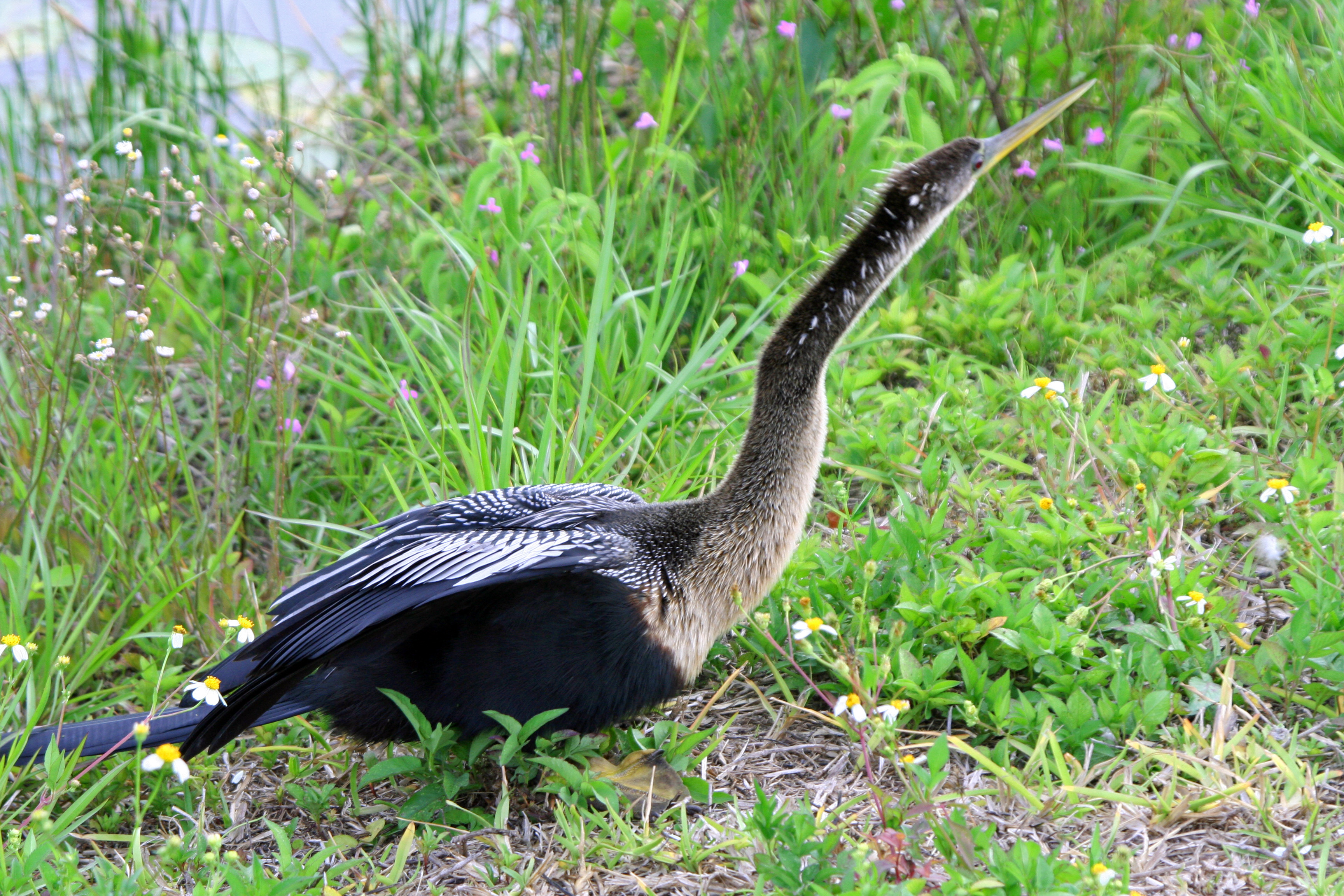
This Anhinga in Everglades National Park is obviously eyeing something in the grass next to it. Like Cormorants, Anhinga are designed to catch their dinner while diving and are well designed to do so.

A more typical picture of an Anhinga, drying its wings after a dive.

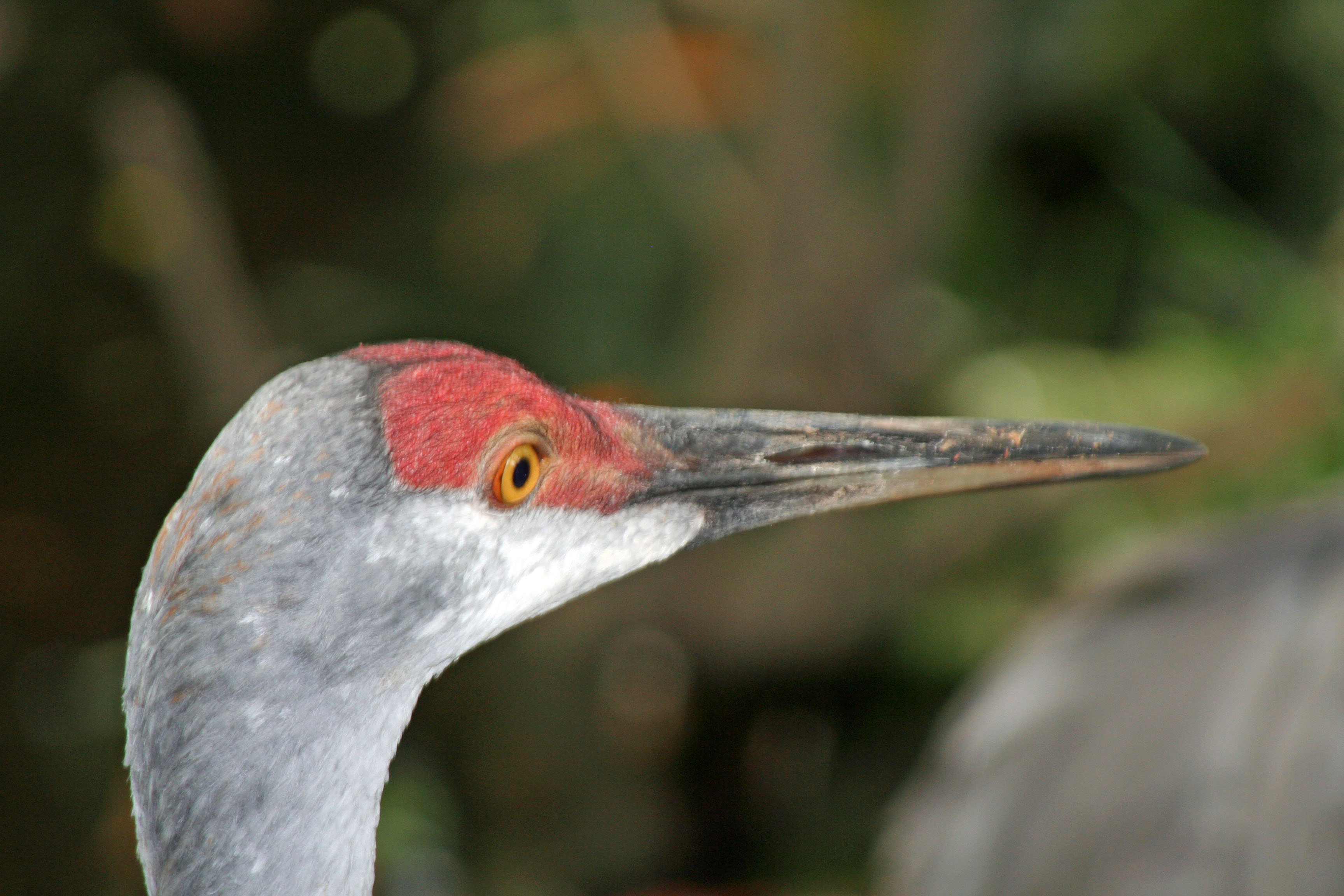
This Sand Hill Crane and four buddies came strolling into our camp in Central Florida.

When one thinks Florida and Everglades, it is natural to think of Flamingos. It’s hard to find more colorful beaks.

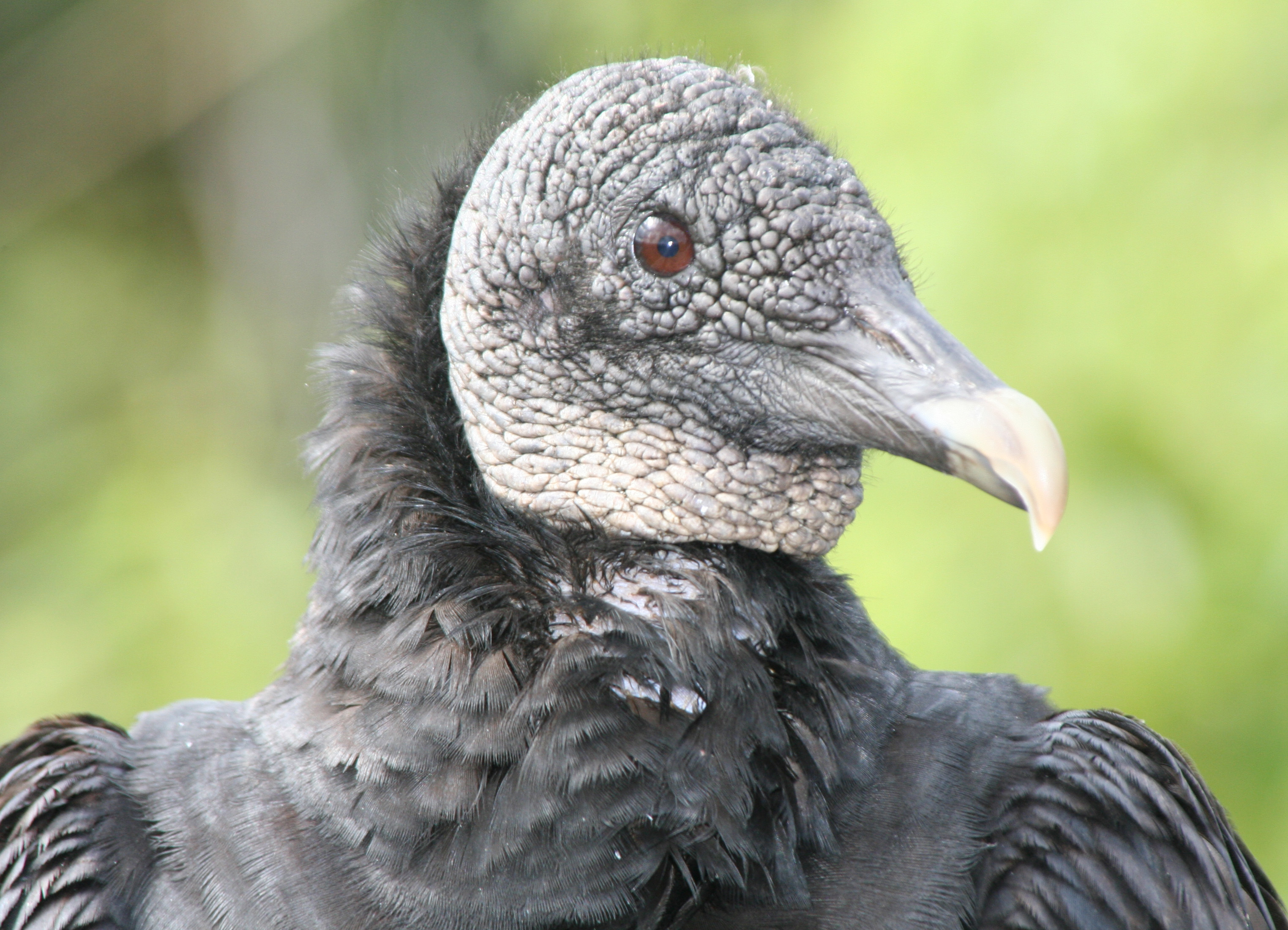
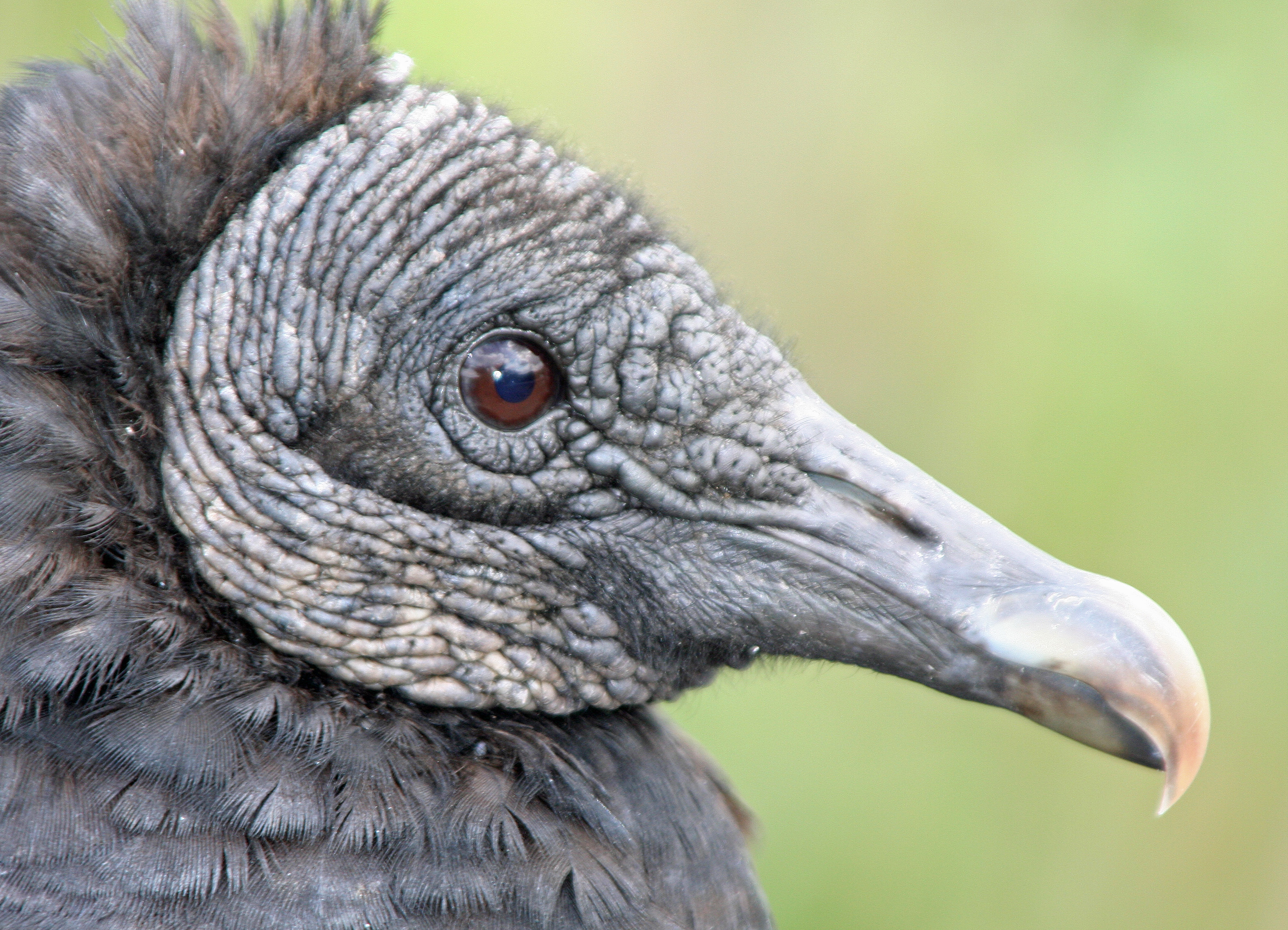
In my last blog I featured Black Vultures in Everglades National Park. This one looks pensive. Again, note the hooked bill designed for tearing flesh off of dead things.

White Ibis are common in the Everglades. They use their long curved bill to probe mud.

This guy is a little fuzzy but any collection of photos featuring birds beaks needs to include the Spoonbill, another resident of the Florida Everglades.

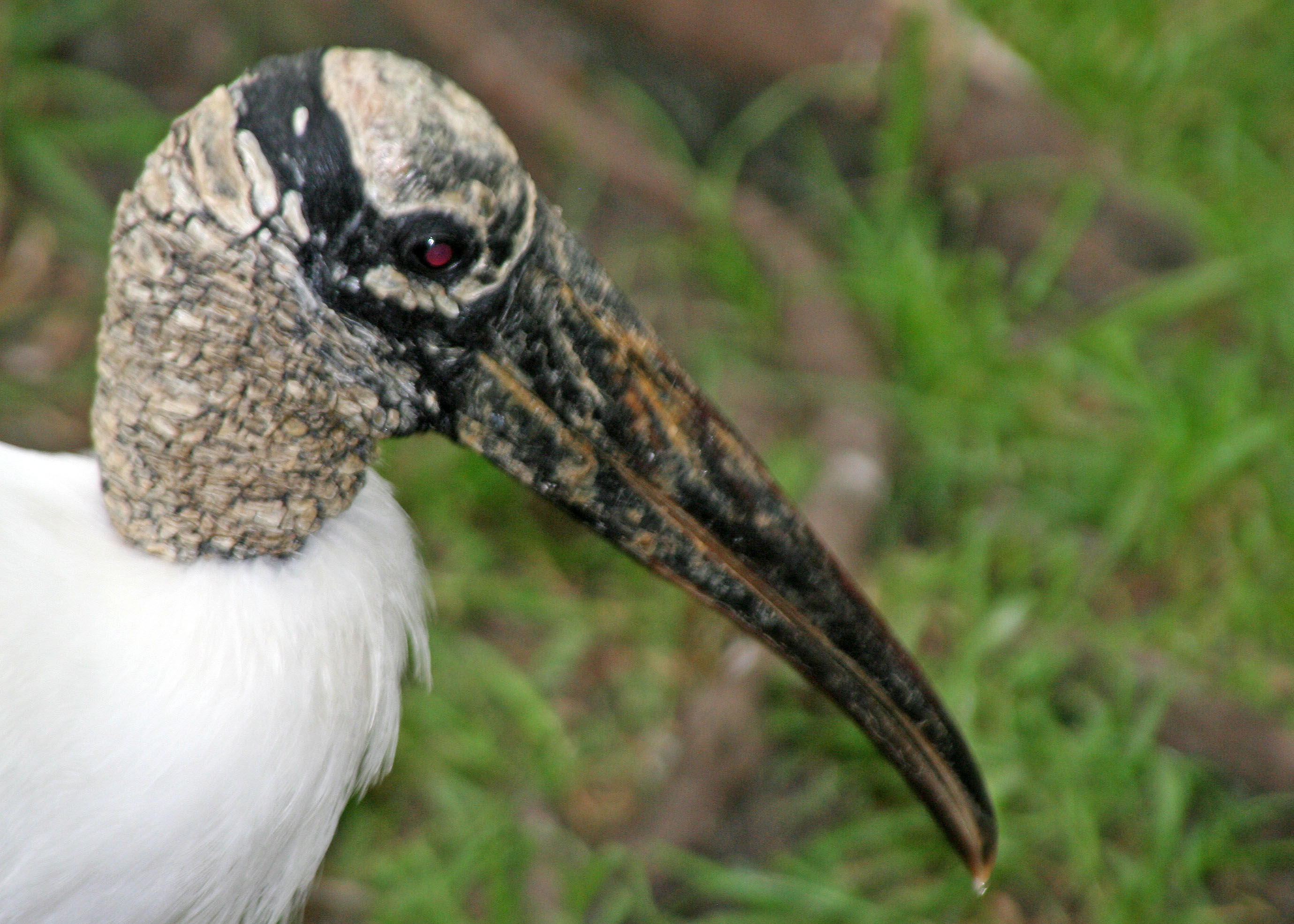
The mottled head and beak of a Wood Stork, also photographed in the Everglades.

I’ll close with my favorite bird. I took this shot of Brown Pelicans just south of Santa Barbara, California.

The Handsome Black Vulture… Everglades National Park

A Black Vulture appears to take a bow after cleaning out a camper’s food.

The warning signs at Flamingo Campground in Everglades National Park were clear: Food Must Be Properly Stored. The best place was in the trunk of your vehicle.

The folks from New Jersey apparently didn’t get the message, or more likely, chose to ignore it. Signs were posted everywhere. They left their picnic table packed with a weeks worth of food as they drove off.

I glanced over from our campsite five minutes later. The trees over the table had turned black. Fifty or so vultures were contemplating dinner. What happened next wasn’t pretty. If you have ever watched hyper five-year-olds tear into Christmas presents you get the picture. Food wrapping paper flew everywhere.

I walked over and shouted at the invading forces. They flew up into the trees. As I walked back to our site they returned to their feast. I tried again. This time they croaked angrily at being interrupted and walked away instead of flying. As I strolled after them another group landed on the table. An exploding bag of potato chips elicited a chorus of delight.

I gave up. You have to know when you are defeated. I once tried to rescue an ice chest from a bear at Tuolumne Meadows in Yosemite National Park. A family from Iowa had left it outside their camper. The bear stood up on his hind legs and growled at me.  He was huge. I told the bear he was welcome to the ice chest and the Iowans.

I left the Black Vultures with a similar message. Later that night I heard the family from New Jersey arrive back at their camp. They let loose a torrent of obscenities that even a writer couldn’t imagine. Their camp looked like New Orleans after Katrina. The family was laughing the next morning, however. One of the joys of travel is having stories to tell when you get back home and they had a doozy.

Usually Black Vultures eat carrion. You can spot them throughout the Southeast wherever roadkill is found. But they are also quite willing to clean out a camper, gather at the local municipal dump or even eat an occasional calf. They are birds of opportunity.

Like buzzards, they have bald heads to make reaching into dead things easier. Imagine how messy feathers would become. They also have large ripping beaks and are noted for peeing on their legs to keep cool. Given all this you may find it surprising I think they are quite handsome. But check out their photos below.

Black Vultures are monogamous and share incubation responsibilities. They don’t build nests but are known to lay their two eggs in caves, on rocks or even in old buildings. Bits of broken glass, bright plastic, bottle caps and other baubles are used to decorate the area. They value privacy and may scout an area for days to assure its isolation. Young vultures often stay with their parents for years in a social group.

In addition to the Southeast, they are found throughout Central and South America. With global warming they are expanding into the north.

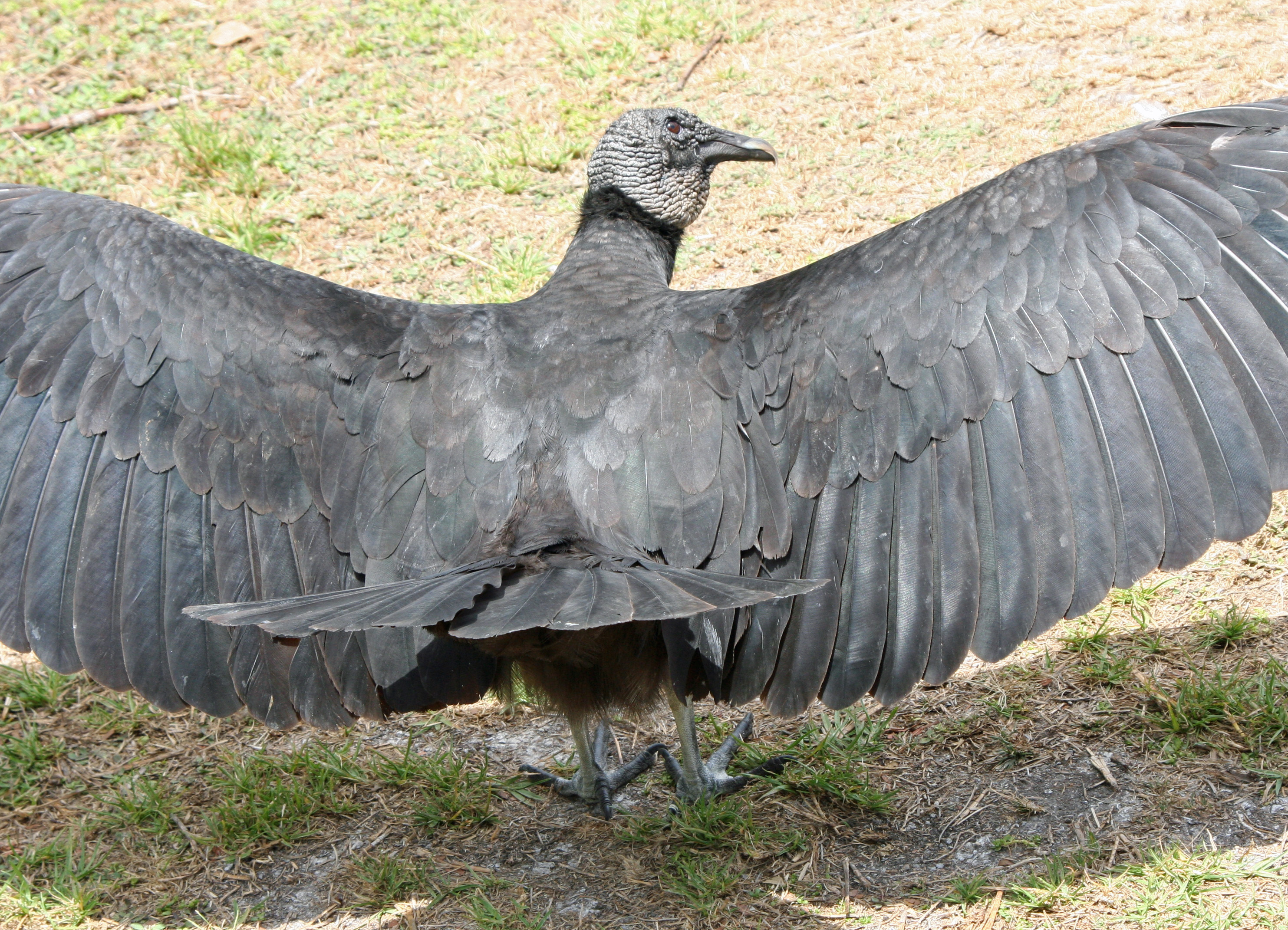
One reason given for Black Vultures assuming this pose is to dry out their feathers. I often seen buzzards perched in trees in the West with wings spread like this before beginning to fly on damp mornings. The wingspan of mature Black Vultures is around five feet.

This is the same Black Vulture shown above with his wings folded. He looks well fed to me. Note his large feet.

I found this Black Vulture along the Anhinga Trail in Everglades National Park.

The vulture waited patiently while I took photos. Maybe he was contemplating my food value. Note the large, ripping beak. It is easy to understand how this guy would make short work of either a dead cow or a bag of potato chips. In my next blog I will feature specialized beaks from other Everglades birds.

A closed eyelid gave this Black Vulture an eerie appearance. While my readers may not agree with my handsome designation, I am sure that everyone will agree that these birds have a striking appearance.

Gators and Glades… The National Park Series

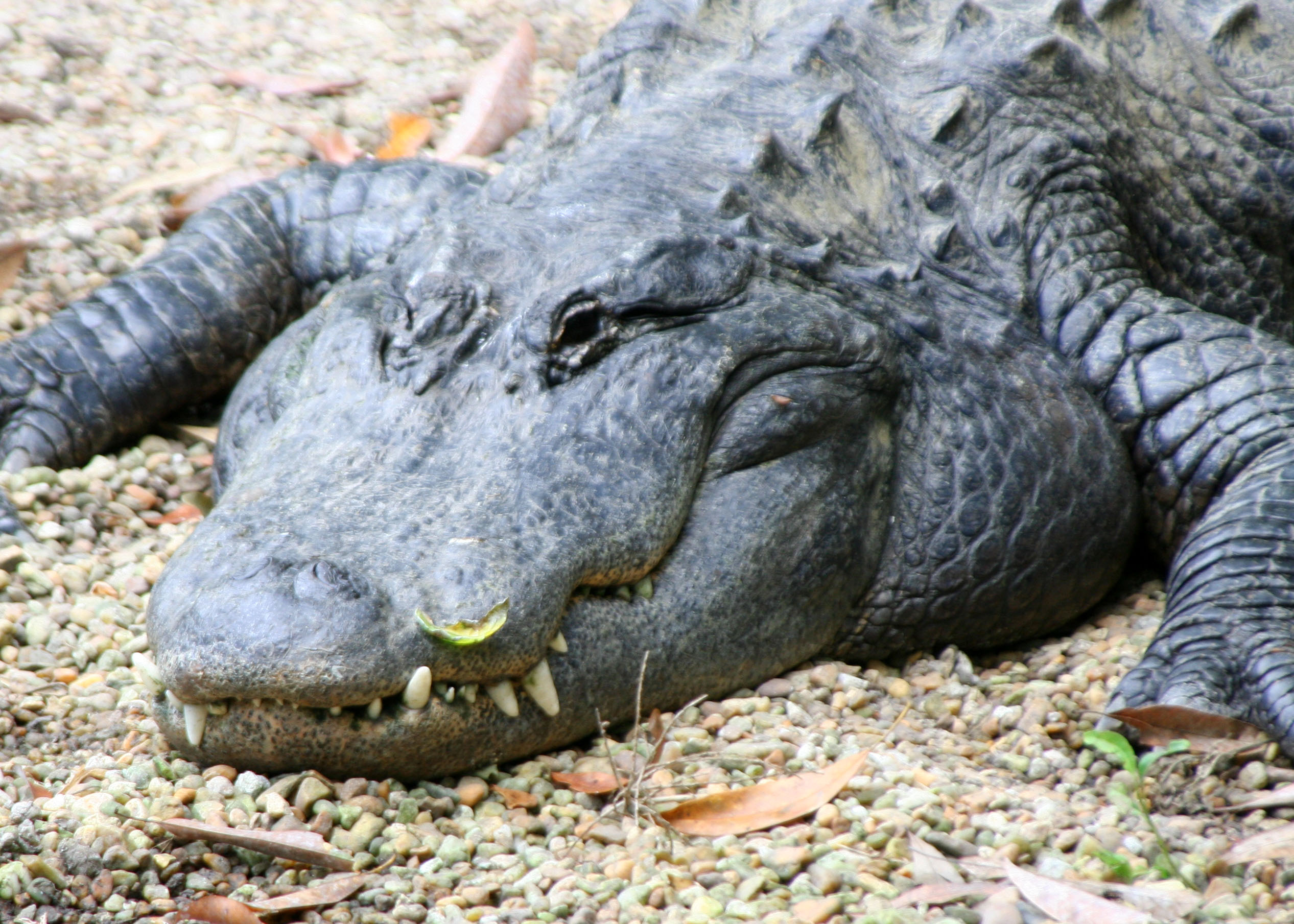
The ancestors of this alligator, photographed in Florida’s Everglades National Park, roamed the earth some 150 million years ago.

I’ve been following the blog Serenity Spell by FeyGirl that explores the natural world of Florida. It is well written and includes great photos, in-depth information, and a strong ecological philosophy. I highly recommend it.

FeyGirl’s posts have reminded me of my own experiences in the Everglades National Park and other Florida wetlands.

My brother Marshall, a 72-year-old homeless man with a pickup truck and a bank account, likes to hide out in remote Florida campgrounds six months out of the year and read books. Catching up with him has taken me into places where tourists rarely tread. Trust me, Marshall does not hang out at Disneyworld or Epcot Center.

Peggy’s parents, John and Helen, also lived in Central Florida for years and John, in his 70s and 80s at the time, loved to take us for hikes and point out anhinga, alligators, cottonmouths and other Florida wildlife.

Given all this, I decided to write about the Everglades this week. I’ll start with alligators, move on to a handsome vulture and end with some very impressive bird beaks.

The photographer in me loves alligators. They are big (up to 1000 pounds), like to sunbathe and don’t see any reason to run away. With over a million residing in Florida, they are also easy to find. During dry season they congregate where water is found and actually enlarge wet areas by digging out “gator holes.”

What makes them so photogenic, however, is their exotic look. It comes from having been around for 150 million years and surviving the demise of dinosaurs. I am particularly fond of photographing them as they slither through the water. It captures them at their primitive best.

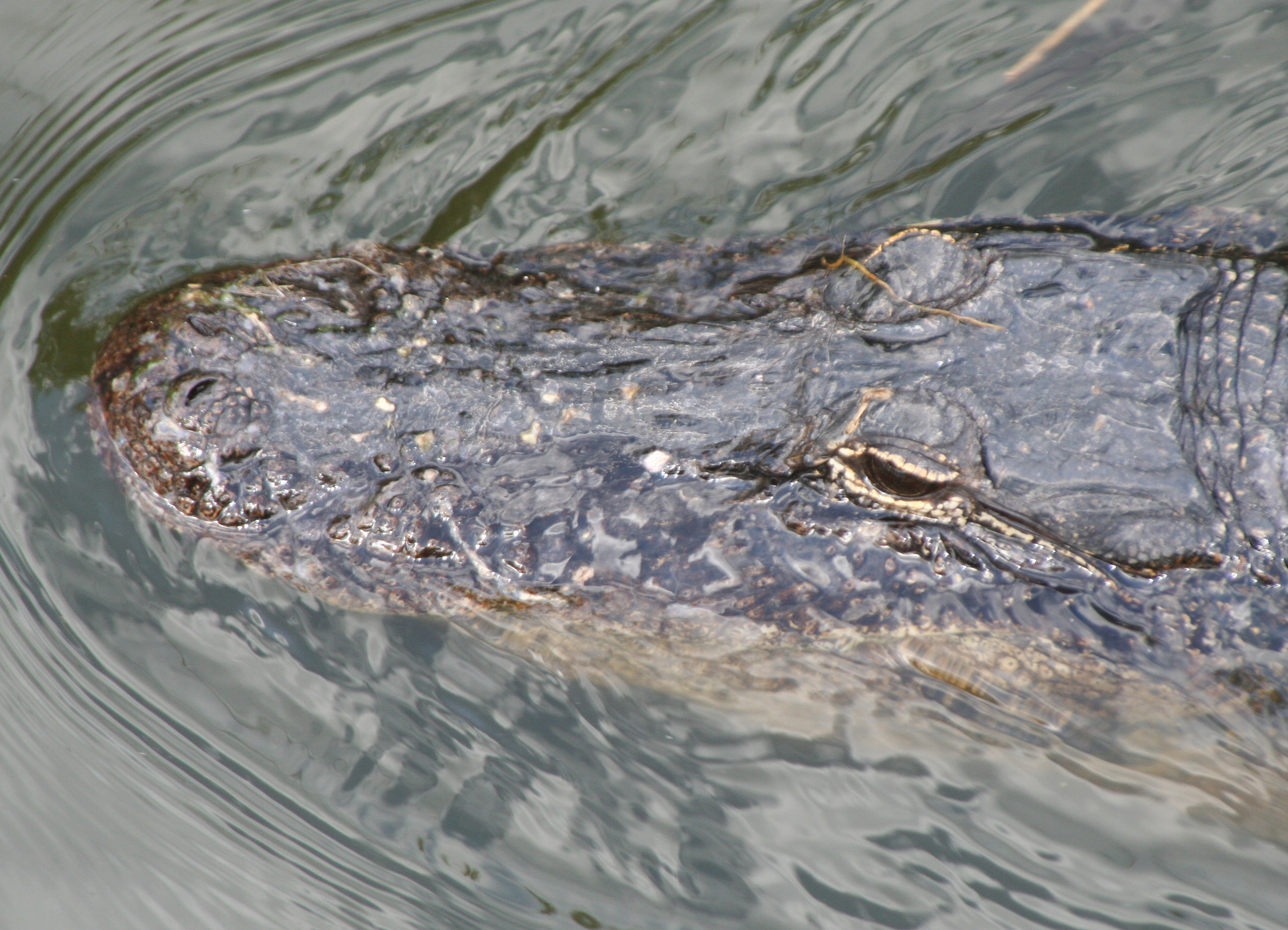
I begin photographing this alligator at some distance and ended when it was a few feet away. He went about his own business and I went on about mine.

The most surprising fact for me about alligators is that the females make such good mothers. They start by building nests two-three feet high of plant debris and dirt.  They then lay 30 to 50 eggs and patiently guard the nest for 70 days until the babies hatch. The sex of the babies is determined by how warm the nest is. Cooler produces females, hotter produces males.

Mom’s job isn’t over with the hatching. She hangs out and protects her babies for another year. Lots of things including other alligators, fish, raccoons and even Great Blue Herons find baby alligators tasty. Later, when the babies grow up, they return the favor by eating the same creatures that wanted to eat them. What goes around comes around.

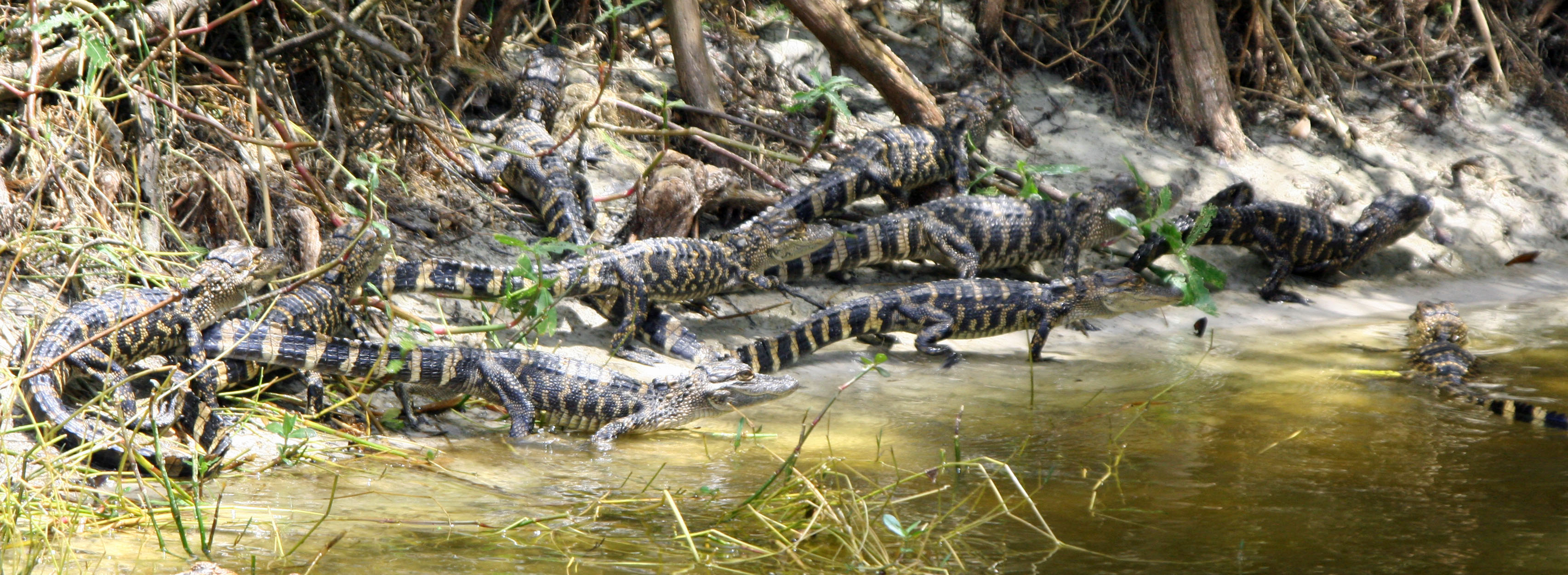
The protective coloration of these young alligators makes them difficult to see. Mom is hiding out near by on guard duty against predators.

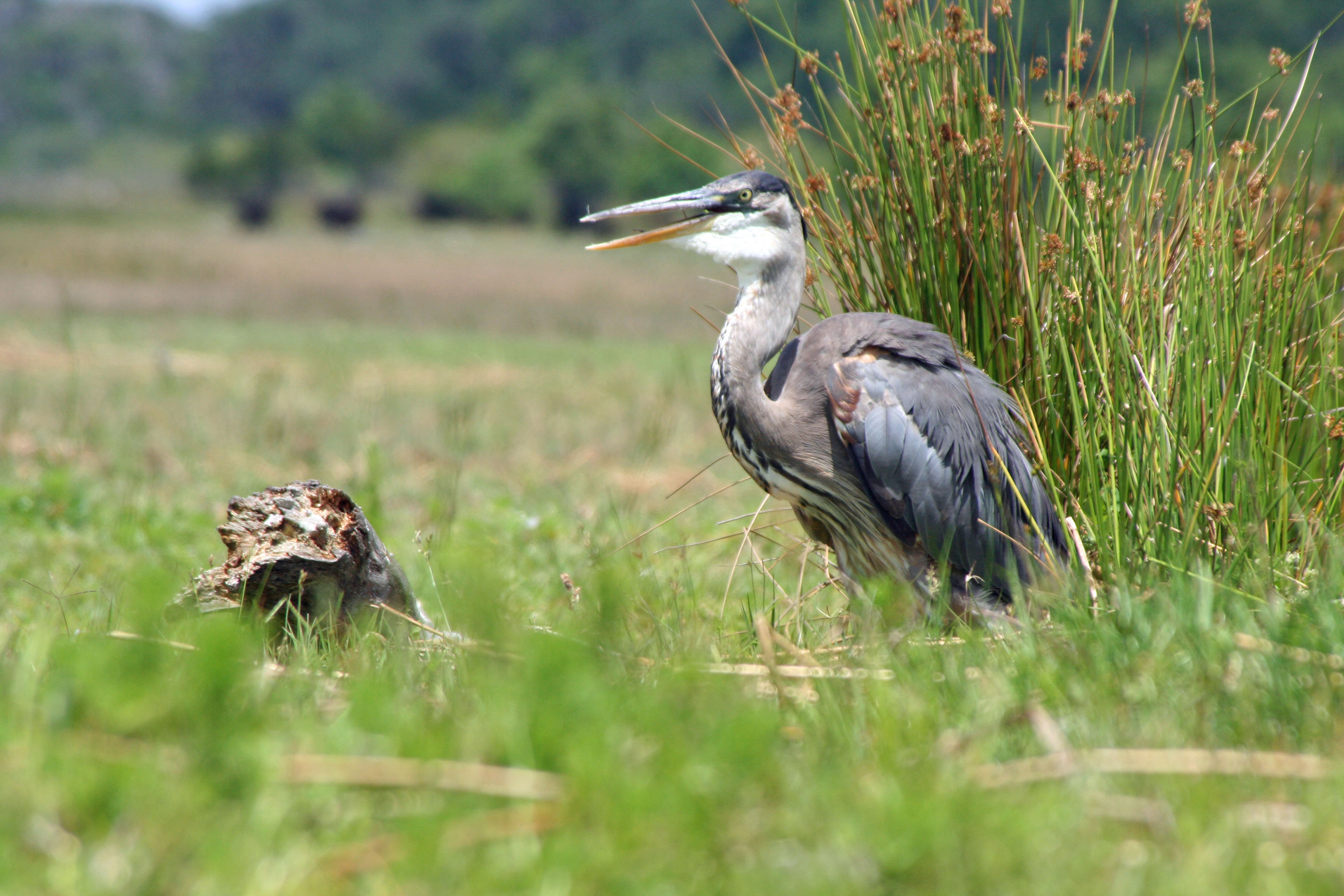
One predator that is fond of eating baby alligators is the Great Blue Heron. Peggy photographed this one about 50 yards away from where the pod of young alligators was located.

While alligators normally don’t eat people, they are dangerous. Any animal that weighs several hundred pounds, has 80 sharp teeth and a bite to die for deserves respect. Ask a dog. Their collars are frequently found in the stomachs of alligators that live in close proximity to people. Alligators rarely catch cats. The dog sees the alligator as something to bark at and chase off of the property. The cat sees the alligator as a reason for climbing a tree. It’s best to error on the side of cats.

Reptiles that can weigh several hundred pounds, have mouths full of teeth, and jaws with crushing power deserve respect.

Our traveling mascot, Eeyore the Donkey, hides out in the van when we go out to photograph alligators.

As one might expect, alligators are particularly aggressive during breeding season and while protecting nests. Also, feeding alligators is both dangerous and illegal. A Florida man learned this lesson the hard way a few days ago and lost his hand.

Having put in the cautionary label, respect not fear is the key word. These ancient reptiles are fascinating to see and safe to visit as long as common sense and caution are used. The Anhinga Trail at the Royal Palm Visitor Center in Everglades National Park provides a safe, excellent introduction to alligators as well as Florida’s unique bird life. Winter is the best time to visit.

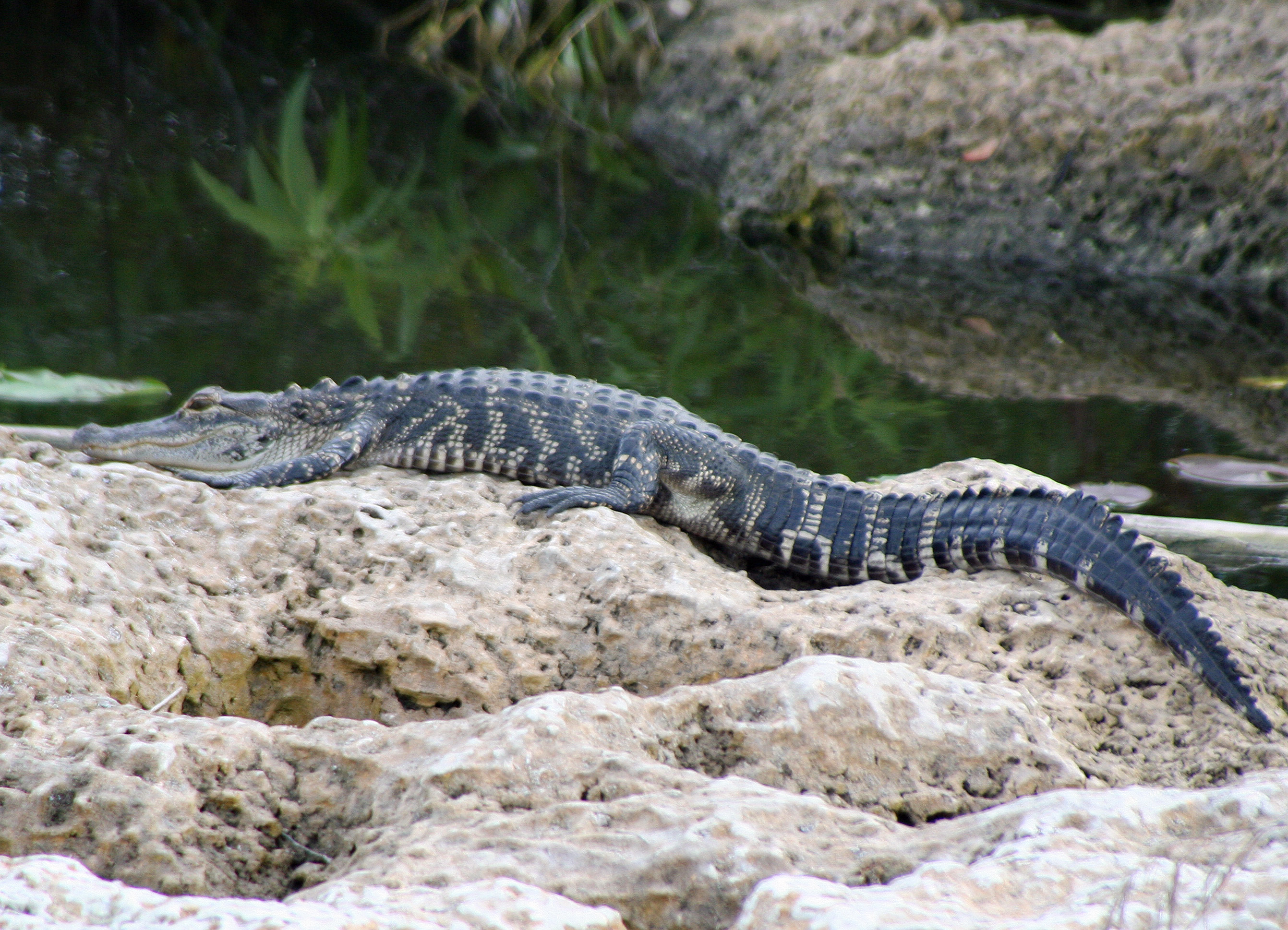
We caught this alligator doing what alligators love to do, sunbathe. I took this photo on the Anhinga Trail next to the Royal Palm Visitor Center at Everglades National Park. I love the way the gator’s body conforms to the rock.