When Good Toys Go Bad… On the Road

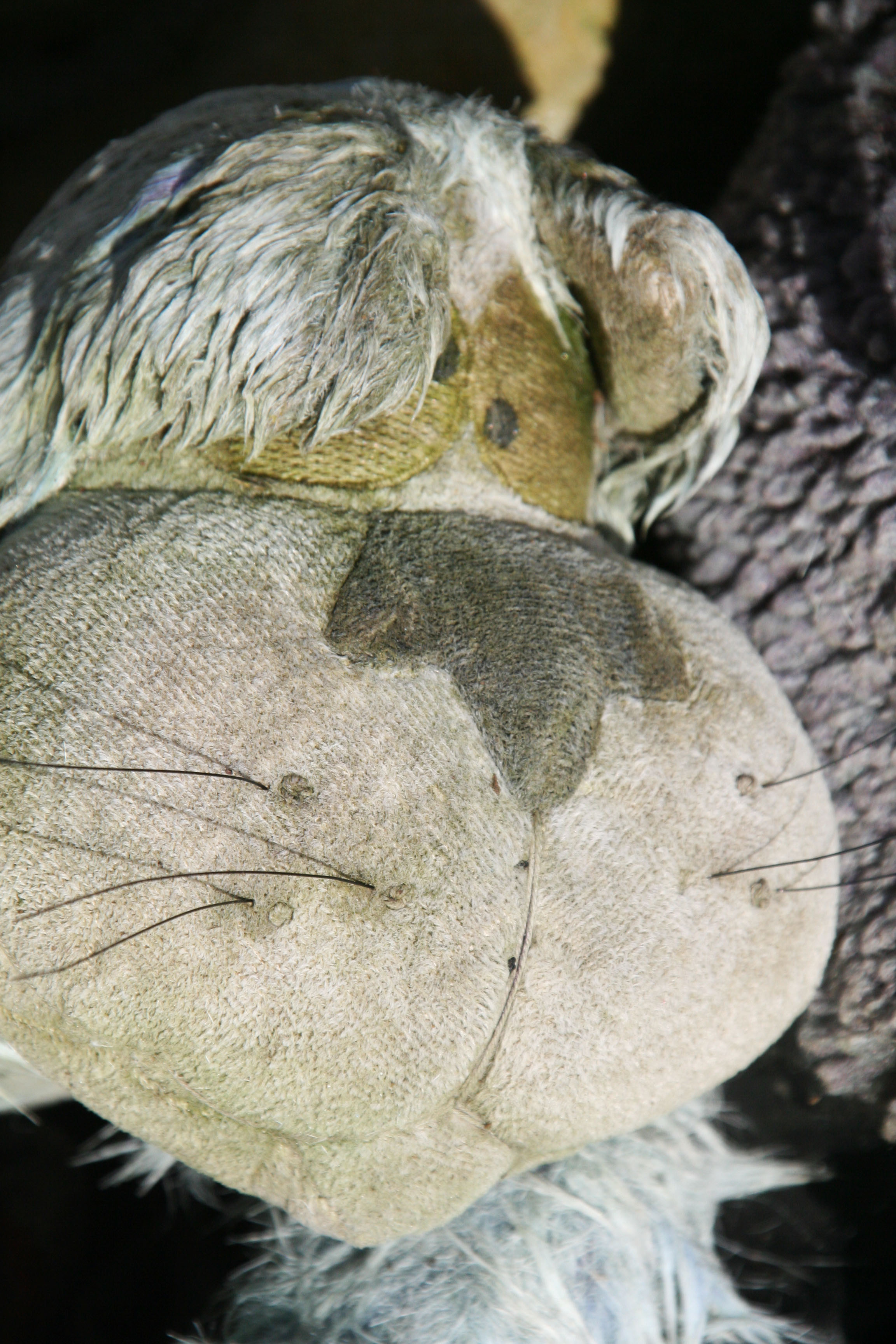
This toy elephant, left alone in the woods, apparently got into some bad drugs.

Sometimes my sense of humor goes awry. For example, I usually don’t deal with the macabre on this blog but have you ever thought about what happens to all of those toy animals that are left at roadside memorial sites. They go bad. I have proof.

I understand the practice; it’s as old as man. You are buried with your favorite dog, horse, wife, etc. so they can accompany you wherever you happen to be going. Chinese emperors and Egyptian pharaohs carried the practice to extremes. Vikings wanted to be buried with their weapons. In India, once upon a time, your widow was expected to make the ultimate sacrifice and throw her self on to your burning pyre so you could waft off together in the smoke.

The same motivation leads people to leave teddy bears and bunny rabbits at memorials to children. The idea is that the little kid will have something to play with in the afterlife. It’s a good thought.

But does anyone ever ask the toys what their preference is? I mean would you prefer to be in a warm dry house and be totally loved or would you prefer to be out at a roadside memorial abandoned to the rain and snow and fog and wind?

I’d be seriously irritated. Apparently the toys are as well. Consider the following photos:

Would you like to meet this bear on a dark night? He was scary enough during the day.

How about a lion whose mane had melted. As you might imagine, he was something of a grouch.

Then there was this bunny. He gave a new meaning to having a wild hare…

No sense of humor here… And he was one of the newest members of the menagerie.

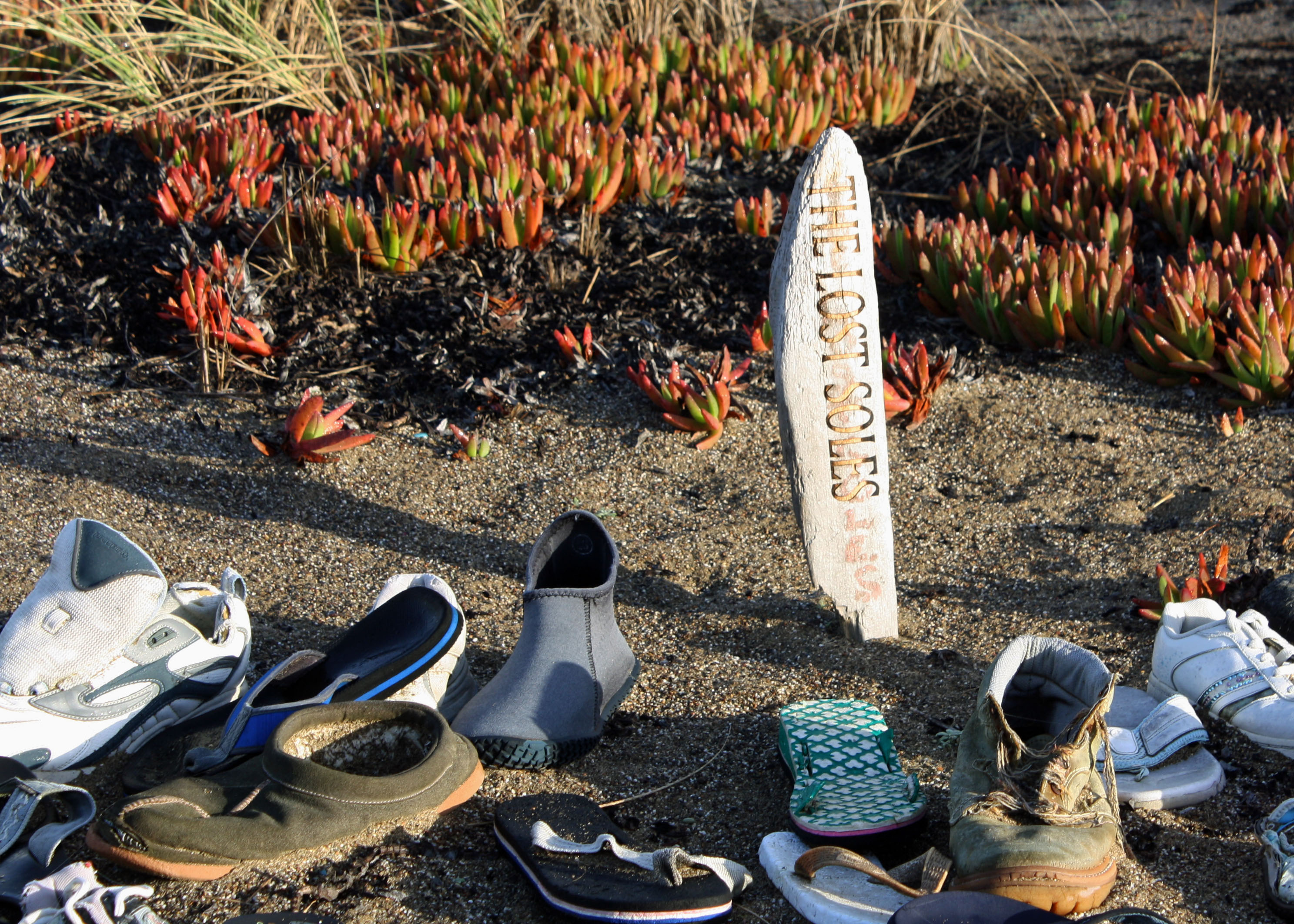
Not far from where the animals lived, I found this memorial to lost soles. Could the toys have been leaving a message for us?

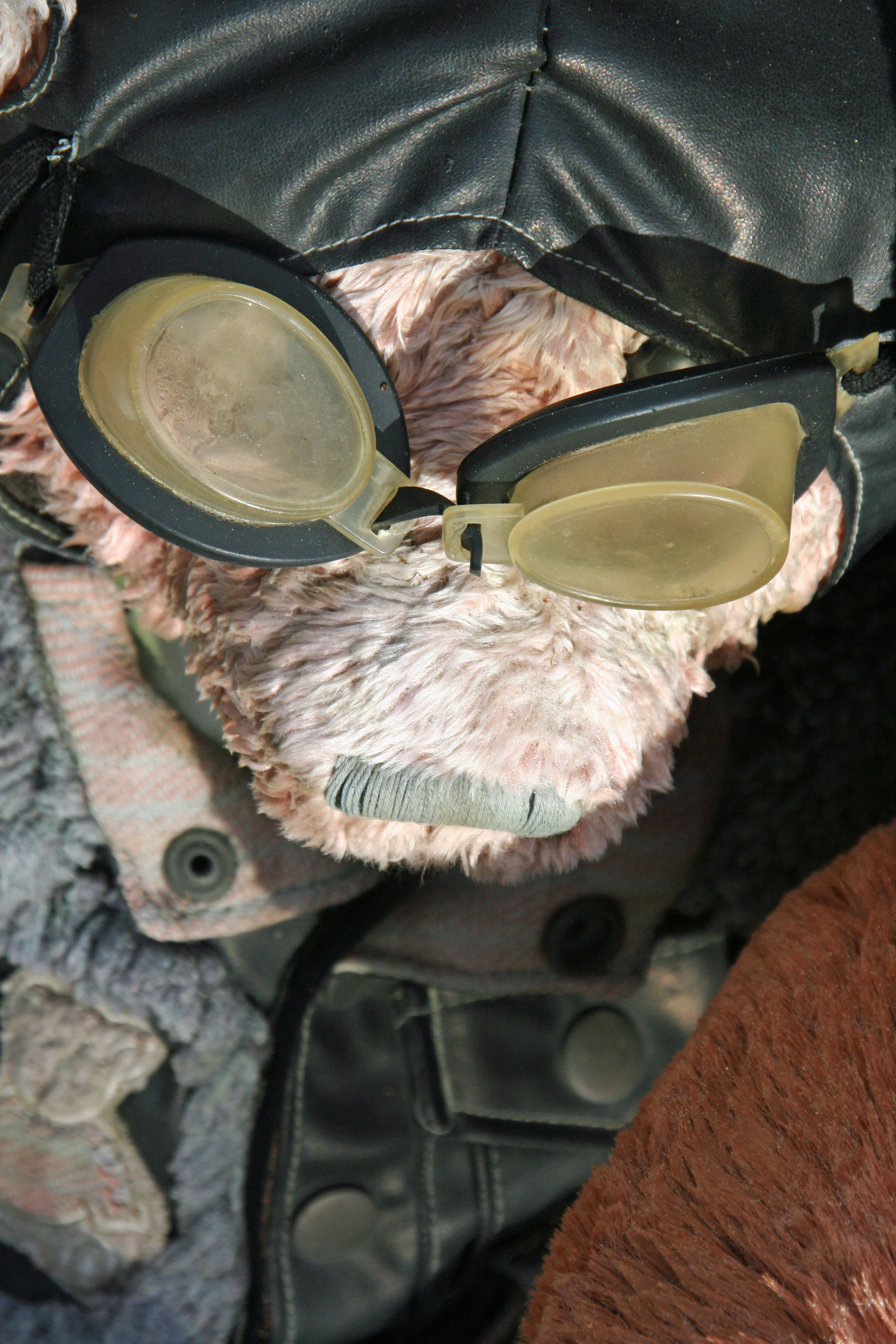
You know the mall shops where kids dress teddy bears… this Pilot Bear probably came from one. He was ready to go with a leather flight jacket and goggles, but would you fly with him?


Bigfoot Prowls Our Neighborhood… At Home in Oregon

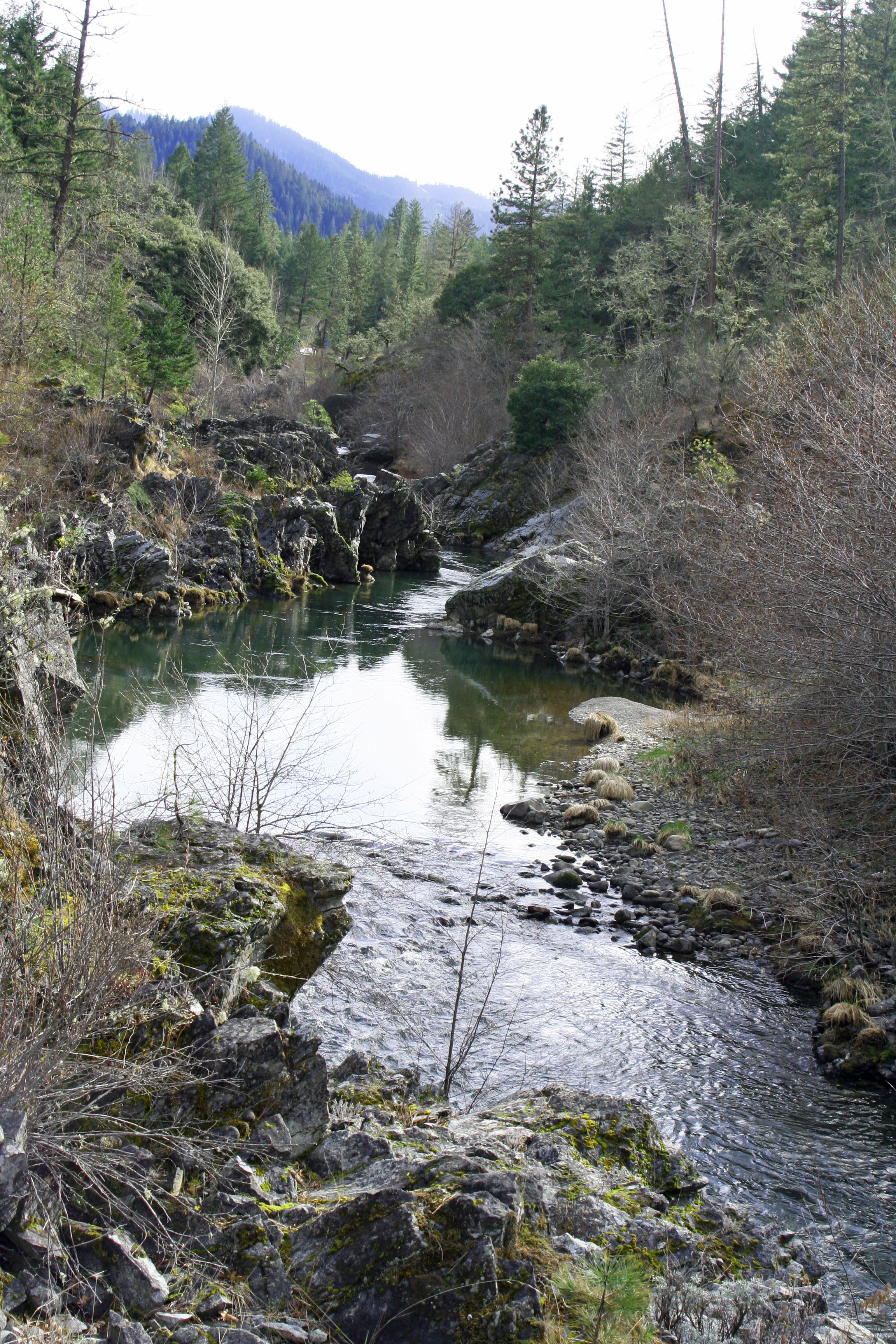
The beautiful Applegate River in southwest Oregon is know to be Bigfoot Country. This photo is taken just down from our house at around 2000 feet elevation.

He’s Big, he’s Hairy, he’s Bad, or at least he smells bad. More importantly, he’s illusive, so illusive that skeptics doubt he exists. But I live in Southern Oregon on the Applegate River; it’s Bigfoot country. He’s been seen around here numerous times, “a growling and prowling and sniffing the air.” (Words from Smokey the Bear who is also big and hairy and wanders around on two feet.)

Several sightings have been made near the Oregon Caves National Monument, about 15 miles from where we live as the crow flies. The most famous involved Matthew Johnson, a psychologist from Grants Pass Oregon. He heard guttural sounds, smelled something pungent, and then saw Bigfoot hiding in the trees some 60 yards away. He was spying on Michael’s family. They made a quick exit. The story has received widespread media coverage since the July 2000 incident.

LP, a former army MP and English teacher who is now a policeman, relates seeing Bigfoot even closer to our house. He was staying in a friend’s home on the Redwood Highway just after it crosses the Applegate River. One night, he heard his friend’s dog “go ballistic” and went outside to see why. He saw a large creature crouching in the grass. “What the F ***…” he thought. “I saw the HUGE THING take off in a full BIPEDAL RUN.” LP admits to being more frightened than he had ever been in his life.

He went inside and got a big gun.

Given the local interest in Bigfoot, Peggy and I decided to spend July 4th checking out a well-known Bigfoot site… the only trap ever built to catch the large fellow. It is located four miles from where we live on a small, seasonal creek that flows into Applegate Lake. The story starts with Perry Lovell discovering 18-inch human-like tracks with a six-foot stride in his garden near a stretch of Applegate River that became Applegate Lake.

Ron Olsen, a Eugene based filmmaker who headed up a group called the North American Wildlife Research Team, decided to catch Bigfoot so he could be studied. In 1974 he built a sturdy 10 by 10 foot trap with a metal grate door near where Lovell had lived and baited the trap with fresh meat.

A local miner was hired to hang out in a cabin near the trap.  He was given a tranquilizer gun and large handcuffs. I would have included a barrel of whiskey.

The trap worked. They caught a couple of bears… but no Bigfoot. After six years the idea was abandoned. In 2006 a group of volunteers working with the Forest Service restored the trap but sealed the door to protect the public.

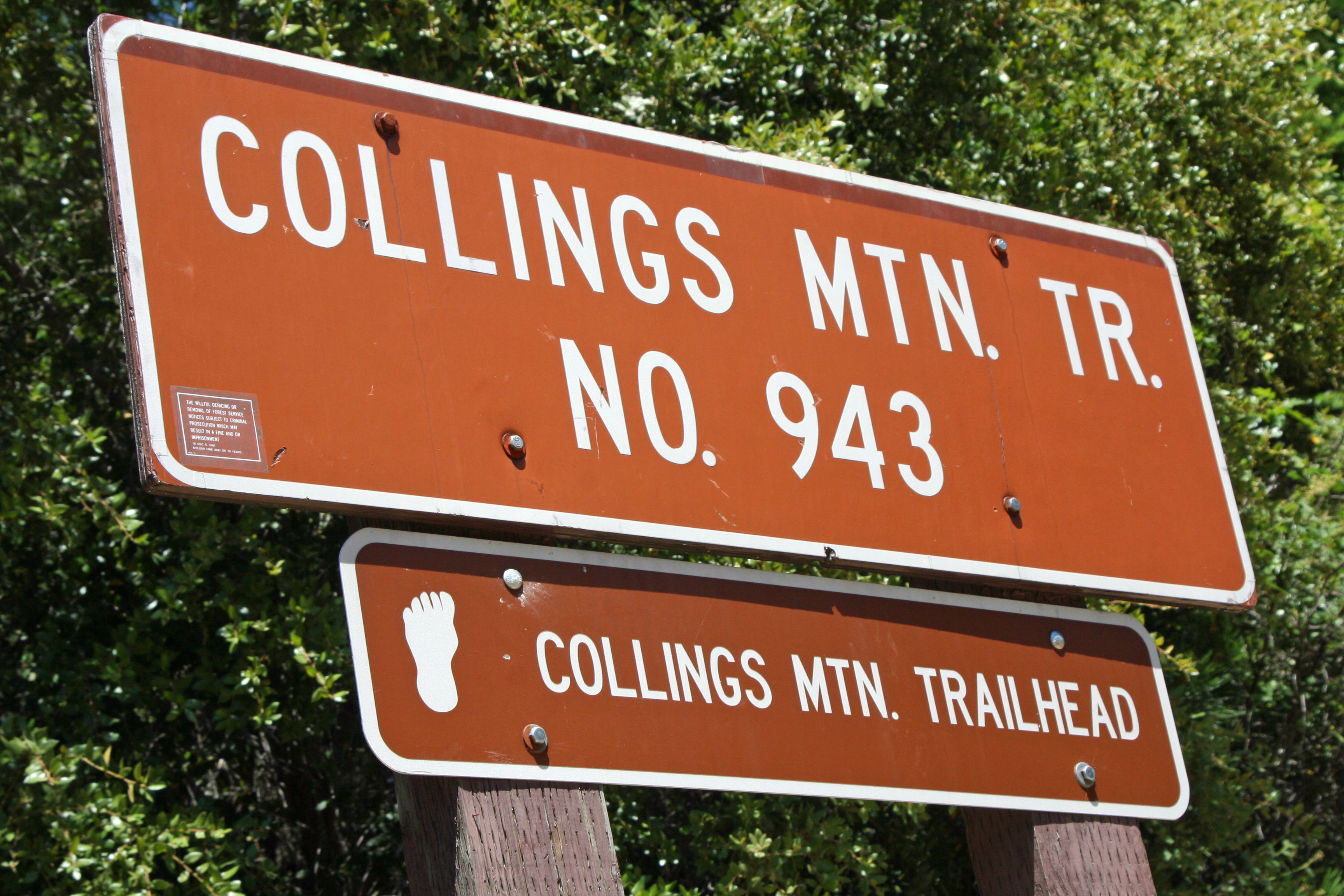
Peggy and I drove the three miles up to the Collings Mountain Trail, which is on Applegate Lake just beyond Hart-tish Park. A big foot painted on the trail sign let us know we had arrived. A short and pleasant three-quarters of a mile walk up the seasonal creek took us to the ruins of the old miner’s cabin and then up the hill to the trap.

A big foot on the Collings Mountain Trail sign lets you know that you have found the right path to the Bigfoot trap.
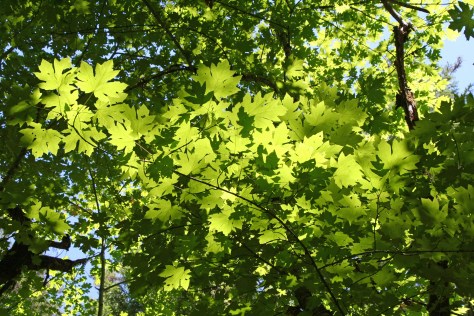
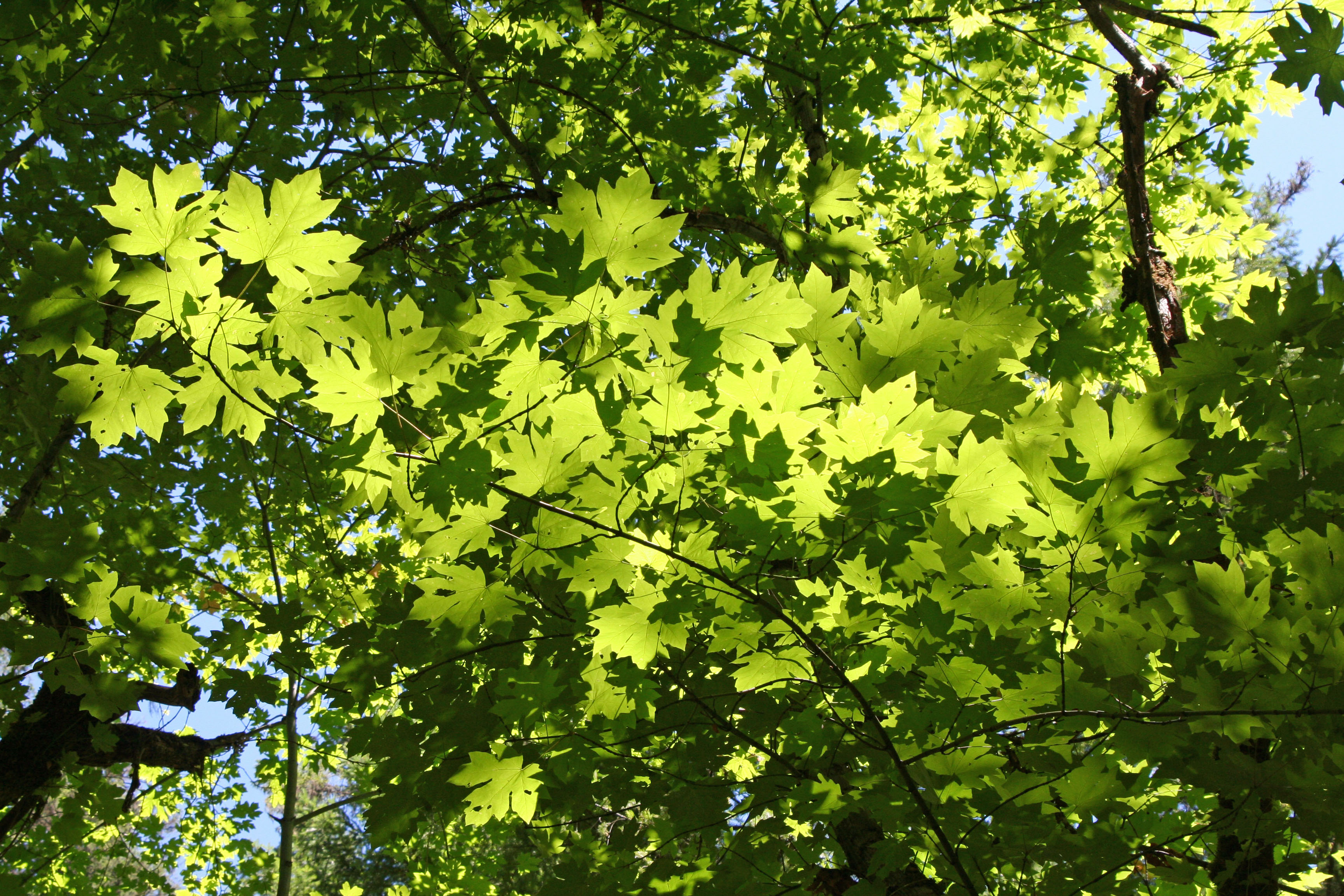
Even if we hadn’t been on a mission to find the Bigfoot trap, the pleasant stroll along the shaded path would have been worth the trip. These are maple leaves backlit by the sun.

Towering Douglas Fir also decorate the Collings Mountain Trail on the way to the Bigfoot trap. Douglas firs are second only to Redwoods in being the world’s tallest trees.

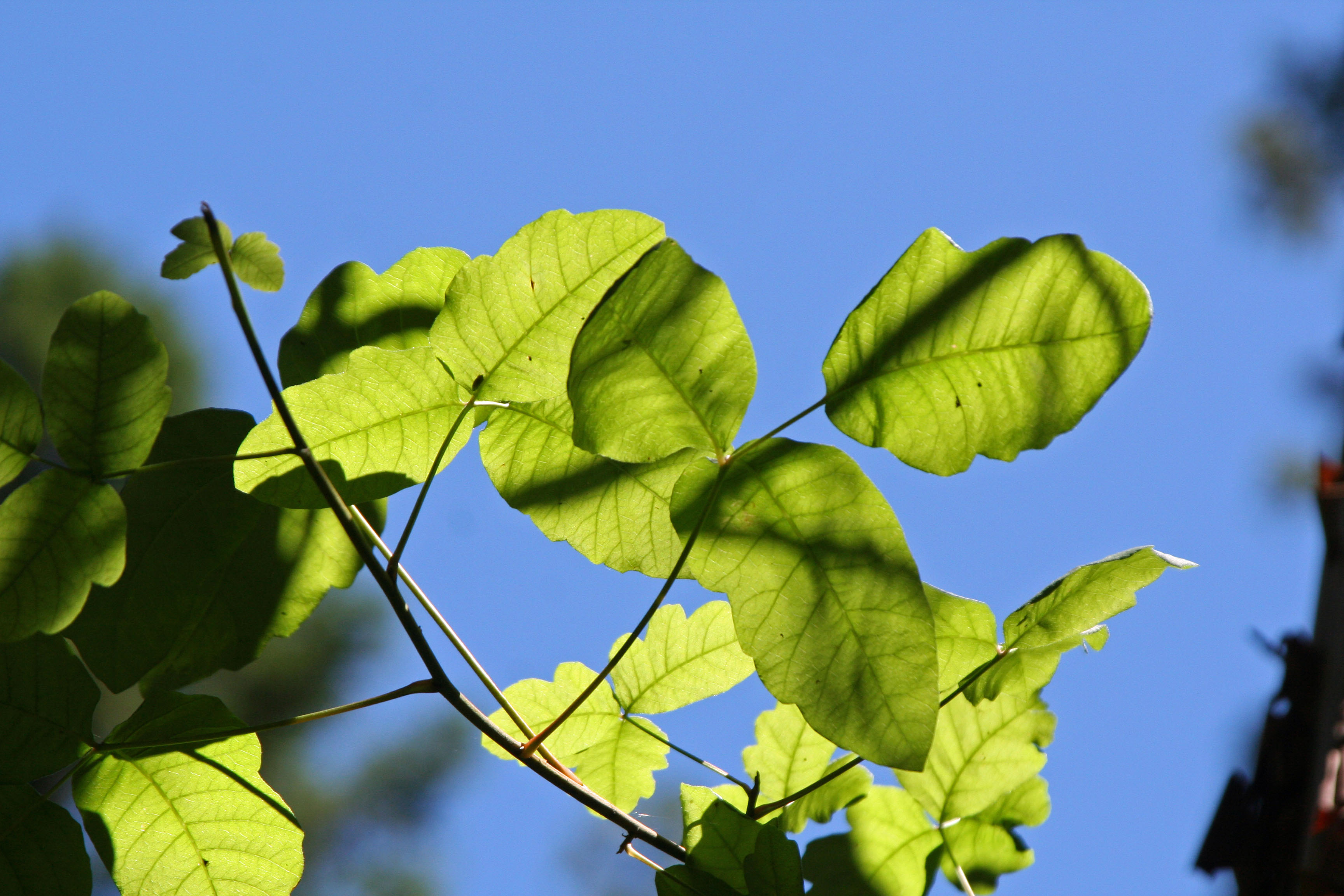
If you spend much time wandering through the lower forests of Northern California or Southern Oregon, you need to recognize this plant. It is poison oak.

Our hike to the Bigfoot trap included enjoying the flowers along the way.

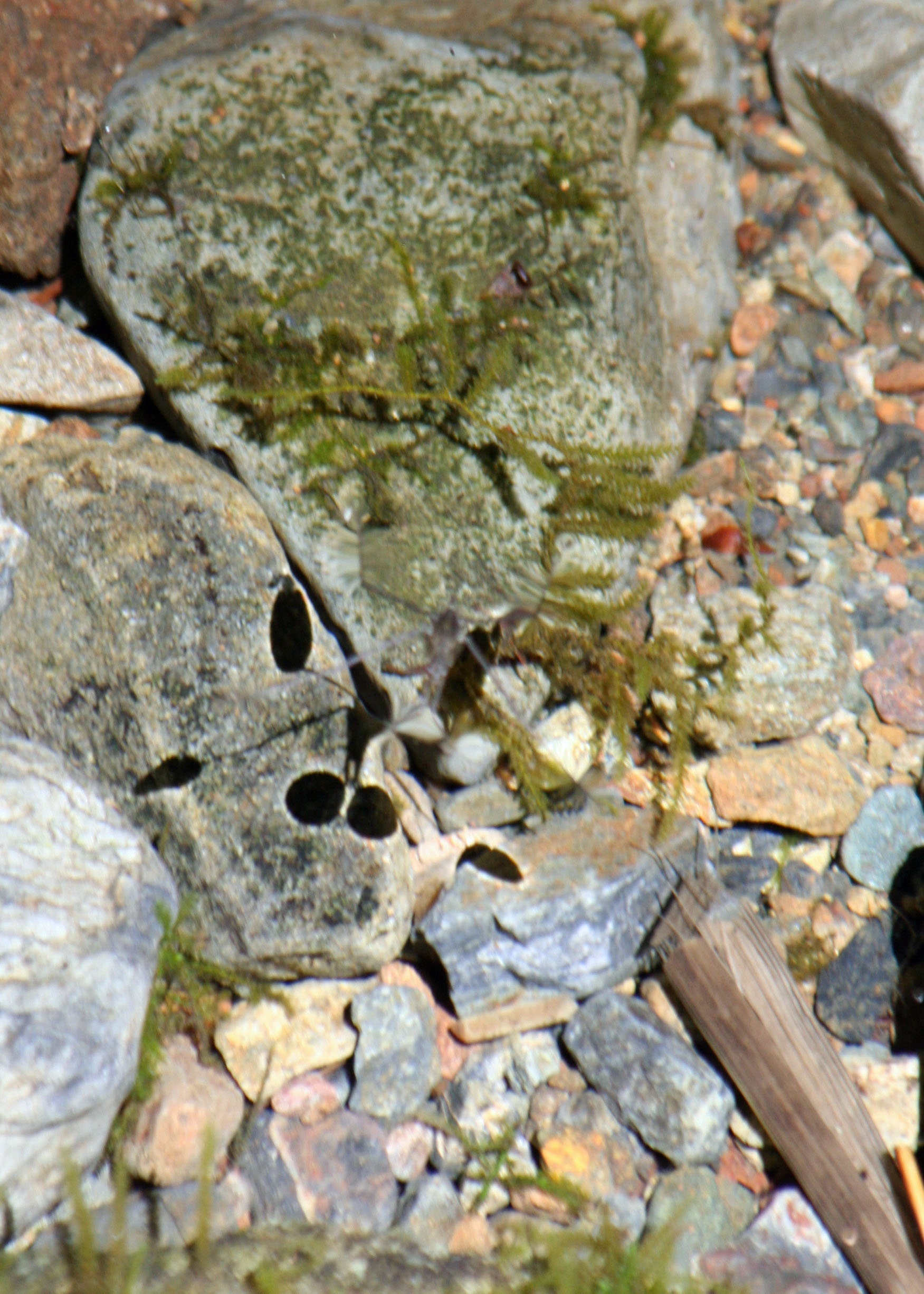
This was fun. The path to the Bigfoot trap follows a seasonal creek that still contained small water holes. What you are looking at is the shadow of a skipper or strider, a small insect with long legs that strides or skips across the water. They are incredibly fast. I am shooting down into the water. Look carefully and you can see the bug located near the right front foot shadow.

A miner was hired to monitor the Bigfoot trap. He was given a tranquilizer gun and large handcuffs to subdue the big guy when he got caught. This is all that remains of the miner’s cabin.

As reported, the Bigfoot trap is large and sturdy. It is also covered with graffiti. Too bad the trap is inoperable. I would have baited it with a spray paint can. It would be much easier to catch a miscreant teenager than Bigfoot.

The graffiti covered Bigfoot trap located in Southern Oregon near Applegate Lake. It is now permanently sealed open.
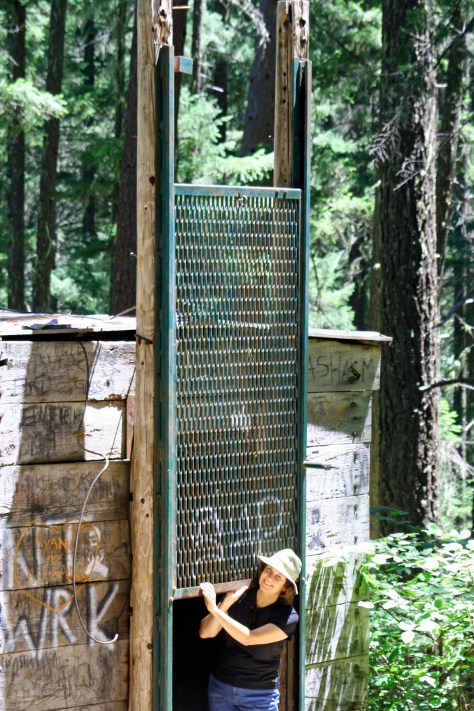
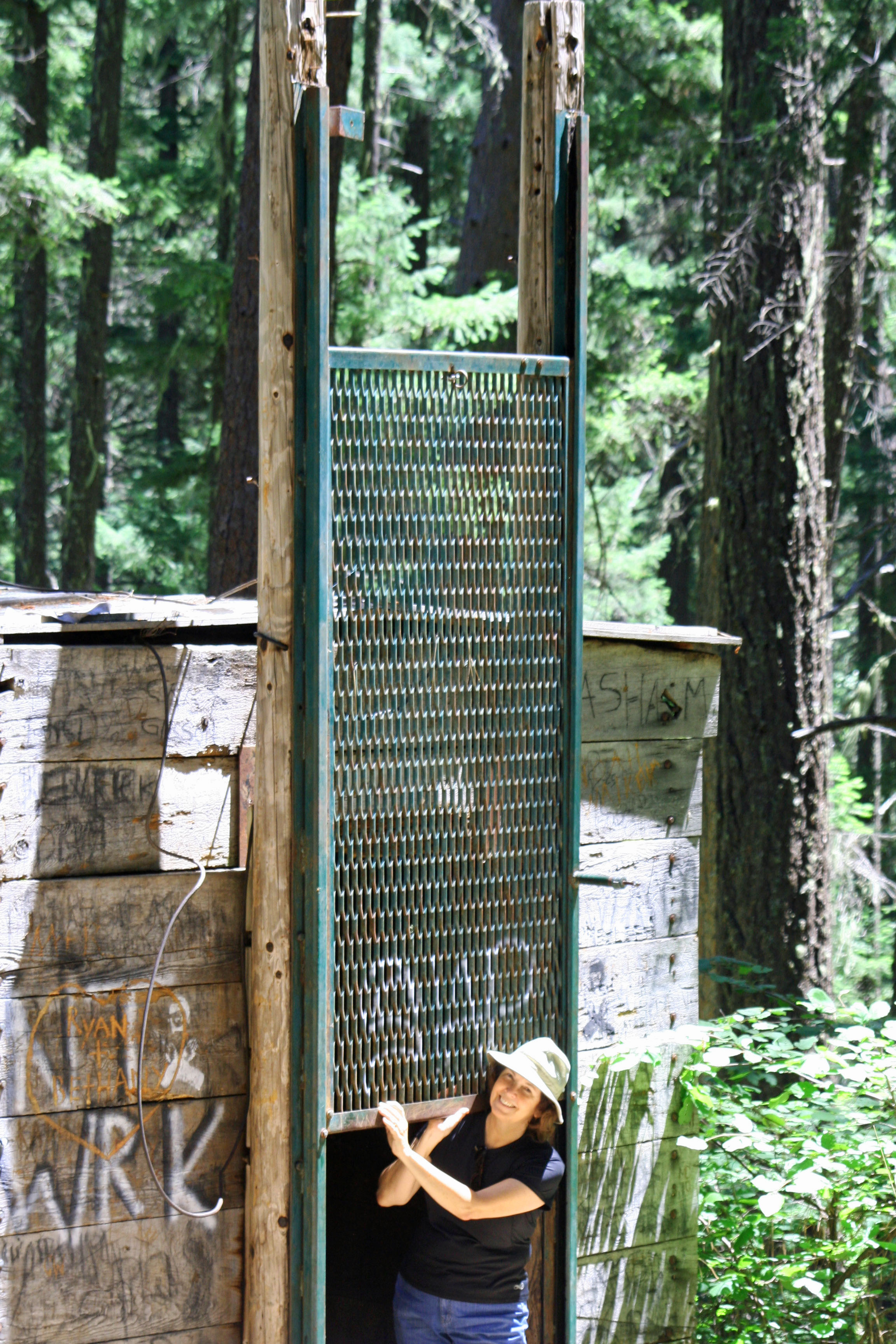
My wife Peggy provides a perspective on the size of the trap and the trap door.

Looking up at the metal grate door designed to capture Bigfoot.

Back home I looked up the Bigfoot Field Researcher’s Organization (BFRO) on the Net. It’s worth checking out. The site describes hundreds of North American encounters by region. And it also describes Bigfoot characteristics. They weigh up to a thousand pounds, like to make whoop, whoop sounds, and throw rocks at people.

What do I believe? Definitive proof would be nice. I’ll remain skeptical until I meet one but I would love to make one’s acquaintance as I wander through the woods of Northern California and Southern Oregon. Here’s one final encounter I discovered in the Rensselaer Republican, a newspaper my great-grandfather George Marshall published out of Rensselaer Indiana on February 7, 1902.

Human Monster Abroad with a Club… Facts About His Feet

Residents of the little town of Chesterfield in an isolated part of Bannock County, Idaho are excited over the appearance in that vicinity of an eight-foot, hair covered human monster. He was first seen on January 14 when he appeared among a party of young people who were skating on the river near John Gooch’s ranch. The creature flourished a club and started to attack the skaters but they reached their wagons and got away in safety. Measurement of the tracks showed the creatures feet to be twenty-two inches long and seven inches broad, with the imprint of only four toes. Stockmen report having seen the tracks along the range west of the river. The people of the neighborhood, feeling unsafe while the creature is at large, have sent twenty men on its tracks.

The other morning Peggy and I awoke to the neighbor’s dogs barking wildly and a strong, not quite skunkish smell. Our property backs up to a million acres of National Forest. Hmmm. To be continued at a future date…
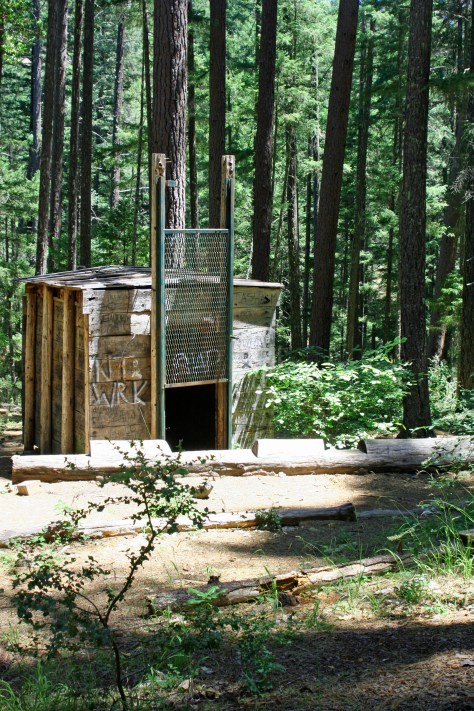
A final view of the Bigfoot trap. Given how clever Bigfoot has proven to be at avoiding people, I think the only way this trap could have caught him is if he had fallen down laughing so hard at the people thinking he would go in it.

On the Banks of the Klamath… Redwood National Park

We found this beautiful redwood stump with its twisted roots on the beach near where the Klamath River flows into the Pacific Ocean.

In my last blog, I wrote about experiencing the Redwoods through the eyes of our two and four-year old grandkids. There is still some question about whether they were more impressed by the big trees or the yellow banana slug.

“Can we eat it,” the four-year old asked? Peel away boy.

Two years ago, Peggy and I visited the same area along with our friends Ken and Leslie Lake out of Sacramento. We camped next to the Klamath River near where it flows into the Pacific. I have a special affinity for the Klamath. I was conceived on its banks.

At least that’s the story my parents told me. They were living in the small town of Copco, which is located just south of the Oregon border and east of Interstate 5. My mother always claimed she had the flu and it was a weak moment. It’s good to know where you stand with your mom.

After Ken, Leslie Peggy and I had explored our campground we headed for the ocean. We walked through a Yurok ceremonial site to reach the shore. The Yuroks have lived in the area for numerous generations and today constitute the largest tribe of Native Americans still living in California. The site includes several structures made of fallen redwood including a traditional sweathouse.

The Yurok ceremonial site on the edge of the Klamath River and next to Redwoods National Park includes this traditional sweathouse.

The Yuroks considered the giant redwoods sacred living beings. A comment from Zantippy on my last blog about Redwood National Park came close to capturing how the Yuroks must have felt.

“Oh man, these photos are gorgeous!!! How could Mr. Reagan have not felt these trees spirits? When I was ten, we went there, and my dad parked the car and we were going to walk the trail, but I wanted to stay by myself near the car, and just BE with the forest. It was one of the most amazing things I’ve ever experienced. Then I felt bad because my mother was worried about them walking too far away from the car where I was all alone, so they didn’t get to really explore. I think I told them to just stay still and listen. It is silent voices.”

It is easy for me to understand how the Yurok regarded the redwoods as sacred beings.

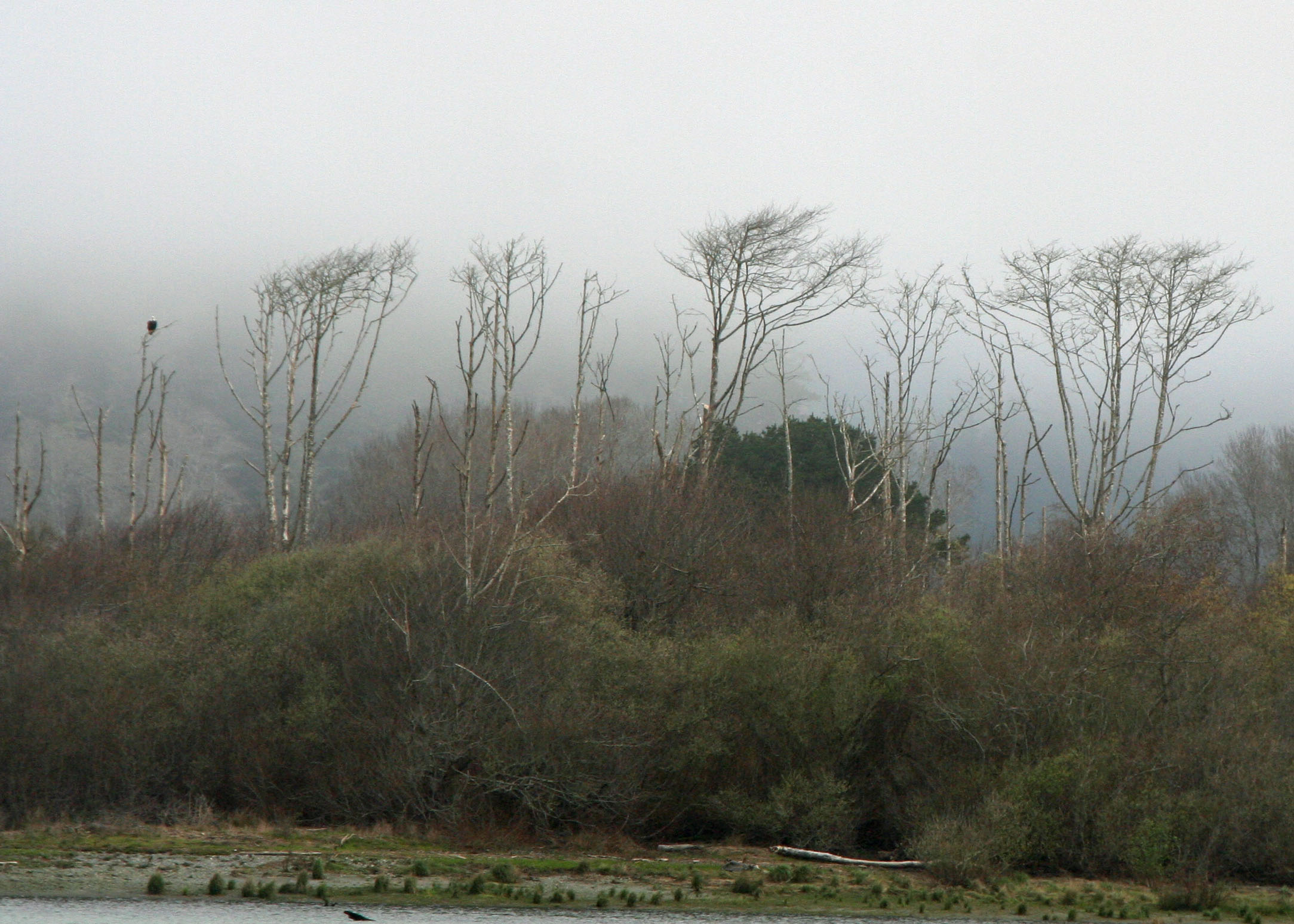
A recent storm had deposited driftwood on the beach including a large redwood stump and roots. Smaller pieces of driftwood displayed unique personalities. Waves crashed against the shore. Mist touched the ocean and the trees.  A bald eagle watched us from the distance.

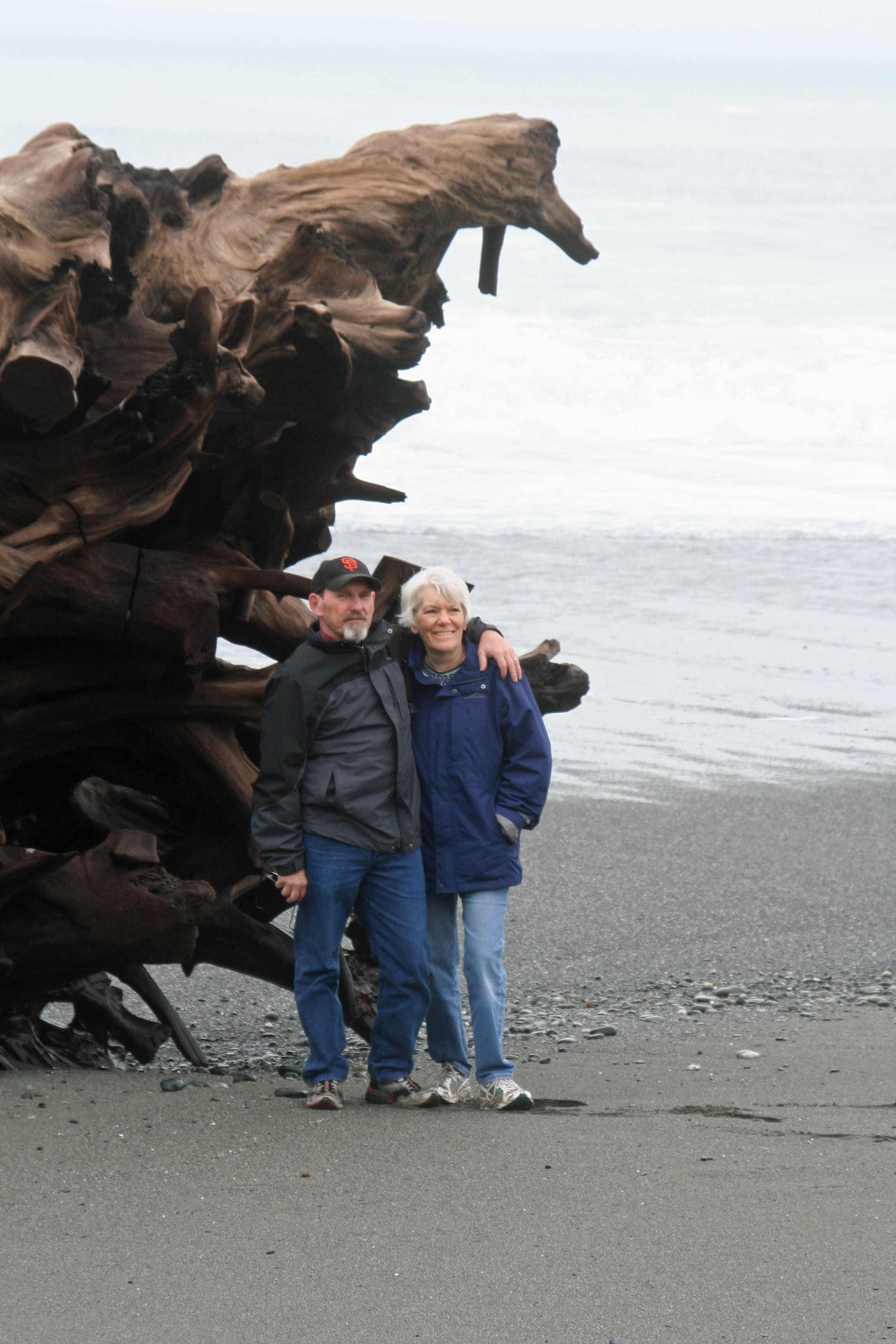
Our friends Ken and Leslie Lake stand next to the redwood stump we found washed up on the beach.

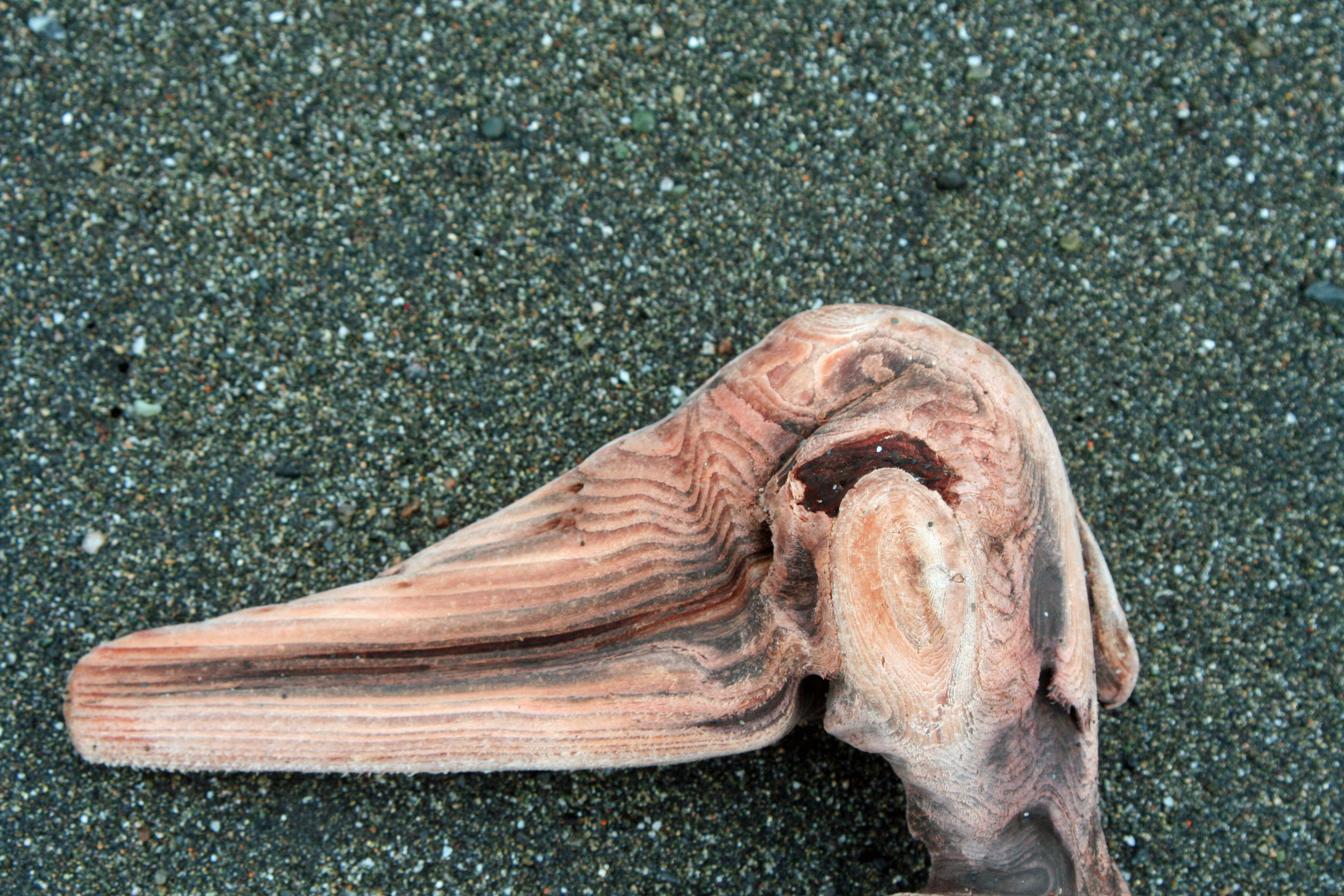
Driftwood can inspire the imagination. I saw a wood duck in this piece.

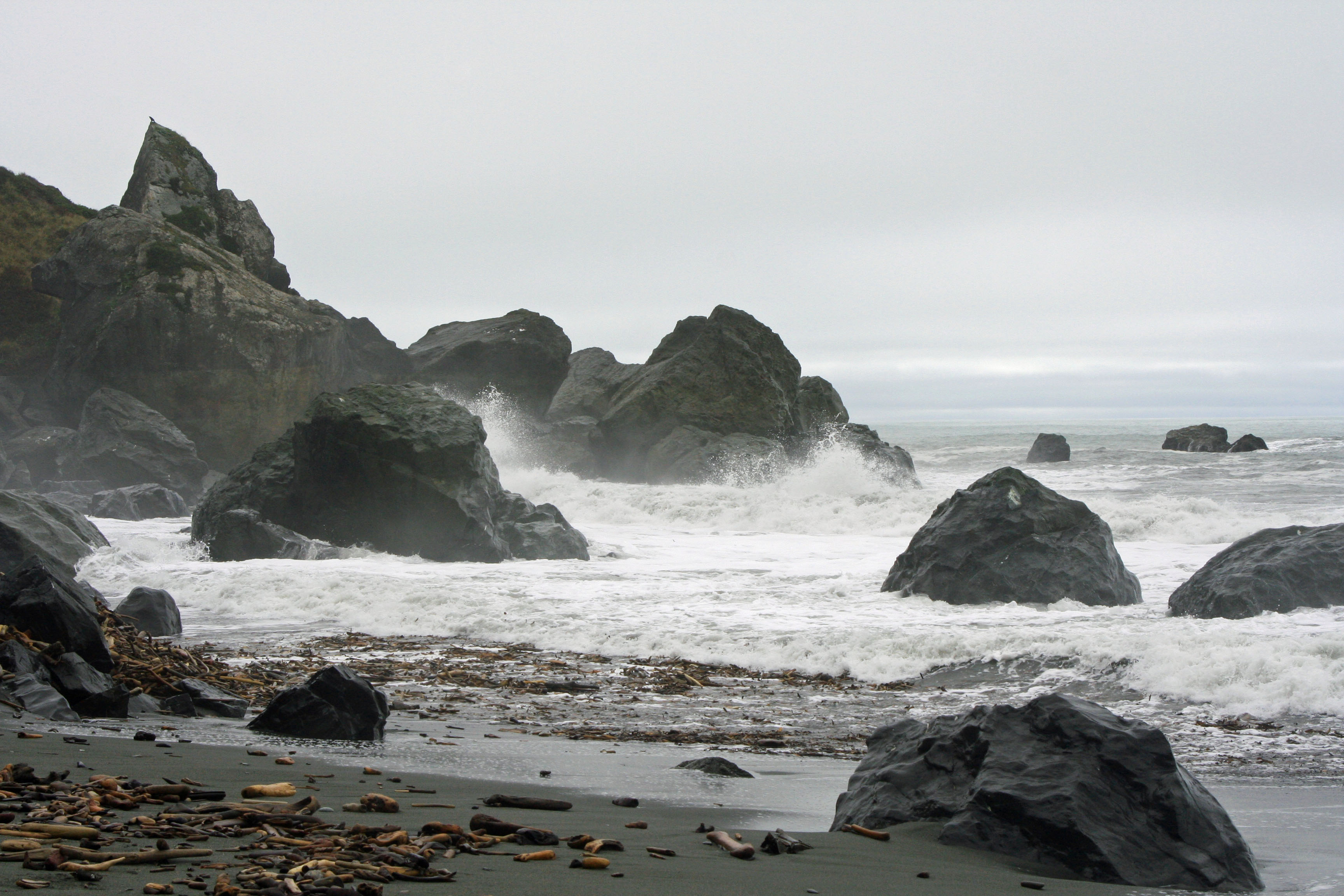
Waves crashing against the rocks, mist and driftwood are typical of California’s North Coast in Redwood National Park.

A lone bald eagle in the trees on the left watched as we wandered along the beach.

Just up the narrow, winding Coastal Road, we came on another interesting site. It looked like an old farm. Appearances can be deceiving. It had been disguised to look like a farm. Once upon a time it housed an early radar warning system and two 50 caliber anti-aircraft machine guns. Its purpose was to guard against invasion from Japan following the bombing of Pearl Harbor during World War II.

This seemingly innocent farm building found in the North Coast Redwoods overlooking the Pacific once harbored an early warning radar system and two 50 caliber anti-aircraft submachine guns to guar against invasion from Japan during World War II.

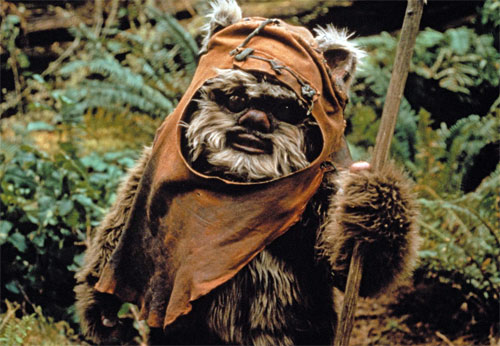
Continuing on, we visited the big trees of Prairie Creek Redwoods State Park. I kept expecting to meet up with Ewoks. But there are scarier creatures about. Scenes from Jurassic Park were also filmed in the area.

I kept expecting to meet up with an Ewok. George Lucas used North Coast Redwoods to film his Ewok scenes. Portions of Jurassic Park were also filmed in the area. (Photo from Google images.)

The only strange creature I found was the Peripatetic Bone who insisted on having his picture take with one of the Big Trees. He considered it a humbling experience. Can you spot him?

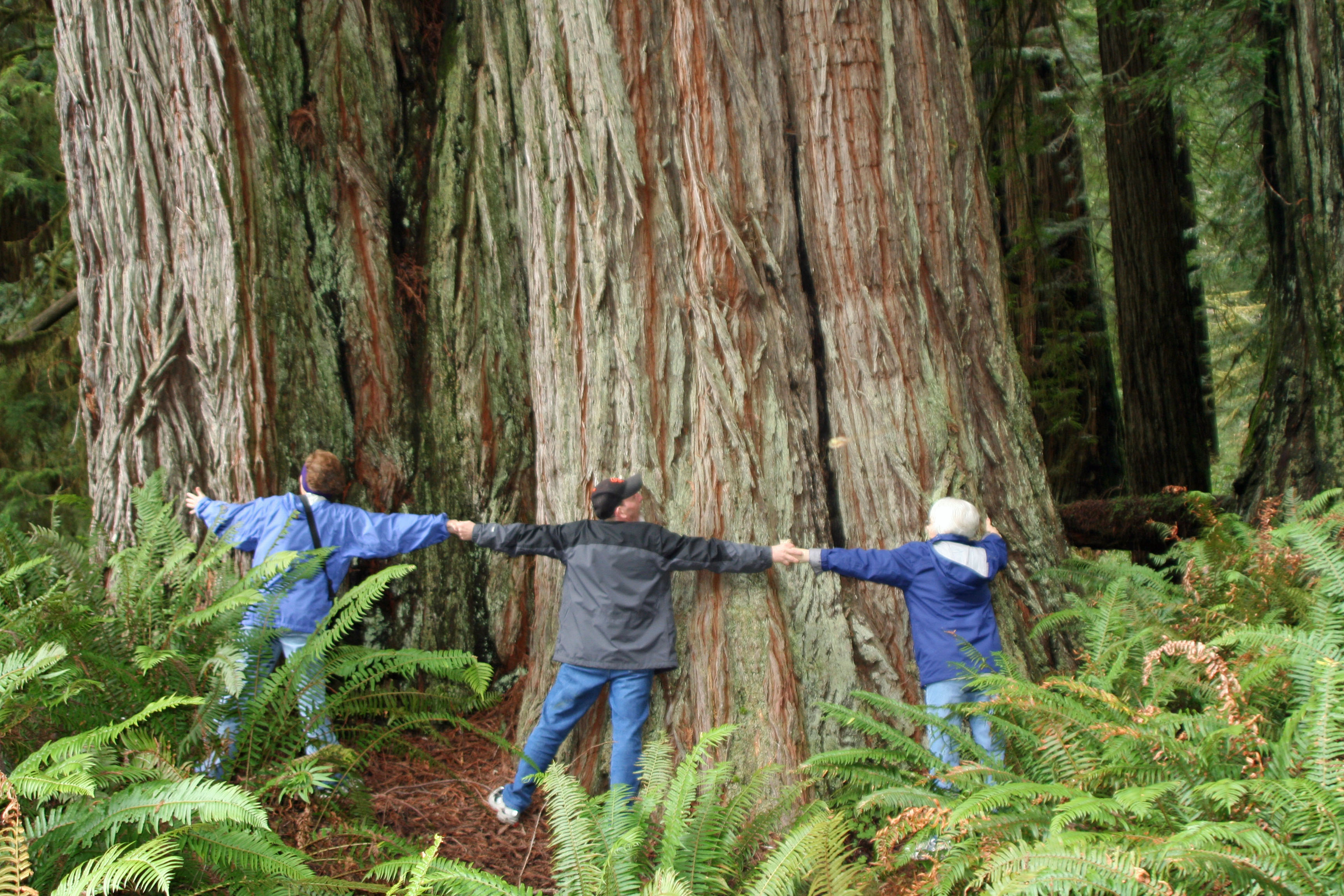
Even my favorite Tree Huggers… Peggy, Ken and Leslie, were made to feel small.

Reaching for the Sky: California’s Redwoods… The National Park Series

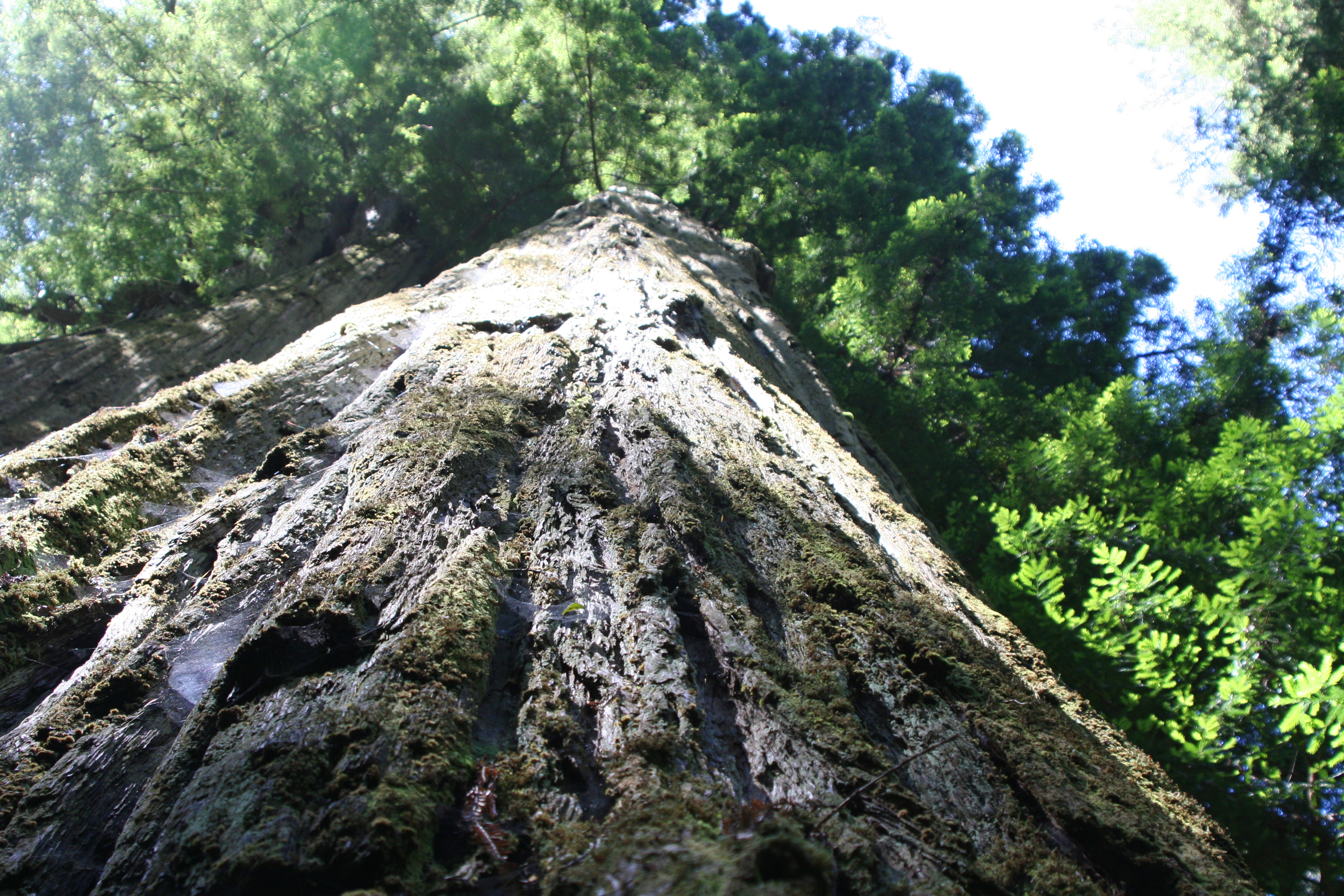
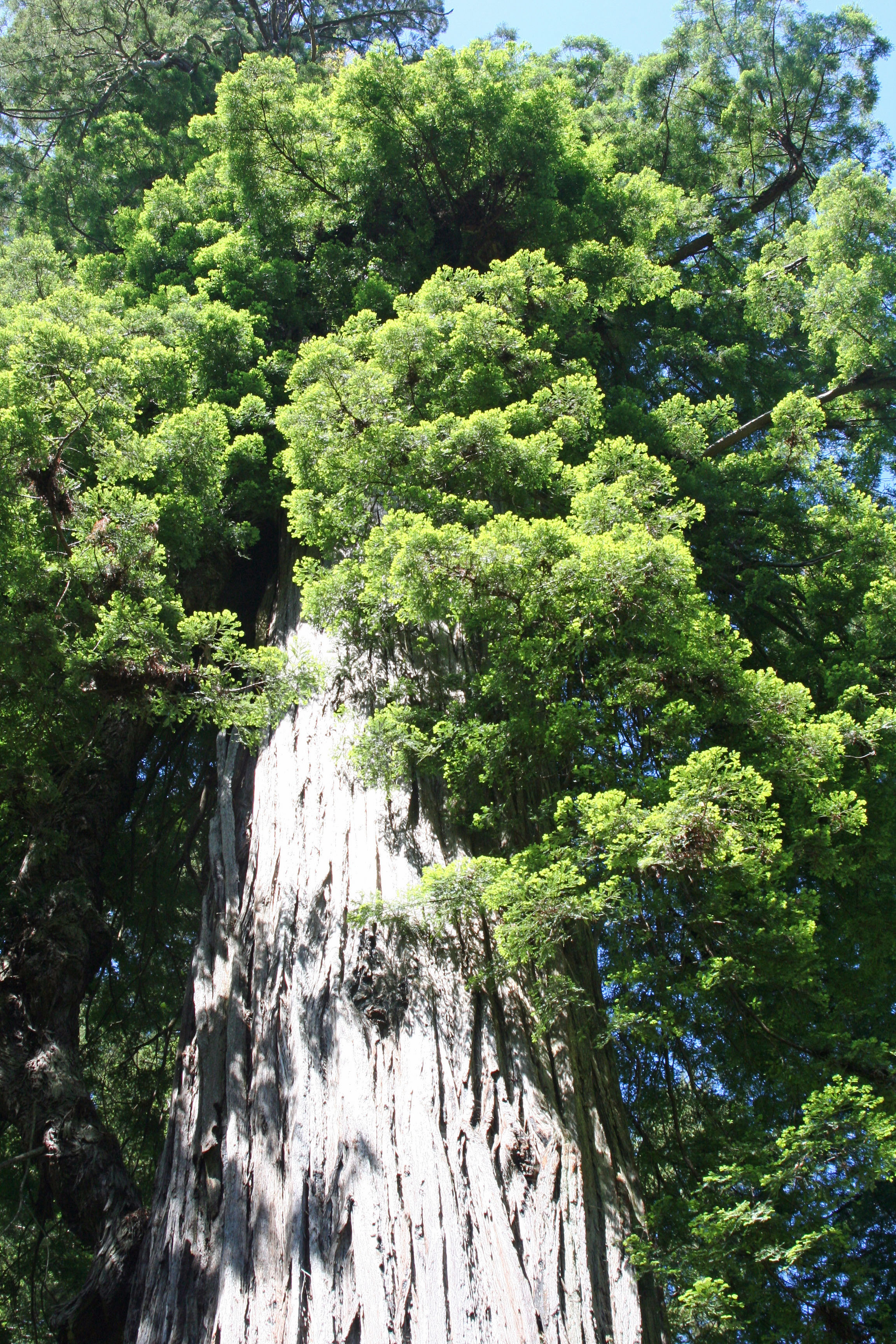
A magnificent redwood on California’s North Coast reaches for the sky.

Ronald Reagan once commented about the Redwoods, “There is nothing beautiful about them. They are just a little taller than other trees.” He was serious. Why save a tree that has been around since 500 AD, stands 305 feet tall, and has a circumference of 61 feet when it can be used to build decks that will last for 30 years?

A view of the Redwoods canopy.

My wife Peggy provides perspective on the size of a giant redwood tree.

Reagan’s statement about the Redwoods is totally beyond my comprehension. Fortunately, thanks to groups like the Save the Redwoods League, we can still visit the rugged coast of Northern California and see these magnificent trees reaching for the sky.

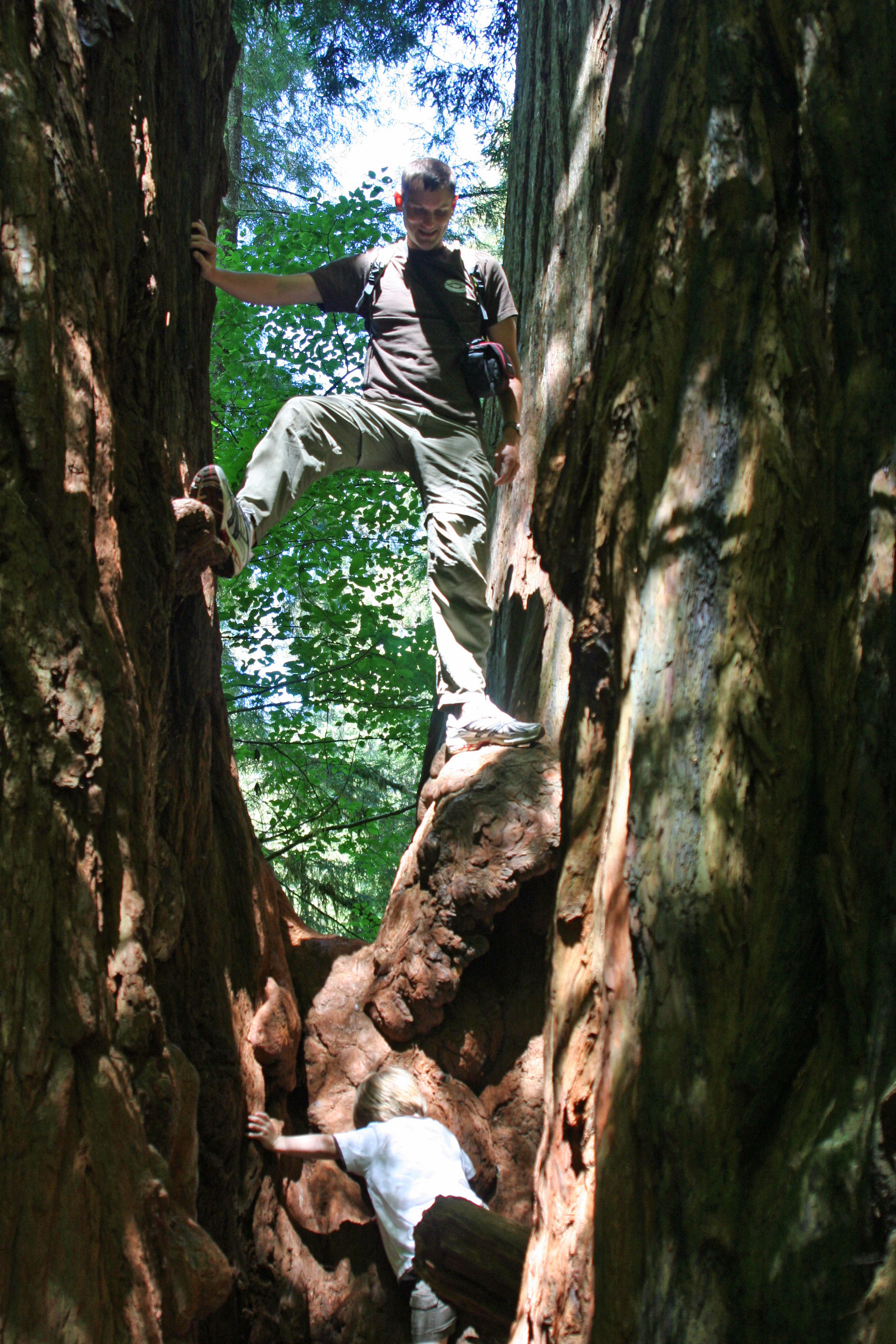
Peggy and I were there last week along with our son Tony and his family. We scrambled to keep up with the grandkids as they rushed down the trails at the Big Tree Wayside. A yellow banana slug, school mascot to UC Santa Cruz, caught their attention and gave us a rest. Hollowed out trees served as perfect caves that demanded exploration. Other redwoods were obviously made for climbing.

The four-year old Connor demonstrates his tree climbing ability as he works his way up a redwood in pursuit of his dad Tony.

The two-year old Christopher is caught up by his mom Cammie for a photo-op while exploring a hollowed out redwood cave.

We were camping at Prairie Creek Redwoods State Park, which is one of several areas set aside as state and National Parks by California and the US Government to protect the forest giants. The area is famous for it’s Elk herds as well as the Redwoods and the scenic California North Coast.

At two and four, Chris and Connor may be a little young to remember the experience. But they will have photos. More importantly, they will be able to come back. Hopefully their children and grandchildren will as well.

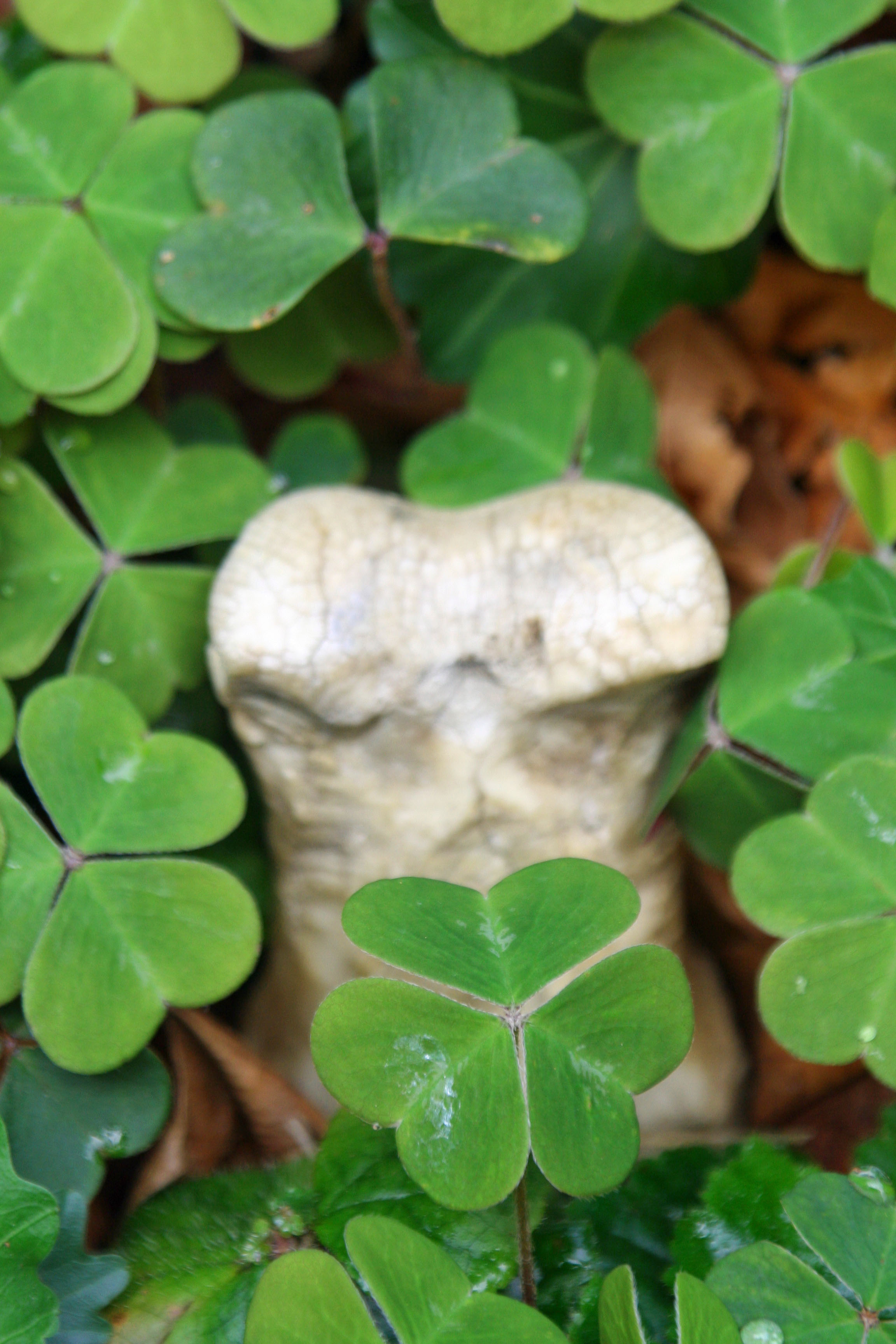
The Peripatetic Bone hides out in the clover at Redwoods National Park.

Peggy shows just how large the clover in the Redwoods can grow.

A final view of the 1500 year old rightfully named ‘Big Tree’ in Prairie Creek Redwoods State Park.

The Dark Side of African Tribal Beliefs… The Peace Corps Series

This week marks the beginning of a new blog about my experiences as a Peace Corps Volunteer in Liberia West Africa from 1965-67. I am using a WordPress theme designed to look and read like a book. Each week I will post a new chapter. When I have completed the book, I will publish it both digitally and in print. Visit me at http://liberiapeacecorps.com/ to read the first and subsequent chapters.

This week I will post three different short stories about Liberia on this blog, “Wandering in Time and Place,” to give my readers a sample of what to expect on the new blog and in the book. Today’s story: The Dark Side of African Tribal Beliefs. (I have posted this story before under Lightning Man.)

Late one evening during a tropical downpour, a very wet and frightened candidate for student body president, Mamadee Wattee, knocked on our door. The opposition had purchased ‘medicine’ from a Ju Ju Man (witch doctor in Tarzanese) to make Mamadee sick.

It was serious business; people were known to die in similar circumstances.

Had the opposition slandered Mamadee or stuffed the ballot box, I could have helped. But countering black magic was way out of my league. I took the issue to the High School Principal and he dealt with it. Mamadee stayed well and won the election.
Later, he unintentionally introduced us to another tribal phenomenon, the Lightning Man.

I had left Mamadee with $50 to buy us a drum of kerosene while my wife and I were on vacation in East Africa. When we returned home, Mamadee was sitting on our doorstep. Someone had stolen the money and he was obviously upset. Fifty dollars represented a small fortune to most tribal Liberians. (Given that we were paid $120 dollars a month for teaching, it was hardly spare change to us.)

Mamadee’s father, a chief of the Kpelle tribe, was even more upset and wanted to assure us that his son had nothing to do with the missing money. It was a matter of honor. He offered to hire a Lightning Man to prove Mamadee’s innocence.

The Lightning Man had a unique power; he could make lighting strike whoever was guilty of a crime. If someone stole your cow or your spouse, ZAP! Since we were in the tropics, there was lots of lightning. Whenever anyone was struck, people would shake their heads knowingly. One more bad guy had been cooked; justice had been served.

We didn’t believe Mamadee had taken the money and even if he had we certainly didn’t want him fried, or even singed. We passed on the offer.

Another Liberian Peace Corps Volunteer chose a different path. Here’s how the story was told to us. Tom had just purchased a $70 radio so he could listen to the BBC and keep up with the news. He enjoyed his new toy for a few days and it disappeared.

“I am going to get my radio back,” he announced and then hiked into the village where he quickly lined up some students to take him to the Lightning Man. Off they went, winding through the rainforest to the Lighting Man’s hut.

“I want you to make lighting strike whoever stole my radio,” Tom said, and then paid five dollars for the service. (Lightning Men have to eat too.)

Tom and his entourage then returned home. By this time, everyone in the village knew about the trip, including undoubtedly, the person who had stolen the radio.

That night, there was a tremendous thunder and lightning storm. Ignoring for the moment that it was in the middle of the rainy season and there were always tremendous thunder and lightning storms, put your self in the shoes of the thief who believed in the Lightning Man’s power. Each clap of thunder would have been shouting his name.

The next morning Tom got up, had breakfast and went out on his porch. There was the radio.

(Note: Mamadee would go on to become an elementary school principal in New Jersey.)

My Name Is Captain Die and This Is My Dog Rover… The Peace Corps Series

This week marks the beginning of a new blog about my experiences as a Peace Corps Volunteer in Liberia West Africa from 1965-67. I am using a WordPress theme designed to look and read like a book. Each week I will post a new chapter. When I have completed the book, I will publish it both digitally and in print. Visit me at http://liberiapeacecorps.com/ to read the first and subsequent chapters.

This week I will post three different short stories about Liberia on this blog, “Wandering in Time and Place,” to give my readers a sample of what to expect on the new blog and in the book. Today’s story: My Name Is Captain Die and This is My Dog Rover.

In our two years of living in Liberia as Peace Corps Volunteers, Peace Corps we would have many unusual experiences. One of our more unusual took place within our first week of living in Gbarnga, the town where we were assigned. It involved meeting Captain Die and his dog Rover.

Captain Die was a well digger who was reported to have spent too much time in dark holes. Our well was one of his jobs. He had dug it for our predecessors, two female Volunteers. Afterwards, he began stopping by to visit the women and bum cigarettes.

Therefore, it wasn’t surprising when he appeared on our doorstep shortly after we moved in. His introduction was unique.

“Hello, my name is Captain Die. My name is Captain Die because I am going to die someday. This is my dog, Rover. Roll over Rover. Give me a cigarette.” Rover, who was a big ugly dog of indeterminate parenthood, dutifully rolled over.

It made quite an impression.

We explained to Captain Die that neither of us smoked but invited him in to share some ice tea we had just brewed. We gave the Captain a glass and he took a huge swallow. I have no idea what he thought he was getting but it wasn’t Lipton’s. He thought we were trying to poison him.

A look of terror crossed his face and he spit the ice tea out in a forceful spray that covered half the kitchen and us. Dripping wet, we found ourselves caught between concern, laughter and dismay. The Captain marched out of our house in disgust with Rover close behind.

In addition to having found our predecessors an excellent supply of tobacco, Captain Die had been quite taken with one of them.  The story was told to us how he appeared at the door when Maryanne’s parents were visiting from the States. Captain Die was a man on a mission.  He was going to request Maryanne’s hand in marriage.

I’ve always imagined the scene as follows.

Maryanne’s parents are sitting in the living room on folding chairs making a game attempt at hiding their culture shock when this big black man and his ugly dog appear at the screen door.

Maryanne jumps up and says, “Oh Mom and Dad, I would like you to meet my friend, Captain Die.” Mom and Dad, brainwashed by Emily Post and wishing to appear nonchalant, quickly stand up with strained smiles on their faces.

Captain Die grabs Dad’s hand and tries to snap his finger at the same time proclaiming, “Hello, my name is Captain Die. My name is Captain Die because I am going to die some day. This is my dog Rover. Roll over Rover. Give me your daughter.”

No one told me how Maryanne’s parents responded to the good Captain’s offer so I will leave the ending up to the reader’s imagination. I can report that Maryanne was not whisked out of the country by her mom and dad.

While Captain Die’s visit had a purpose, there were a lot of folks who were just plain curious about how we lived. One little girl would have put a cat to shame. I never could figure out where she came from.

She would stand on our porch with her nose pressed against the screen door and stare at us for what seemed like hours. After a while it would become disconcerting and I’d suggest she go home. She would disappear but then I’d look up and there she’d be again, little nose pressed flat.

Finally, deciding more drastic measures were called for, I picked up my favorite folding chair and plopped it down a foot from the door. Then I sat down and initiated a stare back campaign. I lowered my head and moved forward until I was even with her head and about five inches away. The little nose slowly moved backward, suddenly turned around and took off at a fast gallop.

After that she watched the weird people from across the street.

A Short Lesson on Cats and Guacamole… The Peace Corps Series

This week marks the beginning of a new blog about my experiences as a Peace Corps Volunteer in Liberia West Africa from 1965-67. I am using a WordPress theme designed to look and read like a book. Each week I will post a new chapter. When I have completed the book, I will publish it both digitally and in print. Visit me at http://liberiapeacecorps.com/ to read the first and subsequent chapters.

This week I will post three different short stories about Liberia on this blog, “Wandering in Time and Place,” to give my readers a sample of what to expect on the new blog and in the book. Today’s story: A Short Lesson on Cats and Guacamole.

The cultural anthropologist James Gibbs was living in Gbarnga while he was studying the Kpelle people. Sam, our houseboy, worked for him as an informant on tribal customs.

One evening James and his wife Jewelle invited my wife Jo Ann and me over for dinner. It was our first invitation out as Peace Corps Volunteers.  I should also note we were still at the point of being recent college graduates and somewhat awed by academicians.

We dressed up in our best clothes and walked a mile down the dirt road past Massaquoi Elementary School to where they lived.

The Gibbs had an impressive house for upcountry Liberia. They were sophisticated, nice folks who quickly put us at ease. Among the hors d’oeuvres they were serving was a concoction of mashed avocado, tomatoes and hot peppers that Jo and I found quite tasteful. We made the mistake of asking what it was.

“Why it’s guacamole of course,” Dr. Gibbs declared. We must have looked blank because he went on, “Surely anyone from California knows what guacamole is.”

Surely we didn’t. I felt like Barbara Streisand in Funny Girl when she learned that pate was mashed chicken liver. It was 1965 and Mexican food had yet to storm Northern California. Yes, we’d graduated from UC Berkeley but dining out on our survival budget meant beer and pizza at La Val’s or a greasy hamburger at Kip’s.

To change the subject I called attention to their cat.

“Nice cat,” I noted.

Mrs. Gibbs gushed. “Oh, that’s Suzy. She’s in love.”

Dr. Gibbs jumped in, obviously glad to leave the subject of guacamole. “The boys are coming by every night to visit. We hear them yowl their affection up on the roof.”

Suzie looked quite proud of her accomplishments. Having been properly introduced, she strolled over and rubbed up against my legs. I reached down and scratched her head, which served as an invitation to climb into my lap. While arranging herself, Suzie provided me with a tails-eye view. Staring back at me was the anatomy of the most impressive tomcat I’ve ever seen. Suzie had the balls of a goat!

I could hardly contain myself. “Um, Suzie isn’t Suzie,” I managed to get out while struggling to maintain a straight face.

“What do you mean Suzie isn’t Suzie?” Dr. Gibbs asked in a voice meant to put impertinent grad students in their place. Rather than respond verbally, I turned the cat around and aimed his tail at Dr. Gibbs. Understanding flitted across his face.

“We never thought to look,” he mumbled lamely. We were even. While the kids from the hills might not know their guacamole from mashed avocados, they did know basic anatomy.

(Note… I may have Suzie’s name wrong after all of these years but the cat definitely had a female name.)

The Murky Depths of the Amazon’s Rio Negro… The Passport Series

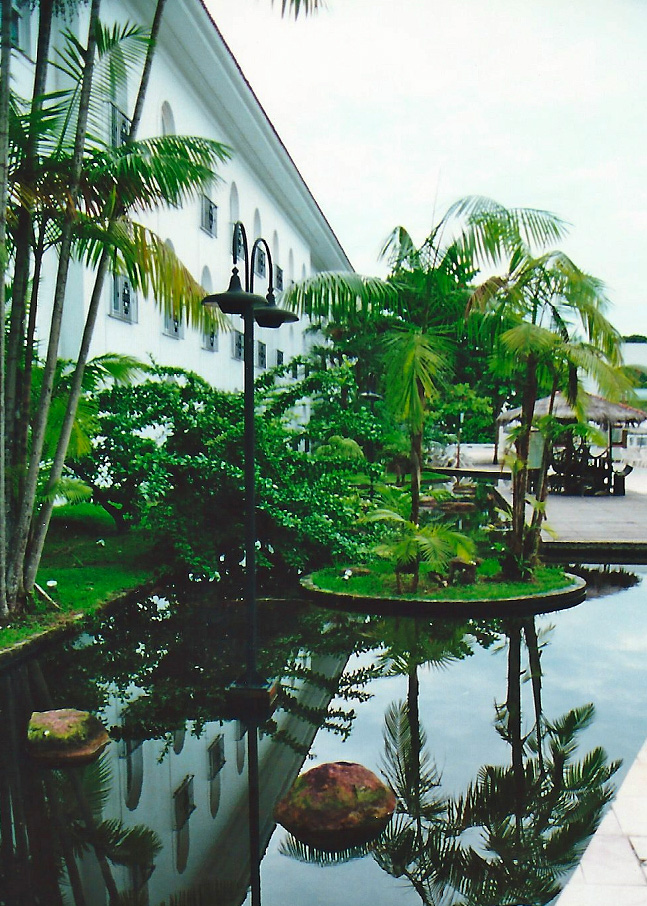
The Tropical Hotel in Manaus Brazil.

Having survived swimming in piranha-infested waters, Peggy played Titanic. The Peripatetic Bone decided to get into the act by posing on the rail. The boat lurched and Bone was on his way to reside forever in the murky depths of the Rio Negro. I leapt and made a saving catch as he went over the edge.

Having gone swimming in the piranha-infested waters of the Amazon, Peggy tempted fate again by doing her Titanic pose.

The Peripatetic Bone poses on railing of the M/V Amazon Clipper shortly before he went plummeting toward the murky depths of the Rio Negro.

After being rescued from his fall, Bone was limited to more prosaic activities, such as steering the boat.
We were wrapping up our tour on the M/V Amazon Clipper. There was the village of Novo Alrao to visit and a jungle walk to take. Then we would return to the Tropical Hotel in Manaus. Good-looking Latin men with sharp knives seemed to lurk everywhere. I told Peggy, “No, you can’t bring one home.”
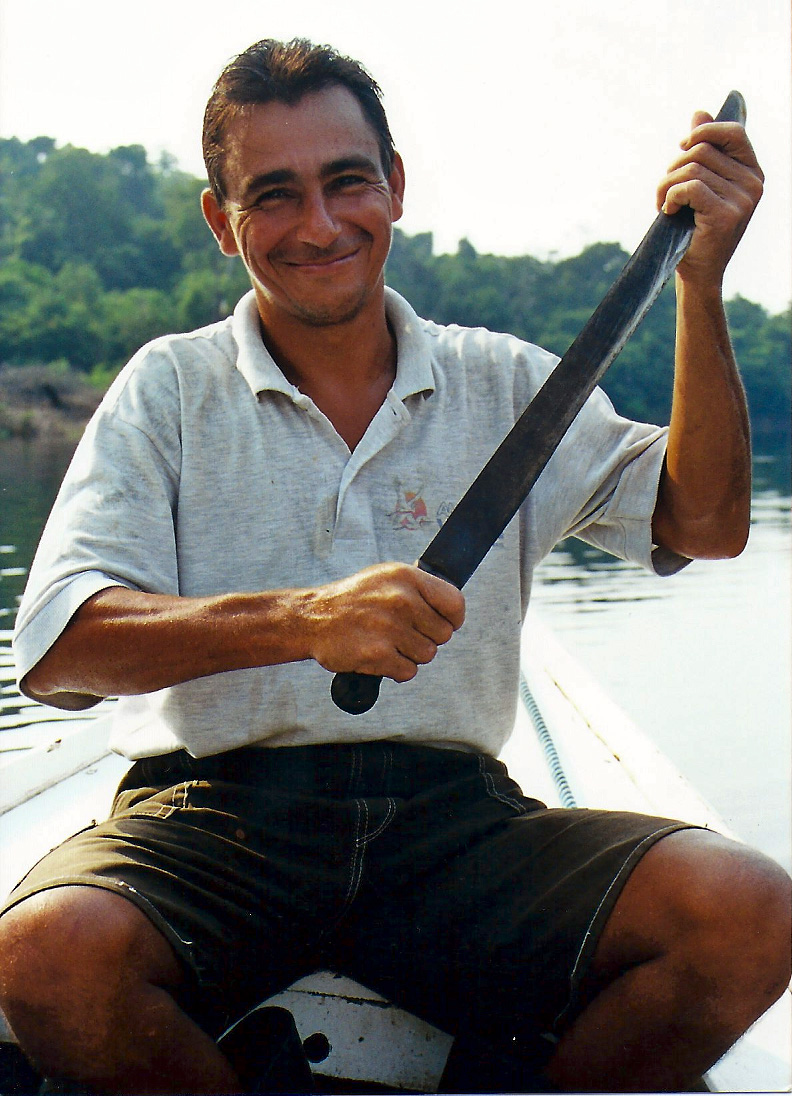
One of our guides. Nice smile, sharp knife/machete.

One of the women applied the word “hunk” to this machete wielding Amazonian who was demonstrating how to open Brazil Nuts. Brazil Nuts, BTW, live in heavy pods high in the trees. Getting hit by one can cause serious damage.

A touch of Disney in the village of Novo Alrao. I assume the building was an elementary school.

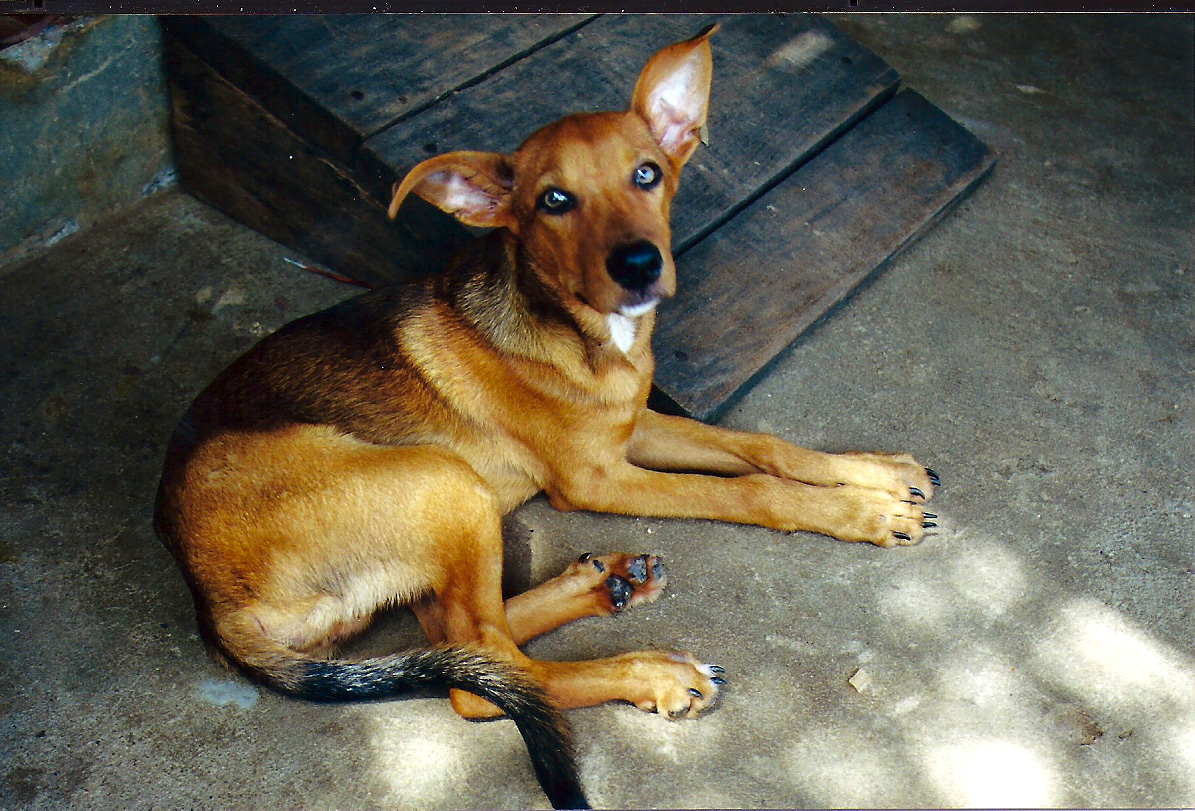
I thought this dog in Novo Alrao, Brazil was quite handsome although his ears made his head look small.

These Amazon River boats were beached at the edge of the village.

A Brazilian houseboat came in for resupply when we were in Novo Ariau. Ten of the world’s largest rivers are found in the Amazon Basin. Living and traveling on these rivers makes sense.

I was much more concerned about the soldiers with automatic weapons who filled the Tropical Hotel in Manaus than I was the guys with the machetes. The soldiers surrounded the hotel and were posted in every corridor, at the swimming pool and in the restaurant. A serious looking gunboat cruised back and forth in front of the hotel’s dock.

A sign posted in front of the hotel welcomed the Defense Ministers of North and South America. We had been invaded. We were lucky to still have a room. To escape from constant surveillance, we took a taxi into Manaus to visit the Opera House, public market and waterfront.

Manaus, Brazil has a large colorful market, which is a must see stop on a tour of the city.

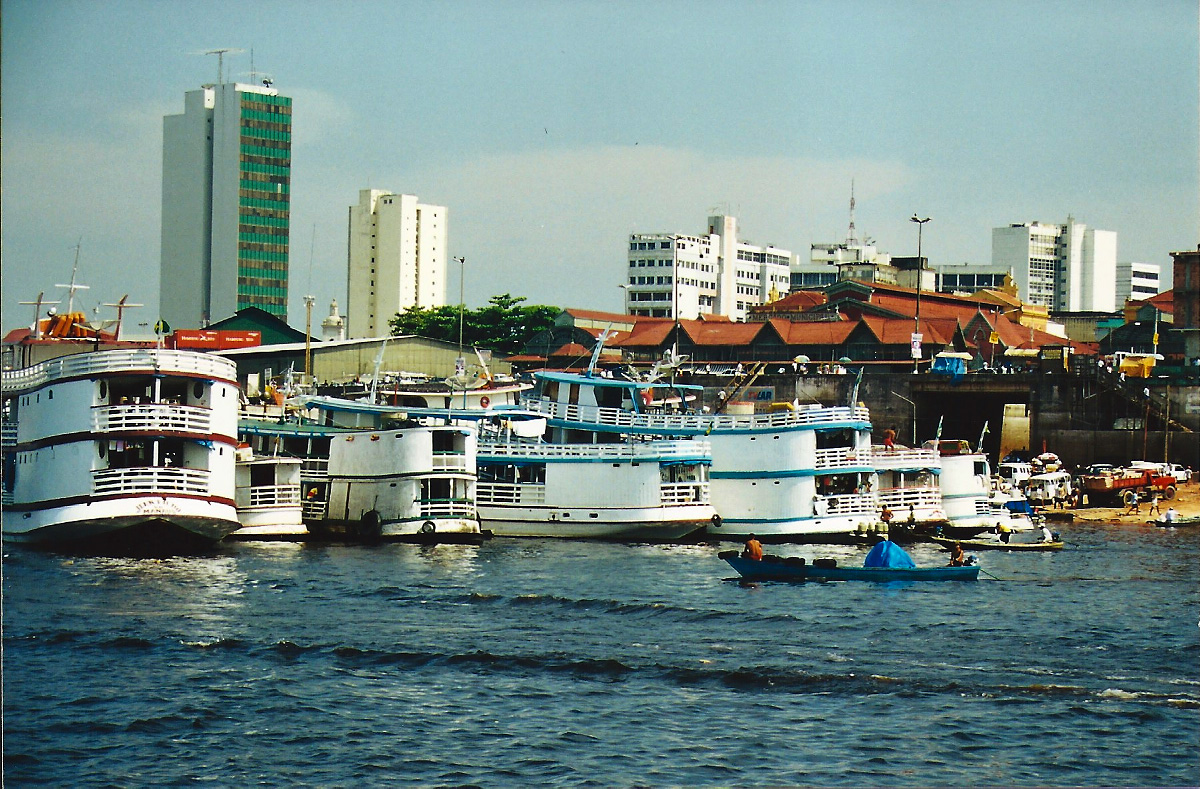
The Manaus waterfront. The market is located in the reddish buildings on the right. The boats in the foreground serve as the major form of transportation up and down the Amazon River. Captains wait for the boats to fill before leaving. It can take several days. Passengers bring their hammocks and sleep on the boat.

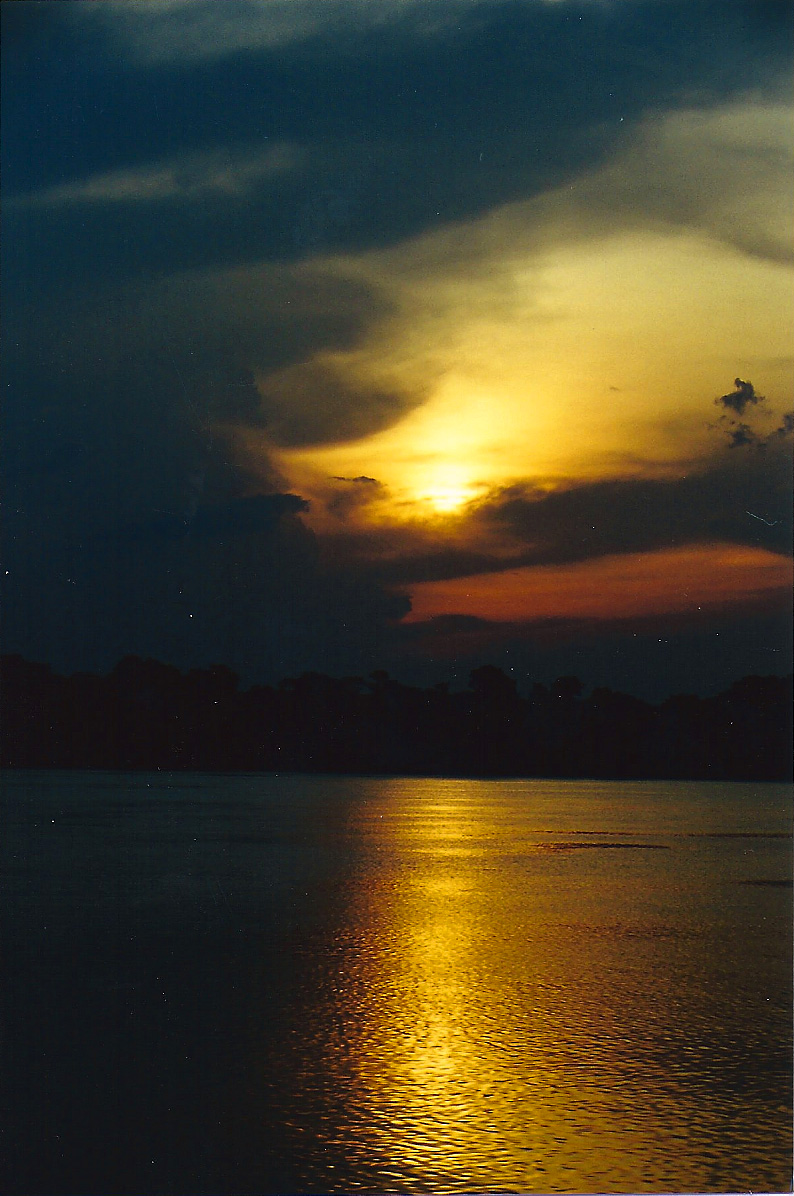
That night we took photos of the sunset and then finished up our stay by playing cribbage with another couple that had been on the Amazon Clipper with us. He was a CPA out of Texas who specialized in loopholes and apparently cribbage. We were severely trounced. The next day we made the long flight back to Sacramento. Our Amazon adventure was over.

A beautiful sunset capped off our visit to Brazil and the Amazon Rainforest.

Monkey Business at the Ariau Amazon Lodge… the Passport Series

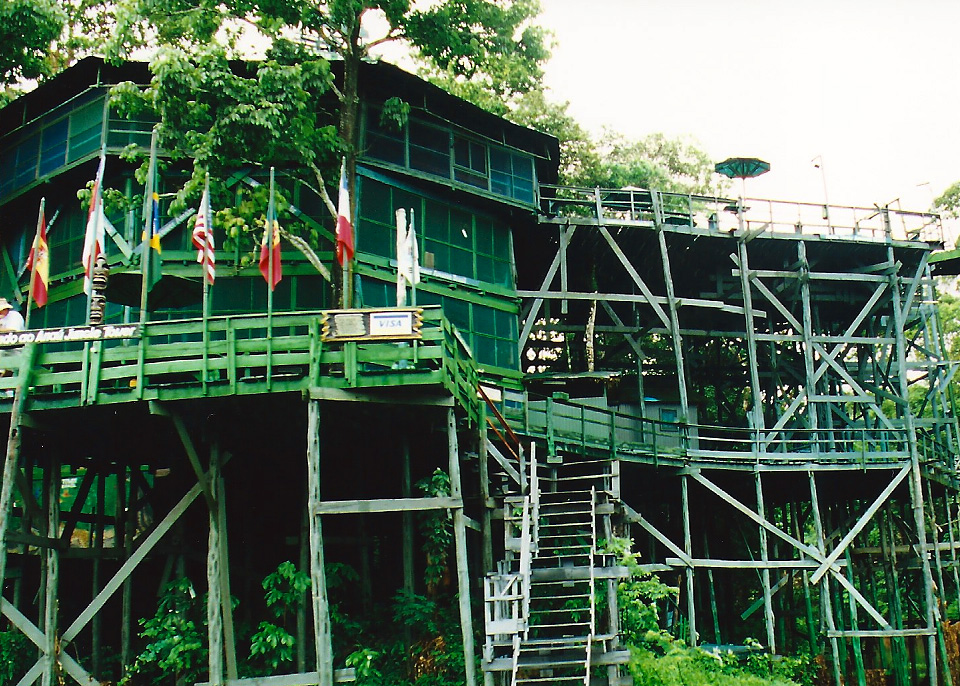
This photo captures the tree house nature of the Ariau Lodge located on the Rio Negro River near Manaus in the Amazon Rainforest of Brazil.

“The war of the future will be between those who defend nature and those who destroy it. The Amazon will be in the eye of the hurricane. Scientists, politicians, and artists will land here to see what is being done to the forest.”

Jacques Cousteau

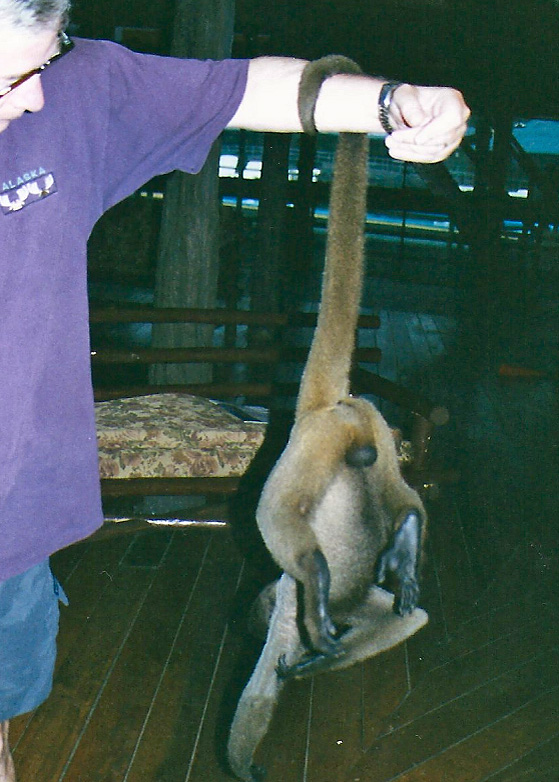
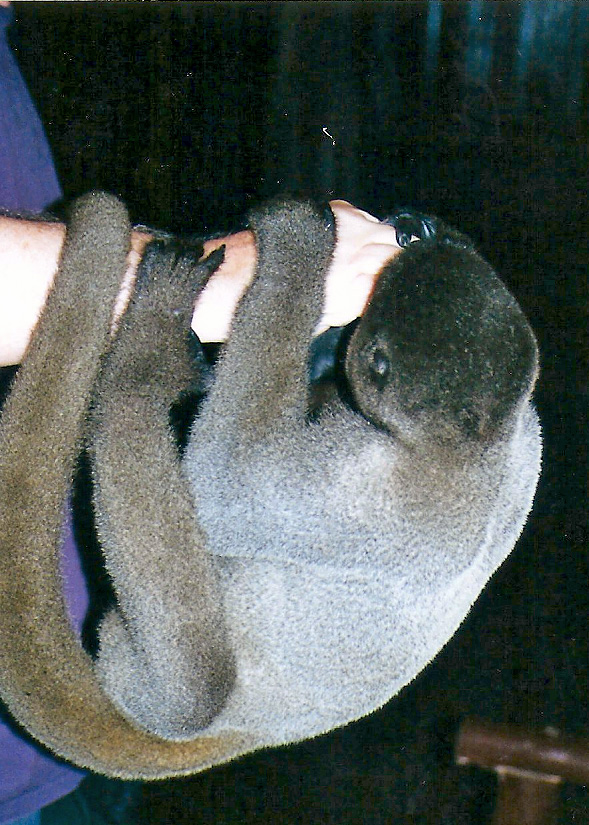
The Woolly Monkey leapt on to my shoulders and rested one paw on my forehead. I hadn’t invited him and suggested he leave.  When I tried to put him down he wrapped his powerful tail around my wrist and then threatened to bite my hand.

An upside down Woolly Monkey holds on to my arm with his powerful tail at the Ariau Lodge in the Amazon.

When I suggested to the Wooly Monkey that he should get down, he threatened to bite my hand.

My wife Peggy took photos and laughed at my predicament. Her turn was coming.

We were staying at the Ariau Amazon Towers Lodge some 35 miles from Manaus Brazil in the heart of the Amazon Rainforest overlooking the Rio Negro River. Located high in the rainforest above the river, the Ariau is the Mother of all tree houses. Tarzan would appreciate the luxury. In fact there is a “Tarzan Suite” perched 110 feet up in the air.

The Tarzan/Honeymoon suite at the Ariau Lodge perched 110 feet above the Rio Negro.

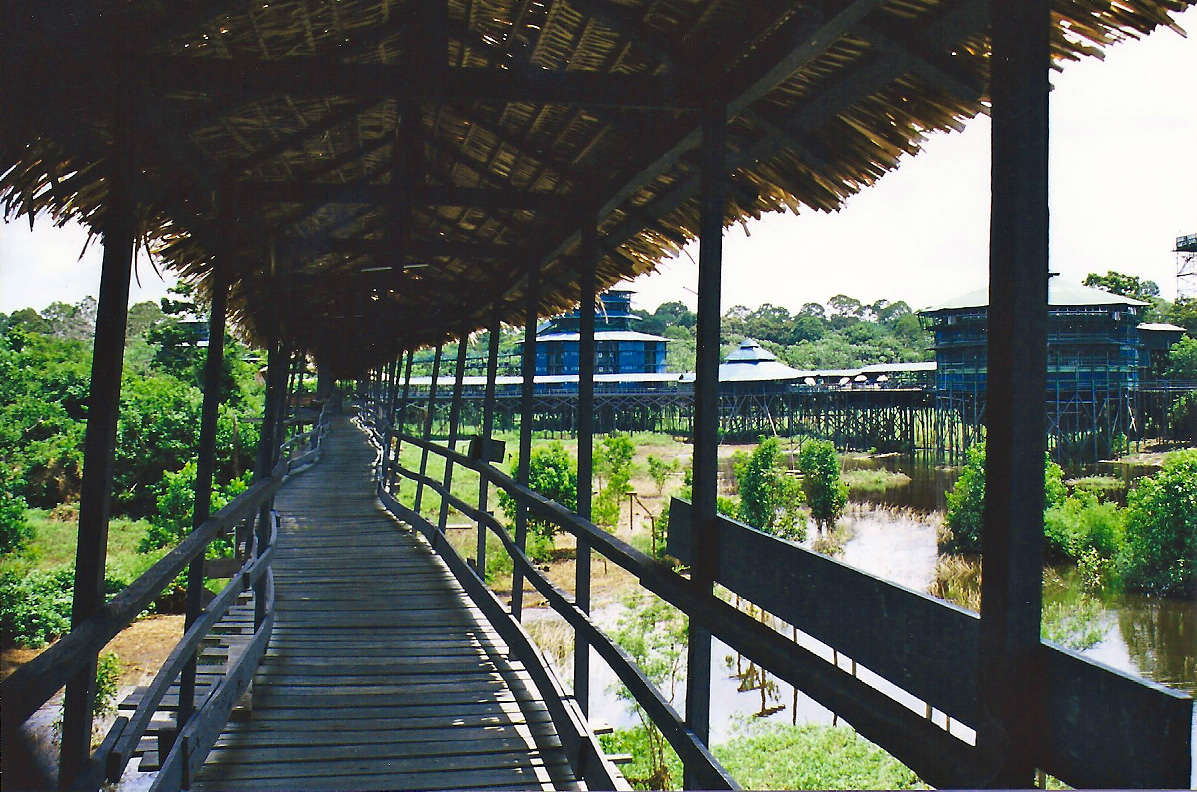
Catwalks, some as high as 70 feet, radiate out from the lodge for five miles into the forest and provide the visitor with the unique Amazon experience of walking among the treetops and visiting with the wildlife… including parrots and the far-too-tame monkeys.

Attractive walkways or catwalks extend out for some five miles from the Ariau Lodge providing visitors with an opportunity to wander through the tree tops of the Amazon rainforest.

This photo provides another view of the catwalks at the Ariau Lodge in Brazil.

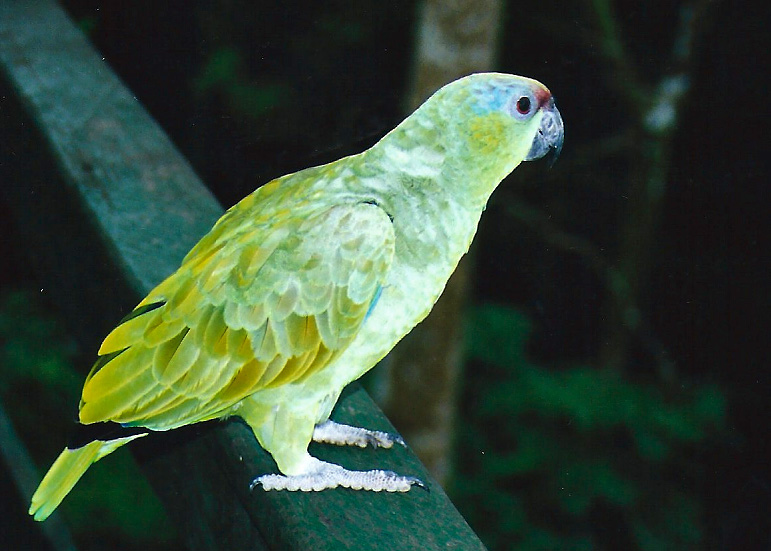
This brilliant green parrot greeted us on our walk at the Ariau Lodge.

Jacques Cousteau inspired building the Ariau in the mid 80s.  His statement to Dr. Francisco Bernardino quoted above led Bernardino to erect the hotel to accommodate the expected influx of ‘artists, scientists and politicians.’ Since then the lodge has accommodated a steady stream of famous visitors ranging from Prince Charles to Bill Gates. Peggy and I stayed in the “Jimmy Carter Room,” which was given its name after Carter slept there.

The Peripatetic Bone insisted on having his picture taken with the Carter sign and with a Brazilian mask.

The Peripatetic Bone rests on the Jimmy Carter sign.

A number of carved artworks are found at the Ariau Lodge. Bone is taking a nap in the mouth of this snake-tongue protruding from the mouth of a Brazilian mask.

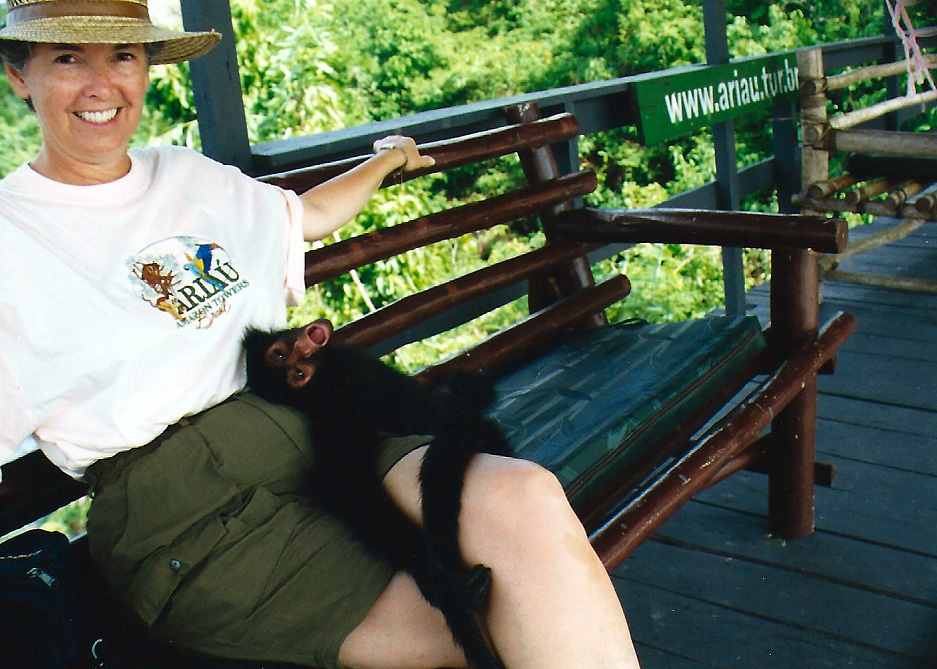
But back to the monkeys… Peggy’s want-to-be friend was a long-legged Spider Monkey. He joined us on the walkway and immediately wrapped one leg around her neck and looked up adoringly. He held on for a mile as we strolled along the catwalk. When we stopped, he immediately stretched out on her lap and made faces at me.

She only lost her long-legged furry friend when we returned to the lodge. That night she discovered the flea bites.

The Spider Monkey climbed up on Peggy, draped his arm/leg around her neck, and looked up adoringly.

The Spider Monkey joined us for our walk among the tree tops of the Amazon forest.

When Peggy sat down, her new best friend spread out on her lap and made faces at me.

This “wild” creature of the Amazonian Rainforest then proceeded to take a nap.

Fishing for Piranhas on the Amazon… The Passport Series

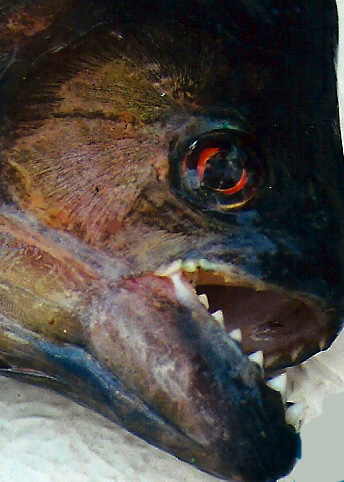
The piranha is indeed a fearsome creature.

Hollywood loves piranhas. They make great movies. Take one cow, throw her in the Amazon, and watch with horror as Bessie is reduced from a surprised moo to a pile of bones in mere minutes by a school of frenzied fish with big teeth. PETA does not approve of this activity.

“Today we are going fishing for piranhas,” the captain of our boat, the M/V Amazon Clipper informed us. “Watch your fingers.”

We were chugging up a tributary of a tributary of the Amazon River in Brazil and it was time to replenish the refrigerator.

We dutifully boarded the canoe and were issued hand lines with hooks and a ration of raw chicken. There were no cows or fishing poles. When we arrived at what the guide considered prime piranha water, we baited our hooks and threw them over the edge.

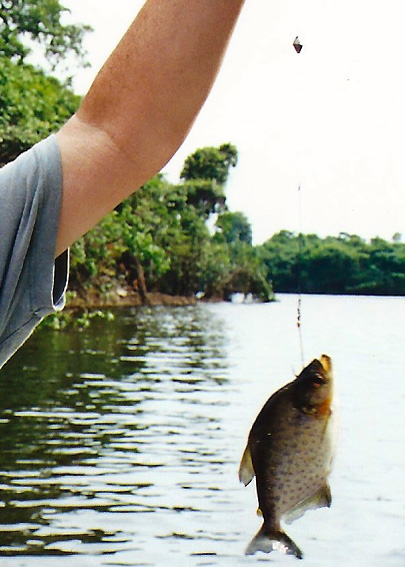
Bam! I got a hit… and a fight. My flesh-eating fish was not happy to have the tables turned. Ever so carefully I pulled him over the side of the boat and was greeted with the snapping jaws of death. My wife Peggy dutifully took a picture and our guide firmly grabbed the piranha and yanked out the hook.

Peggy took a photo of the piranha I caught. I was careful to hold it far away from me.

Fish are slippery characters however and mine slipped out of the guide’s hands, landed on the bottom of the boat, and immediately went looking for someone to eat.  Eight pairs of feet shot up into the air.

Eventually we got things under control and caught several more fish. That night we would feast off piranhas. But first, the itinerary said, we were supposed to go swimming. Why anyone would want to go swimming in piranha-infested water, I didn’t have a clue. The little buggers would be out for revenge.

“They don’t come in here,” the guide assured us when we reached a white, sandy beach. I looked around. It was all part of the same river. There were no signs warning the fish to stay out and there was no fence to keep them out. As far as I could tell the clear water and the white sand would make it easier for the piranhas to find toes.

There is always someone willing to test the waters and jump in feet first, though. Usually it’s Peggy. This time was no exception. I volunteered to take photos. She returned with toes intact.

Peggy went swimming in the Amazon, which was supposedly free of piranhas.

The piranhas were waiting for us at dinner, tastefully cooked. The jaws were on a separate platter, grinning up at us with dentist white teeth. In the age-old question of who eats whom, we had won, at least this time. The fish tasted, uh, fishy with a slight hint of chicken and something else. Was it cow or toe?

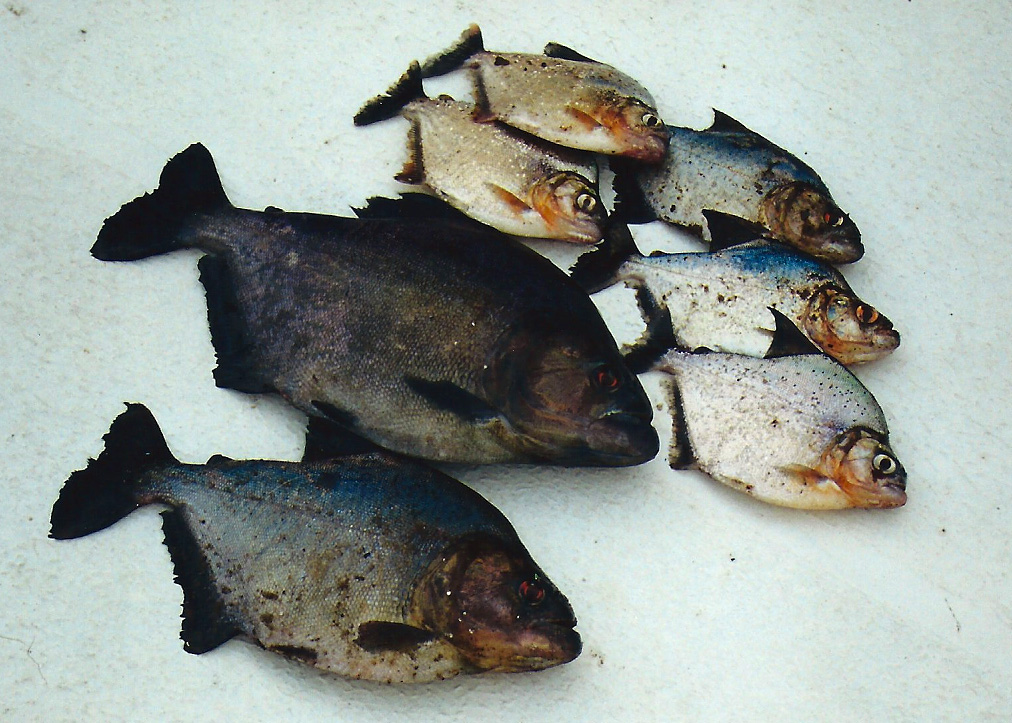
Our catch of piranha, ready to face the cook.