A Scottish Ghost… Halloween Tales II

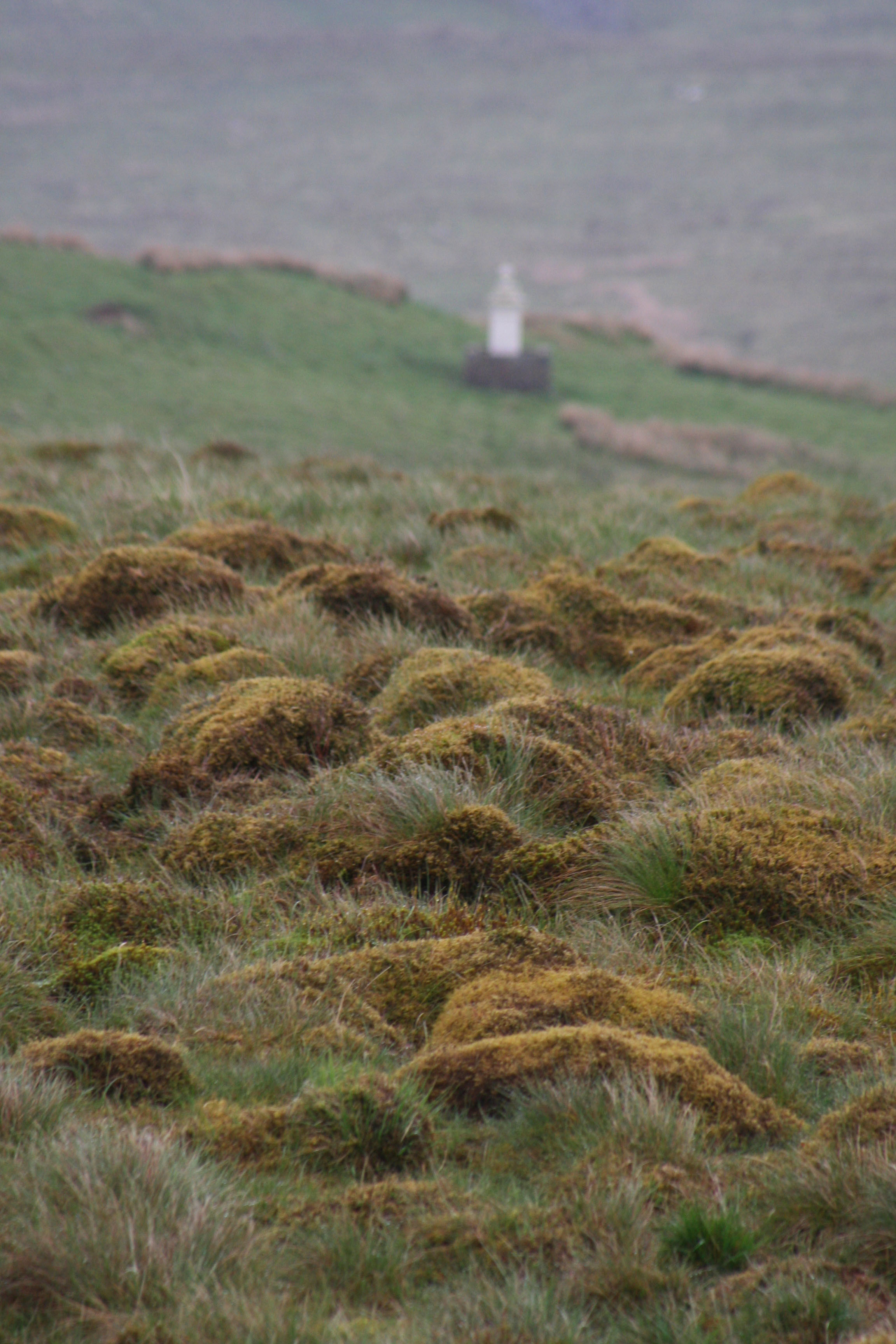
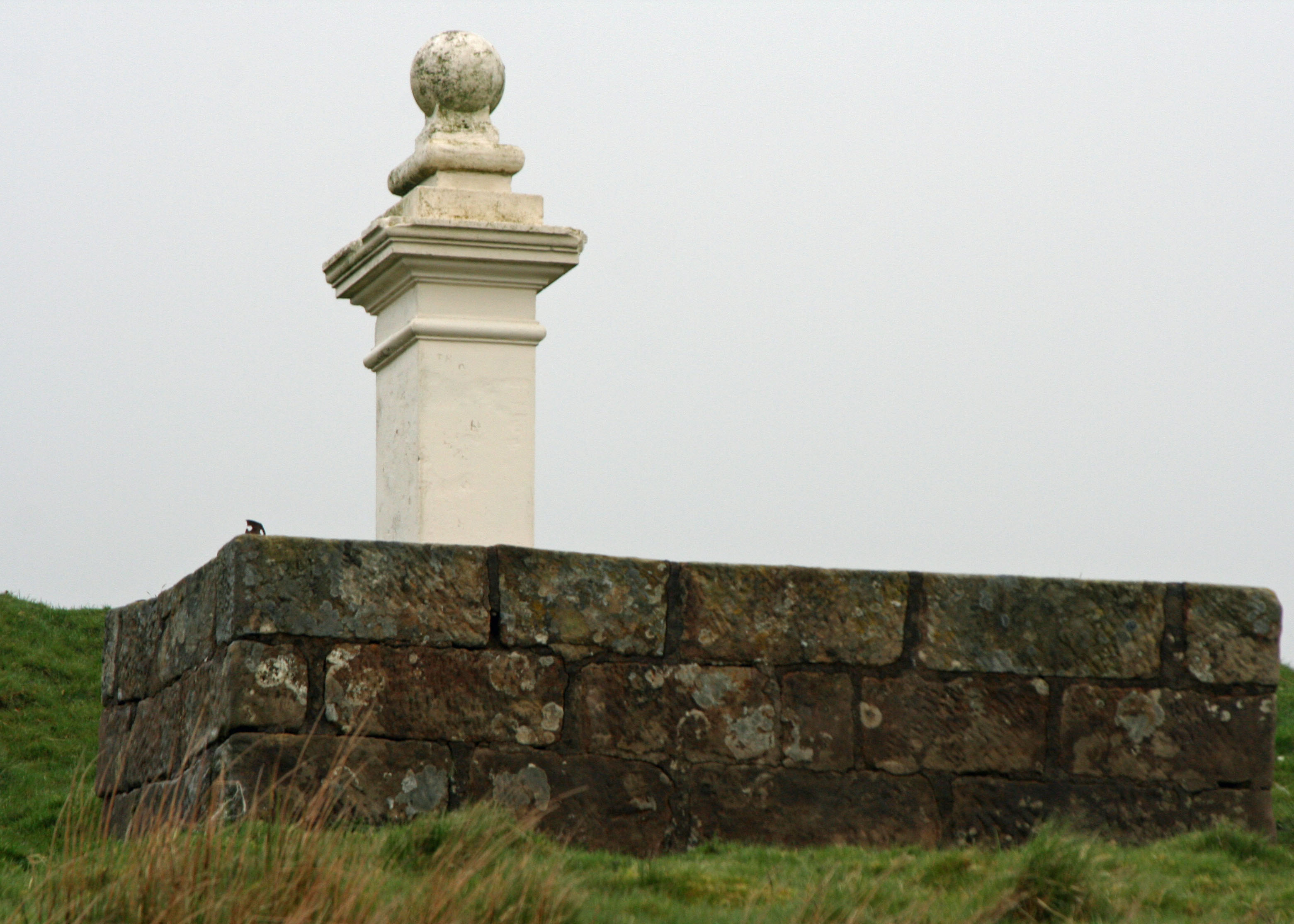
The ghostly grave of John Brown the Martyr on a lonely Scottish moor.

Since I am telling family ghost stories this week, I am going to relate a ghostly encounter that Peggy and I had in Scotland last year.

It has to do with my search for the grave of John Brown, the Martyr of Priesthill.

I first heard of Brown in the late 60s when my dad arrived home from a Mekemson family reunion. He proudly produced a family tree that traced a branch of the Mekemsons back to the martyr. Given the staunch Presbyterian leanings of our ancestors, it was an important connection.

My Great, Great, Great Grand Father, James Mekemson, married Mary Brown Laughhead Findlay. (Mary had already seen two husbands die.) John Brown was five generations up the line.

The story of John Brown’s murder verges on legend. He was, as the saying goes, a Covenanter’s Covenanter, a very devout man. The Scottish Covenanters received their name from signing a Covenant that only Christ could be King, which eliminated the King of England from being God’s representative on earth. The King was not happy.

Reverend Alexander Peden, one of the top leaders of the Covenanter Movement, described Brown as “a clear shining light, the greatest Christian I ever conversed with.” High praise indeed; the type you reserve for a man who is killed for your cause.

They say that Brown would have been a great preacher, except he stuttered. Leading Covenanters visited his home and secret church services were held there. Important meetings took place.

Alexander Peden stayed at his house the night before Brown earned his martyrdom and warned of dark times. Peden was something of a prophet when it came to predicting dire events. This time he was right.

Brown was out gathering peat with his nephew the next morning when soldiers led by John Graham of Claverhouse appeared out of the mist and captured him. The date was May 2, 1685.

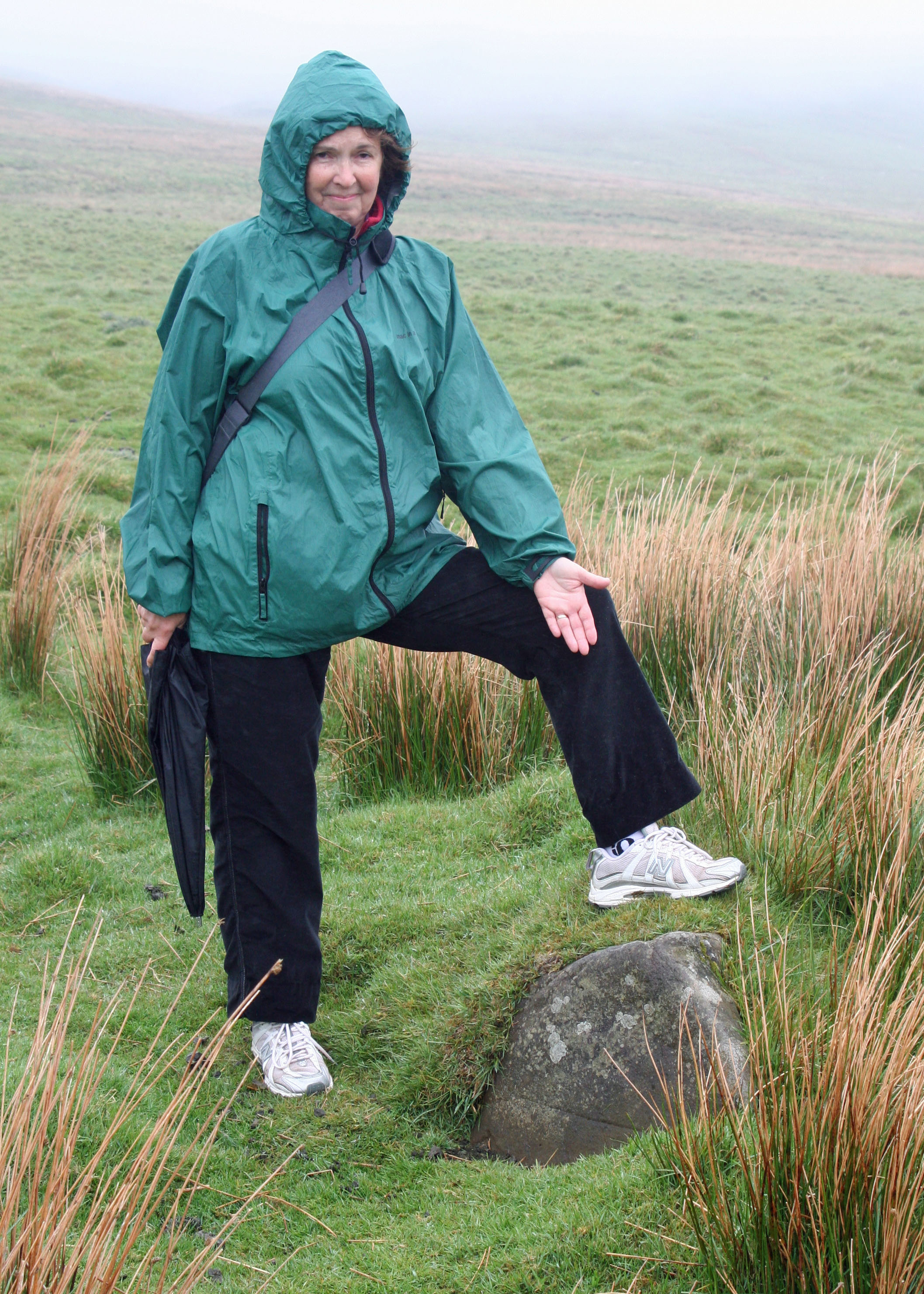
Peggy stands near where John Brown was shot on the likely remains of his house. Mist covers the distance as it would have on the day he was captured.

Claverhouse, or Bloody Clavers as the early Presbyterians identified him, was the King’s go-to man when it came to eliminating Covenanters. He was not noted for his compassion.

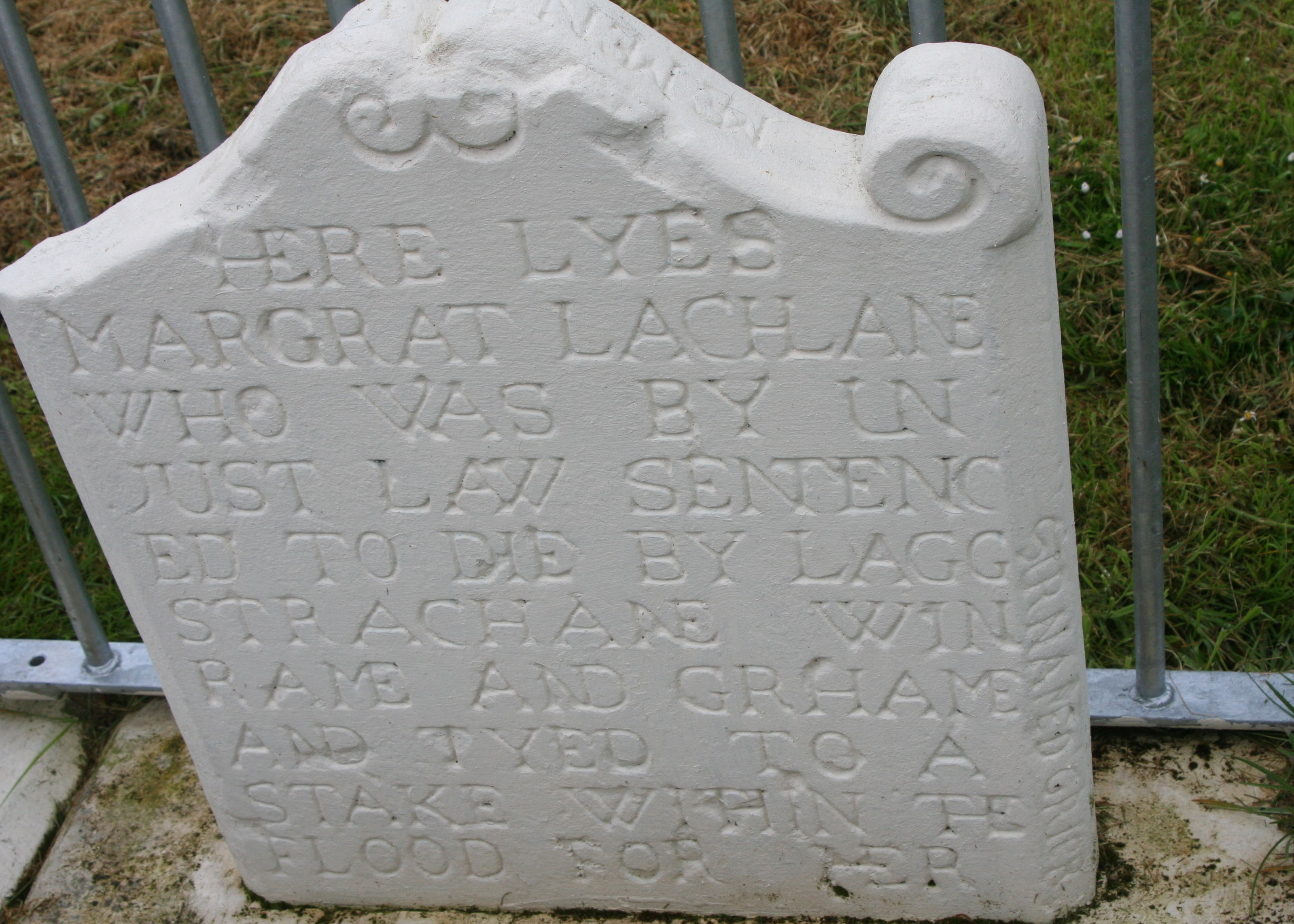
Covenanter’s martyr graves are found throughout the Scottish Lowlands. This woman was staked out in the ocean to be drowned. If violent deaths create ghosts, the Scottish Lowlands are filled with them.

He took Brown back to his home and demanded that he swear an oath to the King in front of his wife and children. Brown started praying instead. The legend states that Claverhouse ordered his soldiers to kill Brown but they refused. So he took out his own pistol and shot him in the head in front of his family.

The story then goes on to describe how Brown’s wife, Isabel Weir, went about the yard collecting pieces of her husband’s brain. (I don’t mean to treat this lightly, but somehow I can’t help thinking about a TV episode of Bones.)

The family eventually escaped to Ireland and then moved on to North America where it settled in Paxtang, Pennsylvania.

John Brown’s appearance on our family chart in 1969 immediately caught my attention. Not many families can claim a certified martyr. When I became serious about genealogy three years ago, I determined I would go to Scotland and find his grave.

It was listed as being near the small town of Muirkirk on Priesthill farm. Priesthill is an old Scottish sheep ranch, dating back to at least the 1600s. This was the time when Scottish Covenanters had gone ‘off the grid’ with their Presbyterian Church and held services out in the open fields hidden away from the prying eyes of the English King and his henchmen. Armed men were posted around the perimeter in case the soldiers came.

Getting caught wasn’t much fun. You could lose your sheep, your cattle, your land and your life. You might find your body quartered and hung up in various communities to provide an example of why you should be a good Anglican.

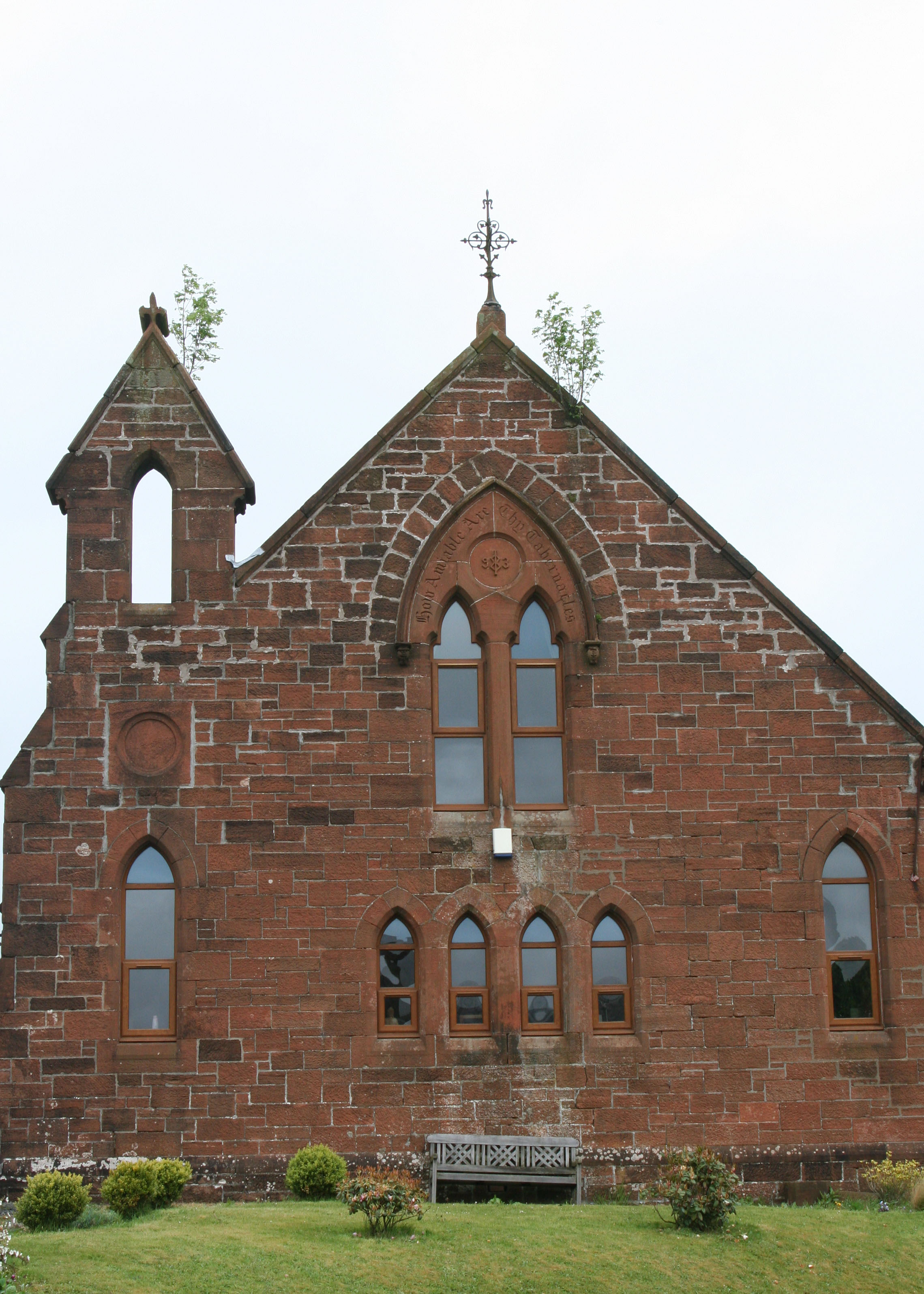
The Old Church B&B in Muirkirk Scotland where we stayed when searching for John Brown’s grave.

Priesthill was one of the remote sites where the hidden services were held. To get there we drove north on the road in front of our B&B (the Old Church B&B in Muirkirk… highly recommended) for a couple of miles and picked up a dirt road snaking off to the right through a sheep farm.

The road seemed to go on and on; recent rains had turned it into a muddy mess. Our brand new Mercedes rental car bounced along dodging sheep and accumulating glue-like mud mixed with sheep dung. It was still on the car when we returned it to Edinburgh.

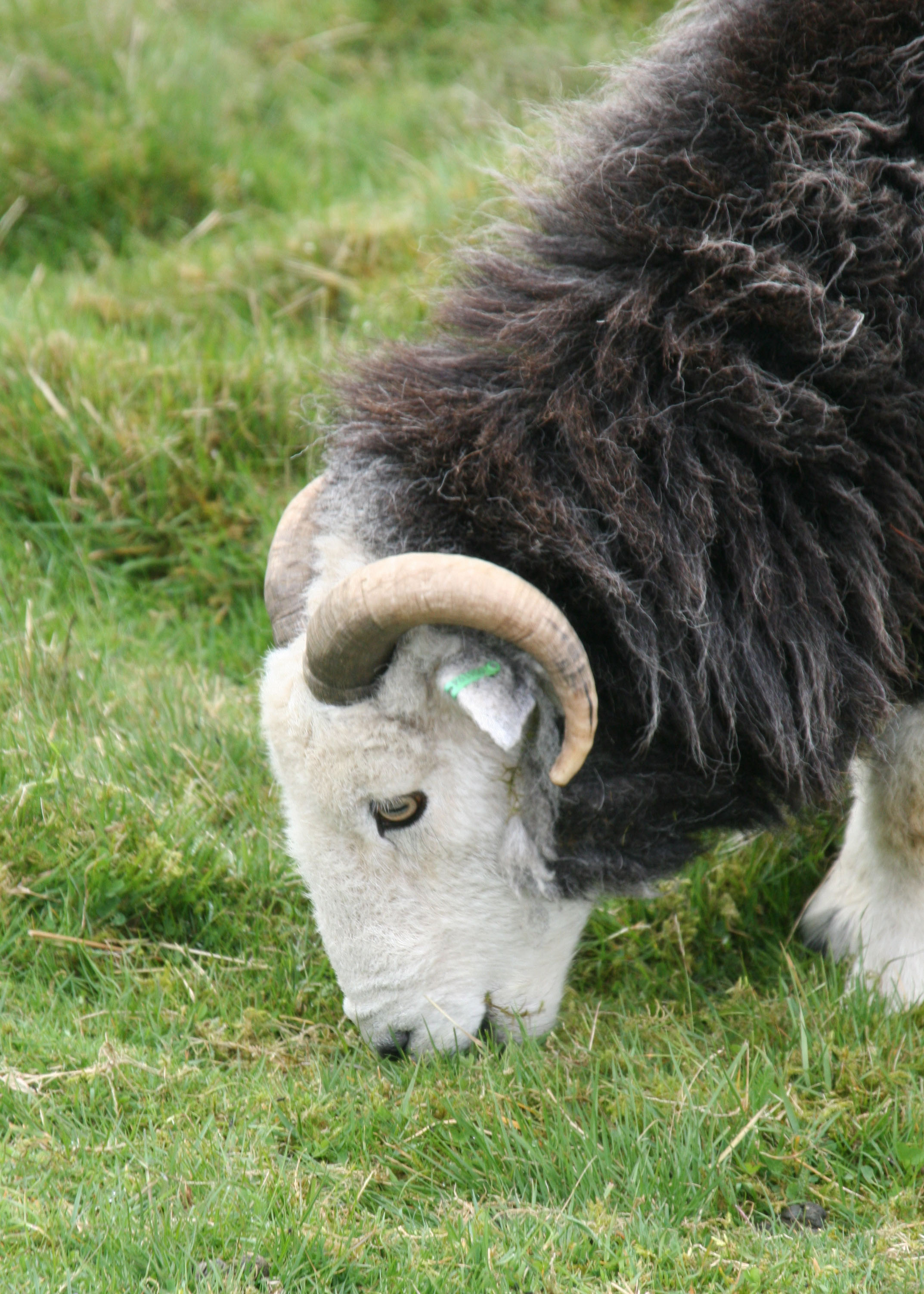
One of the sheep we had to dodge.

Finally the old farmhouse came into sight. A woman was standing on a porch enclosed by a three-foot high rock wall. She was wearing clothes that my great-grandmother times five might have found fashionable. Since we would be walking through her property in search of John Brown’s grave, I got out to talk with her. (Unfortunately, I left my camera behind.)

But she did something strange. She disappeared. Now this was strange in two ways. Obviously she didn’t want to talk with us. She turned her back and walked rapidly toward the door.  OK, I could live with that even though we had found most Scots to be friendly and helpful. Possibly she was shy.

What bothered me more was she sank.

It was like she was traveling down an escalator or open elevator. Her head disappeared beneath the stonewall, before she reached the door. I did not see her go inside.

“Maybe there are steps down to an underground cellar,” I thought. Or maybe she merely bent over to work on a flower garden. Curiosity got the better of me. I walked over. There was no woman; there were no flowers; there were no stairs. As far as I could see the floor of the porch was solid stone.

I asked Peggy, “Did you see that woman disappear?”

“She went inside,” my logical wife explained.

“Ah,” I said and put the matter out of my mind as we wandered out the indistinct trail across the vacant moors to John Brown’s lonely grave. But the thought wouldn’t conveniently disappear like the woman; it kept nibbling away at me. Later I asked Peggy if she had seen the woman sink into the porch.

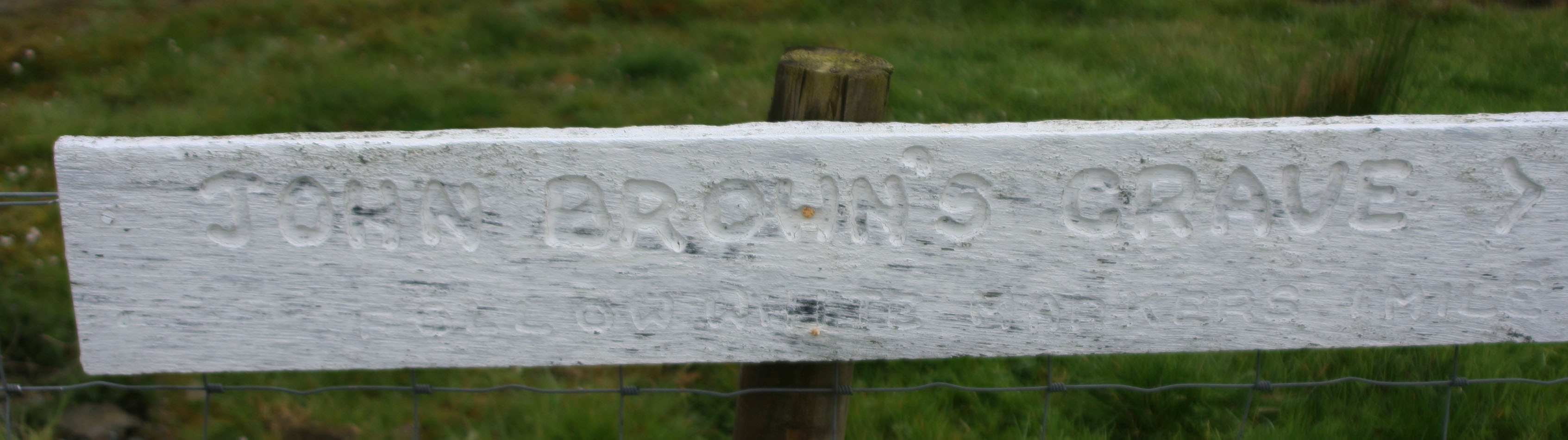
The sign in the farmyard pointing us toward John Brown’s grave.

“Yes,” she replied.

“Did you actually see her go in the house?”

“No.”

So I rest my case for a possible ghost. We did, by the way, find John Brown’s grave. His ghost was said to have appeared gloatingly in Clavers’ tent the night before Clavers was killed in battle.

A close up of John Brown’s grave.

The Murky Depths of the Amazon’s Rio Negro… The Passport Series

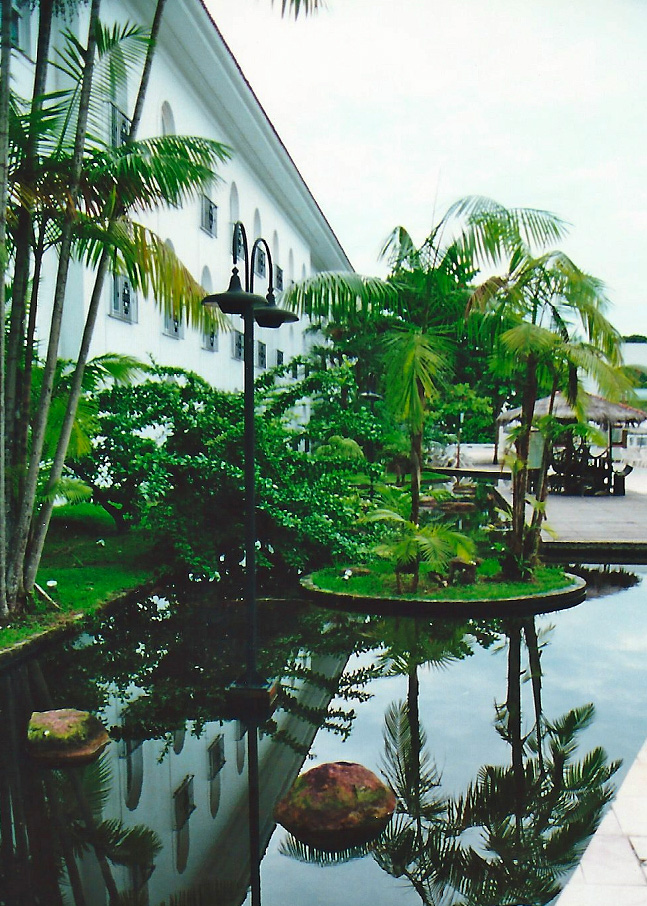
The Tropical Hotel in Manaus Brazil.

Having survived swimming in piranha-infested waters, Peggy played Titanic. The Peripatetic Bone decided to get into the act by posing on the rail. The boat lurched and Bone was on his way to reside forever in the murky depths of the Rio Negro. I leapt and made a saving catch as he went over the edge.

Having gone swimming in the piranha-infested waters of the Amazon, Peggy tempted fate again by doing her Titanic pose.

The Peripatetic Bone poses on railing of the M/V Amazon Clipper shortly before he went plummeting toward the murky depths of the Rio Negro.

After being rescued from his fall, Bone was limited to more prosaic activities, such as steering the boat.

We were wrapping up our tour on the M/V Amazon Clipper. There was the village of Novo Alrao to visit and a jungle walk to take. Then we would return to the Tropical Hotel in Manaus. Good-looking Latin men with sharp knives seemed to lurk everywhere. I told Peggy, “No, you can’t bring one home.”

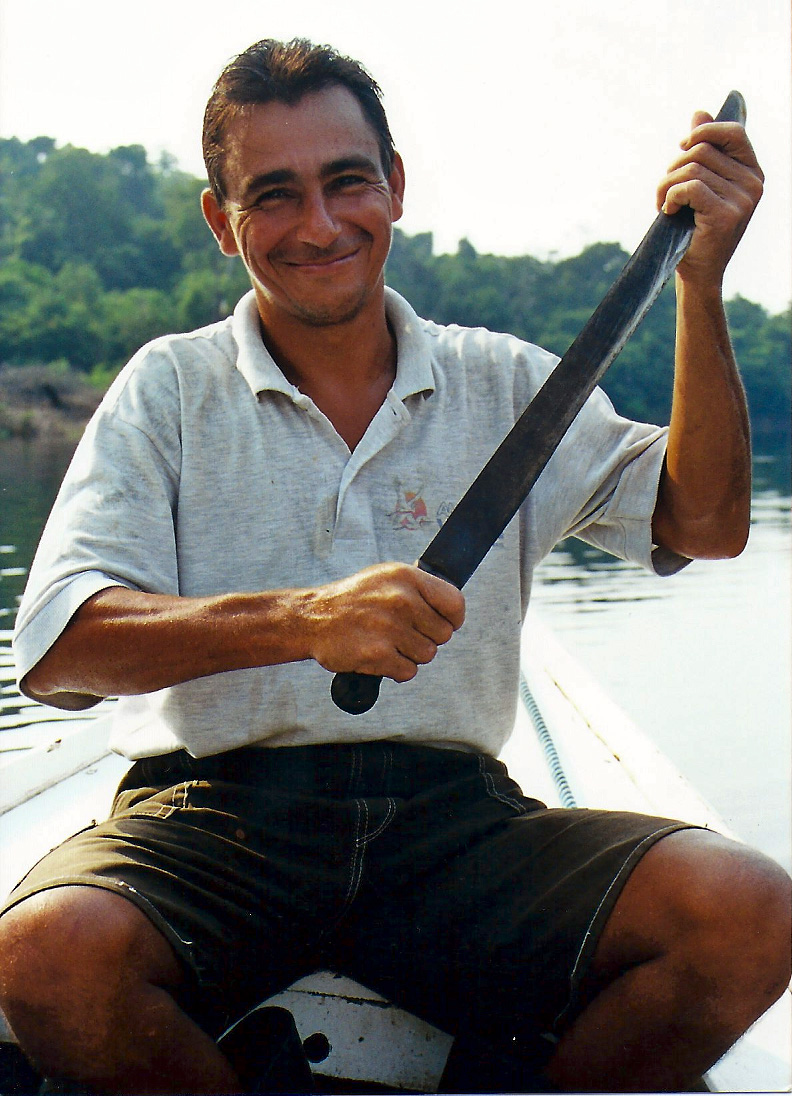
One of our guides. Nice smile, sharp knife/machete.

One of the women applied the word “hunk” to this machete wielding Amazonian who was demonstrating how to open Brazil Nuts. Brazil Nuts, BTW, live in heavy pods high in the trees. Getting hit by one can cause serious damage.

A touch of Disney in the village of Novo Alrao. I assume the building was an elementary school.

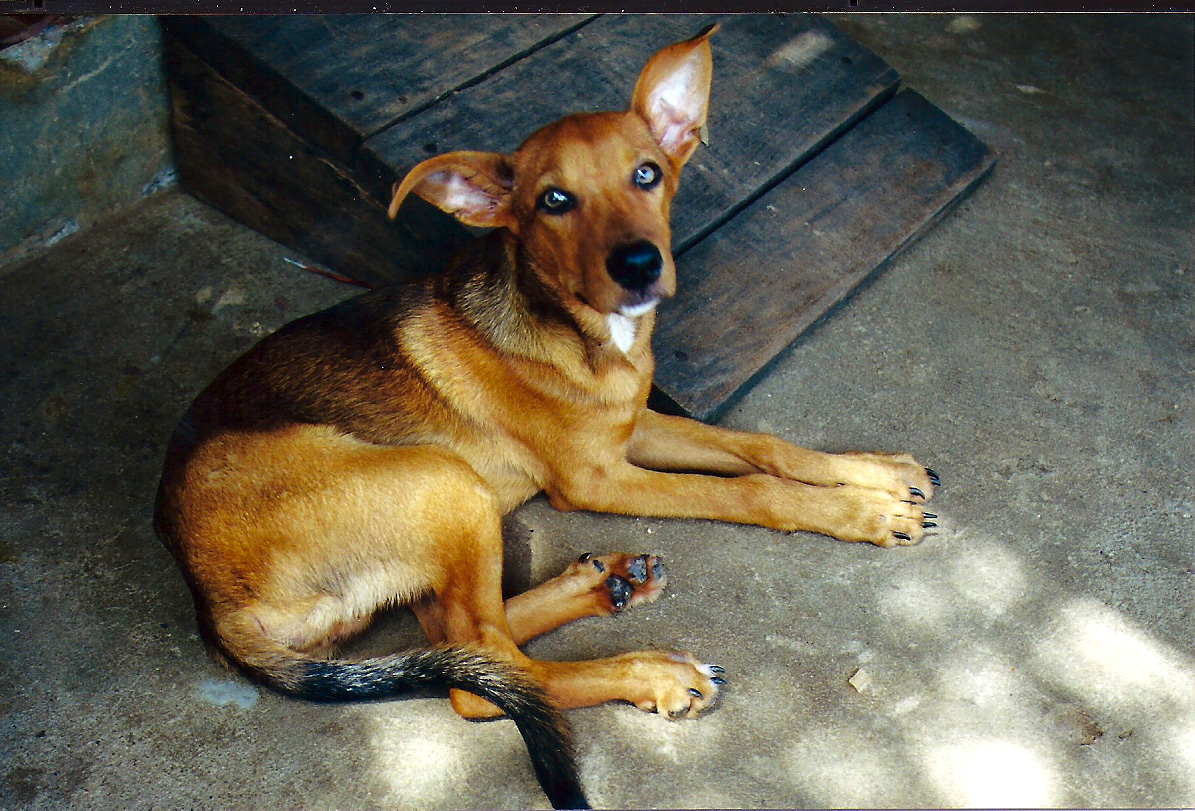
I thought this dog in Novo Alrao, Brazil was quite handsome although his ears made his head look small.

These Amazon River boats were beached at the edge of the village.

A Brazilian houseboat came in for resupply when we were in Novo Ariau. Ten of the world’s largest rivers are found in the Amazon Basin. Living and traveling on these rivers makes sense.

I was much more concerned about the soldiers with automatic weapons who filled the Tropical Hotel in Manaus than I was the guys with the machetes. The soldiers surrounded the hotel and were posted in every corridor, at the swimming pool and in the restaurant. A serious looking gunboat cruised back and forth in front of the hotel’s dock.

A sign posted in front of the hotel welcomed the Defense Ministers of North and South America. We had been invaded. We were lucky to still have a room. To escape from constant surveillance, we took a taxi into Manaus to visit the Opera House, public market and waterfront.

Manaus, Brazil has a large colorful market, which is a must see stop on a tour of the city.

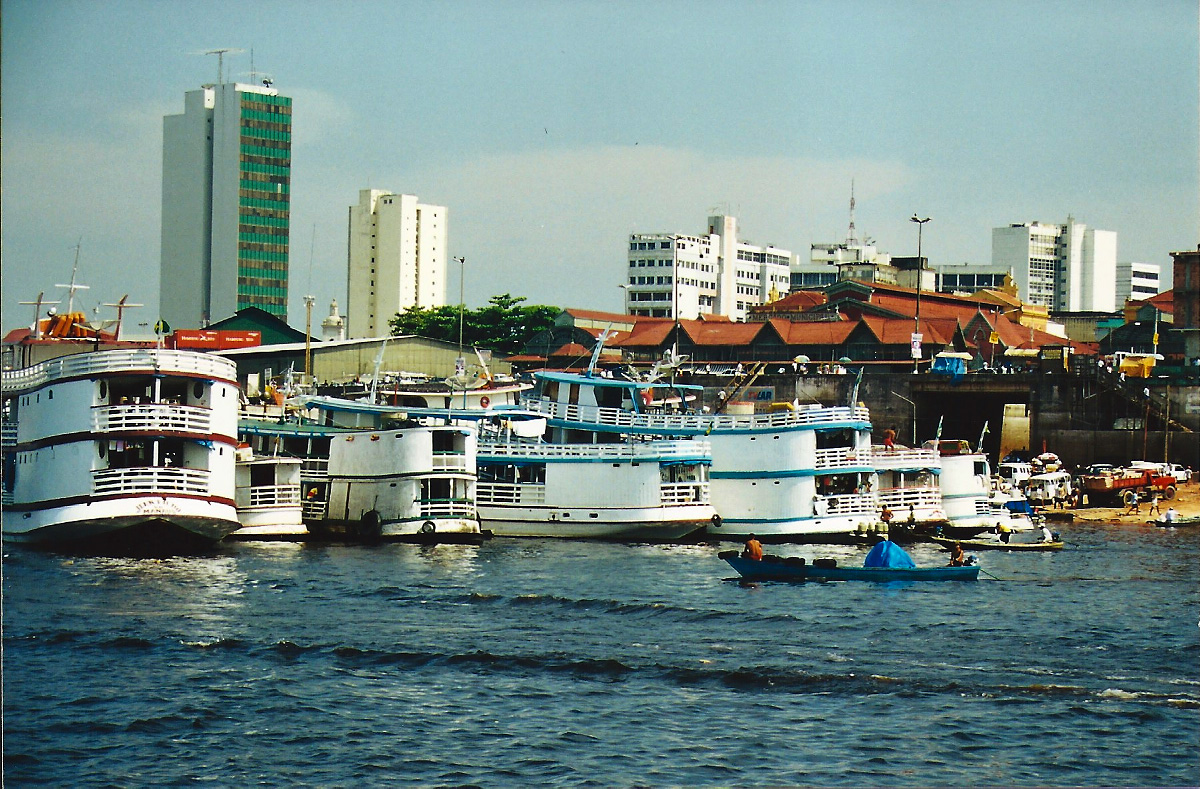
The Manaus waterfront. The market is located in the reddish buildings on the right. The boats in the foreground serve as the major form of transportation up and down the Amazon River. Captains wait for the boats to fill before leaving. It can take several days. Passengers bring their hammocks and sleep on the boat.

That night we took photos of the sunset and then finished up our stay by playing cribbage with another couple that had been on the Amazon Clipper with us. He was a CPA out of Texas who specialized in loopholes and apparently cribbage. We were severely trounced. The next day we made the long flight back to Sacramento. Our Amazon adventure was over.

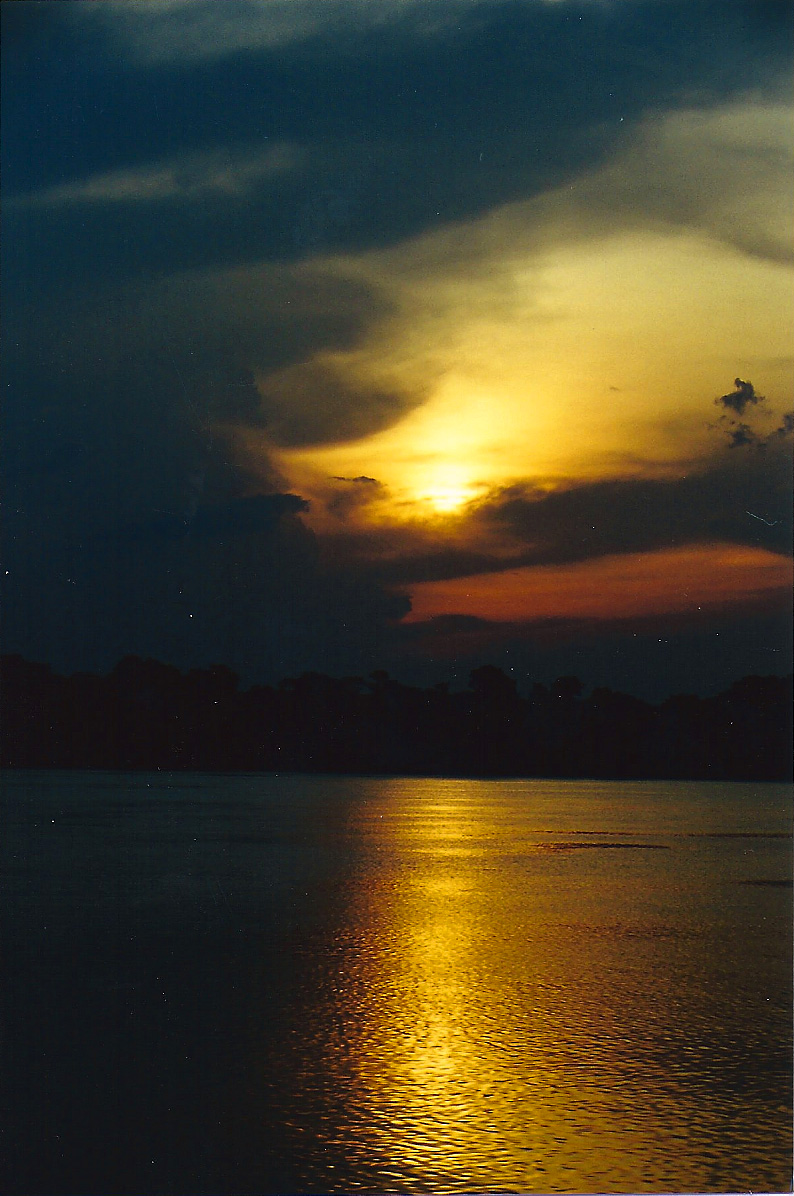
A beautiful sunset capped off our visit to Brazil and the Amazon Rainforest.

Monkey Business at the Ariau Amazon Lodge… the Passport Series

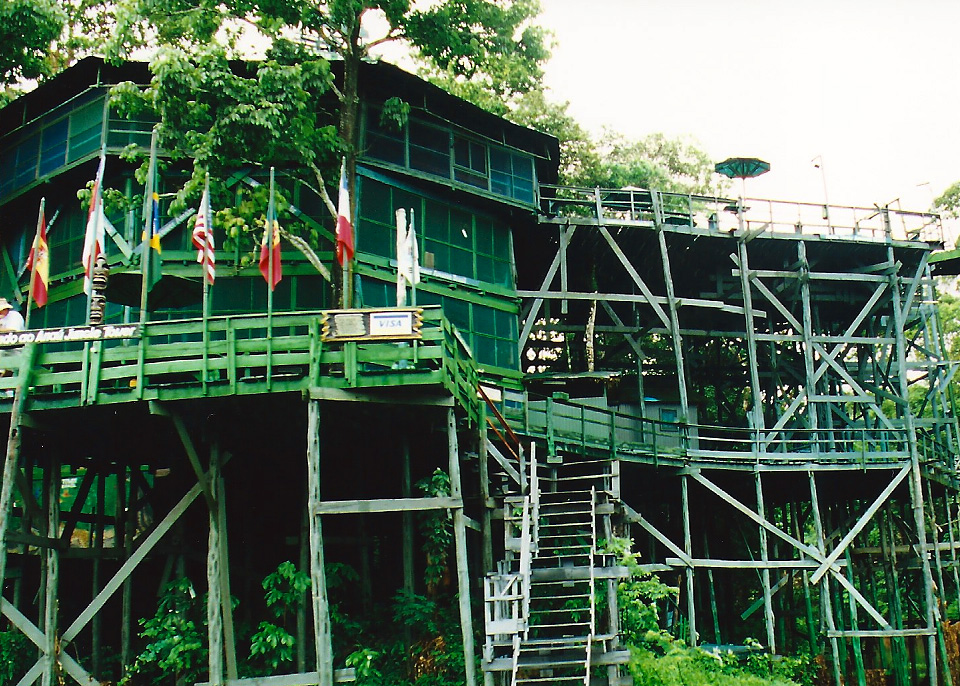
This photo captures the tree house nature of the Ariau Lodge located on the Rio Negro River near Manaus in the Amazon Rainforest of Brazil.

“The war of the future will be between those who defend nature and those who destroy it. The Amazon will be in the eye of the hurricane. Scientists, politicians, and artists will land here to see what is being done to the forest.”

Jacques Cousteau

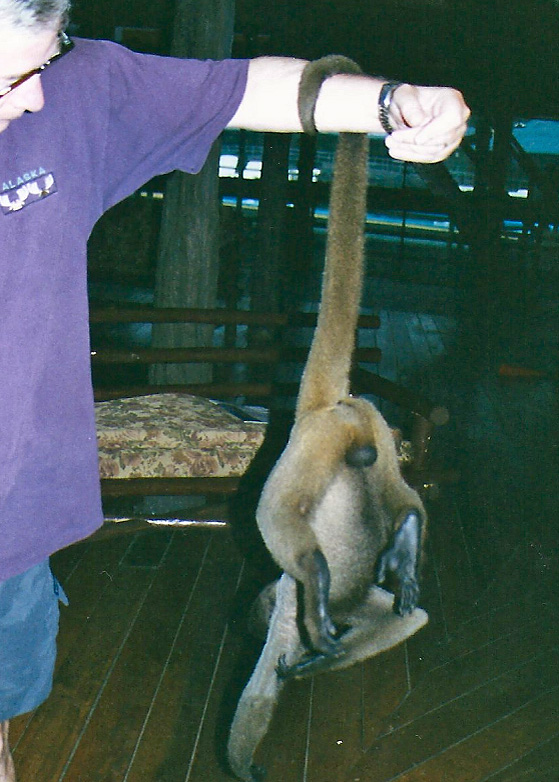
The Woolly Monkey leapt on to my shoulders and rested one paw on my forehead. I hadn’t invited him and suggested he leave.  When I tried to put him down he wrapped his powerful tail around my wrist and then threatened to bite my hand.

An upside down Woolly Monkey holds on to my arm with his powerful tail at the Ariau Lodge in the Amazon.

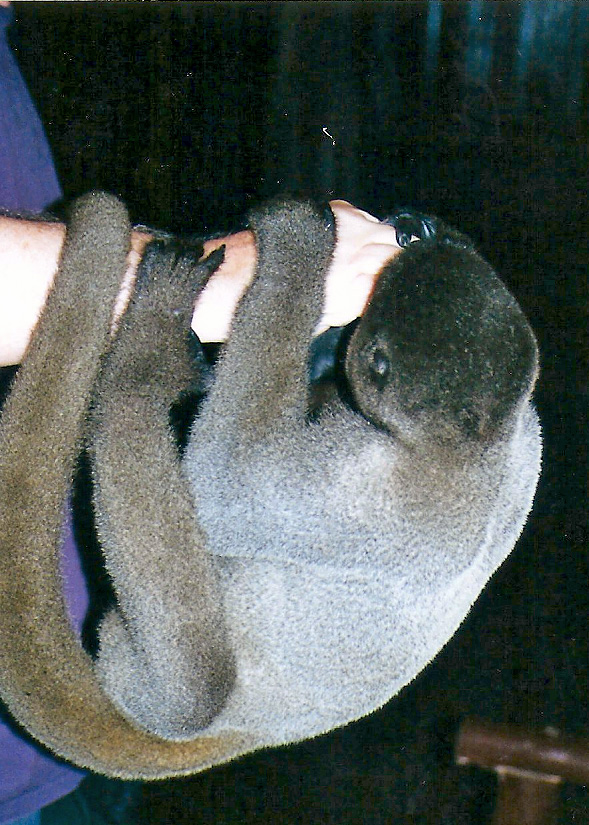
When I suggested to the Wooly Monkey that he should get down, he threatened to bite my hand.

My wife Peggy took photos and laughed at my predicament. Her turn was coming.

We were staying at the Ariau Amazon Towers Lodge some 35 miles from Manaus Brazil in the heart of the Amazon Rainforest overlooking the Rio Negro River. Located high in the rainforest above the river, the Ariau is the Mother of all tree houses. Tarzan would appreciate the luxury. In fact there is a “Tarzan Suite” perched 110 feet up in the air.

The Tarzan/Honeymoon suite at the Ariau Lodge perched 110 feet above the Rio Negro.

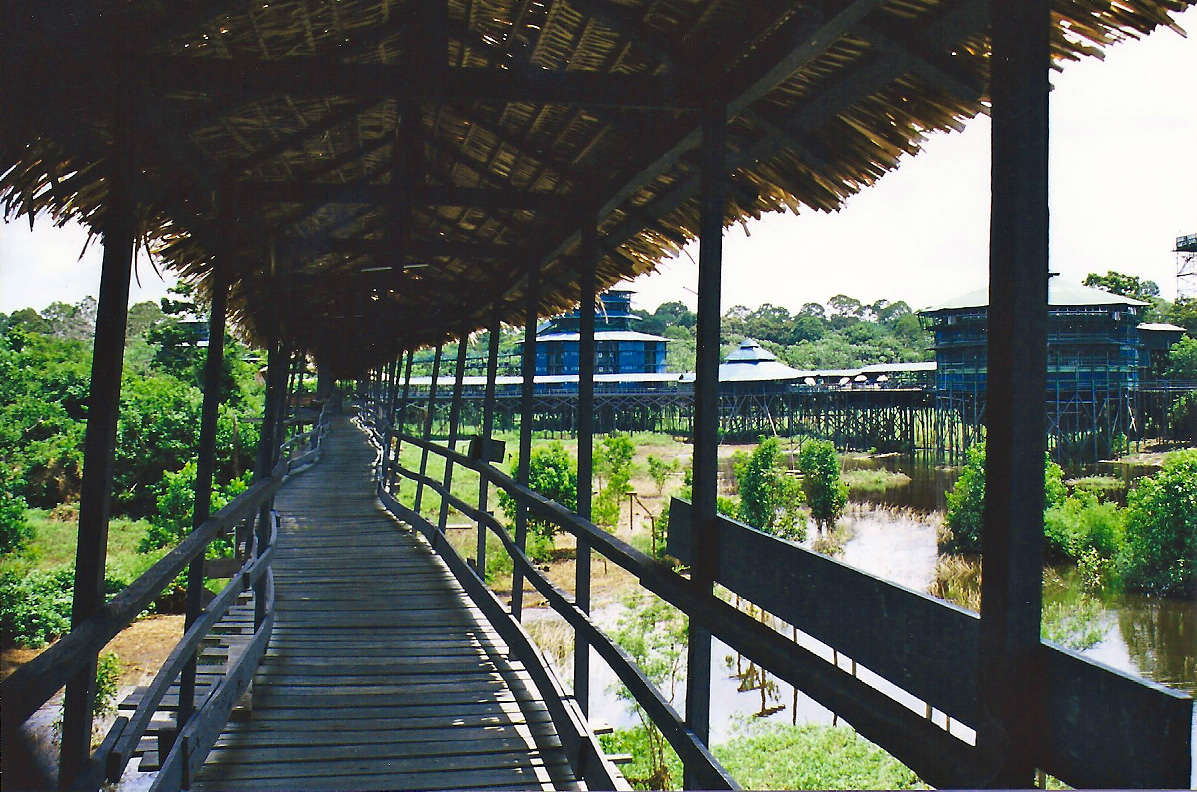
Catwalks, some as high as 70 feet, radiate out from the lodge for five miles into the forest and provide the visitor with the unique Amazon experience of walking among the treetops and visiting with the wildlife… including parrots and the far-too-tame monkeys.

Attractive walkways or catwalks extend out for some five miles from the Ariau Lodge providing visitors with an opportunity to wander through the tree tops of the Amazon rainforest.

This photo provides another view of the catwalks at the Ariau Lodge in Brazil.

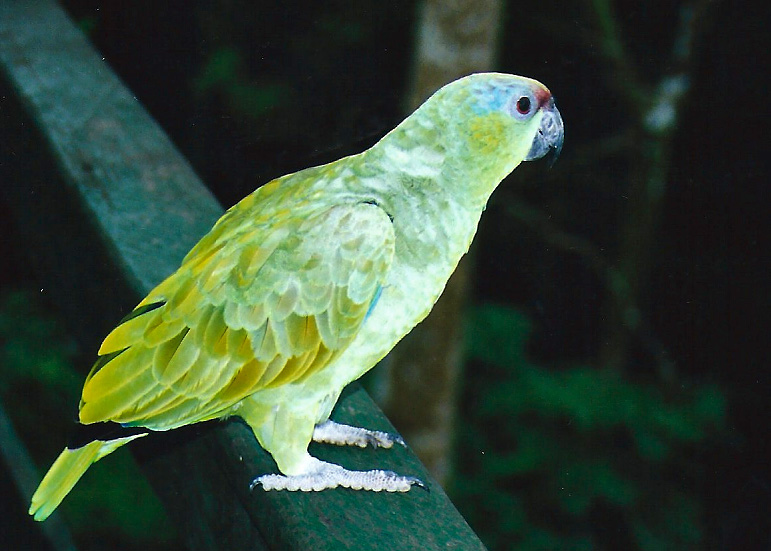
This brilliant green parrot greeted us on our walk at the Ariau Lodge.

Jacques Cousteau inspired building the Ariau in the mid 80s.  His statement to Dr. Francisco Bernardino quoted above led Bernardino to erect the hotel to accommodate the expected influx of ‘artists, scientists and politicians.’ Since then the lodge has accommodated a steady stream of famous visitors ranging from Prince Charles to Bill Gates. Peggy and I stayed in the “Jimmy Carter Room,” which was given its name after Carter slept there.

The Peripatetic Bone insisted on having his picture taken with the Carter sign and with a Brazilian mask.

The Peripatetic Bone rests on the Jimmy Carter sign.

A number of carved artworks are found at the Ariau Lodge. Bone is taking a nap in the mouth of this snake-tongue protruding from the mouth of a Brazilian mask.

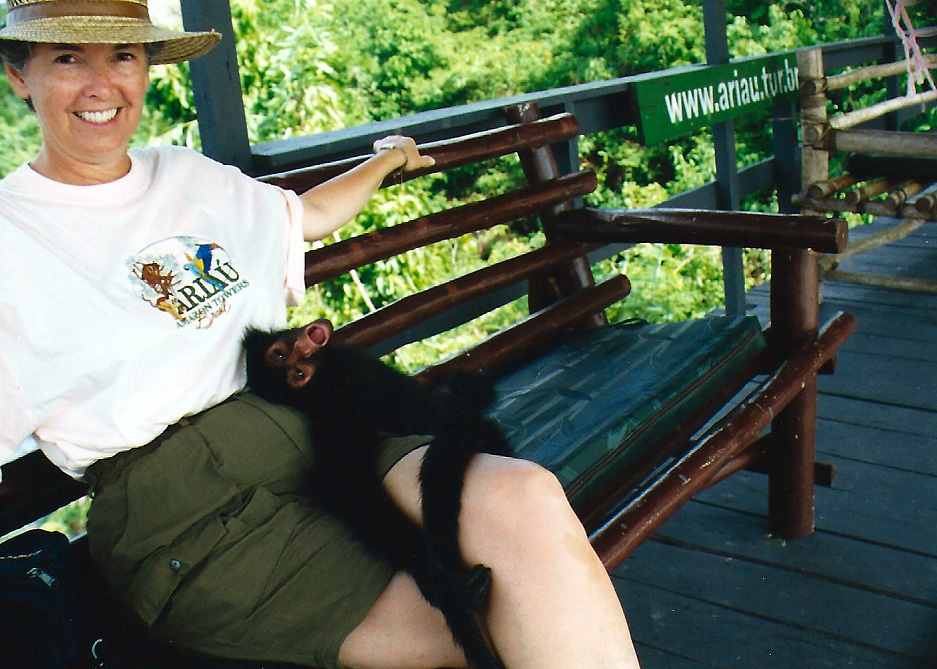
But back to the monkeys… Peggy’s want-to-be friend was a long-legged Spider Monkey. He joined us on the walkway and immediately wrapped one leg around her neck and looked up adoringly. He held on for a mile as we strolled along the catwalk. When we stopped, he immediately stretched out on her lap and made faces at me.

She only lost her long-legged furry friend when we returned to the lodge. That night she discovered the flea bites.

The Spider Monkey climbed up on Peggy, draped his arm/leg around her neck, and looked up adoringly.

The Spider Monkey joined us for our walk among the tree tops of the Amazon forest.

When Peggy sat down, her new best friend spread out on her lap and made faces at me.

This “wild” creature of the Amazonian Rainforest then proceeded to take a nap.

Fishing for Piranhas on the Amazon… The Passport Series

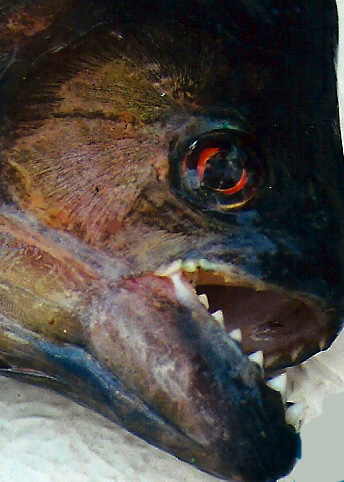
The piranha is indeed a fearsome creature.

Hollywood loves piranhas. They make great movies. Take one cow, throw her in the Amazon, and watch with horror as Bessie is reduced from a surprised moo to a pile of bones in mere minutes by a school of frenzied fish with big teeth. PETA does not approve of this activity.

“Today we are going fishing for piranhas,” the captain of our boat, the M/V Amazon Clipper informed us. “Watch your fingers.”

We were chugging up a tributary of a tributary of the Amazon River in Brazil and it was time to replenish the refrigerator.

We dutifully boarded the canoe and were issued hand lines with hooks and a ration of raw chicken. There were no cows or fishing poles. When we arrived at what the guide considered prime piranha water, we baited our hooks and threw them over the edge.

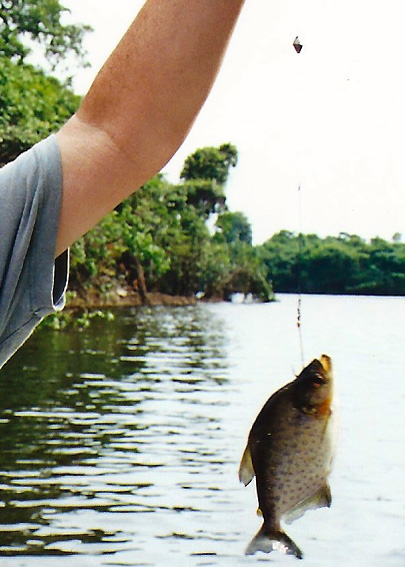
Bam! I got a hit… and a fight. My flesh-eating fish was not happy to have the tables turned. Ever so carefully I pulled him over the side of the boat and was greeted with the snapping jaws of death. My wife Peggy dutifully took a picture and our guide firmly grabbed the piranha and yanked out the hook.

Peggy took a photo of the piranha I caught. I was careful to hold it far away from me.

Fish are slippery characters however and mine slipped out of the guide’s hands, landed on the bottom of the boat, and immediately went looking for someone to eat.  Eight pairs of feet shot up into the air.

Eventually we got things under control and caught several more fish. That night we would feast off piranhas. But first, the itinerary said, we were supposed to go swimming. Why anyone would want to go swimming in piranha-infested water, I didn’t have a clue. The little buggers would be out for revenge.

“They don’t come in here,” the guide assured us when we reached a white, sandy beach. I looked around. It was all part of the same river. There were no signs warning the fish to stay out and there was no fence to keep them out. As far as I could tell the clear water and the white sand would make it easier for the piranhas to find toes.

There is always someone willing to test the waters and jump in feet first, though. Usually it’s Peggy. This time was no exception. I volunteered to take photos. She returned with toes intact.

Peggy went swimming in the Amazon, which was supposedly free of piranhas.

The piranhas were waiting for us at dinner, tastefully cooked. The jaws were on a separate platter, grinning up at us with dentist white teeth. In the age-old question of who eats whom, we had won, at least this time. The fish tasted, uh, fishy with a slight hint of chicken and something else. Was it cow or toe?

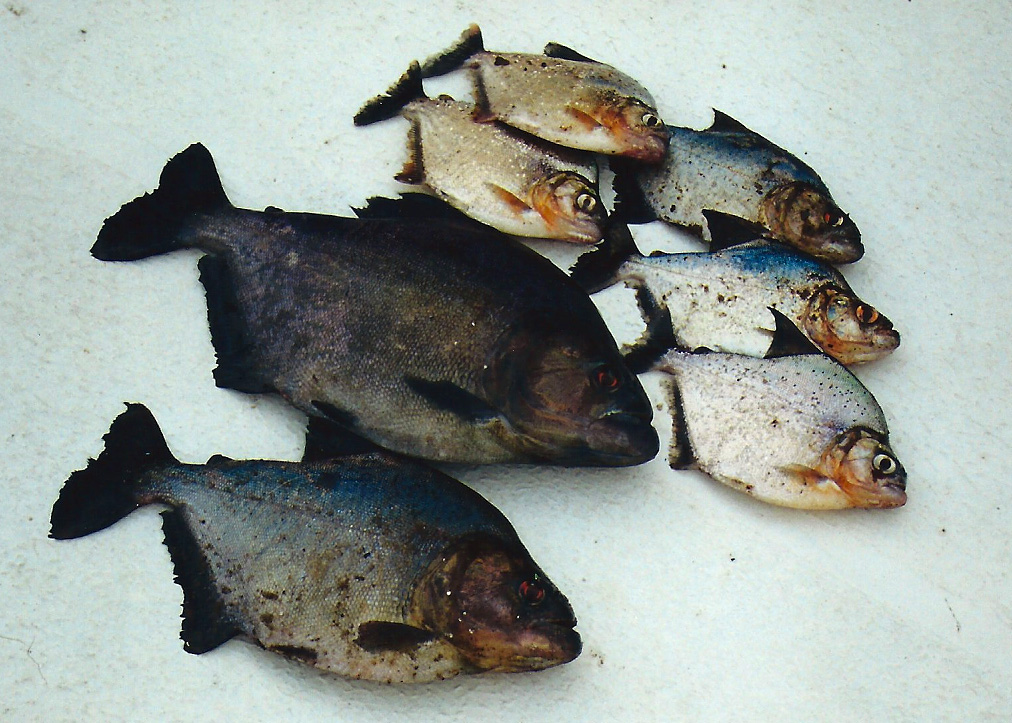
Our catch of piranha, ready to face the cook.

An Amazon Boa Went Slithering by… The Passport Series

Our boat, the Amazon Clipper, docked for the evening deep in the rainforest on a tributary of the Rio Negro River, Brazil.

Peggy and I sat on the upper deck of the M/V Amazon Clipper, sipped a cold beer and watched the Rio Negro River hurry along on its journey to the Amazon.

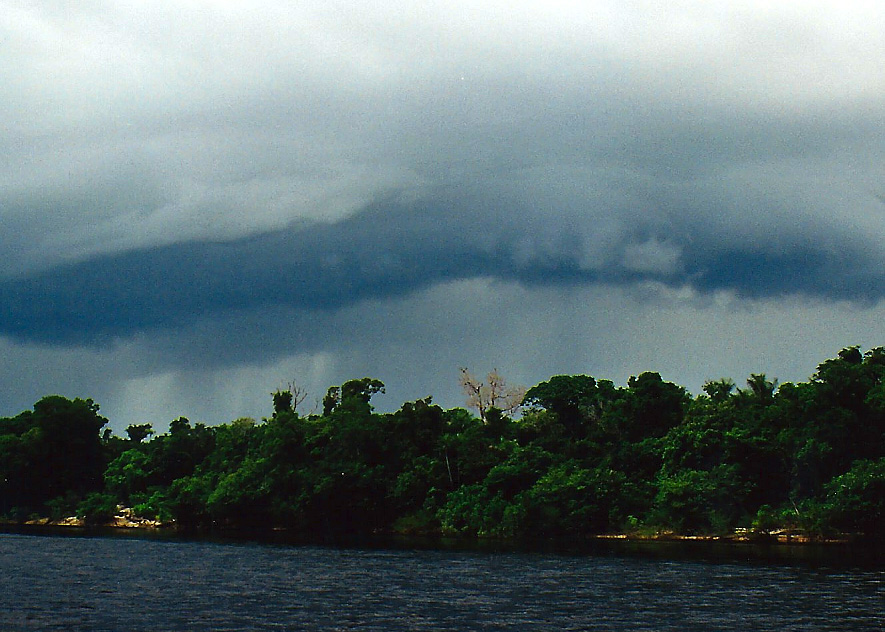
Dark clouds dumped buckets of rain on the forest and threatened our cocktail hour.  Thunder and lightning upped the ante. One thousand one, one thousand two, one thousand three… I counted to determine how close the lightning was in a ritual dating back to my childhood. Seven seconds equals a mile. When the flash and the boom arrive together, it’s time to worry. Lots.

Dark clouds and rain predicted a stormy cocktail hour in the Amazon rainforest.

Between watching the river and watching the storm, we scanned the rainforest for wildlife. A flock of parrots flew by heading for its evening roost. Our guide informed us that the dark blob we spotted hidden in the trees was a three-toed sloth, a creature famed for sleeping four fifths of the time and pooping once a week. He makes a rare trip to the ground to accomplish the latter and digs a hole with his short, stubby tail.

Peggy and I clinked our beer cans, toasted the sloth and toasted another adventure. Two days earlier we had been buried in work. An 18-hour day out of Sacramento California via Los Angeles and Sao Paulo had eventually deposited us at Manaus, Brazil in the heart of the Amazon. Now we were chugging up a tributary of the Amazon River on a small boat with six fellow passengers and a crew of three.

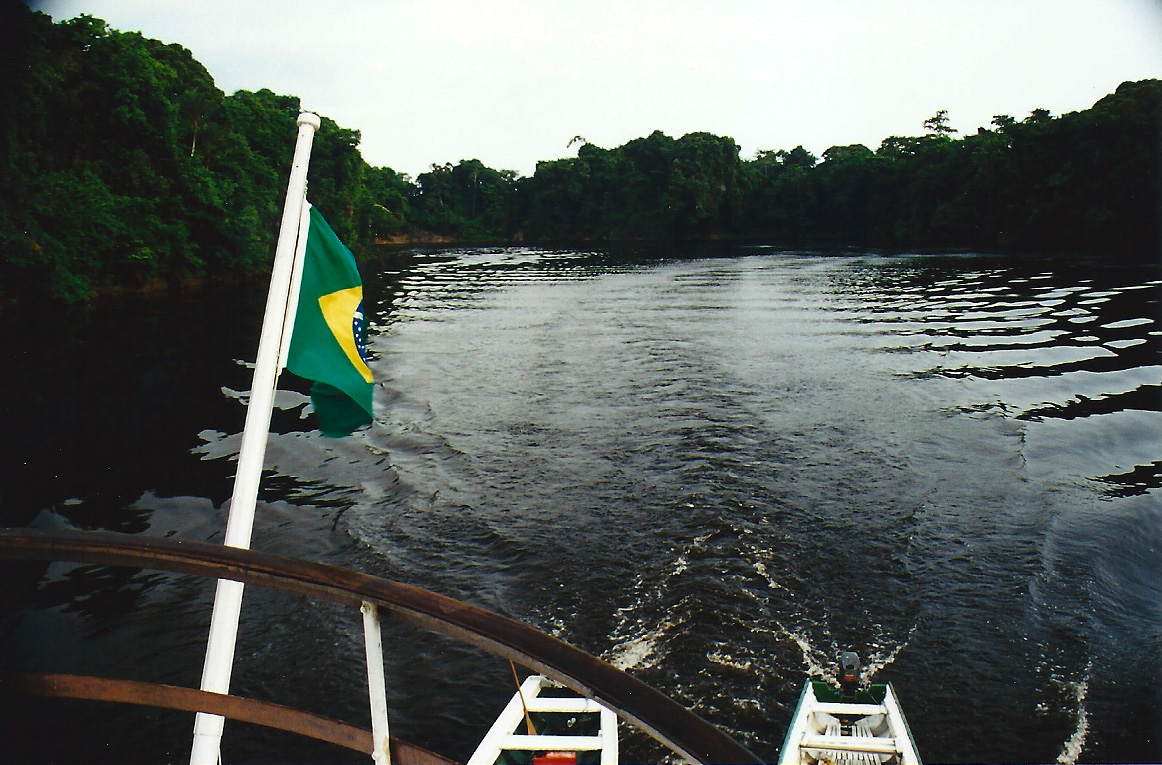
The Amazon Clipper chugs up the Pagodo River, a tributary of the Rio Negro. Our ‘canoes’ trail behind. The afternoon’s storm has passed by. Soon we will be experiencing the Amazon night.

The Amazon is a world of the BIG: big rivers, big forests, big storms and big snakes. We had met the river, forest and a storm during the afternoon. That evening we met one of the snakes. Our crew took us out in a large canoe to experience the Amazonian night. An eight-foot boa went slithering by us in the river and checked out our boat.

“It’s a baby,” the guide teased. Right. The boat came equipped with a large spotlight for peering into the jungle. Bright, shiny eyes peered back at us along the shore. They were Caiman, small alligator like reptiles. The crew caught one for us to examine more closely back on the Clipper and then turned off the spotlight.

It was don’t see your hands dark. Something plopped in the water. A creature went crashing off through the brush. It wasn’t particularly scary, the guides are expected to return their guests unharmed, but it was interesting, especially the sounds our imaginations turned into bone crushing snakes and ferocious jaguars.

Back on the deck of the Clipper, the Caiman was turned loose. It dutifully whipped its head around and snapped at us before escaping back to the river.

Peggy and I retired to our small room with its bunk beds and porthole window. High humidity and heat had us sleeping on top of the covers with the porthole window open and hopes of no nighttime visitors. Fortunately our bodies had been pumped full of protection to foil disease carrying mosquitoes and other tropical maladies.

We slept fitfully and dreamed of our next adventure, fishing for the legendary sharp toothed Piranha.

This Amazon piranha was hardly a dream. I caught him on a hand-line. Check out the teeth.

The Missing Turtles of Tortuga… The Passport Series

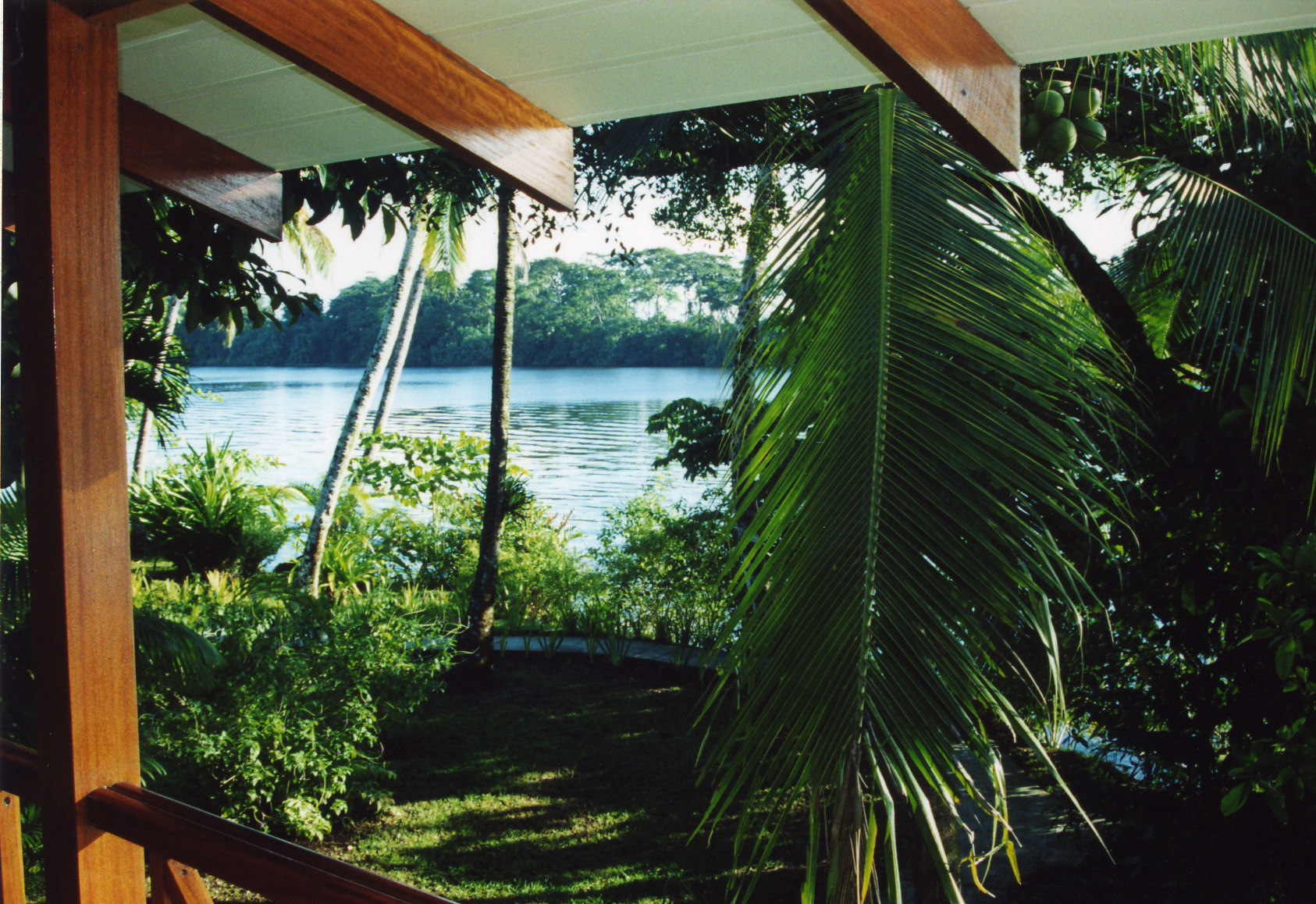
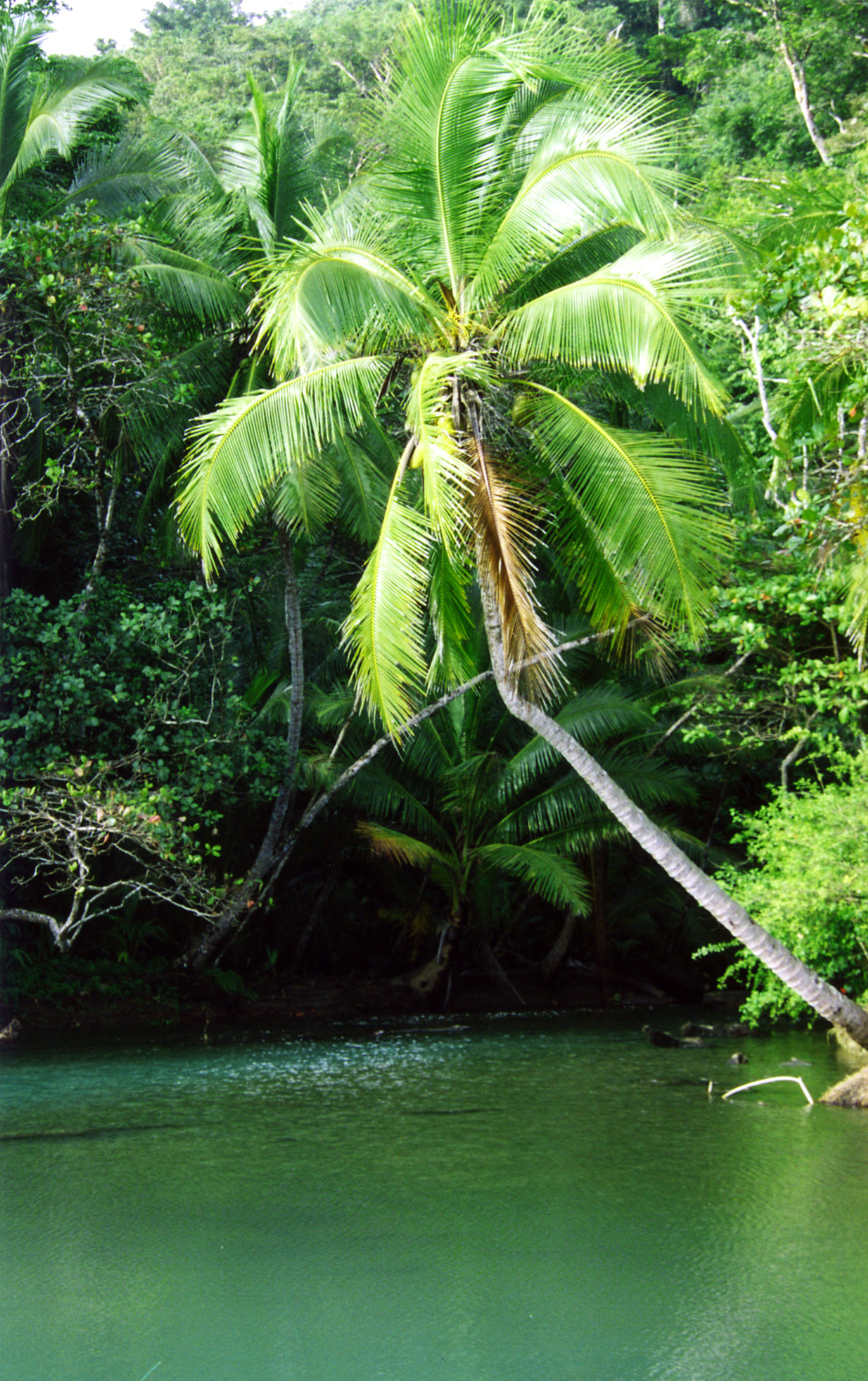
The view from our balcony at Tortuga Lodge on the edge of Tortuguero National Park on the Caribbean side of Costa Rica.

We missed seeing the giant 300 pound Green Sea Turtles and their prodigious effort of laying 80-100 eggs on our trip to Tortuga Lodge in Costa Rica. The large females go into a trance during the process. It sounds like a good idea when you are having 100 babies. Once mom has dug her hole in the sand and settled in, visitors can walk up and watch the process.

Seven weeks later the eggs hatch and the baby turtles instinctively scurry for the ocean. They’re tasty. Scurrying is good. On shore, sea gulls and crabs think feast. Jaguars also hang out in hopes of crunching down their share.

The ocean is hardly safer. Last fall I watched a flock of Brown Pelicans off of the coast of Puerto Vallarta discover a swarm of baby turtles heading out to sea. It was like Armageddon.

Of the hundred or so babies who hatch, one may be lucky enough to make it to adulthood… not good odds. If you are one of the lucky ones, however, you can expect to survive for 80 years. Your only enemies are men and sharks. Of course that’s enough. By the mid 1900s Green Sea Turtles were on the edge of extinction. Sharks were not the problem.

People found the meat tasty and behaved like the Pelicans when the turtles came ashore.  Possibly even worse, they believed the eggs had an aphrodisiac quality. They killed the mamas and dug up the babies.

Tortuguero National Park on the northern Caribbean Coast of Costa Rica was established in 1970 as a sanctuary for the turtles. Tortuga Lodge sits on the edge of the park and offers a “gourmet dining opportunity” to view egg-laying mamas. I checked to make sure turtle soup wasn’t on the menu. Dinner by candlelight in the wilderness and the private viewing sounded good but I was wary of the last sentence, “You might get back to the lodge around 11 pm.”

What was with the might? It implies there is a might not. Could the jaguars somehow be involved? “Let’s see. I can eat this 2-ounce turtle or that 200-pound person. Hmmm.”

Anyhow, we arrived in late November, well past the egg-laying season. Turtles and jaguars were not on our agenda. Instead, we watched giant iguanas climb trees during the day and listened to howler monkeys howl at night. We ventured out on a tour of the regions dark, murky streams and then took out canoes on our own. Crocodiles lurked along the banks, bright butterflies went flitting by, and a Jesus Christ Lizard walked across the water.

Tortuga Lodge, like Monteverde Lodge, is owned and operated by Costa Rica Expeditions. Rooms were quite attractive, the food excellent and the guides knowledgeable. Getting there from San Jose involved travel by both van and boat. We flew back from a small airstrip located near the lodge.

Crocodiles lurk along the edges of canals located in Tortuguero National Park.

The eye of a Cayman.

We found an unusual beetle crawling across the lawn at Tortuga Lodge.

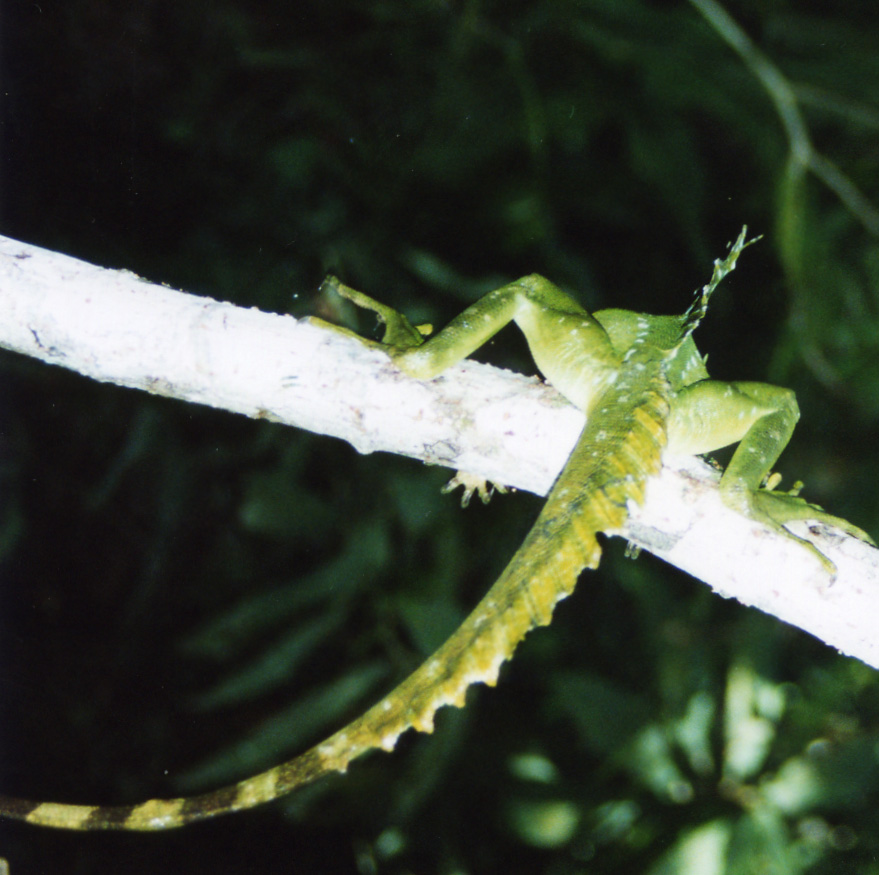
This lizard provided a colorful rear end view.

Monteverde Cloud Forest, Costa Rica… The Passport Series

The Monteverde Cloud Forest Reserve in Costa Rica is filled with tall trees and massive vines. These Strangler Vines once surrounded a tree. As their name implies, they strangled their host. Now only the vines remain.

The drive from San Jose, the Capital of Costa Rica, to the Monteverde takes around 3½ hours. Our guide and driver from Costa Rica Expeditions picked us up at our hotel. He was funny and knowledgeable, which made the journey pass quickly. We learned and laughed a lot.

Monteverde’s claim to fame is its cloud forest where mists hang out in mythical proportions. Luxuriant plant growth and abundant animal life have turned the area into a major tourist destination as well as a center for ecological study.

The area has an interesting history dating back to the 1950s when a group of Quakers and other pacifists out of Alabama arrived. They had moved from the US to avoid being drafted into the Korean War. Eventually a portion of the land they farmed became the base for Monteverde Cloud Forest Reserve.

We climbed some 4000 feet to reach the Montverde Lodge, the hotel where we were staying. The lodge perches on the edge of the rainforest and its rooms provide a front row seat to whatever action is taking place. I kept expecting a Howler Monkey to appear on our window ledge. The Lodge also features attractive gardens.

Leaving the valley floor, we climbed over 4000 feet up into Costa Rica’s central mountains to reach Monteverde. This photo is looking back over the way we came.

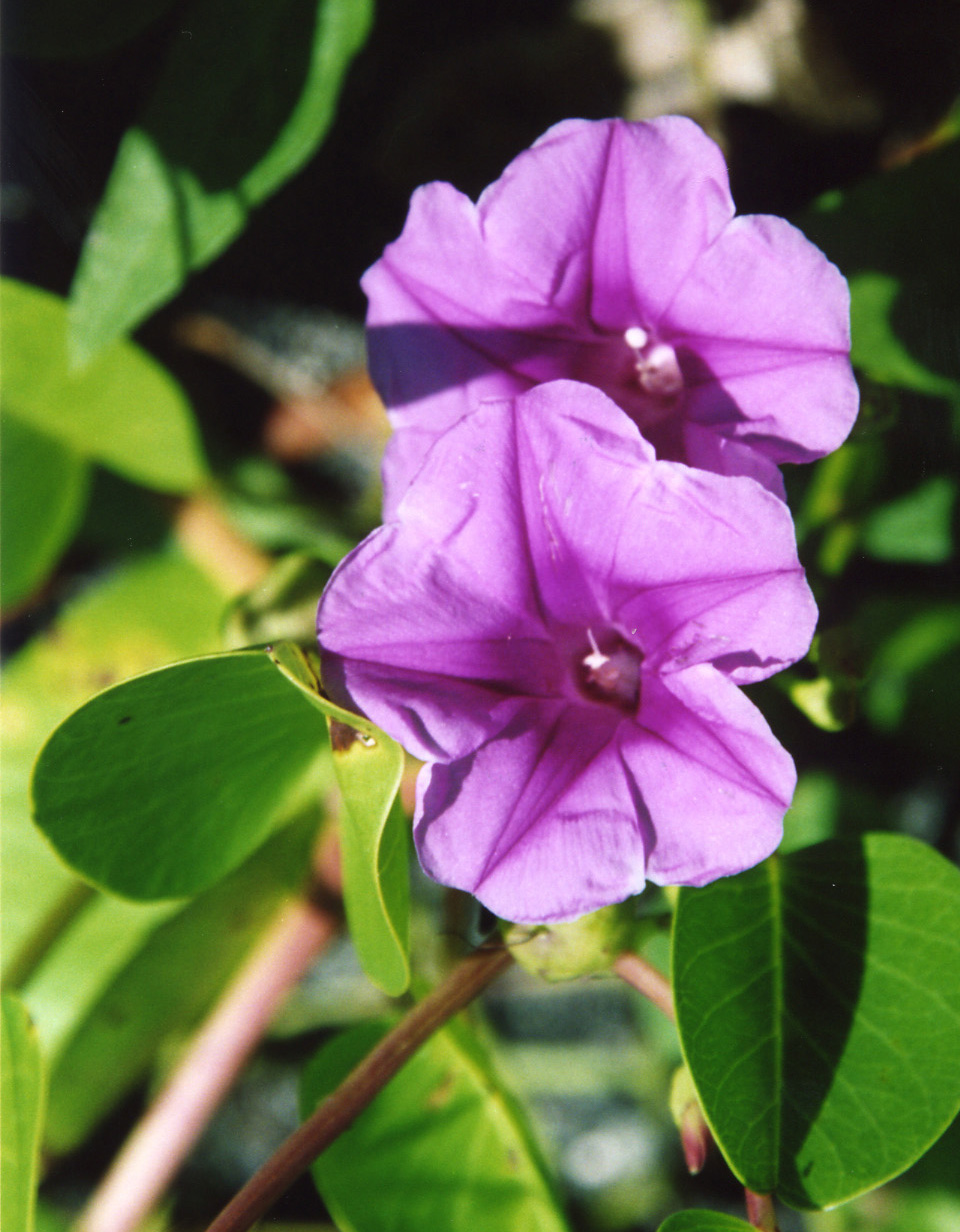
The Monteverde Lodge features a flower filled garden including this beauty.

I also found this pair of flowers at the Monteverde Lodge quite attractive.

This fern at the lodge.was particularly interesting. it made me think of gears within gears.

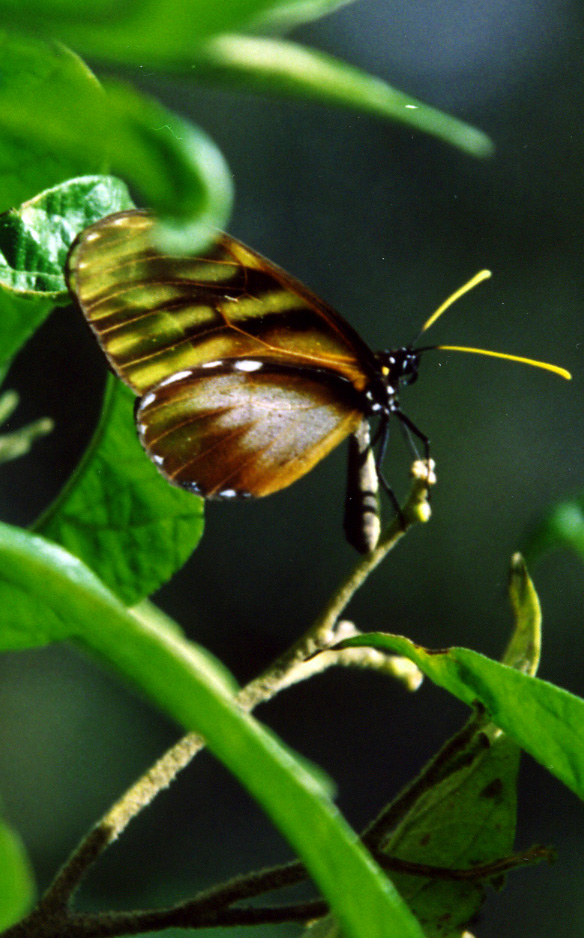
This butterfly we found at the Monteverde Lodge is a member of the Clearwing Family.

Our objective was to explore the rainforest, however. We went on several hikes including one at night and another that took us to a platform high in the forest canopy. The pitch-black night tour was quite interesting, especially when we turned our flashlights off.

On one of our hikes, we climbed to a platform high in the canopy of the Monteverde Cloud Forest. I think Peggy is smiling because we made it to the top.

This is a view of the Monteverde Cloud Forest looking down from the platform we climbed up to.

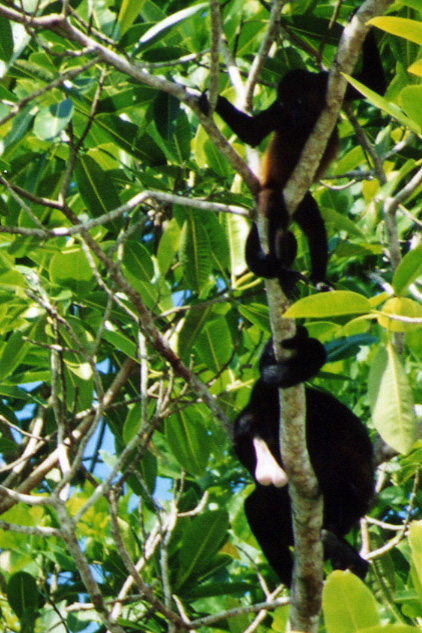
We spotted a pair of Howler Monkeys up in the trees. The one on top is all limbs and tail. The lower Howler looks like he is gnawing on a thigh bone… Hmmm.

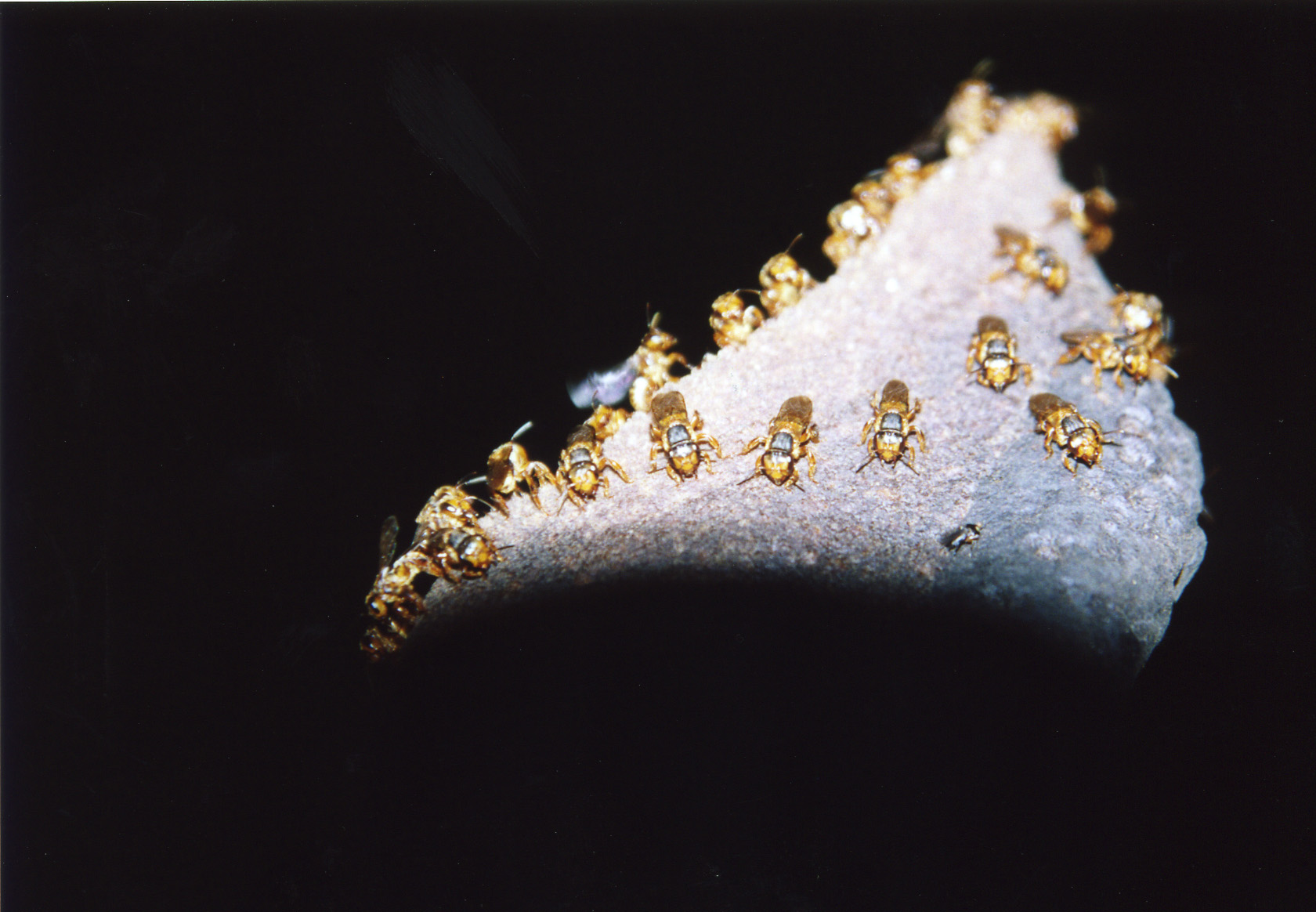
We came across this strange army of insects about to take flight on our night walk. The look ant-like but my guess is they are termites because of their thick bodies.

This colorful fungus was another denizen of the Monteverde Cloud Forest we came across on our night walk.

Corcovado National Park, Costa Rica… The Passport Series

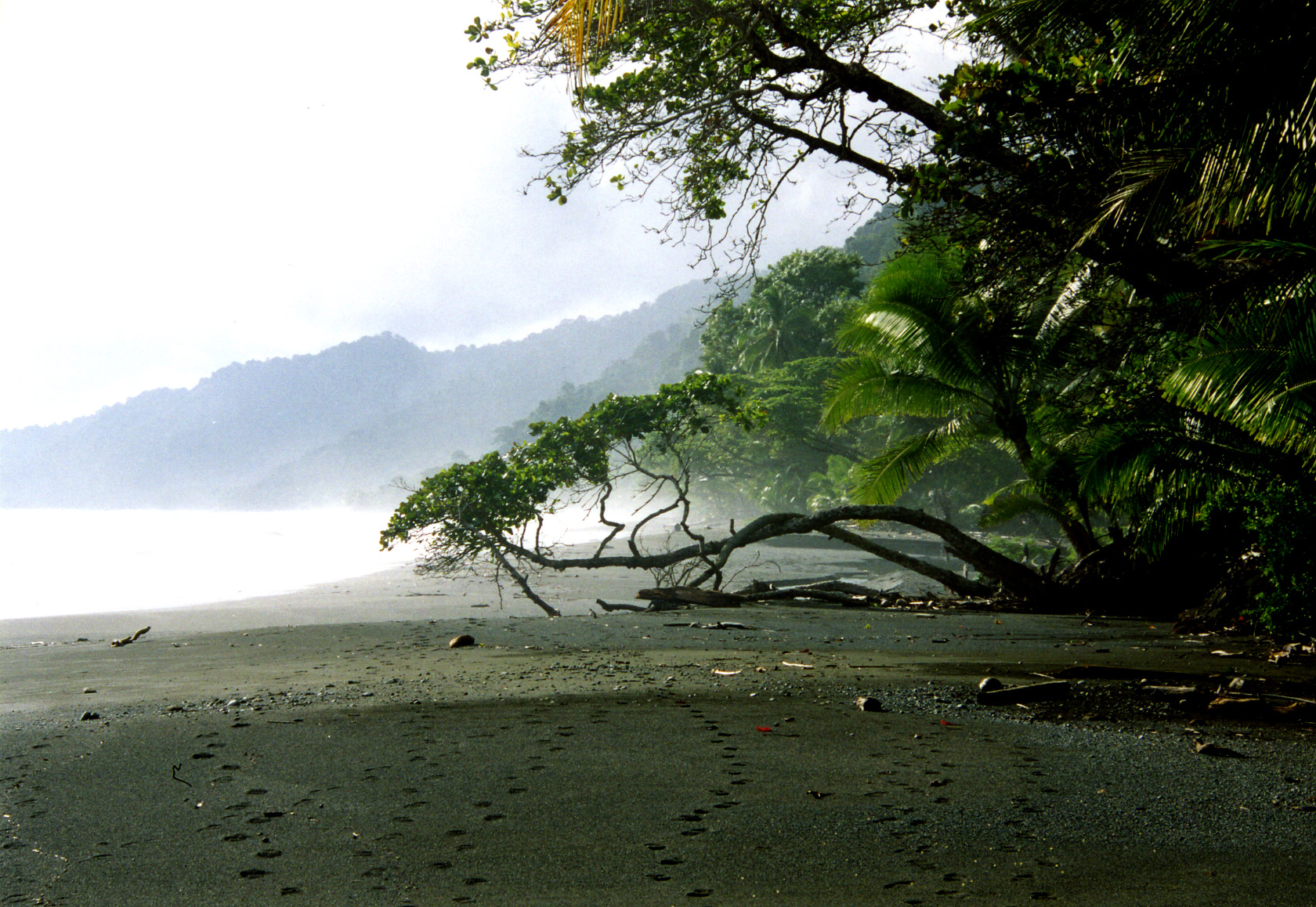
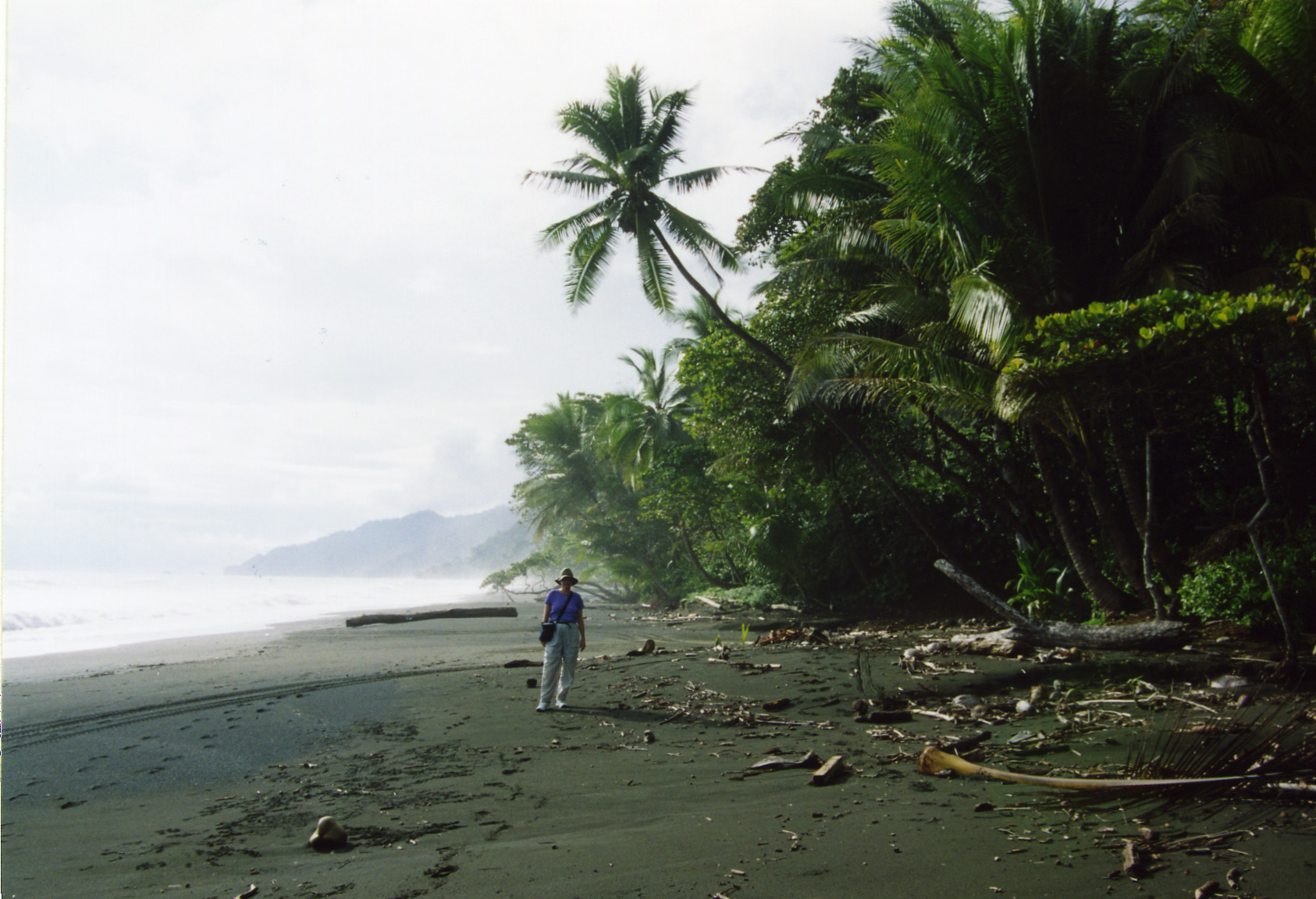
Miles and miles of scenic Pacific Ocean beach greet the visitor to Corcovado National Park in Costa Rica.

Vacation was two weeks away and I hadn’t made any plans. “Let’s go to Costa Rica,” I suggested to my wife, Peggy. “Why not,” she responded. Peggy is used to my procrastinating ways. Sometimes they even pay off.

I jumped on-line and lucked out. Costa Rica Expeditions had tours to fill at last-minute bargain basement prices. We could go to three great places for a cost we would normally pay for one. The company, by the way, did an excellent job.

Our itinerary included the Tortuga Lodge on the Atlantic Coast, Monteverde Lodge in Costa Rica’s central highlands, and La Leona Lodge on the edge of Corcovado National Park on the Pacific Coast. It was an ecotourist’s dream.

Today I am going to feature Corcovado, an area that National Geographic has described as “the most biological intense place on earth in terms of biodiversity.” The National Park is located on the Osa Peninsula in southwest Costa Rica. It teems with life including some 375 species of birds, 125 species of mammals, 500 species of trees and over 10,000 species of insects. The insects win.

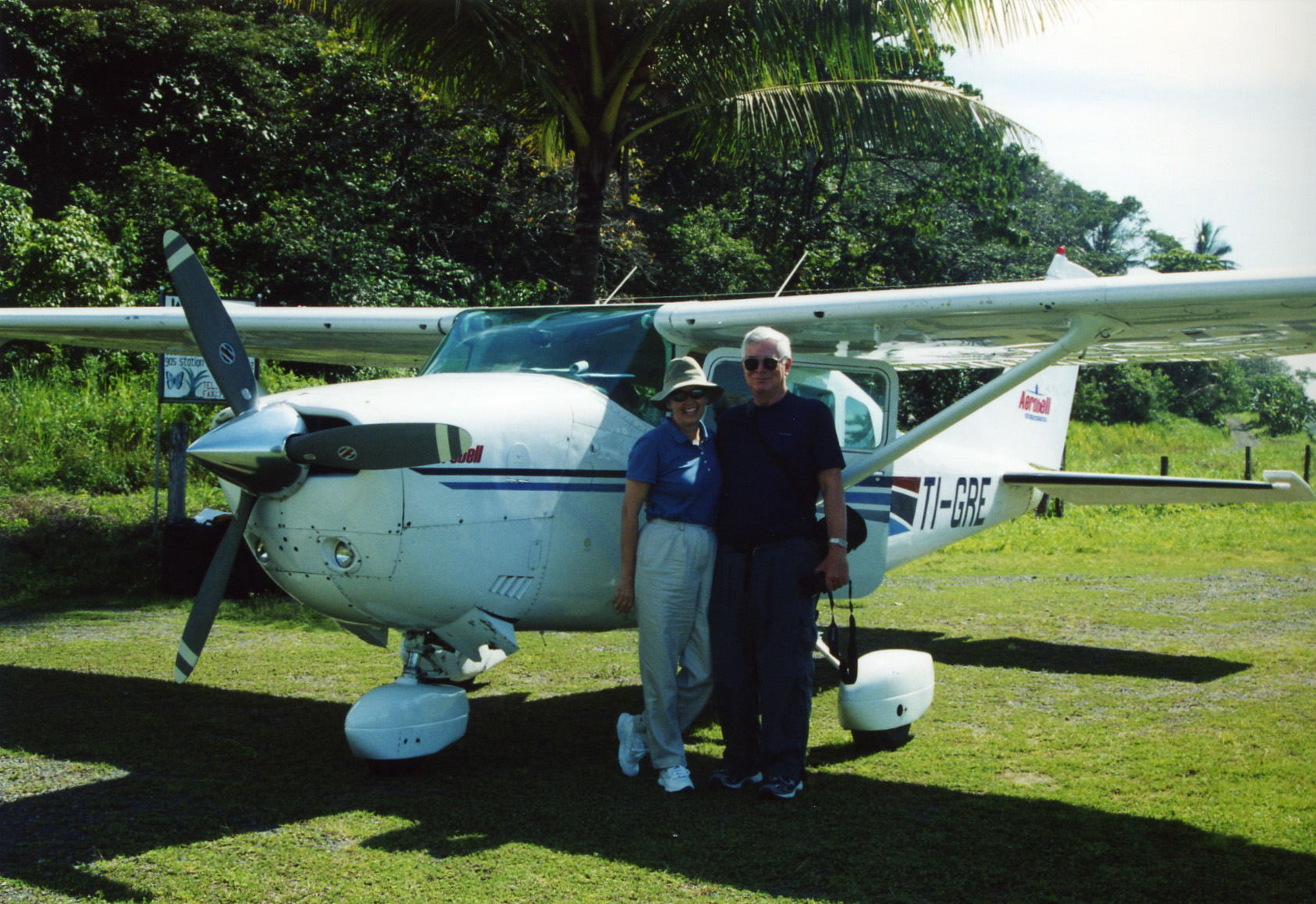
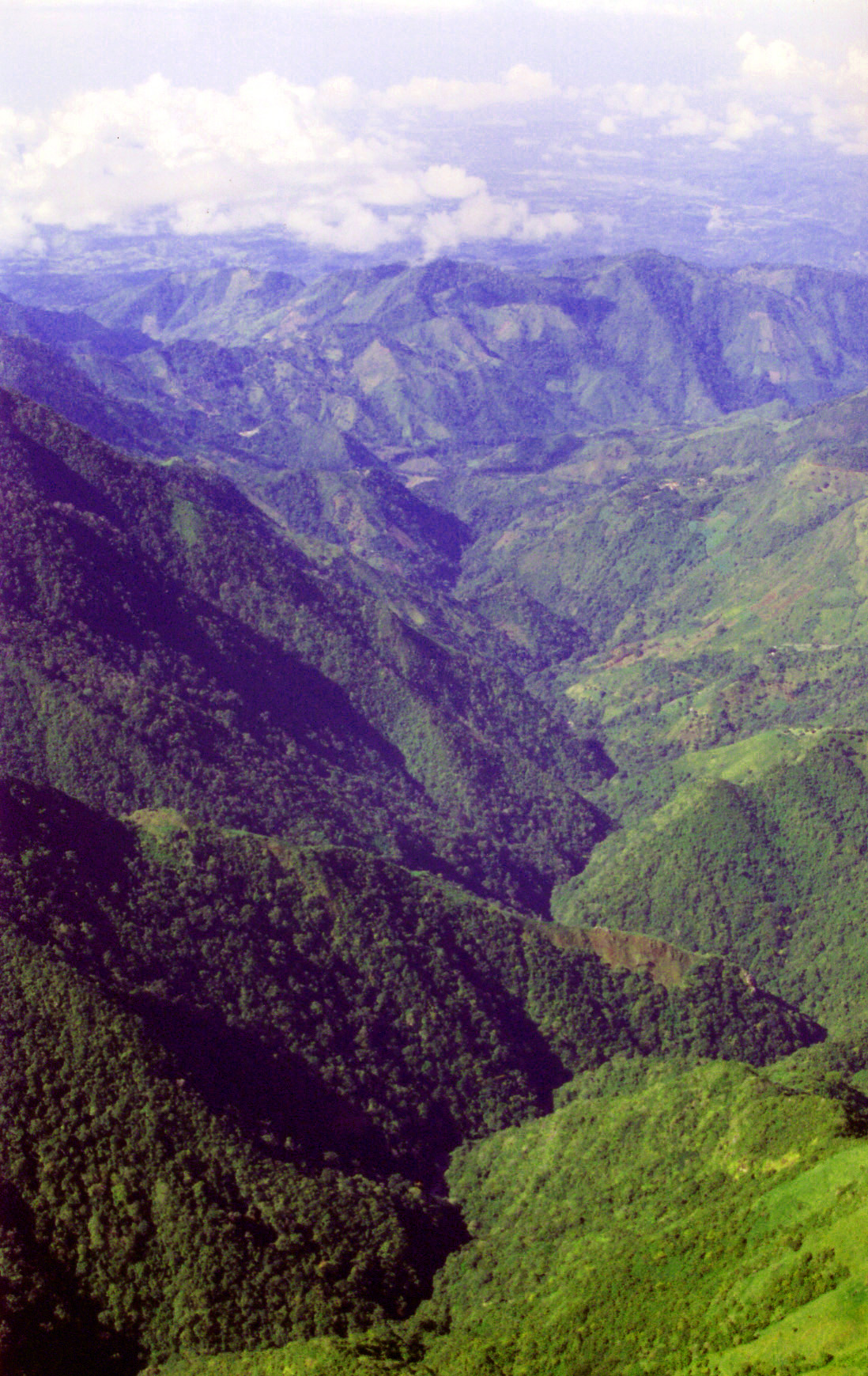
We flew down from San Jose, Costa Rica’s capital, in a small 6-seater prop plane that skimmed over the country’s tropical-green mountains, jungles and rivers to a landing strip next to the small community of Carate. A one-horse cart was waiting to carry our bags to the La Leona Lodge. Guests are expected to make the 45-minute walk on their own. There are no roads. We strolled down the beach, waded in the ocean and enjoyed the scenery.

Peggy, I and the plane we flew in to Corcovado National Park.

The plane skimmed over Costa Rica’s tropical-green mountains.

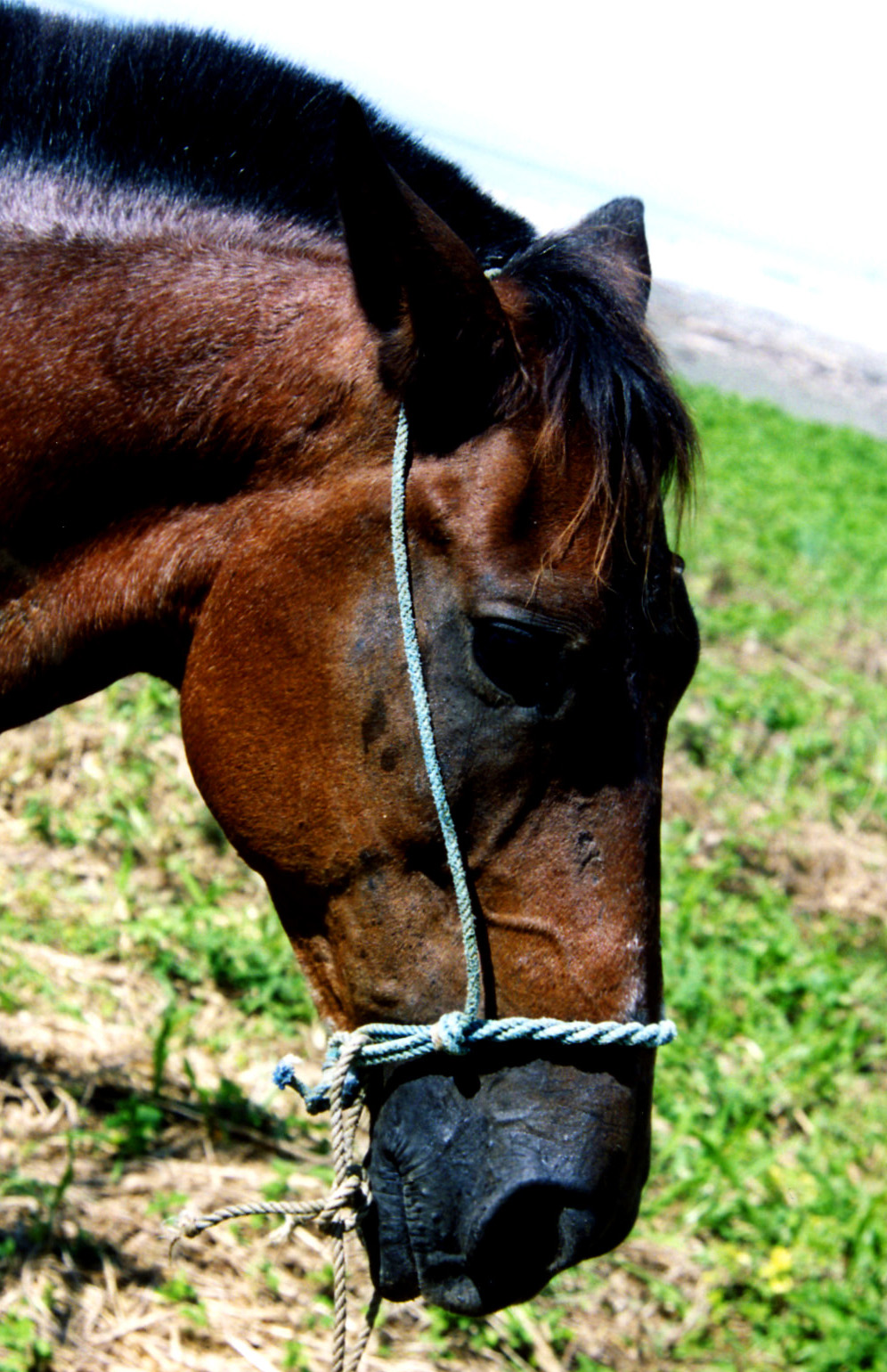
A one-horse cart waited to carry our luggage. I can’t say the horse was particularly excited about the prospect.

La Leona features comfortable tent camping, great meals, miles of beaches and a fascinating tropical rainforest. Each tent has a porch facing the Pacific Ocean. Waves lull you to sleep at night and at least a dozen of the regions 375 species of birds wake you each morning.

Our tent cabin at La Leona Lodge, Corcovado.

We spent our days hiking along the coast with detours into the rainforest. We also took advantage of the hammocks the Lodge has strung under the palm trees next to the beach. In the evening we would sit on our porch and watch the waves roll in or enjoy a cold beer at the Lodges open-air bar.

Peggy and I spent hours exploring the deserted beaches of Corcovado.

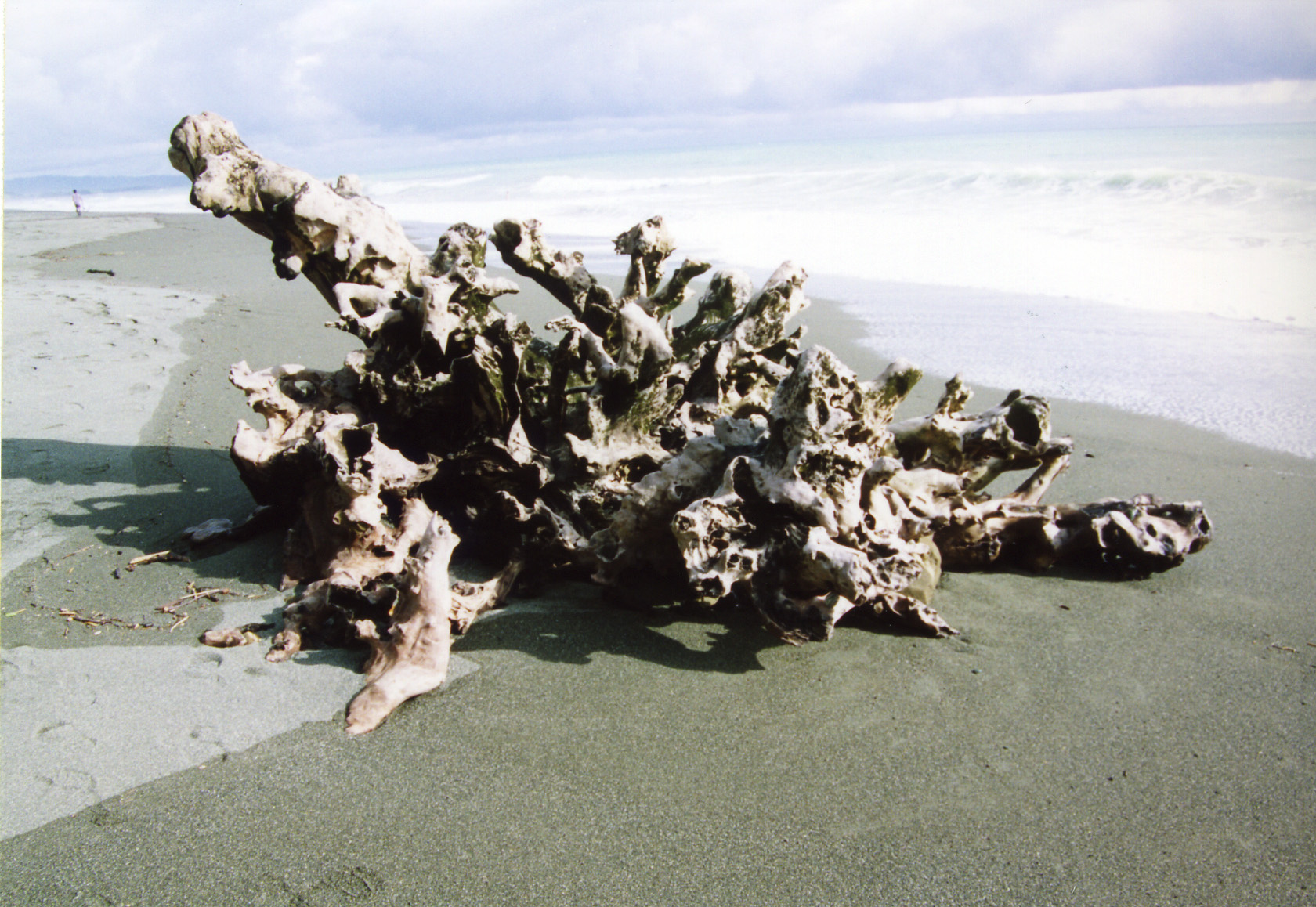
At one point we came across an impressive bit of driftwood.

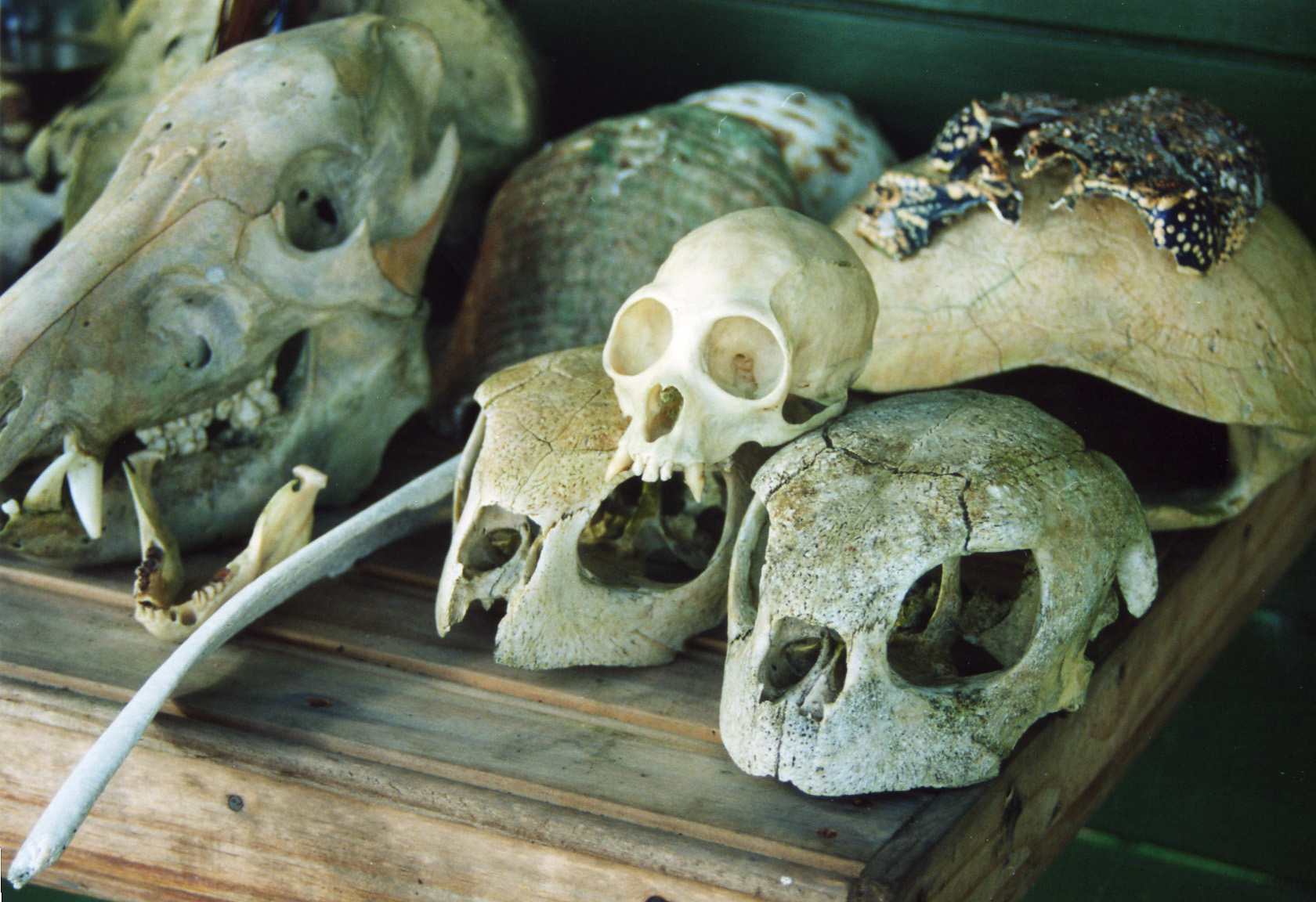
A Corcovado National Park ranger had gathered skulls of several park animals. A jaguar is on the left. The small human-like skull comes from a monkey. I believe the large smooth skulls are from dolphins… either that or aliens.

One time a troop of monkeys came swinging in through the trees and entertained us. Another time a boa constrictor went slithering by. All too soon, it was time to pack up our bags for the horse cart and walk back to the landing strip. We will return to La Leona Lodge and Corcovado National Park.

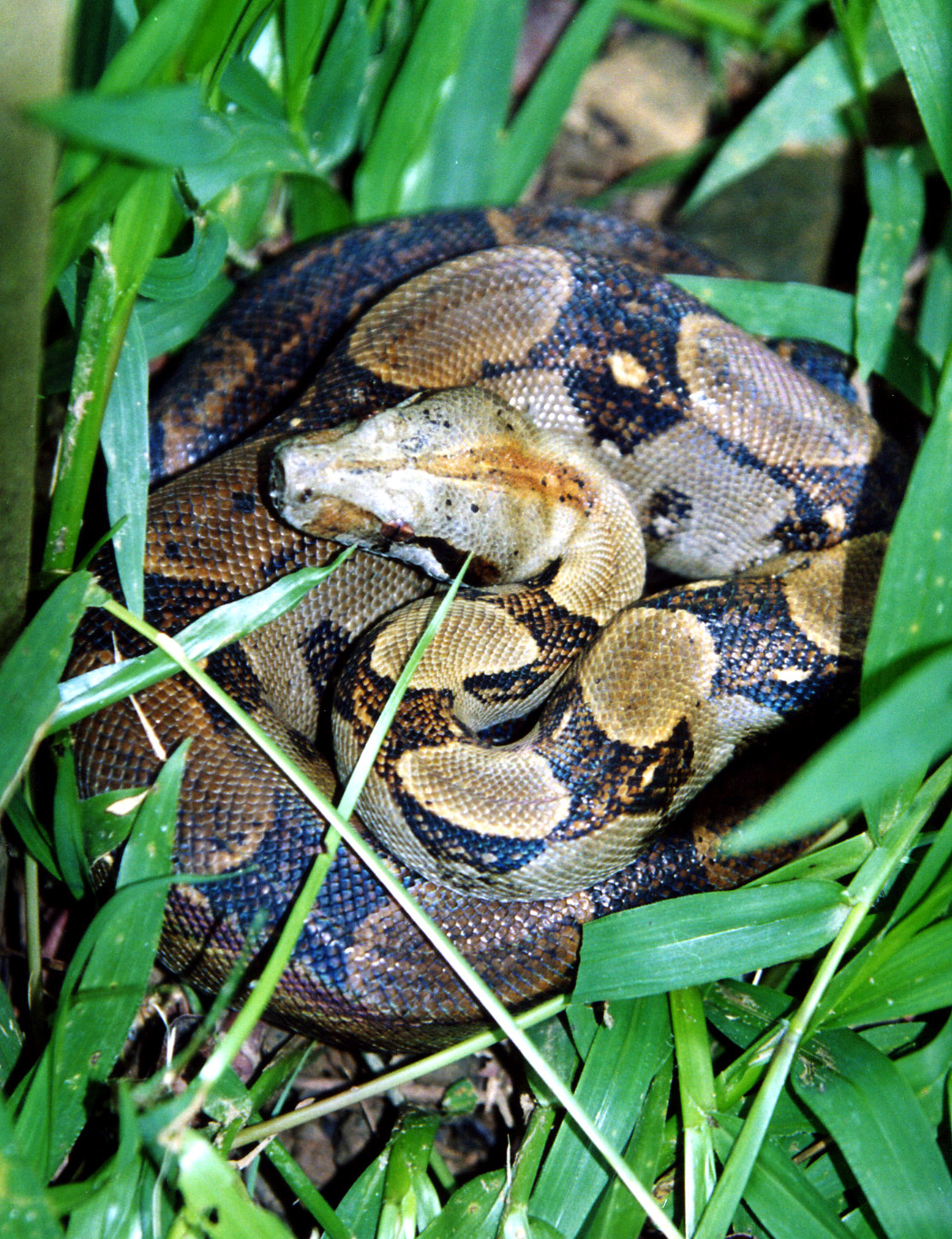
A boa came slithering through camp and then coiled up when I tried to take its photo. I kept plopping down about a foot in front of him trying to get an action shot and he became irritated.

A pair of Coatis were more amenable to having their photo taken. I love the way their tails appear to be entwined. The tail of a third Coati can also be seen.

A final reason why you should add Corcovado National Park in Costa Rica to your bucket list.

Beautiful Victoria BC… The Vancouver Island Adventure

Anybody who has ever been to Victoria BC on Vancouver Island comments about the grand Empress Hotel overlooking the Inner Harbor.

The sun came out for us in Victoria. The city wanted to show off its treasures: its beautiful harbor, the grand old Empress Hotel, Parliament Building, flowers, interesting architecture, British flavor and First Nation art.

I’ve been to British Columbia’s Capitol several times over the years and am always eager to come back. This time, Peggy and I were able to share our experience with our friends Ken and Leslie Lake from California. It was the last day of our Vancouver Island adventure and an appropriate way to end the trip.

Catching the Black Ball Ferry back to Port Angeles limited our time so we focused on the Inner Harbor. I will let the photographs that Peggy and I took speak for our experience.

There are those who say Victoria BC is more British than Britain. To check out the theory, we visited the Sticky Wicket Pub for a pint, or two. Cricket, anyone?


The architecture of this Victoria BC building reminded me of London.


Two strange-looking trees dominated the grounds in front of the Empress Hotel. I thought they looked like droopy dogs.


The atrium of Victoria Conference Center, located behind the Empress Hotel (and connected to it), is definitely worth a visit.


Close up of Victoria Conference Center totem pole. Frog legs for dinner...


Large First Nation mask-like sculpture in Victoria Conference Center, Victoria BC. Peggy considered it her favorite among the masks we saw on Vancouver Island.


One of my all time favorite memories of Victoria and Vancouver Island is of flowers and magnificent gardens. We were a little early this year and we didn't make it to Butchart Gardens so these perky fellows will have to represent the flowers of Victoria.


Like in many historic communities, carriage rides are offered as a way to tour the city. I like the matched black horse, black carriage, and black clothes.


Parliament Building. Victoria is the capital of British Columbia.


Victoria BC's unique art-deco visitor center was once a gas station. It gives new meaning to the word recycling.


Yachts, sport fishing boats, and sail boats rest on the blue water of Victoria's Inner Harbor.


I can't resist putting in a final First Nation totem pole as I wrap up our Vancouver Island adventure. This guy rests on the edge of Inner Harbor and is surrounded by flowers, a suggestion that spring is finally arriving.

Leslie and Peggy hold hands with a bear dressed up as a Mountie. I grew up listening to Sergeant Preston of the RCMP on the radio. It was my introduction to Canada. Sergeant Preston and his faithful dog, King, always caught the bad guy. "On King, on you huskies!"


Port Alberni, a Seaport in the Middle of an Island… The Vancouver Island Adventure

Serious fishing boats are a reminder that the town of Port Alberni located in the middle of Vancouver Island, British Columbia is connected to the Pacific Ocean via Alberni Sound.

It felt strange to find a seaport in the middle of Vancouver Island. Our original goal had been to visit the Pacific Rim National Park but time and weather discouraged the trip. So we stopped half way at Port Alberni.

The town has a different feel to it than the Vancouver Island BC communities we visited on the east coast, more down to earth and less resort like. Saw and pulp mills once dominated the city’s economy but today the timber industry prefers to ship its logs off to China.

The good news here is that with the demise of the pulp mill the salmon returned and today, Port Alberni is the center of a major sports fishing industry. Like Campbell River, it bills itself the ‘Salmon Capitol of the World.” I suspect there are some interesting politics at work here.

The surrounding mountains, lakes and wilderness have also made the Alberni Valley a growing center of ecotourism.

We stopped at the visitor’s bureau to pick up tips on what we should see. And here it is time for an editorial comment. Canada’s neighbor to the south could really learn something from British Columbia about the promotion of tourism. Not only do most communities have information centers, they are normally very attractive, staffed with friendly, knowledgeable staff, and filled with information.

British Columbia and its communities do an excellent job or providing attractive, information packed, visitor bureaus. This bear welcomes visitors to Port Alberni BC.

These doors into the Port Alberni Visitor's Center feature a First Nation theme and are another example of how attractive and welcoming the centers are. The US could learn a lesson from BC and Canada about the promotion of tourism.

“You have to visit Harbor Quay,” was the recommendation for the short time we had. So we did. The Quay provided a beautiful view of the Alberni Inlet that makes its way out to the Pacific Ocean and provides Port Alberni with its seaport status. The presence of fishing boats reminded us of another major Vancouver Island industry.

After lunch, Peggy and Ken took advantage of a carved Thunderbird and eagle for photo ops. We visited small shops and downed some of the best cake donuts we’ve ever eaten. It was then time to head back to Parksville. Port Alberni and the Alberni Valley definitely deserved more time.

Alberni Sound leads out to the Pacific Ocean. Clouds and rain limited our view.


My friend Ken Lake bravely sits beneath the grasping talons of a plunging eagle at Port Alberni.


Peggy prefers to play peekaboo from beneath the wings and all-seeing eyes of a First Nation Thunderbird. The Thunderbird makes thunder by flapping his wings together while the eyes shoot out lightning.