A Wonderful, Whacky Pelican… Puerto Vallarta

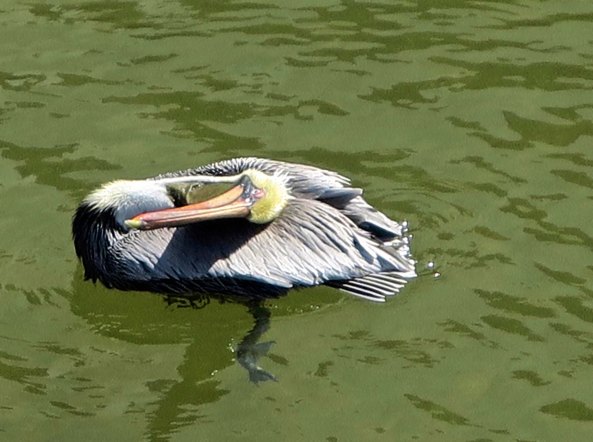
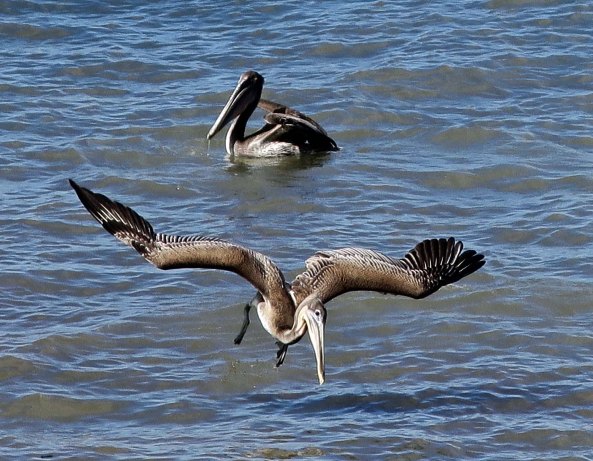
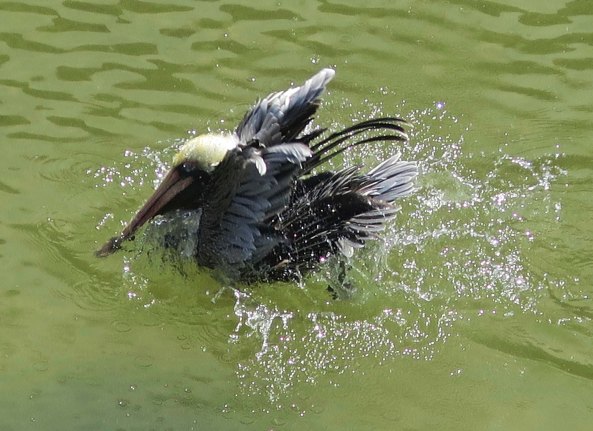
I’ve spent a lot of time watching and photographing pelicans. Their committee-put-together look makes them a favorite of mine. But I have never seen one do this. It delighted me. I think it was trying to scare up a fish. The majority of brown pelicans make their living by diving from the air for dinner. This fellow may have been a bit young and small for the big time.

The Rio Cuale sits in the heart of Puerto Vallarta. It’s a delightful place with a long island in the middle (Isla Cuale) that includes good restaurants, fun shops, and some very interesting art. The island got its start in the 1960s as an airstrip for rich Hollywood types such as Elizabeth Taylor, Richard Burton and John Huston. 

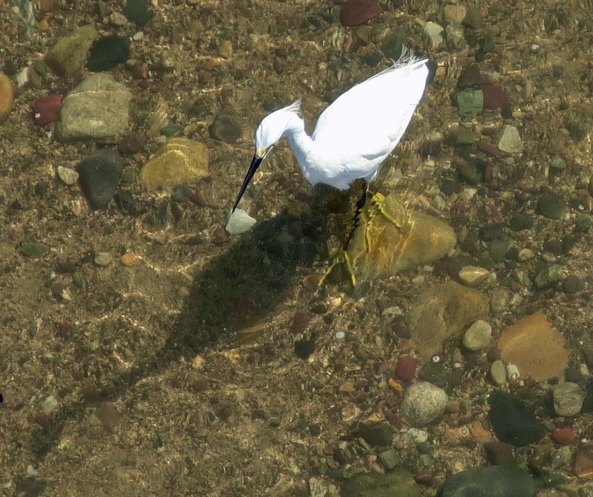
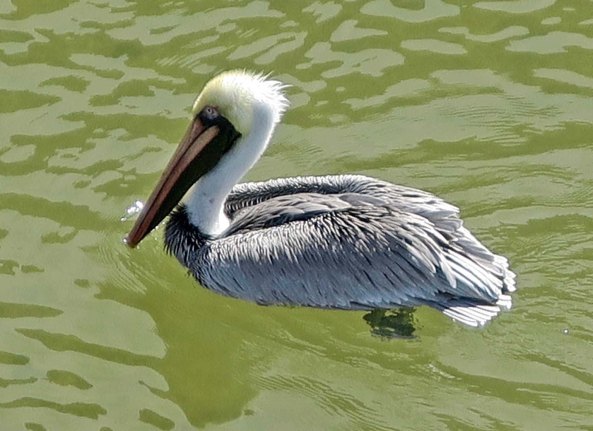
My favorite thing about the Rio Cuale, however, is the rich wildlife it supports including a variety of water birds and giant iguanas. Bird life includes pelicans, cormorants, herons, egrets and more. On my recent visit I was particularly taken by the young fellow featured above and a snowy egret.

Here is the young brown pelican behaving more or less like I am used to seeing brown pelicans behave.
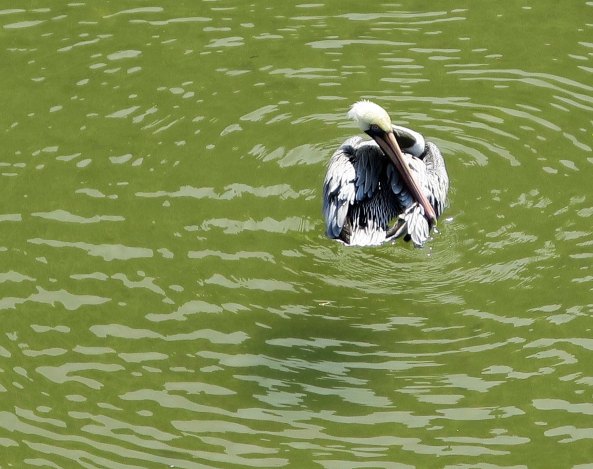
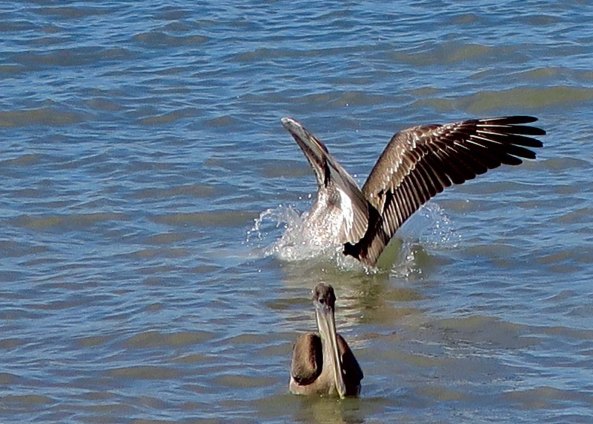
I am not sure what the youngster is up to here. Scratching an itch? Spreading oil?
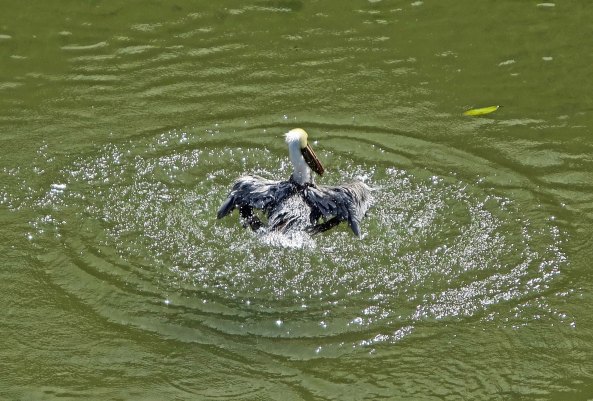
Its action here is clear. It’s preening. The pelican and other water fowl have an oil gland near their tail that they use for oiling their body to make feathers more waterproof.
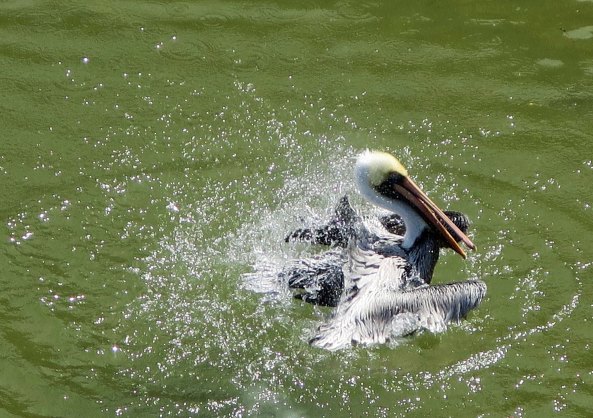
Here it is again, apparently trying to scare up another fish.
And a final shot of our young friend. We speculated that maybe it was a little young for the normal brown pelican approach to fishing.
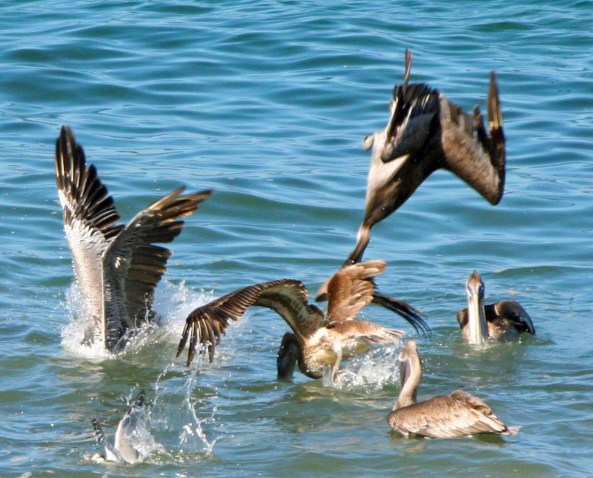
A few hundred feet away, brown pelicans were fishing in the more traditional way.
Kersploosh!
I caught this orgy of Pelican fishing in Puerto Vallarta in 2016. The insane dive on the right is one of the things I love about pelicans.
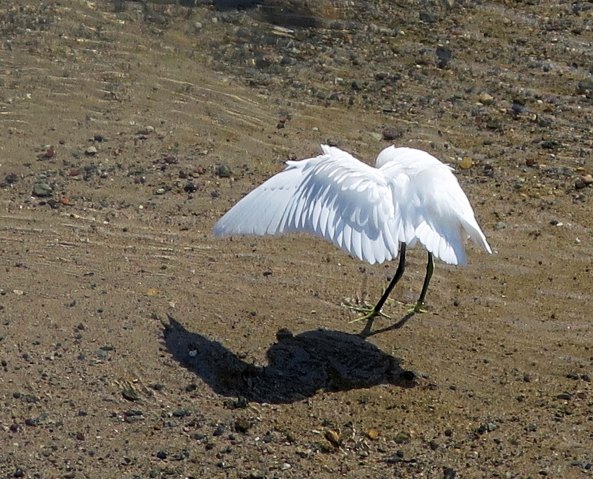
I must say that this snowy egret on the Rio Cuale provided a great photo-op as well.
Here’s the snowy egret in a more traditional pose.

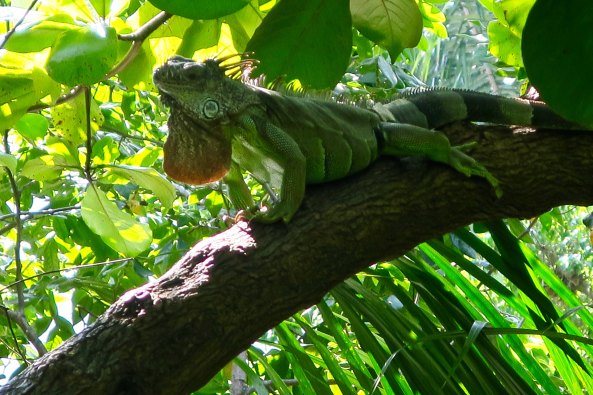
The River Cafe is a short way up the Isla Cuale from where we found the pelican and the snowy egret. We like it for its tasty, well-presented food. But we also like it because you can almost always find iguanas hanging out in the trees and on the ground next to the river. This year we spotted a very green one…

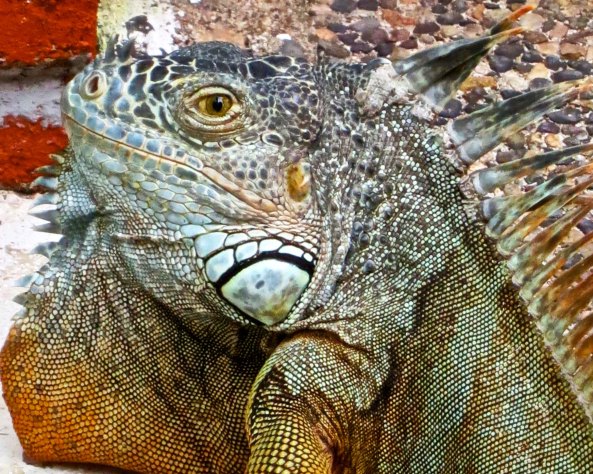
It was so green, it almost disappeared among the leaves. The large flap of skin hanging down from the iguana’s chin is called a dewlap. No self-respecting Iguana would be without one. (Photo by Peggy Mekemson.)

We’ve had numerous encounters with iguanas over the years in Puerto Vallarta. But none matched the time when one came to visit us in our villa. I did a post on our welcome visitor, but just for fun, I decided to put up a few photos on him again.

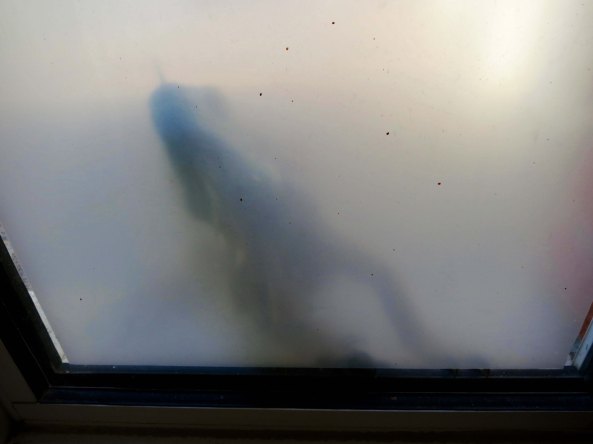
It all started out with a stranger staring in our window at us. Naturally we had to see who had come to visit.
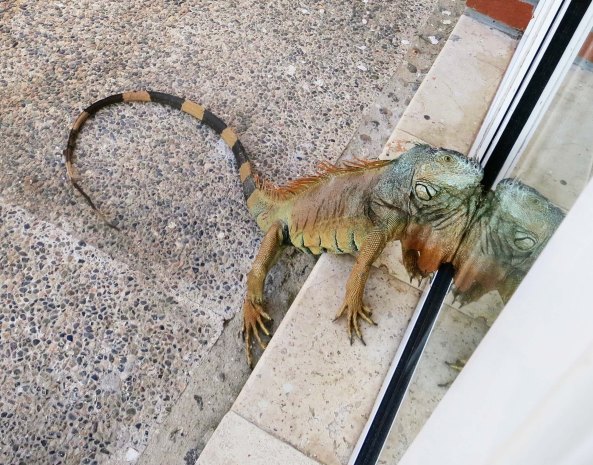
Outside, we found this large iguana staring at his reflection in the window. There were two possibilities: One he had found the love of his life. Or, two, he had discovered a large rival impinging on his territory. Iguanas can be quite territorial.
On closer inspection, our visitor appeared to be quite handsome. I imagine he was a heart throb.
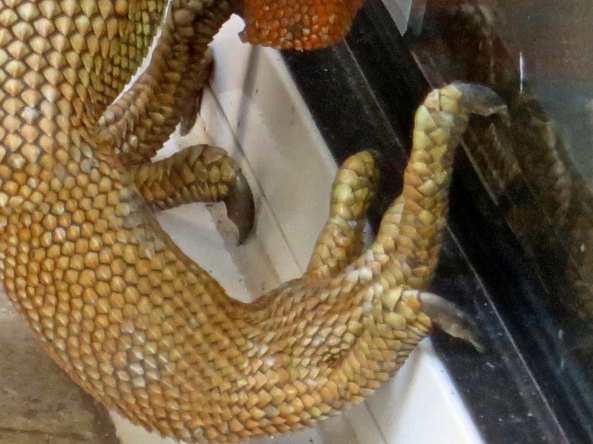
His claws appeared a bit on the scary side. I, for one, wouldn’t want to get on his bad side.
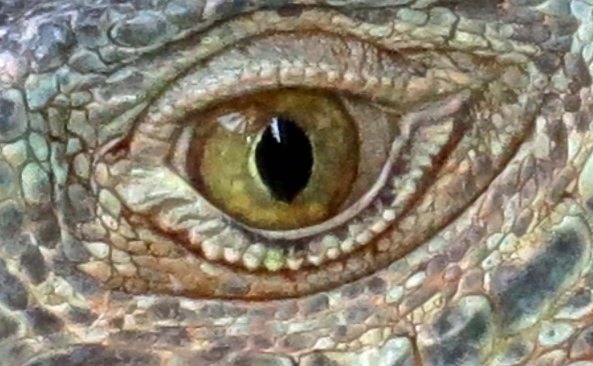
I looked him in the eye, wondering what a lady iguana would see in him. I call this photo The Eye of the Iguana after the Richard Burton, Ava Gardner, Deborah Kerr movie “The Night of the Iguana.” The movie, directed by John Huston, was filmed in Puerto Vallarta giving the then small fishing village a kickstart to becoming a mega-tourist attraction.
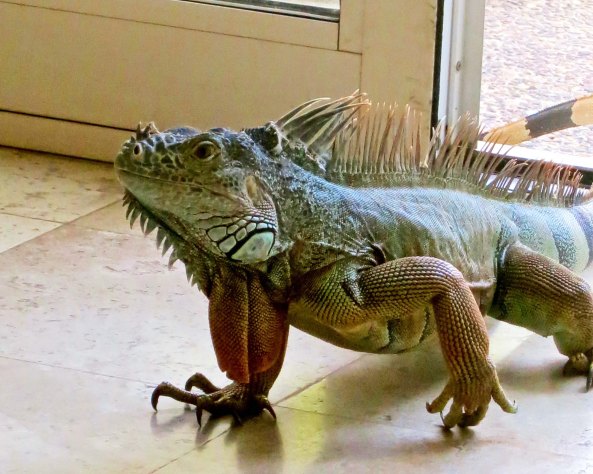
Of course we had to invite Senior Iguana in for a visit. His tail is still outside. He was a big fellow.
He wandered around looking for his love/rival and then finally settled down on the floor like a dog. I couldn’t help but think he would make a great burglar deterrent! After a while, he stood up, checked our villa one more time and then wandered back outside. Next post I will feature a chalk art festival and several murals in Puerto Vallarta. After that, it’s hitting the PCT again, hiking south from Carson Pass.

Weird Things— and Unique Furniture… The Furniture Mart Of Puerto Vallarta

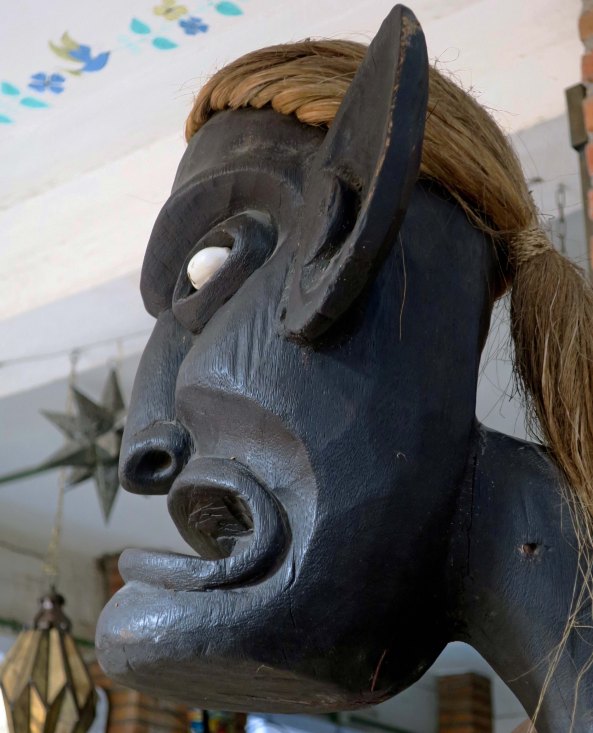
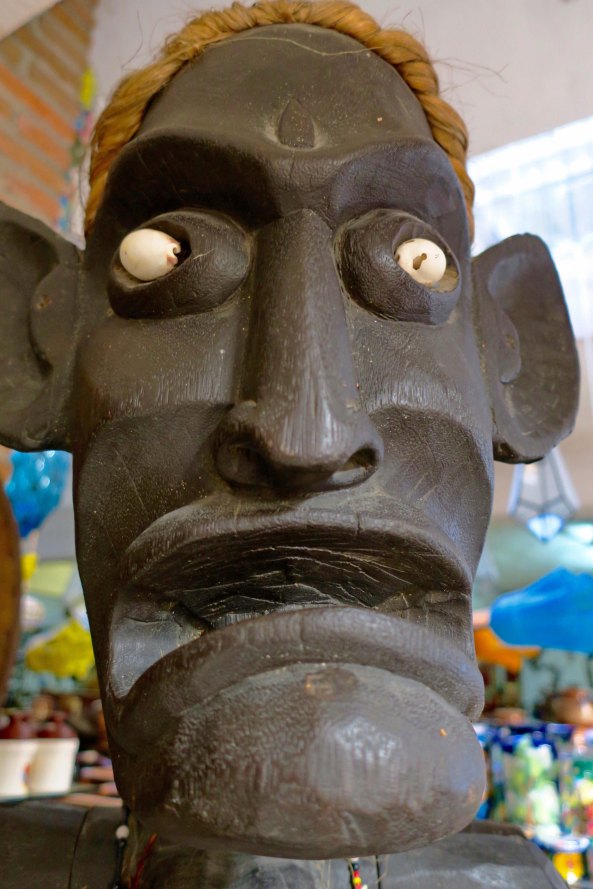
I promised some weird things I found at the Furniture Mart in Puerto Vallarta. I think this guy qualifies. Maybe his weirdness  goes along with having fake, orangish hair. (grin)

Peggy and I have now returned from our trip to Puerto Vallarta. It’s always a good source for blog material. Today, I am going to wrap up our visit to the Furniture Mart, which was right across the street from our hotel. Later I will have several more blogs on PV’s burgeoning art scene as well as get back to a couple of my favorite animals: pelicans and iguanas.  I was amused by both the weird things and unique furniture at the Mart. Enjoy. (Note: Some of these photos came from an earlier visit in 2015.)

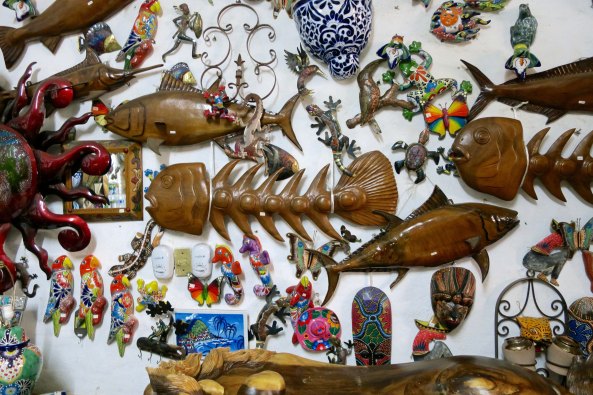
Do you think that the Furniture Mart could have hung more things on its walls? And do you find the bony fish as amusing as I did?
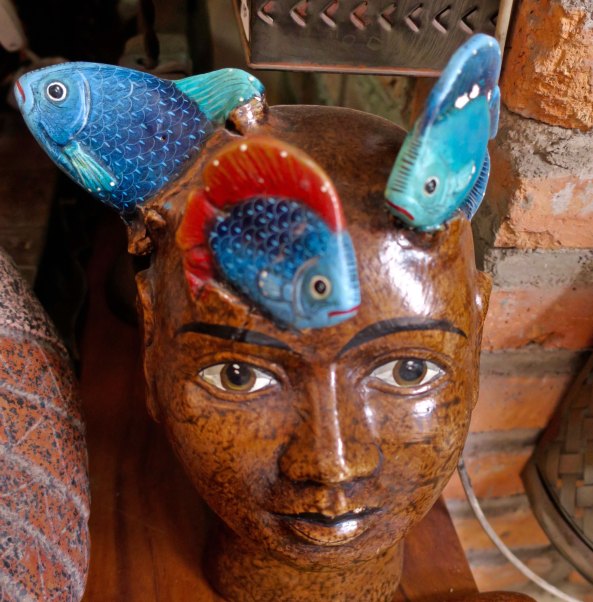
Speaking of fish, I suspect these  gave this guy a horrendous headache. I’m pretty sure there is a myth here, but I don’t know it.
Here’s a front view of the fellow I introduced at the top of the post. He’s still scary.
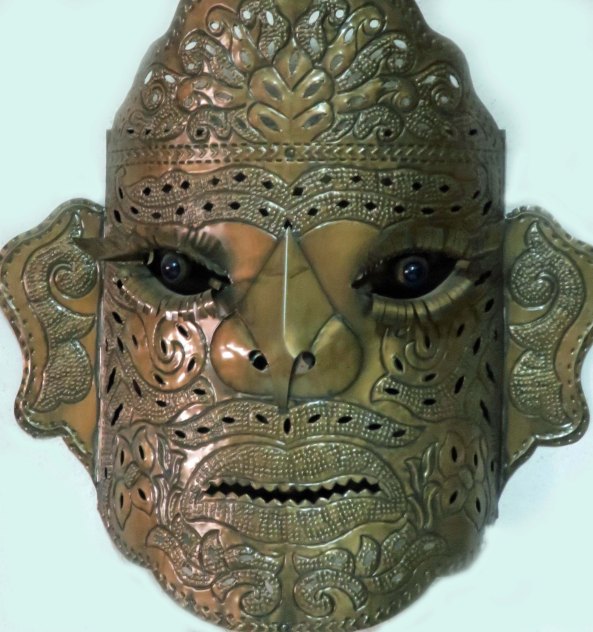
Not so scary, but still not someone you would want to meet on a dark night. Check out the eyes. The teeth remind me of piranha that Peggy and I caught on the Amazon River— and ate. 
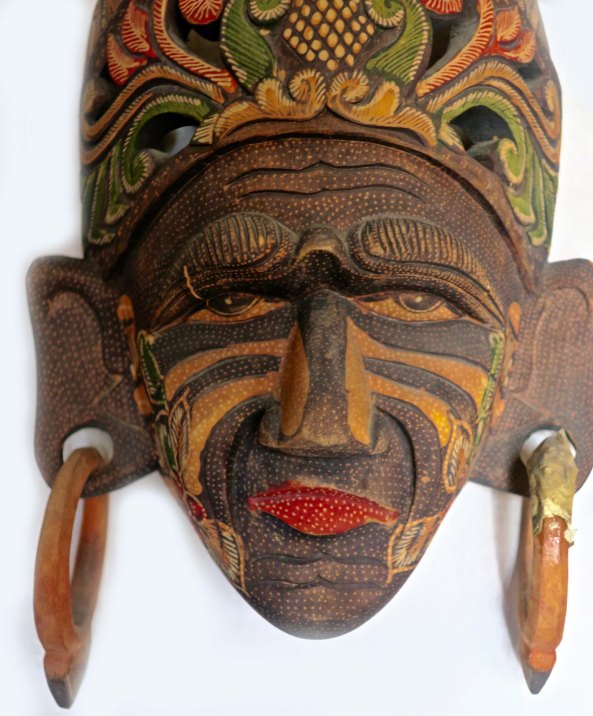
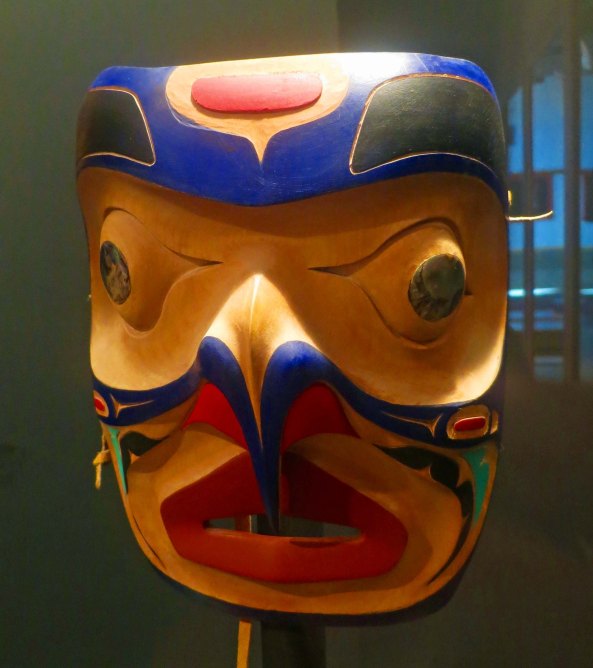
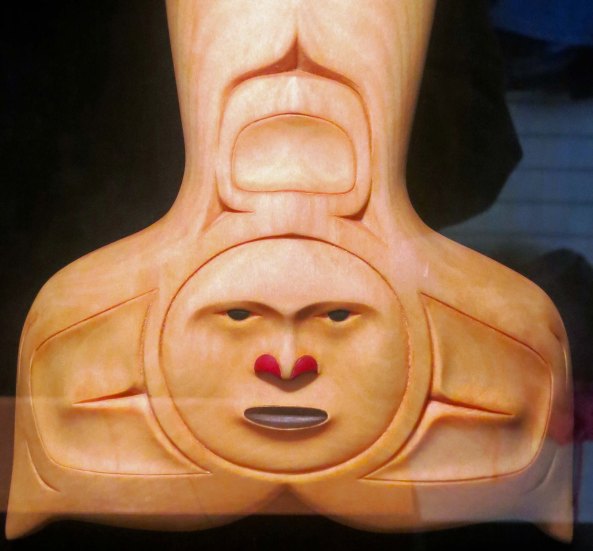
I found these masks more intriguing than frightening. The blood shot eyes suggest a long night of partying.
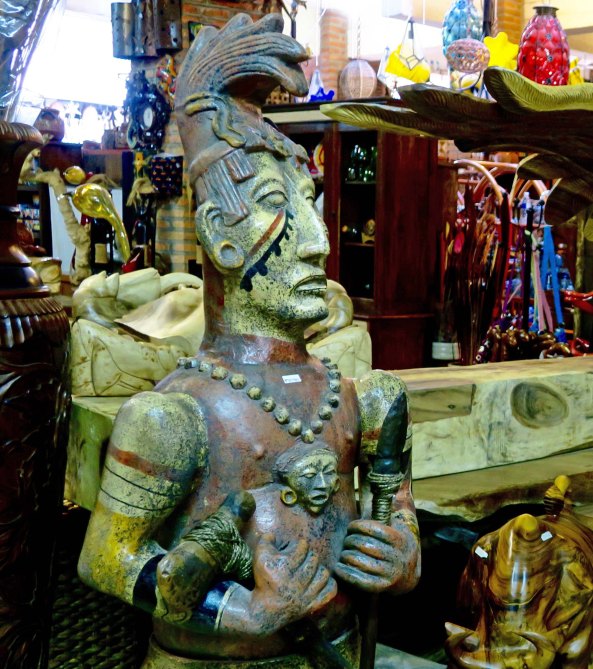
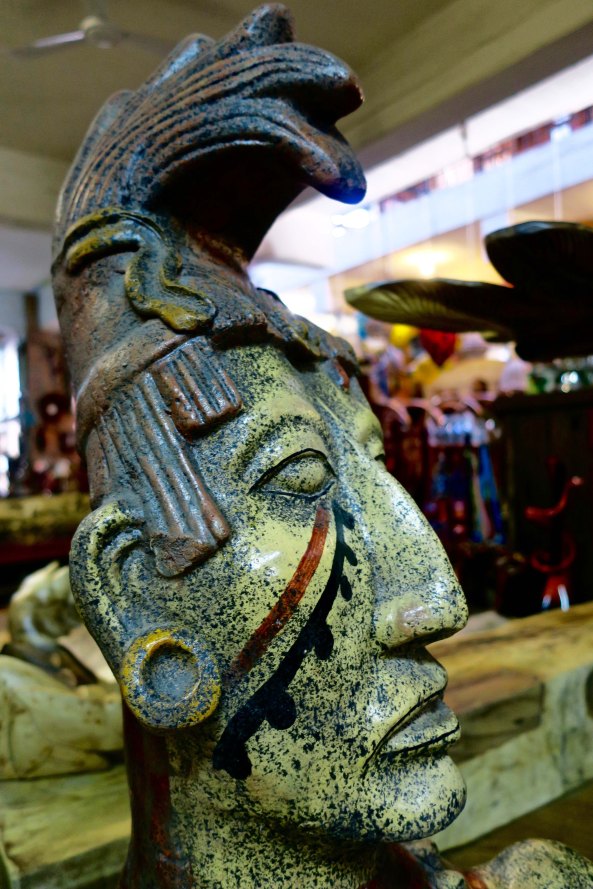
I think that this is a Mayan warrior. There were several life-size sculptures like this scattered throughout the store. Is he holding a monkey or a baby?
A close-up of his head.
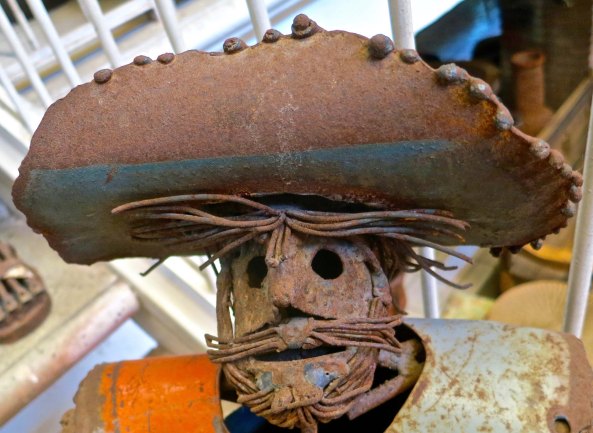
Senior Metal Head had wild hair and a wiry mustache.
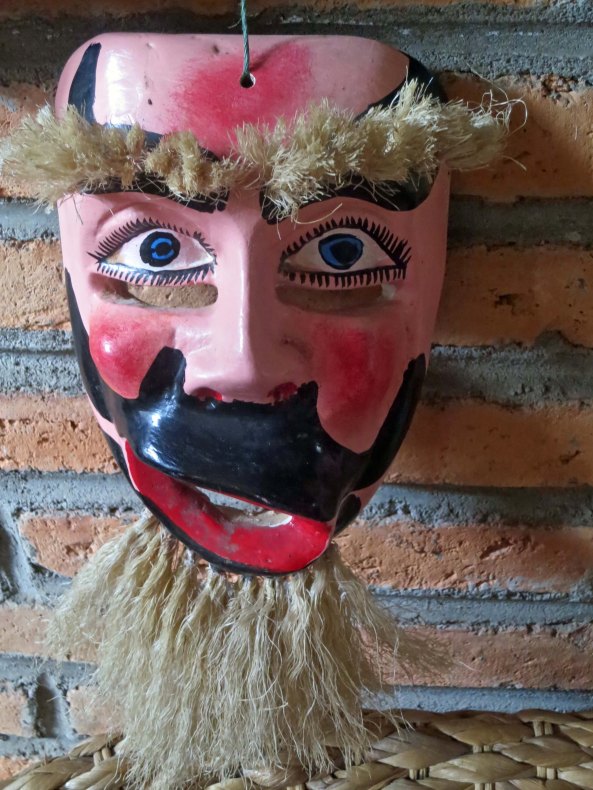
But his eyebrows and beard were no match for Senior Rope Hair.
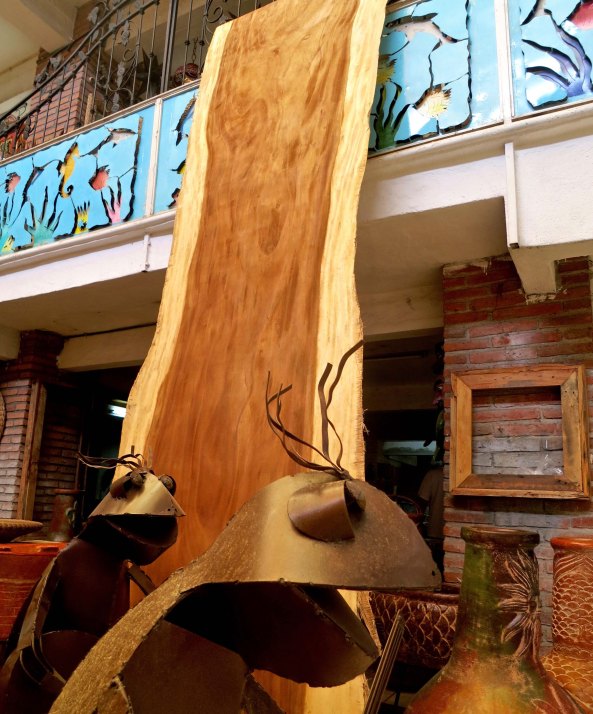
As one might imagine, you can find a lot of furniture in a Furniture Mart. This 20 foot table cut from a single log is an example. It appears that the two frogs were impressed.
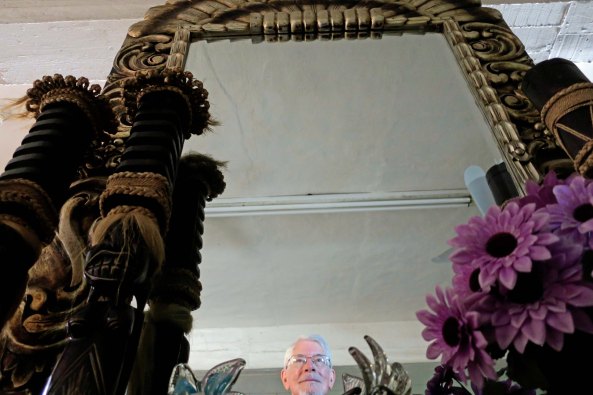
I decided that a large mirror would serve for a selfie. I look appropriately small.
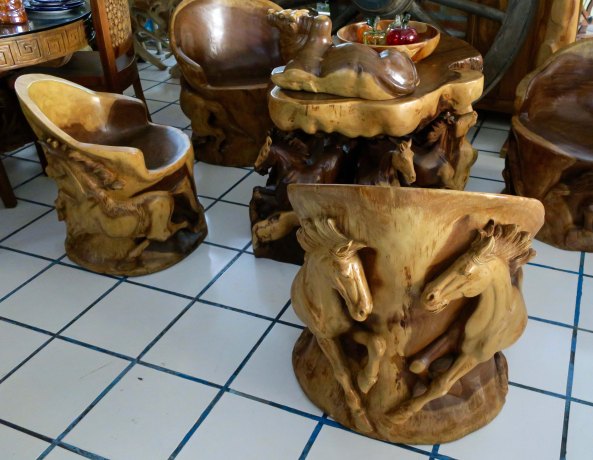
How about carved wild horses for a table and chairs?
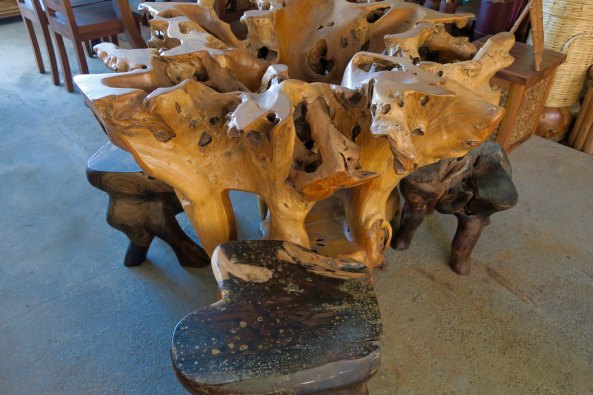
This table was made by cutting through roots of a large tree root. It will be covered with a glass top, I assume.
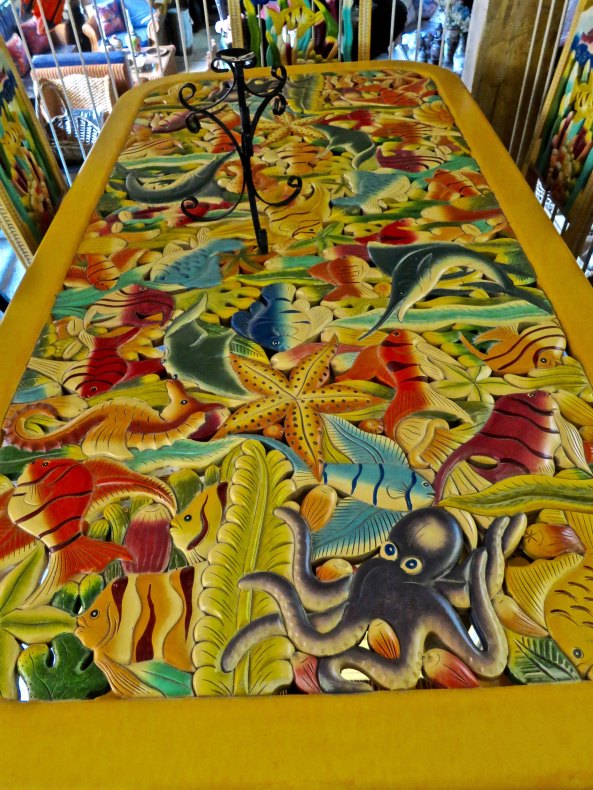
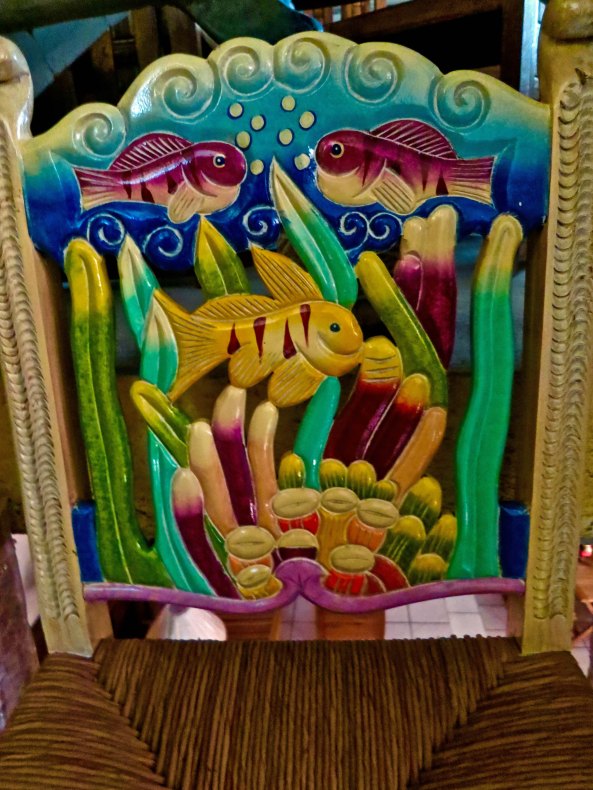
This table featured a colorful, carved ocean scene.
Matched by the chairs.
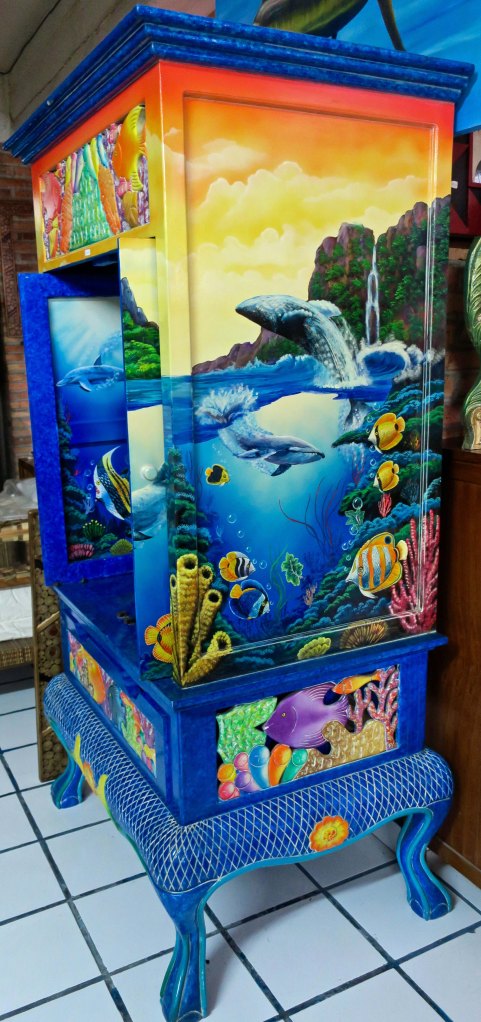
This cabinet, featuring a painted ocean scene, was also quite impressive.
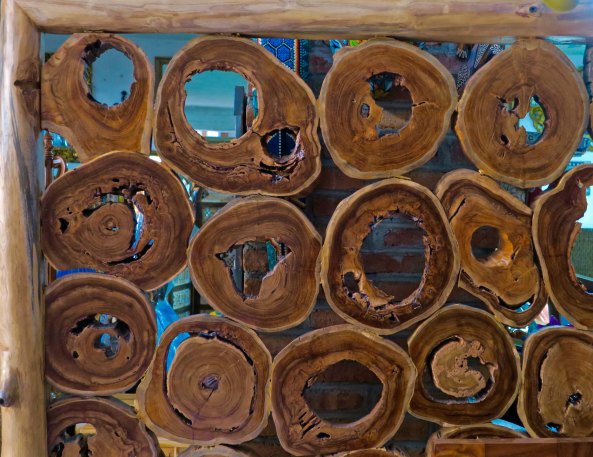
A room divider…
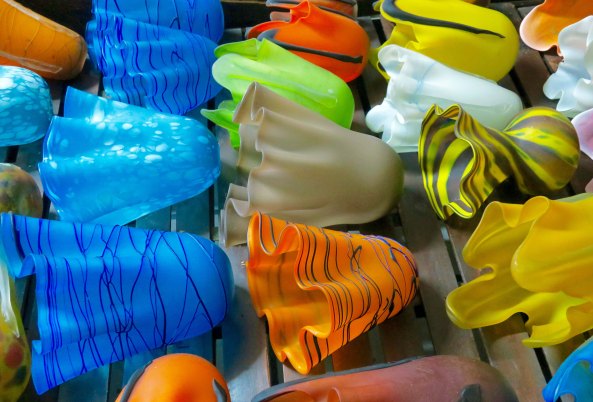
As I mentioned in a previous post, the Furniture Mart is a family affair. 85-year-old Grandpa makes these attractive glass lamp-shades.
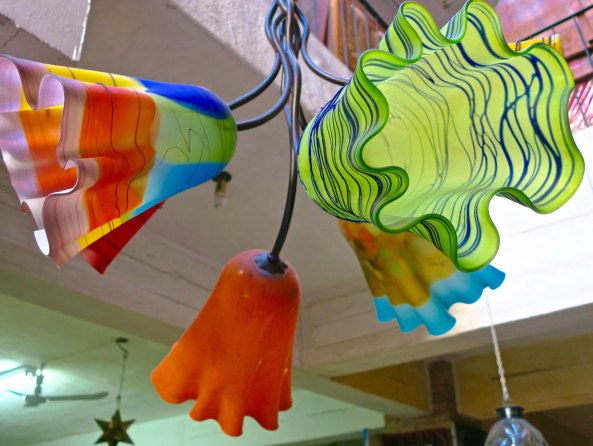
I’ll conclude with an example of the lamp shades being used in a chandelier. My next post on PV will include pelicans and iguanas, but first it will be back to my hike down the PCT.

NEXT POST: A beautiful lake in Lassen National Park along the Pacific Crest Trail, plus Bone makes some new friends.

The Furniture Mart + The World of Tiles and the World of Crystal… Puerto Vallarta Art

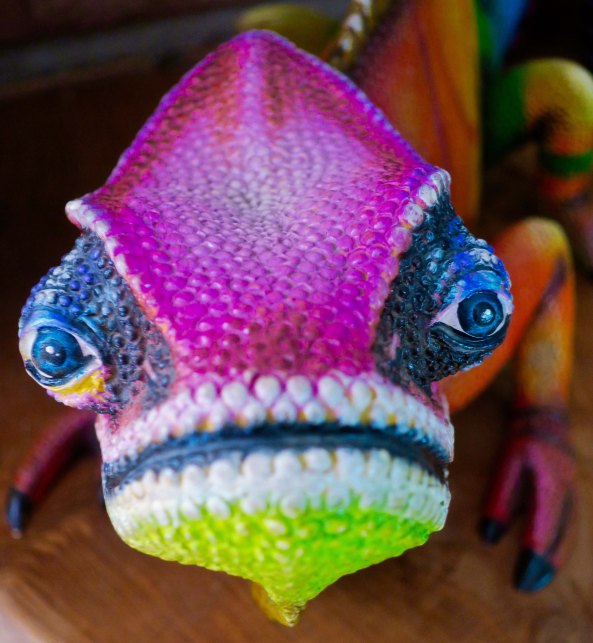
Ceramic art and crafts are found throughout Mexico. I found this colorful iguana at the Furniture Mart.

In my last post from Puerto Vallarta, I featured the Furniture Mart that is located across the road from where we are staying at the Krystal Hotel. As I noted, the Mart is full of thousands of items. These included a wide variety ceramics ranging from the inexpensive mass produced items you find in most tourist shops throughout Mexico to finer pieces that border on art. 

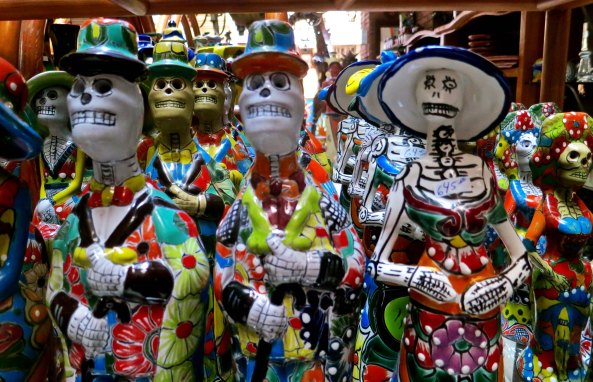
Almost any tourist shop in Mexico features mass produced figures such as these Day of the Dead skeletons. (I am going to do a separate post on Day of the Dead characters, which tend to be more amusing than scary.)
Stereotypical Mexicans wearing sombreros while taking a siesta are another common tourist shop item. (I’ve yet to see a Mexican peasant wearing a sombrero and taking a nap in all my years of visiting Mexico.)
Do you need a butter dish?
My kind of inexpensive pottery.
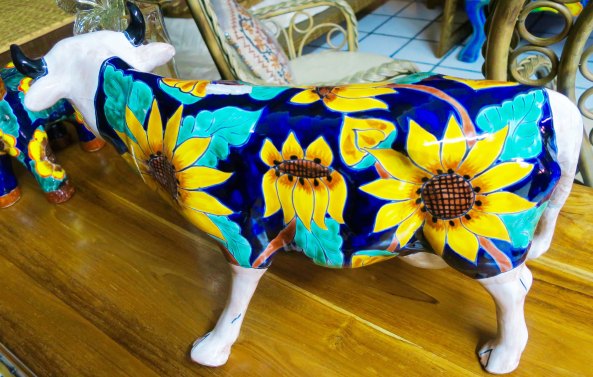
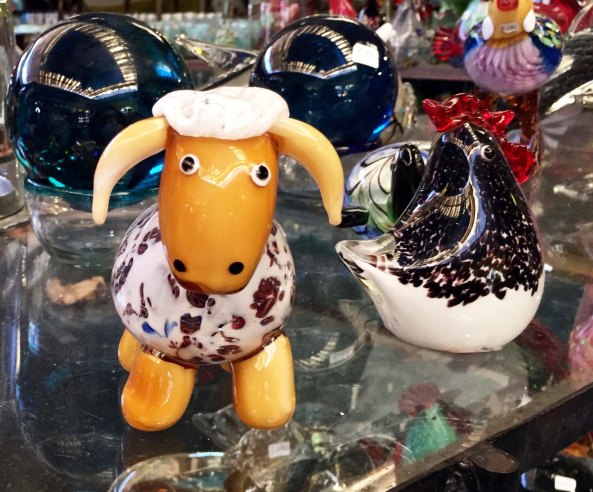
Finer items, such as this cow, receive much more attention in their production.
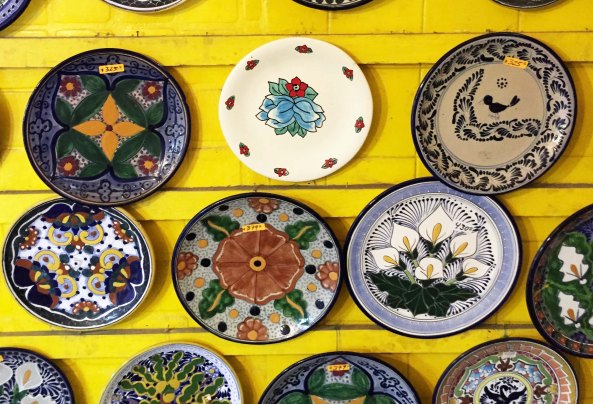
Peggy’s sister, Jane, was impressed by the dishes found in the Mart.
Many of the dishes were painted with colorful tropical scenes.
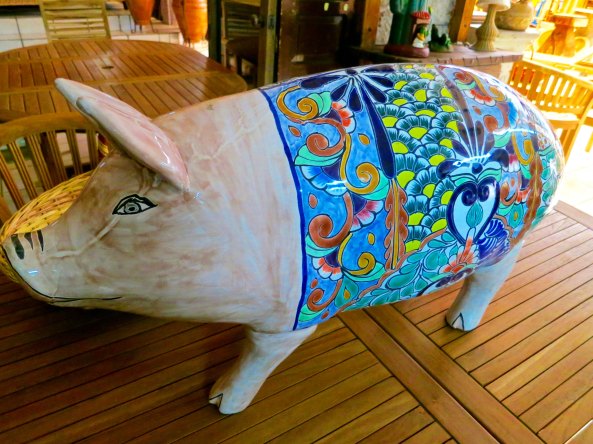
While I found myself amused by this pig.
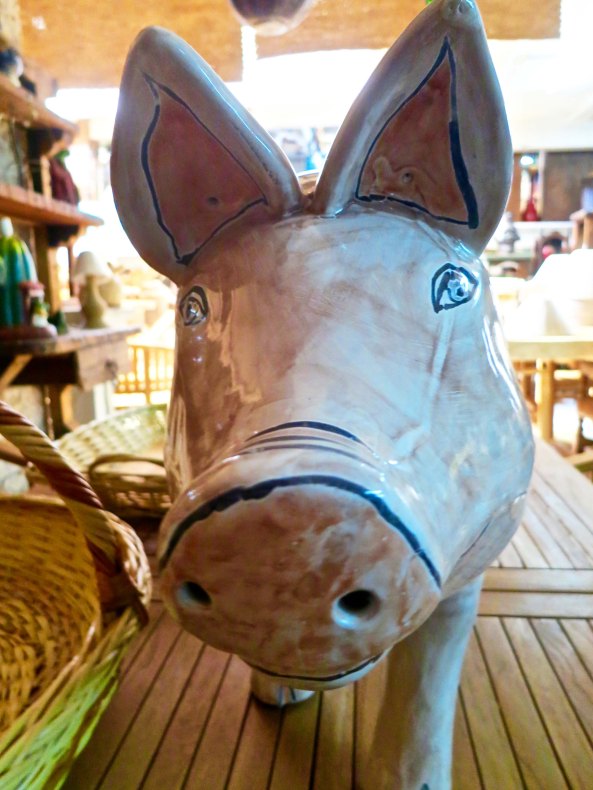
And its snout.
Jane and I would agree on the value of a beautiful vase.
And having a colorful water pitcher.

Today I am also going to include ceramic and glass pieces from the World of Tiles and the World of Crystal located in Puerto Vallarta’s Zona Romantica. I found the World of Tiles particularly interesting because we were able to watch the artisans at work making tiles in the store’s ‘factory.’

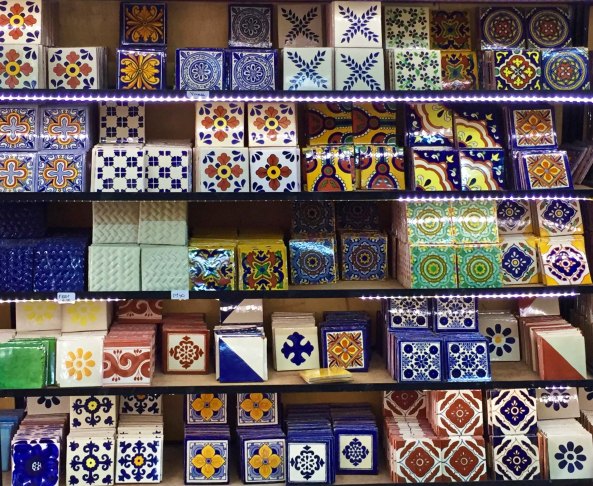
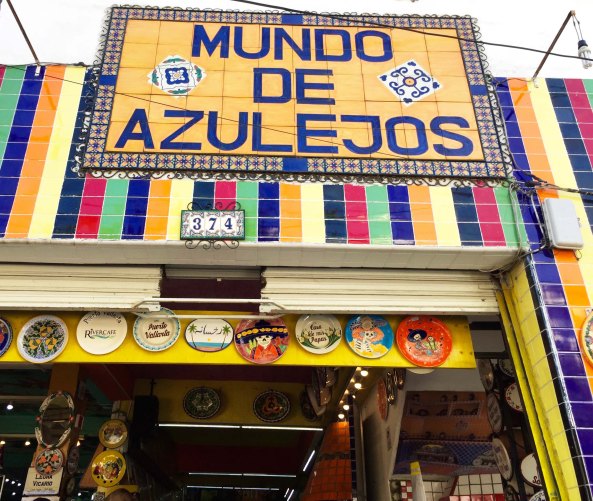
Stopping by the World of Tiles (Mundo de Azulejos) is a must-do for people visiting Puerto Vallarta’s Zona Romantica. As you might expect, there are lots of tiles!
Including humorous ones. This represents the worm occasionslly added to a bottle of tequila. I can remember a few times drinking tequila in my youth when I resembled this worm (grin).
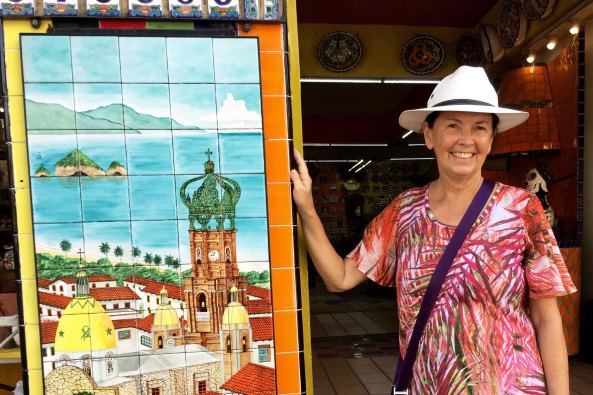
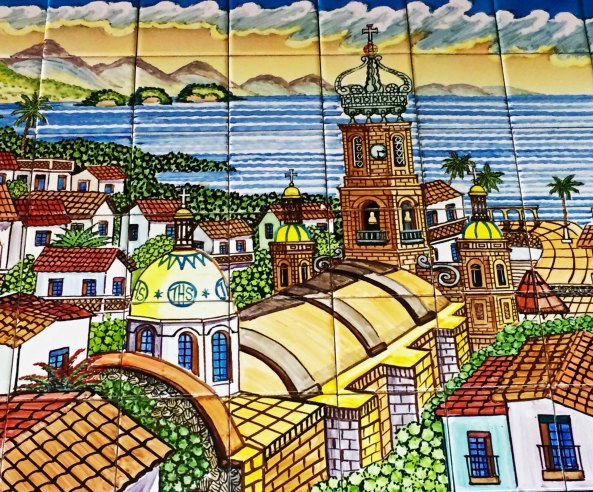
The tiles are sold individually or incorporated into scenes. This is Puerto Vallarta’s famous church, and Peggy.
Another view of the church looking out on Banderas Bay.
A rooster. But with eggs? Maybe the hen hired him to babysit.
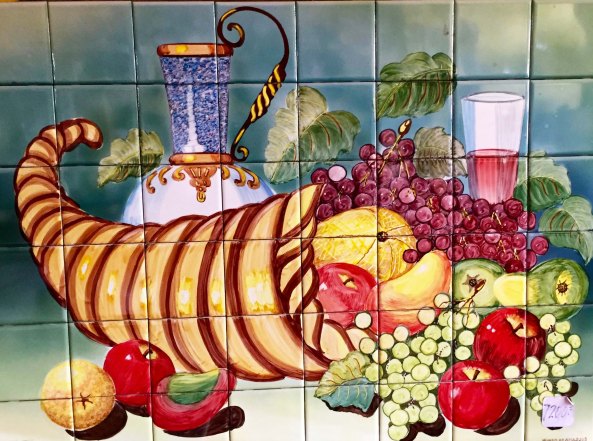
And a cornucopia.
The front of the store…
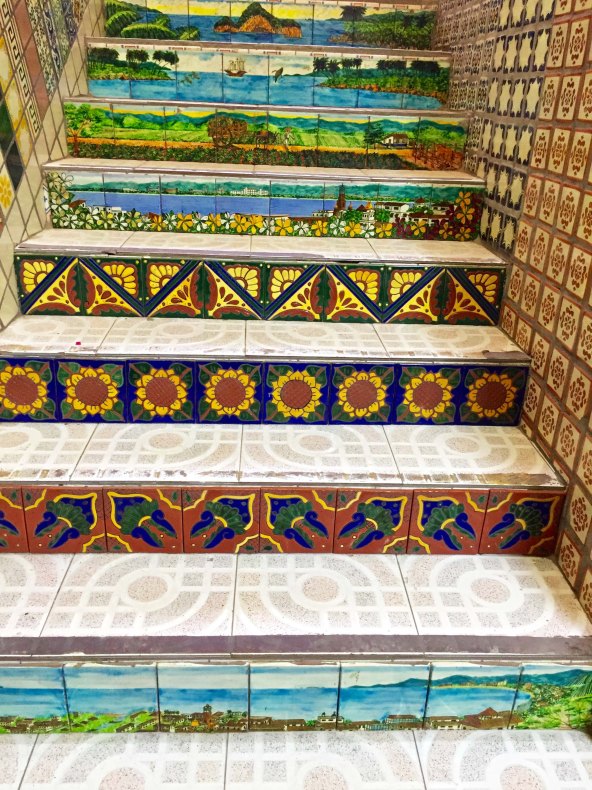
And the tiled stairs leading up to the tile factory.
Where we watched an artist paint a boat scene.
In addition to the tiles, a number of other ceramic items were sold at the World of Tiles including wash basins.
Of which there were many different types. Check out the sun and the moon.
“We are Siamese if we please…” Remember “Lady and the Tramp”? These cats may have come from the same mould, but they each have different personalities. I like the zoned out kitty in the left rear.
There were also dishes.
Including white sheep and cow dish sets.
A large bowl featured a happy bee. But I noted it still had a stinger. I ended up on the wrong side of one of those twice this summer on my backpacking trip.

The World of Crystal featuring glass art is just down the street from the World of Tiles. I’ll include a few items from it to finish off this post.

This glass was reflecting the sun when we walked into the shop.
I discovered a green frog with buggy eyes.
A cute cow…
Doggy tiles…
A cat tile for those of you who lean toward kitties…
And a pair of attractive masks to wrap-up this post.

Next post: I’ll wrap up the Furniture Mart with some real furniture and weird things.

Life on the Trent and Mersey Canal… A Narrow Boat Tour in England

A pilot’s perspective on a 65 foot long, 6 feet wide, 16 ton narrow boat.

This is my final post introducing new readers to they type of stories they can find on my blog. This tale takes you off to England and a journey on a narrow boat tour of the Trent and Mersey Canal. As I note below, this was my first experience at piloting a 65-foot long, 6-foot wide, 16-ton vehicle. If you would like to learn more about this adventure, go here:  https://wandering-through-time-and-place.com/2018/01/02/  I hope you’ve enjoyed this trip back through history. I guarantee that it is just a small taste of what you can expect to find on these pages. Next week, I will continue my PCT series and likely start working in a few Mexico posts. 


I never imagined (even in my wildest dreams) that I would someday pilot a 65-foot long, 6-foot wide, 16-ton vehicle. But that’s what I ended up doing last week.

Peggy and I, along with her sister Jane Hagedorn and her husband Jim, did a seven-day narrow boat tour on the Trent and Mersey Canal out of Long Eaton, England. If Long Eaton doesn’t ring a bell, think Robin Hood. Nottingham is nearby.

The prince of thieves was one of my all time childhood heroes. I knew the location of Sherwood Forest long before I knew the location of London.
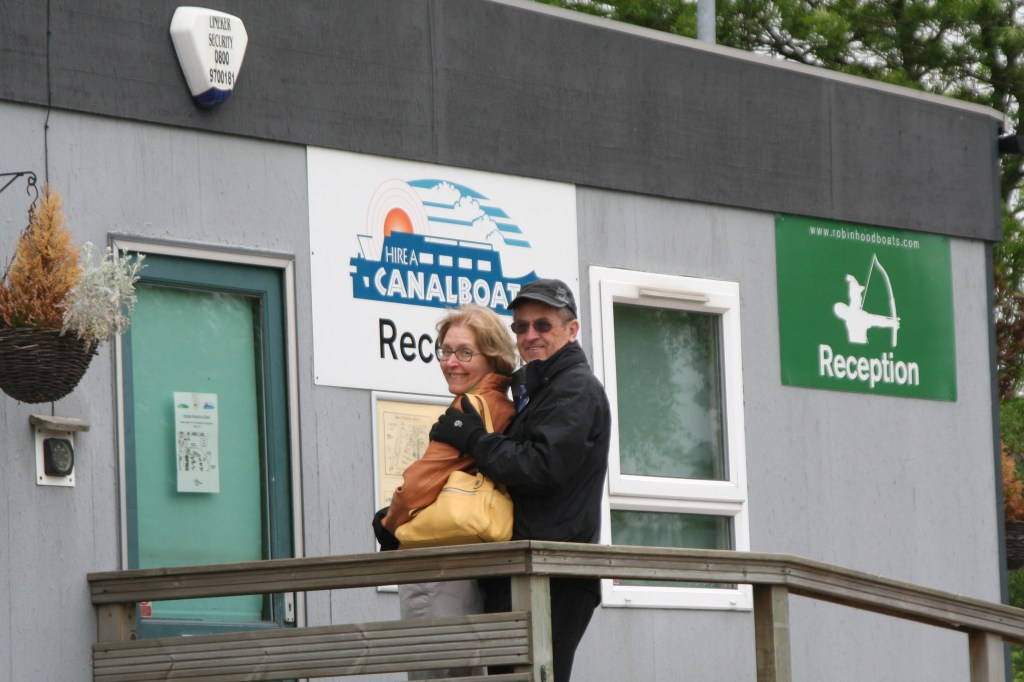
Jane and Jim stand in front of the Sawley Marina office. Note Robin Hood on the right!

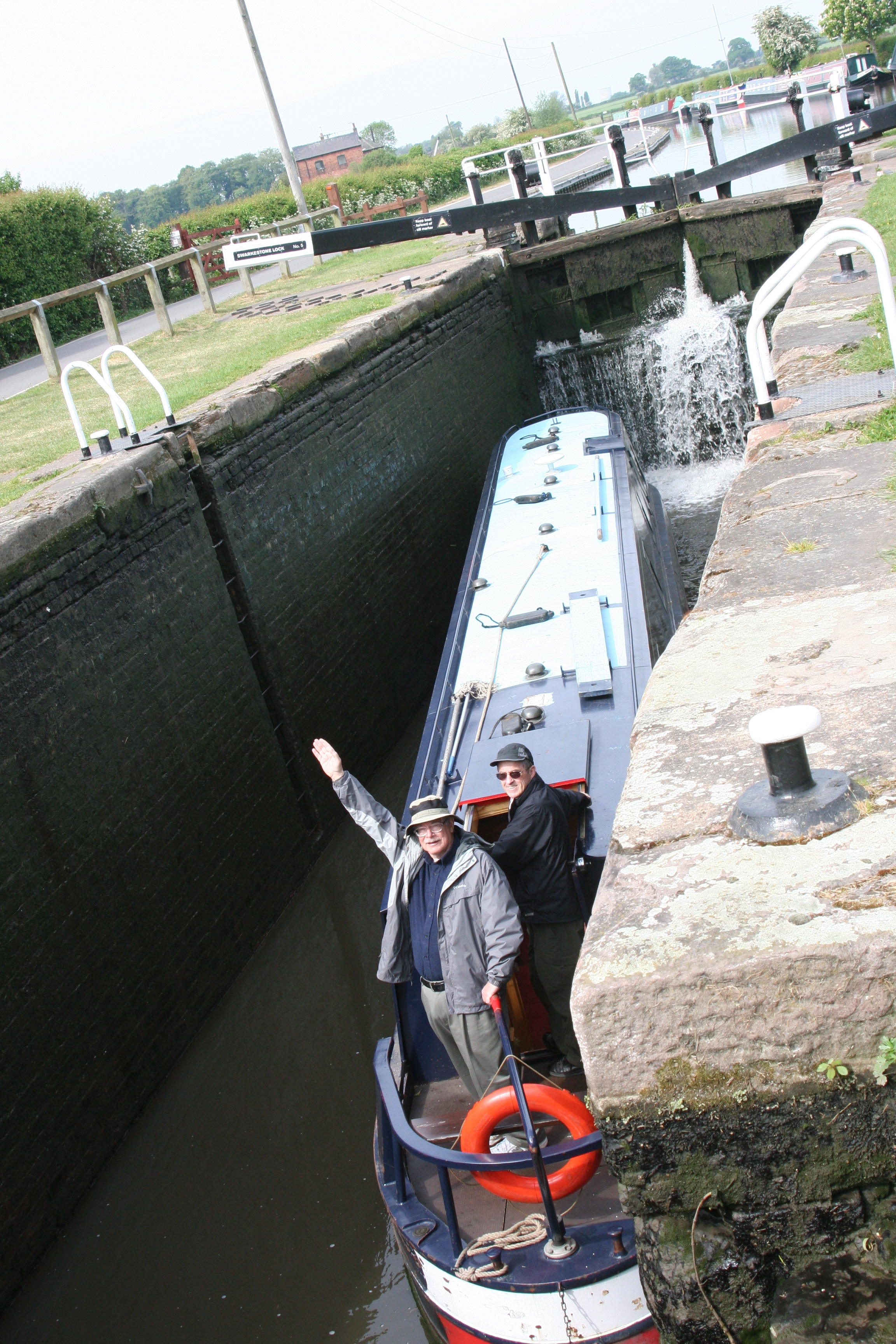
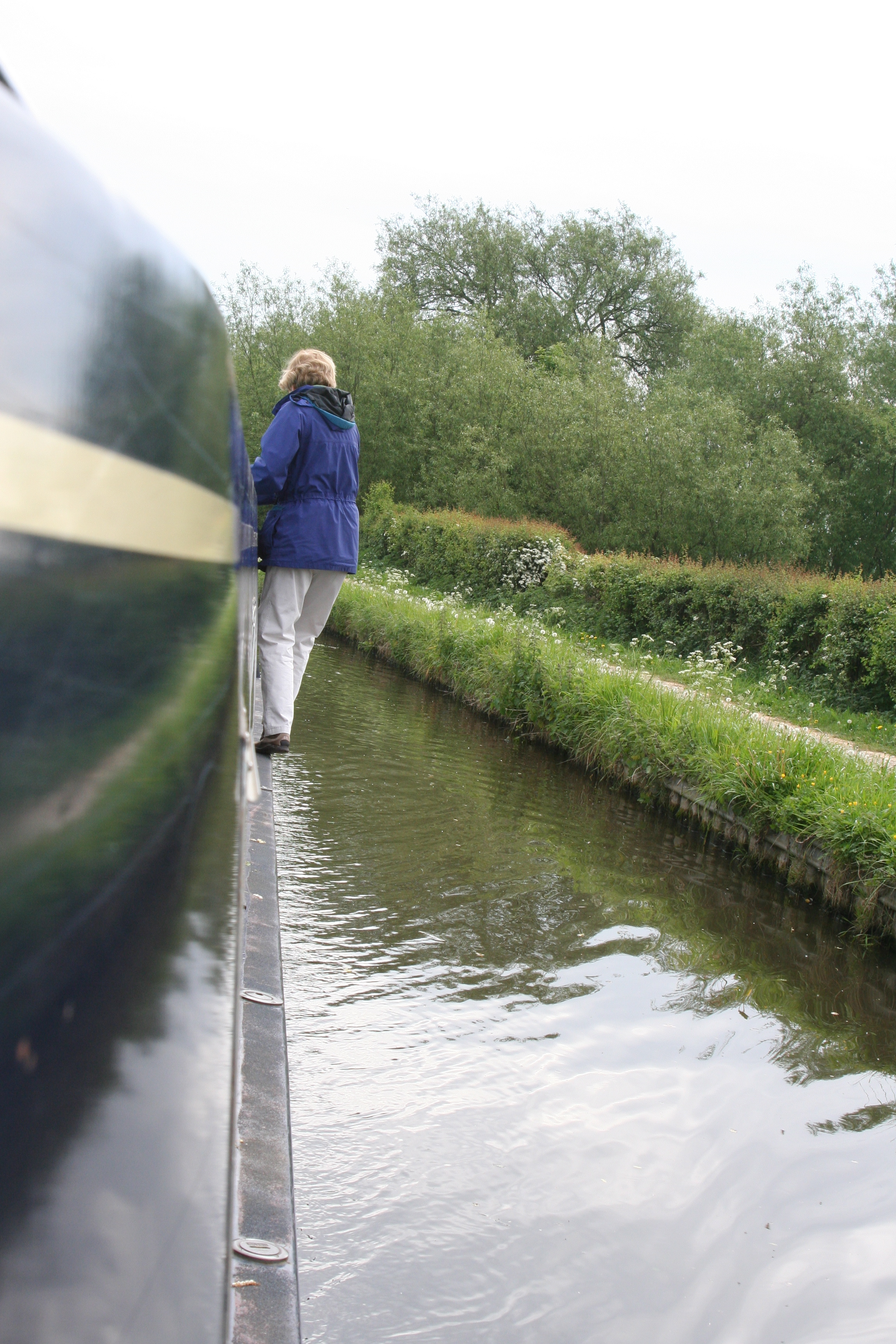
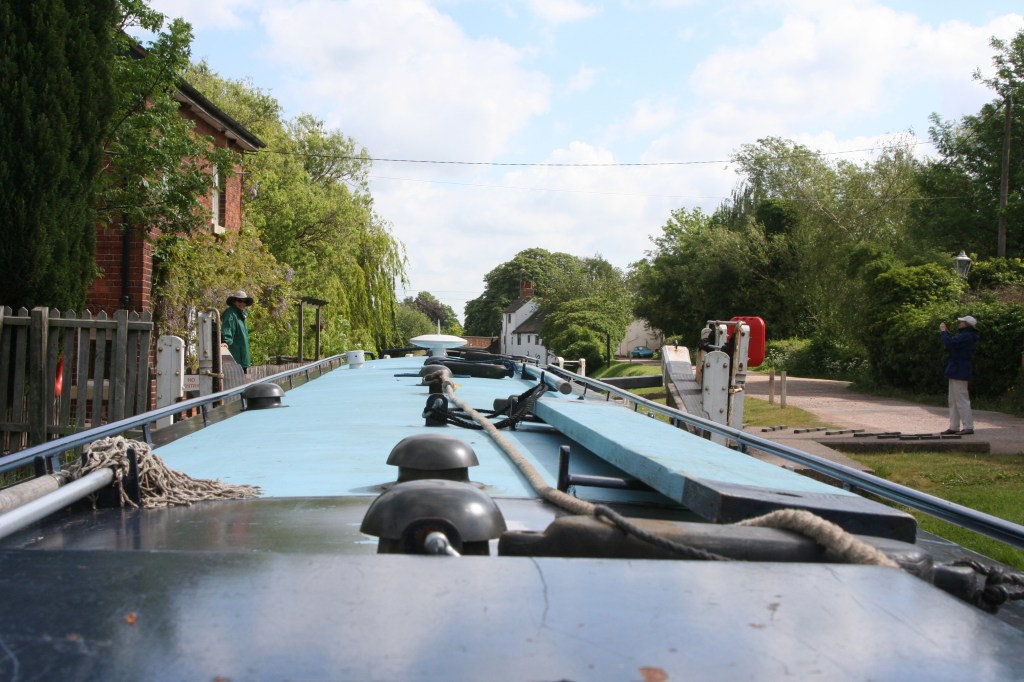
Jim and I had pilot duty. Our job was to stand in the back with tiller in hand hoping that the boat would go where we wanted. This included not running into other canal boats, avoiding overhanging trees and mudflats, navigating under watch-your-head, boat-wide bridges, surviving locks and learning the delicate art of mooring our not so delicate craft.
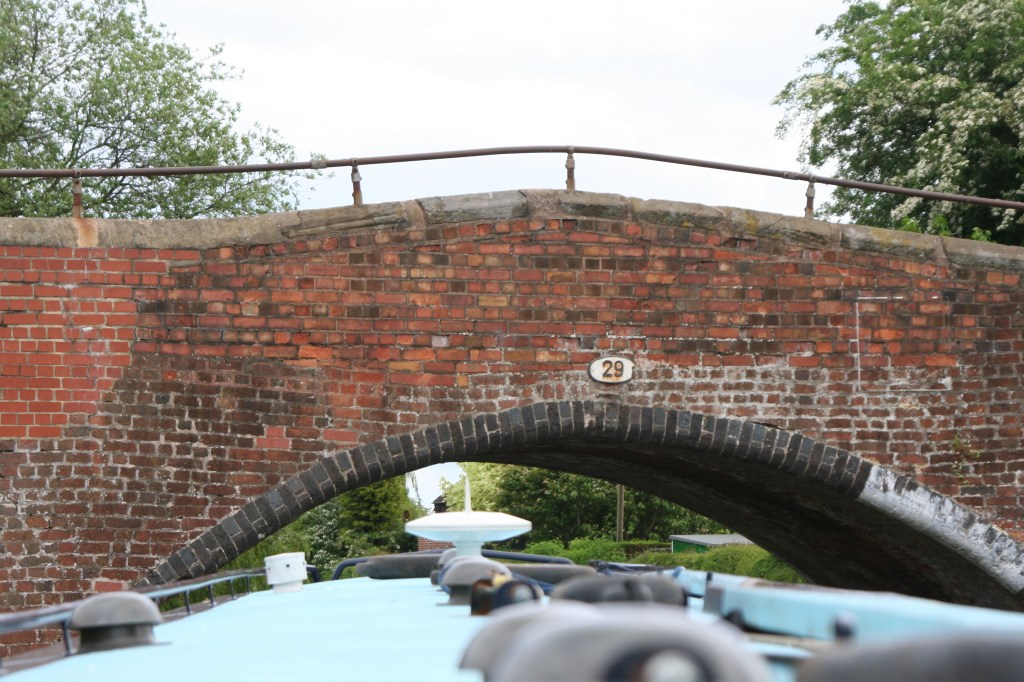
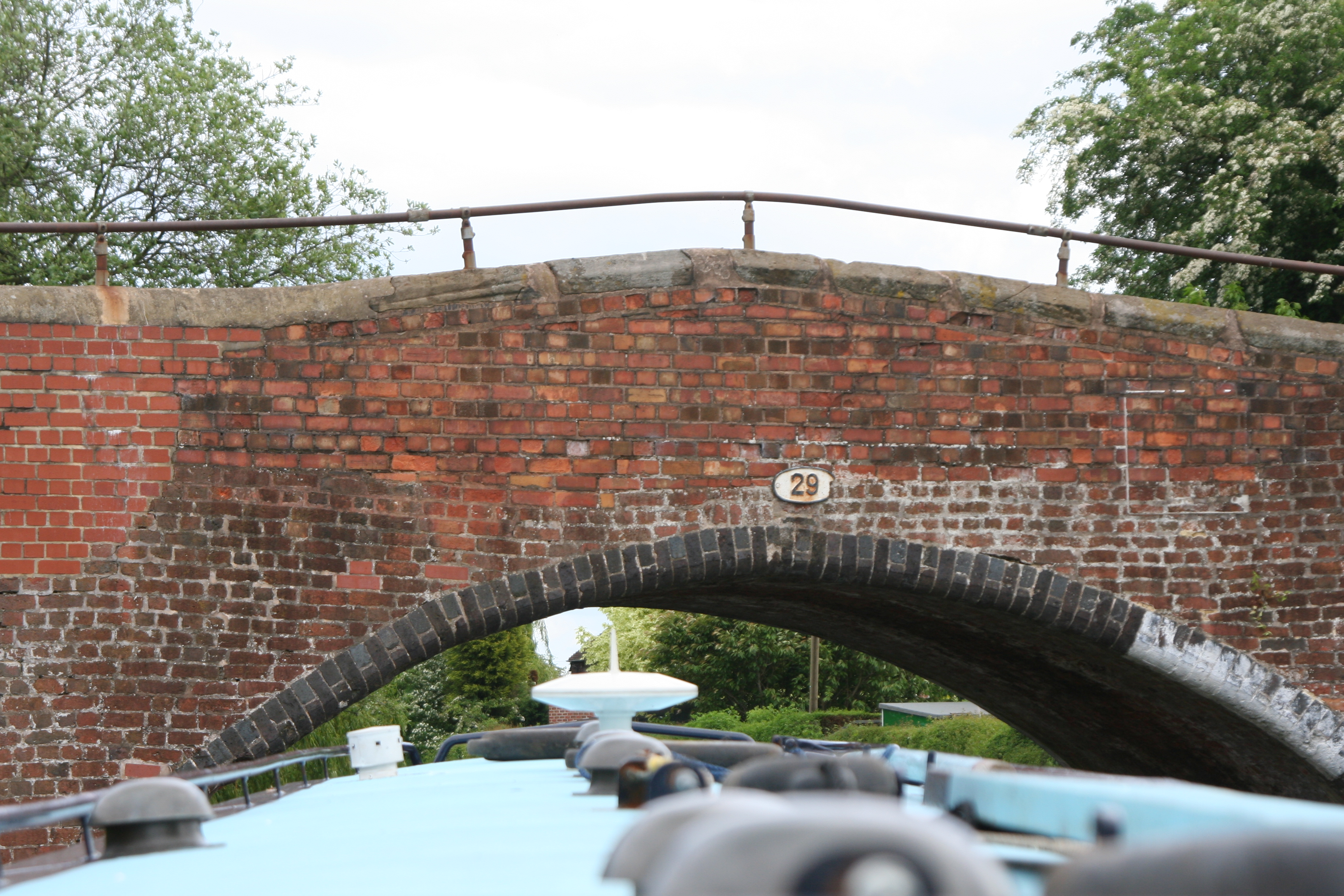
Is our narrow boat narrow enough and low enough… is the question.
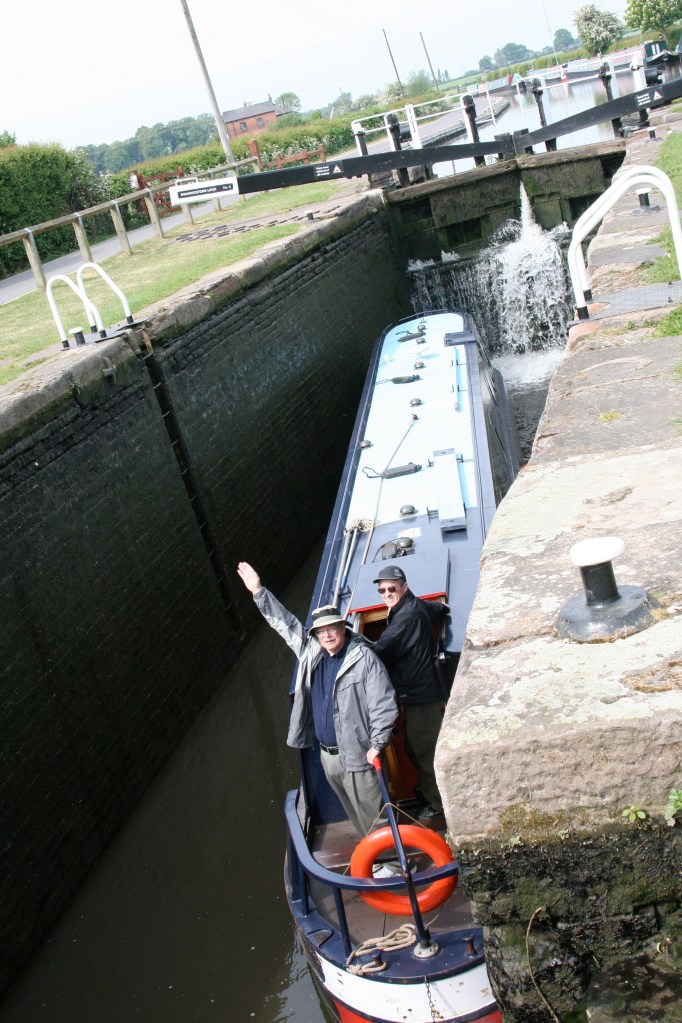
I park the boat kitty corner in a lock. Maneuvering back and forth is necessary to keep the boat positioned.
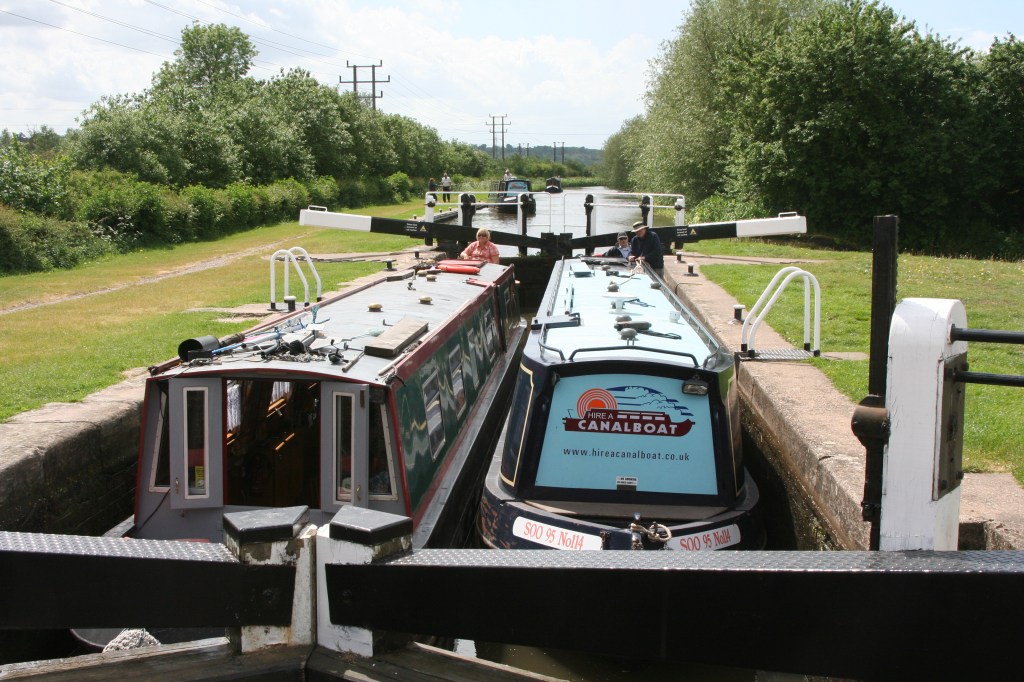
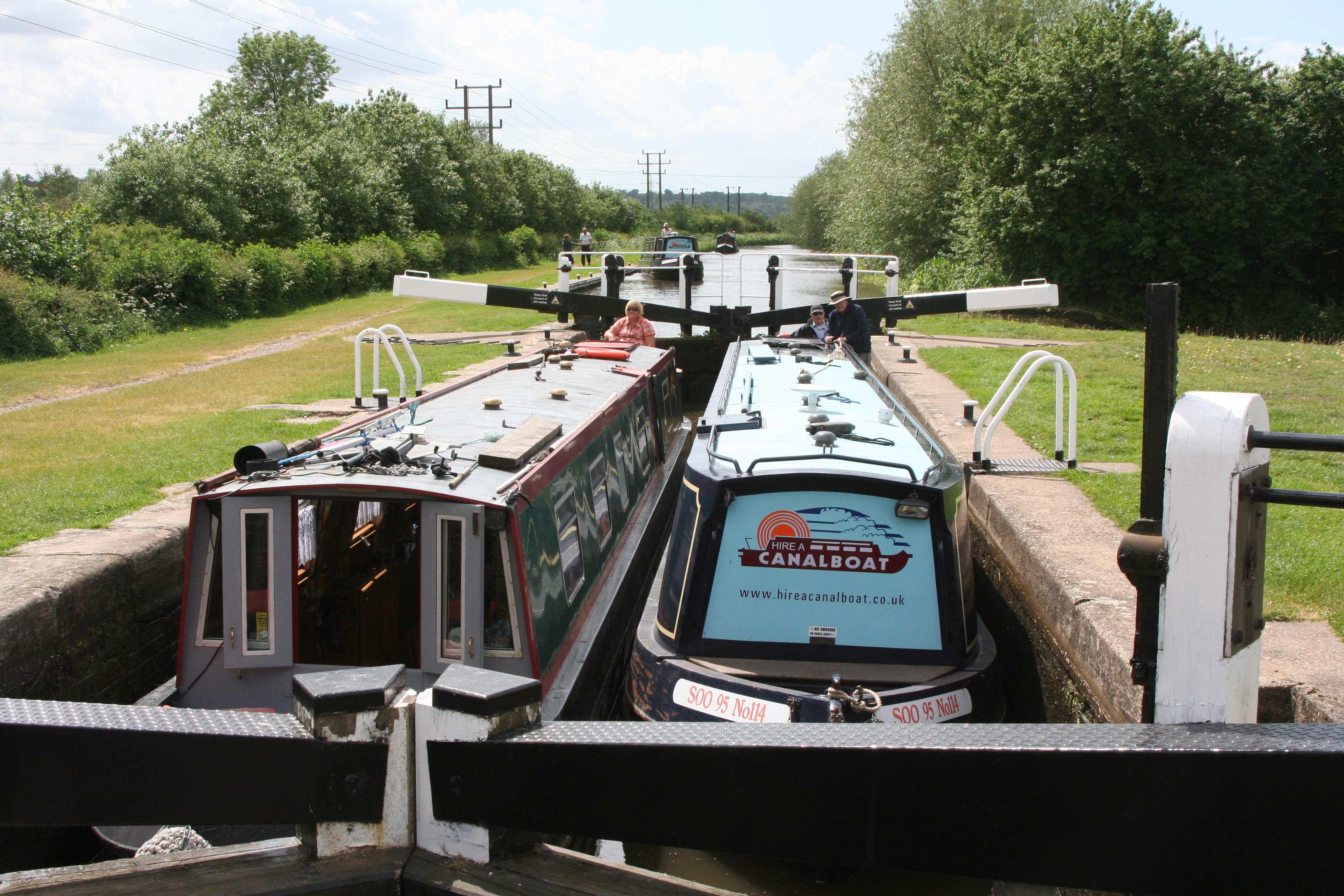
Two boats in a lock at once. Jim is up to the challenge.

Peggy and Jane were in charge of locks plus a certain amount of backseat driving. For example, they would point out boats coming toward us that we had been worrying about for five minutes.

Lock duty was not easy. Heavy cranking was involved in opening and closing the paddles that let water into or out of the lock. Full body strength was required to open and close the gates. The women quickly became lockmasters and I am sure wowed the English males with their prowess. (Honey, can I have one of those?)
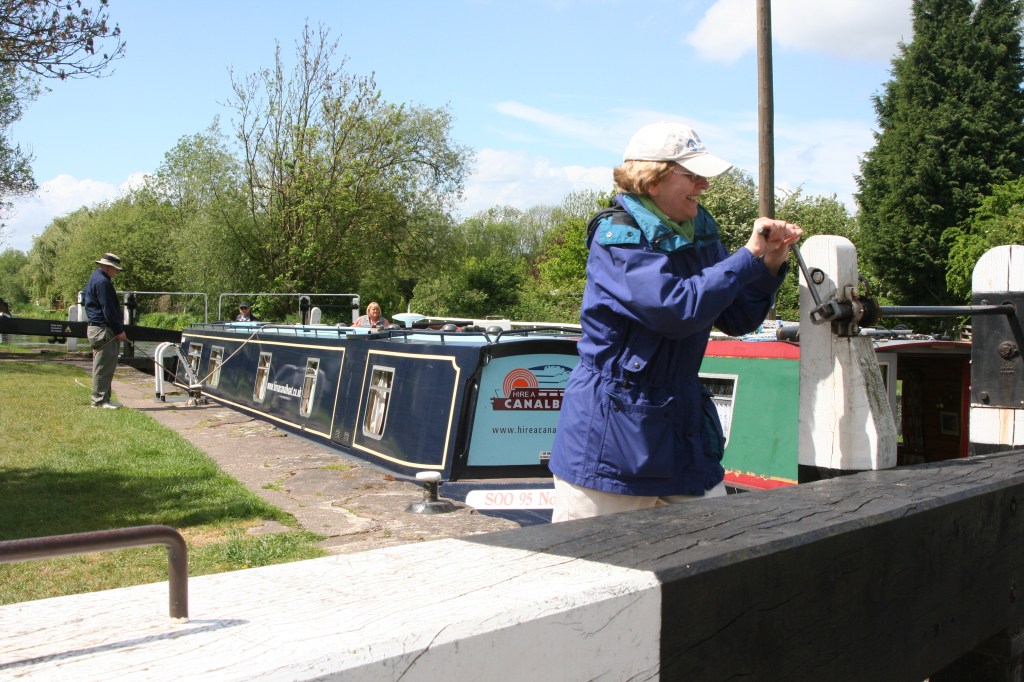
Jane cranks open a paddle to let water out of the lock.
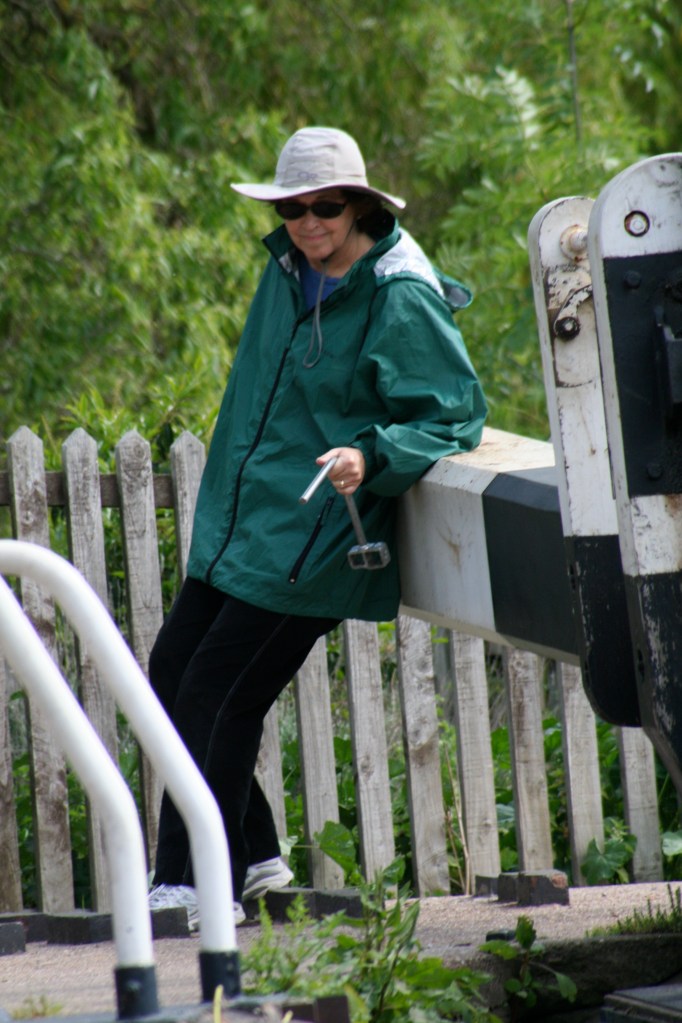
Peggy demonstrates the importance of ‘butt’ power in opening a gate.

Other chores included muscling the 16-ton boat into shore and filling the craft with water. Getting from the aft to the bow of the boat for work or pleasure involved maneuvering along a narrow gunnel.
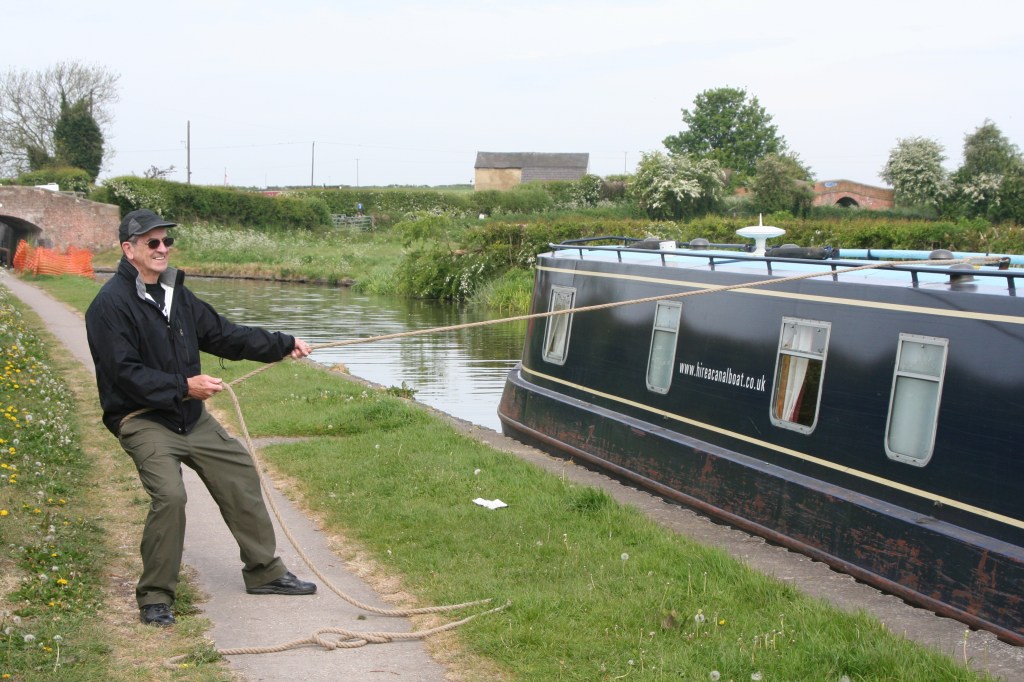
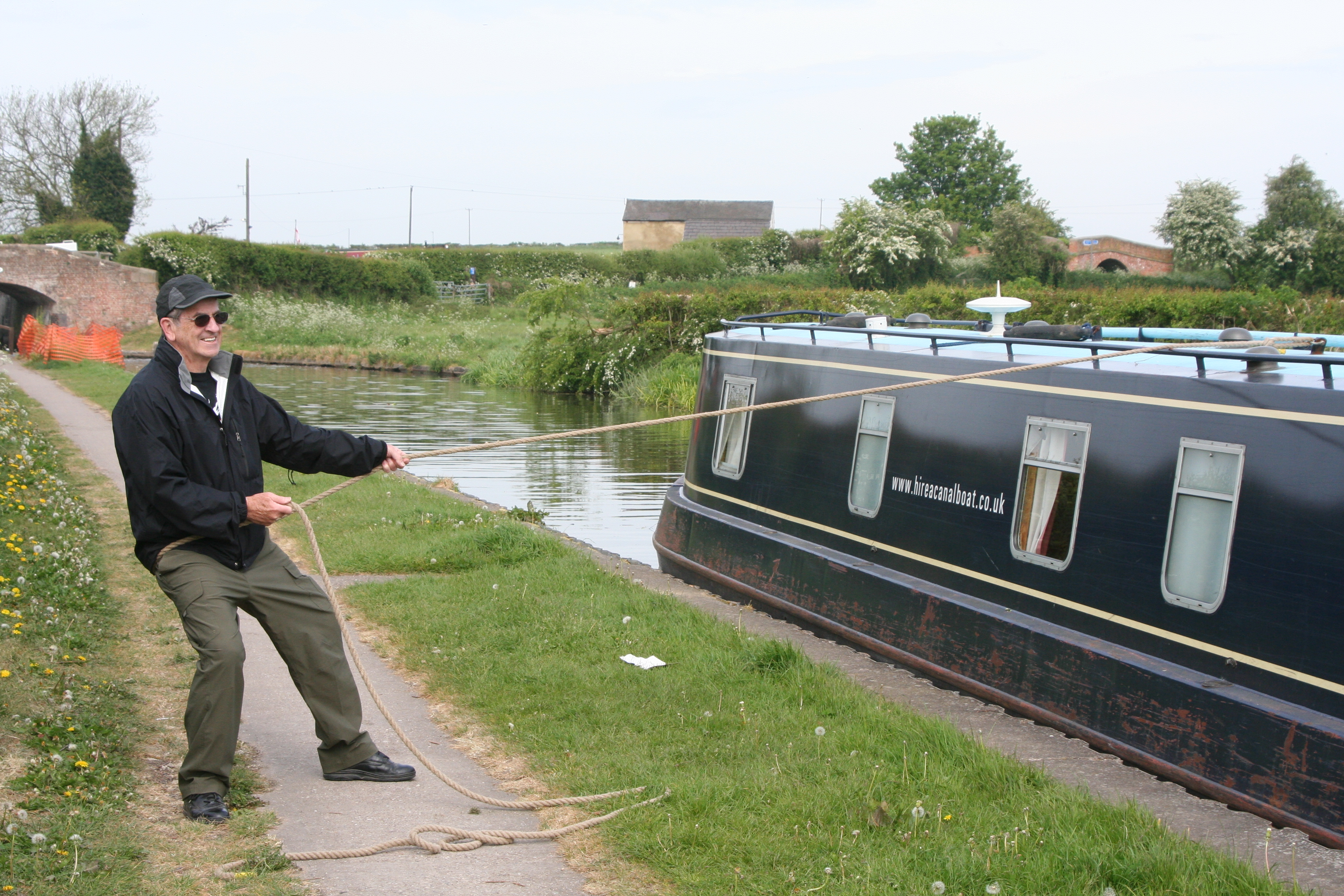
Jim muscles the boat into shore.
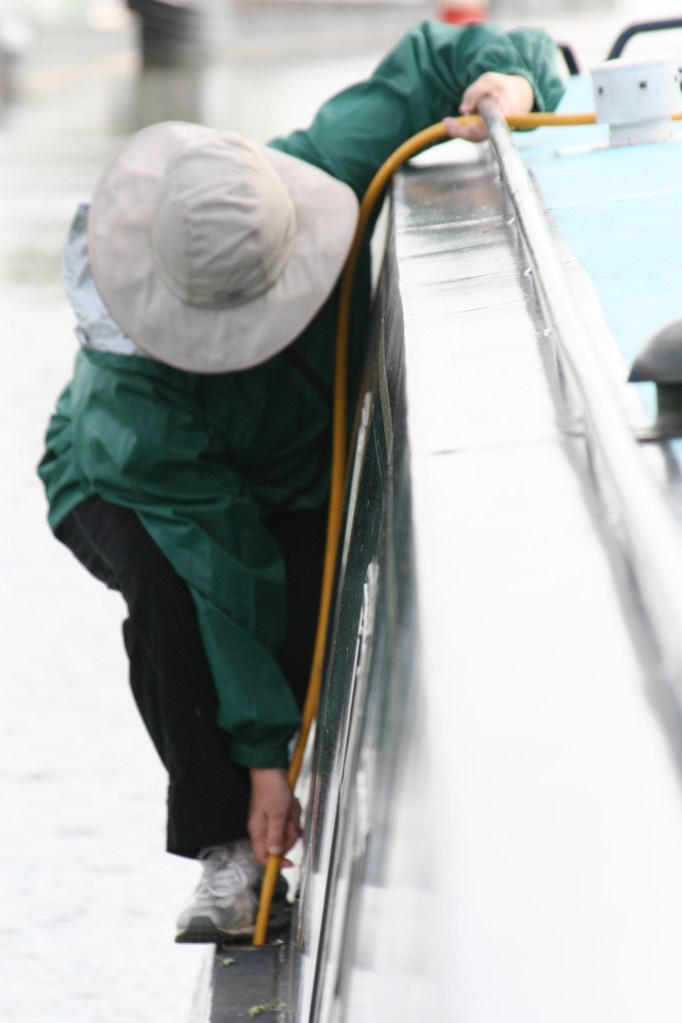
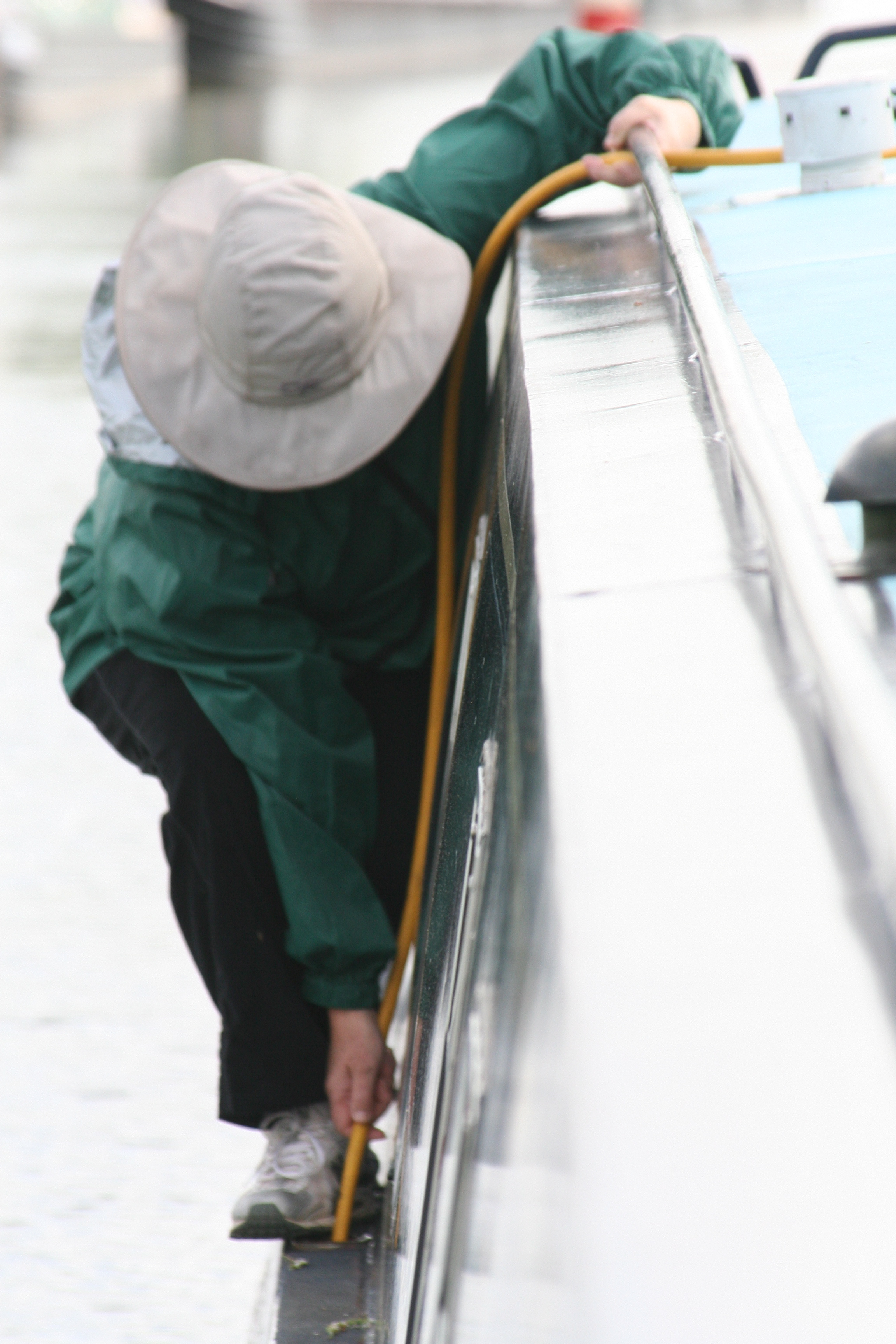
Peggy hangs over the edge while filling the boat with water.
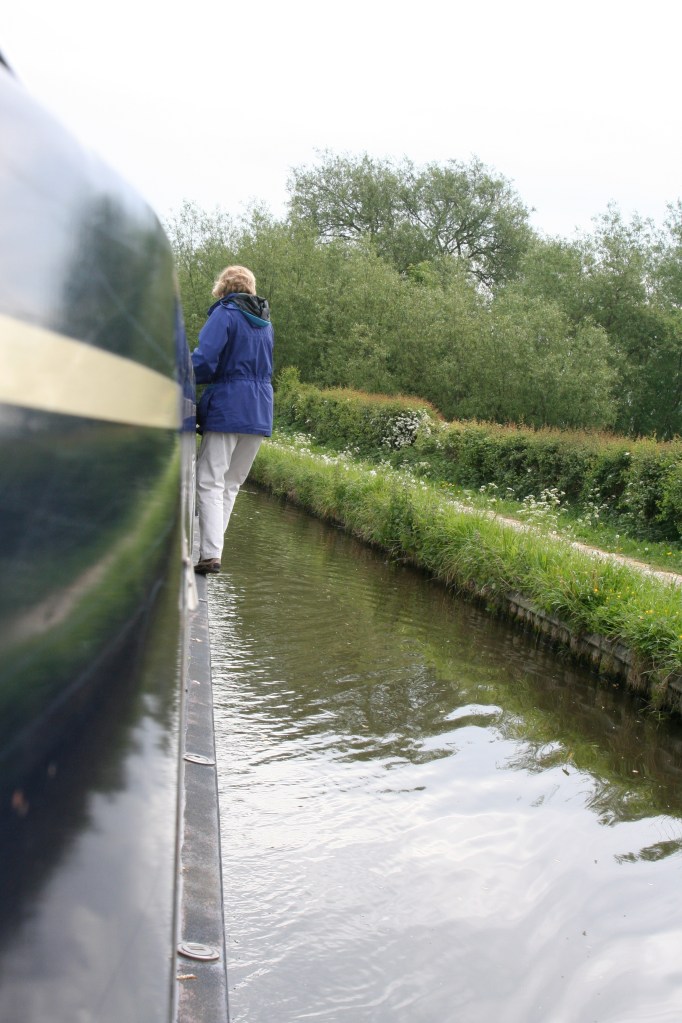
Jane walks the gunnel.

Upon arrival at Sawley Marina we were provided with two hours of training for our adventure. That was it. Afterwards we were turned loose with the 16-ton barge for on-the-job training.

Canals are found throughout England. Once upon a time they were vital to the nation’s economy as transportation corridors. Reflecting the good taste of the Brits, beer was one of the major items transported over the Trent and Mersey.

Now the canals are mainly used for recreational boating… primarily by brightly colored, cleverly named, narrow boats. We also talked with a number of people who live on their boats year around.
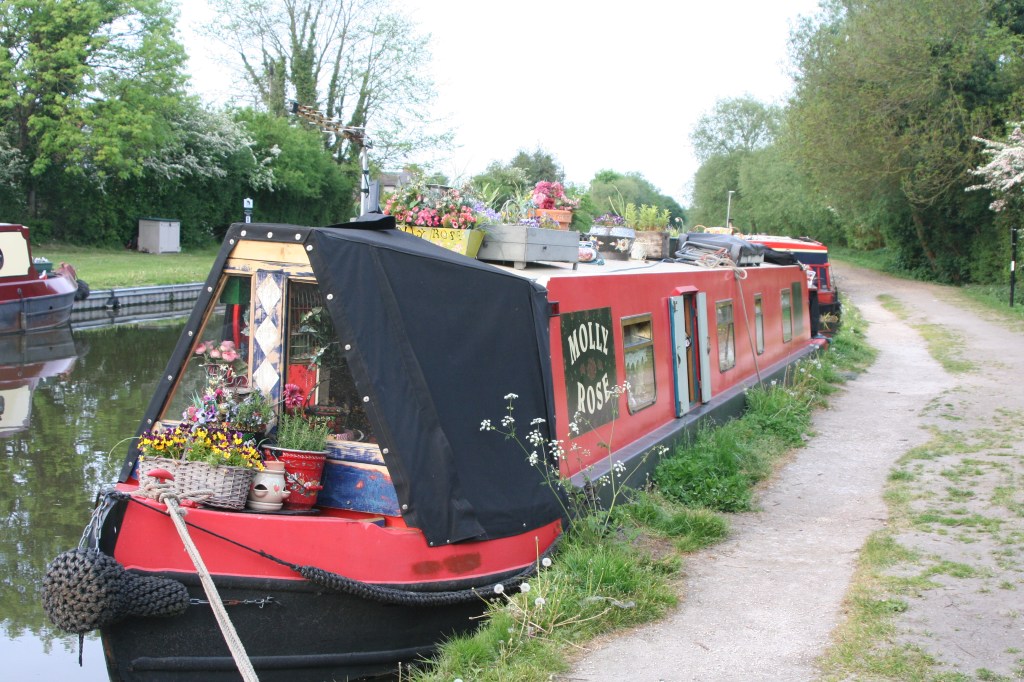
Owners work hard to give their boats individual personalities as is demonstrated here by the Molly Rose. Bright colors, flowers and names such as Belly Button and Simmerdown add to the character.
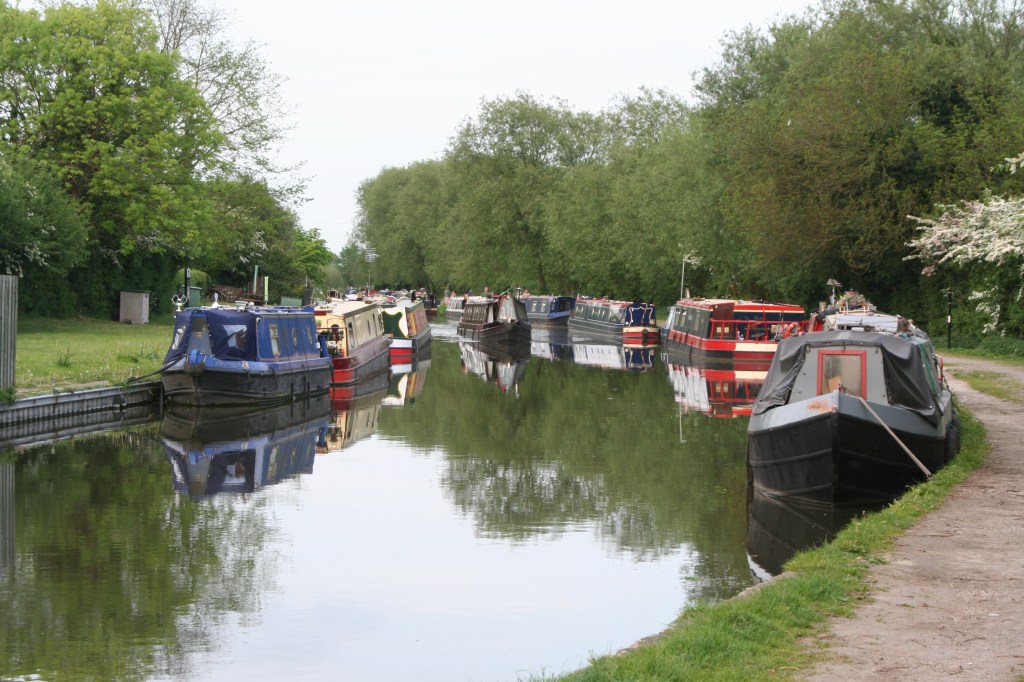
Boats were found wherever mooring was good. (And a pub convenient.)

Although we came uncomfortably close to hitting a couple of boats (give or take five inches), banged into the shore several times during mooring (as expected) and grounded the boat three times (Jim won 2 to 1), the adventure was quite enjoyable.
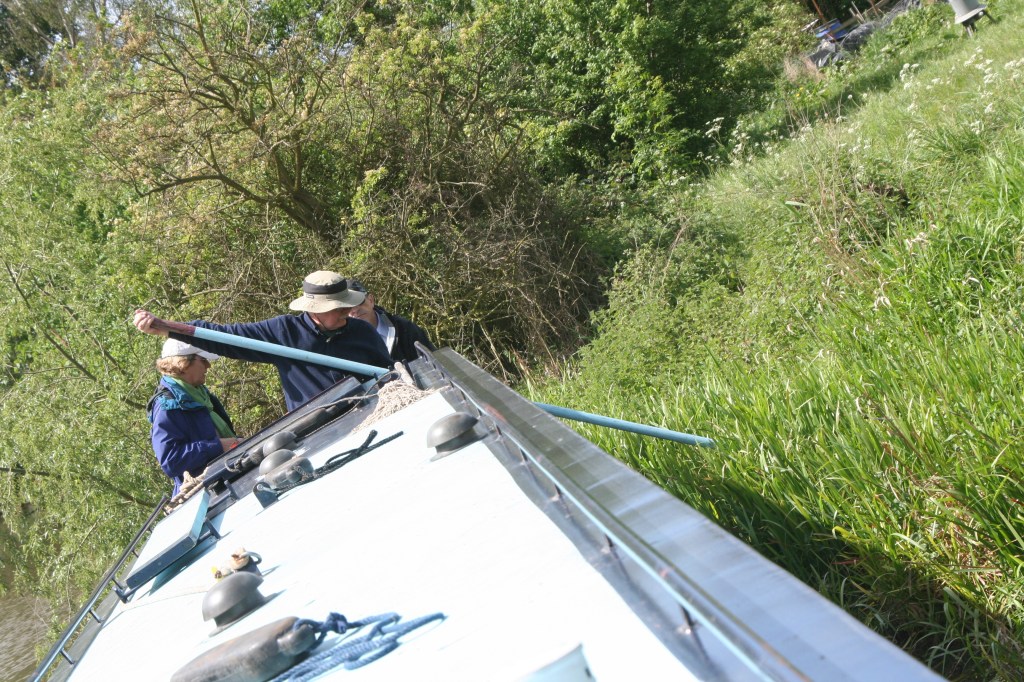
“Mudflat” Jim grounded the boat. I work hard to pole it off.

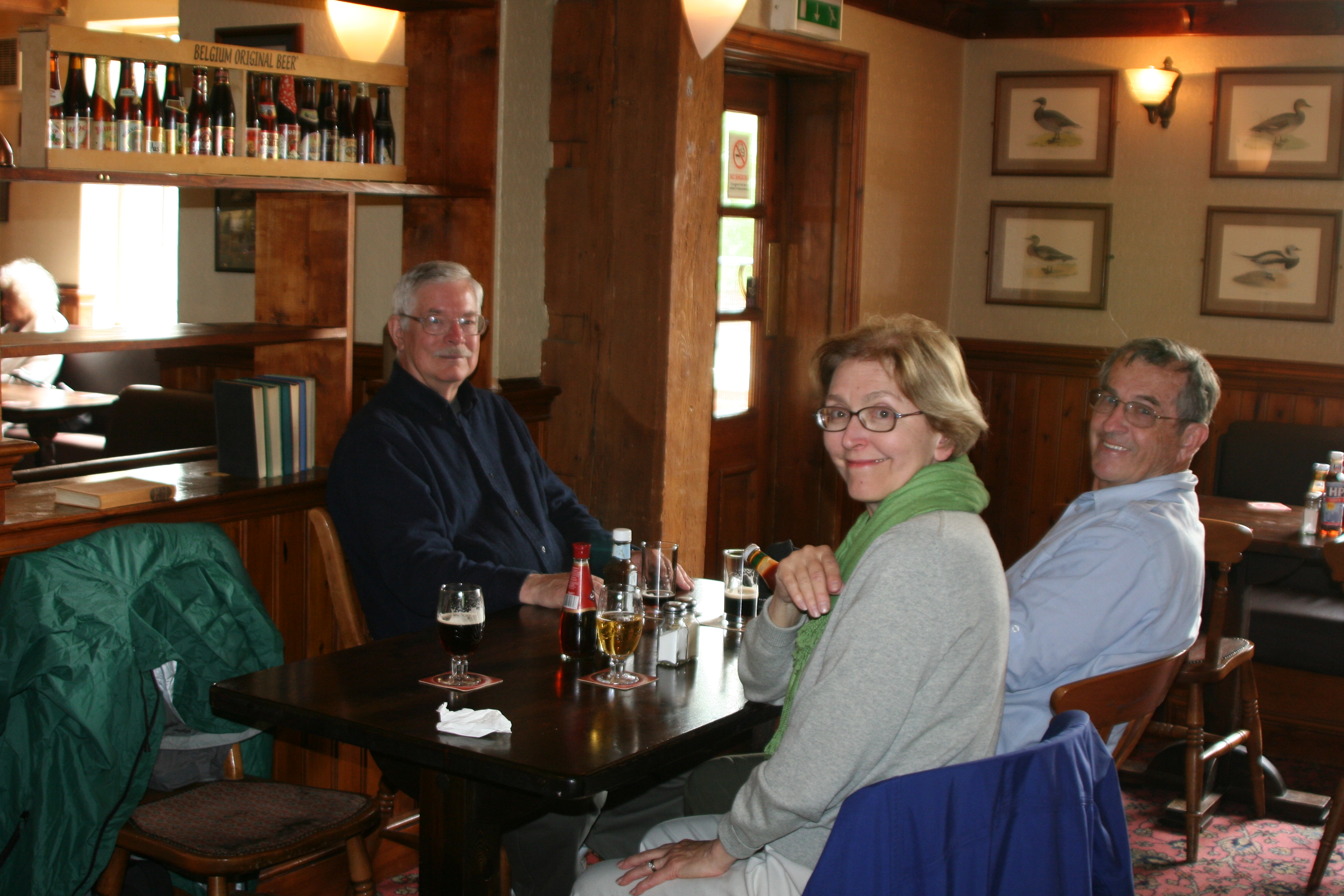
Picturesque countryside, abundant bird life, and attractive villages entertained us along the way.  Pubs served surprisingly good food and even better ale. I worked hard to sample all of the local brews. Even Peggy developed a taste for dark beer.
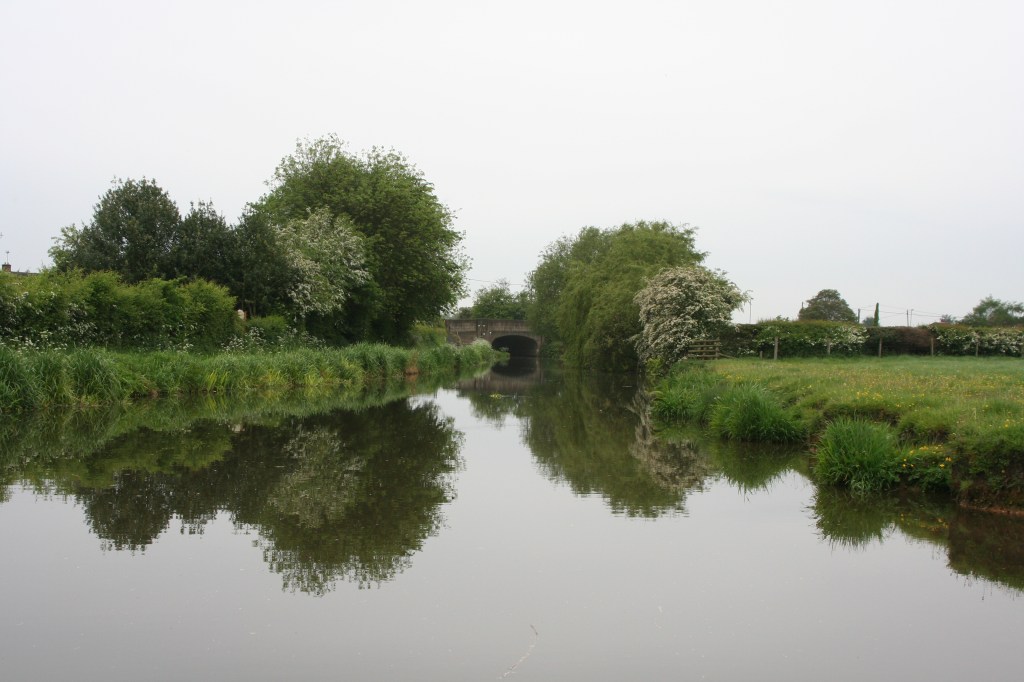
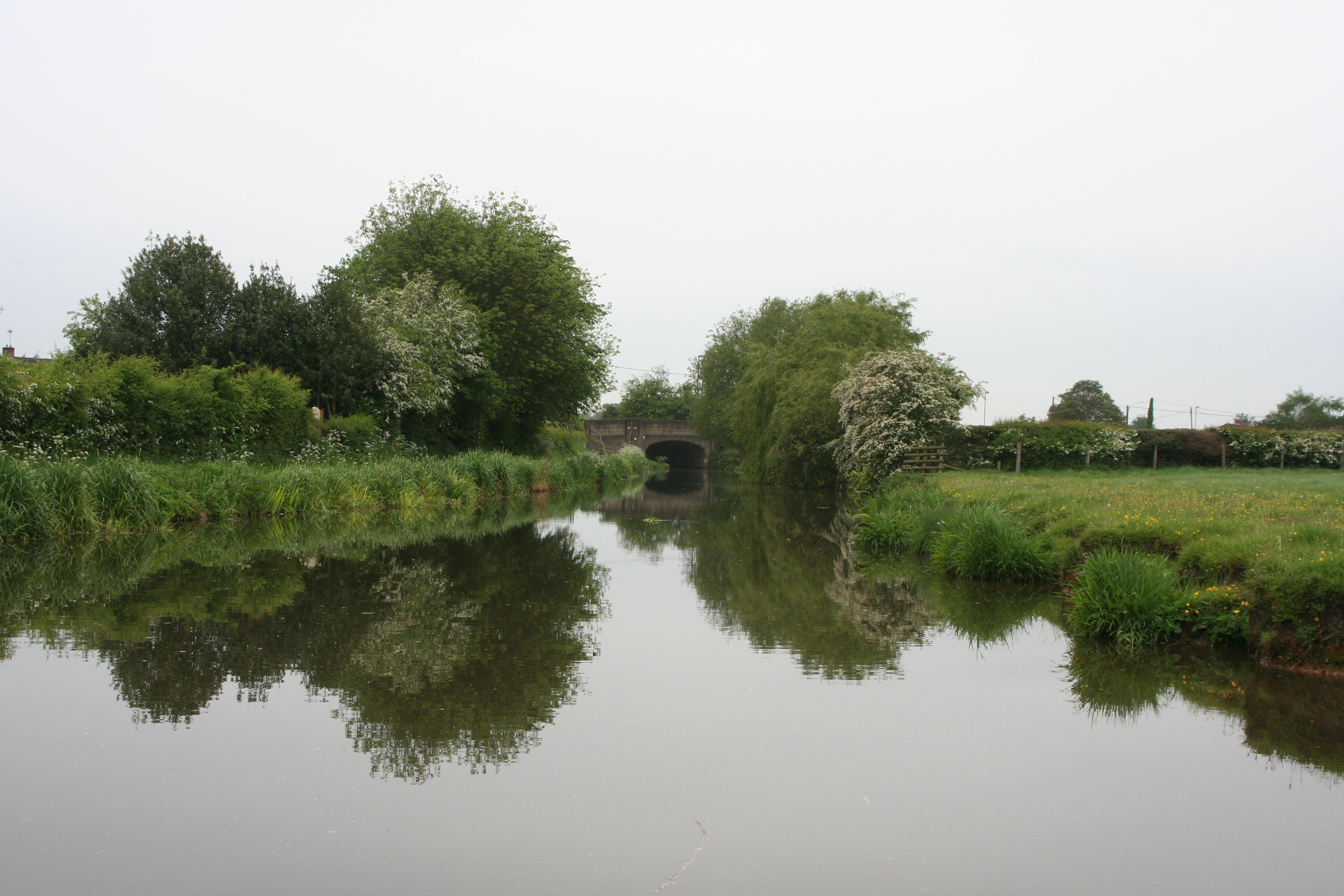
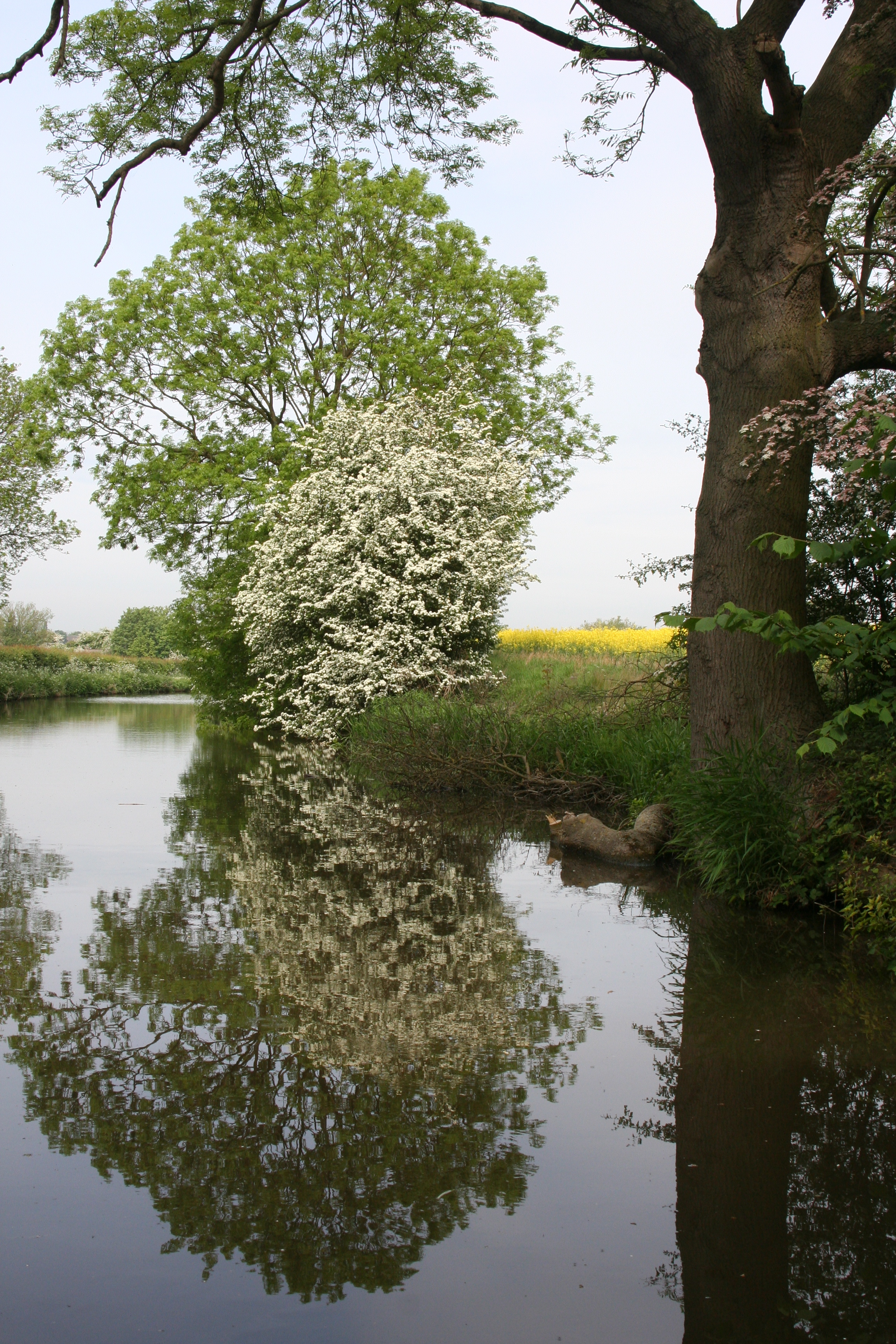
There was much beauty along the way as this tranquil scene shows.
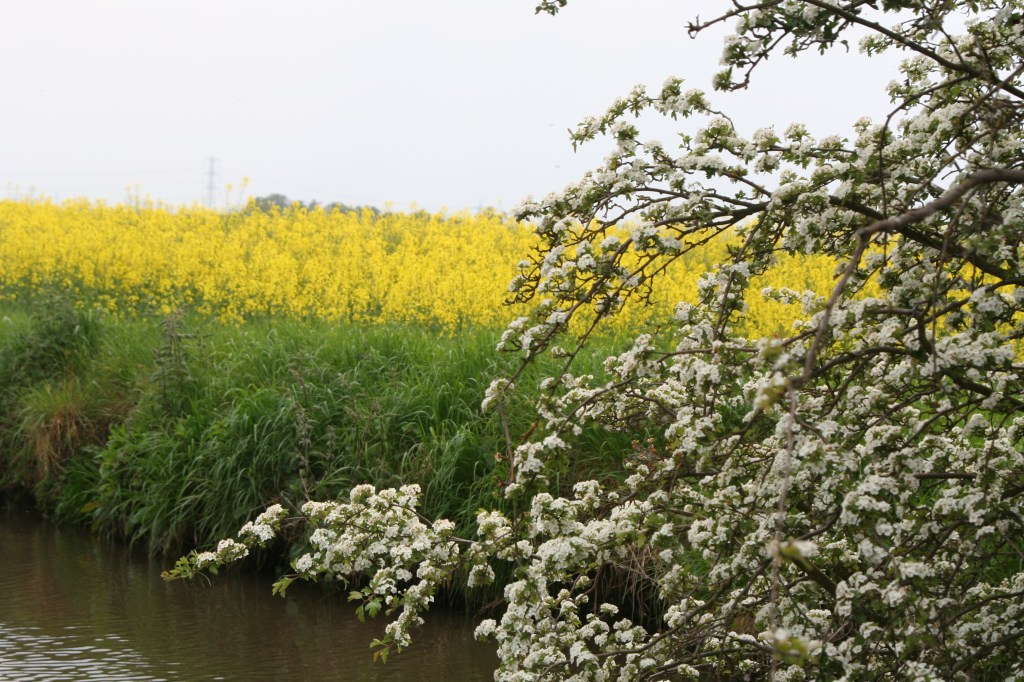
Peggy loved the brightly colored flowers that were found in both fields and towns.
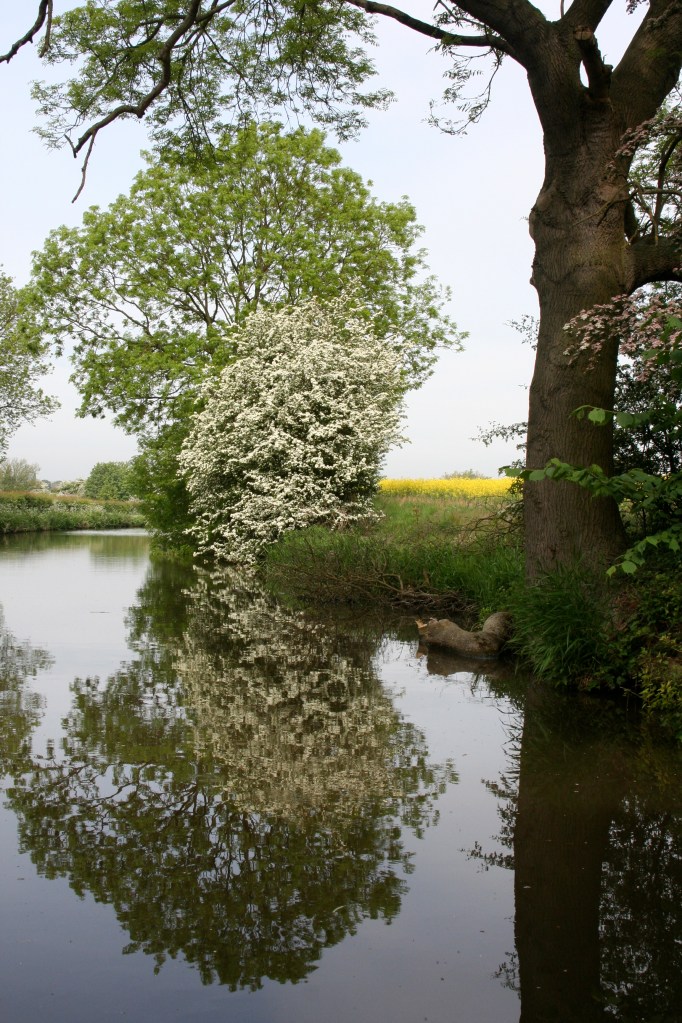
And I have always had a weakness for reflection shots…
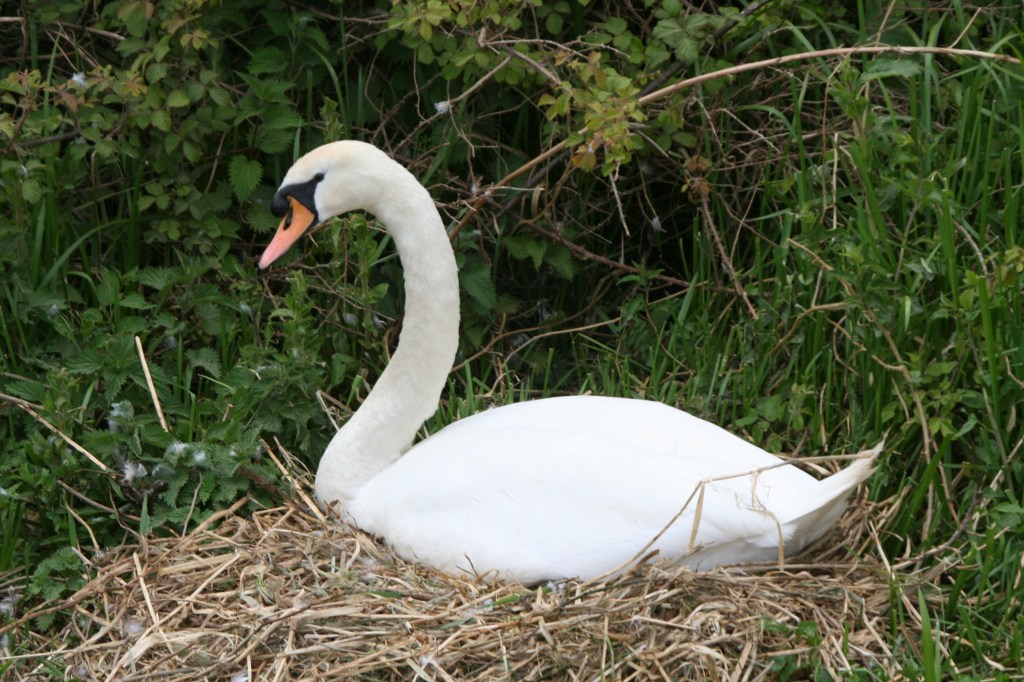
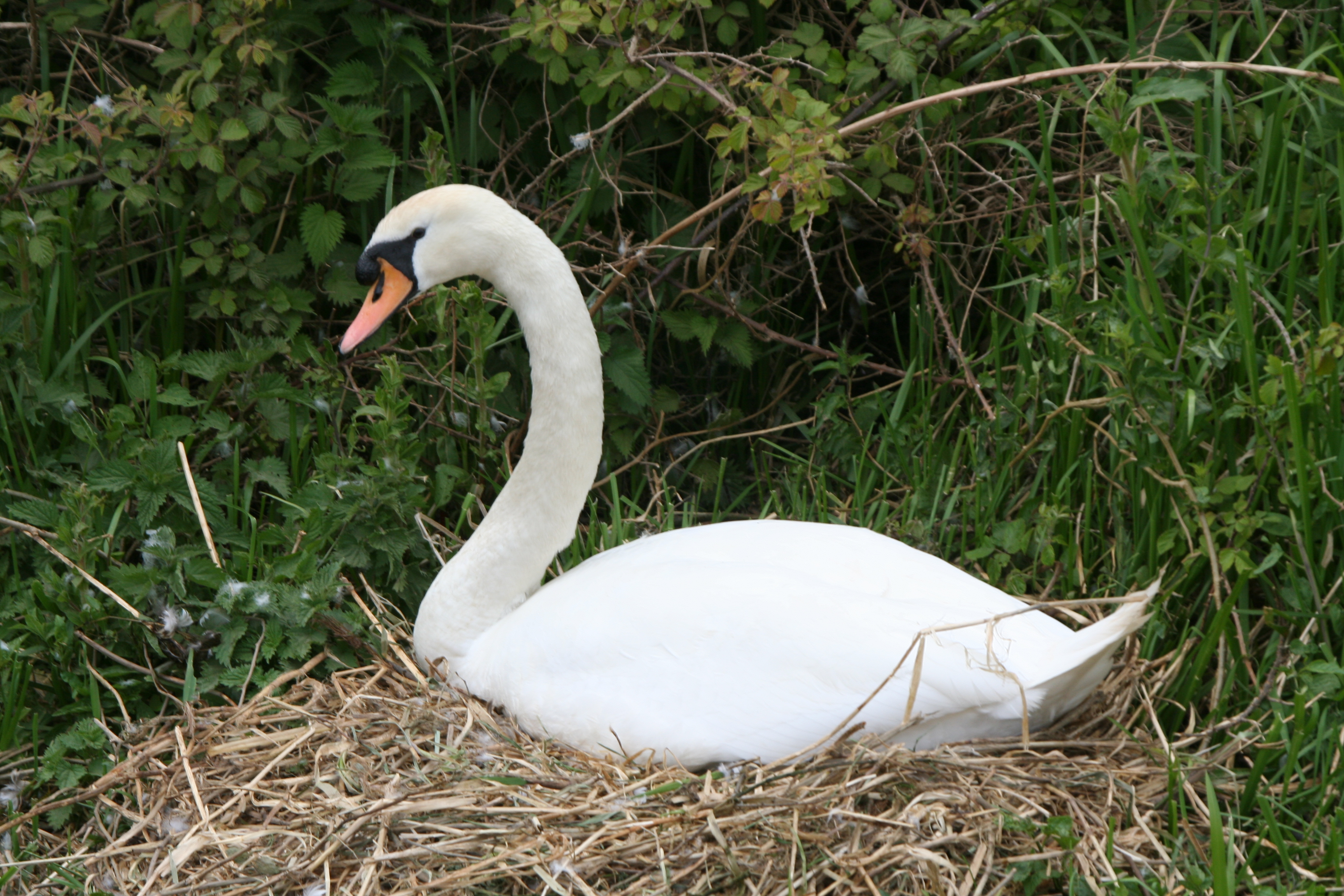
Bird life was abundant along the canal. We took photos of this nesting swan coming and going.
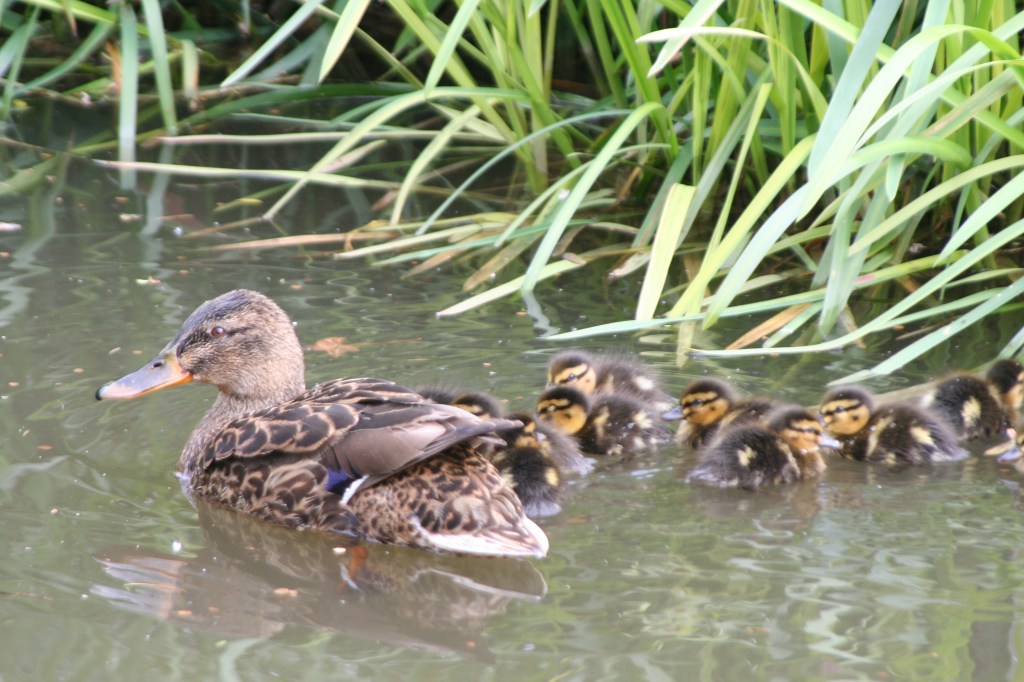
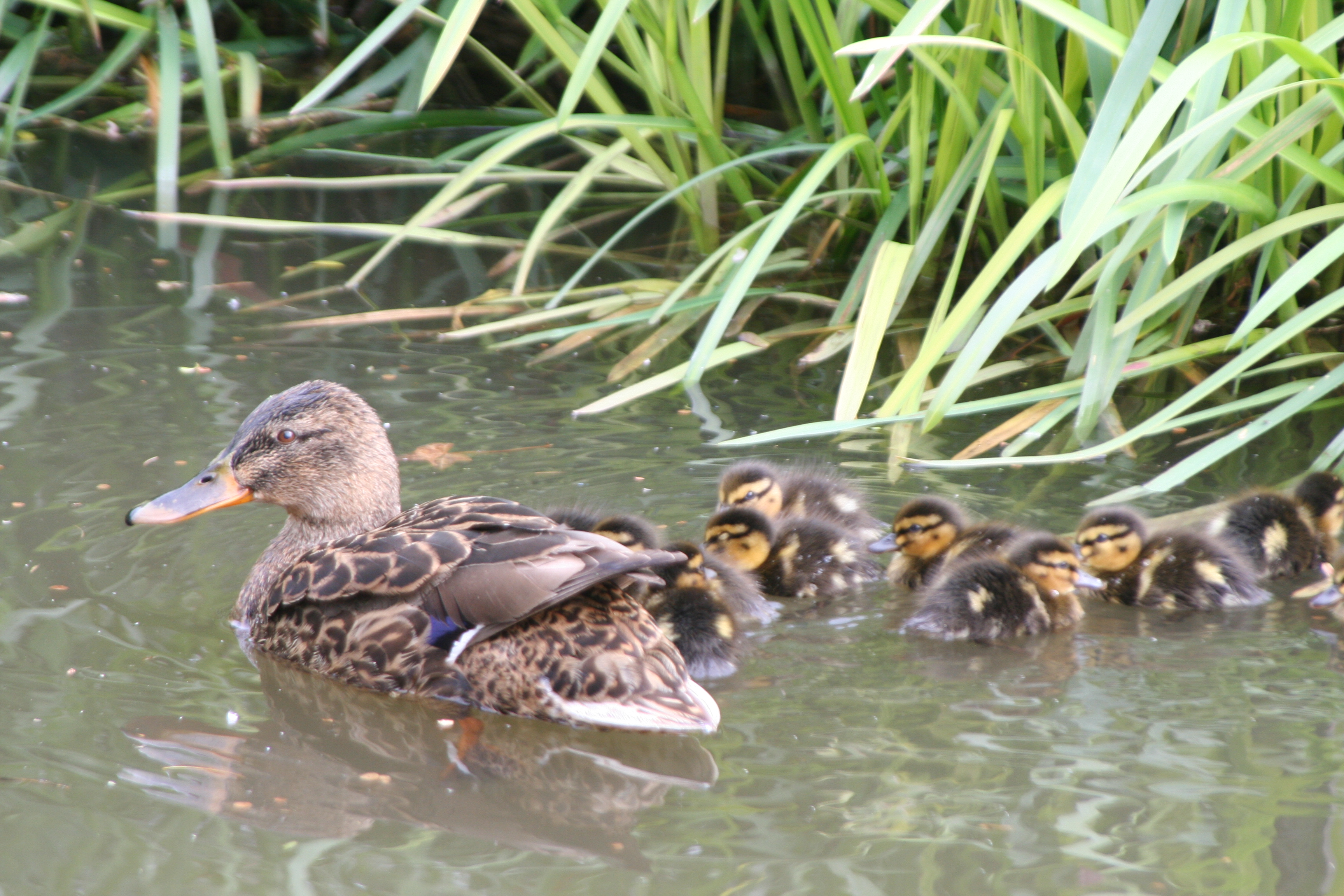
This Mallard Hen was one of many with babies. They would wait for our boat to pass and then swim along behind us. I wasn’t sure whether they were taking advantage of food we stirred up or drafting, like bicyclists do.
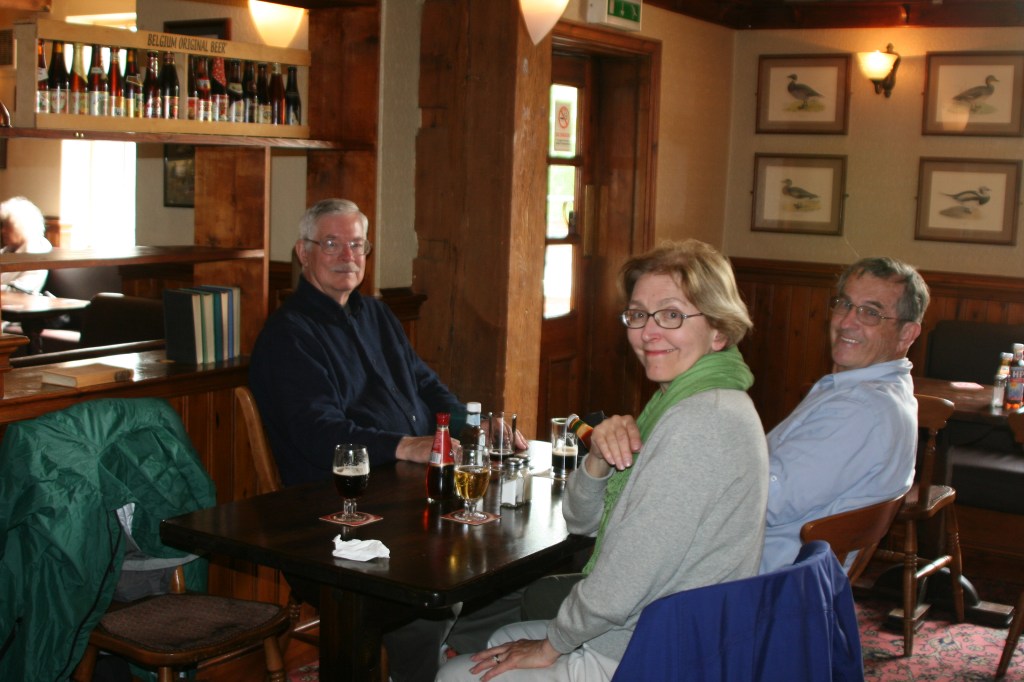
We always found colorful pubs with excellent English beer and good food.
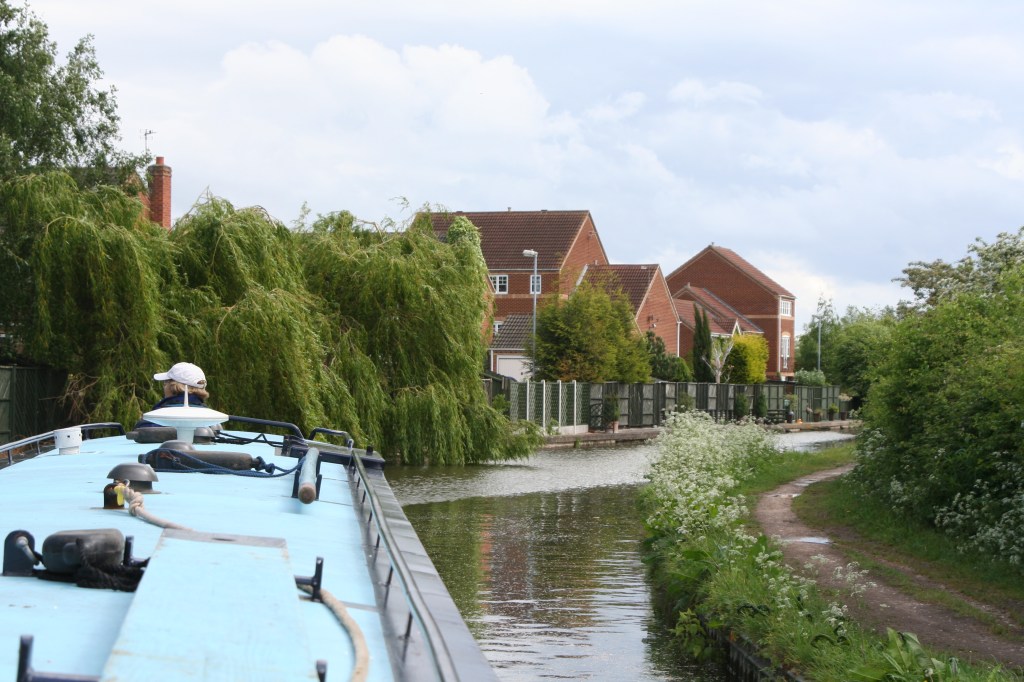
Several small towns along the way provided an interesting contrast to the rural areas.

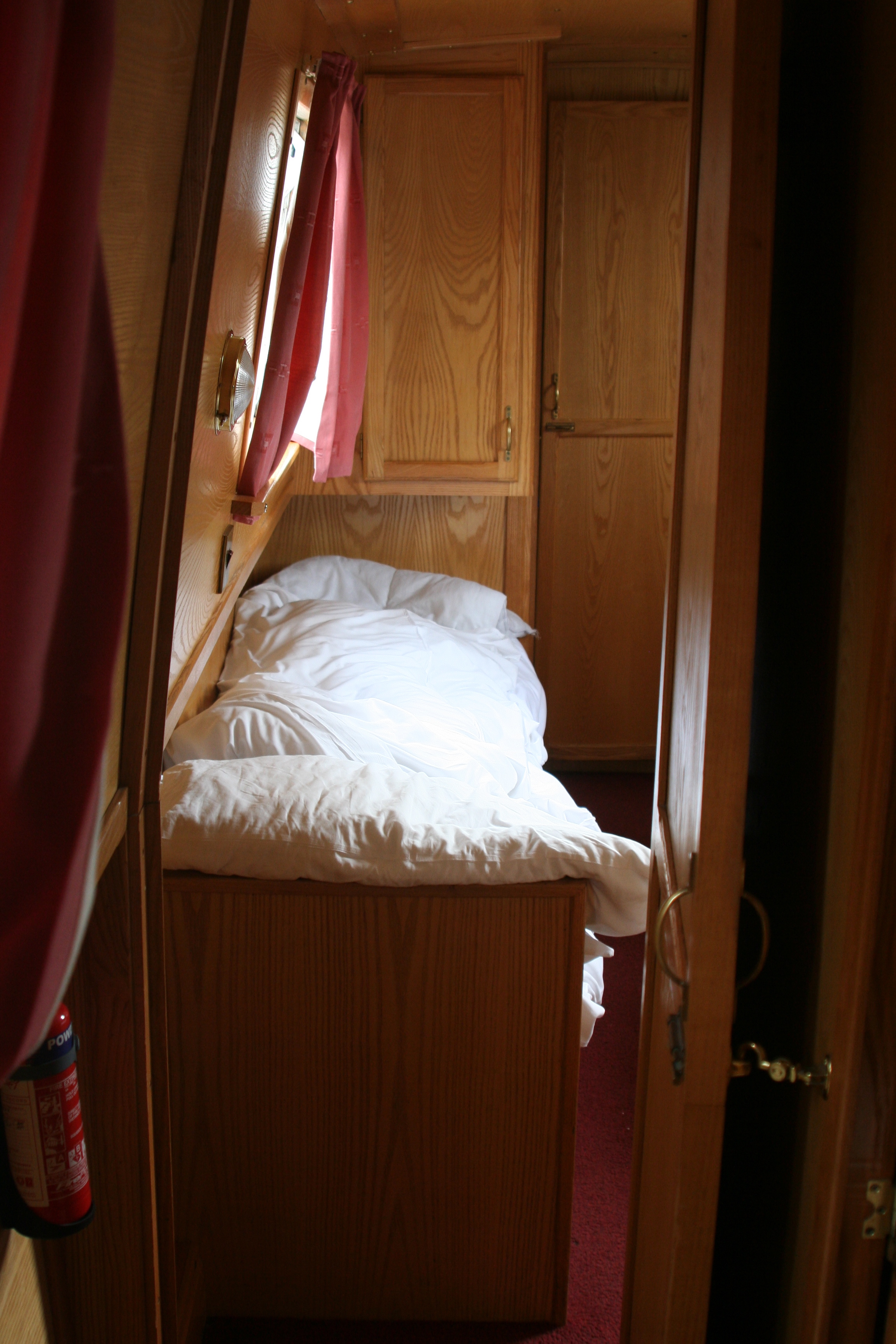
Accommodations on the boat were quite comfortable. There was sleeping for six, a gallery and two bathrooms.  Jane and Jim’s beds were a wee bit narrow, however… make that body wide, and one of the bathrooms required a shoehorn for entry.
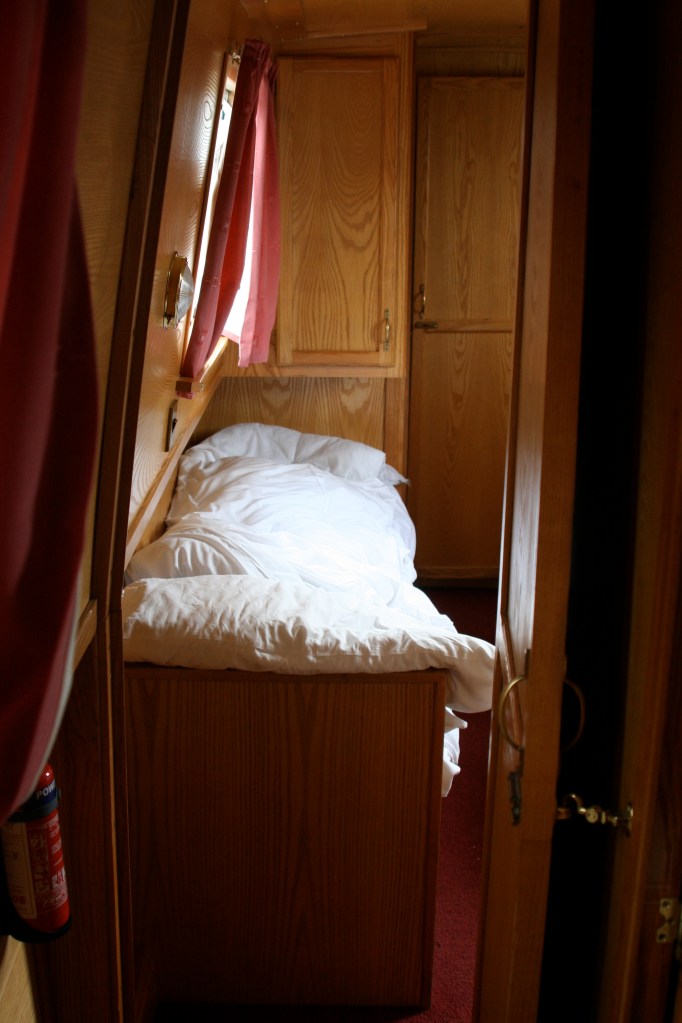
Jane’s narrow bed…

You learn a lot about each other on a small boat. For example, Jim likes coke and peanut butter toast for breakfast. The only exception was when he substituted a mixture of orange juice and beer for his coke.

Jane believes it is totally uncivilized to use paper towels at meals, period. Those who know Jane will understand this. She began to ‘borrow’ napkins from the pubs. Peggy, in order to keep her sister from a life of crime, started neatly folding our paper towels to look like napkins.

I didn’t ask Jane and Jim what they learned about us…

Time slowed down on the boat. It had to considering out top speed was three miles per hour. We arrived at Burton on the Trent and turned around to return to Sawley Marina. Scotland and dead ancestors were waiting.
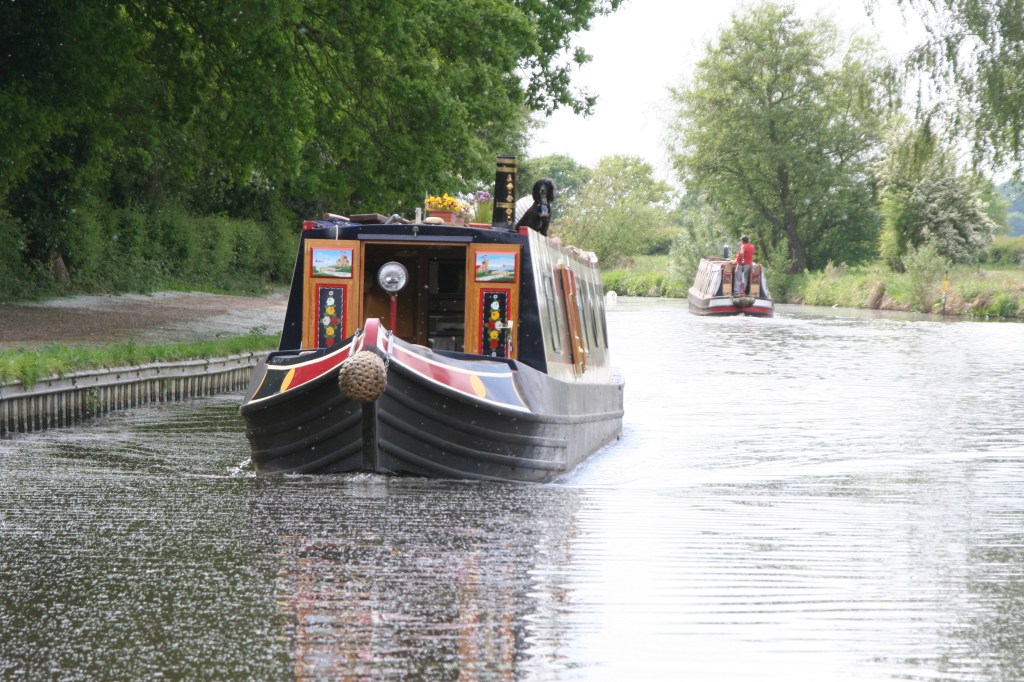
A final view of life on the Trent and Mersey Canal.
Furniture Mart or Zoo or??? … The Art of Puerto Vallarta

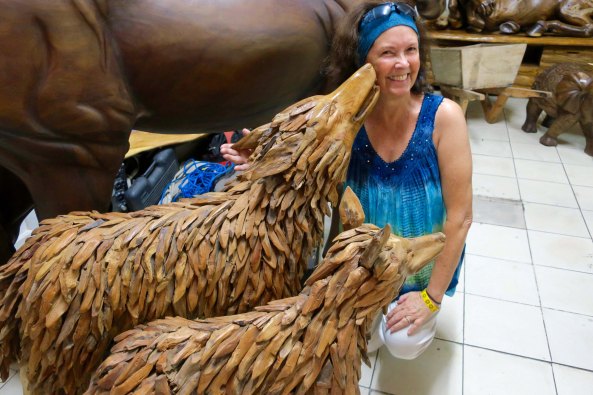
A friendly wolf licks Peggy’s face at the Furniture Mart in Puerto Vallarta.

Peggy and I have been coming to Puerto Vallarta, Mexico for a long time, long enough to see the lovely two and three story hotels along the north beach replaced by would-be sky scrapers that encroach on more and more beach.

We always stay at the Krystal Hotel, which is located along the main road between the airport and downtown. Years ago, we bought a time share here. It’s not something you do as an investment, regardless of how fast the sales people talk or whip out figures that you are not allowed to take away and study. In fact, there are much less expensive ways to see Mexico. Forget what we paid originally, the ever-increasing maintenance fees alone would easily cover an annual visit to PV, or anywhere else in Mexico.

But Peggy and I like the staff, our villa comes with a swimming pool, and we have fallen in love with Puerto Vallarta: its art, great dining, tropical sunsets, friendly people and amazing wildlife. There is even a taste of more traditional Mexico once you escape from the popular tourist areas.

I’ve blogged a fair amount about the town, more than I remember. I laughed a couple of days ago when I was doing Google research on PV’s public art, came across a promising heading, clicked on it, and landed on my blog.  

I’ve even blogged about the furniture store directly across the road from the Krystal. And I am going to blog about it again— today. I can pretty much guarantee that it is unlike any furniture store you have ever seen. It all started as a failed restaurant. Peggy and I ate there once upon a time.The food was good but the customers were scarce.
The family scurried about,searching for some other way to make a living and decided to make furniture.They also decided to sell art decorations for the home, everything from cute little ceramic frogs to giant metal rhinos. Collecting unusual items became something of a passion.

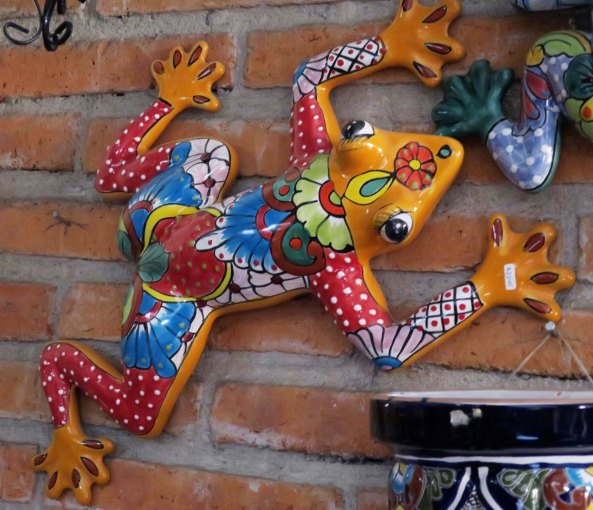
There must be hundreds of ceramic frogs hanging out at the Furniture Mart. This one is a cutie, complete with eyelashes.
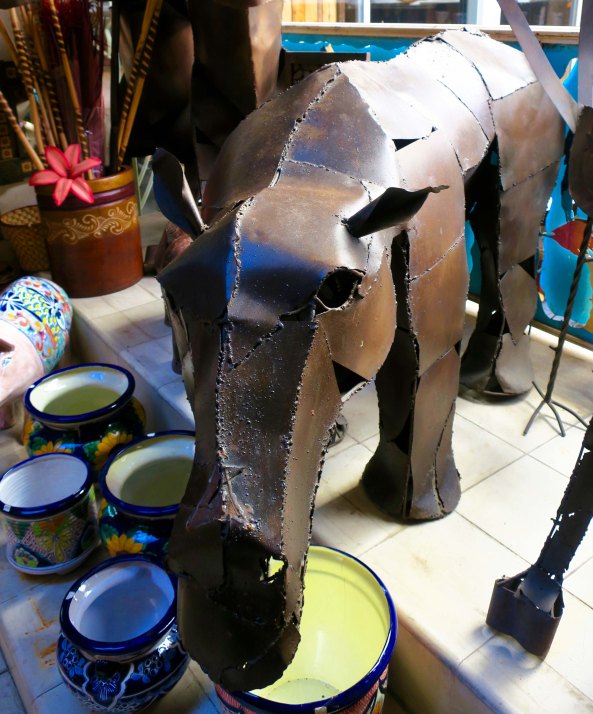
Contrast it with a full sized metal rhino!

The three, or four, or maybe five story structure feels like an Escher painting where you meet yourself coming and going. It is crammed full of art, wood carvings, pottery, strange statues, masks, and Mexican knick-knacks galore, as well as very unique furniture. There are thousands of items. The family of Carlos Paez Coronado describes their building as the Furniture Mart, the largest store of its type in Mexico, and a museum.

We visited this time with Peggy’s sister Jane and her husband Jim who were staying at our villa with us for a week. Jane loves ceramic plates and has dozens of them. We knew she would like the store. Senior Pepe greeted us and assured us that if we bought any item costing a few grand and weighing who knows how many pounds, he would personally deliver it to our doorsteps in Oregon or Sacramento. (Anyone need a 20-foot-long table?) He and his brother fill up a truck with purchased items and make an annual trip across the border. We disappointed Pepe on the mucho grande sale, but Jane almost bought enough plates to make up for it.

I have enough fun wandering through the Furniture Mart that I am going to do three posts on it: One on the wonderfully wild (and tame animals), one on the pottery, and one on the furniture and weird things. Today it is all about animals!

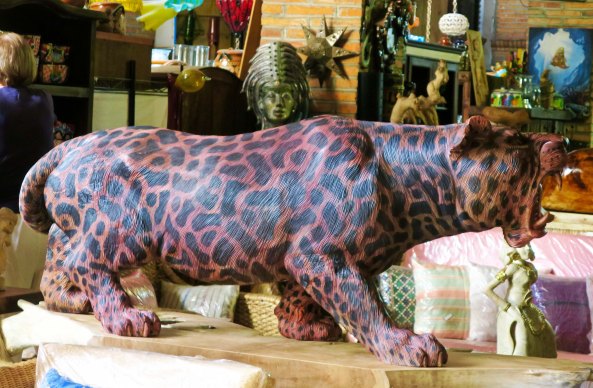
A ferocious jaguar stalking across the floor.
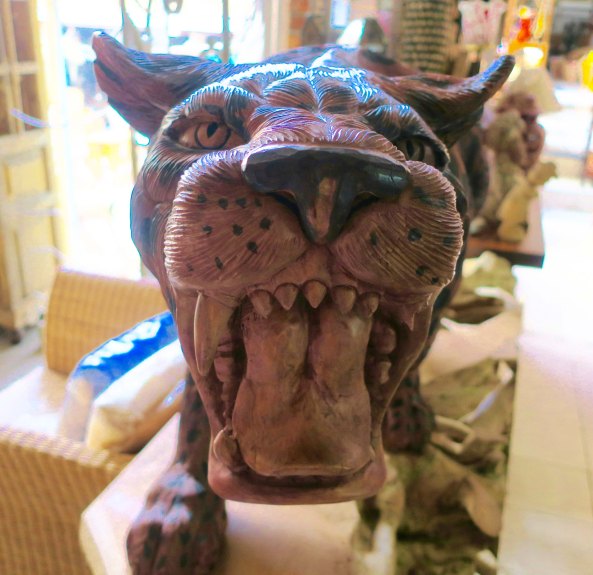
With big teeth.
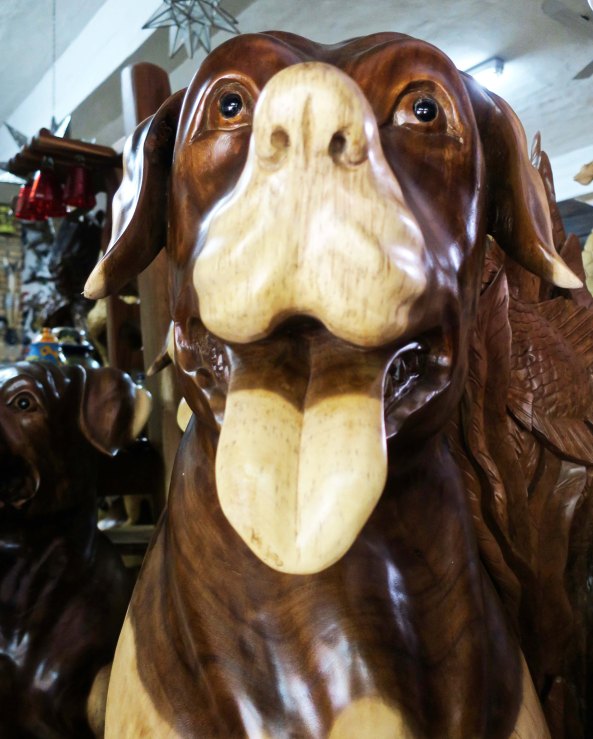
A friendly dog…
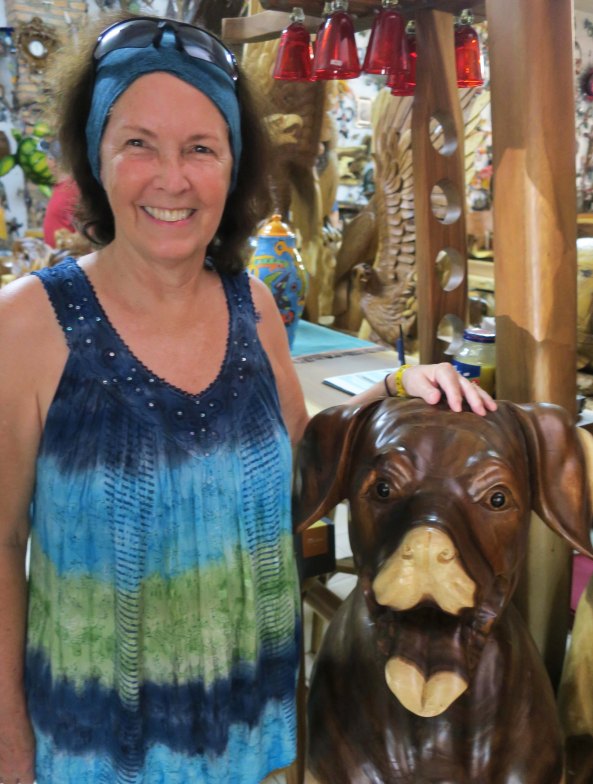
That Peggy pets.
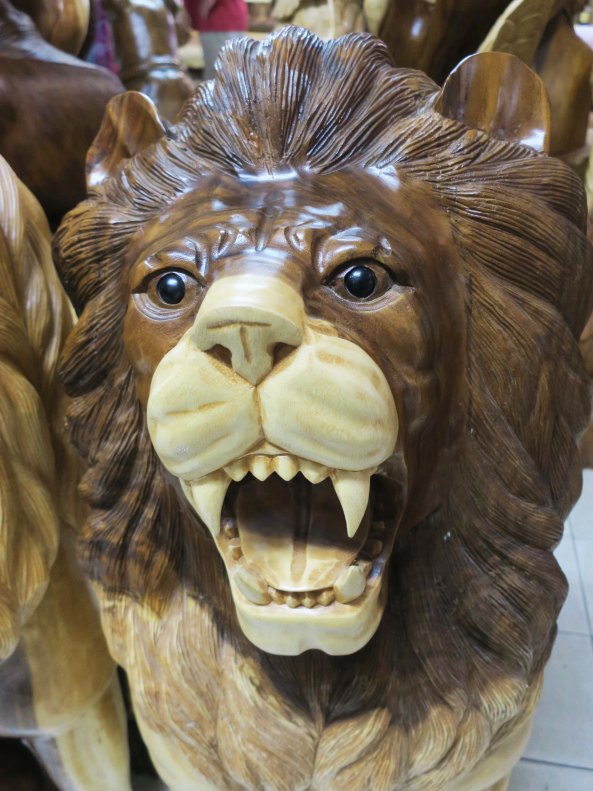
A toothy lion.
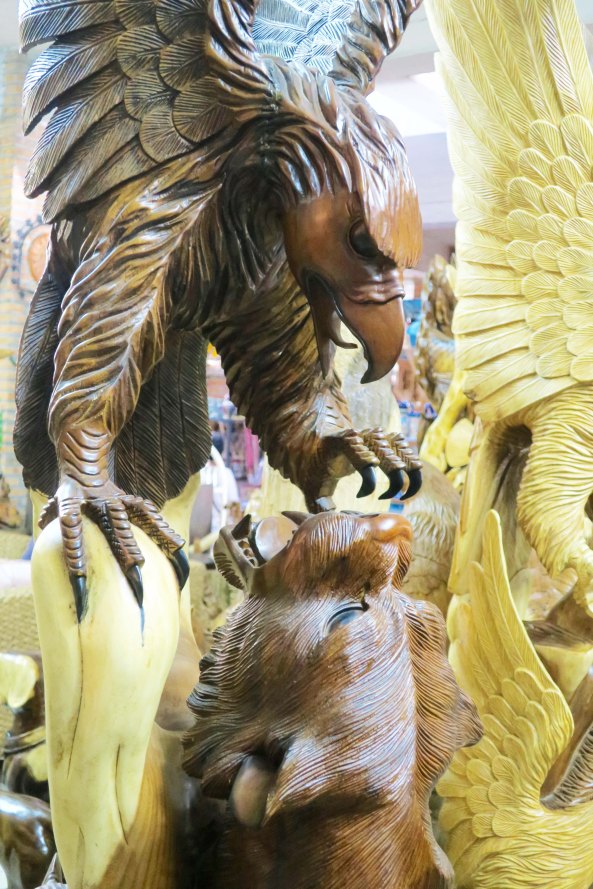
An eagle and a jaguar have a discussion about which is most ferocious.
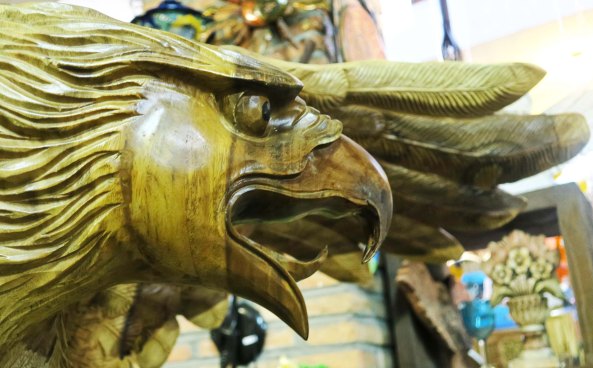
Given this eagle, I’d say a toss-up.
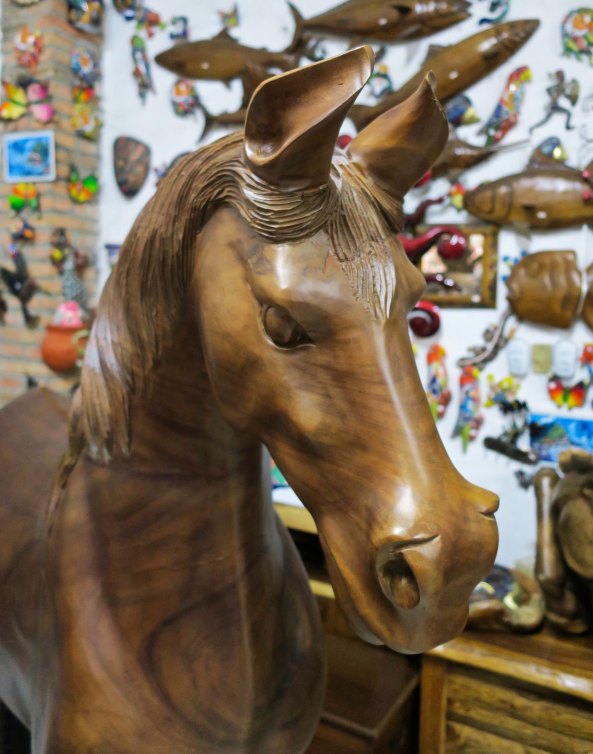
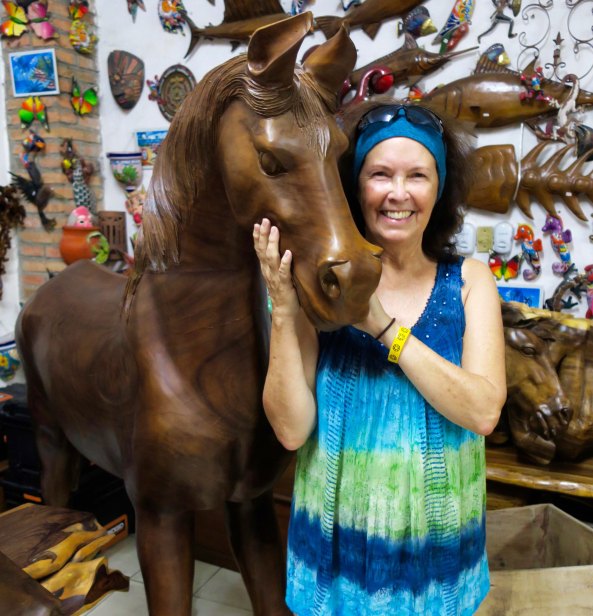
A realistic carved horse…
That Peggy befriends.
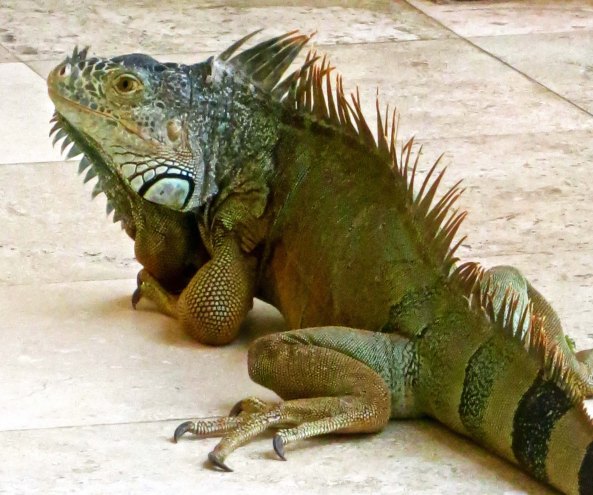
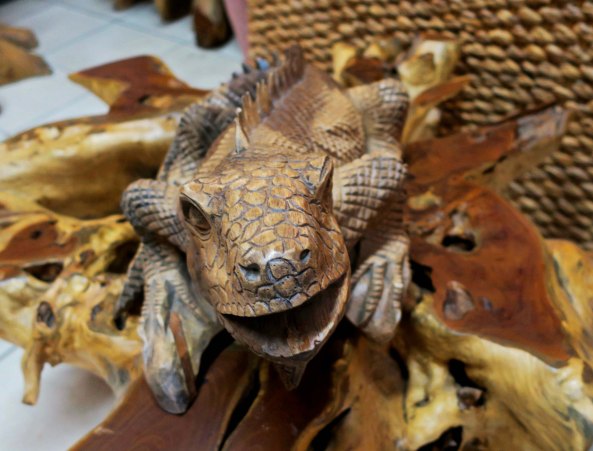
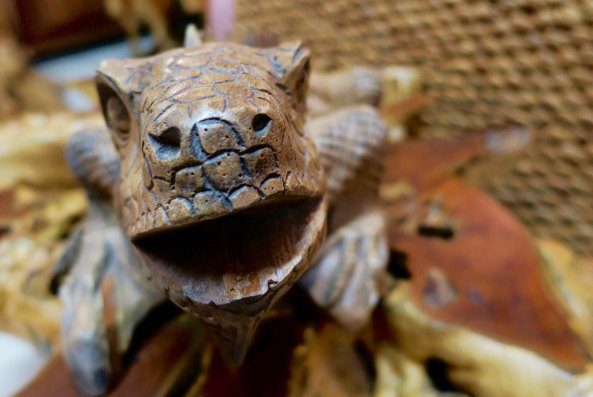
Puerto Vallarta’s favorite lizard: The iguana. I’ll be doing a post on these big fellows.
Head shot!
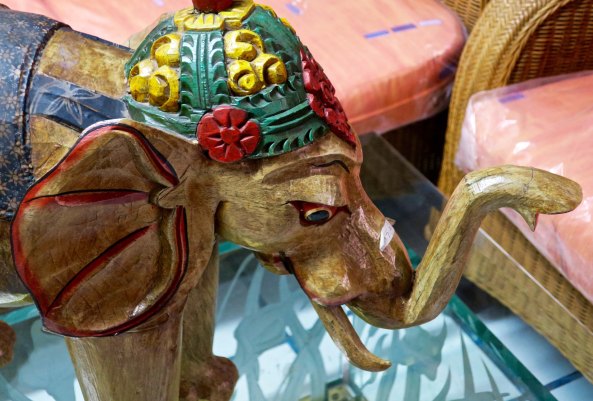
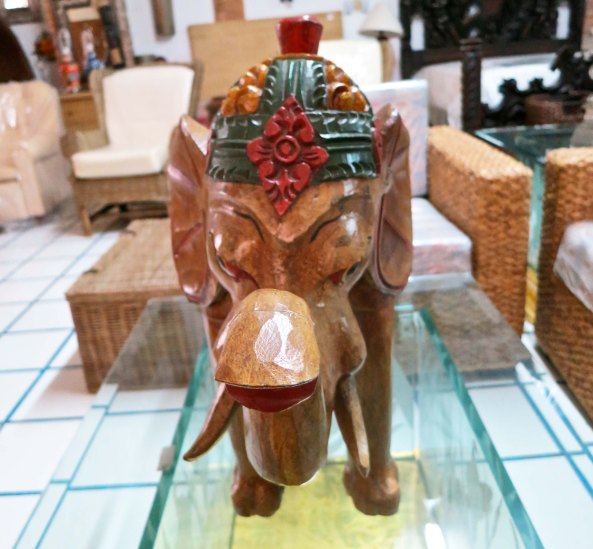
A turbaned elephant…
A trumpeting trunk.
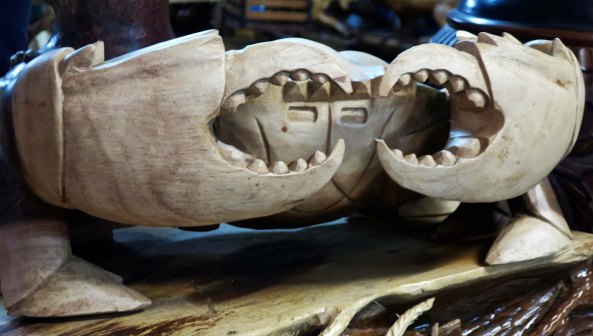
A crabby crab.
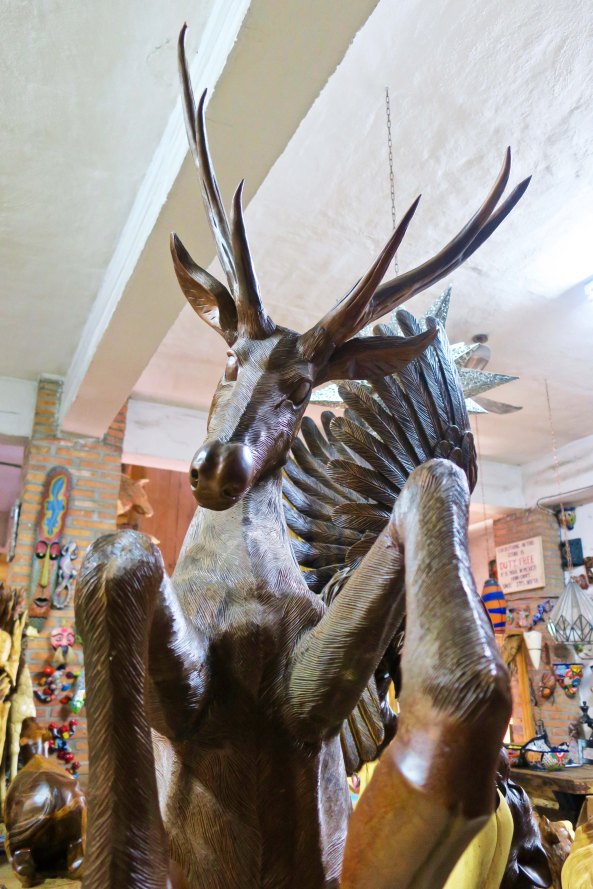
A fighting stag displays its hooves.
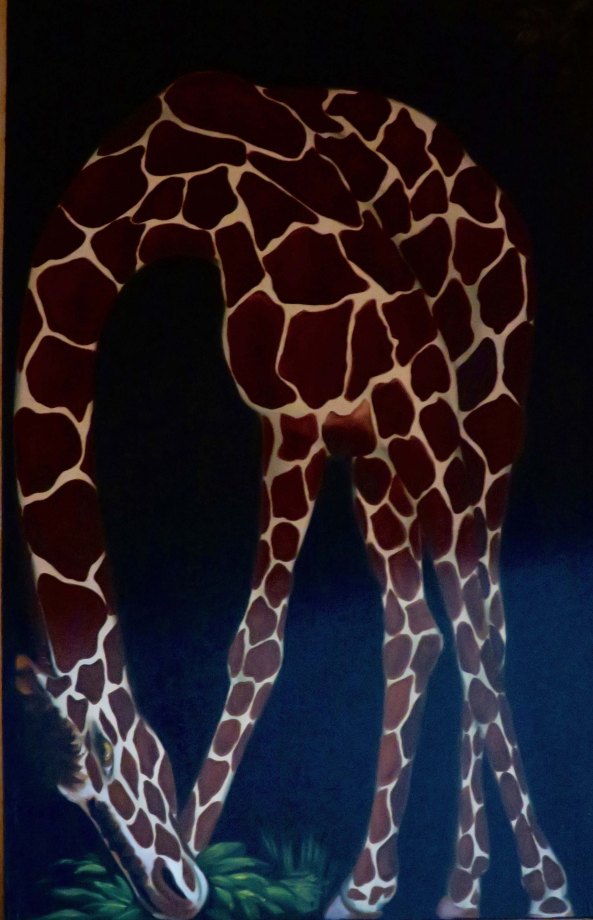
I’ll conclude my exploration of the Furniture Mart today with this striking painting of a giraffe. Next up on the Mart will be ceramics ranging from pigs to plates.

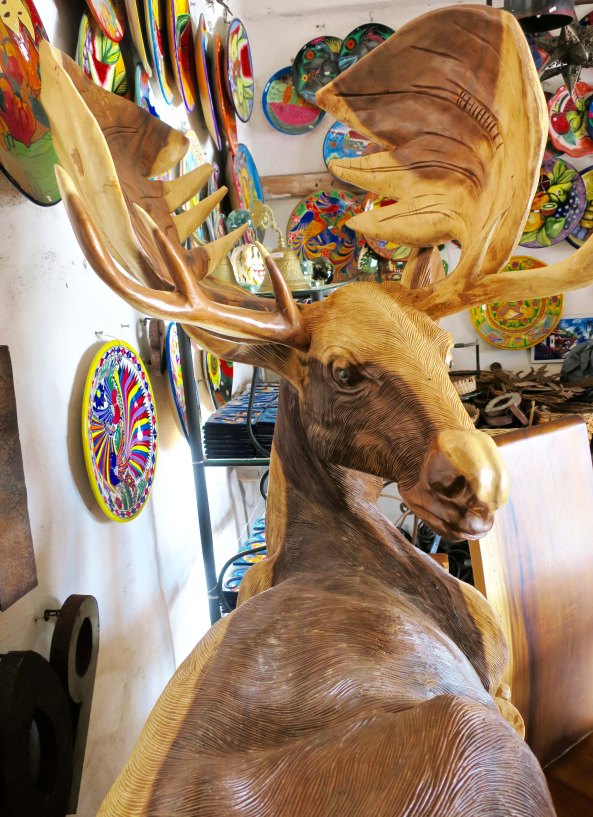
It’s Turkey Day here in Puerto Vallarta, so Peggy and I will be heading out for a traditional Thanksgiving dinner. Several restaurants cater to the day. But I couldn’t find a turkey to represent the holiday…

So, a moose will have to do!

HAPPY THANKSGIVING to all of our Internet friends! –Curt and Peggy. 

Rome’s Colosseum… Where Hippos and Rhinos Once Fought

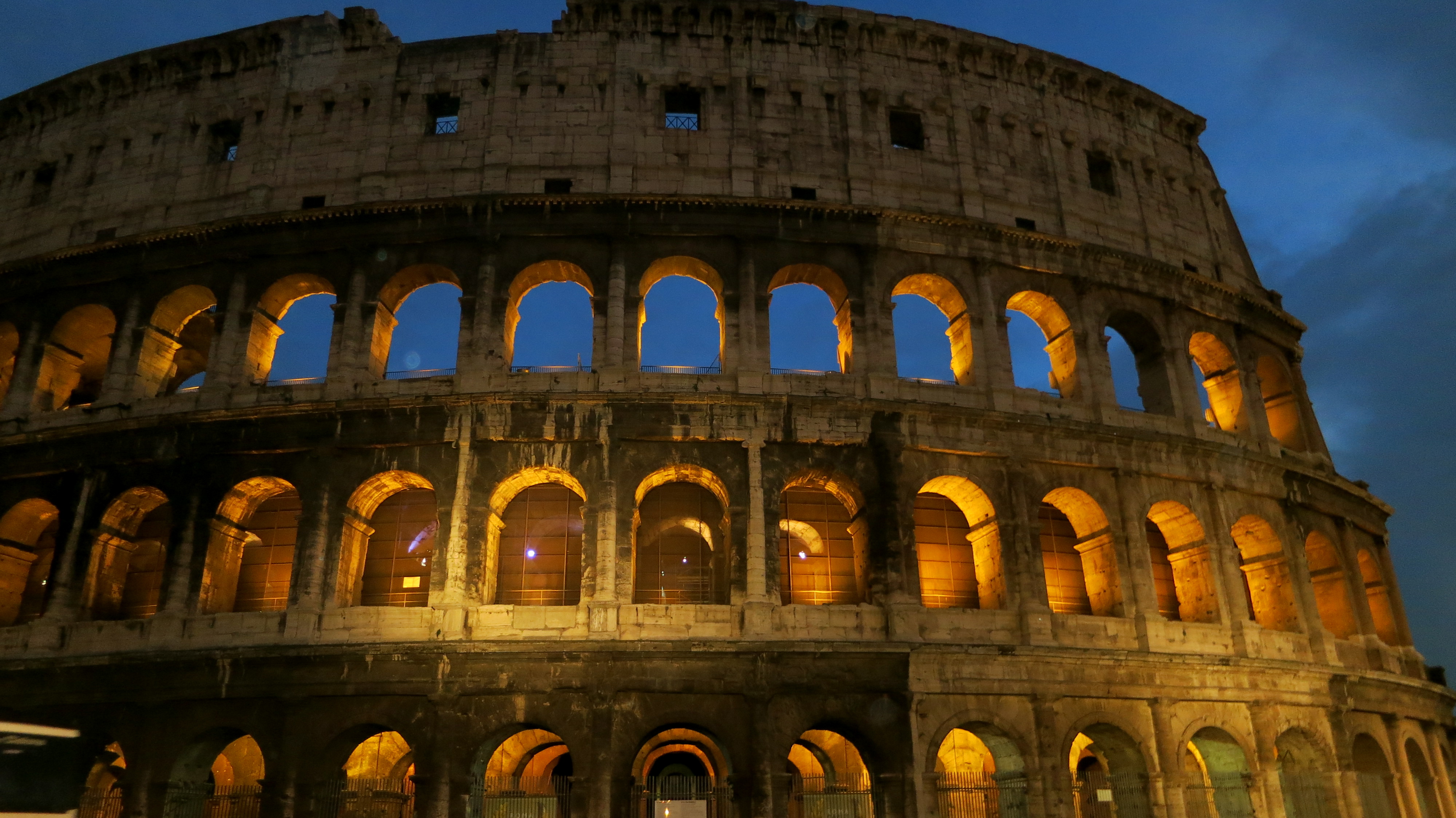
The Colosseum in Rome

Rome’s Colosseum lit up at night.

This is the third in my series of introducing new followers to what they can expect to find on my blog. This series reflects a trip that Peggy and I took visiting a number of locations in the Mediterranean. Go here and scroll forward or backwards to discover more of the series:  https://wandering-through-time-and-place.com/2013/05/01


I first viewed Rome’s grand memorial to gladiators in 1967. I was as impressed with the number of feral cats living in the ruins as I was with the structure. Massive renovations have taken place since then. Today’s Colosseum is crowded with tourists instead of cats. We joined the throngs.

Cat in Colosseum.

This is the one cat I found in the Colosseum. I am sure it had aunts, uncles, cousins, parents, kids, etc. somewhere. But check out the stance… ears back, paw posed to strike. He was ready to take on a gladiator, or at least a camera toting tourist.

Originally the Colosseum was known as the Flavian Amphitheater, after the family of emperors who built it. Nero, who had a bad case of self-adulation, built a huge statue of himself nearby. It was known as the Colossus. At some point, the name was applied to the Colosseum. A later emperor, by the way, removed the head from Nero’s statue and affixed his own stone likeness on top. Why pay for a whole statue? It became the custom with each succeeding emperor. So much for everlasting fame…

When completed in 80 AD, the Colosseum could seat 50,000 screaming people. Some 2000 gladiators killed each other and 9000 animals over the 100 day inauguration.

While their taste in entertainment might be questionable, the Romans’ engineering abilities were superb. The Colosseum is high testament to this. Modern stadiums are still built on a similar model, designed to move large numbers of people in and out quickly. I was amused to learn that the Romans called the entrance/exit passages vomitoria– hence our word, vomit.

Spectators were issued tickets on pottery shards that listed their entrance gate, section, row and seat numbers. The higher your rank, the better your seat. The top rows were saved for slaves, foreigners and women. Some people, such as actors and gravediggers, weren’t allowed in the Colosseum at all. Now we elect actors as presidents and governors. Gravediggers are still gravediggers.
Painting in the Colosseum that illustrated a typical crowd cooking, eating, fighting and drinking.

The early Roman crowds have arrived for their day of entertainment at the Colosseum in this illustration of the upper tier. Cooking, eating, drinking, fighting and betting were all part of a typical day. As was carving graffiti  on the benches. (Illustration from Colosseum exhibit)

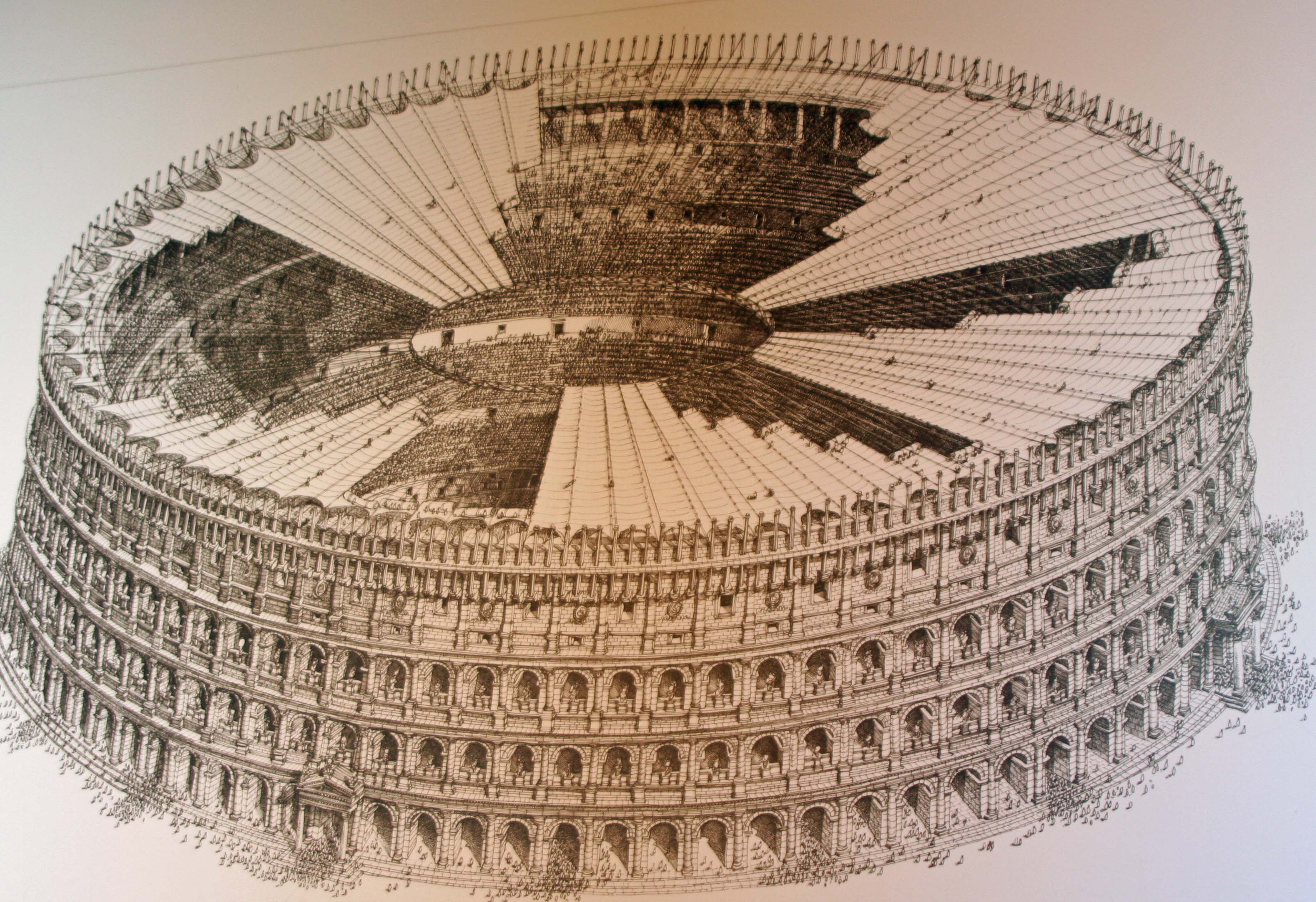
The top could be covered for bad weather by a large canvas awning that was put up and taken down by sailors from Rome’s navy. The true gem of engineering was the floor, however, which covered a network of tunnels and cages where wild animals and props were stored. Eighty different elevators operated by pulleys served to bring scenery and wild animals to the surface. You might be in the middle of an African jungle for one scene and a Greek city the next.

This illustration from the Colosseum exhibit shows a cutaway of the floor.

This illustration from the Colosseum shows a cutaway of the floor with its elevators, wild animals and gladiators. (Illustration from Colosseum exhibit)

This illustration shows what the Colosseum would have looked like with it's awning.

Here’s what the Colosseum would have looked like with its awning. (Illustration from Colosseum exhibit)

And you never knew when or where the next wild animal might pop up, which could be bad news for gladiators. Cats at the Colosseum then meant lions and tigers with long claws and sharp teeth, oh my. There were also elephants, rhinos, hippos, crocodiles and even giraffes–although I can’t imagine why or how you would fight a giraffe. I once chased a herd across the Serengeti Plains in a Volkswagen beetle, however.

Gladiators came from the ranks of slaves, poor people, and criminals. (Contrary to legend, there were very few Christians.) The most successful earned fame, fortune and freedom. Rick Steves, in his book on Mediterranean Ports, reports they even gave endorsements. I can see it in neon lights, “Barbarian Bob eats at Papa’s Pizzeria.”

Looking down into the basement of the Colosseum where wild animals, props and scenery were stored.

Looking down into the basement of the Colosseum where wild animals, props and scenery were stored.

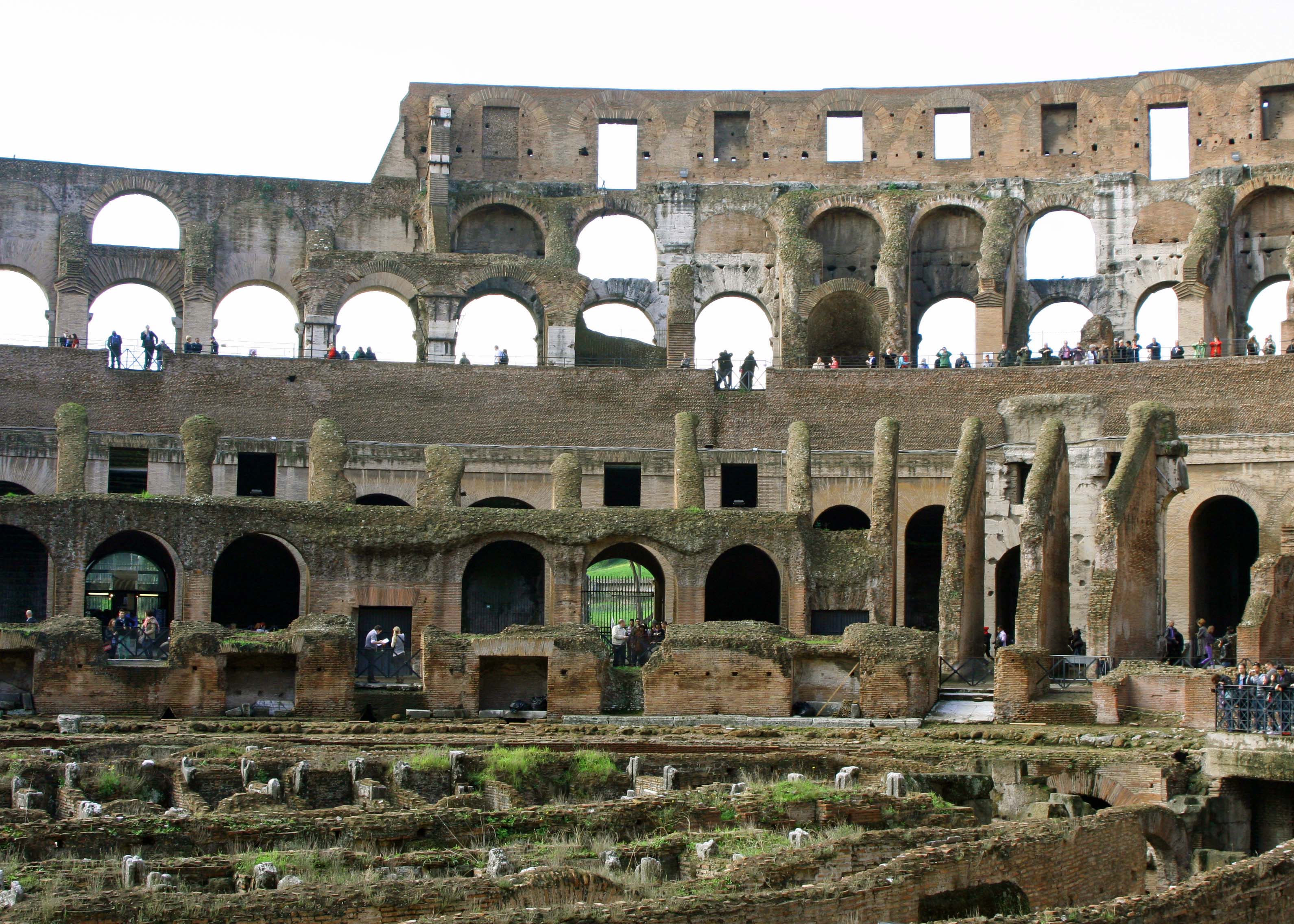
This photo, taken from the opposite end of the Colosseum provides a perspective on what the original floor might have looked like.

This photo, taken from the opposite end of the Colosseum provides a perspective on what the floor might have looked like. Only about a third of the original Colosseum remains.  While earthquakes have done their share of damage, much more was done by Romans taking building blocks and iron supports for use in other construction throughout Rome.

A window view out of Rome's Colosseum.

We started our tour on the upper level of the Colosseum. In addition to providing views into the arena, the walkway provided views of the surrounding city and Rome’s ancient Forum. (Photo by Peggy Mekemson)

Peggy took this photo from the lower level looking up at the upper level. (photo by Peggy Mekemson)

Peggy took this photo from the lower level looking up at the upper level. Special tours also take visitors to the lower, basement level. (photo by Peggy Mekemson)

A basement view of Rome's Colosseum.

A close up view of the basement. Imagine it filled with lions, hippos and giraffes.

Roman emperors loved their triumphal arches even more than they loved statues. It provided a very public opportunity to show how great they were. The Arch of Constantine is located right next to the Colosseum.

Roman emperors loved their triumphal arches even more than they loved statues. It provided a very public opportunity to show how great they were. The Arch of Constantine is located right next to the Colosseum.

The Arch of Constantine in Rome.

A second perspective on the Arch of Constantine. This photo was taken earlier in the day.

A final view of Rome's Colosseum at night.

A final view of Rome’s Colosseum at night.


Kayaking among the Orcas/Killer Whales of British Columbia…

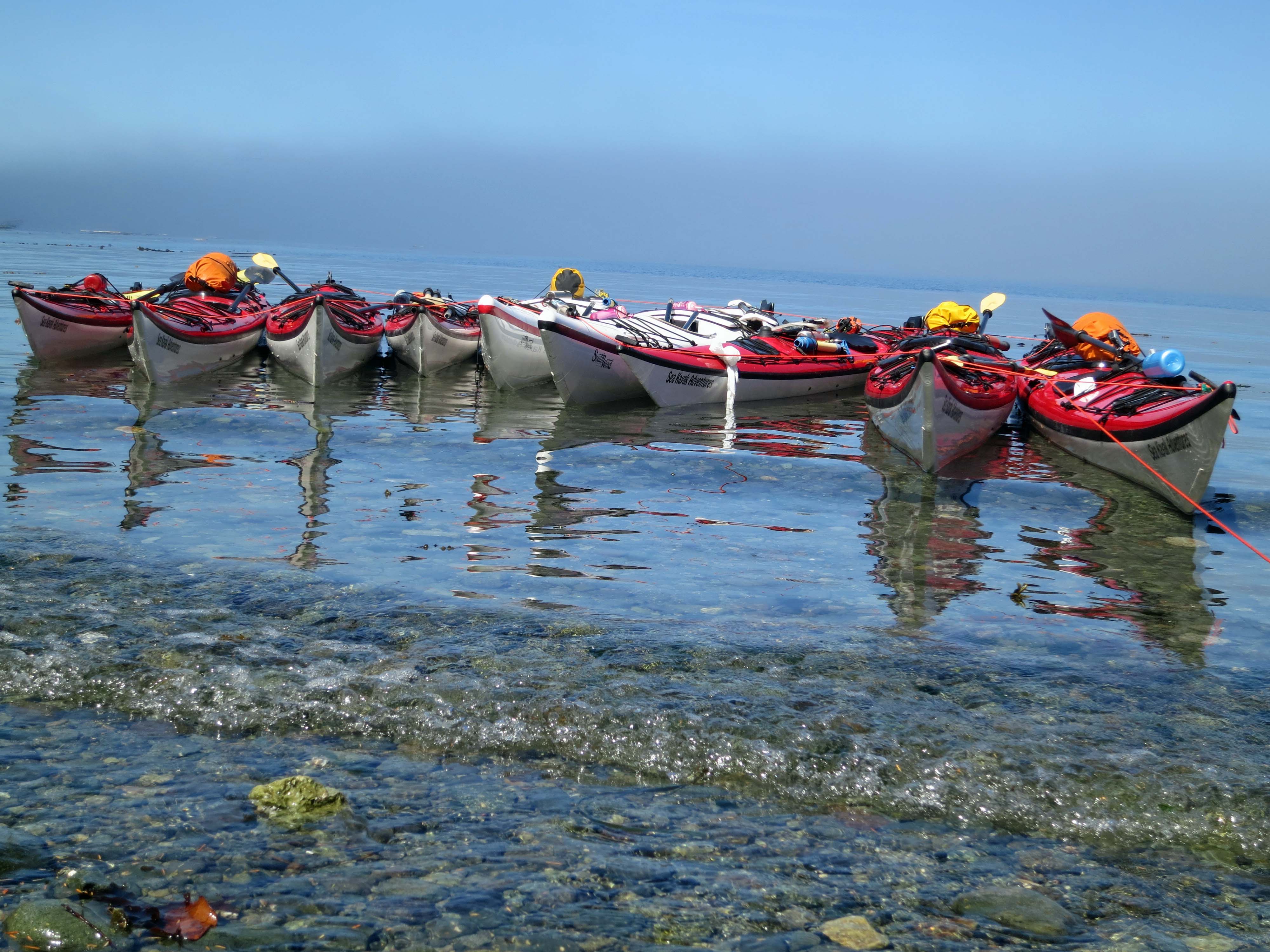
Kayaks belonging to the Sea Kayak Adventure group in the waters of Johnstone Strait, northeastern Vancouver Island.

Our sea kayaks wait patiently for us as we have lunch in a cove off of Johnstone Strait.

This is the first of my series of ‘oldies’ I am reposting from my archives to give new followers a taste of what they can expect to find on my blog. Peggy  and I made a trip to Vancouver Island, British Columbia in 2014 to go kayaking among the orca whales. The next post in the series can be found here:  https://wandering-through-time-and-place.com/2014/10/30/

I was nervous as we drove into the town of Port McNeill on the northeast shore of Vancouver Island in August. Peggy and I had signed up for a six-day sea kayak tour out of Telegraph Cove with Sea Kayak Adventures.We would be searching for orcas, which are also known as killer whales—as our son Tony, the Alaska Coast Guard pilot, reminded us. A little Jaws music, perhaps?

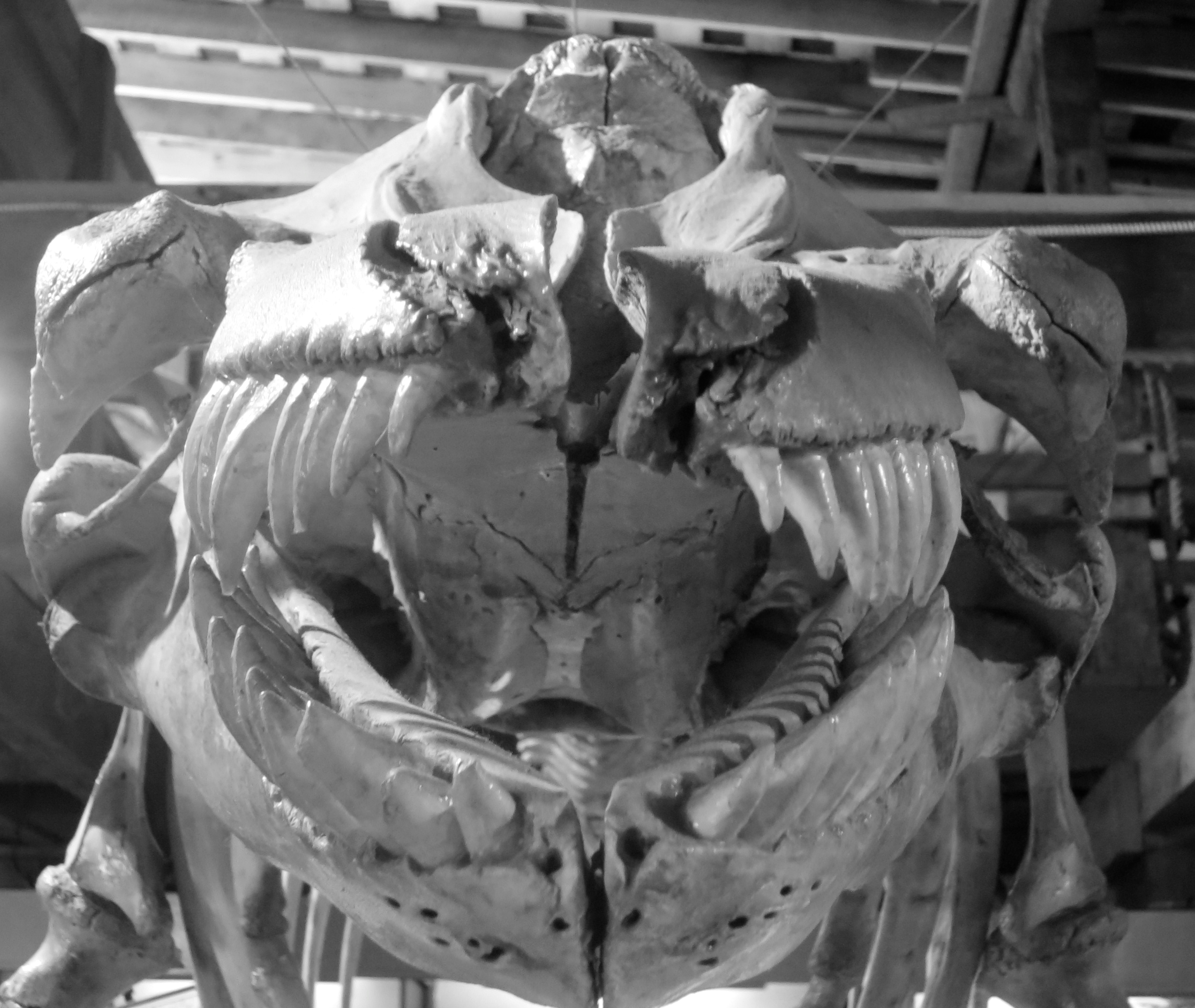
This orca was on display at the Whale Museum in Grove. I named him Smiley and addressed him as sir.

This orca skeleton was on display at the Whale Interpretive Center in Telegraph Grove. I named him Smiley and addressed him as sir.

“Okay, Curt, what have you gotten yourself into this time?” was bouncing around in my skull like a kangaroo on steroids. It’s a question I ask myself often.

I wasn’t nervous about the whales, however. I’ve spent my life communing with nature. Besides, these particular giants are gentle, relatively speaking; they get fat off the salmon in Johnstone Strait. They don’t need to eat people. But sea kayaking would be a first for me. The old dog had to learn new tricks, and that is always a reason to get excitable. Fortunately, Peggy and I had played around a fair amount with inflatable kayaks. We had even ventured out on challenging multi-day lake trips into remote areas such as Prince Albert National Park in Saskatchewan and Voyageurs National Park in Minnesota. So how hard could it be?

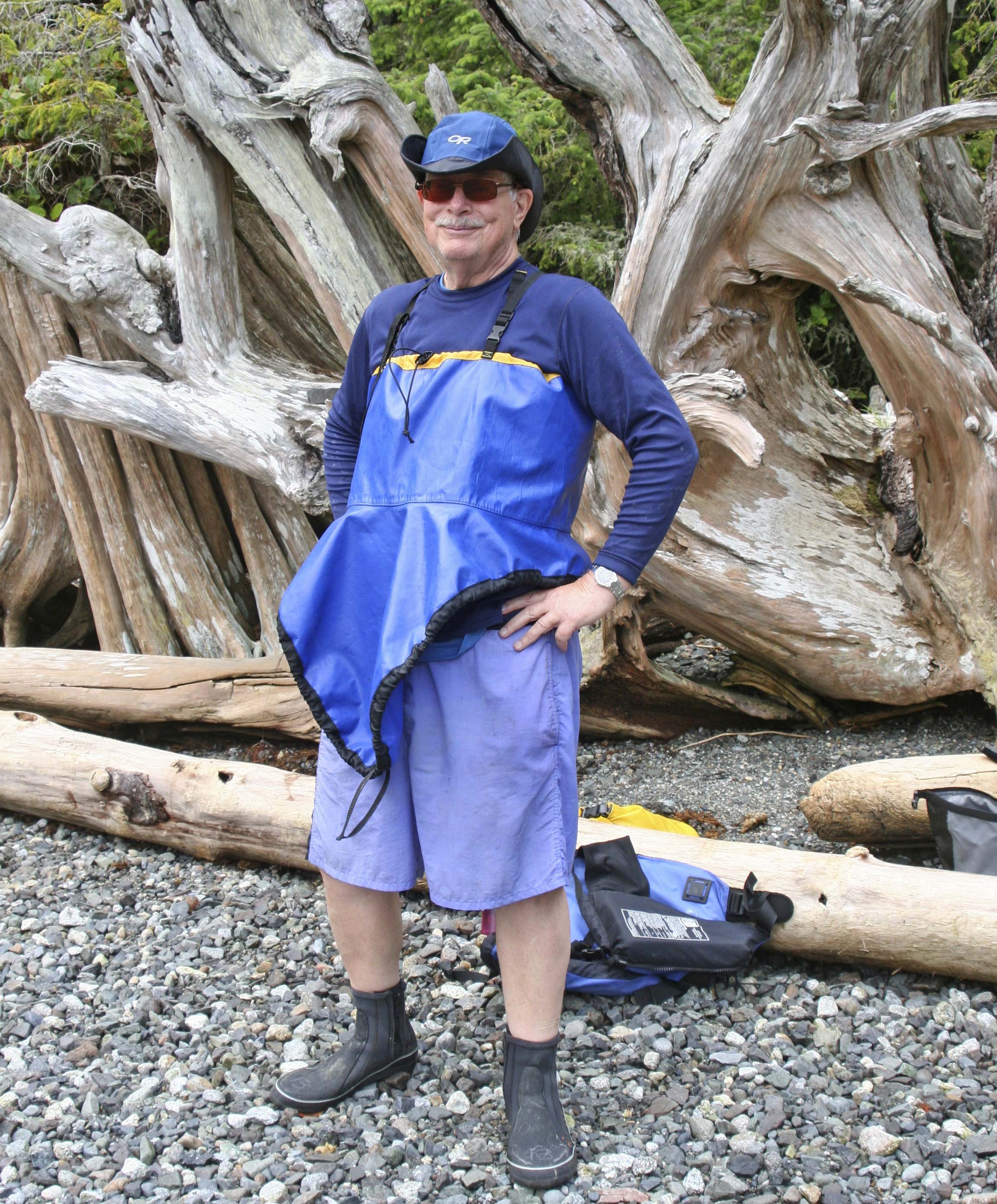
Aren't I pretty? There was no way I was going to make this skirt look good. (Photo by Peggy Mekemson.)

Aren’t I pretty? No? Maybe I wasn’t meant to wear a skirt. This skirt is designed to fit snugly over the cockpit of the kayak and keep out the water.  It’s so snug that you really have to stretch it to fit, which isn’t easy— particularly around the back. My skirt and I had several discussions while I was learning how to make it behave. It learned new words. Ask Peggy. (Photo by Peggy Mekemson.)

I confess I was more nervous about the idea of being on a tour. I am not much of a tour group person. This is a strange statement coming from someone who spent over a quarter of a century leading backpacking and bicycle fundraising treks for the American Lung Association. But the truth is— I am an independent cuss. I like to go where I want to go and stop when I want to stop. On an organized tour, I would be expected, even required, to adhere to the group schedule and itinerary. This isn’t a complaint. It has to be that way on group outings. Common sense and liability demand it.

And then there were the people. We’d be living closely with these folks for six days under potentially trying conditions. What would our guides be like? How about our fellow tour group members? Would we get along well? Would they be strange— even stranger than I am?

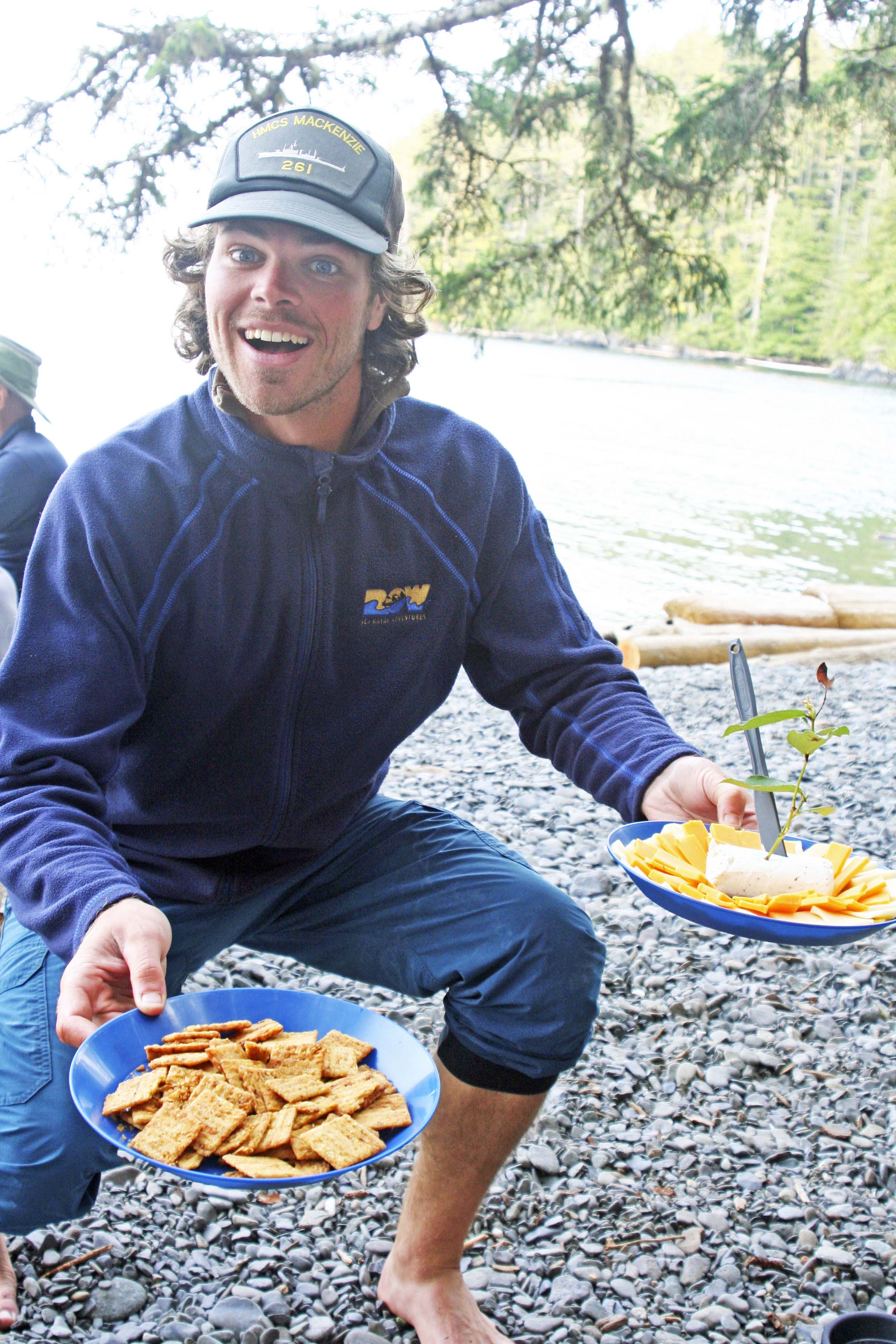
"Could I interest you in a cracker?" The tour promo promised good food, but it failed to mention the presentation. This is Nick, one of our three group leaders.

“Could I interest you in a cracker?” The tour promo promised good food, but it failed to mention the presentation. This is Nick from New Brunswick, one of our three group leaders. Note the sprig artfully shoved into the cheese.

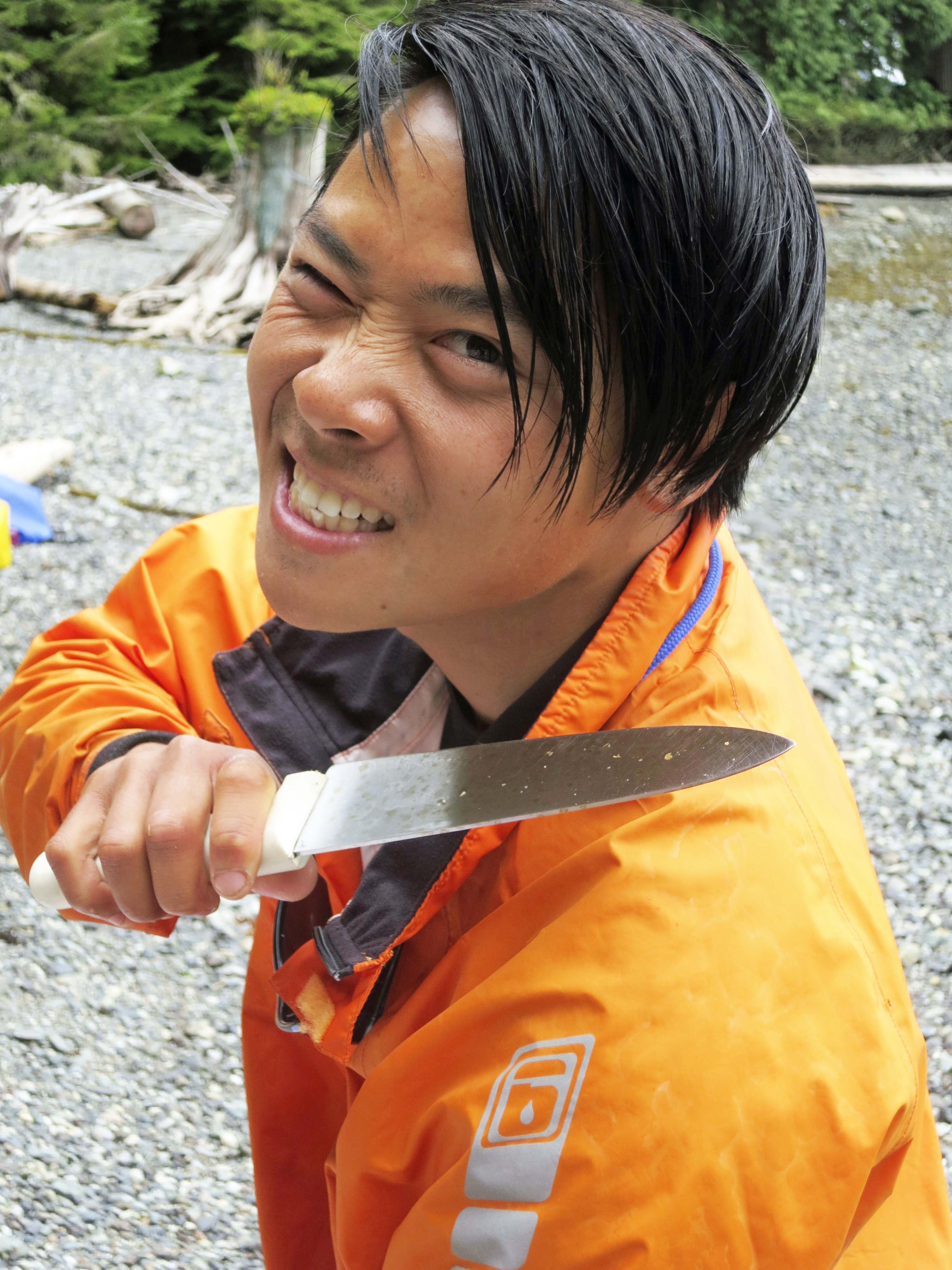
Quy, another of our guides, is a gentle soul who in his other life works as a computer geek in Vancouver. So what is he doing with this knife?

Quy, another of our guides, is a gentle soul who in his other life works as a computer geek in Vancouver. So what is he doing with this knife?

Julia, our third guide and assigned trip leader, may use Quy's knife on me for this photo of her toes, but I couldn't help myself. And no, I don't have a foot fetish. My fascination was that these bare toes could run over sharp rocks. The last time I had feet that tough I was ten years old.

Julia, our third guide and assigned trip leader, hails from Germany and is quite charming. She may use Quy’s knife on me for this photo of her toes, but I couldn’t help myself. And no, I don’t have a foot fetish. My fascination with her toes was that they could run over anything, including  rocks. The last time I had feet that tough, I was ten years old.

And how about our fellow travelers? David is a psychologist out of LA. How much more strange can you get?

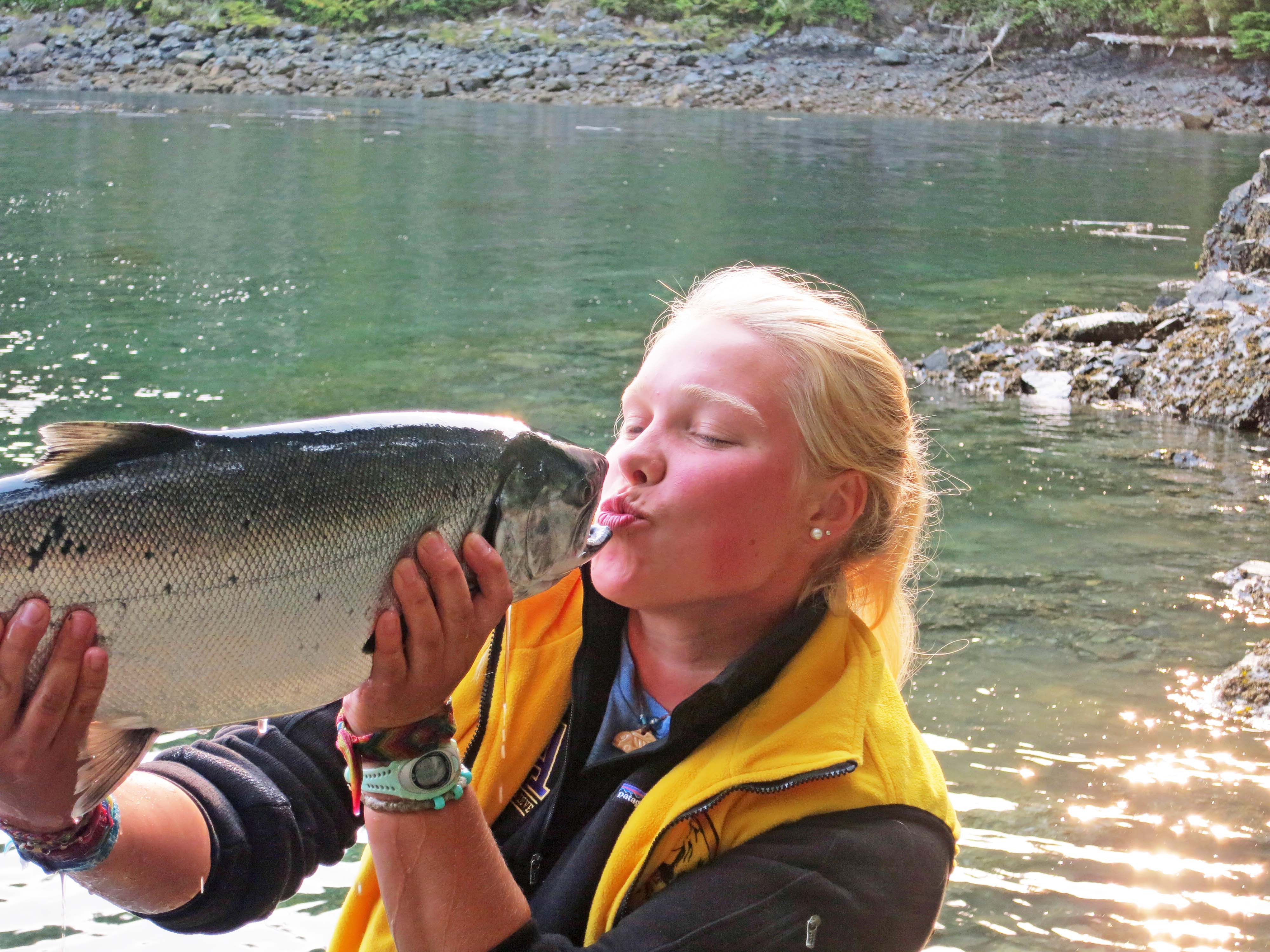
And how about our fellow travelers? David is a psychologist out of LA. How much stranger can you get than creating this mustache? Well maybe someone who kisses fish…

Well, maybe someone who kisses fish??? "But he was so beautiful," Lindy told me. He was dinner, Lindy,. Dinner.

“But he was so beautiful,” Lindy told me. He was dinner, Lindy. Dinner.

Regardless of how nervous I felt, the trip was simply too much of an opportunity to pass up. Like how could I not go on a sea kayaking adventure out among the orcas in beautiful British Columbia? As for Peggy, she is always up for adventure. When our friends Edie and David from Anchorage, Alaska called and asked if we would be interested in going, we gave a resounding yes. It turned out to be great decision. The guides, our fellow tour group members, and the incredible views were delightful. Even the orcas cooperated.

Today marks the beginning of my series on the trip. I’ll start by exploring the quaint town of Port McNeill. In my next post, we will climb in our kayaks and push-off from Telegraph Cove. The orcas are waiting. Let the adventure begin.

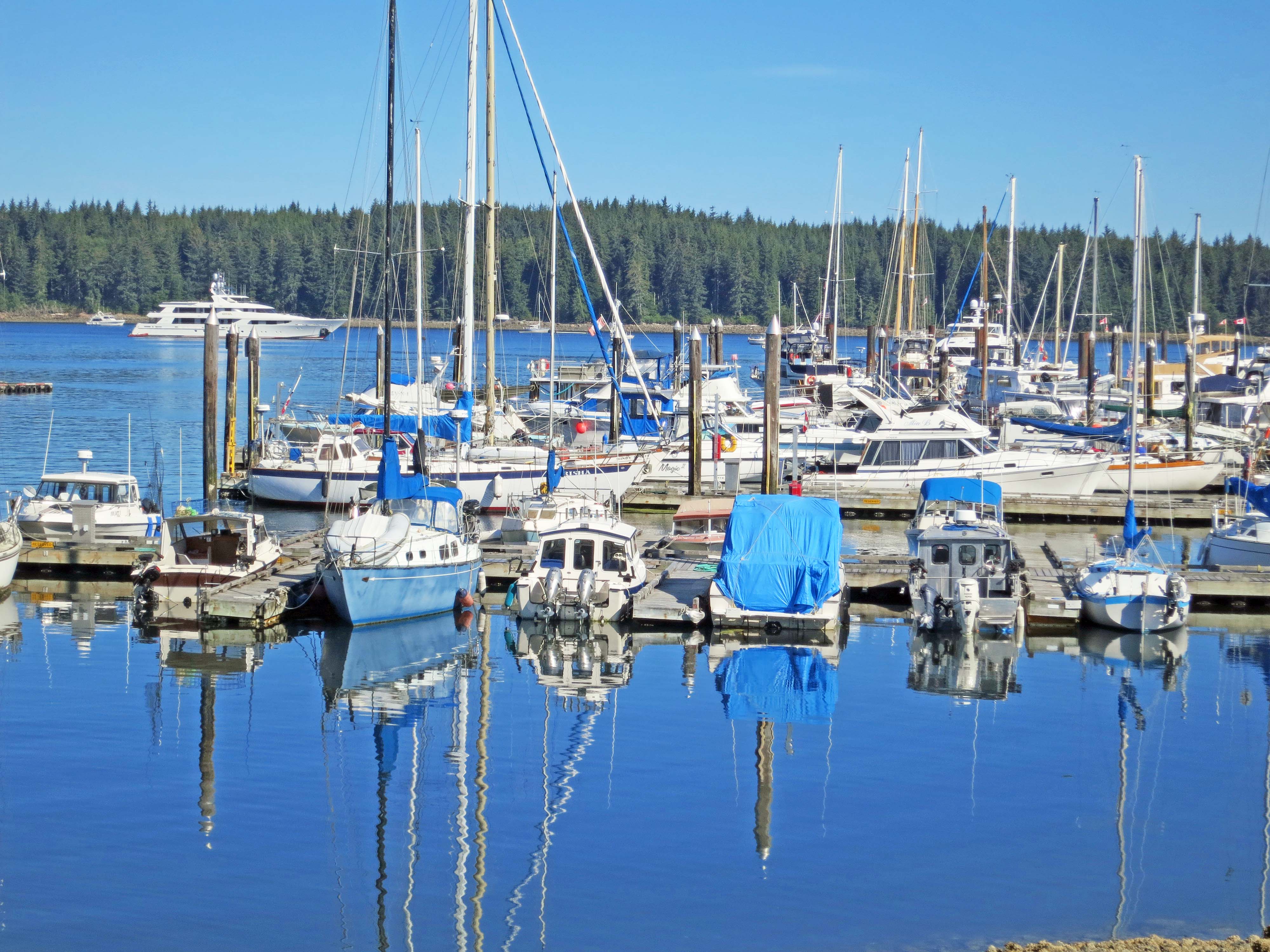
Harbor in Port McNeill on northeastern Vancouver Island. Photo by Curtis Mekemson.

While the main source of employment for the people of Port McNeill is the timber industry, the town also has a charming harbor. Note the yacht in the background. It had its own helicopter.

I loved this guys sense of humor.

In case anyone was wondering. I loved this guy’s sense of humor.

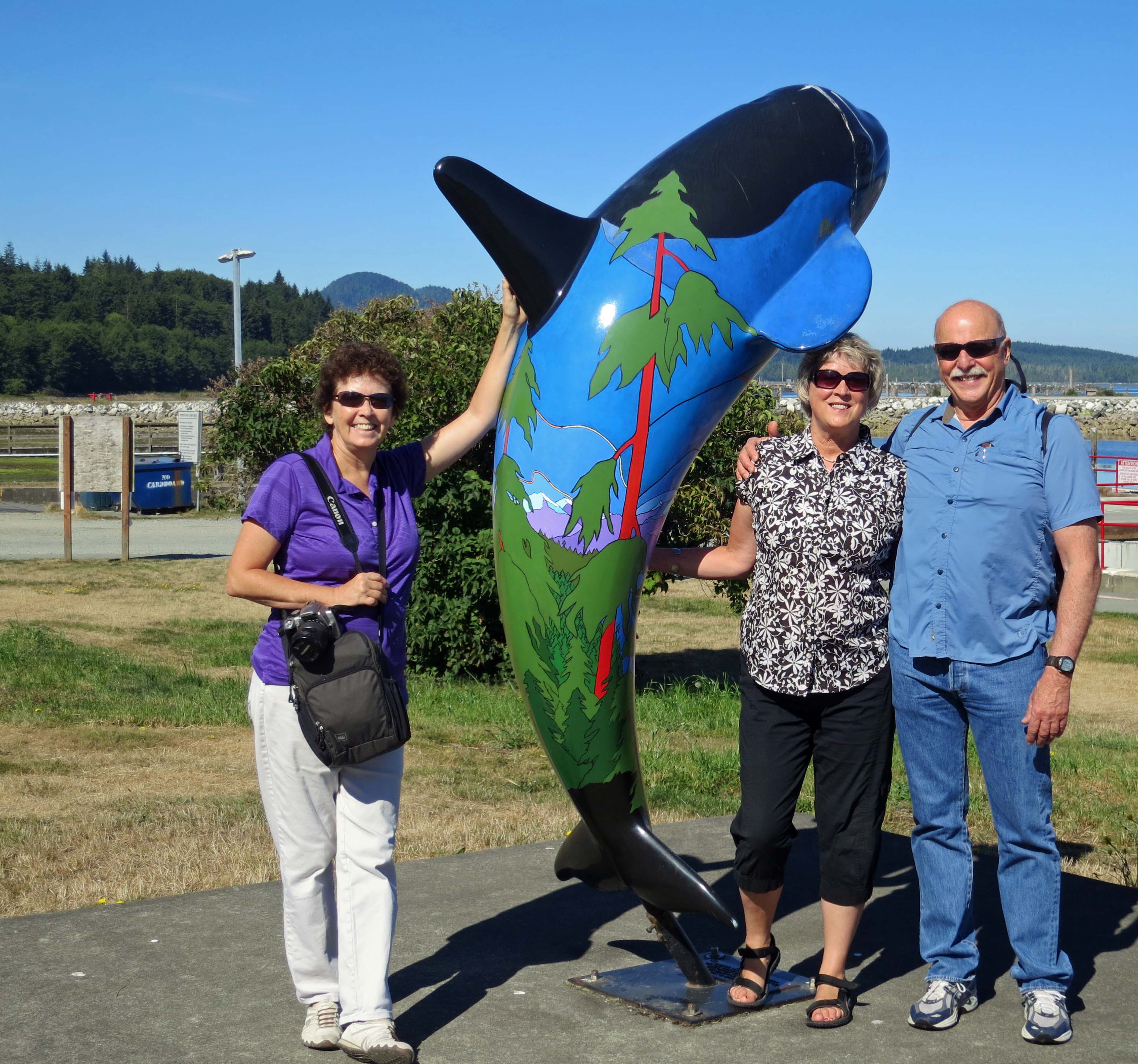
Dolphin statue at Port McNeil on Vancouver Island, British Columbia.

Peggy, David and Edie pose in front of a dolphin statue that faces the harbor. Edie went to high school with Peggy in Ohio and runs a tax accounting firm in Anchorage. David is an Alaskan bush pilot who works on the North Slope, and is a published poet.

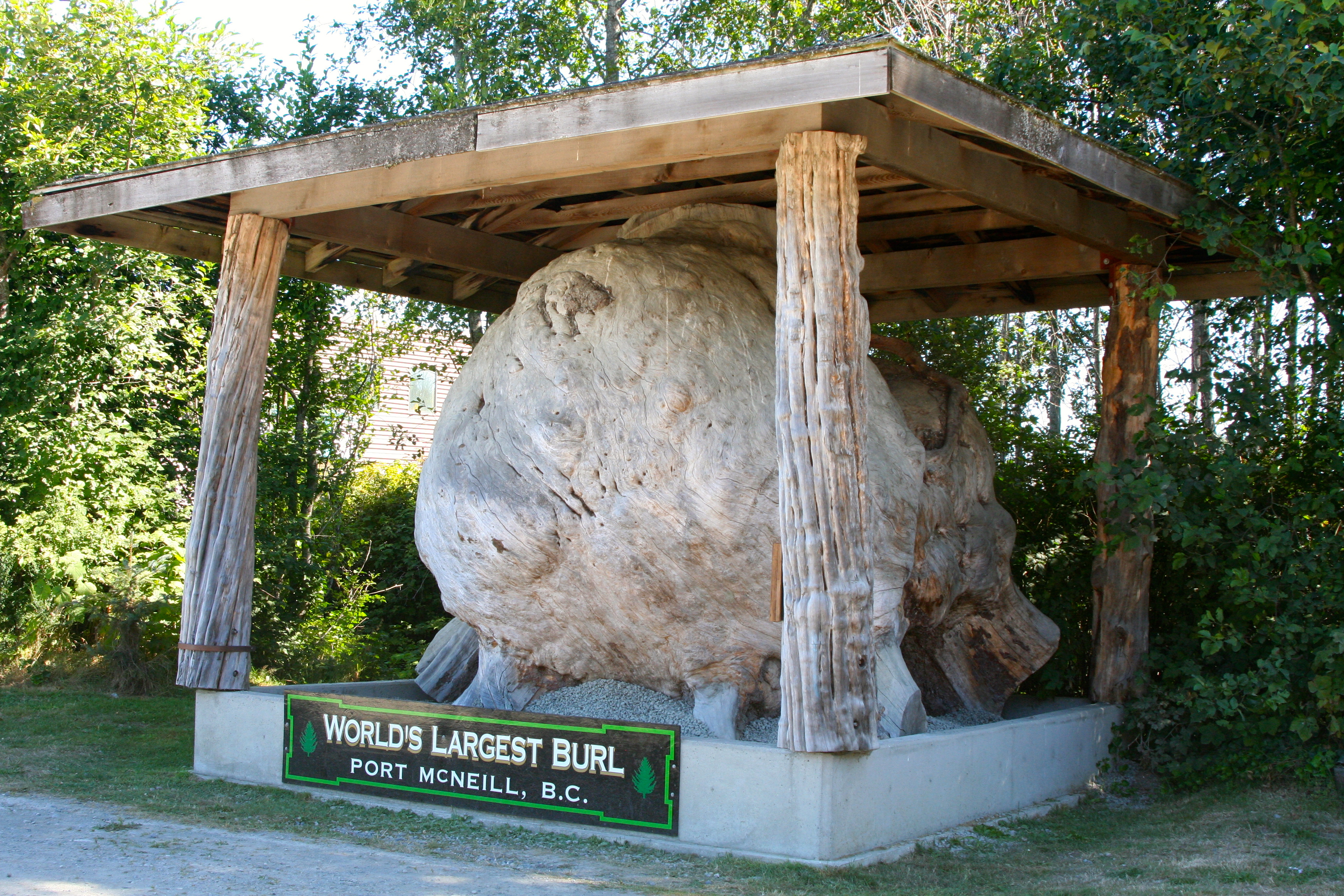
You are looking at Port McNeill's pride and joy: the worlds largest burl. Can you imagine this thing growing on a tree? (Photo by Peggy Mekemson.)

You are looking at Port McNeill’s pride and joy: the worlds largest burl. Can you imagine this thing growing on a tree? (Photo by Peggy Mekemson.)

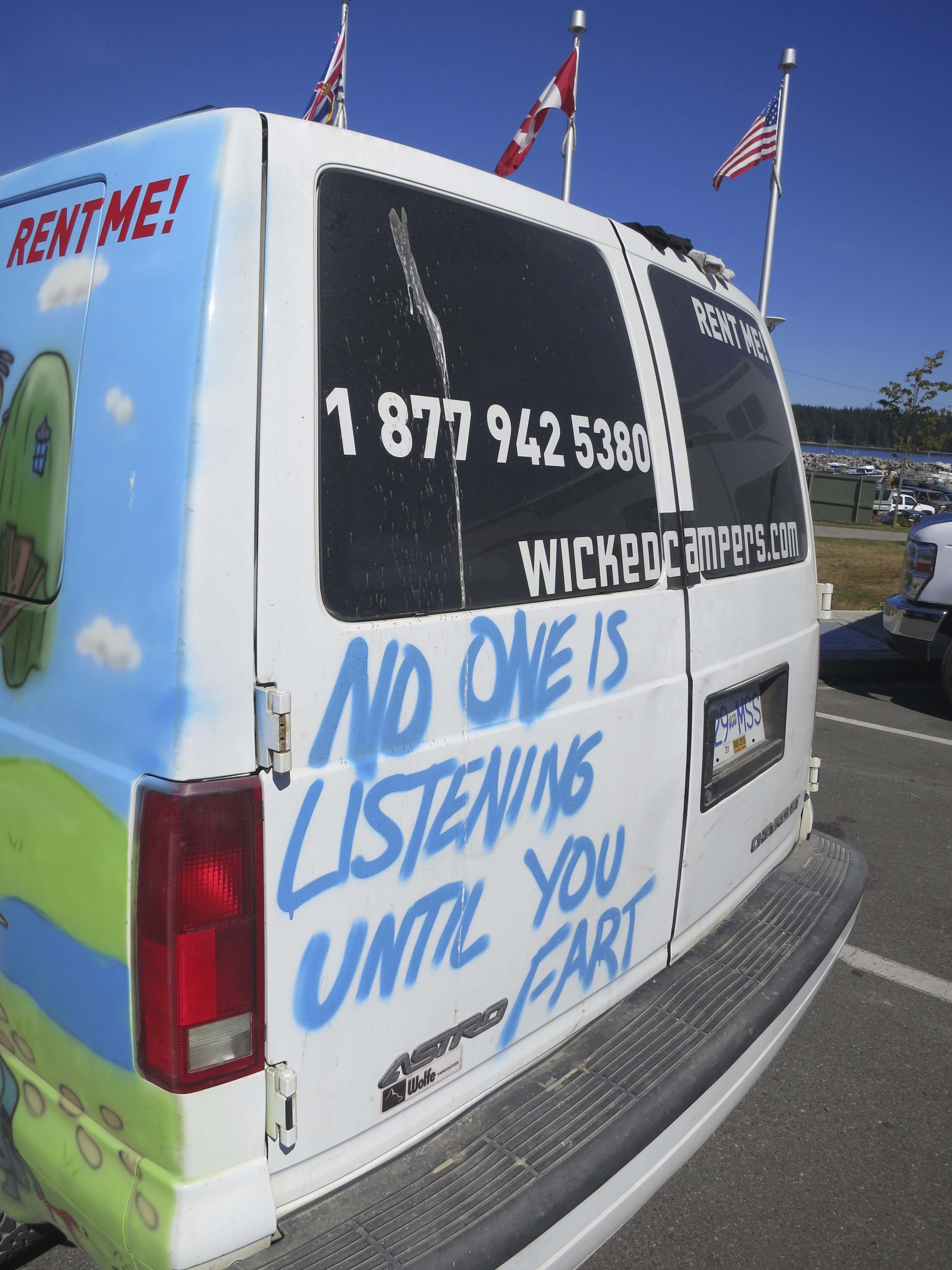
Wicked Campers is now providing inexpensive travel vans and raucous humor in a number of countries.

Tourism is also an important industry for Port McNeill. Wicked Campers caught my attention. The company provides inexpensive travel vans and its raucous brand of  advertising in a number of countries.

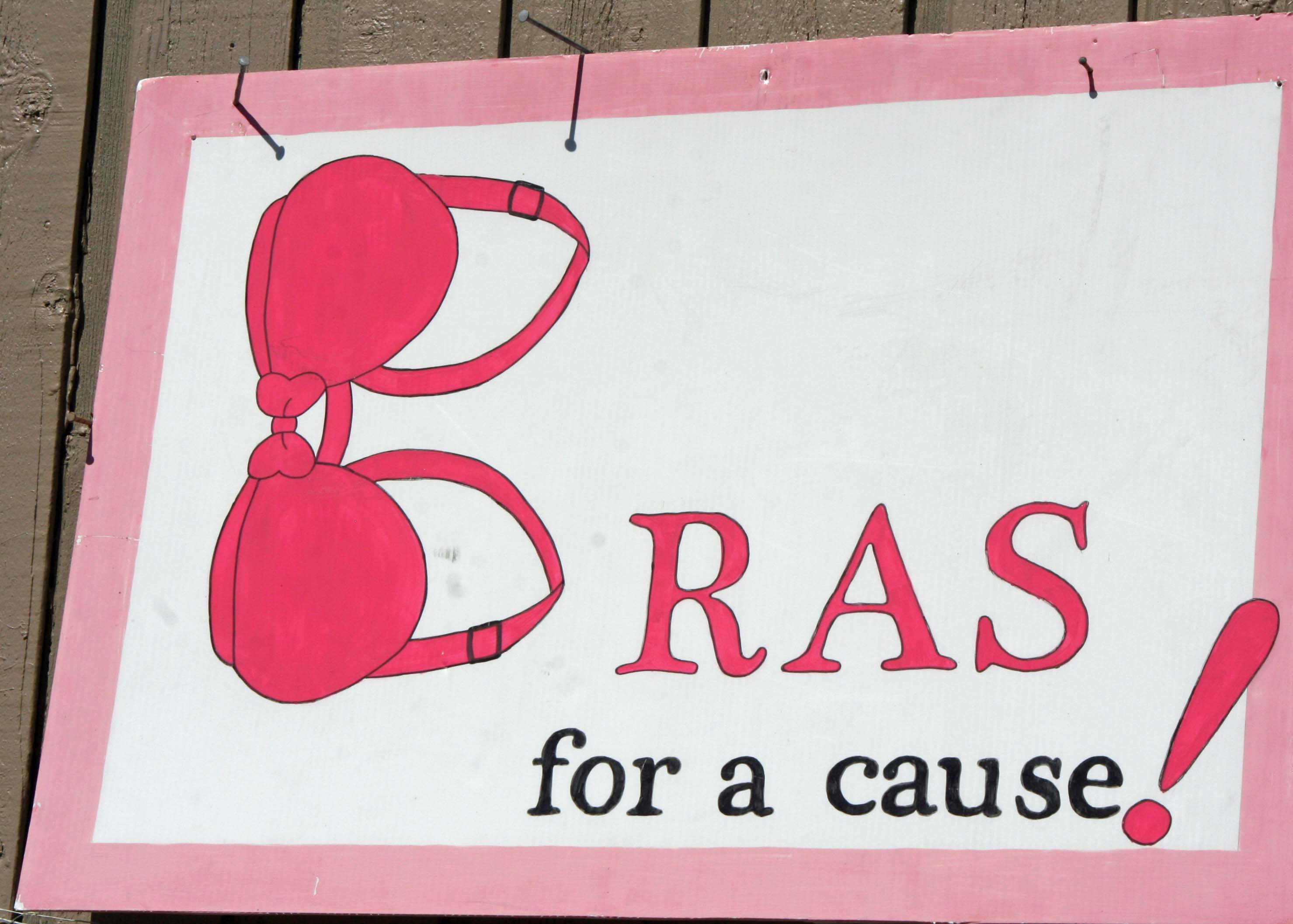
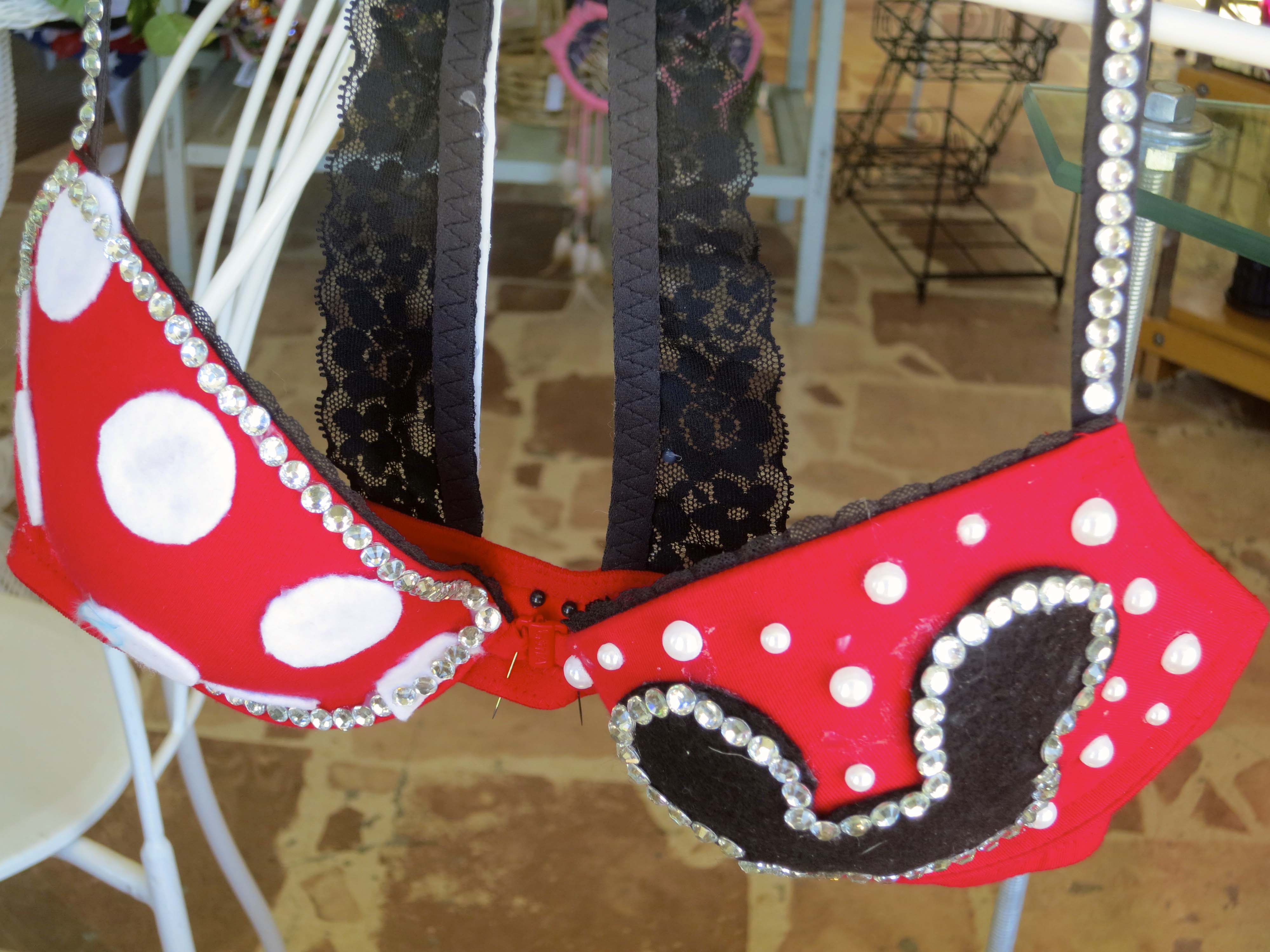
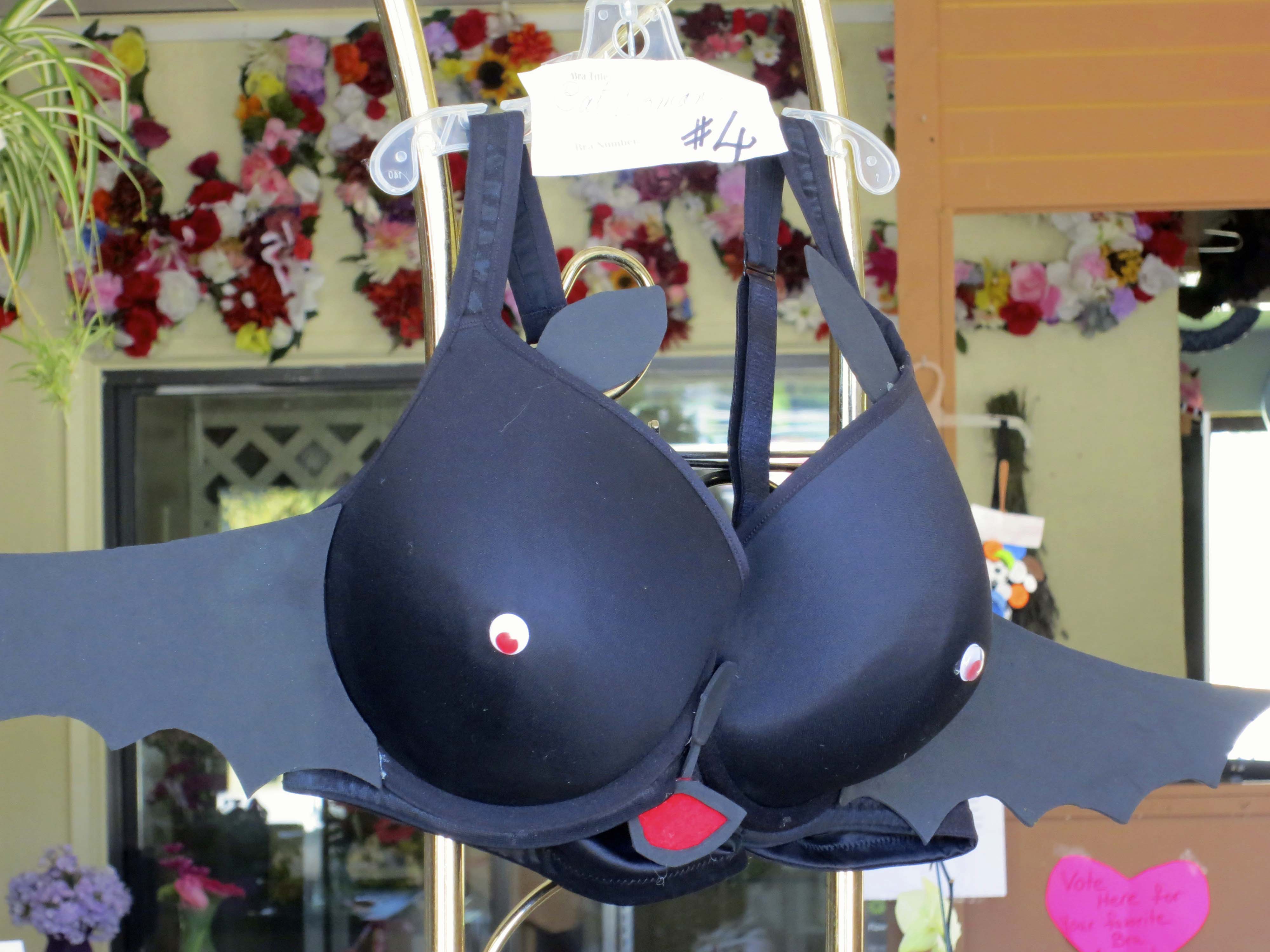
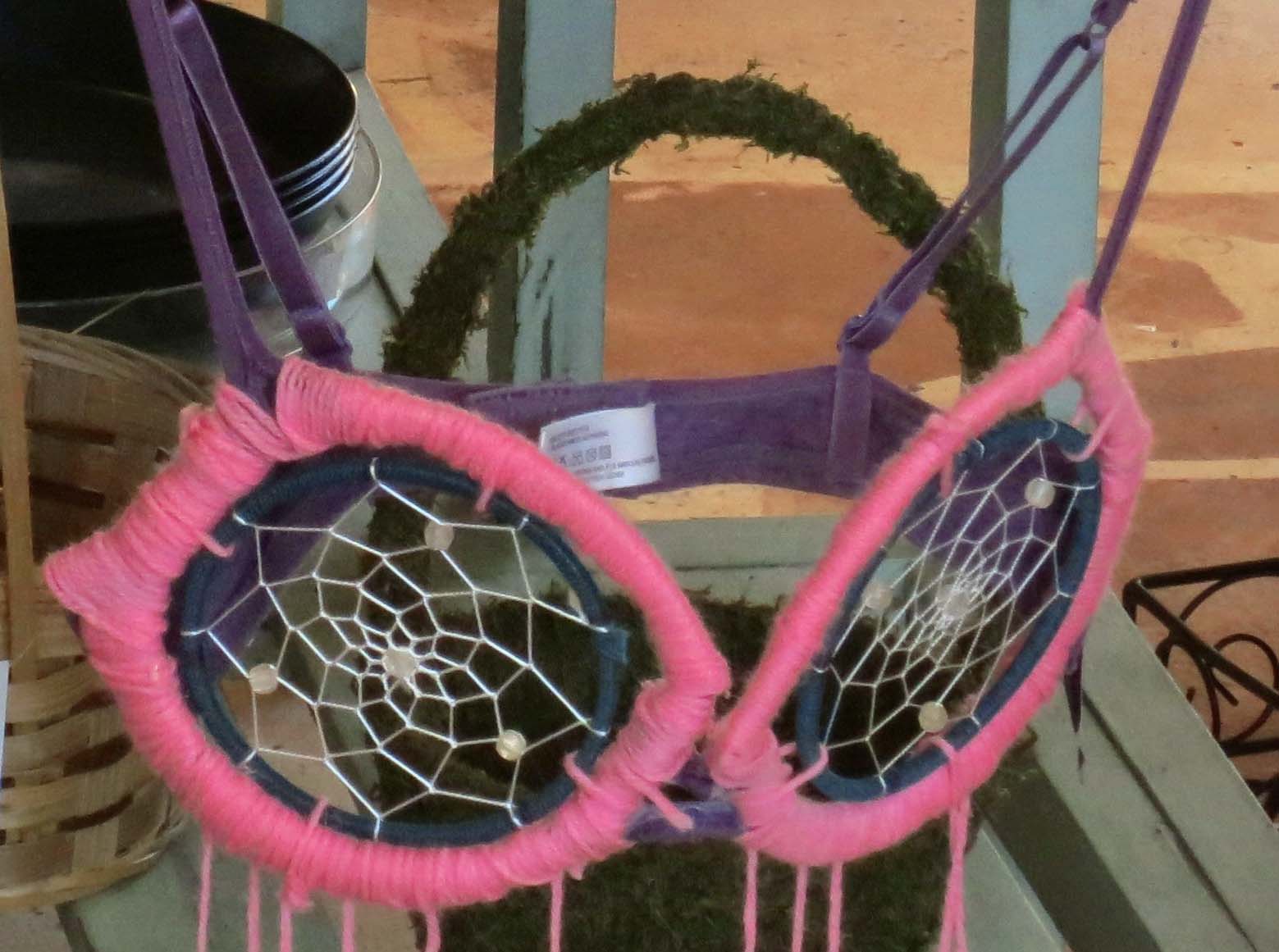
We were also amused by Port McNeill's unique way of fund raising where bras are decorated and then auctioned off. Which of the following three would you vote for?

We were also amused by Port McNeill’s unique way of fund-raising where bras are decorated and then auctioned off. Which of the following three would you choose?

Given the ears, I am thinking Mickey Mouse was the inspiration.

Given the ears, I am thinking Minnie Mouse was the inspiration.

Bat woman?

Bat woman? Great eyes.

Dream catcher. Ouch.

Dream catcher? Ouch. This one would leave an impression.

Flowers at Port McNeill on Vancouver Island. photo by Curtis Mekemson.

The flower shop that featured the bras was closed so I couldn’t get inside to photo more of the entries. I did capture this petunia on the outside, however.

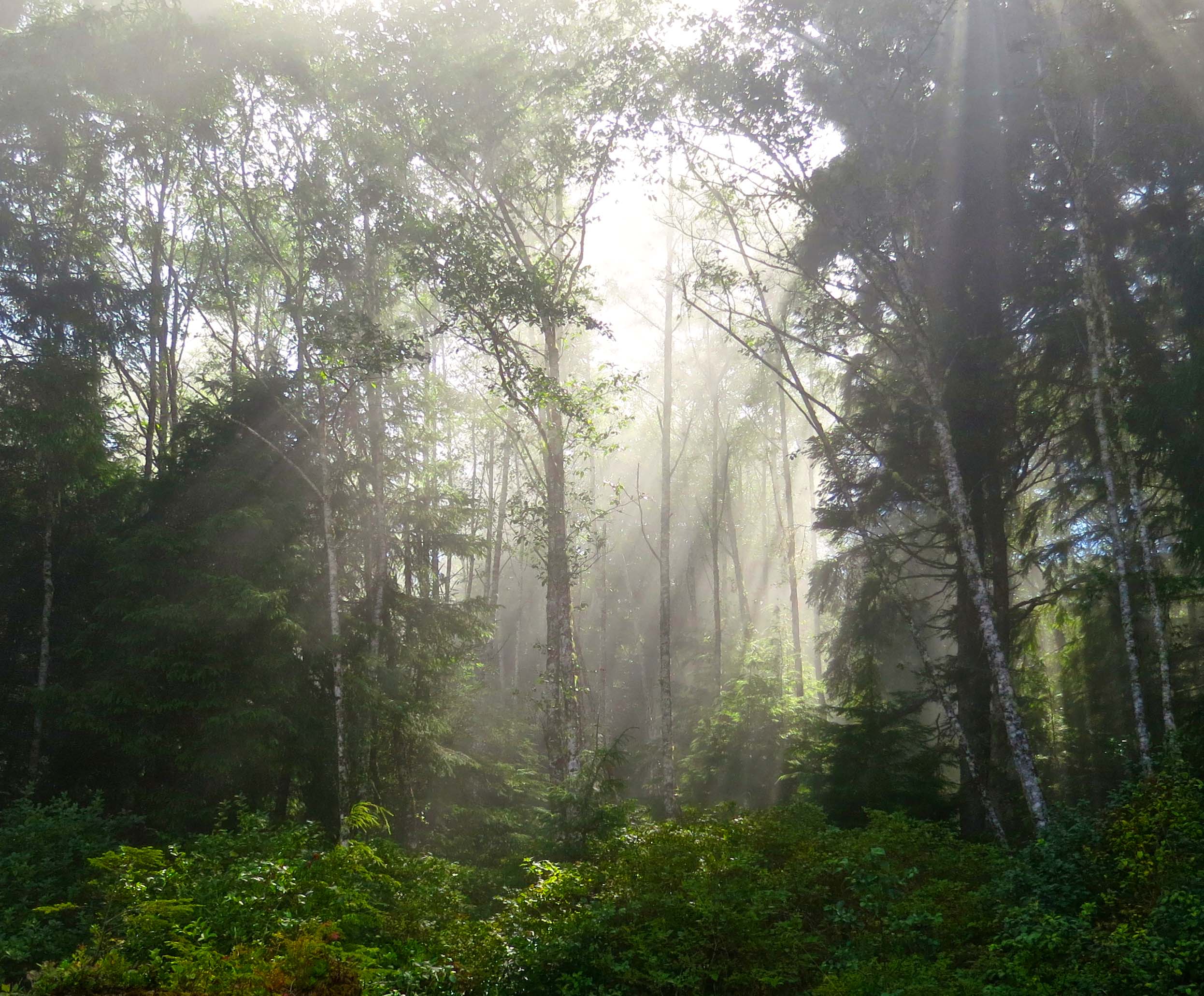
Mist in trees on Vancouver Island sea kayak trip. Photo by Curtis Mekemson.

Mist in the trees. A final photo to whet your appetite. Let the adventure begin.

Don’t Feed the Bears in the Yukon, or Anywhere… The Alaska Highway Series


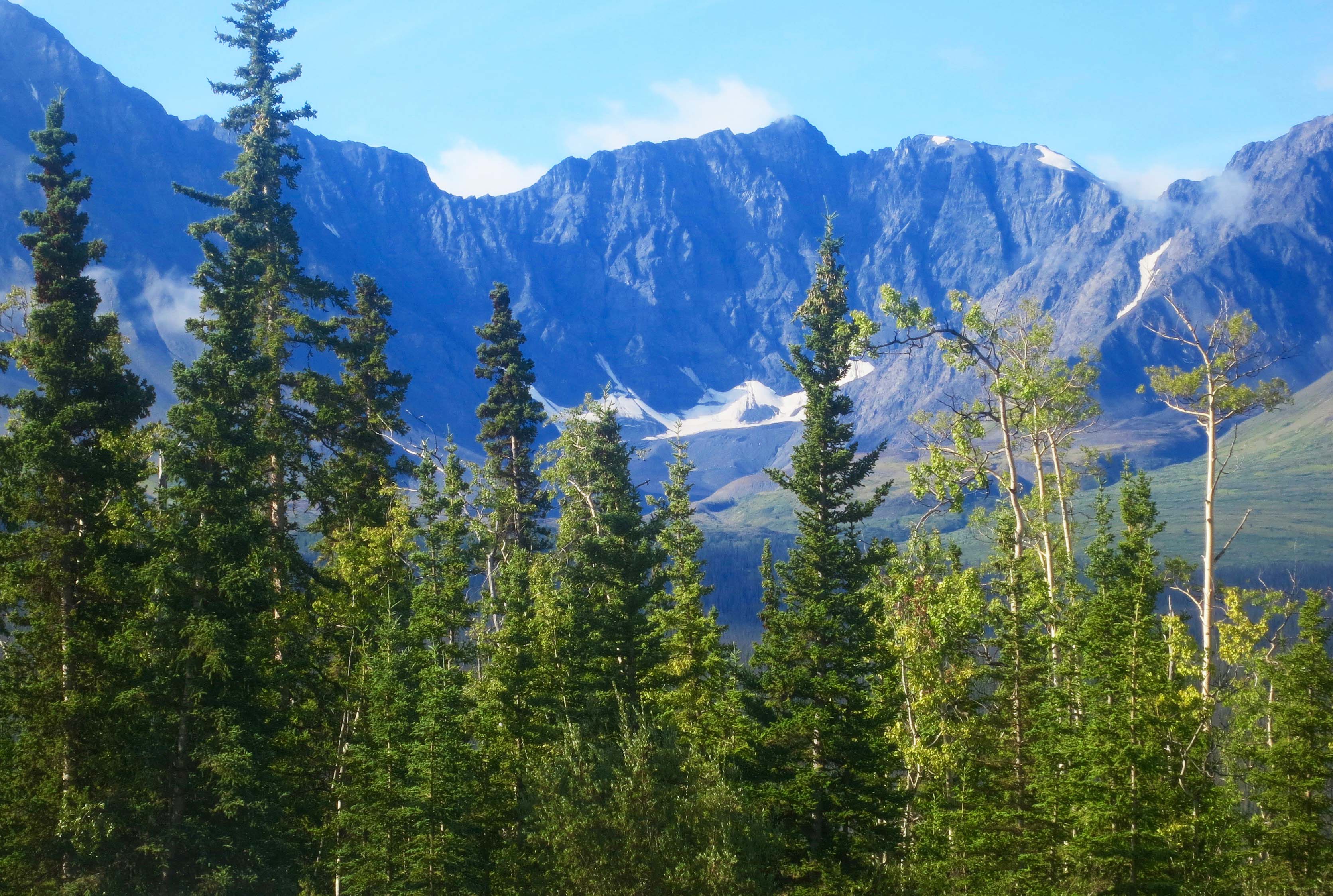
Yukon mountain and trees

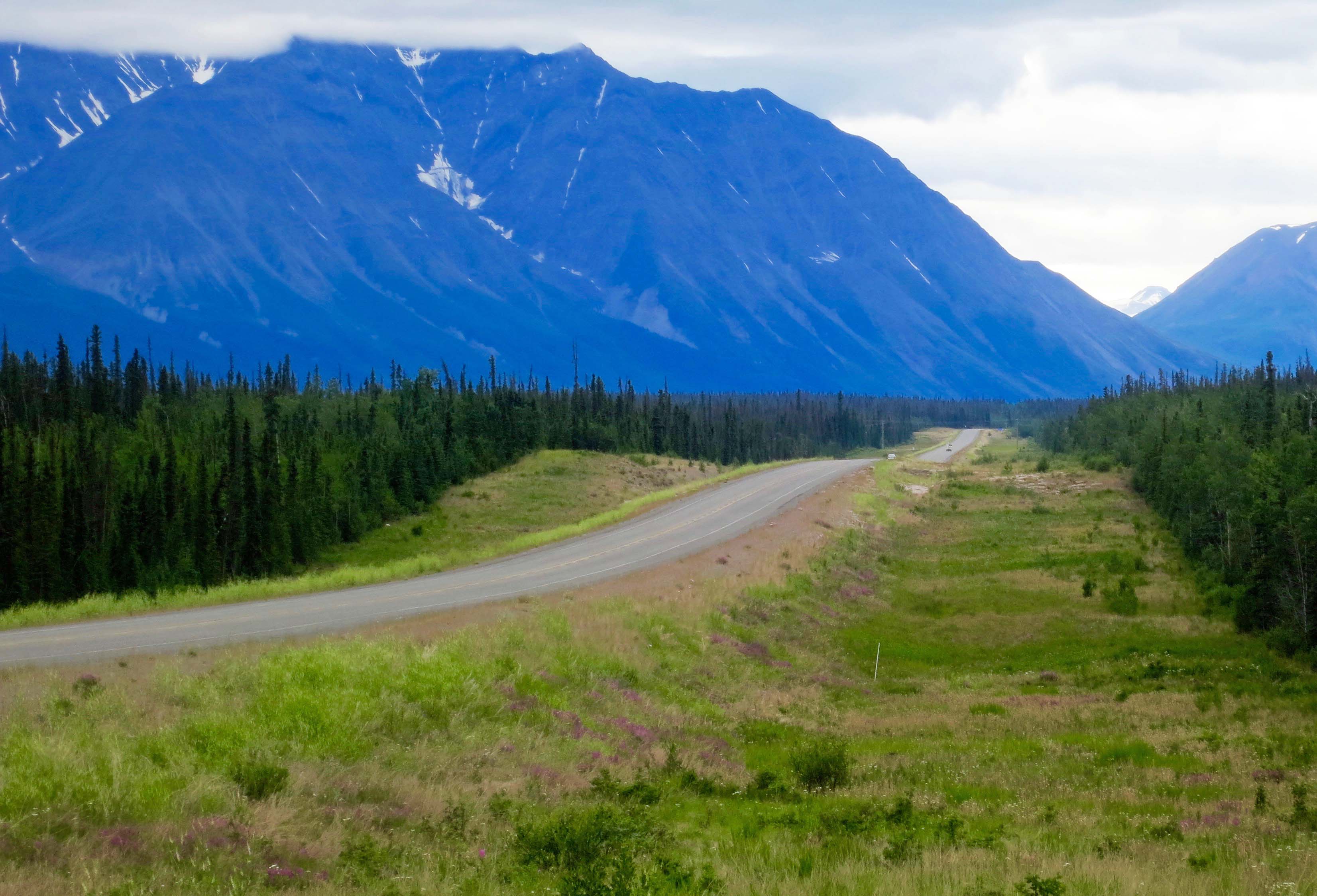
Ho-hum, another day along the Alaska Highway— except there was nothing ho-hum about it. Our journey through Canada’s Yukon Territory took us past one breath-taking view after another.


We left Teslin with our fingers crossed that our spare tire would make it the hundred miles to White Horse. It was an okay tire, but it had seen 40 thousand miles! Lower 48 roads, no worry; Alaska Highway in the Yukon Territory, well maybe. Turns out, we made it fine. A Ford Dealer provided Quivera the Van with a new shoe and she was raring to go! The spare happily returned to being a spare.

Off we went, motoring across the Yukon Territory. Haines Junction, Kluane Lake, and White River came and went. In two days we were at the Alaska Border. Today’s photo essay will provide views of some of the sights we saw along the way.

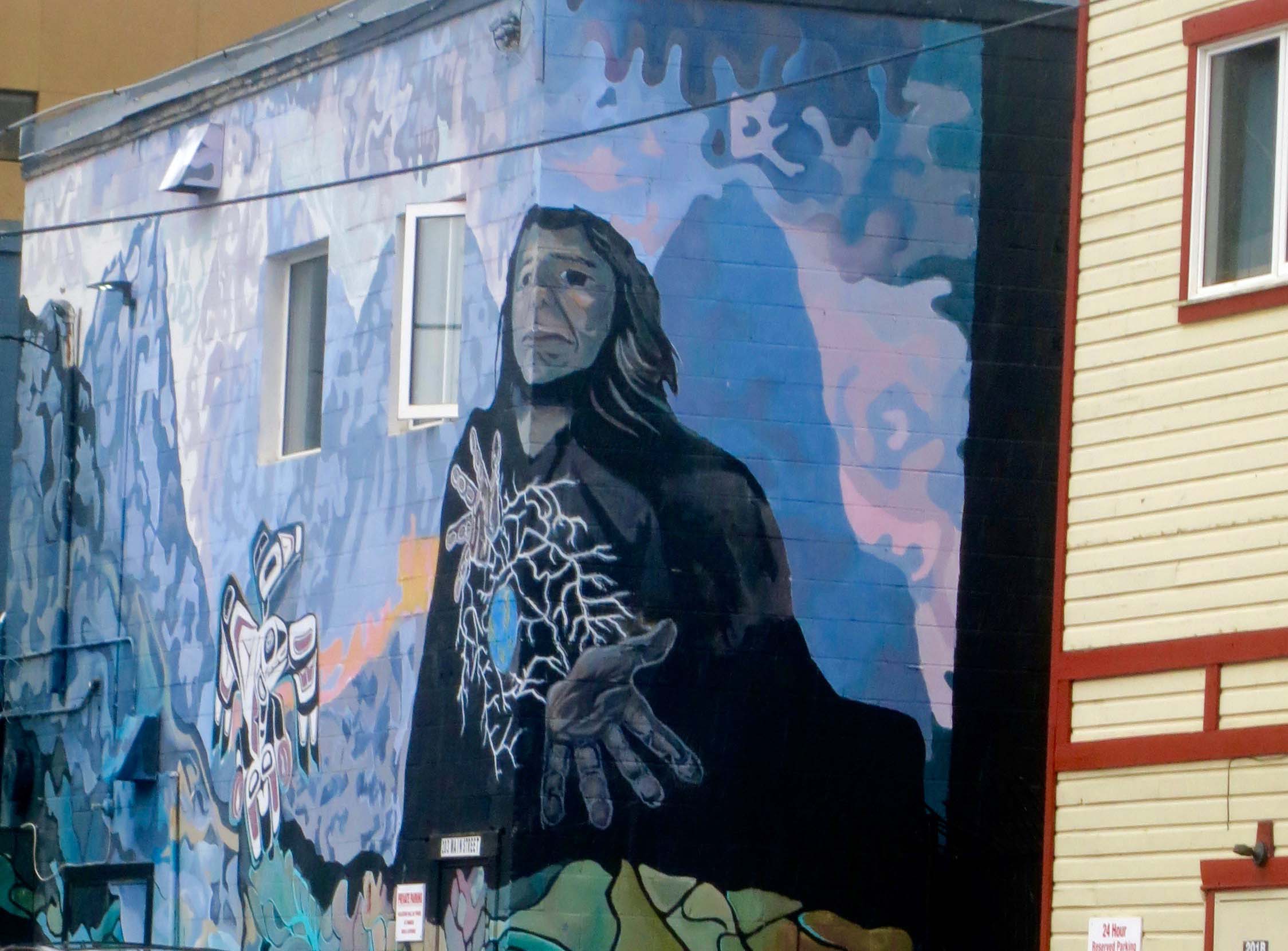
Whitehorse, YT Mural

Getting our tire replaced in Whitehorse allowed us to wander around town and appreciate sights like this First Nation mural.
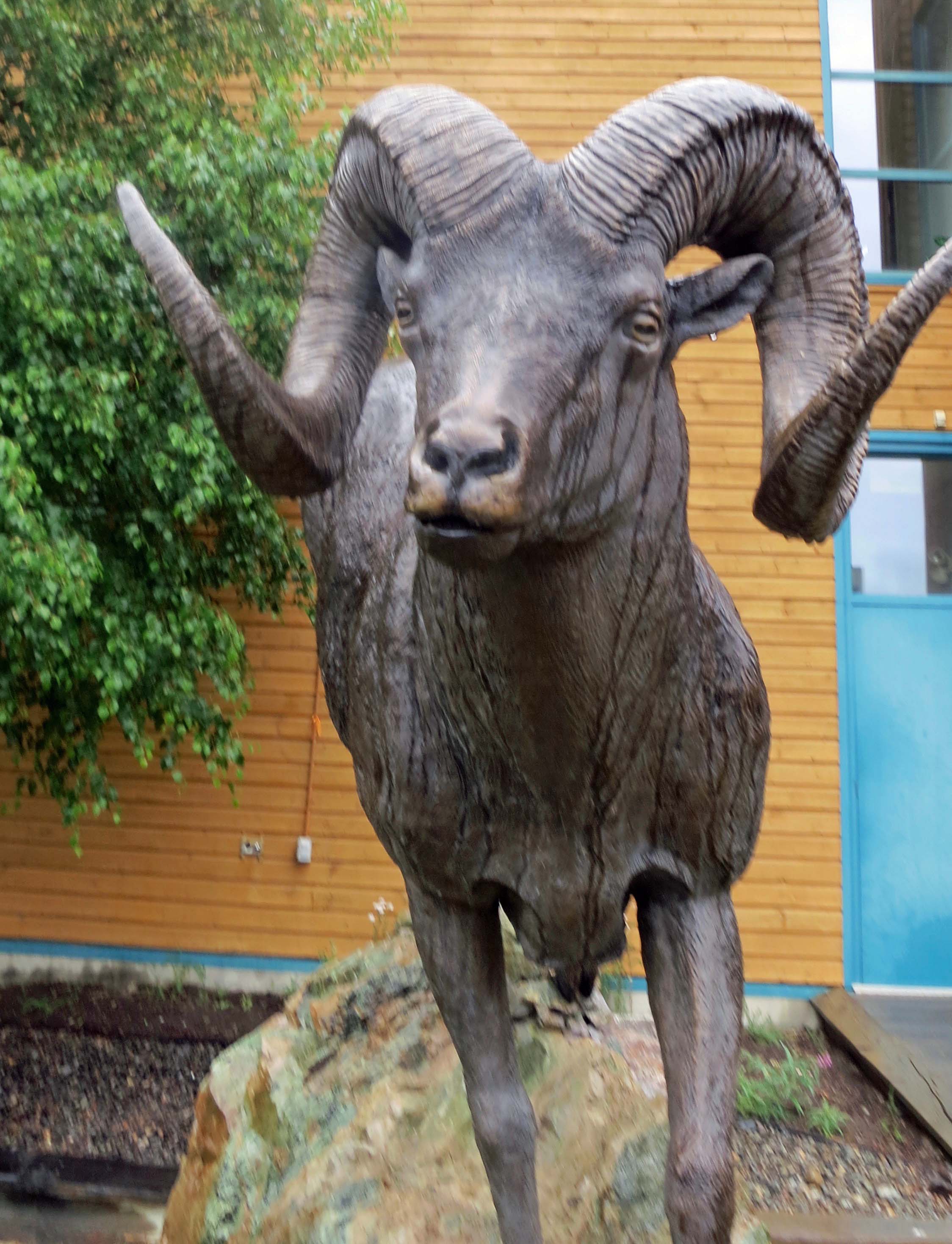
Dall sheep sculpture, White Horse

This handsome sculpture was outside the Visitor Information Center.

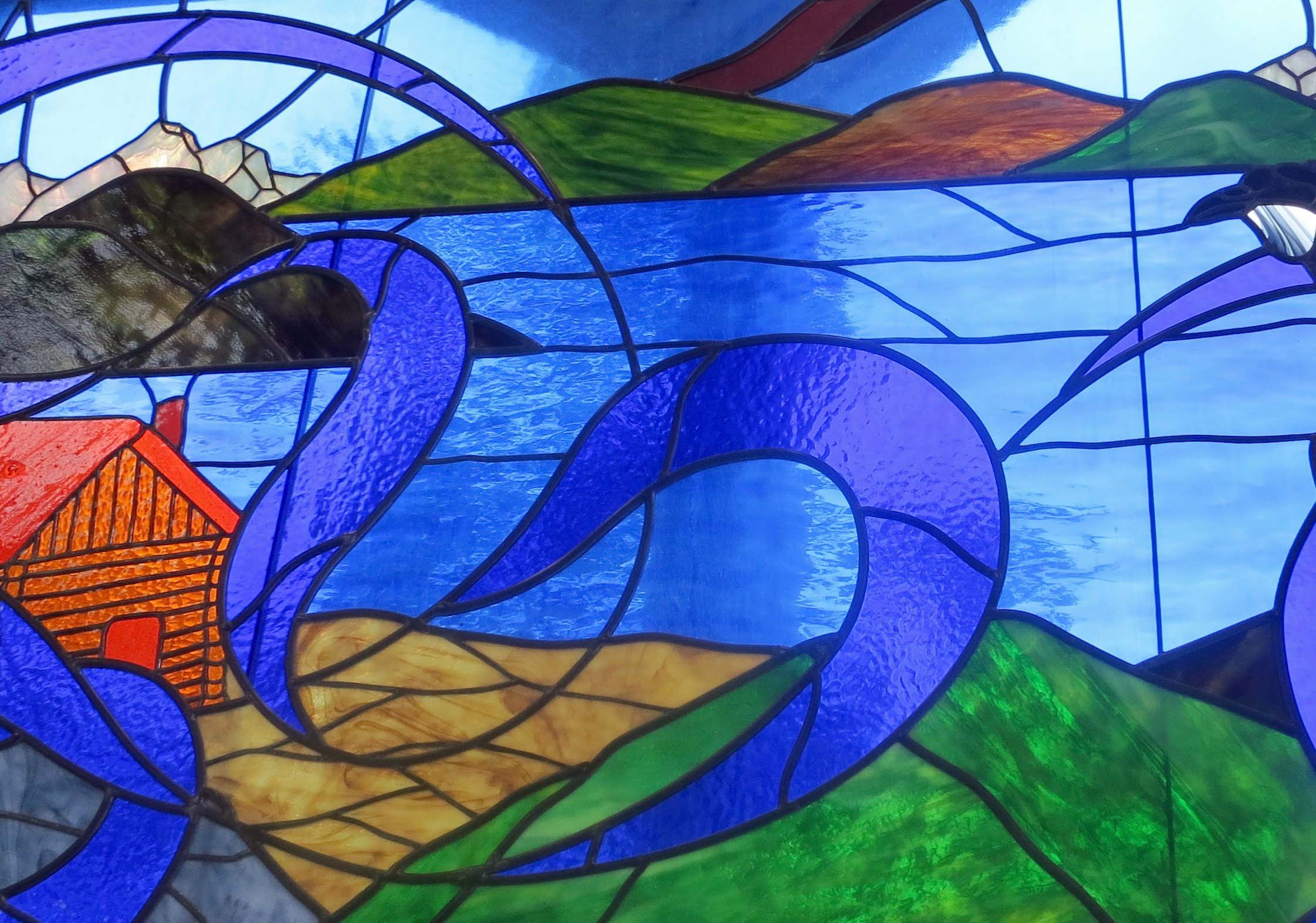
Stained glass, Whitehorse, YT

Inside, a stained glass window gave a fine representation of the country we were traveling through.

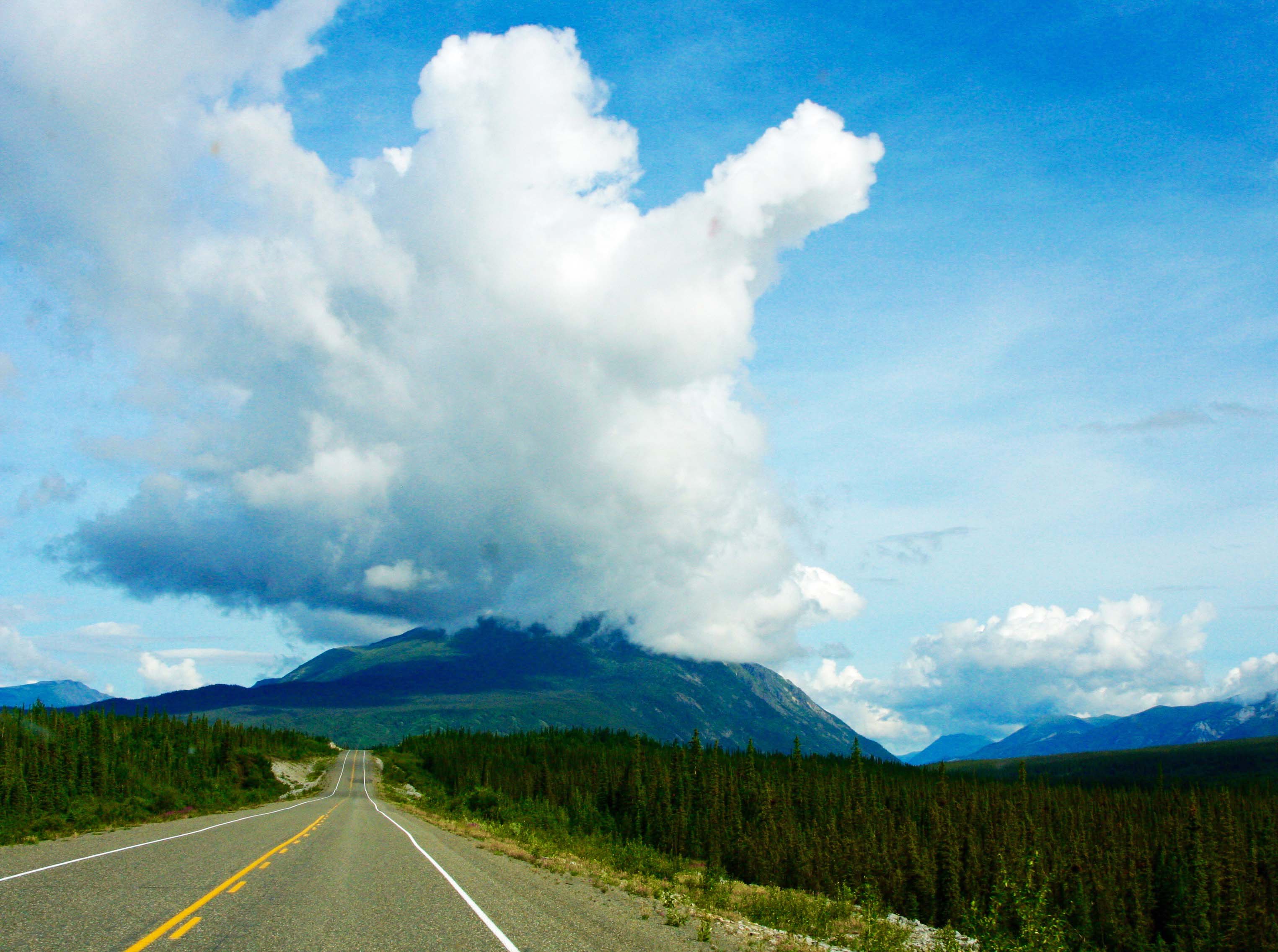
clouds and mountains along alaska highway

Back on the road, we were reminded that it seemed to go on forever…

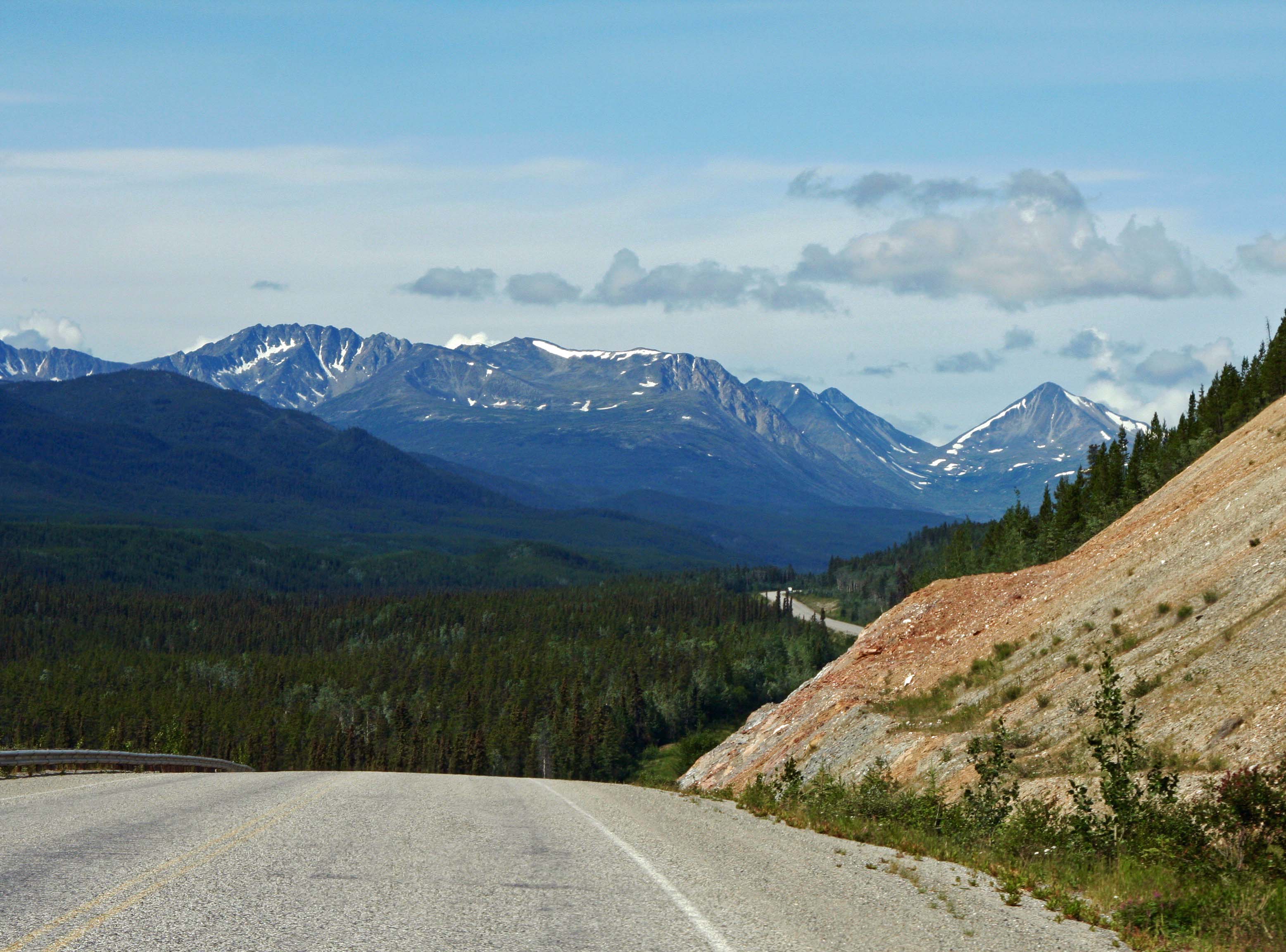
Yukon Territory, Alaska Highway

Alaska Highway, Yukon Territory

Fireweed along Alaska Highway

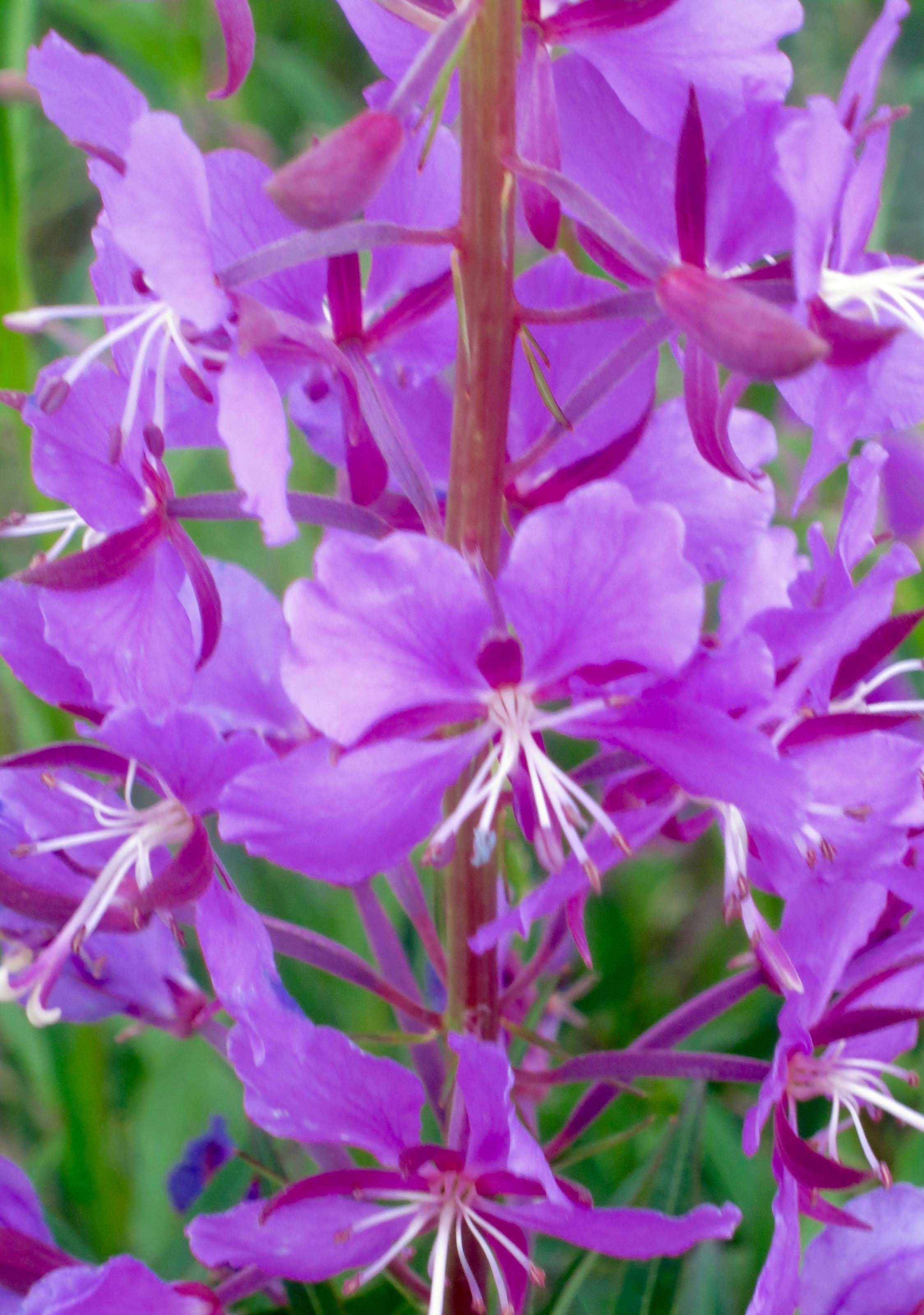
Fireweed added bright splashes of color along the highway’s edge.

Do not feed bears, YT

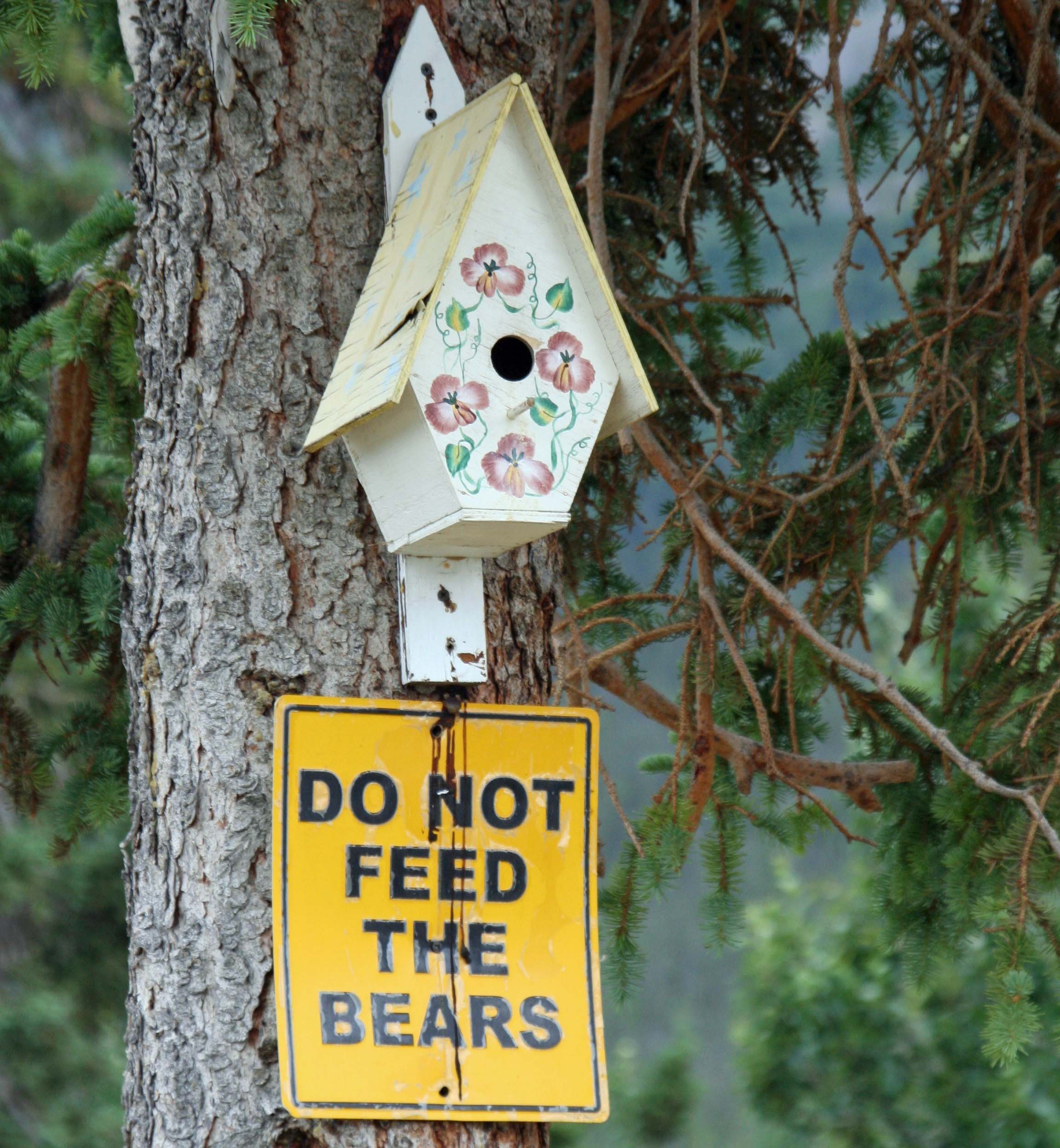
A campground at Kluane Lake reminded us not to feed the bears. I am pretty sure the occupant of the bird house agreed. The bordering Kluane National Park was grizzly bear country and they often wandered in looking for food.

Grizzly Bear, Alaska

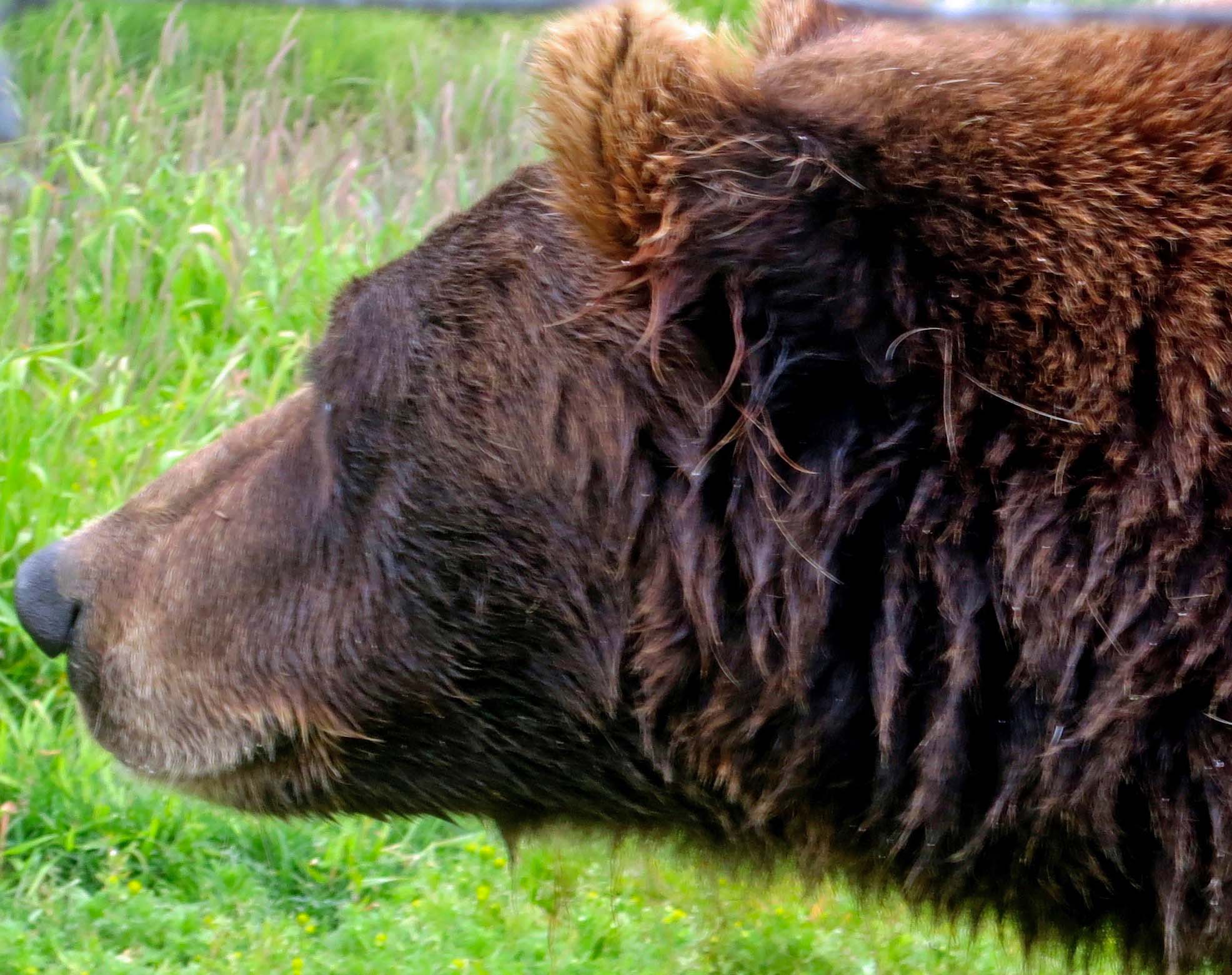
Why anyone would feel tempted to feed anything like this, I haven’t a clue! (I took this photo in Alaska but it fits here.)

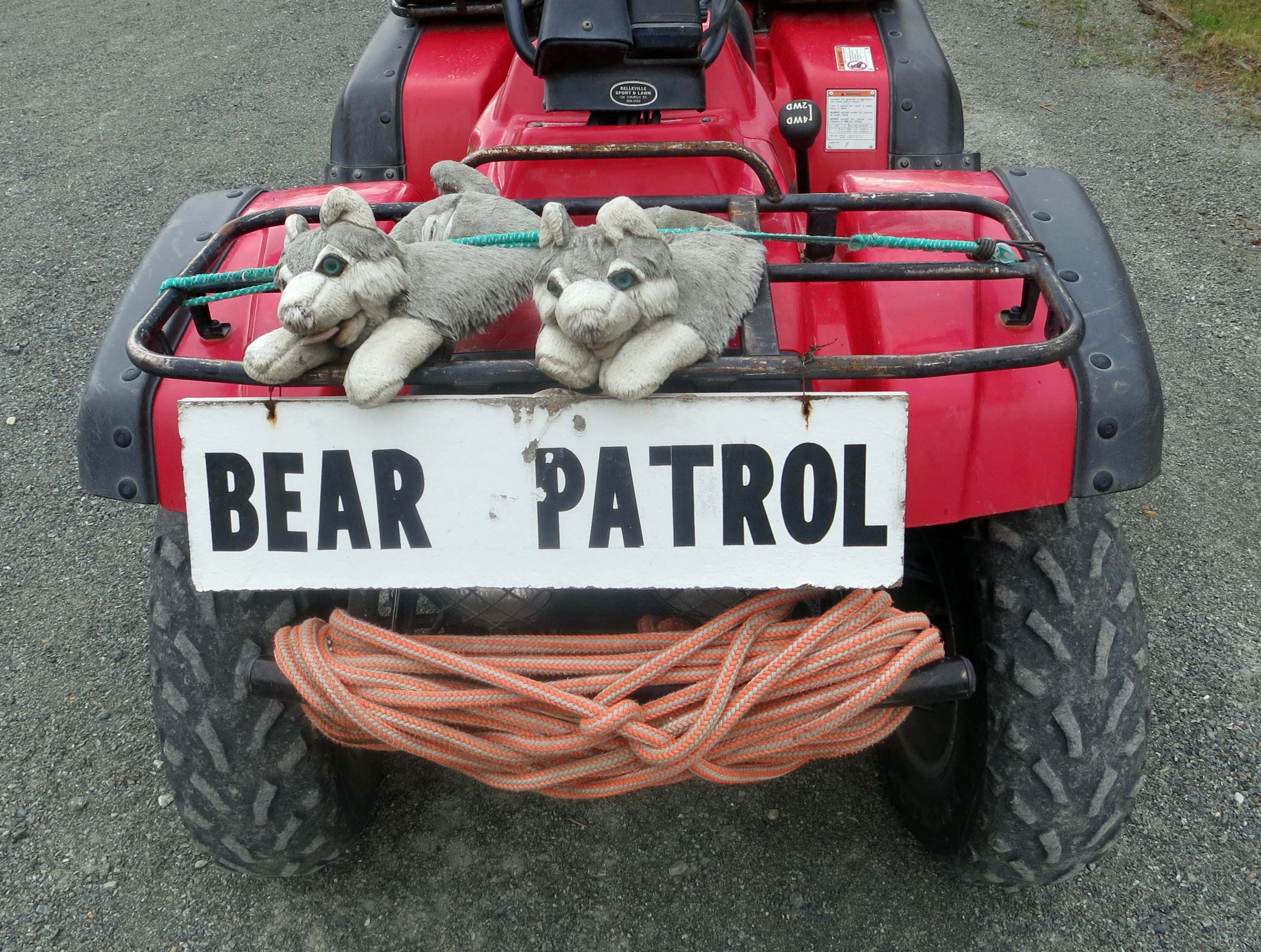
Bear patrol

An ATV at the campground had this bear patrol sign on it, along with a pair of fearsome huskies.

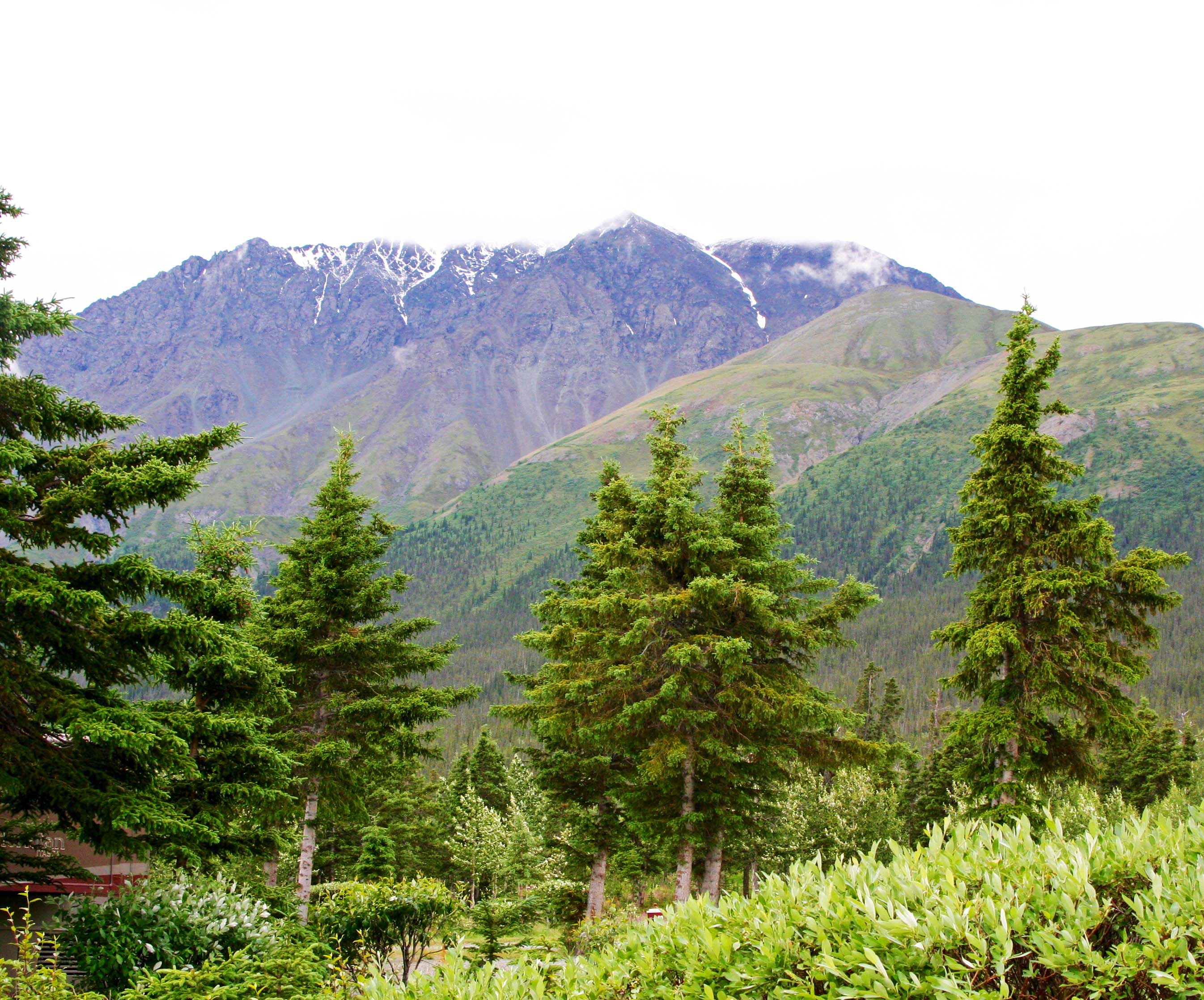
Yukon scene

We searched the mountains behind the campground for grizzlies. We didn’t see any but we did see Dall Sheep.

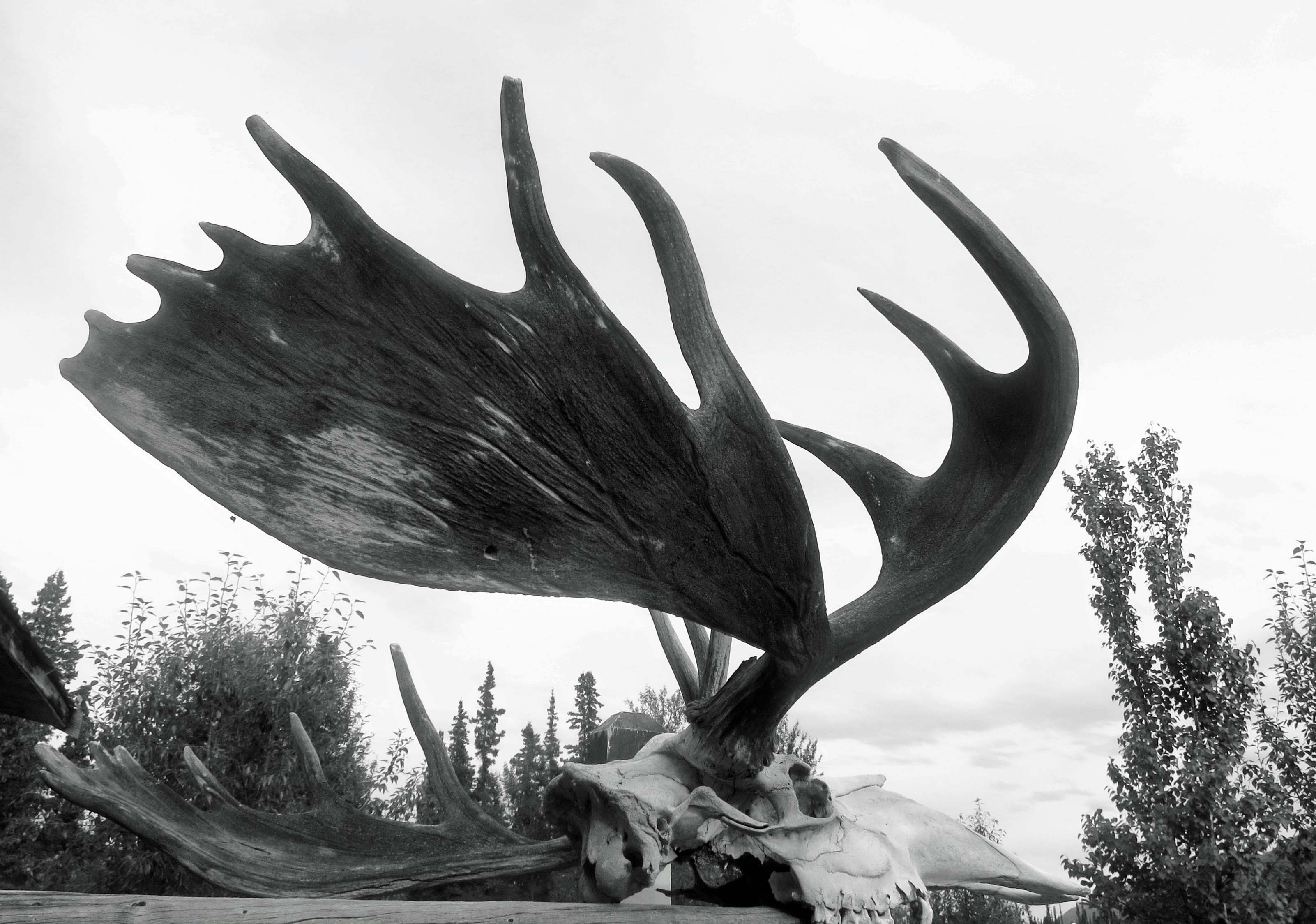
Moose antlers, Yukon Territory

White River, where we stopped on our way back south, had an extensive collection of antlers to remind us of other occupants of the far north, such as moose.

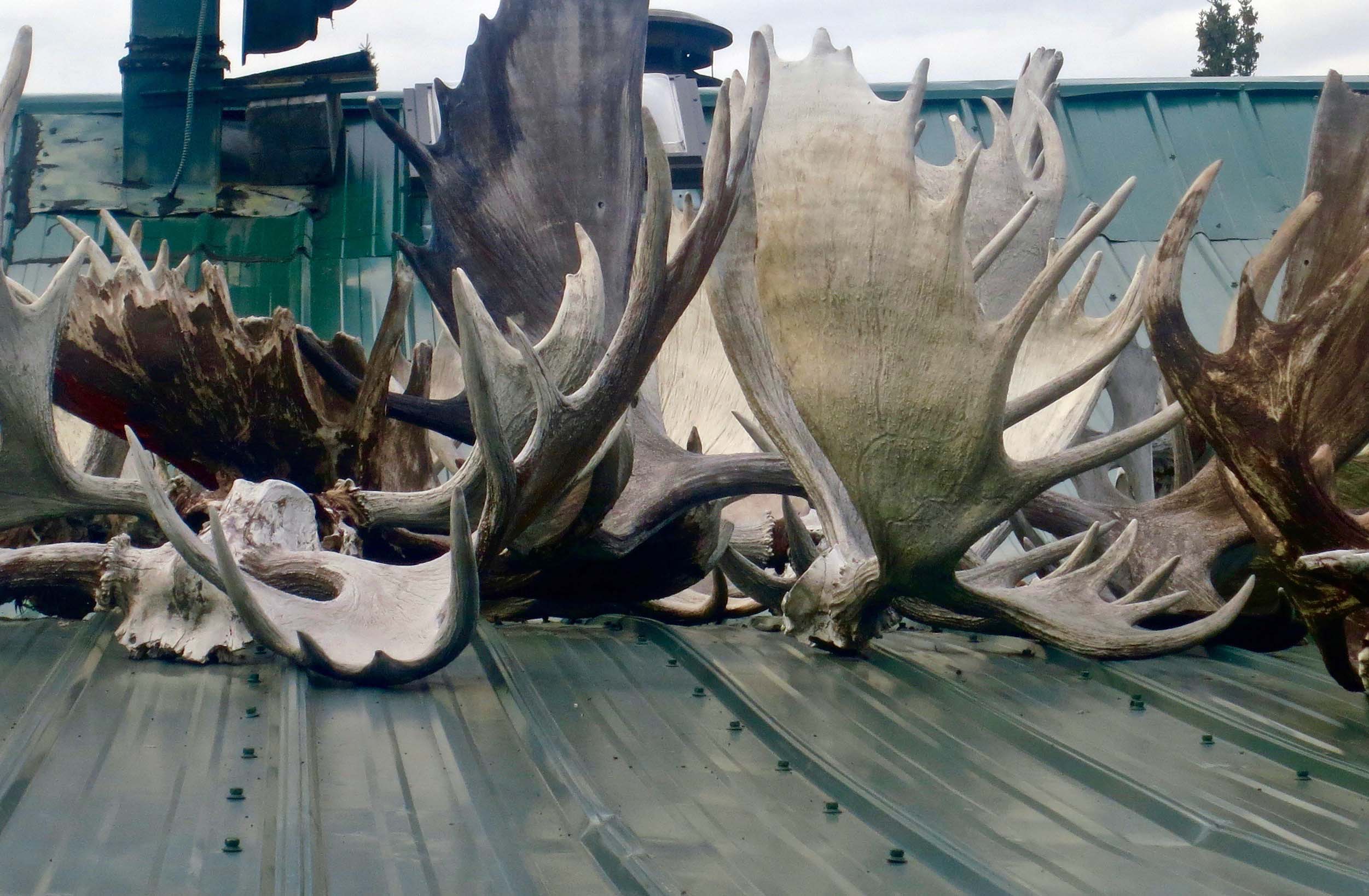
Antlers on roof, White River, Yukon

One rooftop was covered in antlers.

Peggy with moose antlers at White River, YT

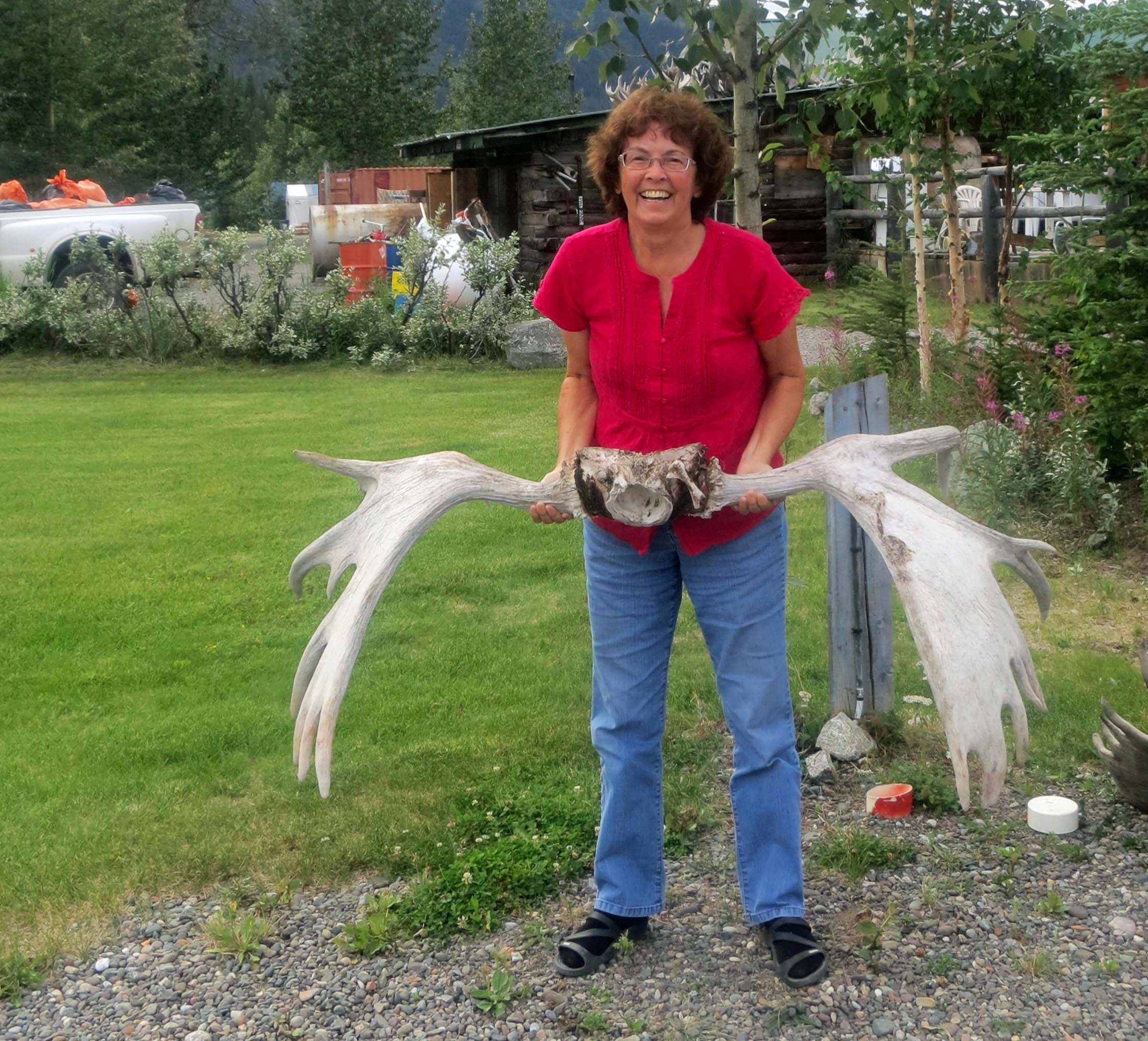
Peggy provides some perspective. How would you like to wear these on your head? This set weighed close to 50 pounds.

Yukon lake

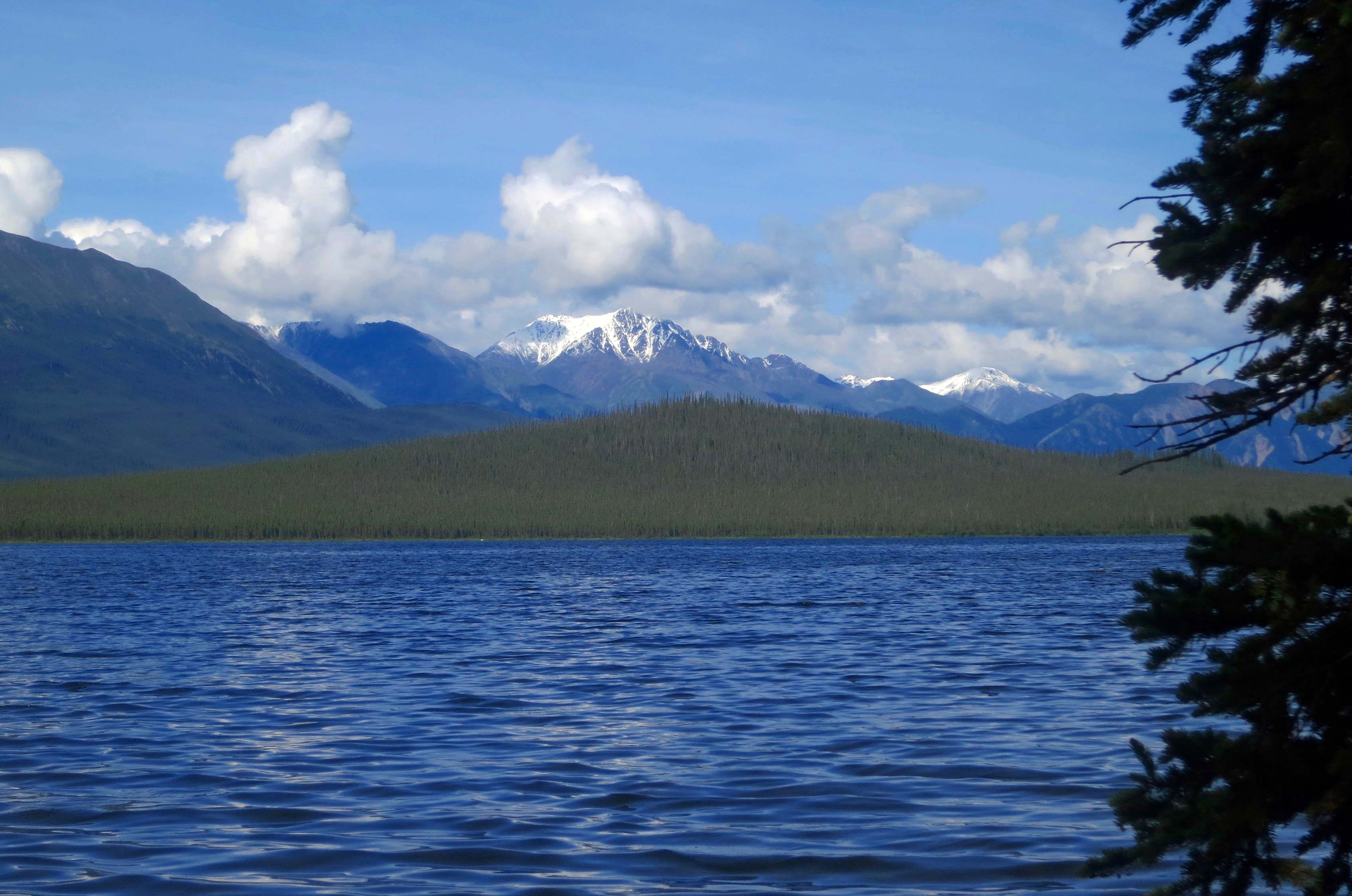
A small wayside on a lake before we reached the Alaska Border gave us this view.

Reflection shot Yukon Territory

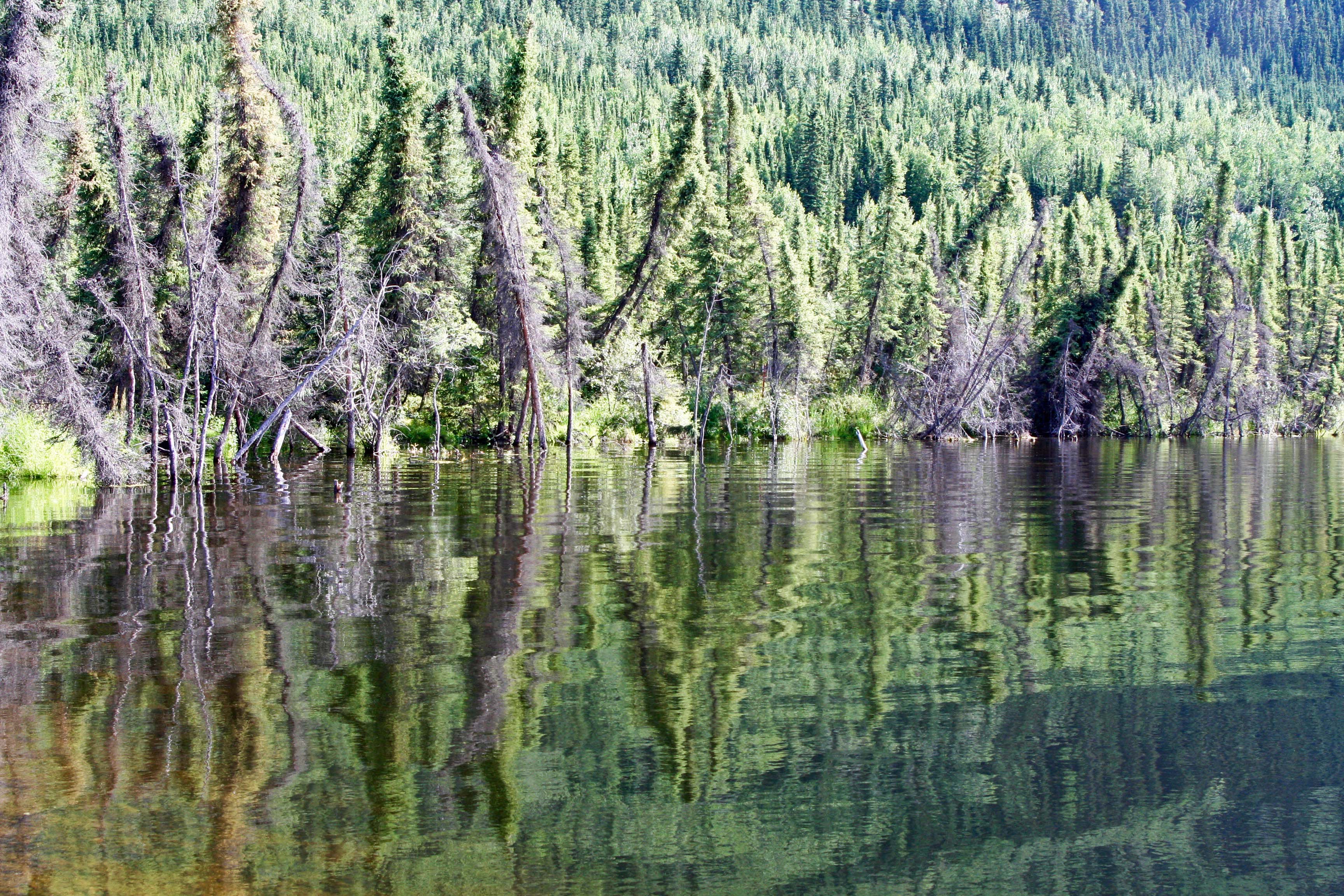
And a reflection shot.

Moth

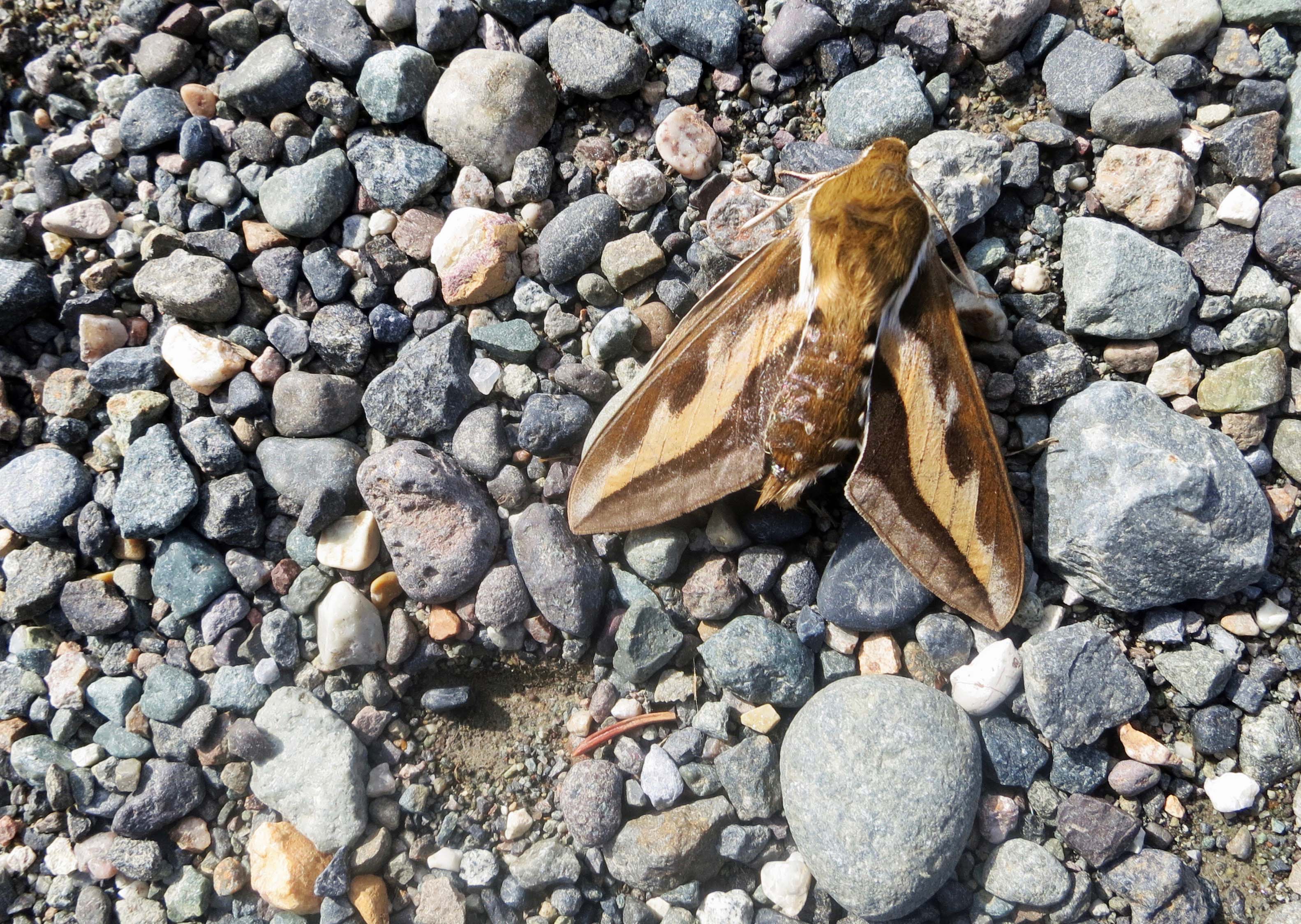
A moth was in the pebbles next to the lake.

Duck family in Yukon Territory

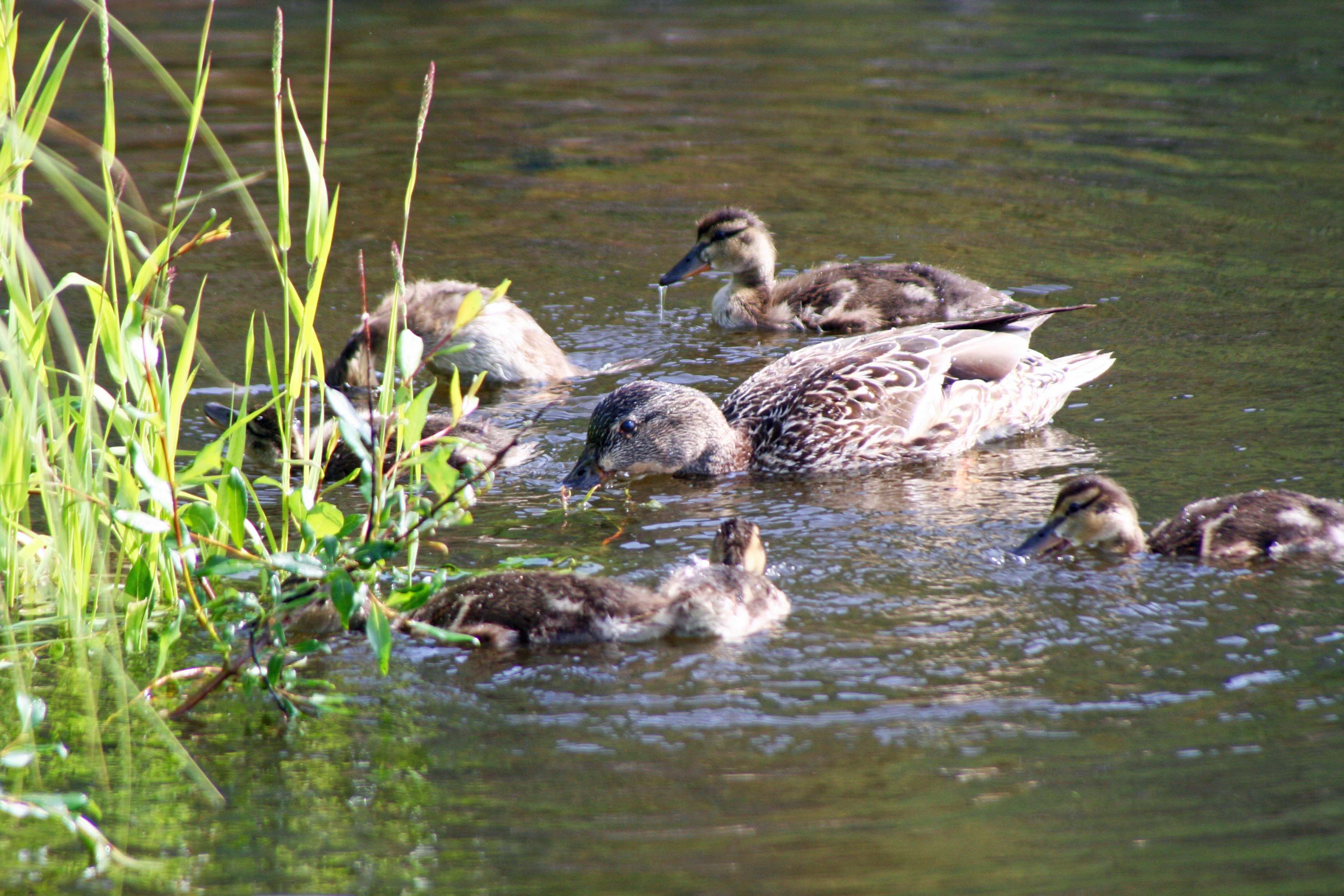
And a family of ducks worked the edge.

Skinny Coyote

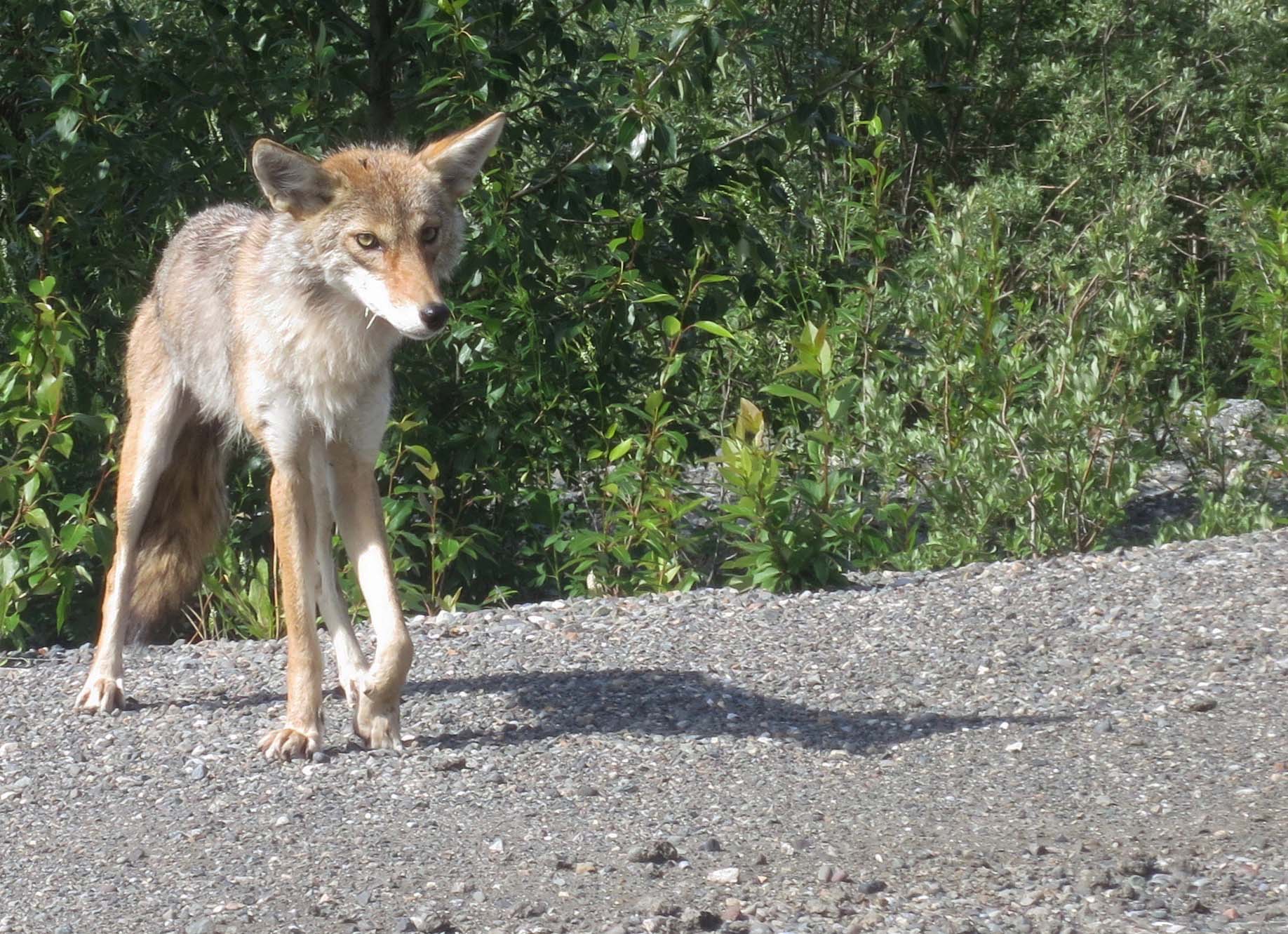
A very skinny coyote put in an appearance as we left.

Bob Bray, Linda Hart on Alaska-Yukon border

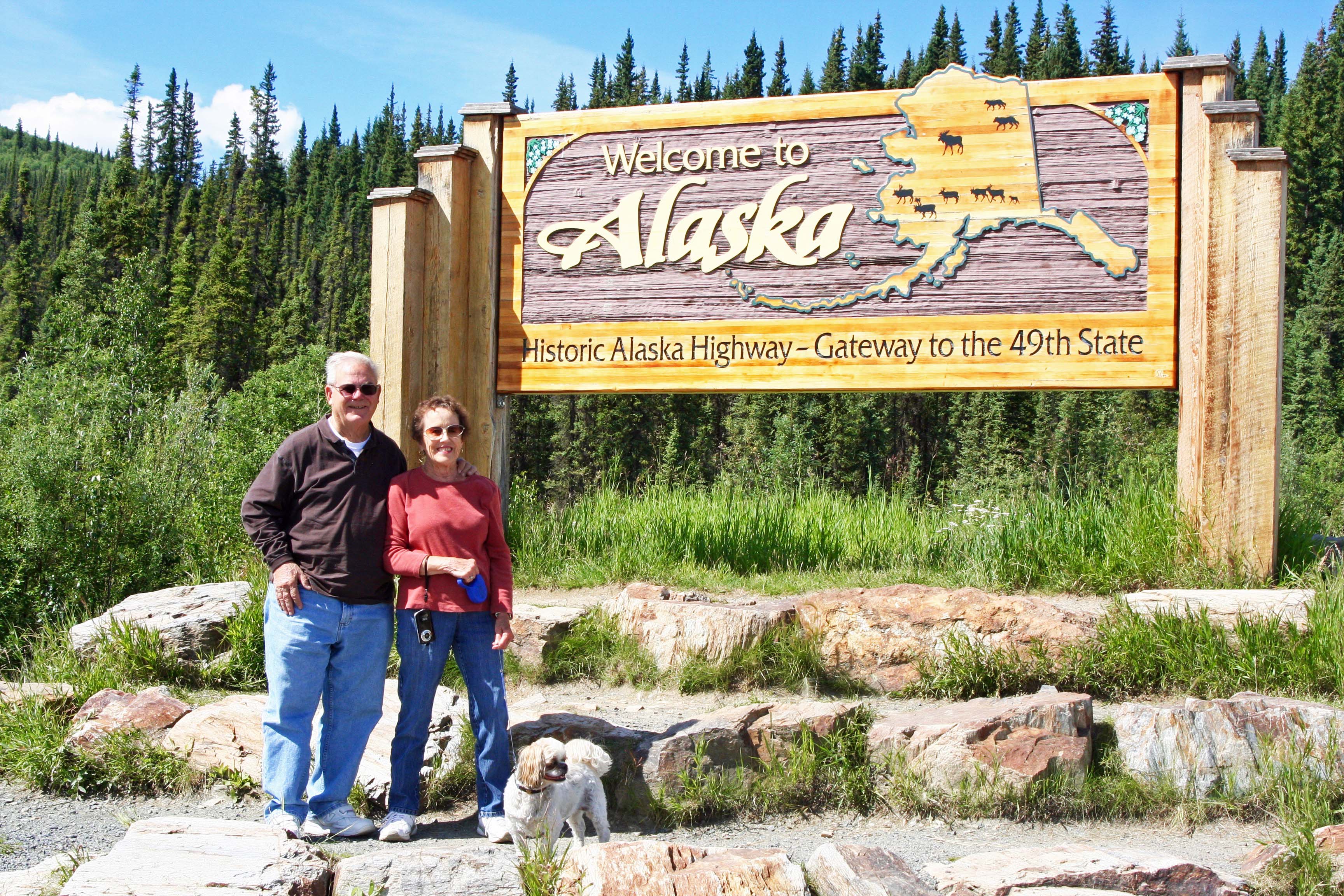
And finally, we reached Alaska, where Bob, Linda and Sister posed for us.

Alaska-Yukon Border

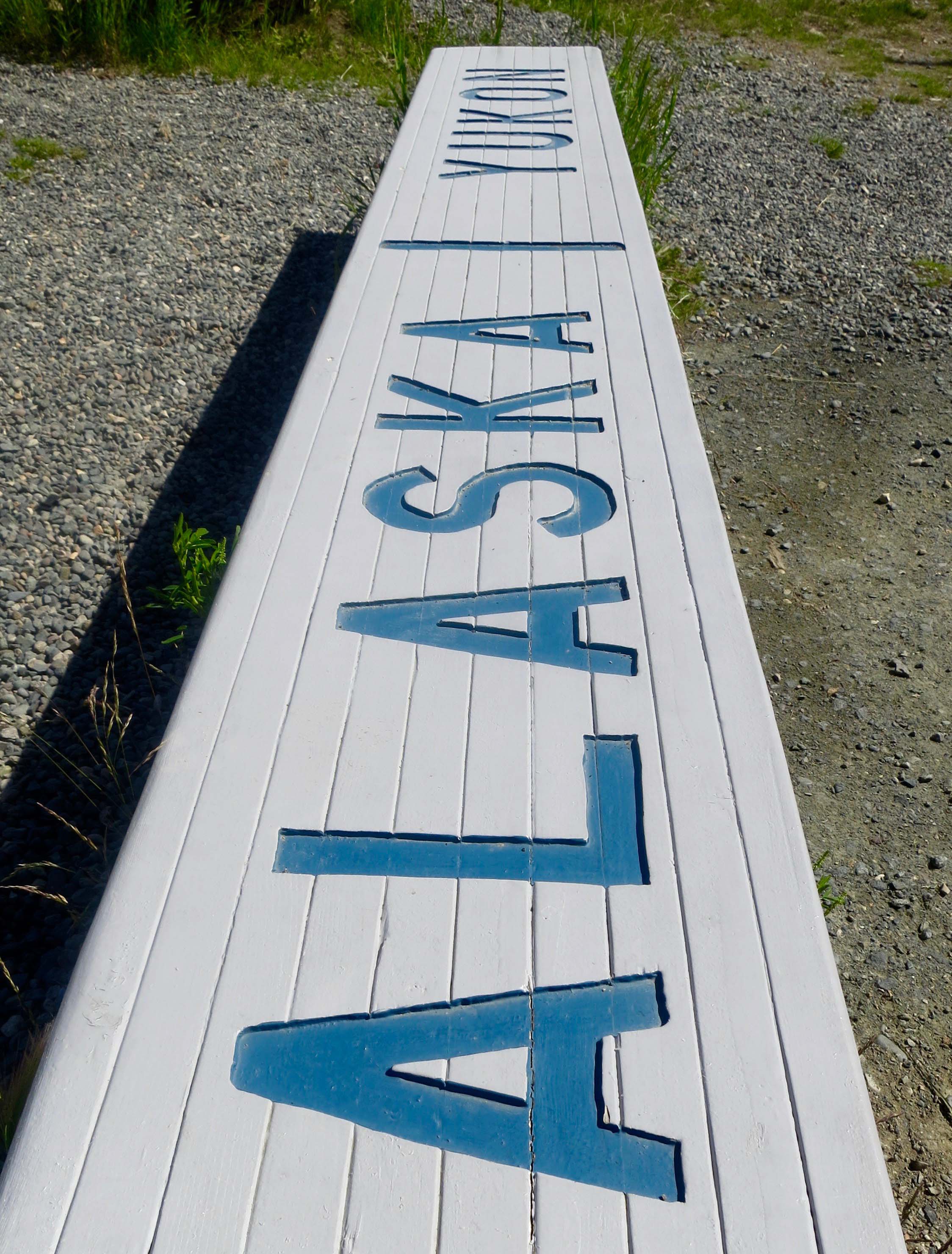
This sign showed the Alaska-Yukon Border. It’s my idea of the type of fence that should exist between nations.

Yukon Border

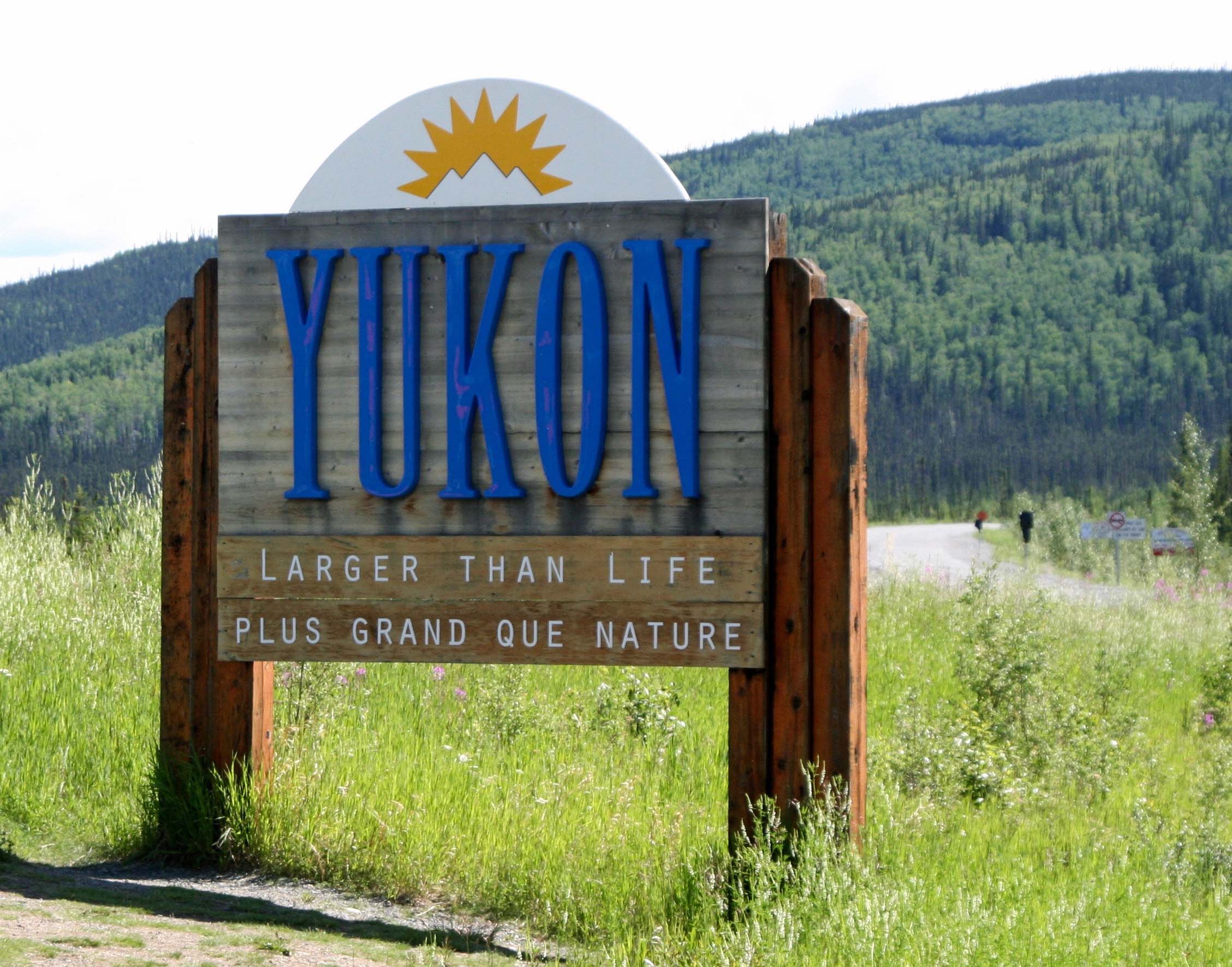
Looking back, we were reminded of our journey. Larger than life, indeed! Next Wednesday we head into the wilds of Alaska.

FRIDAY’S POST: It’s back to MisAdventures and who shot Pavy’s pig. It couldn’t have possibly have been the Mekemson kids, could it?

MONDAY’S POST: We continue our journey by raft through the Grand Canyon.


SaveSave

SaveSave

SaveSave

The Yukon Territory: Canada’s Far North… The Alaska Highway Series— Part 4

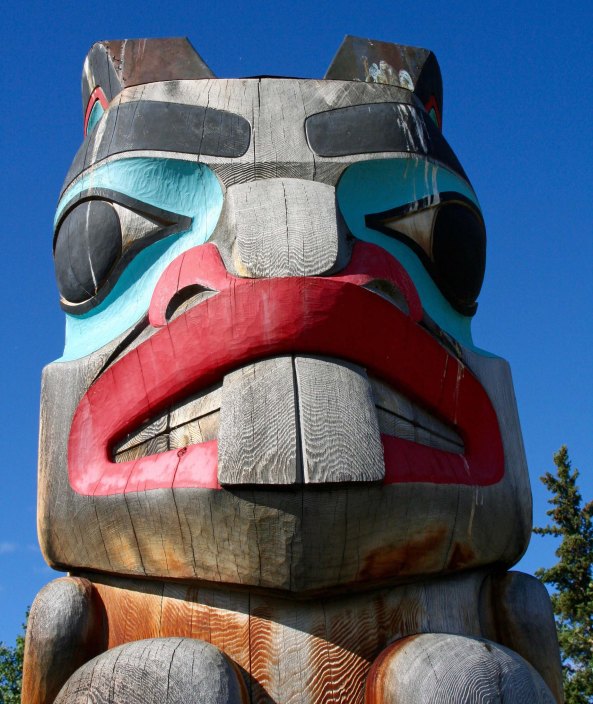
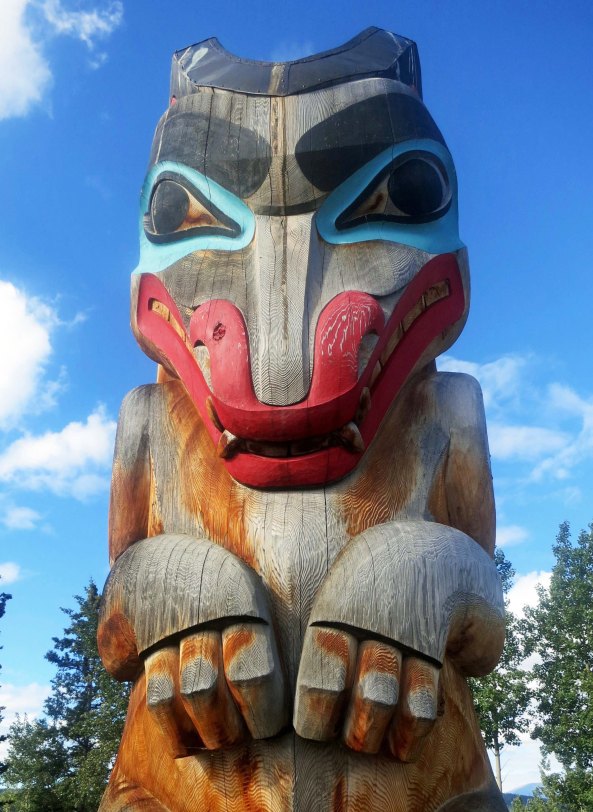
A series of totem poles represented the different Tlingit First Nation clans at the Tlingit Heritage Center on Teslin Lake. This is beaver. I thought he would be a good kick-off to my posts on the Yukon Territory.

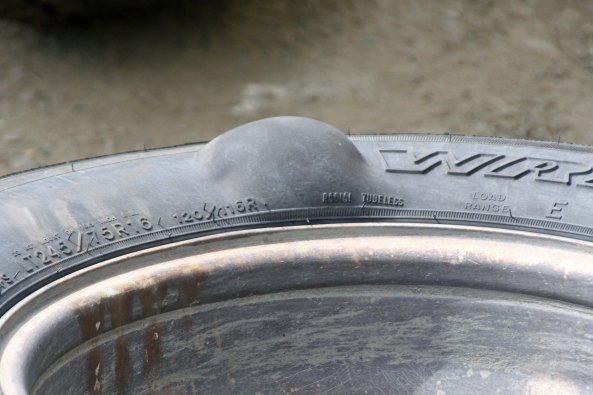
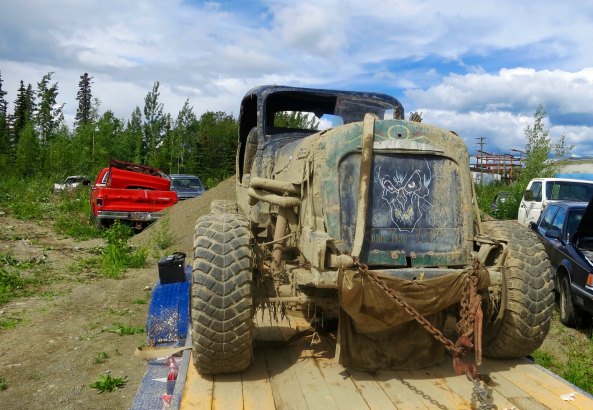
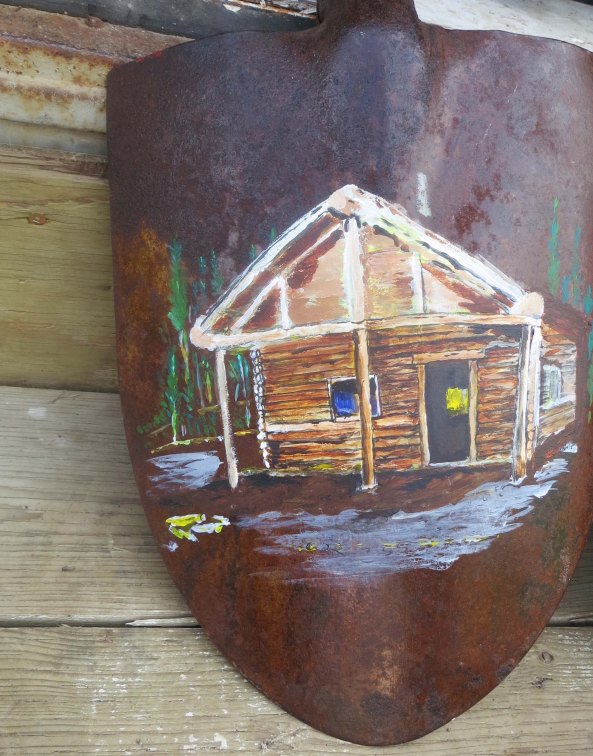
Peggy and I, along with our friends Bob Bray and Linda Hart continue to make our way north on the Alaska Highway in my Wednesday photo essay. Today we enter the Yukon Territory, a name that is almost synonymous with the Far North, at least in my mind. Sargent Preston and his dog King were big in my childhood! We didn’t enter with a bang, fortunately. We could have; a tire on our van had developed a large bubble. It was ready to pop! Fortunately, we were able to limp into the small town of Teslin and get it fixed at the local junk yard. The junk yard owner even turned out to be a shovel artist!

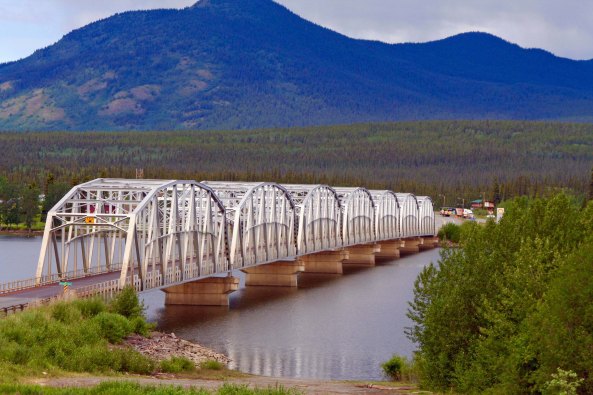
This bridge is a beauty backed up by some very impressive scenery. The beauty and the scenery aren’t why I was glad to see it, however. I was hoping the tire on our van that was threatening to blow at any minute would wait.

The tire with its tennis ball sized bubble. The steel belted bottoms of our tires handled the numerous pot holes of the Alaska Highway well. Not so much the side walls. We stopped at a small restaurant in Teslin and asked where we might go to replace the tire.  “Whitehorse” was the reply— 110 miles (177 Kilometers) up the road. “Not likely,” was my reply. “Well, you might try the local junk yard.” It came out more a question than an answer.
We were greeted by this. “Mmm, maybe not good,” Peggy mumbled. A small semi-derelict trailer was apparently the office. I knocked on the door. No one home. I went wandering out among the junked vehicles…

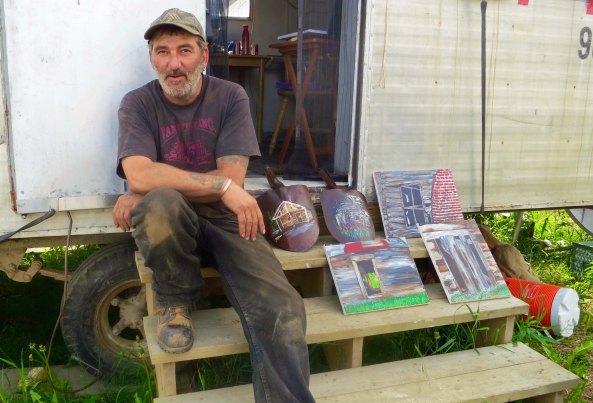
And found John, which is the name I sort of remember. He turned out to be a nice guy. “Well obviously the tire is dead,” he told us, “and I don’t have a replacement. But, I can put on your spare, and maybe you can make it to Whitehorse.”

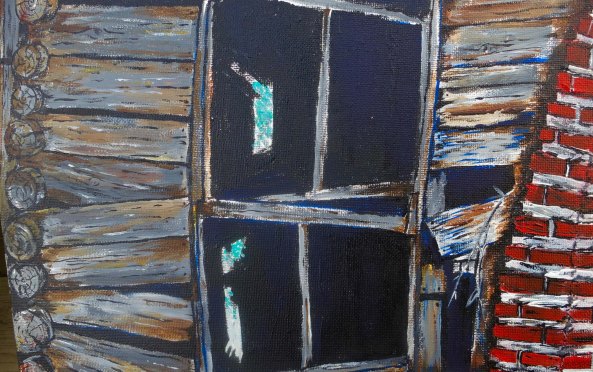
In talking with John, we discovered he was something of an artist, painting both canvasses and shovels. He quickly agreed to break out his paintings for a photo.

One of his oil paintings of an old cabin.

On our way back south, Peggy and I spent more time at Teslin Lake, first camping there and then visiting the Tlingit First Nation Heritage Center. I decided that our two visits called for a post! Next Wednesday we will continue our journey up the Alaska Highway through the Yukon Territory.

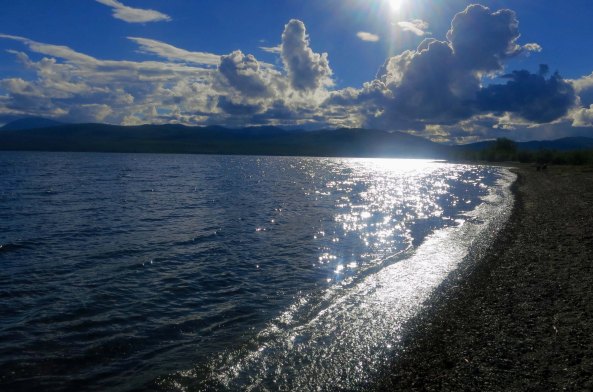
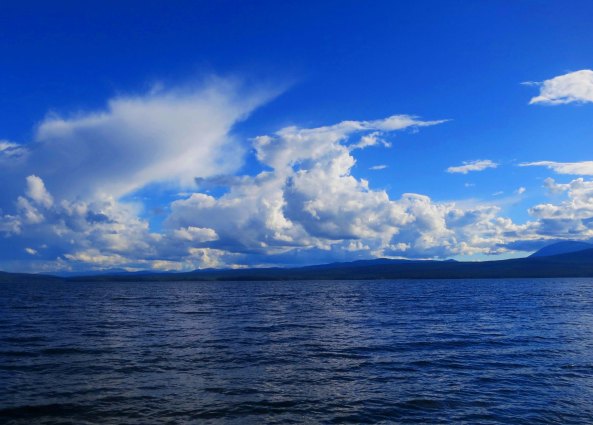
We camped next to Teslin Lake and were treated to this view.

The clouds insisted on showing off. Distant shores suggested the size of the lake. And this was just looking across. The lake was much longer than it was wide.

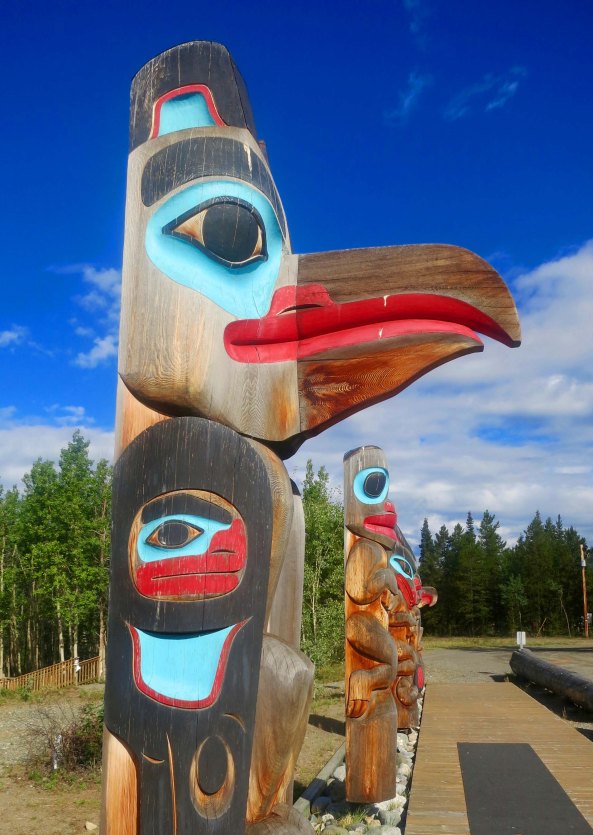
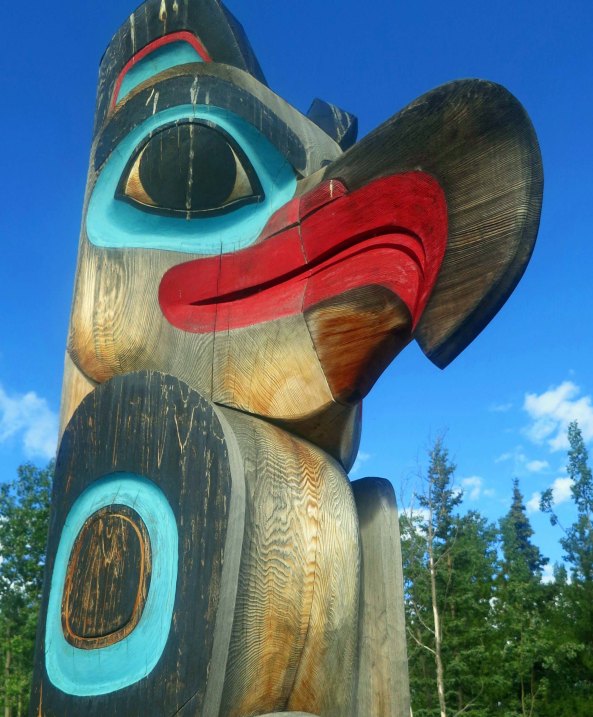
I was surprised to find the Tlingit First Nation people with their Heritage Center on Teslin Lake since I normally think of the Tlingits and their fabulous totem poles as inhabitants of the coast from the American-Canadian border north. We were greeted with a line of totem poles at the Center that represented the different Tlingit clans. This is Raven.

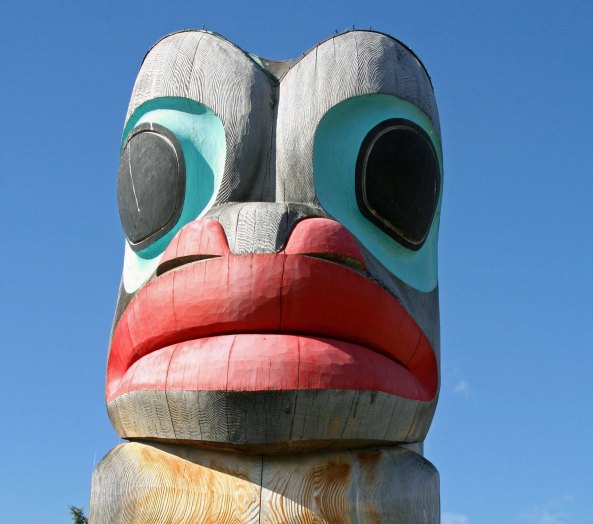
Meet Frog.

I couldn’t help but think, “I’ll huff and I’ll puff and I’ll blow your house down,” when we checked out Wolf.

Eagle with its hooked beak.

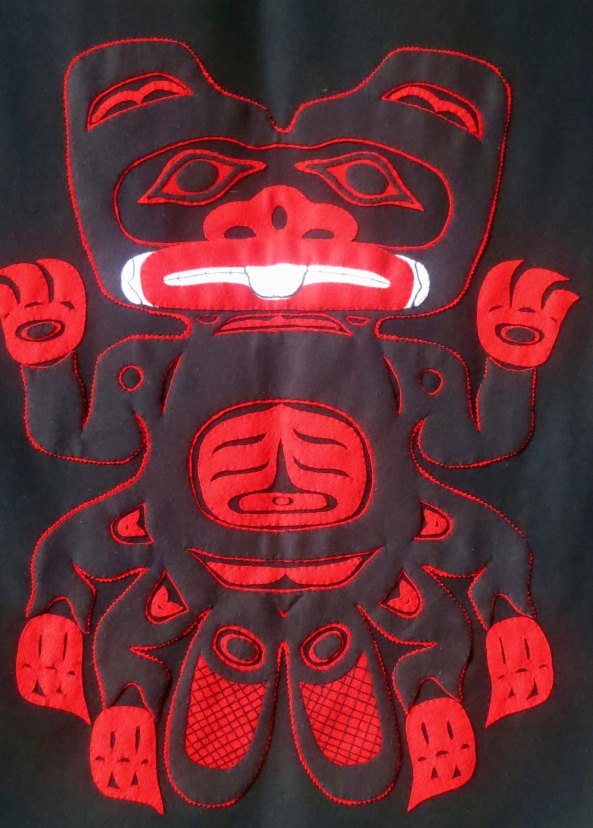
The Center was quite attractive and included both cloth and wood art representing the Tlingit people. This is Beaver with an extra tail and pair of rear legs.

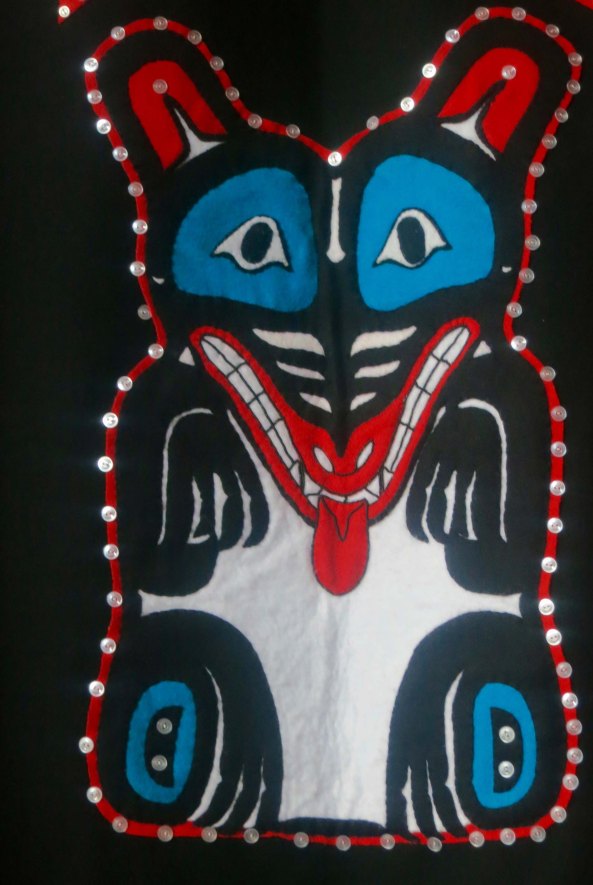
And here we have Wolf with his tongue hanging out.

A number of carved masks were on display. I think that this is Eagle.

I’ll conclude with this carving and what appears to be a female representation. The Tlingit are a matrilineal society with property held and passed down by the women of the tribe.

FRIDAY’S MisAdventures POST: When mischief took place in the town of my youth, there was a mantra: The Mekemson kids did it.

MONDAY’S Travel Blog POST: We continue our journey down the Colorado River, stopping off at the Phantom Ranch. Tom wears Bone and I jump off a cliff.

WEDNESDAY’S Photo Essay POST: We continue on our journey through the Yukon Territory and arrive at the Alaska border.

SaveSave

SaveSave

How Brunhilda the Cat Became Rasputin… A Tale from The Bush Devil Ate Sam

Liberian Peace Corps photo by Curtis Mekemson.

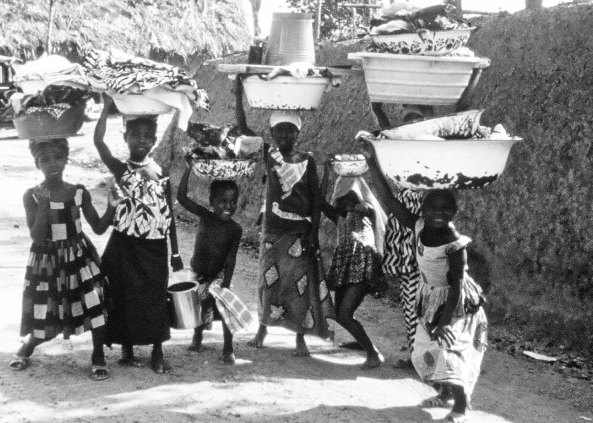
A fading black and white photo shows children in Gbarnga, Liberia mugging for my camera in 1965. Life wasn’t easy– check out the head loads.

In 1965, my first wife, Jo Ann, and I joined the Peace Corps, graduated from UC Berkeley, and flew off to the country of Liberia where we were assigned as elementary school teachers in the upcountry town of Gbarnga. My book, “The Bush Devil Ate Sam” relates our experiences at Berkeley and in Liberia.

January was the Liberian school equivalent of summer vacation and second year Peace Corps Volunteers took full advantage of it by chartering a jet airplane and flying off to East Africa. First year Volunteers were left behind and had to take on a ‘summer’ project.

I decided to write a second-grade reader while JoAnn worked with a blind student.

I had spent my first semester teaching a second-grade class where the children were expected to learn to read out of well-used 1950’s era California readers. It was hard for the kids to relate. The world of Dick and Jane in their big houses with white picket fences and white playmates in no way resembled the life of my kids in Gbarnga, as demonstrated by the photo above. As for Spot, he bore a striking resemblance to food.

I had plunged into my project: researching elementary school readers, gathering African folk tales, and putting together stories about the children that reflected their lives, not those of Dick and Jane. The country Peace Corps staff liked the book I submitted. They agreed to assign me an editor, an expert in elementary school education, and an illustrator. But it wasn’t to be. The government decided that my book on African Folk tales and Liberian children was somehow dangerous, a threat to its one-party state. Peace Corps told me to forget the book and not even bring it up in conversations. I might be kicked out of the country.

Fortunately, I had other things to occupy my mind. Jo and I had been assigned to teach at Gboveh High School our second semester and were moving across town. There were classes to prepare for and our ‘new’ house was in desperate need of a paint job. We had also assumed in loco parentis status. One of the second-year Peace Corps couples, Dick and Sandy Robb, had left four little female kittens to live with us while they flew off to East Africa. Our pay was to have the pick of the litter. Whoopee.

I had built our temporarily adopted cat family a three-story mansion out of cardboard. It was a maze of rooms, hanging toys, hallways and ramps. It even had a carpeted floor and a bathroom— a kitty litter box. The kittens would disappear inside and play for long periods. We could hear them banging around as they stalked each other and attacked the hanging toys.

In a creative moment inspired by the evening cocktail hour, we decided to use the house as an intelligence test to determine which kitten we would keep. First, we waited until the kittens were appropriately hungry, and then we brewed up their favorite meal, fish head stew. Here’s the recipe: Take several ripe fish heads and throw them in a pan of boiling water. When their eyes pop out, they’re done.

Next, we encouraged the kittens to sniff their gourmet dinner and showed them that the meal would be located just outside the ground floor door of their mansion. Now we were ready for the test. Each kitten would be placed inside the third story door and given a nudge. We would then close the door and time how long it took the kitten to reach the banquet. Our theory was that the kitten with the quickest time through the maze of hallways and ramps would be the brightest.

Grey Kitten # 1 was a pudgy little character that never missed a meal. My money was riding on her. She breezed through the maze in three minutes sharp and set the time to beat. There was a chance that the sound of her munching away on fish heads might inspire the other kittens on to even greater glory, however.

Grey Kitten #2 was one of those ‘whatever it is you want me to do I am going to do the opposite’ type cats. Not surprisingly, she strolled out of the door seven minutes later and ignored the food altogether. (Afterwards, we were to speculate that she was the most intelligent cat and blew the race because she had no intention of living with someone who made her go through a maze for dinner.)

Grey Kitten #3 was the lean and mean version. Scrawny might be a better description. She obviously needed dinner the most and proved her mettle by blazing through the house in two minutes. The contest was all but over.

Kitten # 4 was what pollsters normally classify as ‘other.’ To start with, she was yellow instead of grey. She was also loud. In honor of her operatic qualities, Jo had named her Brunhilda, after the Wagnerian opera star. By the time her turn came up, she was impatiently scratching the hand that was about to feed her and growling in a demonic way. I gladly shoved the little monster in the third story door and closed it. We heard a scrabbling on the other side as tiny claws dug into the cardboard floor. Her race down the first hall was punctuated by a loud crash on the other end. Brake problems.

Then she was up and running again, but it sounded like toward us. Had her crash disoriented her? Suddenly the third story door burst open and one highly focused yellow kitty went flying through the air. She made a perfect four-point landing and dashed to the dinner dish. Her time? Ten seconds.

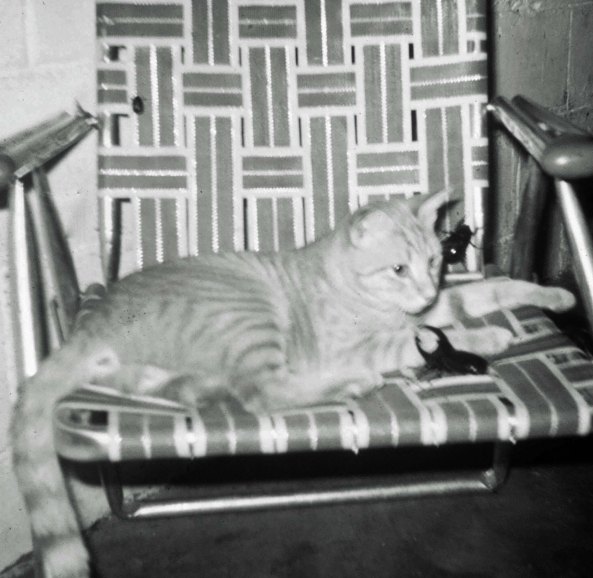
And that is how Brunhilda came to be our cat. Our decision to keep her led us to turn her over and check out her brunhildahood a little more closely. Turns out she had a couple of furry little protuberances where there shouldn’t have been any. She was a he. In honor of Brunhilda’s demonic growl and generally obnoxious behavior, we renamed the kitten Rasputin after the nefarious Russian monk.

Rasputin surrounded by Rhinoceros beetles.


If you have enjoyed this story and the many other tales I share, you might also enjoy “The Bush Devil Ate Sam.” It’s available in both Kindle and paperback form here on Amazon. For other sources such as Apple, click on the book cover top right.

SaveSave

SaveSave

SaveSave