A Texas Bull Comes Out of the Ground; A Canadian Goose Is Created with 120,000 Pennies… The Art of Burning Man

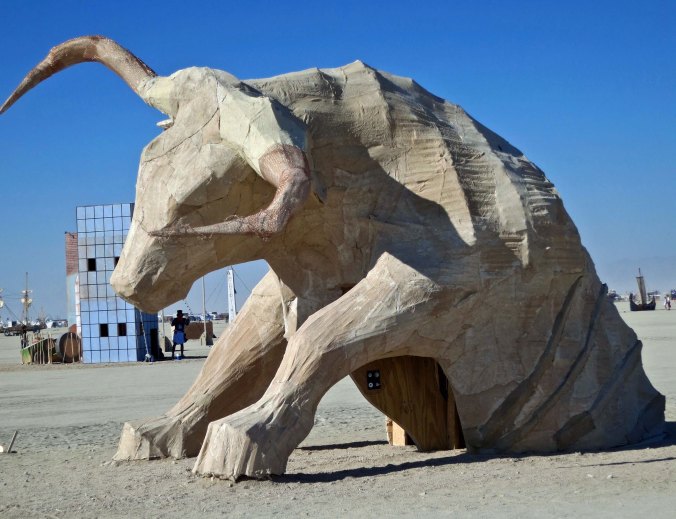
There are regional groups of Burners around the US and around the world. One year, Burning Man requested that regional groups come up with art projects. Texas produced this magnificent bull.


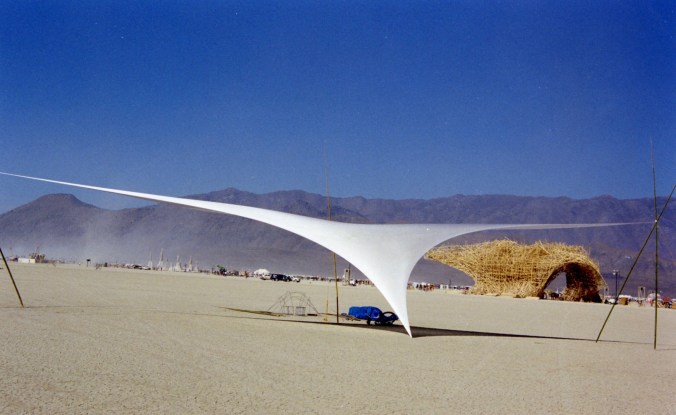
As I’ve noted before, my primary reason for going to Burning Man is the art. The creativity involved goes on and on and can, at times, be mind-boggling. Over the past couple of months, I’ve provided examples, looking first at mutant vehicles and then at large-scale sculptures. Today, I am going to wrap up my posts on sculptures. Next week, I’ll introduce some very unique buildings that seemingly spring up overnight in the Black Rock Desert only to be disassembled or burned down a week later.

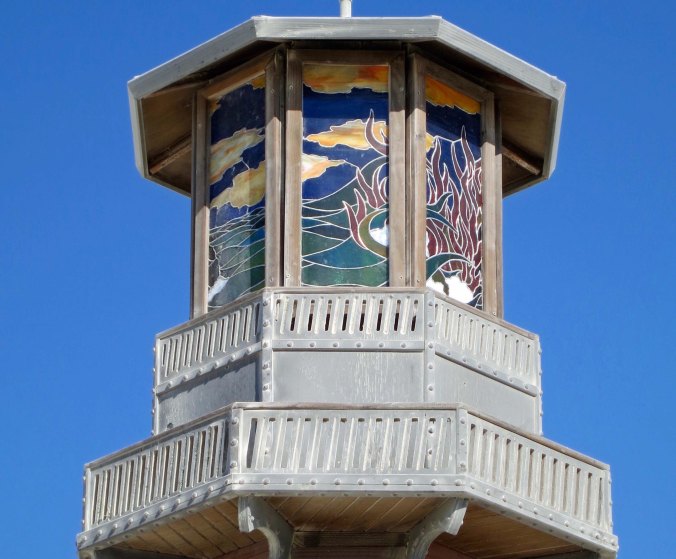
The same year that Texas produced the bull, the Northern California regional group produced this lighthouse.

A close up of the stained glass top.

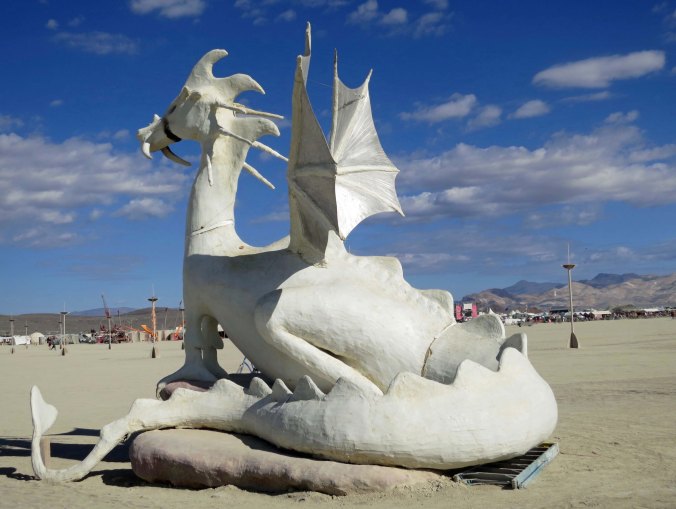
There are dragons at Burning Man! Always. This guy’s tail needed propping up.

I thought this dragon looked friendly…

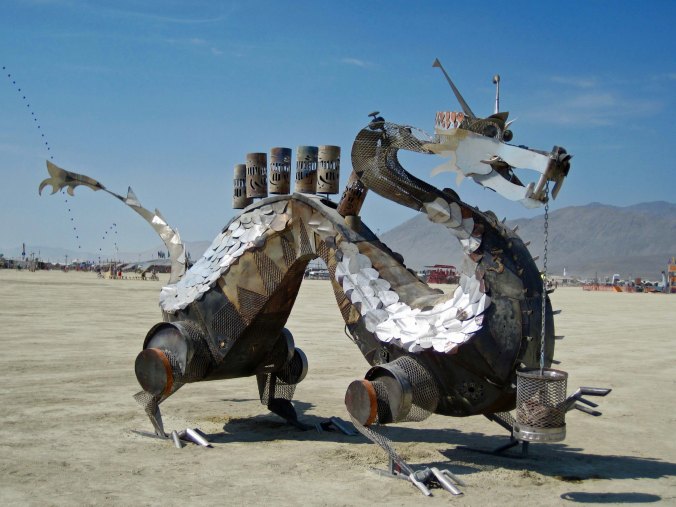
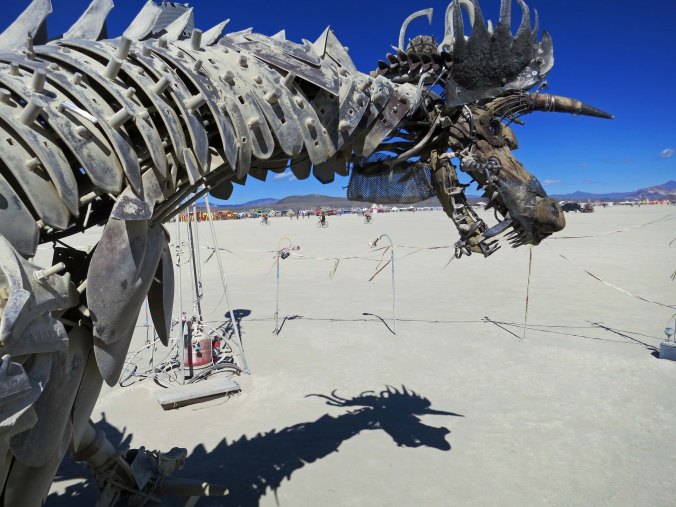
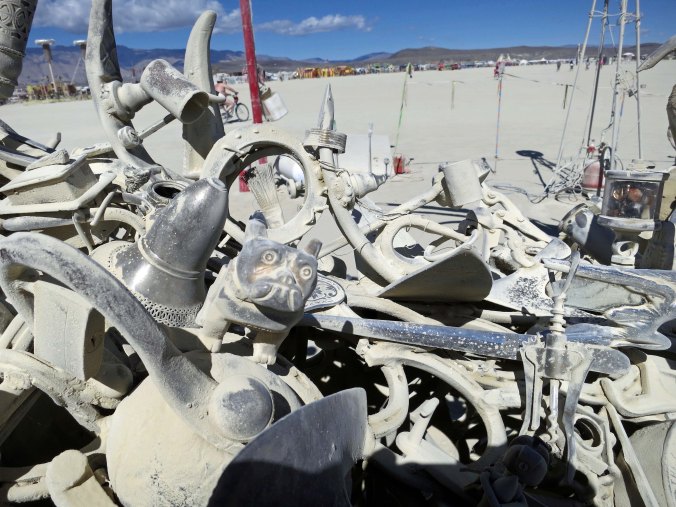
And this fellow scary. You may remember the quote, “meaner than a junk yard dog.” Well this was a junk yard dragon, made out of 100% pure junk. And check out that shadow!

A closer look at the skin on the dragon’s back. I thought the dog was a fun addition.

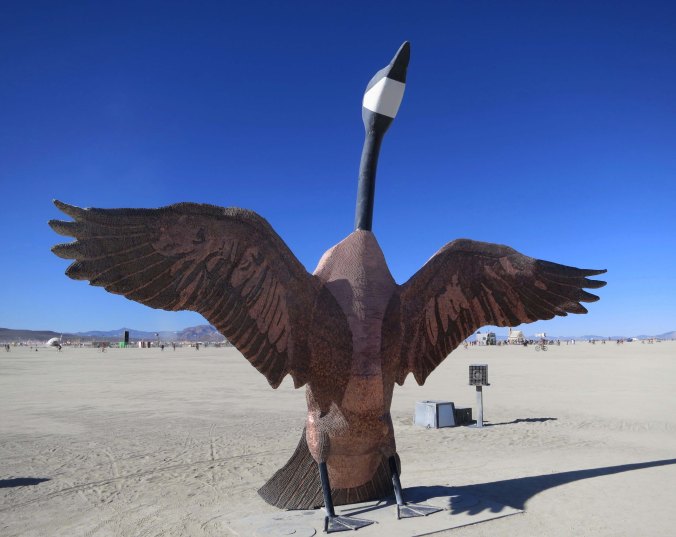
Meet Penny, the Canadian Goose. Over 100,000 pennies cover her body.

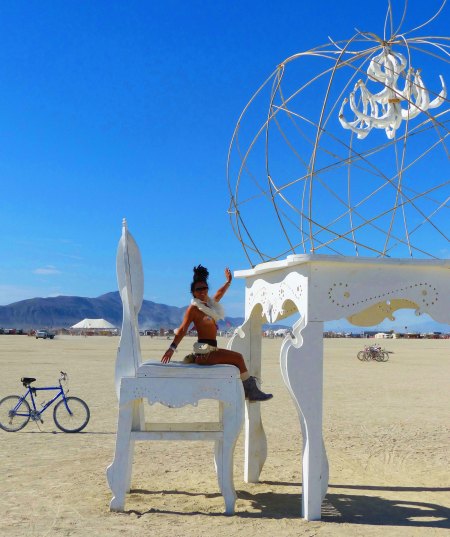
Is this a small woman or a big chair? It is definitely an Alice in Wonderland kind of thing. (Photo by Horse Bone Tribe member Don Green.)

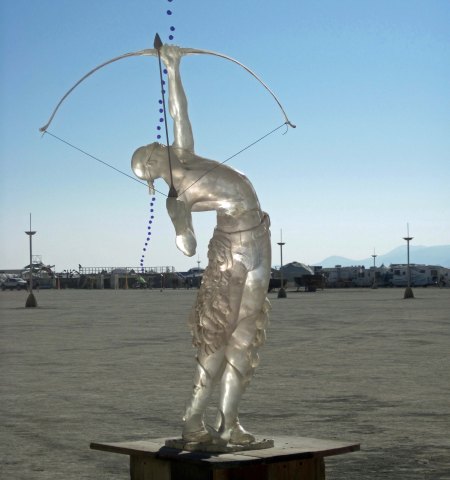
“I shot an arrow into the air. It fell to earth I know not where.” –Longfellow

I really liked this illusion of cubes climbing into the sky. (Photo by Don Green.)

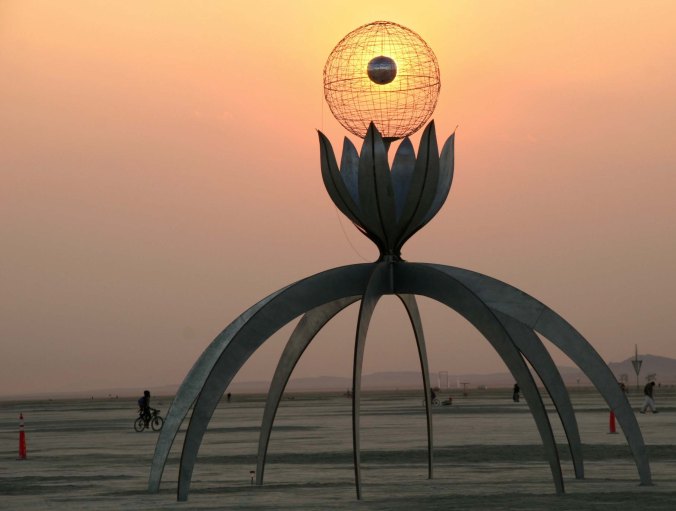
Tom Lovering caught this beautiful photo of a lotus with the sun behind it.

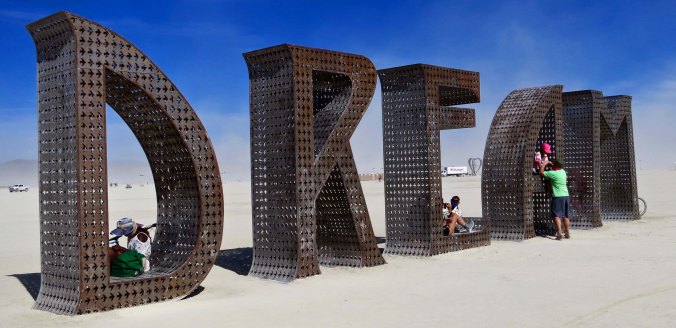
Large letter messages such as DREAM can be found at Burning Man almost every year.

This sculpture served as a gateway between the Center Camp Cafe and the Playa. A large dust storm stretches across the Playa and will soon invade Black Rock City, possibly causing a white out.

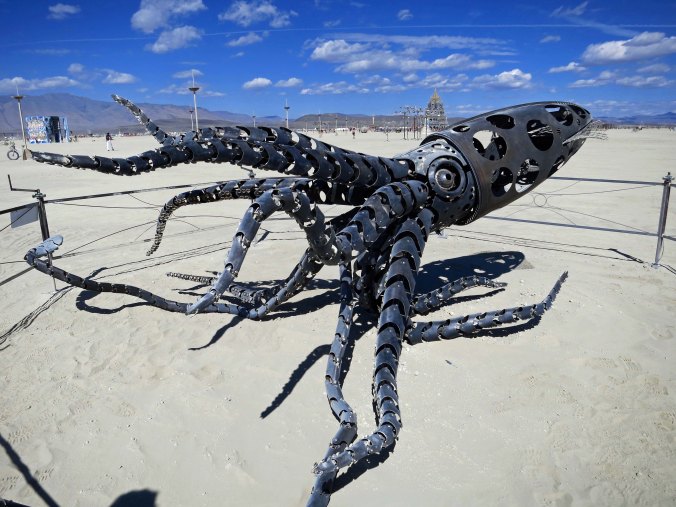
One expects to find ocean creatures scattered around Burning Man. A fence surrounding this octopus included hand cranks you could turn to move the tentacles. Much Burning Man art is designed to be interactive.

It isn’t unusual to find art that focuses on the Man, such as these hands…

And these circles.

A side view of the circles provided a different perspective.

I’ve always liked the grace of this simple sculpture.

The same sculpture from the back. Check out the stick sculpture under the wing.

A closer look. Imagine putting this together.

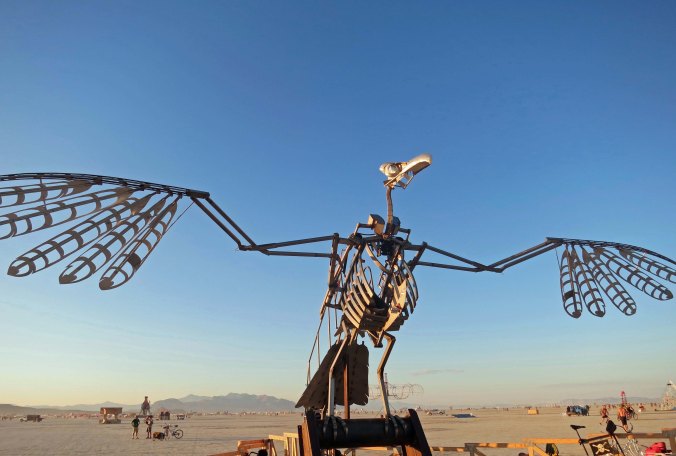
This prehistoric bird is another example of interactive art. Peggy climbed into its chest and worked pedals that made the wings flap. Slowly.

A large butterfly encouraged climbing!

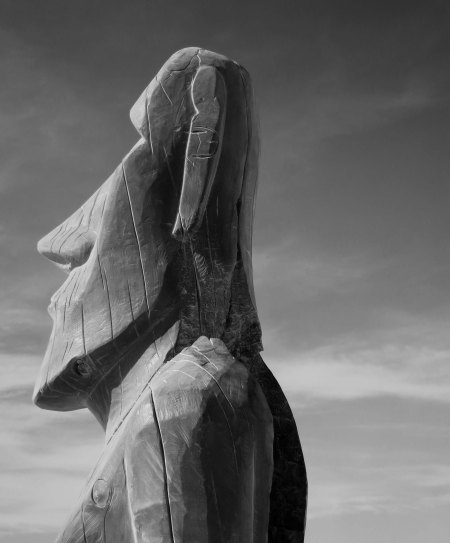
This wood carving made me think I had arrived at Easter Island. I decided it would look good in black and white.

Lets get down and boogie!

A gypsy wagon is pulled by a rather unique horse.

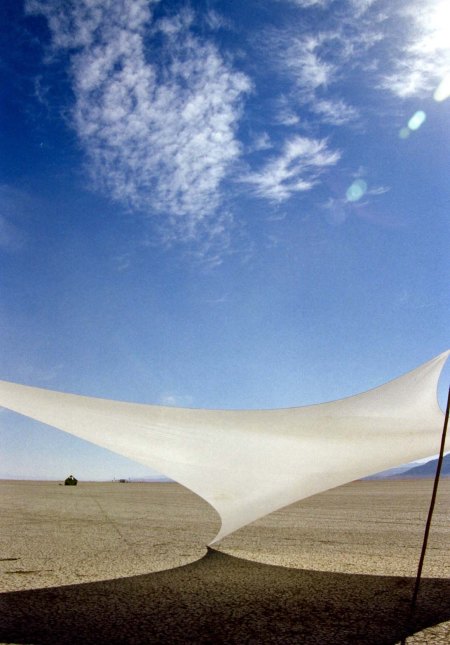
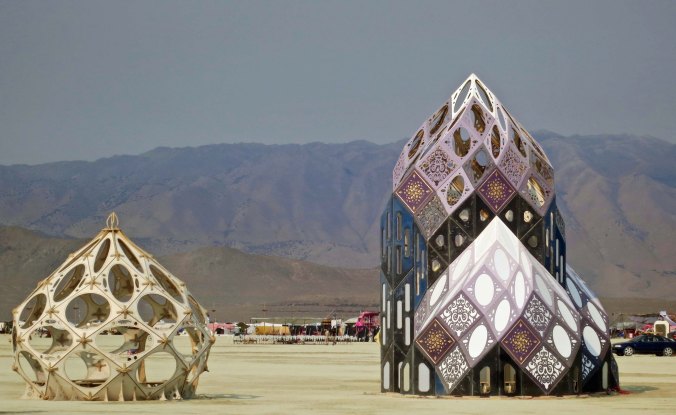
I’ll close today with these colorful geometric structures.

NEXT BLOGS:

Monday: Bandon… I’ll continue my series on the beautiful Oregon coast.

Wednesday: The interview with Bone. You won’t want to miss it!

Friday: The buildings of Burning Man, including some stunning temples.

The Journeys of Bone… Forty Years of Wandering the World

Bone has been wandering the world for 40 years. Given his nature, it is only natural that he would end up at Burning Man. He and a butterfly are perched on “Horse with No Name,” preparing to ride off into the desert.


Have you met Bone? He’s been hanging around here for 7 years and traveling the world for 40. Once upon a time, and it seems like a long time ago, this blog was even titled the Peripatetic Bone. There’s a story here, of course. In January of 2010, I had attended the San Francisco Writers’ Conference. Part of the event had involved ‘speed dating’ with agents.  I had carried Bone with me to San Francisco and introduced him to three of the agents, suggesting that I wanted to write a book titled “Travels with Bone.” They had been a bit surprised to meet Bone, but had been intrigued by the concept. Each had suggested that I go home and write up a proposal.

 I had also learned at the conference that I needed an Internet presence and would be expected to market any book I succeeded in publishing. I dutifully went home and created a blog for Bone on Word Press. Somewhere in the process, I decided that my first book should be on my Peace Corps experience. So, I wrote and published, “The Bush Devil Ate Sam.” I also changed the name of my blog to “Wandering through Time and Place.”

 I decided it would be fun to reintroduce Bone and do a five-part mini-series on his adventures. Today, I am going to summarize his travels. Next week I will do an interview with Bone. Then I will follow up with three posts on how he was found.
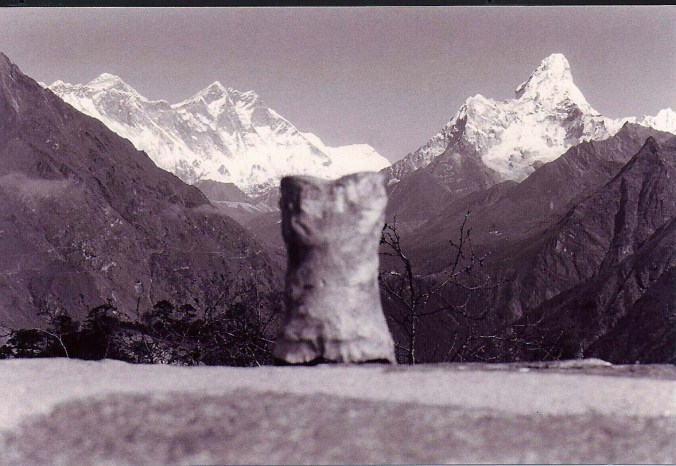
 

Bone has traveled twice to the base of Mt. Everest.


Part I: The History of Bone

Sometime in 1900s Bone started his life as part of horse wandering through the Sierra Nevada Mountains. The horse was allegedly eaten by a bear. Bone ended up in a high mountain meadow practicing Zen and being nibbled on by a miscreant rodent.

1977: He was ‘discovered’ by two lost backpackers (Curt Mekemson and Tom Lovering) on the Tahoe Yosemite Trail above Lake Tahoe and launched his career of wandering the world.

1980-81: Bone commenced his first World Tour with Tom.  He visited Asia including Japan, Hong Kong, Bombay, Delhi and Katmandu where he trekked to the base of Mt. Everest. He then wandered on to spend spring and summer in Europe stopping off in Greece, Spain, Portugal, France, Italy, Austria, Liechtenstein, Luxembourg, Germany, Belgium, England and Ireland. Getting cold, Bone headed south and hitched ride in back of truck through Algeria, Niger, Chad, Nigeria, Cameroon, Central African Republic, Zaire, Sudan, Kenya (where he crossed Equator), Tanzania, Zambia, Zimbabwe, Botswana and South Africa. He signed on with Tom as crew of sailboat in Cape Town and headed north to Mallorca, stopping off on the islands of St. Helena, Ascension, Cape Verde and Madeira. Back in Europe he explored his possible Viking roots in Sweden, Norway and Finland.
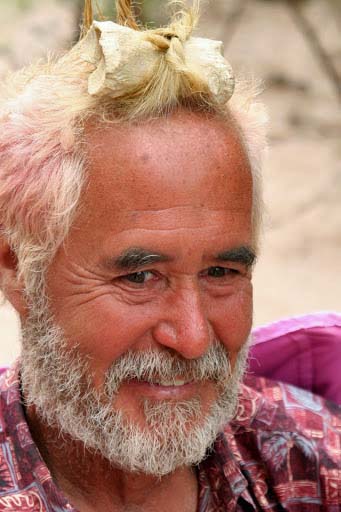
Bone ends up in Tom’s hair (don’t ask) on a 2010 trip down the Colorado River.

1983-86: Bone assumed Cheechako status and moved to Alaska with Curt where he was stalked by a grizzly bear on the Kenai Peninsula, explored Prince William Sound by kayak, learned to winter camp in 30 degree below zero weather while listening to wolves howl, backpacked in the Brooks Range north of the Arctic Circle, and discussed the finer points of eating salmon with Great Brown Bears in Katmai National Park. He escaped briefly to the warmer climate of Hawaii and participated in New Orleans Mardi Gras.

1986: He backpacked the Western US for five months with Curt exploring the Grand Canyon, the Gila Wilderness of New Mexico, the Rockies, and the Wind River Mountains of Wyoming before returning to his beloved Sierras.

1989: Bone went on a six month 10,000-mile solo bike tour with Curt around North America visiting 18 states and 4 Canadian provinces. He ended his journey by meeting Peggy.

1990: The International Society of the BONE was formed at Senior Frogs in Mazatlan, Mexico, where Bone spent the afternoon being pickled in a pitcher of margaritas and being kissed by lovely senoritas.

1991-97: Various members of International Society accompanied Bone on numerous adventures. Highlights included a White House Press Conference with Bill Clinton, being blessed by the Pope in St. Peter’s Square, visiting with Michelangelo’s David, going deep-sea diving in South Pacific and Caribbean, doing a Jane Austin tour of England, and exploring the Yucatan Peninsula. A group adopted him as a good luck charm and took him back to visit the base of Mt. Everest one year and to climb Mt. Kilimanjaro another.
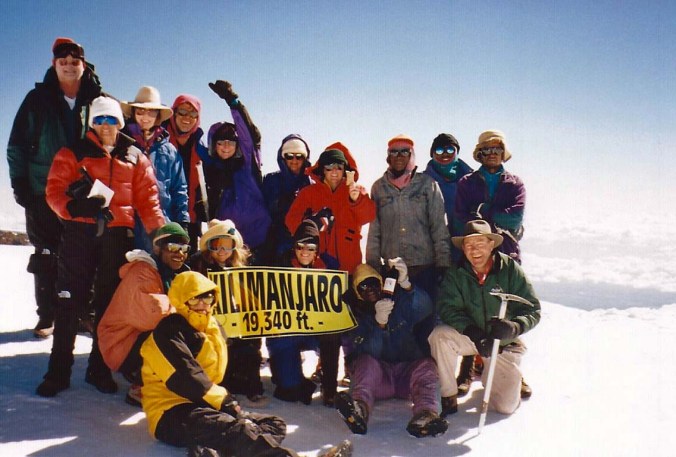
Bone loves high places. Here he is on top of Mt. Kilimanjaro in East Africa. (He’s with MJ, fourth from right, standing.)
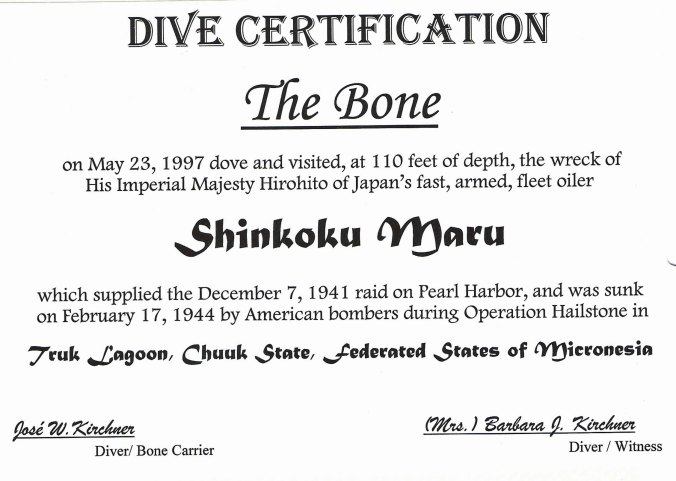
Bone went diving in the Pacific in 1997 with Jose and Barbara Kirchner, visiting a Japanese ship sunk during World War II and receiving his diving certificate.

1998-99: Bone embarked on 40,000-mile journey in the van, Xanadu, through the US, Canada and Mexico with Peggy and Curt, visiting over 30 National Parks, driving the Alaska and Baja Highways, checking out Smokey the Bear’s and Calamity Jane’s graves, kayaking in the Sea of Cortez, leaf peeping in Vermont, jetting to the Bahamas, pursuing flying saucers in Roswell, New Mexico, and completing his visits to all 50 states, etc. etc. etc.

2000-02: Bone journeys up the Amazon, returns to Europe, cruises to Belize, Cancun and the Cayman’s, and goes to New Zealand where a misguided customs agent tries to arrest and jail him as animal matter.

While in the Amazon, Bone slept in the same room that Jimmy Carter had slept in.

2003: Bone undertakes a 360-mile backpack trip in celebration of his discovery and Curt’s 60th birthday. They begin at Squaw Valley near Lake Tahoe and end by climbing Mt. Whitney. Various friends join them along the way.

2004: Bone visits Hemingway’s grave in Idaho, goes horseback riding with Australians and Bahamians in Montana, and makes his first pilgrimage to Burning Man in Nevada, a very Bone like type of place. He also jets off to Costa Rica.
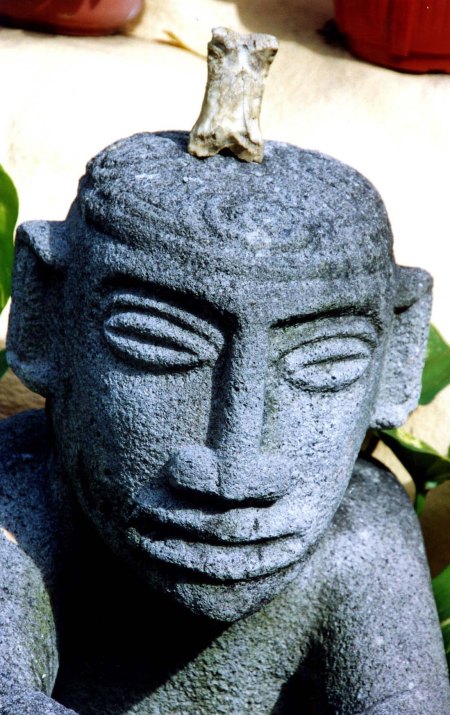
Bone has a love for anything ancient. Here, he perches on a Mayan sculpture in Costa Rica.

2005-2007: Bone returns to Burning Man twice and revisits Europe twice including special stopovers in Portugal, France, Holland, Germany, and Belgium. He also revisits Mexico.

2008 – 2011: Bone commences another exploration of North America. This time he travels in the van, Quivera, along with Curt, Peggy, and Eeyore the Jackass. His journey takes him over 75,000 miles of American Roads. In May of 2010 he begins his travel blog, The Peripatetic Bone, and rafts 280 miles down the Colorado River through the Grand Canyon.

2012-2017: Bone goes into semi-retirement in Southern Oregon. Please note the semi, however. He continues the exploration of the West Coast ranging from Big Sur to Vancouver Island, where he kayaks for a week in search of Killer Whales. He wanders through England and Scotland helping Curt find his roots and spends a week traveling by Canal Boat on the Mercer River. Later, he returns to Europe again, traveling through the Mediterranean visiting Turkey, Santorini and other Greek Islands, Dubrovnik, Venice, Rome, Pompeii, Florence, and Barcelona. He returns to Burning Man several times.  On one trip, he is married to the lovely Bonetta, who he met while exploring a swamp in Florida. Rumor has it that it was a shotgun wedding.
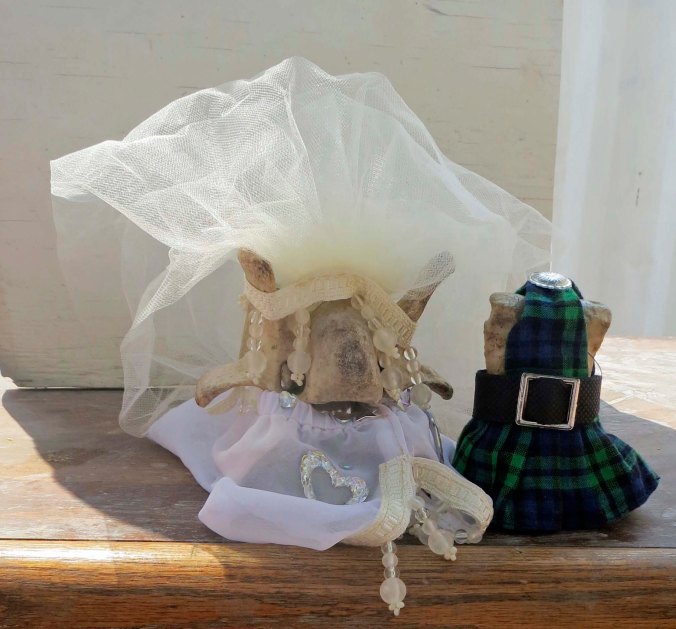
Bone and Big Nose Bonetta are married at Burning Man 2013. Bone’s kilt was made for him by an 80-plus year old woman from Kansas. Bonetta is wearing a designer wedding dress with very expensive plastic jewelry to match.

NEXT Wednesday: Bone grants one of his very rare interviews. You won’t want to miss it! (No, Bone doesn’t talk; he just thinks out loud.)

In the Meantime:

Saturday: A return to Burning Man and the last of the sculptures.

Monday: Peggy and I have just been in Bandon on the Oregon Coast. Are you ready for a visual treat?
Astoria, Oregon… Where the Columbia River and the Pacific Ocean Meet

A rainbow hangs over the mouth of the Colombia River and ships that are waiting their turn to head out into the Pacific. Special pilots are brought on board to navigate the treacherous waters, now looking quite calm.


I visited Astoria a while ago and didn’t get around to writing about it. Since Peggy and I are now off playing on the Oregon coast, I decided today would be a good day for featuring this city that sits on the edge of the Colombia River.


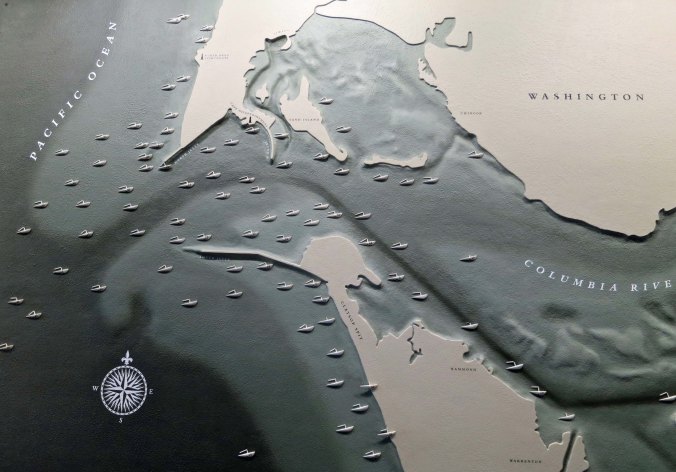
The area off of Astoria, Oregon, where the Columbia River flows into the Pacific Ocean, is called the Graveyard of the Pacific. A combination of high seas with 40-foot waves, shallow, shifting sand bars, and the mighty Columbia River have sent some 2000 boats to their watery demise since 1792. It is considered one of the most dangerous navigation passages in the world.

This map, which is located in the Columbia Maritime Museum, shows where some of the shipwrecks can be found.

It’s no wonder that  you are greeted by a sign that proclaims Astoria is an Official Coast Guard City when you enter the community. The town is grateful that the organization is there when someone needs to be pulled out of the turbulent water. A dramatic, full-sized diorama of a Coast Guard rescue effort is featured at the Maritime Museum.

Astoria wears its Coast Guard connection proudly.

A full size diorama of a Coast Guard rescue effort is on display at the Columbia Maritime Museum.

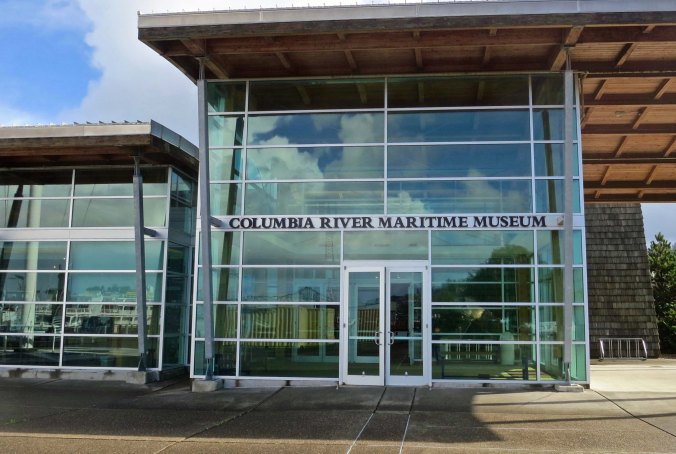
A photo featuring the front of the Columbia Maritime Museum. I liked the way the glass reflected the clouds.

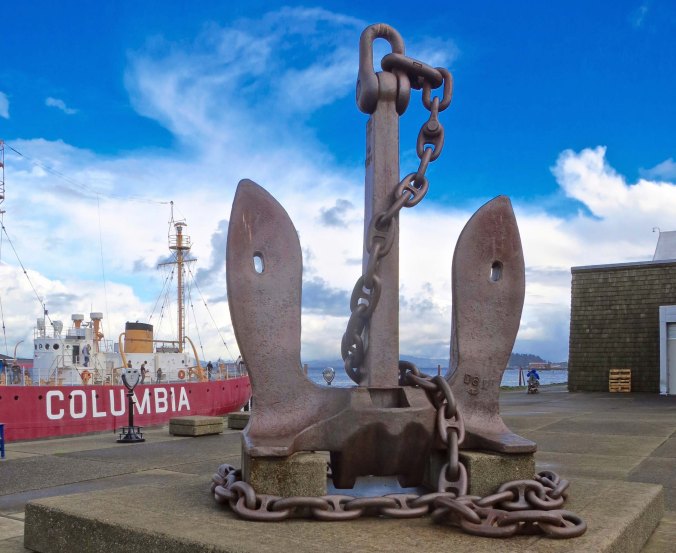
I thought that this anchor that sits out in front of the museum, is an apt symbol for both the museum and the city. The lightship Colombia is seen in the background.

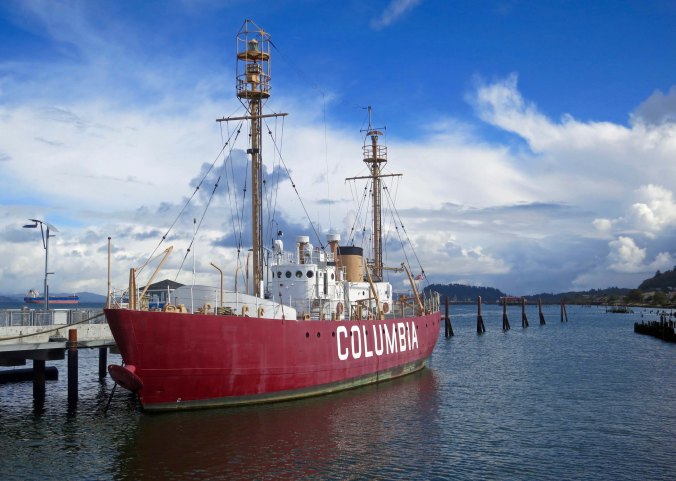
In the days before modern navigation equipment, the lightship Columbia served as an offshore lighthouse, aiding ships entering and leaving the Colombia River. The lightship maintained its position for weeks at a time and stocked in 12 tons of food, 13,000 gallons of fresh water and 47,000 gallons of fuel.

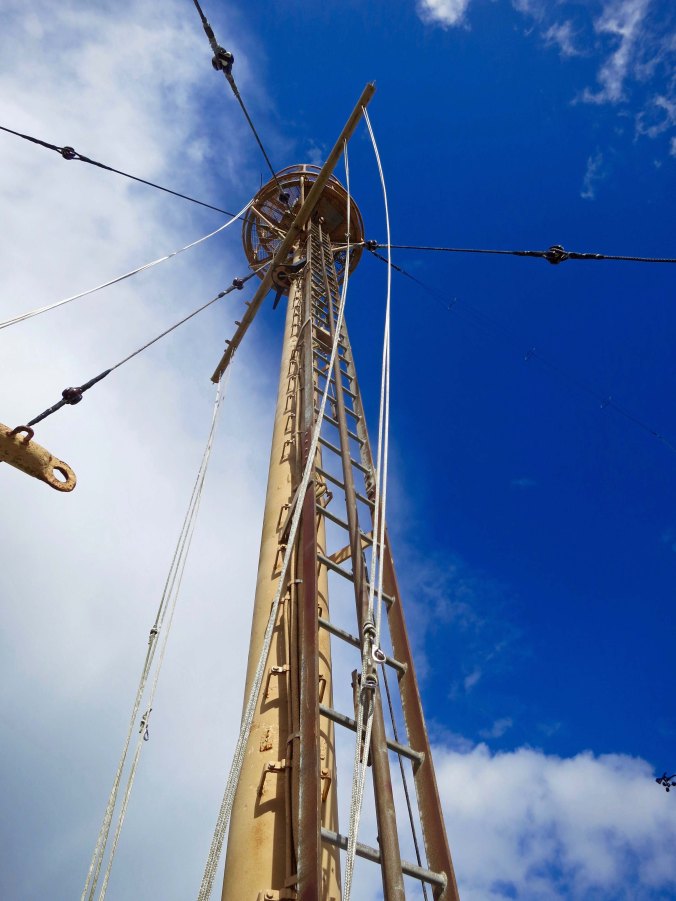
This crows nest mast on the Columbia was used for powerful lights and foghorns as well as observation.

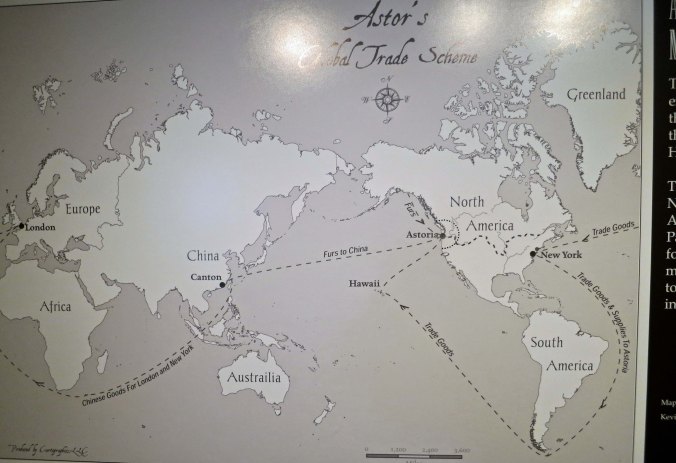
Astoria’s connection with the fledging United States dates all the way back to the Lewis and Clark expedition. The explorers sent out by Thomas Jefferson spent the 1805-6 winter in the area and built Fort Clatsop for shelter and protection. John Jacob Astor, who gave the city its name, followed up by building a fur trading post there in 1811 that became the first permanent settlement the US had on the west coast. Both the Lewis and Clark expedition and Astor’s post helped in the debate with England over who owned the land.

This map from the museum shows Astor’s trading routes.

Traveling by sailboat through the world’s oceans was hazardous. An early fear of sailors was having encounters with sea monsters. I found this illustration of a Kraken in the museum and laughed. If you are familiar with Pirates of the Caribbean, you will recognize it.

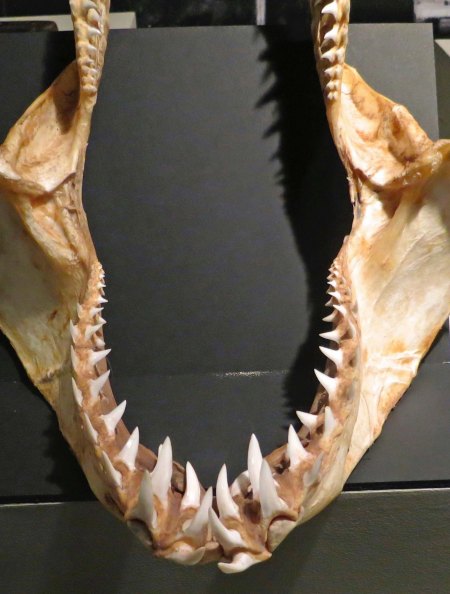
Now here is something more real to worry about! I also found this shark jaw and teeth in the museum.

Logging and fishing followed fur trading as the mainstay of the area’s economy. By the mid-1800s, fisherman from around the world called Astoria home. Only 13 percent were born in the US. The majority came from the North Atlantic countries where over-fishing had caused the fishing industry to collapse, a fate that would eventually befall Astoria. A major canning industry that grew up to process the fish also faded when the fish ran out. The canning industry employees were mainly Chinese immigrants. An educational display in the Maritime Museum notes that the most efficient of the Chinese workers could clean a 45-pound salmon in 45 seconds and up to 1700 fish in a standard 11-hour work day.

An ad photo for the Bumble Bee salmon cannery. The bee has a fishing pole.

I suspect that these pilings once supported several thriving canneries..

Now they support a thriving seagull population.

With the boomtown days of fur hunting, logging, and fishing behind it, Astoria has turned to tourists to help support its economy. Nearby Portland  (100 miles away) helps assure a continuing supply, as does the almost constant flow of tourist traffic up the Oregon coast in the summer. The museum, historic sites, fun shops, and several restaurants help meet the needs of visitors.

Downtown Astoria has preserved several historic buildings that add to its ambience.

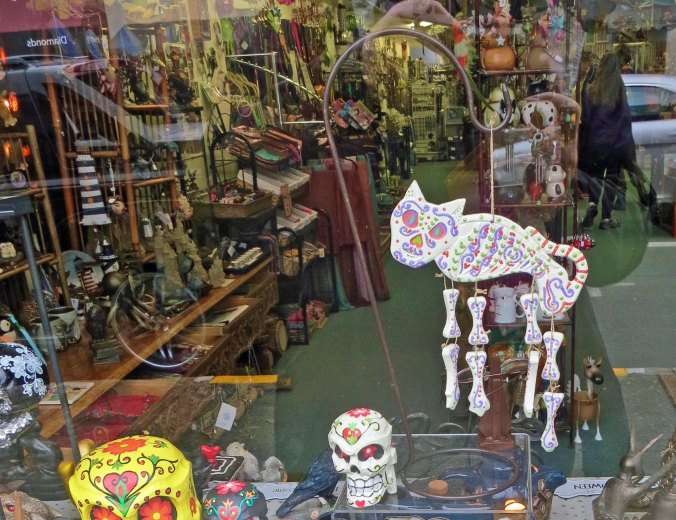
This shop was packed to the gills with tourist merchandise. Nice kitty. I think you are probably a Mexican immigrant, however, and I doubt you have papers. Watch out.

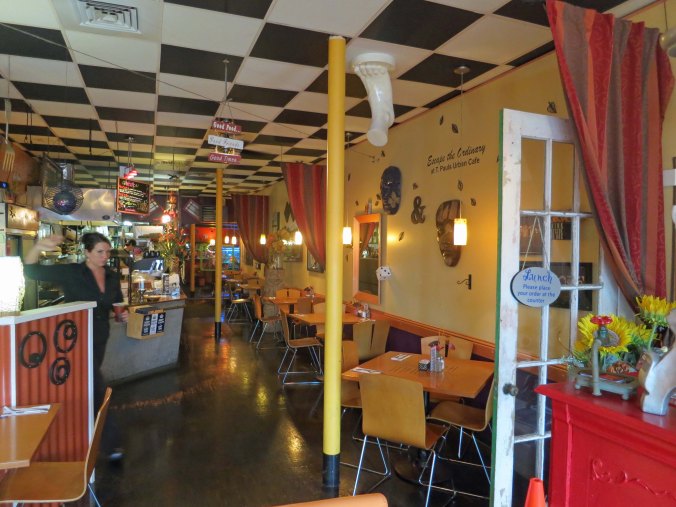
T. Pauls has an eclectic menu and a foot on the ceiling. I ate under the foot.

It seems only appropriate that I wrap up this post with an old piling and the rainbow across the Columbia River.

Wednesday’s Blog: You are going to meet the world-famous Traveling Bone.

On Friday we will return to Burning Man.


Ten Major Art Installations from Burning Man’s History

The Big Rig Jig was made up of two oil tanker trucks, taken apart and put back together.

I’ll be journeying to Burning Man alone this year. I obtained my ticket in February. Peggy joined the long queue for tickets on Wednesday, all to no avail. When she was finally moved to the ticket purchase site, the message was that all 30,000 tickets had been sold out. (The other 40,000 tickets are distributed in other ways.) Neither are other members of the Horse Bone Tribe going this year. So, it’s back to me, like it was in 2004, when I went by myself except for my friend Ken Lake. I’ll miss my friends, especially Peggy, but I am okay with going alone. I can easily spend eight days exploring and photographing the art.

Today I am featuring ten of the major art installations I have enjoyed the most over the years. This doesn’t include buildings like the temples, which will have their own posts. Since I missed four years when I was off wandering or had ended up on the wrong end of the Burning Man ticket circus, there are undoubtedly other pieces I would include.  Also, I already included a post on the 40 to 60-foot-tall sculptures of women that are definitely among my favorites.

Another view of the Big Rig Jig. I felt a bit nervous standing underneath it.

Often the major art installations are tied into Burning Man’s Theme for the year. In 2007 the theme was “The Green Man,” which had an environmental emphasis. The Big Rig Jig tied into the impact of oil.

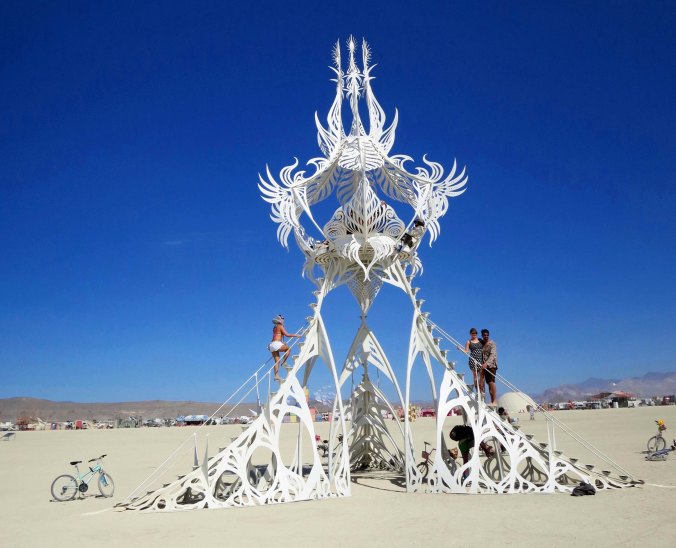
I’ve always considered this intricate white tower beautiful.

A close up of the top.

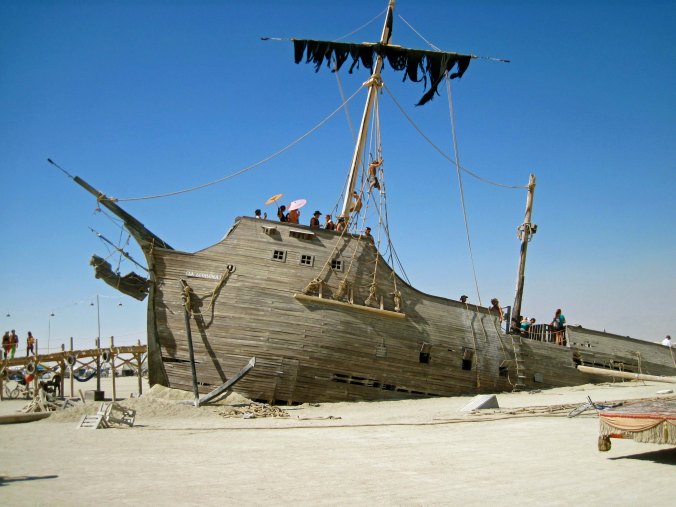
This massive sailing ship appeared to be sinking into the Playa.

A front view of the sailing ship. I thought that the detail was incredible. The ship was built in Reno.

As is often the case at Burning Man, what was inside the art piece was also fun and interesting. I like the stylish hat.

Dragons are common at Burning Man. This one, protecting its egg, is my favorite.

I don’t think I would be tempted to harm its baby.

Especially at night.

Buck Rogers would have been happy with this rocket ship. Peggy provides perspective.

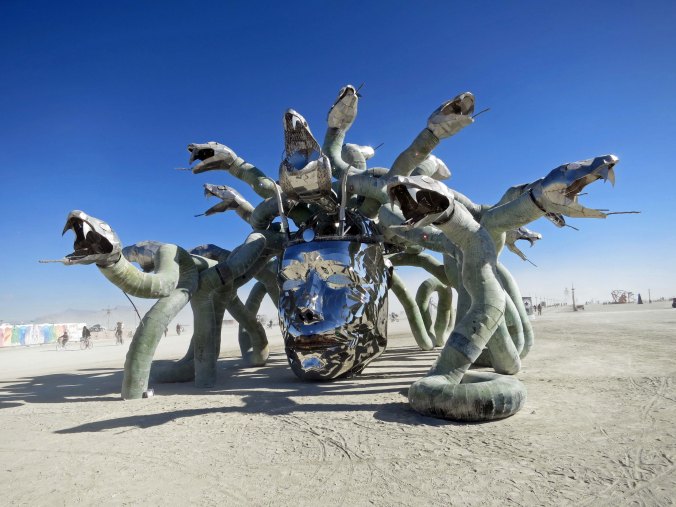
Medusa with her snaky hair was one of the most unusual sculptures at Burning Man.

Her wiggly hairdo from the back.

And at night.

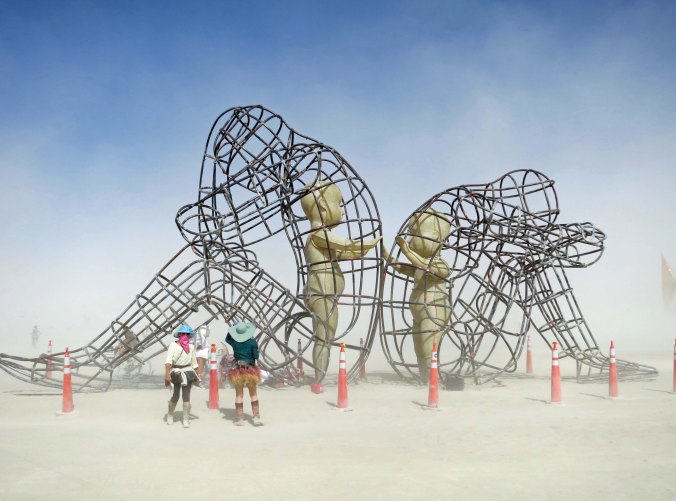
The inner children of these two estranged adults reach out to each other.

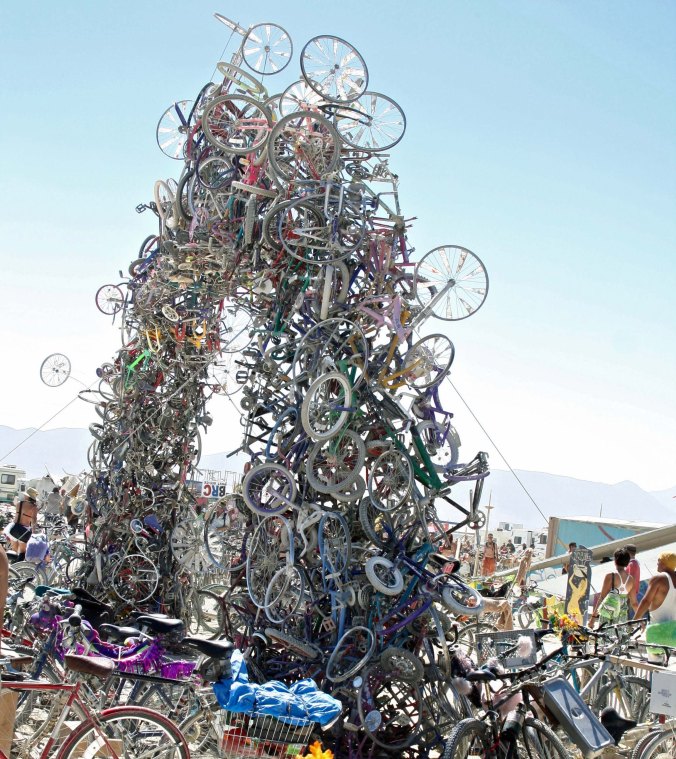
I have always liked this bike sculpture that was located in front of the Center Camp Cafe because of the significance of bikes for transportation at Burning Man.

The top of the heap, so to speak.

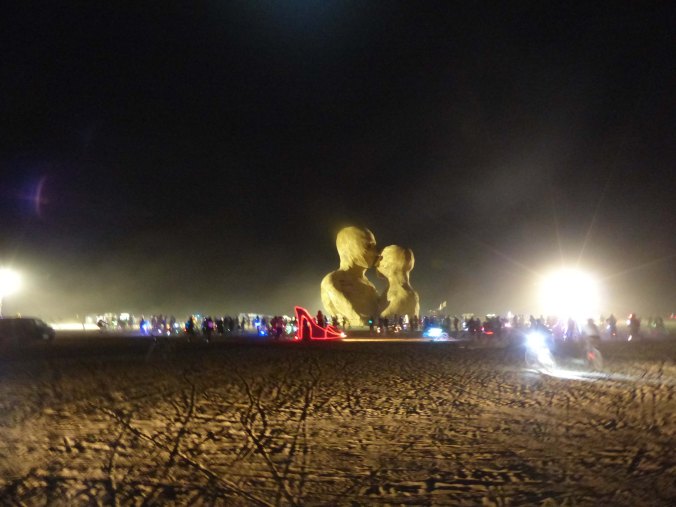
This giant couple embraced. The Man looks on from the left.

A close up.

This art was located in the head of one of the sculptures.

At night.  A red, high-heel mutant vehicle is in the foreground. (Photo by Don Green.)

A coyote raises its head to howl. (Photo by Tome Lovering.)

A tail view of the coyote.

I chose the coyote at night for my last photo today. The two bright lights on his head are from headlamps of people climbing the sculpture.

NEXT BLOGS:

Monday: Back to the Oregon coast with a visit to the town of Astoria on the mouth of the Columbia River.

Wednesday: I’ve often mentioned the Horse Bone Tribe and Camp at Burning Man. This is the story of the horse bone, or Bone, as he prefers to be known.

Friday: A continuation of my Burning Man art series with a final look at sculptures.

All’s Well that Ends (grin)… The Sierra Trek Series

Treks have always been about adventure. In addition to the physical and mental challenge, there is a more important element of experiencing nature on a very personal level, both the beauty and the wonder. Imagine, for example, coming on this Aspen that bears have climbed and used as a marking tree to establish their territory.

This is my last post on the first Sierra Trek series. Last week left us in the American River Canyon, waiting while the US Bureau of Reclamation blasted rocks off the hill sides in preparation for building the Auburn Dam. (The discovery of an earthquake fault zone under the dam would lead to its not being built.) Today I will take us on into Auburn, California where the 100 mile backpack trip ended.

As in the previous posts, I have selected photos from other Treks since I don’t have any from the first. There are several other areas in California I would lead Treks besides the Sierras. These photos are from the Trinity Alps. 

Another photo of a bear tree in the Trinity Alps of California. And yes, those are claw marks.

Early the next morning we had an important decision to make: whether to wade across the American River in water up to our belly buttons and then follow the river or climb up and along the steep canyon following alternative trails. I let the Trekkers vote and they voted to cross the river. One woman was deathly afraid, however, and broke down in hysterics. She was the same person who had, at first, refused to ride the Squaw Valley tram. We offered to carry all of her gear and even carry her, all to no avail. Finally, I decided we would all hike the canyon route. I was not about to split our group again. (It was the only time in my years of leading Treks that I ever allowed participants to vote while on the trail. Treks, I decided, were not a democracy.)

This shot of the Trinity Alps provides a great perspective on why the mountain range was given its name. (Photo by Peggy Mekemson.)

A view from farther away. These are rugged mountains that provide challenging, beautiful backpacking opportunities.

Our last night was fifty-fifty on the plus and minus scale. On the plus side, I knew that we had succeeded. Our Trekkers, except for the two or three who were now riding in the jeep, had made it— survived if you will. We had managed to solve each of the crises we had faced along the trail. I could say goodbye to the Trekkers the next day knowing that I had put everything I had into getting them through the nine days. On the minus side, Steve had taken a few of the ‘cool’ Trekkers to camp away from the main group. I hated seeing this, it was a really bad decision, but it was already a done deal by the time I came into camp as rear guard. I could have hiked up the canyon and insisted the group rejoin us, but I just didn’t have the energy to do it, physically or mentally.

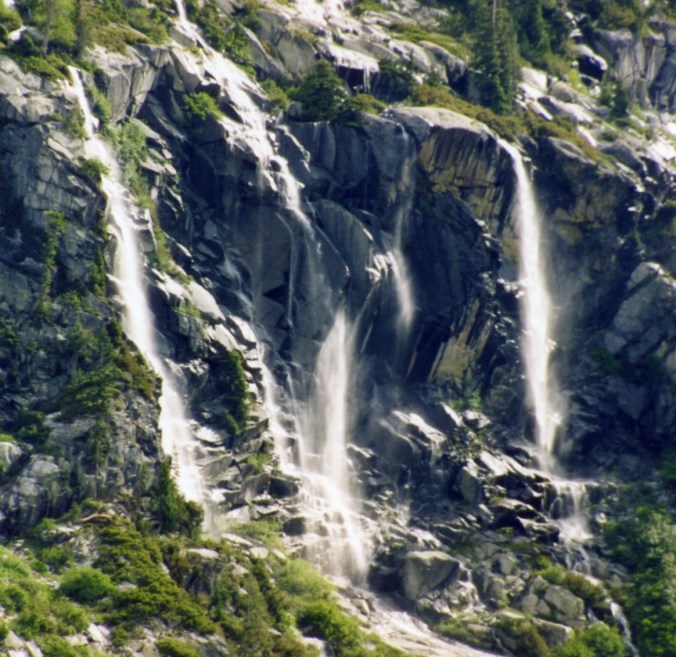
The Trinity Alps includes a number of impressive waterfalls.

Another…

And another.

Sunday, we hiked into Auburn Fairgrounds as a group with the Trekkers in high spirits, singing the Ham Cheddarton song. They had a bar-b-que chicken feast to look forward to and then they were going home— home to hot showers, clean clothes and loved ones. They had enough tales to fill the next week and possibly their lifetime. As we approached the fairgrounds, our Auburn volunteers and several Board members were there to cheer our arrival.

I didn’t know how things would end. At best, I hoped our Trekkers would recognize that even though we had made enough mistakes to fill a book (or at least a long chapter), we had tried as hard as we humanly could to rectify them. And I had learned, boy had I learned. Mainly, I felt relief. I was going back to focus on our mail fundraising campaigns with a vengeance.

What took me by surprise was the response as Trekkers started to leave.

“Thanks, Curt, for the most incredible experience in my life. Where are we going next year?”

“You and Steve were great, Curt. I would like to help with next year’s planning.”

And on and on. People were excited about their experience. It was one of the most difficult things that they had ever done, and they had succeeded. They left feeling better about themselves, and that feeling translated over to us and the Lung Association. Instead of the negative comments I expected, and in some ways deserved, we were getting rave reviews. While not everyone was eager for next year’s adventure, most were asking, even demanding that we repeat it.

I left that day not quite convinced but leaning toward doing another Trek. One thing was for sure, my experience had matched that of the Trekkers. The event had been one of the most difficult things I had done in my life from both a physical and mental perspective. I came out of the Trek with a new confidence in myself and a new understanding of what I was capable of accomplishing— and an increased love of the wilderness.

One final amusing note: that night as I took my first shower in nine days, I reached around behind me to wash my fanny and it wasn’t there. It had disappeared. Between the trail review work, my trauma with Jo, and the Trek, I had lost 20 pounds in two weeks.

This is Sapphire Lake, one of a series of high alpine lakes in the Trinity Alps.

A reflection shot along a trail climbing up into the mountains.

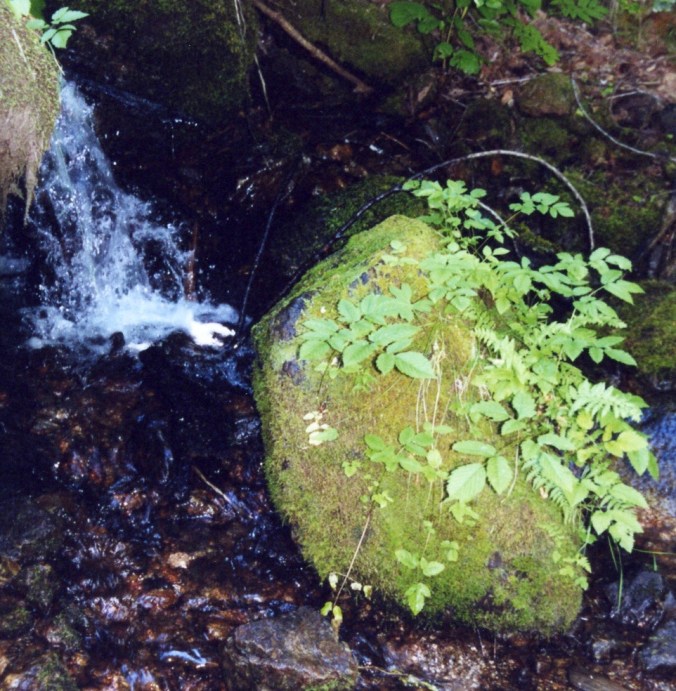
Peggy caught this luscious scene along a small creek where we refilled our water bottles. (Photo by Peggy Mekemson.)

While this rock caught my attention.

I am the fan of the small as well as the large when out in the woods. This is a shelf fungus.

A dandelion. Have you ever picked one of these and blew on it to watch the seeds go flying off?

And a butterfly on a Leopard Lillie.

EPILOGUE

The Sierra Trek turned out to be a success. We hadn’t raised a lot of money on our adventure, but special events rarely do the first time. What we had raised in abundance were new volunteers, the life blood of volunteer organizations. These were people who, because of their Trek experience, would develop a deep commitment to our organization.

I had several ideas on how to increase our returns and reduce our risks. In the future, we would set a pledge minimum and charge a registration fee. I would also set an age limit of 18 unless the minor was accompanied by a responsible adult. There would be no more 11-year-olds wandering in the woods by themselves. This wasn’t a negative comment on the Mouseketeers, they had been great, but the nature of the Trek made it much more of an adult kind of event. I would also limit group size to 20, and eventually 15, making the event much more manageable and reducing its environmental impact. And finally, our veterans would become the backbone of the program, providing advice and help in planning, organizing, and leading Treks.

From a personal perspective, my “far-out excuse for escaping to the woods” succeeded beyond my wildest hopes. I happily spent the next 25 years of my life leading wilderness adventures. When I worked it right, I could spend most of my summers out in the woods, especially when I supplemented official Lung events with personal outings. Treks also became an important annual event for many of the participants. Eighteen years after I had told Orvis he might be too old to Trek, he was still backpacking. He did his last trip with us when he was 88 years old. Altogether, he had raised the organization well over $100,000. That Trek also happened to be Peggy’s first long distance backpack experience. “How can I complain with Orvis out here?” she had told me with a grin, and hiked up another mountain.

I went on to create bike treks, winter treks, and canoe treks. I also pushed the Trek Program nationwide with the American Lung Association, persuading the organization that the events were valid fundraisers, and becoming the national consultant on Treks. For a while, Treks became one of the top special events for ALA. Charlie had been right that night we had laid our sleeping bags out under the stars at our Last Chance campground and he had declared: “What an experience. I can’t believe I am out here. Someday, people will be doing these Treks all over the nation!”

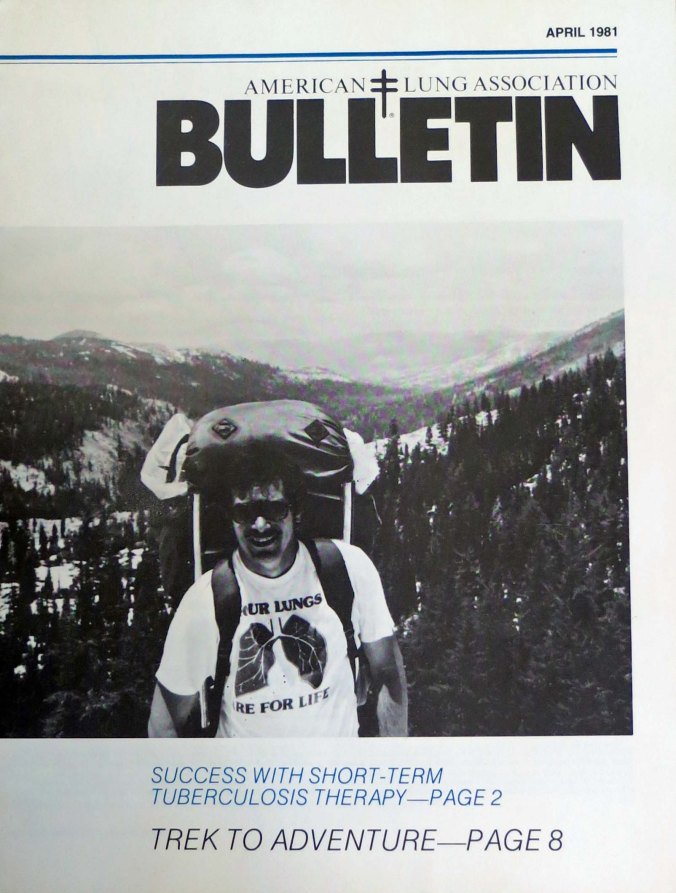
Having created the Sierra Trek in 1974, I had turned trekking into a national fund-raising  event for the American Lung Association by 1981. This is a photo of me on the cover of the American Lung Association’s national magazine.

From a Giant Rabbit to The Old Woman’s Shoe… More Whimsical and Weird Sculptures of Burning Man

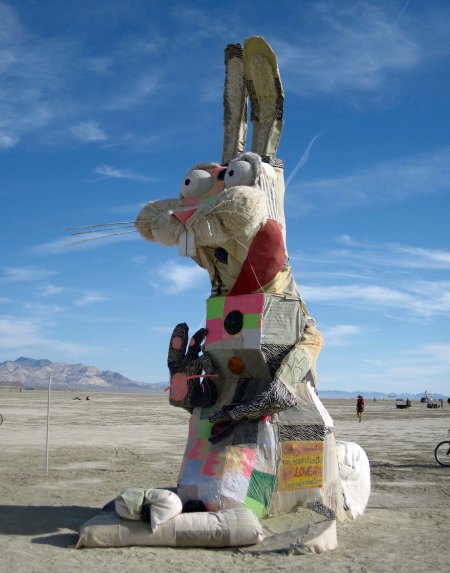
This huge rabbit out on the Playa had a message of love, transformation and living in the present. After staring at it for a moment, I thought it might also be a lesson in watching which brownies you eat at Burning Man. (Photo by Tom Lovering.)

I am going to wrap up my posts on whimsical and weird sculptures at Burning Man with something of a hodgepodge today. Bugs Bunny is a good place to start. I had looked at this sculpture from several angles before the rabbit made its sudden and obvious appearance. And I am pretty sure that is what the artist meant to happen. The big Alice in Wonderland type rabbit at the top was much less subtle!

I was thinking that this was a random, modern art kind of wood sculpture as I walked around it at Burning Man…

And then I came to this view and thought immediately of the ‘wascally wabbit,’ Bugs Bunny. For those of you not up on your cartoon history, “wascally wabbit’ is what Elmer Fudd called Bugs,

Our friend Tom Lovering took the photo of the zonked out rabbit at the top of the post. Here Tom is snuggling up to a Playa dinosaur. The look on Dino’s face is what led me to include it here with my whimsical and weird photos. It’s kind of the look of a puppy after it has puddled on your floor.

The dinosaur.

The bone tree has been around Burning Man for as long as I have, I think. At least I can never remember not seeing it since I first started in 2004. It lives at First Camp where most of the original organizers of the event hang out. The combination of skulls and bones place it in my weird category. Liking weird, it has always been a favorite of mine.

The Bone Tree at Burning Man is a regular at the event.

Here’s a close up.

The Bone Tree comes with its own set of wheels so it can move around.

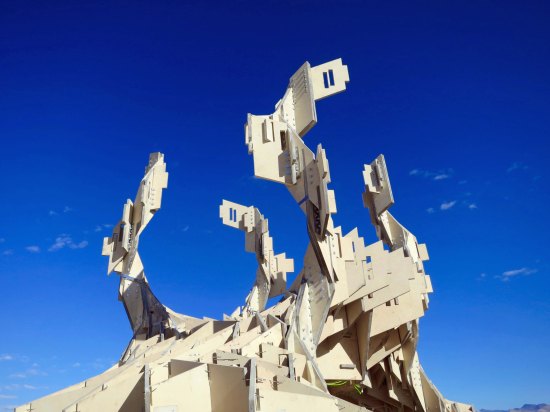
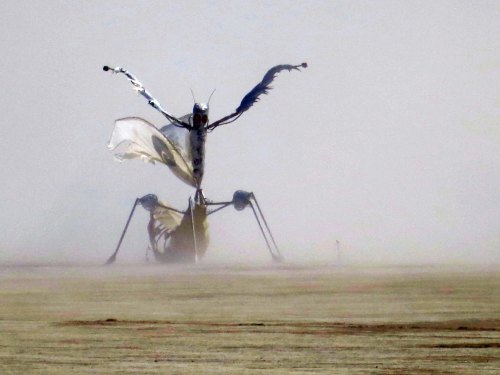
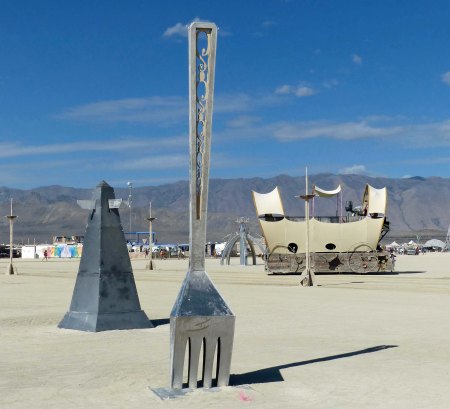
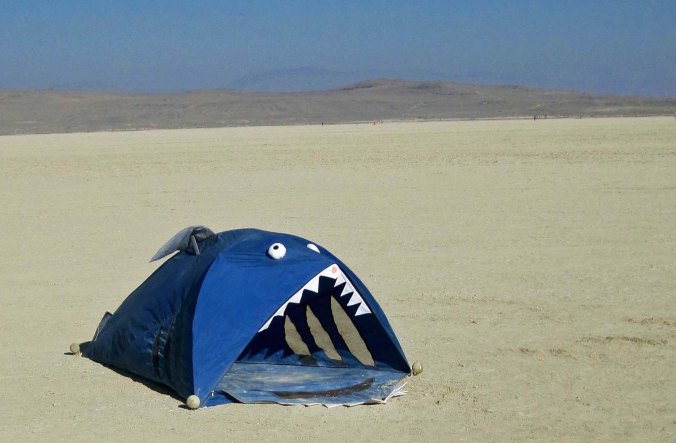
The old woman’s shoe, a fork of cork, an excitable mantis, metal devils, giant specks, and a couple of toothy sculptures finish out my selection for today.

“There was an old woman who lived in a shoe. She had so many children she didn’t no what to do.” I like to add ‘obviously.’ How would you like to have that guy outside your window? I’d be dialing 911!

Another view of the shoe.

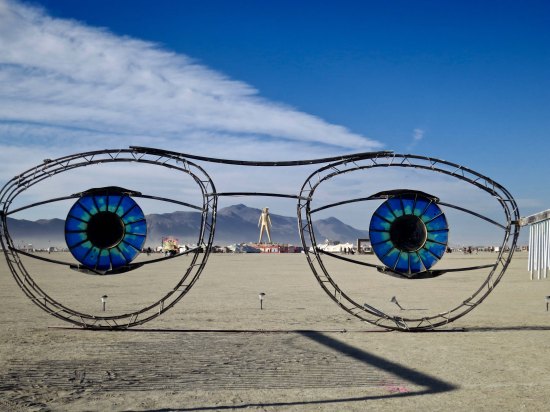
I thought these glasses with their blue eyes made an interesting sculpture. The Man can be seen in the distance.

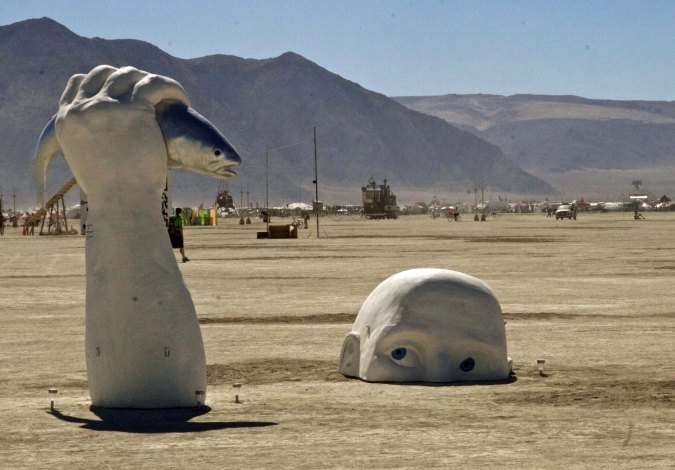
Does this fellow with his fish strike you as weird?

Metal devils seem to be a thing at Burning Man. The teeth are marvelous.

I was always pleased with the way I caught this fellow with his red background, especially the way it shows through his right eye. Evil!

And then there was this scary praying mantis that appeared out of a dust storm.

Its front legs are something else! I don’t think you would want a hug.

Okay, this is fun. It wouldn’t be nearly as much if you didn’t know that the fabulous bathrooms are porta-potties, which can be far from fabulous!

Have you ever seen a cork fork?

How about a fork in the road?

Definitely weird.

This little shark that found a home way out on the Playa just had to make it into this collection. I’ll close with it.

A Big Bosomed Bee, Curious Cats, and Other Whimsical Art of Burning Man

I came across these cats a few years back way out on the Playa, about as far as you can get from Black Rock City and still be in the area fenced off for Burning Man. They definitely meet my description for whimsical.


It’s photo Friday for me where I put out a blog that is long on photography and short (or at least shorter) on words. I’ve been concentrating on Burning Man the past several weeks and will continue for a few more. I have my ticket for 2017 so I am excited. Hopefully next week, we will get a ticket for Peggy as well.


It isn’t just anywhere you would expect to find a big bosomed bee. But then again, you never know what to expect at Burning Man. Someone must have had a lot of fun crocheting the bra.


Having tackled the giant women of Burning Man, I’ve been thinking about what to feature next on Burning Man sculptures. Like mutant vehicles, there are so many it is difficult to choose and even harder to organize. I started by going through my photo library and picking out a few I thought might be of interest. That got me down to 1500. I think you can see my problem. “Okay, Curt, focus!” I admonished as I scrolled through the 1500 photos for the third time.

There are categories, sort of. They are totally arbitrary and from my perspective. But it’s a start. So today, I am going to feature what I find humorous, whimsical and weird, recognizing that the three are often combined in my mind. There are enough here that I will be presenting more over the weekend.

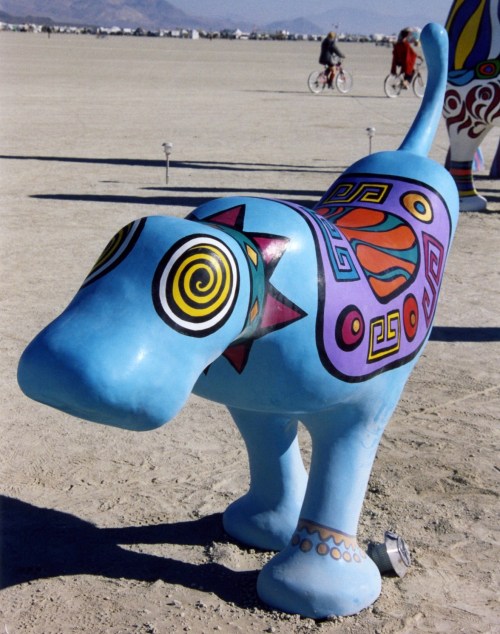
Dogs aren’t allowed at Burning Man, but they made an exception for this fellow in 2006.

My friend Ken decided that the dog was large enough to ride, but was a little confused as to the direction. Meanwhile, the dog’s family looked on, including…

Mr. Big Bottom…

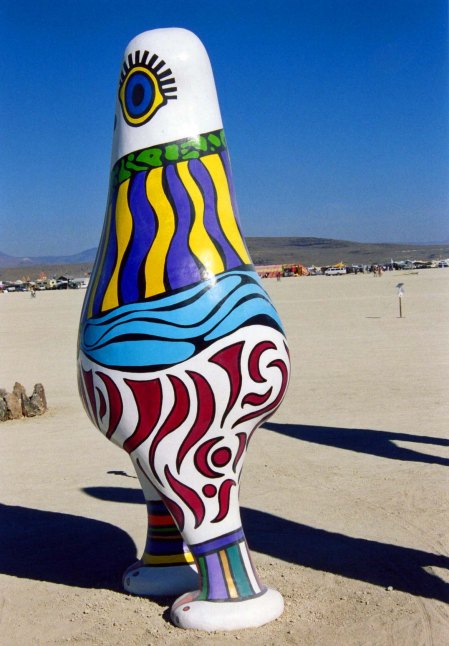
Miss Short Legs…

And Miss Long Legs.

Pucker up…

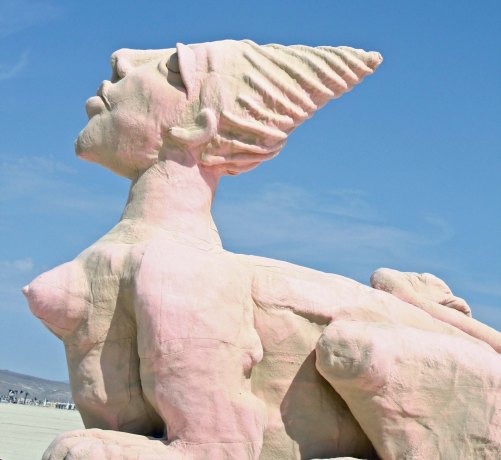
And meet a suave Sphinx.

Ready for a little monkey business?

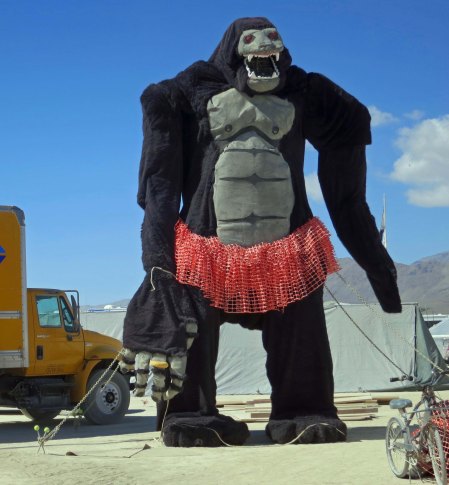
Or maybe some big monkey business? All dressed up in his pink tutu, Kong is ready to go out on the town.

Do you want to dance?

The sound man is ready…

With his necklace of speakers.

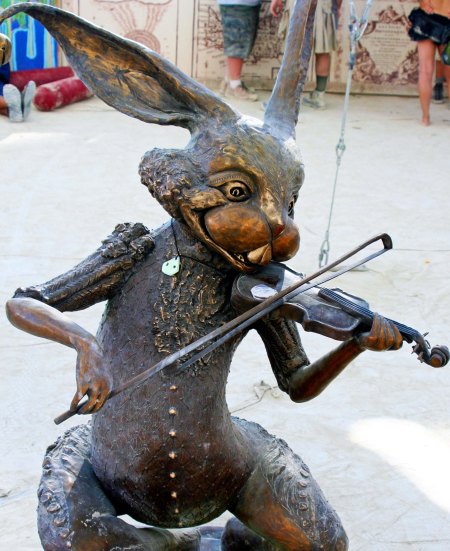
The hare will fiddle… (Photo by our friend Don Green.)

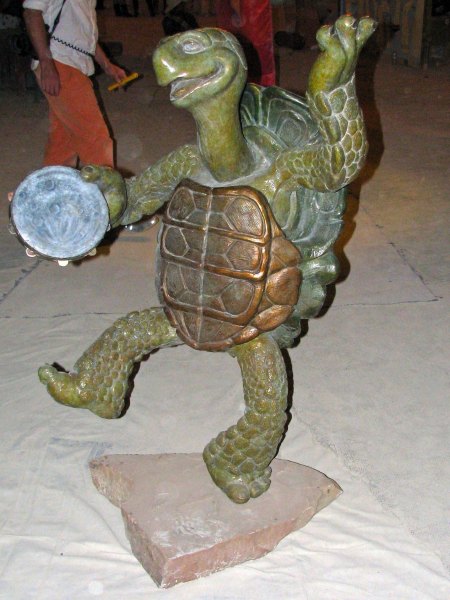
And the turtle will dance with you. (Photo by Don Green.)

Tomorrow’s Blog: More humorous, whimsical, and weird Burning Man sculptures.


Something Fishy… The Sealife Aquarium in Charlotte, North Carolina

We met this handsome Nautilus at the Sealife Aquarium in Charlotte, N.C.

I wasn’t expecting much from the Sealife Aquarium in Charlotte, North Carolina. It wasn’t because it was in Charlotte. After all, I had already been to the city’s small but impressive aviation museum that housed the plane that Captain Sully landed on the Hudson River. No, my prejudice was based on the fact that the aquarium was located in a shopping mall. I also had a slight bit of snobbishness because my go-to place for watching sea life up-close-and-personal is the Monterey Bay Aquarium in California, recognized as one of the world’s best.

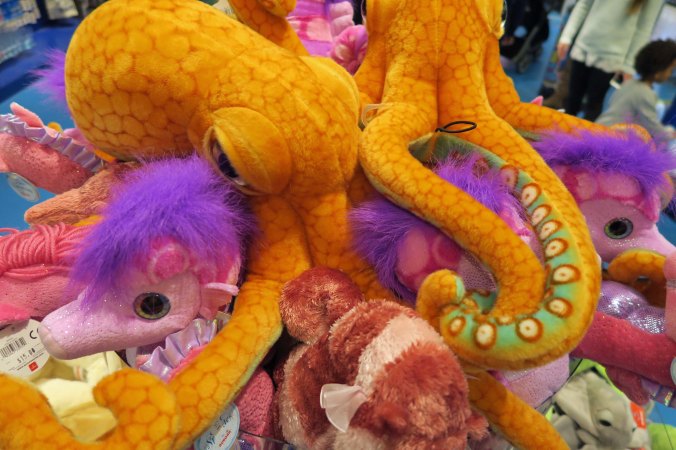
I did expect that the gift shop at the aquarium with its shopping center location would be packed with sea life made for snuggling.

Like how can you resist these eyes?

I am pretty sure that this octopus had a thing for seahorses.

None of this mattered, however. Peggy and I were on an outing with our grandkids Ethan and Cody, our daughter Tasha and her husband Clay. The aquarium was simply an excuse, something that the kids would probably get a kick out of. When I was their age, chasing crawdads in Webber Creek for our cookpot at home was about as exciting as life got. The little buggers had tiny claws that could pinch. They’d zip under rocks backwards so their weapons were facing out. I was cautious. Who knows what my reaction might have been had I come face to face with an actual shark.

Ethan and I share a moment in front of the major aquarium while a small shark and other fish swim by. (Photo by Peggy Mekemson.)

Our daughter Tasha with Cody. (Photo by Peggy Mekemson.)

The whole family (Cody, Peggy, Tasha, Clay and Ethan) poses in this ‘under sea’ shot.

Some Jaws music please. While Webber Creek had its share of crawdads, trout, and suckers, there were no sharks like this one at the aquarium. Had there been, I expect some of our old swimming holes wouldn’t have been old swimming holes.

So, I was surprised when we entered the museum. It wasn’t the Monterey Bay Aquarium, but it was pretty darn good. The display tanks were well done, the sea life plenteous, and the educational materials informative. I had as much fun as Ethan and Cody. I was also impressed that the aquarium had a strong conservation/environmental-action element to it. Here are a few of the sea creatures we met and enjoyed:

Peggy caught this Lionfish. It’s easy to see why it is a popular fish in home aquariums.

Here’s my shot of the lion fish. An old anchor cuts across the right of the photo.

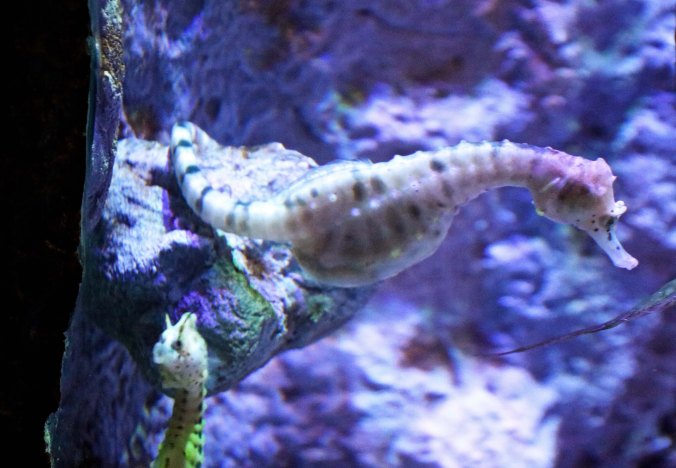
I didn’t know that seahorses had freckles. They always look pregnant to me. The one on the lower left looks like it is puckering up for a kiss. (Photo by Peggy Mekemson.)

I like the way seahorses are always wrapping their tails around something, including each other. Question: Are several seahorses known as a herd like horses or a school like fish?

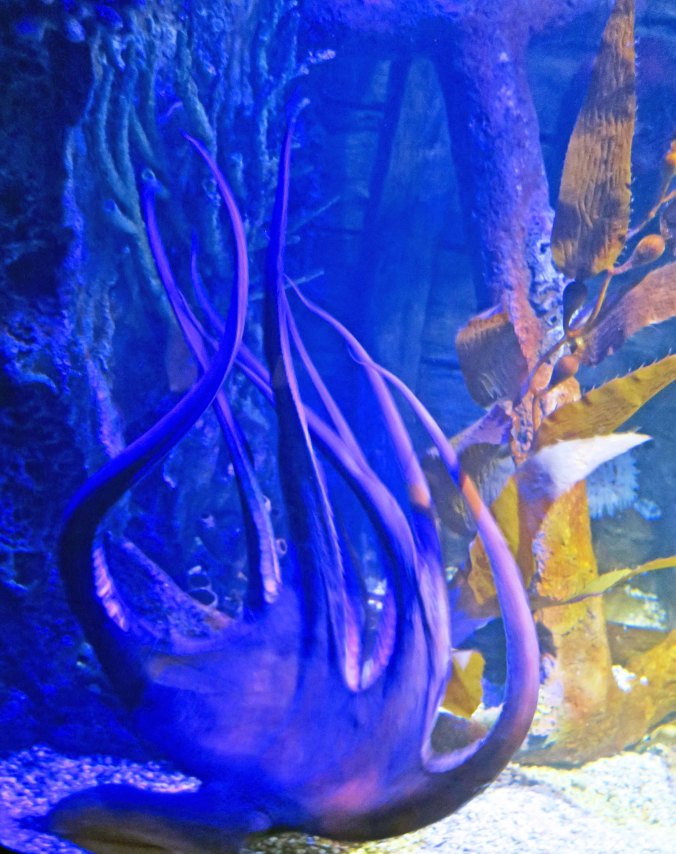
Weird. This appears to be an octopus that Peggy photographed. Maybe it flies.

My own octopus was a little weird as well. It appears to be doing a face plant.

I was really impressed with the colorful, ocean-like setting of the aquarium. An angel fish, fins aflutter, checks me out.

This spiny lobster did not meet my definition of what lobsters should look like. Where are the big, edible claws? When I looked this up, I also learned that our crawdads were in the lobster family! No wonder their tiny tails tasted so sweet.

This common sea-snail also goes by the name of marine gastropod. I wonder if it prefers the fancier name? Anybody who has played in tide pools knows that hermit crabs love to borrow these shells for their homes, preferably once the snail has vacated the premises.

A stingray with its potent, poisonous tail. The general rule is that if you leave them alone, they are happy to leave you alone. You don’t want to step on one however.

Nor do you want to mess with this fellow, a moray eel. Divers feed them on occasion. Not smart. They also lose their fingers on occasion. It’s like feeding a hotdog to a bear. Also not smart. Where does the hotdog end and the fingers begin?

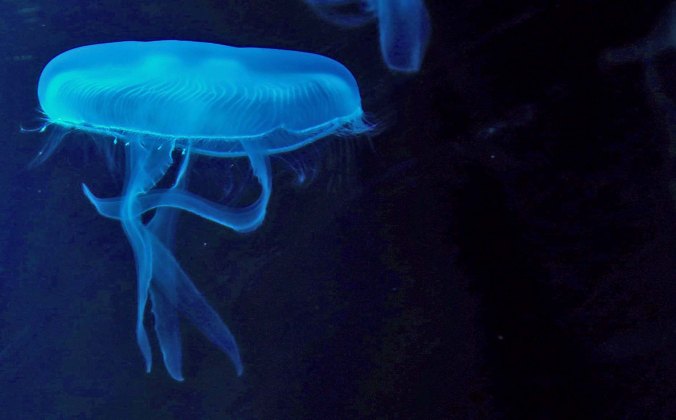
Many aquariums have learned the magic of adding jellyfish tanks and adding colored lights for effects.

As beautiful as they are, they also pack quite a wallop if you manage to come in contact, a lesson I sadly learned when I was swimming in the Indian Ocean off the coast of East Africa.

I’ll conclude our visit to the Sealife Aquarium in Charlotte with these beauties.


NEXT BLOG: The next to the last installment of my Sierra Trek Series. As we enter the foothills on our backpack trip across the Sierra Nevada Mountain Range, temperatures climb above 100 and one of my participants decides to go shoplifting in the foothill town of Foresthill. Hello Sheriff!


Colossal Women… The Sculptures of Burning Man

Sculpture Truth is Beauty by Marco Cochrane at Burning Man 2013

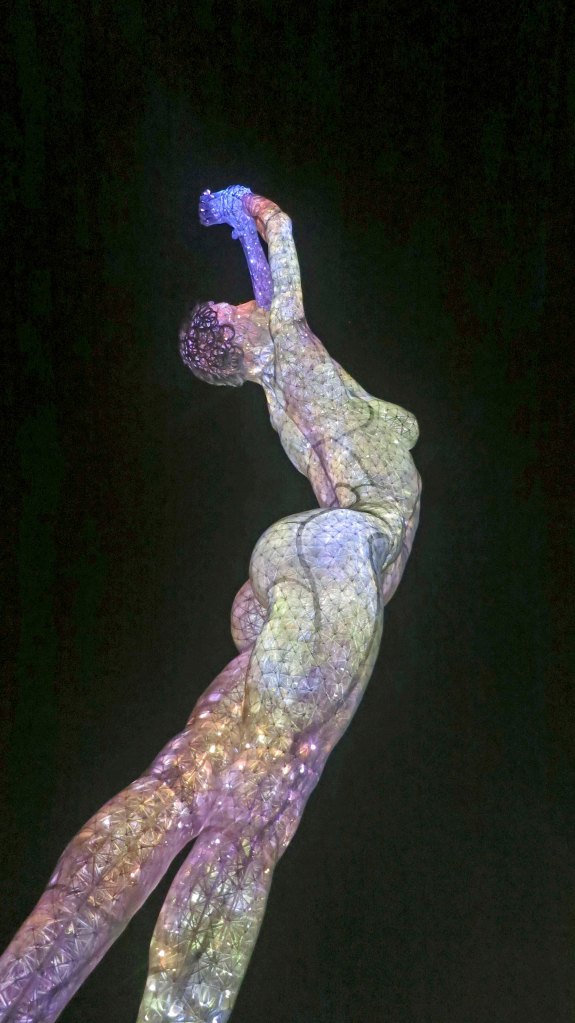
Truth Is Beauty is one of three colossal sculptures created for Burning Man by the Bay Area artist Marco Cochrane. Each of these sculptures captures the beauty of the female form but goes further. Marco’s works are designed to help us see women as total human beings instead of objects. Not to detract from Cochrane’s message, but I decided to kick off today’s post with this photo because I spotted a bit of green along with the truth. Happy St. Pat’s Day.


Now that I have finished my series on Burning Man’s creative and sometimes wacky mutant vehicles, I am ready to take on another aspect of the art that seems to bloom and thrive in the Black Rock Desert, sculpture. I am going to start with something big, really big— colossal women. We are talking 40 to 60-foot-tall sculptures here! Three artists have been responsible for creating the giant women of Black Rock City, Marco Cochrane, Karen Cusolito and Dan Das Mann.

Das Mann and Cusolito, working as a team, produced a series of works at Burning Man between 2005 and 2007. Mann’s interest in monumental art started with a degree in Landscape Architecture from Rutgers University. Cusolito’s introduction to the art world followed a more formal path with studying at the Rhode Island School of Design and Massachusetts College of Art.

These photos are from Mann and Cusolito’s 2006 and 2007 art at Burning Man.

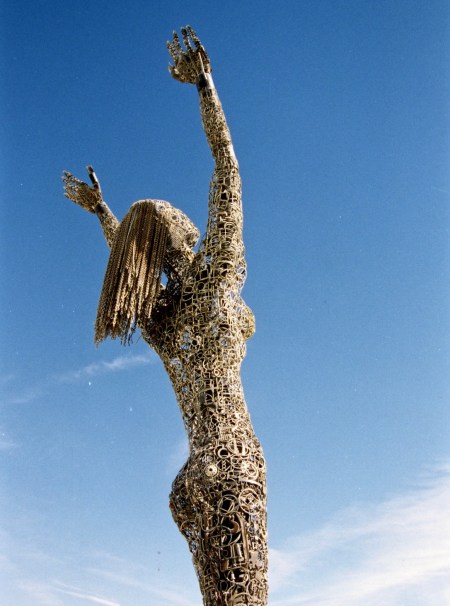
My introduction to the art of Karen Cusolito and Dan Das Mann was this tall woman with her arms reaching toward the sky. She was located in front of the Center Camp Cafe which is considered a position of honor for art at Burning Man.

She was accompanied by this woman kneeling in supplication.

Another photo of the two with the Black Rock Desert for background.

This one shows the art’s location in relation to Burning Man’s Center Camp Cafe.

Close up of the ‘skin.’

For 2007, Cusolito and Das Mann created Crude Awakening.

This sculpture caught my attention. Fire shoots out from the hands.

Check out the chain hair.

Marco Cochrane was born in Italy to American parents in 1962 and raised in the Bay Area. According to his website, “he identified with the female struggle with oppression and saw feminine energy and power as critical to the world’s balance.” His art reflects this belief. In 2007 he attended Burning Man and would have seen the sculptures by Das Mann and Cusolito. Eventually, he returned to Burning Man in 2010 with the first of his own colossal sculptures, Bliss Dance. In 2013 he brought Truth Is Beauty to Burning Man and in 2015, R-Evolution. I’ve blogged about each of these creations in the past. Following are a few of our photos.


Cochrane’s first work, Bliss Dance, was my favorite. She now resides in Las Vegas just off of the Strip.

I like the playful nature of Bliss Dance.

Marco Cochrane's Bliss Dance at Burning Man.

A close up.

I introduced this post with a night photo of Truth Is Beauty. The sculpture shares this picture with other Burning Man art.

This photo provides a side view. The people give perspective.

A back view. Each of Cochrane’s works are powerful from any angle.

R-Evolution is the third and final of Cochrane’s sculptures at Burning Man. I like how R-Evolution fits in with the mountains here. (Photo by our friend Don Green.)

A night-time view of R-Evolution’s back.

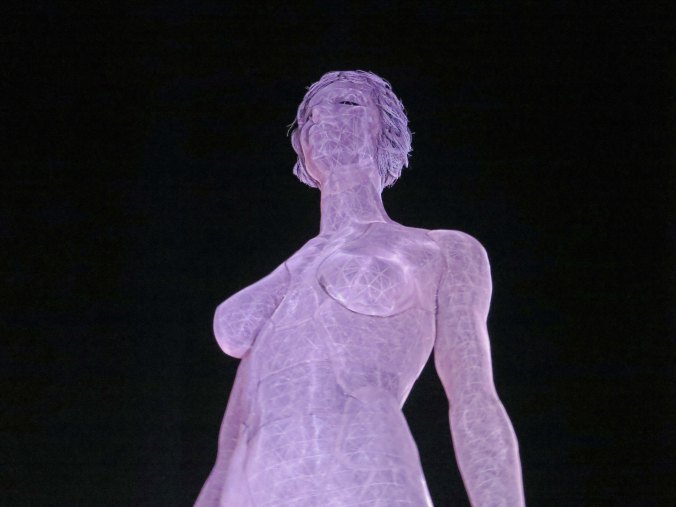
And a front view to complete this post.

NEXT BLOGS

Something Fishy.

The Sierra Trek: We backpack through 106 degree weather, and the Sheriff pays us a visit.

More of Burning Man sculptures.


“Captain Sully, May I Take Your Photo?” … A Fateful Plunge into the Hudson River

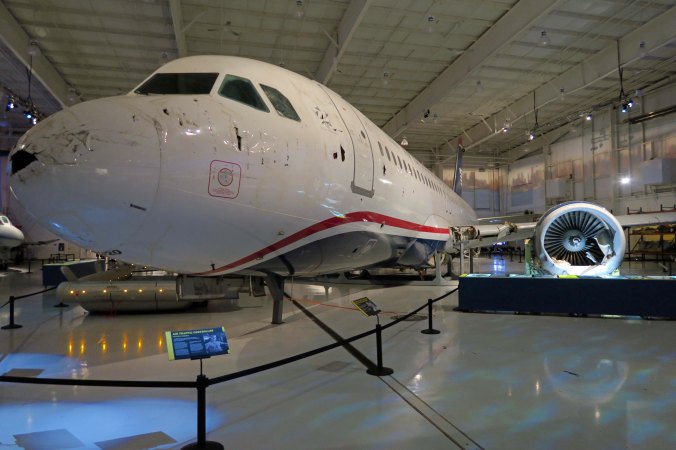
Flight 1549 Airbus 320 that landed on Hudson River.

Airbus A 320, the airplane that Sully landed on the Hudson River, is on display at Carolinas Aviation Museum in Charlotte, North Carolina .


“You have to land poor Sully,” Peggy told me. And she was right. We had seen the plane he had been flying when we were visiting with our daughter and her family in North Carolina over Christmas.  A month ago, I had promised to do a post on the ill-fated flight. I was distracted. Ever since, I’ve left Sully circling in the air over New York City. 


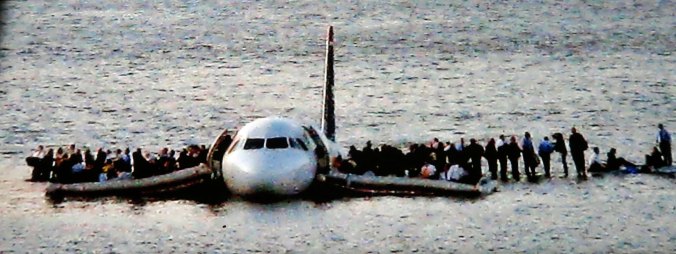
Passengers make a quick exit onto the wings, into the water, and onto a raft from US Airways Flight 1549 after its emergency landing on the Hudson River. (Photo from the Carolinas Aviation Museum.)


Peggy and I were visiting the Carolinas Aviation Museum in Charlotte, North Carolina to check out the Airbus A 320 that Captain Chesley Sullenberger had landed on the Hudson River when I heard, “Captain Sully, may I take your photo?” I looked around, excited that Sully was at the museum. I wanted to take his photo, too! A 30-something guy was making a beeline across the museum toward me. I glanced behind me; no one was there. By then, the man had reached me, beaming, his hand outstretched.

“It’s a privilege to meet you, Captain,” he declared while grabbing my hand.

“I am not Sully,” I laughed, “But you are welcome to take my photo.” He yanked out his iPhone and took a selfie of the two of us, which he immediately sent off to his brother in Texas. I walked over and studied a display that featured the captain. Yes, we both had white hair and a mustache.

On January 15, 2009, Sully, along with first-officer Jeffrey Skiles, left La Guardia Airport in New York on US Airways Flight 1549 on their way to Charlotte, North Carolina. Skiles was piloting the plane. One and one half minutes into the flight, a flock of Canadian Geese appeared, crashed into the airplane, and were sucked into the jet’s engines. Birds crashing into airplanes are nothing new; it’s been happening ever since man learned how to fly. In fact, the month I was born, Westinghouse engineers were firing dead chickens 200 mph at airplane windows to determine if the windows could withstand the impact. Splat!

“I could hear the thump and thud,” Sully said afterwards about the geese.

The impact was fatal for the geese. The ones sucked into the engines immediately became cooked geese, minced and over-done— airplane food, you might say. It could have been fatal for Sully and the other 154 people on Board Flight 1549 as well, had it not been for the extensive experience and quick thinking of Sully. Both jet engines lost power. Zero thrust was available to fly the plane. “May Day! May Day” Sully called to La Guardia. Preparations were made for an emergency landing at La Guardia and at Teterboro, another nearby airfield in New Jersey.  Runways were cleared and fire engines revved up. Sully took over flying the plane from Skiles. Skiles jumped into reading the four pages of the emergency flight manual on how to restart stalled engines.

The flight manual for Airbus A 320.

Sully did a quick mental calculation. Could he  get back safely to La Guardia or Teterboro? Forty years of experience, 20,000 hours of flying, and his official participation in a number of airplane crashes told him no. His plane was too low and his speed was too slow. Trying to get to either of the fields would lead to the Airbus crashing into one of the most densely populated areas of North America. In addition to the 155 people on board, several hundred other lives could be lost.

“We can’t do it … We’re going to land on the Hudson,” he told Skiles and the control tower at La Guardia. “Brace for impact,” he told the flight crew and passengers. The flight crew immediately began yelling in unison, “Brace for impact, heads down, stay down!” “Brace for impact, heads down, stay down!” over and over. As passengers prayed and cried and desperately tried to make last-minute phone calls, Sully aligned the plane with the Hudson River and barely missed the George Washington Bridge. Could he avoid hitting any boats on the river? Could he land at exactly the right angle to reduce the likelihood of the Airbus being torn apart or sent cartwheeling across the Hudson?

People who happened to be looking out the windows of tall skyscrapers along the Hudson watched in heart-stopping horror as the large plane flew by and headed for its fateful plunge into the icy Hudson.

A few seconds before impact, Scully straightened out the plane and pulled back on the rudder to achieve the correct angle for a water landing. And then, 208 seconds after the engines had lost power, the plane plunged into the Hudson and shot under the water, creating total darkness— before it popped back up onto the surface.

The plane was filling with water. Fast action by the crew, with cooperation from the passengers, got everyone out of the Airbus. Sully was the last to leave, desperately trying to make sure that no one was left behind. Nearby boats on the river sped to the rescue. All 155 people were rescued with only a few minor injuries. A hero was created; a legend was born.

The right side of Airbus A 320 also including the raft that passengers escaped into.

A shot of the left side of Airbus 320 showing the damaged left engine.

A close up of the engine.

A final shot of passengers and crew waiting on the wings to be rescued. (Photo from the Carolinas Aviation Museum.)

If you haven’t already seen it, I highly recommend watching the movie “Sully” starring Tom Hanks as Sully and directed by Clint Eastwood.

Next Blog: It’s back to the Sierra Trek!