Theme Camps and the Tribes of Burning Man… The Burning Man Series

The 2015 Art Theme at Burning Man was “Carnival of Mirrors.” The Kostume Kult Tribe out of New York responded by building this camp on the Esplanade, Black Rock City’s main street. Here’s how the tribe describes itself: “The  Kostume Kult  arts collective is a volunteer-led, non-profit community organization supporting interactive arts, costuming, street theater and absurdist fun while bringing wonderful people together.”


Tribes and theme camps are an essential part of part of Burning Man. Tribes are basically a group of people who decide to hang out and camp together. They can come together through friendship, a common interest, or geographical location. Some number in the hundreds and have a sophisticated structure with year around planning. Others consist of a few people who more or less show up and camp together with minimal arrangements. My tribe, the Horse-Bone Tribe, resembles the latter. The increasing difficulty of obtaining tickets and the spiraling cost of attending has played havoc with smaller tribes, including ours. I may be the tribe this year. It’s a good thing I have multiple personalities. Bone will keep me company.

The larger the tribe, the more elaborate the camp. And some can be quite impressive, as today’s photos show. They help create Burning Man’s unique atmosphere. Many larger tribes also support mutant vehicles and all participate in Burning Man’s gifting society by offering some type of free service including entertainment, classes, alcohol, food, costumes, bike repair, etc. The list goes on.

Each year, Burning Man has an art theme. This year’s is Radical Ritual. According to Burning Man: “In 2017, we will invite participants to create interactive rites, ritual processions, elaborate images, shrines, icons, temples, and visions.” That’s a lot of room for creativity, and mischief. My camera will be busy. Both artists and tribes use the theme for inspiration, although it is not required. The photo of the Kostume Kult Tribes camp at the top of this post is an example.

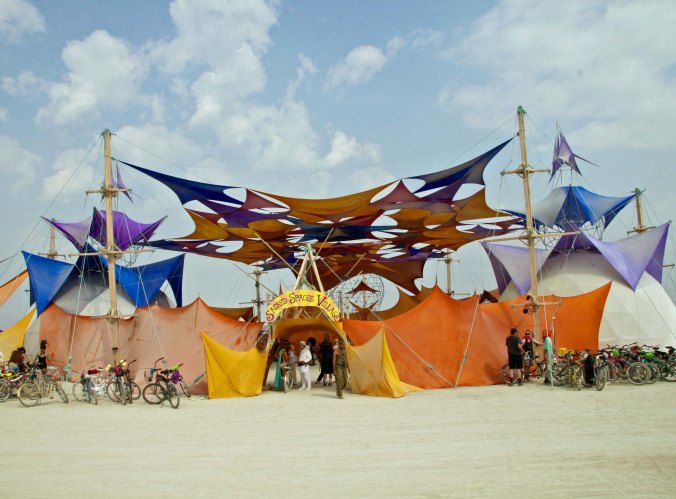
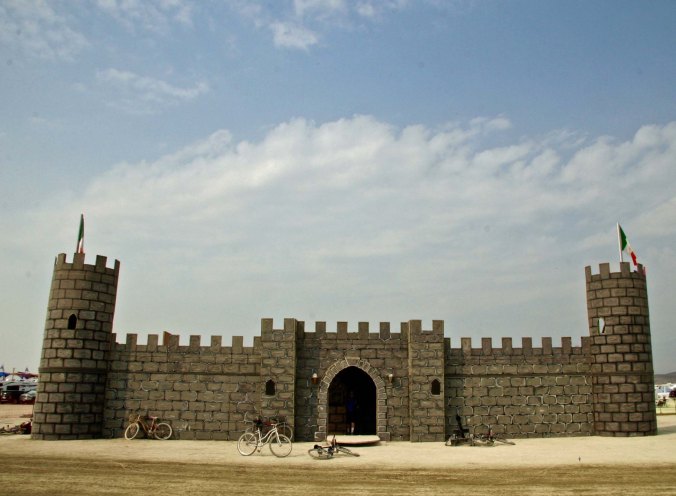
Following are a few examples taken from different years of major camps built in Black Rock City by tribes to reflect the year’s theme or the tribe’s particular vision.

Searching for massage, raw food, ambient trance, native wisdom or numerous other paths to spiritual enlightenment, the Sacred Spaces Village offers it all— plus a really gorgeous structure.

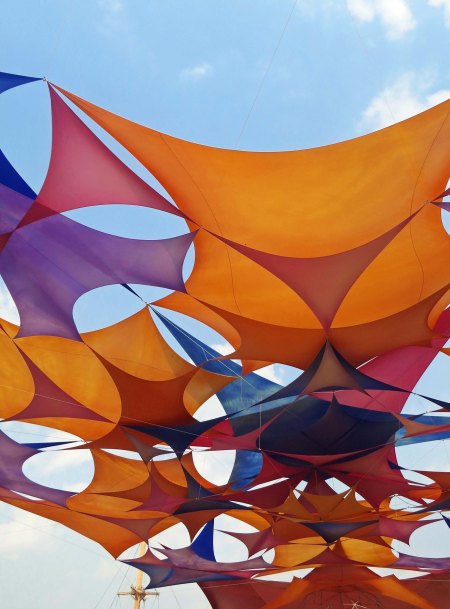
Looking up from inside the Sacred Spaces Village.

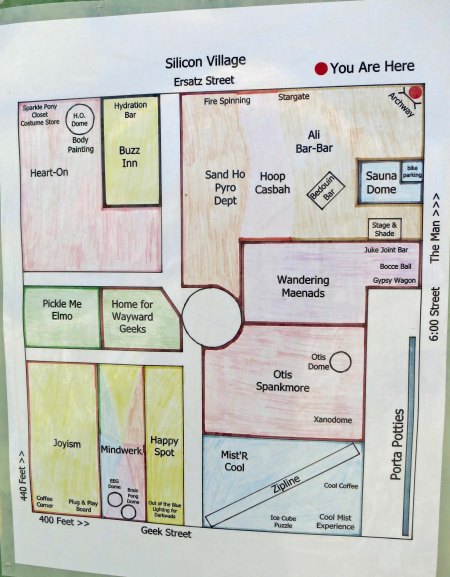
The folks from Silicon Valley have been creating a village at Burning Man for many years. Don’t be surprised to find the billionaire founders of such companies as Google hanging out here. The camp is large enough that it needs its own map. Smaller groups within the overall village sponsor the different areas and provide different opportunities for Burners. For example, if you want to sample various types of sauerkraut, you could check in at Pickle Me Elmo.

A number of the larger camps at Burning Man are music venues. One of these is Ooligan Alley with its 747 cockpit serving as the DJ booth. The sound equipment for this camp alone is worth several hundreds of thousands of dollars.

Celtic Chaos is another major music venue. I was amused to read that its motto is “Bringing a little more mayhem to the universe.”

The French Quarter at Burning Man brought to Black Rock City by Burners from New Orleans has always been one of my favorite camps. Great coffee and pastries can be found here, along with New Orleans Jazz.

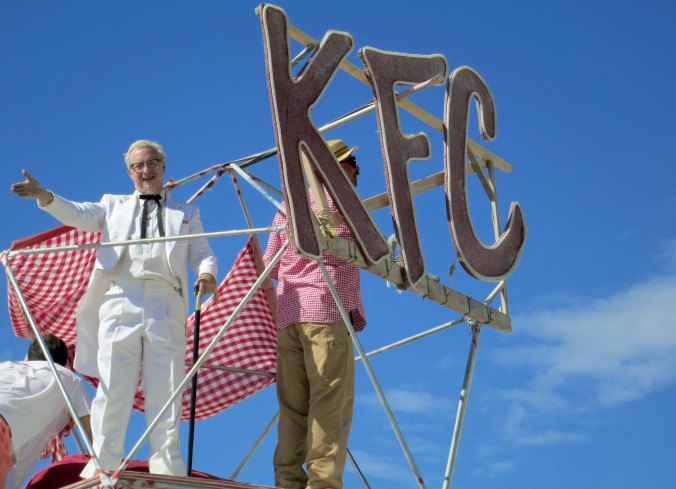
Burners from Kentucky sponsored the KFC camp which featured fried baloney on white bread and a shot of bourbon. I stopped by for breakfast and the Colonel waved at me.

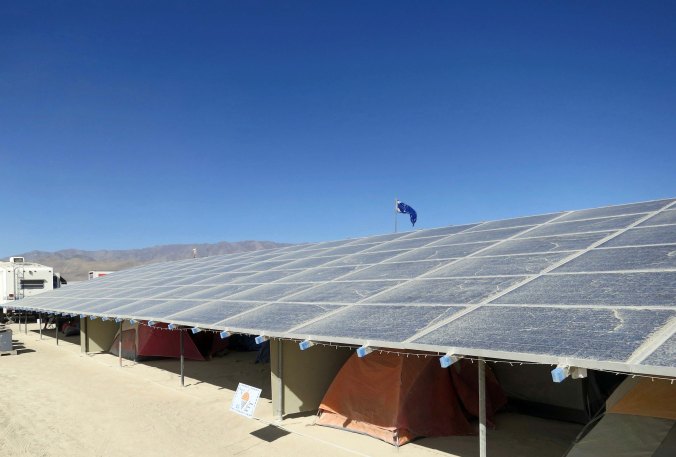
The Alternative Energy Village is the place to go if you want to learn more about alternative energy or even live off the grid. No generators are allowed in the camp.

This ‘Firehouse’ was created by the Do More Now tribe out of Seattle. Its objective is “empowering participants to challenge themselves by coming together to create innovative and playful spaces that enable and encourage the creation of art, performance and community activities. In other words – we create possibility!” It is a goal that could be applied to many of the camps at Burning Man.

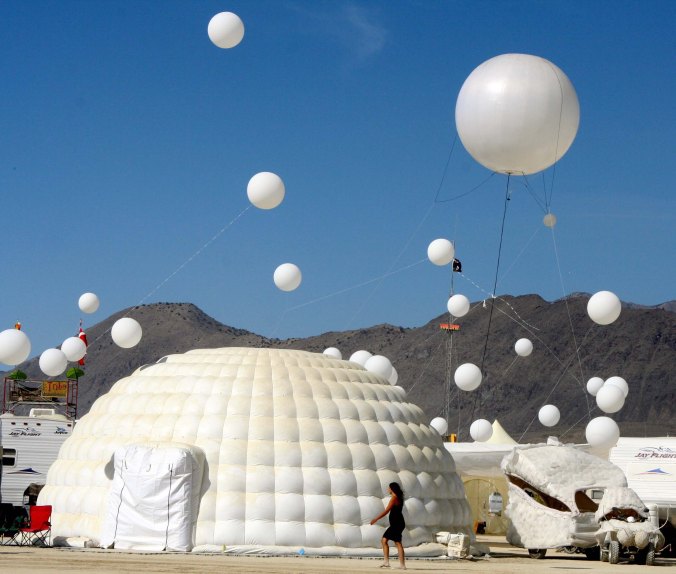
I’ll conclude with this rather dreamy creation, which I have always found appealing because of its focus on white and its use of balloons. Also, check out the white mutant vehicle on the right. Unfortunately, I don’t know which tribe sponsored this camp.

NEXT BLOGS:

I’ll be taking a blog break to wander the Central Coast of California for the next couple of weeks. See you back here afterwards!

Bone Is Found— but he is still just a bone… Part III

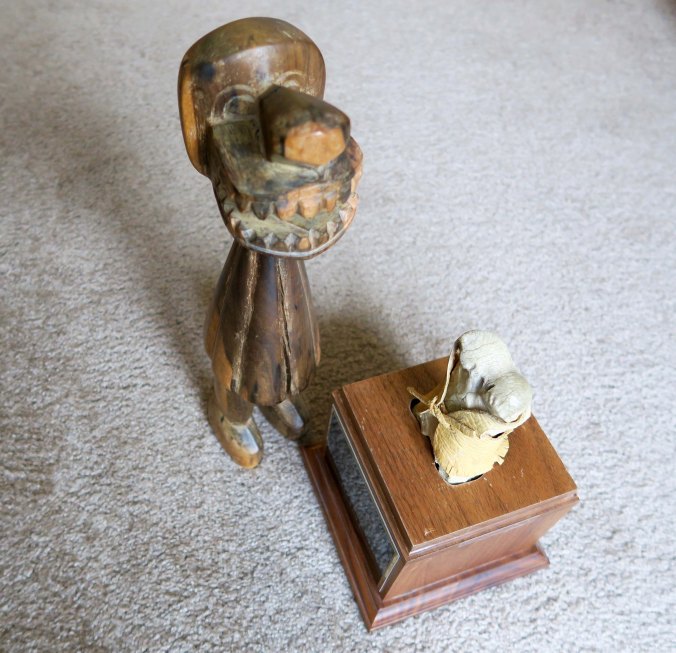
George, the Bush Devil from my book, “The Bush Devil Ate Sam,” checks out Bone. NO, George, Bone is not edible!


This is the third and final post on how Bone was discovered. In last Wednesday’s post my fellow backpackers and I had ended up at the resort on Echo Lake after coming out of the Desolation Wilderness. We had celebrated the first part of our journey with lunch and a beer or three…


My system complained about the third beer as we hiked on across Highway 50 and up to Benwood Meadow where we stopped for the night, some 34 miles from where we had started.

Our fourth day started out as a typical backpack day: we climbed. It was gentle at first and then became more serious. Once again snow-covered large segments of the trail. We spread out and searched for tree blazes. I scrambled over a particularly steep section and found myself in a high meadow.

Something half buried in a field of young corn lilies caught my eye. A few days earlier it would have been covered with snow. Curiosity led me to detour through the still soggy ground. Mud sucked at my boots.  My treasure turned out to be a disappointing, short, squat bone. Gnaw marks suggested it had been part of someone’s feast. I was about to toss it when a devious thought popped into my mind.

“Trash,” I hollered at Tom and held up the bone. We had a game where if one person found a piece of trash, the other person had to carry it out. But first you had to catch the other person.

Tom sprinted down the trail with me in pursuit. Unfortunately, we had made it over the mountain and our route ranged from flat to downhill. Tom was very fast. We had traveled two miles and were almost to Showers Lake before he stopped, concerned about leaving our companions too far behind. Very reluctantly, he took the bone and stuffed it in his pack.

“How can you classify a bone as trash,” he whined. I figured Tom would toss his new traveling companion as soon as I was out of sight.

X marks the spot where Bone was found, resting in a high mountain meadow. (Map from the Tahoe-Yosemite Trail book by Thomas Winnett.)

It was a pleasant hike down to Carson Pass on Highway 88, and relatively dry since we were on a south-facing slope. Kit Carson had come through here in February of 1844 along with John C. Fremont. It wasn’t pleasant then. The snow was deep and food was limited. The mountain men ended up dining off of their horses, mules and the camp dog. The dog apparently went quite well with pea soup. Later, the trail they discovered would become a major entry point for the 49ers rushing west to find gold. (Eventually, the trail cut through Diamond Springs, the foothill town where I was raised.)

There was nary a bar, restaurant or gas station near the pass so we hiked on another three miles to Lake Winnemucca. Rain was threatening and I set up my tube tent, a large sheet of plastic shaped into a round tunnel. It wasn’t particularly sturdy, but it was light and dry. Tom, on the other hand, was carrying a luxurious three-season tent. He stacked the women in head to toe and ended up smelling April’s feet all night.

The next day was all downhill— down to Fourth of July Lake, down to Summit City Canyon, and down to Camp Irene on the Mokelumne River. After dropping 4000 feet in 14 miles I found myself bone-tired again.

Camp Irene provided an attractive campsite but turned out to be rattlesnake country. I had discovered the perfect toilet spot, dug my cat hole, and was baring my behind when one buzzed at me. It’s amazing how fast you can pull up your pants. I was lucky the snake didn’t bite me on the butt. I grabbed a stick and chased him away with a couple of sharp prods for good measure. He was lucky I was something of a nature boy. Otherwise he would have been smashed. The next time I did any serious bathroom duty was when I was parked on a flush toilet at Lake Alpine the next day.

Climbing out of Camp Irene is a challenge. The 4000 feet we dropped the day before in 14 miles we were now expected to re-climb in six. Low clouds filled the canyon. It wasn’t raining but it was cold and damp. Somewhere in the mist a male grouse made its familiar ‘whump, whump, whump’ sound, working to attract a female companion. I empathized. Dripping wet Buck Bush grabbed at our legs.

To stay warm and dry we broke out our rain gear. Lynn moved from being cold and miserable to shivering and not caring. She was on the edge of hypothermia, a very dangerous state. The body loses its ability to maintain warmth and the rational mind ceases to function. Coordination spirals downward. It is very easy to die.

Tom and I acted quickly. I fired up my Svea gas stove and Tom had Lynn stand over it wearing her cagoule, a dress like poncho. We positioned the stove carefully. While this wasn’t a solution to hypothermia found in survival guides, it worked. (The recommended solution is to break out your sleeping bag and crawl in naked with the victim.) Within minutes, Lynn was ready to tackle the rest of the mountain.

Hypothermia can strike fast but it can also be quickly cured— assuming of course you catch it in time. Tom was next. “Curt,” he called plaintively from off in the brush where he had gone to pee. I rushed over and begin laughing. He had managed the first half of his chore but couldn’t zip his pants up. His mind was working fine but his coordination had gone south. He was all thumbs. I called Lynn over to help as I returned to the trail chuckling. There are some chores a trek leader doesn’t need to handle.

We hiked the rest of the way into Alpine Lake without difficulty. Since our ride wasn’t coming until the next day, we rented a one-room cabin to share. Rain poured down outside as we relived our adventures and made up tall tales way into the night. Our journey was winding down, but it wasn’t over.

I was shaking the dirt out of my pack at home when the bone fell out. Apparently, I had been carrying it all the way from Winnemucca Lake. “Darn Lovering,” I thought to myself, “I am going to get even.” I decided to keep the bone. There would be an opportunity on a future trip to slip it back into Tom’s pack. I would have revenge!

And that’s it, the story of Bone’s discovery. It started like so many things in our lives often do, as a non-event. Bone didn’t come up as a subject during our night in the cabin. Naked jumping ladies, lost trails, swollen rivers, gorgeous country, rattle snakes, the physical challenge, hypothermia and even the upside-down map were the stories of legend, not a small, insignificant bone that came from who knows what.

But time has the power to rewrite history. When Tom opened his suitcase in Japan at the beginning of a two-year exploration of Asia, Africa and Europe, he found a surprise, the bone. I had my revenge, and the bone became Bone. When I moved to Alaska and was unpacking my boxes, who should fall out but Bone. The tales goes on and on and on…

The Bush Devil has travelled with me since 1967 and Bone since 1977, a combined total of 90 years.

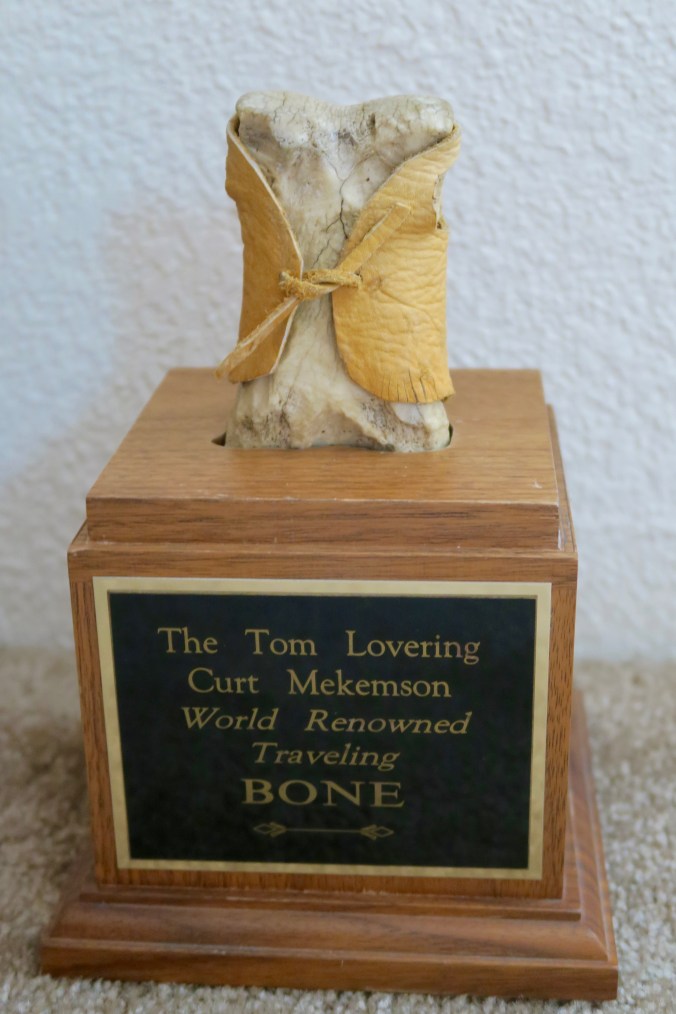
Bone on his pedestal.

From Sea Gulls to Sea Lions to Sea Lights… The Oregon Coast Series

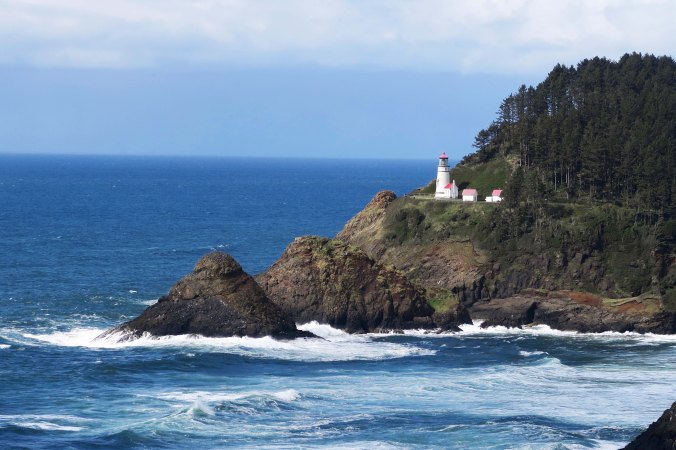
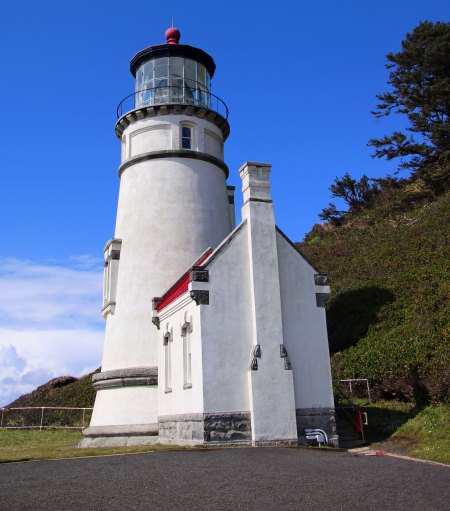
The Heceta Head Lighthouse is one of the most photographed lighthouses in the US.

My older brother, Marshall, is visiting this week and it has taken us back in time, back to our childhood, a time with mixed reviews— and back to when Marshall was living in Oregon. I am going to skip over the early years here, but the Oregon time is relevant. First, however, a little on Marshall: He is a homeless man with a red cargo van and a healthy bank account.

I’ve mentioned our families wandering ways before. I think it is genetic. Both sides arrived in the US before it was the US and immediately started making their way west. Marshall likes to say if it weren’t for the Pacific Ocean, we still would be. For the past several years he has lived in the Southern United States and migrated with the weather, basking in the warmth of southern Florida in the winter and hiding out from the heat in the mountains of North Carolina during the summer. His rule is that he never camps in any one place for more than two weeks.

He takes great pride in his freedom, and in his ability to live inexpensively. For example, he always camps for free. He loves the outdoors and satisfies his love by camping in beautiful locations. He is also an avid reader, consuming a book every two days. I’ve never know him to be happier than he has been since he decided to become homeless in 2002 when he turned 61.

Three years ago, he discovered that he had throat and mouth cancer. He tackled it with a sense of humor his doctor couldn’t believe and continued to camp out while he had his treatments. Marshall has now been declared cancer free. He can continue roaming until he can’t any more. He decided to move west, however. He will now migrate between Arizona and Oregon. We will be one of his regular stop offs.

And this brings us back to Oregon and my post today on the Oregon Sea Lion Cave and the Heceta Head Lighthouse. In the late 1970s, Marshall and a partner bought an old motel on the Oregon coast about six miles north of Heceta Head and eight miles north of the Sea Lion Cave. It was a rambling, funky old place called Gull Haven. Professors from the University of Oregon, writers, and others needing an occasional escape could stay there for $10 per night. Marshall installed our 75-year-old dad there and he happily ran the place while he wandered up and down the coast— taking photos, painting landscapes, collecting rocks, and gathering mussels off the rocks to cook up and eat.

Gull Haven in 1979 when my brother owned it and my father managed it.

Naturally, I went up to visit. I was living in Sacramento at the time. Pop had tried to feed me mussels, no thanks, and showed me around the area. He had photographed the Heceta Lighthouse numerous times, and painted it once. I visited the Sea Lion Cave on my own, descending into the depths to the sounds and smells of a hundred or so sea lions. The sound was substantial and the smell… well, it was odoriferous. It isn’t one you forget, although I’ve since come to the conclusion that the sea-lion cave smells like a petunia patch in comparison to cattle feed lots in California’s Central Valley.

After a year or so Marshall sold the motel— cheap. And didn’t tell me he was going to. I never have totally forgiven him; I would have been sorely tempted to buy it. Today, it is a beautiful B&B known as Ocean Haven. Go here to check it out.

The Ocean Haven B&B north of Florence, Oregon.

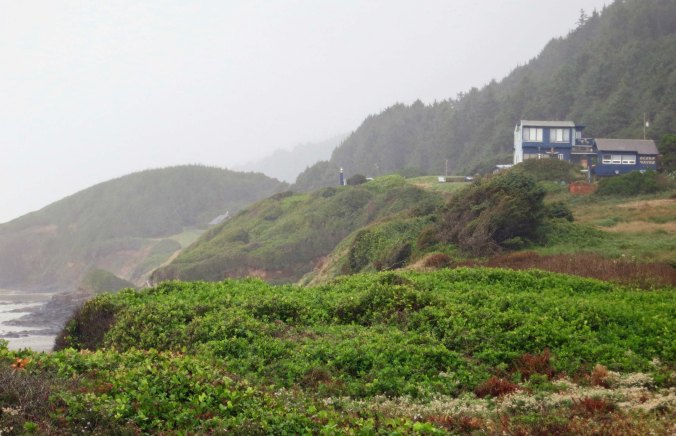
Gull Haven today. Or Ocean Haven as it is known now with its magnificent views of the Pacific Ocean.

I visited the area again a few weeks ago when Peggy was back East. Following are some photos I took of the Lighthouse and the Sea Lion Cave.

A distant view of the Heceta Lighthouse. It sits 205 feet above the sea.

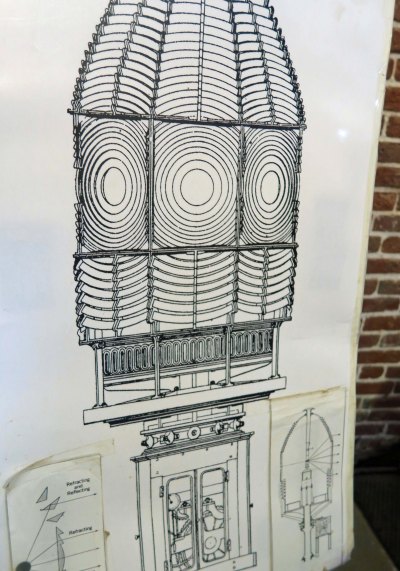
The first order Fresnel Lens in the tower of 56-foot tall lighthouse shines a beam that is visible for 21 miles out in the ocean, making it the most powerful lighthouse on the Oregon coast.

This picture of the Fresnel Lens is found on the ground floor of the lighthouse. Our guide told us that when one of the bottom glass sections broke a few years ago, it cost as much to replace as the whole light cost originally.

A final view of the lighthouse. Over 1000 barrels of blasting powder were required to create a flat space on Heceta Head to build the lighthouse.

This is a view of the lighthouse keeper’s home seen from the trail leading up to the lighthouse.

When the lighthouse was automated in the 70s, it was turned over to Lane Community College for classes. Not bad, eh? Today it is a B&B. The house also comes with its own ghost named Rue. It is said that she doesn’t like change.

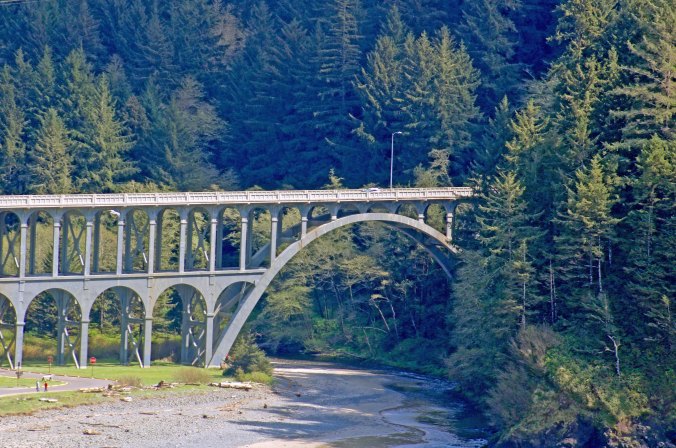
A view of the Cape Creek Bridge from the lighthouse.

And a close up. The Cape Creek Bridge is one of several gorgeous bridges along the Oregon coast.

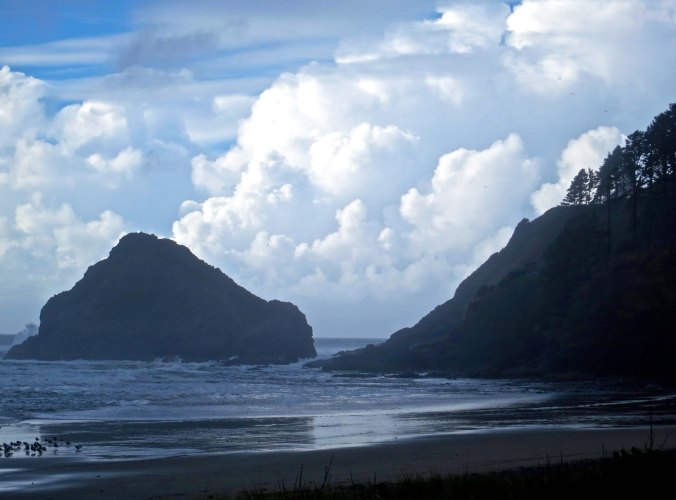
The small bay created by Cape Creek is also quite scenic. The lighthouse sits on the hill to the right.

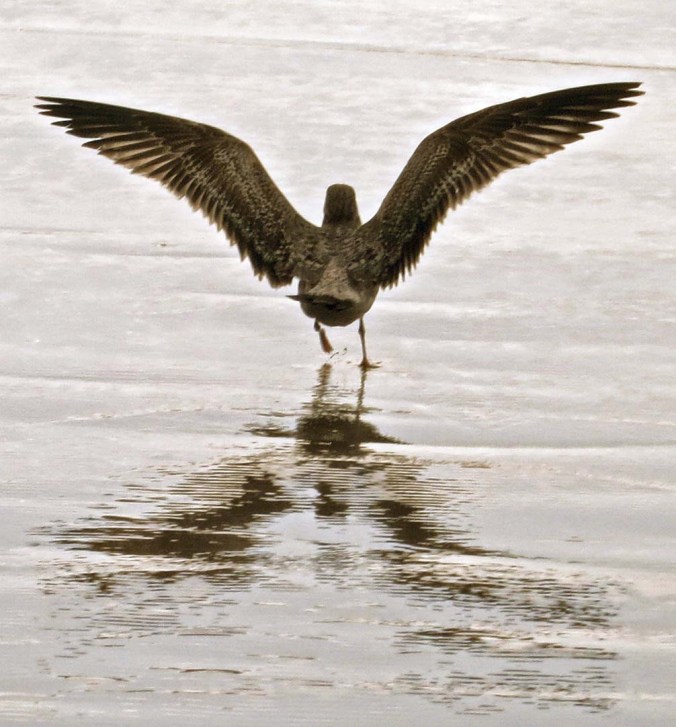
A sea-gull takes off from the beach of the Cape Creek Cove. I took this photo (and the two above) on an earlier trip.

A final view from the lighthouse. If you look closely, you will see the Sea Lion Caves building on the distant headland. Find the cut made for Highway 101 as it snakes its way along the cliffs and follow it to the far right.

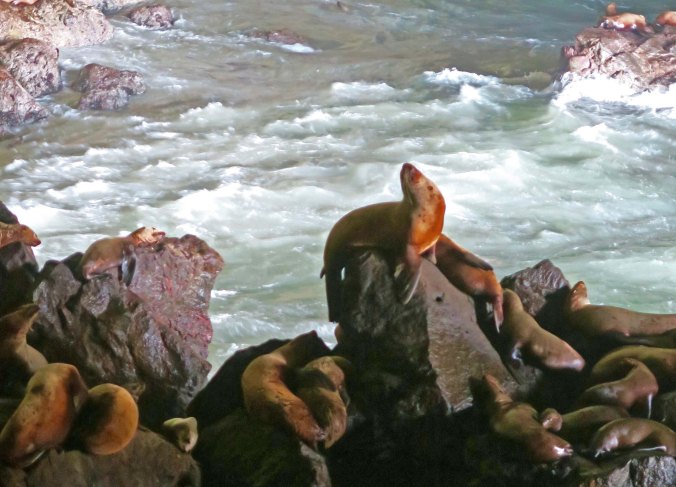
Over 100 sea lions (eared seals) were in the cave when I visited. An elevator whisks visitors down into the main cave.

Steller Sea Lions live for about 20 years. They can swim up to 17 miles per hour.

This big fellow had his head back and was barking most of the time I was in the cave.

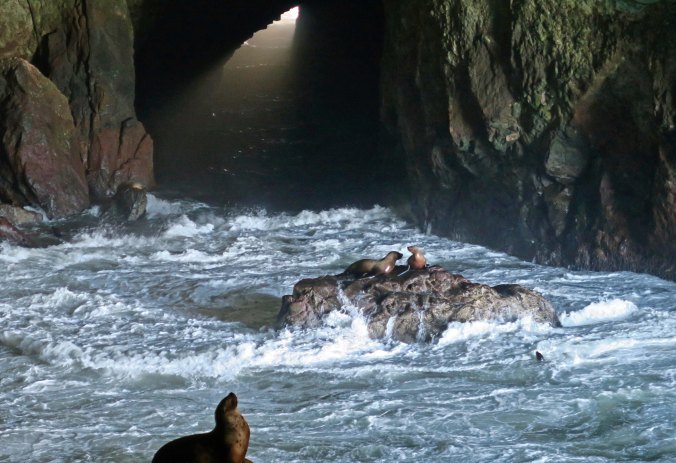
I found the drama of the waves in the cave to be as interesting as the seals.

The rock in the middle is also prime seal territory. The waves actually washed over it as I watched, leaving only two sea lions on top.

A final view of the rock with its two sea lions and the big guy.

NEXT BLOGS:

Wednesday: Bone is Found!

Friday: The Tribes of Burning Man…

Next week I will be traveling down around Big Sur, Carmel, Monterey and Santa Cruz on the Central Coast of California. It may be blog-break time. 🙂


From the Sublime to the Weird… Burning Man Murals and Paintings

T-Rex looking for dinner at Burning Man back when the playa was an ocean.

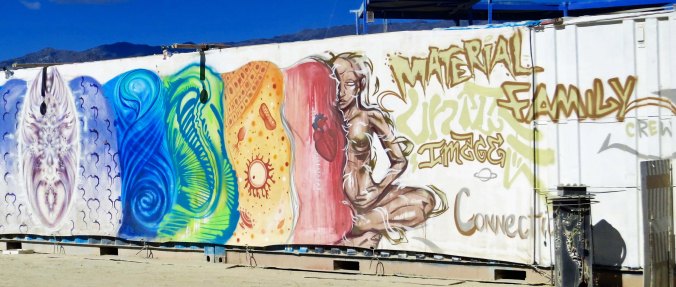
As you might expect, mural art and paintings at Burning Man reflect the event. Much of the art has a mystic feel about it with both Eastern and Western influences. Surrealism also seems to have found a home at Burning Man. Then there is the fun— bordering on strange— art that always appeals to my sense of weird. Following are examples of what I see as I ride my bike or walk around Black Rock City and out in the Playa.

I am going to start with what I call Chakra art that takes its inspiration from Eastern mysticism. A Chakra, simply put, represents seven levels of awareness or spiritual power in the human body that work their way up your spine starting with basic urges and ending with higher consciousness. Meditation is the primary tool that mystics use to reach the higher levels.

Chakra art doesn’t get much clearer than this. Beyond the primary chakra points are a multitude of secondary points. This fellow also comes with an aura.

Maybe you can even get high enough to earn a halo. This one features several languages.

An eagle and a buzzard have arrived here.

This mural portrays a woman meditating. Off to the left is a chakra.

Mandalas are aids in meditation. I feel like this one could take me into infinity.

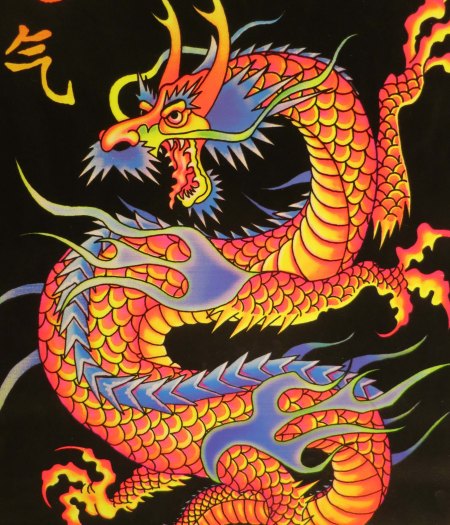
Of course there is much more to eastern mysticism and myths than meditation and chakras. Traveling farther east to China, we have this magnificent dragon.

What I call Nature art focuses on our deep connection with all life on earth and has a more Western/shamanistic feel to it that is more reflective of what we find in Native American, First Nation, and South American native traditions, as well as other animistic cultures throughout the world.

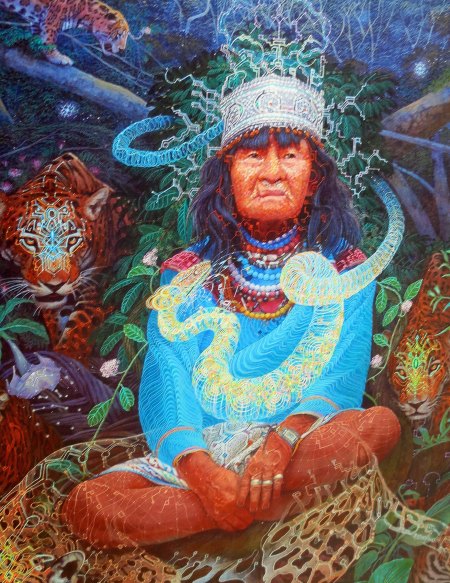
A shaman sits in a meditative pose while jaguars peer out of the jungle and a snake circles his body. I was amused to see that he is wearing a watch.

This painting also makes me think Shaman.

I am fascinated with the art at Burning Man that combines people and the natural world.

Another example.

How about this for a hair do?

This woman is morphing into an owl, or vis-versa.

Bird eyes.

A touch of green.

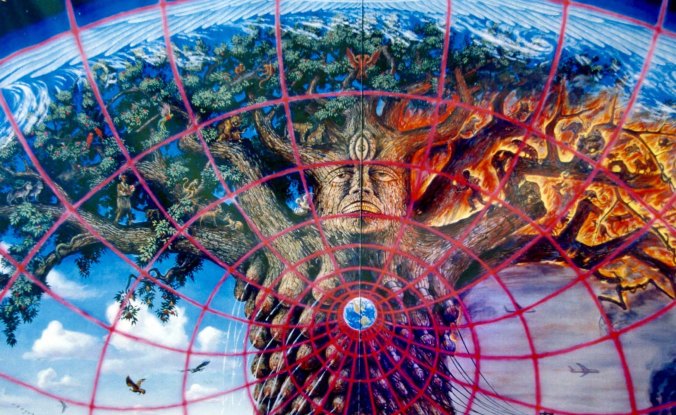
The tree of life and death with the left side representing nature and the right side our industrial civilization (sort of like a page out of Dante’s Inferno).

Surrealism is, well, Daliesque.

Mr. Surreal, himself.

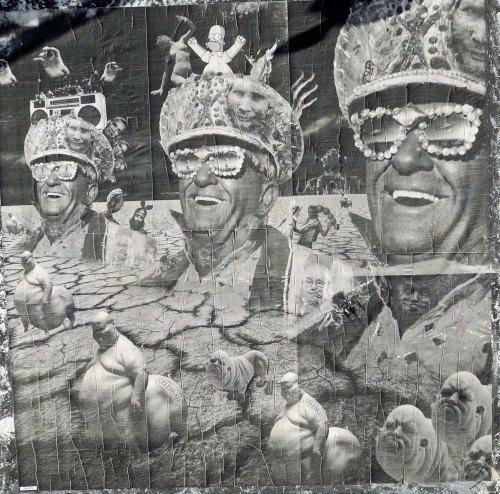
A surreal landscape featuring Burning Man founders, I believe, along with several Burning Man icons such as El Pulpo Mechanico looming in the background.

A surreal dragonfly.

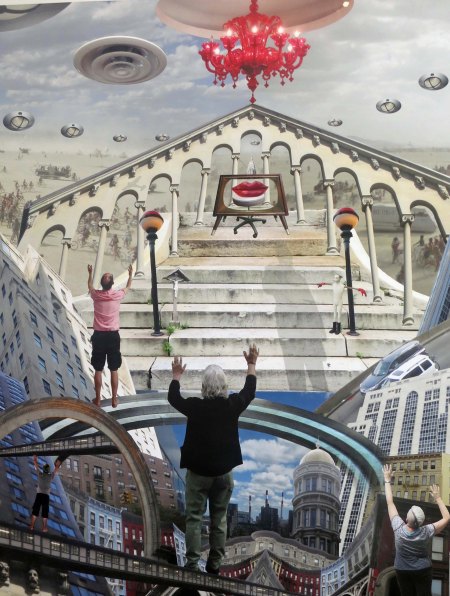
And a sort of surreal painting featuring lips, a red candelabra, light fixtures and speakers as UFOs, and apparently people worshipping all of the above.

I will conclude with several paintings/murals that fit my description of fun, funky, and possibly weird.

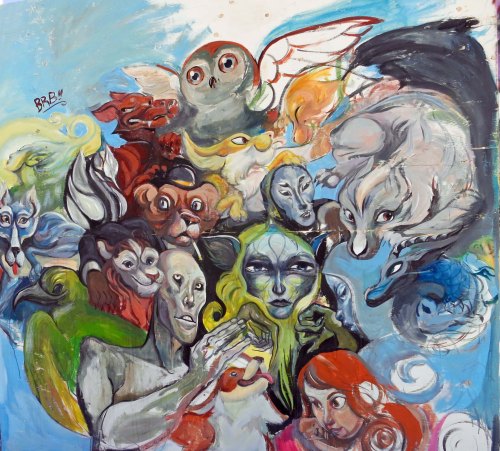
This mural should easily qualify as weird.

As does this painting of ‘children’ playing.

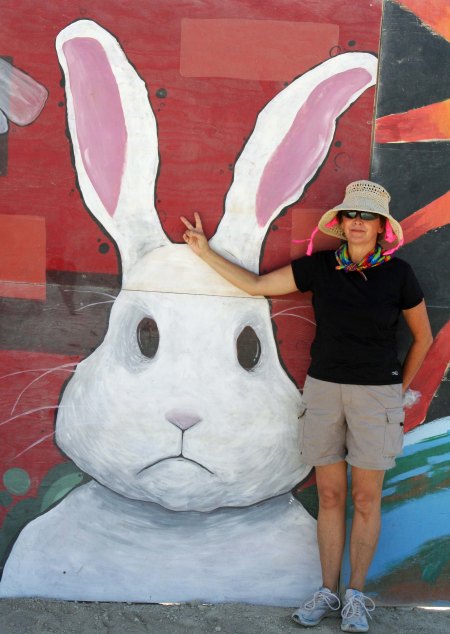
Peggy stands next to a giant rabbit. One of the events at Burning Man includes a thousand or more people dressing up like rabbits and parading around Black Rock City.

How about ostriches with people heads?

One year Burning Man had a circus theme that led to the creation of all kinds of strange circus art.

My favorite from the circus art.

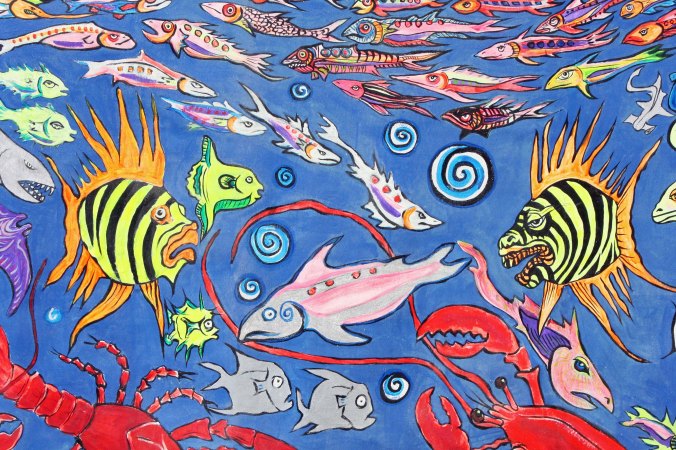
The fish were fun, especially the one on the right with the teeth.

This was strange…

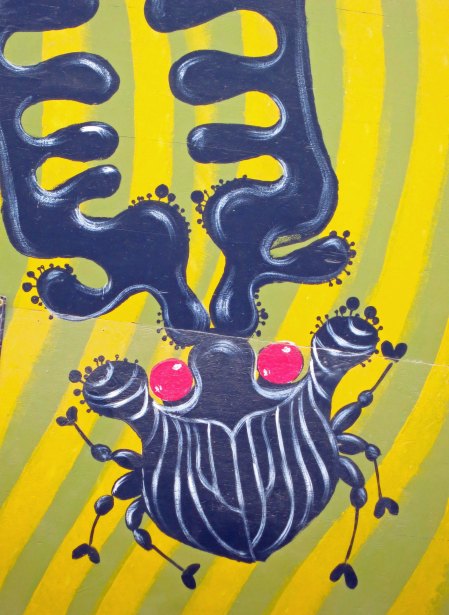
As was this beetle.

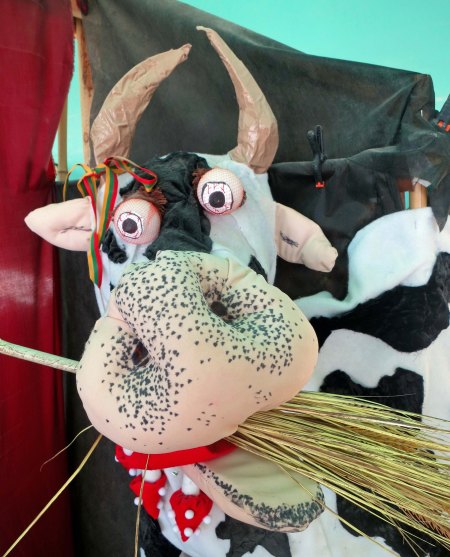
I’ll conclude with another favorite of mine: a 3-D Bossy.

NEXT BLOGS:

Monday: It’s back to the Oregon coast to visit a cave filled with sea lions, plus another lighthouse.

Wednesday: Bone is found and a rattlesnake threatens to bite me on the butt.

Friday: Burners and their costumes at Burning Man.


Raging Rivers, Kamikaze Mosquitoes and Naked Ladies Jumping… How Bone Was Discovered: Part II

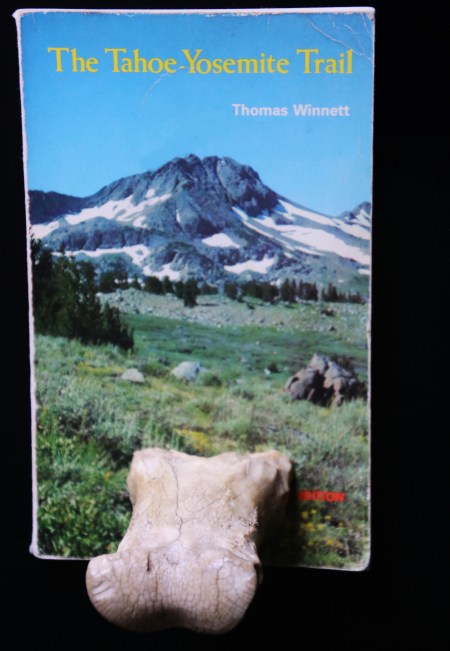
Bone contemplates a book on the Tahoe-Yosemite Trail and the high mountain meadows he loves. I used this book by Thomas Winnett on several early Treks that I led between Lake Tahoe and Yosemite.


This is second in a series of Blogs on how Bone was found in the Sierra Nevada Mountains. Go here for the first one.

I watched regrettably as April and Lynn headed out. I would miss the inspiration. Soon, however, my mind was more than occupied with route finding. The trail had disappeared under the snow.

Velma Lakes where we parted company with April and Lynn. I took this shot in the evening on another trip.

Tom pulled out his map and compass to establish our general direction. We searched for ancient tree blazes left behind by early foresters, cattlemen and sheepherders. We also watched for ducks where the snow had melted. I’m not talking about fowl that quack and taste good in orange sauce. Ducks, in trail finding terminology, are piles of stone set up to show the way. With a little imagination, they can look like their namesake. Caution is advisable. The people creating the ducks may have had a different destination in mind, or perhaps they were lost.

Tree blazes were the primary way of marking routes by the early explorers of the Western mountains. The short rectangle on top and longer one on the bottom mean ‘this is the trail.’ Blazes were normally within sight of each other.
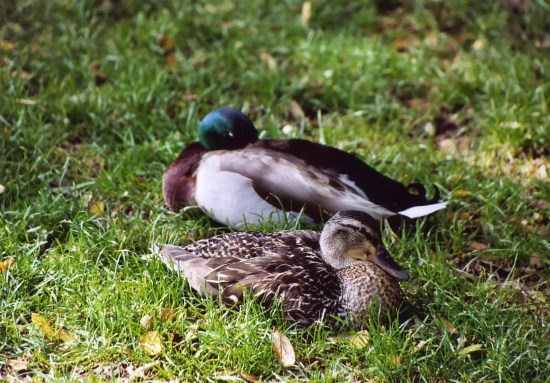
These are duck ducks, Mallards to be specific. They are not trail ducks. Following them might get you lost, or wet. Check out the eye on the male. He was not happy with my waking him up.

This is a trail duck. The three rocks in the middle are what a normal trail duck looks like. I added a rock on each side to create a Sierra Trek duck so Trekkers would know what to follow. I borrowed these rocks from Peggy’s rock garden and put them on our railing. I had strict instructions to return them to where I found them. BTW, three ducks in a row mean danger to Boy Scouts. We rarely had Boy Scouts follow us.

This is an example of a duck in use. A trail splits. The duck tells you to use the left one. I borrowed our backyard and deer trails for this.

An hour later we found ourselves more or less where we were supposed to be, on the edge of the Rubicon River. A student of ancient Roman History undoubtedly named the stream. Like Julius Caesar, we were faced with crossing it. In a month or so it would be a tame creek inviting a refreshing dip but now it was a roaring river, filled with icy water from quickly melting snow fields.

I entered with trepidation and was almost washed off my feet. Facing up-stream, I used a walking stick to give myself a third leg. Water crept up to my knees and beyond. It was cold; I have short legs. The force was incredible. I set each foot carefully and moved crab-like, searching for solid ground between slippery rocks.  I’d undone my pack belt so I could shuck the pack if I were knocked over. Swimming in freezing water with 50 pounds on your back is hazardous to your health. In a few minutes that stretched out forever I was across. Tom and Terry also made it without incident.

We plopped down on a convenient log to catch our breath and munch down on GORP (good old raisins and peanuts). It was a quick meal. A thick swarm of mosquitoes dive-bombed us with kamikaze abandon.  Slap one and five more landed, gleefully licking off our bug repellent before plunging in their proboscises. We were driven to put on our packs and scurry up the trail. Fortunately, Rockbound Valley is relatively flat and we were able to escape. Stopping was not an option as we hoofed it for the next four miles, crossing the Rubicon two more times before we began our labored ascent up aptly named Mosquito Pass.

Life slowed down immediately as we began climbing. The blood sucking hoards caught up. Near the top, we were confronted with a different challenge, more snow. Eight hours of hot sun had turned it to mush. We spent as much time sliding as we did climbing. It was slow, hard, slogging work. And it was dangerous. Running water, partially exposed boulders and tree trunks melt snow from the ground up and create hidden cavities. More than once we plunged through up to our knees.

Ignoring the danger, Tom and I laughed our way down the other side, glissading in our boots. Control was minimal. Camp was in sight. Terri came along at a much more sedate and careful pace.

There was nothing about Lake Aloha that made me think Hawaii. It was a strange Dali-like creation with a convoluted shoreline and innumerable Rorschach type islands. What’s more, mini-icebergs decorated its surface. Bright white on top, they turned an icy blue under the water. All I could think was cold. Plowing through snow on our way around the lake to camp added freezing to my thoughts.

That night, we built a small campfire to fight off the chill. Terry wandered off to bed. Tom was slightly melancholy. He looked off into the distance over my shoulder.

“I was married on that peak,” he announced to the night. I turned around and stared across Lake Aloha at the towering Pyramid Peak, the centerpiece of the Crystal Range. It was bathed in moonlight. Several years earlier, Tom had met and fallen in love with Hilde, a slight, attractive blonde who shared his love of the wilderness. They decided to get married on the mountain. Mom, wedding party and friends were invited to share their 9983 feet “I do.”

The marriage didn’t last long and Tom was reluctant to talk about it. The fire burned down to glowing embers. We shared the silence in memory of lost love.
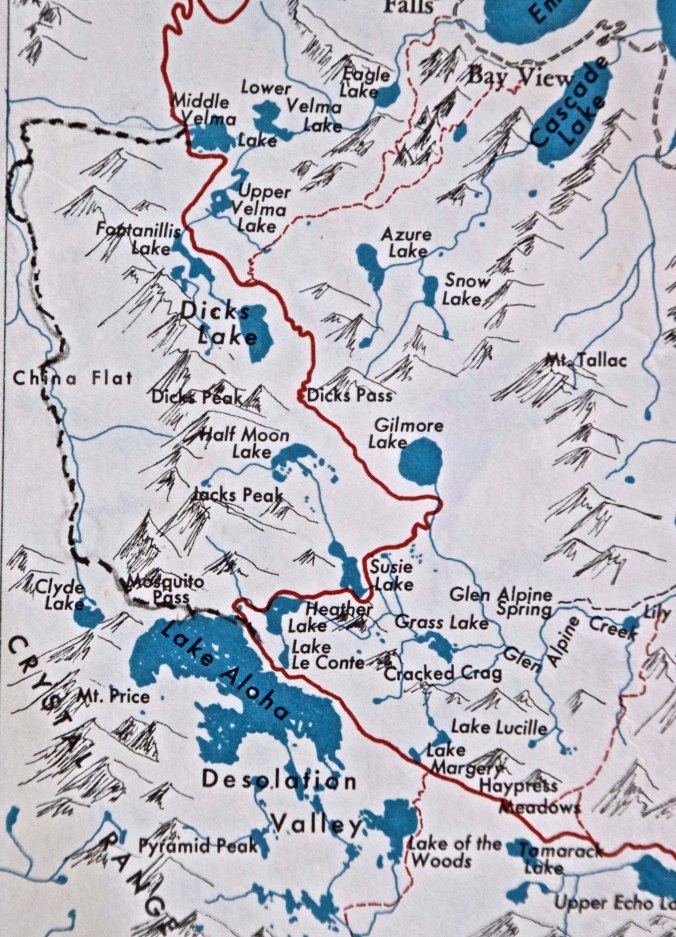
This map from the Tahoe-Yosemite Trail book shows our route from Velma Lakes to Upper Echo Lake. The red trail shows the actual route. The dotted trail shows the route we picked to Lake Aloha because of the deep snow going up past Dicks Lake.

I was up early the next morning and eager to hit the trail. My body was starting to adjust and feel good. More importantly, the resort at Echo Lake was calling. A quick breakfast and we were off. I took the lead with Tom following and Terry trailing. Soon we had climbed out of Lake Aloha, hiked past Lake Margery  and worked our way across Haypress Meadows where cattlemen once harvested grass for winter feed. As we began our descent into Echo Lake, I left my companions behind. The vision of cold beer and a hamburger drove me on. Short shorts may have been a factor as well. Lynn and April were supposed to rejoin us at the Echo Lake Resort.

There was a decision to make when I reached Echo Lake. I could continue to follow the Tahoe-Yosemite Trail around the upper and lower lakes or I could call the Lodge from a phone located at the end of Upper Lake. It would send a boat taxi to pick me up for five bucks. The trail was hot and filled with day hikers. I made the phone call. A half hour later, the throbbing of the motorboat’s engine caught my attention as it worked its way up the lake. Soon it arrived, coughing slightly. The boat slowed and bumped into the pier. My ‘taxi driver’ was a 16-year old plus teenager who had managed to snag a great summer job.

“Hop on,” he told me. An elderly couple was along for the ride. I nodded at them. I was halfway between the boat and the pier when I heard a commotion.

“Over here, Curt,” a familiar voice shouted. I looked up. A few yards away alders had hidden another pier. Two very attractive and very naked women were jumping up and down to get my attention. They succeeded. It was April and Lynn. They had come over on an earlier boat and were working in a little sunbathing while waiting for us. The young boatman and the old man were all eyes. The elderly woman looked thoroughly irritated and glared at all of us, especially her husband.

“Uh, I think I’ll stay here,” I told my driver.

“Can I stay too?” he asked and grinned at me. The elderly man wisely stayed silent.

I joined the girls as the boat coughed its way back toward the resort. Tom showed up soon afterwards. We were waiting for Terry and the women were dressed when the ranger showed up.

“There has been a complaint about naked women jumping up and down over here,” he told us.

“Boy, I wish I would have seen them,” Tom responded. I am not sure the ranger bought our story but he wandered off in search of other criminals.

The same boatman picked us up and told me that the first thing the elderly woman did when she got back was to complain loud and long about the perverted people across the lake. She even cornered a ranger. My new young friend speculated that the ranger came looking for us as an excuse to escape. “Or maybe he wanted to see the naked ladies,” I noted.

I happily downed a hamburger and a beer, or maybe it was two. But we still had a few miles to go before camp, so I didn’t want to eat or drink too much. Backpacking is hard enough as is—alcohol and a stuffed tummy makes it harder.

Be sure to check in next Wednesday and learn how Bone was found!

Three more photos from the journeys that Bone has been on since his discovery.

Riding an elephant in Nepal. Bone is hard to see but he is resting on the elephant’s head. He is being held by Mary Johnson who had taken Bone along for good luck. Many people have travelled with Bone over the years.

Iguanas chat with Bone in the South Pacific, where he was taken on a diving expedition by Jose Kirchner.

Bone sits in the sand at twilight on the edge of the Tasman Sea on the South Island of New Zealand. He was traveling with Peggy and me.

NEXT BLOGS

Friday: It’s back to Burning man with some very Burning Man-like murals and paintings.

Monday: A cave filled with sea lions on the Oregon coast and another beautiful lighthouse.

Wednesday: Bone is found! Hypothermia threatens! A rattlesnake tries to bite me on the butt!


What Makes a Lighthouse So Appealing?

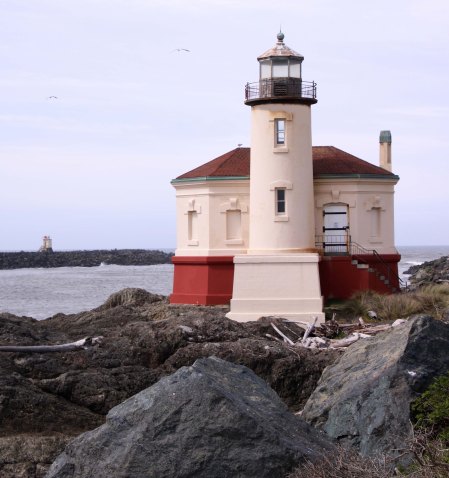
The Coquille Lighthouse sits on a point jutting out into the Coquille River opposite of Bandon, Oregon. Its replacement, an automated beacon, can be seen on the left across the river on the South Jetty. A glimpse of the Pacific Ocean appears on the right. (Photo by Peggy Mekemson.)


I am sure that there are people who drive by lighthouses never noticing their existence. I am not one. There is something romantic about them that pulls me in. Maybe it is their historic role: saving mariners from crashing into rocky shoals and other shoreline hazards. Or maybe it is their isolation and the thought of a lighthouse keeper’s lonely life. Having a bit of hermit in me, I can easily envision such a life-style, assuming, of course, that I have my good buddy and a boatload of books along. Or possibly it’s their setting along dramatic ocean and lake shorelines. Rocky shorelines offer beauty as well as hazards.

The history of the Coquille River Lighthouse was closely tied to the logging industry. Early lumber barons wanted to get at the virgin forests located along the Coquille River. Access was relatively easy, assuming ships could cross the hazardous bar located at the mouth of the river next to Bandon. A jetty was built out into the ocean, which led to the creation of a deep channel. The lighthouse was built to guide ships along this channel. The 1890 funding proposal stated:

“A light of the fourth order with a fog-signal, at this point, would enable vessels bound into the river to hold on close to the bar during the night so that they would be in a position to cross at the next high water. The light would also serve as a coast light and would be of much service to vessels bound up and down the river.”

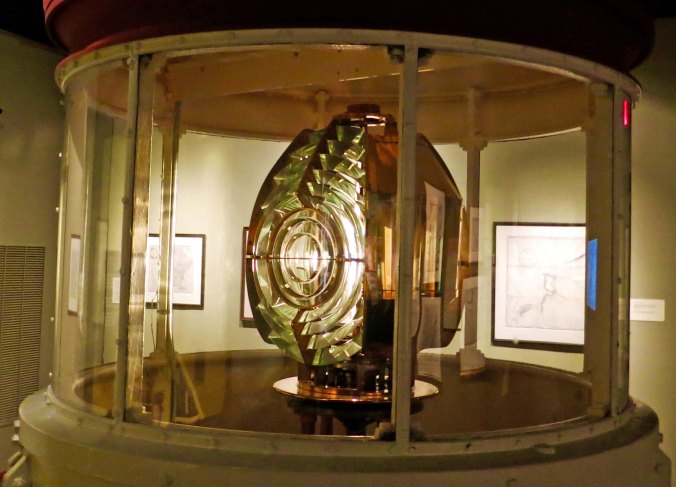
“A light of the fourth order,” refers to the type of the Fresnel lens used in the lighthouse. Fresnel lens are made up of multiple lens arranged in concentric circles around the light source. If you’ve been in a lighthouse, you will have likely seen one. They range in size from the first to the sixth order. Fourth order Fresnel lights could normally be seen for 15 miles out to sea and were commonly used to guide mariners into harbor mouths.

A Fresnel lens of the sixth order on display at the Columbia River Maritime Museum in Astoria, Oregon. This light could be seen for about five miles and would be used in harbors and along rivers.

Funding was approved by Congress and the lighthouse was functioning by the mid-1890s. It was operated up until 1939 when the Coast Guard took it over and determined that a less expensive, automated beacon placed on the end of the Bandon South Jetty would work as well. The abandoned lighthouse was neglected up until 1976 when it was taken over by the state of Oregon as part of Bullard’s Beach State Park. A joint effort by the state and the Army Corps of Engineers restored the lighthouse as an historic attraction. Various efforts since have maintained it, much to the enjoyment of thousands of visitors— including us.

Peggy and I stayed at the state park while we were visiting Bandon and used one of our mornings to go over and check out the Coquille Lighthouse, North Jetty and Bullard’s Beach. The following photos record our visit.

Peggy and I walked around the lighthouse to capture photos from various angles. I took this from the river’s edge. Low tide enabled me to shoot from below the tide line. The North Jetty stretches off to the left.

Peggy caught this close up.

And I took this picture looking over sea grass. Parts of Bandon can be seen across the river. We were on our way to walk out the North Jetty.

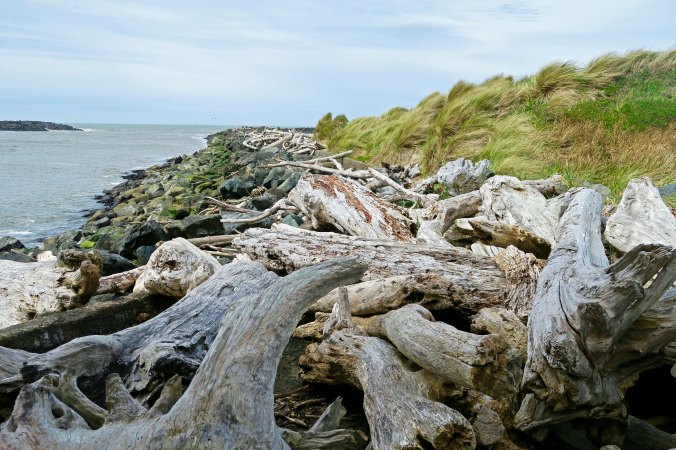
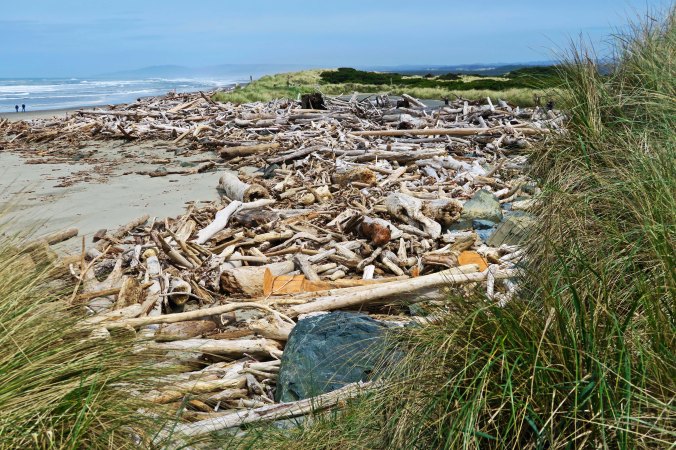
One of the first things that struck me about the jetty was the amount of driftwood piled up along it. This reflects the power of the ocean. It also warns that you wouldn’t want to be anywhere near the jetty in a storm.

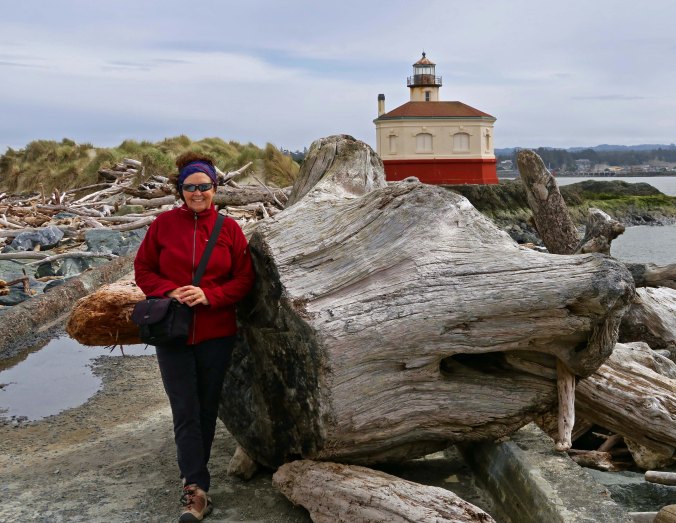
Peggy posed for me in front of this large stump on top of the jetty, a remnant of logging up the river and along the coast.

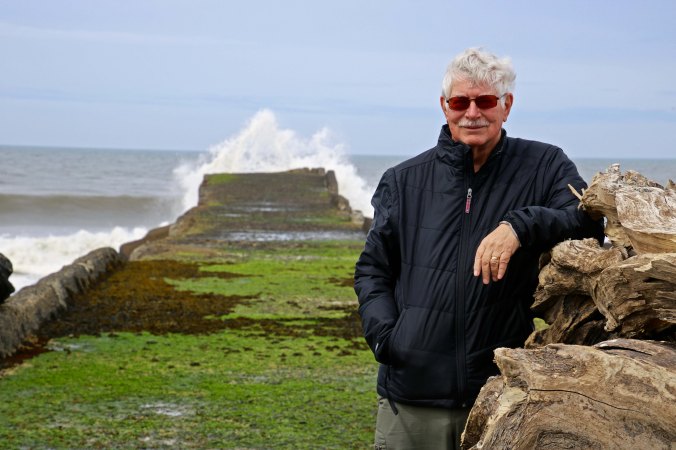
I returned the favor posing for Peggy out toward the end of the jetty. A wave can be seen breaking over the end. And this is at low tide! We stayed far back. I would bet that people have been swept off of here while trying to photograph winter waves. (Photo by Peggy Mekemson.)

I appreciated the sea gulls adding a touch of sea life to my photo. One wave hits the end of the jetty while another rolls in. Watch out for the ninth!

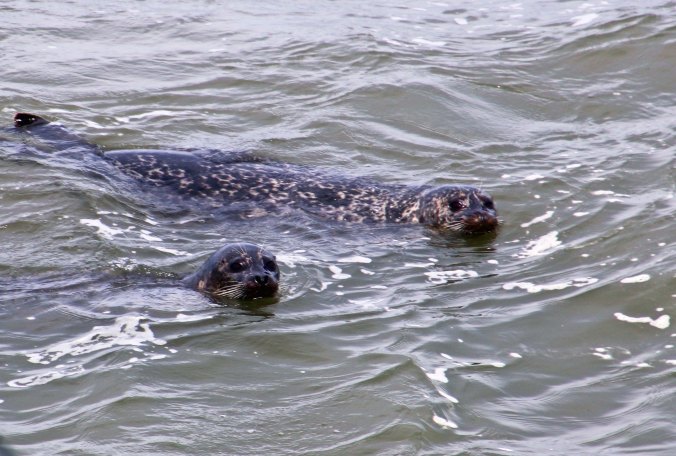
A pair of seals with their big dark eyes swam along the side of the jetty and checked us out. (Photo by Peggy Mekemson.)

A view north from the jetty along Bullard’s Beach shows again how much driftwood (drift logs?) is brought in by winter storms.

Peggy took this shot looking up from Bullard’s Beach toward the lighthouse.

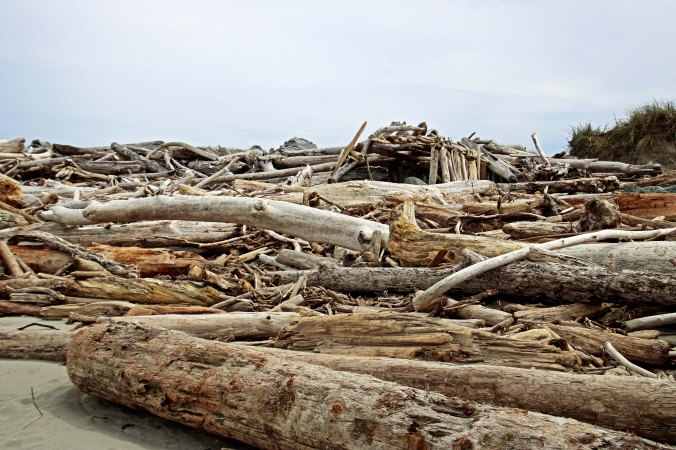
And this photo of a fort someone had built taking advantage of the driftwood. You can imagine the amount of fun kids would have building and playing in such a fort. Adults too. (Photo by Peggy Mekemson.)

I added a close up.

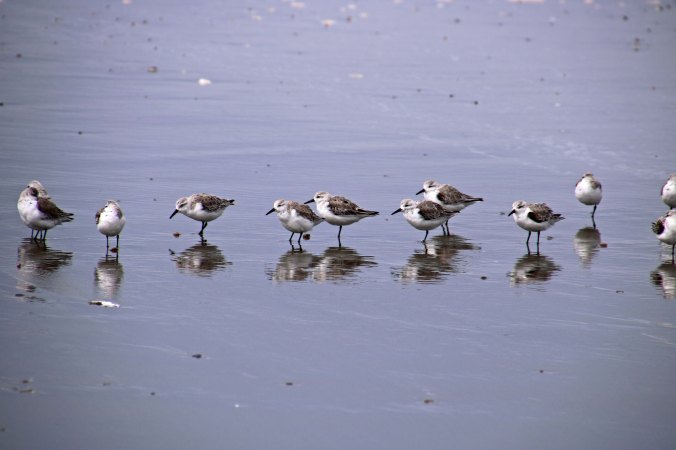
Walking along the beach we found a flock of Sanderlings. These small shorebirds are a delight to watch as they charge in unison along the beach following the tide as it rises and falls in search of delectable bugs. I liked the reflection provided by the receding water. (Photo by Peggy Mekemson.)

Get too close and off they fly, whirling in unison as they head a few yards up the beach to continue their endless search for dinner.

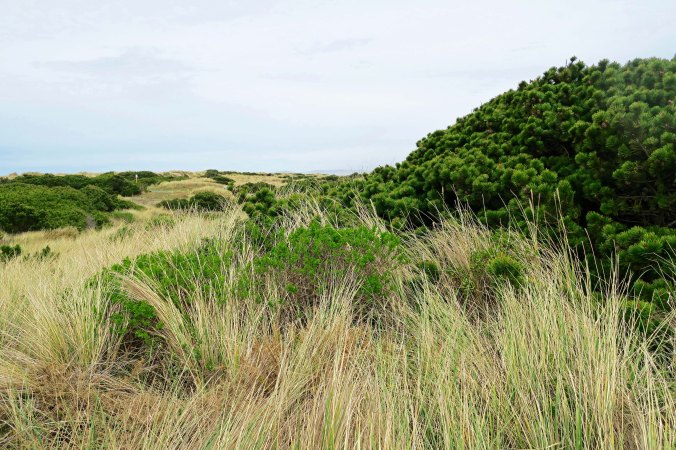
I’ll close today with this final shot of the coastal land that backs up to Bullard’s Beach.

NEXT BLOGS:

Wednesday: While Bone waits to be found, we continue our backpack trip down the Tahoe-Yosemite Trail— finding our way through deep snow, crossing a raging river, and running from kamikaze mosquitoes.

Friday: Murals and other wild/weird art of Burning Man.

Monday: I travel north up Oregon’s coast and explore a cave filled with lions, sea lions that is.


Let’s Celebrate the Earth… It’s Earth Day 2017!

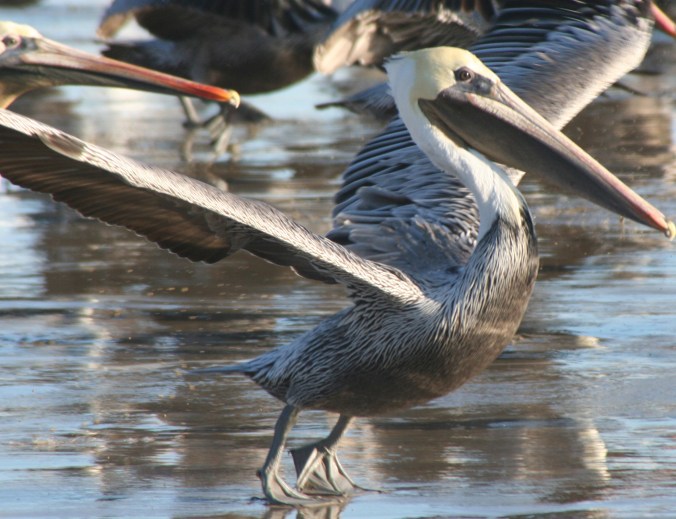
Without environmental awareness and action, this magnificent Brown Pelican would no longer be flying. By the 1960s, DDT, which was used extensively in controlling insects, had come close to wiping out the species.

On April 22, 1970, I was running a recruitment campaign for Peace Corps at the University of California in Davis. It was one of those beautiful spring days in the Central Valley of California where green grass covers the valley floor and pushes on up into the foothills, the birds are busy declaring their love, and everything seems to bloom at once.  Inspired, I had gone out for an early morning walk along the American River in Sacramento before heading to work. When I arrived on campus around 9:00, booths had sprung up across the large open quad that is the heart of the University, and a sense of excitement filled the air.

It was Earth Day I, ground zero in America’s efforts to save its environment, to return to an earlier time in American history, back before our rivers and air became a cheap way to dispose of industrial wastes, back before the value of our remaining wild areas had only been measured in the minerals that could be mined, or oil that could be produced, or trees that could be cut down, back before agricultural production was determined by the number of poisonous chemicals we could pour on plants and the antibodies and hormones we could pump into our livestock, back before America’s ‘greatness’ was measured in terms of how many times we could blow up the world with our nuclear weapons, and the amount of wealth that could be concentrated in the top one percent of our society.

Rachel Carson had provided the initial impulse for the environmental movement with her classic book, Silent Spring, published in 1962. The original idea for Earth Day had come from US Senator Gaylord Nelson, a Democrat from Wisconsin, after he had witnessed the devastation caused by the Santa Barbara oil spill. He had noted student activism on American college campuses in support of human rights and in opposition to war and felt that some of the energy might be captured for saving the environment. Nelson had recruited Senator Pete McCloskey, a moderate Republican from California, and the two of them had gone on to organize the nation-wide teach-in on college campuses that had become Earth Day I.

I had quickly given up any pretense of recruiting for Peace Corps that day and instead spent my time walking from booth to booth and talking to young people and organizations about the challenges we faced on the environmental front, about their hopes and dreams for the future. Something happened to me that day. I became a believer in the importance of turning back the clock, of making America great again from an environmental perspective, and of redefining progress to include clean air and clean water, and wild places we could still enjoy and escape to.

Within two months, I had left my job as Director of Peace Corps Public Affairs in Northern California and Nevada and become Executive Director of a fledgling environmental center in Sacramento. On a national level, 1970 saw creation of the Environmental Protection Agency and the passage of the Clean Air, Clean Water, and Endangered Species Acts. But the battle was just beginning. And nowhere was this clearer than in California. The then governor of the state, the man who would be president, Ronald Reagan, had already declared in the battle to preserve the redwoods, “…a tree is a tree, how many more do you need to look at?” The timber industry, and apparently, the governor, still looked at a 2000-year-old forest giant and saw 480,000 board feet of lumber.

Redwood

This ancient redwood is located in Redwoods National Park on the northern coast of California. Is the approximate three million dollars worth of lumber that cutting it down would bring worth more than its beauty or the 1500 years it has taken to produce it? Or to the joy it will continue to bring to our children and grandchildren for generations to come?

In 1990, Earth Day appropriately went international. Some 200 million people in 141 countries carried the fight for clean air, clean water, and for the protection of wild places and wild animals onto the world stage.

Today, in the US, after 50 years of making progress in cleaning our air and water, in saving endangered species, in setting aside wild and beautiful areas, in developing clean energy, and in recycling our waste, the man who is President has declared war on environmental protection. He has proposed drastic cuts in the Environmental Protection Agency’s budget and appointed a man to head the agency who is a dedicated opponent of the organization. He has denied the science behind global warming and moved to pull the US out of international efforts to solve the problem. And this is just for starters according to his campaign promises. Apparently “Making America Great Again” includes returning to the days when making a profit always trumped protecting the earth. But who knows? Our President is known to change his mind.

But the battle to save the earth, and that is what it is, is not just a US problem; it is a world-wide problem. It doesn’t matter today whether you are reading this post today from Nigeria, or Australia, or France, or Canada, or England, or Russia, or Brazil, or Singapore, or any of the other 160 countries from which people frequently or occasionally check in on my blog, the fight for clean air and water, for healthy food, for wild places, and for wild animals is a fight for all of us. Future generations of people, not to mention lions and tigers and frogs and trees and elephants and butterflies will say thank you.

The photos today (taken by Peggy and me) are to remind us of just how precious this world we live in is.


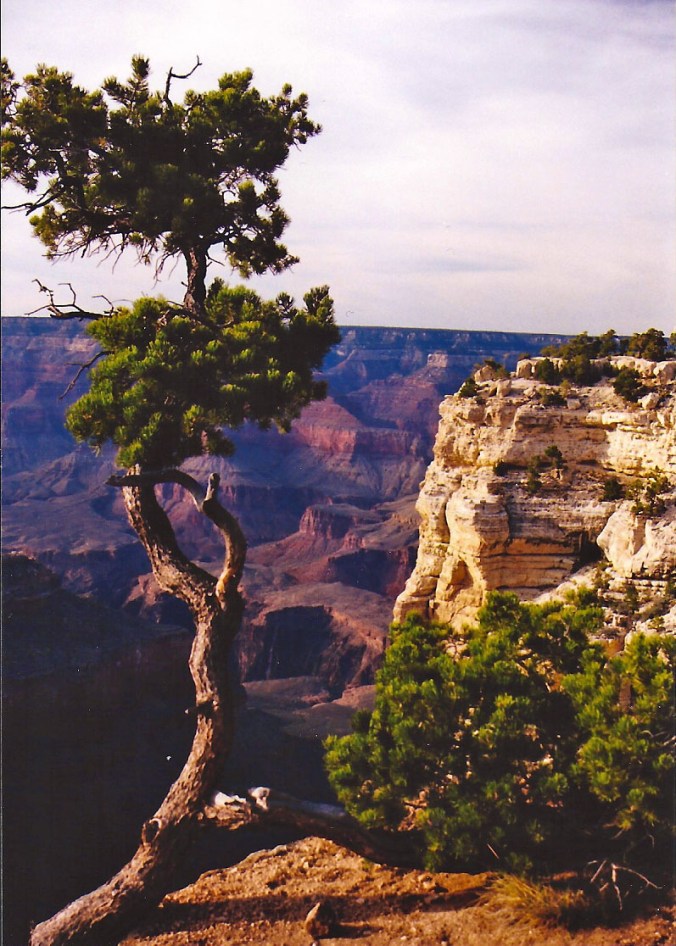
Grand Canyon National Park is one of the World’s great natural wonders. There were plans to dam the canyon and flood it with water until people who loved its beauty stepped in and stopped the effort.

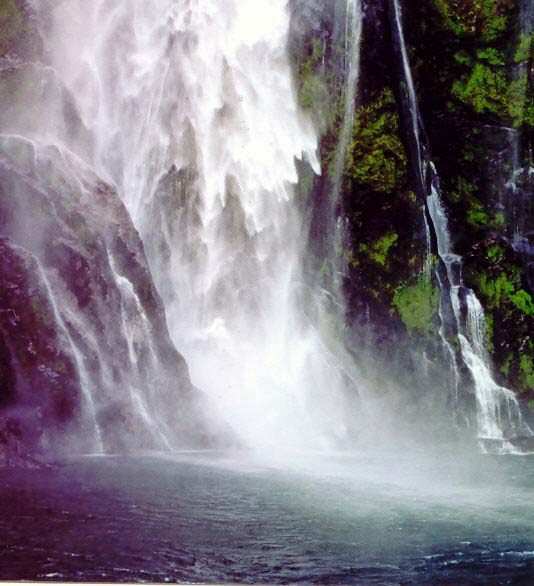
The world is full of natural beauty… including this waterfall in Milford Sound, New Zealand.

Sunset at Sea Kayak Adventure's campsite on Hanson Island in Johnstone Strait. Photo by Curtis Mekemson.

Sunset in Queen Charlotte Strait off the coast of Vancouver Island, British Columbia.

Scotch Broom found on the American River Parkway. Photo by Curtis Mekemson.

Scotch Broom found along a wild roadside in Scotland.

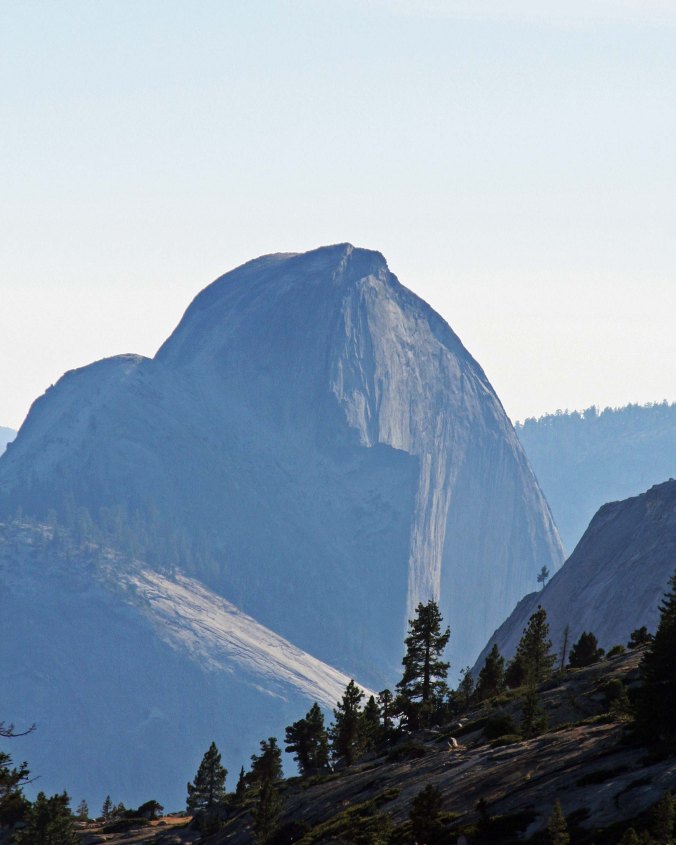
Yosemite's Half Dome captured on a hazy day. Photo by Curtis Mekemson.

John Muir who wandered the Sierra Nevada Mountains was the founder of the Sierra Club and an early conservationist. His love of Yosemite led to national protection for the area, and the photographer, Ansel Adams, would make Half Dome, seen here, world-famous. I have spent 50 years of my life wandering the Sierras.

The deserts of the world have their own beauty. This is Death Valley.

For my last photo today, I can’t resist posting a picture from our front porch in Southern Oregon that I took a couple of months ago. Peggy and I are blessed to live in an area of great natural beauty. Every day we are reminded of the importance of protecting the environment.


Happy Earth Day from Curt and Peggy!


A Church Trap, a Temple for Timothy Leary’s Ashes, and other Unique Burning Man Buildings

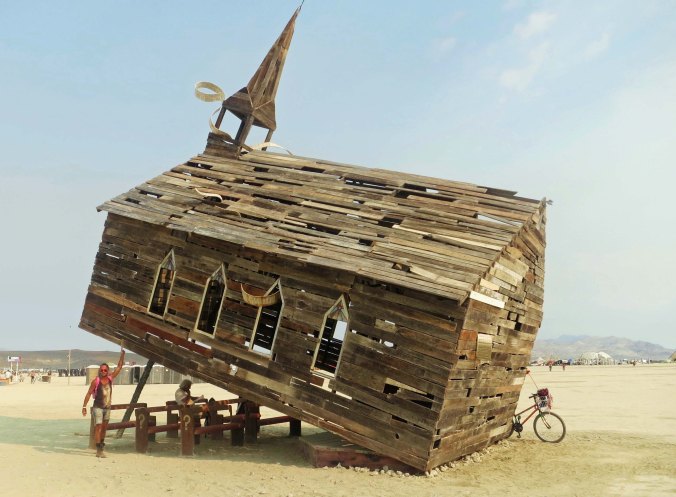
The Church Trap was amusing, and possibly a wee bit scary. Scrolls of music are emerging from the windows, roof and steeple.


Did you ever try to catch birds as a kid using a box held up by a stick? Being a curious little boy with dreams of being a mountain man, I did. I baited the trap with birdseed stolen from Budgie, our parakeet, and tied a long string to the stick. When some innocent sparrows followed the trail of seeds into the trap, I yanked on the string and the box fell down, capturing the birds. After announcing my great accomplishment to the world, or at least my mother, I let them go— a bit beat up but wiser.

I had totally forgotten the experience until I discovered the Church Trap at Burning Man in 2013. It was set up the same way. A full-sized church had been raised up on one end with a 4×4 stick ‘holding’ it up. A rope was attached to the stick. Scrolls of paper with religious songs printed on them had been attached to an organ within the church. They poked out the windows, roof and steeple, symbolic of music (bait) emerging from the church to attract people passing by.

The church was solidly set in the ground. It was not about to be pulled down. Had it, however, a lot of burners would have been caught. People stopped by for weddings, to play the organ, and to give sermons from the pulpit.

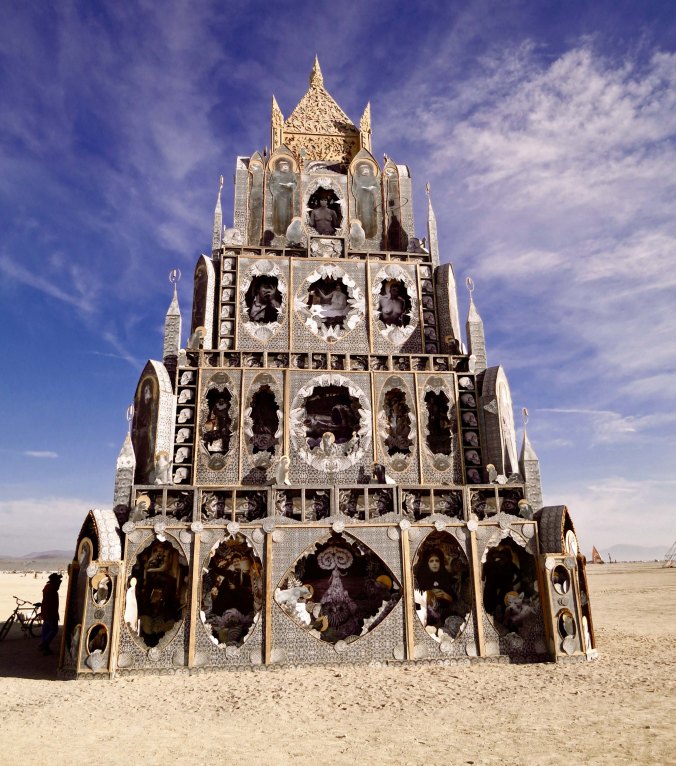
The Church Trap was one of many unique buildings built on the Playa in 2013 to entertain and engage participants. The next year I found myself checking out the Temple of Confession where Susan Sarandon had placed ashes of LSD guru Timothy Leary. I am featuring the temple in my photo essay today along with several other buildings that have captured my interest and/or amused me.

The Temple of Confession was covered in photographs…

They were very creative, but strange, including this three-breasted woman with a dress of skulls.

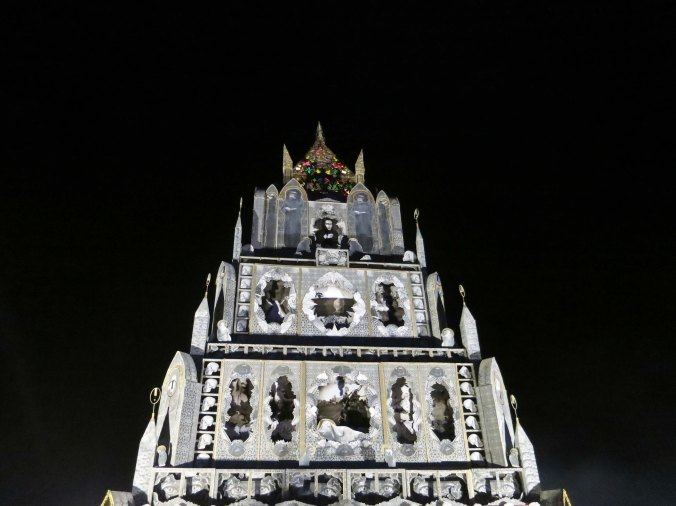
The Temple of Confession at night.

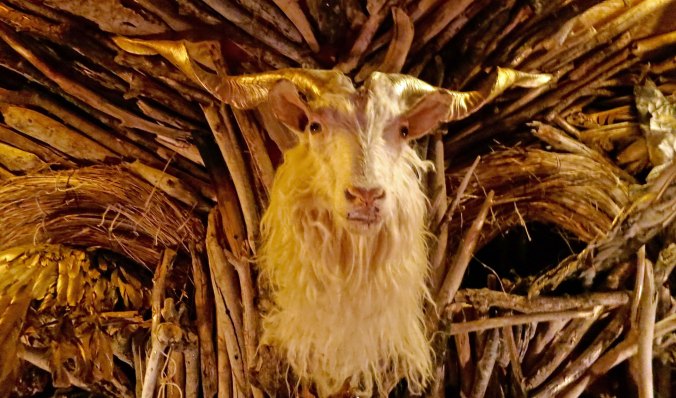
This rather impressive goat, along with a confessional, a photo of Timothy Leary, and a portion of ashes from his cremation were found inside.

Eyes like this one that included peepholes were also found in the temple. Naturally, I had to look.

This is what I saw. It spoke to the incredible detail, and surprises, built into so much Burning Man art.

This is the Temple of Photos produced for an earlier Burning Man. Both of the temples were burned.

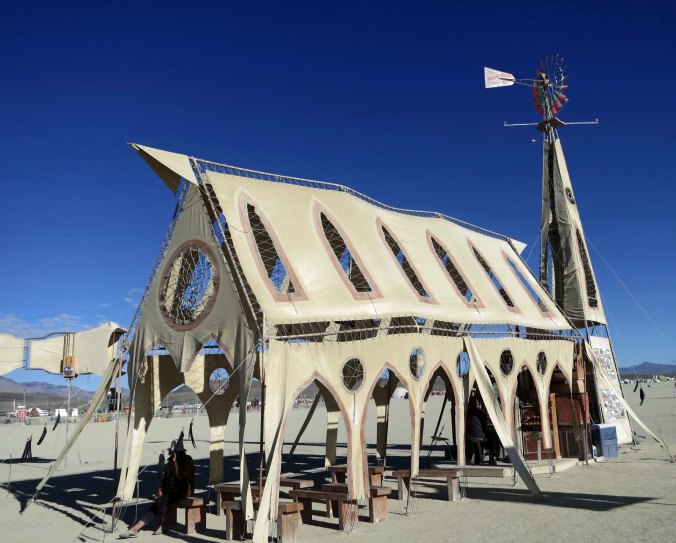
The Prairie Wind Chapel came with a windmill. Like the Church Trap, it had an organ and hosted weddings for people who wanted to get married at Burning Man.

I was attracted to the Mazu Temple because of its dragons and other mythical creatures. Its large lotus was also rather spectacular. A group from Taiwan brought this temple to Burning Man. It was also burned.

A close up of one of the dragons. The lanterns were lit at night and the dragon breathed fire.

This multi-eyed demon was on one of the side pillars of the Mazu Temple.

And how about a real movie theater out in the deep playa. You could even attend movies there and get popcorn, but I think show time started around 1:00 a.m.

Occasionally, several buildings are included together. Wall Street was built at Burning Man right about the time America was suffering the severe economic crisis that had been brought on by corporate and individual greed.

Here’s the Wall Street Bull backed up by the Bank of UnAmerica. 

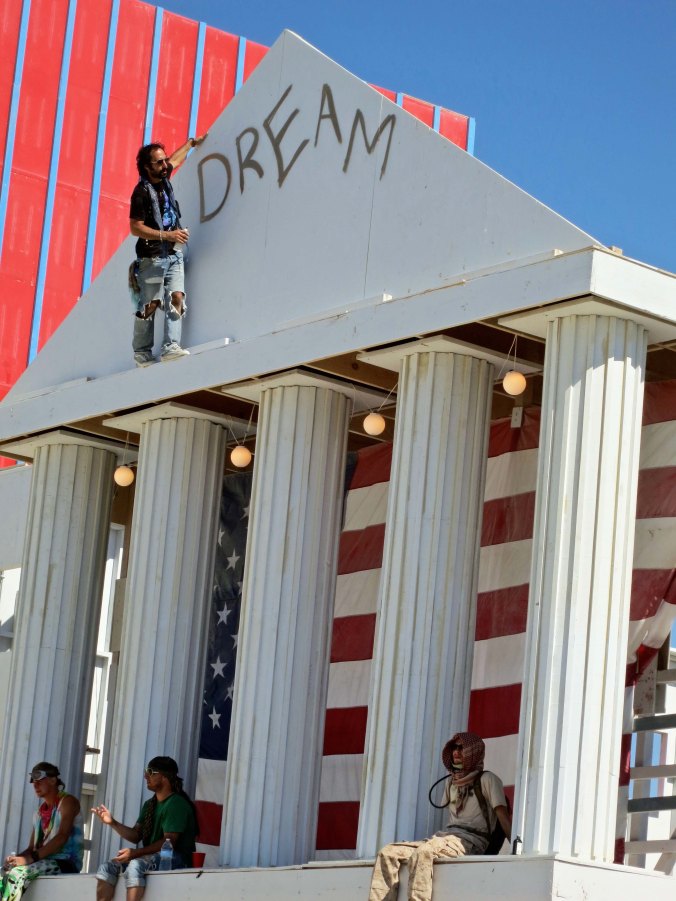
A graffiti artist urges people to dream on Wall Street’s main building. I am sure, by now, that you realize that the whole complex was doomed to go up in flames.

Speaking of dreams, the Life Cube Project at Burning Man encouraged people to write their dreams and goals on a sheet of paper and insert them into a slot in the building, with the idea that your dreams and goals are a step closer to realization if you commit them to writing.

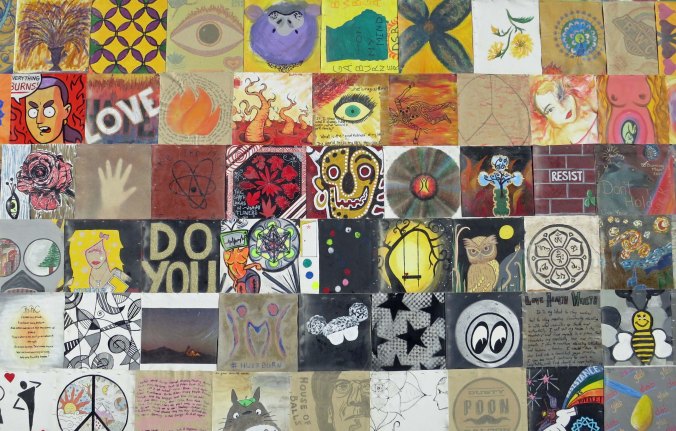
The back of the Life Cube building was decorated with art.

I’ll use this close-up to conclude today’s post. Do you have a favorite among the buildings I featured today?

NEXT BLOGS:

Monday: I’ll finish up my look at Bandon, Oregon with a trip that Peggy and I made out to the Coquille Lighthouse.

Wednesday: Part II of the backpacking trip that led to Bone’s discovery. Remember, it features a raging river and kamikaze mosquitoes.

Friday: The murals of Burning Man and other paintings that may have you scratching your head.

Bandon, Oregon… An Attractive Coastal Town Where Trash Becomes Art

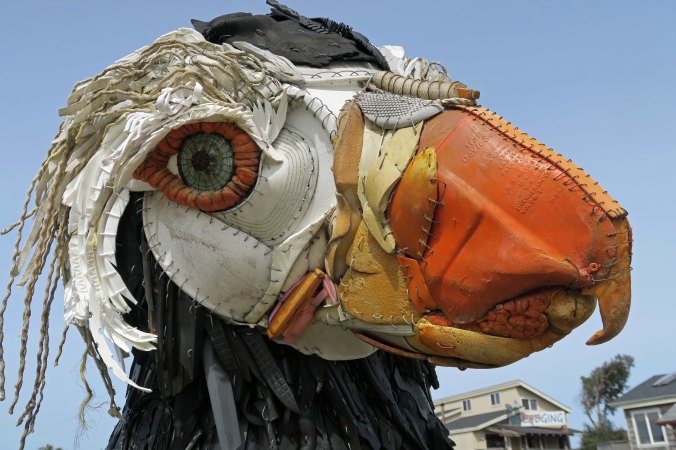
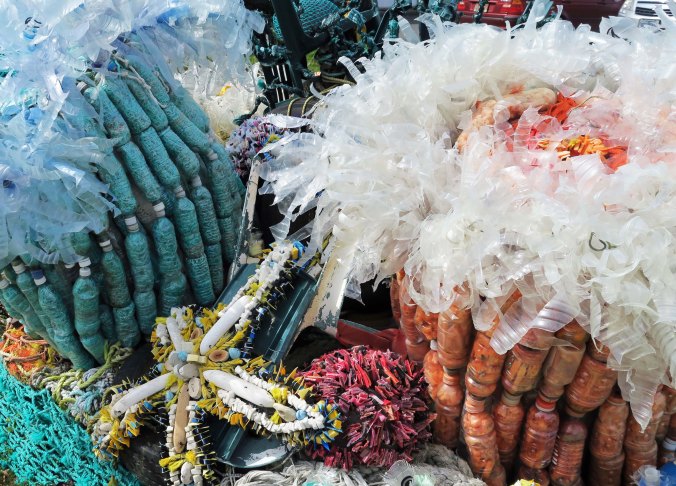
Trash gathered along the coastline near Bandon, Oregon is turned into art by the nonprofit organization, Washed Ashore. In this case, the artists have created a puffin.


Here’s something to think about:

A study carried out by the World Economic Forum and Ellen MacArthur Foundation predicts that the plastic we are dumping into the ocean will weigh more than the fish in a short 30 years. While most of this plastic circles the ocean as sludge following currents known as gyres, a significant amount washes up on our beaches creating hazards for wildlife and visual pollution for the rest of us. Even the most pristine locations fall victim to this onslaught.

When Peggy and I drove into the small town of Bandon on the coast of Oregon two weeks ago, we spotted several colorful sculptures of marine life that immediately caught out attention. On closer inspection, we found out they were made out of trash collected from the local beaches and turned into sculptures by a local organization named Washed Ashore.

The non-profit is the creation of Bandon artist Angela Haseltine Pozzi who decided to do something about the pollution that was cluttering local beaches in 2010 and begin turning the trash into art.

“First you just want people to stop and look at the art,” Angela noted. “And then you want to have them stop and think about the problem.”

It certainly worked with us.

Today, hundreds of volunteers join with Angela and her staff in creating sculptures that travel the country and even the world creating awareness about our use of the oceans as a garbage dump. Last year, a number of Washed Ashore’s sea creatures even made it to the Smithsonian National Zoo in Washington DC.

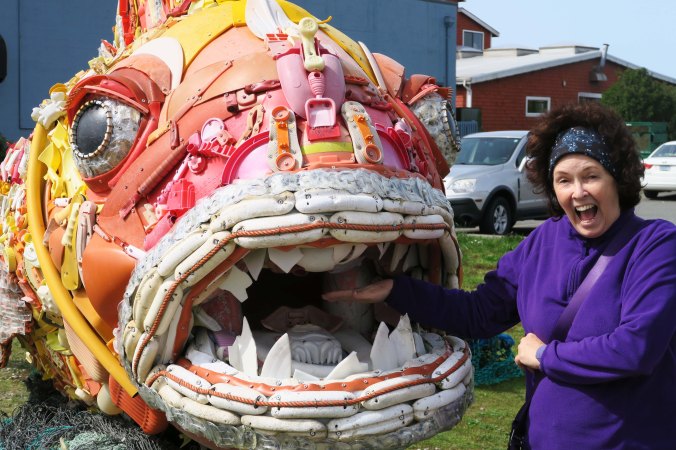
This delightful fish is another example of Washed Ashore’s artistic endeavors. Note the old phone on the fish’s nose right above the child’s sand shovel.

Here is the puffin featured at the beginning of the post…

And this is a view of tide pool life created from trash.

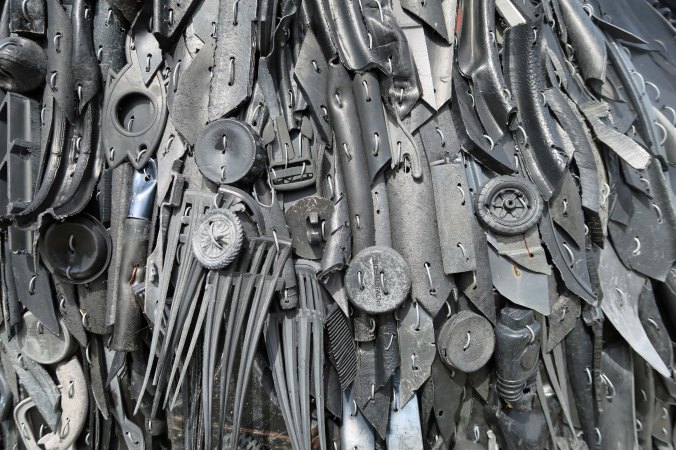
A closeup of the feathers on the puffin’s chest.

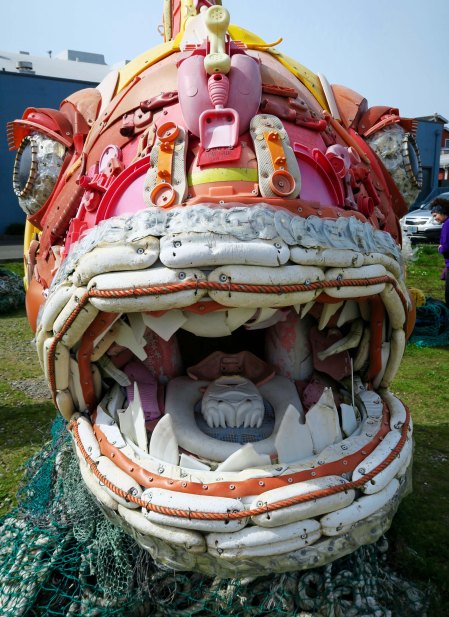
A head on view of the fish with it’s scary teeth and trashy mouth.

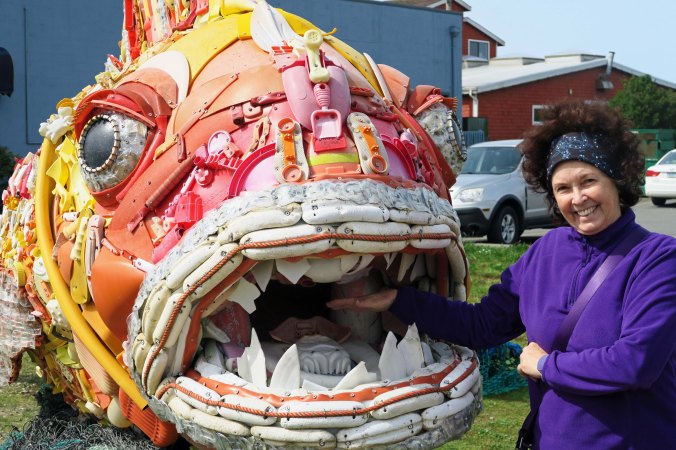
Peggy, who always makes sure that her trash is properly disposed of and recycled, can stick her hand in the fish’s mouth without any fear of retribution.

But here’s what it might be like if she dumped her trash in the ocean! (She really is a good sport when serving as a model. “Look like it is biting you,” I had told her.)

Most towns along the Oregon coast spread out along Highway 101 like strip malls and feature the same motels, gas stations and fast food joints you can expect to find anywhere else in the US. Peggy and I have discovered, however, that most of these small communities also had the foresight to save their historic districts. These in turn have become attractions for tourists, a source of important jobs and dollars.

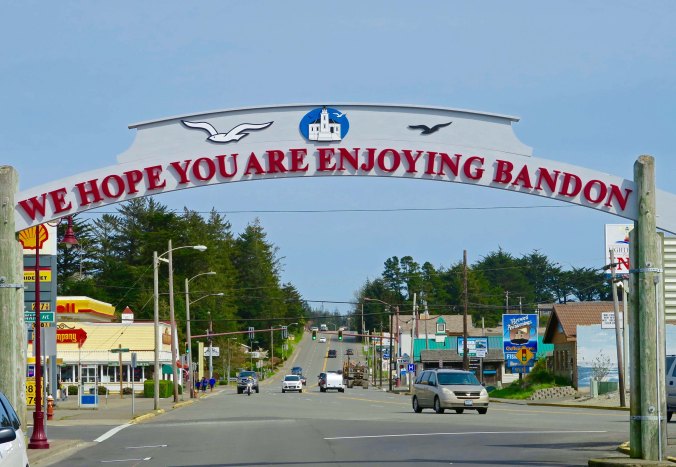
Bandon welcomes visitors and provides activities that range from walking on its beautiful beaches, to shopping and eating in town, to playing golf on some of Oregon’s finest golf courses.

The other side of this sign over Bandon’s main street welcomes you to Old Town. This side looks out on busy Highway 101 from the historic district.

Such is the case with Bandon. Peggy and I wandered around Old Town and did our bit for the local economy. We bought books in a fun little bookstore, nibbled our way through a chocolate store, and quaffed a couple of pints of Guinness at an Irish pub. We even checked out a store that is dedicated to producing and selling candy made with cranberries. It turns out that Bandon grows over 90% of Oregon’s cranberry crop and 5% of the nation’s!

I would describe the Old Town area as fun and funky. The nature of the original town has been preserved without pretensions.

As you might imagine, the town’s access to the ocean guarantees an abundance of fresh seafood. I liked the sense of humor reflected by the fish.

An attractive boardwalk featuring several works of art fronts the Coquille River and forms the northern border to Old Town. We concluded our visit to Bandon by strolling along the walkway, checking out the marina, and admiring the art.

A world globe we found on Brandon’s Boardwalk conveniently located where we were.

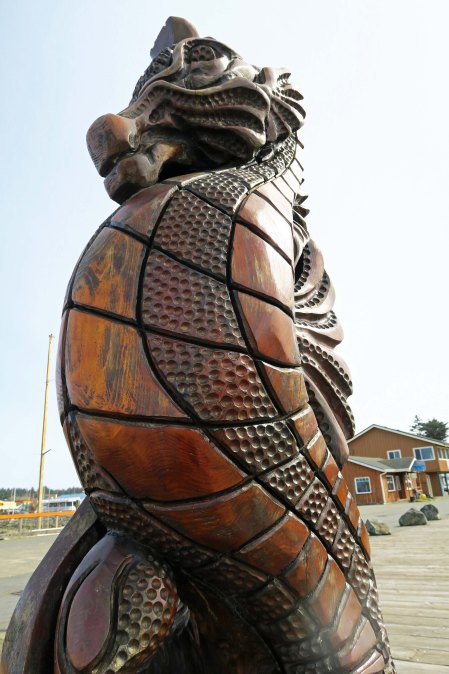
A regal seahorse checked us out…

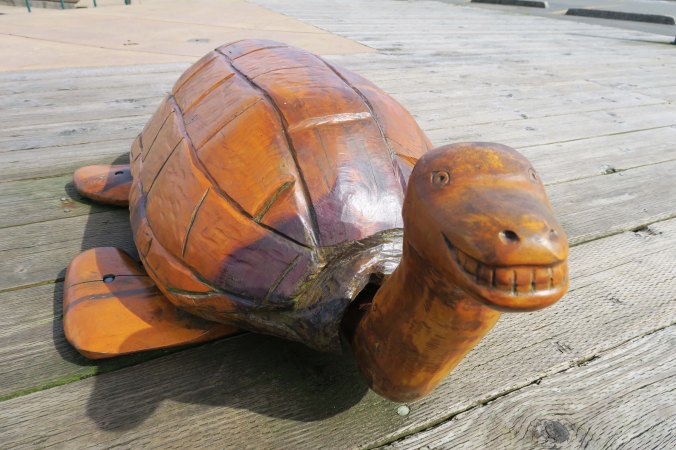
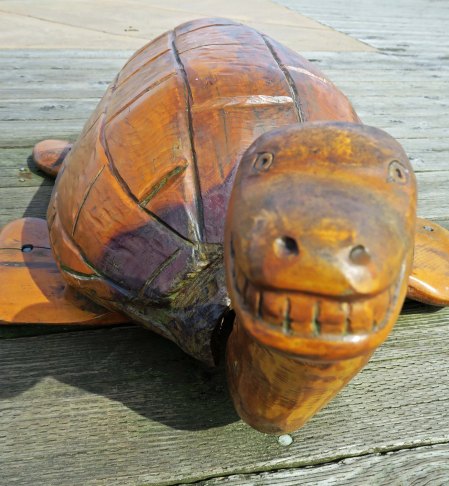
A carved turtle grinned at us…

And led me to focus in on its smile.

A friendly harbor seal…

Gave us a look that seemed to say, “Feed me a fish, please.”

And a crab did what crabs do so well— look crabby.

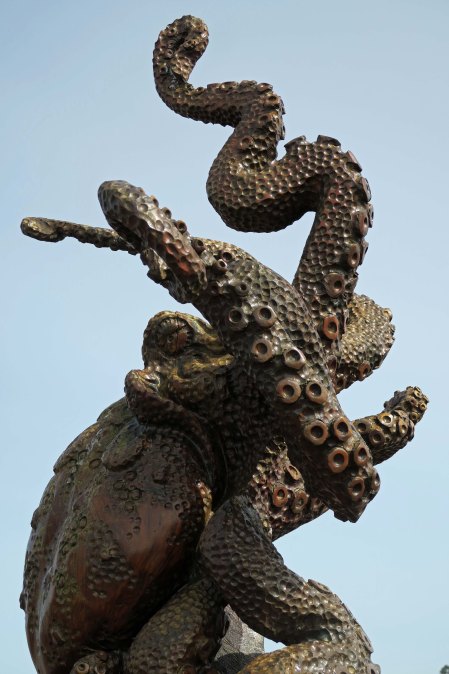
My favorite, however, was this octopus. I took several shots.

Back lit by the sun, he looked a little scary, like something out of 20,000 Leagues Under the Sea.

I decided to use my last photo to introduce my next post on Bandon (next Monday). Peggy and I will cross the Coquille River to check out this lighthouse and the ocean beach next to it. We are looking at the lighthouse from Bandon’s Boardwalk.

NEXT POSTS:


Wednesday: I begin a three-part series that focuses on a backpack trip near Lake Tahoe where we found Bone.

Friday: I will continue my photo essays on the art of Burning Man.

Monday: I’ll wrap up the Bandon, Oregon series with a trip to the Coquille Lighthouse and the surrounding area.


Face Rock State Scenic Viewpoint… The Oregon Coast Series

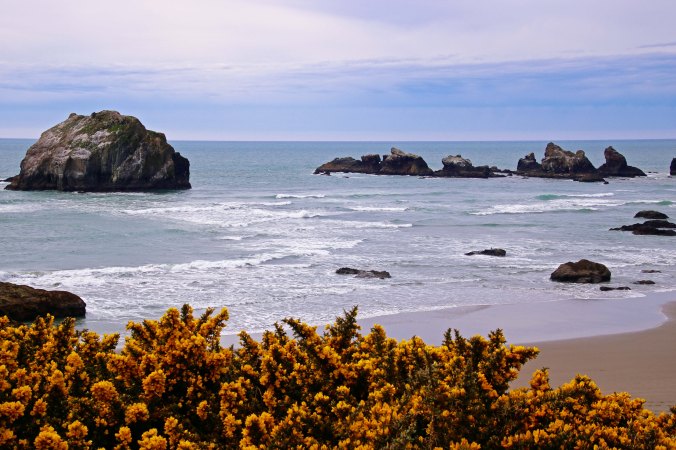
The face of the Indian maiden is clearly seen here in the rock. If you start on the right you can see her chin, mouth, nose and eye. (Photo by Peggy Mekemson.)


Peggy and I have driven through the town of Bandon several times without stopping on our journeys up and down the Oregon Coast. We decided to correct that oversight this past week. I had googled the small town along Highway 101. Photos of striking rock sculptures at the Face Rock State Scenic Viewpoint were included on the site. That alone would have demanded a visit. But there was also the town of Bandon, Bullard Beach State Park, and the Coquille River Lighthouse to explore. Today, I will feature the scenic viewpoint. Next Monday I’ll focus on the town, park and lighthouse.

There’s a native American legend that goes along with Face Rock. It has to do with an evil spirit, a lovely maiden, and her favorite pets. The Indian maiden, Ewauna, had come with her father, Chief Siskiyou, to visit with several chiefs along the coast. In honor of the occasion, a great potlatch was thrown. After everyone had eaten far more bear and salmon than he or she should have and stumbled off to bed, Ewauna decided to go for a swim in the ocean, even though she had been warned not to. The evil spirit Seatka lived in the ocean and had a thing for fair maidens. Naturally, he captured Ewauna along with her dog, cat, and kittens. You can still see them today down among the rocks.

Face Rock near Bandon, Oregon.

Another view of the maiden, Ewauna. This one taken at sea level. (Photo by Peggy Mekemson.)

The maiden with her cat and kittens off to the right. (Photo by Peggy Mekemson.)

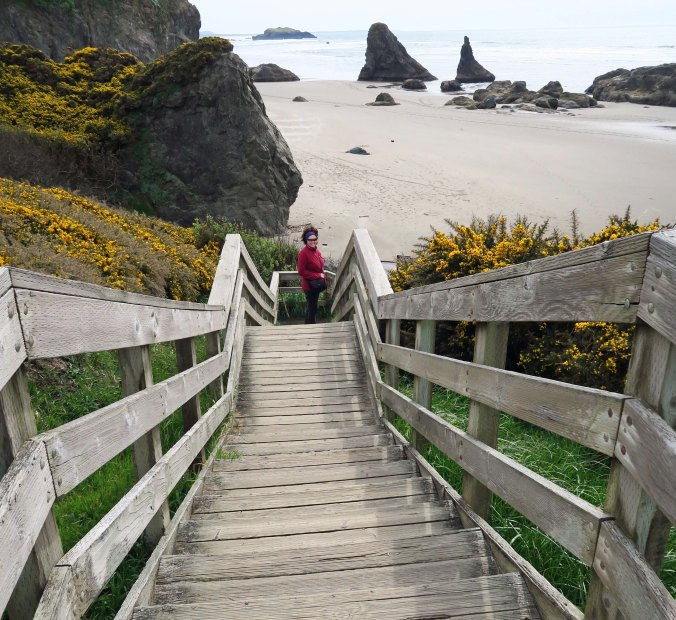
We were lucky to visit the scenic viewpoint at low tide, so we followed a wooden stairway down to the beach, wandered around among the rock sculptures, explored some caves, and admired the general beauty of the area.

Stairs led us down to the beach. (Photo by Peggy Mekemson.)

I caught a photo of Peggy making her way down the stairs. Marvelous rock sculptures were waiting for us.

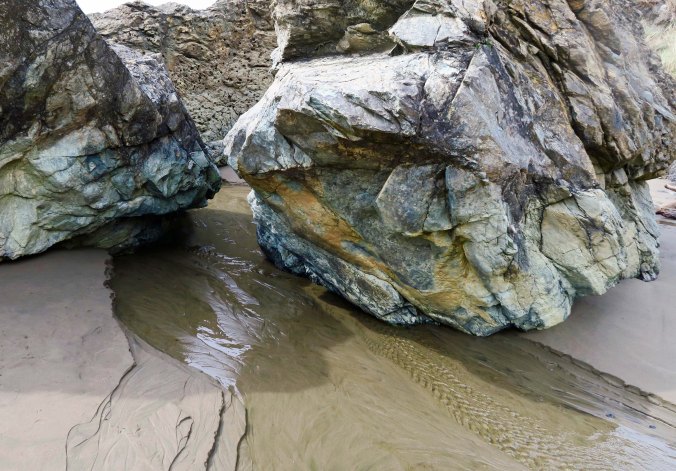
A small stream crossed the path at the bottom of the stairways.

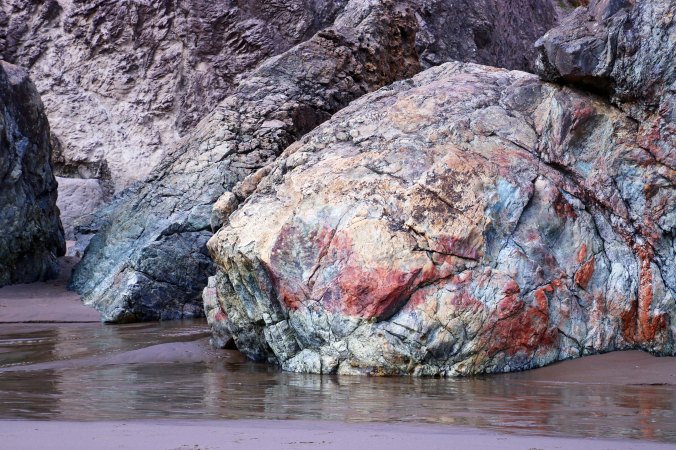
Peggy caught it coming out on the other side of the colorful rocks. (Photo by Peggy Mekemson.)

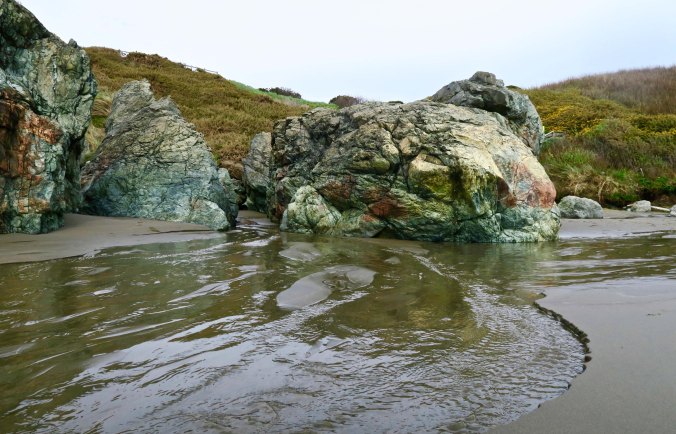
And I captured a broader perspective.

I promptly name this rock Elf.

Peggy took this for perspective.

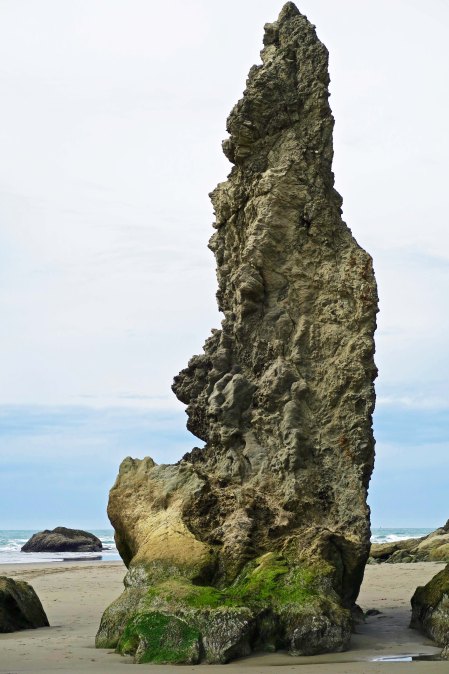
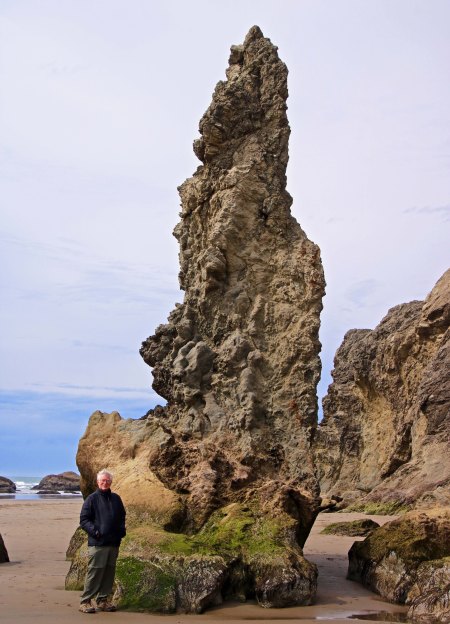
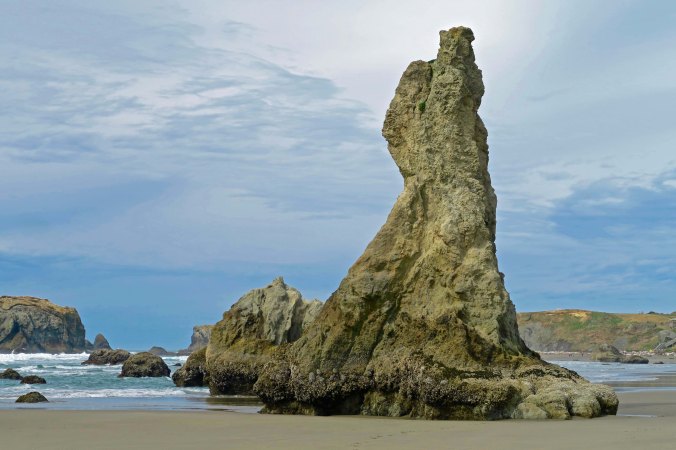
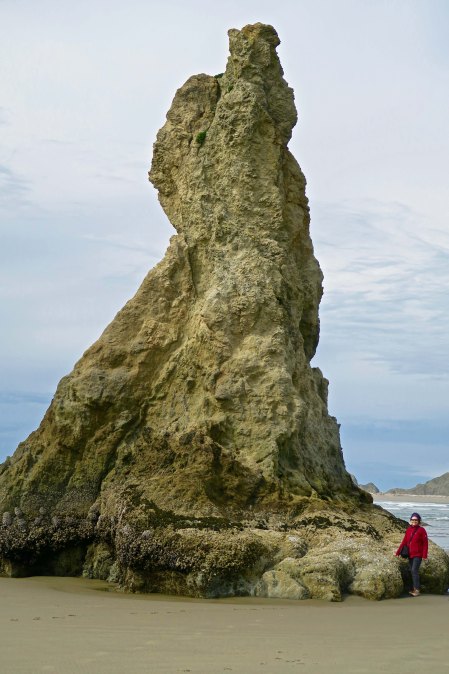
Another towering giant caught our attention. I named it Bigfoot.

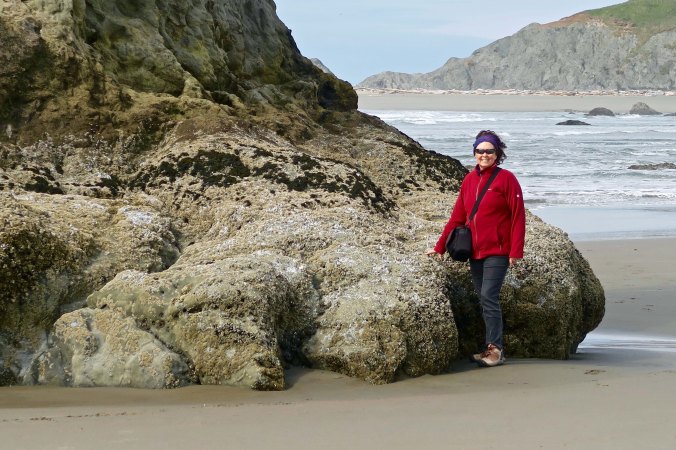
Peggy and Bigfoot’s toes.

This photo provides a Peggy perspective on Bigfoot’s big foot.

A distant view of Bigfoot looking small— and other rocks— from the scenic viewpoint.

These cliffs rose up dramatically behind the beach.

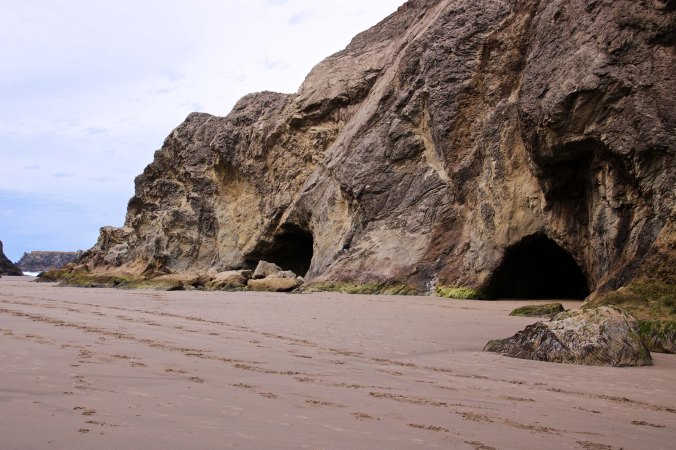
A pair of eye-like caves had been cut into the cliffs by the pounding waves. I was pretty sure that there would be pirate booty in them. (Photo by Peggy Mekemson.)

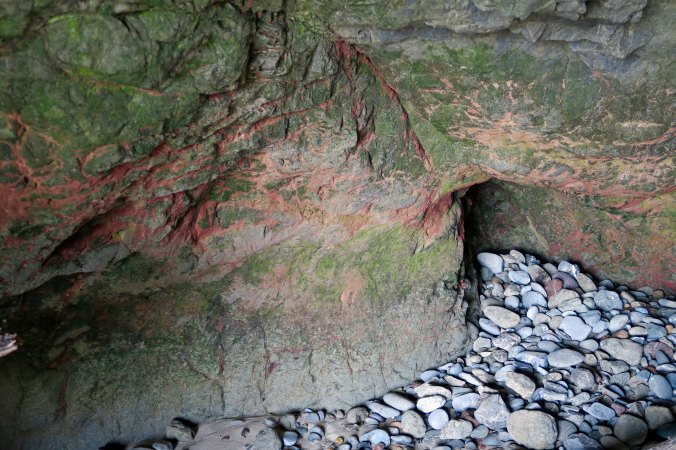
One of the caves was filled with rocks. I was tempted to dig.

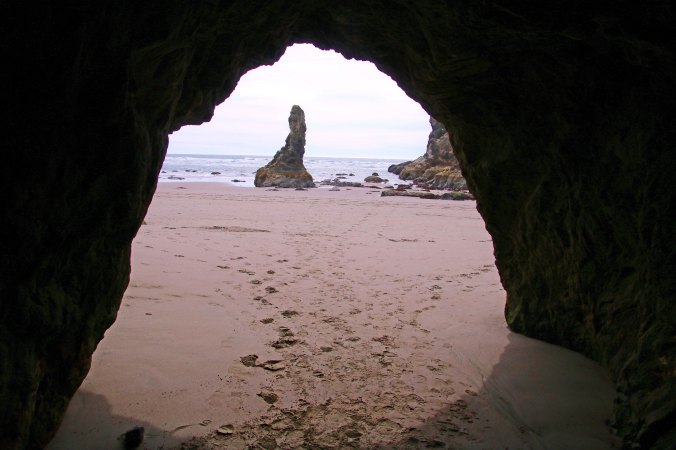
A view out from inside the cave. We hadn’t been alone in checking out the cave. (Photo by Peggy Mekemson.)

The same rock looking down from the viewpoint.

Looking up at the rock from below.

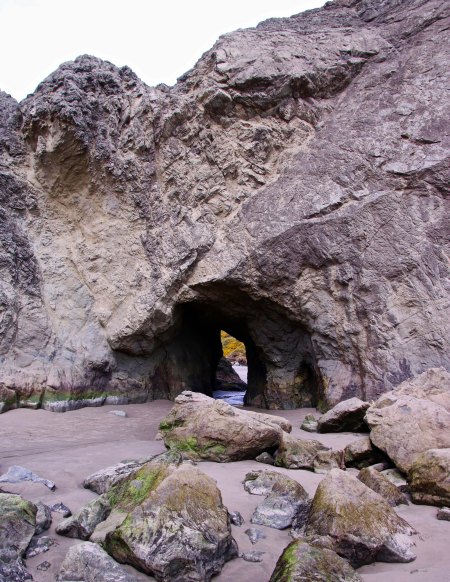
The other cave provided a view through the rock cliff. (Photo by Peggy Mekemson.)

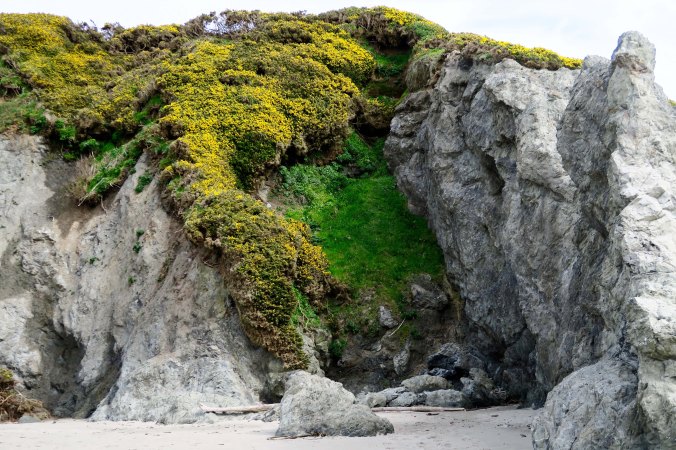
Another view. The yellow plant seen on the other side is gorse. (Photo by Peggy Mekemson.)

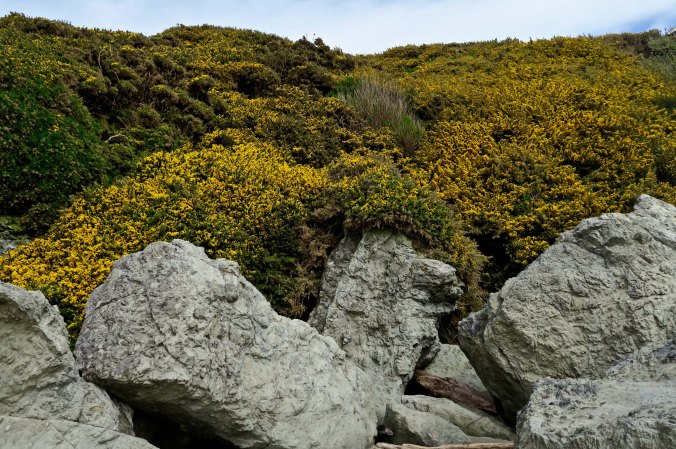
George Bennet, the founder of Bandon, brought the thorny gorse with him when he came from the town of Bandon, Ireland in 1873. He saw it as a touch of home. Local Oregonians view it as an invasive plant that crowds out native plants.

It does have a certain beauty, but don’t try to hike through its thorns. The cave comes through the cliff on the right.

Another view.

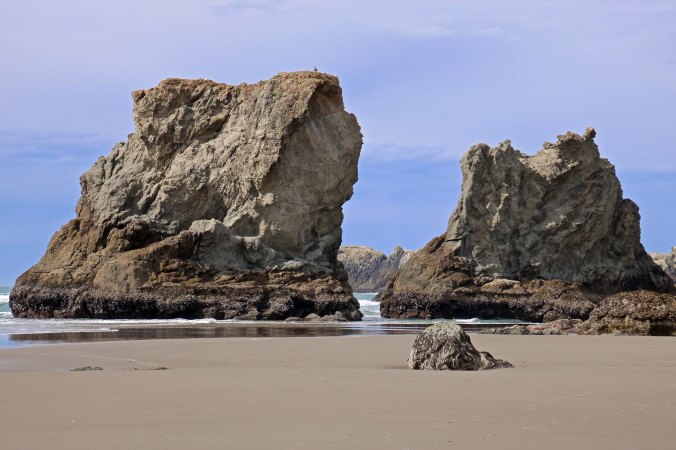
There were many more rocks to keep us entertained. (Photo by Peggy Mekemson.)

The cat and kittens looked a little more riled up here as the tide began to roll in. (And no, the cat and kittens aren’t obvious to me, either.)

Peggy caught the tide slipping in between thesis giants. Can you spot the misplaced Canadian Goose on top of the rock on the left? It flew off honking. (Photo by Peggy Mekemson.)

I photographed the tide edging around this rock. The bottom of the rock, BTW, is packed with sea life.

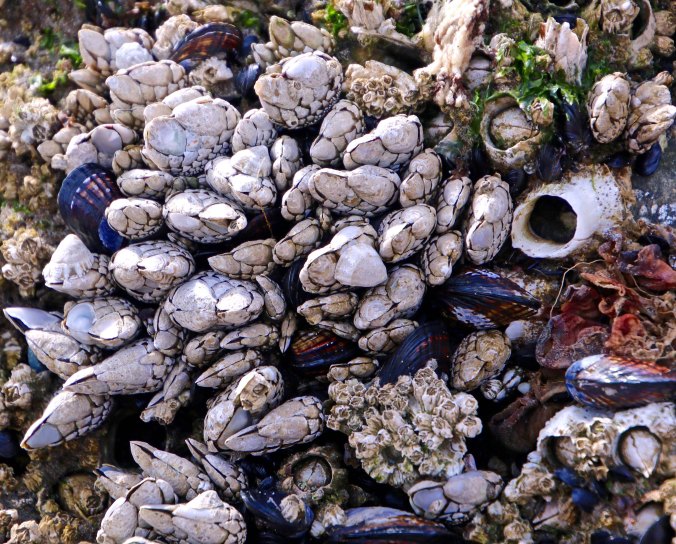
Peggy’s close up shows goose neck barnacles, regular barnacles and mussels. Every inch is filled!

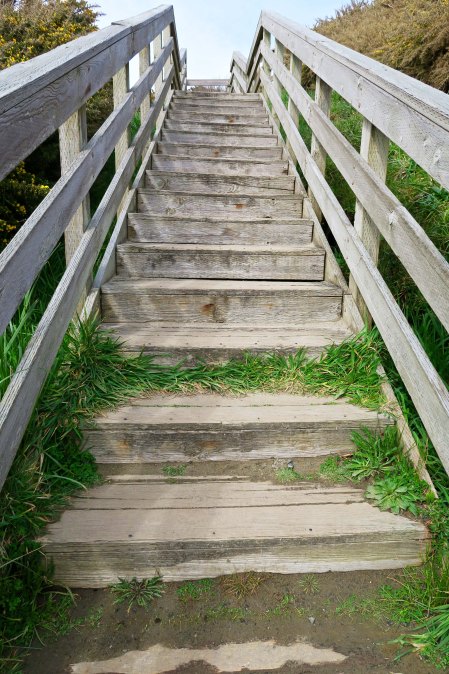
Our exploration complete, it was time to head back up the stairs.


NEXT BLOGS:

Wednesday: The interview with Bone!

Friday: The beautiful temples of Burning Man.

Monday: It’s back to Bandon, Oregon.