Was It the Toughest Climb on the Journey… The 10,000 Mile Bike Trek

I found this spray painted bicycle at the top of Cape Breton's toughest climb and laughed. (photo by Jean Snuggs.)

I found this spray painted bicycle at the top of Cape Breton’s toughest climb and laughed. (Photo by Jean Snuggs.)

Gearing ratios on bicycles are complicated beyond my normal interest in things mechanical. Let’s just say there are high gears for scurrying down mountains, medium gears for flat road travel, and low gears for climbing mountains and fighting headwinds. The more gears you have, the greater your options and ease of travel. The goal is to bike at a speed that is comfortable for your level of physical conditioning while keeping undo pressure off your knees. (Trashed knees can ruin the most pleasant bike trip.) Maintaining cadence, which is the speed you pedal, and knowing when to shift are critical parts of keeping your knees happy. Beginners have to struggle through a steep learning curve, especially in climbing hills and mountains— and yes, I recognize the potential pun.

The reason for this discussion about gears is that it relates to the substantial mountain that Jean, Lindell and I faced when we left our camp at Cape North in Nova Scotia and cycled back up into the Cape Breton Highlands. It was a doozy. We could see it looming in front of us as we cycled through the canyon carved out by the Middle Aspy River. The closer we came, the more it looked like something a mountain climber might enjoy.
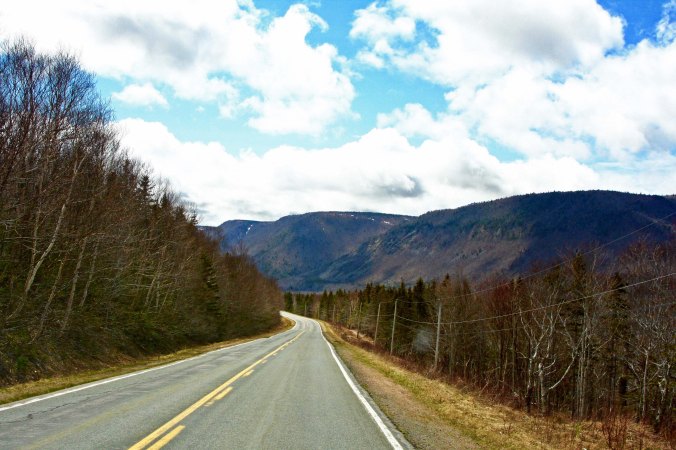
One of the steepest climbs along the Cabot Trail in Nova Scotia was climbing up this hill into the Highlands.

The hill loomed in front of us. It was obvious we were in for a climb.

Was it the toughest hill I climbed on my journey? No. It wasn’t nearly as steep as my climb over the Panamint Range in Death Valley. And I had pedaled up several others that were much longer on the Blue Ridge Parkway. What made it so damnably difficult were my low gears— they weren’t as low as Jean’s and Lindell’s! While I was out of the saddle pushing down on my pedals with knee-punishing grit, Jean and Lindell were sitting down and merrily teasing me about my inability to keep up. Talk about a challenge. (grin) Had I been by myself, I would have simply noted the difficulty, complained to the universe, and pedaled on. And I wouldn’t have stopped at the first bike shop I came to and added more gears!
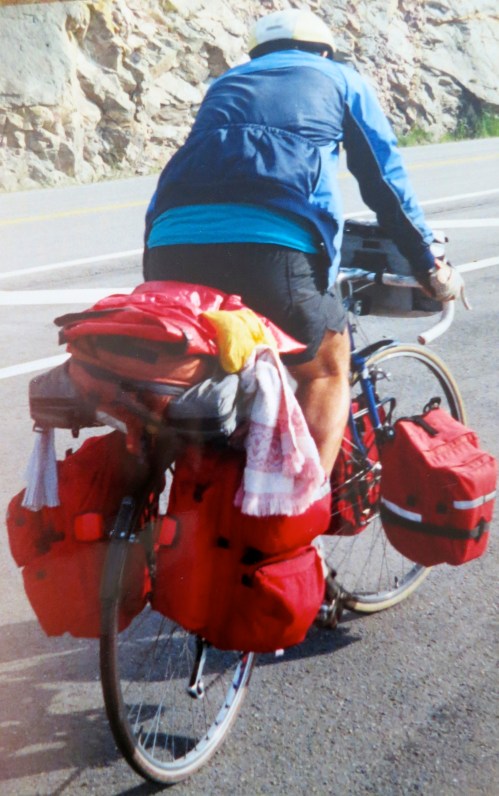
Here I am biking up a mountain in Nova Scotia with 60 pounds of gear.

I posted this photo at the beginning of the series. Jean took it as we crested the mountain. Note the bulging leg muscles that couldn’t keep up with two slight women— even with 5,000 miles of travel.
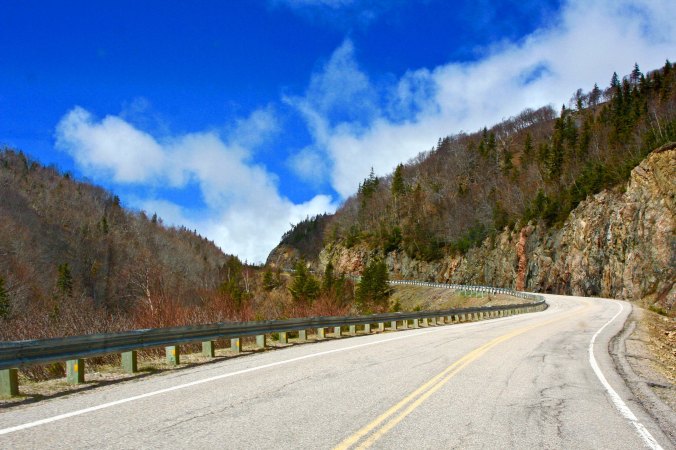
One of my happiest sights on the 10,000 mile trip: the top of the hill.

One of my happiest sights on any steep climb: the top of the mountain.

Let me note here that Lindell and Jean had a lot more going for themselves than low gears. They had both graduated from the University of Illinois with top honors in physical education and gone on to become highly successful community college track coaches. They had just completed a bike trip that was all about climbing hills. In addition to being bright and competitive, they were as tough mentally as they were physically. They had managed to keep up with me on the flats and downhills as well as busting my butt going up the hill.

Topping the ridge, we came across a bicycle outline that a cyclist had spray painted on the shoulder with the words, “Why?” We laughed in sympathy. Continuing on, we followed the Cabot Trail across the Cape Breton Highlands and down to the small town of Chéticamp on the Gulf of St. Lawrence, leaving the highlands with their Scottish influence behind for flatter, coastal lands with French influence. France had originally named Cape Breton, Île Royale, and had considered the island part of Acadia. We cycled down the coast though villages and cut inland to Margaree Forks where we said goodbye to the Cabot Trail and picked up NS Highway 19 known as the Ceilidh Trail, which we followed for 60 miles back to the Canso Causeway.

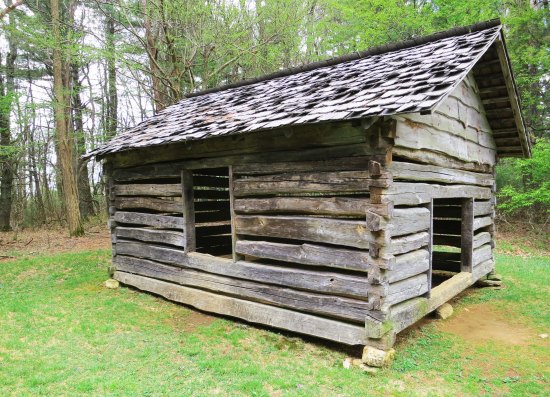
A very fast downhill (brakes advised) brought us to this traditional Scotch cabin known as Lone Scheiling. We had flashed by it on our bikes but Peggy and I stopped to admire it.

A very fast downhill after our climb (brakes advised), brought us to this traditional Scottish cottage known as Lone Scheiling. We had flashed by it on our bikes but Peggy and I stopped to admire it.

I took this photo out the window.
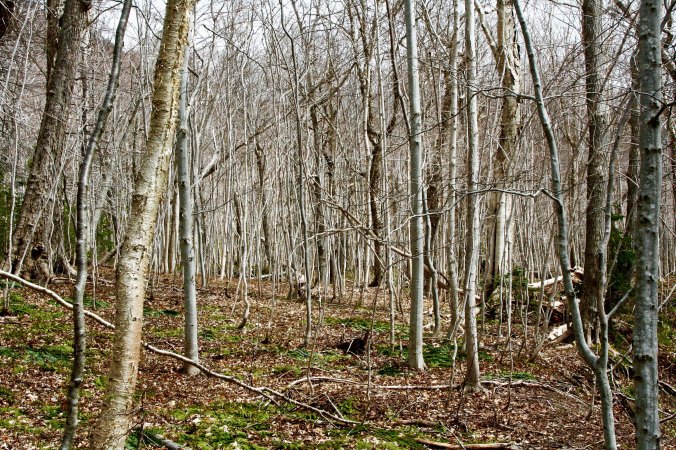
I took this photo out the window.

It was surrounded by yellow birch.

The cottage was surrounded by yellow birch.

One of which featured this colorful knot.

One of the trees featured this colorful knot.

A few ghost leaves still flung to branches, waiting for spring growth to push them off.

A few ghost leaves still clung to branches, waiting for the budding spring growth to push them off.

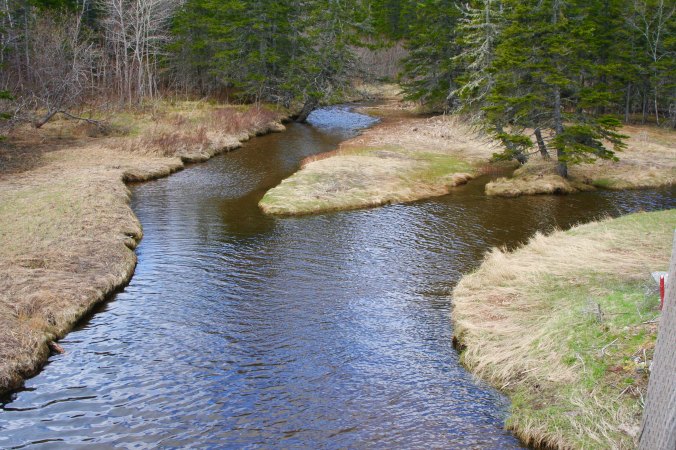
And this creek burbled along beside the cottage.

And this creek burbled along beside the cottage.

Climbing again, we came on this view of the west coast of Cape Breton looking out toward the Gulf of St. Lawrence.

Climbing again, we came on this view of the west coast of Cape Breton looking out toward the Gulf of St. Lawrence.

Signs along the road had been warning us about moose...

Signs along the road had been warning us about moose…
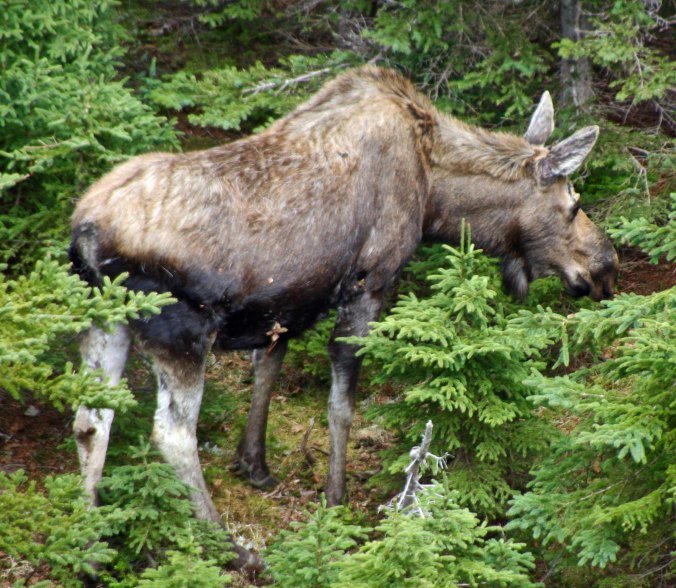
Finally, we got to see one.

Finally, we got to see one. These wonderfully humorous animals can be quite dangerous. You don’t want one chasing you down the road when you are on a bicycle. When I lived in Alaska, a cyclist came around a blind curve on a bike trail and ran smack into one! Fortunately, the surprised moose decided to run away.

The Cabot Trail often requires road work after a rough winter.

The Cabot Trail often requires road work after a rough winter. Peggy and I were entertained by this effort at a traffic stop. Don’t you wonder they got the earth mover up on the hillside?

This impressive cliff was near the road work.

This impressive cliff was near the road work.

Leaving the Highlands, we came on several small communities along the coast where fishing is a major industry. Whale watching is also popular off the coast.

Leaving the Highlands, we came on several small communities along the coast where fishing is a major industry. Whale watching is also popular off the coast.

The Cabot Trail heads inland across much flatter country. Spring waters still flooded this field.

The Cabot Trail heads inland across much flatter country. Spring waters still flooded this field and the grass had yet to turn green. Last year’s cattails can be seen in the left foreground.

I'll finish off my Cape Breton photos with this rather lovely stream.

I’ll finish off my Cape Breton photos with this stream, which spoke to me again of the wild aspect of the island.

Our exploration of Cape Breton was over and my time with traveling companions was drawing to a close. We picked up highway 104 back through Antigonish and on to New Glasgow where Jean and Lindell said goodbye and biked south toward Halifax and their plane. I continued on my lonely journey west, following Highway 6 back to the coast and through towns with wonderful names like Tatamagouche and Pugwash. New Brunswick and new adventures were waiting.

NEXT BLOG: Peggy and I detour to Prince Edward Island, meet the mayor of Victoria, and eat a scrumptious lobster roll.

Beautiful Canada: Cape Breton and the Cabot Trail… The 10,000 Mile Bike Trek


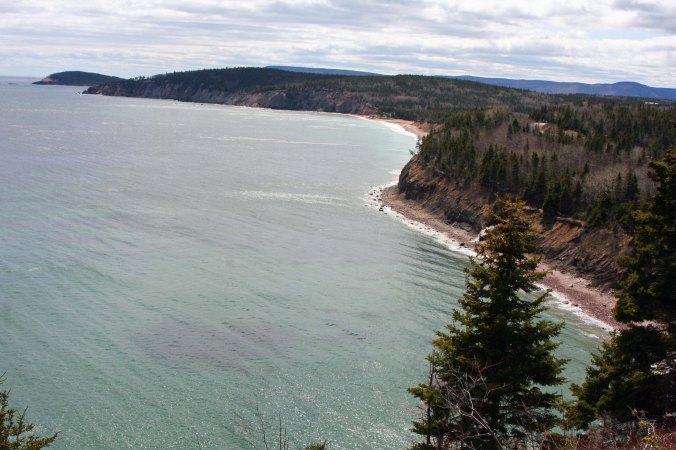
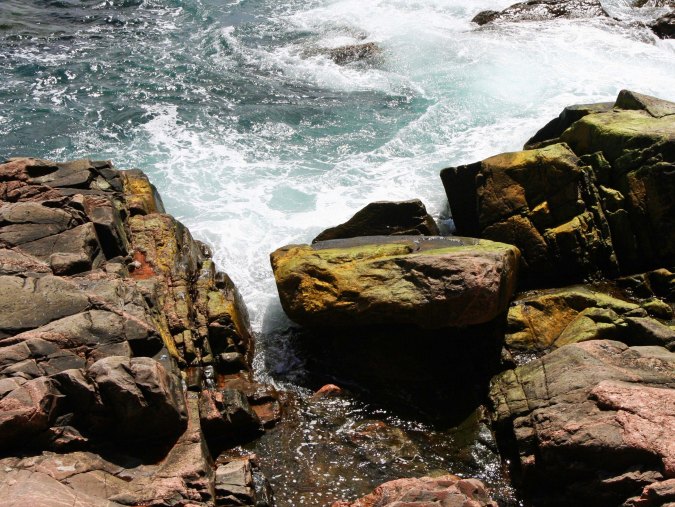
Rocky shores touched by the Atlantic Ocean are a key element in the scenic beauty of the Cape Breton Highlands along the Cabot Trail.

Rocky shores touched by the Atlantic Ocean are a key element in the scenic beauty of the Cape Breton Highlands along the Cabot Trail.

Cape Breton is a big island: the 77th largest in the world and the 18th in Canada if you are a detail-oriented type of person. Once upon a very long time ago, before the continents got divorced and started drifting away from each other, it was snuggled up to Scotland and Norway on the ancient continent of Pangaea. I feel a certain amount of affinity since my ancient ancestors drifted away from Norway and Scotland, some 300 million years later.

It’s an island of superlatives and you will be hearing a fair number on this post. The tourist bureau should hire me. I’m not alone in my praise. The pretty-picture travel magazine Condé Nast considers Cape Breton to be one “of the best island destinations in the world.” Numerous other magazine and newspaper articles agree.

The Cape Breton Highlands on the northern part of the island are the primary reason for the acclaim. Considered a northern extension of the Appalachian Mountains, the Highlands are noted for their steep ups and downs. I agree; they provided me with some of the most challenging bicycling on my 10,000-mile trip. I was amused when doing research for this post to find a Cape Breton website recommending to motorists, “You may want to check your brakes.” Indeed.

The road around the Highlands is known as the Cabot Trail. It was named after the 15th Century explorer John Cabot who was searching for a way to China on behalf of King Henry VII. (Rumor has it that the King was seeking a new place to send his many wives. Just kidding— the reality is that he wanted to spice up his life, and Asia was the place to go for spices.) Cabot may or may not have landed on the island, but locals are eager to claim him. Most experts believe his landing site was more likely Newfoundland.

There is much more to Cape Breton Island than the Cabot Trail, but the scenic highway is the primary reason that visitors flock to the island.

There is much more to Cape Breton than the Cabot Trail, but the scenic highway is the primary reason that visitors flock to the island. This post and my next one will focus on views along the Trail.

A view form the beginning of the Cabot Trail looking not toward the Cape breton Highlands.

A view from the beginning of the Cabot Trail looking out toward the Cape Breton Highlands.

The Cabot Trail is world-famous. The sign says so. The highway is what I remember most about Nova Scotia. After crossing over the Canso Causeway, I, and my two bicycle-travelling companions, Jean and Lindell, had made a beeline for it. Peggy and I did as well, following the Trans-Canada Highway 105. Since the 185-mile scenic byway travels in a circle (more or less), we had a choice of whether to travel clockwise or counter-clockwise. The travel guides recommend clockwise since going in the opposite direction puts travelers on the outside of the road as it winds along towering cliffs with scary drop-offs. The theory is that most people prefer safety to death-defying edges. But what’s the fun in that? We chose the outside with its dramatic views of the Atlantic Ocean on the east side of the Highlands and Gulf of St. Lawrence on the west. (Besides, I am a veteran of Highway 1 on the California coast, which is much scarier.)

In addition to natural beauty, Cape Breton features both its Celtic and Acadian heritages. Some 50,000 Highland Scots migrated to the area between 1800 and 1850 as a result of the Highland Clearances where small farmers in Scotland were replaced by sheep, i.e. the hereditary aristocratic owners of the land found a better way to make money. Colaisde na Gàidhlig, the Gaelic College, was founded to promote and preserve the Scotch-Irish Gaelic Culture in Nova Scotia. Located on the Cabot Trail shortly after it leaves the Trans-Canada Highway, the college offers courses in Gaelic language, crafts, music, dance and history. Visitors are invited to stop by and see a ceilidh, a traditional Scottish dance, or even buy a kilt.

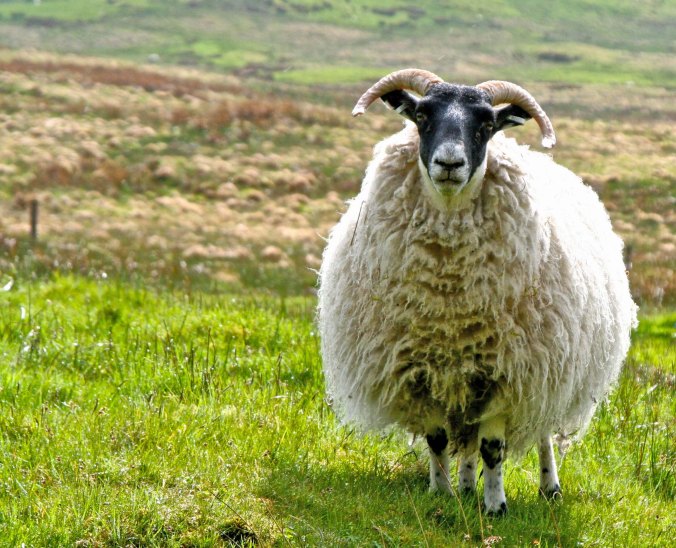
Scottish sheep photo by Curtis Mekemson.

Furry fellow. An ancestor of the sheep that replaced the Highland farmers. We were happily lost on a remote Scotland road when this guy greeted us. (Photo by Peggy Mekemson.)

The Gaelic College located along the Cabot Trail on Cape Breton Island.

The craft shop of the Gaelic College where everything Gaelic is promoted including the language.

St. Andrew’s Presbyterian Church, located several miles beyond the Gaelic College, reminded me of my own Scotch-Irish (Ulster Scot) family’s heritage— and our journey to the New World in the 1750s. We were Lowland Scots as opposed to the Highland Scots. The Mekemsons had been serious Presbyterians all the way back to the 1600s when Scottish Presbyterians had declared that God and not the King of England was their ruler. This had upset the King considerably. One of my ancestors, John Brown, was even a martyr to the cause. Peggy and I visited his gravesite in Scotland and I did a blog on him. Our family had remained Presbyterians right up until my father had become an Episcopalian (the American equivalent of the Anglican Church), a move that undoubtedly sent generations of our Presbyterian ancestors rolling over in their graves.

St. Andrews Presbyterian Church.

St. Andrews Presbyterian Church.

A close up of the grave of John Brown, the Scottish Martyr shot down in fron of his family in the late 1600s.

The lonely grave of John Brown, the Scottish Martyr shot down in front of his family in the late 1600s.

This shot of Peggy captures the isolation of John Brown's Grave, the white speck on the upper left of the photo.

This shot of Peggy captures the isolation of John Brown’s Grave, the white speck on the upper left of the photo.

Anyway, a series of religious, political, and economic factors had sent my ancestors first to Northern Ireland and then on to Pennsylvania and Maryland.

One third of the Cabot Trail runs through the Cape Breton Highlands National Park, which captures the ocean and highland scenery of the area as well as protects the wildlife and plants that call it home. Moose signs along the highway warn motorists of potential automobile-moose confrontations, which are not good for either man or moose. While Peggy and I are always aware of the potential danger, mainly we think of the signs as suggestions we may get to see a moose, always a plus. But that is a story for my next blog, along with the second toughest climb of my 10,000-mile trek and a visit to the Acadian side of the island. Following are several photos I took on the first half of the Cabot Trail.

St. Andrews Provincial Park in the Cape Breton Highlands.

Regional parks, such as St. Ann’s, demanded that we stop and admire them.

Looking the other direction at St. Ann's Provincial Park along the Cabot Trail.

Looking the other direction at St. Ann’s Provincial Park along the Cabot Trail.

Once again Peggy and I found ourselves looking at scenery that sported an early spring look.

Once again Peggy and I found ourselves looking at scenery that sported an early spring look.

Our day along the Cabot Trail varied between sunshine and threatening skies.

Our day along the Cabot Trail varied between sunshine and threatening skies.

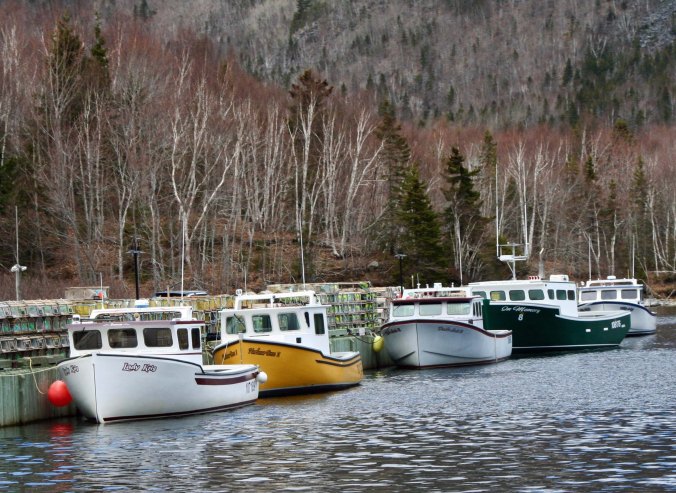
We found these boats near the small town of Ingonish.

We found these fishing boats near the small town of Ingonish. Lobster traps are located on the pier.

I liked this lonely structure, which looks like a great place for a picnic.

I liked this lonely structure, which looks like a great place for a picnic.

And these quiet waters.

And these quiet waters.

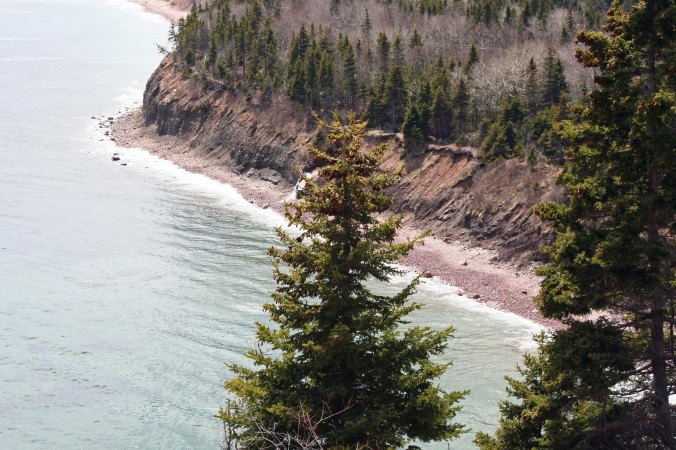
Climbing up into the Highlands provides scenic views of the Atlantic coast.

Climbing up into the Highlands provides scenic views of the Atlantic coast.

A close-up.

A close-up.

Blue skies color the Atlantic Ocean blue.

Blue skies color the Atlantic Ocean blue.

The Cabot Trail moves between the Highlands and Coast. Give a choice between long sandy beaches and rocky coasts I will always prefer the rocky coasts, unless I happen to be on a tropical island.

The Cabot Trail moves between the highlands and coast. Given a choice between long sandy beaches and rocky coasts, I will always prefer the rocky coasts, unless, of course, I happen to be on a tropical island.

Another view.

Another view.

The cool, windy day fluffs Peggy's hair

The cool, windy day fluffs Peggy’s hair

The road leading down to Cape North, which will be the farthest point east I reach on my bike trip.

The road leading down to Cape North, the farthest east I would travel.

This church at North Bay marked my turning point. After this, I would be heading home.

This church at Cape North marked the turning point in my 10,000 mile trek. After this, I would be heading home.

Shortly after we left the church, Peggy and I came on these two bicycle tourists. How appropriate, I thought. The dark cliffs looming in the background would provide the second hardest climb in my whole trip, but that's a story for my next blog.

Shortly after we left the church, Peggy and I came on these two bicycle tourists. The dark cliffs looming in the background would provide the second hardest climb in my whole trip, but that’s a story for my next blog.

A Foggy Day in Shenandoah National Park… The 10,000-Mile Bike Trek

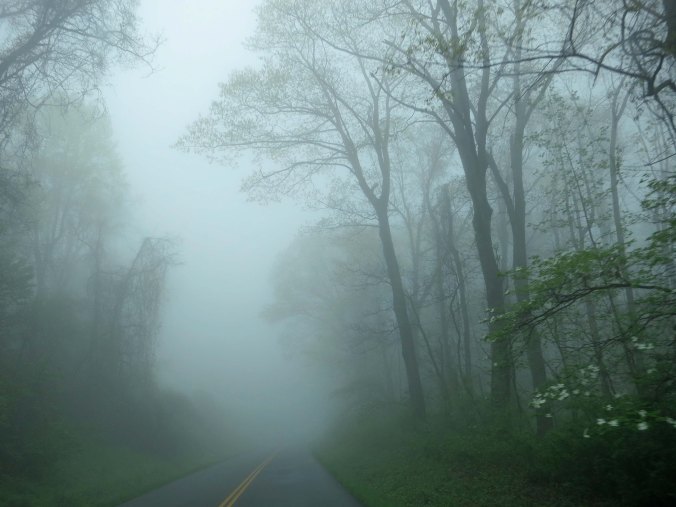
Regulations on the Blue Ridge Parkway and Skyline Drive understandably recommend that bicyclists not travel on foggy days. The fog does present some good photo ops, however.

Regulations on the Blue Ridge Parkway and Skyline Drive understandably recommend that bicyclists not travel on foggy days. The fog does present some good photo ops, however.


“Oh Shenandoah, I long to see you/Away you rolling River/Oh Shenandoah, I long to see you/Away, I’m bound away/Cross the wide Missouri.”

There are songs that you hear as a child that bury themselves deep in your brain and are forever being replayed. Oh Shenandoah was one such song for me. It had a yearning that even my 9-year-old soul understood. I longed to see the Shenandoah River, and return to it— even though I had never been there.

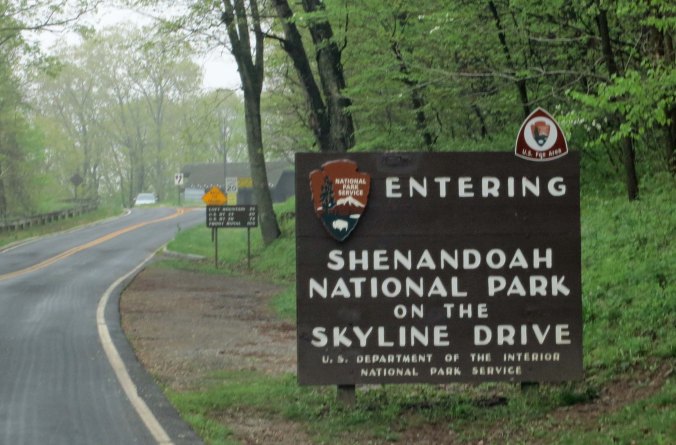
It isn’t surprising then that Shenandoah became my song of the day as I wrapped up my bike tour of the Blue Ridge Parkway and entered Skyline Drive and the Shenandoah National Park. I often sang on my bike. It helped wile away the hours. But this time I sang with the same longing I had felt as a fourth grader.

Peggy and I woke up to a foggy morning on our last day of retracing my bike route along the Blue Ridge Parkway. I was glad I wasn't riding my bike.

Visibility can be a real issue when the fog sets in for bicyclists as well as motorists.

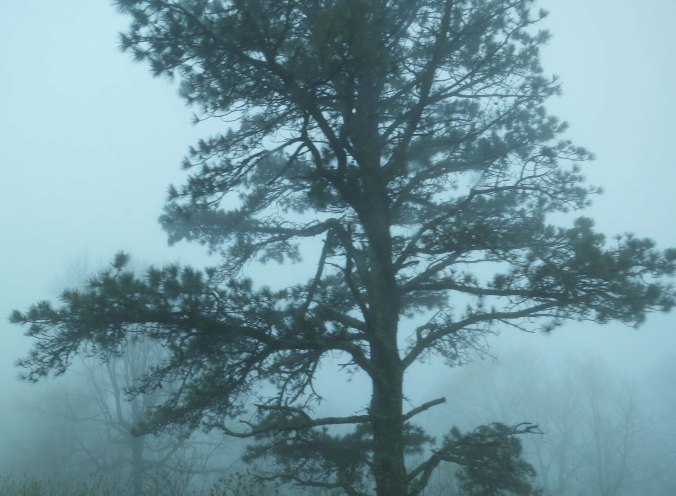
A pine tree stands out in the fog along the Blue Ridge Parkway.

But fog has a way of shrouding everything in mystery.

Skyline Drive provides the same beauty, lack of commercial traffic and slow speed limit as found on the Blue Ridge Parkway, without the severe ups and downs.

Skyline Drive starts where the Blue Ridge Parkway ends when you are riding south to north. It provides the same beauty, lack of commercial traffic, and slow speed limit as found on the Parkway, without as many ups and downs.

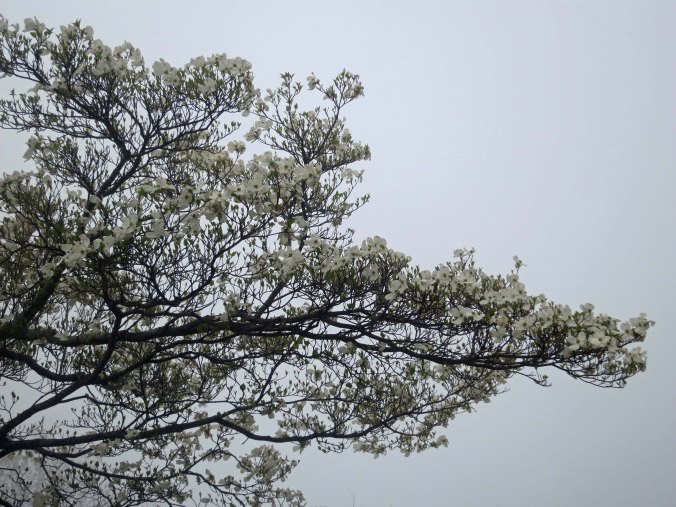
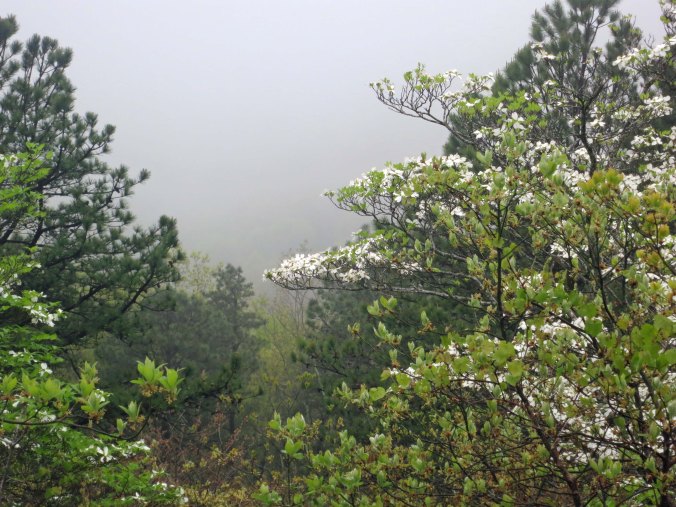
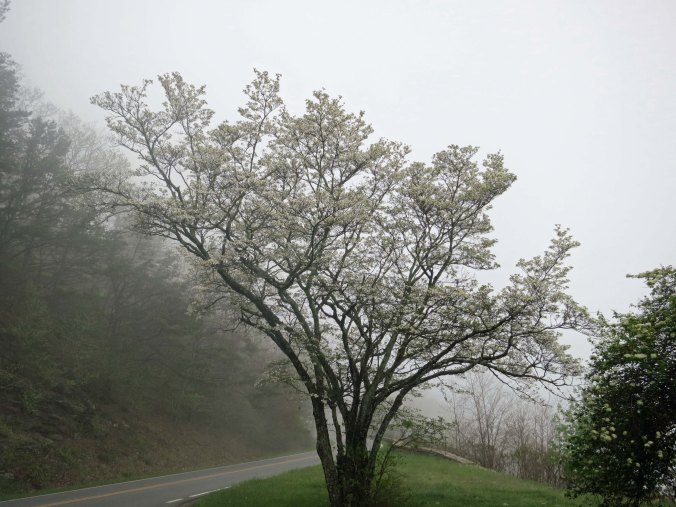
Dogwood in fog along Skyline Drive in Virginia.

Distant vistas disappear in the fog. The traveller is left with views closer to the road…

A tree of dogwood blooming along the Skyline Drive in Virginia.

That bring their own beauty…

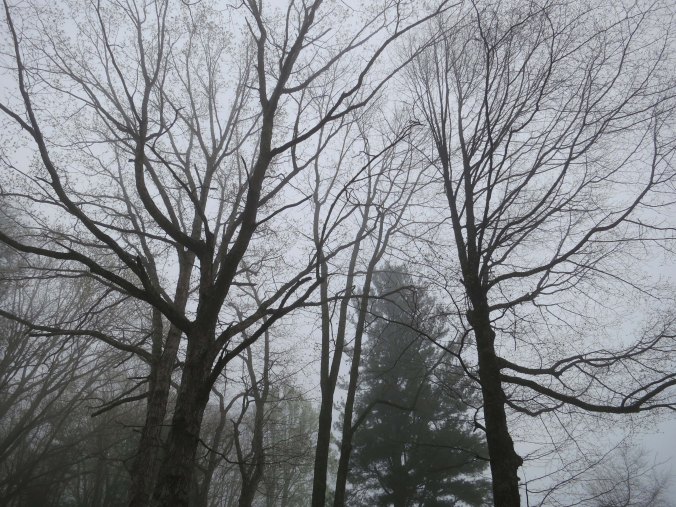
Trees along the Skyline Drive in Shenandoah National Park.

With a different perspective.

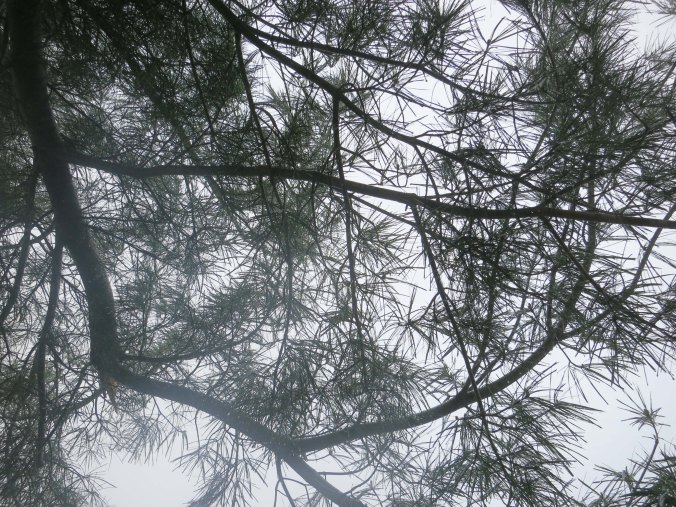
Pine needles provided an interesting pattern in the fog.

The grey backdrop made these pine needles stand out.

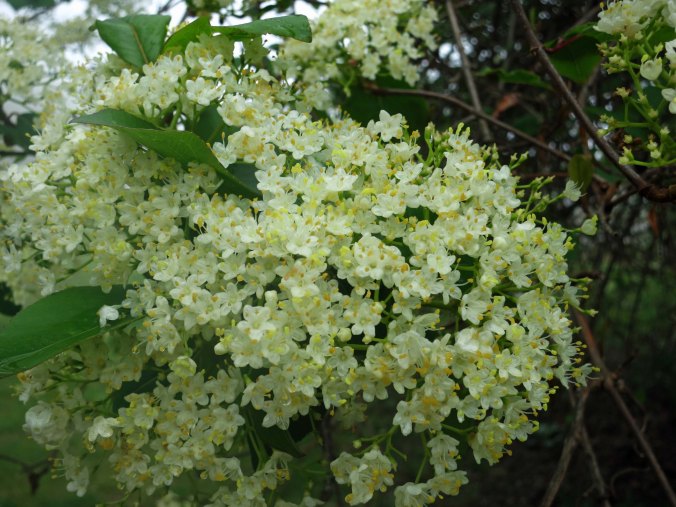
Not sure what these flowers were, but I found their green hue appealing.

Fog or not, I always like close-ups. The yellow-green hue of these flowers, and their abundance, caught my attention.

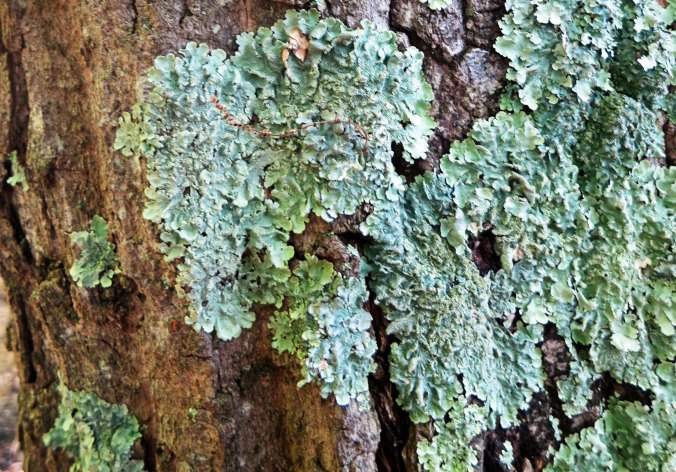
Tree lichens caught the attention of my camera.

Lichens are always worth a closer look..

Riding along the Skyline wasn’t enough for me, however. Oh Shenandoah was about the river and I had to see it! I reached US Highway 33 and made a snap decision. Instead of following Skyline Drive the rest of the way to Front Royal, Virginia, I would turn left and drop down into the Shenandoah Valley where I could sing to the river. And that is what I did. In Elkton, I picked up US 340 and followed it along the south fork of the Shenandoah River to Front Royal.

A cow and her calf welcomed me to the Shenandoah Valley.

Peggy and I followed the same route in our van as we retraced my route. A cow and her calf welcomed us to the Shenandoah Valley.

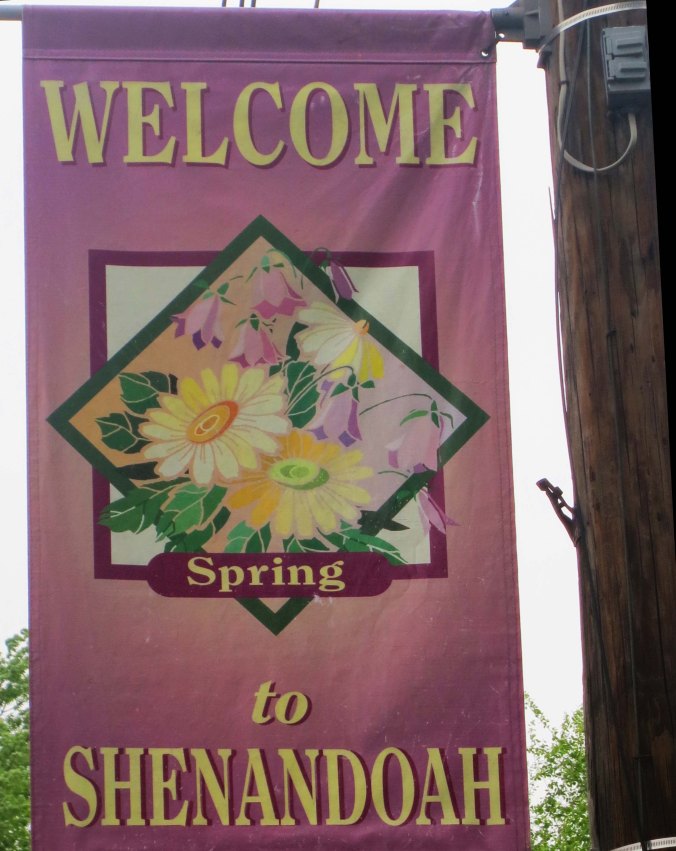
Welcome sign to Shenandoah.

As did this sign.

As this pasture land demonstrates.

Spring was bursting out all over!

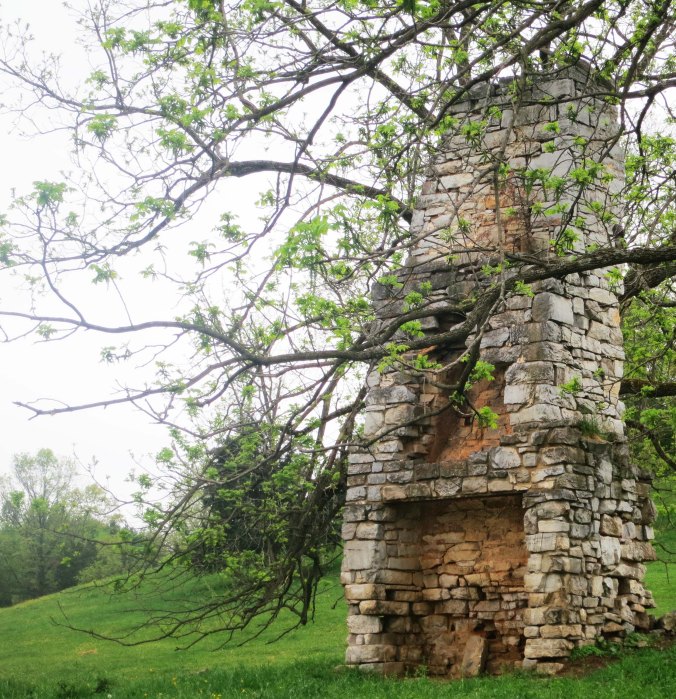
This old fireplace was all that remained of an earlier Shenandoah Valley home.

This old fireplace was all that remained of an earlier Shenandoah Valley home. It isn’t unusual to find fireplaces standing alone, the one thing that wouldn’t burn when pioneers lost their homes to fires. This one would have gone with a large home.

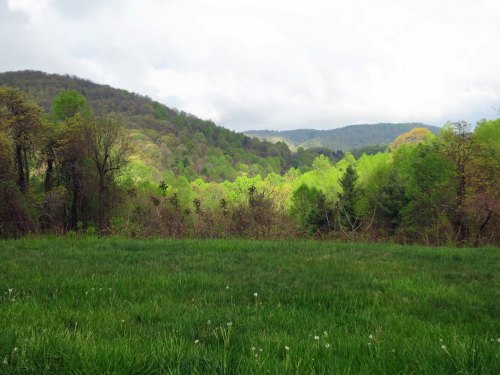
And yes, I did find the Shenandoah River with its mountain backdrop.

And yes, I did find the Shenandoah River with its mountain backdrop.

From Front Royal I biked on to Winchester where a billboard announced I was entering Patsy Cline’s hometown. I had another decision to make, this one more dramatic than my quick decision to check out the Shenandoah River. I had been bicycling for three months and I needed a break. A friend was supposed to meet me in two weeks in Maine and join me in bicycling through Nova Scotia. I could make it, just barely, maybe. But I would have to push hard through urban areas with urban traffic. Finally, I had developed a sore on my inner thigh in Mississippi and a sore on your inner thigh when you are bicycling is not a good thing. It would not go away.

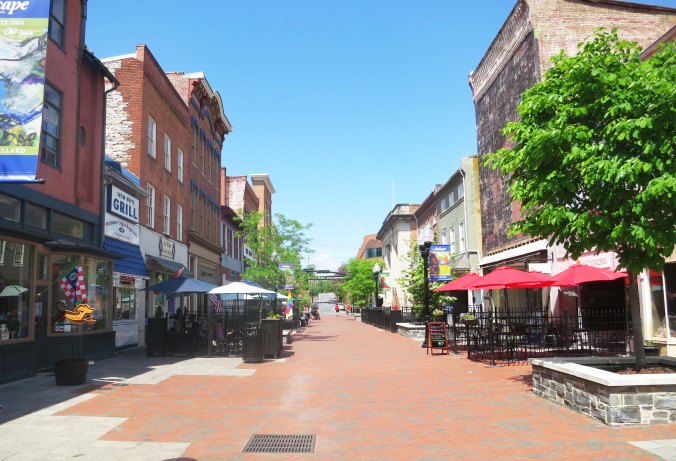
Old Town in Winchester Virginia has bee turned into a pleasant and attractive auto-free zone. Patsy Cline would recognize the buildings.

Old Town in Winchester, Virginia has been turned into a pleasant and attractive auto-free zone. I think that Patsy Cline would like it..

So I decided to become good friends with the Dog. I would take the Greyhound from Winchester up though Washington DC, New York City, Boston and New England to Bangor, Maine. It would drop the total distance of my trip to around 10,000 miles, but I could live with that— and I would have a two-week break.

Next Blog: I make it to Maine and begin my exploration of Nova Scotia.

Back When Having a Baby Cost Six Bucks… The 10,000-Mile Bike Trek

Mary Mill on the Blue Ridge Parkway in Virginia.

Mabry Mill is one of the most photographed sites on the Blue Ridge Parkway. (Photo by Peggy Mekemson.)

I continued my roller coaster ride along the Blue Ridge Parkway as I crossed into Virginia. The highlands weren’t as high but the lowlands were lower so my overall impression of the Parkway didn’t change. I was growing more used to the ups and downs, however. I won’t say I didn’t notice them— the 6000-foot elevation change involved in dropping into and climbing out of the James River guaranteed that, but the beauty of the ride, combined with the interesting history, was enough to divert my mind away from the work my legs, lungs and heart were doing.

View of Blue Ridge Mountains and meadow along the Blue Ridge Parkway in Virginia.

The beauty of the Parkway helped me forget I spent much of my time bicycling up mountains.

Dramatic clouds along the Parkway added to the scenery.

Dramatic clouds along the Parkway added to the scenery.

Tree silhouette backed up by clouds on the Blue Ridge Parkway in Virginia.

This tree silhouette also caught my attention.

Bridge on the the Blue Ridge Parkway in Virginia.

Man made structures such as this double arched bridge also add to the beauty.

Besides, the only person that I had to complain to about the difficulty of the climbs was myself, and he’s a stickler for pointing out that I am responsible for 99.9% of the difficulties I get into. You would think he would be more sympathetic, maybe even lie a little. But noooo, he has to be disturbingly honest.

Plus, there was Orlena Puckett. She put things into perspective. There is a sign next to her sister’s cabin on the Parkway. Orlena was born in 1837 and spent the first 50 years of her life trying to have children. She actually had 24, but they all died, most in stillbirth. Given everything I’ve ever heard about the pain involved in having a baby, I would have sworn off sex after the first three.

The Plackets cabin on the Blue Ridge Parkway in Virginia.

The Puckett’s cabin.

Orlena spent the second 50 years of her life as a midwife, helping other women have children. She is said to have delivered some 1,000, the last when she was 102. The tools of her trade were soap, water, and a nip of whiskey. When times were good, she charged six dollars; when they were bad, one— or a few chickens. Legend has it she would drive nails through her shoes in winter so she could travel over icy trails to help women who needed her services. Imagine that with today’s medical care system, even a nip of whiskey would cost $100!

This photo of Orlena, looking 102 and holding the last child she helped be born, is next to her sister's cabin.

This photo of Orlena, looking 102 and holding the last child she helped deliver, is on display next to her sister’s cabin.

Groundhog Hill is located a couple of miles away from the cabin. I am assuming there were a lot of them there. They were also called whistle pigs, which I get. I’ve often encountered their marmot cousins in western mountain meadows. These large, fat squirrels whistle at you in irritation when you disturb their afternoon naps in late August. They’ve chowed down all summer so they can sleep all winter. Folklore tells us that groundhogs appear on February 2 to predict how long winter will last. (This custom originated with European badgers, who, as far as I know, would consider it great luck to find a tasty groundhog out and about on February 2, regardless of whether you could see its shadow or not.)

Today, Groundhog Hill is topped off by a fort-like looking structure that the forest service once used for spotting fires. The area also features the various types of chestnut split-rail fences the pioneers used to keep their cattle from wandering off and being eaten by bears.

The Groundhog Mountain fire lookout tower on the Blue Ridge Parkway in Virginia.

The Groundhog Mountain fire lookout tower with a dramatic display of clouds.

Groundhog Mountain on the Blue Ridge Parkway in Virginia.

Peggy caught this photo with clouds, a dogwood tree, and two of the fence types. (Photo by Peggy Mekemson.)

Pioneer fence on display at Groundhog Mountain on the Blue Ridge Parkway in Virginia.

We saw this type of fence on the Natchez Trace as well. Easily constructed, it requires no fence posts.
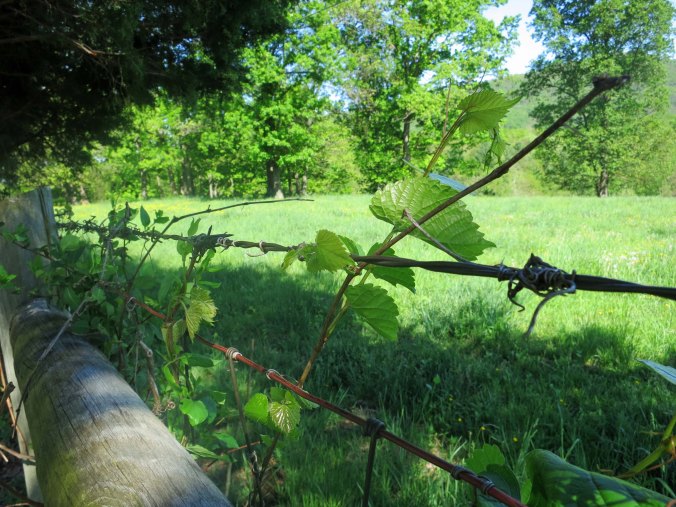
Fence at Groundhog Mountain on the Blue Ridge Parkway in Virginia.

The fourth type of pioneer fence on display at Groundhog Mountain.

Further along, I came to Mabry Mill (featured at the top of the post), said to be the most photographed site on the Parkway. It is quite striking in its pond setting. The water wheel driven mill was built by Ed Mabry in the early 1900s and served as both a gristmill and a sawmill. During the summer months now, park volunteers offer demonstrations on a number of pioneer crafts practiced in the area. It’s a busy place. Several hundred thousand people stop by to visit each year.
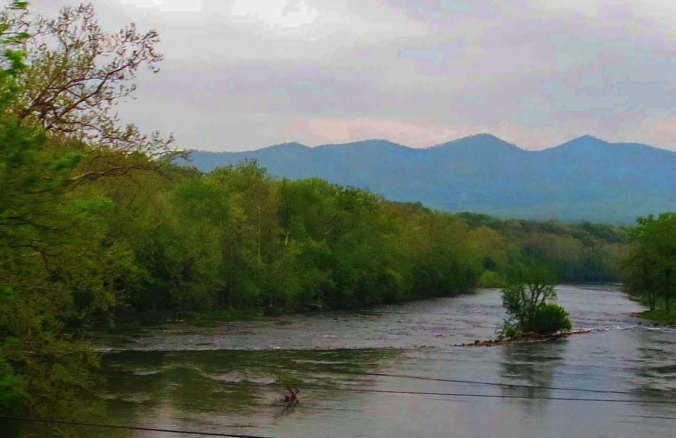
The 13 mile ride downhill to the James River was quite a thrill; I practiced not using my brakes. When I passed an auto, I decided it was time to slow down. At the bottom, I stopped to admire the river. At 649 feet, it is the lowest spot on the Parkway. Further east, Virginia slaves once toiled on farms along the river producing what was considered some of the finest tobacco of the time. I first heard about it when I was backpacking in the Wind River Mountains of Wyoming and had stopped at a Fur Rendezvous site where early traders bought beaver pelts from mountain men.

The James River tobacco had been an important trade item. The mountain men smoked it on lonely winter nights when they were back in their trapping cabins. Lower quality tobaccos were mixed with whiskey in cooking kettles and consumed on the spot, out of the kettles. Drunken debauchery is a fairly good description of the results. Early journals described a rabid wolf wandering through camp and biting people at will. Another image that stuck in my mind was a group of men using a dead man as a poker table. Now it will probably be stuck in your mind as well. (Grin)
Reflection shot of the James River as see from the Blue Ridge Parkway bridge.

The James River looking calm on a cloudy day.

Otter Lake on the Blue Ridge Parkway in Virginia.

Pretty little Otter Lake is just a couple of miles beyond the James River going north on the Parkway.

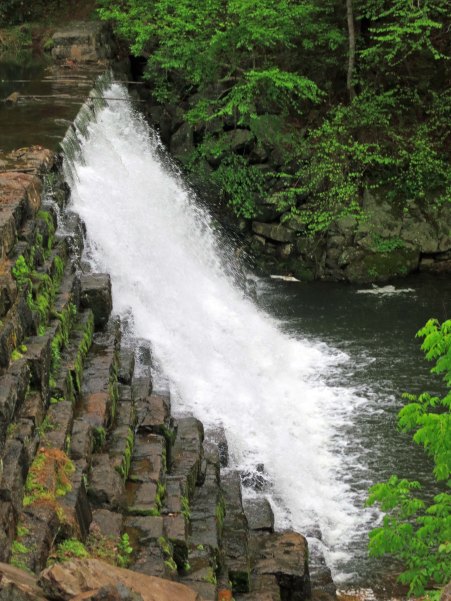
Spillway to Otter Lake along the Blue Ridge Parkway in Virginia.

The spillway for Otter Lake is also quite picturesque.

Otter lake spillway along the Blue Ridge Parkway in Virginia.

Another perspective of the spillway.

Otter Creek along the Blue Ridge Parkway in Virginia.

Otter Creek below the spillway.

Further up the Parkway, the historic remnants of the Irish Creek narrow gauge railway caught my interest. Logging had once been the dominant industry of the region until most of the virgin forests had been cut down. Over 100-million board feet of lumber had passed over the Irish Creek line alone. My dad had worked as the electrician for a lumber company that had a narrow gauge railroad when I was a child. I remember watching the long trains of logs come rolling into town. I’d stand by the tracks with my friends and wave at the engineers. On a good day, they would throw candy out the window to us.

Railroad bridge for the Irish Creek railroad found along the Blue Ridge Parkway in Virginia.

Bridge on the Irish Creek narrow gauge railroad. (Photo by Peggy Mekemson.)

Irish Creek Railroad next to the Blue Ridge Parkway in Virginia.

The Irish Creek Railroad.

Small creek along the Irish Creek Railroad next the the Blue Ridge Parkway in Virginia.

A final view of the small creek.

Next Blog: We’ll say goodbye to the Blue Ridge Parkway and head into Shenandoah National Park on the Skyline Drive.

Things that Go Bump in the Night… The 10,000-Mile Bike Trek

I decided that my title today called for this 'ghost tree' I found along the Parkway. Imagine it at night with a full moon behind it and a black cat sitting on the lower branch.

I decided that my title today called for this ‘ghost tree’ I found along the Parkway. Imagine the tree at night with a full moon behind it and a black cat sitting on the lower branch.


From ghoulies and ghosties / And long-legged beasties / And things that go bump in the night, / Good Lord, deliver us! —An old Scottish Prayer

Having spent a considerable amount of time out in the woods at night, including a fair amount by myself, I’ve had my share of nighttime encounters. To say they can be disconcerting is understatement at its best. Even a cow walking through your camp can send your heart racing when you wake up from a deep sleep.

I’ve written about some of my encounters before. Why not? They make great blog material. For example, there was the time I found myself nervously loading a 357-magnum pistol because I had heard a loud bang outside my tent. A doctor friend had insisted I carry his gun in backcountry Alaska. I was damned lucky I didn’t shoot myself in the foot. I was amused (or was that embarrassed) to discover it was only a beaver that had slapped its tail against the water. He had discovered me in his territory and was protesting.

And then there was the time I woke up with a bear standing on me, his snout inches away from mine. I screamed. So much for being manly. Truth is, the smallest twig cracking out in the dark night can lead brave souls to become hyper-alert, or maybe just hyper.

Camping out in the woods away from established campgrounds on my bike trip added another level of concern, being faced with the most dangerous animal of all— the two-legged type. I’ll take a bear anytime. Breaking twigs in the night become even more menacing. As I mentioned before, I was always careful to select a place where I was hidden from the road, or any other human observation, as far as that goes.

The Blue Ridge Parkway has a policy on not camping outside of designated campgrounds. For the most part this isn’t a problem, but I had decided to have my bike tuned in Asheville and didn’t get out of the town until late in the afternoon. (Having learned my lesson on dark tunnels, I had also bought a new bike light.) A considerable hill outside of Asheville had slowed me down, and the sun had started to slip behind a mountain.

Being tired and a bit grumpy, I decided a couple of hours of bicycling were sufficient. So I pulled off the road and went looking for a flat spot in the steep terrain, one that wouldn’t have me rolling down hill all night. Eventually I found a place that was only slightly askew. There was just enough room for my tent. Blue, my bike, had to be satisfied with leaning against a tree. Tossing and turning because a rock insisted on poking me in the back, it took a while to fall asleep.

Having crested one long climb with an even longer one ahead, I decided to camp out in the woods. The steep terrain made finding a flat spot difficult.

Having crested one long climb with an even longer one ahead, I decided to camp out in the woods. Finding a flat spot other than the road was the challenge.

I woke up to someone/thing stamping outside my tent. Make that several things. I am sure you can see where this might be a bit alarming. I lay there wondering whether I should jump out of my tent or pretend that no one was home. Sometimes ignored problems go away. Sometimes they don’t. I had decided on the latter course when the problem started hissing. Stamping is one thing; hissing is another. Had the Appalachian ghosts of Tom Dooley and his mistresses come to haunt me?

This sign along the Parkway describes the origin of the Kingston Trio Song, "Hang Down Your Head Tom Dooley."

This sign along the Parkway describes the origin of the Kingston Trio Song, “Hang Down Your Head Tom Dooley.” Their song was the PG version, however. Tom was living with a much older guy who had a younger wife. With mutual consent from all parties, Tom started sleeping with the wife. When a cousin of the wife showed up, he added her to the mix, often at the same time. Another cousin appeared on the scene and Tom once more sacrificed himself for the good of all. She brought syphilis into the mix, however. Eventually, one of the cousins killed another one with Tom’s help. Being a gentleman, Tom confessed to the murder and she went free. Tom was hung. At least I think that’s how it went. I became distracted with the appearance of the first cousin. Undoubtedly, the event left some ghosts hanging around.

This was the point where I started wishing my backpacking flashlight had a ton more of candle power. I unzipped my tent and pointed the dim light up the hill where several large things went crashing off into the brush. There’s a point here. It is always better to have large things crashing away from you instead of toward you, even more so on a dark night. Anyway, I recognized the thump, thump, thump as they disappeared. A herd of several deer had discovered my hiding place, and like the beaver, been surprised and irritated. I had simply never heard deer do their stamping and hissing routine before. (I have since.)

I went back to sleep, woke up refreshed (sort of), and resumed my journey. Today’s blog photos along the Blue Ridge Parkway will take you from Asheville to Little Glade Mill Pond, a distance of approximately 170 miles. Enjoy.

The ultra modern Park Headquarters in Asheville includes all of the latest environmental friendly designs, including plants growing on the roof.

The ultra modern Park Headquarters in Asheville includes all of the latest environmental friendly designs, including plants growing on the roof.

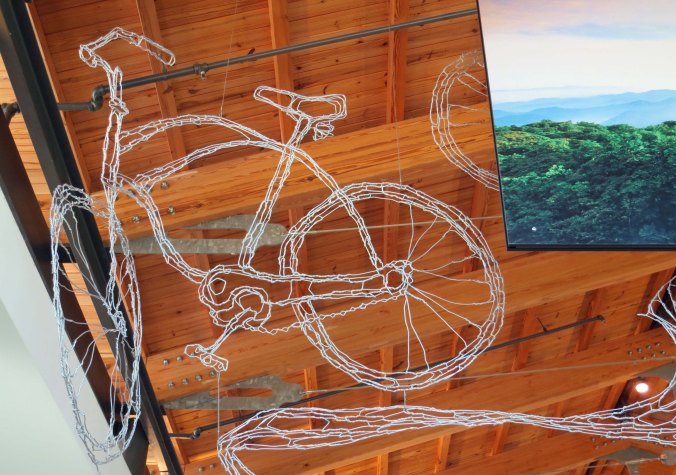
Bike sculpture in Blue Ridge Park Headquarters, Asheville, North Carolina.

I enjoyed the bike sculpture at the headquarters.

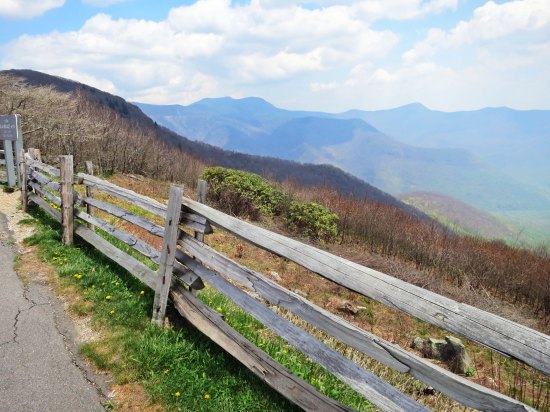
My first stop the next day was at the Craggy Garden's Visitor's Center. It's high location provided a great scenic view of the Black Mountains. The fence was a plus.

My first stop the next day was at the Craggy Garden’s Visitor’s Center. Its high location provided a scenic view of the Black Mountains. The fence was a plus.When I bicycled through the area in June of 1989, the area was covered with blooming Rhododendrons. Peggy and I were too early for the display on our redrive of the route this spring.

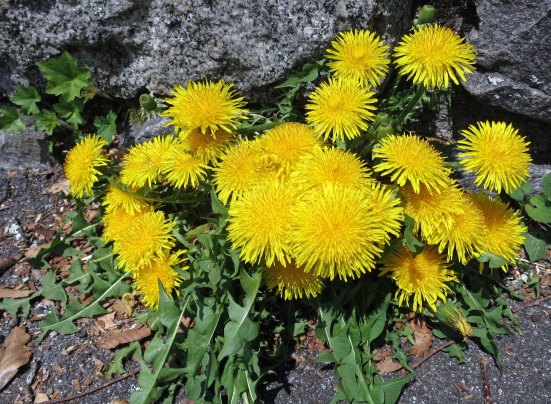
Dandelions had no problem with spring. Peggy and I found them happily blooming away throughout our trip.

Dandelions had no problems with spring. They were happily blooming away throughout our trip.

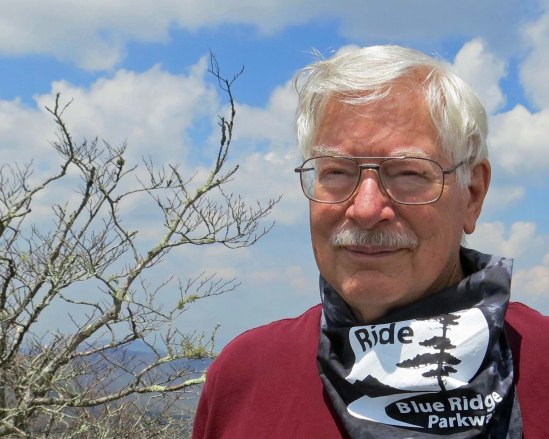
Peggy insisted on buying me a neckerchief at the Visitor's Center, which featured biking the Parkway.

Peggy insisted on buying me a neckerchief at the Visitor’s Center. It featured biking the Parkway. Like the bushy look? I was honoring my bike trek where I had three haircuts in six months.

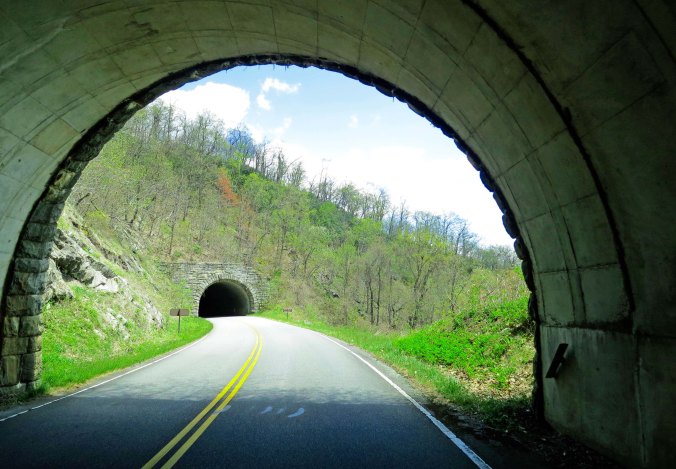
One of numerous tunnels along the Parkway. I found the stone work quite beautiful. Sone masons from Europe were brought in during the 1930s to help.

One of numerous tunnels along the Parkway. I found the stone work quite appealing. Stone masons from Europe were brought in during the 1930s to help.

This is the twin to the tree I featured at the beginning of the blog.

This is the twin to the tree I featured at the beginning of the blog. It was actually standing next to the other tree.

Dogwood is another plant that enjoys spring and was blooming in profusion all the way along the Parkway.

Dogwood is another plant that enjoys spring and was blooming in profusion all the way along the Parkway.

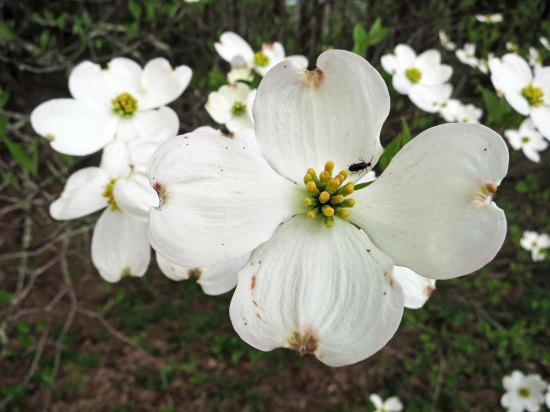
A close up of the dogwood.

A close up of the dogwood complete with beetle.

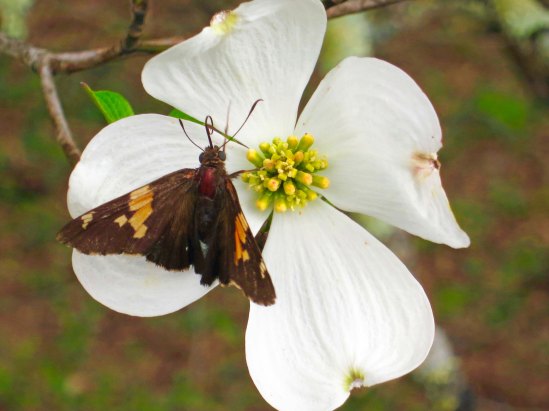
Dogwood on Blue Ridge Parkway with butterfly.

And a  butterfly.

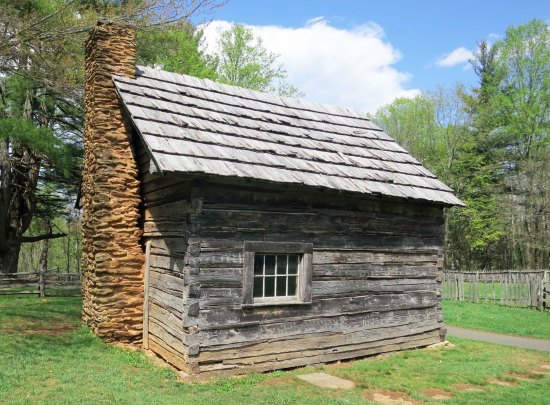
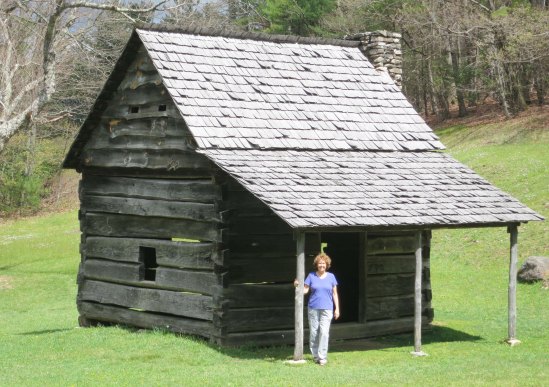
Jesse Brown's cabin on the Blue Ridge Parkway.

Peggy provides perspective on Jesse Brown’s pioneer cabin.

Cool Spring's Batist Church on the Blue Ridge Parkway.

The Cool Spring’s Baptist Church was next door to Jesse Brown’s cabin. Usually, services were held outdoors. There wasn’t much difference.

And the cool spring.

And the cool spring. The wooden channel carries water into the spring house.

I doubt the early pioneers would have seen this Scottish cow in the mountains.

I doubt the early pioneers would have seen this Scottish bull in the mountains.

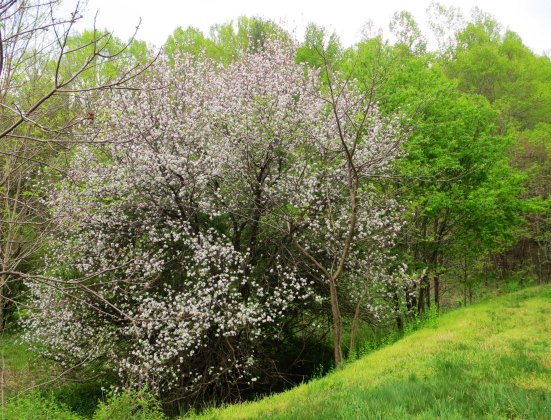
Apple tree on the Blue Ridge Parkway.

Apple trees, on the other hand, were quite common. Hard cider was a pioneer staple.

Farm on Blue Ridge Parkway.

Farm lands add as much to the beauty to the Parkway as forests and mountains.

Little Glade Mill Pond on the Blue Ridge Highway.

Little Glade Mill Pond provides a great lunch stop. While Peggy whipped up sandwiches, I hiked around the pond.

Reflection shot on Little Glade Mill Pond on the Blue Ridge Parkway.

Naturally, I had to focus on the reflection shots. Our van is off to the right. Lunch is being prepared! Breakfast is my responsibility.

I'll complete today's post with this final shot of Little Glade Mill Pond. Next Blog: We'll continue out journey along the beautiful Blue Ridge Parkway.

I’ll complete today’s post with this final shot of Little Glade Mill Pond. Next Blog: We’ll continue out journey along the beautiful Blue Ridge Parkway.


48,722 Feet of Climbing on the Blue Ridge Parkway… The 10,000-Mile Bike Trek

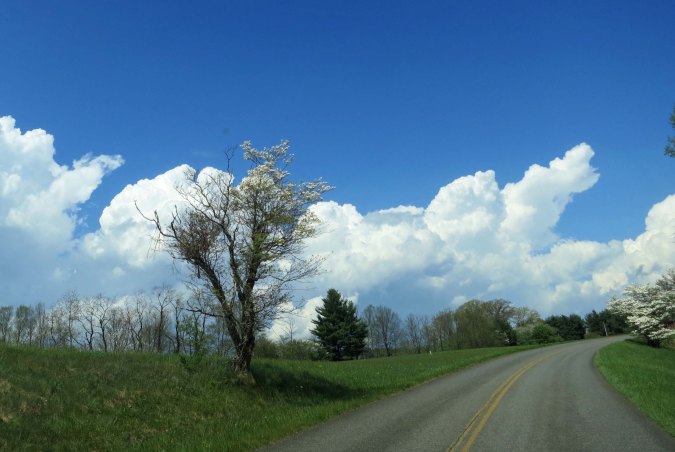
Every turn in the road on the Blue Ridge Parkway brings gorgeous views. Some are in distant vistas but many are up close and personal, like these two trees.

Every turn in the road on the Blue Ridge Parkway brings gorgeous views into sight. Some are in distant vistas but many are up close and personal, like these two trees.

There are two primary directions on the Blue Ridge Parkway: up and down. It’s a good thing I had gotten used to this idea while crossing the Cumberland Plateau and the Smokies because as soon as I passed the entrance sign to the Parkway, I started climbing. I quickly got used to the idea that I would be granny-gear-crawling my way up a mountain for 3-4 hours followed by a glorious 30-minute downhill run, followed by another 3-4 hours of climbing. If it wasn’t always like that, it certainly felt like it.

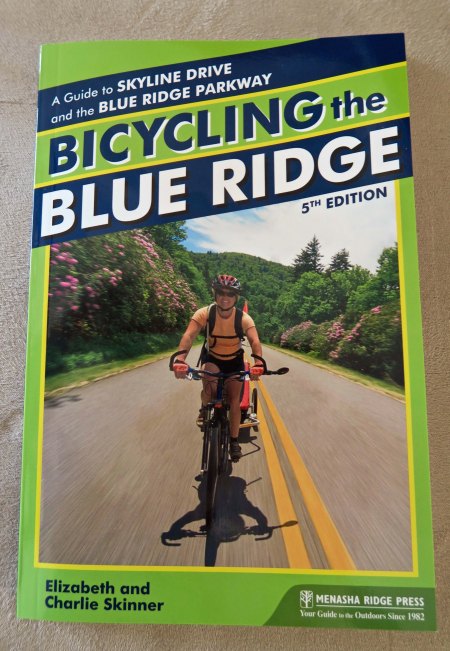
I took this graphic from the book by Elizabeth and Charlie Skinner featured below.

I took this graph from the book by Elizabeth and Charlie Skinner featured below. It represents about half of my first day of cycling the Parkway, starting at the Southern Terminus on the right. I thought it did a good job of summarizing my perspective on the climb.

The elevation change reflected by these ups and downs is impressive. In one week I would climb 48,722 feet and drop a similar amount, having an elevation gain and loss of over 97,000 feet! (I was amused by the Parkway’s specific claim of elevation gain right down to 22 feet. It definitely represents a biker or hiker’s perspective. Those 22 feet are important.)

It could have been worse.  Remember, in my last post, I mentioned that the Appalachians were much higher in their youth. Think 40,000 feet tall (12,192 Meters), 10,000 feet higher than Mt. Everest. The air would have been a bit thin up on top for cycling but can you imagine the downhill run! Wheeeeeeeeeeeee!

Other than the ups and downs, or maybe because of them (grin), the Blue Ridge Parkway is one of the premier destinations for bicyclists in the US. Like the Natchez Trace, there is great beauty and no commercial traffic. An added plus for the Blue Ridge is that the speed limit for vehicles is even lower than the Trace, 45 MPH (72.4 K) as compared to 55 MPH (88.5 K).

The number of T-shirts, scarves, patches, bumper strips and other memorabilia you can buy that feature bicycling on the Parkway speaks to its popularity today. There are also detailed brochures, maps and books to help you plan your trip, not to mention the Internet. It wasn’t always so. In 1989, the National Park Service gave me a mimeographed sheet. I didn’t see another bicycle tourist until I was close to the end of my 469-mile trip in Virginia.

The mimeographed sheet on bicycling the Blue Ridge Highway that the National Park Service handed out to me in 1989

The mimeographed sheet on bicycling the Blue Ridge Highway that the National Park Service handed out to me in 1989.

This information packed book by Elizabeth and Charlie Skinner is the type of information you can find today on cycling the Parkway.

This information packed book by Elizabeth and Charlie Skinner is the type of information you can find today on cycling the Parkway.

The final segment of the Parkway was finished in 1987, only two years earlier than my trip. Its inception dates back to the 1930s, however, when a number of people including Franklin Roosevelt and Senator Harry F. Byrd of Virginia decided that a parkway connecting Shenandoah National Park in Virginia with the Great Smoky Mountain National Park in North Carolina was a good idea. (Byrd, BTW, served in the US Senate from 1933 to 1965. His son succeeded him in his seat and held the position until 1982, giving the Byrds 50 continuous years in the Senate.)

My next four posts will cover my journey over the Blue Ridge Highway and be more in the nature of photographic essays. Photos will be from the trip Peggy and I took this spring. Today, I am covering the section between Cherokee and Ashville, North Carolina. Next Blog: A creature comes to visit me in the night.

When biking the Blue Ridge Parkway, you can start in the north, in the south, or at several points along the way. Wherever, you will be greeted by this sign.

When biking the Blue Ridge Parkway, you can start in the north, in the south, or at several points along the way. Wherever, you will be greeted by this sign.

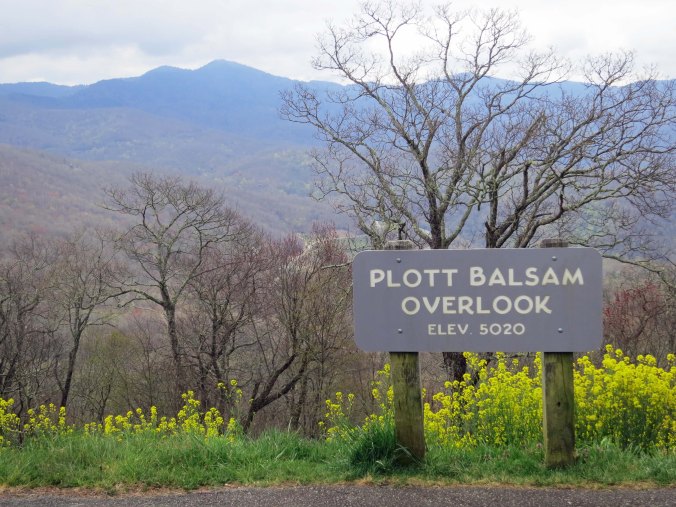
The Blue Ridge Mountains provide numerous opportunities to pull off the road and admire the scenery. Plot was an early pioneer who became famous for breeding bear hunting dogs. Once, according to legend, his dogs cornered a bear in a small cave. Lott went in after the bear with his knife. He won the encounter but the bear clawed him extensively. It was the last time Lott went after a bear with his knife.

The Blue Ridge Mountains provide numerous opportunities to pull off the road and admire the scenery. Plott was an early pioneer who became famous for breeding bear hunting dogs. Once, according to legend, his dogs cornered a bear in a small cave. Lott went in after the bear with his knife. He won the encounter but learned that chasing after bears with a knife is not a good idea.

On the higer parts of the Parkway, flowers were just starting to come out.

On the higher parts of the Parkway, flowers were just starting to bloom.

This photo reflects how the Blue Ridge Mountains obtained their name.

I like this photo because it reflects for me how blue ridge after blue ridge after blue ridge gave the Blue Ridge Mountains their name.

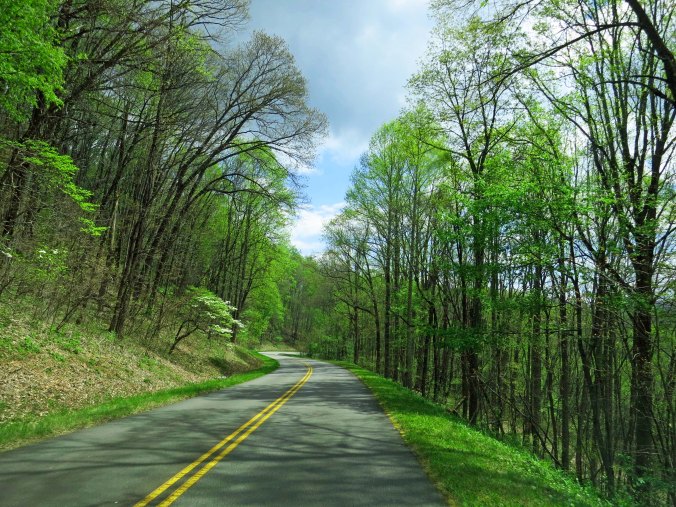
A tunnel of trees along the Blue Ridge Parkway leafing out in early spring green.

A tunnel of trees along the Blue Ridge Parkway leafing out in early spring green. Dogwood is blooming along the left side.

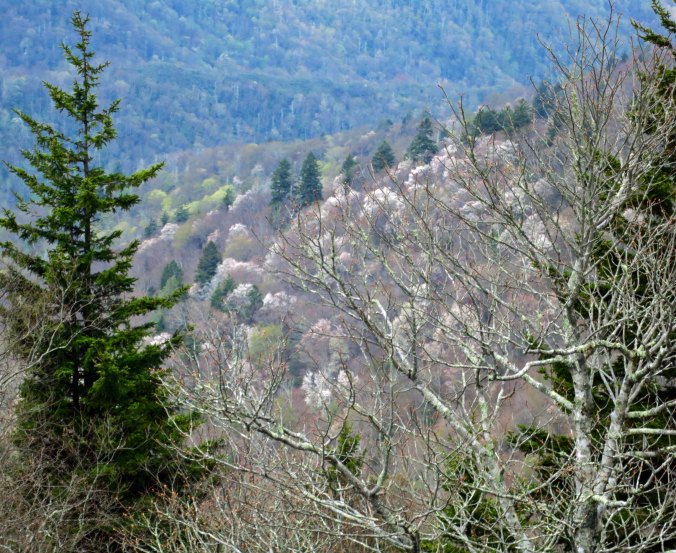
Some of the canyons along the Parkway were filled with blooming dogwood.

Some of the canyons along the Parkway were filled with blooming dogwood.

And highway tunnels. There are 26 along the Blue Ridge Parkway ranging in length from 150 feet to 1434 feet.

Twin highway tunnels. There are 26 tunnels along the Blue Ridge Parkway ranging in length from 150 feet to 1434 feet. Bicycling through them can be a bit scary, especially the longer tunnels. Going through the 1434 feet Pine Mountain Tunnel, my light chose to die, leaving me in the pitch dark. I immediately climbed off my bike, blindly found the right side of the tunnel, and walked the bike until I could see again. As you can see, there is no shoulder. Fortunately no cars came along.

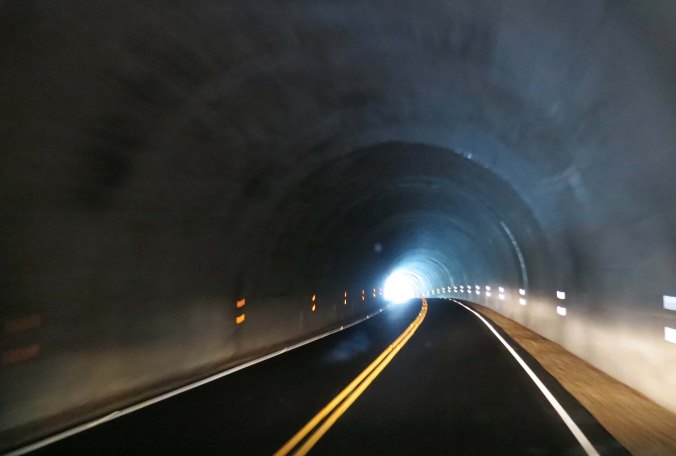
The lights from our van lit up the tunnel. Imagine your perspective from a bicycle. This was one time when I was ever so glad to see the light at the end of the tunnel.

The lights from our van lit up the tunnel. Imagine your perspective from a bicycle. Pushing my bike with no lights at all, I was ever so glad to see the light at the end of the tunnel.

I climbed to the highest elevation along the Parkway on my first day out. I celebrated by thinking 'well, that's behind me.'

I climbed to the highest elevation along the Parkway on my first day out. I celebrated by thinking ‘well, that’s behind me.’

More fun going down than up!

More fun going down than up!

They call this outcrop the Devils Courthouse but I was hardput to see much that was devilish about it. Maybe on a foggy day...

They call this outcrop the Devils Courthouse but I was hard put to see much that was devilish about it. Maybe on a foggy day…

Looking Glass Rock was once a giant pluton of molten volcano rock located far under the surface. Early morning light reflects off of the rock, giving it the name.

Looking Glass Rock on the right was once a giant pluton of molten volcano rock located far under the surface. Light reflects off of the rock, giving it the name. This time, the sun chose to light up the trees in the foreground instead.

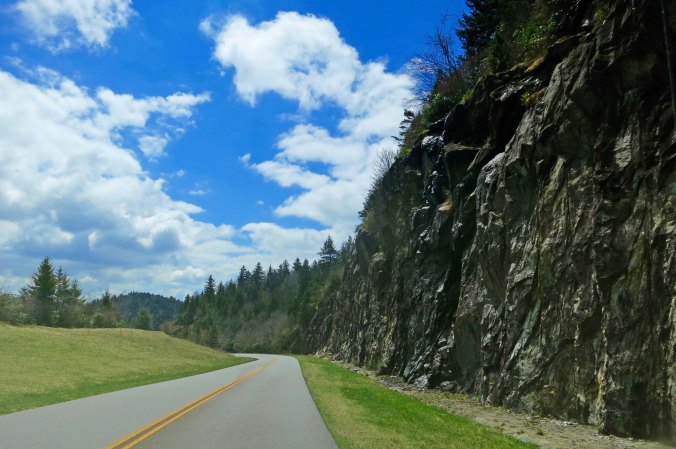
I'll conclude today's section of the Blue Ridge Parkway with this impressive road cut.

I’ll conclude today’s section of the Blue Ridge Parkway with this impressive road cut.


Bicycling across Great Smoky Mountains National Park… The 10,000-Mile Bike Trek

Great Smoky Mountains National Park waterfall in North Carolina.

In addition to its tree covered mountains, the Great Smoky Mountains National Park is noted for its beautiful waterfalls. Peggy and I found this little beauty next to the road on the east side of the Park.


HAPPY 100th BIRTHDAY TO AMERICA’S NATIONAL PARKS

I can’t imagine a future without wild places for our children, grandchildren and future generations to love and explore. Preserving our wilderness areas and the diversity of life on earth are two of the most important responsibilities we have as humans.

A few years ago, Peggy and I took time off to visit America’s National Parks from Alaska to Florida. It was an incredible trip. The beauty and variety of landscapes, plants and animals found in these parks are a gift of incalculable value. As are all the wild places set aside by other countries.

Given that this week is America’s 100th Anniversary of its National Park system, it seems appropriate that I am writing today about my bike ride through (make that up and over) Great Smoky National Park. (And yes, smoky is how it is spelled.) With over nine million visitors this past year, it is America’s most visited park.

First, of course, I had to get there. In the last post about my bike tour of North America, I was in Dayton, Tennessee checking out the courthouse where the Scopes’ trial took place. I left there continuing to follow Route 30 east as it made its steep, winding way up and over ridges of the Cumberland Plateau. In Athens, Tennessee, I picked up an even smaller road, Route 39, that carried me over another ridge into the small community of Englewood.

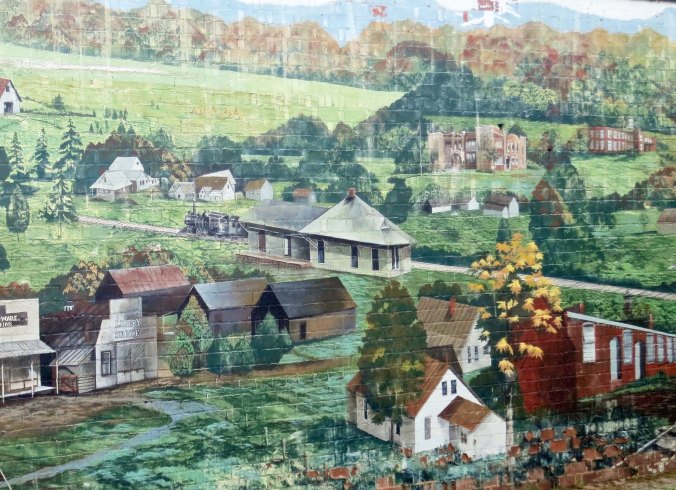
Mural depicting the historic town of Englewood in eastern Tennessee.

This mural of historic Englewood is prominently featured on the side of a building entering town.

From here, it was time to make my way north over the relatively flat Highway 411 to Maryville. Bucolic countryside, Mennonite farms, a humorous Spit and Whittle Club, and the Little Tennessee River provided pleasant distractions from the work of bicycling. As I left Maryville on Highway 321 going toward Pigeon Ford, the countryside shifted dramatically, providing scenic views of the Smokies. The road from Pigeon Ford to Gatlinburg, Highway 441, was all about separating tourists from their dollars. I’ve rarely seen such a concentration of “tourist attractions.” Today, there are eight different Ripley’s venues alone— “believe it or not!”

This Mennonite farmer was apparently out enjoying his/her farm.

This Mennonite farmer was apparently out enjoying his/her farm since I didn’t see any work going on.

Spit and Whittle Clubs, sometimes know as Liar's Clubs, can be found throughout the US. In general, their members are story tellers who focus on 'tall tales.' I expect that this is one of their most unusual club houses!

Spit and Whittle Clubs, sometimes know as Liar’s Clubs, can be found throughout the US. In general, their members are story tellers who focus on ‘tall tales.’ I expect that this is one of their most unusual club houses!

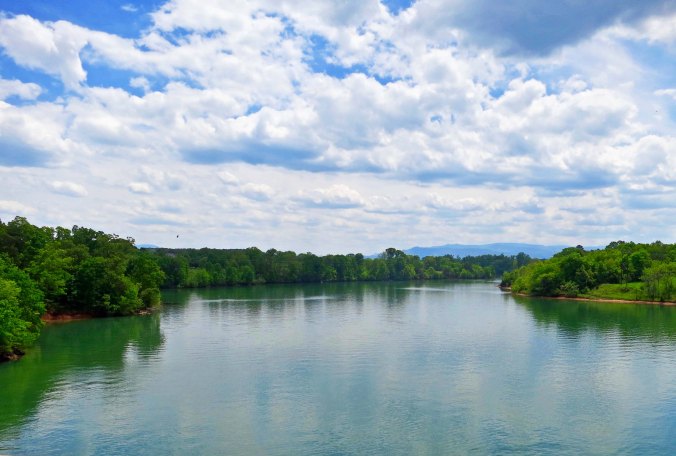
Little Tennessee River flowing through eastern Tennessee.

Highway 411 took me across the Little Tennessee River, which didn’t seem so little to me.

The Great Smoky Mountains can be seen in the distance as you leave Maryville, Tennessee on Highway 312.

The Great Smoky Mountains can be seen in the distance as you leave Maryville, Tennessee on Highway 321.

I spent the night in Gatlinburg, not because I wanted to sample the attractions, but because I wanted to develop the proper mental attitude I would need for climbing 4000 feet in the morning to Newfound Gap at 5046 feet (1538 meters). Two beers and a steak just about did it.

The Smokies, as they are often called, received their name from a blue haze early pioneers found hovering over the mountains. It wasn’t actually caused by smoke, however, it was caused by plant respiration (breathing, so to speak). The park is part of the Appalachian Mountains, an ancient range going back some 250-300 million years. (Some rocks in the area date back over a billion years.) Compare that with the Rocky Mountains at 80-85 million years and the Sierra Nevada Mountains, a mere baby at 40 million. Once, the Smokies reached for the sky like their younger western cousins; now they are old and worn down. This doesn’t make them less steep; ask any hiker or biker who wanders through them. Nor does it make them any less beautiful.

The 17-mile trip up to the Gap was, as I expected, a workout. People shouted encouragement from their cars on some of the steeper parts. I grunted in return. At one stop a little kid looked at me wide-eyed. “Are you really bicycling to the top?” “Sure,” I replied. “It’s fun. Maybe you will do it some day.” “Maybe not,” he responded. I passed the Appalachian Trail and thought of the hikers making their way north on a journey far different from mine but similar in its challenge. And I entered North Carolina, leaving Tennessee behind. After a leisurely lunch on top, it was time to zoom down the mountain, a thrill I had earned. Following are some photos that I took when Peggy and I redrove the route though the Great Smoky Mountain National Park this spring.

View of Great Smokey Mountains National Park in Tennessee.

Peggy and I drove across the Smokies a month earlier than  when I biked across them in 1989. A number of trees had yet to leaf out.

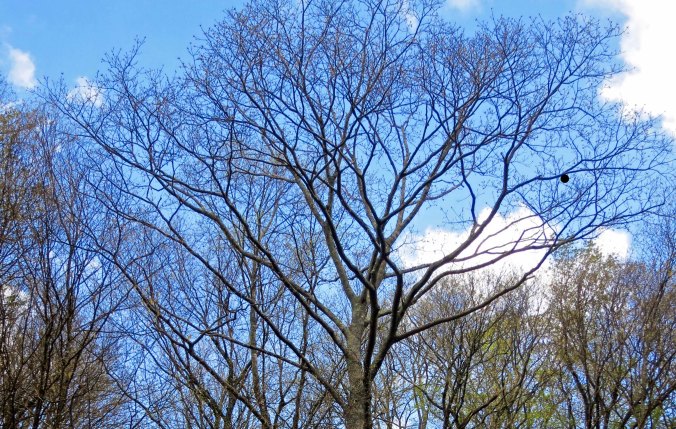
Tree in Great Smoky Mountains National Park in early spring.

By June this tree would be dressed in green. I am not sure who the round nest on the right belongs to. Or if it is even a nest.

I liked this canyon view.

I liked this canyon view.

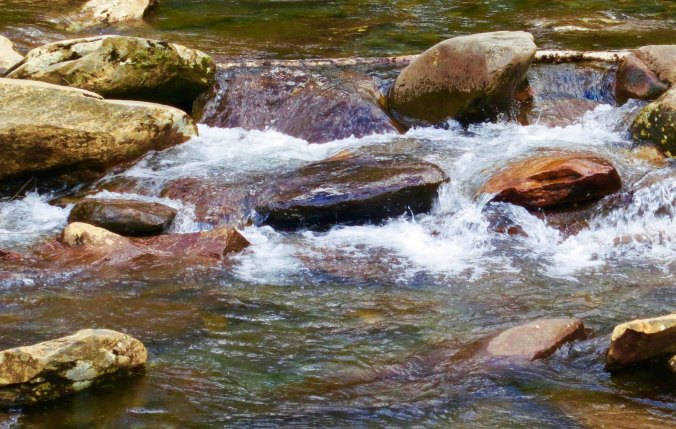
This stream kept me company as I biked up the mountain.

This stream kept me company as I biked up the mountain. At one point I had stopped and dangled my toes in its refreshing water.

Because the road over the mountain is so steep and filled with traffic, the National Park recommends that people not bicycle on it.

Because the road over the mountain is so steep and filled with traffic, the park recommends that people not bicycle on it. Naturally, I caught a section of the road that was car free and had a decent shoulder.

Waterfall in Great Smoky Mountain National Park in North Carolina.

This small waterfall was part of the same stream I placed at the top of the post.

I flew past the turn off that marks the southern beginning of the Blue Ridge Highway and into Cherokee, headquarters for the Eastern Band of the Cherokee Nation. I remember two things about my 1989 stop in Cherokee. One was that the town seemed economically depressed. The second was a bear in a cage. I felt sorry for it. The Smokies are known for having the largest concentration of black bears in the East. The caged bear would have been much happier running around in the woods with them.

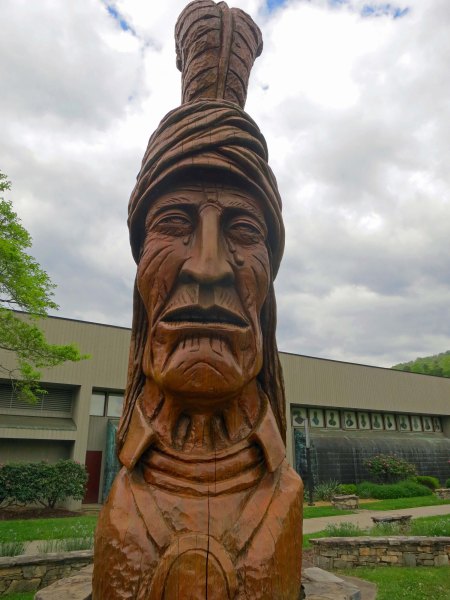
The town seems much healthier now, largely thanks to the Harrah’s-Cherokee Hotel and Casino. It draws several million visitors (and their money) into Cherokee annually. As for the bear, I didn’t see it. Instead, brightly painted bear sculptures were found throughout the community representing, for the most part, Cherokee themes. A large, carved wooden sculpture of a Cherokee stands in front of the community’s administrative center. Three tears are streaming down his face— a memorial to the Trail of Tears where the Cherokee were forced off their homeland and marched to Oklahoma so white settlers could take their property.

Wood sculpture of a crying Cherokee representing the Trail of Tears in Cherokee, North Carolina.

The wood sculpture of a crying Cherokee.

Bear sculpture located in Cherokee, North Carolina.

This bear featured a scenic painting with an elk and an eagle or hawk.

I found this scene on another bear, representing the region in historic times

I found this scene on another bear, representing the region in earlier times.

Bear sculpture painted to resemble eagle in Cherokee, North Carolina.

Another rendition of a bald eagle. I liked how the artist turned the nose of the bear into the beak of the eagle. An eagle shaman dances on the rear hindquarters.

Bear sculpture in Cherokee, North Carolina

This bear was decorated with symbols you might expect to find on Native American rock art.

Bear sculpture in Cherokee, North Carolina smoking pie and dressed like an artist.

And, for my final photo today, a little humor.

NEXT BLOG: I ride back up the road from Cherokee to the Blue Ridge Highway entrance and begin my journey north toward Maine and Nova Scotia.

Hiding Out from a Tornado on the Natchez Trace… The 10,000 Mile North American Bike Tour

The Pharr Mounds on the Natchez Trace were built around 2000 years ago.

The Pharr Mounds, ancient burial sites, are one of the most interesting views along the Natchez Trace. They became almost too interesting for me when a tornado roared through the area.

I left Tupelo with dark clouds hanging on the horizon. Nothing new here, I thought. It was a rare day when I didn’t see something threatening to pounce on me from the sky. Usually, nothing happened. Or I’d get caught in a downpour or two and dry off.  Why worry? Down in Texas I’d dodged a few hail storms and tornadoes, but dodged is the operative word. Besides, the weather is supposed to behave like that in the Lone Star State. I would have been disappointed without pavement-melting sun and golf ball size hail stones. Where would the stories be?

I was ten miles up the Natchez Trace from Tupelo when a driver flagged me down. “There’s a serious tornado warning on,” he told me. “You should consider getting off the Trace.” I thanked him for his concern. My alarm level climbed up the worry meter a few degrees. But it wasn’t a massive leap. I’d save that for when I spotted a flying cow. Besides, there wasn’t a side road where I was. And when I found one, who’s to say that my detour wouldn’t take me toward a tornado instead of away from it. So I biked on.

At mile marker 286.7, I came on the Pharr Mounds, one of the most interesting sites along the Natchez Trace. Eight large burial mounds cover some 90 acres. Built by hunter/gatherer tribes in the area some 2000 years ago, the mounds range from 3 to 18 feet in height. Artifacts found in the mounds suggest the builders were part of a trading culture that stretched from the Great Lakes to the Gulf of Mexico.

One of numerous arrow head looking signs along the Natchez Trace that announce historic sites.

One of numerous ‘arrowhead’ signs along the Natchez Trace that announce historic sites.

This photo of the Pharr Mounds site provides a perspective on just how large the site is.

This photo of the Pharr Mounds’ site provides a perspective on just how large the area is. Note the mounds in the distance. They are up to 18 feet tall.

The Pharr Mounds north of Tupelo, Mississippi cover some 90 acres.

Another shot that provides perspective on the size of the area.

Flowers growing on the Pharr Mounds along the Natchez Trace in Northern Mississippi.

A close up of the flowers that added color to the green grass.

A group of model airplane enthusiasts were flying their toys over the huge field. The planes were big ones with wide wingspans. I stopped to watch the action and check out the mounds. I became a little concerned when the hobbyists had a hurried discussion, brought in their planes, packed them up, and took off— quickly. Ah well, I thought, climbing back on my bike. But something wasn’t right. The sky had turned an eerie color. I looked at the clouds; they were circling, ominously. Now my alarm level made its massive leap, even without the flying cow. “Oh shit,” I thought.

I hurriedly looked around. The Pharr mounds had a sturdy looking restroom. I had just peed there. I might be peeing there again, real soon, having it scared out of me. The bottom half of the facility was made up of a rock wall. “Okay, Curt,” I commented to me, “this is your port in the storm.” The restrooms had a further advantage of having a covered porch. I could stay outside, be protected from the weather, and watch developments. If necessary, I could scurry inside and duck. I made myself comfortable and waited for the show.

A bright flash of light lit up the sky, followed instantly by an earth-shaking rumble, followed seconds later by a flood causing rain. Noah would have been impressed. The rain didn’t have the good sense to fall straight down. It came at me sidewise, drenching my thoughts of a dry porch. I love a good storm, but this one was becoming worrisome. “Well, Blue,” I said to my bike, “I think it is time to head inside.” I couldn’t be sure, but I think Blue responded with something like, “What took you so long?”

Sopping wet, Blue and I made a beeline for the bathroom. It was dry inside, even warm in comparison to the porch, but I could hear the storm tearing around the building. It sounded like a monster trying to smash its way in. And then it was calm, uncannily so. The monster was gone. Except it wasn’t. In the distance I heard a rumbling sound, like a herd of buffalo seeking revenge, coming for me. I almost lost it at this point. I pictured myself on the floor, snuggling up to the base of the toilet, and holding on for dear life while the roof came off and my bike took off like Dorothy in the Wizard of Oz.

Here I am, standing next to the restrooms that provided me with shelter in 1989. Peggy took this photo when we retraced my route this spring. (Photo by Peggy Mekemson.)

Here I am, standing next to the restrooms that provided me with shelter in 1989. Peggy took this photo when we retraced my route this spring. (Photo by Peggy Mekemson.)

I don’t know how long the roaring lasted: seconds, a few minutes, forever? I do know that it grew louder and louder— and then it was gone. The roof was still on; my bike was still there; and I had missed my close encounter with the toilet. I opened the door for a tentative look, not knowing what to expect. The sun had the nerve to peek out from behind a cloud. A few branches were on the ground. That was it; I had dodged the herd of buffalo (or tornado?) that came roaring through. A celebration was called for, and lunch.

I returned to the porch, retrieved my backpacking stove and boiled up a pot of water for tea and soup. The celebration part involved adding a generous dollop of 151 proof rum to the tea. I almost added another one to the soup. I was half way through the tea when a car pulled up. A woman piled out.

“Did you see a tornado?” she asked excitedly. “There was one just down the road!”

I figured “just down the road” was far too close. I finished my tea and soup, visited the restroom one last time and rode on to Tishomingo State Park, which is near the Alabama border. My ride up the Trace was nearing its end. Fortunately, I’d be there to enjoy it.

Tishomingo State Park on the Natchez Trace.

One of the campgrounds at Tishomingo State Park is located on this beautiful lake. I stayed here during my bile trip and Peggy and I have stayed here twice since.

Peggy toasts my avoiding the tornado.

Peggy toasts my avoiding the tornado. Had it carried me off, I wouldn’t have met her at the end of my bike trek.

Being an absolute sucker for reflection shots, here are three more from Tishomingo State Park:

A reflection shot at Tishomingo State Park along the Natchez Trace in northern Mississippi.

Tishomingo State Park near the Alabama border in Northern Mississippi.

I will conclude with this one I took as the sun set.

I will conclude with this one I took as the sun set.

NEXT BLOG: I finish up my ride on the Trace and cut across Tennessee to the Jack Daniel’s Distillery in Lynchburg.


On to the Edge of the Rocky Mountains… The 10,000 Mile Bike Trek

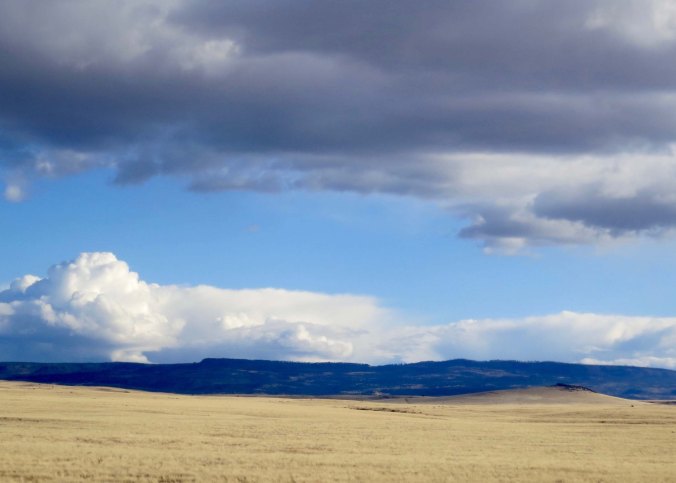
Desert lands can have great beauty.

Golden fields provide contrast to dark blue mountains, towering cumulus clouds and turquoise colored skies in eastern Arizona.

“…all of the golden lands ahead of you and all kinds of unforeseen events wait lurking to surprise you and make you glad you are alive to see.” – from Jack Kerouac “On the Road”

I was on my bike and out of Winslow by 7:00 the next morning. Not to demean the good folks of the community and their historic Route 66 town, but I was eager to leave my motel experience of the night behind. The broad shoulder of Interstate 40 provided a wide berth between the constant stream of large trucks and me. A slight headwind hassled me, slowing down my progress, but it was less than many I had experienced— or would experience. Mainly, I was free to gawk at the vast expanse of desert and fluffy clouds.

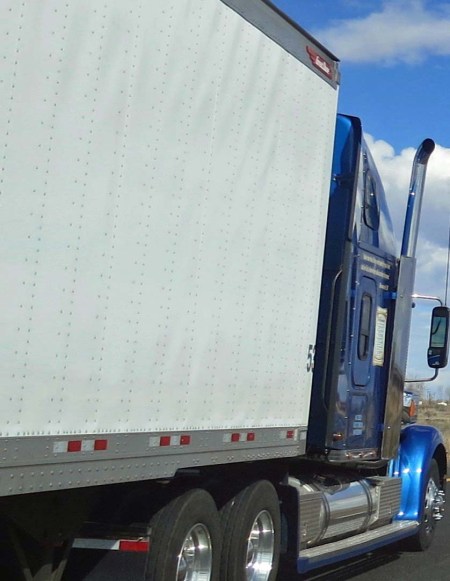
The normal view of an 18 wheeler from the perspective of a bicyclist.

The normal view of an 18 wheeler from the perspective of a bicyclist.

Wide open country, fluffy clouds, a broad shoulder— and for the moment, no vehicles.

Wide open country, fluffy clouds, a broad shoulder— and for the moment, no vehicles.

One non-natural thing I gawked at was the huge Cholla coal-fired power plant belching out black smoke into the clear desert skies. My years of serving as the Executive Director of American Lung Association affiliates in California and Alaska had educated me on the tremendous health and environmental costs associated with coal-fired power plants. The long list of pollutants spewed out are related to both heart and lung diseases. Exposure can also damage the brain, eyes, skin, and breathing passages. It can affect the kidneys, nervous, and respiratory systems. As if this isn’t enough, pollutants from coal-fired plants are also a major factor in global warming and the mercury poisoning of fish. (The plant is now being decommissioned.)

The Cholla coal fired energy plant located between Winslow and Holbrook Arizona just off Interstate 40.

The Cholla coal-fired power plant located between Winslow and Holbrook, Arizona just off Interstate 40.

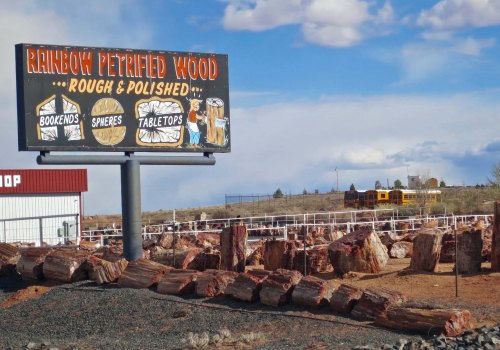
At Holbrook, I cut off of I-40 and picked up Arizona 180 with a goal of reaching Springerville, a town perched on the edge of the Rocky Mountains. I waved goodbye to I-40 and Route 66 as they set off for Albuquerque. And I said hello to petrified wood. Holbrook identifies itself as the gateway to the Petrified Forest National Park, which was set aside to preserve a 225-million-year old forest made up of stone trees. Petrified wood that exists in surrounding private lands can still be harvested, however. Another whole forest’s worth was for sale in Holbrook.  The town also emphasizes its connection with dinosaurs. (Peggy and I found a bunch as we drove through.)

One of several places in Holbrook Arizona that sells petrified wood.

One of several places in Holbrook, Arizona that sells petrified wood. This photo provides an idea of how large the pieces are. You are looking at lots and lots of potential book ends and table tops!

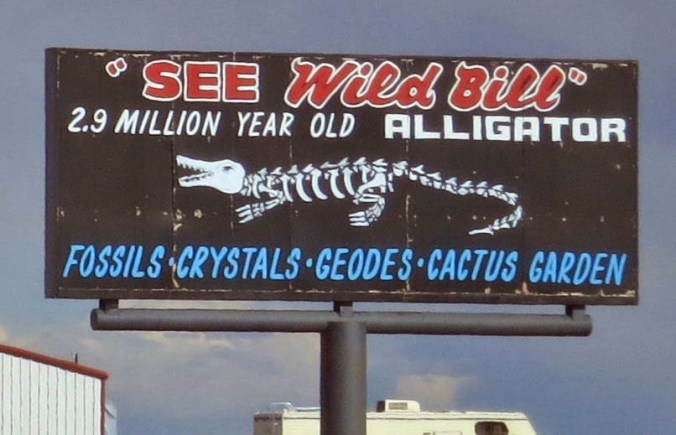
Fossils are found throughout the area. Wild Bill serves as an attraction to get people into the shop.

Fossils are found throughout the area. Wild Bill serves as an attraction to get people into the shop.

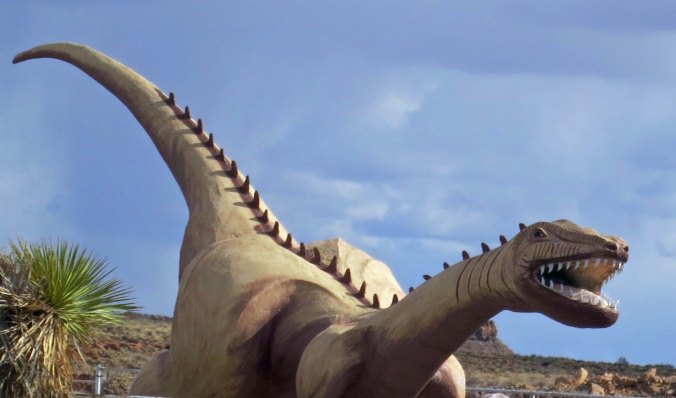
This dinosaur greeted Peggy and I as we drove out of town.

This dinosaur greeted Peggy and me as we drove out of town.

I think this sign was suggesting something about the route I had chosen.

I think this sign was suggesting something about the route I had chosen.

I followed AZ 180 east on bike for around 20 miles and reached the south entrance to the National Park. Since I had been through it before, I didn’t go in, but I did take advantage of the visitor’s center to refill my water bottles— always a good idea in the desert. I also checked out the petrified wood samples.

Arizona Highway 180.

Arizona Highway 180.

They did have petrified wood samples at the south entrance to Petrified Forest National Park. I have always been fascinated by the rocks.

They did have petrified wood samples at the south entrance to Petrified Forest National Park. I have always been fascinated by the rocks. Look closely and you can see the tree rings.

Immediately after the park, the road turned into a jumbled nightmare that had my bike crying ‘uncle’ in five minutes sharp. I told it to man-up and peddled on. The remoteness of the desert became more remote. I noted in my journal that I saw around four vehicles per hour.

I commented on the remoteness in a letter home to my father.

The isolation has an interesting impact on folks— they either love it or desperately want to escape. I spent the night in the small town of St. John. I’d planned on biking through, but a flat tire plus 60 miles persuaded me that the bicycling gods were suggesting I stop. The next morning, I was having breakfast in a small café when a woman and her teenage daughter came in. The woman made a beeline for me in a very predator-like fashion, like a hawk sweeping in on a mouse. She had blonde hair and two of the most intense blue eyes I have ever seen. I swear, Pop, she would have had me for breakfast had I been on the menu. She quickly slipped in that she was divorced. My guess was that there were slim pickings in St. John and an available man was an available man, even when his set of wheels was a bicycle.

But I wasn’t on the menu and I was soon bicycling the easy 25 miles into Springerville. I should have biked on for another 50, but the Rockies were looming and the next 50 miles involved climbing to the top. I holed up in a local campground and found it so pleasant I stayed the next day as well.

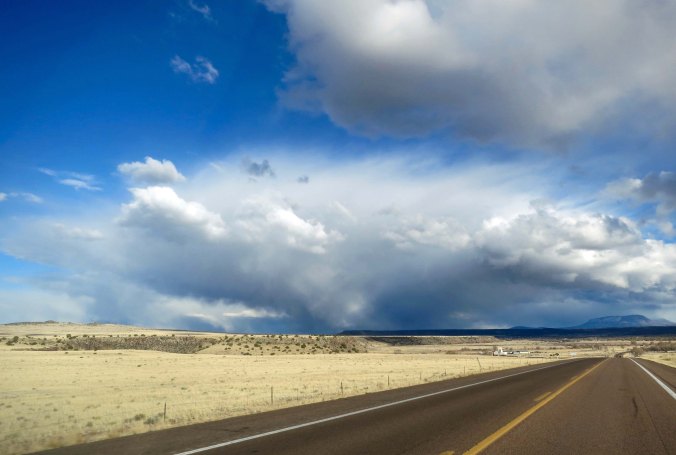
Storm clouds on the road into Springerville, Arizona.

Storm clouds on the road into Springerville, Arizona.(Note: The roads were in much better condition when Peggy and I drove over them.)

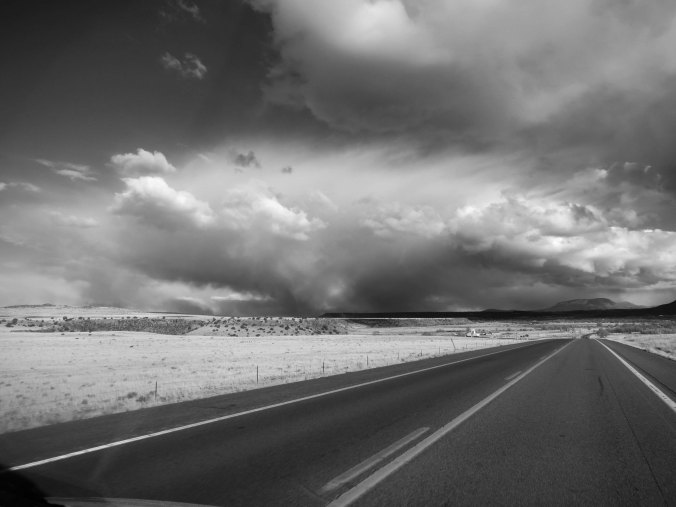
Just for fun, I rendered the same scene into a black and white photo.Which do you like? Which feels more threatening.

Just for fun, I rendered the same scene into a black and white photo.Which do you like? Which feels more threatening?

Speaking of threatening, I had little trouble transforming this cloud into a demon.

Speaking of threatening, I had little trouble transforming this cloud into a demon.

The region around Springerville is one of the major volcanic areas in the US, as the mounds of lava suggest.

The region around Springerville is one of the major volcanic areas in the US, as the mounds of lava suggest.

One expects to find barbed wire fences in the west. What made this one fun was that it was capturing tumble weed as it rolled across the plains.

One expects to find barbed wire fences in the west. What made this one fun was that it was capturing tumble weed as it rolled across the plains.

Peggy and I decided to visit the local museum in Springerville and check out its featured display on Casa Malpas, a prehistoric ceremonial site of the Mogollon Culture that was occupied between 1240 and 1350 CE. What we found was much more, including Rambo, the desert Big Horn.

Peggy and I decided to visit the local museum in Springerville and check out its featured display on Casa Malpais, a prehistoric ceremonial site of the Mogollon Culture that was occupied between 1240 and 1350 CE. What we found was much more, including Rambo, a desert Big Horn Sheep. I thought Rambo would fit right in at Burning Man. (Photo by Peggy Mekemson.)

As expected we, did find an excellent display of artifacts from Casa Malpais.

As expected, we did find an excellent display of artifacts from Casa Malpais.

What was totally unexpected was a Rembrandt sketch.

What was totally unexpected was a Rembrandt sketch.

This photo provides an example of how full the museum was.

This photo provides an example of how full the museum was.

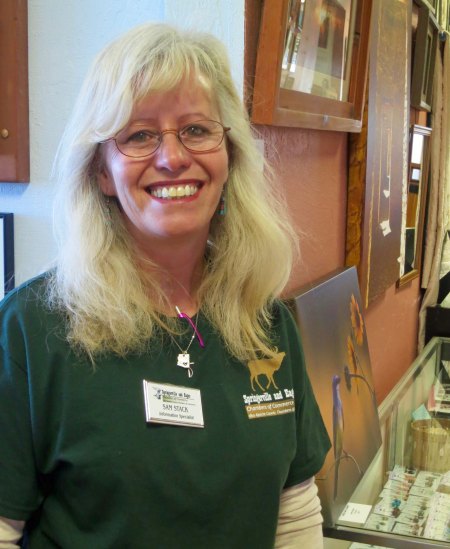
As Peggy and I retraced my bike route over the past couple of months and visited local museums along the way, we were struck by how friendly, knowledgeable and helpful local staff were. Sam Stack at the Springerville Museum is an excellent example.

As Peggy and I retraced my bike route over the past couple of months and visited local museums along the way, we were struck by how friendly, knowledgeable and helpful local staff were. Sam Stack at the Springerville Museum is an excellent example.

NEXT BLOG: It is up and over the Rocky Mountains where I bicycle 90 plus miles, stop off at Pie Town, and am impressed by a Very Large Array of radio telescopes that search for ET and are unlocking the early history of the Universe.


From Death Valley to Las Vegas… The 10,000 Mile Bike Trek

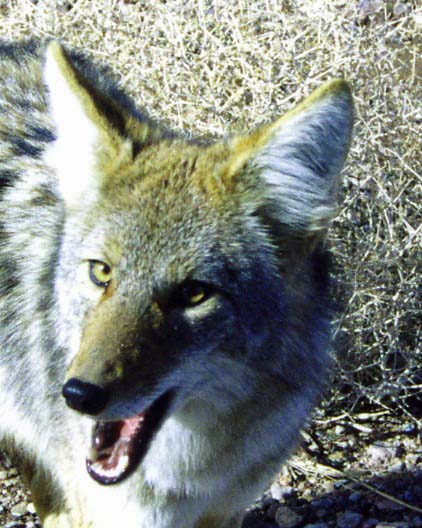
A coyote ran along beside me for a short while as I rode out of Death Valley. Here's a shot of a Death Valley coyote saying , "Feed me!"

A coyote ran along beside me for a short while as I rode out of Death Valley. Here’s a shot of a Death Valley coyote saying , “Feed me!” (Photo by Peggy Mekemson.)

I struggled with what to title this blog; Death Valley to Las Vegas seemed so ordinary.  I played with titles like ‘from wild to whacky’ and “from the sublime to the stupendous” but gave up. How do you compare Death Valley with Las Vegas? Is it even possible?

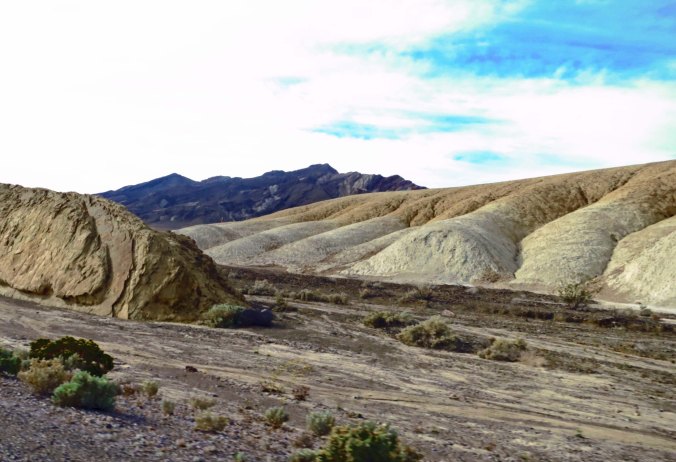
I wasn’t thinking about Las Vegas when I cycled out of Furnace Creek. There was another hill to climb. Not bad, just long— maybe 20 miles, and low gear the whole way. I cycled past Zabriskie Point and Twenty Mule Canyon, slowly. There was plenty of time to appreciate the scenery.

A view of Twenty Mule Canyon as seen from Highway 190.

A view of Twenty Mule Canyon as seen from Highway 190.

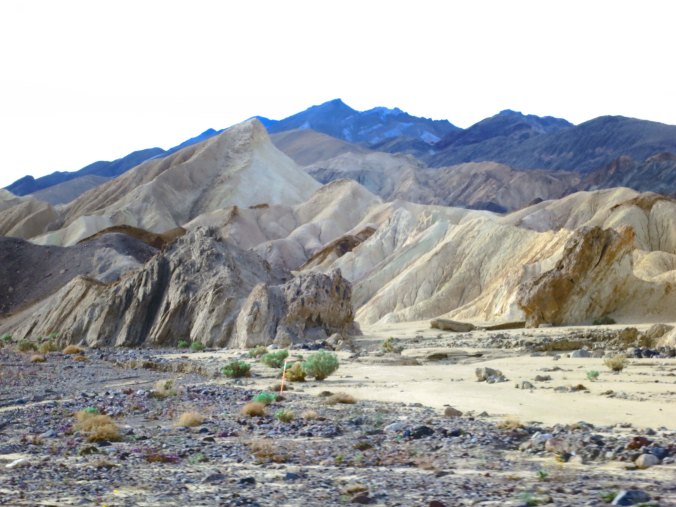
Another view of the Canyon.

Another view of the Canyon.

At one point, a curious coyote trotted along beside me in the bushes. A few minutes persuaded him I wasn’t going to slip him a snack. Coyotes are animals of opportunity when it comes to meals. The National Park has a strict rule on not feeding them. One time, Peggy and I were coming into Death Valley from Beatty, Nevada and a coyote was sitting beside the road just outside of the boundary, looking hungry. We laughed and stopped to snap its photo. Did the wily fellow (remember Wile E. Coyote and the Road Runner) know that tourists were fair game before entering the park?

Eventually I crested the hill I had been climbing and cycled down to Death Valley Junction. Twenty or so people live in the area. The town population sign announces less. Beside it’s minimal population, the Junction’s claim to fame is an opera house. I didn’t hear any arias, not even ghostly ones, but I was able to refill my water bottles.  I made my own music by blowing into the bottles. Leaving town, out where no one but the jackrabbits could hear me, I belted out O sole meo.

From Death Valley Junction, it was a straight, very flat 20-mile ride into Amargosa Valley and Highway 95. Along the way, I passed into Nevada. My adventure had truly begun. No one was around to help me celebrate except a far-distant free range cow. Or maybe it was a burro. Whatever, I mooed at it.

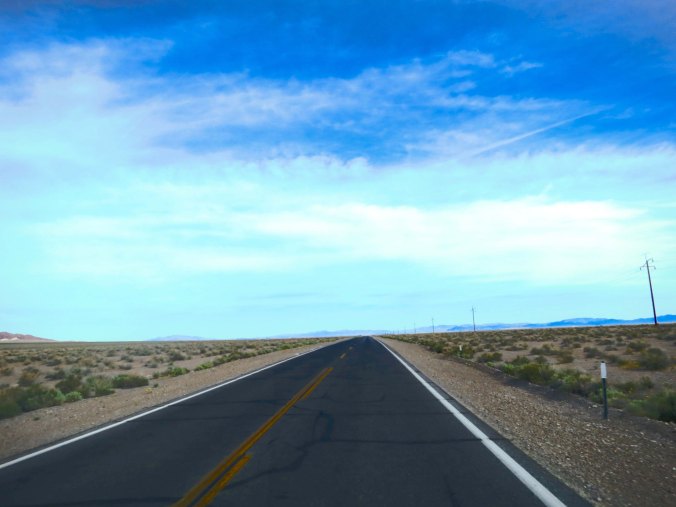
Highway 373 leading into Amargosa Valley was straight and flat. See any cattle or burros?

Highway 373 leading into Amargosa Valley was straight and flat. See any cattle or burros?

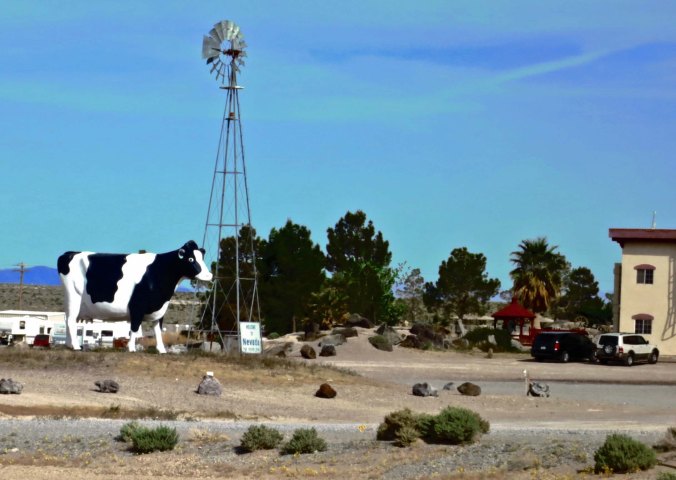
Peggy and I found this large one along the highway as we retraced my bike route. It wasn't there when I biked through the area. I think I would have spotted it.

Peggy and I found this large cow along the highway as we retraced my bike route. It wasn’t there when I biked through the area. I think I would have spotted it.

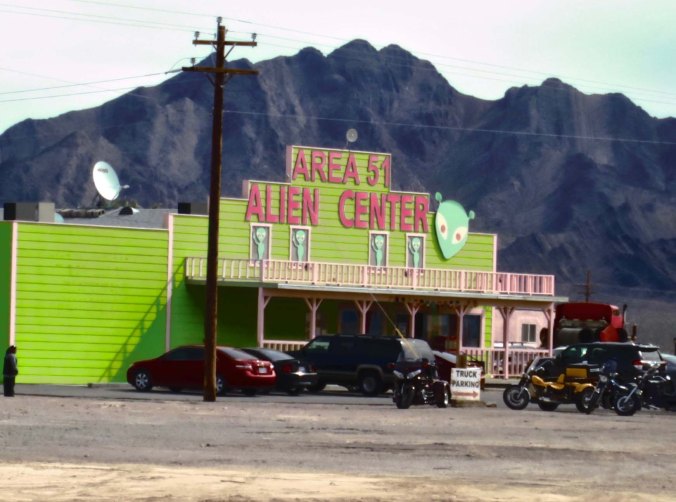
Highway 95 is Nevada’s main (only) road connecting Reno, Carson City, and Las Vegas. I stopped at the junction and decided to call it a day. A small restaurant/casino promised food and entertainment. A rest stop provided bathroom facilities. A bar across the road pointed out I was in ET country. Area 51 was near by. What more could a lone cyclist ask for? I biked over to the restaurant, downed a chiliburger, and was entertained by a seasoned waitress. “Where you headed, Honey?” Afterwards, a friendly video poker machine paid for my dinner. As dusk approached, I found a hidden area behind the rest stop and took out my ground cloth, sleeping pad and sleeping bag. I went to sleep looking for flying saucers zipping across the sky.

ETs and Area 51 have become tourist attractions. This establishment is in Amigos Valley on Nevada Highway 95.

ETs and Area 51 have become tourist attractions in Southern Nevada. This establishment is in Amargosa Valley on Nevada Highway 95. The more you drink, the more aliens you see.

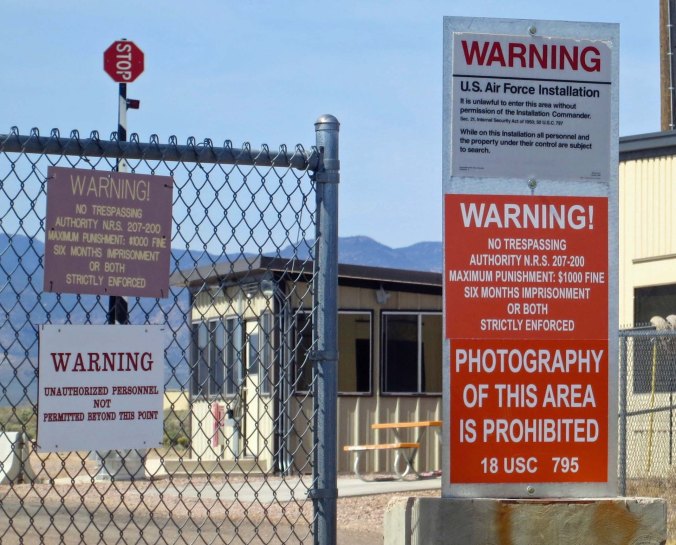
Area 51 in the Nevada Desert.

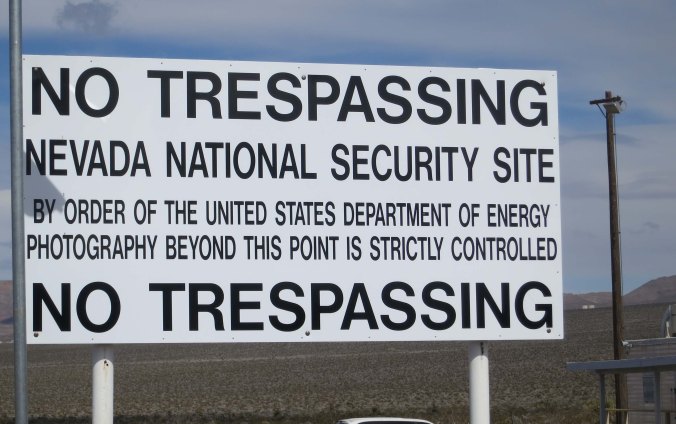
The actual Area 51 is a hundred or so miles across the desert. Peggy and I visited the area on one of our trips. I don’t think the government wants you on the site.

I was up early the next morning and on my way to the neon jungle— sin city. There really wasn’t much reason to hang out in the bushes behind the bathrooms, as I am sure you will agree. I did stop for a quick breakfast and chat with my favorite 70-plus waitress. “I see you are on your way dear. Can I ride along on the back?” “Only if you pedal, honey.” “Oh, I have something to peddle, alright. Is that what you have in mind?” I laughed and left a generous tip.

My video poker machine beckoned as I went out the door. It wanted its money back. “Not today,” I told it and patted it fondly.

Twenty-five miles or so down the road, I came on a bizarre sight for the middle of the desert: protesters. I thought maybe my lonely hours on the road were beginning to take their toll and I was seeing a mirage. But the protesters were real and they had a serious mission; they carried “Ban the Bomb” signs. Nevada’s nuclear test site was just off to the east and protests over America’s nuclear bomb testing program had been going on in the area for years. Seventy-five people had been arrested there the week before on Palm Sunday. Government records later revealed that over 37,000 people had participated in the test site protests with some 15,740 arrests made, including the likes of Carl Sagan, Kris Kristofferson, Martin Sheen, and Robert Blake.

As a child growing up in the 50s, I remember witnessing one of the first atom bomb tests in Nevada— from our home in the Sierra foothills! My brother, sister and I got up with our parents at some time in the wee hours in the morning and held a countdown. The whole southeastern sky lit up. Guests staying at hotels in Las Vegas actually got to see the tale-tale mushroom clouds from this and later tests. Strange entertainment indeed. I am sure the casinos protested; it took time away from gambling.

Peggy and I revisited the site a year ago. We took the exit off the road toward Mercury. Nothing was marked on the exit sign except “No Services.” A couple of hundred yards in, not visible from the freeway, a large sign demanded that we stop. Military property existed on the other side and all sorts of bad things would happen to us if we trespassed. No photographs were allowed. Suddenly a black SUV was parked next to us. We had no idea where it came from. A man in dark glasses and a suit, looking suspiciously like a character out of Men in Black, was demanding to know what we were doing and insisting that we turn around and get out of there. “We’re on our way,” I announced. As he drove off, I got out and took a photo of the sign, an admittedly small contribution to the protests of yore.

The sign at the Nevada Nuclear Bomb Test Sight.

The sign at the Nevada Nuclear Bomb Test Sight.

I didn’t make it to Las Vegas that night on my bike trip. It was well over 100 miles. My conditioning was coming along fine, but not that fine. The next day I cycled in, dodged insane traffic, found a KOA that wasn’t afraid of someone carrying a tent, and settled in for a layover day. My bike wanted a tune up and I wanted a day on the Strip.

While Las Vegas has changed extensively over they years, it has retained its purpose of separating you from your money. Early casinos, like the nugget, suggested you would be taking gold home.

While Las Vegas has changed extensively over they years, it has retained its purpose of separating you from your money. Early casinos, like the Nugget, suggested you would be taking gold home.

Another example. What's more symbolic of obtaining untold, unearned wealth than the Golden Goose.

Another example. What’s more symbolic of obtaining untold, unearned wealth than the Golden Goose?

Today's emphasis is more on Las Vegas being a resort destination, somewhere you might take the family. Like to Paris for example...

Today’s emphasis is more on Las Vegas being a resort destination, somewhere you might take the family. The strip now features such places as Paris…

Or Venice...

Venice…

And fantasy land.

And fantasy land.

Show girls have always been popular. (Photo by Peggy Mekemson.)

Show girls have always been popular. (Photo by Peggy Mekemson.)

The city has always had a whacky side...

The city has always had a whacky side…

As demonstrated by this and the last photo.

As demonstrated by this and the last photo.

Note: All of the above photos were all taken during our present trip or on previous trips through the region. You may recognize some photos from earlier blogs I have posted.

NEXT BLOG: Join me as I make my way into Arizona and onto Historic Route 66.