A Ten Thousand Mile Bike Trip… Let the Journey Begin

28 years ago, after wrapping up my part in increasing California's tobacco tax, I decided to go on a 10,000 mile bike trip around North America. Peggy and I are now redrawing the route.
28 years ago, after wrapping up my part in increasing California’s tobacco tax, I decided to go on a 10,000 mile bike trip around North America. Peggy and I are now driving the route. Peggy first met me when I stepped off my bike in Sacramento. She said I looked svelte and seemed to appreciate my tight bicycling clothes. Having been by myself for six months, I immediately fell in love.

It had been an exciting night at the Proposition 99 Campaign Headquarters in Sacramento. The tobacco industry had just spent $25 million ($56 million in today’s dollars) trying to defeat our efforts to increase California’s tax on tobacco, which, up to that point, was more than it had spent on any single political campaign in its history. The industry regarded our efforts as the most serious threat it had ever faced, not because we were increasing the tax, but because we were proposing to spend a significant amount of money on prevention. It had hired some of the best political operatives in the nation, including Ronald Reagan’s former media director— and, it had run the kind of campaign you might expect from an industry that had made billions off of successfully marketing a deadly, highly addictive drug to children.

The prevention part of the equation had been my idea. If we succeeded, we would embark on one of the most extensive prevention program ever, anywhere in the world. The industry was right to be worried. And we were right to be nervous. As the full force of the industry’s campaign had come to fruition in the last week before the election, we had seen our once comfortable lead drop to .05%.

But the night was ours. Heroic efforts by our friends in the health and environmental communities, including my future sister-in-law, Jane Hagedorn, made the difference. Early returns showed us leading. Later returns showed that we had won. I gave a talk on the power of a small group to take on one of the world’s most powerful industries and win. I then led the group in a series of cheers as the TV camera’s rolled. I ended my night by consuming more alcohol than a health advocate should. Jane drove me home.

California’s health community went on to prove that prevention works. The state moved from having the second highest incidence of tobacco use in the nation to the second lowest. Five years ago the California Department of Health estimated that over one million lives and $70 billion in health care costs had been saved to date.

The Proposition 99 battle was won in 1988, over a quarter of century ago. Ancient history now— except it relates to the story I will be telling on this blog for the next 2-3 months. The campaign wrapped up an important chapter of my life, and it left me with a question: what would I do next? I decided to buy a bike and go on a solo, six-month, 10,000-mile bike ride around the US and Canada. It was a completely reasonable decision, right… kind of like taking on the tobacco industry. So I went out and did it.

And this brings us to the present. I earned a huge number of husband brownie points last year— billions of them. I spent lots of time with kids and grandkids, supported Peggy’s various efforts to improve our community, and did many manly chores around our property. The wife was impressed. She made a mistake. “Next year is yours, Curt,” she announced. “What would you like to do?” It was like a blank check. I got a wild look in my eye and (before she could reconsider), tossed out, “Take our van and follow the route of my North American bike tour… for starters.”

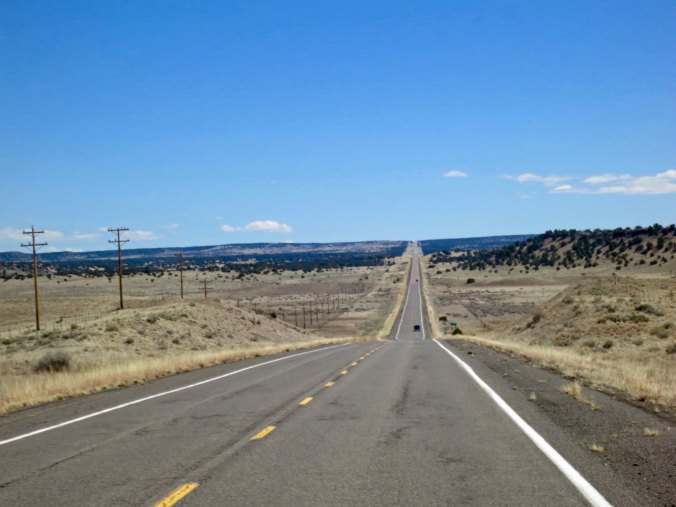
That’s the reason Peggy and I are sitting in a Big O Tire store now in Roswell, New Mexico while Quivera, our van, has some work done. I am sure a UFO is circling above us, the same UFO that caused us to have a blow-out last night.

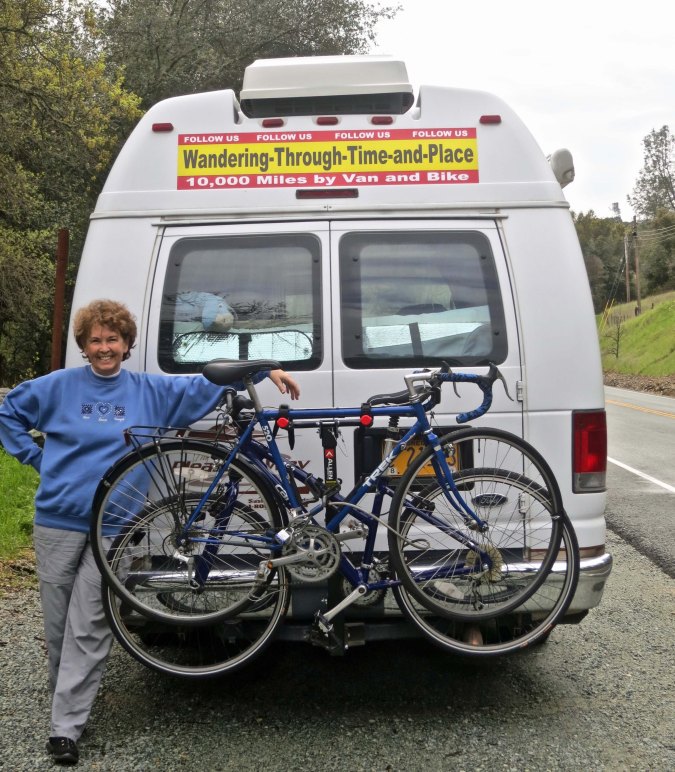
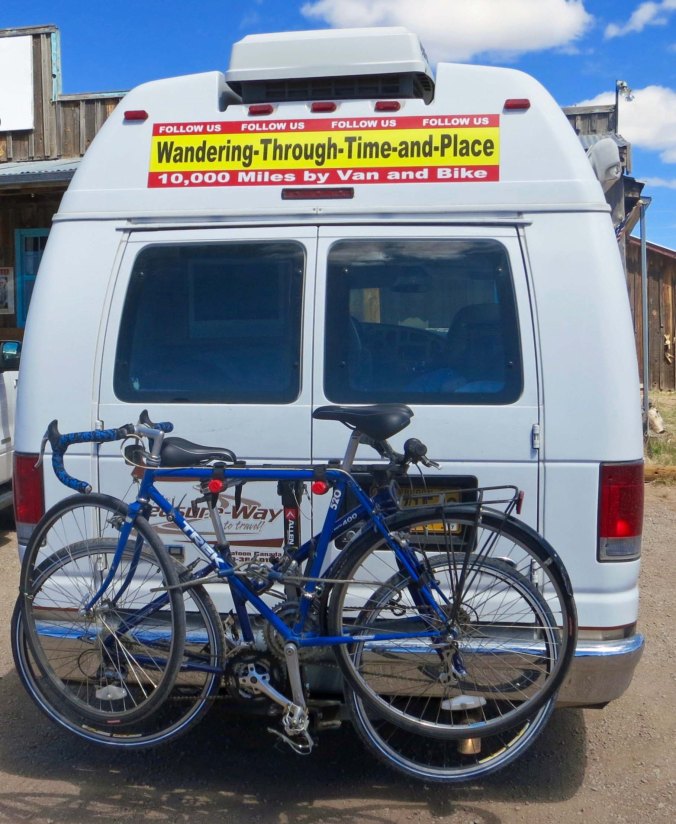
Quivera, the Van. We put a sing on Quivera to encourage people to follow my blog. The blue bike on the outside is the bike I rode around North America.

Quivera, the Van. We put a sign on Quivera to encourage people to follow my blog. The blue Trek bike (creatively named Blue) is the bike I rode around North America.

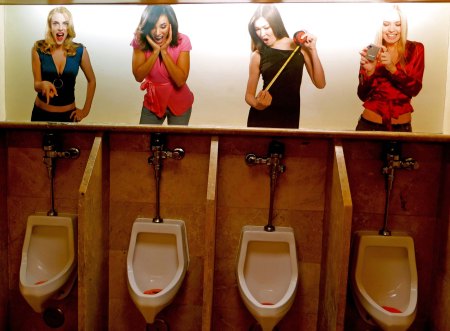
We were quite amused by the sink in the Big O Tire restroom.

We were quite amused by the sink in the Big O Tire restroom.

Even the toilet paper dispenser followed the theme.

Even the toilet paper dispenser followed the theme.

The staff at Big O was great. Putting new shocks on Quivera was a massive challenge. She is not mechanic-friendly. The mechanic on the left worked diligently. The front desk man helped us maintain our sense of humor. "Twenty more minutes" he told us several times.

The Roswell staff at Big O was great. Putting new shocks on Quivera was a massive challenge. She is not mechanic-friendly and objects to people working on her undercarriage. The mechanic on the left was one of three who worked diligently on her. (He is trying hard to smile.) The front desk manager helped us maintain our sense of humor. “Twenty more minutes” he told us numerous times.

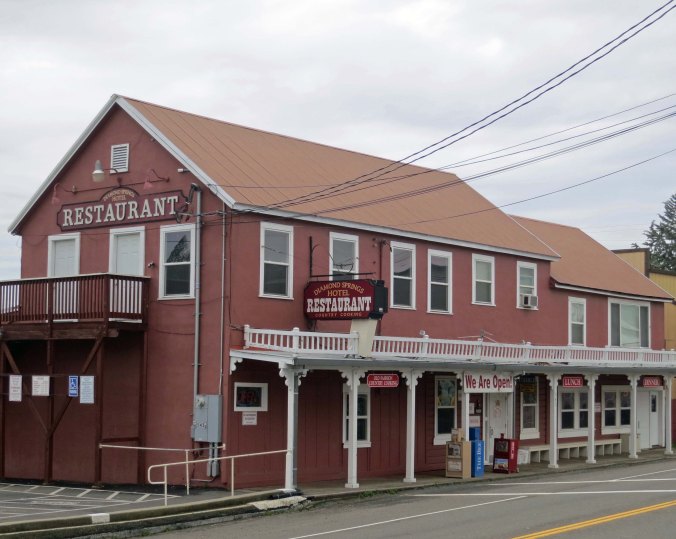
Starting with my next blog, I will take you back to the beginning of my bike trek in Diamond Springs, California. I’ll talk more about my reasons for the trip and I will outline the extensive preparation it takes for such an adventure: I increased my nightly consumption of beer from one to two cans.

The blog will cover both my original journey and our present journey by van. For example, here’s what we have done in the past couple of days:

  • Visited a small town museum in Springerville, Arizona that included a Rembrandt among its treasures that could probably buy the town, or maybe the whole county.
  • Stopped off in Pie Town on the crest of the Rockies that is nationally famed for the pies it sells. The owner, who once gave me a free piece of pie, came out to have her photo taken with Peggy, me, Quivera and our bikes. (Crossing the Rockies was my first 100-mile day on the bike trip.)
  • Magically showed up at the annual open house for the Very Large Array of radio antenna/telescopes that have been featured in movies like Contact and Independence Day. Scientists from around the world compete for time on the radio telescopes. We were given a tour by a scientist who is looking back in time to the very beginning of the universe.
  • Contemplated the devastation created by nuclear bombs as we viewed the Trinity site where the first atom bomb ever was exploded.
  • Paid homage to Smokey the Bear by visiting his gravesite and singing his song. (Do you know it?)
  • Walked the streets of Lincoln where Billy the Kid fought in the Lincoln County range wars of the early West.
  • Kept a sharp eye out for UFOs as we drove in to Roswell.

And that’s just two days. My challenge will not be in finding things to write about! This is a back roads journey through America and Canada, a Blue Highways Adventure. I’ll give more details on my next blog, but to get you started, here is a rough map of the journey I made by bike and we are now making by van. Please join us.

This is the route I followed through the US and Canada. I began and ended my trip in Northern California.

This is the route I followed through the US and Canada. I began and ended my trip in Northern California.

The Scary Tale of the Graveyard Ghost

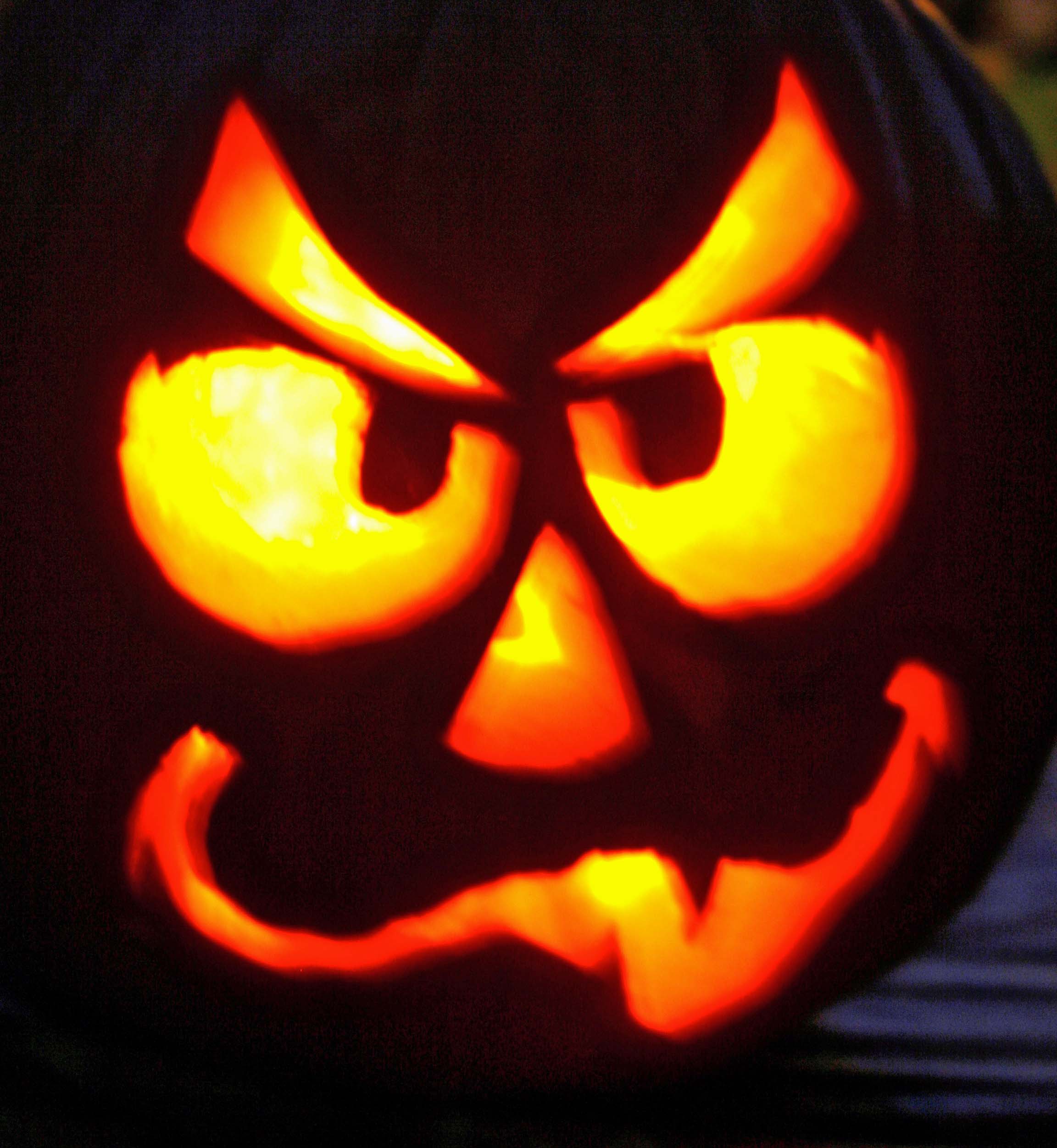
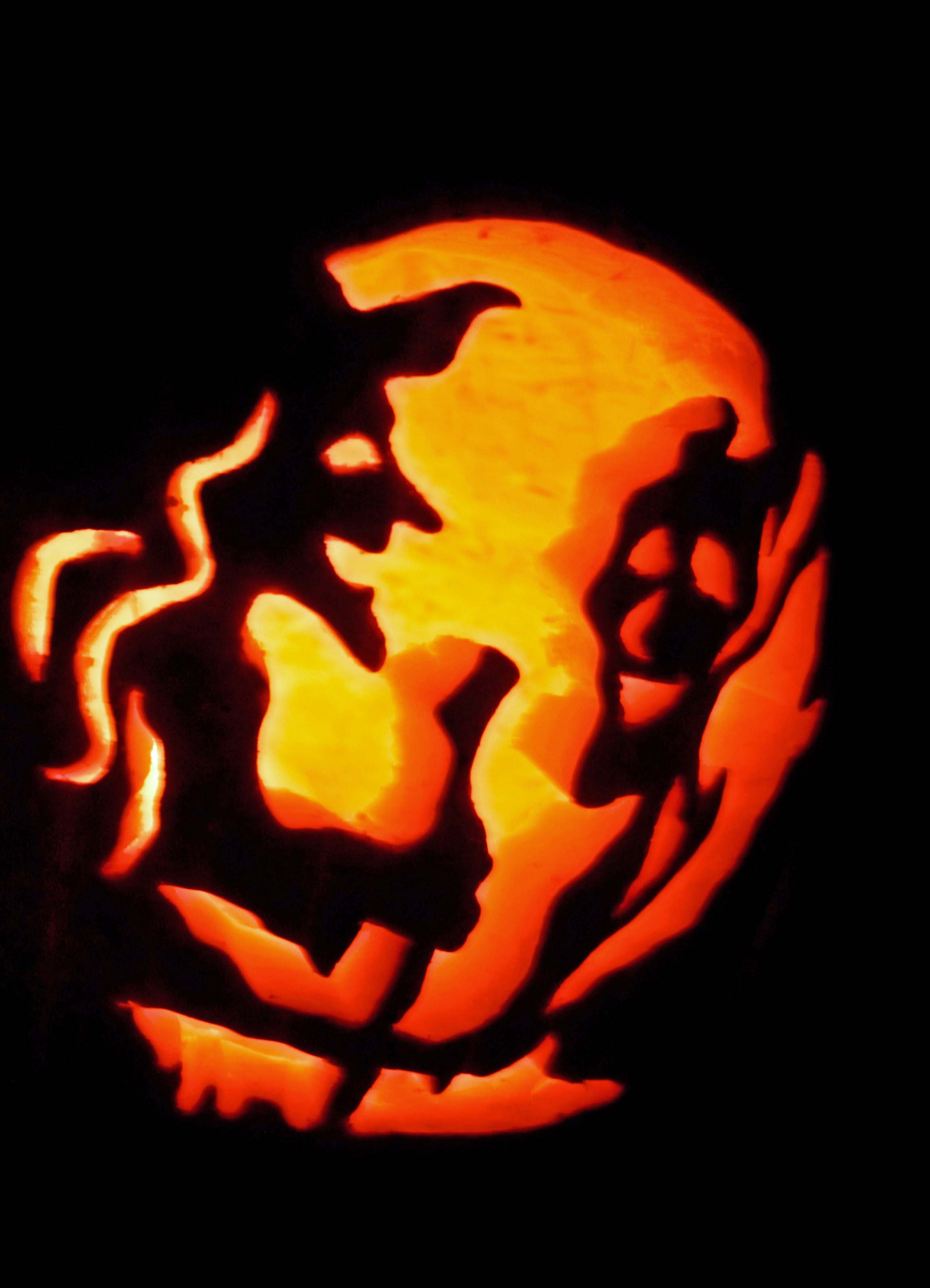
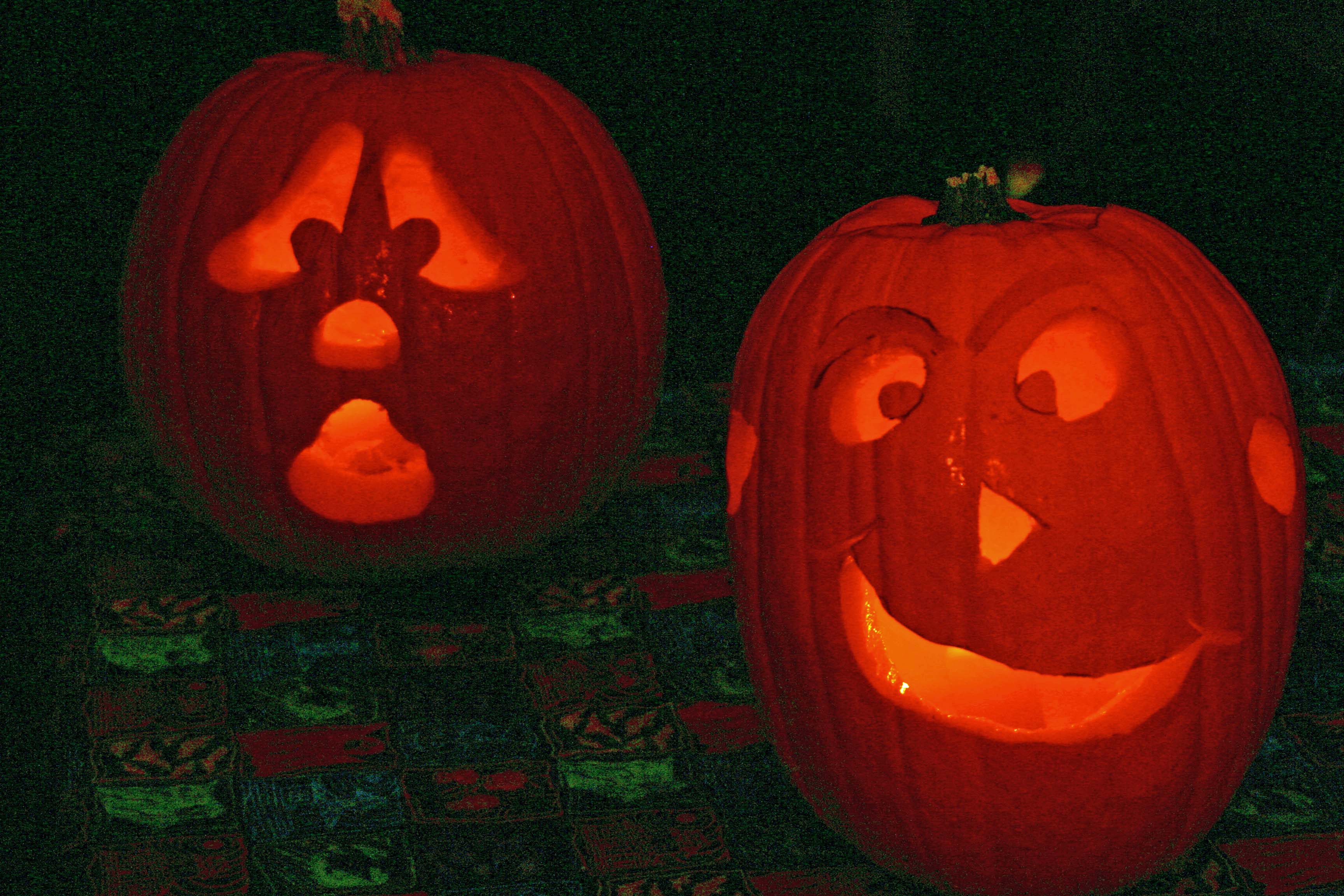
It is that time year when ghoulies and ghosties and long legged beasties take to the streets. The pumpkins in this blog were carved by my sister Nancy, her husband Jim and Peggy and I over the past 20 years.

It is that time year when ghoulies and ghosties and long-legged beasties take to the streets. And it is also the time when innocent pumpkins assume ghostly appearances. These scary fellows were carved by my sister Nancy, her husband, Jim, Peggy and I over the last several years.


Peggy and I had lunch with my sister Nancy and her husband Jim yesterday. With Halloween a day away, my thoughts turned to the Graveyard that loomed so ominously behind our house when we were growing up. While my brother Marshall and I had a healthy respect for its inhabitants, my sister Nancy Jo’s fear of dead people bordered on monumental. This tale relates to her encounter with the Graveyard Ghost as a teenage girl. I trot this story out every couple of years for Halloween. You may have read it before.

My sister was seven years older than I and lived on a different planet, the mysterious world of teenage girls. Her concern about ghosts makes this story a powerful testimony to teenage hormones. It begins with Nancy falling in ‘love’ with the ‘boy’ next door, Johnny.

Johnny’s parents were good folks from a kids’ perspective. Marshall and I raided their apple trees with impunity and Mama, a big Italian lady, made great spaghetti. I was fascinated with the way she yelled “Bullll Sheeeet” in a community-wide voice when she was whipping Papa into line. He was a skinny, Old Country type of guy who thought he should be in charge.

I use the terms love and boy somewhat loosely since Nancy at 15 was a little young for love and Johnny, a 22-year-old Korean War Veteran, was a little old for the boy designation, not to mention Nancy. Our parents were not happy, a fact that only seemed to encourage my sister.

Her teenage hormones aided by a healthy dose of rebellion overcame her good sense and she pursued the budding relationship. Johnny didn’t make it easy. His idea of a special date was to drive down the alley and honk. Otherwise, he avoided our place. If Nancy wanted to see him, she had to visit his home.

It should have been easy; his house was right behind ours. But there was a major obstacle, the dreaded Graveyard.

Mekemson pumpkin 2

Nancy had to climb over the fence or walk up the alley past the Graveyard to visit. Given her feelings about dead people, the solution seemed easy— climb the fence. Marsh and I had been over many times in search of apples. Something about teenage girl dignity I didn’t understand eliminated fence climbing, however.

Nancy was left up the alley without an escort.

While she wasn’t above sneaking out of the house, Nancy asked permission to see Johnny the night of the Graveyard Ghost attack. She approached Mother around seven. It was one of those warm summer evenings where the sun is reluctant to go down and boys are granted special permission to stay up. Marshall and I listened intently.

“Mother, I think I’ll go visit Johnny,” Nancy stated and asked in the same sentence. Careful maneuvering was required. An outright statement would have triggered a parental prerogative no and an outright question may have solicited a parental concern no.

Silence. This communicated disapproval, a possible no, and a tad of punishment for raising the issue.

“Mother?” We were on the edge of an impending teenage tantrum. Nancy could throw a good one.

“OK” with weary resignation followed by, “but you have to be home by ten.”

What we heard was TEN. Translate after dark. Nancy would be coming down the alley past the Graveyard in the dark and she would be scared. Knowing Johnny’s desire to avoid my parents, we figured she would also be alone. A fiendish plot was hatched.

P 2

At 9:45 Marsh and I slipped outside and made our way up the alley to a point half way between our house and Johnny’s. Next we took a few steps into Graveyard where weed-like Heavenly Trees and deep Myrtle provided perfect cover. Hiding there at night was scary but Marshall and I were operating under inspiration.

Marsh stripped the limbs off of one of the young trees, bent it over like a catapult, and draped his white T-shirt on the trunk. We then scrunched down and waited.

At exactly ten, Nancy opened the back door and stepped outside with Johnny. Our hearts skipped a beat. Would he walk her home? No. After a perfunctory goodnight, Johnny dutifully went back inside and one very alone sister began her hesitant but fateful walk down the alley.

She approached slowly, desperately looking the other direction to avoid seeing tombstones and keeping as far from the Graveyard as the alley and fence allowed. At exactly the right moment, we struck. Marshall let go of the T-shirt and the supple Heavenly Tree whipped it into the air. It arched up over the alley and floated down in front of our already frightened sister. We started woooooing wildly like the eight and eleven year old ghosts we were supposed to be.

Did Nancy streak down the alley to the safety of the House? No. Did she figure out her two little brothers were playing a trick and commit murder? No. Absolute hysteria ensued. She stood still and screamed. She was feet stuck to the ground petrified except for her lungs and mouth; they worked fine.

As her voice hit opera pitch, we realized that our prank was not going as planned. Nancy was not having fun. We leapt out to remedy the problem.

Bad idea.

Two bodies hurtling at you out of a graveyard in the dark of night is not a recommended solution for frayed nerves and intense fear of dead people. The three of us, Nancy bawling and Marshall and I worrying about consequences, proceeded to the house. As I recall, our parents were not impressed with our concept of evening entertainment. I suspect they laughed after we went to bed. Sixty years later, Nancy, Marshall and I still are.

Happy Halloween to our friends in the blogging world!

Curt and Peggy

Mekemson Pumpkin 4

Backpacking into the Grand Canyon: Part III… My Muscles Go on Strike!

I am sitting on the edge of the Colorado, red with mud. (Peggy took this and the following photos when I returned down the Tanner Trail into the Grand Canyon several years later. I didn't have a camera on my first trip.)

I am sitting on the edge of the Colorado River, red with mud. (Peggy took this photo when I returned with her down the Tanner Trail into the Grand Canyon several years after my first trip. I didn’t have a camera the first time.)


At the end of my last blog on my backpacking trip into the Grand Canyon, I was getting ready to hike up the Canyon to the Little Colorado River. The day before I had made a strenuous descent from the rim to the Colorado River that had left my downhill muscles screaming for mercy.

I hoisted my backpack and mentally prepared for the day’s journey. On the edge of my campsite was a 20-foot section of small boulders I needed to negotiate to rejoin the trail. Normally I would sail through such an obstacle course, stepping on or between rocks as the situation called for. Not this time. I wobbled uncontrollably when I stepped on top of my first rock; I had absolutely zero balance. My muscles were refusing to function. They had gone on strike! While I didn’t reach the insane-cackle level brought on by exhaustion the night before, I did find myself giggling. Dorothy’s Scarecrow was a paragon of grace in comparison to me. I actually made it a whole hundred yards before declaring that my backpacking day was over.

An overhanging rock provided shade and a scenic view of the Tanner Canyon Rapids. I spent the day napping, reading a book on the Grand Canyon by Joseph Wood Krutch, snacking, and watching rafters maneuver through the rapids. The most energy I expended was to go to the river and retrieve a bucket of water. There was plenty of time to let the mud settle.

I made it as far as an overhanging rock a hundred yards from my campsite. Thirteen years later I pointed out my hideaway to Peggy. It may hold the record for the shortest backpacking trip in history.

I made it as far as an overhanging rock a hundred yards from my campsite. Thirteen years later I pointed out my hideaway to Peggy. It may hold the record for the shortest backpacking trip in history. (Photo by Peggy Mekemson.)

Peggy tried out my seat where I sat and read all day and watched bats come though in the evening.

Peggy tried out my seat where I sat and read all day and watched bats come through in the evening.

The view I had of the Tanner Rapids from my 'cave.'

The view I had of the Tanner Rapids from my ‘cave.’ Eventually I rafted down the Colorado River and would pass through these rapids.

That evening I sipped a cup of tea laced with 151-proof rum and watched bats flit around my ‘cave’ as they gobbled down mosquitoes. They were close enough I could have touched them. It was like I was invisible, as I had apparently been to the Mousy and his stalker the night before. Strange, unsettling thoughts of nonexistence went zipping through my mind. Being alone in the wilderness is conducive to such thinking. The Canyon adds another layer.

Day three arrived and it was time to explore my surroundings and whip my protesting muscles into shape. I still wasn’t ready for primetime backpacking, so I took a day hike up Tanner Creek Canyon. Whatever creek had existed was waiting for future rain, but the erosive power of water was plainly evident. This was flash flood country where a dry wash can turn into a raging torrent in minutes. Dark clouds demand a hasty retreat to higher ground. I had nothing but blue skies, however, so I hiked up as far as I could go. The canyon narrowed down to a few feet and traveling any further called for rock climbing skills I didn’t possess. I sat for a while enjoying the silence— and the thousands of feet of soaring walls. The isolation seemed so complete it was palpable. I was alone but not lonely. Nature was my companion. Reluctantly, I turned back toward my camp.

I spent the next two days hiking along the River. I backpacked up the Colorado following the Beamer Trail to Lava Canyon Rapids the first day and then worked my way back down past Tanner Creek to Unkar Creek the second. My general rule was that if the trail appeared ready to make a major climb up the canyon, it was going without me.

At one point where Peggy and I were backpacking up the Beamer Trail we came to a fork in the trail and went left. (Yes, we did find the fork in the trail.)

At one point when Peggy and I were backpacking up the Beamer Trail we came to a fork in the trail and went left. (Yes, we did find the fork that someone had humorously placed in the trail. I was reminded of the Muppet Movie where Kermit came on a similar fork.)

I am not sure the fork provided good advise. (grin) We had to scramble.

I am not sure the fork provided good advice. (grin) We had to scramble.

The only real excitement came toward the end of the second day when I discovered my left foot poised a few inches above a pinkish Grand Canyon Rattlesnake that lay stretched across the trail, hidden in the shadows. He was a granddaddy of a fellow, both long and thick. My right leg performed an unbidden, prodigious hop that placed me several feet down the trail. There is a very primitive part of the brain that screams snake. No thinking is required. As soon as I could get my heart under control, I picked up a long stick and gently urged the miscreant reptile to get off the trail. He wasn’t into urging. Instead, he coiled up, rattled his multitude of rattles and stuck out his long, forked tongue at me. He was lucky I didn’t pummel him. I did prod more enthusiastically, however, and he got the point, crawling off the trail rather quickly. I memorized the location so he wouldn’t surprise me on the return journey.

My leg’s miraculous leap suggested that my body was beginning to tune up. There would be no more malingering and feeling sorry for itself. The next day I camped at Tanner Creek again and the following day out I hiked out. The trip up took me three hours less than it had taken to hike in. I was tempted to go find the Sierra Club fellow who had demanded that I use a more civilized trail, but opted out for a well-earned hamburger and cold beer instead. My body was demanding compensation for its forced march.

I’ll return to my Grand Canyon adventure next week when a friend joins me to hike back into the Canyon a few days after I returned to the rim. Hostile spirits from another realm join us. Or at least she believes they do.

NEXT BLOG: I start my series on my recent trip up the North Coast of California. First up— Olompali State Park. Located just north of San Francisco, it has a fascinating history stretching from the Miwok Indians to the Grateful Dead to a hippie commune.

Grand Canyon Odyssey, Part I… The Wilderness Cure

The Grand Canyon is a world treasure. I've backpacked into it several times and rafted the Colorado River through it. Once I even rode a mule into the Canyon.

The Grand Canyon is a world treasure. I’ve backpacked into it several times and rafted the Colorado River through it. Once, I even rode a mule into the Canyon. The mule carried me over the trail you can see right front center.

I followed Highway 50 east out of Sacramento, cut off at Pollock Pines and picked up the Mormon-Emigrant Trail. Soon I was on Highway 88 climbing up and over Carson Pass. Newly dressed aspens, snow-covered mountains and frothy creeks reminded me that summer was still two months away.

Kit Carson came through here in February of 1844 along with John C. Fremont. The snow was deep and food was limited. They ended up dining off of their horses, mules and the camp dog. The dog apparently went quite well with pea soup. Later, the trail they discovered would become a major entry point for the 49ers and run through the foothill town of Diamond Springs where I was raised.

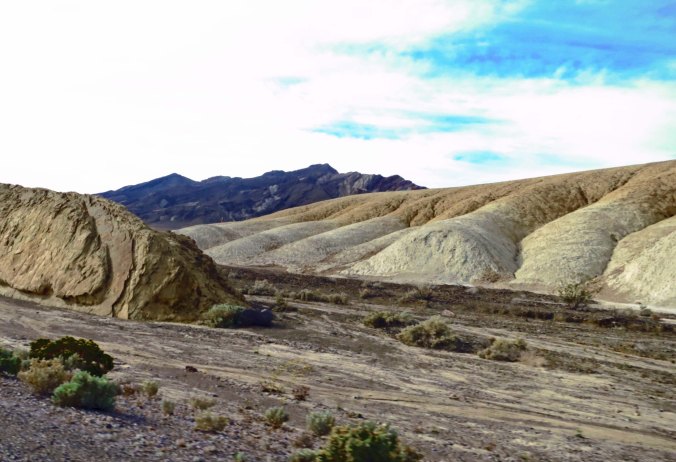
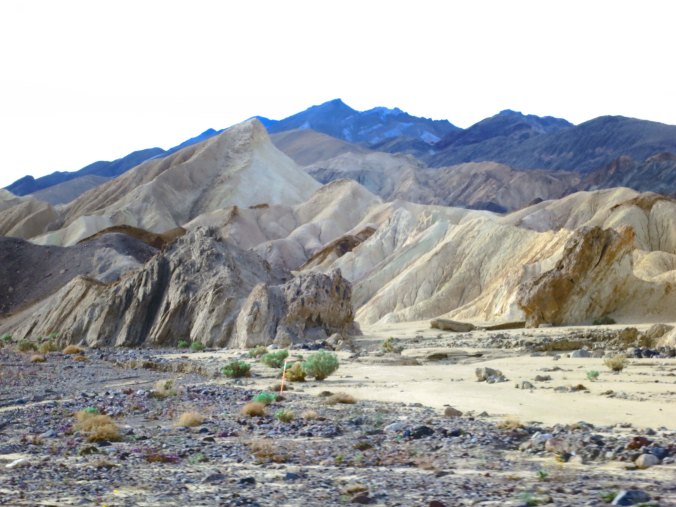
By evening I had driven down the east side of the Sierras and made my way into Death Valley. I was setting up my tent under a convenient Mesquite tree when the sun sank behind the Panamint Range. Coyotes howling in the distance lulled me to sleep.

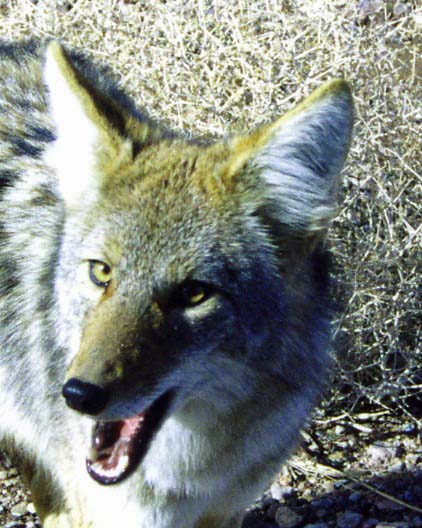
I walked out from my campsite in Death Valley as the sun set and listened to coyotes howl in the distance.

I walked out from my campsite in Death Valley as the sun set and listened to coyotes howl in the distance.

By ten thirty the next morning I was in another world, investing quarters in a video poker machine at Circus Circus on the Las Vegas Strip. Luck was with me. Two hours later found me crossing over Hoover Dam with an extra hundred dollars in my wallet. It represented two weeks of backpacking food. I zipped across the desert, picked up Interstate 40 at Kingman and cut off toward the Grand Canyon at Williams.

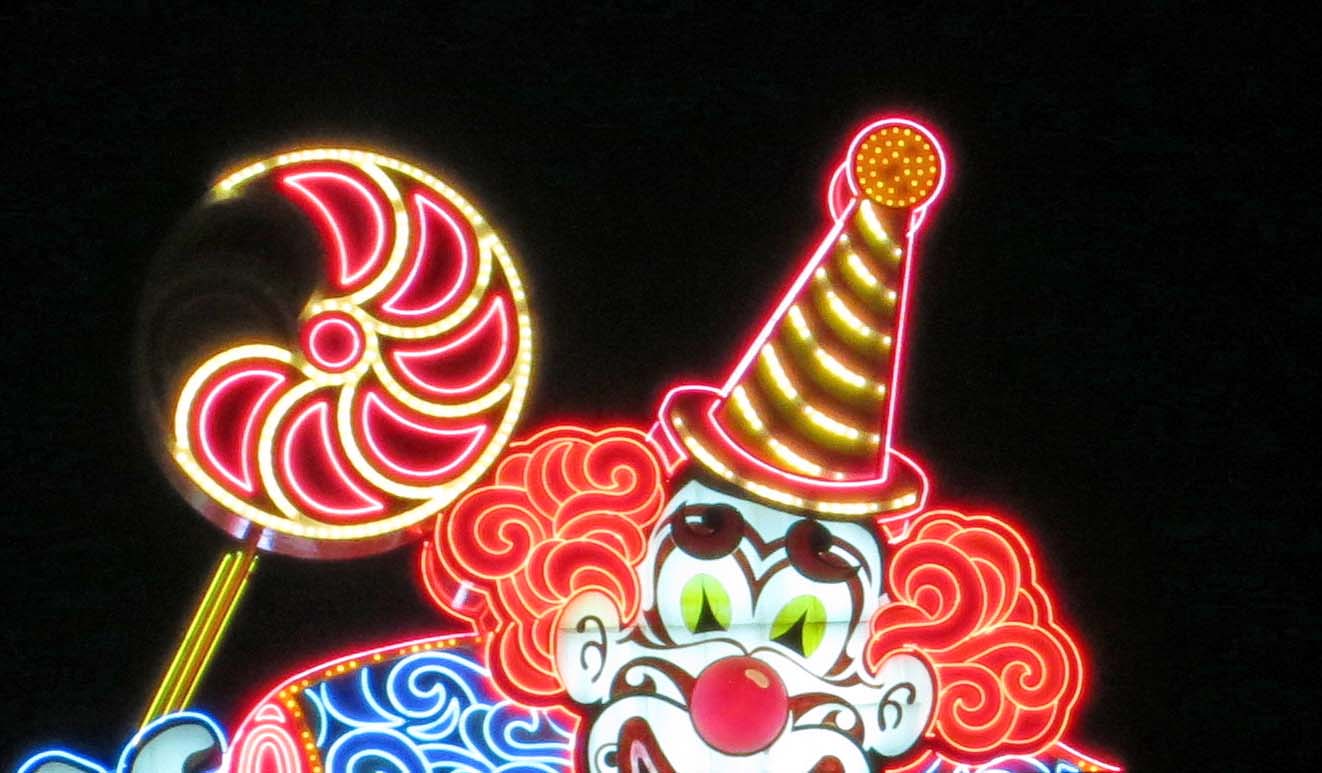
Circus Circus Clown.

A little treat for those of you with Coulrophobia, the Circus Circus Clown. No wonder people fear clowns.

I wasted little time checking in at Mather Campground. The Canyon was waiting. An unoccupied rock off the trail near Yavapai Point provided a convenient spot for dangling my legs over the edge. Nothing but several hundred feet of vacant space existed beneath my hiking shoes. A slight breeze on my back reminded me of my mortality.

Sitting on the edge of the Canyon isn't for the faint-hearted. One can fall hundreds of feet.

Sitting on the edge of the Canyon isn’t for the faint-hearted. One can fall hundreds of feet.

My musings were interrupted when a fat Golden-Mantled Ground Squirrel poked his furry head up next to me and demanded payment for my front row seat. I recited the Park’s rule on feeding animals and told him to go eat grass. He flipped his tail at me and squeaked an obscenity as he scrambled off in search of more gullible victims.

Twilight was painting the Canyon with a purplish tinge but I could still make out the distinctive colors and shapes of the rocks. While my right-brain admired the beauty, my left-brain was busy considering eons upon eons of earth history. The dark, tortured walls of the inner canyon, now obscured by evening shadows, reached back over a billion years to the very beginnings of life on earth when our ancient ancestors had frolicked in even more ancient seas.

While the sun still touched the rim of the Canyon, the inner walls turned a dark purple. (Photo by Peggy Mekemson.)

While the sun still touched the rim of the Canyon, the inner walls turned a dark purple. (Photo by Peggy Mekemson.)

Erosion had given these Precambrian rocks a flat top, shaving off some 500 million years of earth’s history and creating what is known as the Great Unconformity.  Since then vast seas, Saharan size deserts, lakes and rivers had patiently supplanted one another as they marched through Paleozoic time depositing layer upon layer of the canyons walls.

My present perch was made of Kaibab limestone created by an inland sea some 250 million years ago. Dusk slipped into dark and my thoughts turned to my impending backpack trip.

I had backpacked into the Canyon several times. My objective this time was to explore the Tanner Trail on the eastern end of the South Rim road.

The next day was devoted to careful preparation. Seventeen years of backpacking in all kinds of terrain and climate had taught me that there was no such thing as being too careful. I approach compulsive when it comes to backpacking alone. Had I resupplied my first aid kit? Was my stove still working? Did I have adequate fuel? Did I have my flashlight, signaling mirror, whistle, compass and maps? Did I have enough but not too much food, water, reading material, etc. etc. etc.?

Safety, comfort and even entertainment are important but weight is always an issue.

Having satisfied myself that I could survive seven to nine days in the Canyon, I headed off to the backcountry permit office. The more environmentally inclined within the Park Service are seriously into minimizing impact and promoting safety. Requiring wilderness use permits is their primary tool in achieving these goals.

I patiently waited behind six other would-be canyon explorers and had memorized the minimum impact lecture by the time my turn was up. The ranger frowned when I mentioned the Tanner Trail.

“The trail is poorly maintained, rarely used, 10-12 miles long and arduous,” she cautioned strongly.

“And that,” I replied, “is exactly what I want.”  I was especially enamored with the ‘rarely used’ part.  I had no desire to share my experience with dozens of other people, much less armies of cantankerous mules that leave lakes of fowl smelling pee on the trail. If I had to face a particularly tough physical challenge and be extra careful to avoid a tumble into the Canyon, it was a price I was happily willing to pay.

I was leaving the office when a skinny guy wearing a short-sleeved khaki shirt, blue shorts and hiking boots stopped me.

“Excuse me,” he announced, “I am with the Sierra Club and I couldn’t help but hear you are headed down the Tanner Trail. Given your condition, I would strongly advise against it. You should hike down the Bright Angel Trail. It’s a lot easier and there are lots of other people hiking it in case you get in trouble.”

Now I confess that having just emerged from nine months of hibernating in Alaska I was pasty white and pudgy. I will also allow that the guy was operating under good intentions.

But his arrogance, especially in announcing his Sierra Club membership as somehow making him a wilderness expert, irritated me. Over the years I had known and worked with lots of Sierra Club folks. I am a strong supporter of their efforts to protect the wilderness. I have even run into some who have had more wilderness experience than I. John Muir, the Sierra Club founder, is one of my all time heroes.

Had my unofficial advisor started off with something like, “I have been up and down the Tanner Trail several times, would you like some suggestions?” I would have been quite willing, even eager, to hear what he had to say. But his uneducated assumptions about my lack of knowledge absolutely turned me off. It was everything I could do to maintain a civil tone of voice as I thanked him for his advice and politely told him to screw off.

At 8:30 the next morning my pasty white pudgy body was having an animated discussion with my mind over why I hadn’t listened more carefully to the Sierra Club ‘expert’ the day before. I had started my day by splurging for breakfast at the elegant El Tovar Hotel and then driven out to Lipan Point.

I was now poised to begin my descent into the Canyon. It looked like a long way down. I gritted my teeth and banned any insidious second thoughts.

They came rushing back as I struggled to hoist my 60 plus pound pack. It was filled with seven days of food, extra water and all of my equipment. I had cursed the day before as I struggled to find room for everything. Now I was cursing I hadn’t left half of it behind. I had the irrelevant thought that my journey down would either kill me or cure me.


Sorry to leave you hanging here as I begin my descent down into the Canyon, but I am going to take a break from blogging for a couple of months. It’s going to be tough. I love blogging and I enjoy keeping up with all of my Internet friends. It’s a special group. But five grandsons are descending on our house and I think Peggy and I will be a little busy (understatement). After that I am going to do some traveling— who knows where? (Peggy will be off in London with her sister Jane.) I also need to spend some time marketing my book. Time simply hasn’t allowed me to put in the effort I should.

And finally, I received two notices from Word Press this past week. One congratulated me on my fifth anniversary with Word Press. The second congratulated me on posting my 500th blog. I realized I hadn’t taken a break from blogging since the beginning. So it’s time I did. I will be off Word Press until the second week in September when I will once again be posting blogs, catching up with the folks I follow, and making comments. Have a great summer and thanks ever so much for following me. —Curt

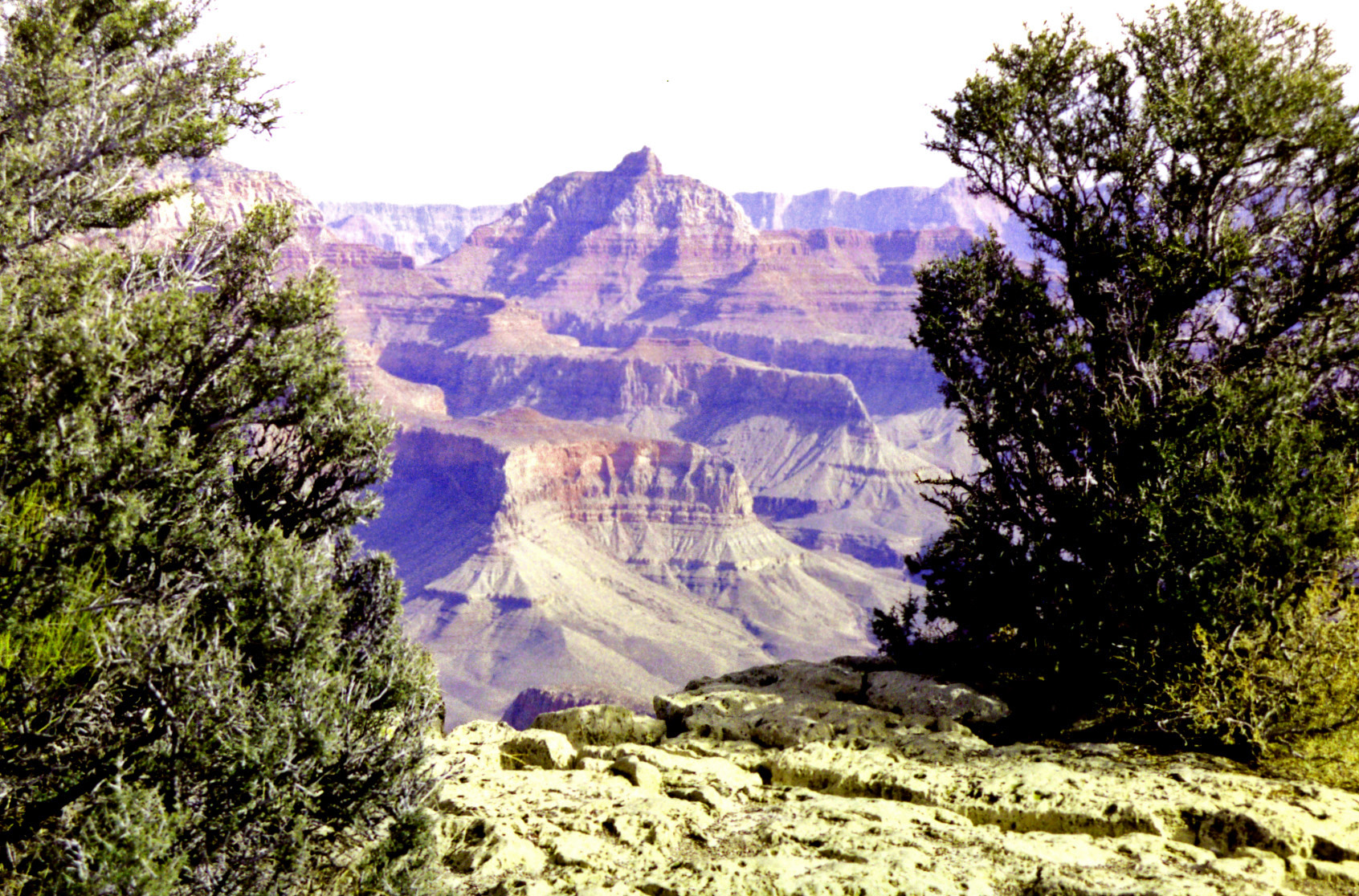
A final view of the Canyon with its multiple layers that represent deposited from oceans, deserts, rivers and lakes.

A final view of the Canyon with its multiple layers that represent deposits from oceans, deserts, rivers and lakes over hundreds of millions of years..

Escape from Alaska… Part II: The Friday Essay

Woodland buffalo have become fairly common when driving through portions of the Yukon Territory. As noted in my last Escape from Alaska blog, Peggy and I took these photos two years ago when we drove the Alaska Highway in the summer.

Woodland buffalo like this guy have become fairly common when driving through portions of the Yukon Territory. As noted in my last Alaska blog, Peggy and I took these photos two years ago when we drove the Alaska Highway in the summer.

The next day after my encounter with the Trooper (see here), I zipped down the Alaska Highway through the Yukon Territory to White Horse. With the exception of gigantic trucks on their way to the North Slope, I saw few other vehicles. Snow still covered the surrounding wilderness and the road was frozen solid. The annual migration of tourists traveling north was months away.

That night I chose to stay in a campground, preferring not to repeat my previous night’s experience. I also avoided wasting away in Margaritaville— instead I broke out the brownies.

As a going away present, some friends had given me a gallon Zip Lock bag of Alaska’s finest pot. At first sight, it might seem that they were involved in a criminal activity, but marijuana was legal in Alaska. You could grow your own and somebody had obviously grown a lot. Giving me the grass had been the Alaskan equivalent of sending me off with a bottle of 25-year-old single malt Scotch whiskey, or several bottles.

In honor of lung health, I promised not to smoke it. I practiced my baking techniques on my last night at my friend’s house. The cat, the two dogs and I tested the results. It was a mellow evening and the whole menagerie was allowed to sleep on the bed. We purred, wagged our tails, and had wild dreams.

Here’s some advice to the uninitiated that Alice B. Toklas didn’t provide: go easy on brownies. They have a way of sneaking up on you. The problem is physiological. Long before your body has done its job and processed the herb, you are thinking, ‘this stuff has absolutely zero impact, I should have stuck with wine.’ So you eat another brownie, and then another. By the time you realize the error of your ways, it’s too late and you are wacko.

Luckily, I had already been there, done that. I ate a small piece and waited patiently. Then I broke out an ounce of Swiss cheese. I was all moderation. Marijuana enhances flavor and encourages gluttony. I once watched a woman down a quart of ice cream in one sitting and demand more.

A friend had slipped me a fat letter to read on the way. I opened it as an option to eating the other 15 ounces of cheese. She had offered to pinch hit if my other Alaska relationship didn’t work out.

“We can run off to Mexico and open an orphanage for homeless children, Curt,” she had suggested. She was serious about the orphanage. It was a dream of hers. It made the suggestion of my staying home, writing, and raising one or two kids look like a ride on a merry-go-round. I had declined her generous proposal. The gist of the letter was that the offer was still open.

Sights along the the Alaska Highway include towering mountains...

Sights along the Alaska Highway include towering mountains…

Wild rivers...

Wild rivers…

Reflecting lakes...

Reflecting lakes…

And Dall Sheep...

And Dall Sheep…

Including this ram...

Including this ram…

And this curious kid.

And this curious kid.

Five days later I drove into Sacramento. The grass was green and flowers were blooming even though a major flood had threatened the region in February. I planned on spending a few days visiting my father and some friends before taking off for the woods. As part of my itinerary I stopped by to see Jane Hagedorn at the Sacramento Lung Association. Jane is a fierce friend. Every time I had tried to escape, she had reeled me back in, frustrating my desire to become a happy wanderer by making me offers I couldn’t refuse.

I found my green grass in Sacramento.

I found my green grass in Sacramento.

And California Poppies, plus two job offers.

And California Poppies— plus two job offers.

“You will come back to Sacramento and work for Lung when you are done playing,” she informed me and then dangled the Trek Program in front of me for bait. As I usually do, I tentatively agreed. It’s not wise to cross Jane. As I was leaving the Lung Building, I ran into Jerry Meral, the Executive Director of the Planning and Conservation League of California. Along with the Sierra Club, PCL is the main lobbying group for environmental groups in California.

“Curt,” Jerry said with his always-high level of enthusiasm, “I have a job for you.”

“I’m not looking for a job, Jerry,” had been my reply. “I am going backpacking for six months.”

Jerry, who is even worse than Jane at taking no for an answer, continued on, “But this job is perfect for you. I want you to work on raising California’s tobacco tax by five cents so we can use the money for buying parks.” I knew that Jerry and his crew at PCL had successfully done more at raising money for parks than anyone else in California and probably the world. If Jerry was behind the concept, it was legitimate.

“Interesting Jerry, but I am going backpacking.” I figured that took care of it.

“OK and have fun,” said Jerry, “but see me as soon as you get back.”

I half nodded my head in agreement. So here I was, desperate to free myself from any major commitments, and already agreeing to think about taking on two significant tasks— one that was monumental. But they could wait. The next day, I was on my way to the Grand Canyon. And who knew what I would be doing in six months.

NEXT BLOG: The wilderness cure begins. It’s off to backpack the Grand Canyon via Death Valley and Las Vegas.


Escape from Alaska… Part I

I was drawn to Alaska by its incredible wilderness. Lisa Murkowski, one of Alaska's Senators, recently introduced legislation to sell off all of America's public lands including national forests, wilderness areas, national historic sites and national seashores (everything except National Parks) to private developer so they can make money off of the lands.

The Wrangell-St. Elias Mountains. I was drawn to Alaska by its incredible wilderness. It may not be there for our children. Lisa Murkowski (R-Alaska) recently introduced a non-binding budget amendment to the US Senate that would allow states to sell off all of America’s public lands including national forests, wilderness areas, national historic sites, etc. (everything except National Parks) to private interests so they could turn our national heritage into profit.

The story of my involvement with California’s Proposition 99 tobacco tax campaign began on my 43rd birthday when I escaped from Alaska— and escape is the appropriate term.

My three years in Alaska had been a great adventure. I had explored the state’s magnificent wilderness areas and accomplished a fair amount in my role as Executive Director of the Alaska Lung Association. The organization had a great board and staff. We had taken a sleepy organization and turned it into a powerhouse on air quality and tobacco issues. I had led backpack, bike, and cross-country ski trek fundraisers, substantially increasing the organization’s income, not to mention giving myself an excuse to play in the woods. (As if I needed an excuse.)

But I am not cut out for the Executive Director business— or any other long-term, high stress job, for that matter. I only know one speed: fast forward. In time, the job starts to feel like I am locked in a steel cage, which just happens to be dangling from a frayed rope, hanging over a dark abyss. If that sounds to you like an imaginative description of depression, you are right. It is something of a curse on my mother’s side of the family, or to be more scientific, call it a genetic disposition.

Unfortunately, I am a slow learner. I had been executive director of several environmental and health nonprofits, done my job, and moved on. It seemed like a natural fit; so I persisted. But each time, it was like I was flirting with the dark side of my mind. I had learned I made a better ‘consultant,’ where I created the jobs I would work on. For example, I developed the wilderness trek program as a fundraiser and then became the American Lung Association’s national trek consultant. The consulting work was intense, but it had a definite beginning and a definite end. Afterwards, I would go play.

Alaska had sounded really good, however. And it was. There was all of that great outdoors (over 50% of America’s wilderness area), important issues to address on the environmental and tobacco front, and a relationship in Sacramento that needed a serious time-out. So I had taken the bait when Alaska had called— hook, line and sinker.

"It's time to pack your bags, Curt." (Peggy and I took the photos of Alaska and the Alaska Highway two years ago when we visited the state.)

“It’s time to pack your bags, Curt.” Alaskan Brown Bear. (Peggy and I took the photos of Alaska and the Alaska Highway found on today and next week’s post two years ago when we visited the state.)

By the end of the first year, I was climbing the walls. It was time to leave. Except I had made a commitment to myself, and to the organization that I would stay for three years. I struggled my way through the second year, barely keeping my head above the water. But we accomplished some good things— like forcing Tesoro to clean up the air pollution from its oil refinery, creating one of the first state-wide non-smoking laws in the nation, leading an effort to double the state tobacco tax with money going toward prevention, and bringing automobile inspection and maintenance to Alaska. But I was coming to the end of my tether. It was a short rope.

The stress at the back of my head was palpable. Even now, as I write about the experience, I can feel it gathering. It influenced my decision-making. Instead of coasting and turning more work over to my staff, I jumped feet first into the fire. It wasn’t necessary; my board and staff were good folks. They would have been eager to help. But asking for help assumes a rational mind. Mine wasn’t. I started making mistakes— and I started increasing my nightly consumption of alcohol, from two, to four, to six cans of beer. Alcohol was singing its seductive song.

Had I learned to be laid back like this moose, there never would have been a problem.

Had I learned to be laid back like this moose, there never would have been a problem.

Over Christmas, I took a break by myself and drove down to Homer on the Kenai Peninsula. There’s a motel that sits out at the end of the Homer Spit providing panoramic views of Kachemak Bay. I got a room and spent hours staring out at the water and distant mountains. And I made a decision. I would return to Anchorage and give a three-month notice that I was leaving. When the time was up, I would disappear into the woods for several months of backpacking. I would take the wilderness cure.

I spent my last day packing the things I wanted to take: a few books and camping gear. I would leave Alaska like I had arrived, with what I could fit in the back of my pickup. I spent the night at a friend’s home, but she wasn’t there. She had disappeared into the lower 48 states so she wouldn’t see me drive away. I had passed on her offer to get married, stay home, write, and raise kids. Her two dogs and cat kept me company.

The views along the highway between anchorage and the lower 48 states are incredible— not that I paid much attention is my mad dash for the border.

The views along the highway between Anchorage and the lower 48 states are incredible— not that I paid much attention in my mad dash for the border. This is the Matanuska Glacier.

These mountains were near the Matanuska Glacier, easy driving distance from Anchorage.

These mountains were near the Matanuska Glacier, easy driving distance from Anchorage. 30 minutes from my house, I could be hiking in similar terrain.

Another view of the Wrangell-St.Elias Mountains that I would have passed.

Another view of the Wrangell-St.Elias Mountains shown in the top photo.

I flew down the Alaska Highway the next morning, exhausting myself, searching for green grass and flowers. I almost made the Canadian border the first night. Too tired to move on, I pulled into a closed truck inspection point and crawled into the back of my pickup.

Once I had arranged my sleeping bag on top of my few possessions, I broke out some liquid refreshment to scare off the banshees that were nipping at my heels. My truck was packed with more guilt than goods, a lot more. Some old friends from California— Tom Lovering, Jean Snuggs and a new friend of Tom’s, an irrepressible minister by the name of Jeanie Shaw, had put together a South of the Border Care Package to ease my way toward California. It consisted of several ripe avocados, salsa, chips and a gallon of pre-made margaritas, heavy on the tequila. I held a little party with my staff before leaving. We did serious damage to the guacamole but hardly touched the margaritas.

I knocked off a water-sized glass of the latter. It put me well on the way to oblivion but it wasn’t enough to let me sleep through the horrendous racket of someone trying to break into my camper shell. I sat up with a start and yelled, banging my head against the top. A flashlight with enough candlepower to light up Las Vegas was shining directly into my eyes.

The Troopers flash light had about the same intensity as the sun on this lake that is located close to the Alaska-Canada Border.

The flashlight had about the same intensity as the sun on this lake that is located close to the Alaska-Canada Border.

“You in the truck, what are you doing here?” It was the voice of Authority. An Alaskan State Trooper had been banging on my camper shell with his baton. I thought it was quite obvious what I was doing but wisely decided to refrain from the obscene comment that was perched on the tip of my tongue. I chose a mildly sarcastic response.

“Uh, sleeping?” I hazarded a guess.

“You are not supposed to sleep here,” the disembodied voice behind the flashlight responded. “Why didn’t you go to a motel?” I was obviously a suspicious character, having chosen not to support the Alaskan economy. I was also being interrogated with the bright light of the law shining in my eyes. It was time to think fast.

“I fell asleep behind the wheel,” I exaggerated slightly. “I was afraid I might do serious damage to myself or someone else on the highway.”

That put a serious crimp in his nightstick. I could tell he was pondering my answer by the slowness of his response. He was torn between his job to roust out suspected vagrants and his responsibility to save lives. His good sense won.

“Go back to sleep,” the voice said. It was a lot easier for him to say than it was for me to do.

NEXT FRIDAY’s ESSAY: I reject an offer to run off to Mexico and open an orphanage for homeless children, decide what I should do with a gallon bag of pot I was given as a going away present, and finish my journey to Sacramento— where I am immediately asked to put together a statewide campaign to increase California’s tobacco tax. Instead, I go backpacking.

Quirky Berkeley— I Return to My Roots


Sproul Hall

Sproul Hall, the administrative center of UC Berkeley, looks imposing. It comes with a welcome sign now but it wasn’t so welcoming when I gave a speech while standing on the Dean’s desk at the height of the Free Speech Movement in 1964.

Last week went on forever. By Sunday, the events at the beginning of the week seemed like ancient history. Maybe that’s not a bad thing; time slowed down. Lately it’s been zipping by like a hummingbird on sugar-water. Zoooooooom!

I began my week by being a guest lecturer in a writing class at Southern Oregon University where I talked about changes in the publishing industry. Mainly I discussed how authors are now responsible for marketing their own books. Grump. It is not my favorite activity. “Go start a blog,” I urged, “at least you can have fun. And it is great writing practice.”

Thursday found me keynoting an author’s day at a local community school. I had jumped from talking with seniors in college to kids. And how in the heck do you tailor a talk for a group with an age range from 7-14? Tell stories, I decided— and started with the tale from The Bush Devil Ate Sam about Rasputin the Cat and the Cockle Doodle Rooster. Afterwards I taught classes of fifth, sixth, seventh and eighth graders. My message was that we are all storytellers.

It was fun. The eight-hour drive to Berkeley immediately afterward wasn’t.

I drove down to attend a national conference of Returned Peace Corps Volunteers. I was one pooped pup when I arrived. It was lights out for Curt. I hardly even needed my noisemaker to drown out the clamor on University Avenue.

Berkeley is many things, among them a world renown center of education.

Speaking of tired puppies, I found these hemp collars and leashes on Telegraph Avenue. In addition to being home to one of the world’s greatest educational institutions, Berkeley can be a bit quirky.

I went to the conference to participate in some workshops relating to Peace Corps writers, of which there are legions. I also wanted to hear presentations by Congressman Sam Farr and Peace Corps Director Carrie Hessler-Radelet. Sam had been a Peace Corps Volunteer in South America in the 60s and, like me, worked in Peace Corps recruiting afterwards. He is known as “Mr. Peace Corps” in Congress for the strong advocacy role he plays for the organization.

He argued that Returned Peace Corps Volunteers also needed to become advocates. It’s budget time in Washington, and there are a lot more countries requesting Peace Corps Volunteers, and people who want to be Volunteers, than Peace Corps has money to fund. As usual, the money goes elsewhere. For example, we are spending a billion and a half dollars this year to keep Egypt happy— four times the total budget of Peace Corps.

On the good news side of the equation, Carrie announced that Peace Corps Volunteers would be back in Liberia this week. As you may recall, they were pulled out in the fall because of Ebola. Carrie also mentioned a major new initiative that Peace Corps is working on with Michelle Obama, Let Girls Learn. It is a worldwide effort to provide girls with the same education opportunities boys now have.

Michelle

We listened to a pre-recorded message on Let Girls Learn from Michelle Obama in Wheeler Auditorium, which was the site of my first class at Berkeley. I had walked right by the classroom, incapable of imagining that there would be over a thousand students in the class. Berkeley gave me a new understanding of mass education.

I must confess— I also had an ulterior motive for the trip. Any journey to Berkeley is a trip into the past for me. I think of it as a pilgrimage, a return to my roots. I still hear echoes from the 60s when I was caught up in Berkley’s Free Speech Movement. This time the echoes were real. A resounding expletive caught my attention. I turned around to see Cliff Marks descending on me. Cliff and I had shared an apartment during out senior year and Cliff had also served in the Peace Corps. The last time I had seen or talked with him was at his wedding in 1969. We had a grand time catching up. Now it is time to catch up on the blogs I have missed this past week and a half.

But first, let’s go on a tour of Berkeley.

Sather Gate

Every student who has ever been to Berkeley passes through Sather Gate…

Campanile

And at some point, stops to admire the Campanile, which is Berkeley’s best known landmark.

Bay Bridge

The campus looks out over San Francisco Bay. The Golden Gate Bridge can be seen in the distance.

Steps of library

I had spent the day buried in the Bancroft Library and surfaced for a break when I found a young woman crying on these steps. The campus was deathly quiet. “What’s the problem?” I had asked. “They’ve shot the President,” she told me in a broken voice. It was November 23, 1963 and President Kennedy had been killed, shot down in the streets of Dallas.

Sproul Plaza

Sproul Plaza was a major location for student protests in the 60s. This entrance to the campus, at the intersection of Telegraph Avenue and Bancroft Avenue, was the location of Berkeley’s Free Speech Area that the University arbitrarily closed down in the fall of 1964, thus leading to the beginning of the Free Speech Movement.

Ludwig's fountain

The Student Union and Ludwig’s Fountain are under renovation. Ludwig was a 60’s type dog who wandered wherever he chose. He came down from his house on the hill daily and frolicked in the fountain that would eventually bear his name. I petted Ludwig and watched as a police car was taken hostage and then used as a speaker’s podium. Jack Weinberg, a Civil Rights organizer, was being held in the car. It was Jack, now 75, who coined the phrase, “never trust anyone over 30.”

Cafe Mediterraneum

I learned as much outside of the classrooms as I did inside at Berkeley. The Cafe Mediterraneum on Telegraph Avenue was my main hangout. It was one of America’s first European style Coffee Houses in the 1950s and proudly claims to be the creator of the caffe latte.

Moe's

One of my primary forms of entertainment in the 60s at Berkeley was perusing bookstores. It still is today when I visit the city. Moe’s was and is one of the greats. Sadly, my favorite, Cody’s, is now closed.

Amoeba Records

Amoeba Records is next to the Cafe Meditteraneum. Street booths, like those in front on the left, have become a permanent  fixture along Telegraph Avenue.

Crystals on Telegraph

As one might expect, many of the items for sale have a New Age connection, such as these ‘healing’ quartz crystals.

Dream Catchers

And these dream catchers.

People's Park

“If it takes a bloodbath, let’s get it over with.” –Ronald Reagan’s response as Governor of California to students who were protesting his closing down Berkeley’s People’s Park as a community garden in the late 60s. National Guard troops were sent in and local police were armed with shotguns loaded with buckshot. One student, apparently a bystander, was killed and another was blinded. The whole city was tear gassed from the air.

Tree sign

A sign thanking trees that live in the park today.

Mural

A mural on the side of the Amoeba record store depicts events surrounding People’s Park as well as other Telegraph Avenue happenings.

Mural

The mural.

Pan Handler

Berkeley has always been a mecca for young people,  both those seeking an alternative lifestyle as well as those seeking a first class education. Many who came looking for alternatives arrived without money, as this young man shown in the mural.

Homeless

Today, Berkeley is the ‘home’ for numerous homeless people. I took this photo on Dwinelle Plaza on campus.

Street Spirit

This homeless man was selling the newspaper “Streetsmart” in front of Moe’s Bookstore. Headlines announced a recent protest that the community’s religious leaders including Christian, Muslim, Jewish and Buddhist representatives had made against the city’s efforts to criminalize homelessness as a means of driving homeless people out of town.

Berkeley sign board

A sign of the times? Not really. Berkeley’s sign boards have always been plastered with notices on top of notices. I was amused to find help wanted notices for Berkeley’s Call Center. I hear from these young people several times a year as they solicit money for Berkeley. I found it interesting that the University, who charges them $14,000 a year in tuition ($38,000 if out-of-state), only pays these kids $11 per hour.

South Hall

South Hall, built in 1873, is the oldest building on the UC Berkeley Campus. It’s an appropriate photo to end this post, and also to raise a question about the future of public education in America. Tuition was free when I went to Berkeley and I was able to pay for my living costs by driving a laundry truck in the summer. I graduated debt-free. Today’s young people graduate with hundreds of thousands of dollars in debt. It’s close to tragic. All I can think of is how incredibly stupid our state and national leaders are when the future of our nation, and indeed the world, depends upon an educated and knowledgeable population. Germany can somehow find the money to provide a free college education. Why not America?


How 25 Cents Saved One Million Lives and 135 Billion Dollars in Health Care Costs: Introduction

In 1989 the tobacco industry would mount an "an unprecedented campaign," according to the Tobacco Institute, to defeat California's Proposition 99, an initiative effort to increase the tax on cigarettes by $.25 and devote a substantial portion of the funds to discouraging tobacco use.  The industry recognized that passage of the initiative would pose one of the greatest threats to tobacco use it had ever encountered.

In 1989 the tobacco industry would mount an “unprecedented campaign,” according to the Tobacco Institute, to defeat California’s Proposition 99, an initiative effort to increase the tax on cigarettes by $.25 and devote a substantial portion of the funds to discouraging tobacco use. The industry recognized that passage of the initiative would pose one of the greatest threats to tobacco use it had ever encountered.

Irritating people with power is an unfortunate talent of mine. I’ve burned enough bridges in my life to cross the Mississippi, Amazon, Congo and Nile Rivers combined— at flood stage. In the fall of 1986, I added Jay Michaels to the list of people annoyed with me. Jay was the Executive Director of the California Medical Society (CMA), one of the most powerful organizations in California, which made Jay one of the most powerful people in California. He and I were working together on an effort to increase the state sales tax on tobacco. But ‘working together’ was a misnomer. Jay didn’t like my allies, he didn’t like me, and he didn’t like how I proposed we spend the revenues.

One day I had a phone call from two of his staff members, wanting to take me to lunch.

“OK,” I had responded, more than a little curious— make that massively curious. I also admit I was amused about going to lunch on Jay’s dollar. They suggested we meet somewhere Jay was unlikely to frequent.

“First, Curt,” they explained when we sat down, “understand that we aren’t here. This lunch is not taking place. We’d be fired if Jay knew we were meeting with you.” CMA, apparently, wasn’t paying for the lunch.

Looking back, I think it took a great deal of courage for the two of them to do what they did. They shared several things with me. Although they had reservations about the environmental programs I was supporting, they were totally behind my primary objective for the use of the tax funds, which was the prevention and control of tobacco use. They told me they would be as supportive as they could be, given the circumstances. Just as we were wrapping up, they gave me a warning. I suspect it was their primary reason for meeting with me.

“Jay was talking about you at a staff meeting last week and he smashed the pencil he was holding into the conference table. He hit the table so hard the pencil shattered.”

“He can destroy your career, Curt,” they told me in all seriousness. I laughed; I couldn’t help myself. It wasn’t about the pencil, which was scary. It was about the career. I had none to destroy. Given the worst-case scenario, I would scoot off into the woods. It is what I do to celebrate, but it is also what I do to lick my wounds. In fact, any excuse for taking off into the wilderness works for me.

A few months earlier I had returned from a major wound-licking session of backpacking alone for six months in the wildest places I could find in the western United States. Part of my therapy afterwards was taking on the tobacco tax, doing penance so to speak. The story of how I became involved, the campaign, and the end results of the effort will be the subject of my Friday essays for the next several weeks. Some of the tales I have blogged about before, others, such as the confrontation with Jay, I am writing about for the first time.

So join me next Friday when, suffering from depression, I left my job as Executive Director of the Alaska Lung Association and fled down the Alaska Highway toward an effort that would eventually become one of the largest, most successful prevention programs in history. I’ll even take you backpacking.

Speaking of Afterlife, Did Pop Actually Haunt Me?


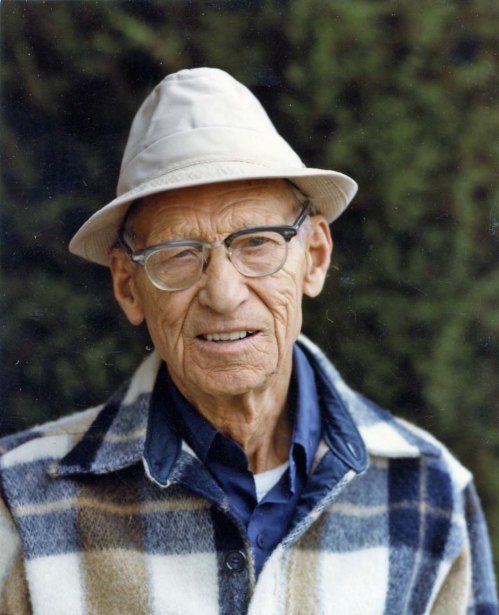
One of my favorite photos of my father taken by Glen Fishback at his studio.

One of my favorite photos of my father taken by Glen Fishback at his studio.

Do you believe in ghosts? I’d like to say I don’t. Their existence isn’t rational. There is no scientific evidence that supports their presence. And yet, I’ve had a couple of ghostly experiences that are hard to explain rationally, other than my mind playing tricks (a distinct possibility). But consider the following:

In my last Friday essay on religion, I took readers to Alaska and a campfire discussion with my father. Pop lived for another eight years— and they were good years. He continued to read his Bible, smoke his pipe, paint pictures, and entertain the elderly women in his retirement complex with the photographs he had taken over the years. We had lots of opportunities to talk. I learned a great deal of his past and he never gave up trying to convert me.

Pop painted up until he was 85 or so.

Pop painted up until he was 85 or so. (Photo by Glen Fishback.)

The painting that Pop was working on now hangs in our guest bedroom.

The painting that Pop was working on now hangs in our guest bedroom.

One night I had him over for dinner to meet my new friend and future wife, Peggy. She charmed him as much as she had charmed me. I had already told him I planned on marrying her if I could persuade her to say yes. When I took him home, we shook hands at his doorway and, purely out of instinct, I said, “I love you Pop.” He got one of his big grins and responded, “I love you, too, Curt.”

A week later I found him sitting naked on his toilet, dead from a massive heart attack.

Of course I was grief-stricken. His passing was the passing of one of the most significant parts of my life. And I also felt guilt. I had known he wasn’t feeling well when I left him that night. I’d called a couple of times and he hadn’t answered, but I had assumed he had just been out on one of his walks. I couldn’t help but think if I had stopped by that I might have made a difference. Still, he had lived a full and productive life, taken care of himself to the end, and gone out quickly. It’s hard to ask for more.

The next day I went over to clean things up. I probably shouldn’t have gone alone because I was so stressed. I was in the bathroom cleaning when a light in the front room went on. I went out, thinking maybe the building manager had come by. No one was there. I went back to the bathroom where I had left a faucet on. Just as I walked in it jumped from a trickle to full force. The errant light and faucet shook me up; I grabbed my things and departed, quickly. That night I left the lights on in my apartment. It had been ages since I feared things that go bump in the night, but why take chances.

Just as I was finally drifting off to sleep from exhaustion, I heard a voice in my head. It was Pop. “I am alright Curt,” he said. “It’s okay.” And then I saw a vision of the proverbial white tunnel. It wasn’t a light at the end of the tunnel; it was the complete tunnel, the whole shebang— Pop’s spaceship. Were the light in his front room, the faucet, and the voice results of natural causes and my overwrought imagination? Probably. But who knows? Who knows what awaits us when the final bell rings? Maybe it’s a one-way ticket through the Universe.

Afterwards, when I thought about the experience, I was a little amused that Pop hadn’t taken advantage of the moment to say, “Read your Bible, Curt.” I would have started immediately. But maybe it wasn’t necessary. Maybe other fuel drove his spaceship.

CONCLUSION

In this series of essays, I have not argued against religion, I have argued against the abuse of religion. I have contended that the ‘leap of faith’ required by religions, combined with the concept of exclusivity (there is only one way to get to heaven), make abuse possible and even likely. Holding the keys to eternal life provides the holder with tremendous power. It’s something to die for. This power is an almost irresistible magnet to those who crave and need power for any number of reasons ranging from the sublime to the outrageous, from serving the flock to fleecing it, from helping the helpless to offing the opposition. When combined with fanaticism and government support, this mixture can quickly become a dangerous and deadly brew.

Religion has the power to do much good. I used my own personal example of how the Episcopal Church helped me get through difficult teenage years. I have a minister friend, the woman who married Peggy and me, who is known as the Disaster Pastor. She devotes her life to helping out where help is most needed, and has the full support of her congregation. My fellow blogger friend Bill, at Practicing Resurrection, is using his faith to encourage wholesome and humane farming practices, and healthy eating. Pope Francis is undertaking a major environmental initiative. There are thousands of examples.

To me, the greatest role religion can play is to enable us to see beyond ourselves, to understand that on some deep level we are all connected, not only to other human beings but to all life. Our salvation as a species lies in realizing that all of life is sacred and acting accordingly. Few of us have the capacity for sainthood but most of us have the capacity to see a bit further beyond ourselves than we normally do, and think through the long-term implications of our actions— whether it is being unkind, marching off to war, or wiping out another species.

I believe that the easiest way to counteract the negative aspects of religion is to modify the concept of exclusivity. Simply put, it’s okay for us to believe that the path we have chosen will take us toward whatever afterlife has to offer, but we also need to recognize that someone else’s path may be equally valid. Religious tolerance would eliminate one of the primary causes of conflict in the world today. Freedom of religion and separation of church and state are essential to obtaining this objective. Maybe the day will come when people of different religious beliefs (or none), can live next to each other in peace and prosperity throughout the world.

I’ll let Pop get a final word in. He once told me that he regarded his extensive reading of the Bible as an insurance policy. If he were right, it was his key to the afterlife. If he were wrong, what’s the harm? I granted him that. But I countered with the opposite argument. What if he were wrong? What if this is all we have? Then life becomes incredibly important. Each moment is precious. Yes, practice your religion if it is significant to you— read your Koran or Bible or Bhagavad Gita— but live each moment as though it were your last. Be kind, make sure that your loved ones know that you love them, give back to the community, have adventures, expand your mind, practice tolerance, and be passionate.  If there is more after the curtain falls, wonderful. If not, you have lived your life fully and can die knowing that you achieved everything humanly possible from your brief time on this earth. What’s the harm?

NEXT WEEK: Monday’s Blog: A neighborhood goat feast. You’ll meet a clothed Rambo and a naked Pinky. Wednesday’s Photo Essay: I return to the magical island of Santorini. Friday’s Essay: How twenty-five cents saved one million lives and $134 billion in health care costs. Part I.

Thank You Bill and Hilary*… for Your Fine Words

Basenji dog in Liberia, West Africa.

Do You Part, the Liberian named Basenji that adopted me in the Peace Corps and that Bill Guerrant refers to in his book review below, is the small dog with the curly tail standing in the forefront. One of her many exploits was slipping behind me into the grand opening of a mosque in Gbarnga— almost causing a riot.

I am tickled that two of my favorite Word Press bloggers enabled me to create the above headline. Now, before you dash off a note to me that I have misspelled Hillary, the *Hilary I am talking about is not Hillary Clinton. It’s Hilary Custance Green, a writer and author living in England. Bill is Bill Guerrant, a one time attorney, now farmer, and soon to be author living in Virginia. Both have recently written unsolicited reviews of my book, a fact for which I am both grateful and somewhat humbled.

Writing a book is hard work. At least it was for me, and I am sure it is for most authors. Thousands of hours, even years, can be spent on the project. The page that takes a few minutes to read probably required several hours to write, or longer. Sometimes words flow; I have those minutes when my fingers dance over the keyboard. But more often than not, the process is painfully slow, like sitting in a dentist’s chair and waiting for the dentist to get his hand and drill out of your mouth.

As an aside, I was sitting in my dentist’s chair last week when my dental hygienist started giggling while she was reading my chart. “What?” I asked grumpily. My mouth is no giggling matter. Usually dentists start planning their next trip around the world when they look inside. “I see,” she said laughing, “that you have listed dentists under things you are allergic to.” Yep, that would have been me.

There is more to the book process than hard work. Call it an ego thing, if you must, but most writers are an insecure bunch, especially first time authors. We don’t have a clue how our book is going to be received. It is somewhat akin to having your child on stage for her first big solo performance. By the time I had finished The Bush Devil Ate Sam, I had put so much effort into writing the book, and so much of myself, that I was prepared to head for the cooking sherry at the slightest criticism. I am ever so thankful that I didn’t have to live with me. (Peggy nods in agreement.)

Fortunately people have been kind. It’s true that my book isn’t out there in the world where the professional critics are paid big bucks to be nasty, but people I care about and respect seem to genuinely enjoy the book. What I had hoped for— that it would introduce readers to Liberia and her people, that it would provide insight into what being a Peace Corps Volunteer is like, and that it would provide some laughs along the way, seem to be happening.

I reblogged Hilary’s post a week ago. Here’s what Bill has to say:

Just before starting Ben Falk’s book I read frequent-commenter Curt’s book The Bush Devil Ate Sam, a delightfully entertaining (and informative) memoir of his time in the Peace Corps in Liberia in the 1960s. The book is a page-turner, and I highly recommend it.  Curt enrolled at UC-Berkeley just in time for the beginnings of the student rebellion there, putting him on the frontlines at the beginning of one of the world’s greatest movements for social justice. Some of that story is told in his book, and a fascinating story it is. Most of the book tells the story of the time he and his wife spent in Liberia.  I laughed out loud and I learned a lot, which only happens with good books. The story of his dog Do Your Part crashing the grand opening of the community’s first mosque (Curt having been mistaken for “the international media”) is alone worth the price of the book.

The book closes with some insightful thoughts about Liberia’s tragic history of the past few decades.  It caused me to think of a Liberian woman who was a classmate of mine in seminary, a kind and gentle person who lived through the horrors of the civil war there.  Whenever she tried to talk about it, she cried. Something she said about Americans has stuck with me.  She said that here when we say grace before a meal (if we bother), it just seems perfunctory. In Liberia, she said, people are truly grateful for every meal and they offer thanks with joy at the miracle that food is.  I wish I could recall her exact words, because I’m not doing them justice.  Suffice it to say that Curt’s concern for Liberia and the Liberian people resonated with me, even though I’ve never been there.

By the way, Curt is also one of the rock-stars of the blogosphere. Go check out his blog. You can buy his book from Amazon, but I recommend you contact him directly for a copy.**

Hilary and Bill are both caring and highly productive people, contributing to and making a difference in the world. Hilary is a sculptor and the author of two books that are available on Amazon. Presently she is working on Letters from Relatives of Far East POWS—Writing to a Ghost, a book that explores an almost forgotten aspect of World War II involving Far East Japanese prisoners of war and their families. It is a story that deserves to be remembered. Her blog is the Green Writing Room.

Bill is a farmer who is a leader in the movement to reintroduce America to the natural and healthy foods being grown on small farms across the country. In his own words: “Our produce is grown naturally, without pesticides, herbicides, or synthetic fertilizers. Our animals are raised humanely.” His blog is Practicing Resurrection.

** For those of you that do your reading in EBooks, The Bush Devil Ate Sam is available on Amazon and a number of other sites around the world. Simply click on the cover of the book in the right hand column above. It will take you to my author’s page and the sites. If you prefer a written copy, the book will eventually be available on Amazon and several other sites as print on demand copies. In the mean time you can write me at cvmekemson@gmail.com and I will be glad to send you a copy while supplies last. Please include your address. I will send an invoice with the book. You pay when you receive the book. The cost is presently $13 plus mailing costs, normally $3.00 in the US.