Three Billion Shots of Jack Daniel’s Whiskey… The 10,000 Mile North American Bike Tour


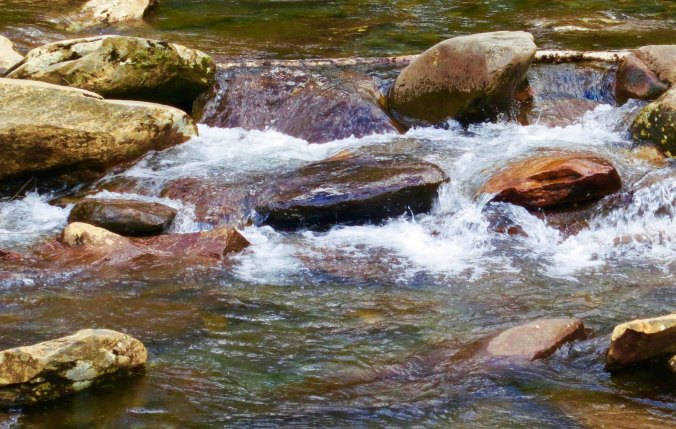
"It's the water" is a frequent claim of those who produce alcohol. All Jack Daniel products come from Cave Spring shown here. The spring produces 800 gallons per minute.

“It’s the water” is a frequent claim of those who produce alcohol. All Jack Daniel’s products start with water from Cave Spring shown here. The spring produces 800 gallons per minute. I should have it talk to our five gallon per minute well.

It’s amazing what you can learn when you are out bicycling around North America. For example, today I am going to talk about visiting the Jack Daniel’s Distillery in Lynchburg, Tennessee.  It comes at the end of this post. But I thought I would start with a little whiskey math for fun.

Using American measurements, a barrel of Jack Daniel’s whiskey contains 260 bottles, or fifths, of whiskey. A fifth contains 17 shots. This translates into 4,420 shots per barrel. That’s a lot of drinking. But consider this: Our guide told us that Jack Daniel’s is the leading distributor of whiskey in the world. This means the company needs to have a lot in production at any given time. It also means they need to have a lot of whiskey in storage to allow for aging and for keeping up with demand.

The company can store 40,000 barrels on site. That used to be enough. No longer. The guide told us that Jack Daniel’s now has 11 buildings off site that store 60,000 barrels each.  Doing the math, I came up with 700,000 barrels. Here’s the fun part— that comes to over three billion shots of whisky. Bottoms up!

An illustration at the Jack Daniels Distillery showing one of its on-site barrel houses.

An illustration at the Jack Daniel’s Distillery showing one of its on-site barrel houses.

Barrel House No. 1 at the Jack Daniels Distillery in Lynchburg, TN.

A view of the actual barrel house in Lynchburg.

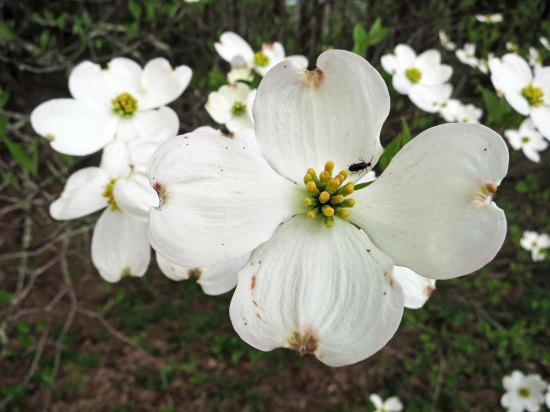
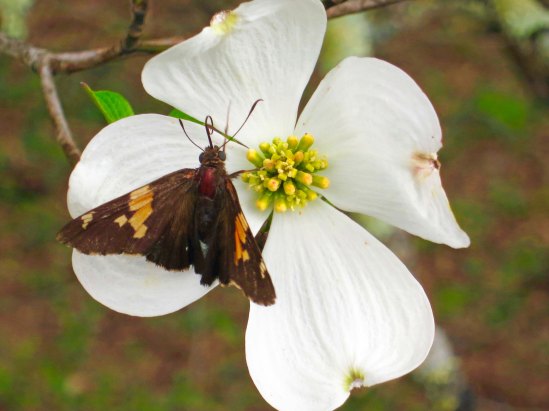
I left you at Tishomingo State Park in northern Mississippi at the end of my last blog, recovering from my close encounter with the tornado. I could have used a shot or two of Jack Daniels then! But I had a ways to go to reach Lynchburg, including another 60 miles of the Natchez Trace. My Trace portion included a short 30 mile ride across the northwest corner of Alabama and another 30 mile ride into southern Tennessee where I picked up US Route 64. Along the way, I crossed over the Tennessee River, admired some blooming Dogwood, and stopped for a final view of the original Trace.

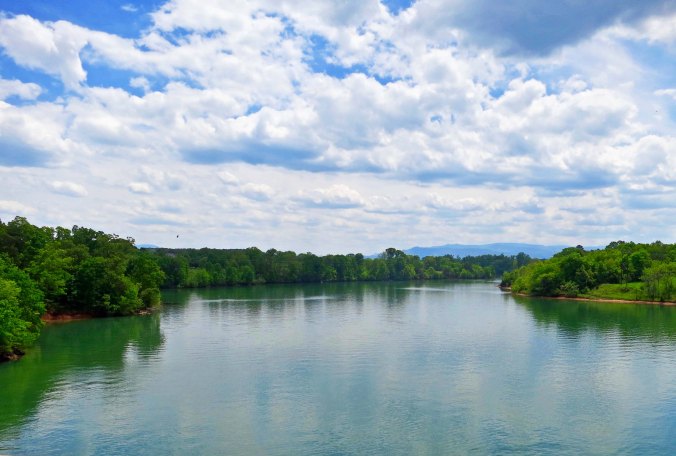
The Tennessee River as see from the Natchez Trace bridge across in in Alabama.

The Tennessee River as see from the Natchez Trace bridge in Alabama.

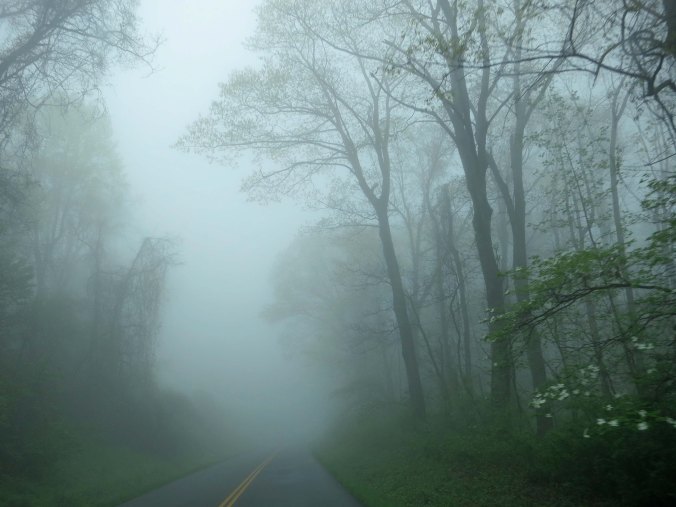
We were a little late to capture the Dogwood along the Natchez Trace at it's best, but even here it adds its own beauty along the road.

We were a little late to capture the Dogwood along the Natchez Trace at its best, but even here (on the left),  it adds its etherial beauty to the scenery.

The Natchez Trace was used so much during its heyday of the early 1800s, it cut deep grooves in the ground.

The Natchez Trace was used so much during its heyday of the early 1800s, it cut deep paths into the ground that can still be seen today.

I had travelled 359 miles on the Trace at this point and only had another 10 miles to go before I left it. I would miss its beauty and tranquility.

I had travelled 359 miles on the Trace at this point, and only had another 10 miles to go. I would miss its beauty and tranquility.

As I approached US 64, a sign informed me I would be heading toward David Crockett State Park and following the Trail of Tears.

My last sign on the Natchez Trace.

As I approached Route 64, a sign announced I would be following the Trail of Tears and heading toward David Crockett State Park. I had learned about Davy as a kid by watching Fess Parker’s 1955/56 television program at Allen Green’s house. I still remember the theme:

“Born on a mountain top in Tennessee— Greenest state in the land of the free— Raised in the woods so he knew ev’ry tree— Kilt him a be’ar when he was only three— Davy, Davy Crockett, King of the wild frontier!”

Being a want-to-be woodsman at the time, how could I forget such stirring words? Crockett was a genuine folk hero, however. In addition to his mythical knowledge of trees and killing bears at a young age, he served in Congress and adamantly opposed Andrew Jackson’s Indian Removal Policies. Disgusted with Washington politics, he headed off to Texas where he was killed at the Battle of the Alamo in 1836.

It was President Jackson’s Indian Removal Policy that led to the tragic Trail of Tears, another dark spot in America’s history. Of all the Native Americans in the East, the Cherokee were among the best in adapting to the coming of the Europeans. They had intermarried with settlers, become farmers, and even created their own constitution for self-government. But none of this was enough. The American settlers on the frontier wanted their land.

Jackson and Congress aided them in their efforts by insisting that the Cherokee move. To achieve this, the military gathered the Cherokee into stockades and force-marched them 800 miles to Oklahoma. The journey was particularly hard on infants, children and the elderly. An estimated 4000 died along the way, nearly a fifth of the Cherokee population. It was because of this, that the Cherokee named the route the Trail of Tears.

On a much less significant level, I shed a virtual tear or two myself on leaving the Natchez Trace. I was leaving the commercial-free tranquility of the National Parkway to return to the world of crowded roads, fast-moving traffic, and ubiquitous 18 wheelers. I would also be dodging my way through towns and cities. On my way to Lynchburg, these included Lawrenceburg, Pulaski, and Fayetteville. Although the distance bordered on 90 miles, I figured I could make the trip in a long day.

A torrential downpour outside of Pulaski persuaded me otherwise. It wasn’t enough that the rain was flooding the road 3-5 inches deep in places; I managed to get a flat. I pulled off the highway, retrieved my waterproof emergency blanket, put it over the top of me, and proceeded to fix the flat, while somehow getting 100 gallons of water down the back of my neck.  (I am exaggerating, of course. It was only 98.) Although I was traveling east, my sense of humor went south. I grabbed a motel room in Pulaski and dried off while watching reruns of reruns on TV. Unfortunately, Davey Crockett wasn’t included.

US Route 64. As I have noted earlier, many of the two lane roads I travelled on in 1989 have become four-lane highways, often rerouted.

US Route 64. As I have noted earlier, many of the two lane roads I travelled on in 1989 have become four-lane highways today, often rerouted. Nice shoulder, though.

Limestone walls, such as this on US 64, are common on Tennessee Highways.

Limestone walls, such as this on US 64, are common on Tennessee Highways.

I have always found old barns interesting because of their character and photogenic quality. There were several along US 64.

I have always found old barns interesting because of their character and photogenic quality. There were several along US 64.

Another example.

Another example.

In Fayetteville, I left Route 64 and picked up Tennessee 50 toward Lynchburg.

In Fayetteville, I left Route 64 and picked up Tennessee 50 toward Lynchburg. Note the old windows in the red building. Some have been bricked in.

I easily made it into Lynchburg the next day and, in fact, biked on to Manchester. I did make a quick detour into the Jack Daniel’s Distillery, however. Peggy and I made a much more thorough visit on our route review this spring and were given an excellent tour of the facility. Here are a few things we learned.

A view of the "Company Store" in Lynchburg, Tennessee where you can even pick up used whisky barrels for planters.

A view of the “Company Store” in Lynchburg, Tennessee where you can pick up used whisky barrels for planters.

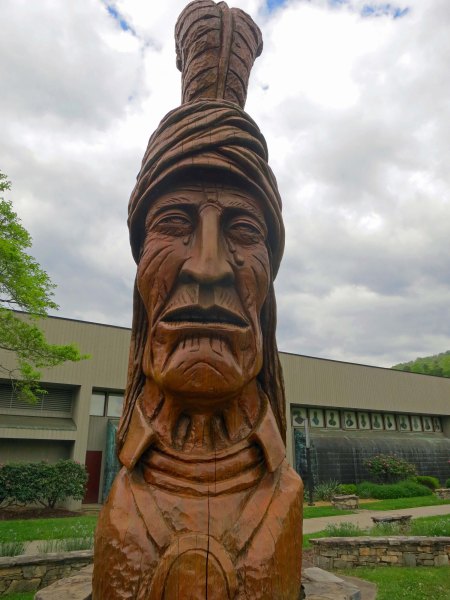
A sculpture of Jack Daniels with his foot resting on a barrel. The state was located on a rock. It's title was Jack Daniels on the Rocks.

A sculpture of Jack Daniel with his foot resting on a barrel. The statue was located on a rock. It’s title was Jack Daniel on the Rocks. Cave Spring is behind him.

Jack was either born in 1846, 49 or 50. People are still sorting that out. At a relatively young age, he was taken in by a minister and taught how to make whiskey. Does this make it God’s will? (I know, I am going to be struck down. BTW, don’t expect to be served any Jack Daniel’s in local restaurants. Lynchburg is located in a dry county.) By 1866 or 1875, Jack was operating his own distillery and using water from Cave Spring shown at the top.

A view of the creek leading out from Cave Spring. Again, note the lime. It adds interesting qualities to Jack Daniel's, and also serves to take out the iron that would give the whiskey a bad taste.

A view of the creek leading out from Cave Spring. Again, note the lime. It adds interesting qualities to Jack Daniel’s, and also serves to take out the iron that would give the whiskey a bad taste.

The creek as it makes its way through the distillery.

The creek as it makes its way through the distillery.

The primary ingredients for Jack Daniels. These are ground up into a mash, water from Cave Spring is added, and the concoction is boiled. It is then put into a fermenting vat where yeast is added creating alcohol. The alcohol is ten distilled and begins it journey through ten feet of sugar maple charcoal.

The primary ingredients for Jack Daniel’s. These are ground up, water from Cave Spring is added to make mash, and then the concoction is boiled. It is then put into a fermenting vat where yeast is added creating alcohol. The alcohol is then distilled and begins it journey through ten feet of sugar maple charcoal. We were taken on a tour where we witnessed the process but weren’t allowed to take any photographs.

The whiskey would be a bourbon except for the fact that it is filtered through 10-feet of sugar maple charcoal at a drip-drip rate, a process that takes a week for the drop to make it from the top to the bottom. Its journey removes impurities from the alcohol. The whiskey is then put into oaken barrels that have been scorched on the inside and is aged for four years. The barrels are made on site and only used once. Tasters determine when the brew is ready. Whiskey from several barrels is blended to produce the distinctive Jack Daniels taste such as that found in Jack’s most famous blend, Old No 7.

Rick oven for turning the sugar maple wood seen here into charcoal.

Rick oven for turning the sugar maple wood (ricks) seen here into charcoal.

The company uses the 1866 date for its beginning, thus making 2016 its 150th Anniversary. To celebrate, it has produced a special whiskey called Sinatra Select. What, you say? Turns out that Frank was a great friend of Old No. 7. He always had a bottle within easy reach, whether he was singing in concert or on a TV special, flying on an airplane, visiting with friends, or in almost any other conceivable situation.  He was even buried with a bottle.

It is possible to obtain a bottle of single barrel select whiskey that hasn’t been blended. In fact, Jack Daniels wants you to buy it by the barrel for $10,000 each. The Master Taster or the Master Distiller will personally meet with you to provide a tour and help you in your selection. The company will even put your name up on its Single Barrel Wall of Fame. I walked around and checked out who was buying barrels. I found some particularly amusing.

If you choose to put down $10,000 and buy a barrel, it will be bottled up for you. You also get to keep the barrel.

If you choose to plop down $10,000 and buy a barrel, it will be bottled up for you. You also get to keep the barrel! Our guide uses the display as a leaning post. On the right, behind the bottles, you can see the Wall of Fame for people who have purchased a barrel— or more.

The Marines from Camp Pendleton seemed especially thirsty Each barrel on the plaque represents a barrel the Marines purchased. It's amazing how much a 'few good men' (and women today) can consume.

The Marines from Camp Pendleton seemed especially thirsty. Each barrel on the plaque represents a barrel they purchased. It’s amazing how much a ‘few good men’ (and women today) can consume.

This has to be all about quality control, right?

This has to be all about making sure that Jack Daniels meets state standards, right. A lot of testing has to go on…

Okay, I don't get this. These folks are Mormons, and, as far as i know, Mormons don't drink! I wonder if this has anything to do with the fact that Jack learned his trade from a minister. (grin)

Okay, here’s my last photo for today. I don’t get it. The majority of folks in Utah’s government, as far as I know, are Mormons— and Mormons don’t drink! Hmmm.

NEXT BLOG: I visit some beautiful waterfalls. An 18-wheeler misses me by about 6-inches while going over 60 and teaches me how to fly. I have a nose to nose confrontation with a humongous dog. We end the day in Dayton, Tennessee where man took on monkey in the infamous Scopes Trial.


Hiding Out from a Tornado on the Natchez Trace… The 10,000 Mile North American Bike Tour

The Pharr Mounds on the Natchez Trace were built around 2000 years ago.

The Pharr Mounds, ancient burial sites, are one of the most interesting views along the Natchez Trace. They became almost too interesting for me when a tornado roared through the area.

I left Tupelo with dark clouds hanging on the horizon. Nothing new here, I thought. It was a rare day when I didn’t see something threatening to pounce on me from the sky. Usually, nothing happened. Or I’d get caught in a downpour or two and dry off.  Why worry? Down in Texas I’d dodged a few hail storms and tornadoes, but dodged is the operative word. Besides, the weather is supposed to behave like that in the Lone Star State. I would have been disappointed without pavement-melting sun and golf ball size hail stones. Where would the stories be?

I was ten miles up the Natchez Trace from Tupelo when a driver flagged me down. “There’s a serious tornado warning on,” he told me. “You should consider getting off the Trace.” I thanked him for his concern. My alarm level climbed up the worry meter a few degrees. But it wasn’t a massive leap. I’d save that for when I spotted a flying cow. Besides, there wasn’t a side road where I was. And when I found one, who’s to say that my detour wouldn’t take me toward a tornado instead of away from it. So I biked on.

At mile marker 286.7, I came on the Pharr Mounds, one of the most interesting sites along the Natchez Trace. Eight large burial mounds cover some 90 acres. Built by hunter/gatherer tribes in the area some 2000 years ago, the mounds range from 3 to 18 feet in height. Artifacts found in the mounds suggest the builders were part of a trading culture that stretched from the Great Lakes to the Gulf of Mexico.

One of numerous arrow head looking signs along the Natchez Trace that announce historic sites.

One of numerous ‘arrowhead’ signs along the Natchez Trace that announce historic sites.

This photo of the Pharr Mounds site provides a perspective on just how large the site is.

This photo of the Pharr Mounds’ site provides a perspective on just how large the area is. Note the mounds in the distance. They are up to 18 feet tall.

The Pharr Mounds north of Tupelo, Mississippi cover some 90 acres.

Another shot that provides perspective on the size of the area.

Flowers growing on the Pharr Mounds along the Natchez Trace in Northern Mississippi.

A close up of the flowers that added color to the green grass.

A group of model airplane enthusiasts were flying their toys over the huge field. The planes were big ones with wide wingspans. I stopped to watch the action and check out the mounds. I became a little concerned when the hobbyists had a hurried discussion, brought in their planes, packed them up, and took off— quickly. Ah well, I thought, climbing back on my bike. But something wasn’t right. The sky had turned an eerie color. I looked at the clouds; they were circling, ominously. Now my alarm level made its massive leap, even without the flying cow. “Oh shit,” I thought.

I hurriedly looked around. The Pharr mounds had a sturdy looking restroom. I had just peed there. I might be peeing there again, real soon, having it scared out of me. The bottom half of the facility was made up of a rock wall. “Okay, Curt,” I commented to me, “this is your port in the storm.” The restrooms had a further advantage of having a covered porch. I could stay outside, be protected from the weather, and watch developments. If necessary, I could scurry inside and duck. I made myself comfortable and waited for the show.

A bright flash of light lit up the sky, followed instantly by an earth-shaking rumble, followed seconds later by a flood causing rain. Noah would have been impressed. The rain didn’t have the good sense to fall straight down. It came at me sidewise, drenching my thoughts of a dry porch. I love a good storm, but this one was becoming worrisome. “Well, Blue,” I said to my bike, “I think it is time to head inside.” I couldn’t be sure, but I think Blue responded with something like, “What took you so long?”

Sopping wet, Blue and I made a beeline for the bathroom. It was dry inside, even warm in comparison to the porch, but I could hear the storm tearing around the building. It sounded like a monster trying to smash its way in. And then it was calm, uncannily so. The monster was gone. Except it wasn’t. In the distance I heard a rumbling sound, like a herd of buffalo seeking revenge, coming for me. I almost lost it at this point. I pictured myself on the floor, snuggling up to the base of the toilet, and holding on for dear life while the roof came off and my bike took off like Dorothy in the Wizard of Oz.

Here I am, standing next to the restrooms that provided me with shelter in 1989. Peggy took this photo when we retraced my route this spring. (Photo by Peggy Mekemson.)

Here I am, standing next to the restrooms that provided me with shelter in 1989. Peggy took this photo when we retraced my route this spring. (Photo by Peggy Mekemson.)

I don’t know how long the roaring lasted: seconds, a few minutes, forever? I do know that it grew louder and louder— and then it was gone. The roof was still on; my bike was still there; and I had missed my close encounter with the toilet. I opened the door for a tentative look, not knowing what to expect. The sun had the nerve to peek out from behind a cloud. A few branches were on the ground. That was it; I had dodged the herd of buffalo (or tornado?) that came roaring through. A celebration was called for, and lunch.

I returned to the porch, retrieved my backpacking stove and boiled up a pot of water for tea and soup. The celebration part involved adding a generous dollop of 151 proof rum to the tea. I almost added another one to the soup. I was half way through the tea when a car pulled up. A woman piled out.

“Did you see a tornado?” she asked excitedly. “There was one just down the road!”

I figured “just down the road” was far too close. I finished my tea and soup, visited the restroom one last time and rode on to Tishomingo State Park, which is near the Alabama border. My ride up the Trace was nearing its end. Fortunately, I’d be there to enjoy it.

Tishomingo State Park on the Natchez Trace.

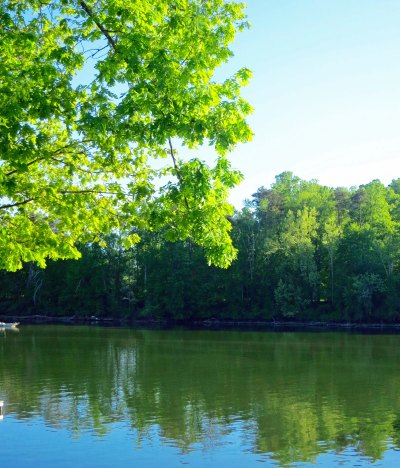
One of the campgrounds at Tishomingo State Park is located on this beautiful lake. I stayed here during my bile trip and Peggy and I have stayed here twice since.

Peggy toasts my avoiding the tornado.

Peggy toasts my avoiding the tornado. Had it carried me off, I wouldn’t have met her at the end of my bike trek.

Being an absolute sucker for reflection shots, here are three more from Tishomingo State Park:

A reflection shot at Tishomingo State Park along the Natchez Trace in northern Mississippi.

Tishomingo State Park near the Alabama border in Northern Mississippi.

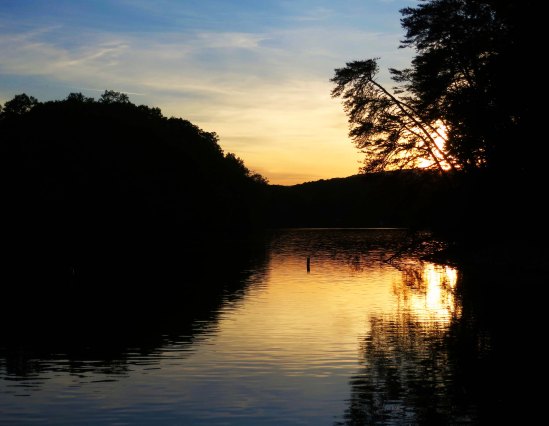
I will conclude with this one I took as the sun set.

I will conclude with this one I took as the sun set.

NEXT BLOG: I finish up my ride on the Trace and cut across Tennessee to the Jack Daniel’s Distillery in Lynchburg.


Mississippi Burning— Plus Elvis… The 10,000 Mile North America Bike Tour

I met this little fellow in a Natchez Trace Information Center in Kosciusko, Mississippi. He looked like he wanted to give me a hug so I decided to pass him on to you.

I met this little fellow in a Natchez Trace Information Center in Kosciusko, Mississippi. He looked like he wanted to give me a hug so I decided to pass him on to you.


“That boy is one tough son of a bitch.” –John Hamilton Carpenter


My friend, Morris Carpenter, picked me up in Jackson and gave me and my bicycle a ride to his home in Philadelphia, Mississippi. I’d be spending a week with him and his wife Marianna, the first major break in my bike ride. Morris and I go way back, all the way to 1961 when we were in student politics together at a community college in Northern California. Later, we both served as Peace Corps Volunteers in West Africa. I’ve written about that experience in my book, The Bush Devil Ate Sam. Our paths have crossed numerous times since.

Morris lives on Azalea Drive so I photographed one.

Morris lives on Azalea Drive so I photographed a bush of them.

When my first wife and I parted ways, Morris even got the kid, our 70-pound Basset Hound, Socrates. Morris was living in Maine at the time, working for the Penobscot Indians. He had kept Socrates for us while Jo and I had spent six months travelling in the South Pacific and Asia. When we had returned and Jo had decided that she wanted a more stable, middle class life than my love of wandering and work for nonprofits supported, I’d called Morris with the bad news and asked if he could keep Socrates for a while longer. “He’s my dog now,” Morris had declared. He had fallen for the lovable, stubborn hound.

Socrates' grand dad had been a Canadian and America champion, or at least his papers so claimed. To us he was just a lovable dog who kept me company on backpacking trips.

Socrates’ grand dad had been a Canadian and America champion, or at least his papers so claimed. To me, he was just a lovable dog who kept me company on backpacking trips. Those feet could move more dirt than a steam shovel. I sometimes had to file environmental impact reports on his digging. (Kidding.)

Now Morris was working for the Choctaw Indians as their housing director. He had picked up his expertise by rebuilding villages in Vietnam destroyed by the Viet Cong.  In coming to Mississippi, he had come home. His roots were deep. His mom and dad had moved from the state to Northern California in the early 40s where his father had gone to work in the lumber industry. Morris, like me, had been born in Southern Oregon. For a while, when his dad had gone off to fight the Japanese in World War II, his mom had moved Morris and his sister back to the small town of Conway, Mississippi to live with their Uncle Wilson. The community is approximately 25 miles west of Philadelphia.

Morris has now retired. When he worked for the tribe, their primary source of income was light industry. Now it is this Casino located just outside of Philadelphia.

Morris has now retired. When he worked for the Choctaw, their primary source of income was light industry. Now it is this Casino located just outside of Philadelphia.

Morris still had many relatives living in the area. I was invited to a gathering of the clan. They wanted to meet Morris’s friend who was so crazy he would go on a 10,000-mile bike ride by himself. We sat around drinking bourbon and eating delicious Southern fried chicken while I entertained them with tales of life on a bicycle. Afterwards, Morris told me that his cousin, John Hamilton Carter, had said, “That boy is one tough son-of-a-bitch.” Morris assured me it was a compliment.

One day he had taken me for a ride over to Conway to revisit his childhood home. While we were out and about, he had driven me by the earthen dam outside of Philadelphia where three young civil right’s workers had been buried in 1964. They had been killed by the Ku Klux Clan in cooperation with the local city police and county sheriff’s department. A Baptist preacher had orchestrated the murders.

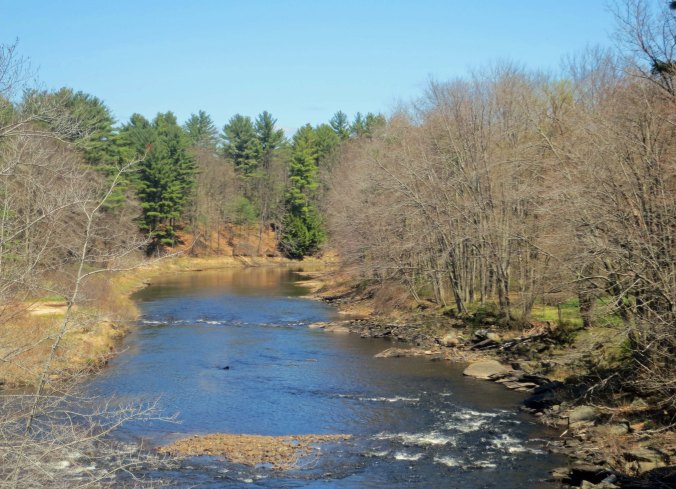
The Pearl River as it winds through Neshoba County Mississippi. Authorities would drag the river for the slain civil rights workers until an informal told them about the dam.

The Pearl River as it winds through Neshoba County, Mississippi. Authorities would drag the river for the slain civil rights workers until an informant told them about the dam.

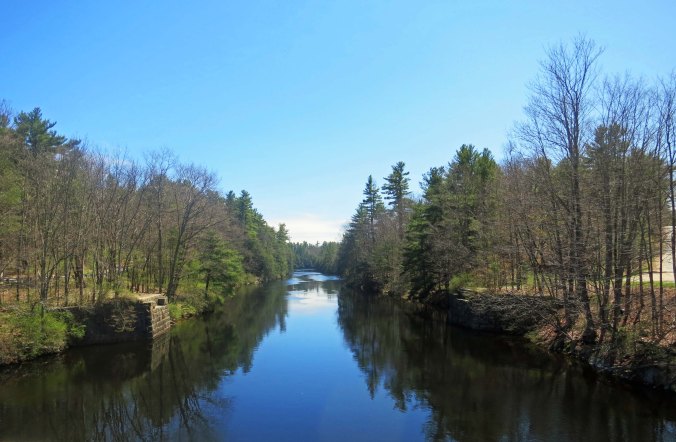
You see a beautiful, bucolic sight like this in Neshoba County and wonder about the prejudice, hatred and violence that once existed in the county.

You see a bucolic site like this in Neshoba County and wonder how such prejudice, hatred and violence could exist in such a beautiful place.

The three had been working to register black voters. Mississippi had passed a constitution in 1890 effectively blocking blacks from voting. Using law and violence, the state had maintained the status quo since. Supreme Court rulings in the early 60s had challenged such laws. College students from throughout the nation had been recruited by civil rights organizations to help out during Mississippi’s “Freedom Summer.” Many Mississippians had been infuriated with this outside interference in their state. Thousands had joined the KKK.

I had listened to recruiters for the effort that spring at Berkeley. The idea appealed to me but I had to work summers to pay for my education. While I was driving a laundry truck between Placerville and Lake Tahoe, the young people were killed. Several students at Berkeley, including Mario Savio, had heeded the call, however, and spent their summer in Mississippi. The Free Speech Movement at Berkeley that fall had grown out of the University’s efforts to block students from participating in such efforts. I’ve blogged about my involvement in the protest.

A massive investigation by the FBI was ordered by the US Attorney General, Bobby Kennedy. The FBI designated the effort, Mississippi Burning. (The 1988 movie  Mississippi Burning starring Gene Hackman and Willem Dafoe was loosely based on the 1964 incident.) Eighteen individuals were eventually charged. When the state refused to prosecute them, they were tried in federal courts. Seven were eventually found guilty and received relatively light sentences. None served more than six years.

Interestingly, in 2004, a multi-ethnic group from Philadelphia urged that the issue be revisited. As a result, the 80-year old Baptist minister and sawmill owner Edgar Ray Killen, who had avoided prison earlier, was charged with orchestrating the murders, found guilty, and sentenced to serve 60 years in prison.

At the end of the week, Morris had driven me back to the Trace and I had restarted my journey. He had watched me until I disappeared. “I was afraid I might never see you again.” he confessed. Morris thought what I was doing was too dangerous. If you want danger, I had thought to myself, try rebuilding a village the Viet Cong had burned down when the Viet Cong was still in the area.

This pull off along the Natchez Trace is known as Pigeons Roost for the thousands of Passenger Pigeons (now extinct) that once roasted in them.

This pull off along the Natchez Trace is known as Pigeons’ Roost for the thousands of Passenger Pigeons (now extinct) that once roosted in these trees.

There is nothing endangered about this pretty daisy (Fleabane, I think) that was growing at the site.

There is nothing endangered about this pretty daisy (Fleabane, I think) that was growing at the site.

We pulled off to check out these beautiful horses.

Peggy and I pulled off to check out these  horses.

While we were there, a bike tourist who was riding the Trace, Don Glennon, stopped to talk with us.

While we were there, a bike tourist who was riding the Trace, Don Glennon, stopped to talk with us. His outfit looked a little neater, more organized, and more waterproof  than mine had.

While Peggy and I were talking with Don, I suddenly felt several bites on my leg. Fire ants had worked they way up though a crack in the cement sidewalk and were rapidly moving up my leg. Much faster than it has taken to write this description, I was in the van and had taken by pants off. Nasty, nasty bugs they are! I had scars for weeks afterwards. The photo above is a fire ants nest.

While Peggy and I were talking with Don, I suddenly felt several bites on my leg. Fire ants had worked their way up though a crack in the cement sidewalk and were rapidly moving up my leg. Much faster than it has taken me to write this description, I was in the van and had taken my pants off. Nasty, nasty bugs! I had scars for weeks afterwards. The photo above is a fire ants’ nest.

A day later found me in Tupelo where Elvis Presley had been born. What better place for an Elvis-sighting? Maybe he still haunted the area. When I had graduated from the eighth grade in 1957, our music teacher had asked us to choose a song to sing at the ceremony. We had chosen Love Me Tender. Our choice was immediately squashed. Young women were already swooning at Elvis concerts and they squealed when he wiggled his hips. The older generation was going bonkers over this threat to our morals. We were offered a compromise: The Civil War era song, Aura Lea.  Presley had used the tune from the song for Love Me Tender.

BTW: Elvis claimed, “I’m not trying to be sexy. It’s just my way of expressing myself when I move around.” Um, yeah.

This road takes you to the Presley Museum in Tupelo that is located where Elvis was born.

This road takes you to the Presley Museum in Tupelo that is located where Elvis was born.

The house that Elvis was born in and where he spent his first years.

The house that Elvis was born in and where he spent his first years.

A bronze statue of the young Elvis with guitar in hand.

A bronze statue of the young Elvis with guitar in hand.
NEXT BLOG: I hide in a brick outhouse to avoid a tornado.

Roadkill A-la-Carte and the Mighty Mississippi… Travelling 10,000 miles by Bicycle

The Natchez-Vidalia Bridge across the Mississippi River.

The Natchez-Vidalia Bridge across the Mississippi River.


What was it with all of the dead Armadillos? This was the weighty question I found myself pondering as I bicycled down Louisiana Highway 71 south toward Alexandria.

Bicyclists develop a thick-skinned attitude toward road kill. The shoulder we ride on contains the flotsam and jetsam of two worlds, the highway and the land next to it. Broken car parts, discarded (often smoldering) cigarette butts, empty beer cans, fast-food trash, and dead animals come with the territory. Maintaining a sense of humor is important.

To keep myself amused, I would sometimes make up tombstone epitaphs for the animals. Here lies Spot, who was finally cured of chasing cars. Or how about this: Old Tom had been warned time and again about not chasing girl kitties on the other side of the road.
Those of you who have been hanging around my blog for a while know I like to develop weird cards. This is my vision of Old Tom's tombstone.

Those of you who have been hanging around my blog for a while know I like to develop weird cards. This is my vision of Old Tom’s tombstone.

A couple of friends of mine who operated the Lung Association Trek Program in Sacramento after I went off to Alaska, developed a different approach to roadside debris: a scavenger hunt. I’ve blogged about this before. On the last day of the Trek, participants would be given a list of different items they were supposed to collect— things like an empty pack of Camels, a Budweiser beer can, a McDs’ cup, plastic from a broken brake light, a sail cat, etc.

“A sail cat? What’s that?” you ask.

A sail cat, simply put, is a cat who has met its demise at the wrong end of a logging truck. Think of it as a pancake with legs. After a week or two of curing in the hot summer sun, you can pick it up and sail it like a Frisbee. Even your dog can join in the fun. It gives a whole new meaning to chasing cats. Of course, Fido may prefer to roll on it. Lucky you.

A particular scavenger hunt was described to me. One couple had actually found a sail cat and brought it into camp. Naturally they won, as they should have. But the story goes on. After dropping the unfortunate cat into a dumpster, the couple packed up and headed home. When they arrived and opened their trunk, there was kitty. Scary, huh. Turns out another couple had slipped the cat into the trunk. With friends like that, eh, who needs enemies. That should end the story, except it doesn’t. Both husbands worked for the State of California. A couple of days later the perpetrator of the prank received a large interoffice mail packet at work. He opened it. Out slid kitty. The end.

One person’s road kill is another person’s feast, right? Somewhere I have a newspaper picture of my brother Marshall chowing down on an armadillo when he was in Florida. I checked the Internet and there are a number of recipes, so I assume it is edible. Marsh said it was. And I saw a lot of happy buzzards along Highway 71.

I had never encountered as much roadkill as I did following this attractive highway into Alexandria on my bicycle in 1989. I never did figure out why.

I had never encountered as much roadkill as I did following this attractive highway into Alexandria on my bicycle in 1989.

None of this explains the sheer number of dead armadillos, however. After six or seven I began to lose my sense of humor. Were they migrating across the road in large numbers at night? Had the people whose job it was to remove roadkill gone on strike. I never did figure it out, but I am happy to report when Peggy and I drove the same road to Alexandria a couple of months ago, we didn’t see one dead armadillo.

I really hadn’t planned on going to Alexandria, in fact the jaunt added a hundred miles to my journey. Motels and bike repairs had reduced my cash to around $50, however, and this was still a time when ATMs didn’t grow on every corner. Alexandria was the nearest city that accepted my particular brand of plastic. The town, I quickly learned, was not bike friendly, at least at the time. Few cities were. And I had the misfortune of arriving at the height of rush hour and then immediately getting lost. My already low sense of humor dropped another notch.

Several map checks persuaded me that a narrow bridge making a steep climb up and over a small bayou provided a way out. A long line of commuters was struggling to get through the bottleneck, and, judging from the honking, not happy about the delay. Adding to my woes, there wasn’t enough room for two cars and me to co-exist side by side on the bridge. Steeling myself, I forced my way into the insanity and became leader of the pack, adding several more minutes to an already long day for the homeward bound. I swear there must have been 10,000 cars behind me. At least it felt that way. It was one hell of a parade. All I needed was a baton.

I have to hand it to the good folks of Alexandria, however. Not one of them honked at me. Several waved when I pulled off the road on the other side. A couple of young women even rolled down their window and whistled. Up went my sense of humor.

I found a motel that fit my budget that night and the ATM the next morning. Heading out of town I became lost again, of course, this time on an expressway where drivers were competing with each other to see how fast they could drive beyond the speed limit. My thoughts turned to the armadillos and their unfortunate end. The first exit found me departing the road at a speed that would have impressed Mario Andreotti.

A not very pretty picture of the expressway I ended up on and Highway 28 where I was supposed to be.

A not very pretty picture of the expressway I ended up on and Highway 28 where I was supposed to be.

I pulled into the driveway of a mortuary to check my map again. Much to my surprise, the double doors opened and out popped the mortician, who made a beeline for me. My mind leapt back in time to an early Clint Eastwood Spaghetti Western where the mortician measured strangers who rode into town to see what size casket he should build. While laughing to myself, I still checked the mortician’s hands to see if he was carrying a tape measure. Turns out the mortician was a minister and the mortuary was a church. He invited me in for coffee, a morning snack and directions. As I left, he handed me his card. “If you have any problems between here and Mississippi,” he told me, “call and I’ll come out and give you a lift.”

Soon I was heading out of town on Highway 28 to rejoin Louisiana 84, my original route across the state. From there, I biked on to the mighty Mississippi River. The route from Alexandria proved to be quite varied. I biked past dark swamps, lakes, shacks, mansions and cotton fields that were once worked by slaves. Finally, I arrived at Vidalia and the imposing Vidalia-Natchez Bridge that would take me across the Mississippi and out of Louisiana. The historic town of Natchez and the Natchez Trace were waiting.

Intriguing swamps lined the highway. I spent a lot of time glancing down into them looking for snakes.

Intriguing swamps lined the highway. I spent a lot of time looking down for swamp life.

I should have spent more time looking up. These egrets reminded me of a Japanese print.

I should have spent more time looking up. These egrets reminded me of a Japanese print.

This was an interesting little store that Peggy and I found along the road. It sent me scurrying to the Internet to find out if there was anything on Root Hog or Die. I thought maybe the owner was an Arkansas Razorback fan. Turns out the phrase dates back to the early 1800s when hogs were turned loose in the woods to survive on their own. It came to mean self-reliance.

This was an interesting little store that Peggy and I found along the road. It sent me scurrying to the Internet to find out if there was anything on Root Hog or Die. I thought maybe the owner was an Arkansas Razorback fan. Turns out the phrase dates back to the early 1800s when hogs were turned loose in the woods to survive on their own. It came to mean self-reliance.

This lake was worth a photo.

This lake was worth a photo. It made me wish that Peggy and I had brought our kayaks along.

The Frogmore Cotton Plantation near Vidalia provides an interesting overview what it would have been like to have been a slave working on a Southern Plantation. Peggy models the bag that picked cotton was put in out in the fields.

The Frogmore Cotton Plantation near Vidalia provides an interesting overview on what it would have been like to have been a slave working on a Southern Plantation. Peggy models a bag  where the picked cotton would have been placed.

This mocking bird wondered how bicycling compared to flying. (Photo by Peggy Mekemson.)

This mocking-bird wondered how bicycling compared to flying. (Photo by Peggy Mekemson.)

A side view of the Visalia-Natchez Bridge across the Mississippi River with a barge passing under it.

A side view of the Vidalia-Natchez Bridge across the Mississippi River with a barge passing under it.

A view of the Natchez-Vidalia Bridge.

An interesting perspective of the bridge. (Photo by Peggy Mekemson.)

The Natchez-Vidalia Bridge across the Mississippi River at night.

The bridge at night.

On our way into Natchez, Mississippi and the beginning of the Natchez Trace, which will be the subject of my next blog.

On our way into Natchez, Mississippi and the beginning of the Natchez Trace, which will be the subject of my next blog. The wide shoulder is appreciated; not so much the long drop into the Mississippi River.

Louisiana, and an Offer of Hooch plus… Traveling 10,000 Miles by Bicycle

Joe Roughneck, the symbol of the oil industry. My father worked as a roughneck in the Oklahoma oil boom of the late 20s until he decided he would prefer to paint scenery for plays.

Joe Roughneck, the symbol of the oil industry. My father worked as a roughneck in the Oklahoma oil boom of the late 20s until he decided he would prefer to paint scenery for plays.


Hooch: Slang for moonshine or bootleg alcohol. —The Urban Dictionary

I biked out of Greenville, ever so glad to be on my way. One week of dealing with a wheel and weather was enough. A mile and a half later my back tire went flat. This wasn’t a normal flat that I could fix with my eyes closed. My strong new spokes were digging into the tube. Something really didn’t want me to leave Texas. I walked my bike back into Greenville and checked in with a small bike shop, resigned to deal with whatever fate the bike gods had in store for me. Not much, it turned out. The shop quickly fixed the problem with a thicker rim tape and I was on my way.

I hightailed it down Texas Highway 69, making up for lost time. Small towns flew by. Lone Oak, Emory, and Mineola provided sustenance to keep my legs pumping. My journal reports I stopped for coffee and pie, a hamburger and an ice cream cone.

A couple of buildings as they look today in Lone Oak. I am a fan of communities that decide to renovate their historic buildings.

A couple of buildings as they look today in Lone Oak. I am a fan of communities that decide to renovate their historic buildings.

A car and RV wash in Mineola. They didn't do bikes.

A car and RV wash in Mineola. They did “bikes” but not bicycles.

Everything was green, an amazing contrast to the dry desert country I had been bicycling through since California. And, this is big news— there were pine trees! I hadn’t seen one since Lincoln County in New Mexico. It made me feel at home, almost.

Green, green grass and pine trees in the rolling hills as East Texas.

Green, green grass and pine trees in the rolling hills of East Texas.

Happy cows for me to moo at.

Happy cows for me to moo at.

One of the things about Mineola that caught my attention was that the Texas Governor, Jim Hogg, had lived in the town. His daughter was born there and he named her Ima, as in Ima Hogg. To the degree karma works, I’ve always imagined the Governor being reborn as a pig with a pork chop factory in his future. Ima never married (I would have done it for the name change alone), reportedly was close to her father, and went on to be an important figure in Texas Society. Maybe she was like Sue in the Johnny Cash song, A Boy Named Sue; the name made her tough.

Willie Brown, the flamboyant California politician, was born here as well. He was serving as Speaker of the California Assembly while I was cycling across the country. Brown was incredibly effective at passing and suppressing legislation. Voting Willie’s way brought substantial rewards. Voting against him brought swift punishment. Like him or not, he made government work. Washington could learn a thing or two.

I had run into Brown’s ability to kill bills a couple of years earlier when I was working with a group to increase tobacco taxes in California and devote a significant portion of the revenues to prevention programs. Almost every state in the country had increased tobacco taxes since California had last raised its tax in the 70s. The tobacco industry paid big bucks to California legislators to keep it that way. The bill was assigned to a committee guaranteed to kill it. We couldn’t even get a second. Fortunately, we had been prepared for this likelihood and had quietly planned to run an initiative campaign if the legislative effort failed. I called a press conference immediately after the vote and we announced our initiative.  The committee’s no-vote gave us a great kickoff. The press conference received major media attention throughout California. Thanks Willie.

I rode another 15 miles from Mineola to Interstate 20 where darkening clouds led me to call it a day. It had been a good day of bicycling, the first since my spoke had broken outside of Decatur.

The next morning, I was up early and heading into Tyler. The road had a wide shoulder, which is always appreciated by bicyclists.  I could relax a bit and not worry so much about being flattened by a car or semi. Most drivers are cautious and courteous when around bicyclists, but there are exceptions. I always rode as far to the right as was safe and kept a wary eye out for developing situations. Several times on my trip, I was forced to bail out, riding my bike off the road into the dirt and weeds, or even a ditch. Somehow, I always avoided crashing.

In Tyler, I was almost taken out, however. The city was more urban than most I traveled through on my trip and hillier than I had become used to in Texas. I was riding along, minding my own business when a woman turned right across my route, missing my front tire by inches— and then only because I had slammed on my brakes! She must have been half blind since I was wearing bright clothes.  Either that or she was high on something. She didn’t seem to hear very well either. When I suggested, loudly, that she be more careful, she ignored me and drove off. I sent a bird flying after her. Bad Curt.

There was nothing to do but stop at a DQ and quiet my nerves by downing a hamburger and a milkshake. The owner came out and sat down to chat. I told him about my encounter. He was quite empathetic. His brother owned a bike shop. Afterwards I was feeling a little punky. It may have had something to do with how fast I had sucked down the milkshake. Anyway, I made it a short day, stopping in Henderson.

A Tyler Texas DQ.

A Tyler, Texas DQ.

The area around Henderson had been part of one of the largest oil booms in Texas history. In 1930, “Dad” Joiner, a 70-year-old oilman out of Tennessee and Oklahoma, had refused to give up on his belief that there was oil in the area, almost bankrupting himself in his search. Finally, at 8:00 pm on October 3, one of the wells he had drilled on Daisy Bradford’s farm eight miles west of Henderson gushed out oil and a ‘black gold’ rush was under way. I’m pretty sure that Daisy did a dance of joy. Henderson grew from a sleepy town of 2,000 to a booming 10,000, the roads became clogged with fortune seekers, and oil derricks sprang up in the surrounding region thicker than fleas on a hound, as the good ol’ boys down South like to say. To date, over five billion barrels of oil have been taken from the East Texas Oil Field.

A rest area near Henderson appropriately featured oil derrick decorations as covers of the picnic tables.

A rest area near Henderson appropriately featured oil derrick decorations as covers of the picnic tables. This is also where Peggy and I found the Joe Roughneck statue.

The next day found me traveling through piney woods that contained almost as many Baptist Churches as there were people. Or at least it seemed like it. I’d definitely made it to the Bible Belt. Following a round about way, I hit one road that was so remote it had me thinking Deliverance. Finally, I picked up Route 84, crossed the Sabine River, and entered Logansport, Louisiana. It was May 7th. I’d been in Texas for 18 days, or was that 1800?

Road construction, dust, and impatient drivers hurried me through Logansport. I stopped at a small bayou outside of town to catch my breath and spotted a water moccasin/cotton mouth slithering through the murky water. He was one big ugly dude, a pit viper with a serious attitude problem. I didn’t hang around. A few miles later, I started looking for a place to camp. It was approaching dark. I spotted an old, overgrown road that made its way into a pine forest where I could hide out. I set up my tent, climbed in, and zipped it up tight. That night I dreamed of gigantic snakes chasing me down the highway, mouths wide open, fangs dripping with poison. Two or three times I woke up to creatures stirring around in the forest outside my tent.

A Louisiana bayou: half river and half swamp. All jungle. Picture a large water moccasin slithering across its smooth surface.

A Louisiana bayou: half river and half swamp. All jungle. Picture a large water moccasin slithering across its smooth surface. The photo reminds Peggy and me of our boat trip up the Amazon.

I found an overgrown road leading into a pine forest for my campsite.

I found an overgrown road leading into a pine forest for my campsite. It provided cover from the road, but were there any snakes?

I was glad to be up and on my way the next morning, continuing to follow Highway 84. No monstrous serpents were hounding me but I still made good time. I stopped in Mansfield for breakfast and headed on. Large logging trucks carrying long, toothpick size logs kept me company, zipping by at speeds guaranteed to give me grey hair. Intense poverty was reflected in barely standing small houses. Dark, jungle-like growth edged the highway. I was sure it was crawling with snakes. A young man yelled at me to get off the road. His white-haired granny was too nervous to pass me on the narrow highway.

I crossed the Red River into Coushatta and worked my way south. Threatening clouds filled the sky and decided to let loose between the small towns of Campi and Clarence. And boy did they let loose. Soaked to the bone, I began thinking about a warm, dry, snake-free motel room. I found one outside of Clarence.

Coushatta, like its Texas cousins featured its his school and sports heroes.

Coushatta, like its Texas cousins, featured its high school and sports heroes dating all the way back to 1938. Since we took this photo in April it appears they haven’t had any champion teams for a long time. Either that or their sign is in desperate need of updating. Given that it still had a Seasons Greeting sign on it, I am thinking the latter.

Dark clouds over Clarence.

Dark clouds over Clarence.

After unpacking and putting on a set of dry clothes, I went outside to sit under the porch overhang, read a book, and sip on a beer. A large, black woman came over and plopped down in the chair next to mine. She had watched me bicycle in.

“What you all doing, Honey?” she asked. I explained I was in the middle of a 10,000-mile bike trip. “No way! You are one crazy man!” she exclaimed. “Say,” she went on, “I have some hooch over in my room. Why don’t you come over and try some?” I’d been propositioned before, but never with hooch. “Tempting,” I’d replied laughing, but then claimed a non-existent wife who didn’t want me “drinking hooch” on the trip. Instead I offered her a beer which she readily accepted. She was a funny woman and we had a delightful conversation. As she left she told me again, “If you change your mind about the hooch, Honey, just come over and knock on my door. Anytime tonight.”

NEXT BLOG: I bike a hundred miles out of my way to find an ATM in Alexandria, Louisiana and then head on to the mighty Mississippi River.

PING: The Sound of One Spoke Breaking… The 10,000 Mile Bike Trek

Stormy skies give credence to a tornado warning near Greenville, Texas.

The adventure part about a journey like mine is dealing with the unexpected, whether it is a broken spoke or a tornado warning. Peggy and I took this photo near Greenville, Texas. We had called ahead to reserve a campsite a few miles away and caught the manager in her storm shelter. “The clouds are circling,” she told us. It was scary enough in our van. Imagine what it is like on a bicycle.

The bike trek was going well. I was actually making progress across Texas and had rediscovered trees on my way into Jacksboro. Here’s the one-line journal entry for my day of bicycling from Throckmorton to Jacksboro:

“TREES, real TREES!”

Fort Richardson, a Texas State Park just outside of Jacksboro, was so pleasant that I declared a layover day. I’d gone for walks, read a book of poetry (Gary Snyder’s Turtle Island), and biked into town for a steak dinner. April 26th had dawned clear and slightly cool, which made it a perfect day for cycling. I was feeling so good I sang “Oh what a beautiful morning” to a cottontail that had come nibbling its way into my camp. The rabbit had looked up, startled, and scampered off into the mesquite, hippity-hop. Apparently it had no appreciation for music. Certainly it couldn’t have been my singing.

“It’s going to be a great day!” I yelled after my furry friend. I shouldn’t have done that. It jinxed the week; I am pretty sure.  Maybe if I had only quietly said, “It should be a good day…”

Fort Richardson had some of the best campsites I found on my journey, but the mesquite could be a little thorny...

Fort Richardson had some of the best campsites I found on my journey, but the mesquite could be a little thorny…

Fort Richardson was established just outside of Jacksboro, Texas in the late 1860s to counter the Native Americans who had gone on the warpath because their land was being taken away and the buffalo herds wiped out. This was the officer's quarters.

Fort Richardson was established just outside of Jacksboro, Texas in the late 1860s to counter the Native Americans who had gone on the warpath because their land was being taken away and the buffalo herds wiped out. This was the officers’ quarters.

I really liked this bridge at the fort. Originally it had crossed a stream just behind the fort. Today it rests on what would have been parade grounds.

I really liked this bridge at the fort. Originally it had crossed a stream just behind the fort. Today it rests on what would have been parade grounds, preserved for visitors to admire.

Peggy demonstrates the thickness of the ammunition magazine at the fort.

Peggy demonstrates the thickness of the ammunition magazine at the fort.

A modern hospital, for its time has also been preserved at Fort Richardson. A ranger provided a tour. Bath anyone?

A modern hospital, for its time, has also been preserved at Fort Richardson. A ranger provided a tour. Bath anyone?

Pickled snake. The park ranger told us that the Smithsonian had requested that the fort gather up snakes and ship them back to Washing ton to study. This one was still hanging around.

Pickled snake. The park ranger told us that the Smithsonian had requested that the fort gather up snakes and ship them back to Washington to study. This one was still hanging around.

I can pretty well guarantee no one will guess what this is all about. The ranger told us these were hairs from a horse's tail. The hospital had used them as sutures,

I can pretty well guarantee no one will guess what this is all about. The ranger told us these were hairs from a horse’s tail. The hospital had used them as sutures. Apparently, they were less likely to cause infection than thread.

Shocking! It was believed that electrical shock was the best treatment for nervous disorders. This device provided the shock.

Shocking! It was believed that electrical shock was the best treatment for nervous disorders. This device provided the shock. My brother and I had a similar device when we were children. It was an old phone that you cranked up to generate electricity to send a phone message. We’d invite our little friends over to experience the shock.

I was about five miles outside of Decatur when I heard “Ping!” Unlike the sound of one hand clapping, which is underwhelming, the sound of one spoke breaking is quite distinctive. My response was very un-Zen like, even more so when I found the broken spoke on my back wheel. I’d need a bike shop.

A small cement plant was across the road. The receptionist offered me her phone, good luck, and the yellow pages. A Mel’s Bike shop was listed in Decatur. I called and got Mel. “Wait there,” he said. “I’ll be right out to pick you up.” And he was. Twenty minutes later, a smiling, older man showed up to collect me. He was another one of those people who reminded me of just how good folks can be. His shop, it turned out, was behind his home. He quickly fixed my spoke and started looking for other things to work on. My derailleur cable was too short; he replaced it. I was on my way to a complete tune up. When he was finally finished, I asked what I owed him.

“Nothing,” he said. And stuck to it.

“At least, Mel,” I argued, “you have to let me take you to lunch.” Two hours later we were still talking over dessert. I was chatting about snowstorms, rattlesnakes, mountains, deserts, dinosaurs and Texas. Mel was talking about his life, and how he had always dreamed of doing what I was doing. Finally, the time came when I had to bicycle on. He was still watching as I disappeared around the block. I waved one final time.

Peggy and I stopped off at Mel's home in Decatur in April. I would have loved to have seen him but the house was shuttered and empty. A woman at the local Post Office told us it had been quite some time since she had see the bike shop sign.

Peggy and I stopped off at Mel’s home in Decatur in April. I would have loved to have seen him but no one was there. A woman at the local Post Office told us it had been quite some time since she had seen the bike shop sign. Possibly Mel had moved or passed on.

Memories came flooding back as I entered Denton. In the spring of 1978, I had recruited for Peace Corps at the University of North Texas along with my first wife and an African-American woman who had also served as a Volunteer. We had gone out for breakfast one morning and you could have heard a pin drop when we entered the restaurant. The Civil Right’s act was young and the South was still adjusting. Black and white people did not eat together. We had just sat down when this young head popped up from the adjoining booth, wide-eyed, and announced to the whole room, “Momma, there’s a Nigger sitting with those people.” From the mouth of an innocent child, the insane prejudice of generations was repeated. As I write these words today, I am saddened by the fact that this prejudice continues to repeat itself in a seemingly endless and violent cycle. Such senseless waste. When will we ever learn…

The roads around Denton have become clogged with traffic and the usual fast food joints. The Dallas/Fort Worth area has become one of the fastest growing regions in the nation. Even on my bike trip, I was faced with traffic I hadn't experienced in a thousand miles.

The roads around Denton have become clogged with traffic and the usual fast food joints. The Dallas/Fort Worth area has become one of the fastest growing regions in the nation. Even on my bike trip, I was faced with traffic I hadn’t experienced in a thousand miles.

Peggy and I found suburb after suburb where there had been farms in 1989.

Peggy and I found suburb after suburb where there had been farms in 1989.

And the country roads I had ridden over, have now become multi-lane freeways providing ample room for even guys like this.

And the country roads I had ridden over have now become multi-lane roads providing ample room for even guys like this. I would not have liked to have met up with him on my bike!

But such thoughts were rare on my bike trip. And I soon had another thought to occupy my mind. A ping announced that another spoke had given up the ghost, gone to the great spoke factory in the sky. This isn’t unusual; when one spoke breaks, others may follow. Mine were simply reacting to all of the weight I was carrying. They’d had enough. I was faced with the fact that I needed a new wheel, preferably one with more spokes made out of a heavier gauged steel. I did what I could to true my wheel and limped for another 15 miles into McKinney.

Dark skies over McKinney. My wheel challenges plus the weather added a week's time to my stay in Texas.

Dark skies over McKinney. My wheel challenges plus the weather added a week’s time to my stay in Texas.

Calling around the next morning, I quickly realized I couldn’t find what I needed in McKinney, nor, apparently, in Dallas. Finally, a mechanic at a bike shop near Southern Methodist University told me she could build what I needed but it would take a day. And, I might add, cost $100. Early the next morning I climbed on the Dog, the Greyhound bus, and zipped into Dallas on I-75. A bit of futzing and I found my way out to SMU on a municipal bus. My wheel wasn’t ready but there was a bookstore next to SMU, so what did I care. Two hours later found me on my way back to McKinney with my shiny new wheel and a book, The Quickening Universe by Eugene Mallove.

I’d like to report that the new wheel solved my problem, that my next 8000 miles were worry free. Sigh. I was half way between McKinney and Greenville the next day, having ridden all of 15 miles, when the wheel pretzeled on me.  Instead of Ping, it was more like SPRONG! I couldn’t even turn the wheel. I’m not sure whether it was my innovative language or the truing but I finally persuaded the wheel to make wobbly turns and crawled my way into Greenville. I found a motel next to I-30 with the thought that I would soon be returning to Dallas. Which is what happened.

I was greeted by silence when I called the bike shop the next morning. Make that consternation. After apologizing, the mechanic told me if I would bring the wheel back in the next day, she would have another one ready that she would guarantee would get me through the trip. Fortunately, the Dog also had a route along I-30. So the next morning, there I was, me, my pretzel wheel and The Quickening Universe, just in case my new wheel wasn’t ready.

It was. The mechanic greeted me at the door and handed me my second new wheel in three days. 26 years later, it still resides on the back of my bike.

I was up at 5:30 the next morning, eager to hit the road. My wheel problems had cost me four days. I turned the TV on for company while I packed my panniers. “Expect severe weather in the Dallas area and eastward the next few days,” a stern-faced weatherman was warning. Thunderstorms, heavy rain, hail and tornadoes were forecast. Flash floods were expected. People were advised to stay home unless they had to travel. As if I needed more bad news, the room was suddenly lit up by a flash of intense light followed instantly by a loud boom that bounced around the motel. The intense storm had already started. Curt wasn’t going anywhere.

When this happened on my bike trip, I would get off the road and seek shelter. If nothing man-made was around, I had a small tarp that just covered me. This storm pictured here, became so intense that even Peggy and I were forced to pull off the road in our van.

When this happened on my bike trip, I would get off the road and seek shelter. If nothing man-made was around, I had a small tarp that just covered me. This storm near Greenville, became so intense that even Peggy and I were forced to pull off the road in our van.

But nature is going to do what nature is going to do. I had a book to read and the motel had a private club. Private clubs were how Texans got around the drinking laws. Staying at the motel gave me an instant membership, which I took advantage of the next three evenings while the storm continued to rage. And rage it did. One time I looked outside and saw hailstones the size of golf balls falling. I imagined being on my bike. The third day, the storm headed out, prepared to do its nastiness somewhere else.

I stopped by the club for a final beer that evening and was cornered by a window-washer who wanted to talk. When he learned I had lived in Alaska, he got really excited. “I am going to move there,” he told me. And then he told me why. He had been having an affaire and the woman’s husband had found out. “He’s hunting for me,” he confided. “I am carrying a 357 Magnum for protection.” Oh great, I thought to myself. The way my luck has been running this week, the husband is going to show up.

I’d carried a 357 once in Alaska. A doctor friend had insisted on it for my health. I was going backpacking in grizzly bear country. I had put the pistol in one section of my backpack and the bullets in another, convinced that there was a lot more danger of me shooting myself than being attacked by a grizzly.

“Hey,” my best new window-washer friend asked with light bulbs going off, “would you like to see my gun?”

“Um, no thanks,” had been my response. It was definitely time I was hitting the road.

NEXT BLOG: Out of Texas and into Louisiana with an offer of hooch and…

Larry McMurtry and Archer City, Texas: A Detour… The 10,000 Mile Bike Trek

A small portion of the 150,000 books in Larry McMurtry's bookstore, Booked Up, in Archer City Texas.

A small portion of the 150,000 books in Larry McMurtry’s bookstore, Booked Up, in Archer City Texas. Imagine what it was like with four bookstore and 450,000 books in the small town of 1750 people.


Texas is rich in unredeemed dreams. —Larry McMurtry

Larry McMurtry wanted to save Archer City by turning it into a mecca for book lovers. He had a dream of the streets being lined with bookstores and of people coming from thousands of miles away to wander the streets, soak up the ambience and buy books. They would fill local hotels, eat at local restaurants— and spend money. The economy would boom.

“Certainly on the vast windy plain, there was plenty of nothing to be looked at.” —Larry McMurtry

It wasn’t to be. Maybe the town was too far away from any major population center— surrounded by “plenty of nothing,” maybe the Internet was to blame, maybe the town didn’t care enough. Or maybe McMurtry didn’t want to work 24/7 on the task. Writers live to write, not build cities. And writing will be his legacy. Long after he has passed on, and possibly long after Archer City has become a dim memory, people with still be reading and loving his books and watching the movies based on his books and screenplays.

The tradition I was born into was essentially nomadic, a herdsmen tradition, following animals across the earth. The bookshops are a form of ranching; instead of herding cattle, I herd books. Writing is a form of herding, too; I herd words into little paragraph-like clusters. —Larry McMurtry

McMurtry’s roots run deep in the area. He had been raised just outside Archer City on a ranch. (His grandfather’s saddle can still be seen in the local museum.) Books weren’t a part of his early years, there wasn’t one in his house, but members of his family were great story tellers. It was a skill that was passed on to the young Larry. In 1942 a cousin left behind a box of 19 books, a treasure trove that Larry loved to tatters, like other kids love stuffed animals down to their stuffing.

The saddle of Larry McMurtry's grandfather that is now located in the Archer County Museum.

The saddle of Larry McMurtry’s grandfather that is now located in the Archer County Museum.

With the story telling and his cousin’s books as inspiration, McMurtry went on to become one of the best writers of our era, chronicling life in the West as few others have done. He also adapted several of his books to television and movies. Think: Lonesome Dove, The Last Picture Show, Terms of Endearment, Texasville and Brokeback Mountain. McMurtry’s efforts have earned him a Pulitzer Prize, 13 Academy Awards and 7 Emmys.

View of the Royal Theater in Archer City, which burned down and then resurrected for modern day theater productions.

The last Picture Show was filmed in Archer City and used the Royal Theater as its model. It burned down but is now used for theater productions— and weddings, apparently.

I was bicycling way out on the Playa at Burning Man in the Nevada desert last year when I came across this theater that was modeled after the theater in the Last Picture Show.

I was bicycling way out on the Playa at Burning Man in the Black Rock Desert of Nevada last year when I came across this theater that was modeled after the theater in the Last Picture Show.

In addition to his passion for writing, McMurtry developed a passion for collecting books. Bookstores going out of business, estate sales, and even local garage sales were all an excuse to go book hunting. Starting in Washington DC, he opened a bookstore called Booked Up, to house his collection. In 1987, he moved Booked Up to Archer City. His collection would grow to 450,000 books and occupy four buildings in downtown Archer.

Archer was a town in trouble. With the cattle industry declining and oil wells drying up, the city was on the endangered species list of West Texas towns. Somewhat along the line of the 1989 movie, Field of Dreams, “if you build it they will come,” McMurtry built one of the largest bookstores in America in Archer. People came, yes, but never in the numbers necessary to change Archer’s future. In 2012, Larry packed up the books from three of his warehouses, some 300,000 books, and auctioned them off. He was in his mid-70s and neither kids nor grandkids were particularly interested in the business.

Bookstore #1 is still there, however, and still packed with 150,000 books. To all of those who reported on the demise of Booked Up, McMurtry declared “Rumors that we have moved or been sold are pernicious nonsense! We are right where we have been for so long — on Main St. in Archer City.”

I didn’t make it to Archer City on my 1989 bike trip. Booked Up had just opened and the town was 45 miles out of my way. Thousands of miles of bicycling lay ahead. I did drop by in 2005, however. Our daughter Tasha was having our first grandson, Ethan, in Tennessee and I was on my round-about way there. (Peggy had flown in for the necessary hand-holding at the time Ethan chose to drop in on the world. Grandpa was driving the van and would be a few days late. Ethan approved of my tardiness. But if he didn’t, who’s to say.)

I spent several hours in Archer City wandering around through the four warehouses of books, a book lover in book heaven. The only place I found staff was in Bookstore #1. Beyond that, an honor system existed. I eventually picked out a few books and headed over to #1 to pay.

Peggy and I also took a detour to Archer City on my recent bike route review. I wanted her to see Booked Up. In fact, we had a date. Peggy’s brother, John Dallen, and his wife, Frances, drove up from their home in Georgetown, Texas to join us. While we were spending the night at an RV campground in Wichita Falls, John and Frances stayed at Archer’s Spur Hotel, along with one other guest and an elk.

The KOA where Peggy and I stayed in Wichita Falls, Texas, had to have the most imaginative dog walk area I have ever seen.

The KOA where Peggy and I stayed in Wichita Falls, Texas, had to have the most imaginative dog walk area I have ever seen. Imagine how much water a male dog would have to drink to leave his mark on all of the fire hydrants.

The elk at the Spur Hotel in Archer City where John and Frances stayed, appeared like he was ready to talk.

The elk at the Spur Hotel in Archer City where John and Frances stayed, appeared like he had something to say.

We met them in the morning and had a couple of hours to kill before the bookstore opened. We decided to go on a tour, pretty much having the town to ourselves. There were only four people out and about— and that included us. We admired the historic courthouse, stopped off at the Royal Theater for an obligatory photo and then checked out the lobby of the Spur Hotel where I held a spirited, but silent, conversation with the elk.  The whole business took about 30 minutes.

Restored Courthouse in Archer City, Texas.

The historic Courthouse has been restored and is quite attractive.

The Royal Theater in Archer City, Texas was used for the Last Picture Show

Peggy, John and Frances in front of the Royal Theater.

Still having an hour and a half before the bookstore opened, I suggested we visit the town’s museum. I had read about it on the Internet. It was housed in the town’s retired jailhouse and still featured a hanging gallows that had never been used but must have inspired local drunks to sober up. Unfortunately, the museum was closed. A handwritten note was taped to the door, however. It said if we wanted to visit the museum we should call Mary Ann and gave her phone number. Peggy said, “Why not,” and made the call. Mary Ann came right over. What a kick!

The Archer County Museum was originally built as a jail in 1909. The bottom floor served as a home for the sheriff and his family. The top two floors included cells and a hanging gallows.

The Archer County Museum was originally built as a jail in 1909. The bottom floor served as a home for the sheriff and his family. The top two floors included cells and a hanging gallows. A hand written note on the door told us we were to call Mary Ann if we wanted a tour.

The museum was definitely in need of some loving attention but it was full of interesting items. Mary Ann turned out to be extremely knowledgeable, not to mention funny. At one point she picked up a large snake-skin and explained how she had found its six-foot owner coiled up in the toilet. The story, along with a photo, had been run in media around the world.

Mary Ann Levy holds up the snakeskin from the six-foot rat snake she found in the museum's toilet.

Mary Ann Levy holds up the snakeskin from the six-foot rat snake she found in the museum’s toilet. The picture also provides an idea of how crammed the museum is with items from Archer County’s history.

The photo of the snake that was taken by Barbara Phillips of the Archer County News and made its way around the world.

The photo of the snake that was taken by Barbara Phillips of the Archer County News and made its way around the world. I think I would be hesitant to use the toilet after that!

I want this guy to represent the many interesting things housed in the museum. My first reaction was, "What the heck!"

I want this guy to represent the many interesting things housed in the museum. My first reaction was, “What the heck!”

And then I saw a photo the museum featured.

And then I saw a photo the museum featured.

The jail, in itself is worthy of stopping off at the museum. Here I am locked up in the drunk tank.

The jail, in itself is worthy of stopping off at the museum. Here I am locked up in the drunk tank.

The women's cell featured a throne with a view and a blue bathtub.

The women’s cell featured a throne with a view and a blue bathtub.

The upstairs gallows was finished in 1910. A trapdoor is under the noose and was released by the lever in back. Hanging was outlawed in 1911 and the gallows was never used.

The upstairs gallows was finished in 1910. There was a trapdoor under the noose that was released by the lever in back. Hanging was outlawed in 1911 and the gallows was never used.

John, always up for a little gallows humor, modeled for me. He refused to put the noose over his head, however.

John, always up for a little gallows humor, modeled for me. He refused to put the noose over his head, however.

After we broke out of jail, it was time to visit the bookstore. 150,000 book were more than enough to keep us busy. I disappeared into the stacks and side rooms for a couple of hours— lost to the world and my fellow travelers, who tried to find me. “Where were you?”

Booked Up store window sign in Archer City, Texas.

The Booked Up sign in the window of Bookstore #1 signifies just how informal the store is.

John and Peggy peruse the history section at Booked Up.

John and Peggy peruse the history section at Booked Up. John is an avid amateur historian, particularly of the Civil War era.

I wandered around into the far corners of the store where I found a refrigerator covered in unusual refrigerator art.

I wandered around into the far corners of the store where I found a refrigerator covered in unusual refrigerator art. I wondered if McMurtry had been responsible for the decoration.

I also found this dramatic skull with it Saguaro Cactus backdrop.

I also found this dramatic skull with its Saguaro Cactus backdrop.

And this skull as well, which I thought was appropriate for a bookstore whose owner had written so many glorious books about the West.

And this skull as well, which I thought was appropriate for a bookstore whose owner had written so many intriguing books about the West.

Archer City has started planning a Larry McMurtry Festival in 2017, designed to celebrate McMurtry and encourage young artists. Larry and his wife, Faye, widow of author Ken Kesey, showed up for the meeting. Possibly the town has finally found a way to utilize McMurtry’s fame and his life-long commitment to the city to assure a touch of prosperity.

I’ll end this post with a final quote from Larry McMurtry that fits with my 10,000-mile bike trip and my general philosophy of life:

“If you wait, all that happens is that you get older.”

NEXT BLOG: A ping! and broken spoke lead me into more Texas adventures.

Adios UFOs; Hello Pecos Bill… The 10,000 Mile Bike Trek

The Western United States still rings with the legends of cowboys such as the mythical Pecos Bill and the very real Judge Roy Beam. Cowboy lore lives on today in modern rodeos.

The Western United States still celebrates the legends of cowboys such as the mythical Pecos Bill and the very real Judge Roy Bean. Cowboy lore lives on today in modern rodeos. Metal art in Tatum New Mexico has captured many of the themes of the West.


“Hang ’em first, try ’em later.” Judge Roy Bean


As I said goodbye to aliens and UFOs and pedaled out of Roswell on Highway 380, my thoughts turned to the Pecos River, about ten miles away. Like the Rio Grande, it was another river of cowboy fame. This was the land of the mythical Pecos Bill, who could accomplish such prodigious feats as lassoing a whole herd of cattle at one time. He carried a rattle snake for a whip and was said to ride cyclones and mountain lions as well as his horse, Widow Maker, who feasted on dynamite with the same relish that Peggy eats dark chocolate.

Judge Roy Bean, a Justice of the Peace and saloon keeper, was another legend of the Pecos. He was the real thing, however, a ‘hanging judge’ who billed himself as the ‘last law west of the Pecos.’ Cowboys could stop off at his place for whiskey or justice, depending on their needs.  His courtroom/saloon was down on the Texas border with Mexico, far south of where I would be crossing the Pecos, however.

Most of my knowledge of the Pecos came from Westerns. Between ages 11 and 13, I read every Zane Grey, Luke Short and Max Brand book I could lay my hands on. When I was off riding the range, punching cattle, and chasing outlaws, not even the call to dinner could pull me off the great stallion I rode. I carried my own brand of justice, blazing six-guns. And I was lightning fast. Step aside Billy the Kid. (No wonder Americans are so gun-crazy, given the legacy of the West.)

My roads in the west were always disappearing over the horizon. This is New Mexico 380 dropping down into the Pecos river and climbing out the other side.

My roads out-west were always disappearing over the horizon. This is New Mexico 380 dropping down into the Pecos River (lined with trees) and climbing out the other side.

I paused at the Pecos and threw a rock into the water as a symbolic gesture to my youth. Then I returned to the present and checked out a hill I had to climb on the other side. It wasn’t much. I had passed the 1500-mile mark on my journey and was on my way to 2000. My legs and lungs now laughed at such obstacles.

What did bother me was that I was saying goodbye to the West I loved, the west of towering mountains. I would soon be biking across land that was flatter than the proverbial pancake. Yes, rivers and streams cut through these lands, there would be canyons and steep ups and downs, there would even be impressive hills as I made my way east. This land had a beauty and personality of its own. But I wouldn’t see another mountain until I reached Gatlinburg, Tennessee and started over the Smoky Mountains. And they don’t tower.

I would have to return to the west to get views like this. The Rocky Mountains would be waiting for me in Montana.

I would have to return to the west to get views like this. The Rocky Mountains would be waiting for me in Montana.

Does land really get any later and featureless than this?

Here’s what I would find in eastern New Mexico and western Texas. Does land really get any flatter?

I was soon cycling across the flat plains and the mountains were receding into the west. This was sagebrush and cattle country. What trees existed were small, little more than tall bushes in comparison to their far western counterparts. In the distance I could see a long escarpment that signified the beginning of the Llano Estacado, one of the largest tablelands in North America. Between the road and the escarpment, I was surprised to see sand dunes. Later I learned that they were the Mescalero Sand Dunes, apparently an ATV paradise. (The dunes took their name from the Mescalero Apaches. Maybe their ghosts hassle the four-wheelers for disturbing the peace.)

The looms in the distance. The tan line that seems to be at the base is the Mescalero Dunes.

The Llano Estacado looms in the distance. The tan line at their base is the Mescalero Dunes.

I climbed up onto the Llano, passed through the non-town of Caprock, and eventually reached Tatum, New Mexico. As I approached the community, I started noticing metal art, everywhere, scads of it. It seems that everyone in town and for miles around supported the local artist. There were cowboys, buffalo, coyotes and other western themes, each simply and clearly outlined, dark shadows against the sky and countryside. Figuring I had found a town that supported art, I just had to spend the night.

It wasn't surprising that the Welcome to Tatum sig would feature a cowboy, windmill and cattle, representative symbols of the Old West. But note the oil well on the lower right, a symbol of the new/old west that has been given a whole new life with fracking.

It wasn’t surprising that the Welcome to Tatum sign would feature a coyote, cowboy, windmill and cattle— representative symbols of the Old West. But note the oil well on the lower right, a symbol of the West that has been given a whole new life with fracking. Welcome to earthquake country!

Check out the horizon here. Those are oil wells pumping away.

Check out the horizon here. Those are oil wells pumping away.

A close up rendered in black and white. To me, these pumps appear as some type of primitive bird, forever pecking away.

A close up rendered in black and white. To me, these pumps appear as some type of primitive bird, forever pecking away.

More of Tatum's metal art. I am thinking gossip.

More of Tatum’s metal art. I am thinking gossip. “Did you hear that they found more oil south of 380? We are all going to be rich, oil rich!”

Who better to represent the vanished Old West than the buffalo. Fortunately, they are making something of a comeback, but never again will millions wander across the unfenced plains.

Who better to represent the vanished Old West than the buffalo. Fortunately, they are making something of a comeback, but never again will millions wander across the unfenced plains.

Coyotes are survivors, ultimately adaptable to their environment. Have the rabbits been wiped out? "Here kitty, kitty, kitty."

Coyotes are survivors, ultimately adaptable to their environment. Have the rabbits been wiped out? “Here kitty, kitty, kitty.”

For my final photo of the day, this mural adorned the side of a business in Tatum. The spirit of the Old West lives on.

This mural adorned the side of a business in Tatum. The spirit of the Old West lives on as cowboys rope and brand cattle. We had our own touch of the Old West a few miles away from where Peggy and I live in Oregon a couple of weeks ago. A thief stole a bicycle. A local cowboy jumped on his horse, rode after him and lassoed him. Imagine what might have happened if he’d had a branding iron…

NEXT BLOG: I enter the forever state of Texas and prepare for my first tornado watch— with a six-pack of beer.

Roswell, UFOs, and Billy the Kid… The 10,000 Mile Bike Trek

Are aliens for real? What about UFOs? I found this charming character in a diorama at the Roswell UFO Museum.

Are aliens for real? What about UFOs? I found this charming character in a diorama at the Roswell UFO Museum.


“While working with a camera crew supervising flight testing of advanced aircraft at Edward’s Air Force Base, California, the camera crew filmed the landing of a strange disc object that flew in over their heads and landed on a dry lake nearby. A camera crewman approached the saucer, it rose up above the area and flew off at a speed faster than any known aircraft.”

—NASA astronaut, L. Gordon Cooper.


I was getting tough, no doubt about it. In four days I had biked from Springerville, Arizona to Roswell, New Mexico. The first three days, I had crossed the Rockies and half of New Mexico, checking out Pie Town, the VLA, and the location of the world’s first atomic bomb blast. On day four, I had cycled up into the Capitan Mountains and found the gravesite of Smokey Bear. But my day wasn’t over. Twelve miles down the road was the community of Lincoln that had been the center of New Mexico’s infamous Lincoln County War in 1878.

My intention was to call it a day in Lincoln and go in search of Billy the Kid, or at least his ghost. He’s said to haunt the area. But I really couldn’t find any place I wanted to camp so I just kept pedaling— another 57 miles. For much of the afternoon, I travelled along the Rio Hondo River with its small ranches, pine trees and cottonwoods, a welcome break from the dry deserts I’d been crossing. Dusk found me flying down a hill into Roswell. I was bushed, it had been a 90-mile day across another mountain range, but I couldn’t help scanning the skies for UFOs. The area is known for being the crash of a flying saucer in 1947, an incident that is still debated today. I had seen one once. I wanted to see another.

The UFO/or weather balloon crash site was on the other side of this mountain.

The UFO/or weather balloon crash site is on the other side of this mountain.

So today’s post is about desperadoes and little green men. There’s a lot to cover. I’d best get to it. I’ve blogged about Billy the Kid before. Here’s what I had to say:

Henry McCarty, aka Kid Antrim, aka William Henry Bonney, aka Billy the Kid initiated his life of crime in Silver City during the 1870s stealing butter from the local ranchers. And then he got serious; he was caught with a bag of stolen Chinese laundry. His buddy Sombrero Jack had given it to him to hide.  The local sheriff decided to lock Billy up for a couple of days as a lesson that crime doesn’t pay but the Kid escaped through the chimney.

Two years later, at 16, he killed his first man. Five years and some 11-21 murders after that (depending on press reports), he would be shot down by Sheriff Pat Garret. Billy liked to twirl his guns and enjoyed the polka— a fun guy.

There wasn’t much fun involved in the Lincoln County War; lots of people got killed. It’s the age-old story about the new guys riding into town and trying to dethrone the old guys. The ‘old’ guys in this case were Lawrence Murphy and James Dolan. Arriving in the early 1870s, Murphy and Dolan had built large ranches and Lincoln’s only dry goods store and bank. They controlled the law and were able to set prices to maximize profits. Corrupt friends higher up in New Mexico politics had enabled them to gain lucrative contracts selling beef to the US Army. They made lots of money; they didn’t want to share.

Enter from stage left, John Turnstall, a wealthy Englishman, and Alexander McSween, a lawyer. Backed by John Chisum, one of the largest cattle barons of the Old West (he had a herd of 100,000 cattle), they set out to obtain what Murphy and Dolan had. So they established cattle herds and built a dry goods store and bank in Lincoln. Soon they were taking business away from Murphy and Dolan, an intolerable situation. Dolan challenged Turnstall to a gunfight which Turnstall avoided. Instead, he hired Billy the Kid, someone eminently qualified to fight his gun battles for him.

This is a copy of the only known photo of Billy the Kid. It's found in what was once Murphy and Dolan's dry goods store and headquarters in Lincoln, NM. Later it would become Sheriff Pat Garret's Office. Billy would escape from here by killing two deputy sheriffs.

This is a copy of the only known photo of Billy the Kid. It’s found in what was once Murphy and Dolan’s dry goods store and headquarters in Lincoln, NM. Later it would become Sheriff Pat Garret’s Office. Billy would escape from here by killing two of Garret’s deputies.

Being thwarted, Murphy turned to the local law, his law, Sheriff William Brady. Faster than you can say trumped-up charges, three deputies were out on the trail of Turnbull. Naturally they had to shoot and kill him. This irritated Billy no small amount and the war was on. Then things really got complicated with competing bands of outlaws and lawmen, local cattlemen, the US Army, two New Mexico governors, and the President of the Unite States involved. Ultimately the Kid and McSween were killed along with 16 or so other folks including Sheriff Brady. Murphy and Dolan ended up bankrupt. McSween’s widow seemed to end up owning much of the stuff. There must be a moral of some kind here.

Murphy's sharpshooters used this tower in the Lincoln County War. It was originally used for protection against marauding Apaches.

Murphy’s sharpshooters used this tower in the Lincoln County War. It was originally used for protection against marauding Apaches.

A letter of appeal that Billy wrote to Governor Lew Wallace who had been appointed to clean up the mess in Lincoln County and the corruption in New Mexico's government. What interested me was how neat, and how well written the letter was.

A letter of appeal that Billy wrote to Governor Lew Wallace who had been appointed to clean up the mess in Lincoln County and the corruption in New Mexico’s government. What interested me was how neat, and how well written the letter was.I doubt you will find penmanship like that in our schools today.

Peggy and I found these red peppers in Lincoln. They made it onto my blog because I thing there is an unwritten law in New Mexico that anyone who blogs about the state has to include a shot of red peppers.

Peggy and I found these red peppers in Lincoln. They made it onto my blog because there is an unwritten law in New Mexico that anyone who blogs about the state has to include a shot of red peppers.

This rock is here because I found it near Lincoln along Highway 380. I think Billy would have liked it.

This rock is here because I found it along NM Highway 380 near Lincoln. I think Billy would have liked it, or shot it.

My road shot for the day. I really enjoyed the trees and green grass I found riding along the Rio Hondo River. This may look dry and barren to you. Believe me, it wasn't.

My road photo for the day. I really enjoyed the trees and green grass I found riding along the Rio Hondo River. This may look dry and barren to you. I thought I was in Eden.

Now, on to little green men.

A little green man contemplates what to do about earth while standing on the streets of Roswell.

A little green man contemplates what to do about earth while standing on the streets of Roswell. Don’t worry; the sign on the right says he’s under 24 hour video surveillance.

It was 1968. I was standing outside on my small porch in Sacramento, California, innocently minding my own business and sipping scotch when aliens entered my life. A round, disk-like object flew into a cloud going in one direction, and then flew out going another, accelerating at an unbelievable speed. It was only seconds of my life, but ever since, I have been interested in UFOs.

My flying saucer looked a lot like this, except it was clearer.

My flying saucer looked a lot like this, except it was clearer. (From a photo in the UFO museum.)

You might imagine my excitement as I approached Roswell. The story of the 1947 crash of an unidentified flying object near Roswell has been the subject of numerous news stories over the years. A local rancher had found mysterious debris on his property and turned it over to the military. At first the military reported that a UFO had crashed. As a media storm gathered, the military quickly changed its story and said it was a weather balloon. Meanwhile, tales of dead alien bodies being found begin to circulate.  A nurse reputedly said she had seen the aliens and drew a picture. Everything, it was claimed, had been shipped off to Area 51 in Nevada.

It was the grist for dozens of sci-fi movies, books and TV shows— and one of the greatest conspiracy theories of all times. It continues to rage, refusing to die. And probably never will as long as people continue to see disk-like objects zipping across the sky.

Roswell loves its aliens and the UFO story. It’s cash in the bank; it draws thousands of tourists annually. When Peggy and I went through there retracing my bike route in April, we wandered around town taking photos of businesses that displayed alien-related themes. We also spent a couple of hours at the UFO Museum, which is dedicated to uncovering the truth about the crash, and continuing to propagate the UFO story. It’s all fun. BTW, if you want a silly but fun R-rated movie that ties aliens, Roswell, and Area 51 together, Peggy and I recommend “Paul.” You might also want to check out my blog: Area 51— Where Alien Conspiracy Theories Continue to Breed Like Rabbits.

I've always wondered about the food served at McDs.

I’ve always wondered about the food served at McDs.

It isn't required, but Peggy and I found numerous businesses in Roswell with alien themes. This was a print shop.

It isn’t required, but Peggy and I found numerous businesses in Roswell with alien themes. This was a print shop.

As expected, you could find cute T-shirts...

As expected, you can find cute T-shirts…

Fun signs...

Fun signs…

And other alien stuff.

And other alien stuff.

The UFO Museum is filled with interesting facts and speculation about the UFO crash.

The UFO Museum is filled with interesting facts and speculation about the UFO crash.

This news story was based on the original release from the US Army, before it begin claiming a weather balloon had crashed.

This news story was based on the original release from the US Army, before it claimed a weather balloon had crashed.

I'll conclude today's post with this cartoon I found in the museum (grin).

This cartoon was the last thing I found in the museum. I left smiling.

NEXT BLOG: On to Texas. I am surprised I am not still bicycling across it.

Dun Gon, an Atom Bomb, and Smokey Bear… The 10,000 Mile Bike Trek

A Smokey the Bear poster

A Smokey the Bear poster with Smokey not looking nearly as cutesy as usual.


Smokey the Bear, Smokey the Bear— Prowlin’ and growlin’ and sniffin’ the air— He can find a fire before it starts to flame— That is why they call him Smokey— That is how he got his name. —Smokey the Bear song I learned in 4th grade


I said goodbye to the Plains of Saint Augustin with its Very Large Array and began my descent toward the Rio Grande, a river steeped in history. At first the road behaved. I continued to pedal across high desert plains which led me to breakfast in the sleepy town of Magdalena.

Once, it had been roaring. In the late 1800s, a railroad had snaked its way up the canyon from Socorro and the cowboys had come whooping into town, driving large herds of cattle to be loaded on rail cars and shipped off to distant markets. When the railroad left, much of the town’s livelihood left with it. Today, Magdalena still bills itself as a trailhead town… that and a gateway to the stars.

Somewhere on the other side of town, the highway dropped out from under me. It was a yee-haw! moment. Or maybe I should call it a Dun Gon! moment. Back in its heyday, Magdalena had been a famous rodeo town hosting some of the top bronco and bull riders of the time. Dun Gon was a priceless commodity to the rodeo world, a horse that was almost impossible to ride. He would start with a series of bone jarring jumps and then shoot for the sky, twisting as he went. Riders who dared to climb on were ‘dun gon.’ They took flying lessons that always ended in crashes.

I understood the feeling as my bike shot down the mountain with me desperately pulling on the reins. “Whoa, boy!” Fortunately, I kept in my saddle and shortly afterwards found myself in Socorro. I would have hung out in the town but the Rio Grande was calling.  My destination was the town of San Antonio (New Mexico), about 11 miles down Interstate 25.

I joined a small road that paralleled the freeway and wondered if it had once been part of the historic El Camino Real de Tierra Adentro (The Royal Road of the Interior Land), that followed the Rio Grande near Socorro. The Spaniards had used the El Camino Real as a major trade route between Mexico City and Santa Fe, New Mexico starting in 1598, some 22 years before the Pilgrims landed at Plymouth Rock, and some 32 years before my ancestors first set foot on North America.

At one point, the road shot off to the west, a direction I didn’t want to go. I was left with the options of following it, pedaling back toward Socorro or climbing over the freeway fence. I reluctantly went for the fence, concerned that a highway patrolman might catch me high-centered on the barbed wire, an ouchy position to be in. I worry about things like that.  I made it over fine except for the 3, 872 stickers that lodged in my socks. That could be a slight exaggeration, by one or two.

The road I was following jogged off to the right and I decided to climb over the fence and continue down I-25, not thinking about how many stickers were waiting for me.

The road I was following jogged off to the right and I decided to climb over the fence and continue down I-25, not thinking about how many stickers were waiting for me.

I was soon chomping down on a hamburger in San Antonio. It tasted so good, I went for a second— the advantage of burning 6000 calories a day. Since it was a balmy spring afternoon, I went for a walk that took me through town and over to the Rio Grande River. Its water was brown and sluggish. I had seen it dashing and clear when backpacking up near its headwaters in the San Juan Mountains of Colorado, but dams and farming had taken their toll. Not too far away in Texas, I thought to myself, people from Mexico were swimming through its muddy water, dreaming of a better life for themselves and their children. Now, we’ve built walls to prevent that.

The Rio Grand looking north from the Highway 380 bridge near San Antonio, NM

The Rio Grande looking north from the Highway 380 bridge near San Antonio, NM. A sand/mud bar occupies the middle of the river.

The Rio Grande looking south from the bridge.

The Rio Grande looking south from the bridge.

Mosquitos, who don’t care about such things, drove me back toward my tent.

The next day I climbed on Highway 380 out of San Antonio, the road that would take me across New Mexico and much of Texas. There was a brief ascent out of the Rio Grand Valley and then the country opened up again to forever vistas. Far off to the southeast, the low Oscura Mountains could be seen hanging on the horizon.

In between was the Jornada del Muerto (journey of death) Valley. Early Spaniards had named the valley when they chose a shortcut across it for the El Camino Real. Intense heat, lack of water and irritated Apaches had been responsible for the designation. I was making something of a habit out of bicycling across such places. I quickly found the heat and lack of water, but fortunately, no irritated Apaches.

Crossing the desert toward Carrizozo heading east.

Crossing the desert toward Carrizozo heading east. The first thoughts of a bicyclist would probably be ‘Wow, that looks like a long ways.” His second thoughts, “But there is a good shoulder to ride on.”

I do not believe that civilization will be wiped out in a war fought with the atomic bomb. Perhaps two-thirds of the people of the earth will be killed. –Albert Einstein

On Monday, July 16, 1945 at 5:29:45 in the morning Mountain Time, a fourth reason was added for naming the desert valley, Jornada del Muerto— the world’s first atomic bomb was set off on the edge of it. A bad genie was let out of a bag that to this day still haunts our existence.

The circumstances surrounding the test seem strange, even primitive considering the results. Four days before, scientists were still assembling the plutonium core of what they called the gadget in the bedroom of a nearby ranch house the military had confiscated (not that the rancher would have wanted to be anywhere near). On the day of the test, a surplus forest service fire tower was recruited for holding the bomb. As they raised ‘the gadget’ into position, mattresses were stacked under the tower in case it fell.

Nobody knew for sure what the results would be. The Los Alamos scientists, who had been responsible for creating the bomb, took bets on how powerful it would be. The Nobel Prize winning scientist Enrico Fermi, known as the father of the nuclear age, was willing to bet anyone that the bomb would wipe out all life on earth, or at least take out New Mexico. And yet, on the day of the test, the scientists were hunkered down in bunkers a few miles away to see what they had wrought. Robert Oppenheimer named the site Trinity. He could have chosen Armageddon.

I paused on my bike trip at a wayside to commemorate the site. I looked out across the valley to where the bomb had lit up the early morning sky, contemplated the death and destruction it led to, and shared a few moments of silence with the desert.

Looking out across the desert toward the Trinity bomb site.

Looking out across the desert toward the Trinity bomb site.

I spent the night in Carrizozo before cycling up into the Capitan Mountains the next day. I was sweating my way up into the high country when I came across a sign that proclaimed Smokey the Bear had been found nearby as a cub in 1950. His mom had sent him up a tree to protect him from a rampaging forest fire. Someone had shot a hole in the sign, a common occurrence out west. An irreverent thought about the right to arm bears passed through my mind.

It was near here where Smokey the Bear was found as a cub and I found the sign with a bullet hole.

It was near here where Smokey the Bear was found as a cub and I found the sign with a bullet hole.

Smokey had been shipped off to the National Zoo in Washington DC and gone on to become a national, even international symbol, for the prevention of forest fires. It is said that he developed quite a taste for peanut butter sandwiches and received so much mail that the US Postal Service gave him his own zip code. I visited him once in Washington. When he passed on to bear heaven in 1976, his remains were shipped back to the small town of Capitan. I ate breakfast at a restaurant near his grave site and paid my respects. You can visit the grave today. Bring a peanut butter sandwich.

This small statue of a bear cub climbing a tree is at Smokey's grave site.

This small statue of a bear cub climbing a tree is at Smokey’s grave site.

Dozens of posters were created of Smokey for fire prevention campaigns. This one emphasizes the burns Smokey had received from the fire.

Dozens of posters were created of Smokey for fire prevention campaigns. This one emphasizes the burns Smokey had received from the fire.

Smokey as an adult. This sign is located at his memorial.

Smokey as an adult. This sign is located at his memorial.

Smokey the Bear Restaurant is located next to the memorial site and is full to the brim with Smokey the Bear memorabilia.

Smokey the Bear Restaurant is located next to the memorial site and is full to the brim with Smokey the Bear memorabilia.

NEXT BLOG: We visit Lincoln, NM, where Billy the Kid and his six-shooter once ruled and then head on down to Roswell, site of the 1947 UFO crash. It is hard to find a more alien-oriented town.

Note: To those of you just joining this blog, I am writing a series of posts about a 10,000 mile solo bicycle trip I took around North America in 1989. The majority of photos were recently taken when my wife, Peggy, and I retraced the route, a trip we have just completed.