




As noted before, I am taking a break from blogging this summer to catch up on other writing chores, but I am also posting an occasional blog when I find subjects I think you might find fun. –Curt
As noted before, I am taking a break from blogging this summer to catch up on other writing chores, but I am also posting an occasional blog when I find subjects I think you might find fun. –Curt
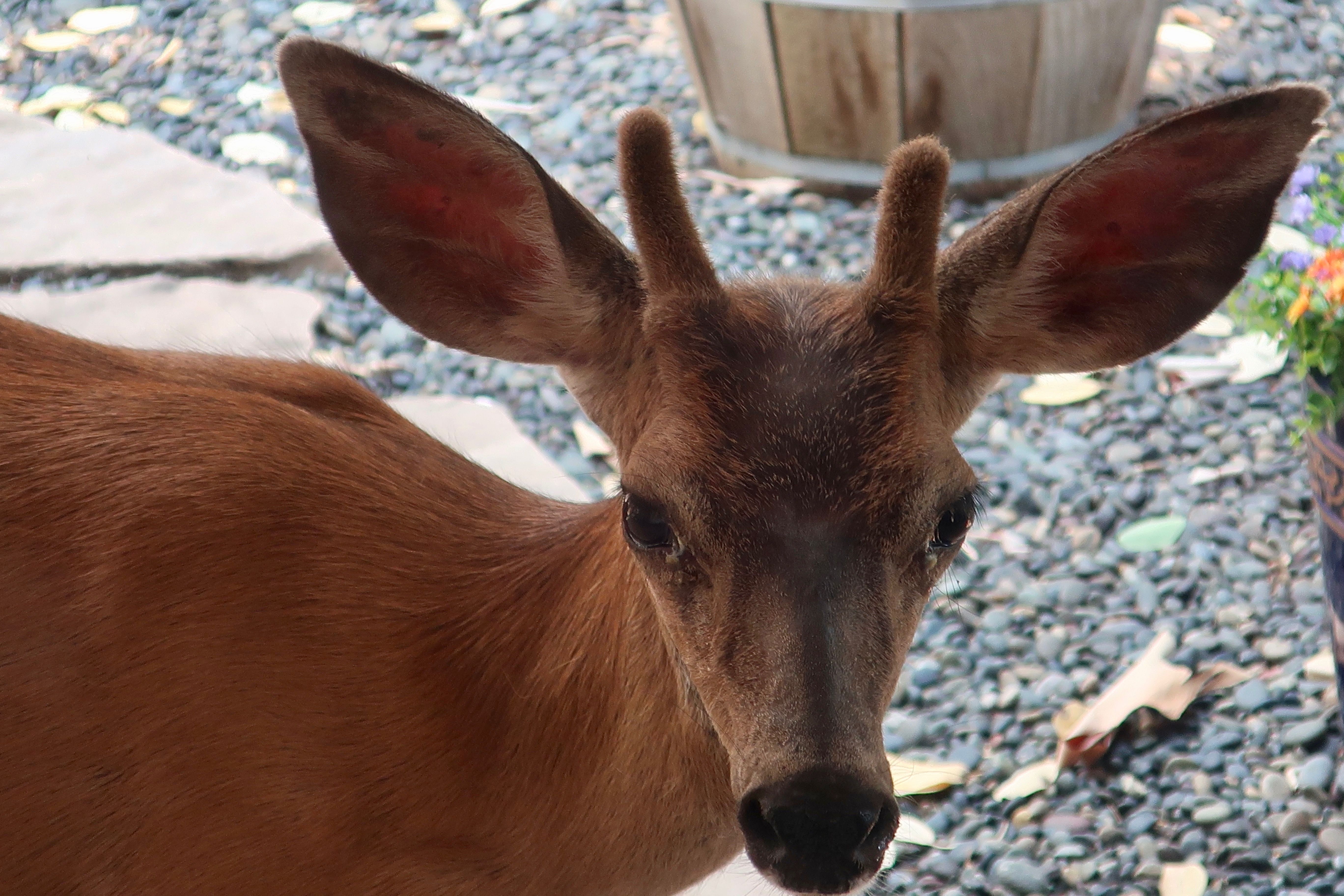
They’re back.
For about three weeks all we saw around here on our property in the Applegate Valley of Southern Oregon were the two does that hang out here and their four fawns. We wondered about the absence of other deer. Maybe the does turn into ‘mama bears’ when their babies are so young and the other does, bucks, and youngsters find it wise to be elsewhere. That all changed this week. Four or five other does and a couple of bucks had come by to drink water and decided to hang around.
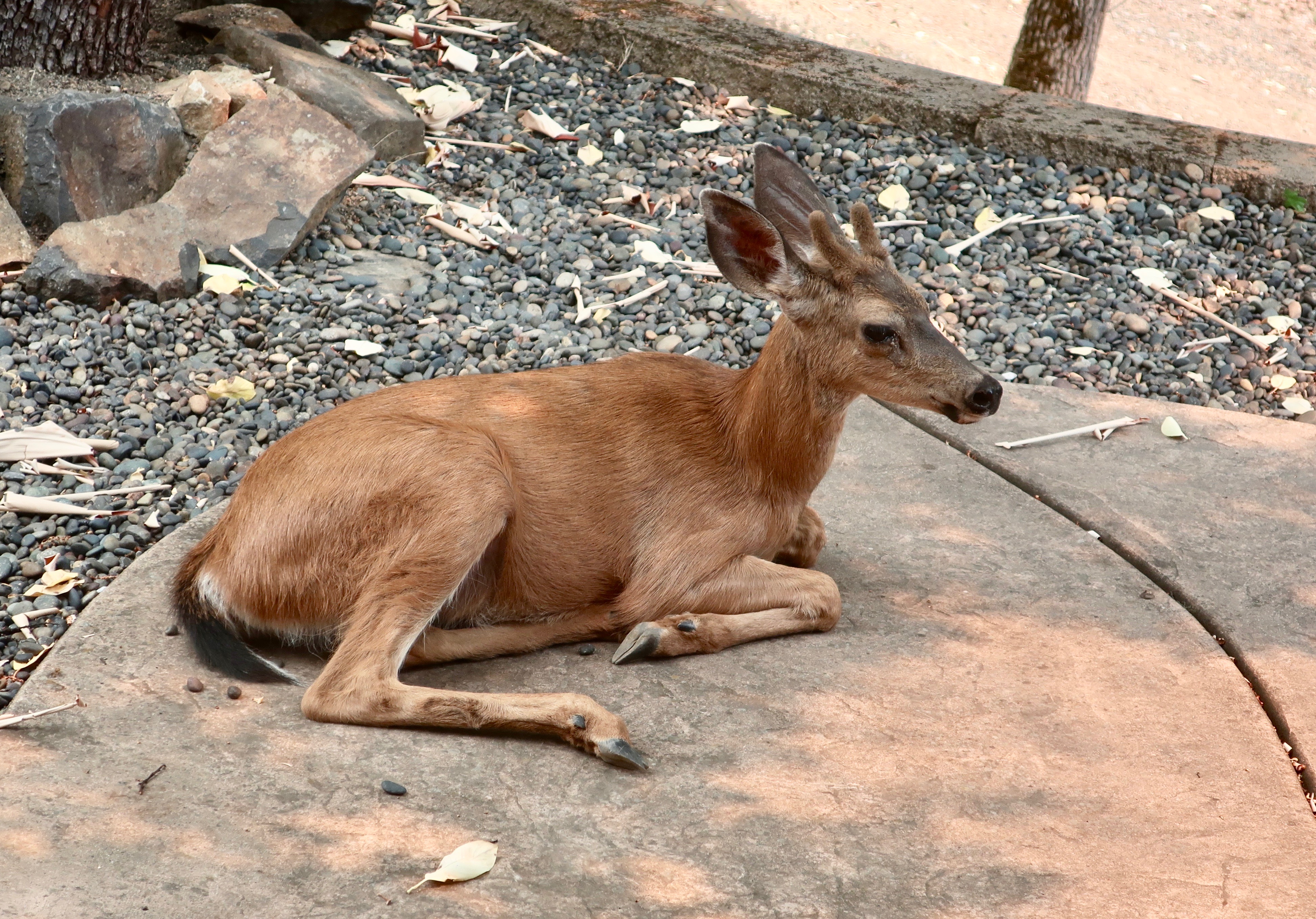
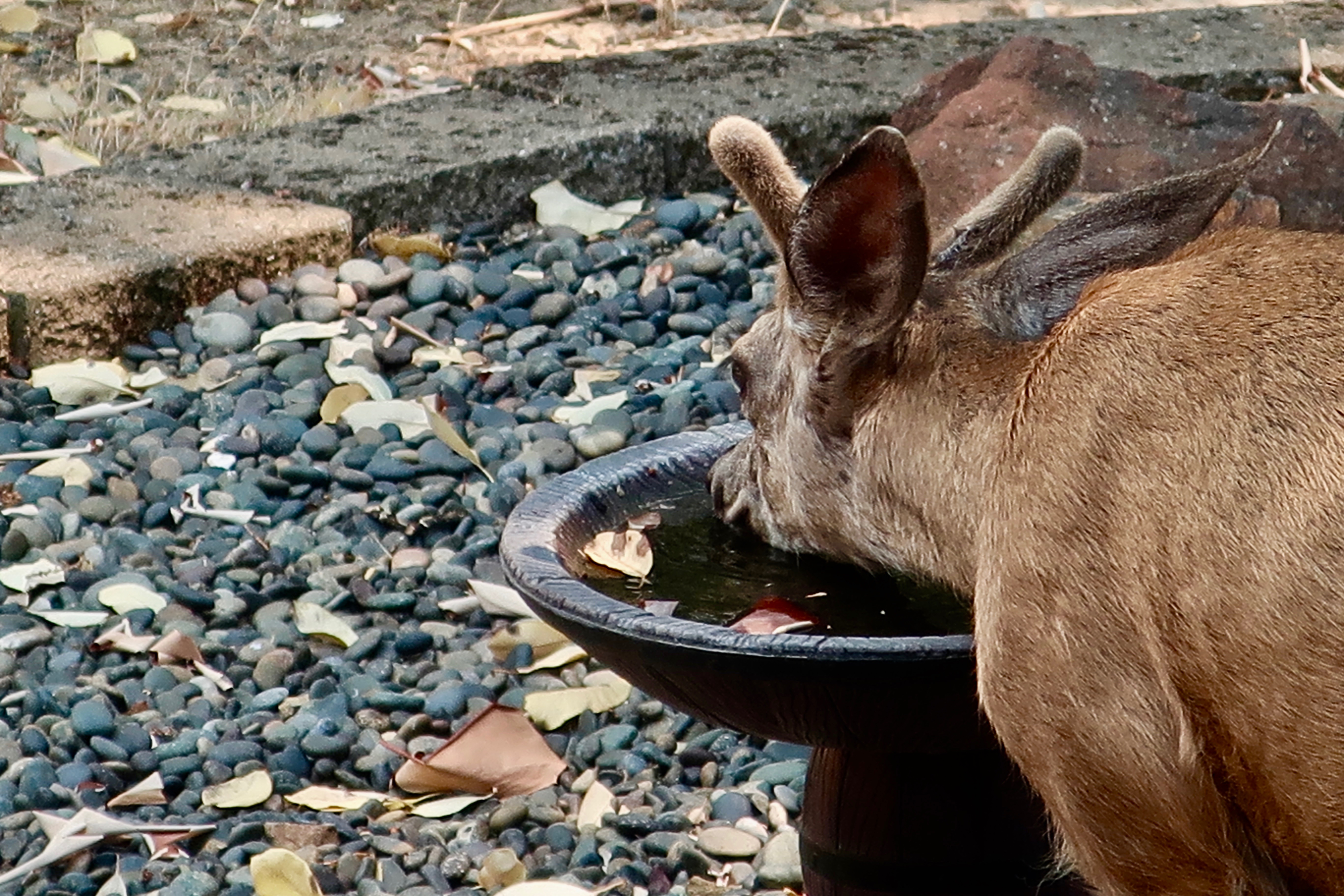
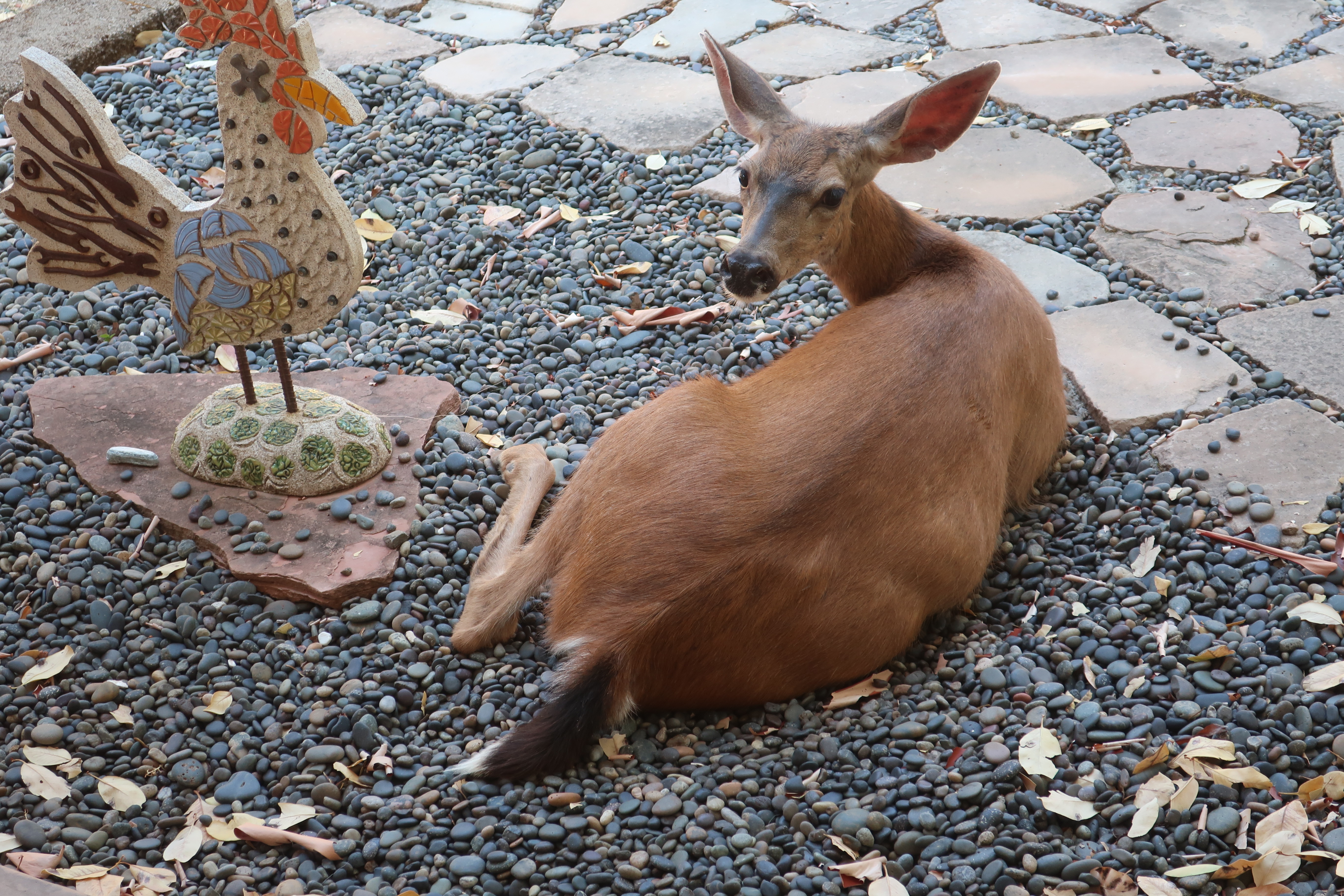
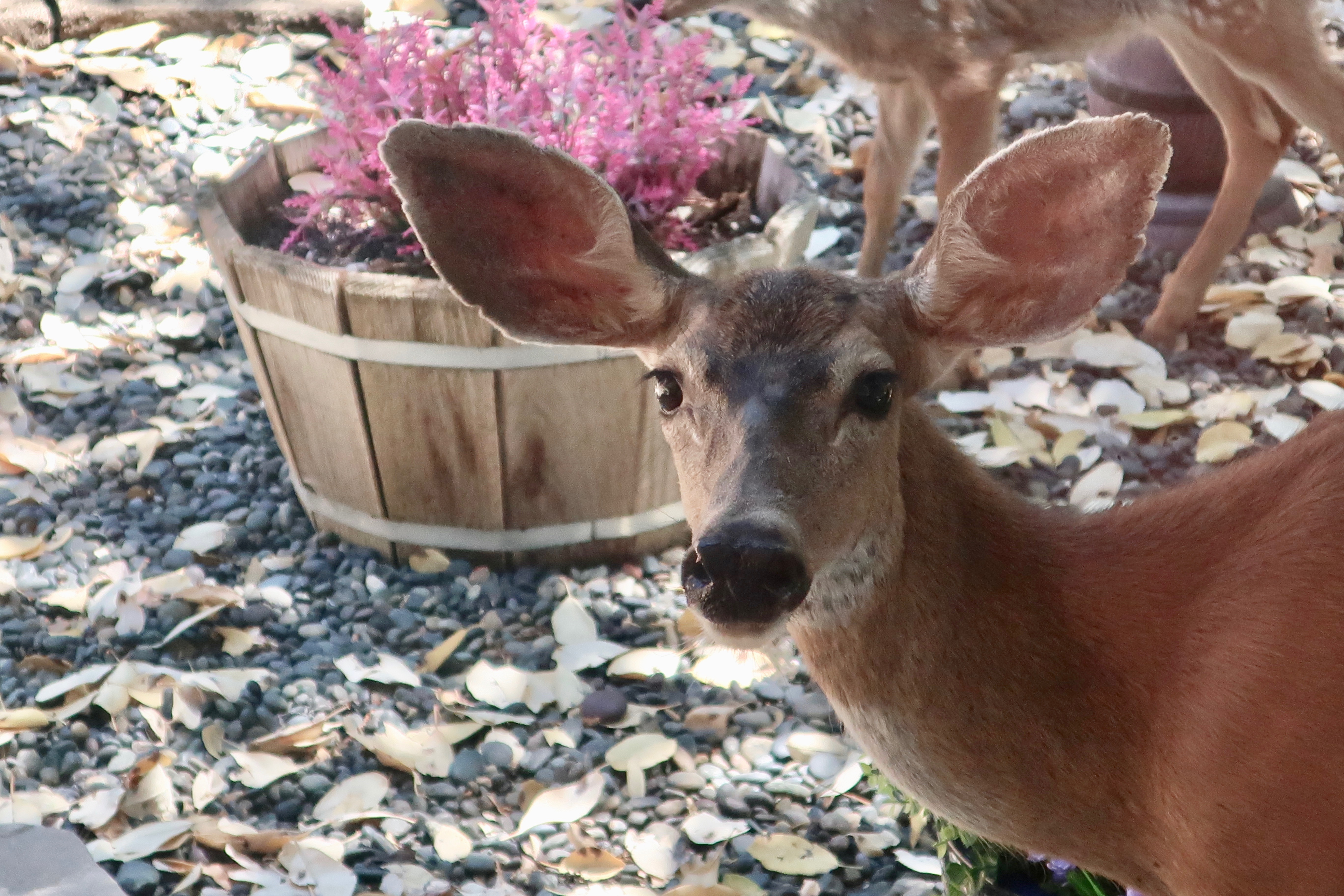
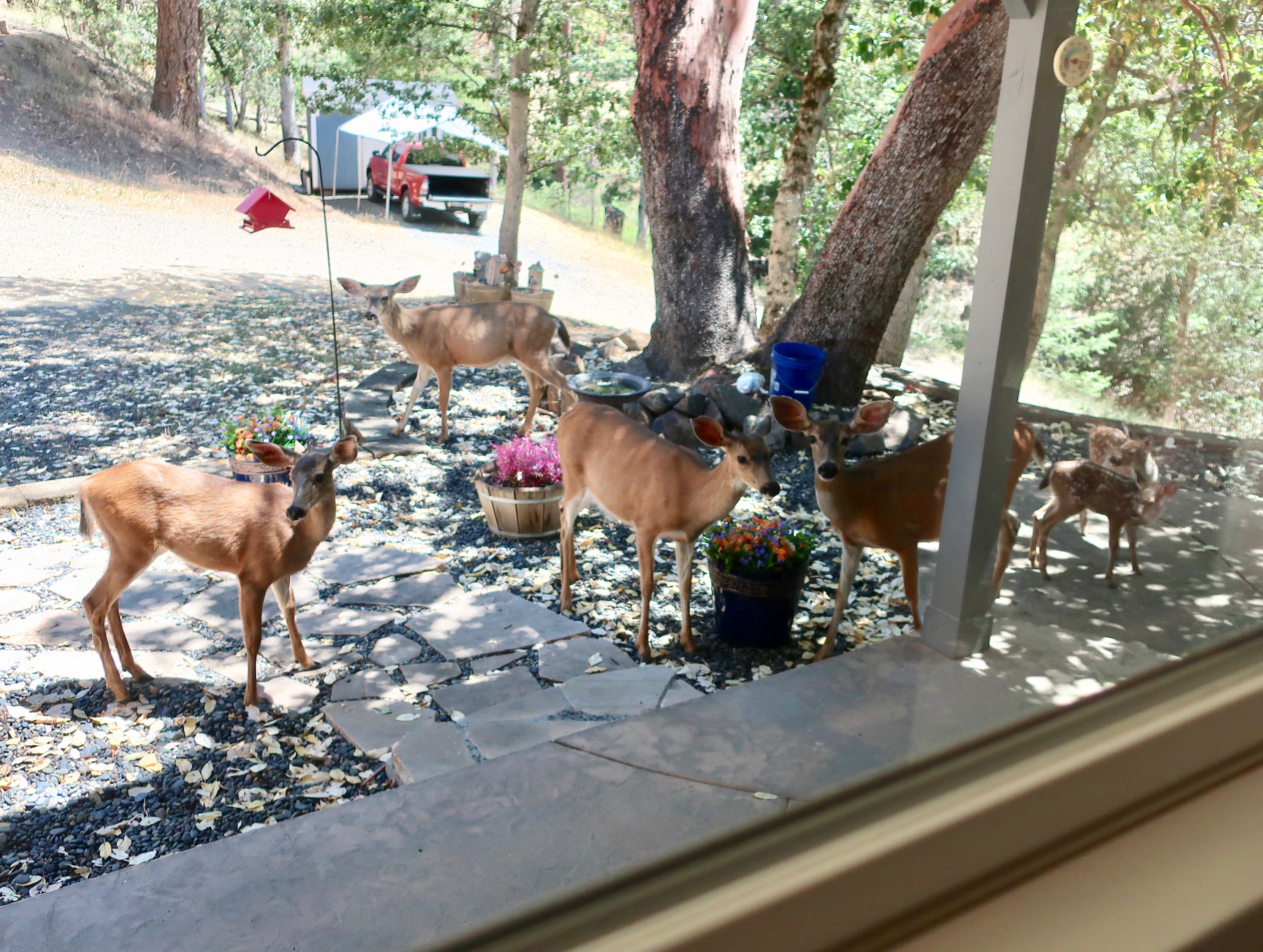
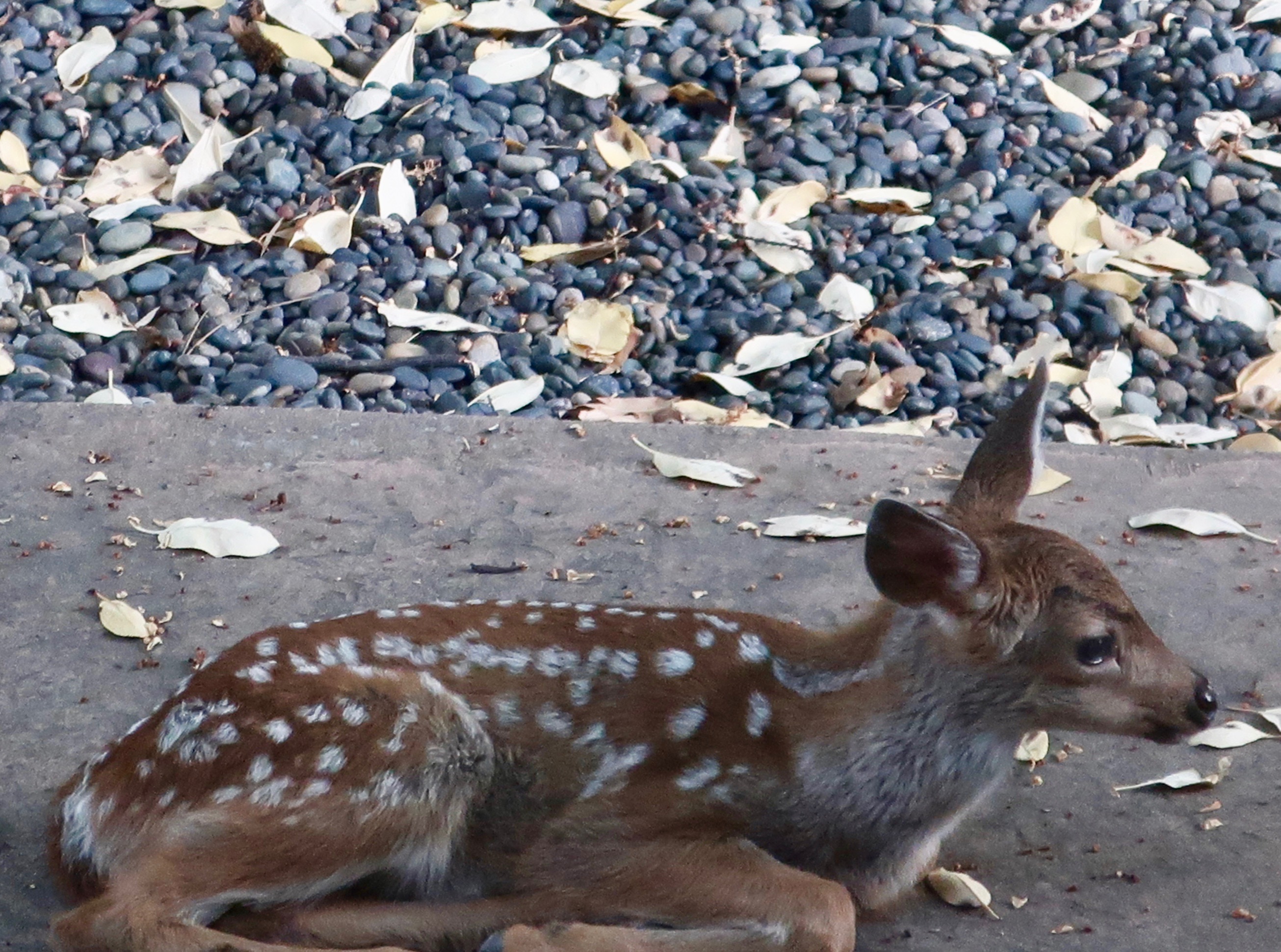
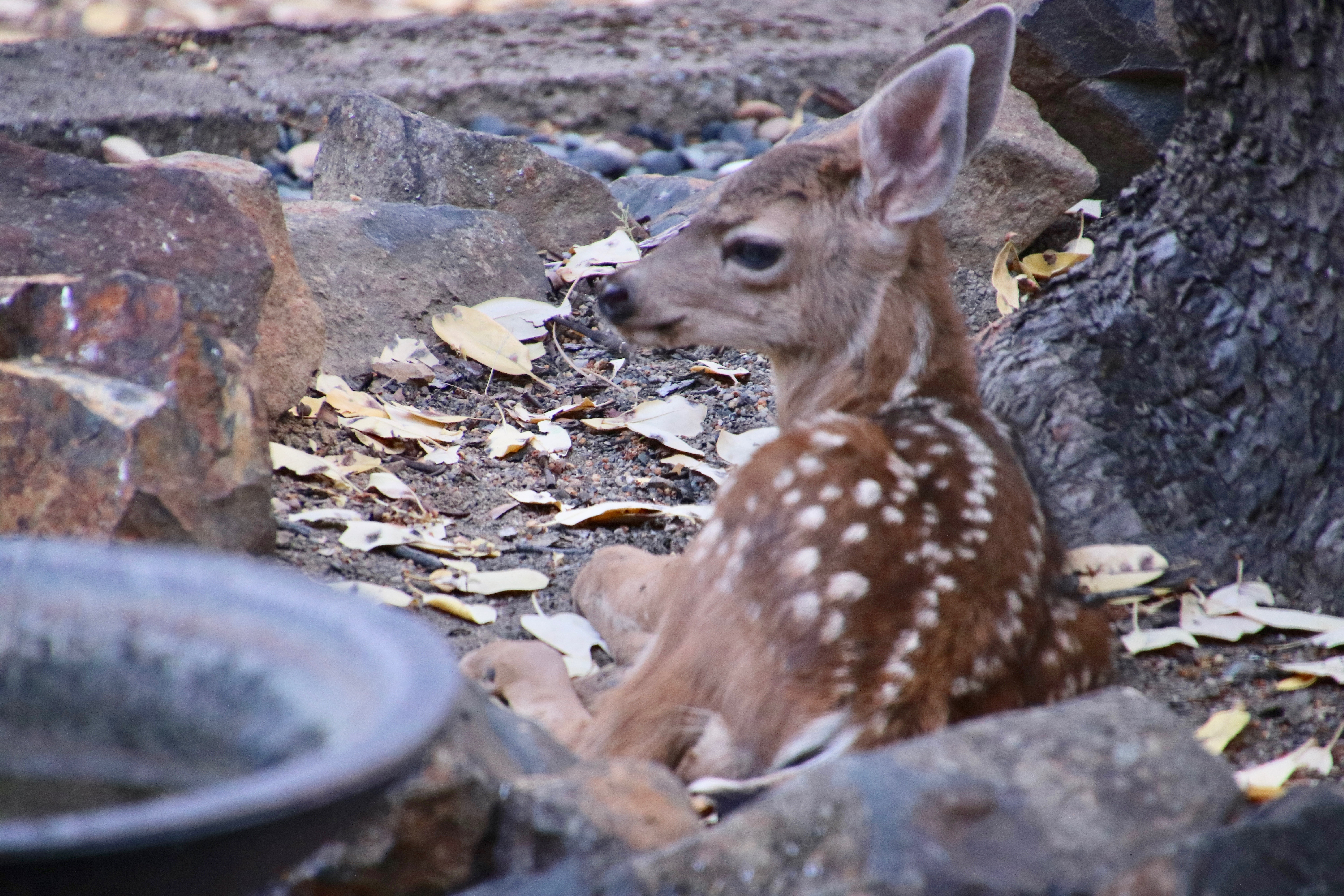
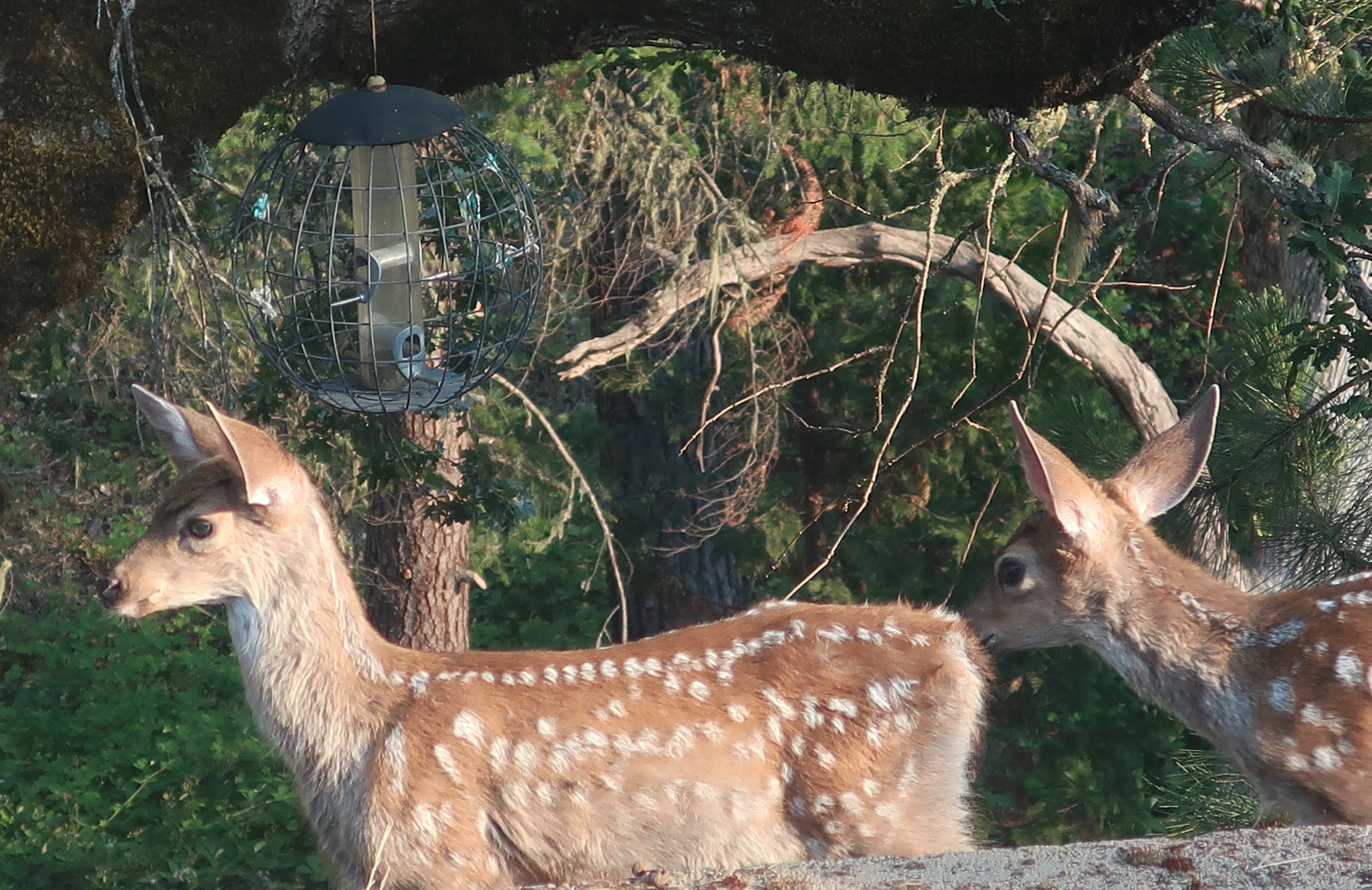
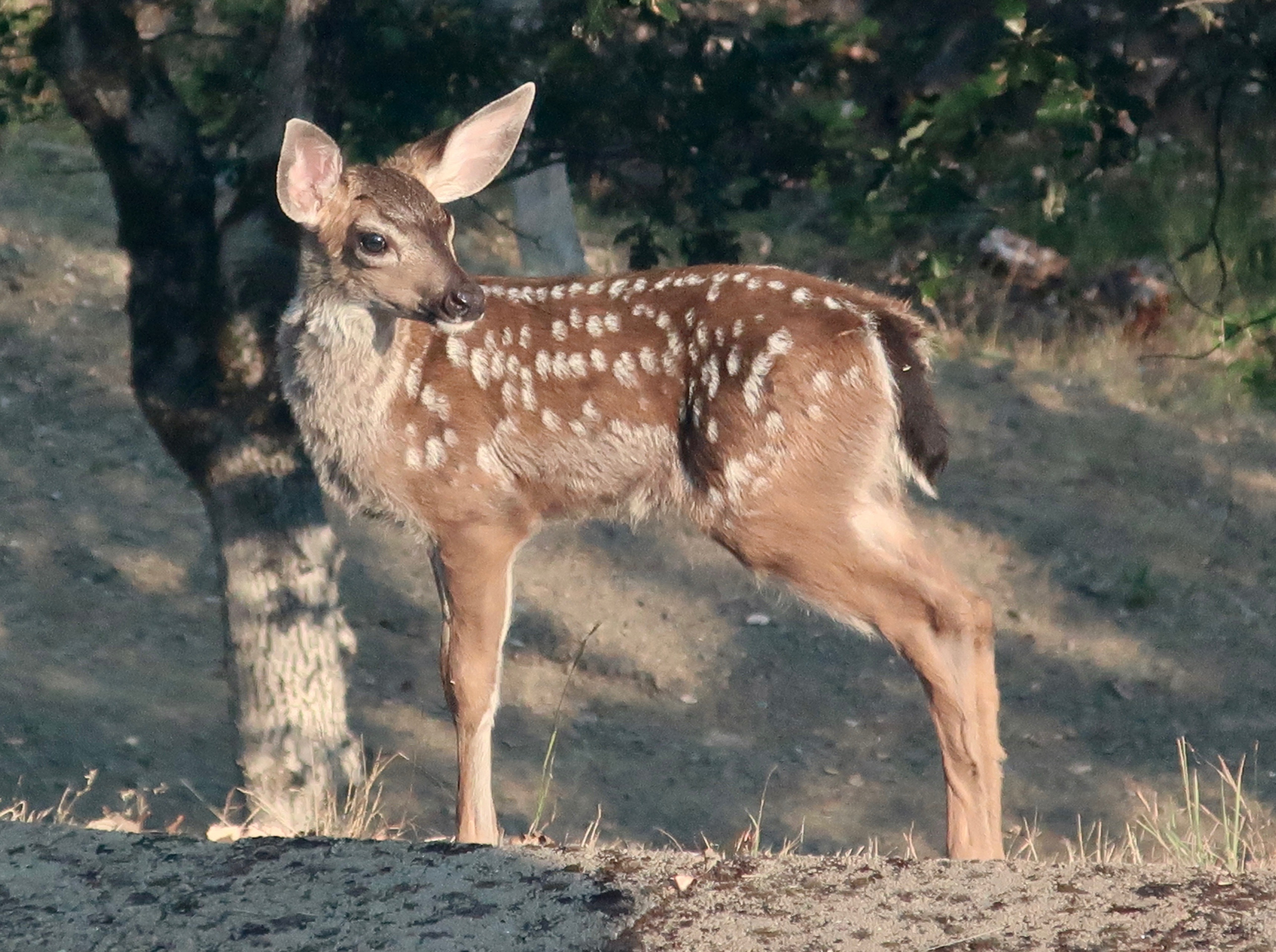
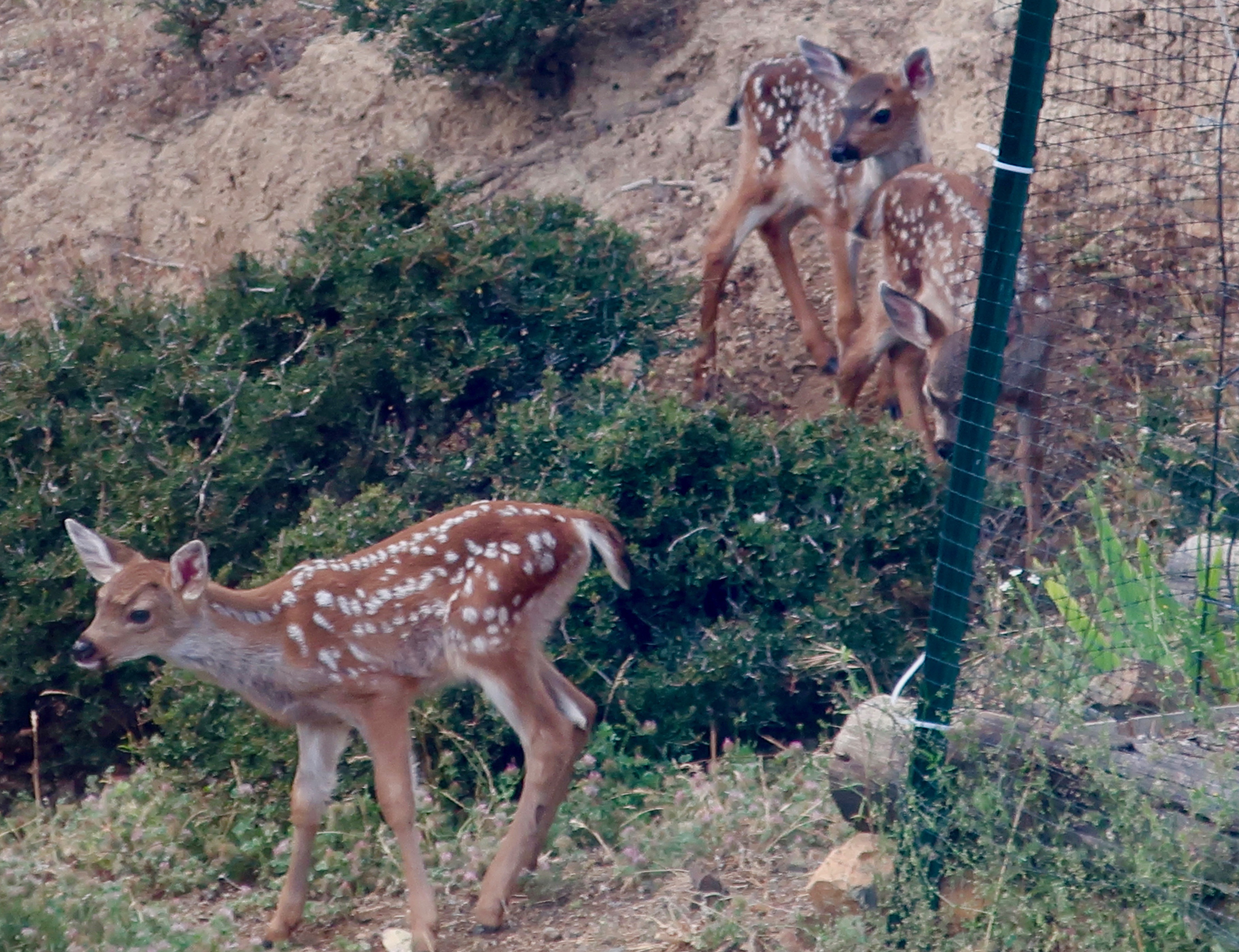
But enough on the adults. I know that the real reason you are here is to see the babies. The following photos are of Misty’s kids. Her daughter’s fawns were born a couple of weeks after Misty’s and are still too small to hang out with the adults. We tend to see them later in the evening.
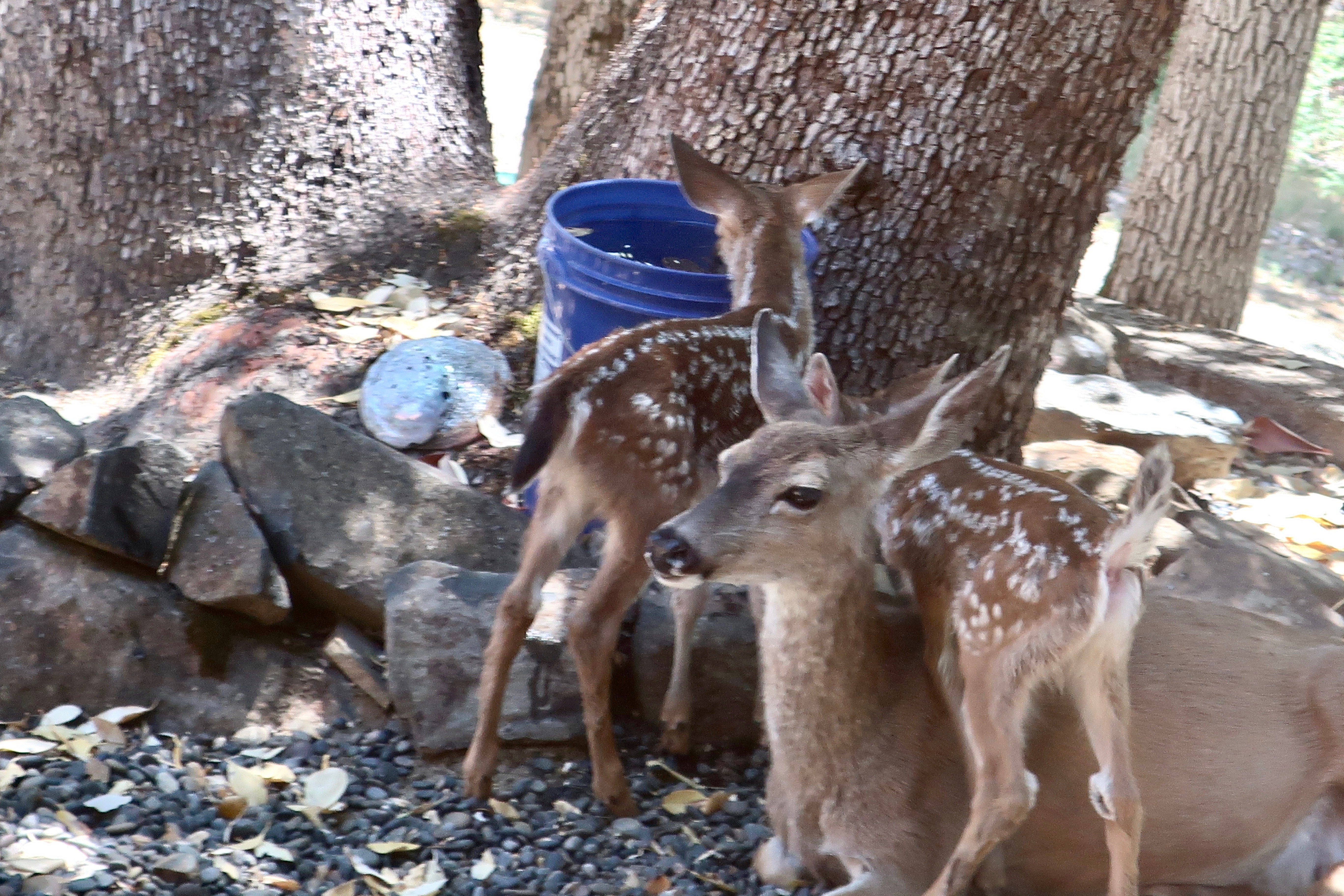
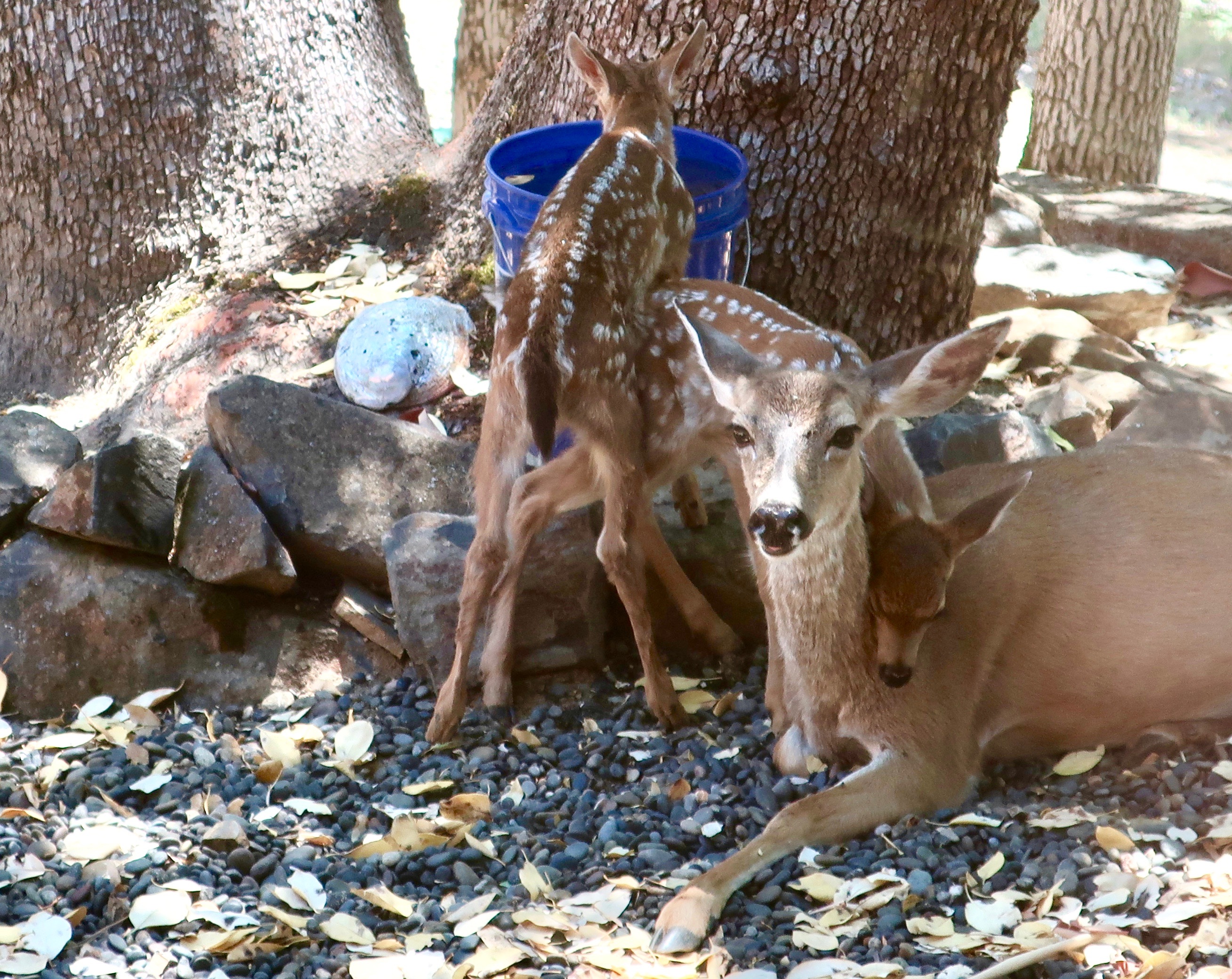
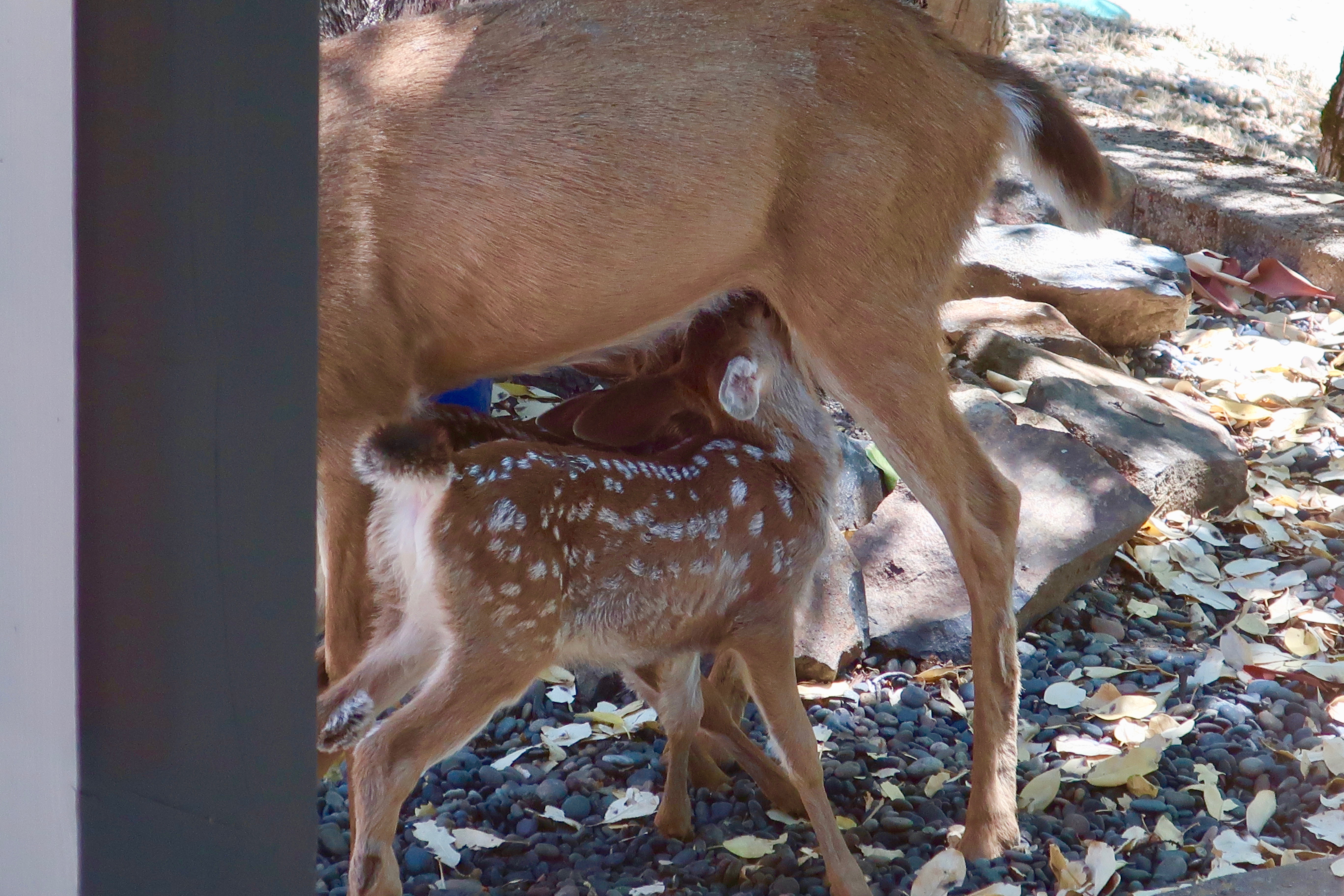
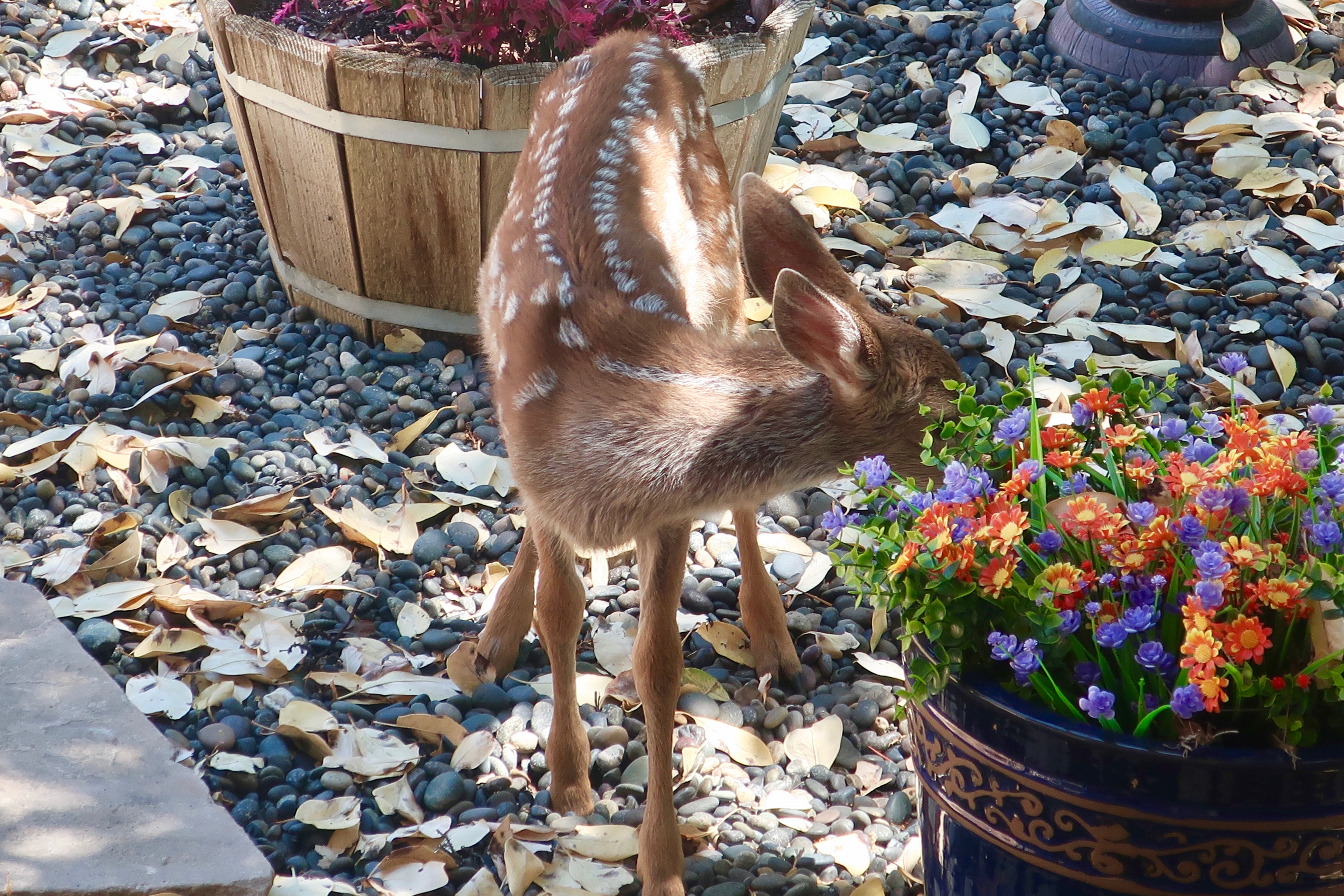
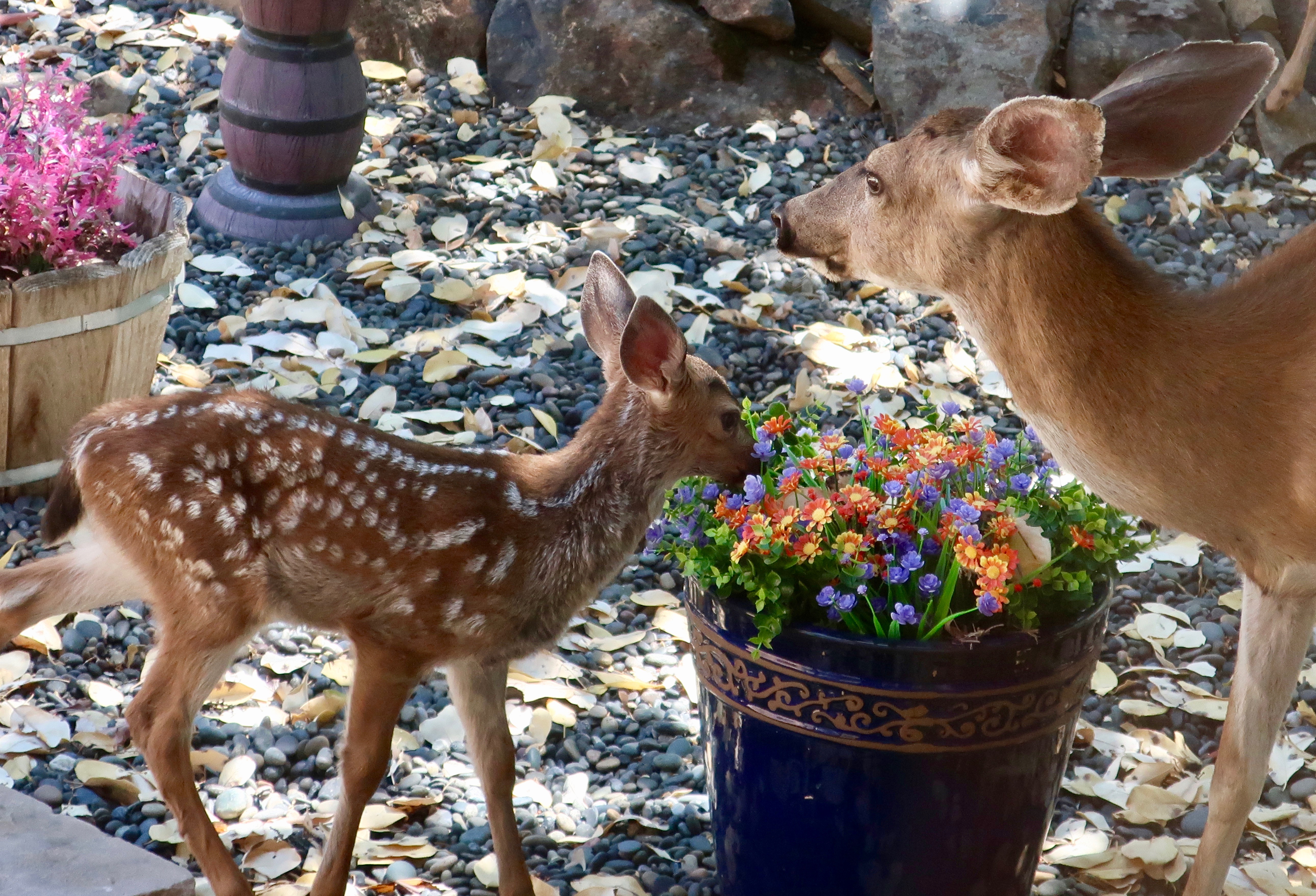
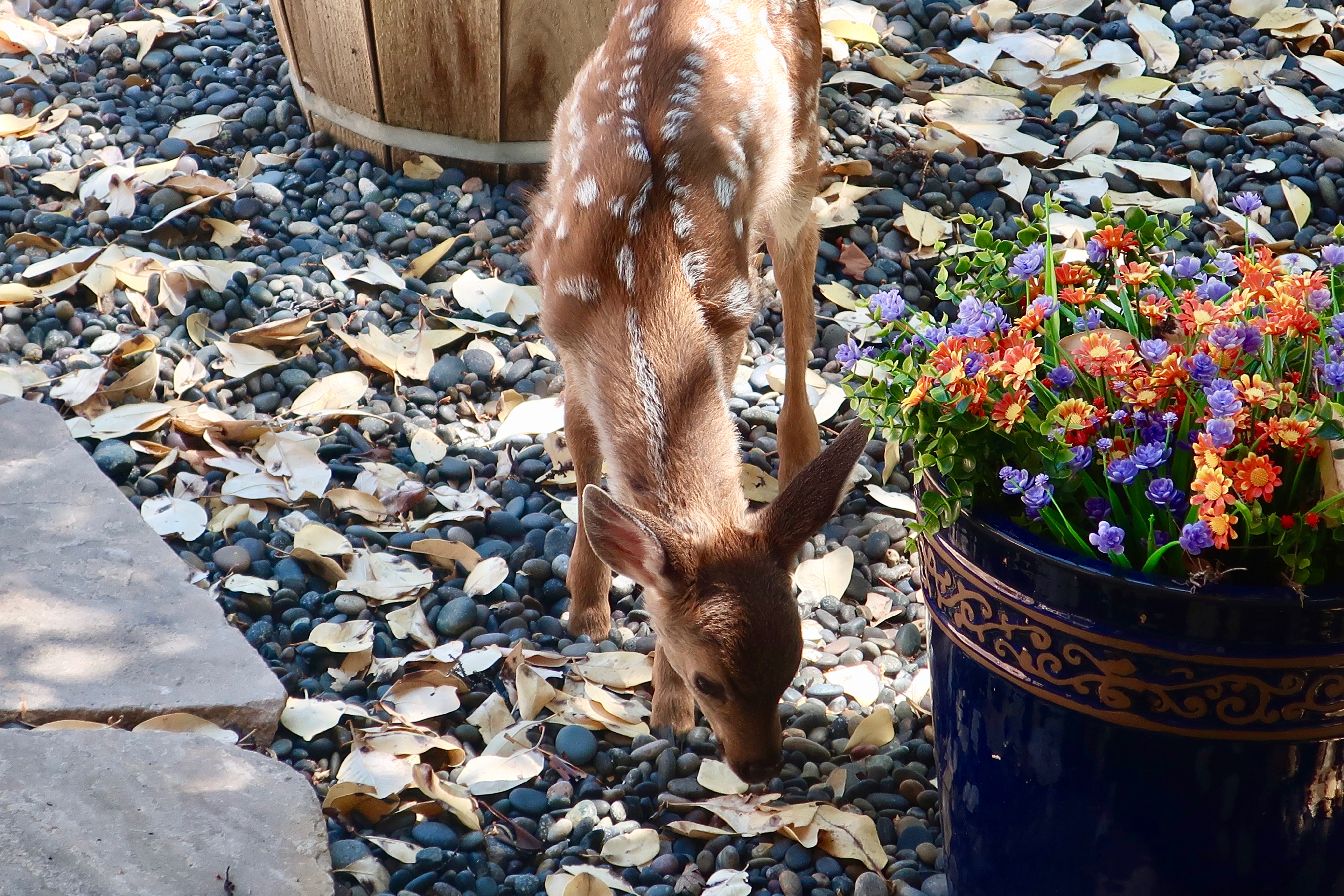
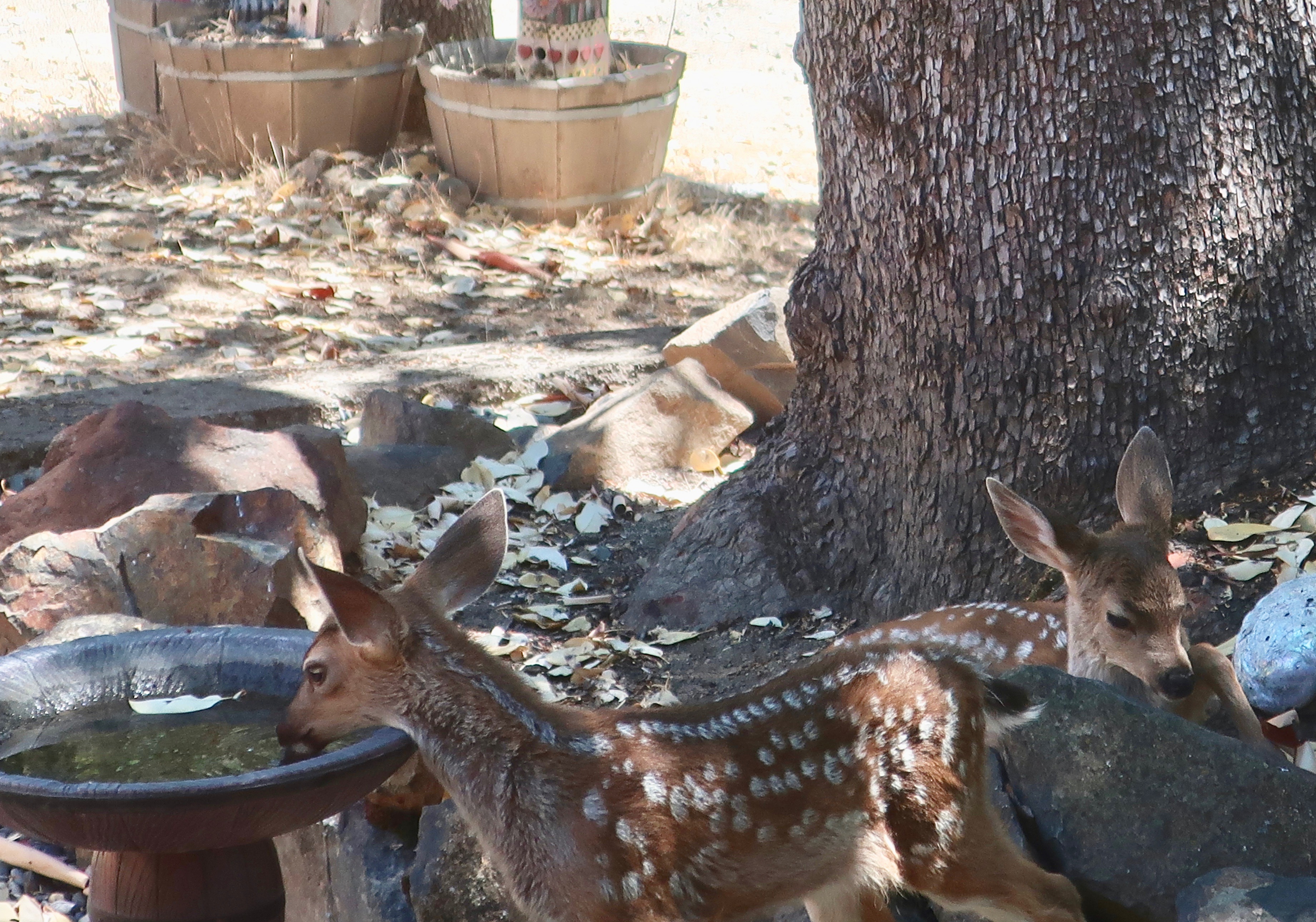
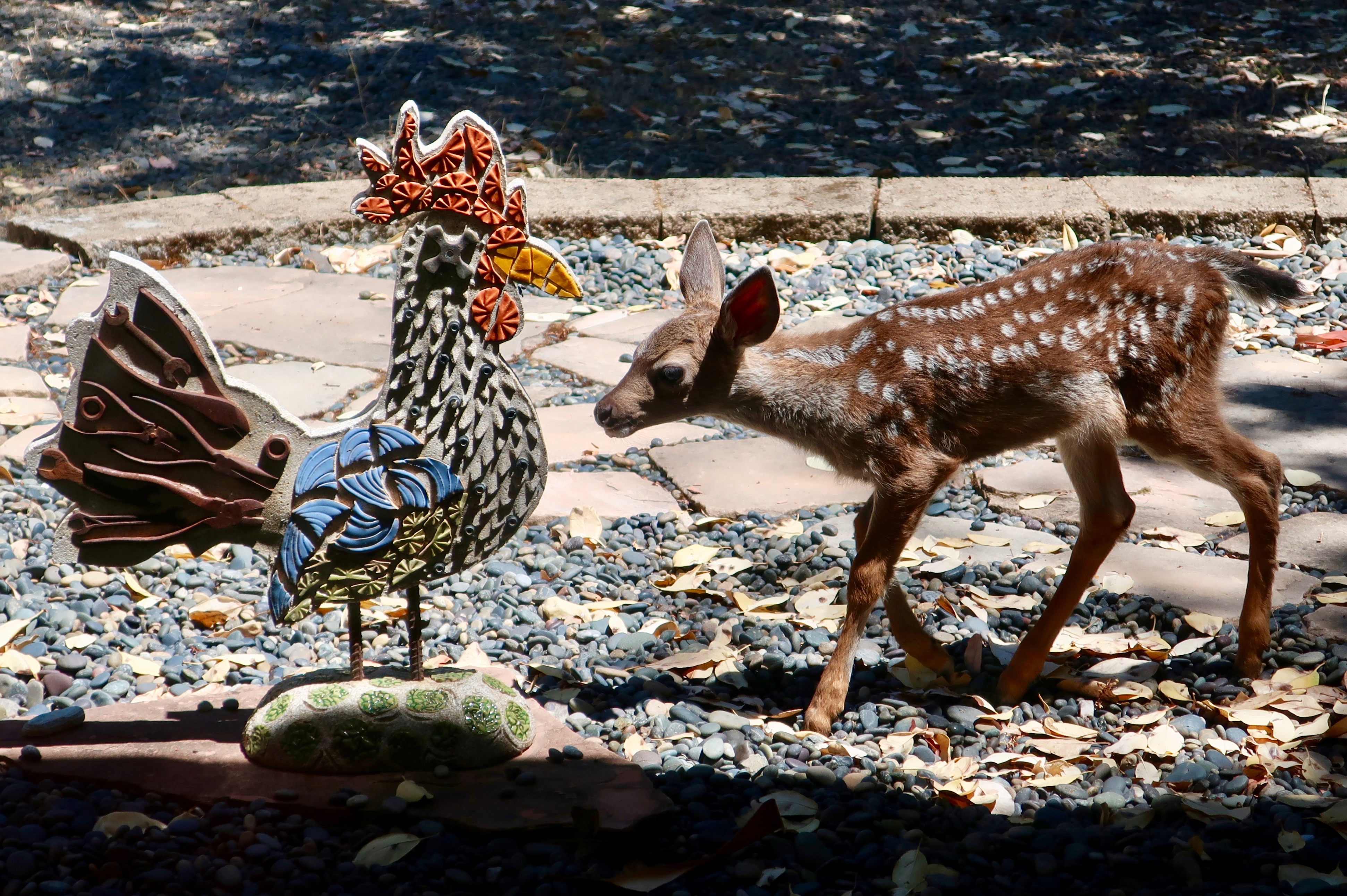
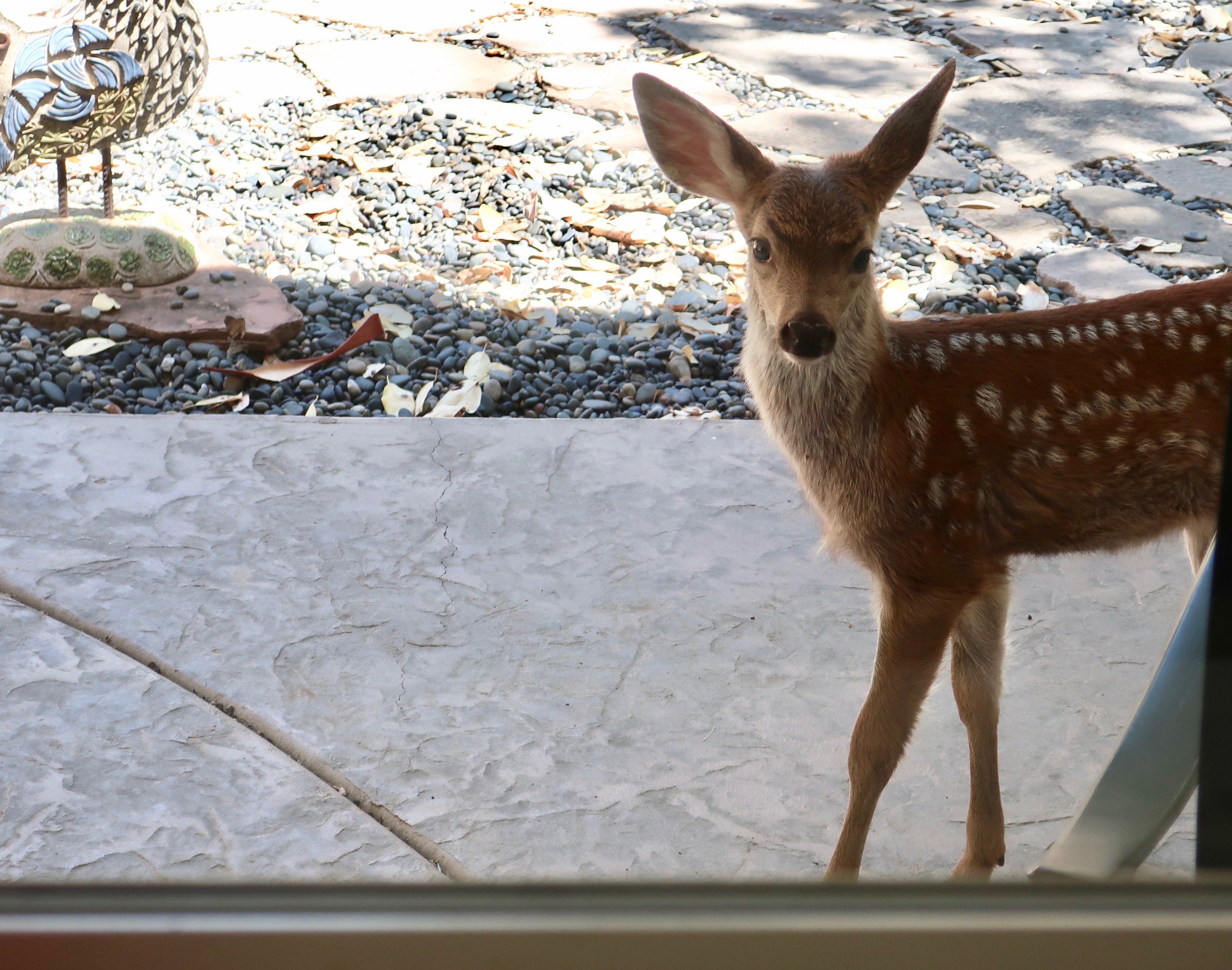
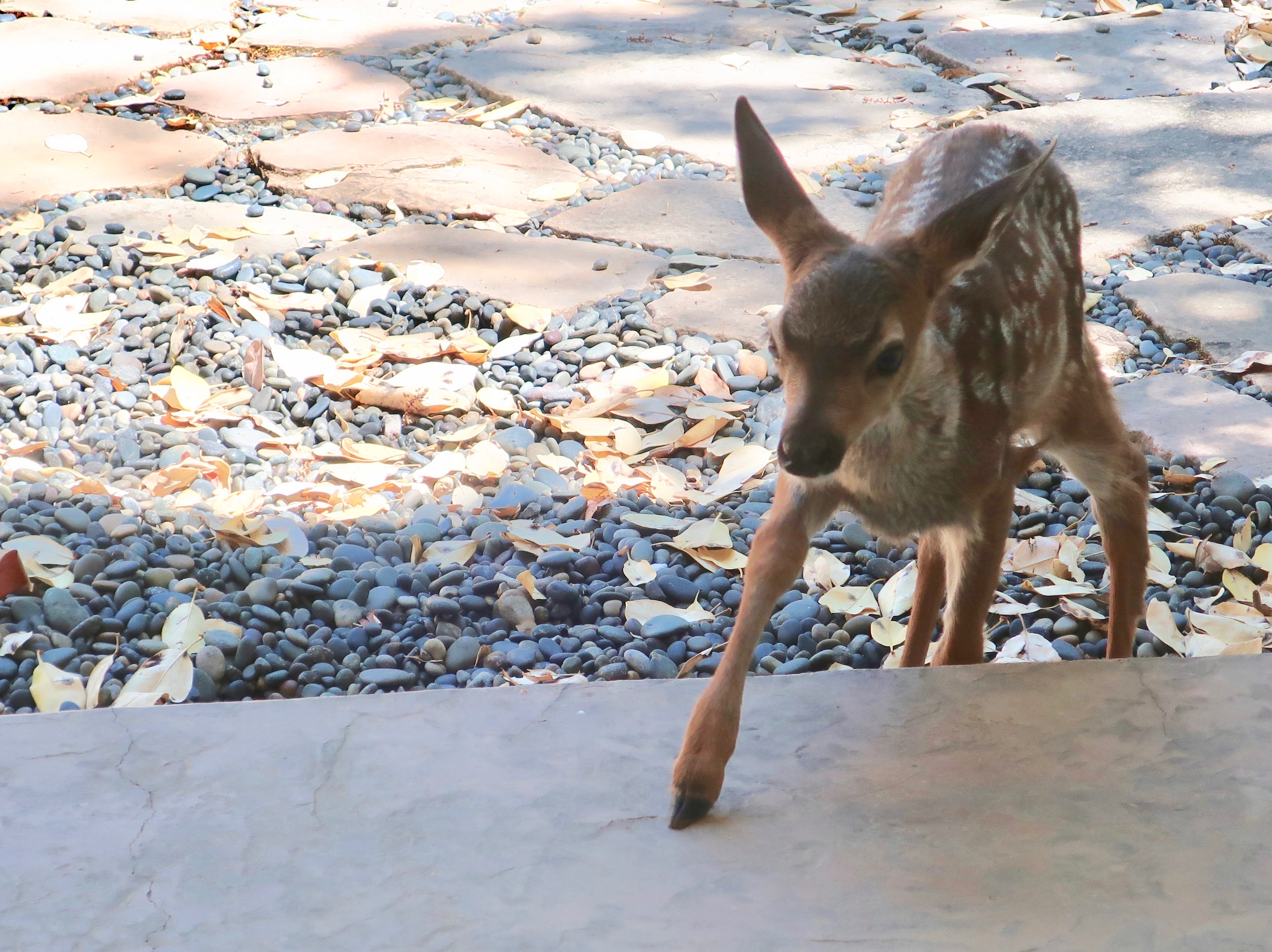
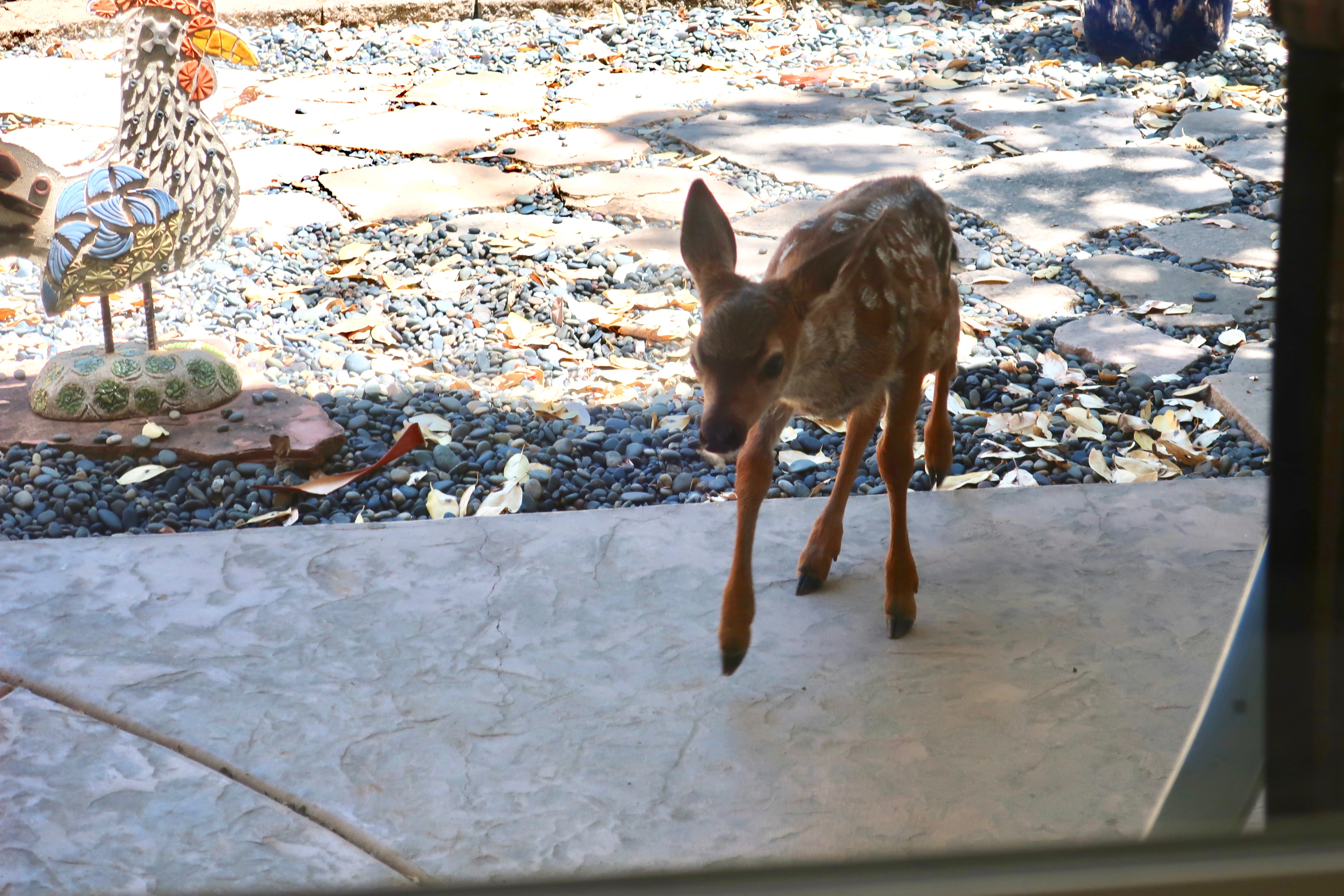
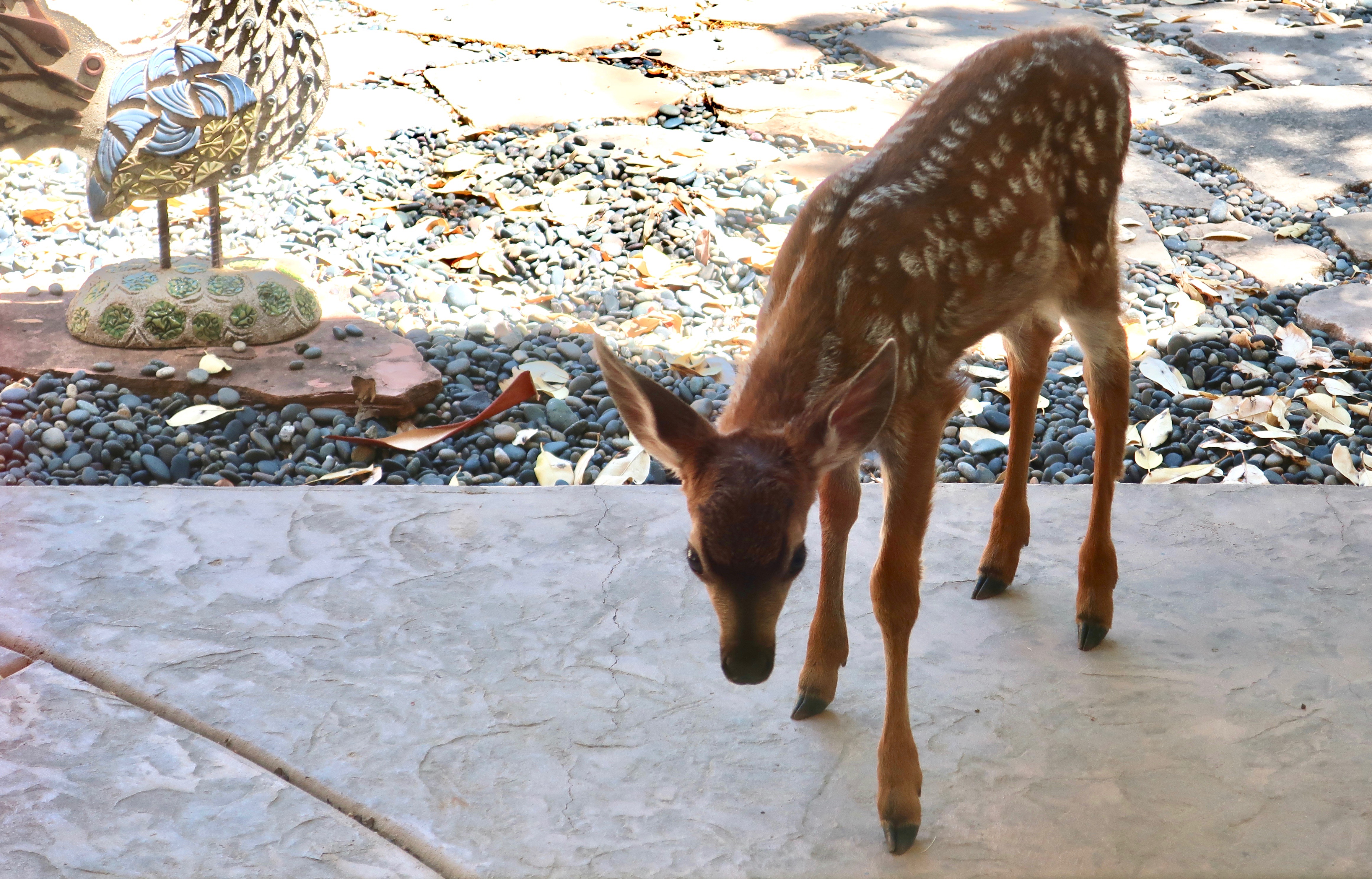
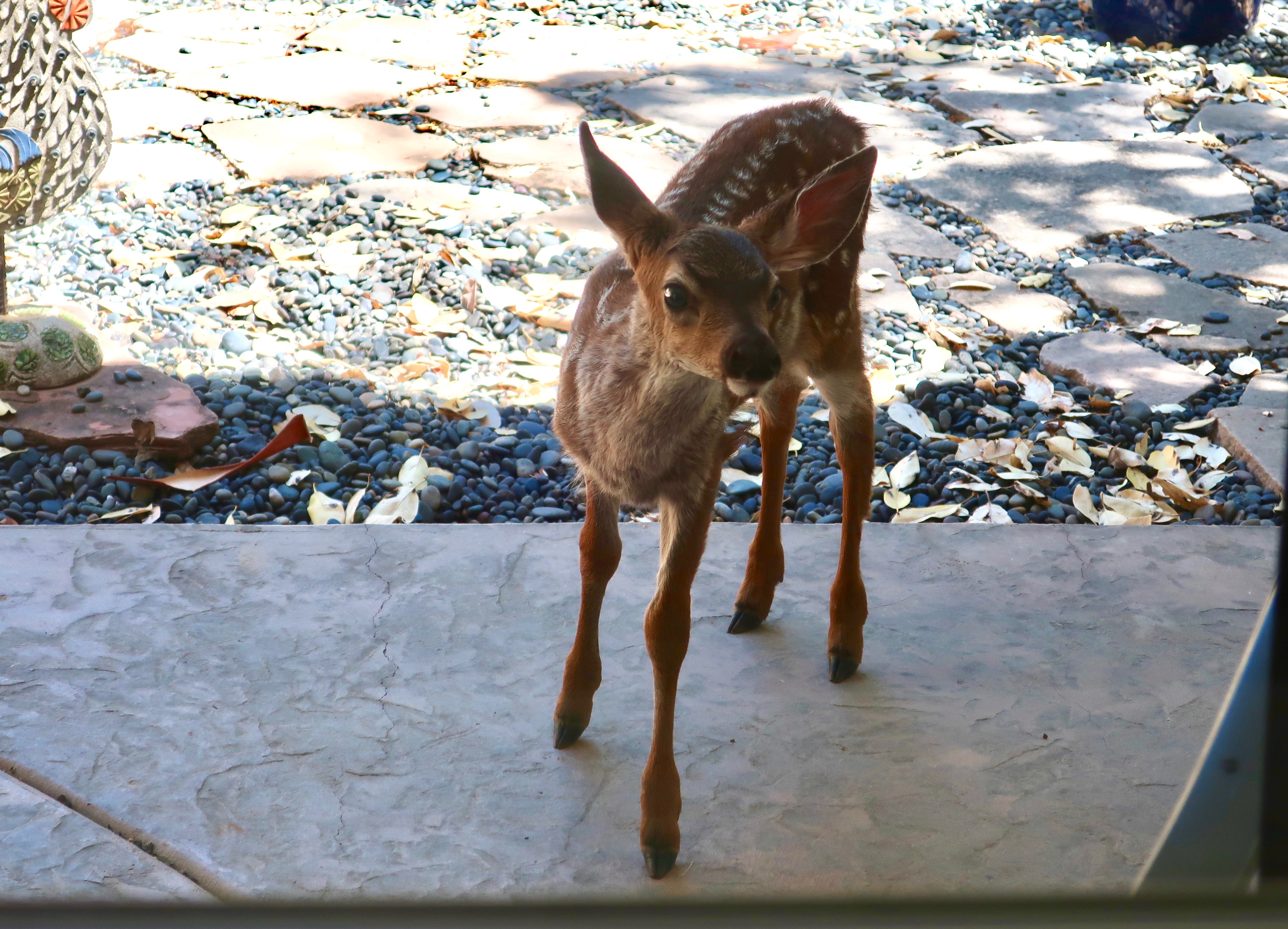
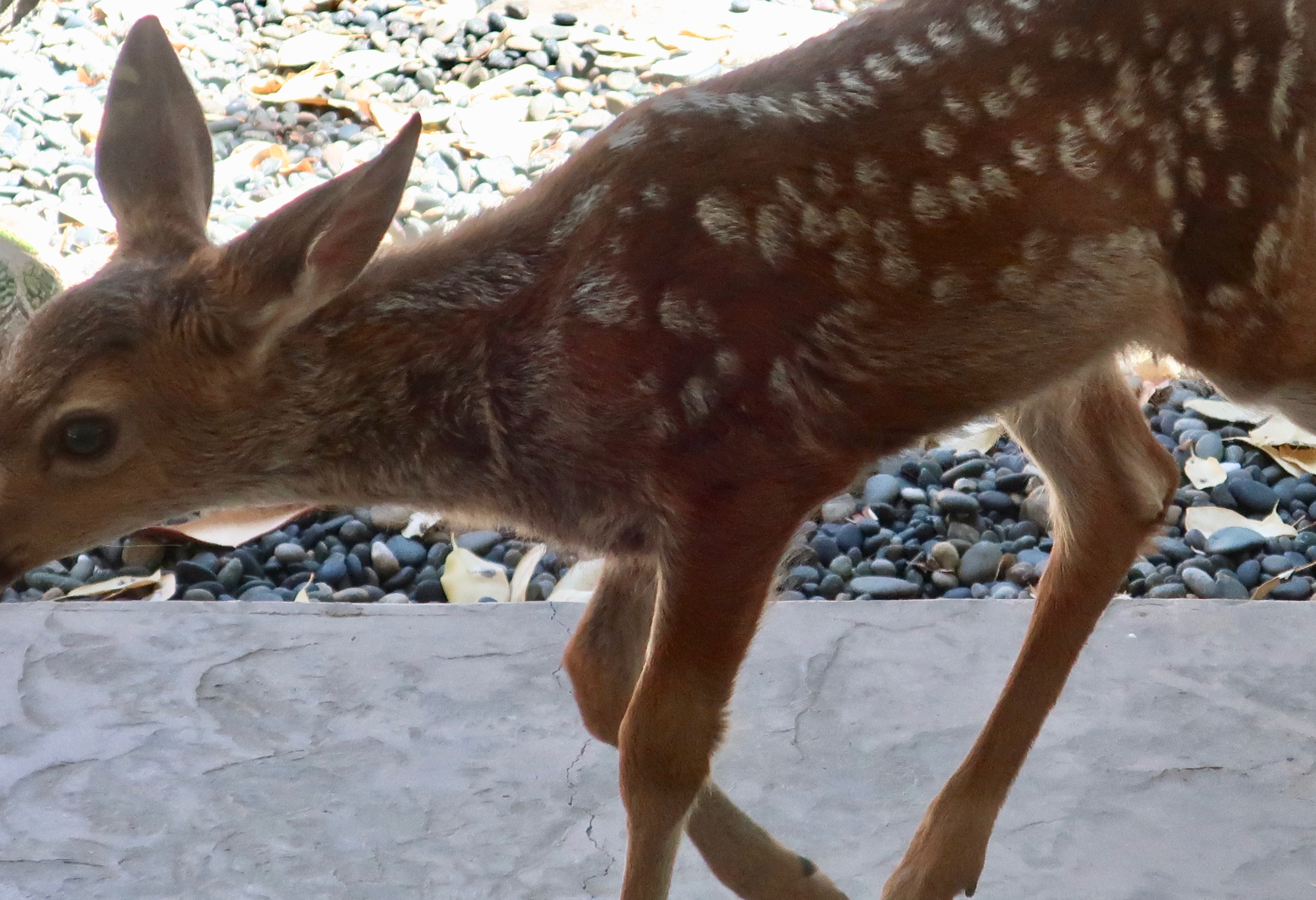
And to finish off today’s post, a few more cute fawn photos…
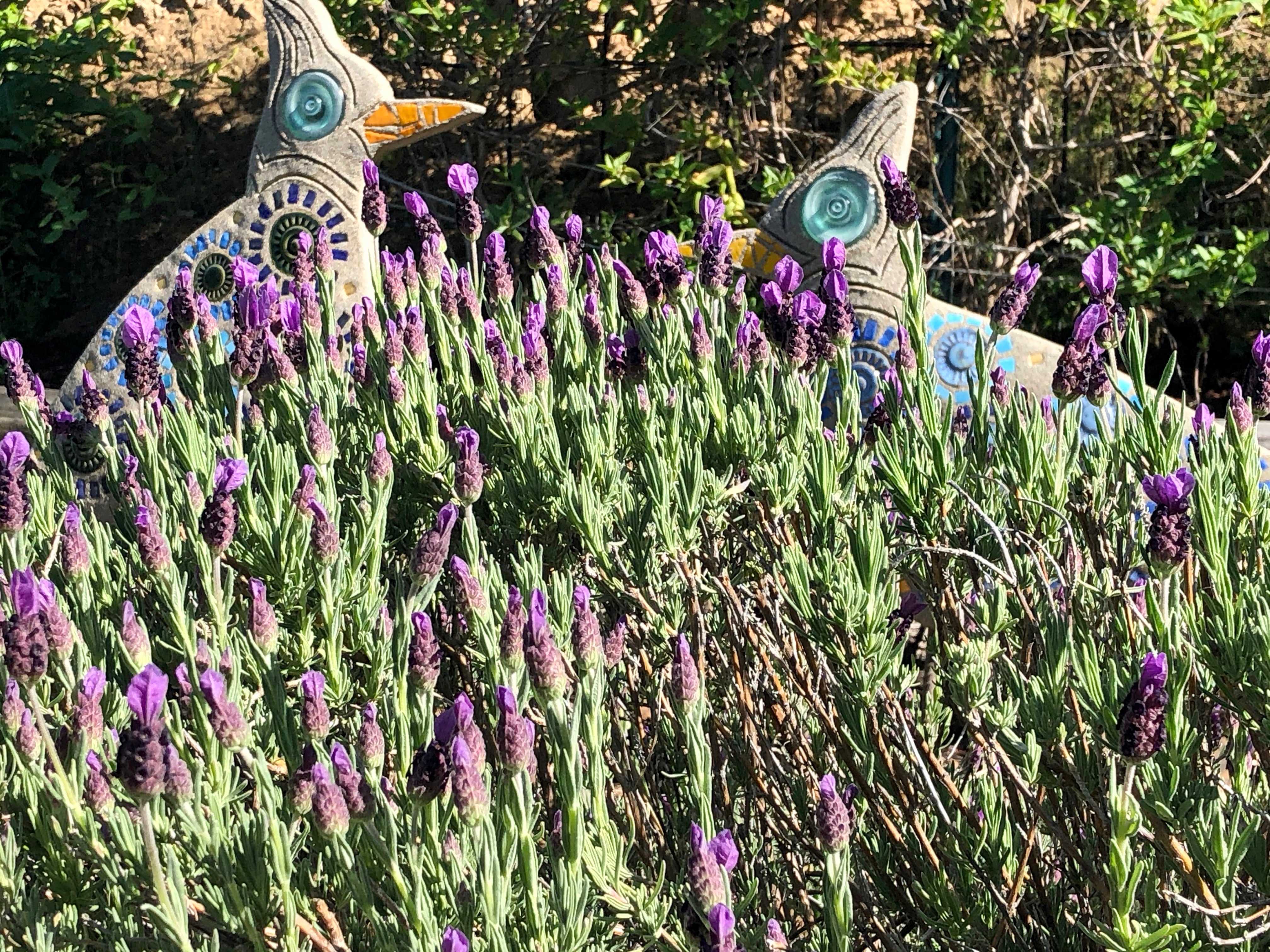
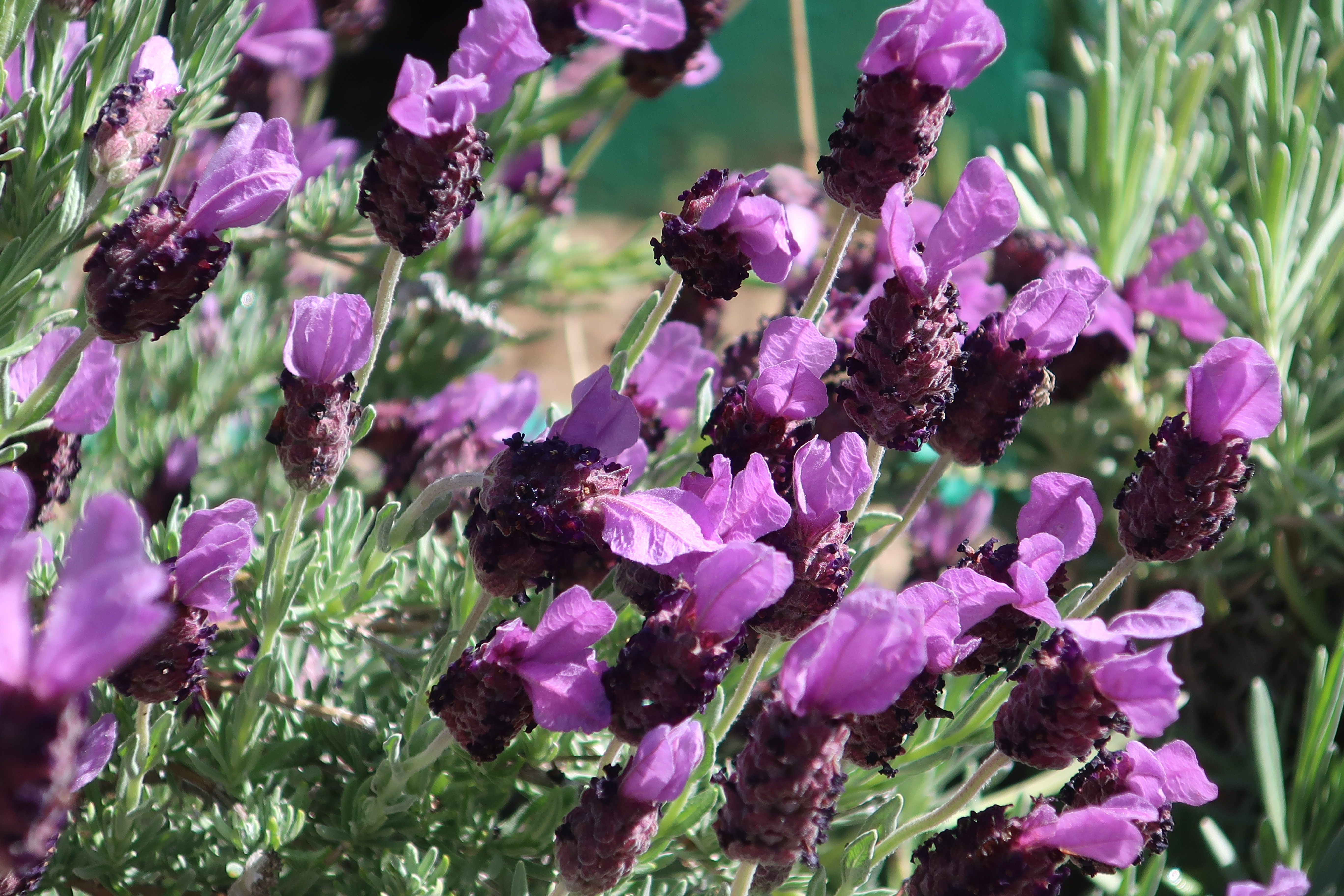
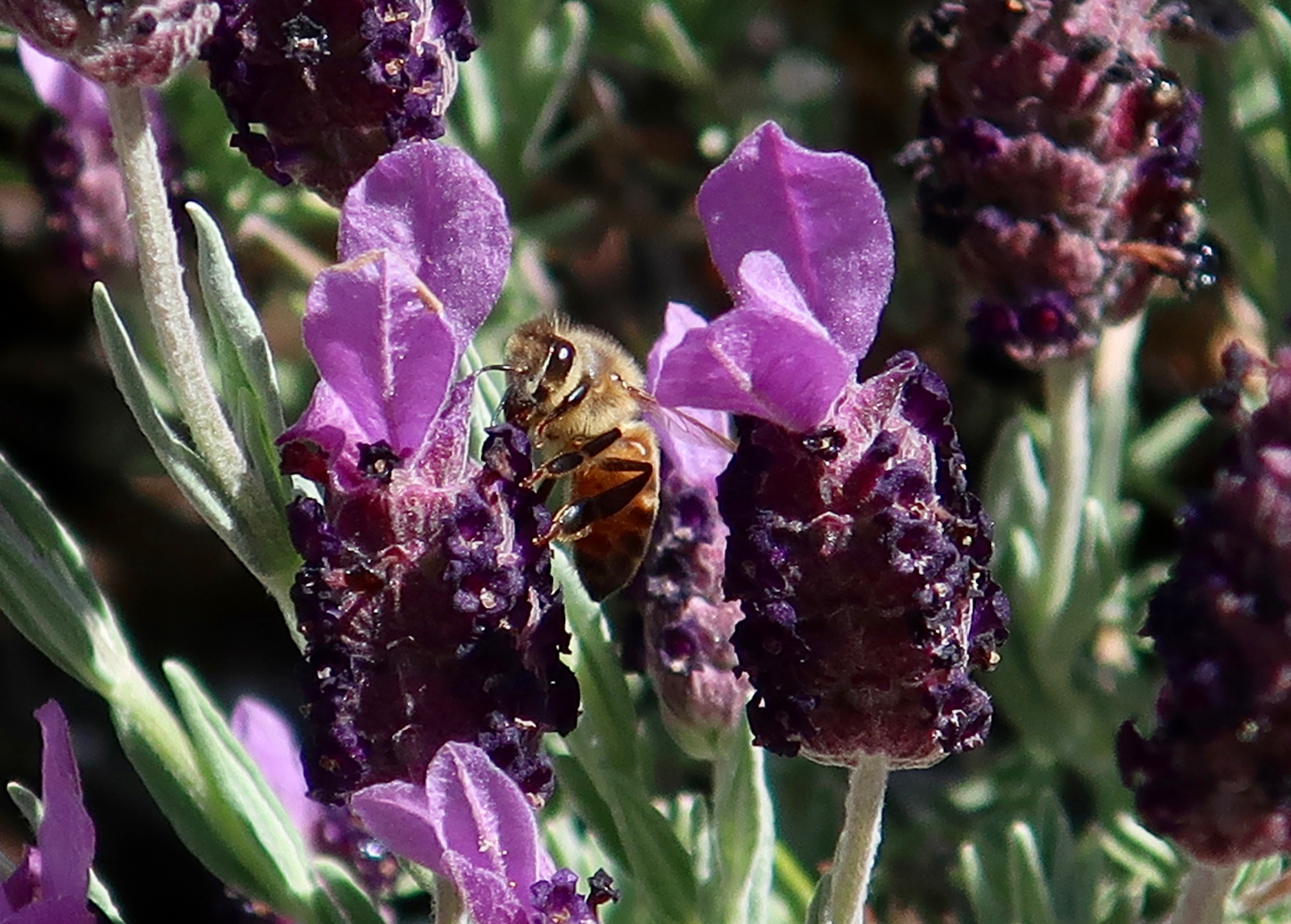
Other notes: The fox came by recently, trotting across our deck. A pair of California quail have been hanging around. Three days ago we spotted them with their family of tiny babies, maybe an inch tall. Our lavender is in full bloom, attracting hundreds of honey bees and dozens of bumble bees. We had a population explosion of ground squirrels. I’ve caught 86 so far and transported them across the river to Squirrel Village. They can be quite verbal in what they think about the relocation program. I’ve never heard such fowl language. Not even Rooster can match them.
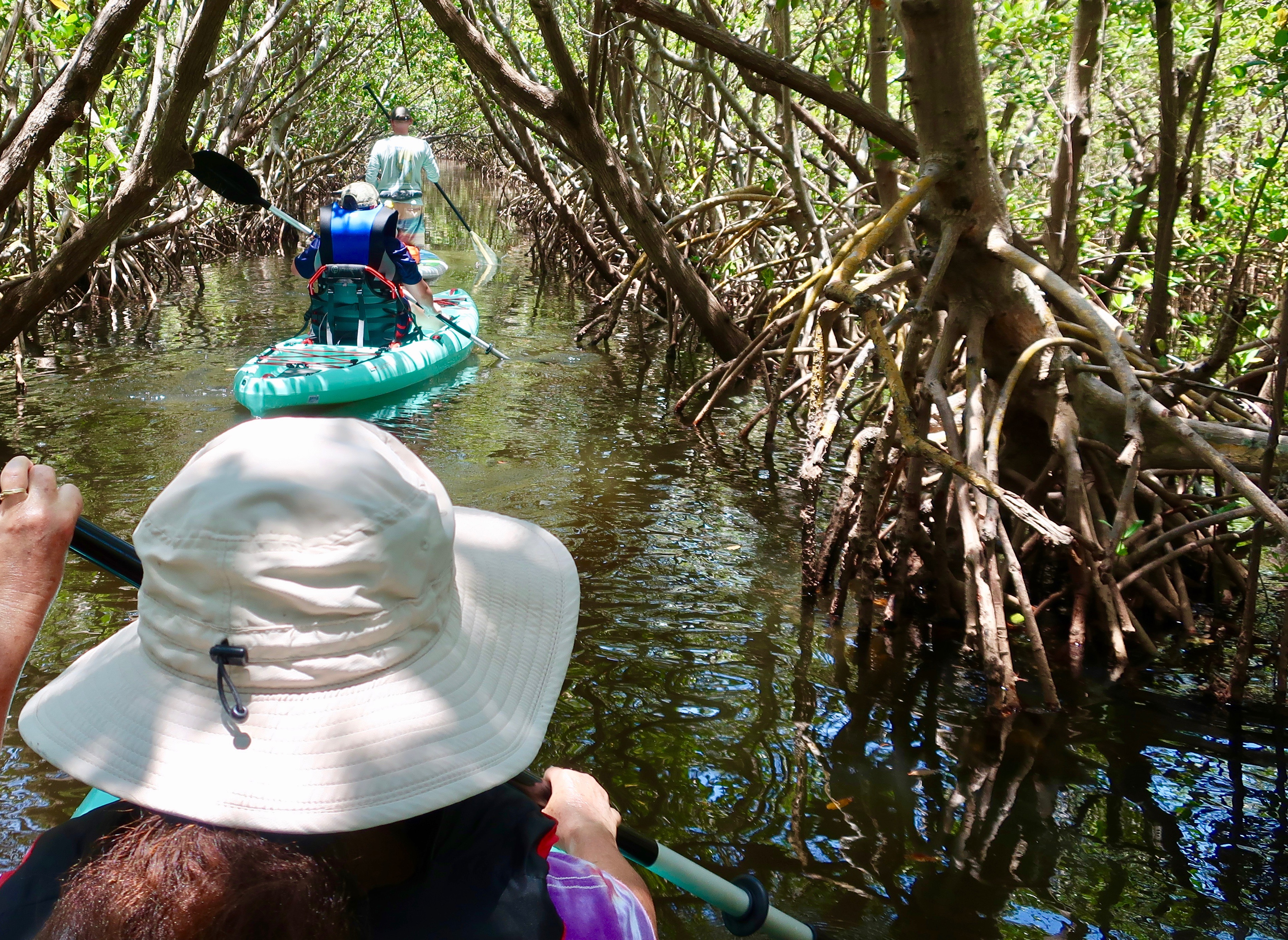
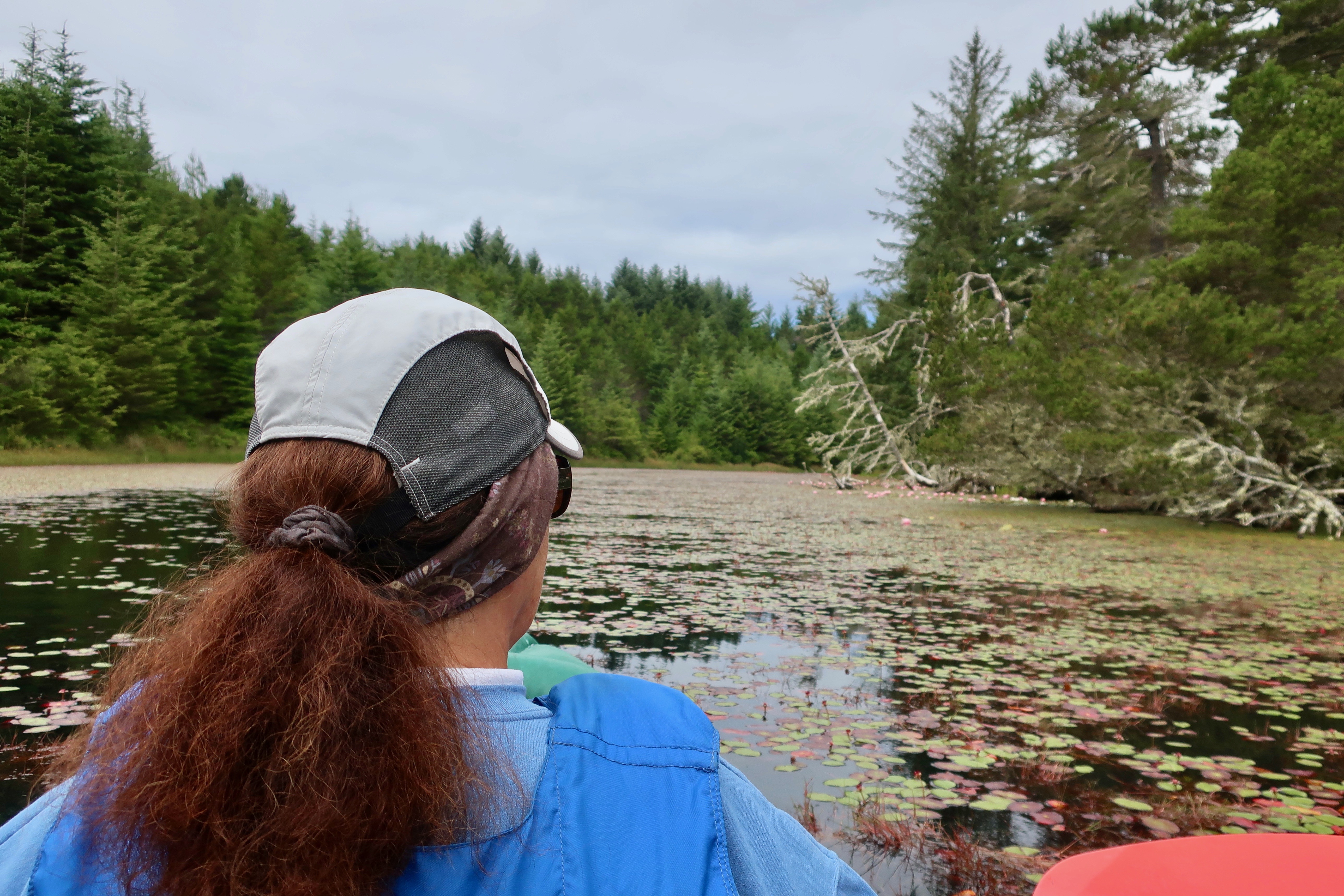
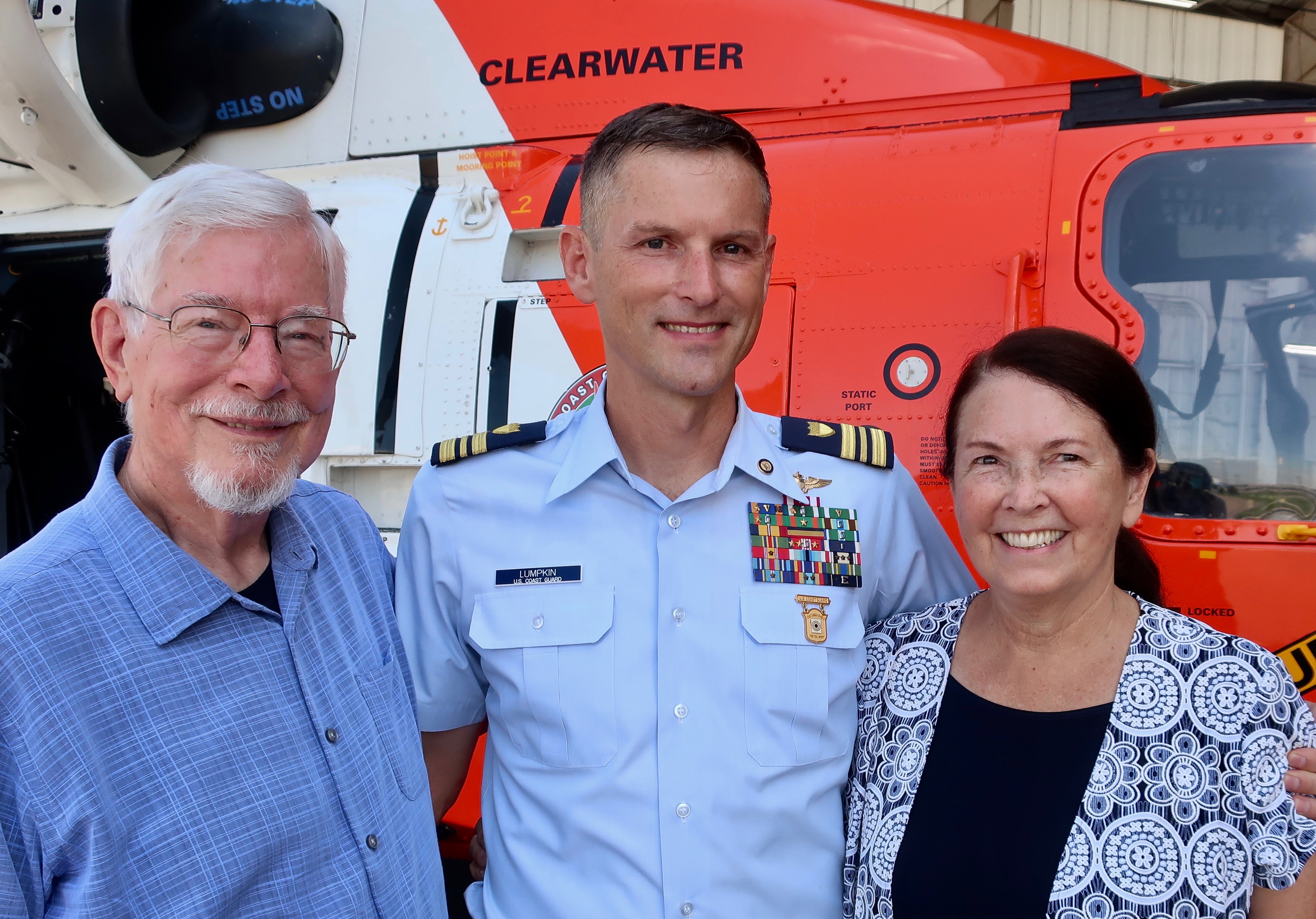
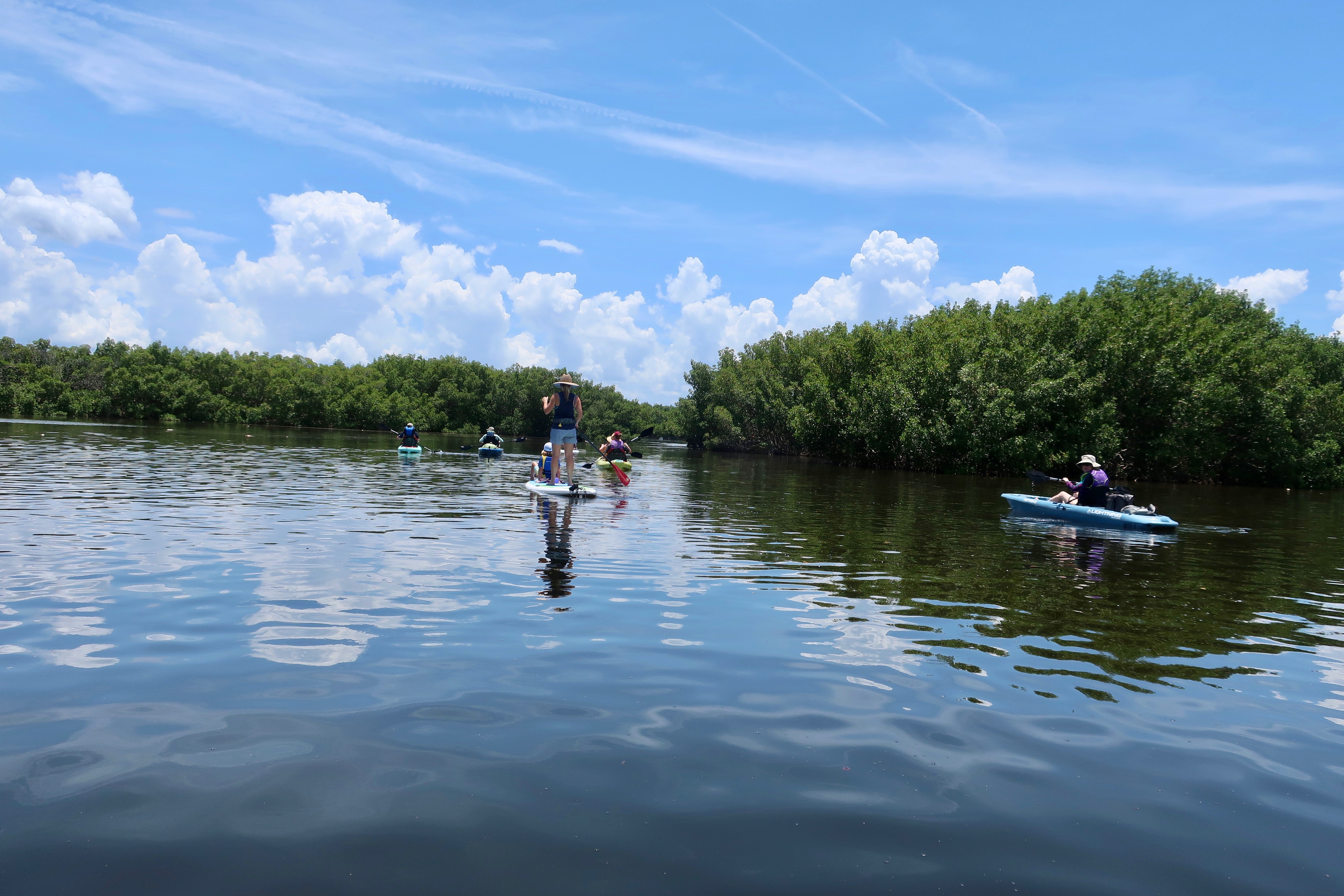
Peggy celebrated her birthday today. Her brother and his wife Frances drop by tomorrow and we are off to Florida on Thursday to join our son, Tony, in celebrating his retirement from serving as a helicopter pilot for the Coast Guard. As you likely know, I am taking a break from regularly posting this summer. –Curt


It’s that time of the year. Two weeks ago, Peggy and I made a trip to Sacramento to catch up with friends and relatives, some of whom we hadn’t seen for over a year due to Covid. We returned home to find that our two resident does (Misty and her daughter)had both dropped their babies. Two sets of twins were cavorting about our yard and kicking up their heels. It’s an annual event that Peggy and I look forward to eagerly.
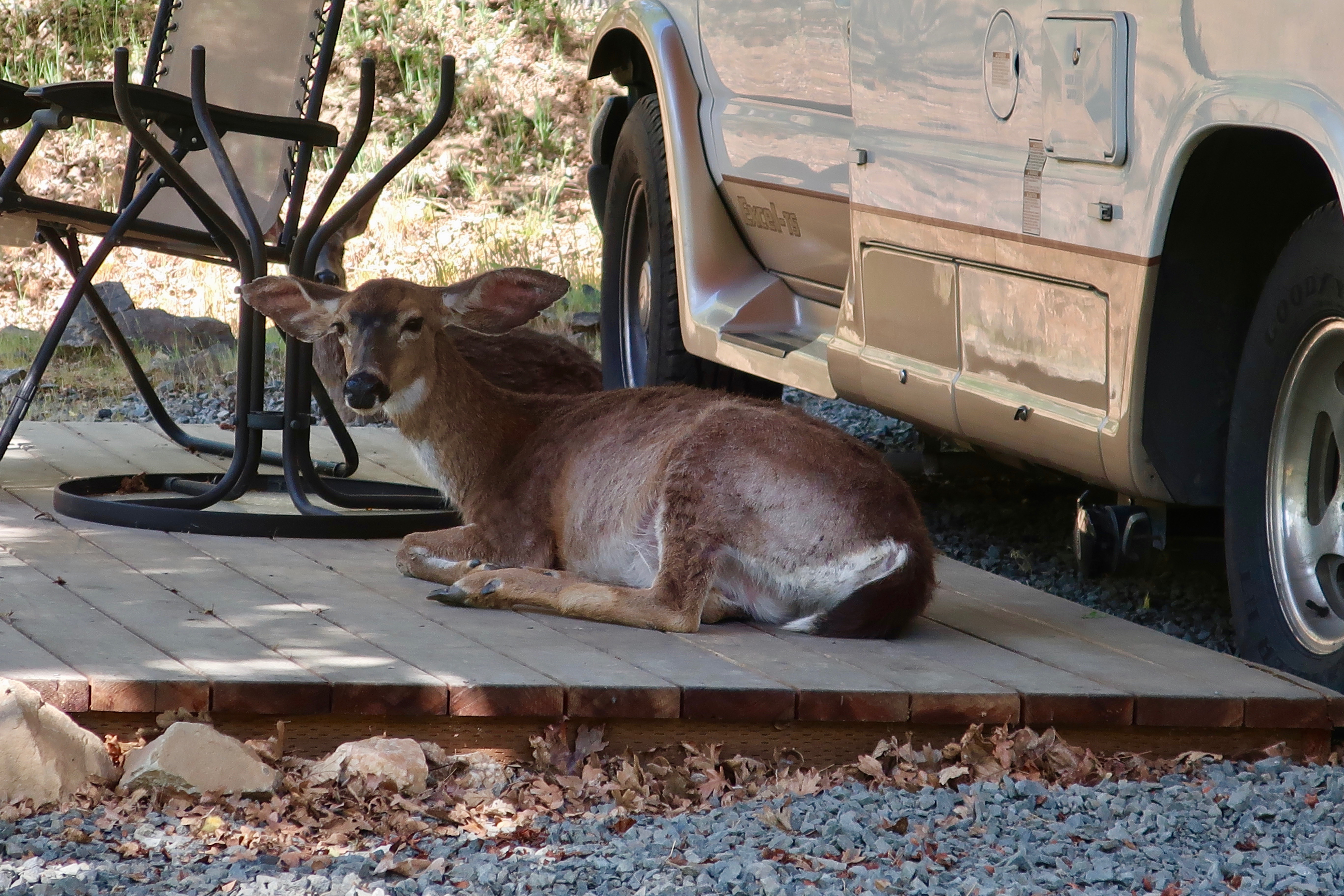
Fawns sleeping on our porch was a totally new experience for us, however. Mama deer usually insist that their babies sleep hidden away down in the canyon. The fact that they are camouflaged by their spots and more or less odorless keeps them safe from predators. I think the coolness of the cement and nearby water was more than they could resist on a 100° F day. I am going to water down the area late this afternoon to make it even cooler this evening.


Naturally, we take lots of photos when the babies are around. Here are a few more.



As I mentioned in my last regular post of the summer, I will post a blog on occasion when something catches my attention. The UFO report due out in a week or two definitely fits the definition.
It’s almost impossible to believe.
I’m not talking about UFOs, which I find easy to believe. I’m talking about Republicans and Democrats agreeing on something. At this point in our history, it seems like the possibility of UFOs zipping through the skies of the world is much higher than the possibility of Republican and Democrats working together in the public interest. (Hopefully, I’m wrong.)
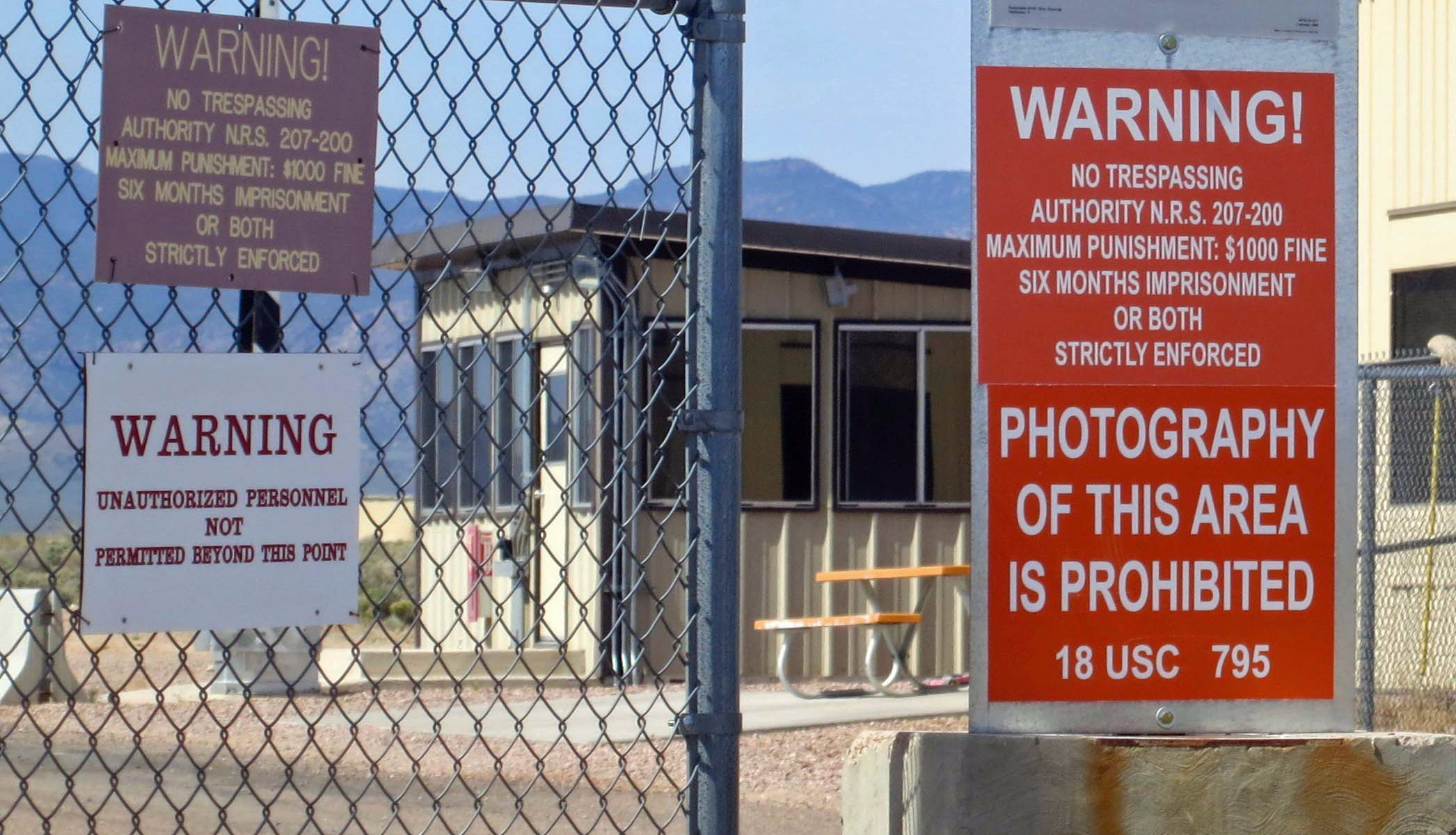
And now, both Democrats and Republicans are speaking out about the need to crank up our intelligence on Unidentified Flying Objects (UFOs), or Unidentified Aerial Phenomena (UAPs), to use the modern term. Obama, Trump, and Biden all agree. As do Adam Schiff and Marco Rubio. A report is scheduled to be released this month that will detail what we know, or at least what the government is willing to share with us.
Leaks have suggested that the report will admit that not all UAPs can be explained away with the usual claims that they are the result of some type of natural phenomena or an over-active imagination. The fact that many of the sightings have come from military pilots makes such claims particularly difficult to maintain. These folks hardly fit the definition of delusional eccentrics. One pilot noted that sightings have been reported almost daily for the past two years— often around military installations. No wonder the government is excited.
So far, America’s political leadership seems focused on the possibility that another government may have developed a technology far superior to anything the US has— at least publicly. It’s more palatable than admitting to the existence of extra-terrestrials from outer space (or Earth). And also easier to obtain funds for. The first hypothesis is merely scary. The second is mind-boggling and will forever change our perspective on who we are.
I doubt the viability of the ‘other government’ scenario. For one, can you imagine how difficult it would be to keep such a secret? Then there is the temptation to exploit such technology to gain political advantage. It’s hard to imagine any modern nation failing to do so. And finally, we are talking about a technology that would have been available for over 80 years given modern day sightings. And probably much longer.

Our present day governmental efforts to get a handle on what’s out there, date back 14 years when Harry Reid, (D. Nevada and then Senate Majority Leader), persuaded two colleagues, Ted Stevens, (R. Alaska) and Daniel Inouye (D. Hawaii) to join him in sponsoring a bill that would dedicate $22 million to assessing whether UFOs posed a threat. Reid said it took him about ten minutes to persuade the two to go along with him. Stevens, who claimed to have seen a UFO when he was a pilot during WWII, signed on at once.
Assuming the existence of aliens for a moment, three questions come to mind: Who and/or what are they, where do they come from, and what are their intentions regarding humanity? Our initial vision of bi-pedal greenish creatures with big eyes is based on original claims of the Roswell crash of 1946 which may— or may not— have happened. (If you want to watch a hilarious but R-rated view of the crash, check out the movie, Paul.)
The where raises an interesting question. If they are frequent visitors from another galaxy, then their technology has taken a quantum, faster than light leap. Or maybe they use worm holes in space. Or come from a parallel universe. All are popular subjects of science fiction and modern speculative physics. Or maybe they operate from a base on earth. I could see a mother ship dropping them off eons ago and urging them to observe evolving species, particularly the one that liked to go around bashing each other’s brains with large clubs.
The intentions question may turn out to be the most important. As far as we know, the aliens have taken a hands off approach, monitoring but not interfering in our evolutionary and technological development. Why? Is there some kind of Star Trek ethic of not interfering with primitive societies. Or are they making a determination about our behavior. Are we intelligent beings who should be welcomed into the galactic community at some point in the future? Or are we a nasty virus that poses a threat to the Universe and needs to be destroyed? Apparently, the jury is still out. Do they see us on the edge of self-destruction and foresee a need to step in and alter our path? Their focus on military installations suggests a concern on what damage we might cause in outer space or what damage we might do to each other. Or what if they are scouts, preparing for a future invasion. Lots of questions and no real answers. Yet.
As for my sighting of a UFO in the fall of 1968, I was in Sacramento at the time. I had just returned from my stint as a Peace Corps Volunteer in Africa and a Peace Corps recruiter in the South. I had moved to Sacramento to open a Peace Corps Public Affairs office for Northern California and Northern Nevada. One evening, I stepped outside my apartment on La Riviera Drive next to the American River when a round, saucer shaped object caught my attention. It disappeared into a cloud. Before I could think of the implications, the object came out of the cloud going in another direction, accelerated and quickly disappeared from view. The UFO was not something fuzzy I saw in the distance on a dark night when I had been indulging in a hallucinogenic drug. It was still light out and my view was crystal clear. There was no doubt in my mind as to what I had seen. And I have never doubted the existence of UFOs since.

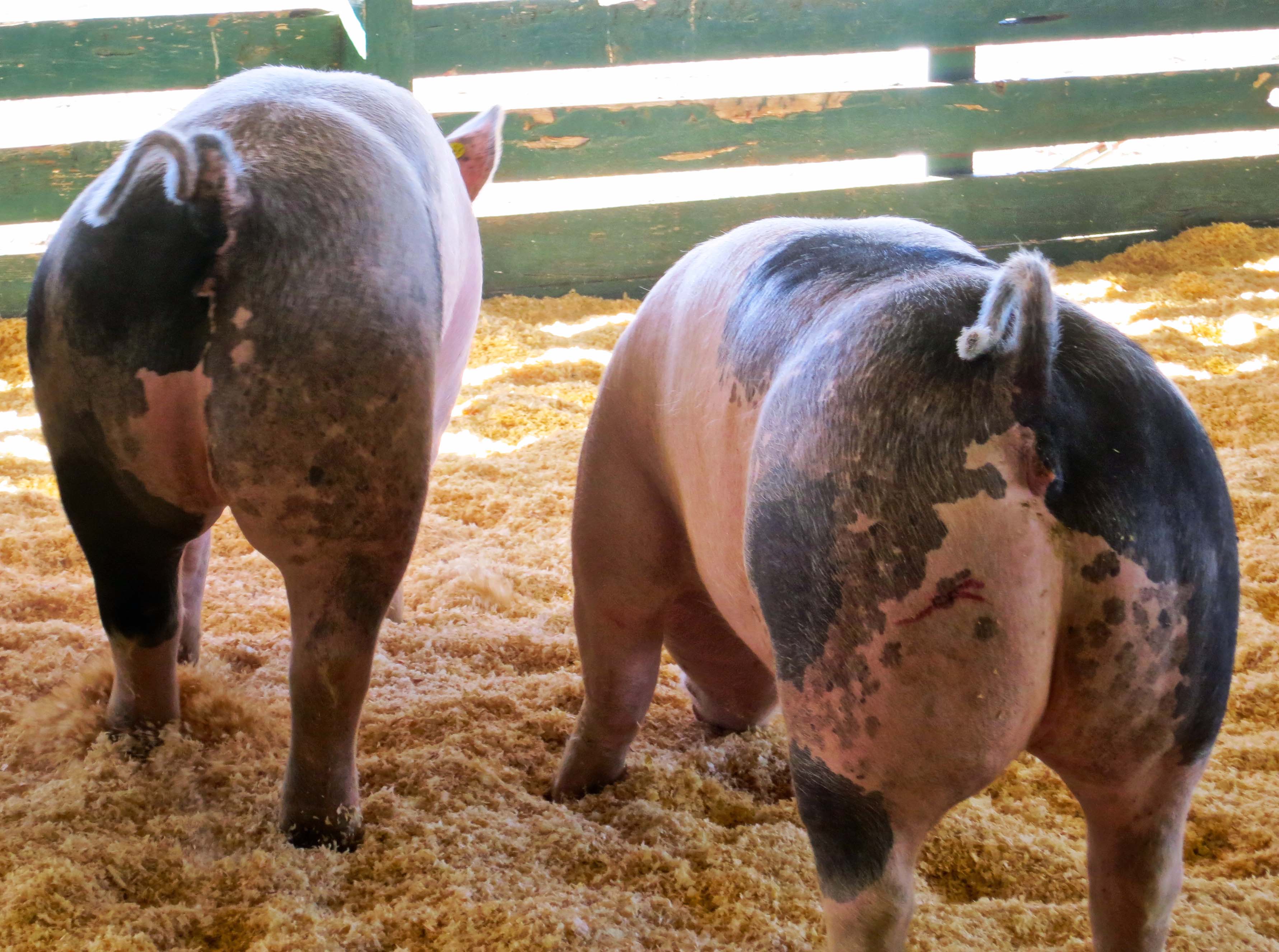
Like the gunslingers of the Old West, our reputations far exceeded the reality of our actions. Take Tony Pavy’s pig for example. Tony had a large pond with bullfrogs, a hundred or so acres of scrubland, and a wooded hillside that housed a number of gray squirrels. He also had an attitude similar to Jimmy Pagonni’s: Children were not to be heard or seen, especially on his property. As with Pagonni, we didn’t allow Pavy to keep us from our appointed rounds. We would slip in at night to harvest his bullfrogs and during the day to bring down a squirrel. Tony had a very effective way of getting rid of us. In a very loud voice he would yell, “Mama, get my gun!” and we would streak out of there.
A couple of friends and I were hunting for the squirrels on his hillside when the unfortunate incident with the pig took place. But before I tell the story, I need to digress and provide some background information.
Growing up in Diamond in the 50s meant having a gun and shooting things. At least it did if you were a boy. We graduated from BB guns and 22s to deer rifles and shotguns. Obtaining your first rifle was an experience similar in importance to obtaining your driver’s license, except you could get one a lot earlier. Before we were allowed to hunt, however, certain rules were pounded into our heads. We had to take a course sponsored by the National Rifle Association. These were the years when the NRA’s primary concern was about hunting and hunter safety. They also sponsored marksmanship competitions for improving skills. Ten years after I got my license Peggy won the NRA’s National Pistol competition for youth.
I didn’t become one of America’s premier marksmen, but I did learn it is important to know what you were shooting. This might seem obvious, but flatlanders out of Sacramento often had trouble making the distinction between a cow and a deer. Of a much more serious nature, every year or so one would mistake another hunter for a deer. Wear red hats and bright clothes, we were taught. There were other things we weren’t supposed to shoot as well. People’s houses for example. Robins were also high on the list. They ate their weight daily in bugs. It was okay to shoot ‘vermin’ such as ground squirrels, jackrabbits, coyotes and the scrub jays that pecked away at pears. In fact there was a bounty on jays, $.25 per head.
My usual preference was for watching wildlife, not killing it. I made an exception for gray squirrels. The thrill of the hunt combined with my appetite for a delicious squirrel and dumpling stew my mother whipped up overcame any reservations I had. All of which brings me back to the pig.
Gray squirrels have about the same appreciation for being shot that you or I might. To avoid this unhappy circumstance, they take off leaping through the trees. The one we had marked for dinner was jumping from limb to limb in a live oak tree on the hill above Pavy’s with all three of us shooting at it when we heard a bellow from the barnyard.
“Mama, get my gun! They shot my pig! They shot my pig! Hurry, Mama!”
I don’t know how fast Mama moved but we flew. By the time Ernie Carlson, the County Sheriff, caught up with us we were far away from Pavy’s and about as innocent as newborn piglets.
“Excuse me, boys,” the Sheriff remarked when he pulled over in his car and rolled down his window, “I don’t suppose you know anything about Tony Pavy’s pig being shot.”
“No, sir,” we replied respectfully in unison. We had rehearsed. Besides, we were technically correct. We hadn’t shot Pavy’s pig; we hadn’t even shot the squirrel. It was a ricocheting bullet that did in the pig.
Ernie looked at us dubiously.
“Pavy described three kids that fit your description,” the Sheriff said as he continued to build pressure, hoping that one of us would break. Boy, had we heard that one before.
“We’ve been out in back of Ot Jones pond,” I argued indignantly. And we had been. So what if we had arrived there out of breath.
“Well, you kids behave yourselves,” the Sheriff said with an ominous I know you’re lying tone. We breathed a joint sigh of relief as he rolled up his window and drove off. Once more we had avoided a fate we probably deserved. I suspect now that Ernie was not one hundred percent dedicated to finding the alleged pig murderers. Tony was not universally loved in the community for several reasons, of which regularly threatening to shoot kids was only one.
For example, my father did some electrical work for him once for free. As he was leaving, Tony asked, “Would you like one of my geese for dinner?”
“Sure,” Pop had replied, assuming Pavy was offering it as thanks for his four hours of work.
“Good,” Tony had replied, “that will be five dollars.” Pop was more than a little irritated. He had a hearty laugh years later when I told him about our adventure with the pig. I wisely avoided telling him at the time, however. His perspective on our miscreant behavior softened substantially with distance and age.
“Roll out those lazy, hazy days of summer,” Nat King Cole sang in 1963. It was the adult version of what the kids of earlier years uttered when they escaped from school for the summer, “No more pencils, no more books, No more teachers, dirty looks.” Actually I liked school and my teachers, and I loved books, but the appeal of having a whole summer ahead with minimal responsibility and maximum play was close to magical. Since I have been writing about my childhood, it’s hard not to feel a bit nostalgic for those days. As Thomas Wolfe wrote, “You can’t go home again,” however, and he’s right. The idyllic view of our childhood that many of us have doesn’t quite match the reality. It’s human nature to forget the bad and remember the happy, which is a good thing.
But none of this means that we can’t on occasion escape from whatever keeps our feet tethered to the ground and our nose to the grindstone, allowing ourselves to play more and pursue other things we find of interest. I am something of a master at this, having engineered escapes all of my adult life every few years from three months to three years. These escapes have enabled me the wander through the South Pacific, go on a six-month bicycle trip, take two, three month breaks for backpacking, spend three years wandering North America in a small RV, etc. Fortunately, my good buddy of the last 30 years has been more than willing to join me in these escapes.
Anyway, it’s time for another 3–4 month break. This one won’t be major. I only plan to cut back on some of my regular activities to free up time for other activities.
One of these is blogging, which I have now been doing for 11 years. I don’t plan on quitting the blogosphere, only cutting back and writing when I am inspired to do so, like when Big Foot or baby deer show up on our door step, for example. I’ll also be touching base with my blogging friends from time to time over the summer. I should be back to a regular schedule this fall. I realize that it is disconcerting when blogging friends up and disappear, so I wanted to let you know what’s up. Have a great summer, and here’s to being able to travel again. –Curt
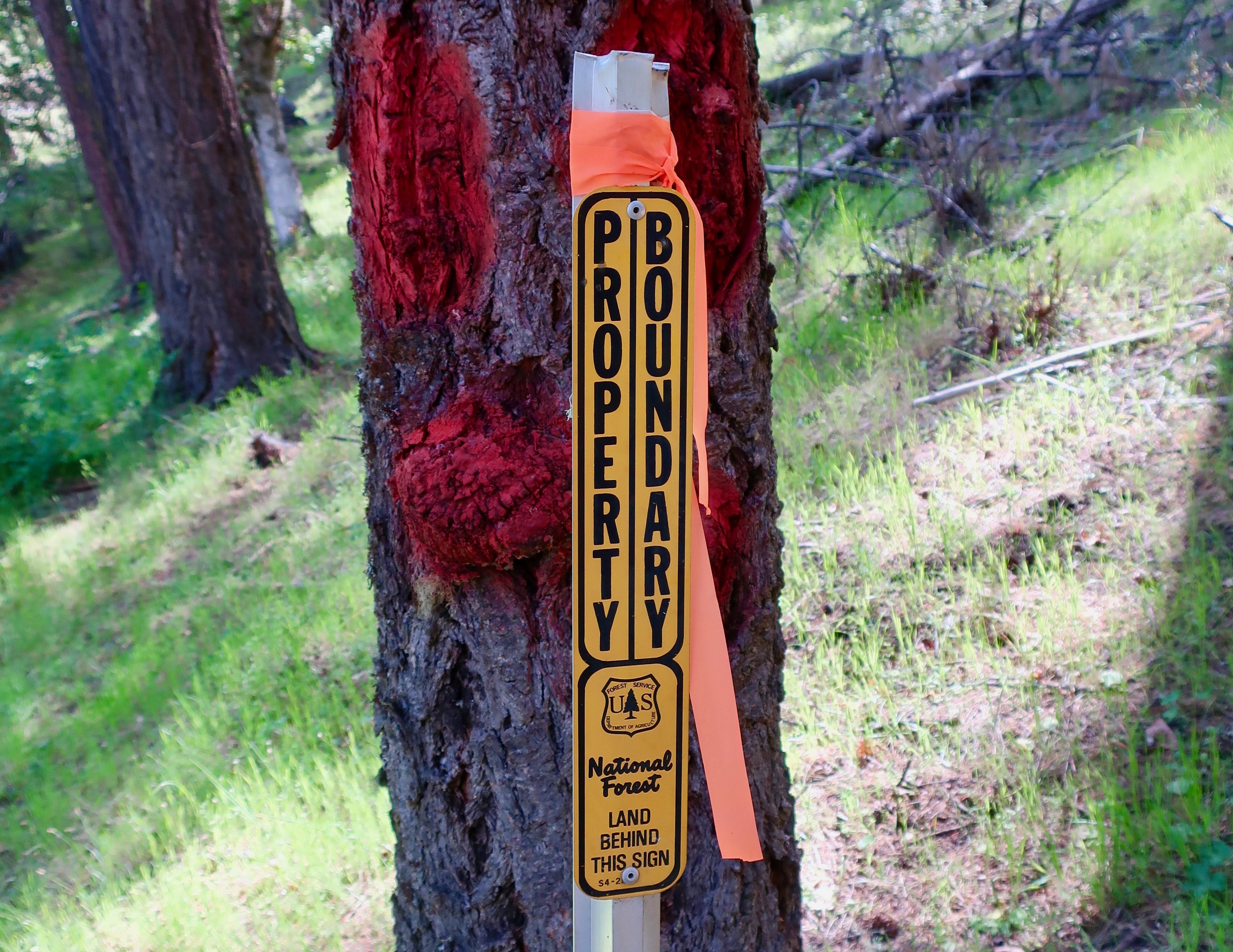
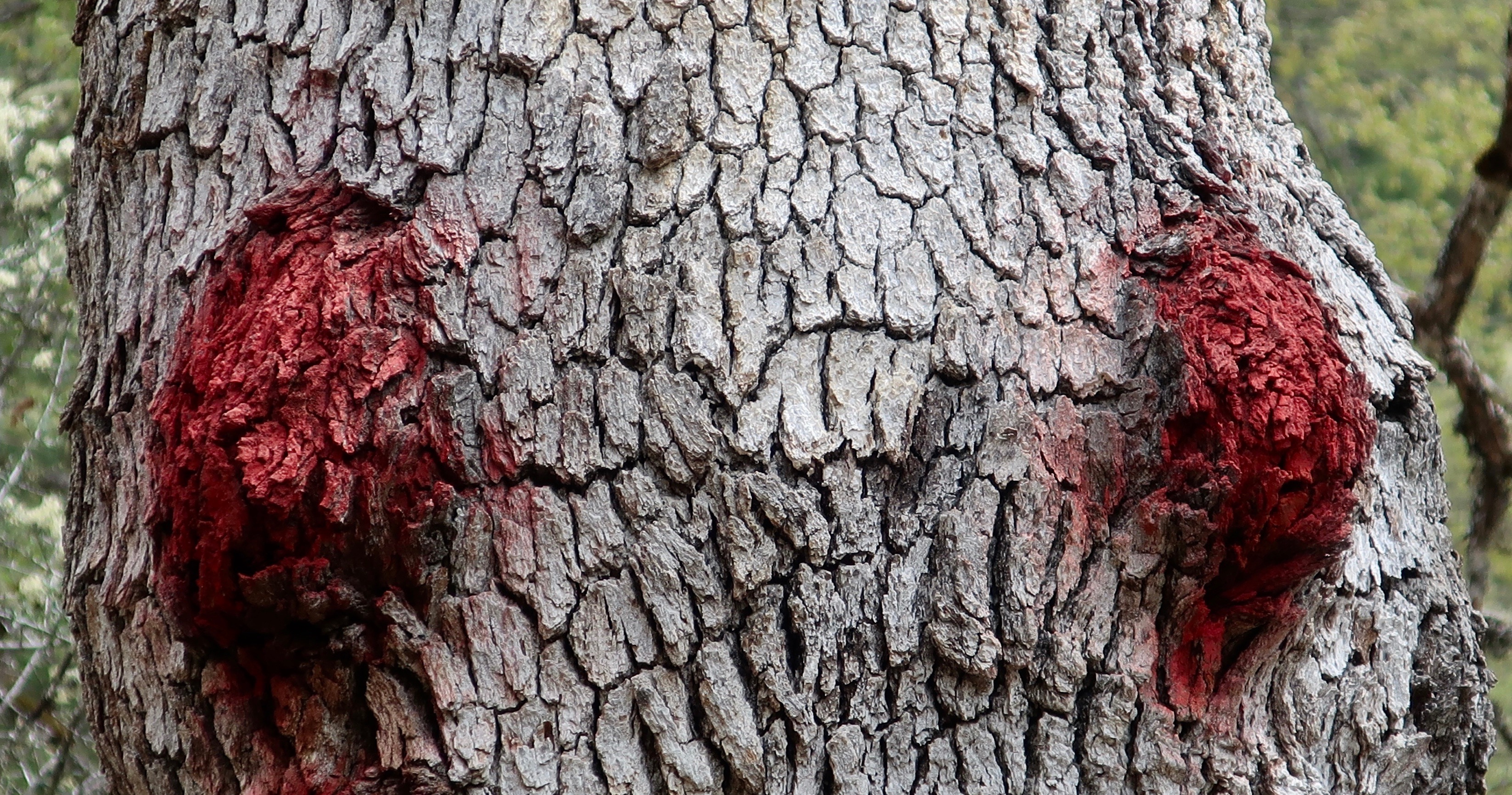
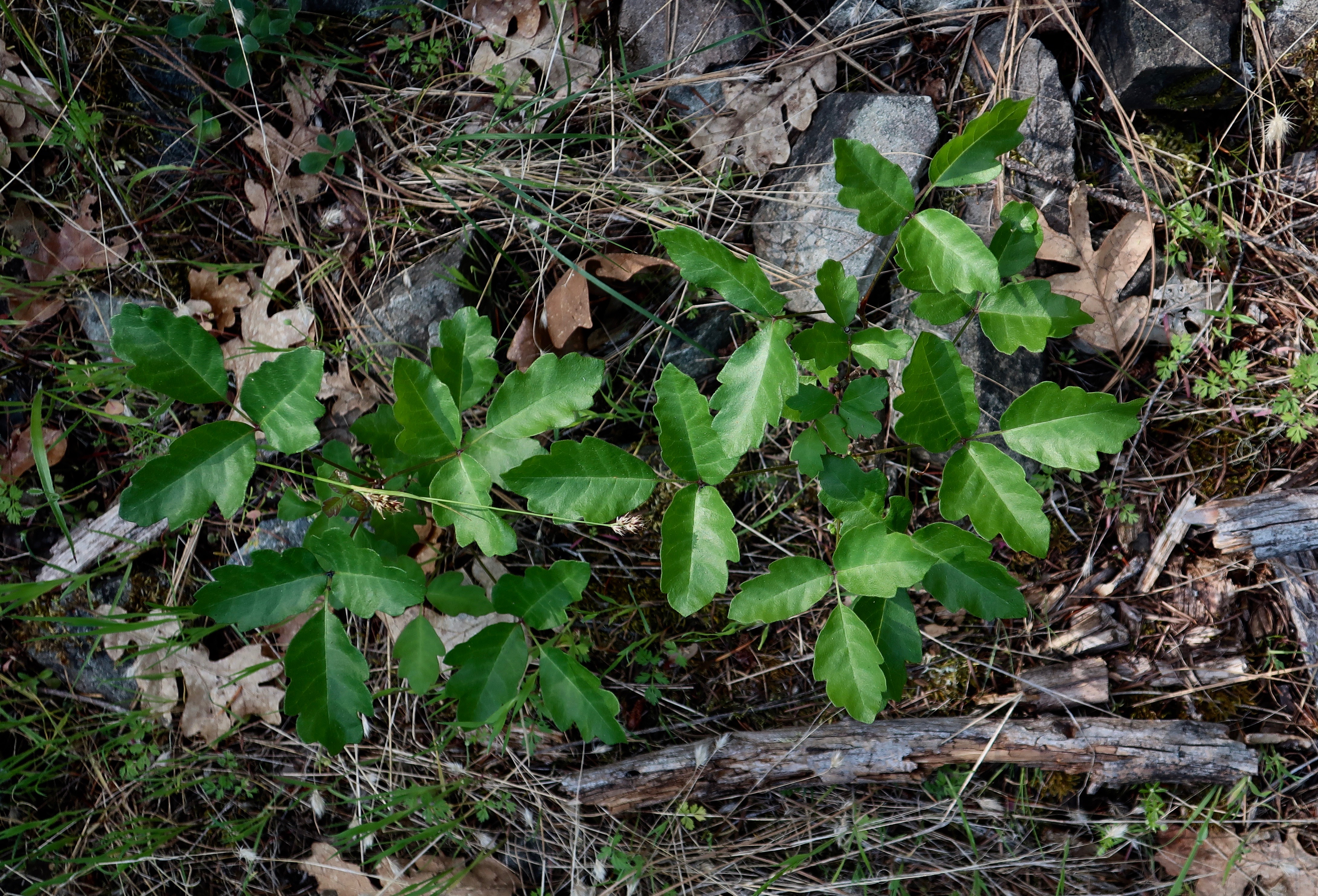
For quite some time, we have been making a detour into the forest as part of our daily mailbox walk. It adds an extra mile to our exercise. Plus it is just plain fun. The problem is that the hike only works for late fall, winter and early spring. Otherwise, we are dealing with poison oak, ticks, and little burrs. No one wants poison oak, the ticks may carry Lyme disease, and the burrs are just plain nasty. We come home with dozens in our socks and they are very difficult to remove. Inevitably we miss a few and they end up in our laundry. For some reason, they are attracted to our underwear, mainly Peggy’s. But you can bet I feel the pain…
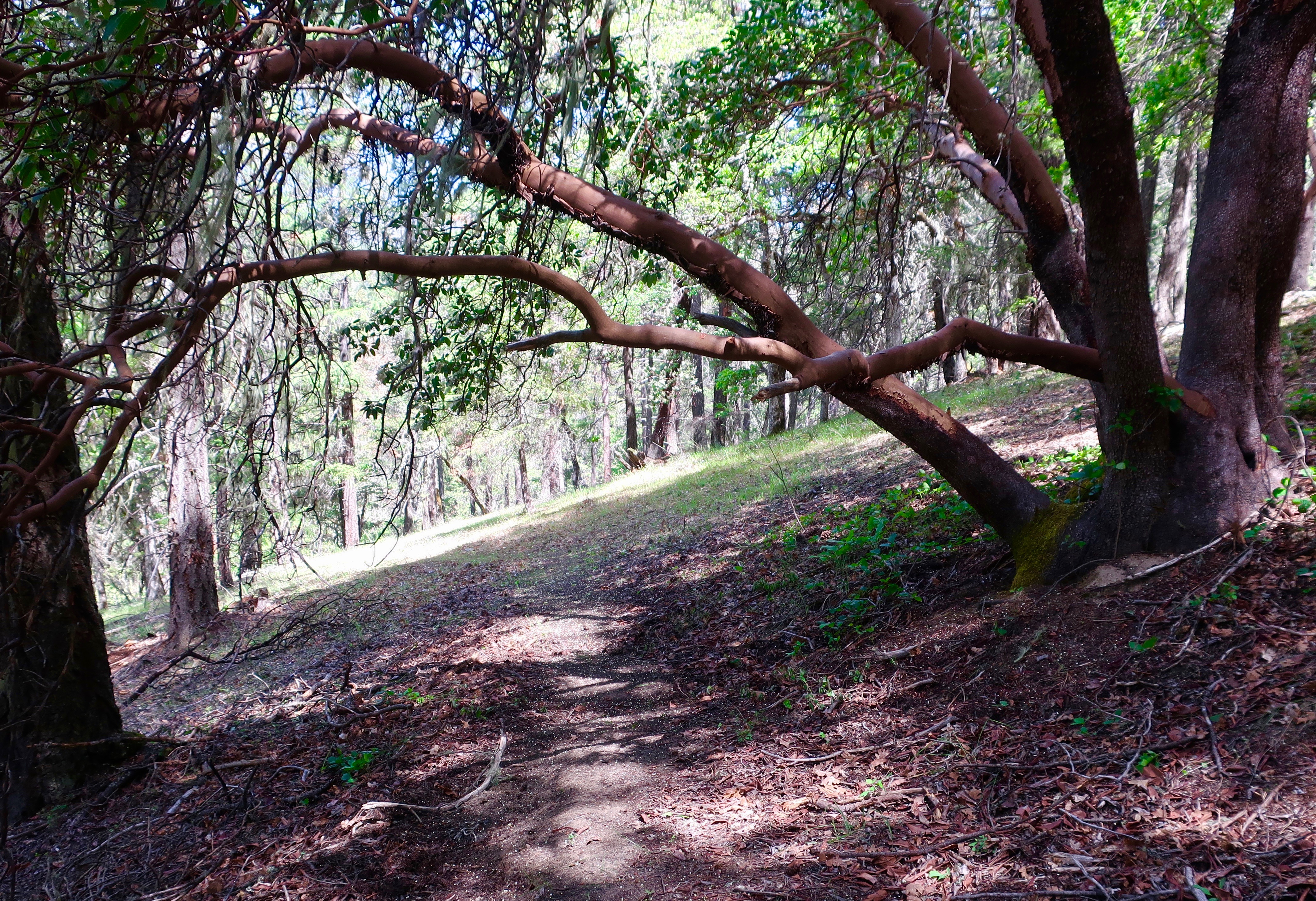
This spring, I decided to create a trail through the forest that would allow us year round access. It would be poison oak and burr free. Plus we would be much less likely to get ticks. They tend to hang out in bushes and brush off on innocent animals, people and maybe Big Foot, who, legend has it, likes to hang out in our neck of the woods.
I wouldn’t be starting the trail from scratch. Mainly I would be reclaiming and expanding on old miners’ trails and deer paths. My goal, as always, was to have minimum impact, which was pretty much guaranteed since my tools were a rake, mattock, and lopper. I call the lopper, Cindy. You may need to be of a certain age to get that. I tell Peggy that Cindy and I are going up on the mountain to have a little fun. She doesn’t worry; she just snorts. “Wear your gloves, honey.”
I was worried on my first day of trail making. It was two days after the cougar ran across our deck and the morning after our neighbor Bryan had his scary night-time encounter. There was a significant chance that it was still hanging around where I was working. The deer herd was out and came down to watch me work, however. They high-tail it when they are on the menu. Maybe they figured as long as I was there, the cougar wouldn’t be. I hoped they were right in their assumptions. If not, I would wish them good luck as I did my own high-tailing-it act. (Suggestion: Never take off running when you see a cougar. It confirms you are food and fun to chase. Stand tall, look the cougar in the eye, speak to it firmly, “Bad Kitty,” and slowly back away. I’m serious.)
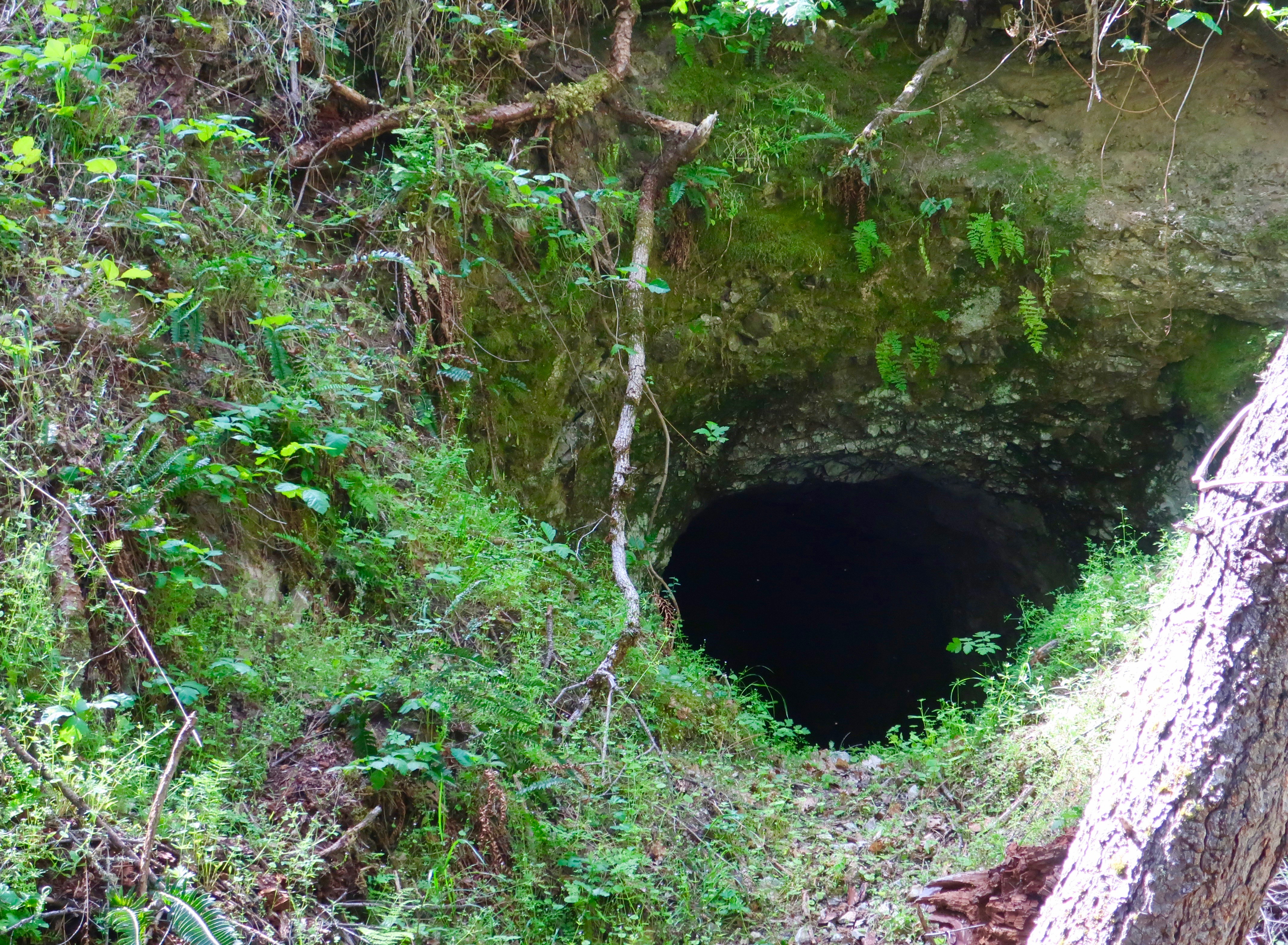
In addition to being a pleasant stroll through the forest, the trail incorporates a bit of history. Miners came searching for gold during the 1920s and 30s. There are old sites for at least seven cabins, a cave, a wood stove, remnants of an old auto, and test holes that they dug following a quartz vein in hopes of striking it rich. They would dig down, find the quartz, shove a dynamite stick in, blow it up, and then check out the results. The test holes come down off the mountain and run right across our property. It could be we are sitting on a fortune. Ha.
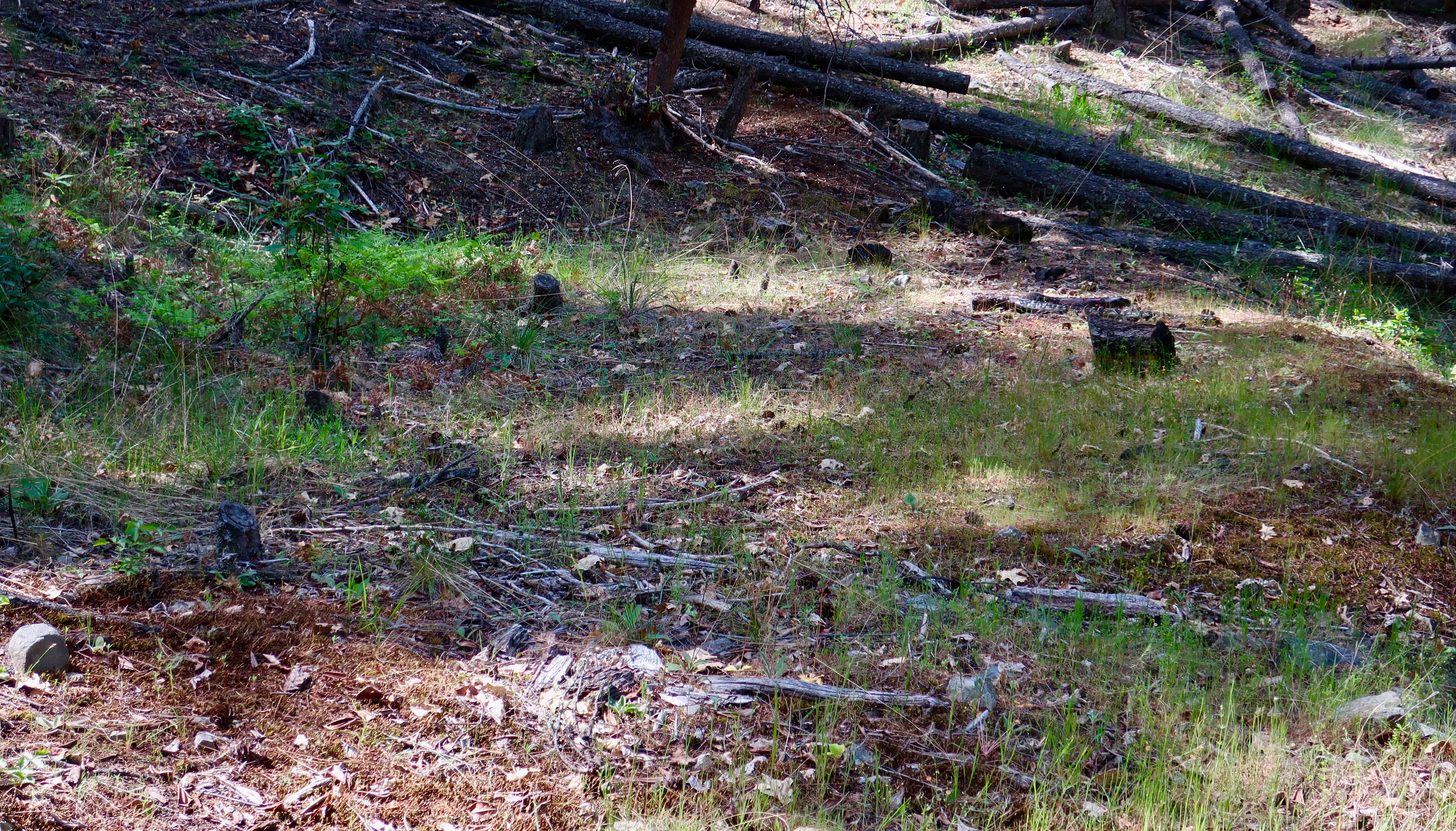
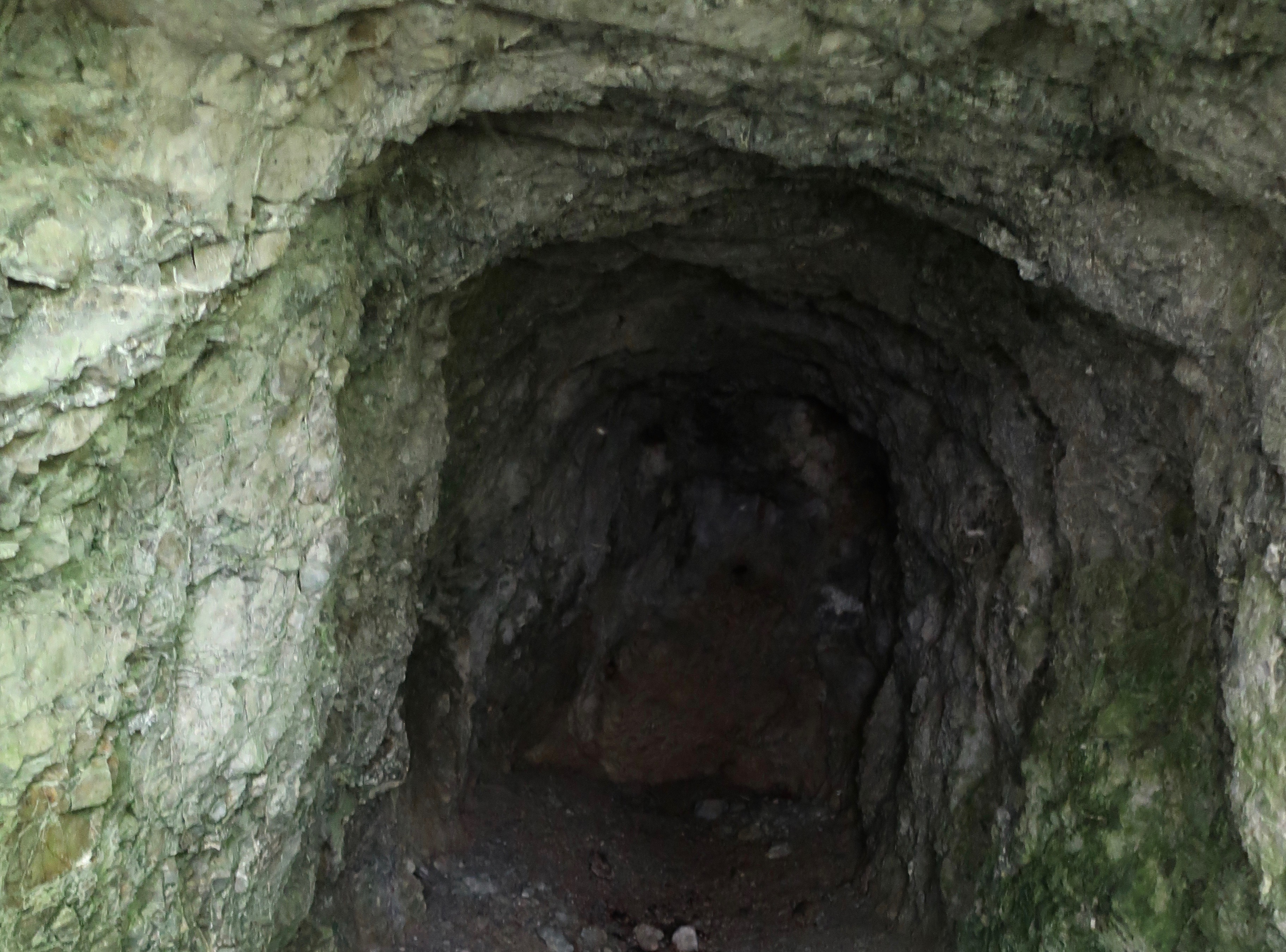
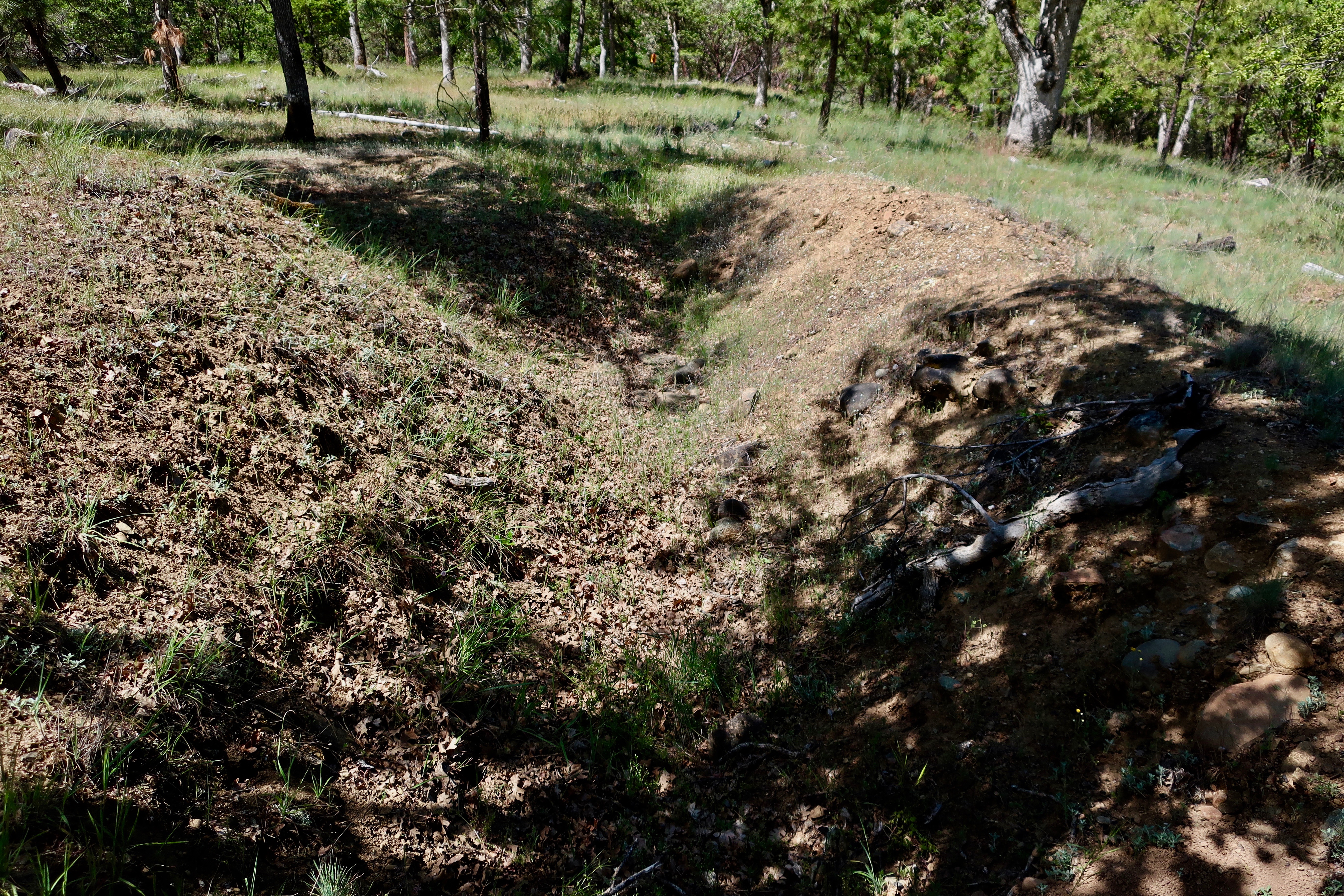
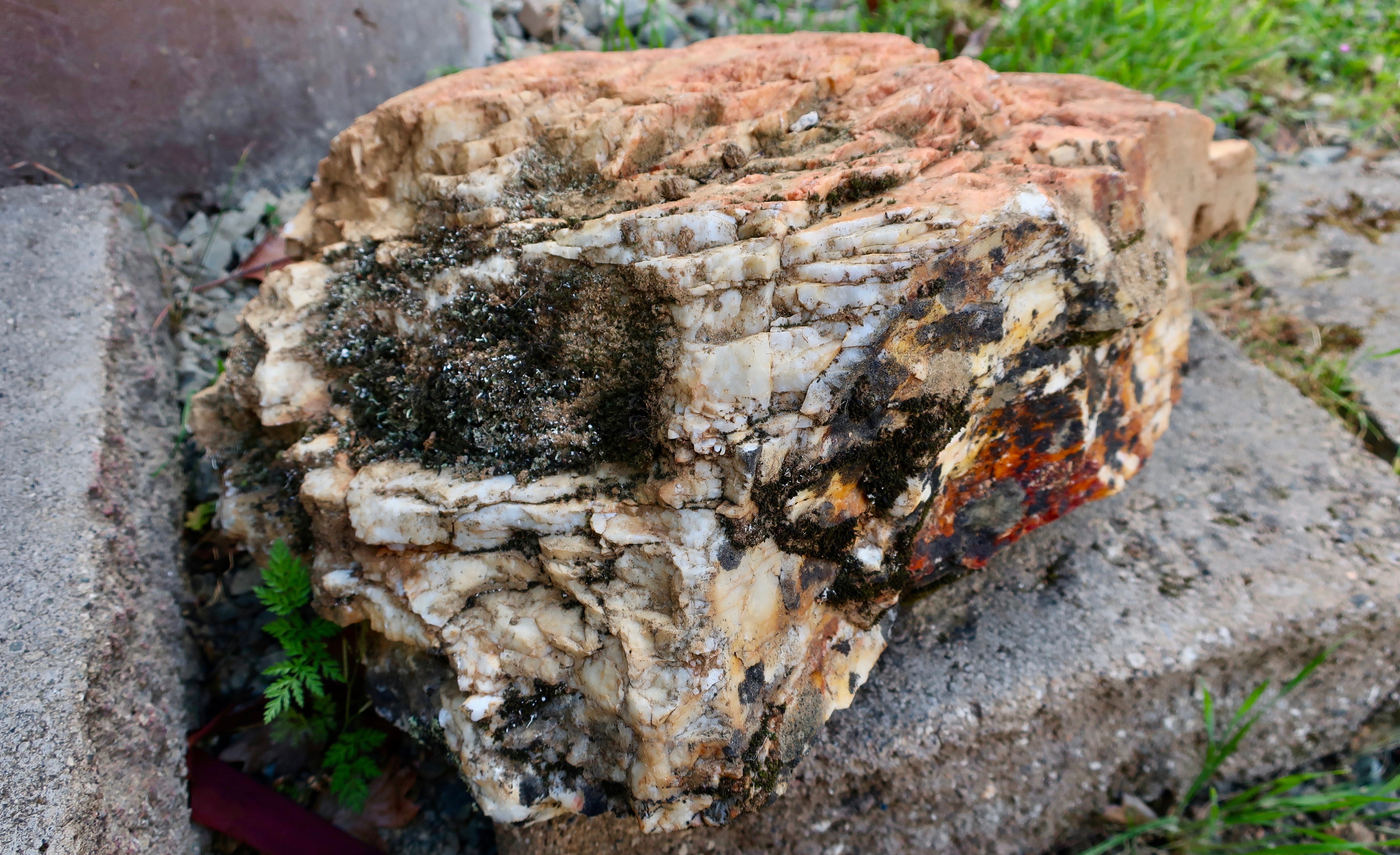
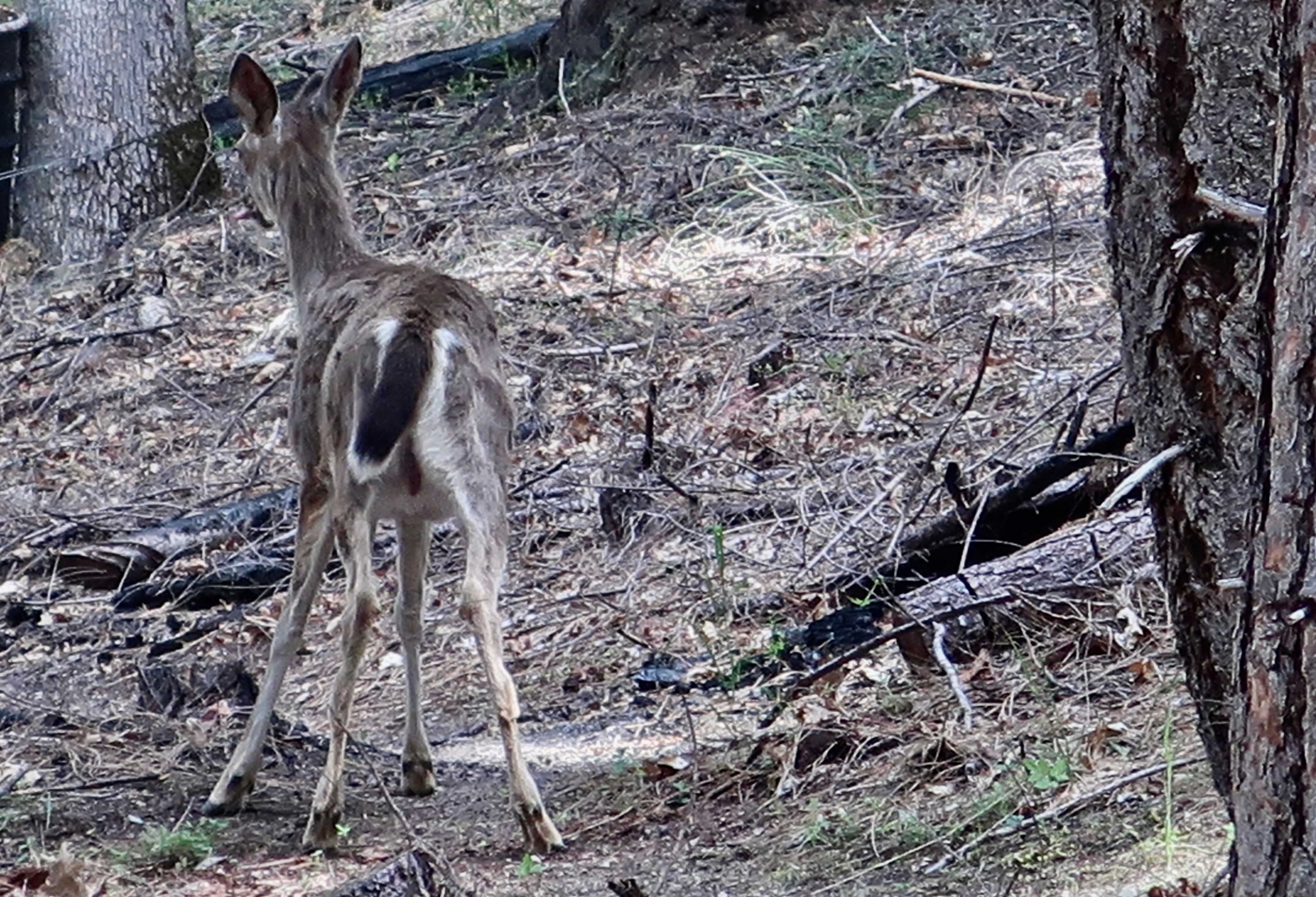
Wildlife has adopted the trail for their own use. We’ve found cougar, coyote and fox scat along it as well as deer. And I even found deer sleeping on it. Then there was the young buck who seemed to be having some problem…
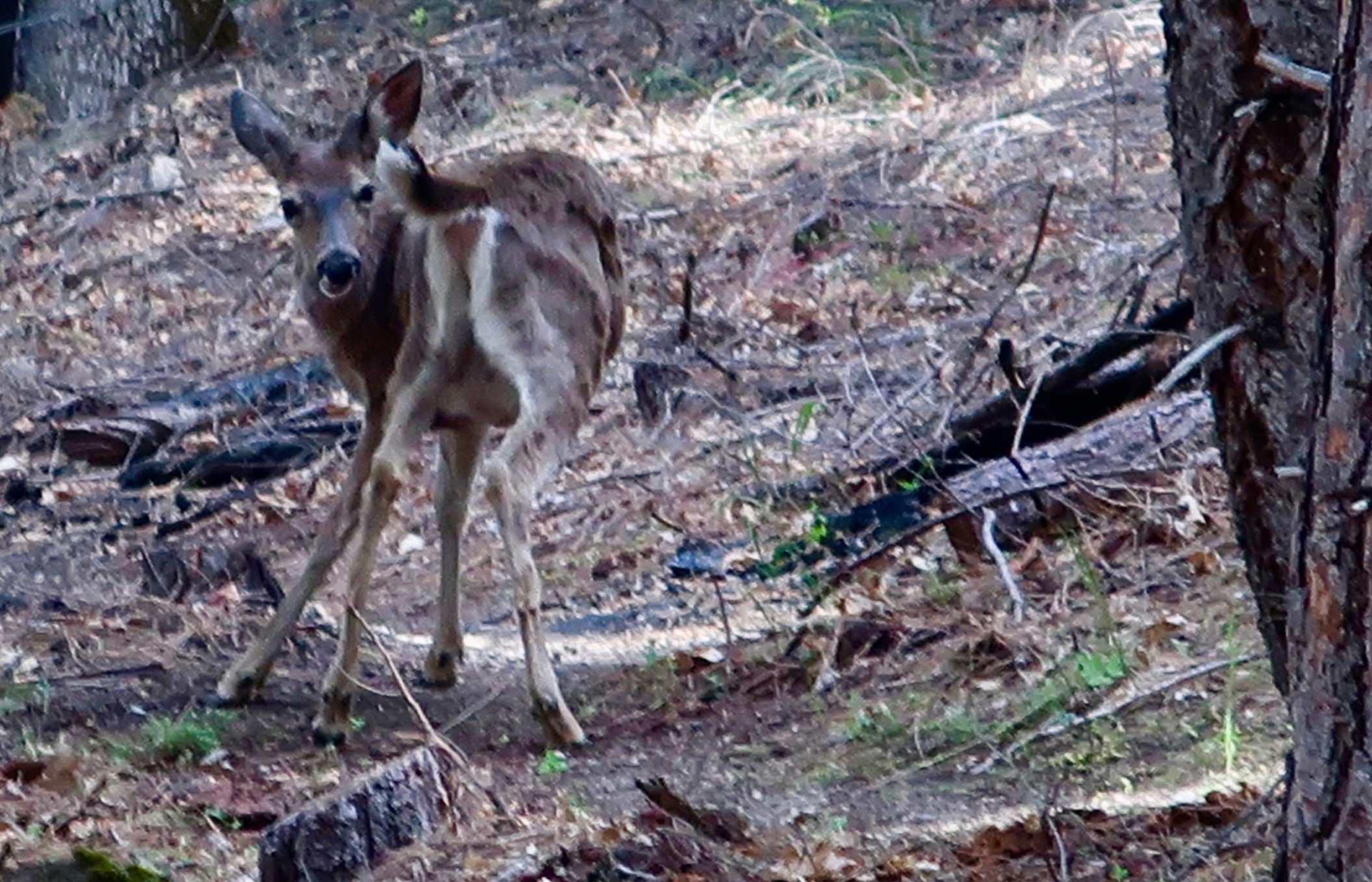
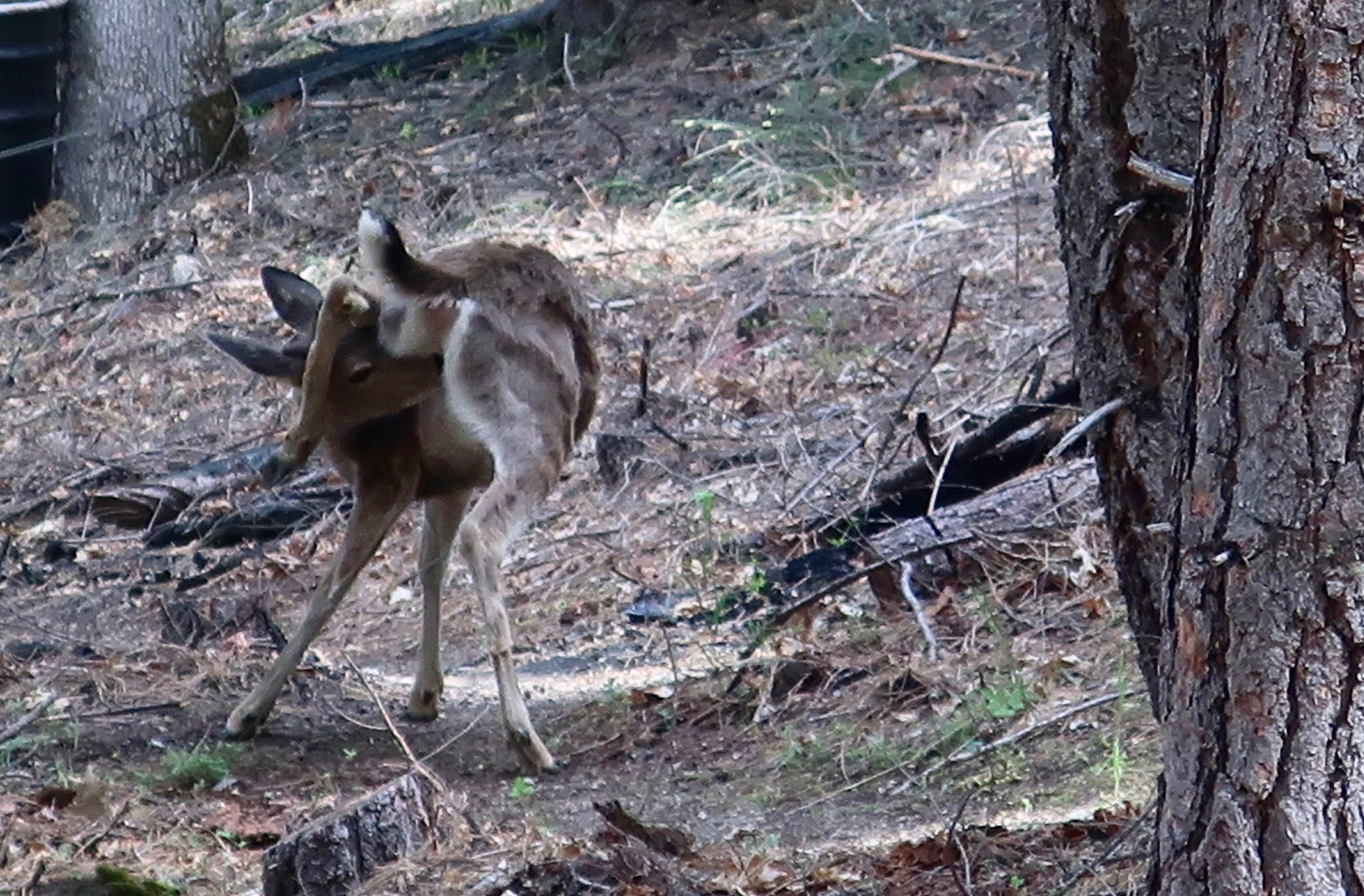
In addition to miners’ history and wildlife, attractive trees and flowers are found along the trail as it winds its way through the forest.
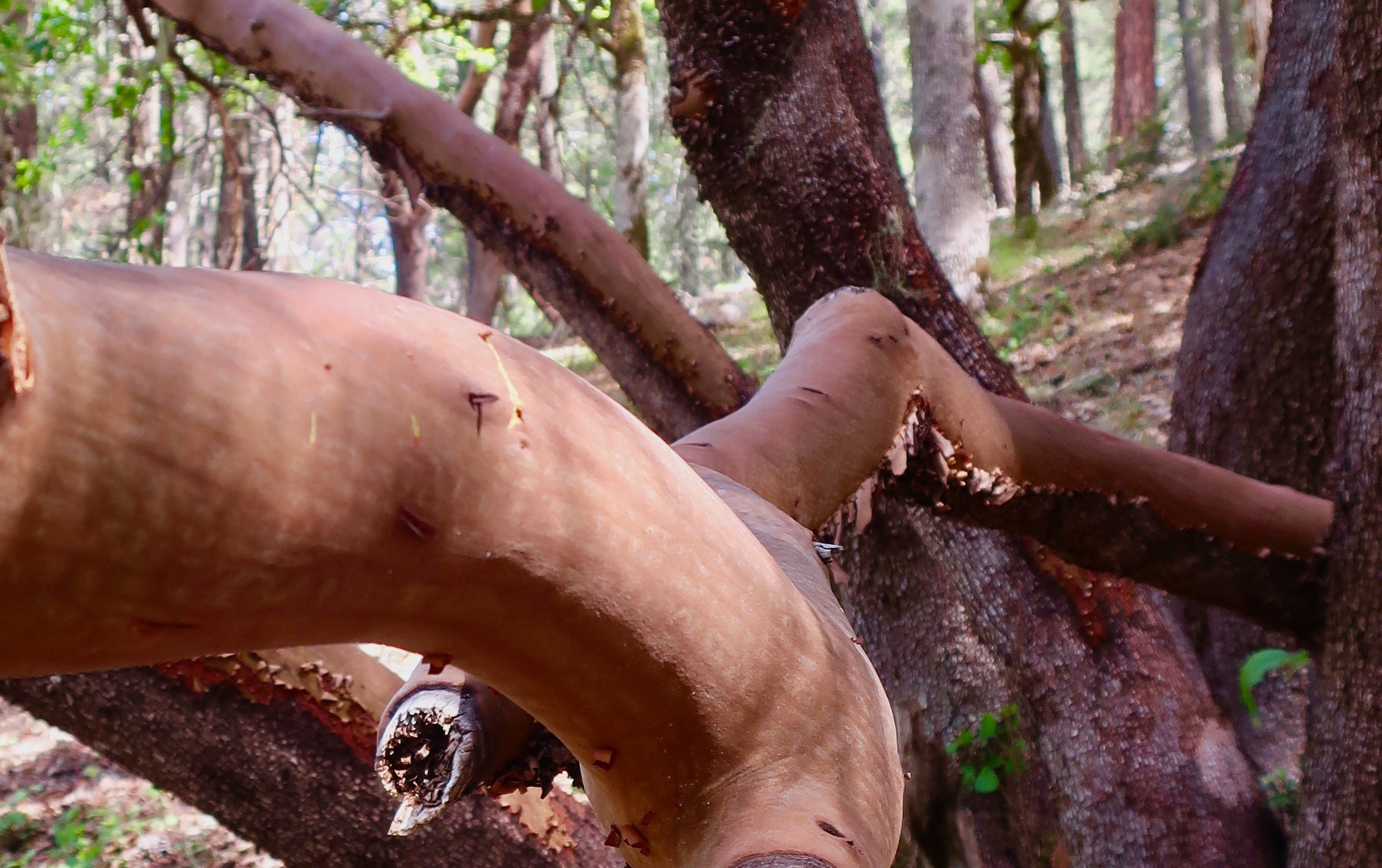
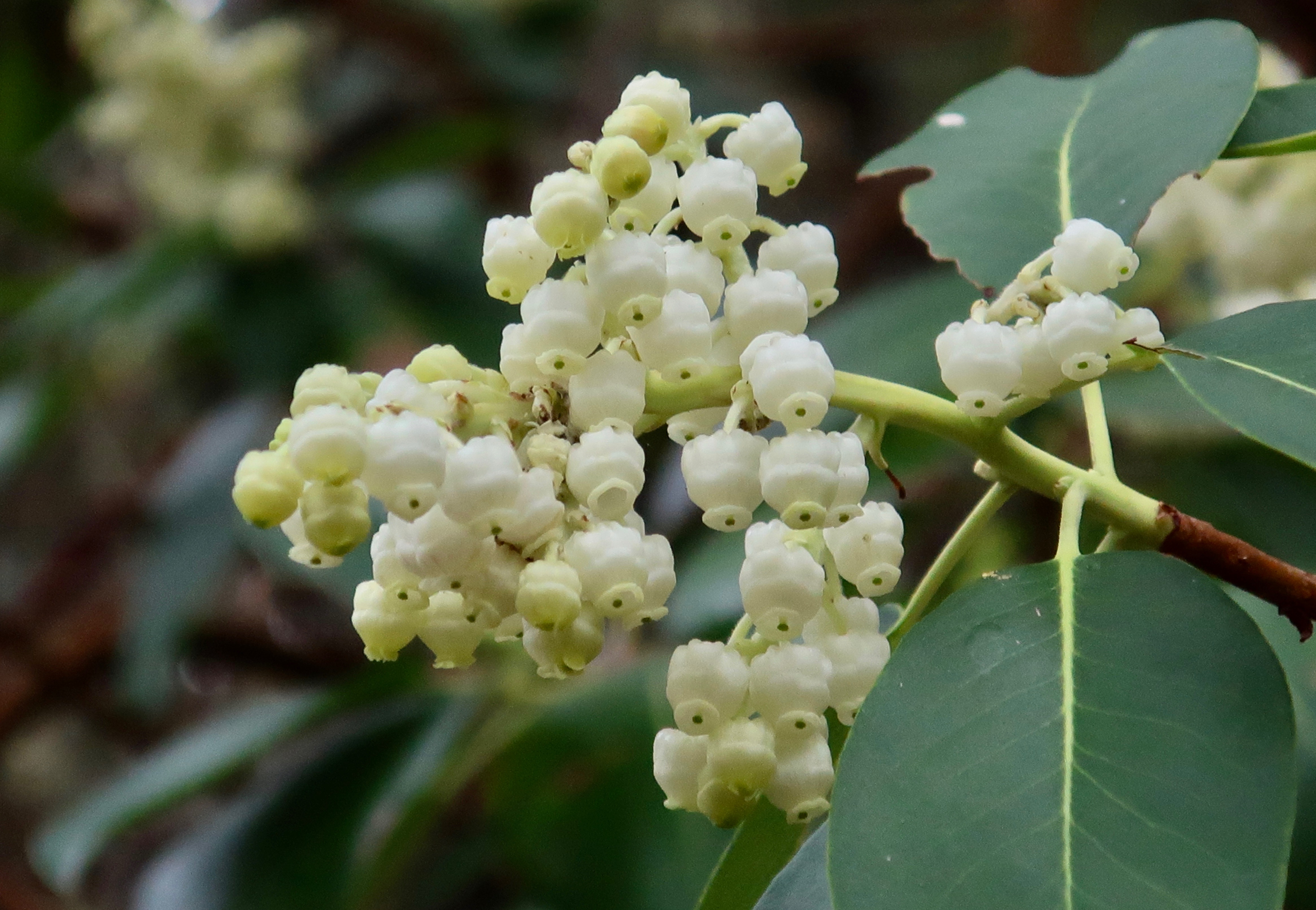
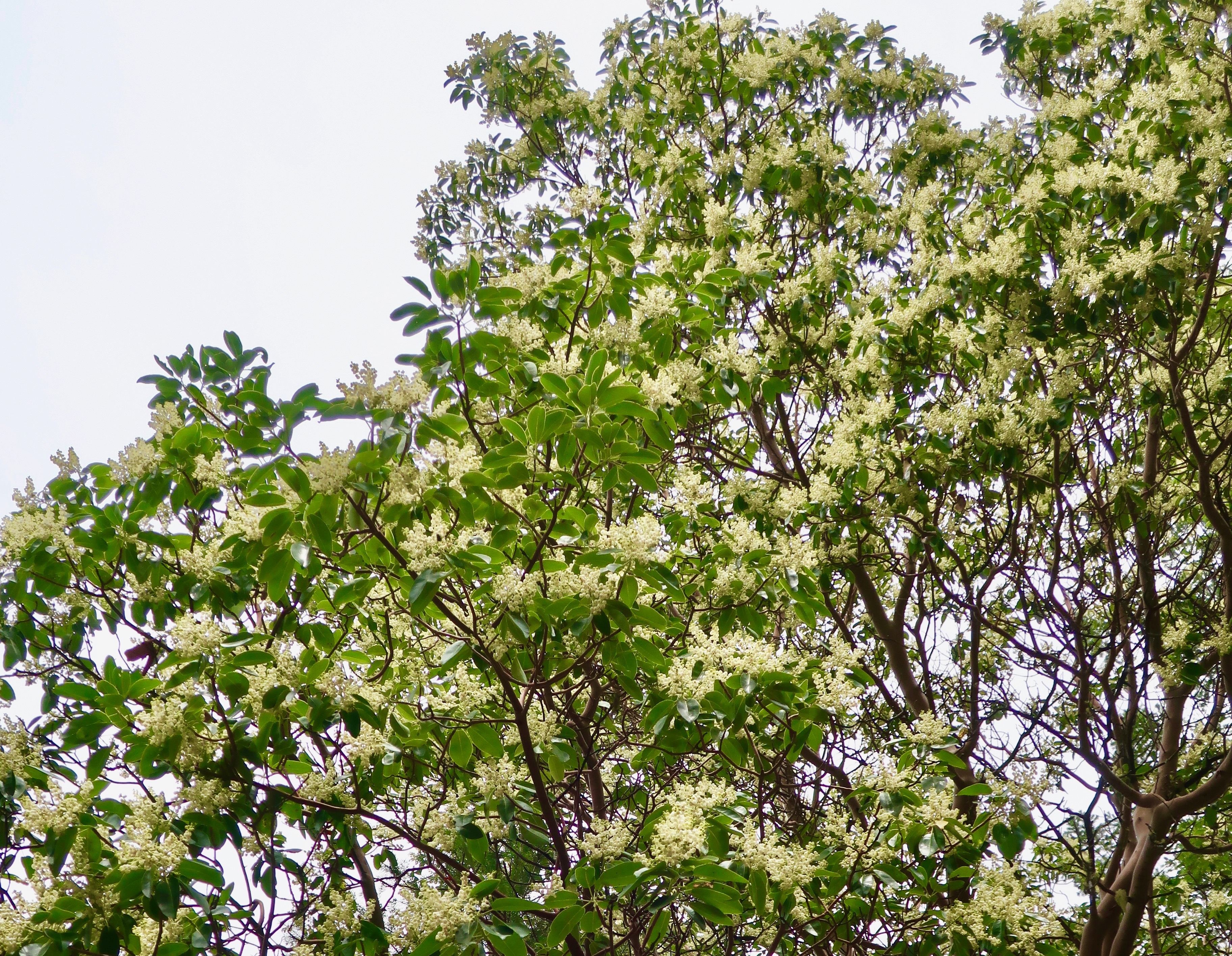
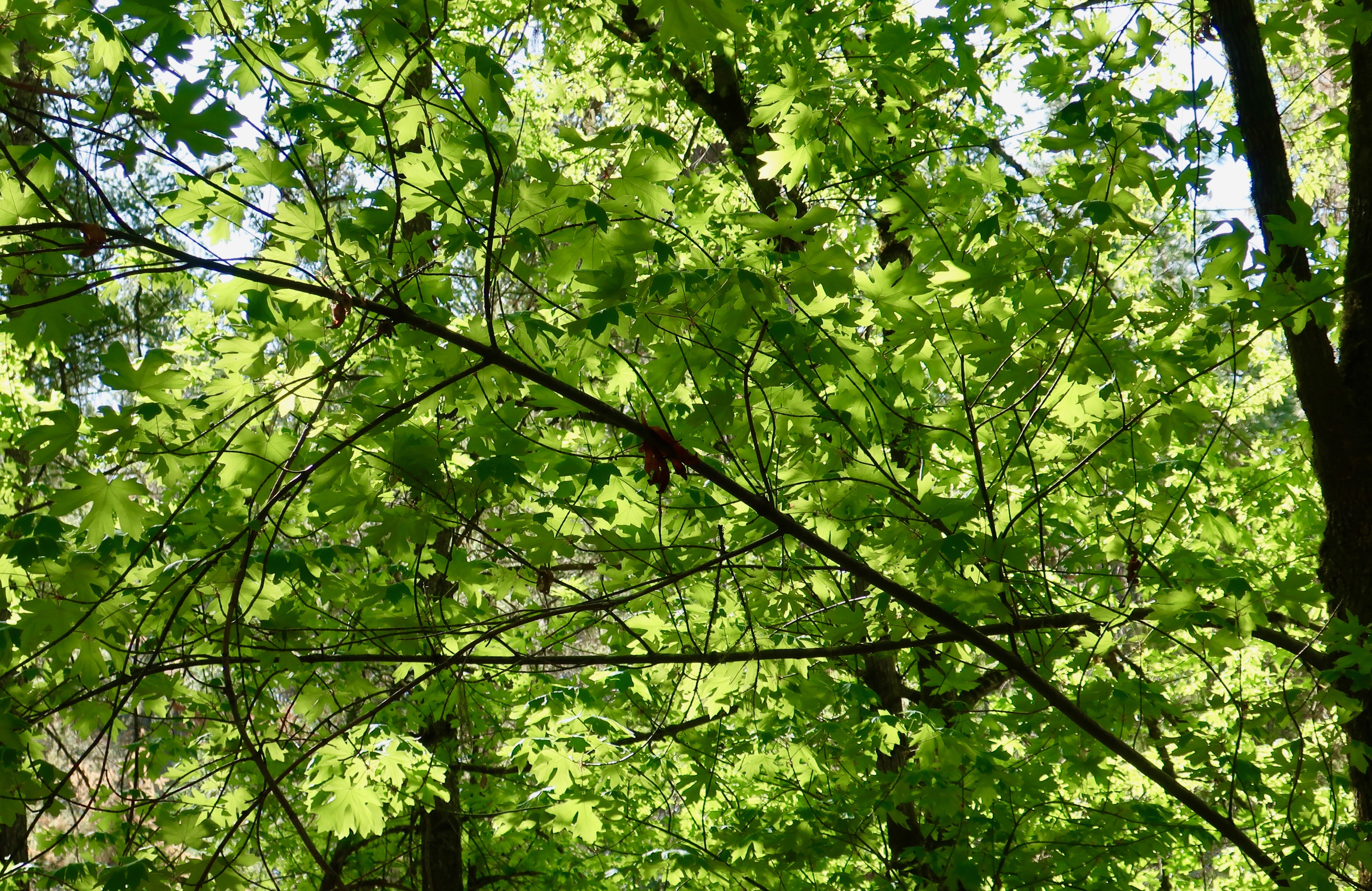
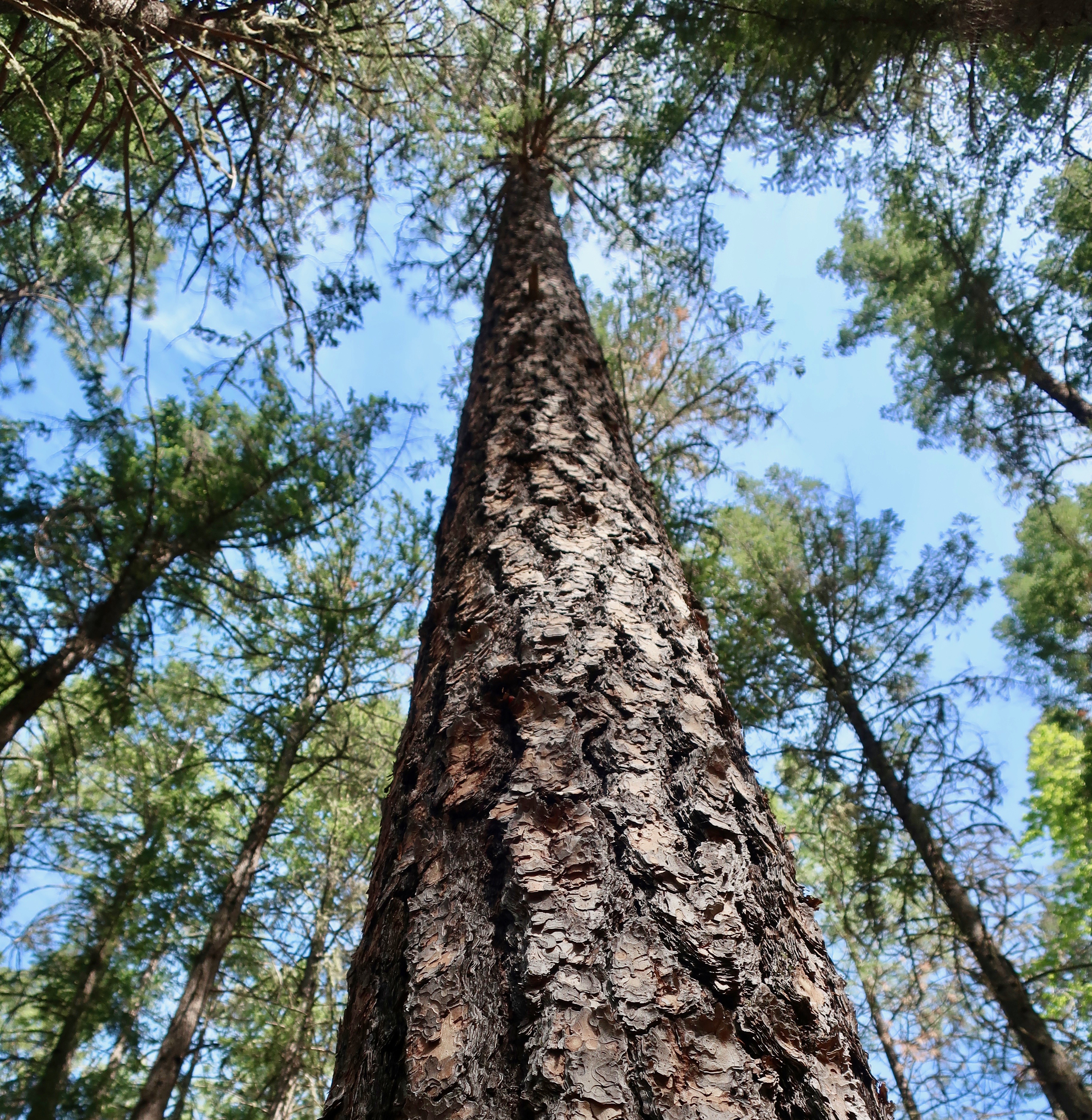
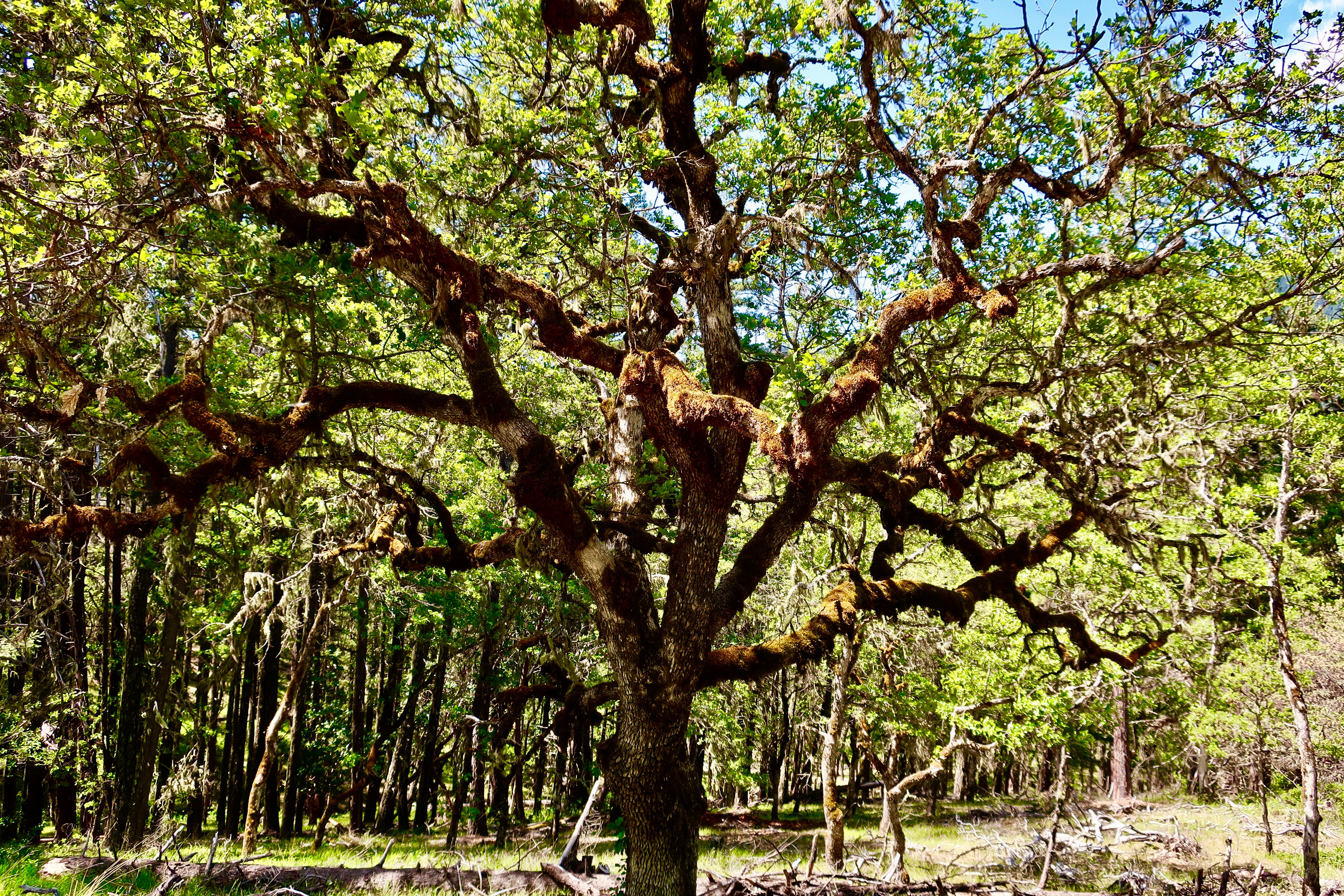
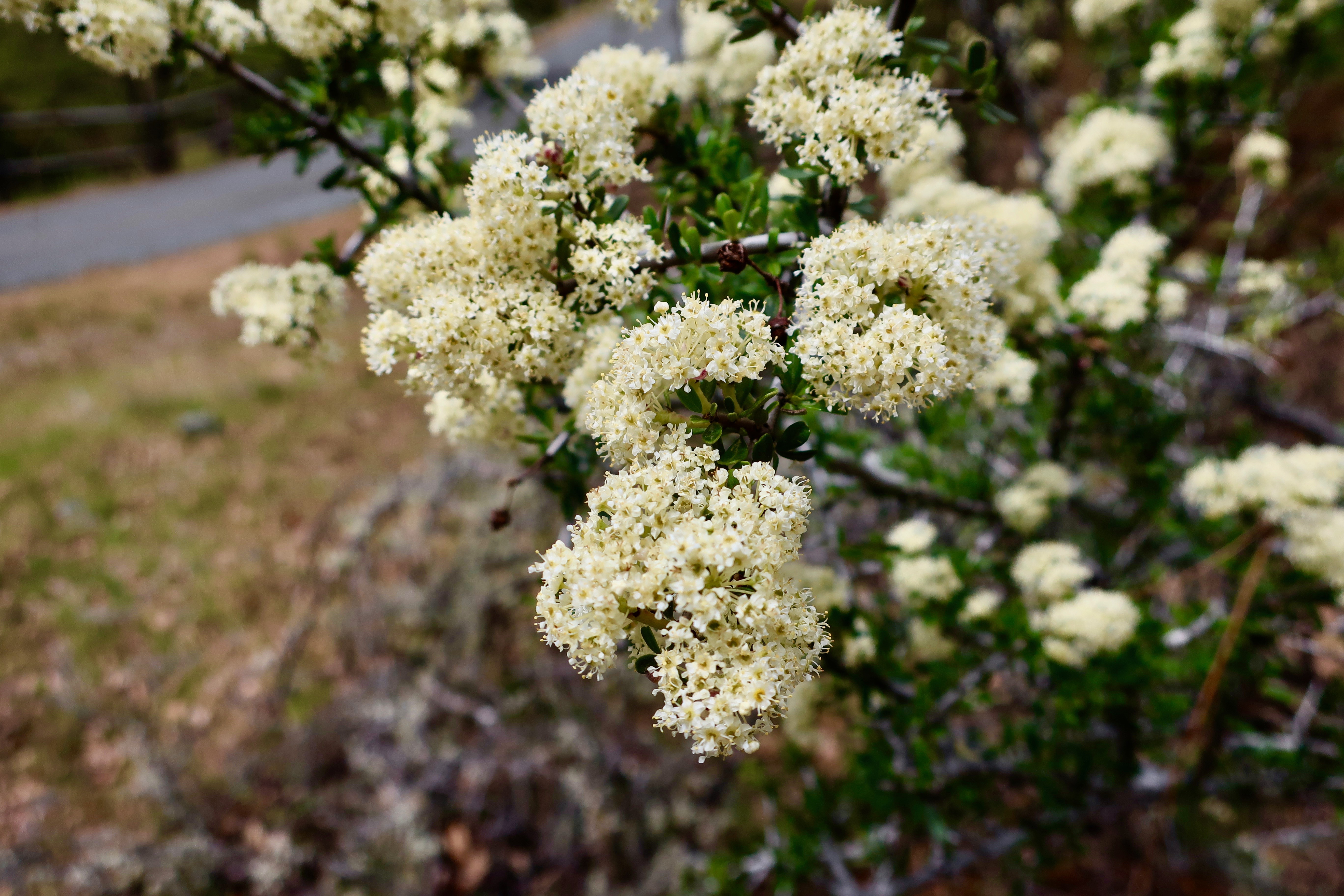
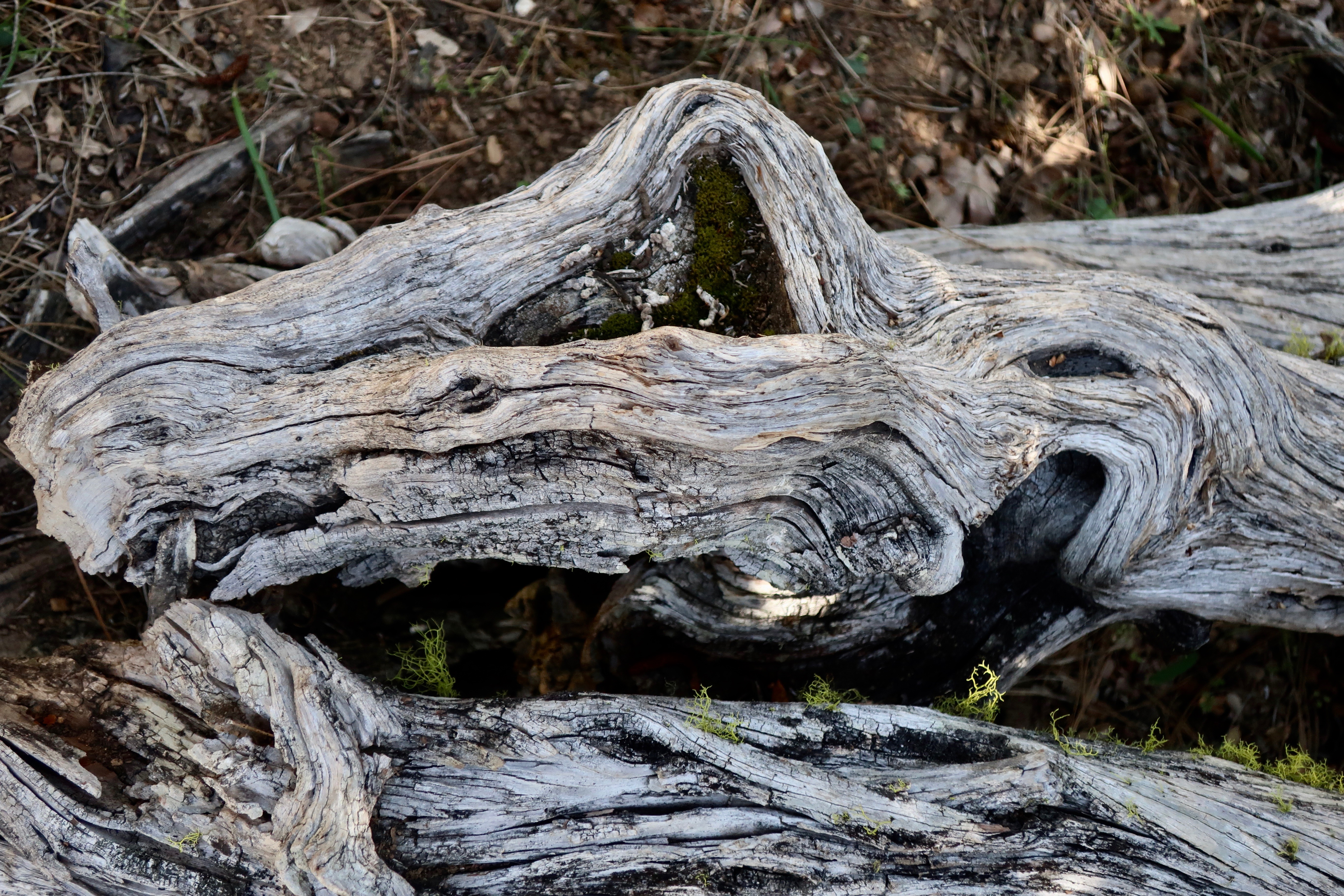
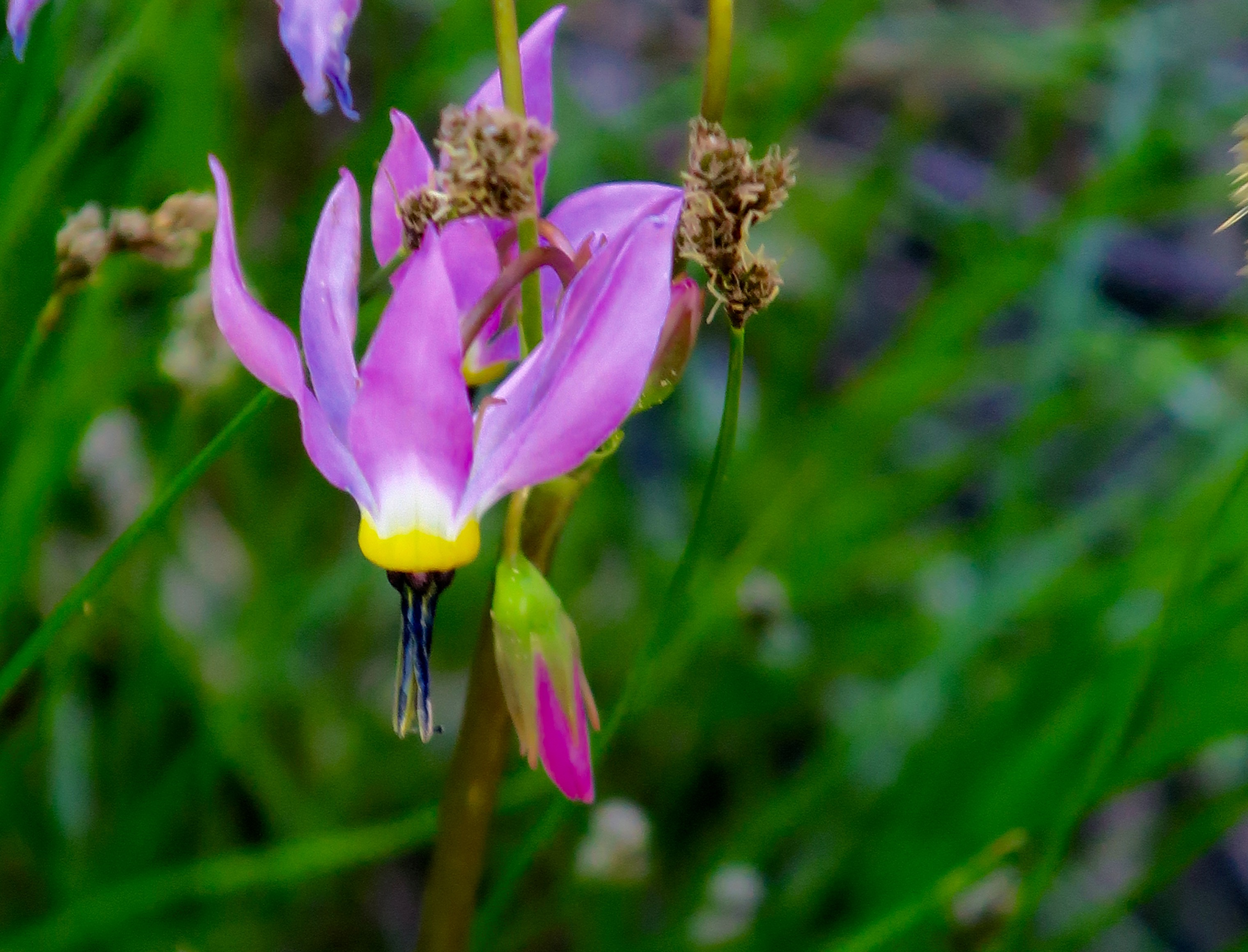
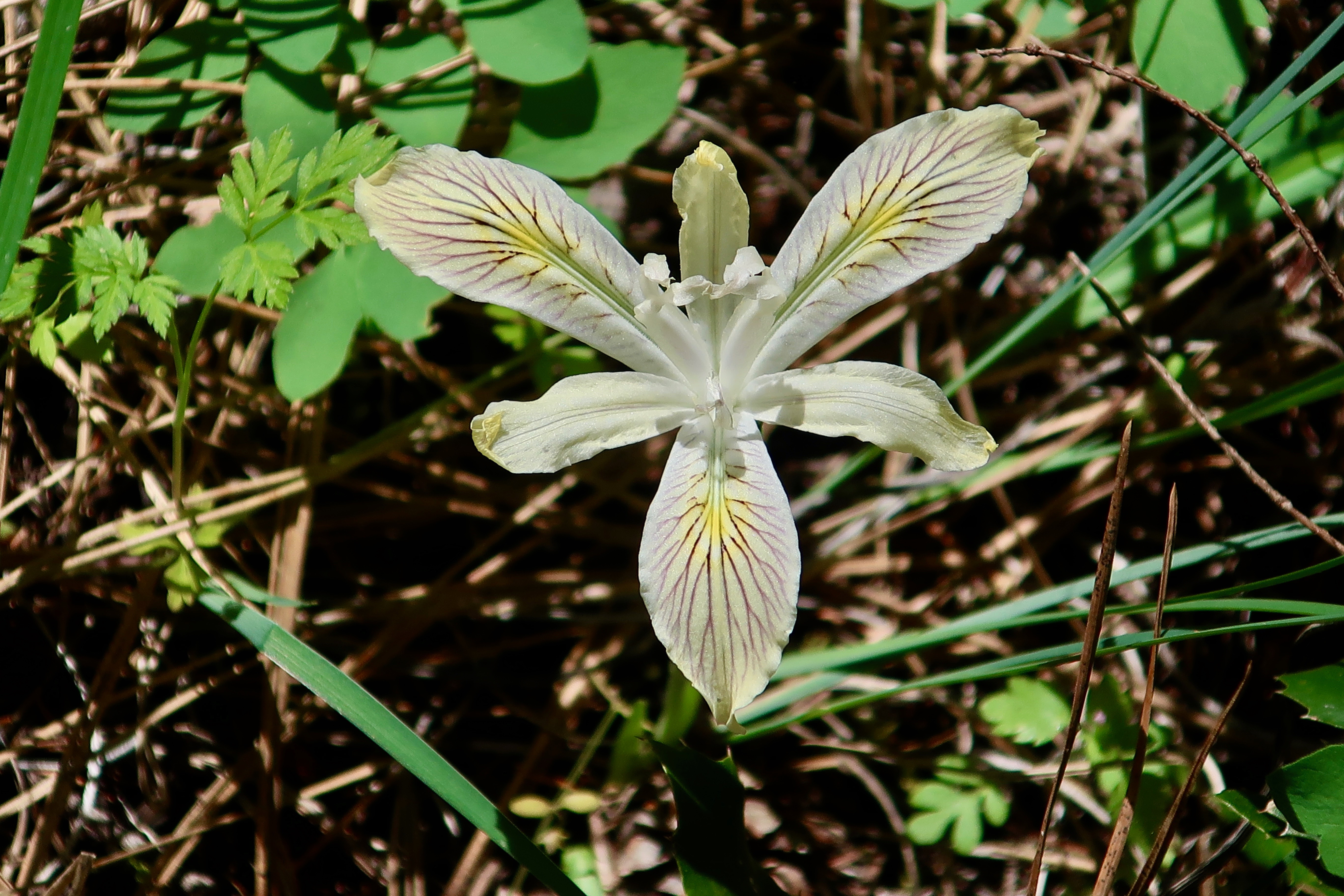
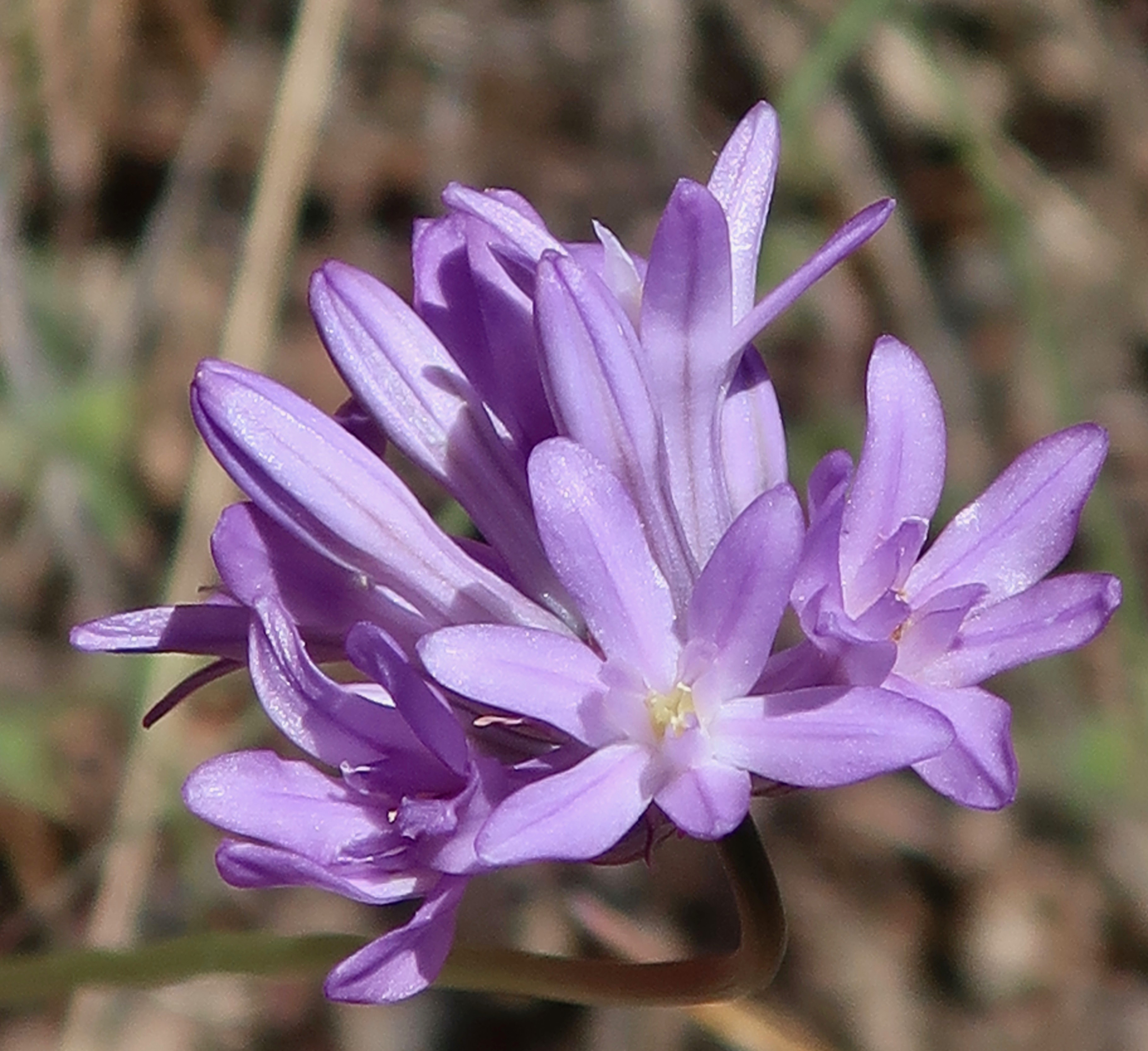
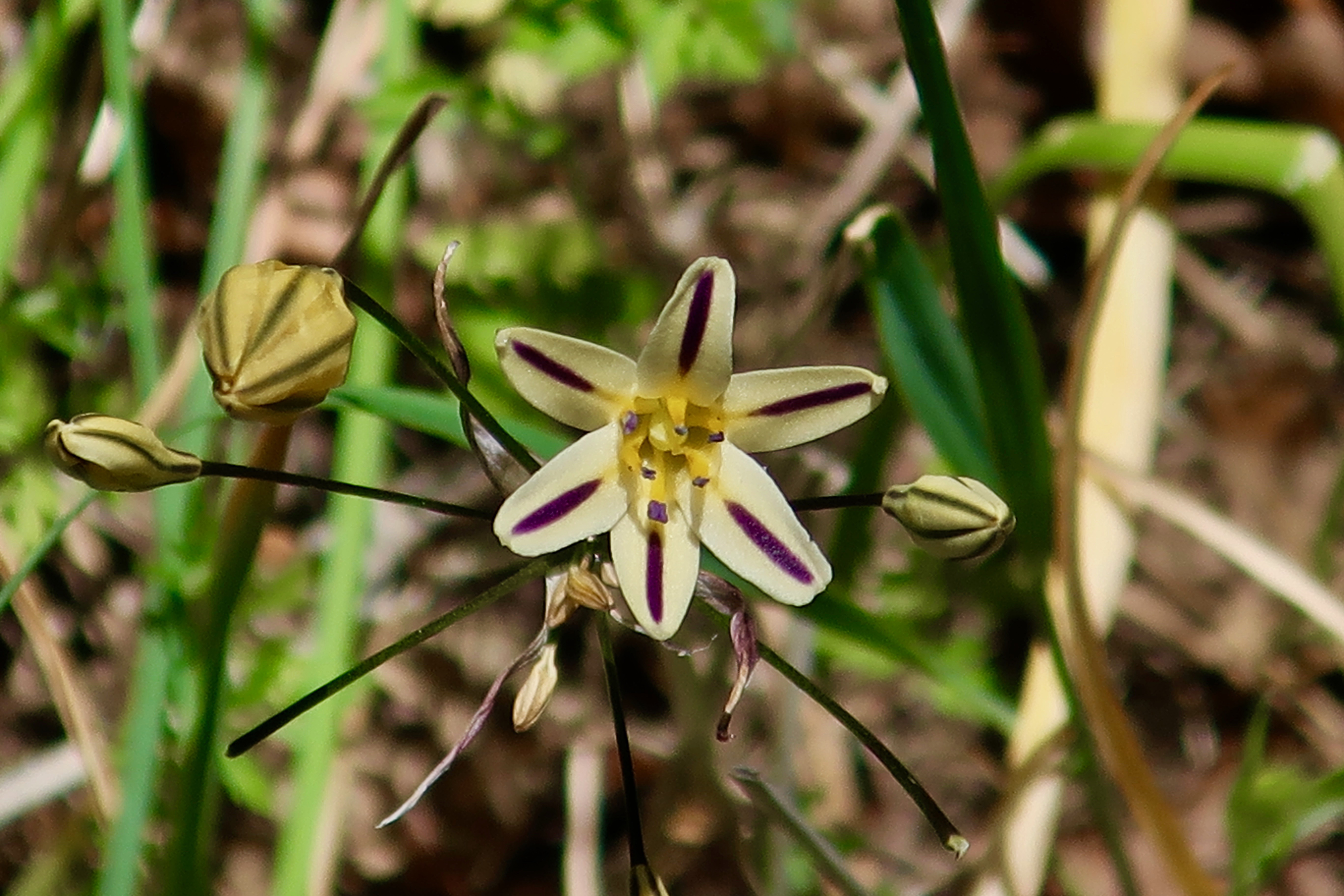
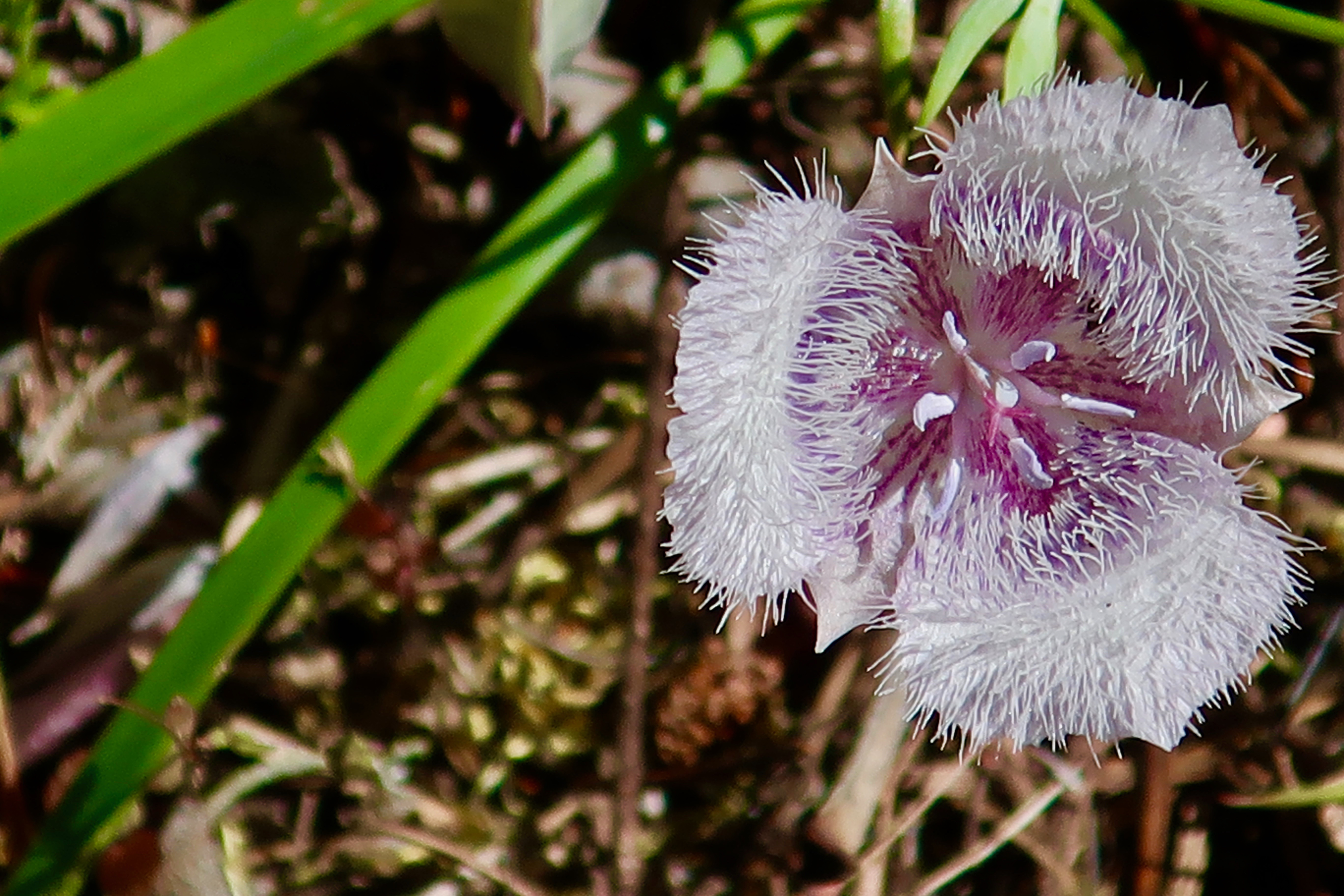
I thought that the latest addition to our flower family was pretty face Brodiaea, but now I think it may be a rare Triteleia crocea, a closely related species that only grows in our area.
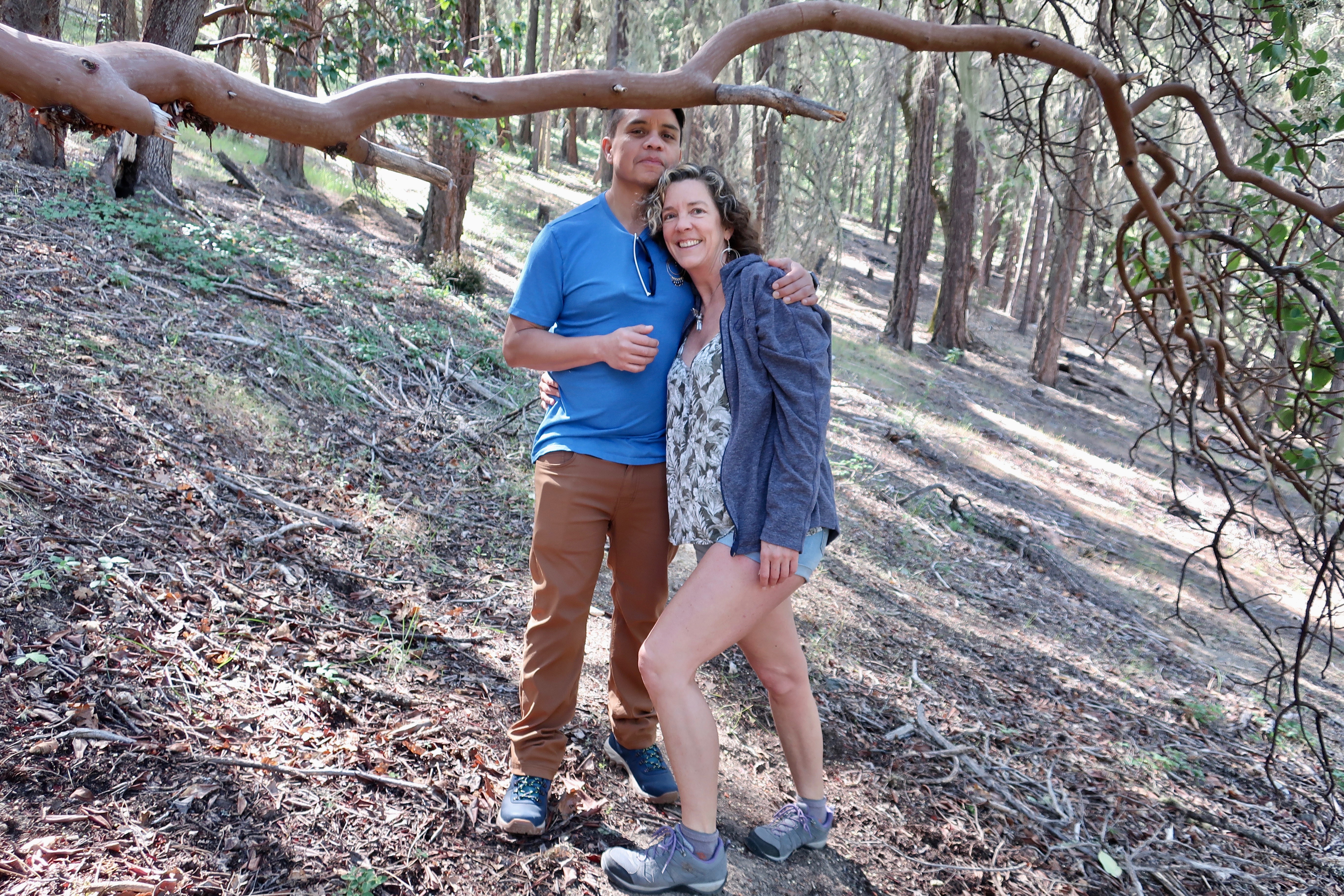
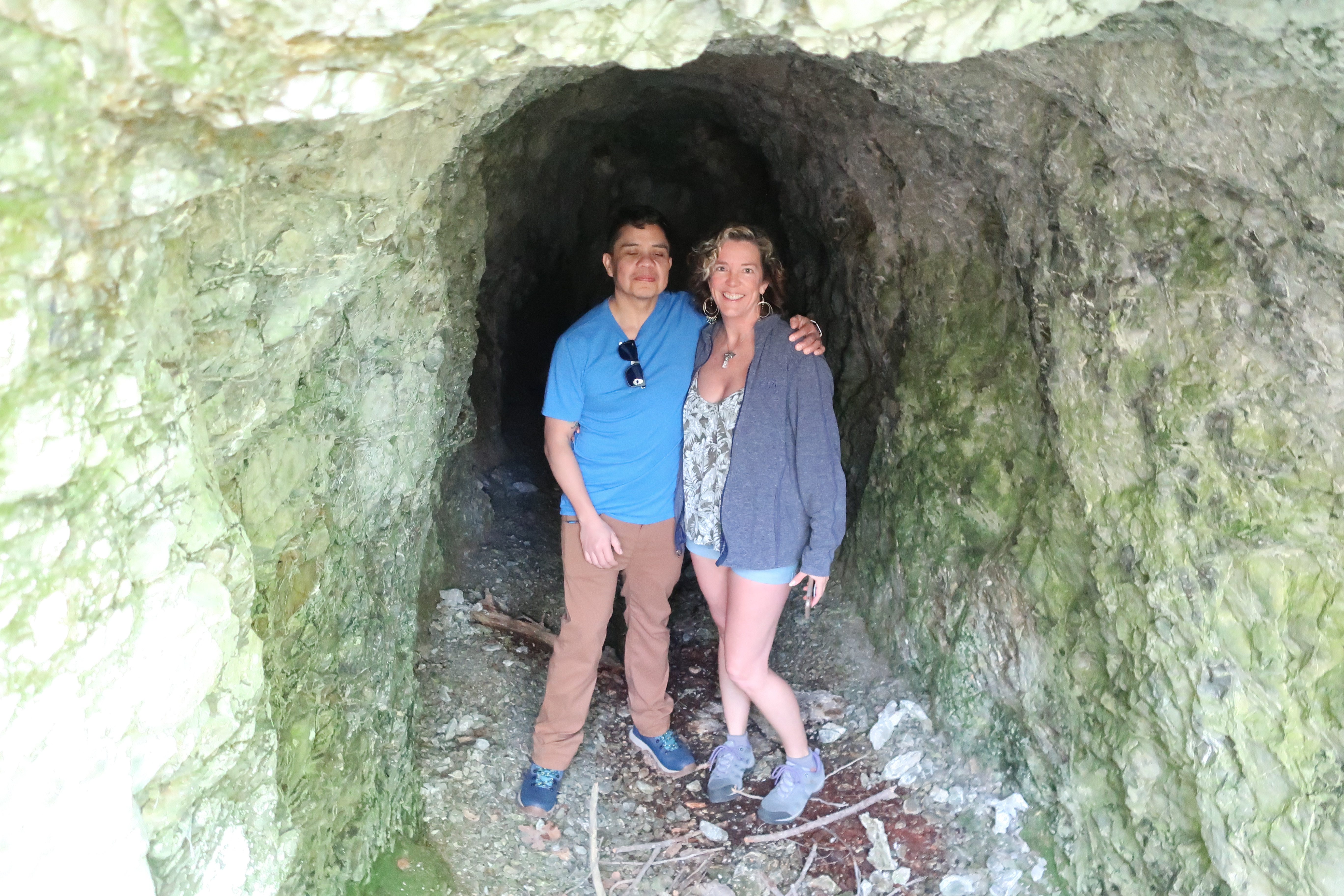
My blogging friend Crystal Trulove from Conscious Engagement and her buddy Pedro are visiting today and went out for a walk on the trail. Here are photos of them along the trail and in the Bear Cave taken by Peggy.
MONDAY’S POST: I’ve promised to tell you who shot Pavy’s pig, and I will. But I also want to discuss our summer blogging schedule, which will be slim at best. Peggy and I are taking a break to pursue some other interests. We intend to be back with a regular schedule in the fall. And I will continue to check in on you occasionally over the summer. The friendships we have formed are valuable.
The conflict in Vietnam dated back to 1946. It was born in controversy. France had lost her colonial empire in Indochina to Japan during World War II and Charles de Gaulle wanted it back. The Vietnamese Marxist Ho Chi Minh wanted independence. The Indo-China War was the result. In hope of expanding their influence, Russia and China sided with Ho Chi Minh. NATO and the US jumped in to thwart the Communist powers and support France.
In 1954 the Geneva Accords divided Indochina into four countries: North Vietnam, South Vietnam, Laos and Cambodia. Under President Eisenhower, the US replaced France in the fight against North Vietnam by providing ‘military advisors’ and financial aid to the politically corrupt regime of Ngo Dinh Diem in South Vietnam. Over the next ten years our support continued to grow. John Kennedy dramatically expanded the effort by increasing the number of military advisers from 700 to 15,000.
By the time I was ready to graduate from Berkeley, Lyndon Johnson was ready to send in the troops. The Cold War was raging. America’s leaders saw Vietnam as a critical step in stopping the spread of communism. Lose Vietnam, the Domino Theory argued, and all of Southeast Asia would follow.
My political science professors in International Relations at UC Berkeley had a different perspective. Communism was changing. It was no longer monolithic in nature but had taken on nationalistic flavors. Communism in Russia was different from communism in China. The Russians were as fearful of Chinese massing on their border as they were of the US’s nuclear weapons.
One day I arrived at my class on Comparative Communism and learned my professor had been invited to Washington to provide advice on Vietnam. The message he carried was that Ho Chi Minh was a nationalist first and a Marxist second. He wanted to reunite North and South Vietnam. He was no more interested in being dominated by Russia or China than he had been in being dominated by France. Becoming involved in a full-scale war was not in the best interest of the United States and might prove to be a costly mistake.
Washington was not ready to listen. America’s leaders had grown up on a steady diet of Cold War rhetoric. Not even the insanity of McCarthyism had shaken their faith. Being ‘soft on communism’ was political suicide. When Khrushchev banged his shoe on his desk at the United Nations and said he would bury us, we banged back.
Lyndon Johnson and his closest advisers believed in the anti-communist threat but there was more. America was the leader of the Free World. Our image was involved. Lose Vietnam and we would lose prestige. Johnson took the matter personally. We would not lose Vietnam on his watch.
But I was convinced there was more to the fight in Vietnam than a communist grab for power. The focus of my studies on Africa in 1965 was about the struggle for independence from colonial powers. I felt Ho Chi Minh was involved in a similar fight.
A huge rally was held on campus in May. It was one of the first major Anti-Vietnam protests in the nation. I went to listen. Dozens of speakers including Irving Stone, Dr. Spock of baby fame, Senator Gruening from Alaska and Norman Mailer spoke out against the war. Later the House Un-American Activities Committee targeted the event’s organizers. If Vietnam was part of a communist plot to take over the world, then dissent in the U.S. against the war was part of that plot. The same FBI agents who had prowled on the fringes of the earlier Free Speech Movement were undoubtedly prowling the edges of the protest, taking pictures and taking names.
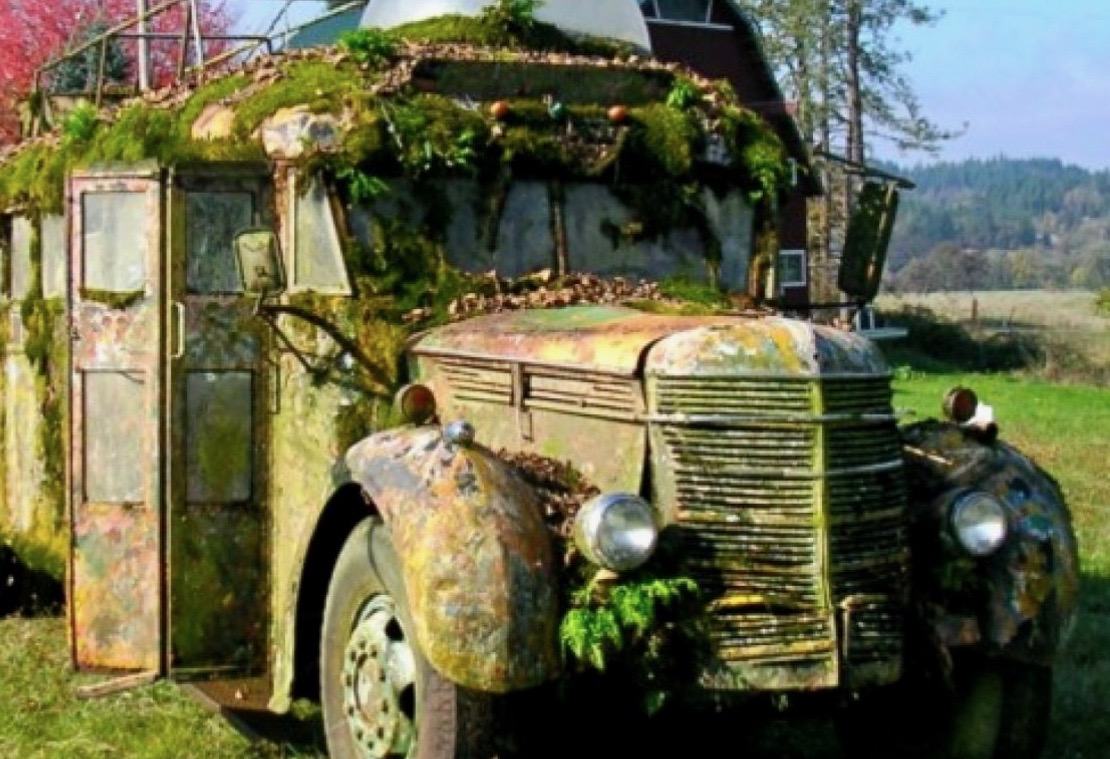
In some ways, the rally was like a circus. Over 30,000 students and anti-war activists participated. Folks from the throughout the Bay Area poured on to Union Field and there were lots of interesting people in the Bay Area. Haight Asbury and the hippie era was still a year off, but the elements were all in place. I was standing on Bancroft Avenue when a crazily painted bus drove up and stopped. Out piled a group of people who were dressed in outrageous outfits and had their faces painted. They danced by me, apparently high on something.
“It’s Ken Kesey and his Merry Pranksters, a more ‘with-it’ girl standing next to me explained. “Neal Cassidy drives the bus.”
Cassidy had been part of the Beat Generation and a friend of Jack Kerouac. He had been immortalized as Dean Moriarty in “On the Road.” His connection with Ken Kesey and the Merry Pranksters would introduce another type of trip to him: LSD. Tom Wolfe’s book, “The Electric Kool-Aid Acid Test,” chronicled the experience of the Merry Pranksters on their gaily-painted bus named Further as it made its psychedelic journey across the US.
What I had learned about Vietnam in my classes and at events like the protest created a dilemma for me, as it did for most young men of my generation. If drafted, I would go. I couldn’t imagine burning my draft card or moving to Canada. I actually believe we owe our country service. But fighting in a war I didn’t believe in was at the very bottom of the list of what I wanted to do when I graduated. And there was more. I am allergic to taking orders and can’t stand being yelled at. I’d make a lousy soldier. I saw a court-martial in my future.
Luckily, Peace Corps Recruiters were coming to Berkeley and Peace Corps was something I truly wanted to do. I could serve America in my own way. Peace Corps service would not eliminate my military obligation but it might buy time for the Vietnam conflict to end.
In my next post on the Peace Corps, I visit with the recruiters and fill out a long application. I even take a language test, in Kurdish. Go figure. But that is a story for this fall. Next Monday will be my last regular post for the summer. Peggy and I are going on vacation. 🙂 I’ll write about it on Monday.
FRIDAY’S TRAVEL BLOG: We are going on a walk up a trail I created in the forest behind our home. Am I a trail blazer, or what? A buck plays contortionist, poison oak lurks, and an old cave speaks to the area’s gold mining history.
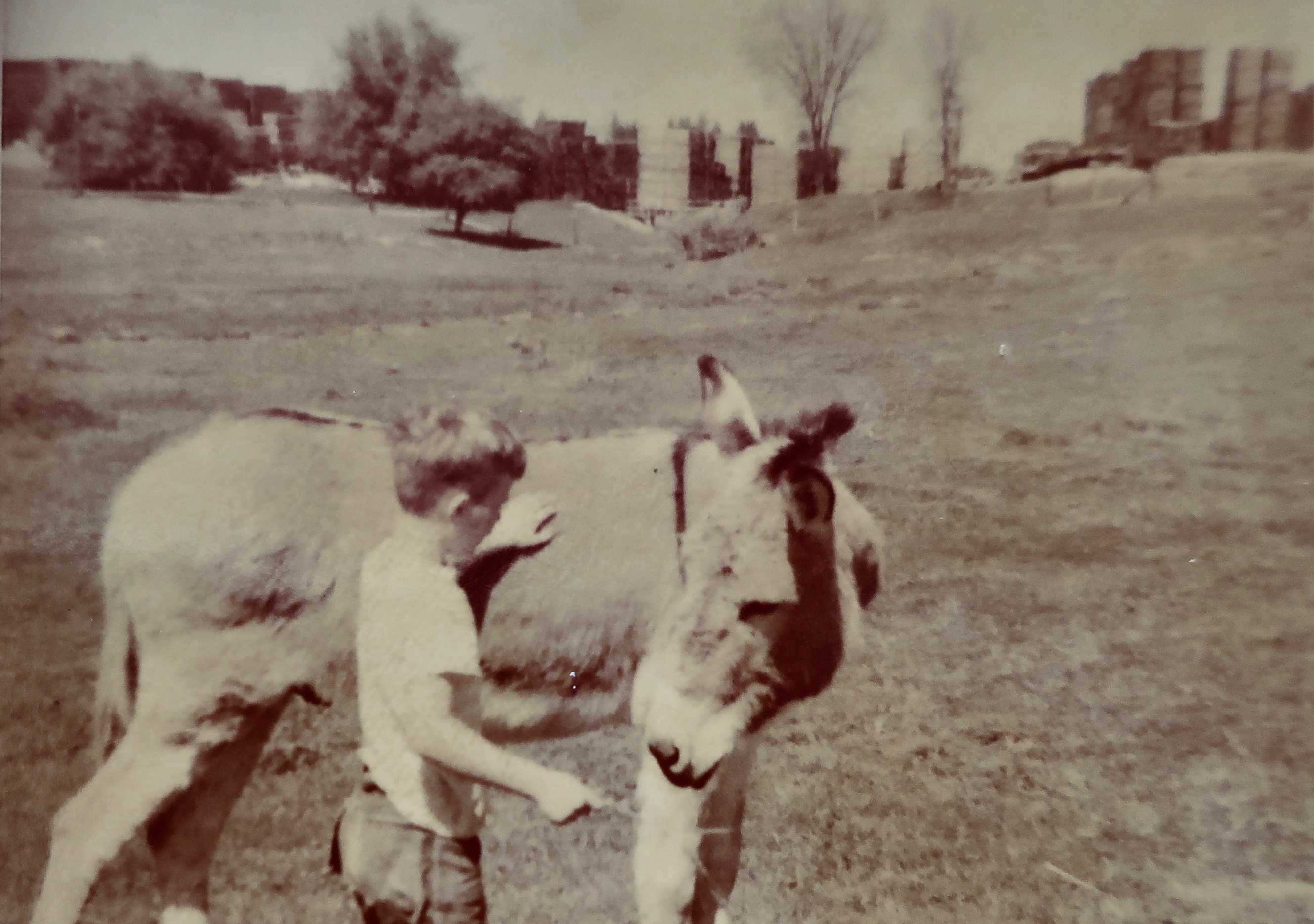
While the Pond and the Woods provided an innocent and often educational escape for me, much of my outdoor time was spent getting into mischief, especially in my younger years when I roamed around Diamond and the surrounding countryside with my brother and our friends. What I remember most about these great adventures was that we were skating on the thin edge of trouble.
Gradually, we developed a reputation. I am convinced that a whole generation of little kids in Diamond blamed their misbehavior on us. “I didn’t do it Mama, the Mekemson kids did.” And Mama probably believed them. The mother of my life-long friend, Bob Bray, did. She refused to let him play with me. I was a bad influence, guaranteed to lead her son straight into the arms of the law.
Most of our mischief was relatively harmless. For example, Jimmy Pagonni lived across the street and had a zero-tolerance policy for us. We lusted after his cherries. He transformed them into wine and every drop was precious. He turned his dogs loose on us if we came anywhere near his orchard. Naturally his insistence on keeping us out only guaranteed our presence. Raids were carefully planned.
We would invite two or three friends over and make a party out of it. The cover was sleeping out in the backyard, but sleep was secondary. Somewhere around one o’clock in the morning we would slip out of our yard, cross a very lonely Highway 49, climb over Jimmy’s rickety gate, and disappear up into the trees. It was all very hush-hush and cherries have never tasted more delicious. We would stuff our stomachs and then fill up bags for take-out. It was pure greed.
Jimmy’s dogs never caught us before we were able to scramble over the gate but they did catch my cocker spaniel, Tickle, once, and almost killed him. Tickle had been out on the town visiting a lady friend and took a shortcut across Pagonni’s property. We were infuriated. Marshall retaliated by shooting Jimmy’s bull in the balls with a BB gun. (If not fair to the bull, it was at least alliteration.) Jimmy never knew Marshall committed the heinous act but I am sure he had his suspicions.
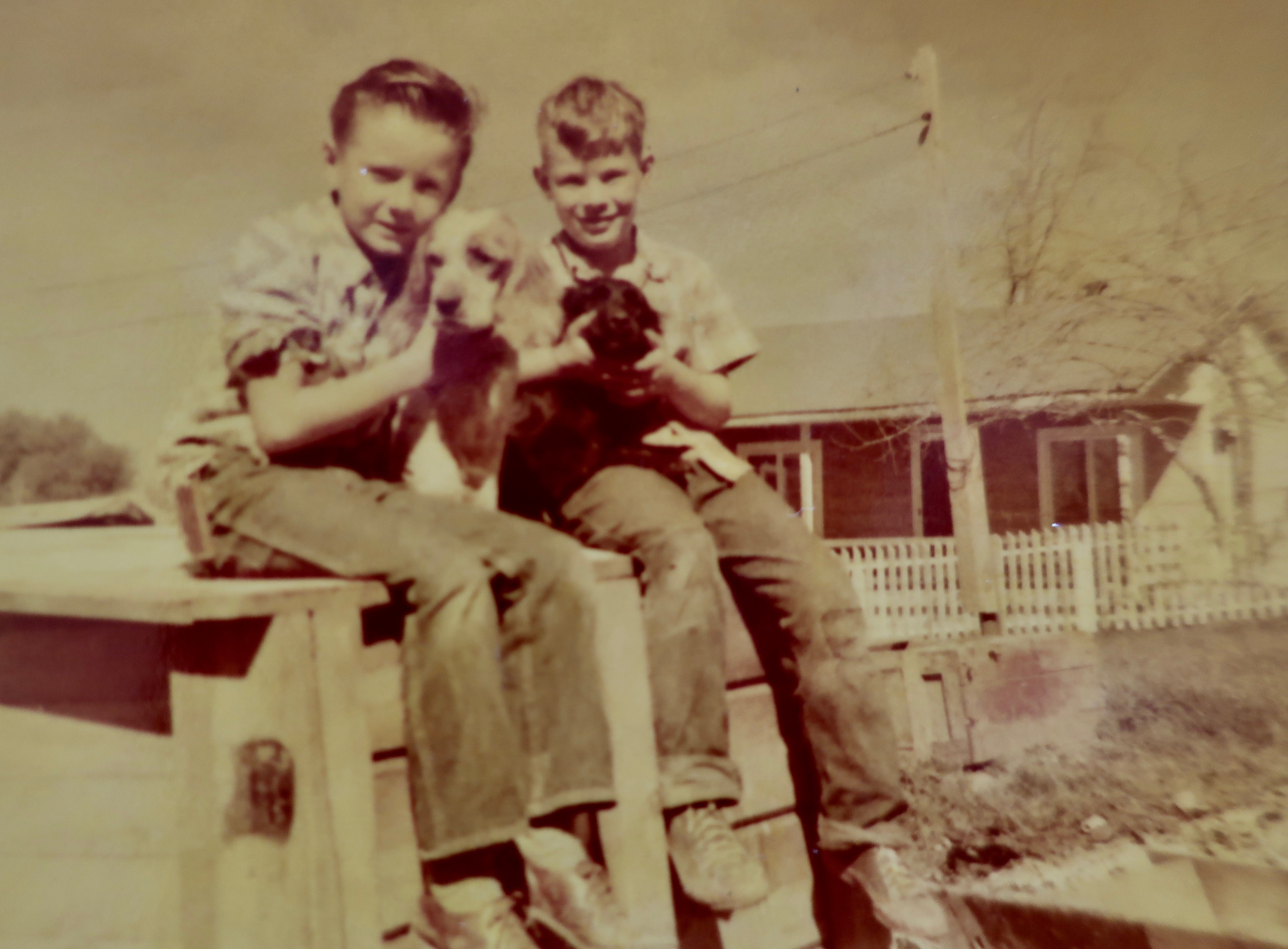
Even more serious, an older Marshall (eighth grade I think) stole a jug of Jimmy’s wine. He stored the fermented cherry juice in an old Gold Rush era building that may have served as a jail in its youth. It was located right in the middle of his well-guarded cherry orchard and featured a stout locked door and one barred window. I am sure Jimmy considered it impregnable but he failed to consider just how skinny my brother was. With help from his friend Art, Marshall managed to slip through the bars one night and pinch a gallon of Italian Red.
He and Art then headed for our treehouse in the Graveyard to do some serious imbibing. Considering that a gallon of Jimmy’s Italian Red would have knocked out two grown men, it almost killed Marshall, not to mention encouraging strange behavior. He described how Mrs. Ross, my 4th and 5th grade teacher, came upon Art and him madly peddling their bikes. This wouldn’t have been strange except they were lying on their backs holding the bikes above them in the air!
I remember him slipping in the back door and trying to get to our bedroom before Mother and Pop noticed. It didn’t work. In addition to stumbling and mumbling and heaving, he smelled like a three-week gutter drunk. He was one sick kid. Both parents hurried to the bedroom out of concern and I moved back outside to sleep in the cool, but fresh fall air. It was one of those crimes that incorporates its own punishment.
The question in next Monday’s post from my blogged book It’s 4 AM and a Bear Is Standing on Top of Me, is who shot Pavy’s pig? The sheriff wanted to know.
WEDNESDAY’S POST from my Peace Corps Memoirs: As I came close to graduating from Berkeley, I had a choice of how to serve my country: Either join the Peace Corps or be shipped out to fight in a Southeast Asian War.
FRIDAY’S TRAVEL BLOG: We are going for a walk in the woods— on a trail I built. There are wild flowers to admire, a gold mining operation from the 20s and 30s that suggests that there may be gold under our house, poison oak, and a buck doing strange things.
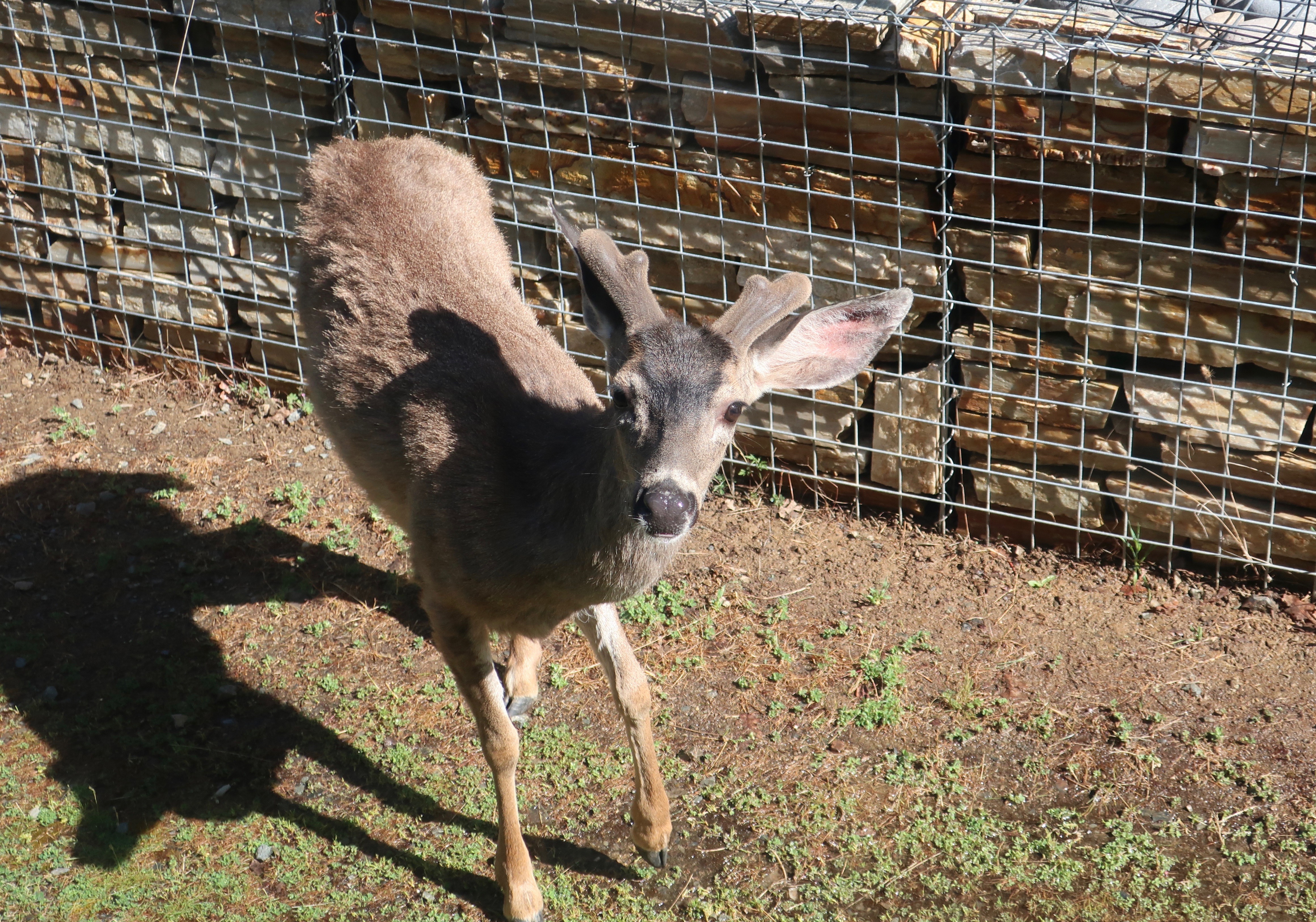
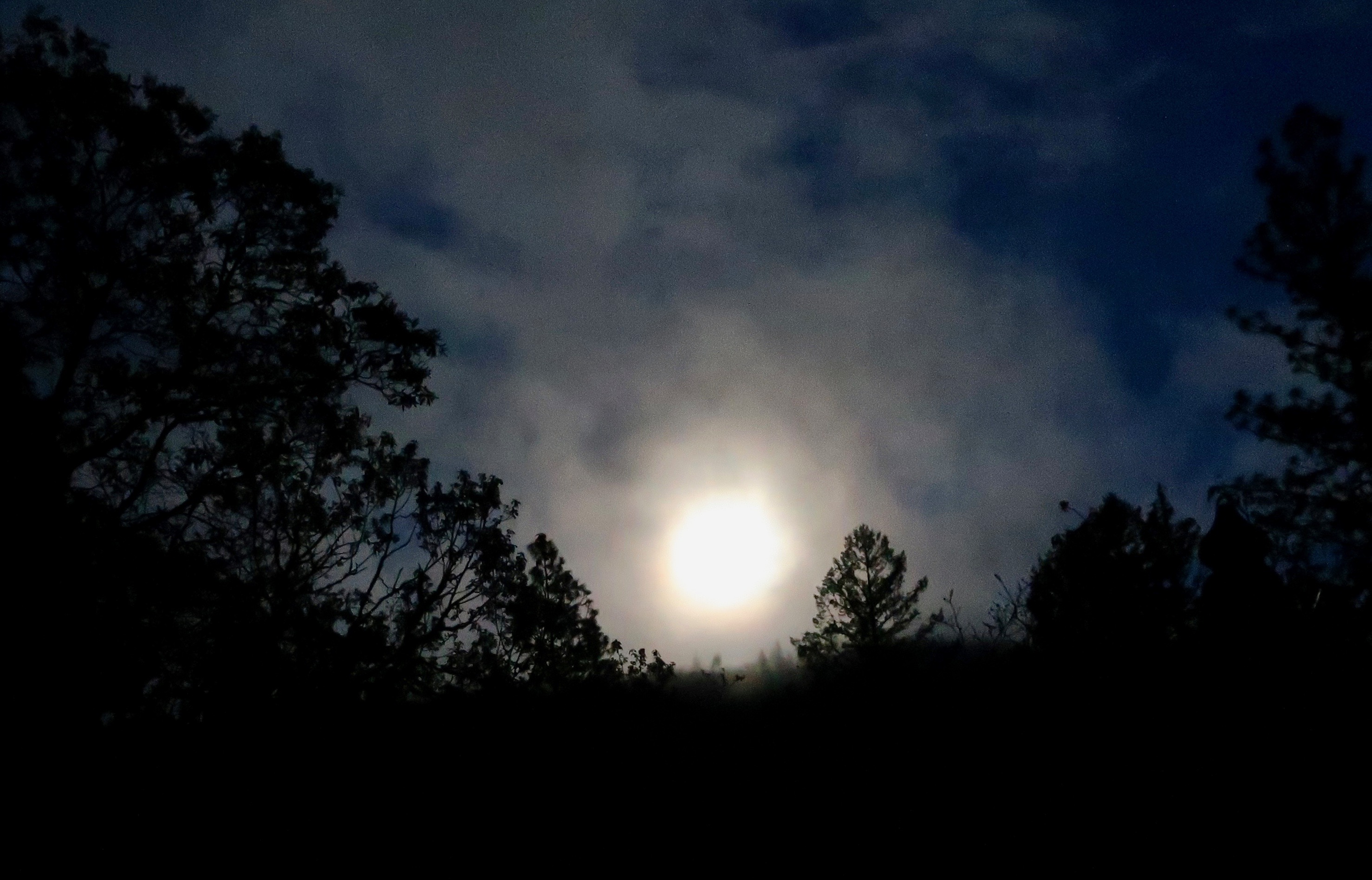
I awoke with a start as a deer leapt onto the deck next to our bedroom in the middle of the night a few weeks ago. They frequently cross the deck but rarely at night and never at full speed. It got my attention— but nothing like the loud thump that followed. I imagined something big and thought of getting up to look. But it was a moonless, pitch black night. I wouldn’t be able to see anything and the intruders would be long gone anyway, I told myself. I decided to go back to sleep. It wasn’t easy.
Our neighbor Bryan called the next night. “I’m shaking, Curt,” he told me. A hawk had taken out a chicken of his during the day and he had gone out after dark to check on the welfare of the flock. What he found was a pair of eyes staring out at him from one side of a large tree. A long tail stretched out from the other side. It was a cougar. Bryan kept his bright flashlight focused on the cougars eyes and slowly backed away. And then called me.
Suddenly, the loud thump made sense. The cougar had been in hot pursuit of a deer and jumped onto our deck in hot pursuit. Welcome to our neighborhood.
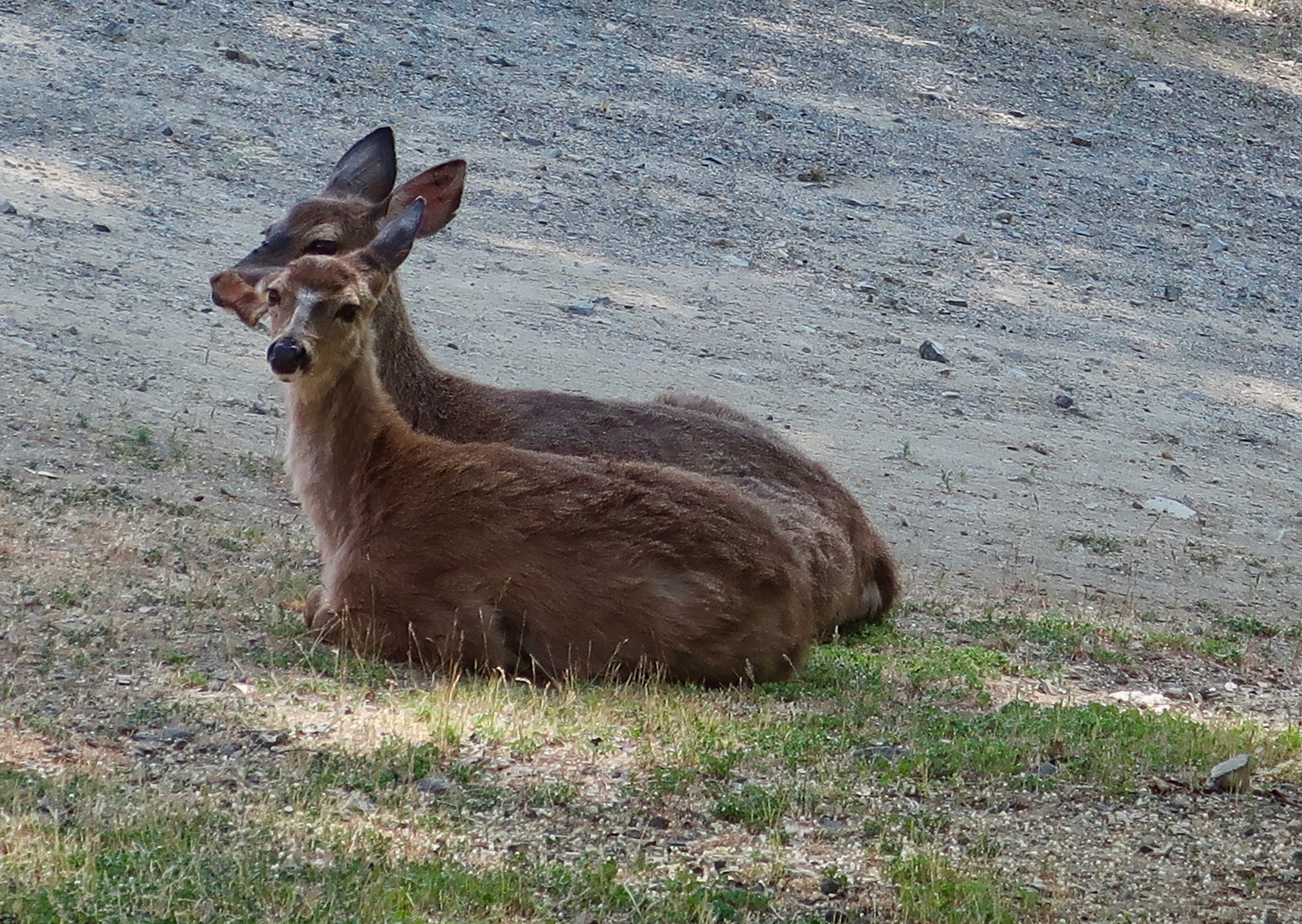

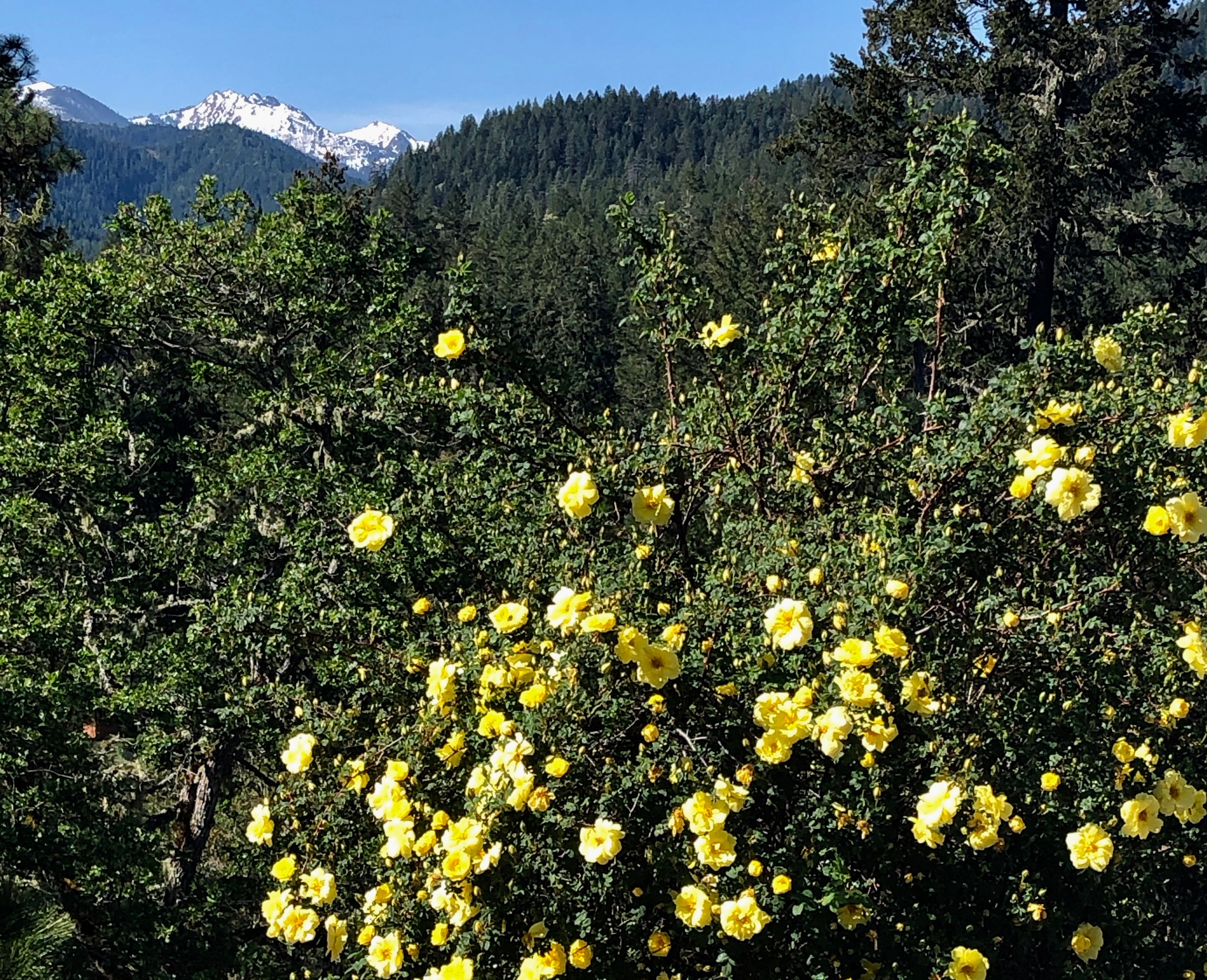
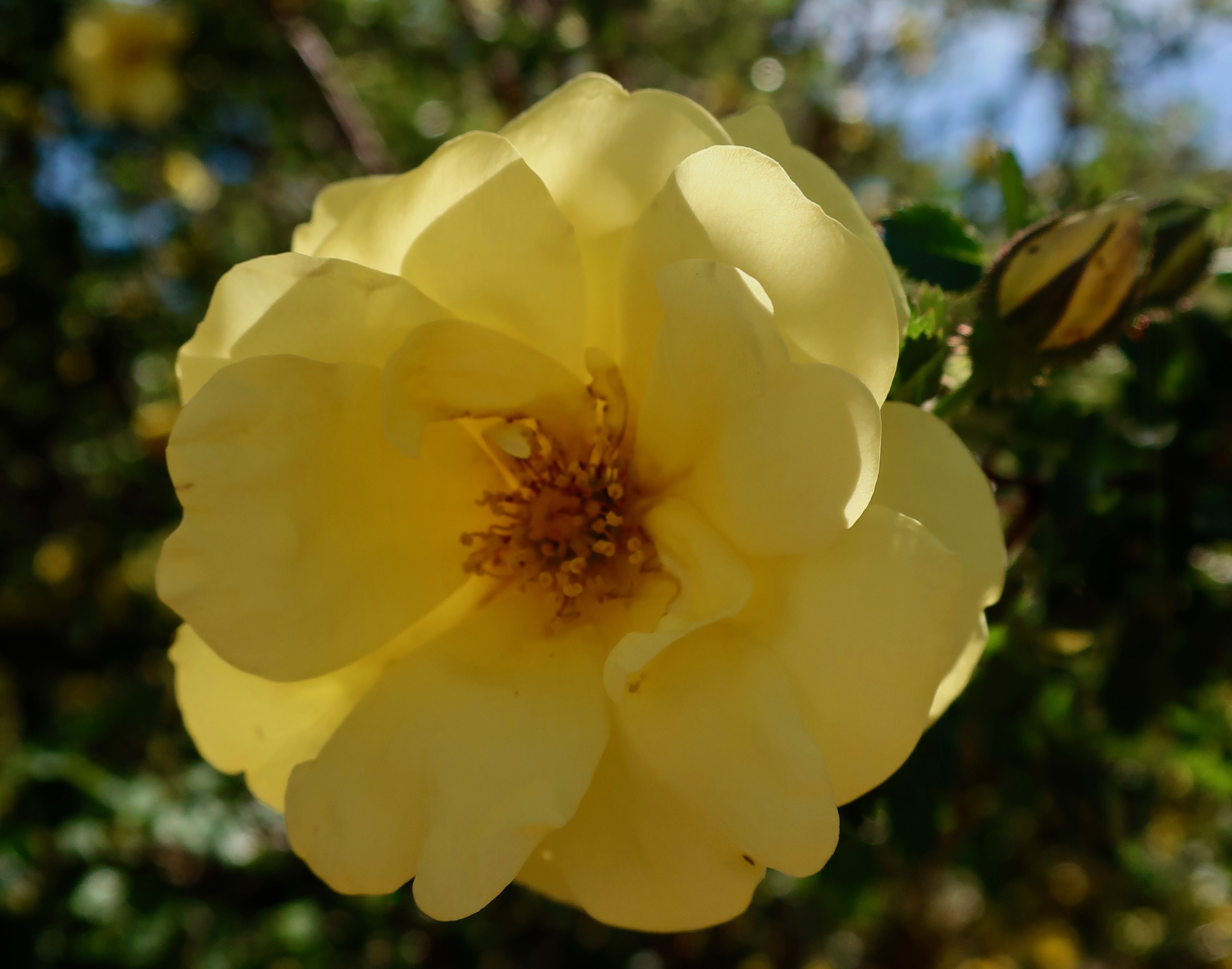
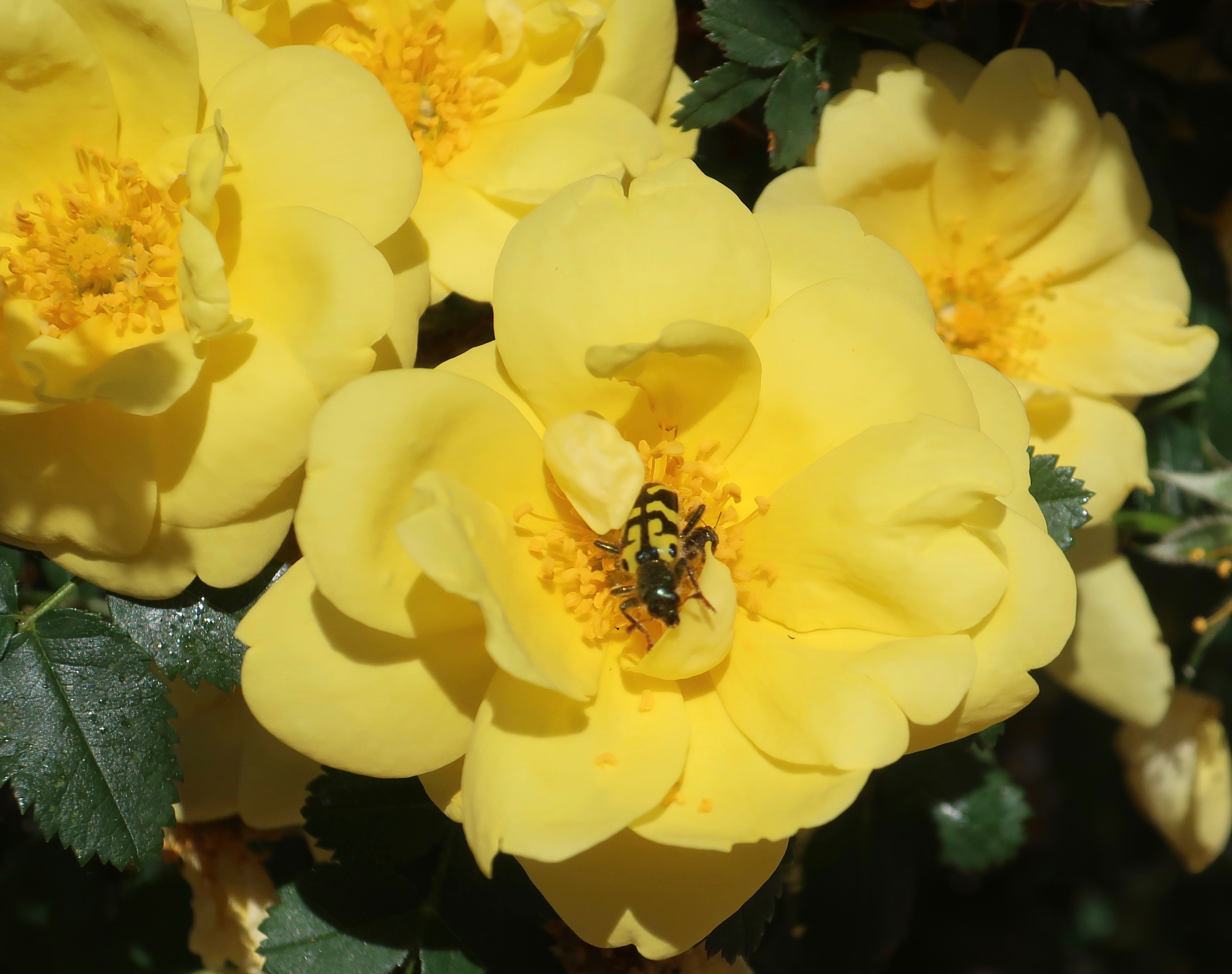
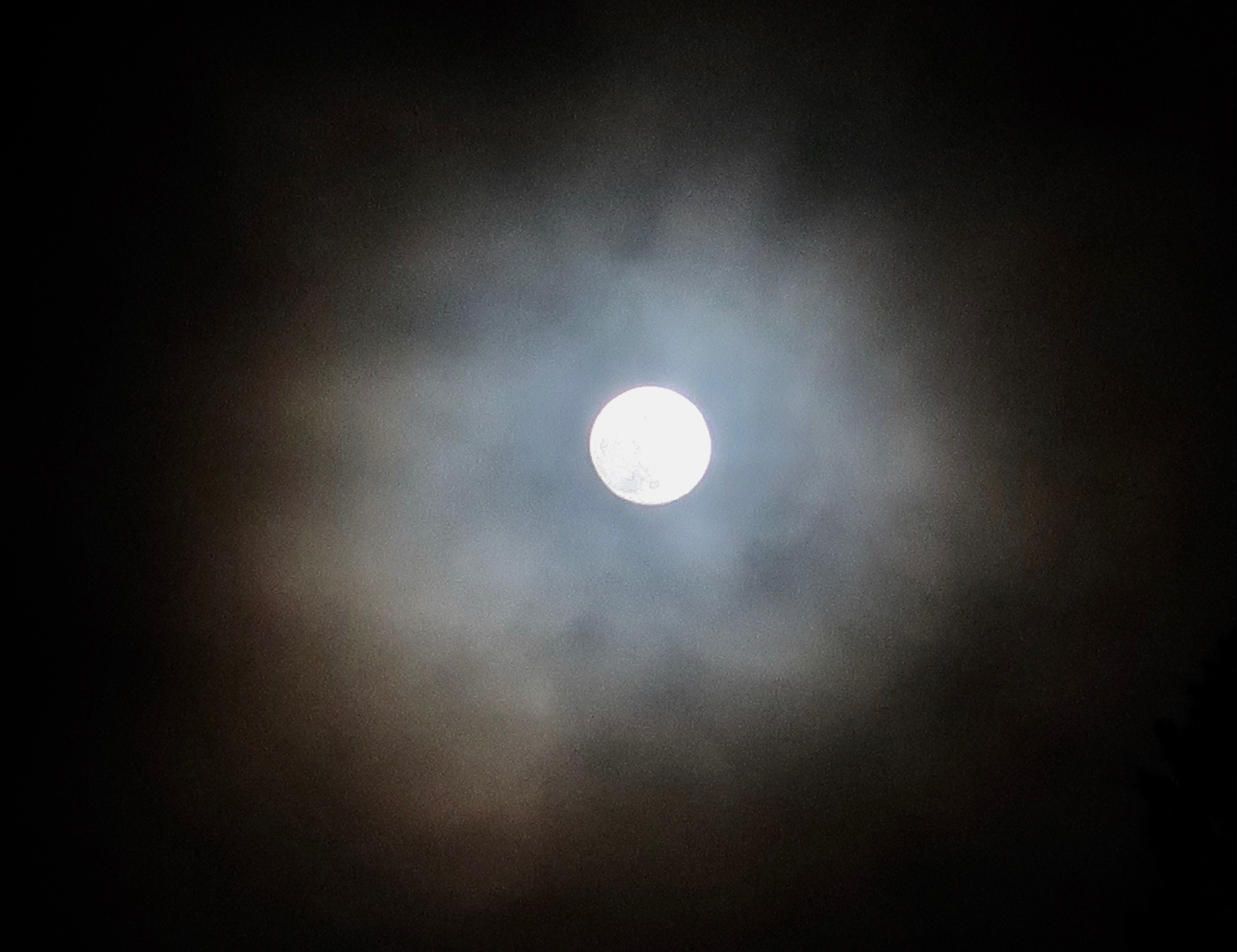
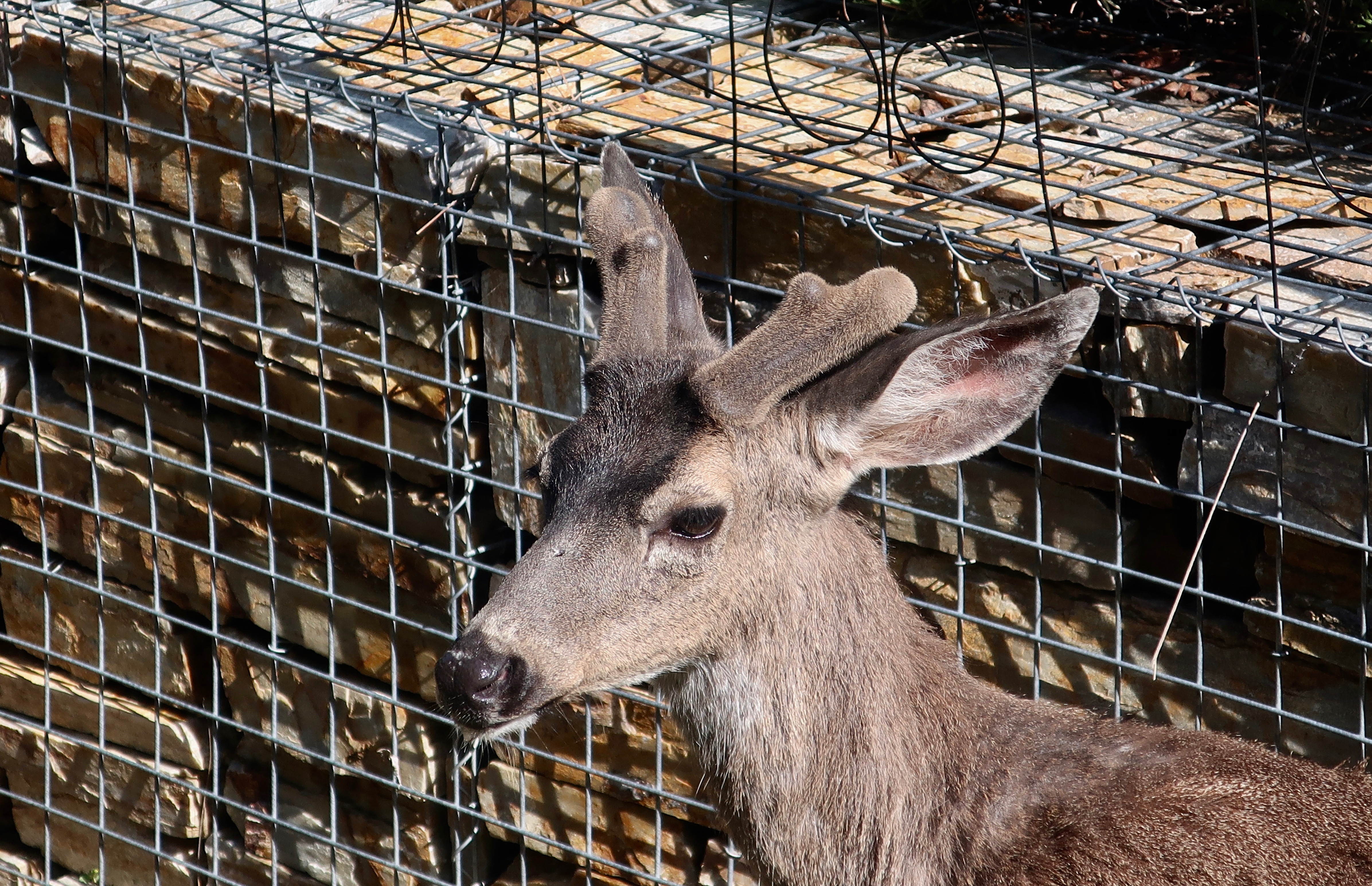
NEXT MONDAY’S POST: It’s back to tales of my early years in Diamond Springs, California and why the town mantra was ‘The Mekemson kids did it.’
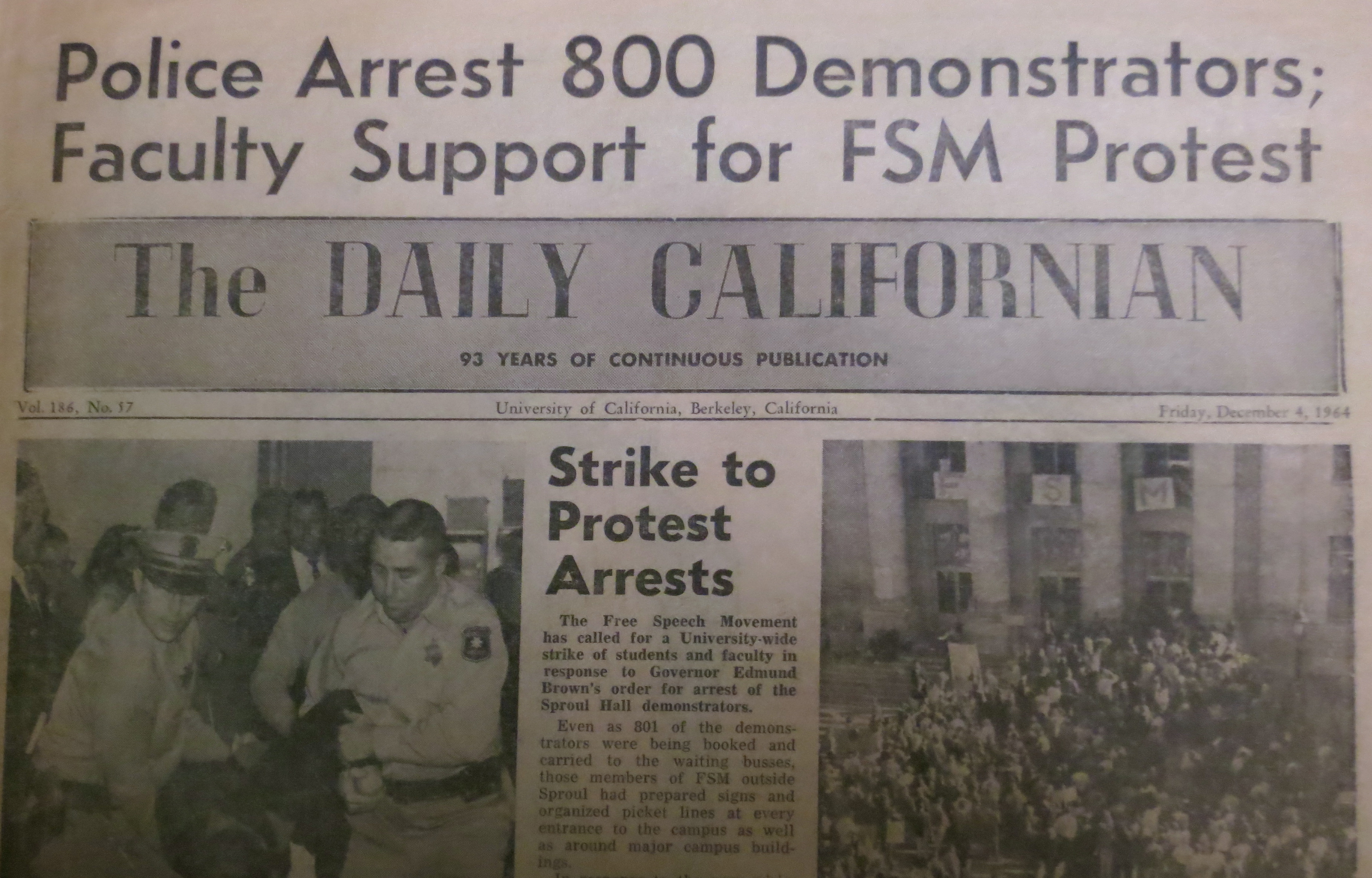
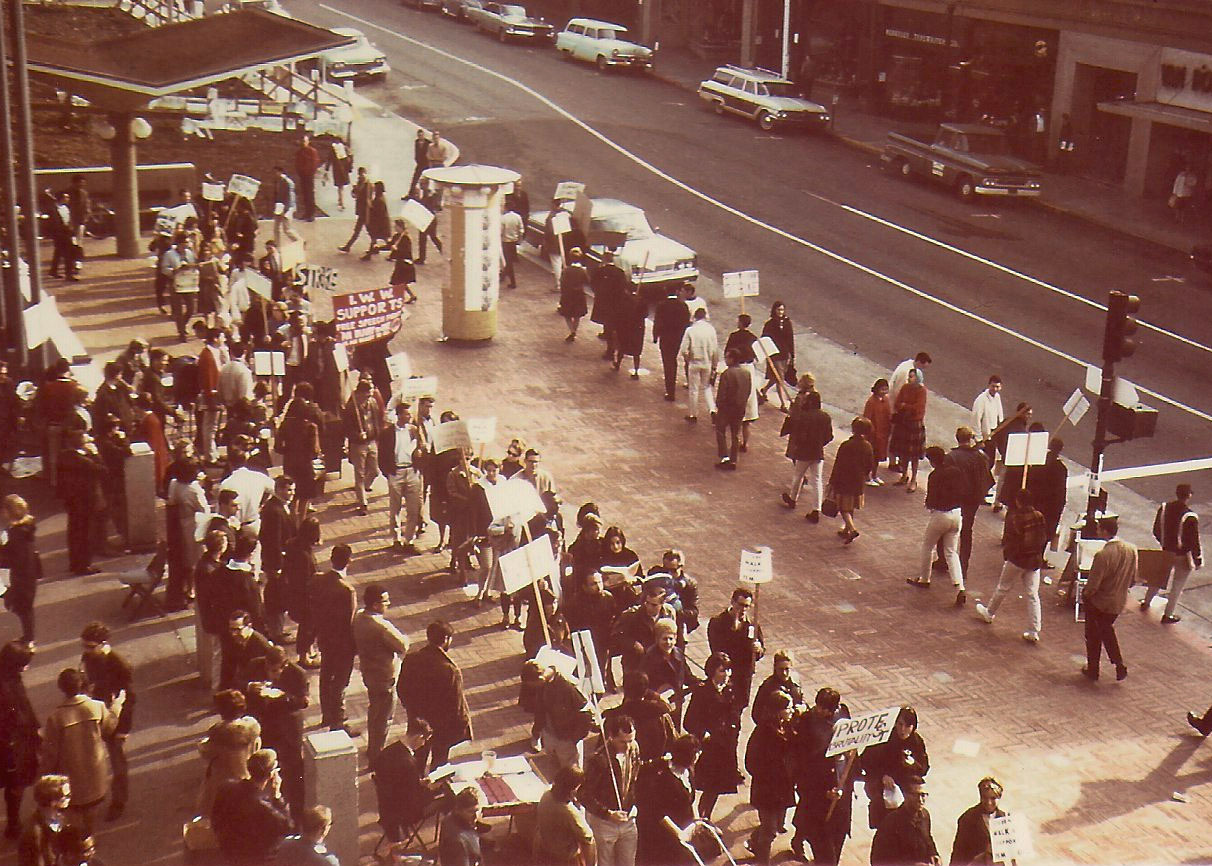
The whole campus was holding its breath in the immediate aftermath of the arrests at Sproul Hall, waiting to see what would happen next. Thousands gathered in Sproul Hall Plaza while an army of law enforcement officers were held ready to return to campus. Most of my classes were cancelled and I didn’t attend those that weren’t. Instead, I joined a picket line.
UC President Clark Kerr held a series of around the clock meetings with a select committee of Department Chairs and arrived at a compromise he felt would provide for the extended freedom being demanded on campus while also diffusing the outside pressure to crack open student heads. Sit-in participants arrested in the Sproul Hall would be left to the ‘tender mercies’ of the outside legal system and not disciplined by the University. Rights to free speech and organization on campus would be restored as long as civil disobedience was not advocated.
Kerr and Robert Scalapino, Chair of the Political Science Department, presented the compromise to a hastily called all-campus meeting of 15,000 students and faculty at the open-air Greek Theater. There was to be no discussion and no other speakers. When Mario Savio approached the podium following the presentation, he was grabbed by police, thrown down, and dragged off the stage. Apparently, he had wanted to announce a meeting in Sproul Plaza to discuss Kerr’s proposal. Once again, Berkeley teetered on the edge of a riot. We moved from silent, shocked disbelief to shouting our objections. Mario, released from the room where he was held captive, urged us to stay calm and leave the area. We did, but Kerr’s compromise was compromised.
The UC Faculty Senate met on December 8 in Wheeler Hall to render its opinion on what should be done. Ironically the meeting was held in the same auditorium where Peter Odegard had lectured on the meaning of democracy to my Poly Sci 1 class during my first day at Berkeley. Some 5000 of us gathered outside to wait for the results and listen to the proceedings over a loud speaker.
Some departments such as math, philosophy, anthropology and English were clearly on the side of FSM while others including business and engineering were in opposition. My own department of political science was divided. Some professors believed that nonviolent civil disobedience threatened the stability of government. Others recognized how critical it was for helping the powerless gain power. To them, having large blocks of disenfranchised, alienated people in America seemed to be a greater threat to democracy than civil disobedience.
To the students who had fought so hard and risked so much, and to those of us who had joined their cause, the results were close to euphoric. On a vote of 824-115 the faculty resolved that all disciplinary actions prior to December 8 should be dropped, that students should have the right to organize on campus for off-campus political activity, and that the University should not regulate the content of speech or advocacy. Two weeks later, the Regents confirmed the faculty position.
We had won. Our freedom of speech, our freedom to organize, and our freedom to participate in the critical issue of the day were returned. While we were still a part of the future so popular with commencement speakers, we were also a part of the now, helping to shape that future.
In next Wednesday’s post I explore the background of the students arrested and begin to consider the options for my future: one is a war in South East Asia, the other is the Peace Corps.
FRIDAY’S TRAVEL BLOG: I’ll take you on a visit to our home in Oregon where spring is in full force, a cougar comes by in the night, and eight pregnant does hang out on our property.
 Wandering through Time and Place