On Being Labeled a Radical… The 1964 Free Speech Movement at UC Berkeley


The Press, Governor of California and UC Administration labeled participants in the Free Speech Movement as a small group of radical revolutionaries bent on destroying law and order. Were we?

I was curious about the background of the students who were arrested during the Sproul Hall sit-in, considering I had almost been one. A sociologist was doing a study on who was involved so I volunteered to take part.

We were given extensive questionnaires, trained and told to hit the streets. I seemed to inherit some of the more elusive, fringe types who always hang around Berkeley. Just finding them was an adventure.

When our data was analyzed, we found that a quarter or so of the participants were relatively hard core in terms of having been actively involved in the Civil Rights movement. Most of the participants resembled me: students and grad students who were somewhat on the idealistic side, angry at the Administration, in sympathy with the Civil Rights Movement, and committed to our right to participate in the political process.

Were there truly radical students on campus who saw the protests as a way to radicalize students and achieve objectives beyond retrieving the basic rights that had been taken away?

Yes. I met some when I decided to help create a Free Student Union. A union made sense to me. The student government, by its very nature, was tied closely to the Administration. A union would go beyond the temporary, nonrepresentational nature of the FSM and give us ongoing power and representation that we lacked as individuals.

I participated in two or three meetings including one I hosted at our apartment. Chaos was good, I quickly learned. Policemen dragging students down stairs and bashing an occasional head was to our advantage. It created solidarity among the ranks and radicalized the student body.

We needed to goad the Administration into further action, the more outrageous the better.

It did not reflect who I was or my goals. After sharing my opinion on what I thought about the chosen strategies, I parted ways with the Free Student Union. Apparently, most students shared my perspective. The union, to my knowledge, did not get off the ground.

The focus shifted temporarily in the spring and maybe this shift reflected a more radical strategy. We had our so-named Filthy Speech Movement. People would get up in the free speech area and see how many obscenities they could mouth in the name of free speech.

From my perspective it was inane and counterproductive, a non-issue designed to infuriate the Administration and garner media coverage.  Rather than serve a positive purpose, it degraded our efforts of the fall and was utilized by the Oakland Tribunes of the world and their allies as justification for their condemnation of the campus.

More typical was a return to what some would define as an accepted activity of college life. I was amused to read a Junior Class party announcement in the “Daily Californian” one Friday.

“Everyone is welcome at our TGIF party, especially the FSM: it will give them a chance to quench their thirst.” Dennis O’Shea, Junior Class Activities Chairman was quoted. “It promises to be the hell raiser of the year – lots of girls, a screaming rock and roll band that frequently plays for the Hell’s Angels, and 150 gallons of liquid refreshments.”

I can imagine that the Administration was praying for a return to the good old days when a ‘hell raiser’ was defined as an ocean of beer and a screaming rock and roll band.

Next Blog: Looking back at the FSM: What did we accomplish?

UC Berkeley on Strike… The 1964 Free Speech Movement

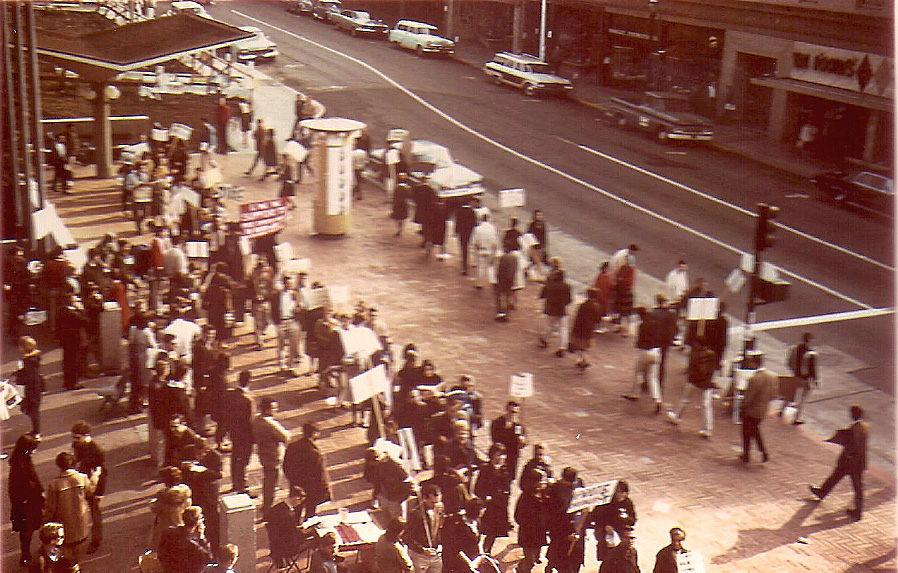
When police occupied the UC Berkeley Campus in early December of 1964 and arrested the protestors in Sproul Hall, the University went on strike. I joined a picket line on the edge of Telegraph Avenue next to Sproul Plaza.

My bed was indeed much softer that the marble floors of Sproul Hall.

After a quick breakfast I hurried back to campus to rejoin the sit-in. I was too late.

Armed men in uniforms formed a cordon around the Administration Building where students were being dragged down the stairs and loaded into police vans. Windows had been taped over so neither protestors or media could not see what was transpiring inside.

We had an occupied campus.

The great liberal governor of California had acted to “end the anarchy and maintain law and order in California.”

Whereas Jack Kennedy had used troops to protect civil rights in the South, Pat Brown was using them to stifle civil rights in the West. Of course Brown didn’t see it that way; he was taking a courageous stand against anarchy, the anarchy I described in my last blog.

I am sure Laurel and Hardy would have seen something to laugh about. Dragging kids down stairs on their butts while their heads bounced along behind could easily have been a scene in one of the old Keystone Cop films. The Oakland police weren’t nearly as funny as the Keystone Cops, however.

As for Clark Kerr, President of the University, he felt we were getting what we deserved and argued that the FSM leaders and their followers “are now finding in their effort to escape the gentle discipline of the University, they have thrown themselves into the arms of the less understanding discipline of the community at large.”

The campus came to a grinding halt and a great deal of fence-sitting ended. Whole departments shut down in strike. Sproul Hall plaza filled with several thousand students in protest of the police presence. When the police made a flying wedge to grab a speaker system students were using, we were electrified and protected the system with our bodies.

It was the closest I have ever come to being in a riot; thousands of thinking, caring students teetered on the edge of becoming an infuriated, unthinking mob. Violence and bloodshed, egged on by police action, would have been the result. Kerr, Brown, Knowland and company would have had the anarchy they were claiming, after the fact.

A few days later we were to come close again.

Kerr, in a series of around the clock meetings with a select committee of Department Chairs, had arrived at a compromise he felt would provide for the extended freedom being demanded on campus while also diffusing the outside pressure to crack open student heads.

Sit-in participants arrested in the Sproul Hall would be left to the tender mercies of the outside legal system and not disciplined by the University. Rights to free speech and organization on campus would be restored as long as civil disobedience was not advocated.

Kerr and Robert Scalapino, Chair of the Political Science Department, presented the compromise to a hastily called all-campus meeting of 15,000 students and faculty at the Greek Theater. There was to be no discussion and no other speakers.

When Mario Savio approached the podium following the presentation, he was grabbed by police, thrown down, and dragged off the stage. Apparently he had wanted to announce a meeting in Sproul Plaza to discuss Kerr’s proposal. Once again, Berkeley teetered on the edge of a riot. We moved from silent, shocked disbelief to shouting our objections.

Mario, released from the room where he was held captive, urged us to stay calm and leave the area. We did, but Kerr’s compromise had become compromised.

A full meeting of the Academic Senate was to be held the next day and all of us waited in anticipation to hear what stand Berkeley’s faculty would take.  We knew that most faculty members deplored the presence of police on campus and the violent way they had responded to the nonviolent demonstrators. Dragging Mario off the stage had not helped the Administration’s case.

Some departments such as math, philosophy, anthropology and English were clearly on the side of FSM while others including business and engineering were in opposition.

My own department of political science was clearly divided. Some professors believed that nonviolent civil disobedience threatened the stability of government. Others recognized how critical it was for helping the powerless gain power. To them, having large blocks of disenfranchised, alienated people in America seemed to be a greater threat to democracy than civil disobedience.

The Senate met on December 8 in Wheeler Hall, ironically in the same auditorium where Peter Odegard had lectured on the meaning of democracy to my Poly Sci 1 class during my first day at Berkeley. Some 5000 of us gathered outside to wait for the results and listen to the proceedings over a loud-speaker.

To the students who had fought so hard and risked so much, and to those of us who had joined their cause, the results were close to euphoric. On a vote of 824-115 the faculty voted that all disciplinary actions prior to December 8 should be dropped, that students should have the right to organize on campus for off-campus political activity, and that the University should not regulate the content of speech or advocacy.

Two weeks later, the Regents confirmed our hard-won freedom. We had won the battle but not necessarily the war.

Next Blog: Looking back at the long-term results of the Free Speech Movement

Occupy Sproul Hall… The 1964 Free Speech Movement at Berkeley


The release of the hostage Police Car did not bring peace to the UC Berkeley Campus. Each time a solution seemed imminent, the Administration would renege or the FSM would increase its demands.

In addition to the right to organize on campus, the disciplining leaders of the Free Speech Movement became a central issue.

Demonstrations took place almost daily and were blasted in the press. I learned a great deal about media sensationalism and biased reporting.

One day I would sit in on a democratic and spirited discussion of the pros and cons of a specific action and the next day I would read in the Oakland Tribune or San Francisco Examiner that I had participated in a major insurrection of left leaning radicals who were challenging the very basis of law and order. (It was documented later that the FBI was paying a reporter to write the Examiner stories.)

Older adults in suits taking photos looked suspiciously like plain-clothes policemen or FBI agents. It was easy to become paranoid.

If we signed a petition, demonstrated, made a speech or just stood by listening, would our pictures and names end up in some mysterious Washington file that proclaimed our disloyalty to the nation? These weren’t idle thoughts. A few years earlier people’s careers had been ended and live ruined because someone had implied they were soft on communism.

J. Edgar Hoover was known for tracking Civil Rights’ leaders and maintaining extensive files on every aspect of their lives. While we weren’t up against the KGB, caution was advisable. Hoover considered Berkeley a hotbed of Communism.

We looked warily at those who didn’t look like us. One day a small dog was making his way around the edge of the daily demonstration, sniffing people.

“See that Chihuahua,” a friend whispered in my ear. I nodded yes. “It’s a police dog in disguise. Any moment it is going to unzip its front and a German Shepherd will pop out.”

The wolf in sheep’s clothing was among us. It was a light moment to counter a serious time. And we were very serious. I sometimes wondered when the celebrated fun of being a college student would kick in.

One day I was faced with a test more serious than any I had ever faced in the classroom. On December 2, 1964, FSM leaders called for a massive sit in at Sproul Hall, Berkeley’s administration building. Once again communication had broken down and the Administration was back peddling, caught between students and faculty on one side and increasing pressure from the outside on the other.

I thought about the implications of the sit-it and decided to join. I needed to act. For three months I had listened to pros and cons and watched the press blatantly misrepresent what was happening on campus. I was angry, knowing that the public had little option but to believe that a small group of radicals was preaching anarchy.

It was not wrong to utilize an edge of campus for discussing the issues of the day, or for organizations to raise funds for supporting various causes, or even to recruit students for participating in efforts to change the community.

It didn’t disrupt my education. I was free to stop and listen, to join in, or pass on. What it did do was irritate powerful, established members of the community. And for that reason, our freedoms had been curtailed.

Maybe if enough students joined together, the Administration would listen and the press would dig deeper. I told my fiancé I was going inside and then joined the thousand or so students who had made similar decisions.

It was early in the afternoon and we were in high spirits. I believed it would be hard for the Administration to claim 1000 students were a small group of rabble-rousers bent on destroying the system. And I was right. It claimed we were a large group of rabble-rousers bent on destroying the system.

Inside I was treated to a unique experience. The sit-in was well organized. Mario Savio and other FSM leaders gave us directions on what to do if the police arrived. There were clear instructions that we were not to block doorways. The normal business of the University was not to be impeded and we were not to be destructive in any way.

Floors were organized for different purposes. The basement was set aside as the Free University where graduate students were teaching a variety of classes. These included normal topics such as physics and biology and more exotic subjects such as the nature of God. One floor was set aside as a study hall and was kept quiet. Another featured entertainment – including old Laurel and Hardy films, which seemed particularly appropriate.

After administrators left, a desk in the dean’s office became a podium for speech making. I felt compelled to add my dimes worth. Each speaker took off his or her shoes so the top of the desk would not be damaged.

The real treat though was an impromptu concert by Joan Baez. I joined a small group sitting around her in the hallway and sang protest songs. The hit of the night was “We Shall Overcome.” It provided us with a sense of identification with struggles taking place in the South. I felt like I belonged and was part of something much larger than myself.

Mainly I walked around and listened, taking extensive notes on what I saw and felt. Later I would sit in the Café Med on Telegraph Avenue and write them up. They would become the basis of talks I would give back home over the Christmas break. I also turned them over to Father Baskin, an Episcopal minister who wanted to use them for a sermon at his church in Placerville.

Along about midnight the un-radical part of my nature took over. I started thinking about my comfortable bed back in the apartment. The marble floors of Sproul Hall did not suggest a good night’s sleep and it appeared the police weren’t coming, at least in the immediate future. Yawning, I left the building and headed home.

I would come back in the morning to chaos and an occupied campus.

Next Blog: Berkeley on Strike. (See below for the story about Jack Weinberg and the police car.)

In Honor of Martin Luther King

It is easy to forget what America was like before the Civil Rights Movement changed how African-Americans are treated in the US. I’ve touched on this subject in my articles about UC Berkeley and the Free Speech Movement. Prejudice was not a problem relegated to the South.

Today, in honor of Martin Luther King, I would like to visit the South of 1968, however. I was serving as a recruiter for the Peace Corps at that time, working through out the Southern United States. It was the year Martin Luther King was shot.

The issue of skin color had faded away when I worked as a Peace Corps Volunteer in Africa from 1965-67. My travels through the South as a recruiter brought me face to face again with the reality and tragedy of prejudice.

Supposedly, I was recruiting in the ‘New South,’ a South that had made it beyond the ugliest parts of discrimination. But one didn’t have to dig deep to find old scars or even open wounds.

A few years earlier, George Wallace was announcing his schools would not be integrated, Lester Maddox was waving his pick ax handle, students from Berkeley were participating in the Freedom Rides and young people were being murdered in Philadelphia, Mississippi for registering black voters.

One of our black recruiters had grown up in Alabama and described the experience. I was still mastering ‘Southernese’ so her statement lost a little in the translation but I report it as I heard it.

“When I was growing up,” she had reported, “I always had to step off the sidewalk and into the gutter whenever the Polish came walking along.”

“Wow,” I had replied, trying to comprehend what it would be like to have to debase yourself in such a way and at the same time wondering about the problem with the Polish that I had never heard about before.

“I never knew that there was a problem in the South with the Polish,” I observed.

“Polish,” she had replied in an irritated voice, “P, O, L, I, C, E.” Read my lips.

Properly chastised my mind made the leap. I thought back to Berkeley and remembered my feelings about police on campus. I wondered what it would be like to grow up fearing the very people who were supposed to protect you. How long it would take for those feelings to leave you… if they ever could? How could such experiences do anything other than teach you hatred?

Not long after that my wife, Jo Ann, and I were recruiting at the University of North Texas in Denton along with a black recruiter. The three of us had gone out for breakfast at a local restaurant.

I had noticed that people became quiet when we walked in. Gradually conversations resumed. I really didn’t think much about it. A family with young children was in the booth next to us. Suddenly a little four-year-old head poked up and was staring over the seat at us, all eyes.

“Mama, there is a nigger sitting with those people,” she had announced to her mother and everyone else in the restaurant in a loud, clear voice. From the ‘mouth of an innocent babe’ the prejudice of generations was repeated.

Jo Ann and I were also to learn that prejudice went both directions. One of our assignments was to recruit at Black Campuses. We had accepted readily. Why not?

When we began our recruitment efforts, we quickly realized that we were less than welcome, that there was a barely concealed resentment about our presence. No one yelled at us or threatened us, but the looks and mumbled side comments spoke volumes.

We were guilty of being white. It wasn’t who we were, what we were committed to, or what we had done; it was the color of our skin. It was a powerful lesson on the unthinking, disturbing nature of prejudice. A few weeks later the hatred it spawns would lead to one of America’s greatest tragedies.

It was in the spring of 1968 and we were recruiting at the University of West Virginia in Morgantown. It was our second visit to the campus and we felt like we were returning to see old friends. Students were excited about the Peace Corps and eager to sign up.  We had set up our booth and were well into persuading students to leave the country when the news came.

Martin Luther King had been shot and killed.

For the second time in our relatively short lives (John Kennedy’s assassination was the first), we were struck by instant grief and anguish for someone we had never known, a man who had stood as a symbol of hope that the hatred and bigotry in America could be overcome, and that it could be done without violence.

The preacher of non-violence, the Christian black man with a golden voice and stirring words had been shot down in cold blood. Another hero was dead, destroyed because he believed that he could make a difference, shot down because he had dared to dream. And we were left with the question: why?

Today, the fact that a black man can serve as President of the US, speaks to how far we have come as a nation and honors the efforts of Martin Luther King.

Still, as King would remind us if he were alive today, the struggle against prejudice is not over, and may never be. Hate crimes are a daily occurrence in our world; people continue to discriminate against others because of their religion, ethnicity, sex, economic status and color of skin.

The best way to honor Martin Luther King, and the thousands of others who have sacrificed to make this a fair and just world, is to continue the struggle.

Holding a Police Car Hostage: UC Berkeley’s 1965 Free Speech Movement

Jack Weinberg, creator of the statement "Never trust anyone over 30," was arrested for raising funds to support Civil Rights efforts on the UC Berkeley Campus in the fall of 1965. Students surrounded the police car and held it hostage.

In the fall of 1965, the UC Berkeley Administration declared that the Bancroft-Telegraph Free Speech area was closed and that there would be no more organization of off-campus Civil Rights demonstrations at Berkeley. Student organizers of the various community efforts reacted immediately.

These were not young adults whose biggest challenge had been to organize pre-football game rallies. Some, like Mario Savio, had walked the streets of the South registering black voters and risking their lives to do so.

In the summer of 1964 three of their colleagues had been shot dead and buried under an earthen dam near Philadelphia, Mississippi. Many had cut their political eye teeth four years earlier in the anti-HUAC demonstrations in San Francisco and had participated in numerous protests against racial discrimination throughout the Bay Area since. (HUAC was the House Un-American Activities Committee, a hold over from the McCarthy era.)

The student organizers understood the value of demonstrations, media coverage and confrontation and had become masters at community organization. They were focused in their vision to the degree they were willing to face police and be arrested for their beliefs.

The Administration wasn’t nearly as focused. Liberal in nature and genuinely caring for its students, it utilized a 50’s mentality to address a 60’s reality. Its bungling attempts to control off campus political activity combined with its inability to recognize the legitimacy and depth of student feelings would unite factions as diverse as Young Republicans for Goldwater with the Young People’s Socialist League.

It eventually led to the massive protests that painted Berkeley as the nation’s center of student activism and the New Left.

Over the next three months I would spend a great deal of time listening, observing and participating in what would become known world-wide as the Free Speech Movement (FSM). As a political science major, I was to learn much more in the streets than I did in the classroom.

What evolved was a classic no win, up-against-the-wall confrontation. The Administration would move from “all of your freedoms are removed,” to “you can have some freedom,” to “let’s see how you like cops bashing in your heads.” The Free Speech leaders would be radicalized to the point where no compromise except total victory was acceptable.

Student government and faculty solutions urging moderation and cooperation would be lost in the shuffle. Ultimately, Governor Pat Brown would send in the National Guard troops and Berkeley would take on the atmosphere of a police state.

I found myself being radicalized in the process as well although I never reached the point of moving beyond issue to ideology. It was no more in my nature to be left-wing than it had been to be right-wing. However, I would move across the dividing line into civil disobedience.

Within hours of the time that Dean Katherine Towle sent out her ultimatum to campus organizations, the brother and sister team of Art and Jackie Goldberg had pulled together activist organizations ranging in orientation from the radical to conservative and a nascent FSM was born.

Shortly thereafter the mimeographs were humming and students were buried in an avalanche of leaflets as they walked on to campus. I read mine is disbelief. The clash I had predicted at the student leader meeting a year earlier had arrived. There was no joy in being right.

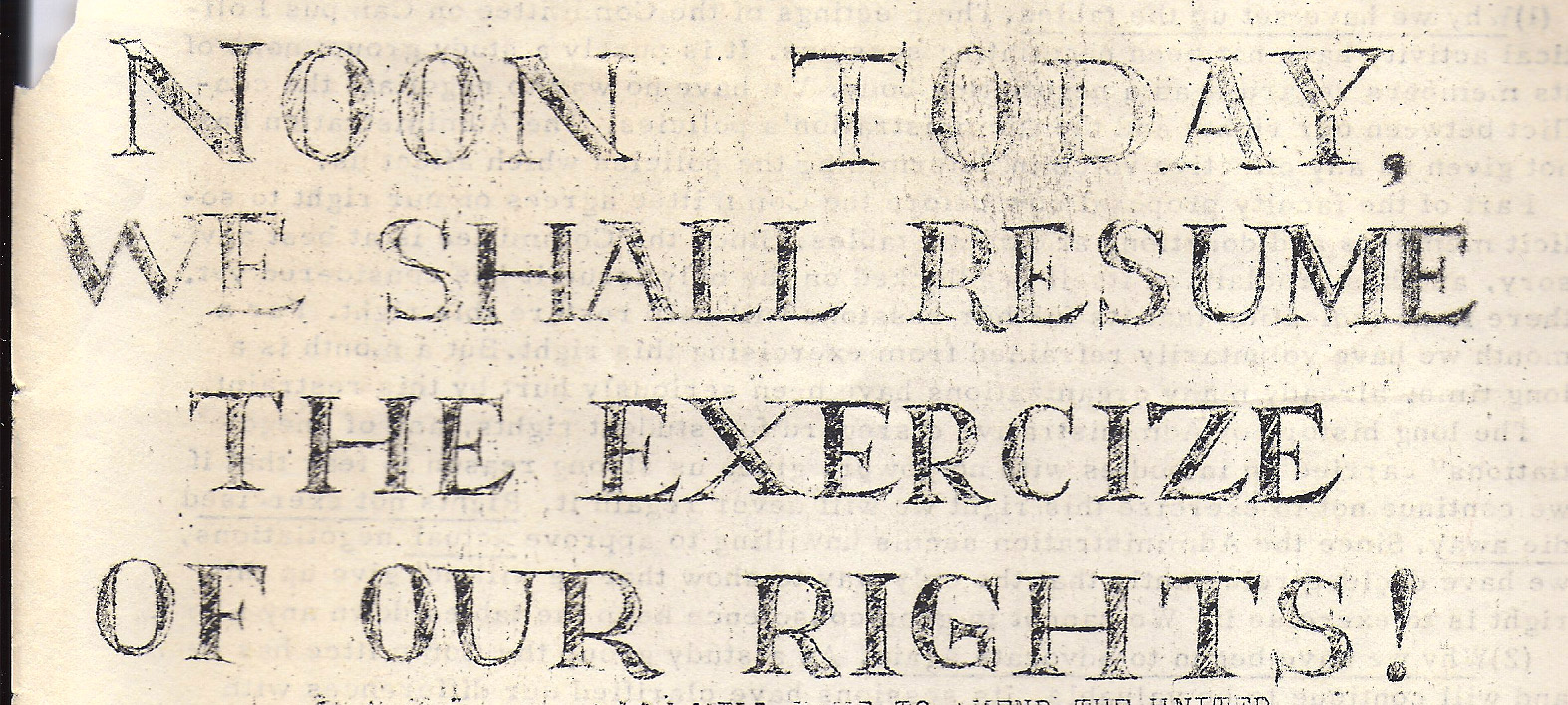
In an era before social networks and cell phones, FSM organizers relied on mimeographed fliers and word of mouth to build instant support. The above flier is one I saved in my files on the Free Speech Movement.

As soon as it became apparent that the Administration had no intention of backing off from its new rules, the FSM leadership determined to challenge the University. Organizations were encouraged to set up card tables in the Sather Gate area to solicit support for off campus causes.

I had stopped by a table to pick up some literature when a pair of Deans approached and started writing down names of the folks manning the tables. Our immediate reaction was to form a line so we could have our names taken as well. The Deans refused to accommodate us. The Administration’s objective was to pick off and separate the leadership of the FSM from the general student body.

A few days later I came out of class to find a police car parked in Sproul Plaza surrounded by students. The police, with encouragement from the Administration, had arrested Jack Weinberg, a non-student organizer for CORE (Congress of Racial Equality) who had been soliciting support for his organization.

Someone had found a bullhorn and people were making speeches from the top of the police car while Jack sat inside. I situated myself on the edge of the fountain next to the Student Union and idly scratched the head of a German Short Haired Pointer named Ludwig while I listened. (Ludwig visited campus daily and played in the fountain. Later, in Berkeley-like fashion, the fountain would be named for him.)

A scanned photo of Ludwig from Berkeley's student newspaper.

Eventually I stood up and joined those on the edge of the crowd thereby becoming a part of the blockade. It was my first ever participation in civil disobedience. It was a small step. There would be plenty of time for more critical thinking if the police showed up in force.

Being only semi-radical, I did duty between classes and took breaks for eating and sleep. Eventually, after a couple of days, the FSM negotiated a deal with the Administration. Jack was booked on campus and turned loose, as was the police car. A collection was taken up to pay for minor damages the police car had sustained in the line of duty while serving as a podium.

Next Blog: The Police and National Guard occupy Berkeley’s campus


On the Edge of Radicalism… Berkeley’s 1965 Free Speech Movement

A major confrontation erupted on the UC Berkeley Campus in 1965 known worldwide as the Free Speech Movement. At stake was the right of students to be actively involved in the Civil Rights movement and other political issues of the time.

While I was playing in Puerto Vallarta, my nephew, Wayne Cox, posted the video of a Campus Cop using pepper spray on students at UC Davis. The students were involved in a nonviolent protest supporting the Occupy Wall Street movement.

It was a strong indictment of the policeman, a bully using his power of position to intimidate and physically strike out at the protestors.

Those who oppose the Occupy Movement rushed to classify the incident as a random act of a disturbed individual. It was bad PR and the video had gone viral. But the use of violence to counter protest movements has a long history in America, dating all the way back to the Revolutionary War and the Boston Massacre.

I was to experience incidents similar to Davis during student protests at UC Berkeley in the mid 60s. I’ve already written a two blogs about the roots of the protest (see below).

I returned to UC in the fall of 1965 excited about my senior year. Two of my former dorm mates, Cliff Marks and Jerry Silverfield, had agreed to share an apartment. Prices were high. Landlords had a captive student population to exploit. We ended up with a small kitchen, bathroom, living room, and one bedroom. Things were so tight in the bedroom that Cliff and I had a bunk bed. I would later wonder why this was superior to dorm life.

Jerry (on the right), Cliff and I in our small apartment.

We christened the apartment by consuming a small barrel of tequila Cliff had brought back from his summer of sharpening Spanish skills in Mexico.

While we were recovering from our well-deserved headaches the next morning, UC’s Administration moved decisively to eliminate off campus political activities from being initiated on campus.

There would be no more organization of Civil Rights demonstrations and no more money collected to support political candidates or causes. Controversial speakers would not be allowed on campus without tight administrative control.

The Bancroft-Telegraph entrance free speech area was out of business, closed down, caput. That incredible babble of voices advocating a multitude of causes would be heard no more.

The Administration’s actions were a testament to the success of the 1960s Civil Rights struggle taking place in the Bay Area. It wasn’t that the activists wanted change; the problem was they were achieving it.

Non-violent civil disobedience is a powerful tool. Base your fight on legitimate moral and political issues; use the sit-in and the picket line to make your point. When the police come, don’t fight back; go limp. If they beat you over the head, you win. Sing songs of peace and justice; put a flower in the barrel of the weapon facing you.

It is incredibly hard to fight against these tactics. People tend to get upset when they see nonviolent protestors being beaten with nightsticks in national and international media. It gives power to the powerless.

Major businesses being targeted for their discriminatory practices in the Bay Area, the Sheraton Hotel, United Airlines and Safeway, blinked. Each would alter their practices.

One business that didn’t back down was the Oakland Tribune, owned by William Knowland, a conservative Republican, former Senator from California and leader of California’s Republican Party.

As the protests in the surrounding community became more successful, the power structure being attacked struck back. Calls were made to the Regents, the President of the University system and the Chancellor at Berkeley. ‘Control your students or else’ was the ominous message.

The Regents, President and Chancellor bowed to the pressure.

Some members of the Regents and Administration undoubtedly agreed with the businesses being challenged and saw the protesters as part of an anarchic left-wing plot. Others may have believed that the students’ effectiveness would bring the powers that be down on the university. Academic freedom could be lost. Some likely felt that the activities were disruptive to the education process and out-of-place on a college campus.

One thing was immediately clear; the Administration woefully underestimated the reaction of the leaders of the various organizations and large segments of the Campus population to its dictum. Possibly the administrators believed they were dealing with a small, unpopular minority, or maybe they just needed to believe: the outside pressure was so great it didn’t matter what the students believed or how they reacted.

Next blog: I become involved in ‘civil disobedience.’

Proud to be a UC Berkeley student, I display my sweatshirt.

Sunny Puerto Vallarta

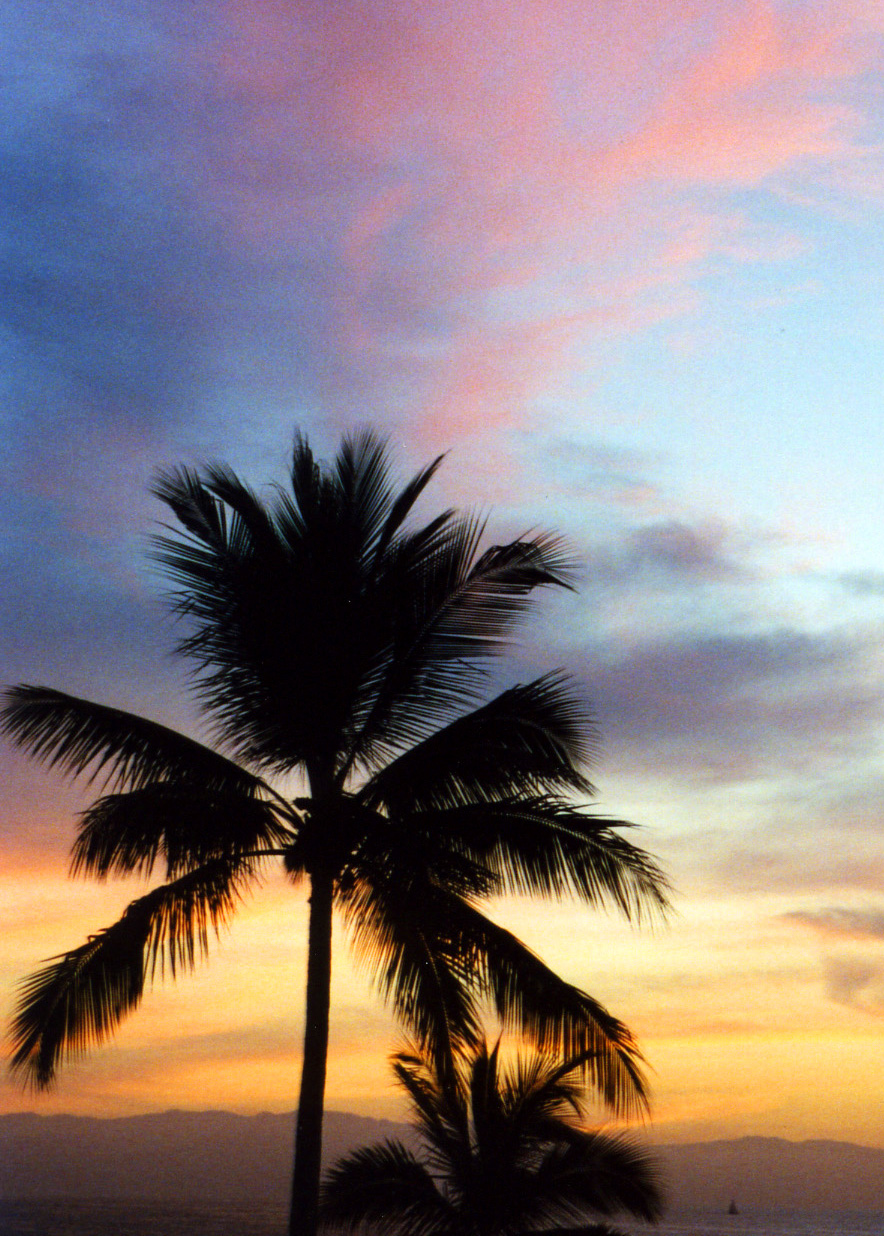
Beautiful sunsets are frequent in Puerto Vallarta. Throw in a palm tree and you have a post card type photo. This shot is looking south across the Bay of Bandaras toward the small village of Yalapa.

OK, I’ve been bad. Six weeks of travel before Christmas brought my blogging to a halt. I resolve to be better during 2012. In fact, other than the often-promised, rarely-achieved resolution of beating my body into shape, it is my only New Year’s resolution.

Puerto Vallarta is up first for 2012. With dire warnings of drug wars from friends and family, we spent two of our six weeks of pre-Christmas travel there. All we saw related to the wars were young soldiers armed with automatic weapons wandering through the hotel property. It was enough.

Our three-year-old grandson Cody loaded his imaginary machine gun and fired off rounds at them. It dismayed his mother and amused us.

Peggy loves Puerto Vallarta. I like it much better since the ubiquitous and obnoxious time-share salesmen have, at least temporarily, disappeared from the streets. If you want a perspective, imagine ten used car salesmen per block, each dedicated to selling you an over priced used car you are expected to share with 50 other families.

The town has been a major attraction for Americans ever since Richard Burton and Elizabeth Tailor filmed Night of the Iguana there in 1963. Taylor’s extramarital affaire with Burton guaranteed massive media coverage and the beginning of the tourist trek southward.

Puerto Vallarta makes its living off tourists. This becomes particularly obvious on days when the massive cruise ships are in town. Still, the city has its charm.

I am particularly fond of the Isla Rio Cuale and the Malecon, a downtown walkway that fronts on the ocean and is filled with sculptures. Sunsets on the Bay of Bandaras are also worthy of mention.

Shopping can be fun; a number of fine crafted items are for sale plus there are the usual Mexican crafts. The latter are found in abundance at the port and the downtown Market. Bargaining is expected. Prices are increased to account for the practice. Tourists feel they have driven a hard bargain and shop owners walk away with a profit.

Taking a river taxi to small village of Yalapa south of Puerto Vallarta provides both diversion and a small adventure. We saw blue whales and dolphins on our way there this year.

Peggy and I visit Puerto Vallarta every other year for one to two weeks. The following photos hopefully capture what we like about the city and its environs.

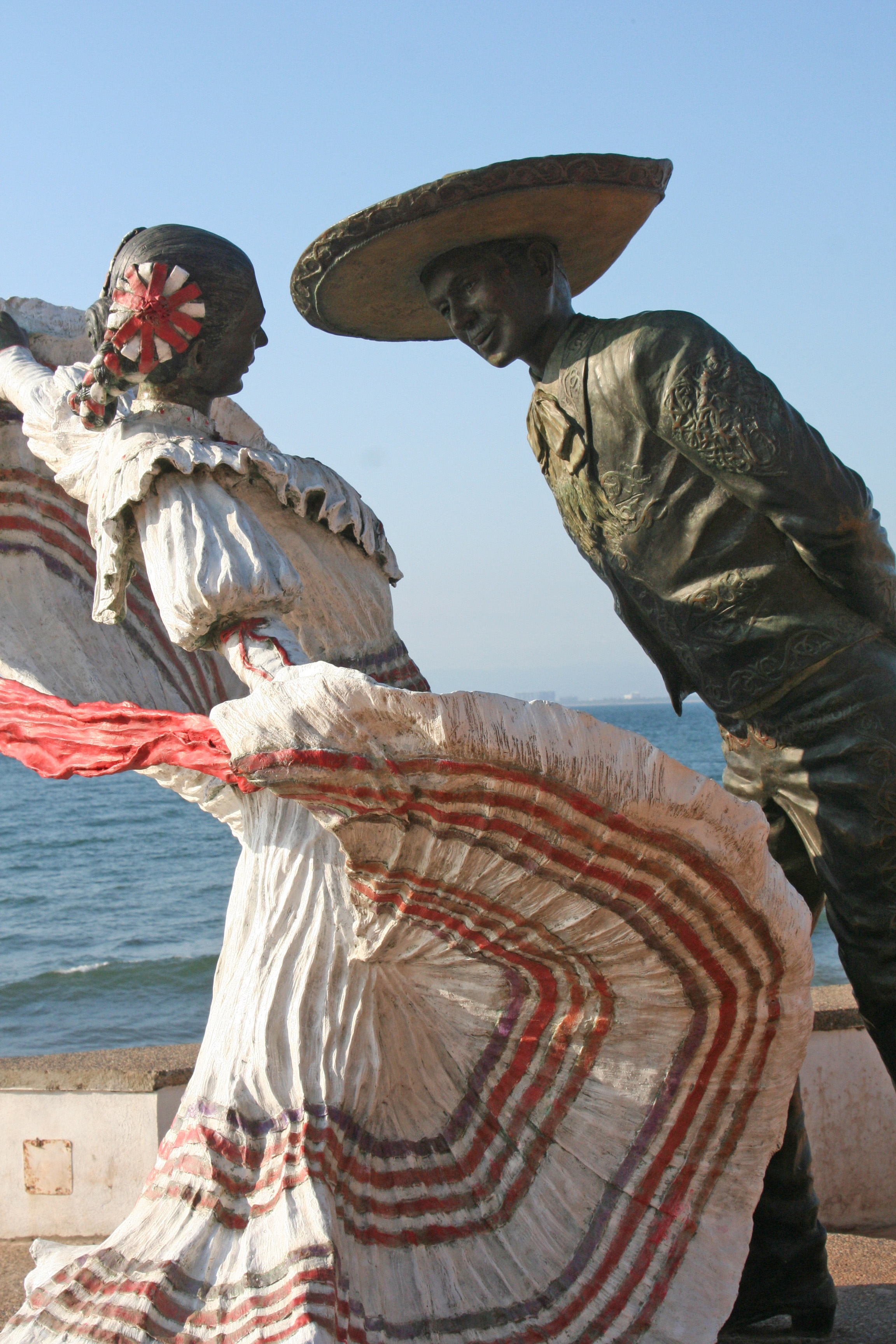
Puerto Vallarta has done an excellent job of placing sculptures along the Malecon, an attractive car-free walk-way that fronts the Bay of Bandaras downtown.

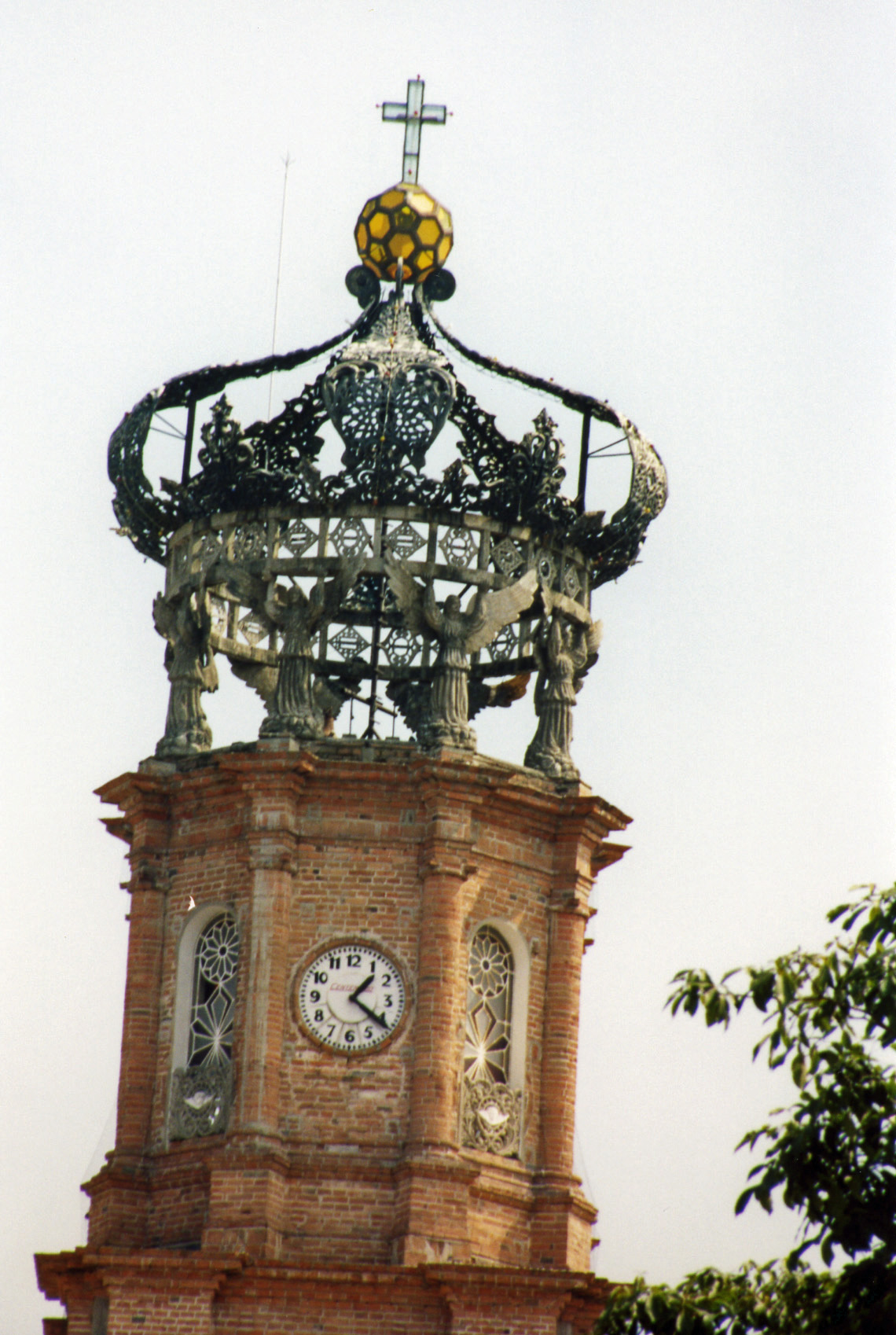
Another attractive downtown Puerto Vallarta site is Our Lady of Guadalupe Church of and its unique tower.

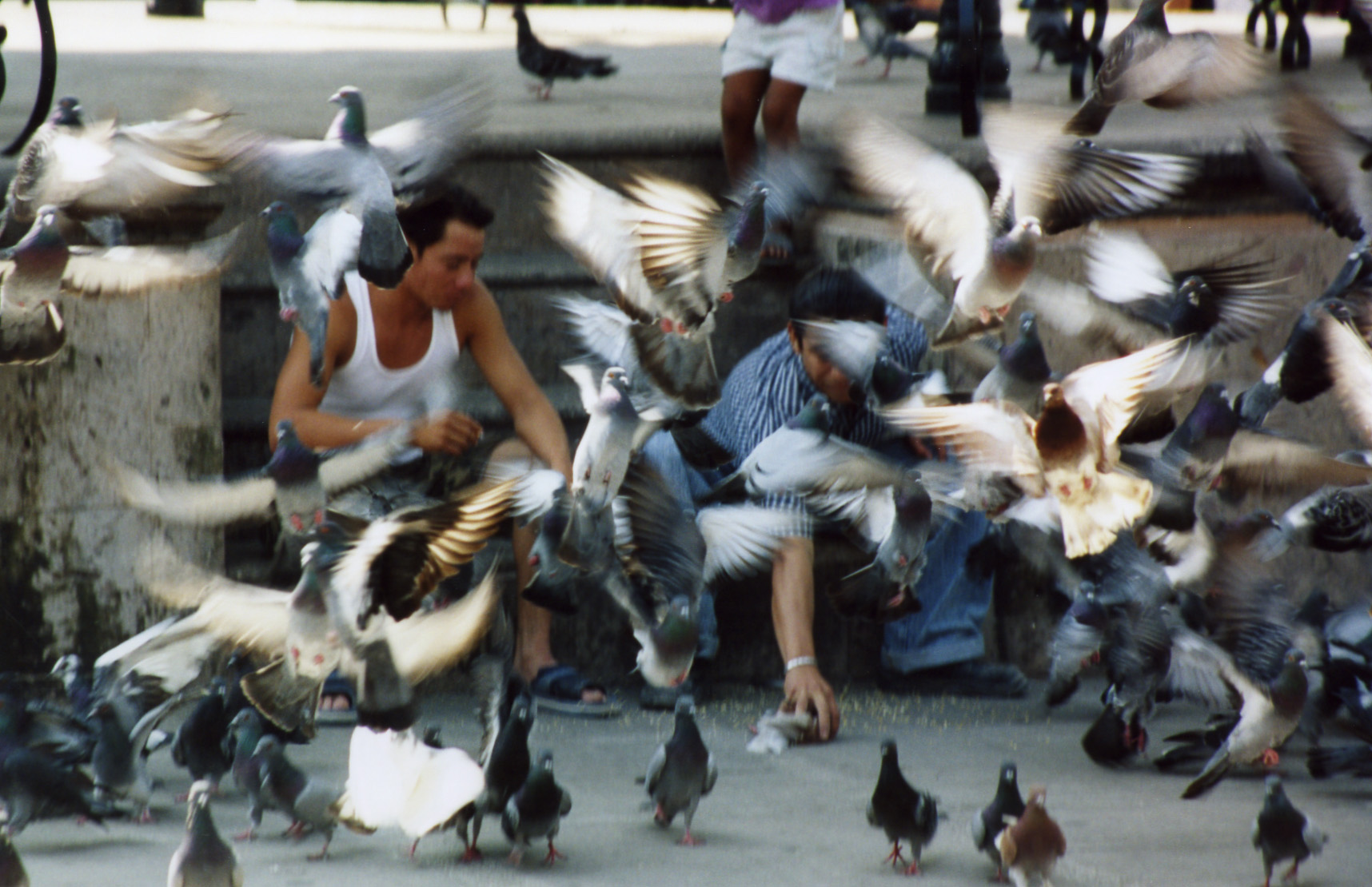
I shot this photo of pigeons in flight at a small town square.

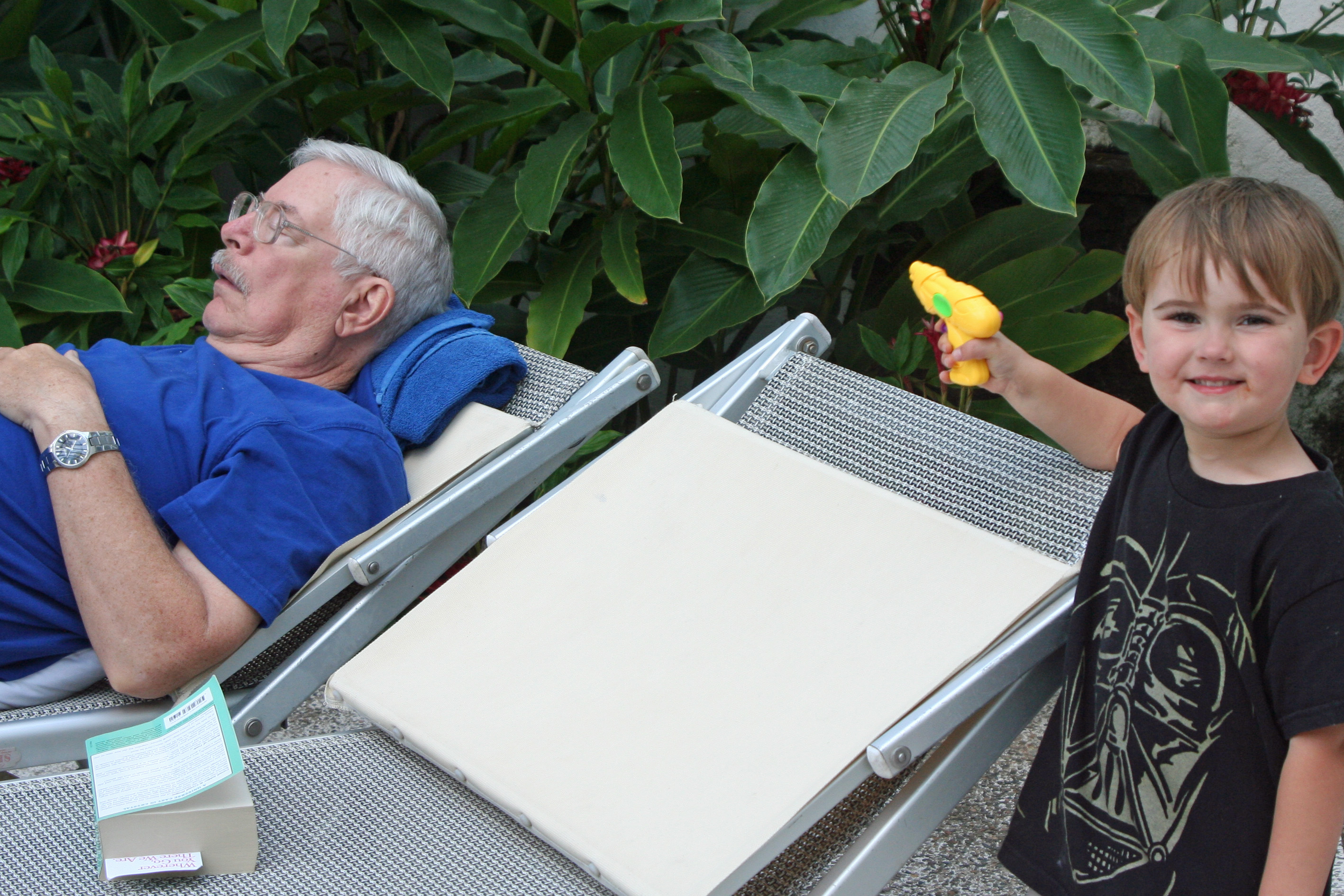
The young Cody who fired his imaginary machine gun at the Mexican soldiers prepares to fire a very real water gun at me as I am catching a nap. Both his mother and grandmother were encouraging this reprehensible behavior.

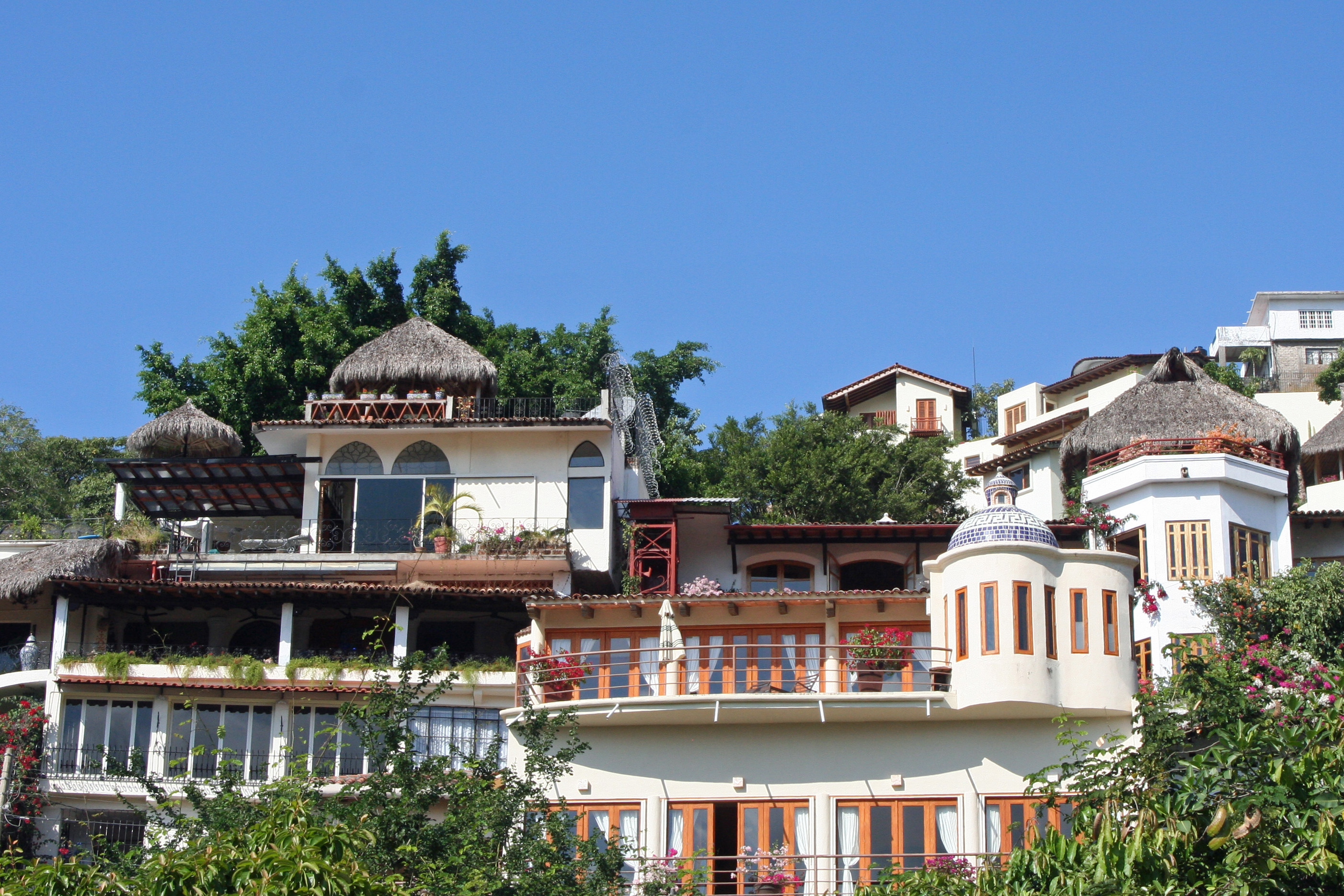
Quaint streets and walkways make a walking tour of Gringo Gulch a must. This is where Elizabeth Taylor and Richard Burton lived when they were filming the Night Of the Iguana and had their notorious affaire.

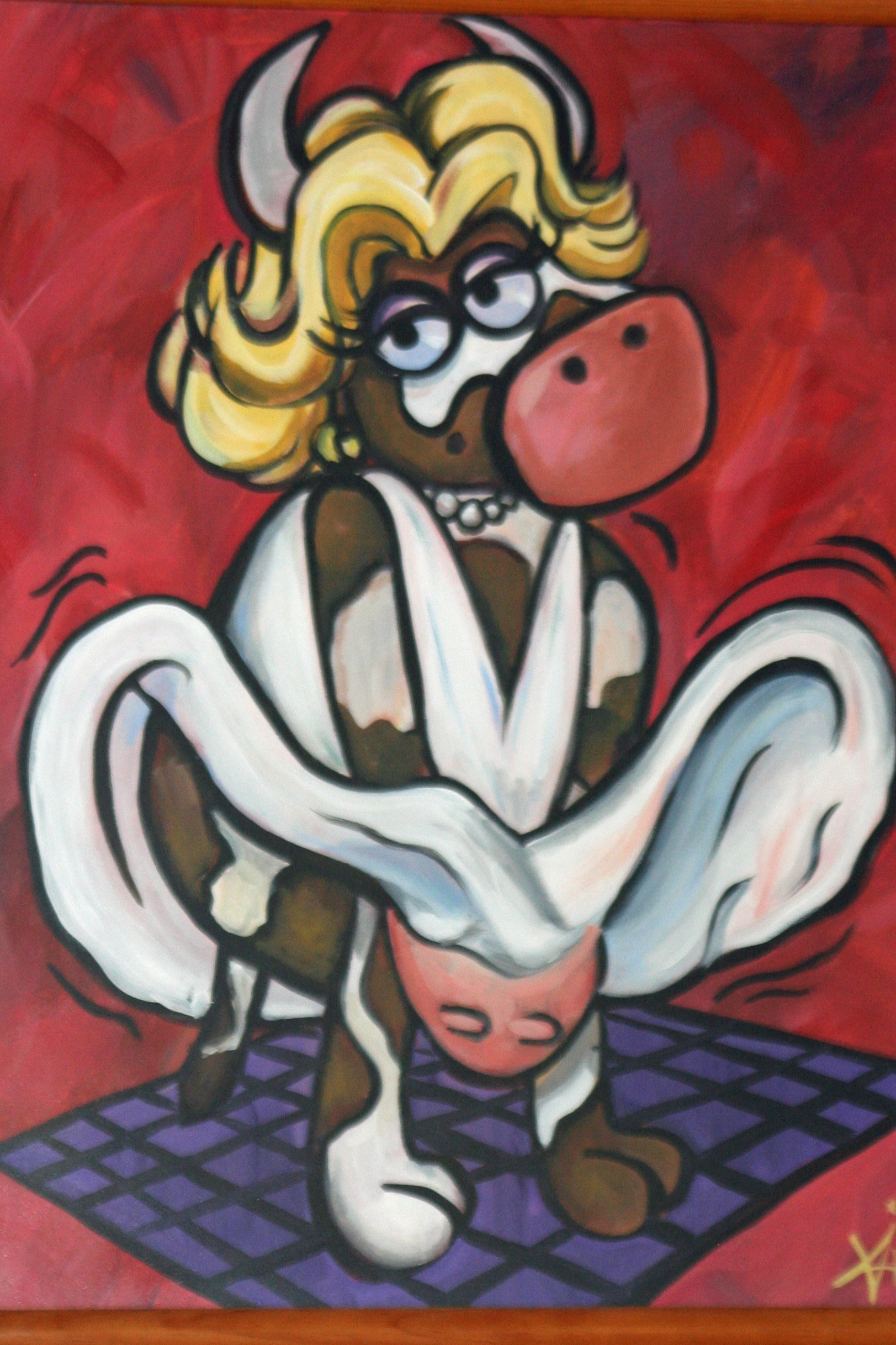
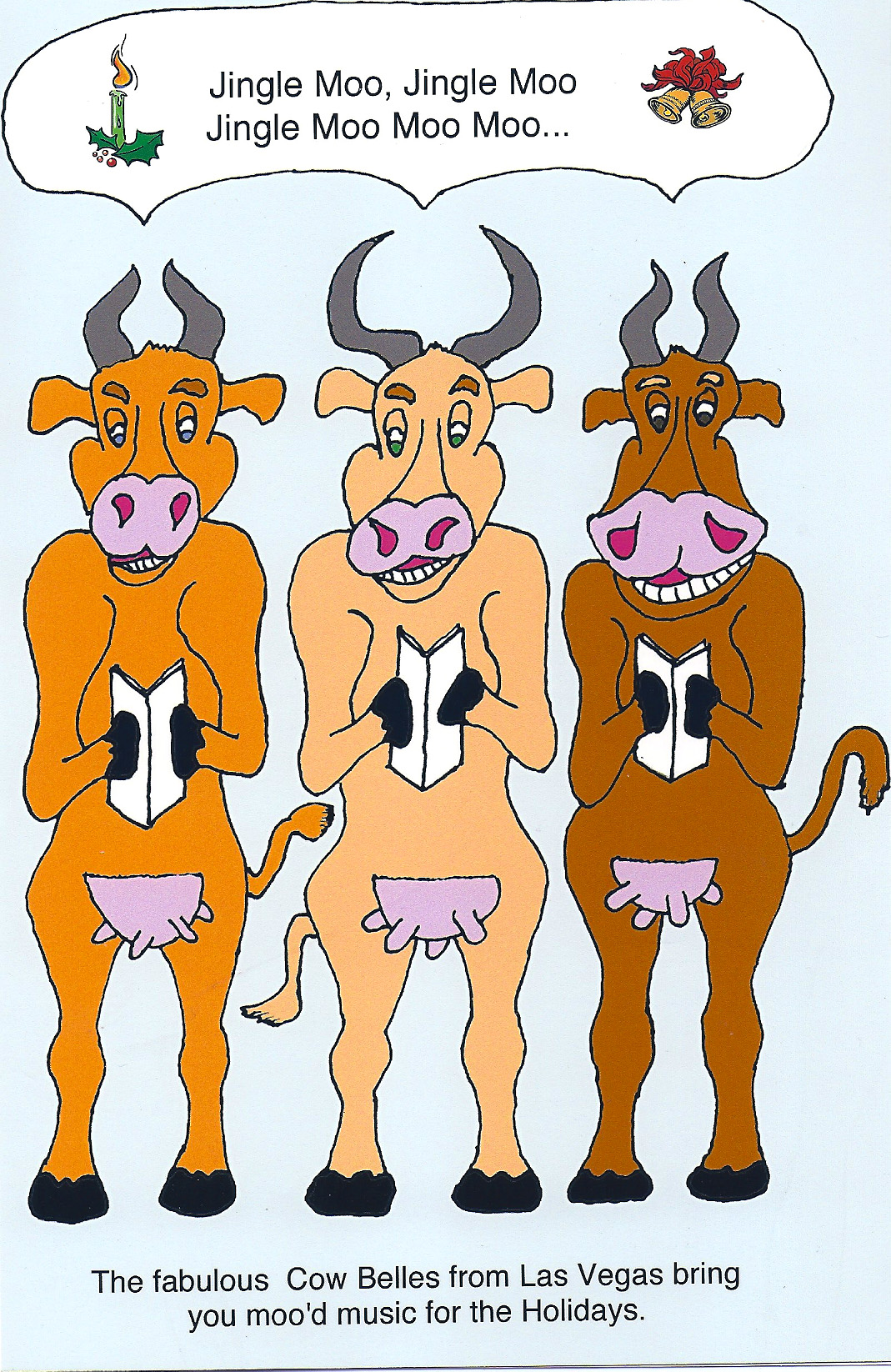
Peggy and I were at a restaurant called Tapas in Gringo Gulch with our friends Tom and Beth Lovering when we found this great parody of the Marilyn Monroe photo. I was particularly taken with it because it resembled one of the holiday cards I design and draw for friends and family each year. It's featured below. I am sure you will spot the resemblance.

What can I say? Happy New Year?

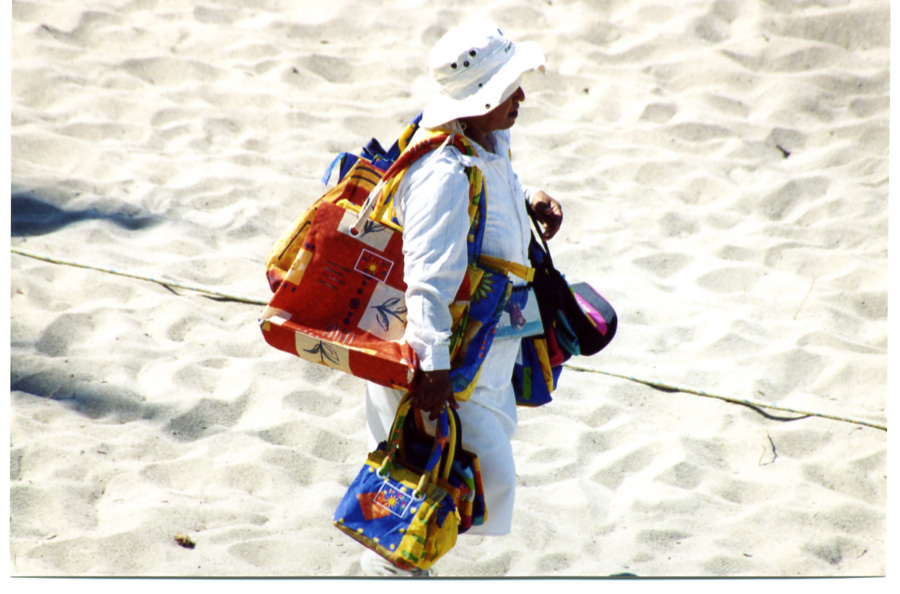
There are lots of great beaches in Puerto Vallarta but be prepared to be visited by a steady stream of vendors. They come with the territory.

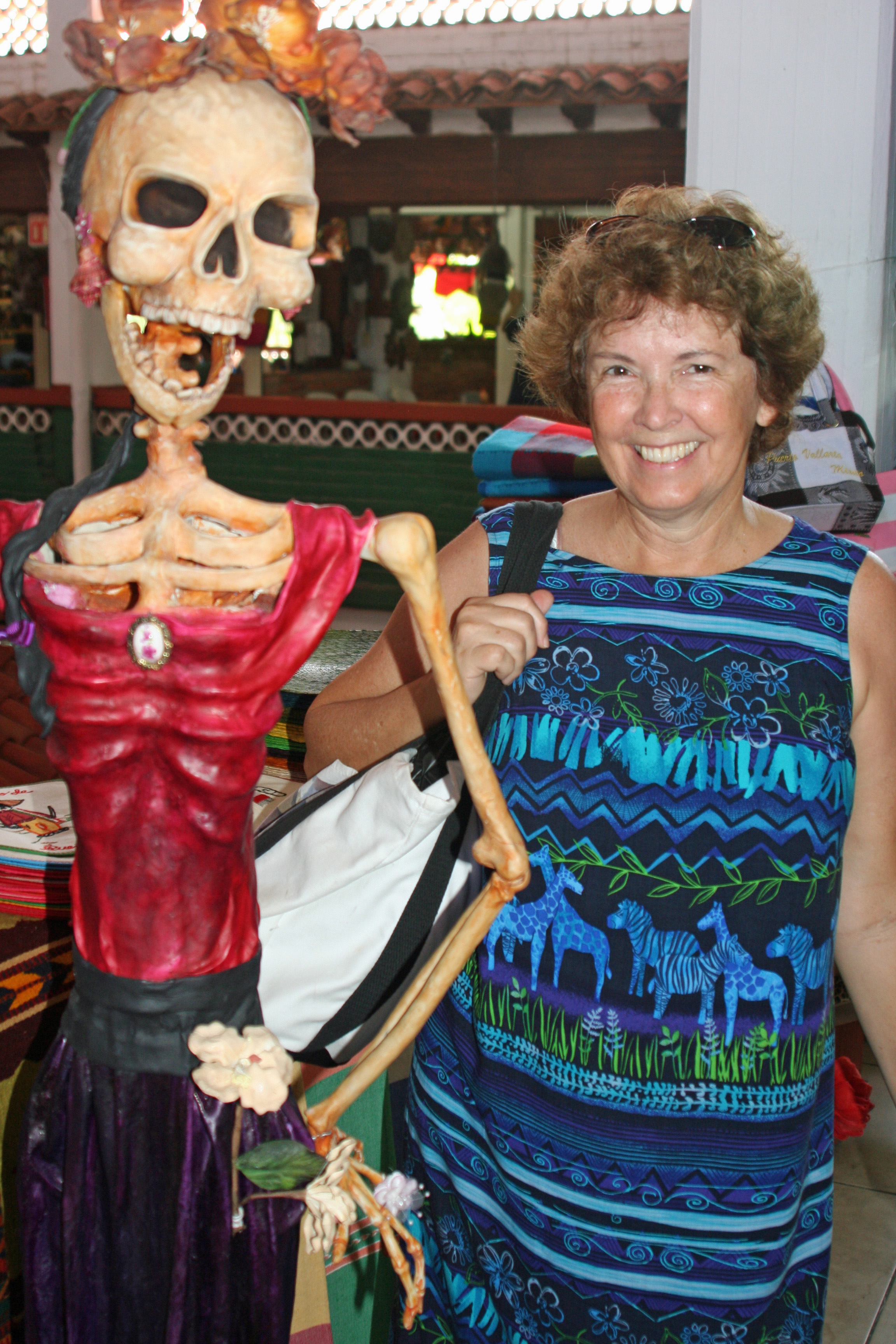
The Public Market next to the Rio Cuale is filled (brimming over) with small shops featuring Mexican Crafts and inexpensive local restaurants. We also found this attractive lady skeleton that Peggy is matching smiles with.

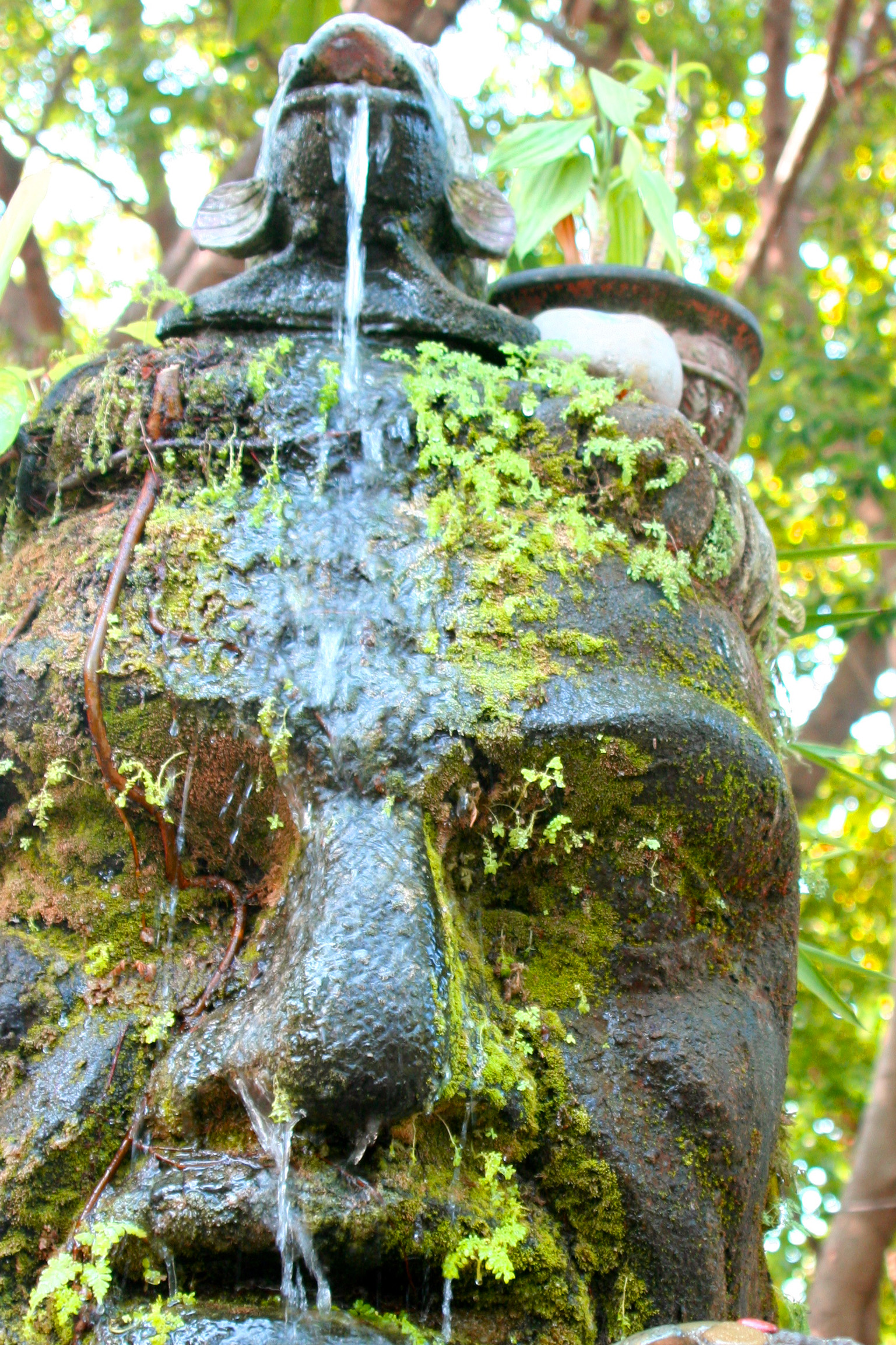
Restaurants, a museum, crafts and arts are featured on the island located in the middle of the Rio Cuale. We also found this intriguing sculpture.

Restaurants, a museum, crafts and arts are featured on the island located in the middle of the Rio Cuale. We also found this intriguing sculpture/fountain.

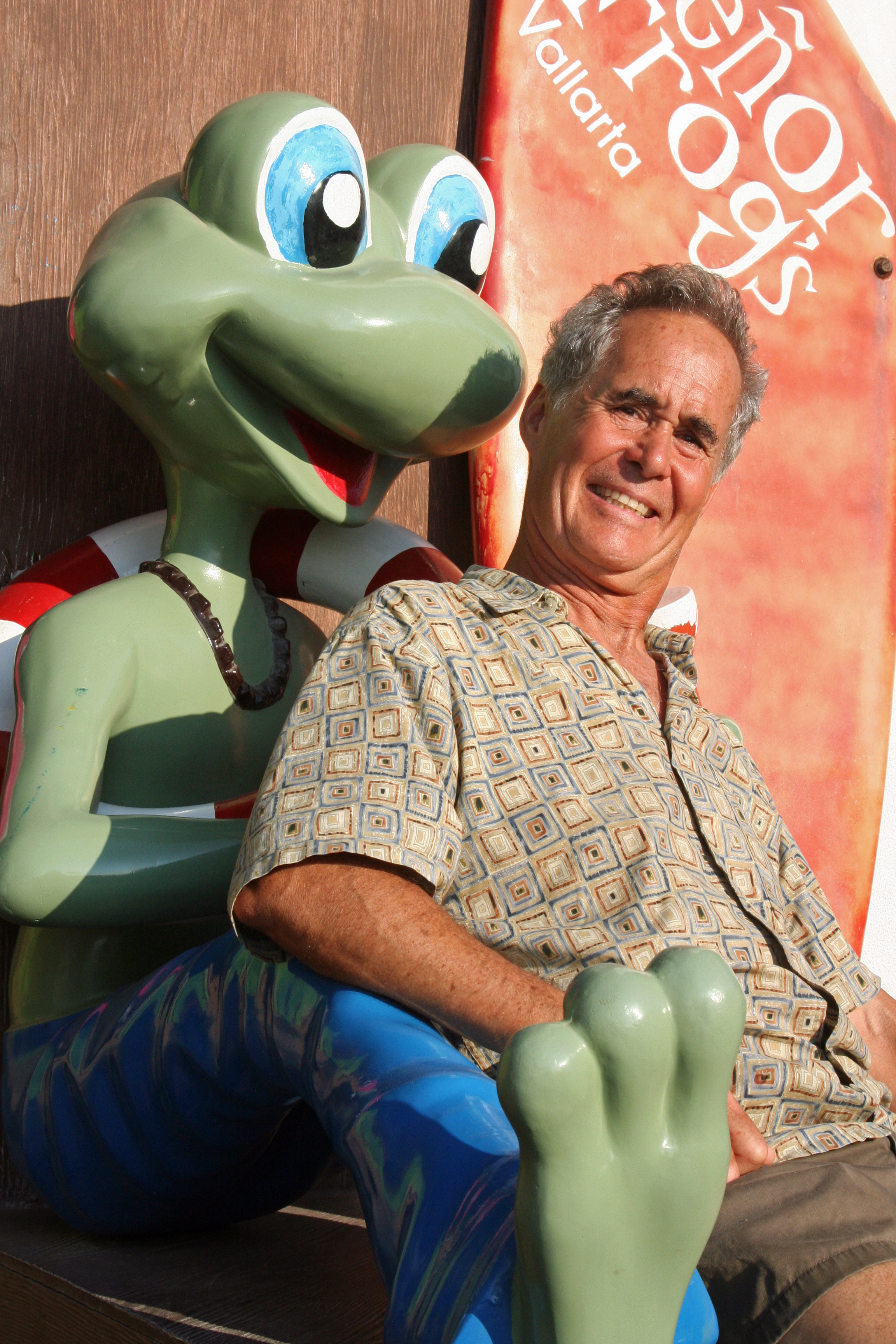
My friend Tom Lovering can't imagine why anyone would go to Sr. Frogs with so many good local restaurants in Puerto Vallarta but I managed to get him to pose with the frog.

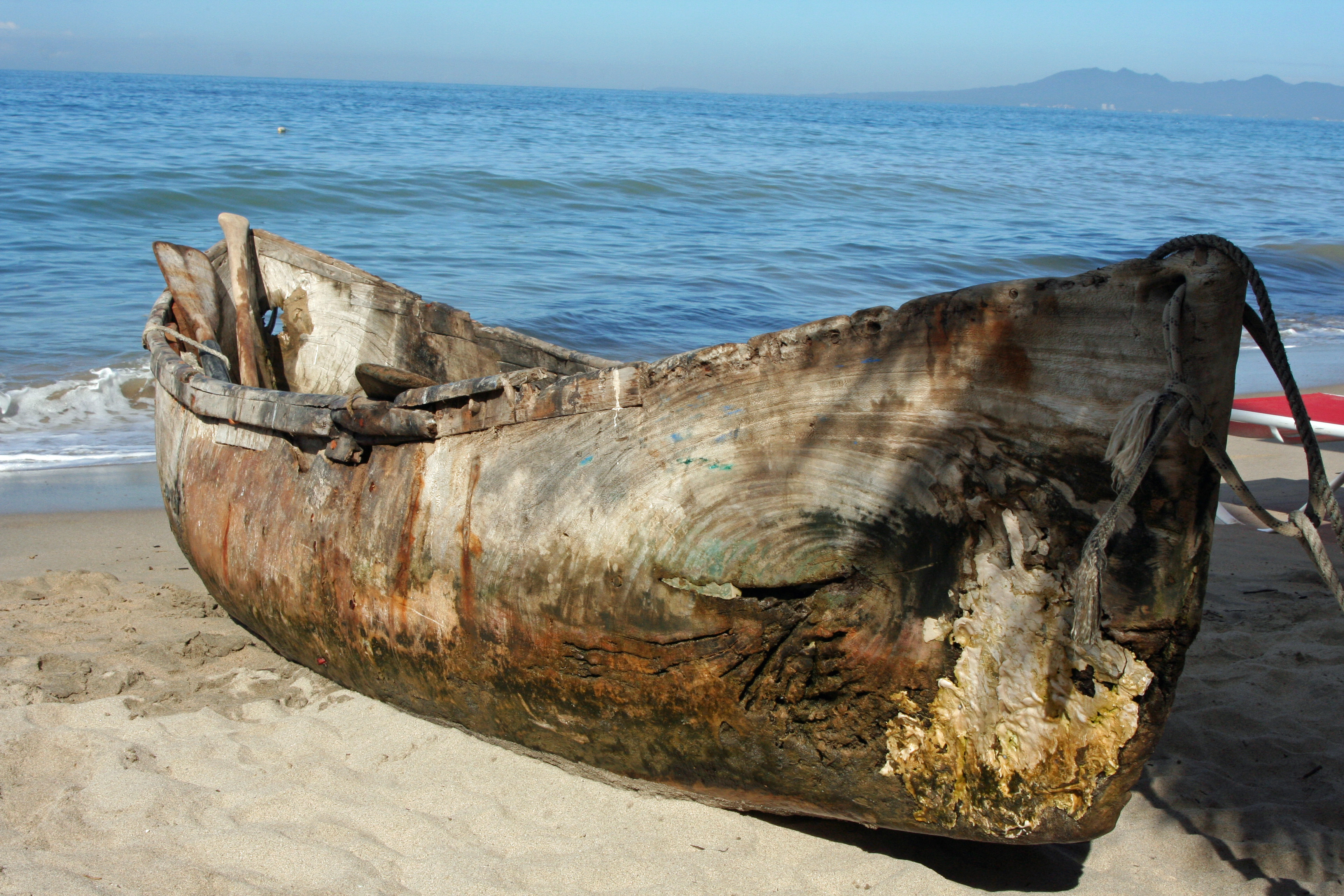
Peggy took this photo of a rather attractive wood canoe on the beach. Note how it has been carved from one log.

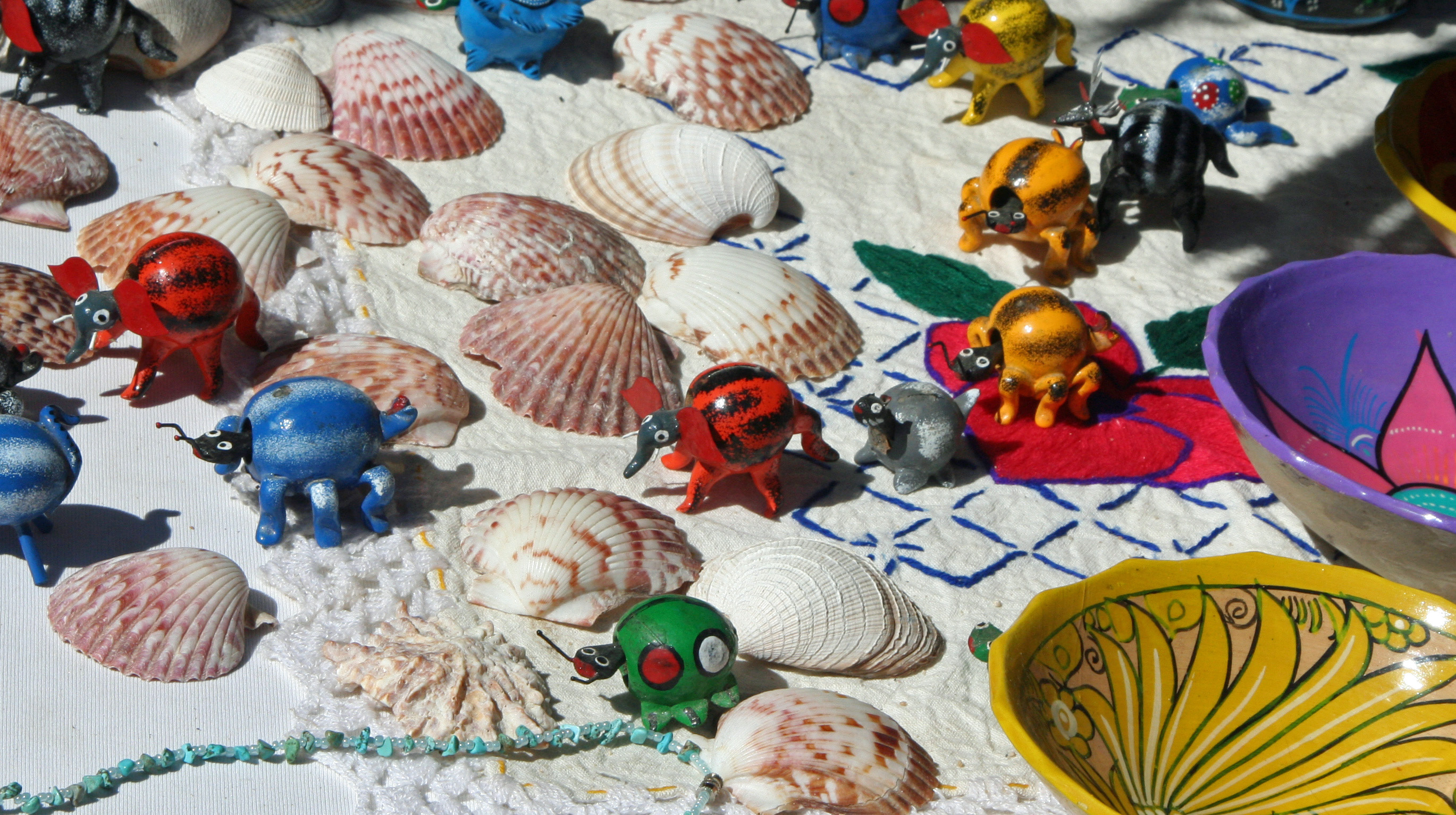
I took this photo of Mexican crafts at the small village of Yalapa which is south of Puerto Vallarta and can only be reached by water. I love the bright colors and can't resist the small boggle-head creatures, in this case, turtles.

The Marvelous Creatures of Piedras Blancas

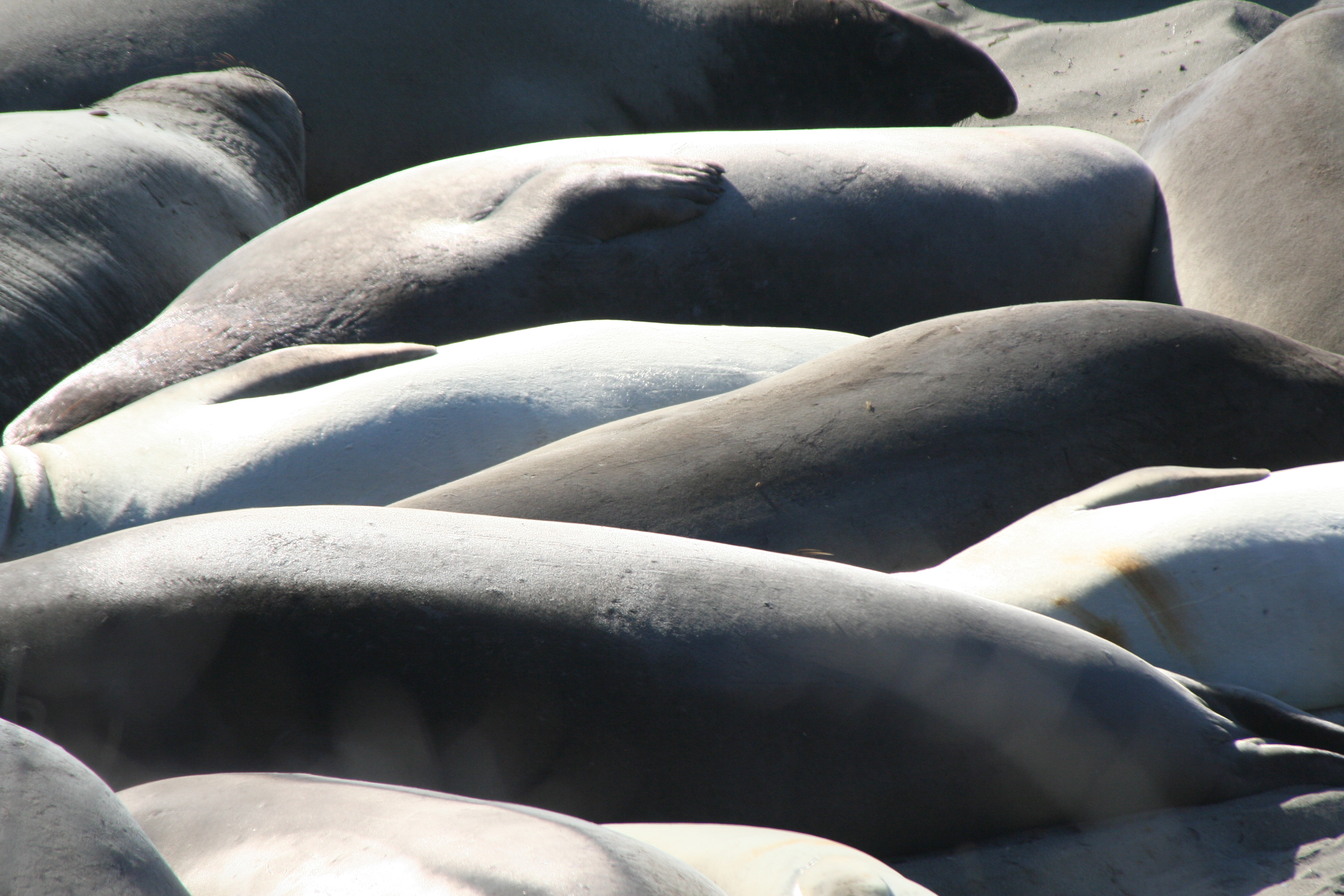
Sleep over? Each year upwards to 60,000 Elephant Seals visit the Beaches of Piedras Blancas in Central California to mate, shed and have pups. "Are they dead?" I heard a young boy ask his mother. Let's put it this way, when your body is made up of one to five thousand pounds of blubber, you don't move around much.

Pop Quiz: What creature can weigh over two tons, have a two-foot long nose, dive up to 5000 feet, spend eight to ten months of the year on the open sea, migrate upwards to twelve thousand miles, leave a track like a two-ton caterpillar, and mate with dozens of winsome females on or around Valentines Day?

If you guessed the adult male Elephant Seal, you guessed right.

These intriguing animals were all but hunted to extinction for their valuable oil in the late 1800s. Today their numbers are estimated at 170,000.

Close to 10 percent consider the beaches of Piedras Blancas on the central coast of California their home, or rookery if wish to use the technical term. A couple of dozen showed up unexpectedly in 1990. Today their population is pushing 17,000.

Peggy and I stopped by for a visit on our way home from San Diego last week. Seeing the seals in their natural habitat is an incredible experience that we highly recommend. You can learn more about these animals and the best time to visit from Friends of the Elephant Seal at www.elephantseal.org.

Cameras are a must. We took over a hundred photos during our visit. I’ve posted some of the more amusing below. I couldn’t help adding appropriate captions.

"I don't care how much you pray for a new fur coat for Christmas, I am not listening." The Elephant Seals don't mean to entertain us but watching their antics is sure to bring a smile.


There is always pleasure in scratching a really bad itch. Check out the two Elephant Seals below. Pure ecstasy.

"Ah, that feels good."


"And this feels even better!"


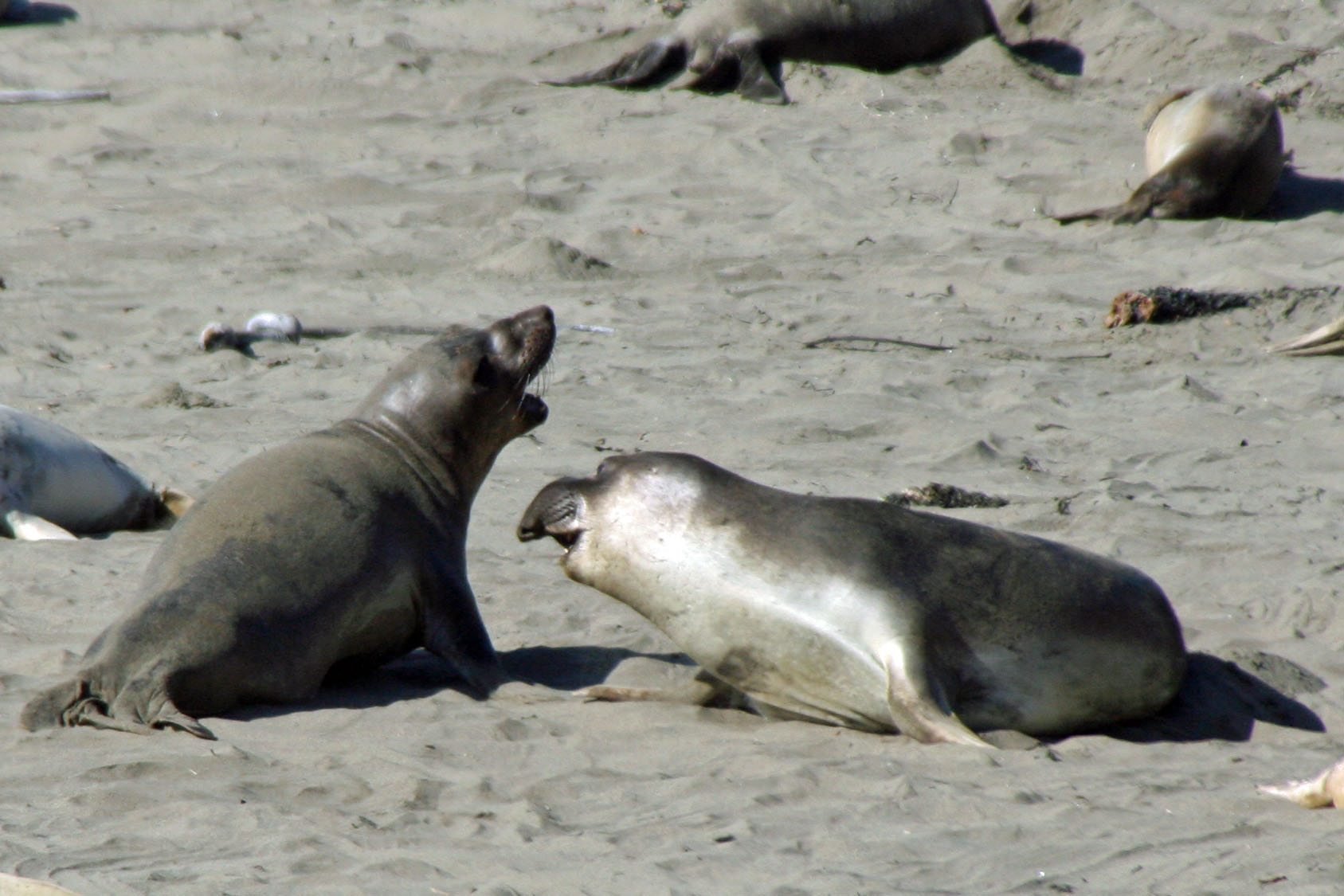
"Go that way." Ever suffer from a feeling of rejection? This certainly seems to be the case here. Although Elephant Seals are social animals that crowd together on the beach, they can also be quite territorial, especially during mating season.


"Mother always said to use sunblock." Using their flippers, Elephant Seals are often seen flipping sand up over their body. Peggy took this rather artistic photo. Note the seal outlined in the back. The purpose for the dirt bath is indeed to provide protection from the sun. Elephant Seals spend 8-10 months a year migrating in the cold waters of the North Pacific traveling as far north as the Aleutian Islands of Alaska. Most of their time is spent under water diving from 20 minutes to an hour and surfacing for only three minutes. No wonder the sun feels hot!


I caught the flipper action in this photo.


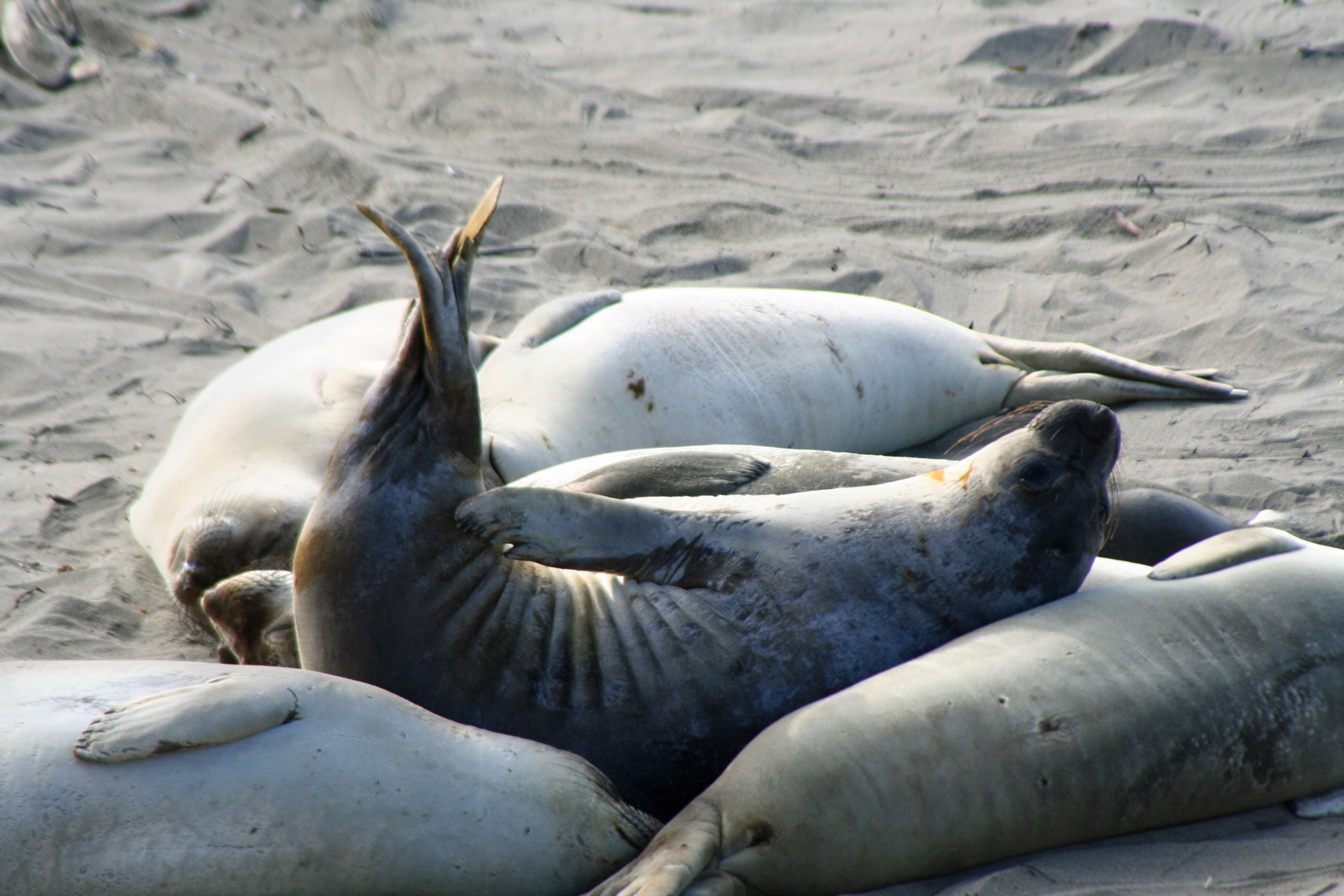
"My Chiropractor suggested this new back stretching exercise."


How could anyone resist this toothy grin?


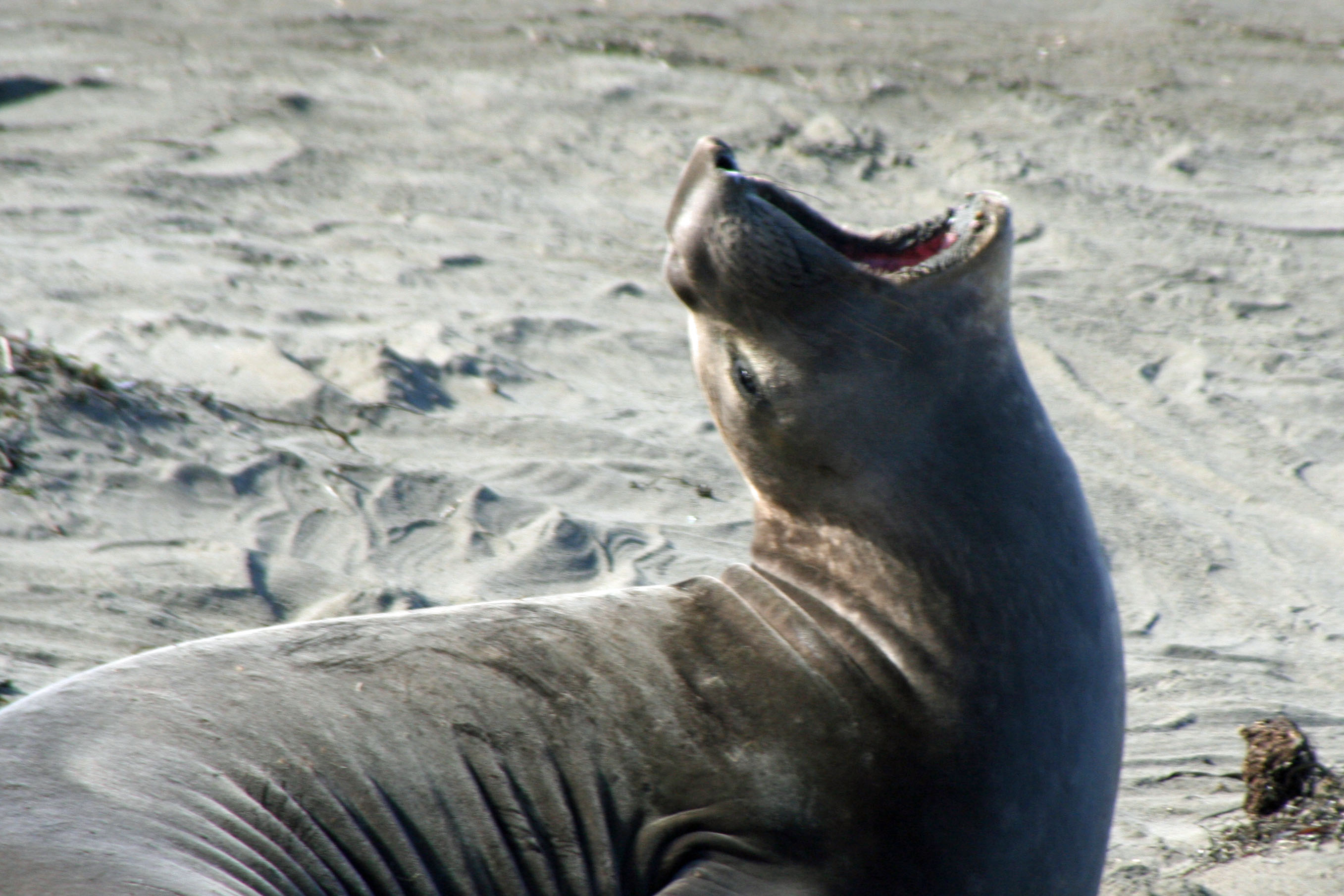
"I am the king!" The size of your nose and the loudness of your roar matters in the Elephant Seal world. Big males become quite feisty during mating season as they gather harems of up to 50 females. As one might imagine, battles between two ton creatures can turn rather nasty. If your nose is big enough, up to two feet long, and your roar loud enough, other males may choose to let you have your way with out a battle, however.


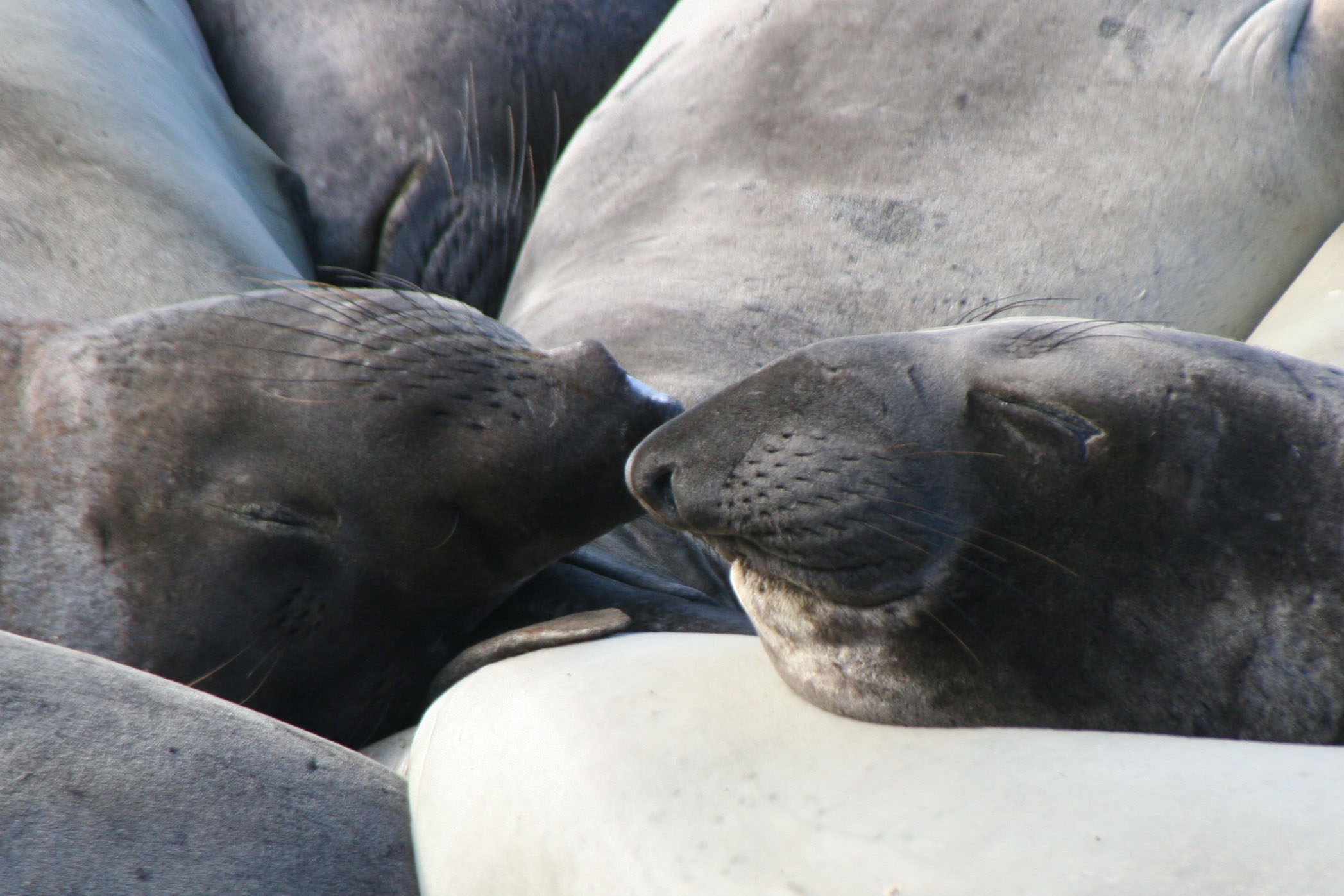
Sleeping cheek to cheek. If that isn't a look of contentment, I've never seen one.


"After a hard day of sleeping, I like to lay back and put my feet up in the air."


If you came across these tracks without knowing who made them, you would probably vacate the premises.


"Did you hear the story about the Rabbi, the Priest and the Baptist Minister?"


"I just love the smell of fish breath." Actually, these guys fast for weeks on end while on shore. There may not be much fish breath left by the time they are ready to return to the ocean.

Berkeley on Edge… the 60s

Within a week of my arrival at Berkeley, I was President of Priestly Hall, my dorm. Following my stint as Student Body President at Sierra College, I decided to jump into student politics at the University. The dormitories were new so the residents were new. The fact that I was a Community College transfer made little difference.

Student politics seemed dull and almost frivolous compared to the real thing, however. What truly fascinated me about Berkeley was the palpable sense of being involved in the events of the day.

Fellow students had actually signed up for and gone on Freedom Rides in the South. An active effort to end discriminatory hiring practices was underway in the Bay Area and organizations such as the Congress of Racial Equality were recruiting students to support their efforts.

I was drawn toward these issues and the call to action tweaked my interest. Limiting the future of a potential Martin Luther King because of who his parents were went beyond being counterproductive. It was stupid; we all lost.

But I wasn’t ready to take up a picket sign. This was my first year at Berkeley and my hands were full in struggling with classes and eking out time to be with Jo Ann. There were also numerous responsibilities to fulfill in my role as dorm president such as organizing parties, collecting rolls of toilet paper to throw during Cal football games and learning the football fight songs.

I did strike one tap hammer blow against the machine, however. We were expected to participate in the annual Ugly Man Contest. Its purpose was to raise money for charity by having someone or thing really ugly as the dorm’s representative in competition with other dorms, fraternities and sororities. People would vote by donating money (normally pennies) to their favorite ugly man. In addition to being fun, it was on the top of the Dean’s list as an acceptable student activity.

I proposed that our ‘Ugly Man’ be an unfortunate Joe College Student whose computer card had been lost by the Administration. Consequently, he no longer existed. We made up a casket and wandered about campus in search of poor Joe.

It was a small thing but it reflected a growing unease I had about the alienation created by assembly line education where numbers were more important than individuals. Apparently the student body wasn’t ready for the message; a popular bartender representing a fraternity walked away with the prize.

While my concerns over student alienation were evolving, the administration was monitoring off-campus student activism with growing concern. The University perceived its primary objectives as carrying out research and preparing young people to become productive members of American society. These weren’t bad goals but there was little room in the equation for students seeking social and political change… in Mississippi, in Oakland or on campus.

But ‘the times they were a changing,’ as Bob Dylan sang. A young President in Washington was calling on the youth of America to become involved, racial equality seemed attainable in the United States and people the world over were yearning for and demanding freedom. It was easy for idealistic young Americans to believe we were at the dawning of a new age and natural to want to be involved in the transformation.

Had the students restricted their political efforts in the early and mid sixties to the far off South, the eruption of conflict on the Berkeley Campus may not have taken place. But they chose local targets as well.

When the students marched off campus to picket the Oakland Tribune, Sheraton Hotel, United Airways and Safeway over discriminatory hiring practices, they were challenging locally established businesses with considerable power. Not surprisingly, these businesses felt threatened and fought back.

Rather than deal with the existing discrimination, they demanded that the University, local authorities, the state government and even the Federal government do whatever was necessary to reign in the protesters.

Their arguments for the crackdown were typical of the times. A few radical off-campus agitators with Communist connections were working in conjunction with left leaning professors to stir up trouble. The participating students lacked mature judgment and were naively being led astray. The vast majority of students were good law-abiding kids who just wanted to get an education, party, and get a paycheck.

The University was caught between the proverbial rock and a very hard place. The off-campus political activism was creating unwanted attention. Public dollars could be lost and reputations tarnished. There was also a justifiable fear of reprisal from the right.

The ugliness of McCarthyism was still alive and well in America. Only a few years before the House Un-American Activities Committee (HUAC) had held hearings in San Francisco in its ceaseless search for Commies. UC had been a target.

HUAC created a deep paranoia and distrust within society and may indeed have constituted the most un-American type of activity ever perpetrated on the American public. Clark Kerr, the University President, and others had worked hard to protect and restore the academic freedom on campus that loyalty oaths and other McCarthy-like activities had threatened. Student activism might refocus Right Wing attention on the Berkeley Campus.

My greatest insight into the mindset of the Administration was when the Dean of Students called student leaders together to discuss the growing unrest on campus. Our gathering included members of the student government and presidents of the resident halls, fraternities and sororities. Noticeable in their absence were student representatives from off campus organizations such as CORE, SNCC, Young Democrats, Young Republicans and other activist groups.

We sat in a large room in a huge square; there must have been at least 40 of us. I was eager to participate and imagined an open discussion of the issues.

A Dean welcomed us, thanked us for agreeing to participate, and then laid the foundation for our discussion. A small group of radical students was disrupting the campus and organizing off-campus activities such as picketing and sit-ins that were illegal in nature.

While the issues being addressing were important, there were other, more appropriate means available for solving them that didn’t involve Berkeley. The Administration had been extremely tolerant so far but was approaching a point where it might have to crack down for the overall good of the University.

The Administration wanted our feedback as student leaders. What did we think was happening, how would our constituencies react to a crack down, and how could we help defuse the situation? We were to go around the room with each student leader expressing his or her view. I expected a major reaction… hopefully a protest or at least a warning to move cautiously, to involve all parties in seeking some type of amenable agreement.

The first student leader stood up. “The radical students are making me extremely angry,” he reported. “I resent that a small group of people can ruin everything for the rest of us. The vast majority of the students do not support off-campus political action. I believe the student body would support a crackdown by the Administration. You have my support in whatever you do.”

I could not believe what I was hearing. Was the guy a plant, preprogrammed by the Administration to repeat the party line and set the tone for everyone else? If so, he was successful. The next person and the next person parroted what he had said. I began to doubt myself.

Normally, I am quite good at reading political trends and sensing when a group leans toward supporting or opposing an issue. My read on what was happening at Bancroft and Telegraph was that the majority of the students were empathic with and supportive of the causes the so-called radical students were advocating.

The Martin Luther Kings of the world were heroes, not bad guys, and their tactics of nonviolent civil disobedience were empowering the powerless. Sure, the majority of the students were primarily concerned with getting through college. To many, an all night kegger and getting laid might seem infinitely more appealing than a sit-in. But this did not imply a lack of shared concern.

Or so I believed. Apparently, very few of the other participants shared in my belief. Concerns were raised but no one stopped and said, “Damn it, we have a problem!”

As my turn approached I felt myself chickening out. I was the new kid on the block, wet behind the ears. What did I know?

Acceptance in this crowd was to stand up and say, “Yes, everything you are talking about is true. Let’s clamp down on the rabble rousers and get on with the important life of being students.” And I wanted to be accepted, to be a part of the establishment. I stood up with shaking legs.

“Hi, my name is Curt Mekemson and I am the president of Priestly Hall,” I announced in a voice which was matching my legs, shake for shake. This was not the impression I wanted to make. As others had spoken, I had scribbled some notes on what I wanted to say.

“I believe we have a very serious problem here, that the issues are legitimate, and that most students are sympathetic. I don’t think we should be cracking down but should be working together to find solutions. Now is not the time to further alienate the activists and create more of a crisis than we presently have. I believe it is a serious mistake to not have representatives from the groups involved in organizing off campus activities here today.”

I was met with deadly silence. A few heads nodded in agreement, but mainly there were glares. “Next,” the Dean said. No yea, no nay, no discussion. I was a bringer of bad tidings, a storm crow. But it wasn’t ‘kill the messenger.’ It was more like ‘ignore the messenger,’ like I had farted in public and people were embarrassed.

After that, my enthusiasm for student government waned. I should have fought back, fought for what I believed in, fought for what I knew deep down to be right. But I didn’t. I was still trying to figure out what to do with 15 books in Poly Sci 1. I had a relationship to maintain on campus and a mother fighting cancer at home. The dark, heavy force of depression rolled over my mind like the fog rolling in from the Bay.

Finally I decided that something had to go and that the only thing expendable was my role as President of the dorm. So I turned over the reins of power to my VP and headed back to Bancroft Library. Politics could wait.

Next blog: John Kennedy Is Shot Down on the Streets of Dallas.
UC Berkeley, the Mass Production of College Graduates… The 60s

I arrived on the UC Berkeley campus in September of 1963 something of a country boy. I walked around in awe. Every corner had something new.

Telegraph Avenue became the center of my off-campus life. Exotic smells emanated from a dozen different ethnic restaurants while numerous languages assaulted my ears.

I quickly discovered the Café Mediterraneum. In an era before Starbucks made coffee houses safe by mass producing and sanitizing them, Café Med was an original. It was a microcosm of Berkeley, filled with offbeat characters, esoteric discussions and great coffee. I became addicted to both the cappuccino and the atmosphere.

I developed an even greater addiction for the Cody’s bookstore, which was located just across Telegraph. Started on a shoestring by the Cody family in the 50s, it had become one of America’s premier bookstores by the mid-sixties.

I was equally fascinated by the ever-changing kaleidoscope of soapbox oratory provided at the south entrance to the campus on the corner of Bancroft and Telegraph. During any given hour, half a dozen speakers could be found there espousing as many causes. I considered it high entertainment and would sit on the steps of the Student Union and listen during breaks from my studies.

Over one lunch period, I noted in a letter to my mother, I listened to a student who had spent her summer working in the South registering voters, a black South African talking about apartheid, a socialist railing against the evils of capitalism, a capitalist railing against the evils of socialism, and a Bible thumper detailing out the many paths Berkeley students were following to hell.

Many of the speakers urged that there was more to college life than studies, football and parties. Change was in the wind and we should be part of it. Work for fair housing in Berkeley; oppose the unfair hiring practices at Safeway; sign up to help on a political campaign. Join CORE, SNCC, SLATE, SDS, or a world of other acronyms. I struggled to take it all in, absorb it through my pores. It certainly wasn’t Kansas, Dorothy, nor was it Diamond Springs, Placerville or Sierra College.

To simplify my first year I opted to live in a college dorm. I would have a room, a bed and someone to feed me. The University assigned me to Priestly Hall, which was ideally located a block away from campus and a block away from Telegraph Avenue.

Three other dorms, one for men and two for women, comprised our corner of the universe. Co-ed living accommodations were still in the future. Strict House Mothers existed to enforce the rules and protect their charges. Women were only allowed on the first floor of the men’s residence hall. Slipping one up to your room was an expellable offense.

My sixth floor room came complete with a roommate, Clifford Marks. Cliff was a slightly built young man with bright red hair, freckles and a mischievous personality. Later we would share an apartment together. Like me, he was a political science major.

As for life at Berkeley, I wanted it all. There were student politics to jump into, classes to master, bookstores to explore, cappuccino to consume, a thousand causes to sort out and a love life to support. (The woman I had met and fallen in love with at Sierra College, Jo Ann Griffith, had also chosen Berkley.)  Moderation was not an option.

I did understand that my primary reason for being there was to learn and I quickly discovered that learning was defined differently than at Sierra. First I had to find my classes. Berkeley seemed like a maze to me. Single buildings held more classrooms than were found on Sierra’s campus and each building held its own secrets. The Life Science building, for example, displayed enough jars of pickled fetuses to stop the heart of a pro-lifer and give me nightmares.

While the Social Science buildings weren’t nearly as interesting, I was searching for a political science class in Wheeler Hall when I came upon a string of marble encased urinals in the basement capable of accommodating the whole beer soaked population of a Oakland Raiders’ football game. I decided there was enough marble to refurbish the Parthenon, which led my mind to contemplate penning a new poem, ‘Ode to a Grecian Urinal.’ Stream of conscious thinking can be dangerous.

I finally found my political science class and discovered I had over 1000 classmates. It was located in a large auditorium I had passed by because my mind hadn’t been able to comprehend a classroom of that size.

The professor, Peter Odegard, was a star in the field of political science and frequently received standing ovations for his stirring lectures. In another life he had served as President of Reed College in Oregon.

His lectures inspired me but there was scant chance I would ever meet the man. Personal contact was through graduate teaching assistants, folks struggling to complete their own education while being paid minimum wages to interact with us.

I had one class that was so large we had to sit in another classroom and watch the professor on television. This was mass education on a grand scale. The University’s job, according to Clark Kerr the University President, was the mass production of educated people to go out and fill slots in society.

It was easy to be overwhelmed. I was assigned 15 books in one class and actually thought I was expected to buy and read each one in detail. I was a fast reader but not that fast, nor that wealthy. It would take a year to master the art of skimming, buying old books, using commercially prepared notes and pursuing all of the other tricks of the trade that getting a higher education entailed.

For all of that, there was an excitement to the classes that was lacking at Sierra. I might be sharing my professor with a thousand other students but he or she might also be a person who was a confidante of Presidents. Did I learn more than I had in community college or gain deeper insights? I actually don’t think so, but I did have a sense of being part of what was happening in the world and this made what I was learning seem more relevant.

Life quickly evolved into a routine that primarily consisted of attending classes and studying. Mainly I lived in the Bancroft library with occasional forays over to Café Med.

Friday nights were reserved for Jo Ann. We struggled to spend time together, to find moments of privacy and to bridge the gaps that our new life was creating. Even though we had gone off to the University together and now lived less than a mile apart, we saw less of each other than we had at Sierra.

Dates, given my super tight survival budget, normally consisted in going out for pizza at Laval’s or a hamburger at Larry Blake’s. Later, when we both turned 21, beer was added to the menu. On rare occasions, we would go to a movie.

Sunday mornings, in lieu of church, I would go for a hike up in the beautiful hills behind Berkeley. There was still solace to be found in the woods.

Next blog: Berkeley on the Edge of Revolt. Today’s Occupy Wall Street movement shares much in common with the nation wide student movement of the 60s. This series of blogs is devoted to the role that UC Berkeley played in the initiation and evolution of the 60s revolution.