Cathedral Gove: Green and Sacred… The Vancouver Island Adventure

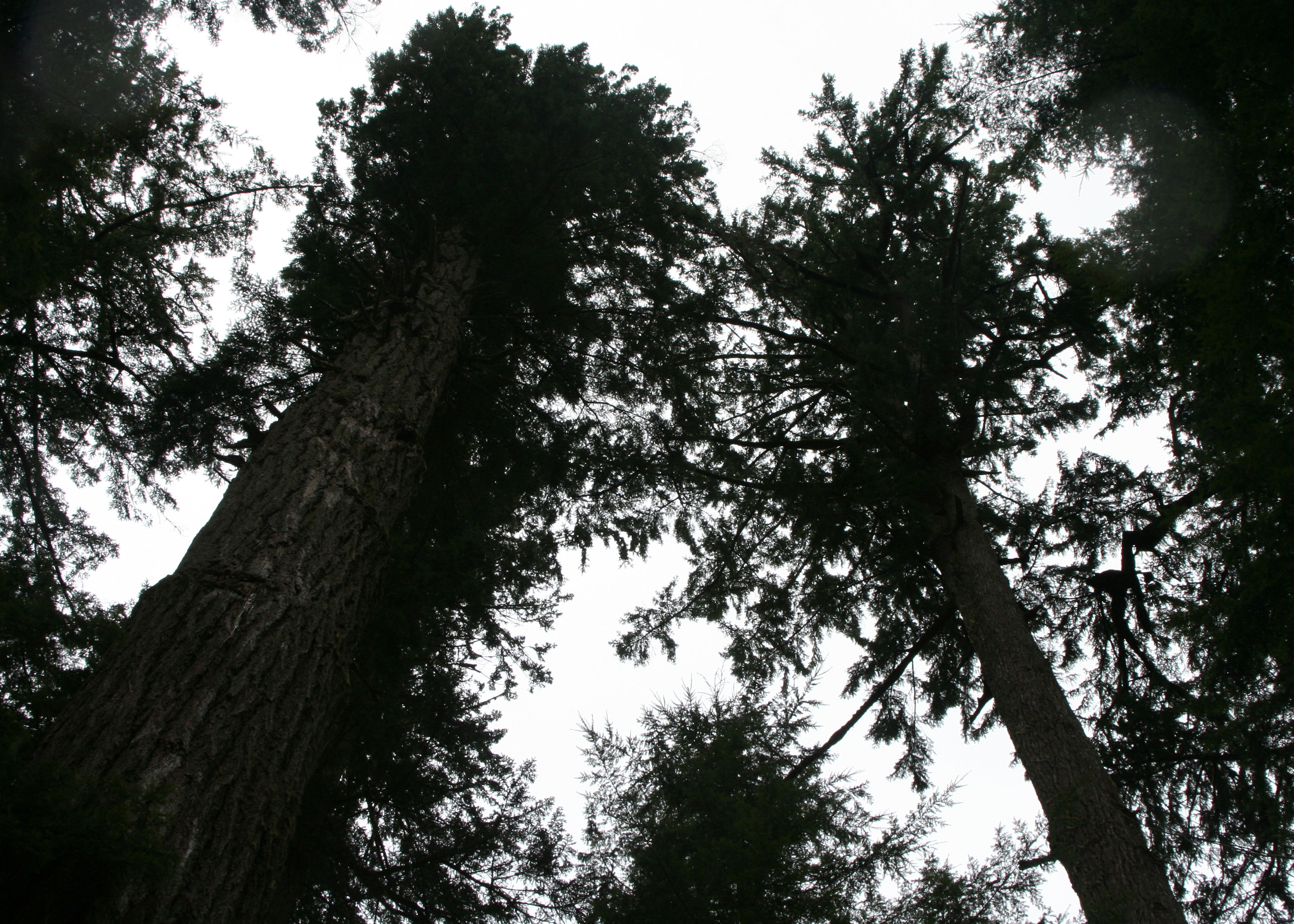
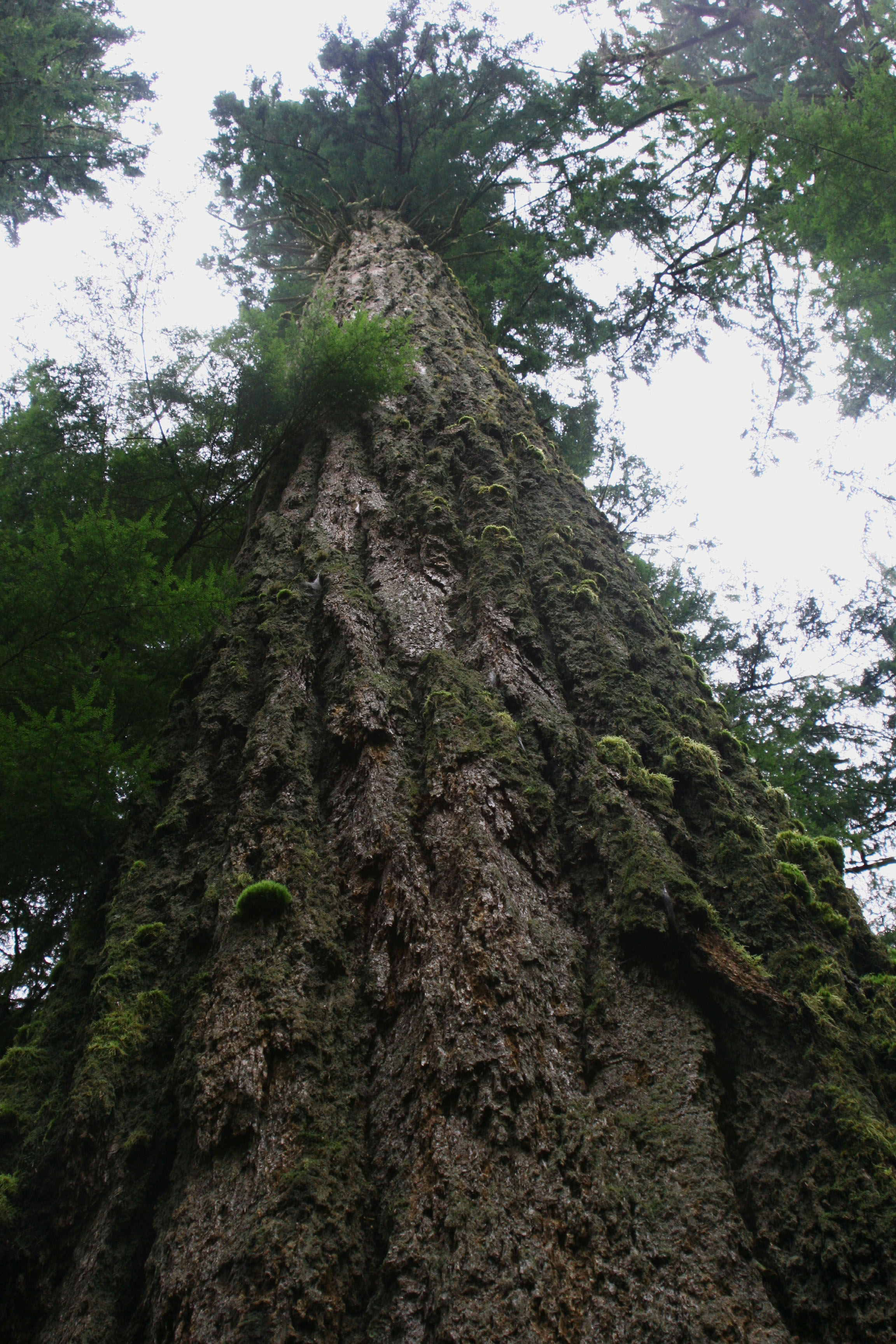
Looking up at the towering canopy of trees, one easily understands how Cathedral Grove on Vancouver Island in British Columbia received its name. There is both beauty and a sense of the sacred.

An Episcopal Minister once asked my daughter why I wasn’t in church.

“Oh, he’s out wandering in the woods,” she replied. “He considers it a sacred experience.”

“You can’t get absolution from a tree!” had been his angry retort.

I suspect the man had never hiked in the wilderness and experienced the sense of peace and healing such an experience can bring. Maybe he should have checked in with St. Francis. As for me, I go along with John Muir who said, “The clearest way into the Universe is through a forest wilderness.”

I find any natural area, even a tree on a busy urban street, worthy of appreciation. But some areas deserve special attention. I’ve wandered the world to find them.

Cathedral Grove on Vancouver Island in British Columbia is one such place. Ancient giants of the tree world call it home. This is a land of Red Cedars and Douglas Firs, some reaching 250 feet in height and dating back 800 years. It’s known as an old growth forest, which means it’s a rarity, one of the few forests to escape the relentless chainsaw.

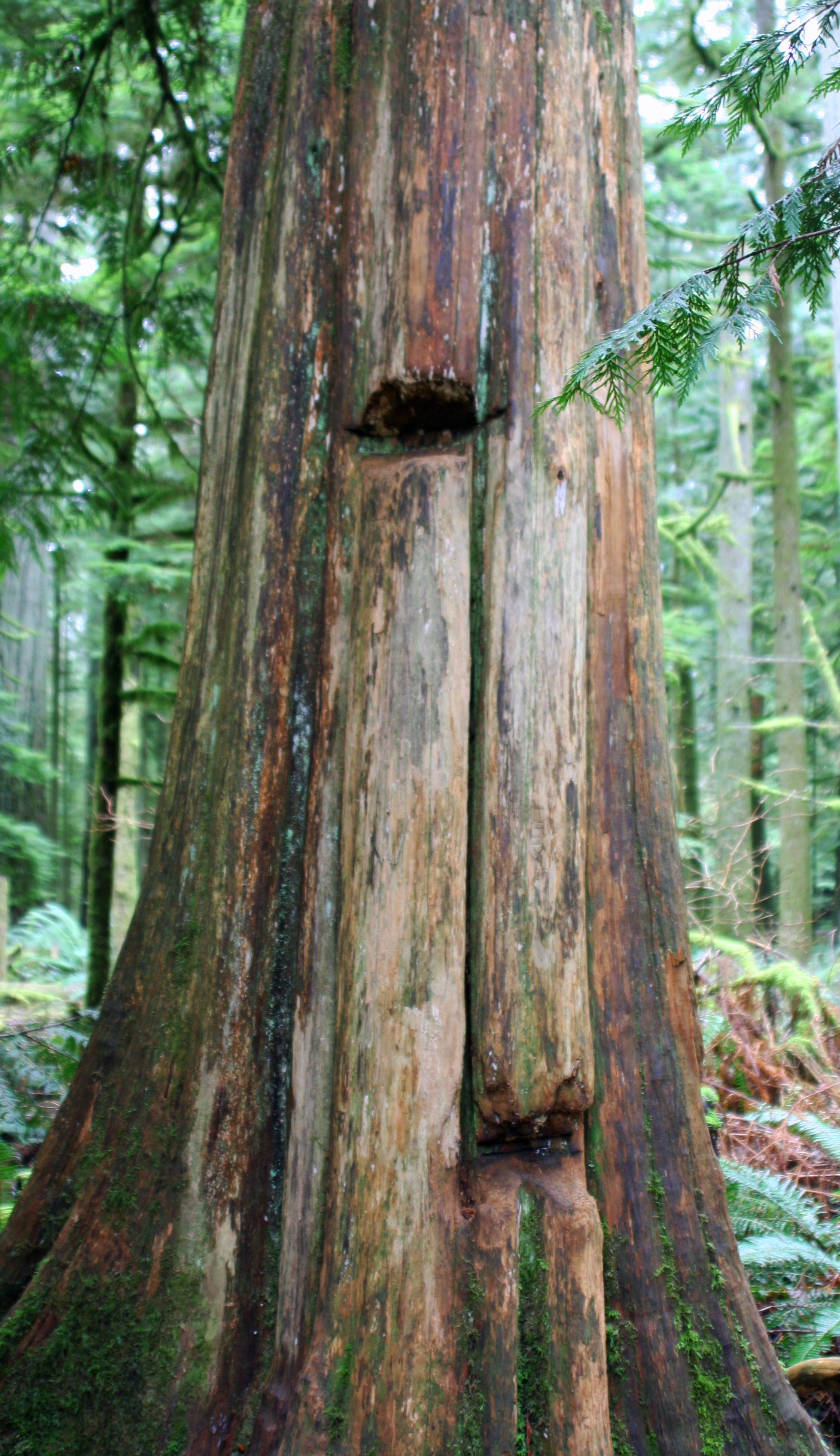
This springboard tree attests to the fact that even a beautiful area like Cathedral Grove was subject to the woodsman's axe. Loggers cut the holes in the tree so they could put in planks to serve as a base for cutting the tree down. The bouncy nature of the plank gave it the name springboard.

Gradually we are learning to value and protect wilderness areas but it is a race against time. Driven by the desire to maximize profits and acting under the guise of job creation, timber interests continue to value forests primarily in terms of board feet produced.

As Peggy, Ken, Leslie and I hiked along the trails, we were struck by the beauty and greenness of the Grove. Hopefully my photographs below capture what we experienced. I found that http://www.cathedralgrove.eu/ provides a good overview on the Grove and the issues relating to protecting such areas.

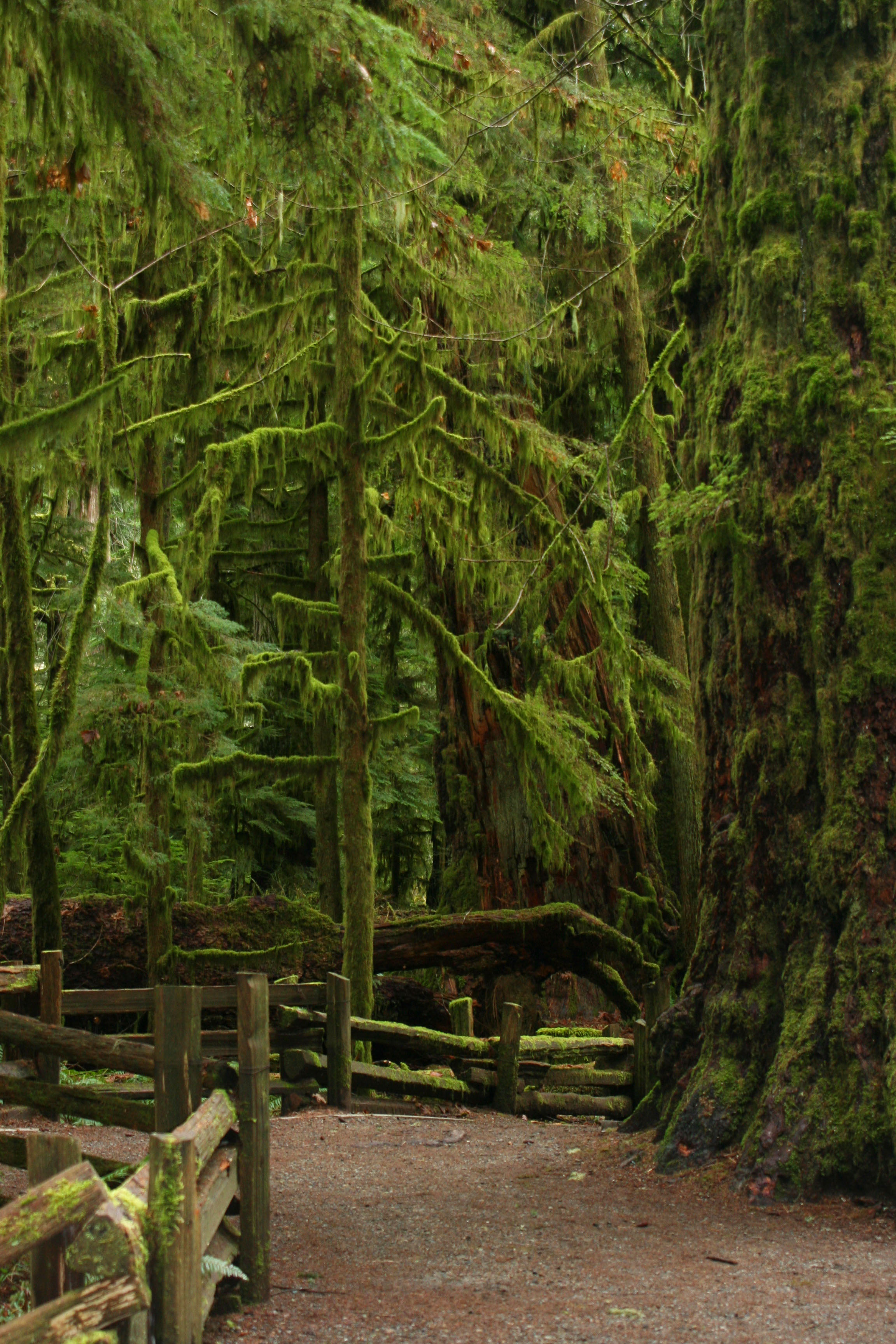
An inviting path led into the green forest.


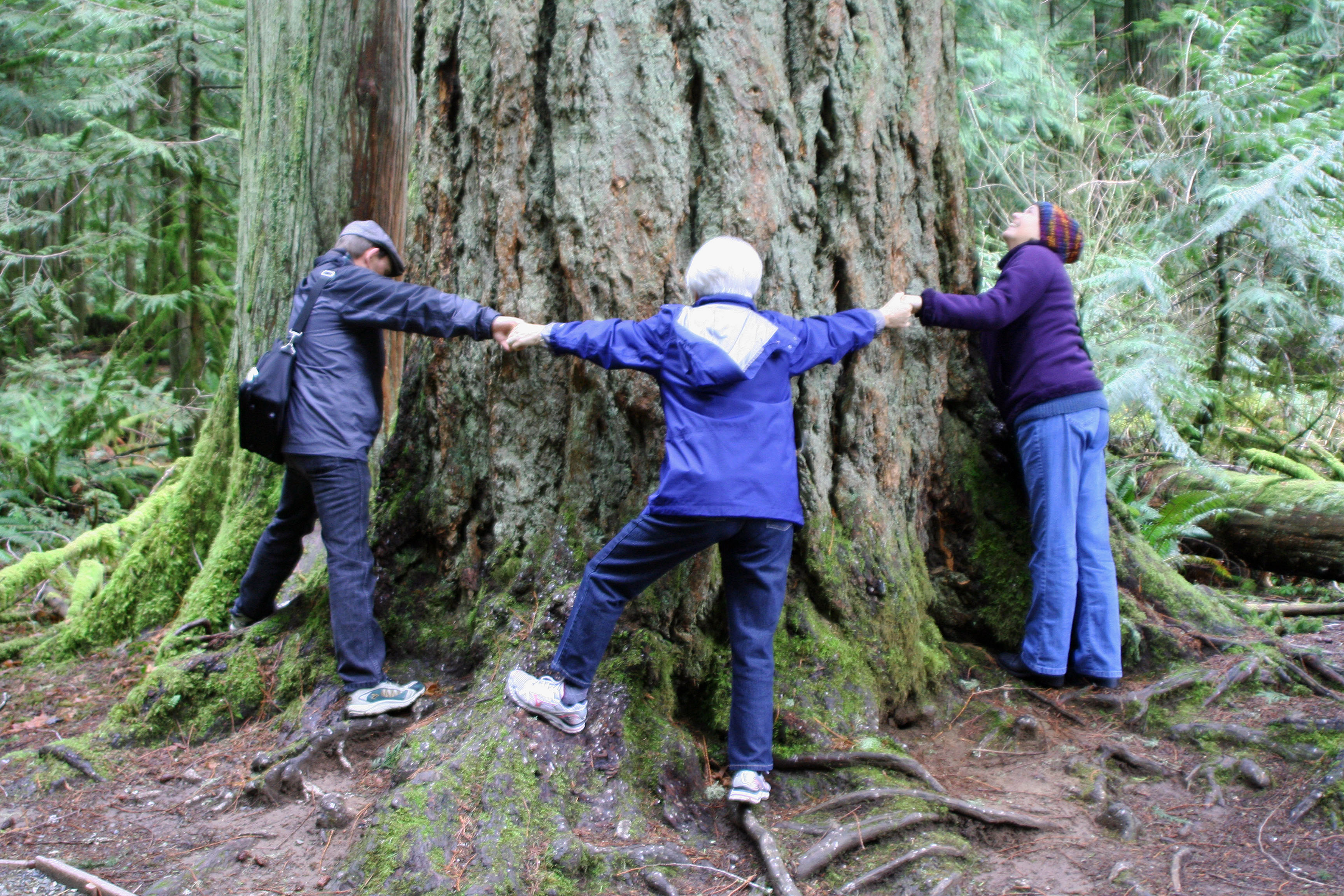
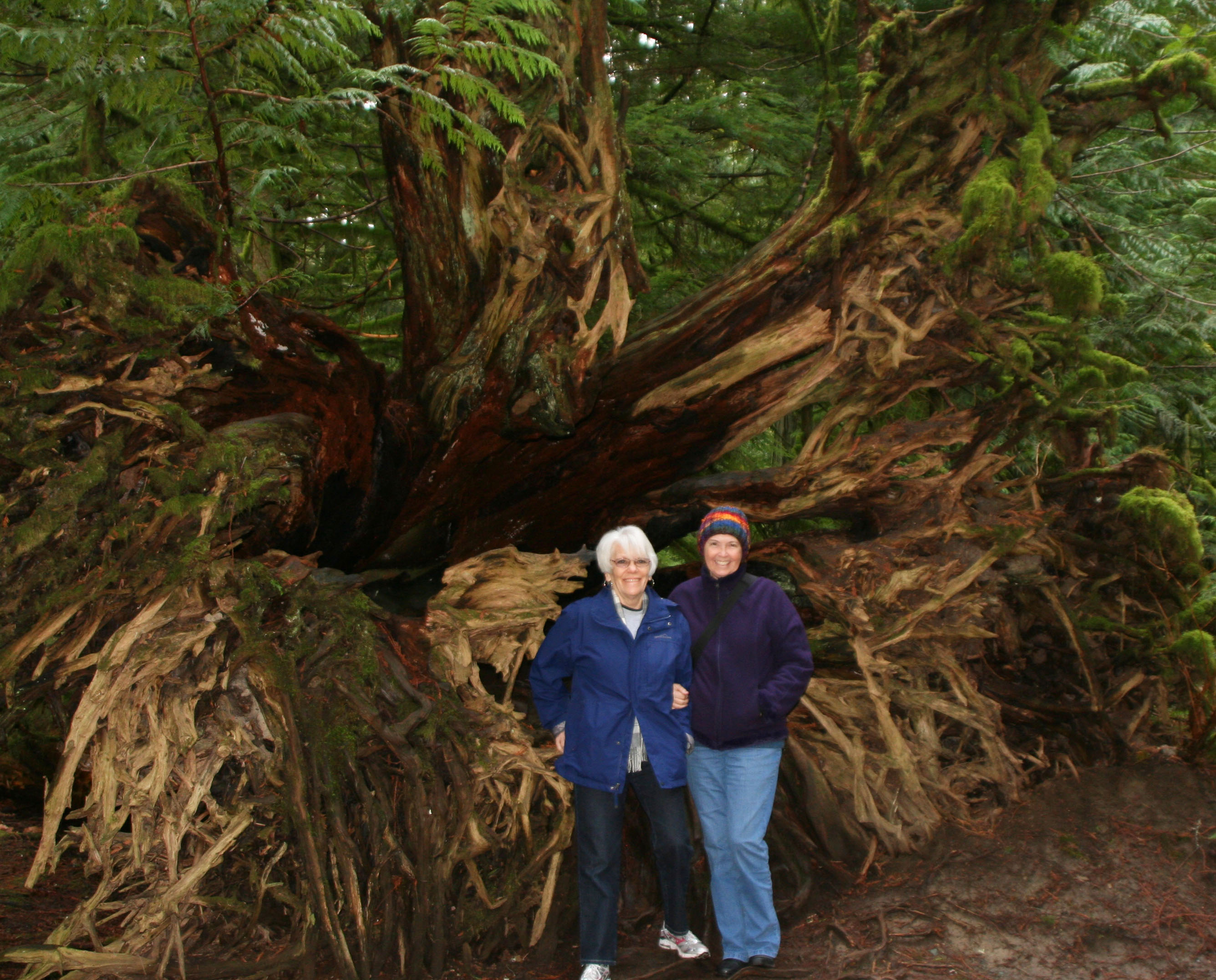
Ken and Leslie Lake, along with Peggy qualify as Tree Huggers.


Roots of a Cathedral Grove forest giant tower behind Leslie and Peggy. A sign at the entry warned that trees fall during wind storms and that visitors should vacate the premises. Sounds like good advice.


Reaching toward the sky, Cathedral Grove trees can reach a height of 250 feet.


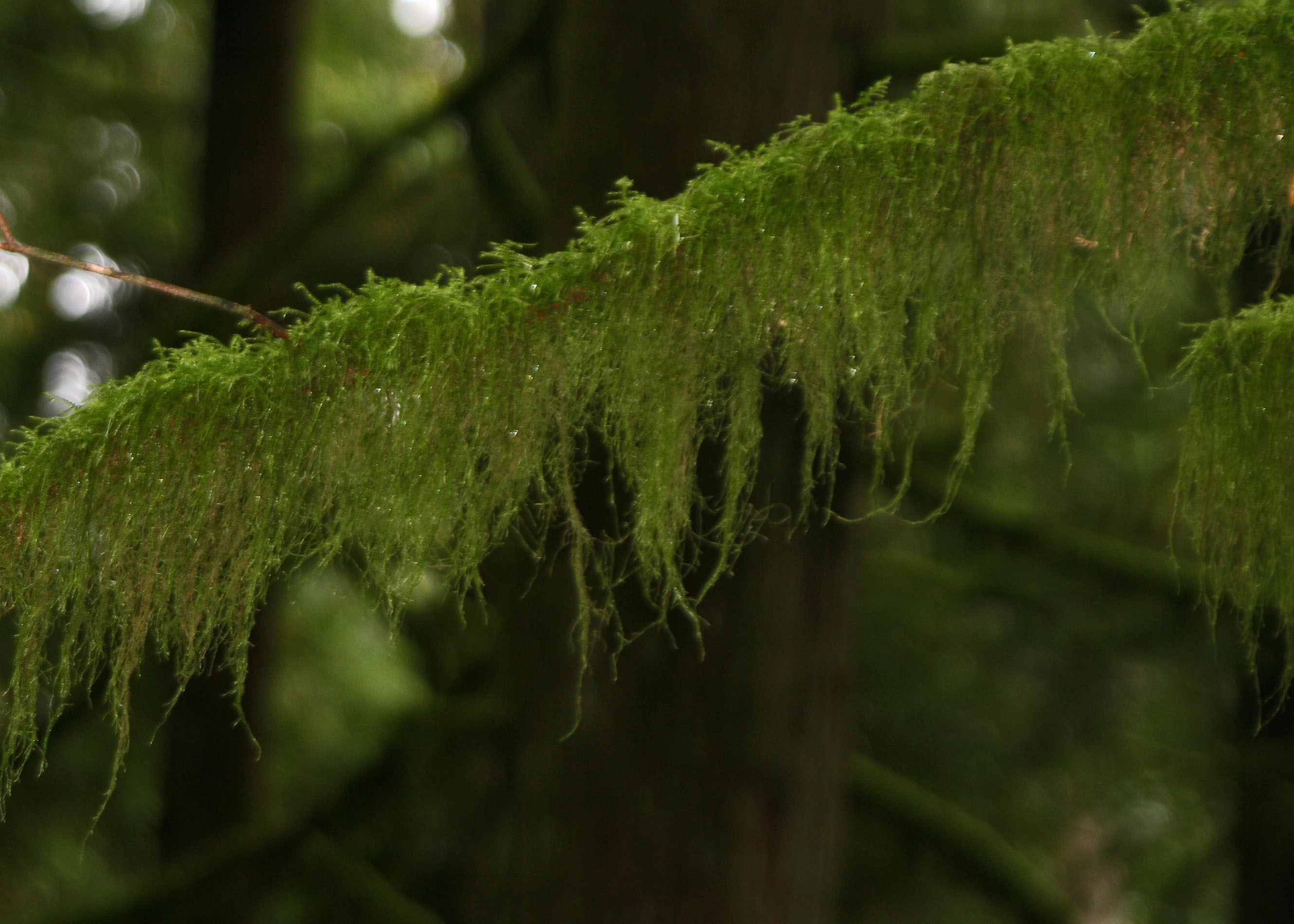
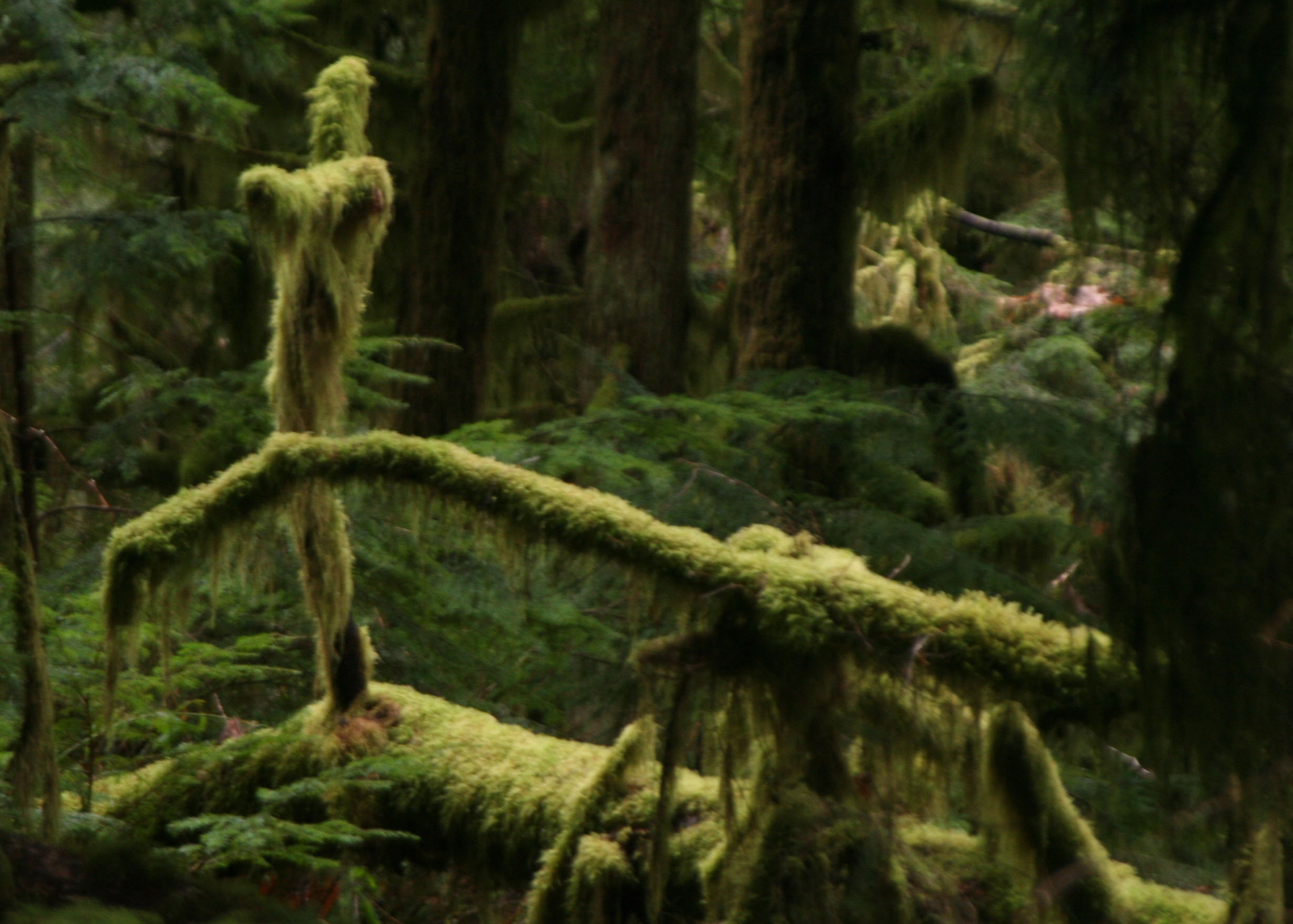
Typical of Pacific Coast rain forests, moss covers everything, providing another definition to 'being green.'


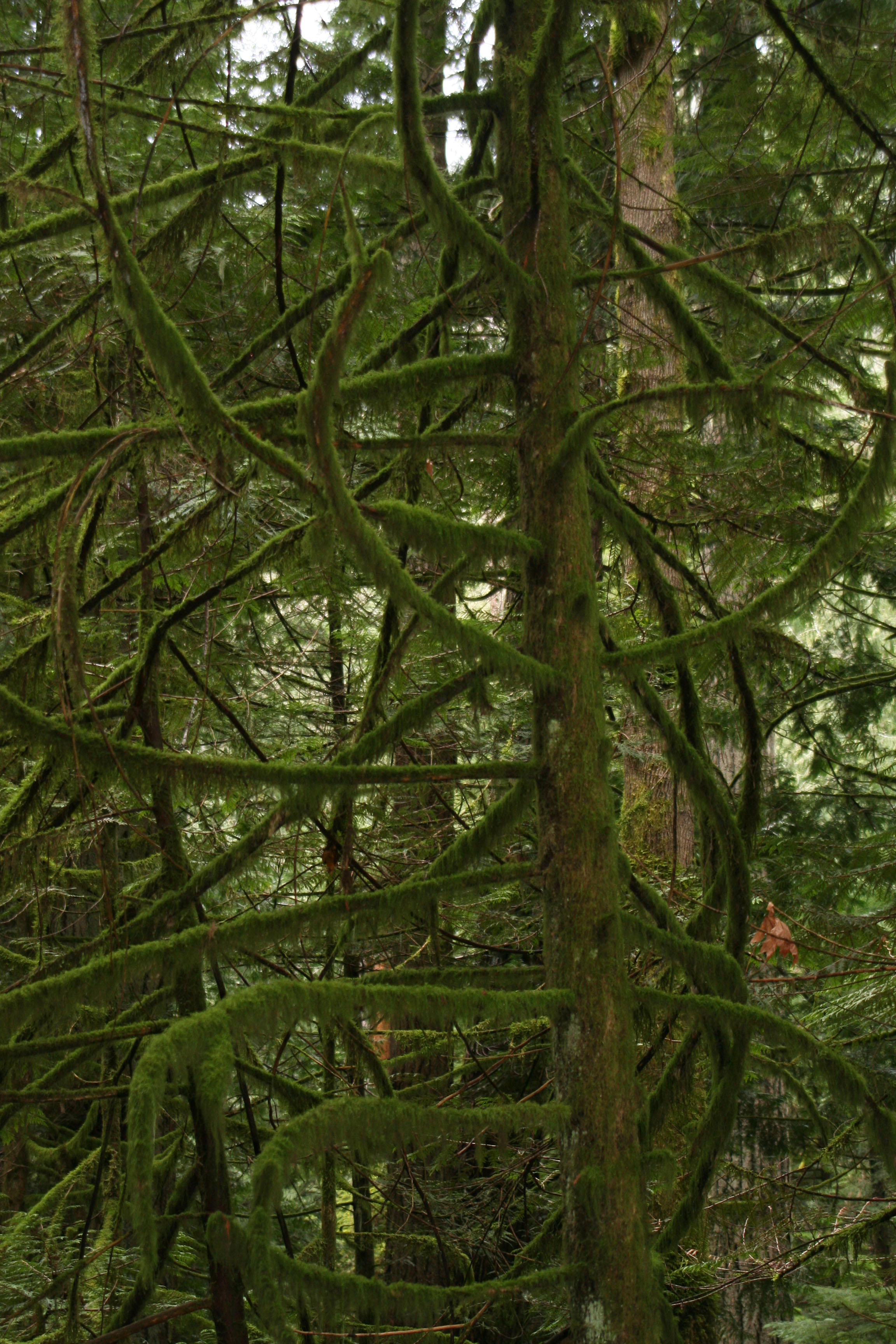
Beyond the greenness, I also found the twisted shape of limbs interesting.


No imagination was required to turn this moss-covered limb into a forest sprite. Or maybe it was a forest sprite...


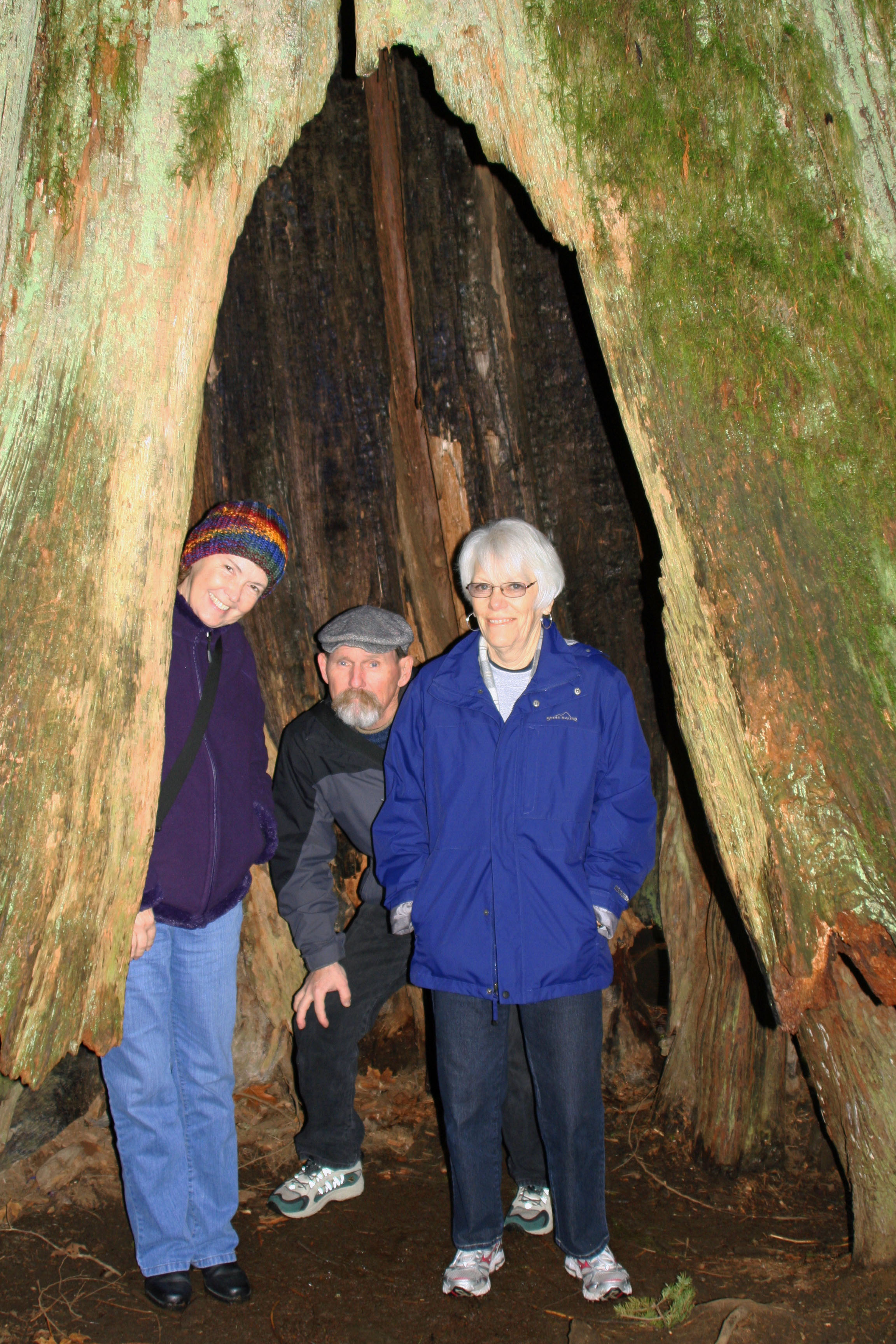
Speaking of sprites, it appears that Ken might be shape shifting into one in this photo of him along with Peggy and Leslie in a giant tree hollow.

The Missing Goats of Coombs… The Vancouver Island Adventure

We arrived in Coombs BC on Vancouver Island looking for goats on the sod roof of the Old Country Market. We found the roof with its long grass, but the goats were missing.

As the story is told, the Graaten Family resolved its crisis by consuming several bottles of wine. The grass on their roof had grown quite long and the Coombs Fair was only days away.

Kris, his wife Solveig, and their children emigrated from Norway to Vancouver Island in the 50s. Sod roofs were common in Norway at the time so Kris decided to put one on his market in Coombs. Makes sense, I guess, in a Norwegian sort of way… but it also created the long grass crisis.

Son-in-law Larry had an idea. “Let’s borrow some goats and have them mow the grass.” No one recorded how many glasses of wine the family had downed but the response was “why not.” And the legend was born. Having goats on your roof is a great for business.

Today, the Coombs’ Market with its sod roof and goats is one of the top tourist attractions in British Columbia.

“You have to go to Coombs,” Peggy’s new friends from Qualicum Beach had insisted on the ferry ride between Port Angeles and Victoria. Since we were staying in nearby Parksville with our friends Ken and Leslie Lake, we responded like the Graaten Family, “why not.”

It was snowing when we arrived. And yes, we immediately spotted the sod roof. But there were no goats. It seemed like a no-brainer. What goat in his right mind would stand on a roof in the middle of a snowstorm to entertain tourists? Actually, the goats had another reason for their absence. They were off having babies.

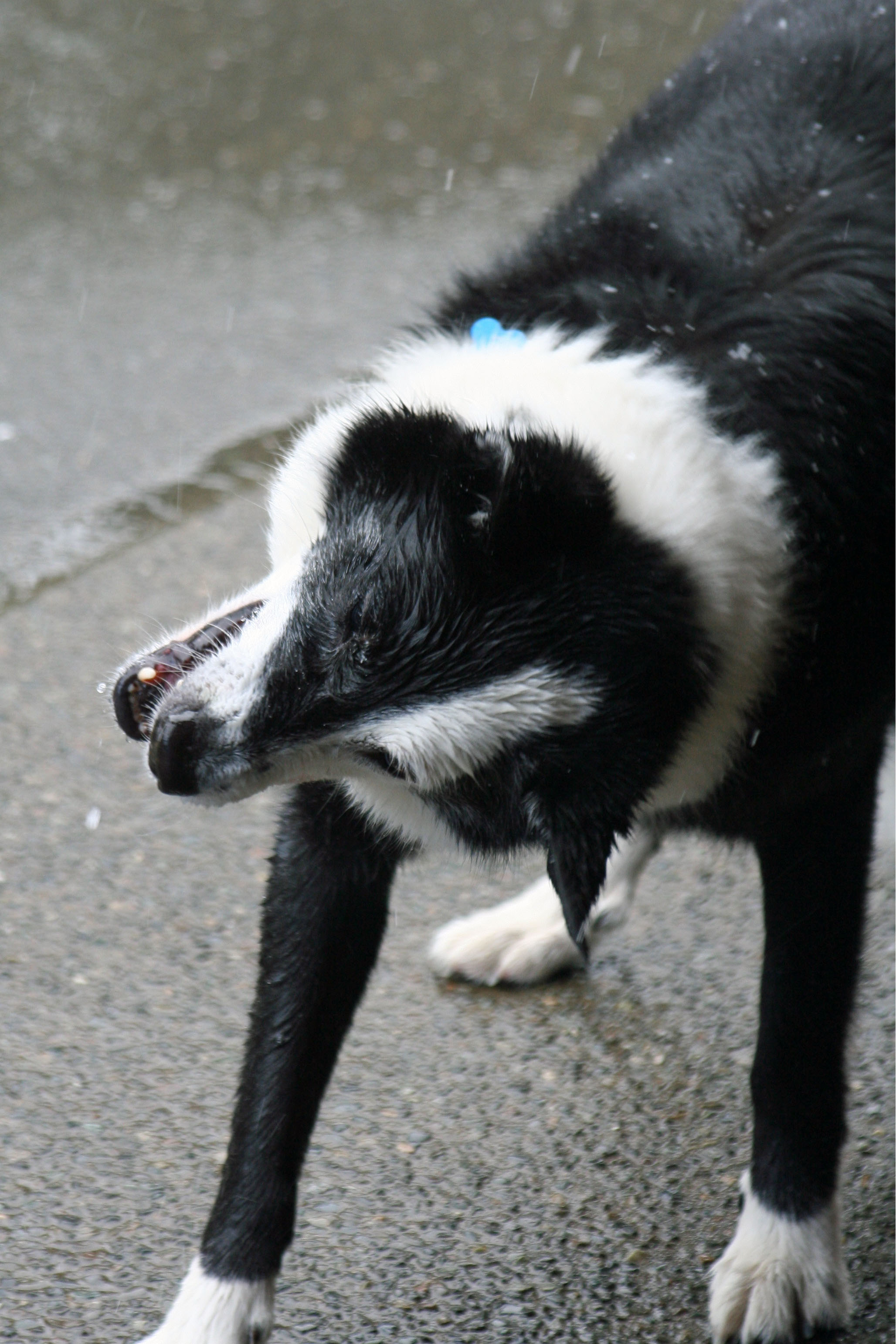
We did find a dog that looked like he was trying to remove a bone from his throat. On closer inspection it turned out he was catching snowflakes. It was quite humorous. Maybe the goats hired him as a substitute.

The dog in Coombs BC looked like he had a chicken bone stuck in his throat. Turns out he was catching snow flakes.

Even without the goats, the market was worth the visit. It is crammed full of artisan bread, great cheese, wine, other foodstuffs and hand-made knickknacks. We wandered up and down the aisles waiting for the snowstorm to stop.

Sunshine sent us scooting outside. We visited a fruit and vegetable stand and then ate at Cuckoo’s Italian Restaurant. The food was great but apparently there is a shortage of waiters in the area. The same young man who had served us dinner ten miles away the night before was our waiter for lunch.

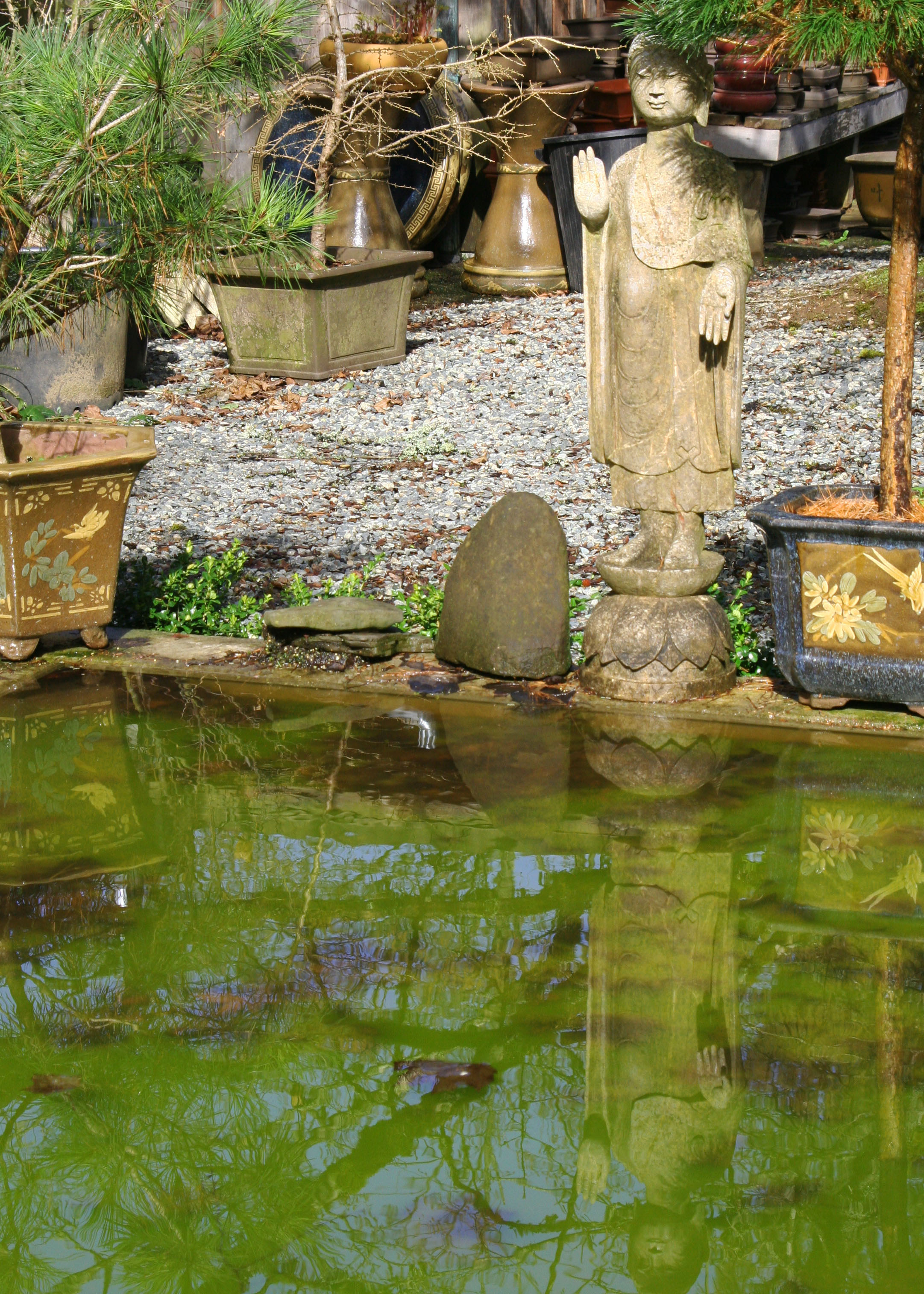
I looked out the window and saw a reflecting pool with a stone Buddha. My mind went into Alice in Wonderland mode. Not only was the same waiter following us around, we had skipped from Norway to Italy to the mysterious Far East in 50 yards.

A calm Buddha gave his blessing to the green reflection pool outside of Cuckoo's Italian Restaurant in Coombs.


Chinese vases and another Buddha added to the Oriental theme. The snowflake eating dog is on the left.


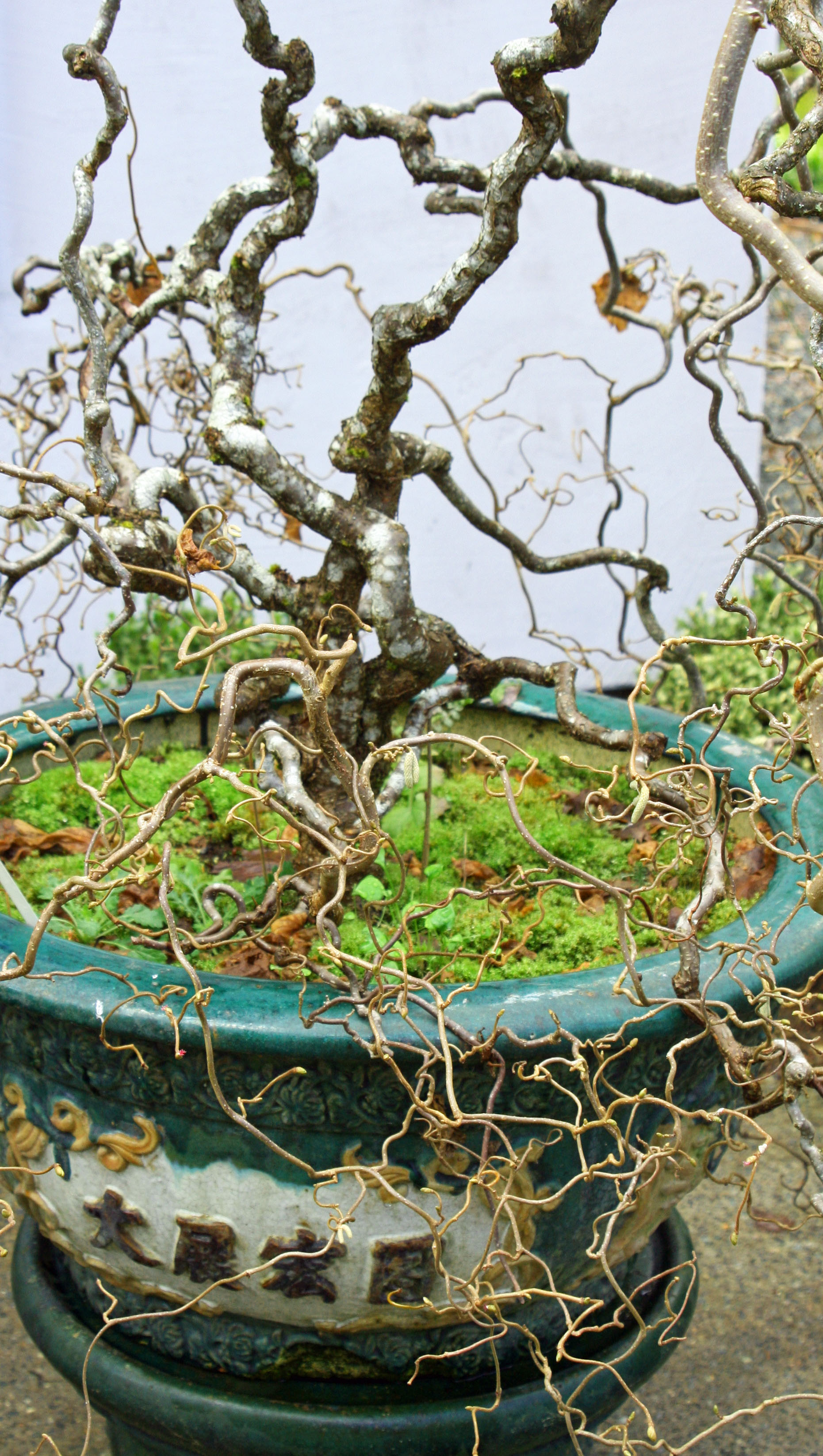
I also liked this bonsai tree with its wonderfully crooked limbs. The bonsai lived next to Cuckoo's Restaurant.

Next door a 15-foot tall, belled lion stood in front of Fengy’s boutique. Carved wooden statues enticed us in. A large Mongol warrior stared down on us. A sign at its base warned against taking pictures. Fengy came over.

“If people take photos, they will copy my work.” It was either that or she didn’t want me photographing the chair that was based on male anatomy.

“Warrior is too big to sell,” she told me. “You photograph it.”

The market place next door to the Old Country Market in Coombs BC included the Fengy Boutique. A 15 foot tall lion with a bell on its chest sat in front. Arnold Schwarzenegger would have been jealous of the lion's muscles.


A giant Mongol warrior carved from wood is the centerpiece of Fengy's Boutique.

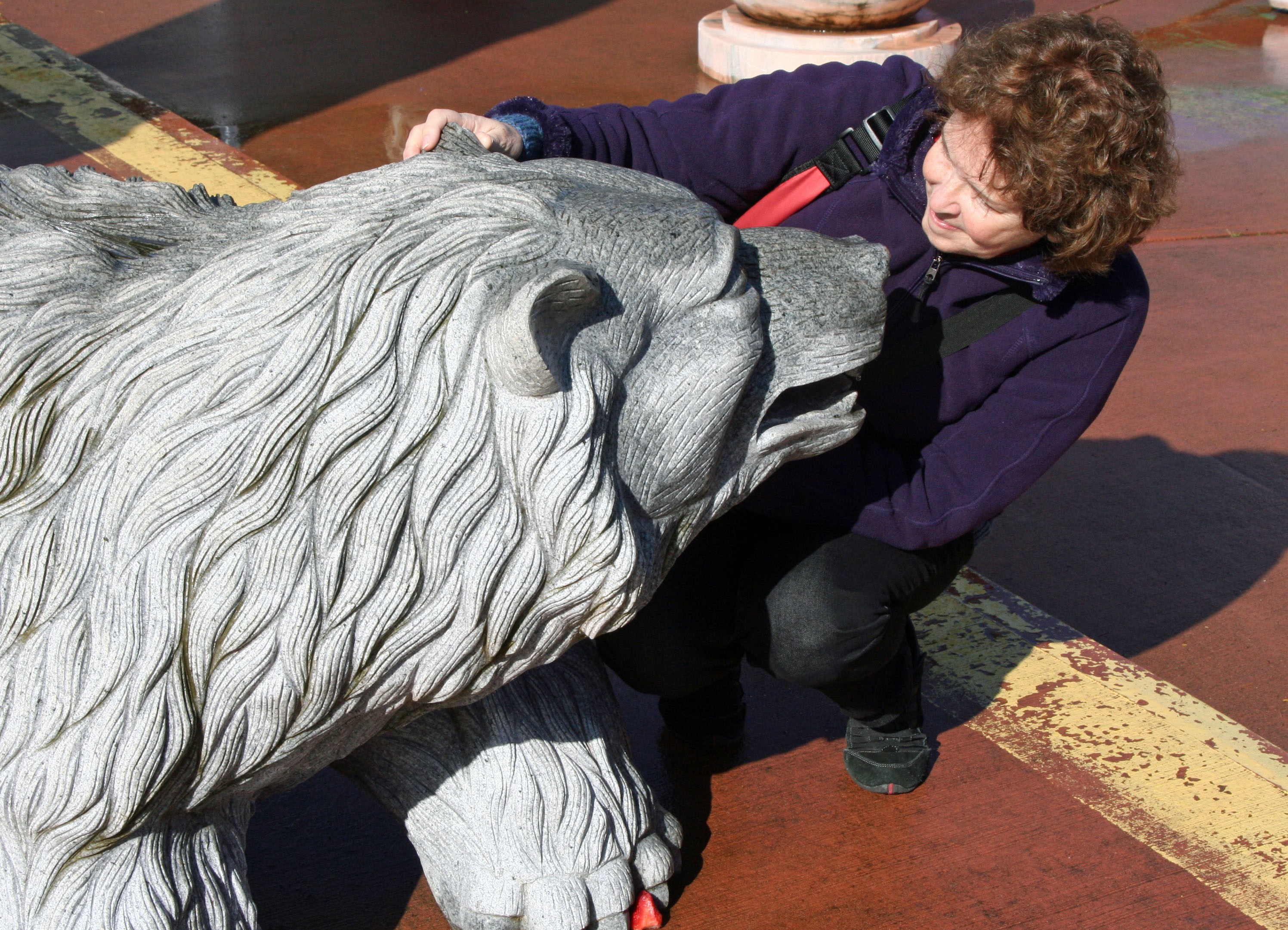
Outside, two dogs were driving a car, Peggy went nose to nose with a bear, and Ken had a shouting match with a rooster. There were also a lion, owls and another Buddha. Coombs was our kind of town.

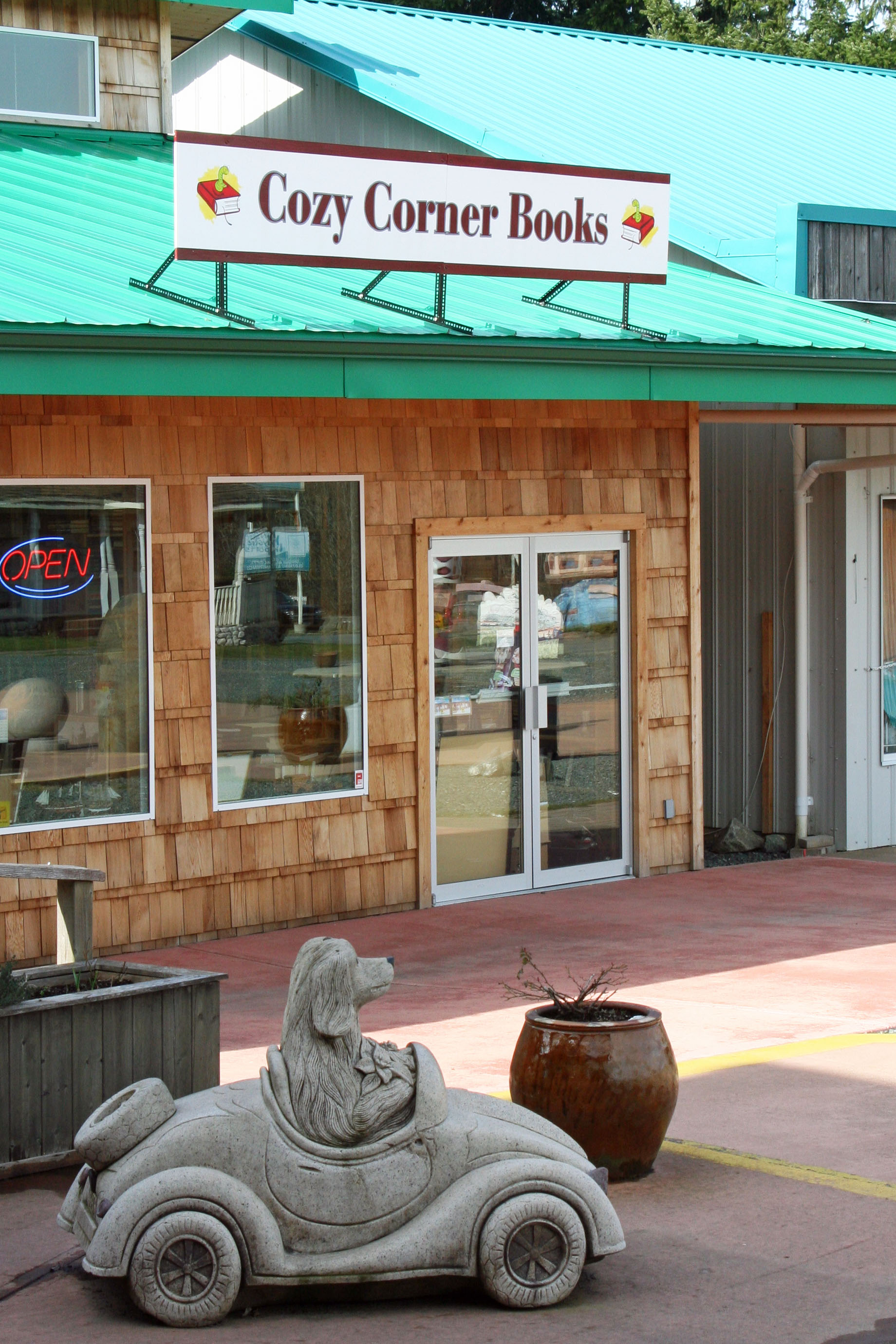
Two dogs were driving a car in front of the Cozy Corner Book Store. I stopped to pet the dogs before going into the store. We have a policy of always going into local bookstores and buying books to support the store.


Another view of the car-driving dogs of Coombs BC.


Peggy had a nose to nose chat with Bear.


Ken had a crow-off with Rooster. Rooster won.


I found this family of owls in Coombs quite cute.


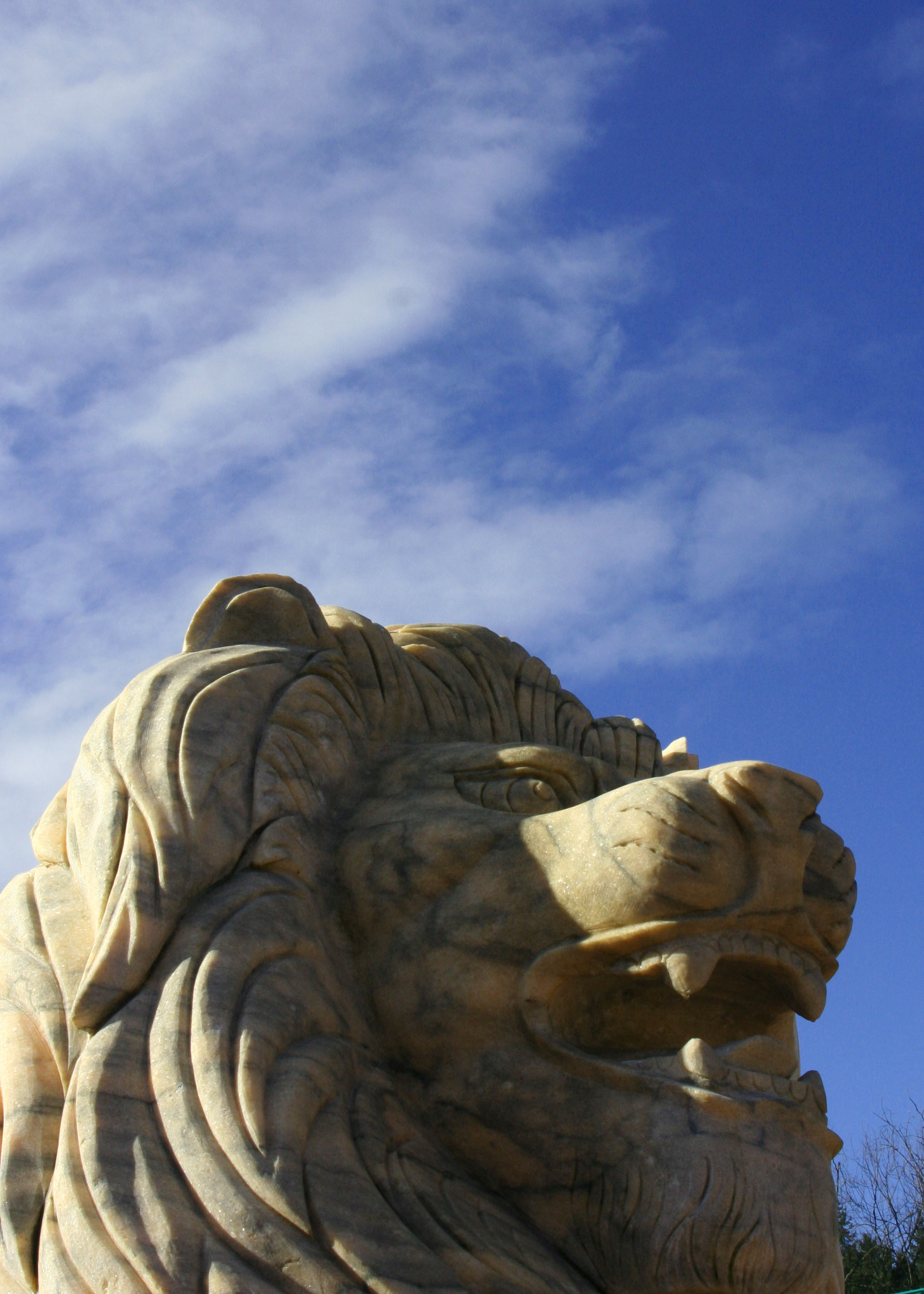
The lion looked quite regal.


And the ubiquitous Buddha provided an end-of-blog blessing.


Coombs is located two hours north of Victoria on the east coast of Vancouver Island, British Columbia. If you would like to learn more about the Old Country Market go to www.oldcountrymarket.com/. I understand there will even be live, streaming video of the roof and goats, assuming the goats decide to return.

With the sun shining I returned to the sod roof. Since the goats were still missing, I took a close-up of the sod.

The Beaches of PQB (Parksville and Qualicum Beach)… The Vancouver Island Adventure

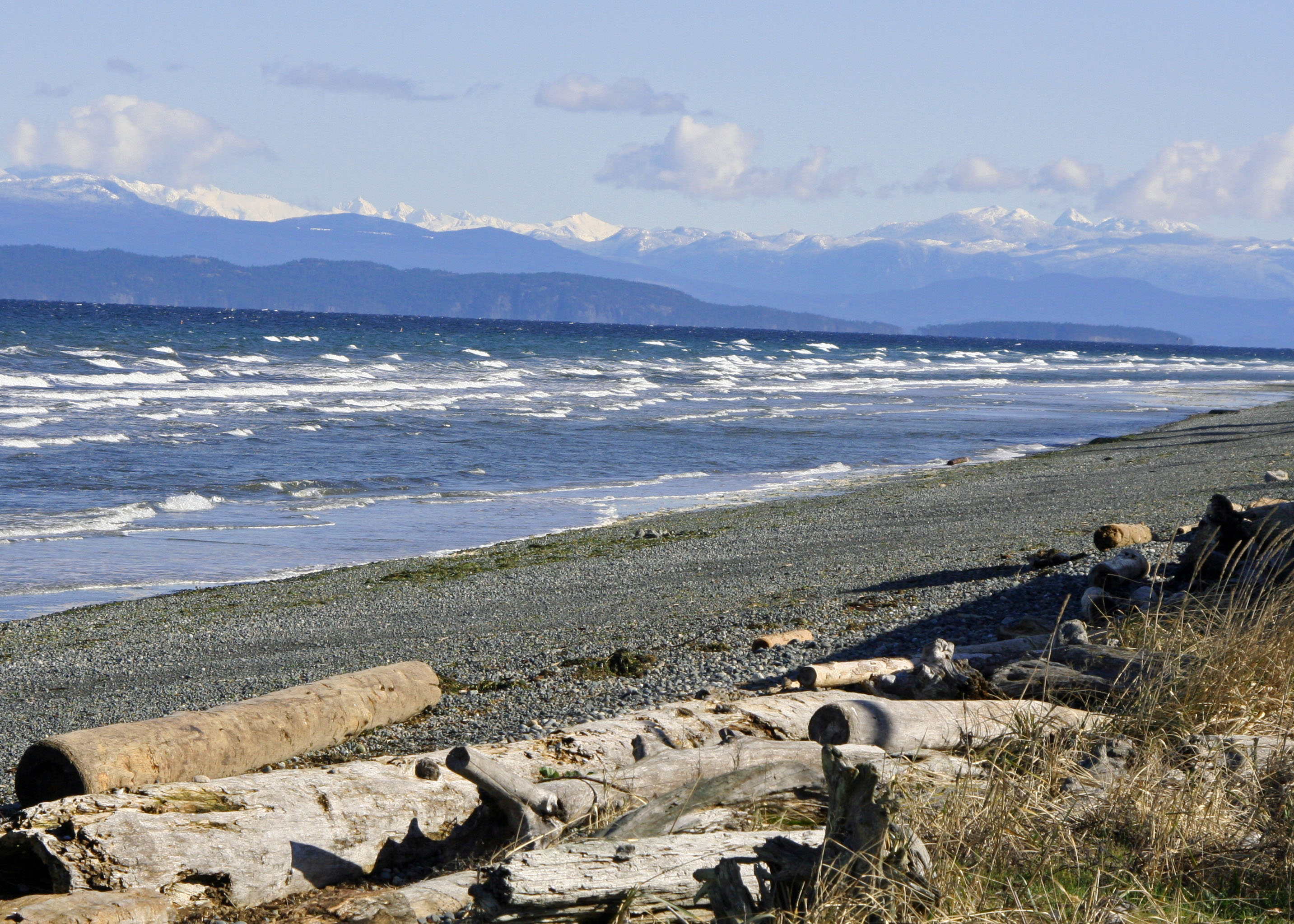
The beaches around Parksville and Qualicum Beach BC on Vancouver Island are crowded with tourists in the summer. In March they are just beautiful.

PQB, for short, is an ocean side resort located on the east coast of Vancouver Island two hours north of Victoria. The Parksville and Qualicum Beach website depicts it as Canada’s Riviera. Apparently the beaches are filled with frolicking visitors in the summer.

With temperatures ranging in the 40s and 50s during our stay, however, even the heartiest of sunbathers had found an excuse to be elsewhere. We were left with people-free pristine beaches that combined with the ocean and mountains to show off the areas natural beauty.

Another view of Qualicum Beach British Columbia.

We hooked up with our friends Ken and Leslie Lake at the Pacific Shores Resort just south of Parksville. The Lakes live near Sacramento, California and we have been sharing adventures for decades. Ken and I started out together leading 500-mile bike treks and 100-mile backpack treks in the 70s.

Pacific Shores is perched on the edge of Craig’s Bay. Our suite came with a balcony overlooking the Bay and a large Madrone overlooking the balcony. Except for the maid’s vacuum cleaner that insisted on eating the power cord for my MacBook Pro, we had a very pleasant stay.

An evening view from our balcony at Pacific Shores Resort looking out over Craig's Bay near Parksville, BC.


Having settled in we immediately began plotting our week. Peggy had met a very friendly couple from Qualicum Beach on our ferry ride from Port Angeles to Victoria who had outlined several must-do activities. We “absolutely” had to see the totem poles of Duncan, the murals of Chemainus and the goats of Coombs, who were apparently off making babies. There were also a couple of restaurants, Cathedral Grove, and Morning Star Farm. The farm is featured below.

Since Morning Star Farm in Qualicum Beach BC was close and known for its cheese and wines, we made it one of our first Visits.


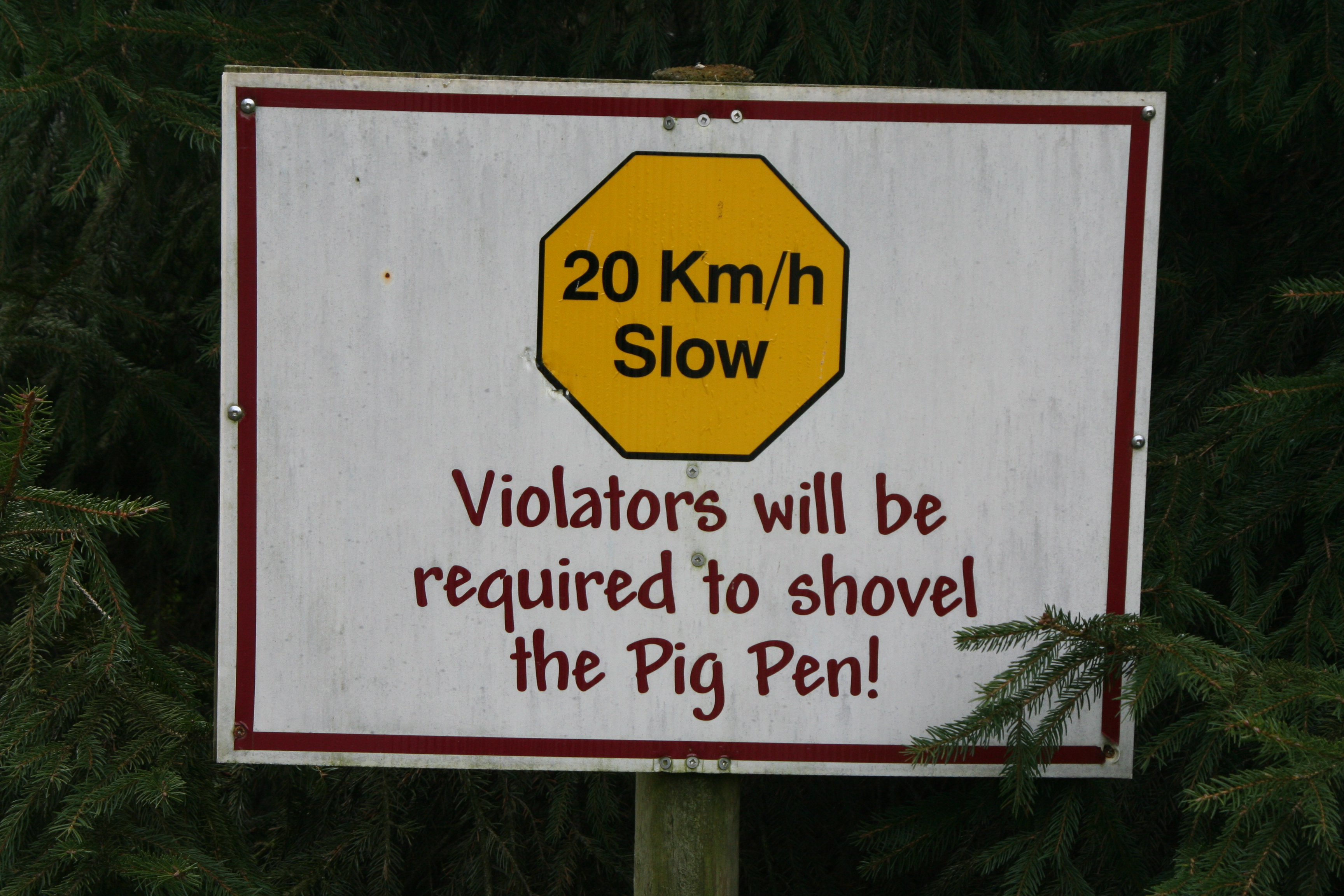
The speed limit sign at Morning Star Farm was quite specific on punishment. We decided to obey.


Tooth picks poised, Ken, Leslie and Peggy prepare to sample Morning Star Farms excellent cheese. We bought enough to last for the week.


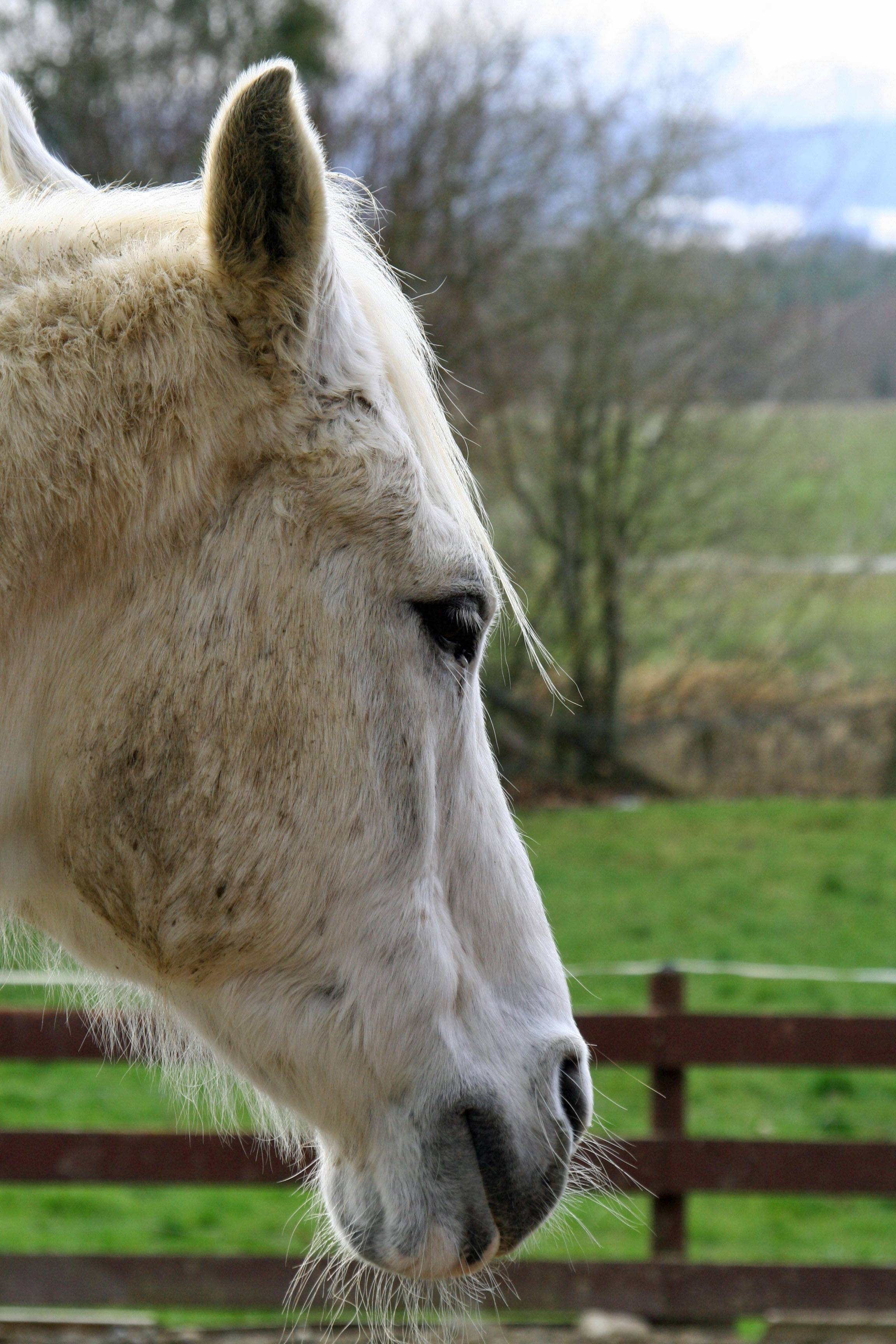
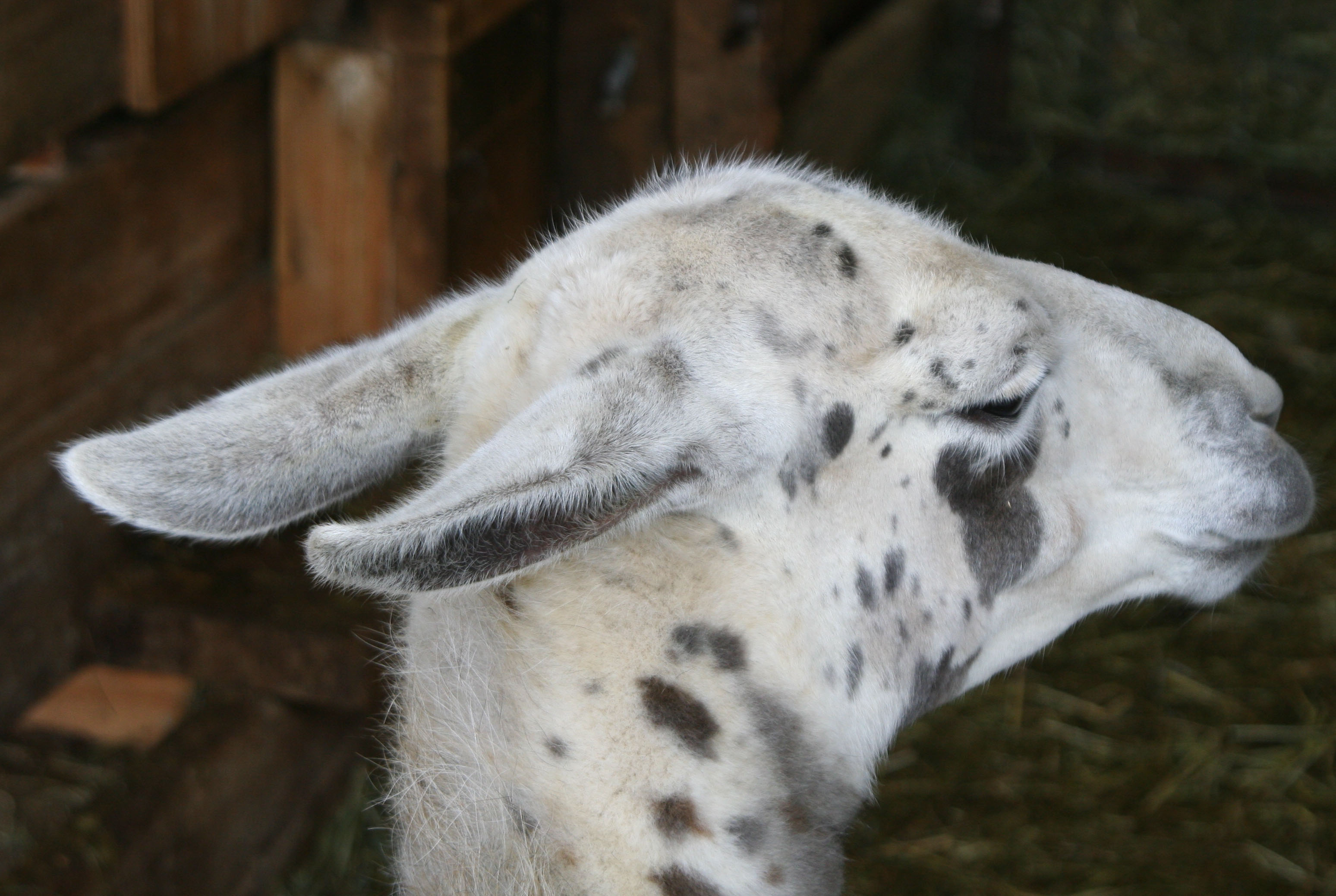
A tour of Morning Star Farm introduced us to several four-legged creatures including this horse and the llama featured below. There was also a cow having a calf which I chose not to photograph.


I simply can't resist photographing animals. This llama at Morning Star Farm was a natural.


Another view of the Llama at Morning Star Farm in Qualicum Beach, BC.


And a final view of the llama. My favorite. Note the large, soft dark eyes.


We added in trips to Campbell River and Port Alberni plus bought tickets for the musical “All Shook Up” playing at the Chemainus Theater Festival. We would not be bored. I have already blogged about Port Angeles, Duncan and Chemainus. My next blog will be on Coombs and its missing goats.


Our friends Ken and Leslie Lake. Ken had temporarily abandoned his SF Giants Baseball cap to "look more Canadian."


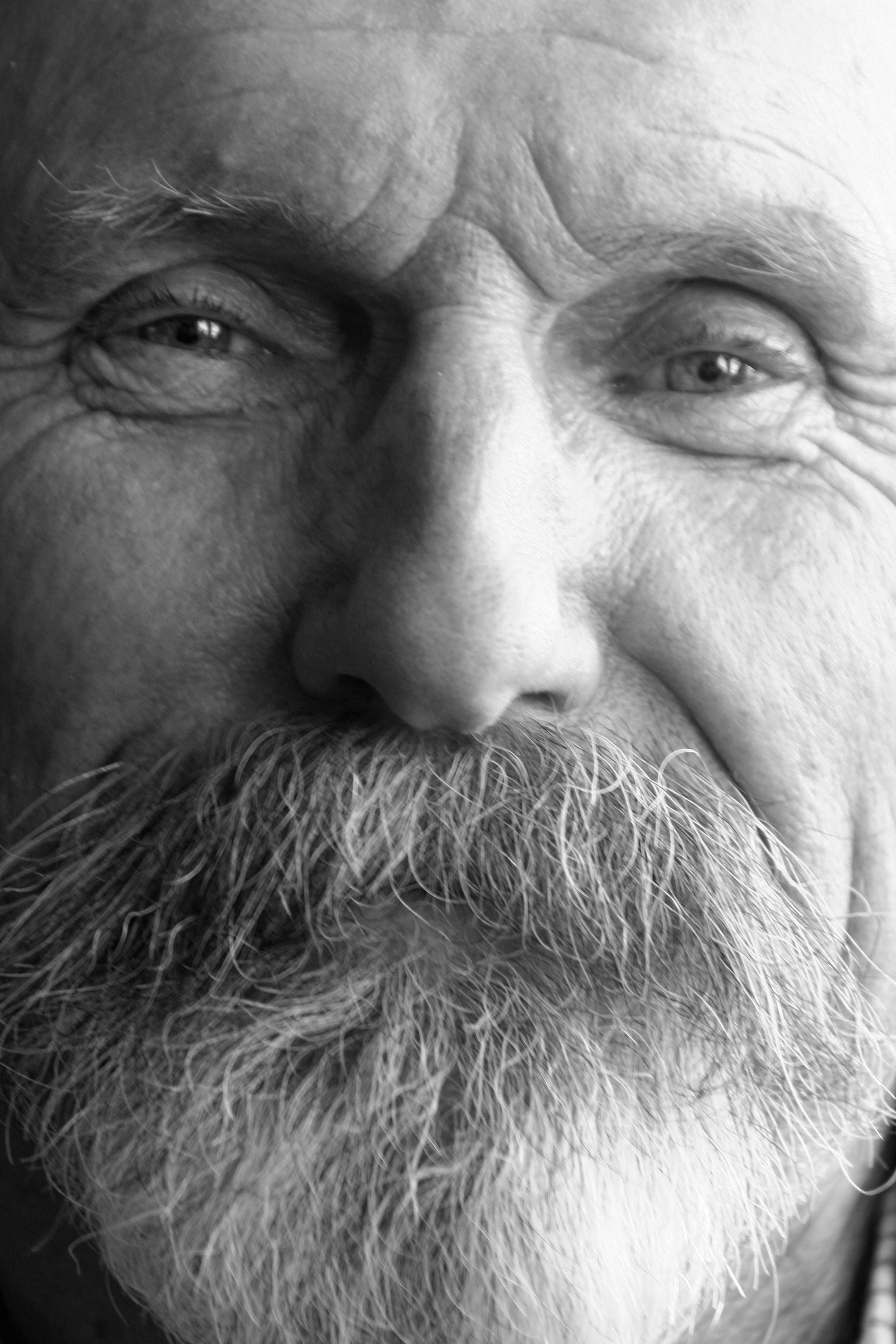
They say we gain character as we grow older. Or maybe we become characters. The jury is still out. I think this black and white photo of Ken Lake shows character.

Port Angeles… The Vancouver Island Adventure Begins

As we prepared for our trip to Vancouver Island in British Columbia, our sunroom in Southern Oregon wasn't looking so sunny. I wondered what the weather would be like in Canada.

“Um, is that really smart?” a friend asked when he learned we had traded our time share in sunny Puerto Vallarta for one on Vancouver Island still in the grip of winter?

We weren’t sure but such thoughts rarely stop us. The first week in March is my birthday week and I had a tradition to uphold. I always escape. For years I have taken one day off for each decade I have lived. And those are workdays, mind, you; weekends are a bonus.

On a snowy March 1st we packed up our Toyota Tacoma pickup and hit the road. We couldn’t help but wonder… if it was snowing in Southern Oregon, what would it be like in British Columbia?

While not being overly inspired to hit the road, I was inspired to make a George Bush Snowman.

We arrived in Port Angeles, Washington a day later without having to use four-wheel drive once. Luck was riding with us. Since our timeshare in Parksville wasn’t available for two days, we decided to explore Port Angeles. After all, Bella of Twilight fame came here from Forks and played with her vampire boyfriend; why shouldn’t we play in Port Angeles too.

We lucked out. This was the view out our window from the Olympic Lodge when I woke up on my birthday in Port Angeles. The snow covered Olympic Mountains provide a striking contrast to the green grass on the Lodge's golf course.


Like many communities, Port Angeles features a Farmers' Market on Saturdays. Fresh vegetables and bright colors are hard to resist, whether you plan to eat them or photograph them!


This wood sculpture with masks embedded in it provides further proof of the good weather. Port Angeles gets good grades for the art it has scattered throughout the community.


This mask in particular caught my attention. I've heard of buggy eyed and beady eyed, but people eyed...?


I also liked this dragon. It reminded me of my trips to Burning Man.


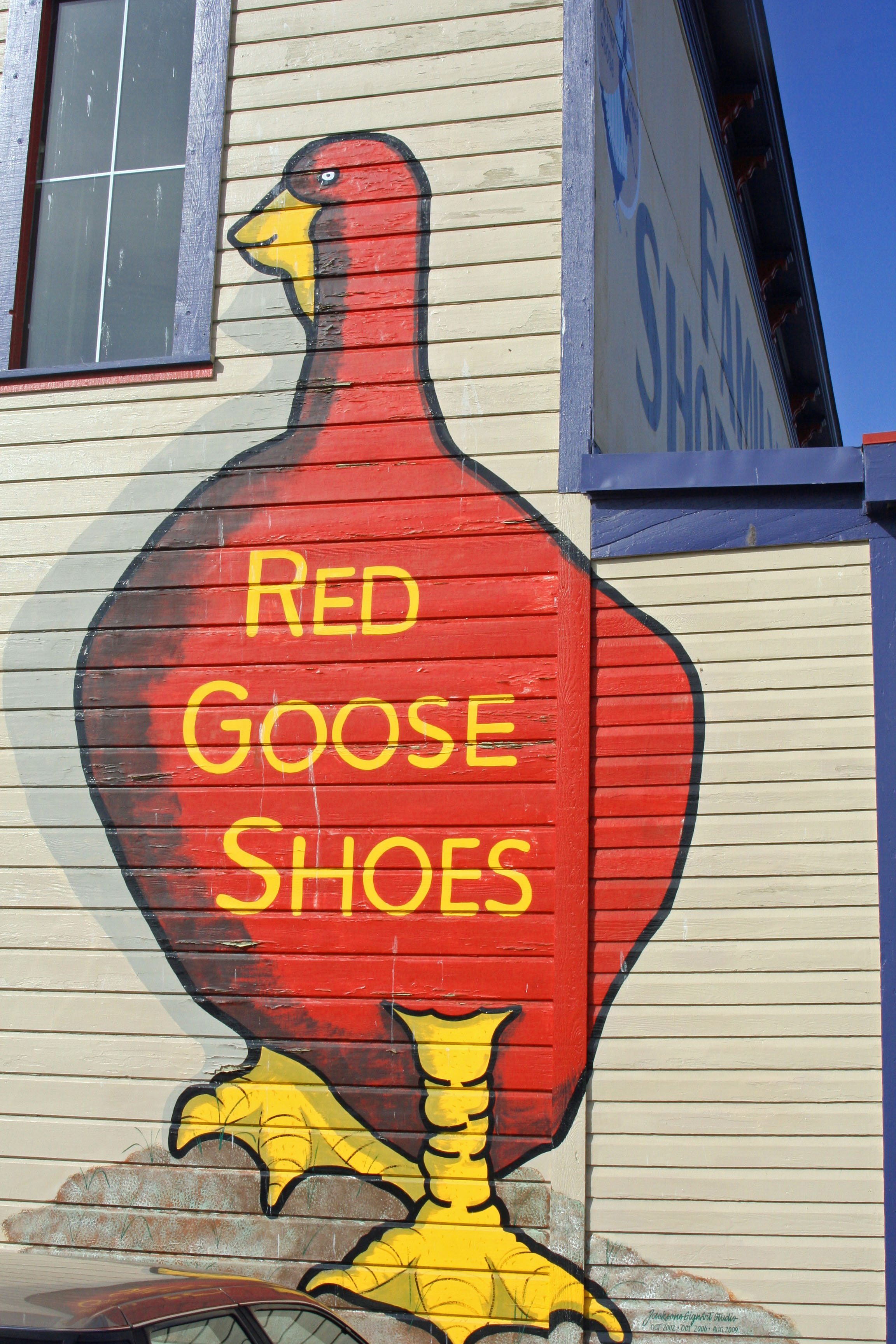
Wandering the streets, we came across this large red goose advertising Red Goose Shoes. It looks like his next step will be on to the roof of the car seen in the foreground, crushing it like a movie monster would.


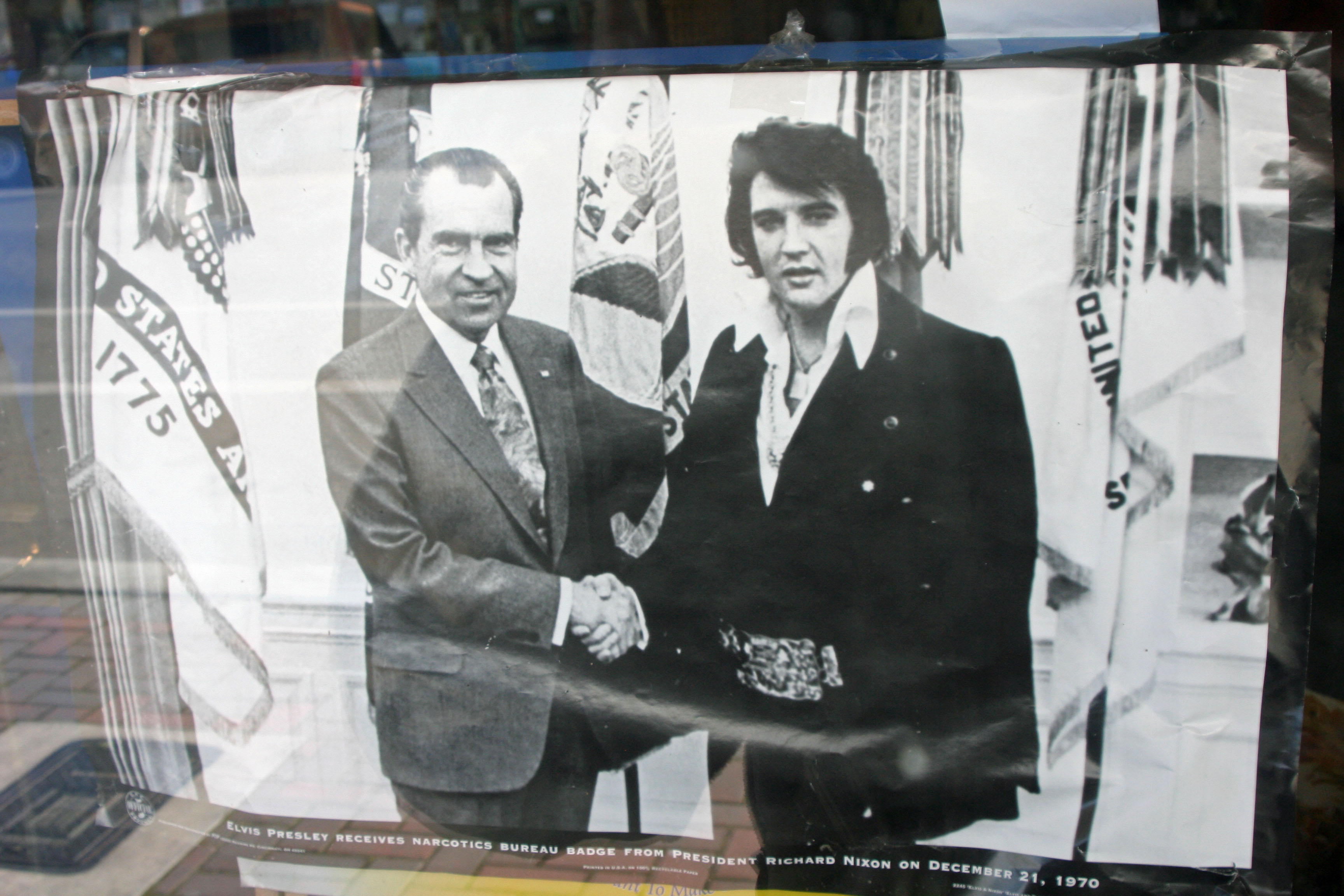
Peggy and I always enjoy unique window displays. This one featuring Richard Nixon presenting Elvis Presley with an anti narcotics award redefines ironic. Presley is reported to have consumed some 12,000 prescription pills in the 20 months before his death.


Visiting Port Angeles almost requires you retrace the steps that Bella of Twilight fame took on her shopping trip from Forks. One stop Bella made was to find a book that would tell her if her boyfriend Edward bites. Here, Peggy, a dedicated Twilight fan, poses with a bag of books in front of the Odyssey Book Store. A shadowy Bella, Edward and Jacob are reflected in the window. Edward is looking down like he might bite Peggy.

The Shadowy World of Burning Man

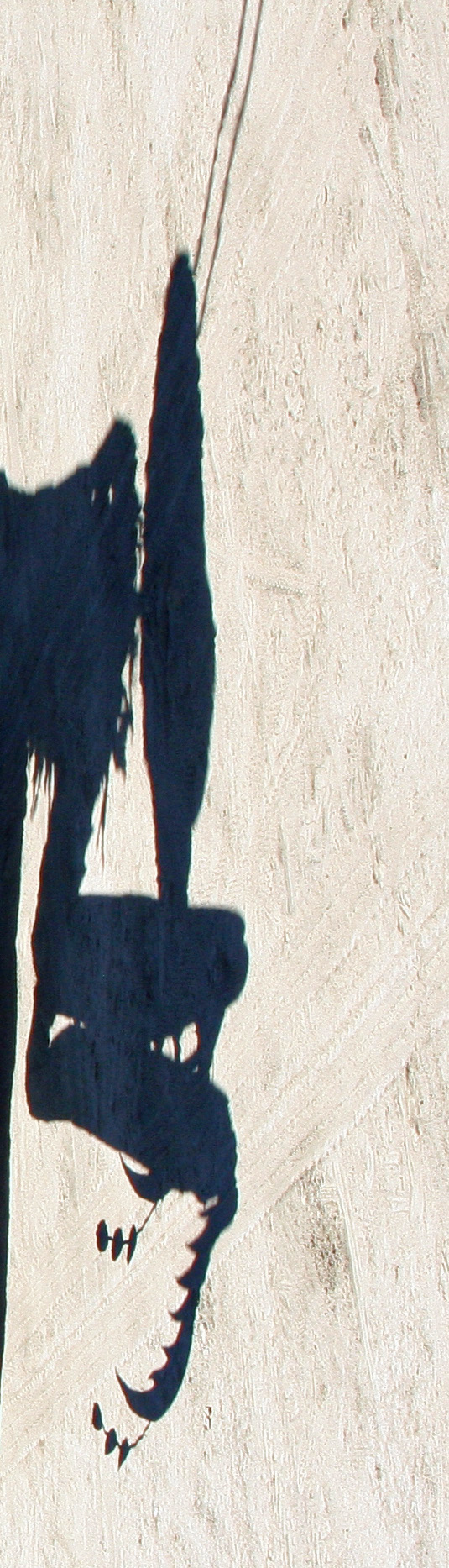
I loved the personality of this goat sculpture at Burning Man. Its shadow also has a great deal of character. Note the tail and ears.

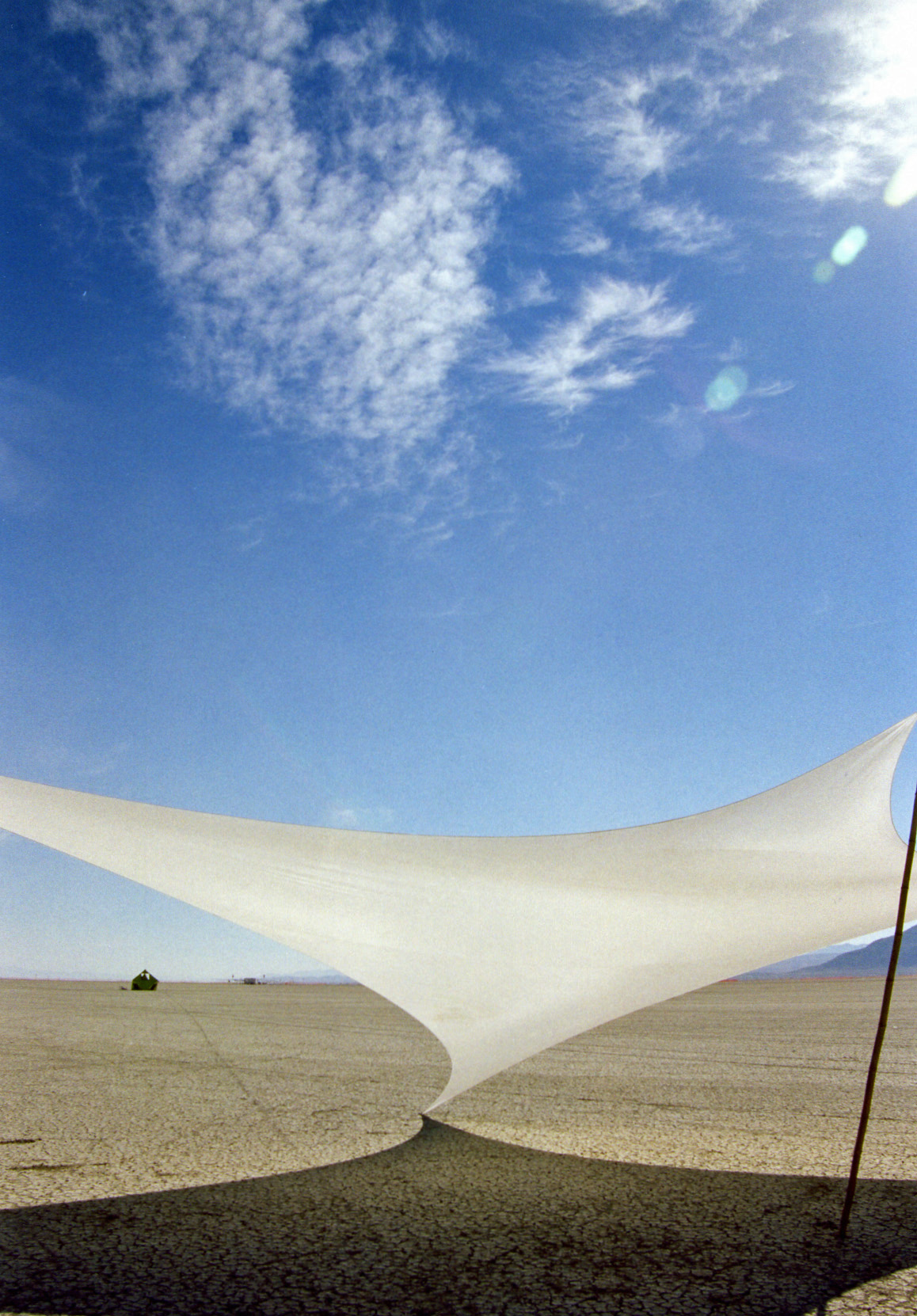
OK, I admit to a slight play on words for this blog. What I am talking about is photographing shadows. At Burning Man, or anywhere else for that matter, focusing on shadows provides a different, and I think interesting, perspective. The bright sun combined with the light brown of the playa provides a unique opportunity for shadow photography. Following are some of my favorites.

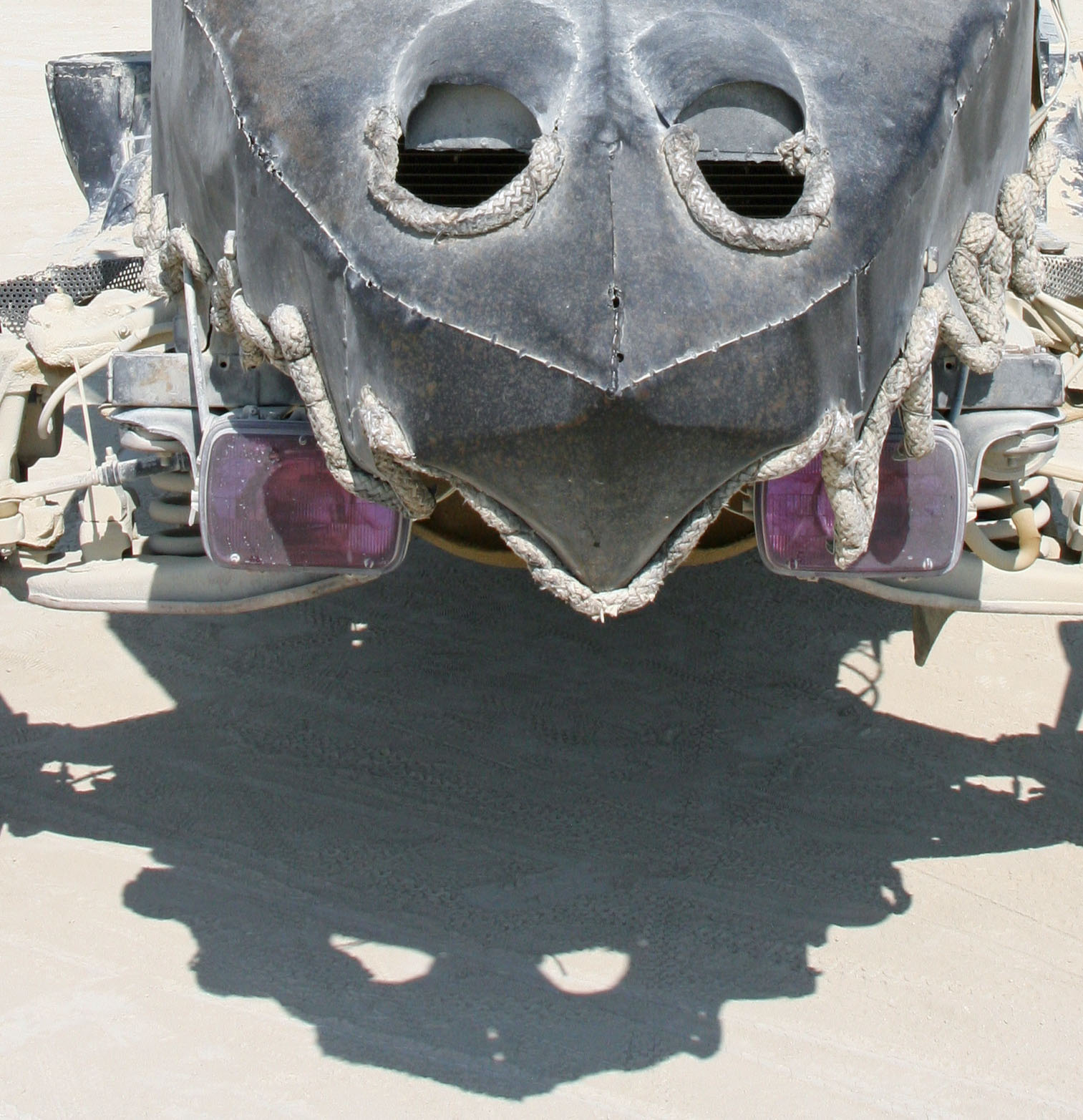
The mutant vehicles of Burning Man provide great subjects for shadow photos. This one, obviously, was from the Praying Mantis vehicle.


Another mutant vehicle of Burning Man. The question here is which is more scary: the vehicle or its shadow?


Speaking of scary shadows, this guy is from a spider 'mount' on a Burning Man merry-go-round. Little kids might view it as a 'night-mare.'


I liked the complexity of this shadow reflecting a Death Guild Chopper. Is this the shadowy side of Burning Man?


Bicycles, rather than choppers, are the chosen mode of transportation at Burning Man. Out of respect for participants, I've never posted a photo of the CT parade where over a thousand women joyfully ride topless. This is my first. Was I discreet enough?


The shadow of the Man is feeling a little fuzzy in this photo. Maybe he is contemplating the 2012 ticket sale.


Shadows can also enhance the art of Burning Man as this sculpture of flight demonstrates.


This young woman in her Burning Man costume has a lovely pair of wings but I found the shadow of the wings equally interesting.


Looking down from the Man, these shadows are more solid than the Burners.


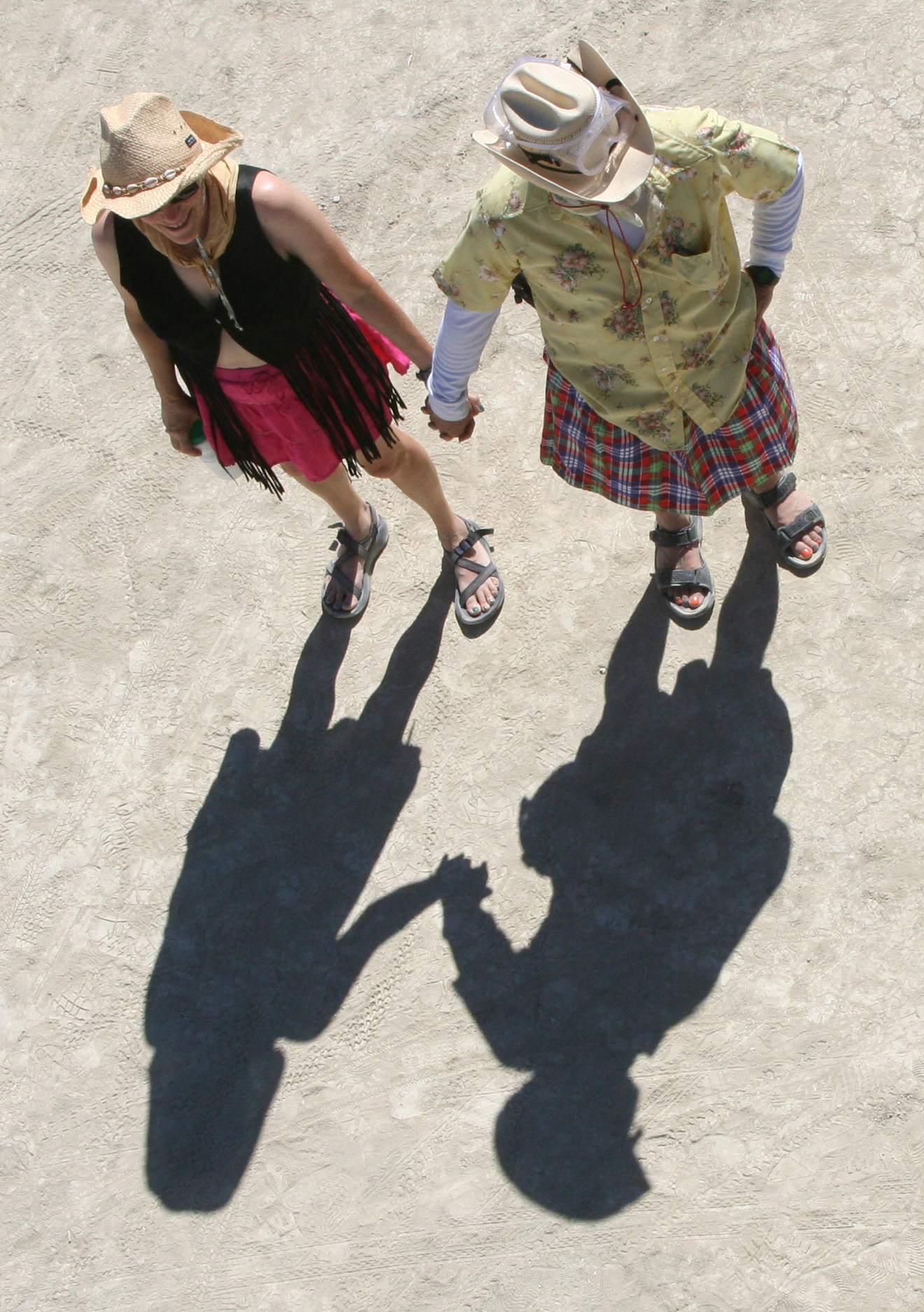
My friends, Ken and Leslie Lake at Burning Man with their shadows, holding hands, holding hands.

The Case of the Errant Urinalysis… From Free Speech to the Peace Corps


In addition to whatever mischief I had been up to during the Free Speech Movement at UC Berkeley, the Peace Corps wanted to know about my health.

I was directed to show up at the Army Induction Center in Oakland for a physical. I lined up with a bunch of semi-naked men to be poked and prodded. It was an experience not worth repeating.

“Turn your head and cough.”

I took it like a man and escaped as soon as the opportunity presented itself. A couple of days later I came back from class and there was a note from my other roommate, Cliff, who was also going into the Peace Corps.

“The Induction Center called,” he wrote, “and there is a problem with your urinalysis.” I was to call them.

“Darn it,” I thought. “Why is this so difficult?” So I called the Induction Center and resigned myself to having to pee in another jar. With really good luck I might avoid the naked-man-line.

I got a very cooperative secretary who quickly bounced me to a very cooperative nurse who quickly bounced me to a very cooperative technician who quickly bounced me to a very cooperative doctor… none of whom could find any record of my errant urinalysis.

They didn’t see any problems and they didn’t know who had called. They suggested I call back later and be bounced around again. More than a little worried, I rushed off to my next class.

That evening I reported my lack of success to Cliff. He got this strange little smile on his face and asked me what day it was.

“April 1st,” I replied as recognition of having been seriously screwed dawned in my mind. “You little twerp!” I screamed, as Cliff shot for the door with me in fast pursuit. It took me four blocks to catch him. The damage wasn’t all that bad, considering.

The FBI Hears I Run a Communist Cell Block…

Next on my to-do list for joining the Peace Corps was the dreaded FBI security check.

I had been up to mischief at Berkeley, hung out with the wrong people, been seen in a few places where law-abiding people weren’t supposed to be, and had my name on a number of petitions.

“And where were you Mr. Mekemson the night the students took over the Administration Building?”

Maybe there was even a file somewhere; maybe it was labeled ‘Radical!’ J. Edgar Hoover saw Red whenever he looked at Berkeley.

Soon I started hearing from friends. The man with the badge had been by to see them. The background security check was underway. One day I came home to the apartment and found my roommate Jerry there, looking very nervous.

“I have to talk to you Curtis,” he blurted out. “The FBI was by today doing your Peace Corps background check and I told them you had been holding communist cell block meetings in our apartment.”

Jerry wasn’t joking; Jerry was deadly serious; Jerry was dead.

“What in the hell are you talking about?” I had yelled, seeing all of my hopes dashed. I knew that Jerry disagreed with me over my involvement in Berkeley’s Free Speech Movement and probably disagreed with me over the Vietnam War, but I didn’t have a clue on how deep the disagreement went. Or what he based his information on.

My degree in International Relations had included a close look at Communism. I found nothing attractive about the system.

The closest I had come to joining a leftist group had been the Free Student Union. Yes I had held a committee meeting at our apartment but I had also severed my relationship with the organization. The folks behind the Union were more interested in radicalizing the student body than serving it. That was not my interest.

I was not happy with Jerry that night or for some time after. I assumed the Peace Corps option was out and begin thinking of alternatives. They were bleak.

As it turned out, a few weeks later we received final notification from the Peace Corps. We were accepted. The people who said good things about me must have outweighed the people who said bad things. Either that or Jo Ann looked so good they didn’t want to throw the babe out with the bath water.

Or possibly the majority of other students signing up for the Peace Corps from Berkeley in 1965 had rap sheets similar to mine. I suspect that was the case.

Next Blog: If this is the Peace Corps, what am I doing in the naked man line at the Army Induction Center?

Burning Man… The Great Ticket Fiasco

Burning Man tickets have become scarce, Burners are upset, and scalpers are taking advantage.

Burning Man ran out of tickets last year. People panicked. Scalpers had a field day.

Let me say this about scalpers; they are the scum of the earth. Scalpers and other speculators of their ilk make their fortunes by driving prices up and taking advantage of people. They are driven by greed and contribute nothing to society.

Burning Man decided the fairest way to deal with the limited ticket issue this year was to run a lottery. To deal with the scalpers, controls were placed on the number of tickets anyone could buy. Scalpers undoubtedly figured out ways of getting around the controls. They always will if the profits are substantial. But that’s not the major issue.

Burning Man forgot the major maxim of good business practice: Don’t Screw Your Best Customers. This was not Burning Man’s intent, but it was the result.

Suddenly, Burners who had been faithfully buying tickets and attending the event for 5, 10, or even 15 years are ticketless. What’s worse is that many of these people are critical to the Burning Man experience. They are the contributors, people who share their musical and artistic talent, people who volunteer for the many tasks it takes to run Burning Man and people central to building and maintaining the communities that give Burning Man its unique flair.

What were you thinking guys?

To give credit to the Burning Man organization, it is now struggling with how to right the wrong. A less than satisfactory solution will be jury-rigged this year. The result will still be lots of seriously bummed, or should I say burned, Burners.

As a six-year-veteran here are my thoughts regarding a solution to Burning Man’s ticket sales.

  1. Do away with the tier system. It’s a form of scalping in itself. Figure out what a fair price is to run the event, make your ‘profit,’ and support the other causes/efforts you believe in. Charge everyone the same amount but retain your program for subsidized tickets for people who need them. You can encourage people to make donations to support valuable programs such as the Black Rock Arts Foundation and Burners without Borders.
  2. Limit sales to twice a year. The first sale will be for the total number of spaces available and be on a first-come first-serve basis. Make it in January so you have time to do your own planning. The total upfront cash should be good for Burning Man. It’s as fair as you can be in terms of distribution.
  3. Make the second sale one month before the event to sell refunded tickets from people who can’t go. (Closer to the event would be better but the logistics might be a nightmare.)
  4. To make this work and to eliminate scalpers, people will have to have numbered tickets tied to their name and a personal photo ID. That’s how participants will get in and that’s how they will obtain refunds if they can’t go. I know this will take extra effort on the part of Burning Man and that veterans may complain, but it is the only way to keep ticket control in Burning Man’s hands. An increased price is justified here to cover Burning Man’s refunding and processing costs. People will have to make a go/no go decision by a certain date. Otherwise they are out the price of their ticket.

This is a much simpler approach than Burning Man uses now. It is fair and will be easily understood by participants.

An Offer to Teach in Africa: From Free Speech to Peace Corps

In the spring of 1965 Uncle Sam pointed his finger at me. He wanted warm bodies to fight a colonial war in Southeast Asia the French had already lost. Being a 22-year-old male about to graduate from college, I was a prime candidate.

If drafted, I would go.

I couldn’t imagine burning my draft card, running off to Canada or joining the Texas Air National Guard. I actually believe some type of mandatory two-year national service ranging from the military to the Peace Corps would be good for young men and women and good for America.

But fighting in a war I didn’t believe in and killing people I didn’t want to kill was at the very bottom of my bucket list. And there’s more. I am allergic to taking orders and can’t stand being yelled at. I’d make a lousy soldier. I saw a court martial in my future.

Luckily, a temporary solution popped up. Peace Corps Recruiters were coming to UC Berkeley.

John Kennedy had first proposed this idealistic organization to a crowd of 5,000 students during a campaign speech at he University of Michigan on October 14, 1960. He was running four hours late and it was two in the morning but the response was overwhelming. One of his first acts as President was to create the agency.

Peace Corps service would not eliminate my military obligation but it might buy time for the Vietnam War to sort itself out. Of more importance, I felt the Peace Corps provided a unique opportunity to travel and possibly do some good. I also believed I would be serving my country.

My fiancé and I sat down and talked it out. Jo Ann was excited. We would go together as a husband and wife team. When the Peace Corps recruiters opened their booth in front of the Student Union at Berkeley, we were there to greet them, all dewy-eyed and innocent.

“Sign us up,” we urged.

Of course there were a few formalities: small things like filling out the umpteen page blue application and taking a language aptitude test, in Kurdish. We also needed letters of recommendation.

Apparently we looked good on paper. In a few weeks, the Peace Corps informed us that we had been tentatively selected to serve as teachers in Liberia, West Africa. We were thrilled. The age-old question of what you do when you graduate from school and enter the real world had been answered, or at least postponed.

Uncle Sam with his growing hunger for bodies to fight the Vietnam War would have wait.

Next Blog: My roommate tells the FBI I am running a Communist Cell Block.

48 Years Later… The 1964 Free Speech Movement at UC Berkeley

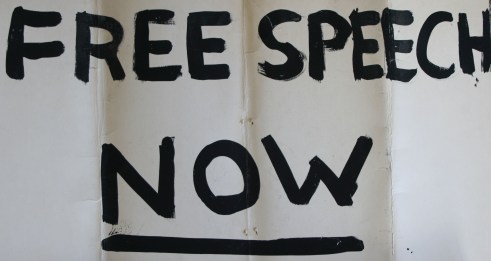
This is the original sign I carried in the Free Speech Movement during the December 1964 police occupation of UC Berkeley and arrest of 800 students participating in the Sproul Hall Sit-in.

I’ve been rooting thorough my old Free Speech Movement files, digging for treasure. Buried between aging, yellow copies of the Daily Cal and mimeographed handouts calling for action, I found the picket sign I carried when the police invaded UC Berkeley and arrested 800 students on December 3, 1964.

There are numerous sources covering FSM and its impact including an excellent book, “The Free Speech Movement,” edited by Robert Cohen and Reginald Zelnik. FSM even has its own website, fsm@a.org. I visited the site and found pictures of aging white-haired men and women looking remarkably like me. 1964 is now ancient history.

In preparation for this series of posts I also returned to UC Berkeley. Sitting on the edge of Ludwig’s fountain under a fine mist, I stared at the steps of Sproul Hall while searching my memory for ghostly reminders of past demonstrations.

I actually found one. A long-haired African American was distributing protest arm bands. His effort would have been illegal in the fall of 1964.

A stroll down Telegraph Avenue brought me to the Café Med, one of my favorite student hangouts. I stopped for an obligatory cup of cappuccino. I wrote notes in my journal and listened in on conversations. It seemed that neither the coffee house nor my behavior had changed much.

Back on campus I visited the Free Speech Café in the Moffitt Undergraduate Library. Every seat was full so I wandered around and looked at photos. Mario Savio, who died in 1996, was there in spirit. A picture captured him in a characteristic pose, haranguing a sea of upturned faces. It was a fitting memorial.

In hindsight, the Free Speech Movement has become an important part of Berkeley’s history, honored even by an Administration that once characterized it as a Communist inspired plot. And what about my hindsight; have the years blurred or substantially modified my vision of what took place?

I tried, in writing this series on UC Berkeley’s Free Speech Movement, to be faithful to what I felt and experienced at the time. I feel now, as I did then, that it didn’t have to happen. The attitude the Administration demonstrated in the 1963 student leadership meeting I attended and described in an earlier post went beyond naïve to dangerous.

If the more radical students found ground for ‘revolution,’ it was a ground fertilized and plowed by the Administration. The desire to protect the campus from outside influence became a willingness to limit the rights of students to participate in the critical issues of the day and, in so doing, take the side of powerful elites whose vested interest was in maintaining the status quo on civil and other human rights issues.

What changed as a result of the Free Speech Movement?

Certainly the concept of in locus parentis took a major hit. Students at Berkeley and other colleges across America would have much greater freedom in the future, on both a personal and political level. We had graduated from being older teenagers needing guidance to young adults capable of and responsible for our own decisions.

While we were still a part of the future so popular with Commencement speakers, we were also a part of the now, helping to shape that future. Human rights and equality including women and gay rights, the anti-Vietnam campaign, and the environmental movement would all benefit. Berkeley students had participated in one of America’s great transformations.

The New Left considers the Free Speech Movement as an important source of origin. A similar claim might be made for the New Right, the so-called Neo Cons.

The outer fringes of liberal and conservative politics are two cats of the same color, feeding off of the same plate and necessary to each other’s success. Each functions with the tunnel vision of being right and with the belief that the ends of their particular vision justify whatever means necessary to get there. Not surprisingly, both the Left and the Right saw the unrest on the Berkeley Campus as an opportunity waiting to happen.

The message was not lost on Ronald Reagan. Following the Free Speech Movement, he would exploit the student protests at Berkeley and other California colleges as a launching pad for his career in politics. One of his first moves as Governor was to fire Clark Kerr for being too soft on the students. There is a picture from the early 70s of Reagan turning around and flipping off student protestors at a U.C. Regent’s meeting. It was a clear message of intent.

It may be somewhat instructive that his future Attorney General, Edwin Meese, was the Deputy District Attorney in Oakland at the time of the Free Speech Movement. Meese’s role had been to oversee the Sproul Hall arrests and serve as liaison with the FBI.

There is a story, which may be apocryphal, that it was Meese who persuaded Governor Pat Brown to send in the troops on the night of the Sproul Hall sit-in by claiming students were tearing up the Dean’s office. If so, it was a deliberate lie or at least an exaggeration. The worst vandalism I witnessed was my standing on the Dean’s desk in my socks so I wouldn’t scratch the surface.

My speculation is that the forces on the right, like the forces on the left, wanted a confrontation. Kerr was planning to address the sit-in the next day in an effort to persuade the students to leave the building. A peaceful solution would not have served the agenda of Meese, Knowland, Hoover, etc. Serious head bashing leading to a full-scaled riot was called for. If it took lies to bring it about, so be it.

Or am I just being paranoid?

Later, when I chaired a committee for the Free Student Union, I witnessed a similar attitude on the part of the Left. A confrontation with students getting their heads bashed was good. It would radicalize moderates and lead to further violent confrontations.

While both the Left and Right worked to subvert what happened at Berkeley for their own objectives, I believe that the Free Speech Movement was what it claimed to be: a fight for free speech, the right to assemble, and the right to participate in the critical issues of the day. It was a fight that still rings true today.