A Jay By Any Other Name, Is Still a Jay… Plus Seven Other Fun and Interesting Birds of Costa Rica

We heard its screech before we saw it. “Jay,” I announced to Peggy. Its call is unmistakeable unless it is modified because of its situation. Or mood. At our property in Oregon, I even heard them make the sound of a hawk— to amuse themselves, I’m sure. It scares the heck out of other birds and small mammals. Their personality, intelligence, and possible warped sense of humor, makes them one of my all time favorite birds.
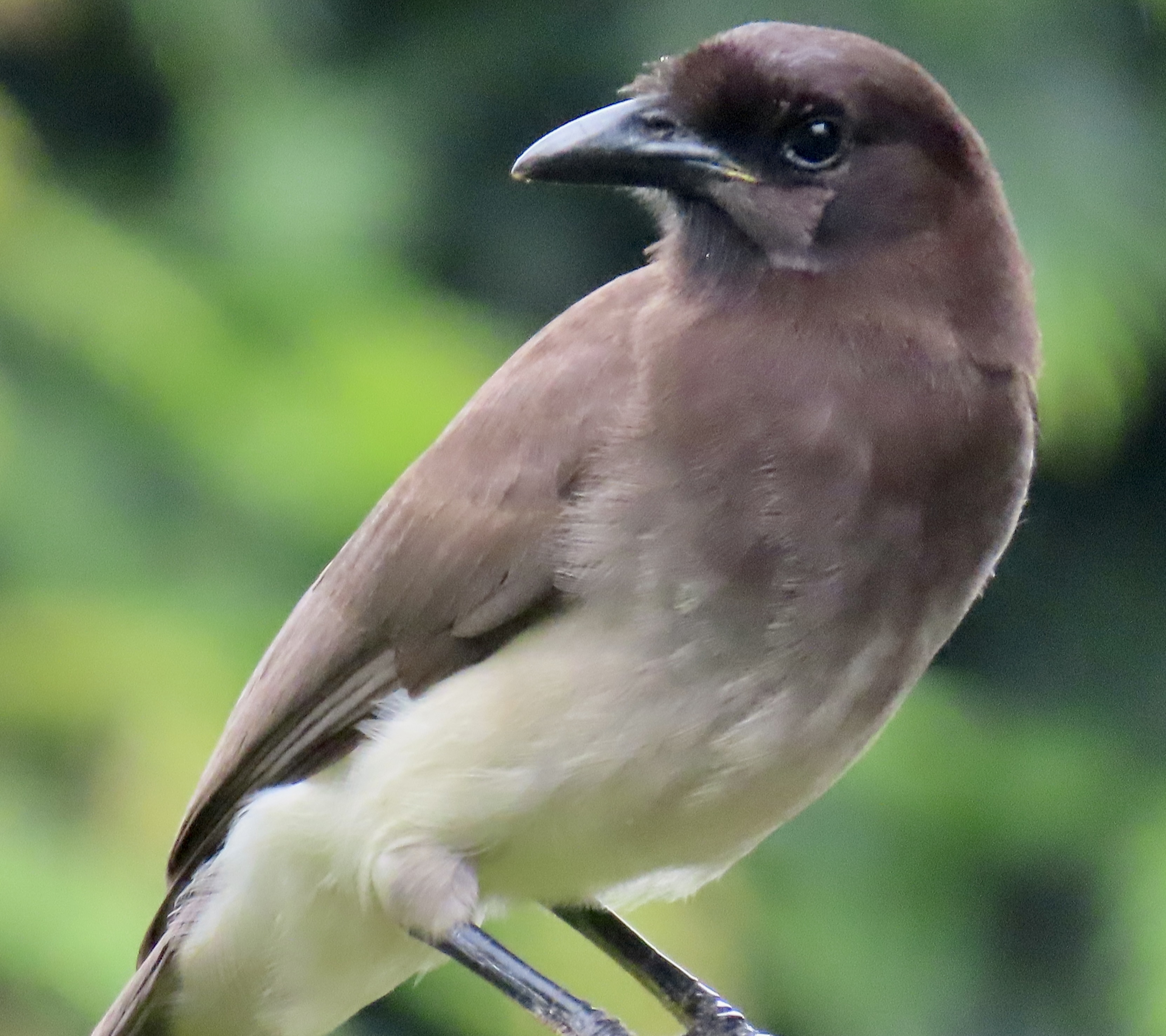
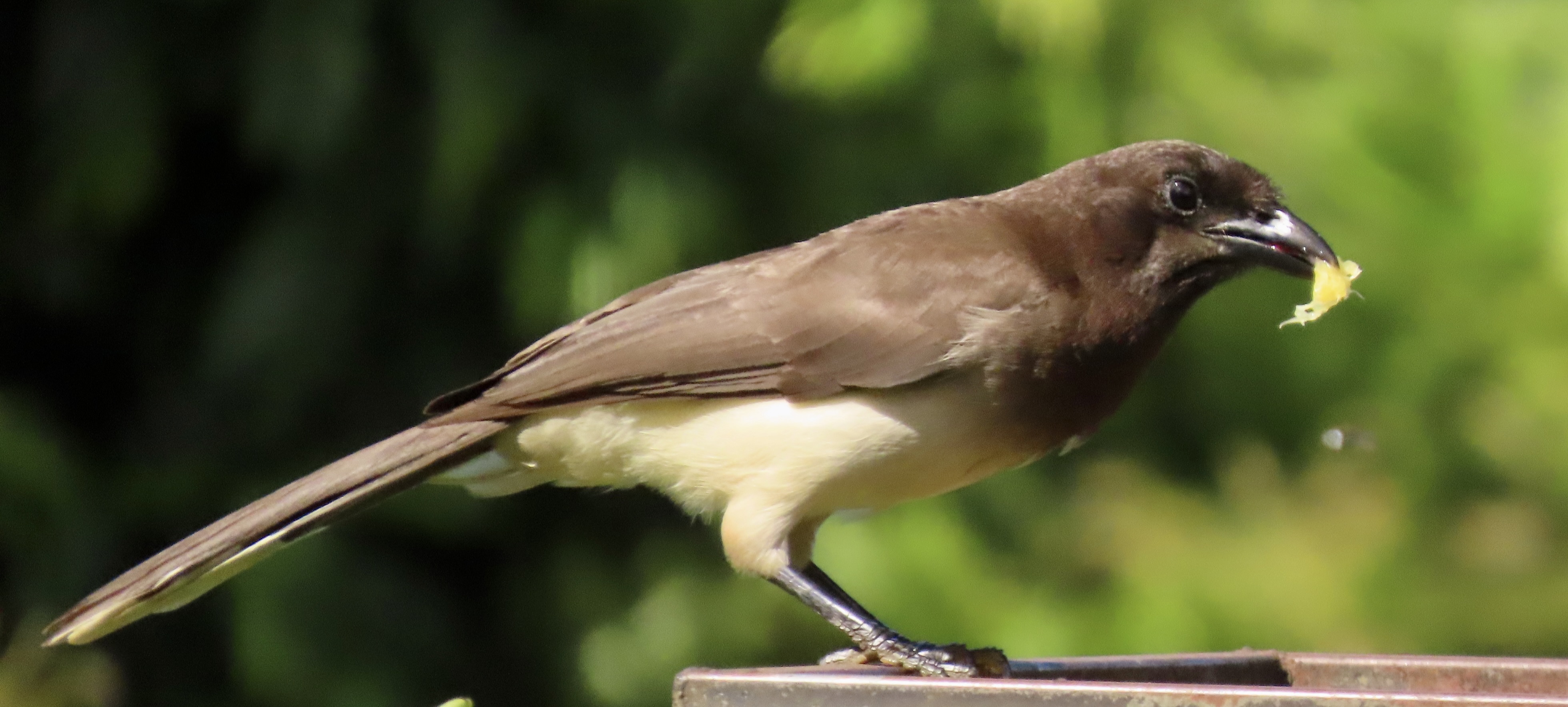
These handsome birds with their Groucho Marx eyebrows are known as a Brown Jays (Psilorhinus morio). Their range reaches from the Rio Grande Valley in southern Texas to northwestern Panama. The white under-belly on this one marks it is a member of the southern subspecies. As for their diet, they are omnivorous: Insects, lizards, fruit: It’s all good. They were regular visitors to the bird feeding table in front of our villa in Nuevo Arenal and happily downed the fruit of the day, whatever it was. But do they eat chicken? We had to travel to Monteverde, Costa Rica to answer this question.
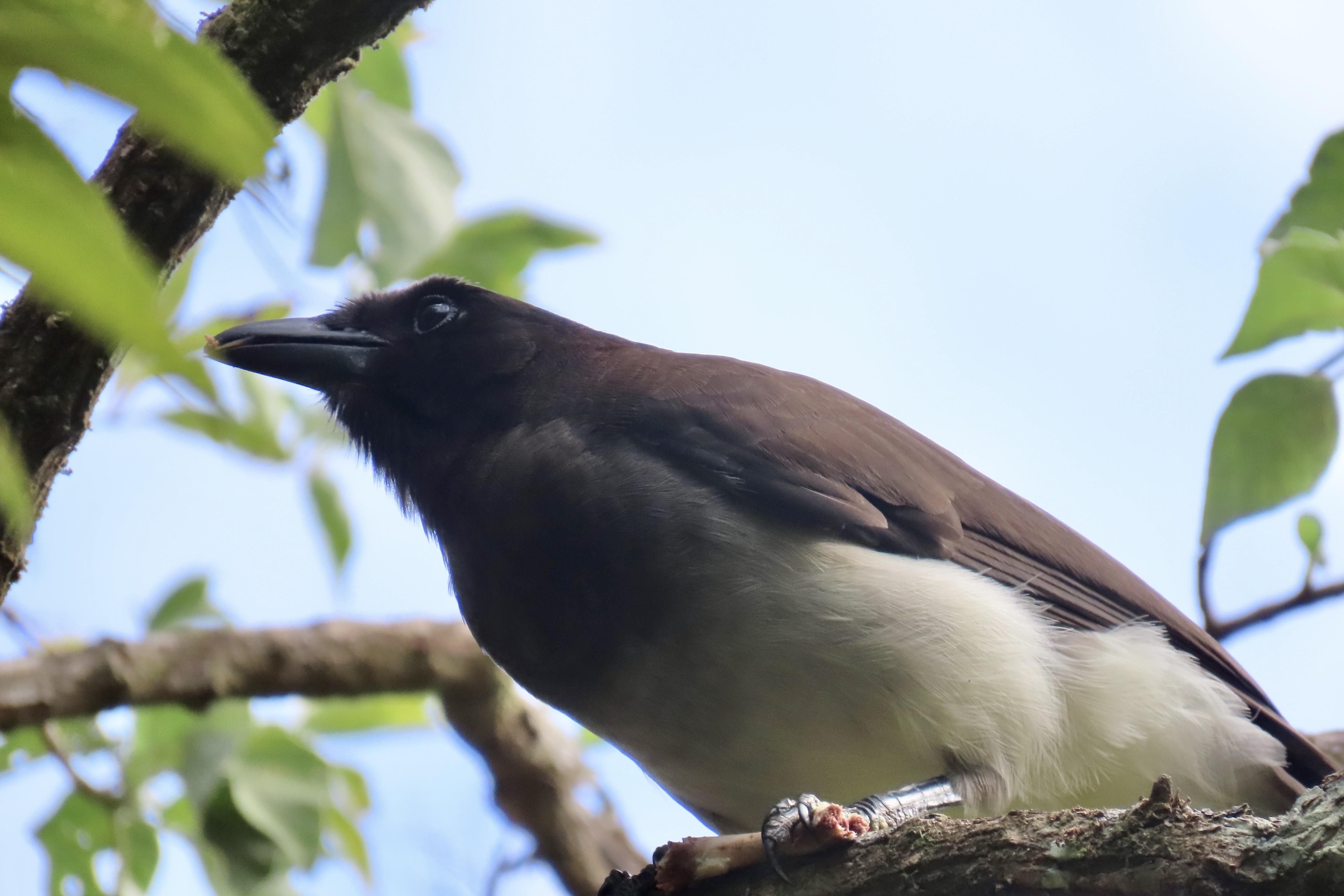
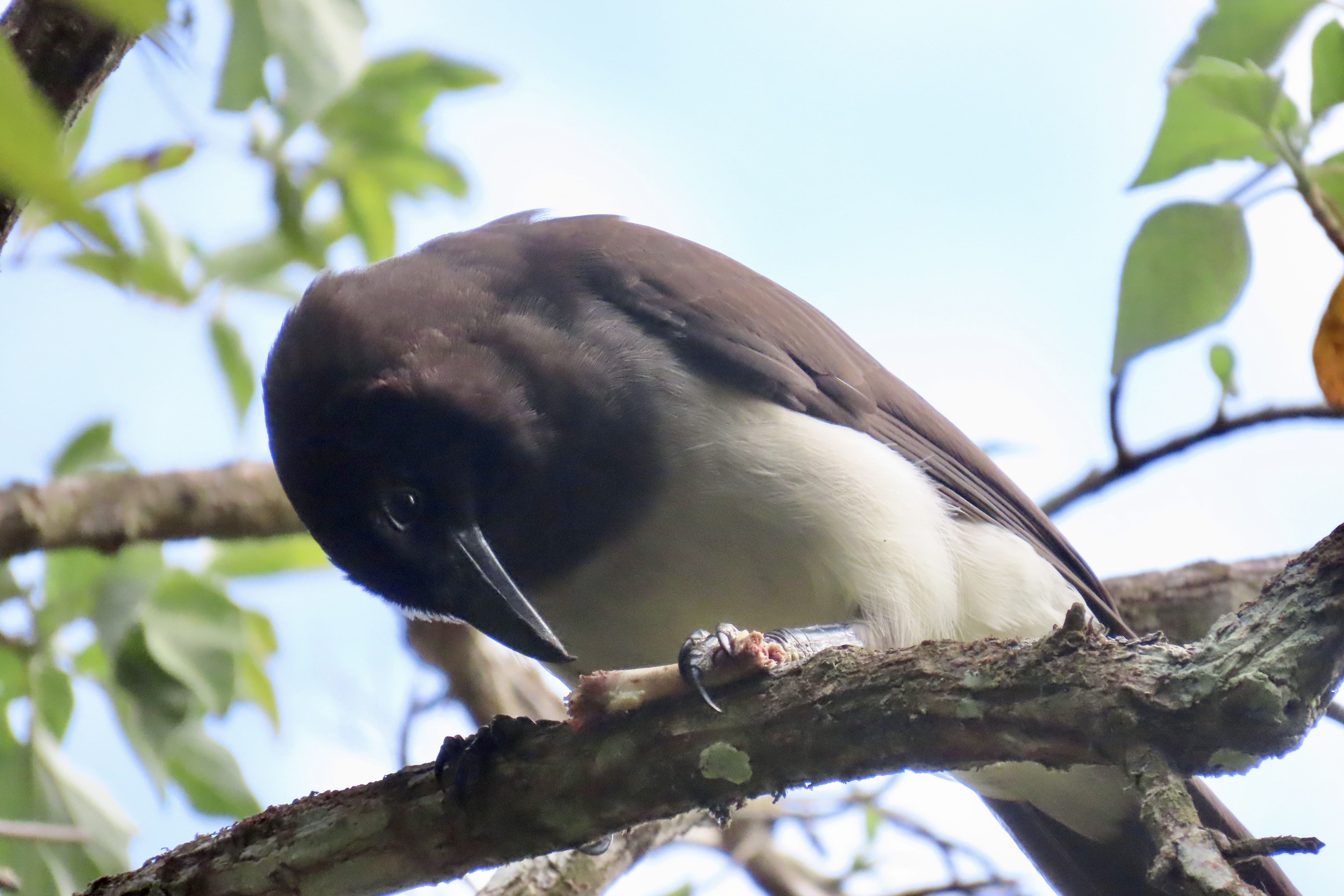
We were in Monteverde when I spotted a Brown Jay carrying nest building materials. I grabbed my camera and went hunting. This one was actually wearing an identification band. The birds work together to build a nest. The female then sits on the eggs until they are ready to hatch. The male feeds her during the process. Offspring from a previous season will sometimes help in the feeding of the chicks, but they transfer the food to mom and dad for the actual process. I couldn’t find the nest, but I noted something else about this Jay beyond its band.
It had found the bone of a discarded chicken leg and was pecking the marrow out of it. As I noted, they’re omnivorous. The one-eyed look was fun.
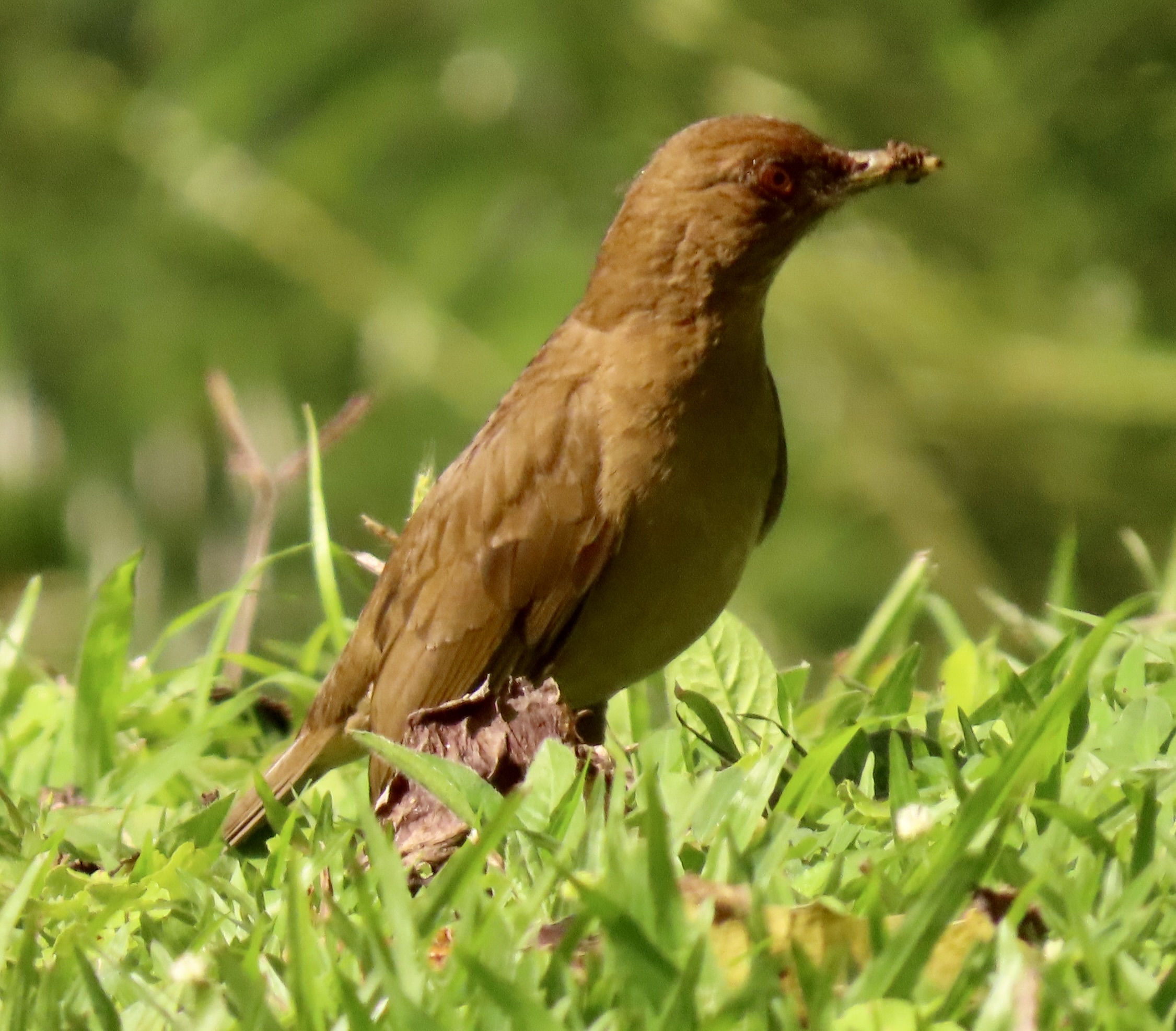
A Clay-Colored Thrush, (Turdus grayi) or Yigüirro, as they are known in Costa Rica, is the national bird of the country. The bird originally gained its popularity in the country’s folklore by singing a beautiful song just before the beginning of rainy season. The natives thought that the yigüirro brought the welcome and necessary rain. Actually, the male who sang the song, wasn’t trying to bring the rainy season. He was busily courting a female before the rainy season started. It’s when they mate, build nests and raise families. But it makes a great story and the male still has a beautiful song.

It appears that this Thrush has caught a worm that wasn’t interested in being swallowed. As we watched it hop around on the lawn searching for such delicacies, we were reminded of its cousin, the Robin. Thrushes share a lot in common. I doubt you would find a Robin following a foraging mass of army ants to feast on the insects that are fleeing to escape, however, which is what the Clay-Colored Thrushes do. I immediately thought of the army ants that invaded my house when I was living in West Africa. We discovered their attack when numerous small bugs came hopping, running, and crawling under our screen door in an effort to escape. The Thrush would have been quite happy to scarf them up. I’m sure the Robin would have as well. But it might not have had the Thrush’s sense to fly off before the ants arrive. We saw a mouse make that mistake. It was his last. Not wanting to end up like the mouse, we went to war. I’ll tell the story in UT-OH!.
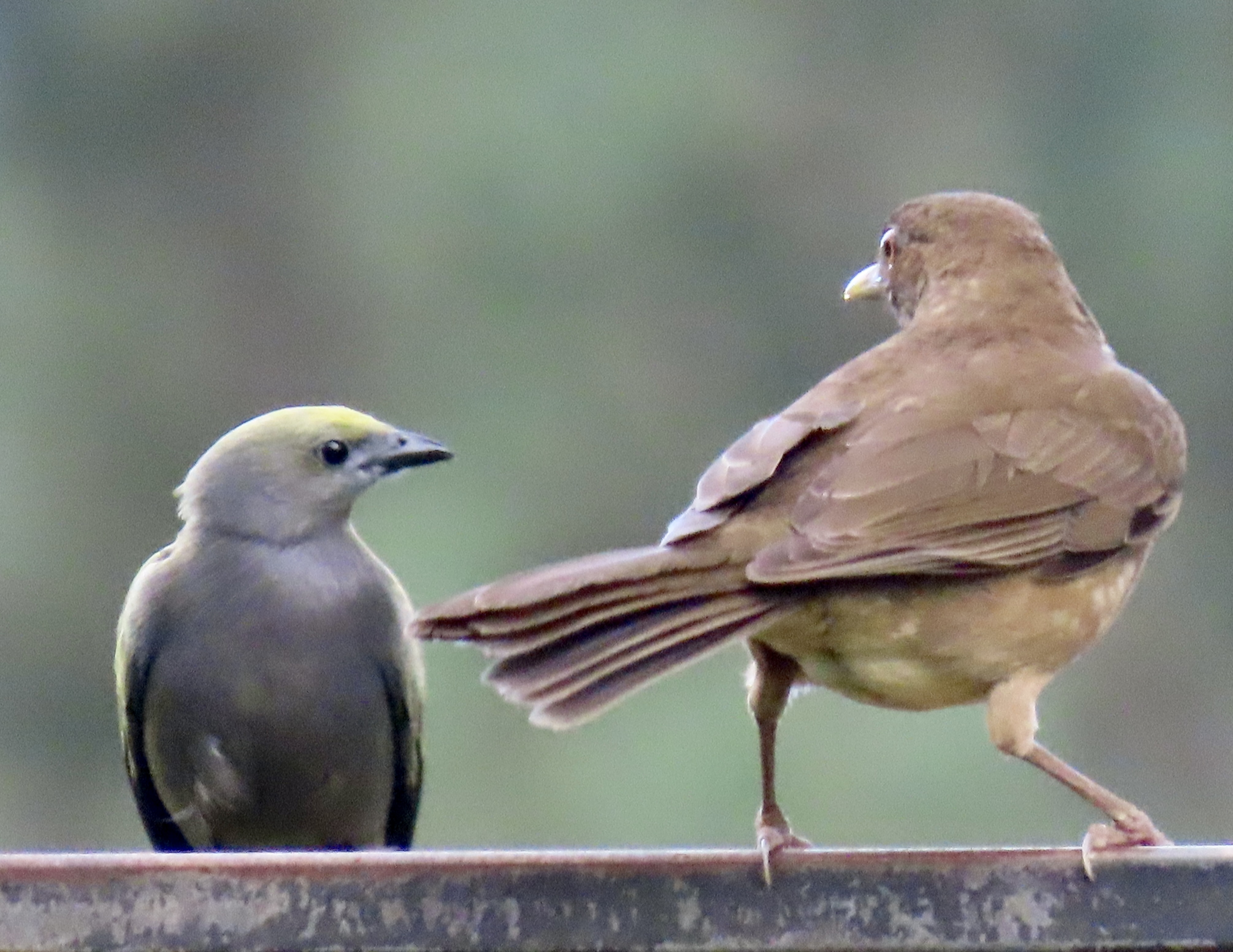
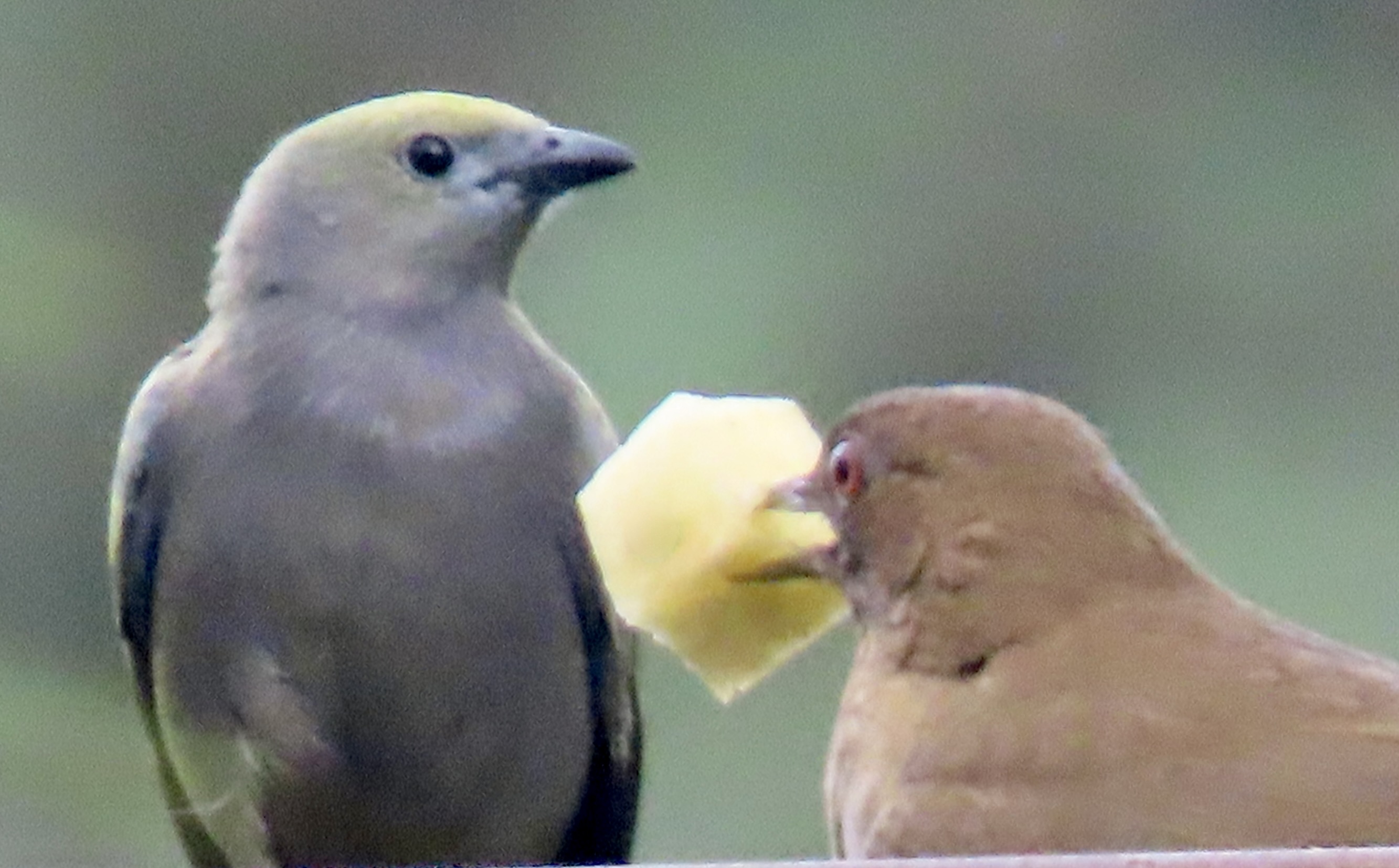
Here a Clay Colored Thrush and a Palm Tanager check each other out. It’s likely that they are having a discussion over who gets the fruit. Alternatively, I like to think that the thrush is saying, “Wow! You are really beautiful.”
“Can I offer you a piece of Pineapple?”
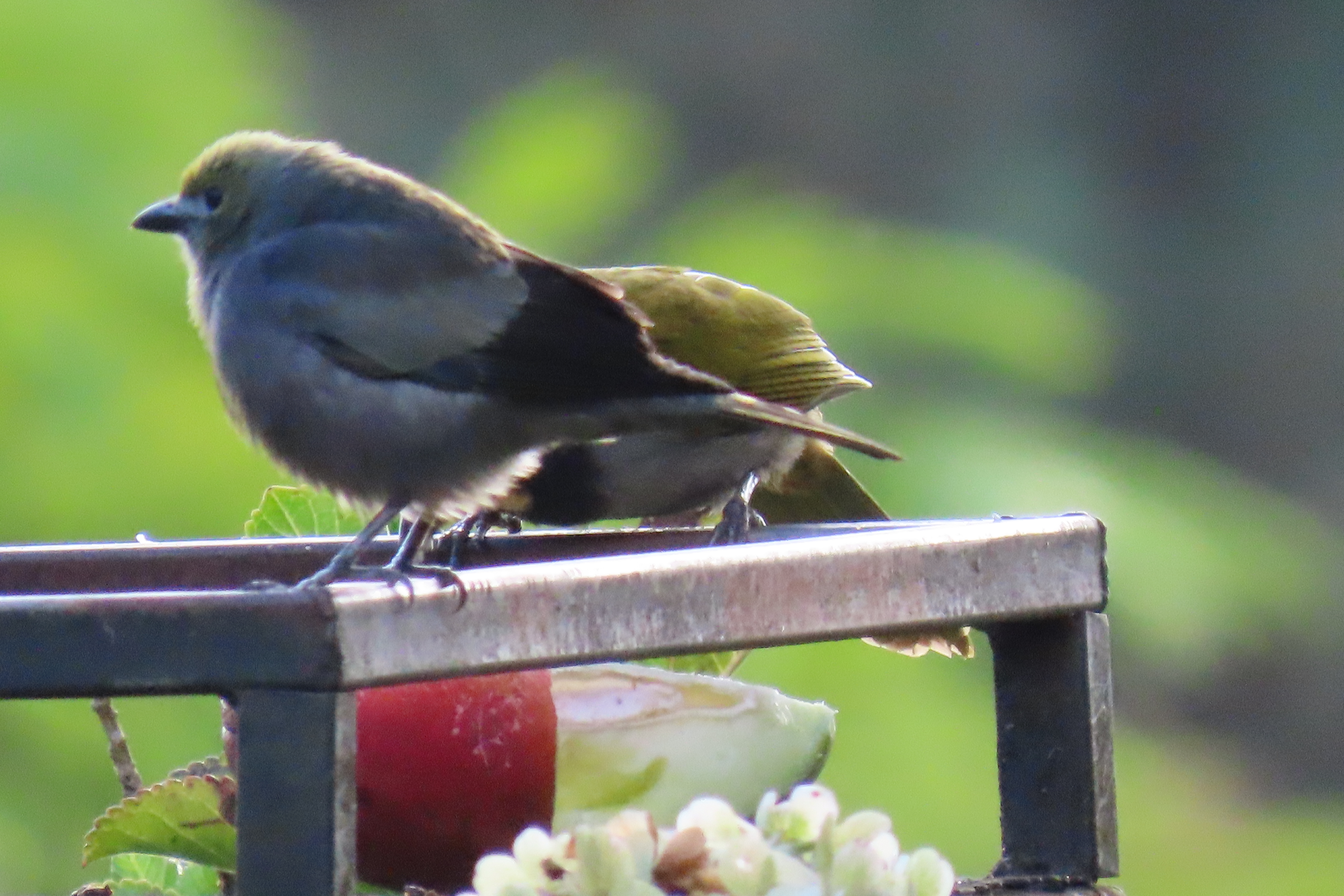
A fluffed up view of the palm tanager. They often nest and hang out in palm trees, which is how they get their names.
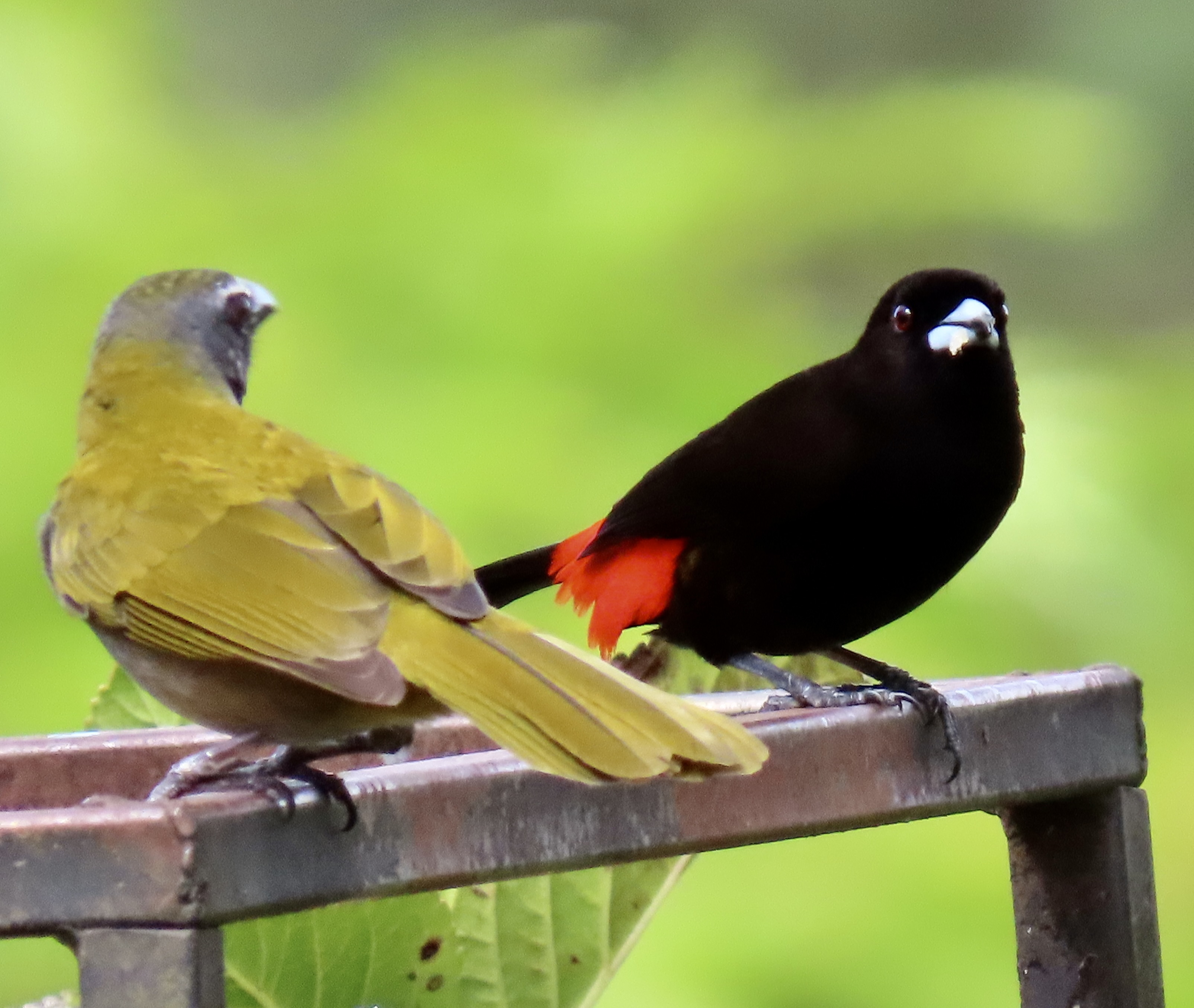
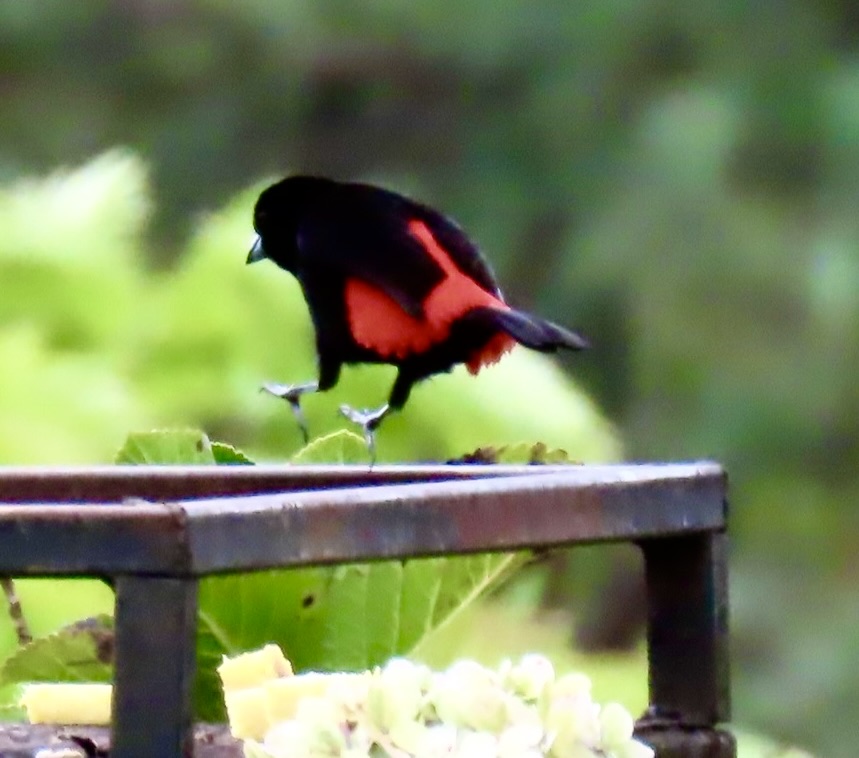
Another dining table discussion? Here, a Buff-Throated Saltator is checking out an appropriately named Scarlet-Rumped Tanager. These, along with several other of the smaller birds I am featuring here, often flock together for feeding purposes. (Safety in numbers?) The Tanager is chowing down on a bite of pineapple. It’s hard to find a more easily identified bird than this Scarlet-Rumped Tanager (Ramphocelus passerinii), unless you are looking for the female of the species.
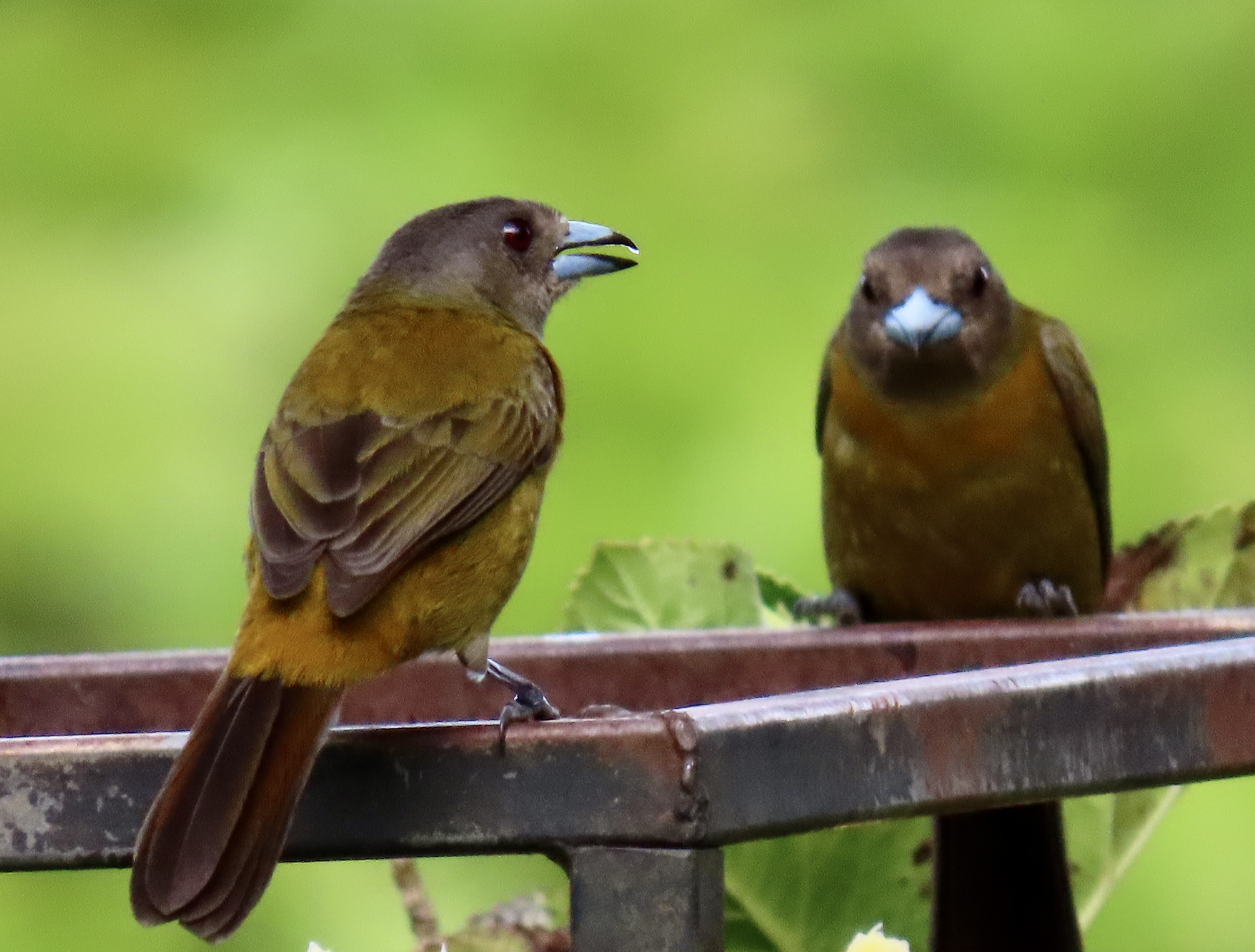
I was surprised when my bird ID app, Merlin, told me that these were Scarlet Rumped Tanagers. I double and then triple checked it! The name for when the male and female birds of the same species look so dramatically different, btw, is sexual dimorphism.
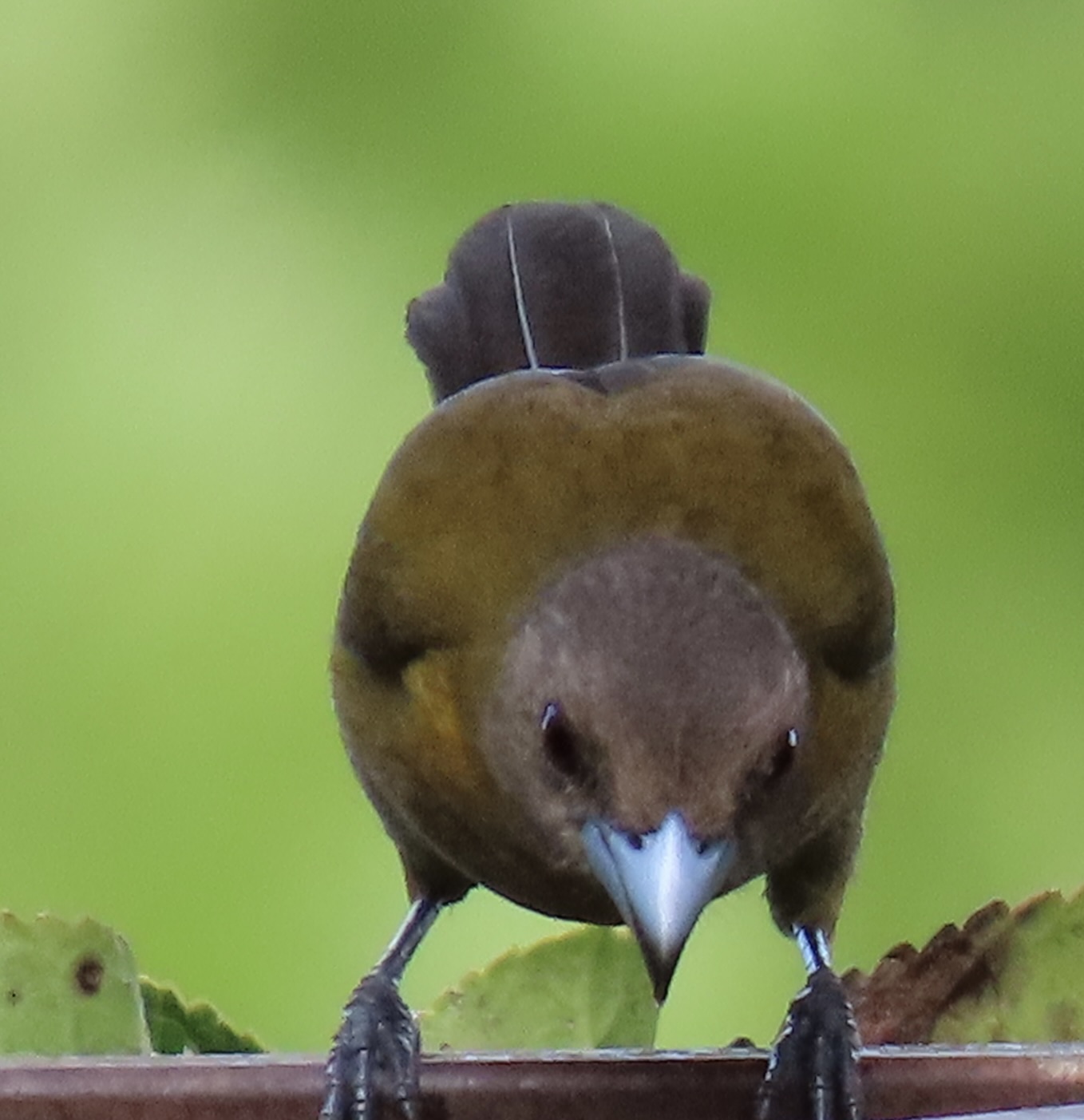
I like this head-on photo of the female Scarlet Rumped Tanager.
Landing gears down!
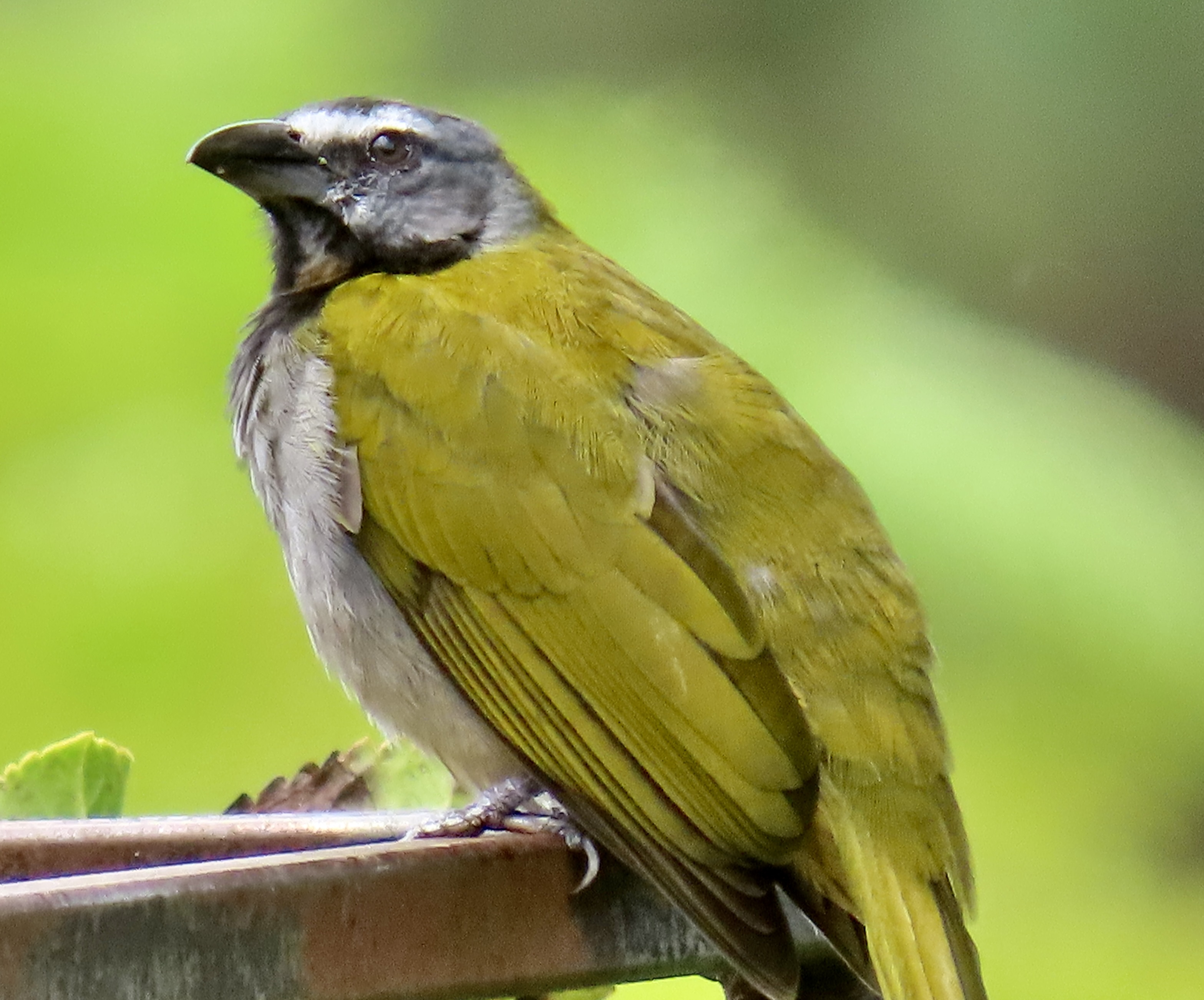
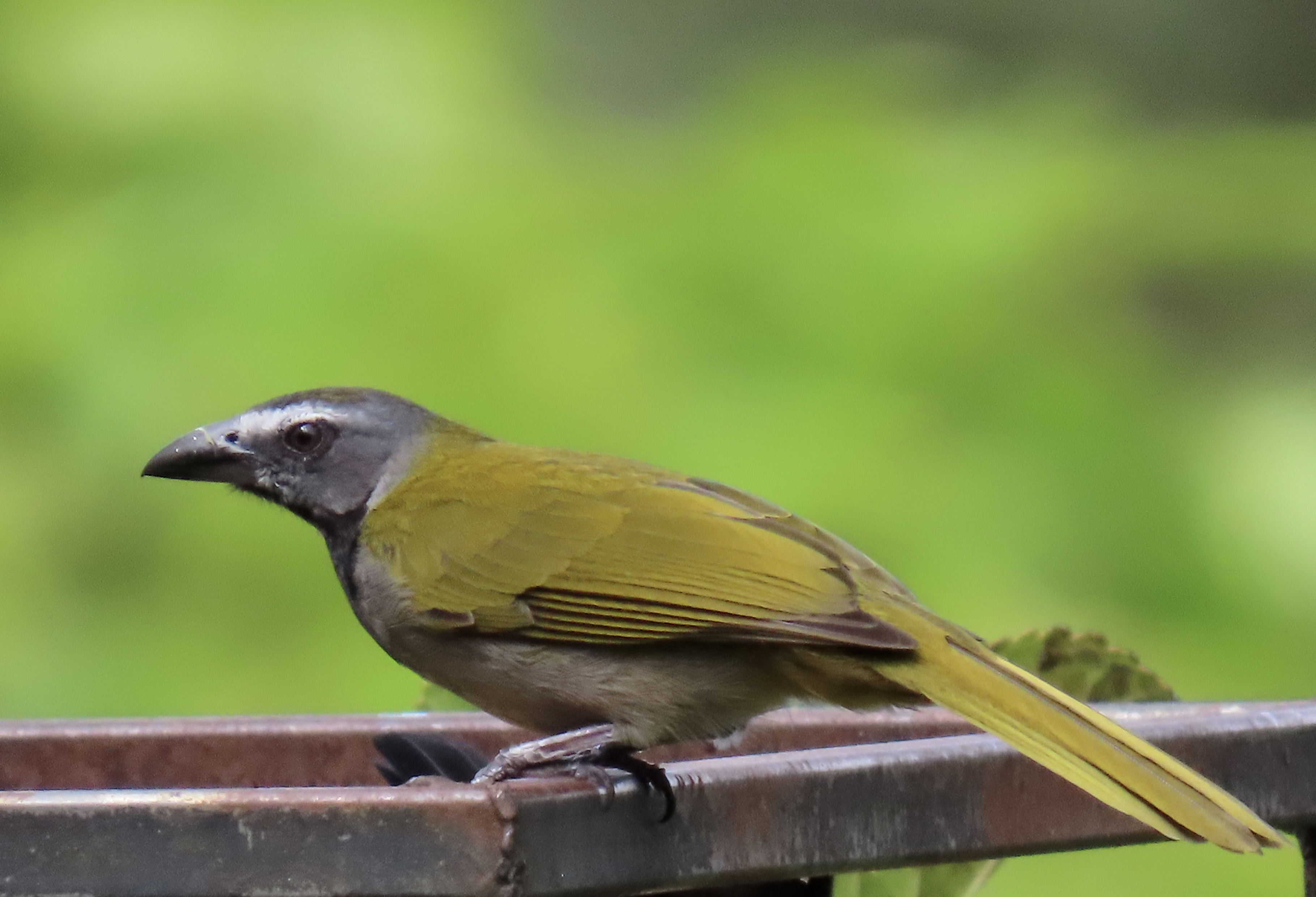
A Buff-throated Saltator (Saltator maximus) gives me the look. Originally classified with cardinals and grosbeaks (given its beak), recent DNA research has shown that they are instead related to Tanagers. I like the soft look of the feathers.
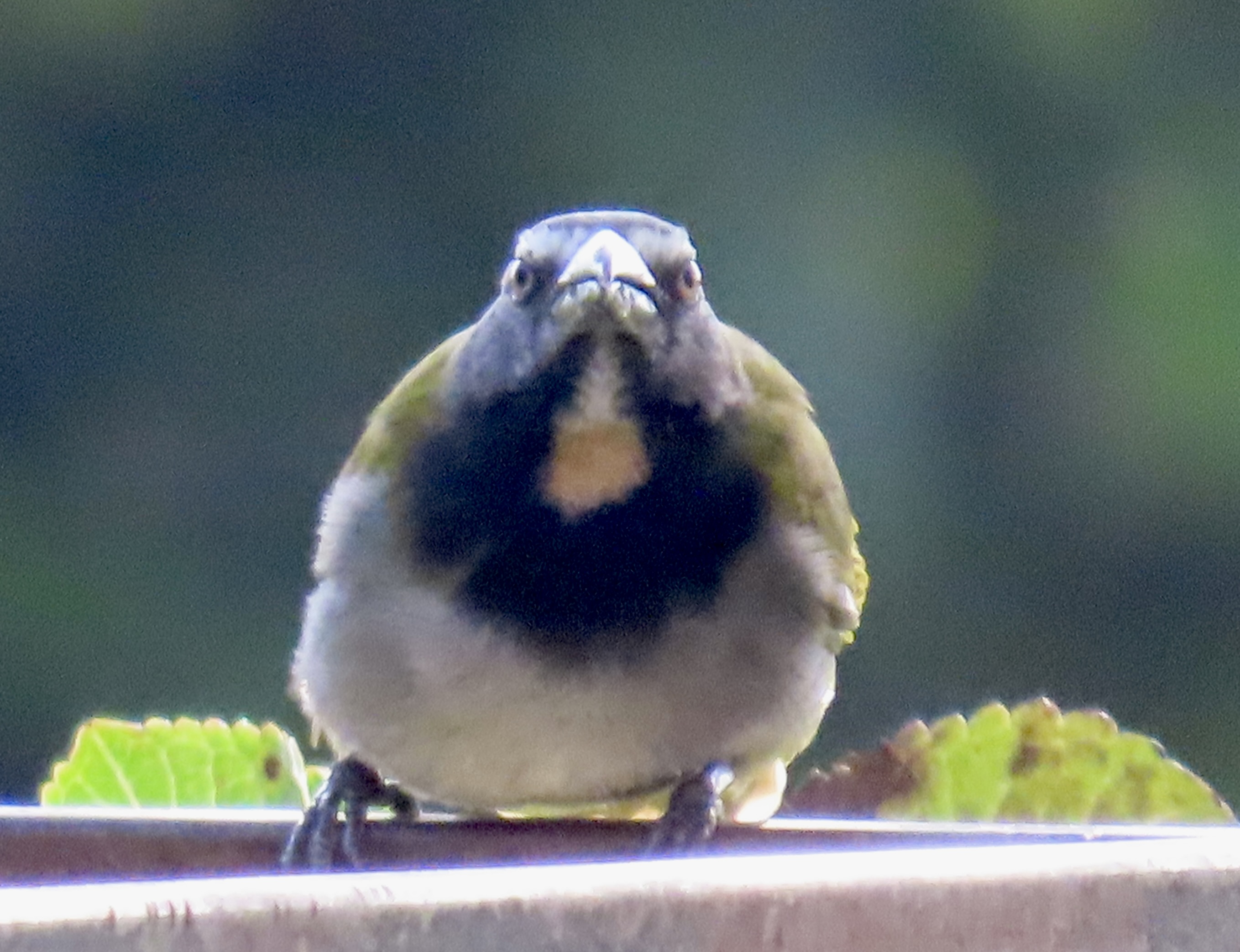
This frontal view gives the reason for the Buff-throated Saltator’s name.
The long view! The head of the Saltator looked metallic in this photo.
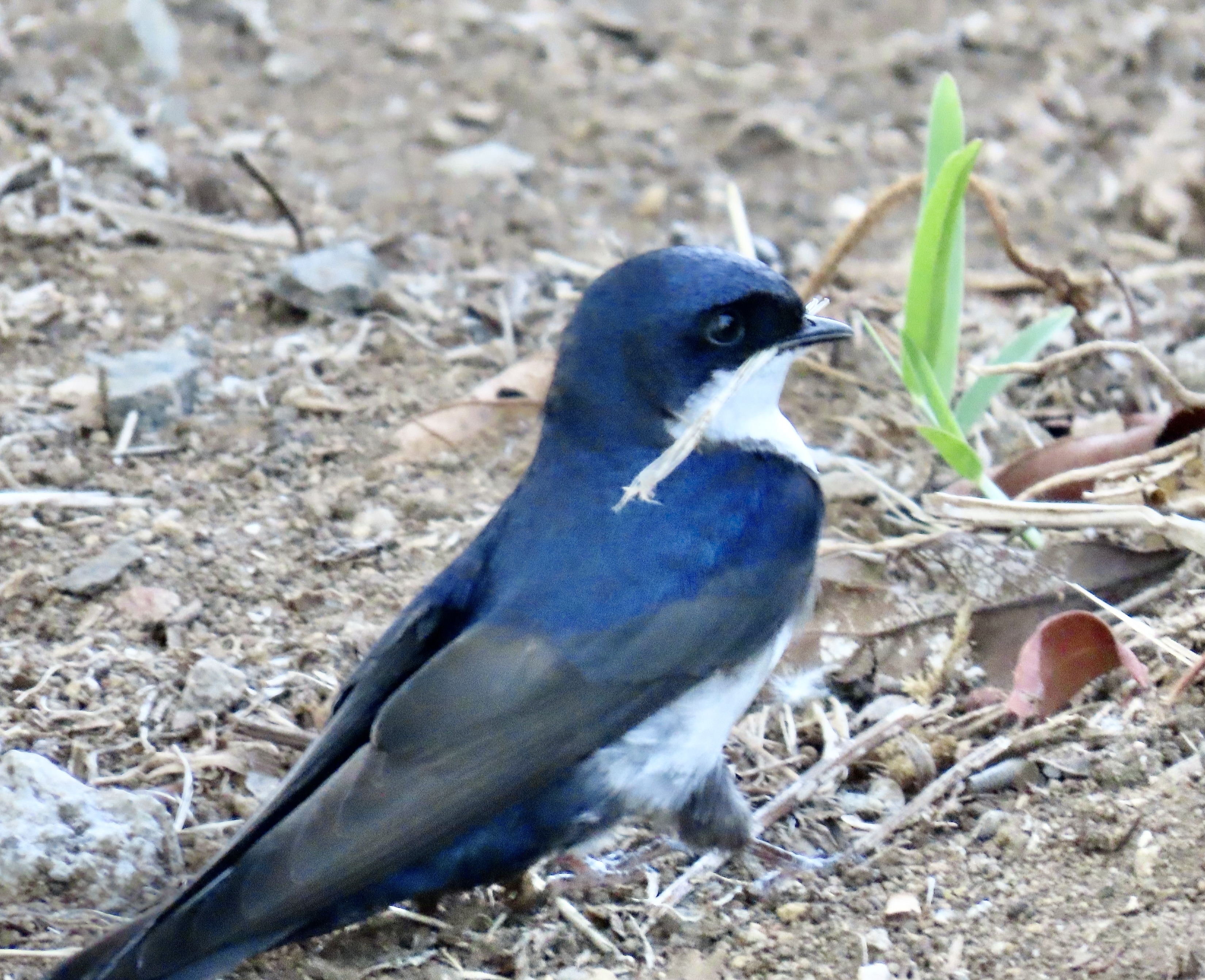
It was nest building time for the Blue and White Swallow (Pygochelidon cyanoleuca) of Monteverde. I’d watched this one pick up and reject several small straws until it arrived at this large piece that it flew away with. I’m always impressed with their streamlined look. It serves them well when they are practicing their insect-catching aerobatics in the air. Peggy and I enjoyed watching them whiz about from our porch in the evening.
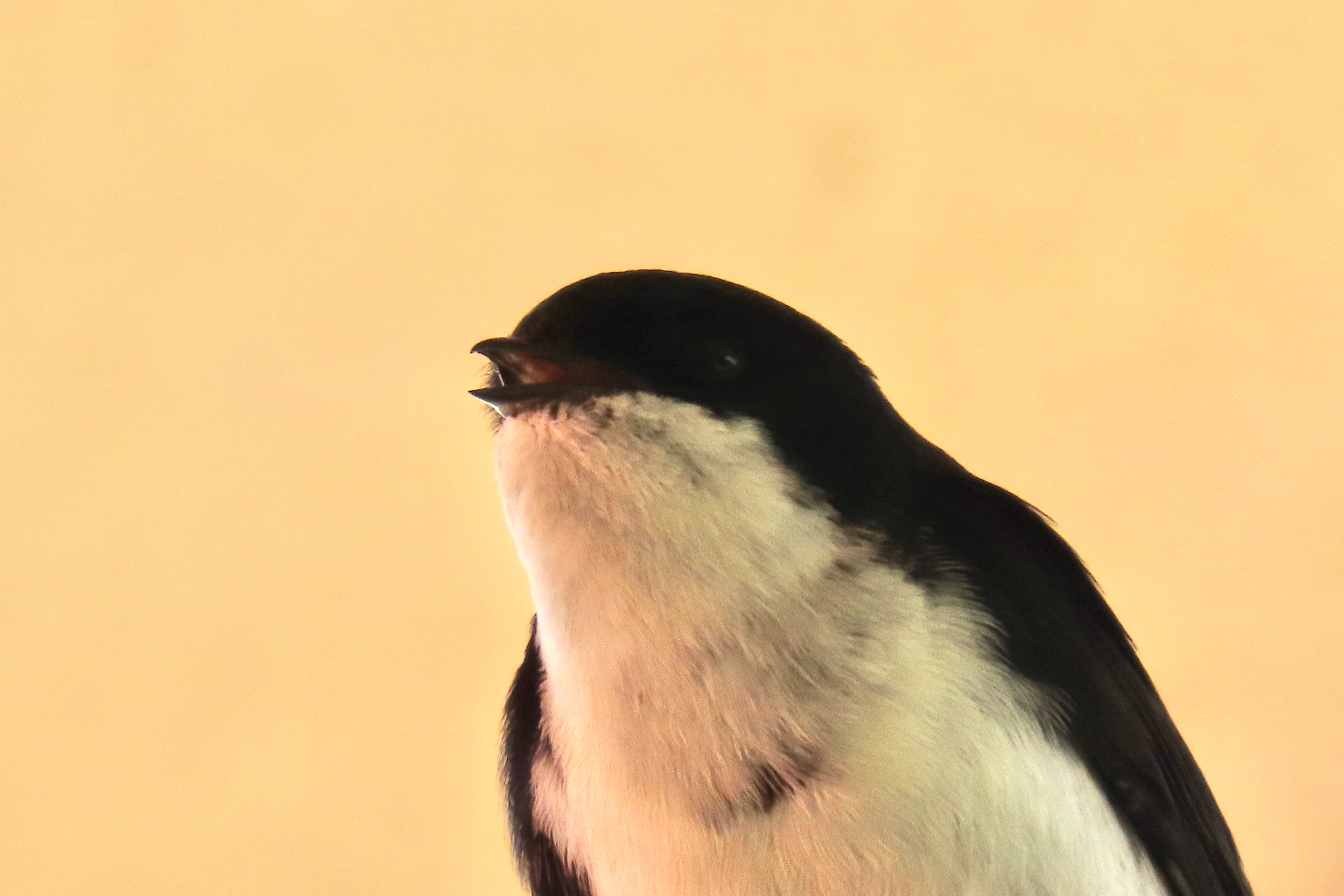
They would often land, and possibly had a nest on the roof beam above the porch. The bright evening sky gave their blue a black look. We weren’t sure whether it was chirping at us or its fellow flyers.
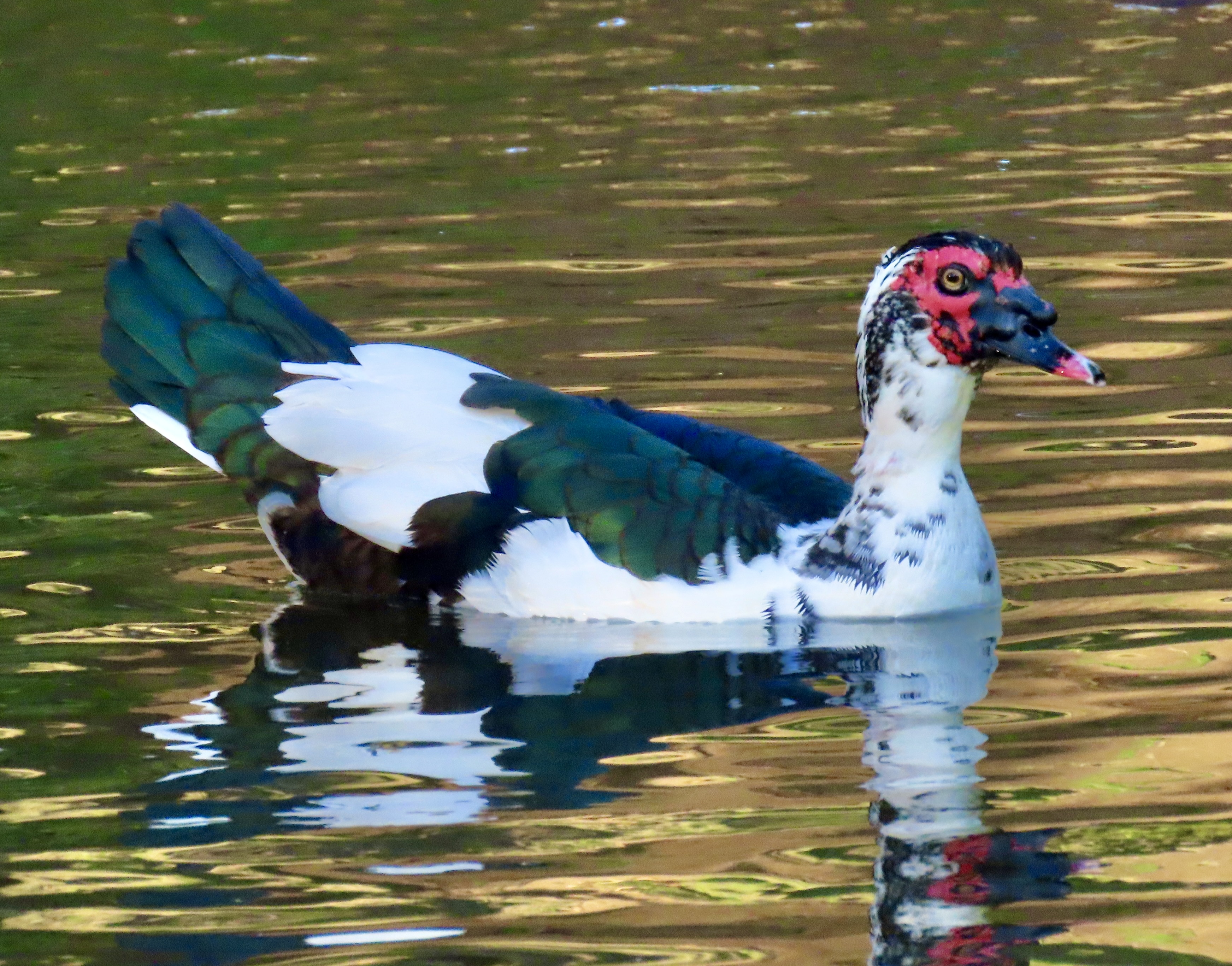
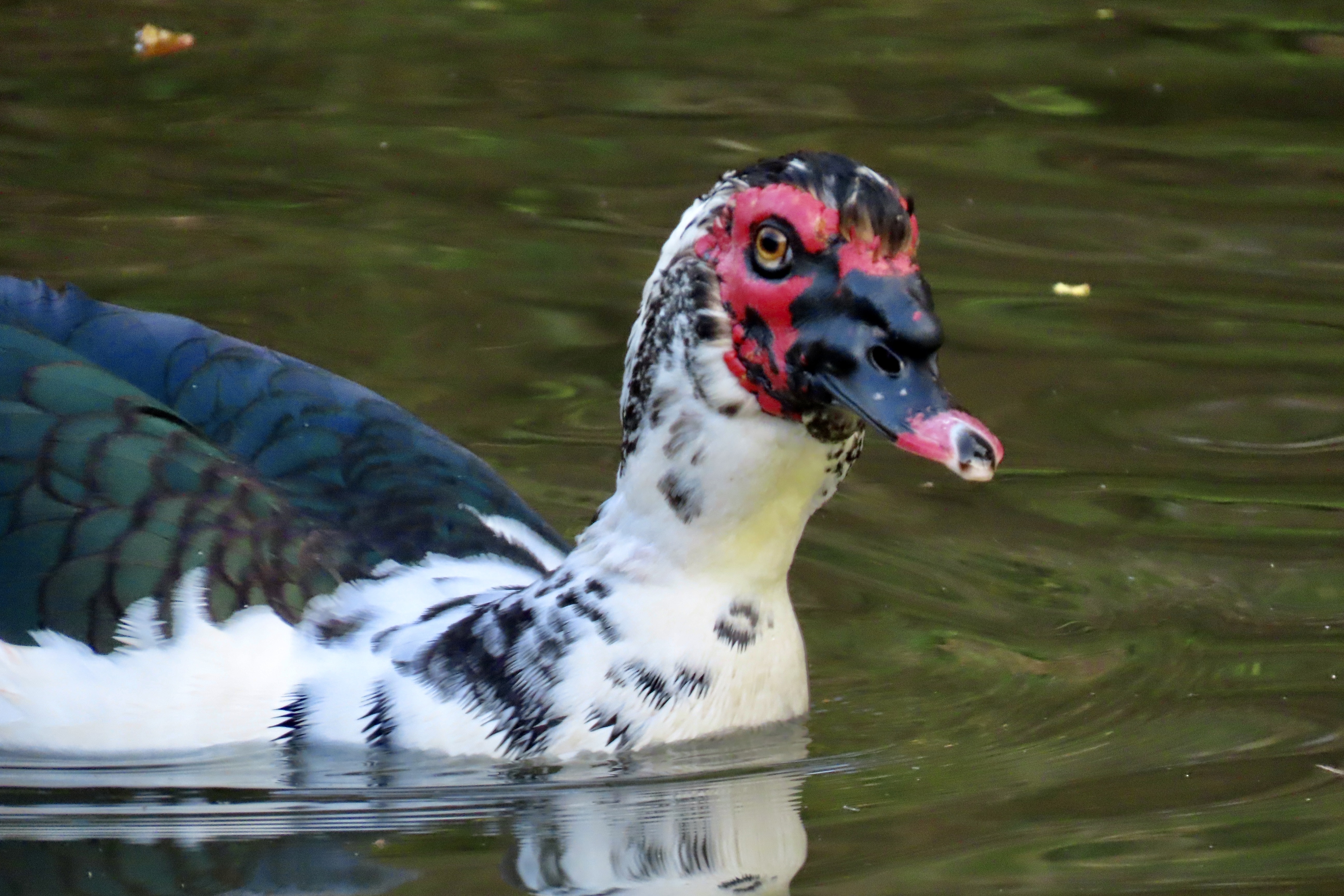
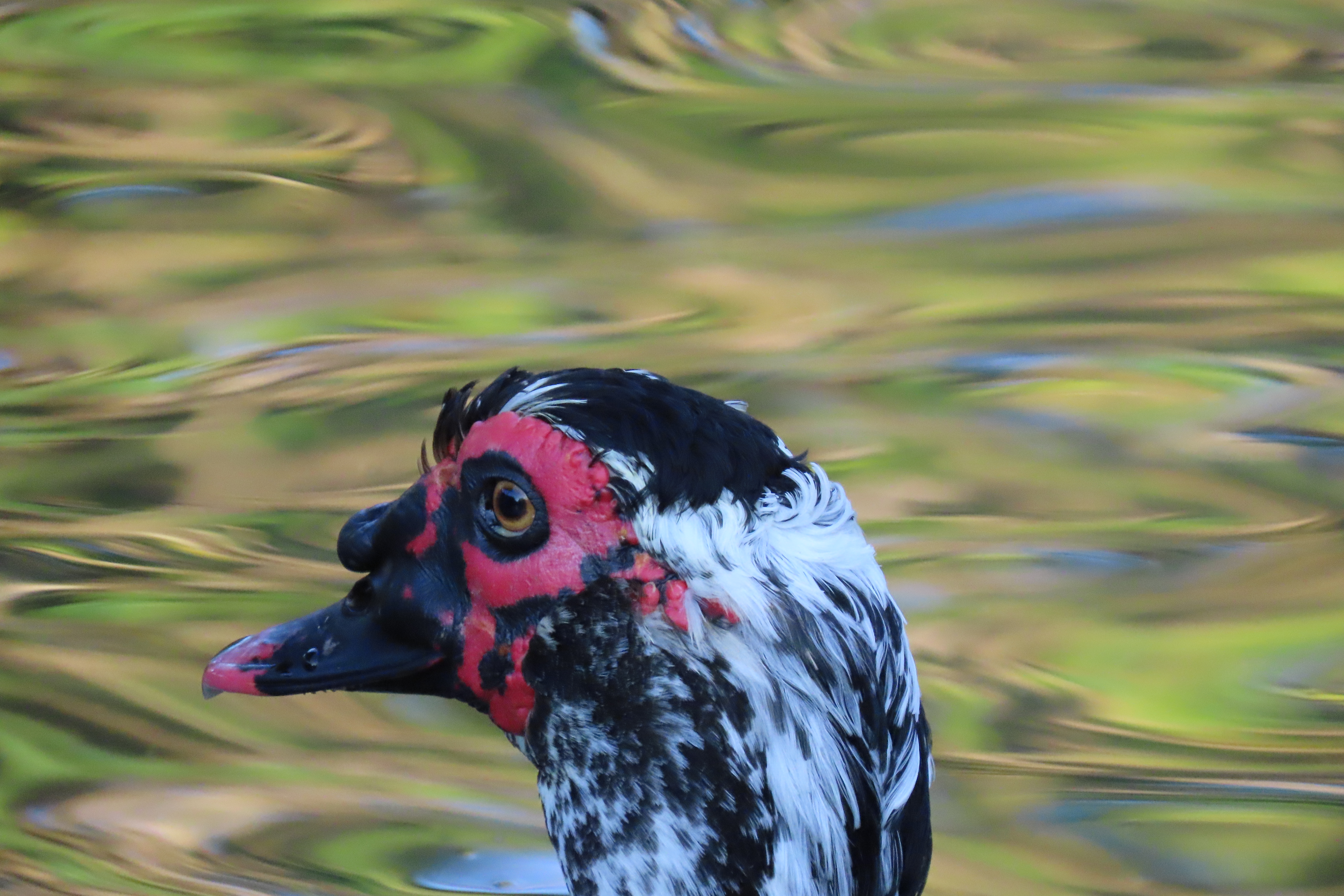
I’ll conclude my collection today with the Muscuvy duck (Cairina moschata) that has both feral and domesticated versions. The duck was first domesticated in the tropical Americas during preColumbian times. You’ve may have seen the domesticated version, like this one, swimming around in park ponds. If so, you probably haven’t forgotten it.
It has a very unique look!
Head shot! That’s it for today. On Wednesday I’ll be featuring Earth Day. It’s worth saving. Our survival— as well as that of numerous other plants and animals— depends up on it.
One would think that the Giant Saguaro cacti of the Sonoran Desert would welcome Global Warming with open arms, but the truth is, it is one of numerous species that are threatened today. The increased drought and extreme heat of global warming prevent seedling survival, cause structural collapse of adult plants, and encourage wildfires capable of wiping out wide swaths of these majestic plants.
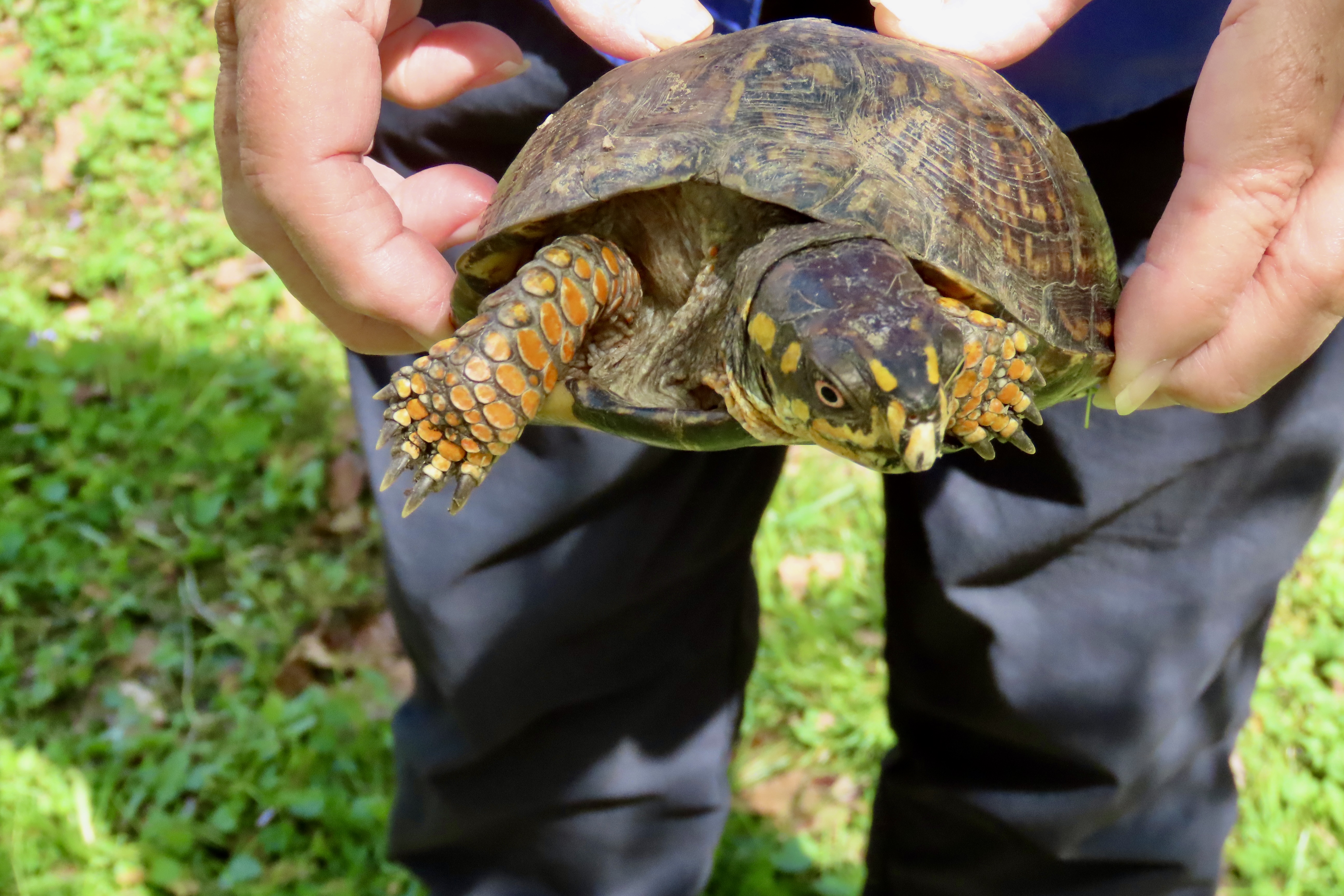
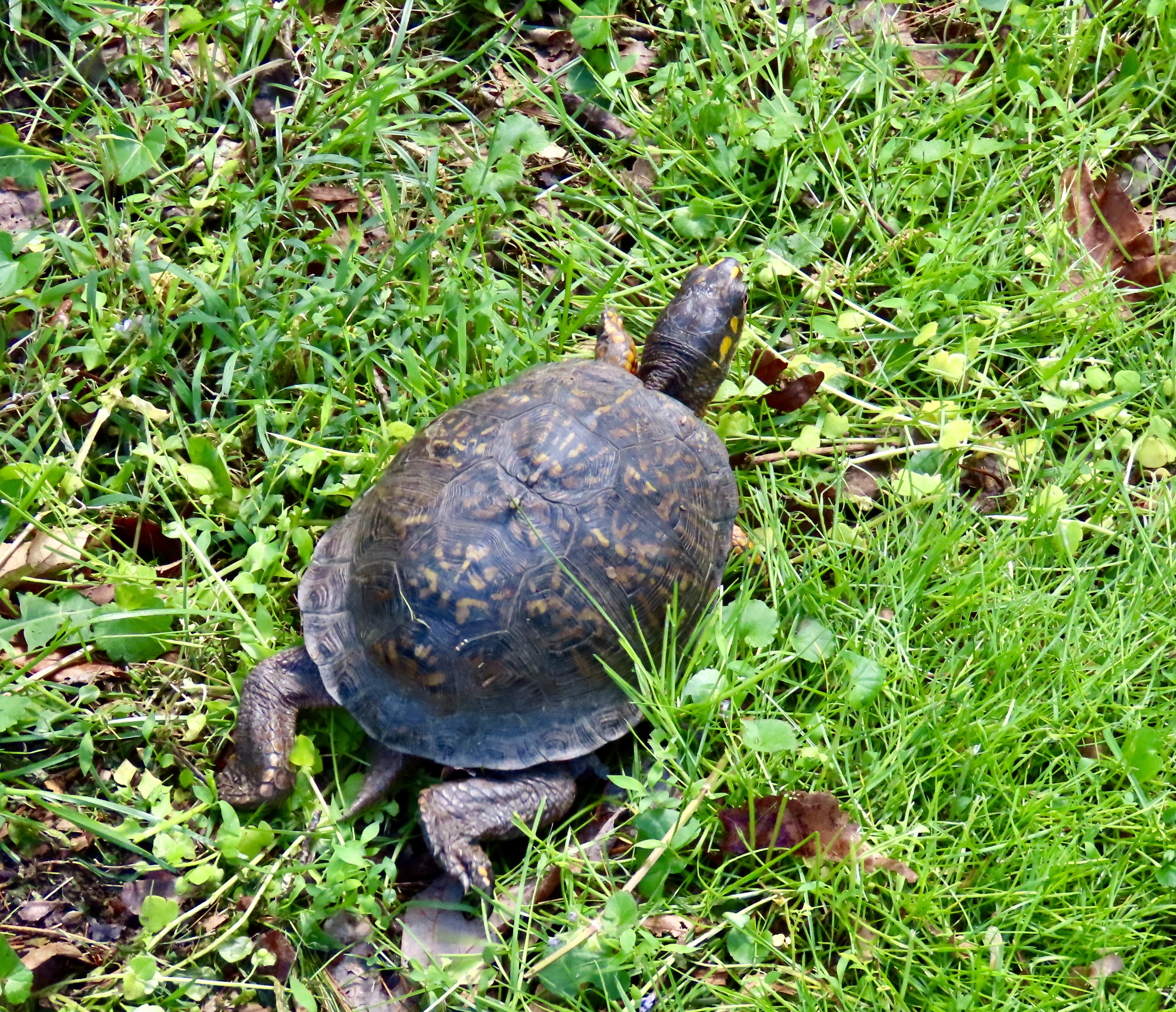
Another species threatened by Global Warming is the Eastern Box Turtle. The increasing heat disrupts their reproductive cycles and sex ratios. Once found often, they are now rarely seen. Peggy found this one crawling down our driveway yesterday, heading toward the traffic clogged highway that runs in front of our apartment. She saved it, at least temporarily, by taking it down to the creek that flows through the property and turning it loose, far from the road.
She set it down and away it zoomed (with zoom defined in turtle speed).

6 thoughts on “A Jay By Any Other Name, Is Still a Jay… Plus Seven Other Fun and Interesting Birds of Costa Rica

  1. My jays are screaming at me right now; I’ve been lax in getting my sweet self out to the feeders with peanuts. The birds you’ve featured are gorgeous. I had a bit of exotica stop by a couple of days ago: a rose-breasted grosbeak. I’ve never seen one in real life until now, but it’s certainly a sign that migration has started in earnest. It also reminded me of our giggles in third or fourth grade when changed the name of the bird to gross-breasted rosebeak.

    • I’m sure that brought about some giggles, Linda. Third and fourth grade humor for sure. As for Jays. Yep. Ours in Oregon didn’t hesitate to complain if we were late with the sunflower seeds. Especially when they were feeding their chicks. They’d show up and load their gullets with 15-20 seeds at a time. Congrats on the grosbeak!

Leave a reply to Cindy Georgakas Cancel reply