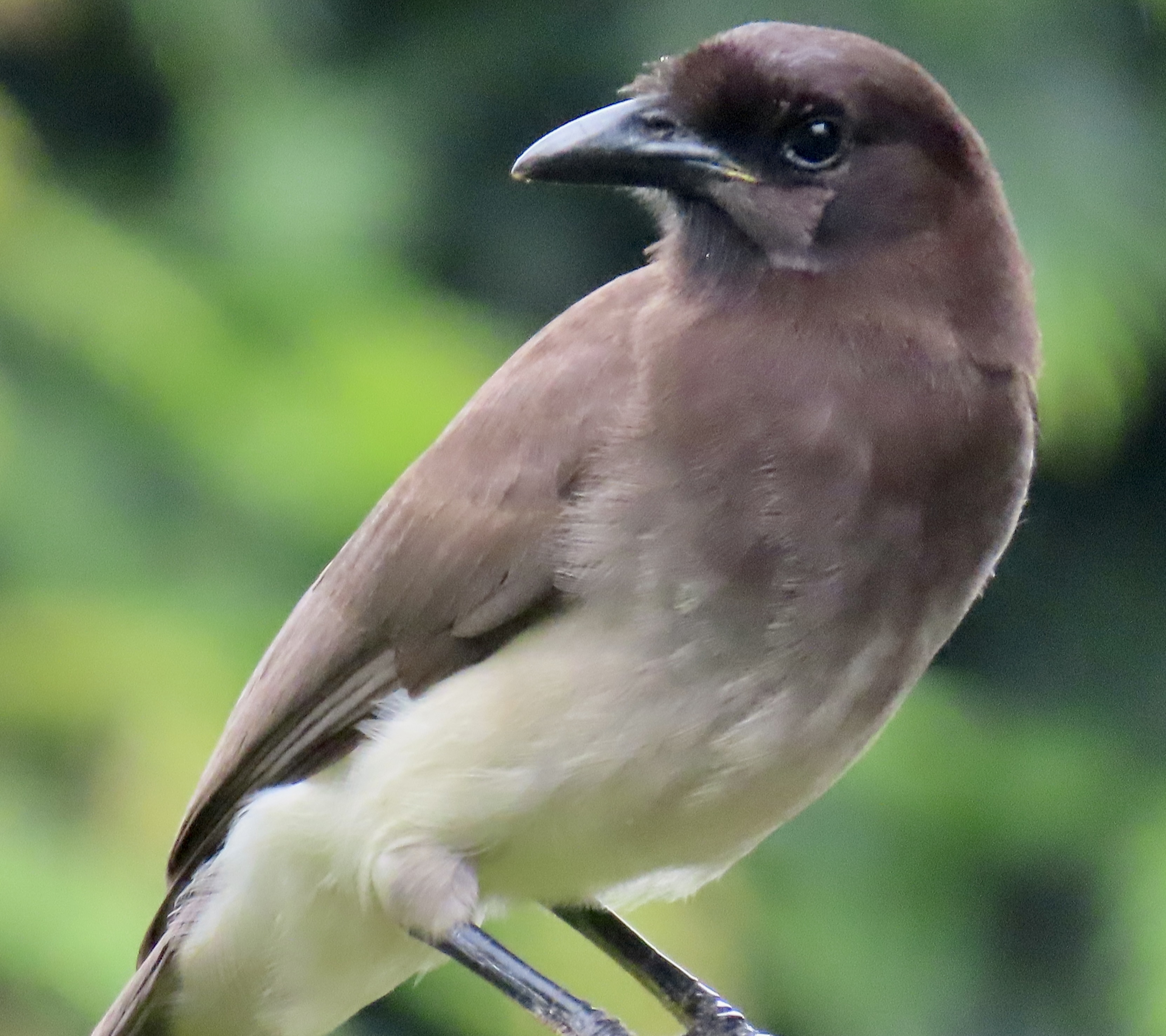
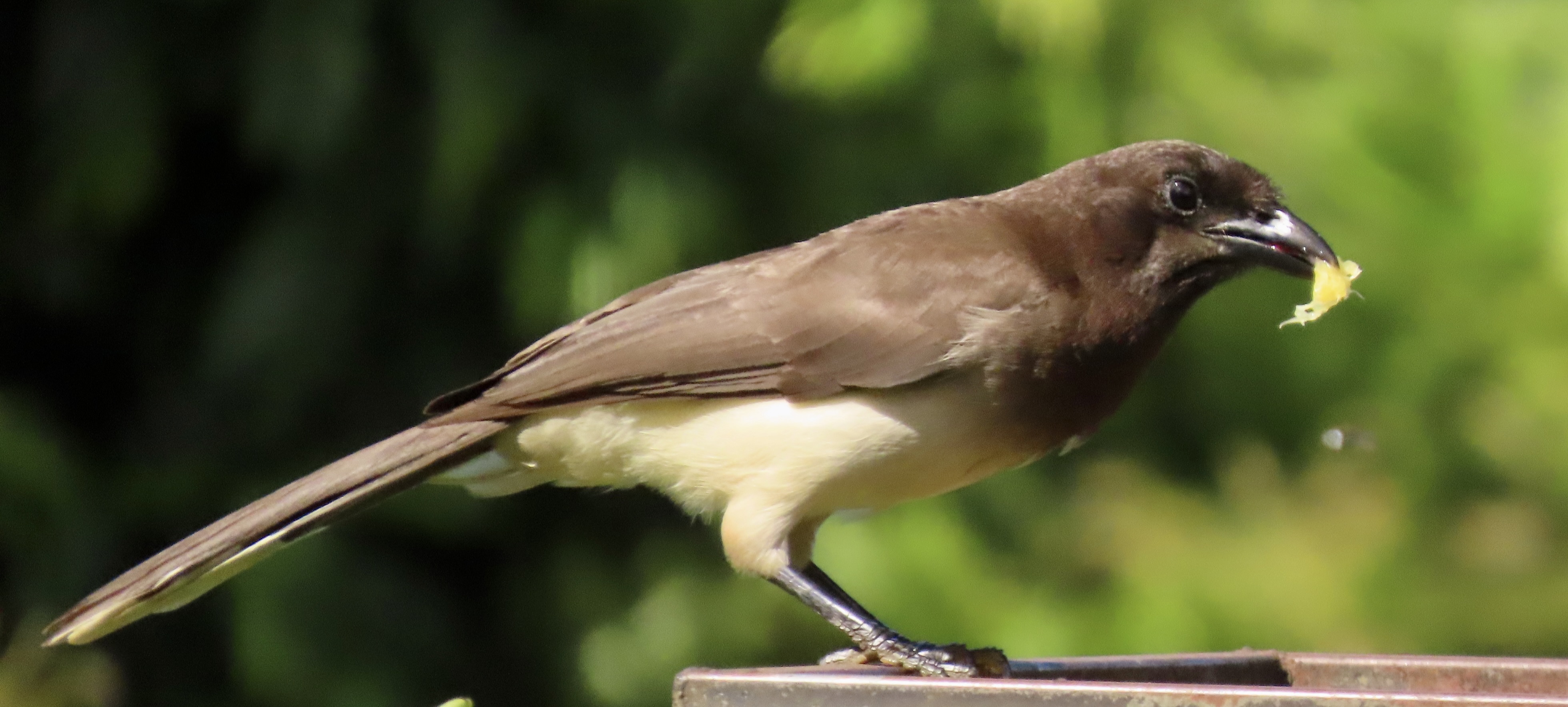
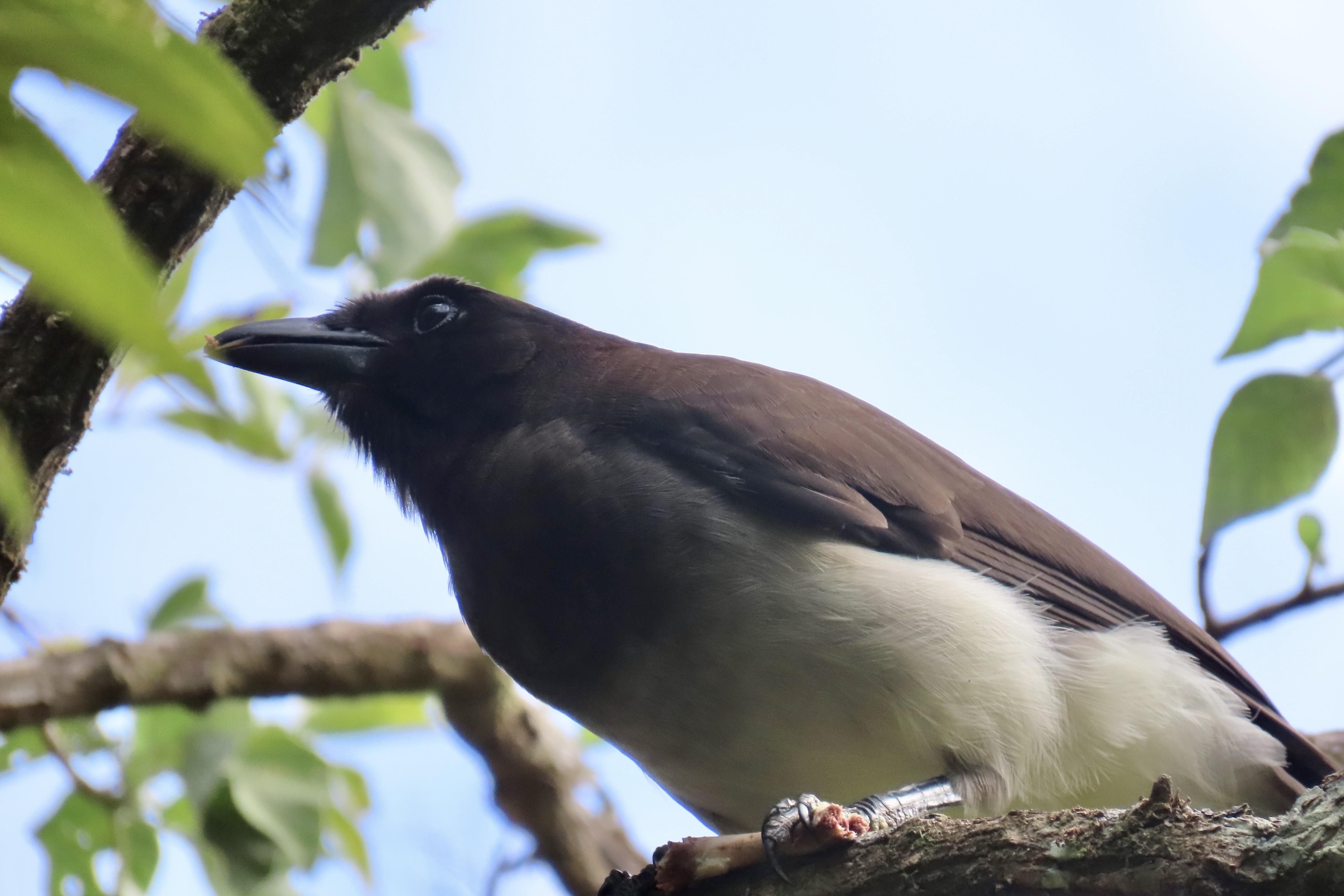
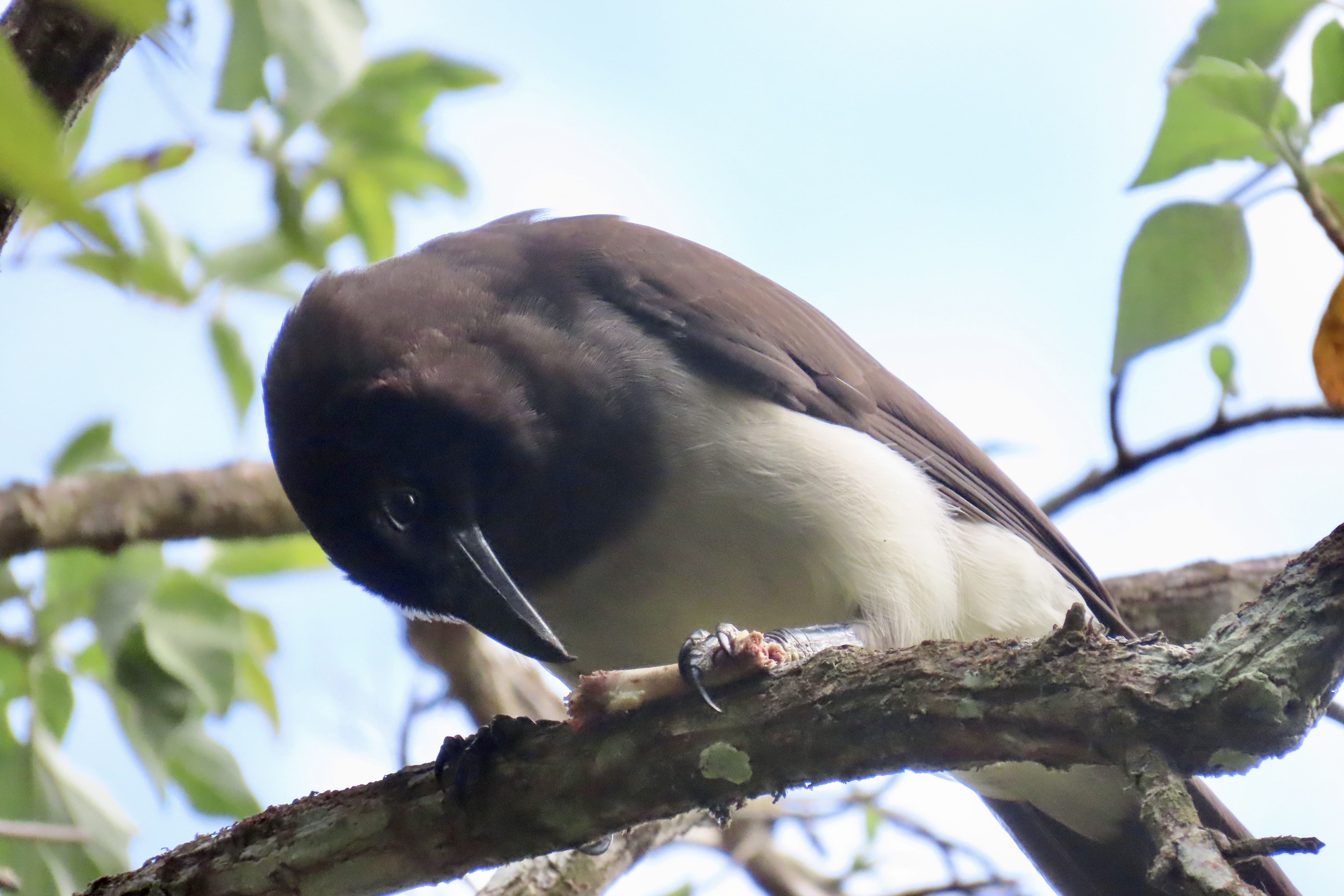
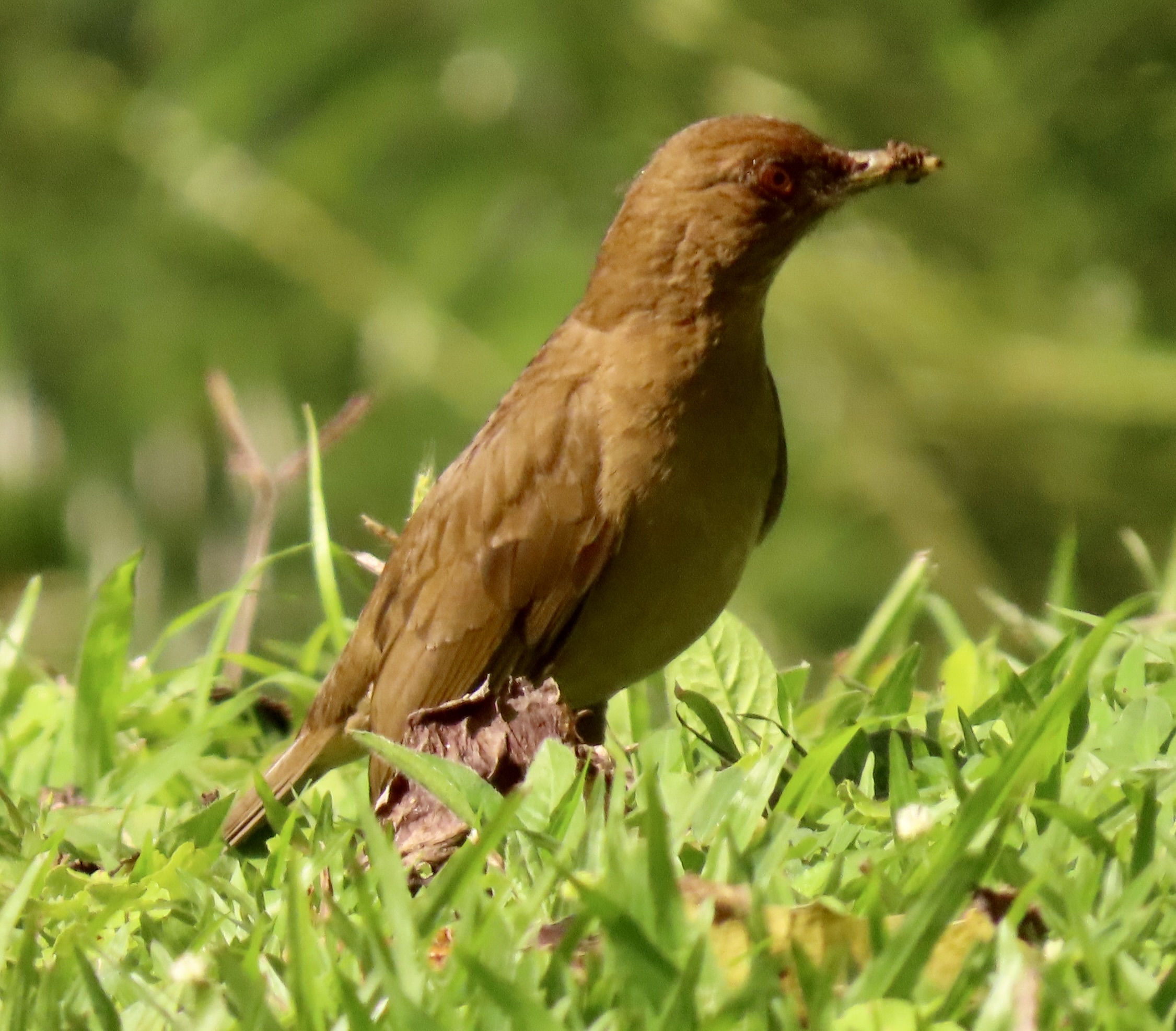
It appears that this Thrush has caught a worm that wasn’t interested in being swallowed. As we watched it hop around on the lawn searching for such delicacies, we were reminded of its cousin, the Robin. Thrushes share a lot in common. I doubt you would find a Robin following a foraging mass of army ants to feast on the insects that are fleeing to escape, however, which is what the Clay-Colored Thrushes do. I immediately thought of the army ants that invaded my house when I was living in West Africa. We discovered their attack when numerous small bugs came hopping, running, and crawling under our screen door in an effort to escape. The Thrush would have been quite happy to scarf them up. I’m sure the Robin would have as well. But it might not have had the Thrush’s sense to fly off before the ants arrive. We saw a mouse make that mistake. It was his last. Not wanting to end up like the mouse, we went to war. I’ll tell the story in UT-OH!.

 Wandering through Time and Place
My jays are screaming at me right now; I’ve been lax in getting my sweet self out to the feeders with peanuts. The birds you’ve featured are gorgeous. I had a bit of exotica stop by a couple of days ago: a rose-breasted grosbeak. I’ve never seen one in real life until now, but it’s certainly a sign that migration has started in earnest. It also reminded me of our giggles in third or fourth grade when changed the name of the bird to gross-breasted rosebeak.
I thought this story from the National Park Service was interesting! https://www.nps.gov/sagu/learn/nature/the-changing-saguaro-population-in-saguaro-national-park.htm
We have one multi armed Saguaro in our AZ yard, one tall one with no arms, and four we planted.