As we noted in last week’s post, our 2025 wrap-up is based on three trips we made during the year and blogged about. The first was Hawaii, which I posted last Monday. Today’s post features our Southwest journey where we wandered through the Southwestern US for five months visiting national parks, state parks, and national monuments. Next week’s post will cover our three week leaf-peeping trip through New England in the fall.
The photos used in the three posts are all from ones we selected to include in three calendars we developed for our extended family, each focused on one of out trips. (Not all of the photos here made it into the calendars, but it was a flip-of-the-coin type decision.)
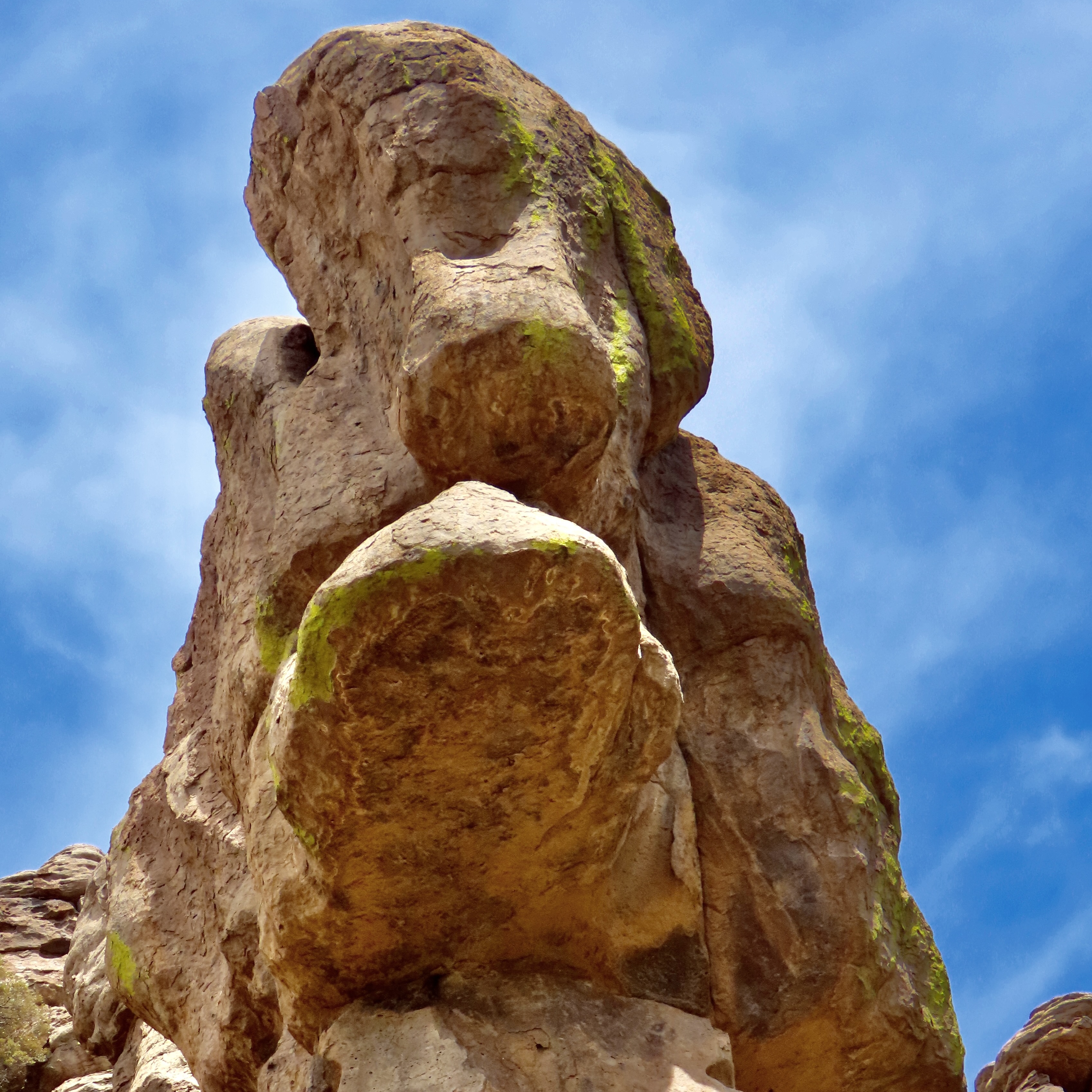
We discovered the towering rock above in Chiricahua National Monument, which is located in southeastern Arizona. The monument is named after the Chiricahua Apaches who roamed the area prior to it being occupied by pioneers from the eastern US. A couple of notes. One, the park is filled with a fascinating variety of rock structures. Two, we have discovered over the years that national monuments often include scenery, geology, history, plants and animals that easily match those found in national parks. They are definitely worth visiting and are usually far less crowded.
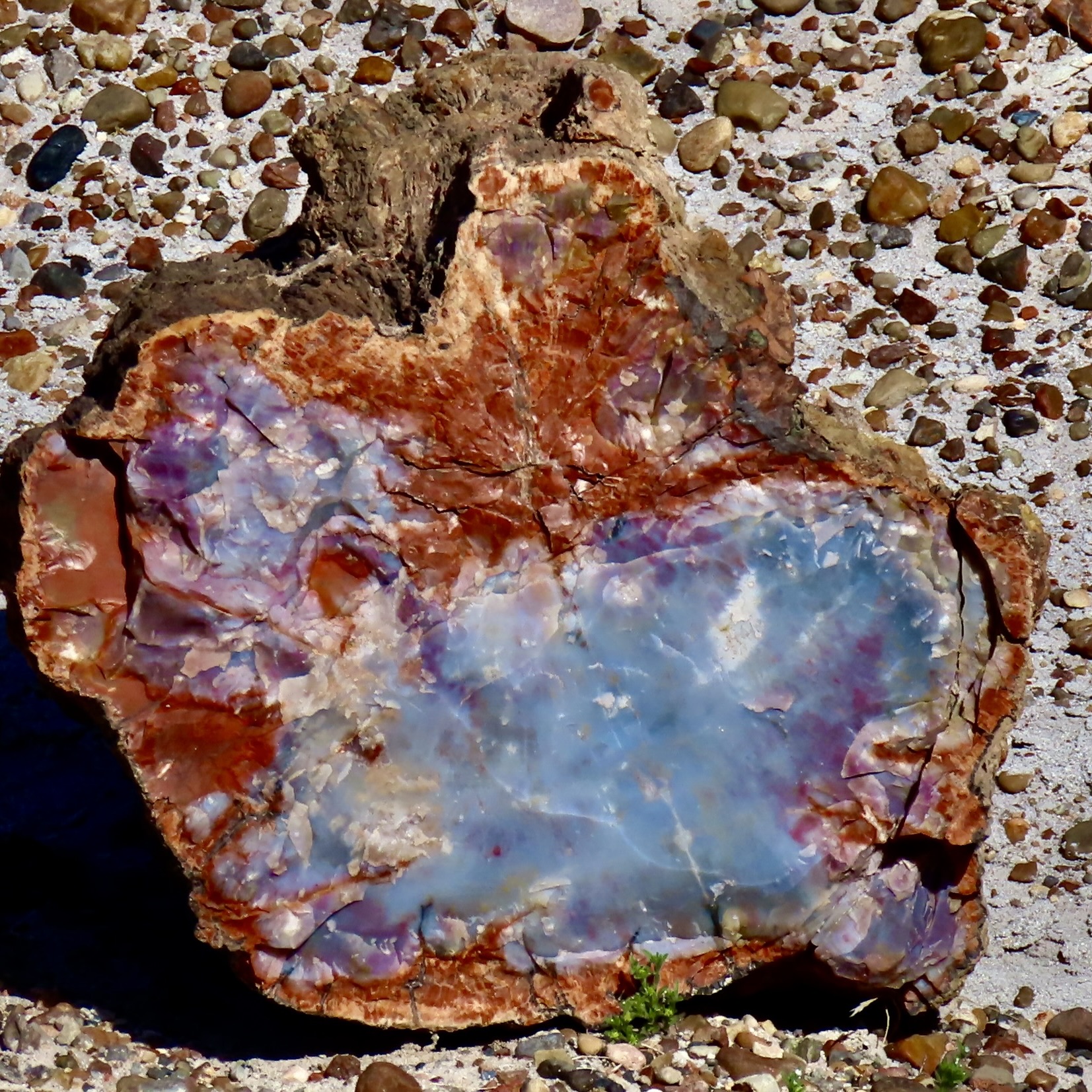
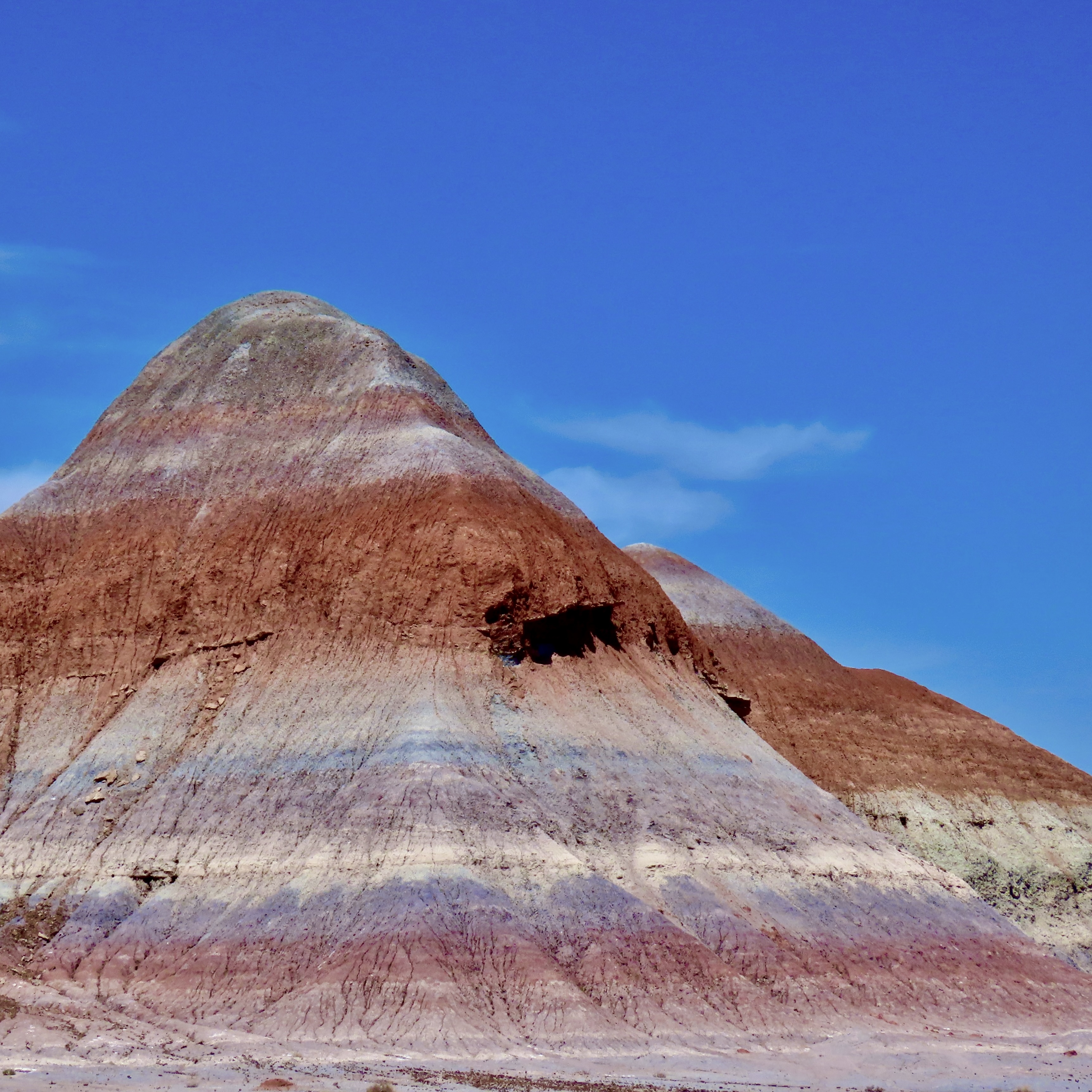
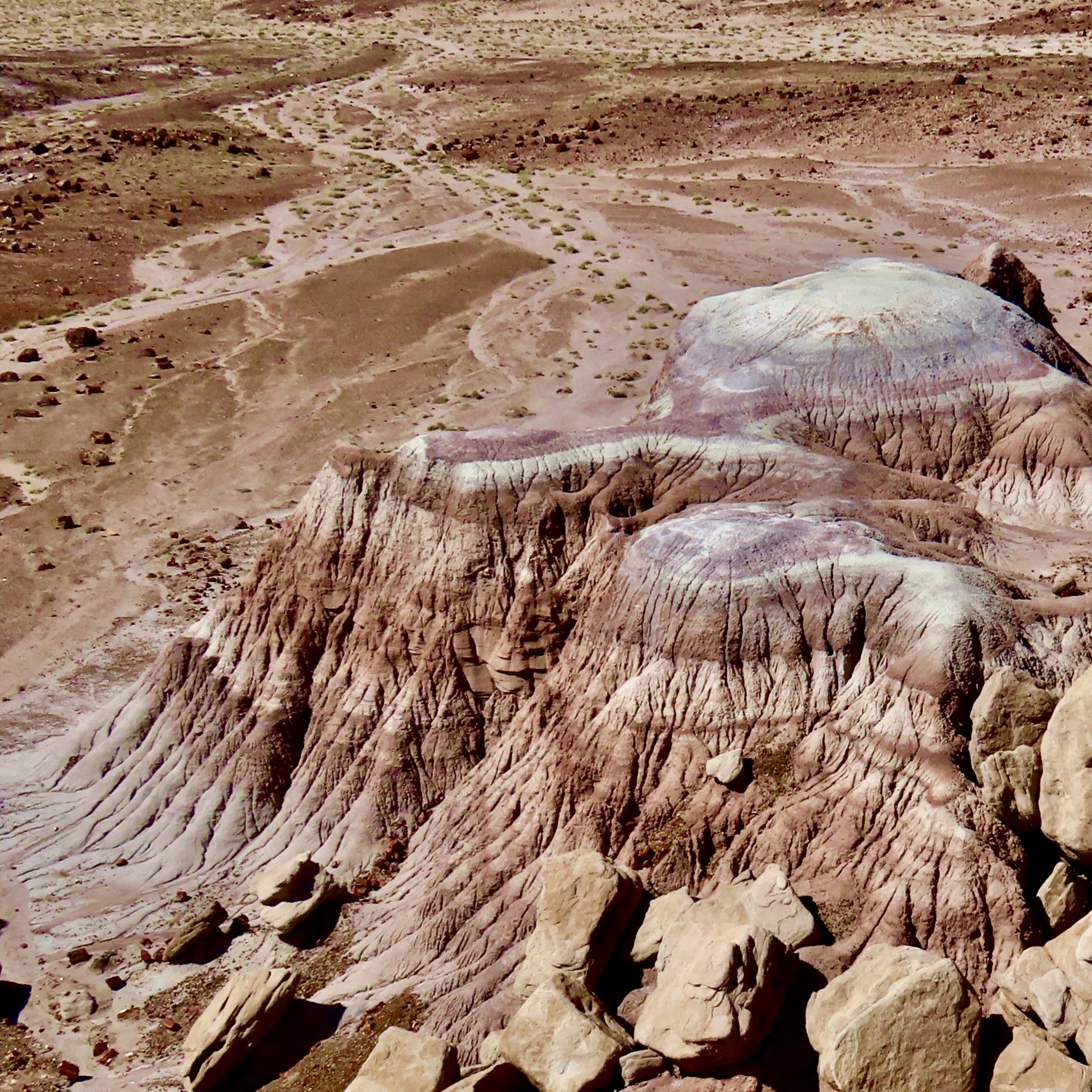
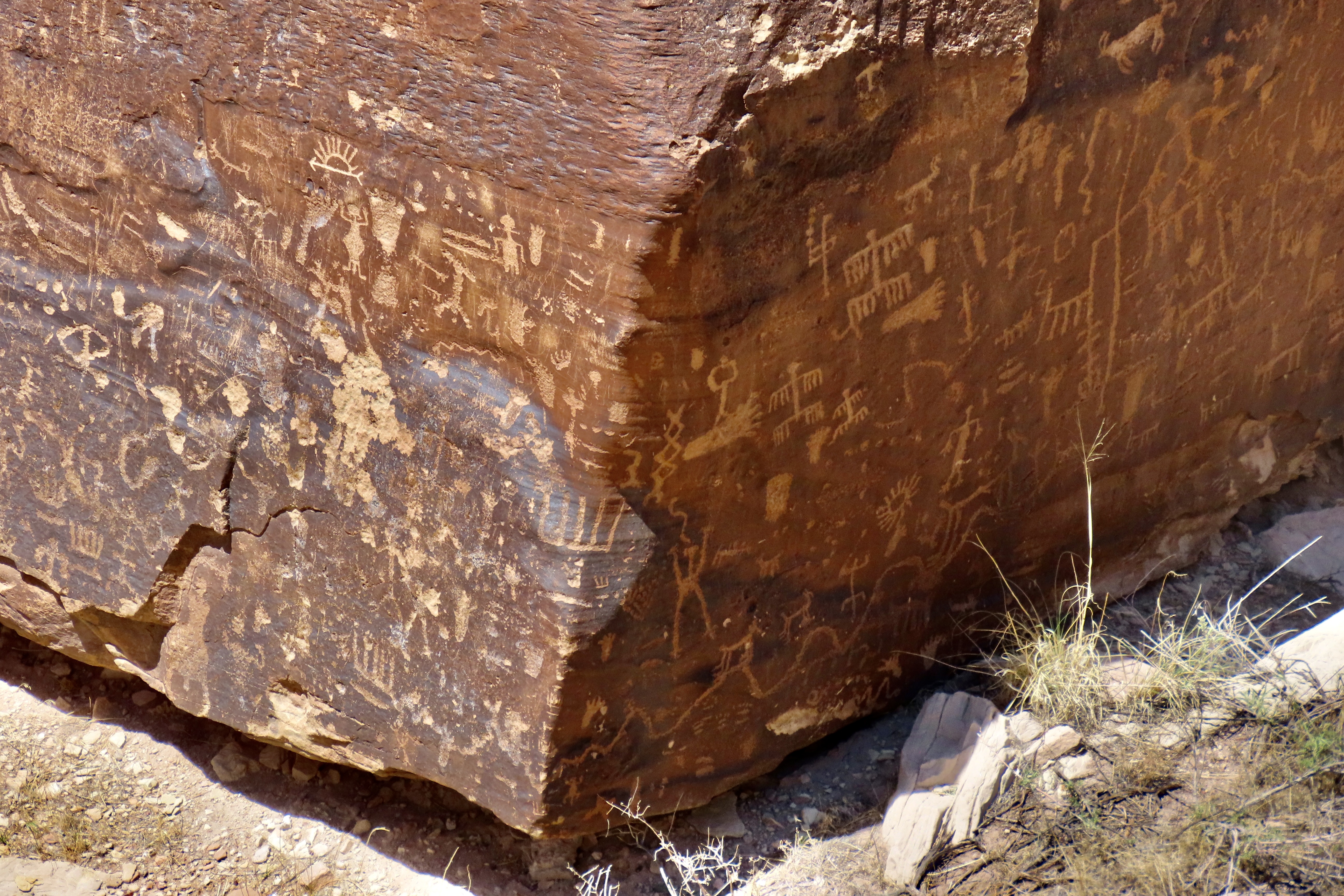
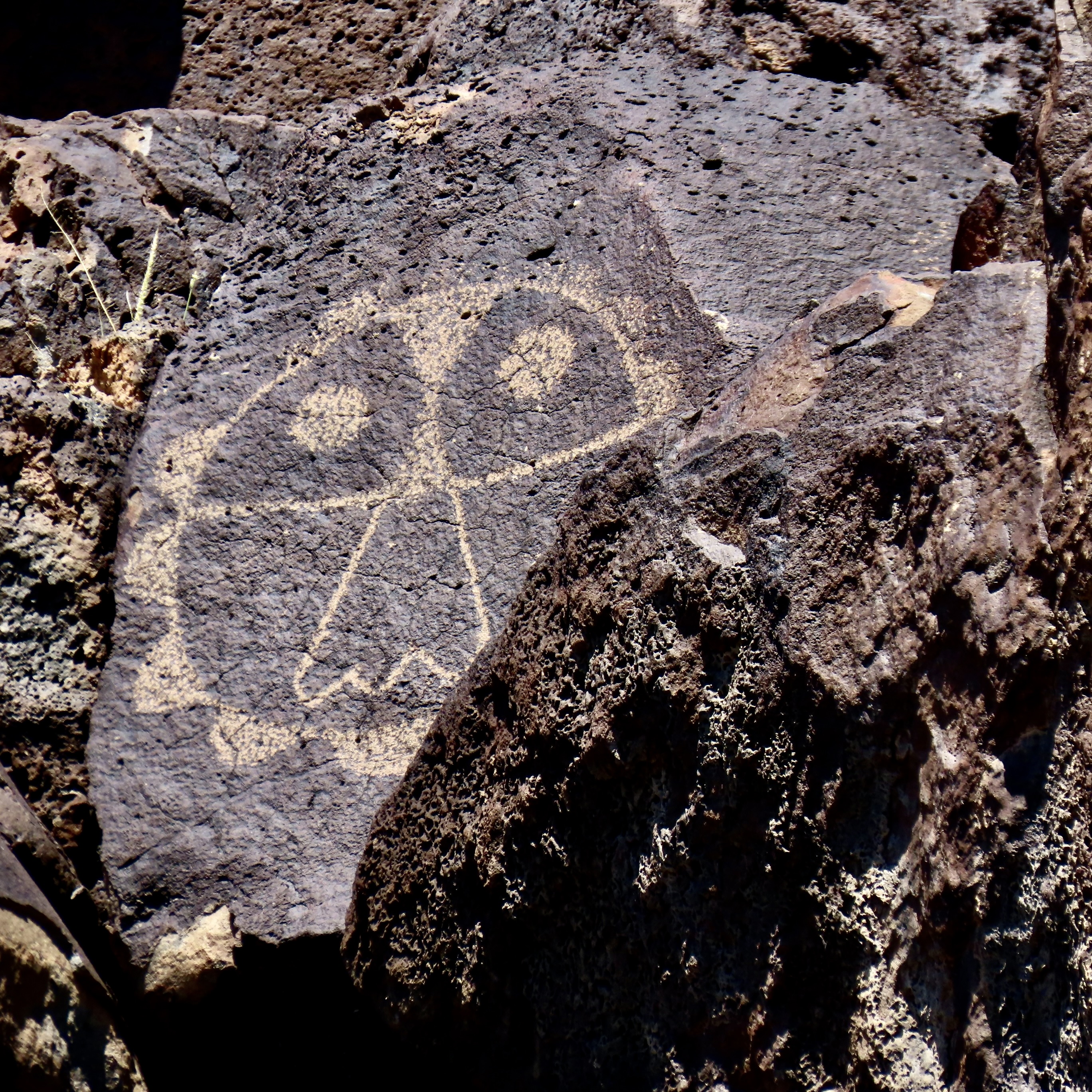
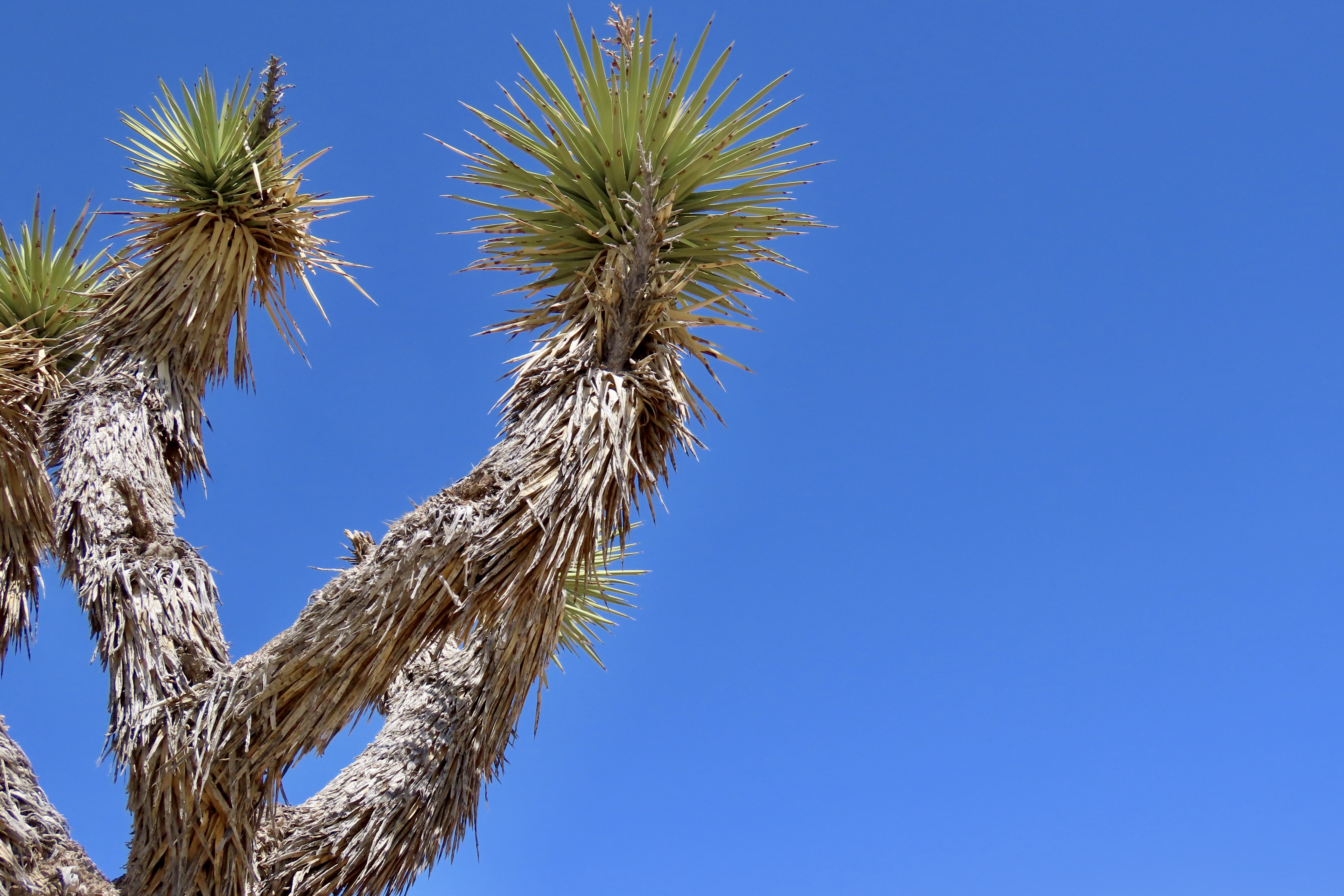
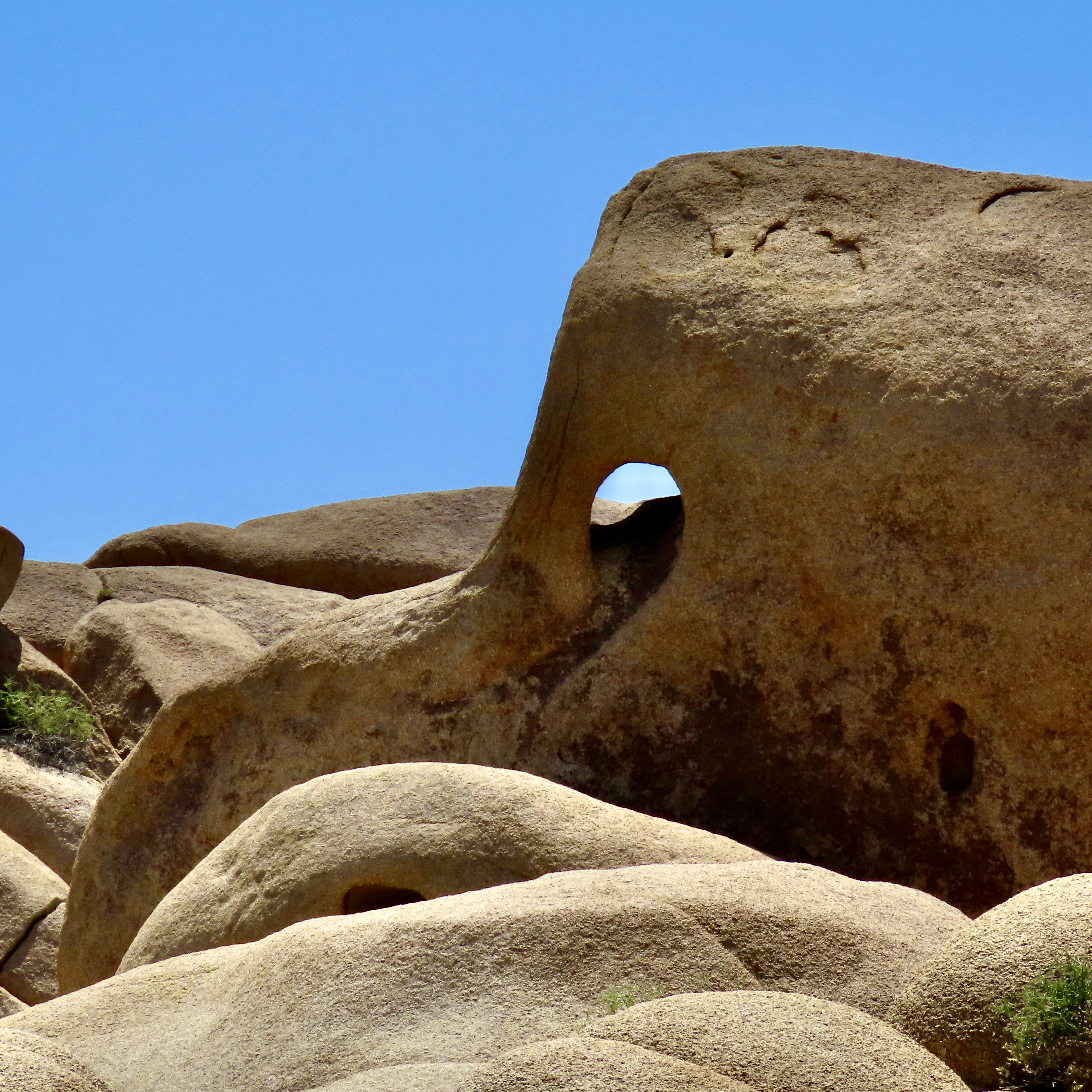
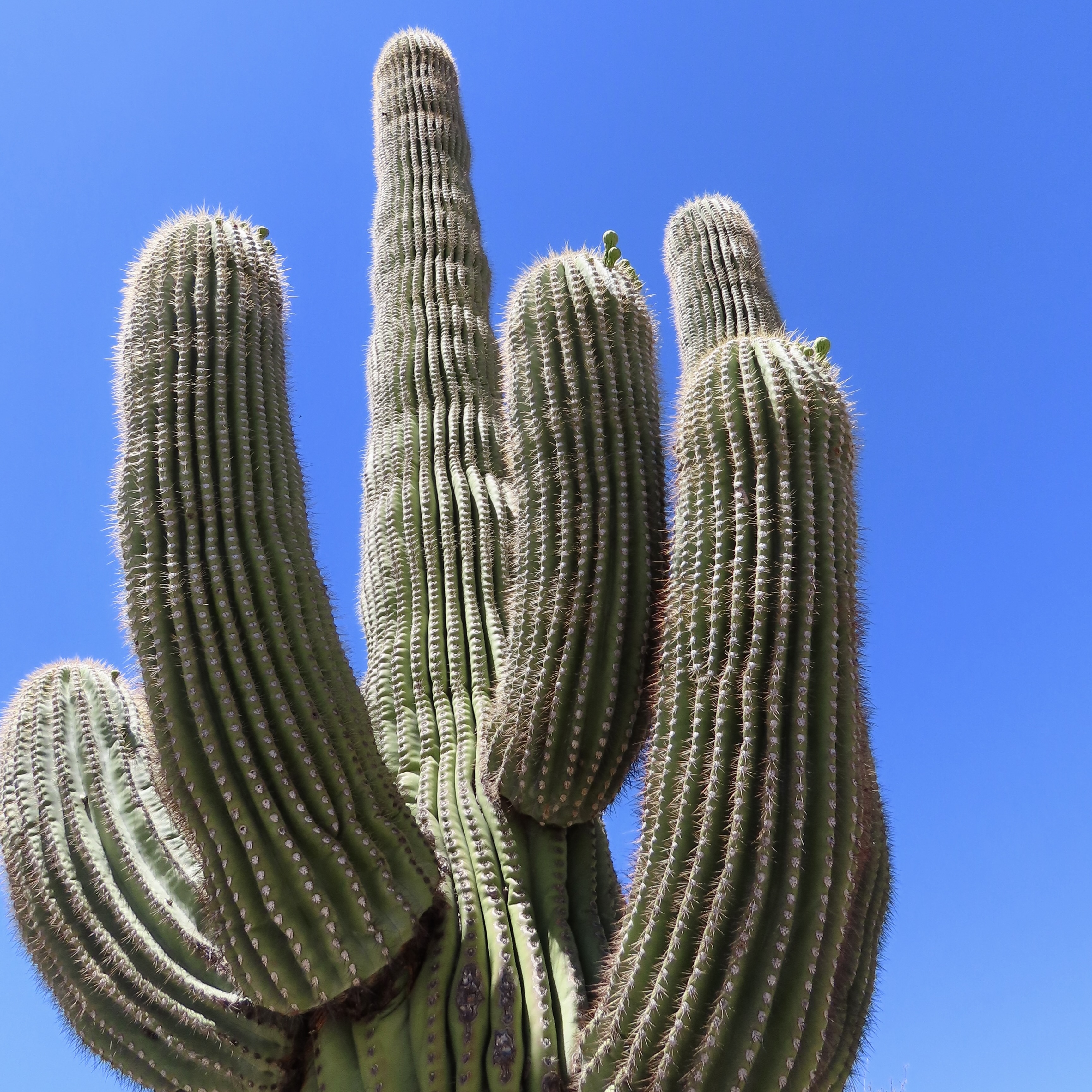
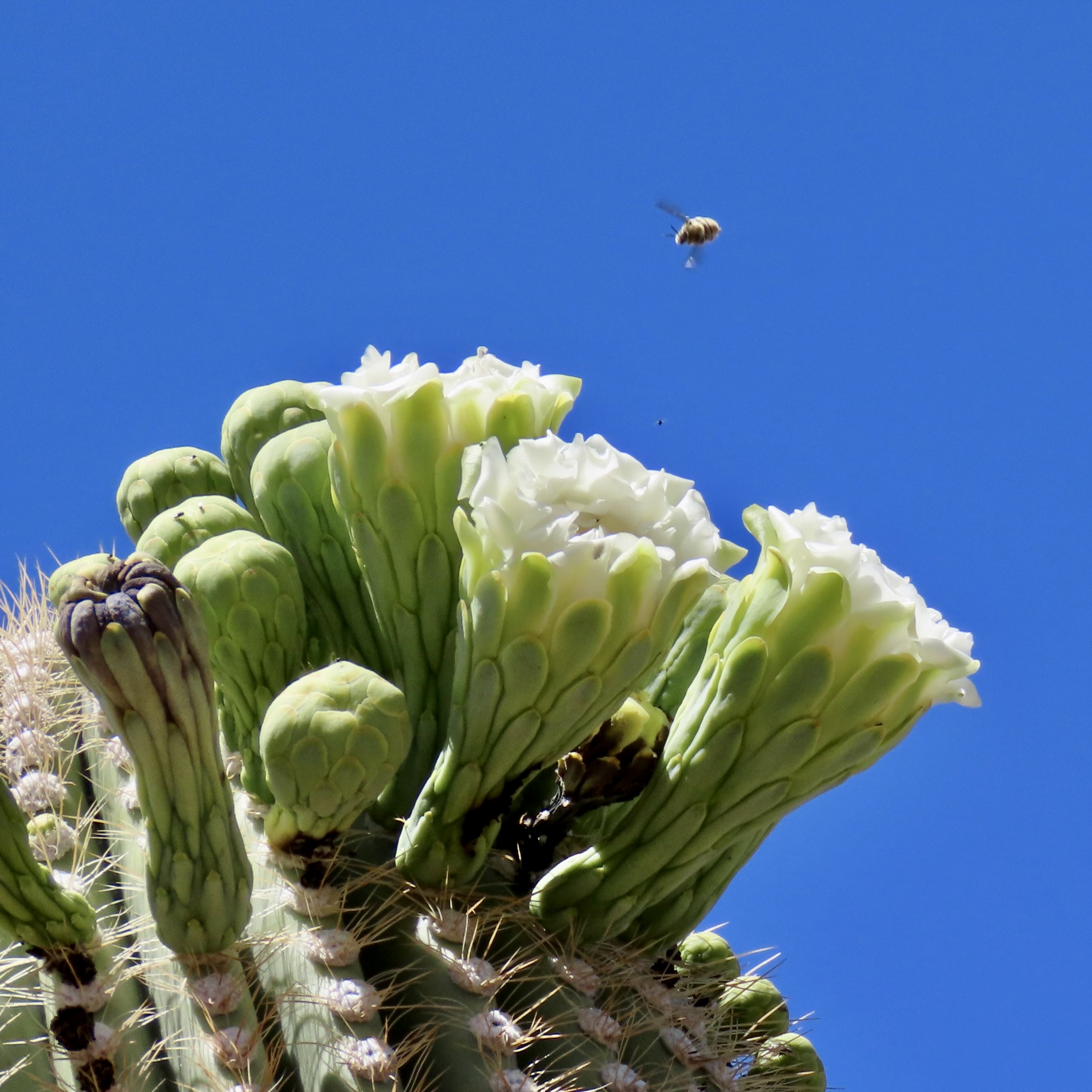
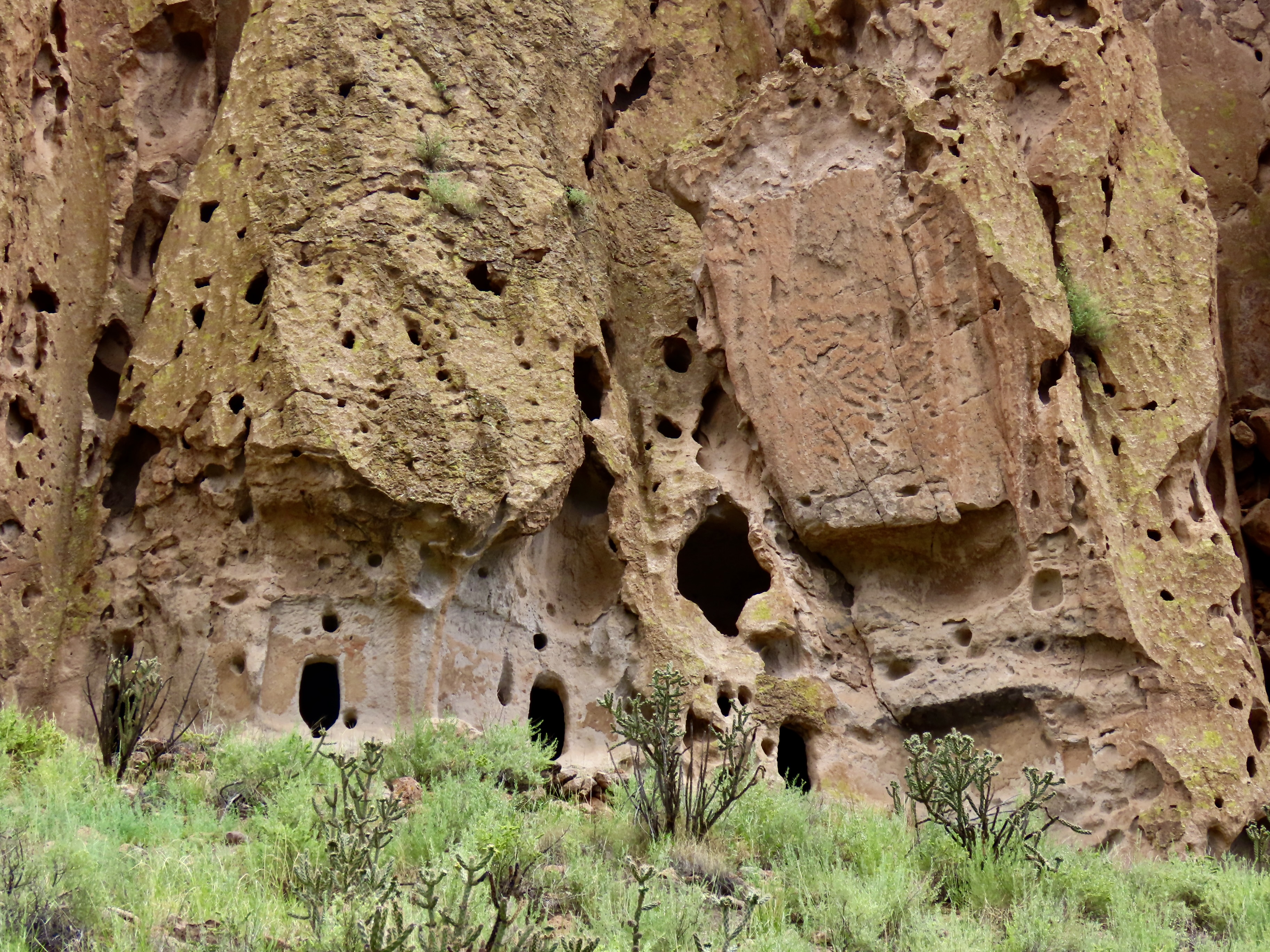
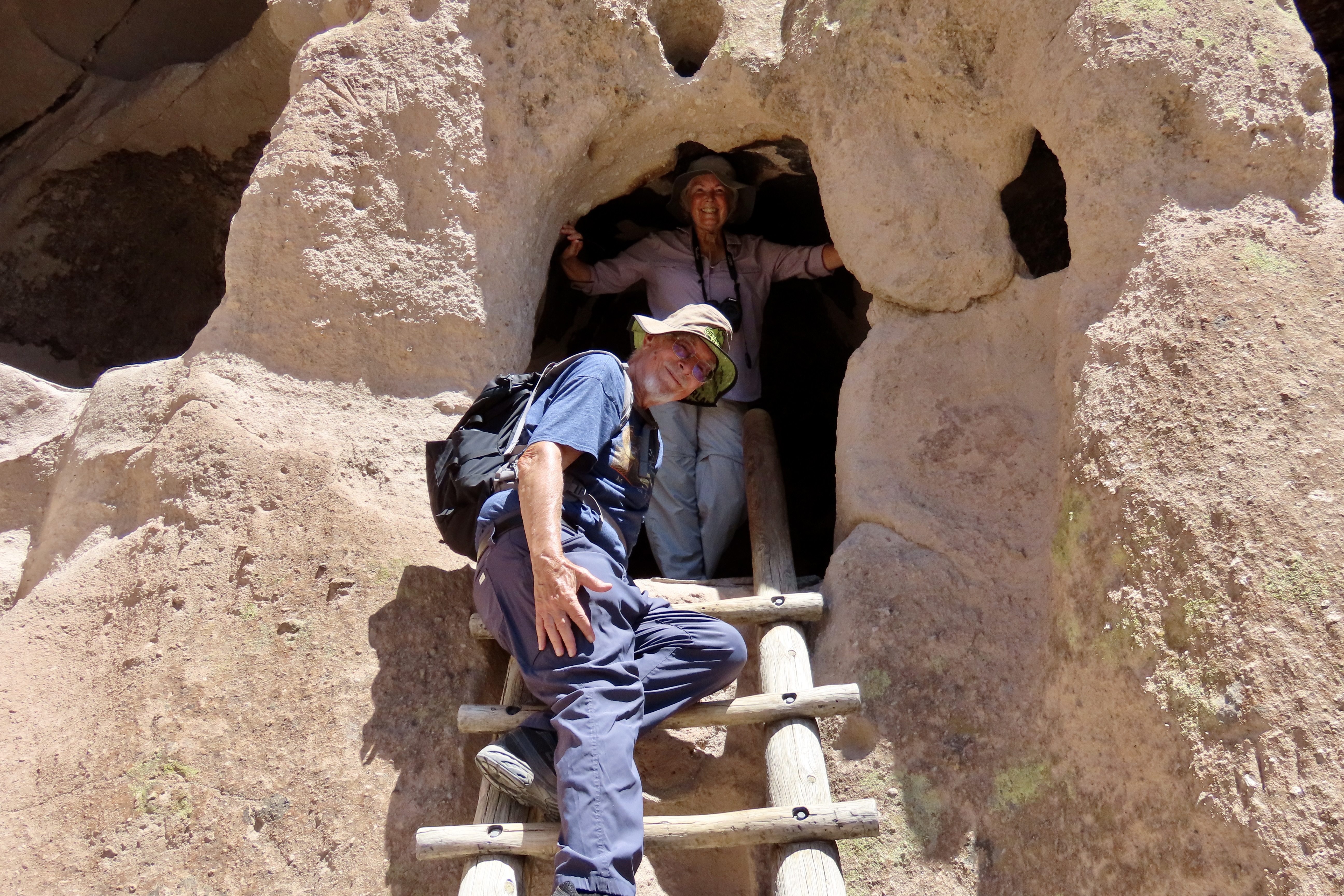
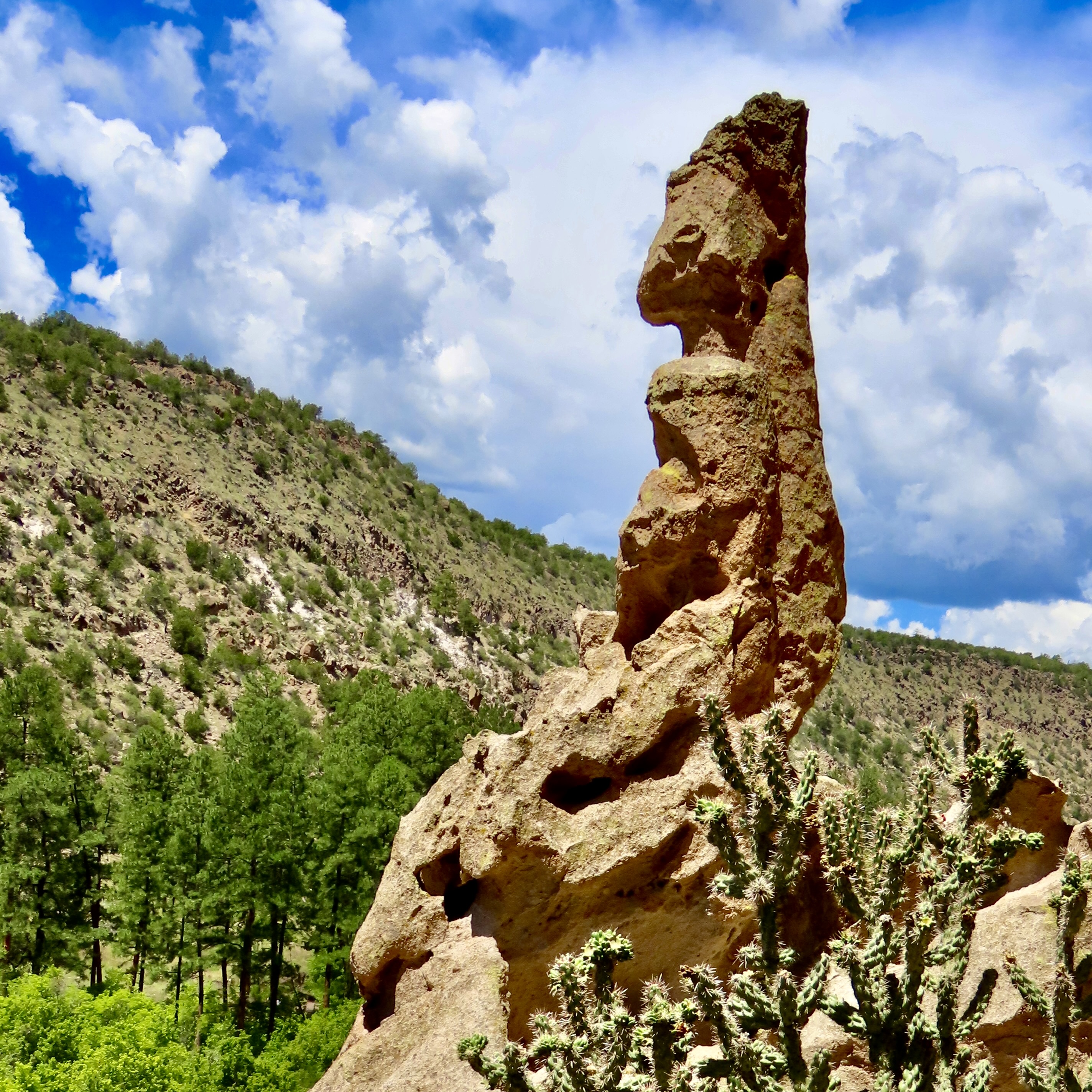
Petrified Forest National Park is found just off of I-40 in eastern Arizona. There are thousands of logs like the one above found in the park. You can still see the bark on this petrified wood that was once a tree that fell 200 million years ago.While most people come to the park to admire the petrified wood, there is also much beauty such as the colorful ‘Teepees’ found on the main road. Each color has a different story to tell representing millions of years in geological history.The Blue Mesa side road includes many other interesting and colorful land forms such as this. If you visit the park, be sure to take the short detour. A walk out in the desert on well maintained trails is definitely in order.Ancestral Puebloans and other indigenous tribes left a view of their ancient world in Petrified Forest NP in petroglyphs on Newspaper Rock. While our understanding of what they were communicating is limited, there is magic in contemplating the possibilities.While we are on the subject of petroglyphs, we found this unique one staring out at us in Petroglyph National Monument in Albuquerque, NM. Over 20,000 petroglyphs have been discovered in the monument. Peggy has plans to include this one in the revision of her word search book: Artistic Word Searches, Unique and Magical: Discovering Petroglyphs from the Southwest.Canyon De Chelly (pronounced shay) is located in northeastern Arizona. Jointly operated by the Navajo Nation that owns the property and the National Park Service, Canyon De Chelly features striking canyon views plus Ancestral Pueblo ruins and petroglyphs left behind by both the Pueblo peoples and Navajos.Our trip this past spring and summer took us into Califonia where we visited family and friends in San Diego, LA, and Sacramento. We also took time to visit Joshua Tree National Park in Southern California, known for its strange trees, after which it is named.We found the rock structures to be of equal, if not greater, interest. Some of which could be said to possess personalities.In addition to being known for its outstanding rock forms (think of the Grand Canyon, Zion, Bryce and Arches— plus what we visited this year), the Southwest is noted for its deserts and cacti, none of which is better known than the Giant Saguaro. We’ve often stopped to admire these huge plants in Saguaro National Park but have never been in Arizona when they are blooming. Things were about to change. Note the buds popping out on top of the arms.This time we were lucky. The blooms are almost other-worldly, in addition to being a source of food for numerous insects such as the bee coming in for a landing.A number of other cactus flowers also lit up the desert.Like plants, animals adjust to the deserts of the Southwest. Several birds choose to nest among the needles of various cacti including the curved bill thrasher Peggy found raising her family in a cholla cactus. The thrasher was not happy when she sneaked up to it and her hatchlings to catch a photo with her iPhone. It’s probably a good thing Peggy couldn’t understand what momma was saying.Bandelier National Monument, located mere miles away from where the first atom bomb was created at Los Alamos, New Mexico, features the ruins of homes built by Ancestral Puebloans that included natural and carved caves (cavates) with pueblo structures once built up against them.Peggy and I climbed up to one of the cavates. It was quite cozy inside. “Honey, I’m home.”Just beneath the cavate, this outcropping of rocks overlooked the large Tyuonyi Pueblo at Bandelier. A corner of the ruins can be seen here. It was built in a circle and contained contained 400 rooms.This tall rock was among the rocks in the outcropping. My first thought was wow! Nowhere in our travels though out the Southwest have we seen a statue like it carved by Ancestral Puebloans or any other indigenous tribes. We had a guide to the trail we were walking on, but there was no information on the statue. Nor was there anything in the information center. The emphasis was all on the scenery, cavates, petroglyphs and pueblos. Human or nature carved, I would think that the park’s literature would at least comment on it. That’s it for today. Next up:We wrapped up our year of travel with out trip to New England so it’s proper that we finish off 2025 with the trip.
Happy New Year to everyone and thanks for joining us on our adventures in 2025. It’s much appreciated. Costa Rica, Bali, and Scotland are coming up in 2026! Curt and Peggy
30 thoughts on “The Southwest: Where Geology Lives, Deserts Thrive, and Ancient People Speak… 2025 Wrap-up”
The pictures are wonderful! And what a great gift for your families! Mine would be pictures of my local library and Safeway ha! Christmas was great and I am a little sad when it is over. I loved the newspaper rock. How mysterious and intense! Looking out my window this morning…have a glimpse of the Olympics with a little snow! It is cold here but lovely. No rain for a bit but our state really suffered. Happy New Year folks! Love, Wendy My brother and I in 1953!
Hi Wendy. Thanks! The calendars are always fun. Shutterfly makes it easy to produce them. The challenge, however, is in sifting through the the hundreds/thousands of photos we take to find 12-13. Grin. A very Happy New Year to you as well. Did you try to send a photo of you and your brother in 1953? If so, it didn’t come. Would be fun to see. -Curt
Hi Curt and Peggy! Yes I did try to send you a picture but it is out in space somewhere. It was a darling picture of course! Happy New Year!
Of course, it was darling, Wendy. LOL.
Wendy, I just had the thought that it might be a wonderful and also hilarious personal gift to make a calendar of your daily adventures! I, personally, would love to receive that from a family member, with photos of the steps up to the library entrance, the cart return at Safeway, the intersection in town with the very brief left turn light, the wonky Yield sign that still isn’t fixed. Just imagine it! Well…. at least I am imagining it…. ha ha!
A gorgeous photo collection that highlights the beauty of my home state. Thank you for sharing, along with your descriptions! I’m looking forward to your three-week leaf-peeping trip. 🍂
Catching the desert in bloom is truly a bucket list item! The photos are gorgeous, and the rock formations always intriguing, especially when we have the added input of your active imaginations, ha ha! Happy New Year to two of the most wonderful people on the planet. We love you! ~Pedro and Crystal
Another post that my husband and I browsed with dreams of travel dancing in our heads. We love being out in nature and exploring this amazing planet. My brother lives in NM and we have more sites to visit there. That said, we have been to Bandelier. When my husband saw the photo of you on the ladder and Peggy in the cave, my husband said, “Is that us?” Lol. We have the exact same photo! How fun.
Thanks for the grand year, my friend, and wishing you both a wonderful, adventurous 2026.
Exact same photo. You’re right. What fun. Did you see the ‘carving’ I featured. I’m fascinated by it. It could easily be the basis of a fantasy, or sci-fi book, given its alien look.
One can never go wrong exploring New Mexico. Peggy and I almost chose living there instead of Oregon.
Thanks D. And our intentions are to make it adventurous! 😁
I need to get back to NM to see White Sands and the Petroglyph Nat’l Monument, at least. Haven’t explored much of Arizona which is also on the list!
And I have a recommendation for you D. If you make it to White Sands, by all means make the side trip to Threes Rivers Petroglyph site. Plan to spend a few hours, not just walking up the main path but exploring both sides, including the cliffs on the left as you are walking up toward the top. There are some of the most interesting petroglyphs that Peggy and I have ever seen. It’s only 55 miles from White Sands!
Nice. I’ll take you up on it! We also haven’t been to Carlsbad in NM. So much to see. 🙂
One could spend a whole year wandering in NM. I’m sure of it. When you run short on things to do you can always visit the grave of Smokey the Bear and Roswell.
LOL. Something new for my bucket list!
Curt and Peggy, you have absolutely captured the beauty and mystery of the Southwest. Such gorgeous photos. We were there a few years ago, but never saw the Giant Saguaros in bloom. I love the petroglyph you snapped staring out at you in Petroglyph National Monument in Albuquerque. Very mysterious.
Your travels this year were quite extensive. And in 2026 you’re heading to Costa Rica, Bali, and Scotland – all fabulous destinations. Thank you both for your educational and entertaining blogging throughout the years. We’ve just hit our 15th year of blogging and we’re constantly impressed with your amazing choice of blog posts. Keep it up! Wishing you both a fantastic New Year! All the best, Terri & James
Fun to think, Terri and James, that we got into blogging at the same time, 15 years ago. Likewise, I have always enjoyed your posts and insights into what you see in your travels. Thanks for your comment. Much appreciated. –Curt
So much to take in from your tour of these wonderful places, Curt. It’s amazing how we can still see the bark after all of these years and the colors of the rock and the petroglyph’s are always unbelievable! Each of your pictures truly takes us on a journey and Joshua Tree lives inside of me with so many wonderful memories, I never tire of.
Bandelier National Monument looks so incredible and I’m not sure I could call it home but it would be fun to visit Lol.
Thanks, Cindy. We love the Southwest and have returned several times over the years. Each time has been special and this year we added some places we have never been before.




 Wandering through Time and Place
The pictures are wonderful! And what a great gift for your families! Mine would be pictures of my local library and Safeway ha! Christmas was great and I am a little sad when it is over. I loved the newspaper rock. How mysterious and intense! Looking out my window this morning…have a glimpse of the Olympics with a little snow! It is cold here but lovely. No rain for a bit but our state really suffered. Happy New Year folks! Love, Wendy My brother and I in 1953!
Hi Wendy. Thanks! The calendars are always fun. Shutterfly makes it easy to produce them. The challenge, however, is in sifting through the the hundreds/thousands of photos we take to find 12-13. Grin. A very Happy New Year to you as well. Did you try to send a photo of you and your brother in 1953? If so, it didn’t come. Would be fun to see. -Curt
Hi Curt and Peggy! Yes I did try to send you a picture but it is out in space somewhere. It was a darling picture of course! Happy New Year!
Of course, it was darling, Wendy. LOL.
Wendy, I just had the thought that it might be a wonderful and also hilarious personal gift to make a calendar of your daily adventures! I, personally, would love to receive that from a family member, with photos of the steps up to the library entrance, the cart return at Safeway, the intersection in town with the very brief left turn light, the wonky Yield sign that still isn’t fixed. Just imagine it! Well…. at least I am imagining it…. ha ha!
What a great idea! It’s the little things in life right? Happy New Year!
Yes! Thank you for the wishes, and Happy New Year back to you.
Indeed.
Have to agree with Crystal! LOL.
Happy New Year to you both. The calendars are such a brilliant way to let family know what you have been up to this year.
They’ve become a tradition, Peggy. They are also one more way to make use of the photos. It’s fun. Happy New Year to you as well!
A gorgeous photo collection that highlights the beauty of my home state. Thank you for sharing, along with your descriptions! I’m looking forward to your three-week leaf-peeping trip. 🍂
You do indeed have a beautiful state, Michele. With variety that few people realize who have never explored it!
Catching the desert in bloom is truly a bucket list item! The photos are gorgeous, and the rock formations always intriguing, especially when we have the added input of your active imaginations, ha ha! Happy New Year to two of the most wonderful people on the planet. We love you! ~Pedro and Crystal
As Peggy just said… Right back at you!
yay for Peggy!
❤️
Another post that my husband and I browsed with dreams of travel dancing in our heads. We love being out in nature and exploring this amazing planet. My brother lives in NM and we have more sites to visit there. That said, we have been to Bandelier. When my husband saw the photo of you on the ladder and Peggy in the cave, my husband said, “Is that us?” Lol. We have the exact same photo! How fun.
Thanks for the grand year, my friend, and wishing you both a wonderful, adventurous 2026.
Exact same photo. You’re right. What fun. Did you see the ‘carving’ I featured. I’m fascinated by it. It could easily be the basis of a fantasy, or sci-fi book, given its alien look.
One can never go wrong exploring New Mexico. Peggy and I almost chose living there instead of Oregon.
Thanks D. And our intentions are to make it adventurous! 😁
I need to get back to NM to see White Sands and the Petroglyph Nat’l Monument, at least. Haven’t explored much of Arizona which is also on the list!
And I have a recommendation for you D. If you make it to White Sands, by all means make the side trip to Threes Rivers Petroglyph site. Plan to spend a few hours, not just walking up the main path but exploring both sides, including the cliffs on the left as you are walking up toward the top. There are some of the most interesting petroglyphs that Peggy and I have ever seen. It’s only 55 miles from White Sands!
Nice. I’ll take you up on it! We also haven’t been to Carlsbad in NM. So much to see. 🙂
One could spend a whole year wandering in NM. I’m sure of it. When you run short on things to do you can always visit the grave of Smokey the Bear and Roswell.
LOL. Something new for my bucket list!
Curt and Peggy, you have absolutely captured the beauty and mystery of the Southwest. Such gorgeous photos. We were there a few years ago, but never saw the Giant Saguaros in bloom. I love the petroglyph you snapped staring out at you in Petroglyph National Monument in Albuquerque. Very mysterious.
Your travels this year were quite extensive. And in 2026 you’re heading to Costa Rica, Bali, and Scotland – all fabulous destinations. Thank you both for your educational and entertaining blogging throughout the years. We’ve just hit our 15th year of blogging and we’re constantly impressed with your amazing choice of blog posts. Keep it up! Wishing you both a fantastic New Year! All the best, Terri & James
Fun to think, Terri and James, that we got into blogging at the same time, 15 years ago. Likewise, I have always enjoyed your posts and insights into what you see in your travels. Thanks for your comment. Much appreciated. –Curt
So much to take in from your tour of these wonderful places, Curt. It’s amazing how we can still see the bark after all of these years and the colors of the rock and the petroglyph’s are always unbelievable! Each of your pictures truly takes us on a journey and Joshua Tree lives inside of me with so many wonderful memories, I never tire of.
Bandelier National Monument looks so incredible and I’m not sure I could call it home but it would be fun to visit Lol.
That statue is definitely a Wowza!!!
❤️
Thanks, Cindy. We love the Southwest and have returned several times over the years. Each time has been special and this year we added some places we have never been before.
Wowza is a great way to describe the statue!
Amazing how much cool stuff there is in the world. Even in hot places.
Isn’t it great, Dave. As of hot, we were lucky that way.