The Bush Devil Ate Sam is an important record and a serious story, yet told easily, and with delightful humor. This is one of the most satisfying books I have ever read, because it entertained me thoroughly AND made me feel better informed. —Hilary Custance Green: British Author... Click on the image to learn more about my book, the Bush Devil Ate Sam, and find out where it can be ordered.










 Wandering through Time and Place
What an amazing place! Thank you for sharing your experience. It looks like you were really close to that peccary.
Right on its tail. That’s why he was bristling: “Back off, buddy.” I did. The whole herd came strolling through our campsite. How could I resist? Big Bend is amazing. I’m ever so glad that Peggy and I were able to go back there.
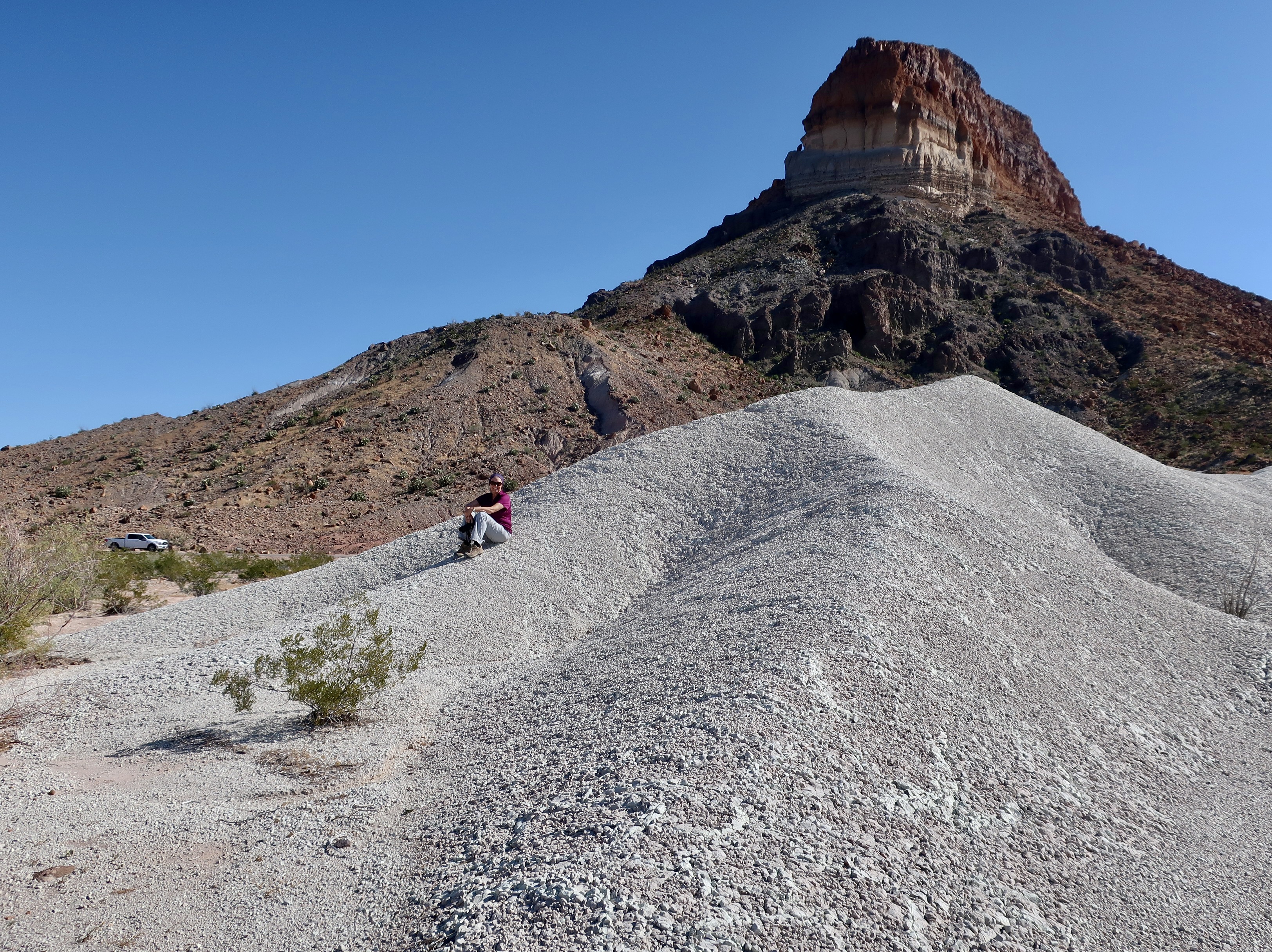
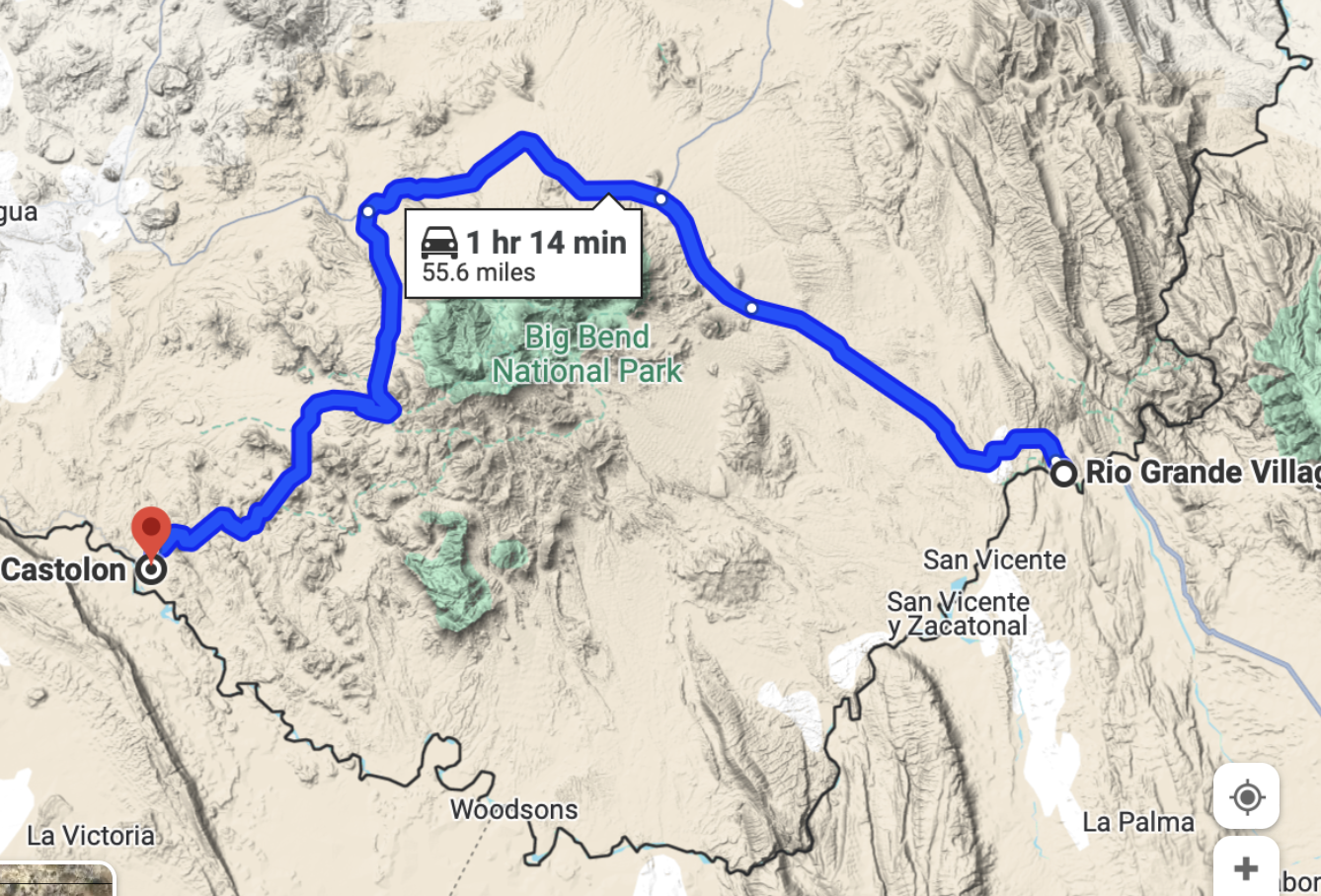
Reading your narrative and following along with these wonderful photos made me feel like I was there in the canyon, Curt, with you and Peggy. This was an excellent look at Big Bend–its history, present plants, rock formations, landscape and immense beauty. Thank you.
You are very welcome, Jet. Glad you could come along. I know your appreciation of natural beauty. –Curt
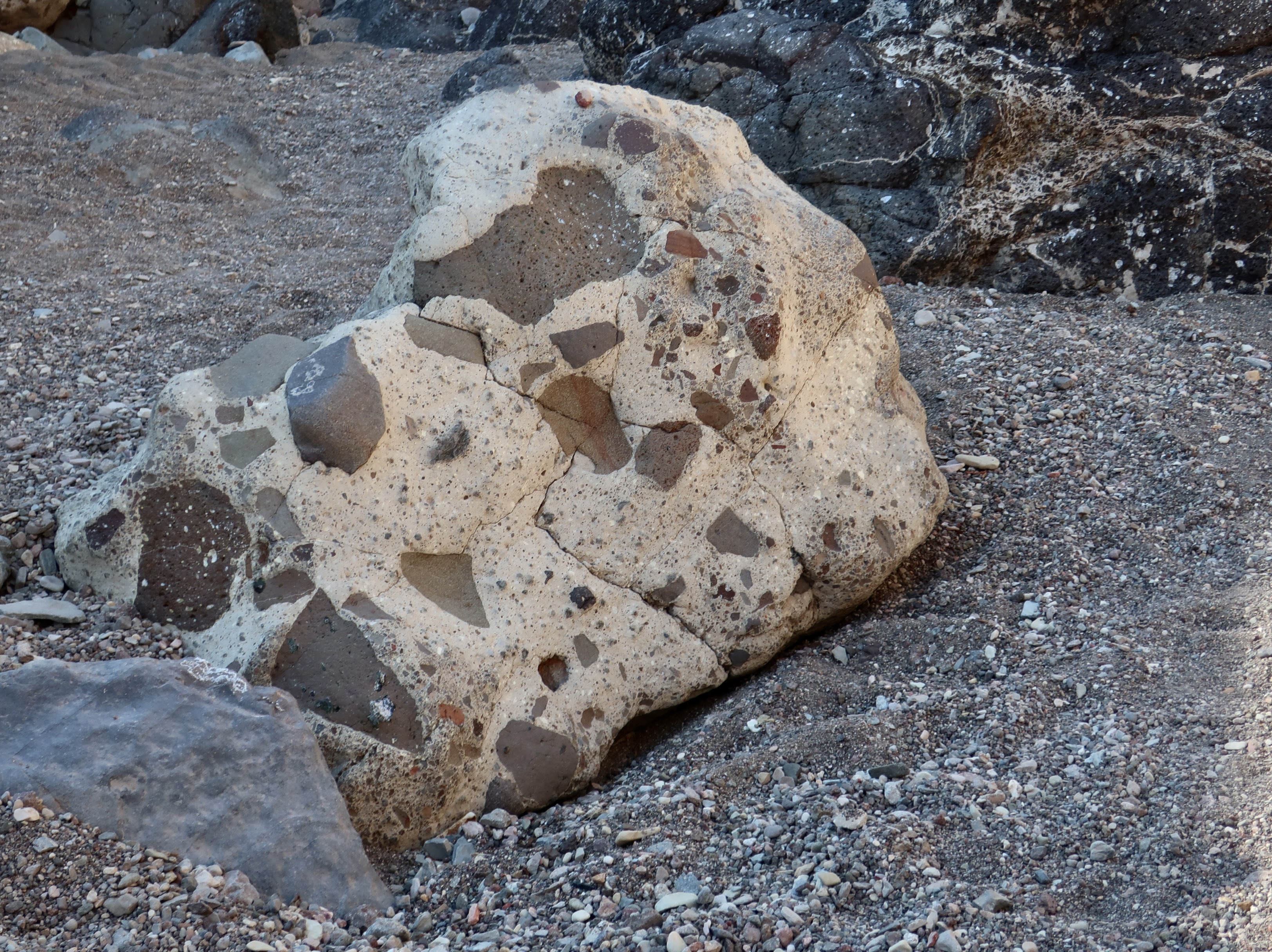
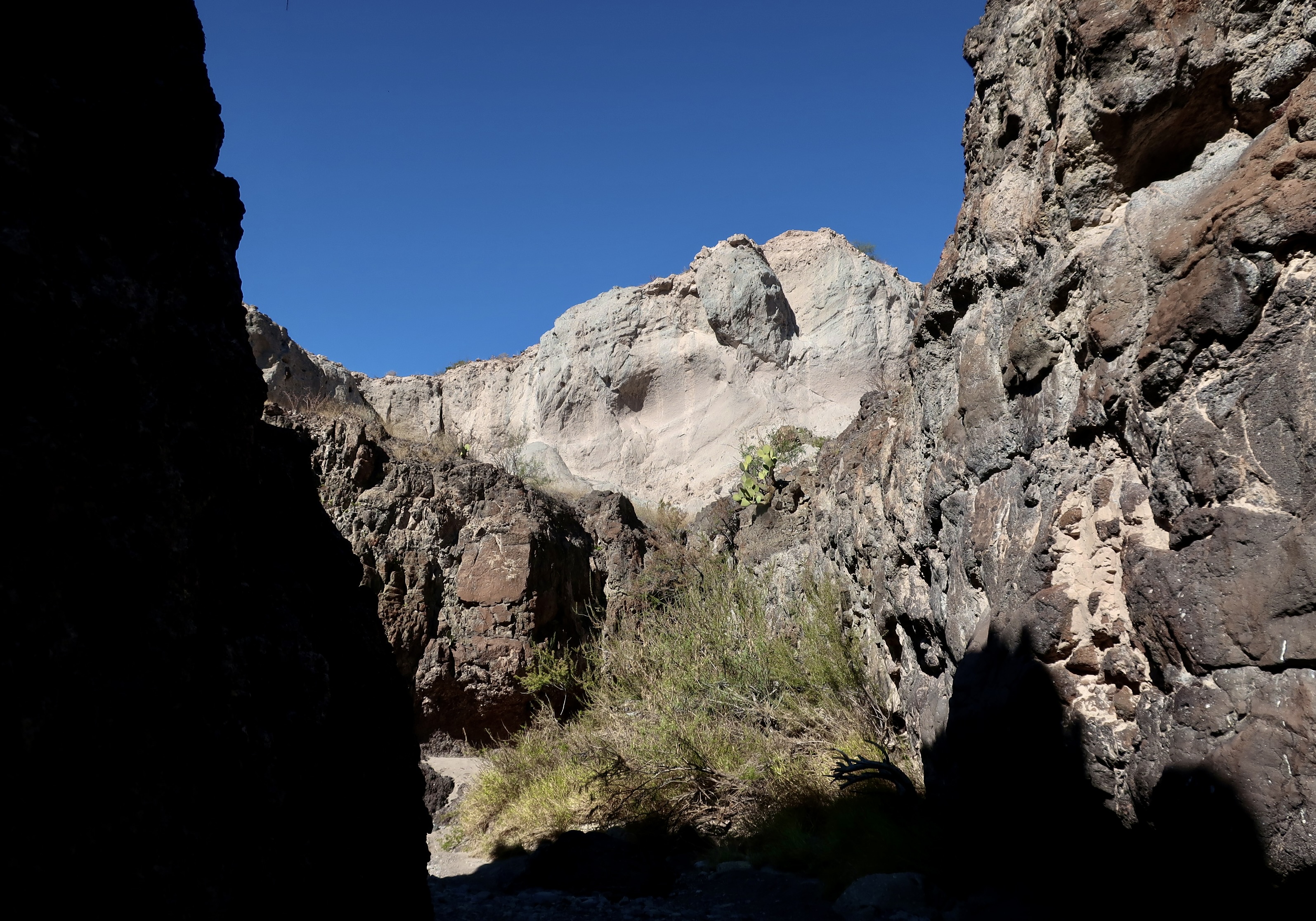
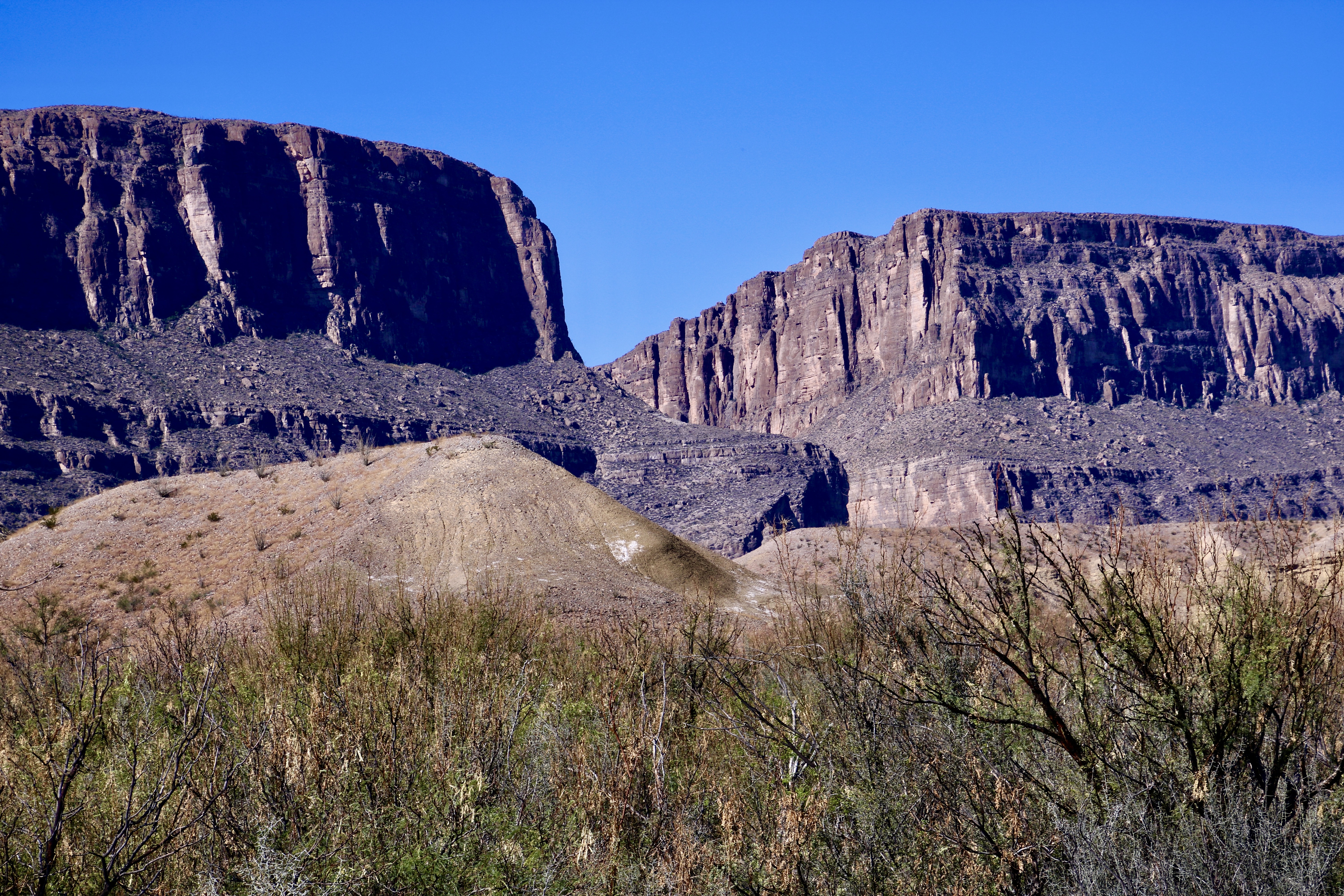
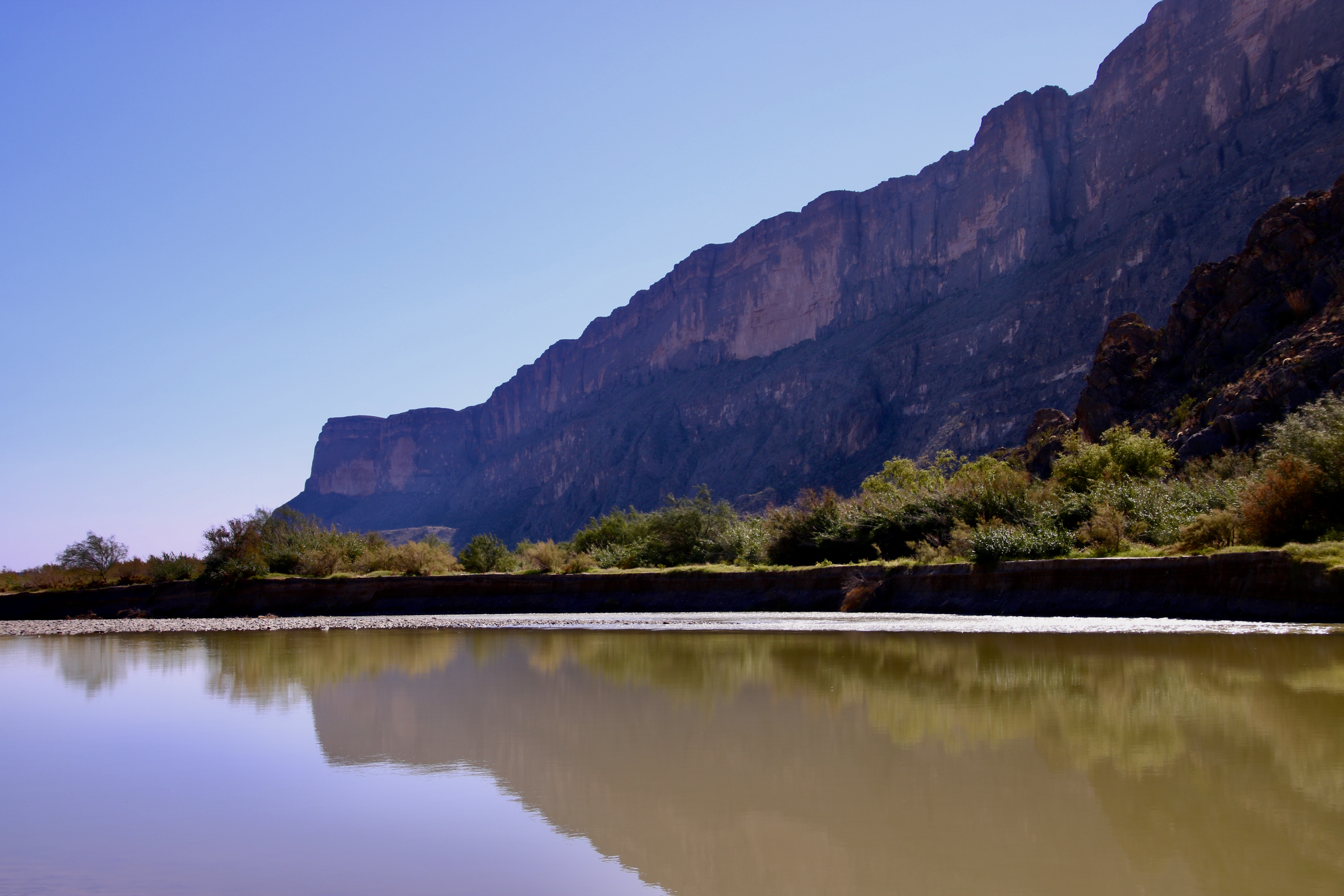
This is all so marvelous, Curt. I am in love with Ocotillo, and have never looked closely at the plant when it is dormant like that. Super beautiful streaks. I definitely would have hiked down into that canyon as you did, and I really love that photo of the composite rock. Super cool. The first person to explain that effect to me was Kellen, while they were in college getting a geology degree, which is kind of neat. The Cerro Castellan and water here are eye catching, and the javelinas too! I’ve yet to see one in the wild.
I could see you walking through Tuff Canyon with the same excitement that Peggy and I felt, Crystal. It was both incredibly interesting and beautiful! I remember when Kellen ‘took you’ on some great geology field trips.😁 Ocotillo is a neat plant. I wish one had been in bloom to complete the picture. Peggy and I found them blooming once in Joshua Tree National Park. Incredible. We’ve seen javelinas a few times on out trips through the Southwest, but not many. Thanks. –Curt
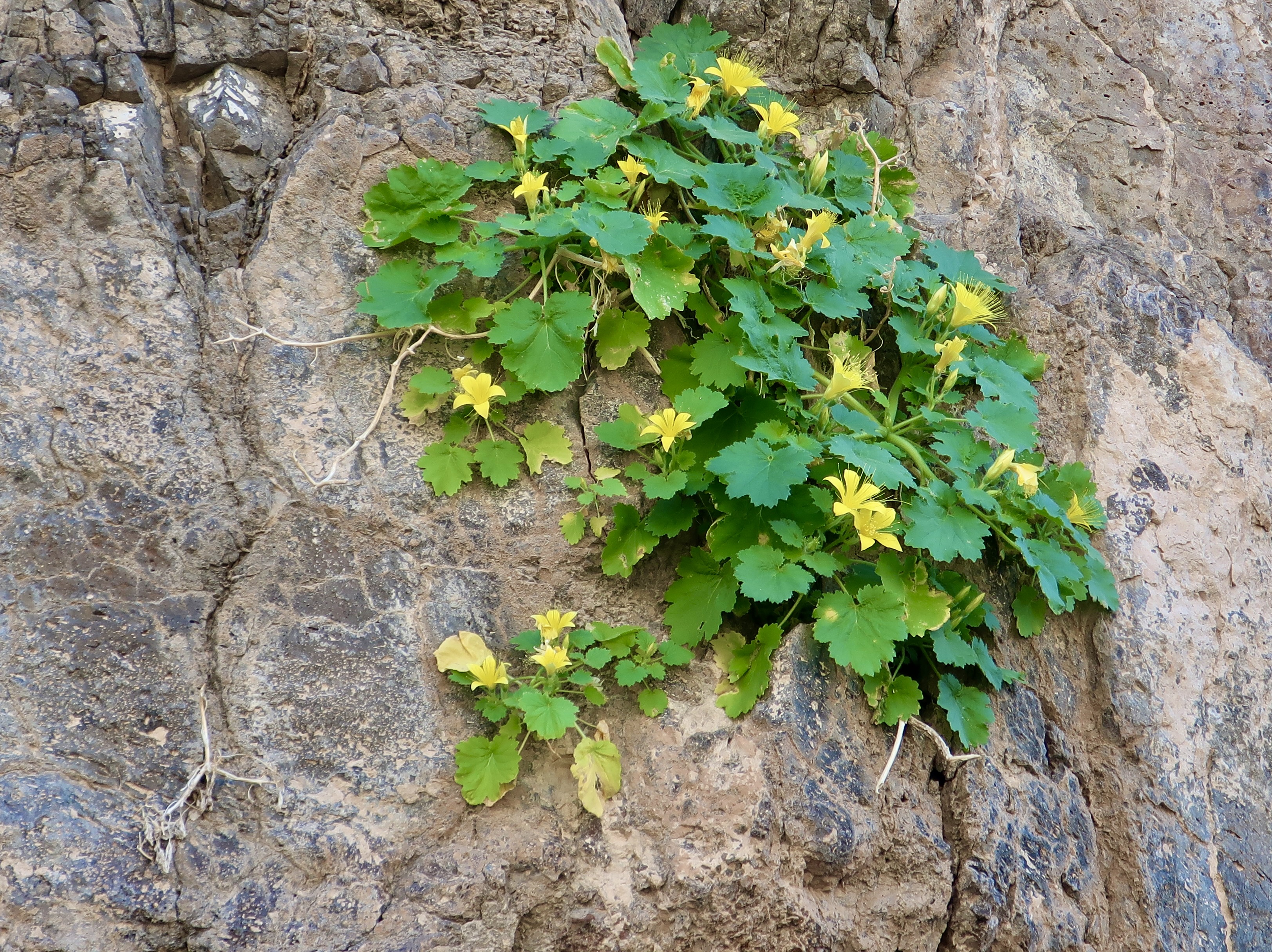
Another stellar post of photos and meanderings, Curt.. LOVE the flowers growing out of the rock.. “Flowers growing out of crevices in the tuff wall. Life will find a way!”
Yes!
Hey, look at the bright side your framing didn’t get you in any trouble this time! 😂😱😹
Great shot!
Carry on and keep having fun.., Of course you need no permission.. you do that quite well👏❣️💗🫶🏽
Thanks, Cindy. I always love it when I see a plant growing in such a difficult place you can’t help but ask, “How in the heck did it do that?”
Couldn’t help the “framing” joke. It was a natural.
“Carry on and keep having fun.., Of course you need no permission.. you do that quite well” Easy when you find so many things ‘fun’ to do. 😊
Nature is freaking unbelievable alright! OMIGOSH… your teachers and sheriffs could have had a field day with it.. . 😂🥺😱😂😂
Neither of us could ever get bored with the “fun in motion” 🫶🏽💓
I’ll drink to fun in motion. In fact, it’s just about wine-time here.
So much history preserved in stone! Mysteries of our past too.
It’s pretty much the source of our knowledge for anything truly ancient, G.
My favorite photo is the ocotillo. The yellow flowers looked suspiciously like some of our oxalis species, but it seems they might be a celandine: perhaps Chelidonium majus. The composite rock reminded me of the candy known as jelly nougat, with its bits of red, green, and yellow jelly in a nougat base.
As for all that tuff, it’s geologically cool but also a reminder that there always is a song! Let me find a good link.
Here it is: Stevie Ray and Jimmy together. That sure is Tuff Enough!
Tuff enough for sure, Linda. made me smile, as did the shirt that Stevie was wearing. The ocotillo was pretty much begging to have its photo taken!
Thanks for the addition on the flower, Linda. Appreciated. As for the jelly nougat, I remembered what it was once I saw its photo. It was never on my list of favorite candies, which may be why my memory banks weren’t working. Now a sugar daddy or a tootsie roll would have come up immediately!
Pingback: Cerro Castellan, Tuff Canyon and Santa Elena: Beauty and Drama at Big Bend… National Park Series #12 – ADVERTISING OPERATIONS
Really nice photos, Curt! I loved seeing the healthy plant life in the tuff as well as all the geologic formations.
Thanks, Lexi. I was impressed with the plant life there as well! (Obviously)
Another great entry in your NP series. I do love the water photos of course (so pretty), and the pic of you framed, and also the one of the ocotillo plant.
Alison
Thanks, Alison. That’s just about it for my National Park series, I put up Theodore Roosevelt NP yesterday. Next Monday, we will be heading for the Danube and a vacation from my blog for a month. Grin. When I come back, however, I am going to return to our trip down the Colorado through the Grand Canyon with lots of photos Peggy and I didn’t use before. –Curt
Pingback: 24 Jaw-Dropping National Parks That Are Road Trip Perfection – Top Travel Escapes