16 Miles without Water: a Rattlesnake, a Lost Trekker, and a Rebellion… The First Sierra Trek

"Climb the mountains and get their good tidings. Nature's peace will flow into you as sunshine flows into trees. The winds will blow their own freshness into you, and the storms their energy, while cares will drop off like autumn leaves." –John Muir

“Climb the mountains and get their good tidings. Nature’s peace will flow into you as sunshine flows into trees. The winds will blow their own freshness into you, and the storms their energy, while cares will drop off like autumn leaves.” –John Muir


As the physician who had threatened to tell the media I was running a ‘pot smoking orgy’ in the mountains packed up to leave, my thoughts turned to the challenges of our second day’s route. We were facing a hike where the first water and possible campsite were 16 miles down the trail. Considering how much fun I had getting our Trekkers through seven miles on day one, I was not excited about day two. We had one access point approximately half way where a road crossed our trail. Steve and I planned to have the jeep there to resupply the Trekkers with water for the second part of their journey.

Today’s photos are focused on the mountains of the High Sierra. These towering peaks of granite are topped off by Mt. Whitney at 14,505 feet (4421.0 m). John Muir loved the Sierras and returned to them again and again. “The mountains are calling and I must go,” he declared. It is a passion I share. In honor of Muir’s love for mountains and wilderness, I am using a different quote of his for each photo. These quotes were gathered by the Sierra Club.


I did a 360 mile trip down the Sierras to celebrate my 60th birthday. Mt. Whitney is in the Background.

“Keep close to Nature’s heart… and break clear away, once in a while, and climb a mountain or spend a week in the woods. Wash your spirit clean.” –John Muir (Here I am, keeping “close to Nature’s heart.” Mt. Whitney is in the background.)


When the Trekkers were packed and ready to go, I called them together for a final briefing. I reminded them of how difficult the day would be and then gave them very specific instructions:

“If the jeep isn’t there when you arrive at the road, wait for it.” It would not be the last time in Trek history my directions would go unheeded.

As per plan, I sent Steve on ahead as trail leader while Charlie and I provided rear guard support. In retrospect, I should have recalled that this was the section of the trail that the hawk had ‘chased’ Steve for miles, apparently all 16. Far from being a gentle ridge walk, we were climbing in and out of small canyons over hot, dusty trails. By the time we had covered five miles I was beginning to worry and by six, I knew had to come up with an alternative. Otherwise many of our folks would be making a dry camp out on the trail.

I had quickly discovered that the walkie-talkies from Bob-of-No-Name didn’t work because of all the canyons. My only solution was to hustle up to the front of the line and catch the Trekkers before they left the jeep. I dubbed Charlie as primary rear guard and took off moving as fast as my short legs would go, passing the majority of our group along the way. When I arrived at the jeep, Steve was there with 15 people. “Damn,” I thought, “some of the Trekkers have already gone on.” Maybe I could catch them.

“Hey Steve,” I jumped in as he greeted me, “it’s time for Plan B.”

“Which is…” he asked grinning?

“We need to send the Trekkers by road into Robinson Flat with jeep back up. It’s only about 5 miles by road versus 10 by trail plus the jeep can provide water along the way and shuttle people if necessary. But first, how long ago was it when the rest of the Trekkers left the jeep?”

“I don’t know,” Steve confessed. He’d had a group of Trekkers walking on his tail and let them pass (thus breaking one of our cardinal rules). Even worse, Steve Locke didn’t know either. Apparently 15 of the Trekkers had arrived before the jeep and chosen to go on. Another five had actually waited, loaded up with water and then taken off, approximately 30 minutes before I arrived.

“Great,” I responded. Thanks to Steve letting people go ahead, we now had 20 people out on the trail in front of us without a leader— and 15 with limited water.

"In God's wildness lies the hope of the world - the great fresh unblighted, unredeemed wilderness. The galling harness of civilization drops off, and wounds heal ere we are aware." –John Muir 

“In God’s wildness lies the hope of the world – the great fresh unblighted, unredeemed wilderness. The galling harness of civilization drops off, and wounds heal ere we are aware.” –John Muir (Here you are looking from the top of Mt. Whitney east toward Lone Pine and the Owens Valley. The road winds through the Alabama Hills where many Westerns have been filmed.)

This photo looks north from Mt. Whitney into the heart of the High Sierras.

“This grand show is eternal.”  –John Muir  (This photo looks north from Mt. Whitney into the heart of the High Sierras with mountains as far as you can see.)

Day two, which had started with the doctor and his ‘pot smoking orgy,’ had gone from bad to worse. I made a command decision. Steve would continue on with Plan B as I had outlined it, moving the remaining Trekkers via road to Robinson Flat. I would continue along Red Star Ridge and provide backup for the group who had chosen to hike another 8 miles without water access.

I had little doubt about what type of foul mood my wayward charges would be in and who they would blame for their predicament. (It certainly wouldn’t be themselves for failing to wait for the jeep.) We would camp on Duncan Creek and hike the two miles into Robinson Flat the next morning.

“No one is to budge from Robinson Flat until I get there,” I instructed with the fervid hope my instructions would be followed this time.

First, however, I had to go back and retrieve Charlie. I wanted to personally be sure that all of our other Trekkers made it to the jeep. I asked Crowle and Locke to hold everyone. I found Charlie a mile or so back the trail with another broken pack. Boy, were we having fun. If my learning curve got any steeper, I was going to fall off.

“I’ll hike on with you Curt to provide support and company,” Charlie insisted.

I knew I was tired and could only imagine how he must feel given his extra 25 years and 50 pounds. I was beginning to realize that older people are often tougher than young people half their age with twice their strength. The journey we were on was as much psychological as it was physical. Maybe more so.

The clearest way into the Universe is through a forest wilderness. (Treks down and across the Sierras are tough for everyone, but especially so for people without experience. It always seems that there are more mountains to climb and more canyons to drop into.)

“The clearest way into the Universe is through a forest wilderness.” –John Muir

"Between every two pine trees there is a door leading to a new way of life." –John Muir

“Between every two pine trees there is a door leading to a new way of life.” –John Muir (Over the years, I have known numerous people who have decided to change their lives while backpacking for a week through the Sierras.)

"Another glorious day, the air as delicious to the lungs as nectar to the tongue." –John Muir (The same photo as above a couple of hours later as alpen glow colors the ridge. This is in the Dusy Basin near Bishop.) 

“Another glorious day, the air as delicious to the lungs as nectar to the tongue.” –John Muir (The same photo as above a couple of hours later as the setting sun colors the ridge. This is in the Dusy Basin near Bishop.)

We initiated phase two of our journey around 2:00 p.m. In a little over 30 minutes we caught our four eleven-year-olds, who we had nicknamed the Four Mouseketeers, crawling along at a pace that a turtle would find embarrassing.

“Joe is really slow,” one of the urchins informed me.

Yeah, I thought to myself, and you guys are so glad he is because it provides all of you with an excuse to move at the same pace.

After about an hour of moving along at ‘Joe speed,’ Charlie plaintively informed me he wasn’t going to make it into camp if he couldn’t move faster. Having determined that three of our Mouseketeers really were good hikers, I assigned them to Charlie and took Joe on as my personal challenge. The experience was similar to moving my Basset Hound down the trail after he spent a full night of digging. Joe would go a quarter of a mile and stop, plopping down onto the dusty trail. We had managed about a mile of this when I came on Charlie again, standing beside the trail and pointing off to the left.

“Careful, Curt,” he began, “there is a huge timber rattler coiled up there.”

Adrenaline gave me a spurt of energy I didn’t know I had. Huge was hardly an adequate description. The snake was as thick as my wrist and about six feet long. Joe, either out of exhaustion or not caring, came to a shuffling halt mere inches away from the poised pit viper and kicked dirt into its face.

“Um, Joe,” I whispered trying to sound calm and not wanting to frighten him or the snake into precipitous action, “if you will look down to your left, you will see a snake. Don’t move.”

Had I received such instructions, I would have been 20 feet down the trail in one prodigious leap. Joe, on the other hand, looked down at the huge, coiled rattler, said ‘oh,’ and shuffled on down the trail. The snake didn’t budge; Joe was not food, friend or foe. We left the snake guarding the trail.

"Man must be made conscious of his origin as a child of Nature. Brought into right relationship with the wilderness he would see that he was not a separate entity endowed with a divine right to subdue his fellow creatures and destroy the common heritage, but rather an integral part of a harmonious whole." (Granite rules in the Sierras and reminds us of our place in the world.)

“Man must be made conscious of his origin as a child of Nature. Brought into right relationship with the wilderness he would see that he was not a separate entity endowed with a divine right to subdue his fellow creatures and destroy the common heritage, but rather an integral part of a harmonious whole.” –John Muir

"Everybody needs beauty as well as bread, places to play in and pray in, where nature may heal and give strength to body and soul alike." Few chunks of granite are more beautiful and famous than Half Dome in Yosemite.

“Everybody needs beauty as well as bread, places to play in and pray in, where nature may heal and give strength to body and soul alike.” –John Muir (Few solid chunks of granite are more beautiful or famous than Half Dome in Yosemite.)

"Another glorious Sierra day in which one seems to be dissolved and absorbed and sent pulsing onward we know not where. Life seems neither long nor short, and we take no more heed to save time or make haste than do the trees and stars. This is true freedom, a good practical sort of immortality."

“Another glorious Sierra day in which one seems to be dissolved and absorbed and sent pulsing onward we know not where. Life seems neither long nor short, and we take no more heed to save time or make haste than do the trees and stars. This is true freedom, a good practical sort of immortality.” –John Muir

Charlie went on ahead with his three charges and I continued to herd my half dead companion. It was after dark when I heard the stream that I knew meant camp. It was an extremely welcome sound; Joe and I had been traveling for at least 30 minutes by flashlight. Charlie was waiting for us outside camp.

“We have a problem Curt…” he began for the second time that day, although the day had already stretched out forever and I hadn’t known one minute when the ubiquitous problem did not exist. As supportive as Charlie had been, I had thoughts of killing the messenger.

“What’s it this time,” I asked, struggling to keep the grump and whine out of my voice.

“One of the Trekkers is lost and the rest of the Trekkers are ready to string you up from a tree,” he reported matter-of-factly. But then, it wasn’t his neck. “I’ve calmed them down by telling them all you have done today,” he went on. “Now they are just going to give you the silent treatment.”

I am not a praying type of person but I looked up at the sky and said, “God, get me back to Sacramento and I promise I will go back to running Christmas Seal Campaigns with my 80-year-old, lady volunteers and be perfectly happy.” The odds against any future Trek program had just hit 1000 to 1.

Before going to bed, I insisted that the Trekkers gather around so I could learn what I could about the missing person, Dick. Silent treatment or not, I needed to think through an action plan for the next day. Dick was the school teacher who had claimed he could carry his weight in booze. He had been hiking alone and hadn’t talked to anyone about leaving the route. The Trekkers could only give me an approximation of where they had last seen him.

I decided to get folks up early in the morning. I would high-tail-it the two miles into camp and see if Dick had shown up at Robinson Flat. If not, I would check with the ranger station and help organize a search party. Two of my strongest hikers would stay behind in camp in case Dick showed up there. Charlie would bring the rest of the Trekkers on to Robinson Flat.

"When one is alone at night in the depths of these woods, the stillness is at once awful and sublime. Every leaf seems to speak." –John Muir (I sometimes backpack by myself in the wilderness and spend nights with nothing but myself and nature. I highly recommend the experience.)

“When one is alone at night in the depths of these woods, the stillness is at once awful and sublime. Every leaf seems to speak.” –John Muir (I sometimes backpack by myself in the wilderness and spend nights with nothing but myself and nature. I highly recommend the experience.)

I was exhausted and couldn’t go to sleep but somewhere in the wee hours I must have dozed off because I woke with a start as Charlie lobbed pebbles at my sleeping bag. I was up and packed in a zip. After a few words of encouragement to the troops, who had made a miraculous recovery over night, I was bounding off up the trail like a hare with the hounds of hell in hot pursuit. Just as I came into camp, Dick came hoofing in from the opposite direction. I didn’t know whether to kiss or to kill him, but he was too ugly for the former and possibly too tough for the latter.

I settled for, “Are you okay Dick?”

“Sure,” he replied in a why-wouldn’t-he-be tone.

“What happened,” I demanded, allowing my irritation to surface.

“I got thirsty,” Dick explained. “I could see French Meadow Reservoir at the bottom of the ridge so I hiked down to get a drink. When I got there, I was tired so I set up camp.”

My irritation boiled over.

“Why didn’t you tell someone you were leaving? Didn’t you realize we would be worried sick and mounting a search and rescue effort?” I was on a roll and Dick was on the receiving end of a great deal of frustration I was feeling. Fortunately, guilt had driven him to get up before dawn and make his way to Robinson Flat as quickly as he could. It might have been worse, much worse.

The crisis was over, but I still had chores. First up was to go back and collect the rearguard I had left at Duncan Creek. I could have sent Steve but I needed the down time. As I hiked, I made my second command decision of the day. Even though we had only hiked for two days, the group could use a layover day. Hell, I could use a layover day. In fact, I needed a layover day. I deserved a layover day. The next day could wait for its turn. What else could go wrong? Hah!

"God does not appear, and flow out, only from narrow chinks and round bored wells here and there in favored races and places, but He flows in grand undivided currents, shoreless and boundless over creeds and forms and all kinds of civilizations and peoples and beasts..." (Wise words in these troubling times of division.)

“God does not appear, and flow out, only from narrow chinks and round bored wells here and there in favored races and places, but He flows in grand undivided currents, shoreless and boundless over creeds and forms and all kinds of civilizations and peoples and beasts…” –John Muir (Wise words in these troubling times of division.)

"It took more than three thousand years to make some of the trees in these Western woods -- trees that are still standing in perfect strength and beauty, waving and singing in the mighty forests of the Sierra. Through all the wonderful, eventful centuries ... God has cared for these trees, saved them from drought, disease, avalanches, and a thousand straining, leveling tempests and floods; but he cannot save them from fools -- only Uncle Sam can do that." (Something to think about as 'Uncle Sam' moves to eliminate the Environmental Protection Agency.)

“It took more than three thousand years to make some of the trees in these Western woods — trees that are still standing in perfect strength and beauty, waving and singing in the mighty forests of the Sierra. Through all the wonderful, eventful centuries … God has cared for these trees, saved them from drought, disease, avalanches, and a thousand straining, leveling tempests and floods; but he cannot save them from fools — only Uncle Sam can do that.” (Something to think about as ‘Uncle Sam’ moves to eliminate the Environmental Protection Agency and the regulations that protect these forests from destruction.)

"Then it seemed to me that the Sierra should be called, not the Nevada or Snowy Range, but the Range of Light. And after ten years of wandering and wondering in the heart of it, rejoicing in its glorious floods of light, the white beams of the morning streaming through the passes, the noonday radiance on the crystal rocks, the flush of the alpenglow, and the irised spray of countless waterfalls, it still seems above all others the Range of Light." (With 50 years of wandering the Sierra Nevada Mountains behind me, I agree.)

“Then it seemed to me that the Sierra should be called, not the Nevada or Snowy Range, but the Range of Light. –John Muir (With 50 years of wandering the Sierra Nevada Mountains behind me, I agree.)

NEXT BLOGS:

Friday: An amazing octopus and rhino. More on the mutant vehicles of Burning Man.

Monday: Sully and his airplane.

Wednesday: Sierra Trek: The layover day where all sorts of interesting things happen.

Sorry, Sully, I Was Distracted… Oregon’s Gorgeous Harris Beach State Park

This is what you find on a sunny day at Harris Beach State Park near Brookings, Oregon. Peggy and I had to deal with stormy weather.

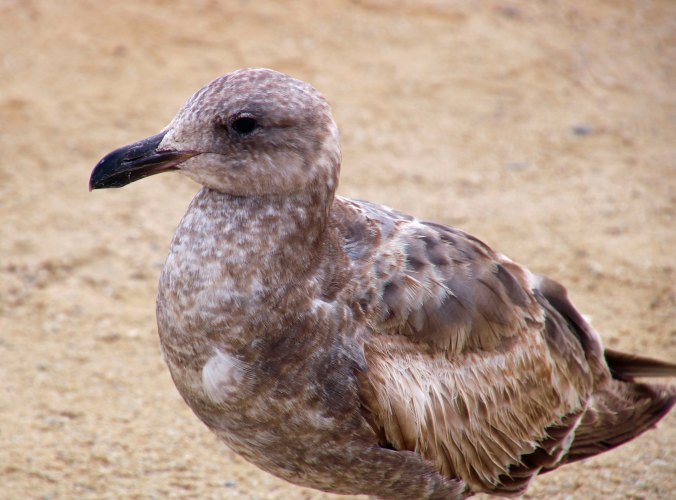
This is what you find on a sunny day at Harris Beach State Park near Brookings, Oregon. I was particularly pleased with the seagull who decided to photo-bomb my picture. Peggy and I had to deal with stormy weather when we visited there last week.


So, I was going to write about Chesley Burnett “Sully” Sullenberger III today, the heroic American Airlines pilot who saved 155 people in 2009 by landing his goose-disabled US Airways Flight 1549 on the Hudson River, but I got distracted. It happens, you know.

Peggy and I took a trip over to the Oregon Coast for Valentine’s Day and ended up at Harris Beach State Park in Brookings. It was a stormy three days filled with 40-60 MPH winds, slashing rain and crashing waves— the perfect weather for romantically snuggling down in our 22-foot RV and eating chocolate as the world roared by outside.

We had our rain hats, rain coats and rain pants, however, so we got out for a couple of walks: once when the sun was threatening to shine and once when the heavens were threatening to open up and dump oodles of rain. And we took our cameras. Peggy wanted to play with her new Canon EOS Rebel T6i with a Tamron 16-300 mm telephoto lens. I took my trusty little Canon Powershot G7x. The conditions weren’t ideal for photography— grey skies matched grey seas matched grey rocks, but we had fun seeing what we could capture.

Harris Beach State Park near Brookings, Oregon

This sea stack was in the background on the lead picture for this post. Again, I took this photo on a sunny day. Note the large crack/cave on the front. (Sea stacks are rocks in the ocean that have been created by the endless waves eroding the shoreline.)

Storm tossed seas at Harris Beach State Park.

This is what it looked like last week. A wave is crashing into the cave. (Because of a high tide abetted by the stormy weather, I had to take this photo from a different angle.The sea stack on the left is included in photos below. Brookings is on the distant cliff.)

When we arrived home, I was eager to see the results and process the photos. I did that instead of working on the photos I took of Sully’s plane at the air museum in Charlotte, North Carolina when we visited there in early January. Bad Curt. As a result, today’s post is on Harris Beach. Sorry, Sully. Next Monday is yours. But then I will be in Las Vegas. Hmmm.

Harris Beach State Park sits on the edge of Brookings and is about three scenic hours away from where we live. We followed back roads to Highway 199, otherwise known as the Redwood Highway, to US 101 on the Pacific Coast and then followed it north to Brookings. It is a gorgeous park filled with imposing sea stacks and Oregon’s largest island, which happens to be reserved for the birds. Some 100,000 hang out there during mating season, including tufted puffins who use their webbed feet to dig their nests into the ground.

The island is off-limits for two-legged types like us, however, so we were left with taking photos of rocks, waves, and driftwood.

Split rock at Harris Beach State Park allows waves to go under rock.

Our semi-sunny walk took us behind the large sea stack (small island?)  and showed us that the large cave we had seen on the front went all of the way through. The waves coming in had developed a small cove. (Photo by Peggy Mekemson.)

Harris Beach State Park on the Oregon Coast.

The waves created this interesting, fan-like look. (Photo by Peggy Mekemson.)

Massive rock face at Harris Beach State Park.

As we hiked down to the cove, I turned around and photographed the rock cliff we were walking around. Note the couple on the lower right for perspective. I felt that the grey sky set the cliff off more than a blue sky might have.

Peggy Mekemson hiking down trail at Harris beach State Park near Brookings, Oregon.

I caught a photo of ‘my Valentine’ appropriately dressed in red as she made her way down the trail. I had her move to the center of the trail so the Pacific would outline her and provide depth.

Rock 'bower' along trail at Harris Beach State Park on the Oregon Coast.

This rock overhang provided a bower for the trail. (Photo by Peggy Mekemson.)

Rock overhang at Harris Beach State Park near Brookings, Oregon.

I took a close up of the overhang.

Water caught in crevice at Harris Beach State Park near Brookings, Oregon.

Another close up that intrigued me was this water caught in a small crevice that provided something of an abstract photo.

Down on the beach, Peggy caught a shot of a wave come through the split in the rock.

Down on the beach, Peggy caught a shot of a wave coming through the split in the rock. Blue skies may have provided more depth but I felt the grey skies placed the focus on the wave.

Split rock at Harris Beach State Park on the Oregon Coast.

I moved back to capture some yellow rocks in the foreground to add color to our grey day.

Photo of sea stack rock by Peggy Mekemson at Harris Beach State Park near Brookings, Oregon.

A sea stack  just south of the split rock caught Peggy’s attention and she filled her lens with it.

Photo of sea stack rock by Curtis Mekemson at Harris Beach State Park on the Pacific Ocean.

I placed the sea stack in its surroundings, again using a yellow rock on the beach for a splash of color.

I then rendered it in black and white to honor the black and white of the day.

I then rendered it in black and white to honor the black and white of the day.

Conglomerate rock at Harris Beach State Park near Brookings, Oregon.

A conglomerate rock and driftwood caught my attention next.

Photo of conglomerate rock by Peggy Mekemson at Harris Beach State Park on the Oregon Coast.

Peggy focused in on the incredible color and texture of conglomerate rock…

Driftwood at Harris Beach State Park.

While I went for the driftwood and the rock it had managed to capture.

Our second walk took us down to the main beach area at Harris Beach State Park. The weather was more iffy so Peggy was more careful with her camera, but my small Power Shot G7x is used to being abused.

Scotch Broom photo at Harris Beach State Park near Brookings, Oregon.

I used Scotch Broom to add color to a shot looking north up the beach.

Peggy's telephoto lens provided a better view of just how many sea stack rocks are found on Harris Beach State Park.

Peggy’s telephoto lens provided a better view of just how many sea stacks are found on Harris Beach State Park, and a sense of the grey day.

Sea stacks at Harris Beach State Park near Brookings, Oregon.

I used these waves to provide a lead in to the sea stacks.

Drift logs at Harris Beach State Park on the Oregon Coast.

Talk about a lead in… What about this drift log? The driftwood speaks to the power of storm-tossed seas. Note the colorful roots on the left.

Flat roots on driftwood at Harris Beach State Park.

I also found these ‘moose antler’ roots interesting. With a little imagination I found the moose’s eye and nose.

Turtle-like rock at Harris Beach State Park near Brookings, Oregon.

While I am on the subject of wildlife, I dubbed this Turtle Rock.

Another clear day shot take from the beach area. Bird Island is in the background.

Another clear day shot taken from the beach area. Bird Island is in the background.

Peggy took this shot of the turbulent Smith River on our way home. She really like the contrast of the green moss growing on the oak tree.

Peggy took this shot of the turbulent Smith River on our way home. She really liked the contrast of the green moss growing on the oak tree with the white rapids. The weather had been so wet we found 74 waterfalls careening off of the mountain and into the river as we drove up Highway 199.

I'll conclude with this hill hugging rainbow we found welcoming us back to the Applegate Valley. (Photo by Peggy Mekemson.)

I’ll conclude with this hill-hugging rainbow we found welcoming us back to the Applegate Valley.  Peggy shot this photo through raindrops on our windshield. Note: there is a slight double rainbow.

NEXT BLOGS:

Wednesday: It’s back to the Sierra Trek and a 16 mile day without any water sources. One Trekker is lost and I face a rebellion and a rattlesnake.

Friday: More great mutant vehicles at Burning Man.

Monday: Will it be Sully?


A Pot Smoking Orgy in the Mountains? No Way… The First Sierra Trek: Part 4

The high Sierras are chockfull of beautiful alpine lakes. Except for very dry years, water is rarely a problem. Often the opposite is true, especially when it comes to crossing creeks and rivers filled with rushing snowmelt.

The high Sierras are chockfull of beautiful alpine lakes. Except for very dry years, water is rarely a problem. Often the opposite is true, especially when it comes to crossing creeks and rivers filled with rushing snowmelt. Obviously, that wasn’t a problem here.


In my last blog about the Sierra Trek, I wrote about how we had survived the first day. Often, as I have learned from over 30 years of experience, that’s the toughest part. But on the first Sierra Trek, it was only the beginning of my problems…

A reminder, the photos I am using are from other Treks I have led over the years. I am sticking with my water theme today, given all of the water problems I had on days one and two of Sierra Trek I. 

Steve, Lisa and I set up camp on the opposite side of a small stream from our Trekkers. I am not sure why. Maybe Steve and I were subconsciously escaping from what we had created, but I suspect we just wanted a good night’s sleep. The Trekkers were noisy and the burbling brook served as nature’s sound maker.

I made my evening rounds before turning in. We had divided the Trekkers into food groups of four and I went from group to group checking for problems. Overall, people seemed in good spirits. There were a few sore ankles and knees, but blisters were the problem that elicited the most complaints. I dispensed sympathy and mole skin. I also gave everyone a preview of the next day and warned that it was going to be tough. My last words were to remind people that 9:00 PM was quiet hour. I wanted everyone fresh for the next challenge.

If there was noise, we didn’t hear it. We were zonked out from exhaustion. Early the next morning we were up in the dark, wolfing down our quick breakfast of instant oatmeal, and throwing our gear together when Charlie arrived. He looked serious.

“We have a problem Curt,” he started without preamble. God, I hate those words. My vivid imagination had a stove blowing up, or a Trekker cutting herself, or one of Steve’s migrating rattlesnakes finding a warm sleeping bag. Or maybe the IRS had arrived to grab Charlie and we were to be held as accomplices.

“What’s up?” Steve threw in, cutting short my growing list of possible disasters.

“We had a doctor from Sacramento come in and camp next to us last night,” Charlie reported. “He says he is going back to Sacramento and tell the press that the Lung Association is running a pot-smoking-orgy in the mountains.”

“Oh hell,” Steve said. I seconded his thought and added a few of my own with much more colorful words. A blown-up stove I could deal with. A cut I could bandage. A rattlesnake I could chase off and frequently have. But what do you do with a physician who has infected his butt with his head. Beg? It took absolutely zero imagination to figure out what the Trek’s future and my career with Lungland would look like one day after ‘pot-smoking-orgy’ made the headlines.

“I tried to reason with him but it was impossible,” Charlie threw in as if he were reading my mind and wanted to dash any hope I had. Just then Orvis came tramping into our camp. Uh-oh I wondered, is the other shoe about to drop? Orvis could backpack at 70 because he had never consumed alcohol or smoked in his life. He was almost as pure as his white beard that decorated his chest. I couldn’t imagine him being very tolerant of misbehavior.

“The man is lying,” Orvis said angrily and forever earned my undying love. “I was there the whole night and no such thing happened. If he goes back to Sacramento and talks to the press, I’ll go back to Sacramento and talk to the press and we’ll see who they believe!”

I wasn’t quite as sure about Trekker behavior as Orvis. It was the seventies after all and we had recruited some interesting characters. I had heard the teenagers giving each other a hard time the night before during my rounds.

“Hey Suzy, why don’t you come over here check out my sleeping bag?” But the response had been, “Why don’t you take your sleeping bag and stuff it?” I had also had a discussion with our younger kids about the Trek not being an appropriate place for tobacco. Who knows what the doctor had seen or had thought he had seen?

“Look, I have an idea,” I said to the small crowd that had gathered around our cook stove.  “I want you to go back to the camp and tell everyone to gather near the rock which is about ten yards away from the Doctor’s camp. Tell them I am going to read them the riot act and I want them to look dejected and apologetic whether they feel that way or not. It’s show time.”

My helpers dispersed to do their job and I carefully thought through what I was going to say. At the appropriate time, I marched over to the rock looking like my dog had just been killed and climbed up on the rock. It was Sunday morning and ever after my lecture was known as the ‘sermon on the mount.’ Sixty expectant but properly humble faces looked up at me. I could see that the doctor had also stopped his activities and glued his attention on what we were up to.

“Last night we made a serious mistake.” I started, making sure the doctor could hear me. “It has come to my attention that there was misbehavior in camp which may have included the use of marijuana. I want to apologize to all of you for not being in camp myself and to let you know I will be from now on. I also want you to know that such activity jeopardizes not only this Trek but the possibility of any events like it in the future. I know that you have all worked hard to be here and that you have worked hard to raise money to fight lung disease and support medical research. I want your word that no such further activities will take place on this Trek.”

Charlie, Steve and company had done their work well. “We’re sorry.” “It won’t happen again.” “You have our word on it,” and similar statements were heard from all sides with everyone looking more serious than I have seen any Trekkers look since. I then dismissed the group to break camp.

As I walked away the doctor made a beeline for me and held out his hand.

“I am Doctor so and so,” he announced. “Although things were out of control last night, it appears you have them under control now and probably won’t have any more problems. Good luck on your trip.”

I thanked him for his concern and breathed an audible sigh of relief. He wandered back to his campsite, undoubtedly pleased with his power and influence while I moved away to avoid expressing my thoughts about his ancestry. The next challenge was how we were going to get our Trekkers through the day. It promised to be a doozy— sixteen miles with very limited water. It left little time to contemplate what might have happened had the misplaced medic carried out his threat.

Continuing on with my theme of alpine Sierra lakes, trials like these that wander along the edge are a delight to hike.

Continuing on with my theme of alpine Sierra lakes, trails like these that wander along the edge are a delight to hike.

Alpine lake along the John Muir Trail.

The views aren’t bad either.

Usually, crossing outlets can provide a bit of a challenge, as Ann Nash demonstrates.

Usually, crossing outlets can provide a bit of a challenge, as Ann Nash demonstrates. We spend a lot of time on logs over water. Often it is much scarier than this! Imagine a roaring river below you.

Ann had a nice view of logs...

Ann had a nice view of water soaked tree trunks under the water.

Reflections are also common and can detract from your concentration.

Reflections are also common and can detract from your concentration.

How about rain drops falling on the water...

How about rain drops falling on the water…

Small ponds like this are always a favorite of mine. Mosquitoes can be a problem, though.

Small ponds like this are always a favorite of mine. So, I will conclude with this photo.

NEXT BLOGS: On Friday I will feature more of Burning Man’s colorful mutant vehicles. Next Monday, we will look at the actual airplane that crash landed on the Hudson River. On Wednesday, I’ll return to the Sierra Trek where we cover 16 miles without water, a person is lost, a giant rattlesnake forces me off the trail, and I face a mini-rebellion. Some fun!

It Takes a Worried Man… The First Sierra Trek: Part 3

Water became a major problem on our first two days of the Sierra Trek. It was one of the reasons I decided to hike down the Sierras instead of across them on all future treks. Today I am featuring waterfalls.

Water became a major problem on our first two days of the Sierra Trek. It was one of the reasons I decided to hike down the Sierras instead of across them on all future treks. Today I am featuring a few waterfalls you find along the range. All of these are along the Pacific Crest Trail.


When I last wrote about the first Sierra Trek, the morning of the event had arrived. I was a worried man. I found myself singing Woodie Guthrie’s fateful words as I drove up into the mountains:

“It takes a worried man to sing a worried song/I’m worried now, but I won’t be worried long/I went across the river and I laid down to sleep/When I woke up, I had shackles on my feet.”

Note: As I’ve mentioned before, the photos in this blog are from other Treks. I didn’t carry a camera on the first year. 


I met my support crew at a small restaurant just outside of Squaw Valley at 7:00 AM. Steve had recruited two friends to help out. One was Steve Locke, whose family owned large sections of Delta farm land and had a town named after them. The other was Bob with no last name, strong quiet Bob who was an excellent man to have along in an emergency, who loaned us valuable equipment such as walkie-talkies and a jeep, and who, I learned years later when he was in prison, made his living flying pot out of South America. Steve Crowle was to be my assistant leader, Steve Locke was going to drive a back-up jeep, and Bob was to be there just in case— in case of what I wasn’t sure.

We drove the last three miles into Squaw Valley to meet our fate. The Trekkers were arriving in droves and milling around like lost sheep. There was fat Charlie, skinny Orvis, beautiful Lisa, and 57 other people ready to follow us across the mountains. I felt a little like Moses must have felt in leading folks off into the wilderness, except I didn’t have his guidance system. I also wondered how Moses might have fared feeding the Israelites Ham Cheddarton instead of manna. We might have a different religion today.

Steve called the Trekkers together and I gave my first ever Trek orientation. I started by pointing out the tram. The first part of their day was to be spent saving 2000 feet and two miles of climbing. Steve had finagled free rides for all of us. This put the participants in a good mood. I then made a serious mistake. I told the Trekkers they should have an easy day.

Rule number one of Trekking is never, never, never tell people they will have an easy day backpacking. Each day is grueling and people may just survive. Period.

All too soon we were on our way, crammed like so many cattle onto the Squaw Valley trams dangling high above the ground as we bounced our way to the top. One of our Trekkers with a fear of heights had wanted to walk. She hid herself in the crowd and refused to look out, frightened that we were going to go careening down the cliffs. Her instincts were good. A few years later, the world watched as a rescue operation pulled people off of one of the very same trams as it dangled 100 feet off of the ground. We made it without any problems.

They started when we got off of the tram.

Steve’s job for the first three days was leading since we were going over the route he previewed. Mine was to be trail sweep or rear guard, as we called it. Our rules were very simple: don’t get ahead of Steve, follow the yellow ribbons left behind by the horse people, and don’t get behind Curt. We also required that Trekkers hike with at least one other person and that they let someone know if they had to leave the trail to ‘serve nature,’ as my students in Africa had called potty breaks.

I was not going to march people through the woods like an army. By allowing them to travel at their own pace, they could move at a speed their bodies and minds were comfortable with. It also allowed for something of a wilderness experience even though we were hiking with a large group. Sixty people would be spread out over 2-3 miles of trail.
Rear guard duty is always the toughest job on a Trek since it’s where the problems accumulate. That first day we made it exactly 50 yards before the first one popped up. The witch had shown up with an old boy scout pack with a rope tied on for a belt. (Remember she was the one who was going to come over in the middle of the night, bite me on the ear, and turn me into something. I think she had a sex-crazed maniac in mind.)

We were still in a transition stage where a few belt-less backpacks were wandering around in the mountains with people attached. Following the dictates of my Bible, “The Complete Walker,” by Colin Fletcher, I had insisted that all of our Trekkers have the belted kind. Not surprisingly, the witch’s ‘belt’ broke immediately. I was tempted to suggest she use her occult powers to fix it but Charlie Colin, the ex-ice hockey player, cheerfully took care of the problem. I loaned her some sun tan lotion and insisted she use it. In addition to having lily-white skin, she was wearing a tiny mini-halter, no bra, and short shorts with close to total exposure.

“But Curt,” she objected, “I want to go home with a complete tan.” Right. I told her she would be one roasted chickadee at the end of the first hour and I didn’t want to be accused of burning witches.

By the time we had taken care of her problems (or at least the ones we were qualified to take care of)— and those of several other Trekkers, Steve had covered a mile plus and was about to disappear over Emigrant Pass into the Granite Chief Wilderness. All the way up the mountainside, I could see our charges struggling with thin air, a steep trail and heavy backpacks. Some, having traveled for 10 minutes and 200 yards, were taking their first 20-minute break of the day. I resigned myself to a long, slow hike.
An hour or so later, Charlie and I crested the pass. Up ahead there may have been people having the easy day I had promised, but they certainly weren’t the 20 or so Trekkers I was now herding along the trail. I looked back at the now distant floor of Squaw Valley and sent a small thank you wafting upward that the first 2000 feet and two miles had been by tram.

I also sent up thanks for the fact that we truly did have a short day. Having cut off two miles from the beginning and hiked another, we only had four to go. Steve had carefully described our first campsite and I had reviewed my topographical map. We were going to drop down into the small valley behind Squaw Valley where the American River begins its journey to the Pacific as soggy ground, and then climb up the ridge that forms the side of Granite Chief Mountain and Needle Peak. Eventually the ridge trail crossed a small, glacier-caused hanging valley perched several hundred feet above the now creek size American River. A spring was running into the valley with ‘ample’ water for our Trekkers.

Apparently, I had used up all of my credit with thanks, though. When we arrived at the proposed campsite, there was only one Trekker present, Bob. I was about to learn what the ‘just in case’ part of his job description meant. This particular just in case was my arriving in camp and finding no one there.

“Everyone has gone on, Curt,” Bob reported. “There is no water. Steve has taken the Trekkers another two miles to Hodgkin’s Cabin.”

Ah that I would have come across a small stream. Even this would have provided enough water for our Trekkers.

Ah that I would have come across a small stream. Even this would have easily provided enough water for our Trekkers.

I am not sure this would have worked but many times I've made do with less when hiking alone.

I am not sure this would have worked but many times I’ve made do with less when hiking alone.

I wanted to whine. People had been whining at me all day. Certainly, it was my turn. The possibility of the small stream running dry must have been apparent two weeks before, I complained to myself, and wearily began rounding up my charges. They had scattered out and plopped down on the ground, like rocks.

There were two bright spots to my day. One was Charlie.  What a character and what a help; he told me his life story as we placed one foot in front of the other. Every once in a while, he would break out chanting: “cold beer, cold beer, cold beer.” It was pure fantasy but the thought kept us going.

The other was the fact that Lisa had joined us and was playing sheep dog with Charlie and me. We kept everyone moving forward with at least a semblance of humor. By this time, Charlie and I had set up a pole between us and were carrying two broken down packs in addition to our own. Somewhere along the trail I offered Lisa my hand to get over a rough spot and we had continued to hold hands. I felt guilty— a little. The rawness of Jo Ann’s confession was still burning a hole in my soul.

Eventually, we arrived at Hodgkin’s Cabin. We had survived day one. Tune in next Wednesday when I am accused of running a pot smoking orgy in the mountains— not true.

Here are a few more tantalizing waterfalls. BTW, I took most of these when I did a 360 mile backpack trip down the Sierras to celebrate my 60th birthday.

Tuolumne River Falls in Yosemite just outside of Tuolumne Meadows.

Tuolumne River Falls in Yosemite just outside of Tuolumne Meadows.

I enjoyed this cascading falls...

I enjoyed this cascading falls…

This split falls...

This split falls…

This narrow falls...

This narrow falls…

And this humdinger filled with snow melt.

And this humdinger filled with snow melt.

Friday and Saturday’s posts: I am excited. I have my ticket to Burning Man! So I spent my past week using an old, limping laptop to peruse my thousands of photos I have taken at the event since 2004, eliminate a bunch, and divide the rest up into categories. I actually got my number of pictures down to around 4,000. (grin) Don’t worry, I am not going to throw them all at you. But I will share select photos. On Friday and Saturday I will kick off my Burning Man posts with some of the wonderful— and weirdly wonderful, mutant vehicles that prowl the Playa and Black Rock City. I’ll move on from there to other categories such as sculpture, tribes, temples, the Man, etc.. This is a series you won’t want to miss!

Did Bessie Eat Grandma’s Ear? The Boston Series

An estimated 5000 people are buried in the two acre Granary Graveyard. A few of them even have tombstones. It helps to be a Revolutionary War hero.

An estimated 5000 people are buried in the two acre Granary Graveyard. A few of them even have tombstones. It helps to be a Revolutionary War hero.

My laptop has finally returned from the doctor! So I can return to the world of blogging. It’s back to Boston and the Revolutionary War today.

Call it yellow journalism, if you will, or a post with a National Enquirer flair. Except this story isn’t filled with the ‘alternative facts’ of modern tabloids, tweets, and Facebook. Bodies did actually float to the surface in the Granary Graveyard found along Boston’s Freedom Trail. Back in the early 1700s, families occasionally discovered their loved ones surfing and needed to replant them.

It was a swampy area, overcrowded with dead bodies. An estimated 5,000 people were buried in the two acres. Digging a new grave inevitably meant running into the previously departed. Plus, there were the cow pies. Grass grew quickly in the graveyard (was it because of the wet conditions or the enriched soil) and the city fathers determined there was money to be made by renting the land out to a grave-digger as a pasture for his cattle. On a positive note, he was required to repair any damage his herd caused.

I imagine his report to Boston’s Selectmen went something like this: “Yes sir, Old Bessie did eat Grandma’s ear. She thought it was a mushroom. But I reburied Grandma along with the appropriate cow pile.” (Definitely an alternative fact.)

Today the Granary Graveyard is considered to be one of America’s most hallowed grounds. Benjamin Franklin’s parents are buried here. As are several Revolutionary War heroes including Paul Revere, John Hancock, Samuel Adams, James Otis, and Robert Treat Paine. Hancock, Adams and Paine were all signers of the Declaration of Independence. There is also a grave marker for the five men who died in the Boston Massacre— Crispus Attucks, Samuel Gray, Samuel Maverick, James Caldwell, and Patrick Carr.

Samuel Adams is one of the Revolutionary War Heroes buried in the Granary. One of America's most ardent revolutionaries, he was an early proponent of independence from England.

Samuel Adams is one of the Revolutionary War Heroes buried in the Granary. One of America’s most ardent revolutionaries, he was an early proponent of independence from England.

The graveyard backs up the stately Park Street Church, which in turn, sits on the edge of the Boston Commons. The leading Abolitionist, William Lloyd Garrison, gave his first fiery sermon against slavery in the church on July 4, 1829, and the anthem, America (“My country tis of thee, sweet land of liberty…”) was first sung from its doorstep. Liberty wasn’t so sweet for black people.

Park Street Church was built in the early 1800s and became a center of opposition to slavery.

Park Street Church was built in the early 1800s and became a center of opposition to slavery.

As for the Commons, it was a true cow pasture. Communities in early New England often set aside a common area where all of the town’s cattle and other livestock could graze and be jointly tended. In 1775 the British turned it into a campground for its Redcoats. That would be the common soldiers, of course; the officers stayed in much more amenable accommodations, held parties and danced the night away. Today the Commons is an attractive public park and has served as a rallying point for the likes of Martin Luther King, Pope John Paul II and the recent Women’s March. Massachusetts’ attractive gold-dome statehouse overlooks the area.

The Massachusetts' State House overalls the bucolic Boston Commons.

The Massachusetts’ State House overalls the bucolic Boston Commons. (Photo by Peggy Mekemson.)

One of the really attractive things about the Freedom Trail, besides its historical significance, is the fact that it can easily be walked in a few hours, or a day if you prefer to dawdle and take time at each of the sites. Or, if walking isn’t your thing, a number of popular bus tours will take you to all of the locations minus the exercise.

Peggy and I did most of the Trail but didn’t cross the Charles River to Bunker Hill. That will have to wait for another time. We did, however, reach Copp’s Hill Burying Ground, a site I found equally interesting to the Granary Graveyard, not because of the people buried there, but because of the tombstones.

The crooked tombstones on Cobb's Hill remind me of someone having a really bad tooth day.

The crooked tombstones on Cobb’s Hill remind me of someone having a really bad tooth day.

Another view of the tombstones on Cobb's Hill.

Another view of the crooked tombstones on Cobb’s Hill.

The Puritans were sensitive about elaborate headstones, wanting to keep things simple. This death's head with its crossed bones was allowed, however, and is found on many early tombstones in the New England region.

The Puritans/Congregationalists were sensitive about elaborate headstones, wanting to keep things simple. This death’s-head with its crossed bones was allowed, however, and is found on many early tombstones in the New England region, including those of my ancestors.

Later, a slightly more friendly cherub was allowed, including this one found in the Cobb's Hill Burial Ground.

Later, a slightly more friendly cherub was allowed, including this one found in the Cobb’s Hill Burial Ground. I think it may be smiling.

I’ve already introduced you to a number of sites along the Freedom Trail including Paul Revere’s home, the Old North Church, the Old State House, the Old Corner Bookstore (there are a lot of old things in Boston), Faneuil Hall, and the Latin School. I’ll finish my posts on Boston today with a few other sites and some additional photos of Faneuil Hall and the Old Statehouse.

This is a modern version of the Green Dragon Tavern that served as a secret gathering place for hatching many of the early protests against England's efforts to tax the colonies, including the Boston Tea Party.

This is a modern version of the Green Dragon Tavern that served as a secret gathering place for hatching many of the early protests against England’s efforts to tax the colonies, including the Boston Tea Party.

Faneuil Hall served as a more public venue for discussing the tax on tea. It wasn't big enough to accommodate everyone who wanted to protest however...

Faneuil Hall served as a more public venue for discussing the tax on tea. It wasn’t big enough to accommodate everyone who wanted to protest however…

So the meeting was switched to the Old South Meeting House, which was apparently big enough to accommodate the 5,000 people who wanted to participate. Samuel Adam's final words to the gathering, "This meeting can do nothing more to save the country," were apparently the secret rallying cry that sent the Sons of Liberty dressed as Mohawk Indians off to the Boston Harbor for their Tea Party.

So the meeting was switched to the Old South Meeting House, the largest building in Boston at the time. Samuel Adam’s final statement to the gathering, “This meeting can do nothing more to save the country,” was apparently the secret rallying cry that sent the Sons of Liberty dressed as Mohawk Indians off to Boston Harbor for their Tea Party. 

Boston's Old State House sits just across the road from Faneuil Hall. The Boston Massacre took place between the tow buildings. Check out the weather vane... (Photo by Peggy Mekemson.)

Boston’s Old State House sits just across the road from Faneuil Hall. The Boston Massacre took place between the two buildings. Check out the weather vane… (Photo by Peggy Mekemson.)

Grasshopper weathervane on top of the Old State House in Boston.

It’s a grasshopper. (Photo by Peggy Mekemson.)

You may have noticed the lion and the unicorn on the Statehouse as well. This symbols of British power were torn down after the Declaration of Independence and were later restored.

The lion and the unicorn on the Statehouse are symbols of British power. They were torn down after the Declaration of Independence but later restored.

NEXT BLOGS:

Wednesday: Back to the Sierra Trek. Our first night out, a conservative doctor out of Sacramento camps next to us and claims he is going back to Sacramento and tell the media that the Lung Association is running a “pot smoking orgy” in the mountains. Not true, but worrisome, none-the-less.

Friday and Saturday: The wonderfully weird world of mutant vehicles at Burning Man.

Bears, Rattlesnakes, Heart Break, and Ham Cheddarton… The Sierra Trek: Part 3

Beauty in the Sierra Nevada Mountains comes in many forms, such as this Red Fir giant I found on Seavey Pass.

Beauty in the Sierra Nevada Mountains comes in many forms, such as this Red Fir giant I found on Seavey Pass along the Pacific Crest Trail.


In my last post about the Sierra Trek, I noted that the clock was ticking. We had a route that threatened to be covered in horse poop, a sponsor who believed that backpacking 100 miles in 9 days was insane, a barely edible meal of Ham Cheddarton for a quarter of our dinners, and 60 people, aged 11-70, ready to follow us across the mountains.

 It was now time for Steve and me to go out and check the route, to get a feel for how much trouble we were actually in! We had agreed to split the preview: Steve would backpack the first third of the route from Squaw Valley to Robinson Flat while I backpacked the second third from Robinson Flat to Forest Hill. We’d cover the final third the weekend before the Trek.

A note about today’s photos: As I mentioned previously, the photos for this series on the first Sierra Trek are all taken from later treks.


Steve had never backpacked alone and I had only been out by myself three times. It promised to be an adventure. In addition to reducing the odds that we would lose 60 people in the woods, we also needed to check out potential camps, water availability, and the difficulty of the trail. I wanted to develop a feel for what we would be putting our participants through.

Nervous is the best word to describe my mood as I packed up. Jo Ann was heading off for a clothes-buying spree in San Francisco. I told her to enjoy herself, threw my backpack in the back of my Datsun truck, picked up Steve, and drove to Squaw Valley. We made a brief stop in Auburn to recruit my father-in-law’s Springer Spaniel, Sparky. I felt the trip might be a little rough on my basset hound, but wanted some doggy companionship. I left Steve weaseling a free ride up the Squaw Valley tram and headed for Robinson Flat, a camping area on the Western side of the Sierra.

Some experiences burn themselves into your soul. This was one. The beauty and the variety of the wilderness captured me. I was starting at around 7000 feet in the heart of red fir and Jeffrey pine country and dropping into the Sierra Foothills where incense cedar and ponderosa pine provided shade.

Along the way I would descend into river canyons filled with inviting pools and scramble out to follow hot, dry ridges. Besides Sparky, a coyote, two skunks, several deer, a porcupine, and numerous birds provided entertainment. I also met my first bear, a big brown fellow that came ambling out of the brush and increased my heart rate twofold. Even the ever-curious Sparky took one sniff and made a quick retreat behind me. Then she growled.

Being alone enhanced and intensified the experience. The days were exciting but the nights bordered on scary. After the bear, I imagined all types of creatures sneaking up on us as we slept. Sparky was even more nervous. I loaned her my new Pendleton shirt to sleep on. She had chewed it to rags when I woke up in the morning. I didn’t have the heart to scold her. Had I known what she was up to, I might have joined her.

This photo taken near Sonora Pass illustrates both the distances and possible solitude of hiking in the Sierras.

This photo taken near Sonora Pass illustrates both the distances and possible solitude of hiking in the Sierras. You can see the trail as it comes into the photo (bottom left), and works its way  down the slope. Look carefully and you will see it on the distant ridge.  The small dot on the ridge is one of my trekkers. Can you find the pass? (Look for the sharp switchback.)

It was the physical challenge that made the deepest impression. I was strong but out of shape. Even had I been better prepared, I wasn’t psychologically ready for the experience of hiking 10-15 mile days with a 50-pound pack on my back. Nor was the territory gentle. I was hiking in and out of 1000 foot plus deep canyons following steep, winding trails that had challenged the 49ers in their endless search for gold. Once I found myself lost on a brush choked mountain and had to fight my way free.

Participants start out squeaky clean on the trek. You can always tell backpackers who have only been out for a day.

Treks are hard. Period. Not one has ever been as hard as my first one, but that doesn’t mean they are easy. You start out squeaky clean, like Marvin, and then the days begin to take their toll.

After several days, they may resemble Marvin here, who I believe is surrendering to mosquitos.

This is Marvin after several days. I believe he is surrendering to mosquitos.

As I approached Forest Hill, temperatures climbed to a scorching 105 degrees. To top it off, I was breaking in a new pair of German-made Lowa boots. All of the backpacking literature of the day emphasized sturdy foot ware and it didn’t get much sturdier than Lowa. Considering my feet blister at the mere sight of a boot, they were not happy campers. By the third day I had blisters on top of blisters and my feet resembled a hyperactive moleskin factory.

But, I made it. I proved to myself I could do it and that the Trek was possible. With the proof came an incredible high. I hiked into Forest Hill singing.

Steve showed up about an hour later. He was beaming and jumped out of the truck to grab me while Sparky did much wagging of tail. The three of us did a little dance and Steve and I both tried to talk at once as we told our stories. Steve had seen ‘migrating’ rattlesnakes and lots of bear scat. He peed around his camping area to mark his territory and warn the bears to stay out. They did. The second day a hawk had ‘chased’ him down the trail for miles. I wondered what Steve had been smoking. But now he was on the same natural high I was. We were ready to Trek.

I couldn’t wait to share my experience with Jo Ann. I hurried home, dropping off a tired Sparky and a pooped Steve. I burst into the house full of enthusiasm. In comparison to my bubbling nosiness, Jo was funeral quiet. I made enough noise for both of us and suggested we head out to Chuck’s, our favorite steakhouse. After three days of backpacking food, I was hungering for a mouth-watering T-bone. We were in the middle of our first Scotch when Jo Ann looked at me miserably and announced she had something to tell me.

“Curt,” she confessed, “I didn’t go to San Francisco over the weekend. I went to Los Angeles and spent the weekend with a man I met at a workshop last month.”

My world stopped. My heart broke.

There was no Trek, no future, no me. The steak in my mouth turned to sawdust and my stomach became a tight, heavy knot. Jo Ann went on to tell me about the psychiatrist she had met at a conference in San Francisco and how she was scared about losing me, about how she still loved me. Maybe, but something broke that night, something that could not be mended.

I had to get out of town, to think, to recreate myself.

The next morning Jo dropped me downtown. I called Steve, Nancy and Nan into my office, closed the door and gave them enough details so they would know why I was leaving. In addition to being employees, they were all friends. It was hard for me not to break down. I promised that I would be back in time for the Trek and discussed what needed to be done in my absence. Steve’s primary job would be to review the last section of the trail. He drove me to the airport.

My choice of where to go was determined by the first airplane leaving Sacramento. It was a Western Airlines flight to Seattle and I was on it. It was Tuesday, 12 days before the Trek.

Lonely and confused I walked the dark, rainy streets of Seattle. I missed Jo desperately and had a hard time imagining the future. I hit the bars and drank. It wasn’t that I was naïve. I knew people could grow apart as well as together, and that we had grown apart. Nor was I innocent. I had been tempted more than once in the ever-present world of sexual attraction: a hand touched here, a smoldering glance there. My world was one filled with bright, attractive women. But I had really believed I was married for life.

I had started drinking at a bar early on Friday afternoon when the words of a Jimmy Buffett song caught my attention. “I spent four lonely days in a brown ugly haze and I just want you back by my side.” I returned to my motel and called Jo. She was on the next flight to Seattle. We grabbed a ferry and headed over to Victoria where we had spent happier times. Maybe it would work.

Back at Lungland on Monday things were iffy. On the down side of things, Steve hadn’t previewed the last section of the trail. Who knows why? Our last three days would be potluck. The good news was that our generous food donation from Lipton had arrived, umpteen boxes of it. It was scattered all over the floor of our volunteer room.

I opened the first box, Ham Cheddarton. Oh well, can’t win them all. I had known the trekkers would be stuck with at least two meals of the stuff. So I opened the next box, Ham Cheddarton. Luck of the draw, I hoped. I opened the third box, Ham Cheddarton. Soon boxes were opened everywhere and they were all Ham Cheddarton. A warehouseman at Lipton had figured out a clever way of moving his unsellable product and we were it. We were faced with giving the trekkers Ham Cheddarton every night. We would be killed. Steve called his Lipton contact in Chicago and pleaded our case. He agreed to switch 50% of our food; we’d only be 50% killed.

From the very beginning, I divided my participants into food groups of 3-4 people. That way, cooking equipment and responsibilities can be divided up. We've tried many foods over the years. Mountain House, shown here, has been consistently good.

From the very beginning, I divided my participants into food groups of 3-4 people. That way, cooking equipment and responsibilities could be divided up. We’ve tried many foods over the years. Mountain House, shown here, has been consistently good.

When we are lucky, trout can be added as a supplement.

When we are lucky, trout can be added as a supplement. My son-in-law Clay had sacrificed himself to mosquitos to capture this fellow. A little butter, a little spice— mmm good!

Saturday came fast, faster than a speeding bullet, faster than Superman could even dream of flying. Suddenly it was just there. There was no sleeping on Friday night. I had to pack and I had to worry. I had to worry a lot. There was no way I had enough time to worry, so I was still worrying when I met my support crew at a small restaurant just outside of Squaw Valley at 7:00 AM. The first Sierra Trek was about to get underway…

NEXT BLOGS: Friday, Burning Man in photos; Monday, a wrap up on historic Boston; Wednesday, the next episode of the Sierra Trek


Paul Revere Still Rides… Boston Part 2

This sculpture of Paul Revere

This sculpture of Paul Revere outside of the Old North Church in Boston commemorates Revere’s ride on April 18, 1875 to warn Colonials that General Thomas Gage’s troops were on their way to Lexington and Concord.


Listen my children and you shall hear /Of the midnight ride of Paul Revere, /It was on the 18th of April, in Seventy five, /Hardly a man is now alive/ Who remembers that famous day and year. —Henry Wadsworth Longfellow

By 1860, when these lines were penned, very few people indeed would have remembered the ride, so Longfellow was free to report the facts as he saw them, even though they were a bit “alternative.” As a dedicated abolitionist, he wanted to use his poem to alert the citizens to prepare for the impending struggles ahead in holding the nation together and in freeing the slaves, as well as recognize Revere’s heroism.  The last lines of the poem urged:

In the hour of darkness and peril and need, /The people will waken and listen to hear /The hurrying hoof-beats of that steed, /And the midnight message of Paul Revere.

 I can’t help but wonder if the 150,000 people who gathered on Boston Commons Saturday as part of the Women’s March to protest Donald Trump’s treatment of women and policies on healthcare, the environment and education hadn’t heard echoes of the hurrying hoof-beats. 

When Peggy and I walked across the Boston Commons three weeks ago, it was a quiet day except for fat squirrels wanting to become fatter. Back in 1775 when Paul Revere made his mad dash, British troops were camped out here. On Saturday, an estimated 150,000 gathered between here and the Massachusetts Statehouse for the Women's March. I thought the woman's statue was appropriate for this photo.

When Peggy and I walked across the Boston Commons a few weeks ago (shown above with the Massachusetts Statehouse), it was a quiet day except for fat squirrels wanting to become fatter. Back in 1775, British troops were camped out on the Commons. On Saturday, an estimated 150,000 people gathered here for the Women’s March.

A fat squirrel.

A fat squirrel occupies the Commons much more successfully than the British soldiers who suffered from a lack of food.

Longfellow was inspired to write the poem the day after climbing the steeple of the Old North Church where lanterns were hung to warn that British soldiers were moving toward Lexington and Concord.

Steeple of the Old North Church in Boston, Massachusetts that played an important role in the beginning of the Revolutionary War.

The Old North Church steeple where two lanterns were hung to warn that General Gage’s Redcoats were on the move by sea. (Photo by Peggy Mekemson.)

The Old North Church in Boston, Massachusetts.

A view of the back of the Old North Church. Peggy and I visited on a grey day when we experienced both rain and snow. And it was even colder than it looks!

Front view of Old North Church in Boston, Massachusetts.

A front view of the Old North Church.

Looking toward the back of the Old North Church.

Looking toward the back of the Old North Church. The stairs leading up to the steeple where the lanterns were displayed is behind the organ pipes.

Organ pipes at Old North Church in Boston.

A close up of the organ pipes. I am assuming the angel is Gabriel.

Looking across box pews toward the altar at the Old North Church in Boston.

Looking toward the front of the church. In 1775 the church was Anglican. Today it is Episcopalian, the American equivalent. Note the interesting box pews.

Peggy sits in one of the pews holding a hymnal. Today, the pews are based on first come-first serve. But in 1775, the pews were 'owned' by their occupants and passed down through families. One of the guides told us that the cost for one the pews was the equivalent of what a middle class family might earn in a year today. Not cheap.

Peggy sits in one of the pews holding a hymnal. Today, the pews are based on first come-first serve. But in 1775, the pews were ‘owned’ by their occupants and passed down through families. One of the guides told us that the cost for a pew was the equivalent of what a middle class family might earn in a year today. Not cheap.

On the 200th anniversary of Paul Revere's ride, President Gerald Ford hung a third lantern in the Old North Church to inspire hope, peace and prosperity.

On the 200th anniversary of Paul Revere’s ride, President Gerald Ford hung a third lantern in the Old North Church to inspire hope, peace and prosperity.

The British had two objectives: one to arrest the Colonial leaders, John Hancock and John Adams, who were in Lexington at the time— and two, to go on to Concord and seize gunpowder that the Colonialists were storing in case the disagreement with Britain came down to war. Thomas Gage, the commanding general of the British forces in Boston, had been very secretive about his plans, but not secretive enough.

The plans were discovered, two lanterns were hung in the Old North Church, and Revere along with two other riders set out on their midnight rides. Hancock and Adams escaped and hundreds of militia from surrounding towns, known as Minute Men for their readiness to fight on a moment’s notice, grabbed their muskets and streamed toward Lexington and Concord. A shot was fired in Lexington and a battle ensued. It is still debated whether the British or the Colonialists fired first.

While the British won the first round, they marched on to Concord where they were met by a much larger group of Minute Men. Another battle started and the British decided it was time to return to Boston. Somewhat in disarray, the British troops hurried along the road as the ‘rebels’ took potshots at them in their hasty retreat. The Minute Men had proven that they could effectively fight against the much better trained British troops.

While the Declaration of Independence was still a year off, the Revolutionary War was underway.

Another view of Paul Revere on his ride to warn that the Redcoats were coming.

Another view of Paul Revere on his ride to warn that the Redcoats were coming.

Paul Revere's home on the Freedom Trail in Boston, Massachusetts.

Paul Revere’s home, snuggled up to a taller building, is a few blocks away from the Old North Church. (Photo by Peggy Mekemson.)

Another view of Revere's home.

Another view of Revere’s home. Revere was a noted silversmith of his time and a successful businessman.

The poem that made Revere a household name for generations of Americans following its publishing date in 1861.

The poem that made Revere a household name for generations of Americans.

Paul Revere's tombstone in the Granary Graveyard, a place where will visit in our blog next week.

Paul Revere’s tombstone in the Granary Graveyard, a place we will visit in our blog next week.

NEXT BLOGS:

Wednesday: Back to the Sierra Trek for the route preview, heart-break, a trip to Canada, and 20 cases of Ham Cheddarton.

Friday: The first 2017 post on Burning Man. Part one of a series of photographic essays selected from several thousand photos Peggy, I and several friends have taken at the event since 2004.

Three Hundred Cups of Tea and The Toughest Job… More Tales from West Africa

Three Hundred Cups of Tea and the Toughest Job by Asifa Kanji and David Drury


Peggy, who is President of Friends of the Ruch Library, came home from a Jackson County Library meeting this summer and told me that two Returned Peace Corps Volunteers had just given a program at the Ashland Library on a book they’d written about their experience in Mali, West Africa. She also had their names, David Drury and Asifa Kanji, and contact information.

Given the book I’d written about my Peace Corps adventures in Liberia, it caught my attention.  I called immediately and reached David. Asifa was off in Hawaii attending to business. Within a few minutes we had a picnic set up for Lithia Park in Ashland. We’d bring the wine. (For those of you who aren’t familiar with Ashland, it’s the first town you come to when following I-5 north from California into Oregon. The community is renowned for its Shakespeare Festival.)

By the end of lunch, we were on our way to becoming friends and had exchanged books. Asifa and David’s books, Three Hundred Cups of Tea and The Toughest Job, are combined under one cover. My book is The Bush Devil Ate Sam. 

I immediately took their books home and begin reading them. I was fascinated. Both are good writers, have a great sense of humor, and have interesting stories to tell.

I joined the Peace Corps when I was 22, right after I graduated from UC Berkeley in 1965. David and Asifa joined almost 50 years later in 2012 when David was 60 and Asifa 57. They had to have vastly different experiences from mine, I thought. And yes, there were differences. I certainly didn’t have a cell phone or access to the Internet. They still weren’t invented. And David worked in a cybercafe! In 1965, I would have been running to the dictionary for a definition— and not finding it.

But in the end, I was more impressed by the similarities of our experiences than the differences. Working in an impoverished third world country while struggling to accomplish something in a totally different culture is slow arduous work, and often unsuccessful. Both of their book titles reflected this. Asifa’s 300 cups of tea was the number of cups you had to drink with someone to get their attention. Patience and, I might add, a strong bladder were called for. David’s book got right to the point; it was the toughest job he had ever had.

If you want a good tale that will transport you into another world with both compassion and humor, I recommend David and Asifa’s book. It’s available here on Amazon.

The Bush Devil Ate Sam, Tree Hundred Cups of Tea, and the Toughest Job: Books on Peace Corps Experiences in West Africa

If you are among my blog followers in Southern Oregon, Asifa, David and I will be doing a program featuring tales from West Africa on this coming Saturday, January 20 at the Ruch Library from 2:00 to 3:30 p.m. You are invited! The address for the library is 7919 Highway 238 (one block past the Upper Applegate River intersection if you are coming in from Jacksonville on 238).

From An Ex-Ice Hockey Player, to a Ballerina, to a Witch: Meet the Sierra Trek Participants

I didn't have a clue what to expect when we started recruiting for the first Sierra Trek. What I quickly found out was that people from all ages and walks of life wanted to hike across the mountains. What I learned one 30 years was that three things determined the success of the program: The people, the challenge, and the beautiful country. That participants were raising money for a good cause was a plus. This is Darth Cathy, who joined us on the 4th year, I believe. Actually Cathy is wearing a a dark mosquito net. Her career was that of an IRS agent.

I didn’t have a clue what to expect when we started recruiting for the first Sierra Trek. What I quickly found out was that people from all ages and walks of life wanted to hike across the mountains. This is “Darth” Cathy (grin), who joined us on the 4th year. Actually Cathy is wearing a dark mosquito net. Her career (now retired) was that of an IRS agent.


In my last blog about the Sierra Trek, I persuaded my Board of Directors to support the concept. I then hired Steve to help put the event together and we had located a 100-mile route across the Sierra Nevada Mountains. It was the beginning of July and the Trek was to take place in the mid-August. The clock was ticking.

A note about today’s photos: As I mentioned previously, the photos for this series on the first Sierra Trek are all taken from later treks. Today’s photos are from the mountains west of Lake Tahoe in the Granite Chief and Desolation Wilderness areas.


Our first challenge was whether we could recruit participants. Were there people in the Sacramento area crazy enough to go on a nine-day, 100-mile backpack trip up and over mountains?

The answer was a resounding yes. Steve was able to get an article published in the Sacramento Bee. All participants had to do was raise funds for the Lung Association. Naively, we failed to suggest experience would be valuable, set an age limit, or ask for a minimum amount of pledges. People came out of the proverbial woodwork! We held an orientation session at the Sacramento Municipal Utility District auditorium with close to 100 people in attendance.

Among them were a 16-year old ballerina with legs of steel and a 250-pound, fifty-four year old ex-ice hockey player who had also had a career defusing bombs in South America. At the time, he was dodging the IRS. Four little 11-year old boys came as inseparable buddies and I wondered what kind of baby-sitting service their parents assumed we were providing. There was busty Sunshine who had a skinny partner named Bilbo. (Decades before the movie trilogy, people were already entranced with Lord of the Rings and The Hobbit. I was.) Lovely Lisa was 19 years old and a perfect 10.

Another woman, who claimed to be a witch, informed me, “I’ll be over to bite you around midnight on the Trek.” And no, she never came over to bite me; but had I encouraged it, I am pretty sure it could have been arranged. We had a 40-year-old teacher from Auburn who would never sit down during the day because she claimed she would never get up, and a 45-year-old teacher from Davis who claimed he could carry his weight in booze, and probably did. There was also a young man named Dan with flaming red hair who wore moccasins, juggled and played a harmonica as he walked down the trail.

And there was Orvis.

Three weeks before the Trek, an elderly, white-haired gent with a long flowing beard and twinkling eyes walked into my office and announced he wanted to go. His name was Orvis Agee. He was 70 years old and a carpenter. He couldn’t have weighed over 100 pounds fully dressed and soaking wet. I made a snap decision.

“Uh,” I said searching for a gentle way of telling him I thought he might be too old for the Trek, “this is going to be a very difficult trip. Do you have any backpacking experience?”

“Well,” he announced proudly, “I went on a 50 mile trip with the Boy Scouts last year.” That was 20 miles farther than I had ever backpacked. “And,” he added as he warmed to the subject, “I’ve climbed Mt. Shasta several times since I turned 60.” I had never climbed Mt. Shasta or any other mountain of note. Mainly over the past ten years I had been sitting around becoming chubby.

“Welcome to the Sierra Trek,” I eked out. What else could I say? (Seventeen years later at age 87, Orvis would do his last Trek with me. It was Peggy’s first trek. He had personally raised the Lung Association well over $100,000.)

People from all walks of life joined our treks over the years. Many would come again and again. Nancy Pape, who is an interior decorator, first joined us in 1977. 40 years later, she still calls me each year to see if I am going on a backpacking trip she can join. She's family.

People from all walks of life joined our treks over the years. Many would come again and again. Nancy Pape, who is an interior decorator, first joined us in 1977. 40 years later, she still calls me each year to see if I am going on a backpacking trip she can join. On this particular trip she took a hand full of pills and choked on them. Another long-term trekker, Ken Lake, gave her the Heimlich Maneuver and quite possibly saved her life.

Here's Ken, enjoying a quiet moment. Peggy's sister, Jane, and I hired Ken to run our first 500 mile bike trek in 1977 and help out with programs. Prior to going to college, he had been a helicopter pilot in the Vietnam War. He, along with his wife Leslie, are also part of our extended family.

Here’s Ken, enjoying a quiet moment. Peggy’s sister, Jane, and I hired Ken to run our first 500 mile bike trek in 1977 and help out with programs. Prior to going to college, he had been a helicopter pilot in the Vietnam War.

Bill Braun, shown here with Peggy, is one of my all time favorite trek characters. Bill's job was that of chief mechanic on the huge container ships. He, along with Cathy, often helped Orvis down the trail in his later years, once leading him by hand when he couldn't see because of cataracts! Bill and Cathy working together to help Orvis would eventually lead them to get married.

Bill Braun, shown here with Peggy, is one of my all time favorite trek characters. Bill’s job was that of chief mechanic on huge container ships. He, along with Cathy, often helped Orvis down the trail in his later years, once leading him by hand when he couldn’t see because of cataracts! Their work together in helping Orvis would eventually lead them to get married.

Speaking of family, this is our daughter Tasha standing with me in the Desolation Wilderness next to a trail sign. She went on several treks with us.

Speaking of family, this is our daughter Tasha standing with me in the Desolation Wilderness next to a trail sign. She went on several treks with us. And no, she isn’t seven feet tall. She was standing on a rock.

And our son, Tony. When he graduated from Annapolis, I promised to take him on a 100 mile trip including climbing Mt. Whitney. He jumped at the opportunity.

And our son, Tony. When he graduated from Annapolis, I promised to take him on a 100 mile trip including climbing Mt. Whitney. He jumped at the opportunity.

As the Trekkers rolled in, Steve and I focused our energies on the next task. What were we going to feed the mob that we would apparently be leading through the mountains? Breakfast and lunch could be pulled off the shelves in the local grocery stores. Dinner was the problem. Freeze dried food was in its early stages of development and somewhat expensive for my budget.

There was another possibility. Lipton had a lightweight, off-the-shelf dinner, which was inexpensive and sold through grocery stores. The meals came in four flavors and featured tiny amounts of turkey, chicken, beef and ham with gourmet names attached. I bought all four and Jo and I did a taste test. Except for the Ham Chadderton, they were actually decent. The Chadderton resembled something a bird might regurgitate and tasted slightly worse. “What the heck,” I thought, “three out of four isn’t bad.”

Steve suggested that he call Lipton’s headquarters back east and see if we could get the food donated. We would offer to ‘test market’ and publicize their food for the growing backpacking market. Lipton bought it. We had our dinners, and Steve had earned his $16 for the day.

We also wanted a backpacking store as a sponsor. An outdoor store would provide some much-needed credibility and be a valuable source of advice and recruits. I did a scientific search by looking in the Yellow Pages and picking out the first store I came to, Alpine West. It was only a few blocks away at 10th and R Street so I walked over. A bushy bearded, hippie-like character in his mid-twenties was behind the cash register.

“Excuse me,” I asked, “is the owner or manager in?”

“I am the owner,” was the somewhat terse reply. “What can I do for you?”

I did a quick regrouping, “Hi, my name is Curt Mekemson and I am the Executive Director of the local Lung Association,” I said as I offered my hand. He gave me a ‘what donation are you about to ask for look’ but took my hand and introduced himself as Tom Lovering. I explained what we were going to do.

“That’s insane,” Tom had replied with an assuredness that would have intimidated Attila the Hun. It certainly intimidated me. What do you say when the expert you are seeking advice from tells you flat-out that the idea you are already implementing is crazy.

“Um, it’s been nice chatting with you.” Or, “I’d really appreciate it if you didn’t tell anyone.”

I opted for the “Why do you say that?” wanting to know how far out on the limb I had crawled. I quickly learned that the event we were planning was the equivalent of the Bataan Death March. People might do it but they were going to be miserable and say nasty things about the Lung Association and me for the rest of their lives.

After having said all of that, Tom agreed to sponsor and promote the Trek through his store. I left feeling a little confused. Did he want people to say nasty things about him and Alpine West?

Tom and I would go on to having numerous adventures. And he remained as wild as ever. Here is on a trip down the Colorado River that Peggy and I went on with him a few years ago.

Tom and I would go on to having numerous adventures. And he has remained as wild as ever. Here he is on a trip he led down the Colorado River that Peggy and I went on with him a few years ago.

Back at Lungland, the clock was ticking. The Trek was three weeks away and then two. It was time to go out and preview the route. Given Tom’s pessimistic assessment of our adventure, Steve and I felt the preview was all the more critical. We agreed to a long weekend where each of us would hike three days of the route. The final three days were saved for the following weekend just before the Trek. Could we plan things any tighter? There was no room for error…

We took our second trek south through the Desolation Wilderness, which is just south of the Granite Chief Wilderness and both west of Lake Tahoe. Here I am checking out the terrain.

We took our second trek south through the Desolation Wilderness, which is just south of the Granite Chief Wilderness and both west of Lake Tahoe. Here I am checking out the terrain.

And here's Peggy hiking down one of the trails in the Granite Chief Wilderness. The pack looks almost as big as she is.

And here’s Peggy hiking down one of the trails in the Granite Chief Wilderness. The pack looks almost as big as she is.

There is a series of four small lakes in the Desolation Wilderness called the 4 Q Lakes because of their shape. I took this reflection shot from my favorite camp location.

There is a series of four small lakes in the Desolation Wilderness called the 4 Q Lakes because of their shape. I took this reflection shot from my favorite camp location.

Flipped 90 degrees, it reminded me of an African mask.

Flipped 90 degrees, it reminded me of an African mask.

One of my favorite memories of Orvis was his expertise on flowers. Trekkers were always asking him for their names. I didn't know this one on our first trek so I asked Orvis. "Oh, that's a DYC," he told me. I dutifully told other trekkers it was a DYC. At the end of the Trek , I asked Orvis if the DYC stood for anything. He got a twinkle in his eye and said, "Dam yellow composite."

One of my favorite memories of Orvis was his expertise on flowers. Trekkers were always asking him for their names. I didn’t know this one on our first trek so I asked Orvis. “Oh, that’s a DYC,” he told me. I dutifully told other trekkers it was a DYC. At the end of the Trek , I asked Orvis if the DYC stood for anything. He got a twinkle in his eye and said, “Dam yellow composite.”

I'll conclude today with this tree blaze from the Desolation Wilderness. One of the joys of wilderness travel is finding old, long since forgotten trails and following them. Early sheepherders, ranchers, foresters, mountain men and explorers often marked their trails by cutting into the bark of trees. Many of the blazes would last for years and years, such as this one.

I’ll conclude today with this tree blaze from the Desolation Wilderness. One of the joys of wilderness travel is finding old, long since forgotten trails and following them. Early sheepherders, ranchers, foresters, mountain men and explorers often marked their trails by cutting into the bark of trees. Many of the blazes would last for years and years, such as this one.

NEXT BLOGS

Tomorrow: A review of Three Hundred Cups of Tea and The Toughest Job, a book by two Returned Peace Corps Volunteers, Asifa Kanji and David Drury, on their experience as Volunteers in Mali, West Africa.

Friday/Saturday: The first of my photographic essays on Burning Man in preparation for the 2017 event.

Monday: Back to Boston and the Freedom Trail

Boston: A Cradle of Liberty Where Freedom Still Rings Out

Boston's Old State House has been a symbol of American liberty for over 300 years.

The Declaration of Independence was first read to Bostonians in 1776 from the balcony of the Old State House (shown at night above). John Adam’s bright and articulate wife, Abigail, wrote to her husband that as soon as the Declaration was read… “three cheers rended the air.” She went on to report, “Thus ends the royal authority in this state.”

A fierce desire for independence and freedom has existed in Boston dating back to its very beginning in 1630 when the city was granted a charter to self-govern. Britain’s decision to limit the city’s freedom and tax its citizens starting in the 1760s led to protests that ended in the Revolutionary War and American independence. Beginning in the early 1800s, a strong abolitionist movement opposing slavery grew up in the Boston that would play a key role in leading to the Civil War and the emancipation of slaves. When Peggy and I visited the city in December, we were able to visit a number of sites that reflected Boston’s historical contributions to liberty in America, but we also found ample evidence that the call to freedom still rings out in the city.

My experience in Boston combined with the fact that Donald Trump will be inaugurated as President this week led me to ponder some the most powerful statements that underlie our nation’s commitment to freedom and equality. Here are my favorites:

We hold these truths to be self-evident, that all men are created equal, that they are endowed by their Creator with certain unalienable Rights, that among these are Life, Liberty and the pursuit of Happiness. —US Declaration of Independence

Four score and seven years ago our fathers brought forth on this continent, a new nation, conceived in Liberty, and dedicated to the proposition that all men are created equal. —Abraham Lincoln’s Gettysburg Address.

Congress shall make no law respecting an establishment of religion, or prohibiting the free exercise thereof; or abridging the freedom of speech, or of the press; or the right of the people peaceably to assemble, and to petition the Government for a redress of grievances. —The First Amendment of the US Constitution

Slightly different but reflecting America’s original openness to immigration, and I might note, recognizing that we are a nation built by and with immigrants…

Give me your tired, your poor, your huddled masses yearning to breathe free, the wretched refuse of your teeming shore. Send these, the homeless, tempest-tossed to me, I lift my lamp beside the golden door! —Quote on America’s Statue of Liberty

These are words of wisdom from the folks who “made America great,” and have inspired generations of people in the U.S. and around the world. It is my hope that our new president will take these words to heart  in his efforts to “make America great again.”


Neither Peggy nor I had been to Boston before, which is a bit surprising considering the importance of Boston to the nation’s history— and to my own. My Great Grandfather to the umpteenth on my mother’s side arrived there in early 1630s from England, when the city was founded. Ultimately, we are all immigrants.

Boston Commons plaque that commemorates the founding of Boston, Massachusetts in 1630.

This plaque located on Boston Commons commemorates the founding of Boston in 1630. My Great Grandfather to the umpteenth is helping pull the boat in. (Just kidding.)

It was ‘love at first sight’ when we arrived. I had managed to find us an affordable hotel in the center of the city. Most of Revolutionary Boston was within walking distance and I am a big fan of Revolutionary War history. The red brick Freedom Trail was a short 10 minutes away. “Just follow the yellow brick road” was bouncing around in my mind. Instead of skipping off to Oz on yellow bricks with encouragement from Munchkins, however, the red bricks of the Freedom Trail connected us with many historical sites central to America’s struggles for freedom and equality.

Today, I want to share some of the things we saw in Boston that seem particularly relevant to this week in American history. Next Monday, I’ll be more focused on Boston’s Revolutionary history.

The Tremont Temple in Boston, Massachusetts.

I photographed the Tremont Temple because I thought it was a unique building…

Tremont Baptist Church was the first integrated church in America.

Not having a clue that it was a Baptist Church, or that it was the first integrated church in the U.S. It is a fitting photo to commemorate the week of Martin Luther King’s birthday.

I normally wouldn't take a photo of a Chipotle Restaurant, but this one happens to locate in the Old North Bookstore Building where Harriet Beecher Stowe's novel "Uncle Tom's Cabin" was published, which was both a classic of the Abolition Movement and a key factor in leading to the Civil War and the emancipation of slaves.

I normally wouldn’t take a photo of a Chipotle Restaurant, but this one happens to be located in the Old North Bookstore Building where Harriet Beecher Stowe’s novel “Uncle Tom’s Cabin” was published. The book was both a classic of the Abolition Movement and a key factor in leading to the Civil War and the emancipation of slaves.

Historic Faneuil Hall located in Boston, Massachusetts

Faneuil Hall is located just across the street from the Old State House. It was from this building that the fateful words were uttered, “No Taxation without representation.”  Maybe today’s declaration would be focused on the ultra-wealthy and declare “No representation without paying your fair share of taxes.” (Photo by Peggy Mekemson.)

We found this Gatling Gun in the military museum on the third floor of Faneuil Hall. While it may seem strange to include it here, it's inventor, Richard Gatling, believed that by employing increasingly deadly weapons that the size of armies could be reduced and that deaths due to combat and disease could be reduced as well. History has taught us a much different lesson, one that should be considered in any discussion of renewing the nuclear arms race.

We found this Gatling Gun in the military museum on the third floor of Faneuil Hall. While it may seem strange to include it here, the inventor, Richard Gatling, believed that by employing increasingly deadly weapons, the size of armies could be reduced and deaths due to combat and disease could be lowered. He also believed it would show us the futility of war. History has taught us a much different lesson. Millions upon millions have died because of the ever-increasing sophistication of weapons. And now our new president is talking about renewing the nuclear arms race…

This plaque on School Street notes where the Latin School stood. Founded on April 23, 1635, it is the oldest public school house in America. People such as Benjamin Franklin, Samuel Adams and John Hancock attend the school. Public education in America may become a thing of the past under Betsy DeVos, his new Secretary of Education, who will gut public schools in favor of private schools whose motivation is either profit or the promotion of a particular belief system,.

This plaque on School Street notes where the Latin School stood. Founded on April 23, 1635, it was the first public school in America. People such as Benjamin Franklin, Samuel Adams and John Hancock attended the school. Public education in America may become a thing of the past under Betsy DeVos, Trump’s new Secretary of Education, who’s proposed voucher system will gut public schools in favor of private schools whose primary motivation is profit or promoting a particular belief system. (Photo by Peggy Mekemson.)

Peggy and I wondered what the significance of theses rocks were when we were on our walk. The we come on the plaque featured below.

Peggy and I wondered what the significance of theses rocks were we found on our walk. Then we came upon the plaque featured below.

The Boston Peace Garden.

The Boston Peace Garden.

Peggy and I walked over to Newbury Street where the New England Genealogical Society is located. Along the way we came across the very impressive First Church of the Covenant that has long been a leader in promoting social justice.

We walked over to Newbury Street where the New England Genealogical Society is located. Along the way we came across the very impressive First Church of the Covenant that has long been a leader in promoting social justice.

This banner was stretched above its door...

This banner was stretched above its door…

Peggy and I found these T-shirts featured in Boston's Old State House where freedom still rings.

Peggy and I found these T-shirts featured in Boston’s Old State House.We decided that they would serve as an appropriate conclusion to this blog.

NEXT BLOG: Back to the Sierra Trek